


Letter from Jennifer S. Vanica, President and CEO
Jacobs Family Foundation
Jacobs Center for Neighborhood Innovation
As the coordinating partner for The Village at Market Creek, the Jacobs Center for Neighborhood Innovation is pleased to provide our fourth annual Social and Economic Impact Report on the progress, challenges, and learnings of this comprehensive effort to build community and raise a village.
For most of us involved in this twelve-year journey, Market Creek represents a collaboration of unlikely partners entering uncharted territory and breaking new ground together. It is a long-term learning partnership among diverse stakeholders mapping a pathway to the resident ownership of neighborhood change.
The Village at Market Creek is about bringing all voices to the table to tackle the deeply entrenched issues of our time and creating a “community of opportunity.” It is about building a strong platform for civic involvement, developing housing and commerce, forming solid networks that support families and promote youth leaders, creating community-controlled assets, and reinvigorating a set of urban neighborhoods through teamwork, risk-taking, and learning.
We are grateful to all of you for your steadfast commitment and your willingness to test new ideas, try new approaches, assume new roles, and collectively lean into the wind when the work gets hard.
We entered 2009 with all hands on deck, as the economic storm of 2008 left us needing to adjust the sails.
Shrinking business activity slowed development of a planned office and industrial park. The need for housing suddenly shifted from ownership to rental. The hard-hit restaurant business impacted our small, locally-owned businesses. Delays in a Community Plan Amendment needed to pave the way for mixed-use development impacted our ability to secure public sector funding.
These challenges did not let up.
But despite them (or perhaps because of them), 2009 brought an unprecedented outpouring of citizen action, support, spirit, and commitment to continue building the future that was envisioned. On all fronts, residents took greater ownership of The Village work.
Community participation escalated through unparalleled volunteerism and cross-cultural coordination for Village meetings, activities, and events. Their work led to over 46,000 people coming to The Village.
By building bridges and sharing resources, planning teams launched a pilot program to re-engage struggling students in the schools, began designing a Center for Community & Cultural Arts, and secured the development approval for the first Village housing. Youth also stepped into new leadership roles and formed a network called The Youth Movement to achieve a stronger voice in Village planning.
For Market Creek Plaza, the first community-owned commercial venture in The Village, resident investors tracked its financials, advocated for changes in its property management, promoted its businesses, and took ownership of designing new tools for collective investment. Through this ownership, Food 4 Less experienced an extraordinary 30 percent growth in gross sales, residents received a 10 percent return on their investment, and The Village expanded its pipeline of prospective tenants.
By the end of 2009, The Village — an area that was once home to only one active business and seven jobs — had attracted 32 businesses, 716 jobs, and $72.5 million in total economic activity. Planning together, 18 cultural and community networks and 11 new working teams were making their neighborhoods safer, healthier, and more caring.
As we entered 2010, it was with new vigor and optimism. We thank you all for being a part of this journey.
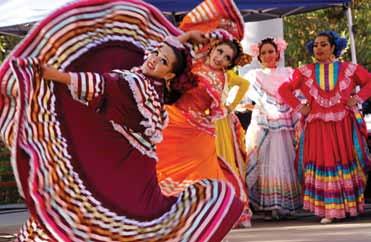
Eight cultural networks took ownership of the annual Arts & Culture Fest to build understanding, share stories, and showcase food, art, and entertainment while attracting over 6,000 people.
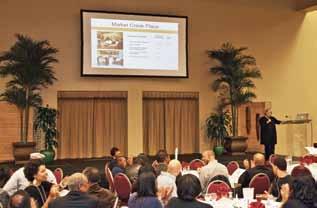
The Village Center Meetings – the quarterly town hall convenings – were planned and organized by residents. These large-scale meetings drew over 1,800 participants, up from 750 the year before – a 140 percent increase.
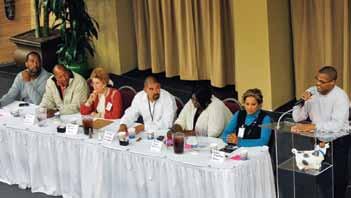

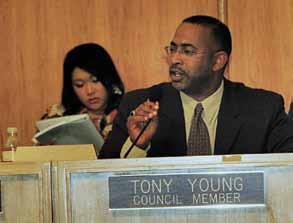
In a process that took six years, the San Diego City Council approved the Community Plan Amendment needed for smart growth, opening the doors for detailed planning of the next phases of The Village.
Under the leadership of The Legler Benbough Foundation, a partnership was formed with the San Diego Museum of Art. An exhibition called Black Womanhood provided this resident-foundationmuseum partnership an opportunity for joint programming.
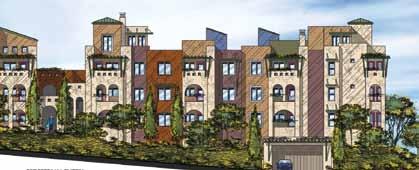
After two years of work, the Housing Team completed the permitting phase for Trolley Residential, the first transit-oriented housing development in The Village.
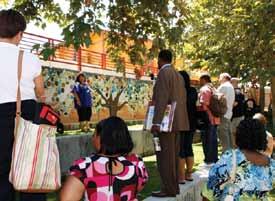
Learning exchanges and site visits brought over 4,000 visitors from communities across the country to The Village for residents to share their strategies and advance their comprehensive work on the ground.
Six neighborhood schools, three non-profit organizations, and members of the San Diego Neighborhood Funders collaborated to launch Opening Doors to Learning – a program designed to re-engage struggling students and support their families.
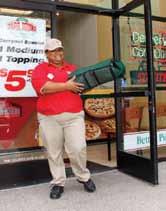
Back in 1999, the Business and Leasing Team for Market Creek Plaza listed pizza delivery after 5 p.m. as a key success indicator.
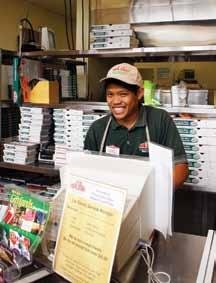
In 2009, Papa John’s – a new tenant at the Plaza – delivered just that.
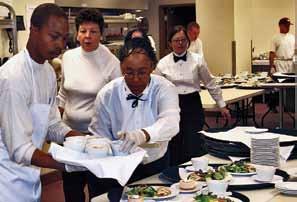
Market Creek Events & Venues logged $1.3 million in revenue in its first full year of operation, coming within 21 percent of its break-even mark during the last six months and creating 60 new jobs.
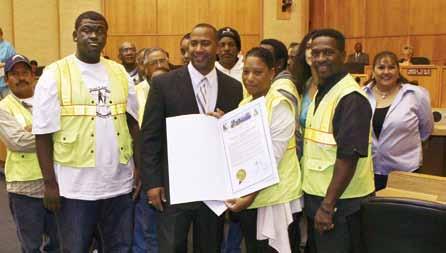
Project Safe Way expanded its scope by creating and implementing safe neighborhood plans and was honored by the San Diego City Council for its help in reducing the crime rate in the district.
In one of the most challenging years for business nationally, the income of Market Creek Partners, LLC, remained stable at $1.7 million. The company paid a 10 percent preferred return to its community investors – the Neighborhood Unity Foundation (NUF) and Diamond Community Investors (DCI).
Food 4 Less experienced an extraordinary 30 percent growth in gross sales, catapulting Market Creek Plaza’s sales per square foot.
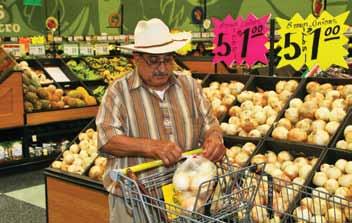

In an effort to reinvigorate the urban marketplace and improve the quality of life in San Diego’s southeastern neighborhoods, Market Creek Plaza was developed as a high-impact anchor project in an area of severe blight.
The original goal in developing the project was to secure a grocery store. There hadn’t been one serving the community in over 30 years. However, the initial working teams that planned and built it quickly expanded the work to a more comprehensive vision. Along with its community-owned corporate structure (Market Creek Partners, LLC), Market Creek Plaza became a powerful platform for collective action and investment. Ultimately, the goal of the endeavor was framed as “the resident ownership of neighborhood change.”
While the success of Market Creek is often measured by square feet of new construction, number of jobs, and value of contracts, Market Creek’s most significant impact has been the mobilization of large-scale civic involvement by residents working together to change their community on all fronts.
Market Creek is built on the belief that engaged residents — working together on issues of common concern — can find the pathway to change and build communities of opportunity and caring.
Today, Market Creek’s teams have a broader vision for change in their neighborhoods — a vibrant cultural village built on the four cornerstones of ownership, partnership, innovation, and learning.
In teams, people develop strong and dynamic networks and build bridges to the broader region. This teamwork creates cross-cultural understanding, instills a strong sense of pride and ownership, and promotes problem solving. This
opens doors to economic opportunity and improves the health, education, and safety of the community.
Today, Market Creek’s teams have a broader vision for change in their neighborhoods — a vibrant cultural village built on the four cornerstones of ownership, partnership, innovation, and learning.
Ownership — Residents must own change in their community. By owning the planning, implementation, and assets, residents build the vision, skills, expectations, networks, and resources needed for change to be sustaining. When this happens, ordinary people accomplish extraordinary things.
Partnership — New solutions require new voices and new ways to partner across sectors. Different perspectives help us make better decisions. Partnership provides a powerful platform for problem solving, shared risk, and strategic joint action.
Innovation — Creativity, risk-taking, and a can-do spirit must be nurtured for people to realize their dreams. When people get stuck, teamwork gives rise to creativity and breakthroughs. Innovation emerges.
Learning — Learning together creates relationships of trust and builds understanding. It also helps us see what is working and what isn’t so we can accelerate change.
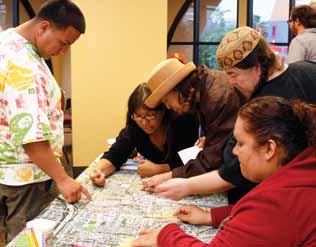
With strong assets in place, The Village at Market Creek is envisioned as a bustling residential, commercial, and cultural district built upon the extraordinary multicultural strength of the surrounding neighborhoods.
Planned, built, managed, owned, and operated by community stakeholders, The Village will provide residents a direct economic stake in the changes that occur in their own neighborhoods.
The Village will provide residents a direct economic stake in the changes that occur in their own neighborhoods.
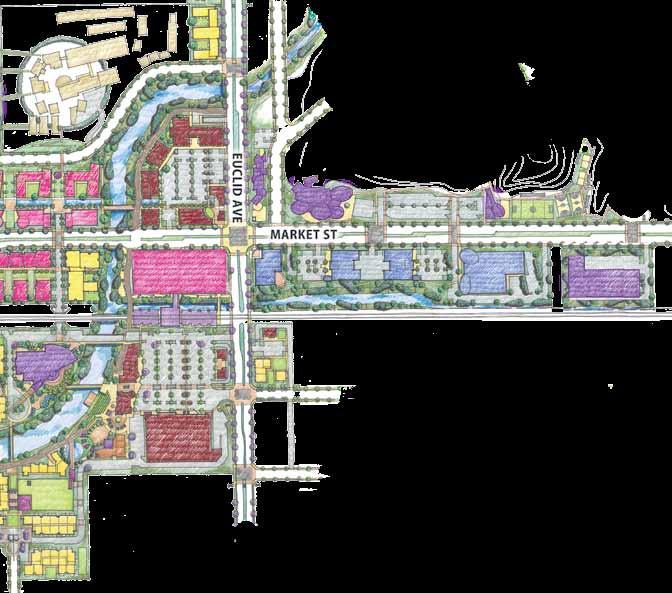
Centered around a major transit hub, The Village will transform over 60 acres of blighted land into productive use; replace substandard housing with nearly 1,000 quality, affordable homes; and restore nearly 5,500 linear feet of wetlands. Over 1.6 million square feet of new construction will bring more than $300 million in contracts to the community, attracting over 250 new businesses and 2,000 jobs.
Market Creek Plaza
BRYCO Business Park
Non-Profit & Public Facilities
Elementary Institute of Science
Horton Elementary School
Joe & Vi Jacobs Center
Malcolm X Library
Tubman-Chavez Multicultural Center
The Old Globe Technical Center
Amenities
Chollas Creek River Parkway (Phase 1)
Festival Park
Market Creek Amphitheater
World Court
Market & 47th Southeast Corner
Diamond Management, Inc.
Cold Stone Creamery Youth Employment Project
Market Creek Events & Venues
Market Creek Partners, LLC
Writerz Blok Social Enterprise

Art Installations
African Batik Tile Tapestry
The World Dome
Sempra Energy Children’s Wall
Community Faces Mural Project
Joe & Vi Jacobs Center Cultural Banners
Firefly Dreams Bronze Sculpture
Lao Walkway Tile Tapestry
Writerz Blok Graffiti Art Park
The Village at Market Creek (when completed)
5,500
A primary goal of The Village at Market Creek is sustainability. This challenges community teams to think long term about health, green buildings, solar energy generation, and water usage — one of San Diego’s most critical issues.
Management, financial, and ownership structures are also being designed to sustain community services, parks, cultural venues, and training programs, and to put profits back into the community.
Working at the intersection of resident ownership and smart growth, teams are restoring vitality to their neighborhoods with an eye toward transit-centered compact design, mixed land uses, and environmental sustainability, in a way that maximizes community benefit.
As a focal point for action, The Village is about connecting residents across communities. Civic participation, harnessing the markets for social change, and community ownership are central
The Village at Market Creek encompasses five interconnected elements
1. CIVIC ENGAGEMENT — Community Vision and Voice
Residents actively engaged — across cultures, neighborhoods, generations, and faiths — in planning, implementing, and owning change in their community, and celebrating the rich multicultural traditions that form the foundation of the cultural village.
2. PHYSICAL DEVELOPMENT — Smart Growth Pilot Village
Residents reclaiming wide-scale blight and transforming the heart of their community into a vibrant, mixed-use, transit-oriented village that fosters environmental sustainability, social equity, and the local ownership of assets.
3. SOCIAL INFRASTRUCTURE — Family and Community Networks
Residents weaving a strong social infrastructure — connecting as neighbors, bridging organizations and institutions, and forming the collaborative leadership needed to create safe and vibrant places, energize learning, promote health, and support the full potential of young people.
4. ECONOMIC OPPORTUNITY — Community Enterprise and Ownership
Residents expanding economic opportunity by developing community-owned, socially responsible enterprises that bring essential services, create jobs, expand contracting opportunities, and build community wealth.
5. INVESTMENT IN INNOVATION — Shared Learning
Residents engaged in learning by doing; connecting with other teams from across the country to share approaches, lessons, and impact; and stimulating ongoing innovation in resident-led community change.
to The Village at Market Creek, making it a learning resource for groups from across the country and around the world. Each year, learning exchanges bring hundreds of people to The Village to share approaches and form partnerships to strengthen the resident leadership of change.
Teams work across civic, physical, social, and economic development and hold a strong commitment to innovation and learning. This report documents movement toward resident ownership and community capacity in these five areas.
ENT



Large-scale, cross-cultural resident participation in the planning, decision-making, implementation, and ownership of change.
The Village at Market Creek is about neighbors creating the change they want to see.
Market Creek’s working teams unite residents across neighborhoods, cultures, and generations to strengthen joint action and increase the ability of people to break down barriers, engage in the creative exchange of ideas, and get things done.
As engaged citizens, residents are creating their dynamic vision of a village built on the rich cultural diversity of their community, a commitment to joint action, and a strong youth voice. Working together in teams, residents promote understanding, encourage creativity and problem solving, share risk, strengthen relationships, and build leadership.
Market Creek is built on the belief that a high level of participation by all stakeholders is needed to tackle today’s complex issues. Ultimately, these relationships and networks are the foundation for the long-term sustainability of community change.

“Working Teams” as the platform for residents to become leaders of change in their communities.

Citizens desperately want to be engaged in public life. They want their views to be heard, understood, and considered… By collaborating to address public concerns, citizens can and do develop a different kind of civic culture that makes their communities and regions stronger and more effective.
— David Chrislip and Carl Larsen, Collaborative Leadership
In order to support large-scale civic development in the community, work in The Village focuses in four areas:
1) Resident Outreach and Organizing
• Develop a strong resident voice.
• Conduct community listening and organize resident networks across neighborhoods, cultures, faiths, and generations.
2) Collaborative Leadership
• Support the ongoing development of community leaders working together on common goals.
• Bring residents together to create visions, solve problems, and develop action plans.
3) Inclusive Community Decision-Making
• Create opportunities for consensus decision-making that takes all voices into account.
• Develop a critical mass of residents to plan, implement, and evaluate work.
4) Community Identity and Cultural Awareness
• Create a strong sense of community that builds on the strength of our diversity and connects people across ethnic backgrounds.
• Expand understanding within and across cultural groups by sharing rituals, traditions, histories, food, and art.
Since the early planning of Market Creek Plaza, residents have had an active voice in revitalizing their neighborhoods. This deepened and broadened over time. In 2009, residents took even greater ownership of Village meetings, built stronger bridges to the broader community, and brought greater focus to training their neighbors in outreach and organizing.
Young people involved in The Village expanded their networks, and formed The Youth Movement to have a greater voice in their community.
The Market Creek Plaza Outreach Team evolved into JCNI’s International Outreach Team. In 2009, this led to the creation of Project VOCAL (Voices of Community at All Levels). Comprised of 18 cultural and neighborhood networks, VOCAL now provides southeastern San Diego a stronger community-wide organizing capacity.
Following are key highlights of progress in the four focus areas for Community Vision and Voice:
• Community organizing efforts deepened and broadened in the half-mile radius around the Market-Euclid hub. Residents were encouraged to connect
• Participation in community listening doubled to more than 3,000. Residents conducted 12 neighborhood surveys and 18 focus groups on topics such as community safety, housing needs, business opportunities, customer satisfaction, and education.
• The Youth Movement, a community-wide effort to mobilize youth around community issues, conducted surveys on the topics of lowering school drop-out rates and improving health in The Village. As part of this effort in 2009, eight youth interns were trained in outreach and organizing.


Cesar Chavez Commemoration
Fiesta Filipina
Fiestas Patrias
Heritage Day
Juneteenth
Lao New Year Celebration
Martin Luther King, Jr. Community Breakfast
Samoan Festival
Samoan Flag Day
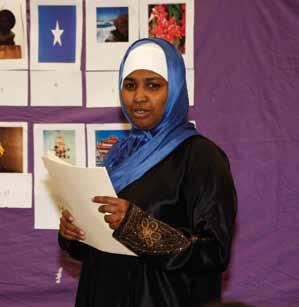
Somali Independence Day
Sudanese Celebration
Market Creek
Arts & Culture Fest
All Village Center Meetings — the large quarterly town hall convenings — were planned and organized by residents. Village Team members assumed leadership roles, assuring residents were broadly connected and informed.
Over 150 residents participated in formal and on-the-job trainings in community listening, public speaking, mediation, organizing, structuring agendas, conducting meetings, and web design.
In order to expand opportunities for youth involvement and leadership, 157 summer interns were placed throughout The Village, focusing on such areas as business development and arts and culture.
The Diamond Community Investors Advisory Council and the Neighborhood Unity Foundation Board of Directors initiated partnership meetings with Diamond Management, Inc. and JCNI to achieve a deeper understanding of the long-term financial and management expertise needed to carry The Village work into the future.
By the end of 2009, the idea of Project VOCAL was formed as a forum for 18 community and cultural networks to come together to update The Village plan.
• To ensure Village decision-making remains inclusive and comprehensive over time, the concept of a Village Teams Council was formed in 2008 and implemented in 2009. This group of team representatives became the platform for launching new Village teams and keeping active teams accountable to each other.
• In addition to the Village Teams Council, major town hall meetings open to all residents, were organized and led by residents each quarter. These large-scale Village Center Meetings drew over 1,800 participants, up from 750 the year before — a 140 percent increase.
• Initiated at the end of 2008, Building Our Community Together — a partnership of the Fourth District Council office, the Southeastern Economic Development Corporation, the Coalition of Neighborhood Councils, and JCNI — expanded its effort to involve residents in community planning. The Saturday morning forums drew over 700 residents interested in giving input on district-wide priorities.
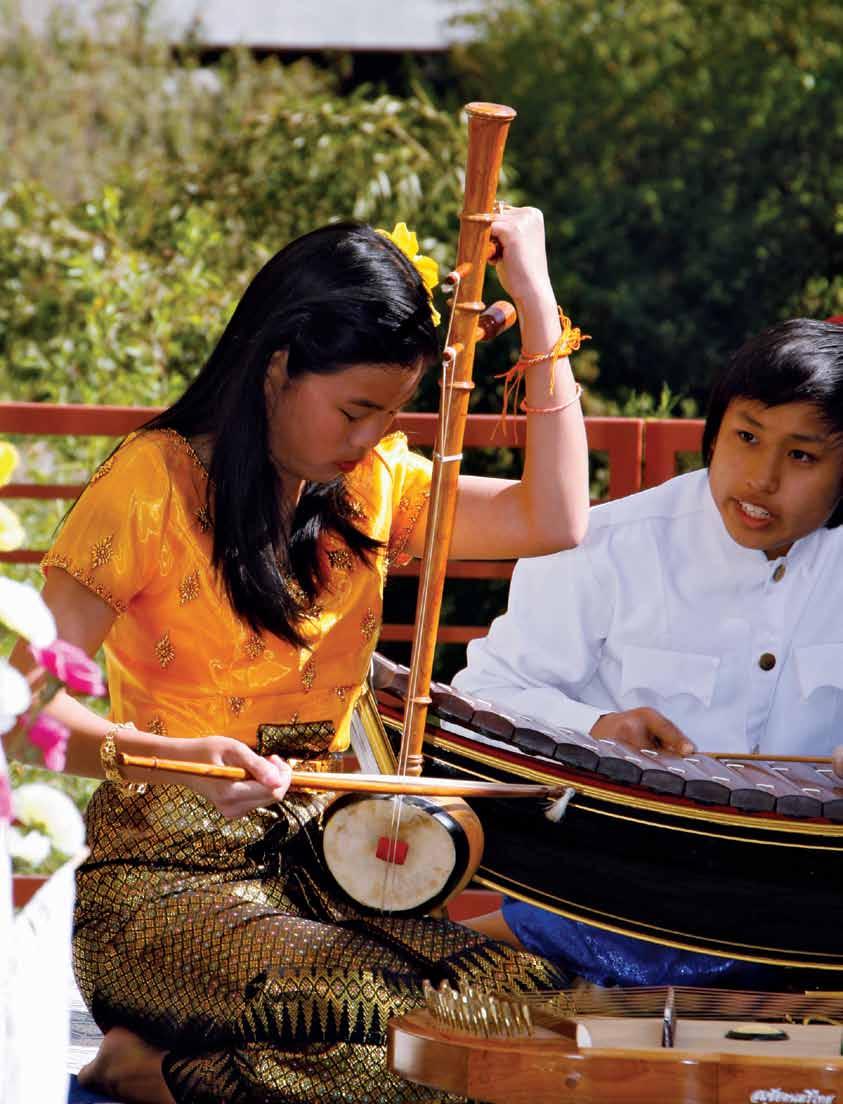
• From the earliest planning efforts, residents wanted the diversity of their neighborhoods and their rich multicultural traditions preserved and strengthened as important assets. Over time, the vision for a “cultural village” was formed. In 2009, the plans to develop The Village as a cultural destination and gathering place resulted in over 24,000 people coming to Market Creek for cultural celebrations and cross-cultural learning experiences.
• Undaunted by shrinking sponsorships, volunteers took greater ownership of Market Creek’s signature Arts & Culture Fest, which bridges all the major cultural groups in the community. A resident team coordinated efforts to build understanding, share stories, and showcase food, art, and entertainment. The 2009 event attracted over 6,000 people from across the region.
• Building on the resident-led momentum in arts and culture, The Legler Benbough Foundation, San Diego Museum of Art (SDMA), and JCNI joined with residents to create a two-way “cultural bridge” that connects southeastern San Diego residents, artists, and cultural initiatives with the Balboa Park arts institutions. This unique collaboration began planning a Center for Community & Cultural Arts to be housed on the second floor of the Joe & Vi Jacobs Center. Its first joint programming, the Black Womanhood exhibition , resulted in an ongoing relationship between SDMA and the Black Storytellers of San Diego.
• A series of movies, exhibits, and discussion groups were hosted at Market Creek by a number of groups. 800-Mile Wall was hosted by the ACLU and American Friends Service Committee. Legacies of War was hosted by the Lao Community Cultural Center and TeAda Productions. 9500 Liberty was hosted by the San Diego Asian Film Foundation. These movies stimulated powerful dialogue about issues of race, class, immigration, discrimination, and war — historically and today.




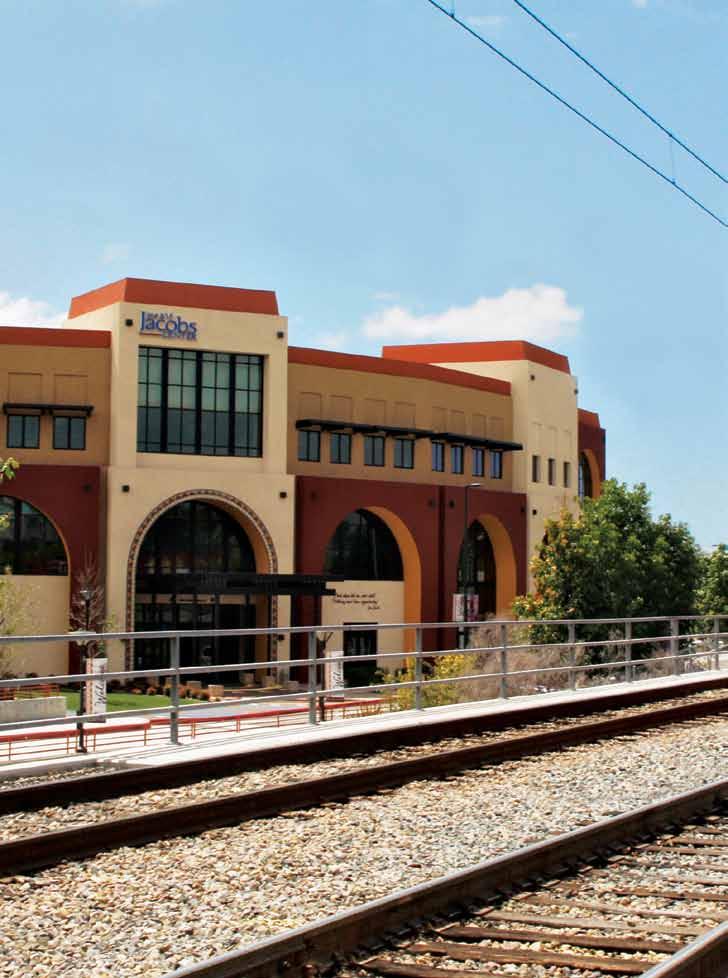
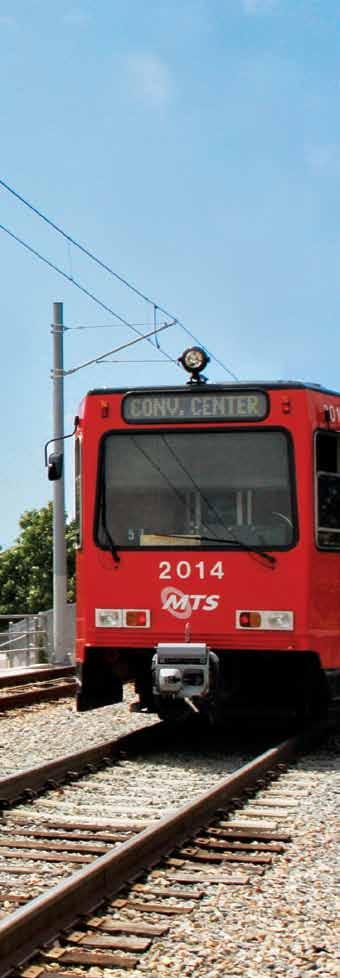
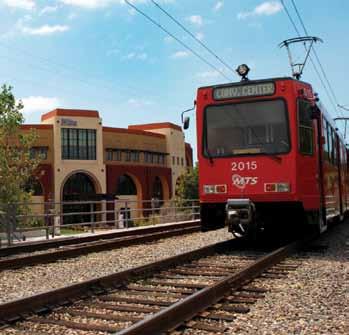
A mixed-use, financially strong, transit-oriented cultural village that fosters sustainability, social responsibility, and the resident ownership of assets.
The Village at Market Creek is about changing the landscape of a community.
Resident working teams are reclaiming blighted land and restoring vitality to their neighborhoods, starting with the revitalization of a central transportation and civic hub.
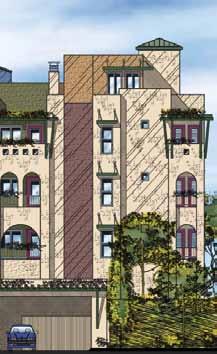
With an eye toward transit-oriented development, compact design, mixed land uses, environmental sustainability, and community benefits, The Village will put over 60 acres of blight back into productive use. Built on a strategic growth model that puts the current residents of the community at the forefront of who benefits, The Village will ultimately replace substandard housing with over 1,000 quality, affordable homes; bring over 250 new businesses with 2,000 jobs; restore nearly 5,500 linear feet of wetlands; bring more than $300 million in construction contracts; and create an integrated network of parks, cultural venues, and public facilities.
Resident-guided development that maximizes and returns the benefits of rebuilding to the immediate community.
In order to support large-scale physical development in the community, work in The Village focuses in four areas:
It gives me great pleasure to be able to see the power and potential of people committed to really getting something to happen... working together with the Federal Government and putting our tax dollars to work the way that they should work.
— Anna Escobedo Cabral, Former U.S. Treasurer, at her June 2006 press conference at Market Creek Plaza
• Build a financially-sustainable community-based development company.
• Expand local skills, jobs, and contracting opportunities.
• Bring undeveloped, neglected, and blighted properties into productive use.
• Support land-planning that is comprehensive and assures residents a voice in decisionmaking.
3)
• Develop a family-friendly cultural village.
• Build resident-owned commercial, industrial, and residential developments.
• Maximize the community’s benefits from development projects.
• Develop The Village into a sustainable community –socially, economically, and environmentally.
The construction of the new state-of-the-art Elementary Institute of Science (EIS) and the development of Market Creek Plaza on the site of an abandoned factory played catalytic roles in the community’s revitalization.
The successful EIS $6-million fundraising campaign was achieved through a team of youth leaders, backed by parents and grandparents. The development of Market Creek Plaza built on this resident momentum and was structured for community benefit — from construction contracts to ownership of the project.
As the landscape changed, so did expectations for change.
The next phase, an office and conference center that community teams wanted to name for Joe & Vi Jacobs, took the value of community contracts up to $25.5 million and the number of jobs to over 400. During the planning of this facility, residents expanded the vision of Market Creek from a plaza to a village.
The planning area expanded because teams were becoming more creative and effective. There was also a growing realization that if these projects continued to be surrounded by brownfields and deteriorating buildings, they could not be sustained from a financial, environmental, and management perspective. Greater scale was essential.
New challenges emerged. To raise a village, teams faced barriers resulting from largescale infrastructure deficiencies, the cost of brownfield clean-up, the need to restore toxic waterways involving multiple regulatory agencies, and an outdated Community Plan. Retailers in an emerging market and housing in an area where affordability is essential are not able to absorb these additional costs.
Public subsidy became a priority.
With 2008 came a shift in the national landscape around smart growth, urban regeneration, and transit-oriented development. California’s charge to lower greenhouse gas emissions (Senate Bill 375) put it at the forefront of the smart growth movement. While this opened up opportunity for public subsidy, our neighborhoods still did not have a Community Plan Amendment authorizing mixed-use projects.
In 2009, the six-year journey to secure the Community Plan Amendment came to an end, opening the doors for detailed planning of the next phases of The Village.
Following are key highlights of progress in the four focus areas for Smart Growth Pilot Village:
• Diamond Management, Inc. (DMI) was created in response to residents asking that a portion of the profits from Market Creek Plaza be used to build ongoing development and construction capacity in the community. DMI was also created to build management capacity for the community ventures in the Market Creek network.
Diamond Management, Inc.
Representation on the Board of Directors
Coalition of Neighborhood Councils
Diamond Community Investors
Jacobs Center for Neighborhood Innovation
Neighborhood Unity Foundation
Independent Members
4) providing resident employees and youth with training in security, property management, and maintenance.
Embedded in DMI’s purpose is a doublebottom-line approach focused on issues of social equity and responsible redevelopment. To ensure the company’s charitable purpose and guarantee its financing, JCNI holds 50 percent of the seats on its board; community representation and independent members hold the other half. Over time, the plan calls for community residents to have a controlling interest in the company. Currently 40 percent of the Board is from the community.
To become fully self-sustaining, DMI must develop projects valued at approximately $250 million. Of the seven Village development projects to date, DMI has developed five of them: two are new construction (Market Creek Plaza and the Joe & Vi Jacobs Center), one is renovation (BRYCO Business Park), and two are wetlands restoration projects (Chollas Creek and its Encanto Tributary). These five projects cost $54 million. In addition, DMI provided technical assistance to the Elementary Institute of Science on its 15,000-square-foot facility. Construction of this state-of-the-art science center was $5.4 million.
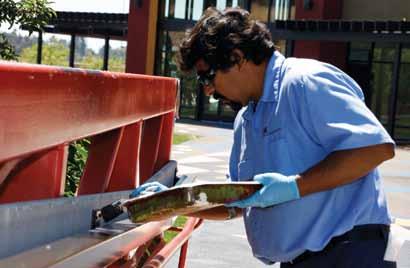
With the housing financial markets tightening in 2009, DMI focused in four areas: 1) completing the permitting phase for Trolley Residential, the first transitoriented housing development in The Village, 2) re-painting Market Creek Plaza, 3) completing over 6,000 square feet of tenant improvements on the second floor of the Joe & Vi Jacobs Center, and
• In 1997, the area surrounding the Market Street and Euclid Avenue hub was dominated by brownfields. Vacant or deteriorating industrial sites had become the central feature of a largely residential area. Beginning with an abandoned industrial site that made way for Market Creek Plaza, residents began identifying properties that could be cleaned up and put back into productive use. In 2001, residents formed the Euclid-Market Action Team (EMAT) and expanded the vision to include over 45 acres. To date, 42.6 acres of largely vacant and/or contaminated land have been acquired by JCNI for redevelopment as part of The Village.
• Through three rounds of community planning, The Village at Market Creek has been the platform for resident involvement in and learning about land planning. Through these planning efforts — Euclid Place3s Plan in 1997, the EMAT Plan in 2002, and the City of Villages Plan in 2004 — the number of residents involved in the planning guide team averaged over 100. In addition, approximately 1,500 residents per year have participated in planning surveys and focus groups to guide the core planning team.
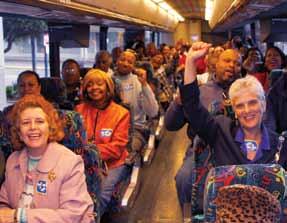
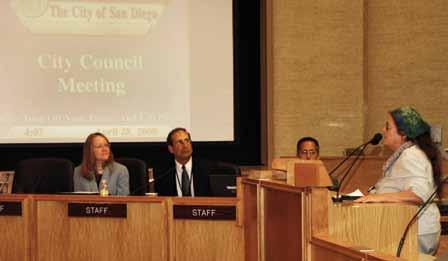
• In 2009, more than 100 residents made their voices heard by participating in meetings at City Hall, including those of the Land-Use Committee, Planning Commission, and City Council. Perhaps the biggest accomplishment of 2009 was the San Diego City Council’s unanimous approval of the Fifth Amendment to the area’s Community Plan, which provided the zoning needed for mixed-use projects and opened the door to transit-oriented development. In a show of community support, Fourth District residents took off work to attend the City Council meeting on the day of this crucial vote, wearing buttons saying “The Fourth is for the Fifth!”
3) Village Development and Construction
• To date, 21.8 acres of brownfields have been developed in The Village and put into productive use.
• New building construction totals 197,000 square feet, building renovations total 84,000 square feet, and creek restorations total 2,100 linear feet. These projects collectively total $60 million in investment.
• In 2009, development focused on securing the Planned Development Permit (PDP) for Trolley Residential, the first residential project in The Village. The PDP was 90 percent complete by the end of the year. DMI and the Village Housing Team, in partnership with McCormack Baron Salazar (a national leader in affordable housing development), moved Trolley Residential and a second housing development — Northwest Village Housing — toward becoming finance-ready.
• Work on the Market Street Office and Light Industrial project was deferred due to the shift in the market for office and industrial space. Instead, teams focused on the next commercial project — Northwest Village Commercial — with the goal of locating a new drug store within the community. By the end of 2009, a Letter of Intent had been secured with Walgreens.
• Projects in the planning phase now total $126 million.
Village Investment Advisory Board
Equity Investors
Diamond Community Investors
Diamond Management, Inc.
Jacobs Center for Neighborhood Innovation
Neighborhood Unity Foundation
Program Related Investments
The Legler Benbough Foundation
The Annie E. Casey Foundation
The F.B. Heron Foundation
Jacobs Family Foundation
The Rockefeller Foundation
Lenders & New Markets Tax Credit Investment Partners
Chase Clearinghouse Community Development Financial Institution
Pacific Western Bank
U.S. Bank
Wells Fargo & Company
Tax Increment Financing
Southeastern Economic Development Corporation
Grants
California State Water Resources Control Board
Evelyn & Walter Haas, Jr. Fund
San Diego Neighborhood Funders
Small Business Development Loans
California Southern Small Business Development Corporation
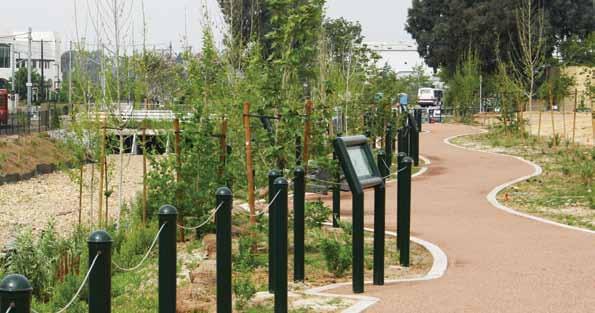
Investment in the seven completed Village projects came from a variety of partners. Market Creek Plaza and the Joe & Vi Jacobs Center were made possible by Program Related Investments (PRIs) from foundations and New Markets Tax Credit financing. Public-sector partners assisted with the wetlands restoration. Working lines of credit, backed by foundation partners, assisted in the land acquisition. Private-sector philanthropic campaigns paved the way for new non-profit facilities. The Elementary Institute of Science, a neighborhood cornerstone since 1964, mobilized support to build its new 15,000-square-foot, stateof-the-art science center. The Old Globe Theatre, which opened a Technical Center in the community in 2008, brought an innovative theatrical set design workshop and studio to The Village.
Central to The Village are its community benefits and sustainability strategies. In 2009, the work focused on strengthening community benefit incentives in leases and contracts and developing goals for environmental sustainability.
Community discussions about environmental impacts broadened significantly. After the restoration
of Chollas Creek and the use of recycled materials in building the Joe & Vi Jacobs Center, residents began planning for the solar retrofit of Market Creek Plaza, the criteria for becoming a LEED Neighborhood, and reducing greenhouse gas emissions. With transit ridership up, teams were ready to bring plans for The Village’s first transit-oriented, “green” housing project to City Hall for approval.
• To date, 74 percent of all construction contracts managed or supervised through DMI have gone to Historically Underutilized Business Enterprises (HUBE) through a best bid process, in order to build capacity and recycle benefits. This resulted in $28.9 million in economic impact through 2009.
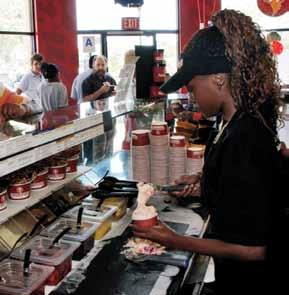
• Market Creek Partners, LLC, the company that holds Market Creek Plaza and is 40 percent community owned, has had steady income since completion and has distributed a 10 percent return on investment to its community investors since community ownership was established four years ago. To date, Market Creek Partners has distributed $280,000, or 67 percent of its profits, to the community.
• In 2009, Market Creek Plaza generated $282,925 in property taxes on land, improvement, and personal property. Since the first full year of grocery operation in 2002, Market Creek Plaza generated an estimated $1.5 million in property taxes.
• Community employment at Market Creek Plaza stands at 73 percent for 2009, up four percent from the prior year. In the overall Village, community employment is 58 percent, up five percent from the prior year. While this beats the benchmark of 30 percent community employment in similar redevelopment projects, teams were concerned that “spirit of partnership” agreements, used to promote community benefits, were too informal to be effective in achieving hiring and reporting goals. In 2009, new leases and contracts formalized benchmarks for local hiring, with incentives provided for higher percentages.
New Construction
- Market Creek Plaza
- Elementary Institute of Science
- Joe & Vi Jacobs Center
Renovation
- BRYCO Business Park
- The Old Globe Technical Center
Creek Restoration
- Chollas Creek River Parkway
- Chollas Creek Encanto Tributary
Sub-Total Development Costs
Building & Tenant Improvements (post construction)
Total Development Costs
Governmental
23,500,000

social infrastructure
social infrastructure

social infrastructure

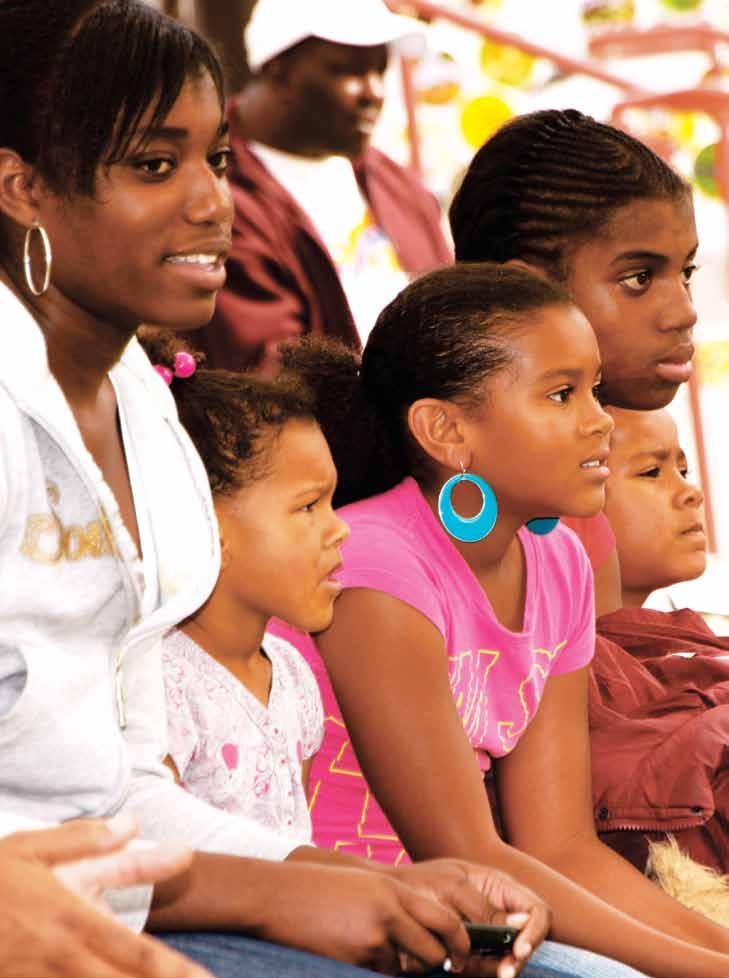
Strong social networks that promote learning, support children in achieving their full potential, and enhance health and safety.
The Village at Market Creek is about building strong networks from the inside out.
The collaborative effort of people inside and outside the community, bringing together a range of expertise and resources, is what is needed to address the complex issues our communities face, whether it’s school performance, health disparities, or gang violence. Partnerships focused on health, education, family services, and youth development are important to the effective coordination of services and the long-term sustainability of programs that enhance the quality of life for children and families.
Identifying and connecting existing organizations and natural networks, opening access to systems and services, and establishing a culture of community listening — these help us discover what is needed, get at real barriers, and design better ways to address the concerns of residents. They also form the foundation for sustainable change.
If it takes a village to raise a child, it takes a network of dedicated people and organizations to raise a village. These interconnected networks — that place a high value on the voice of residents — create the fabric of a community.
Collaborative teams of diverse partners — private citizens, non-profits, program participants, funders, governmental agencies, and institutions — that strengthen community problem solving and promote shared resources.
“Each time a person moves from isolation to connection, our neighborhoods become safer, our communities more vibrant, and our society more cohesive. Given the enormity of the challenges we face in these infant years of the 21st century, building relationships, strengthening human bonds, expanding our capacity to care for one another are crucial acts. Our collective task is to end the poverty of loneliness. It is to learn to care for each other.”
— Vicki Cammack, quoted in the December 2009 From Clients to Citizens, a synopsis of conversations from the Asset-Based and Citizen-led Development (ABCD) Forum
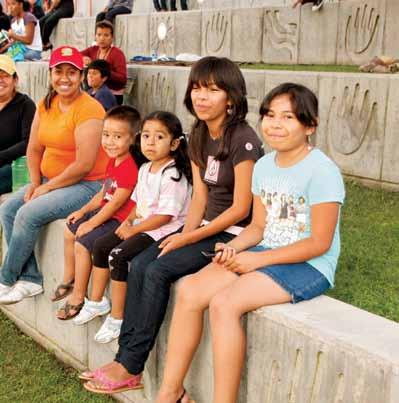
In order to support large-scale social infrastructure in the community, work in The Village focuses in four areas:
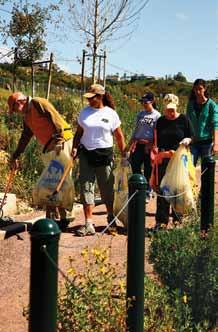
• Link family services to better support our community.
• Serve, celebrate, and connect families in The Village.
• Work with residents to develop safe zones in their neighborhoods.
• Build a support network to assist former prisoners coming home to this community.
• Work with principals, teachers, parents, and students to build a strong and connected learning community.
• Develop a support network for students that are struggling in school.
• Expand our community’s access to health services.
• Improve the physical, social, economic, and environmental factors that affect health and well-being.
Beginning in 2006, residents began teaming with family service agencies, school leadership, the police, justice system representatives, and health and child welfare professionals to listen, learn, and develop strategies to address the health and wellbeing of residents in The Village. Over the next two years, network teams formed around four focus areas: education, public safety, family resources, and health.
Eight school principals formed the “Diamond Learning Community” to share resources and develop ways to improve the quality of education for their students. The collaboration conducted focus groups with parents, students, and teachers over a three-year period. With this feedback, the team developed strategies to serve the most vulnerable and disengaged students and to recruit and support new teachers.
A group of residents concerned about public safety used information received through community listening forums to launch a safe passage to school program called Project Safe Way. In 2009, the project expanded to include the development of a comprehensive neighborhood safety plan.
A San Diego Grantmakers working group on prisoner reentry convened a team of formerly incarcerated residents, law enforcement officials, criminal justice staff, and non-profit providers to design a community-based pilot project in southeastern San Diego and City Heights. The project, called Coming Home to Stay, launched in 2009.
What started as an effort to bring child care providers and parents together evolved into a Child Care Enhancement Center. The center provided training and coordinated resources to strengthen the child development expertise of child care providers. In 2008, this work expanded into a Family Enhancement Center, focused on the coordination of broader family-centered, parent-child activities. This continued into 2009.
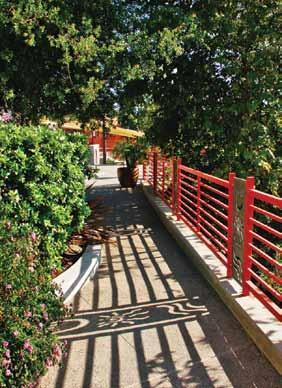
In 2008, the Coalition of Neighborhood Council’s “Walk to the Moon” campaign sparked discussions among Village teams about creating a healthy, walkable Village with trails along Chollas Creek, bike paths, family-friendly sidewalks, and pedestrian bridges. In addition, Village teams were encouraged by the expansion of communitybased health services through San Ysidro Health Center and Family Health Centers of San Diego and initiated discussions about assisting them in increasing health outreach, awareness, education, and access.
Partners
Alliance Healthcare Foundation
The California Endowment
Community Connection Resource Center (CCRC)
County of San Diego Probation Department
Jacobs Center for Neighborhood Innovation
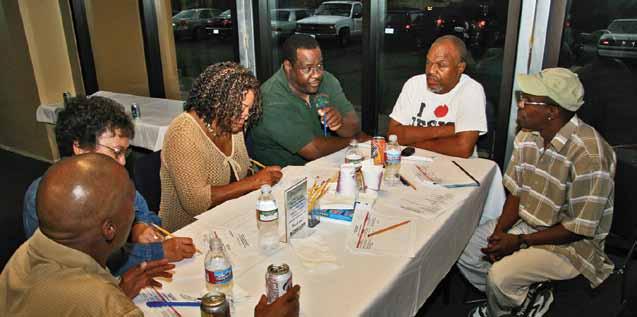
Following are key highlights of progress in the four focus areas for Family and Community Networks:
Jacobs Family Foundation
Metro United Methodist Urban Ministry
Overcoming Gangs & Beyond
The Parker Foundation Price Charities
Richard J. Donovan Correctional Facility
San Diego County Bar Foundation
San Diego County Sheriff’s Department
San Diego Grantmakers
Robin Scott
Second Chance STRIVE
Rev. Edward Thompson
UAAMAC (United African American Ministerial Action Council)
Welcome Home Ministries
Kenneth Wilson
The Family Enhancement Center hosted a series of workshops, activities, and forums with its partners in 2009 on a variety of topics ranging from how toddlers grow to how parents can teach their children to read. Participating in these family and child development workshops were 189 parents.
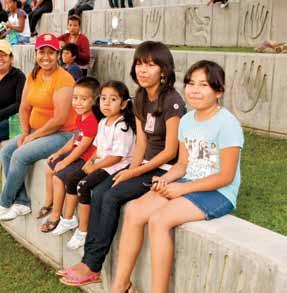
The Amphitheater Summer Series, with family movies and cultural activities, was attended by more than 2,500 parents and children. Family Day in The Village, a celebration with learning activities, entertainment, and games, drew over 800 residents.
In 2008, the Family Enhancement Center initiated discussions with Home Start, Union of Pan Asian Communities, and SAY San Diego about using common office space in The Village to provide greater coordination of family services. In 2009, these three family service agencies began joint work with the Opening Doors pilot project while office space in The Village is built.
• The Housing Team, working on the first two residential projects in The Village, developed plans for a child care center to be included in the Northwest Village.
• Project Safe Way expanded its scope by hiring and training six residents as Project Area Coordinators to engage their neighbors in creating and implementing safe neighborhood plans. The Coordinators organized residents and formed three working teams: 1) “Safe Talk” to improve relationships with the police, 2) “Safe Places” to identify and implement plans to transform
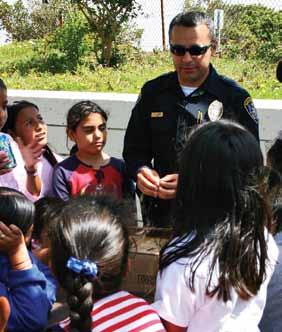
unsafe places in the community, and 3) “Residents Against Predators” to inform parents of the presence of predators and ways to protect their children. Over 500 residents participated in these neighborhood safety team meetings.
• The Coming Home to Stay prisoner reentry pilot project was initiated in October 2009 with a network of 20 coordinating partners. The model uses formerly incarcerated peer coaches and a resource network to address housing, employment, health, legal documents, and family relationship support. The project goal is to reduce the recidivism rate of its clients from the statewide average of 70 percent down to 25 percent. During its first three months of operation, 18 residents returning from incarceration were enrolled. In its first year of operation, Coming Home to Stay will serve at least 50 community residents.
Residents Participating In:
- Amphitheater Summer Series
Types of Training
- Developmental Milestones for Toddlers -
Project Safe Way
- Project Area Coordinators
• Number of Coordinators
• Training Hours Provided
- Safe Passage to School Corner Leaders
• Number of Corner Leaders
• Training Hours Provided
& Organizing
• In 2009, the schools in the Diamond Learning Community moved from planning to implementation and launched the Opening Doors to Learning pilot project, serving 30 students and their families at six elementary schools. This comprehensive program uses a school resources team approach that includes on-site family therapists and tutoring, home visits, and classroom behavior intervention support for teachers. The Opening Doors teams completed - CPR - Observation & Reporting - Radio Communication


Partners
Chollas-Mead
Elementary School
Elementary Institute of Science
Gompers Charter Middle School
Horton Elementary School
Jackie Robinson YMCA
Jacobs Center for Neighborhood Innovation
Jacobs Family Foundation
Meg Jacobs
Johnson Elementary School
Knox Elementary School
Lincoln High School
Ninth Grade Academy
PAZZAZ
The Parker Foundation
Porter Elementary School
San Diego Unified School District
University of California, San Diego CREATE
Valencia Park
Elementary School
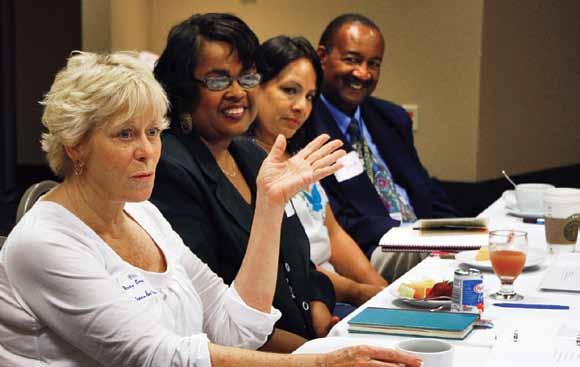
intervention plans that addressed the academic, recreational, creative, and emotional needs of each student.
Three family service agencies (Home Start, the Union of Pan Asian Communities, and SAY San Diego) joined the project to hire and supervise the therapists, which provided 116 hours of direct services to the students and their families.
Each of the eight collaborating schools formed teams to participate in the San Diego Unified School District training, called Positive Behavioral Interventions and Support Program, to strengthen their learning environments and school cultures. Serving on the school teams, 172 teachers and staff members began implementing the program within their schools.
In order to increase the number and improve preparation of student teachers in neighborhood schools, the Director of CREATE (a University of California, San Diego program focused on
education, equity, and excellence) convened the school principals, along with the directors of teacher preparation programs from San Diego’s colleges and universities, to develop a strategy. Plans call for placing student teachers at the schools in supportive clusters and providing them with greater mentorship, coaching, and support.
• The Youth Movement Planning Team conducted surveys on eating habits among young people and held a screening of the film Super Size Me. Following this provocative movie on health and nutrition, youth participated in a discussion on the impact of fast food on their long-term health and attended a class on the preparation of quick, nutritious meals. Throughout the year, over 300 youth participated in health fairs and workshops organized by youth teams and partner organizations.
• The Alternative Healing Network’s Integrative Health Nights provided 662 acupuncture treatments, 423 chiropractic treatments, and 100 blood pressure screenings, as well as classes in meditation and yoga, at no cost to residents.
• Thirty-three small grants totaling over $64,000 were awarded by the Neighborhood Unity Foundation and the Spirit of the Diamond Fund to community groups providing health education, access, and support. These resident-guided grants supported HIV and AIDS awareness, the UCSD Student-Run Free Clinic Project at Baker Elementary, lung disease and respiratory health education, and health fairs.
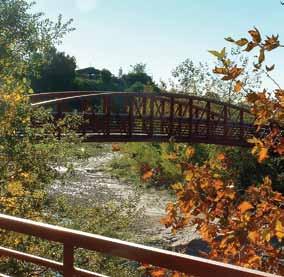
• With a goal of creating a healthy, walkable Village, planning teams targeted the redevelopment of over 45 acres of brownfields, the acquisition of accessible fresh fruits and vegetables, and the incorporation of over 400,000 square feet of parks, open space, and walkways in The Village master plan. This plan also includes the restoration of 5,500 linear feet of wetlands. To date, 20 acres of brownfields have been eliminated, a major grocery chain secured, and 2,100 linear feet of Chollas Creek restored.
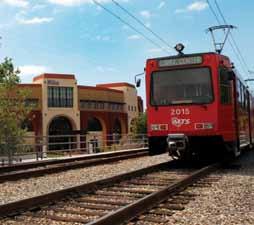
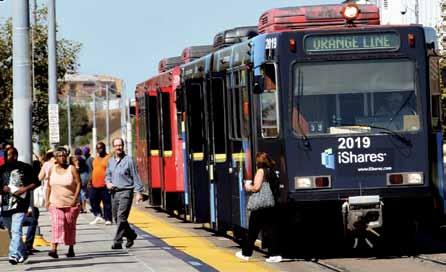
• The vibrant commercial center, staffed with a team of Safety Ambassadors, has transformed the Market Creek/Euclid Avenue Trolley Station into a safe, active transit center and contributed to an 82 percent increase in ridership since the inception of the project. This use of public transportation will play an important role in the long-term reduction of greenhouse gases and the creation of a healthier environment.
San Diego Unified School District’s Positive Behavioral Interventions and Support Program
Residents Participating In:
- Youth-led Health Network Planning Retreat
- Healthy Eating & Nutrition Survey
- Health Workshops & Forums
Types of Programs Implemented
- HIV & AIDS Awareness
- Alternative Health Nights
- Minority Health Education for Social Workers
- Inter-generational Nutrition & Physical Activities
- Lung Disease & Respiratory Disorders Education
- Youth-led Health Awareness Fairs
- Cooking & Nutrition Classes for Youth
- Sexual health & Responsible Dating
Number of Trees Planted Brownfields Cleanup
- Total Acres Planned
- Completed Creek Restoration
- Total Linear Feet Planned
- Completed Walking Paths
- Total Linear Feet Planned
- Completed Open Space, Parks, Amphitheater & River Parkway
- Total Square Feet Planned
- Completed


Community-owned enterprises that bring essential services, create jobs, expand contracting opportunities, and build assets.
The Village at Market Creek is about collective community investment in change.
As an anchor project for reinvigorating an urban marketplace, Market Creek Plaza is designed to give residents a financial stake in their community, put their gifts and talents to work, build individual and community assets while rebuilding neighborhoods, and keep social responsibility at the forefront of business.
Resident teams work to harness local retail dollars, build an emerging market, and develop a network of communityowned enterprises. Collectively, these triple-bottom-line business ventures unite diverse communities and capture the benefits of an expanding economy through community contracting and ownership. Pioneering tools enable residents to own a piece of their block and achieve together what they cannot do alone.
Harnessing the markets for social change and making the tools of ownership and investment accessible to all residents.
In San Diego’s Market Creek Plaza, setting up a community development limited liability company that gave residents an ownership stake in the project created a sense of participation and a feeling that they were not at the mercy of powerful economic forces beyond their control.
— Janet Yellen, President, Federal Reserve Bank of San Francisco, in her keynote speech delivered at the February 2010 Summit Improving Outcomes for Place-Based Initiatives
In order to support large-scale economic opportunity in the community, work in The Village focuses in four areas:
1) Business Development
• Attract new businesses and jobs to the community.
• Develop a vibrant business community.
2) Community Ownership
• Provide opportunities for residents to invest in the development of their community.
• Create systems to use profits from The Village development for both individual and community benefit.
3) Social Enterprise
• Attract businesses that fill a community need, develop jobs, and create social impact.
• Provide opportunities for job training and career development.
4) Community Employment
• Develop a range of job and career opportunities, from entry-level to highly skilled professional positions.
• Support residents in getting and maintaining jobs in The Village.

At time of purchase, the 45 acres that make up The Village today were home to only one active business and seven jobs. Yet, residents in a half-mile radius of the Market-Euclid hub were spending an estimated $60 million outside their neighborhoods. If harnessed, this was an asset to be built upon.
Ten years before the term “food desert” became popularized in the United States, residents were clear about their top priority. The area grocery carried no fresh fruits or vegetables. A “Top 10 Most Wanted List” created from community surveys and team meetings put a national grocery chain in the number one spot. This list became the guiding document for building the business district.
Residents also voiced their concern about gentrification and displacement. While they wanted commercial services, new jobs, and quality housing in their communities, they were apprehensive about not being able to afford to live in the neighborhood once it was improved.
To address this concern, community ownership became the central guiding principle in developing Market Creek. Community investment gives residents a stake in the success of their community,
provides a platform for shared risk, and recycles value back into the neighborhoods.
Today, The Village consists of 32 businesses, and the original goal of 10 new businesses with 166 jobs has grown to a goal of 250 businesses with 2,000 jobs. The vision includes positioning the community as a strong player in San Diego’s cultural tourism economy.
While greater economic forces strained all business in 2009, residents held tight to their vision and goals. Market Creek Plaza’s community owners created a personal campaign to connect to the Plaza’s businesses and give them support. Grocery sales soared. Bank deposits were stable. The Plaza’s smallbusiness revenues leveled off after sharp decreases the prior year. The year ended with gross economic activity up 20 percent overall — 63 percent above original projections.


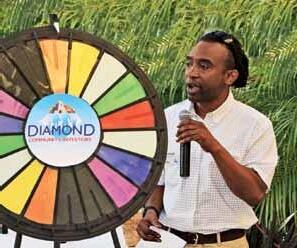
Diamond Community Investors
2009 Advisory Council
Dajahn Blevins
Joyce Brown
Bobby Carney
Ron Cummings
Lee King
Dr. Robert Matthews
James Patton
Eddie Price
ShuJen Walker
• For the entire Village, economic activity increased in 2009 to $72.5 million. This was an increase of 12 percent from the prior year.
• Of the original “Top 10 Most Wanted List” of businesses in the community, the need for a drug store remained unmet at the beginning of 2009. By the end of the year, however, a Letter of Intent from Walgreens was secured to anchor the next phase of The Village.
Following are key highlights of progress in the four focus areas for Community Enterprise and Ownership:
As an economic anchor of The Village, the partnership with Food 4 Less has been a success. During the eight years since its grand opening, the grocery has shown a steady increase in gross sales each year — anywhere from six to ten percent. In 2009, however, with fewer people eating out, the grocery logged an unprecedented 30 percent increase with $36.9 million in gross sales.
Market Creek Plaza’s small businesses continued to be impacted by the economic downturn. Following sharp decreases in 2008, these businesses experienced an additional decrease of one percent in gross sales for 2009. Two local businesses, the Curves franchise and Batter Up, closed.
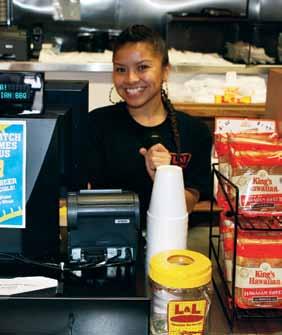
With a strong list of prospective tenants, L&L Hawaiian Barbecue filled one vacancy and Papa John’s filled the second. Fulfilling one of the original success indicators set by the early planning teams, 2009 brought evening pizza delivery to the neighborhood.
Market Creek Plaza’s benchmark for sales per square foot is $402 based on similarsized commercial centers. In 2009, the Plaza outperformed its benchmark by 35 percent and logged gross sales per square foot of $543.
• The resident-designed ownership structure for Market Creek calls for a balance of individual ownership, community ownership, and ongoing investment in asset-building. To begin implementing this design, Market Creek Partners, LLC was created to hold the assets of Market Creek Plaza and an additional property intended for a drug store. After six years of teamwork, residents won the right to “go public” in 2006 and buy shares in the project.
• A pioneering Community Development Initial Public Offering (CD-IPO) resulted in an initial 416 community stakeholders buying 20 percent of the company. Known as Diamond Community Investors (DCI), these shareholders invested $500,000. Today, there are 421 DCI members.
• Following the CD-IPO, the investors formed a DCI Advisory Council of eight elected members and one member appointed by DMI. In 2009, this Council coordinated the DCI annual meeting, reported to the larger group of investors on the finances of the partnership, coordinated the meeting for the distribution of dividends, and studied the process, key dates, and capacity needed for the buyout of JCNI’s shares in the company in 2018.
• In 2009, committees of the DCI Advisory Council published a business directory, hosted a Market Creek business mixer, initiated the design of its website, reviewed the organizational charter, and proposed amendments to streamline operations.
• Neighborhood Unity Foundation (NUF), formed for the community ownership of Market Creek Partners, also raised and invested $500,000 to establish its 20 percent ownership share. Profits from the partnership were invested back in the neighborhood through mini-grants designed to promote citizen action in creating a healthy and caring community. To date, NUF has granted its $155,000 in dividends from Market Creek Partners back into the neighborhood. Along with funds it raised from other sources, NUF has made 138 grants totaling nearly $300,000 since 2006.
• In 2009, NUF successfully grew its endowment by 40 percent to $700,000. In addition, grants to NUF from the San Diego Neighborhood Funders provided the capacity for NUF to hire its first staff member.
• In one of the most challenging years for business nationally, Market Creek Partners’ income remained stable at $1.7 million, and the company netted just over $105,000 in profits. The LLC paid a ten percent preferred return in 2009 to both DCI and NUF. JCNI and DMI received a three percent return.




Sampling of 2009 Clients
ACLU of San Diego and Imperial Counties
Alliance Healthcare Foundation
Alpha Phi Alpha
Ballet Folklórico en Aztlan
The California Endowment
City of San Diego
Comic-Con International
Community Housing Works
County of San Diego
Cox Communications
The Gem Foundation
Grassroots Grantmakers
The John Brockington Foundation
Kaiser Permanente
Kalusugan Community Services
Lao Community Cultural Center
LEAD San Diego
Lincoln High School
MAAC Project
Megatrato, Inc.
National Bar Association
Neighborhood House Association
(continued on page 40)
Following the first distribution of profits to DCI members in 2007, a Community Investment Fund was formed by residents as a mechanism for continued collective investment. Of the 421 current DCI members, 181 have now invested their Market Creek Partners dividends into the Community Investment Fund in preparation for future ownership opportunities. The fund increased 50 percent in 2009 and now totals $59,970.
In addition to the Community Investment Fund, resident teams continued to build the broader capacity of Village stakeholders to achieve financial health and wealth. In 2009, 823 residents participated in workshops, forums, and activities focused on financial education and asset-building. Classes in The Village, taught by a range of partners, included financial fitness, trusts and wills, types of insurance, organizing key financial documents, raising a financially savvy child, and first-time homebuyer assistance.
Mind Treasures, a local non-profit, brought financial education to young people. It piloted an introduction to finance and an in-depth seven-week class for 217 elementary school children in The Village, in partnership with Chollas Mead Prime Time After School Program, PAZZAZ, and the Diamond Community Girl Scouts Troup.
• In the broader community, asset-building took a step backwards as families were hard-hit by unemployment and foreclosures. The Home Opportunity Collaborative offered private sessions with volunteer attorneys, bankers, real estate agents, and home foreclosure counselors to over 300 area families.
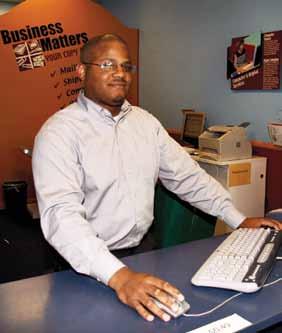
• Business Matters — a mailbox, copy, and shipping store at Market Creek Plaza — was incorporated as a Manage-to-Own enterprise. After two years as manager of Business Matters, Kevin Wright successfully transitioned to full ownership of the business in 2009.
• Over time, a network of triple-bottom-line training businesses has emerged through community planning. DMI trains people in development, construction, property management, maintenance, and security. Writerz Blok trains young people in graphic design, printing techniques, and silk screening. Where the World Meets trains and supports micro-entrepreneurs testing their cultural products in a retail store. In 2008, a new social enterprise, Market Creek Events & Venues, launched as a culinary, meeting, conference, and event training business.
• In 2009, this network of social enterprises created and/or sustained 125 jobs. In addition, the group of companies logged over 4,000 hours of onthe-job or classroom training.
• With construction of the Joe & Vi Jacobs Center completed and housing on the drawing board, DMI focused job training in 2009 on property management, security, and maintenance. Over 900 hours of training for its full-time and oncall staff were conducted, along with over 1,200 additional hours of training for interns, as well as Job Corps and Hire-A-Youth participants.
• What began as a unique approach to prevent gang-related graff iti in southeastern San Diego is now an innovative youth urban art program and social enterprise. Today, its team offers programs in muralism, screen printing, urban art, and disc jockey training. During 2009, Writerz Blok focused on strengthening its business plan to move toward becoming a self-sustaining social enterprise by training young people in the production of t-shirts, posters, banners, conference tote bags, and murals.
• Created as a micro-enterprise program for residents with unique multicultural gifts, Where the World Meets was launched by 35 community entrepreneurs. The original business plan for the store called for half of the inventory to be made by neighborhood entrepreneurs and half of the products to be imported by residents.
Sampling of 2009 Clients
(continued from page 38)
The Palavra Tree
Planned Parenthood of San Diego & Riverside Counties
San Diego Convention & Visitors Bureau
San Diego County Regional Airport Authority
San Diego County Sheriff’s Department
San Diego Foundation for Change
San Diego Futures Foundation
San Diego Grantmakers
San Diego Housing Commission
San Diego Neighborhood Funders
San Diego Unified School District
San Diego Police Department
San Ysidro Health Center
Shakti Rising
Tariq Khamisa Foundation
U.S. Census Bureau
UAAMAC (United African American Ministerial Action Council)
United Domestic Workers
Urban Land Institute
Over time, the store was intended to transition to a fully sustainable retail site for residents creating products or serving as cultural import consultants. This was never achieved. Efforts were made to develop an International Marketplace to showcase store products, but this promotion could not sustain more than a handful of successful micro-entrepreneurs. By the end of 2009, plans were underway to close the full-service store and shift the strategy to smaller retail kiosks.
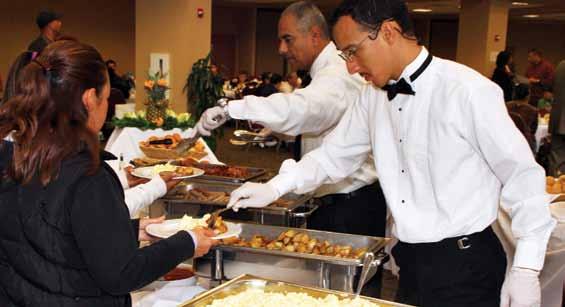
Market Creek Events & Venues (MCEV), created to capture the jobs associated with meetings and events within the community, was in start-up mode in 2009. In its first full year of operation, the business was challenged by the need to buy equipment, initiate marketing, establish delivery systems, and pay operating expenses. Because of the larger economic climate, scheduled conferences booked months in advance got cancelled, further complicating the business plan. The kitchen and banquet teams adapted, business plans were revised, and the second half of 2009 began an upward swing. With a long-term goal of achieving financial sustainability and 200 jobs, MCEV logged $1.3 million in revenue, coming within 21 percent of its break-even mark during the last six months of the year. To date, it has created 60 jobs.
• Community employment close to home has been a high priority since the first planning surveys were conducted back in 1997. With unemployment rates high and transportation to job centers difficult, local community employment remains critical. The goal for Market Creek Plaza was 166 jobs, with a balance of living wage jobs and benefits through the anchor national tenants and entry-level jobs through the local small businesses. Market Creek Plaza ended 2009 with 251 jobs, 154 through the national tenants and 97 through the small businesses. Six of the 12 employers offer benefits.
• When the grocery opened in 2001, it was anticipated that full-time jobs would grow over time. The unstable business environment of the past two years, however, created a climate more conducive to part-time employment rather than full-time. While full-time jobs have remained relatively stable over time, the growth in gross sales has translated to an increase in part-time jobs. This situation will require monitoring and team attention in 2010.
• Challenged by the need to prioritize community hiring and reporting, DMI began to look for ways to encourage ongoing focus on employment statistics and local hiring practices. In 2009, DMI moved from informal requirements to formal contracts to incentivize community employment and reporting. Contracts for new tenants leasing in The Village now spell out these incentives.
• The original Business and Leasing Team set the goals for both community and minority employment at 65 percent. Of the 251 Market Creek Plaza employees, 73 percent are from the community and 84 percent are minorities. Of the 717 jobs in The Village, 58 percent are from the immediate community and 83 percent are minorities.
• To link supply and demand, a series of job fairs were held in The Village through 2009 with the support of partner organizations. Over 800 people attended. Village




investment in innovation investment in innovation


A platform for connecting resident leaders and sharing innovative approaches to community change.
The Village at Market Creek is about connecting communities.
Market Creek is built on the belief that for change to be sustainable, residents must own their own change. Everyone must be willing to learn their way. Every voice matters. Staying open to new ideas matters. Testing ideas matters. Partners committed to learning matter. Success depends on it.
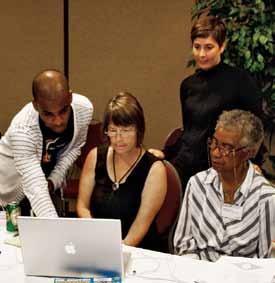
Platforms for learning are essential. Hands-on opportunities for resident-to-resident learning help those working at a grassroots level understand their role in a larger movement. These learning exchanges provide forums for people to share the lessons and stories of change, provide a vision of what is possible, and let residents know they are not alone.
Each year, hundreds of people visit The Village at Market Creek to participate in site visits and learning exchanges. It has become a gathering place for groups from around the country to share ideas, develop learning relationships, and enhance efforts to create strong communities. This feeds innovation and informs the broader community development field of the lessons, practices, principles, and policies that either stand in the way or facilitate change.
Hands-on applied learning that is comprehensive, resident-driven, and cuts across the civic, physical, social, and economic development of a community.
In order to support shared learning across the country and in the community, work in The Village focuses in four areas:
1) “Connecting Communities” Learning Exchanges
• Offer tours, trainings, team discussions and opportunities to experience and learn how The Village at Market Creek was developed.
• Support the exchange of approaches, strategies, and tools that encourage residents to lead change in their communities.
I am convinced that these new joint venture models emerging between foundations and their mission partners are producing more powerful engines of impact and change than could ever have been realized through traditional grantor-grantee relationships. They just may be the future form of philanthropy for a significant segment of the field.
— Doug Nelson, Former President, The Annie E. Casey Foundation, in Simply Put, his book of selected speeches
2) Collaborative Investments in Shared Learning
• Build a network of resource partners committed to shared learning.
• Collaboratively invest in testing, documenting, and disseminating community-building approaches and tools.
3) Village Indicators
• Build learning systems that stimulate creative breakthroughs and clarify what’s working and what’s not.
• Document the work, report its social and economic impacts, and synthesize learnings.
4) Policy and Systems Change
• Identify and examine the tools, rules, and policies that facilitate or stand in the way of change.
• Work in public-private partnerships to impact both policy and practice.
The Village at Market Creek has become a hands-on applied learning “pilot plant” for comprehensive, resident-driven change. It informs multiple fields that cut across civic, physical, social, and economic development. As residents build The Village, Market Creek’s teams are playing an important role in sharing lessons with other communities across the country and creating dialogue about resident-led and resident-owned change.
In sharing their experiences and learnings, residents know they are not alone. They see themselves as a part of a larger movement that generates new ideas, new strategies, and new energy. It also builds belief in their own work.
Through this dynamic exchange of ideas, the learning opportunities advance residentled change by connecting communities to new approaches, new tools, and each other. These opportunities for residents to learn about community building principles and practices side-by-side with place-based funders feeds innovation locally and in the broader field.
Over the past 12 years, Village teams have experienced the impact of learning exchanges. By hosting foundations, civic leaders, and community groups from 27 states and 15 countries, residents on Village teams have grown as trainers, presenters, and discussion group leaders.
In 2008, however, the 2,000 visitors coming to Market Creek stretched the teams’ capacity to balance the time required for sharing their strategies and advancing their comprehensive work on the ground.
In 2009, the connecting communities work moved to fewer, more in-depth exchanges to give residents time to share and learn. Site visits were grouped for greater efficiency. Teams also worked to simplify the “how-to” of comprehensive work so it could be shared more easily.
Struggling with large-scale infrastructure deficits, 2009 also brought a growing awareness of the critical need for strategic alignment with the public sector. State and federal resources required a level of planning that could only be accomplished through a strong local public-private partnership.
(continued on

(continued from page 45)
In addition, the American Recovery and Reinvestment Act spurred a deeper discussion about the policy and tools needed for change.
To advance learning among public and private partners and resident teams, systems for data collection and evaluation needed to be expanded and structures of cooperative investment bolstered. Following are key highlights of progress in the four focus areas for Shared Learning:
Learning exchanges, site visits, think tanks, and summits with foundations, community development practitioners, investors, and government agencies brought over 4,000 people to The Village in 2009. Visitors from Japan, 18 U.S. states, and the District of Columbia were hosted.
For Village working teams, the learn-asyou-go strategy continued into 2009 with professionals joining residents to provide workshops on topics such as affordable housing with developer McCormack Baron Salazar and gang intervention with the San Diego Police Department.
To broaden resident knowledge on regional issues of significance to the community, public forums were hosted on topics such as the City of San Diego’s budget, the 2010 U.S. Census, and adolescent health.
• Residents also participated in formal learning opportunities in the community, such as the United African American Ministerial Action Council’s Community Summit, and national convenings, such as the Grassroots Grantmakers’ “On the Ground” conference. Others included the Urban Land Institute’s summit on redevelopment models and JCNI’s Innovator Series, which featured PolicyLink Founder and CEO Angela Blackwell on the Recovery Act.
• In 2009, learning exchanges became more focused and formal. These included learning sessions with LEAD San Diego and Leadership California, as well as a two-day consultative session with the Multicultural Arts Leadership Institute (MALI), which engaged residents, funders, and the San Diego arts community in designing the Center for Community & Cultural Arts.
• The goal of connecting communities advanced in 2009 with partners, such as The Russell Family Foundation, which linked its grassroots leadership program, the Jane’s Fellows, with Village teams to exchange strategies. Jane’s Fellows shared their working knowledge of digital storytelling and leadership
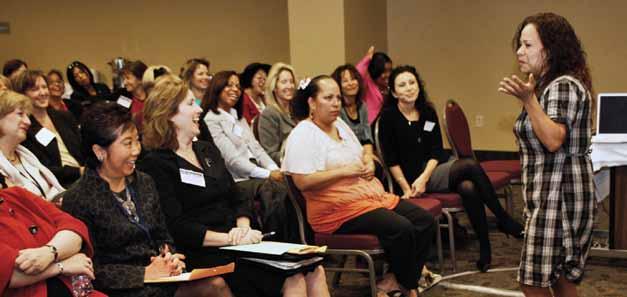
Visitors Participating In: - Site Visits
Learning Exchanges
• The exchange with The Russell Family Foundation led to the collaborative design of a series of workshops on funder-community partnerships for the January 2010 Council on Foundations’ Family Foundations Conference in San Diego. The session designers included The Annie E. Casey, Rasmuson, Jacobs Family, and Flintridge Operating Foundations, as well as residents from the various communities they serve.
• As part of the 2009 learning exchanges, approximately 109 people from Village working teams participated as trainers, presenters, and discussion group leaders, expanding their skills and self-confidence in public speaking, facilitating, and training.
• Examples of impacts from the connecting communities work include:
1) The California Endowment is using The Village’s living room meeting strategy to engage residents in the City Heights community of San Diego;
* See The Russell Family Foundation digital story summary at: www.jacobscenter.org/russell.htm development, and Village team members shared theirs of community listening, outreach, and ownership. The exchange included cross-team visits to neighborhood projects with digital stories created for each.*
Number of Residents Participating in Learning Exchanges as Trainers, Presenters & Discussion Group Leaders
2) Hampton Road Ventures, a subsidiary of the Norfolk Redevelopment Housing Authority, cited their visit to Market Creek as the inspiration to begin facilitating “opportunities for residents of low income communities to become co-owners of major commercial and real estate assets” in their neighborhoods;
3) After visiting The Village, a youth team from Pasadena, California began working with the Flintridge Operating Foundation on a plan to replicate the Writerz Blok urban art program in their own community;
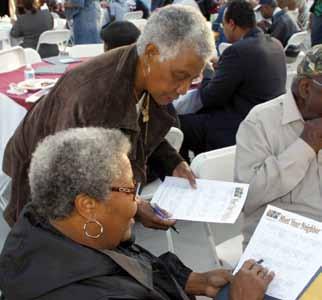
4) The Annie E. Casey Foundation began hiring residents to engage and connect families to their work in Atlanta’s neighborhoods; and 5) Community listening as a critical component of a grants process is becoming commonplace among members of Grassroots Grantmakers.
• As a comprehensive effort, The Village at Market Creek is a learning platform for local and national foundations, individual philanthropists, banks, and other investors seeking to test and share models of responsible urban revitalization. Collaborating partners include the 17 members of the San Diego Neighborhood Funders (SDNF) (list on page 49) and 18 members of The Village Investment Advisory Board (list on page 22), all of which seek to work strategically across areas of interest and types of capital.
• The Neighborhood Unity Foundation (NUF), formed by a design team of 250 residents to play a leadership role as an owner of Market Creek Partners and as a resident-controlled community foundation, participated as an active collaborative member of both SDNF and The Village Investment Advisory Board. In 2009, learning partners from these groups provided mentoring to NUF in finance, board development, and fundraising and supported NUF in increasing its endowment from $500,000 to $700,000.
• Within San Diego Neighborhood Funders, NUF has become the coordinating partner for the collaboration’s grassroots grants program, which
plays an important role in building the natural momentum of residents working to improve their own neighborhoods. One quarter of NUF’s $100,000 grant budget is provided by SDNF, one quarter comes from its return on investment in Market Creek Partners, and the remaining funds are raised from other sources.
• San Diego Neighborhood Funders and The Village Investment Advisory Board are experimenting with a range of tools. Individual and collaborative grants assist working teams in designing and piloting their strategies. Foundations depositing assets in banks associated with The Village assist in lowering interest rates for land acquisition. Recoverable grants help fund the high-risk stage of predevelopment. Foundation Program Related Investments (PRIs) and loan guarantees, brought together with bank investments and New Markets Tax Credits, provide critical low-cost project capital.
• Local learning partners, such as The Legler Benbough Foundation (which has taken a leadership role in the planning of the Center for Community & Cultural Arts), have brought critical strategic support and direction to The Village.
• National learning partners, such as The Annie E. Casey Foundation (which is loaning key members of their team to assist on project and financing strategies), are demonstrating a new model for how national and local partners work together to stimulate innovation on the ground.
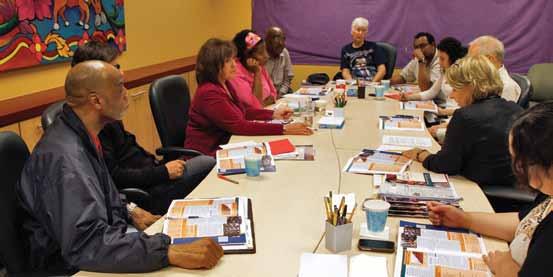
• Partners, such as Clearinghouse CDFI (which serves both as a lender and technical assistance provider on debt and equity structures), along with Luce, Forward, Hamilton & Scripps, LLP (legal advisors to JCNI’s work in The Village), are central to designing pioneering structures for banks, foundations, and community investors to work across types of capital to accomplish resident-owned revitalization efforts.
• To advance resident involvement and ownership of the Social and Economic Impact Report, representatives from Diamond Community Investors and the Neighborhood Unity Foundation joined the JCNI team to create the goals and format for the 2009 report. This resulted in the report becoming more focused on linking the data to the resident ownership and capacity-building goals for the year.
• The need for comprehensive Village indicators is leading to the next round of Village planning. A Comprehensive Cultural Village Plan will be a blueprint for setting and achieving the goals residents set for The Village. Support from The California Endowment will assist teams in developing health indicators, and support from the Jacobs Family Foundation will assist with environmental indicators. A public-private
coordinating team will connect the Village plan to a revision of the overall Community Plan.
• In 2009, contracted evaluation support assisted on two fronts: 1) completing the baseline data, investor surveys, focus groups, and Pathway Analysis for the Community Development IPO, utilizing the indicators set by the CD-IPO resident team, and 2) completing the data analysis for the second Quality of Life Report, documenting residents’ perceptions of health, education, safety, economic opportunity, and civic engagement in their community.
• Teams began to focus on the opportunity to become a model for comprehensive change by testing, adapting, or creating the tools, policies, and financing structures needed for vibrant and healthy communities.
• In 2009, the Southeastern Economic Development Corporation (SEDC), the area redevelopment agency, worked with the community to develop forward-thinking, flexible guidelines for future mixed-use development as part of its new strategic plan. In the plan, The Village is a priority project.
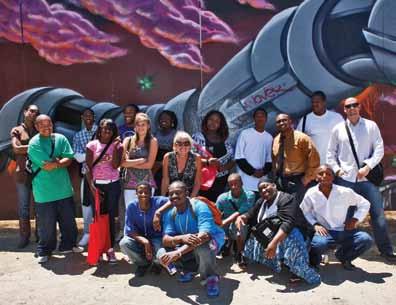
• A planning grant of $400,000 was awarded to the City of San Diego from SANDAG (San Diego Association of Governments). This Smart Growth Incentive Program grant will fund mobility and transit infrastructure studies to inform the Village planning process and provide momentum for developing the area as a smart growth pilot community. SEDC, in collaboration with the City, will take the results of this effort and prepare the implementing ordinances. Once the planning studies are completed, The Village will be ready to apply for smart growth capital grants for infrastructure development and park enhancements.
• To coordinate planning efforts, the City of San Diego, SEDC, and JCNI formed a Village public-private coordinating team to connect smart growth planning efforts, including revisions to the Redevelopment and Community Plans. Work during 2009 focused on reviewing timelines, identifying roles and responsibilities, discussing the allocation and coordination of resources, and learning how to overlay organizing efforts to expand the involvement of residents in community planning. This cross-sector alignment will help develop a stronger model for community planning that links health, livability, and sustainability to the built environment and gives residents a powerful voice in planning decisions.
• After six years of planning, SEDC spearheaded the approval of the Fifth Amendment to the Community Plan in 2009, which created a new mixed-use zone and opened the door for smart
growth, transit-oriented development in the district. Over 100 residents attended the City Council meeting to advocate for its approval.
• The Coming Home to Stay Advisory Council was formed by formerly incarcerated residents, community reentry providers, funders, and representation from the criminal justice system to disseminate project results and learnings, explore opportunities for systems change, and identify areas for advocacy and collective action. The Council is working to coordinate with pilot pre-release programs authorized by California Senate Bill 618 and the San Diego County Sheriff’s Department for more effective inmate preparation and reentry services.
• Members of Village teams participated in a number of cross-sectoral convenings locally, regionally, and nationally to share learnings. These ranged from groups assembled by the Urban Land Institute to the Federal Reserve Bank of San Francisco. In addition to these convenings, Market Creek was highlighted in a range of media focused on publicprivate partnerships, from a PolicyLink editorial to a case study published by the Environmental Protection Agency (EPA).
• Addressing foundation policy and the structural issues of social inequities, Market Creek and the Jacobs Family Foundation were a featured chapter in a book sponsored by the Center for Community Change and funded by the Ford Foundation, titled Change Philanthropy: Candid Stories of Foundations Maximizing Results through Social Justice
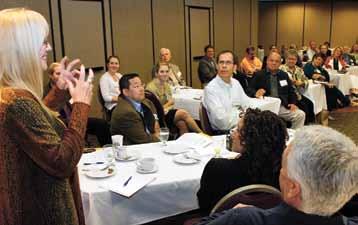
• Work with residents as neighbors
• Earn trust by working together over time
• Surround every problem and opportunity with a team
• Do with and not for
• Listen broadly as a way of doing business
• Make it comfortable for all people to get involved (language, location, process)
• Give up preconceived ideas about how problems should be solved
• Encourage and embrace differences
• Look for the both/and — not the either/or
• Lead with residents
• Develop a broad partnership strategy that includes residents, businesses, non-profits, funders, and public agencies
• Make sure all partners are in alignment with the strategy residents have developed
• Partner across types of capital and be willing to adapt tools
• Build a committed and connected set of stakeholders over time
• Work in interdisciplinary teams across the civic, physical, social, and economic development of the neighborhood
• Integrate grantmaking, organizing, training, and development
• Let no corporate structure be a barrier
• Seed the capacity of groups to carry out and carry on the work
• Use community capacity to benchmark plans
• Set timelines that give people a chance to practice, adapt, and try again
• Be clear about exit strategies by focusing on sustaining capacity, leadership transition, and resident ownership
• Nurture creativity and risk-taking as important ingredients in community change
• Organize for fast and flexible decisionmaking with systems of shared accountability
• Be clear about outcomes, but be willing to change the process
• Risk change in yourself and in your organization as an example for others
• For change to be sustaining, people must own their own change
• Owning the plans = vision and hope
• Owning the implementation = capacity and skills
• Owning the assets = power to leverage future change
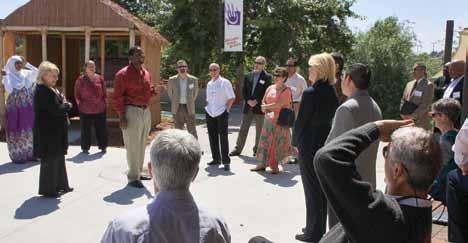
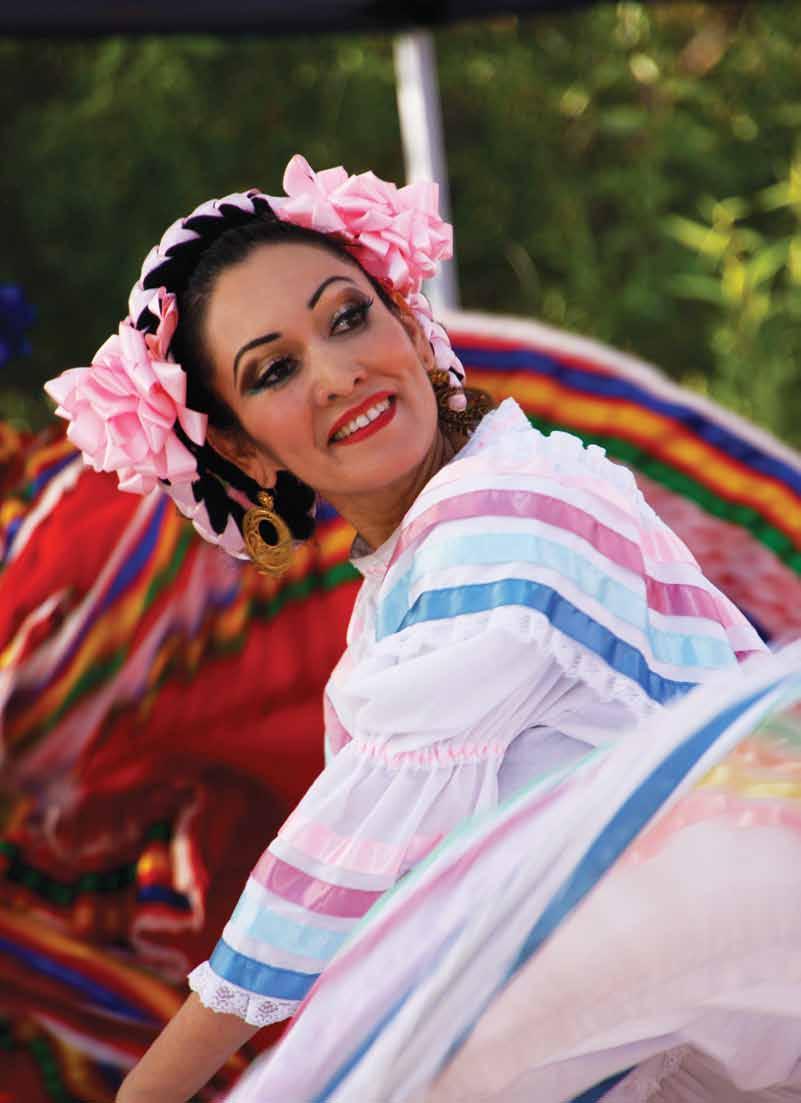

It is from numberless diverse acts of courage and belief that human history is shaped. Each time a man stands up for an ideal, or acts to improve the lot of others, or strikes out against injustice, he sends forth a tiny ripple of hope.
— Robert F. Kennedy
During its 12-year journey, The Village has been an applied learning “pilot plant” for taking a comprehensive approach to community revitalization. Business cannot thrive without strong social and financial networks, safe neighborhoods, strong schools, a growing number of homes, good land planning, integrated community resources, and political will. Action-oriented teams and networks are building a village, but the very act of building a village is seeding strong social networks and increasing the ability of people to work in strategic joint action.
Heading into 2009, teams were still reeling from market conditions that had brought sharp changes in Village development priorities and timelines. But these teams had faced challenges before. Throughout this journey, we have been reminded that long-term change requires an unwavering spirit and a can-do attitude. If we come together as a community, we can weather any storm and make the improbable possible.
As 2009 ended, some of these challenges were beginning to lift and Village teams had renewed energy for action.
School improvement and public safety projects that had been in the planning phase for several years were launched. The Fifth Amendment to the Community Plan, enabling mixed-use projects, was approved. Planning on the first housing development was completed, and the 52-unit project was ready for financing. Project VOCAL was positioned to convene its 18 networks across culture, age, faith, and neighborhood. Through the planning of a cultural art center, a bridge built between Balboa Park’s institutions and The Village was ready for passage.
As we look ahead to 2010, Village priorities include:
• Community Vision and Voice: Convening Project VOCAL to update plans for the cultural Village as a safe, healthy, vibrant multicultural community; expanding The Youth Movement to strengthen the youth voice in Village planning; and solidifying plans for the Center for Community & Cultural Arts as an anchor organization for cross-cultural understanding.
• Smart Growth Pilot Village: Coordinating an update to The Village master plan with the City and redevelopment agency as a smart growth hub, securing financing for the first Village housing development, solidifying a drug store contract, and finalizing the site plan for the next commercial project in The Village.
• Family and Community Networks: Expanding areawide safe neighborhood plans through Project Safe Way and implementing the first-year pilots for Opening Doors to Learning (the school-family support program) and Coming Home to Stay (the prisoner reentry coordination project).
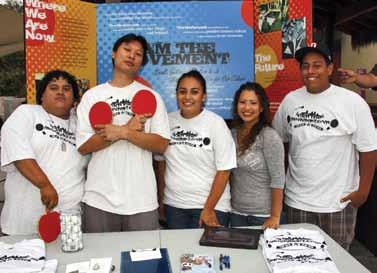
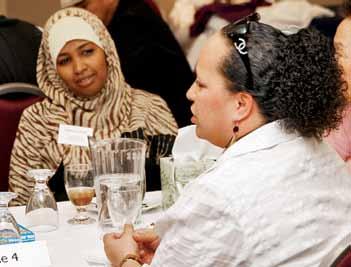
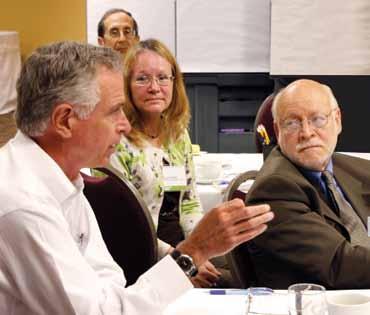
• Community Enterprise and Ownership: Assuring Market Creek Plaza businesses are strong, The Village social enterprises are on the path to self-sustainability, and the next Market Creek community ownership opportunities are under design.
• Shared Learning: Formalizing the learning center structure to better facilitate the exchange of innovative ideas and knowledge across communities and in The Village; expanding the success indicators for The Village to include a broader perspective on community health, the environment, public safety, and cross-cultural understanding; and strengthening the network of investors coming together to expand innovation in the field of resident-guided community change.
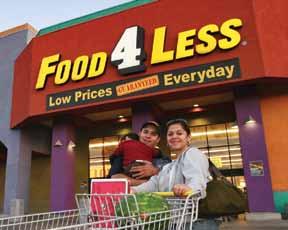
Through this experience, we have come to appreciate the teamwork it takes to develop vision, understand barriers, build consensus, facilitate action, and create change.
Together, we have cleaned up over 20 acres of blight, secured and built the first grocery store in over 30 years, seeded the first ownership structures, recaptured significant economic leakage, shared our cultural traditions, launched a public safety network, created a platform for learning, and forged undying friendships by finding our way through differences, challenges, disappointments, successes, and great celebrations.
When people come together, communities are better places to live. Hungry for the kind of civic involvement that sparks innovation and creates opportunity, residents working together always seem to find ways to do what needs to be done.
Today, change is in the hands of ordinary people doing extraordinary things. On a street corner helping children get to school safely, staying up late to read a mini-grant proposal for a neighborhood clean-up, cooking noodles for a community meeting, figuring out how friends can get to camp, helping kids build cars for the soapbox derby, painting murals to beautify walls — these are the acts of kindness that happen every day to build this village.
While this Social and Economic Impact Report attempts to document what occurred in 2009 — what we learned by doing and what changed by learning — we know that we have only scratched the surface in reporting the range of things people did to create a community of caring.
The journey continues...
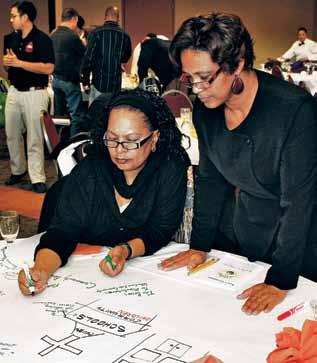
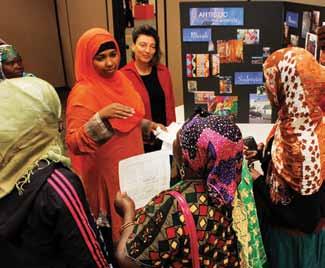
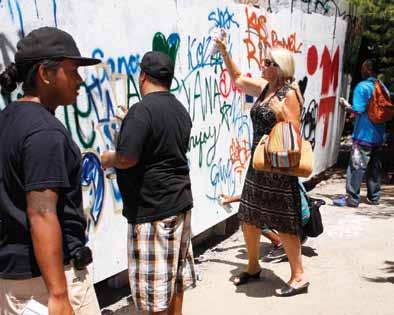


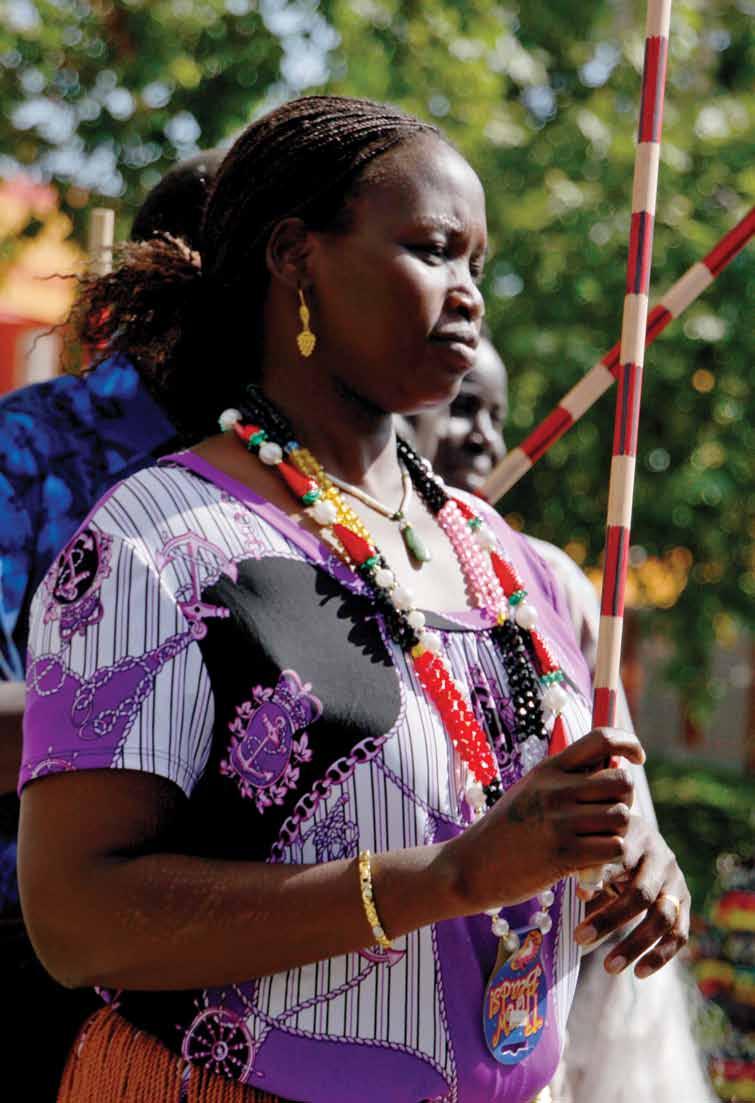
Working comprehensively at the intersection of civic, physical, social, and economic strategies requires engaged citizens working collectively on issues of common concern. It also requires a national community of leaders working side-by-side with residents. As partners in community change, the many whose names appear on the following pages have stayed open to new voices, new solutions, and new roles. These teams and partners have been willing to break through the silos that separate us and collaborate in ways we never have before — public and private, for-profit and non-profit, large and small.
We thank you for bringing The Village at Market Creek to this point, and we invite you to help us expand the number of people working together for social change.
Civic
Amphitheater Team
Arts & Culture Fest Working Team*
Black Womanhood Exhibition Team
Cultural Celebrations Planning Team*
Fiestas Patrias Team*
Fiesta Filipina Team*
Juneteenth Team*
Lao New Year Celebration Team*
Samoan Festival Team*
Somali Independence Day Team*
Spirit of the Diamond Team
Summer Series Working Team
Village Teams Council*
Writerz Blok Mural Team
The Youth Movement Planning Team*
The Youth Movement Intern Team*
Note: Since Working Teams are often project-specific, not all are active in any given year. This list is since inception.
* New teams added in 2009
Physical
Building Our Community Together Planning Team
Construction Working Team
Housing Team
Joe & Vi Jacobs Center Design Team
Joe & Vi Jacobs Center Exterior Landscape Team
MCP Art & Design Team
Office and Industrial Project Planning Team
Social
Coming Home to Stay Planning Team
Community Listening Team
Family Enhancement Team
International Outreach Team
NUF Power in Caring Team
Opening Doors to Learning Team
The Principals’ Collaboration
Project Safe Way Team
Economic
Business and Leasing Team
Community Investment Fund Guide Team
Cultural Kitchen Team
DCI Advisory Council
DCI Business and Promotions Team
DCI Educational Activities Team
DCI Governance Team
DCI Social & Economic Impact Team
Homeowner Readiness Team
NUF Grants Team
Where the World Meets Vendors
Writerz Blok Graphic Design Team
Associations
Asian Business Association of San Diego
Association of Raza Educators
Balboa Park Cultural Partnership
Black Contractors Association
Community Investment Fund Members
Council on Foundations
Diamond Community Investors Members
Embedded Funders
Grassroots Grantmakers
Pacific Islander Festival Association
Pacific Islander Student Association
San Diego Convention & Visitors Bureau
San Diego Grantmakers
San Diego Housing Federation
San Diego Regional Chamber of Commerce
Urban Land Institute, San Diego/Tijuana District Council
Businesses
A-1 Fire Protection
Abundantia Consulting
Baker Electric
Business Matters
CATS Excavating
Coca-Cola Bottling Company of San Diego
Cold Stone Creamery
Cox Communications
Joe Davis & Associates
Kevin deFreitas Architect
Diamond Management, Inc.
El Pollo Grill
First America Title Company
Food 4 Less
Hawkins Realty
Home Depot
John Todd General Contractors
L&L Hawaiian Barbecue
Luce, Forward, Hamilton & Scripps, LLP
M.A.N.D.A.T.E. Records
Magnolias Authentic Southern Dining
Manpower, Inc.
McCormack Baron Salazar, Inc.
Money Management, Inc.
New York Life Insurance Company
Papa John’s
Philliber Research Associates
Rick Engineering
Rodriguez Associates Architects & Planners, Inc.
Sempra Energy
Starbucks Coffee Company
Where the World Meets
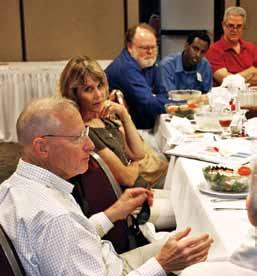
Financial Institutions
Bank of America
California Bank & Trust
California Southern Small Business
Development Corporation
Chase Clearinghouse Community Development Financial Institution
Northwestern Mutual
Pacific Western Bank
Union Bank
U.S. Bank
Wells Fargo
Wells Fargo & Company
Foundations/Grantmakers
The Thomas C. Ackerman Foundation
Alliance Healthcare Foundation
Bank of America Merrill Lynch
The Legler Benbough Foundation
Charles & Ruth Billingsley Foundation
The California Endowment
The Annie E. Casey Foundation
Cox Kids Foundation
Joe Davis
Alice and Doug Diamond
Doris and Peter Ellsworth
Louise Engleman
Flintridge Operating Foundation
Girard Foundation
Evelyn & Walter Haas, Jr. Fund
Valerie Jacobs Hapke and Norm Hapke
The F.B. Heron Foundation
The James Irvine Foundation
Jacobs Center for Neighborhood Innovation
Jacobs Family Foundation
Meg Jacobs Vi Jacobs
Jewish Community Foundation of San Diego
Kaiser Permanente
Edmond Kassouf
Kearny Mesa Rotary Club –Arthur Pratt Memorial Fund
Evelyn Lutfy
Masserini/French Trust at Wells Fargo
Neighborhood Unity Foundation
Nice Guys San Diego
The Parker Foundation
The Pettus Foundation
thank you thank you thank you
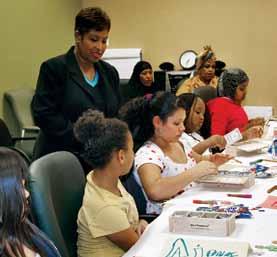
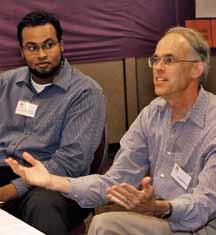
The Arthur and Jeanette Pratt Memorial Fund
Price Charities
Rasmuson Foundation
The Rockefeller Foundation
The Russell Family Foundation
San Diego County Bar Foundation
The San Diego Foundation
San Diego Foundation for Change
San Diego Grantmakers’ Coming Home to Stay Funders Group (Prisoner Reentry)
San Diego Neighborhood Funders
San Diego Women’s Foundation
SANA Art Foundation
The Skillman Foundation
Mina and Ned Smith
United Way of San Diego County
The Patricia and Christopher
Weil Family Foundation
Non-Profits
ACCION New Mexico
ACCION San Diego
The AjA Project
All Congregations Together
Alpha Project
Alternative Healing Network, Inc.
American Friends Service Committee
Aquatic Adventures Science Education
The Aspen Institute
Bayview Community Development Corporation, San Diego
Black Infant Health
Black Storytellers of San Diego
Boys & Girls Club of Greater San Diego - Encanto Branch
Casa del Rey Moro African Museum Center Stage Theatrical Academy
CHE’LU, Inc.
Child Development Associates
Coalition of Neighborhood Councils
Common Ground Theatre
Community Housing Works
Community Health Improvement Partners
CRASH, Inc. (Community Resources and Self Help)
Elementary Institute of Science
Environmental Health Coalition
Family Health Centers of San Diego
Girl Scouts San Diego - Imperial Council
Global Green USA
The Grandparent’s Connection
Groundwork San Diego – Chollas Creek
Home Start
House of Metamorphosis
Inner City Youth of San Diego
Izcalli
Jackie Robinson Family YMCA
Junior Achievement of San Diego and Imperial Counties
Junior League of San Diego
KPBS
Kumeyaay Historical Society
Lao Community Cultural Center
LEAD San Diego
Leadership California
Metro United Methodist Urban Ministry
Mind Treasures
Mingei International Museum
Multicultural Arts Leadership Institute (MALI)
Museum of Photographic Arts
National Conflict Resolution Center
Neighborhood House Association
The New Children’s Museum
Nu-Way Operation BHILD
The Old Globe
Omega Boys Club
Outdoor Outreach
Overcoming Gangs & Beyond
The Palavra Tree, Inc.
PASACAT (Philippine American Society and Cultural Arts Troupe)
PAZZAZ
People’s Produce Project
PolicyLink
PRO Neighborhoods
Project New Village
Samoan Community Council of San Diego
Samoan Heritage Foundation
San Diego Children’s Choir
San Diego Futures Foundation
San Diego History Center
San Diego Museum of Art
San Diego Museum of Man
San Diego Organizing Project
San Diego Urban Economic Corporation
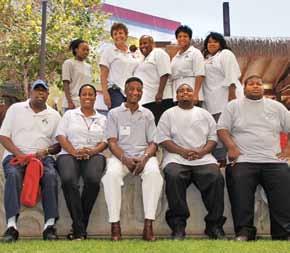
thank you thank you thank you
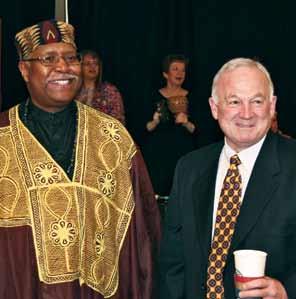
San Diego Urban League
San Diego Urban Warriors
San Diego Women’s History Museum & Education Center
San Diego Youth Action Board
San Diego Youth Services
San Ysidro Health Centers
SAY San Diego
Second Chance
Sierra Club
Somali Family Services
Somali Youth United
South Bay Community Services
South Sudan Christian Youth and Community Organization
Southern Sudanese Community Center of San Diego
Springboard
TASK (Tupulaga a Samoa i Kalefonia)
Turning the Hearts Center
UJIMA Institute of Civic Responsibility
Union of Pan Asian Communities
UAAMAC (United African American Ministerial Action Council)
Victory Outreach
Welcome Home Ministries
Youth Empowerment Center
Public Sector
California Department of Corrections and Rehabilitation
California Department of Transportation (Caltrans)
California State Water Resources Control Board
City of San Diego City Planning and Community Investment
City of San Diego Commission for Arts and Culture
City of San Diego Commission for Gang Prevention and Intervention
City of San Diego Development Services
City of San Diego Fire-Rescue Department
City of San Diego Fourth District Council Office
City of San Diego Office of the Mayor
City of San Diego Police Department
City of San Diego Redevelopment Agency
County of San Diego District Attorney
County of San Diego Health and Human Services Agency
County of San Diego Probation Department
County of San Diego Sheriff’s Department
Encanto Neighborhoods Community Planning Group
Mountain View Recreation Center
San Diego Association of Governments (SANDAG)
San Diego Housing Commission
San Diego Job Corps Center
San Diego Metropolitan Transit System (MTS)
San Diego Workforce Partnership
Southeastern Economic Development Corporation (SEDC)
Southern Economic Development Council Agency
State of California – Business, Transportation and Housing Agency
U.S. Census Bureau
Schools & Universities
Chollas-Mead Elementary School
Gompers Charter Middle School
Horton Elementary School
Johnson Elementary School
Keiller Leadership Academy
Knox Elementary School
Lincoln High School
Morse High School
Mt. Erie Christian Academy
Porter Elementary School
Prime Time Extended Day Program
San Diego Unified School District
San Diego Unified School District, Mental Health Resource Center
San Diego Unified School District, Police Department
SDSU - Institute for Public Health
Springfield College
UCSD – Calit2 (California Institute for Telecommunications and Information Technology)
UCSD – CREATE (Center for Research on Educational Equity, Assessment, and Teaching Excellence)
UCSD – Student-Run Free Clinic Project, Baker Elementary School
Valencia Park Elementary School