
William J. Hallan
MRA President and CEO
Thanksgiving has always been one of my favorite days of the year. My sister hosted this year and my expectations were high (no pressure Claire!). In the spirit of one of our best holidays, here are a few (retail) things I’m thankful for this year:
Local retailers. Putting up our Christmas lights this year required multiple trips for more strands, batteries, and extension cords. Thanks to our local hardware store, our exterior illumination is on point!
Government that’s open. The Federal government shutdown, and the consequences that followed – such as the 1.4 million Michiganders who did not have access to SNAP food benefits, was ridiculous. The entire country is thankful the debacle is behind us.
Opportunities to improve Michigan’s legal climate. MRA recently joined the Michigan Alliance for Legal Reform, which aims to curb excessive litigation and close legal loopholes that increase costs for businesses and consumers in Michigan. For example, the Alliance seeks to re-establish Michigan’s open and obvious doctrine, which would prevent retailers from being sued for hazards that are deemed open and obvious to a reasonable person. I’m thankful for commonsense reform to rein in lawsuit abuse for our members.
The simple penny. The U.S. Treasury has officially ceased production of the penny, which was first minted more than 230 years ago in 1793. MRA is currently seeking guidance from the U.S. Treasury and the Michigan Department of Treasury on how retailers are supposed to round cash transactions to comply with all federal and state laws. The penny has served the U.S. well, and I’ll be thankful when retailers have some more certainty on how to operate in its absence.

The team at Michigan Retailers Association and I hope you have a wonderful and prosperous holiday season, celebrating with family and friends.
For the Good of Retail,
Michigan Retailers Association
Bryan Neiman Chair
Neiman’s Family Market, St. Clair
William J. Hallan President & CEO
Michigan Retailers Association
Dan Marshall Vice Chair
Marshall Music Company, Lansing
Peter R. Sobelton Treasurer
Mondial Properties, Birmingham
Bill Golden Past Chair
Golden Shoes, Traverse City
Bo Brines Little Forks Outfitters, Midland
Kim Edsenga Meijer, Inc., Grand Rapids
Michigan Retailers Services, Inc.
William J. Hallan President & CEO
Thomas P. Clement Chief Operating Officer and General Counsel
Orin Mazzoni, Jr. O & T Investments LLC
Kendra Patterson Michigan Barn Wood & Salvage, Mason
Joe Swanson Target, Retired
William J. Hallan
MRA President and Chief Executive Officer
Becky Beauchine Kulka
Becky Beauchine Kulka Diamonds and Fine Jewelry, Okemos
Antoinette Kramar Orin Jewelers, Northville
Joseph McCurry Credit Card Group
Thomas Ungrodt TDU Consulting, LLC, Ann Arbor
John Leppink Leppink’s Food Centers, Belding
Larry Meyer Board Member Emeritus
D. Larry Sherman Board Member Emeritus
Michigan Retailer Magazine
William J. Hallan Publisher
Victoria Veda Editor
Rachel Schrauben Copy Editor and Content Director
Josh Delany Design/Layout Manager, Photographer
Shandra Martinez Contributor
With every
To request a media kit, email Rachel Schrauben at rschrauben@retailers.com





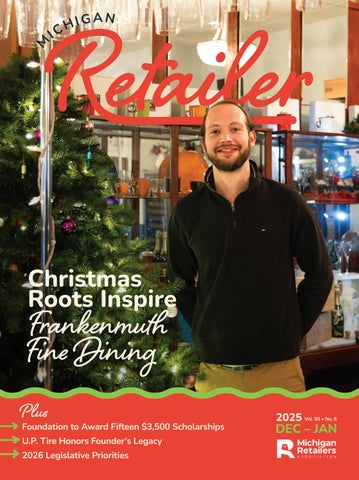
Christmas Roots Inspire Frankenmuth Fine Dining The Station 100 serves up seasonal favorites
Penny for Your Thoughts Retailers adjust to nationwide penny shortage
ADA Compliance Requirements Every Retailer Should Know How to avoid mistakes and create a trusted business
Walk This Way Slips, trips, and falls guidance for retailers
Michigan Retailers Foundation Will Award $52,500 Annual program launches on January 1
From Obstruction to Opportunity: Retail’s 2026
Legislative Priorities
Retail in Michigan has a clear stake in 2026 priorities
Son Returns to Keep Landmark Family Business Alive
U.P. Tire in Sault Ste. Marie honors founder
From the CEO Giving Thanks for Retail Wins, Big and Small
Legally Speaking
The Federal Shutdown’s Legal Implications for Retail
Creative Counsel
The Power of Community Engagement for Retailers
Under the Dome Save the Date for MRA’s Annual Capitol Day
Regulatory Rundown
Milestone Members
New Members
Elia Brunner stands in the festive dining room of The Station 100.


Tom Clement MRA Chief Operating Officer and General Counsel
After 43 long days, the federal government’s longestever shutdown has mercifully come to an end; with little to no movement on the unrelated policy issues that served as the primary obstacles to an agreement. The political gamesmanship that we were forced to watch play out as workers were furloughed or unpaid, and benefits and services were suspended, has significant effects on the economy. The impacts of this shutdown extend beyond just the economy into legal implications for businesses, large and small. Some of the more significant issues retailers have or may experience include delayed regulatory approvals, insufficient compliance clarifications, labor dispute delays resulting in administrative backlogs, and supply chain disruptions.
The federal government’s inability to keep its doors open does not mean that the wheels of commerce grind to a halt. Unfortunately, commerce and the federal government are inextricably intertwined. Think of a labor or wage dispute that needs to be resolved through an administrative hearing or a regulatory clearance that needs to be acquired to ship or receive materials or goods internationally. Both of those processes have a reputation for being backlogged in normal times, and the shutdown only exacerbates the problem.
Beyond regulatory and administrative legal landmines are contract disputes and the cost of pursuing them.
Consider a situation where a supplier is to provide goods to a merchant, the contract has a “time is of the essence” clause, and the shutdown makes delivery difficult or impossible. Certainly, the supplier may avail itself of an impossibility defense or rely on a well-written force majeure, “Act of God,” clause, but when interpreted narrowly, there is no guarantee of victory, and the cost of defending itself will be significant. At the same time, the merchant may have lost out on the opportunity to sell the goods, and realizing a remedy will likewise be costly.
In the case of a government shutdown of any length, everyone loses. Government closure is not the place to pursue a political “win” for any party or individual. Hopefully, Congress sees this reality now that we have gone through this painful exercise and continue to deal with its after effects.
Drew Beardslee MRA VP, Government Affairs
We’re only a few months away from MRA’s annual Capitol Day and Legislative Reception!
As you consider what issues were relevant to you in 2025, think about adding your voice to our efforts in 2026. We expect the conversation to continue on gift card fraud and organized retail crime, and look forward to new developments in making Michigan’s legal climate more accommodating to the realities of running a business.
This one-day event is one of the best ways to get involved in the political process, no matter how you’ve been involved in the past. Meet with fellow retailers and small business owners, speak with legislators that represent you and your store, and get a peek behind the curtain of the legislative process. Your unique perspective as a Michigan retailer provides invaluable real-world context that helps legislators understand the true impact of their decisions.
MRA’s Capitol Day and Legislative Reception are the perfect opportunity to make connections with public policymakers and speak up for the issues that matter to you the most. Your presence and participation are vital to protecting and advancing Michigan’s retail community.
Join us on April 22!
Contact Drew at abeardslee@retailers. com to learn more.
Vic Veda MRA VP, Communications
For locally-owned businesses, community is more than where you do business. It’s one of your most valuable assets. Community involvement has always been at the heart of small business, and it’s essential for your business’ growth and stability.
When retailers are actively engaged in their community, with local organizations, and with trade associations, they are stronger, more resilient, and see more long-term success.
Being involved in your community builds meaningful relationships with customers, ones that national and online retailers have a hard time replicating. When shoppers see your business supporting local events, donating to fundraisers, sponsoring a youth sports team, or linking arms with other local businesses, they feel a personal connection. That connection translates to customer loyalty, repeat traffic, and genuine referrals that money can’t buy.
Community engagement strengthens your brand identity, helping you become an integral part of your neighborhood, not just another place to shop. It can also make your business more appealing for employees who want to be a part of an organization involved in their community.
A strong relationship with your community adds an extra layer of strength to your business. Your neighbors rally around businesses they feel connected to. During economic challenges, natural disasters, and other unexpected disruptions in business, your community’s support can make all the difference in your ability to recover.
Your local community supports you in many ways, but “community” goes far beyond those physically near your business. You can find community in many places, like local organizations, trade associations, and peer groups.
Local organizations can provide resources, recommendations, and referrals. Trade associations, like MRA, provide industry-specific resources and support, and are advocates for your business. We provide practical tools, guidance, and insights that help your business operate smoothly.

Engaging in community is a powerful way to gain support and recognize new opportunities. Seeking out different forms of community–locally and beyond–will serve your business well. These connections help small businesses succeed, and when retailers thrive, communities flourish.
Corbishley’s, a cornerstone men’s clothing store in downtown Bad Axe and one of the nation’s longestrunning family-owned retailers, is celebrating 150 years and five generations of family ownership. Founded in 1876 by Charles Corbishley I, the store moved to Bad Axe in 1928 and has remained a community staple. Now led by Charles Corbishley IV, who started working there at age 10, the shop blends hands-on service with deep history, showcased through original artifacts preserved throughout the store.
Corbishleys has been an MRA member since 1977.

Retailers Insurance Company appointed agency, Core Insurance Group has been named one of Metro Detroit’s Best and Brightest Companies to Work For in 2025. The National Association for Business Resources presents these annual awards to recognize companies that foster inclusivity, collaboration, and corporate social responsibility, while also excelling at attracting and retaining top talent.

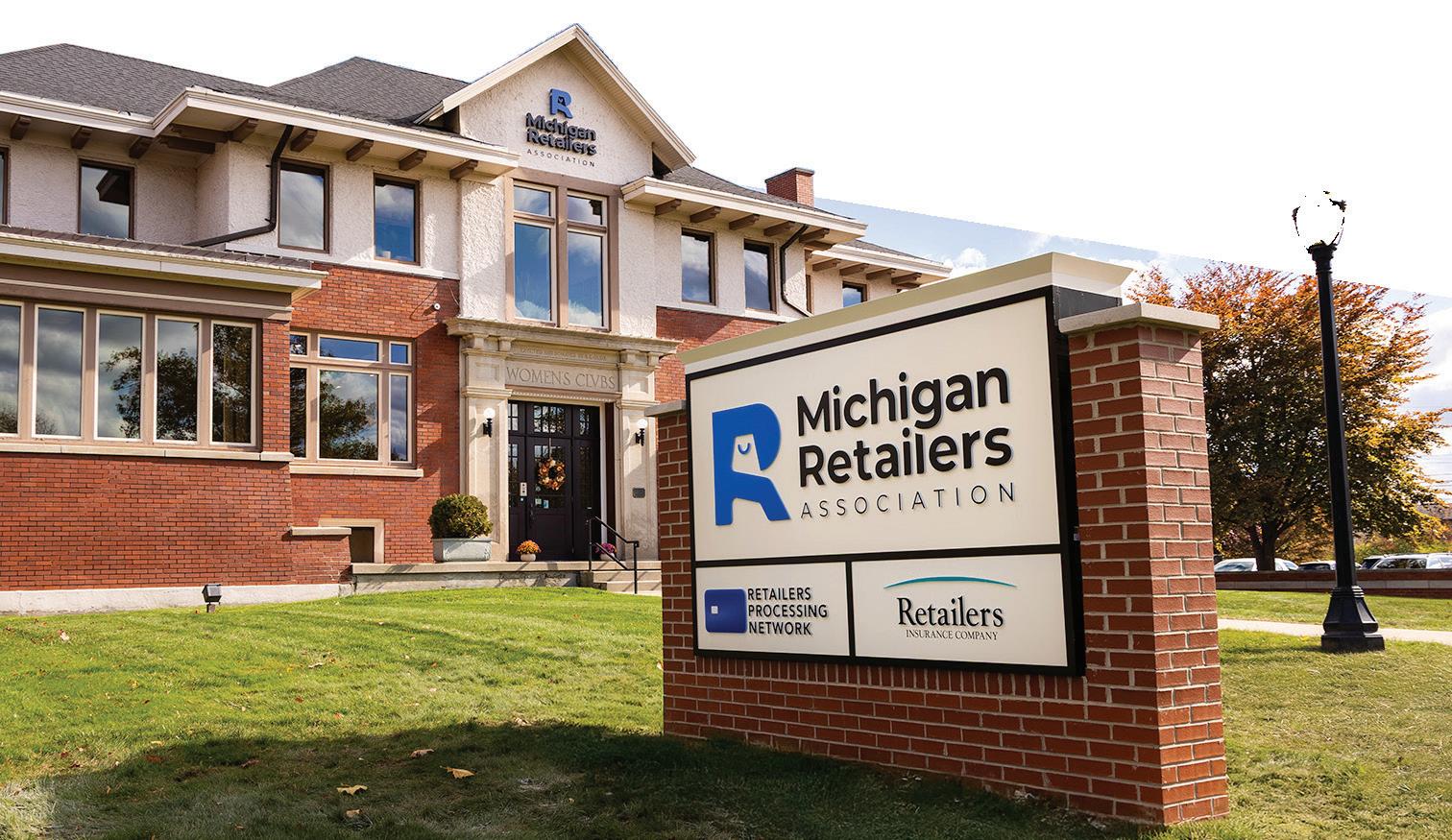
One of the last big changes to Michigan Retailers Association’s downtown Lansing location following the July 29 rebranding was the installment of a new monument sign. The signage is illuminated at night, bringing a new level of visibility to visitors in Lansing, easily spotting which building is home to the voice of retail in Michigan.
By Shandra Martinez
M
ore than a decade before earning statewide acclaim for fine dining and one of Michigan’s deepest Old World wine cellars, The Station 100 began as something far humbler: a Christmas ornament museum.
When Barbara Romer moved from Switzerland to Michigan in 2011 with her teenage son, Elia Brunner, she brought a vast collection of antique European Christmas ornaments. The assortment, which included glass, cotton, and cardboard decorations dating back more than a century, was one of the largest private collections of its kind.
What started as her passion project soon became the foundation of a family business that would evolve far beyond what either of them expected.
In 2013, the two opened The Old Christmas Station, a small exhibition space and café housed inside Frankenmuth’s former Interurban railroad station. Visitors could admire antique ornaments while sipping coffee and sampling homemade pastries.
At the time, neither Romer nor Brunner had restaurant experience, and the plan was simply to share the collection with the public.
“Back then, we actually opened a small museum for our Christmas ornaments, with a small cafe on the side,” Brunner said. “We didn’t really have intentions for more at the time.”
But the food changed everything. Guests began returning not just for the novelty of the ornaments but for the soups, quiches, and pastries made from scratch. What began as an attraction grew into a community gathering spot, and by 2016 the pair realized they needed more formal training if they wanted to keep expanding.
Brunner, who moved to the United States at age 16, had not envisioned a culinary career. The café’s growth changed that.
“If we were going to keep going in that direction, we needed to further educate ourselves,” he said.
Brunner enrolled at Les Roches, one of the world’s top-ranked hospitality management schools, and studied at campuses in Chicago, Switzerland, and Spain. His education included internships and training at Michelin-starred restaurants in Chicago and Switzerland and at a luxury resort in Tanzania.
While he studied abroad, he and his mother held regular planning calls to imagine the future of their business. Those conversations centered on a shared goal: transforming their modest European café into one of Michigan’s best fine-dining restaurants.
“We had hundreds of hours of brainstorming phone calls while I was abroad,” Brunner said. “We talked about next steps and what we were going to do once I returned from school.”
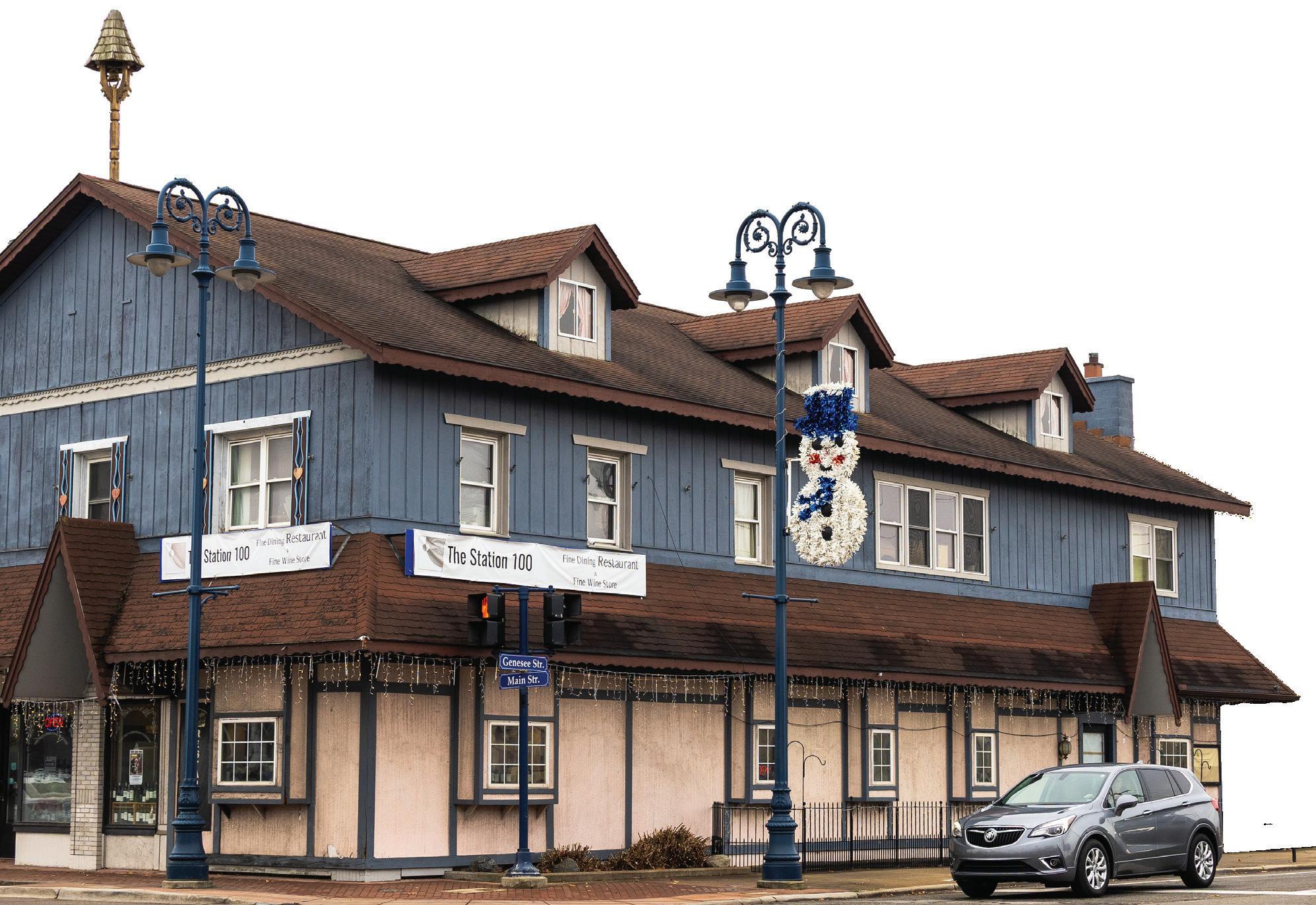
Brunner returned to Michigan in 2020, just as the COVID-19 pandemic began. Despite the uncertain timing, the family launched an ambitious rebranding of their business. Ornament displays were removed, the café concept was retired, and the space was renovated to prepare for a new chapter.
The restaurant reopened as The Station 100, a name chosen both to honor the building’s original use as a train station and its address at 100 S. Main St.
“The 100 is also a symbol for giving 100% to every guest,” Brunner said.
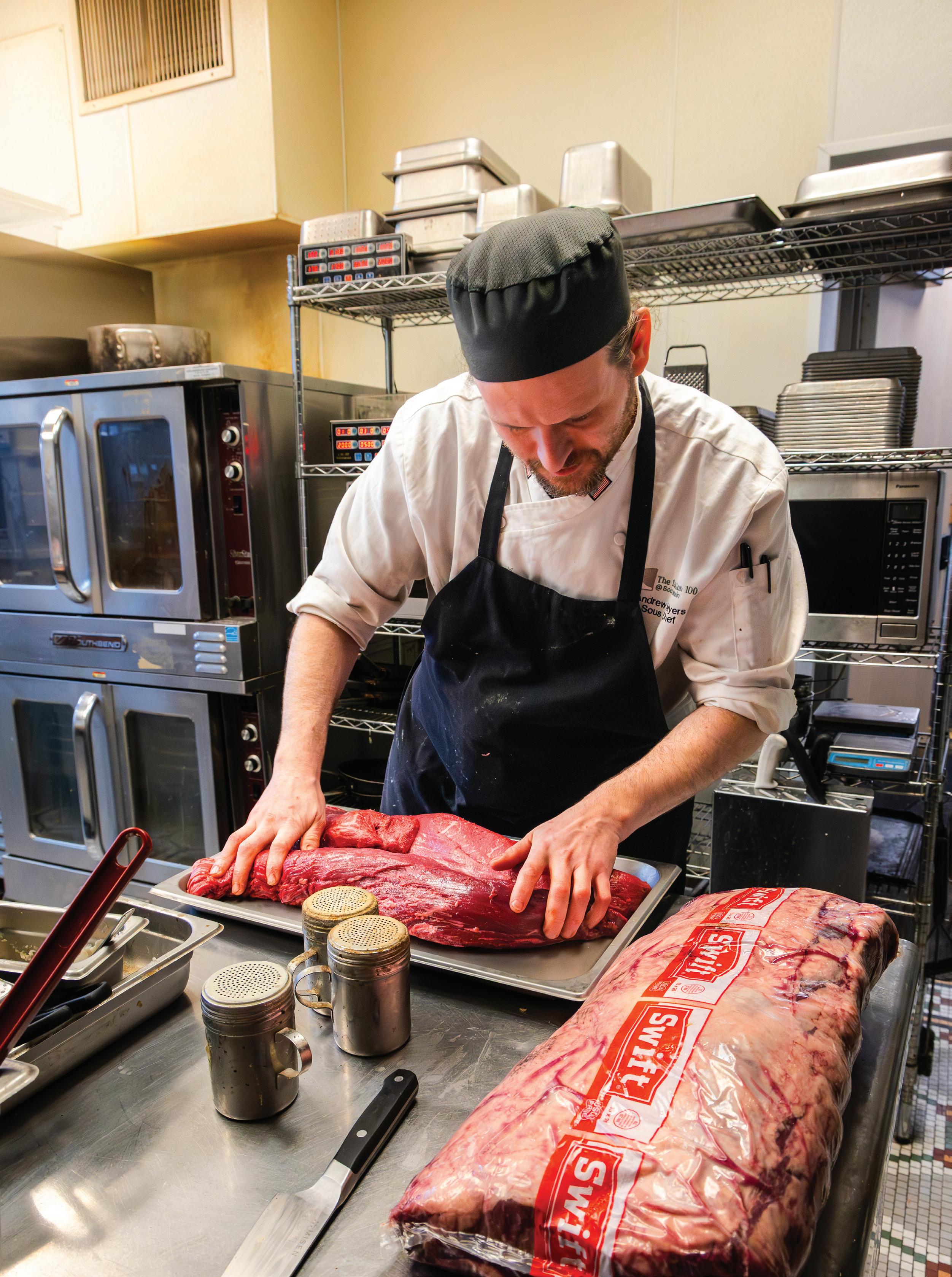
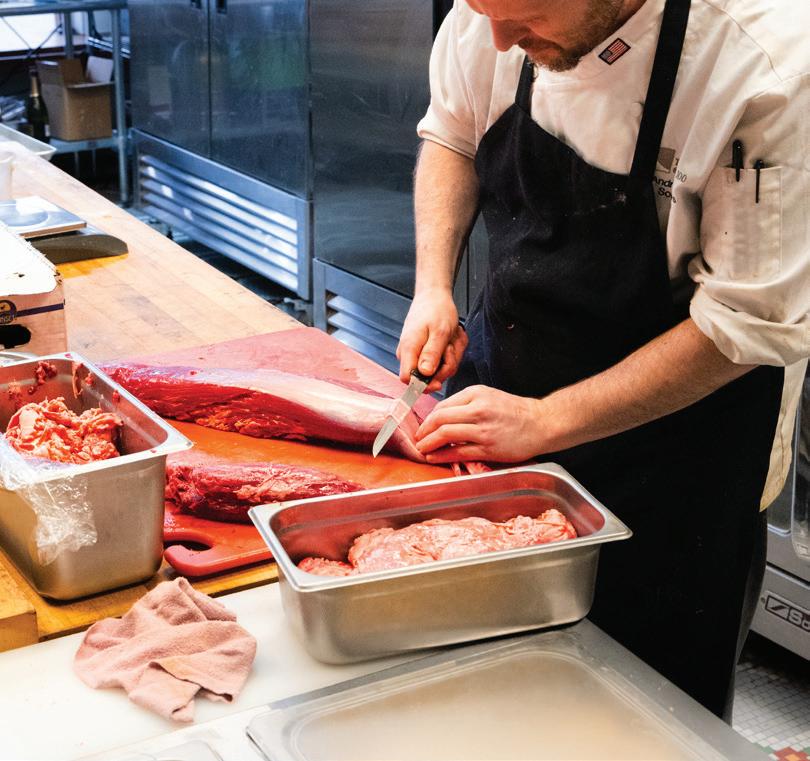
The restaurant’s menu shifted dramatically. Instead of quiches and pastries, it now focuses on elevated dishes such as USDA prime steaks, 60-day dry-aged cuts, imported

A5 Wagyu, foie gras, and Chilean sea bass. The culinary program was paired with a wine list that grew from Barb Romer’s longstanding collecting passion.
Romer had been building a wine collection for decades, and the family decided to invest heavily in expanding it. Today, The Station 100 offers nearly 600 selections and stores about 6,000 bottles in an underground cellar, emphasizing wines from Europe. The program has earned recognition from Wine Spectator, which gave it the magazine’s Best Of Award of Excellence.
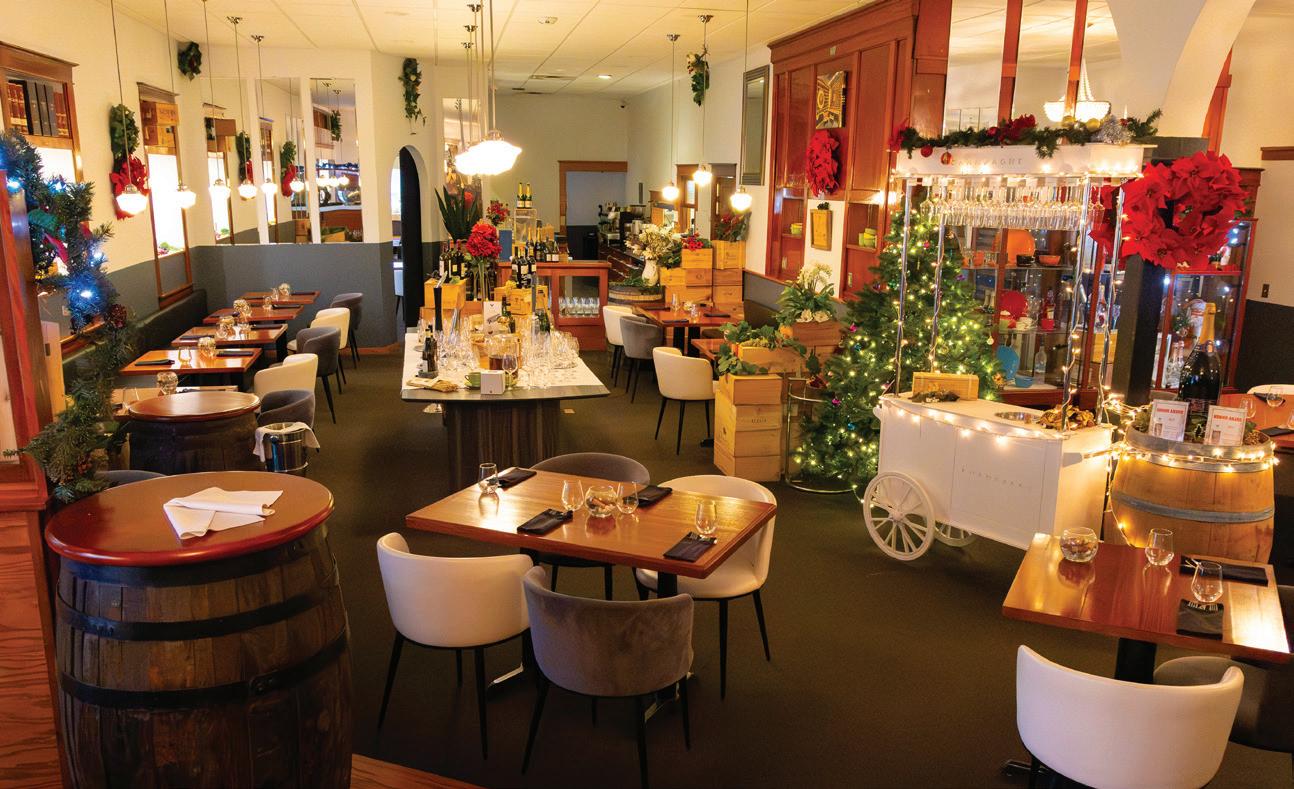

Even after rebranding, the family continued to think bigger. In 2023, they completed a multiyear project to create a three-story expansion. The addition includes a banquet room that seats about 60 and a rooftop bar, which opened this fall and quickly became a popular destination.
The rooftop bar, which Brunner describes as “the nicest in Mid-Michigan,” features 200 spirits, draft and bottled beers, and full access to the restaurant’s extensive wine list. While the rooftop bar has closed for the winter, it made a strong debut in its first month.
The Station 100 seats about 70 guests and operates primarily on reservations. The holiday season is its busiest period, with weekend bookings in November and December often filling a week in advance.
Frankenmuth, known for its Bavarian-style architecture and large-scale Christmas attractions, draws millions of visitors each year. There’s a sort of year-round Christmas spirit in the community, and Brunner said the town’s restaurant community remains unusually cooperative rather than competitive.
“There is such a kind and caring relationship between businesses here,” he said. “You can call another business owner, and they will help you. It’s a warm community.”
That collaborative environment helped the family navigate its early years in the United States, when they were learning how to operate a business in a new country.
Not long after opening, they joined Michigan Retailers Association at the suggestion of several in their community, becoming members in 2014. As new business owners, Brunner said the Association helped them understand the local landscape and offered valuable guidance, particularly regarding workers’ compensation services.
“The rooftop bar became a hit instantly,” Brunner said.
Although the ornament museum no longer exists, the holiday spirit remains a central part of the restaurant’s identity. Each November and December, The Station 100 offers a seasonal five-course dinner that features USDA prime beef Wellington. The dish was so popular during its introduction last year that guests asked about its return throughout the following months.
“We’re very happy to have the beef Wellington available again,” Brunner said.
The holiday menu is offered with the restaurant’s regular offerings, letting visitors choose between its fine-dining staples and a festive, limited-time experience.
The family’s journey from Switzerland to Frankenmuth was shaped by heritage, opportunity and a shared love of Christmas traditions.
Brunner said Frankenmuth’s German roots made it feel familiar when they were looking for a place to settle, and the town’s enthusiasm for all things Christmas made it feel even more like home.
“We just thought it was a very nice place to pick,” he said.

TDrew Beardslee MRA VP, Government Affairs
his year, the United States Treasury stopped minting the penny, which, for many years, has cost more to produce than it’s worth. Especially given the rise of paying by card, or even by phone, the humble one-cent coin has diminished in utility over the years. Phasing it out is a fiscally prudent measure, but not without a new suite of problems.
The change happened abruptly, with only a few months between the President’s directive on social media and the final penny being minted
Without a one-cent coin, retailers must decide whether to round transactions up or down to the nearest nickel for cash transactions, but that decision is fraught with potential legal vulnerability.
For example, SNAP-authorized retailers are required to follow the program’s equal treatment provisions, meaning that a transaction using an EBT card can’t be treated differently than other types of payment. If a retailer rounds a transaction down for a cash payment, that customer might pay a slightly lesser amount than an identical purchase with an EBT card, potentially violating the equal treatment provision.
The Michigan Department of Treasury will release guidance soon on the collection and transmission of taxes when retailers are forced to round for cash transactions. The Department of Licensing and Regulatory Affairs, which sets state minimum prices for spirits, says retailers must round up to the nearest nickel to avoid a potential

Some local municipalities, including the City of Detroit, also have ordinances prohibiting discrimination between different types of payment. Rounding cash transactions up or down could run afoul of these local rules, too.
MRA is working with the appropriate entities at the federal, state, and local level to get clarity to retail members as soon as possible.

The Michigan Grocers Fund has announced a $596,514 profit return for the 2026 policy year, bringing total returns to more than $5.26 million since 2014–an average of 35% back to members each year. As a self-insured program focused on reducing workers’ compensation costs, the Fund accepts only grocery and convenience store businesses with strong safety records, stable operations, and proven riskmanagement practices.
Michigan Grocers Fund members benefit from industry-specific safety and loss control support, including consultations, management training, manuals, and an online safety center with HR tools and compliance resources. These services help prevent claims, strengthen safety programs, and foster a workplace culture where every employee is accountable for safety.
To keep members informed, the Fund issues semiannual report cards detailing performance and projected returns. The Michigan Grocers Fund is sold and serviced through a statewide network of experienced independent insurance professionals and is endorsed by the Michigan Retailers Association.
Learn more at: migrocersfund.org
MRA Member Benefit:
Keep your business compliant with State and Federal requirements. As a MRA member benefit, you get one free set of posters (sold elsewhere for $30-$40). Members who previously requested older versions of the labor law poster should have received the free updated State poster (Version 4.25) following the addition of the Earned Sick Time Act information and Resources for Michigan Veterans poster.
To get your free state and federal posters (versions 4.24 and 4.25), use coupon code LABOR1 during check out. Additional poster sets cost $30 each plus tax.
Order your poster set today! Shop.Retailers.com
Jan. 1 – Print New Yearly Sales & Use Tax License
Jan. 1 – Liquor Licensees – Post Updated Age to Purchase Alcohol Sign
Jan. 1 – Tobacco retailers – Post Updated Age to Purchase Tobacco Sign (optional from We Card)
Jan. 1 – Minimum Wage increases to $10.10 an hour
Jan. 1 – MRA scholarship program kicks off, apply through April 1
Jan. 15 – Open Enrollment for Individual Health Care Coverage deadline
Jan. 31 – Wage and Tax Statements/Information Returns (W-2, 1099s) give to employees/contractors, submit to IRS/ Treasury
Feb. 1 – Post MIOSHA Form 300A – Summary of WorkRelated Injuries and Illnesses (if more than 11 employees) between Feb. 1 and April 30.
Feb. 15 – Michigan Annual Report Due - Limited Liability Companies (LLC) and Professional Limited Liability with LARA
Feb. 28 – Michigan Sales, Use and Withholding Tax Annual Return due
Sales & Use Tax – Monthly & EFT – On or before the 20th day of the following month.
Withholding Tax – Monthly & EFT – On or before the 20th day of the following month.
Retailer’s Prepaid Wireless 911 Surcharge – within 30 days of the close of each month. Receipt of a complete Form 5012 is required regardless of payment method.
Corporate Income Tax (CIT) Estimated Returns and Payments (Jan. 15, April 15, July 15, Oct. 15)
Sales & Use Tax – Quarterly & EFT – On or before the 20th day of the month following the quarter (Jan. 20, April 20, July 20, Oct. 20)
Withholding Tax – Quarterly – On or before the 20th day of the month following the quarter (Jan. 20, April 20, July 20, Oct. 20)
Unemployment Employer’s Quarterly Wage/Tax Reports (Jan. 25, April 25, July 25, Oct. 25)
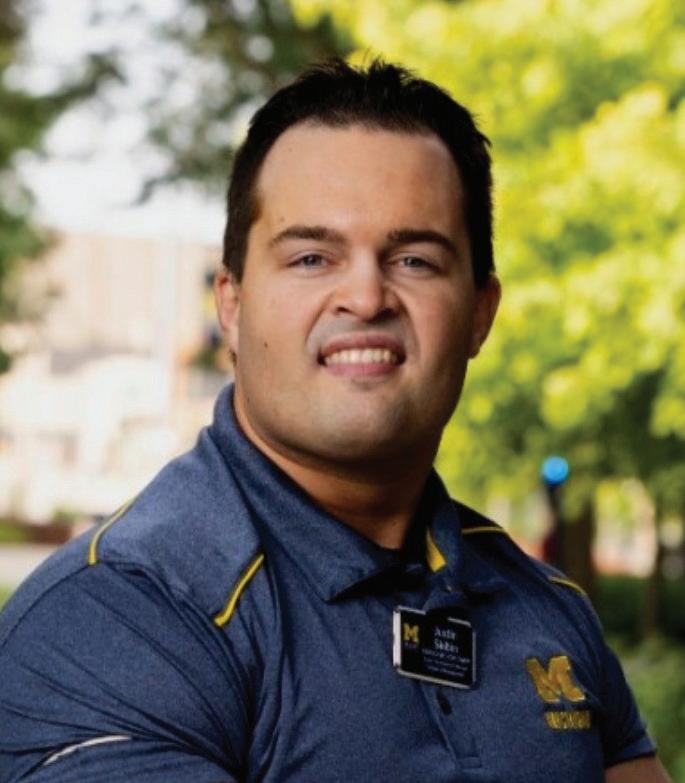
Skibin, MA, CBSP, GCDF, CMCS, CCSP, ADAC Michigan Department of Labor and Economic Opportunity
ADA compliance isn’t just a legal requirement — it’s a way to make your business more welcoming, build customer trust, improve employee retention, and avoid costly mistakes.
There are a few key ADA requirements that apply to retail stores: Americans With Disabilities Act of 1990: Title I for Employment, and Americans With Disabilities Act of 1990: Title III for Public Accommodations
Public accommodations are businesses and non-profit organizations (private entities) that provide goods and services to the public, which includes retailers. ADA Title III applies to public accommodations. Title III requires places of public accommodation to make “reasonable modifications to policies, practices, and procedures.”
Ensure communication with people with disabilities is as effective as communication with others.
Provide “auxiliary aids and services” where necessary to ensure that communications are effective, unless the result would be an undue financial and administrative burden.
Make reasonable modifications in policies, practices, and procedures if necessary for people with disabilities to participate, unless a reasonable modification would cause a fundamental alteration in the program. Consider other reasonable modifications that don’t cause a fundamental alteration in the program.
Remove physical barriers at inaccessible facilities when “readily achievable,” or “easily accomplishable and able to be carried out without much difficulty or expense.”
New construction and alterations must be accessible.
One in six parking spots must be “van accessible.”
Have at least one accessible route to building entrances from site arrival points.
Curb ramps cannot protrude into the access aisle (must be 36 inches deep to cross).
Regarding entrances, at least one compliant door or doorway, and the International Symbol of Access (ISA), also known as the International Wheelchair Symbol, is required.
All areas must comply, except employee work areas, partially scoped spaces, and exempted structures and spaces.
Employee work area minimum requirements include approach,


What are the potential consequences of non-compliance — and the benefits of getting it right?
Non-compliance with ADA Title III can lead to significant legal and financial consequences for businesses. Title III requires public accommodations to ensure accessibility for individuals with disabilities, including making their physical spaces and digital platforms accessible.
Potential consequences of non-compliance:
Equal Opportunity: Businesses must provide individuals with disabilities equal access to goods and services.
Accessibility Standards: Compliance with the ADA Standards for Accessible Design is required, which includes physical accessibility and effective communication.
Penalties: Non-compliance can result in civil penalties, with first violations reaching up to $75,000, and subsequent violations exceeding $150,000.
Legal Risks: Businesses may face lawsuits and settlements, which can be costly and disruptive.
Breach of constituent trust (future applicants, current employees, additional stakeholders).
Benefits of getting it right:

Stronger employee retention (workplace culture, belonging, mental health).
A higher number of qualified applicants (over one in four Americans has a disability).
“Universal Design Approach” can also show inclusion to staff without a disability and promote a culture of inclusion.
Increased buy-in from executive leaders can have a top-down approach to allow all staff to feel welcomed.
Allows the company’s mission statement to be consistent.
In closing, individuals with disabilities are over one in four of us. Our workforce, workplace, and society as a whole will be immeasurably advantaged by having a culture that’s inclusive of individuals with disabilities. Working together, internally and externally, will help make this a reality.
Justin Skibin can be reached at
• State of Michigan Department of Civil Rights:
Disability Rights & Compliance Division
• MRS Business Network Division:
LEO - MRS for Business Disability-focused trainings for businesses (Mental Health and Mindfulness, Reasonable Accommodations, General Disability Awareness, Windmills, ADA Knowledge/Compliance).
• Other MRS disability partners in Michigan:
LEO - Disability Resources
• Disability Network:
ADA Compliance - Disability Network Southwest Michigan


From Retailers Insurance Company
It’s a busy time of year for us all. To ensure a safe end to 2025 and a safer start to 2026, it’s time for a brief check-in on equipment and procedure.
Although slips and fall fatalities dropped by 19% from the 2023 fiscal year to 2024 fiscal year, they still remain a large part of workplace accidents. Businesses can take a number of steps to cut down the amount of slips and falls in many different areas of their business.
Ensure your railings and stairwells are solid, well-maintained, and easy to navigate. A secure handrail and well-lit steps can prevent slips, trips, and serious injuries, reducing the chance of workers’ compensation claims and downtime. Regular inspections, prompt repairs, and clear visibility go a long way in keeping both employees and customers safe. Investing a little time and attention helps protect your business in the long run and shows that you care about creating a safe, dependable environment for everyone who walks through your doors.
Lighting also provides a sense of security. In these shorter daylight hours, help magnify parking lots and entryways for safety as employees and
shoppers cross the spaces in the
Lastly, don’t forget to swap the batteries in the smoke detectors while you already have your ladders out. Visit RetailersInsurance.com for additional safety tips, including ladder safety.
Salt your ramps, steps, and sidewalks like your business depends on it. One icy patch can lead to a painful fall, a costly claim, and plenty of paperwork no one wants. A few scoops of salt can save you money, stress, and the hassle of explaining why your walkway turned into a mini ice rink. It’ll be hard to regain trust in customers who get hurt walking into your store.

MRA Adds Additional Platinum Legacy Scholarship for 2026 Program Year, Will Award $52,500


Applicants must meet one of the following criteria:
- Dependent children of owners or full-time employees of MRA member businesses. The parent or guardian must have been employed by an MRA member on or before Jan. 1, 2025.
- Part-time employees of MRA member businesses who are full-time students. Employment with an MRA member must have started on or before July 1, 2025.
Eligible applicants include high school seniors, college freshmen, sophomores, and juniors.
MRA will also award seven MRA Legacy Scholarships funded by:
Bo Brines and Family, Little Forks Outfitters, Midland
Andrew Gemmen, Gemmen’s Ace Hardware, Hudsonville
Bill Golden, Golden Shoes, Traverse City
James Hallan, retired MRA President and CEO
Jeff and Doreen Joyce, Mieras Family Shoes, Grand Rapids
Becky Beauchine Kulka, Becky Beauchine Kulka Diamonds & Fine Jewelry, Okemos
Dan Marshall, in honor of Willis W. and Mary Jane Marshall, Marshall Music Company, Lansing

MRA will award eight Platinum Legacy
Paul M. Felice and Al Kessel Memorial the former Michigan Grocers Association chairman and director and the latter founded
Helen McCurry Scholarship, established by Joseph McCurry, MRA board member, in honor of his
Jean L. Sarasin Scholarship, retired Executive VP and COO of MRA and RIC
D. Larry Sherman Scholarship, Board

John Mayleben, in honor of his late wife, Linda Mayleben, retired MRA Senior VP, Technology and New Product Development
Orin and Tina Mazzoni and Family, Orin Jewelers, Northville
Since 1999, the MRA Foundation has awarded 652 scholarships, totaling $793,750, to Michigan students.
Raymond A. and Mildred C. Sobelton Scholarship, established by MRA, RIC board member Peter Sobelton and sister and brother-in-law, Barbara and Douglas
Joseph Swanson Scholarship, MRS board member, Big Springs Enterprises, Naubinway
Thomas and Diane Ungrodt Platinum Legacy Scholarship, established by MRA, RIC board member Thomas Ungrodt, and president of TDU Consulting, LLC
Walsh Family Scholarship, established by retired chief financial officer of Meijer, Inc. Jim & Kathy Walsh
Larry and Gail Meyer, retired MRA President and CEO, Board Member Emeritus
Judy and Rodney Phillips, Country Casuals, Petoskey
W. Bruce and Joyce Rogers, Traverse City business owners and retail advocates
Nathan Rosenfeld, Purchased Jacobson Stores, Inc. from the Jacobson family in 1939
Mark Schrag and Friends, Mark and wife Nancy owned and operated Seasons in Okemos
Kenneth A. and Margaret Schwark, established by their sons James, Tom and Michael, Kenneth founded southeast Michigan’s Schwark Furniture store chain, Sycamore Hills Golf Club in Macomb Twp., and helped construct the Shelby Square shopping center in Shelby Twp.
Barb Stein, Retired owner of Great Northern Trading Co. in Rockford
Start your application on Jan. 1, 2026. Deadline to apply is April 1, 2026.
2025 was a fairly sluggish year for the Michigan Legislature. A few major pieces of legislation crossed the finish line (including a revamp of the Earned Sick Time Act and a largely favorable state budget), but for the most part, the two Chambers were hesitant to move each other’s bills, leading to an impasse that prevented much in the way of legislative action.
That impasse almost certainly benefited Michigan retailers; neither party has a monopoly on misguided ideas, and our current divided government has stopped several unappealing policies from both sides of the aisle from seeing the light of day. Still, there is much left on the table to be accomplished in 2026, and a host of new issues as well.
MRA expects swift action on House Bills 4598 and 4599, the gift card fraud prevention bills that have enjoyed bipartisan support thus far. A bill authorizing pharmacies to be reimbursed for services performed under the federal PREP Act has been passed in one chamber and introduced in the other. Several smaller reforms around liquor licensing appear to have a good shot at bipartisan action.
One new priority in the new year is the ongoing advocacy effort of the Michigan Alliance for Legal Reform, of which MRA is a major member.
The Alliance, announced in November 2025, is focused on restoring fairness and balance in the state’s legal system, reining in various forms of lawsuit abuse that make it harder for Michigan retailers to do business. A particularly relevant example to retailers is a bill to restore the state’s “open and obvious” doctrine as a means to push back against frivolous or excessive lawsuits around premises liability in instances where the hazard was “open and obvious” to a reasonable person.
This is an important protection for retailers, especially when hazards exist—like an icy sidewalk or a pothole in the parking lot—that are outside of a retailer’s control.
Looking ahead, 2026 offers Michigan an opportunity to break out of the stalemate of the past year and pursue a focused, bipartisan agenda that strengthens the state’s business climate. Michigan’s retail community has a clear stake in that progress.

To advocate for retail in Michigan, join us for Capitol Day on April 22, 2026.


Shanda Martinez

Tony Brown had lived far from Sault Ste. Marie for decades, but when he walked into U.P. Tire Inc. last spring, he wasn’t just the founder’s son stopping by to say hello. He was returning to save the family business, like you’d see in a heartwarming holiday movie.
Brown had spent the past 25 years building a career in Toronto, most recently overseeing global hospitality and facilities operations for a large e-commerce company. But when his father, Charlie Brown, died in May 2023, just weeks after the company’s office manager unexpectedly passed away, the future of the tire shop his father founded in 1972 suddenly became uncertain.
“The business was going to fail,” Brown said. “My dad was gone, our office manager was gone, and my mom needed a lot of extra assistance. There really was no choice. This decision was born solely of duty and obligation.”
U.P. Tire has been a fixture in Sault Ste. Marie for more than half a century, serving the eastern portion of the Upper Peninsula.
Charlie Brown began by selling tires out of his truck before operating from a modest service station in town. By the mid-1980s, the business had grown enough to require a new building, one Tony helped design and operate.
Today, the shop provides full-service tire sales and repairs, serving everything from passenger vehicles to heavy trucks and the earthmovers working on the Soo Locks project.
Brown said stepping back into the business after so many years away meant rebuilding nearly everything from scratch. Key operational information, passwords, processes, and account access had been kept only in the heads of the two people who were suddenly gone.
“It’s been an uphill, bare-knuckle fight this past year,” he said. “We didn’t even have access to the company bank accounts for weeks. But piece by piece, we’ve rebuilt it.”
During that transition, Brown leaned on a resource his father valued deeply: the Michigan Retailers Association. U.P. Tire has been an MRA member since 1985 and uses its merchant processing, group insurance, and workers’ compensation services.
“MRA brought continuity at a time when everything felt chaotic,” Brown said. “When I had questions about credit card processing or needed help understanding new systems, I knew I could call and get an answer. That’s what
my dad appreciated, and it’s what has helped me move forward.”
Brown said competition for credit card processing has been aggressive, with outside companies calling nonstop. But the trust and support he receives from Michigan Retailers keeps him loyal.
“There’s comfort in knowing they’re in your corner,” he said.
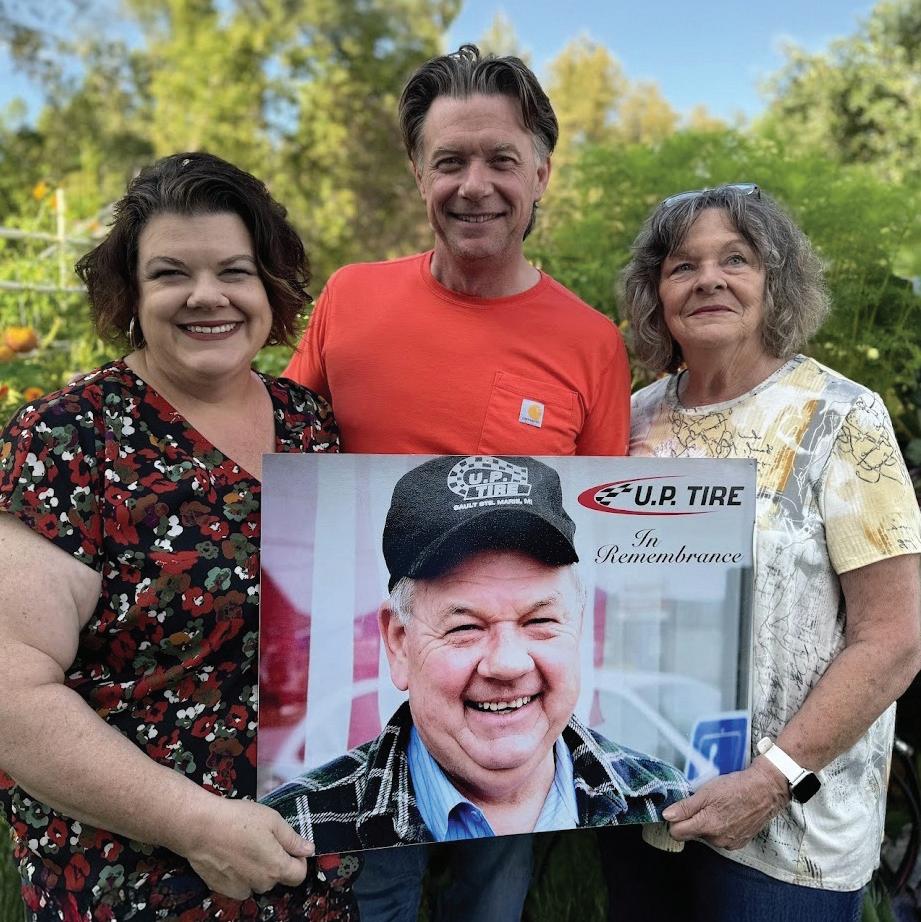
U.P. Tire’s commitment to community service stretches back decades, a priority Brown says he intends to strengthen. The business regularly supports agricultural groups, youth programs, and local events across the region. Brown also invests heavily in his employees, paying wages well above the local market rates and offering benefits rarely seen in small shops.
“This business has always been community-minded,” he said. “I’m trying to keep us relevant while honoring what my dad built, but utilizing my own experience and training to bring it into the 21st century.”
U.P. Tire’s service area spans the entire Eastern Upper Peninsula, reaching St. Ignace, Newberry and rural communities in between. The shop employs nine workers and remains one of the few tire service providers in the region capable of handling heavy equipment.
Despite the challenging year, Brown says he’s grateful to continue the family legacy.
“My dad started this 56 years ago, and the community supported him every step of the way,” he said. “Now it’s my turn to give that back.”
Money in Michigan® even when you shop online!
82% OF SHOPPERS PURCHASE ONLINE AT LEAST ONCE A MONTH
OVER 33% OF THE WORLD’S POPULATION SHOPS ONLINE
OVER 16% OF ALL RETAIL SALES IN THE US WERE ONLINE IN 2024.
99% OF ONLINE SHOPPERS CHECK REVIEWS WHEN MAKING A PURCHASE, 96% OF CUSTOMERS LOOK SPECIFICALLY FOR NEGATIVE REVIEWS
84% OF SHOPPERS SAY THEY’D BE WILLING TO INSTALL AND SHOP THROUGH A MOBILE APP IF IT GAVE THEM ACCESS TO BETTER SALES/PRICING
ECOMMERCE IS A $6.8 TRILLION INDUSTRY AND WILL REACH THE $8 TRILLION MARK BY 2027
ECOMMERCE SALES IN THE UNITED STATES HAVE BEEN STEADILY INCREASING FOR OVER A DECADE, HITTING A RECORD HIGH OF $1.19 TRILLION IN 2023 MOBILE COMMERCE IS ATTRIBUTED TO 60% OF GLOBAL ECOMMERCE SALES IN 2023



Mobile point-of-sale Surcharging & cash discounting Online ordering Waitlist management Delivery integrations And more!

Delight guests from tableside to takeout with Genius for Restaurants

Meet guests where they want to dine
Make it easy for customers to get their favorites to go or delivered with online ordering tech that’s intuitive for diners and staff.
Turn casual customers into regulars
Boost repeat business without having to rely on disconnected solutions — Loyalty, powered by Como, is built right in.
Speed up checkout with integrated payments
Offer faster, more secure checkout and avoid errors from multiple systems thanks to built-in payment processing.
Get custom solutions for your needs
Tailor your tech stack with any combination of our delivery, reservation, business management and other integrations.
Order up a smarter system –Book your free demo today!
1160 Treat Street LLC, Adrian
Scientific Method Research LLC, Ann Arbor
HW Products LLC, Auburn Hills
Hurst Inc., Belmont
Templeton Service Division, Birmingham
Agape Health Care Schools, Cadillac
Grand Lux Diamonds LLC, Caledonia
Alva Inc., Canton
Sanra Inc., Canton
Lakewood Machine Products Inc., Carleton
Shamrock Fence Company Inc., Carleton
The Post, Cass City
Ten Mile Oil LLC, Center Line
Chiliboys LLC, Detroit
Latino Family Services Inc., Detroit
RMJ Holdings LLC, Detroit
Trinosopes LLC, Detroit
Shark Tail Inc., Eastpointe
Cutting Edge Staffing LLC, Farmington Hills
Fenton Land Surveying and Engineering Inc., Fenton
Hartland Plumbing LLC, Fenton
Shibaraku Inc., Fenton
Satnam Wellness, Ferndale
Mega Classic Diner LLC, Flint
Champagne Lawn & Land LLC, Freeland
Cottage Used Books, Goodrich
Travel Brokers, Grand Blanc
Common Ground Consulting LLC, Grand Rapids
Steensma Payroll Services LLC, Grand Rapids
Gateway Mission, Holland
LAR Counseling Services LLC, Holland
MLR Transport LLC, Howell
Boyers Tool & Die Inc., Jackson
Dada Guru Hospitality Inc., Jackson
H & M Sullivan Hospitality LLC, Jackson
The NayBours LLC, Jackson
Urban Restaurants LLC, Jackson
Animal Rescue Project , Kalamazoo
Country Club of Lansing, Lansing
Delux Tents Mid Michigan Inc., Lansing
Lansing Gallery Inc., Lansing
Miller’s Recreation Inc., Laurium
A & B Building Blocks LLC, Lawton
Fraser Tea, Livonia
JT Treasures, Manistee
KJK Holdings LLC, Marshall
McKeown & Kraai PLC, Middleville
Teffi-N-I LLC, Morley
Stash Ventures LLC, Mt. Pleasant
MI HC Staffing LLC, Muskegon
Quality Glass Napoleon Inc., Napoleon
Negaunee Historical Society, Negaunee
Industrial Container Inc., New Baltimore
NL Deer Processing Inc., New Lothrop
Muskegon Lake Nature Preserve, North Muskegon
Walls N All Painting LLC, Ortonville
MI Call Center Inc., Oscoda
We Care Management LLC, Owosso
Epiphany Studio Ltd., Pontiac
Michigan Mittens, Pontiac
515 Wall Management LLC, Port Huron
Huron House Inc., Port Huron
Hickner Eye Center PC, Portage
Northern Michigan Children’s Assessment Ctr, Roscommon
Sterling Oil & Chemical Co Inc., Royal Oak
Lennie Mae’s Rib Shack, Saginaw
McNeese Logistics LLC, Saginaw
Varsity Catering Co Inc., St. Ignace
Sad Tribals Laser Tattoo Removal PLLC, St. Johns
Maelstrom Chemical Technologies LLC, Shelby Twp.
Car-Donna’s Marathon Station Inc., Sterling Heights
My Secret Stash, Traverse City
P & D Auto Body LLC, Traverse City
Beneath The Bloom, Vassar
Natural Distractions LLC, Vassar
Huizinga Rebuilding & Truck Repairs, Wayland
Wayne Wellness Inc., Wayne
Fresh Solution Farms LLC, White Pigeon

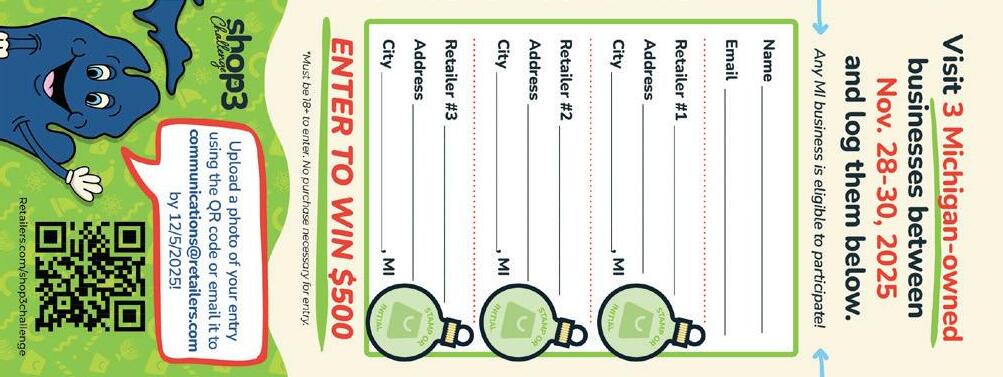

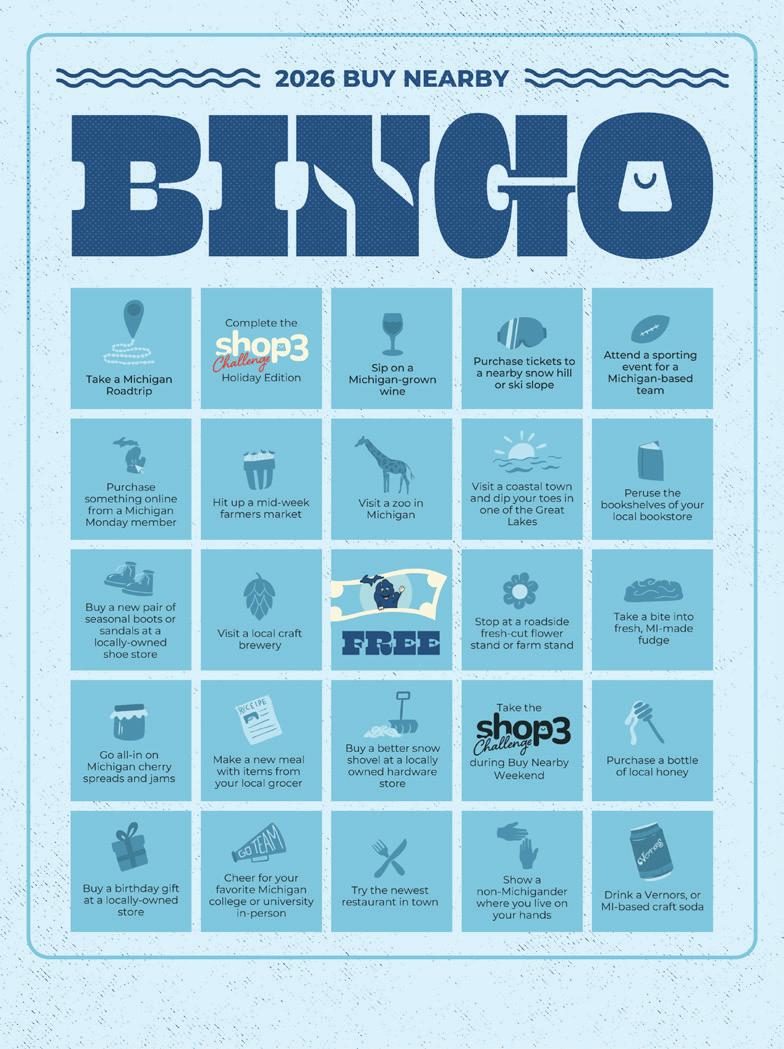
The Shop 3 Challenge Punch Card Contest ran during this year’s Buy Nearby Weekend celebration, offering a big reward for visiting locally-owned businesses in your community. Consumers across the state entered for a chance to win a $500 gift card.
Congratulations to Mary B. of Traverse City, MI, who was announced as our Buy Nearby Weekend Shop 3 Challenge winner!
The Shop 3 Challenge Punch Card Contest returned in November with a “Holiday Season Edition,” taking place over the Thanksgiving weekend. MRA is proud to offer these types of contests, encouraging shoppers to “Keep Your Money in Michigan” all year long, and especially during the holiday season.
The winner of the Shop 3 Challenge Punch Card Contest: Holiday Season Edition will be announced in midDecember.
Sign up for email updates at Retailers.com/services/buy-nearby-program

Returning for its second year, “Michigan Monday” recognized e-commerce brands based in Michigan and encouraged consumers to support local businesses, even when they’re shopping online. The 2026 Michigan Monday list featured more than forty Michigan-based websites with online shopping enabled for consumers. Whether you’re looking for hardware supplies or home decor, jewelry or produce, flowers or automotive supplies, and anything in between, you can find it online in Michigan.
Buy Nearby Weekend 2026 is October 2-4
Mark your calendars for the 13th annual Buy Nearby Weekend, happening the first full weekend in October 2026. Keep your eyes peeled next spring for more information about the 2026 event.
Make a donation to support the Buy Nearby Program shop.retailers.com Download the Buy Nearby Media
That’s nearly 4% higher than the national average.
Thank you for your continued loyalty to Michigan Retailers Association!
If you’ve been a member for five days or five decades, our commitment remains the same: supporting your success.
C. I. Safety & Recycling LLC, Plymouth
Croswell Podiatry, Grand Rapids
Midas Muffler of Alma, Alma
Spectral Gems Inc., DBA Roger Dery
Gem Design, Ferndale
Veldheer Tulip Gardens, Holland
Bergdahl’s Inc., Skandia
Brain Balance of North Oakland, Oxford
Catholic Charities IEC, Lansing
China West Jewelers, Lake Geneva
Darby Metal Treating Inc., Plainwell
Gold Rush Jewelers LLC, Prudenville
Kalamazoo Speech Associates Inc., Kalamazoo
Prairie Wood Products Inc., Sturgis
T-Shirt Printing Plus Inc., Kalamazoo