

A NEW DAY


Michigan undone by Ohio State offense, drops The Game for the first time in four years
ALINA LEVINE Daily Sports Editor
Michigan has owned the rivalry for the past four years. Four years of grit, four years of execution and four years of glory. But that momentum came to a screeching halt, and in the lopsided affair, the Wolverines of years past were nowhere to be found.
Saturday, No. 1 Ohio State turned the page and authored a new chapter of The Game.
Whether it was breaking through the No. 15 Michigan football team’s defensive front for ground gains or overtaking its secondary through the air, the Buckeyes’ (12-0 overall, 9-0 Big Ten) balanced offense delivered
Saturday, steamrolling the Wolverines (9-3, 7-2) to reclaim the rivalry, 27-9, after four years.
“Obviously very disappointed in the result,” Michigan coach Sherrone Moore said. “Credit to them and how they played and how they executed. We did not (play) to our standard.”
Despite Michigan not playing to its standard, it didn’t seem like that at first. Ohio State might’ve dominated for the majority of the game, but it got off to a slow start, and it was the Wolverines who struck first.
Michigan notched a field goal on the first drive, then junior defensive back Jyaire Hill intercepted Buckeyes quarterback Julian Sayin’s second pass of the game for yet another chance to find the end zone. While the
Wolverines weren’t able to reach paydirt, they tallied another field goal for a 6-0 lead just over five minutes into the game.
But Ohio State came to the Big House with the most accurate quarterback in the nation, an elite receiver room and a robust running back. And slowly but surely, they all reared their heads.
It started with the aerial game.
Sitting at fourth-and-5 at the beginning of the second quarter, Sayin and the Buckeyes risked turning the ball over on downs and decided to go for it. Dropping back in the pocket, Sayin fired the ball
after, the Buckeyes’ ground game took shape as running back Bo Jackson made significant gains to set up their second touchdown seconds before the end of the half, taking a 17-9 lead for Ohio State.
“They had a great look in their eye,” Buckeyes coach Ryan Day said. “I don’t think there was any doubt when we walked into the stadium what was going to happen.”
From a simple glance at the scoreboard, with Michigan trailing by just over a touchdown, it seemed as though its prognosis wasn’t all that gloomy. But the scoreboard
offense moved the ball at times, it consistently failed to reach the end zone. Michigan’s run game faltered repeatedly, and its pass game — with just 16 yards in the air in the first half — was nearly nonexistent.
This inadequacy came to define the rivalry matchup. The Wolverines’ defense worked overtime as their offense was plagued by three-and-outs, while Ohio State passed, caught and sprinted all the way into the end zone.
down the field straight into Tate’s arms, who made it to paydirt for a definitive 24-9 lead.
The Wolverines’ points in the first half were thanks to 45-, 25and 49-yard field goals by senior kicker Dominic Zvada. While their
After a short, 11-yard punt in the third quarter from senior punter Hudson Hollenbeck gave the Buckeyes the ball at their 43-yard line, all it took was two passes from Sayin to wide receiver Carnell Tate to put the rivalry squarely in their hands. Following a 7-yard gain, Sayin rocketed a 50-yard pass
In that moment, Ohio State sealed its rivalry win. With three touchdowns and 419 yards of total offense compared to Michigan’s meager 163, the Wolverines’ defense was unable to claw themselves out of the grave the Buckeyes had dug. For the remainder of The Game, Michigan didn’t score another point. The Wolverines were outran, outhrown and simply outplayed in the game that mattered most. And because of it, for the first time in six years, Michigan left the field with the bitter taste of defeat.







Holly Burkhart/DAILY Georgia McKay/DAILY Design by Annabelle Ye

AAPD responds to stabbing in Pioneer High School parking lot, suspect apprehended
An adult male individual was stabbed in the Pioneer High School parking lot shortly after the end of the football game between Michigan and Ohio State.
EMMA SPRING Daily News Editor
An adult male individual was stabbed in the Pioneer High School parking lot today at about 4 p.m., shortly after the end of the football game between Michigan and Ohio State.
According to Ann Arbor Police Department spokesperson Chris Page, the incident began as a verbal altercation between Herbert Bertz, 46, of Fostoria, Ohio, and a 34-year-old male from Tekonsha, Michigan, before Bertz stabbed the victim. Police have not stated whether the dispute was connected to the rivalry game, but it occurred in the immediate post-game traffic and crowd environment. Bertz fled on foot before being apprehended and has since been charged with assault – bodily harm less than murder and assault with a dangerous weapon, Page
confirmed. The victim is now in stable condition after being transported to the University Hospital by Huron Valley Ambulance. He is expected to make a full recovery.
According to AAPD, the incident is believed to be isolated and no threat to the public exists.
CSG president vetoes Divest for Humanity Act
“Without the Divest for Humanity Act, tensions on campus will continue to simmer. Students are left without any forum to voice their concerns.”
Central Student Government
President Eric Veal Jr. vetoed the Divest for Humanity Act, according to an email sent to CSG assembly members Monday evening. The resolution, which narrowly passed at the Nov. 19 Assembly meeting, urges the University of Michigan’s Board of Regents to form an ad hoc committee to investigate the University’s financial ties to the Israeli government in response to Israel’s military campaign in Gaza, which has killed more than 69,000 people and has been classified as a genocide by the United Nations and various
ACADEMICS
human rights organizations.
In 1978, when considering divestment from Apartheid South Africa, the University established a formal divestment framework that used a mixedcommunity advisory committee to evaluate the moral and ethical implications of its investments. The University fully divested from South Africa in 1988. The same process was invoked in 1999 when the University created an ad hoc committee to review its tobacco holdings. The committee’s findings ultimately informed the Regents’ decision to divest from tobacco-related stocks in 2000. The resolution’s authors cite both of these instances as evidence that the University has precedent for
evaluating investment-related ethical concerns and acting upon them when warranted.
In a Nov. 21 statement accompanying his veto notification, Veal Jr. wrote he issued the veto after concluding the resolution had intensified campus divisions, risked drawing federal scrutiny that could harm vulnerable students and exceeded CSG’s mandate by predetermining how the regents should manage University investments.
“The passing of such a polarizing resolution adds to an already highly volatile and hostile atmosphere, a failure of delegated governance that prioritizes an external political stance over the immediate,
pressing needs of all students, chief among them, the right to feel secure and represented,” Veal Jr. wrote.
CSG’s Human Rights Party, which spearheaded the resolution, has worked to gather support for the act throughout the semester, securing endorsements from groups including the LSA Student Government, the University’s Black Student Union and College Democrats at the University of Michigan. On Saturday, five HRP sponsors of the resolution were doxxed by nonprofit organization StopAntisemitism due to their support for the measure.
CONTINUED AT MICHIGANDAILY.COM
U-M alum Yumna Dagher wins Rhodes Scholarship
“My time at Oxford would support my goal of being able to bring work that blends and braids together sustainability, art and our cultural need to one another.”
ALIANA RITTER & SHAYE SMITH Daily News
Contributors
From watching National Geographic Kids as a little girl to holding pivotal leadership within the University of Michigan Sustainable Food Program, U-M alum Yumna Dagher has been passionate about sustainability throughout her life. Dagher was recognized for her commitment to environmentalism this month as a 2026 Rhodes Scholar.
Dagher graduated from the University in May 2025 with degrees in English and environmental studies, and served as lead of the U-M Sustainable Food Program, in addition to being a member of the Campus Farm and general manager of the Washtenaw County Broadcasting Network. In an interview with The Michigan Daily, Dagher said that declaring a major in environmental studies was one of the most fruitful decisions she made during her time at the University.
“I started out in architecture, and I’ve always been interested in the ways that places shape our reality, and how we can steward and create more sustainable, livable and compassionate places for each other,” Dagher said.
“I’m especially interested in the way that intersects directly with environmental justice and sustainability. So while I decided not to pursue architecture, I really wanted my studies to be focused on the ways that food justice and connection to place and memory intersect.”
This ongoing passion drove Dagher to apply to the Rhodes Scholarship, an award that honors 32 scholars across the nation with a fully funded graduate education at the University of Oxford. The application process is extensive. Applications are first screened through the Office of National Scholarships and Fellowships, where a committee invites up to 12 applicants for an interview. From those interviews, the committee nominates seven people for review by the National Committee, which determines the finalists through
an additional interview. Dagher was one of two scholars awarded from Michigan.
Dagher said that a driving force behind her application was the desire to be a representative of her community.
“Part of my impetus and the reason why I wanted to apply to Rhodes was because of the way that I see my time at Oxford would support my goal of being able to bring work that blends and braids together sustainability, art and our cultural need to one another, to Detroit, to Dearborn, to the communities that I call home,” Dagher said.
In an interview with The Daily, ONSF Director Melissa Vert said those selected to be Rhodes Scholars reveal themselves through their inquisitiveness and uniqueness in pursuit of their subject of interest.
“Many people who might be originally interested in Rhodes kind of see it as a business opportunity,” Vert said. “That whole networking thing that is supposed to be the big business, movers and shakers in the world,
Stanford Lipsey Student Publications Building 420 Maynard St. Ann Arbor, MI 48109-1327 734-418-4115 www.michigandaily.com
ZHANE YAMIN and MARY COREY Co-Editors in Chief eic@michigandaily.com
ELLA THOMPSON Business Manager business@michigandaily.com
NEWS TIPS tipline@michigandaily.com
LETTERS TO THE EDITOR tothedaily@michigandaily.com
EDITORIAL PAGE opinion@michigandaily.com
PHOTOGRAPHY SECTION photo@michigandaily.com NEWSROOM news@michigandaily.com CORRECTIONS corrections@michigandaily.com
ARTS SECTION arts@michigandaily.com
SPORTS SECTION sports@michigandaily.com
ADVERTISING wmg-contact@umich.edu
Editorial Staff
CECILIA LEDEZMA Joshua Mitnick ’92, ’95 Managing Editor cledezma@umich.edu
FIONA LACROIX Digital Managing Editor flacroix@umich.edu
but that’s not Yumna. Yumna came in as a quiet, thoughtful, confident person, and was able to really express her deep passion for her work, and that makes her stand out.”
The Rhodes Scholarship has a complicated history. Founded by Cecil Rhodes in 1902, this scholarship was originally funded by wealth created from South African exploitation. However, the Rhodes Trust has made substantial efforts over the last 120 years to recognize this and become a model for all merit-based scholarships. Vert said this scholarship is more than just educational funding; it is an induction into a network of achievers across a variety of fields to collaborate and make a difference in the world.
“Is it an elite group of people? Yes, but not without merit,” Vert said. “The people who enter this group are of talent and of great passion, and therefore have earned this opportunity to work with other talented and capable people.” CONTINUED AT MICHIGANDAILY.COM
JONATHAN WUCHTER and ZACH EDWARDS Managing Sports Editors sports@michigandaily.com
Senior Sports Editors: Annabelle Ye, Alina Levine, Niyatee Jain, Jordan Klein, Graham Barker, Sam Gibson
CAMILLE NAGY and OLIVIA TARLING Managing Arts Editors arts@michigandaily.com
Senior Arts Editors: Nickolas Holcomb, Ben Luu, Sarah Patterson, Campbell Johns, Cora Rolfes, Morgan Sieradski
LEYLA DUMKE and ABIGAIL SCHAD
Managing Design Editors design@michigandaily.com
Senior Layout Editors: Junho Lee, Maisie Derlega, Annabelle Ye Senior Illustrators: Lara Ringey, Caroline Xi, Matthew Prock, Selena Zou
GEORGIA MCKAY and HOLLY BURKHART Managing Photo Editors photo@michigandaily.com
Senior Photo Editors: Emily Alberts, Alyssa Mulligan, Grace Lahti, Josh Sinha, Meleck Eldahshoury
ANANYA GERA Managing Statement Editor statement@michigandaily.com Deputy Editors: Graciela Batlle Cestero, Irena Tutunari, Aya Fayad ALENA MIKLOSOVIC and BRENDAN DOWNEY Managing Copy Editors copydesk@michigandaily.com
Senior Copy Editors: Josue Mata, Tomilade Akinyelu, Tim Kulawiak, Jane Kim, Ellie Crespo, Lily Cutler, Cristina Frangulian, Elizabeth Harrington, Alina Murata
DARRIN ZHOU and EMILY CHEN Managing Online Editors webteam@michigandaily.com
Data Editors: Daniel Johnson, Priya Shah Engineering Manager: Tianxin “Jessica” Li, Julia Mei
Product Managers: Sanvika Inturi, Ruhee Jain Senior Software Engineer: Kristen Su
AHTZIRI PASILLAS-RIQUELME and MAXIMILIAN THOMPSON Managing Video Editors video@michigandaily.com
Senior Video Editors: Cameron Detulleo, Gretel Foglesong
Senior MiC Editors: Isabelle Fernandes, Aya Sharabi, Maya Kogulan, Nghi Nguyen
AVA CHATLOSH and MEGAN GYDESEN Managing Podcast Editors podeditors@michigandaily.com
Senior Podcast Editor: Quinn Murphy, Matt Popp, Sasha Kalvert
MILES ANDERSON and DANIEL BERNSTEIN Managing Audience Engagement Editors socialmedia@michigandaily.com
Senior Audience Engagement Editors: Dayoung Kim, Lauren Kupelian, Kaelyn Sourya, Daniel Lee, Quinn Murphy, Madison Hammond, Sophia Barczak, Lucy Miller, Isbely Par SARA WONG and AYA SHARABI Michigan in Color Managing Editors michiganincolor@michigandaily.com
SAYSHA MAHADEVAN and EMMA SULAIMAN Culture, Training, and Inclusion Co-Chairs accessandinclusion@michigandaily.com
ANNA MCLEAN and DANIEL JOHNSON Managing Focal Point Editors lehrbaum@umich.edu, reval@umich.edu
Senior Focal Point Editors: Elizabeth Foley and Sasha Kalvert
TALIA BLACK and HAILEY MCCONNAUGHY Managing Games Editors crosswords@umich.edu
Senior Games Editors: James Knake, Alisha Gandhi, Milan Thurman, Alex Warren
Business Staff
OLIVIA VALERY Marketing Manager
DRU HANEY Sales Manager
GABRIEL PAREDES Creative Director JOHN ROGAN Strategy Manager
Holly Burkhart/DAILY
Fans cheer as Ohio State players exit the field at the Big House Saturday.
National studies call some Michigan counties ‘news deserts.’ Local publishers disagree
“I’m not a big fan of the narrative that newspapers are dying … I don’t believe that to be true. I think we’d be in big trouble if they did as a democracy.”
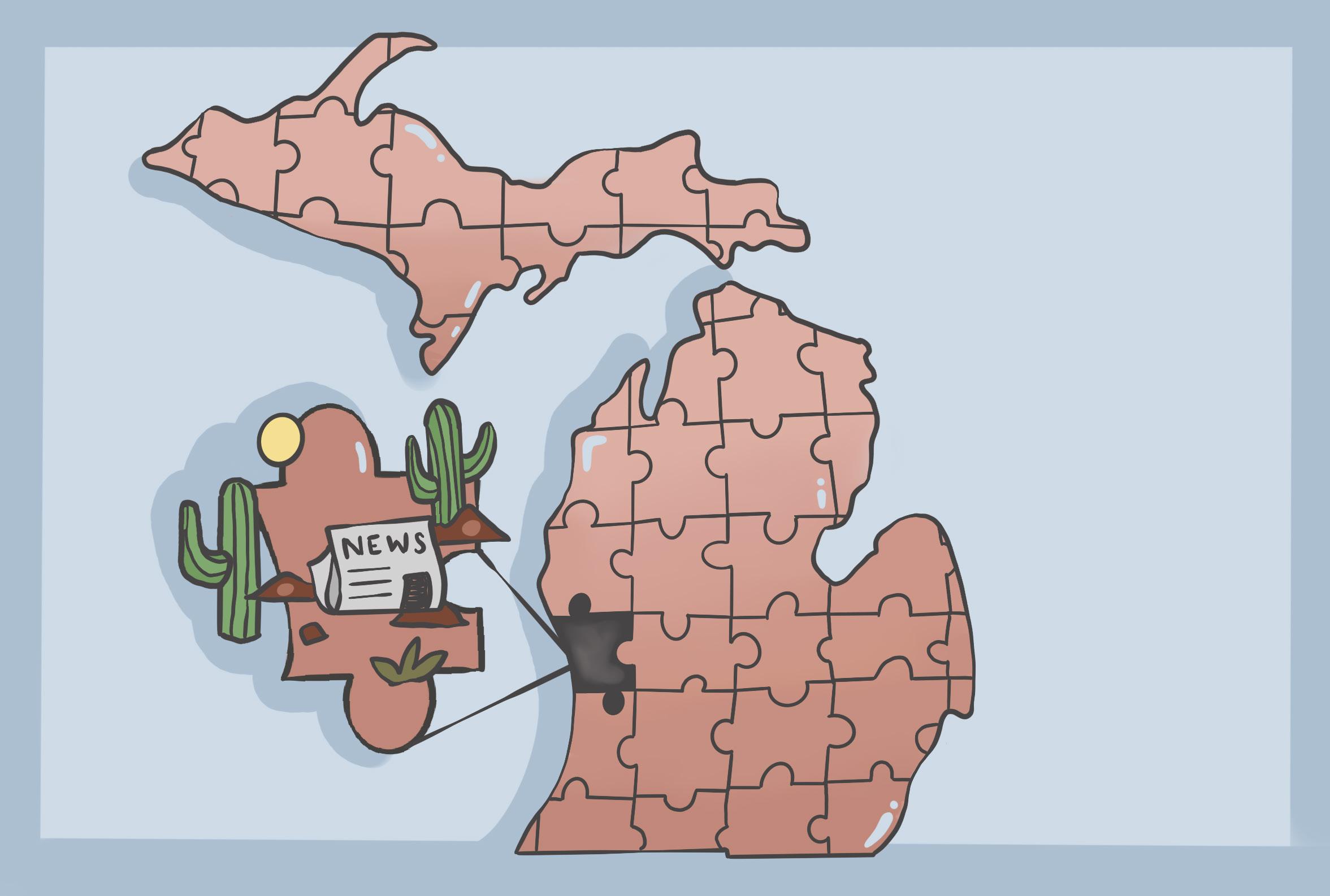
For years, national studies tracking the decline of local journalism have listed several Michigan counties, including Missaukee, Oscoda, Menominee and Keweenaw, as “news deserts,” areas with limited access to local reporting. However, interviews with publishers, policy advocates and communication scholars across the state suggest a more complicated reality, revealing that counties classified as news deserts have had active publication for decades.
In an interview with The Michigan Daily, Lisa McGraw, Michigan Press Association public policy manager, said the state has far more local news coverage than national research suggests. McGraw said she’s unsure of the studies’ methodologies as national researchers continue to label counties as news deserts despite local newspapers covering these areas, such as The Daily Mining Gazette.
“I’ve never really understood their methodology,” McGraw said.
“There is — since I started working for MPA 22 years ago — only one county in the state that doesn’t have a newspaper, and it’s Keweenaw, and it’s still well covered by The Daily Mining Gazette.”
U-M
One of the clearest examples of the gap in frequency of reporting between national reporting and local reporting appears in Missaukee County. Chris Huckle, publisher of the Missaukee Sentinel and the Cadillac News, which owns Missaukee Sentinel, told The Daily the county has had continuous weekly newspaper coverage for decades.
“At least for the last 35 years, every single week the Missaukee Sentinel has been published,” Huckle said. “We still have an office in Missaukee County — we have reporters that are assigned to that area. Our daily newspaper has been covering that area since 1872. We have subscribers in that county. Always have, and always will.”
Running one of the only locally owned and operated daily newspapers in Michigan comes with significant financial pressure. Huckle said the larger issue facing local news is affordability, especially with drop in print advertising revenue.
“It’s making it tougher for all media outlets, not just newspapers, to be able to afford to have that type of news coverage,” Huckle said. “You’ve got a million different ways you can get media … so less people are reading, and not necessarily reading but also subscribing to,the print product.”
students, staff
Huckle added that in lesspopulated counties, one weekly newspaper can generally cover the full range of local issues.
“It is completely and entirely possible to cover an entire county up here,” Huckle said. “We don’t have multiple community papers; it really only takes one.”
While publishers insist local coverage remains active in many Michigan counties, communication scholars say the more important question is whether residents are still engaging with these local news outlets.
In an email to The Daily, Yanna Krupnikov, University of Michigan professor of communication and media, wrote declining engagement for local news could be due to multiple factors, including reduced availability and the growing role of social media in news consumption.
“I think there are a couple reasons why people may pay less attention,” Krupnikov wrote. “One may be a lack of availability of local news, so people aren’t really paying less attention by choice — they may just have few alternatives for where to find local news. If people are getting a lot of cues about news from social media, then they are hearing mostly about national news, so they may start to think of local news as less consequential.”
CONTINUED AT MICHIGANDAILY.COM
debate use of AI for therapy
“It’s true not everyone can access care, and it’s very tempting to say that AI can fill the gap by allowing people to have care they wouldn’t otherwise have access to.”
if they do feel isolated and don’t feel like they have a way to reach out to a professional to get support for those needs.”
As the popularity of generative artificial intelligence continues to grow, more University of Michigan students have turned to the technology for counseling and therapeutic advice. U-M professors and students discuss the safety and effectiveness of these interactions and whether AI can fully replace in-person counseling advice.
Dan Adler, an incoming tenuretrack assistant professor in computer science and engineering, studies the health care applications of AI. In an interview with The Michigan Daily, Adler said the rise in mental health diagnoses in the United States is causing longer waitlists for in-person counseling, such as the University’s Counseling and Psychological Services, leading to an increased usage of AI for therapy.
“There are a lot of individuals that do not have access to professional mental health care or face challenges finding affordable mental health care,” Adler said.
“So it’s not a surprise that people would be going to technologies that are easily accessible, can be used 24/7 for mental health needs,
The kinds of conversations that occur between AI and an individual have a variety of differences from those they would have with a therapist. Dr. Stephan F. Taylor, chair of the Department of Psychiatry at the Medical School, told The Daily most people utilize the technology to ask simple, lowstakes questions as opposed to having full therapy sessions.
“The majority of those questions are probably at a relatively low level of intensity, like ‘How do I deal with my girlfriend and what should I say to her?’, the sort of things that are questions that you would talk to your friend about,” Taylor said. “But sometimes the friend isn’t there, whereas the chatbot is always there.”
A student, who requested to remain anonymous because of the stigma associated with mental health, spoke to The Daily about their experience using AI for therapy. In this article, they will be referred to as Alex. Alex said they use the technology instead of traditional counseling services because they live outside of Michigan
name new Central Campus housing
The new housing development, named “Wolverine Village,” to add more than 2,300 beds on
SANJANA SUNILKUMAR Daily News Contributor
The University of Michigan Board of Regents met Thursday afternoon in the Alexander G. Ruthven Building to hear a presentation on disability justice, approve the name “Wolverine Village” for the new Central Campus residential development and listen to concerns from students, staff, faculty and alumni in regards to campus surveillance, health policy and employee well-being.
Interim University President Domenico Grasso opened the meeting with remarks on recent institutional advancements, including last week’s State of the University address. Grasso also highlighted the opening of Michigan Medicine’s new D. Dan and Betty Kahn Health Care Pavilion, which he said demonstrated the University’s growing impact on the state and health care landscape.
“It was an inspiring morning that showcased the work of several faculty and students, highlighting how we are encouraging the nation to look to Michigan as a beacon of hope,” Grasso said. “I’d also like to congratulate David Miller, our executive vice president for Medical Affairs, and everyone at Michigan Medicine for this month’s opening of the D. Dan and Betty Kahn Health Care Pavilion. It is a signature addition to our medical campus.”
University Provost Laurie McCauley then introduced Connie Sung, professor of disability
justice and social work, to deliver a presentation about her research on improving career outcomes and psychosocial well-being for individuals with disabilities.
Sung said her team examined employment gaps between disabled and non-disabled workers due to structural barriers.
“Only about one-third of adults with disabilities are employed,” Sung said. “This gap is not a reflection of individual ability. This is a reflection of systems that were not built to include them. My work and my passion focus on removing systemic barriers that prevent people with disabilities from accessing meaningful education, employment and community opportunities.”
The regents also heard from Gabriella Scarlatta, U-M Dearborn interim chancellor, who described new supports for adult learners and student success initiatives, and U-M Flint Chancellor Laurence Alexander, who outlined faculty recognitions and expanded graduate program offerings, including artificial intelligence, cybersecurity, data analytics and more. Later, Regent Mark Bernstein (D) delivered a resolution honoring Richie Hunter, vice president for communications, ahead of her January departure.
Martino Harmon, vice president for student life, presented the naming recommendation for the Central Campus Residential Development Phases I and II, a large housing expansion set to add more than 2,300 beds in student housing to campus. Located near the Intramural Sports Building on Central Campus, the development
will be known as “Wolverine Village,” with individual buildings to be named separately. The regents voted unanimously to approve the name after the recommendation was developed with input from student leaders, residence staff and campus partners.
During the public comment portion of the meeting, LSA freshman Claire Hakimian, speaking on behalf of the American Civil Liberties Union Undergraduate Chapter, criticized the University’s expanding surveillance systems and raised concerns about student privacy.
“The vague wording on the DPSS website is alarming for student privacy,” Hakimian said. “The lack of accountability for the dramatic increase in surveillance technology on campus intensifies our reservations.”
Margaret Weiss, a parent speaking on behalf of her transgender teenager, condemned Michigan Medicine’s decision to discontinue gender-affirming care for patients under the age of 19
“When Michigan Medicine ended gender-affirming care for patients under 19, you didn’t make an administrative decision; you made a moral one,” Weiss said. “You chose fear over courage, politics over patients, silence over compassion. Because of that choice, children across this state and beyond, like my daughter, were left stranded. … Every major medical organization in this country, every single one, agrees, gender-affirming care is safe, evidence-based and lifesaving.”


during breaks from school, making coordinating meetings difficult. They also said the time commitment prevents them from using in-person counselors.
They also said the time commitment prevents them from using in-person counselors.
“I just use AI for any moment where I feel like I have a lot of emotions to deal with, where I feel like I have to talk to someone about it, but it’s a very inconvenient time, or I just know people that I trust are busy at the moment,” Alex said. “So you know, instead of disturbing them, I just go to AI to let out everything.”
When Alex experiences these emotions, they discuss their feelings with either ChatGPT or Google Gemini. The AI chatbot listens to their situation while asking follow-up questions, similar to an in-person therapist.
“After maybe 30 minutes to an hour, depending on how I really feel and how well I feel at the end of that session, I’ll take that advice into account, and I think I really use it to understand the other person’s perspective,” Alex said. “It helps me understand my emotions and why I’m hurt.” CONTINUED AT MICHIGANDAILY.COM

SALMA ABDELALE Daily Staff Reporter
Hannah Willingham/DAILY
DOMINIC APAP Daily Staff Reporter
Everything you need to know about Michigan’s FY26 education budget
The budget includes $321 million in mental health and safety grants and the elimination of the Early Childhood Block Grant.
CHRISTINA ZHANG Daily News Editor
This article is part of a larger project by The Michigan Daily News section’s Government beat. Reporters interviewed students and professionals from various industries to report on different aspects of Michigan’s Fiscal Year 2026 budget.
The state of Michigan typically has a complete education budget passed by July 1 each year. This year, however, Gov. Gretchen Whitmer signed the budget into law Oct. 7. The state School Aid Fund is the largest source of funding for Michigan’s public education system and its 1.4 million students. A smaller portion of its funding comes from local millages and federal grants.
With a Democrat-controlled Senate but a Republican-controlled House of Representatives, Michigan’s divided legislature resulted in months of partisan gridlock, preventing the budget from being signed in time. Passing the school budget on time is particularly important for schools to know how much money to expect for the upcoming school year.
In late September, the Michigan Association of Superintendents and Administrators released a survey stating nearly 16% of districts had to take out high-interest loans to keep their doors open.
In an interview with The Michigan Daily, state Rep. Jason Morgan, D-Ann Arbor, said passing the school budget on time is essential.
“If the state government doesn’t pass a budget by July 1, that means our schools then have to begin the school year and plan their budget without knowing for sure how much money they’re going to receive from the state of Michigan,” Morgan said. “They really need a

couple of months to plan for what they’re going to receive.”
Despite the delay, the education budget increased funding for Michigan’s public schools with a record $10,050 in K-12 per-pupil funding, a 4.6% increase from last year. Other key highlights include continuing Michigan’s universal school meals program, a 25% funding increase for at-risk students and funding for teacherretention efforts in schools with higher rates of economically disadvantaged students.
Chris Torres, associate professor of educational policy at the University of Michigan, said in an interview with The Daily that increased funding ultimately benefits outcomes for students.
“Rigorous evidence does suggest that additional funding has an impact on student outcomes,
but I think the relevant question is ‘why and how?’” Torres said. “One argument is that districts are able to better support educators and students alike. This happens through better pay, smaller class sizes or better working conditions. These things can all translate into more engaged, committed teachers and students who want to stay in their schools.”
However, an increase in perpupil funding does not necessarily mean better teacher salaries. Nationwide, average teacher salaries have been flat for decades despite significantly higher school spending. In an interview with The Daily, Nicole Wagner, associate director of the Education Policy Initiative, said a small increase is better than nothing.
“These are, sort of, marginal increases,” Wagner said. “From
Ann Arbor community reacts to ‘pot for potholes’ legislation
ALYSSA
everything I’ve read, they may or may not really be keeping up with inflation and the cost to schools.
There’s a lot of research that shows that better-funded schools in general, no matter where the funding comes from, ultimately lead to better long-term outcomes for children. … I don’t know if this increase is going to lead to impacts, but it’s better than having a flat or decrease for sure.”
Michigan is one of eight states that provides free school meals to all K-12 students. Wagner praised the program for reducing the burden families might face when going through eligibility criteria to access free school meals.
“There’s a lot of research that shows that some kids who really should be eligible have not been taking (the meals) over the years because there’s a whole bunch of
paperwork involved,” Wagner said.
“Their families may be reticent to fill out that paperwork if the families may be undocumented or have other concerns with privacy.
There’s often times a stigma with actually taking those free meals.”
The bill also allocates $321 million in mental health and safety grants. However, districts that accept these funds would be forced to waive attorney-client privileges and comply with state investigations if a mass casualty incident were to happen on campus. Dozens of districts around the state have since sued, arguing the provision is unconstitutional and vague.
In an interview with The Daily, Education junior Elizabeth Hamill said these funds could be used to ensure students feel supported.
“Nationwide, school counselors are underpaid and overworked,”
Hamill said. “I would love to see these funds put aside to hiring more support staff like school counselors, social workers and psychologists (and) making sure that teachers receive socialemotional learning training.”
As the state representative from Ann Arbor, Morgan said one of the biggest issues he had was making sure the House budget, which was proposed in August and would have slashed state funding for the University by 65%, did not go into effect.
“When the Republican-led House finally did pass a school budget, they passed a budget that would have cut the University of Michigan by 65% — over $200 million a year,” Morgan said. “I’m very proud to report that not only did the (University) not receive a 65% cut, but in fact they received a 3% increase, so a huge swing from that Republican budget to that final, bipartisan budget.” Although cuts to the University did not make it into the final budget, it did eliminate all $19.4 million for the Early Childhood Block Grant, which funds Great Start Collaboratives and Great Start Family Coalitions. GSCs are locally driven organizations that identify solutions to issues related to early childhood education for the community they are located in and work closely with GSFCs, groups of parents and caregivers who work to engage more families in early childhood programs. Wagner said it was unfortunate these funds were cut.
“I think what oftentimes happens is that we’re struggling to fund the basics: K-12 education,” Wagner said. “We know we need to fund K-12 education, so we focus on that and that’s great. But the reality is, all of our children would come in so much more prepared for kindergarten if they had strong early childhood programs.”
Michigan’s 2026 budget secures $2.7 billion in federal health care funding
The tax will take effect Jan. 1, 2026 and will use revenue to repair local infrastructure. “As we face huge federal cuts that threaten to destabilize health care, we’re being strategic and proactive in Michigan.”
This article is part of a larger project by The Michigan Daily News section’s Government beat. Reporters interviewed students and professionals from various industries to report on different aspects of Michigan’s Fiscal Year 2026 budget.
Gov. Gretchen Whitmer signed an $81 billion state budget into law Oct. 7. The budget includes numerous policy changes, with one of these changes being the establishment of a new 24% wholesale tax on marijuana, a substance legal in the state of Michigan since 2018 but illegal at the federal level. Revenue collected from this tax will be spent repairing local infrastructure, including roads and bridges. The tax, nicknamed “pot for pot” or “pot for potholes,” will take effect Jan. 1, 2026. It will be in addition to an existing 10% excise tax on marijuana and a 6% sales tax on retail marijuana sales. The Michigan Daily spoke with University of Michigan community members and Ann Arbor cannabis business professionals to hear their views on this legislation. In an interview with The Michigan Daily, Chris Douglas, professor of economics at U-M Flint, explained the new tax is likely to fill a hole in the budget. The new budget redirects revenue from a 6% gasoline sales tax from schools to road funding, leaving schools with a funding gap. According to Douglas, lawmakers added the marijuana wholesale tax to allow more general funding to be sent directly to schools to combat the funding gap.
“It doesn’t make sense to have people pay sales tax on gas, but that revenue doesn’t go to the
roads; it goes for something totally unrelated,” Douglas said. “So I think it’s a good thing to redirect revenue for the pump towards the roads, but that leaves a hole in the budget where that sales tax revenue was going before, and I think the wholesale tax on marijuana is a way to try to plug that hole.”
In an email to The Daily, state Rep. Jason Morgan, D-Ann Arbor, wrote that he voted for the legislation despite his hesitation over the wholesale tax on marijuana in order to ensure schools had adequate funding.
“Many revenue options were considered but ultimately the wholesale marijuana tax and corporate income tax were the options with enough support,” Morgan wrote. “The wholesale marijuana tax wasn’t my favorite option, but I wasn’t willing to let our kids and classrooms lose critical support. Ultimately, this budget gave record funding to our schools, protected free school meals, and gave more mental health resources to our kids.”
The House Fiscal Agency Governing Committee estimates $420 million would be collected annually through the tax. Douglas, however, said he is skeptical of that number.
“I guess the question is, how much revenue does the wholesale marijuana tax raise?” Douglas said. “The estimate I’ve seen is about $420 million or so, but there’s a lot of variables there.
There’s a concern that if the price of a legal good jumps up that people just go buy it illegally at the black market, where it’s cheaper. So I think the revenue from the wholesale marijuana tax is really dependent on how consumers respond to that higher price.”
In an interview with The Daily, LSA junior Leah Sheran, president of Green Wolverine, a cannabis business club on
campus, emphasized fears of consumers turning to buying weed through less regulated avenues. Additionally, Sheran said she believes there will be a great deal of protests occurring around the same time as Hash Bash, an annual event held in Ann Arbor in celebration of the legality of both recreational and medical marijuana.
“I think it’s very scary that people are probably going to go back to purchasing marijuana illegally or won’t get what they need because of the high prices and less access to dispensaries,” Sheran said. “I think fixing the roads is important, but I just don’t understand the reason behind penalizing marijuana users when the issue affects the entire state. I’m sure there will be a huge protester turnout when Hash Bash rolls around.”
In an interview with The Daily, Mark Osbeck, Law School professor who specializes in marijuana law, said he believes lawmakers are overestimating the profitability of the marijuana industry and, as a result, taxing the industry more than they should.
“I think lawmakers and the general public tend to overestimate how profitable cannabis businesses are,” Osbeck said. “It looks like they’re trying to squeeze them harder than maybe they should. They kind of see it as a golden goose, or a goose that lays golden eggs, which it might be eventually. But right now, it could be squeezing the goose too hard and killing it.”
In an interview with The Daily, Michael DiLaura, chief corporate operations and general counsel for House of Dank, said the tax will significantly hurt the industry, causing consolidation along with more expensive and worse products.
CONTINUED AT MICHIGANDAILY.COM
This article is part of a larger project by The Michigan Daily News section’s Government beat. Reporters interviewed students and professionals from various industries to report on different aspects of Michigan’s Fiscal Year 2026 budget.
On Oct. 7, Gov. Gretchen Whitmer signed the Michigan state budget for the 2026 fiscal year into law. The budget includes numerous policy changes, several of which affect the Ann Arbor community. Among its many health care provisions, the budget allocates $2.7 billion in federal funding for health care across the state. The allocation aims to protect core Medicaid services in Michigan following President Donald Trump’s administration’s projected $911 billion cut to Medicaid in the federal budget.
In a press release, Whitmer said the budget amount is to ensure Michigan hospitals have the resources they need to stay open and continue serving patients amid significant cuts to health care.
“As we face huge federal cuts that threaten to destabilize health care, we’re being strategic and proactive in Michigan to protect funding and stay flexible for the future,” Whitmer said. “Together, we will defend access to care for families and maintain a balanced, fiscally responsible budget.”
In an interview with The Daily, LSA senior Zoe Limberopoulos, president of Students Allied for Healthcare Accessibility, said the funding is important because Medicaid benefits more than just Medicaid recipients.
“Stabilizing Medicaid doesn’t only directly benefit people who are normally recipients of Medicaid,” Limberopoulos said. “It’s also going to improve efficiency in emergency rooms, it is going to prevent delayed treatment and take steps to un-overwhelm a lot of health care workers. This budget is really improving health care, not just for those groups of people, but really for everyone, ultimately, and for staff who work in health care as well.”
In an interview with The Michigan Daily, Scott Greer, University health management and policy professor, said Medicaid relies mainly on federal funding. According to Greer, it is the state’s job to respond to the One Big Beautiful Bill Act and maintain the health care programs amid funding cuts.
“Medicaid is an enormous fiscal driver, and everything about it tends to be driven by the federal government,” Greer said.
“In domestic spending, what you basically see (from the One Big Beautiful Bill Act) is a huge transfer of money from Medicaid to Homeland Security. Michigan’s budget is therefore responsive to significant federal cuts. So Michigan’s job … is to figure out how much of the existing Medicaid program they want to maintain, and if they have to cut, what they have to cut and equally how they find revenue.”
According to the Michigan Department of Health and Human Services, one in four Michigan residents rely on Medicaid. In an interview with The Daily, Marianne UdowPhillips, senior advisor to the U-M Center for Health and Research Transformation and
former director of the Michigan Department of Health and Human Services, said Whitmer and state legislators prioritized protecting Medicaid in the budget.
“(The current governor and legislature) tried to restructure the budget, and the governor has gone to see President Trump himself to ask for a delay in the impact of these Medicaid changes on Michigan,” Udow-Phillips said. “More than (one-fifth) of our state’s population — more than 20% — receive care and coverage under Medicaid. It is an incredibly important program for so many and we have research that’s come out of the University of Michigan to show that heavy Medicaid coverage does improve people’s health, does improve their financial stability.”
Udow-Phillips said despite these efforts, Michigan will continue to face significant challenges in maintaining health care accessibility, especially at the University’s hospitals.
“Medical debt is likely to go up in Michigan and people’s credit reports are going to be affected,” Udow-Phillips said. “Our hospital and the University will be affected, because we’ll have more patients who want care, who can’t pay for that care. Our federally qualified health centers … are very reliant on Medicaid funding and they are an important safety net provider.”
Greer said these Medicaid cuts will hit rural communities especially hard and could cause challenges with the maintenance of medical infrastructure, such as the hospital that had to shut its doors last year in Tecumseh. CONTINUED AT MICHIGANDAILY.COM
TISCH Daily Staff Reporter
GIA VERMA Daily Staff Reporter
ASHANTI MIRELEZ Daily Arts Contributor
There’s a strange comfort in a shadowy photo of two lattes; in the cropped frame of a dinner table, two plates just out of view, a hand half-seen. It’s a love story told in fragments, designed to say something without saying too much.
That’s the thrill of the soft launch: the delicate, deliberate art of suggesting intimacy without surrendering to it.
When British Vogue writer Chanté Joseph asked, “Is having a boyfriend embarrassing now?,” she was really asking something else: What happens to our sense of self when love becomes public property? Joseph describes the awkwardness of modern coupling and how being visibly attached to someone else can feel like
ELIAS SIMON Daily Arts Contributor
“The Mind Reels” is Fredrik deBoer’s first novel — and, to some extent, it reads that way. A Substack pundit and cultural critic who has already published two works of left-leaning intellectual nonfiction, deBoer turns from mass-market academic writing to fiction in his latest work, but he uses his novel’s narrative format to accomplish what is essentially an essay.
“The Mind Reels” follows prototypical suburban girl Alice as she leaves her small town for a big college — in this case, the University of Oklahoma. DeBoer’s first few chapters are his strongest. We inhabit Alice’s mind as she experiences the franticness of
losing a piece of oneself. While her framing centers heterosexual women, her point gestures toward a broader anxiety shared across identities — that love, when performed publicly, can make anyone feel reduced to a role.
“Being partnered doesn’t affirm your womanhood anymore,” Joseph writes. “It is no longer considered an achievement.”
This statement captures a generational shift, though it also exposes how ideas of gender and relationships have long been filtered through a heteronormative lens. For many, this script feels limiting — not every partnership looks like “his” and “hers.” What was once a mark of social success now risks diluting one’s personal brand and hard-won autonomy.
college life: the two-facedness of the people she meets and the beginning of her struggles with eating, work, romance and friends.
Alice’s mental health nosedives as she develops what we will later discover is bipolar disorder. It’s here where deBoer loses control. It is impressive how well we inhabit Alice’s mind — a trickier feat to pull off the more she becomes divorced from reality — but deBoer undercuts his own character by refusing to allow the reader to become close to her as a person and not just a mental health patient. Each chapter portrays a moment of crisis in her several-yearslong spiral, and we don’t get the chance to see a non-crisis Alice long enough to root for her. Worse, deBoer seems to stop caring about her, too, as Alice becomes simply a
The art of the soft launch

That tension sits at the heart of modern love, especially for people my age. We were raised on the gospel of self-expression and individuality. We learned to craft personal aesthetics before we even learned to drive. Our social media pages aren’t scrapbooks but self-portraits, curated with the precision of mood boards. Each post is both proof of life and an act of authorship. To “hard launch” a boyfriend is to let someone else’s presence bleed into that portrait, to risk being seen not as a person, but as part of a pair.
So we soft launch instead.
means for him to describe lengthy episodes of paranoia, mania, depression and hallucination or the inside of a psychiatric hospital. The sliver of complexity she had at the beginning of the novel blips out.
“The Mind Reels” follows Alice through college and into her 30s, her personality and mental illnesses increasingly tempered by drug cocktails as she ages. She has trouble finding a job, getting up, going to sleep, feeling motivated, reading, concentrating, loving and caring — and, once again, we start to have trouble caring, too. By the end of the book, Alice is staring down the barrel of another relapse and presents herself with a choice between resuming her medication or overdosing on painkillers. DeBoer doesn’t tell us which pills she takes. Although this is an

interesting set-up on paper, by this point, the big climactic moment is void of emotional tension. “The Mind Reels” has sputtered into a repetitive and predictable cycle: Alice barely surviving, spinning out into relapse and blowing up her life and relationships in the process. You can see the next spin coming by the time the last one ends. “The Mind Reels” is both too rushed and a slog, unable to develop Alice or to stop itself from hashing out her struggle over and over again.
If you are looking for an engaging depiction of mental illness and a lucid portrayal of someone living a heavily medicated life, “The Mind Reels” can offer you quite a lot. DeBoer himself lives with bipolar disorder, and it’s hard to imagine his personal experience hasn’t had an impact on the sections of the
The soft launch is a compromise between intimacy and independence, a gesture that alludes to maturity and selfcontrol. It’s a visual dialect for a generation fluent in nuance — one that understands the power of implication, the intimacy of ambiguity. It is the careful framing of love in an age of digital permanence, where every image, tag and story becomes part of one’s digital footprint. In a world where screenshots never disappear and posts can be resurrected long after the moment has passed, the soft launch is both an armor and an expression.
On a college campus, this balancing act becomes almost theatrical. Relationships unfold in front of audiences: roommates, followers, mutual friends. Each post, story and tagged wrist is a tiny performance of connection.
We share enough to signal closeness, but not enough to be consumed by it.
We want love, but we also want control — the ability to direct our own narrative even within someone else’s story. Our feeds become stages where intimacy is carefully framed, never improvised.
And maybe that’s why soft launching feels like art.
Like a painter working with chiaroscuro — the interplay of light and shadow — the soft launcher creates meaning through what’s left unseen: the cropped hand, the reflection in glass, the caption that reveals nothing but still feels intimate. The art lies in restraint, in knowing that what’s withheld can be more powerful than what’s revealed.





Emmeline Meldrum/DAILY
Cover art for ‘The Mind Reels’ courtesy of Coffee House Press
The cloying smell of cigarettes and poppers. The faint thumping of dark electronic music under the din of wannabe-socialites clamoring for entry to the club. Screaming arguments with your lover that leave you praying for God’s intercession. Lead teddy bears with flaming brains, the resignation of sugar cubes dissolving in hot coffee. These are quick flashes of the universe that Catalan popstar Rosalía conjures on the song “Berghain,” which features Björk and Yves Tumor and serves as the lead single for her brand-new album LUX
To call the track eclectic would be an understatement — it begins its journey with Rosalía’s operatic vocals soaring over strings in the style of Mozart’s Dies Irae, makes a pit stop somewhere in the utopia Björk sang about in 2017 and concludes with a haunting spoken
On ‘LUX,’ Rosalía flexes her muscle
word performance by Yves Tumor as claustrophobic beats close in. Despite the dizzying combination of influences, the song feels fully realized: Each progression is accomplished smoothly and naturally, each lyric is penned with purpose. The song ends exactly when it needs to, but every preceding moment is crucial.
This feeling of completeness hasn’t always existed in Rosalía’s music. Much of her earlier material, while maintaining its own merits, has been marked by her propensity to disrupt and truncate. Take the first song off of 2022’s Motomami, “SAOKO”: the track’s grinding bass and selfassured rap seems to establish a pattern for the first minute and a half before she throws it all out the window for an interlude featuring jazzy piano and spoken word. There’s barely time allowed to process the whiplash before she does it again, returning to the anchoring beat and proceeding as if nothing has happened until
the song comes to an abrupt end (fittingly, her final words on the track translate to “get it up it and cut it, that’s it”). It’s a great song, but it feels somewhat halfbaked. While the musical ideas she introduces are interesting and unique, they aren’t given adequate space to breathe before she throws something new into the mix.
On LUX, Rosalía breaks free from this pattern, flexing her muscles fully for the first time in her career. In an interview with Zane Lowe for Apple Music, she described her intentions in creating the album.
“I make music for people to feel. And maybe they’re going to feel the most if I really go all the way … ’cuz maybe I’m not allowing myself to go all the way. … Maybe I’m writing songs, but I’m not finishing the thought … so I promised myself that I was going to make an album where I was going to at least try to finish the thought.”
This is apparent throughout
‘Regretting You’ regrettably falls flat
If your social media feed is anything like mine, then for the past few weeks you’ve been inundated with trailers for Colleen Hoover’s new film adaptation, “Regretting You.” Going into the movie, I had already been spoiled by the trailer giving away most of the plot, so I figured I was about to watch some chick-flick slop not even fit to call itself a rom-com. Leaving, however, I realized I didn’t completely hate the film. Don’t get me wrong: It was hardly a cinematic masterpiece, but at least I left feeling entertained. And while the movie definitely has an intriguing premise, it tries to accomplish too much at once, ultimately leaving the audience unsatisfied.
The film follows Clara Grant (McKenna Grace, “Gifted”), her mom, Morgan (Allison Williams, “M3GAN”), and their respective romantic relationships. The opening scene reveals that Morgan and her then-boyfriend, nowhusband, Chris (Scott Eastwood, “Stolen Girl”), became pregnant with Clara in high school. We are also introduced to Morgan’s sister, Jenny (Willa Fitzgerald, “A House of Dynamite”), and her eventual fiancé, Jonah (Dave Franco, “Together”). Together they form a comforting and seemingly tight-knit family unit, but it all unravels once Jenny and Chris are killed in a car accident. Following Morgan, Clara and Jonah in their subsequent grieving, the film focuses on the new lives they must build in the wake of their old ones crumbling around them.
The movie attempts to explore Morgan’s grief after losing her husband and sister in many ways, including how their deaths revealed the pair’s years-long hidden affair. This is where my problems with the film begin. It is absolutely devastating to learn your husband was cheating on you with your sister, and it is an innovative angle from which to look at the conflict between grieving a loved one and being angry with them at the same time. However, “Regretting You” establishes very few emotional stakes when it comes to Chris and Morgan’s relationship. They have barely any screen time together before the accident, and the moments we are shown don’t portray their dynamic in the best light.
CONTINUED AT MICHIGANDAILY.COM


the track list of LUX, which spans 15 songs, each of which function as individual case studies of different places, characters and emotions. The album maintains cohesiveness as a whole, but it’s still easy to dip in and out at any given moment and not feel like you’re missing the bigger picture.
Each song provides a foray into a particular universe that’s perfectly fleshed out by itself.
A major contribution to Rosalía’s world building on LUX is the daunting linguistic project she chose to undertake, singing in a total of 13 different languages including Spanish, Catalan, Ukrainian, Arabic, Japanese and German. She worked with translators to polish the product, ensuring that her words both make grammatical sense and achieve the intended lyrical effect.
The fall of Labubus and the mush of modern internet trends
CAIDEN O’DONNELL Daily Arts Contributor
Labubu.
The word alone is enough to make some people break out in a cold sweat, and it’s hard to blame them. These fuzzy, diminutive creatures, complete with a stare some have described as demonic, became truly inescapable over this past summer. Everywhere I turned, from the airport to the mall to the bathroom at my belowminimum-wage job, Labubus followed, staring at me ominously from backpacks and keychains. Labubus began innocently enough, originating in 2015 from a picture book series by Kasing Lung before they were made into toys. However, after slowly gaining traction throughout 2024 and early 2025, Labubus exploded in popularity over the summer, flying off store shelves around the world. Resale prices skyrocketed as demand rose and they became harder to come across, to the point where some people instead opted to knowingly shell out money to buy fake Labubus, affectionately referred to as “Lafufus.”
This traction, however, was short-lived. While in the summer you might have had to spend $200 on a Labubu if you could get your hands on one, today I scroll my feed and find microinfluencers promoting genuine Labubus for $30 on TikTok Shop. They’re just not hard to find anymore. Combined with the fact that the stock price of
Pop Mart — the company behind Labubus — is down nearly 35% (at the time of writing) since its peak in August 2025, it’s clear that Labubus are on the downswing.
Of course, Labubus are not alone in this fall from grace; fads have always come and gone. However, for as prominent as Labubus became, they seem to have faded from popular culture abnormally fast — even for a fad. Although it might seem anomalous, a clear pattern emerges when analyzing Labubus and the other massive trends that have appeared out of nowhere as of late.
In an era when people are more connected with each other via the internet and social media, trends can gain greater prevalence than ever, faster than ever. Simultaneously, in the era when most internet users consume more short-form content than anything else, our attention spans are shorter than ever, causing these trends to seemingly drop off the face of the Earth once people get bored of them.
Because of this, the internet has become a tapestry of many different digital phenomena, all so massive that they define the culture while they’re around, only to evacuate our minds as quickly as they appeared when it’s time to make room for the next trend. There’s no longer one single, massive cultural moment that sticks around for years in the vein of “Gangnam Style” or slime or fidget spinners. Instead, trends from various corners of the internet coalesce into one, and we get a mush of whatever “Labubu Dubai
‘Raising Hope’ and class relations
Every generation has wanted better for the next. Our grandparents worked to give our parents a better life and our parents did the same for us. For those of us who choose to keep it going, we will do the same for our kids. “Better” often translates to more money. More money usually translates to higher quality resources: access to education, transportation and career opportunities. It does not, however, translate to better values, better outlooks or better character.
Wanting better also does not always mean achieving more. Cycles of poverty are a positive feedback loop. If your parents were poor, chances are you won’t have access to the resources necessary to change that for yourself and your kids. This is the case for the Chance family of “Raising Hope” sitcom fame.
You might know them as the small-town blue-collar family supporting single dad Jimmy (Lucas Neff, “Shifting Gears”) as he raises — you guessed it — Hope Chance (Baylie Cregut, debut). The Chances are in the market for an ideological betterment of their family. Whether or not they are able to break down the barriers that prevent them from accessing better resources, the family affirms that they will still forge better patterns and perpetuate altruistic values for their kids.
Hope’s family works hard, but they don’t see a lot of money for all their toiling. Virginia (Martha Plimpton, “Task”), her grandmother, is a housemaid barely making ends meet. Her grandfather, Burt (Garrett Dillahunt, “Sarah’s Oil”), runs a lawn care business that barely scrapes by each month. Jimmy bags groceries for minimum wage. They all live in Virginia’s dementia-diagnosed Maw Maw’s (Cloris Leachman, “Not to
Forget”) house, but only because Maw Maw is never lucid enough to kick them all out. There’s no leftover money to fix the laundry machine, the sink or the toilet. Still, they make the most of what they have for Hope. Their unwavering determination to do everything in their power to give her a good life — one that hinges upon community, not money — propels them through every hard day. They’d love to send her to a private preschool, and they try their hardest to do so. Even without the money for tuition, they apply for a need-based scholarship, groveling in the application with their povertystricken story, yet they still don’t get it. The system of exclusion wants to make them dance for the resources they need, but it’s also comfortable throwing them out after the show. Despite this setback, Hope still manages to find her place in the busy backyard daycare run by a family friend. She can make her own
friends, and that’s all her family really wants.
This attitude is not quite complacency, but rather satisfaction with what they have. They may live in a house that’s falling apart, sure, but it’s a house full of love nonetheless. They have each other, and that makes all their sacrifices worth the pain. It forces them to find clever solutions to problem after problem that other, richer people could solve simply by throwing money at it. Hold the ironing cord just so, and there will only be three shocks instead of four when the power goes out. Hit the washing machine on the side with all your force, and it’ll start up in about half an hour. Angle the frying pan’s center on the one operational stovetop corner, and your eggs will be ready sometime today. They’re not stupid — they’re creative, no matter how many punchlines the show makes based on that premise.
Laughing at the poor is one of the ways our class structures
stay rigidly standing. It’s supposed to be funny when Virginia tells Jimmy, “We’re your biodegradable parents.”
The implication here is that any idiot would know how to pronounce “biological,” so the audience should laugh when Virginia doesn’t. We’re supposed to laugh and gloss over it. Just the slightest investigation, though, makes the laughter stop cold. She doesn’t know it because she never got to finish high school; she didn’t finish high school because nobody taught her about contraception during her teenage years; nobody taught her because her school district was underfunded — we could go on and on.
It should not be so easy for us to laugh at the Chances. At the very least, we as the audience should get angry when people laugh at them, particularly those much better off than they are. The show takes great care to show us that, though these people might be better off, they’re not
chocolate ‘Love Island’ matcha Benson Boone moonbeam ice cream cookie” is supposed to be. It’s a complete mess.
And yet, as cringeworthy as the modern internet may be, it will never go back to the way it was before. The reality is that the internet has become decentralized; rather than people staying in one gigantic, unified group with shared trends and moments like they used to, users go their separate ways, with social media algorithms providing hyper-curated content that pushes users toward smaller groups with niche shared interests. It is from all of these individual, smaller communities that the many different trends we see today seem to merge into one.
But maybe this — the mess, the chaos, the mishmash — is a unifying cultural moment after all, just in a new form. The beauty of the internet has always been that people from so many different places and backgrounds are able to come together and interact with one another, so it only makes sense that our trends would follow the same pattern. Looking back on the big trends of the past, I’ve realized it’s unrealistic for everyone to come together and enjoy the same thing, especially when we constantly preach individualism and influencers push us to be ourselves.
For the most part, the internet trends of before were not truly unifying; they were just bandwagons we all hopped onto for fear of missing out. CONTINUED AT MICHIGANDAILY.COM
necessarily better. Not better in their skills and definitely not better in their principles. Take Hope’s mother, Lucy (Bijou Phillips, “Havoc”). Lucy was a one-night stand for Jimmy — way out of his league. Pretty, yes, but also college-educated, living in her own apartment and holding down a well-paying job. However, she has just one fatal flaw: She’s a serial killer. Her parents — also very fucked-up people — still think she’s better than Jimmy (the single father who still lives at home) because of the resources she accessed that he never could. She went to college, and she paid for her own apartment — never mind the serial killer bit. To them, it’s just a formality. Hope would be much better off with them, they think. The rules don’t apply in the right tax bracket (nor do the laws of common human decency) because they have degrees and a white picket fence.
CONTINUED
MAX JANEVIC Daily Arts Contributor
MAEVE MCGINN Daily Arts Contributor
MINA TOBYA Daily Arts Writer
Album art for ‘LUX’ by Columbia Records
Official image from ‘Regretting You’ courtesy of Paramount Pictures
ZHANE
WEDITORIAL BOARD MEMBERS
That’s not backed by science
In addition, from a young age, students learn about the scientific method and the importance of finding a scientific consensus to provide support for hypotheses.
hen I stroll through Kroger aisles, I encounter a slew of teas, supplements and beauty products that are supposedly scientifically proven to improve my health. But these products have rarely improved my lifestyle. While I used to add them to my cart, I no longer buy their claims and now think twice about what it means for a product to be backed by science. The imprecise and often-manipulative use of scientific language has permeated our everyday lives, so much so that “scientific proof” has lost its meaning.
The same problem of co-opting scientific language extends beyond consumer products and into higher education. First, to understand what science is, we must understand what science is not. Science is not a monolithic token of credibility for anyone’s claims, and simply referencing it does not provide automatic validation for claims, as science itself does not offer absolute proof or definitive answers. The discipline is a series of hypotheses and theories, such as evolution or Einstein’s general relativity, that remain valid until they are proven invalid. Rather than a monolithic “what,” science is the process of critical inquiry and constructive disagreement, of creating preliminary assumptions and revising them with further findings.
No one scientific finding is final, yet students and scholars within the social sciences sometimes defer to scientific language to provide a sense of absolute certainty for their claims. They misapply scientific concepts into their own disciplines or take findings out of context.
In communications and management classes, some professors often present one study as a universal and fundamental aspect of human behavior. An individual finding about the inaccuracy of manager feedback or the productivity of task specialization becomes a widespread truth, and the overreliance on a single study leaves no room for discussion in the class on its limitations or separate studies that offer a different perspective.
The presentation of individual studies chips away at this search for consensus, leaving students with findings taken out of context from the broader literature.
For instance, some classes at the University of Michigan require students to take personality tests, such those offered in organizational studies and psychology. Many leading scholars in these fields champion the Five-Factor Model personality test as scientifically valid, yet this test still falls victim to the same critique of other tests.
Personality is context-dependent, and a student’s extraversion or agreeableness is far from fixed, as the test suggests. However, the lack of classroom discussion about the drawbacks of these tests leaves students with false perceptions about unchangeable traits or the ability to categorize personality into clean classifications.
While some tests and studies mislead students due to the absence of further discussion or context, others misinform students due to methodology issues. For instance, every business student at the University learns about the Michigan Model of Leadership as a framework for leadership in corporate settings. The problem stems from the model’s origins in studies about factory workers, not white-collar employees. By presenting this model, scholars generalize the findings to less relevant workplace contexts and generalize scientific language without the proper methodology.
The MMoL also demonstrates an underlying perception among some social scientists that adding scientific or quantitative elements makes a discipline more credible.
For example, in history, the rising popularity of cliometrics has encouraged scholars to integrate economic models and graphs when explaining historical events. While cliometrics can add value to historical scholarship, this subdiscipline falls under scrutiny for its overreliance on quantitative data over qualitative sociocultural observations and for its limited applicability in pre-capitalist or non-Western societies. Despite the clash between science and the social sciences, the
two disciplines can co-exist, both in practice and in principle. For example, when dating historical artifacts, scholars rely on relative and absolute dating. Leveraging best-in-class tools, historians and archaeologists remain aware that even their best guess may be inaccurate and that they will never achieve absolute certainty regarding the age or purpose of an artifact. The acknowledgement of uncertainty demonstrates a commitment to rigorous methodology and scientific inquiry.
While no study will be perfect, a good yet imperfect study is still valuable. The FFM, while flawed and incomplete on its own, is still among the most reliable frameworks that currently exists to analyze personality. However, the tendency to overrely on the results of personality tests and treat them as infallible interferes with the skepticism and critical analysis that is central to the application of scientific methods. Even the most rigorous findings will be subject to criticism, and we must question each result, even studies that we consider as the current best. Therefore, as students, we can draw value from studies while recognizing them as a step below the absolute truth, asking questions and contextualizing them within the broader literature.
In addition to identifying the limitations of research that we study in classes, we can also investigate the broader literature or ask our professors if some methodologies are valid. For the non-STEM students among us, the University offers a variety of science classes that can help clarify the scientific method and teach us how to apply it to our own fields. Developing scientific literacy is important regardless of major, and skepticism and curiosity are critical tools in building this skill.
Whether I walk through Kroger or read another study in my classes, I have become more wary about claims that purport scientific proof without scientific reasoning. Even as a non-STEM student, I recognize the importance of inquiry and critical thinking in all disciplines. Science becomes less of an all-proving dogma, and the skills of scientific literacy equip students for the lab, classroom, grocery store and beyond.

Domenico Grasso: Look to Michigan for impact and service

It’s hard to cross our campus these days without seeing “Look to Michigan” banners on buses, buildings and kiosks.
Why should society look to the University of Michigan? Because our knowledgeable staff, worldrenowned faculty and talented students are a triple threat of impact and service.
Look to Michigan is a nationwide campaign to reaffirm public trust and showcase how the University advances the public good — a mission we’ve championed since our founding in 1817 and believe in more strongly than ever.
Higher education is under fire in some circles, including what the Brookings Institution calls “an unprecedented effort to target, intimidate, and exert greater control over U.S. higher education institutions.” We believe that the best defense is a potent offense, and there has never been a more critical time to share our story and the positive impact we have on the world. Our message is appearing in major media markets, on social media platforms and on outdoor billboards.
This is a global message about your University — how we improve the world around us through exceptional healthcare, innovation, creativity and lifechanging academic experiences for students at all stages of their careers.
We achieve this with faculty who are among the best in the world. They advance society by sharing their expertise with students, government agencies,
non-governmental organizations and non-profits. From exceptional health care and disruptive technologies to business acumen and artistic performances, faculty knowledge builds stronger, safer and more sustainable communities.
U-M staff are the backbone of one of the world’s great universities. Without their talents — from operating laboratories and maintaining our grounds to caring for patients and managing business operations — the University would be a far poorer place to work, learn, heal and thrive.
Today’s students are tomorrow’s leaders. They are shaping the future with the knowledge and skills they gain in the classroom, laboratory and field. A U-M education is a passport to new ideas that will transform our world.
Our University’s progress is impressive, and our ambitions bold. Two new initiatives particularly capture our momentum.
The first is a $50 million commitment for a center devoted to civil discourse and dialogue aimed at bridging today’s divisions and strengthening our social fabric.
Some may find it ironic that a university, already the marketplace of ideas, would establish such a center. But our University must lead during this time of divisiveness.
This center will work with different communities and showcase how to listen deeply, communicate effectively and connect with empathy across our differences. We are committed to finding common ground that improves the common good.
We may not always succeed. But we will always strive for mutual respect, humility and a commitment to consequential outcomes.
Watch for campus town halls in January and February, followed by an April event that will preview the work of this new center. Bridging societal chasms today is essential to democracy tomorrow. Look to Michigan to lead this vital effort.
Our second bold initiative will advance the frontiers of science and health care.
We are establishing a biomedical innovation institute that will be one of our most ambitious investments since the launch of the Life Sciences Center in the early 2000s. This center will merge our research strengths with entrepreneurial speed, allowing us to bring discoveries from the laboratory to patients faster than ever before. It will be high-risk, high-reward work grounded in bio-AI, clinical trials and commercialization. The result will be serving humanity more effectively with faster and even more advanced healthcare. When we encourage the nation to look to Michigan, we want people to see the richness of the U-M community — truly our best and brightest. Working together to serve society deepens our impact as the world’s best University. Every day, on all our campuses, I see the brilliance, compassion and drive that define the University.
Our students, staff and faculty embody the ideal of public service, and remind me why the University of Michigan matters — and why it will continue to matter for centuries to come.
The failures of girlhood
ISABEL SENIAWSKI Opinion Analyst
Girlhood is no longer confined to the age range before adolescence. It is no longer relegated to existing only in our memories of playing with our mom’s makeup, performing living room dance routines to the newest Meghan Trainor song and longingly eyeing a bedazzled crop top from Justice — with the builtin tank top underneath, of course. Now, the updated version of girlhood has expanded to encompass adult women and is primarily identified by its soft, hyperfeminine aesthetic and a couple of viral TikTok phrases. Women in their 20s are now choosing to identify with girlhood. Not adulthood, not womanhood, but girlhood. However, this romanticization of girlhood is not the feminist reclamation it’s made out to be. Today’s concept of girlhood fails to encompass the nuanced and diverse experience of womanhood. In reality, we are unintentionally reinforcing sexist gender stereotypes, reversing the progress made toward broadening definitions of what it means to be a woman.
Following the huge impact of “Barbie,” 2023 became the “Year of the Girl.” “Girl” culture exploded. Simply eating a dinner composed of snacks became girl dinner. Going on a walk became a hot girl walk. It girl, that girl, clean girl, vanilla girl, coconut girl, tomato girl — everything became girl-ified. Now, several years after the beginning of mass “girlification,” we have not escaped from the cult of girlhood. Girlhood trends are a relatable and lighthearted way for women to feel united by shared experiences and habits. Women mainly use them to poke fun at themselves after years of being dismissed as frivolous, silly and less competent. We think that we are reclaiming being silly little girls, but it comes at a cost.
The reimagined concept of girlhood relies heavily on short and cheeky viral phrases. #Girlmath has acquired over 250,000 posts on TikTok, and the catchphrase is just as popular: “I’m just a girl.”
The phrase justifies not wanting to take on difficult tasks or perform traditionally masculine skills. For example, women use “I’m just a girl” as a reason to justify why they don’t want to work a nine-to-five job, why they accidentally hit a parked car and why they impulsively spend money they know they shouldn’t.
Attributing mistakes to being a girl is misogynistic, full stop. Being a bad driver is not a feminine trait, and neither is financial illiteracy. When we wave away responsibility by sweeping mistakes under the rug of being “just a girl,” we further the narrative that being irresponsible, stupid and ditzy are inherent traits of being female. Women are not less responsible, less hardworking or less skilled than men. By participating in these trends, we lean into our perceived lack of competence and participate in our own belittlement.
“Girl math” attributes financially irresponsible spending habits to being a girl, fueling stereotypes that women are unable to manage their finances. It’s based on the premise that women don’t understand the value of money, are financially irresponsible and are susceptible to frivolous spending. Every time you skip your daily latte means you not only save, but also make money. Girl math rules dictate that if you pay for something through Venmo, it means it’s free. The same thing goes for purchases made in cash and
DOMENICO GRASSO Opinion Contributor
SARAH ZHANG Senior Opinion Editor
Georgia McKay/DAILY
I live in Holland, which borders the gorgeous and wellknown Lake Michigan, as well as the lesser-known Lake Macatawa that connects to the Great lake. My hometown is a tourist destination in the state, hosting the famous annual Tulip Time Festival, which brings in nearly one million people. The popularity of Michigan’s west coast comes from the beaches and downtown life with restaurants and stores, with most of them containing a waterway or access to Lake Michigan. Saugatuck’s downtown rests on the Kalamazoo River, providing great boating and scenery for tourists; Grand Haven’s channel crowds with people for the annual Coast Guard festival; Holland’s Lake Macatawa displays Fourth of July fireworks over it, providing a great view of the Big Red Lighthouse.
Michigan’s waterways need restoration
However, locals know that you must roll up your window on the drive from downtown Holland past Lake Mac because the foul smell makes your nose crinkle, and you must shower immediately after tubing because the polluted water makes your skin feel too gross. What tourists don’t realize, as they watch fireworks from Kollen Park overlooking Lake Macatawa, is that the Heinz factory is right next to them, and it is the reason for the poor health and dire ecological state of the waterway. This is not an issue unique to my hometown — waterways across the state of Michigan struggle with the adverse effects of factories. The concern lies in the fact that these streams, rivers and lakes all flow into the Great Lakes system, negatively impacting water quality. To protect the water bodies of the state, cleanup projects for Michigan’s waterways are essential to combat ecosystem damage and maintain human health.
Factories are a point source, meaning they are identifiable as a direct cause of pollution. Factories discharge waste containing man-made chemicals such as per- and polyfluoroalkyl substances, excess nutrients of nitrogen and phosphorus, heavy metals and plastics into waterways. Superfund is the national identification for areas that are victims of this high pollution, and Michigan contains 65 Superfund sites, proving to be a pressing problem to the state. In fact, contamination from PFAS is a prevalent issue specific to the Huron River.
When factory flow releases excess nutrients into Michigan waterways, algae thrives. The increased levels of phosphorus and nitrogen, outcompeting other organisms in the water. This process speeds up eutrophication, which creates algae blooms. Huge algae blooms deplete oxygen, and result in “dead zones” where organisms can’t get the oxygen they need to survive.
Excuses, excuses
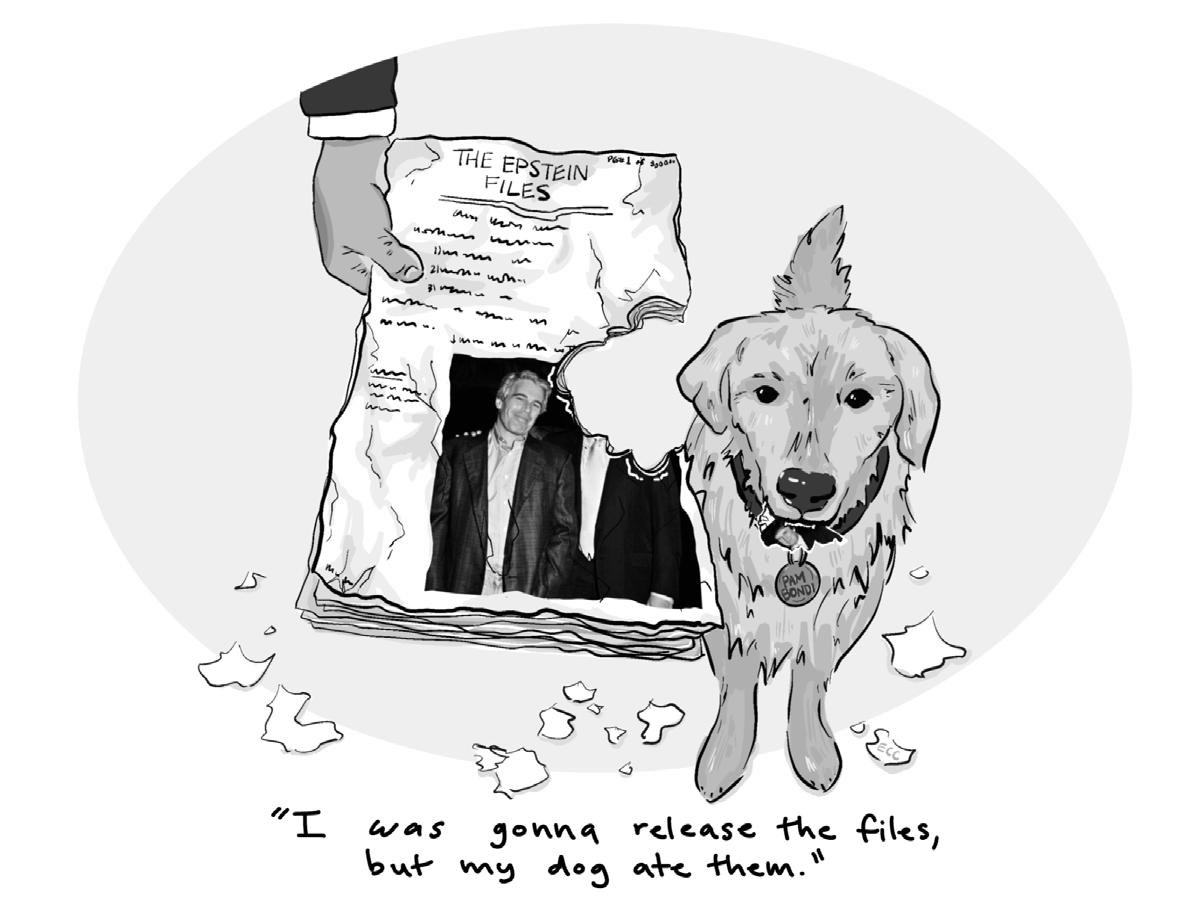

Algae blooms, present in Lake Erie since the late 1990s, contain cyanobacteria that feed on excess nitrogen, producing the liver toxin microcystin. In 2014, high microcystin concentrations shut down the water supply for 400,000 people in Toledo, Ohio. These algae blooms pose a threat to the Great Lakes system, and continuing to let factories discharge into waterways will only make them worse, further increasing health risks in aquatic organisms and humans.
When humans ingest polluted water, which harbor bacteria, they may contract other waterborne illnesses, skin infections, respiratory problems and diseases. Over a decade later, the Flint Water Crisis ramifications from unsafe drinking water containing the same heavy metals factories release (primarily lead), affect long-term development. The neurotoxicity of the lead entering the bloodstream and brain now results in Flint residents experiencing elevation of blood
pressure, increasing depression, posttraumatic stress disorder, learning disabilities and attention deficit hyperactivity disorder.
Waterborne disease affects seven million people in the U.S. every year. Long-term effects are chemical poisoning, cancer, organ damage, reproductive and developmental disorders.
As a state reliant on fresh water, Michigan residents are feeling, and will continue to feel, the negative health effects from its pollution.
Remediation for factory harm to the environment and human health is necessary.
The most logistical and simple way to combat the damage is to implement cleanup projects in Michigan’s waterways.
My hometown, Holland, is attempting to clean up Lake Mac through its Project Clarity. The Muskegon Lake cleanup is a remediation success story, resulting in the waterway being removed from the Environmental Protection
Agency’s and Great Lakes Area of Concern.
Some cleanup project methods include bioremediation, which uses microorganisms to break down harmful substances in water, helping fight against chemicals that impact oxygen concentrations. From 1966 to 1980, Gelman Sciences in Washtenaw County, right near Ann Arbor, released wastewater into the ground, creating a contamination plume that reached the groundwater in Ann Arbor and the Huron River. The biological team Bioxane, made up of undergraduate students at the University of Michigan, ran tests determining that bacteria could break down 1,4-dioxane, the containment present in the plume. These students weren’t even born for the creation of the plume, but their scientific discoveries from 2024 show it’s possible for the current generation to still clean up the past.
CONTINUED AT MICHIGANDAILY.COM
Goodbye South U Starbucks
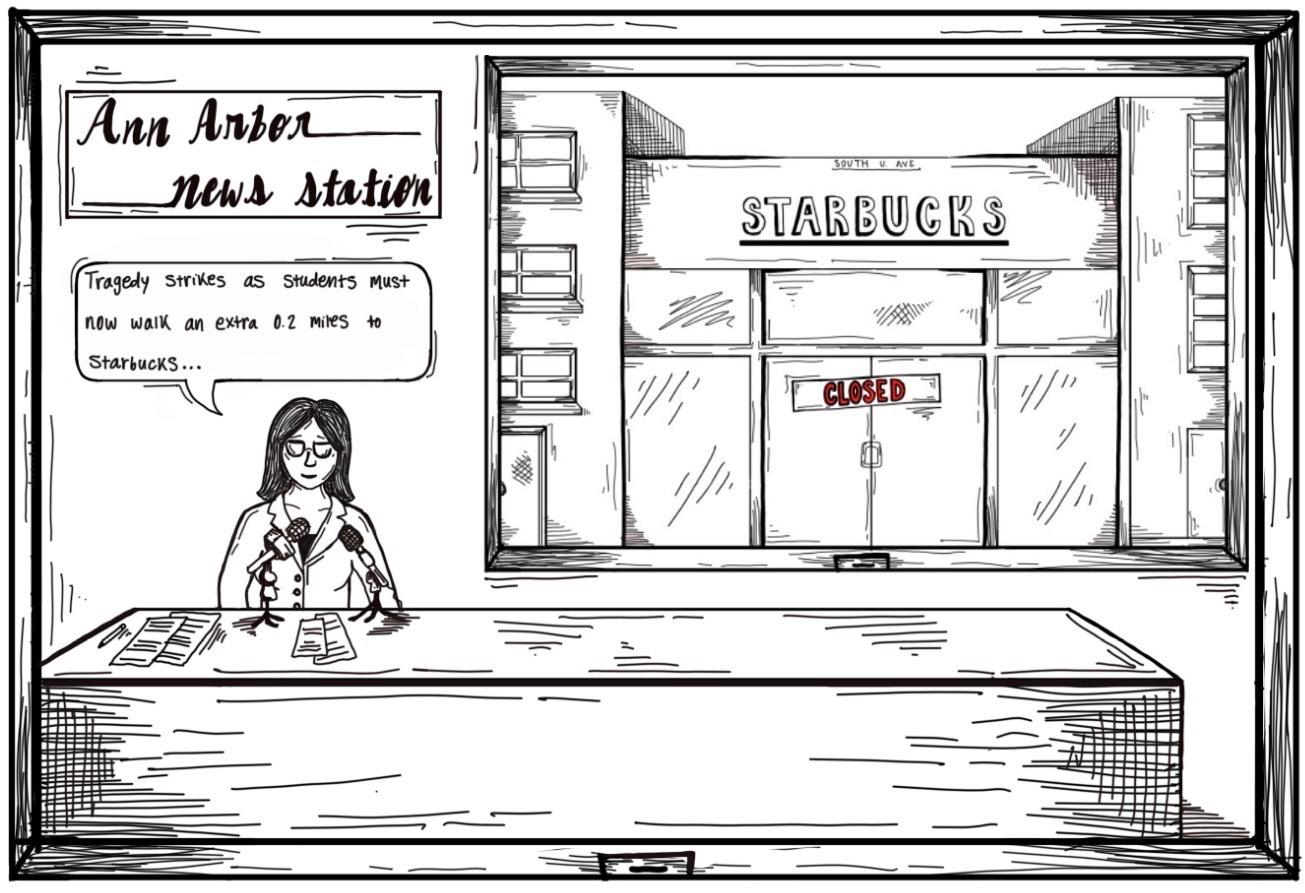

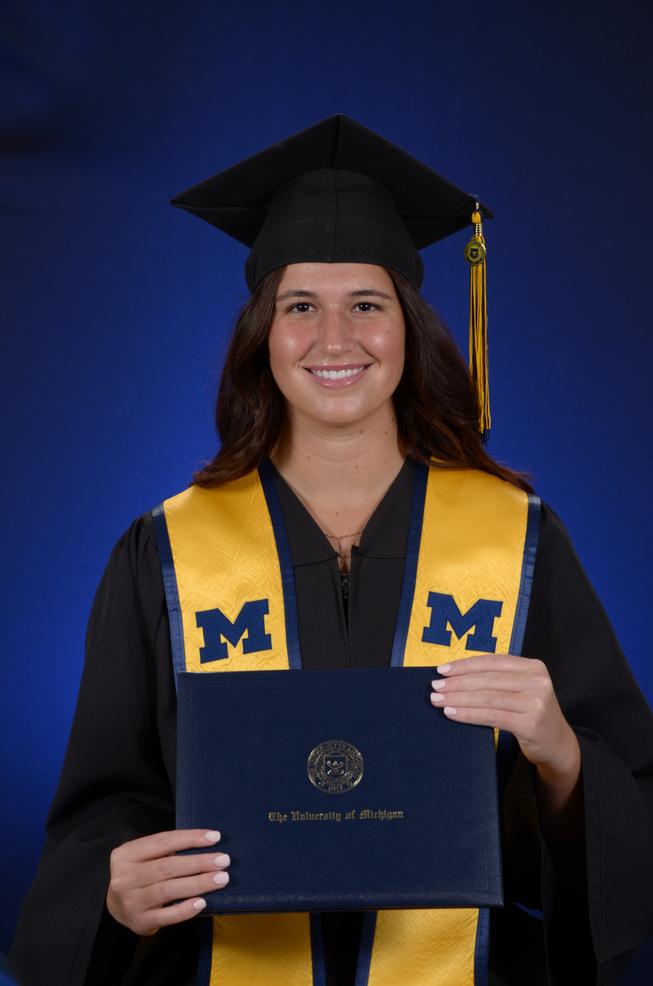

EMMA MARGARON Opinion Columnist
ERIN COLEMAN Opinion Cartoonist
NICOLE POSES Opinion Cartoonist

Michigan in Color is The Michigan Daily’s section by and for People of Color.
In this space, we invite our contributors to be vulnerable and authentic about our experiences and the important issues in our world today.
Our work represents our identities in a way that is both unapologetic and creative. We are a community that reclaims our stories on our own terms.
Why I’m mad at Drake
SUMMER SALMAN MiC Columnist
A couple months ago, I was scrolling through Instagram when I saw the news: Drake to sample Fairuz’s ‘Wahdon’ in his upcoming album “Iceman.” I chuckled at the absurdity. I mean, really, Drake? Surely that couldn’t be true. But a quick Google search proved me wrong in record time. It wouldn’t be the first time that a Western artist sampled from the Arab icons. In general, the way the West interacts with Arab media is … mixed. On one side of the spectrum, there is Jay-Z’s “Big Pimpin’” illegally taken from Abdel Halim Hafez’s song “Khosara.”
The composer’s nephew, Osama Ahmed Fahmy, sued for copyright infringement and ultimately lost the case, with the court claiming Fahmy did not have the legal standing to sue. On the other side, there is Macklemore’s “HIND’S HALL,” which credits composers Assi and Mansour Rahbani while displaying an understanding of the impact of their work by using their composition for “Ana La Habibi” in a hip-hop rendition for social activism. Fairuz, who Drake has decided to sample, isn’t something of an icon in the Middle East — she is the icon. She is the face of the Arab world, renowned for sewing communities together as a symbol of hope for many generations, even among diasporic communities. Although her heyday was in the 1970s and ’80s, her music is still regularly played on radio stations across the MENA region, written about in articles and studied for its lasting impact all over the world.

Through her music on love, war and resistance, Fairuz became a light guarded so heavily that when Madonna used her voice on her Erotica album, it resulted in a $2.5 million lawsuit and rumors that Madonna was banned from entering Fairuz’s home country of Lebanon. I listen to Fairuz in the mornings, a tradition passed on to me by my dad. Her songs remind me of small, intimate moments throughout my life: the road to my middle school, singing with my cousin in Syria, sunrise in the fall, peeling fruit in the summer, hiking on the Appalachian Trail. But most importantly, her voice encourages me to think about what my identity means to me and sometimes she reminds me exactly how being Arab feels. Each song seeped with our history tells intricately woven stories and “Wahdon” is no exception.
“Wahdon” was originally written as a poem by poet Talal Haidar, who later worked with Fairuz to create a musical masterpiece. Haidar, who lived in the south of Lebanon at the time of the Lebanese Civil War, was greeted every morning by three young men who would make their way out of town into the forest. One day, the men
didn’t return. Later, Haidar learned through a newspaper that the men were resistance fighters who were martyred in an operation for their liberation. In response, he wrote the poem as a meditation on sudden loss and the solitude that accompanies the struggles of the Arab world. The emotional themes, paired with the mournful composition of Ziad Rahbani and Fairuz’s harrowing, chilling voice, made the song a shining example of Fairuz’s culturally unifying and resonant style.
“Wahdon,” meaning alone, displays the duality of loneliness that has been inherited in wartorn countries. Fairuz sings for both those who have died and those who have been left behind, which are experiences marginalized Arab communities know well. All over the Middle East, our countries have experienced tales of families being killed in their homes, kids disappearing never to be heard from again and men dying for their dream of collective freedom. The survivors call out to the ones they’ve lost out loud and in their hearts. Paradoxically, in this song about loneliness, Fairuz reminds us that we are not alone.
CONTINUED AT MICHIGANDAILY.COM
Looted, destroyed and neglected: The struggle of preserving Iraqi cultural heritage
On March 20, 2003, a U.S.led coalition began its invasion of Iraq. Approximately one month later, on April 10, 2003, U.S. soldiers were on standby while looters broke into the National Museum of Iraq.
For the next 36 hours, the museum was ransacked while American soldiers stood by and permitted looters to destroy and steal thousands of years’ worth of artifacts directly tied to Iraqi cultural heritage. While the theft of artifacts in Iraq due to colonialism is by all means no new occurrence, the 2003 invasion opened the doors to a wide-scale market of looting like never before, which led to the trafficking of Iraqi antiques. According to “Lost Heritage: Antiquities Stolen from Iraq’s Regional Museums,” the amount looted from this specific museum alone is, “Something in the range of 16,000 to 19,000 items.” During the invasion, certain American officials saw this looting as a positive force that could provide a canvas for them to project their vision of what Iraqi society should be shaped into. There are various testimonies of which specific parties were directly responsible for this atrocity. However, the true root cause is undoubtedly the invasion of the country and all its perpetrators.
Looking further into the issue, we can see that the attack on this museum pales in comparison to the amount stolen by vandals who have been mass poaching archaeological sites all throughout the country. Iraq has about 10,000 documented archaeological sites. When considering the number of undocumented sites, which are estimated to be at 500,000, the number of artifacts stolen throughout the country is in the millions.
Archeologist Elizabeth Stone estimates that the number of looted artifacts from the time frame of 2003 to 2005 alone is somewhere between 400,000 and 600,000 items.
Preserving a country’s cultural heritage is undoubtedly a multifaceted issue. Countries like my homeland of Iraq do not have even a fraction of the privileges or resources that we see in the Global North. Centuries of wars, occupation and imperialism do not exactly allow the country to prioritize archaeological digs or artifact restoration. Yet by willingly collaborating with imperialistic forces during the U.S. occupation, the Iraqi government has been complicit in neglecting its vital role in safeguarding and preserving the country’s rich cultural heritage.
While we know there are already millions of artifacts stolen every day, more and more continue to be looted from archaeological sites and trafficked abroad. For the 10,000 documented archaeological sites we know of, there are currently only 5,000 designated archaeological police in Iraq. The number of police provided for sites decreased at the time of the Gulf War due to budget cuts and has gone down greatly since then.
Looking at the Gilgamesh Dream Tablet, we can clearly see the effects of these policies. During the Gulf War in 1991, looters were able to steal the tablet out of an Iraqi Museum and smuggle it across various regions of the Middle East. It was then smuggled into the U.S. in 2003, where the affluent American Corporation Hobby Lobby proceeded to illegally purchase and display the tablet in their museum in Washington, D.C.
This particular museum, the Museum of the Bible, knowingly purchased thousands of illegally looted
My parents and I are living our first life together
Iraqi artifacts. Yet the only retribution the multibillion-dollar corporation faced for its crimes was a $3 million fine. To make matters worse, to be able to retrieve the artifacts back from Hobby Lobby to Iraq was a significant challenge and required prosecutors to eventually settle the case. In a just world, events like these would not have been allowed to take place. American CEOs wouldn’t have had the ability to smuggle ancient artifacts integral to the Iraqi identity. U.S. occupation forces would not stand by and watch as the national museum of the country is destroyed. Lamassus, as ancient as the land itself, would not be split into pieces and separated across different continents. Yet we do not live in a just world. These events and many more all continue to take place. The lack of urgency that we have seen from the Iraqi government has deeply placed our culture and history at risk. Looting does not simply remove artifacts from their place of origin; it severs the collective memory of a land. If there is any hope to end the mass destruction of our cultural heritage, the Iraqi government must provide adequate protection of archeological sites in the upcoming. Countries such as the United States and the United Kingdom, that have historically been complicit and benefited from the looting of our sites and museums, must also actively partake in ensuring that Iraqi artifacts can be brought back to their rightful land. We, as a collective, must place pressure on these governments and demand that they work towards enacting policies that focus on preserving our longneglected cultural heritage and, in turn, both the history and future of Iraq.
Lesson 1: Living our first life Instagram reels have been showing me constant reels about how my immigrant parents are also “living their first life.”
Okay, what does that even mean?
My “extensive” research on this topic led me to the conclusion that, like how I’m learning and living my own life, my immigrant parents are doing the same. My immigrant parents who seem so wise because they lived their lives are actually still living their lives? It was a bit difficult to wrap my mind around.
My life is good, yet I feel burdened by the pressure I carry on my shoulders like Atlas carrying the world. I can’t disappoint my parents because they are expecting their only daughter to do better than them: immigrants who never got their college degrees and worked themselves to the bone with minimum-wage jobs. My job, as their American-born daughter, is to graduate from college and get a high-paying career as a doctor, dentist or lawyer. Those were my choices.
The expectations that they place upon me feel like a ceiling that continues to press down
until there is nothing left of me. The American university experience is still foreign to my parents. To them, 18 credits at the University of Michigan is not much harder than my little allgirls Catholic high school back in Los Angeles. But can I blame them?
I always thought that academic validation from my parents was the only love that I could get from them. I wondered why the hugs and the kisses that other American children got from their parents left a hole in my heart — maybe it was because I didn’t receive that from my parents.
****
Lesson 2: My mom grew up with care, not affection. My mom, born and raised in Okinawa, Japan, is the middle child in a family of seven, where she didn’t receive as much attention compared to her siblings. My mom’s family was a little traditional — for her, love had to be earned. Her brothers were the “men” of the family, and that was enough, and her sisters were the pride of the family, always bringing awards back home from school. In stories that she would tell me, she never received hugs and kisses or the publicly spoken “I love you.” This type of affection just wasn’t normal for her generation.
She took on the job of raising a troublemaking only child with an attitude problem and a tendency to talk back. Not to say that my dad didn’t raise me, but my mom committed herself to showing up for everything and anything related to me, even when she was a busy restaurant owner. She was the one who scolded me when I acted out of line with no manners. She took me to school, to ballet, and Kumon — and so much more.
She raised me, yet she didn’t raise me with the outwardly said, “I love you’s” or the listening ear that I needed when something was troubling me. The hugs and kisses that I saw other parents give their kids in public were foreign to me, paralleling her own upbringing. Unless I said “I love you” first, she never said it on her own — and that hurt me. My whole childhood, I naively thought she didn’t love me because she never told me, but how could she tell me when our ideas of love were so different from each other?
How could I tell her that what I wanted was the exact opposite of what my ママ grew up with. I want to be told “I love you” in public, given hugs and kisses on the cheek that showed everyone that I was loved — valued. Being loved meant the public displays of affection — it meant listening with an open
heart and comforting me in times of distress, it meant the “I love you’s” after a phone call or when we would go our separate ways whether it be for work or school. It meant hearing and feeling the affection that she has for me — that’s what I needed. My want for affection felt different, too different, from her version of affection.
But, she’s learning. We’re learning.
In my sophomore year of college, something had snapped within me. It was the thread that made me hang on to life and my education, and it just snapped. I kept calling my mom every week because I didn’t know what to do. Everything was so hard — I felt alone, I felt dumb, I felt like I couldn’t do anything right, I just wanted to be home. I called my mom one time, absolutely sobbing, “Mama. Mou dekinai. Kaeritai. I miss you, Mama.”
Kaen? Doushita no? What’s going on? Why are you crying?”
“ Zenbu muzukashii . I can’t do it anymore,” I say, sobbing hysterically.
“What do you mean, Kaen? What’s hard?” she asked, trying to understand me.
“ZENBU. Everything, Mama. I just want to go home.”
“Okay. Wakatta. Kaetekite Just come home for Thanksgiving. Maybe it’ll be better,” she said defeatedly.
“Okay. Sniff-Sniff. I can do that.”
“You can do that. Thanksgiving is in a month. Ganbatte. Mou sugu
dakara.”
“Yeah, that is really soon. I’ll do my best. Arigatoune, Mama. I love you.”
“I love you, too,” she responded before hanging up the phone.
Maybe this whole sobbing incident led my mom to understand that I was really struggling being alone in Michigan. After this phone call, she realized the type of love that I was craving:
KAYENNE OHNO MiC Columnist
ZAINAB HUSEIN MiC Columnist
Kayenne Ohno/MiC
Sabrina Yu/MiC
A letter to the administration
AMRITA KONDUR MiC Columnist
To the University of Michigan’s Board of Regents, I wanted to thank you for your dedication to this University’s well-being. Indeed, with the increase in security around campus I am feeling safer, but, more importantly, I am also feeling a deep sense of belonging.
For so long I have felt out of place on this cold campus. I can recall nights spent alone in my dormitory on the Hill Neighborhood, quietly watching groups of students laugh with each other amiably. It made me want to peel my own eardrums out of the pinnae; signs and shouting all around, a discord of voices and energies.
The disruptions were worse outside. It was as if every time I would cross the Diag from Mason to West Hall, there were swarms all around me. People — always fighting to be the loudest voice in the noise — running about, shouting, hoisting up signboards larger than their bodies. Words and pictures scrawled across posters speaking of death and destruction, of a war 6,000 miles away. Of course, I agree that war is bad — I’m not evil. But God, do they have to shout about the damned thing all the time? I mean, it got to a point where I couldn’t get anywhere on campus without seeing those people.
But more than that, I was scared. I mean, what if a fire had broken out in the middle of the Diag out of thin air? It would have been impossible to get out safely and calmly. And I was worried the protests would never end. Isn’t a protest supposed to be peaceful? Calm? Isn’t there supposed to be an end to it? We needed to move forward and move that along.
I think the solution is clear. We — you, the administration — need to keep a closer watch on students. You just have no clue what people are up to in their homes, you know? Surveilling students with intense scrutiny can lessen the amount of deviant behaviors occurring without notice. And it starts right at the beginning: freshman year. The dorms. Hotspots of human aberrations. Nip these ideas in the bud and we might just have a calmer, peaceful campus.
How, you may ask? I just have one suggestion. A very mild, modest proposal: Transparent dorms. That’s all.
Let me outline this very simple plan:
1. Replace the walls of the dormitories with clear glass.
2. Place a central tower on the diag’s “M,” where security personnel and cameras may operate from. Place another security tower on the Hill in the middle of the four dorms that surround the makeshift gym.
3. Encourage students to gather in common areas, which will also be see-through.
See! How simple. Let me explain. It all began with the wonderful vision of Jeremy Bentham, when he termed the “panopticon.”
The panopticon was designed as an institution that prioritizes control: a system of transparent buildings that exists around a securityfilled middle tower with a watchful eye. In this setup, building-dwellers can be constantly monitored from the center. I propose that we use this ingenious blueprint to create a peaceful campus where students are monitored every day, hour and second of their lives.
You might wonder if this is a financially feasible solution. I can guarantee (and I speak for every student, trust me) that a small increase in tuition rates would be extremely easy to implement. Say, around $10,000? I would certainly pay even more tuition if it meant living on a calmer, less destructive campus. A campus with fewer disruptions — seriously, I’m salivating just thinking about it. This will allow the administration to surveil students more effectively. If you can see everyone all the time, then when will anyone be able to plan campus disruptions in secret? This way, campus security can consistently keep watch on students living in the dormitories.
You might ask what of students who have moved on to apartments and houses. I believe that creating a surveillance system as soon as students arrive on campus will significantly decrease their intrinsic motivation to create issues in future years. Remember: The administration is watching. And, honestly, it’s not like this is not a drastic increase from the measures we are currently taking on campus, anyway. The University has already increased security and surveillance. The University has already formally suspended student organizations in very recent
history. What’s a little more surveillance, security and suspension? Those are my three favorite S’s!
A clear view into students’ lives will also surely bring us all closer together. Now, some of my peers might tell you they need privacy sometimes, like on the toilet or in the showers. But what’s the use of further isolation? Those showers are called “communal” for a reason, come on! Privacy only breeds dishonesty. Unruly students should be forced to see the society they wish to upheave through clear, transparent glass. Every day.
When I picture the future of this city, I have hope. Visualize it with me: quiet streets and a quieter Diag. Bicyclists remaining in the given lanes that they are provided in the streets. 10 minutes to the hour, every hour-and-a-half, a sea of students clad in maizeand-blue trodding along, conversations kept to a minimum. When I picture the future of Ann Arbor, I see unity: small gatherings (limited to no more than 30) for days of celebration at the steps of the Hatcher Graduate Library; political discussions that remain behind the walls of political science classrooms, not infiltrating polite conversation; midwestern English spoken during campus tours on Sundays with praise for the grand architecture of the Law Quadrangle and Ross School of Business.
When I picture the future, I see a future of acceptance: of this school, its great people, and the space it occupies. Land acknowledgements leave our speeches. I see the future as one where we forget (thank God) the atrocities committed for the University to remain on this land. We move on from the dark history of protest and activism and a loud cacophony of “student rights” destroying relationships between students and administrators. We move on, in total, from the dark history of Michigan and America. It’s in the past! I see peace. Quiet. Organization. I see a student body who agrees in mind and spirit, opinions dying at the end of conversation and, most importantly, assembly only to celebrate and never to criticize.
When I see the future of Ann Arbor, I see order.
Thank you!
With sincere appreciation, A Concerned Student at our One Big Beautiful School!

Our voices for our future

In my hometown of San Marino, Calif., there’s a running joke that you should “call up Judy Chu” whenever you have a problem. Though it is not meant to be taken seriously, it is accompanied by the implication that we, the citizens of San Marino, place some sort of trust in the hands of Rep. Judy Chu, D-Cailf. Chu was the first Chinese American woman elected to Congress, and for the nearly 70% Asian population of San Marino, she was a rare example of Asian American representation in politics.
Despite the presence of large Asian immigrant communities in San Marino and the broader San Gabriel Valley area, I saw many of my peers take apolitical stances on matters of injustice, turning a blind eye to issues such as racially targeted Immigrations and Customs Enforcement raids and the genocide of Palestinians. This apathy is an act of privilege, supporting the perpetuation of systemic racism.
Simultaneously, however, they fail to recognize that they are part of a marginalized group that is actually impacted by political decisions.
The lack of Asian American and Pacific Islander representation in government is a significant contributing factor. A Reflective Democracy Campaign report indicated that only 0.9% of elected officials across all levels of government were members of the AAPI community in 2020, a number that starkly contrasts with the fact that we made up 6.1% of the population. The same report indicated that the AAPI community was the most underrepresented group in politics with a differential factor of -85%.
Though these statistics were collected about five years ago, the problem remains: AAPI representation in government is disproportional to the AAPI population. When we don’t feel seen, it is easy to feel detached from politics that seemingly do not have our interests in mind.
Recent years have also seen a concerning shift to the right among Asian Americans.
In October 2024, hundreds of Chinese immigrants from the San Gabriel Valley gathered outside a Rosemead City Council meeting to protest the expansion of domestic violence shelters for single mothers. Many of these protesters wore shirts supporting President Donald Trump and harassed those in support of the shelter proposal.
As a Chinese American from the area, it was baffling to see people from my locality back a
politician who has repeatedly supported discrimination against people of Color and other minorities. Yet, although they still predominantly identify as Democrats, rightwing policies about crime, education, immigration and the economy have begun to attract Chinese Americans and other AAPI groups.
2021 was the historic rise of Kamala Harris, a Democrat, to the role of vice president of the United States. As the first Asian American to assume that position, she helped shape public perception of AAPI voices in politics and pave the way for other AAPI leaders in government.
During her 2024 presidential campaign, however, polls actually indicated lower AAPI support for Harris than for former President Joe Biden in 2020, and she ultimately lost to Republican candidate President Donald Trump. Since 2012, AAPI support for Democratic presidential candidates has declined, and both the aforementioned shift toward conservatism and a lack of outreach directed toward AAPI communities have contributed. In particular, Chinese neighborhoods in New York have increasingly leaned right, though the New York City mayoral election appears to have challenged this trend.
On Nov. 4, Zohran Mamdani made history as New York City’s first South Asian mayor and first Muslim mayor. Exit polls by CNN reported that about 65% of Asian voters cast their ballots for Mamdani, and his diverse campaign efforts were a large reason why.
For instance, he remained outspoken about issues that have disproportionately affected Muslim and South Asian communities, speaking out about Islamophobia and expanding canvassing efforts. Several of his ads also centered around South Asian culture, spoken in languages such as Hindi and Bangla.
The endorsement from Sen. John Liu, D-N.Y., also drew support from East Asian voters, who turned out to the polls in greater numbers this election cycle. From sharing his favorite Chinatown restaurants to practicing tai chi at a senior center, Mamdani demonstrated that he cared about the cultural communities within the city. His win is a success for AAPI communities and for the future of politics in the United States.
United States politics have historically centered around and served the interests of white Americans. Meanwhile, people of Color have been disenfranchised; such oppression has been perpetuated by the fact that there are few POC politicians.
For instance, discriminatory laws such as the Chinese Exclusion Act of 1882, which banned laborers from China from immigrating to the U.S. for 10 years, were passed without input from Chinese communities. The American colonists famously advocated for no taxation without representation, so, similarly, topics concerning the AAPI community should not be addressed without our voices. Even as political representation has become more diverse, systematic racism and xenophobia have remained pervasive problems, as indicated by events such as the violent hate crimes during the COVID-19 pandemic. Though AAPI voter turnout has shown an unprecedented increase in recent presidential elections (between the years of 2010 and 2020, voter eligibility astonishingly grew by 55%), many individuals are ineligible to vote or choose not to. One reason is that about only 73% of Asian Americans and 86% of Pacific Islanders are U.S. citizens, meaning the remainder cannot vote. Another is the presence of language barriers, which limit access to voting education and registration. Given the numbers and diversity of the AAPI population, it would be advantageous for politicians to expand their reach in such communities. Still, AAPI voters are rarely considered by election candidates: A 2024 survey indicated that only 45% of AAPI voters had been contacted by the Democratic Party, and only 38% had been contacted by the Republican Party. Evidently, those who do not feel heard are less likely to actively participate in the political process.
I was privileged to grow up in an area where I saw myself represented through AAPI city and state politicians, but this was not the case for many Asian Americans and Pacific Islanders. Regardless of our upbringing, we comprise a generation of people whose voices are more important than ever.
We must speak up for ourselves, for our communities and for the greater good. At a time when rights are being stripped from marginalized groups, solidarity — not only within the AAPI community, but also among all Americans — becomes especially important, as it is only through banding together that we are able to enact real change. Change can look like voting, but it can also look like volunteering for advocacy groups and supporting local businesses as opposed to large corporations. We all have a part to play because politics impact everyone, not just those who actively participate in it.
CAMILLE TAI MiC Columnist
Cornelia Ovren/DAILY
After promising start, Michigan run game stuffed by Ohio State
make it 25. Marshall rushed four times in the first quarter for 61 yards, two of those runs accounting for 57 total yards.
On the first play of the game, Jordan Marshall broke free.
The sophomore running back slipped past one tackle and nearly folded over trying to evade another, sprinting down the left sideline as four more Ohio State defenders matched his pace.
Marshall was eventually brought down, but not before he had picked up 36 yards. Not before the No. 15 Michigan football team had flashed its ability on the ground in just a few seconds. Not before, only one play in, it became fair to wonder if this year could shape up similarly to the previous four.
It’s a stat that seems to be mentioned every time The Game is: The team that has recorded more rushing yards than the other has won in the last 24 consecutive contests.
In the first quarter, the Wolverines looked poised to
Marshall’s second run was similar to his first; a quick cut to the left, followed by forcing a missed tackle before bursting up the seam. When the Wolverines had the ball in the first quarter, it was mainly in Marshall’s hands, and the Buckeyes struggled to slow him down. There weren’t many of the broken tackles or moving piles that have defined Marshall’s best performances earlier this season, but his patience and speed were enough to march Michigan down the field and help outrun Ohio State 75 yards to 48 in the first quarter.
But at some point during the second of the Wolverines’ first two drives — both of which fizzled out and ended in field goals — Marshall re-aggravated the shoulder injury that sidelined him last week.

threat in the air, the Wolverines faced a loaded box on most rush attempts, overpowered by the Buckeyes’ staunch defensive front and continuously stuffed at or around the line of scrimmage. After warming up on the bike on the sidelines, Marshall returned for a few snaps in the third quarter, but was unable to make much of an impact.
Michigan ended with a total of zero rushing yards that quarter.
“Today, obviously we were able to run the ball in the beginning, and then in the second half we didn’t,” graduate offensive lineman Greg Crippen said. “That’s what hurt us the most.”
“Jordan Marshall’s a really good player, and when you have him it puts a positive impact on your offense,” Michigan coach Sherrone Moore said. “So it was a huge piece for us to have him. When he went down, we had a lot of trust in (Kuzdzal) like we showed last week, the plan doesn’t change.”
his carries in the second quarter. His 10 carries were highlighted by a 22-yard flash, supported by some solid blocks. And despite facing a 17-9 deficit, the Wolverines were still beating the Buckeyes in the running battle.
Junior running back Bryson Kuzdzal proved capable with
Ohio State ices Michigan with 12-minute, late-game drive
For all the damage done on the scoreboard by the end of the third quarter, The Game wasn’t yet settled. Trailing 24-9 with more than an entire quarter left to play, there was still a tangible — albeit slightly improbable — path for the No. 15 Michigan football team to regain lost ground in the rivalry matchup.
No. 1 Ohio State didn’t let that happen.
Instead, the Buckeyes scrounged up a 20-play, 81-yard drive that not only bled nearly 12 minutes off the clock but also squashed any hope of a comeback for the Wolverines.
“That was awesome to see,” Ohio State quarterback Julian Sayin said. “Just the physicality that the runners ran with and that the offensive line had. We wanted to end the game on our terms, keep running the ball, milk the clock, be able to pick up first downs and just wear the defense down.”
The Buckeyes certainly chipped away at Michigan’s defense, expending nearly a quarter’s worth of play time. At the start of the drive, however, it didn’t seem as though the march would last as long as eventually it did.
Sitting at third-and-2 after falling short on two rush attempts, it looked as though Sayin and the rest of the Ohio State offense might be forced to punt the ball away. Instead, Sayin lined up under center and immediately charged forward through the dogpile, earning the first down to extend the possession. When the next third down arose nearly a minute later, Sayin did the same thing. Keeping the ball, he broke right to secure the first down and maintain possession for the Buckeyes heading into the fourth quarter.
Ohio State’s ability to convert on third downs during this drive was a microcosm of its performance throughout the entire matchup. Converting on 10-of-17 on third down throughout the game, the Buckeyes made the most of their time with the ball — and they had a lot of time with the ball.
Winning the possession battle with 40:01 minutes to the Wolverines’ 19:59 minutes, Ohio State not only capitalized on its own opportunities, but more importantly, squandered Michigan’s. And as the minutes ticked by in the fourth quarter during their 20-play drive,
holding onto the ball was all the Buckeyes needed to do.
With roughly 10 minutes left in the fourth quarter, Ohio State’s turn with the ball was finally starting to come to a close. Two short rushes put the Buckeyes at third-and-4 on the Wolverines’ 5-yard line before an incompletion by Sayin brought up fourth down. Rather than go for it again, Ohio State opted to bring in kicker Jayden Fielding.
Lining up for the 23-yard attempt, Fielding took a beat before sending the ball sailing through the uprights for the 27-9 lead and the final points of the game.
“Great to see Jayden make those kicks,” Buckeyes coach Ryan Day said. “He had a great look in his eye this week, and those make a big difference.”
There was still time left on the clock, but it didn’t matter. Ohio State had closed out the game just as Sayin and the rest of the program had hoped: on their own terms.
In one slow march, one sequence that tilted the field and drained the clock, the Buckeyes froze out Michigan. The drive didn’t blow the game open, it simply shut the door — and that was all Ohio State needed.
The plan might not have
changed for Michigan after the first half. The results did.
Whether it was Ohio State’s tackles settling in, the Wolverines’ lack of a passing game or inconsistency in the backfield, Michigan couldn’t get anything on the ground in the second half. Unable to pose a
In the first half, the Wolverines ran for 108 yards. They ended with 100 yards total. Saturday, in part due to an inability to run the ball, Michigan’s four-year streak of beating the Buckeyes was snapped. And Saturday, the streak of the running game deciding the winner continued for a 25th year.
Near-perfect start looked back upon as missed opportunities for Michigan in loss to Ohio State
Whatever could’ve been drawn up as the ideal opening scenario for the No. 15 Michigan football team Saturday afternoon against No. 1 Ohio State, the first two offensive and defensive drives were likely exactly it.
The Wolverines started with the ball and drove down the field effectively. The first play of the game from scrimmage was a 36-yard carry by sophomore running back Jordan Marshall that already put the Wolverines on the cusp of field-goal range. A checkdown to Marshall advanced the ball for another first down before the drive finally stalled out and senior kicker Dominic Zvada knocked home a 45-yarder.
Then Michigan had a nearperfect drive on defense — two plays, the second ending in an interception by junior cornerback Jyaire Hill.
The Wolverines picked back up on offense from the Ohio State 39-yard line. Marshall broke another long run of 21 yards up the left side on the second play of the drive. But again, the drive stalled out and Zvada came in to drive through a 25-yarder.
After two big runs on consecutive drives and a crucial

turnover in between, Michigan’s offense couldn’t reach the end zone. And what was seen as a nearperfect start at the time, quickly became the beginning of the end for the Wolverines.
“I thought we started off with good rhythm offensively, defensively,” Michigan coach Sherrone Moore said. “… But we didn’t execute in the red zone, which ended up being the story of the game.”
A lack of execution on those first two offensive drives haunted the rest of the Wolverines’ performance. In hindsight, 14 total points on those two drives instead of six could’ve drastically altered the game, considering the momentum Michigan had. When the Wolverines no longer moved the ball as effectively the rest of the game, the missed opportunities on those two drives deep in the Buckeyes’ territory linger.
“We didn’t execute enough, and they did when it mattered,” Moore said. “They played a better game.”
The Wolverines even had another strong drive defensively immediately following. Ohio State drove all the way to the 3-yard line off some big plays of its own, but was stopped on six consecutive plays inside the 5 yard line and it had to settle for a
“You always want to be balanced,” Moore said. “Just when it starts working, the first part of the game is, however many it was, you lean on that a little bit more. So I think that wasn’t the plan. We wanted to be balanced on what we did. But when you’re successful in the run game like that, that’s what you want to do.”
Off consecutive 200-yard games, Underwood isn’t a liability like last year’s quarterbacks room. But Moore felt the flow of the game dictated deflating the football. That involved Underwood some, with a few designed runs that didn’t go for much, but he was far from the crux of the offense.
field goal — the same as Michigan. At the end of the first quarter, the Wolverines had a 6-3 lead, was tied with 85 total yards and held a strong offensive attack to a field goal on six plays from inside the 3-yard line. But that near-perfect start faded as Michigan had less yards and points in the final three quarters combined. Through those first four drives, Michigan appeared to be exactly where it wanted to be. But once the Buckeyes’ offense kept going and the Wolverines’ didn’t, the missed opportunities of the first two drives went on to be difference makers.
“I think in the first half as an offense, we did a good job running the ball, and we were able to move the ball,” graduate offensive lineman Greg Crippen said. “In the second half … obviously we weren’t able to move the ball.” After an interception, strong defensive stand and two golden offensive opportunities in the first quarter of the game led to just two field goals and a 6-3 lead — it left far too little room for error for Michigan the rest of the game. For the Wolverines, who didn’t find the end zone the entire afternoon, failing to reach pay dirt on their opening two drives dug an early grave and all that was left was their four-game win streak broken.
brilliance. The rest of the half featured a passing attack unequipped to operate with urgency and without a run game. As every play became an obvious passing down, Underwood completed just 5-of13 attempts in a futile second half. Underwood was in a position the Wolverines never intended him to be in with desperation alone putting the ball in his hands. Underwood’s final snap was a fourth-down interception — not bearing any blame for the result, but perhaps some in Underwood’s own head for some time.
be Underwood’s day. He wasn’t asked to lead Michigan into battle. The Wolverines’ plan wasn’t for him to be the star quarterback overmatching the nation’s No. 1 defense with his innate talent. He wasn’t even asked to throw the ball all that much.
Underwood doesn’t bear the brunt of responsibility for the loss.
“We just didn’t get a rhythm,” Michigan coach Sherrone Moore said. “We didn’t protect well enough. We didn’t get the guys open enough. All those things. But again, it’s a team effort. There’s no blame, there’s no pointing fingers.”
Sixty-three yards and a fourthquarter interception and the game still isn’t on him. By design, Underwood wasn’t going to lose The Game for the Wolverines, nor was he going to win it. Michigan wanted The Game decided elsewhere.
Initially, the Wolverines thought the run game was working enough, and they were going to keep their streak alive on the ground in true hard-nosed, “Smash” fashion. At halftime, Underwood had just two completions on five attempts, a checkdown and a curl accounting for 16 yards.
As Michigan emerged from the tunnel for the second half, down seven, it wasn’t in the type of game it wanted to be, nor one it was prepared to win. On the Wolverines’ first offensive play, Underwood pinpointed a ball to graduate wide receiver Donaven McCulley between three defenders in one soonto-be-forgotten moment of
“I just want him to feel the feeling like he feels right now,” Moore said. “That’s really the biggest thing that’ll motivate him enough to be as good as he can be.” Maybe the loss will further motivate Underwood to become the hometown hero. That seems to be what he asks of himself already. Michigan, too, has to believe its 18-year-old phenom has a legacy to leave in The Game. But Saturday wasn’t that day, and it was never going to be.
JONATHAN WUCHTER Managing Sports Editor
Georgia McKay/DAILY
SAM GIBSON Daily Sports Editor
ALINA LEVINE Daily Sports Editor
ZACH EDWARDS Managing Sports Editor
Holly Burkhart/DAILY
GETTING
OLD
Sam Gibson: Michigan can’t use youth as an excuse anymore
being one of the youngest teams in the Big Ten. And after an entire regular season, it’s starting to get old.
Sherrone Moore sat on the dais in Michigan’s postgame press conference, his shoulders hunched forward and his expression blank. Saturday’s loss to No. 1 Ohio State stung more than anything else.
The 27-9 defeat to the Buckeyes dissipated the Wolverines’ College Football Playoff hopes and broke Michigan’s four-year streak in the rivalry. Yet, just a few minutes after talking about what went wrong, Moore shifted the subject.
“We got another game we gotta play after this, so we gotta regroup and try to get 10 wins,” Moore said. “That’ll be a huge success for this team to get 10 wins with such a young team, starting six freshmen, redshirt freshman: true freshman quarterback, redshirt freshman running back, three redshirt freshman offensive lineman, you know?”
It’s natural for a coach to look ahead, especially after suffering a loss that felt imminent as quickly as Saturday’s did. He can only point to poor execution so many times, and while Moore gave Ohio State general praise, he wasn’t ready to dive into the specifics of how the Buckeyes picked apart the Wolverines’ secondary, what happened to Michigan on the line of scrimmage or where, specifically, freshman quarterback Bryce Underwood can improve.
And Moore is correct, the Wolverines do have a game after this. Ten wins is still possible. It’s the second part of Moore’s answer — the part about Michigan’s youth — that’s starting to ring a little hollow.
To preface, Moore is technically correct. Underwood is a freshman, running back Jordan Marshall is a redshirt freshman, as are offensive linemen Blake Frazier, Jake Guarnera and Andrew Sprague. This is a team that undeniably starts youth at key offensive positions.
But the rest of the Wolverines’ players and staff — including Moore himself — have pushed back against that exact language throughout the latter half of this season.
“We really don’t count any of us as freshmen, especially with the experience we do have in the room and those veteran guys that we lean on,” freshman receiver Andrew Marsh said Nov. 11. “… We don’t consider ourselves as freshmen. We’re just a team.”
That came a few days after Marsh hauled in 12 receptions for 179 yards, all while looking nothing like a freshman in Michigan’s win over Northwestern. Following emerging as a starter during the Wolverines’ bye week, Marsh never looked back.
It’s time for Moore to do the same. There are plenty of excuses to make for Michigan’s three losses. Moore has avoided them for the most part — emphasizing execution, effort and fundamentals even as key starters on both sides of the ball have been sidelined with injuries.
But eventually, following victory or defeat, Moore winds up talking about just how young his Wolverines are. After a win, it’s a bonus, a pleasant perk that Michigan’s underclassmen met the moment and pulled out on top. After a loss, it’s a stat read like a reminder, just in case anyone thought the Wolverines had aged out of
“It’s something that coach Moore preaches on and harps on, it becomes that point where you’re not a freshman anymore,” Michigan offensive line coach Grant Newsome said Oct. 29. “Even if you’re a redshirt or a guy who’s redshirting, once you get through spring ball, you get through fall camp, you get a couple games in. Even if you’re not playing, even if you’re still on the scout team, you sit in the same meetings as everyone else, eat the same food, you get the same training environment, you get the same resources.
“So at a certain point you gotta take that step where it’s not just, ‘Oh, I’m a freshman,’ or, ‘Oh, he’s a young guy.’ ” So when does that point come for the Wolverines? Was it after Oklahoma, when Underwood played as you’d expect a freshman to play in his first road game and Michigan lost in part because of that? Was it after USC, when the Wolverines couldn’t match the physicality of a program with a recent history of tackling woes? Was it after Michigan’s close win over Purdue, or its close win over Northwestern, or its blowout over Maryland?
At what point in the season have the Wolverines played enough games, celebrated enough wins or endured enough losses to shed the ‘young’ label?
Ask any player or coach on the Wolverines’ staff, and you’ll probably get different answers. But none of them should include any date past Nov. 29, the day Michigan got exposed and undone by Ohio State.
Underwood got his first true experience of The Game on Saturday and barely made an impact, completing 8-of-18 passes for 63 yards and throwing an interception on his last attempt. Marshall reaggravated a nagging shoulder injury, and went from the field, to the medical tent, to the sideline recovery bike and back onto the field all throughout 60 minutes. Marsh was barely a part of The Game at all, drawing a pass interference early but not registering a reception otherwise. And the offensive line, which seemed to be peaking in the Wolverines’ recent wins, was outmatched in the second half.
So it’s easy to look at this team, especially the offense, and call it young or inexperienced. Michigan played as such in its loss to the Buckeyes.
But as Newsome said, there’s a point where that doesn’t fly anymore. If that point hadn’t come already, it certainly did on Saturday.


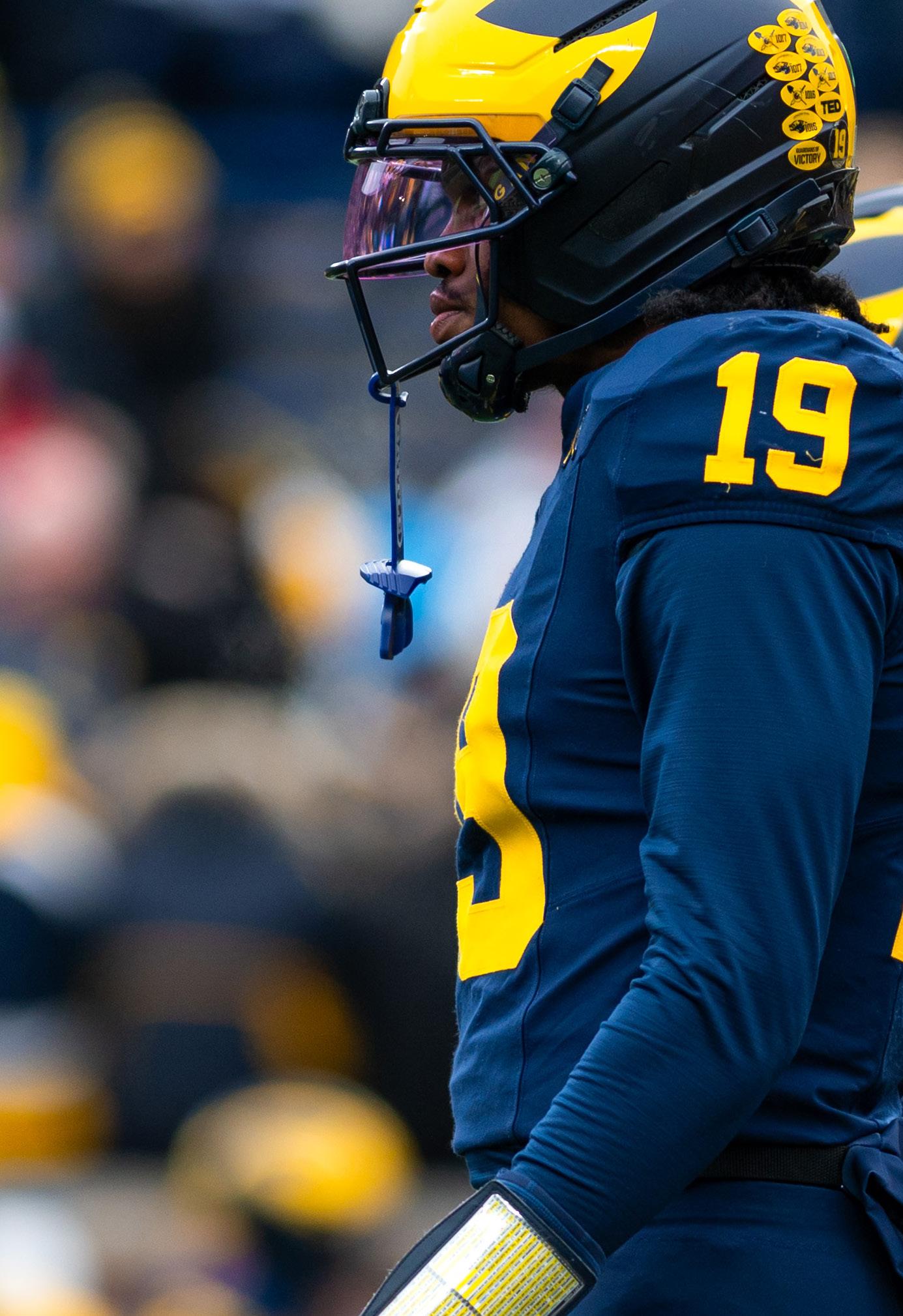
SAM GIBSON Daily Sports Editor