97% 2/2

Page 1

miranda july

freckle constellations

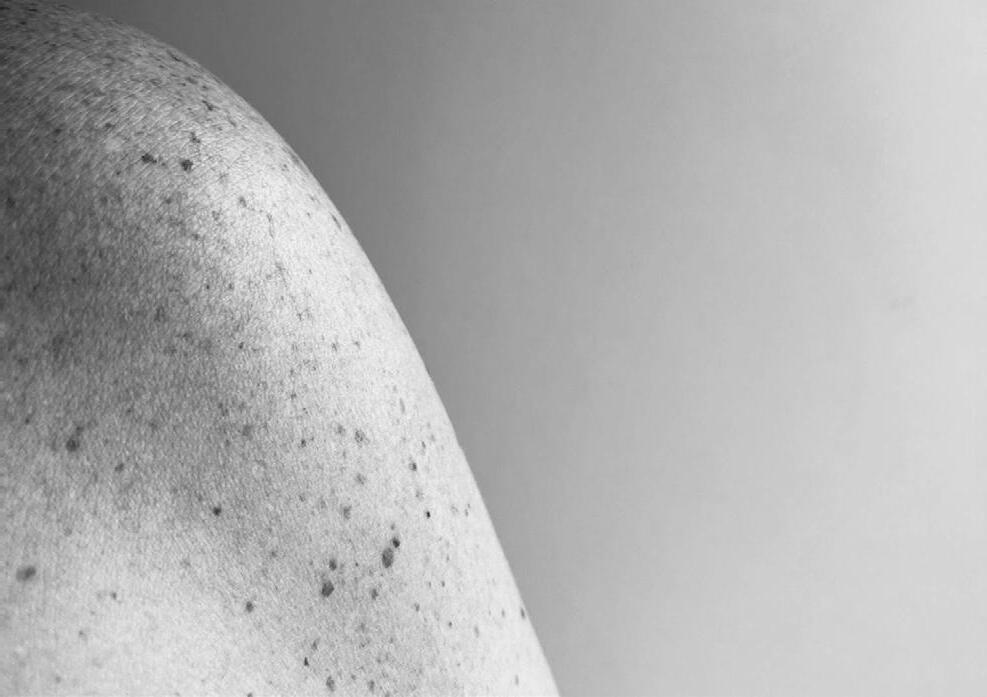
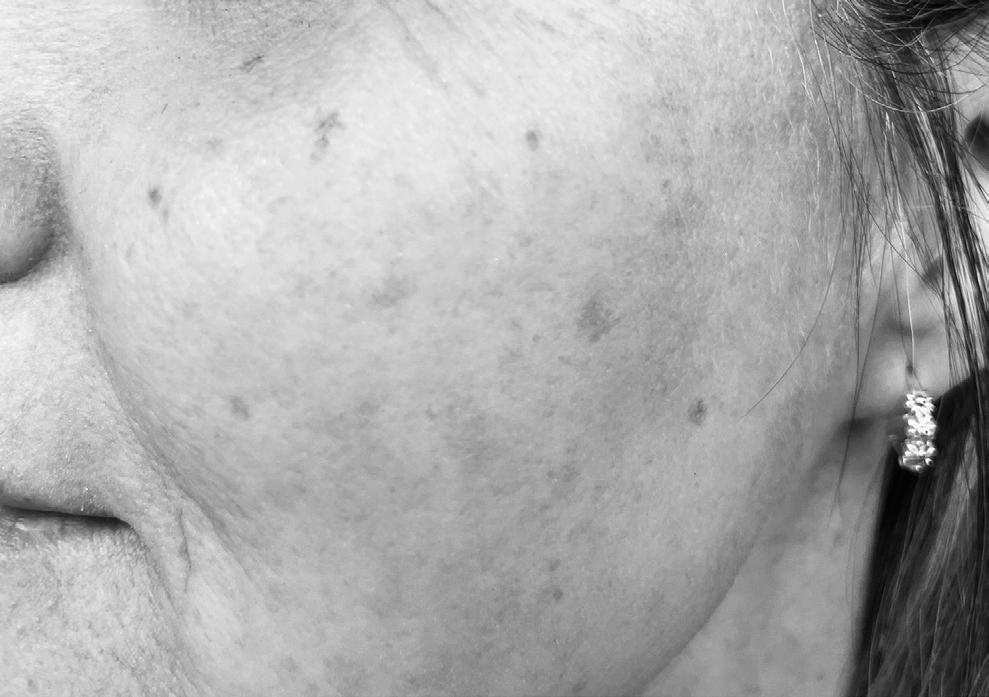
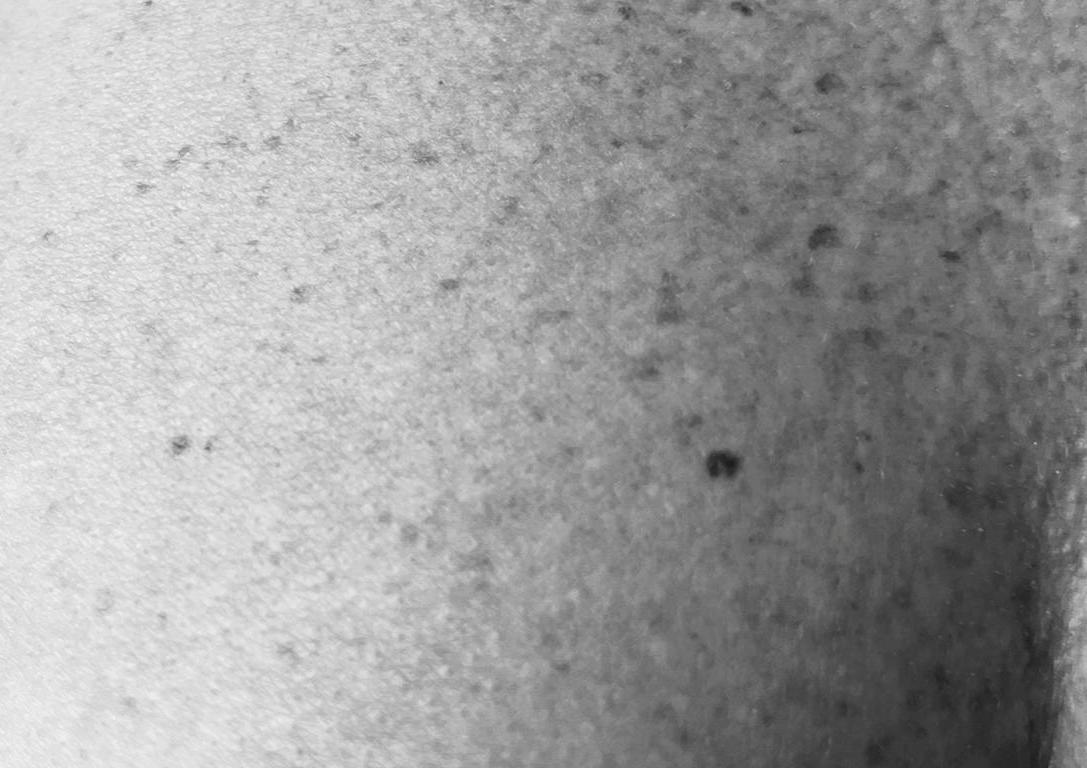
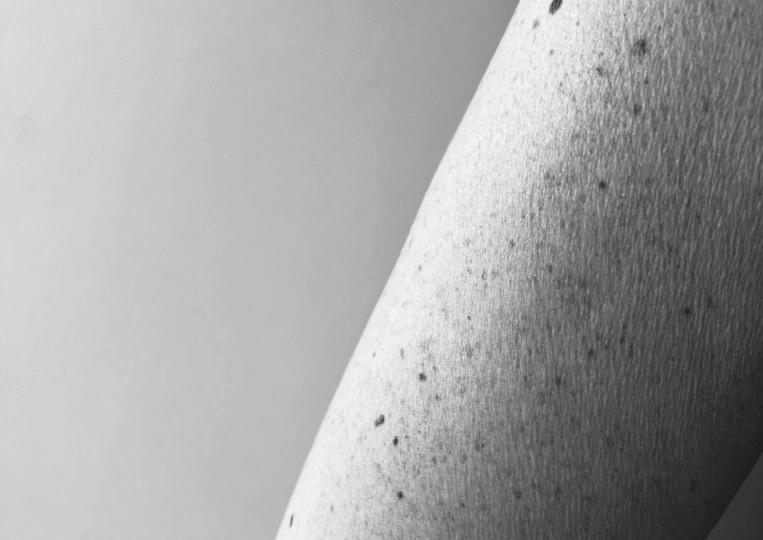
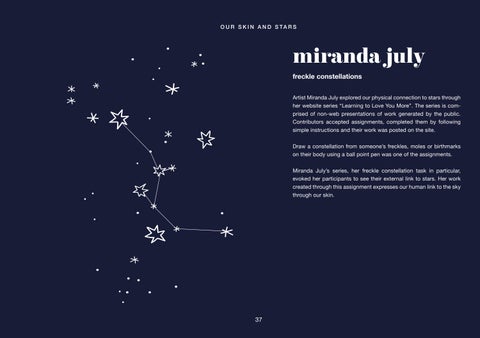
Artist Miranda July explored our physical connection to stars through her website series “Learning to Love You More”. The series is comprised of non-web presentations of work generated by the public. Contributors accepted assignments, completed them by following simple instructions and their work was posted on the site.

Draw a constellation from someone’s freckles, moles or birthmarks on their body using a ball point pen was one of the assignments.

Miranda July’s series, her freckle constellation task in particular, evoked her participants to see their external link to stars. Her work created through this assignment expresses our human link to the sky through our skin.

37
OUR SKIN AND STARS

the human body

With so much superstition around humans and the universe, it is unbeknownst to most that we are very harmoniously connected to stars also internally.

There are billions of people on our Earth that all come from different areas, yet everyone shares a common heritage: we are all made from the same elements.

what elements are we made of?

THE HUMAN BODY 45
65%
0.4%
1.0%
46 oxygen
carbon 9.5%
nitrogen hydrogen calcium 1.5% phosphorus 1.0% potassium sulphur sodium chlorine magnesium 0.4% 0.3% 0.2% 0.2% 0.1%
65%
18.5%
3.2%

THE HUMAN BODY

our dna

elements in the body

Chemical elements are the building blocks of life. Our DNA is approximately 99% comprised of just six elements: oxygen, hydrogen, nitrogen, carbon, calcium and phosphorus. Another five elements make up about 1.2% of the rest of the mass and the remaining 0.15% of the human body is comprised of trace elements which are of small concentration within the body.

Although the elements are the same, the percentages differ between stars and humans. For example humans are 65% oxygen and yet oxygen makes up less than 1% of elements measured in space.

how did the elements form?

The hydrogen atoms in us were produced during the Big Bang. The carbon, nitrogen and oxygen atoms were made in burning stars and very heavy elements in us were made in exploding stars.

47

a stars life cycle

Stars have a life cycle, just like people do: they are born, grow, change over time, and eventually grow old and die. Most stars change in size, colour, and class at least once in their lifetime.

Scientists believe that the universe started about 13 or 14 billion years ago, with the Big Bang. At that point in time only the lightest elements existed, such as hydrogen, helium and minuscule amounts of lithium. The first generation of stars formed from this material.

what are the five stages of an average star?

A STARS LIFE CYCLE 53

stellar nebula

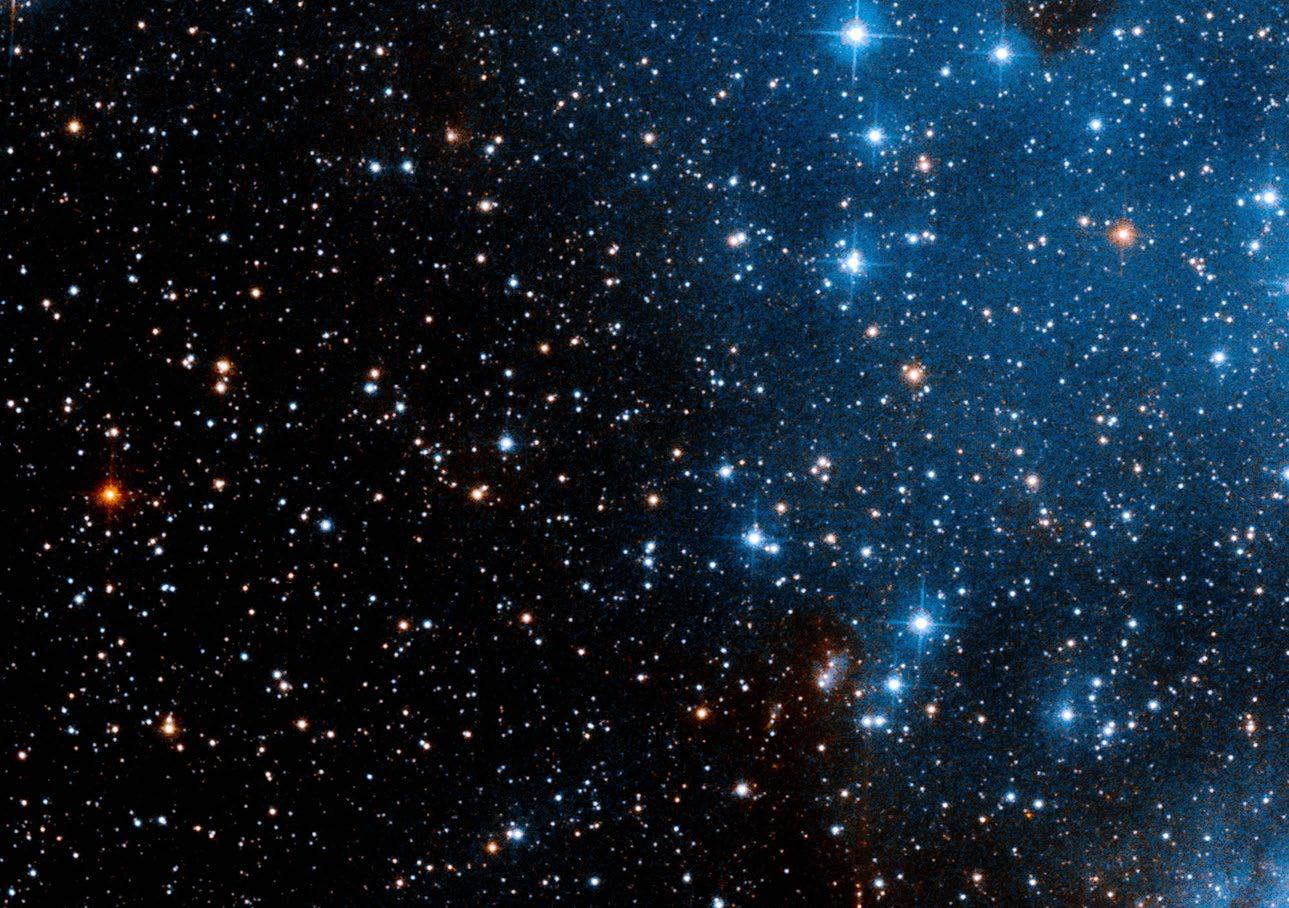
All stars begin life in the exact same way. A cloud of dust and gas, also known as the stellar nebula. The nebula eventually collapses under its own gravity, forming a heated core which becomes a star.

54
01

average star

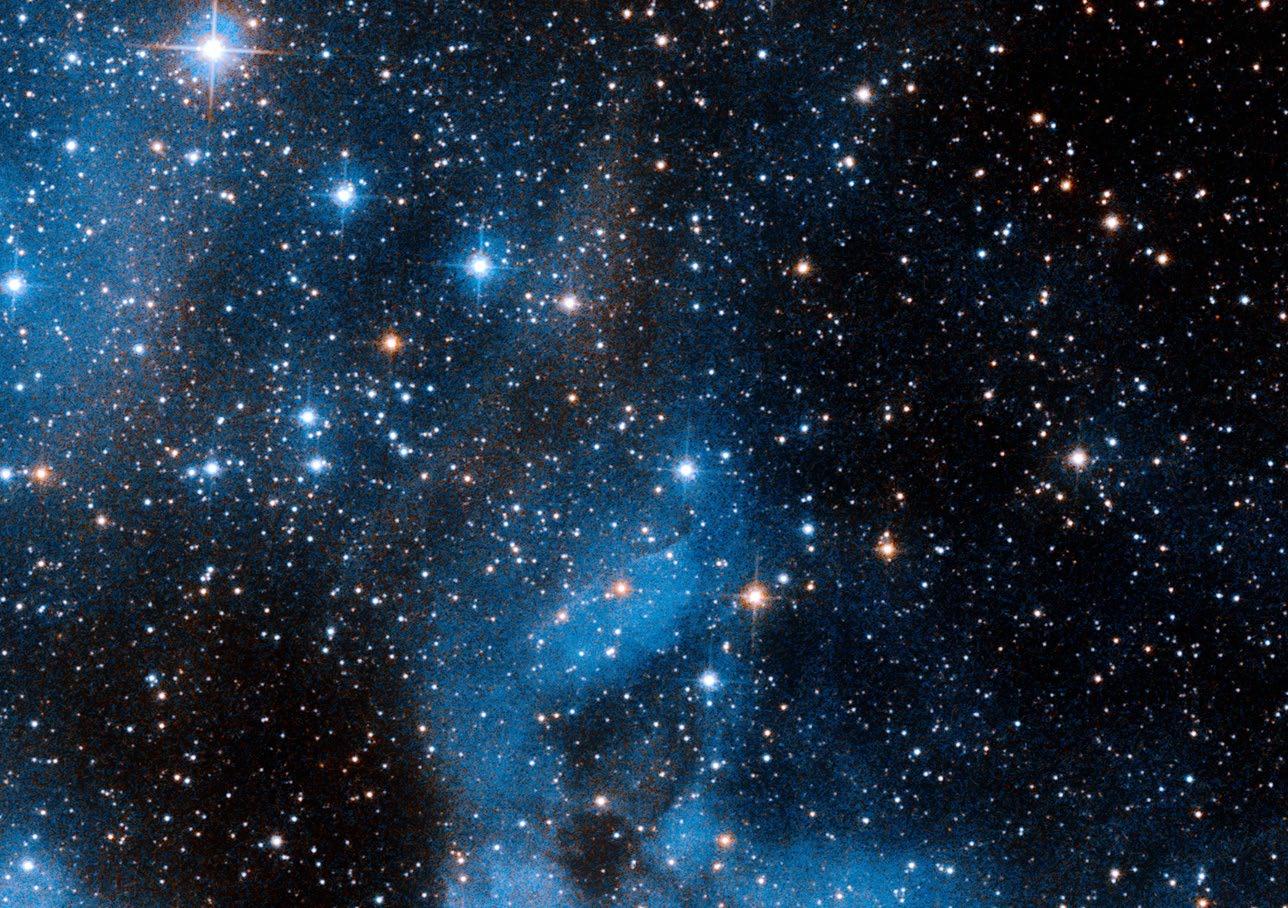
Stars can be stable for some time on the main sequence. How long they remain stable depends on their mass. Bigger stars will burn out faster, whilst tiny stars can last up until 100 billion years. Stars develop in different ways depending on their size.

02
55 A STARS LIFE CYCLE

red giant

As the star goes into the later stages of its life cycle, it turns into a Red Giant as its hydrogen core is completely converted into helium. This loss of fuel in the core results in expansion by up to 1000 times.

56
03

planetary nebula

When a star has no energy left and is close to dying, it begins losing layers and becomes a planetary nebula. This consists of a cloud of gas and dust. There are around 10,000 planetary nebulas in the galaxy.

04
57 A STARS LIFE CYCLE

white dwarf

White dwarves are dead stars that have run out of fuel. Although they release little to no energy, they still shine and spend billions of years cooling down. Eventually, it will cool and fade from view.

05
58
- Dr Ashley King
59 A STARS LIFE CYCLE
It is totally 100% true: nearly all elements in the human body were made in a star and many have come through several supernovas.

stardust

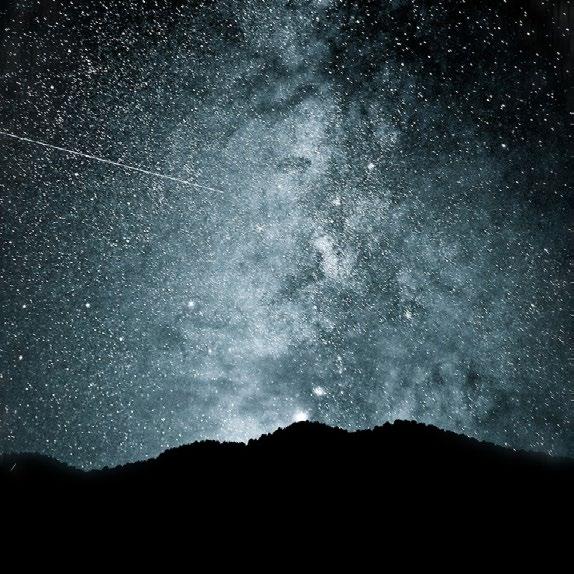
Humans being made of stardust is deemed a myth by most.

The fact we are very intimately connected with the rest of the universe is very true, and in a very practical way. Most of the atoms in our body were formed inside of stars, supernovae, and neutron star collisions. These atoms created during these cycles have a name, stardust.

are we really stardust?

63 STARDUST
margaret burbidge (1919-2020)

margaret burbidge

astrophysicist

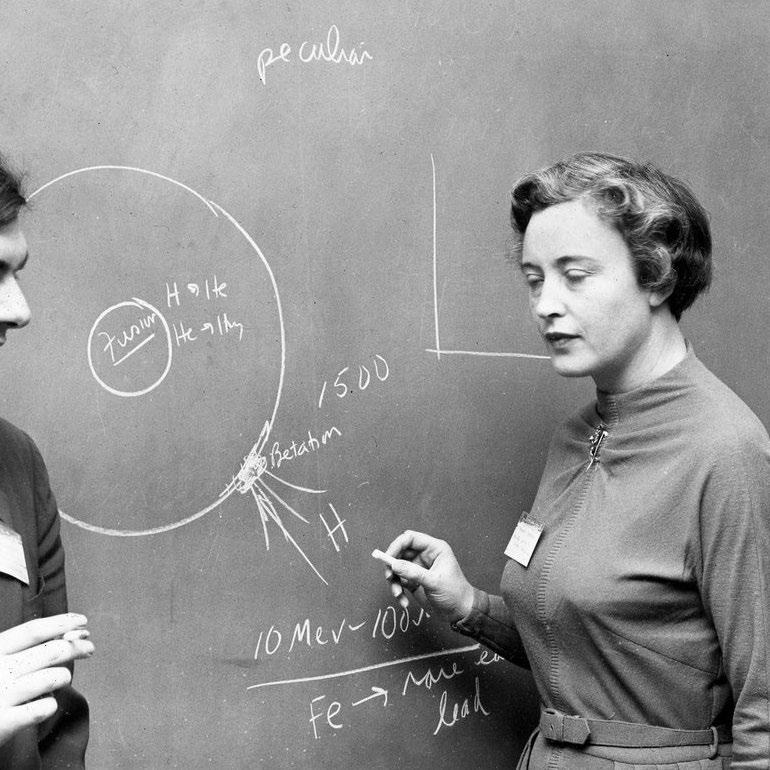
Margaret Burbidge was a self-described “watcher of the skies” whose research shed light on distant galaxies, mysterious quasars and the origins of chemical elements, which helped to explain how humans are made of stardust.

Burbidge wrote a kind of celestial cookbook, working with three co-authors to demonstrate how chemical elements like carbon and oxygen are formed inside stars, where thermonuclear reactions produce heavier elements from lighter ones.

This book was considered one of the most influential papers in astrophysics, the 1957 article formed the basis of a widely accepted theory for the origin of chemical elements, with a striking implication. As her collaborator William Fowler put it: “All of us are truly and literally a little bit of stardust.”

65
STARDUST

stardust photography

stardust

how are we made of it?

When stars go through their life cycle (p46-55) and eventually die, all the elements that had been generated inside get swept out into space. The next generation of stars form from those elements, burn, die and are again swept out.

This constant reprocessing creates different combinations of elements which makes different species of gas, minerals, and bigger things like asteroids. From asteroids you can start making planets and then you start to make water and other ingredients required for life and then, eventually, us.

So every atom of oxygen in our lungs, of carbon in our muscles, of iron in our blood was created inside a star before Earth was born.

“We are not figuratively, but literally stardust.”

“We are stardust brought to life, then empowered by the universe to figure itself out.” - Neil deGrasse Tyson.

67 STARDUST
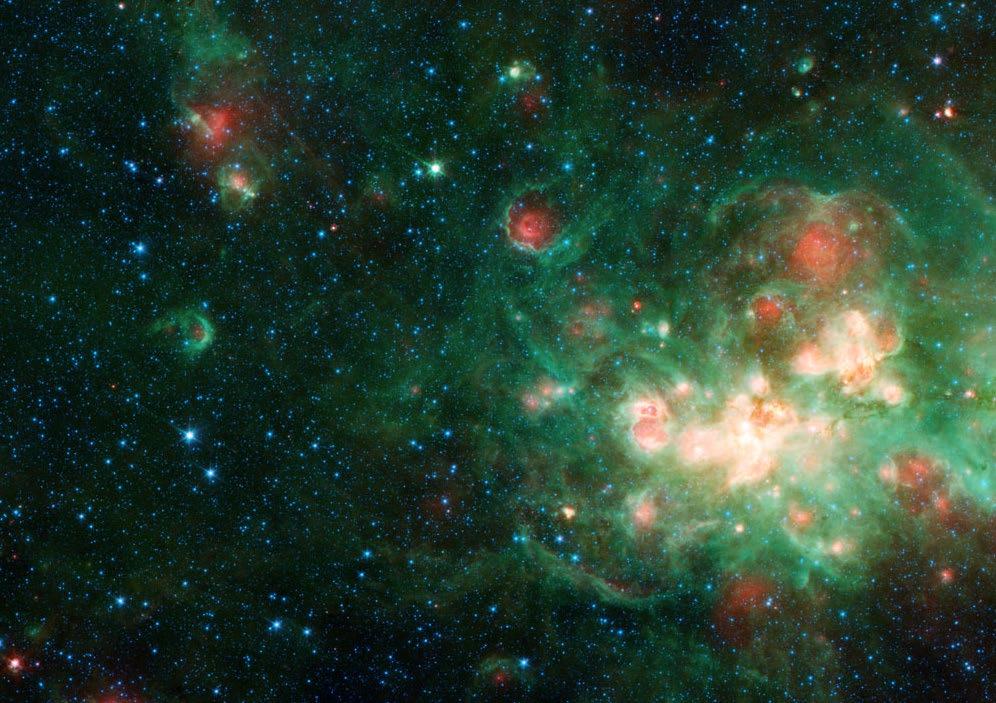
this
is us
references

Griffin, A. (2023) Astonishing new NASA image shows stars and planets as they form, Independent Digital News and Media.

Available at: https://www.independent.co.uk/space/nasa-jwst-james-webbspace-telescope-cloud-stars-planets-b2260457.html

(Accessed: April 20, 2023). (P8.9)

Marzolino (2016) Antique Illustration Of Celestial Planisphere, Pinterest.

Available at: https://www.pinterest.co.uk/pin/107523509832327281/

(Accessed: April 19, 2023) (P14)

Little town of Bethlehem, Carol Sheli Cantrell (no date), Fine Art America.

Available at: https://fineartamerica.com/featured/o-little-town-of-bethlehemcarol-sheli-cantrell.html?product=art-print&epik

(Accessed: April 19, 2023) (P16)

What’s a shooting star? space for life (no date), Espace Pour La Vie.

Available at: https://espacepourlavie.ca/en/what-shooting-star

(Accessed: April 19, 2023) (P18)

Garner, R. (2020) Hubble stows a pocketful of stars, NASA.

Available at: https://www.nasa.gov/image-feature/goddard/2020/hubblestows-a-pocketful-of-stars

(Accessed: April 20, 2023) (P21)

Hille, K. (2018) Hubble’s frenzy of stars, NASA. Available at: https://www.nasa.gov/image-feature/goddard/2018/hubblesfrenzy-of-stars

(Accessed: April 20, 2023) (P23)

Hille, K. (2016) Hubble spotlight on irregular galaxy, NASA.

Available at: https://www.nasa.gov/image-feature/goddard/2016/hubblespotlight-on-irregular-galaxy-ic-3583

(Accessed: April 20, 2023) (P25)

Seasons-In-Hell (no date) All things wicked start from innocence

Photo, Tumblr.

Available at: https://seasons-in-hell.tumblr.com/image/134325586454

(Accessed: April 19, 2023) (P30)

July, M. (2002) Learning to love you, Learning To Love You More.

Available at: http://learningtoloveyoumore.com/

(Accessed: April 19, 2023) (P32.33)

Gianopoulos, A. (2022) Hubble spies emission nebula-star cluster duo, NASA.

Available at: https://www.nasa.gov/image-feature/goddard/2022/hubblespies-emission-nebula-star-cluster-duo

(Accessed: April 21, 2023) (P44.45)

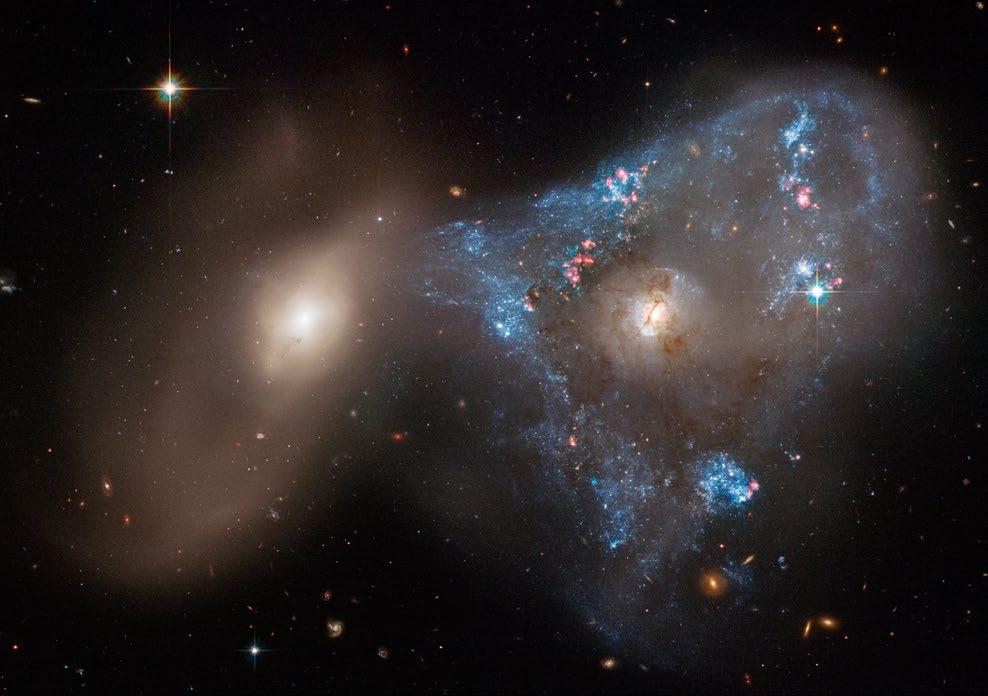
Gianopoulos, A. (2022) Galaxy collision creates ‘Space Triangle’ in new Hubble Image, NASA.

Available at: https://www.nasa.gov/image-feature/goddard/2022/galaxycollision-creates-space-triangle-in-new-hubble-image

(Accessed: April 20, 2023) (P55)

Greicius, T. (2020) Where are stars made? NASA.

70

Available at: https://www.nasa.gov/feature/jpl/where-are-stars-made-nasasspitzer-spies-a-hot-spot

(Accessed: April 20, 2023) (P60.61)

Dearwester, T (2019) Photo by Tony Dearwester on unsplash, Beautiful Free Images & Pictures.

Available at: https://unsplash.com/photos/s2HFSEfOilA

(Accessed: April 4, 2023) (P62)

Smith, H. (2020) Remembering Margaret Burbidge, the pioneering astrophysicist showed we are made of Stardust, The Independent.

Available at: https://www.independent.co.uk/news/obituaries/margaretburbidge-death-astrophysicist-astronomer-elements-stardust-agecause-a9465221.html

(Accessed: April 21, 2023) (P62.63)

71
mia matthews @miapm.art
Turn static files into dynamic content formats.

Create a flipbook
Issuu converts static files into: digital portfolios, online yearbooks, online catalogs, digital photo albums and more. Sign up and create your flipbook.
97% 2/2 by miamatthews - Issuu