IMPACT REPORT




As employers begin to call their workforce back to the office, the empowered post-pandemic worker is using their newfound leverage to call for the permanent implementation of the hybrid work model and other demands. Since this negotiation process is still in the initial phase, its not clear what new employment standards will emerge. However, experts agree that change must come from both employers and employees. While companies were initially resistant to remote work schemes due to fear of decreased productivity, the pandemic demonstrated that these models were not only possible but effective. At the same time, workers saw a significant impact in mental health as a result of prolonged isolation, which also hindered employees’ sense of belonging to their companies.
Assimilating employee values and offering added-value learning opportunities, especially in digital and technology tools, will significantly facilitate employers’ ability to retain and attract talent. Preparing and upskilling the workforce in the age of digitalization is particularly important considering the foreseeable disruption robots, automation and AI technologies will have across the economy.
At Mexico Talent Forum 2021, industry leaders highlighted the central role that employer-employee communication will play in articulating postpandemic work standards and expectations. Based on this feedback, recruitment officers are working to coalesce worker values with company objectives, looking into upskilling and training the workforce for to embrace Industry 4.0 and other disruptors. As the premier even in the human resources and talent sector, Mexico Talent Forum 2021 provided an ideal space for key decision-makers to share their perspective and build a discussion around the latest trends affecting all industries and sectors of the Mexican economy.
121 companies
342 conference participants
52 speakers
8 sponsors
4,816 visitors to the conference website
Mexico’s leading B2B conference organizer introduces the world’s leading event networking platform.
Breakdown
20,000 direct impressions during MTF
direct pre-conference LinkedIn impressions 2.5% click through rate during MTF 2.71% pre-conference click through rate 5.1% conference engagement rate
pre-conference engagement rate

Delivering intent-based matchmaking powered by Artificial Intelligence that connects the right people. n etwork, no matter where you are.
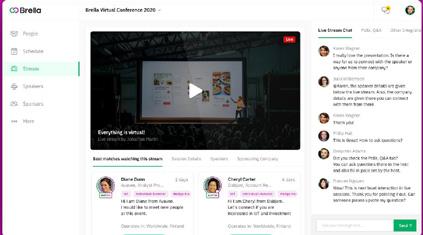


193 participants
Matchmaking intentions
993
1,314
• A2B Skin Care
• Ace oil Tools
• Adevinta
• AhKimPech
• Albanesi Tech Legal Consulting
• Alegre, Calderón y Márquez Abogados
• Alfonso
• ALLVP
• AMAVe
• Amazon
• Angel Ventures
• Ao LM
• Ap
• Arcus
• Aruba, a Hewlett-Packard enterprise Company
• ASCen CIo Ce
• AS e SAro
• Asesoriaenfarmacias.com
• ASo Fo M
• ATCo energia
• Atradius Trade Credit Insurance
• Ausnutria n utrition
• Axios International
• Axon Interconex
• Banco de Mexico
• Becerril, Coca & Becerril
• Belimo Aircontrols (USA), Inc.
• Boeki Logistics
• Brella
• Briq.mx
• C&A Mexico
• Cámara n órdica de Comercio en México
• CAn IFAr MA
• Cardinal Health
• CHG-M erIDIAn M e XICo
• CIMM y T
• Circutor
• Climate Bonds Initiative
• CMV r&r Partners
• Cobroamericas
• Colegio de Ingenieros de Minas, Metalurgistas y Geólogos de México
• Commerce Mind
• Conekta
• Cornershop by Uber
• Cuéntame
• D e SCIFr A
• DHL
• D nV GL
• Dostavista Mexico
• Dow Mexico
• Dynatrace
• embassy of Canada in Mexico
- o ntario Government
• embassy of Italy
• energy to Market
• eolis
• eppendorf do Brasil
• ePSCon
• e xpat&Co
• e xpediente Azul
• e xport Development Canada
• e xterran
• F5
• Falabella
• FeMIA
• Finerio
• Finnu
• Fintonic
• Ford Mexico
• Forte Innovation Consulting
• FrontierView
• Galileo
• General electric
• Genesys
• Genpact
• Global Business Inc
• Global Health Intelligence
• GPTW
• GreenID
• Grupo Casgo
• Grupo Comercial Chedraui
• Grupo GoCA
• Grupo roales
• Grupo Samaredi
• HAM oC
• Heerema Marine Contractors
• Hellmann Worldwide Logistics
• HKS Architects
• Holland House Mexico
• Honeywell
• Huawei Technologies de Mexico
• Humanologo
• Iberdrola México
• ICAn
• ICM
• Instituto nacional de Ciencias Médicas y n utrición Salvador Zubirán
• Intel
• International rescue Committee
• iPS - Powerful People
• IVeMSA
• Jüsto
• Kannbal Consulting
• Kaspersky
• KIA
• Kiewit
• Kikoya
• Klustera
• Konfío
• KPMG
• Lalamove
• Lana
• Laserline Inc.
• LAVArTe X
• Lavartex
• Len D er A crowdleasing
• Luxottica
• MB e
• M eDICe Arzneimittel Pütter
• Mergermarket
• Metabase Q
• Mexico Business
• Mitsui
• Mitsui & Co Power Americas
• Mobility ADo
• MountX real e state Capital
• Mureni
• nautechMX
• naviera Integral
• nissan Mexicana
• n LinBusiness
• nodes.com
• n orthland Power energia
• n u México
• n ubank
• oleum energy
• o LIVAre S
• o ntario Government
• o play Digital
• oS City
• PAe Global
• Partem Projects
• Pearson
• PharmAdvice
• Polymath Ventures
• Pragmatec
• Prana Power
• Pretmex
• Prosegur Security México
• QbD México
• Quartux
• r AMA MAnTen IMI enTo I n DUSTrIAL ToTAL
• rappi
• rappi Pay
• reFLy
• relyo n n utec
• rer energy Group
• rising Farms
• r M Pharma Specialists
• rockwell Automation
• S2G energy
• SAFeLI n K
• Salud Facil
• San Luis Potosi City Council
• SAP
• Sartorius
• Scania
• Servicio Geológico Mexicano
• Siebtechnik Tema
• Skyhaus
• SocialDiabetes
• Someone Somewhere
• Speyside Group
• Spinto
• STorI
• Stripe
• Sulmara Mexico
• Swap
• Syneff Consult
• Syngenta
• Tecnatom
• The Adecco Group
• The Uncommon Lab
• TIBA
• TIP
• TMF Group
• Tolko Group
• Top Management Mexico
• Tr An SPLACe
• Trebol Capital
• Tridi, Manufactura Aditiva
• Truora
• Truper
• TSystems
• Uala
• UK Department for International Trade
• Union de Crédito del Soconusco
• U-Storage
• Vaisala
• Veeam
• Vera & Asociados
• Vexi. Tarjeta de Crédito
• Visa
• Von Wobeser y Sierra
• Vo PAK
• VTe X
• Walmart
• Walworth
• Wartsila
• Within3
• Wizlynx Group
• WorldWise Coaching
• yalo
• yokogawa de México
08:50 WELCOME TO MEXICO TALENT FORUM - DAY 1
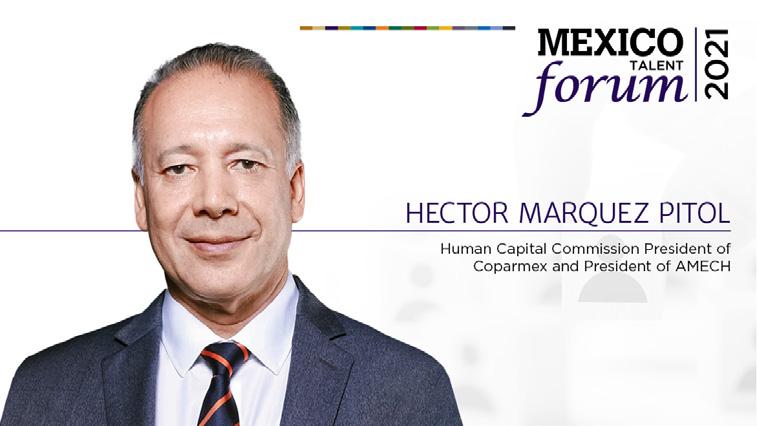
09:00 THE LABOR MARKET AFTER COVID-19
Speaker: Hector Marquez Pitol, Human Capital Commission President of Coparmex and President of AM eCH
09:30 OUTSOURCING REALITY UNDER NEW REGULATIONS
Moderator: Gustavo Linares, Founder of TalentHow
Panelists: Alberto Alesi, ManpowerGroup General Director For Mexico, Caribbean and Central America
Francisco Martinez Domene, Ceo of The Adecco Group México
Melissa Pereda Nájera, Head of Human resources of Volkswagen México
10:15 EMPLOYMENT AND USMCA: ADAPTING TO NEW CONDITIONS
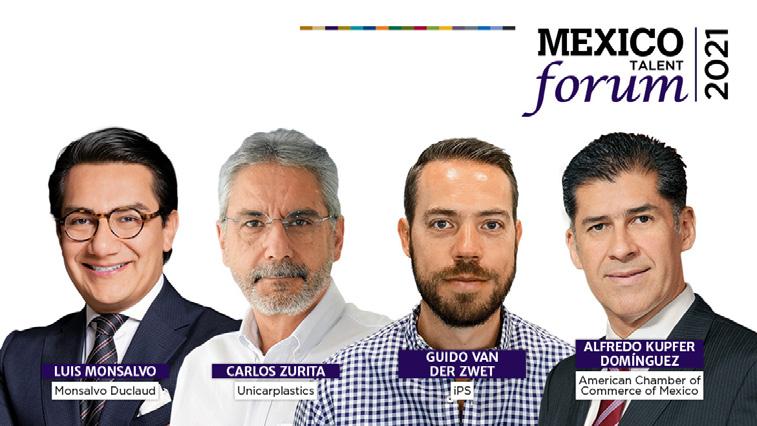
Moderator: Guido van der Zwet, General Manager of iPS Powerful People
Panelists: Alfredo Kupfer Domínguez, President of Human Capital and Labor Affairs Committee of American Chamber of Commerce of Mexico
Luis Monsalvo, Co Managing Partner and Director of Monsalvo Duclaud
Carlos Zurita, Human resources and Compliance Director of Unicarplastics
11:00 NETWORKING OPPORTUNITY - AI-POWERED 1:1 MEETINGS
12:00 TO GO BACK OR NOT TO GO BACK TO THE OFFICE?
Moderator: Wanda Sevilla, General Director of Tallent Up
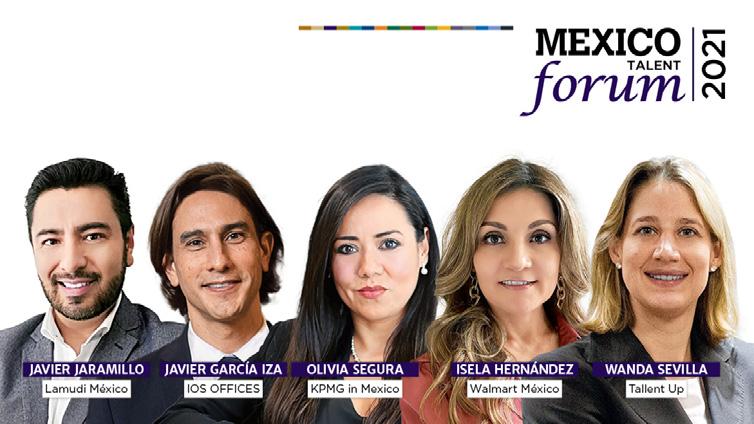
Panelists: Olivia Segura, Director People & Change|H r & Talent Management Consulting of KPMG in Mexico
Isela Hernández, VP r H of Walmart México
Javier Jaramillo, H r BP | H rSS and Compliance Manager of Lamudi México
Javier García Iza, Ceo of IoS o FFICe S
13:00 NETWORKING OPPORTUNITY - AI-POWERED 1:1 MEETINGS
13:30 PRODUCTIVITY VS. MENTAL HEALTH: IS IT POSSIBLE TO FIND A BALANCE?
Speaker: Alma Puig, Ceo of Great Place to Work
14:00 NETWORKING OPPORTUNITY - AI-POWERED 1:1 MEETINGS
15:00 RETENTION STRATEGIES AMID THE “GREAT RESIGNATION”
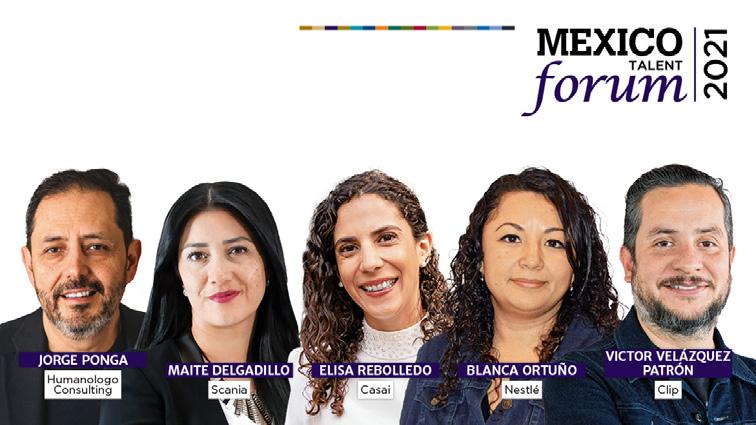
Moderator: Jorge Ponga, Partner of Humanologo Consulting
Panelist: Maite Delgadillo, H r Director of Scania
Elisa Rebolledo, Casai Mexico’s General Manager of Casai
Blanca Ruth Ortuño Pacheco, Sales H r BP Senior of n estlé
Victor Velázquez Patrón, Vice President, People & o rganization Development of Clip
16:00 THE SKILLS THAT MATTER MOST IN A POST-PANDEMIC WORLD
Moderator: Paulina Cavazos, Director People o ps of Ben & Frank
Panelist: Alejandro Zenteno, CH ro of Grupo Lala
Antonio Madrid, H r Director of Soriana
Geny Oceguera Rojas, Acting H r Head of Samsung Mexico
Sergio Arturo Arangua Quiroga, H r Country Manager for oXXo México
08:50 WELCOME TO MEXICO TALENT FORUM - DAY 2
09:00 UPSKILLING AND RESKILLING TOWARD THE FUTURE OF WORK
Speaker: Santiago Gutierrez, VP of Pearson
09:30 ARTIFICIAL INTELLIGENCE AND THE FUTURE OF RECRUITING
Moderator: Jordi Ciuro, Partner and Vice President of recruiting at Bain & Company’s Mexico City office
Panelists: Selene Diez, Ceo of Forte innovation
Pol Morral Dauvergne, Co-founder & Ceo of LaPieza.io
Maria Fernanda Miretti, Global Talent Acquisition & Do of Multiplica
Monica French, Head of new Business Hispanic America of LinkedIn Talent Solutions
10:30 THE SECRET TO HIRING INTERNATIONALLY
Speaker: Ricardo Guerra, Director Business Development of Globalization Partners
11:00 NETWORKING OPPORTUNITY - AI-POWERED 1:1 MEETINGS
12:00 AI, ROBOTS AND AUTOMATION: DISRUPTION IN THE WORKPLACE
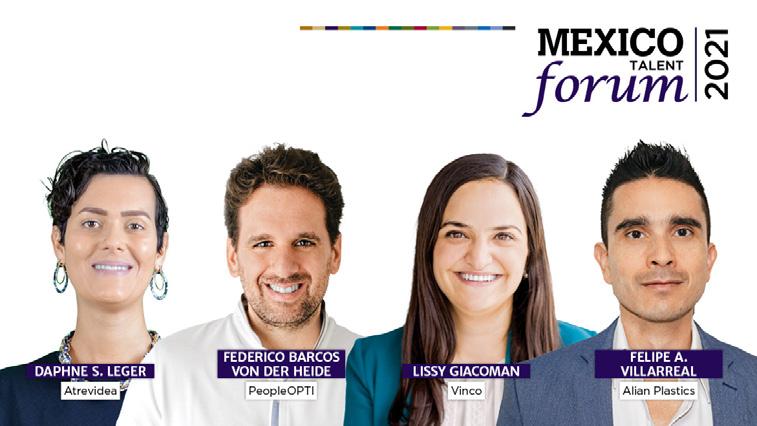
Moderator: Daphne S. Leger, Ceo & founder of Atrevidea
Panelists: Felipe A Villarreal, Ceo of Alian Plastics
Federico Barcos Von der Heide, Ceo of PeopleoPTI
Lissy Giacoman, Ceo & Co-Founder of Vinco
13:00 CAREERS, SALARIES AND THE ROLE OF MANAGERS IN THE DIGITAL AGE
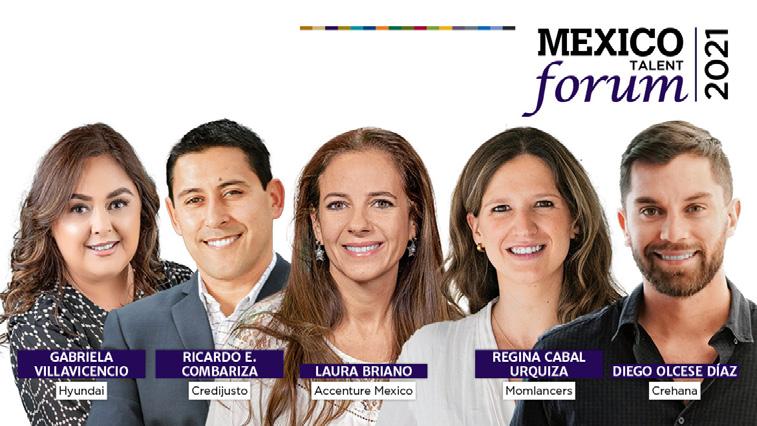
Moderator: Regina Cabal Urquiza, Co-Founder of Momlancers
Panelists: Diego Olcese Díaz, Co-founder, Ceo of Crehana
Gabriela Villavicencio, Head of Human resources and General Affairs of Hyundai Motor
Ricardo E. Combariza, People & organization Director of Credijusto
Laura Briano, Hr Service Delivery of Accenture Latin America
14:00 NETWORKING OPPORTUNITY - AI-POWERED 1:1 MEETINGS
15:00 THE MILLENNIAL TAKEOVER OF THE WORKPLACE
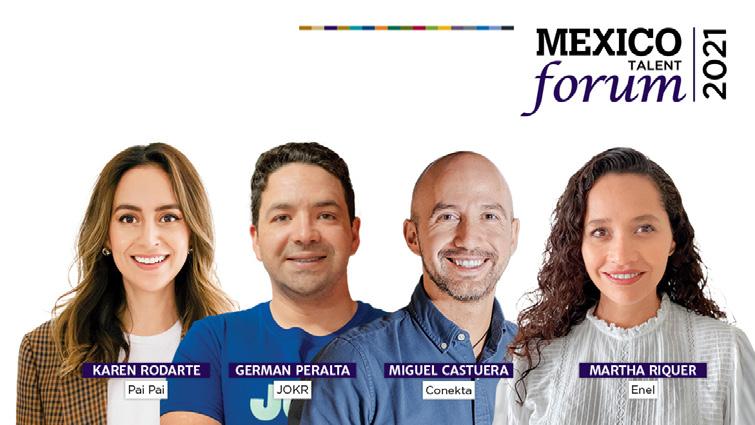
Moderator: Karen Rodarte, Business Developer and Co-Founder of Pai Pai
Panelists: Miguel Castuera, VP of People of Conekta
German Peralta, Co-founder & Ceo of JoKr in LATAM
Martha Lucia Riquer Vargas, organizational Development & Diversity of enel
15:45 PRIORITIZING MENTAL HEALTH IN MODERN WORKSPACES
Speaker: Javier Andres Cardona Mora, Co-founder & Ceo of 1DoC3
16:15 INCLUSION IN THE WORKPLACE: MAKING EVERYBODY COUNT
Moderator: Jorge Garduño Camareena, ethics and Business Integrity Manager of Sanofi México
Panelists:s Jorge Alejandro de lara, Director of American express
Denisse Cazú Dávalos, regional Director Hr LATAM Mattel Latin America
Courtney Devon McColgan, Ceo & Founder of runa
Ana López Mestre M, executive Vice President and General Director of American Chamber of Commerce of Mexico
Daniela Muñoz, Ceo of IoIo
STRENGTHENING MEXICO’S FORMAL LABOR MARKET
Since the Federal Labor Law (LFT) came into effect in 2019, it has been met with both resistance and enthusiastic support from companies in Mexico. But the reform is not the only challenge employers and employees are facing. Although the C o VID-19 pandemic cratered the labor market, it increased employer empathy prompting them to value the importance basic benefits for their employees.
Incentivized by greater support from the Federal Government, the domestic market has seen as of September 2021 an estimated 2.7 million employees migrate from outsourcing to employment with companies that offer benefits and services says Héctor Marquez Pitol, Human Capital Commission President of Coparmex and President of the Mexican Association of Human Capital Companies (AM eCH), which helped draft the legislation and has been helping business comply with its requirements over the past three years.
From n ovember 2020 to September 2021 subcontracting positions contracted by 9,000 as result to the regulatory change. This does not necessarily mean that formerly subcontracted employees are now unemployed as they could have transitioned to the informal market, which is growing explained Marquez. A comparative of
study conducted by the Mexican Institute of Social Security (IMSS) from February 2020 and August 2021 found that informal labor market has grown by 17,684 jobs, supporting this hypothesis. In contrast, formal employment has contracted by 1.2 percent, representing an absolute loss of 286,297 jobs, according to 2021’s findings from I neGI. This indicates that the formal sector has taken longer to stabilize even with an accelerated vaccination rollout.
Further analysis from IMSS found that even amidst the pandemic businesses have slowly been increasing their minimum wage. In February 2020, the wages reported to IMSS averaged at MX$12,087 (US$585) and increased by 2.6 percent in the span of ten months to MX$12,403 (US$601). This trend continued into the new year, albeit at a slower pace, from MX$13,035 (US$631) in January to MX$13,133 (US$636) by September, equivalent to a 0.75 percent increase in nine months.
Although “this change represents a new epoch in in the labor market,” according to Marquez, this increase should be examined against the growing inflation that has increased the price of goods and services across the market, which has not been an isolated event to Mexico. Although economists cannot currently predict the
progression of this matter until more variables are addressed, “the market will take [at least] another two years to stabilize from here,” said Marquez.
THE OUTSOURCING REFORM BROKE PARADIGMS
The new Labor and Tax reform, regarding outsourcing and subcontracting, is changing companies’ operations across Mexico. While the new regulations brought considerable challenges to every player involved, they opened a new range of possibilities, agreed industr y experts.
“The biggest challenge, administratively and economically, is to incorporate the formerly subcontracted personnel that work in essential processes of the companies. In the long term, it is an opportunity to increase production thanks to a higher motivated workforce. Human resources departments can take advantage of a robust onboarding process to equilibrate talent, know-how and increase productivity in the long term,” said Melissa Pereda nájera, Head of Human resources of Volkswagen de México.
Published on April 23, 2021 and being enforced gradually from April 24 to Aug. 1, 2021, the Labor and Tax r eform prohibits outsourcing as it aims to end with “the perverse effect of preventing workers from benefiting or participating in profits,” according to President Andrés Manuel López o brador, who introduced the reform in n ovember 2020. In general terms, the
outsourcing reform requires that companies hire directly all personnel needed to carry out core business activities.
Under the new legislation, it is considered outsourcing when an individual or legal entity provides or puts at the disposal its own employees for the benefit of another individual or legal entity. However, this does not mean that staffing and employment agencies are going to disappear. These companies can still intervene in the hiring process of personnel and participate in recruitment, selection and training but they will not be considered as employers, since that label is held only by the individual/entity that benefits from the services provided, according to International Tax review.
“We can still offer the subcontracting of specialized services, as long as they are not part of the core business activities of companies. o utsourcing is recognized and used across the world, including international companies operating in Mexico,” said Francisco Martínez, C eo of The Adecco Group Mexico. There are many opportunities to take advantage of the new regulation, despite it being “more restrictive” than in other countries, he added.

“It was necessary to end with bad practices. (The new r eform) will professionalize subcontracting and outsourcing, leaving only serious, formal operators that comply with law,” said Martínez.
o utsourcing of specialized services and activities that are not part of the core business activities of the beneficiary are still allowed, as long as the contractor has the registry for Providers of Specialized Services and Specialized Works (rePSe) recognized by the Ministry of Labor. Until oct. 12, 2021, there are 63,561 formally-registered contractors in Mexico, according to Héctor Marquez Pitol, Human Capital Commission President of C o PA r M e X and President of AMeCH.

“Outsourcing and subcontracting evolve and it is a matter of time for things to stabilize. Recruitment, incorporation and training is not exactly the core business activity of many companies, which will continue to contract specialized staffing agencies”
Alberto Alesi
ManpowerGroup
General Director For Mexico, Caribbean and Central America
The first two years after the enforcement of the r eform were uncertain for most players involved, according to Alberto Alesi, ManpowerGroup General Director for Mexico, Caribbean and Central America. However, companies are now required to do “thorough analyses” to define their main economic activities and smartly outsource specialized services. While companies will be forced to have larger employee workforces, with their inherent budget challenges, “outsourcing and subcontracting evolve and it is a matter of time for things to stabilize. recruitment, incorporation and training is not exactly the core business activity of many companies, which will continue to contract specialized staffing agencies,” said Alesi.
The new Labor and Tax r eform could be beneficial for Mexico but in the meantime, it
is affecting thousands especially following the pandemic, agreed industry experts. The C o VID-19 pandemic left 13 million unemployed, according to I ne GI; but between May 2020 and June 2021, 12.3 million people returned to active economic activities, according to IMSS, leaving around 650,000 still unemployed. The outsourcing reform “increased the informal employment rates as around 900,000 lost their jobs,” while “the deficit caused by the pandemic is still not recovered,” said Alesi.
Months before the r eform was enforced, IMSS identified over 5 million people subcontracted in the country. During the transition period, 2.7 million employees were incorporated in their employers payroll, while the rest could remain working under the specialized services scheme where they were already working, according to the Incorporation and Collection division of IMSS.
The first months under new regulations are the toughest for everyone involved, said Martínez: “The most affected players have been our own clients. They had to directly hire the workforce they had already subcontracted and their budgets have suffered. We adapted rapidly to the new regulations, changing our structures and service portfolio to fully comply with law. The new regulation came here to stay and contractors are forced to obtain the rePSe.”
From companies’ perspective, the reform opened opportunities toward a new work environment. The transition forced companies to be more conscious about their own needs and processes, while client-supplier relationships have been strengthened, highlighted Pereda.
Collaboration rather than Conflict
While the Labor and Tax r eform was controversial due to the negative impact to both companies and employees, most of the private sector chose to actively work with authorities to draft the law rather than fighting it through other legal resources, such as legal protection (amparo), which
was filed by at least 20 companies across the country, reported e xpansión. For instance, cosmetics company Mary Kay won judicial concessions to delay the implementation of this norm and other companies are arguing that the law’s applicability can lead to discrimination, reported MB n
The Mexican Association of Human Capital (AMeCH) initially considered the possibility of drawing on legal protection. However, AMeCH members decided to collaborate with the authorities during the process of writing the law, due to the limited solutions that legal protection offered to staffing companies and everyone involved, agreed industry experts.
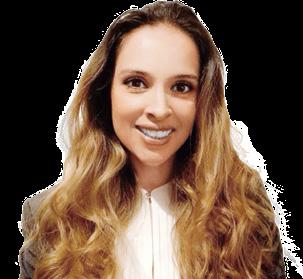
“Innovation and development of competences will grow technology startups, that will offer innovative solutions to companies”
Melissa Pereda Nájera Head of Human Resources of Volkswagen México
“This resource slows you down. A judge could protect you against the reform but everyone involved will also need the protection to legally subcontract employees. Additionally, protected companies cannot make taxdeductible bills from Aug. 1, 2021. While there were constitutional foundations to follow this path, this made absolutely no sense to us so we would rather work with authorities to address the situation in the most plural way possible,” said Alesi. The r eform, while perfectible, came to eliminate bad practices and informality, and it made “no sense” to seek legal protection rather than collaborating with legislators throughout the process, agreed Martínez.
Considering what has happened in other countries across the world, law enforcement will play a key role during the transition to
new regulations, agreed industry experts. “We hope that companies that try to play outside the regulation are prosecuted with the full force of law. Fortunately, the Ministry of Labor is opened to receive complaints in this regard,” said Alesi.
new opportunities
The Labor reform opens new opportunities toward a more automated future inside companies. “Innovation and development of competences will grow technology startups, that will offer innovative solutions to companies,” said Pereda. While it will take some time, the reform will break many paradigms in the Mexican industry.
new regulations have to be open to temporary employment, said Martínez. Temporary employment started attracting public policy attention across the world three decades ago, when it became popular, according to the International Labor organization (ILo). Under this scheme, workers are engaged only for a specific period of time, including fixed-term, project or task-based contracts, as well as seasonal or casual work, including day labor.
“With our international experience, we noticed that in countries where temporary employment is regulated, informality is dramatically reduced. For instance, when bachelor students end their studies, they have the opportunity to work temporarily in diverse companies for about two years and then decide where to stay. According to our data, 33 percent of them end up staying in one of those,” said Martínez.
Temporary employment is an area for opportunity in Mexico, said Martínez, and highlighted the benefits it could bring to companies during peak seasons, while giving interesting internship opportunities to younger generations in a regulated ecosystem.
REFORMS, USMCA FORCE EMPLOYERS TO RAPIDLY ADAPT
The USMCA led Mexico to review its labor practices to fulfill the responsibilities it agreed to. Since the US is Mexico’s largest commercial partner, compliance with the
agreement plays an important role in their relationship.
Mexico’s 2019 labor reform responds to the obligations the country agreed to when it signed the USMCA. It aims to enforce adherence to fundamental labor rights and legislation, guarantee the protection of migrant workers, promote a cooperative agenda that allows the application of fundamental labor rights and foster dialogue to address differences in the application of Chapter 23’s commitments.
“Chapter 23, Annex 23.A includes elements of regulation of labor aspects, that were firstly triggered by Mexico’s labor reform in 2019 and that incorporates ILo recommendations,” says Carlos Zurita, Human Capital Director and Compliance of Unicarplastics. The chapter seeks to improve working conditions and wages of workers in Mexico to prevent companies from Canada or the US from transferring jobs south to take advantage of Mexico’s lower wages.
The USMCA came into force on July 1, 2020 and, while it was the major force behind the labor reform, it was not the only one. “Mexico had ratified the International Labor o rganization’s (ILo) Convention 87, relating to freedom of association. During the early days of this administration the country ratified Convention 98, relating to
recognition of effective rights in collective negotiation. To acknowledge the country’s obligations, the country needed to change its practices, the federal law and the constitution,” said Luis Monsalvo Duclaud, Co-Managing Partner and Director at Monsalvo Duclaud.
Both the USMCA and the reform aim to transform labor practices through five principles: “Freedom of association, effective negotiation, elimination of forced and child labor, minimum working conditions and the establishment of autonomous labor courts.” The latter led to the creation of Federal Center for Labor Conciliation and r egistration, which aims to offer a public conciliation service to resolve labor disputes between workers and employers, individual or collective. This organization offers both parties an efficient and expeditious solution that provides certainty and legal security. The institute will be in charge of the registration of the administration agreements of the contractslaw, collective bargaining agreements and agreements related to them, internal labor regulations and union organizations and of the administrative processes related to the registration powers.
This reform “will transform the labor relationships that we know now, this will mean not only to change the law, but to change every company in Mexico,” says
Alfredo Kupfer Domínguez, President of Human Capital and Labor Affairs Committee of American Chamber of Commerce of Mexico. According to Kupfer Domínguez, the worker’s ability to unionize freely and anonymously will make them more involved and aware of their rights.
The reform also seeks to prevent violations of workers’ rights and tax evasion, the latter led to measures to regulate outsourcing. Although subcontracting labor structures were prevalent in Mexico for many years and even regulated under the former regulation, several outsourcing schemes were also used to pay less taxes and contribute less to workers’ social security. This led to tax frauds and reduced employee’s pension and compensation.

“Mexico’s labor conditions were significantly differently from international standards and the reform needs to be clearer on its deadlines so every company is able to comply”
Luis Monsalvo Job Co Managing Partner and Director of Monsalvo Duclaud
that it will constantly visit businesses to supervise their compliance with the reform.
“The overall changes on the reform are expected to increase wages in Mexico by a 17 percent but this is a gradual change that will only occur if we are able to generate better labor conditions,” warns Kupfer Domínguez. In the last three years, Mexico has experience large general wage increases, especially in cities near the Mexico-US border, which has significant costs for companies, he added.
Increasing the minimum wage is positive but it pressures companies, said Zurita. “The minimum wage must be agreed with the business sector so that increases are measured and calculated and do not to cause a strong impact. Hand on hand with this increase, the government should encourage business growth and job retention with an accompaniment in production and generation of wealth.”
“ o utsourcing has been associated with dirty practices like reducing salaries and preventing payments, even wage theft. However, there are many outsourcing companies that follow the rules and pay well, including benefits,” said Guido van der Zwet, General Manager of IPS Powerful People. The “prohibitive” approach to outsourcing reflected in recent regulatory changes can be too radical considering the number of contracts managed through those means, he added.
The reform still lacks of clarity. “Mexico’s labor conditions were significantly differently from international standards and the reform needs to be clearer on its deadlines so every company is able to comply,” says Monsalvo. Immediate compliance is utterly important to companies because the Ministry of Labor and Social Prevision (STPS) announced
The sector that is dealing with these labor reforms more strongly is the automotive industry. earlier this year, the US announced the conclusion of the labor complaint that reviewed whether workers at a General Motors facility in Silao, Guanajuato, were being denied their freedom of association and collective bargaining rights.
Workers at a General Motors plant in Silao, Mexico, voted on the approval of their existing collective bargaining agreement under free and democratic conditions after the US requested a review on May 12, 2021. Complying with USMCA’s commitments during remediation, workers voted in August to reject their collective agreement. Inspectors from the Ministry of Labor and Social Welfare (STPS) supervised voting, while I ne and International Labor o rganization representatives worked as observers. STPS later confirmed the voting results. The US Trade representative (UST r) Katherine Tai and Labor Minister Marty Walsh noted the “successful conclusion” of the first labor complaint under the r apid r esponse Mechanism (rr M) of USMCA.
BEFORE THE OFFICE, THE ME ETING ROOM
The CoVID-19 pandemic may have turned the former work model on its head but that does not mean that returning to the office needs to be a dreadful experience. To ensure the smooth transition to the office, employers must have a frank dialogue with employees to avoid resignations, maintain a high morale and increase pro ductivity.
Companies have had the technology to work from home for over a decade now but employers widely resisted the hybrid work model thinking it would compromise productivity. The C o VID-19 pandemic demonstrated that this model is not only possible; it is more efficient and “the best of both worlds,” said Javier García Iza, C eo of I oS o ffices.
This model underlines that returning to the office does not need to be a binary choice. Just as there are perceived drawbacks to working in an office there are also great benefits such as greater concentration, a more cohesive work culture and a faster exchange of ideas needed to drive innovation. Likewise, working from home can be distracting, lead to longer work hours and introduce some inefficiencies. The key component is the individual employee. As demonstrated repeatedly from multiple surveys, some individuals thrive better in office spaces, some at home
and the majority have been looking for a combination of the two.
To retain their employees for this new post-pandemic phase, companies need to address the driving concern of the Great r esignation: a perceived loss of personal freedom, said o livia Segura o rtiz, Director People & Change and H r & Talent Management Consulting of KPMG. The pandemic allowed people to refocus their priorities and have time for themselves, which had previously been an afterthought stamped out by the daily routine. Lockdowns helped employees avoid hour-long commutes, gave them more time with their families and allowed them to build their work schedules around th eir needs.
In practice, bringing employees back requires companies to sit down with their workforce to address the concerns they have about returning to the workplace. o nce both parties come to an agreement, employers must clearly outline standards and expectations for their employees to avoid misunderstandings, said Javier Jaramillo, H r BP & H r SS and Compliance Manager of Lamudi. Beyond this, companies need to develop a framework to implement the changes or requests made on behalf of the employees, added Segura.
Addressing employee concerns is central to developing a healthy company culture in which employees feel valued, which in turn adds to productivity and retainment, said Isela Hernández, Vice President of Human r esources of Walmart México. Moreover, companies should be weary of implementing generalized solutions, what makes one employee productive and efficient will not be the same for everyone else. Consequently, employers should anticipate variations of their work model within their office space which will require added communication on behalf of employers. This cycle should be cyclical and flexible to environmental changes, situational needs and performance.
This change in no way should be perceived as an added expenditure because companies stand to benefit from a more productive, healthier and more engaged workforce. Furthermore, companies can depersonalize and downsize office spaces and reduce the high running costs of underutilized spaces and el ectricity.
The former work model may be dead but that does not mean that returning to office needs to be a singular binary choice. Sustained intercommunication between employers and employees should be central to the development of hybrid wo rk models.
BALANCING PRODUCTIVITY, MENTAL HEALTH
Mental health had been increasingly recognized as a critical success factor for companies and the pandemic only highlighted its relevance in the workplace. The complete overhaul of work modalities is forcing companies to revolutionize their approach to employee mental health.
“To date, companies are finding themselves in a new era in which both collaborators and employers have different expectations,” says Alma r osa Puig, C eo of Great Place to Work.

“Employees may be working relentlessly amid economic uncertainty with few social outlets, and possibly juggling childcare to boot, eviscerating any separation between work and the rest of their life”
it on an occasional basis. “In organizations, leaders failed to thrust employees,” said Puig.
Working from home was one of the largest shifts during the pandemic and, while cases dwindle, companies continue feeling its effects. In the new era, employees proved they could be productive regardless of the setting. In o ctober 2020, 40 percent of organizations in Mexico had reported an increase in labor efficiency while labor productivity increased by 28 percent, according to Puig. “As a result, today over 64 percent of employees work more flexible hours.”
Alma Puig CEO of
Great Place to Work
While all jobs require a diverse and often specialized set of skills, in recent years companies have been paying increasing attention to “soft skills” derived from emotional intelligence. In 2020, working from home was only available at less than 19 percent of companies, which only offered
However, the pandemic severely impacted employee mental health in different ways. “ e mployees may be working relentlessly amid economic uncertainty with few social outlets, and possibly juggling childcare to boot, eviscerating any separation between work and the rest of their life,” said the American Physiological Association.
By May 2021, only 18 percent of organizations in Mexico reported increases in efficiency. “ e mployees had already reached an efficiency peak and no attempt was made to find new channels of efficiency,” explained Puig. Work stress in Mexico increased after a year of pandemic by 8.1 percent because the
working day increased by an average of 2.5 hours, adding other fears such as potential unemployment. Also, over 56 percent of employees in Mexico reported burn out due to the confinement and intra-family violence, which affected their performance.
“To date, one in four people have mental health problems, 75 percent of employees feel socially isolated and anxiety levels have increased by 57 percent,” exposes Puig.
The U n , PAH o and IL o responded to this rapid working shift and its impact on mental health with the paper “Managing Work- r elated Psychosocial r isks During the C o VID-19 Pandemic.” It explains that for employees to feel and be fully present at work, their working conditions must guarantee a good environment and work team and a balance workload and schedule. Their job environment should also be free of violence and harassment, offer a balance between work and personal life, provide job security and provide communication, information and training. The report highlights that social and psychological support are fundamental for employees.
Lacking these spaces “would damage the company,” said Puig. She explained that Good Place to Work communicates that “good mental health allows one to be more productive.” The emotions that paralyze the brain the most are uncertainty, anxiety and fear, which have been among most common feelings during the pandemic, according to the CDC. In comparison, happy employees increase their productivity at work by 13 percent, explains Puig. Moreover, according to WH o, every US$1 invested in prevention programs generate US$4 return. “The organization’s contribution to mental health strengthens the employee’s commitment,” said Puig.
Good Pace to Work has identified that employees are now demanding technical and human skills. “There is also a demand for more transparency in organizations to reduce and avoid social tension,” said Puig. employees demand greater flexibility and
work autonomy, which is one of the most fundamental calls to action for companies and will remain in future working conditions. “A stronger focus on the health and physical, mental and emotional well-being of the employee is also one of the most vocal demands,” said Puig.
The new competencies that will make a difference when recruiting are flexibility and the ability to adapt to change quickly. “In the past, we would not see companies worrying about emotional intelligence or focusing on emotional agility and social connection. n ow, this is a core competence,” said Puig.
Technology is playing a large role in the redefinition of workspaces. For employees and employees, technology has changed the working modality. Accelerated automation will allow employees to evolve their skills and now a combination of human and AI skills to solve problems is required, Puig explained. “ o rganizations should seek customized solutions and agile operating models, which can only be obtained through technology.”
Looking Ahead
Companies are also behind on diversity and inclusion. The pandemic evidenced how women are still taking the biggest share of domestic work. Looking ahead, companies should integrate women on leadership positions, provide more flexibility and offer equal parental leaves for men and women, said Puig. The future calls for a digital wellness environment where collaborators balance work and private life through technology. “This has to be based on trust and the perfect example for this is working from home; tech has propelled it, but is only possible by trusting employees,” said Puig.
Great Place to Work promotes a personcentric model because competencies are changing and companies need talent that learns and applies new skills rapidly. “ o rganizations will be responsible for designing a workplace that cultivates learning and mental health.”
THE HYBRID MODEL ALONE FALLS SHORT
The Great r esignation, an ongoing phenomenon that began in information economies like the US, is projected to make its way to Mexico. Based on the observed consequences companies should be prepared to meet the demands of the post-pandemic worker. But is a flexible work schedule sufficient to retain them? Human resource experts argue that companies should strive towards a motivation-driven, hybrid work model.
The Mexican market may have 14 million unemployed people, argues Jorge Ponga, Partner at Humanologo Consulting, but Mexico will not be exempt from the great resignation, warned Blanca r uth o rtuño, Sales H r BP Senior of n estlé. The postpandemic worker is characterized by a newfound autonomy and disposition to preserve their safety, demand fair compensation and maintain a healthy worklife balance—even at the expense of their job or career. Moreover, while the employee has changed, the standards under which they are expected to perform have not, and this is the underlying problem driving the great resignation.
This ongoing phenomenon has signaled to employers that the singular remunerative incentive and the traditional top-down work model is outdated. From here on
out, companies will have to put in effort to communicate and identify how they can add value and impart a sense of shared purpose, also known as the “emotional salary,” said Maite Delgadillo, Hr Director at Scania. When employees feel like companies have gone out of their way to accommodate their needs and ambitions, they reciprocate when the company needs them, argued Delgadillo. This is all about proportional give and take that is rooted from “communication. Without this, not even the best ideas would work,” she said.
International companies already know that they must strategically approach their target markets, so “why not employ that mindset towards employees?” said Victor Velázquez Patrón, Vice President, People & organization Development of Clip. The task from here is to formulate and incorporate conditions that add to career development and growth. Pragmatic solutions include training and education programs that expand worker skills, which also adds to the value and effectiveness of the company.
Businesses should stay clear of generalized solutions, said e lisa r ebolledo, Mexico’s General Manager of Casai. Company teams and individuals will require different amounts of support and work flexibility depending on their international function and life context. Ultimately, she said,
individuals would be free to work in the manner that works best for them so long as the deliver results, a model that many applicants at Casai have found agreeable. This flexibility is especially pertinent for new parents, single parents and caretakers that have added labor obligations outside of work. “This understanding demonstrates a sense of humanity and it works,” she added.
“People don’t leave companies, they leave experiences,” said o rtuño. If a company has experienced an unusually high turnover rate, it may be time reassess the current work environment, she said. This requires businesses leaders to be honest with themselves and learn from their staff,
which will lead to a great diversity of ideas that will enrich innovation and ensure permanence. “ you can get defensive or you can learn,” she said.
To avoid the loss of experienced personnel, which will undoubtedly have a salient impact on the companies’ operational performance and bottom line, employers must open a direct line of communication with their employees. Communication should be followed with analysis and the development of strategic value-added incentives that will vary from individual to individual. Instead of viewing the great resignation as an inevitable phenomenon, companies should pivot to reinvent themselves.
THE POST-PANDEMIC WORLD REQUIRES NEW SET OF SKILLS
Technology has been gradually changing people’s personal lifestyles and approach to their jobs but the C oVID-19 pandemic accelerated these changes. employers are looking for a new combination of soft and hard skills in candidates across all economic sectors, agreed experts.
“ everything is changing rapidly. The train is going too fast and if you do not catch it when you have the opportunity, you will not understand the new realities. n ew technologies have changed both companies and candidates. We have to catch the train with the necessary skills to play with the new
professional rules,” said Alejandro Zenteno Sánchez, CH ro of G rupo Lala.
Automation and the exploitation of digital technologies have been key factors driving companies’ operations. Advances in robotics and AI enable the automation of a greater range of tasks in industries across the world but human capital remains an essential factor. e xpectations of candidates and companies have dramatically changed during the last two years, said Paulina Cavazos, Director People ops of Ben & Frank, with companies looking for new skills that go beyond the technical ability to perform a job.
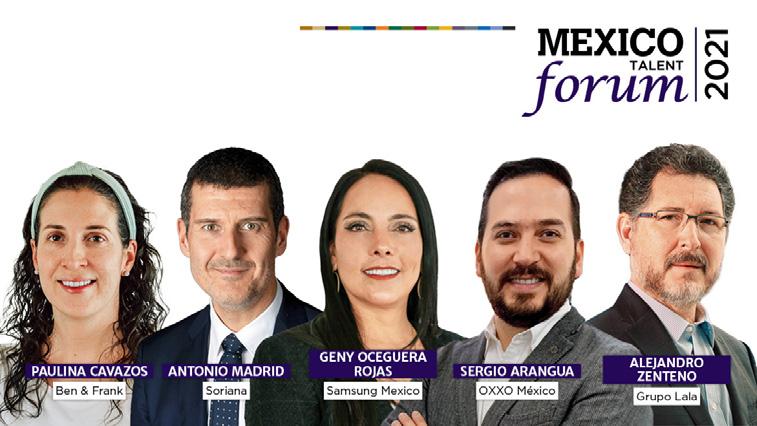
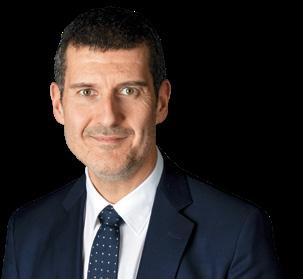
The pandemic required new solutions in companies, which needed collaborators that were able to continuously learn. “The ability to learn is important but the ability to unlearn, which is not discussed very much, is key in companies. During difficult times, it is important to eliminate those experiences or skills that are not useful at the time and adapt ourselves to the new needs,” said Antonio Madrid, H r Director of Soriana. Besides the ability to unlearn and the hard skills required to perform a job, other soft skills are required such as resiliency, shortterm planification and execution of strategies, emotional intelligence, adaptation and flexibility in changing environments, said Madrid.
“We
help collaborators be aware of the importance of continuously learning and developing skills. While providing all kinds of tools, such as conferences, projects, continuous feedback, coaching and mentoring, we favor selfdevelopment and reskilling”
Antonio Madrid HR Director of Soriana
The pandemic also forced companies to implement teleworking, which was not a common practice in Mexico. As reported by MB n , videoconference usage rate grew 25 times during 2020, opening big opportunities but requiring new communication skills. In Mexico, there are 87 million internet users, and the growth 10.2 percent growth in 2020 was the largest in the last 5 years, according to Asociación de Internet MX.
Teleworking opened big opportunities for companies to expand the labor market but it algo gave way to bigger challenges, said Sergio Arturo Arangua Quiroga, Hr Country Director for oXXo México. “ o rganizations must focus on implementing and perfecting the new tools of collaboration. Also, we have to migrate those processes that were originally done in paper to digital platforms. In this sense, government regulations in Latin America have to catch up with the speed of technology.”
A Conscious Self-Development
Technology not only changed the way companies and people work, but also the way that headhunters and recruiters look for candidates. “People are in the core of our business. resumes are not the only way to hunt for talent anymore, candidates have become more creative and we have better tools to recruit talent,” said Geny oceguera rojas, Acting H r Head of Samsung Mexico. Leadership skills, effective communication, innovation and being able to transmit empathy are key in candidates , he said.
The pandemic also boosted the need of talented people in data science and similar subjects and people hungry of knowledge, explained Zenteno. “We are now immersed in data. Data science talent is highly required among industries and in Latin America we are quite underdeveloped in this regard. This is an area of opportunity for younger generations.”
While companies must provide tools for their employees and collaborators to learn continuously, individual efforts are required for the best adaptation to new circumstances. “We help collaborators be aware of the importance of continuously learning and developing skills. While providing all kinds of tools, such as conferences, projects, continuous feedback, coaching and mentoring, we favor selfdevelopment and reskilling,” said Madrid.
Technology plays a key role when it comes to continuous learning, said Arangua. e asy-access tools, such as Google and youTube, have been especially helpful during personnel trainings. For example, e mployee r esource Groups ( er Gs), employee-led groups created at MIT around common interests, create a positive work environment by actively contributing to the Institute’s mission, values and efforts specific to inclusion, such as recruitment and retention, according to MIT. er Gs implementation, motivation

and natural, intuitive coaching are key to boost talent’s conscious self-development, said o ceguera.
The post-pandemic labor world requires professionals with combined skills, from technical knowledge to correct
communication, persuasion and ideas transmission through videoconferences. While a good skills set is highly relevant, the most important part for candidates before looking for jobs is to know themselves, detect strengths and areas of opportunity and set clear goals, agreed experts.
UPSKILLING, RESKILLING NECESSARY TO TRANSFORM HUMAN CAPITAL
Technology, digitalization and automation are advancing at a fast pace and continuously changing companies’ needs and talent requirements. The pandemic further accelerated the transformation of the way of working and led companies to demand new sets of skills from employees, said Santiago Gutiérrez, Vice President Mexico, Central America & Caribbean of Pearson.
“In the past, education used to stop at any given time of our lives. Currently, everyone is continuously learning, regardless of their profession or industry. Change became the constant. Hard skills, acquired through academia, have always been measured by companies, while human resources departments among companies have just begun to measure soft skills,” said Gutiérrez.
Hard skills are those talents and abilities that can be easily measured. These skills can be acquired through schooling, courses, conferences and on-the-job-training, among other resources. Soft skills, on the other hand, are hard to measure quantitively and are not particularly learnt through specific schooling. Soft skills are interpersonal abilities that help people get along with each other and collaborate in a positive environment. There are over 20 soft skills, according to Gutiérrez, but the key ones are critical thinking, collaborative work and effective communication. “These skills are crucial to transform human capital into a global resource through reskilling and upskilling,” said Gutiérrez.
Digitalization has forced employees to learn continuously to keep track with technology
advances and remain relevant to their companies. n ew professions are emerging at a rate that the job market cannot keep pace with, making upskilling and reskilling the best alternatives for companies.
“ r eskilling is to re-learn and learn new abilities. If what I used to know is outdated, I need to reeducate myself in the new needs of the company. Upskilling refers to upgrading the skills that you already have,” said Gutiérrez.

“Human resources has to make a diagnosis, taking into account the reality of the company. Once you have the diagnosis, you are able to prioritize where to invest money and time in training, reskilling and upskilling”
Santiago Gutiérrez Vice President Mexico, Central America & Caribbean of Pearson
Seventy percent of the workers in the customer service and sales sectors are willing to learn new abilities and skills to perform their job, according to BCG. From those, 66 percent spent more than two weeks developing skills in 2020 and 50 percent of them used an online education
AI: THE FUTURE OF R ECRUITING?
AI allows recruiters to better leverage their application systems, hire more efficiently, shortlist more accurately and screen resumes with more fairness, agree experts. This tool is increasingly necessary after the disruptions caused by the Great resignation.
In this new working era, “attraction and recruitment have become our largest challenges,” said Jordi Ciuro, Partner and Vice President of r ecruiting of Bain & Company. “We can see these challenges in the US market, which is seeing a 4-millionworker shortage derived from changes in the consumer market.” Under these circumstances, hiring processes must innovate in line with the evolution of the workplace, said Ciuro.
institution to do so. In Mexico, 27.5 percent of organizations consider that digitalization implies constant innovation and decisionmaking, while 35 percent of Mexican companies are training their employees to understand and use technology, according to Digital IQ.
“In the past, understanding technology was only necessary in a few areas of companies. n owadays, every area has to learn about tech; it goes across its entire operation. The cost of technology is no longer a limitation for companies of any size; tech is already democratized,” said Gutiérrez.
The new focus on skills put critical thinking on the spotlight. This ability is not only useful for Ceos or decision-makers but also for employees at any level. “Critical thinking enables people to analyze situations, discern and then take the best possible decisions, regardless of the job title,” said Gutiérrez.
Before training their talent, companies must first evaluate it. “Human resources has to make a diagnosis, taking into account the reality of the company. o nce you have the diagnosis, you are able to prioritize where to invest money and time in training, reskilling and upskilling,” said Gutiérrez.
Talent management, acquisition and demand are now centered in finding more specialized talent with certain competencies such as soft skills, according to Selene Diez, C eo & Founder of Forte Innovation Consulting. “Digitization, customer centricity and how we strengthen and create better conditions for our human talent became the priorities for H rs areas.”
In the new working era, AI will play a leading role because it is one of the five trends that has transformed the world during the C oVID-19 pandemic, according to Diez. “AI has demonstrated the capacity to transform interaction in all aspects of our life. At least 50 percent of employees are immersed in everyday tools that capture

their data.” employees are more optimistic about working with AI, said Diez. For recruiters, AI and machine learning enable recognition patterns, catalogs behaviors and even evaluates the employees’ reasons for leaving the company, which is one of the most common problems companies face.
“Companies need to hire the best talent as quickly as possible,” said Pol Morral, Cofounder & C eo of LaPieza.io. In Mexico, hiring processes are still very manual because recruiters receive CVs from different platforms and review them one by one. “Mexico has less than 5 percent companies using data services for candidate management. As a result, companies take an average of 40 days to hire,” says Morral.
As AI grows, some are concerned that it might replace humans in the workplace but this concern is unfounded, explained Morral. “Human intervention will continue to be very important, especially during the final stages of recruiting because recruiters are the ones who decide if the selected candidates share the same vision as the company. This reinforces the technological decision with the personal one.”
AI also breaks barriers by allowing companies to hire employees from virtually anywhere, said Maria Fernanda Miretti, Global Talent Acquisition & Do of Multiplica. “AI will allow us to reach more allies abroad,
not just locally. It also helps re-find talent within the same organizations, based on new skills.”
r ecruiters needs and expectations have changed but so have the expectations from workers. Monica French, Head of new Business Hispanic America of LinkedIn Talent Solutions describes these times as “the age of the employee; they make the rules and they have certainly changed all parameters.” These changes include diversity in the workplace and the remote work modality. “Companies are responsible for making their company attractive to outside talent,” said French.
Companies need to change outdated hiring practices. “We cannot longer base solely on experience, education institutes or acquaintances. That has been left behind. Companies are now basing hiring decisions on present and future potential,” said French. The candidate must also be adaptable: “they have to get used to selling themselves and highlighting their skills to position themselves better in this working environment,” said Miretti.
A key priority when integrating AI in the recruitment process is ensuring that the algorithm is properly trained to avoid biases, said French. european Commission released a series of recommendations to companies regarding this type training and urged
companies to introduce representative data to reduce biases. “This algorithm must also be supervised by humans to guarantee objectivity without bias,” said Ciuro. Avoiding legal and ethical implications of AI in hiring is difficult, he warned, so companies must be aware of the presence of potential biases.

“When regulations arrive, companies have to take steps back and revise their processes to identify what can be limited, what should be regulated and what practices should be left behind”
Selene Diez CEO of Forte innovation
regulation will also have to cope with these accelerated changes. “When regulations arrive, companies have to take steps back and revise their processes to identify what can be limited, what should be regulated and what practices should be left behind,” said Diez.
The final responsibility falls on the human element because technology is just a tool. While AI has imperfections, it “is up to us to limit them. The use of AI will reduce errors that we would not be able to reduce on our own,” says French. o ne of the major differences that AI can make is reducing hiring mistakes that cost companies large figures, inhibit project advancement and sink progress, she added.
To avoid this problem, Morral urged companies to always adapt to each market and country. “There are several things that one cannot ask or look for depending on the region. For example, salary history and how much employees currently earn,” Morral said. novel AI algorithms can also find a person’s criminal records in seconds, which is also a violation of law and personal privacy. “It is important to always be aware that AI is ahead of people and even governments but is up to us to decide for what we want to use these tools,” said Morral.
AI will allow employers to identify the skills the company will need in the future and be prepared, said Miretti. Moreover, AI’s prediction skills could fundamentally change the job hiring process. “I expect the recruitment system to reverse. We will no longer publish jobs; instead, we will know who can do the job and contact them,” said Miretti. In the future, CVs could also be left behind due to their distractive elements such as picture, name, age and race, “Creating a portfolio to see precise skills is more targeted.”
INTERNATIONAL RECRUITMENT: COST-EFFECTIVE BUT CO MPLEX TOOL
r emote work has opened the doors to international recruitment, where companies will have recourse to highly qualified talent from around the world to enrich innovation and expand their presence without having to open physical offices abroad. However, hiring abroad entails unknown socio-political contexts and regulatory compliance processes that can be difficult and expensive to navigate. This should not intimidate companies from looking abroad, said r icardo Guerra, Director of Business Development at Globalization Partners.
The CoVID-19 pandemic proved to formerly resistant companies that remote work is not only doable, but effective. Findings from a
study commissioned by Microsoft, Boston Consulting Group and K rC research found that 82 percent of executives reported that productivity levels remained the same or increased after shifting to remote work. Plainly observable results from the pandemic have pushed about 78 percent of Ceos to accept remote work as a corporate norm, according to a PWC survey. Going forward about 80 percent of companies plan to allow employees to work remotely at least part-time after the pandemic, found a Garner Study.
Since corporate perception on remote work happened relatively abruptly, there is no uniform standard about remote work
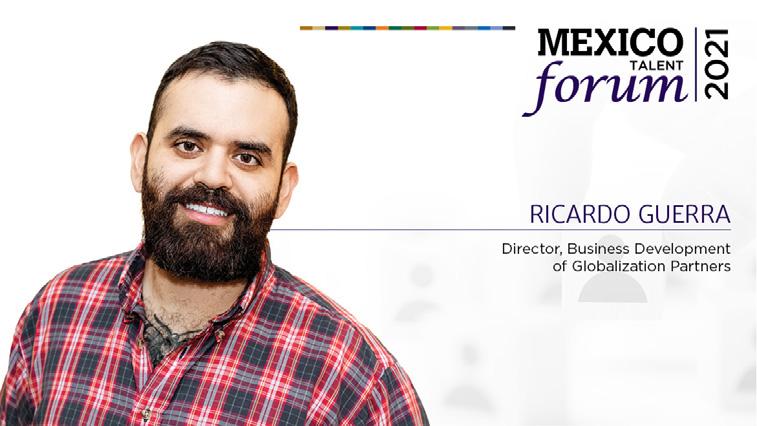
hiring and workforce management—nor should it be. e mployers understand that their hiring process should be different but this is an ongoing process for many companies. If hiring domestically is a challenge, companies looking abroad should understand that this entails cultural singularities and legal processes which can take anywhere from six months to a year says Guerra. In this context outsourcing this task to a specialized third party makes sense and is more efficient.
Although it may be easier for companies to stay within the limitations of their country’s available talent pool, by doing so they would be cutting themselves off from cost-effective, highly qualified talent that would add diversity and stand to accelerate innovation. Moreover, adding personnel from other countries is a de-facto expansion strategy that could open other markets for business. This is highly pertinent to technology and data driven industry sectors in information economies that are currently grappling with talent deficits. US Tech companies have already taken note of this, practicing nearshoring with their closest neighbor Mexico.
International outsourcing is not only a business savvy choice; it is also a an e SG decision. Allowing people to defer to remote working keeps cars of the road, increases employee wellbeing and supports international economies by giving their residents added purchasing power. Already some 56 percent of US American households are considering international relocation in 2021—and increase of 20 percent from 2020.
Conclusively, companies cannot afford to turn away from international outsourcing. Failing to do so limits company growth and takes away from the added perspective foreigners could provide. Businesses that have taken note of this are growing faster than their competitors as evidenced by China’s ride service application DiDi. This expansion process could have been facilitated by locals aware of social rules and market conditions, which normally requires costly analyses and assessments. In the global talent pool, there are people in limited economies waiting to be hired and, although this process can be intimidating, there are options to bypass and facilitate this process for businesses.
ROBOTS, AUTOMATION TO CREATE EMPLOYMENT OPP ORTUNITIES
Artificial Intelligence (AI), robots and automation are commonly seen as threats to employees among all industries.
Although these technologies could make certain human skills obsolete, they create opportunities for workers to relocate
themselves in their companies while accessing more secure, less-risky positions, agreed industr y experts.
“Whether the robots will take humans’ jobs or not is an unfair discussion. Humanity has come this far thanks to the help of technology, which has already superseded tons of jobs throughout the history. robots automate many processes and help us be more human. Labor dissatisfaction rates are big in repetitive, low-intellectual jobs,” said Federico Barcos Von der Heide, Founder & Ceo of People o PTI.
Machines, and technology in general, have ended jobs for centuries. About 400,000 jobs were lost to automation in US factories from 1990 to 2007, according to Time. However, technology advances more rapidly than ever before and the CoVID-19 pandemic accelerated numerous processes. Around 50 percent of the jobs in Mexico could be eventually lost to automation, according to the World Bank.
Although it is clear that robots will continue substituting repetitive, simple tasks currently performed by humans, they will transform human capital demand, according to Felipe Armando Villarreal, C eo of Alian Plastics. “The pandemic gave us a view that we may have never seen otherwise. Technology and humans are stronger together. Soft skills will play a key role for humans to keep their jobs
or migrate safely to a new position,” said Villarreal. Furthermore, the automation of manufacturing industries considerably reduces risk for employees.
The labor market is suffering a radical transition, generating big gaps between jobs, said Daphne S. Leger, C eo & Founder of Atrevidea. This gap has made data scientists one of the most required talents in the last years, agreed experts. “Some years ago, between 50 and 54 percent of companies faced issues to attract talent, and the number went up to 75 percent, according to ManPower Group. This means that academia, schooling and preparation has failed to cover industry’s demand,” said Giacoman.
o ne of the biggest challenges for all players involved is what to do with those employees who have been replaced by machines, said Lissy Giacoman, C eo & CoFounder of Vinco. “The first alternative is reskilling. o ur job is to help the operating staff in the transition to their future jobs in our companies or elsewhere.” Automation also requires new sets of skills for the employees, who may be trained through reskilling or upskilling to meet the current needs of companies, explained Giacoman. Soft skills, such as effective communication, leadership, creativity and customer service, have become more important than ever.
Automation will relocate about 85 million jobs across the world in the near future, while also generating 97 million new jobs, said Villarreal. Throughout this change, companies and governments have a moral responsibility to help employees transition.
“AI came to help us and make us more productive. The first point is to convince employees about the advantages that automation will bring through concrete examples,” said Villarreal.

“We migrated from the 4-year university and 40 years working scheme to continuous learning. Unfortunately, Latin America is one of the regions with the biggest educational gaps”
should be seen as an investment rather than an expense, he added. responsibility relies heavily on companies since they are the ones disrupting and accommodating the labor market. However, public policies and individuals’ contributions are also required, said Barcos.
Life-long learning has become the new standard, said Giacoman. Continuous education helps workers remain competitive in today’s global marketplace. Soft skills, such as innovation, adaptation and flexibility require continuous learning to develop. “We migrated from the 4-year university and 40 years working scheme to continuous learning. Unfortunately, Latin America is one of the regions with the biggest educational gaps,” said Giacoman.
Vinco
Lissy Giacoman CEO & Co-Founder of
Working on relocating, reskilling and upskilling employees when they are substituted by robots or due to the companies’ needs is an ethical, moral matter, said Barcos. This work, however,
r egulations must adapt to the changing contexts, said Barcos. “From the legal framework standpoint, the labor market will have to change to generate fluidity through regulations adapted to our current context. In Latin America we should improve data management, it is a fertile ground across all the continent,” said Barcos.
CAREERS, MANAGEMENT IN THE DIGITAL AGE
The technological advances of the digital age have allowed the global workforce to be better connected, more collaborative and have greater personal impact. But if not carefully managed, technological advances could leave many out of the workforce and put mental health at risk.
“The digitization (or the workplace) is the reflection of what we are living and thinking. We have been able to create complex tools to support our daily activities but this has also let to complex problems that call for ethical, deep and humane approaches,” says ricardo Combariza, People & o rganization Director of Credijusto.
Among these complex problems is career development because technological advances can leave people out of the workforce, according to Laura Briano, H r
Service Delivery of Accenture Latin America. This should not be a concern if companies ensure to deliver the on their promise of tech closely tied to human ingenuity. “If ruled by this thinking, more jobs will be created than lost,” said Briano.
rather than leaving a role, employees should be adapting to a new one and reinventing their skill set, explained Diego o lcese Díaz, Cofounder and Ceo of Crehana. To achieve this, “teams should be willing to train their staff and avoid replacing them with employees that have the newly required skills,” said olcese. The idea that automation will replace workforce is mistaken, he added, it will make the market to be more competitive due to the reskilling of the workforce.
Companies have to watch out for polarization of jobs and inequality because
training the workforce in these new skills is a joint job between companies, academia and people, explained regina Cabal Urquiza, CoFounder of Momlancers. “Companies have to use technology to be more competitive, but they should also target the creation of a positive social impact.”
“Undoubtedly, tech has to be more ethical,” says Combariza. “Companies always talk about their social impact without realizing that the first step is to achieve it internally.” Creating true connectivity among collaborators, especially during the pandemic limitations, is how companies can begin to have a positive social impact
Technology can strengthen the social impact of companies both internally and externally, said Gabriela Villavicencio, Head of Human r esources and General Affairs of Hyundai Motor. “Hyundai created a program called yo Cedo, where, during the first months of the pandemic, every employee could contribute their talents to the company. This not only benefitted us as a brand, but it also increased connectivity as a team.” This project was lately expanded to lend cars to medical professionals that would allow them to get from home to work and reduce contagion risks.
While a common approach to the digitalization of the workplace is to train employees in the use of tech tools, adapting
technology to employees is a less common but equally effective practice. “Sometimes, people do not have to adapt to the digital transformation but the other way around. By providing only training, there is the risk that some sectors are left out due to biases, such as the belief of being unable to afford the digital transformation.” o n the other hand, by adapting technology to existing practices many more sectors can join the digital transformation train. Local producers, for example, are using e-commerce to sell their goods, explain ed Briano.
“The high-growth, high-speed integration of technology that we are living is inaccessible for others,” said o lcese. Another way to generate external social impact is by giving new skills to the future workforce, he added. “Crehana, for example, offers a complete portfolio of courses but we know that some groups cannot access them. So we developed another platform where we offer the courses to n G o s and social entrepreneurs.”
For the digital era to be fair, diverse and equal the role of leaders is fundamental. Also, team members should not forget that leaders feel fear, uncertainty and have doubts. “Being compassionate was something uncommon in leaders; this changed with the pandemic. We were also able to have a different approach,
ask people how they felt instead of how they were performing,” says Villavicencio. Through its new approach to communication, Hyundai was able to reduce numerous gaps even with international collaborators, she said.
During the digital transformation, the role of leadership is essential. “Tech eliminates barriers to transcend and have a social impact. But this will only be positive through human managers that empathize with businesses and people,” says Combariza.
LEARNING FROM THE MILLENNIAL TAKEOVER OF THE WORKPLACE
Millennials have been following through with the task assigned to every emerging generation: questioning and breaking away from old and outdated norms. In the transition back to the office, millennials are the ideal teachers to mentor companies adapt to the hybrid work model. Although this prospect may seem unnerving to some, it is optimal and strategic say experts in the field.
“Millennials have new perspectives and ideas that they are willing to try—even if they don’t work, which is still useful,” says Martha Lucia riquer Vargas, organizational Development & Diversit y of enel.
Before this happens, however, employers should open a reciprocal channel of communication with their workforce to help the latter feel listened and engaged with, says German Peralta, Co-founder & C eo J o K r in LATAM. Strategically listening to what employees have to say is essential to developing company goals and culture that aligns with what millennial’s value in
the work place says Miguel Castuera, VP of People of Conekta. From there, the task would be incorporating these identified values into practical terms such as daily objectives and company culture.
Fundamentally, taking into account what millennials value is the best way to keep them engaged. However, this is not to say that millennials should dominate the conversation, nor that they have nothing to learn from other generations. In fact, the ideal work environment should aim to create collaborative spaces that encourage peer mentoring because everyone has something to learn said r iquer. The importance of creating and nurturing this environment should not be underestimated, as it provides employees with the opportunity to network with people outside of their team, upskill, collaborate and build a sense of comradery.
The question for companies is how to create this open environment as they transition to a hybrid work model, while accommodating for employees who will be working remotely
full-time. Ultimately, the goal is to actualize office spaces so they draw people in and incentivize them to come in for synergic work, said Castuera. This realization has made the hybrid work model the ideal standard because it offers the benefits of presential work without having to ask employees to compromise on the flexibility offered by working at home. According to Peralta, work environments should aim to emulate university campuses were there is a sense of shared identity and purpose where people go learn and contribute to the exchange of ideas. The real obstacle will be reproducing this sensation for fully remote workers but, again, this circles back to communication with employees. If companies want to know, they should ask!
In addition, companies must be conscientious that the communication highway developed during this period needs
to maintained. It is easy to revert to old habits. This should not be considered onesided task however but employers should be cognizant that the power dynamic is not the same. employees need to feel as if they are able to speak freely and address any perceived grievances, if any.
o verall, just like any individual person, millennials in the workforce are more likely to be receptive to companies that they feel are listening to them. employers should be receptive to what their employees have to say in order to identify general values and incorporate them to company culture so that they feel valued and engaged. In turn, this poses to increase retention and enhance performance and collaboration. Creating such an environment is the current matter at hand. n urturing this environment will be possible through continued communication and promises to have high returns.
MENTAL HEALTHCARE IMPROVES COMPANIES’ PRODUCTIVITY
Although awareness has been increasing for years, mental health finally grabbed the spotlight following the negative effects of the C o VID-19 pandemic lockdowns, teleworking and social distancing. Mental welfare among a company’s workforce translates into savings and production increase, said Javier Andrés Cardona Mora, Co-founder and Ceo of 1DoC3.

“In Mexico, there is still a lot of ground to cover. Up to 85 percent of corporations might not offer the optimate conditions to take care of their employees, generating toxic environments to work and causing social disorders such as stress, work addiction, fatigue or even bullying”
Javier Andres Cardona Mora Co-founder & CEO of 1DOC3
to your emotions balanced and knowing how to face challenges and problems. Mental welfare requires the ability to ask for help in the right moment, to the right person,” said Cardona. “The pandemic brought to light people’s non-expressed needs.”
Labor health cycle includes physical, social and mental health, explained Cardona. Social health is defined as the ability to interact and form meaningful relationships with others and comfortably adapt to different social situations. Work-related stress, caused by long workdays, heavy workload, job insecurity or conflicts with coworkers and bosses, is a growing problem that affects the health and wellbeing of employees and the productivity of companies. Mexico has one of the worst global rates surpassing even the US and China. In the Latin American country, 75 percent of the working population suffers from fatigue caused by work-related stress, according to IMSS.
“ emotional well-being is not about feeling happy all the time, it is about having the ability
“In Mexico, there is still a lot of ground to cover. Up to 85 percent of corporations

might not offer the optimate conditions to take care of their employees, generating toxic environments to work and causing social disorders such as stress, work addiction, fatigue or even bullying,” said Cardona.
“If companies make mental health services more accessible and intervene in the workplace in ways that improve well-being, they will simultaneously make investments that will provide real improvements in employee outcomes and consequently in company performance,” according to management consulting firm McKinsey.
Although the considerable advances of mental health treatments in the last years, “therapeutic revolutions in psychiatry have not yet been able to reduce stigma,” which usually arises from lack of awareness, perception and the nature and complications of mental illness, such as odd behaviors and violence.
“Mental healthcare continues being stigmatized. Three out of every 10 companies do not take measures to change people’s perception, compromising health. In addition, 76 percent of Mexicans do not know how to respond to mental crises. It is crucial to know when and who to ask for help,” said Cardona.
While stigma is still present in Mexico, the pandemic changed some people’s
perspectives. “o ne of the positive aspects of the pandemic is that there is no return to the stigma people had about mental health. Psychiatrists became more important than ever after the lockdowns and other measures that C o VID-19 brought,” said to MB n edilberto Peña de León, Director General at CIS ne México.
The estimated office time of workdays in Mexico is 9 hours, 19 minutes, with an active 7 hours, 12 minutes. Some actions that help to maintain a healthier workspace are: promoting dialogue, give people the control over their own work, promote training activities, respect workdays and organize processes, said Cardona. “Clear processes among all compaies help preventing work-related stress and anxiety episodes.”
To end the stigma surrounding mental health, it is essential to break stereotypes about the work of psychologists and encourage people to ask for professional help, according to Cardona. Telemedicine has opened many doors in the healthcare world and has particularly benefited mental health professionals. While telemedicine and telehealth have been around for many years, the adoption of these technologies has increased significantly. “Mobile health applications are completely secure and protect your information, providing data protection, quality services, confidentiality and security for patients,” said Cardona.
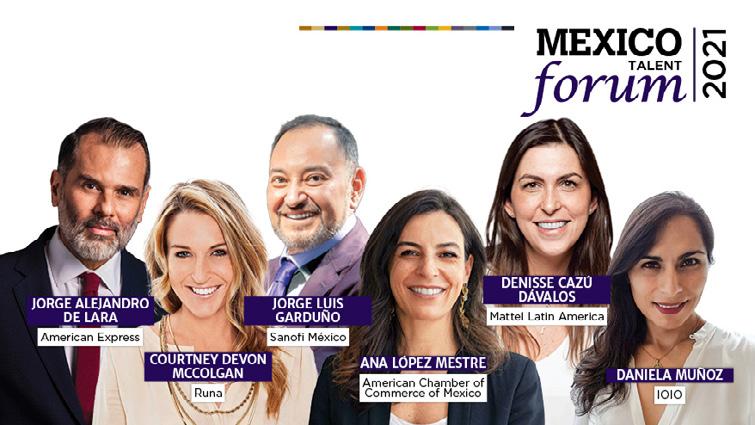
INCLUSION IN THE WORKPLACE: MAKING EVERYBODY COUNT
Diversity and inclusion go beyond policies, programs or headcounts. An equal working environment outpaces its competitors by respecting the unique needs, perspectives and potential of all team members. As a result, diverse and inclusive workplaces earn deeper trust and more commitment from their employees, generating better social and professional outcomes.
Diversity and inclusion often stay as words so the challenge for companies in Mexico is to transform the speech into everyday reality. Companies have not realized that to move from words to action they should generate different approaches, perspectives and responses. Workplaces need to encourage an environment that redefines the way employees perform professionally and in society, said Denisse Cazú, r egional H r Director LATAM of Mattel Latin America. “This environment needs to be based in respect and foster a culture that follows three core behaviors: curiosity, braveness and connection.” These three behaviors foment others to listen and learn from different ways of thinking. Braveness is to “have the courage to feel uncomfortable, because it challenges us to grow,” said Cazú.
Inclusion and diversity are not a logo, a banner or a trend. “Diversity is important. We should promote it starting from the
family to governments,” said Ana López Mestre, executive Vice President and General Director of American Chamber of Commerce of Mexico. “However, we all have a chance to generate more inclusive spaces. It begins with individuals and escalates to corporate and national acceptance.” Diversity at the workplace guarantees more competitive and resistant businesses, with enriched opinions, training, beliefs and different experiences that contribute to corporate growth, she added.
Diversity goes beyond gender. “It also regards socioeconomics, sexual orientation or gender identity,” said Courtney Devon, C eo & Founder of runa. To guarantee the integration of different groups at the workplace, Devon recommends measuring inclusion by the changes it generates for the company.
Mover, businesses must integrate diversity into leadership positions. “Most offices have focused on gender equality but this is not enough. Leadership directories in Mexico only show a 7 percent of women in them,” said Devon.
While many argue that diversity should be mandated by law, government mandates are not the ideal starting point. “The origin of our problems is not the government,” explained Daniela Muñoz, Founder & C eo of ioio. “Governments are often a reflection of society
and we have seen that societal movements have the power to change what they do not like in their governments.” r egardless of having prohibitive laws or not, “if we, as society, do not change mentally, nothing changes,” said Muñoz. To promote diversity, humans should recognize that they are equal but not the same: “we are diverse but not different in the core. Diversity is what makes a society rich and what really makes the word more equal.”

“One of the fundamental steps to begin breaking the ice on inclusion is being able to ask people what makes them more comfortable, simple things such as ´what are your pronouns?”
Jorge Luis Garduño Camarena Ethics and Business Integrity Manager of Sanofi México
The initiative to change requires an openminded thinking and a willingness to learn, said Jorge Alejandro De Lara novella, VP & GM Global Commercial Services LATAM of American e xpress. “By doing this, we can communicate and create an environment in which we all feel comfortable being authentic. We must lead by example,” which means identifying if recruiters are hiring those similar to them. recruiters must put those preferences aside and break those paradigms to promote faster changes. However, “Mexico does not have a formal leadership position in organizational structures that supports diversity and inclusion,” says De Lara novella.
employees should be part of the discussion on diversity. “one of the fundamental steps to begin breaking the ice on inclusion is being able to ask people what makes them more comfortable, simple things such as ´what are your pronouns?´” said Jorge Luis Garduño Camarena, ethics and Business Integrity Manager of Sanofi México.
Leadership plays a fundamental role too, the change can be seen from top to bottom but if management is dominated by white men, from there on the representation can be limited. Mexico ranks in second-to-last place in bridging the wage gap and participation of women in the workforce, said Devon. However, diversity can be essential to the growth of a business, which is what happened to runa in raising capital, said Devon. “We drew more attention because we were different and had a diverse mindset and will for inclusion.”
Vulnerability in the workplace tends to be seen as negative but companies and employees should not be afraid to be seen as vulnerable, said Muñoz. “Vulnerability creates collectivities and they have the power to change.” True change is not about equality, which is giving everyone the same and ignoring the historical gap of cultures, it is about equity, which means giving everyone what they need. For instance, Muñoz refers to the LGBTQ+ community, which when asked when they will stop protesting answers: “We will be visible until the guarantee of our rights become normalized. When our freedoms are practiced and respected.”