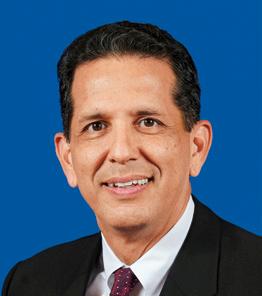
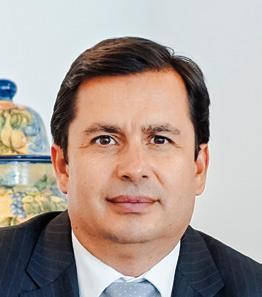
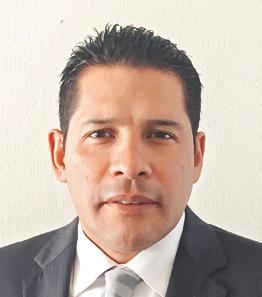
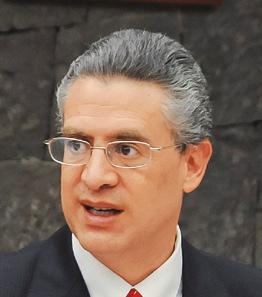
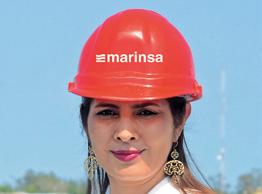
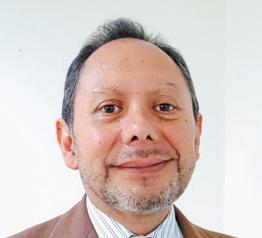
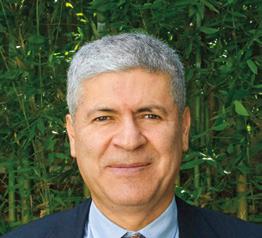
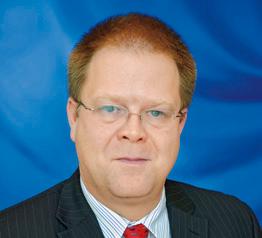
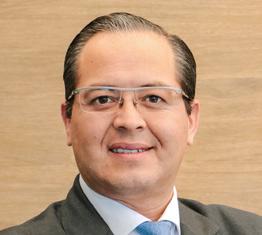
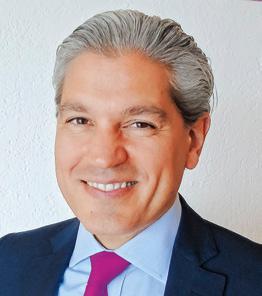
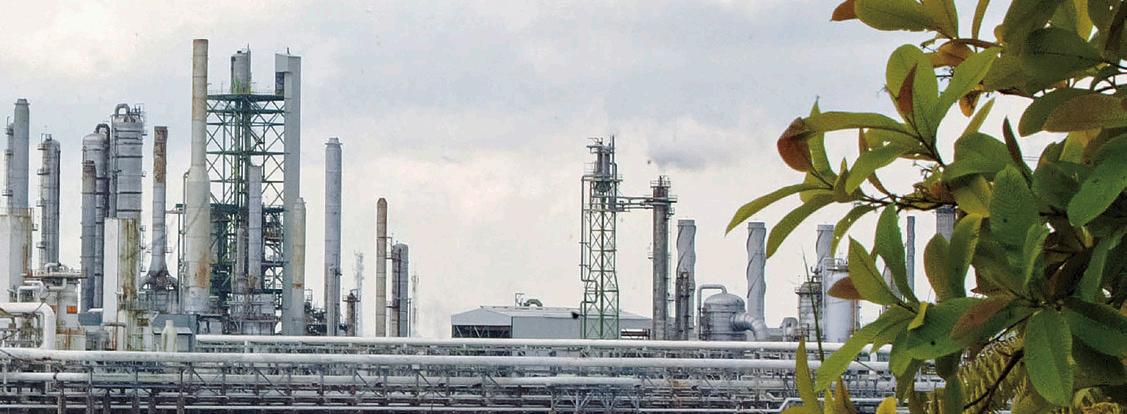
“The reforms implemented by this administration will allow the energy sector to grow, generate more jobs, attract more investment and Mexico will once again become an oil producing country”
Enrique Peña Nieto, President of Mexico
2017
Mexico’s Energy Reform set in motion a series of changes that continue to revolutionize the country’s oil and gas industry. With vast untapped hydrocarbon reserves, increasing demand from a growing population and economy and a new regulatory framework, Mexico is quickly becoming one of the most exciting markets for oil and gas companies along the entire supply chain. Despite production declines of more than a decade, PEMEX remains Mexico’s oil and gas heavyweight, as the eighth largest oil producer, eighth largest drilling company and 15th largest refining company in the world. But its decades-long monopoly is over and new private and international companies are entering Mexico’s upstream market through CNH’s licensing rounds, while others have started to capitalize on midstream infrastructure and downstream gasoline distribution opportunities. PEMEX itself has set a clear path forward with a five-year business plan to stabilize and boost reserves and production as it faces the challenge of private competition.
While previous years were marked by expectation, concrete results defined 2016 and early 2017. The completion of the country’s first deepwater licensing round was the highlight of Round One, which attracted expected investments totaling US$49 billion. With this success behind it, the industry now awaits Round Two with optimism. The same year saw Australia’s BHP Billiton become PEMEX’s first-ever partner through a farm-out and together they will develop the deepwater Trion block. Four more farm-outs have already been announced: another in deepwater, two onshore and one in shallow waters. PEMEX also showed its competitiveness in the licensing rounds when it won a deepwater block in partnership with Chevron and INPEX in Round 1.4. Exciting projects are already up and running in the midstream segment, and others are planned. The past year also delivered the liberalization of gasoline prices in Mexico, the final stage in the process toward a competitive fuel distribution market with both Mexican and international companies competing for business.
The publisher has made all reasonable efforts to provide accurate information, and the information contained in this publication is derived from sources believed to be true and accurate. However, the information in this publication should not be considered to be complete or definitive, and may contain inaccuracies or typographical errors. The publisher accepts no responsibility regarding the accuracy of information and use of such information is at your own risk. The publisher will not be liable to any party for any direct, indirect, special or other consequential damages arising out of any use of information in this publication. The publisher provides no representations or warranties, express or implied, including any implied warranties of fitness for a particular purpose, merchantability or otherwise in relation to any information provided by the publisher in this publication.
ISBN: 978-0-69289440-8
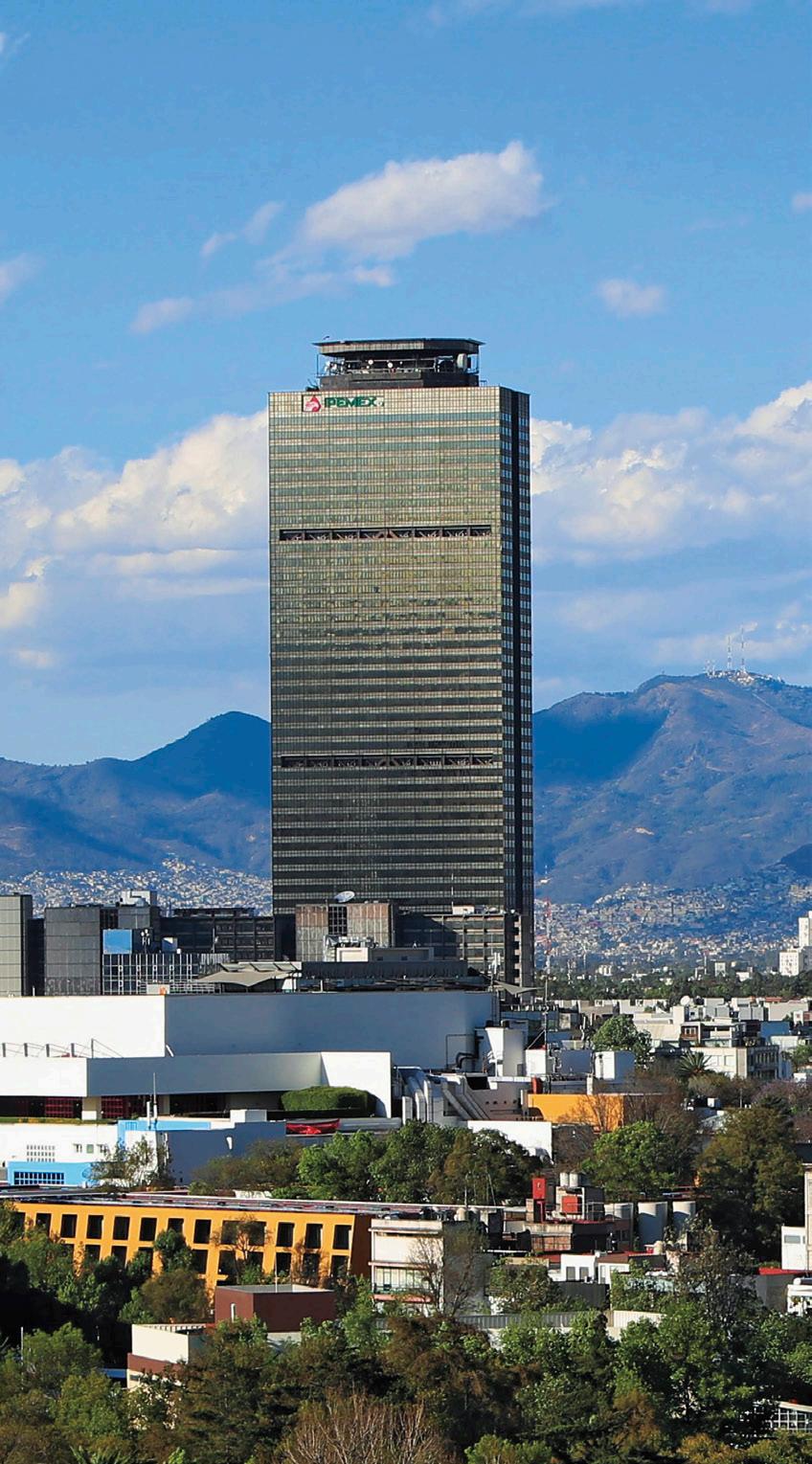
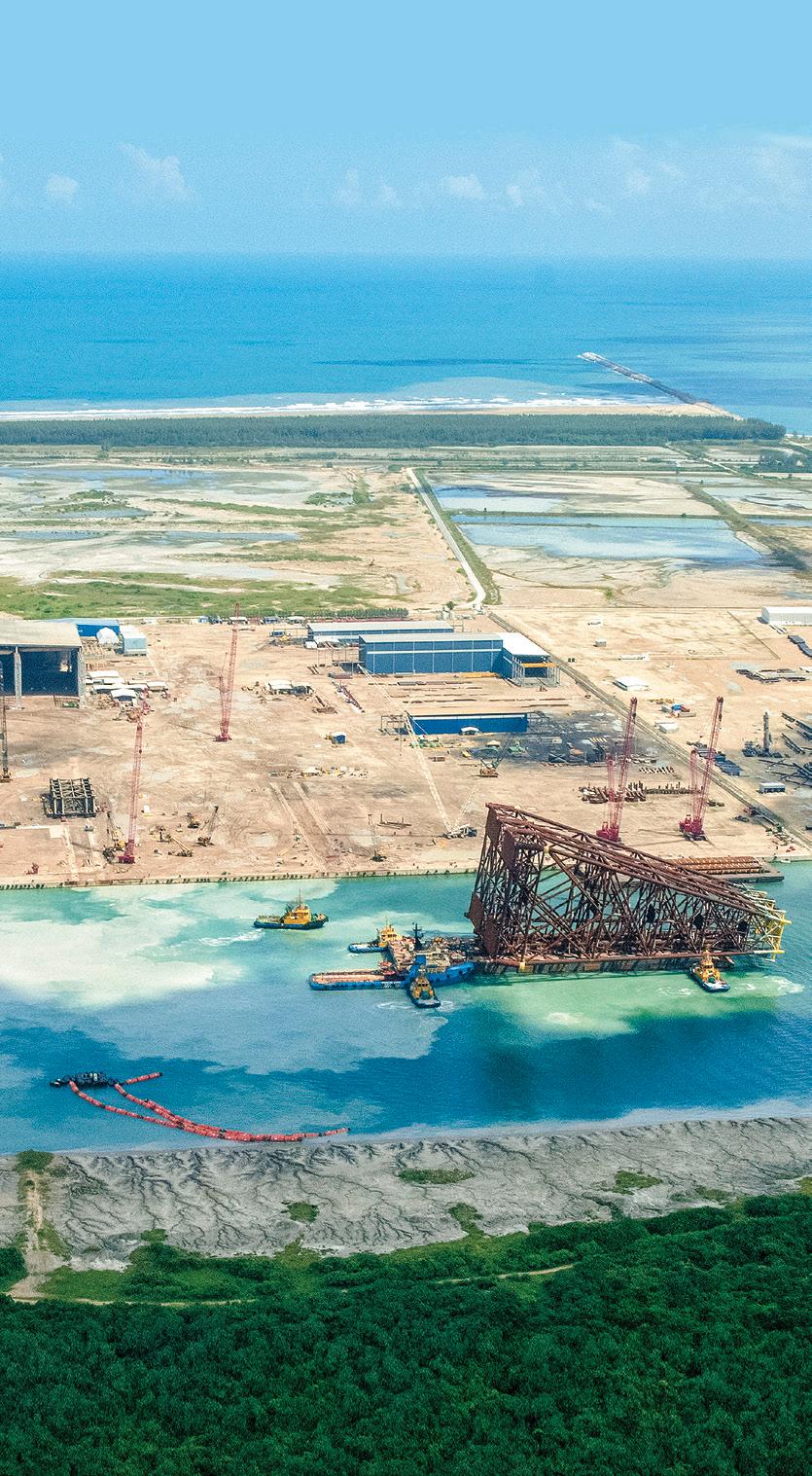
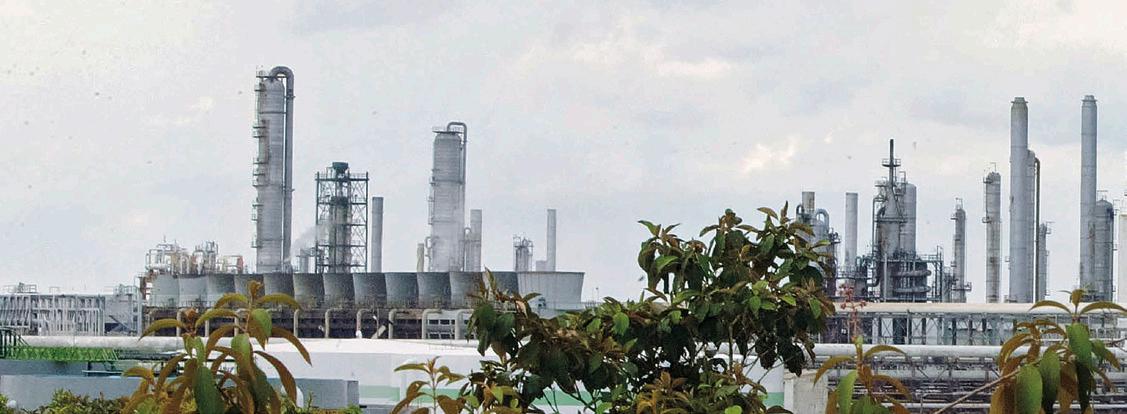
PEMEX Tower, Mexico City, PEMEX
STATE OF THE INDUSTRY 1
The Mexican oil and gas industry is still taking its first steps into the liberalized, open-market paradigm brought about by 2013’s Energy Reform. PEMEX’s first ever farm-out, the success of deepwater licensing Round 1.4 and the opening of the fuel distribution market to private participation are just some of the industry’s many milestones that are inspiring optimism throughout the value chain. As the global oil and gas industry emerges from a period defined by low oil prices and an industry downturn, all eyes are on Mexico with its vast untapped reserves and newly attractive yet still untested operating and legal framework.
This chapter provides a bird’s-eye view of the events that defined the last 12 months in the Mexican oil and gas industry, from the perspective of its key political, regulatory and executive players. Their combined voices present a comprehensive overview of the industry while also offering a glimpse into its ambitions for the future.
CHAPTER 1: STATE OF THE INDUSTRY
8 ANALYSIS: The Year in Review
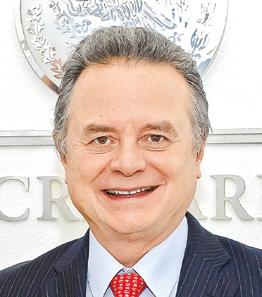
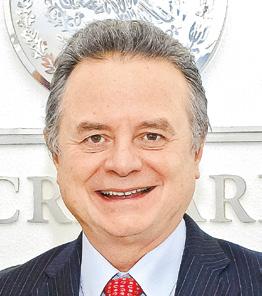
14 VIEW FROM THE TOP: Pedro Joaquín Coldwell, Ministry of Energy
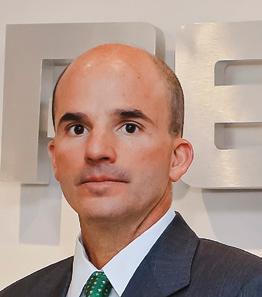
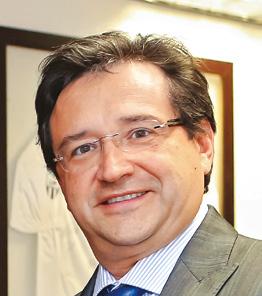
16 EXPERT OPINION: José Antonio González Anaya, PEMEX
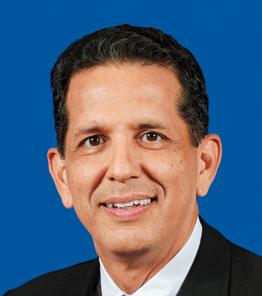
18 VIEW FROM THE TOP: Juan Carlos Zepeda, CNH
20 VIEW FROM THE TOP: Héctor Moreira, CNH
21 VIEW FROM THE TOP: Carlos de Regules, ASEA
22 VIEW FROM THE TOP: Mauricio Herrera, FMP
24 VIEW FROM THE TOP: Raymundo Piñones, AMEXHI
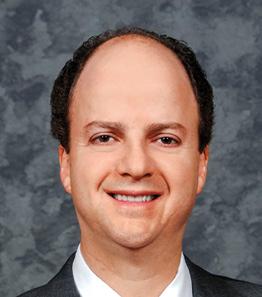
25 VIEW FROM THE TOP: Ernesto Marcos, Marcos y Asociados
26 VIEW FROM THE TOP: David Enríquez, Goodrich, Riquelme y Asociados
36 ROUNDTABLE: How Can the Industry Better Promote Gender Equality?
THE YEAR IN REVIEW
There is no doubt that since 2014’s Energy Reform, the industry has undergone a profound transformation. The end of PEMEX’s near 80-year monopoly over the country’s hydrocarbon reserves and its transition into a productive state enterprise has resulted in far-reaching consequences for every part of the oil and gas value chain; from upstream exploration and production, to midstream logistics and downstream refining and gasoline commercialization, and all associated business services.
“I do not know how you cannot admire what has been happening in Mexico during the last two years. Very few countries have pulled it off in this fashion, at this rate, building this much momentum,” says Jorge Leis, Partner and Lead of Bain & Company’s Oil & Gas Practice in the Americas.
As well as each segment’s specific highlights, the Ministry of Energy updated its oil and gas energy policy in February 2017 to reflect changes in the industry since the document was first published two years ago. The overarching document, titled “Five-Year Plan for Exploration and Production of Oil and Gas Bids 20152019,” announced a standardization of the process that dictates how Mexico’s oilfields are auctioned to private companies.
In completed rounds, the blocks involved were selected by the authorities and were of varying sizes. With the Ministry of Energy’s updated plan, the industry is granted the autonomy to nominate blocks, which will all be of a standard size depending on whether they are found in deepwater, shallow water, onshore unconventional or onshore conventional. Additionally, the revised plan outlined a new process for inviting companies to bid in rounds, which has now been simplified to two invitations to bid per year according to the type of areas and resources.
Mexico’s oil and gas revolution continued unabated in 2016 and through the first half of 2017. The country’s unfolding Energy Reform bore fruit across segments and resulted in historic firsts: the first deepwater round, the first farm-out and the first foreign IOC to strike oil in the country’s shallow waters. Source:
Welcomed by operators and hailed as “industry-friendly,” the changes to the FiveYear Plan demonstrate Mexico’s oil and gas authorities’ willingness to incorporate the voice of the industry into policy, which remains fluid as the Energy Reform continues to unfold.
“All this gives us a chance to think about scaling up our process so that through the nomination and standardization we can get to greater volumes of production and exploration,” says Aldo Flores, Deputy Minister of Hydrocarbons.
PRODUCTION GOALS
Increasing oil exploration and production is the main objective of Five-Year Plan, with a target of stabilizing PEMEX’s production at 2 million b/d. Flores believes this is already achievable. “The target for 2017 is around 1.94 million b/d, so with the private sector’s contribution to production we should reach close to 2 million b/d,” he says. He is backed up by the results of the deepwater
PRODUCCIÓN DE CRUDO POR REGIÓN
1Q17
PRODUCCIÓN DE CRUDO POR TIPO (MBD)
(19%)
Source: PEMEX
Invitations to bid on deepwater and onshore unconventional areas will be released in the first half of the year; shallow water and onshore conventional will be held in the second. The actual bidding will be carried out about six months after the invitation to bid is announced.
Marina (81%)
Terrestre
TOTAL CRUDE PRODUCTION (million b/d)
Source: PEMEX
round, which attracted an estimated investment of US$34.4 billion over the next 35 years from the private sector.
Source: PEMEX
The private sector’s participation is accelerating at an impressive rate. By March 2017, a total 4,329 miilion boe of the country’s prospective resources and 273 million boe of its 2P reserves had been auctioned off through Round One, representing 4.9 percent and 9.5 percent, respectively, of all available resources under state control. Should the process continue at the same rate, the ministry says, it would take between 20 and 40 years to get through all of Mexico’s identified resources.
CRUDE PRODUCTION IN DECLINE
given the maturation and increase in fractional water flow at its Bellota-Jujo, Samaria-Luna, Macuspana-Muspac and Litoral de Tabasco areas. Heavy crude production also fell but less significantly, by 3.8 percent, given the fractured nature of Cantarell’s deposits.
Previously Mexico’s most productive oilfield, Cantarell’s production fell to an all-time low of 216,000mbd in 2016, down from a peak of 2.123 million b/d in 2004. The most productive of the area’s 10 oil fields, Akal, accounted for 31.7 percent of Cantarell’s production in January 2017,
POZOS PROMEDIO EN OPERACIÓN POR TIPO DE CAMPO
AVERAGE OPERATING WELLS BY FIELD
One area of concern is Mexico’s crude oil production, which has been in decline for over a decade. In 2016 total production averaged 2.155 million b/d; a drop of 5 percent on year. Production of crude oil has seen a steady decrease since peaking at 3.383 million b/d in 2004.
“The only solution for PEMEX to reverse its 12-year production decline is to seize all the opportunities the Energy Reform offers. This involves seeking out private investment and productive partnerships,” says Ernesto Marcos, Founding Partner of Marcos y Asociados.
Until it fully takes advantage of the possibilities offered by the Energy Reform, PEMEX must face the challenge of the aging nature of the oil fields it has relied on most in recent years. The NOC saw a reduction of 9.1 percent in its total crude oil output in the final quarter of 2016 compared to the same period in 2015.
AVERAGE OPERATING WELLS
(7%)
Source: PEMEX
A 13.5 percent reduction in light oil is noted as a contributing factor to the over decrease That is put down to the natural decline of the NOC’s Chuhuk, Chuc, Ixtal and Onel fields from the Abkatún-Pol-Chuc asset and also the aging Tsimin field in the Litoral de Tabasco area. A 16.6 percent fall in super-light crude oil has also been cited,
Source: PEMEX
7% Offshore 93% Onshore
PROMEDIO EN OPERACIÓN Source: PEMEX
Ku-Maloob-Zaap
Ku-Maloob-Zaap Cantarell Litoral de Tabasco Abkatún-Pol Chuc Samaria-Luna Otros
at an average 63,240b/d. But two years ago, Akal’s production stood at 120,310b/d, meaning it almost halved in the 24 months from January 2015.
In 2009, Ku-Maloob-Zaap overtook Cantarell as Mexico’s most productive oil field and its 2016 production output was 867,000b/d. This figure has been relatively steady since 2010, varying by only 25,000b/d since that year.
NATURAL GAS PRODUCTION
The year 2016 saw Mexico’s average daily natural gas production drop to 5,825mmcf/d, the first time in a decade that production was below 6,000mmcf/d. In the last quarter of the year it dropped even further, reaching 4,580mmcf/d. In its 2016 yearly report, PEMEX cited the natural decline of its Litoral de Tabasco and Abkatún-PolChuc fields as a contributing factor to lower natural gas production, where the drop in crude oil production led to an increase in fractional water flow. It also mentioned the natural decline of fields in the Macuspana-Muspac, BallotaJujo and Samaria-Luna assets as an additional factor.
In the final quarter of 2016, natural gas production originated almost evenly between onshore and offshore fields, with 49 percent and 51 percent produced from each type of field, respectively.
RESERVE REPLACEMENT
As well as falling production, Mexico’s reserve replacement ratio had been in decline year on year since 2012, before rising in 2016 to 62 percent, up 7 percent on the previous year. Still, the figure remains low compared to previous years, especially compared with its 10-year peak of 129 percent in 2009.
For every 10 barrels of oil Mexico produced in 2016, just over six were discovered. The deficit between the two does not bode well for a country desperately trying to increase its crude oil output. To remain sustainable, the rate must be 100 percent or over. In Mexico’s case, it will have to be above this to address the debt it has racked up in the past year, given that an average of 32.75 percent of its hydrocarbon reserves have not been replaced since 2013.
Gráfica 1. Producción anual y tasa de restitución de reservas
Source: CNH Production Total reserve replacement by discoveries
Burgos Cantarell
Litoral de Tabasco
Abkatún-Pol Chuc
Samaria-Luna Veracruz Otros
Source: CNH
As well as defining one solution as reclassifying potential reserves into proven reserves, particularly through deepwater exploration activity, the Ministry of Energy’s Five-Year Plan mentions CNH’s various licensing rounds as a catalyst for successful exploration activity to get underway in the country.
ROUND ONE
With the completion of Round One, a total of 38 E&P contracts had been signed, including one between PEMEX and a third-party operator. After getting off to a sobering start with shallow-water Round 1.1 in 2015, which saw only two out of 14 contractual areas awarded, things started to look up with Round 1.2, when three out of the five shallowwater blocks up for grabs were awarded to three bidders: one independent and two consortiums. One notable difference between the two rounds was the fact that Round 1.1’s blocks offered only exploratory potential, while Round 1.2 was an extraction round, increasing certainty and reducing risks for vying companies.
The first categorical success of CNH’s licensing rounds came in December 2015, when 25 onshore extraction blocks were awarded to a range of predominantly Mexican companies through Round 1.3. Of the 25 contracts, which were all signed by August 2016, 18 were signed by wholly Mexican companies, three by consortiums including a Mexican entity, and four by a foreign company. With production underway on several of the blocks, and others awaiting permits and approval, the development marks an exciting step forward for the Energy Reform, with several examples of completely new Mexican companies taking on E&P challenges, as well as established service
companies such Grupo Diavaz diversifying to become operators.
If Round 1.3 was a goldmine for national companies, Round 1.4 was the equivalent for international businesses. Mexico’s first-ever deepwater licensing round lead to the successful allocation of eight out of 10 available blocks to an impressive range of IOCs, NOCs and independents. Thrusting Mexico into the global oil and gas limelight, the round attracted an estimated US$34.4 billion in investments over the next 35 years, and 13 companies from nine countries are counted among the winners. PEMEX won one block in partnership with US company Chevron and Japan’s INPEX. The NOC was joined by Sierra Oil & Gas as one of two Mexican companies to experience deepwater success.
Besides BHP Billiton, 2016 was defined by an influx of some of the world’s largest IOCs into the Mexican market. France’s Total, the UK’s BP, the US’s Chevron and Exxon and Norway’s Statoil are some of the big names which feature among Round 1.4’s winners. China Offshore Oil Corporation took away two blocks in the same round and stood out for the high-royalty rates it bid to snatch them up. Sierra Oil & Gas, Murphy, Ophir, INPEX and Petronas were also among the winners.
Along with the eight blocks awarded in the round, the same day marked PEMEX’s first-ever farm-out, which involved the deepwater Trion block, won by Australian operator BHP Billiton. Taking on 60 percent of the share, BHP will enter into a production-sharing agreement with Mexico’s NOC to exploit the block, which has 3P reserves totaling 485 million barrels of crude oil equivalent. To win,
Three more farmouts with PEMEX are scheduled for 2017:
Ayín-Batsil, Cárdenas-Mora and Ogarrio
the Australian heavyweight bid an additional royalty rate of 4 percent, on top of the 7.5 percent base rate, and offered a US$625 million after tying with BP. The amounts contributed by BHP mean that in four years PEMEX will not have to contribute any of its budget to the Trion project.
With Round One completed, the industry now awaits Round Two with baited breath. Shallow-water Round 2.1 and onshore Rounds 2.2 and 2.3 are scheduled to be held in mid-2017, while an unconventional and deepwater stage is due to be held later in the year.
CNH Commissioner, Gaspar Franco, says a higher number of blocks with unconventional and deepwater fields are expected in future rounds. “Areas in Round 2.1 are 1.6 times bigger than those from Round 1.1 and 1.2, while areas from Round 2.2 are 14 times bigger than those in Round 1.3,” he says. The larger sizes of the blocks involved could lead to the involvement of bigger, more capitalintensive companies in the rounds as compared to the corresponding rounds in Round One.
Three more farm-outs with PEMEX are scheduled for 2017.
The shallow-water Ayín-Batsil field will be auctioned off at the same time as Round 2.1’s winners are announced in June 2017, while the onshore Cárdenas-Mora and Ogarrio fields are due to be auctioned off on Oct. 4, 2017.
SUPPLY CHAIN DEVELOPMENT
While Round 1.4’s winners begin signing contracts and drafting workplans, the international operators that
entered the market through Round 1.1 and 1.2 are already receiving drilling permits, and in some cases, striking oil. In March 2017, Italian operator Eni announced the successful drilling of exploratory well Amoca on the block it won in Round 1.2. The drilling permit was granted only five months earlier in October 2016.
Well Operator Authorization date
Amoca-3DEL Eni Feb. 27, 2017
Hokchi-4DEL Hokchi Energy Feb. 24, 2017
Zama-1SON Talos 7 Energy Feb. 20, 2017
Ichalkil-2DEL Fieldwood Energy Jan. 27, 2017
Hokchi-3DEL Hokchi Energy Dec. 22, 2016
Amoca-2 Eni Oct. 20, 2016
Operators entering through CNH’s licensing rounds will be looking to Mexico’s already well-established oil and gas supply chain to not only provide essential products and services but also to meet local content quotas and, in the case of IOCs, gain regional knowledge and experience. Despite the projection that more work will be coming its way in the future, Mexico’s oil and gas supply chain has various challenges to confront, including compliance with international standards, recovery from PEMEX’s payment and activity slowdown and from the wider oil price crisis. All this while learning the ropes of a newly opened market and PEMEX’s updated process for awarding service contracts.
REFINING
While a new supply chain is beginning to develop, PEMEX’s refineries are still presenting old challenges. Mexico’s crude processing capacity at its PEMEX-owned refineries at Cadereyta, Madero, Tula, Salina Cruz, Minatitlan and Salamanca has decreased dramatically since the start of the 21st century as the state-owned oil giant has faced problems related to maintenance of its aging infrastructure and has also struggled to maintain its oil production steady from maximums reached in 2004.
Source:
From the end of 2000 to December 2016, the total crude processing at the country’s refining facilities declined by nearly 24 percent to 933,062b/d from 1.227 million b/d. This increased slightly in the first three months of 2017, reaching an average of 1.108 million b/d. This is still below PEMEX’s nominal refining capacity, which its 2017-2021 business plan outlined as 1.640 million b/d.
Fuel and other product output have also been hit hard by operational problems and accidents at the refineries, the newest of which started operations in 1979. The refineries, now part of the PEMEX Industrial Transformation unit, are mentioned in the state-owned company’s business plan to 2021 to reverse economic and operational losses of close to MX$100 billion (US$5.1 billion) via initiatives such as cogeneration projects to cover the plants’ need for steam and electricity.
Another challenge is in the form of unplanned shutdowns at PEMEX’s refineries, 65 percent of which were due to unreliable hydrogen sources.
FUEL MARKET LIBERALIZATION
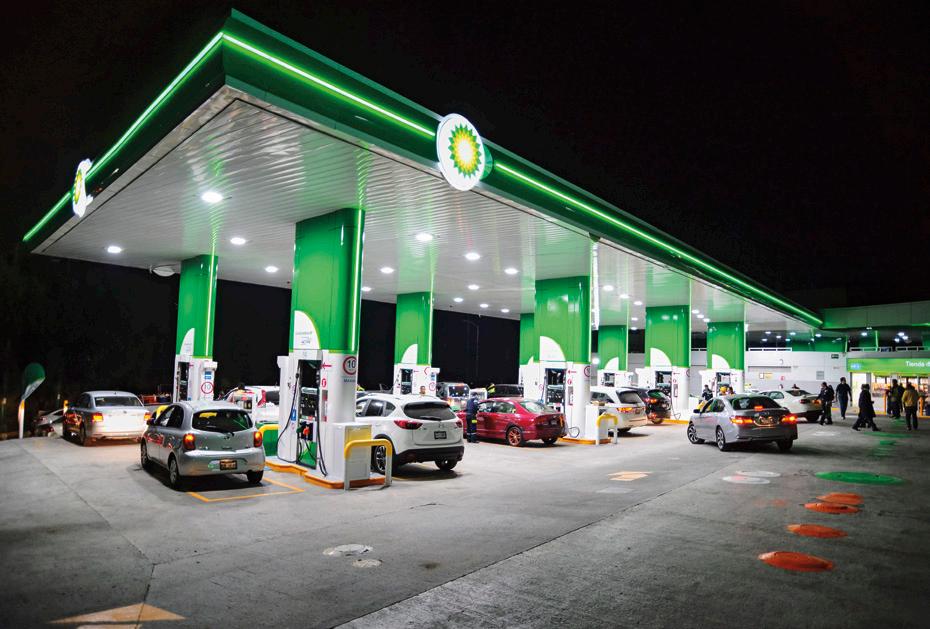
Mexico’s declining refinery infrastructure is leading to an increasing reliance on imported fuel from the US, but it is hoped this can be turned around as the country’s own gasoline market is fully opened to foreign participation. Fuel prices were liberalized in January 2017 after years of subsidization and price control. Despite public outcry as gasoline prices rose from one day to the next, the news was welcomed by the industry as a big step toward creating a competitive gasoline market in Mexico. One palpable change that has already transpired is the appearance of international brand BP in the country, which inaugurated its first Mexican gas station in March 2017 and plans to roll out 1,500 in the coming five years.
“In Mexico, we expect our planned 1,500 stations will lead to a 15-18 percent market share,” says Paul Augé, Vice President of New Businesses for Latin America at BP Downstream. As the first international company to sell fuel in Mexico, for the time being BP will be supplied by PEMEX’s gasoline before developing capabilities to import or produce its own products.
As well as eventually introducing different fuel qualities and prices into the market, the entry of international firms will transform the consumer experience, says Juan Gallástegui, President of Gallástegui Armella Franquicias. He says it will take more than just more competitive pricing to attract clients in the new look market. “Companies should also invest in creativity to provide added value to consumers. When people start seeing new brands, they will be loyal to the brand that provides the best service.”
Year Event
Energy Reform is approved by
July The Senate approves the rules by which PEMEX become a Productive State Enterprise
11 August The Secondary Legislation is issued ASEA is created PEMEX law is issued
Mexican Petroleum Fund (FMP) is created
13 August Round Zero results are published. PEMEX is assigned 83% of 2P reserves and 21% of prospective reserves 28 August CENACE is created CENAGAS is created
15 July Results of Round 1.1 are published
4 September Round 1.1 contracts are signed by winners
30 September Results of Round 1.2 are published 17 December Results of Round 1.3 are published
7 January Round 1.2 contracts are signed by winners 10 May First set of Round 1.3 contracts are signed by winners 25 August Second set of Round 1.3 contracts are signed by winners
5 December Results of Round 1.4 are published
13 December Results of TRION farm-out bidding round is published
28 February First Round 1.4 contract is signed by winner 3 March Contract for TRION farm-out is signed
8 March CENAGAS publishes Round Zero results for Open Season 10 March Remainder of Round 1.4 contracts are signed by winners
8 May CENAGAS publishes Round One results for Open Season
Sources: PEMEX, CNH
MEXICO ATTRACTS US$49 BILLION IN ROUND ONE
PEDRO JOAQUÍN COLDWELL Minister of Energy
Q: What is the Ministry of Energy’s perspective on the results of Round One and which parameters are used to measure its success?
A: In spite of the volatility of international crude oil markets, the results obtained in Round One were successful, transparent and highly competitive. With the four bidding rounds and the first PEMEX farm-out concluded with Trion, we have achieved a result of 70 percent of the available areas awarded, well above the registered rate in the region. In addition, the best conditions have been guaranteed by the state, which will be receiving a 60 percent average profit during the commercial life of the contracts. The US$49 billion investment commitment by the 48 companies from 14 countries reflects the confidence of new operators in the Mexican bidding system, which has also been recognized by international experts.
With the four bidding rounds and the first PEMEX farm-out concluded with Trion, we have achieved a result of 70 percent of the available areas awarded
The Energy Reform opened the hydrocarbons industry to private participation and achieved certainty in the rules, transparency in the allocation of contracts and in tenders and free competition for both PEMEX and private operators. Private investments are expected to complement those that PEMEX has been making over the past seven decades to access deep, ultradeep, unconventional and mature fields, in which Mexico has resources that it was previously unable to take advantage of. In transport, storage and
The Ministry of Energy is charged with executing energy policy to ensure the competitive, sufficient, high-quality, economically viable and environmentally sustainable supply of energy required for the development of the nation
marketing of oil, private participation will allow us to expand the existing infrastructure and strengthen the country’s energy security.
Q: What is the expected result from the decision to allow companies to nominate areas in Round Three?
A: We expect to receive feedback from those that have shown interest in tenders and to ultimately increase the number of blocks to be auctioned, based on technical justifications regarding potential production. The industry selects areas in which it is interested in carrying out exploration and production activities and proposes the configuration of areas with a greater surface area to reduce geological risk. With the information received and the technical support of CNH, the Ministry of Energy analyzes the nominations to include them in the tenders, considering the investment strategy of the industry and the viability of the projects.
Q: What are the objectives of the licensing rounds planned for each year?
A: One of the objectives we have in hydrocarbons is to create a diversified industrial system, in which companies of different sizes, origins and specialties coexist. Under this premise, we have carefully designed the rounds so that every tender targets specific goals, either to boost the domestic industry, such as Round 1.3, or to attract the world’s largest oil companies that have the proven ability to venture into deep and ultra-deepwaters, as in Round 1.4.
For the remainder of this administration, we will design two new tenders for Round Two: one in deepwater and one in unconventional onshore. We will then start Round Three, which will include a tender for shallow waters and conventional onshore areas and another for deepwater and unconventional onshore areas.
Q: Why prioritize exploration areas with reserves over pure exploration areas for future licensing rounds?
A: In Mexico, the production of crude oil from mature fields represents between 40 percent and 60 percent
The Five-Year Hydrocarbons Plan 2017-2021 incorporates the following improvements over the Five-Year Plan 2015-2019, which will facilitate the selection of blocks:
1. Area to be tendered: grows by 2 percent, compared to the previous round. It goes from 235,000km2 to more than 239,000km2
2. Prospective resources: increased by 10 percent, from 38.884 billion to 42.681 billion boe, distributed across all the oil basins of our country.
3. Block size: is now standardized by project type. For deepwater, the area is 1,000km2, 400km2 for shallow water, 300km2 for conventional onshore areas and 200km2 for unconventional onshore areas.
4. Nominations: All oil areas will be open to industry nominations. To facilitate the nomination of areas, the Hydrocarbons Undersecretary developed an interactive map, which will allow companies to identify and propose the areas that are of interest to them. The map will be available to interested parties during the predefined deadlines for each tender
of total production. Due to our urgency in reversing the decline in production, tenders have focused on areas where we know there is better potential for success. This is why we follow the logical path to tackling this problem through seeking to increase reserves with exploration activities.
There may now be exploration in areas with more data available just as there may be exploration that involves greater risks due to lack of information that would reduce those risks. However, it is important to note that this does not mean that there is no value in other areas but until now we just could not carry out the proper evaluations with the data we had at hand.
However, the operations of the new companies in Mexico, the new information obtained by exploration companies and all the new eyes looking at Mexico allow us to glimpse new horizons. This new environment will compel us to turn to those areas in which new potential is detected based on new information and naturally to take another step: to expand exploration into frontier areas.
Q: What is the Ministry of Energy’s perspective on the progress made by PEMEX in its transformation into a productive enterprise of the state?
A: The new legal nature that the Energy Reform granted to PEMEX laid the foundations of a more modern, competitive and a stronger company. Now, the NOC is free to choose the business priorities that its directors feel would have the potential to generate the greatest economic value and to partner with other companies to share geological risks, attract capital, human resources and state-of-the-art technology to consolidate itself in the international market. PEMEX is efficiently taking advantage of all the investment tools and opportunities
THE FIVE YEAR HYDROCARBONS PLAN 2017-2021
that the current regulatory framework allows to enhance the development of the assignments it was granted in Round Zero. It can now compete, in equal conditions and on an equal footing, with other private companies and oil Majors entering Mexico for the oil areas that the state is putting up for auction.
Q: What will be done to accelerate the migration of COPFs and CIEPs and what role should this play in reversing Mexico’s declining oil production?
A: The migration of the existing exploration and production service contracts: Financed Public Work Contracts (COPFs) and Integral Exploration and Production Contracts (CIEPs) to the new modalities of Hydrocarbons Exploration and Production Contracts definitely allows PEMEX to establish more profitable alliances. Moreover, they allow PEMEX to establish alliances with those players who normally only act as contractors, allowing it to share risks, technology, skills and knowledge.
The migration of these contracts has entered a stage of greater mutual understanding between PEMEX and its contractors. In addition, a number of operational issues have been addressed that were not originally considered because PEMEX controlled all processes from exploration to commercialization, a situation that is very different under the new contractual scheme with a new partner.
These alliances are focused on allowing PEMEX to counteract the natural decline in field production and at the same time accelerate the pace of reserves replacement. All these contracts are in known, developed and in some cases even mature areas, where raising the levels of production and reserves replacement can take place over a period of months, which is why it is crucial to complete these migrations.
A STEADY HAND ON THE TILLER
JOSÉ
ANTONIO GONZÁLEZ ANAYA CEO of PEMEX
José Antonio González Anaya is a Harvard graduate who has worked in a number of high-profile public and private sector positions. Before becoming Director General of PEMEX, he was Deputy Minister of Income at the Ministry of Finance and Public Credit and Director General of the Mexican Institute of Social Security (IMSS) from 2005 to 2016.
The key to PEMEX’s transformation is in the implementation of the 2017-2021 Business Plan, which clearly outlines profitability as the guiding principle of the company across all its business lines. This plan meets the dual mandate that President Enrique Peña Nieto gave me by appointing me CEO: accelerate the implementation of Energy Reform and improve the finances of the company.
In 2016, a great effort was made to implement austerity and discipline and operational adjustments were made to take advantage of the alliances that, thanks to the Energy Reform, we can now participate in. The results are beginning to be seen and today PEMEX has stable — improvable but stable — finances.
Recently, rating agency Moody’s acknowledged the company's financial efforts and its track record in the past year and awarded PEMEX an overall PAA3 foreign currency credit rating. In addition, PEMEX recorded a positive net financial result for two consecutive quarters, something that had not been achieved in six years. This is mainly due to the recovery of crude oil prices, the recognition of logistics costs in the price formula for gasoline and diesel and the decrease in the company’s operating costs.
With respect to crude oil production, PEMEX will reach its annual target. During the first few months of the year, a considerable recovery was achieved in the crude oil process compared to the end of 2016. Thanks to the strengthening of exploration and extraction processes, it has been possible to maintain an average of around 2 million b/d. Ku-Maloob-Zaap has maintained its production volume of above 860,000b/d, helping to counteract the natural decline of other fields. Together with the evolution of assets such as the Litoral de Tabasco, Tsimin-Xux and
the Xanab fields, this has led to a combined increase in production of more than 156,000 barrels, excluding Cantarell.
The Energy Reform is advancing and PEMEX is getting stronger.
PEMEX’S BUSINESS PLAN
The Business Plan, presented at the end of 2016, is a realistic plan focused on profitability. This plan establishes the actions required to enable the company to achieve financial strength, as well as to stabilize production and subsequently increase it. It is a plan that includes, as a priority, the establishment of alliances and strategic partnerships across the value chain as a mechanism to increase investments, increase operational efficiency and share financial and technological risks.
This plan is already underway and its first results have already been very successful. Last March PEMEX formalized its partnership agreements with the US company Chevron and the Japanese company INPEX, with which we jointly won the CNH tender for the exploration of deepwater Block 3 North. We also signed the contract with Australia’s BHP Billiton, winner of the first farm-out in PEMEX history. Through this partnership, the Trion block will be explored and developed in the Cinturón Plegado Perdido in the ultra-deepwaters of the Gulf of Mexico. These are the first of many partnerships with which PEMEX will consolidate itself as a major oil company.
Three other farm-outs are scheduled for the coming months: in shallow waters, the Ayín and Batsil fields; the Ogarrio and Cárdenas-Mora onshore fields; and in deepwater, Maximino and Nobilis, also located in the Perdido area. Recently, PEMEX also completed the first migration to the new production contracts for the Ek Balam field in the Campeche Sound. This new scheme will allow us to generate greater economic value for the project.
MIDSTREAM, DOWNSTREAM AND DISTRIBUTION
In terms of refining, PEMEX has initiated the forming of alliances in order to increase the profitability of operations.
At the beginning of this year the first partnership for the supply of hydrogen to the Tula refinery with the French company Air Liquide was finalized. This will reduce the number of unscheduled shutdowns, as well as increase the production of gasoline and generate savings of more than 30 percent in this service. Air Liquide also plans to invest in the construction of a second hydrogen plant at the refinery in order to meet the total demand from the expansion at the Tula refinery. The plant’s construction is expected to be completed by the end of 2019.
As part of the efforts to allocate more resources to the central refining processes, we are also forming alliances for the supply of auxiliary services and the reconfiguration of the Salina Cruz and Salamanca refineries in Oaxaca and Guanajuato, respectively. The objective is that PEMEX focuses on the primary activities that allow it to generate more resources.
In terms of logistics and complying with the norm established by CRE, PEMEX is carving out its position as a pillar of the new energy environment. In May, the first phase of the Open Season was carried out, whereby PEMEX allocated storage and pipeline capacity for the states of Baja California and Sonora. One hundred percent of the capacity offered was assigned and the winner was the US company Tesoro. The interest shown by 22 companies registered in the auction confirms the confidence of the private sector in both these processes, and in PEMEX and its operational capacity. It
certainly constituted an important step in the creation of an efficient and competitive market to efficiently satisfy national demand, to the benefit of consumers. Over the next few months, the next steps will be taken to cover the rest of the country. In addition to promoting the investment of new participants in the sector, this scheme will allow PEMEX to generate resources for its growth.
FUTURE OUTLOOK
In its almost 80 years of activity, PEMEX has accumulated knowledge and experience. It is currently the eighth largest oil producer in the world and a leader in shallow waters. The Energy Reform passed by President Enrique Peña Nieto in 2013 imposed on PEMEX the challenge of transforming itself into a productive state enterprise. In the period that I have been leading the company, since February 2016, I have verified the capabilities of our workers to drive the required changes to face the complex challenges of the new international environment.
The international industry is aware of PEMEX’s new way of operating and there is a considerable interest in establishing alliances with us. Mexico and, specifically, PEMEX, represent important investment opportunities across various business lines in the hydrocarbons sector. PEMEX is the strategic partner with which to invest in Mexico. I am sure that it will continue to be a pillar of the national industry and the flagship company of the country.
BUILDING ON ROUND ONE TO SPEED UP, SCALE UP
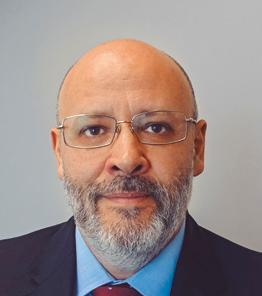
JUAN CARLOS ZEPEDA President Commissioner of CNH
Q: How is CNH building on the results from the bidding rounds and preparing to move forward?
A: At the moment CNH is right in the middle of the transition from innovation to standardization of its bidding rounds. We finished Round One, which was successful, and now we want to build upon that experience. From what we have learned through this round and from industry feedback, we believe we can speed up and scale up the investment process and make it more efficient. So far, CNH has put 55 contracts up for bidding and we have awarded 39. We have 49 companies involved, including PEMEX, from 14 countries. CNH is now working on 2017’s shallow-water Round 2.1, to be held on June 19, 2017. The blocks involved are not all in very shallow waters, with some reaching more than 300m in depth, which requires submersible rigs rather than jackups. There is a lot of interest, with 27 companies already signed up. On July 12 we will hold two onshore bidding rounds and we are also running three farm-outs for PEMEX, one in shallow water and two onshore. PEMEX has already announced another deepwater farm-out, which we will also begin working on.
Q: What role did multiclient seismic studies play in the success of Round One?
A: CNH, the Ministry of Finance and the Ministry of Energy were on a learning curve through Round One and the industry itself also developed. One of the key success factors has been the development of the information industry, or the G&G industry. Before any company can decide to bid, they require information, as in any business project. The oil and gas industry relies especially heavily on technical information in the decision-making process. The reform did not just open the market for oil and gas companies but also for information G&G companies. Before that, PEMEX was the only company legally allowed to run seismic surveys in Mexico. More than half of the macrobasin of the Gulf of Mexico was closed to the world for more than eight decades. Suddenly, it was
The National Hydrocarbons Commission (CNH) was set up as a result of the Energy Reform. Its duties include the handling, regulation and oversight of the oil and gas bidding rounds in Mexico
opened, and any company could apply to CNH for a permit to carry out a survey. In the past two years, US$2 billion has already been spent on acquiring and reprocessing information through multiclient seismic studies. We received more than 50 permit requests and 34 projects have been developed. This is the biggest indicator of the oil industry’s progress in Mexico because it is the first step toward the development of new projects and shows long-term commitment. This was absolutely instrumental for the success of deepwater Round 1.4. We started granting permits at the beginning of 2015 but the results of these surveys were available a few months before the bidding in December. A wide-azimuth 3D survey in the Salina Basin was critical for the competitiveness of Round 1.4.
Q: What has been learned through Round One regarding the royalty rate and investment plan balance in bids?
A: It is the Ministry of Finance’s responsibility to define the weighting given to royalty rates and proposed workplan. Through the four stages of Round One, the Ministry of Finance has tipped the weight towards weight commitment and away from royalties. That was a very smart move because the biddings are not for a fixed object but for different future projects. A company may bid a low royalty rate so it can develop a huge project, while another could bid a high royalty rate and just take advantage of the most profitable part of the field. As the government arm responsible for the state’s fields, we want them to be developed fully and to maximize the recovery factor. We do not only want the maximum royalty possible but also the biggest projects. Finding the correct weighting between these two variables is an ongoing process but we are heading in the right direction. In Round 1.4 more emphasis was on the number of proposed exploration wells. The result was successful, ending with four promised deepwater exploration wells in addition to the Trion farm-out.
Q: What is the industry’s main suggestion for increasing the competitiveness of the bidding rounds?
A: Through different conferences, seminars and panels, we have received industry feedback centered on one suggestion: that CNH could and should scale-up the bidding process. This means that we should offer more rounds and especially include
more blocks in each round. Our goal now is to implement that advice, mainly through two elements. Firstly, we want to increase the acreage we offer through the licensing rounds. Through Round One, CNH offered an acreage amounting to 30,000km2. Brazil offered more than four times this in its last bidding round, although it is a much larger country than Mexico. Colombia, on the other hand, is much smaller and has less hydrocarbon potential than Mexico but it offered six times what Mexico did in its last round. Looking at the US, comparing the Gulf of Mexico on both sides, it is offering more than nine times the amount we are.
Until 2016 the US divided its side of the Gulf of Mexico into three segments. One is closed to the industry but the other two were open for bidding once a year each. Now, they have changed this by offering both areas twice a year, doubling the opportunities for private companies.
This is a reaction to Mexico’s Energy Reform, due to the competition it is creating south of the border. This is another argument why Mexico should scale-up its bidding processes. In Round Zero, CNH awarded PEMEX over 90 percent of Mexico’s 1P oil reserves but only 22 percent of the country’s prospective resources, the majority of which was kept by the state to be auctioned off through licensing rounds. The prospective resources represent Mexico’s oil and gas future but only 5 percent of the 78 percent the state kept has been awarded to bidders. It is clear that we can speed up the process.
Q: How will the standardization for prequalification impact companies interested in bidding on the licensing rounds?
A: Another comment we received from the industry and from AMEXHI, was that CNH needs to make the prequalification process more efficient. Compared to other countries, our prequalification process is very thorough. We check financial strength, net worth, balance sheets, technical capabilities, contracts held in other countries, safety and environment standards and even ask for a special file to assess the lawful origin of the resources they intend to invest in Mexico. Up to now, companies have gone through this prequalification process every time they wanted to bid. We are going to untangle the prequalification from the bidding process itself. At any point in the year, companies will be able to approach CNH and request prequalification for one of the four categories: onshore conventional, onshore unconventional, shallow water and deepwater. After prequalifying, the companies will receive a certification confirming they have certain capabilities, valid for five years. They will only need to update CNH with their financial statements and any other relevant updates.
We are also standardizing the timing of the biddings. Until now, the industry did not know when to expect from the various licensing rounds. We want to be predictable, so together with the Ministry of Energy we have announced that we will hold onshore conventional and shallow-water bidding rounds in the first half of the year, with deepwater and unconventionals in the second half.
FOR REFORM TO WORK, EVERYONE MUST PLAY A ROLE
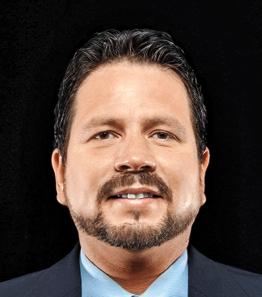
HÉCTOR MOREIRA Commissioner at CNH
Q: What is the biggest challenge for the continued implementation of the Energy Reform?
A: The status quo has lasted for so long it is engraved in people’s minds, making it extremely hard for them to change. We need to make them understand that everyone has a role to play in the new environment, otherwise it will not work. But some people are not prepared to take on those roles. One example is the discovery of oil. Before, when an owner discovered oil on his or her land it meant the state would use the land at a fixed price. Now it means the owner can negotiate directly with the companies that want to extract the oil. People are not aware of this change and neither are the judges who may be asked to adjudicate cases in which a conflict arises because negotiations fail. Even when talking to private companies they sometimes still think the production will be sold directly to PEMEX but that is not the case. The opportunities are far greater. To address this issue, CNH is taking advantage of every opportunity it finds to talk about the Energy Reform and the new rules, conditions and opportunities it brings. It will take a lot of work and some time to have a proper system running but it will work out.
Q: Do you think a new administration taking office after next year's elections could stall or even reverse the reform?
A: Mexico is a nation with very strong institutions. That said, the Energy Reform is now entrenched in the constitution and the only possible way to reverse it is if two-thirds of both chambers of Congress and a majority of state legislatures vote in favor of doing so. The biggest harm a new administration could inflict would be to make it harder for industry players to follow the regulations. Even in such a case, the reform could not be withdrawn. Because of the huge destabilizing impact such a move would have on the country, I do not see a possible scenario in which a new administration could even get
The National Hydrocarbons Commission (CNH) was set up as a result of the Energy Reform. Its duties include the handling, regulation and oversight of the oil and gas bidding rounds in Mexico
close to reversing the Energy Reform by using regulatory frameworks against it. In general, all the different parties have different priorities for the Energy Reform, be it in local content or investment requirements to name some examples, but they all support it.
The only way to reverse the Energy Reform is if two-thirds of both chambers of Congress and a majority of state legislatures vote in favor
Q: How would you measure the Energy Reform’s success?
A: The Energy Reform had three main objectives: to attract investment, to attract technology and to create a national industry. With Round One we have attracted much more investment than PEMEX could ever secure on its own and allowed for the use of state-of-the-art technology on Mexican soil. In this regard, we can consider Round One a success. As for the creation of a national industry, we have seen the emergence of 28 different Mexican companies, which is already a small success. Major success will be accomplished by some of those companies when they move to the big leagues and compete against major international companies. For that to happen we need time, and a number of companies will undoubtedly fail along the way.
One of the big problems the Energy Reform is facing is due to the mishandling of long and short-term expectations. Results such as energy prices and jobs creation cannot be measured on a daily basis but must take into consideration periods of up to 10 years. If these factors are considered when measuring the success of Round One and the Energy Reform, then the results would be far from good but doing so would also be highly irresponsible. Success must be measured in proper and objective ways, with short-term actions that have long-term implications. When viewed this way, the Energy Reform can be considered a success.
CONSOLIDATING MEXICO’S SAFETY REGULATOR
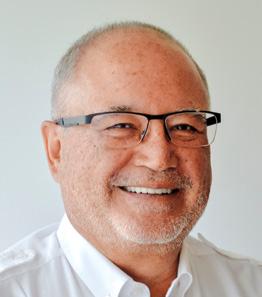
CARLOS DE REGULES Executive Director of ASEA
Q: ASEA is 2 years old and fully up and running. What have been the milestones of the regulator’s development?
A: Two years ago we were given the challenge of building and designing a new regulator from scratch. We started out by defining how to cope with the massive mandate of regulating, authorizing and supervising all matters concerning safety and environmental protection for the whole hydrocarbon value chain. We formed a strong philosophy and well-defined mission to guide our decisions, which involved guaranteeing individual safety and environmental integrity while at the same time providing the industry with long-term certainty about the rules and their enforcement. Around that mission, we designed a model to manage risk. In this industry, risk must be managed to avoid accidents and control pollution.
We designed this model around five different riskmanagement pillars. The first was preemptive: the obligation of every operator to work under safety and environmental management systems. The second was the obligation for everybody to have sufficient financial guarantees to cope with the consequences of potential accidents. Third, we addressed the issuing of nonprescriptive technical regulations that would target goals and performance. The fourth pillar of our model was risk-based inspection. This has to do with recognizing that although it would be possible to verify every piece of the country's 60,000km of pipeline we needed to be strategic and actually go where the risks are. The final element was a philosophy around enforcement aimed at incentivizing better performance as opposed to putting people in jail.
Q: What is your proudest achievement of the past two years?
A: One thing I am particularly proud of is the fact that we have managed to stay focused on our original riskmanagement mission. One of the main milestones was the issuing of our environmental and safety management system regulations and the issuing of regulations concerning financial guarantees. Everyone is starting to comply with these rules, which are two cornerstones of our risk-management model. The third is technical regulation oriented to performance.
In the past two years we have published close to 30 different technical regulations that are risk-based and nonprescriptive. At the end of 2016 we published all the regulations for upstream operations, including deepwater in the Gulf of Mexico, which allowed for an active participation in Round 1.4. The rules, mainly inspired by international best practices, were understood and accepted by the market. We have also made good progress concerning risk-based inspections.
Q: What are the priority areas in for the oil and gas industry in terms of safety?
A: Offshore and refineries are the priority areas. We have deployed aggressive mitigation programs to address the main risks associated with those operations. After analyzing those risks, we came to the conclusion that our current model is working well and effectively. Close to 15,000 projects have crossed our desks and I am glad to share that none are currently delayed. We successfully avoided this by adopting our initial mission to guarantee safety and environmental integrity but at the same time being aware that our role is to provide certainty about the rules. The proof of our success lies in the almost US$70 billion the industry has already committed to Mexico.
Q: How did ASEA manage the processing of so many permits?
A: By mid-2016 the Ministry of Finance authorized an increase of 150 people to expand our execution capacity. That was a relief but still not enough. Manpower is only part of the story as new systems, databases and regulations are also important. A relevant example is how we improved turnaround times for approving gas stations. In April 2016, 40 percent of gas station permits were delayed in our system and the environmental assessment took 120 days to complete. Now, after we put together a brief report regarding the environmental impact of a gas station, it takes only 10-20 days to process.
ASEA, Mexico’s National Industrial Safety and Environmental Protection Agency for the hydrocarbons industry, is in charge of disseminating regulations and enforcing compliance of public and private-sector companies involved in the industry
MANAGING THE FLOW OF FUNDS
MAURICIO HERRERA
Executive and Administrative Coordinator of the Mexican Petroleum Fund (FMP)
Q: How has the FMP’s relationship with authorities and regulators evolved in the last year?
A: It has been excellent. The Energy Reform is something that happened very fast as the Fund started operations in 2015 and we already have a full round of oil bidding processes under our belt. CNH is about to launch Round Two. Because of the speed at which this happened some elements in the law were not very clear or only partially defined.
Today, the responsibilities have been assigned to each authority and coordination is good. This year one of the main elements of the reform is the creation of the new market agent for the state and this is bringing the Ministry of Finance, Ministry of Energy, CNH and FMP together to make this a reality. Before, PEMEX’s PEP unit handled crude oil marketing duties in Mexico and its PMI Comercio Internacional unit did it abroad. Now the law allows for one or several companies taking over these duties for all hydrocarbons and that is a challenge that demands great coordination.
Q: What will be FMP’s role in this new state marketer?
A: Legally FMP is responsible for requesting that CNH hire the market agent from 2018 through a bidding process. PMI will act as the market agent throughout 2017. From 2018 onward the market agent will be the winner of the bidding process that CNH will launch. The most important area where the Fund and its technical committee will be participating is in establishing the maximum price the market agent can charge for its services. It has to send an opinion for CNH to consider, including pricing schemes like a fixed quota or a percentage of the sale. This is a work in progress right now.
Q: What has been the Fund’s strategy to consolidate its operations in such a short time?
The Mexican Petroleum Fund receives, manages and distributes revenues derived from oil exploration and production assignments and contracts. The Fund also manages the financial aspects of such contracts
A: From the start of its operation, the Fund established three clear objectives: administer the oil income and make the corresponding transfers, handle the financial dealings of the oil contracts and administer the long-term reserve. The latter will take some time to consolidate because with oil prices at current levels it is difficult to foresee annual revenues arising from hydrocarbons production activities to surpass the 4.7 percent of GDP threshold that has been set before we can begin accumulating a long-term reserve. Therefore, our efforts have focused on the first two.
Immediately after we started operations back in January 2015, we concentrated our efforts on preparing the infrastructure required to receive the oil income from PEMEX and transfer it to the different stabilization funds and the Ministry of Finance.
Another project that was fundamental at the beginning was the design and implementation of our IT system, the System for the Payments of Assignments and Contracts (SIPAC), which had to be ready before the contracts came into force in August and allows us to receive all the information in the contract. In this sense, we have been able to set effective short-term objectives to comply with our two main functions. In the near term, we will also be in charge of receiving the funds of the state market agent, including the VAT, which has to be transferred to the Mexican Tax Authorities (SAT).
Q: How are you ensuring your stakeholders that operations are transparent?
A: By law, the Fund has to observe strict transparency obligations regarding the information about production of the new E&P contracts. In particular, the Fund is obliged to publish the volumes produced in each contractual area, as well as the costs, expenses and investments incurred by the contractor as part of its operations. The Fund receives and processes this information through SIPAC and later publishes it on its website. In this way, even if a third party would like to reproduce the Fund’s figures and calculations it could do so through the information we make available.
Transparency is not an end in itself because a large part of making this information and costs publicly available has to do with another important objective of the reform, which is generating increased competitivity in the Mexican market. With more operators and participants there is a need for everyone to guarantee they are operating to the highest and most efficient industry standards. The public has to know that companies are not generating inefficiencies or incurring costs for the state above the international standards. Specialist will be able to see the cost of drilling a well in Mexico and compare it to similar operations in other parts of the world.
Q: How is the FMP structuring its collections mechanisms?
A: Ninety percent of the Fund’s income is generated from PEMEX assignments, with the remaining 10 percent coming from the new E&P contracts. Although the share of income from contracts is still small they represent the largest share of workload for the Fund because we are responsible for the administration of the financial aspect of each contract, while for PEMEX’s assignments this is not the case. The complexity arises because the contracts from a particular bidding process contain a specific economic model, which differs for each bid.
There has been a steep learning curve for both the Mexican Petroleum Fund and the contractors and with time there has been an improved understanding of the calculation mechanics and the different economic models. This has been complex because each of CNH’s bidding rounds has introduced tweaks to the contract model. There are adjustment mechanisms, for example, to change royalty payments in view of the price of oil and these terms change from contract to contract. On our side, we have to make sure that after every round and with every contract we incorporate these new economic models into our system. The contractors themselves are in charge of making the calculations for their own payments, our system acts as a verification tool in case of discrepancies.
Q: What effect does the higher relevance of royalty payments over the additional investment factor have on the Fund’s operation?
A: The operation of the Fund has not been impacted by recent changes on bidding design. For instance, in the Trion bidding the upfront payment played an important role in determining the winning bid but once those resources reached the Fund they basically followed the same treatment as those received from royalties and were distributed to the stabilization funds and the Federal Treasury. Upfront payments or royalties only affect the timing of the resources’ entry into the FMP, since for projects like Trion royalty payments will not start until eight to 10 years from now.
Resources received in 2016 by the FMP
MX$308
billion equivalent to 1.6 percent* of GDP
Transferred to
Stabilization Funds
Sectorial Funds
Resources for the oversight of oil income
Federal Budget
The majority of the resources came from PEMEX
In 2017** accumulated transfers to the Treasury reached
MX$122.2 billion
This was from contributions from
465 PEMEX assignments
30 contracts with private companies
*Not enough to accumulate a long term savings reserve
**From Jan. 1 to Mar. 31, 2017
Q: How will the recent recovery of oil prices impact the eventual creation of the long-term savings fund?
A: The 4.7 percent of GDP figure was based on 2013 numbers. In that year, PEMEX contributed 4.7 percent of GDP to the government's accounts, with a production level of around 2.4 million b/d at a price of US$100/b. If production levels had remained stable, which they did not, we would have to see a price around or above US$100/b before payments to the long-term savings fund would be made because the country’s GDP has increased.
It is important to remember that this is a long-term project and the idea is that the Fund becomes a reality as the industry develops and consolidates. Deepwater projects will start production eight years from now and as the country’s production level increases, it will eventually allow us to accumulate funds. This is a project to give Mexico a stabilization fund for its budget so government expenses can be covered in a responsible way. The actual investment decisions regarding the reserve are our responsibility following the technical committee’s guidelines.
A MEGAPHONE FOR THE INDUSTRY
RAYMUNDO PIÑONES Director of AMEXHI
Q: How did AMEXHI support the development of Round One?
A: AMEXHI is an association of 49 companies, each of which played a role in Round One, either as operators or nonoperators. We have the benefit of being supported by around 80 specialists who work for AMEXHI’s member companies. The association interacts with almost every stakeholder in the oil and gas industry as well as with the government through our consultancy councils, commenting on every single piece of regulation and contract that gets published. Most civil associations, the government and AMEXHI are on the same page regarding the way forward and because of that, we can come to decisions that everyone is comfortable with. If we fail to do so, we push for changes that benefit the whole industry.
Q: How does AMEXHI hope to influence the bidding process in Round Two?
A: The regulations are strong enough to manage most of the needs of the industry and government but when the government created Round One’s regulations and invited everyone to the table to discuss them, there were plenty of flaws and gaps that nobody saw. Now that the regulations are being implemented companies are starting to find both obvious and not so obvious problems. We have to keep fighting to ensure the regulations are continuously improving, otherwise we run the risk of having a rigid platform that companies find hard to deal with. Going into victory mode would be dangerous for everyone.
The social licenses required to begin operations are a concern. Companies that are going to operate fields are embarking on long-lasting relationships with communities, up to 50 years, so it is necessary to be engaged with both the local communities and the government. Another concern is the administrative cost of the contracts. Most
The Mexican Association of Hydrocarbon Companies (AMEXHI) is a civil, not-for-profit association whose members span the entire value chain. It was founded in February 2015 and has 49 members
companies find that there is an administrative overload and we are working together with the government and National Productivity Committee (CNP) on a set of tools that will make the process a lot easier and faster.
Q: What main advantage does AMEXHI offer its members?
A: Our biggest strength is that we can make the concern of a group of companies the concern of the industry. We can act as a megaphone for our members. They can get further involved in our activities by ensuring that their workforce takes part in our committees. All committees are open to the member companies and the only requirement is that participants must be employees of the member companies. These committees ensure that the companies’ workforce engages in useful and enriching conversations that deal with their challenges and expectations. We want AMEXHI to become an internal channel through which companies can share vital information that will help them grow. Having expertise from dozens of companies operating in about 90 countries worldwide makes our platform valuable for any member. We are encouraging them to use our channels to share their best practices and experiences.
Q: What are AMEXHI's top goals for the coming year?
A: We want Round Two to be a success and to have the concerns of our members considered in the shaping of Round Three. On the regulatory side we also expect to have influence on regulation, making it less of an administrative burden and allowing for a better and more efficient connection between government, companies and society.
We want our members to know AMEXHI is a valuable tool for them to get their voices heard. We have one very big ticket, the National Committee for Competitiveness, a presidential initiative that is handled by the productivity office of the Ministry of Finance. There is also an initiative to create an electronic portal for regulatory compliance. It is a massive undertaking involving around 13 government entities and the industry and the idea is to reduce the cost of compliance. The intent is to have a pilot for the end of this year.
ALLIANCES KEY TO MARKET SUCCESS
ERNESTO MARCOS Founding Partner at Marcos y Asociados
Q: If you could go back to your role as CFO of PEMEX, what is the first thing you would do?
A: The first action would be to implement an appropriate financial strategy to reflect the NOC’s new identity and concentrate on upstream as the company’s main business focus. In the decade before 2015, the royalties paid by PEMEX represented 33.9 percent of the federal government’s total income. In 2012 they represented 40 percent. This aggressive fiscal regime prevented PEMEX from investing. This is especially obvious today in Mexico’s midstream sector, which is said to suffer from an underinvestment of about US$14 billion.
Q: What does PEMEX need to do to reverse its production decline?
A: The only solution for PEMEX to reverse its 13-year production decline is to seize all the opportunities the Energy Reform offers. This involves seeking out private investment and productive partnerships. While the Trion farm-out was a great success, PEMEX has failed to multiply and accelerate the farm-out of other fields. The key lies in the quantity of farm-outs but PEMEX has not managed to establish the necessary parameters and mechanics to facilitate this. PEMEX needs greater pressure to speed up its farm-out ambitions.
Q: What is your view of concerns that royalty rates are prioritized over work plan increases in selecting winners of the licensing rounds?
A: First, CNH and the Ministry of Energy’s openness to listening to the concerns of the industry in the drafting of the contracts for each bidding round is to be praised. A comparison of the contracts from Round 1.1 with those from Round 1.4 reveals fundamental changes that reflect proposals made by the industry. The industry was not only able to propose modifications for contracts but also had an opportunity to nominate which fields will be auctioned and the deadlines of each bidding round and their prequalification periods.
The only topic to be debated is the imbalance between the two variables of the bidding rounds, namely the
government’s take and the investment amount promised by each bidder through the work program. For AMESPAC’s group of service providers, and especially in this “lower for longer” price environment, it would be beneficial to promote larger investments in the work programs rather than focus on royalty rates because that would encourage companies to commence exploration and drilling activities sooner. By maximizing the government’s take, the government is sacrificing the initial investment companies will offer in the round. When oil prices are depressed, the profitability of certain fields is inevitably affected. What is needed is more commitment and more investment.
Q: How can midstream and downstream companies cooperate to improve their sector’s development?
A: Gasoline and diesel imports are being liberalized in Mexico so Mexican companies supporting PEMEX on fuel distribution, transport and storage are trying to operate on their own. Traders and banks have a lot of interest in this process and they are the ones who can finance the importation of these products. The problem is a lack of communication between potential investors and service companies. The Mexican Energy Council (COMENER), which brings together around 20 associations and chambers, including chambers of maritime and land transport, distributors, the Association of Gas Station Owners (Onexpo), haulers and many more, is a knowledge-sharing initiative to foster interaction between traders, refiners and distributors and to encourage financial alliances. Some companies may not understand the long-term financial options for expanding their business, especially taking into account the daily price adjustments they will have to deal with because of the liberalization. Gas station owners can get together to apply for financial backing that they may not be able to access alone, for example. It is a mutually beneficial process, which is creating a whole new market.
Marcos y Asociados is a financial and business consultancy firm specializing in Mexican energy projects. The company offers its clients a complete assessment of potential opportunities to enter and participate in the market
CREATE INDEPENDENT BODY TO MONITOR OIL AND GAS
DAVID ENRÍQUEZ
Senior Partner at Goodrich, Riquelme y Asociados
Q: How might corruption in Mexico and its institutions impact the implementation of the Energy Reform?
A: Anything related to governance and corruption in Mexico must be dissected on three levels: federal, state and municipal. On the federal level the roles of authorities like CNH, CRE and the Ministry of Energy are critical and effective. Corruption is not relevant federally because of the high level of transparency shown throughout the processes so far. None of our clients, which are mostly IOCs and first-class independents, have had any complaints related to corruption contrary to the Fair Credit Billing Act (FCBA).
State and municipal factors come into play more when implementing the contracts signed throughout the licensing rounds and specifically when obtaining production permits. Concerns center on land access and interaction with communities, especially when facing corruption and hostility from community leaders, which could include demanding a certain percentage of oil profits.
It is important that companies respect the rules set out by the International Labor Organization (ILO). Past projects, such as an aqueduct in Sonora, have been canceled because they did not comply with social and environmental regulations.
Q: What developments are required regarding the roles of the new regulatory bodies?
A: CNH, CRE and ASEA have varying roles. On one hand, they are regulators but CNH is also the counterpart of every new contract, since it signs and processes them. This dualstatus calls for an independent body to monitor the oil and gas industry, as COFECE does for competitiveness in Mexico. This nonprofit organization would observe what is happening in the oil and gas industry from a third-party
Goodrich, Riquelme y Asociados is a global law firm providing legal services tailored to the business community worldwide. Its clients are medium-size, as well as leading global companies of numerous nationalities and economic sectors
viewpoint, evaluating the activity of the authorities and their relationship with operators. Focusing on the private players as much as the governmental bodies, it would evaluate the social, environmental, governmental and operational aspects of petroleum activity. Consulting bodies already exist but they deal with a specific aspect of the industry rather than all of it, so their perspective is limited to their own scope of specialization.
Q: What role have Mexican law firms played in shaping new oil and gas regulations?
A: We are happy with the role Goodrich, Riquelme y Asociados has had in shaping the Energy Reform. We have been involved on a regulatory and legislative level and in the contractual projects. A clear example of our participation was during the Trion farm-out, throughout which we made presentations and had meetings with relevant industry and governmental players. By voicing the concerns of the industry, we influenced the Trion contract, which took into account industry worries and had a more improved risk balance. This process showed that the government did not cover its ears, they listened.
Q: What are the consequences of partnering with PEMEX for other operators?
A: There is a lot of interest in partnering with PEMEX, not just through farm-outs but in any capacity. As well as being completely free to form alliances, the NOC offers valuable knowledge of Mexico’s oil and gas industry and its infrastructure. Despite the interest, we believe that PEMEX has overestimated its protagonist role in Mexico on certain occasions. When forming partnerships, the key question is what each company brings to the table. It could be technology or money but in a joint venture a company must have something to offer to gain leverage. When a company does not offer anything tangible, as is the case with PEMEX, it creates a strange negotiating dynamic.
Another issue involves miscommunication and misalignment of priorities between PEMEX’s top and middle management. Top executives at the NOC have an open mind and positive attitude toward creating associations through farm-outs
and other models. But this sentiment does not sufficiently permeate middle management.
Q: What were the implications of Round Zero, which saw PEMEX select fields without competition?
A: Round Zero was an expression of PEMEX’s problem but we believe that the origin lies in PEMEX’s leadership identity. A disconnect exists between the previous PEMEX, which was part of the government, and the new PEMEX, whose goal is to turn a financial profit like any other productive company. Higher management has a more international outlook but this is not always translated to middle management. This disconnect is causing delays with the monetization of assets and projects, which are stagnating due to internal blockages. The delays are not due to a lack of willingness or leadership in senior management but because their orders are not being implemented further down the line.
A change in middle management’s mindset is urgent or PEMEX risks being unable to fully roll out its oil projects and being legally forced to return the fields from Round Zero to the government. In 2017 the first revision of PEMEX’s activity in the fields it won will be carried out and revocation processes will be initiated for the ones where no progress has been made. PEMEX is definitely making an effort to counteract this but it hasn’t spread to middle management yet.
Q: What are the potential effects on the market from the lack of a transitional tax provision for PEMEX?
A: The lack of a transitional fiscal regime for PEMEX is a frequently criticized aspect of the reform, especially given the orderly fashion with which the wider industry deals with finances. To counteract this, the farm-outs should have been processed much earlier, preferably immediately after the conclusion of Round Zero. Farm-outs are indispensable due
to PEMEX’s financial disorder. But the success of a farm-out is not guaranteed simply because it is awarded. Instead, the winning party must be evaluated and any matters of dispute resolved. The cash calls initiative could solve many of the payment issues between PEMEX and its future partners and Trion will be a test of this. The real results will be seen after the joint venture materializes and we can analyze it in real time.
Q: What legal themes will define the Mexican oil and gas industry in 2017?
A: We believe project implementation will color the legal discussion surrounding the Energy Reform in 2017. The year 2016 was defined by licensing rounds and secondary regulations but all of that is now completed. In 2017 we will see the materialization of work plans and discussion will center on drilling permits and social and environmental aspects such as land access and negotiation with communities.
A relevant legal consideration to take into account in the coming year is the subject of asymmetrical regulation. In Mexico, we have the problematic combination of a liberalized legal regime but an industry that is still dominated by one player. To avoid the inequality between players putting the brakes on progress, asymmetrical regulation is required.
We need to see modified regulations that take into account the NOC’s continued dominance in the market. Small steps are already being made when it comes to gas stations and pipelines to ensure a fair battleground and competition. If there is one player that should have a protagonist role in the Energy Reform at this point, it is COFECE. We are entering virgin territory when it comes to asymmetrical regulation and they need to maintain the conditionality of PEMEX’s role until the new players have time to achieve a level playing field.
PEMEX’S PATH TO PROFITABILITY AND PARTNERSHIPS
JORGE LEIS Partner and Lead of Oil and Gas Practice in
the Americas for Bain & Company
Q: How must PEMEX’s strategy change to ensure its success as a competitive market player?
A: PEMEX used to take on many projects for political reasons. Now the government can help PEMEX become a successful enterprise by not forcing it to continue with these unprofitable projects. This will allow PEMEX to focus on learning and improving the capabilities that really do matter for the company. At the moment PEMEX cannot produce more farm-outs that will allow it to get rid of its most unproductive, unprofitable areas because there is not an industrial backup for it to do so. In the US, when major companies hit a tipping point in which it is no longer economically viable to keep producing, they farm out or sell the producing assets to smaller companies. That is not possible in Mexico because there are no smaller companies. With the Energy Reform this will certainly be the environment one day.
Q: What challenges will the NOC face as it absorbs knowledge from its new partners?
A: We are not sure if PEMEX actually has the capacity to learn the lessons it needs from all the different partnerships it wants to strike. Learning from a smaller number of partners would be beneficial because it requires less human capital. Learning requires people and time to run audits, exercise control and see how they have influenced the cultural paradigm and the operational outcome, so having fewer people involved would make the process easier both for PEMEX and the IOCs. On the other hand, having multiple partners means that PEMEX can learn from a wider range of companies while at the same time having access to more human and financial capital.
Q: What impact will first-time partnerships with IOCs have on PEMEX?
A: PEMEX will have to look for guidance from its partners and learn how to become an effective operated by others
Bain & Company is a global leader in management consulting. With local offices in Mexico City that have served all of North Latin America since 1996, Bain & Company has wide experience in all consulting and industrial areas
(OBO) partner. Being an OBO partner does not mean it will have limited influence; almost all of the IOCs and major independents use this model. Companies frequently make a discovery but do not have the capital to develop it, forcing them to bring in partners or to convert the asset into an OBO. The ability to develop an effective OBO model will allow PEMEX to not only take part in projects that require capital investments beyond its means but to build important capabilities over time. But doing so will require optimizing contractual terms and operating models to maximize learning and influence while not interfering too much with the operating partner. To achieve this PEMEX must do more than just change the name of its institutions. It ultimately must change its decision-making processes and reduce red tape. Doing so involves a cultural change in an institution that has well over one hundred thousand employees.
Q: How are companies dealing with the current low-oil price environment and how is this affecting the industry?
A: To deal with the prospect of a low-price environment and heightened uncertainty, big oil companies have cut costs, postponed and canceled CAPEX and focused on intrinsically lower cost assets with shorter cycles, looking at their portfolios and projects to find the truly intrinsic value and where can their assets sit on the supply curve. They are making decisions based on what is required to achieve a positive mix of geographical locations and types of hydrocarbons.
In the case of the Gulf of Mexico, offshore projects involve plenty of risk but each company weighs the risk differently and can invest if it believes the risk can be mitigated. If prices go up to US$80/b, companies willing to take on additional risk will generate great value but they also have to take into account the possibility of it falling to US$45/b. The geology, a deep knowledge of the area and an opening market made Mexico attractive for many international companies that were looking to enter or increase their exposure in the Gulf of Mexico and believed they could develop reserves at the low end of the cost curve.
UPSTREAM BUSINESS TRICKLES DOWN
ALEJANDRA LEÓN Director of Latin America Upstream for IHS Markit
Q: How will advisers like IHS benefit from new companies entering the upstream and downstream markets?
A: We are very busy at the moment talking to new players. We are advising a lot of companies in both upstream and downstream, trying to evaluate opportunities. Downstream is becoming a popular topic because there is a lot of uncertainty and it is usually a local market. Now that there are more players in the upstream sector, the interest in our geological evaluation and project economics software has increased. Our data services have been welcomed by new players. We are also supporting the government, mostly via collaborative discussions to understand the international market, new trends and very specific projects. IHS is one of the companies best positioned for this because we have the international experience, specialized people and a strong presence in Mexico.
Q: What did the government, PEMEX and private companies learn from Round One and what could be improved?
A: The government needs to moderate its ambitions and offer blocks according to the real capability and capacity of its institutions. Another point of improvement concerns the kind of information provided. Success is not measured by how many blocks are awarded, nor by a high government stake. The success of each round will be seen in the long term, when it becomes clear whether the companies are operating appropriately, making discoveries and generating value for the country. Awarding blocks is a good start but now the challenge is to develop projects on schedule while adhering to industrial safety standards and operating in an environmentally friendly way.
Q: What will be PEMEX’s role in the development of the Energy Reform in the coming years?
A: This reform cannot be a success if PEMEX is not a strong company. One of the motivations for the reform was to improve PEMEX and make it a successful company. The entire existing oil infrastructure in Mexico belongs to PEMEX, so it is also important for new companies that PEMEX is efficient and productive. They must cooperate with PEMEX and help it address concerns. It is not an easy
task to solve deep-rooted issues but a good start would be to evaluate the company, project by project, and determine which ones are profitable. This not only applies to E&P but also to refining, petrochemicals, transportation and trade.
The Ministry of Finance’s decision in 2016 to inject money into PEMEX so it could pay suppliers was positive but not a definitive solution. It is a positive sign that PEMEX is cooperating with the government but we need to see that the company is changing and the money will be put to good use. It is a matter of how a business evaluates its portfolio and decides where to make changes. Trion’s farm-out is another good start because it means PEMEX is starting to seize the opportunities resulting from the reform. But it is still a single project and we need to start seeing similar decisive actions. If we continue seeing business as usual, the company will not change no matter how much money is injected into PEMEX.
Q: How could PEMEX benefit from drafting in a younger workforce with a fresh approach?
A: There are still many experienced people at PEMEX so it needs to strike a balance between hiring a younger workforce and retaining experienced people. Corrupt people need to be removed from the company but corruption does not depend on age. It is about finding the right people who work ethically. You can start changing corrupt views by having the right incentives for the right people. A labor policy that really focuses on evaluation and recognizing good work is the kind of mentality that could reduce unethical practices at PEMEX. Something we criticize are union positions that guarantee a job for life, because then there is no incentive to improve. If you look at the average salary for union workers, it is not high but it has the allure of job security. Reforming labor policies is necessary and the setting of goals and good management are required to achieve it.
IHS Markit is a world leader in critical information, analytics and expertise, forging solutions for the major industries and markets that drive economies worldwide and offering a 360-degree view of risk, oportunity and financial impact.
EXPERIENCE A PLUS IN ‘ENERGY REVOLUTION’
RUBÉN CRUZ Partner, Head of Energy and Natural Resources at KPMG Mexico
Q: What role does KPMG play in the Mexican oil and gas market, especially given the Energy Reform?
A: This is not just an Energy Reform but an Energy Revolution. Many companies, both national and international, are arriving in a very short period of time. We can offer our clients experience and knowledge due to our activities around the world and in Mexico. KPMG has been active with PEMEX for 11 years, so we know it inside and out. We are aware of all the challenges and opportunities it faces in its transition from state monopoly to independent productive entity. Such a combination of knowledge and experience is hard to find in Mexico and we are happy to offer it as an added value to our clients.
Q: Looking at the winners of Round 1.4, how is KPMG positioned to work with and help them?
A: In the context of Round One, KPMG decided to follow the strategy of providing services to CNH during the pre-qualification period, by certifying that the bidding companies complied with all its defined regulations. To avoid any conflict of interest and due to CNH regulations, we could not provide any other service to the companies bidding in that round.
Round 1.1 brought Sierra Oil & Gas, while Rounds 1.2 and 1.3 brought enterprises like Pan American Energy and PetroBAL. Since we are no longer working with PEMEX, we can offer them our full range of services such as auditing, tax compliance, pricing transfer, expat management and booking, to name a few.
Q: Regarding local content, what challenges and opportunities do you detect in Mexico?
A: For the cutting-edge and expertise-intensive areas to be developed in Mexico, such as deepwater, most of the knowledge and people will have to come from abroad.
KPMG is one of the world’s largest consultancy firms, specializing in legal, fiscal, tax and technology. It helps companies with regulatory compliance, process optimization and risk management, among others
Nevertheless, the number of high-tech jobs performed by expats is nothing compared to the massive capital infrastructure investments that these companies are pouring into Mexican fields. Such investment will open up opportunities for local companies in the area of platform services, which is not knowledge-intensive but requires experience in the region as well as a local workforce.
Q: How can M&As fortify companies as they weather the end of the crisis and why should they choose KPMG?
A: M&A will take place mainly in upstream, with the companies entering the market. KPMG sees special potential for these relationships in the services area due to the newcomers’ lack of regional experience. Local companies are attractive acquisition targets because they have plenty of experience in servicing PEMEX and its suppliers. These local companies have many opportunities but they also lack capital.
To avoid missing those opportunities, they could play both traditional and nontraditional debt strategies. Such strategies range from acquiring private equity to being acquired in stages or using mezzanine debt to receive capital even if they have already used banking financial tools. Some local companies have a further challenge because they are family businesses, which tend to lack a proper structure, and will first need to employ corporate strategy tools. KPMG does not see all of the previously stated as problems but as opportunities that after being solved will allow local companies to grow.
Q: What are KPMG’s goals in Mexico and how is it preparing to achieve them?
A: KPMG has established a five-year goal of doubling its global size while also doubling the revenue from energy sector activities. KPMG has been working in this industry for several years in other regions and now Mexico has opened up an interesting opportunity to offer services to many new clients. We have worked with PEMEX for over a decade and are now committed to acquiring and investing in the right talent to serve the growing Mexican energy ecosystem.
ADDRESS UNDERINVESTMENT TO FOSTER COMPETITIVENESS
EDUARDO LÓPEZ
Executive Director Oil and Gas of EY
Bridging the transition between the old monopoly and the new, open market created by the Energy Reform will bring a number of challenges and years of underinvestment will need to be addressed to foster a new, competitive market, says Eduardo López, EY Mexico’s Executive Director Oil and Gas.
One stage of the solution, he says, will be the construction of all the necessary infrastructure to support increased activity in the industry, especially in the distribution of refined products. “The majority of distribution and transportation of refined products is done by truck in Mexico, which is the least efficient way,” López says, adding that the construction of pipelines is complex due to the country’s difficult topography. Despite CENAGAS’ and PEMEX Logística’s open seasons providing the opportunity for private firms to use the country’s existing infrastructure, third-party storage and distribution infrastructure will be required in the future.
EY, López says, is there to help its clients as they take their first steps into the Mexican oil and gas industry. “Mexico is fiscally complex, so EY uses its knowledge of local conditions to guide our clients.”
The country’s oil and gas industry is a critical component in EY’s global portfolio and the sector’s emergence from its previously monopolistic structure presents a great opportunity. EY’s focus is now on helping clients cross the challenging gap between the monopolistic model and the emerging market-oriented version to take full advantage of all the opportunities stemming from the Energy Reform.
Mexico’s infrastructure problems, López adds, are not limited to storage and distribution but stretch into the lack of investment in PEMEX’s six refineries. The Cadereyta, Madero, Minatitlán, Salamanca, Salina Cruz and Tula refineries have fallen into disrepair and will remain in a “sorry state” unless PEMEX tackles head on their many operational problems and upgrades their configuration, López says. The refineries’ crude oil processing output has dropped nearly 24 percent since 2013 to 933,062b/d by the end of 2016. It has also
fallen over 28 percent since a maximum of 1.3 million b/d in this century, registered in 2004.
One instrument that could assist cash-strapped PEMEX in creating new revenue streams is the Fibra E, a financial instrument designed to allow companies to monetize productive assets, similar to the Master Limited Partnerships (MLPs) of the US. Although Mexico’s NOC could find it an uphill challenge to put a value on aging and depreciated infrastructure, several Fibra Es are expected to be launched.
López is cautiously optimistic about Mexico’s emerging deepwater industry cemented by the successful licensing round in December 2016. “The Gulf of Mexico is one of the last frontiers for deepwater explorers,” he says, “and the success of Round 1.4 validates the fact that big players believe that.”
But it is not just about the success of the licensing rounds. Cementing a longer-term view of the industry remains a challenge because the authorities chose to prioritize royalty rates over investment for the deepwater round. “The fact that companies won based on royalty rates shows that the government is trying to maximize revenues. But revenues from the venture will only start to flow once the fields have been fully developed, which will be in 10 years or more.”
According to the oil and gas expert, if CNH had demanded higher investment amounts, companies would have been forced to develop the fields more quickly to speed up their ROI. After all, the government could conceivably renegotiate royalty rates later, following the lead of countries such as the UK.
One clear step forward for the Energy Reform was the Trion farm-out, López says. BHP Billiton is making a significant bet as it partners with PEMEX, a company still haunted by financial constraints and efficiency concerns. “It was a huge relief for PEMEX and for Mexico as a country,” he says, adding that Mexico can look forward to a more buoyant energy sector and economy despite the roadblocks still ahead.
TRANSFORMATION CONSULTANTS TAKE THE WIDE VIEW
BERNARDO CARDONA Partner – Energy and Resources Industry Leader at Deloitte Consulting Mexico
The changes brought about by the Energy Reform directly impacted every aspect of Mexico’s oil and gas industry, both upstream through CNH’s revolutionary licensing rounds and downstream with the competitive opening of the distribution market. But even as the shift affects the whole industry, different sectors are developing at different rates, says Bernardo Cardona, Partner and Energy and Resources Industry Leader at Deloitte Consulting Mexico. “There is a natural life cycle to the development of any market, including the embryonic, development, maturation and decline stage,” he says.
Deloitte’s role in that development cycle focuses on offering objective, technical based opinions that its clients and partners use in their own decision-making processes. The firm’s goal is to aid oil and gas companies to form “executable strategies” that translate into real transformation. “We roll up our sleeves and really get down to the nitty-gritty to see what is going to work for our clients in terms of strategy and execution,” Cardona adds.
Cardona highlights three key characteristics that define the progress of the Energy Reform: the creation of a competitive and open market, access to capital and technology and finally judicial and regulatory transparency to provide certainty to the market. Those three critical success factors have been best showcased in upstream, Cardona says. “In upstream we are now dealing with solid facts, strengthened by a series of historic milestones in the past year. They include the international participation in December 2016’s deepwater round, the appearance of new Mexican operators like Sierra Oil & Gas and PEMEX’s farmout on the Trion block with BHP Billiton.”
Due to the relevance of upstream activity in terms of capital, technology and global reach, forming and implementing the correct strategy is extremely important, says Cardona. “Upstream companies need to focus on their strategic portfolios, which means knowing their strengths and focusing on them, then forming partnerships to fill the gaps where they lack expertise and hence share the risk.” In PEMEX’s case, this translates into focusing on its capacity in
shallow water and conventional onshore fields and seeking alliances to access the capital and technology needed for deepwater and unconventional field development, the consultant expert says. Additional technology and capital is also increasingly required for the continued exploitation of maturing fields such as Cantarell and Ku-Maloob-Zaap.
The company’s approach to consultancy will be particularly applicable to the downstream sector in the near future, as gas station owners get to grips with the implications of the transformation on their businesses. Rather than simply selling fuel at a set price as in the past, fuel station operators will have to learn vital new skills in price fluctuation and management while providing a differential value proposition to their customers if they want to remain competitive. On top of that, Cardona predicts a complete transformation of the status of gas stations in Mexico. “Gas stations will no longer be primarily focused on buying fuel. As the market becomes competitive, they will turn into shopping centers and hubs for social interaction.” It is this strategic implementation process that Deloitte can help with, drawing on its knowledge of other markets where gasoline stations are already competitive hubs.
Mexico’s new oil and gas regulators bear the responsibility of assisting PEMEX and other new operators as they begin developing work plans for the blocks won in Round One, Cardona continues. Praising the transparency and consolidation of CNH’s licensing round process, Cardona says the regulator’s next challenge is to manage and administrate the contracts resulting from the first four bids of Round One and to launch the next rounds. “CNH needs to keep the contract administration process simple, to avoid creating an administrative burden.” Its flexibility regarding the adaptation of the contracts was promising, he says, showing the regulator’s willingness to listen to market concerns.
The regulators have been busy drafting up new rulebooks and contractual terms to keep up with the swift implementation of the Energy Reform, and in Cardona’s eyes, they have done well so far. “ASEA released its environmental and safety regulations before the deepwater round, to give participants the clearest view of regulations before placing bids.”
BRIDGING THE ACADEMIC AND PRIVATE DIVIDE
OSCAR GONZÁLEZ President of ARHIP
Q: What has been ARHIP’s primary goal during the last year?
A: ARHIP is building links with educational institutions as a member of and adviser to the committee developing the human resources strategic plan for Tamaulipas, Tabasco and Campeche. We have also held administrative and information sessions at different educational institutions such as Tabasco Technological University (UTT), Autonomous University of Carmen (UNACAR) in Ciudad del Carmen and both UNAM and IPN in Mexico City. Our approach is to offer students an overview of the state of Mexico’s oil and gas sector and future careers in the field, such as petroleum and geological engineering.
We had two main objectives with the students. One was to be honest with them about the industry crisis and explain that many recent graduates have not been able to enter the labor market as a result but also to assure them that the industry is rebounding. The second was to convey that in a globalized world getting a higher degree was not enough and that to increase their opportunities of getting hired they would need both a specialization in a technical field such as drilling and a set of soft skills such as teamwork, decision-making and leadership. But students cannot achieve this alone. Institutes of higher education need to help them develop.
Q: What are the highlights of ARHIP’s project with the governments of Tamaulipas, Tabasco and Campeche?
A: We are developing an analysis of the education field for these regional governments, including a study of institutes of higher education, their programs and competencies. Comparing this information with the job-posting catalogue provided by our members will allow us to identify deficiencies according to what the industrial sector requires. Some states, like Campeche, are extremely interested in developing this study and are considering expanding the implementation of the dual education system, which would see educational institutions work closely together with the industrial sector to offer a 50-50 approach for the students. Dual education has proven extremely successful in countries like Germany. In Mexico, the Technical Education Council (CONALEP) has successfully implemented it in
the automotive sector, focusing on developing automotive technicians with the support of companies that finance and create facilities for the students. This is a good time for the oil and gas sector to do the same.
Q: What does ARHIP offer new members?
A: We offer our members an immediate benefit by providing a bird’s-eye view of the labor market in Mexico with additional knowledge in labor relations, labor unions and geographic expertise. This is extremely important for new companies coming to Mexico because they lack region-specific awareness. But we also offer added value for companies with experience in the country. Rules have changed and now they have to bid in line with regulations established by several bodies such as ASEA and SEMARNAT while CNH and the Ministry of Finance choose the winners. ARHIP facilitates and paves the way for companies to be successful. Our members are our main driving force and their knowledge, expertise and experience is the added value that we offer.
Q: What has prevented the oil and gas sector from participating in the dual education system until now?
A: The sector is extremely competitive and until now lacked a strong alliance of companies to push for the implementation of dual education. Campeche’s government is asking us to gather allies to create a database of qualifications, certification and skills needed for positions in the oil and gas sector so the education system can work on implementing relevant competencies and certifications in their programs. Having PEMEX as a member will be an important milestone for us because it has a strong network and 33 training centers. Creating synergies with the NOC will speed up our plans. Luckily, PEMEX has already reached out to us and is planning its involvement with ARHIP.
ARHIP is a human resources professional association. Formed by field leaders, ARHIP works to promote knowledge exchange between its members and educational institutions for the benefit of the Mexican oil and gas industry
TECHNOLOGY CAN SOLVE PROBLEMS, OFFER INTEGRAL SOLUTIONS
ERNESTO RÍOS
Director General of Mexican Petroleum Institute (IMP)
Q: How has IMP’s objective changed in the wake of the Energy Reform?
A: As a decentralized organism, IMP conducts research, technological development, innovation, scaling of processes and products, provision of technological services-oriented production, transformation-processes optimization in E&P, industrial transformation and national and international commercialization as well as specialized training.
Our purpose is to generate the technical capabilities needed by the petroleum industry. We cover the sector’s entire operational value chain, from E&P to industrial transformation, ensuring the creation of economic value and solving high-impact technological problems related to business goals.
Through applied research, we develop, assimilate and transform technology to solve specific problems and offer integral solutions through engineering and technological services. Likewise, we provide specialized scientific and technological training through postgraduate courses and professional and technical-level courses.
Since the opening of the petroleum market, we have become more deeply integrated into the industry’s objectives and main projects to increase the efficiency, productivity and growth of the hydrocarbons sector. Over its 50-year history, the institute has contributed to the development of PEMEX and the country through training of human resources and technology creation.
Q: How does IMP offer a higher added value to Mexico?
A: IMP’s main strength is its human talent. We have 2,500 researchers (131 at the National Research Institute), specialists and technicians offering Mexico a higher added value. IMP works with the capacity of 1.8 million man hours, 12 laboratories, 11 pilot plants, 21 research centers and the country’s largest petroleum information library. In 2016, we were granted 12 national and 35 international patents and registered 193 author’s rights and 24 trademarks. We also developed 160 products and services.
Our activities to generate and assimilate new products, techniques, knowledge and methodologies applicable to the petroleum industry offer the greatest added value. Our most substantial activities are E&P technologies for unconventional and conventional field development, product handling, refurbishment and transport, biofuels and geological, geophysical and geomechanical quantitative handling.
Q: What technologies has IMP developed for the oil and gas industry?
A: In landscape shaped by the Energy Reform, IMP is reinforcing its national institutional character in the sense of becoming a hub for participating in E&P and resources transformation projects. Our main challenge is to convert the institute into a self-sustaining creator of national capabilities.
Under those conditions, reinforcing the link between research and technological application to turn ideas into results is of the utmost importance. We are aware the institute needs more agility to maximize the economic value of the products and services it creates and for that we will continue working on applications for research and technological development that ensure value is created. In this way we can help develop the country’s petroleum industry. During the last few years, IMP has developed, among others, the following 14 innovative technologies: a Venturi-type system for flow pattern enhancement (MPFV®) for control and optimization of a field’s production, petro-physical inversion of a carbonate field’s records, enhanced recovery of oils via microbial processes (IMPRHVM), transition-metric techniques to prevent organic deposition, chemical products for foaming ( IMP-WETFOAM), chemical products to maintain petroleum production IMP-CDFIM-3000, chemical products to avoid foaling ESIM-1000 and ESIM-2000, electromagnetic surface inspection for ducts technology (TIEMS®), leakage detection systems, chemical inhibitors for corrosion control (IMP-ALICIM), improved processes for crude heavy oils and residues (HIDRO-IMP), a monitoring system for realtime hydraulic fracturing (Frackmovil), a portable tracers
laboratory (Trazamovil), and development of the deepwater technologies center that is under construction.
The MPFV has boosted gas-well production up to 20 percent, with an average production increase of 0.33 million cf/d in gas wells and 50b/d in oil wells. The petrophysical inversion has allowed for better precision in the identification of well production potential. Microbial processes for hydrocarbon enhancement have proven effective for increasing oil production in a range of 22 to 44 percent. Our hydro-treatment process development has been recognized by PEMEX as a success. Finally, in petrochemicals we are a world leader in the development and scaling of catalytic processes for ethane oxidation dehydrogenation.
Q: What are IMP’s most significant relationships?
A: The Energy Reform has opened up great opportunities for the establishment of alliances, agreements and contracting of new players in the national petroleum industry. In the public sector we have closer relations with regulating organisms such as CNH, CRE, CENAGAS, ASEA, SEMARNAT and the Ministry of Energy. In the private sector we have worked closely with AMEXHI, an association that groups more than 40 petroleum companies from over 19 countries interested in investing in Mexico. Some of those companies have already visited the institute to identify areas for collaboration while others have entered into consulting and technology services contracts.
Q: What is IMP doing to help end the human talent gap in Mexico?
A: We train highly specialized human talent for the petroleum industry by following five main principles: recruit, develop and evaluate human talent as well as generate actions to retain it, design and implement learning solutions to improve the abilities of personnel and the institute’s competitiveness, provide development and management services for petroleum industry talent, manage the institute’s knowledge by protecting intellectual property and facilitate internal information flow and personnel access to state-of-the-art science and technologies.
In 2016 the institute provided training to 3,181 participants to develop specialized capabilities in important areas and facilitated the participation of 649 IMP members in national and international forums, conferences, congresses, seminars and symposiums.
Additionally, our scholarship program targets the attraction, development and retention of excelling personnel who exhibit a service vocation and a winning attitude. In 2016 IMP supported 10 doctorates abroad, four master's candidates, 15 thesis stays, 25 interns and 77 social services through
its scholarship program. During 2012-2016 the doctorate program produced 27 graduates and the master’s program produced 27 graduates. With the support of the Talent Training, Recruiting, Evaluation and Selection Programs (PCTRES), during 2015-2016 nine students who finished their master’s program abroad were incorporated into IMP in the areas of field characterization, well drilling, completion and maintenance as well as basins characterization, among other specialties. In this way, IMP contributes to reducing the talent gap of specialized national human resources for the petroleum industry while simultaneously training new professionals who can be directly integrated into the national workforce.
Q: How is IMP planning to use the Hecho en Mexico logo?
A: IMP is authorized to use the Hecho en México logo for its technologies, products and services to distinguish them as made in Mexico products. The goal is to reinforce the internal market, promote the competitiveness of national products and foster their use. Furthermore, the use of the logo Hecho en México will facilitate the national and international positioning of the Marca IMP as an innovative, quality and value-providing brand.
Q: What specific activities does IMP expect to have the biggest impact on the oil and gas sector in 2018?
A: The Energy Reform has promoted a tighter relationship among the entire range of participants in the national petroleum industry. New companies in E&P, production and transformation of hydrocarbons require knowledge and experience generated in the country. In this sense, IMP’s and PEMEX’s wealth of knowledge will be of great value and is therefore vital for maintaining and reinforcing the agreements, alliances and joint activities that have resulted from the reform.
Q: What elements will be crucial for IMP to realize its longterm goals?
A: In the coming years, the strategic relationship that IMP has developed with PEMEX will be reinforced to generate more synergies that allow for the integration of new commercial and corporate competitive schemes. This relationship will be beneficial for both institutions and the country. IMP is committed to reinforcing its financial autonomy and sustainability through the sale of products and services that provide high-technological impact, ensuring integral solutions and generating new capacities for the Mexican petroleum industry.
The Mexican Petroleum Institute (IMP) is a national institution that provides solutions for the oil and gas industry through R&D efforts, human resources training and collaboration with both the business and education sectors.
HOW CAN THE INDUSTRY BETTER PROMOTE GENDER EQUALITY?
If you walk into a room of 100 top-level global oil and gas executives, just 11 will be women, according to a 2016 survey carried out by the Peterson Institute for International Economics. The same study, which analyzed results from some 21,980 companies across 91 countries, found that companies with 30 percent female representation on executive boards could add up to 6 percentage points to net margin. In an industry emerging from a crisis and looking to rejuvenate its aging workforce with a generation that considers gender equality a priority, Mexico Oil & Gas Review turned to women leaders for their opinion on promoting gender equality in the industry.
LAURA SCHWINN CEO of C&C Reservoirs
Unconscious bias is the most significant challenge I have faced. Throughout my career there have been times when managers and leadership have made assumptions about what I would be willing or unwilling to take on. As a leader I have seen many managers make assumptions that disadvantage women who are willing to take on challenges. Whether it is working in the field, taking on an international assignment or going on a golf outing, I would give young women the same advice that I give young men: focus on results, be persistent and be sure to put your hand up when you want to take on a new challenge, listen to feedback, help your team succeed and find something you are passionate about.
CARMEN SUÁREZ Director of Stanton Chase
I was the first female manager to work at TenarisTamsa in Mexico, one of the largest global manufacturers of steel pipes for the energy sector. For me, this was an advantage because the rest of the industry in the area had never dealt with a woman before and did not know how to treat me. At that time, human resources was not fully developed in Tamsa, so I had the independence and therefore the chance to prove my abilities. Engineering is seen as a man’s world, which makes it difficult for a woman to decide to go down that path. But everything depends on attitude: if you approach the situation without fear, it can actually be an advantage.
ANGÉLICA LINARES Director General/CEO of Corporativo Cemza
If I attend specialized conferences, like an engineering meeting, sometimes there is just me and nine men. Schools should encourage women to enter technical programs because the issue of a lack of women in leadership positions in oil and gas stems from a lack of education. They should also give women more responsibility earlier on, such as leadership positions at school. The biggest challenge as a woman in this industry is feeling empowered. The first priority is to believe in ourselves. Also, we have to learn how to balance our work life with other areas such as family and our social life. I would advise them first to believe in themselves. Secondly, I want to highlight the commitment women should have to helping other women. As a leader, we can inspire other women to follow the same path.
At the moment, there are very few females in managerial positions. In the coming years, I hope to see more opportunities for women as a result of the larger number of women that are being educated to participate in this sector. Today, many key decisions are made by men, making it challenging for women to advance to decisionmaking positions. Nevertheless, I think the future of women in those positions is promising. A generational change is taking place. When I studied geophysical engineering, I was the only female in my class. Today, women represent more than 50 percent of the students. This will create the foundation for the development of women in this industry that traditionally has been the domain of men.
I do not think that being a woman gives you an advantage or a disadvantage in the field. However, it certainly creates challenges that have to be addressed on a daily basis — when conducting critical conversations with men,for example. Women need to know they are capable from a professional viewpoint, be it for their knowledge, experience or background. In the end, it all depends on how you present yourself, how you set yourself goals and focus on achieving them by studying, which in the end leads you to grow along with the company. The first person who must be liberated of stereotype is you. I started my career 25 years ago and had the support of what could be called a mentor, who offered me experience, knowledge and time.
LINA MÁRQUEZ
Country Manager Mexico of Enerflex
The industry must promote equality so the same opportunities and conditions exist for men and women to excel in any field of the hydrocarbon industry, based on their talents, skills, knowledge and experience, without gender becoming a limitation. When I entered the oil industry, I did not expect special privileges or advantages because I was a woman but I did not consider the disadvantages either. Therefore, the main challenge that I faced, like any professional in this industry, was keeping up to date and offering a personalized and excellent service. I have always acted with discipline, constancy and enthusiasm, convinced that I could achieve my goals with effort, dedication, loyalty and professionalism. My route was to win the trust and friendship of each of my clients.
GRACIELA ÁLVAREZ
CEO of NRGI Broker
I do not see many challenges in particular for women in the oil and gas industry. It is a sector that truly values knowledge and I see that this quality surpasses gender as a determining factor for getting along in the industry. Perhaps the industry is not popular among women in Mexico because there is not enough information about the opportunities and what the industry is about. In general, the industry should be promoted for how interesting it is in terms of geopolitics, economics and how it makes the world go round. With the Energy Reform it will naturally become a more global topic in Mexico and hopefully encourage men and women alike to enter the industry.
PALMA MENDEZ Director Mexico for Wood Mackenzie
ALMA AMÉRICA PORRES Commissioner at CNH
PEMEX platform, Bay of Campeche, PEMEX
LICENSING ROUNDS
2Among the recent successes that will help shape the future of the country’s oil and gas sector was CNH’s highly anticipated deepwater auction, which finally came to fruition in 2016, raking in an impressive US$34 billion dollars of projected investment. The positive news wrapped up a productive year for the regulator’s tenders, which included the finalization of Round One and the announcement of the first legs of Round Two in June and July 2017. Participants range from global oil giants BP, Chevron and Total to lesser known but no less ambitious Mexican companies that are looking to take the industry by storm.
This chapter takes a look at the success factors and pitfalls of each licensing round so far from the point of view of authorities, regulators and participants alike, analyzing each round and offering a breakdown of the fields involved, their characteristics and what can be done to improve future processes.
CHAPTER 2: LICENSING ROUNDS
42 ANALYSIS: A Standardized Future for Licensing Rounds
45 VIEW FROM THE TOP: Héctor Moreira, CNH
46 MAP: Round One Results
52 VIEW FROM THE TOP: Gaspar Franco, CNH
54 ROUNDTABLE: What is Required to Ensure the Continued Success of the Upstream Market’s Opening?
56 VIEW FROM THE TOP: Matt McCarroll, Fieldwood Energy
57 VIEW FROM THE TOP: Carlos Morales, PetroBAL
58 VIEW FROM THE TOP: Iván Sandrea, Sierra Oil & Gas
59 VIEW FROM THE TOP: José Uriegas, Grupo IDESA
60 VIEW FROM THE TOP: Vicente González, Geo Estratos
62 VIEW FROM THE TOP: Craig Steinke, Renaissance Oil Corp
64 INSIGHT: Alberto Bessoudo, Emusa
65 INSIGHT: Javier Zambrano, Jaguar E&P
66 VIEW FROM THE TOP: Nicolas Melissas, Athena Consulting
67 INSIGHT: Noé Pascacio, BGBG Abogados
68 MAP: Round Two
A STANDARDIZED FUTURE FOR LICENSING ROUNDS
Speed and transparency have characterized the licensing rounds, with the industry particularly pleased that regulators are listening to their concerns. Expectations are high for the coming three stages of Round Two.
In just under three years since the Energy Reform was approved by Mexico’s congress, making amendments and additions to articles 25, 27 and 28 of the Mexican constitution, regulator CNH has awarded 38 contractual areas to a range of participants through Round One. As well as the 13 license contracts and 25 production sharing agreements involved in Round One, PEMEX’s first ever farm-out was completed together with deepwater Round 1.4, while a second shallowwater farm-out is planned for October 2017. Another 41 are up for auction through the first three stages of Round Two in mid-2017, with a deepwater and unconventional resources round to be announced shortly.
ROUND ONE OVERVIEW
“I do not know how one cannot admire what has been happening in Mexico in the last two years. Very few countries have pulled it off in this fashion, at this rate, building this much momentum,” says Jorge Leis, Partner and Lead at Bain & Company’s Oil and Gas Practice in the Americas. Indeed,
INDUSTRY PERCEPTION OF ROUND ONE AUCTIONS
the rounds so far have been praised for their transparency, swiftness and responsiveness to industry concerns. Mexico’s regulators are now speeding ahead with the standardization of the process, as announced in the Ministry of Energy’s updated Five-Year Plan published in March 2017. Following the original version published in 2015, Mexico’s Ministry of Energy released this latest document outlining modifications to the original “Five-Year Plan for Exploration and Production of Oil and Gas 2015 – 2019.” Citing the demands of an evolving industry, the document outlined a number of pivotal additions and adaptations that are set to optimize the way oil and gas licensing rounds are planned, designed and held in Mexico.
Three main elements were highlighted. First is the goal to standardize the bidding process, from the size of the blocks to the prequalification process and the calendars for each round. Secondly, the industry will now be allowed to nominate the blocks they wish to see appear in future licensing rounds, subject to sound technical studies and approval by Mexico’s Ministry of Energy. Finally, a record of prequalified bidders will be kept and constantly assessed in a bid to simplify the administrative processes.
The news that operators can have their say in the blocks chosen for auction is music to the ears of Kevin Smith, Vice President of Business Development at Renaissance Oil Corp, winner of three onshore blocks during Round 1.3. “The FiveYear Plan clearly reflects feedback given by operators to make the bidding system more flexible. We are the guinea pigs but we are happy to accept the challenge because we can see our feedback shaping the industry,” he says.
Source: Ministry of Energy
PROSPECTIVE NATIONAL RESOURCE (million boe)
112,833
RESERVES (million boe)
17,792
78% State 16% State
Source: CNH and Ministry of Energy 22% PEMEX 84% PEMEX
95% Available for auction 5% Awarded (Round One)
78% Estado (88,373)
Pemex (24,459)
CNH CHANGES
Source: CNH y SENER
While the Ministry of Energy sets Mexico’s energy policy, industry regulator CNH is editing the contractual terms of each bidding round at every stage of the process. During the four stages of Round One, the contracts were redrafted a total of 16 times. This flexible approach extended to the Trion farm-out terms, which were gradually loosened as the government took on the suggestions of the private sector. Changes included allowing operators to bid on Trion as individuals rather than groups as previously demanded and cutting PEMEX’s stake in the joint venture to 40 percent from the original 45 percent. In the end, BHP Billiton snatched the opportunity to partner with PEMEX, beating BP, which also bid individually. This shows the importance of the changes CNH implemented just three months before Round 1.4 was due.
The success of the Trion farm-out wrapped up Round One and came on the back of Mexico’s first deepwater licensing round, during which eight of 10 contractual areas were awarded to a range of national and international bidders.
ROUND 1.3
Round 1.3
84% Pemex (14,919) 16% Estado (2,873)
Source: CNH y SENER
2,601
90% Disponible para licitar 10% Adjudicado (Ronda 1)
The positive result matched the previous onshore Round 1.3, when 100 percent of the 25 blocks were awarded.
The overwhelming success of the final two stages of Round One offset its more sobering start. Round 1.1 and 1.2 respectively, saw just five out of the 19 contractual areas available awarded. One notable difference between the first two and the final two stages was a change in contractual structure. Round 1.1 and 1.2 involved production sharing agreements, whereas the final two involved license contracts. As well, the industry reacted favorably to the evolution of CNH’s contractual terms, upping the ante in terms of participation and competition.
The 14 blocks offered in Round 1.1 were purely exploratory, increasing the risks faced by potential operators, whose bids were also facing the uncertainty associated with the first bidding round in Mexican history. Round 1.3’s onshore blocks were viewed as more accessible for first-time operators and less risky than more expensive offshore ventures. In comparison, Round 1.4 showed
90% Available for auction 10% Awarded (Round One) ROUND 1.4
operators bravely betting on Mexico’s oil and gas market despite the high financial and operational risks involved in deepwater activity.
HIGH HOPES
Hopes are high for Round One’s positive streak to continue into the first three stages of Round Two. This round comprises one shallow-water and two onshore stages, which will be held on the same day. No less than 27 companies, including a who’s who of the international oil and gas industry, have started the prequalification process for the first stage of Round Two. They will be assessing 15 shallow-water exploration and production blocks to be auctioned in the stage, with the final results announced on June 19, 2017. Ten of the 15 fields, spread out along the coast of Veracruz, Tabasco and Campeche, contain crude oil and gas reserves, while the remaining five contain gas reserves only. They range in area from 466km2 to 972km2, with an average size of 595km2
The second leg of Round Two includes 12 onshore exploration and production blocks to be auctioned off on July 12, 2017. Nine of the blocks are located in the northeast regions of Tamaulipas and Nuevo Leon, known as the Burgos Basin, and contain exclusively gas reserves. The remaining three are in the southeast regions of Chiapas and Tabasco and contain superlight and light crude oil reserves. They are all similar in surface area, ranging from 360km2 to 479km2, with an average area of 396km2. “We are definitely interested in the second set of bidding rounds,” says Carlos Morales, Director General of PetroBAL. “Our final decision will be based on the conditions of each block and we will come to reasonable offers once we determine how attractive each one is.” Nine companies had started the prequalification process by the end of April.
Round 2.3 also has an onshore focus and will take place on July 12, 2017, the same day as Round 2.2. According to CNH, nine companies had started the prequalification process for this round by the end of April, which includes 14 onshore exploration and production blocks spanning the Burgos, Tampico-Misantla, Veracruz and Southeast Basin areas. By the end of April, 35 companies had shown interest in this round, including a number of winners from Round 1.2 and 1.3, and 22 had started the prequalification process.
The majority of the blocks included in Round 2.3 are smaller in size than the blocks to be auctioned in Round 2.1 and 2.2, with the smallest being 72km2 and the average standing at 185km2. Five contain a combination of light oil and dry gas, four contain wet gas, four contain light oil only and one contains dry gas. Notably, half of the
blocks on offer come with 90 percent or more 3D seismic coverage.
FARM-OUTS
In addition to Round Two, further PEMEX farm-outs lie ahead in 2017 and 2018.
Project
Trion
Ogarrio
Cárdenas-Mora
Ayín-Batsil
Ayatsil-Tekel-Utsil
Chicontepec
7 onshore assignments (north and south areas
Farmout
Farmout
Farmout
Farmout
Farmout
Farmout
Farmout
6 shallow water assignments (north area) 2018 Farmout
64 onshore assignments (north and south areas 2018 Farmout
86 non-associated gas assignments (Burgos and Veracruz) 2018 Farmout
Source: PEMEX
Farm-outs were highlighted in PEMEX’s 2017-2021 business plan together with operational efficiency and effectiveness and a focus on strategic activities as way in which the company will seize the historic opportunity created by the Energy Reform. The proof is in the pudding; BHP will contribute US$1.19 billion on behalf of PEMEX in the Trion farm-out it won in December 2016, says Gustavo Hernández, Director of Prospective Resources, Reserves and E&P Partnerships of PEMEX.
According to Hernández, while December 2016’s Trion farm-out attracted two of the biggest names in oil and gas; winners BHP and second-place BP, onshore farmouts Ogarrio and Cárdenas-Mora are drawing the interest of more mid-sized and Mexican firms.
“They vary from deepwater farm-outs in the sense that these fields are currently productive, with an output of around 7,000 b/d each,” Hernández says. The maturity of the blocks and nearby infrastructure are factors that increase certainty for vying companies and thus facilitates the participation of smaller firms, as well as lower required investment quantities.
In addition to the land-based Ogarrio and Cárdenas-Mora farm-outs, a share in PEMEX’s shallow-water Ayin-Batsil field will also be up for auction in 2017. The block is located in the Campeche Sound, 70km from Cantarell and KuMaloob-Zaap.
SLOWER PROCESSES THE COST OF TRANSPARENCY
HÉCTOR MOREIRA Commissioner at CNH
Q: What did CNH learn from Round One and how has that translated into changes for future rounds?
A: We tend to over-regulate. This is normal because humans are afraid of losing control. For that reason, operators have been, without a doubt, responsible for the bulk of our learning process because they are the ones contacting us to say the regulations are too complicated, too expensive or too hard to meet. When they express a concern, we gather the information and discuss the implications of the regulations with the Ministry of Energy and the Ministry of Finance. These institutions have been receptive to recommendations. CNH meets with them at least once a week to ensure the constant and quick flow of information. Having an association such as AMEXHI has also facilitated contact with private companies because it is much easier to have conversations with an organization than it is to talk with every single company present in the market.
One major change for which CNH was responsible is the nomination process. CNH, the Ministry of Energy and the Ministry of Finance had believed that it was enough to look at PEMEX’s information and from there decide which blocks were the best to put up for bid. After long talks with the companies participating in the bidding rounds we concluded that these companies could have different points of view about these and other areas, as well as critical information that could alter their decisions. All of this led to the decision to include the nomination process. It is important to state that nomination does not mean assignment, it means that the area might be included in a bidding round.
Q: How does CNH deal with the lack of trust that Mexicans may have in their regulatory institutions?
A: We are aware that Mexicans are not particularly confident in their institutions and for that we have developed a completely transparent process that, truth be told, has also made the process slower and less flexible. For example, for the assignment of blocks we have concluded that the royalty component is the most significant for decisionmaking, washing aside any possibility for corruption or misunderstanding. A proposed working program is also
used to decide the assignment of blocks, but we have made this aspect more flexible because it changes as the block develops. The nomination process will bring even more complications to the bigger regulatory picture because of the confidential information from private companies that must be handled while ensuring an equal and fair process. Like everything else, there will always be problems at the start but the learning curve will be followed. Future actions will be geared toward relaxing bureaucracy while ensuring transparency but first the process itself needs to work.
Q: What are CNH expectations for Round Two?
A: We expect it to be much bigger compared to Round One. The whole point of Round One was not just to get more companies investing in Mexico but to show the rest of the world that there were opportunities here and that these opportunities were real and fair. We have accomplished that despite the instability created by the administrations of US President Donald Trump and Venezuelan President Nicolas Maduro as well as the volatility in the Middle East. We are confident that more companies will be arriving next year.
Q: What is CNH’s main focus for the coming 12 months?
A: We see a lack of gas production and want to tackle that. During the last decades, much of the attention was on oil production. Now we want to take advantage of the gasoriented focus Mexico now has and boost it. In doing so, we expect to not only decrease imports but likewise increase energy security and national competition. It is not CNH’s main role to change policies but we can advise the Ministry of Energy on specific topics. One way we can spur a quick increase in gas production is by implementing proper tax incentives. By implementing the right incentives, we hope the country can produce more gas and create a larger and more connected infrastructure.
The National Hydrocarbons Commission (CNH) was set up as a result of the Energy Reform. Its duties include the handling, regulation and oversight of the oil and gas bidding rounds in Mexico
Sistemas Integrales
Strata Campos Maduros
Steel Serv, Constructora Hostotipaquillo, Desarrollo de Tecnología y Servicios Integrales and Mercado de Arenas Sílicas
BIDDING PROCESS IMPROVED, CONTRACTS TO FOLLOW
GASPAR FRANCO Commissioner at CNH
Q: What were the most important lessons CNH learned during Round One?
A: The main lesson was the importance of publishing a minimum for the bids. Once the bidding process of Round 1.1 and 1.2 finished and the blocks were assigned, several companies approached us to say that had they known the minimum values for the bids, they would have participated. That is an important change that will be implemented for future bidding rounds.
On the administrative side, we have made some of the bidding processes more flexible to ensure companies are incentivized to take part in the rounds. For example, we now accept some documents in English such as financial statements and 10-K and 20-F, decreasing the burden of paperwork for companies. Also, we do not use physical hard drives or schedule visits to data rooms but employ licenses instead. Finally, one of the biggest burdens we have eliminated is the need to pre-qualify for every round. We issue a pre-qualifying permit that lasts for a designated period of time. CNH wants to eliminate all room for any misinterpretation or under-regulation so we are using internatiional best practices and procedures to create our regulations from scratch. Some countries do not even use pre-qualifications because they publish the requirements
the winner will have to meet. If a winner does not fulfill those requirements, it gets penalized.
Q: How is CNH handling the regulatory process for the bidding rounds and contracts?
A: When a company signs a contract, it enters into an exploration period to understand the conditions of the contractual area from a geological, environmental, social and infrastructure point of view. If discoveries are made during this period, those have to be announced, evaluated and declared to be of commercial interest or not. Only then can the development program start. On its own, the development program may include a number of factors such as abandonment, change of guarantees or insurance, area reduction and so on. CNH must identify each and every possible process related to each step, from the exploration period to the end of the program development.
So far, we have identified 12 macroprocesses, 51 processes and 200 subordinate processes related to the main activities that are necessary when an operator signs a contract with CNH. The fact that some of the processes are not governed by the contract but by regulations to be published has made it all even harder and more complex. Considering that each of these processes must be transcribed, filled out with the
Scheduled visits to the Data Rooms
Scheduled visits to the Data Rooms
Virtual access through the website Hard disk Hard disk
Data Package
• 2D and 3D Seismic
• Wells
• Reference infrastructure and installations
Confidentiality
At least
Complete study licenses for use (keys)
Data Package
• 2D and 3D Seismic
• Wells
• Reference infrastructure and installations
Source: CNH
current information of each contractor, archived and managed means that digital and automated resources are a must. That is why CNH decided to map each process, systematize and publish it in an open database where the contractors will be publishing information related to the project’s advancements. This will allow each and every one of the interested parties to have direct access to the information, completely eliminating any room for corruption, while also providing a transparent system the public can access.
Although we have improved the bidding processes, not much has been done around the contracts. As our people are mapping the contracts, they are also becoming experts in each of their areas and starting to find problems, which will be extremely useful to improve contracts. Just as in the case of the bidding rounds, it is not enough to have experts in the area; coordination between all the institutions is vital.
We are under constant communication with the Ministry of Energy, the Ministry of Finance, the Ministry of Economy, The Mexican Petroleum Fund (FMP), ASEA and the Mexican Tax Authority (SAT) to improve the contracts. It will take time and plenty of work to make it happen. Our goal for the second half of 2017 is to finish mapping the contracts and from there start the systematization. In doing so, we expect to achieve two things: ensure that all the activities in the contract are being followed and that all of society is aware of it.
These projects are multimillion-dollar high-risk investments. The regulations we create are done by looking at international best practices. When a regulation is written it goes through a consulting board specialized in the field of regulation and after approval it is sent to COFEMER, which decides whether additional costs for the regulated parties are required. This is a process that is not widely known but which involves a lot of work and communication to make it fair for everyone and to match the interests of each party, be it private companies
Round 2, Bid 1
At least MX$8 million
or the government. There is no doubt that we can be more flexible and improve. In the private sector some operators are just beginning to understand the guidelines so we also have to provide training to help them understand why we are implementing these regulations and processes. We want them to start drilling and producing but we have to make sure they proceed in a safe way. We are not afraid of change, we are simply being cautious and trying to ensure that all activities are done safely and that all parties receive the benefits.
Q: What will be CNH’s role in the nomination process by private companies?
A: Under the normal process the Ministry of Energy asks CNH for technological advice about the areas that will be included in licensing rounds. As part of those technical support activities we are allowed to propose areas for the rounds, which we did for Round 2.4. With the new nomination process, the Ministry of Energy provides us with information from operator nominations, which we use to refine or even increase the areas that we are looking at. All the information we manage is highly technical and confidential; we never know the name of the operator that nominated an area or supplied the information. The idea is to gather more technical information based on points of view that we did not consider before.
Q: What are your expectations for Round Two?
A: We are expecting a higher number of blocks with more unconventional and deepwater fields. Areas from Round 2.1 are 1.6 times bigger than those from Round 1.1 and 1.2, while areas from Round 2.2 are 14 times bigger than those in Round 1.3. We are aware that measuring success with allocation percentages is the easiest and most understandable way to do so but it would also be tricky and misleading because it leads to stagnation and the public having a wrong perception of the process.
• 3-D Seismic
• Wells (Reference infrastructure and installations Licenses for use (keys) Bidding Areas (North and South Zones)
Complete seismic studies
Selected versions
25 years
DOF guidelines Sept. 22, 2015
The fear of having the bids considered a failure has led to small rounds in which we have not followed the market's lead. We were doing that because we were afraid that if more blocks were part of the bid, more would be left without assignment and therefore the bid would be considered a failure. If success is measured with the proper numbers we will stop being afraid of the bids being perceived a failure, allowing us to have more blocks in the bids and ultimately truly allowing the market to select the most attractive ones.
The National Hydrocarbons Commission (CNH) was set up as a result of the Energy Reform. Its duties include the handling, regulation and oversight of the oil and gas bidding rounds in Mexico
WHAT IS REQUIRED TO ENSURE THE CONTINUED SUCCESS OF THE UPSTREAM MARKET’S OPENING?
JUAN CARLOS ZEPEDA President Commissioner of the National Hydrocarbons Commission (CNH)
IVÁN SANDREA CEO of Sierra Oil & Gas
Since Mexico’s Energy Reform was passed in 2013, CNH’s upstream licensing rounds have taken center stage as the most talked-about developments in the whole process. In 2016, Round 1.4 saw the entrance of some of the world’s largest international oil companies into the market. As well as national operator Sierra Oil & Gas venturing into deepwater for the first time, 2016 also spelled the completion of onshore Round 1.3’s 25 contracts, won by predominantly Mexican companies. Mexico Oil & Gas Review asked several industry players to share their view on the Energy Reform’s upstream progress so far and the possible areas for improvement.
We need to scale up and speed up the bidding process for Mexico to have continued success in upstream. The standardization of the process put forward by the Ministry of Energy’s Five-Year Plan will contribute us succeed. Prequalification is being streamlined, making participation easier. The industry will also be allowed to nominate blocks itself, which will increase the total acreage Mexico offers and therefore increase competitiveness. The timing of the rounds will also be standardized, giving the industry certainty that shallow-water and onshore bidding will happen in the first half of the year, while deepwater and unconventional rounds will happen in the second half of the year. Additionally, the Ministry of Finance is already heading in the right direction in terms of tipping the weighting toward work commitment and away from royalty rates during bidding, encouraging larger projects.
At the beginning of the process we were worried about regulatory confusion or bottlenecks especially in the case of permits but none of this has happened. We believe the Mexican government, in collaboration with the industry, has been able to deliver and make it work. Mostly we would like to see a simplification of paperwork. We have seen improvements in the prequalification and now potential bidders can get approved for a number of years instead of having to go through the same paperwork every time. Another potential point of improvement is in the coordination across different institutions, not only in logistics but also in style and content. If this is achieved, it will be a major accomplishment for the government.
JORGE LEIS Partner and Lead of Oil and Gas Practice in the Americas for Bain & Company
There were two main moments of putting meat on the bones for the Reform, firstly the Trion farm-out and secondly Round 1.4. These activities, and PEMEX sticking to its conditions, have given PEMEX an important credibility that could be easily taken away if political situations affect it. Mexico is inside a perfect storm with an industry in constant turmoil at every step of its value chain, an evolving NOC with a new leadership role and finally a reform that is sending shockwaves throughout the whole industry. These factors create choppy waters that are hard to navigate but as long as the government stays steady the country will be seen by the industry as an attractive opportunity for long-term investment.
The legal and regulatory progress of the Energy Reform has been impressive so far, with every governmental agency collectively producing tens of regulatory documents in a limited period of time. The number of participants and winners in each round is one way to measure the success of the Energy Reform but the government tends to focus too much on this factor. Instead, there are many ways to evaluate its success and the Energy Reform will gradually reveal itself through an orderly, efficient and practical administrative process. The question remains whether the Mexican government will be effective as a contract regulator and administrator. The fact that one of the laws forming part of the Energy Reform is titled Law of Coordination between Regulators is concerning because it shows the government is worried about coordination.
DAVID ENRÍQUEZ
Senior Partner at Goodrich, Riquelme y Asociados
There are two significant changes taking place throughout the industry. The first is within PEMEX, which essentially was a monopoly since 1938 but now has competition and is looking forward to working with the rest of the industry. Its farm-out approach aims to bring both capital investment and other methodologies into PEMEX’s development activities. The second is the state changing the way it regulates the oil and gas industry. CNH, the Ministry of Finance and other regulatory and governmental organizations will now have to learn how the industry works and how to cope with the market opening. It is a time when rapid changes are taking place. People around the globe are looking to do business in Mexico and the state needs to learn how to regulate and make it work in the best interest of the country.
RANDY STEWART President of Alpha Deepwater Services
The Energy Reform has been a success and the bidding process was well run and transparent. People are still learning as the process moves forward, which is absolutely normal for a process that just started. Mexico is a land of great opportunities but also of challenges. One of the main challenges is working with a fluid set of regulations that will remain so for some years as the reform progresses and all the players learn their roles and the roads they must follow. Each operator that comes in for an evaluation or development plan approval has its own needs and worries about the data and materials provided by CNH, so Round One provided an overwhelming amount of work for CNH. CNH has handled this pretty well but it has been a bigger amount of work than anticipated.
STEVE MEHEEN CEO of Compañía Petrolera Perseus
The whole Energy Reform has gone from being an innovative and disruptive process to a process of standardization. The government certainly managed to stay focused on creating the right framework to provide certainty while listening to the industry, academia and society at large to create all the regulations that are now in place. They have to keep improving but until now the balance has been positive. A milestone was reached during Round One with about US$49 billion in investments directed to the Mexican industry. The investments are dependent on the success of the projects but it will surely end up being close to expectations. Round One also helped initiate and speed up the process of regulatory improvement, leading to regulation being shaped by the players affected by it.
RAYMUNDO PIÑONES Director General of AMEXHI
ASSESSING RISK IN A NEW MARKET
MATT MCCARROLL President and CEO of Fieldwood Energy
Q: What aspects of the licensing round process still require improvement?
A: The major issues the government must resolve are national content and cost-recovery procedures. At the moment we are asking our contractors to quantify the national content of their goods and services. They cannot produce the documentation because they are not accustomed to the paperwork. Unfortunately, this prevents us from hiring them. We need the paperwork before we can pay them. and this is turning into a very big administrative challenge.
I also worry about the commercial terms of the contracts and the possibility they might become so unreasonable that they are not economically attractive. In the US, events such as an increase in oil prices or a field with double the amount of oil than was expected lead companies to a clear economic benefit after paying royalties and bonuses. Mexico is indeed more interesting geologically and development-wise but contracts are written in such a way that if an event like that takes place, we end up with almost the same returns. The resulting benefits all go to the government.
Q: What are the political risks for the Mexican market?
A: We are concerned about the upcoming political situation in Mexico. The new president will bring in new political appointees and we are not sure how long it will take us to get to know them and establish relationships or even how the new administration will view current contracts.
Also, the audit for cost recovery will happen in two or three years when we finally start having revenues. What will happen if, at that time, the government says this bill is not auditable because of the lack of a certain permit? We cannot go back in time and solve that but we also do not have the proper information now to ensure that such a scenario will not happen. That is certainly concerning and
Fieldwood Energy is the largest operator on the US side of the Gulf of Mexico, with interest in 500 offshore blocks in the area, principally in depths of less than 1,000 feet. It is now expanding its portfolio into Mexican waters
the Mexican government needs to be proactive to ensure the proper procedures are in place.
Q: How do you gauge the progress of the Energy Reform so far?
A: The Energy Reform stated that thousands of jobs would be created, which is clearly not going to happen in the short run. Indeed, we are creating jobs with our project but most of those originate with their operations base, which is the US. Workers’ unions are calling us and saying they want to work with us but we have to tell them that for the moment there are no jobs. Once we get development, production and maintenance started there will be more opportunities, but that will take time.
For now we are in the drilling phase and will begin testing thereafter. After those phases we will take some time to produce our development strategy. I am concerned that in two years Mexico will look back and ask itself where the new jobs and revenues are and not find them because it certainly takes longer to achieve those results.
Promises were extremely optimistic, stating that by 2017 production would increase by 500,000b/d and create thousands of jobs but that is just not possible. Mexico’s Energy Reform is going faster and better compared with Colombia’s and Brazil’s but goals need to be realistic. Results will come, we are working on that but people need to be patient.
Q: What are your short and long-term goals for Mexico?
A: The more we work on our fields, the more we like them. We see plenty of potential. We expect the first well to be drilled by the summer of 2017. It will take a while to drill because we have to go deeper than 18,000 feet. We have talked about eventually drilling 15 to 25 wells but to do that access to infrastructure will be crucial because we are 60 miles offshore. PEMEX has an existing pipeline system running underneath our block and if we get access to it at good terms, that could decrease time to first production. Our long-term goal is to become the second largest producer in Mexico and we do believe that it is achievable.
DUO VENTURES INTO SHALLOW WATERS
CARLOS MORALES CEO of PetroBAL
Q: What was the significance of PetroBAL’s success in winning the Ichalkil and Pokoch blocks with Fieldwood in Round 1.2?
A: In our view Round 1.2 was the best round so far, from every angle. In fact, both Round 1.1 and 1.2 saw high-level bids from experienced companies such as Statoil, Sierra Oil & Gas, Talos Energy, Premier Oil, Eni and Renaissance. Looking at the bids, we were all more or less in the same range. Winning a block was a very exciting experience for us and the transparency with which CNH conducted the rounds made us feel secure about bidding. Some may think we should have submitted a lower bid in hindsight but the market set the bidding levels at the time. That was especially evident in Round 1.3, when the government bids were set at a much lower level than what the market offered in the end. Basically, we think the market is setting the bar for the bidding rounds.
Q: What made Fieldwood the right partner for PetroBAL?
A: Fieldwood is the largest private operator in the US Gulf of Mexico, with more than 600 production platforms. The Fieldwood management team has a long track record of operating for several companies so they bring a lot of experience to the table. Although PetroBAL has many experienced individuals, we lack the operational experience required by CNH for participation in the bidding rounds. Fieldwood has this experience, while PetroBAL has extensive geological knowledge of Mexico’s basins. These factors made our synergy with Fieldwood an excellent option.
Q: What surprised you the most about working with a private partner?
A: It did not surprise us because we view it like any other relationship. Our motto is: “we have to live with others.” We must endeavor to understand others and be prepared to compromise. Our relationship with Fieldwood has gone very well so far. We have talked out any differences and have come to an agreement every time. PetroBAL undoubtedly has more responsibilities and participation in geological and geophysical activities as well as evaluation and analysis plans. We also contribute a lot
to the procurement process since we know the market conditions and suppliers very well.
Q: Are you planning to participate in Round Two?
A: We are definitely interested in the second phase of Round Two. Our final decision will be based on the conditions of each block and we will come to reasonable offers once we determine how attractive each one is. We must consider not only what the government asks of us but also what the market demands. PetroBAL’s strategy is to diversify its portfolio. Round 1.2 included proven reserves but Round 2.1 will be completely exploration based. We must assess the blocks in light of this information because the exploratory nature of the blocks will add more time to the project. There is no doubt that PetroBAL would be interested in partnering with PEMEX in a farm-out and we would most probably bid together with Fieldwood again.
Q: How can the authorities improve terms in the coming rounds and make things easier for interested companies?
A: We recognize that the government has to be careful when selecting the companies it allows to participate in each bidding round. From our point of view financial credentials are important. A company cannot invest US$50 million in a well without the proper knowledge and financial backing.
Q: What conditions should be set for possible partners with PEMEX to make a partnership more attractive?
A: There are three requisites for the successful development of any project: access to reserves, financial capabilities and the right people. A partnership between PEMEX and PetroBAL would be complementary, especially given our synergy with Fieldwood. The government’s stake could be an issue but it is the market that will decide this. The government does not act unilaterally when making decisions, instead it reacts to market demands.
PetroBAL, founded in March 2015, focuses on hydrocarbon exploration and production. It forms part of Grupo BAL, a group of Mexican companies active in various industries including mining, insurance, financial services and retail
HORIZONS EXPANDING IN OFFSHORE LICENSING ROUNDS
IVÁN SANDREA CEO of Sierra Oil & Gas
Q: What are the highlights of Sierra Oil & Gas' upstream activities in the past year?
A: Sierra has become an important player in the offshore area. We consider it to be a major achievement because we have managed to become number one in terms of blocks assigned and net acreage. This has given us a level of maturity and recognition in Mexico and across the industry.
Q: What were your initial concerns after winning two blocks in the shallow-water Round 1.1?
A: After winning blocks two and seven in Round 1.1 Sierra immediately started performing environmental baseline work, seismic reprocessing and overall preparations to drill. Now we expect to start drilling the first exploration well in the country, which is an important step for Sierra, its partners and Mexico.
Sierra bid on Block Seven because it saw several strong prospects with the right quality. These prospects have even been categorized by consulting companies such as Wood Mackenzie as being among the top 10 global prospects in the oil and gas industry and I believe among the top five for oil alone. We will start drilling Block Seven in May 2017 with a semi-submergible rig that worked the US side of the Gulf of Mexico. We will start drilling a vertical well to hit two targets. First results should be available by July or August.
Block 2 is also pretty exciting. Although all our efforts and energy are focused momentarily on Block Seven, we will finish the Authority for Expenditure (AFE) for Block 2 by the third quarter, with the hope of being ready to start operations six months later.
Q: What is Sierra’s role in the consortium with Murphy and Petronas that won a deepwater block in Round 1.4?
Sierra Oil & Gas is focused on opportunities arising from Mexico’s Energy Reform. Its activities cover upstream and midstream with a team averaging 25 years of experience in the Mexican oil industry
A: Everybody in the partnership contributed but Sierra’s strengths focused on commercial, technical and legal expertise. Specifically, Sierra offered an important source of regional knowledge to the group thanks to our dataset covering over 60,000km2 of 3D seismic, which we believe was one of the decisive factors that allowed us to win Block Five. Sierra also had the advantage of knowing how the regulatory processes and economics work in Mexico, therefore having the ability to offer our partners insight into how to work on their own processes. We see ourselves as an early stage developer, screener and technical partner and now that operations are about to start, Sierra can have a more supportive role, helping partners get established in Mexico by providing experience and assistance.
Q: What are your thoughts about local content in the oil and gas industry?
A: It is hard to talk about local content in the exploration sector. Having only one shot to drill a well, investors want to make sure they have the security of working with the very best international and local companies using the latest technology and equipment.
Local content is easier to implement in the production phase than the exploration phase, where activities are more repetitive. Having said this, we will exceed the local content required by the contracts by 15 percent.
Sierra is aware of the harsh conditions local companies have been exposed to because of PEMEX’s budget. At the same time Mexico has become a very competitive environment. Sierra Oil & Gas and its partners ran a tender for environmental studies for Block 7 and 2, inviting local and international players but sadly, prices from local companies were three times higher than those from international companies. To solve this issue local content needs to be more proactive, ensuring it can compete both in quality and price against international companies and most importantly, make sure to promote itself because most companies are not aware of the multitude of service companies that are present in Mexico.
SKILL AND A STROKE OF LUCK IN ROUND 1.3
JOSÉ URIEGAS CEO of Grupo IDESA
Q: What advantages did IDESA offer International Frontier Resources (IFR) that helped secure a win in Round 1.3?
A: Originally we were assessing how to enter Round 1.3 but were not sure of the process. Fortunately, and thanks to our knowledge of doing business in Mexico, Canada’s IFR reached out to us and we ended up in a partnership. We were then lucky enough to secure a block under our E&P company Tonalli Energía. We originally came in second place in the bidding round but the winner decided to pull out and we subsequently won the onshore Tecolutla block. Our goal is to complete all the permitting processes by the middle of 2017 and to begin production by the second half of the year.
Q: Why did IDESA decide to enter the round with a partner rather than going it alone?
A: We could have approached some of these projects alone but it would have taken a lot more time. From our three partnerships ( Braskem IDESA, Cyplus IDESA and Tonalli Energía), IDESA has learned a lot and not only in a technical sense but also about the culture of doing business. For example, on the petrochemicals side of our business we are partnered with German chemical company Evonik Industries Mexico. Its business culture is very different to ours. Latin Americans sometimes think they can jump from step one to step four of a process but the German culture does not function this way. This has been an interesting learning process for IDESA and we are a different company than we were 10 years ago.
Q: What steps do IDESA and IFR need to take before production begins at Tecolutla?
A: We are studying how to make the most of the block from a technical standpoint, taking into consideration the wells that already exist and the possibility of drilling future wells. Then there is the question of obtaining all the necessary paperwork and permits from CNH and ASEA.
The environmental regulations are particularly rigorous. One example is the ground study we must submit to record the environmental conditions of the block when we received it. Before producing anything we have to determine pollution levels and their exact location, which then has to be verified
by the authorities. This will be repeated after a few years of production, to check how pollution levels have changed. We are also studying how the production will be transferred from the field to the distribution centers where the petroleum will be sold. At first it will be sold to PEMEX, then further down the line third-party companies will become involved.
Q: Will IDESA participate in CNH’s upcoming onshore Round 2.3?
A: IDESA has already obtained access to CNH’s data room as part of onshore Round 2.3. As in Round 1.3, we do not want to take on a very large project so we will focus our attention on the smaller blocks. We have the great advantage of a partnership with IFR. It is a small firm but it has experience with similar ventures in Calgary and other parts of the world.
The Tecolutla block already has wells that were drilled by PEMEX but which were eventually closed due to low productivity. Now, with our partners’ modern drilling technologies — especially horizontal methods — we have high expectations for these wells. In Round 2.3 we will be focusing on fields that share synergies with Tecolutla and which are similar in nature.
Q: What are your expectations for IDESA in the coming years?
A: Our short-term vision is to consolidate our three recent projects: Etileno XXI with Braskem, Tecolutla with IFR and the two plants in Coatzacoalcos. The dream for the mid to long term is to keep growing in petrochemicals and to continue taking advantage of the Energy Reform. As well as participating in the bidding rounds we are looking at the midstream market. We have a port terminal in Veracruz and we believe there are opportunities to manage gasoline there. The terminal manages liquid chemicals but it could be modified to handle fuel storage and distribution.
Grupo IDESA, founded in 1956, is one of the largest groups in Mexico and has an international reach. Its established business areas are petrochemistry, distribution, logistics and business applications.
A LESSON IN TRUST
VICENTE GONZÁLEZ Director General of Geo Estratos
Q: What went wrong in Round 1.3 and what did you learn from this experience?
A: It is of capital importance to know full well who you are going to bed with in this type of project. We made a mistake in selecting our partner, convinced that since the company was listed on the London Stock Exchange the agreements would be upheld. We decided not to proceed legally because we want to move ahead more than we want to look for trouble. We are not interested in making money in that manner.
Amex Oil was the British partner in the consortium. It asked to borrow our name to have greater impact in the Mexican market. We allowed them to use our name next to its company name, without charging the royalties or having any other gratification. The contract stated that if one partner failed to sign, that would be enough for the contract to be null and void. Given that our consortium formula placed Amex Oil as a financial partner, it had more weight and responsibility during the process because the technical partner has more impact after the signing. Amex Oil did not present the required due diligence bonds and it did not sign the contracts. But we have moved on from this incident.
For Round 2.2 and 2.3 Geo Estratos is exhaustively analyzing 15 blocks and channeling investments of over US$3 million per block to determine feasibility
Q: Your offer was significantly higher than the secondhighest bidder. What was the motivation behind this strategy?
A: If you go into the ring and get a knockout in 10 seconds or 12 rounds, the end result is the same. I do not mind that we prepared the fight for two years and only needed 10 seconds. The balance between what we offered and
what these projects will contribute to our know-how, by managing about a thousand times more volume than what we initially observed, was far greater than what we anticipated. Although we played to win, covering our costs and generating some income, it was a project of significantly higher importance. We did not just see the 10km2 we bid on but the surrounding 12,000km2 area.
Q: What are your Round Two ambitions?
A: We see this differently than oil businessmen outside our value chain would view it. We consider oil fields as selling points, managed as a boutique where we can put our technologies to work and generate additional knowhow. This is why we are more interested in participating in the Round Two areas in which the exploratory components can contribute to verifying our processes. We can absorb the investment risk to acquire that knowledge. This is part of our business formula because there is no better way of scaling a process in major contractual areas than understanding in exhaustive detail if your approach and hypothesis are correct.
The other important element is to be close to regional markets that have a considerable appetite for energy and the derivatives of wet gas. Geo Estratos’ opportunity portfolio within the more than 25 total blocks in Rounds 2.2 and 2.3 is quite considerable. We are analyzing our possibilities, so much so that we are channeling investments just to determine if we are going in or not. We are exhaustively analyzing 15 blocks.
Q: What philosophy underpins Geo Estratos' activities?
A: Geo Estratos’ constant is its innovative spirit. Betting on Mexico is our main objective even though we are working in other Latin American countries and in Indonesia. We want to carve our own path as an operator and learn from global companies. We have allies in Norway and Mexico that are associated with us in the oil rounds.
Our strategy is to transfer best practices to Mexico and try to emulate the most advanced countries’ technological bases. This gives us important upward potential because
more developed industries have already dealt with the problems Mexico is facing. We are backed by 20 years of experience in understanding these problems so we can easily adapt successful technologies. We have pushed innovation as far as obtaining patents in processes that were deadlocked.
Q: How is shifting from being a supplier to an operator changing your business?
A: Being an operator will allow us to demonstrate that risk management in exploration and production, backed by technology, is a definitive improvement. When you involve someone else’s money and you lack certainty about the rate of return, it is difficult to sell. The only way to do so is through scaling and in such a way that tomorrow we can develop applications where we share our risk with particular users that have limited resources but are certain about ROI by working with us. We envision an industry where our success rate and economic results allow us to promote a new way of understanding risk in the oil business.
Q: What are the most important technologies in your portfolio?
A: One of our top priorities is water management. That segment represents a potentially strong market. Surface hydrocarbon management is one of our greatest challenges.
PEMEX knows this because a substantial number of fields it obtained in Round Zero are experiencing declining
production because of mechanical bottlenecks for water control. We are unable to discern this decrease factor because the data does not reflect it. As a result, oil fields are being closed because of the increased water or gas content. Second, we are developing technologies aimed at heavy crude oil because Mexico’s reserves are comprised of 60 to 70 percent of this type of hydrocarbon. Third, we are using technologies to position oil wells with a significantly higher success rate. This allows us to combine our subsoil expertise with our exploratory capacity and oil well positioning know-how.
Q: How can more Mexican players be encouraged to participate in the licensing rounds?
A: From our standpoint the combination of the rounds’ inherent high risk and the demanding prequalifying conditions justifies the low level of participation. There are alternative ways in which other sectors can pull together and achieve the same result, parallel to the bid. Perhaps Round 2.3 will better motivate higher participation. We are already working on it, focusing 30 percent of our assets in the Southeast Basin and 70 percent toward the Tampico-Misantla Basin.
Geo Estratos is a Mexican services company with 20 years of experience in providing technology solutions and research to optimize oil operations. It is expanding into upstream through CNH’s licensing rounds
DIRECT INVOLVEMENT REQUIRED FOR SUCCESS
CRAIG STEINKE CEO of Renaissance Oil Corp
Q: What have been the year’s highlights for Renaissance?
A: Renaissance’s goal was to establish itself in two different onshore plays: unconventionals and mature fields. This is where our expertise lies and where we see the biggest onshore opportunities in Mexico. In keeping with that strategy, we were delighted to be successful bidders in Round 1.3, winning our three prioritized blocks in the state of Chiapas. In February 2017, we announced our partnership with Lukoil on the Amatitlán property located in the Tampico-Misantla Basin. We hold a 25 percent interest in this contract with an option to increase the interest to 62.5 percent based on successful development of the property. For Amatitlán, we see the biggest opportunities in the Upper Jurassic shale.
Those two key events are consistent with our goals to establish the company in these two play types. We were very aggressive bidders in Round 1.3 because it was an aggressive auction. Our objective was to establish ourselves as a international oil-producing company in Mexico. We realized we had to pay high royalty rates to succeed. We were willing to do so because we want to be a leading operator in Mexico and we knew we could not learn much by staying on the sidelines. If a company wants to succeed in a country that is reforming its industry with a new set of regulations, it must be directly involved in operations. Active involvement means we can take part in interpreting the hydrocarbons law and in developing new oil and gas regulations. That is exactly what Renaissance is doing.
Renaissance has a unique expertise in shale development and we have been asked by AMEXHI to head its unconventional technical committee. This allows Renaissance to liaise with the Ministry of Energy and the Ministry of Finance. Our status as a bonafide operator led us down this path.
Q: How do alliances with associations like AMEXHI help to strengthen Renaissance’s presence and reputation?
A: The unconventional opportunities in Mexico are significant and to date untapped. We are willing to enthusiastically share our thoughts with the government on how to best commercialize these opportunities. We want to help shape a proper platform for sharing this knowledge. Furthermore, we believe the Mexican government is working diligently with the Alberta government, as advisers, with the objective of incorporating some of Alberta’s already well-established unconventional regulations. The timing is perfect for the upcoming unconventional auction.
Q: What are Renaissance’s plans for onshore Round 2.2 and 2.3, scheduled for mid-2017?
A: We are encouraged to see the government’s recent changes, where industry can now nominate areas for each round. This is extremely important because we can now bid on areas we have already evaluated and chosen. For Round 2.2 and 2.3 the state has made a unilateral decision on which blocks will be auctioned. For this reason, we are more enthusiastic about Round 2.4.
We bid aggressively in Round 1.3 to establish ourselves. These areas are more of a learning ground for Renaissance to become a competent and efficient operator in Mexico. We are an aggressive and progressive company, so we will be bidding in the future rounds. Importantly, we anticipate seeing a bidding formula that places more emphasis on the workplan than royalties. We are happy to be an aggressive bidder.
Q: Do you believe there will be continued focus on royalty rates?
Renaissance Oil Corporation is an E&P company with extensive knowledge in shale resource development. It was established in 2013 with corporate headquarters in Vancouver and offices in Mexico City
A: It has been proven around the world that a heavy focus on royalty rates is not a sustainable formula. It is basically a short-term formula that leaves a lot of resources in the ground. We understand the industry has voiced that concern and we anticipate the Ministry of Energy and the Ministry of Finance will listen and will come up with a new formula. If we see that new formula we will be bidding aggressively.
Q: Along with learning the ropes in an evolving market, how does Renaissance mitigate the operational challenges?
A: We recognize that every country is different and even communities in the same country can have different sensitivities. In the areas where we operate, we are doing our best to learn about the unique sensitivities of each community. Our goal is to educate ourselves on the environmental impact and various engagement issues and to deal with them in a professional and sensitive manner. The goal is to create a good working relationship with the stakeholders in the communities where we operate. We plan on being one of those companies that improves relationships and has a positive impact on the environment. We are in discussions with various national Mexican corporations to create alliances. We know that Mexico’s national corporations are well acquainted with the culture and understand the local sensitivities that a Canadian company may not be initially aware of. These alliances help us on our learning curve.
Q: If you could ask CNH or the Ministry of Energy to improve the process, what would you request they change?
A. One of the things that will have to happen is a streamlining of the well permitting process. It is administratively onerous and inflexible. It needs serious surgery. There are enough challenges in this low oil-price environment so the state has to revisit the well permitting process. Right now, it takes three to six months to obtain a drilling permit. This is far too long. In Canada, which has a well-established oil and gas regime, with the proper notification to the government, a permit can be obtained within one to two weeks.
Q: How does an international company assess the risk of a different government coming to power in 2018 in Mexico?
A: Since it is something completely out of our control, it is a difficult risk to manage. We will focus on being a professional and efficient operator and look forward to working productively with whichever party is running the government. There may be some adjustments to the Energy Reform but it will be hard to roll it back completely. For important reasons, the state and PEMEX need the Energy Reform. They need capital and expertise, otherwise they will revert back to pre-reform days -- but in those days oil was priced around double what it is worth today. Therefore, in the current environment, the reform is especially important.
Q: What is your goal for Renaissance in the next few years?
A: Our goal is to establish Renaissance as a major operator in Mexico. Importantly, we are here for the long term. We are willing to do what it takes to establish ourselves for the long term in a responsible manner. Renaissance will concentrate on growing reserves and production in its two play types while becoming a respected operator in Mexico’s industry and communities.
LEARNING THE ROPES OF A NEW MARKET
ALBERTO BESSOUDO
Business Development Director of Emusa
Of the 40 participants to place bids in December 2015’s onshore Round 1.3, 14 walked away from the competition with one or more blocks. But that does not mean the remaining 26 companies left completely empty handed. According to Alberto Bessoudo, General Director of Emusa, the round was a chance for aspiring E&P companies like his to learn vital lessons for similar future ventures. “Round 1.3 was a learning process for us,” he says. “We took very positive things from it that we will implement in future rounds for a more effective strategy.” Emusa, which has represented a group of Mexican investors since 2013, bid on four blocks during the round together with Houston-based operator Triple Five Energy.
Topén, Malva, Pontón and Secadero were the four blocks Emusa bid on but those were awarded to a range of other companies after Emusa’s bids fell short. In a round characterized by the high-royalty rates offered, companies offering a leaner future government take in their proposals trailed behind. In the case of the Malva block, for example, Renaissance Oil won after bidding an additional royalty rate of 57.39 percent, while Emusa’s consortium offered 5.01 percent.
“ Emusa’s strategy was not focused on offering high royalties,” Bessoudo says, “but that is the way Round 1.3 allowed companies to learn and make subsequent changes.” CNH’s prioritization of royalty rates during Round
One has been a hot topic in the industry, drawing criticism from those who claimed it drew attention away from investment and therefore potentially decelerated activity in the industry. But Bessoudo has praise for the authorities carrying out the Energy Reform. “The government is doing a great job of opening the market and making Mexico an attractive investment destination.”
Emusa’s learning process is not limited to Mexico. The group also holds stakes in US-based blocks where it participates as a nonoperator. “Our aim is to gain valuable experience in the US in blocks that already have production, then transfer this experience to Mexico.” Bessoudo is convinced Emusa makes for an attractive nonoperating partner for onshore bidding rounds.
“Our partnership with T5 has been key to building our presence in Mexico,” he says. Citing T5’s extensive experience operating blocks in the US, he says Emusa’s experience in building businesses from scratch in other sectors in Mexico made for a highly compatible relationship between the two companies. But most important was their shared long-term vision. In a dynamic market where opportunities are based on years rather than months, Bessoudo is convinced Emusa is sowing the seeds that will lead to an enduring business in the country. “We want to become leaders in any business we get into.”
‘QUANTUM LEAP’ IN COLLABORATION NEEDED
JAVIER ZAMBRANO Executive Director of Jaguar E&P
As Mexico’s new oil and gas regulator CNH moves forward to optimize the terms of each bidding round and learning from past successes and experiences, Javier Zambrano, Executive Director of Jaguar E&P, believes collaboration with participating E&P companies is vital to ensure its efforts are successful.
His company, an independent Mexican exploration and production firm, was one of 40 that submitted bids for the onshore blocks up for grabs in Round 1.3 in December 2015. Despite failing to secure a block, many lessons were learned in what Zambrano describes as “an insightful process.” Although he is keen to highlight areas of improvement to maximize the rounds’ success, he emphasizes that Jaguar E&P remains dedicated to growth in the Mexican oil and gas market, predicting 2017 will be “the tipping point for the industry’s development.”
The first issue Zambrano points out is the high royalty rates offered for the blocks in Round 1.3. “Jaguar’s target is to be a long-term player in the Mexican market but that is not possible if you are paying 80 percent royalty rates to the government because it leaves no room for future investment,” he says. Jaguar E&P’s obligations to its stakeholders mean it must take the profitability and sustainability of any venture very seriously, he adds. For this very reason the company has been forced to explore and deploy capital in Latin America and the Caribbean despite being created specifically to capitalize on the promising potential of Mexico’s Energy Reform, a reminder of the central role that bidding terms play in attracting investment into the country’s oil and gas market.
“Round 1.3 saw ultra-high bids from different players who were likely taking advantage of the low walk-away costs and investment commitments just to learn more about bidding processes,” Zambrano says. He worries that, in terms of the awarding variables, the limited weight given to the work programs of awarded blocks threatens to derail the Energy Reform’s goal, which is ultimately to maximize the potential of Mexico’s hydrocarbon resources. The company is pleased to see higher pre-qualification standards CNH set for the
next tenders, which he hopes will result in fewer “irrational” bids hindering the process.
Zambrano does give credit to CNH for the transparency of Round 1.3. “If I had to rate the process on transparency, I would give them a 10/10,” he says. His protests do not center on the way the process was conducted but on specific regulations set out in the bidding contracts, where he calls for more cooperation. “We all have to be more collaborative and more proactive with feedback to CNH,” he says.
Zambrano remains positive that the authorities are moving in the right direction by listening to players and modifying the terms based on their comments, albeit slowly. “Instead of the baby steps we are observing, we need a quantum leap,” he says.
“We all have to be more collaborative and more proactive with feedback to CNH”
Despite the problems, the company remains focused on succeeding in the Mexican oil and gas industry. Jaguar E&P, he says, is working with the government and universities in Nuevo Leon to provide training and certifications for students wishing to enter the oil and gas industry. The majority of its staff actively offer undergraduate and graduate level courses in institutions such as UNAM, which makes him worry less about a talent gap in the country.
“We built Jaguar from the ground up, and we are here for the long run,” Zambrano assures. Jaguar E&P is a relatively new company, founded in 2013. It belongs to private equity fund Grupo Topaz and is therefore financially secure. The promise of Mexico’s oil and gas industry in 2017 makes Zambrano optimistic about the year ahead. As Jaguar E&P looks for partners who reflect its values of technology, talent and new ideas, he is convinced that the best is yet to come.
MATHEMATICAL SOLUTIONS FOR OPTIMAL BIDS
NICOLAS MELISSAS Founder and CEO of Athena Consulting
Q: What is your main take Mexico's licensing rounds?
A: In R1.1, the Mexican government did not disclose the reserve price to potential bidders, which was a huge mistake. In my opinion, the best auction design so far was R1.2. Bear in mind though that sufficient oil and gas reserves had already been found in all the blocks offered for sale in R1.2. This explains why bids were so high in that round. In R1.3, 25 different blocks were offered for sale. Bidders had to submit all their bids before the first block was awarded and, after the auction, many firms regretted their bidding strategy.
Q: What are the main challenges in the bidding processes?
A: The main risks companies face when bidding in oil and gas auctions is the lack of certainty regarding the extent of the oil reserves in any given block. The name of the game is to avoid paying too much by accurately assessing the hydrocarbons potential and risks involved. Round 1.2, for example, saw higher bids from companies because it was already ascertained
that there was oil there. The geological risk was lower and companies knew the necessary reserves were present to make extraction economically viable. The same situation arose with the Trion farm-out. The only issue with Trion is the high cost of deepwater drilling and development.
Q: What programs are you developing that could eventually be applied to the oil and gas industry?
A: Athena could help oil and gas companies compute their optimal bids. One could use available seismic data to compute the implicit ROI present in each firm’s bid. Next, one could regress those implicit returns on different firm characteristics. This allows us to classify different firms in different clusters. IOCs have many global options for investments and this should be reflected in their bids. Mexican firms or service providers, on the other hand, may face a lower opportunity cost, which should also be reflected in their bids. One would thus expect both types of firms to end up in different clusters.
DRAMATIC EVOLUTION FOR LEGAL FIRMS
NOÉ PASCACIO
Partner, Head of Energy and Infrastructure at BGBG Abogados
Law firms were not spared from the far-reaching impact of 2013’s historic institutional change in the country’s energy policy. Noé Pascacio, Partner and Head of Energy and Infrastructure at BGBG Abogados, says the way legal agencies deal with energy cases has evolved dramatically.
“Five years ago, the top 10 law firms in Mexico did not have a specific energy practice,” Pascasio says. Now they all have specialists in these laws and regulations and are working side by side with new players to keep up with the rapidly changing landscape of Mexico’s energy sector. While other participants wait on the sidelines for the market opening to affect their operations in real terms, law firms have taken an early role during the development of a new regulatory and legal framework for Mexico’s oil and gas industry.
This has not been an easy task, given industry difficulties such as low oil prices and the subsequent downturn that accompanied the market opening until 2016. But Pascacio sees the bright side because the lack of activity was in fact a benefit for firms like BGBG. “The Energy Reform actually came at the perfect time for us because it gave us time to work through all the regulatory procedures and the legal framework,” he says.
As a boutique law firm, BGBG specializes in offering judicial services in a variety of sectors from energy and infrastructure, telecommunications, finance, intellectual property and more. With its international specialists in hydrocarbon E&P, BGBG helps its clients as they participate in licensing rounds, obtaining public and private project financing and resolving technical disputes. The firm is also active in the natural gas sector, assisting its clients as they take on pipeline construction projects, for example.
Pascasio praises developments on the government’s side, specifically the transparency of CNH’s first phase of bidding rounds, which saw a variety of offshore and onshore oil fields auctioned to IOCs, NOCs, independents and smaller, private players. “CNH’s bidding procedures are state-of-the-art and other industries are striving
to emulate them,” Pascacio says, adding that CNH’s employees are being headhunted by other governmental bodies seeking to increase their image of transparency.
The wide range of companies involved in Round One gives the sector a glimpse into how Mexico’s future oil and gas market will look. “Throughout Round One, we have seen oil heavyweights such as Chevron and BHP Billiton enter the market, particularly through the deepwater rounds,” he says. "On the other hand, there are the small, Mexican companies that are developing experience and will likely invest in onshore exploration."
Regardless of the size and scope of the company, many challenges lie ahead, Pascacio says. “In particular, facility, ownership, land access and community relations will require great attention from newcomers,” Pascacio says. He explains that although Mexico has relevant governmental institutions such as the Urban, Agrarian and Territorial Development Ministry (SEDATU), the Social Development Ministry (SEDESOL) and the Ministry of Agriculture, Livestock, Rural Development, Fishing and Food (SAGARPA), these responsibilities usually fell on PEMEX’s shoulders, which has more local experience and influence to deal with them. “But when you take PEMEX out of the equation, these institutions need to step in and do the job they are supposed to,” says Pascacio. Private companies will deal with social issues such as land access, taking into consideration not only Mexican but also international regulations such as the UK’s Anti-Bribery Act.
“Fortunately for new private companies, the E&P contracts they sign with CNH state that the Mexican government must support them in dealing with such issues,” he says. The Mexican government’s ability to abide by these promises will be a test for a country seen as facing corruption challenges, although Pascacio does not believe that negative image reflects the reality of the country. “Mexicans are not corrupt by nature,” he says. “CNH’s successful efforts to make the bidding processes 100 percent transparent have really helped to improve Mexico’s image already.”
Maintenance of wells and drilling equipment, COSL
EXPLORATION & DRILLING
The success of Mexico’s oil and gas licensing rounds since 2016 points to a simple truth: the Latin American country is soon going to need a lot of rigs to explore, drill and turn the promise of the nation’s reserves both on and offshore into a flow of real and profitable oil production. The resulting challenges are not to be underestimated, as the recovery in oil prices and profitability-related concerns are expected to press the country’s industry regarding both equipment and human resources availability. Thus, national industry will have to come together and bridge the learning gap faster to deliver quality results in a pinch.
Here, the business opportunities popping up for exploration and drilling companies in the wake of past and future licensing rounds are examined, as well as the needs of developers and the technological advances that are changing the face of the hydrocarbons industry.
CHAPTER 3: EXPLORATION & DRILLING
74 ANALYSIS: PEMEX 3P Reserves Replacement Rate Up Y/Y But Reserves Drop Again
76 INSIGHT: Multiclient Seismic Market Aids Industry Transformation
78 VIEW FROM THE TOP: Alma América Porres, CNH
80 VIEW FROM THE TOP: José Antonio Escalera, PEMEX E&P
81 VIEW FROM THE TOP: Richie Miller, Spectrum Geo
82 VIEW FROM THE TOP: Karim Lassel, CGG
84 INSIGHT: Lularyde Moreno, Rock Solid Images
85 VIEW FROM THE TOP: Petter Lindhom, EMGS
86 VIEW FROM THE TOP: Javier Rubio, Geoprocesados
87 VIEW FROM THE TOP: David Pring, PGS
88 VIEW FROM THE TOP: Rossy Pérez, Beicip-Franlab Mexico
89 VIEW FROM THE TOP: Kurt Machnizh, Paradigm
90 VIEW FROM THE TOP: Raúl Cullingford, Control Flow
91 VIEW FROM THE TOP: David González, Net Brains
92 INSIGHT: Lai Xuanchao, COSL Mexico
93 VIEW FROM THE TOP: Guido Rivas, QMax
94 VIEW FROM THE TOP: Tony Solis, TSC Offshore Group
96 VIEW FROM THE TOP: John Lawrence, Petricore
PEMEX 3P RESERVES REPLACEMENT RATE UP Y/Y BUT RESERVES DROP AGAIN
Since the oil price drop, exploration and drilling activity was the first area to suffer as PEMEX reduced its exploration activity. After a modest oil price recovery and with the entry of new players, all signs indicate the beginning of a drilling upturn.
During 2016 PEMEX added 684 million barrels of crude oil equivalent in 3P reserves through exploratory activity, 5 percent more than the 651 million barrels it added in 2015 but leaving the reserves replacement rate at no more than 62 percent.
Of the 21 exploratory wells completed in Mexico during 2016, six were commercial producers and 15 were either noncommercial producers or nonproductive. This means the exploration success rate for 2016 was 29 percent, down from the previous year’s 50 percent. The unsuccessful wells were split almost evenly between uncommercially productive wells and unproductive, at 33 percent and 38 percent respectively. In the first three months of 2017, five more wells were completed, resulting in two commercial producers and three nonproductive wells.
In PEMEX's ideal scenario, reserve incorporation would rise to 1.5 billion boe by 2021 , with additional resources
Three of PEMEX’s six successful exploratory wells that were completed in 2016 were located in shallow waters. Two others were in ultra-deepwaters and one was found in deepwater.
At the beginning of 2017, two more shallow-water exploratory wells were completed by PEMEX, as well as Eni’s Amoca-2 well in late March 2017. This made the Italian oil Major the first IOC in Mexico to strike oil since the Energy Reform was passed.
SHALLOW WATER
The three commercially productive shallow-water exploratory wells PEMEX completed in 2016 were the Pokche-1, Uchbal-1 and Teca-1 wells. The Pokche-1 well, off the coast of Tabasco, reached total depths of 6,518m and produced superlight oil and gas. Uchbal-1 was 2,670m deep and produced heavy crude and gas.
Light crude was discovered in the Teca 1 well, located 30km offshore between Veracruz and Tabasco, and with a water depth of 44m. Its 3P reserves are estimated to lie between 50 and 60 million. It reaches depths between 2,750m and 3,400m and could produce around 7,000b/d.
In the first quarter of 2017, PEMEX made two shallowwater discoveries with the completion of the Teekit 1001 and Koban 1 wells. Both were drilled in PEMEX’s Litoral de Tabasco asset in a water depth of 30m and 12m respectively. Teekit 1001 contains oil and gas and has an initial production of 2,472b/d, while Koban 1 contains gas and condensates and initially produced 3,276b/d.
DEEPWATER
PEMEX’s 2016 exploration successes in deepwater are the Nobilis-1, Doctus-1 and Exploratus-1DL wells; the latter two of which are in ultra-deepwaters. The Nobilis-1 and Doctus-1 wells contain over 300 million barrels of crude oil equivalent and contain light crude oil. The Nobilis field is to be farmed out together with Maximino in PEMEX’s second deepwater farm-out following 2016’s success, when BHP Billiton entered into a joint venture with PEMEX for the Trion field. Nobilis-1, located around 220km from the coast of Tamaulipas, was drilled in a water depth of 3,000m and a total depth of 6,115m. The drilling resulted in the discovery of two crude oil deposits, with a gravity of over 40 API. According to PEMEX, the well’s productive capacity could reach 15,000b/d and contains an estimated 140 to 160 million barrels of 3P reserves.
RESERVE INCORPORATION
PEMEX’s investment in 3P reserve incorporation declined dramatically in 2012-16 but the NOC has plans to reverse this drop. In its ideal scenario, reserve incorporation would rise to 1.5 billion boe by 2021, with additional resources. PEMEX would need an investment of around MX$60 billion to reach this level.
PEMEX defines its base reserve incorporation goal as 1.1 billion boe at 3P level from 2017 to 2021. CNH Commissioner Alma America Porres believes this is an ambitious goal. “This scenario that assumes that PEMEX will incorporate over 1 billion barrels of oil equivalent, based on the fields and areas assigned to PEMEX during Round One, is optimistic and will need strong support from farm-outs,” she says, adding that based on the first four months of 2017, PEMEX is not on track to achieve it.
The company plans to drill 30 exploratory wells in 2017, a goal that if reached will result in a total 1 billion boe, in line with the “improved scenario” outlined in PEMEX’s business plan, according to Director of Exploration José Escalera. “With prices of around US$43/b for the Mexican mix, it is a challenge but we know that we can make a go of it,” he says. Short-term exploratory success depends on the NOC’s ability to take advantage of its Round Zero assignments, while new areas won through licensing rounds will help mid to long-term exploration success, Escalera says.
DRILLING ACTIVITY
Overall, the number of wells in operation in the final quarter of 2016 was 8,351, 9.8 percent less than the same period in 2015. In total, PEMEX completed 171 wells in 2016 and the first quarter of 2017, 26 of which were exploratory and 145 of which were development wells. There was a sharp drop in the number of completed development wells from the beginning of 2016 in comparison to the final three quarters, when they fell from 64 in 1Q16 to a quarterly average of 20.25 for the rest of 2016 and the first quarter of 2017, down 68 percent.
This was due to less activity than planned in the Poza Rica-Altamira, Acete Terciario del Golfo, Cinco Presidentes, Samaria-Luna and Litoral de Tabasco assets, which PEMEX attributes to the budget adjustments made at the beginning of 2016.
DRILLING UNITS
There also was a sharp drop in active drilling units after the first quarter of 2016, when the 41 active rigs almost halved, falling to 23 for 2Q16 then reducing quarterly by one for the rest of the year, and again for the first quarter of 2017. This was wholly due to a decrease in development rigs
Source: PEMEX
than exploratory ones, which actually increased from 1Q16 to 2Q16. The average number of active development rigs for each quarter of 2016 was 19.25, 70 percent less than the quarterly average of 64.75 in 2015.
FUTURE
PEMEX plans to drill 30 exploratory wells in 2017. Ten will be onshore, 12 will be in shallow waters, four will be in deepwater and the remaining four will be drilled in unconventional fields.
Marinos 8.1 (94%)
En tierra 0.5 (6%)
En tierra 3.7 (32%)
Marina 8.1 (68%)
Teca-1
Tabasco Veracruz
Wells Field Salt Normal Fault
1
MULTICLIENT SEISMIC MARKET AIDS
INDUSTRY TRANSFORMATION
The Energy Reform has already had a far-reaching impact across segments, creating new opportunities as the market's opening widens. Seismic survey companies are among those that see a clear entry point.
The Energy Reform transformed Mexico’s oil and gas exploration segment through the creation of a multiclient seismic market that is able to cater to the needs of both PEMEX and new operators entering the market. Seismic survey companies are entering the country through Surface Recognition and Exploration Authorizations (ARES) issued by CNH, which allow them to offer these services in Mexico. The boom in seismic activity has been a catalyst of the success of Round One and is a vital cog in the ongoing development of a competitive oil and gas market.
“Some people might say the exploration market is depressed but Mexico clearly shows that this is not the case,” says CNH Commissioner Alma América Porres. “In the past two to three years, the total volume of 2D data collected equals an impressive 65 percent of all seismic data historically acquired by PEMEX. In addition, wide azimuth 3D data collection over the same period represents 2.5 times the volume historically collected by PEMEX. And the efforts continue, with 24 seismic studies underway and another 10 about to start.” Despite all this activity, onshore developments are still moving slowly amid challenges related to population, geography and protected areas. According to Porres, the risks and expenses involved in onshore seismic studies have stunted onshore multiclient seismic projects, which mostly involve processing
and reprocessing of existing data. "Onshore data acquisition faces many hurdles, such as population, geography and protected areas, that are not present offshore," says Porres. "The next round to be announced will be focused on unconventional resources, which will create demand for this type of information, providing the necessary incentives for data acquisition. Making more and larger onshore blocks available in the upcoming licensing rounds is essential to accelerate onshore data acquisition."
Offshore is a different story. The entirety of the Gulf of Mexico now boasts 2D seismic coverage, after various companies carried out regional studies using a range of data-acquisition technologies. A second wave of more targeted 3D wide azimuth is being acquired with a focus on areas such as the Perdido Fold Belt, Cordilleras Mexicanas and Salina Basin. A development in this area concerns the Ministry of Energy’s decision to allow bidders to nominate blocks for the licensing rounds, when previously PEMEX’s historical seismic data was used to determine which blocks were put up for auction.
“In the past two to three years, the total volume of 2D data collected equals an impressive 65 percent of all seismic data historically acquired by PEMEX” Alma América Porres, Commisioner at CNH
“The new seismic data and the opportunity to nominate areas changes the industry’s dynamics and opens up areas that previously would not be considered,” Porres says.
Either way, the CNH Commissioner assures that abundant information is already available, with extensive 2D seismic and high-quality, multicomponent 3D data available on certain areas. “Seismic data gathered by PEMEX on conventional wells could also serve as analogs for companies planning unconventional wells,” she says.
MEXICO'S JOURNEY TO STRONGER EXPLORATION DATA
ALMA AMÉRICA PORRES
Commissioner at CNH
Q: How has the Energy Reform impacted PEMEX’s exploration activity and how will reduced reserves influence its upstream strategy?
A: PEMEX’s 1P, 2P and 3P reserves have been declining consistently over the past two decades, with a temporary plateau around eight years ago. Over the past 15 years, Mexico’s 1P reserves declined by 67 percent while 2P and 3P reserves declined 59 percent and 51 percent, respectively. Although the decline in reserves has accelerated since the Energy Reform we have to recognize that this is a much longer-term trend.
The integrated reserves replacement rate, the reserves volume added as a result of discoveries, developments, delineations and revisions divided by the total production of hydrocarbons for that period, dropped substantially in the last two years, reaching 23.4 percent for crude oil in 2016. Similarly, the 1P reserves replacement rate from new discoveries experienced a strong drop between 2010 and 2016, reaching only 5.6 percent in 2016. This means that not enough exploration activity has taken place in Mexico.
Why has PEMEX drilled fewer wells? The main difference between the wells drilled in 2010-2013 and 2014-2016 is that PEMEX changed its exploration strategy. In the period before 2010, PEMEX had a strong focus on the naturally fractured cretaceous formations of the Southeast Basin, including onshore areas, where PEMEX is most experienced. Between 2010-2013, PEMEX followed various exploration strategies in parallel. One was to explore the extension of known fields, resulting in a very high probability of success. At the same time, PEMEX successfully started deepwater exploration, although it also drilled unsuccessful high-pressure or hightemperature wells. According to international standards, PEMEX achieved excellent exploration results in deepwater during this period.
The National Hydrocarbons Commission (CNH) was set up as a result of the Energy Reform. Its duties include the handling, regulation and oversight of the oil and gas bidding rounds in Mexico
After the Energy Reform PEMEX shifted its focus from its area of most expertise, the shallow waters of the Southeast Basin, to deepwater areas. Over one-third of the wells drilled over the past three years were in deepwater. These are more expensive wells that take longer to drill. PEMEX had planned to drill many more wells to meet its commitments for the 108 exploration areas it was assigned in Round Zero, but refocused its exploration strategy toward deepwater. At the same time, PEMEX adjusted its strategy by drilling its first exploration well in a new area outside the center of the target to accelerate the exploration process.
Q: How do the farm-outs affect PEMEX’s reserves?
A: The incorporation of reserves depends on the oil price and the time frame within which the reserves can be put into production. In the case of Trion, and all deepwater discoveries, PEMEX incorporated 1P reserves in the immediate area of the well while the majority of reserves that will be certified are 3P reserves quantified based on the oil price. The fact that PEMEX does not have the proven capability to develop deepwater fields led reserves certifiers to assume that PEMEX would not be able to develop its deepwater discoveries in the coming years. As a result, it cannot certify these resources as reserves and instead registers them as contingent resources. In case of a farmout with an experienced partner that has the technological capabilities to develop the field, such as BHP Billiton in case of Trion, these contingent resources can immediately be reclassified as 3P reserves. Therefore, Trion was presented as a field with 3P reserves of 485 million barrels of oil equivalent. The same will happen with the farm-out of the deepwater Nobilis-Maximino block.
Q: What is your perspective on the base and incremental scenario that PEMEX has presented for exploration investment and reserves incorporation?
A: This scenario that assumes that PEMEX will incorporate over 1 billion barrels of oil equivalent, based on the fields and areas assigned to PEMEX during Round One, is optimistic and will need strong support from farm-outs. Based on the first four months of 2017, PEMEX is not on track to achieve this ambitious target. The total volume of
1,800 1,600 1,400 1,200 1,000
1P crude oil reserves on January 2016 stood at 7.640 barrels and dropped to 7.037 billion barrels on January 1, 2017, a drop of 7.9 percent.
Q: How might the different exploration philosophies employed by private operators influence PEMEX’s strategy?
A: The differentiation between the private operators is based on their know-how, philosophy and exploration and development strategy but they all have to follow the general industry logic of evaluating opportunities, incorporating reserves and delimiting fields. Every operator pursues its objectives differently, meaning that they use different interpretation and drilling approaches and technologies. Another differentiator is how fast these companies want to advance to the production stage. The main objective of certain operators is to gain an optimal understanding of the subsurface and reservoir to optimally develop and manage the reservoir over time, which will maximize the value of the reservoir. Other operators will have the objective of putting discoveries into production as fast as possible to recover their investments.
Q: How has CNH’s responsibility for approving wells changed?
A: There has been a change in the drilling guidelines. In the past, the Ministry of Energy was in charge of authorizing wells. After the Energy Reform, CNH started authorizing all types of wells. The law distinguishes three types of wells: exploratory, deepwater and what are called pozos tipo (well types). From a technical point of view, pozos tipo are unconventional wells and development wells whose design can be replicated after approval of the pozo tipo . CNH publishes all authorized wells at the end of every quarter.
Q: How are CNH and ASEA interacting in the well authorization process and in performance monitoring?
A: We have tried to operate as a “single window” for all permits but we also should be careful to not interfere in the ASEA’s processes. A lot of the information that is provided to us by the operators is passed on to ASEA. We do invite ASEA to our work meetings with the operators to avoid duplication. We work independently but in parallel since operators cannot move forward without authorization from CNH and a favorable opinion from ASEA.
Q: What are your expectations for exploration results and what roles will the different players have?
A: There are areas of opportunity based on the lessons learned by CNH in recent years. One of the great exploration challenges is evaluating Mexico’s hydrocarbon potential, which is CNH’s responsibility. Another priority is ensuring that the new operators are optimizing their exploration plans through the implementation of regulations. We have to take advantage of the new information that is available.
In August, PEMEX will reach the end of the initial three-month exploration period for the 109 areas it was assigned during Round Zero. Our responsibility will be to verify if PEMEX has complied with the minimum work requirements for the remaining 108 areas after the Trion farm-out. This is a great challenge for both PEMEX and CNH because this assessment will decide areas receive a two-year extension. If we want PEMEX to be producing hydrocarbons in the future, it will need exploration areas both as assignments and farm-outs.
The new operators have only recently started their exploration activities and are starting to comply with their minimum work requirements. The main challenge for the operators is to ensure that they are compliant, meaning that they will start to contribute to the development of the exploration in Mexico and are starting to incorporate reserves. This will be the main indicator of the success of the Energy Reform in the short term.
LOOKING TO THE LONG TERM FOR MEXICO’S OIL INDUSTRY
JOSÉ ANTONIO ESCALERA Director of Exploration at PEMEX E&P
Q: How has the boom in available multiclient seismic data impacted PEMEX’s exploration strategy?
A: PEMEX made important investments acquiring 2D and 3D seismic data, which was of course bound to the capital approved by the government. One of the most important activities was represented by the seismic campaign from 2010 to 2015 in which PEMEX got around 100,000km 2 of 3D seismic, out of which 30 percent is wide azimuth, allowing PEMEX to understand the zones with high-salt complexity in the Perdido area. Those 30,000km 2 led to the Trion discovery in 2012, turning it into the first oil reservoir in ultradeep Mexican waters ever discovered. But that was not the only discovery brought by that 3D seismic survey because the gathered information was also used for the bidding of Blocks 1, 3 and 4 in Round 1.4. A more indepth study of the data also led us to discover the Doctus reservoir last year.
In the north, we are acquiring a new 3D survey to turn the wide azimuth seismic we already have into a multi azimuth, therefore improving the images under the salt. So far all of these studies have been acquired by PEMEX, but we are also entering the multiclient scheme with an eye on evolving together. Through these actions, PEMEX expects to offer a higher value in those areas.
The 3D wide azimuth allowed us to see the Doctus opportunity last year, which has around 150 million boe. Nobilis is another extremely attractive discovery as it has the thickest pay we have ever found in deepwater and contains 43° API oil. We are also drilling the Nobilis-101 to test and adjacent structure to the north. It is a challenging project because these discoveries are located in a water depth of around 3,000m, but following the results we had with Trion and considering that Nobilis contains super light oil, we are confident the Nobilis-Maximino farm-out will be
Petróleos Mexicanos (PEMEX) is the most important company in Mexico, an international reference in the field of hydrocarbons. Its activities involve the entire production chain, from exploration, production, industrial transformation, logistics and marketing
a success. Both projects, Trion and Nobilis-Maximino, may create synergies to make prospects and the region more attractive for international companies.
Q: How is PEMEX working to increase the amount of reserves in Mexican territory?
A: Last year PEMEX discovered more than 1 billion boe in resources but of that only around 680 million boe could be considered possible reserves, leaving the rest as contingent resources because they contain a lot of gas and are currently uneconomic. Even though they cannot be considered reserves, we know the resources are there and, by applying proper technology, processes and increasing efficiency, those resources may in the future turn into reserves. It is a slow process but we see those possible reserves discovered turning into probable and eventually into proven reserves in the future.
Trion and Nobilis-Maximino are both exploration and appraisal projects that could turn relatively fast into development projects. Doing a farm-out of an exploration area or a discovery has the advantage of sharing the risk with another company, as well as accelerating activities by joining forces to move the project to appraisal and/or development. In deepwaters, we only have possible reserves and it may take several years to appraise the discovery and then sanction a development project in order to get probable and proven reserves. To ensure the integration of more probable and proven reserves in the short-term, PEMEX is focusing onshore and in shallow water, where the process usually faster and takes between two and four years.
Q: What ambitions does PEMEX E&P have for next year?
A: If we drill the 30 wells we have in mind for 2017 we can reach 1 billion boe, meaning that PEMEX will be aligned to its Business Plan in which the base scenario is around 1.1 billion boe with an investment of MX$33 billion. Our work is focused on capturing the value of the Round Zero acreage to meet this goal in the short term and accessing new areas in bidding rounds to replace reserves in the medium and long terms. PEMEX is looking to take full advantage of all the opportunities resulting from the Energy Reform.
GEOLOGICAL POTENTIAL IN THE GULF OF MEXICO
RICHIE MILLER President of Spectrum Geo
Q: What drove Spectrum to embark on its project with Schlumberger and PGS in Mexico?
A: We are a pure play multiclient company focused on developing frontier regions. We carry out geologic studies and planning of areas that are strategic and show potential. Spectrum focuses its design methodology on gathering available data, whether in the public domain or through an E&P company, to understand the geology before we begin the design process.
With this information we can create a proper design that tailors the data to the area. We have a large dataset of the US-side of the Eastern Gulf of Mexico, an area which is geologically similar to the Yucatan peninsula. That is what drove us to work in that region. We are working closely with the Ministry of Energy and CNH to promote the development of new geological plays to be included in the coming licensing rounds for this area. That is the core project we have with Schlumberger and PGS in Mexico. Schlumberger brought its extensive Mexican geologic knowledge to this partnership, it being a long-term player in Mexico, and PGS brought the vessels and processing expertise while Spectrum brought the permitting and design expertise.
We know that frontier regions are an underdeveloped area in Mexico, which may make it challenging at first to convince the government to include these areas in licensing rounds. Fortunately, we have talked with several E&P players and have received positive input from them because they are all looking to develop such areas in Mexico. We knew it was risky and that the areas would not be offered within the first couple of rounds but with a clear desire from the industry to have data there, the government would have to take it into account. That was our reasoning. We will have to work with PGS and Schlumberger to push and educate the government on the opportunities that exist but having the industry’s support will make everything easier. We are working on a petroleum modeling system with Schlumberger and PGS that will be available to the industry by the end of 2017, offering a fully tied petroleum systems model to the eastern part of the Gulf of Mexico.
Q: What potential do you see in the Gulf of Mexico?
A: The Mexican side of the Gulf of Mexico has many pre-salt areas that have never been tested but have the potential to be world class. We have identified and confirmed they are located in ultradeep waters, a fact that will encourage technological development in Mexico. The Mexican market is definitely allowing the entrance of many companies even though oil prices have dropped. Due to this fall in oil prices many companies have reduced their activities but thanks to the Mexican opening, they have found an opportunity to keep working and exploring new opportunities. They are also aware that once oil prices improve, the economics will improve together but they will have the tactical advantage of having operated for a longer time in Mexico.
Q: When would you consider Spectrum’s activities a success in Mexico?
A: We believe that our operations have already been a success in Mexico. We are holding positive business discussions with both the government and IOCs. In our industry, the rule of thumb is that success comes when your return of investment reaches a factor of 2.5, which we expect to achieve in the next three to four years. We also have the rights to sell the data for the next 12 years so we believe we are in a position to capitalize on the activity during that time period, which will greatly benefit our revenues and our business. It is hard to state the number of blocks that need to be awarded so we can claim success because it greatly depends on their size and attractiveness to the industry. In the meantime, because this industry takes time to develop, we are looking for new opportunities from the next rounds. We expect Mexico to have a continuous growth in our portfolio as it has world-class basins, so whether we will keep partnering or go it alone but either way we are going to continue growing in Mexico. Since our company is frontier-based and Mexico is a really underexplored country in this area, this is a great location for us.
Spectrum provides innovative multiclient seismic surveys and high-quality seismic imaging services to the global oil and gas industry from offices in the US, Norway, UK, Brazil, Australia, Indonesia and Singapore
TRACKING A COMPLEX GEOLOGY
KARIM LASSEL
Vice President and Geomarket Director Mexico of CGG
Q: What technologies has CGG developed to answer the needs of operators in Mexico?
A: The biggest challenge for offshore exploration in Mexico is understanding the very complex geology that characterizes the potential hydrocarbon-bearing formations underneath salt canopies. After working in other countries with similar challenges and with PEMEX for decades, CGG has expanded its acquisition expertise and technologies and can image these geological formations despite the shield created by the salt layers. These proven technologies include broadband, wideazimuth and long or ultralong offset acquisition designs that make it possible to illuminate the targeted areas.
To process and interpret this field data, CGG has over the years developed specific algorithms and processing sequences that fully capitalize on all the information contained in these data sets. The next anticipated challenge in Mexico will be exploring and exploiting unconventional resources onshore. Here too we have developed strong expertise in both acquisition needs and processing and interpretation sequences. We are committed to using our expertise to fully contribute to the development of these resources in Mexico.
Q: Who are CGG’s clients in Mexico and how is the market split between PEMEX, private and governmental players?
A: Being such a large service company, CGG naturally interacts with CNH on a consultancy basis but it is not our client. PEMEX is our largest client in Mexico and we have a long history of serving the NOC. Now we are starting to see large international companies and smaller Mexican firms entering the oil and gas market for the first time.
CGG already works with IOCs such as ExxonMobil, Shell and Chevron. Midsize companies are also familiar with our services, whether in Mexico or elsewhere. It is interesting to note that CGG is in the same position as everyone else when it comes to serving the new companies that have been created in Mexico over the last couple of years specifically to take advantage of the Energy Reform’s opportunities.
Q: What role will alliances and partnerships play in CGG’s strategy in Mexico?
A: CGG has a longstanding tradition of partnership in our different global business locations. We are not contemplating forming nor actively looking for any partnerships in Mexico. We already have global alliances that complement our service offering, including with Wood Mackenzie and Halliburton, and that can be activated in Mexico should there be an opportunity to do so. Still, our doors are always open for a new alliance and we will not hesitate to enter into a joint venture if it makes sense businesswise.
Q: How has the Energy Reform impacted the exploration sector?
A: There is no doubt the Energy Reform has accelerated exploration in Mexico and we believe this trend will continue. Round One brought the prospect of an additional million barrels a year of oil production within the next decade, 45,000 jobs and billions of dollars in investment. The reform brought a new, multiclient business model that did not exist before, because there was only one client. In the future, exploration can only accelerate as there are many companies committed to developing shallow and deepwater blocks. We believe the service sector will be asked to achieve at least part of this work, so there will be a new dynamic generating yet another set of opportunities.
Many companies in the oil and gas industry are eager to see faster developments but regardless of this understandable impatience, if we stand back to take a wider view of the Energy Reform in Mexico, its progress shows that it has evolved very quickly. It may not have been perfect in every way but the speed and intelligence of its implementation make up for this and the authorities’ rapid reaction to change is also worth commending. Of course, we would all like to see deepwater drilling start tomorrow but the oil and gas industry does not work that way. It is emerging from a crisis and Mexico is a bright spot among other markets that may not necessarily be developing so well.
technologies and processes designed to overcome the types of E&P challenges faced in Mexico. With this in mind, our opportunities in Mexico lie in continuing to serve the NOC as one of its partners of choice in our areas of expertise and at the same time accompanying newcomers, regardless of their size, during the initial phases of their business development in the local market.
Q: What contributions does CGG make to CNH’s activity?
A: Looking back over the last few years, the first companies to invest in Mexico in the context of the Energy Reform were not the IOCs but the large service companies that began to increase their presence here in 2015. The service sector has invested US$2 billion over the past two years and acquired and processed a significant amount of 2D data and some 3D data. CNH expects CGG and other industry players to continue contributing in a similar way, which is exactly what CGG will do through its various projects in Mexico. These include a large ongoing multiclient airborne acquisition and processing project and our large Encontrado 3D data reprocessing project that involves a unique merger of over 38,000km2 of wide-azimuth data from over nine previously acquired and processed surveys. This covers some of the most prospective areas of the Gulf of Mexico, including the Great White and Trion discovery to the north and Corfu and Ixcuta further south. At the end of 2016 we delivered the Fast-Trax data from this project. Some of the participants in Round 1.4 used this data to inform their bids.
Q: How do you expect the future of seismic data storage
A: In Mexico all the data belongs to the nation and CNH is its custodian. CNH has gone to tremendous efforts to collect that data. What comes next is to make the best use of it and turn the data into valuable information. Companies will have access to that data by paying a fee. They can then convert it into added-value information and will have the right to use the new product for six years, or 12 years if acquisition is also involved. CNH is also interested in capitalizing on onshore data. It is interesting to note that all the investment so far has gone into offshore data acquisition and processing and CNH is now looking at how to take advantage of the onshore data it has and incentivize investment in onshore development.
Q: What are CGG’s goals in Mexico’s oil and gas market?
A: CGG’s plan is to be in Mexico for at least another 30 years, so we take a long-term view of the country. We have offices in Mexico City and Villahermosa and there is only one expat in our office, which happens to be me.
Mexico is a priority and will continue to be important for the company in the coming years. We will keep investing in our people and technology in Mexico and are committed to the country. As well as interacting with CNH, we are involved with ASEA to ensure our activities are completely in line with Mexico’s environmental, social impact and safety regulations.
CGG is a geoscience company providing geological, geophysical and reservoir capabilities to customers primarily in the global oil and gas industry, bringing value across all aspects of natural resource exploration and exploitation
GeoSI Seismic Study, CGG
HIGH-RESOLUTION DATA FOR BETTER DRILLING DECISIONS
LULARYDE MORENO
Mexico Commercial Representative of Rock Solid Images
Although reservoir characterization company Rock Solid Images has been cutting costs across the board due to a lack of exploration activity in Mexico, its General Manager for LatAm is positive that it will come back stronger than ever when the downturn is behind us. “We are taking advantage of this downtime to improve the technologies we offer,” Lularyde Moreno says. Rock Solid’s priority is to optimize its capabilities in analyzing seismic, electromagnetic and well-log data to provide clients with the clearest possible image of a reservoir before they begin drilling.
The promise of new, automated features that have been added to the company’s software, together with the host of opportunities arising from the opening of Mexico’s deepwater makes Moreno confident. “We are developing software that can carry out the automatic integration of different types of reservoir categorization data,” Moreno says. Its “joint inversion” technology allows Rock Solid to combine datasets, whether its 3D seismic or electromagnetic data, facilitating more in-depth studies of complex geophysical terrains. This advancement, she says, will save companies time and money, giving operators a clearer view of what is underground. Rock Solid will launch the technology on a Virtual Desktop Infrastructure (VDI) system, allowing users to have online access.
The importance of a high-quality reservoir characterization study before commencing operations cannot be overstated. “Operators need the most crystal-clear idea possible of what is in a reservoir,” to plan profitable drilling activity, she says. The importance of the product goes beyond the stringent budget cuts many operators are facing due to recent low oil prices and market volatility. “Every operator needs to drill to make money but the cost of drilling is a million times more than the cost of reservoir characterization,” Moreno says, so investing in high quality imaging services is more than worth it. Without adequate investment in services like those provided by Rock Solid Images, companies “risk going in blind,” she warns. Reservoir characterization should be a priority for any E&P company, regardless of budget, she states.
Rock Solid Images also brings a combination of international and Mexican experience to the table. Besides having worked on more than 3,700 wells across six continents, the company began a project providing reservoir characterization to PEMEX in 2015. “Our global reach, which includes projects in the UK and Norway, gives Rock Solid Images a wider spectrum and deeper understanding of different types of geological structures and resistance,” Moreno says. “But it is our proven track record with Mexico’s NOC that will show new players that we know the local challenges.”
ELECTROMAGNETIC SOLUTION BOOSTS EFFICIENCY
PETTER LINDHOM
President North and South America of EMGS
Q: How does EMGS convince companies that won blocks to buy its data?
A: Even after 15 years, our Controlled Source Electro Magnetic (CSEM) technology is still considered “new,” so a lot of our efforts go into educating clients about how it should be used. It is a complementary tool to seismic, not something to replace it. Oil companies’ exploration workflow and processes have been designed with 2D seismic and 3D seismic. The technology we offer is disruptive so it is not included in most companies’ workflows.
When EMGS started, we were a typical geophysical company. We acquired data, processed it and then delivered it to the client. We hoped they would find a way to make sense of it by themselves. That failed. For data to become valuable it must be processed into information and then interpreted to improve understanding. If data is not used to boost understanding, it is at best a confidence builder and at worst useless. To make sure our data is used correctly and adds value we hired several people with oil company experience. Our initial focus was to acquire the best data but that changed to processing to get more reliable results.
The software basically increases a company’s chance of success. If done systematically it allows clients to better understand and select the biggest prospects that have the highest chance of success. That is one of its main values. We started working for PEMEX in 2008, our second contract with them was in 2010 and the last renewal was in 2013. Most of the data we acquired for PEMEX had to be handed over to CNH. We have now bought the right to reprocess and market this data from CNH.
Q: How does EMGS’ technology align with the operations and strategies of oil companies?
A: We were focusing more on technology, physics and drilling operations five years ago but now we focus on making better decisions based on the data we gather, a method that has a cost-saving impact. The technology also creates efficiency gains since it guides operators to drill the best wells first. It can also highlight new prospects that have been overlooked or seem to be too risky with a conventional approach.
As well as helping identify and prioritize the best wells, EMGS minimizes the number of dry wells that companies drill. It is challenging to quantify the extent of the use of our technology by companies participating in Mexico’s Round 1.4. We struggled a bit with the marketing of this data because CNH did not allow work units for data to be bought prior to the licensing rounds. We think the main interest in our data is going to come after the licensing round.
Q: What effect have lower oil prices and reduced exploration and investment had on EMGS’ performance?
A: If we had a choice between high or low oil prices we would take the high-price option but that comes with different challenges and opportunities. For a company like EMGS there are two processes that are important. One is adoption, which has been steadily increasing, and second is a company’s budget and the market environment. When there are low prices companies focus more on money and are not necessarily willing to take the same risks as when there are high oil prices, so avoiding dry wells is a clear driver. We had a discussion with an important oil company and they were telling us that when a barrel was over US$100 they would not care and drill the wells anyway. Now they are using our technology to test the wells before drilling.
Q: What does EMGS’ future in Mexico looks like?
A: EMGS is going to get to a place, both in Mexico and internationally, where no well will be drilled without CSEM if CSEM is sensitive to what that company is looking for. It will be standard procedure before drilling a well to conduct a sensitivity study and if that is positive, it is followed by a value of information study. If that is positive you do CSEM before drilling. We are definitely getting there. We should be there certainly in the next 10 years.
EMGS acquires and processes high-quality marine controlledsource electromagnetic (CSEM) data to help its clients increase their exploration success through modeling, integrating and interpreting the data
EXPLORATION TECHNOLOGY EVOLVES
JAVIER RUBIO General Manager of Geoprocesados
Q: How did the industry slowdown lead Geoprocesados to adapt its products to help clients boost productivity?
A: The difficult times we endured in the past two and half years helped us improve our cost structure. Now we are more efficient and we believe that when the industry picks up again our new strategy will be beneficial. When it comes to the services we offer, we have learned that the times when we managed huge processing volumes are over. Today we have a more standardized international market so the areas are smaller than the projects we used to do, which were sometimes 5,000km2 or 10,000km2. We now do smaller projects based on the blocks our clients have been assigned.
Q: How does the company's new Geoprocesados Multiclient strategy translate into value for its clients?
A: Geoprocesados Multiclient is on standby because of the staggered way the government is releasing multiclient regulation. We want to wait until we have a clearer idea of who the main players are in the market. In offshore, for example, it is clear who the companies will be. Very large companies are doing seismic studies offshore and there is not much room for other players. Onshore, the panorama is wide open for multiclient projects, which no company is yet doing. The reason for this is logical. Economically it is not easy to make a multiclient project profitable. The government, including CNH and the Ministry of Energy, is working very hard to find an adequate model to convince companies that they can invest in multiclient profitably.
Q: Which of Geoprocesados’ products could help the winners of Round 1.3 boost production?
A: Our services can help Round 1.3’s winners increase their production. This is something we are already seeing every day with PEMEX. Companies traditionally split their projects into an exploratory phase and a production phase. There is no real logic behind that approach because exploratory
Geoprocesados is a geoscientific company with wide experience in land and marine seismic processing, interpretation and characterization studies, as well as in the management of E&P information databases
techniques can be applied to production areas to improve output in a very short amount of time. One of our divisions is focused completely on developing workflows to boost production using Geological and Geophysical (G&G) studies. This helps us build a more robust geological model. We can even discover completely new opportunities. Mexico’s geology is so rich and complex that opportunities can be found throughout the country. For many years, the industry focused on only one geological layer, missing others. PEMEX is now changing this approach. Using G&G studies during the production phase is a very fast way to incorporate reserves and even increase production within a shorter time frame than traditional methods.
Q: To what extent will Geoprocesados get involved in the new deepwater segment?
A: We are one of the few companies in Mexico with deepwater experience. We have worked over five years doing not just seismic processing but also imaging and reservoir characterization. We have worked very closely with PEMEX on an area of thousands of square kilometers of deepwater. We do not know if the companies that won blocks in Round 1.4 will be looking to local companies for these types of services. I am afraid they have their own service groups because they are huge corporations that do a lot of things in-house. This could be a potential risk for us.
Q: What innovations will you be introducing to the oil and gas industry?
A: We are focused on new scientific algorithms and new software developments. We strive to capture more accurate imaging in seismic and to do it more quickly. There are many interesting technologies that can be used to speed up the process. Our focus is on technology based on azimuthal data. This can provide a lot of information that has not been used in the past, not just in imaging but also in reservoir characterization. The new technologies in seismic acquisition, especially offshore, are allowing companies to acquire full azimuth seismic data. As these technologies mature we want to create a whole new world in terms of data in deepwater, which will allow for better imaging. This will be a game-changer for the industry.
CHANGING TIMES REQUIRE ADAPTABILITY
DAVID PRING
Country Manager Mexico of PGS
Q: How has PGS evolved amid the changes in the industry?
A: Even though there are many new companies coming to Mexico they are generally not yet incorporating new seismic exploration into their activities. At PGS we are aware that we have to evolve to match the requirements of the times and this includes a deep analysis of our business model because these new conditions could well demand changes in our Mexico-based operations. We are fortunate, however, to be an international company, which allows us to make adjustments to meet our overall global business requirements.
Q: How will the nominating process change the way players interact?
A: The nomination of blocks will certainly open some possibilities across the industry but there is still little clarity about how this will impact the seismic business. If PGS finds an interesting area outside the current planned blocks for the coming bidding rounds then oil companies will get involved in the process to nominate new blocks there. If the process is not clear, companies might not be interested in nominating an area if it could result in existing blocks being removed from the planned rounds. Some of the new areas where blocks may be proposed may have more potential reserves than the blocks already established but without investment to develop seismic studies they will remain mere possibilities.
Seismic processing and interpretation is not immediate. It is complex, technical work that could take oil companies two to three years. If clients do not have the assurance that nominations will be heard and that blocks will not change in the future they will not accept the risk associated with committing to a program. We believe the best approach for Mexican institutions is to set a core of areas to which the bidding rounds will stick and from there include additional blocks based on the nominating results.
The idea of CNH and the Ministry of Energy trying to be flexible and work with the oil companies is positive but they have to understand that companies also need the certainty that the foundation of the bidding rounds or the assigned blocks for future bidding rounds will not be affected by any nomination. We will certainly push CNH andthe Ministry of
Energy to allow us to promote our data and establish rules for a process that allows nominations that do not affect the companies’ longer range planning.
Q: Why did PGS choose Schlumberger and Spectrum as partners?
A: Our main goal for the alliance with Spectrum and Schlumberger was to gain a strategic advantage against our competitors. We did not require equipment or the know-how to carry out this data acquisition project but the alliance certainly helped us to handle the risk better. After talking with Spectrum and Schlumberger, we came to an agreement on how to best “de-risk” the investment. Technologically speaking, the program was rewarding as we worked to extend zones around pre-existing data held by CNH and complemented areas that lacked information with our own studies, with excellent results.
Q: How will technology shape PGS’ business in Mexico?
A: With the advancement in computer technologies it is completely feasible to run a processing operation in a flexible and remote way. These advancements will help us avoid investing heavily in static infrastructure and have a more flexible business model in which we can adapt to a client’s needs. PGS is strongly focused on creating better and more powerful technologies to improve data processing. Our R&D department has created algorithms and processing flows that allow for more precise and detailed analysis of the subsurface while decreasing human error. We have published papers on techniques such as Full Wave-field Inversion (FWI) that allow the use of computer algorithms without the need for interpretation to refine subsurface models. In the future, it is possible that by using only computer power to run complex iterative processes we can come up with reliable subsurface models in complex geological areas that at the moment can be difficult to image correctly.
Petroleum Geo-Services (PGS) is a marine geophysical company offering technology-driven services and products spanning seismic, electromagnetic and reservoir services and acquisition, imaging, interpretation and field evaluation
Q. What is Beicip-Franlab Mexico doing to remain competitive during the downturn in the oil and gas industry?
A: Beicip-Franlab was impacted by the drop in oil prices, so our focus this year has been on planning ahead, cutting costs and retaining our best talent. We are also interacting with new companies entering the Mexican market. PEMEX and IMP are still our main clients in Mexico, and we are supporting them on various ongoing projects. We are also working with CNH to prepare for the upcoming rounds. This year we are focused on improving our client support and maintaining our business in Mexico.
We are in the process of negotiating a new contract with PEMEX for 2017. This involves identifying the projects that offer the most scope for productivity and production improvement, which are PEMEX’s main priorities at the moment.
Q. What specific technological solutions do you offer to your clients?
A: We provide a complete workflow, from exploration to production, including technology designed for EOR projects. We use leading-edge Petroleum System Analysis/Basin Modeling techniques to make optimal decisions in exploration, field development and production optimization, from marginal fields to supergiant fields and nonconventional reserves. We are also working on economic analyses, which involves determining the profitability of future fields.
OpenFlow Suite 2016 is the latest edition of our software release. Each year we improve and build upon OpenFlow’s capabilities, adding additional features to enhance our clients’ experience. KronosFlow is one of the latest elements of the suite, designed for the analysis of more complex areas during exploration. Also, we have a new technical solution that was incorporated into our platform under the name TightFlow. This is three-year consortium led by IFPEN and Beicip-Franlab
Beicip-Franlab is a leading independent petroleum consultancy firm and geoscience software editor with over 45 years of experience assisting companies with exploration, reservoir and field development
to develop and validate innovative technologies along a new workflow focusing on the understanding and modeling of the impact of hydraulic fracturing on the production of hydrocarbons in unconventional plays. The other components of the suite, such as TemisFlow, DionisosFlow, FracaFlow, Pumaflow and Cougarflow, have also been updated to the new platform.
Beicip-Franlab also can assist operators throughout all the steps of an EOR project. Beicip-Franlab is a member of the EOR Alliance, with IFPEN and Solvay, which aims at covering the full range of services from pre-feasibility to pilot design and implementation.
Q. What specific projects are you involved in at the moment in Mexico?
A: Beicip-Franlab works on integrated studies to analyze different areas. Many companies that are investing in exploration are working on reprocessing seismic data with CNH’s multiclient project. We are working to be involved in this process and our role will focus on analyzing the new seismic data, which would include 2D basin modeling, that could include a regional study, as well as possibly prospective resources assessment, to promote areas that will be opened in the upcoming bidding rounds. A benefit of CNH’s multiclient approach is that companies will not only end up with the seismic data from the fields but also with a study of the strategic areas that provide potential investors with a more in-depth view. We are working to create new alliances with companies that have multiclient contracts with CNH.
Q. Why should a company entering the Mexican oil and gas market for the first time choose Beicip-Franlab?
A: Our specialty lies in reservoir, production and exploration services. In the area of exploration, we can assist companies in Petroleum System Analysis/Basin Modeling and the analysis of the value of fields and risks analysis from an economic point of view. In the area of reservoirs, we can analyze how much a field is producing, how to optimize their current production and its future production potential. Looking at the long term, the next step would be to offer specific EOR solutions and projects.
PACKAGE PROCESSING OPENS OPPORTUNITY
KURT MACHNIZH
North Country Manager LATAM of Paradigm
Q: What opportunities exist for the seismic data made available in the National Hydrocarbon Information Center and the data rooms for the licensing rounds?
A: Even though Paradigm is not a direct client of CNH data, from what we have heard and observed, we believe improvements can be made to the system to enhance its effectiveness and usefulness. We have experienced difficulty in uploading data when our clients provide us access to it for reprocessing. In some cases the well data is incomplete, requiring the recipient to perform extensive Quality Control (QC) and rectification procedures. It would be best if it were done once by CNH to avoid having the receiving company perform QC. Data currency is another issue because most of the data available is not of recent vintage, and recent vintage data is often exclusive. There is plenty of room for improving the packaging, to make the process more efficient.
The present packaging of the data presents an opportunity for companies like Paradigm, which has been present during market liberalizations in Brazil and Colombia. If the data is not packaged correctly from the beginning, companies will not have enough time to explore and analyze it before making decisions. This causes delays and wastes valuable time. If CNH were to employ better technology, it could make the process more efficient.
Q: Which specific product would best fit CNH’s needs?
A: Two product offerings from Paradigm fit CNH’s needs. The first, Paradigm Epos®, is a multi-user data management infrastructure for storing and accessing all types of interpretation data and well data. This solution can address the packaging issue. Additionally, the solution includes easy-to-use data connectors to Schlumberger and Halliburton data stores.
The second offering is Paradigm’s leading seismic data processing and imaging solution for multi-component seismic acquisitions and rich-azimuth seismic acquisitions. Multicomponent seismic acquisitions record both compressional and converted wave shear components. The latter can contribute to a better understanding of the presence and orientations of reservoir fractures. Rich-
azimuth acquisitions are highly suitable for Paradigm’s patented, award-winning EarthStudy 360® technology, which recovers information related to low-energy faults, natural fractures and stresses that are not easily or accurately covered by traditional methods. Both methods fit naturally with the imaging and characterization of fractured reservoirs.
Q: Which of the Round One licensing rounds offers the most significant opportunities for Paradigm?
A: We started by selling software to companies that have one year of evaluation to determine if they stay or not. We are now leasing our solutions for shorter periods of time so that companies can spend less on analysis, with no obligation to purchase the product if they decide not to stay. We also provide software to consulting companies that study the fields prior to the rounds. Some of the companies in the third leg of Round One, such as investment, manufacturing and services firms, lack knowledge about reservoir data. Finally, we reprocess legacy data for some companies. R01-L04 is more focused on international companies such as Chevron and Repsol, which are already our clients, that conduct their pre-round studies at their headquarters outside Mexico.
Q: How has Paradigm positioned itself to benefit from the Energy Reform?
A: Technology can drive the change needed in the Mexican oil and gas market, especially in helping PEMEX streamline its decision-making process and seizing the opportunities that new fields and discoveries will provide. PEMEX can become a more technology-oriented company. Paradigm is suited to enable this because of our focus on using advanced science and software technology to solve challenging subsurface problems. Ten percent of our workforce has PhDs and over a third of the company belongs to our research and development group.
Paradigm, based in the US, is the world’s largest multinational software company focused on analytical and information management solutions and providing software solutions for every stage in the oil and gas E&P process
TACTICAL ADVANTAGES STRENGTHEN BID PROSPECTS
RAÚL CULLINGFORD General Manager of Control Flow
Q. Why does PEMEX need Control Flow’s services?
A: Since the Energy Reform, PEMEX has embarked on a process of following best practices, transforming itself into another industry player that needs to worry about efficiency and avoid downtime. By following guidelines and international regulations, mainly American Petroleum Institute (API) standards, it will become a reference for other companies coming to work in Mexico. According to these standards, everything related to the pressure of critical equipment, such as BOPs, needs to be certified every five years.
Control Flow has the advantage of being able to remanufacture and repair not just our own BOPs but also those made by other manufacturers, provided they are out of warranty and their patents are expired. This is because we produce, manufacture and build using the same raw materials as our competitors. Herein lies our unique service offering to PEMEX, because it purchases BOPs from the four main manufacturers in the US: Cameron, Hydril, Shaffer and us. Having this tactical advantage makes us a stronger candidate in the bidding process for BOP repair contracts. PEMEX asked us to renew one contract for a full year and we gladly complied and prepared by investing US$12 million in a brand-new, fully equipped facility in Cunduacan, Tabasco, which is a major asset for us because it will be offering service not only to PEMEX but also to all the new players that are entering the market.
Q. How is your portfolio split between PEMEX and the private sector?
A: Until recently our portfolio consisted of what we like to call an 80-20 relation, as 80 percent of our time for sales, manufacturing and service was assigned to PEMEX and the other 20 percent to the private sector. At the end of 2016 this ratio was flipped. We spent 80 percent of our time working with the private sector and the remaining 20
Control Flow, based in Houston, is an engineering company with over a century of experience producing and providing service to pipeline products in the oil and gas industry, such as manifolds, Christmas trees, Blow Out Preventers and valves
percent with PEMEX. This change has been mainly driven by our ever-increasing efforts and investment in sales. Before, working with PEMEX meant complying with a contract that stipulated all the information about the project without input from a sales department. Working with the private sector involves investing time in sales relations, which includes traveling to and visiting the new companies that have just arrived in the market.
Q. Considering that reversal, what new strategies has Control Flow adopted?
A: Control Flow in Mexico is adopting the philosophy of our Houston headquarters, where the executive sales crew visits potential customers and takes part in a normal sales process with them. This new philosophy involved an investment in our sales department as well as setting more aggressive goals in private sector sales. Furthermore, we are going to be Q2 certified by the API. In contrast with the Q1 certification that certifies the quality of the systems and can therefore be compared to a common ISO certification, a Q2 certification audits the services and procedures delivered to oil industry customers. The Q2 certification process will begin with an API audit visit to our facilities.
Control Flow’s strategy is also backed by our resilience, fast work pace and excellence-driven service. Our resilience is based on the fact that we have a practical management that makes sure every cell of the organization knows the processes followed by its peers, enabling it to keep working even if a cell is missing. Second, Control Flow’s size allows us to have a more efficient and flexible project development process due to shorter decision times. Third and finally, Control Flow has the same qualifications, certificates and experience as any other competitor in the industry.
Q: How is Control Flow's global presence impacting the future of the company in the Mexican market?
A: We see our global presence as a major tactical advantage, as the main companies in the oil and gas industry are reaching out to us, citing their global contracts with our Houston office. Indeed, multinational companies see competitive advantages in having a partner right next door.
OLD DATA AN IMPORTANT COG IN NEW MARKET
DAVID GONZÁLEZ Managing Partner at Net Brains
Q: How is Net Brains showcasing its products and services to the new operators entering the market?
A: There are two ways in which Net Brains offers its services to new operators in the Mexican market. First, our consulting services consist of visiting the prospective client, demonstrating our technologies and helping them decide which one best suits their needs. Second, we offer our knowledge base, which we showcase by presenting how our methodologies have been bought and implemented by PEMEX with successful results. With the combination of these two approaches, the client can benchmark the optimal technology and learn what results to expect.
Q: What opportunities exist with PEMEX’s historical data and how can Net Brains help companies exploit those?
A: The usage of PEMEX’s historical data by new players will be two-sided. PEMEX used to own all the raw and processed data but this has now been passed to CNH. In the new law, there is a clause that allows companies to approach the regulator to offer acquisition, processing and interpretation of data, then share the revenues with CNH by selling that data as a multiclient. Net Brains is interested in reprocessing data, so we are carefully studying the regulations regarding this activity.
We have been in discussions with around 20 of the new operators in Mexico and the common theme is that the data provided by PEMEX is not sufficient for them to make strategic decisions about the continuation of reservoir exploitation. They need a better way to understand the reservoir, whether that means acquiring new data or reprocessing existing data.
Q: How will Net Brains face the challenge of working with each client’s different processes for data management?
A: This factor certainly presents a challenge for us because every company has its own way of managing data. We have to show them that an established process is required for effective data management rather than simply having a few competent people who decide how it is done. Net Brains helps companies identify data management problems, but also helps them look for better future processes by documenting findings and collating best practices. Net Brains obtained ISO:9000 certification eight years ago, which requires us to collect and
store data so that companies can refer back to it and use it as knowledge to improve future operations.
Q: What is the company’s strategy to differentiate itself when it steps into an operators’ decision-making process?
A: Our strategy differs depending on the nature of each project but what makes Net Brains stand out from our competitors is our culture of going above and beyond simply making an interpretation or building a model. We also help our clients form a hierarchy of their reservoirs so as to predict the initial investment amount and return rate before they drill. This is an advantage because it assists companies as they build their portfolio. This characteristic of Net Brains’ methodology has helped PEMEX transform its own processes over the years.
Q: Since Mexico’s oil and gas data passed from PEMEX to CNH, how has Net Brains been interacting with the regulator?
A: CNH’s evaluation for Rounds 1.1, 1.2 and 1.3 was carried out using technology provided by Net Brains. CNH adopted part of our methodology to sort and arrange the information provided by PEMEX to come to a logical economic factor for each reservoir. As with PEMEX, CNH still has to decide on its direction, so this posed a challenge while working with the commission.
Q: What are Net Brains’ ambitions in Mexico’s future deepwater sector?
A: Before the reform we helped PEMEX carry out exploration work on some deepwater blocks but we are not heavily involved in the current deepwater work in Mexico. Net Brains believes that future deepwater work will be done by the IOCs, which have the most experience and highest quality technology to carry it out. Just like PEMEX, Net Brains is new to deepwater so we need to understand it more before competing with the big guys. Shallow-water work is more interesting for us because we want to stick to our strengths.
Net Brains is a specialized consultancy firm focused on optimization of corporate investment through the acquisition of hi-tech solutions, ensuring the quality of the selection, implementation and start-up processes of new technologies
DRILLER SURVIVES WITH COSTEFFICIENCY, COLLABORATION
LAI XUANCHAO President of COSL Mexico
Put a lid on costs, use great equipment and exhibit an enviable safety record. Throw in a dollop of determination and the result is the recipe for success behind oilfield services provider COSL, one of the largest companies in a field dominated by well-known names like Schlumberger and Petrofac, among others.
The Chinese company, active in Mexico since 2007, used those ingredients to not only survive but to thrive during an industry downturn that thwarted drilling activity and squeezed its main clients’ budgets. Its efforts paid off in 2016 when it found itself among the early success stories of the Energy Reform, winning one of Mexico’s first privately tendered rig and logistics services contracts. COSL President Lai Xuanchao says it came down to the company’s costefficiency and impressive performance on safety.
The global market pinch did not, however, leave COSL unscathed. By the first half of 2016, its revenues had fallen by over 42 percent year on year to RMB6.9 billion (US$1 billion) as oil companies lowered their investments in the wake of last year’s low crude prices.
In August 2016, COSL won a contract with Hokchi Energy, a subsidiary of Pan American Energy, to provide rig and logistics services for the its operations in the shallow-water block it won in Round 1.2 in 2015. With operations now well underway, Xuanchao says three factors brought the contract home: “the quality of our equipment, our excellent operational and safety standards and our focus on cost control.”
The company designated their COSL Hunter jack-up rig for operations in the Tabasco-based field. A sixth-generation rig, the COSL Hunter boasts intelligent protection mechanisms and automated operating systems, Xuanchao says. These features raise safety and efficiency standards. In use since the beginning of 2014, the rig is virtually new, a factor that helped COSL secure the contract.
The company’s effort to achieve a blemish-free safety record also played an integral role in its winning bid. “In 2016 we had a zero-accident success rate, which is always the target we aim
for,” Xuanchao says. As Mexico opens its oil and gas market to private foreign investors for the first time, the stakes are high when it comes to avoiding high-profile accidents and the company benefits from an integrated management system designed to increase safety standards, he adds.
The executive points to COSL’s efforts regarding costefficiency as another factor for its success in securing the Hokchi contract. “In a low oil price environment, cost is a priority for operators,” he explains, “and COSL was born with that mentality.”
Watching every penny is certainly not new for the Chinese company, which weathered several industry downturns in the 1990s and early 2000s. Xuanchao puts the company’s ability to survive down to its birth in a struggling Chinese economy. “In the 1970s, China’s economic status was weak. For that reason, COSL instilled the mindset of costefficiency into every employee, manager and stakeholder from day one,” he says. Considering the fundamental role cost-efficiency already played in COSL’s business approach, the firm is not surprised it found success in the Mexican market, where PEMEX frequently came under criticism in the past for inefficient spending.
Cost-efficiency allows COSL to prosper in difficult times and its competitor-friendly mindset also helps the company because it considers its rivals potential collaborators. Difficult times call for more collaboration to bolster the industry’s competitiveness, Xuanchao says. Instead of competing, COSL is more interested in the benefits to be gained from actively sharing knowledge and integrating capabilities between different industry players. Paraphrasing a well-known quote, he says, “there are no eternal friends or eternal enemies, only eternal interests.”
COSL’s biggest achievement in 2016 was gaining more knowledge of the Mexican oil and gas market. It may seem modest when considering the company’s success in the Hokchi block but the long-term benefits of such local experience could go a long way in making COSL an attractive partner for newcomers.
TACKLING MEXICO’S DRILLING CHALLENGES
GUIDO RIVAS Vice President of Latam of QMax
Q: What are the main factors behind QMax’s success?
A: We have the largest drilling fluid infrastructure in Mexico and a mud plant near every district PEMEX operates in. We have more capacity than the top global service companies in Mexico. We have facilities with the ability to both store and mix drilling fluids in Ciudad del Carmen, Villahermosa, Veracruz, Poza Rica and Reynosa. The capacity of each one varies and the largest is located in Villahermosa, from where we often support operations in many locations, including offshore.
As oil field activity evolves, we might need to restructure that presence. However, at the peak of activity in 2014, QMax was able to deliver drilling fluids services to 83 rigs simultaneously across the country using that same infrastructure.
Q: How does QMax differentiate itself from its competitors and what added value does it provide clients?
A: At QMax we believe in technological differentiation. Our investment and commitment to research and development and a deep understanding of our customers’ needs are the key differentiators.
A common drilling problem in Mexico is lost circulation. Through the application of innovative solutions we have minimized the impact by using sea water and liquid chemicals that significantly reduce the cost of the fluid lost, the time to mix the fluid and the cost of the associated logistics. In addition, customers can drill more quickly through loss circulation zones, providing significant savings to the overall drilling operation.
Q: What challenges can new operators expect when planning to start operations in Mexico?
A: New operators will face numerous challenges, including political, social, economic and regulatory. However, technical challenges will depend greatly on the field and where their operations are located. For example, shale drilling is expected to become more active but it requires a completely different approach because traditional systems might not work or deliver the desired results.
As we move toward developing more fields, there will likely be a strong focus on lowering lifting costs. Offshore operations will bring different challenges but ultimately, cost control and the best technological applications will become more important. Drilling operations have evolved tremendously and the more specialized drilling becomes, the more specialized drilling fluids need to be. QMax can help operators overcome these challenges.
Q: What added value can QMax provide to the new players entering the market?
A: One of QMax’s strengths is that we try to fully understand our customers’ needs so we can provide solutions that are specific to those needs. We are a quick decision-making company. We can provide answers, whether positive or negative, to any customer in a matter of hours. That is an incredible amount of added value compared with some of our competitors that must follow a more complicated decision-making process. We quickly tell our customers whether we can help them. If we do not have the ability to do so, they can quickly move on and talk to somebody who can. But if we can, then we do. We really deliver, no excuses. That is our motto. That level of trust summarizes the added value we can provide to our customers.
Q: Which process creates the most costs for operators?
A: The majority of the cost overruns in drilling operations are a result of unplanned events. Several drilling problems occur without major notice and the ability of a fluid services company to help operators reduce those overruns depends on how quickly we can react to prevent or stop those events. This is one of QMax’s strengths. We use predictive software to evaluate where we are in the drilling operation to prevent or correct problems such as lost circulation or differential sticking, among others.
QMax provides local solutions for drilling needs in drilling and completion fluids, solids control and waste management, wellbore cleanup, transportation services and technical testing and analysis services
PERSISTENCE PROVIDES A MEXICAN FOOTHOLD
TONY SOLIS
Vice President International Sales and Operations of TSC Offshore Group
Q: What have been the highlights for TSC since its entry into the Mexican market four years ago?
A: TSC began operations in Mexico in 2013, looking to become a major player for the various drilling contractors in the country, with the long-term goal of forming a partnership with PEMEX. After years of negotiating with the Mexican NOC from our Houston offices, we finally won a contract with the company to refurbish, modernize and automate four land drilling rigs. In 2015, this project was put on hold due to the market downturn. Fortunately, we took its budget restrictions into account and secured the continuation of the contract, which has been reduced to three drilling rigs with a narrower scope as a base but with the opportunity to expand the scope in the future. We are in the procurement stage now, which involves purchasing the necessary equipment for replacements. Now we want to increase our market share in Mexico.
Q: What does your project with PEMEX specifically involve?
A: It involves the execution of four main stages. During the first stage we are responsible for a full evaluation and diagnosis of the rigs on-site. As a result we delivered a document showing the details of each rig, providing a recommended action plan to refurbish, modernize and automate the rig, taking current technologies into account. The second stage is when procurement and manufacturing of the recommended equipment takes place. The third stage concerns installation and testing of the selected equipment and finally the fourth stage refers to all afterdelivery services such as training, technical services and maintenance services. Ultimately PEMEX decides what to repair or replace, taking into account TSC’s proposal. In the end it will receive updated, near-new rigs with automated components that increase efficiency and safety standards.
Q: How did you convince PEMEX to continue with the project?
A: When PEMEX began to cut spending, its intent was to cancel the entire project. The problem was that it was contractually bound to pay TSC a certain minimum amount even if the work did not go ahead. Rather than having the company pay us for nothing we renegotiated the deal to
three rigs. It was a long process involving several trips to Mexico City to reach a conciliation agreement. The importance of the project for us was the chance to get TSC’s brand recognized by PEMEX.
Q: What challenges will new players entering the Mexican market face?
A: Players will face several challenges as they enter the Mexican oil and gas market for the first time. A major one will be PEMEX’s unfamiliarity with their brand and obtaining acceptance from the NOC. From the very beginning, TSC faced an uphill battle. TSC is a US company but apart from a small fraction that is done in Houston, the UK and the Middle East, the vast majority of our manufacturing is done in China. We knew that years ago PEMEX had bad experiences with Chinese-manufactured equipment. To convince the NOC of the quality of TSC’s products we invited PEMEX to visit our Chinese shipyard. It saw firsthand our quality-control processes.
Another factor that helped us was that indirectly it was already using our products. TSC provided products to service companies with PEMEX maintenance contracts, so it was using our equipment without realizing it. When we made the company aware of this, our brand gained approval more quickly. Unless PEMEX knows a company, it is very tough to begin working with it. One factor that will play a major role in PEMEX’s success in the new-look market is its ability to be flexible and open with new brands, equipment and technology. If it does not meet these requirements, the company will end up in last place because new players will take advantage of all the innovative solutions.
Q: What percentage of your activity in Mexico in the past year centered on the project with PEMEX?
A: TSC’s main source of revenue in Mexico comes from nonPEMEX drilling contractors. We fulfill orders for customers like Seadrill, Perforadora Mexico, Central and CP Latina on a weekly, if not daily, basis. 2017 will be a different story, as most of our revenue will come from the project with PEMEX, due to its size. As new operators enter the market, we hope to see more avenues to generate new revenue.
Now that we have opened the door with PEMEX, we are considering participating in other bids for larger projects, perhaps offshore jack-ups or modular rigs.
Q: How did TSC confront the drilling slowdown in 2016?
A: We had to cut back to deal with the lack of drilling activity in the industry. This included letting go of five of the six employees in Villahermosa, leaving us with one person who is overlooking the PEMEX project. As a manufacturer we use our distributors as our ears and eyes in the market, so we don’t need a large workforce.
Q: What benefits does TSC’s Total Solutions approach provide to your clients?
A: TSC stands for Total Solutions Company and this is the promise we make to our customers. Whatever their needs are, we try to find a solution by tailoring our service to the situation at hand, offering flexibility on a case by case basis. Since the market is stagnant and there is an abundance of used rigs available it is virtually impossible to sell a new rig in Mexico. Instead our goal is to offer value-added solutions.
Q: What innovations is TSC Group working on?
A: TSC Group is considering introducing completely new products to the market on a global scale. Rather than simply providing drilling products, we will also supply pressure pumps. We started developing the models two years ago but weren’t able to get them out to the customer because of the market slowdown. Now the timing is almost perfect to add them to our product line. We expect to see the first sales in 2017 and they can be used for a variety of tasks such as salt water injection and fracturing.
Q: How important is Mexico in TSC’s global growth strategy?
A: Mexico is definitely in the top two on our global growth priority list. We are seeing a lot of growth in Venezuela too, but due to our recent success with PEMEX we expect the most growth to happen in Mexico over the next three to five years.
Q: How will TSC’s previous experience with large IOCs benefit you in the new-look market?
A: Once other customers know that we have had success in dealing with Mexico’s state-owned oil company, I think they will begin taking TSC much more seriously as an option. Although we are a small player, as far as capabilities go we can provide the same services as NOV or Cameron. In fact, our small size is a huge benefit because there is less red tape involved in our processes. This makes TSC an attractive alternative.
Q: How will TSC Mexico look in a year?
A: We have very high expectations that 2017 will be a turning point for the oil and gas market in Mexico. This is one of the reasons we opened operations here. Behind our offices in Ciudad del Carmen, we have reserved another building for possible future use as a repair facility. We will be able to do repairs on mud pumps, top drives and draw works, for example. We will either open the facility in Ciudad del Carmen or Dos Bocas. The latter would be more focused on the offshore sector, covering major repairs for jack-up rigs. Our CEO is really betting on Mexico.
TSC Offshore Group provides high-end equipment manufacturing, covering offshore integrated solutions, rig services, offshore plug and abandonment and decommissioning work, as well as E&P oil block development
TSC deck cranes on Semisub Rigs in Brazil that helped TSC win contracts in Mexico with PEMEX and others, TSC Offshore Group
LOCAL PRESENCE MAKES FOR QUICK TURNAROUND
JOHN LAWRENCE Director of Petricore
Q: What differentiates your value proposition from competing firms?
A: We believe we can become the preferred company in our line of business because we are present in Mexico and we have a lot of experience in the country. We also strive to work locally and avoid sending samples abroad for analysis as other companies tend to do. Our major competitors have their labs in Houston, whereas Petricore’s main lab is in Villahermosa. One of the biggest advantages to choosing Petricore is the quick turnaround we offer clients thanks to the strategic location of our labs in Villahermosa. This means our clients receive data back very quickly, allowing them to use the information to make important decisions when time is of the essence. Petricore is the only company in the Mexican market which offers this.
Q: What types of new technology is Petricore investing in to improve its service offering?
A: We are looking at new technologies that provide information when sample availability is limited, such as when samples exist but may not be available to take away and analyze physically. This is the case with the many samples owned by CNH, which companies can view but not remove. CNH has an obligation to maintain and
protect the samples under its care but at the same time it has to make them adequately available to the industry. Petricore is developing technological solutions to address this challenge. Among those are high-resolution images and CT scanning, which can provide digital versions of whichever sample a client may need to analyze. These technologies will be rolled out as demand arises but they are ready to go.
Q: What challenges do new operators entering the market face?
A: Operating in Mexico is challenging due to various cultural factors. Mexico’s business culture will not pose as much of a hurdle as certain social aspects will. The main issues incoming companies face are questions surrounding safety and security. Operations in rural locations could be held up by roadblocks by local communities, which has historically been a problem for PEMEX, particularly in places like Tabasco. International companies will have to deal with this because the government does not seem to be making any major effort to mitigate this risk.
Q: How does Petricore’s presence in Houston enhance the service it offers to new players?
A: Our presence in the US positions us to help companies that operate in Mexico but have their base in Houston. Petricore has employees in Houston and in Mexico, with strong cooperation between the two teams. This means we can attend to our client on both ends.
Q: How has your relationship with PEMEX changed over the past year?
A: Our relationship with PEMEX has not changed significantly over the past year. PEMEX’s work is still extremely scarce with very little activity happening. The only palpable difference is its lower level of activity and its changing payment schemes. PEMEX’s payment slowdown has improved but it remains complicated. The payment terms were increased from 20 days to 180 days. This meant we had to find a way to finance Petricore in the meantime, so we turned to the NAFINSA invoicing system, through which we now collect all our invoices. Although we have to fund this new financial system, we are relieved that PEMEX’s payments are now more regular and stable. We had to adjust our strategy to fit in the changes but the most important factor is the stability of payments now.
We have the national core analysis contract with PEMEX, which involves providing lab services for core and fluid analysis. We also hold the national contract for onshore mud logging. Still, we believe that over the next few years PEMEX will no longer be our main client.
We will soon begin carrying out work for two of the new operators and we have been doing work for other companies like Schlumberger and Halliburton on integrated projects for some time. We have also done work for Petrofac and Grupo Diavaz and some other smaller operators. As more players enter the market, we expect the services we offer to private firms to become increasingly significant.
Petricore has employees in Houston and in Mexico, with strong cooperation between the two teams
Q: What will Petricore look like in five years?
A: In five years we hope to be more focused on providing interpretation services using the data we produce, instead of simply producing it. In that sense, we should be able to grow our business. We also hope to provide services for the National Sample Storage facility due to be built in the coming years. We expect it to be a source of work for Petricore because operators will be using it as a kind of library of samples. They will need companies like us to carry out analyses for them, using specific techniques to evaluate and capture samples that can be accessed and photographed but not taken away.
Petricore is a multinational company that provides core and fluid analyses, mud logging services and geological support services and products to the oil and gas industry, helping prospectors gain complete knowledge of their fields
After the muted results of shallow water Round 1.1, when just two of a total 14 blocks were awarded, the successful allocation of almost 70 percent of the shallow water blocks during Round 1.2 bolstered CNH’s status as an effective industry regulator and industry enabler. Investments from Eni, Pan American Energy, Fieldwood and PetroBAL boosted the industry, as drilling has already begun on some of the awarded blocks. The oil and gas sector is waiting for the next shallow water round, which involves 15 blocks in Tampico, Veracruz and the Southeast Basin, all located in the Gulf of Mexico.
The following chapter gathers the voices and opinions of relevant players from all sides of the industry to discuss the developments on the blocks from Rounds 1.1 and 1.2 and their perspectives regarding future shallow water rounds, as well as their meaning for the sector in Mexico.
CHAPTER 4: SHALLOW WATER & FIELD DEVELOPMENT
102 ANALYSIS: Shallow Waters Ready for Wave of Exploration Activity
105 VIEW FROM THE TOP: Juan Javier Hinojosa, PEMEX E&P
106 SPOTLIGHT: Ayín-Batsil Farm-Out
107 VIEW FROM THE TOP: Matt McCarroll, Fieldwood Energy
108 VIEW FROM THE TOP: Timothy Duncan, Talos Energy
110 VIEW FROM THE TOP: Esaú Sasso, Baker Hughes
112 VIEW FROM THE TOP: Rogerio Mendonça, GE Oil & Gas Latin America
114 VIEW FROM THE TOP: Alfredo Carvallo, McDermott
116 VIEW FROM THE TOP: Pavel Hernández, OH Maritime
118 SPOTLIGHT: Global Software Solutions Made Easy
119 INSIGHT: Edward Hernández, io oil and gas consulting
120 VIEW FROM THE TOP: Bruno Picozzi, Sapura Energy Mexico
SHALLOW WATERS READY FOR WAVE OF EXPLORATION ACTIVITY
Mexico is just starting to dip its feet into deepwaters. Although shale has great potential, foreign expertise is required to develop the segment. With a long history of production, the county’s strength lies in its shallow-water prowess.
Until now, PEMEX has been the sole operator on Mexico’s shores but the Energy Reform is bringing stark changes. The results from the latest bid rounds, and from those still to come, illustrate the shifting landscape, where even Mexican companies are turning their sights to what was once PEMEX’s sole, and lucrative, domain.
Shallow water accounted for 79 percent of the country’s total crude oil production in 2016, according to CNH data, and remains the bread and butter of Mexico’s oil and gas industry. Overall production, however, has been in decline for over a decade. In 2016, total production averaged 2.155 million b/d; a drop of 5 percent on year. Production of crude oil has seen a steady decrease since peaking at 3.383 million b/d in 2004.
In 2016, PEMEX completed three commercially productive shallow-water exploratory wells: Pokche 1, Uchbal 1 and Teca 1 wells. The Pokche 1 well, off the coast of Tabasco, reached total depths of 6,518m and produced superlight oil and gas. Uchbal 1 was 2,670m deep and produced heavy crude and gas. Light crude was discovered in the Teca 1 well, located 30km offshore between Veracruz and Tabasco, and with a water depth of 44m. Its 3P reserves are estimated to lie between 50 and 60 million[MM1] boe. It reaches depths between 2,750m and 3,400m and could produce around 7,000b/d.
In the first quarter of 2017, PEMEX made two shallow-water discoveries with the completion of the Teekit 1001 and Koban
OIL PRODUCTION (million b/d)
Source: CNH
1 wells. Both were drilled in PEMEX’s Litoral de Tabasco asset in a water depth of 30m and 12m respectively. Teekit 1001 contains oil and gas and has an initial production of 2,472b/d, while Koban 1 contains gas and condensates and initially produced 3,276b/d..
Previously, Mexico’s most productive oil field, Cantarell’s production has been in decline for 13 years, and in 2016 was just 216,000b/d; down almost 90 percent from its peak of 2.136 million b/d in 2004. The drop is due to declining production at the Cantarell’s Akal field, which in 2004 was the source of over 95 percent of the field’s output, a figure which by 2016 had plunged to just 32 percent, contributing 70,000b/d to Cantarell’s overall output.
EK BALAM CONTRACT MIGRATION
Cantarell’s other main field, Ek Balam, is the first of PEMEX’s assignments to be migrated to a “Hydrocarbons Exploration and Production Contracts” without a partner. Law provides that PEMEX and its partners can ask to migrate the entirety of the assignments it was awarded in Round Zero toward this new contractual model without the need of going through a
AKAL'S
GAS PRODUCTION IN BURGOS AND CANTARELL (MMcf/d)
tender as long as the migration represented advantages in terms of production, reserves and investment. “If we want PEMEX to be producing hydrocarbons in the future, it will need exploration areas both as assignments and farm-outs,” says Alma América Porres, CNH Commissioner, highlighting the importance this type of partner-less contract migration will play in the PEMEX’s future production ambitions. Ek Balam’s production peaked in 2013 at 60,000b/d, dropping to 43,000b/d in 2016. Containing approximately 500 million barrels of 2P crude oil reserves, the new contract was signed in May 2017. Lasting 22 years, the contract allows PEMEX to search for a partner on the field itself and the goal is to triple production from 30,000b/d to 90,000b/d between 2020 and 2023.
KU-MALOOB-ZAAP
In 2009, Ku-Maloob-Zaap overtook Cantarell as Mexico’s most productive oil field. Its 2016 production output was 867,000b/d. This figure has been relatively steady since 2010, varying by only 25,000b/d since that year. Although production has remained stable, the source of the majority of its production shifted dramatically when Ku and Maloob Últimos doce meses
OIL PRODUCTION IN AKAL (last 12 months)
GAS PRODUCTION IN BURGOS AND CANTARELL (last 12 months)
Source: CNH
reversed roles in 2012, with Maloob becoming the main producer and Ku falling from the most productive to the least.
ENI
The year 2016 marked the first time an international oil Major drilled successful shallow-water exploratory wells in the country. Eni discovered approximately 110m of net oil pay in its Amoca-2 well in March 2017, becoming the first IOC to strike oil in Mexico since the Energy Reform. Sixty-five meters of the Italian company’s discovery was unearthed in deeper, previously undrilled areas. “We are seeing the natural results of processes set in motion by the Energy Reform, not long after it got under way,” said CNH in a press release addressing Eni’s success. Eni may be the first IOC to strike oil in Mexico but it will likely not be the last. CNH has granted six approvals for private companies to drill exploratory wells in the country’s shallow waters.
ROUND 1.2/1.1
Eni won Round 1.2’s Amoka, Mizton and Tecoalli blocks at the end of 2015. Two other consortiums won in the round:
Burgos Cantarell
Ultimos doce meses
OIL PRODUCTION IN KU, MALOOB AND ZAAP (million b/d)
Oil Produc tion in Ku, Maloob and Zaap (million b/d)
Fieldwood and PetroBAL won the Ichalkil and Pokoch blocks while Pan American Energy took home the Hokchi block. Although two of the five contractual areas did not attract bids, Round 1.2 was considered a success by the industry, especially as it immediately followed Round 1.1 when only two out of 14 blocks were awarded to a consortium including Sierra Oil & Gas, Talos Energy and Premier Oil. “In our view Round 1.2 was the best round so far, from every angle. In fact, both Round 1.1 and 1.2 saw high-level bids from experienced companies,” says Carlos Morales, Director General of PetroBAL.
Through its partnership with US-based Fieldwood Energy, PetroBAL sets an example for how Mexican companies are marketing their local experience to capitalize on the Energy Reform and enter shallow water projects, which require more capital, technology and expertise than onshore. The same can be said for Sierra Oil & Gas, which won blocks 2 and 7 along with American company Talos Energy. “Although PetroBAL has many experienced individuals, we lack the operational experience required by CNH for participation in the bidding rounds,” says Morales. Fieldwood, on the other hand, is the largest operator on the US side of the Gulf of Mexico, offering a wealth of operator experience to complement PetroBAL’s Mexican knowledge.
WORLD-CLASS RESERVES
As well as carefully selecting partners to ensure success in Round 2.1, Mexico’s shallow water operators recognized the world-class reserves up for grabs and bid accordingly. “Sierra bid on Block 7 because it saw several strong prospects with the right quality. These prospects have even been categorized by consulting companies such as Wood Mackenzie as among the top 10 global prospects to be drilled in 2017,” says Iván Sandrea, CEO of Sierra, which took away Blocks 2 and 7 in Round 1.1 in a consortium with Talos Energy and Premier Oil.
In July 2017, 15 more shallow-water blocks will be offered. Ten of the 15 fields, which are spread along the coast of
OIL PRODUCTION IN KU, MALOOB AND ZAAP (last 12 months)
Source: CNH
Veracruz, Tabasco and Campeche, contain crude oil and gas reserves, while the remaining five contain gas reserves only. They range in area from 466km2 to 972km2, with an average size of 595km2
FARM-OUT DELAYED
On Oct. 18, 2016, PEMEX sent an application to the Ministry of Energy for approval to farm out its Ayín and Batsil shallowwater oilfields, following its first farm-out of the deepwater Trion block in December, which was won by BHP Billiton. Originally planned to be auctioned on June 19 together with Round 2.1, in April 2017 CNH decided to delay the date to Oct. 4, 2017, due to fewer than expected bidders having prequalified.
With a total area of 1,096km2, the block includes the Ayín and Batsil fields, comes with 100 percent 3D seismic coverage and mainly contains heavy crude oil. It has a total of 10 exploratory wells and two development wells. Ayín offers 217.6 million barrels of 3P reserves, while Batsil has 79.6 million barrels.
Ku Maloob Zaap
Ku Maloob Zaap
FIRST STABILIZE PRODUCTION, THEN INCREASE IT
JUAN JAVIER HINOJOSA Director General of PEMEX E&P
Q: In what specific ways is PEMEX E&P (PEP) working to reverse its 12-year production declines?
A: We are now trying to focus all our technical and financial efforts on increasing the profitability of the fields we were assigned through Round Zero. Regarding the production decline, first we are trying to stabilize production and then increase it, for both oil and gas. The way to do this is by increasing our efficiencies and focusing on more strategic projects. The international oil price affects PEMEX a lot, putting into limbo our decision-making process at times. If our goal is to be profitable, low oil prices can cost projects and work. This is beyond the company’s control.
Q: What is PEMEX looking for in a partner for the Ogarrio and Cárdenas-Mora farm-outs?
A: We are looking for technology. Ogarrio and CárdenasMora have reached the point where they need secondary and enhanced oil recovery mechanisms. They also demand investments. We want a partner that has already successfully developed IOR/EOR projects in similar fields and that has the financial strength to provide capital. AyínBatsil is the field involved in our upcoming shallow-water farm-out. We discovered Ayín in the 1980s, but we have not done anything to develop it. This is because it is at a water depth of more than 180m. PEMEX has developed such capacity that there is no question about its shallow-water capabilities in execution and development. But we have only gone 140m deep. We are looking for a partner that has worked in depths of more than 150m so we can learn from its experience and keep developing efficiently this type of field. PEMEX discovered Batsil in 2015 and it is at a water depth of 80m so we have added this to the farm-out to increase its attractiveness. We want to become stronger and continue as leaders in shallow-water development.
Q: How will the delay with CIEPs and COPFs migration impact PEMEX’s production?
A: The CIEPs and COPFs contracts we hold with private companies on various fields represent no more than 2 percent of the national production of oil and they are not representative of much of the reserves either. There is a delay in the process itself but the process is a learning curve
and we are adjusting to the new obligations CNH and the Ministry of Energy are demanding of us. We have never done this before so the regulatory and execution details are a work in progress. We are about to migrate the first contract: Santuario, which we share with Petrofac.
Q: What role will farm-outs and alliances play in PEMEX’s future production?
A: We are aligning with the business plan, which is all about reversing the production decline by taking advantage of the opportunities brought about by the reform. Our goal is to arm ourselves with technology, capital and execution capabilities and we can do this through the various farmouts. Those involve exploration and extraction contracts. For some of the fields we were assigned in Round Zero we require the support of a partner to help cover the financial or technological elements.
Q: What is PEP’s plan to take advantage of Mexico’s untapped unconventional resources?
A: We are waiting for the regulations to be released regarding unconventional operations and we recognize it is a huge opportunity for PEP with respect to development of unconventionals. ASEA, CNH and the Ministry of Energy are taking into account different industry voices in the regulations that will drive unconventional development in Mexico. This is not only a huge opportunity for PEMEX but also for the Mexican state. We will enter unconventional bidding rounds and look for alliances to accompany us on this venture, like in deepwater. The big discoveries are going to be in these two areas.
Q: Does PEMEX see itself becoming an IOC?
A: First, we are changing from being a monopoly to being just another industry player. We definitely have the capacity, the manpower and the resources to manage it.
Petróleos Mexicanos (PEMEX) is the most important company in Mexico, an international reference in the field of hydrocarbons. Its activities involve the entire production chain, from exploration, production, industrial transformation, logistics and marketing
AYÍN-BATSIL FARM-OUT
AYÍN - BATSIL
Year of discovery
1991 Ayín and 2015 Batsil 3P Reserves 359 Million boe
Water depth up to 180m
Estimated Investment US$4.2 billion
Type of hydrocarbon Heavy crude oil
Estimated production 60-70 Million b/d
Located in the Campeche Sound, 70km from Cantarell and Ku-Maloob-Zaap, the area to be farmed out includes the fields Ayín and Batsil and associated fields Alux, Hap and Makech, as well as three exploration opportunities; Ichal-1, Ken-1 and Chelpul-1. The winner of the Ayín-Batsil farm-out will be announced on October 4, 2017.
3P RESERVES (million boe)
Ayín
Batsil
050 100 150 200 250
PAST PRODUCTION
The two main fields included in the block, Ayín and Batsil, were discovered in 1991 and 2015 respectively. The Ayín field contains reserves totaling 217 million boe, while the Batsil field contains 79.6 million boe. In total, the block and its associated fields hold 3P reserves totaling 359 million boe, located in a water depth of 180m, and requires an estimated total investment of US$4.2 billion. It contains heavy crude oil and estimate production will reach 60,000-70,000b/d.
WELLS
Currently, there 12 wells have been drilled in the Ayín-Batsil block, 10 of which are exploration wells and two of which are development wells.
Alux 1 Exploration 1990
Alux 1A Exploration 1990
Ayín 1 Exploration 1992
Dzunum 1 Exploration 1994
Ayín DL1 Exploration 1998
Makech 1 Exploration 1998
Tixan 1 Exploration 1999
Hap 1 Exploration 2002
Alux 31 Development 2010
Ayín 2DL Exploration 2010
Ayín 11 Development 2015
Batsil 1 Exploration 2015
Ayín, Batsil, Makech, Hap and Alux Original
Existing exploration wells Number 10
Existing development wells Number 2
Exploration opportunities Number 3
3-D seismic areas
Bolol, Tabal, Choch-Mulix OBC, Chuktah, Le Acach
1The main hydrocarbon corresponds to that expected according to exploratory prospects in the area.
2The original volume and 1P, 2P and 3P reserves correspond to the reserves information from Jan. 1, 2016.
Source: CNH
LOCAL PARTNERS HELP SPELL SHALLOW-WATER SUCCESS
MATT MCCARROLL President and CEO of Fieldwood Energy
Q: Why did you choose PetroBAL as a partner for the Round 1.2 shallow-water bid?
A: Many Mexican companies could not participate in Round 1.2 because they did not qualify as operators due to a lack of operational history, capital and production so they looked to companies like Fieldwood to partner with. We knew from the beginning that doing this alone was not possible. We could have tried to partner with some of the Super Majors, such as BP, Chevron or Shell, but we would have been disadvantaged by a lack of knowledge and experience with the Mexican geography and culture that only a local partner can offer. By working with Mexican company PetroBAL we got access to people who had drilled similar fields in the region 20 years ago and who could offer us the kind of knowledge that otherwise would be impossible to get.
PetroBAL is a young company with an experienced team. We have weekly meetings to go over the geology, geophysics, reprocessing of seismic data, well planning and other project highlights. Working with PetroBAL has been extremely easy because it shares our goals and values. We certainly have differences of opinion and interpretation but the strategy and critical planning remains the same. Overall, our thoughts about economics, planning and safety are very similar. Our experience with our employees and partners in Mexico has gone so well that we have submitted documents to buy the data package for Round 2.1, again in partnership with PetroBAL.
Q: What have you learned since you winning Contractual Area 4 (the Ichalkil and Pokochin blocks) in Round 1.2?
A: We knew this was going to be a completely new process, operating in Mexico for the very first time was not just new from our side but also for the Mexican government with its new regulatory role. We have asked questions that had not been asked before, much less been answered, so that has been a learning experience for both of us. We have also seen CNH offer a structured, formal and fully transparent relationship to all the companies.
Timing delays have been hard to deal with. We signed our contract in January 2016, filed our appraisal plan in April
2016 and did not get our drilling permit until January 2017. We have experience working with government regulators in the US because our activities are located in federal waters but dealing with Mexican agencies has been quite different. We consider it to be an extremely useful learning experience.
Q: What is the company’s strategy for the Ichalkil and Pokoch wells?
A: We committed to drilling two wells during the appraisal phase, one for Ichalkil and one for Pokoch. Ichalkil is clearly the larger of the two, with a complex geology and objectives both in the Cretaceous and Jurassic periods, so we hope it is sizable. Pokoch is smaller, with a Jurassic prospect only. Our plan is to drill two wells this year. We started drilling in Ichalkil in February and already have our Floating Production Storage and Offloading (FPSO) provider, TMM, lined up for testing.
For the production phase, we will need to establish infrastructure access and figure out how to meter, sell and transport the oil so it does not get mixed with PEMEX’s oil. Unitization is a big question because we have a PEMEX well drilled not too far from the outline of our block. Unitization is routine for us in the US but here in Mexico it is not clearly regulated and procedures are still being worked out. This is mainly due to the fact that PEMEX had been on both sides.
We have a mixed portfolio of contractors. We have executed around 50 contracts with either Mexican vendors or international vendors operating in Mexico, including Master Service Agreements (MSAs) for helicopters, docks, rigs, pipes and so on. A few of our largest suppliers are Schlumberger, Halliburton and Weatherford. Our boat provider is a Mexican company and most of our casing comes from Tenaris’ Mexican steel mill. We also have plenty of local Mexican contractors, be it port operators, boat crews or catering personnel.
Fieldwood Energy is the largest operator on the US side of the Gulf of Mexico, with interest in 500 offshore blocks in the area, principally in depths of less than 1,000 feet. It is now expanding its portfolio into Mexican waters
WILDCAT SHOWS POTENTIAL OF MEXICAN FIELDS
TIMOTHY DUNCAN President and CEO of Talos
Energy
Q: How have Talos’ expectations for the two blocks it won in Round 1.1 with Sierra Oil & Gas changed?
A: Our expectations have actually increased over the last year. When we signed our Professional Services Contract with CNH for blocks two and seven in Round 1.1 in the Southeast Basin, the regulators provided previously shot seismic data, which lets us reprocess and re-image it instead of having to conform to the current product output. With this information, we are going to drill the Zama-1 prospect, which is globally recognized by companies such as Statoil, Eni, Hunt and Murphy, companies that also bid on the block.
Talos' seismic imaging led to a discovery at around 21,500 feet subsea . The first well is flowing over 15,000b/d
Before commencing drilling, we are improving the imaging of salt bodies in the area because we recognized there is potential sub-salt. Remapping the contracted land position after our reprocessing efforts has grown our inventory from two to more than 10 ideas, dramatically increasing its resource potential. The first well is important because it will reveal the petro-physical and geophysical significance of these salt basins. One challenge we face is the geological age of the area. The upper, middle and lower Miocene is dominated by local salt, which lacks well control in Mexico -- understandable given that the Mexican Southeast Basin wells were built on a carbonate platform while those in the US were built on salt-dominated systems.
For this reason, our Zama well is important on several levels. Not just because of its prospective size but also
Talos Energy is an oil and gas company based in Houston and focused on offshore exploration and production. Its expertise includes a strong emphasis on asset optimization, exploitation and exploration in the Gulf of Mexico
because of what it will tell us regarding future inventory. We are using the exact same team to do the data imaging in the US and in Mexico. This is the kind of technology transfer the Energy Reform is allowing by opening the market. There is a reason Wood Mackenzie named Zama one of the “15 wildcats to watch in 2015.” The well is not just important for us but also for the Energy Reform and Mexico because it shows that there is plenty of potential in the Mexican fields.
Q: What types of geology is Talos Energy focusing on for its blocks?
A: We are aware of the potential of other areas, such as the cretaceous opportunities, but we are focused more on the upper, middle and lower Miocene, looking to understand where the salt edges are and where they intercept to find potential reservoirs and their boundaries. We want to ensure we can image and tighten up previous images to recognize subsalt and salt-flank potential and other structures. The work we have done so far shows the presence of quality formations. One successful discovery was part of our Tornado project in the US Gulf of Mexico in 2016, carried out at a water depth of about 900m. To achieve this, we used the same geophysical firm we are using in Mexico for seismic imaging that led to a discovery at around 21,500 feet subsea. The first well is flowing over 15,000b/d.
Q: How has the Mexican market developed since the Energy Reform in your view?
A: Capital markets function by having participants involved in transactions, whether it is post-FID financing on a new discovery or M&A consulting and financing. When those factors are present, things will really start happening. Just like any other place in the world, opening the market to new companies will create business and more opportunities for local resources and markets. This has not fully materialized in Mexico yet because there simply are not enough players present. But it is definitely heading in the right direction.
There is certainly an already robust market for oilfield related services and we are very proud that we expect
to be ahead of our local content requirements at the exploration phase on each block. However, it is critically important that our local partners know that in order for us to procure their services, we do have to do exhaustive diligence regarding their ownership and management structure, work history and any relationships regarding local government so we do not run into issues with respect to our US regulators and their expectations regarding how we manage any potential corruption risk.
Local companies have been receptive to our diligence, which we appreciate, and as our comfort level increases, we will continue to increase our local content levels. Even though the US used hundreds of companies to do it, PEMEX developed the first 25 billion barrels faster than the US, so PEMEX has plenty of capabilities and has achieved incredible results. However, having one company alone doing all the work simply is not the best way maximize the resource potential of a basin, which is why the US is leading in deepwater development.
Q: Why did you choose Premier Oil and Sierra Oil & Gas as partners for the bidding rounds?
A: We wanted to be present in the Mexican market early, to learn the rules and bid in the first sale before the bidding became even more competitive. By establishing ourselves as a credible operator, we wanted to create more partnering opportunities. The fact that a company like Premier Oil, which has investments in Iraq and the North Sea, was interested in our working portfolio in Mexico gave us a lot of confidence. Sierra Oil & Gas helped us by guiding us through the regulatory process and providing additional resources about the local geology. We have been here now for several years and are confident in our team, our presence and relationships, so we are starting to consider more ambitious projects. We took our role as the first operator in the reforms very seriously and I am proud of our team’s effort.
Q: What plans do you have for 2018 in Mexico?
A: Originally, we planned to drill Block 7 before Block 2 in 2018. We might drill another, separate prospect other than Zama on Block 7 before turning to Block 2 but this could change as we continue to work on the reprocessed data. Our lease lasts until the middle of 2019 and we want to test several independent prospects on each block before the end of the primary term. Depending on the drilling results, we will see a significant level of activity between the middle of 2018 and middle of 2019, which will go well beyond the minimum work program. We want to be in the position of making sure we get the right amount of data to back the government and file any appropriate extensions that show our commitment for future work.
TECHNOLOGY TOPS LIST FOR EFFICIENCY DRIVE
ESAÚ SASSO
Mexico Country Director of Baker Hughes
Q: Which objectives have guided Baker Hughes in an operating environment characterized by low oil prices?
A: Due to the challenging market conditions in Mexico and elsewhere, we had to make some adjustments to our business. However, we continue to invest in technology because we believe it is key to improving efficiency gaps in the industry and we also believe it is the main road to lower oil and gas production costs. Discipline is essential for every company to compete and the downturn is evidence that we must collaborate across all levels of the supply chain to improve performance. Most importantly, we must retain the talent of our people. For the past year, we have developed a great deal of local talent. Our employees truly understand our customers’ needs, which is essential for us because our most important goal is to meet their objectives.
Q: How has your strategy in Mexico changed given the reforms and the opening of the energy sector?
A: Baker Hughes’ main strategy is to provide technology and solutions that help our customers build more efficient wells, optimize production and ultimately improve recovery. Our goal is to build on our strategy in more profitable markets. In Mexico’s case, we have been impacted by low oil prices and the reduction in Mexico’s NOC drilling activity. We reorganized our business to better support more active areas in the region such as the offshore market, which demands the most advanced technology. Starting in 2014, we evaluated our footprint and redistributed activity to better support the offshore market. We have provided significant value to our customers through advanced applications of technology and the expertise of our people and we have helped our customers remain sustainable during the downturn. We have three main objectives in Mexico, focused on technology, people and processes. We will always combine these with ethical business, which creates long-term relationships.
Q: How does the contract renegotiation affect your relationship with PEMEX?
A: The concept of contract renegotiation was something that all service companies had to adjust to. There is a trend to move toward integrated services contracts rather than
discrete services, something in which we were very strong. Baker Hughes had the opportunity to participate in the first integrated services tenders and we were awarded one of the contracts. We also continue to provide discrete services as needed and our relationship with our customers has improved greatly because of our performance.
Similar negotiation processes have been implemented in many other countries in Latin America. We leveraged lessons learned to adjust our structure across the region. The negotiation process has proved beneficial for us and our customers and we believe our relationships will only continue to improve.
Q: How can Baker Hughes contribute to PEMEX as it becomes a productive enterprise of the state?
A: We believe that Mexico’s NOC now needs to diversify and focus on new areas, including the creation of new partnerships. Baker Hughes is very open to this. We changed our strategy in 2016 and one of our new goals is to create partnerships and JVs with new companies, including Mexico’s NOC. It is the only company potentially in the world that is a customer, a possible competitor and a possible ally at the same time.
Q: Which of Baker Hughes’ past projects with Chevron in deepwater highlight your capabilities?
A: Baker Hughes has worked with most of the major companies working in deepwater fields worldwide and we have the relevant experience that will be required to exploit Mexico’s deepwater fields. Baker Hughes has already proven itself as a services expert, now we simply need to replicate that success in Mexico. A major challenge will be how fast the oil can be extracted to begin commercialization. A balance will need to be found between capitalizing on private sector expertise and maintaining control within these partnerships.
Q: How prepared is Baker Hughes to confront these challenges?
A: We are excited because we believe we have the right technology and service portfolio, operating footprint and
expertise to support these challenges. We are undergoing a mindset change. We need to do things differently to obtain different results. We are changing our supply chains and our products and services so that they are the most technologically advanced and varied. We are simplifying and integrating.
The manufacturing industry changed a great deal but this has not been experienced by the oil and gas industry, which has just scratched the surface of the possibilities for manufacturing and development. We have a great deal of opportunity and strong chance of success. As the industry turned its focus to the offshore market we adapted our business to fit this need. Historically we have had a presence in the onshore Mexican market but as part of our reorganizational strategies we decided to focus on offshore opportunities, where our presence has become stronger in the last years. We know there is a waiting market in Mexico with the Energy Reform and the entry of new companies. We need to work with partners that have a presence in Mexico to train and certify them as representatives of Baker Hughes.
Q: How do you expect Baker Hughes’ technology to evolve in Mexico?
A: We are very strong in drilling and completing wells with some of the best tools and technology being delivered in the Mexican market, providing services and value combinations to our customers and maximizing their results. Our well drilling services include technology in drill bits and directional drilling tools, drilling fluids and wireline services. For well completion we are a leading provider in completion and wellbore intervention products, as well as in cementing services. Baker Hughes will soon introduce self-adjusted cutting structure bits to the market, as well as a new-generation of more robust hybrid–Kymera drill bits and hole-opener devices that can be activated on demand in real time. We are also developing new technology in Electrical Submersible Pumps (ESP) for production.
Baker Hughes is a leading supplier of oilfield services, products, technology and systems to the oil and natural gas industry, working in over 80 countries to help customers find, evaluate, drill, produce, transport and process hydrocarbon resources
Drill bits technology, Baker Hughes
MERGER OF INDUSTRY GIANTS TO DRIVE EFFICIENCIES
ROGERIO MENDONÇA President and CEO of GE Oil & Gas Latin America
Q: What impact do you expect in Mexico from GE's acquisition of Baker Hughes?
A: GE Oil & Gas and Baker Hughes will create a new fullstream digital industrial services company. The complementary transaction combines GE’s oil and gas technology, manufacturing and digital platform with Baker Hughes’ oilfield services offering and technologies. The combined company will have a global portfolio of assets that will drive efficient delivery of services to customers and create an opportunity for sustainable investing through the industry cycle. The transaction is subject to approval and we are committed to working constructively with the relevant government regulators to gain the necessary approvals. Until then, it is business as usual for our two companies.
Q: Which technologies are creating the most demand in the upstream market?
A: The Energy Reform is shining a new light on the Mexican upstream market, boosting its attractiveness even in an environment where prices are still volatile. With 2016’s deepwater licensing round, demand for high-pressure and high-temperature technologies for drilling and subsea equipment will rise. The presence of H2S in some projects will also require new technological solutions.
Other technologies in demand are steam turbines for power generation, offshore turbo compressors and generators, control and safety valves for process flow and digital Asset Performance Management (APM) solutions.
APM is a suite of software applications built on the Predix® platform and designed to increase equipment reliability and availability, while reducing unnecessary or unplanned maintenance downtime. A couple of success cases: one of our oil and gas offshore customers saved $5.3 million
GE Oil & Gas is a subsidiary of General Electric. The company supplies mission-critical equipment used in applications across all segments of the oil and gas value chain, including drilling, subsea and offshore, onshore, LNG and distributed gas.
by utilizing GE’s APM tools to prevent platform equipment failure and another was a power generation customer who saved $1 million within one month of deploying APM.
Q: How do these products and services relate to the winners of the bidding rounds, especially in offshore and deepwater?
A: The deepwater licensing round will put Mexico in a different stage of the E&P cycle. So far Mexico has developed capabilities for shallow water and land projects. Deepwater projects will require not only new technologies but also different skills and the presence of international operators will help to accelerate the learning curve and ramp up discoveries and production.
Q: What added value does GE offer in upstream that differentiates it from other players?
A: The exploration and production landscape has changed significantly in recent years. Over the past cycle, we could witness substantial growth in new resources such as unconventionals, while the downcycle following 2014 refocused the industry on productivity optimization and lower costs per barrel.
We know the demand for oil and gas will continue to grow, and in the short term the expansion of existing production in low-cost basins is enough to supply the current demand. However, new supply sources are needed to meet future demand, so now the industry needs to focus on developing more challenging reservoirs while managing costs and complexity. That means the progression of the upstream segment is paramount for the industry’s growth moving forward and our company is not only able to provide a large number of advanced drilling solutions but also a myriad of offshore and subsea technologies that can be deployed in Mexico’s deepwater blocks, including subsea trees, controls, manifolds, umbilicals, connectors, pipes, wellhead equipment and flexible risers.
On the other hand, we have a variety of solutions designed specifically to improve well performance such as water injection and gas-specific solutions such as gas reinjection
and gas lift – all connected by our digital solutions for enhanced outcomes.
Lastly, the GE Store is a huge differentiator because it enables access to knowledge and technology from different businesses and industries, a benefit to the upstream segment. Thanks to the GE Store, we were able to take alternators from GE Aviation aircraft engines and use them to improve motors that pump oil from the ground all over the world.
Q: Why should the new players entering the Mexican market choose GE technologies and services?
A: Our customers are looking for better ways to enhance productivity and we provide efficient and valuable solutions thanks to our consistent investments in Latin America over the past years. We are one of the biggest oil and gas equipment and services providers, integrated over the entire value chain and capable of providing short and long-term solutions together with appropriate financing for our customers.
We also drive enterprise advantages that benefit the entire industry through the “GE Store,” where every GE business can share and access the same technology, markets, structure and intellect, from advanced technology, materials, software and analytics to commercialization, processes and business model best practices.
It makes the totality of GE more competitive than its parts because no other company has the ability to transfer intellect and technology as we can through the GE Store. The result is a massive, global exchange where our most brilliant minds mix and match technologies, tools and ideas across functions and industries to create better solutions for all our customers.
As an example, we used computational fluid dynamic techniques developed for helicopters by GE Aviation to create a new class of gas compressors with a smaller footprint and higher efficiency. This is definitely our biggest competitive advantage and where we can provide the most added value for our customers.
Q: How will the strategic cooperation with manufacturer Shenkai improve Mexican drilling measurements?
A: The strategic cooperation with Shenkai, one of the largest public limited companies specialized in R&D and the manufacturing of petroleum and chemical equipment, is aimed at ensuring product line continuity in a highly competitive manner when it comes to Measurement-While-Drilling (MWD) and Logging-While-Drilling (LWD) systems. This will benefit our entire customer base in Mexico and also around the world because it provides increased competitiveness, commercial flexibility and enhanced customer proximity. This change also allows us to respond to explicit customer needs in a highly efficient and effective fashion.
GLOBAL EPCI BETS ON MEXICAN MARKET
ALFREDO CARVALLO Director General of McDermott
Q: What are McDermott’s expectations for the Mexican oil and gas market in 2017?
A: Mexico is a very important market for McDermott, partly due to its proximity to North America. We normally run one or two projects per year in the country, with only one in 2016 because of the industry slowdown. That was PEMEX’s Abkatún platform, which at its peak will provide 2,000 jobs and is worth US$450 million, with completion set for December 2018. Like other companies in Mexico, we are carefully monitoring the progress of new regulations and the different government announcements, such as the possibility of future PEMEX farm-outs.
Abkatún-A2 processes around 220,000 b/d of oil and 350 mcf of gas
McDermott hopes to see the first changes in 2018 and 2019 at the earliest. The complete licensing rounds will initially begin with exploration. Many of the winners of the different blocks expect to have the first physical infrastructure in place by late 2018 or early 2019. For that reason, McDermott’s focus in 2017 will remain on PEMEX, which we consider to be one of our top clients worldwide and certainly very important in Latin America. PEMEX has provided McDermott with over US$1 billion worth of projects in the past three or four years. The key right now is to deliver everything on time to PEMEX, within budget and with the highest safety standards. In this era of low oil prices, it helps PEMEX when projects are executed according to plan so it can achieve its operational objectives.
Q: What opportunities does McDermott envision as a result of the past licensing rounds?
A: It is too early to say but the winners of Round 1.1 and 1.2 are focused at this point on increasing their knowledge of the fields by doing further analysis of data and field drilling. Depending on the results, they will decide whether to move forward with the development of the fields. McDermott comes
in later when the strategy for development of the field is completed. We will have to wait until the drilling, assessment, seismic and analysis phases are completed.
Despite the early stage the projects are in, McDermott is still active with the new players. We already have the capabilities to start helping companies before the physical development of infrastructure. Later on, however, we will have a more concrete role in the definition of the fields’ size, location and technology.
Q: What gives McDermott a competitive advantage over international entities offering similar services?
A: McDermott has been present in Mexico for many years working with PEMEX. We know the environment and the quality of resources available in the country. We are in a position to supply trained personnel that delivers solutions in a timely manner and within the agreed budget.
Since McDermott uses the engineering, procurement, construction and installation (EPCI) model, we provide a complete vertically integrated service. This is a blessing for newcomers in the Mexican oil and gas market because they do not need to develop all these aspects upon entering the country. McDermott can help because few companies have the complete set of skills required, from engineering to installation.
Everyone is wondering how big the reform will turn out to be and how much investment it will generate but we will have to wait until 2025 to answer those questions. Many companies believe the low cost of production in Mexico will allow them to be competitive. We are investing a lot in Mexico because we believe the country is going to be our center of excellence for engineering and manufacturing.
Q: How has Altamira’s status as a free trade zone affected McDermott’s business in Mexico?
A: It has many benefits, particularly when a project has a nonMexican destination. Many materials can be sourced within Mexico but a lot comes from abroad. The concept is of a maquila, where all the work is done in Mexico and then the
manufactured asset is exported. Taxes are only paid on the value that was added locally. This is a big advantage for a global customer. The strategic idea behind the development of the Altamira yard was for it to become a manufacturing hub in the Gulf of Mexico for the Americas, Europe and Africa.
Q: Which flagship projects best illustrate the capabilities of McDermott’s Altamira manufacturing facility?
A: Our PB-Litoral-A and Ayatsil-C projects are good examples of the Altamira facility’s capabilities, from where we recently launched the jacket. Now, we are also focusing on the Abkatún-A2 platform, which is a very large structure with a combined weight of around 25,000 tons between the jacket and the top side. It processes around 220,000b/d of oil and 350mcf of gas.
Abkatún-A2 will incorporate the latest technologies available to improve reliability and safety. Our people understand what PEMEX wants, and due to our global nature we will be incorporating lessons learned from other projects to improve reliability and safety. Right now, our target is to reduce the time of the project, again with the objective of supporting the customer.
Q: What elements must be taken into account when hiring a Mexican workforce?
A: A vital factor is knowledge and experience in the job, their willingness to get the work done on time, in the right way and
with safety a top priority. Mexico still has a long way to go in the development of its oil and gas industry but one thing we already have is a friendly working environment. McDermott is expanding its engineering capabilities in Mexico and the country will join the Middle East and India to become one of our three main global engineering centers. Our choice of Mexico says a lot about the quality of the people you can find in this country, especially in Mexico City, where the prestigious universities provide us with a pipeline of engineers. McDermott will be making agreements with universities in Mexico.
Q: What role will Mexico’s oil and gas industry play in McDermott’s operations in the next five years?
A: Right now, PEMEX is one of our key customers in the Americas and we believe this will continue. McDermott is still participating in many projects, which we hope to win, and we have a lot of faith in Mexico. PEMEX’s restructuring and budget cuts have people wondering how things will work out but out of every crisis, opportunities are born. New players will come with their own operational models and national companies will emulate them to stay competitive, resulting in a cycle of improvement for the industry.
McDermott is a leading provider of integrated engineering, procurement, construction and installation (EPCI) services with a focus on the energy and power sectors, in offshore and subsea field developments worldwide
SHIPPER’S CONSULTANCY MINDSET A PLUS
PAVEL
HERNÁNDEZ
Director General of OH Maritime
Q: What sets OH Maritime apart from other port agents and what problems does it solve for its clients?
A: One problem with working with port agencies is that they do not share any risk with the company venturing on a new project. OH Maritime, on the other hand, takes legal control of the vessels, chartering them from suppliers or parent companies. After obtaining nationalization and authorization from the different entities, we either sublet those vessels to their Mexican operators or operate them directly, ensuring that a local who is well known in the market interacts with the new players.
Immigration could be a potential issue for some clients. If a crew member is detained by immigration, an agent would usually report this information and then a hired lawyer takes over. The agents don’t get involved. Because OH Maritime is the legal tenant of the vessels, we are also the legal representatives, so we deal with the authorities directly and immediately on any legal situation that may arise.
Q: What does OH Maritime do to mitigate the risks it takes on from its clients?
A: It is correct that OH Maritime takes on a lot of our clients’ risks. To mitigate these we have a varied team specializing in different disciplines to assess projects from the very beginning to determine the financial, tax and legal exposure in advance. We then endeavor to explain these to the client and assure them that OH Maritime will deal with all aspects. They do not need to hire separate sets of lawyers to tackle each. We also help with authorizations from the Ministry of Energy, CRE and ASEA. The set of requirements we deal with is increasing so we must broaden our expertise to match this. The ideal situation is for our clients to see OH Maritime as one point of contact for their Mexican operations and a reliable, local partner that is available at any time of the day.
Q: What are the details of your new venture, Maritime Fuel Supply?
A: Maritime Fuel Supply is a venture that OH Maritime started in 2016. As the offshore industry was slowing down, we decided to launch a joint venture with three partners.
One is a distributor for PEMEX in the northeast covering Tamaulipas, Nuevo Leon and Coahuila. That partner is primarily an inland distributor but it wanted to launch a maritime operation. Because it lacked experience, OH Maritime offered know-how in operating a vessel and settled the purchase for a vessel. Now we are joint ship owners of a tanker selling fuel in Manzanillo. Our original plan was to be in the Gulf of Mexico but we changed our strategy due to the market’s slowdown and moved to the Pacific. We began operations there in May 2016, so we are the new kids on the block selling bunker fuel to vessels coming to Mexico.
Q: Will OH Maritime eventually expand Maritime Fuel Supply to the Gulf of Mexico?
A: The name of our jointly owned vessel is Lobos Tuxpan, since that is its original home port. In fact, the vessels currently carrying out seismic studies in the Perdido area source their fuel from Tampico or Tuxpan, so we wanted to use that as the core business for this company. Due to the two-year delay of the deepwater projects there, we decided to start selling fuel to regular container vessels instead. We definitely want to expand to the Gulf in the future. We have many connections there and a good idea of how the Port of Matamoros will look. This port may take up to 10 years to fully develop but once it does, it will have all the capabilities needed for home services like ours.
Q: What are the main priorities for OH Maritime?
A: Our core objective is to launch new projects and diversify our business. At the moment, we are dependent on one client. We started with CGG but it subsequently entered a joint venture with Fugro called Seabed. We were its main providers, covering vessel chartering and obtaining navigation permits. At OH Maritime we know that the arrival of new players is imminent and we want to make sure they know about us.
We are starting to review a project in Tamaulipas where I want to introduce our clients to the services we can offer them. There are few private terminals and OH Maritime is one of the few companies in Mexico with the relevant experience. Some companies may simply think that if they
have storage facilities in Houston, they can replicate them easily south of the border but they often forget the issues in doing so. Problems with language barriers, cultural distinctions and other factors come in to play, and this is where OH Maritime can step in as a local partner.
Q: What other challenges do new players face as the market opens up in Mexico?
A: A problem companies face in Mexico is that the deadlines of the different rounds are not fixed and this is often difficult for them to comprehend. PEMEX has a monolithic mindset and wants to keep the fields it feels are in the nation’s best interest. Most fields chosen by PEMEX were the most promising.
One thing OH Maritime has learned from directors of large companies is that they are not able to open their budgets to the Mexican market yet because of political uncertainty surrounding the next general election in 2018. Large companies like Shell and BP have already suffered in countries like Venezuela, where legal problems arose as the country opened its market. They need to be assured that Mexico’s Energy Reform is well-planned and offers stability. In any case, for those players who have good faith in the Mexican market as it is now, many opportunities will arise when the government changes.
Q: What is the profile of your perfect client?
A: The profile of our ideal client is any company with complex logistics that require a small fleet of vessels. There are a couple of submarine pipeline projects planned that will require dredging vessels, rock laying vessels and supply vessels. There are very few companies with the knowledge to provide these complex logistics, and most are agents.
The difference between a traditional agency and OH Maritime is our focus on the overall result of the project. Port agencies know the drill, but fail to see the big picture and the reasons why it may be better financially or logistically to take certain actions instead of others. Agents base their activity on commands and fixed principles, with which they always comply. Our mindset is different, resembling that of a consultancy. Most of the new players entering the market here are not familiar with Mexican ways. They have the layout of their project and its timeline but most often it is unrealistic, which translates into expensive. OH Maritime helps them to narrow their scope and set the right goals so they can achieve the overall objective of their project, which is always doing the best job at the lowest price possible.
Q: Why should clients trust OH Maritime?
A: Clients can rest assured that OH Maritime is trustworthy. We have international instruments spanning bonds, contracts and insurance agreements covering all the risks
that can be managed. OH Maritime offers companies a safety net. It is not a safety net simply made up of words and goodwill but of experts and professionals offering clients the results they need.
Q: A key factor to OH Maritime’s success is diversification. What is your strategy to reach out to new companies?
A: We have not been overly aggressive with our marketing to reach out to new players due to our focus on launching Maritime Fuel Supply. The next part of our project will be to visit potential clients directly. One of the keys that led to our success in winning the CGG contract was that we visited the company directly. CGG was surprised because after 10 years operating in Mexico it was the first time a provider had visited its offices to thank them and review the project. This was a game changer for them. On our part, it was a bold move that paid off. We have started using this strategy with Maritime Fuel Supply too. It is extremely useful as many companies that have been spending millions of dollars on fuel in Mexico for 30 or 40 years have never been visited by their providers before.
OH Maritime wants to work on a pipeline project stretching from Topolobampo in Sinaloa to La Paz in Baja California Sur
Q: What would your ideal 2017 look like?
A: We would like to get involved in pipeline projects. When OH Maritime enters into a project our clients are usually already at an advanced stage of planning. Looking at the Texas to Tuxpan pipeline project, we know that we are in a good position to offer our services there. There is also another pipeline project planned, going from Topolobampo in Sinaloa to La Paz in Baja California Sur.
For OH Maritime it is an optimal moment to start interacting with new companies and letting them know about our different approach. Consortiums are going to become more and more prevalent, so companies that source their services locally will have to face at least 10 or 12 different service providers for smooth logistics. It would be beneficial to narrow that to one or two suppliers. OH Maritime is also focused on reducing costs. The profits in this type of market are often low so companies are keen on cutting costs. We can help them do this.
OH Maritime is a maritime business management and shipping agency. It represents foreign charterers, investors and ship owners in Mexico and is a consultancy for small, medium and large companies across a range of industries
GLOBAL SOFTWARE SOLUTIONS MADE EASY
Behind every drop of fuel there is a long history of activity that undoubtedly started with the exploration of a basin and the beginning of production. It is not surprising that the evaluation and management of these activities are crucial. Beicip-Franlab’s new generation geoscience software OpenFlow Suite 2016 for successful and cost effective exploration and development of conventional and unconventional oil and gas resources addresses this need.
Due to the complex and high volume of data and processes needed for E&P activities it is common to find solutions that do not allow for an easy usage, therefore hindering use to their full potential. One key element of the OpenFlow Suite 2016 is its ease of use. The software offers an intuitive workspace environment with a user-friendly interface, new import and export facilities for project exchange and third-party applications. Users can wield OpenFlow’s set of tools according to operational requirements, allowing for shorter learning curves and ultimately resulting a significant enhancement in productivity.
OpenFlow Suite 2016 offers nine software modules grouped into three workflows. The petroleum system assessment workflow counts with modules for thermal, pressure and multiphase oil and gas migration and stratigraphic modelling. The reservoir simulation, assisted history matching and
uncertainty analysis workflow allows for truly multipurpose and interactive reservoir simulation and uncertainty analysis through parallel computing algorithms. Finally the reservoir characterization and modelling workflow enables geologists, geophysicists and reservoir engineers to use multi-disciplinary data processing and editing to characterize and simulate even fractured, unconventional and tight reservoirs. All of these software modules are not limited to their workflows but interlinked by a persistent data model that allows them to be combined and get the best multidisciplinary approach according to the client needs.
Beicip-Franlab boasts a generous global presence: its subsidiaries serve over 1,000 clients including the largest NOCs, IOCs and independents across the globe in cities such as Houston, Moscow, Kuala Lumpur, Abu Dhabi and Rio de Janeiro.
OpenFlow Suite 2016 is fully supported by the long history of successful technologies and projects offered by Beicip-Franlab, a leading consultancy and software editor since 1960 with hands-on expertise in the oil and gas industry as a subsidiary of IFP Energies Nouvelles, a major research and training player in the fields of energy, transport and the environment. From research to industry, technological innovation is the main driver behind the activities offered by IFP Energies Nouvelles, BeicipFranlab and its OpenFlow Suite 2016.
THE TREES AND THE FOREST OF PROJECT COMPLETION
EDWARD HERNÁNDEZ
Vice
President
Operations for the Americas of io oil and gas consulting
Efficient communication should be the norm in any industry or project but in the complex oil and gas business it is often the case that the right hand does not have a very good picture of what the left is doing. Enter io oil and gas consulting, a 50/50 joint venture between McDermott and GE Oil & Gas that is looking to transform the industry by taking a more holistic approach and eliminate the “silos” of competence that sometimes stand in the way of project completion.
“Often reservoir engineers, subsea engineers, topside engineers and technologists are working on the same project but have no idea what the other departments are doing,” Edward Hernández, io’s Vice President Operations for the Americas, says. “io offers solutions that look at these different elements together and provide access to real-time information on fabrication, technology, packaged equipment, benefits and risks, among other factors, which provide greater certainty to projects.”
In a high oil-price environment, he says, a lot of companies tend to overspend. But in the recent, lower for longer commodity price environment, the process of promoting io optimization services is made easier by the fact that many Majors such as BP, Exxon, Chevron and Total feel the need to streamline business. “US$40-50/b of oil will do that to a company,” Hernández says.
Combining the extensive expertise from its parent companies, io already has a considerable advantage over competitors. “Typically with early stage engineering, most firms will evaluate alternative solutions with little supplier information because suppliers are reluctant to share their proprietary designs before a service order is awarded,” he says. “io is afforded more information due to its relationship with GE and McDermott.”
One primary challenge of any E&P company is what Hernández calls “silos,” or areas of business that are isolated from the others. “It is quite easy among large E&P companies to employ considerable bureaucratic processes that lead to an overdesign with too many systems
in place for a simple project,” he says. “IOCs and smaller independents are adept at eliminating a lot of this waste but may have limited insight other than their own due to limited global operations.” Those, Hernández adds, are potential customers that could benefit from io’s methodologies for early stage decision-making and holistic engineering as well as its diversified world-class experience.
Unlike other consulting companies, io oil and gas consulting also factors in financial advice and analysis. As a result, “we are not just looking at CAPEX but also rate of return, net value, economic viability and how to increase payback.”
The potential lack of experience of partners in a market just recently liberalized after decades of a state monopoly is one of the most frequent concerns, he says.
Another is the uncertainty caused by the new market and specifically CNH’s reassurance of concerns over the many farm-outs. “Many stakeholder roles are still being defined,” Hernández says. “There will be many lessons learned as the reform evolves and expectations need to be tempered.”
But these concerns are not discouraging companies from new bid rounds. “Many operators believe the Gulf of Mexico on the US side has less potential, with more than 1,000 operators, whereas on the Mexican side there has been only one,” he says. “Mexico has shore-based infrastructure, current oil in production in shallow-water assets, an offshore industry with many capable resources and close proximity to the US, so there are many advantages in this jurisdiction.
I have seen that players in Brazil are concerned about the competition Mexico will bring.”
There is also the reduced risk of Mexico having abundant seismic analysis, after the tremendous success on the US side of the Gulf of Mexico, leading geologists to foresee the same or even greater potential on the Mexican side. As a result, Mexico has become io’s number one focus in Latin America. Most immediate potential lies in shallow water where fields have been explored and have stalled due to reduction in the availability of capital. Now that new players can participate, Hernández expects some of those projects will begin to move forward. Io hopes to be a big part of the solution.
NEW VESSEL GIVES MALAYSIAN FIRM A LIFT
BRUNO PICOZZI
Director
General
of Sapura Energy Mexico
Q. What is Sapura Energy’s top role in the Mexican oil and gas industry?
A: Sapura Energy has three main divisions: energy, engineering and construction and offshore drilling, all of which can provide services independently or combined as an integrated solution. The engineering and construction (E&C) division provides full EPCIC capabilities, hook up and commissioning and decommissioning. It was the first division established in Mexico. Three years ago Sapura Energy decided to bring our new vessel, the SK3500, to the country at a time when the oil and gas market had not yet been hit by the low price crisis. The vessel’s characteristics give her the capability to install a large proportion of PEMEX’s future platforms, as well as pipelines up to 60 inches in diameter.
Sapura Energy’s drilling division is specialized in offshore tender assisted rigs (TADs) and owns and operates more than 50 percent of the world’s TADs. In Mexico, we are in the process of studying the advantages of using this technology to reduce mobilization and logistics expenses. We believe that it could be a very cost-effective alternative in the Gulf of Mexico. Finally, the energy division offers its expertise on reservoir knowledge combined with the operation, well management and maintenance of offshore production units.
This mix of services uniquely positions the company to perform integrated projects by having a better understanding of risk allocation and therefore providing our clients with different alternatives and solutions through a cost-effective approach.
Q. What main challenges have impacted Sapura Energy’s entry to Mexico and that of arriving companies?
A: The changes in the international oil and gas market and the implementation of the Energy Reform have created a completely new scenario for the Mexican market. Sapura Energy is working with our clients to provide solutions to support their investment plans. Different alternatives are already in place such as construction financing, longer payment terms, higher project execution risk by the contractor as well as integrated solutions.
Internally, the Sapura Energy group is in the final stages of a transformation and restructuring process to increase efficiency. In addition, the Sapura Energy fleet has an average age of less than 8 years. The SK3500 is a new vessel that can perform different offshore construction activities, providing vital flexibility to the client and their needs. The Energy Reform resulted in an opening of the market to new players but the winners of Round One are still three to four years away from executing their development plans and opening work for offshore construction. Sapura Energy is already in discussions with the new companies to understand their plans for the development of their fields.
Q. What key capabilities led to Sapura Energy winning the Ku-Maloob-Zaap pipeline project?
A: In 2015 Sapura Energy won its first contract with PEMEX. The performance of this contract had minimum deviations from the original plan and it was successfully completed and administratively closed within the contractual terms. In almost six months, the SK3500 installed four structures, including the Kuil-B top side with a lift weight of 3,200 metric tons, in addition to 20km of pipelines with diameters of 24 to 36 inches. This successful execution provided both PEMEX and Sapura Energy with the confidence that we have the resources and capabilities to perform work for the NOC in accordance with the contract requirements. The KMZ pipeline 76 scope consisted of the procurement and construction of 36 inches by 18km in length, from the E-KU-A2 platform to the CA-AJ-1 platform.
It was a complex project due to the pipeline’s size and congestion in the area. These challenges required the best available resources. With this in mind, Sapura Energy provided a competitive proposal with the most advanced vessel in the region to perform the work. As a result of competitive pricing the SK3500, our qualified and experienced project management team and the financial capacity of the company we won the KMZ-76 project.
Q. What have been the highlights in the construction of the KMZ pipeline?
A: KMZ-76 was a challenging project because of the strict time frame set by the client, spanning six months. We deployed an array of operational strategies to deliver the project on time. Challenges arose when working between two flare booms at the Akal-J complex, which required the use of a specific and powerful vessel. Not available from any other company on the market, we decided to use the SK3500 because of her powerful thruster capacity, which allowed us to keep position and work under weather conditions that other vessels would have been unable to withstand. In the laying of the pipe we put together an integrated team using our own specialists from Asia and working together with a long-term partner to provide the automatic welding equipment and the NDT services. Our planning process allowed us to lay up to 138 joints in one day, one of the best performances in the field for a 36-inch pipeline. In terms of health and safety performance, which is our main objective, we carried out the project with more than 1.5 million man-hours, zero accidents, multiple work fronts and a challenging environment.
Q. What are the main opportunities here, particularly in the deepwater segment?
A: In the long term Mexico has great prospects in deepwater and we are looking forward to those projects reaching the development phase. Sapura Energy has six flexible pipelay vessels working in Brazil in water depths of up to 2.5km. This invaluable expertise will be brought to Mexico to support our clients. Since Sapura Energy’s experience and capabilities are specific to the offshore industry we believe that our operations will be centered around the Campeche Bay with some opportunities in the northern section of the Gulf of Mexico.
Q. How important will Mexico be to Sapura Energy’s Latin American portfolio?
A: The group has offices in the US, Mexico, Trinidad and Tobago and Brazil. In Trinidad and Tobago we have a tender rig that was working for one major operator. In Brazil we are operating six vessels laying flexible pipelines in deepwater. Mexico will be the main market for expansion of the SK group in Latin America, not only because of the number of projects that PEMEX still has to develop but also because the Energy Reform has opened the market for new players and investors.
Mexico has large exploration potential in shallow water and deepwater. We have an operations office in Ciudad del Carmen where we have created an integrated group of professionals in all the required disciplines using highly skilled Mexican nationals as well as foreign personnel.
Q. What type of alliances does Sapura Energy hope to create in the Mexican market?
A: It is Sapura Energy's core policy to employ as much local content and national personnel as possible in the countries where we operate and Mexico is no exception. We strive to attain strategic alliances with services companies in areas such as engineering, fabrication, diving operations, NDT and support vessels. We believe that Mexico has a lot of talent in offshore shallow water and we will leverage this experience in the execution of our projects.
Sapura Energy Mexico is a unit of Sapura Energy Berhad, a global integrated oil and gas services and solutions provider present across the entire upstream value chain, specializing in offshore ventures
Offshore supply ship Sapura Energy 3500, Sapura Energy Mexico
Drilling operation in deepwater, PEMEX
DEEPWATER
Hailed as a resounding success, Round 1.4 of Mexico’s oil licensing process in December 2016 saw eight of the 10 potentially lucrative blocks up for grabs awarded to a range of consortiums and individual bidders spanning Asia, Europe and the US. The historic licensing round ushered in a new era for Mexico’s oil and gas industry, which has yet to dive into the country’s vast deepwater reserves, already deeply explored and exploited on the US side of the maritime border. It also marked a milestone for PEMEX, after the NOC won one of the contractual blocks, going toe-to-toe with the private sector as a partner in a consortium with Chevron and INPEX.
Analysis of Round 1.4, Mexico’s outstanding deepwater reserves and the outlook for the sector are featured in this chapter, together with interviews with the winning companies poised to shape this new part of the country’s oil and gas industry.
CHAPTER 5: DEEPWATER
126 ANALYSIS: Into the Deep
127 VIEW FROM THE TOP: Gustavo Hernández, PEMEX
128 SPOTLIGHT: Trion Farm-Out
130 SPOTLIGHT: JV – PEMEX – Chevron - INPEX
131 SPOTLIGHT: Nobilis-Maximino Farm-Out
132 VIEW FROM THE TOP: Bruno Lima, Halliburton
133 ROUNDTABLE: What Are the Challenges Involved as Mexico Moves to Deepwater?
134 ANALYSIS: Industry Welcomes Deepwater Rules
135 VIEW FROM THE TOP: Francisco Rincón, Dräger Safety Mexico
136 ANALYSIS: Investments Versus Royalties in Round 1.4
138 VIEW FROM THE TOP: Gene Coleman, Murphy Oil Corporation
140 VIEW FROM THE TOP: James Buis, Nalco Champion
142 VIEW FROM THE TOP: Randy Stewart, Alpha Deepwater Services
144 VIEW FROM THE TOP: Jesús Lamas, Schlumberger Mexico
Mexico’s deepwater bidding round has been long-awaited, especially given the success seen in US deepwaters and the similarities in geologies in both countries. On Dec. 5, 2016, the first eight deepwater contracts were awarded.
In deepwater ventures, it is not just the water depth that poses a risk. The financial stakes and the environmental and safety challenges are high on the list of factors that can determine a project’s outcome. Mexico’s first deepwater round showed that bigger is sometimes better as the world’s largest IOCs were among the most competitive participants in this round.
Majors like ExxonMobil, Statoil, BP, CNOOC, Petronas, Chevron and Total feature on the list of winners of the eight blocks and will contribute to the US$34.4 billion investment projected over the next 35 years as a result of the round. On the same day, BHP Billiton won the ultradeepwater Trion farm-out with PEMEX, after tying with BP and subsequently outbidding the British IOC by offering up another US$624 million.
“Our analysts made very good projections during Round 1.4 based on many conversations with the participating IOCs. We also had no doubt that the Trion farm-out would be a success, although we may have underestimated the dimension of the eventual investment,” says Palma Mendez, Mexico Country Manager for Wood Mackenzie.
The eyewatering sums mean Mexico’s entry into the deepwater sector was a veritable milestone for the Energy Reform and the country at large. Encapsulating the main drivers behind Mexico’s historic opening of its oil and gas sector, the deepwater round draws an avalanche of capital, the latest technology and world-class knowledge into the Mexican arena, along with a healthy dose of competition.
The investments are a bet on the prospective crude oil resources resting in the Perdido Fold Belt and Salina basin, with half of the awarded blocks located in each area. Ranging
Contractual Area Winner
Perdido 1 China Offshore Oil Corporation
Perdido 2 Total and ExxonMobil
Perdido 3 Chevron, PEMEX and INPEX
Perdido 4 China Offshore Oil Corporation
Salina 1 Statoil, BP and Total
Salina 2 No winner
Salina 3 Statoil, BP and Total
Salina 4 PC Carigali and Sierra
Salina 5 Murphy, Ophir, PC Carigali and Sierra
Salina 6 No winner
in size from 1,678km2 to 3,287km2, they are predicted to contain varying combinations of light oil, superlight oil and wet gas. The two blocks that did not attract any bids were the only ones to contain heavy oil reserves.
Thirteen companies from nine countries bid individually or in consortia. Notably, new Mexican operator Sierra Oil & Gas was part of the consortium that won Block 5 of the Cuenca Salina selection, with PC Carigali, the Mexican subsidiary of Malaysian heavyweight Petronas, and Murphy Oil Corp.
Iván Sandrea, CEO of Sierra Oil & Gas puts his company’s triumph down to its local status. “Specifically, Sierra offered an important source of regional knowledge to the group thanks to our dataset covering over 60,000km 2 of 3D seismic, which we believe was one of the decisive factors that allowed us to win Block 5,” he says. Sierra’s win marks the first time a Mexican firm will venture into deepwaters apart from PEMEX, which also won a block in Round 1.4 with Chevron and INPEX.
While local companies will draw on their home-grown expertise as a way to break into Mexico’s emerging deepwater sector, international players are preparing to transfer their own knowledge of subsea operations, and bring the latest technology to Mexican waters.
“Deepwater knowledge is not something that can be purchased,” says José Aguilar, Managing Director, Survey Services for Oceaneering. “Mexico’s deepwater sector has always been part of our master plan,” he adds, highlighting the wider effect of Round 1.4 on the supply chain and revealing it as a catalyst for new technologies pouring into the market.
Although technological innovations will oil Mexico’s transition into more profound operational depths, many challenges lie ahead in other areas. “Deepwater operations are new for Mexico and they carry great challenges in industrial safety and environmental protection,” warns Graciela Álvarez, CEO of NRGI Broker, adding that extra insurance will be necessary to cover the added risk of deepwater ventures.
Round 1.4 and Trion present as many opportunities as they do risks and challenges for the involved operators and Mexico’s oil and gas industry in general. As regulators, operators and the wider supply chain pull together to begin workplans and eventually drill and produce hydrocarbons, the industry waits to witness the birth of what is promising to become a thriving sector in Mexico.
PEMEX BANKING ON DEEPWATER FARM-OUTS
GUSTAVO HERNÁNDEZ Director of Prospective Resources, Reserves and E&P Partnerships of PEMEX
Q: How has the drop in exploration investment and activity impacted the evolution of PEMEX’s 1P, 2P and 3P reserves?
A: Exploration activity has fallen on a global level in the past few years due to the drop in oil prices, which also affected PEMEX. The company’s budget was cut last year by around MX$100 billion, roughly US$8 billion. Of that cut, 75 to 80 percent was taken from E&P. We had to focus on our primary activities and that is why we reduced our exploration budget and investment in some studies. We tried to direct our remaining investment toward safety and maintenance issues.
We have kept our exploration focus on the two largest basins, which have high prospective-resource potential. This includes the deepwater basin on the Mexican side of the Gulf and the Campeche Basin, which has been prolific. It accounts for around 75 percent of Mexico’s total oil output since 1904, which is roughly 58 billion barrels of oil. Seventy-five to 80 percent of that originated from the Southeast Basin, both onshore and offshore from the Chiapas Tabasco area and the Campeche area. We focus our exploratory activities there and in the Perdido Fold Belt and southern Salina Basin, and in shallow waters.
Q: What do you think are the successes of last year’s exploration and development activities?
A: We are exploring deepwaters and the regulation for this type of area only allows for the incorporation of 3P reserves. For this reason, it is difficult to discover proven reserves in deepwaters because the radius associated to a single wellbore is very small. Even so, we made successful deepwater and shallow-water discoveries in 2016. We added around 580 million boe in 2016, which is not a bad result.
Due to the oil price, some of our discoveries did not count as reserves but rather as contingent resources. We discovered roughly 200 million barrels of contingent resources that could not be counted as reserves but from an exploration perspective we successfully made these discoveries.
Q: What is the expected impact from farm-outs on the evolution of PEMEX’s 1P, 2P and 3P reserves?
A: The deepwater farm-outs will have a big impact on PEMEX’s reserves because we will be able to reclassify 3P reserves into 2P or 1P reserves, once the projects are sanctioned and approved and a development plan is proposed.
First, we need to delineate and propose a development plan but then we can develop these deepwater fields with our new partners. This is also an important addition to our indicators for reserve replacement rates. Future exploratory farm-outs will also help to reclassify reserves and maybe finance new discoveries.
Q: What are the investment priorities for the Trion block?
A: BHP Billiton contributed US$540 million in minimum carry, and an additional US$624 million as their tiebreaker offering, which comes to around US$1.19 billion to invest on behalf of PEMEX. Before the reform, PEMEX used to operate in deepwater alone but this development gives us the chance to share capital and risks, making it a very good deal.
Q: What contribution can BHP Billiton expect from PEMEX to make the Trion farm-out a success?
A: Many people do not see our expertise but we have drilled around 50 deepwater wells in Mexico. We are bringing geological and seismic experience in our basins to this partnership. As part of the deal, in the JOA there is an operational committee that consists of half PEMEX geoscience professionals and half BHP counterparts. The operational committee makes important investment decisions for the Trion fields. Under this committee there are three more, the technical subcommittee, the financial subcommittee and the procurement subcommittee. All the decisions to allocate CAPEX, continue delineation wells and start the first phases of development on these fields will be decided by these committees. Our team has already been working since we signed the contract in March 2017 with BHP Billiton.
Petróleos Mexicanos (PEMEX) is the most important company in Mexico, an international reference in the field of hydrocarbons. Its activities involve the entire production chain, from exploration, production, industrial transformation, logistics and marketing
TRION FARM-OUT
GENERAL INFORMATION
Auction date Dec 5, 2016
Number of blocks 1
Geological province Perdido Fold Belt
Oil province
Location
Ages of play
Deep Gulf
Deepwater
Eocene
Cretaceous
Lithologies Fine to medium sandstone
The deepwater Trion field represents Mexico’s first deepwater discovery. The Trion-1 well was drilled by Grupo R’s Bicentenario, a sixth-generation semi-submersible drilling unit contracted by PEMEX. The well was drilled at a water depth of 2532m and a total depth of 6,119m and confirmed the existence of an active light crude oil system with 3P reserves totaling 485 million barrels of oil equivalent.
Trion, discovered in August 2012, is located in the Perdido Fold Belt at 177km from the coast of Tamaulipas and 39km south of the US maritime border. Although shortly after the discovery it was stated that first oil could be expected in 2017, PEMEX’s lack of deepwater development experience and the estimated US$10-11 billion in necessary investment delayed the development stage until the field became the center of PEMEX’s first farm-out more than four years later.
FARM-OUT
History was made on Dec 5, 2016 when BHP Billiton won the Trion farm-out, acquiring a 60 percent participating
ROYALTY BREAKDOWN
Amount proposed as tie-breaking criteria
• Signing bonus payable to the Mexican Petroleum Fund
• Additional carry in favor of PEMEX
billion
interest in and operatorship of the two blocks containing the Trion field, marking the first time PEMEX has ever entered into a joint venture with a private company. The Australian mining and petroleum company tied with British Petroleum in the proposal process, when both offered the maximum royalty of 4 percent (on top of the base royalty rate of 7.5 percent.) The additional economic offering served as a tiebreaker and BHP Billiton went on to beat BP by offering a sum of US$624,000,000, which only just surpassed the US$605,999,999 put on the table by BP.
BLOCK DETAILS
The Trion block, which comes with 100 percent 3D seismic coverage, has an area of 1285km2 and an average water depth between 2,090m and 2,570 meters. It contains 485 million barrels of crude oil equivalent and initial production of 120,000b/d is expected in 2023.
CONTRACT CONDITIONS
The contract entered into by BHP and PEMEX stipulates a 60-40 share respectively of the Trion block, for a period of 35-50 years. The minimum requirements in the contract include one exploratory well and one delineation well. The royalty rate represents a percenage of the value of hydrocarbons extracted and consists of the 4 percent additional royalty offered by BHP Billiton combined with the basic rate of 7.5 percent.
BHP’s winning bid translates into a US$1.974 billion invesment commitment before further expenses will be shared 60-40 between BHP Billiton and PEMEX.The figure is calculated by adding the minimum carry of US$570 million, PEMEX’s pre-existing investment in Trion and BHP Billiton’s proposed tie-break amount. 10 percent of this amount goes to the Mexican Petroleoum Fund, leaving US$561.6 billion left over for investment in Trion. This amount represents the 40 percent PEMEX contribution to future investments, creating an additional investment commitment for BHP Billiton of US$842.4 million, resulting in a total of US$1.974 billion.
Contract number CNH-A1-TRION/2016
Date contract signed Mar. 1, 2017
Bidder
BHP Billiton Petróleo Operaciones de México
DEEPWATER FIELDS FOR FARM-OUT
PEMEX's Assignments
Source: PEMEX, CNH
Trión-1DL
Trión-1
Exploratus-101
Exploratus-1 Exploratus-1DL
Alaminos-1 Mirus-1 Tiaras-1
Nobilis-1
Pep-1 Cratos-1A
Vasto-1001
Vasto-1
JV – PEMEX – CHEVRON - INPEX
As Mexico’s Energy Reform unfolds at a pace rarely seen in other markets, industry observers are witnessing “firsts” across the board. In deepwater, national oil giant PEMEX flexed its muscle to win a key block in the December bidding round. For the first time, the former state monopoly joined a consortium with US-based Major Chevron and Japan’s top E&P company INPEX to pursue its prize. The winning venture showed PEMEX to be an attractive partner as it positions itself as a productive enterprise of the state.
CONSORTIUM CHEVRON/PEMEX/INPEX
PEMEX, Chevron and INPEX joined the other seven winning consortiums and companies to take home a deepwater block from Round 1.4, held on Dec. 5, 2016. The Mexican, US and Japanese group bid together on contractual area 3 of the four Perdido Fold Belt blocks on offer. The consortium was split equally between the three parties, as shown below. It offered an additional royalty rate of 7.44 percent, on top of the basic 7.50 percent.
BLOCK
The group was the only bidder on Round 1.4’s Perdido Contractual Area 3, which has an area of 2,977km2 and prospective resources totaling 3.437 billion barrels of oil equivalent. It contains extra light crude oil, light crude oil and wet gas and reaches water depths between 500m and 1,700m. No wells were committed in the bid because the additional investment factor the group offered was zero.
CHEVRON
Origin: US
CEO: John Watson
Head Offices: San Ramón, California
Annual revenues: US$131.1 billion
Number of employees: 61,500
Production of 2.2 million b/d, in more than 20 countries
Company #31 at a global level
CONTRACT
Chevron, PEMEX and INPEX signed the corresponding contract on Feb. 28, 2017. The block will require investments estimated at US$52 million during its initial exploration period, which will last four years.
FAILED DEEPWATER BID
PEMEX also bid on Contractual Area 1 of the Perdido blocks included in Round 1.4 but as an individual bidder. It lost out to China Offshore Oil Corporation, which bid a royalty rate of 17.01 percent for the block, over double PEMEX’s offering of 6.65 percent. The Chinese NOC also offered an additional investment factor of 1.54, exceeding PEMEX’s proposal of 1.
CHEVRON AND INPEX
Chevron Energía de México is a subsidiary of US oil Major Chevron Corporation, which had a worldwide net oil-equivalent production of 2.68 million b/d in the first quarter of 2017 and a relationship with PEMEX spanning two decades. INPEX Corporation is the largest oil and gas exploration and production company in Japan. The company is engaged in about 70 projects spread across more than 20 countries, including the Ichthys LNG Project in Australia as the operator.
The joint venture with PEMEX marks the first upstream activity for Chevron and INPEX in the Mexican market.
INPEX
Origin: Japan
CEO: Toshiaki Kitamura
Head Offices: Tokyo, Japan
Capital: US$2.5 billion
More than 68 projects executed in at least 24 coutries
#1 E&P company in Japan
Experience in high impact energy project development in Australia, Indonesia and Abu Dhabi
Origin: Mexico
CEO: José Antonio González Anaya
Head Offices: Mexico City
Total revenues: US$61.3 billion (2015)
#98 on the Fortune Global 500 most important companies globally and #8 in the oil industry in 2016
#6 company in oil sales globally
PEMEX
NOBILIS-MAXIMINO FARM-OUT
In April 2017, PEMEX’s administrative council approved the migration of the Nobilis-Maximino block to an exploration and extraction contract with a partner. The block will be the center of the NOC’s second deepwater farm-out, which will see private bidders compete to partner with PEMEX.
border with the US, the block also offers an estimated 250 million boe in 2P reserves. Covering an area of 1524km2, the block reaches water depths between 2,900m and 3,100m, and incorporates the Maximino and Nobilis fields. Five wells, three in Maximino and two in Nobilis, already have been drilled, and Nobilis-101 is currently in progress.
WELLS
Supremus-1 2012
Maximino-1DL 2012
Maximino-1 2012
Nobilis-1 2016
Maximino-101 2016
Nobilis-101 2017
The block, which possesses estimated 3P reserves totaling 500 million barrels of crude oil, could add 300,000b/d to the country’s production in eight years. Located 230km from the coast of Tamaulipas and 15km from the maritime
Source: PEMEX, CNH Well
The block is in close proximity to the Trion block, which will be operated by BHP Billiton after it won PEMEX’s first farm-out in 2016. The success of the Trion farm-out last December will serve as an example for prospective bidders interested in the Nobilis-Maximino farm-out, as well as a useful learning curve for PEMEX and the regulators as they streamline the bidding and administrative processes involved. As PEMEX’s second deepwater farm-out, the joint venture fits into the NOC’s plans to aggressively farm-outs some of its fields in a bid to attract the capital and technology required to reverse Mexico’s 12-year decline in crude oil production.
PEMEX's Assignments
Wells Fields
Trión Block Maximino-1 Maximino-1DL Maximino-101
Supremus-1
COLLABORATIVE CULTURE PRODUCES RESULTS
BRUNO LIMA
Country Manager Mexico and Central America of Halliburton
Q: How is Halliburton set up in Mexico and what is your outlook after the first results of the Energy Reform?
A: The Energy Reform in Mexico has been a great opportunity for the oil and gas industry and Halliburton is structured to systematically and actively collaborate with our customers in Mexico on their field acquisition plans, project definition and future execution. We have a deep understanding of the Mexican market, which allows for early engagement and collaboration with our stakeholders, encompassing a wide range of disciplines and job functions, from geology, geophysics and engineering to operations, supply chain, safety, regulatory compliance and management.
Our collaborative culture has enabled Halliburton to capture a significant share of the activity arising from the reform and already being executed, while also increasing our footprint in the existing market. The differentiator for Halliburton has been our unbeatable performance – we are the execution company – aligned with the proper deployment of resources. We have the best employees, proven application of technology and integrated service offerings.
In Mexico, we are undertaking high-value, high-performance integrated projects in deepwater, shallow waters, unconventional exploration resources and deep high pressure, high temperature (HPHT) land wells. The awarding of new blocks and the published results of exploration and appraisal activity are a substantial and positive sign for the Mexican energy sector as a whole and the diversity of players working on different types of prospects generates a new avenue of opportunities for the Mexican energy industry.
Q: How is Halliburton working to ensure the attractiveness of Mexican assets at this point in the oil-price cycle?
A: We are supporting our customers by ensuring they receive the maximum value across their investments
Halliburton, founded and headquartered in the US, is a renowned world leader in oilfield services and products, offering a wide array of solutions to upstream oil and gas customers worldwide
and also that all elements of the value chain are handled correctly. We are working with our customers, analyzing every single aspect of their projects, seeking optimal reengineering to lower upfront CAPEX and maintenance costs. We carry out an aggressive review of all supply-chain costs and latent operational risks, along with providing a detailed mitigation strategy. It has been an environment of open discussions and brainstorming, which demonstrates our commitment to collaboration as the key to reducing costs and generating value.
Another important set of discussions we are having with our customers is related to innovative commercial models for integrated projects. We are looking toward leveraging existing Halliburton infrastructure to decrease our customers’ footprints and operational costs. We have seen results and opportunities in a wide range of areas, which can be grouped in various categories. The first is the de-risk of subsurface targets, the second is the proper project engineering and maximization of well construction rates and the third is rigorous risk assessment processes and mitigation.
One of the most useful outcomes of the collaborative workshops has been the generation of a hierarchical and weighted analysis of risk, allowing the stakeholders to prioritize the overall impact of any variable on the project cost, schedule and quality. Once the optimum decision is defined, the project team works closely with every stakeholder to execute the plan and to implement contingencies as necessary.
Q: What has been the indication from customers on how they will procure their projects?
A: We have perceived a far more collaborative environment from all customers, regardless of their size or nature, or whether they are NOCs, Majors, integrated or independent companies. All customers are seeking some type of cost optimization to ensure the profitability of their projects. The discussions on costs have resulted in great opportunities to reduce our footprint onsite and apply established learnings on best practices to fast-track the learning curve and ensure higher performance improvements.
As PEMEX enters ultra-deepwaters for its first joint venture with a private company and the winners of Round 1.4 begin developing the eight deepwater blocks awarded, Mexico’s state oil and gas company is drifting into uncharted territory. Lakach, the country’s only other deepwater project, reached a depth of 988m. The Trion block is more than double that depth, reaching around 2,500m. The technology, strategy and risk involved in operating at such great depths far exceed anything PEMEX and Mexico have dealt with before. We asked industry players what challenges PEMEX and new operators face as they take on Mexico’s deepwater for the first time and how they can help.
WHAT ARE THE CHALLENGES INVOLVED AS MEXICO MOVES TO DEEPWATER?
Trion is a great deepwater project but it will raise a lot of challenges, given that it is a little deeper than the average for these types of projects. Since we have the experience of working with other companies around the world in deepwater, we would like to get involved as soon as we can to help gauge what the needs will be. Additionally, we can help assess risk on the Trion project through the many proprietary models that we work with and that are designed to use the limited information available at the beginning of a project and assign risk categories. Depending on the client, the terminology is different and Nalco Champion adapts to each one. We assess the risk of asphaltene inhibition, hydrate and corrosion inhibition.
JAMES BUIS District Manager Mexico of Nalco Champion
PEMEX will have to look for guidance from its partners and learn how to become an effective operated by others (OBO) partner. Being an OBO partner does not mean it will have limited influence; almost all of the IOCs and major independents use this model. Companies frequently make a discovery but do not have the capital to develop it, forcing them to bring in partners or to convert the asset into an OBO. The ability to develop an effective OBO model will allow PEMEX to not only take part in projects that require capital investments beyond its means but to build important capabilities over time. To achieve this PEMEX must do more than just change the name of its institutions. It ultimately must change its decision-making processes and reduce red tape. Doing so involves a cultural change in an institution that has well over one hundred thousand employees.
JORGE LEIS
Partner and Lead of the Oil & Gas
Practice
in the Americas for Bain & Company
The development of a deepwater industry is definitely a major challenge for the Mexican insurance market, considering that the Mexican side of the Gulf is mainly an unexplored area. The initial factors that will impact insurers and reinsurers will be the high exploration costs this will involve and the length of the projects. The high and long-term exposure will increase the uncertainty for potential Mexican carriers to underwrite the risks and provide coverage. On the other hand, the global reinsurance market’s soft trend with no obvious signs of an upturn in prices will counteract the local market’s position. The main challenge will then be to achieve price stability for insurance policies as the deepwater industry evolves from exploration to production.
JUAN SEGURA President and Director General of Aon Mexico
INDUSTRY WELCOMES DEEPWATER RULES
With the entry of the deepwater players in December 2016, the industry speculated how Mexican regulations will hold up to international standards. In response, regulator ASEA published a set of guidelines based on industry best practices
Last December, Mexico’s energy, safety and environmental regulator ASEA published a long-awaited set of safety and environmental guidelines covering hydrocarbon exploration and production activities in Mexico, including specific rules for deepwater ventures. Coming just one day after the winners of deepwater Round 1.4 and the Trion farm-out were announced, the rules were welcomed by an industry in search of certainty as it delves into Mexico’s unexploited deepwater reserves for the first time.
“These are cutting edge, robust and consistent rules, formed on the principle of risk-based regulation,” said Carlos de Regules, ASEA’s Executive Director, in a press release announcing the publication. The details of the framework were inspired by accepted international standards, he said, including best practices such as the American Petroleum Institute (API), the Norwegian system NORSOK, International Electrotechnical Commission (IEC) and International Organization for Standardization (ISO).
The rules stipulate a range of requisites that E&P companies now have to follow in Mexico. Among them is risk analyses, guaranteeing well integrity and the reliability of critical equipment such as blow out preventers and remotely operated vehicles (ROVs), which are fundamental tools used in deepwater projects. Companies must also take measures to detect the presence of protected species in areas where they operate, particularly exclusion zones that could be home to mammals such as whales or dolphins.
Regulated entities must also establish a mitigating boundary around protected areas, whether they are designated on a federal, state or municipal level. Burning and venting natural gas is also prohibited in the new regulations. Additionally, the guidelines set out the mandatory insurance coverage companies must obtain, including well control insurance that can be implemented immediately in emergency situations.
At the end of January, ASEA held an informative workshop for Round 1.4’s winners regarding the processes and requirements for beginning deepwater activities, in collaboration with AMEXHI . More details regarding the time frames for each procedure were given to participants, which included winners of Round 1.4 such as BHP Billiton, Total, BP
and China National Offshore Oil Corporation (CNOOC).
Mexico’s safety regulator not only solicited the opinions of other Mexican governmental entities such as the Ministry of Energy and CNH in the rules’ creation, it also incorporated the voices of international public bodies and the private sector. In total, ASEA obtained 500 comments that helped shape the 45page document.
The inclusion of the US Bureau of Safety and Environmental Enforcement (BSEE) and Bureau of Ocean Energy Management (BOEM) in the list of entities contributing to the regulation offers a glimpse into the close ties being fostered between the two countries’ deepwater sectors. De Regules highlighted that the deepwater provisions were closely aligned with US deepwater standards, reinforcing the idea of regulating the Gulf of Mexico as one single ecosystem.
A quarter of the 12 companies to win stakes in Round 1.4 were from the US. Exxon, Murphy and Chevron featured on the list of successful bidders, with the latter partnering up with PEMEX and Japanese non-operator INPEX to operate Contractual Area 4 of the Perdido Fold Belt. The strong presence of companies hailing from north of the border further points toward budding links between the US and Mexico in deepwater developments. In regulatory and safety terms, the US’ advanced deepwater safety standards will go a long way as Mexico forms its version from scratch.
In a sector with stakes as high as deepwater, international collaboration is a given. Global expenditure is forecasted to total US$120 billion for the period 2017-2021 by international energy research firm Douglas-Westwood but the safety risks are as high as the financial risks when operating in deepwater, a lesson 2010’s Deepwater Horizon disaster showed the world. The catastrophe on the US side of the Gulf of Mexico killed 11 people and spilled millions of barrels of crude into the ocean. Calculating the cost of such an incident is virtually impossible and preventing a similar accident is at the forefront of the industry’s mind.
Graciela Álvarez, CEO of NRGI Broker, sees the Deepwater Horizon disaster as a warning for Mexico. “This allows us to grasp the challenging environment for deepwater operators and the regulating authorities, to ensure activities are carried out under best practices with the goal of protecting people, installations and the environment,” she says.
THE SMART APPROACH TO SAFETY
FRANCISCO RINCÓN
Director of Sales and Service at Dräger Safety Mexico
Q: What is the main area of opportunity for a company like Dräger in the Mexican market?
A: Dräger stands out for being an innovative company with high productivity levels and business models adapted to each industry and each country. There are three factors that differentiate us from our competitors. The first is state-ofthe-art technology such as our wireless detection system that reduces infrastructure and investment costs around 60 percent compared with traditional technologies. The second is our rent scheme, which significantly lowers initial investment. The third is the diversification of our products in the safety industry.
Dräger was the first company to develop drug and alcohol detection systems, for example, which are widely employed across the industry. We have smart emergency systems with employees trained by German specialists in prevention, treatment and recovery. As a company with over 127 years of experience, Dräger has the best international safety practices. The Academy is a Dräger division at which we transfer all our expertise, technology and knowledge to our customers. The Academy has high demand for firefighting training, from equipment use to training in dangerous environments and emergency systems.
Q: What innovative technologies will Dräger introduce to Mexico’s deepwater segment?
A: Dräger’s wireless safety technology could be applied to deepwater in Mexico as development in the segment grows. On offshore platforms, the presence of hydrogen sulfide (H2S) significantly increases the risk of explosions. The environment also creates the perfect setting for a “fire triangle.” An offshore facility workforce varies from around 70 to 600 people, which is the potential number of deaths if an explosion occurs. The detection and control systems must be accurate and they are usually very costly, especially because of the network infrastructure needed to connect them, send the signal to a control tower and trigger the alarm.
Around 60 percent of the cost of these systems comes from the wiring. Dräger has developed a wireless technology that avoids the entire wiring infrastructure, either in downstream
within a refinery or in upstream, such as in an offshore platform. This technology is the most reliable available and reduces investment costs up to 60 percent. We have created business schemes for this technology in the leading countries for deepwater production and exploration such as Norway.
In general, the Mexican industry is receptive to new technological trends. We have already made several presentations of these new technologies here, in particular the wireless applications for fire and flame detection.
Q: How would you describe the state of safety in the Mexican oil and gas market?
A: Mexico has an acceptable level of certifications and standards but there is much room for improvement. Accidents on some Mexican platforms indicate improvement potential for the current infrastructure and emergency and immediate response systems.
Q: What will happen to the Mexican market if safety requirements are not enhanced before deepwater develops?
A: The importance of safety will become much more relevant when we go into deepwater. Dräger works with the public sector worldwide and we have government agreements for technology and knowledge transference and training. In Mexico, we are developing a strong partnership with PEMEX. We have an important contract through PEMEX Procurement International to provide it with better technology at the most competitive prices.
Dräger has over 20 years of experience in the Mexican market, although our participation has been rather tentative, which is why we are seeking to expand our presence and make the company more visible. We have already established a relationship with many of the incoming players, such as Halliburton and Schlumberger.
Dräger Safety Mexico is an international leader in medical and safety technology, offering hazard management solutions with a focus on personnel and production facility safety, including gas detection systems, firefighting and professional diving gear
INVESTMENTS VERSUS ROYALTIES IN ROUND 1.4
Deepwater Round 1.4 attracted the attention of global Majors and the government felt the glare of the spotlight. Many praised the round for its transparency but one criticism was the focus on royalty rates over additional investment
The Mexican oil and gas industry breathed a sigh of relief in December 2016 when CNH’s long-awaited deepwater round finally materialized and was hailed as a resounding success. A range of consortiums, including international and national operators, won the eight blocks out of nine that were awarded. But despite the success of the round, there are concerns regarding the prioritization of the government’s eventual take from the projects (in the form of royalty taxes) over the workplan investment offered by bidders.
ECONOMIC PROPOSAL SUBMITTED BY EACH BIDDING COMPANY
Royalty Rate X Additional Investment Factor, promised wells during exploratory period 1.5, 1 or 0
An investment factor bid of 1.5 indicated the promise of two wells during the exploratory period, 1 represented the equivalent of one well and 0 meant the bidder had not committed to investment for any exploratory wells. The two variables offered by the bidding participants were then calculated by CNH using a set equation to generate a number termed “weighted value of the economic proposal.” This final calculation was the deciding factor determining the winners of each block.
Nicolas Melissas, Director General of Athena Consulting and expert in the academic study of bidding terms in licensing rounds, believes the calculation was too complex and that a simpler method would be advantageous. “It would be better to fix the amount each firm must invest in a given block in advance and let the bidders compete on only one variable. This intensifies competition and benefits the Mexican state.”
With the industry’s downturn still hindering the number of projects available throughout the supply chain, questions abound over whether CNH should have ranked bidders’ promises to drill wells higher than royalties to push the industry into action sooner. Ernesto Marcos, President of AMESPAC and Founding Partner of Marcos y Asociados, praises the authorities’ openness to private sector input but says that “the only theme to be debated is the unbalance between the central elements of the bidding rounds, namely the government’s take and the investment amount promised by each bidder.”
CONTROVERSIAL CALCULATION
In Round 1.4, the economic proposal submitted by each bidder consisted of two components: minimum workload investment factor and additional royalty rate. The royalty rate was submitted as a percentage representing the eventual government take from the block’s revenue, while the investment factor could be one of three amounts: 1.5, 1 or 0 and was based on the number of wells the bidder promised to drill during the exploratory phase of the block.
However, criticism of the bidding terms centered on the weighting of the calculation rather than on its complexity. Due to the weighting of the variables in the equation used by CNH to calculate this decisive number, the royalty rates offered took precedence over the additional investment factor. The result was that in some cases a bidder beat another to win a block despite promising zero wells during the exploratory phase (a 0 workplan investment), simply because they bid a higher royalty rate.
ROYALTY RATE BEATS PROMISED WELLS
An example of this occurred in the auction of Contractual Area Four, which Petronas’s subsidiary PC Carigali and new Mexican operator Sierra won after beating a consortium formed of three oil Majors, Statoil, BP and Total.
Source:CNH
Despite not committing to any additional investments on the block, PC Carigali and Sierra’s proposed royalty rate was higher, leading them to beat competitors that had promised investment to drill two wells in the exploratory phase of the block. This is a clear example of how the
government take eclipsed promises of investment and activity on the block during Round 1.4.
SUPPLY CHAIN IN NEED
As Mexico’s oil and gas regulator and the counterpart to all the contracts involved in the licensing rounds, CNH is tasked with maintaining a fine balance between creating revenue for the federal government while simultaneously encouraging an open and competitive market. As PEMEX slashes its budget and subsequently reduces its activity, Ricardo Arce, CEO of Perforadora México, part of mining giant Grupo México, says that the government should favor investment commitment. “The role of the government is not necessarily to attract more money but to promote the development of a higher oil production environment,” he says.
CNH SHOWS TRUST
Although an increased emphasis on investment commitment would have given the supply chain more certainty that there is light at the end of the tunnel for the lack of projects many are facing, KPMG’s Advisory Partner and Head of Energy and Natural Resources Ruben Cruz highlights the government’s trust in Round 1.4’s companies. “The winning companies that have committed themselves to work in Mexico after Round 1.4 have good reputations and are not coming to Mexico to waste time but to seize real opportunities. CNH knows this,” he says. With the participation of some of the world’s oil heavyweights and projected investment totaling an eyewatering US$34.4 billion over the next 35 years, the stakes are high for companies to commence drilling and bring a return on investment quickly.
NATURE OF THE BLOCK
The balancing of royalty rates with investment quantity is a complex procedure with various factors to take into account and Carlos Morales, Director General of PetroBAL, points out that companies will bid differently depending on whether a round involves exploration or production only. Morales warns that companies participating in production rounds could be tempted to keep operations at their current levels rather than drilling additional wells, so rounds of this nature would need more focus on initial investment offerings. “The winners of production Round 1.3, for example, may be disinclined to drill exploratory wells if production on the blocks is already adequate, especially given the high royalty rates involved,” he says. Round 1.4, which offered blocks for both exploration and extraction, is less affected by this potential issue but the fact remains that the government should treat royalty rates and investment amounts on a case by case basis, studying the nature of the blocks themselves and basing calculations on that, Morales adds.
LONG-TERM VISION FOR DEEPWATER
GENE COLEMAN Executive Vice President Global Offshore of Murphy Oil Corporation
Q: What potential does Murphy see in the Mexican portion of the Gulf of Mexico?
A: Murphy has been in existence for over 100 years and for over 60 years as a publicly traded company on the New York Stock Exchange. Offshore exploration and development is in our DNA having executed projects around the world, including Southeast Asia, US Gulf of Mexico, West Africa and South America. We recognize the value of the opportunities that are being presented in the Mexican portion of the Gulf of Mexico and see this as the perfect time to invest in an area that has not been accessible to foreign investment for nearly 80 years. We operate three deepwater fields in the US Gulf of Mexico and see Mexico as an extension of these activities. We feel we have the experience to be very successful here and are looking forward to creating a long-term commitment to the country.
We bid in Round 1.1 (shallow waters) and were disappointed when our bids were disqualified. However, both CNH and our company learned from that experience and we participated in the successful Round 1.4, winning Block 5 along with our partners. Our technical team has identified multiple prospects on the block so we are excited about the long-term potential of that concession. Our plans are to immediately start maturing drillable opportunities with the target of drilling an evaluation well by 2019.
Q: What advantages do you see in your partnership for the block won in Round 1.4?
A: We understand the geology of the Gulf of Mexico and we are confident in our knowledge and capabilities to develop deepwater projects safely and cost effectively. Because of this capability, we felt comfortable bidding aggressively to win Block 5. We also feel we have a strong consortium of capable partners with Petronas, Ophir and Sierra. They each bring unique strengths to the table that we can leverage collectively, whether that is subsurface expertise, operational synergies or knowledge of above ground issues. For Round 1.4 we were successful in winning the bid based on the data that was available for everyone, avoiding high-upfront costs in a period of low oil prices. The fact we won the block shows that our partnership possesses the ability to work together and compete with the top names in the industry. We have
truly developed a relationship with a collaborative approach, which is always stronger.
Q: How would you compare your past projects with what you expect from your assigned block in Mexico?
A: Murphy discovered a 400 million-barrel field in Malaysia, called Kikeh, in 2002. By 2007 we had already initiated production with 120,000b/d. In the last decade, we made discoveries in the US Gulf of Mexico. One is Medusa, in 2,000 feet of water. The other is Thunder Hawk, in 6,000 feet. Both fields were developed safely in short cycle times — within five years from discovery to first production. We feel we can duplicate this success in Mexico and achieve these types of cycle times as well. We feel the potential is high here and there is infrastructure available to quickly take the product to market. While Mexico has just recently opened to foreign investment, it is not as frontier as other parts of the world. We view this as an advantage for Mexico.
Q: What is your forecast for the Mexican oil and gas industry?
A: We foresee Mexico developing in the same way as our operations in Malaysia. There, we worked closely with the Malaysian government to develop a significant local industry that could support our operations. Today, multiple companies in Malaysia are manufacturing equipment, which was not the case before. Malaysia is now even exporting equipment, some of which is being used in the Gulf of Mexico. Developing deepwater projects in Mexico will create opportunities not only for Mexican service providers but it will facilitate the development of many specialized products and services. Indeed, there are many companies already offering these types of services. We believe the favorable investment environment that is being created by the government will incentivize the growth across the industry.
CNH has been flexible in making adjustments and improvements to incentivize foreign companies to actively participate in Mexico. This is reflected in the number and size of companies that have participated in the bidding process. Overall, we view the process as very balanced. It encourages the industry to invest while at the same time ensuring that
value is ultimately created for Mexico and Mexican citizens in the form of royalties, taxes, cheap energy and jobs.
Q: What does Murphy’s future in Mexico look like?
A: Murphy sees Mexico as a long-term part of our business. We intend to be in Mexico for years to come and are evaluating opportunities to expand via future bid rounds and perhaps even accessing discovered resources or mature fields. We have a deep knowledge of the region and the opportunities it can offer, and we know that an opportunity like this is unique. In 10 years, we want to be seen as a successful and environmentally responsible company that has utilized its knowledge and capabilities, and those of our partners, to help safely develop offshore hydrocarbon resources and create value for Murphy, our partners and the people of Mexico. We are happy to be early entrants.
Q: What are the main challenges Murphy and its partners face as they embark on deepwater projects in Mexico?
A: Although the Mexican portion of the Gulf of Mexico has some common geological elements with the US side, differences remain. It is a proven oil province but some of the uncertainties include reservoir deliverability, oil quality and trap style due to salt and imaging complexities. Nonetheless, we can leverage our experience in the US Gulf of Mexico as we further build up our knowledge and understanding of the Mexican side. Probably a bigger challenge lies above ground with the significant regulatory framework and the numerous entities to whom we are accountable.
We hear from earlier entrants about the large amount of paperwork required at every stage and the long lead-time for permitting and other approvals. This is expected as some of the agencies are new and still defining their roles. Further, deepwater activity is mostly new to Mexico so many of the processes are just being developed. But for the reform to truly succeed, the regulatory and permitting processes will need to be streamlined. We understand that government and regulators are aware of this and have plans to improve. This positive disposition by the Mexican government has been prevalent throughout the process so we are optimistic about future improvement.
The Ministry of Energy outlining the Five-Year Plan is testament to this, providing a roadmap for future, recurring bid rounds. This is valuable for Murphy and others looking to invest in Mexico long term because it outlines future opportunities becoming available in a consistent and systematic fashion.
Murphy Oil Corporation is an international company dedicated to global offshore and unconventional North American onshore activity. Murphy’s offshore activity focuses mainly on the Gulf of Mexico, Atlantic Margin, Southeast Asia and Australia
AVOIDING COSTLY MISTAKES IN DEEPWATER VENTURES
JAMES BUIS
District Manager Mexico of Nalco Champion
Q. What role will Nalco Champion play in the deepwater Trion project in terms of driving down costs and boosting productivity?
A: Trion is a great deepwater project but it will raise a lot of challenges, given that it is a little deeper than the average for these types of projects. Since we have the experience of working with other companies around the world in deepwater, we would like to get involved as soon as we can to help gauge what the needs will be.
Although we design chemical treatments rather than actual platforms, we can make suggestions for mechanical changes to mitigate future problems. An example has to do with the number of injection points needed on a platform. There have been cases when not enough injection points were included, leading to a company needing to decide whether they wanted to implement hydration inhibition or corrosion inhibition, rather than being able to have both. An injection point is not needed for every one of our product lines but to drive down CAPEX it is vital to get the number correct during the design phase. This is the type of problem we could help avoid on the Trion project.
Umbilical cables send chemicals, power, communications and others to subsea facilities, serving as a lifeline to complex, under-stress systems
Additionally, we can help assess risk on the Trion project through the many proprietary models that we work with and that are designed to use the limited information available at the beginning of a project and assign risk categories. Depending on the client, the terminology is different and Nalco Champion adapts to each one. We assess the risk of asphaltene inhibition, hydrate and corrosion inhibition.
Q: What were the highlights of the development of Nalco Champion’s current deepwater solutions?
A: Product quality has been a stumbling block for us in the past, especially as environments became more and more harsh. This includes capillary strings for floating platforms and subsea tiebacks used on very distinct and deep platforms, which have limited chemical delivery systems. If anything goes wrong, costly robots or submarines have to be sent underwater to fix it, so product quality is paramount. We have rigorous selection and testing processes for the chemicals we use, which involve stressing the chemical beyond what it would ever experience in an umbilical to observe how it reacts under different conditions. Sometimes chemicals precipitate under pressure or may fail when the temperature changes. Nalco Champions knows what can potentially plug a line due to mistakes made in the past. Our chemical solutions are not commodities but specialized and tailored answers to our customers’ needs.
Q: How will these deepwater solutions be tailored to the Mexican market?
A: We will treat Mexico the same as any other market in terms of product development and quality. For deepwater, we are designing a logistics chain to handle raw materials, carrying out cost analyses and working out how to localize solutions. A lot depends on which port is going to be used. Currently all eyes are on Tampico, so we are looking at how chemicals would be delivered there. All our chemicals are Sureflow+ certified, so they require extra attention and a special line of custody in place.
Q: Mexico’s shallow waters are increasingly producing heavier oil. How can Nalco Champion’s chemical solutions impact these conditions?
A: Nalco Champion treats a lot of heavy oil in Mexico so we are already familiar with it. De-emulsification is probably one of the biggest issues but we have confidence in our products and people to face this challenge. Another area we feel confident in is flow improvers.
Q: What are the most important results the company has delivered to PEMEX?
A: Of particular note is our de-emulsification project with PEMEX in the north, which is a challenging environment.
We have consistently met PEMEX’s requirements despite changing streams, new drills and different system configurations. We have had this business for over 25 years so this is something we are very proud of. Another success has been our role in providing full improvement strategies and developing corrosion inhibition products for extremely sour fields. We also participated in some deepwater activity with Lakach, helping identify key requirements for that field’s development. We worked with PEMEX on cost analysis and other areas in deepwater, during which we both learned lessons. We believe PEMEX learned the lesson of involving a company like Nalco Champion earlier on in the process due to the CAPEX costs we can help them save.
Q: What makes the Nalco Champion business model unique and how do you apply it to solving client problems?
A: Nalco Champion brings global solutions to Mexico with a local support structure. We help our distribution partner in Mexico to diagnose problems and create solutions while it provides the service to the clients. This is unique because usually companies arrive in new markets with the intention of doing things how they usually do them or compare it to other countries. We have identified Mexico as a unique market so we provide a model that addresses the country’s specific needs.
We see Mexico as a great emerging market with many opportunities. The more it grows and as the reform’s changes take root, we will want to be closer to the action. The natural progression will be to move our operations to the country.
Q: What are the differences between the specific needs of Mexico and other areas such as offshore West Africa?
A: The production problems faced by Mexico’s oil and gas industry are not necessarily what is unique about the market. Rather it comes from how the problems should be addressed and the related services needed. The formula is simply different here, especially compared to a market like West Africa where there may be labor unions, for example.
In Mexico, cultural acceptance poses more of a challenge because clients need to feel comfortable and trust that service can be delivered as promised before going ahead. Luckily, Nalco’s model has been in place for over 20 years so it is a well-oiled machine.
Q: What does the Energy Reform mean for Nalco Champion, given its long-standing presence in Mexico?
A: Even though things are changing in Mexico PEMEX remains our main client, so our core business has not changed so much since the Energy Reform. This is a chance for Nalco Champion to bring its global services to the country, since we already work with IOCs and other NOCs across the world. It is simply a new environment. We are excited about working with new players and continuing our work with PEMEX too.
Nalco Champion provides safe, sustainable chemistry programs and services to the upstream and midstream oil and gas industry. As an Ecolab company, its wide expertise is complemented by Ecolab’s world presence
Centenario platform, Gulf of Mexico, Veracruz, PEMEX
INTO THE DEEP WATERS WITH PEMEX
RANDY STEWART President of Alpha Deepwater Services
Q: How do you see the industrial development of the Gulf of Mexico unfolding?
A: The Gulf of Mexico offers many opportunities both for onshore and in shallow waters as well as for the deepwater sector, each one with its own challenges and advantages. Onshore and shallow waters have the advantage of an already existing infrastructure through the assets owned by PEMEX. Deepwater projects offer huge opportunities with plenty of hydrocarbons to be potentially extracted but it will be expensive due to both technological requirements and the lack of infrastructure. Furthermore, a mistake in deepwater operations is usually measured in the millions of dollars, putting small companies at substantial fiscal risk and leaving the deepwater play to the major IOCs with deep pockets.
Q: How does Alpha Deepwater interact with PEMEX and how has the relationship evolved over the years?
A: Our work with PEMEX started in 2009, supporting it in deepwater exploration activities. In the case of PEMEX we do not supervise operations directly but perform advisory services. Starting in 2013 we placed personnel on PEMEX drilling rigs for full-time advisory duties and as time moved forward, we also started doing advisory work in shallow waters. The work continues to evolve. We have provided support to development activities in the form of peer reviews, development-cost approximations and conceptual design support. We have also provided advice to PEMEX groups working on farm-out and joint-venture activities. Alpha continues to support exploration activities in the areas of prospect rankings and evaluation.
When we started as a company we focused on small exploration businesses that did not have inherent development capabilities, offering them a full development service from initial discovery through field start-up.
Alpha Deepwater Services consults with companies in the exploration, development, drilling and operation of oil and gas properties, operating as an extension of an oil company’s engineering and management staff.
Understandably, this is a limited market and we expanded our scope to work on property and company evaluations for private equity groups. Soon enough, market demand led us to offer advisory and management services in basically all areas of the oil and gas business. Our three principal partners have over 150 years of collective experience in all phases of production planning, drilling, field development, commercial evaluation and field operations. This allows us to take on basically any problem our clients might be facing, including in many cases unstructured problems.
Q: What type of challenges will PEMEX face given its new status as a productive state entity?
A: A major complexity PEMEX will have to face comes from the fact that it has never done a joint venture (JV) operation. It will therefore have to determine how it is going to work with new partners, what kind of an organization to set up for managing the relationship and what kind of operating agreements to reach. Basically, PEMEX will morph from active operations into a monitoring function with more stewardship responsibilities on behalf of the state. Joint ventures usually involve several different companies working together in the management of a field, with representatives of each owner serving on an operating committee and governed by an operating agreement. Operating agreements are normally based on an American Association of Petroleum Landmen (AAPL) form that is common throughout the industry but which can be modified to fit the specific circumstances of the subject field or project. Negotiating these operating agreements can be a difficult task for companies that are not familiar with the process. Given our experience with both JVs and PEMEX we can support both parties by working closely with them in developing the joint operation agreements. We can also provide advice regarding activities of the operating committees.
If PEMEX is to become competitive vis à vis the IOCs, it faces a change in corporate culture. That is going to be difficult to achieve and will likely take a significant period of time. If the company is to operate shoulderto-shoulder as a competitor with international players it will need a senior management focused on bottom-
line profitability, annual goals and objective programs, stewardship reporting and a management development program. These are substantial requirements that will take great effort to put in place.
Q: How has Mexico’s oil and gas industry developed since the Energy Reform?
A: There are two significant changes taking place throughout the industry. The first is within PEMEX, which essentially was a monopoly since 1938 but now has competition and is looking forward to working with the rest of the industry. Its farm-out approach aims to bring both capital investment and other methodologies into PEMEX’s development activities. The second is the state changing the way it regulates the oil and gas industry. CNH, the Ministry of Finance and other regulatory and governmental organizations will now have to learn how the industry works and how to cope with the market opening. It is a time when rapid changes are taking place. People around the globe are looking to do business in Mexico and the state needs to learn how to regulate and make it work in the best interest of the country. It is not immediately clear how the state is going to deal with that responsibility and we are watching all of it unfold with great interest.
Q: How can Alpha Deepwater best help the industry here?
A: All the players in the oil and gas industry are dealing with low oil prices and reduced budgets by looking for
ways to reduce costs but it is extremely important to remember the risks. Companies can penny-pinch to try and save money and in the end make decisions that will make them lose big. This holds true particularly in drilling operations. We can help them avoid these mistakes with our experience and forward-looking approach. We are proud of the contributions we have made to PEMEX that have led to positive results. Thanks to our broad experience in field evaluation we were able to help PEMEX increase the amount of reserves it accounted for in the Trion field, ultimately leading to the successful farm-out partnership it has developed. We happen to believe that the reserves are still greater than what has been reported but that will be determined by the two appraisal wells yet to be drilled.
We are also happy to offer IOCs information regarding the Mexican oil and gas industry that will help them succeed, both from a technical and economical point of view. One of the biggest challenges that IOCs will have is related to the onshore industry. There is great potential for issues to arise with landowners and inhabitants. Companies coming from the US may think they know how to handle such situations but the truth is that it can be tough to get the rights of way for roads and rig locations to be built. We are in business to achieve positive results. We are excited to be in a position to help companies solve their problems.
BROAD MARKET KNOWLEDGE, BOTH ABOVE AND BELOW SURFACE
JESÚS
LAMAS
General Manager of Schlumberger Mexico
Q: What technical and managerial capabilities has Schlumberger developed during its 80 years in Mexico?
A: Schlumberger has acquired a broad knowledge of the market, both below and above surface. We have developed Mexican technical and managerial talent to assure that all the services offered by Schlumberger Mexico are aligned with our global standards. The combination of our global expertise and R&D investment with our local experience is our most valuable strength. We have partnered with PEMEX in many important projects and we are sure that we can help the new customers coming to Mexico to reduce the learning curve and accelerate their results
I would also like to shine a light on our high-pressure and high-temperature technologies for well testing. CERTIS is a high-integrity reservoir test isolation system that combines many features of a conventional retrievable packer, including a built-in floating seal assembly that eliminates the need for slip joints and drill collars to set the packer. On the other hand, IRDV, is an intelligent remote dual-valve that combines two fullbore multicycle valves — a tester valve and a circulating valve — that can be cycled independently or sequentially for increased flexibility. Within Production Group, the VDA (viscoelastic diverting acid) enables the stimulation of the oil and gas carbonate reservoirs, of reservoirs with multiple layers, long production intervals or permeability variation and horizon and vertical wells.
Q: How has the Energy Reform impacted multiclient opportunities in Mexico?
A: All the multiclient investment originated from the regulatory changes in Mexico and the Energy Reform that opened opportunities to new operators to participate in the oil and gas business in Mexico. This market opening came as a unique opportunity for multiclient investment, where we could capitalize from our knowledge of the challenges in the
Schlumberger is the world’s leading provider of technology for reservoir characterization, drilling, production and processing to the oil and gas industry. Schlumberger works in more than 85 countries and employs about 100,000 people
country that drove our selection of the areas and the specific technologies to be used.
Our WAZ project has had a major impact in the market, helping support the promotion of the license rounds and helping our customers to make better-informed decisions at the time of selecting the best area to bid in comparison with companies using the vintage data. We are planning to reprocess nearly the totality of the offshore 3D data acquired historically in Mexico. In total, combined with our existing WAZ, somewhere in the neighborhood of 200,000km2 of seismic will be processed and reprocessed. We have acquired and processed 70,000km2 of new WAZ seismic and reprocessed over 100,000km2 of vintage data. Undoubtedly, it is the largest-ever imaging and re-imaging campaign embraced by a company in a single go.
Schlumberger announced recently that PEMEX had signed an agreement to license data from the WesternGeco Campeche wide-azimuth (WAZ) multiclient seismic survey in the Salina del Istmo province in the southern Gulf of Mexico. The agreement also includes collaboration with WesternGeco in the seismic processing phase of the project as well as for future technology collaborations.
This multiclient contract is the first of its kind for PEMEX in Mexico and provides access to 3D WAZ seismic data in the province. The data license covers deep and shallowwater areas in the basin close to prolific geological trends with well-established hydrocarbon systems, including the Cantarell and Ku-Maloob-Zaap reservoirs.
Q: How does Schumberger provide added value through corporate social responsibility?
A: Schlumberger’s core value of giving back to the local communities through a variety of different programs allows the company to aid those communities in which we are present. Through these programs we can bring progress and development to these communities and contribute to the education of young students. It is also an opportunity to give back in some way to society and very specifically to the communities in which we work and live every day.
READY TO DIVE INTO MEXICO’S DEEPWATERS
ANTHONY CHILDERS
Managing Director of Subsea 7 Mexico
Subsea 7 is preparing to draw on its Houston ties to bring much-needed deepwater technology and knowledge to the country as its oil and gas market opens to foreign players, although the company still sees this opportunity as some way off. “Our activity in Mexico is focused on Subsea Umbilicals, Risers and Flowlines (SURF) and offshore maintenance contracting, rather than the high-tech solutions we deal with in Houston,” Anthony Childers, Managing Director of Subsea7 Mexico explains.
But as the market welcomes companies like Total, Chevron, Exxon and Statoil to explore the eight deepwater blocks auctioned off in Round 1.4 and PEMEX joins forces with BHP Billiton to work on the promising Trion block, the need for expertise in efficient high-tech solutions is imminent. CNH President Commissioner Juan Carlos Zepeda has said the country expects additional production of 900,000b/d of oil within the next nine to 10 years as a result of the eight contracts assigned in Round 1.4. Mexico, which produced a maximum average of 3.4 million b/d on 2004, is struggling to hold crude production above 2.1 million b/d.
The expected increase in deepwater activity comes as good news for companies like Subsea7 whose core business are seabed-to-surface engineering, construction and services to the offshore energy industry. The opportunity to bring its full capabilities to Mexico is definitely on the horizon and is a reason why the company took a long-term view and established itself in Mexico in 2011, Childers says. With work from PEMEX becoming scarce, the firm is hard at work defining its strategy to take advantage of Mexico’s opening petroleum sector.
“Deepwater is the future, and it has been for some years now,” Childers adds. The key for Subsea 7’s Mexico team is to now adjust its mindset to match the engineering challenges of greater underwater depths, a feat Childers says will depend on interfacing and leveraging the company’s Houston-based expertise and experience to the Mexican context.
As PEMEX transforms into a productive state-owned enterprise with more focus on efficiency between its different
departments, an integrated approach to service is increasingly in demand. Since the NOC is its main client in Mexico, Subsea 7 has already detected changes in the way it works. “In particular, we have perceived budgetary pressures that were not as prevalent before,” Childers says. PEMEX’s budget was slashed in 2017, down 18 percent from the previous year to MX$392 billion (US$19 billion). Although difficult, Childers says the industry’s downturn forced all players to raise their standards in cost-effectiveness, efficiency and productivity.
“Our maintenance work for PEMEX continues to be based on preplanned projects but there is a heightened focus from PEMEX on delivering the plan on time and at lower costs,” he adds. The budget cuts at the company further limit the funds available to improve its existing assets. The need for new infrastructure is also on Childers’ mind. He defines one of Subsea 7’s main concerns as “the uncertainty surrounding to what extent activities in shallow water will require new infrastructure altogether.”
Circling back to the industry downturn in recent years, Childers mentions that it continues to hit hard in the southern city of Ciudad del Carmen, where the company’s Mexican branch is located, and that a focus on hiring and training local personnel helped the company through the lean times. “Our office has a 98 percent Mexican workforce,” says the British executive. despite the novel challenge of deepwater, Childers is certain Mexico holds adequate talent to succeed, which will come as good news to the winners of Round 1.4 that will enter into contracts that require local content of up to 10 percent during the blocks’ development phase.
One way companies may ramp up their local content levels, he adds, is through strategic alliances with local firms employing Mexican personnel, something that could pose an opportunity for Subsea 7 given its almost exclusively native workforce in Mexico. The firm is no stranger to forming mutually beneficial alliances and Childers says Subsea 7 already benefits from partnerships with One Subsea and Graheme, which primarily allow it to put forward collaborative integrated solutions in combination with an early engagement approach to offer cost-effective solutions.
‘EIGHT-LEGGED HORSE’ TO LEAD TURNAROUND
OCTAVIO NAVARRO
Country Manager Mexico of Heerema Marine Contractors
As Dutch marine contractor Heerema builds its massive new semi-submersible crane vessel “Sleipnir,” named after the mythical Norse god Odin’s eight-legged horse, Country Manager Octavio Navarro is optimistic that the firm’s slowdown in activity in Mexico will turn around.
New players are gearing up to switch on their drills on the offshore blocks auctioned in Rounds 1.1, 1.2 and 1.4 and Navarro believes they will quickly begin taking advantage of Heerema’s services, which include transporting, installing and removing offshore facilities in shallow, deep and ultradeep waters.
“Our history with PEMEX has been gratifying and we are sure Mexico will continue to be a hugely important market for Heerema”
“Globally, business is more or less going well but in Mexico it has been a different story,” Navarro says. The difficulties faced by the company stem from a lack of projects put forward by PEMEX, Navarro says, and the low oil prices prevalent in 2015 and most of 2016 around the world only made problems worse for the offshore facility construction firm.
Global benchmark crude oils Brent and WTI reached prices as low as US$26/b early in 2016, according to the US Energy Information Administration (EIA) and Mexican Geological Survey (SGM), and despite doubling those prices by early March 2017 (US$54.65/b), they are still well below the overUS$100/b of the middle of 2014. Mexico’s crude mix fared no better, averaging US$35.63/b in 2016 compared with the US$85.48/b of 2014. Such lower prices led companies to slash budgets and cut projects around the world. In PEMEX’s case, this meant stringent spending reductions. The NOC’s planned budget for 2017 is around US$19.7
billion, 18 percent below the US$24 billion spending limit it had in 2016.
Despite the challenges, Navarro is excited about the capabilities that Sleipnir, which is expected to be completed in 2019, could eventually bring to the Mexican market with its two, 10,000-ton cranes and 220m-long deck that will make it the largest crane vessel in the world. “Specifically, the crane can be used for the installation of deepwater structures, a critical point to mention when considering the vessel’s possible use in Mexico,” Navarro says. One pressing issue the industry faces is Mexico’s lack of necessary infrastructure to support activity at increased depths, an area where Heerema sees opportunity. Sleipnir would be the fifth of a fleet of semi-submersible vessels that also include Aegir, Thialf, Balder and Hermod, Navarro adds.
As well as the advantage of a long history serving the Mexican offshore industry, Heerema will bring its focus on innovation and constant improvement to any new players it may work with in the country, including automating various processes within its vessels, although according to Navarro there is a limit to the extent digitalization can impact offshore construction operations. “Automating the insertion of equipment at depths of 3,000m is simply impossible at the moment because the procedure requires such a level of precision and safety that a human must carry it out.” Heerema’s manufacturing segment, Heerema Fabrication Group, is also involved in bringing R&D to the forefront of the company’s strategy and holds alliances with technology engineering firms such as Technip.
The lack of activity in recent years spurred the company to reduce its presence and close offices in Ciudad del Carmen and Tampico in 2016. But it kept its offices in Mexico City and Villahermosa, reflecting Heerema’s cautious optimism about future projects in the area. Navarro says the company is competing for one of PEMEX’s only ventures. “Our history with PEMEX has been gratifying and we are sure Mexico will continue to be a hugely important market for Heerema," says Navarro. Heerema, he adds, will be on hand with the latest technologies in platform construction and management.
SUBSEA ROBOTICS LEADER SETS SIGHTS ON DEEPWATER
JOSÉ AGUILAR Managing Director, Survey Services of Oceaneering
As Mexico’s future deepwater sector begins to blossom, the need for international input becomes essential, creating the need for foreign players to disseminate their expertise here, according to José Aguilar, Managing Director, Survey Services, of Oceaneering. “Deepwater knowledge is not something that can be purchased,” he says.
Drawing on his company’s experiences in Mozambique, Nigeria and Angola, Aguilar assures that countries can build successful deepwater sectors with little prior experience.
Aguilar’s optimism is shared by the Oceaneering leadership team, which, he says, is changing its strategy in Mexico to focus on more ambitious deepwater ventures. Aguilar praises PEMEX for having an open mind to new technologies and future joint ventures. “Mexico is a great opportunity,” he says, “and new companies will find a talented pool of technicians, a fair-playing industry and comparatively cheap labor costs in the country.”
As technological advances in the oil and gas industry move forward at lightning speed and automation becomes an increasingly hot topic in the offshore sector, Aguilar is excited to introduce the firm’s robotics solutions to the new players in Mexico’s oil and gas market. “Mexico’s deepwater sector has always been part of our master plan,” Aguilar says, “and December 2016’s deepwater round was a milestone for our strategy in Mexico.”
The company has the additional challenge of tackling exploration and production (E&P) operations at greater depths and Aguilar says that Oceaneering is well prepared to serve Round 1.4’s winners since it is already working with many of these companies in other parts of the world.
As a leader in providing engineered services and products to the global offshore oil and gas industry, particularly in deepwater, Oceaneering finds itself on the correct bearing to capitalize on Mexico’s opening oil market. Aguilar notes that December 2016’s deepwater licensing round, which saw blocks auctioned off to industry heavyweights such as BP,
Chevron and Total, is the company’s opportunity to put its subsea remotely operated vehicles (ROVs) and autonomous underwater vehicles (AUVs) to use, and a chance for Oceaneering to offer its other diving, intervention, testing and engineering services.
The Oceaneering acquisition of C&C Technologies in 2015 added a range of surveying specializations to the Oceaneering portfolio, further enhancing the company’s service offerings. Aguilar says this means Oceaneering can offer a complete deepwater package and provide clients with the “one-stop shop” approach that is increasingly demanded by the industry.
Originally a small diving company founded in 1964, Oceaneering has grown to provide a wide range of offshore services and products. Most exciting for Aguilar is the company’s fleet of robotics solutions. “We are ahead in this aspect,” he says, “because we offer a unique combination of ROVs and AUVs.”
Oceaneering ROVs are used in all stages of offshore operations, including drilling, installation, production and completion. These robotic vehicles, which can be operated by a controller above water, are the main focus of approximately 2,000 offshore Oceaneering personnel who work with more than 300 ROV systems covering depths from 2,500 meters to 8,000 meters. Oceaneering is regarded as a leader in ROV systems for the oil and gas industry and this status is bolstered by its ROV training program, which boasts an annual budget of more than US$10 million per year and an active history spanning 22 years. While acknowledging the debilitating impact on the industry of low oil prices, Aguilar maintains that oil price fluctuations should be considered as temporary, cyclical challenges. Hinting at technological advances to come in 2017, he says Oceaneering is focusing on research and development projects specifically geared to the challenges in the Mexican market. “We are the only company that provides AUV inspection services for pipelines,” Aguilar says, “and these new technological developments will enhance our capabilities even more in this area.”
Drilling Equipment 562, Campo Pánuco, Tamaulipas, Grupo Diavaz
ONSHORE & EOR/IOR 6
If Round 1.4 was groundbreaking for the international standing of Mexico’s oil and gas industry, Round 1.3 was the equivalent for the national side of the sector.
Dubbed as another triumph for the Energy Reform and the country itself, the onshore auction concluded with the allocation of all 25 blocks located in three onshore areas. Almost 90 percent of those blocks were snatched up by Mexican companies, marking a huge step forward for the competitiveness of the national oil and gas industry. A repeat performance is expected during the upcoming onshore Rounds 2.2 and 2.3 in July 2017.
A breakdown of Mexico’s onshore blocks and prospective resources is presented in the following pages, along with the views of the winners of Round 1.3 and the experts and partners that helped them achieve success, as well as a review of what the future holds for Mexico’s onshore oil and gas sector.
CHAPTER 6: ONSHORE & EOR/IOR
152 ANALYSIS: A Complex Past, A Bright Future
153 VIEW FROM THE TOP: Gustavo Hernández, PEMEX
154 SPOTLIGHT: Onshore Farm-outs
155 VIEW FROM THE TOP: Luis Vázquez, Grupo Diavaz
156 VIEW FROM THE TOP: Rogelio Montemayor, Strata BPS
157 INSIGHT: Kevin Smith, Renaissance Oil Corp
158 VIEW FROM THE TOP: Steve Meheen, Compañía Petrolera Perseus
160 VIEW FROM THE TOP: Alexandro Rovirosa, Roma Energy Holdings
162 VIEW FROM THE TOP: Cesar Granados, Weatherford México
165 VIEW FROM THE TOP: Sergio Beristain, Beristain + Asociados
A COMPLEX PAST, A BRIGHT FUTURE
In the oil and gas bidding rounds, the most successful round in terms of allocation rate was 1.3. 100 percent of the onshore blocks were awarded, confirming that Mexican and international operators see real value in Mexico’s onshore reserves.
Mexico’s onshore oil and gas industry may be wellestablished but that has not stunted interest. PEMEX has operated extensively in onshore fields and a private market already exists through its CIEPs and COPFs. Even so, the Energy Reform has sparked more onshore activity and 2016 saw all of Round 1.3’s 25 onshore contracts being signed. Being a purely extraction round, the blocks offered in Round 1.3 had all been operated by PEMEX previously. Two more onshore licensing rounds are planned for while a long-awaited unconventional round is also expected to be launched.
Block Original Winner Final winner
La Laja Geo Estratos Oleum del Norte Paso de oro Geo Estratos Lifting de México Pontón Geo Estratos Renaissance Oil
Ricos Strata Campos Maduros GS Oil
San Bernardo Sarreal Strata Campos Maduros
Tecolutla Geo Estratos Tonalli Energía
Source: CNH
Although the winners of Round 1.3’s blocks were announced in December 2015, the contract-awarding process was not completed until August 2016, after six blocks passed hands from the original winners to those that came in second.
OIL PRODUCTION BY EACH R1.3 WINNER
While some companies assess the best strategy to proceed with drilling and initiate production, others are already up and running. Among them, Strata BPS hopes to increase its current production on the three fields it won in Round 1.3 from the current 8MMcf/d of gas to 15MMcf/d by the end of 2017. “Increasing production by 50 percent based on maintenance work that had been neglected and bringing back the low hanging fruit of wells that were shut are things that are easy to fix,” says Rogelio Montemayor, CEO of Strata BPS.
DELAYED MIGRATION
In stark contrast to the quick progress being made on Round 1.3’s blocks by their winners, the delayed migration of the CIEPs and COPFs contracts to PEMEX’s new model has been a cause of consternation. The CIEPs (Integral Contracts of Exploration & Production) that are service contracts based on a fee per barrel, and COPFs (Financed Public Work Contracts), service contract that work on a catalog price unit basis and are used for gas fields in the Burgos Basin, allowed E&P and service companies to partner with PEMEX pre-Energy Reform.
The migration of the 22 existing contracts to the model aligned with PEMEX’s new status as a productive state enterprise has been in the pipeline since 2014 but little palpable progress has been made. “The first priority should be to complete the contract migrations so that Mexico’s private oil and gas sector can start competing properly,” advises Luis Vázquez, President of Grupo Diavaz, which
Renaissance Oil Corp
Servicios de Extracción Petrolera Lifting
Source: CNH
Diavaz Offshore
counts two CIEP and two COPF contracts among its portfolio.
With an estimated 2,208 million boe in 2P reserves present in the blocks held under CIEP and COPF contracts, the stakes are high to migrate them to CEE contracts. Despite the delays, Jesus Rodríguez, Founding Partner of RDA, assures that progress has been made despite company complaints to the contrary. He puts advances down to “PEMEX’s new vision and its improving relationships with CNH and the Ministry of Energy.”
RENAISSANCE AND LUKOIL ALLIANCE
Despite significant postponements to the contract migrations, developments are still being made within the current contractual models. At the beginning of 2017, Lukoil chose Renaissance Oil as its new partner for operations on the Amatitlán block, where the Russian heavyweight has operated under a CIEP contract with PEMEX since 2015. Described as a “game changer” for Renaissance, which already has four blocks from Round 1.3 under its belt, the
company has emphasized its intention to develop Mexico’s shale potential through its activity in the country’s onshore sector.
“Unconventional reservoirs saw a boom in Canada and US and new technologies were developed to take advantage of them, but that has not happened in Mexico. It is inevitable as fields are reaching maturity and the time to start exploiting them in Mexico is now,” comments Kevin Smith, Vice President of Business Development for Renaissance.
This is backed up by comments made by Aldo Flores, Deputy Minister of Hydrocarbons at the Ministry of Energy. “We hope to launch an unconventional resources round by the end of 2017, provided the regulation and every other element needed to move forward is solved,” he told Mexico Oil & Gas Review.
As well as the advent of shale to look forward to, onshore Rounds 2.2 and 2.3 will be held in mid-2017. Twelve blocks will be auctioned in Round 2.2, and 14 in Round 2.3.
COPFS AND CEIPS CONTRACT MIGRATIONS
GUSTAVO HERNÁNDEZ
Director of Prospective Resources, Reserves and E&P Partnerships of PEMEX
Q: How are PEMEX's plans for contract migrations progressing?
A: Of the 22 service contracts, three are located in the south, six in Chicontepec, two outside of Chicontepec, one in the north in shallow waters and the rest in the Burgos Basin. We decided to migrate the oldest ones first, which we signed with the UK company Petrofac. The company had four CIEP contracts: Santuario, Arenque, Magallanes and Pánuco. In the Pánuco contract, Petrofac shared a 50 percent interest with service company Schlumberger. Around a year ago, Petrofac sold 50 percent of its share to Schlumberger so now, although the Pánuco block is still run by Petro-SPM, it is 100 percent owned by Schlumberger. We decided to move forward with the other migrations, starting with Santuario. Our board has approved the finalized migration.
The second contract to be migrated will be the Burgos Basin’s Misión block, which is under a COPF contract with
Argentinian company Tecpetrol. We have finalized the share of this contract, with 51 percent going to PEMEX and 49 percent to Tecpetrol. We are waiting for its board to approve the conditions already approved by PEMEX’s board. We expect to migrate Misión in the coming months. Migrating the Santuario block will facilitate this process, because we have learnt and are improving as we go.
The third contract to migrate will be Ebano, which is operated by Grupo Diavaz. Petrofac’s remaining blocks, Arenque and Magallanes, will follow. Arenque is an offshore shallow-water field but Petrofac has declared that its expertise is more focused on onshore. If it can find a company to take the risk of that offshore field, Petrofac could sell its share and stay on as a service company. For the rest, we are working on three CIEP blocks in Chicontepec and we have another three that have to comply with the initial two-year work commitment before we can migrate them. We have offered a grace period for this.
ONSHORE FARM-OUTS SPOTLIGHT
CÁRDENAS-MORA FIELD
The Cárdenas-Mora block contains the Cárdenas and Mora fields, which together represent an area of 168.15km2
Located in the municipality of Cárdenas in Tabasco 62km from Villahermosa, the fields wells reach average depths of 5,500–6,200m, and contain light and extra light crude oil. Together they contain remaining reserves totaling 93.19 million boe, 55.68 percent are in the Cárdenas field and the other 44.32 percent in the Mora field.
As a mature, onshore field, PEMEX described the Cárdenas Mora field as needing “access to capital to accelerate hydrocarbons recovery” in 2015. There are 112 wells on the Cárdenas-Mora block. They include six exploration wells;
OGARRIO FIELD
The Ogarrio field is located in the Tabasco state’s Huimanguillo municipality, 90km from the major port city of Coatzacoalcos in Veracruz, and 100km from important oil town Villahermosa. Located in a block of 155.99km2, the Ogarrio field reaches average depths of 2600m and produces light oil and wet gas. As of January 1 2016 it had 54 million boe in place.
PRODUCTION HISTORY
Ogarrio has been in production since prior to 1957. It reached peak production in September 1960 when it produced on average of 30,260b/d. Since then production had dwindled to reach just 6,700b/d by March 2017. In October 2015 at an investor day in London, PEMEX described the Ogarrio field as a mature, onshore field requiring secondary and tertiary recovery methods.
As of April 2017, 530 wells had been drilled on the Ogarrio field; 525 development wells and five exploration wells. The
five drilled between 1955 and 1980 and one drilled in 2011. The other 106 development wells, the most recent of which is the Cardenas-812A well, drilled in 2014.
PRODUCTION HISTORY
Production at the Cárdenas field began in March 1980 and reached a peak of 158,690b/d in December 1983. It has since fallen considerably, and the field produced only 4,290b/d on average in March 2017.
Beginning production one year later in 1981, the Mora field reached peak production in May 1984 when it produced an average of 30,000b/d. This has dropped to 1,710b/d in March 2017.
latest one was the Ogarrio-1526 well, which was drilled in 2015. The first 12 wells were drilled in 1957.
SEISMIC INFORMATION
Two 3D seismic studies have been carried out on the Ogarrio field. The first 3D data set was acquired between 1997 and 1998 and reprocessed in 2002, covering an area of 172.1km2. The second was acquired during 2004-2005, was reprocessed the following year and covered an area of 95.9km2
EXISTING INFRASTRUCTURE
Since the Ogarrio field has long been in production, infrastructure already exists, a factor absent from the deepwater Trion farm-out and shallow water Ayín-Batsil farm-out. In its April 2017 report on PEMEX, international ratings agency Fitch highlighted existing infrastructure as a factor which could contribute to a short lead time before first oil is produced by whichever company wins this farm-out.
Source: CNH, PEMEX
Ogarrio
Cárdenas Mora
MEXICAN SERVICE COMPANY HAS OPERATING GOALS
Q: How has Diavaz developed alongside the Mexican oil and gas industry and how will it continue to evolve?
A: On March 2017 Diavaz celebrated its 44th birthday and although we plan to grow we will still offer the same services as all those years ago. The only difference will be an offshoot company we have created called DEP Petróleo y Gas. This company will manage Diavaz’s three oil fields and three gas fields. In five years Diavaz will be two completely separate companies.
Diavaz waited many years for the Energy Reform and we seized every opportunity we could before it was implemented. In 2003 we partnered with Petrobras and Japanese company Teikoku to operate the Cuervito and Fronterizo gas fields. In 2006, we participated in the Multiple Service Contracts with PEMEX. We won our first production CIEP to provide all necessary services at PEMEX’s Ebano and Miquetla fields together with China’s Sinopec.
Although we had been active in the Mexican oil and gas industry for many years, that contract taught us that a service company has a different mentality than an operator. We realized Diavaz had a lot to learn to become a full-fledged operator. For that reason, Diavaz and our new company, DEP, will have two different strategies and leadership teams. We have been preparing to separate the organization into these two branches since the Energy Reform was announced and have been legally separated into two companies since April 2016. Adhering to CNH’s transparency rules and to ensure a competitive market, DEP will be able to contract any service company for the blocks it operates.
Q: What opportunities will DEP pursue?
A: DEP’s mission is to seize new opportunities where perhaps Diavaz lacks experience. For example, we plan to join with a foreign company to bid in the offshore rounds in June and July 2017, a move that will allow DEP to learn vital offshore skills. Partners are not choosing DEP because they lack money or technology; they are entering into partnerships with us because of our excellent reputation and experience in Mexico. We offer vital knowledge of the Mexican oil and
LUIS VÁZQUEZ Chairman of the Board for
Diavaz
gas industry to incoming international players, which realize that through our previous work with PEMEX we developed skilled personnel and invaluable expertise.
Q: What is the outlook for Diavaz’s six fields?
A: Once our four current contracts are fully migrated, they will produce 28 million b/d. The Barcodón and Catedral fields we won in Round 1.3 will also allow us to boost production and we expect to launch drilling operations there soon. We are now deciding which wells to drill first and are negotiating the sale of petroleum and gas to PEMEX. CNH has been receptive to our plans for the two fields. Our three-year target is to produce a total 45,000b/d of crude equivalent at the Barcodón and Catedral fields. Development of Diavaz’s six fields will require investment of around US$2 million over the next three years. After winning Barcodón and Catedral in Round 1.3, we contracted a company to certify the reserves because without this certification the fields are worth zero. We plan to fully certify the reserves at those two fields in the first quarter of 2017. The other four fields we operate are already certified.
Q: How have delays in contract migrations impacted Diavaz’s business?
A: The Energy Reform has been a success so far, especially the deepwater round in December 2016, which featured many international winners. We applaud the interest of foreign players in Round 1.4, which attracted impressive amounts of money. Despite this, of the 22 contract migrations, zero have been completed so far. We know they will be migrated but CNH is already two years behind schedule, due to the length of negotiations. The delay is problematic and led to financial losses for PEMEX and Diavaz last year. Since we could not advance on the fields involved in the contracts, we lost around US$15 million and the NOC lost US$98 million.
Diavaz is a 100 percent Mexican oil and gas services provider, covering areas from engineering and well design to directional drilling and field profiling, as well as off-shore platform maintenance, among other services
NOW COMES THE HARDER, MORE EXPENSIVE WORK
ROGELIO MONTEMAYOR Director General of Strata BPS
Q: What progress has been made on the three blocks Strata BPS’s subsidiary Strata Campos Maduros won in Round 1.3?
A: From our participation in Round 1.3, Strata Campos Maduros ended up with three fields: Peña Blanca, Carretas and San Bernardo. We signed the contracts in May 2016 and have been operating these fields since August 2016. We have increased production by around 50 percent since we began operating the fields. The company is still carrying out studies, well and pressure testing to better evaluate the fields’ potential and create an intervention plan. For now, our plan to increase production will mostly involve well interventions and reopening wells previously drilled by PEMEX rather than drilling new ones. Our goal is to produce around 15MMcf/d of gas and right now we are producing around 8 million. Hopefully we can hit our target by the end of 2017. We are also reinterpreting the seismic studies provided by CNH, to see if we can find more undrained areas.
Boosting production by 50 percent by focusing on maintenance work that had been neglected and picking the low-hanging fruit of wells that had been shut are things that are easy to fix. Now comes the harder and more expensive work of studies and interventions and perhaps drilling in the next few years. We are the second-largest producer of natural gas from Round 1.3.
Q: Do you have plans to participate in the upcoming licensing rounds?
A: Yes, we are looking at possible participation in Round 2.3 but we have not decided yet. Future rounds are always of interest to us and our investors have a lot of appetite to expand our portfolio. At the same time it is important to consolidate what we already have.
Q: How is the recovering oil price changing Strata Campos Maduros’ plans to delve into unconventional resources?
Strata BPS is a Mexican company involved in exploration and production (E&P) with a focus on oil and gas projects in Mexico and South Texas. Its subsidiary Stratos Campos Maduros won three blocks in Round 1.3.
A: Strata has a project in Texas but at current price levels it is not profitable. In Mexico we would need to find the prime spots, which would require a process of trial and error. Our fields are more natural gas-focused, so we are looking more at the developments in LNG. We want the US to export all of its surplus gas so we can achieve a better gas price in Mexico. Due to the geographical location of our fields in the north, we already offer very competitive gas prices for US buyers. The same would not be the case if we were operating in the south of the country.
Q: How does being a Mexican company benefit Strata Campos Maduros in terms of national content?
A: We see the national content rules as affecting suppliers more than operators. The rules are in place to ensure that companies select as much input from Mexican suppliers as possible. This is difficult because a lot of the input equipment is manufactured elsewhere. The Ministry of Energy has many plans for supplier development in the country. Having a lot of players is better for suppliers because it simplifies the business process and streamlines prices and negotiations. The advantage of being Mexican is more in knowing how to navigate regulation and the way of generally doing business in Mexico.
The Ministry of Energy, ASEA, CRE and the Ministry of Finance all have something to do with the process and for foreigners it is sometimes difficult to understand that process.
Q: What is your opinion on the balancing of royalty rates and investment amounts in Round 1.3?
A: I agree that the current system values royalty rates over investment amount but there is no perfect way of doing this. This is why the government has been persistent; it is not so easy to find the right balance. In Round 1.3, I think the government got the balance right in the requirements to qualify. For 2.2 and 2.3 the equity requirements are too high. Demanding half a billion dollars from companies that want to prequalify is too much. In Round 1.3 they required US$5 million per field and now they require US$100 million or US$500 million.
BRINGING SHALE INTO THE LIGHT
KEVIN SMITH
Vice President, Business Development of Renaissance Oil Corp
While the rest of North America has increasingly turned to the development of unconventional resources to increase national oil production, Mexico’s shale potential has yet to be realized. Despite preliminary indications that the country holds a rich unconventional resource, efforts to commercialize shale in Mexico is in its infancy.
Canadian operator Renaissance Oil has been evaluating Mexico’s shale resources for several years. After achieving a huge success in the mature, onshore Round 1.3 auction, Renaissance has turned its attention back to the potential “gold mine” in Mexico that is shale development. “Our strategy has been from the start and is still is to focus on both reviving mature fields and developing shale resources,” says company Vice President of Business Development Kevin Smith.
The company, formed in 2013 to take advantage of the Mexican Energy Reform, carried this tunnel vision over to Round 1.3, when it took home four of the 25 onshore blocks up for grabs — more than any other participant and securing a bulk of the production from the auction. Now, after adding a partnership with Lukoil to its growing Mexican portfolio in 2017, it has operations in five fields across Mexico. The alliance with Lukoil makes Renaissance a partner for the oil Major’s operations in the Amatitlán block near Poza Rica in Veracruz. The transaction, valued at US$1.75 million, saw Renaissance acquire an indirect 25 percent interest from Marak, Lukoil’s previous partner on the Chicontepec block.
Described as a “game changer” for Renaissance, Smith attributes the success to a few factors, citing the young operator’s rapidly expanding experience in Mexico as a competitive advantage uncommon in the industry due to the market’s new status. “Lukoil is a huge and successful company that produces over 2 million b/d of crude oil,” he says. “Renaissance’s Mexico focused operations team was an excellent complement to Lukoil’s global capabilities. The partnership significantly enhances the execution ability to achieve the goals agreed on with PEMEX.”
Keeping in mind Renaissance’s focus on mature fields with shale potential, the Amatitlán venture with Lukoil fits the
bill. Since its discovery in 1962, the block’s oil production reached a peak of 650b/d in 2005, a number that has since dwindled to negligible volumes due to a lack of drilling activity. Hoping to turn this around, and tap into the blocks’ estimated multi-billion barrels of oil and trillions of cubic feet of natural gas in place, Smith says Renaissance will mobilize its internationally acquired knowledge for the venture.
“Our technical team is especially knowledgeable in conventional and unconventional resource development,” he says. “They bring a unique understanding of rock characteristics, drilling and completion techniques to ensure the successful development of projects in shale and mature fields reinvigoration.” The program will include workovers of existing wells, the drilling of new wells in the shallower Chicontepec formation and, most exciting according to Smith, the drilling of a deeper well targeting the Upper Jurassic shale formations.
The same international knowledge and experience is being leveraged to develop the four blocks Renaissance won in 2015 in Round 1.3, says Smith. Learning CNH’s new process for the administration of the Mundo Nuevo, Malva and Topen blocks, all located within 61km of Villahermosa in Tabasco, as well as the Ponton block in Veracruz, provided the firm with its greatest challenge to date. “We are one of the first companies to experience the new system,” Smith says, “but we are happy to accept the challenge because we are all learning and can see our feedback is shaping the industry.”
The company’s exclusive focus on Mexico’s opening oil and gas market certainly brings challenges but also offers Renaissance’s investors a unique opportunity. In Smith’s eyes, the firm offers its stakeholders the chance to direct their capital specifically to Mexico, which is a unique opportunity globally. As a small and aggressively growing company, Renaissance offers investors transparency as to where their investment is going. “We can minimize investors’ unsolved questions and therefore enable a faster and more efficient capital investment, which in return brings faster transactions and strategic advantages.”
LAND OWNERSHIP AN OUTSTANDING ISSUE
STEVE MEHEEN CEO of Compañía Petrolera Perseus
Q: What are your plans for the two blocks you won in Round 1.3, Fortuna Nacional and Tajón?
A: We are happy with both the Fortuna Nacional and Tajón fields. Fortuna Nacional is a mature field where we have found plenty of remaining product in the upper layers. We believe there may be around 24-25 million barrels of reserves in the block, mainly gas and condensates. This figure is considerably bigger than what CNH had evaluated for the bid. As a result, we are looking at the possibility of becoming a mid to long-term gas supplier. Tajón is an underdeveloped discovery with deep carbonates at high temperatures and pressures. We have done extensive geological work and are pleased to see potential recovery of a few hundred million barrels of oil, which is substantial.
Once we finish the evaluation phase we still have some land-owner issues we need to take care of before starting production. Our plan is to extensively test the reservoir characteristics and verify the geological models by starting production by the middle of 2018 and slowly ramping it up until it reaches adequate development. We want to ensure a well-thought out and workable development plan that maximizes production instead of going for a fast rampup that may increase the quantity of barrels in the shortterm but hinder it farther down the road. The four wells that were developed by PEMEX in Tajón are off-formation, which is understandable because they were developed without the cutting-edge technology available nowadays. We will probably keep one of the existing wells for longterm production while the other three will be abandoned. We are also looking to drill another eight to 10 new wells in the structure, which will allow each to produce around 12,000b/d.
Q: How do you expect the recovery rate of these two blocks to change in the future?
Compañía Petrolera Perseus is a Mexican oil and gas exploration and production company. Perseus was awarded the tenders for the Tajon and Fortuna Nacional blocks in Round 1.3
A: Thanks to the millions of dollars we have invested in new geological studies we are expecting the recovery factor to increase to 20 percent, still low by international standards but certainly achievable. We expect the peak production of Fortuna Nacional to be around 45MMcf/d of gas and 1,000b/d of liquids. For Tajón we expect the peak to be around 36,000b/d. We are sure the blocks will turn out to be good investments and we hope to keep them at their production peak for several years.
Q: How much investment is needed for the development of these blocks?
A: That is not easy because both formations have high temperatures and pressures. Wells in these kinds of formations are expensive and can cost up to US$25 million each, which for land-based operations is pretty expensive. Developing around 10 wells we are talking about a quarter of a billion dollars, plus US$100 million to US$150 million on facilities, making it a big investment. Planning is very important.
Q: What issues remain to be addressed regarding the oil and gas regulations?
A: The issues we see that still have not been properly tackled are related to land ownership. PEMEX should have handed over the rights, leases and access to property of the bidders instead of asking for a renegotiation with every individual land owner. The reform has been too gentle on land owners, allowing them to lease their lands twice, once to PEMEX and once to the operators. The responsibility of dealing with 50 to 60 individual land owners is being put on private companies and each specific leasing or buying case is hampering the beginning of production and worsens the economic situation for the private sector. What makes the negotiation harder is that the land owner can demand whatever he wants and if companies do not agree the case has to be taken through a judicial process that can take a couple of years. Companies end up spending money trying to meet obligations to the state because of specific land owners. For the land owners it is understandable because some of them went through bad experiences 40 or 50 years ago with PEMEX. But it is not good for the industry that
they now want new companies to pay for it. The Ministry of Energy should probably have the key to solve this. PEMEX hands over the properties to the ministry and CNH conducts the bidding so in this process all the property rights should be handed over. Most places in the world follow this scheme but that is not happening in Mexico and that is an area that could be improved.
Q: What are the company’s immediate goals and longerterm plans?
A: The immediate goal for Fortuna Nacional is to deepen three to four wells to test for gas there and then shut them down to look for a term-based sales contract with which the field development can be financed. We expect this to happen by the third quarter of 2017. Our access to pipelines in southern Mexico will make this process easier, having the Mayakan pipeline that serves Yucatan crossing our property. To call 2017 a success we would like to first have oil and gas production together with middle development on both fields.
We are not sure if we are ready to bid on Round Two. It is a round with interesting blocks and the fact that blocks can now be nominated makes it even more interesting. For now, we would like to fill the period in between with other developments. This could mean doing a joint project with PEMEX or another company, preferably in the south of Mexico where we feel more comfortable and
can offer a higher added value due to our experience with the formations and social factors there.
The peak production of Fortuna Nacional is expected to be around 45 million MMcf/d of gas and 1,000b/d of liquids
The company has a wide range of nationalities with Mexicans, Americans, Venezuelans, Colombians, Peruvians and Chileans, making it a niche of opportunities for the right people. Our philosophy is to put the right people with the right skills in the right place to empower them to do the best job. Our long-term goal is to become one of the larger players in Mexico and Latin America, venturing out of Mexico both to the north and south, looking to finance ourselves with institutional investments and probably being listed on the Mexican stock exchange as a company and looking for ADRs in the US. Luckily our investors in Monterrey are backing us up and are open to the financing options because they find the industry enjoyable and filled with opportunities.
WHEN OPPORTUNITY KNOCKS, SUCCESSFUL COMPANIES ANSWER
ALEXANDRO ROVIROSA CEO of Roma Energy Holdings
Q: How did Roma Energy approach the bidding of Round 1.3?
A: Roma Energy has been a service provider for the last 20 years, working closely with PEMEX on several different projects. When the Energy Reform became a possibility, we saw an opportunity and decided to take advantage.
Initially we had different roads to follow: the first was working for the new players entering the market, the second was developing strategic alliances with potential new players based on our knowledge of the Mexican business and with the benefit of our 600 employees working on the ground. The third and most ambitious was to become a new E&P player.
When Round 1.3 came around we saw the perfect opportunity because the guidelines and technical aspects of the onshore blocks were perfect for us. It was an aggressive round and high royalties were offered but our strategy helped us win a block. From the very first moment the blocks for the bidding round were announced we started working on G&G studies and hired an independent firm to do reservoir assessments. The company also hired an engineering company to help us develop the appraisal plan. We submitted that plan to CNH, as well as the social and environmental baselines to the Ministry of Energy and ASEA, and now we are waiting for approval and getting ready to start operations.
Everyone is learning in the Mexican market, even the regulators. They did not know what condition the blocks were in when PEMEX put them up. These blocks have not been in operation for the last 20 years and much of the infrastructure is aged and requires maintenance or must be completely replaced.
Q: How are Roma Energy’s partnerships helping the company develop the Paraíso block?
Roma Energy is an E&P specialized company, with expertise also in O&M consultancy. It has a long history of projects developed with PEMEX, and was awarded the Paraíso block in Round 1.3
A: Tubular and Roma are owned by the same group and ION Geophysical entered the bid as a technological G&G partner because of its experience. ION was a really good partner to work with during the bidding round but when we signed the block we decided to exercise the option to buy its part too. Now it is working with us as a service provider. We have no plans to replace ION because working with it so far has been extremely successful.
For drilling operations we chose Halliburton as a service provider after undergoing an international bidding process with major companies like Schlumberger, Baker Hughes and Weatherford. During the process, Halliburton proved to be a reliable partner. This is our first operation and we want to make sure everything goes right. For the appraisal plan all the players involved, including Halliburton, Sinclair Engineering and ION through its E&P Advisors division, contributed their knowledge. We will follow the same procedure for the development plan once the appraisal gets accepted.
For each well drilled in the Paraíso block, Roma Energy's consortium can expect production of around 2,000b/d, for a total expectation of 10,000b/d once the five wells are in production
People and knowledge management have been among the most challenging areas we have encountered. Putting together a team with ION, Sinclair Engineering, Halliburton and our own people, who have plenty of experience as former PEMEX employees, has given us a clear advantage but there is also a lot of work to do. Our main requirement is that the people who work with us have to be open and collaborative.
Q: What are Roma Energy’s specific drilling and production plans for this block?
A: We are planning to drill five wells in 2018. We are confident we will drill all of them during the next year because they are in shallow waters and because we are going to target a Miocene area. Initially CNH announced that the block had a Cretaceous era formation down to 7,000m and with high pressure. After doing our homework and reprocessing existing data we found an interesting opportunity in the Miocene reservoir that is easier to reach, therefore making it our priority target in the appraisal plan. If this reservoir had not been discovered our job would have certainly been harder, involving higher investment and risk. We will comply with our offer in the bidding process but will now achieve it more easily thanks to this discovery.
Sinclair Engineering calculated that, per well, we can expect around 2,000b/d, for a total expectation of 10,000b/d once the five wells are in production, hopefully by next year. The crude in the Miocene is light, API 32° to 35°, so it is not too complicated to produce. For production, we are planning to first use modular facilities and eventually build a pipeline from our block to the Dos Bocas facility, which is really close. We have already held talks with PEMEX and PMI about this.
It has certainly helped that we are seen as locals and that we have plenty of contacts in the region, making it easier to work with the five land owners and the one ejido positioned right in our target areas for drilling. We are all on the same page in negotiations, which does not happen too often. Many companies have found this area to be problematic. In terms of location and production, this block turned out to be excellent.
Q: After finishing its planned wells, what does Roma Energy’s future look like?
A: After drilling the five wells and starting production, we are planning to go into the Cretaceous reservoir. Furthermore, we are also looking at Round 2.3. We are aware that there are 16 companies interested and that only one has been granted access to the data room. We want to focus on the southern onshore area close to Tabasco in this round and are planning to bid for blocks CS-1 to CS-6.
In the long term, we want to consolidate ourselves as a major reliable E&P onshore operator in the southern Mexican region. We do not discard the opportunity of offering our knowledge as a service provider for both PEMEX and the IOCs that are coming to Mexico because we know the importance of having know-how and experience working in the region. Tubular Technology would take the lead on that while we will keep growing toward our goal of becoming an E&P operator.
FINANCIAL DISCIPLINE, SERVICE THE RECIPE FOR SUCCESS
CESAR GRANADOS
Country Manager of Weatherford México
Q: How has the overhaul of Weatherford’s global business strategy impacted your work in Mexico?
A: The changes in our global strategy have also been reflected in Mexico. We have taken all the necessary operational steps to pave the way for consistent financial and operational performance. After difficult years of internal financial discipline and re-engineering our field execution workflows, in 2016 Weatherford achieved the best safety record in the company’s history, and measurably improved our service quality and performance. Our Mexico team was part of this collective success. We remain fully committed and focused going forward and our priorities remain intact. Our customers, our financial discipline and consistent service quality in the field will be our recipe for success when partnering with customers on their different projects in Mexico.
Q: How is Weatherford repositioning itself to increase competitiveness at a difficult time for the industry?
A: The drop in oil prices was a shock for the whole industry and has affected Weatherford as much as any other player. The downturn was worse than anyone could have predicted. We have adapted our processes accordingly and are working with PEMEX and other operators to find the best ways to meet the challenges of the industry’s new landscape. Although the lower level of activity has led us to reduce personnel and implement new strategies, we are still investing in training our staff and maintaining our facilities. We are definitely more focused on providing high-quality services to customers and on developing our employees’ skills to achieve this goal.
Q: What opportunities does Weatherford Mexico have in its sights in the coming years?
A: The biggest opportunities we anticipate will be in unconventional and offshore operations and we are preparing our structure for these projects now. We are establishing Weatherford as a partner for the majority of our customers in the country, helping them optimize their processes and making them realize our company is one of their best options for their reservoirs in the short and medium terms.
Q: Weatherford Mexico has worked solely with PEMEX. How will it deal with new, possibly international clients?
A: Mexico is presenting attractive investment opportunities for companies looking to develop the vast hydrocarbon resources in the short and medium term in practically all operating environments. Weatherford is prepared to continue to expand and to adapt our services to those potential customers in their selected fields. It is important to note that significant experience has been gained after almost four decades of operations in the country, not only for PEMEX but also for international customers. The level of technological development, integration and overall operational complexity have evolved significantly and we are ready to provide this knowledge and to put it into action in offshore and deepwater operations in the country.
Q: How will Weatherford remain cost-effective while improving quality and safety?
A: This is not an easy feat. The key is integration, with many product lines working together on the same project, so production time is reduced and processes improved. This method is not only advantageous for the client but also useful for building Weatherford’s reputation as a provider of high-quality, efficient services.
A great way of optimizing costs is providing our personnel with high-quality training. Customers like to see real talent in the employees we send from Weatherford. By paying more attention to the quality of our services the chance for errors is greatly reduced. Avoiding service failures is vital to preventing subsequent costs and the negative impact on customers. Weatherford understands the importance of a proactive approach toward safety and training. The cost of investing in these areas pays off because we avoid mistakes that could result in more expenses later. In fact, we were pleased to receive PEMEX’s Safety, Health and Environmental Protection recognition thanks to our zero accidents rate throughout all our operations in Mexico in 2016.
Q: How can Weatherford’s special focus on safety help PEMEX and new operators in Mexico?
A: As Weatherford has transformed into a more mature company, our safety standards have likewise grown. We hire high-level specialists with a lot of knowledge and experience in oil and gas safety, making Weatherford a leader in this area not only in Mexico but in most of the countries where we operate. Our statistics reflect these improvements. Our standards, procedures and regulations are vital in achieving these advances. For us the motto is not “safety first,” but “safety always.”
Q: Why should potential customers choose Weatherford over other oil service companies?
A: Weatherford has more than 40 years of experience in the Mexican oil and gas industry, originally as a well construction company and now as a fully integrated service provider. We have an impressive level of experience in many product lines in Mexico and also a high level of responsiveness to our customers. In Mexico, our successful projects in the past were in unconventional fields, in Chicontepec and Terciario in the south, and now we are breaking records in offshore operations. IOCs and PEMEX are aware of Weatherford’s presence in Mexico, our price competitiveness and service quality.
Q: After Chicontepec, which projects best demonstrate the company’s capabilities as an oil service provider?
A: The Chicontepec project was a positive experience for both Weatherford and PEMEX. For us it served as a basis for subsequent growth in other parts of the country. It used to be our main project and was also the best known but it was not our only area of operations. We also had projects in Burgos and Villahermosa. Our main strengths lie in the offshore and unconventional areas where we continue improving our capabilities. We are actively upgrading our offshore operations, so we are well positioned to service PEMEX and other incoming companies in this area. We are also very interested in working with the winners of onshore blocks from Round 1.2 and are approaching them to promote Weatherford’s capabilities.
Q: What role will PEMEX play in Weatherford’s future?
A: The reality is that the budget cuts instigated by the Mexican government will affect PEMEX and have a chain effect on its production activity so it is looking for new ways to avoid decreases in production. We will have extra work coming from the private sector, resulting from increased activity from IOCs and national oil companies. Also, Weatherford is the main services provider for many of the companies involved in CIEPs and COPFs contract migrations.
Regarding oil prices, there is little certainty in the industry on what the future holds. However, popular opinion among CEOs and economists is that the price will recover slightly
in the second half of 2017. If that happens, we can expect to see increased activity in 2018.
Q: What are your goals for 2017 and how will you reach them?
A: Weatherford Mexico is in constant communication with the global corporate branch of the company. The main drivers will be service quality, the competence of our staff and forming partnerships with operators working in Mexico. We are especially focused on the last goal and we are working on building relationships with new private operators. Weatherford reacted very quickly to the changes in the Mexican oil and gas market, adapting the company through internal restructuring. We refocused our attention on our product lines, technical sales staff and highly trained staff in marketing, sales and business strategy. These changes have been made to cover the requirements of the industry at the moment.
Our presence in Mexico is for the long run and we base our decisions in the country with that perspective in mind Mexico is a country that depends heavily on the oil and gas industry. Revenue from oil is vital for the economy’s stability and this will continue to be true. The Energy Reform was enacted at the right time and is attracting investors to the country so more opportunities will be available for all of us.
Weatherford is a global oil and gas services company that specializes in innovative formation evaluation techniques, well integrity and drilling reliability, novel reservoir completion and stimulation technology that optimizes recovery
Onshore operation, PEMEX
LOCAL EXPERTISE NEEDED FOR LAND ACCESS
SERGIO BERISTAIN
Founding Partner of Beristain + Asociados
Q: How should companies operating onshore fields deal with rights of way challenges?
A: Each challenge must be addressed in its own, unique way but there are some universal solutions that can be applied to a variety of cases. The first is to have good lawyers, which are not necessarily the most expensive but local lawyers who know how to work in the field and understand the needs of the inhabitants of a specific area and who have experience in litigation of very complicated court cases. A second solution is the use of a social witness, for which the best candidates should have qualities similar to good lawyers, such as a comprehensive understanding of the law and local insight into the needs of the people in the region.
Insurance is another relevant topic. The application of jurisprudence in civil cases through a particular focus on how the energy industry works in the country is another crucial element when facing a legal challenge. A long-term perspective is key when addressing rights of way since the social aspect will be the most relevant. Developers are going to be involved with the communities and individuals surrounding their projects for a long time, so to be socially sensible is a must.
Q: What problems will companies face during the commercialization of hydrocarbons and what do you recommend?
A: The main problem is taking over and using some of PEMEX’s infrastructure with an unclear set of rules on how to deal with PEMEX as an infrastructure owner but not as the owner of the field. Bidding companies do not have access to the same competitive prices for using the infrastructure that PEMEX had for several years, which impacts the companies’ business plans.
Cross-field infrastructure also presents a problem because sometimes different companies own or manage one area’s infrastructure, making it difficult to maintain contact with them all. Additionally, the metering norms in Mexico are still nonexistent and international rules for metering are not well known in the country. An additional problem is the sale of permits, which implies
an expensive and bureaucratic process that makes selling to parties other than PEMEX too complicated. The lack of infrastructure because of PEMEX’s underinvestment is another issue for companies entering the Mexican oil and gas industry. CNH strives to help these companies succeed in the industry but it has not fought PEMEX as much as is necessary.
Q: Where do you detect gaps in Mexico’s oil and gas regulations?
A: Some of the key elements missing from the regulations pertain to rights of way and commercialization, for which PEMEX’s insight and expertise are always important for other companies. The financial regulations still lack a clear scheme to approach optimal solutions. For Round One, Mexican authorities strived to perfect a process carried out in the country for the first time. We are addressing major challenges such as corruption, a monopolistic scheme under which the oil and gas industry had been regulated for over 70 years and the natural evolution of human resources requirements.
A major challenge for the industry has been the transition from when fields and assets are handed over to private companies to when production begins. This is when issues such as safety, infrastructure, the geographic limitations of wells and many others arise. Ultimately the successful solution to these challenges involves the participation and collaboration of all interested players such as PEMEX, CNH, private companies, local governments and very importantly, the law firms. Law firms are particularly important as the analysis of the Energy Law needs to be widened to include an in-depth look at merchant solutions as well as international norms and good practices. The new law is fairly complex, which is why understanding it is so important to find a legal solution despite not having a completely defined regulation.
Beristain + Asociados is a Mexican law firm specialized in litigation, enterprises, energy, food, insurance and intellectual property. It also offers consultancy services regarding the creation and structuring of companies’ legal departments
PEMEX engineer, PEMEX
SUPPLY CHAIN
After PEMEX’s transformation into a productive enterprise of the state and the influx of foreign private companies into Mexico’s oil and gas industry, its supply chain is undergoing a deep change. With higher safety and compliance standards to comply with, changes in PEMEX’s contract-awarding scheme to get used to and a payment and activity slowdown to bounce back from, service and product companies are adapting to meet the current challenges.
As new operators begin drilling on blocks won in CNH’s licensing rounds, supply companies are gearing up for tough competition. Investing in certifications, diversifying in creative ways and implementing new financing strategies are just some of the ways they are preparing to navigate the changing landscape. This chapter looks at the evolution of Mexico’s oil and gas supply chain and the exciting new ventures which lie ahead.
CHAPTER 7: SUPPLY CHAIN
170 ANALYSIS: Surviving a Tidal Wave of Changes
171 VIEW FROM THE TOP: Victor Oliveros, WorleyParsons Group
178 VIEW FROM THE TOP: José Bermudez, Dow Chemical Regina Oliveira, Dow Chemical
179 VIEW FROM THE TOP: Daniel Gutiérrez, Pepperl+Fuchs Mexico
180 ROUNDTABLE: How Did PEMEX’s Payment Slowdown Impact the Supply Chain?
182 INSIGHT: Angélica Linares, Cemza
183 INSIGHT: Manuel Flores, Taylors
184 VIEW FROM THE TOP: Andrew Auns, Williams Scotsman
185 INSIGHT: Diego Aguilar, McQuilling Mexico
187 VIEW FROM THE TOP: Jaime Zubillaga, MAN Diesel & Turbo Mexico
188 VIEW FROM THE TOP: Gerardo Flores, ABB
189 VIEW FROM THE TOP: Carlos Palavicini, Petrolink
190 VIEW FROM THE TOP: José Zepeda, Transportes Aéreos Pegaso
191 INSIGHT: Humberto Lobo, ASESA
SURVIVING A TIDAL WAVE OF CHANGES
In the wake of the opening of the oil and gas industry in Mexico, the country's supply chain has become more important than ever. But with issues like PEMEX's payment slowdown to contend with, companies have been stretched further than ever.
For nearly 80 years PEMEX dominated Mexico’s oil and gas industry, leading to the development of an experienced supply chain consisting of companies that were designed to provide products and services to just one final client. These companies now face the dual challenge of adapting to the needs of international operators while also taking in PEMEX’s new procurement strategy and processes, which are increasingly geared toward productivity, efficiency and profitability.
On top of dealing with a complete overhaul of the energy sector, the Mexican supply chain felt the pinch as PEMEX suspended countless projects indefinitely amid budget cuts and liquidity challenges resulting from a wider industry downturn, which saw the benchmark WTI crude oil price hit lows of less than US$27 per barrel in February 2016. The suspended contracts and delayed payments left PEMEX’s contractors reeling as they faced an uncertain future.
Toni Solis, Vice President of International Sales and Operations for TSC Group, which saw PEMEX nearly cancel the rig refurbishment project TSC was working on, explains the lengths companies are going to in order to keep working for their biggest client. “When PEMEX began to cut spending, its intention was to cancel the entire project. The problem was that it was contractually bound to pay TSC a certain minimum amount, even if the work did not go ahead. Rather than having the company pay us for nothing we renegotiated the deal to three rigs but it was a long process.”
As the supply chain grappled with fewer available projects, those lucky enough to secure a contract were given the additional challenge of a change in their main client’s payment terms. In 2015, PEMEX increased its payment terms from 20 to 180 days. Most of its debts are now paid off but the impact on its suppliers is still being felt.
Dealing with less capacity for future planning and even turning to alternative financing methods, in many cases PEMEX’s contractors and suppliers changed their strategies to reflect the NOC’s transformation. Abraham Zepeda, Commercial Director of Grupo Hosto, says the situation has improved vastly since PEMEX’s new leadership took over in 2016 and adds that certainty can mean more to suppliers than a quicker payment period. “Now PEMEX can
tell us the exact date when they will pay us. Even if there is a delay, knowing the payment date is useful for Grupo Hosto’s budget and planning.”
The supply chain’s relationship with PEMEX has changed but so has the way companies compete with each other to win contracts. In 2016, 30 percent of all goods and services purchased by PEMEX were awarded under no-bid contracts, which entail a single-source service or product with no competition vying for the contract. This was down from 80 percent in 2015, a change which resulted in savings amounting to US$1.1 billion for PEMEX last year.
Fewer no-bid contracts fit into PEMEX’s overall strategy aimed at increased cost-effectiveness. PEMEX’s Director of Procurement, Miguel Servín, cites “transparency, contractor certainty and more competition” as three byproducts of the new awarding scheme.
PEMEX is not alone in pushing the Mexican oil and gas supply chain toward a more competitive future. The arrival of international operators means suppliers of services and products must up their efforts in terms of certification, compliance, performance and safety standards. As well as being a prerequisite for securing work with IOCs, compliance with certification can instill confidence in newcomers as they request services from local companies, says Rubén Benítez, CEO of Integra Marine Services. “We acquired Trace certification, valid since Jan. 1, 2017. This means we comply with Trace’s due diligence standards in terms of financing and ethics, giving international clients certainty about Integra’s service standards.”
Telésforo Segura, Director General of COBSA, echoes the importance of certification in helping the supply chain survive the influx of international competition. “The majority of similar Mexican companies did not worry about obtaining international certifications before the market opened up, especially financial certificates,” he says, adding that his construction firm realized the necessity to invest in certifications so it could cater to international players.
With the higher standards demanded by international players and the new direction and processes of PEMEX to get used to, Mexico’s oil and gas supply chain has its work cut out as the industry emerges from the slowdown of the past few years. But with an increased focus on compliance, a consolidated payment time frame from PEMEX and a cautious optimism, the path is set for a competitive supply chain to develop.
‘GREAT EXPECTATIONS’ PUSH FOCUS ON ALLIANCES
VICTOR OLIVEROS
Business Development Director Mexico of WorleyParsons Group
Q: What are WorleyParsons’ expectations in Mexico?
A: We believe the Mexican market is going to grow and we are positioning ourselves to take advantage of that growth. We have great expectations for the IOCs and NOCs that will enter Mexico as the Energy Reform allows for greater competition. That is also reflected in our focus, which has slowly shifted from only working with PEMEX to now pushing for alliances with independent players. Most of our work during the last few years has been in consulting, mainly in front-end development.
Q: How has WorleyParsons participated in the refining sector?
A: A large part of WorleyParsons’ business focuses on refining, mostly in the US. We see plenty of potential to transport that experience to Mexico, mainly because of the industry’s need for modification, maintenance and expansion. The refining market, for example, understands that plants need to be renovated but it is not certain where the capital for that work is going to come from. We are in standby mode until the market decides to start working fully in that area.
Private companies will not be investing much capital in new facilities, especially given current market conditions. Most probably they will partner with PEMEX on revamping its facilities but that also involves a major challenge, particularly the decision on who will control and operate those facilities. Working with PEMEX can be tricky for companies but fortunately we have seen a positive collaborative environment emerge in offshore with the farm-outs. The same will have to happen with PEMEX’s other action areas, from onshore to refining.
WorleyParsons also has a long history in engineering, working on the integration of different equipment. It is an advantage for us to be technologically neutral, we neither sell nor fabricate any equipment, allowing us to also be neutral in our advice to customers. This does not mean we do not innovate. We have worked with equipment manufacturers to develop special technologies that have been implemented in some of our projects but
such implementation depends solely on the project’s requirements.
In refining we are especially strong because of the capabilities we have developed working on large-scale projects, mainly thanks to our mining division. We bring that capability to the refining world. WorleyParsons has a center of excellence for refining located in California, where we have done a lot of work for some major companies such as Chevron, with whom we have worked in an engineering capacity and on technology development.
Q: What is WorleyParsons’ involvement in deepwater?
A: Deepwater is definitely a big priority for us, mainly because we have Intecsea as a key differentiator in that segment, making us one of the leading if not the leading company in the world. Through Intecsea, WorleyParsons has developed some of the most important deepwater projects in the world, such as a 260km tie-back to shore project developed in the South China Sea.
In terms of technology development, we worked on the creation of a cutting-edge FPSO that allows companies to cut their capital expenditures in half in certain cases. This development came about because of market demand as companies are looking for ways to reduce project CAPEX.
Our experience in deepwater is not only with technology but also in management. We have worked with most major and independent oil and gas companies in the world and we are fully committed to knocking on every door and establishing personal contact. The fact that many of these companies are located in Houston makes this process easier, as well as our experience working in the Gulf of Mexico.
WorleyParsons Group, founded in Australia in 1971, is a consulting and advisory company with expertise in EPC, safety and risk management and asset integrity for oil and gasand is developing further business strategies to offer its expertise within Mexico.
OPTIMIZING MEXICO’S OIL AND GAS SUPPLY CHAIN
MIGUEL ÁNGEL SERVÍN Chief Procurement Officer for PEMEX
Q: What have been the highlights of PEMEX’s procurement function since the start of the company’s transformation?
A: Our evolution in the past year has been very positive, having consolidated our centralized procurement scheme. Before 2015 PEMEX employed a decentralized model, which was not in line with the industry best practices and did not take advantage of our economies of scale and demand aggregation. Not only are we now strengthening the new model, we are working on being as transparent and efficient as possible while providing certainty to our suppliers. It has been a big challenge but we are gaining the confidence of our providers.
Until 2015, on average four bidders participated in each of our bidding rounds for different projects. In early 2017, this number had increased to nine per round, showing a marked increase in interest and competition for PEMEX contracts. We are definitely heading in the right direction toward a more competitive process.
Q: How has the relationship between PEMEX and its suppliers evolved as it shifts from a cost strategy to value driven in its procurement activities?
A: Due to the current oil price situation, we can take advantage of the market. There are many companies offering PEMEX their services and products and that are eager to participate in our processes. In June 2016, we launched our e-procurement platform and since November 2016 all of PEMEX’s procurement process are run through this platform. We are also very close to our providers, with a dedicated office handling supplier relationships. In February 2017, we held our first Supplier Day, when we presented our 24-month plan to our providers. Different segments of PEMEX participated, including Pemex E&P and PEMEX Industrial Transformation. The day is structured with presentations and a feedback session. It is very important for us to receive feedback from our suppliers. We did this in Mexico City and Ciudad del Carmen, and we will host an event in Villahermosa as well. We recognize the importance of providing our suppliers with information in advance so they can carry out their own planning procedures.
Another key development is the formation of our “Corporate Advisory Commission,” which includes the seven main Mexican chambers as members: CONCAMIN, CANACINTRA, CMIC, CANACERO, AMESPAC, AMEXVAL and COPARMEX. This initiative includes quarterly sessions, to share information on our activities and also incorporate best practices into our procurement model. All of our actions are aimed at fortifying the relationships we have with suppliers and also gaining their confidence.
Q: How are providers dealing with the shift from multiple contracts to comprehensive integrated contracts and from direct awarding to more competitive processes?
A: Our providers understand our new model. PEMEX’s current biddings are showing a lot more competition and we are also providing training on how to use the electronic platform. In some cases, we are aware that we have to do a better job at communicating all the changes. There are still some in the industry who remain skeptical. PEMEX’s job is to convince them to approach us so we can show them that if they are competitive and skillful, they have a real chance of working with us. But the new model has only been in place for around one year, so it is an ongoing process.
Q: How are the newly structured contracts being used by PEMEX changing what types of suppliers win bids?
A: In 2016, we launched a big bidding round after we integrated all our well services. Traditionally, only four companies would participate in these types of tenders: Halliburton, Schlumberger, Weatherford and Baker Hughes. Under the new scheme, we found that more companies were interested, including Mexican companies that in the past used to be subcontracted by one of the four companies listed above. These Mexican companies had developed the technology, knowledge and finances to be able to participate themselves in the bidding, for example by partnering in consortiums which went on to win part of the integrated well service round. Mexican companies are partnering up to compete with larger companies and we see this as an ongoing trend.
Q: What developments does PEMEX want to implement in its procurement function to keep helping Mexican companies?
A: We have taken three main actions to enhance our relationship with Suppliers and Contractors, such as our aforementioned Supplier’s Day. We have also set up an Advisory Commission with representation of Mexican companies, which will serve as a forum in which all participating companies will be able to provide feedback, share best practices, and their most important projects. Another benefit that derives from such Commissions is the transparency that will result from having different chambers and PEMEX in the same place, sharing information, being able to anticipate any situations that could arise from the lack of communication. Our third action is active participation in Medium and Small Companies Forums. We are taking advantage of the different events related to the Oil and Gas industry, which will help maintain PEMEX’s leading position in the Mexican industry and strengthen relations with different suppliers across the value chain.
Q: What is the status of PEMEX’s payments to its suppliers and how has this improved in the past year?
A: How we pay suppliers is a key part of our new procurement model because we are very aware that if we do not pay them on time, it will be reflected in their economic proposal and we will end up paying for it anyway. Additionally, small and medium companies suffer more than larger ones in this respect because they are sometimes unable to pick up the cost when waiting for late payments. We are working closely with PEMEX’s financial office in order to pay on time to our suppliers, mainly to small and medium companies.
Q: What are your aspirations for consolidation and offering more projects to the Mexican supply chain?
A: For the next months and years, we are working on both farm-outs, and co-investments with other companies to capitalize new business opportunities along the value chain including our refineries. Before the Energy Reform, PEMEX did everything in its refineries, including, for example, water treatment and hydrogen supply. In the future, we will look for
partners to help with these services. In February, for example, we contracted a French company called Air Liquide to provide hydrogen in the Tula refinery. We are doing the same for our Cadereyta and Madero refineries. We face big challenges in refining, to increase our efficiency and carry out maintenance. In the following months and years, PEMEX will form more partnerships and associations with large companies.
Q: How will having new partners impact the culture within PEMEX?
A: It has a huge impact. Culturally, the Energy Reform was a major challenge for us. At the moment, our CEO is very clear about what PEMEX needs. He has been able to transmit the message that everyone is in the same track and that the changes are the best and only option for PEMEX if it wants to be successful.
Q: What lessons has PEMEX learned from its payment slowdown to its suppliers and how are you applying these lessons?
A: We have learned the importance of financial discipline, which has not always been implemented at PEMEX. Financial discipline is a big topic for us right now, and we hold monthly budget review meetings with our CEO. We also learned that we have to maintain communication between all of PEMEX’s areas. In procurement, we only go to the market if we have sufficient funds to buy the services or goods. We work with the financial department to achieve this through weekly meetings. Planning is a very important element in this process, which did not happen in the past in PEMEX. We now have a planning process that is creating successful results.
Petróleos Mexicanos (PEMEX) is the most important company in Mexico, an international reference in the field of hydrocarbons. Its activities involve the entire production chain, from exploration, production, industrial transformation, logistics and marketing
PB-Litoral-Alfa, Litoral de Tabasco, PEMEX
DIVERSIFY TO SURVIVE MARKET IMPACT
SERGIO SALDÍVAR
Director General of Amec Foster Wheeler México
The long period of depressed prices in the oil and gas industry until 2016 delivered a stark lesson about the need to adapt and diversify, as drilling and connected services ground to a halt in many regions. Those companies that can tweak their focus will have the greatest opportunities for success, says Sergio Saldívar, Mexico Director General of London-based EPC and consultancy firm Amec Foster Wheeler.
Saldívar speaks from experience. Amec Foster Wheeler’s Mexican unit was among those schooled by the sector’s financial woes, especially after state-owned PEMEX canceled contracts in the middle of a sharp budget reduction.
Amec Foster Wheeler holds various large EPC and project management contracts with PEMEX, including work on the Salina Cruz, Cadereyta, Madero and Salamanca refineries. Some of those were cancelled during the downturn and according to the executive, “other EPC jobs are moving at a slow pace, only requiring preservation activities. They are still active but are progressing slowly.”
Saldívar believes the industry will not see a great deal of change in 2017, spurring the firm to diversify away from downstream. “Amec Foster Wheeler is working in upstream globally and we are now bringing this to Mexico,” he says. The firm is also chasing O&M contracts across the entire value chain, relying on its North Sea experience in this area. “We also want to enter the midstream market in Mexico because this is developing at a quicker pace,” Saldívar says. This is a market where he sees considerable opportunities in fuel storage, marine terminals, transportation and even the gas station business.
The company has a key advantage over others that are only now seeing the opportunities of the Energy Reform, says Saldívar. “We have a strong presence in the country and a great deal of experience working with PEMEX. We can execute locally but we have the strength and support of a global operation.” Often, Amec Foster Wheeler shares staff between its global locations, drafting in workers from Spain, Thailand and the US to bridge knowledge gaps in its Mexican workforce.
The firm can also capitalize on existing relationships with the Majors entering in the deepwater rounds. “Operators like BP and Exxon have global agreements with Amec Foster Wheeler and we are trying to ensure those agreements are in place in Mexico,” Saldívar says.
December 2016’s deepwater licencing round brought some relief to industry players nervously watching the outcome. “This event means we are finally able to prove to our headquarters the value of the Mexican market,” he says. “The entrance of the Majors is now a reality, not just speculation.” That round, Saldívar believes, was the catalyst for the return of oil and gas activity to Mexico.
Saldívar says the biggest challenges on the horizon are underinvestment and the ballooning maintenance issues at PEMEX’s refineries resulting from budgetary restrictions. If left unaddressed, the problems will spiral. There are also issues with the unions and with assets that have not yet been reconfigured. “The competition in the fuel market came at the worst possible time for PEMEX,” Saldívar says.
“But all these challenges will force the NOC to reinvent itself, both culturally and in a business sense and it will decide which assets to keep and which ones to divest.”
Going forward, more clarity would be welcome in the downstream industry. “I do not believe projects will be advancing within the year but we should at least have a better idea of what is to come,” he says. Amec Foster Wheeler wants to engage in basic planning of some midstream projects and is already working to obtain some smaller midstream contracts. “These will involve connecting marine fuel storage terminals by building pipelines or distribution networks,” he says. This will satisfy Amec Foster Wheeler’s need to keep going while it waits for the entry of the new upstream players.
But the entrance of the Majors and their complex demands could also spell trouble for smaller EPCs. “The types of demands and contracts required by the Majors will be too complicated for smaller EPC companies to meet,” Saldívar says.
ONE EYE ON OFFSHORE, ONE ON MIDSTREAM
JIM PEDEN Projects and Developments Director of Katoni
Q: What was Katoni’s route into the Mexican oil and gas industry and what experience does it bring?
A: Katoni has its roots in providing the oil and gas industry with integrated engineering and design solutions in the UK’s upstream offshore sector. Our services cover new capital projects, brownfield modifications and the management and implementation of major asset outages (TAR). Our capabilities now extend to include onshore facilities. We are also a well-established provider of heliaviation lighting systems, which form part of our overall service capabilities.
Our journey into the Mexican market began with attending trade shows and, with the support of Scottish Enterprise and the UK’s Department of International Trade, it developed into a planned phase of establishing our base here in Mexico City. Our objective is twofold: one, to offer our experience in mature fields optimization to Mexico’s existing offshore asset base and two, to bring our capabilities, including innovative solutions in asset management and execution, to the midstream sector.
Q: How does Katoni view the opportunities arising in the Mexican market?
A: The Mexican oil and gas sector is well-established, with the existing asset base entering its mature phase. This brings different challenges with it, as well as the obvious need to react to the impact of lower oil prices. In addition, the industry’s reforms have resulted in new entrants looking to develop deepwater opportunities. All of this means the landscape here in Mexico is changing. It is an established but evolving market.
It is important to understand that as in any established market, for any new entrant to succeed it needs to offer something different and be more effective at delivering services. At Katoni, our capabilities and services have a foundation grounded in extensive oilfield experience, coupled with innovative engineering and execution methods supported by relevant technology. These factors give us a compelling narrative, and we believe make us relevant to the Mexican market. It is our competitive advantage.
Q: What is Katoni’s approach to health and safety?
A: Oil and gas operators seek to acquire safe, compliant, efficient and cost-effective services from its supply chain; this applies to PEMEX operations, or operating with new entrants. It is important that as a service provider we offer the very best in value to our clients, whether it be in the North Sea operations or here in the Mexican Gulf. While we recognize and incorporate the specific requirements of the region, our goal remains to consistantly provide the highest standards in QHSE, compliance and diligence to all our clients.
Q: How has Katoni interacted with PEMEX thus far?
A: PEMEX is a highly integrated organization and our initial discussions have focused on the key areas of operational support, production protection and enhancement across its existing asset base. Part of this process provides us with a developing understanding of the organizational structure and the supply chain process. Our discussions to date have been encouraging, and discussions concerning how we can potentially enter the supply chain are ongoing. Our experience in mature asset operations and production enhancements together with innovation and technology and our expertise in large-scale turnarounds are of specific interest.
One of the ways we can demonstrate the benefits of integrated engineering and operational support services to PEMEX is with our system capability. We made significant investment in not only obtaining the highest levels of certification (LRQO) but also coupling this with our integrated engineering processes. What this achieves is a streamlined, integrated process that enables all our staff, engineering and designing in Mexico or reporting and planning in the UK to be fully compliant with our certification and specific regional requirements. This is supported both by Mexico and in the UK by Lloyds Register.
Katoni is an independent engineering company offering smart, scalable solutions delivered safely. It specializes in Brownfield modifications, engineering, design, procurement, installation and commissioning
PREPARATION PROVIDES ADVANTAGE
TELÉSFORO SEGURA Director General of COBSA
Q: What have been the biggest opportunities for COBSA since the Energy Reform?
A: The Energy Reform has had positive and negative results. It is a complicated process with a steep learning curve for all involved, particularly new players with less knowledge. For unprepared companies, the opening of the market was chaotic. Thankfully, COBSA spent four years preparing for these changes, which gave us an advantage.
As a construction company we have high-quality standards that approach international guidelines. The majority of similar Mexican companies did not worry about obtaining international certifications before the market opened, especially financial certificates. COBSA is a financially viable company, a factor that has greatly benefited us in the new market.
Our focus on social responsibility also positions us well because we can use social initiatives to remove the stigma around foreign companies coming to Mexico to take advantage of our resources. This, together with our financial strength, international certifications and high-quality standards, mean foreign companies coming to Mexico are seeking us out as partners.
Some people say Mexico was too late in introducing the Energy Reform but we like to think it happened exactly on time. Mexico can look at other countries to avoid certain mistakes while adopting their successful approaches. We will also see important economic progress in a few years as a direct result of the Energy Reform. With the liberalization of the gasoline market we will see a range of companies importing and selling fuel at competitive prices. This will be a niche opportunity for the construction industry and especially for COBSA.
Q: How does COBSA help its clients to increase their productivity and efficiency?
A: In Mexico we are used to working within a monopolistic setting, which does not encourage competition between companies. The new rules state that PEMEX is just another player. This means COBSA must become more productive
and competitive. To achieve this we are carrying out a range of initiatives. One main component is the constant updating of our staff’s training. Despite the fact that 2016 was difficult in terms of income, we have continued to dedicate ourselves to the bettering of our employees and that has helped us reach international standards of productivity.
Q: How does COBSA ensure it can offer its clients the latest technology?
A: COBSA always selects the most competitive companies on the market as technological partners. Our partner Rosen, for example, is a global leader in pipeline integrity management. We also have a strong alliance with a coatings provider and providers of tubing reinforcement equipment. Together we are building four storage tanks for a client, using the latest technology to deliver the project in record time.
Q: What has COBSA contributed to the Los Ramones project?
A: Like any pipeline project, once the pipes are installed they require quality inspections to detect any failures. These details are extremely important and can be dangerous if not caught in time. This is the service we are delivering at Los Ramones.
Even new pipelines will require maintenance work further down the line but in reality it begins with the pipeline’s construction. COBSA is a maintenance company ready to take on this challenge with certified maintenance work. We are one of the few national companies that can deliver the required standards when it comes to pipeline maintenance.
Q: What role will COBSA play in the evolving gas pipeline sector in Mexico, which includes new and old pipelines?
A: Haulers are not worried about the construction of the pipelines but about the long-term maintenance commitments. To get the final product to the customer, the security and integrity of the pipeline is indispensable, especially given the large amounts of financial investments made in these projects. When a gas pipeline stops functioning, it does not
end there. It stops the whole industry. COBSA’s core business addresses these worries, offering services to improve the mechanical integrity of pipelines.
COBSA has been dedicated to pipeline and petroleum installations maintenance for 20 years. Throughout those two decades and with more than 1,200 pipeline interventions, we have perfected our safety processes, resulting in zero accidents over the history of the company. Our response time is very quick and clients can be assured that we are a fully certified construction company.
Q: What opportunities does COBSA envisage to grow its storage business?
A: The storage and distribution market in Mexico has not grown as much as the market demanded so with PEMEX offering its pipelines in its business plan, we see lots of opportunities. We are certain the new operators in the country will require the construction of new distribution lines and storage units.
There is definitely demand for storage and distribution in the fuel market so as a construction and maintenance company COBSA can be involved in this. We already have experience constructing and maintaining tanks.
Q: How has COBSA’s client portfolio changed over the past year?
A: For many years we were used to working with just one large client: PEMEX. The introduction of new companies into the Mexican oil and gas market forced us to learn how to work and negotiate with different types of businesses. We also had to offer more value. We prepared for four years to get our standards up to scratch for these new players. The preparations paid off and we are now qualified to work with major players like ENGIE, IEnova and Bonatti. We are also
certified by DNV-GL and have obtained ASME and AWS certification. Finally, COBSA holds a certification for being a socially responsible company. The professionalization of our business has been a step by step process from the beginning and that continues. The key is investment in training our human capital.
Q: How does COBSA’s focus on social responsibility contribute to the company’s success?
A: COBSA’s dedication to social responsibility has helped the company in various ways. We do not treat social responsibility as a superficial image enhancer. Instead, it is about really showing people that COBSA cares, whether it is for an individual or a community. Our clients also feel they are part of something bigger because instead of focusing solely on turning a profit we give back to the communities where we work. COBSA’s social plans also include sustainable solutions. Social responsibility is not just the responsibility of one department but of all COBSA’s staff, as well as its providers and clients.
Q: How can COBSA help incoming international companies gain acceptance from the Mexican public?
A: Foreign firms are not coming to exploit Mexico but to invest in it. Through our work we can help foreign companies shed the negative stereotype that they are coming to take advantage of the country. In fact, we have managed to achieve this in the past with PEMEX. We have worked with PEMEX in deprived communities, providing bicycles to children who live far away from schools.
COBSA is a Mexican construction, restoration and maintenance company specialized in hydrocarbon pipeline projects and storage tanks. Its team of engineers and technicians is experienced in project execution, administration and supervision
José Bermudez President and Director General of the Northern Region Latin America at Dow Chemical
Regina Oliveira Commercial Director for Oil, Gas and Mining in Latin America of Dow Chemical
Q: How important is the oil and gas market for Dow?
RO: Oil and gas is a strategic market for Dow and we expect it to remain a growing platform for us. Dow has a comprehensive portfolio for the oil and gas chain, with solutions ranging from exploration, production, refining and processing, to fuel conversion processes. The company is heavily investing to bring new technologies to the shale and deepwater markets, which are strategic not only for Mexico but for Latin America overall. We produce an important proportion of the products and technologies in the region and have technical support teams in each country. They know the companies in depth and can offer solutions with greater assertiveness. Dow works with the entire value chain to bring the best solutions to Mexico’s specific challenges, both with national players like PEMEX or international companies, contributing to improving oil and gas operations and participating in critical activities that directly impact results.
For Latin America we have a strong focus on solutions that increase productivity of shale gas and oil, for example by cleaning the hydrogen sulphide (H2S) out of the shale gas or introducing biocides to control micro-organisms that would otherwise affect E&P activities, the transportation of the fluid and even the quality of the extracted product. Another set of products that we are introducing in Mexico, and that were developed specifically for Brazil and its deepwater infrastructure, is our range of technologies for flow control in pipelines, which comes at a perfect time now that the deepwater industry is starting to develop in Mexico.
JB: Opportunities have really increased dramatically. Diversification of the economy is a key pillar for the authorities and for private industry in Mexico. The Energy Reform allowed the diversification process to start in upstream oil and gas, especially with deepwater and
ENABLING CHANGE IN THE MEXICAN MARKET
Dow Chemical is a global chemical company with products and services in almost every industrial area, ranging from automotive to infrastructure and energy, with operations in Mexico since 1959 and offices in Mexico City
shale, and technology will be a key enabler to make this opportunity a reality.
As for the rest of the value chain, the Energy Reform is dramatically increasing opportunities because the needs in infrastructure, the transportation of key molecules across the chain and the required upgrades in manufacturing capabilities are real and we strongly believe Dow has the portfolio of products and technologies to cater to those needs.
Dow’s ultimate goal is to create a strong industry in Mexico. It will not happen overnight, it will need a transition period, but we are happy and excited about the opportunities. We are stewards of the entire value chain. We not only want to participate as a player in the market but also act as the bonding factor that brings together all the key players in the value chain to discuss and create, under the umbrella of our innovation and sustainability pillars, the solutions demanded now and in the future.
Q: How is Dow working toward the implementation of better technologies in Mexico?
RO: Each country in Latin America has specific features and needs. In Brazil, we know that there is strong demand for deepwater projects. All operations were scheduled to start but due to the political crisis those were postponed. Even so, they already have the FPSOs and operations will most probably begin in 2020 once the environment is stable. Dow is ready to work in Brazil as a provider because our products are proven. Argentina, on the other hand, is a strong market for our biocide products used in gas E&P.
Thanks to our involvement in both markets we can bring cutting-edge proven technologies to the Mexican market once activities start ramping up. Our strategy for technology implementation in Mexico is to approach the operators, prove our technologies and then move back in the value chain to offer these technologies to service companies. Our local presence is an added value, as we are ready to meet all demands and develop tailor-made solutions for each challenge.
DEMAND FOR WIRELESS TECH SEEN GROWING
DANIEL GUTIÉRREZ Director of Pepperl+Fuchs Mexico
Q: What are the main problems you are solving for PEMEX with your upstream solutions?
A: PEMEX is focusing on corrective rather than preventive maintenance. Following the explosion at the Abkatún platform in February 2016, the main focus has been on replacing lost production and repairing the damage. The problem with this approach is the budget restriction that follows, which will cause the cessation of existing production and a lack of investing in new projects. Thus, for the next couple of years all new developments are most likely to come from the private sector.
Q: Which products in your portfolio will be most in demand by new operators in the upstream market?
A: Protective methods such as purge and pressurization systems, explosion-proofing and intrinsic safety technology will be our most popular products for the oil and gas market. We are providing a lot of Fieldbus technology but demand will grow for wireless technologies like Human Machine Interface (HMI), which is used for monitoring processes. Most of our prowess is in the digital realm, with increased connectivity between all the systems a main concern. Our strategy consists of presenting the technology supplied to PEMEX to incoming private companies. Our success with Braskem IDESA was a result of it witnessing our technology being used by PEMEX firsthand, which inspired confidence in our products.
Q: What systems does Pepperl+Fuchs supply that are installed at Etileno XX1?
A: The primary purpose of the technology we supply is to protect raw material from the risk of explosion. Companies have a strong preference for intrinsic safety technology because it makes it possible to maintain installations online and survey a plant remotely. Preventive measures can be taken based on the extensive diagnostic information provided by these systems. Fieldbus technology allows companies to identify issues before they develop into more serious problems. Additionally, all on-field information can be easily and quickly accessed by the operations center, increasing connectivity between production decisionmakers and the plants.
Q: What challenges do companies face when first implementing your technology?
A: Integrating our systems and training staff pose different degrees of challenges. In the case of connecting our systems with others, the extensive information available through diagnostics simplifies the process. Training personnel is where the bigger challenge lies. Workers are not familiar with this type of technology. They need to learn how to carry out tasks that would usually be done manually on a handheld digital device or laptop. One of the keys to the success of our technology is its user-friendly and accessible design.
Q How should PEMEX approach the new market to guarantee success?
A: There is a new head at PEMEX Industrial Transformation helping us to deal with our evolving partnership and to identify key areas of improvement. If PEMEX does not partner with private industries, maintenance and safety levels will suffer. Lessons need to be learned from disasters like Pajaritos. A special focus on safety is key for PEMEX to attract private investors who will refuse to participate if maintenance is not at sufficient levels.
Q: What are the main projects you have been involved in over the past 12 months?
A: Our focus is 20 percent on upstream and 80 percent downstream, mainly due to the drop in oil prices. Projects are being delayed indefinitely but our activity in E&P continues because of the impact we have in that area. Our petrochemical and refining projects are delayed but ongoing. Fortunately, the private sector is not only developing new projects but also investing in PEMEX. Although the exact details are not yet clear, we know that agreements between PEMEX and private companies are being made for shared-production contracts and joint operations.
Pepperl+Fuchs is a manufacturer of sensor technology for industrial automation as well as explosion protection. The company specializes in innovative solutions for safer processes in the oil and gas industry
HOW DID PEMEX’S PAYMENT SLOWDOWN IMPACT THE SUPPLY CHAIN?
Hit by severe liquidity problems, PEMEX was US$8.5 billion in debt with its suppliers at the end of 2015. By May 2016, it had paid off US$5.3 billion, helped by credit lines from development banks and a liquidity injection from the Ministry of Finance. The situation arose after changes to PEMEX’s procurement function in 2015, when the payment period it promised its suppliers was increased to 180 days from 20. As PEMEX’s relationship with its suppliers stabilizes under new leadership and a recovering industry, Mexico Oil & Gas Review asked a range of industry players about the impact from the NOC's payment slowdown and the difficult choices suppliers faced when deciding how to react.
JESÚS RODRÍGUEZ
Founding Partner at Rodríguez Dávalos Abogados
Filing lawsuits against PEMEX was not advisable due to the complexity of the situation. The fault does not lie with PEMEX because it was a public finance issue. PEMEX and CFE’s treasuries are run by the Ministry of Finance and companies should understand the risks when they agree to do business with them. The first influencing factor was the drop in oil prices, which changed drastically after many contracts had already been signed. Secondly, the previously strained relationship between PEMEX and the Ministry of Finance negatively impacted the NOC’s ability to make payments. PEMEX has now started to pay providers, focusing its efforts on smaller companies. This causes issues because if the larger companies are not paid there is a chain reaction and they cannot pay their subcontractors.
ERNESTO
MARCOS President
Founding
of AMESPAC and
Partner at Marcos y Asociados
JOHN LAWRENCE CEO of Petricore
Most providers did not resort to legal action to recover delayed payments from PEMEX because the state company was often the only client they had. International companies facing this issue in Mexico accepted that if they demanded the payment from PEMEX it would be the last contract they would ever have with the company, and would basically amount to leaving Mexico. Mexican firms do not even have this option. The process is improving for two reasons. On one hand, PEMEX officials have the responsibility to fully follow up any debt with providers in a transparent way because they are civil servants controlling public assets. On the other, providers are no longer threatened with losing their only client because PEMEX is no longer the only industry player.
Our relationship with PEMEX has not changed significantly over the past year. PEMEX’s work is still extremely scarce with very little activity happening. The only palpable difference is its lower level of activity and its changing payment schemes. PEMEX’s payment slowdown has improved but it remains complicated. The payment terms were increased from 20 days to 180 days. This meant we had to find a way to finance Petricore in the meantime, so we turned to the NAFINSA invoicing system, through which we now collect all our invoices. Although we have to fund this new financial system, we are relieved that PEMEX’s payments are now more regular and stable. We had to adjust our strategy to fit in the changes but the most important factor is the stability of payments now.
When companies are considering how to react to delayed payments from PEMEX, they must make a business decision as much as a legal one, the question being, do they want to fight with their best client? The best move companies awaiting PEMEX payments can make is to approach law firms like Haynes and Boone for an informed legal opinion, instead of spending millions on official litigation procedures. This way PEMEX and the client can protect the relationship and avoid friction. They can then base their subsequent actions on this opinion and make the right decision based on different factors. We already detect a trend of PEMEX relying more on legal opinions rather than fully entering into litigation because it is a cheaper way of doing things and avoids drawn out disagreements.
BORDA
By November 2016 PEMEX had paid us around 70 percent of what it owed us. In times of crisis we made sure to keep meeting our commitments because we trusted it would eventually pay us. The situation with PEMEX’s payments improved in 2016 because the new leadership has offered certainty, which is key. Now PEMEX can tell us the exact date of payment. Before the new management came in there was a lot of uncertainty. Even if there is a delay, knowing the payment date is useful for Grupo Hosto’s budget and work planning. It allows us to react and make internal decisions on important projects.
Contention was unavoidable given PEMEX’s payment slowdown. One must analyze the different parties involved in categories. Firstly, there are the oil service companies that hold service contracts with PEMEX. They have two choices when PEMEX does not pay them: either wait for payment or demand that payments be made more quickly. The first option allows them to maintain a positive relationship with PEMEX and avoids the long and complicated process of suing the NOC. Both factors make the decision to negotiate a more attractive option than taking legal action. Contention with operators is a different matter because these alliances are regulated by standardized, international terms and official bodies.
DAVID ENRÍQUEZ
Fortunately, we have a strong relationship with our financial partner, Navix, which works with us on these issues. The big issues for us are not cash-flow related but are related to activity levels. Not having enough production could kill our business so this is a big challenge for us. Having strong financial partners means we can give customers the credit they need. We think PEMEX is moving in the right direction. As suppliers, we need to help PEMEX design business models. The personnel at PEMEX Perforación y Servicios are enthusiastic about creating more integrated services and reducing excessive bureaucracy and supervision. It is a big area to change so the pace is slow but it is materializing.
Senior Partner at Goodrich, Riquelme y Asociados
NICOLÁS
Partner at Haynes and Boone
GERARDO TAMAYO Director General of Sumimsa
ABRAHAM ZEPEDA
Commercial Director of Grupo Hosto
STRENGTH IN NUMBERS
ANGÉLICA LINARES
CEO of Corporativo Cemza
As the global oil and gas industry slowly emerges from the downturn of recent years, which saw prices drop amid an overflow of crude, one method companies have used to thrive despite the lack of activity is by joining forces in partnerships.
Angélica Linares, Director of Corporativo Cemza and its subsidiaries, is well aware of the importance of uniting in difficult times. “There are three keys for surviving a period of struggle: patience, preparation and the most important, unity,” she says.
“Cemza’s structure provides each company with a financial pillar. When one is struggling, another can step in to support it for a while”
Corporativo Cemza comprises 10 oil and gas companies dedicated to providing offshore services for operators in Mexico’s shallow waters. Its services span specialized vessel provision, rig catering, the supply of personnel, marine fuel and much more, resulting in a comprehensive network of service companies for the offshore industry. “The group acts like a clearing house. Clients approach Cemza with their needs, then we direct them to one of our more specialized service providers,” Linares says. This network structure does not only benefit the client, which she highlights as Cemza’s number one priority, but also each member company.
“Cemza’s structure provides each company with a financial pillar. When one is struggling, another can step in to support it for a while,” Linares says. Their combined strength comes in handy considering Mexico’s reduced drilling activity over the past three years. Cemza now has four specialized vessels under PEMEX contracts compared to eight before, she says.
By the end of 2016, PEMEX’s crude output fell by 5 percent year on year to 2.154 million b/d. Despite that setback, Linares
is optimistic about the future and believes Cemza’s current 50-50 split between private and public business will tip toward the former.
As well as investing in certification and training for its various teams to prepare for the influx of international players in Mexico’s offshore sector, Cemza is looking to take on the challenge of expanding and operating its own field. The group recently welcomed its 10th member, Maren Energy, an E&P company through which Cemza will look to enter consortiums to bid in Rounds 2.1 and 2.3 in 2017, Linares says. The switch to incorporating an E&P segment will signal a big change for the group, she adds. The country’s oil and gas authorities have encouraged 100 percent Mexican groups to enter the bidding process.
While Cemza intends to seize the Energy Reform’s opportunities by bidding on the upcoming shallow-water licensing rounds, it is also planning to expand its oil field services to reach Mexico’s emerging deepwater sector. In December 2016, CNH awarded eight deepwater blocks to a variety of IOCs, NOCs and independents through licensing in Round 1.4, and Linares sees big prospects and a challenge for Cemza there. Operators venturing into Mexico’s deep waters for the first time will require specialized equipment, vessels and personnel, which Cemza is preparing to provide. “The change requires a big mindset shift. The risks are higher but so are the returns and this is why we are taking on this challenge.”
Linares foresees joint ventures on the horizon for Corporativo Cemza to achieve its deepwater and operator ambitions. She is confident about the strength its 10 companies bring to the table in any partnership. “We have already worked with Mexico’s largest oil company, so we boast the highest safety standards,” she says.
As a Mexican conglomerate expanding into deepwater and E&P activity, Corporativo Cemza considers itself the epitome of the opportunities brought about by 2013’s Energy Reform. Defining the common thread that links all its members as “passion and an entrepreneurial spirit,” Linares looks forward to Cemza’s future as a trusted partner to offshore operators.
A VITAL INGREDIENT FOR OPERATIONAL SUCCESS
MANUEL FLORES
Country Manager Mexico of Taylors
An oil rig requires many essential ingredients to remain operational. Electricity and trained personnel are two of the most obvious but a third is often overlooked: Food. It is a simple issue: No food, no rig.
“Without a good supply of food for platform workers, there is no oil rig,” says Manuel Flores, Country Manager of oil rig catering firm Taylors Mexico. He says adequate nutrition plays a pivotal role in the success of any oil operation and companies need to go above and beyond when providing it. “In 2016 we maintained our quality and completed our commitments 100 percent of the time,” he says. This despite operators tightening their belts as they slash budgets.
Yet, companies such as Taylors were not immune to the low oil prices and ensuing drilling slowdown that plagued Mexico’s oil and gas industry during last year and 2015. “The year 2016 was characterized by adjustment, survival and preparation,” says Flores.
Despite the difficulties, in October 2016, Taylors won a critical contract extension to cater for various active PEMEX rigs. With business from the NOC increasing from 50 percent to make up 85 percent of Taylors’ client portfolio, PEMEX’s success is integral to Taylors. Flores is optimistic about the company’s future as a service provider for the transitioning enterprise. “If PEMEX bases its decisions on performance quality and contract fulfillment, there is not a doubt in my mind that Taylors will continue working with it,” he says.
Taylors is the Mexican unit of global life support services company Taylors International Services, Inc, which was founded in 1996 and is active in the land and offshore oil and gas industry. The Lafayette-based firm also does work in the defense arena and for the government.
Flores puts the company’s success down to its focus on offering the highest quality customer care, a core aspect of the Taylors philosophy. As well as constantly being attentive to clients, Taylors continually improves its service by gathering feedback through surveys. “We survey at three
levels: presidents of companies, our contractors and the rig workers,” Flores says. “The responses allow the company to tailor each service on a case-by-case basis, an added value demonstrating our flexibility to match the client’s needs.”
With taste preferences, budget restrictions and even religious factors to take into account, Taylors’ customized menus are not easy to put together. “Satisfying everyone at viable costs is a complex operation that requires excellent management,” Flores says, defining the challenge as an attempt to reflect the taste of 200 people on one piece of paper. This becomes even more taxing when funds are scarce and companies are looking to cut costs at every turn. “To satisfy their demands for lower costs, negotiation is key as much with our clients as with our suppliers,” he says.
The strong relationships Taylors maintains throughout the supply chain ensure competitive pricing is achieved without compromising quality. “Our complete honesty about ingredients achieves the same end,” Flores says. On top of preserving competitive pricing, Taylors’ alliances in the oil and gas industry could bring about new contracts in 2017.
The brand is on a solid footing with US company Fieldwood, which won the Pokoch and Ichalkil blocks in Round 1.2. Since the blocks are located just off the coast of Ciudad del Carmen, where Taylors’ Mexican headquarters are located, Flores hopes the launch of Fieldwood’s operations generates new business for his firm.
Indeed the new players entering Mexico’s oil and gas market are a source of potential clients for Taylors Mexico and the company’s service advantages are not limited to nutritious food at low costs. “When a company understands what it means to have happy employees, efficiency and productivity increases,” Flores says. Satisfied workers carry out a better job and Flores sees his end clients’ happiness as a top priority. “Employees work to a higher standard because they are looked after and they see that they are valued by the company,” he says. A motivated and healthy workforce is critical in an industry that is demanding more efficiency at lower costs.
REMOTE LOCATIONS REQUIRE UNIQUE SOLUTIONS
ANDREW AUNS
Vice President and General Manager
Central US and Mexico of Williams Scotsman
Q: What makes modular solutions more attractive than traditional options?
A: Modular solutions are still relatively new in Mexico but more companies are embracing them because construction timelines are short and penalties for infringing them are stiff. We also are always developing newer products such as our ASFlex line, which was developed in Europe and consists of 20 steel panelized boxes. These can be used for buildings up to three levels high.
Q: What challenges have you identified in the oil and gas sector that could be addressed with modular systems?
A: The remoteness of the locations is the biggest challenge. Some of the energy projects we have been working on still need infrastructure built off the main highways to get to the construction site. We have had some wind farms where part of the scope of the project was to build a road to get to the site. Williams Scotsman’s advantage is that it has different types of products, some of our lines are highly versatile and can get to hard places.
Q: What added value does Williams Scotsman offer the industry?
A: Our solutions are 100 percent temporary. We build them to comply with the highest US building codes so they last a long time. We can bring in a new work camp in a third of the time it would take a regular site to be built and when we leave there is no sign of the work camp’s existence. This is because we do not need to create cement foundations. All we need is compact earth and a clear space to put it in place, so it is environmentally non-intrusive. The semipermanent solutions typically used in Mexico require a concrete path and the installation of panels. When a project is completed the company either has to uninstall the solution, which increases the budget, or leave it onsite, which hurts the environment. Our solutions are not only
Williams Scotsman, a Baltimore-based company, offers modular space solutions, a convenient and cost effective solution for temporary infrastructure needs such as housing and offices for building sites.
quicker to install and uninstall but also are less intrusive on the environment.
Q: How can these products impact a workforce’s productivity?
A: What we have seen typically in Mexico is that the project’s employees stay in hotels, rental houses in nearby towns or even outside the project’s geographical scope. This is why our purpose is to create safe, comfortable and quality space solutions that give companies the opportunity to improve the efficiency and productivity of their workforce. We keep the needs of our customers in mind so we work together to get the best solution on time and on budget. We absolutely believe that having workers in one place where they are safe, feel well-rested and can avoid long commutes, improves their usual activities considerably, resulting in the successful completion of the project.
Q: How do you adapt your products to the different conditions found in the country?
A: Our solutions come 100 percent pre-manufactured, a bit of installation work is required onsite but that is the extent of the labor needed. Everything comes pre-wired, pre-installed and air-conditioned. We can handle hot and cold weather. We have used the product across the country and tested it against the variety of weather conditions that exist in Mexico, from the south where it is typically wet and humid, to the north where it is typically dry and hot. We are experienced enough to handle any climate in Mexico.
Q: How do you ensure your products comply with local construction standards?
A: Typically, the requirements for modular solutions are much less severe than for regular buildings worldwide. The industry is not as heavily regulated in Mexico as it is in other parts of the world such as the US but we use US building codes to ensure our products are top quality, which separates us from the competition. Safety and quality of the product matter to Williams Scotsman. With us, customers know exactly what they are getting regarding electrical and installation standards. We build to codes that we know work, are safe and last for a long time.
ONLY THE BEST SURVIVE A CRISIS
DIEGO AGUILAR Managing Director of McQuilling Mexico
With Round One successfully completed and gas liberalization being rolled out, the Energy Reform seems to be ticking along nicely. But that ticking could in fact be the sound of a time bomb about to go off as companies face the challenge of a serious oil and gas infrastructure deficit, says Diego Aguilar, Country Manager for Mexico of global marine services company McQuilling Partners.
Mexico’s representative for the New York-based company warns the problem stretches from upstream to downstream but also says that McQuilling’s many years of providing the Mexican oil and gas industry with transportation and ship-brokering services positions it well to assist incoming companies.
Looking downstream to the opening gasoline market, Aguilar envisages logistical roadblocks for Mexico’s future distributors. “Currently only PEMEX moves fuel through tankers and different storage facilities but with the liberalization of the fuel market, this will all change very quickly,” he says. The demand for tankers will therefore rise and it is here where McQuilling, which has a wide continental presence spanning New York, Houston, Caracas, Mexico City, Lima and Rio, sees many opportunities to lend its services to companies taking advantage of Mexico’s newly liberalized gas prices. “We are already the largest tanker broker in the world and work with the biggest players in the global market,” Aguilar says. With over 35 years of experience working with PEMEX, he adds, the company brings crucial local expertise to the table in the new oil and gas landscape. “Although (the reform) took longer to happen than we anticipated, we used the time to really get to know the Mexican oil and gas industry.”
PEMEX currently operates a fleet of 31 tankers via its PEMEX Logística unit as well as an extensive pipeline and storage infrastructure it put at the market’s disposal at the beginning of 2017 via an Open Season, an additional factor that alleviates the lack of tanker and storage access in the country. But the infrastructure deficit extends beyond the downstream sector to upstream and will especially affect the new operators entering the market through deepwater bidding rounds and
farm-outs, Aguilar says. “In the case of the Trion block, which PEMEX will operate with BHP Billiton, there is a lack of port infrastructure to serve activity there,” he adds.
The Matamoros port intended for offshore oil projects is still under construction and the Altamira port, which will be used as an alternative, is 208km further away, he says. “It is not the operator’s responsibility to develop the necessary infrastructure to support its operations,” Aguilar says. “Instead new entrants will focus on what they are good at: exploration, drilling and extraction.”
One solution to the lack of infrastructure for deepwater players could be Floating Production, Storage and Offloading (FPSO) solutions, where according to Aguilar, Mexico is already ahead of the game. He highlights PEMEX’s Ta’Kuntah floating storage tanker used in the Cantarell field as its best offshore investment, given that it moved 2 billion barrels of oil during its active period. Floating storage is a trend across the oil and gas maritime sector and Aguilar believes it is the future of the industry. “Mexico will have 10 to 12 FPSOs in the next decade,” he projects. “The companies that won blocks in the deepwater round will also be using these facilities.”
McQuilling already boasts experience working with PEMEX on a floating storage project for the Ayatsil area but the project was interrupted by the industry downturn, which resulted in a crisis for the NOC. Due to PEMEX’s previous monopoly in Mexico, this crisis extended to much of the value chain. Despite the difficulties, Aguilar remains positive, saying the crisis served to clear out inefficient companies. “Now only the best players remain, making the whole market more competitive,” he says.
To survive the offshore activity slowdown, McQuilling, which first set up shop in Mexico eight years ago, focused on midstream storage and distribution activity because this is not dependent on oil prices but on simple supply and demand, Aguilar says. “We see many opportunities and new players in this market, so we anticipate having a lot of new clients in Mexico,” he adds.
SUBSEA ADVANTAGES OUTSHINE TOP-SIDE STRUCTURES
JAIME ZUBILLAGA Managing Director of MAN Diesel & Turbo Mexico
Q: What opportunities does MAN Diesel & Turbo expect with the arrival of international players in deepwater?
A: We will get involved when the companies responsible for confirming reserves develop and go deeper into the engineering phase. At the end of the day it depends on which technology these companies implement at each field. Some companies might decide to use water injection, for example, a service MAN Diesel & Turbo does not provide. We use natural gas injection and similar technologies such as nitrogen and CO2 injection.
MAN Diesel & Turbo has developed innovative solutions that involve putting gas compression equipment on the seabed rather than on conventional upstream structures such as platforms or Floating Production, Storage and Offloading (FPSO). This pioneering technology is in use in the North Sea by Statoil, which has the world's first subsea turbocompressor in operation at a depth of around 300m at the Asgard field, where we have two high-speed, oil-free integrated motor compressors (HOFIM) supplied to Statoil contractor Aker Solutions.
Q: What are the benefits of MAN Diesel & Turbo’s subsea technology?
A: Placing apparatus on the seabed compared to conventional upstream facilities not only saves investment costs but also raises recovery rates while reducing energy consumption and CO2 emissions for oil and gas production. When compared to regular top-side platforms, the subsea system will demand less in terms of weight with no space requirements for the compressor equipment. We offer remotely controlled, encapsulated and emissions-free HOFIM compressors that meet all the conditions for a maintenance-free operation on the seabed.
Q: What opportunities will PEMEX’s search for a new partner to reconfigure its refineries create?
A: This will definitely create opportunities for our company because MAN Diesel & Turbo has experience working in every single one of PEMEX’s six refineries. Whether it was on rehabilitation, reconfiguration or
expansion, we worked with the NOC to help modernize its facilities. That affords us a unique and valuable insight into what the refineries need to improve operational efficiency.
Q: What advantages do you have over the international players that might partner with PEMEX?
A: We have not only dealt directly with the company PEMEX Industrial Transformation but also with other subsidiaries such as PEMEX Logística, which focuses on transporting oil products from Mexico’s Gulf and Pacific coasts. We hold an important service and maintenance contract for the main and auxiliary engines of PEMEX’s fleet of oil tankers, which includes 16 vessels. MAN Diesel & Turbo’s advantage in Mexico is its local and well-trained manpower. We do not have production plants here in Mexico but we have locally trained people who provide our clients with savings and high-quality service. One of our global objectives is to be customer-centric, ensuring we are close and available to our clients to meet their needs.
Q: What unique services does MAN Diesel & Turbo offer and how will you diversify?
A: Natural gas is gaining a foothold in new areas. MAN Diesel & Turbo is looking for leads in the energy sector in Mexico, particularly, in the field of natural gas engines for power generation. We can replace a plant’s typical gas turbine-based units with gas engines, which offer the advantages of splitting the total power generated into several smaller units. This increases a plant’s availability. There is also no deterioration in performance due to altitude, whereas gas turbines lose power as altitude increases. Our engines also considerably reduce the time required to produce full power, which can be available in less than one minute. This would take several hours with a gas turbine.
MAN Diesel & Turbo is the world’s leader in design and manufacturing of low and medium-speed engines for transportation and industrial applications, such as power plants and gas-injection turbocompressors
DEEPWATER GOES DIGITAL
GERARDO FLORES
Strategic Account Manager for PEMEX of ABB
Q: What role will digitalization play in the development of Mexico’s new deepwater sector?
A: It will play a very important role. Since the segment is almost starting from ground zero there is an excellent opportunity to adopt digitalization strategies from day one.
ABB’s Collaborative Operations, Intelligent Infrastructure, Engineering, Services and Applications is our core platform for digitalization. ABB uses digitalization and analytics to provide expert guidance, actionable information and process enhancement.
Q: How can ABB help PEMEX with its transformation into a competitive deepwater player?
A: We have had talks with PEMEX in the past regarding deepwater. PEMEX now has partners for its Trion farm-out (BHP Billiton) and Area 3 of Perdido (Chevron and INPEX), thus PEMEX will work out decisions to successfully develop these fields with its new partners. ABB has an extensive offering for deepwater solutions so hopefully we will take part in these new projects.
Q: How will ABB adapt its strategy to match the needs of private companies after years of working with PEMEX?
A: Our portfolio is suited for process applications and oil and gas solutions that fit both IOCs and NOCs. As a global company, we do business with IOCs all over the world and we have strong engineering and execution capabilities locally. PEMEX’s strategy was set to move ahead mainly in associations, therefore we expect to have a good balance between private clients and PEMEX. There is no question that our High Voltage Direct Current (HVDC) is a practical solution for powering shallow-water installations but time will tell if it is needed for future offshore field development.
Q: What challenges must PEMEX overcome in financing and culture to implement the latest automation technologies?
ABB works on the future of industrial digitalization. For more than four decades it has been innovating to digitally enable industrial equipment and systems. ABB operates in over 100 countries and employs around 132,000 people
A: Despite its financing problems, PEMEX has made good progress on cultural change. One of its main changes is to focus on core businesses instead of doing everything. Adopting international best practices will also reduce the cost of projects and extend the lifespan of its assets.
Q: How do the technologies offered by ABB help oil and gas companies increase efficiency and reduce costs?
A: With intelligent services and cloud platform services we provide a common cloud solution, based on Azure, that combines ABB, Microsoft and third-party components for advanced collaboration and digital services. These reduce costs because there is no need for unnecessary hardware. We can also contribute to increased safety and enhanced operations through various services and applications such as our online simulators, alarm management, loop performance monitor and our cybersecurity system, for example.
Q: How do ABB’s digital solutions help transform information into knowledge to improve operations?
A: Automating production requires processing large amounts of data and the volume of data processing increases with the complexity of the production processes. As production advances, variables combine to diminish productivity. Finding the causes of inefficiency is a challenge. ABB Advanced Services identifies sources of issues that inhibit peak performance in equipment and processes and provides recommendations to resolve issues quickly and systematically. Recommendations are prioritized based on actions that deliver the greatest economic return.
Q: What does integrated digitalization mean and how could this be implemented in Mexico?
A: Many companies are talking about integrated digitalization, a term that already has too many meanings. At ABB we do more than connecting products and merging processes. We make people the priority. This is what sets us apart from other companies. We start with data and analytics – placing information into the hands of people who can act on it. Furthermore, we offer the consultative expertise to put that information into the best practice possible.
BIG DATA TO OPTIMIZE OPERATIONAL TIMINGS
CARLOS PALAVICINI
General
Manager
Mexico of Petrolink
Q: How has Petrolink evolved its offering over the last few years?
A: Petrolink started operations in 2004 but our first contract in Mexico was granted in 2006. We have overcome many milestones during these 10 years but in the last five we have positioned ourselves as PEMEX’s main provider for realtime services. This achievement is related to the fact that we introduced PEMEX to some of the best practices that we have implemented in other locations such as the Middle East or the US. We provided PEMEX with a mechanism that allowed real control of the data from wells that were being drilled. This allowed PEMEX to control the data, even though most of it is generated by third parties.
Q: How do Petrolink’s data systems help companies increase the efficiency and cost effectiveness of their wells?
A: The main issue in the industry right now is control of operational costs. When oil was at US$100/b nobody cared if their operations were efficient or not. But when the price dropped below US$30/b everyone started looking at things differently. Companies have been forced to become more aware of their costs and are investing in technological solutions that represent savings or an increase in production rates. Our solutions do not increase production levels but we help our clients reduce operational times and costs. If we save our customer one day of well operations at a cost of US$500,000 per day, that client will pay for our services for two or three years.
Q: How do the needs of clients and needs related to business strategy drive R&D?
A: Petrolink is a company whose executives are involved in the operations and are always open to new ideas. We focus on our clients’ needs worldwide, which shape Petrolink’s operational strategy. Operators like PEMEX and Saudi Aramco have a great influence on our development strategy. We listen to our clients and we are not necessarily thinking what we can sell to them but what can we do for them. We are aware that sometimes we miss out on projects because there are budget constraints or the operations were suspended, but we tend to have longstanding relationships with clients.
Q: How will you communicate these values to the new players entering the market?
A: Some of the companies that are coming to Mexico are already our clients. My colleagues in Houston have been helping us to reach out to them. However, there are many new players, particularly small Mexican companies, that will be in onshore or service companies that are becoming operators. We also are working to support them. There are also companies that won blocks in regions that we have already worked on so we can provide them with information about that particular well and help them tackle any issues. We are going after the companies to which we can provide high value. This requires us to think outside the box because we have been working for PEMEX exclusively for almost 10 years. Petrolink now has a separate team exclusively handling new opportunities.
Q: What are the company’s expectations for the next few years?
A: For PEMEX we are the reference for real-time services, not necessarily the biggest provider. We promote the use of standards that were not developed by Petrolink because they help our clients to be independent. It does not matter if the data used is from Schlumberger and the software from Halliburton as long as the data is standardized. This is one of the main values we managed to include in PEMEX’s operations. The NOC released the first policy on data collection in 2015 and it states that all data has to be standardized. This opens the market for companies like ours because operators do not have to stick to the same provider. It offers more competition and more power to the oil company. This year, we started working with PEMEX on a concept it created called PEMEX Operational Excellence Center, which works with our technology and management tools. PEMEX chose us because we are a neutral company and it knows it can use our standards.
Petrolink is an independent and global data solutions company that allows companies to aggregate, integrate, analyze, store and distribute well data for drilling optimization and analytics
SHUTTLING THE INDUSTRY FROM A TO B
JOSÉ ZEPEDA
Operations Manager of Transportes Aéreos
Pegaso
Q: What are Pegaso’s specifics in terms of air bases, capacity and aircraft?
A: Pegaso is a Mexican helicopter company. We recently diversified from solely operating in the oil city of Ciudad del Carmen to include Villahermosa, Dos Bocas and Matamoros.
We are in a position to cover other locations in the Gulf of Mexico, which we are still analyzing, particularly in the northern portion of the Gulf. Our current northern locations supply deepwater projects while our southern locations supply both deepwater and shallow-water projects. Our southern projects require small to medium-sized helicopters, while our northern projects necessitate medium to heavy aircraft. The passenger capability of Pegaso’s fleet ranges from six to 16 passengers and our models include Airbus Helicopters EC135, EC145, EC155 and the new H175. We choose our aircraft models in line with the new rules outlined by the International Association of Oil and Gas Producers (IOGP).
Q: What kind of aircraft demand are you seeing at each location and what influences that?
A: We have eight helicopters in Ciudad del Carmen, two helicopters in Dos Bocas, two helicopters in Villahermosa and four helicopters in Matamoros. Our onshore business in Toluca has been active with corporate flights, provided by two helicopters. At the moment, our entire company fleet comprises 26 helicopters but this year we are operating only 20. Our fleet size provides an important comparative advantage because we can offer each client two aircraft, one main aircraft and a backup. Of the remaining six helicopters, some models are rotating through our maintenance cycle while others are stored at our hangars in Ciudad del Carmen. These stored aircraft help us respond quickly to unanticipated requests from our customers.
Q: What is your strategy to ensure the best pilots are flying with Pegaso?
Pegaso has offered executive air transport service since 1981. In 1983, it won its first PEMEX contract to shuttle passengers and cargo to platforms on the Gulf of Mexico. It has completed more than 1.1 million flight operations
A: Most of our staff are ex-military or ex-marine pilots with extensive training. Some of them instruct the remaining team members on the new standards, regulations and required training, which is then incorporated into their everyday tasks. We have a training program for new pilots with three levels of expertise, each comprised of 250 flight hours, including the operation of the newest aircraft technologies. For instance, the pilots operating the new EC175 model have a minimum of 6,000 hours of experience with our company. Pegaso also has a riskmanagement program to further improve the performance of our pilots.
Q: What are the main concerns from oil and gas clients and how does Pegaso address these?
A: Those are usually related to incident or accident statistics and probability. A fundamental component for any helicopter or aviation company is its risk-mitigation strategy. Pegaso is proud to have accumulated 140,000 flight hours without incident. Our last accident was in 2003. Our success is largely due to the reliability of our Airbus fleet, with smooth motors, fast engines and an important comfort factor.
Q: What factors influence the makeup of Pegaso’s fleet?
A: We have been operating these models for a long time. When we first obtained them, we did so under a lease because we decided it was too early to integrate them into our portfolio. Today, demand is changing, the market is evolving, especially in deepwaters, and I think the new aircraft that are now being developed will eventually be in high demand. The new Airbus helicopter is the AC160, for example, which will debut in 2019. We are excited about its eventual potential but right now we feel it is too early to incorporate it into our portfolio since the aircraft is still in development. We are not opposed to the idea of integrating this model in our fleet in the coming years but it is not our primary concern at the moment. Also, integrating a new model into a fleet takes between 18 to 24 months, so any decision we make today will not come to fruition until that time. Our fleet strategy must be adapted to the evolution of the oil market and its inherent risk factors.
CRISIS OR OPPORTUNITY?
HUMBERTO LOBO Director General of ASESA
What some call a crisis, others call an opportunity as hard times separate the passionate companies from the rest. When oil prices began their plunge in 2014, helicopter services were among the hardest hit. Lower oil prices mean companies are willing to take fewer risks. That leads to fewer operations and ultimately lands at the door of the helicopter segment in the form of reduced demand for services like personnel transport, aerial supervision or offshore operations.
One key to survival, and eventual success, is adaptability, says Humberto Lobo, Director General of helicopter services company ASESA. Ensuring competitive advantages against other service providers will help guarantee prosperity in leaner times. “2016 was a difficult year for helicopter service providers, forcing players in the industry to become better,” says Lobo. “During this period ASESA focused on improving itself by becoming more cost-effective and enhancing its productivity by improving processes and services.”
The helicopter executive says passion also plays a part. “ASESA is always analyzing new ways to renew itself and stay at the front of the pack. What differentiates us from the competition is our passion toward the sector. This year ASESA turns 40 thanks to its excellent services. ASESA is a well-known name in the sector. We have trained about 95 percent of helicopter pilots in Mexico.”
Diversification is one of the solutions that helicopter service providers can work on until activity in the oil and gas sectors resumes because focusing solely on a market that is going through hard times and is not expecting a strong recovery in the near future could spell disaster. Serving other companies with its expertise in repairs and maintenance has helped ASESA support itself during the lean times. But even then, it is not safe to stick to single markets. “We are exploring other attractive business opportunities,” Lobo says.
Even though the industry is not expecting a quick rebound in oil prices – in New York in early May, the price of a barrel hovered around US$50 – in Mexico the Energy
Reform will likely bring a positive change to the market. With more players coming to the country, an increase in helicopter operations will follow suit. Nevertheless, these new international companies will also have high standards that only the best service providers will be able to meet. Helicopter service providers will have to acquire training and certifications from international third parties. But resilience will also be extremely important as a more diverse range of companies will also mean a wider range of operations and expectations.
In this regard, Lobo sees ASESA having a strong tactical advantage against its competitors. “We always try to accommodate our client’s individual needs because every client is different. This strategy has allowed us to generate many returning clients who like our services, quality and personnel. Over 90 percent of our clients are return customers. Some of them, such as PEMEX and CFE, have been with us for many years.”
95 percent of helicopter pilots in Mexico were trained by ASESA
With a large fleet of helicopters, ASESA wants to be ready for job that may arise. As Lobo points out, “there is a specific helicopter for each specific mission. At this point our fleet includes the Bell Helicopter 407, 429 and 412 and AgustaWestland AW139, which we incorporated in 2016. This helicopter has a longer range and provides unique capabilities to offshore clients.”
Despite the difficult business times, the company is looking at expanding its fleet. “We are analyzing a fleet expansion and expect to acquire new aircraft in the next 18 to 26 months. We work very hard to be at the forefront of our customer’s minds by focusing on providing excellent services.”
PEMEX platform, Campeche Bay, PEMEX
NATIONAL CHAMPIONS
Local requirements to support national content and companies have yet to deliver the expected creation of a dynamic domestic industry. Although the market will continue to grow, it remains a challenge for local players to seize the new opportunities and solidify a true national oil and gas sector. Despite the hurdles, a number of success stories have emerged. These companies are setting the stage for what will come, partnering with international firms to win upstream auctions, delving into the natural gas market and developing petrochemical projects.
2016 brought to light the ability and willingness of local entrepreneurs and national champions to go toe to toe against some of the world’s biggest industry names. In the following pages we hear directly from Mexico’s national oil and gas champions and their effect on the industry.
CHAPTER 8: NATIONAL CHAMPIONS
196 ANALYSIS: National Champions Emerge From Energy Reform
197 VIEW FROM THE TOP: Luis Vázquez, Grupo Diavaz
198 VIEW FROM THE TOP: Néstor Martínez, CNH
200 VIEW FROM THE TOP: Carlos Morales, PetroBAL
201 VIEW FROM THE TOP: Juan Vega, Naviera Integral
203 PROFILE: Local Partner of Choice, Cotemar
204 VIEW FROM THE TOP: Mauricio Mondragón, PPG Comex Guillermo Peña, PPG Comex
205 VIEW FROM THE TOP: Abraham Zepeda, Grupo Hosto
206 VIEW FROM THE TOP: Emmanuel Montaño, Consorcio Emcro
207 SPOTLIGHT: EMCRO Gains Stricter Certification for Mud Skips
208 ROUNDTABLE: What Hurdles Do Operators Face When Adhering to Local Content Rules?
210 INSIGHT: Alejandro Hernández, CSIPA
211 VIEW FROM THE TOP: Rubén Benítez, Integra Marine Services
212 VIEW FROM THE TOP: Ricardo Arce, Perforadora México (PEMSA)
214 VIEW FROM THE TOP: Raúl Alonso, América En Triunfo
216 VIEW FROM THE TOP: Daniel Zuluaga, Tiger Engineering Remigio Delfin, Tiger Engineering
217 VIEW FROM THE TOP: Gerardo Tamayo, Sumimsa
218 VIEW FROM THE TOP: Vicente Cabeiro, Hasue de México Carlos González, Hasue de México
220 VIEW FROM THE TOP: Manuel Mariscal, O&L Offshore
221 VIEW FROM THE TOP: Gerardo Sánchez, Naviera Bourbon Tamaulipas
NATIONAL CHAMPIONS EMERGE FROM ENERGY REFORM
Mexico's oil and gas industry is entering a new era wherein new international players are flocking to reap the rewards of the couuntry's promising reserves and resources. But Mexico's own homegrown titans must not be overlooked, or underestimated
International players are not the only ones champing at the bit as the Energy Reform unfolds. The new playing field paves the way for national companies to join the race and seize opportunities never before available to them. From domestic suppliers and service providers becoming operators after bidding successfully in licensing rounds, to private companies branching into the downstream gasoline market as prices and brand participation are liberalized, examples of Mexican success stories made possible by the reform are starting to emerge.
Sierra Oil & Gas’s entry into the market stands outs. Proudly wearing the badge of Mexico’s first independent oil and gas company, Sierra won blocks two and seven during Mexico’s first-ever licensing round in July 2015 in consortium with Talos Energy and Premier Oil. Last December, the company also became the first private Mexican company to win a deepwater block, the fourth Salina Basin contractual area in Round 1.4. Complementing its groundbreaking activity in upstream, Sierra is also taking advantage of midstream opportunities, teaming up with TransCanada and TMM for a refined products project that includes the construction of a marine terminal in Tuxpan, with 265km of pipeline and an inland storage and distribution hub. “Sierra wants to become the first independent Mexican company to participate in the complete oil and gas value chain, to become a local energy champion able to attract investment and develop projects that will benefit the country,” says Iván Sandrea, CEO of Sierra Oil & Gas.
Sierra Oil & Gas’ desire to sew roots in all areas of the oil and gas panorama is echoed by Grupo IDESA. With a history spanning 61 years, the Mexican group boasts activities ranging from petrochemicals to midstream storage and distribution. Now, through its alliance with Canadian International Frontier Resources, it is operating the Tecolutla onshore block that it won in Round 1.3 under the name Tonalli Energia. “Grupo IDESA has 60 years of experience but our human capital is our main asset,” says José Uriegas, the group’s CEO. Notable for the partnerships with international firms that led to its upstream win and the US$5 billion Braskem-IDESA project, IDESA’s CEO says that international companies are looking for “a partner that already has serious foundations in the country.”
It is not just companies that are transferring their past experience to new, upstream ventures but also individuals. Carlos Morales, Director General of PetroBAL, resigned after almost 40 years working for PEMEX, of which the last nine were spent running its upstream division. After a mandatory one-year absence from the Mexican oil and gas industry, he became the Director General of Grupo BAL's new E&P company PetroBAL in February 2015. In partnership with Fieldwood, PetroBAL moved fast to win contractual area four in shallow-water Round 1.2 during the same year. To staff the new venture, Morales looked to local talent to fill entry level, mid and senior positions.
“To find the experienced professionals, I interviewed PEMEX employees and retirees,” he says, hinting at the abundance of talent to be found among the NOC’s veterans.
Supply and service companies with experience in the country will be vital not only for the wealth of knowledge they afford but also for new operators bound by CNH contracts to comply with local content rules. How the rules will be enforced is not yet apparent. "We have doubts about how the government will actually measure the local content in a given project,” says Luis Vázquez, Founder of Grupo Diavaz. “Given that the majority of Diavaz’s services are completed in alliance with international firms it will be difficult to quantify how much of a job has been done by Mexicans.” Standing out as an example of a Mexican firm diversifying into upstream, Grupo Diavaz was founded in 1973 with the objective of providing services to the offshore oil and gas industry and won two blocks in onshore Round 1.3 to become an upstream operator.
“Noncompliance triggers the payment of the missing percentage in local content,” explains Nestor Martinez, Commissioner at CNH. “In the end, CNH and the operators are partners: they take special care in complying with all our provisions, just as we are diligent in making sure they comply.”
As a new era rises over the oil and gas industry, challenges lie ahead and questions remain. Among the main sticking points, the Mexican players ready and willing to take advantage of the opening landscape, and the international operators who will work alongside them, still wonder how the rules will be assessed and enforced. Three years after the Energy Reform was approved, the race is just beginning.
EXPERIENCE, KNOWLEDGE AND ADHERENCE TO STANDARDS
LUIS VÁZQUEZ Chairman of the Board for Grupo Diavaz
Q: What new skills must Diavaz develop to succeed in the new-look market?
A: Diavaz needs to transmit the message to new foreign companies that we have the experience and knowledge garnered over many years in the Mexican oil and gas industry. The first step toward this is a contract we are signing with a Canadian company to begin working with them as if we were PEMEX. We have to comply with safety standards, an aspect that has not always applied in Mexico. A pertinent example is the pollution that used to be caused by oil and gas operations in Mexico. Tampico, Ebano and Villahermosa were heavily polluted in the past because PEMEX was only loosely bound to comply with weak and rarely enforced policies and laws. Now that things have changed, Mexican companies must comply with standards set out by the industry’s regulatory bodies. Meeting those requirements allowed PEMEX to partner with Australian company BHP Billiton because it sees that the NOC adheres to international standards. Similarly, the Canadian operators Diavaz is partnering with supervise us to ensure we are complying with all ASEA’s requirements.
Q: How can Diavaz contribute to Mexico’s new rules for local content?
A: Being a Mexican company Diavaz will always help meet local content quotas. We have doubts about how the government will actually measure the involvement of local workers on a given project. Given that the majority of Diavaz’s services are completed in alliance with international firms, it will be difficult to quantify how much of a job has been done by Mexicans. Mexican companies should demand that local content be measured well, but not before they are fully trained and accredited.
Q: If you could share three priorities with the ministry of Energy, what would they be?
A: The first priority would be to complete the contract migrations so that Mexico’s private oil and gas sector can start competing properly. The second would be to improve planning. Most importantly, the Ministry of Energy should prioritize strengthening PEMEX financially and organizationally. The best way to strengthen PEMEX is to leave it alone and grant it independence rather than having so much involvement from
the Ministry of Finance. When the reform was implemented the authorities decided to pass PEMEX’s labor liabilities to the Ministry of Finance but this has not happened.
Q: What political incentives should be considered in the oil and gas industry?
A: The government is not giving any indication that it will take more action in the oil and gas industry before the 2018 election, raising the possibility that PEMEX’s situation will worsen in the next year. In recent years PEMEX had its belt tightened considerably and many projects were cancelled. Unfortunately not much has changed since it got new leadership. PEMEX officials urgently need to sit down and work out how the company will continue its production levels of 2 million b/d without maintenance budgets. It is not the current government’s fault, instead the problem lies with Mexico’s political system itself.
In the face of PEMEX’s worsening financial and production outlook, the key for large service providers like Diavaz is to search for new clients entering the market. In five years Diavaz’s goal is to have 70 to 80 percent of its portfolio dedicated to PEMEX, with the rest focused on the private sector. Diavaz will continue working in the same way and investing in the sector, although PEMEX owes us an incredible amount of money.
Q: What are Diavaz’s three objectives for the year to come?
A: Our first priority is to finalize the separation between Diavaz and DEP and have one president for each company. Secondly, we are focusing on partnering with a foreign firm to bid on the licensing rounds. Lastly, we would like to finish migrating the four CIEPs and COPFs we hold with PEMEX. There is a lot of uncertainty about how the Mexican oil and gas industry is going to develop, but we believe Diavaz is well positioned to take advantage of the opportunities.
Diavaz is a 100 percent Mexican oil and gas services provider, covering areas from engineering and well design to directional drilling and field profiling, as well as off-shore platform maintenance, among others
IMPLEMENTING A NATIONAL SYSTEM OF ECONOMICAL VALUE CREATION
NÉSTOR MARTÍNEZ Commissioner at CNH
Q: How much progress has been made toward the reform’s long-term objectives?
A: Numerous operators have entered the reformed national oil industry. They are analyzing the specificities of the oil fields to engineer exploitation plans. Once the exploitation plan is operational, we will get the tangible version of the expected benefits, primarily through variables like increased employment and investment in Mexico. This process gives us time as a country to mobilize the possibilities of the industry. Universities and academic institutions will be major players as they train the industry experts operators need to maximize the industry’s value.
Regulations support this by requiring 25 percent national content, which eventually will rise to 35 percent. CNH projects the industry will develop in such a way that the national content percentage will increase far beyond these numbers. Our research has been focused on the operators’ particular needs, primarily related to oil well operations and surface hydrocarbon production as revealed in their engineering development plans. These plans give us a clear understanding of what they will require over time. From a business perspective, services need to be competitive compared to those available from abroad.
A key element is human capital. The Ministry of Energy regularly publishes statistics about the number of people a particular project may require based on certain premises, which include tangible oil resources available in exploration areas, a development level that allows stable hydrocarbon prices and the possibility of increasing oil reserves. Beyond the quantity of human resources, quality is critical. The issue can be divided into two main axes: personnel required by operators and the trained professionals the government needs. The government and operators are partners in this business so both sides need high-quality staff. Operators are
The National Hydrocarbons Commission (CNH) was set up as a result of the Energy Reform. Its duties include the handling, regulation and oversight of the oil and gas bidding rounds in Mexico
in line with what the market dictates to obtain the best people, while the state is constrained by salary provisions, inhibiting competition with operators in terms of personnel. Changes in this regard need to be made. PEMEX already stepped in with regulatory modifications to allow differentiated salaries but the state at all levels does not allow this. We need to move toward what I call a National System of Economical Value Creation, similar to the academic National System of Researchers that provides an additional salary to researchers in academia to be internationally competitive. The approach is the same. This new system would endorse state employees that add value through their work to gain additional monetary gain and compete with the salaries of the private sphere.
Q: What will be the role of the different generations in the development of the industry?
A: I do not see these divisions. In my previous experience, I have noticed young people who had better professional competence than older people. Seniority does not necessarily mean quality. These young people exhibit better performance than those in the 50 to 60-year range. The opposite is also true, with some unqualified young people surpassed by highly competent senior professionals. Our goal is not centered on managing generational gaps but, rather, to oversee working groups integrated by both experienced and inexperienced people so that expertise spills across the group. There should also be a platform for new entrants to propose new ideas and changing paradigms.
This is how I frame my proposed National System of Economical Value Creation: creating additional benefits together with a tutoring obligation. Generational gaps cannot be managed as independent receptacles. Everything has to be integrated within this human resource organization where everyone can and must share ideas and knowledge. This organization has to maintain an open system, without feeling that ideas and tutoring must be done because of the boss’ orders. This is CNH’s differentiating factor compared to other public institutions.
Q: How should the private sector participate in preparing future professionals?
A: The private sector must prepare to satisfy the operators’ needs. It should examine how to do business with the operators while being competitive against the products and services offered abroad. Private companies play a fundamental role because they have the economic resources and knowledge to enhance the industry’s value. Some can close partnerships with foreign companies to bring service manufacturing to Mexico. The oil industry generates a considerable value but everything surrounding the oil industry represents an even greater value for the country. Who will generate all this value outside the oil industry? The private sphere. There is a continuous effort from private players to determine ways to invest to guarantee their business an acceptable success rate. Many private individuals are eager to enter but the picture is not clear for them yet. The government can help through what CNH is doing for future business.
Q: How can operators participate in this process?
A: Most major operators and service companies have a foothold in academia, through collaboration agreements in which they offer scholarships and free software, for example. This virtuous circle provides universities with otherwise expensive software, technology and information unavailable in books and helps private companies to identify the best talent universities have to offer and hire them. Some small operators enroll their employees in postgraduate programs, just like PEMEX, Exxon or BP. Unfortunately, the process is still in an early stage. Further down the road, groups like AMEXHI, constituted by all the major operator companies, along with associations regrouping smaller operators, will work together to design projects that can be developed with universities and bring people in to develop new ideas for the company. These are small investments, adding value to the industry, that flourish into great benefits.
Q: How does CNH help ensure the new operators meet the local content requirements?
A: We have direct contact with the Ministry of Economy, although we are the ones managing contracts. Part of what the contract stipulates is this 25 percent local content initial provision that will eventually increase to 35 percent. We only verify the provision is duly outlined. The Ministry of Economy oversees the details, such as invoices or any other data operators provide to satisfy the ministry’s internal requirements to comply with local content. CNH wants a more proactive role in this process. We want to go further in our attributes, beyond assessing operators in future market requirements and confirming the Mexican component of the operators’ staff.
Q: What actions do you take when an operator does not meet local content requirements?
A: We work to anticipate these scenarios since it would mean a contract breach. Noncompliance triggers the payment of the missing percentage in local content. In the end, CNH and the operators are partners: they take special care in complying with all our provisions, just as we are diligent in making sure they comply. We can anticipate noncompliance and warn our operators whenever we detect imminent infringements.
Q: Which role will national champions that rose from the Energy Reform play in the development of the industry?
A: Among these national champions, the crown jewel will still be PEMEX for some time. I do not discern a second place champion as of yet. As a country, it is in our best interest to have not one or two but many national champions. Small operators that increased an oil field recovery by 15 percent also fit into this category. Fundamentally, our major problem is gas related. Small operators can offer a more adequate solution for this issue. Major operators will aim for high profitability but small operators, even though they invest and gain comparatively small amounts, in aggregate they weigh as much as a single champion.
PEMEX VETERAN TAKES THE PLUNGE
CARLOS MORALES CEO of PetroBAL
Q: Why did you choose to found PetroBAL, after almost 40 years working for PEMEX?
A: When I left PEMEX I did not have a clear picture of my next career step. During my mandatory one-year leave of absence I had the opportunity to reflect and consider the various options available to me. Perhaps the most obvious option was academia, followed by setting up my own company or working for someone else. After exploring every choice, I joined Grupo BAL and founded PetroBAL with the support of the group’s strong foundation and performance in Mexico.
Q: What criteria did you use when assembling PetroBAL’s team of oil and gas experts?
A: My first thought when recruiting PetroBAL’s team concerned its size, which I wanted to keep lean. Secondly I considered the setup of the team, finally deciding on a three-tier system consisting of experienced professionals, midrange professionals and younger recruits. To find the experienced professionals, I interviewed PEMEX employees and retirees. Then I looked for people working in other companies to fill the midrange component. Finally, I visited universities to seek out new talent.
PetroBAL won the IchalkilPokoch area in Round 1.2 , with Fieldwood Energy
Q: What will happen if PEMEX’s production drops to 1.5 million b/d and how would this affect operators?
A: We do not expect such a dramatic drop to occur but if that were to happen, PEMEX will start looking for more investments. They are not investing at the same levels as they were three or four years ago but they are still investing.
PetroBAL, founded in March 2015, focuses on hydrocarbon exploration and production. It forms part of Grupo BAL, a group of Mexican companies active in various industries including mining, insurance, financial services and retail
Costs, prices and rig rates have all fallen but since cost always correlates to price, in the end everything will surely level out and PEMEX will successfully adjust. National oil companies always survive despite financial and market struggles, so in our opinion PEMEX’s outlook remains positive.
Q: What are the main differences between the way PEMEX and PetroBAL operate?
A: There is basically no difference between PEMEX’s and PetroBAL’s project implementation and development. PEMEX has a very structured decision-making process when it comes to assigning resources to different projects and PetroBAL will follow similar procedures.
PEMEX can now participate in partnerships. PetroBAL has complete freedom from the outset to make alliances and partnerships with other companies and this is something we strive to take full advantage of. Associations will allow PetroBAL to diversify risk, grab synergies and complement our existing knowledge.
Additionally, the way in which we negotiate terms with our partners is different from PEMEX’s strategy. As a smaller company we do not have the same capacities as a company as large as PEMEX. Our authorization processes are very much alike, although PetroBAL may have a quicker turnaround time.
Q: What should PetroBAL’s portfolio look like in 2025?
A: Our philosophy and Grupo BAL’s philosophy is to build to stay. By 2025 we want to be producing 50,000b/d and 100,000b/d by 2030. After drilling commences in the areas we won in 2015, we will enter into the development plan phase and this will run into 2018. We will start drilling and building facilities and we will see the first oil in the second half of 2019.
Q: How important are PEMEX’s operational activities for private operators that want to enter the market?
A: PEMEX is a company with production above 2 million barrels a day and is among only a handful of global companies that produce at such a high level. PEMEX has played a huge role in the Mexican economy but also as a global operator.
RIDING THE CREST OF THE WAVE
JUAN VEGA Director General of Naviera Integral
Q: How has the company navigated the changes in the industry?
A: The industry has indisputably undergone a period of difficult changes, especially for maritime companies that service the oil and gas sector. This will continue into 2018 with the industry currently in the crest of the wave. Naviera Integral is riding the wave successfully thanks to our commitment to efficient operations and management without neglecting the quality of our services. Our company is characterized by innovation and by being more technologically advanced than other companies in our sector. In 2016 alone, we added three new ships to our fleet with state-of-the-art technology, differentiating us from our competitors. These new technologies reduce pollution and the quantity of fuel consumed because they use clean energy sources. Implementing these changes has positioned us in the market as pioneers and allows us to create new expectations for the sector.
Q: Why has Naviera stayed away from traditional business strategies?
A: International best practices from countries such as the Netherlands inspire us to offer better services. When establishing a strategy, it is important to consider the entire logistics process a customer is expecting, which is why we invest in new vessels, machinery and design. This guarantees that we can offer our clients a well-rounded, efficient service using the latest technology. Customers are looking for security, efficiency and cost-optimization and services that are environmentally friendly.
Q: How is Naviera Integral positioned as new operators enter the Mexican market?
A: Naviera Integral has more than 30 years of experience working in Mexico’s offshore market. Mexico’s fleet is within the top five most important in the offshore market worldwide and Naviera Integral is number one in the country.
Q: How many ships are in your fleet?
A: Naviera Integral has 36 Mexican ships in its fleet. We stopped constructing new ships because of the recent crisis and have decided to simply observe the market for a while.
With our fleet we can satisfy the demand of the incoming market. We continue to work with PEMEX, although we have reduced our percentage of active vessels to 70 percent, and are keeping a close eye on the NOC’s contracts that will expire in 2017. Naviera Integral will continue to adapt to meet the needs of our clients.
There are many alternatives within the maritime transport sector that are not related to oil and gas. If our fleet is immobilized for a long period of time we run the risk of it depreciating and deteriorating at a much faster rate, making it much more expensive to repair. PEMEX must be ready to make a decision regarding fleet contracts because we cannot afford to wait five years to see what happens. There are new players, new rules and new standards in the market and we will be ready to work alongside whoever needs our expertise.
Q: Which ports are most likely to see the highest demand in the coming year?
A: Ciudad del Carmen is remodeling a section of the port but it will not be enough to cover the necessities of the industry and it will not become a hub in the future. Mexico must look to the north for growth. Campeche is a virgin port and has many opportunities for growth. The north of Veracruz will offer various opportunities for shallow waters while the Port of Matamoros will meet the needs of the deepwater rounds in the north of the country.
The industry is demanding modernized ports that have the technology available for it to grow. The government is promoting the creation of the Special Economic Zones (ZEEs) that will be in Ciudad del Carmen, Campeche and Yucatan and function as polygons of development. Naviera Integral is well positioned in Campeche and Tamaulipas and is looking to enter Veracruz very soon.
Naviera Integral is a 100 percent Mexican company with over 30 years of experience offering maritime services to the country’s oil and gas sector. It has more than 30 vessels covering the industry’s different needs
LOCAL PARTNER OF CHOICE
Experience, efficiency and excellence are what define Cotemar. It is ready to help E&P companies execute projects. Cotemar is your integrated offshore solution in Mexico, one stop to get it done and done right, from logistics to complex topside projects.
To take advantage of opportunities created by the Energy Reform it is important to select responsible local partners with a proven track record. Collaboration with a partner that has experience across the Mexican offshore oil and gas services will help reduce risk, overcome challenges and deliver projects successfully, efficiently and on time.
Cotemar is a 100 percent Mexican company prepared with the infrastructure, capabilities and culture that makes Cotemar the prime valuable long-term partner. It is committed to the welfare of its people and communities development as well protecting the environment. That good stewardship has been recognized by many organizations including Pemex.
Cotemar offers integrated E&P offshore solutions in Mexico. With more than 38 years experience, the company has a can do corporate culture and an exceptional track record of delivering safe and compliant operations from logistics to complex topside projects. Offering local expertise whilst strictly complying with the highest international standards, including: DNV-GL, ISO 9001, OSHA 18001 and MARPOL.
Cotemar collaborates closely with clients to optimize resources to deliver the best result. Cotemar not only takes pride in its impressive infrastructure, but also in the wide products and services portfolio:
MECHANICAL SERVICES
Extends the life of offshore facilities and ensures the integrity of structures
ASSET SOLUTIONS
Provides such services as facility operations, turnarounds and outages, heavy lifting and relocation, plant commissioning and decommissioning, and startup and refurbishment of production facilities and offices
PRODUCTION OPTIMIZATION
Portfolio offers gas management, separation and compression, CO2 emission reduction, and water treatment
EPC AND MAINTENANCE
Division offers corrosion and surface preparation, installation of turbomachinery, modernization and upgrades of fixed installations, and facility construction and reengineering
ELECTRICAL ENGINEERING SERVICES
Includes civil and structural engineering, instrumentation and control, telecommunications, and security systems
VIEW FROM THE TOP
Mauricio Mondragón Managing Director of Plaka and B2B Division for PPG Comex
Guillermo Peña Mexico Director of PMC Division for PPG Comex
Q: What makes PPG Comex’s main products and services essential to the oil and gas sector?
MM: PPG Comex has two main divisions: B2C and B2B. B2B is the professional solutions division, which addresses large consumers with specialized needs in six different sectors. This division stands on three main pillars: trained experts, quality products and specialized infrastructure. Our labor force is highly trained so they develop soft skills for the commercial side as well as product and industry knowledge. One part of the training is internal and performed by PPG trainers, the other part is performed by industry experts from elite educational institutions such as ITESM. We have seven manufacturing facilities where we manufacture most of the products we offer and four specialized centers where we showcase products and invite clients or potential clients to compare PPG Comex’s products against those of our competitors so they can be confident with PPG Comex as their main solutions’ provider.
2017 will be a challenging year because on one side PEMEX has announced the discovery of new fields, which will provide new business ventures for manufacturers and service providers like us. On the other hand, the US$5 billion budget cut for PEMEX for the 2016-2017 period translates to fewer opportunities for PPG Comex to acquire more contracts.
GP: To tend to the needs of the oil and gas sector we have our Protective and Marine Coatings Division (PMC). What differentiates this division from all others is its focus on protecting and preserving the clients’ assets. This division is the most specialized within PPG-Comex because it provides high-temperature fire-retardant roofing and flooring solutions for the industry. The Technological and Industrial Innovation Center (CITI) is a research
SLOWER PRIVATE INVESTMENT CREATES IMPASSE
PPG Comex is US-based PPG’s branch in Mexico and is a leader in the manufacturing, distribution and commercialization of paints as well as industrial, architectural and specialized coatings for heavy-duty applications
facility specifically designed to test products in different simulated weather scenarios.
Q: How has the liberalization of the market impacted PPG Comex’s PMC division?
GP: It is taking longer than expected for private investment to enter the market, which has delayed the construction of new infrastructure and left manufacturers and suppliers at an impasse. We are trying to diversify into more dynamic sectors while the oil and gas industry recovers but at the same time we want to secure our position in the market so we do not lose momentum.
MM: History has taught us this is the best approach when facing the slowdown of a specific industry. There are new opportunities to achieve our goals. In the industrial sector we are growing more than 8 percent annually because our customers value our unique proposal and view of the industry. PPG Comex seeks to establish long-term relationships instead of just selling a product. Sometimes we get involved in a project as much as eight or 10 years before it actually starts, so we can work with the design, blueprints and specifications to develop the most tailored solution for our customers. We reduce financial risks by subcontracting companies to deliver a whole solution for specific projects, depending on our clients’ needs and the specifications of the project.
Q: How can your products and services allow clients to boost their competitiveness in the oil and gas sector?
MM: When we commit to a client we offer a long-term relationship. We strive to create durable solutions that will solve our clients’ needs in the long run. To do so, we perform a deep analysis of the solution system. We look forward to showing clients we are not just looking to make a sale for the short-term but that we get to the root of the problem and solve it for the next 30 years.
GP: Being part of PPG allows us to have numerous international partners that give us early notice on new regional developments for which they then start developing solutions. We then contact the regional managers of such projects and start working where needed.
UPSTREAM IN VIEW FOR MEXICAN CONSTRUCTORS
ABRAHAM ZEPEDA
Commercial Director of Grupo Hosto
Q: What role will alliances and mergers play in Grupo Hosto’s plans as the Energy Reform unfolds?
A: Alliances and joint ventures will definitely play a big part in Grupo Hosto’s future business plans. In fact, we are partnering with other companies to work on the block won in Round One and we are always open to new alliances. Grupo Hosto benefits from partnerships with a diverse range of international and national companies, including a collaborative contract with Amec Foster Wheeler and a new technology contract with Atmos. We are also open to forming associations for participating in Round Two in 2017.
Q: How successful has CNH been in making the licensing contracts attractive for companies to diversify into upstream?
A: The most impressive aspect for me was the transparency with which Round One was conducted. Details like video conferences and the level of vigilance over the awarding processes have been very good. The winners were selected based on the most beneficial conditions for the country. This level of transparency gave Grupo Hosto a lot of faith in the process as a whole and made participation a lot more attractive.
Q: How has PEMEX’s new leadership handled the changes at the NOC in the past year?
A: PEMEX’s CEO’s first task was to balance the NOC’s finances, detect the danger zones where the NOC was losing a lot of money and optimize the company’s debt and spending. Next was to implement new ways of working, such as associations with private firms and the idea of macrocontracts. These ends are achievable but require a lot of legal work to implement because they are completely new and innovative concepts.
Q: How has Grupo Hosto benefited from the fact that its brand is already accepted by PEMEX?
A: With 30 years working with the NOC under our belts, Grupo Hosto is a longstanding partner to PEMEX and is trusted within its ranks. This relationship is the value proposition we offer to potential partners. It is difficult to introduce new technologies to PEMEX without a well-known partner to back them up. Our suggestion is that these companies search for partners in the
Mexican market who have a relationship with PEMEX already. This will be the key to their success as they enter the Mexican oil and gas market for the first time.
Q: Has PEMEX’s payment slowdown improved since last year?
A: By November 2016 PEMEX had paid us around 70 percent of what it owed us. In times of crisis we made sure to keep meeting our commitments because we trusted it would eventually pay us. The situation with PEMEX’s payments improved in 2016 because the new leadership has offered certainty, which is key. Now PEMEX can tell us the exact date of payment. Before the new management came in there was a lot of uncertainty. Even if there is a delay, knowing the payment date is useful for Grupo Hosto’s budget and work planning. It allows us to react and make internal decisions on important projects.
Q: How has Grupo Hosto managed to thrive financially despite the industry’s downturn?
A: Our success in the last few years can be attributed to a shift in Grupo Hosto’s core ideology. Previously we were closed to associations but we have now opened our doors to partnering with private and international companies, particularly those with advanced technologies. This has allowed Grupo Hosto to remain successful despite the difficulties of the industry because we have adopted the good practices of our new partnered companies.
Q: How will Grupo Hosto develop over the next year?
A: Grupo Hosto wants to become an industry leader in this sector. It has been a difficult year in the oil and gas industry but we believe that next year will be better. We have had eight decades of success, so the industry should not panic because of one bad year. There are many new operators coming to Mexico – 600 importers of gasoline are already registered. Many things are happening and we are very optimistic.
Grupo Hosto has over 20 years of experience in the design, engineering, construction, maintenance and development of heavy industrial infrastructure, serving both the government and private sector
STORAGE COMPANY DIVERSIFIES AMID DIFFICULT TIMES
EMMANUEL MONTAÑO Director General of Consorcio Emcro
Q: How has Consorcio Emcro’s strategy developed amid the industry downturn of the past few years?
A: Since our last interview, some changes have taken place at Consorcio Emcro. Our core business remains the leasing of over 1,200 metallic containers and 30 mud tanks but as we continue to diversify we started manufacturing bulk barite units. We also started the construction of a 4,000m3 fluids plant, which was initially requested by a client. Unfortunately, the low oil price situation forced it to cancel the project but Emcro decided to continue constructing the plant. We expect it to be finalized by June 2017. Since it is no longer being developed for that client we can either lease it to an interested company or offer the services on our own. Despite many companies being reluctant to invest in these uncertain times, Consorcio Emcro is willing to take a risk and bet on the market.
Q: How will Emcro further diversify to succeed in 2017 and what challenges will it face in the coming year?
A: One project we are undertaking is to develop the layout and financial projection of a solvent extraction plant for a company that owns a patent to reduce waste water in oil recovery to 1 percent. This process would raise the Mexican mix price by around US$4/b, which is hugely beneficial for operators. Our competitive advantage allows us to take on
these projects and continue Emcro’s expansion. Despite the investment risks, we have high expectations for 2017. We hope to finish the construction of the fluids plant and either offer it to a third party or to run it on our own and break into the fluids production business. Containers and mud skips remain Emcro’s core business, where we have around 40 percent of the market.
Q: How has Emcro’s competition evolved in Mexico and what is its strategy for protecting its position in the market?
A: We have increased our position since 2015, after one of our competitors exited the container leasing business. Three companies remain in the market, including Emcro. Although we improved our position, our sales revenue fell, with only 40 percent of our containers occupied. PEMEX’s reduction from 80 to 18 operating platforms had an enormous impact on the whole sector. The drop in oil prices forced Emcro to become more competitive. Being active in oil and gas summits, we discovered that incoming international companies will demand safety certifications beyond those of PEMEX, so we decided to focus on going beyond the NOC’s norms of reference and get API (American Petroleum Institute) certifications, which are the highest international standards for drilling equipment.
Another issue that needs to be addressed is that Round One-winning companies outsource services from large fluid companies that have worked in Mexico for many years, despite those businesses not being compliant with the highest international safety standards, although their prices are slightly lower. Regulators such as ASEA or CNH must be vigilant and verify that national content requirements are being met.
Q: What competitive advantage does Emcro offer to incoming international companies?
A: We offer cost-effective solutions with the same or better quality than our international competitors but with better service. We expect our capacity to grow with our fluids plant. It is challenging to acquire a potential client’s trust, which is the main step in building a long-term relationship in the industry. We have infrastructure near Dos Bocas, where we are well known, and have the transportation capacity to develop and deliver projects on time. We have the expertise and knowledge of the national market and the way it operates to ensure maximum competitiveness.
Q: What are Emcro’s expansion plans and expectations?
A: From 2007 to 2016 we had a continuous rate of growth over 100 percent yearly and then suffered a yield decrease of 30 percent. We think we can return to yield growth for 2017 if oil well drilling increases again, as well as with the evolution of the fluids and solvents plants. We expect the next five years to be crucial to our development. It is a difficult process as price margins have shrunk and payment dates have been pushed from 60-day contracts to 120-day contracts.
We have struggled for a couple of months but have been supported by our suppliers and have in return supported our clients. Emcro has decided to reinvest everything it earns because it has detected an opportunity in the low-price context. The opportunity to invest in steel products before any big price rise is now.
Consorcio Emcro is a Mexico City-based manufacturer and leaser of certified steel containers for the management and disposal of drilling fluids and waste for the oil and gas industry. It also offers expertise for the handling of hazardous waste
EMCRO GAINS STRICTER CERTIFICATION FOR MUD SKIPS
As the Mexican oil and gas industry opens up to private and international operators looking to make good on the promise of the nation’s rich resources, equipment suppliers and providers need to be ready to comply with different, sometimes much stricter regulations than those currently enforced in terms of safety and security, environmental protection and proper handling and disposal of the many products and byproducts of the hydrocarbons sector.
Mexico City-based Consorcio Emcro, a market leader in the supply and lease of mud skips and steel containers for the management and disposal of drilling muds, cuttings and waste, has moved ahead of the curve to secure the American Petroleum Institute (API) certification 653 for tank inspection, repair, alteration and reconstruction. The certification raises the bar for the maintenance and integrity preservation of the steel-made tanks used for the handling of both hazardous and nonhazardous waste as well as drilling fluids, the company’s core business. Consorcio Emcro obtained the certification in August 2016, which makes it valid until the same month of 2021.
The API 653 certification, which includes detailed checklists and equations for the revision and renovation of these specialized containers, is additional to Emcro’s compliance with PEMEX’s No. NRF-261-PEMEX-2010 norm for transportation and logistics of oil-based fluids. This covers the specifications of 4m3 reinforced hermetic containers, including anticorrosion, transportation and impact protection standards as well as identification. It also sets welded joint verification and yearly nondestructive tests of equipment to guarantee the proper conditions of the skips, used for the safe and responsible collection and transportation of muds and drill cuttings.
WHAT HURDLES DO OPERATORS FACE WHEN ADHERING TO LOCAL CONTENT RULES?
JORGE LEIS Partner and Lead of Oil & Gas Practice in the Americas for Bain & Company
TIMOTHY DUNCAN President and CEO of Talos Energy
Although it is still early days for companies staffing new projects in Mexico’s upstream sector, local content rules are central to the unfolding of the reform. In February 2017, two decades after Brazil’s energy reform was passed, the country announced a 50 percent reduction in its oil and gas local content rules. The move came amid a slower-than-anticipated development of the country’s offshore sector, and stands as a stark warning for Mexico’s regulators as they decide on contractual terms. We turned to a range of players from throughout the value chain to share their views on Mexican local content rules and the challenges facing local and international companies as operators begin to adhere to them.
Local content regulations will have to be adapted according to the country’s necessities and possibilities. We have seen with our clients in Latin America and Africa that countries that implement local content regulations that are too aggressive, in the hope of creating jobs, have had to relax them because of the near-death experience the industry faced under those same regulations. in the aftermath, relaxation tends to lead to either a new definition of what local content is or a new level being settled to incentivize the participation of international companies in the market. This relaxation must obey market needs and take into account the country’s infrastructure, robustness and uncertainties. Fortunately Mexico and the US have a long history of putting together a supply chain that benefits both countries.
There is certainly an already robust market for oilfield related services and we are very proud that we expect to be ahead of our local content requirements at the exploration phase on each block. However, it is critically important that our local partners know that in order for us to procure their services, we do have to do exhaustive diligence regarding their ownership and management structure, work history and any relationships regarding local government so we do not run into issues with respect to our US regulators and their expectations regarding how we manage any potential corruption risk. Local companies have been receptive to our diligence, which we appreciate, and as our comfort level increases, we will continue to increase our local content.
IVÁN SANDREA CEO of Sierra Oil & Gas
Local content is easier to implement in the production phase than the exploration phase, where activities are more repetitive. Having said this, we will exceed the local content required by the contracts by 15 percent. Sierra is aware of the harsh conditions local companies have been exposed to because of PEMEX’s cuts. At the same time Mexico has become a very competitive environment. Sierra and its partners ran a tender for environmental studies for Blocks 7 and 2, inviting local and international players but sadly, prices from local companies were three times higher than those of international companies. To solve this issue local content needs to be more proactive, ensuring it can compete both in quality and price against international companies and most importantly, make sure to promote itself because most companies are not aware of the multitude of service companies that are present in Mexico.
Many Mexican companies could not participate in Round 1.2 because they did not qualify as operators due to a lack of operational history, capital and production so they looked to companies like Fieldwood to partner with. We knew from the beginning that doing this alone was not possible. We could have tried to partner with some of the Super Majors, such as BP, Chevron or Shell, but we would have been disadvantaged by a lack of knowledge and experience with the Mexican geography and culture that only a local partner can offer. By working with Mexican company PetroBAL we got access to people who had drilled similar fields in the region 20 years ago and who could offer us the kind of knowledge that otherwise would be impossible to get.
MATT MCCARROLL President and CEO of Fieldwood Energy
We really need to promote local companies in the new framework of the industry. Not just because we are locals but because there is a huge number of local professionals who need to find jobs. The quantity of human capital in the market available right now is enormous. If big companies do not support local companies, we cannot see where the jobs will come from for the next generation of geologists and geophysicists. It is not just a matter of training and experience. The government’s local content rules are focused on money. Companies have to comply with a certain percentage of local content but it is based on invoices that they submit. We believe there should be a clause in the law that is unrelated to money, and instead focuses on know-how.
JAVIER RUBIO General Manager of Geoprocesados
For the cutting-edge and expertise-intensive areas to be developed in Mexico, such as deepwater, most of the knowledge and people will have to come from abroad. Nevertheless, the number of high-tech jobs performed by expats is nothing compared to the massive capital infrastructure investments that these companies are pouring into Mexican fields. Such investment will open up opportunities for local companies in the area of platform services, which is not knowledge-intensive but requires experience in the region as well as a local workforce. M&A will take place mainly in upstream, with the companies entering the market. KPMG sees special potential for these relationships in the services area due to the newcomers’ lack of regional experience.
CRUZ
Partner, Head of Energy and Natural Resources at KPMG in Mexico
Although it may be considered a developing nation, PEMEX’s prevalence in Mexico means the country has a long history in the oil and gas industry, so it is a case of finding existing talent and using it. Brunel will not rule out sourcing talent from north of the border either or encouraging people who have left Mexico to return for work. Sourcing local talent wherever possible is always a priority for us, particularly in the oil and gas industry where local content requirements are common. Brunel has opened many different businesses across the globe, so we are accustomed to establishing business and finding the best talent in a new country. When expanding into new countries we often source people who have left the country for work and wish to return. Alternatively, they may have previous experience working in similar markets and are therefore familiar with the nature of specific projects.
KIRWAN Business Manager USA and Latin America of Brunel
RUBÉN
RICHARD
‘ONE OF A KIND’ RISK ANALYSIS
ALEJANDRO HERNÁNDEZ Director General of CSIPA
Environmental and risk consultancy agency CSIPA has a diverse service portfolio to suit the oil and gas industry, some of which its Director General says are one of a kind in Mexico. “CSIPA is one of the few national companies with the capability of carrying out risk analysis for deepwater projects,” Alejandro Hernández says. As leaders in environmental matters, the company is dedicated to reducing the risks involved in industrial projects, and Hernández believes his firm has a lot to offer Mexico’s opening petroleum market in this respect.
CSIPA displayed its capabilities during its involvement in PEMEX’s Lakach project, the first and only deepwater project carried out in Mexican waters. “At Lakach we worked on risk analysis, environmental impact, change in land use and flora and fauna rescue efforts,” says the executive. CSIPA is one of the few Mexican companies that fully complies with the requisites demanded by PEMEX’s regulatory framework, which positioned it to take advantage of the NOC’s first deepwater venture.
The fact that the project was stopped and restarted by PEMEX posed a challenge for CSIPA and this was exacerbated by the NOC’s drastic changes to its payment terms. But according to Hernández these challenges only strengthened the company’s ability to overcome obstacles. “The payment slowdown forced CSIPA to develop its
financial capabilities so now we are in a much stronger position than before,” he says. Despite the advantages awarded through working with PEMEX, Hernández believes CSIPA can no longer depend on one client especially with the arrival of so many international competitors.
This will be an opportunity the company is fully prepared to take advantage of. “The reality is that CSIPA can win much bigger contracts if it forms alliances that enhance its technological offering,” Hernández says. CSIPA is already forming an alliance with DNV-Lloyd Germanico and drawing on knowledge from Norway and the UK to improve its deepwater capabilities. “Knowledge is not absolute or exclusive and we can create extraordinary combinations through the right strategic alliances,” Hernández says. Their joint research includes risk analysis of accidents like spills, fires and other environmental disasters, which are key matters for oil and gas operators.
CSIPA brings a lot to the table in its partnerships with international heavyweights, Hernández adds. He highlights its compliance with international standards. Referring to Mexico’s new oil and gas players, Hernández feels optimistic about how CSIPA can contribute to the success of their market entry. “New companies always arrive with their own protocols. We help them ‘tropicalize’ to the Mexican way,” he says.
MARINE CONSULTANT FOCUSES ON TRAINING AND CERTIFICATION
RUBÉN BENÍTEZ CEO of Integra Marine Services
Q. What was Integra’s strategy for managing the industry slowdown in Ciudad del Carmen over the past few years?
A: Integra is now focusing on more niche areas of the market such as training, ship agency services and representation, which were not an industry focus before the downturn. We have been working to provide administrative work for our clients, which is a main need for companies arriving in Mexico for the first time. The company also is looking beyond the oil and gas market, turning to other opportunities such as the aerospace and automotive sectors. We could diversify because of our alliances and agreements with other companies like 3A Composites, an American business that provides industrial resins for the aviation industry. We have also approached global shipping company MSC to begin expanding our service into transport and logistics. Our core business is still in oil and gas but for smaller firms like Integra, diversification was necessary to survive the market conditions of 2016.
Q. What oil and gas projects is Integra involved in?
A: Integra is providing administrative services to the oil and gas industry such as training and ship agency services. As shipping agents we represent both international and national companies. We provide more administrative services to a number of clients, spanning certification processes, boat protection plans and helping create shipping companies. We realized that the difficulties the oil and gas industry faced has caused problems between some companies and Mexico’s maritime authorities. Integra is well-positioned to advise these companies.
Q. What maritime challenges are the winners of December’s deepwater round going to come up against?
A: The international oil and gas operators will come to Mexico with their own ways of working and with a more corporate, business-oriented industrial vision. As IOCs they will require more certainty about results and more operational cost-efficiency, which are not qualities PEMEX always embodied. Adapting their established processes to the Mexican oil and gas industry is the biggest challenge international companies will face when expanding in the
country. Mexico has the talent, knowledge and experience to produce the same quality the IOCs are accustomed to but it still retains a certain way of doing things that foreigners may not be used to.
Q. Is the Mexico maritime sector ready to take on the surge in deepwater activity over the coming decade?
A: Yes, we believe the Mexican maritime sector is ready to take on the challenge. PEMEX has worked as hard as any other company when it comes to new technologies and regulation. In fact, PEMEX adhered to several standards that were stricter than their international counterparts, especially in security and safety. Mexico has a lot of technical and creative talent in oil and gas, the only things lacking are the official certificates to prove it. Training has been and remains a hot topic in the Mexican oil and gas industry. Since PEMEX’s procurement function changed, contracts have dried up and the lack of projects has interrupted the regular training oil and gas workers were getting through this type of work. International companies will have to pick up where PEMEX left off in terms of training its workers.
Q. How is Integra positioned to assist new, international players entering the market through licensing rounds?
A: First, Integra must win the confidence of international newcomers. To achieve this, we acquired Trace certification. This means we comply with Trace’s due diligence standards in terms of financing and ethics, giving international clients certainty about Integra’s service standards. We are still seeing good results because we have kept our doors open to any opportunity that comes our way. Before, we could not even approach companies like Seadrill or Fieldwood but now international companies like these keep us in mind because of our certified compliance standards.
Integra Marine Services provides various consultancy services to the oil and gas, maritime and port industry. Integra helps new international and national companies to successfully enter the Mexican market
PREPARING THE ROAD FOR DRILLING
RICARDO ARCE
Former CEO of Perforadora México (PEMSA)
Q: How have the bidding rounds shaped Perforadora México’s E&P ambitions?
A: Our objective is still to become an E&P player and we are carefully moving toward that goal. 2016 was a difficult year for the industry, mainly for shallow water drillers like us. We are participating in the rounds but we have not yet won a block, which is not necessarily a bad result. We tried to qualify in Round 1.2 but we could not submit a bid because CNH ruled that our partner did not meet the criteria to become the field’s operator, so we had to withdraw our prequalification. But this experience helped us to understand how the process works.
We then submitted three bids for the onshore Round 1.3, selecting three of the four largest blocks. Grupo México is a large operation; if we win a block, we need one of a certain size. We also put together a good business case with the objective of developing the fields to their maximum potential. One of our problems was that CNH placed little importance on the additional investment criteria, which totaled less than 10 percent, because it had a cap. In our model, we allocated six times the required investment to develop the fields, which was not considered in the CNH criteria. Another issue was that most of the winners placed high bids.
These high bids do not necessarily mean they will lose money. It depends on the business model. In a model where production rates remain the same as current levels, 99 percent can feasibly be given to the government because the bidder will still earn 1 percent with zero investment. For that company, it may have been a good business model but we are certain this was not the best result for Mexico.
Q: How should the government balance the relative weight of the royalty and work plan in allocating the contract?
PEMSA, a Grupo México company, was founded in 1959 to conduct exploratory drilling, development and other services inherent to the oil and gas industry, including the construction of oil and gas pipelines
A: The government should favor the investment commitment. The role of the government is not necessarily to attract more money but to promote the development of a higher oil production environment. I do not know what percentage should be taken into account but I do not believe a ratio of 10/90 is adequate. A greater balance should be struck and ratios like 50/50 or 40/60 would make more sense. No contract has been migrated to the new system yet and one reason is that the government is used to receiving a 65 percent share, which is not sustainable.
Q: What percentage of your fleet has been operational this year and how does that compare to the market?
A: We have five jack-ups, four of which are new. The four new rigs were in use during practically the entirety of 2016. So far we have had a utilization rate of 3.9 out of the four rigs in 2016. We also have two platform rigs. Our current critical point is the Tamaulipas rig, for which we have been waiting since April 2015 for a location. We are in conversations with PEMEX to negotiate the costs for this waiting period. While the costs are relevant, for us it is important to obtain a long-term contract to recover our investment. The Sonora rig is also suspended because it is a relatively old rig but still in very efficient performance condition: a good option for the newcomers in the shallow water rounds.
Q: What will happen with the Mexican drilling operators in three, four or five years?
A: What I foresee is alliances. Most of the Mexican companies have state-of-the-art equipment but many do not have highly trained crew, which could lead to a need for alliances. Grupo Mexico is already prepared for this scenario.
We are participating in a complementary vertical integration alliance with an international oil services company. We have the state-of-the-art drilling equipment and cementing services and they provide the rest of the components needed to offer turnkey services to the operator. We have jointly approached some of the companies that have won blocks and offered them integrated services.
INTEGRAL SERVICES A GROWING TREND IN SAFETY
CAMILO KURI
Director
General
of Vallen Proveedora Industrial
As the Mexican oil and gas industry works to raise standards to international levels, companies are demanding “total solution services” when it comes to safety, according to Camilo Kuri, Director General of Vallen Proveedora Industrial. To win, companies must adapt. “We are no longer just a safety company. We are an industrial outsourcing company,” Kuri says of Vallen’s evolution over the past few years.
Vallen is a Mexican supplier of industrial safety equipment with 31 years of experience in the country. Over the past years, the firm has diversified its business to meet the demands of the opening market with an integral service offering. As well as selling products such as fire equipment and gas detectors, the firm has expanded its strategy to also provide consultancy, training and inventory services. “Basically, we have gone from being a product-selling company, all the way to providing services and today 90 percent of our sales revenue comes from providing additional services,” Kuri adds.
Mexican companies like Vallen face the prospect of tighter competition if new players in the oil and gas industry turn to international suppliers of safety equipment but Kuri says local support will keep the domestic field in play. “International companies will bring some equipment for their rigs, like gas detectors and fire equipment, but they will eventually require local suppliers to support them in their operations,” he says.
Extensive local expertise and a long history serving PEMEX in offshore operations makes Kuri optimistic about doing business with the winners of the licensing rounds, maintaining that the company’s small size better positions it to help clients. Vallen already works with international oil giants Schlumberger and Halliburton as well as Mexican firms Grupo R and Grupo Diavaz but for now PEMEX remains its main client.
In 2017, Vallen will adapt its strategy with PEMEX to concentrate on sourcing products with the most competitive prices, following the government’s budget cuts. This new strategy is a trend across the oil and gas sector born out of necessity due to the restructuring of PEMEX into a
productive enterprise of the state. The cuts to PEMEX’s budget, together with low oil prices, plunged the company into an era of austerity, while the opening of the market demands more efficiency and productivity than ever. This means that suppliers must provide services at more competitive costs and simultaneously raise performance to compete with other firms. “The market will be looking for more productive companies,” Kuri says.
Along with increased efficiency, demand for high-quality safety services is expected to surge as large, international companies begin operations in the country. Several highprofile accidents in recent years have caused concern about how PEMEX will raise its own safety standards to meet those of its new competitors and partners. Kuri recognizes the need for progress but also acknowledges a vast improvement after PEMEX’s restructuring. He believes that PEMEX CEO José Antonio González Anaya’s “new leadership has brought a lot of improvements to their operations.” PEMEX now often approaches Vallen for feedback on how to improve safety processes and takes a dynamic approach focused on solving problems rather than purchasing the cheapest option.
Despite this new proactive attitude, much remains to be done in terms of safety. Kuri emphasizes that “a gap still exists between international safety standards and Mexican standards,” although he adds that standards have been raised in the past decades due to the presence of international companies in the country. “It is very important for management to understand safety to ensure a dangerfree work zone,” the executive says. Safety is a management issue rather than the sole responsibility of the individual, which highlights the need for change to occur from the top down, with more focus on safety in strategic planning and budget allocation.
As Mexico invites private companies into its oil and gas market for the first time, safety standards have become a focal point in the drive to make the country more attractive to foreign investors, bringing more business to firms like Vallen. The company, along with the rest of the industry, is in a time of evolution.
GREEN ROBOTIC CLEANING SYSTEMS INCREASE SAFETY
RAÚL ALONSO
Director General
of América En Triunfo
Q: How does América En Triunfo serve the Mexican oil and gas market?
A: We have more than 15 years’ experience in the Mexican oil and gas market and our family was the first to introduce highpressure water cleaning technology in the country. We started out working directly with PEMEX, introducing automated high-pressure cleaning technologies.
In the past PEMEX used high-pressure water systems for cleaning in its refineries but those were manual systems that led to many accidents, some of them fatal. América En Triunfo automates these cleaning and maintenance tasks so that workers do not face any safety risks.
Since placing our systems in PEMEX’s facilities there has not been one safety-related incident caused by high-pressure water cleaning systems. The technology we use is sourced from European countries such as the Netherlands, Germany and Italy.
Q: How do the technologies offered by América En Triunfo help companies increase efficiency and safety standards?
A: We decided to start América En Triunfo to address the technology needs of the Mexican oil and gas market. One of the first firms we worked with was Blastrac, a Dutch company that develops robotic solutions for surface preparation with shotblast technology. Shotblasting uses metallic pieces powered by propellers. The pieces collide with a metallic surface to remove excess paint, preparing it for repainting.
We did this type of work in PEMEX’s refinery in Ciudad Madero. Before using América En Triunfo’s technology, PEMEX used contaminating and risky technologies that required many workers to operate them. These types of cleaning tasks used to take four to five months to complete but now we can do it in seven days. América En Triunfo offers quicker and
America en Triunfo offers robotic, ecologically friendly equipment to industries such as oil and gas, mining, construction and automotive. Its portfolio includes power washers, surface preparation robots and high-pressure pumps
safer results due to our remote-controlled technology. It is also environmentally and ecologically friendly. Our product is recyclable and does not produce polluting dust. One of our policies is to offer biodegradable, nonpolluting and environmentally friendly technologies.
Q: What challenges does the Mexican oil and gas industry face and how can América En Triunfo help?
A: América En Triunfo is partnered with COMET-PTC Group, an Italian firm that has purchased several factories globally in the past few years, including one, recently, in Brazil. It sells highpressure water-cleaning equipment, offering 1,500 pounds per square inch (PSI) to 440,00 PSI of pressure. Our equipment has many applications in the oil and gas industry, depending on the area. In E&P, for example, our machines are used for cleaning production wells and for injecting different chemicals into them. In the area of refining and petrochemicals our technology is used to clean tubing, heat exchangers and reactors.
América En Triunfo’s partnership with COMET allows us to offer more than our core product of high-pressure water cleaning systems. We offer our clients integrated solutions for their applications. Specifically, we provide robotic and automated equipment that contributes to an 80 percent reduction in work time and guarantees 100 percent work safety. Also, the water used in our technologies is recyclable. Additionally, we provide the Mexican oil and gas industry with Blastrac solutions for surface preparation, anti-corrosion treatment, robotic coatings systems and safety equipment, such as fire extinguishing products for refineries. The latter is an extremely advanced technology designed specifically to extinguishing fires caused by hydrocarbons. Our objective is to automate these processes so that no operator is needed. Through remote control systems we can practically eliminate all the risks involved in these safety processes.
Q: In what other ways can your automated products benefit a company?
A: América En Triunfo is part of a global group of companies, called WaterJet Technology Association (WJTA), that offers high-pressure cleaning systems. The association regulates all
the safety measures regarding high-pressure water cleaning systems. It includes training for all operators and producers of waterjet equipment to ensure it is used in the safest way. High-pressure systems are useful tools but they can also be dangerous. For this reason, correct training on their use is essential to ensure operators have the sufficient knowledge to take advantage of the equipment with the least possible risk. We are all certified and fully prepared to offer this course to our users. América En Triunfo does not only sell high-pressure systems, we also install them, train the operator and offer continuous maintenance support.
Q: How does América En Triunfo confront the talent gap in the Mexican oil and gas industry?
A: This is an issue that has been raised with us principally by PEMEX’s technicians and engineers. The problem is that experienced workers are already retiring, leaving a gap between them and younger engineers. América En Triunfo has helped to close this talent gap because our products require fewer personnel to operate and we fully train all users. Before, cleaning a heat exchanger may have required 20 people but now we offer solutions that require only four operators.
The talent gap is worsened by the fact that a lot of information in PEMEX has been lost over the years due to the manual way they used to work. Technological solutions will help protect data because information will be stored securely to be passed on to the next generation of workers.
Q: Where does América En Triunfo expect to see the most growth in the oil and gas sector?
A: Historically, América En Triunfo has had the most success in refining but the processes involved are going to change in the near future. Instead, we expect to see more growth in storage and distribution. Maintenance work will be needed on the existing refineries in Mexico so they can continue working. Exploration and production will also play a big part in the future of Mexico’s oil and gas industry and we see a lot of important opportunities for our products in E&P. Due to the difficult processes involved in entering the Mexican E&P market in the past, we could not fully exploit the opportunities for our products in this area. With private companies entering the market we believe it will be easier to introduce our products to the E&P sector.
Q: What will América En Triunfo look like in five years in an ideal world?
A: Our five-year plan is to be the number one supplier of surface preparation technologies and heat exchanger maintenance services to the oil and gas industry. We want to be the number one provider of high-pressure cleaning systems to PEMEX and new private companies in Mexico. The market is cyclical. Around seven years ago the industry was in crisis and it was difficult to sell our products and services but this all changed. Our competitive advantage is that our products can be offered to different industries spanning automotive, mining and construction.
Country Manager of Tiger Engineering
Remigio Delfin Commercial Manager of Tiger Engineering
Q: What has been Tiger Engineering’s main area of expertise since entering the Mexican market?
DZ: Tiger Engineering in Mexico is part of Summum Projects, the engineering services division for the energy sector of the SUMMUM Group, which also consists of Summum Energy, focused on oil and gas services and Gómez Cajiao y Asociados, focused on engineering services for infrastructure. With this support, Tiger Engineering can be flexible, which is an added value for our customers.
Tiger Engineering works primarily in the upstream and downstream segments, with most of our projects in offshore, refining and cogeneration. We also have expertise in segments such as onshore and storage. This diversification has allowed us to remain in the market even through hard times.
RD: Tiger Engineering started operations in Mexico in March 2011. Since then we have worked over 2 million man hours in offshore, mostly in Campeche. Just after starting operations, Tiger Engineering won a contract with PEMEX, securing 470,000 man hours and a US$19.2 million investment for the period 2012-2016. We also participated in the development of the Ayatsil-Tekel field, where we engineered the ducts, communications and electric interconnections. Our experience during these and other projects secured our involvement in the Campeche project, which involved the modernization, expansion and maintenance of 700 structures involving 963,000 man hours and an investment of US$28.9 million. In offshore Tiger Engineering has more experience, especially in E&P.
Q: How has the Energy Reform and PEMEX’s restructuring impacted the company’s activities?
RD: Budget constraints forced PEMEX to end some contracts. Tiger Engineering was extremely lucky to enter
FLEXIBILITY, DIVERSIFICATION HELP WEATHER PEMEX STORM
Tiger Engineering is an engineering company with services for the entire oil and gas industry, from upstream to downstream and with over 3 million man hours of experience. Based in Mexico City, Tiger Engineering is part of the Colombian SUMMUM group
the market and win solid contracts before the crisis hit the industry. The company decided early enough to diversify its projects and services by working with the private sector and providing Project Management Consultant (PMC) services. We have already started working as a PMC provider on projects such as the naphtha reforming plant at the Burgos industrial complex in Reynosa, Tamaulipas. Fortunately, our PMC services fit with PEMEX’s new model of not working on projects that do not align with its core activities.
DZ: Mexico imports over 40 percent of its refining derivatives, which does not match the installed capacity, showing that there is opportunity to increase the conversion ratios in PEMEX’s plants. PEMEX has already understood the importance of seizing this opportunity and, after stating that it will only focus on its core business, has reached out to companies to take care of revamping PEMEX’s refineries. New players may have strong technical capabilities in greenfield areas when it comes to renovations it is extremely important to have specific national and sectorial know-how, which is among Tiger Engineering’s strengths due to a local workforce that has experience in those very same locations.
Q: What are Tiger Engineering’s expectations for the coming years?
RD: In Mexico we want to focus on the areas where we have plenty of experience and knowledge, which are offshore, refining and combined cycle plants. We can see the highest market growth in the oil and gas industry and are expecting to work on projects in the US that are specifically focused on meeting Mexican demand, using Mexican investments. There is also strong potential for growth in the combined cycle segment as Mexico considers cogeneration with natural gas as a clean energy that will help it reach its clean power targets.
DZ: Besides maintaining our status as a successful engineering company, our objective is to become a successful PMC in Mexico. The PMC area is not completely new for Tiger Engineering. As an example we can point to the US$4 billion refining project in Peru where SUMMUM Group is participating as a PMC.
Daniel Zuluaga
SURVIVAL OF THE FITTEST IN OIL SERVICES
GERARDO TAMAYO Director General of Sumimsa
Q: What is Sumimsa’s strategy to remain competitive in the oil and gas industry?
A: Our clients want more integrated services sourced from only one company at a lower price, so as well as cutting operational costs we are adding services to our core business to become a one-stop shop. We are also expanding and diversifying our business to the mining, automotive and construction industries.
PEMEX is our main customer but it has reduced operations. Despite this reduction, we need to increase our dealings with the company in terms of products and services. In 2015, PEMEX had about 40 operational drilling rigs and this number has now dropped to four or five. We need to supply more products and services to the remaining rigs to increase our sales volume. Sumimsa sells and rents handling tools for drilling, consumables, drill lines and valves and also provides a trailer-homes service.
Q: Are the conditions in Mexico ready for global oil companies to set up shop and what will be Sumimsa’s role?
A: Mexico is a good country for international companies to invest in. Mexico has better conditions than some countries already hosting IOCs. It does not have the issues seen in Angola, Nigeria, Iran and Kuwait, for example, so we are a better investment option. We are defining a strategy to contact companies entering the market for the first time. If companies arrive with suppliers from other countries, the Mexican government must work to ensure newcomers contract the services of local suppliers.
We can provide consumables such as handling tools, drilling tools, valves, shakers and many other equipment parts used on rigs. We will be excellent partners for any new company because we can offer complete solutions for the drilling services they require.
Q: Are you working with any of the other larger oil service providers like Schlumberger and Baker Hughes?
A: With the problems in the industry resulting from low oil prices, most of the offshore oil rigs in Mexico are working with Mexican companies. Sumimsa is working with most of
them including Oro Negro and some logistics companies. We are ready to start providing our services to foreign companies when they enter the market, applying the model we already use with Mexican firms. We buy products directly from manufacturers, ensuring a high level of quality. We also train people to use the tools and services and our prices are competitive.
Q: How did the lower oil prices of 2015/16 impact your business model?
A: Our business model has not changed much as a result of lower oil prices. It is not always possible to cut the prices of the products and commodities we sell because they have fixed costs. On the other hand, we have lowered the price of some of the services we offer to maintain competitiveness. Many other companies are also shaving costs. Before the drop in oil prices, salaries were inflated and rent for warehouse space was also extremely high. Now both are more normalized. To survive in the new market, companies must be financially strong, more efficient and innovative in their business strategies.
Q: What will Sumimsa do to win new contracts in the coming year?
A: The key to remaining competitive is to stay close to customers and to continue offering services despite the low level of activity in the industry. When business picks up again, customers will remember who stuck by them during the hard times. Our company is not very large and yet we represent important brands and vital services. Sumimsa knows the problems facing companies in the oil and gas market in great depth and we will be a good solution for incoming businesses and those already present in the country. Our company grew around 15 percent in 2016 by diversifying our business and through greater interaction with private companies. In 2017 we expect to grow at least 20 percent.
Sumimsa is an oil and gas service provider, offering nondestructive testing, visual and electromagnetic inspections, steel-wire cleaning and training services. It familiarizes itself with its clients’ equipment to anticipate maintenance needs
Vicente Cabeiro President of Hasue de México
Carlos González General Manager of Hasue de México
Q: How does the handling of explosive materials in Mexico compare with other countries?
VC: The management of explosive materials in Mexico is different to anywhere else in the world. The level of complexity is extremely high due to the very strict laws involved in the process.
CG: The biggest challenge is negotiating all the regulations that the Mexican Ministry of National Defense (SEDENA) applies to the handling of dangerous materials. This body regulates the process on a basis of permits, which authorize companies to buy, transport, store and use explosives. The permits are not transferable between different companies and must be applied for individually and renewed each year.
In the area of explosive products for seismic activity, each and every cartridge imported from the US has its own unique tracking number
Q: How can Hasue help new companies in this regard?
VC: When a company comes from abroad and has to use primary explosive materials for extraction or production, Hasue can offer a complete service. We buy the material, import it, store it and distribute it. Moreover, we assume responsibility for the actual usage of the material so our clients can bypass any formalities with SEDENA.
CG: Companies face additional challenges with the environmental and safety regulations. Hasue has prepared to address this need by obtaining ISO certificates and ensuring
THE EXPLOSIVE SIDE OF OIL AND GAS
Hasue de México is a Veracruz-based integral provider and distributor of explosive solutions and products for the oil and gas industry, for activities such as seismic exploration, drilling and well work, among others
we fully comply with international standards. Hasue de México, 55 percent Mexican-owned. We created Hasue Transportes Especializados, which is 100 percent Mexican owned, so that we could obtain the correct permits to transport explosives. SEDENA will only issue the permits when a company fully complies with Mexico’s Ministry of Communications and Transport (SCT) regulations, demonstrating the various hoops firms must jump through to finally be able to handle explosives.
Q: How is the management of explosives impacted by regulatory bodies like CNH and ASEA?
VC: SEDENA considers the products we handle a matter of national security. For this reason, the different regulatory bodies must adhere to the strict policies it sets. The first step to meeting its requirements is to go to the council for permission to use explosives in that specific area. Then the approval of the state government must be obtained. The third and final part is when SEDENA authorizes the permits. It is a complicated process but if the product we handle falls into the wrong hands, it could result in a security issue.
In the past few years the regulations surrounding the handling of explosives have been constantly intensifying. Seven years ago a company could transport explosives in a two-manned vehicle with an escort. Now, an external armed escort is required. There are very few companies in Mexico that can function at this level of specialization.
Q: How does Hasue interact with SEDENA?
CG: We interact with SEDENA on a daily basis as part of our operations. When transporting any type of explosive, authorized military personnel must be informed of the exact departure and arrival times and the vehicle being used 72 hours in advance. We also renew our handling permits annually and report all outgoing material and our usage to the ministry on a monthly basis.
VC: In the area of explosive products for seismic activity, each and every cartridge imported from the US has its own unique tracking number, which is a testament to the diligence that
goes into these operations. There is a custody chain of various events that must be constantly accounted for in great detail.
Q: How does Hasue manage the many risks involved in the transportation of explosive materials?
VC: First we have a management team dedicated to environmental issues, safety and security, which adheres to all the regulations set out by the Mexican government. It is undoubtedly a risky task for Hasue to manage explosive material because of the insecurity the country faces.
In the south, problems with land access are common, with farmers or community leaders often blocking entrances and holding companies ransom for money. In the north, the drug cartels cause similar problems. Despite these risks, Hasue has worked for seven years without one incident because we work to the highest standards. Carlos worked with Orica for 30 years, so he is very familiar with the management and production of explosives and with international standards.
Q: What are the specific challenges involved in the process of importing explosive materials into Mexico?
VC: There are many bureaucratic requirements in the process. Additionally, it is complicated by the fact that declarations must be made every time a vehicle changes military zone. We move 15 tons of material at a time, which is a large quantity given the nature of the product.
CG: Without a doubt, new players will have to face the challenge of the differing security measures in place across Mexico’s 32 states.
Q: Is Mexico’s oil and gas market prepared for the increase in the complexity of drilling operations?
CG: The truth is that there will not be enough people to cover the increase in vigilance needed for all the new operations that will begin, whether it is in downstream or midstream. Hasue is
preparing for this in advance so we have enough people for explosive transportation when the time comes.
Q: How does Hasue find and invest in talent to deal with the challenges involved in its operations?
CG: We focus on finding people with proven experience in handling and managing the logistics of explosive material. Every company has its own safety and security standards so we must train and certify our employees to be prepared for every situation.
VC: Since we try to hire people experienced in explosives, we often look to other sectors such as construction or mining. We also seek out ex-military personnel, such as generals and captains. If we decide a person is capable, we introduce him or her to Hasue’s standards, which are often higher than normal. Every warehouse has monitoring centers that constantly keep an eye on what is happening.
Q: How is Hasue positioning itself to capitalize on the influx of new players that will operate Mexican fields?
CG: Right now the winners of Round One are beginning to decide which service companies to contract for the different jobs involved in operations. Operators choose a seismic company, which then selects a company like Hasue to provide explosive materials, so we do not deal directly with the new operators entering Mexico.
VC: The larger international and local businesses involved in the onshore R1.2 were not familiar with the protocols involved in moving explosives in Mexico. Through presentations Hasue answered various questions they had regarding the process. Their biggest concern was how long it would take to implement the permits and plans for transferring materials. It takes 90 to 120 days to process everything once the contract is signed. Their next query was who could do this for them. Hasue was the answer.
Perforating Charges, Hasue de México
PREPARING FOR THE FUTURE NOW
MANUEL MARISCAL Director General of O&L Offshore
Q: How has the Energy Reform redefined O&L Offshore’s business strategy in the Mexican market?
A: PEMEX will not be the only player and we are preparing for that. We are meeting frequently with incoming companies to understand their needs and how we can help them. Right now is a good time to invest in Mexico. The main challenge for new companies is to understand how business is done here in terms of regulations. It can be unclear which regulatory body to approach, since there is CENAGAS, CNH and CRE to choose from.
O&L has around 15 years' experience working with large international oil companies
Q: What factors do you take into account when deciding who to work with?
A: We work with companies from the Netherlands and the UK and the main reason for this is our focus on quality. O&L strives to work with the best companies in the field to ensure every job is completed to extremely high standards. Recently we traveled to the UK to have a conversation with different British companies. We believe some of the best offshore technologies are found in Aberdeen due to the area’s extensive experience in the North Sea. We always strive to find new technologies and ideas, focusing on new companies that are experts in what they do.
Q: How do you convince new companies that O&L is a reliable alternative to global oilfield service enterprises?
A: When companies do construction work onshore something is bound to go wrong. But when companies do construction work offshore the problems are 10 times worse. When there is a problem to solve, an expert with
O&L Offshore is a Mexico-based engineering company specialized in exploration, drilling and production of hydrocarbons offshore and onshore as well as conceptual and basic engineering projects
the correct knowledge must be sourced to help. This is where O&L comes in. Whether it is a particular piece of equipment, an extra vessel or more divers, O&L ensures that the expert satisfies the client’s needs.
We can assure companies that O&L has substantial experience – around 15 years – working with large, international oil companies. With this in mind, they can be assured that we are a reliable partner for their entry into the Mexican market. We have been in conversations with a big US company about a potential partnership. It chose us because it knows we have been doing business in Mexico and we have delivered. We always take care of all details of a project, ensuring everything runs smoothly.
Q: How will Mexico’s oil and gas market evolve in the upcoming rounds and what role will O&L Offshore play?
A: O&L Offshore has the same strategy for the upcoming rounds as we did in the previous ones: to observe which companies win the blocks and determine which ones we wish to work with. We are not operators, so we will not be getting involved beyond this. We believe that now is a very important time for the Mexican oil and gas industry. The key is cooperation. PEMEX’s strategy is still unclear but there are also many doubts surrounding the upcoming licensing rounds. Companies have bid on the rounds and it could take them a while to start. Some winners are waiting to see what other companies are going to do before they begin projects in earnest. Winning the field is one thing but many issues follow. Logistics, operations, security and environmental issues still need to be addressed.
Q: Fast-forward five or 10 years. What will O&L Offshore’s portfolio look like?
A: In five or 10 years, we expect our portfolio to resemble our current one, which focuses predominantly on shallowwater and deepwater projects, even though projects in the latter require completely different services. For example, we assisted PEMEX with the basic conceptual engineering for the offshore fields that resulted in farmouts. We believe O&L Offshore can be a strategic partner for new players.
NEW OPPORTUNITIES ON THE MARITIME HORIZON
GERARDO SÁNCHEZ President and Director General
Q: What opportunities will the opening of the oil and gas market create for Mexico’s maritime industry?
A: We expect many opportunities as new companies enter Mexico, whether they are winners of blocks in the licensing rounds or new PEMEX partners through Trion’s farm-out.
We see great potential for Naviera Bourbon Tamaulipas (NBT) to do business with the new contractors and subcontractors coming to Mexico for deepwater exploration. Importantly, we expect oil prices to recover by the time these opportunities arrive and we have ample experience in all the services involved in deepwater drilling.
We recently completed an anchor deployment for a semisubmersible drilling platform to a depth of approximately 1,800m using one of our tugboats, setting a new record in Mexico. We started doing these operations in Lankahuasa, southeast of Tuxpan, and in the Lakach field. We have experience supplying boats for these types of services, always with a high level of performance. Because of the cost of drilling in deepwater, drilling companies are more demanding in terms of performance and quality. Any problem in the logistics chain could have significant financial implications for a high-budget project. As a service provider, we are aware of these factors and manage quality accordingly.
Q: What projects are you working on that will help NBT seize the coming opportunities?
A: We are building a new port, called Puerto Matamoros, in Mexican territory just south of Brownsville, Texas. It is being built as close as possible to the Perdido area 130 nautical miles from the coast. The existing base for Perdido logistics is in Tampico but Matamoros is twice as close. This increased proximity to Perdido is beneficial for any company because it will save fuel and time and ensure a higher level of safety if there is an accident. Tampico is also a good option as a base for offshore operations because there are other unexplored deepwater fields east of the area, which officials say hold significant reserves.
All contenders will compete on an equal playing field, with the same information available and the same contractual
of Naviera Bourbon Tamaulipas
terms. We expect to see offshore operations in Tampico and Altamira in no more than four years. NBT operates all over Mexico, with bases in Tuxpan, Tampico, Ciudad del Carmen and Dos Bocas. Instead of expanding, we are focusing on the maintenance of our existing fleet and on maintaining financial health. These two conditions are the foundation for capitalizing on future opportunities when they come. These difficult times call for joint ventures and partnerships. Our French partner, Bourbon, is productive and financially healthy.
Q: NBT has a long history in Mexico. How does it remain competitive?
A: To remain competitive we need to be completely focused on quality standards and safety. That involves being efficient, carrying out maintenance work and training personnel. The industry has recently faced difficult times especially in terms of human resources because of the need to suspend work on unprofitable contracts and reduce costs.
The key to remaining competitive in the market is vessel maintenance. Even if the vessel is not active in a project, having personnel aboard is vital for its survival. Our fleet is brand new, so we must preserve the quality of our computer systems. Usually we have 10 to 12 days between commissions to prepare the boat for a new project.
Q: Do you think enough companies are providing marine services for new projects?
A: Yes, there are enough companies providing marine services but they do not cover all aspects. For example, geophysical exploration vessels are not available in Mexico but we have supply vessels and anchor handlers, which are sometimes required to transport jack-ups. Our Tamaulipas fleet is on average 6.5 years old and almost all those vessels are equipped with dynamic positioning (DP2) technology, whereas our smaller crew vessels are controlled conventionally.
Naviera Bourbon Tamaulipas is a Mexican company that provides miscellaneous specialized offshore vessels that address the oil and gas industry’s logistics and transportation requirements
Uniformance® Suite, Honeywell
TECHNOLOGY & AUTOMATION 9
Technological advances have made a mark in the oil and gas industry in a particular way. As the industry pushed through a long period of low oil prices, costs had to be cut and efficiency measures had to be enforced. Research and development departments became the stars of several industry players as innovation became one of the key elements for companies to remain competitive. The increased reliance of the hydrocarbons industry on technology includes a new universe of sensors, smart devices and wireless equipment connected via the internet at an unprecedented speed, making processes safer and more reliable. But there is a dark side as well. As technology gets ever more sophisticated, companies must also protect against cyber threats that could disrupt operations.
This chapter offers insight into the innovation, automation and monitoring solutions springing up and how they are transforming the sector by offering optimization and cost-efficiency to companies that need to cut down on expenses. It also explores the steps companies are taking to step up cyber security.
CHAPTER 9: TECHNOLOGY & AUTOMATION
226 ANALYSIS: The Future is Digital
227 VIEW FROM THE TOP: Craig Breese, Honeywell Mexico and South America
228 VIEW FROM THE TOP: Vernon Murray, Emerson
229 VIEW FROM THE TOP: Alejandro Lupiañez, Wood Group
230 VIEW FROM THE TOP: José Cedano, ProOil
231 INSIGHT: Ron Daley, Data Scavenger
232 ROUNDTABLE: How Will Digitalization and Big Data Impact the Oil and Gas Industry?
235 INSIGHT: Mario Salas, Petroindustrias Globales
236 VIEW FROM THE TOP: David González, Net Brains
237 INSIGHT: Hernando Gómez de la Vega, R2M
238 VIEW FROM THE TOP: Laura Schwinn, C&C Reservoirs
240 VIEW FROM THE TOP: Miguel Gama, Shockwatch
241 VIEW FROM THE TOP: Arturo Martínez, Welltec
242 VIEW FROM THE TOP: Gustavo Pastrana, SITEPP
243 INSIGHT: Ricardo Fayad, Aquipsa
244 INSIGHT: Joe Hickey, Kodiak Services International Luis Díaz, Kodiak Services International
245 VIEW FROM THE TOP: Pedro Hoyos, GlobalSat
246 INSIGHT: Luis Cantú, Metrología Electrónica de México (MTE)
247 VIEW FROM THE TOP: Lauro Beck, Osbog
THE FUTURE IS DIGITAL
For Mexico, opportunity is knocking. The country has opened its doors to some of the world’s most technology-driven companies, allowing it to lead the way in digitalizing the industry and enhance safety, increase efficiency and drive productivity
Innovation in automated solutions and data management systems is transforming the way oil and gas companies work across the globe. Large mergers like last year’s GE Oil & Gas and Baker Hughes tie-up show that large industrial players are taking a technologically focused future seriously.
PEMEX could be an example. Transforming into a productive enterprise of the state after its overhaul by a new leadership team in 2016, PEMEX has realigned its strategy to focus on efficiency, profitability and productivity as it reels with the rest of the industry from the plunging oil prices that forced companies to deeply rethink cost structures. It is not alone.
Daniel Gutiérrez, Director of Pepperl+Fuchs Mexico, says that his firm’s technology is helping performance at Latin America’s largest petrochemical plant, Braskem-IDESA’s Etileno XXI project in Coatzacoalcos, Veracruz. “We make it possible to maintain facilities online and survey a plant remotely,” he says, “which allows companies to identify issues before they develop into more serious problems.” Increased connectivity between decision-makers and the plants becomes an additional benefit.
CAPEX VS TIGHT BUDGETS
A top challenge that threatens to outweigh the benefits is that it sometimes becomes difficult to promote new technologies in times of tight budgets like those of recent years. In PEMEX’s case, the “perfect storm” of low oil prices, a corporate restructuring and the Energy Reform led to severe budget restrictions for the NOC. Its planned spending for 2017 is around US$19.7 billion, 18 percent below the US$24 billion it had in 2016.
Gerardo Tamayo, Director General of engineering solutions distributor Sumimsa, warns against a penny-pinching mindset that could shortchange safety and maintenance and points toward the state-owned company’s accidents in recent years as a cautionary tale. In April 2015, four workers lost their lives in a fire on PEMEX’s Abkatún
A platform and three others were killed on the same platform when another fire broke out in February 2016. “It is important to highlight that safety must not be compromised by budget cuts or any other factor as it will put human lives at risk,” he says.
AT RISK ON THE CLOUD?
While new technologies could increase safety in the physical realm, they introduce new, virtual risks, especially when it comes to how oil and gas companies store and manage their data. Cloud storage is already commonplace for smartphone users and this type of virtual architecture is quickly seeping into operations across many industries.
Its introduction into the oil and gas industry has been notably slower due to the sensitive nature of the data well operators manage. Any given well has dozens of parties with interest in its data, whether for trade advantages or intellectual property.
“Oil and gas operations will become more dependent on the cloud and different types of software but this will create new cyber risks” predicts Sebastián Aguayo, Subdirector of Energy for Marsh Brockman and Schuh México, a global insurance brokerage and risk management firm. His concern was echoed in GE’s 2016 annual report to shareholders, in which CEO Jeffrey Immelt highlighted cybersecurity as one of five key risks to strategic execution.
Michael Günther, Director of Energy for Marsh Brockman and Schuh México, points out two key areas of cybersecurity risks faced by oil and gas companies. “The first is cyber liability,” he says. “Companies that are custodians of their clients’ sensitive data are responsible if someone steals this information.” Hacking to cause intentional harm to operations is another risk area for companies and Günther warns that it is not always covered by reinsurance policies.
INTERNET INFRASTRUCTURE
While insurance companies can create contingency plans and teams to tackle a hacking emergency, technology solutions companies are ramping up efforts to keep up with regulation surrounding the infrastructure of Internet Service Providers (ISPs). “All ISPs must comply with certain rules and regulations,” says David González, Managing Partner of Net Brains, “but after that, one must look at the specific infrastructure that will be used to decipher all the incoming and outgoing data.”
As the oil and gas industry evolves into an era defined by digitalization, virtual platforms and automated solutions, some challenges and benefits are yet to become visible. Despite the uncertainty, it is clear the industry is undergoing a technological revolution that will have far-reaching consequences for safety, security and performance. As Mexico offers countless new ventures to the private sector stretching across the value chain, there is an obvious opportunity to lead in the digital realm.
COMPANIES HAVE WHAT THEY NEED TO DIGITALIZE
CRAIG BREESE
President of Honeywell Mexico and South America
Q: How does Honeywell view Mexico’s Energy Reform?
A: We believe that what is happening in Mexico is not a simple transformation but a reinvention. The oil and gas industry has shown willingness to evolve its business and become more efficient and productive. Honeywell has worked in Mexico since 1936 and we believe we are positioned to keep helping. We also have experience with almost all the leading oil companies that are coming to Mexico and have even created specific solutions for some of them. As for midstream, our technology is present in the operation of over 111,000km of pipeline and with so many players looking for investment opportunities, we believe new terminals and pipelines will follow. These will also require advanced technology.
Q: What is one mistake companies make regarding the digitalization of their processes?
A: Most companies believe that installing cutting-edge cyber-secure cloud-based solutions is expensive but it is not. Most companies already have most of the necessary equipment to do so and only require the implementation of adequate digital solutions that gather the most important information, analyze it and offer it back to the operators and decision-makers in a way that is understandable and easy to digest so they can make appropriate decisions.
Q: How does Honeywell ensure that automation technologies advance alongside the human talent of its customers?
A: Our solutions involve competency management so companies can embrace and take advantage of the possibilities that technology offers. Our goal is to avoid the need for people to work in risky places or do repetitive and labor-intensive jobs. We would rather they be in safer locations where they can do the same thing in a faster and easier way, while allowing them to use the saved time on activities that will bring more value to the company, such as think of ways to improve processes, increase efficiency or reduce stress, among others.
Honeywell's Competency Management approach breaks down a company’s industrial automation opportunities into
three basic pieces: human, mechanical and technology. These three elements are tightly related so no matter how much a company invests in equipment and software, if its human element is not being developed the investment will be wasted money. That was our goal when developing the technology center in Mexico; to have a training center close to the customer in which human capital could develop knowledge and skills and take advantage of the automation technologies that we offer. The center has cutting-edge technology that allows us to gather information from all over the world about real processes. With that real-world information, we develop courses and training that allow human talent to put their knowledge into practice and gain experience through simulations. This process will lead to safer and more productive jobs. To get those jobs, workers will of course need a different set of skills and abilities but through our training center and other competence management solutions we want to help them develop those needed skills and abilities.
Q: How is Honeywell changing together with the oil and gas market?
A: Honeywell changed its business structure in Mexico five years ago to a system consistent with a high-growth region. Under this system, Honeywell recognizes that Mexico has a lot of potential to grow on different levels and across various industries. Honeywell is well-established in the US, Canada and Europe and through this structure it is looking to further develop local infrastructure and people by designing solutions that are focused on the needs of the Latin American market. This new system has also focused on having a more horizontal structure for each of its business units, allowing each one to focus on its market segments. For example, our process technologies business, UOP, reports directly to Chicago while having local leadership in Mexico.
Honeywell is a multinational company offering innovative technologies for many industries. Founded in 1906 in the US and with offices in Mexico City since 1936, Honeywell offers a wide range of specially designed solutions for the oil and gas industry
PROJECTS ON BUDGET AND TIME
VERNON MURRAY
Vice President and General Manager Mexico and North Latin America of Emerson
Q: How has the Energy Reform changed the Mexican market for Emerson?
A: The Energy Reform has been very rewarding as both national and international players are coming into the market, diversifying it and opening it for new opportunities as well as investing more capital. Companies are making big investments and have an expectation for their returns, but first and foremost regarding quality, safety and reliability. For safety, Emerson offers automated features for fire and gas and emergency shut down. On reliability, our portfolio for key equipment monitoring is top in the market and on measurement the custody portfolio is one of the strongest in the market with Coriolis flow meters and pressure, temperature and level measurements.
Emerson can see great plans for new infrastructure being built and for those projects we present potential customers with our project certainty concept. Project certainty is Emerson’s approach to ensure that projects are done on budget and on time. Looking at the industry in general, Emerson has found that 62 percent of the projects are not carried out on time (this is, taking more than six months extra to execute) nor on budget (needing a 25 percent increase on budget). These numbers are terrifying for a company that is embarking on the construction of a 5,000km pipeline. Projects always have changes, there is no way to avoid that, but to ensure project certainty, Emerson's approach is to partner up from the early design with all the stakeholders to ensure that changes that will have to happen can be allocated without affecting budget nor time.
Q: What range of Emerson’s solutions is most applicable to the Mexican market?
A: Emerson’s most important value is safety. Our life saving behavior philosophy is fully adopted by our employees
Emerson is a global industrial automation company founded in 1890 in the US. With offices in Mexico City, its product and services for the oil and gas Mexican industry focus on the upstream and midstream area
and is also in perfect alignment with our customers’ safety standards. Emerson holds a strong portfolio relating to safety automation features for fire and gas as well as emergency shut down. We have been very successful with that portfolio in Mexico and foresee that as industry players take a more conscious approach to safety, from producers to consumers and insurers, this portfolio will grow more in Mexico. Mexico still has some catching up to do in the automated safety market compared to other more developed and mature markets such as US and Europe, but we see trends going in the right direction.
Q: How will PEMEX’s restructuring impact its use of automated solutions?
A: PEMEX will continue to be a primary player in the market, there is no doubt about it. PEMEX has a strong plan to restructure its organization, including alliances and joint ventures. This will mean PEMEX will start competing against world leaders in automation and safety, therefore asking for even more of these automation technologies. PEMEX is traditionally a significant user of wireless technology, probably one of the five top users of Emerson wireless technology around the world.
Q: What trends does Emerson see in the industry for the future?
A: There are two primary trends that are affecting the industry. The first one is the aging workforce. Critical knowledge and expertise will leave the worksite. By having a strong measurement infrastructure, processes will be more automated but that does not mean that they necessarily will be better, so Emerson is looking for ways to ensure that its automation equipment takes the knowledge and expertise from the most experienced people and allow for a smoother transition with the new generation, which will have a knowledge base to work with and to build on top of. In this regard Emerson is also taking action to ensure that newer generation familiarize with STEMs and get better opportunities in the industry. Second one is environmental stewardship. In the past, factors like GHG emissions and water quality were not important, but they have become extremely relevant.
MAC-BASED SOLUTIONS HELP LOWER COSTS
ALEJANDRO LUPIAÑEZ Vice President of Mexico Operations for Wood Group
Q: In a new and dynamic Mexican environment, where can Wood Group’s strongest expertise be found?
A: Mexico is seeing a number of companies coming to the Gulf of Mexico supporting offshore and deepwater projects. Here, Wood Group’s strongest expertise within automation is as Main Automation Contractor (MAC) throughout the whole life cycle of the asset. Included in MAC services are telecommunications, advanced applications, modeling and simulation projects, as well as training and learning for operations. These services generally start with engineering studies and continue through design, procurement, manufacturing and testing of equipment, followed by installation and commissioning. MAC-based automation solutions have been acknowledged across multiple industries to provide overall lower costs while ensuring the startup and normal operations are completed with minimal to no upsets due to the holistic view of the automation system.
Q: What cost advantages can Wood Group offer to the industry with automation projects?
A: Automation has been instrumental in helping to achieve up to 10 percent production increases in shale wells. Another very important advantage of our well integrity tools is that they also can be used to increase the asset lifetime via monitoring and analysis in order to detect pressure losses and perform preventive actions that contribute to significantly increasing the well lifetime. In this cycle of low oil prices, shale wells in the US have particularly benefited from these tools by helping to extend their typical one-year lifetime to up to ten years. This technology has a strong market in mature wells in the US, and we are proud to introduce it to Mexico, thereby helping our clients to increase the expected return on investment (ROI) from their oil exploration and drilling projects.
Q: How can Wood Group support the winners of past and future oil tenders to operate more safely and efficiently?
A: Wood Group is recognized as a vendor-independent, full-service company, allowing us to be customer-focused instead of product-oriented. This means that we focus on
the customers’ needs and how to best attend them in a bespoke way. Our solutions solve the customers’ problems and comply with the highest quality and safety standards to protect workers and the environment, help to improve project ROI and extend the assets’ useful lives.
Q: Automation has brought savings in both occupational safety and costs. How is Wood Group achieving excellence in cybersecurity?
A: Cybersecurity is an issue that is at the forefront of the oil and gas industry, given the increasingly advanced technologies being developed. Wood Group promotes using established architecture frameworks that are tailormade to fit our customers’ needs. Vendor independence allows Wood Group and the customer to find the best solution for each project. Ensuring the integrity and security of the asset is critical. Providing functional safety and cybersecurity consulting, we support compliance with ISA84 and security of process control systems.
Q: How can Wood Group help to modernize the aged refinery infrastructure in Mexico?
A: Modernizing infrastructure tends to be difficult, mainly because of the lack of information regarding its current status, making it almost impossible to have a common understanding of the problem between all the project’s partners. If each partner on a modernization project understands a different problem, then each one will also set a different roadmap that does not align with the client’s goals. Wood Group uses cutting-edge technology such as laser diagnostics and 3D scanning that enables us to retrieve a solid and live picture of the infrastructure’s status that can be used as common ground among all the project members. Once common ground has been established, real and effective milestones that will meet the client’s goals can be proposed.
Wood Group is an international energy services company with around US$5 billion in sales and operating in more than 40 countries. The Group designs, modifies, constructs and operates industrial facilities mainly for the oil and gas sector
GET RID OF OLD PRACTICES TO BOOST PRODUCTIVITY
JOSÉ CEDANO Director of ProOil
Q: What new lines of business are emerging from the market’s opening and what approach is ProOil taking?
A: For ProOil the main business opportunity is in services. Private and foreign companies are most likely to bring equipment and infrastructure but they are reluctant to bring foreigners to operate in Mexico. We need to invest in human resources and develop a highly capable labor force to meet the needs of incoming players. ProOil is fully capable of providing these services. We are focused on oil and gas control valves and field Instrumentations. The products we offer are needed at every level of the production chain, in oil platforms, refineries and petrochemical plants, so our work impacts every sector in the industry.
Q: How has the entrance of private technology and services providers over the last three years impacted the industry?
A: Companies that used to belong to PEMEX received investment from the private sector and their responsiveness and payment capacity improved greatly. Petroquímica Mexicana de Vinilo (PMV) was owned by PEMEX but Mexichem invested and immediately boosted its supply chain process.
ProOil is a leading Mexican company in the automation and industrial services sector, representing several top national and international brands specializing in a range of fields from instruments to hardware
There is also an urgent need for a change in mentality. The Mexican market needs to be able to quickly adapt and provide more competitive solutions through the acquisition of knowledge, skills and funding. It is not an easy transition because we are not used to addressing these problems. To boost our competitiveness we need to get rid of old practices that hinder productivity.
Q: How is ProOil dealing with technological advances?
A: Everything is automated now. Staff is no longer required along the process so there are fewer employees working in the plant, just in the control room. New technologies are absorbing the process and eliminating the need for human presence in the industry. We need to adapt all personnel to these new technologies to ensure they remain relevant.
We are constantly investing in human resources. Every couple of months we invite international providers to Mexico to train our labor force and share the market’s latest trends. We need to be prepared for the new customers that will be coming to the country. 2016 was a difficult year. The industry had to adapt to new market rules, new business schemes and the industry’s overall evolution. 2017 will bring opportunities for the Mexican oil and gas industry. All the companies that won in Round One will start operations, so companies providing services to the winners will have major developments.
DATA HABITS AND THE PROMISE OF THE CLOUD
RON DALEY President and CEO of Data Scavenger
Data storage and information management in the oil and gas industry is a complex subject since companies frequently vie for the same information while regulators, analysts and planners all demand access to timely information to perform their own analysis of fields. Well operators and service companies face the challenge of collecting and making the data available to all, which can become time consuming and take away from core activities.
To solve this problem in Mexico, Canadian company Data Scavenger is introducing a cutting-edge solution for the storage and controlled sharing of critical data on a cloudbased system, says its President, Ron Daley.
Conceived in the field of Canada’s oil patch in 1999, Data Scavenger’s premise is simple: take the task of collecting and sending well data off the hands of operators and service companies. Through simply logging into Data Scavenger’s platform, interested parties can view the well data they need, on a real-time basis, to make critical decisions for their organizations. In essence, the Data Scavenger platform is a cloud-based storage and information sharing solution that eliminates the substantial time-consuming administration that comes with managing information between partners, service providers and regulators.
But in a newly opened market such as Mexico where until recently only one player held sway, the challenge of detailed, daily data transmissions is now being recognized. “When the market was dominated by PEMEX, they did not concern themselves with measuring every well because there were no additional partners who needed the data,” Daley says. “But as new entrants come into the Mexico energy market and partner with PEMEX and other operators, the need to store and share critical information is set to rapidly expand.“
Data Scavenger’s ambitions for Mexico are backed up by its success, with over 90 percent of oil and gas producers in Canada securely hosting and sharing their information on the Data Scavenger platform. Essentially, Canada has created a central clearinghouse for oil and gas information that has added efficiencies throughout the industry. Daley
is now on a mission to replicate this market presence in Mexico by working directly with PEMEX, new operators and CNH for their well data management processes. “We are focused on becoming the standard to help Mexico’s new energy industry manage its data effectively and efficiently,” Daley says.
Data Scavenger arrived in Mexico over two years ago as part of an Alberta trade mission aimed at promoting Canadian technology overseas. But translating its solution into the Mexican market has not always been easy and challenges are to be expected in a newly opened market, Daley says. “Right now, Mexico has a unique blank sheet to work with, much like Canada did 20 years ago,” he says. “The advantage is that global technology has already been developed, refined and is ready to be applied in Mexico.”
Data Scavenger’s approach affords its clients with several advantages that allows companies to easily integrate with a diverse set of partners. This is an especially pertinent factor taking into account that with many new industry participants, a need to implement a change of process has taken place. As well as the ability to be flexible to client’s needs, Data Scavenger provides the utmost security for all the data it handles on behalf of its clients. Data Scavenger uses the latest cloud security systems to safeguard the data it manages. “It is both our biggest expense and biggest value,” Daley says, adding that cloud storage is commonly used by many companies to store financial data so it is among the securest on the market. Building faith in cloud storage is something which takes time. Data security and integrity is the prime objective and it is essential that only authorized users access the confidential information within the Data Scavenger platform.
“Our motto is: keep it simple,” Daley says. Although the vast amount of data held by the company could be used for data analytics and the like, Daley is convinced that sticking to what it knows best is the company’s saving grace. “Put simply, we take data for where it is created and provide it securely to whoever has been authorized to access it,” he says, “and that is what we will keep on doing.”
HOW WILL DIGITALIZATION AND BIG DATA IMPACT THE OIL AND GAS INDUSTRY?
ALEJANDRO LUPIÁÑEZ Vice President of Mexico Operations for Wood Group
RON DALEY President and CEO of Data Scavenger
DAVID GONZÁLEZ Managing Partner of Net Brains
Big Data, the Internet of Things (IoT), automation and cloud storage should be more than simply buzzwords for the oil and gas industry. Companies are increasingly turning to digital solutions to enhance their performance in safety, efficiency and productivity in an industry facing more and more financial and operational challenges. As Mexico’s petroleum sector moves into a new era funded by foreign and private investment, it has the opportunity to seize the latest in technological advances. But with the potential benefits of digitalization also come risks. Mexico Oil & Gas Review asked a range of industry players for their opinion on how digitalization is shaping the oil and gas sector.
Safety is the main advantage offered by automation in any industrial sector. Without automation, operators need to be present for any kind of job, which in the oil and gas field should be avoided as much as possible due to the dangerous nature of the activities and surroundings. For example, pipeline facilities tend to be remote and in dangerous places. Sending a pair of engineers to travel for four or more hours every time maintenance is required involves danger, cost and time and trying to reduce the last two usually translates into an increased safety risk. Revenue-wise, one of the main advantages of automation is its usefulness as a well integrity tool to increase production, mainly in shale wells where production increases can reach 10 percent. These tools can also be used to increase a well’s lifecycle via monitoring and analysis to detect pressure losses.
If the cloud storage and data management opportunities arising from Mexico’s Energy Reform are truly grasped, the country could become a global leader in this area. Innovations such as glass floors with a complete collection of geographical well data are being pooled, among other revolutionary ideas pitched by industry players. This would collate seismic data and allow users to view the earth’s surface collectively, visualizing each well they are interested in and whether they are vertical or horizontal, for example. The power that viewing all this data at once would give a drilling team is unprecedented. Nowadays, this process is done by large committees, the size of which always introduces human error into the mix. If this process is integrated into one solution, it would be a great step forward.
Cloud services and storage are hot topics in the oil and gas industry but none of the big providers such as Google, Microsoft Azure or Amazon offer a truly secure platform for oil and gas companies to host their data. Secure means being able to sign nondisclosure agreements and having the accumulated trust of other oil and gas companies. Net Brains has contacted around 10 ISPs (Internet Service Providers) in Mexico, which are the entities that will host the infrastructure and provide connectivity for companies to host their data. We decided to reach out to these providers in response to the needs of our clients, who no longer want to build their own internet infrastructure or invest in their own software.
Everything is automated now. Staff is no longer required along the process so there are fewer employees working in the plant, just in the control room. New technologies are absorbing the process and eliminating the need for human presence in the industry. We need to adapt all personnel to these new technologies to ensure they remain relevant. We are constantly investing in human resources. Every couple of months we invite international providers to Mexico to train our labor force and share the market’s latest trends.
JOSÉ CEDANO Director General of ProOil
At the moment Enersoft is brainstorming how to best implement IoT. We believe that IoT will be very important in solving security problems. Technologies allowing cloud connection and data mining have already been developed by Amazon and Microsoft. This is also known as Big Data implementation and allows us to better understand our clients’ behavior. If a company knows how customers consume energy, when they consume it and how much they use it for, then it understands how customers behave, allowing it to improve its business model. Understanding market behavior allows the understanding of customer behavior, which is essential for any company.
ALBERTO ROJAS CEO of Enersoft Consulting
Honeywell is a global leader in the digital enterprise concept and IoT and Mexico has a lot of opportunity for improvement in the energy sector through cyber-industrial grade automation solutions. ‘The Power of Connected’ is Honeywell’s new branding vision and we believe in that concept. This connected ecosystem, including people, assets, plants, building and homes, is the next disruption in the market, which will enable problem-solving considered impossible before. ‘The Power of Connected’ means taking businesses to a higher level through cloud-based secure connectivity and analytics across industries. We are a company that improves productivity and decreases costs through a range of connected solutions.
CRAIG BREESE President of Honeywell Mexico and South America
Industrial automation creates more efficiency but it also creates risks. Oil and gas operations will become more dependent on the cloud and different types of software, increasing cyber-risks. Marsh Brockman and Schuh has already developed cyber-risk solutions specifically for oil and gas companies, including addressing the danger of malicious intervention in scanning systems. Moreover, we develop solutions for the risk of operational interruption due to cybersecurity failures. At the World Economic Forum 2017 world leaders produced a map showing the main risks the world is facing. One of the main concerns of world leaders is the rise of extreme political views, including protectionism and nationalism, which could lead to more cyberterrorist attacks. Marsh Brockman and Schuh has a group of experts working on these security issues and they are now ramping up their efforts.
SEBASTIÁN AGUAYO Subdirector of Energy, Marine and Aviation for Marsh Brockman and Schuh
Centenario, Gulf of Mexico, Veracruz, PEMEX
AUTOMATED SOLUTIONS TRANSFORM INDUSTRY
MARIO SALAS
Director General of Petroindustrias Globales
From improved safety standards to greater streamlining, automated solutions and technology will help companies face a growing range of operational and strategic challenges throughout the supply chain, while tackling inefficient practices as the oil and gas industry comes back from the recent downturn, says Mario Salas, Director General of Petroindustrias.
The company is dedicated to the integration and application of technology to improve operations in industrial plants, with extensive experience helping EPCs implement new technological solutions. Salas points to a project carried out for the Southwest Research Institute, a nonprofit science and engineering center based in San Antonio, Texas, as an example of how technology can generate gains.
“(The institute) requested a study exploring the reasons why PEMEX’s crude was contaminated with chlorine, a problem that was damaging its installations,” Salas says. To do this, Petroindustrias created a simulation plant to discover the root cause of the problem and as a result PEMEX Refining saved approximately MX$150 million (US$8 million) from PEMEX E&P’s insurance.
Inefficiency is a key target for technology applications and Salas sees how solutions like those provided by Petroindustrias can help improve industry practices.
“Historically there has been no way to correctly document the quality of gasoline imported from the US to Mexico, as different grades get mixed in together,” he says. “With the use of automated measurement technology, there will be more certainty as to which grades have gone into the mix.” This in turn provides the whole industry with more security.
Salas believes education is a factor in bridging the industry’s tech divide. Together with its commercial partner OSIsoft, Petroindustrias worked on a symposium for PEMEX during 2016 that brought together industry players to discuss automation technologies. “We do not just provide a product, we provide an integrated service
to our customers,” Salas says, drawing on Petroindustrias’ dedication to educating its clients about the many applications and advantages of upgrading their current software solutions.
This educational aspect is particularly relevant when considering the future use of automated solutions, due to the expected talent gap. “It is no good just having the software installed,” warns Salas. “If there is no one who can use it, it will be useless.” This problem, Salas adds, is already rearing its head in the oil and gas industry.
“We often speak to companies that have these technologies available but never use them,” he says. Whether the problem is a lack of knowledge, a lack of perceived value or a hesitance to break with the status quo, Petroindustrias says it is doing its part to tackle the issues. “We offer our clients demonstrations to showcase the true benefits of our technology,” he says.
“Petroindustrias trains its staff to know PEMEX’s refineries more than anyone who might come from abroad,” Salas says. This in-depth knowledge of Mexico’s NOC is an advantage for his company, distinguishing it from the international heavyweights that know the global industry well but which may lack local knowledge.
“Our relatively small size is also a great benefit,” he adds, because Petroindustrias can work more closely with Mexican companies such as operators entering the country’s oil and gas industry for the first time. While large IOCs will bring state-of-the-art technology with them, the many new Mexican players may be daunted by the scope of implementing automated systems in their first-time oil operations. “Petroindustrias is passionate about providing these new Mexican companies with added services so they can enter the oil and gas market successfully,” Salas says.
Salas is keen to continue partnering with industry heavyweights such as SGS and Thermo Fisher, with which Petroindustrias already works. “We want to continue being a leader for PEMEX in automated solutions,” he says.
FROM DATA TO INFORMATION TO KNOWLEDGE
DAVID GONZÁLEZ Managing Partner of Net Brains
Q: How can Net Brains’ methodologies and technologies help operators raise their well performance, efficiency and productivity?
A: The first important step for companies is to identify the correct technology to improve their reservoirs’ performance, since the technique required differs depending on its specific characteristics. Net Brains offers a methodology that allows its clients to map which technologies will be more applicable to different kinds of reservoirs. Next, the operator selects the best service company to deploy this technology in its reservoir to maximize hydrocarbon recovery. Net Brains can also facilitate this process.
Q: How are real-time data solutions changing operational processes?
A: Everyone wants to measure the heartbeat of an entire operation in under a minute but the key lies not only in collecting reservoir data but also in correctly managing it. Net Brains is well known for its capabilities in transforming the data oil and gas companies gather into useful knowledge. For a long time companies collected data but failed to put it to good use. Net Brains follows a process that sees data transformed into information and information into knowledge. This process is vital for daily operations in any reservoir right now.
Q: What is the difference between data, information and knowledge, and how can this differentiation help companies?
A: Data is simply numbers and often comes in large quantities. It becomes information when the interpretation process begins. When a company takes action on this information, it transforms into knowledge. With this, the interpretation becomes a reality. Even if the initial findings were wrong, it still teaches the company a lesson that it can take forward to improve its operations.
Net Brains is a specialized consultancy firm focused on optimizing corporate investment through the acquisition of hi-tech solutions, ensuring the quality of the selection, implementation and start-up processes of new technologies
Q: What new methodologies or technologies is Net Brains developing to meet the trend of real-time data collection?
A: We are involved in the development of dashboards, which have been present in the market for a few years. Dashboards are electronic boards where data is conflated to show trends in oil and gas operations, allowing the user to take action over whatever is being communicated by the system. They present data in a user-friendly way, which makes it easier to manage, perhaps through the use of red, yellow and green lights to alert operators to any problems in drilling areas.
Q: How much progress has Net Brains made on its ambitions to develop “on-demand” services?
A: Cloud services and storage are hot topics in the oil and gas industry but none of the big providers such as Google, Microsoft Azure or Amazon offer a truly secure platform for oil and gas companies to host their data. Secure means being able to sign nondisclosure agreements and having the accumulated trust of other oil and gas companies. Net Brains has contacted around 10 ISPs (Internet Service Providers) in Mexico, which are the entities that will host the infrastructure and provide connectivity for companies to host their data. We decided to reach out to these providers in response to the needs of our clients, who no longer want to build their own internet infrastructure or invest in their own software. The services we offer obviously have to match market demand. Net Brains has interacted with new operators like Sierra Oil & Gas, Grupo R and Grupo Diavaz and has seen clear interest in these kinds of technologies.
Q: What are Net Brains' goals going forward?
A: It has been difficult for companies working for PEMEX to adapt to the changes in the oil and gas market, particularly on a price level. Large service companies have borne the brunt of this but Net Brains’ relatively smaller size has actually protected us. We believe one of our people can do the job of many with the right technology. Technology is our key into the market and we take new developments and make them work for whatever the market is facing. One thing we are working on for the future is providing services on iPads and smartphones because this is how people expect to consume data.
OPTIMIZE PERFORMANCE IN UNCERTAIN TIMES
HERNANDO GÓMEZ DE LA VEGA
President of R2M
Success in a challenging and shifting industry requires many components, one of which comes down to a single word: optimization.
“Given the current industry circumstances, optimization has become a major factor for success in this environment,” says Hernando Gómez de la Vega, President of consultancy R2M.
R2M (which stands for Reliability and Risk Management) has carried out optimization services for PEMEX and is counting on the increased business brought about by the Energy Reform to apply its highly complex stochastic methodology for risk management and asset optimization to oil and gas players, both local and international. The goal is to help them improve performance in a newly opened industry at a time of lingering uncertainty related to a long period of low oil prices, says Gómez de la Vega.
The consultancy can work with NOCs, IOCs and independent oil companies and Gómez de la Vega says that the risks change depending on the individual challenge of each organization.
“The risk run by a company that is going to work on a mature field, in which all factors are known, is completely different from the risk run by a company entering deepwater, where there is no information and variables can change,” he says.
“The big difference is the dimension of the risk.”
To guarantee the successful optimization of an asset, the company operates over three levels: strategic, tactical and operational. The executive explains that these factors are all interconnected and equally important. “When companies attempt to optimize at a strategic level without accounting for operational and tactical optimization, the results are bound to be disappointing,” he says.
R2M’s tools are based on a multicriteria environment.
“When we perform optimization processes, we include various measurements in the analysis like the hierarchization index, which includes profit, investment, production, reserve replacement and risk,” he adds. This approach takes any company’s individual needs into account and assigns the correct weight to each aspect included as criteria.
To apply this stochastic model to oil and gas, Gómez de la Vega takes the example of drilling oil wells. To ensure operational optimization, firstly the oil company must make sure the design of the well is adequate. Then, to address tactical optimization, the sequence of drilling must be defined to strike a balance between the highest level of net present value and lowest level of risk. Last, strategic optimization can be achieved by outlining the strategic objectives that need to be fulfilled, such as increasing production, reducing risk or reducing costs. “This model takes into account production, risk and economic indicators,” he says. “It can also be applied to a portfolio analysis of investment and operations so it goes to the highest levels.”
The methodologies can be applied at different levels, he explains, because they can be adjusted to the complexity of the project. “We can offer reliable engineering and improvement based on common standards, which may appeal to small companies arriving in the market,” he says. More sophisticated tools like stochastic analysis of field development and exploration and optimization tools may be more suitable for bigger oil companies.
R2M can also take existing technology, optimize it and tailor it to individual client needs. “Reliability center maintenance is a very common methodology known worldwide,” he says. “When maintenance plans need to be developed for equipment in a refinery, a lot of time and effort will be required with the traditional approach and often the results are disappointing.” R2M has a specialized methodology for installations like refineries in which the company can develop the entire maintenance plan in six months.
Gómez de la Vega says that R2M has traversed four energy reforms – Venezuela, Colombia, Brazil and now Mexico – and he believes that the Mexican process is bound to be highly successful. “I believe Mexico’s Energy Reform will be the most successful to date because the authorities have used best practices from different jurisdictions.”
KNOWLEDGE IS POWER, AND A BIG ADVANTAGE
LAURA SCHWINN CEO of C&C Reservoirs
Q: What is the extent of C&C Reservoirs’ activity in Mexico?
A: We have extensive experience with NOCs and IOCs. We understand that NOCs want to protect their national endowment, which is a country’s hydrocarbon resources. They also want to work with IOCs that have the experience to find, explore and produce hydrocarbons. Both have the ultimate goal of producing the most out of reservoirs. We have worked in Mexico for about 10 years, mainly with PEMEX, but after the Energy Reform we also began working with IOCs coming to the country. Before the Energy Reform, we trained 300 to 400 people at both PEMEX and CNH and right before the reform we assisted them in capturing information from PEMEX’s fields and helped CNH build a tool with which they could rank the assets to be put up for auction. This was all so that PEMEX and CNH can continue to protect Mexico’s hydrocarbon endowment.
NOCs and IOCs that use our platform in the Mexican bidding rounds will have added value and a tactical advantage against those who do not. By having data from global analogs they can make comparisons with the reservoirs in the bidding rounds and gain information that other bidders do not have. They improve their chances to better understand the opportunity and get those contracts that fit best with their objectives. The sooner a company reaches
a decision with confidence while eliminating confirmation biases, the better off it is against other bidders.
Q: What added value do the company’s DAKS™ and DAKS™ IQ products and services provide?
A: C&C Reservoirs is a knowledge-based company started 22 years ago with the introduction of DAKS™ (Digital Analogs Knowledge System), a product that can be leveraged at almost any step in the E&P value chain. During those 22 years we have been defining the key field and reservoir attributes to consider when performing reservoir analog comparisons and benchmarking. We have been gathering information about the world’s most important mature reservoirs, which at the moment number nearly 2,000. We have written comprehensive reports and collected knowledge on more than 400 parameters for 1,500 of these reservoirs and will continuously add more knowledge so that our customers can compare the most relevant criteria across reservoirs. Such comparisons are really hard to do in this industry because geologists tend to see things differently according to their experience and often use different criteria but the standard classification system we have developed makes this easier.
DAKS IQ, introduced last year, is the latest version. It extends our capabilities for gathering knowledge and generating in-
depth reports to analytical tools and knowledge-capture know-how. To put in perspective the value that DAKS and DAKS IQ provide, it would take nearly 150 years to gather and synthesize the knowledge and experience reflected in our system.
The basis of the knowledge in DAKS is publicly available information from institutions, such as the Society of Petroleum Engineers (SPE) and the America Association of Petroleum Geologists (AAPG), investor presentations and operator discussions. The reports consist of a set of very detailed images with a well-documented and synthesized life story of the fields. DAKS IQ is also an analytical tool that enables customers to make comparisons between reservoirs – they begin by collecting and synthesizing their own reservoir information and then benchmarking it against proven global analogs in DAKS IQ through cross plots, histograms and characterization tables. Such a process would usually take geoscientists weeks without DAKS IQ.
The classification system we have developed, and which many of our customers have adopted, enables them to easily input their data into the system. Their reservoir information is stored securely and separately from all other publicly available information. This capability has been popular with NOCs and we believe that for Mexico it would be very interesting to use a standard classification and knowledge-capture system such as the one in DAKS IQ, especially with the large number of IOCs interested in new opportunities. For government agencies this system can help them know whether operator development plans make sense because they can compare those with success cases from analogs around the world.
Q: How does C&C Reservoirs ensure the quality of its solution?
A: The C&C Reservoirs solution is three different things, each with quality assurance and control programs. The first
is a classification system and knowledge base. For more than 20 years we have developed a classification system that clearly defines each of the more than 400 parameters in our knowledge base. In addition, we have documented the guidelines for the entire classification system. When data is entered into our knowledge-capture tool by the analysts who write our reports, they know what the parameter means and how to apply it. Our quality assurance program for all knowledge capture includes clear steps to eliminate errors and the rigorous quality-control program ensures we catch them in the event they do happen.
The second is The Field Evaluation Reports. Over the past 20 years we have written about 1,500 of the world’s most important reservoirs and fields. All of our analysts go through a rigorous training program and follow a standard format for all our reports. While writing the reports analysts must reference all of the information used and each report is checked by an editor and then by a publisher before it is made available in the C&C Reservoirs Platform. Our research team is always looking for new information and when a report is updated the process is the same. Many of our reports have been updated with new information many times, ensuring we are capturing new improved recovery methods or new reservoirs in a field, for example.
The third is the development of our Analytic Tools. We have developed tools using agile software development methods that ensure we deliver what customers want and as quickly as possible.
C&C Reservoirs is a global software and services company with over 20 years of upstream oil and gas experience with operators, national oil companies and government agencies. It has offices in America, Asia and Europe
GIVING LATAM THE ATTENTION IT DESERVES
MIGUEL GAMA
General Manager for Latin America at Shockwatch
Q: As Shockwatch expands into Latin America for the first time, what is your perception of the Mexican market?
A: Mexico is a fundamental market in our Latin American business strategy. Historically, Shockwatch focused on the US and European markets and more recently on Asia. But our strategy changed in 2015 when Tony Fonk was appointed as CEO and we will now pay the Latin American market the attention it deserves. Many of our customers across different industries are based in Mexico, so it is vital for us to expand our business here.
Q: Which type of companies would be your ideal partner in the Mexican market?
A: Shockwatch already has extensive relationships with end clients across several sectors globally, including the oil and gas, transformer and electrical, chemical, manufacturing and automobile industries, so the benefits of our products are well known and excel in two areas. First, they can process Big Data, enabling users to proactively and securely monitor infrastructure. Secondly, they ensure the proper delivery of goods through supervision of the logistics process. All these sectors benefit from our products and experience.
Q: Shockwatch’s OpsWatch is an innovative technology. How is it being adapted in the oil and gas market?
A: Our OpsWatch is a new product that has been successfully accepted by the market. We are testing this product in fracking facilities in the US, in the transportation of a certain type of sand. This heavy material is transported in large quantities and operators must comply with strict deadlines to fulfill contractual terms. Our OpsWatch is central to this mission-critical operation. The device can monitor for failures in the moving, generator and rotating devices of sand pumps. This enables the operators to avoid any economic and legal risk.
Shockwatch is a leading company in manufacturing of condition-based monitoring devices. Its technology solutions and resources help customers deter mishandling and reduce costs
Q: As PEMEX transforms into a productive enterprise of the state, do you view it as an ally?
A: Since we are just beginning to do business in Mexico, having access to PEMEX would be a dream, but initially our goal is to work with its suppliers. We also want to reach out to CFE, which will need to monitor many variables in its transmission and distribution operations. We are experts and market leaders in vibration and impact monitoring, so we strive to offer these particular services. Although we won’t work with CFE and PEMEX in the early stages of our expansion in the country, we are certain that we will eventually do so.
Q: Which segments in the oil and gas industry could most benefit from your product?
A: Any process involving pressure or vibration could benefit from our products. We therefore expect growth across the whole industry. Our OpsWatch is perfect for active operations, allowing engineers to generate predictive maintenance. We also have several products in the design stages, with releases planned for 2017. This product line will allow information to be accessed online, enabling the Internet of Things in the sectors where we are present. Our products allow data to be accessed remotely. Our clients can have a control center with visibility of the points they are monitoring or integrate the data into actual operations.
Q: Why should local Mexican companies choose Shockwatch’s monitoring solutions for their business?
A: Our portfolio covers impact and vibration monitoring and cold chain solutions. Shockwatch solutions not only help prevent serious accidents but also reduce downtime situations when critical aspects of the business must continue. There are many players in cold chain solutions but when it comes to vibration and impact, we are the global leaders. With 30 years of experience in the sector, we can assure companies that Shockwatch is a trustable partner for their operations and infrastructure maintenance. The control our products offer over data can be used to make the right decisions and ensure nonstop production.
CORNERSTONE BUILT ON RELIABILITY, SIMPLICITY
ARTURO MARTÍNEZ General Manager Mexico of Welltec
Q: How do your technologies facilitate higher recovery rates without raising costs?
A: Welltec’s technology is based on simplicity and reliability, allowing us to accomplish the customer’s objectives using smaller tools and fewer personnel. Having a smaller footprint enables us to be nimble and more efficient to mobilize, rig up and the like, without reducing capabilities. Since we are smaller and faster, our services can be run more often, allowing customers to truly maximize the production from their assets, gaining a higher ROI. Also, our tools are diverse. We have a wide range of sizes and capabilities to bring to bear, not ”one size fits all.” And since we build our own tools they can be redesigned or customized for a specific purpose. We can offer a tailored fit to the client that can provide a huge impact on recovery over a shorter time.
Q: How does Welltec persuade PEMEX and similar companies to invest in preventive services?
A: Right now, most of the senior operations executives at PEMEX are seeking new solutions. It is difficult to change the culture in companies like PEMEX because to adopt a new technology the NOC needs to be sure that it works. Our first approach is to provide technical discussions and workshops. We invite clients to Mexican projects or to our HQ in Denmark so they can see the tangible benefits of our tools. Ultimately, everything is down to numbers. Especially with the budget cuts and PEMEX’s recent difficulties, the NOC must be acutely aware of any investment and be certain of the return this will provide. We have the ability to help design and analyze the interventions with PEMEX to demonstrate the benefits of what our technology can achieve and how that can be converted into direct savings over more traditional methods.
Q: What new technologies are you developing?
A: Welltec traditionally develops a new tool on a yearly basis. In 2016 the main development was casing cutting. Normally, these types of cuts are made by explosives and chemicals but Welltec has developed the ability to cut from small pipes all the way up to large pipes of different diameters without explosives, providing a safer environment and much faster mobilization. The technology is unique in that it can cut the pipes without having a rig on location to pull the pipe into
tension before cutting. The cut is made quickly, on any state of pipe (tension, compression or neutral), leaves a clean, machined cut and can make more than one cut on each trip to the well. This technology won the OTC Spotlight on New Technology as well as a number of other awards because of its novel capabilities. Coming in 2017 is a whole host of new technologies including a nonexplosive punching tool to complement the casing cutting, new tools that will help fish dropped tools and objects from wells, easily retrievable plugs that can be set multiple times in the same run, improvements to real-time outputs and a new tool for scanning subsea risers. We are always busy.
Q: How do Welltec’s robotic solutions help raise safety standards in the industry?
A: A specific example is our ability to work — cutting pipes, for example — without using explosives. This immediately reduces risk of injury or accident on the wellsite or while traveling to the wellsite. Another important factor is that a military presence is required when using explosives. Our products do not need these kinds of additional precautions, which increases our efficiency to get to the job and get it done. In general terms we only need to send three pieces offshore: a container, a tool basket and a generator. Less equipment means there is less movement of equipment, which reduces risk. With fewer people involved in the process, communication and responsibility also are clearer, decreasing the risk of human error.
Q: Looking forward, how will Welltec balance its services between PEMEX and new private players?
A: At the moment we work exclusively for PEMEX. But we see some opportunities with the upcoming rounds to begin working with IOCs. We are already working for many of them elsewhere in the world so it makes sense for them to employ us in Mexico.
Welltec is a technology and solutions provider for the oil and gas industry, focusing on reservoir optimization, well completion technology and intervention solutions, with the stated goal of making the industry safer and more sustainable
PUMPING INNOVATION INTO THE MARKET
GUSTAVO PASTRANA Director General of SITEPP
Q: How was SITEPP’s strategy influenced by the evolution of the Mexican oil and gas industry?
A: We have a clear and comprehensive insight on the new market in Mexico and our position in it. For instance, now that PEMEX has shifted from investing in assets to procuring services and is just another player in the market, we have adapted our commercial strategy to offer integral services and solutions rather than just selling equipment. The Energy Reform brought new opportunities. We have been successfully collaborating with private companies that won in the bidding rounds and we expect to continue this initiative.
Q: What are SITEPP’s main strategic alliances and what do you look for in future partners?
A: We have a diversified portfolio of services and we have developed other strategic alliances in several areas of the industry. Now that our skills and scope are wider and we can offer more integral solutions, we have found that through the correct alliances and joint ventures we are better positioned in the market. These alliances are improving SITEPP in areas such as electronics, automation and control, water treatment technologies, oil field operations, oil field integral services and others. There are a lot of international companies interested in doing business in Mexico but they lack insight on the Mexican way of doing business and that is where SITEPP plays a very important role.
Q: What is your view of PEMEX’s new strategy and how has it impacted SITEPP?
A: I think PEMEX has been awarded with the best fields in the rounds and it is on the right track. The problem is that it is trying to follow the Norwegian model where private companies compete with state-owned companies and even though PEMEX has a comparative advantage in shallow water production, it will not have that in deepwater operations.
SITEPP is a Mexican company devoted to bringing new and innovative technological solutions to the country’s oil and gas industry in areas such as pumps, pipeline integrity, automation and enhanced recovery systems
To respond to PEMEX’s new strategy we first changed fixed costs to variable costs and promoted spin-offs so people with skills and knowledge could become independent. Finally, it was important to take on less risk in our projects because the relationship with new players will be different than the one with PEMEX.
Q: How have companies that won fields in Round 1.3 responded to SITEPP’s multiphase pump technology?
A: Round 1.3 winners have reacted positively. We have several proposals from different companies that are seeking different products and services like those of SITEPP. Some want to operate the equipment themselves while others require leasing schemes including a stock of spare parts, maintenance and operating services. The company’s nature will determine its needs and we expect to address them all. We are ready for any request.
Q: What is the main difference between working with private operators versus working with PEMEX?
A: We had plenty of experience working with private companies before the Energy Reform. The difference now is that these companies own fields and are better positioned to negotiate the final terms. The challenge for small and medium companies is funding. Many of the new players cannot finance services and operations. SITEPP already has adequate financial alliances ready to face this challenge.
Q: How different are the technologies used at onshore, shallow water and deepwater fields for the Multiphasic Pumping Systems?
A: The technology used depends on the volume of gas being pumped, while there are other types that allow for larger amounts of gas. It also depends on the field’s characteristics. We are very selective and only venture where success is assured and only when we have made accurate studies and analyses. Offshore pumping presents additional challenges resulting from the complexity of their geographical location. We have to perform technical visits to ensure we have enough space to develop a project on the platforms. The fields that can benefit the most from our technology are those that need rather large pumps, such as Abkatún and Ku-Maloob-Zaap.
Q: How has SITEPP’s leak detection systems for pipelines been deployed for PEMEX?
A: PEMEX realized that it is more efficient to hire a monitoring service rather than buy assets to secure its pipelines, so now we provide that service and in case of a security breach SITEPP has procedures in place to contact PEMEX’s pipeline operations staff. We control several pipelines for PEMEX and we provide monitoring services and keep a daily logbook.
Q: What elements do you expect to drive SITEPP’s future?
A: SITEPP’s future will be defined by acquiring integrated service projects that offer permanent cash, rather than the common procurement processes that we were accustomed to. This will give us the opportunity to better manage risk so we can invest more in R&D and training. We have 11 years’ experience and we offer guarantees to ensure investments in SITEPP pay off. We have the knowledge and relationships to develop any project and are confident that the company will grow three times over the next five years. We are investing in the Mexican oil and gas business and we are sure that with the alliances we have already developed and our skills, we have the knowledge and training to meet future challenges. We are well-known and recognized for our ethics and professionalism and are seen as a reliable technological company.
We are also proud of our multiphase pumping systems projects, such as that developed for PEMEX in the Samaria-Luna field near Villahermosa, which increased production in some of the field’s areas by more than 200 percent. Now we are working with PEMEX to develop this project to a higher capacity. These solutions are providing big value to oil companies and are consolidating our prestige as an innovative company that can provide excellent production results not only for PEMEX but for the new companies that are betting on oil production in Mexico. SITEPP is not only ready for the challenges, we have developed our own patents registered in the US and Mexico, which are giving us better competitive value in the market.
Q: What is SITEPP’s core value?
A: The core value of the company is the love employees have for their work. We have developed the company around the people who work here in such a way that they have evolved with the company. We believe in procuring the talent that works here, we offer them spinoffs and let them find their own company in some cases. Our people have the chance to work here and somewhere else at the same time.
CUTTING-EDGE TECH A TOP DIFFERENTIATOR
RICARDO FAYAD Director General of Aquipsa
Water usage and treatment is one key element in almost every industry in the world and as new companies begin to eye the liberalized Mexican oil and gas sector, leading water solutions’ business Aquipsa says expertise and cutting-edge technology will make a difference in attracting incoming entities. Aquipsa, says Ricardo Fayad, the firm’s Director General, is in position to take advantage.
The products and services Aquipsa offers cover a vital area regarding the environment and industrial services. Industrial applications represented around 4.3 percent of total water usage registered in Mexico in 2015, according to the country’s water regulator CONAGUA, with a growth of 51.3 percent between 2005 and 2015 for underwater sources. And the country processed 70.5m3 per second of industrial wastewater through 2,832 water-treatment plants during that year.
Innovation will be key to solving any issues, such as efficiency and the need to reduce downtime. Plants can lose millions of dollars every day they do not operate because of unscheduled maintenance activities driven by lack of upkeep to the infrastructure. Aquipsa has partnered with ITW to develop a cleaning system to provide maintenance services to PEMEX’s plants over two days without production stoppages, a breakthrough for the Mexican market. The usual time for this service is around 30 days. Mechanical cleaning can also hinder the productivity of the infrastructure but Aquipsa’s chemical solutions can clean the infrastructure without generating abrasion. Years of working for Mexico’s state-owned oil giant PEMEX will ensure new entrants will look to Aquipsa as a source of insight and partnership on the challenges for operating in Mexico, Fayad adds.
Joe Hickey President of Kodiak Services International
Luis Díaz Country Manager Mexico and Colombia of Kodiak Services International
When an emergency strikes and tools urgently need to be retrieved from a well-bore, companies require a quick and efficient response from slickline providers. Canadian wireline and slickline company Kodiak hopes that its innovative and flexible approach to technology will aid its ongoing transition into the Mexican market, so it can start fulfilling this industry need as soon as possible. Pointing out his company’s aptitude for designing pioneering solutions, President Joe Hickey is keen to discuss the range of ventures Kodiak is undertaking in Mexico to capitalize on the opening market, among them trialing their Quad Neutron product with PEMEX.
“The Quad Neutron is a tool for defining formation in relation to a pipe,” Country Manager for Mexico Luis Díaz explains. Additional features of the new product such as real-time data collection, memory mode and the ability to function on several pipes simultaneously gives the Quad Neutron a distinct advantage, he adds. Obtaining certification for the product’s use in Mexico involves working with a technology scalability department, procuring nuclear licenses and executing wells to validate the data, a lengthy process that demonstrates Kodiak’s dedication to growth in the Mexican oil and gas industry.
As the Quad Neutron undergoes trials with the NOC, Kodiak is also interacting with Mexico’s technology board CONACyT, together with partner Scarlet. “We are waiting for funding from CONACyT, from its Innovation Stimulus Program,” Díaz explains. “It has the resources we need for our R&D efforts, such as project management specialists, 3D printing machines and manufacturing experts.”
Although Kodiak is making its first step into formal research and development in Mexico, coming up with innovative ideas is nothing new to the wireline service providers. The firm has a track record of quickly developing tailored technologies for clients struggling to find a solution, and often tells clients to come to them when they’ve tried everything to solve a problem. “We change the solution to match the needs of the client,” says Hickey, highlighting the flexibility of Kodiak’s product line and service portfolio. “Being a large, privately
OPENING DOORS THROUGH INNOVATION
owned company we can really cater to the client’s needs and customize the service we offer them.”
As well as its ability to tailor technologies on a case by case basis, Kodiak adds speed to its competitive advantages.
Citing its good relationships with machine suppliers, Hickey says Kodiak can “skip the line if there’s something pressing, allowing us to be very efficient when needed.” As efficiency becomes more and more important in the industry, the downtime Kodiak can help companies avoid is critical.
“Another efficiency-enhancing product we provide are combination units, which have electrical and slickline technologies together,” Hickey says. “This means that in the event of a blockage there is no waiting on additional crew or extra equipment, because it is all in one.” Kodiak’s focus on efficiency and time-saving extends to the way they train their staff. “Supplying well-rounded personnel, who are not just loggers but also know completion, means the need for sourcing additional staff for different tasks is greatly reduced,” he adds. “Integrating different skills in a combination unit is a great benefit for companies,” Díaz says.
In light of the technologies Kodiak is investing in, their intention to grow their business in Mexico is clear, and this is further supported by their enthusiasm for developing local talent. Hickey assures Mexican nationals will be Kodiak's main recruitment focus. “Typically, we draft in an ex-pat to oversee how we run business but we always focus on training local people,” he says. Although they want to keep the Canadian culture of the business, both executives hope to employ Mexicans as they move toward their vision for Kodiak in the country, which Hickey hopes will be a welldiversified wireline service company, with lots of local talent.
Kodiak is one of the largest privately owned wireline companies in Canada, with operations spanning its native country as well as the US, Colombia, Ethiopia and soon Mexico. The global wireline logging service market exceeded US$16 billion in 2014, and gains in real-time data gathering and more global E&P activity are predicted to inflate this figure even more.
Q: How has GlobalSat’s relationship with the oil and gas industry developed?
A: GlobalSat mainly works in the gas transportation and refined products segment of the oil and gas industry. With liquid and gas transportation, we monitor what is being transported by the pipelines. This service is available for companies receiving the liquids and gas and for those transporting them. We also have services in E&P but they are mainly for fixed onshore rigs because those adapt better to our business model. Offshore communications need facilities for maintenance and support at the ports where the platforms are docked and are therefore serviced by local companies. We plan to start offering these services in the future, possibly through a joint venture with a support company that manages installation and services while we provide capacity but that is yet to be decided. We are in the planning stages for offshore business; we are not in a rush.
Q: What services does GlobalSat offer its customers?
A: Our service can be associated to a public or private network. At our satellite hub we decide which kind of access is offered, be it open or private, according to each client’s needs. Most of our large corporate clients have monitoring activities and they often want to receive training from us on how to install Multiprotocol Label Switching (MPLS) routers and Very Small Aperture Terminals (VSATs). They are therefore the only ones who know the physical location of their instruments. This makes their information as close to invulnerable as possible.
This invulnerability also offers resilience. All our hubs have a backup system both in the software and hardware as well as in the power input. Software and hardware backup is achieved through a 1-to-1 redundancy received from our service provider, ensuring all systems are always available and in optimal condition. As for power input, our facilities are backed up by two power plants with the capacity to produce electricity for 16 hours straight. If either plant starts running out of gas we also have a contract with a gas provider that ensures a resupply in just two hours. Our installations are guarded and monitored by private security and a CCTV system running 24/7. We have all these systems in place because we are aware that our clients’ information is extremely sensitive.
Q: How are innovations in telecommunication technologies affecting the oil and gas industry?
A: New services in the Ka band are expected to boom in the coming years but although it is a more affordable technology with a larger bandwidth, companies must be aware of its limitations in availability compared to Ku bands. Under unstable environmental conditions such as rain and fog Ka band loses connection quickly. Furthermore, locations where Ka would be most useful, such as the Mexican south-east, have the harshest environments, making Ka even more unstable. For companies that depend on live, reliable connectivity, Ka band is not an option, it is best suited to residential purposes. That is why all our services involve Ku band, providing our customers with the most reliable and secure connection possible.
Of course, once Ka band achieves the level of reliability that KU band offers, we will consider changing to it. Many companies are short on budget and would therefore be willing to try Ka band to reduce expenses but it is important that they understand that this technology is not yet mature enough to provide the reliability they need.
Q: What are GlobalSat’s expectations for the coming years?
A: With the Energy Reform everyone expected the market to suddenly grow but that did not happen. Instead, 2016 brought a fall in oil prices and a devaluation of the peso against the dollar. This affected the companies we serve so it also affected us. We expect market demand to rebound in 2017 and 2018. GlobalSat is preparing for this by getting the best prices for our customers while ensuring that our services remain personal and reliable. We are also aware that technology markets change rapidly, so there is the possibility of opening a new branch for mass consumers in the future but that is not part of our current five-year plan.
GlobalSat, with headquarters in Tijuana, is a satellite communications leader with a core supported by over 20 years of experience in the integration, operation and exploitation of satellite technologies
WHEN LOCAL ADVANTAGE IS NOT SO ADVANTAGEOUS
LUIS CANTÚ Director General of Metrología Electrónica de México (MTE)
No matter the excellent results obtained with the innovative services offered by disruptive technology companies, implementing industry 4.0 technologies is no easy task. When it is a local company doing the work, the task is even greater.
In a market where big players tend to eat alive the small ones, cost-effectiveness and time reduction are true game-changers that local companies can bring to the table. Man hours in Mexico can reach a fourth of the cost in developed countries such as Germany, France or the US, which in turn becomes a big differentiator in the final price of technology and services, says Luis Cantú, Director General of Monterrey-based MTE, which provides measurement and automation services and products for gas installations. If transportation costs and times are added to the equation, solutions end up being much more economic when working inland. Cantú says that local advantage should be exploited by companies working in Mexican territory. “When a customer asks us for a tailored solution, it is available right away because we are always anticipating industry needs. If customers ask for the same service from international companies it will take much longer not only because of importations but also communication problems and cultural barriers.”
Quality is a factor that, no matter how fast and cheap a technology or service can be provided, cannot be pushed to the background when it comes to making a decision. It is important for local companies to rise to the challenge and become accustomed to meeting international standards, Cantú says. Considering clients as partners with which long-lasting relationships are being created is another plus for local companies because they can offer a more personalized service focused on the client’s needs. “We see clients as partners, and want to have a win-win situation with them,” says Cantú.
MTE, a 100 percent Mexican company with over 25 years in the market, is so sure about its technology that it even offers the customer extra security. “We are so confident about our locally developed technology that we offer the
client a guarantee: if he or she does not like it, it can be returned,” says Cantú.
Local companies must also be humble enough to recognize their strengths and, most importantly, where they offer a higher added value that turn them into strong competitors against international companies. “Our main strength is software development for tailored solutions. The sensors we use are from recognized companies but the electronics and software are a result of our local R&D efforts,” says Cantú. Having a wide and specialized range of products and tailored solutions that can be integrated into a competitor’s solutions is a must in a competitive market like that which the Energy Reform is harvesting, adds Cantú. “Due to the Energy Reform and the openness of the market, we incremented our range of products for the energy sector, mainly for the measurement and control of gas. Our software is compatible with standardized products and solutions, making it fully embeddable, which is what clients are asking for. We follow their needs.”
One other hurdle local companies must overcome is the cultural predisposition of their compatriots. “We fight daily against the stereotype that small Mexican companies are less capable than international ones. Having plenty of resources but lacking an R&D tradition in Mexico, people tend to distrust local companies working on innovation. It is not enough for them that we have all the accreditations and follow all the standards,” says Cantú. Ironically, international companies are more willing to give it a chance, says Cantú “Most of the companies we serve are international.”
Fighting against this obstacle will take time but Cantú believes that supporting local talent is the first step. “Mexico has plenty of talent studying technology and science. Many of them have come to work with us as interns and end up staying.” On its own, Cantú has high hopes for local content in Mexico. “For us intelligence and hard work is everything for getting ahead. Adding honesty and character, we believe that Mexico can create a technological revolution and become an international power.”
TELEMETRY TO ENSURE COMPLIANCE WITH NEW REGULATIONS
LAURO BECK Director General of Osbog
Q: How does Osbog, as a new local company, offer added value to its clients?
A: Osbog’s business is to take measurements that would traditionally be difficult for a variety of reasons, be it because of safety or for economic reasons, as is the case of gathering data from remote locations. Our communication solutions gather and transmit the required data to us, which we then personalize and deliver to our customers. But the greatest benefit for our clients is the advantage brought by a local company that can offer immediate information at lower prices.
As a young local company, we have worked hard over the last few years to create a strong R&D department to develop our own systems, software and electronics so we can continue supporting the development of local technology. We are seeing a big opportunity opening up now that more and more local and international oil companies are coming to the Mexican market.
Q: Which main challenges has Osbog encountered in its business development activities?
A: One of the main challenges we found from telemetry providers is the reluctance of companies to adopt new technologies that would involve large capital investments in their infrastructure. We like to consider this challenge as a tactical advantage because our business model allows companies to introduce our information systems without the need for large capital expenditures.
This means customers do not have to absorb the up-front investments necessary to start working with information technologies. In case that equipment gets damaged or stolen, we take full responsibility as full-service providers and the customers can have the peace of mind that the process will always run smoothly without them having to get involved. Our objective is to create a long-term relationship, not to just sell a piece of equipment, instead, we offer a solution with immediately available and reliable information that allows our customers to focus in their core business activities enriched by the valuable information that our solution brings to their operation.
Q: Where does Osbog see the biggest business opportunity?
A: Due to new regulatory schemes that adhere to international practices, companies will have to declare the amount of oil that is both being produced and transported. The easiest and most economical way to comply with such regulations is by implementing telemetry, and because of that Osbog sees a business opportunity in all of the companies that produce and transport oil, be it big or small, national or international. These services will be of special interest for PEMEX and CNH, as knowing real-time information about production and transportation will allow for a more efficient and transparent oil and gas industry in the country. Most importantly of all, these services are no longer cost prohibitive. Mexico should able to measure its real-time national production in the near future, this could prove to be very valuable information for high level decision-making.
Q: Where does Osbog see itself in the future?
A: We want to become a promoter of local talent in Mexico and creating strong relationships with Mexican engineering schools to acquire the best talent is a short-term goal we have. We have already started to work on this goal by communicating with UNAM. We have seen that Mexican engineers have strong capabilities and are able to achieve incredible goals, and want to keep pushing for the industry to recognize that.
As for market goals, Osbog has invested a great deal of time and resources in order to develop several versions of our data acquisition system, so we are not starting from scratch. Our focus for the next few years is to create a strong market presence. It would be impossible to talk about market share because the market for telemetry services in the Oil and Gas sector is still in its development stages in Mexico, but in the future, we want to be a strong and recognized player in telemetry services, as well as achieving cross-border growth.
Osbog offers real-time telemetry and information management technologies for oil and gas, including electronic and mechanical design, equipment manufacturing, installation, maintenance, transmission, processing and publication of data
Employee, McDermott
ENVIRONMENT & SAFETY
As new regulating authorities come to grips with their roles and existing ones adapt to new demands, the Energy and Environmental Safety Agency (ASEA) has taken on the oversight of environmental issues related to hydrocarbons. It has proven itself a strict watchdog in an area where technology keeps making waves by helping companies automate and monitor processes. It has set the industry on a path well-traveled in other large sectors like automotive and electronics: to employ the internet and increasingly powerful remote tools to reduce the human risk and cut unnecessary costs, while at the same time helping to protect the environment.
This chapter offers a glance into the evolution of regulations and the authorities in charge of devising and enforcing them, as well as an analysis of new technologies and the impact they are having on the protection of the environment and the enhancing of safe practices across the industry.
CHAPTER 10: ENVIRONMENT & SAFETY
252 ANALYSIS: Certainty in an Uncertain Time
254 VIEW FROM THE TOP: Carlos de Regules, ASEA
256 VIEW FROM THE TOP: Renato Urresta, ERM Jaime Martínez, ERM
257 INSIGHT: Rafael Parrilha, Bureau Veritas
258 VIEW FROM THE TOP: Eckhard Hinrichsen, DNV-GL
260 ROUNDTABLE: What Does Mexico Need to Do to Reach International Safety Standards in Oil and Gas?
262 VIEW FROM THE TOP: Hermann Saenger, SGS Mexico
264 VIEW FROM THE TOP: Mike Bethea, Offshore Technical Compliance (OTC)
268 VIEW FROM THE TOP: Francisco Rincón, Dräger Safety Mexico
269 INSIGHT: Héctor Domínguez, SAMSON Control
270 VIEW FROM THE TOP: Yazmín Rodríguez, Dorot Mexico Hugo Sánchez, Dorot Mexico
271 INSIGHT: Horacio Fajer, KDM Fire Systems
CERTAINTY IN AN UNCERTAIN TIME
Oil and gas is perceived as environmentally unfriendly and its harsh conditions mean workers are often placed in risky environments. Now, the industry is keen to build a better reputation by focusing on the environment and worker safety.
Marred by a series of high-profile accidents in recent years, and following the creation of ASEA, Mexico’s Agency for Safety, Energy and Environment, more and more focus is being given to how Mexico can optimize industrial safety and environmental protection performance across the oil and gas industry. With the number of operators rising from one to 48 and new operators introducing international standards, ASEA has acted to clear the field of uncertainty.
The agency had released all regulation for upstream operations including the deepwaters of the Gulf of Mexico by the end of 2016, which Carlos de Regules, Executive Director of ASEA, says contributed to the active participation in Round 1.4. His comments highlight the commercial aspect of robust safety and environment regulations because they play a part in attracting the world’s largest IOC’s to the Mexican market through increased certainty about what they need to comply with in terms of safety and the environment. “In the past two years, we have published close to 30 different technical regulations that are riskbased and nonprescriptive,” says De Regules.
Robust regulation or not, PEMEX’s past safety record still casts a shadow over ASEA’s evolution. PEMEX’s Abkatún A platform has featured in the news for two deadly accidents
PEMEX WORKER ACCIDENTS
in the past two years. The first resulted in the deaths of five workers, after a fire broke out in April 2015. Less than one year later, in February 2016, another fire struck the same platform, killing three workers and injuring six more. In April 2016, a large explosion rocked PEMEX’s Pajaritos petrochemical complex in Coatzacoalcos, killing 32 people and injuring dozens more. The incident was blamed on a leak at the plant.
“Lessons need to be learned from disasters like Pajaritos. A special focus on safety is key for PEMEX to attract private investors who will refuse to participate if maintenance is not at sufficient levels,” points out Daniel Gutiérrez, Director of Pepperl+Fuchs Mexico. PEMEX now faces the paradox of needing to raise its safety standards to attract foreign partners, while grappling with a lack of funding for maintenance work and compliance investment.
Prevention and a proactive approach is one solution, according to Horacio Fajer, General Manager of Kidde de Mexico. “When a near-miss is considered equal to an accident, the analysis allows prevention of future accidents,” he says.
PEMEX SAFETY RECORD
Despite the accidents in recent years, PEMEX’s safety record has improved dramatically over the past two decades, with the number of disabling injuries occurring during 1 million man hours, falling around 90 percent from 1996 to 2015.
Safety, health in the workplace and environmental protection program (PEMEX-SSPA) initiated
Better performance in the frequency index* throughout Mexico
Twelve zero tolerance directives
PEMEX Reference***
*Reference indicator used internationally to account for the number of disabilitating injuries occuring in one period per million man hours with risk exposure
**Estimated data at the close of 2016
***The international reference is obtained from the avarage of the companies in the International Association of Oil and Gas Producers (IOGP)
GAS USE (MMcf/d)
Source: PEMEX
Source: PEMEX
Following a downward trend for 20 years, PEMEX’s safety index rating stood at 0.29 per million man hours in 2015, which was significantly below the average global rating of 0.47. PEMEX’s 2016 performance has not been released yet, while global performance dropped to 0.39 disabling incidents per million man hours.
Key developments include the introduction of a safety, health in the workplace and environmental protection program in 2005, since which the index has never topped 0.61, and prior to which the average index was always above 1 since 1996. In 2015, PEMEX introduced 12 zerotolerance directives, the results of which remain to be seen.
In its 2016 year final report, PEMEX attributes its better safety record for the year to its “Binomio” program, which consists of carrying out auditing and technical consultancy activities in critical work centers in PEMEX’s Exploration and Production and Industrial Transformation segments. It involves detecting risks and establishing actions to immediately solve them.
Maintenance is another area of concern with the NOC. PEMEX has seen its budget slashed in recent years as a result of budget cuts and low oil prices. As a result it is investing less in maintenance work. Gerardo Tamayo, Director General of engineering solutions distributor Sumimsa, warns against deprioritizing safety in light of squeezed finances. “It is important to highlight that safety must not be compromised by budget cuts or any other factor as it will put human lives at risk,” he says. Hugo Sánchez, Oil and Gas Sales Manager of Dorot Mexico, agrees. “PEMEX needs to begin seeing safety as an investment because until now they have seen it as an additional cost.”
GAS FLARING
Investment is also necessary to ensure environmental goals stay within reach but here, too, the country has some work to do. A prime example in the oil and gas industry is gas flaring. Mexico flares millions of cubic meters of natural gas, simultaneously contributing significantly to the country’s greenhouse emissions and wasting a valuable natural resource.
Gas flaring results from the need to resolve dangerous pressure peaks as well as relieving pressure safely during planned downtimes, such as maintenance work, startups or shutdowns of oil and gas operations, in the absence of the necessary infrastructure to process or evacuate the gas.
According to The World Bank, thousands of gas flares at oil production sites around the globe burn around 140 billion cubic meters of natural gas annually, causing more than 300 million tons of CO2 to be emitted into the atmosphere. In January 2017, the same organization called upon nations to support and follow the “Zero Routine Flaring by 2030” initiative, which aims to eliminate the practice in the next 13 years.
Gas flaring increased more than fourfold from 2013 to 2016 , when it reached a daily average of 504.5MMcf/d
Mexico is far from reaching such a target and has not been heading in the right direction after it made significant improvements during 2010-2012. Compared to 2012 and 2013 when flared gas was approximately 2 percent and 1.9 percent of the country’s annual production, a dramatic rise since the introduction of the Energy Reform is clear. Gas flaring increased more than fourfold from 2013 to 2016, when it reached a daily average of 504.5MMcf/d, which was approximately 8.7 percent of the country’s natural gas production for that year.
ENVIRONMENTAL PROTECTION
Gas flaring leads to the emission of sulphur into the atmosphere, so it is no surprise that PEMEX reported higher sulphur emissions for 2016, which were 22.8 percent higher than the same period in 2015. In its yearly report PEMEX cited three reasons: an increase in shipments of sour gas to burners in Kumaza, Abkatún Pol-Chuc and Litoral de Tabasco, the burning of acid gas for the maintenance of sulphur plants in CPG Poza Rica, Cd. Pemex and Nuevo Pemex, and finally the increase in the volume of gas sent to burners in the Minatitlan and Salina Cruz refineries, due to maintenance.
SAFETY THROUGH SELF-DECLARATION
CARLOS DE REGULES
Executive Director of ASEA
Q: How does ASEA spring into action when there is an accident in the industry?
A: In April 2015, one month after ASEA came into operation, a series of accidents occurred offshore. They were accidents involving natural gas, not oil, eliminating the risk of a spill. But people died. Once we understood that the accidents were recurring events, we stopped natural gas transportation operations in the Gulf of Mexico, a first for Mexico.
We made sure that at-risk operations could not continue until we were comfortable that the conditions allowed for safety. The way we did that was simple but effective. Instead of requiring all kinds of analyses and engineering information from the operator, which would have certainly lacked depth, we asked for a self-declaration instead. An entity declaring to the authorities that its safety conditions are sufficient to reinitiate operations is very powerful in technical and legal terms because they are self-declaring that safety has been personally verified. This declaration was signed by the head of PEMEX E&P, the head of the region and the head of the Environment, Health and Safety (EHS) department. After this, operations were reinstated.
Q: What measures are in place in the event of a large accident?
A: We have a framework for dealing with large environmental accidents, in particular oil spills. Our regulation for financial guarantees requires not only high-level coverage but also recognizes there is no sufficient coverage in the world to handle an event the size of Deepwater Horizon. What is needed is the technical execution capacity to react immediately, which is now a requirement in Mexican regulation. Operators must prove to the authorities prior to operations that they have the response capabilities to cope with an incident of this nature. This may be the operator’s own capacity or capacity shared with another company. It is no longer a question of “if,” it is mandated as part of our regulation.
Q: Should private companies also expect to self-declare their safety standards to ASEA in the future, as PEMEX did in April 2015?
A: Because our regulations are performance-oriented rather than prescriptive, we face the bureaucratic burden of having to analyze projects on a case by case basis, as opposed to one-size-fits-all. We also face the risk of creating a bureaucratic bottleneck because of this so we had to design new mechanisms. This mechanism is third parties.
The other aspect of providing flexibility to the industry through this kind of regulation involves making accountability undiluted and unequivocal. This is not achieved through self-assessment but self-declaration. Selfdeclarations are where the regulated entity signs a sworn oath that conditions have been met to ensure safety. In dealing with any future issue or even litigation, this selfdeclaration is very powerful in terms of the operator’s own accountability.
Q: Even if a company self-declares safety, what if something goes wrong? And if it does, how will ASEA protect its own public image?
A: Trying to define a more modern and efficient framework bears reputational risk for the regulator. However, we are convinced that this is the way to do things because in the end better performance in safety and environmental protection can be accomplished through this method. We are aware of the PR risks for ASEA but we hope we can demonstrate that sound, efficient and risk-based regulation is the answer to a risky industry. Zero-risk does not exist and would mean no industry.
Q: How has ASEA cooperated with the insurance sector to ensure the risk is structured properly in regulation and that it is insurable?
A: We work closely with the insurance industry and authorities not only in Mexico but also abroad. Our specialist team spent time in London and in talks with key players in New York to find out what was insurable and to what degree. The talks were complex and have resulted in us defining a high level of coverage. In the end our technical criteria for defining this high level of coverage prevailed and that is the regulation in place today.
Our unconventional field regulations were published last March. Their development was enhanced by what Canada has been doing nationally, particularly in the province of Alberta. The International Energy Agency (IEA) has also produced reports on the best practices for natural and shale gas development. Best practices and international tendencies have been in our DNA from the beginning. We understand this is a global industry and we need to be a global agency.
Q: How much dialogue is there with the supply chain?
A: This issue is one of the first subjects we discussed with our colleagues at the US Bureau of Safety and Environmental Enforcement, which is the equivalent of ASEA north of the border but only for the offshore industry. In their experience, contractors were among the elements that needed to be managed correctly. The operator takes center stage in our regulations because it has the sole responsibility for an activity’s safety. However, the operator needs to make sure that contractors and subcontractors are also operating according to the same philosophy.
Q: What lessons did ASEA learn as a regulating agency throughout Round One?
A: The first lesson is that working together with our colleagues at CNH is key to delivering sound regulation. Only when a project is well understood can it be adequately regulated. Collaboration between the two agencies has been intense and includes working on enhancing the
contract model throughout the various legs of Round One. This is obvious when the contract involved in Round 1.1 is compared with that for deepwater Round 1.4.
Recently the OECD performed an analysis of the three oil and gas regulators in Mexico, marking the first time they have analyzed a system of regulators rather than an individual entity. Most of its recommendations focused on having the regulatory system work in a coordinated manner to gain efficiencies and provide certainty that risks are being correctly addressed.
Q: What was the OECD’s recommendation to improve ASEA’s coordination with other regulators?
A: One recommendation was to raise ASEA’s level of autonomy to similar to that of CNH and CRE. Another suggestion had to do with using the existing counsel to coordinate the efforts in the energy sector as a planning hub. From that type of integrated planning we could derive specific work programs for each agency. A further recommendation was to seek common ground in the area of attracting and retaining talent among the three regulators.
ASEA, Mexico’s National Industrial Safety and Environmental Protection Agency for the hydrocarbons industry, is in charge of disseminating regulations and enforcing compliance of public and private-sector companies involved in the oil and gas industry
Renato Urrest Principal Consultant of ERM
Jaime Martínez Business Development Director of ERM
Q: What do you consider to be the greatest challenge regarding social responsibility in Mexico?
RU: Regarding corporate social responsibility I believe that the challenge is twofold. The first challenge is in obtaining the social license, a permit that encompasses the governmental authorization and community consensus to develop projects. Second comes land access. A good social management system complies with land access without generating population displacement or negative outcomes for the communities.
Q: What hurdles do foreign companies entering the Mexican market face and how does ERM assist them?
RU: The main challenge for foreign companies is knowledge of the territory, community idiosyncrasies and understanding Mexico’s political, economic and local context. We are experts in different national and international locations and we have experience operating social management projects. Our role lies in facilitating dialogue and mutual understanding between private companies and local communities, with a particular emphasis on generating transparency between the involved parties.
Q: How does ERM collaborate with the World Bank and other international institutions?
RU: The World Bank and IFC (International Finance Corporation) have designed a lot of guidelines and standards to develop investment projects. Those include social and environmental management components. These guidelines are meant to safeguard investments and establish clear rules of the game so invested money does not generate social or environmental conflicts that result in investment losses. We have had the opportunity to work with these institutions by absorbing their policies, providing feedback and adjusting those policies according to Mexico’s specifics and our empirical experience with on-site projects.
A TWOFOLD CHALLENGE FOR SOCIAL LICENCES
ERM (Environmental Resources Management) is a leading global provider of environmental, health, safety, risk, social consulting services and sustainability-related services, with more than 160 offices in over 40 countries and territories
Private banking institutions go one step further with their traditional risk analysis. They no longer consider solely the technical and viability aspects and include nontechnical risk variables such as social and environmental impact. We help our clients in considering these standards and sometimes help financial institutions in due diligence processes.
Q: How can we ensure private companies efficiently manage the social and environmental components if not through regulation?
JM: There are two factors: collaboration between all parties involved, particularly the public and private sphere, and trust. For example, in the oil industry there are thousands of oil wells in the northern part of the Gulf of Mexico. The facilities and technology used there are authorized and operating. We are not dealing with an industry that is inventing or designing new things. There should be a certain amount of trust in what we already have. Sometimes I am under the impression that we want to start from scratch, which I do not think is necessary. About 20 years ago, independently from regulation, companies started thinking in terms of systems not because it was imposed but because companies were driven by the need to obtain better, cheaper and more efficient processes. That is how we developed environmental quality systems. Now there is much talk about sustainability because companies recognize business opportunities in being sustainable, backed by modern legislation that is simple and clear.
Q: How can the public sector have a more efficient role in this?
JM: Collaboration, flexibility, outreach, dialogue and teamwork with the authorities and above all, trust. We are not enemies, we both have the same objective: protecting people and the environment at the lowest cost and with pragmatic and efficient regulations.
RU: More often than not, the private sector possesses more technology and know-how than public institutions, so if you are trying to regulate or generate a new practice, you need to listen to the experts, to invite the people dealing directly with these subjects to the discussion.
GLOBAL EXPERTS KEEP WORKING THROUGH UNCERTAINTY
RAFAEL PARRILHA Country Chief Executive of Bureau Veritas
Since the Energy Reform transformed the country’s hydrocarbon sector in 2013, regulators, lawyers and consultants have been collaborating to formulate a new oil and gas regulatory and legal framework for the country. Backed by 35 years of experience helping PEMEX standardize its own regulation, global regulatory evaluation company Bureau Veritas is not afraid to get more deeply involved in the task but has had trouble making its voice heard with safety regulator ASEA. “The way of working today is much more through written comments and no direct contact,” says Rafael Parrilha, Country Chief Executive of Bureau Veritas. “I believe more could be done with conversations.”
Putting it down to ASEA’s concern with transparency, Parrilhas says Mexico’s safety and environment regulator has devised a new model of requesting written comments and feedback but in his eyes more could be achieved through direct, hands-on discussions. ASEA has pumped out new regulations at an unprecedented rate since its inception two years ago, including the pivotal deepwater regulations released in the run-up to Round 1.4.
“ASEA is new so companies are still trying to negotiate the new ways of doing things,” says Parrilha. “Now we have gathered a lot of knowledge on how we can work with these agencies.” Indeed, according to the Country Manager, a main area of doubt is whether agencies like ASEA and CNH will be willing to receive guidance from international companies when working on farm-outs, given their centrality to the eventual success of the Energy Reform. “We also need to wait to see how flexible PEMEX will be in accepting international standards,” he says.
With 1,400 offices and laboratories spread across 140 countries, 66,000 employees and over 35 years’ experience directly helping PEMEX with its regulations, Bureau Veritas has the credentials to be of great help to Mexico’s regulators in their endeavor to create robust, industry-friendly regulations, Parrilha believes. By helping develop the best structure of standards and regulations depending on each client, Bureau Veritas looks to preserve
the environment and encourage safety while being flexible toward promoting business, he adds.
And it certainly would not be the first time his company has done this in Mexico. As well as helping standardize PEMEX’s regulations and auditing some of its assets to evaluate compliance, Veritas won a contract with the NOC in 2011 to establish a normative structure for deepwater ventures. “PEMEX is still evaluating how this will progress but we submitted a proposal based on our international experience,” Parrilha says. “We proposed the standards we believe to be the safest while remaining practical.”
“With the change of party in the last election, there was little impact on the macro economy, suggesting a great deal of stability”
PEMEX is prepared for the challenge of adopting international standards in its farm-outs because it has had time to study models in other countries, both successful and unsuccessful, he says. This shows in the way that the Mexican company wants to learn from investors and even use them as technical advisers.
All in all, Parrilha believes that Mexico remains a stable country for investment in oil and gas. “The main concerns companies have are in terms of regulations and politics,” he says. “With the change of party in the last election, there was little impact on the macro economy, suggesting a great deal of stability.” In 2017, he says, the landscape will remain difficult but the industry will begin to see an improvement due to the difficult decisions already made by PEMEX. “I want to see the results of the farm-outs, partnerships and JVs,” he says. “I hope that in the short term this will compensate for the crisis PEMEX experienced.”
POSITIVE AND NEGATIVE IN NEW REGULATIONS
ECKHARD HINRICHSEN
Country Manager Mexico of DNV-GL
Q: Where does Mexico fit into DNV-GL’s portfolio, both globally and in Latin America?
A: In Latin America an important market for us is Brazil, but it has faced its own problems recently. Attention is being drawn back to Brazil and a lot of companies like Chevron and Statoil are coming back to that market. Apart from Brazil, Mexico is certainly one of our most important markets with great growth potential.
Q: How does DNV-GL interact with CNH, ASEA and CENAGAS?
A: Right now we are working directly with ASEA, helping to shape regulations. We also have close and regular contact with CNH and CENAGAS. ASEA has an extremely difficult task and the new regulations are being pushed forward very quickly, which is positive in one sense but negative in the sense that oversights can happen. Now ASEA is a lot more organized and has recruited the appropriate personnel to carry out these tasks. There are still some overlaps in terms of the responsibilities of each regulatory body but this will be sorted out over time. CNH and ASEA have capable leaders and by working alongside the Ministry of Energy, this is really coming together.
Q: Why do you think ASEA chose to interact specifically with DNV-GL, given that other companies struggled with this?
A: It was ultimately a tender process and I believe we had the best proposal technically and could demonstrate worldwide expertise in working with regulators. Additionally, we won as a consortium so the expertise of the other strong companies within this group played a significant role in our being awarded the contract. We were also in the same position initially, where it was difficult to get meetings with the regulators but now that we are coming to the end of the contract we are seeing a lot of progress. We see this as a positive experience and potentially a stepping stone for involvement in future projects of a similar nature.
Q: How has the low oil price impacted your business and the regulatory bodies in general?
A: While oil prices have had an impact on the Mexican oil and gas industry in general, the most impact has been
felt by the reorganization of PEMEX. Since José Antonio González Anaya’s appointment as CEO in February 2016, most projects were put on hold and this has had the greatest impact on us. Oil prices are affecting the bidding rounds and the speed at which the fields are developed. If oil prices were more attractive the operators would apply more pressure for faster development.
Q: How does DNV-GL convince PEMEX to invest in its services, especially given its historic lack of focus on safety?
A: We carry out root-cause analyses for PEMEX and we offer services to evaluate the safety and integrity of facilities. In some cases we work directly with PEMEX but often we work with contractors. PEMEX requires certification for a great deal of activities and as one of the leading certification companies we can provide these. We also perform risk analysis. We have two major process-risk analysis contracts in the southern region and offshore in the Ku-Maloob-Zaap field. These were among the last big PEMEX tenders to be released, one lasting three years and the other five years, so this provides us with some added stability. Generally, one can say that our services make good business sense for PEMEX because we are lowering the risk of its operations and increasing reliability and availability.
Q: Can you elaborate on the risk assessment you are carrying out with PEMEX for deepwater drilling at depths of over 500m?
A: PEMEX was tendering its reinsurance contract to the international market and wanted to know the possible financial impact of a worst-case scenario. This was also shortly after the Macondo incident so this may also have influenced PEMEX’s desire to perform this assessment. We developed a probability model to estimate such costs, integrating CNH requirements, and applied that to all of PEMEX’s deepwater exploration wells. In each case we take all specific data into account, such as type of drilling rig, water depths, well design and oil spill modeling, and calculate the cost impact by applying advanced probabilistic methods. ASEA will publish new insurance regulations in which minimum coverage amounts will be established and operators must be in compliance. Those
amounts can be lowered if justified through risk analysis techniques. Our method is ideally suited for that.
Q: To what extent are you sourcing national talent or outsourcing this to your international talent pools?
A: We try to build up local talent with Mexican engineers but we also have Mexican engineers that studied in Norway. Apart from that we send our engineers for training and technology exchanges at our Houston or other overseas offices. And yes, we have supported international projects with our personnel for many years, for example Asset Integrity Management Projects in Saudi Arabia.
Q: What kind of research and development are you carrying out in Mexico?
A: In Mexico we are starting joint industry projects (JIPs), including one on dynamic barrier management. Features that are considered at the design and project stage, such as wall thickness, corrosion control and operational procedures are the barriers that prevent accidents. But those barriers can be breached without the proper maintenance and can cease to function. The dynamic barrier management continuously monitors the state of the barriers to prevent a breakdown of the system.
We have used this system in pilot programs with an international oil company in the UK. We also host “pipeline days” because the company is very strong on subsea and onshore pipelines. We are the leading technical adviser in this field so we invite our clients, PEMEX and regulators and bring our colleagues over from Norway, the US and Brazil to provide a full day of technical talks free of charge. New technologies and research in the field are presented there.
Q: What would be your ideal positioning for next year?
A: We want to continue to work with ASEA and other regulators but these will always be niche projects. The big projects where we can really contribute our expertise will be the large deepwater development projects with Statoil and other similar companies. The Texas-Tuxpan subsea pipeline project worth US$2.1 billion is also of great interest to us. It will be developed by Transcanada and IEnova.
DNV GL provides classification, technical assurance, software and independent expert advisory services to the maritime, oil and gas and energy industries. It also provides certification services to customers across a wide range of industries
DNV-GL
WHAT DOES MEXICO NEED TO DO TO REACH INTERNATIONAL SAFETY STANDARDS IN OIL AND GAS?
HUGO SÁNCHEZ Oil and Gas Sales Manager of Dorot Mexico
FRANCISCO RINCÓN Director of Sales and Service at Dräger Safety Mexico
ECKHARD HINRICHSEN Country Manager Mexico of DNV-GL
A string of deadly accidents looms over Mexico’s oil and gas industry and the stakes are only getting higher with the arrival of international companies and foreign investors demanding world-class standards. With severe budget cuts and a new market to navigate, PEMEX’s attitude to maintenance has been hotly discussed, with much agreement that there is room for improvement. Steps forward are being taken, as fledgling safety regulator ASEA enters its third year of existence and PEMEX partners with some of the world’s most advanced IOCs. But much still needs to be done. We asked a range of industry players: how can Mexico raise its oil and gas safety standards?
PEMEX needs to begin seeing safety as an investment, because until now they have seen it as an additional cost. Refineries growth in the past 50 years has been impressive, but it is important to consider modernizing their fire safety systems. Robust systems are vital to guarantee safety in any type of accident. The bestcase scenario is that that a big company like Shell or BP comes here to fund the safety systems of these plants. Not meeting safety standards puts PEMEX at risk of several negative circumstances. It risks falling short of insurance company’s minimum requirements in order to maintain their insurance premium. The company could negate the premium rate for not complying with its safety requirements. Additionally, it risks a significant accident occurring.
Mexico has a great record regarding the development of safety regulation; the issue has been their implementation, which in many cases does not happen due to lack of resources or awareness. Mexican regulations are based on European and US regulation so the content and quality are actually outstanding, but budgetary restrictions cause investment deviations to other, lesser important elements. There is no use in creating more regulations because the quality of the framework is already excellent, the solution would be to make the implementation of the regulations more strict and create consciousness of the importance of this implementation.
The new regulatory approach implemented by CNH and ASEA is a hybrid between goal-setting and prescriptive. Especially with international mayors entering the Mexican market, they will bring the same technologies and corporate procedures that are being used in the US and Europe so we should be able to get to a high standard quickly for new projects. The biggest issue will be the existing PEMEX assets that are not always well-maintained. A lot of the platforms are 30-40 years old and much of the pipeline system is even older so they are beyond their design life but continue to be operated.
PEMEX’s safety records are already aligned with international standards. To maintain this level of performance PEMEX takes the following into account: strengthen supervision and promote an industrial safety culture when operating its facilities to keep up these high international performance standards; ensuring regulatory compliance and applying international best practices in safety to reduce the impact on its facilities and on the community, thus increasing profitability; and avoiding undesired industrial incidents that could jeopardize the integrity of workers during their every-day activities.
CARLOS MURRIETA Director General of PEMEX Indrustrial Transformation
Mexico now has an up and running regulator. The next step involves ensuring that this remains in the long run, because today this agency has three vulnerabilities. The first has to do with the nature of our institutional framework. As opposed to CRE and CNH, we do not have an internal corporate governance where decisions are taken between different individuals and analysts and discussed in boards of directors. Also, the agency does not have a long-term appointment for commissioners or board of directors, meaning that the director of the agency can be removed any time with no questions asked. Since the current head of the agency is making decisions under the current institutional framework, that is a vulnerability in terms of continuity of regulatory policy. We need to work on that and make sure we take steps to become more similar to CRE and CNH.
First I think it will take time and effort to reach international standards. On the design front, we can adopt international practices like NFPA or ISO, for example, as well as incorporating best practices from experienced companies. Now that we have an agency dedicated to safety, it can take the initiative to coordinate training efforts in this direction. When it comes to safety, steps must be taken to avoid budget cuts and shortcuts which lead to malpractice. On the operational side, we need the agency to somehow incentivizes implementation and follow up. It must also be active in the field. Asking companies to satisfy paperwork requirements will not suffice; the agency must carry out inspections and certifications, perhaps through third party entities. A no tolerance policy should be in place regarding maintenance and safety plans.
We believe that the weight attributed to regulation in general, not only in relation to fossil fuels, is overemphasized. The content of a law is only as good as its implementation. Agencies like ASEA, which is two years old and arose from nothing to currently employing 450 professionals, is doing very well and its implementation rhythm is satisfactory. The risk is that if we focus too much on detailed, complex and unclear regulation there is no guarantee that the results will be on par. Many resources could be spent in trying to cover everything, with poor results. This is why the industry has been adamant in demanding clear, sound, responsible and pragmatic rules. It should be noted that we are living intense times. Very few people deny the success of the Energy Reform in all of its aspects, particularly technical and financial.
JAIME MARTÍNEZ Business Development Director of ERM
HORACIO FAJER
General Manager of KDM Fire Systems
CARLOS DE REGULES
Executive Director of ASEA
PLANNING IS CRUCIAL, TALENT GAP A WORRY
HERMANN SAENGER Managing Director of SGS
Mexico
Q: As new companies enter the Mexican oil and gas market, what can SGS offer to these new players?
A: SGS has been in Mexico for 65 years and there are few companies besides PEMEX that have such extensive experience in the country’s oil and gas industry. We have been working with PEMEX for many years on its certification, consulting with the NOC on its growth and researching what goes on in Mexican land and oceans. We are excited to share this experience with all the new companies entering the market that are looking for opportunities. They will need partners who can guide them through this process, with knowledge of Mexican oil fields and infrastructure. SGS participated in the construction of many of these sites and in their operation, certification and testing.
As well as our local experience, we have had close contact with the biggest oil players worldwide from our oil expertise center in Holland: Horizon Services. Horizon is a leader in researching and developing knowledge, software and expertise for the oil industry. What SGS offers today is the combination of our international experience and Mexicospecific knowledge. For that reason, we believe we are going to be key players in the new chapter that began with the reform.
Q: How do inspection, certification and quality control processes here compare to other countries?
A: Since oil is an international commodity all companies must adhere to the same international standards. Even though there are many aspects still to be developed in Mexico the foundation of the business is already here. SGS provides the same quality, testing and certification for products in Mexico as in other countries.
Q: How can SGS assist companies entering the Mexican oil and gas market for the first time?
SGS is the world’s leading inspection, verification, testing and certification company, recognized as the global benchmark for quality and integrity. With more than 90,000 employees, it operates a network of more than 2,000 offices and laboratories
A: We are studying the market entry strategies of new companies so that we can offer the appropriate services while guaranteeing SGS’ worldwide quality standard. The services on offer will be a continuation of those we have been offering to other public companies so far, as well as some added value such as operations in our facilities in the main border cities and ports.
We are examining which investments to make and we are meeting with different key players in the industry to survey where it makes sense to start working together. We detect hunger to enter the market but unfortunately this eagerness has waned and companies have become more cautious about which projects to participate in.
Q: What are the critical factors for successful entry into the Mexican market?
A: No one wants to be the one to take the first step in a changing industry but when things start happening, everyone will want to participate at full capacity. SGS knows that a slow start can turn into a very demanding market in a couple of weeks. It is coming to the point where the flow of information is crucial, because if incoming companies wait until the last minute or decide to have everything ready from one day to the next, they are not going to be able to follow their plans. Therefore planning is crucial. If the oil price continues to recover companies will want to react quickly but those that did not plan enough are going to fall behind. It might not be the best of times but companies must prepare for better times now. This is how SGS is preparing to offer its services: by increasing our capabilities, training people, having more and more coordination in different sites and networking to be prepared for the market's opening.
Q: A lack of preparation for Brazil’s boom caused companies to scramble for skilled foreign labor. Could this happen in Mexico?
A: Gaps in talent and certification are pressing issues that we are definitely worried about. Since SGS covers other sectors such as aerospace and automotive, we tend to see what is happening in other industries and we
often perceive a lack of experienced and highly trained personnel in Mexico.
Infrastructure can be built and equipment can be imported but if there are no trained people it will create a bottleneck. That is one of the reasons why we are taking action now by bringing one of our highly successful business areas to Mexico. SGS’ academy offers first-class, specialized courses in training personnel across a range of industries and levels.
Q: Are there enough service providers to help IOCs entering the market or will they turn to foreign entities?
A: Major international players have been serving the Mexican market for many years but more dedicated services will be needed as more than 25 new companies enter the market. Until today the same company was working on the whole chain, from extraction to production and distribution. Now that the market is going to be split into different companies there are going to be missing links in the supply chain. This is an enormous opportunity for smaller companies to start providing their services to new players. The problem is that these companies will not know their services are required until the time comes. There are also several possibilities for the provision of services that were not needed in the past because PEMEX was doing everything in-house.
Q: How will the rapid growth of the sector benefit the overall legal framework and quality standards?
A: The legal framework remains a challenge for new companies as the majority are new to the region. We need more legal support and guarantees that goods, products and personnel will be kept safe. That being said, a high level of quality is guaranteed in Mexico since it participates as a major player in the global oil industry and has done for many years, both as an exporter and importer. We are integrated in the markets with the same standards as the US and Europe. The international players will come with their international standards, which will be the same in Mexico as anywhere else. It is more a matter of establishing the correct flow and infrastructure to provide services without any major interruptions.
Q: What do you see as the company’s main competitive advantages, especially given the market’s changes?
A: SGS has been in Coatzacoalcos for over 35 years so we have a real footprint in the area besides being present in other important ports. We have been able to train people, many of whom have been with us for 15 to 20 years, so our brand is recognized. Our expertise, way of working and developing people are all advantages. Having that footprint helps us fine-tune the new necessities by providing new services for different companies. We know the companies in Mexico and also some international shareholders. An advantage is that they already know SGS’ reputation and services and they know we provide the same standard here as in any other country worldwide.
EXPERIENCE IN US WATERS TRANSLATES TO MEXICAN GULF
MIKE BETHEA CEO of Offshore Technical Compliance (OTC)
Q: How is OTC applying its experience on the US side of the Gulf to Mexico?
A: OTC is a full-service offshore oil and gas regulatory compliance company. On April 1, we acquired Northwest Technical Solutions (NWTS), which further enhances our scope. Our services include compliance inspection, compliance training and with NWTS, well control verification for compliance as well as digital pressure testing. These areas translate well from US waters to the Mexican side of the Gulf, and anywhere in the world for that matter.
Many operators maintain internal policies that require thirdparty verification regardless of where they are operating, particularly in deepwater operations. OTC’s digital pressuretesting service is applicable to other areas and has really taken off in the Gulf of Mexico and US waters. The reason, partially, is because of rule changes regarding well control but prior to that it had already become popular due to the significant time savings associated with the high-pressure blowout preventer (BOP) test. Using digital pressure testing, our system can use its predictive algorithm to predict when the required five minutes to flatline will be reached. We can save as much as 50 percent in time spent on BOP testing and that translates into hundreds of thousands of dollars in rig-time savings.
Q: In Mexico, where do you see the best opportunities, given the recent deepwater rounds?
A: Prior to the new well control rule, our primary focus was deepwater. But after the well control rule was introduced, all the shelf operators have turned to digital pressure-testing techniques. Time savings are still significant, somewhere between 30 to 40 percent, and we can map when the digital pressure testing is proving to be a good resource for operators.
OTC is dedicated to providing industry-leading regulatory compliance inspections, training and other related services to the global oil and gas E&P community of operators and contractors
We are trying to figure out what the regulatory landscape in Mexico will be like. We have done a fair amount of international work representing the interests of various countries. For example, in Angola, we were basically a thirdparty regulatory representative. We also issue engineerstamped approvals for permit modification. The company actually began with a handful of former inspectors carrying out market inspections. We are as skilled if not more skilled than regulators in reviewing or auditing operations.
Q: What challenges do you foresee in complying with standards for the new operators in Mexico?
A: We are still in the process of trying to understand exactly how Mexico will implement, regulate and enforce its standards and regulations. Our understanding is that the authorities are trying to adopt best practices from other jurisdictions. We get the impression that Mexico may not be as restrictive as some other places because some of the restrictions are too onerous. Mexico is taking the right approach in wanting to come up with sensible and practical regulation that encourages exploration and production but also protects people and the environment. We want to be that link for our customers as they expand into Mexican waters. OTC can help them interpret the regulations and ensure they are in compliance.
Q: How do you go above and beyond integrated solutions to be a part of your clients’ long-term vision?
A: We can combine data that we collect through our combined inspections, our verification of compliance work and through our digital pressure-testing service and analyze that data for our clients. For instance, in regulatory compliance, we can help our customers by detecting the same potential noncompliance occurring in multiple locations, for which we can then carry out training. If we see trends in the BOP testing, we can figure out whether excessive time taken is an indication of poor communication or whether it could be a sign of the variables in play, like water depth or the type of fluid being used for testing. Because we are providing all these services and collecting all this data in one location without using three different vendors, we can truly help our customers become more efficient and safer.
NEW US STANDARDS CREATE OPPORTUNITY IN MEXICO
ROGELIO VERDUGO President of Northwest Technical Solutions
In July 2016, the US Bureau of Safety and Environmental Enforcement (BSEE) implemented new well control rules including updated requirements for blowout preventers, third-party reviews and real-time monitoring for users of drilling equipment. Houston-based verification and engineering firm Northwest Technical Solutions believes the development, which raised international safety standards for operators and drilling contractors, is creating opportunities south of the border as the country comes to grips with its own evolving oil market.
The US changes, which are being phased in over the next several years, come on the back of the probes into 2010’s Deepwater Horizon oil spill. The disaster resulted in the deaths of 11 people and an estimated release of 4.9 million barrels of crude into the Gulf of Mexico, prompting US regulators to take a hard look at well safety standards. The new rules demand well operators comply with more detailed safety, maintenance and monitoring processes.
As a company with a trained team of engineers and technical inspectors, Northwest is well-positioned to disseminate its knowledge of BSEE’s new regulations and to issue companies with the necessary inspections and certifications to assure their compliance. According to company President Rogelio Verdugo, “the previous rules focused on the well as a whole, not specifically on the pressure control and containment equipment used in both drilling and remedial operations.” Additionally, BSEE’s guidelines require users to implement real-time monitoring for all drilling equipment, a standard that will raise compliance responsibilities considerably, Verdugo adds.
Northwest Technical Solutions has employed various strategies to help the industry adjust to this new regulatory panorama, beginning with a partnership with a well-recognized automated solutions provider. The alliance looks to develop real-time well equipment monitoring systems and Verdugo highlights the product’s impartiality as its main competitive advantage. “Our real-time monitoring is completely thirdparty. What you see is what you get, giving our clients the best chance to identify subsea issues before they worsen.”
Northwest also offers workshops to share its regulatory knowledge. “Our workshops open a casual conversation with clients, potential clients and interested industry parties, specifically about the new well control rules and also API Standard 53, which concerns blowout preventer equipment maintenance,” Verdugo adds.
In the coming years, Mexico’s oil and gas industry faces the double challenge of adopting new international regulations while absorbing its own new regulatory framework set out by CNH, ASEA and the Ministry of Energy. As compliance and safety becomes a hot topic, Verdugo identifies an ensuing shift in responsibility, which is altering the way certain companies function. “Maintenance and compliance of specific drilling equipment used to be the sole responsibility of the drilling contractors and manufacturers,” he says. But under the new BSEE rules, more of it falls on the shoulders of operators, drilling contractors and verification companies to guarantee the quality of each component. “In fact, drilling contractors are now using these regulations to win contracts with operators, citing 100 percent equipment compliance as a competitive advantage,” he adds.
More responsibility has also shifted onto third-party verification firms like Northwest because the new well control rules mean more input will be needed from independent firms to issue nonbiased compliance certificates. The fact that the new rules focus specifically on well control equipment is also advantageous for Northwest’s transition into Mexican territory. “It means our knowledge is easily transferred across the border because we are dealing with the same manufacturers and equipment here as in the US,” the executive says.
Verdugo believes the regulatory challenges Mexico faces could present an opportunity for the country to put new technologies and methods to use, such as data collection and analysis processes. “With our headquarters being in the oil and gas hub of Houston, Northwest is always exposed to new technologies, regulations and developments in equipment and we intend to bring this knowledge to Mexico.”
PROTECTIVE COATINGS FOR THE ENTIRE VALUE CHAIN
ARTURO FLORES
Mexico, Central America and Caribbean Sales Director of Hempel
Q: As a company that invests heavily in R&D, what new product lines are you introducing to the market?
A: We have introduced Avantguard, a product line designed for more aggressive environments where maintenance costs can be significant. This development prolongs anticorrosive galvanic protection. We developed this technology with continuous improvement in mind. One of our comparative advantages is that our product lines are not solely aimed at the Mexican market since the reform will bring new global players into the mix. We are working with them, conducting experimental tests and engineering schemes. They have noticed Hempel’s technological trends and discoveries.
We have worked with Europe’s main oil operators and drillers in aggressive environments and conditions, such as the North Sea, with fast-paced cyclic temperatures that accelerate hazardous facility corrosion. We are also working with the University of Copenhagen to design and develop new products and technologies. We incorporate the most promising ones into our R&D department for further development. Companies that are open to these kinds of ventures, guaranteeing a space for research and imagination, designing tailor-made business plans for a client’s specific requirements regardless of the company’s size, are the ones meant to succeed.
Q: How does Hempel go beyond being a supplier to truly impacting its clients’ strategies?
A: We want to be considered a strategic partner in terms of services and consultancy before, during and after application. We also focus on working with different paint schemes and propose technological alternatives when required. In some cases, we have to provide solutions to groups of global directors or segment managers who assist us with references or opportunities that have worked in other markets.
Hempel is a global coatings supplier for the decorative, protective, marine, container and yacht markets. From wind turbines and bridges to hospitals, ships, power stations and homes, its coatings protect structures from the corrosive forces of nature
Q: How can Hempel assist in renovating and expanding the country’s existing midstream and downstream infrastructure?
A: We have developed a user-friendly digital app called Trusted Asset Protection Survey (TAPS). It works as an electronic survey that monitors facilities as a whole, detecting maintenance, repair or replacement priorities and generating proven recommendations that have a one to five grading scale for risk level. We are providing this app to plant operators and managers. We have also developed a paint color-range app that allows users to scan a bucket bar code and download the paint’s technical sheet in various languages. Another digital development we launched is the MyHempel B2B platform for clients that prefer using the internet for the majority of tasks like security sheets, invoices, shipment tracking and inventory. At the moment only three companies located in Jamaica, Panama and Guadalajara use this platform but it can be rolled out to the rest of our clients.
Q: What can Hempel offer the upstream market?
A: For the upstream sector, we are focusing on construction. In the last 10 years, we have demonstrated that our systems are top performers globally. Our experience in painting platforms spans 50 years. Regarding maintenance, PEMEX is engaged in a slowpaced investment attraction process. It is looking for energy partners to inject the necessary capital. At the moment, Mexico’s maintenance project for PEMEX’s oil platforms is stalled. Drilling is also stalled. Many companies had to leave and we are waiting for their return. Some of our main partners in the US — Schlumberger, Baker Hughes, Halliburton — are drilling offshore and sending us maintenance purchase orders.
Q: What are Hempel’s priorities going forward?
A: Our priorities lie in supplier trust and credibility. If we generate and demonstrate a cutting-edge technological development, showcase a credible company in relation to raw materials, user-friendly products and industry innovation, we can attain a larger market share with the newcomers that know our brand.
A GUIDING HAND FOR INDUSTRIES AND REGULATORS
Pedro Arjona President of DEISA
Segovia Director General of DEISA
For Mexico’s hydrocarbons sector to fulfill the promise of the Energy Reform, it takes more than just capital and the ingenuity of companies willing to face the risks of a still little-known business environment. The regulatory framework must ensure that those entrepreneurs are following the best practices and complying with the requirements to ensure safety and proper operation of their present and future assets.
Both the experienced hands and the newest entrants into an industry that was closed to strangers for the best part of a century can help guide the drafting of new rules and help players comply with them, says DEISA President Pedro Arjona.
“The speed at which the Energy Reform unfolded meant the new regulatory bodies did not have enough time to fully establish themselves and implement the new regulations and standards that such reforms require,” says DEISA Director General Salvador Segovia. This, adds the Mexico-based company’s President Pedro Arjona, can cause uncertainty for players in the market “because they do not know who to turn to for what.” The industry, he says, is still waiting for regulatory clarity.
DEISA turns 50 in 2017 and with that many years of assessing mainly Mexican natural gas standards under their belt, the company believes it is perfectly positioned to continue contributing to the authorities’ efforts to develop and shape new market regulations.
Entities like ASEA, CRE and CENAGAS, three of the sector’s main regulators, “have not managed to communicate with each other adequately.” Players in the verification industry could be drafted in to help smooth out the differences and improve communications, Arjona says.
Verification units help industries speed up the adoption of new regulations and compliance with the old, reducing the workload of usually understaffed and overworked official regulators around the world. DEISA often participates in committees where its specialized technicians impart knowledge on the sector. “We were born with the philosophy
of adding value to the change process by coordinating with the authorities,” Arjona adds.
Without the participation of experts such as DEISA helping to smooth out regulations from different authorities and pointing out the commonalities of each, new industries such as Mexico’s hydrocarbons sector risk overregulation and the slowdown of investments, as well as an overlapping of power hierarchies. “One body is not above the other, they simply have different roles to play,” Segovia says. Despite their warnings, both executives agree that CRE has been doing a good job of regulating the industry for several years. The newer official entities could definitely take a page from CRE’s book since it has been overseeing the sector for longer. Following in CRE’s footsteps could also help to create a more solid market, with a balanced advisory board, they add.
DEISA inserts itself in the evolving scenario as a robust and reliable answer to these problems because it can act as an independent adviser. In such a role, transparency is the key to preserving trust between the firm and its clients, Arjona says. If any conflict of interest arises within the organization, it will be reported immediately. “As well as undergoing annual external and internal audits, DEISA sends quarterly reports to the Mexican accreditation authorities and bodies to prove our objectivity, transparency and impartiality,” he adds. The group’s commitment to objectivity is paramount given the power of its role and the co-responsibility bestowed upon it.
Besides a commitment to advancing the Mexican regulatory framework, the company also has a strong focus on talent development and retention as part of its success strategy. “In an ever-evolving market, we need to constantly update our staff’s training,” Arjona says. The group established several years ago an agreement with Mexico’s IPN technical college to sponsor groups of engineers.
Growth and change are on DEISA’s agenda, with plans to expand their base of qualified technicians and promote collaborative agreements with more academic institutions or related organizations. “Our promise is not just with the industry, but with Mexico,” Segovia says.
Salvador
RENT-BASED CONTRACTS COMING
FRANCISCO RINCÓN Director of Sales and Service of Dräger Safety Mexico
Q: What does Dräger offer the Mexican oil and gas industry?
A: Dräger works with up to 60 percent of the European oil and gas market and has a remarkable presence in the US and Latin America. We are striving to boost our visibility in Latin America, especially in Brazil with Petrobras and in Colombia with Ecopetrol. In Mexico we want to position ourselves at the top of the market and seize all opportunities resulting from the Energy Reform. Dräger is well-known because of its participation along the safety cycle: detection, protection and control, which represents an interesting set of services for the Mexican oil and gas industry. We are introducing rentbased contracts to Latin America, which include providing all the safety systems required for a project. This type of contract could be interesting for the market due to the capital restrictions in the country.
Q: What is ASEA’s role in improving safety standards and how can a company like Dräger help?
A: Mexico has a great record regarding the development of safety regulations; the issue has been implementation, which in many cases does not happen because there is a lack of resources or awareness. Mexican regulations are based on European and US regulation so the content and quality are actually outstanding but budgetary restrictions cause investments to be diverted to other, less important elements. There is no use in creating more regulations because the quality of the framework is already excellent. The solution would be to strengthen the implementation of the regulations and to create consciousness of the importance of this implementation.
Q: What are the main elements to consider when hiring a local workforce?
A: The main quality employees must possess for a company like Dräger is an awareness of safety. Latin
Dräger is a leader in the fields of medical and safety technology, offering hazard management solutions including stationary and mobile gas detection systems, respiratory protection, firefighting equipment and professional diving gear
American countries tend to have lower safety standards than the rest of the world, which is why we have campaigned to increase awareness here. Training in safety is also an important consideration when hiring a local workforce.
Our strategy is to prove the importance of investing in safety and increasing safety standards, which has an immediate tangible return on investment (ROI). Each company has a duty to ensure the well-being of its employees and that cannot be achieved without an investment in safety.
Q: What are Dräger’s main expectations for 2017 in the Mexican oil and gas market?
A: We want to be a strategic ally in safety for all industries but especially in the oil and gas sector in Mexico. This means implementing all safety processes with smart designs, new technologies, innovative processes and high levels of technology transference. Our German partners visit our offices here every month, when we promote knowledge transference and look for new ways to implement best international practices here.
Mexico has great potential in the oil and gas industry. It is no coincidence that it is among the 15 most productive countries for oil in the world, with 2.3 million b/d. The Mexican market is certainly atypical due to the importance of offshore production, which represents over 50 percent of all national production.
Q: Who will be Dräger’s most important clients in Mexico besides PEMEX?
A: Our most important industries are the oil and gas and mining industries. We want to participate with all the new players coming to Mexico. Our great advantage is our international presence, which has allowed us to develop relationships in all the countries we are in and also with new companies that are entering the Mexican market for the first time. We expect PEMEX to be our ally and referral for appealing to new Mexican companies with which we do not yet have a relationship.
SEEKING GREATER POSITIONING THROUGH CUSTOMER SERVICE
HÉCTOR DOMÍNGUEZ
Director General of SAMSON Control
The old saying “lo barato sale caro” (the cheaper option turns out to be expensive) has been felt more and more in the oil and gas sector in recent years. As oil prices drop, operators are trying to drive down costs and often end up choosing the least expensive option, which can turn out to be costlier due to higher maintenance costs and increased downtime.
Héctor Domínguez, Director General of SAMSON Control, believes there are also occasions where too much investment is destined for a product that can be obtained at a lower cost and work just as well. “It is a fine balance,” he says. When SAMSON presents a product to its customers it is backed by a careful analysis of what tangible benefits the product can offer. However, problems can arise when a customer insists on an specific component despite SAMSON’s recommendations. “On occasion, we have refused to sell a product because we know this will not be the most efficient option,” Domínguez says. This expertise is a reflection on the company and is an important boost to the reputation of a global firm like SAMSON, he adds.
As SAMSON moves to offer more personalized and tailored services, Domínguez says that companies sometimes overlook crucial aspects. “Many companies do not offer guarantees and simply act as equipment suppliers,” he says. “A company cannot just supply a component and abandon the customer when technical difficulties arise.” Even for a company with the most advanced products and lowest prices, this attitude can close a great deal of doors in the industry, especially in Mexico. “This kind of support should not be seen as added value but as mandatory,” he says.
Having worked with companies like ICA Fluor, Petrobras and PEMEX, SAMSON draws on its local and international knowledge to provide a holistic service to clients. But although the company has a breadth of experience in chemicals and petrochemicals with clients such as BASF, Bayer and Henkel, Domínguez admits that when it comes to refining and upstream, US and UK EPC companies can often overshadow a lesser-known company like SAMSON.
“Traditionally SAMSON has not been positioned in the oil and gas sector,” says Domínguez. “In 2000, our products were not positioned in the refining sector and much less in upstream.” After modifying the R&D vision at the company’s headquarters in Germany, it began to re-evaluate its positioning and tried to crack the oil and gas market.
Domínguez does not expect a smooth road ahead for SAMSON because it is not characterized as one of the big oil and gas players. Although the company has a great deal of ground to cover in Mexico, with 42 subsidiaries and a range of brands including Vetek, Pfeiffer and Longe, Domínguez believes it may not be long before the SAMSON name becomes more prominent in oil and gas and eventually makes its way into PEMEX’s list of preferred vendors, an essential step for any company willing to do business with Mexico’s oil and gas giant.
A SAMSON Group subsidiary, Ringo Válvulas, has already made it and has attracted much more brand recognition. Ringo Válvulas was acquired three years ago in Hermosillo and has vast experience in upstream and midstream. “I am optimistic the SAMSON line can also achieve the same level of renown,” says Domínguez. “In our strategy, providing necessary technical support is priority number one.”
SAMSON will look to the advantages of its products to gain market growth. Its products, known as eccentric shutter valves, differentiate from the competition by their internal construction and size. “There are so many different valves for so many different applications so these valves have a niche application,” Domínguez says. The large, 16-20 inch valves can be used for certain functions required by PEMEX. “The NOC uses a very expensive valve almost double the price of ours,” he says. “We offer half the price, half the weight and excellent functionality.” He also foresees a market for the SAMSON valve in electric systems for offshore platforms.
Despite the challenges ahead, Domínguez remains optimistic. “I am 100 percent sure that if we can negotiate these tough times, we can emerge as one of the future industry leaders.”
Yazmín Rodríguez Director General of Dorot Mexico
Hugo Sánchez Oil and Gas Sales Manager of Dorot Mexico
Q: Given Dorot’s oil and gas R&D and innovation, what new technologies can we expect to see in the coming years?
HS: Dorot was founded in the late 1940s and we have always developed new devices and tried to reach the best standards of compliance and efficiency according to market demands. We also work to comply with international standards. The company has a specific focus on emergency processes. In an emergency, teams must close all valves to ensure that petroleum products do not keep spilling, boiling or escaping into the atmosphere. In the case of fire safety, the opposite is true. Valves must be opened and the team must act in the safest way possible. We are looking for better solutions to these problems. This does not mean our current solution is incomplete but the world never stops and we have to keep working to advance.
Q: How has PEMEX’s transformation impacted the required certifications in Mexico?
HS: PEMEX has one of the largest documents in terms of standardization, called the Normas de Referencia. It is a very important endeavor that has been constantly worked on for almost 20 years and it is one of the richest documents in the global oil industry. It is a unique and complete collection of specialized rules for all aspects related to the oil and gas industry, including pipelines, pumps, pressure recipients, hoses, plants and concrete structures. Essentially everything related to the construction and design of an oil plant already has a standard in Mexico.
The current rules in the Mexican oil and gas industry require a complement, above all due to the imminent participation of private foreign companies, most of whom are used to working to very high levels of safety. Today, one of the struggles we have in the Mexican oil and gas industry concerns the need for maintenance work at all levels, to update teams and systems, as much in production as in safety.
MEXICO’S SAFETY RULES NEED A COMPLEMENT
Dorot Control Valves is a world leader in the development and supply of sustainable technologies for water control systems. Dorot offers advanced hydraulic control valves, air release and vacuum break valves for a range of industries
Q: What kind of expertise can Dorot provide to new companies here in Mexico?
HS: The most useful expertise we have is our knowledge of almost all of PEMEX’s facilities, including their refineries, petrochemicals and offshore platforms. We have been following the growth of these installations and we know exactly what service they require to ensure low cost and high performance.
YR: Dorot is part of Mat Holding Group. It is important to note that despite the recent oil-price crisis in the industry, we have not reacted by closing or reducing facilities. Instead our answer has been to conserve human capital as a way of betting on the future. Also, we know that trying to replicate this level of knowledge and experience in the future will be impossible. We have many years of experience in PEMEX’s facilities and this is an advantage we wish to keep.
Q: How are you preparing to work with new companies after working primarily with PEMEX?
HS: We have close relationships in many segments of the oil and gas industry and we have a clear vision of who the key players will be in the new market. We are open to forming alliances with any company dedicated to safety that wants to begin operations in Mexico. We hope to announce new alliances with key companies very soon.
Q: What are Dorot’s targets for 2017 and how do you see the company changing in light of the Energy Reforms?
HS: We are committed to maintaining and investing in human resources, research and in our presence in the Mexican and global oil and gas sectors alike. Oil is a global asset and we are all interested in protecting it and reviving the industry. Dorot wants to be an active participant in finding the solutions to turn the situation around in the wake of the crisis.
YR: Dorot is aware of PEMEX’s huge transformation into a productive enterprise of the state. Its new focus on profitability is a common language for all businesses, so we are more in tune now with their objectives.
FIRE SAFETY: ON TIME; ON BUDGET AND ON SPEC
HORACIO FAJER General Manager of KDM Fire Systems
The Energy Reform brought relatively rapid changes to the oil and gas industry but one lagging area is the implementation of technology, particularly with regards to safety. Budget restraints at PEMEX, for example, are keeping the NOC from turning its words on safety into action, says Horacio Fajer, General Manager of KDM Fire Systems.
“The adoption of new technology in Mexico is very slow, especially with gas compression systems,” Fajer says. This lack of speed is contributing to PEMEX’s lack of investment in fire safety, which is also a result of the NOC’s stringent budget cuts. Fajer says KDM, which is a partner to PEMEX, has not provided the state company’s offshore rigs with maintenance work for at least two years and for this reason the status of the NOC’s fire systems remains unknown to KDM.
Safety is a main topic of sector discussion as Mexico’s oil and gas industry opens up to international players and Fajer knows all too well the importance of fire safety on offshore rigs, drawing on the two deadly fires at PEMEX’s Abkatún platform in past years as a stark reminder. “The top management at PEMEX tells us that fire safety is a priority but unfortunately we do not see this translated into action.” Fire safety programs are approved at all levels until they hit the last hurdle, namely budget approval, he says.
Problems arise when companies stop counting nearmisses. Recording near-miss accidents is key to preventing further incidents and when this proactive approach is lacking it is a big red flag for safety, Fajer says. “When a near-miss is considered equal to an accident, the analysis allows prevention of future accidents,” he says. Oil rig workers are concerned because this potentially lifesaving approach is not being implemented, he says.
This is exactly where KDM Fire Systems can come into play to help its clients. “We want to become the partner of choice and take care of a company’s entire fire safety needs,” Fajer adds. Oil and gas companies can rely on
KDM’s extensive experience in the Mexican market, new innovation-focused strategy and dedication to the highest international safety standards, he says.
KDM Fire Systems, formerly Kidde de México, has transformed beyond a new name. “Whereas before we were a product-driven company, now we assess the risks a company faces, engineer tailored solutions and offer installation and maintenance services too,” Fajer says.
Bought in 2016 by Mexican private equity fund EMX Capital, the firm originally provided fire protection products such as flame and gas detection units and suppression systems but has now adopted a more integrated service model. “Kidde has not disappeared,” Fajer says. “We changed but the same brain-power is behind our new model.”
Fajer highlights that KDM is fully involved in the many aspects of a project rather than simply providing products. The change has altered much of the firm’s strategy and he is optimistic that it can offer its clients a better service than ever. “KDM can now assess risk, determine the best way to deal with it, engineer a solution, then install and maintain that solution,” he says. “Our mantra is on time, on budget and on specification.”
The company continues to provide its core product line and will retain the rights for the products, which according to Fajer made them a “partner of choice” for PEMEX. As well as KDM’s success with the NOC, the company supplied the fire suppression systems for the El EncinoTopolobampo pipeline.
KDM’s new structure has not only helped its clients but also allowed the firm to introduce novel technologies into the Mexican market. Since its transition from being a product mover to a fire safety-service provider, KDM can offer its clients certain technologies that Fajer says are not always locally available. Those include an innovative explosion-protection technology, which mitigates the danger of combustible dust causing fires, and foam fireprotection systems.
Hermanos CO3 and H2S removal plant including gas conditioning, Poza Rica, Veracruz, Enerflex
NATURAL GAS & POWER GENERATION
Natural gas hogged the spotlight in 2016 as the dropping price of the molecule and the surplus in the US sent companies scrambling to invest in pipelines, logistics and other transportation infrastructure, with others looking at investing in Mexican gas fields. CENAGAS’ consolidation and the successful completion of its first natural gas open season stands as yet another milestone left behind on the road to the industry’s liberalization. On the other hand more players are entering the gas commercialization sector and cost efficiency is becoming the key factor for competitiveness.
This chapter discusses the openings in natural gas commercialization and infrastructure investments. The national capacity is beginning to expand as a result of the government’s natural gas infrastructure plan even as the country is increasing its connectivity with the huge US natural gas resources just north of the border, planning a vast network of pipelines to supply the industrial areas of the nation.
CHAPTER 11: NATURAL GAS & POWER GENERATION
276 ANALYSIS: Focus on Oil Fuels Natural Gas Conundrum
278 MAP: Natural Gas Pipelines
281 INSIGHT: David Madero, CENAGAS
282 INSIGHT: Rogelio Montemayor, Strata BPS
283 VIEW FROM THE TOP: Alberto Rojas, Enersoft Consulting
284 VIEW FROM THE TOP: Jan Frowijn, The Rosen Group Mexico
286 INSIGHT: Alejandro Gutiérrez, United Pipeline de México
287 INSIGHT: Donato Santomauro, Bonatti
288 VIEW FROM THE TOP: Herwig Bachmann, Evonik Industries Mexico
290 VIEW FROM THE TOP: Mario Chávez, GE
291 ROUNDTABLE: Could Digital Solutions Help Mexico Upgrade Its Aging Natural Gas Infrastructure?
292 VIEW FROM THE TOP: Juan Hernández, Industrias Energéticas
293 INSIGHT: Frank Kluwen, Allseas USA
294 SPOTLIGHT: United Breathes New Life Into Aging Pipeline Infrastructure
296 INSIGHT: Lina Márquez, Enerflex
297 INSIGHT: Felipe Echavarría, Gazel
FOCUS ON OIL FUELS NATURAL GAS CONUNDRUM
With Mexico’s COP21 commitment to reduce emissions by 22 percent by 2030, the country is focusing more and more on cleaner energies like natural gas. But the problem is producing enough to meet national demand.
What does a country do when demand steadily climbs higher while production goes in the other direction? Such is the natural gas scenario Mexico is grappling with. From 2010 to 2016, demand for the fuel rose by 18 percent to 7.457Bcf/d but production declined by 24 percent to 4.834Bcf/d in the same period.
So far, a big part of the answer has been to import the in-demand fuel from Mexico’s largest commercial partner, the US. In 2010, natural gas imports covered only 23 percent of the national demand, while by 2017 the number had increased dramatically, to 56 percent. The fact that Mexico focused predominantly on oil production in the past caused the country to fall behind in natural gas production and infrastructure development compared to other nations, says Felipe Echavarría, Director General of natural gas provider Gazel México.
According to the Ministry of Energy’s Natural Gas Forecast 2016-2030, in an optimal scenario national natural gas production will decrease by 16 percent by 2030 compared to 2015 production. Worst-case estimates for the same period put this number as high as 51 percent. Round 1.3 saw 100 percent of the oil and gas fields up for grabs assigned. Although natural gas production from these fields will not have a substantial impact on Mexico’s natural gas production, it serves as an indicator of private-sector
PERFORMANCE IN NATURAL GAS PRODUCTION (MMcf/d)
interest in investing in upstream natural gas opportunities. Strata BPS, winner of three of the eight fields that contained natural gas without condensates in Round 1.3, put its daily average production for these blocks during February 2017 at around 8MMcf.
Mexico’s gas demand is satisfied with a pipeline infrastructure measuring 15,755km, of which 10,068km belongs to SISTRANGAS and 5,687km belongs to private companies, according to the Natural Gas Forecast. Following the liberation of the midstream sector, Mexico established an open season procedure to assign the 6.2Bcf/d of transportation capacity belonging to SISTRANGAS to the different players in the market. Open season Round Zero involved only the stateowned companies PEMEX and CFE. CFE, PEMEX and IPPs with pre-existing contracts assigned by CRE were assigned assets amounting to 658MMcf/d, 1.392Bcf/d and 1.592Bcf/d during Round Zero. On May 8, 2017 the results of Round One were published by CENAGAS, assigning a total of 2.236Bcf/d of the 2.563Bcf/d that was not included in Round Zero.
With all the optimism surrounding the new market, there continue to be major hurdles stopping more projects coming to fruition in Mexico, says Donato Santomauro, Mexico Country Manager of international general contractor Bonatti. Operators evaluating the feasibility of projects face two main issues: firstly, securing anchor contracts in a market that is becoming established but lacks proven rules and regulations as well as consolidated players, and secondly, obtaining the required permits and rights of way. “Permits are becoming more difficult to acquire and sometimes their absence can delay projects for months,” says Santomauro.
Meeting Mexico’s growing natural gas demand requires a modern, reliable and extensive network of pipelines and storage infrastructure, as Rogerio Mendonça explains: “The pipeline network is a critical part of the energy infrastructure, evolving over time to reflect shifting patterns of supply and demand.” Some players have already started working on infrastructure projects that were foreseen in the Ministry of Energy’s Fifteen Year Plan 2016-2030. The south Texas-Tuxpan pipeline to be constructed through the JV between IEnova and Transcanada is the longest and most capital intensive of all, measuring 800km and requiring an investment of US$2.1 billion.
I Tuxpan-Tula Hidalgo Puebla Veracruz
II La LagunaAguascalientes Aguascalientes Zacatecas Durango
III Tula-Villa de Reyes Hidalgo San Luis Potosi
IV Villa de ReyesAguacalientesGuadalajara Aguascalientes Jalisco San Luis Potosi
V San IsidroSamalayuca Chihuahua 23
VI Samalayuca - Sasabe Chihuahua Sonora
VII Jaltipan- Salina Cruz Oaxaca Veracruz
VIII Sur de Texas-Tuxpan
IX Colombia-Escobedo Nuevo Leon
X Los RamonesCempoala Nuevo Leon Tamaulipas Veracruz
XI Lazaro CardenasAcapulco Michoacan
Awarded to TransCanada
Awarded to Fermaca
Awarded to Grupo Carso
Public bidding cancelled. CFE decided to participate in an open season instead, awarding US-based Howard Midstream Energy Partners a US$1.6 billion contract to supply natural gas to Escobedo and Monterrey, representing savings of around US$998 million for the state-owned utility.
Projects of Social Interest
XII Salina CruzTapachula Chiapas Oaxaca
Awarded to TAG Pipelines. The project is now developed at the risk and expense of the private sector. It is no longer considered a project of social interest.
Ojinaga - El Encino Pipeline, Owned by Gasoducto de Aguaprieta (IEnova), EPC contract belonging to Bonatti
Natural Gas Processing Facilities
Compressor Stations
Combined cycle gas station under 500MW
Combined cycle gas station above 500MW
Steam gas station under 500MW
Steam gas station above 500MW
Turbogas gas station under 500MW
Natural gas transmission pipelines
Transmission pipelines under construction
Private transmission pipelines
CENAGAS Source:
e
Compressor Stations
a. Naco
b. Gloria a Dios
c. El Sueco
d. Chávez
e. Santa Catarina
f. Los Ramones
g. Estación 19
h. El Caracol
i. Los Indios
j. Soto la Marina
k. Altamira
l. Valtierrilla
m. El Sauz
n. E. Zapata
o. Cempoala
p. Lerdo
q. Jáltipan
r. Chinameca
s. Cárdenas
t. San Isidro
u. Dr. Arroyo
v. Villagrán
I. Burgos
II. Arenque
III. Poza Rica
IV. Matapionche
V. Área Coatzacoalcos
VI. La Venta
VII. Nuevo Pemex
VIII. Cactus
IX. Cd. Pemex
38 El Sáuz-Bajío
Sáuz
40 Tula (Francisco Pérez Ríos)
41 Tula (Francisco Pérez Ríos)
Thermoelectric 42 Tuxpan II (Tres Estrellas)
Cycle 43 Tuxpan III and IV
Bocas
46 Manzanillo (Gral. Manuel Álvarez Moreno)
47 Manzanillo (Gral. Manuel Álvarez Moreno)
48 Valle de México
49 Valle de México
50 San Lorenzo Potencia
Nuevo PEMEX
INTERNATIONAL COMPANIES TAKING NOTE OF PIPELINE PLANS
DAVID MADERO Director General of CENAGAS
To achieve a really competitive natural gas market, Mexico needs to build infrastructure to transport the fuel in an efficient and cost-effective way. The government believes the time to construct is now and it is counting on the private sector as never before to come through — and international companies are taking note.
“The natural gas market has been in a liberalization process for 20 years,” says David Madero, Director General of CENAGAS, the country’s agency in charge of managing the natural gas transportation system. “We have had large companies participating in the sector for a long time such as Fermaca, IEnova and TransCanada. But now we are seeing some new faces. The factor that has contributed to the increase in the number of international companies entering the market is the unprecedented massive build-out of the national natural gas transportation system.”
Mexico’s five-year plan to expand its natural gas pipeline system includes the construction of 10 new strategic pipelines, two social interest pipelines, seven new interconnection points with the US and one with Central America. All these projects represent a total estimated investment of US$16 billion. “The federal government expects to have private companies fund the expansion of the pipeline network through bidding processes. We are sure our US$16 billion invested to double the pipeline network will continue to grow. Therefore, there are opportunities to build, own and operate new pipelines and to provide services to CENAGAS and other existing and newly built pipelines,” Madero says.
“The tenders for new projects have already created a center of attraction for national and foreign investment. Additionally, the liberalization of the market has created a highly competitive environment. For instance, in pipeline bidding processes we have identified very tight rates of return and increased standards in transportation,” he adds. Most of the projects contemplated in Mexico’s expansion plans had been already awarded by the end of 2016 and are expected to start commercial operations by 2017. The Jaltipan-Salina Cruz, Los Ramones-Cempoala
and Lazaro Cardenas-Acapulco pipelines have been postponed, according to the recommendations of the plan’s annual revision performed in mid-2016 by the Ministry of Energy, CRE and CENAGAS. But the possibility for private companies to invest in pipelines unrelated to PEMEX or CFE is also an attractive option for the industry to expand the transportation system, particularly as the liberalization of the natural gas price in the north is expected to increase demand for capacity.
As the independent operator of the National Natural Gas Transportation System (SISTRANGAS), CENAGAS also foresees new investments to maintain the existing system in optimal condition. “We need to invest in revamping natural gas compression stations because their numerous mobile parts increase their vulnerability. We will also be investing in the integrity of the pipelines and repairing all the vulnerable spots we can identify through an intense analysis of the existing infrastructure.
Finally we need to invest in natural gas measurement and safety technology. The process of itemizing the infrastructure we received from PEMEX is still ongoing and our main challenge will be to provide maintenance for the existing pipelines inherited from PEMEX. We plan to invest in 2017 over the required level to improve the operationality of the pipelines,” says Madero.
“The first steps that we need to work on for the next three years to achieve those goals are to consolidate CENAGAS, gain operational control of all our administrative and field activities, acquire all the operational technology and knowledge remaining and invest in Supervisory Control and Data Acquisition (SCADA) systems, simulation systems and other technological tools,” he adds.
CENAGAS’ already complex responsibilities get even more challenging due to the novelty of the center and other governmental entities with direct responsibilities over the pipeline system. “There is still pending regulation for us as a technical manager. CENAGAS’ role is new and a direct result of the Energy Reform," Madero says.
BUILDING OWN INFRASTRUCTURE A ‘NO-BRAINER’
ROGELIO MONTEMAYOR
Director General of Strata BPS
As production begins in earnest on the 25 blocks awarded in onshore Round 1.3, those operators could be considered something akin to test subjects of the reform as CNH, PEMEX and the rest of the industry come to grips with its newly liberalized status. Despite the opening, operators are still required to sell their natural gas production to PEMEX’s existing system at prices lower than the market and at the cost of efficiency, says Rogelio Montemayor, CEO of Strata BPS.
Because of this, PEMEX’s processing plants risk being forced out of business as private operators turn to building their own infrastructure as an alternative, he adds. “Right now, the price we pay to process our gas production through PEMEX’s plants would pay for construction of our own infrastructure in a year and a half,” Montemayor says. “It is a no-brainer for us.”
Dry gas has little to no condensates or liquid hydrocarbons while wet gas contains complex hydrocarbons that can be liquefied
Selling natural gas production to PEMEX may have been convenient at the beginning of field operations but now that Round 1.3’s winners want to be serious market players they need competitive market prices and efficient processes.
Strata BPS has been feeding natural gas into PEMEX’s system since production began at its Peña Blanca, Carretas and San Bernardo fields, which are producing the second-highest amount of natural gas from Round 1.3’s fields. Current production stands at around 8MMcf/d but Montemayor hopes to almost double this by the end
of 2017. His goals align with wider industry efforts to reverse falling production, which stood at an average of 4.35MMcf/d in February 2017, a 16 percent drop from the same period in 2016.
Along with his aggressive production goals, Strata BPS’ CEO says he wants to change PEMEX’s mindset regarding its natural gas processing system. Since Strata BPS produces wet gas, it must be processed into dry gas to be sold on the wholesale market. The system in place means that they must sell the rights to the gas to PEMEX to access its processing system so it can reach the wholesale market.
“We only want to use the processing system, rather than selling our raw material,” Montemayor explains. But the payment rules within PEMEX are unclear because the NOC has never offered this service before and there is a general hesitance toward change for fear of breaking rules, he says.
The short-term incentives are few and far between for PEMEX to change its current natural gas processing system but Montemayor believes there are significant mid and long-term risks for the NOC if it fails to change its ways. “One of the Energy Reform’s objectives was to raise capacity usage of PEMEX’s processing plants. It is in its best interest to open up in the long term, before additional infrastructure pops up and it loses clients.”
More reforms are not necessary to achieve this, says Montemayor. The rules set out by the Ministry of Energy and CRE are clear on PEMEX’s role in the market as another competitive player but more should be done by these institutions to push the NOC to change. After nearly eight decades of market dominance, change will be a process requiring knowledge-sharing and patience, he adds. “Higher executives within PEMEX are aware of the importance of opening up, but the lower you go in the ranks, the more afraid people are of making decisions and getting in trouble.” For this reason, a lot of pushing from the top is required.
BUSINESS SAVVY CAN GO A LONG WAY
ALBERTO ROJAS CEO of Enersoft Consulting
Q: How did Enersoft come to give its course to CENAGAS on natural gas transportation?
A: Our main advantage is that we brought in an instructor who has written a book on natural gas transportation to design and develop the course with us. We trained around 50 people with two specially designed courses. The first course explained the basics of natural gas transportation, offering insight on how the business runs but without having a strong focus on Mexico, because that would have made the course too complex and unfocused. It provided an introduction to contracts, nominations, confirmations, scheduling and other common processes. The second course covered the simulation of transportation processes on an actual pipeline, going through the entire process of decision-making, confirmation and problem management, including some examples.
Q: How far along is Mexico in developing regulations for the natural gas sector?
A: Mexico is trying to push forward more robust regulations but we still cannot see a clear and concrete action plan that will allow it to reach the kind of proper regulatory scheme that exists in other countries. An approach might be to base regulations on those in the US and adjust them to meet Mexico’s needs. We have to work on these issues to tune up the regulatory scheme.
Q: How can Enersoft help the Mexican industry?
A: We carried out a clear and concise analysis of the advantages and disadvantages of what we can offer the market and found that our biggest strength is our experience in natural gas transportation, as well as in physical and financial trading due to our global presence and the international projects that we have worked on, especially in the US. Our personnel developed a project in Colombia with Ecogas and Ecopetrol in software development and installation, modifying an existing software according to their specific needs. We are looking for a way to collect the knowledge our human capital has gathered during these projects and implement it in Mexico.
Q: What challenges has Enersoft identified in the development of the Mexican natural gas trading business?
A: Natural gas trading is divided into two parts, one physical and the other financial. Both react to spot prices. In Mexico, as in the beginning in the US, there is a physical trading market where natural gas is bought and sold. The financial trading market has not been developed due to the lack of trading hubs and exchanges, since this market evolves around financial derivatives.
Nevertheless, I detect a lack of human resources for business management. The circle of people who really know how the natural gas trading business works is closed. The majority work for PEMEX and are about to retire, unless retirement laws change. Maybe a small number of experienced people will join the private sector after they retire.
This can be solved by either training people already working in private companies or by bringing in people who have experience in the business management area from the US. The problem with the first option is that it is not an immediate solution. It takes two to three years at best for a worker to gather enough knowledge in the business. Even then, they will lack the mindset and abilities that come with real-world experience.
The latter option has the disadvantage of US workers being more expensive and unfamiliar with Mexican decisionmaking and implementation processes. US processes in the gas transportation business are extremely easy, consisting of simply sending invoices. In Mexico, an invoice has to go through several steps before being accepted. Enersoft can help companies solve both problems by either offering training courses like the one we gave to CENAGAS or by helping companies with our consulting services in software selection, implementation or development, pipeline transportation business and natural gas trading in the physical and financial markets.
Enersoft Consulting offers solutions for the natural gas and electricity transportation and commercialization business. Established in Mexico City in 2016, the company has international experience with projects in the US and Colombia
ADOPT HOLISTIC APPROACH TO PIPELINE MANAGEMENT
JAN FROWIJN Director General of the Rosen Group Mexico
Q: Which international best practices for pipeline integrity and management have yet to be introduced to Mexico?
A: One approach that still needs to be introduced is the integration of all the available data on pipeline systems.
In the US and Europe there is a more holistic view of pipeline integrity in which the entire life cycle of an asset is considered. In Mexico the process is broken down into different parts that are viewed as separate entities. This holistic approach could be adopted in Mexico.
Q: How does Rosen help companies move toward this holistic approach to pipeline integrity?
A: Some operators in Mexico are better focused on pipeline integrity than others but to further improve the process Rosen is taking two approaches. First, we are trying to provide integrity services earlier in the process. Many pipeline integrity issues can be avoided altogether if preventive measures are taken early on. Rosen can help before a company begins designing a pipeline, ensuring correct purchasing decisions and quality-control processes.
Rosen is also trying to align the objectives of the different stakeholders in pipeline projects who often have differing priorities. Rosen links the interests of the engineering company, construction company, operators and owners around the safety and reliability of the pipeline.
Q: How does Rosen help in the early stage of planning pipelines?
A: Rosen has the engineering capabilities to support customers with the composition and characterization of soil. We also determine what treads can be expected in a certain type of terrain, allowing clients to make the right engineering decisions. Basically, we provide risk assessment, looking at tread corrosion, ground movement and possible damage to the pipe as it is installed.
Q: CENAGAS has stringent budget objectives. Why should it invest in Rosen’s services in the early stages of its projects?
A: Persuading companies to take the long-term view when short-term cost decisions have to be made is not always easy. To confront this, Rosen asks pipeline owners
and operators what they want to get out of an asset. We then use their answer to showcase the benefits of early intervention in pipeline integrity management and present the long-term effects of cost-cutting on the safety and reliability of pipelines.
Q: How could Rosen’s services help companies achieve higher efficiency and productivity standards?
A: The reliability of an asset directly and immediately impacts its productivity. If a pipeline is out of service half the time due to technical or operational concerns, productivity will fall. An example of a time when Rosen helped with this was last year. With our integral approach we made several PEMEX pipelines much more reliable and loading lines that were previously out of use for a portion of the year became much more productive. This directly affected the amount of product that could be imported into Mexico through different terminals.
Rosen is also trying to take our client’s decisions and active projects to a higher level. One example concerns pipeline cleaning, which is routine on pipeline projects. If cleaning processes are made slightly smarter, companies can glean a lot of data and useful information about the status of the pipeline at the same time. One way to achieve this is to use more effective cleaning technologies.
Rosen offers a technological solution that allows companies to clean a pipeline without having to reduce the pressure or flow, so it does not interrupt performance like traditional cleaning mechanisms do. We also collect data during cleaning, which the operator can then use to make smarter decisions later. Another benefit of smarter cleaning is knowing where to clean and when. Changing this even slightly can result in less corrosion of the pipeline, thus extending its lifespan and reducing possible downtime.
Q: Which of Rosen’s projects best showcase its capabilities for providing integrity and maintenance services?
A: Our most successful project in Mexico has been our involvement with the Los Ramones pipeline. Our work on
the project has allowed us to showcase our ability to link the different goals of the many stakeholders, including the construction company, owner, operator, PEMEX, CENAGAS and the final customer, CFE. Rosen demonstrated that although their objectives may differ, all stakeholders are interested in having a safe and reliable pipeline that operates as originally designed. We effectively mediated the different parties and made integrity management their common goal.
We also showcased our complete knowledge about pipeline integrity management and field verification. We were involved on the engineering side, looking at the immediate and long-term effects of decisions on the future integrity of the asset. Our participation in the Los Ramones pipeline project is an excellent example of Rosen’s capabilities. Rosen is a relatively small company but it takes on a very important task. Our global strategy is to link the different stakeholders of pipelines around the common goal of pipeline integrity management. Successes like the Los Ramones project are used as examples to improve this global strategy.
Q: Where have Rosen’s research and development efforts been focused in the past year?
A: Our R&D efforts in Mexico this year have focused heavily on our e-mat technology, which has very specific applications in natural gas pipelines. Outside of Mexico, we use e-mat technology for crack detection and coating inspection. We also focus on corrosion control systems, which is more on the engineering side of asset integrity.
Q: How do Rosen’s workshops allow the company to introduce new technologies to the field?
A: Rosen never sells its technology through its workshops. Instead technology is a way of bringing the different stakeholders in the pipeline industry together around the topic of integrity management. We have the best tools and are the leaders in this industry, so rather than using the workshop as a sales pitch, we use it to promote the integrity approach.
Q: What role can Mexico play in Rosen’s global R&D efforts as the country moves into high-tech manufacturing?
A: Although Mexico has a relatively small pipeline network compared with the US, the combination of aging and new pipelines in the country is interesting. The challenges this presents, including politically, geographically and environmentally give Rosen the opportunity to show off what we can do.
Q: How do you match strategy to the client’s needs?
A: Rosen is consistent in its strategy regardless of the client or location. We have a long-term approach and invest up to 20 percent of our global turnover in R&D for new diagnostic tools. This is the way we approach the market and our clients, with the goal of delivering high-quality products and integrity management services. Whether the client is PEMEX, CENAGAS or TransCanada, our consistent approach makes us a stable partner.
Q: How will Rosen’s portfolio expand in the next year?
A: Although Rosen has focused on pipeline integrity management in Mexico, as a global asset care company we have a lot of expertise in managing other types of assets. For this we are emphasizing the diversification of the services we offer in Mexico, which we are planning to extend to include integrity management for maritime structures and offshore platforms.
Rosen wants to emphasize the importance of stakeholders working together for the success of the Mexican market. Also, there is a lot of focus on the new players entering the market but we believe PEMEX is an integral part of the industry, which will only be as successful as the NOC is. Rosen can continue supporting PEMEX as we have done over many years.
The Rosen Group is a worldwide provider of cutting-edge solutions in all areas of the integrity process chain for pipelines. Its service portfolio includes pipeline inspection, cleaning, integrity and R&D and a range of related products
Compact UT Tool, Rosen
PUMPING NEW LIFE INTO OLD PIPELINES
ALEJANDRO GUTIÉRREZ
Director General of United Pipeline de México
Every day, Mexico’s mature oil fields are generating a growing volume of produced water, which has a negative impact on the integrity of an aging pipeline and production infrastructure. New players taking over PEMEX’s production fields and facilities will need to look for innovative solutions to give new life to the assets they are inheriting, says Alejandro Gutiérrez, Director General of United Pipeline de México. He adds that United Pipeline can help operators meet this growing challenge by addressing integrity issues through the use of its costeffective pipeline technologies.
“Our thermoplastic liners,” Gutiérrez says, “protect the interior of a pipeline or piping system against corrosion and abrasion thereby improving their integrity and operational reliability. On top of that, the use of our lining systems eliminates the need for corrosion inhibitors, which represent an ongoing operational cost that can pay for a liner system in a short period of time.”
One of the projects Gutiérrez is perhaps most enthusiastic about is the company’s opportunity to rehabilitate and bring back to life two CO2 transport pipelines for PEMEX Fertilizantes’ urea plant in Pajaritos, Veracruz. “Through the use of an interactive liner that provides structural strength and corrosion protection, we will be re-conditioning a pair of CO2 pipelines that our customer was ready to write off,” he says. “Through the use of our Safety-Liner™ system along with the use of novel resin technology co-developed by United and Evonik Industries of Germany, we will provide
a solution that gives new economic life to a deteriorated pipeline.” He adds that the system will incorporate real time Cathodic Protection (CP) system monitoring along with a leak-less breach detection system and other technical advancements.
The University of Texas at Austin has been supporting United Pipeline in refining its leak detection technology, which will be incorporated into the Safety-Liner™ system installed in this project. By pooling together leading industry players with varied areas of expertise, Gutiérrez believes the company will deliver on its objective of expanding the company’s service envelope to include a complete integrity management portfolio while branching into undeveloped markets.
“With everything that is happening in Mexico’s energy market, we see tremendous opportunities to expand into unserved market areas. We are both bullish and enthusiastic about what Mexico has to offer and the benefits this market can bring in the future,” he says.
In addition to setting its sights on distressed pipelines, United Pipeline de México is assessing a potential project for incorporating Aegion’s Asset Integrity Management (AIM™) tool to provide an integrity management portal for its customers' assets. This includes performing aerial surveys of pipeline systems and networks whose baseline information may be scant or completely lacking. “By using the same technology used by Google Maps and Apple, we can survey large pipeline systems in a fast, affordable and highly precise manner using industry-proven technology,” Gutiérrez adds, “a service which companies like CENAGAS, IEnova, TransCanada and others could use to provide accurate and timely information to assess the condition of their transportation networks.” In addition to the work United is doing with its lining technology, the company is also engaged in providing cathodic protection services for new pipeline projects as well as performing structural strengthening of industrial plants like the work it is performing on two 300-foot tall concrete structures for a petrochemical plant in Veracruz.
ADAPTING AND DIVERSIFYING IN AN EVOLVING MARKET
DONATO SANTOMAURO
Mexico Country Manager of Bonatti
Operators evaluating the feasibility of projects in the pipeline business face two main issues: first securing anchor contracts in a market that is not completely established and that lacks clear rules and consolidated players and secondly, obtaining the required permits and rights of way.
In general, “permits are becoming more difficult to acquire and sometimes their absence can delay projects for months,” says Donato Santomauro, Mexico Country Manager of Bonatti. “Several projects have been delayed for these reasons and in other cases we had to adjust the construction strategy due to limited access.”
Permit acquisition becomes even more complicated when crossing state lines, which most pipelines do, and with new requirements such as the social impact study. Regarding social management, Bonatti has found that communities might fear the projects being developed around their lands because of previous accidents and in some cases the incidents are caused by attempted theft of products being transported by the pipeline, a frequent problem in Mexico’s vast rural expanses.
Although social management is the pipeline owner’s responsibility, Bonatti strives to take action and participate in the improvement of the communities it works with. The company supports local institutes such as orphanages and schools through corporate social responsibility initiatives. Another strategy to support the local communities is by employing a local workforce. Over 90 percent of Bonatti’s workforce in the country is Mexican.
Bonatti entered the Mexican oil and gas market with Enagás, for which it was a main contractor in Spain, in 2012, just before the Energy Reform was implemented. Its first project was the Morelos Pipeline, a 160km, 30inch wide pipeline crossing the states of Tlaxcala, Puebla and Morelos. Since then it has worked for major operators including Transcanada, IEnova and Gasoductos de Chihuahua and for EPC contractors such as ICA Fluor. The company has been involved in laying 1,628km of pipelines on an EPC basis and has also provided engineering,
procurement and construction services for three major compression stations in Mexico.
The key elements that define Bonatti’s competitiveness are its level of efficiency and specialization resulting from the company’s complete integration and high level of local manpower. Only 10 percent of its pipeline construction activities are subcontracted, Santomauro says.
An automatic welding system developed in-house offers an additional competitive advantage, especially when it comes to large diameters and considerable lengths. “TransCanada mentioned that Bonatti was the fastest welding contractor they had ever worked with, including companies in Canada and the US,” Santomauro adds.
Bonatti’s latest mechatronic welding system, the ROB.E 10:01, allows the company flexibility and reliability to ensure quality and profitable on-time delivery. The system, designed to weld pipes with diameters greater than 10 inches, is the result of over 25 years of research and development.
A change resulting from the Energy Reform is the growing demand for refined products, creating an interesting opportunity for Bonatti to target multiproduct pipelines. “There is a need for importing refined products, especially from the US and Europe, and to transport them from the coast to consumption centers. The biggest markets are from the Atlantic Coast to the central area of the country, for example from Tuxpan to Tula, which we hope will be an opportunity for us.”
Bonatti is also looking for opportunities to diversify its services portfolio in Mexico and is considering plant construction and operation and maintenance activities. “We have a strong operation and maintenance portfolio around the world, with between 10 and 15 percent of our revenues coming from that sector. The EPC of pipelines and plants and the relevant operations and maintenance markets are complementary, with the latter providing multiyear stability, which helps Bonatti maintain its presence in the oil and gas market even in the absence of EPC projects,” Santomauro adds.
NATURAL GAS GAINING STRATEGIC REPUTATION
HERWIG BACHMANN Director General of Evonik Industries Mexico
Q: How does Evonik view the need for natural gas in Mexico and how is it positioned to capitalize on the market?
A: PEMEX has a significant lack of infrastructure for natural gas transmission and distribution. As a result, natural gas has been considered a secondary product for injecting into oil wells to improve production. Recently though, Mexico has faced several national emergencies due to insufficient supply. As industrial players demand more and more natural gas for their processes, the product is starting to be seen as strategic in itself rather than merely a secondary choice.
For this reason, many pipeline projects are being initiated. One important example is the Apaseo el Grande-Los Ramones-Texas project, which will be crucial for stabilizing Mexico’s natural gas supply. Evonik has developed a new product, called Polyamide 12 (PA12), which is currently undergoing the necessary technical testing to approve its introduction into the Mexican market and which will be used in the pipeline-laying process to improve the pipes’ lifespan.
Around 75 percent of Mexico’s total exports are to the US but there is a lot of potential in other countries
PA12 already has ISO certification but to be introduced into Mexico it has to pass a secondary process for consideration as a NOM-approved product that can be used by the Mexican industry. We are in the final stage of the NOM certification, which is the only step that has kept us from starting work with companies such as Gas Natural Fenosa, ENGIE, Gas Industrial del Norte and Gas de Juárez.
Q: What advantages does PA12 offer Evonik’s customers?
A: PA12’s optimal application is with natural gas pipelines. It can either be used to produce new pipelines or it can be inserted into already installed pipelines. In the first scenario, pipelines are manufactured entirely out of PA12, offering excellent chemical and mechanical resistance with a variety of lengths and diameters. The pipeline length is
mostly dictated by geography and the control needs of the operating company. In the second scenario, a section of up to 2.5km of PA12 is introduced into steel pipelines, pulled through and blown out to the pipeline’s enclosing diameter so the PA12 takes the form of the steel pipeline. Finally, a link to connect that section with a previously installed PA12 section is installed. In this case, the process has the advantage of allowing the installation company to dig out the pipeline every 5km, making it less invasive and therefore reducing downtime. This process increases the typical lifespan of the pipeline to up to 50 years.
The Ministry of Energy has established three types of pipelines to be installed in Mexico. The first are those used for the main network of gas distribution, which transport gas at very high pressures above 18 bars. The second are pipelines used to transport gas from city to city or to industrial facilities through secondary networks, which are typically at pressures between 10 and 18 bars. Third are the pipelines used for natural gas distribution to cities, with pressures below 18 bars. Evonik’s PA12 can be used in the transmission conditions of the second type of pipes, which fortunately are also experiencing growth in Mexico due to the fact that long transmission projects such as Apaseo el Grande-Los Ramones-Texas will establish strategic points from which extensive pipeline networks will transport natural gas to cities and industrial facilities.
Q: How easy has it been to introduce a product such as PA12 into the Mexican market?
A: The players I mentioned before did not know about PA12. To gain their acceptance Evonik Industries Mexico has offered seminars and workshops to demonstrate how the product works and its great advantages over traditional steel pipes. We also produced a small prototype line with ENGIE that was pressurized to 18 bars to demonstrate that the pipe and fittings worked perfectly, experiencing neither mechanical nor chemical failures nor leakages. Thanks to this prototype customers could see PA12 work under real conditions, and now they are pushing for the NOM to approve the product’s use in Mexico so they can start installing it in their projects.
Evonik Industries Mexico is also aware that we lack the extensive knowledge needed to cover the whole value chain to produce, install and use the pipelines, and therefore we have been in close contact with pipeline and fitting manufacturers, installers, designers and end-users. In this way, we get to know their needs, priorities and thoughts about PA12, which is useful for designing an effective product. In effect, Evonik Industries Mexico has created a value chain for pipelines to be used by our customers.
Q: How do you see Evonik Industries Mexico evolving in Mexico?
A: Evonik Industries Mexico can see a bright future in the oil and gas transportation pipeline industry here. Our biggest production line for C-4, which is a raw material for pipelines, is located in Germany, and although we are still not thinking of importing the technology to Mexico the increased regulations and importing taxes that the US may impose make it attractive for us to install more plants here. Evonik Industries Mexico has been in Mexico for 49 years, focusing on specialty chemicals. Several acquisitions have boosted our company and with the current demand for products we are starting to fully book our facilities’ production. This is the case for our sodium cyanide plant, where we may even increase capacity.
For the last 20 years Mexico has benefited from NAFTA because it allowed trade almost free of duties from Germany and other specialized product manufacturing countries.
Present and possibly future political developments such as the potential renegotiation of agreements with the US due to President Donald Trump’s statements might force us to move some of our production facilities to the US. The same could happen with other nations that are trying to establish stricter regulations for imports. Nevertheless, we do not see this as a threat because we consider Mexico to be a land with plenty of opportunities due to the high level of international activity it has enjoyed in the last decades.
Mexico has free trade agreements with 45 countries, giving it extremely high potential for economic growth. Even Brazil does not have the same opportunities because of its closed economy, lack of economic and political agreements and especially due to its artificially maintained low exchange rate. Indeed, around 75 percent of Mexico’s total exports are to the US but there is a lot of potential in other countries. We believe that Mexico could position itself as an important link in the supply chain directed to Europe and Asia. Evonik Industries Mexico will continue monitoring markets and regulations to evaluate the advantages of importing and installing production facilities.
Evonik Industries Mexico offers a wide range of raw material products for infrastructure industries. It specializes in the commercialization of petrochemical products manufactured both nationally and abroad
DIGITALIZING THE MIDSTREAM MARKET
MARIO CHÁVEZ
Executive Commercial Director of GE
Q: How is GE positioned in the Mexican market and how has the company handled its transformation due to the Energy Reform?
A: In the energy area GE has business units in oil and gas, power generation, renewables and electricity. Today those business lines combined make up to 70 percent of our revenues in Mexico, so they are really important for us. In oil and gas GE covers a wide range of technologies and solutions for downstream, midstream and upstream technologies and solutions.
We are aware of how the Mexican industry, thanks to the Energy Reform, is going from having really heavy governmental involvement with companies like PEMEX for oil and gas and CFE for electricity and power generation, to now having the presence of a multitude of different companies with diverse skills that can improve the market but also with different needs and goals that must be addressed in another way.
Q: How is GE getting involved in Mexico’s midstream industry?
A: In midstream GE is already working on several projects, including gas pipelines. We are proud to be part of the country’s largest gas pipeline project, which stretches from the south of Texas to Tuxpan. Its largest compression station is based in Altamira, where three of our PGT25+G4 turbines will be used to compress the gas with a total combined power of 102MW. This project will bring 2.1 billion cfd, or one-third of the gas imports currently coming into Mexico. We are also taking a deep look into the Ministry of Energy's Five-Year Plan as well as talking to private players looking for business opportunities.
Q: What steps is GE taking to address the bias against digitalization that some customers may have?
GE is one of the world’s largest engineering companies, covering diverse solutions from the Internet of Things to aviation, power generation, green energy and oil and gas technology, among others
A: It is a challenge. Even though customers like the idea, understand that the world is changing and recognize how these digital solutions can help them get more out of their assets, most do not yet have the mindset to embrace the digital world. To address this, GE is always looking for pilot projects to showcase its digital solutions in a real operating environment, illustrating the benefits to the customer and possibly allowing for a full-plant project.
Q: What can be expected from the GE-Baker Hughes merger?
A: With the Baker Hughes merger GE recognized its deficiencies in the oil and gas arena. We saw that to become a full supporter of industrial digitalization, we needed more knowledge and experience in operations. To solve those issues, we recognized that the best option was to work with Baker Hughes, one of the most important oilfield services providers in the world, to combine our technologies with their operations and bring the best solutions to the market for our customers.
We expect this merger to be key in our transformation as a company to become a more robust oil and gas player, not only with technology but with operational knowledge. This process was focused on getting more value for the solutions we offer to customers. Furthermore, we consider the timing to be perfect, with the market being ever more demanding and asking for better solutions.
Q: What solutions are the most valuable for the industry?
A: GE’s Predix application, which is not only for oil and gas but for all our industrial business units, allows industries to connect all the assets they own, gather data about them, process it and through analytics that depend on industry algorithms, come to conclusions on how to operate the assets in the best possible way, predict their behavior and even predict maintenance needs before they become critical. We are aware that there are different systems besides Predix providing data to customers and therefore we are working to make Predix adaptable to those systems, so it can gather and process data in the same way and with the same optimal results.
In 2014, Mexico had around 5,500 miles of pipelines, in contrast to the 58,000 miles in Texas alone. There is also the added challenge of the aging nature of existing pipelines. When Mexico’s Energy Reform was passed in 2014, its natural gas pipeline sector was opened to muchneeded private investment to increase capacity and renew its older infrastructure. New pipeline projects such as the Los Ramones natural gas pipeline, which will supply gas from Texas to Guanajuato, have made upgrading Mexico’s older pipelines a hot topic. Mexico Oil & Gas Review asked three leading technology solutions providers which digital solutions were best suited to address the issue.
COULD DIGITAL SOLUTIONS HELP MEXICO UPGRADE ITS AGING NATURAL GAS INFRASTRUCTURE?
Our solution for existing infrastructure is what we call operational certainty. Operational certainty takes advantage of existing infrastructure to upgrade it around its best possibilities. One instrument we are bringing to the table to upgrade and maintain infrastructure is IoT. Emerson’s approach to IoT can be summarized in four steps: data acquisition from either existing or new equipment, use of wireless to transmit the acquired data, processing the acquired data to create preventive diagnostics schedules and procedures and maintaining the infrastructure by implementing preventive diagnostics. Emerson also offers connected services, allowing one less worry by becoming an automation and service partner so the customer does not need to do anything with the information that Emerson’s equipment and software gathers and processes.
VERNON MURRAY General Manager of Emerson North Latin America
Modernizing infrastructure tends to be difficult, mainly because of the lack of information regarding its current status, making it almost impossible to have a common understanding of the problem between all the project’s partners. If each partner on a modernization project understands a different problem, then each one will also set a different roadmap that does not align with the client’s goals. Wood Group uses cutting-edge technology such as laser diagnostics and 3D scanning that enables us to retrieve a solid and live picture of the infrastructure’s status that can be used as common ground among all the project members. Once common ground has been established, real and effective milestones that will meet the client’s goals can be proposed.
ALEJANDRO LUPIÁÑEZ Vice President Mexico Operations for Wood Group
The global pipeline network is a critical part of energy infrastructure, evolving over time to reflect shifting patterns of supply and demand. Much of the network available today was built decades ago and is aging, while at the same time society and regulators require ever-higher safety and environmental standards to meet growing demand. Within our portfolio, there is a wide range of products and services oriented to midstream activities, either to be included in new infrastructure or to enhance the availability of operating assets. We partner with operators to keep oil and gas flow uninterrupted from production plants to distribution points, connecting production to demand. We provide technologies and support to build and maintain pumping and compression stations and the digital solutions to make new pipelines “smart” from day one.
ROGERIO MENDONÇA President and CEO of GE Oil & Gas Latin America
PERFECT MIX FOR ENVIRONMENT OF OPPORTUNITY
JUAN HERNÁNDEZ Director General of Industrias Energéticas
Q: How is Industrias Energéticas managing PEMEX’s restructuring?
A: Industrias Energéticas is undergoing a profound organizational transformation. As a business, Industrias Energéticas went from being categorized as a micro company to being a small company. We now have a building fully dedicated to business development, led by a highly trained and motivated team that is creating a company prepared for the challenges brought by Mexico’s Energy Reform. Since our business focuses on integral energy solutions, we consider our human capital as our main asset. We offer constant training and social security to boost our human talent.
Our main market used to be commercializing Capstone Turbine Corporation’s microturbines for safety and control systems at PEMEX’s offshore platforms. When activity at PEMEX started to decline a few years ago we had to expand our client portfolio. The Energy Reform is completely transforming the oil and gas industry and we decided to take advantage and expand our service offering and client reach. Thanks to private capital investment we are now working with 18 potential clients in natural gas for compressors, chillers, regulating systems, instrumentation and engineering.
Q: What specific changes has Industrias Energéticas made to expand its service offering?
A: To expand our market we have gone from commercializing exclusively 1MW microturbines from Capstone Turbine to using turbines that range from 2 to 30MW through a partnership being negotiated with Kawasaki. The turbines we previously worked with ran on fuel oil only but the new ones can run on natural gas, which shows our commitment to the use of cleaner technologies and the great potential we see in that respect. We have plans to equip our turbines with cleaner technologies, such as solar, wind and even maritime, as well as combining them with the implementation of
Industrias Energéticas started as a marketer of turbines for electricity production and is now offering fully integrated energy services for both the private and public sector. Based in Campeche, it has 12 years of experience in the Mexican market
smart grids. We are located in the south of Mexico, in Merida, Yucatan, so we want to focus our attention on the southeastern region where there are fewer competitors and a more specialized market.
In the long-term we want to expand and help offer the country energy security that will facilitate its growth by ensuring companies can bring their operations into our territory. This will also create more jobs and infrastructure.
The Energy Reform allows state-owned companies such as PEMEX and CFE to open their spaces and allow direct negotiations with private clients. Industrias Energéticas is taking advantage of this by offering two main working schemes. The first is managing electric requirements directly with final clients and recommending the use of specific types of turbines according to their requirements. The second scheme is associating with CFE to propose an electric farm that distributes energy by using CFE's installations, also known as a porteo scheme.
Q: Where does Industrias Energéticas detect the most opportunities?
A: As exclusive providers of Capstone Turbine Corporation in Mexico and soon with Kawasaki turbines, we offer a great variety of reliable solutions for the oil and gas sector, as well as for the development of clean energy solutions -- we hold ISO 9001:2015, OHSAS 18001 and ISO 14001 certifications. One specific niche market we have found is the tourism and environmental sectors, which have special needs that we can solve but which are not considered strategic by CENAGAS for supply of natural gas via pipeline to the Yucatan Peninsula. New infrastructure is being constructed around the clock for the tourism and environment sectors in the southeast of Mexico, creating new tourism centers. One main disadvantage is that these industries still have to produce electricity using oil because of their location, which restricts technological knowledge and workforce.
Furthermore, their energy systems have been shown to be unsafe. On several occasions storms, cyclones, floods and other environmental factors have led to power failures
because the systems are old. This problem not only affects the tourism industry but also communities in those regions to which CFE services have not been properly established, leaving them without basic services such as water and electricity. By working with GDF/ENGIE's private gas pipeline Mayakan, Industrias Energéticas wants to supply these tourism centers and local communities with new and smarter grids that can ensure their electric services. As the state of Campeche is about to be declared a Special Economic Zone (ZEE), we will receive special benefits at the federal level. This creates a special opportunity for us to work in the region. This new niche may mean we receive lower revenues from customers but it will be a long term investment and have consistent demand, making it safer.
Q: How is Industrias Energéticas preparing for the future?
A: We believe that the current panorama involving a new administration in the US, a decrease in the price of oil and gas resources, the Energy Reform and a restructuring of
the main energy companies in Mexico create a perfect mixture for an environment filled with opportunities. There are also cultural challenges because people are not used to change and a new company selling electricity without CFE’s logo can create doubts and uncertainty among potential clients. To confront these challenges Industrias Energéticas is incorporating the best human talent, technology and strategic alliances.
Regarding financing, we are working on implementing schemes that do not involve the company diluting its ownership. Fortunately, we have received offers from plenty of investors interested in our projects because they consider our business model interesting and with a bright future.
We are participating in activities that ensure widespread knowledge regarding sustainability and energy security, which in the long run will be positive as clients develop a more global and sustainable vision.
REJUVENATING A NEGLECTED NETWORK
FRANK KLUWEN General Manager of Allseas USA
The Energy Reform’s main focus has been on upstream but one fact remains: without imports the country cannot meet its energy needs. To ensure a safe and constant supply of energy coming into the country, a strong pipeline infrastructure is required.
In Mexico, the pipeline network is aged and underdeveloped and the country will rely on private investment to cope with the challenge of refurbishing and extending the system. One key will be to lay pipes along long, offshore areas. “The biggest challenge of working in Mexico’s offshore is that it has not seen activity for a long time, especially along Mexico’s northern coast in the Gulf of Mexico so most of the necessary infrastructure is nonexistent,” says Frank Kluwen from Allseas, a global leader in offshore pipeline installation, heavy lift and subsea construction.
To help cope with the lack of infrastructure for efficient offshore operations, companies like Allseas are turning to local entities. “We see local content as an interface between the shore operations and our vessels,” says Kluwen, whose
company worked on the Perdido Norte pipeline and is now involved with the Texas-Tuxpan pipeline for IMG. The highly-specialized tasks performed on the vessels are left to Allseas’ personnel.
The company’s integral approach to suppliers helped Allseas win the contract with IMG for the installation of the 700km, 42-inch subsea gas pipeline connecting Texas and Tuxpan. “Our bid was competitive because of the prices, quality and safety standards that we offered," says Kluwen. "Having good client relations in Mexico made this possible." It was also reassuring for the client that Allseas is one of the largest pipeline installation contractors and that its vessels have worked on international projects such as Nord Stream in the Baltic Sea and Polarled in the North Sea.
If the government can properly plan and manage the bidding rounds Allseas has no doubt that the Energy Reform will bring attractive opportunities that will benefit Mexico. “We are excited to enter the Mexican market and expect that there will be more work.”
UNITED BREATHES NEW LIFE INTO AGING PIPELINE INFRASTRUCTURE
Mexico’s Energy Reform has opened up various interesting and unique investment opportunities for energy infrastructure in everything from upstream production facilities to tank terminals and pipelines. Some of the most compelling and less obvious opportunities though, come in updating and reconditioning aging infrastructure by giving it a new lease on life using leading-edge renovation technologies such as those offered by Aegion’s Corrosion Protection System.
Renovating existing infrastructure typically requires a fraction of the resources and time compared to new construction. For pipelines, investors can reduce a project’s financial requirements, risk and time to market by avoiding the cost and complexity of right-of-way passage and construction challenges in difficult terrain, factors that directly impact the bottom line.
Interactive, tight-fitting thermoplastic liners are customized so that the outside diameter of the liner is larger than the internal diameter of the host pipe, resulting in a tight interference fit between the liner and the host pipe. The liner diameter and wall thickness are designed based on the host pipe’s internal diameter and the desired service application. To produce a cost-effective solution, the thinnest practical wall thickness is typically determined taking into account the physical limitations of the thermoplastic extrusion process as well as liner collapse resistance.
Recent advances in materials along with a better understanding of the interactive behavior of liners and the host pipe have opened opportunities for liners as structural reinforcement alternatives. When used interactively with other Aegion solutions, such as FYFE’s carbon fiber reinforcement products, carefully designed
liners can span areas of reduced wall thickness and give deteriorated pipelines the strength they need to operate safely. Renovating existing pipelines rather than building new infrastructure offers a compelling combination that provides a significant impact on a project’s financial requirements and risk profile.
On the other hand, by pairing Corrpro’s cathodic protection solutions with Aegion’s Asset Integrity Technology hightech applications and advanced analytics, a customer has access to over 30 years’ worth of specialized midstream experience that provides the right information at the right time for KPI improvements that have a real impact. These specialized technologies leverage resources and systems, including real-time and historic cathodic protection system information, United’s LinerWatch™ real-time monitoring system, historical integrity data and advanced analytics using ESRI’s GIS mapping software all in an ultra-secure data storage platform.
A CO2 pipeline project that is underway in southern Mexico provides a perfect example where Aegion’s Corrosion Protection System can be used to give new life to deteriorated infrastructure that normally would have been written off. The project consists of a pair of CO2 transport pipelines that have been out of service for 22 years with minimal maintenance and no cathodic protection in place. The CO2 transport system is a central component of a highprofile project that needs to be commissioned by the end of 2017 and which requires the safe and continuous supply of CO2 gas for the next 25 years.
After Aegion’s Corrosion Protection team ran a full-blown integrity assessment of the system, it was determined the pipelines were not fit for service in their current state. A careful analysis of options gave the owner two alternatives: spend at least two years building a new system or select a comprehensive rehabilitation package to bring the system back to life. The choice was clear: install United’s interactive Safety Liner™ system including LinerWatch™ for real-time data collection, a fully automated cathodic protection system and external reinforcement using FYFE’s carbon fiber solution that acts as the pipeline’s required CO2 crack arrestors.
By choosing to renovate the infrastructure, the customer will commission the pipelines in a matter of months instead of years, spending half the investment required to build new pipelines while reducing right-of-way and construction risks. This is a powerful combination that underscores the value of breathing new life into aging pipeline infrastructure.
TURNING INVESTMENT CHALLENGES INTO OPPORTUNITIES
LINA MÁRQUEZ Country Manager Mexico of Enerflex
As the oil and natural gas industry shows signs of recovery from the downturn that began in 2014, it has never been more important for companies to boost their competitive edge and efficiency to deliver lower costs to their customers.
The Mexican market is no exception and service providers such as Enerflex have learned to adapt their business model to remain competitive. Lina Márquez, Enerflex’s Mexico Country Manager, says the company “has focused on expanding from its core business of equipment supply and service to offering fully integrated, turnkey solutions.” This full-cycle model offers customers the opportunity to keep capital expenditures under control by redirecting these costs into operating expenses.
Enerflex’s 40-year history in offering well-built solutions, a simplified supply chain, reduced interface risk, cost certainty and the peace of mind that systems will be kept at peak performance throughout their life-cycle has proven successful.
For the past decade, Enerflex has been an active player in the Mexican oil and gas market with PEMEX as its primary customer. Through the supply of natural gas compression and gas-processing treatment solutions, Enerflex has supported PEMEX with equipment sales and the installation of over 280,000 horsepower in operating rental assets in the region.
In Latin America, the company has focused mostly on Argentina in recent years, thanks to the massive Vaca Muerta shale play, seen as the second largest unconventional gas resource in the world. In the company’s last financial statement at the end of 2016, it celebrated the renewal of all its gas compression contracts to the end of 2017 but complained that “opportunities to bid on new projects in Mexico slowed in 2016 as PEMEX, the state oil company, reduced capital expenditure due to low oil prices.” In Mexico, the company added, “Enerflex sees more medium to long-term opportunities developing as a result of the ongoing Energy Reform.”
MEXICO NEEDS A MINDSET CHANGE OVER NATURAL GAS
FELIPE ECHAVARRÍA
Director General of Gazel
Bad news for some can be good news for others, especially with the benefit of foresight. Take gas prices, for example. When the Mexican government implemented its plans to stop subsidizing gasoline prices at the beginning of 2017, vehicle owners saw prices jump by almost a third in some areas, sparking widespread protest and public unrest.
The transition to market-determined prices left a bad taste for many but Felipe Echavarría, Director General of Gazel, sees things differently. Gasolinazo, as the local media labeled the sudden rise in prices, is a golden opportunity for natural gas to be adopted by vehicle owners in the country, he says.
“In general, 2017 is a special year for natural gas in Mexico because the gasoline price liberalization is making the government and vehicle owners look at alternatives,” he says. The clear winner should be natural gas, which his company supplies at its eight service stations in Mexico, part of a larger network spread across seven Latin American countries.
“Natural gas is the cheapest, most ecological and safest energy resource currently available to us,” Echavarría says, adding that every liter of natural gas used in place of gasoline produces cost savings of up to 50 percent and a 70 percent reduction in pollution levels. On an environmental level, natural gas carries no danger of spilling like LPG or gasoline. The risk of fuel theft is also lower due to the practical difficulties of extracting natural gas and transporting it. One other benefit: the government could capitalize on the fuel’s cost-effectiveness to lower public transport costs, Echavarría adds.
There are 8,900 vehicles using natural gas in Mexico and Gazel dominates the market, providing fuel for over 65 percent of them. With 35 years of experience in the vehicular natural gas market, a strong focus on social responsibility and customer service, Echavarría describes his company as pioneering this emerging market sector. “We operate with high levels of professionalism,” he says, “including our electronic verification system that lists every natural gas vehicle user in the country and must be updated yearly.” These factors position the firm to take on the task of
changing Mexico’s mindset toward natural gas in lieu of gasoline, although challenges still lie ahead.
One hurdle is the nature of Mexico’s vast capital city. “It is clear that Mexico City grew to its current size spontaneously, without serious planning,” Echavarría says. This means future pipelines were not taken into account and the straight lines needed for infrastructure development are hard to come by. This problem was compounded, Gazel’s Director General says, by the fact that Mexico focused predominantly on oil production in the past, causing the country to fall further behind in natural gas infrastructure development compared to other nations.
Misconceptions surrounding safety come next on the list of roadblocks to persuade Mexico to convert to natural gas. With countless bloody accidents marring the history of hydrocarbons in Mexico, Echavarría’s concern is the hesitance of people to trust alternative sources of energy. “Our job is to convince the government and prospective users that this is a safe energy resource,” he says, highlighting that developing the market at a balanced pace will be key in ensuring its future safety.
In another bid to attract new natural gas users to its stations, Gazel has focused on added value features. “By providing users with clean bathrooms, 24/7 convenience stores and workshops about natural gas usage, we ensure client satisfaction,” he says. But at the heart of Gazel’s mission is controlling prices to truly offer an attractive alternative to gasoline, the executive says.
It is all part of the company’s effort to spark a mindset change. “Gazel is like a church of natural gas,” Echavarría says, “and we are trying to convert people through education, challenging egos and breaking patterns.” With his ambition of seeing five to 10 percent of Mexican vehicles running on natural gas within 15 years, which would reflect the market’s penetration in other countries, Echavarría is optimistic that it will catch on. “2016 was about confronting a mindset, 2017 is about consolidating the new one, and 2018 will be about a new market materializing.”
Transportation tank car, Tytal
INDUSTRIAL TRANSFORMATION & COMMERCIALIZATION 12
As the Mexican hydrocarbons downstream industry opens to international competition, opportunities for partnerships and associations with the country’s NOC have opened up. With PEMEX narrowing its focus into potentially profitable but complex downstream activities, the company’s transformation is attracting private companies interested in either revamping PEMEX’s vast but aging infrastructure or in building new facilities such as refineries. New regulations are still needed for commercialization but relevant targets have been reached, such as the launching of PEMEX International LLC and PEMEX’s first open season for capacity, which is expected to address the growing needs of private companies in terms of logistics as the market evolves.
Featured here are in-depth analyses of the emerging challenges regarding industrial transformation and commercialization in a country leaving behind a decades old and cumbersome monopoly. The chapter shares the views of incoming downstream companies, authorities and the newly operational PEMEX units, PEMEX Industrial Transformation and PEMEX International.
302 ANALYSIS: Great Potential but Also Many Challenges
303 VIEW FROM THE TOP: Ixchel Castro, Wood Mackenzie
304 VIEW FROM THE TOP: Carlos Murrieta, PEMEX
306 VIEW FROM THE TOP: Paul Augé, BP Downstream
308 VIEW FROM THE TOP: Guillermo García, CRE
309 SPOTLIGHT: Fill ‘Er Up …
310 ANALYSIS: A Limited Gas Station Network
312 VIEW FROM THE TOP: Rolando Vázquez, OXXO GAS
313 VIEW FROM THE TOP: José García, Onexpo Nacional
315 VIEW FROM THE TOP: Juan Gallástegui, Gallástegui Armella Franquicias
316 INSIGHT: Alberto Valdivieso, F. Ruiz e Hijos
317 INSIGHT: Ricardo Diogo, Oiltanking
318 VIEW FROM THE TOP: Guilibaldo Pérez, Tytal
320 INSIGHT: Arturo Vivar, Monterra Energy
321 VIEW FROM THE TOP: Abraham Zepeda, Grupo Hosto
322 ROUNDTABLE: How Might US Policy Changes Impact Mexico?
324 VIEW FROM THE TOP: Rogerio Mendonça, GE Oil & Gas Latin America
325 VIEW FROM THE TOP: Oscar Scolari, Rengen Energy Solutions
327 VIEW FROM THE TOP: Iván Sandrea, Sierra Oil & Gas
328 INSIGHT: Ovidio Noval, API Coatzacoalcos
329 VIEW FROM THE TOP: Javier del Castillo, Isquisa
330 VIEW FROM THE TOP: José Uriegas, Grupo IDESA
331 VIEW FROM THE TOP: Stefan Lepecki, Braskem IDESA
332 VIEW FROM THE TOP: Gerson Moacir, Oxiteno Mexico
333 VIEW FROM THE TOP: Abraham Klip, Unigel Mexico
334 VIEW FROM THE TOP: Patricio Gutiérrez, ANIQ
GREAT POTENTIAL BUT ALSO MANY CHALLENGES
After years of primarily focusing on upstream investment, the country's infrastructure is inadequate to meet the growing demand for refined products. As domestic production rises, private companies see a bright future.
Mexico is among the world’s top consumers of refined products. As the sixth-biggest consumer of gasoline, third-largest of LP gas and number nine for natural gas, there is great potential for growth in the country’s midstream and downstream sectors. But strong demand does not necessarily go hand in hand with optimal market development. PEMEX’s 76-year monopoly and the prioritizing of upstream investment has resulted in an underdeveloped midstream and downstream industry that is not adequate to meet the country’s needs.
The lack of investment in and maintenance of critical infrastructure to ensure transportation, distribution and storage of hydrocarbons will take time to address. Although private companies have had the opportunity to invest in natural gas infrastructure for over two decades, for example, the country’s increasing dependence on imports pushed such investment down the priority list. Now, as domestic production rises, businesses are seeing a brighter opportunity. The opening of the market for fuel distribution is adding storage and transportation infrastructure for refined products to the list of positive prospects.
“ The franchise sector is enthusiastic because they know they have opportunities to expand”
Juan
Gallástegui, President of Gallástegui Armella Franquicias
Arturo Vivar, CEO of Monterra Energy, is among those planning to be ahead of the curve. “Monterra is already working on the permitting process at several coastal and inland sites around the country,” he says. “Monterra will be one of the first companies to start building infrastructure in Mexico and possibly starting operating these new projects as early as 2019.”
Interest in the country’s existing infrastructure is also growing. Open seasons allow private companies to bid for existing transportation and storage capacity for refined
products and after an initial three-month delay the first such round was completed on May 2, 2017, with refiner Tesoro Corporation awarded Baja California and Sonora capacity systems that in total sum up 320,679 barrels for storage and 9,535b/d for transport.
With six refineries and nine gas-processing units serving the entire country, the challenges facing Mexico’s downstream sector are not so much capacity installed but production efficiency. In 2015 production efficiency only reached 61 percent and the percentage of nonscheduled shutdowns reached almost 13 percent. Although operational excellence represents an opportunity for improvement, downtime is also related to supply chain inefficiencies, as 74 percent of the nonscheduled shutdowns were related to the supply of services. In its 2017-2021 business plan, PEMEX stated its commitment to revamping its refineries through alliances focused on auxiliary activities, operation and maintenance.
The opening of the fuel distribution market is a simultaneous challenge and opportunity for Mexico. It is expected that by 2018 the entire distribution market will be liberalized and although the gasolinazo of January 2017 that marked the liberalization of gasoline and diesel prices was not well received by the Mexican people, the decision to move forward at a rapid pace is a clear commitment to the Energy Reform. Fortunately companies are considering the market opening to be an opportunity and are pushing hard to get strategic advantages by moving quickly. BP, for example, has already opened its first gas station that does not commercialize PEMEX’s products.
New players in the gas station business are creating and positioning new brands and seeking ways to differentiate their value proposition by offering additional services at their gas stations. “The franchise sector is enthusiastic because they know they have opportunities to expand,” says Juan Gallástegui, President of Gallástegui Armella Franquicias. “Soon we will see banks, more sophisticated cafes and small restaurants in gas stations and people will decide which gas station they will visit based on these services.”
Without a doubt the Mexican midstream and downstream sectors have entered a period of transformation. Being ready and adaptable at these times of change will be crucial to make this a positive transition toward a liberalized market.
FUELING A COMPETIVIVE GAS MARKET
IXCHEL CASTRO Manager of Oil and Refining Markets for Latin America of Wood Mackenzie
Q: How is Mexico’s gasoline market set to evolve given the 2017 price adjustments?
A: Wood Mackenzie is expecting 2017 to be a year of stabilization with almost no growth in national gasoline demand mainly because consumers have to adjust to higher prices. In 2018, national demand will grow but at a limited rate. Taking into account the vehicle fleet growth and fuel efficiency improvement, we expect an annual consumption growth rate lower than 1 percent for the 2018-2035 period. The biggest import boost will come from the risks involved in national refining operations and not so much out of an impressive growth in fuel demand.
Q: More than half the gasoline consumed in Mexico is imported. How will this change in the coming years?
A: Considering the limited growth in demand and the fact that no new refineries are being built, imports will probably remain at 57 percent of the total national market between 2018 and 2035. Even as SENER considers a reduction of imports in the short-run, this decrease is tied to an expected reconfiguration of the existing refineries, which will need the participation of private capital. If no private capital is involved in the reconfiguration projects that will create uncertainty.
Q: What factors are needed for Mexico to develop its own open and competitive gasoline market?
A: There are several. First, there must be non-restricted access to different segments along the value chain, such as import, distribution, storage, wholesale and service stations. To achieve that, simplifying the process of granting permits will be crucial. Second, the pricing system needs to incentivize the efficiency of communication between all the new players, allowing them to compete for higher market share and revenues. Third, the regulation needs to be quickly adapted to match the evolution of the market and the entrance of new players to avoid monopolistic practices. A strong and reliable database that keeps track of new operations is also needed, especially as PEMEX stops being the only provider.
Finally, the fight against illicit operations such as theft
on ducts and pipes must be reinforced. These actions discourage the entrance of new providers and drive up costs, which the final customer ends up paying.
Q: How will the particularities of Mexico’s gasoline market be impacted by geography?
A: Mexico has the huge advantage of being the neighbor of the biggest and most important refining center in the world. There is a large market for exports of gasoline and diesel to Latin America, Europe and even Asia and in such cases Mexico can become a natural first stop for exports going to these markets. It is in Mexico’s interest to achieve a higher integration of both the internal Mexican and external global markets through cross-border ducts, although it is very probable that North American refiners will prefer the flexibility of oceangoing tankers.
Mexico imported a monthly average of 518,300b/d of gasoline and 249,800b/d of diesel in 2017, nearly 70 percent of all internal sales of both fuels
Q: How can Mexico ensure adequate infrastructure for transportation, storage and distribution of gasoline?
A: The main emphasis should be in optimizing already existing capacity. As transport operations through existing capacity starts to regularize, additional costs due to more expensive transportation methods such as tank trucks or pipes will decrease. The second key element is the proper planning and development of storage-capacity projects. Both will ensure energy security and open the door to the greater use of railroad infrastructure for transporting liquids.
Wood Mackenzie is a global leader in commercial intelligence for the energy, metals and mining industries, providing objective analysis and advice on assets, companies and markets and client insight to make better strategic decisions
BEST PRACTICES, ACCELERATED EXECUTION MARK NEW STRATEGY
CARLOS MURRIETA
Director General of PEMEX Transformación Industrial (PEMEX TRI)
Q: What are the main differences between the priorities for PEMEX’s refining activities before and after the reform?
A: Before the Energy Reform was enacted, regulation was restrictive for PEMEX. In contrast, now it will be easier to implement best practices and to execute investment projects in an accelerated way through joint ventures and with business operating partners. PEMEX TRI’s strategy is based on these opportunities and it will be implemented through three initiatives: 1) safe operation of its assets, with an emphasis on its economic performance. PEMEX TRI will assess on a permanent basis the marginal contributions of its operations, safety and preventive maintenance. We will increase operational discipline and processes reliability and also implement highly profitable operational improvements; 2) focusing on core activities.
In some areas, PEMEX TRI will promote the participation of other players in noncore activities in which PEMEX does not have a good economic or reliable performance. Examples of these types of services are hydrogen production, steam and electric utilities at refineries, water treatment and crude conditioning, among others. The increased capital availability will be used to invest in core process plants to improve their performance; and 3) associations to modernize refineries. We are looking to establish new business models through associations in the refineries to implement best practices, improve operations and modernize our refineries to increase refining margins.
Operations safety and reliability are our priority. We have been using our economic resources on 2017 maintenance programs, which has allowed us to increase process from 769,000b/d in December 2016 to close to 1 million.
Q: What parameters are used to define the optimal processing level, estimated at about 1.2-1.25 million b/d?
Petróleos Mexicanos (PEMEX) is the most important company in Mexico, an international reference in the field of hydrocarbons. Its activities involve the entire production chain, from exploration, production, industrial transformation, logistics and marketing
A: The fundamental decision is to process crude until the incremental margin is equal to the marginal cost of supplying the demand with imports. Among the measures being taken to reach this optimal level are operations profitability, crude oil prices, fuel prices, maintenance programs and available infrastructure to maximize profit or profit for refineries, as measured by the variable operating margin calculation.
We have been reinforcing the timely fulfillment of our operational programs and also of our maintenance and reliability programs. The safety of our personnel and of our process plants is our main concern. Priority is given to follow-up on every day agreements among different areas involved with production.
Q: What plans are in place to reduce nonscheduled shutdowns at PEMEX’s refineries in 2017?
A: PEMEX’s first priority is to maintain safety indexes. PEMEX TRI has been facing operational difficulties for some years now and several efforts have been in place to curb nonscheduled shutdowns. However, these efforts have not attained sustained positive results because PEMEX TRI has not been able to consolidate its processes, procedures and operational practices. Maintenance and safety programs are geared toward reducing the nonscheduled shutdowns index and to improve reliability. We are implementing international standards to build predictive and preventive KPIs for timely decision-making that reinforces our plants reliability. During 2017 PEMEX has planned to invest US$265 million dollars (MX$5.03 billion) on its maintenance program.
Q: What factors make investment in Mexico’s refineries an attractive investment opportunity for the private sector?
A: On the one hand, our refineries are attractive if we look at the fuel market that Mexico represents. On the other, we have a privileged geographic position since at least two of our refineries may serve the Pacific fuel market. PEMEX’s goals do not affect the attractiveness of this investment opportunity since we are looking for associations and investors are looking for a strong partner like PEMEX.
Q: What role will partnerships play in the revamping of refineries?
A: Partnerships and risk-sharing with third parties are strategic for PEMEX. All around the world we find this successful business model and PEMEX is looking to take advantage of it. We are looking for strong partners willing to share operational and market risks, as happens everywhere in this industry. Risk management is well-known among companies in general and the energy sector is no exception.
Q: How has PEMEX’s downstream and midstream strategy been impacted by Open Seasons?
A: A basic assumption for the success of the Energy Reform is the price liberalization to really have an open market. The recognition of opportunity costs is a basic requirement in the transition phase since open market prices will reflect this in the future. This includes not only the price of the commodity but also the cost to serve or supply the different markets of petroleum products. This is the way it works in an open competitive market.
The other factor critical for the success of the process of liberalization of the Mexican petroleum markets is the open access to PEMEX’s existing infrastructure. As mandated in the regulation, PEMEX is offering through the open seasons the available capacity in the different systems. Working together with other operators on existing infrastructure is the new model that PEMEX is beginning to implement.
We are happy to participate in the industry’s rebirth, providing a great option to our clients in terms of competitiveness and efficiency. The new rules imply that our clients will be able to choose from a variety of options, that not only price but also product availability will play an important role in that decision and at PEMEX TRI we are ready to provide an outstanding level of service.
In relation to the cost of logistics for PEMEX TRI, the authority assigns the capacity to carry out the supply, based on the proposal for reservation of capacity sent by PEMEX to the Energy Regulatory Commission (CRE). Rates that apply will be the result of the first stage of the open season.
CRE issued the methodology to establish the minimum rates for PEMEX Logística (PLOG), for the auction process of the open season procedure, establishing that the total cost of the service of storage will include a capacity charge resulting from the auction process, adding the receptiondelivery charge indicated by the regulator. Also, for the pipeline transportation service, the total cost will include a single charge resulting from the open season, adding the maintenance and safety costs approved by the regulator, plus the nonoperational costs that can be transferred.
DOWNSTREAM FOCUS ON MARKET SHARE
PAUL AUGÉ Vice President of Business Development for Latin America at BP Downstream
Q: Why did BP focus on downstream for Mexico?
A: One reason we put a strong focus on downstream was the 2014 drop in oil prices. That showed us the importance of having a balanced portfolio, which helped the company weather hard times. We have restructured our business to include a larger number of assets in the downstream area, making us more efficient and strategy-oriented. We now consider downstream to be a critical business segment.
When the Energy Reform was enacted in 2013 we thought it was the perfect opportunity to tackle an important market that had been on our radar for a long time. We were quite cautious at the beginning. Our business development team here held talks with government agencies, asking whether deregulation was going to happen, creating close relationships and developing feasibility studies for our entrance. We now see the bones of a structured reform and the will of the government to keep pushing it.
BP’s goal is to achieve a material market share so the strategy regarding the number and location of the stations it manages varies greatly depending on the country. In Mexico, we expect our planned 1,500 stations will lead to a 15-18 percent market share. Our goal is to be among the top three brands in Mexico during the next five years. BP is working hard to build local capabilities that can handle that growth and also provide local expertise. Locations are determined by several factors such as demand, competition intensity and expected customer growth but of course regulation will remain a strong external factor.
Q: What will differentiate BP as it competes against PEMEX and other brands that also enter the market?
A: We really wanted to bring a differentiator and concluded that the best differentiator would be our technology. We are extremely proud of our investment in technology and
BP Downstream is the segment of BP, the global upstream, midstream and downstream company based in the UK, that works on the fuels, lubricants and petrochemicals segments.
BP Downstream has opened its first gas station in Mexico
how to improve our additives. Bringing that technology to Mexico was no easy task because it involved plenty of negotiations with PEMEX and other regulatory institutions that in the end allowed us to put the additives in their assets and transport them to our locations. This has really proved to be a key asset for us because consumers in Mexico are used to regular fuels that do nothing to improve their cars' performance. Market reaction has been extremely encouraging. We have seen lineups to fill up at our stations and that will allow us to further invest in the network.
For us the trust of our customers is the most important thing, and trust can be lost in a day, so we are putting everything in place to make sure we meet their expectations, first on customer trust basis and then by adding in our technologies such as additives and digitalization. In Mexico, consumers are accustomed to very basic services. Simply looking at our Facebook page we can already see people commenting on how their cars are running further with BP fuels and how they enjoy the experience we provide, which is proof of how the Mexican market has embraced our presence.
We are working on apps that will make the entire customer experience friendlier and faster. One solution we already have in other markets is the BPme app, with which customers can pay, receive invoices and manage other services. In a place like Mexico City, where there is always a rush, this will be another key differentiator for our brand. We consider Mexico to be an excellent market for our digitalization services because it has more mobile phones per person than any of our markets. BP wants to implement the digital experience as soon as possible, maybe even as soon as the third quarter of 2017.
Q: How do BP’s additive technologies impact the environment?
A: From a regulatory perspective, allowing the inclusion of additives will enable Mexico to easily reach its goal of contamination reduction and fuel efficiency. For the additives to have a real impact on contamination and efficiency levels, consumption must grow. For that to happen infrastructure is a must. Mexico has a clear lack
of infrastructure in the midstream sector that breaks downstream market flexibility. The solution requires a significant amount of investment. Even if the refining sector does not get revamped and companies decide to increase imports, the infrastructure cannot handle it. That is a big problem Mexico must focus on and plan for the short, medium and long term.
Q: What other innovative concepts will BP bring to the Mexican market?
A: BP is always looking to the future. It is interesting that every time we hold global meetings all the developers want to implement their technologies in Mexico because of the openness and potential that exists in this market.
We are looking for partners to help us develop the convenience segment at our stations. We are thinking of also adding cross-loyalty programs that would have many different companies participating. These crossloyalty programs have a strong global presence because they provide plenty of benefits to the consumer and BP is getting ready to implement them.
We have many ideas and projects in the pipeline awaiting implementation. It would be great if we could do it all but we have to pick our battles and really understand where the customer is expecting more from the company.
Q: How does BP see competition developing?
A: We can see some companies making a strong entrance here. The local competitors have the advantage of having
an entrepreneurial mindset that allows them to react quickly to any challenge through innovation.
In order to face our competitors, BP’s strategy is to have a national presence in all the important urban areas in Mexico. That of course depends also on infrastructure and the regulations settled by the government. Our strategy will include ownership of locations in important urban areas and offering franchises to local partners in other regions, allowing us to really scale up and expand without having to spend too much capital and time.
Q: How does BP measure success?
A: In several meetings, we have discussed pricing and we have concluded that our customers do not come to BP stations because of price but because of convenience, innovation, loyalty and the experience overall. Being a consumer-oriented organization, it is a really good result to see customers lining up to come with us. The fact that we have finally opened our first location and the success it has had points to the excellent future we have in the Mexican market. It involved a lot of work and an investment of over US$50 million in technology but after all this we are certain that no other company can replicate our achievements in the short run.
Return to shareholders will also be an important factor for measuring success. Given the number of customers we have and growth expectations, we believe it will not be hard to offer our stakeholders positive results. We see Mexico becoming one of BP’s strongest businesses.
First gas station opened by an international company in Mexico, Satélite, State of Mexico, BP
PUTTING THE POWER INTO THE HANDS OF THE CUSTOMER
GUILLERMO GARCÍA President Commissioner of CRE
Q: What have been the highlights of CRE’s activities during 2017?
A: A key achievement has been the gas price liberalization. The original plan was to implement the change in 2018 but the executive branch decided to accelerate the process and move it up to 2017. This decision proved to be positive because the market cannot be opened if prices remain fixed.
Although there were some problems, the Open Season has been another highlight. The process took into account best practices and market conditions but the complexity of the system posed an issue. We decided that it was best to temporarily halt the process to implement a simpler system proposed by PEMEX. It was relaunched in the middle of April. Future Open Seasons will be more complex but we will use what we learned from this first Open Season. Companies have also been positive in their feedback.
Q: Which of CRE’s current projects will have the most influence on Mexico?
A: Storage capacity here is scarce. This is a big issue for a sector that has to work with strategic reserves of 10 to 15 days. More storage infrastructure must be built. CFE is working to switch from oil to natural gas as a prime fuel for its plants. We are working toward a way to use its fuel oil facilities. By doing so, PEMEX could double its storage capacity to six days from three in the coming years.
Private companies are also asking for permits to create privately owned storage facilities and we have awarded some such permits on a first-come first-served basis, mainly in the central region of the country but also in states such as Nuevo Leon, Chiapas and Yucatan. PEMEX will have to compete against and learn from other storage providers to become competitive. It will have to offer attractive prices and
The Energy Regulatory Commission (CRE) is a government agency in charge of oversight and ensuring regulatory compliance in the energy and natural gas sectors in order to promote their efficient development
good operating conditions. For now, the most reasonable step would be for PEMEX to work in joint ventures.
Q: How will storage facilities be interconnected with gas station owners?
A: The US is a liquid market in terms of oil products. There, the owners of gas stations are different from those who own the storage facilities, a situation dictated mainly by market conditions and not by regulations. In Mexico, the law stipulates the separation of these activities according to regulations from both CRE and COFECE. There can be some integration in terms of companies bringing and storing their final products via a certain system provider but we expect that in the majority of cases storage will be allocated to multiple users. Those two models are possible in Mexico.
Q: How do you expect the branding phenomenon to develop in Mexico?
A: Branding is an interesting phenomenon in Mexico. BP has opened a service station that is the first of its kind in the country. Consumers are interested in buying new products and services and gas stations are adequate places to include convenience stores, dry cleaners or even banks, from which companies can receive bigger revenues. It will be interesting to see how companies follow BP’s lead to create a different product as well as offering extra services at gas stations. The gasoline business has small margins and companies must adapt to increase profits.
Gas stations will not be selling only one brand. They will offer a broader range of products and we believe PEMEX has an opportunity to compete against other brands. Most probably PEMEX will become a white flag product provider for gas stations by selling the two types of gasolines we are accustomed to, without additives, in a more economic market. To allow for fair market competition, CRE has launched the Gasoapp , a smartphone application that allows customers to identify nearby gas stations together with the price of gas at that location. The app also allows users to report problems such as price discrepancies and lack of fuel at a station.
It is late at night, you are driving down an unfamiliar road and the fuel gauge is dangerously low. Almost anyone who owns a vehicle has had a similar experience and wondered, where is the gas station? As the now-cliché saying goes, there is an app for that.
CRE and PROFECO, the federal attorney’s office for the protection of consumers’ rights, developed Gasoapp to help consumers not only find the closest station but also the most economical. The smartphone application is equipped with an extensive database of every gasoline station in the country and is updated with daily prices reported by those stations.
FILL ‘ER UP …
users find the best option for filling their tanks, anytime and anyplace. The app also allows users to identify the same information for magna, premium and diesel categories, making the process of finding the best gas station easier. When a user selects the gasoline station of their choice, the app provides directions.
To ensure the quality of the information and promote interactivity, users can evaluate the station they choose. An average grade for the gasoline station is displayed, allowing consumers to make better, more informed decisions.
Gasoapp is not designed to be just an information-gathering tool but also a way to report gasoline stations that are not complying with three specific metrics: adherence to the prices reported through the app, whether user received the product they asked for and whether user received the amount of gas they paid for. Gasoapp is fully supported and free for both Android and iOS.
A LIMITED GAS STATION NETWORK
Years of a PEMEX monopoly delayed development of muchneeded infrastructure. As a result, the US has 10 times the number of gas stations for a population about three times as big as Mexico's. Change, however, is on the way.
The now extinct state monopoly over Mexico’s oil and gas industry had a stifling effect on the development of crude oil production and also on the infrastructure needed to distribute products to the final customer. Fixed fuel prices set by the government and the presence of PEMEX as the country's only supply source led to an underdeveloped network of gas stations.
In 2017, as part of the sweeping changes brought about by the Energy Reform, Mexico started a process to abandon
STAGES OF THE STRATEGY
the single-supplier system and move toward a competitive, open market where prices will be determined by the market and gas stations will compete for clients. Official data points to around a dozen new fuel storage and distribution companies setting up shop, with projected investments of US$427 million, according to CRE.
“The previous model discouraged investment in fuel transportation and storage, resulting in an insufficient infrastructure and therefore less security in the fuel supply,” CRE said in a press release early in 2017. “Under the new scheme, investments for US$2 billion have been identified and there is an additional US$12 billion expected to reinforce Mexico’s fuel supply,” it added.
With effect from February 18, 2017, the Ministry of Finance established regional maximum daily prices, which take into account the costs of production, transportation and storage of gasoline and diesel. In adherence with the following calendar, CRE will gradually ease the prices, which will fluctuate according to market conditions
MARCH 30
Baja California Sonora
MAY 25 JUNE 15
Chihuahua Coahuila Tamaulipas Durango Nuevo Leon
OCTOBER 16
Aguascalientes
Mexico City Colima Chiapas State of Mexico
NOVEMBER 30
Campeche Quintana Roo Yucatan
NOVEMBER 30
Guanajuato
Guerrero Hidalgo Jalisco Michoacan
DECEMBER 30
JULY 26
OCTOBER 30
Baja California Sur Durango Sinaloa
Morelos Nayarit Puebla Queretaro San Luis Potosi
Oaxaca Tabasco Tlaxcala Veracruz Zacatecas
Adjudication of open season
Price easing
FUEL DISTRIBUTION ROUTES
US$427
million in projected investment in Mexico's gas station network
Differing costs of transporting one barrel of gasoline per km according to method used. (using pipeline as a reference)
PROJECTED STORAGE CAPACITY IN DAYS
3 DAYS current storage capacity
5 TIMES BIGGER projection by 2025
SHOULD MEXICO BUILD NEW REFINERIES? HOW DOES MEXICO COMPARE?
The existence of more refineries does not necessarily mean lower fuel costs for the following reasons:
Building new refineries would take several years and is expensive. It is more efficient to import than to refine
The cost of refining is one element of the final price of the gasoline and diesel. Other elements include the international oil price
Acording to the conditions of the market and the industry, it is more convinient to reconfigure existing refineries.
1 : 2,910
1 : 10,765
Source: Ministry of Energy, Ministry of Finance, CNH and CRE
REBRANDING FOR THE NEW-LOOK MARKET
ROLANDO VÁZQUEZ President of
OXXO GAS
Q: What does OXXO GAS hope to achieve with its new branding?
A: This development is a big step for us. Our company has provided services and assets to sell fuel in Mexico for more than 20 years but having the first station with its own brand has been a historic moment. We have had the opportunity to evolve the brand to a more modern identity, representing quality, dynamism, energy and confidence.
Q: How will OXXO GAS differentiate itself from other gas stations, especially with the arrival of Major companies?
A: OXXO GAS has been focusing on building trust with consumers and increasing brand recognition. This is important for us especially now that we have many more opportunities to advertise our brand. When we open a new station, we want consumers to trust in our brand and know that they will receive quality products when they buy from us. Another point is our level of service. OXXO GAS is always looking to provide new services to our clients so they can get the most from visiting one of our stations. We are exploring and analyzing the cost effectiveness of new businesses such as having a repair shop, car wash, auto care products and other services.
Q: How does OXXO GAS face the challenge of Mexico’s lack of infrastructure for the distribution of gasoline?
A: We are learning from other countries, talking to companies in other countries and looking to apply those lessons as we search for ways to build new infrastructure here. All current infrastructure is owned by PEMEX but over the years we are going to see that change, creating new opportunities for other private companies.
Q: What types of alliances does OXXO GAS see on the horizon?
OXXO GAS is the fuel division of Femsa. It has a network of 307 gas stations in the states of Nuevo Leon, Coahuila, Guanajuato, Chihuahua, Aguascalientes, Queretaro, Jalisco, Quintana Roo and San Luis Potosi
A: We are looking into different options. There are many international companies assessing the possibility of entering the market and competing with PEMEX at some point. We are having conversations with several companies to evaluate what would be the best alternative for us in each city under our scope because it is difficult to find a company that has both national coverage and competitive prices.
With the liberalization of the market, we make sure we have frequent discussions with different associations and even other businesses in the industry so we can understand any new laws that emerge as the industry changes. It is important not only for OXXO GAS but also for other companies to interact and exchange different points of view.
Q: What is impeding Mexico from developing a gasoline market balanced between nationally produced and imported gasoline?
A: PEMEX is still an important and strong player in many regions. It is our supplier and owns all the infrastructure in Mexico but we also have to look to other providers to make sure we can offer the most competitive supply to our clients. We are evaluating how best to import gasoline to make the business more profitable and provide added value and quality to our customers.
Q: What are OXXO GAS’ targets for the coming five years?
A: We are planning to have about 1,000 gas stations around Mexico, expanding our reach into states where we have little or no presence. Venturing into other fuels or industryrelated segments such as commercialization, fuel storage and distribution is a possibility. Our goal is to increase our sales around 30-40 percent per year.
Today the operation of gas stations in Mexico depends to a large extent on equipment imported from the US, which is subject to minimum tariffs. Changes to that could increase the cost of operations and maintenance of service stations. An uncertain economic scenario would challenge our industry to be more cautious about investments and could even affect expansion plans.
MEASURED STEPS TOWARD LOWER GAS PRICES
JOSÉ GARCÍA President of Onexpo Nacional
Q: How will the arrival of international companies into gasoline market change the quality and service customers can expect?
A: There are palpable changes we will begin seeing even before the necessary infrastructure is developed, one of which is the incorporation of transnational brands into the gasoline market. In 2016, we witnessed the addition of some national brands, which in collaboration with PEMEX, transformed the image of their stations, but they were still being supplied with the same product by the same provider and at the same price. We are starting to see different brands, with some positive impact but not all the benefits that the public is waiting for, like a different quality of fuel, a different price and service differentiators.
In other countries, many things like loyalty cards and rewards schemes are already functioning. It is important to highlight that in 2014 Onexpo promoted the pact for the unity and transformation of the gasoline sector. We gathered small and medium gasoline station owners around the table, together with representatives from each of the state associations and the biggest international companies. In this way, we could foment the creation of synergies and alliances.
We knew that the sector would be opened but it was not just that Exxon, Shell and BP would arrive and start selling their own product in their own stations. To be more efficient we had to take advantage of local knowledge of the gasoline market. National and international companies are already sitting together at the table reviewing potential projects. We are sure that in 2017 these projects will take off.
PEMEX is also transforming to offer more benefits to the consumer because it must get used to its new competition. As part of our pact, we agreed that the gasoline entrepreneur, whether Mexican or foreign, could participate in this transformation from gas stations to service stations. In Mexico, we are accustomed to thinking of gas stations as a space exclusively dedicated to selling gasoline. With this new business scheme, these strategic points, which are located on the main avenues, the best street corners and all highways, had to be modified to capitalize every
square meter. We transitioned from supplying gasoline to supplying solutions for car drivers’ everyday necessities: convenience stores, car washers, automotive and financial services, among others.
Q: How has Onexpo’s role changed in fostering the new competitive and productive requirements for PEMEX?
A: Onexpo is an Energy Reform enabler. Its primary role is to ensure the interests of the gasoline sector and to help it undergo the liberalization process efficiently, providing a level playing field for all the market’s participants. Prior to the Reform, more than 75 percent of Mexico’s 11,500 gas stations was made up of entrepreneurs who owned one or two gas stations. The reform had to introduce guarantees for the national and international players of the industry in terms of equal footing, legal certainties and investment securities.
Q: What are Onexpo’s goals for the future?
A: It is worth noting that the vision of Mexico’s gasoline sector is clear for the long run, directing our efforts toward particular goals. The imperative goal is Onexpo’s effort as an enabler for efficiency and social responsibility in a market where not only various brands compete but also that gasoline distribution reaches a functional and optimal stage. Brand competition has to also mean competition on product and services. For instance, we could consider offering diversified octane levels, tailored to the specificities of the different segments of the automotive market. Product offer also has an important part to play in corporate social responsibility to mitigate pollution. Mainstream availability of alternatives to gasoline and diesel is a goal we are striving for. Our organization’s philosophy revolves around three main axes: unity, transformation and positioning. We need unity to generate the required transformation that will position Mexico at the forefront of what energy efficiency means.
Onexpo is Mexico’s largest union of gasoline associations. Its goals are to be an effective link between government and business as well as to reinforce the groups commitment to society. Its work includes publications, events and having a social presence
Q: As Mexico’s fuel market is liberalized, what new opportunities are created for Gallástegui Armella?
A: The liberalization process started in 2013 before the Energy Reform, when a group of fuel entrepreneurs asked us about the possibility of distributing PEMEX fuel under another brand with a different image and name. Our legal research determined there was no law preventing this and the Ministry of Energy later confirmed this. We registered our brand as La Gas. But the process toward a free market was not as easy as anticipated, since secondary laws were passed and we had to wait for clarification. In 2015, it was finally established that fuel entrepreneurs were allowed to distribute fuel under other brands.
President Enrique Peña Nieto determined that from April 2016, those who met certain requirements could import fuel but the lack of storage and import infrastructure was an obstacle. As a result, since February 2017 PEMEX must lease part of its infrastructure so that fuel companies can transport fuel from the northern border. The full process of liberalization will occur throughout 2017. Fuel entrepreneurs will then begin competing in two main arenas: service and price.
We worked with PEMEX and Onexpo as a permanent adviser. Since the market’s opening we have worked with some brands in the creation of their franchise networks. Today we have La Gas, Hidrosina, Oxxo Gas, Petro-7 and OctanFuel, among others. New chains are emerging and we can help them with our knowledge about this industry and our experience in franchising.
Q: What challenges do companies face when franchising gas stations?
A: The challenge for new franchises is to become strong and offer differentiating elements for the consumer. One study found that one task Mexicans hate is going to the gas station, so a big challenge is making that experience more pleasant to attract clients with good service. This will be the main differentiator because I do not think prices will vary greatly. They will be determined by the oil price, taxes and import prices.
Companies should also invest in creativity to provide added value to consumers. When people start seeing new brands, they will be loyal to the brand that provides the best service. The market opening also brings other opportunities such as complementary businesses. Before the reform, PEMEX regulated the businesses that were present in a station. The franchise sector is enthusiastic because they know they have opportunities to expand. Soon we will see banks, more sophisticated cafes and small restaurants in gas stations and people will decide which gas station they will visit based on these services.
Q: What are the challenges regarding regulation and the legal framework for these companies?
A: The law has to have a great deal of foresight. CRE and antitrust watchdog COFECE plays important role in this. They need to regulate a market of franchise networks that will compete against each other and with other, independent businesses. The authorities also face the challenge of improving regulations as the market evolves without inhibiting its development.
Q: How significant is this new business division for Gallástegui Armella?
A: We want to focus on what we know how to do well. We have more than 25 years of experience in supporting franchises with more than 1,300 success stories. We have a very important geographical presence, with 22 offices across the country and offices in Central America, the Dominican Republic, Colombia and Ecuador. A big market for franchise networks lies with the 8,000 small fuel entrepreneurs that want to be part of the new market. We must not forget PEMEX, which will continue as a major player and will compete as it should have competed a long time ago. Our goal is for more people to get involved so that we can create a competitive and free oil and gas industry where the primary beneficiary is the consumer.
Gallástegui Armella Franquicias is a consultancy firm specialized in franchising projects. It has offices in Mexico, Central and South America and Europe, and has participated in the Mexican Franchising Association since its foundation
SECURITY AND THE FINAL MILE
ALBERTO VALDIVIESO
Director General of F. Ruiz e Hijos
The fuel distribution and storage business is set to receive a boost as the fuel market opens to foreign imports and investment on the heels of the Energy Reform, but international firms breaking into this market will be put off completely from attempting the last mile of fuel distribution due to the risk, complexity and bureaucracy involved. That, says veteran Mexican player F. Ruiz e Hijos, is an opportunity.
The company, with more than 70 years of experience, is ready to reap the benefits of this inherent knowledge of the industry in an increasingly large market for domestic distribution of hydrocarbons, says Director General Alberto Valdivieso.
“F. Ruiz e Hijos is one of the few in the market that offers open access storage. We do not want to be the cheapest option. We want to offer services with the most added value”
F. Ruiz e Hijos, founded as a family-owned operation in 1935 to fill a niche as a distributor of fuels for personal use, has enjoyed growth centered on delivery and storage of industrial fuels like diesel and bunker fuel, spanning industries from transportation to medical services, construction, manufacturing and oil-well drilling. Valdivieso anticipates that incoming companies will give the risky last-mile journey into F. Ruiz e Hijos’ hands based on its experience and knowledge.
The company executive also highlights F. Ruiz e Hijos’ involvement in fuel storage as a distinct advantage in the new-look market. The company, he says, “is one of
the few in the market that offers open access storage. It is something we do very well.”
The Mexican business manages a fleet of ground tankers for fuel transportation and also provides storage facilities at its Mexico City plant. “Our location is strategic. Being in the center of the city, we can distribute fuel all over easily,” says Valdivieso. He believes this advantageous location of the company’s main facilities in the center of Mexico’s vast capital city could hold the key to unlocking the new diesel market. “Mexico City is the most important market for fuel in Mexico, due to its size,” he says. The main difficulties in fuel transport and storage do not come from the distances between facilities but from the complexities involved in the bureaucracy of distribution, he says.
F. Ruiz e Hijos also hopes to appeal to new foreign companies with its special focus on safety and security during fuel distribution. “We take two courses per year centering on civil protection and industrial safety” he says. “Our goal is zero spills.”
As well as keeping its staff up-to-date on safety procedures, the company enhances safety and security technologically. Its SCI Level Shield technology keeps its clients informed on the fuel levels in their storage tanks and allows them to monitor the date and time any fuel has been extracted. This not only promotes security against fuel theft but also allows companies to plan their orders in advance to avoid running out of fuel, increasing efficiency and reducing downtime. Sensors attached to tanker trucks en route to the delivery destination offer further security. The sensors carefully monitor deposits and extractions, immediately flagging any unauthorized activity.
These value adds are part of F. Ruiz’s overall business strategy. “We do not want to be the cheapest option. We want to offer services with the most added value,” Valdivieso says. The company is not only looking to fulfill the final mile of distribution but to also go the extra mile for its clients, Valdivieso adds.
OIL STORAGE TO BENEFIT FROM GLOBAL EXPERTISE
RICARDO DIOGO
Regional Business Development Manager of Latin America for Oiltanking
Mexico is the biggest opportunity for expansion in the oil storage sector in Latin America and German-based storage giant Oiltanking is deploying to the country in full force to take advantage of the business at hand, looking to provide options in this market segment as new private oil operators coming in the wake of the Energy Reform demand more space for their products, the company’s Business Development Manager for Latin America, Ricardo Diogo, says.
On February 15, 2017 PEMEX’s logistics subsidiary, PEMEX Logística, announced the allocation of its storage and pipeline facilities to the various companies that bid during its first Open Season. “The Open Season demonstrated that third parties will be able to use PEMEX’s infrastructure for storing petroleum products,” Diogo says, adding that there is still a long way to go to meet the needs of Mexico’s future oil and gas industry, and that privately developed infrastructure will also be required.
Oiltanking hopes to help fill this demand for private, thirdparty terminals and storage facilities in Mexico, an opportunity its leaders see as so significant that they reestablished a presence in the country in 2017. The firm is the second-largest independent storage terminal company in the world and has been active in storage logistics since 1972. As the owners and operators of 81 tank terminals in 23 countries spanning five continents, the firm boasts an overall capacity upward of 21 million m3
Mexico’s oil and gas industry will have no choice but to eventually rely on privately-owned infrastructure, because the current space is simply not enough to cover projected activity. “In the short term, the increasing flow of light and middle distillate imports from the US will present the most opportunities for infrastructure companies,” claims Diogo. Storage facilities for crude oil products may come later, he claims, as it will take companies who won blocks in Rounds One and Two five to ten years to need them.
“Another question concerns geographical location,” he adds, explaining that while northern states will see a bigger increase in activity due to their proximity to the US, the same fact
means there is a concentration of competitors vying for business in the area. “We are also looking southward toward the center of Mexico for opportunities,” Diogo says, “and for the same reason we are keeping our eye on the Pacific, not just on the Gulf.” The increase in competition in storage ventures shows the expected boom in Mexico’s fuel market. “The companies who will do well are the ones who get in first, and do so strongly,” Diogo says, alluding to the market’s anticipated acceleration.
Oiltanking owns and operates 81 terminals with a total storage capacity of 21 million m3
Oiltanking’s status as a privately held company also affords it more independence on the market, which is particularly beneficial to any future partners in Mexico, Diogo says.
With a long history of joint ventures and partnerships, the company is searching for associates to fortify its entry into the Mexican oil and gas market, promising an entrepreneurial attitude, lean management structure and strong balance sheet, Diogo adds. “We are not only focusing on big projects. We would be very pleased with smaller ventures, including O&M projects.”
Diogo is no stranger to the advantages of teaming up for capital-intensive terminal projects, highlighting the spread of risk, reduction in investment and shared interests as the main benefits. Oiltanking’s financial standing is backed up by its parent company, German trading company Maquard & Bahls, he adds. “Mexico is a country open to the world for business,” he says, “and within a couple of years Oiltanking hopes to be operating facilities in the country.”
TRANSPORTATION ARENA A STORM OF OPPORTUNITY
GUILIBALDO PÉREZ President of Tytal
Q: What opportunities does Tytal see in the Mexican oil and gas market?
A: There are seven companies in Mexico competing in the transportation arena. Tytal is the only one working with 100 percent Mexican capital and AAR certification to perform both minor and major refurbishing and repairs as well as to manufacture and certify rail and auto tanks. Given the market’s opening, the ever-increasing demand for energy resources and the lack of infrastructure, we are in the eye of an opportunity storm.
New players in the wholesale market want affordable transportation units. Tytal has embarked on the task of delivering transportation means that are both economical and high-quality. Energy resources have similar transportation costs regardless of whether they are produced inland or imported by ship or pipelines. Once these resources are in the deposit units they need to be transported to the final destination. With an aging and limited infrastructure, transportation costs will be a critical and differentiating factor in the market. Mexico has an average daily requirement of 500 million liters of both gasoline and diesel and regulations require companies to keep 15 days of stock, opening a total investment opportunity of US$30 billion. Apart from Mexico, the US, Russia, the Middle East and Asian companies are also looking to invest here.
Q: Is Tytal looking for opportunities to diversify its product portfolio?
A: Tytal is certified to manufacture not only rail and auto tanks for the transportation of energy, food and building industry products but also storage tanks. We want to increase our presence in both areas. The biggest commercial storage units in the private sector can store around 3 million liters and several small competitors are joining forces to install such units so they can compete against larger firms entering the
Tytal is the only 100 percent Mexican company devoted to auto and railroad transportation equipment manufacturing, leasing and repair. Based in Nuevo Leon, its expertise covers the energy, food and building industries both in Mexico and worldwide
market. The expectation is for Mexico to have 7,000 new gas stations within five years, with brands such as Shell, Exxon Mobile and many others.
Q: Are Tytal’s rail and auto tanks ready to work in both the US and Mexico?
A: US rules are very strict, which is why American DOT certification is used as a benchmark for all other regulations. Even in the US there are American companies that have not complied with DOT regulations and that is why we have an internal policy of always prioritizing investments in training and certification that allow us to comply. Tytal achieved a major milestone by getting both DOT and DIN-certified, which allows the free movement of our transportation units in both the US and Mexico. This could mean losing some load capacity but the tactical advantage that our clients achieve by having units that can move in both countries is a major advantage in a liberalized market such as the one Mexico has established.
Q: What added value does Tytal offer its customers?
A: We are always looking to improve our products and we enjoy the challenge of tailoring new designs or meeting requests for re-engineering. Tytal has engineering and quality departments that work closely together to achieve ambitious goals and deliver products certified under regulations such as ASME, AAR, NBBI, DOT and the MC-331 certification for hazardous materials transportation. Our commitment has allowed us to export transportation units to Saudi Arabia, Colombia and the US. We cannot deliver bad quality because that would affect our worldwide presence and business. Every customer must receive the same high-quality product because if one of our tanks fails anywhere in the world, every other region would know about it and raise an alert regarding the units that are at work in the country.
We are also the only auto tank company with its own production line. Using engineering software from SolidWorks, we can design, load and apply stresses in our draft designs to quickly check for failures, correct if necessary and send the final design directly to the manufacturer, resulting in shorter production times and increasing our competitiveness. Customers are in pursuit of high quality, low prices and fast
delivery times. Other companies have tried to replicate our products but they do not have the same high standards, design competencies and highly qualified workforce that we have, resulting in them producing low-quality products.
Q: Which of Tytal’s projects showcases the company’s engineering services?
A: One engineering development we are working on is a 40,000m3 auto truck, which is an improvement from the 20,000m3 auto truck we currently offer. We want this auto truck to have two sections to carry two kinds of products, which means it must comply with more regulations. Such development requires coordinated efforts between lawyers and engineers to produce an auto truck that complies with all the requirements and laws that will allow it to be driven in cities and on highways in both the US and Mexico. This is a challenge but such an accomplishment would allow us to offer a higher value and range of services to our customers.
We have also designed an insulated rail tank that maximizes the amount of product that can be transported. Traditionally, insulating a tank greatly reduces the amount of product it can hold, dropping from a capacity of 30,000 gallons without insulation to 25,000 gallons. Thanks to our engineering efforts we were able to maximize its carrying capacity, achieving up to 29,000 gallons and therefore offering more savings to the client.
Q: What challenges is Mexico, and specifically Tytal, going to face in the coming years?
A: There is a serious lack of infrastructure in Mexico. Rail companies such as Ferromex and Kansas City Southern are already investing but this will likely fall short of the country’s needs in the coming years. They should have started preparing earlier but that is not their fault. The government should have published all the regulations two years ago so companies could know what was coming. Because the process took so long, companies were afraid it would not materialize and they were reluctant to start investing. Now everyone wants a license to enter the wholesale market but licenses demand many requirements that cannot be met right away. An example is the case of ship-imported oil. Ships need to be discharged as soon as they hit harbor because costs skyrocket every minute they are stopped. Without proper infrastructure the only option is to discharge everything to rail and tank trucks. This, of course, represents a major opportunity for Tytal.
There will be a lot of movement in the northern region of Mexico due to its proximity to the border, and most orders will be directed to the country’s central region. Cities like Houston already have massive deposit tanks that make them first-class transaction centers. Mexico has a strong automotive infrastructure and we already produce auto tanks to allow the mobility of energy products along its highways but with an ever-increasing need for these products railroads will become crucial.
Worker welding a tank truck, Tytal
MIDSTREAM, DOWNSTREAM BRIMMING WITH OPPORTUNITY
ARTURO VIVAR Director General of Monterra Energy
Despite much of the focus on Mexico’s 2013 Energy Reform still being on the E&P side of things, with the mixture of shallow, deepwater, onshore and mature fields offered via CNH’s bidding processes, the midstream and downstream sectors are also brimming with opportunities as the industry looks to bring the benefits of the Energy Reform into the economy as a whole.
An old and deficient infrastructure system coupled with the opening of a long-restricted industry to private firms, as well as an oversaturation of players north of the Rio Grande, generated the perfect scenario for investment companies like Monterra Energy to look for new business opportunities in Mexico, says the company’s CEO, Arturo Vivar. “By 2013 when the Energy Reform was launched, there were around 150 portfolio companies like ours in the US, compared to only 30 in 2009, thus opening up a perfect opportunity for those willing to take the risk of leaving an already saturated market to start working right across the border,” Vivar says.
“Monterra decided then to start raising capital from private equity firms to use the portfolio company business model in Mexico.”
“Mexico has a problem because it has several entities that do not always play along. The Ministry of Energy is the owner of the deregulation but CRE is the one writing the rules”
The midstream market of storage for refined products faces a particular challenge in terms of infrastructure available and new investment needed in the country. Monterra plans to support the Mexican energy industry first by expanding its storage capacity and then by connecting that capacity with market demand. “Monterra wants to help transport molecules into Mexico and for that it has a two-phase
plan,” Vivar says. “Phase One consists of building multiple terminals, marine and inland-based, along the Mexican coast and in key inland zones and transporting products further inland by using trucks or rail. Phase Two consists of supplementing trucks with new pipelines that connect coastal and inland terminals.”
The US market has wide experience with portfolio companies or teams backed by private equity, given their involvement in facilitating the boom of shale production. That experience is what Monterra brings to the table. But more changes are still needed. “The government has not established the complete set of rules that will enable companies to start investing. As of the end of the first quarter of 2017, PEMEX has not yet concluded its first open season,” Vivar says. “The only way to allow competition is by deregulating the monopoly that PEMEX has, otherwise competition will not exist in Mexico. The global community is seeing hints of deregulation mainly in E&P activities but in the midstream area there is still a lot to work on.”
“Mexico has a problem because it has several entities that do not always play along. The Ministry of Energy is the owner of the deregulation but CRE is the one writing the rules. Then there is PEMEX, the monopoly that is being deregulated and that, as any other monopoly in the world would be, is not happy with the situation,” Vivar adds.
Infrastructure needs to be built and without a counterparty to guarantee the investment, companies cannot start building. Having a country with a clear demand for refined products such as Mexico and a deregulated market with clear rules would create an environment to support longterm commitments that would ultimately give investors the comfort required to risk billions in capital, he says.
Monterra knows the strategic value of being a first entrant. “Monterra is already working on the permitting process at several coastal and inland sites around the country,” he says.
“Monterra will be one of the first companies to start building infrastructure in Mexico and possibly starting operating these new projects as early as 2019.”
GAP IN GAS MARKET OPENS OPPORTUNITY
ABRAHAM ZEPEDA
Commercial Director of Grupo Hosto
Q: Grupo Hosto is expanding its business into gasoline storage and distribution. Where are you in that process?
A: Grupo Hosto is obtaining construction licenses to build gas stations and storage units. We already acquired plots of land and we are waiting for the permits before we proceed to build the terminals during 2017. We have also entered the liquefied petroleum gas (LPG) sector and our intention is to build 10 plants in the Valley of Mexico. The first opportunities we detected in the gasoline realm was with the liberalization of fuel imports and the fuel price. There are around 600 companies registered to import gasoline, around 12,000 registered gas-station owners and thousands of haulage firms but there are no registered storage companies. We saw this gap in the market and decided to fill it. PEMEX is the only current storage supplier and distributor of fuel and given its size and the series of licensing rounds, a private company can offer versatility and really satisfy customer needs.
Q: How is Grupo Hosto positioned to seize this opportunity in the storage and distribution of fuel?
A: We already own the necessary infrastructure to carry out this endeavor and moreover we can optimize our existing technology to improve the costs involved with expansion. Our operational costs are going to be lower than what PEMEX can achieve. We are more profitable and competitive than PEMEX in this area because our infrastructure will be simpler and cheaper, resulting in smaller investment costs. This costefficiency will lead to cheaper fuel costs for the end-user. The key objective is to charge the customer less. In 2017, we will already have at least two gas stations in operation and by 2020 we will have eight up and running. We also made the strategic move of acquiring a company specialized in commercializing these new products.
Q: What are the biggest challenges for PEMEX as it attempts to increase production at its refineries?
A: The refineries need responsible financial investment and attention. A refinery itself cannot be responsible for the loss of hydrocarbons in pipelines because its job is simply to produce. A great challenge will be defining who is responsible for the losses in product after it leaves the refinery. Another obstacle
321 will be the contractual schemes. There is still resistance when it comes to macro-contracts, with some decision-makers still clinging to the old method of signing many smaller contracts for a project. This fragmentation did not work well and the industry is calling for integrated projects defined by one larger contract. This would involve one company being responsible for executing the entire maintenance contract at a plant. Such a scheme would prevent the many issues with accountability and responsibility that arise when the contract is split between smaller parties.
Q: What issues will PEMEX face in the coming years?
A: A pressing issue in the Mexican oil and gas industry right now is refinery maintenance, a service that Grupo Hosto has been providing for over 30 years. Refinery production rates have dropped due to a lack of maintenance work but we believe that PEMEX’s directors have finally realized that investment is indispensable. We expect to see a lot of work and new contracts coming our way in refinery maintenance. PEMEX’s choice of maintenance company will define the future success of their refineries. Grupo Hosto can offer competitive prices, advanced technologies and solid guarantees.
Q: How is Grupo Hosto answering the industry’s demand for innovative technologies?
A: Grupo Hosto is active in investing in new technologies for oil refineries, which waste a lot of money buying new catalysts. We recognized this problem so we now offer mixed catalyzers with reaction additives, which save money and are more efficient. We supply the catalysts directly to PEMEX, saving the NOC 20 percent in costs. Soon we will distribute Atmos technology, which detects leaks in gas pipelines. If there is an interruption in the flow of product, this device will detect it, helping fight problems like fuel theft. We also partnered with Honeywell to work on the optimization of reformer plants.
Grupo Hosto has 20 years of experience in the design, engineering, construction, maintenance and development of industrial infrastructure, serving both the government and private sector with innovative solutions.
HOW MIGHT US POLICY CHANGES IMPACT MEXICO?
During the 2016 US presidential campaign, eventual President Donald Trump promised to rip up NAFTA as soon as he took office. This promise, coupled with the anti-Mexican theme that colored his rallies, sent ripples of fear through Mexico’s investors and markets, including the opening oil and gas industry. Concern was particularly felt in midstream and downstream, given that Mexico is the largest importer of gasoline from the US. In February 2016, 65 percent of gasoline consumed in the country originated from north of the border. We asked a range of midstream and downstream players to share their views on what Trump could mean for their companies and the country at large.
SALVADOR ORTÍZ
Partner at SAI Derecho & Economía
The energy industry is not vastly discussed in NAFTA except in the chapter regarding investment protection. There is still uncertainty about the potential impact from President Trump’s policies on Mexican industries but there are still plenty of factors to be examined besides his comments. More than half of Mexico’s gasoline consumption comes from imports, of which 80 percent comes from the US, not to mention gas. Such a massive amount of product being traded between the US and Mexico cannot simply be transferred to another country or region. Companies know that and are willing to protect their interests and get them recognized. Imagine a scenario in which the White House decides to cut gas trade with Mexico. Will it start trading with Europe or Asia at much higher costs, therefore bringing losses for the companies?
JOSÉ URIEGAS CEO of Grupo IDESA
Besides free trade agreements, it would be very difficult for the links between the North American market to be untangled in any way. It could be that NAFTA is renegotiated, which after a few decades is a very normal development. In our opinion, the North American region has a natural inclination to push its members to be competitive. Today, every dollar of Mexican exports to the US contains 40 cents of American content. Every dollar that China exports to the US has four cents of American content. This shows a huge imbalance. If you look at the deficit between the US and Mexico, which is often discussed, it amounts to US$60 billion but Mexico has a US$40 billion deficit with China, so indirectly that is where the US deficit really is. In our view, the answer is to aim for more regional content in the products we export to the US. This will allow Mexico’s deficit with the US to be reduced.
JORGE LEIS Partner and Lead of Oil & Gas Practice in the Americas for Bain & Company
It is yet unclear what the new US administration’s action plan will be, particularly with respect to border adjustment taxes. The US is starting to export oil for the first time and, quietly, has hit over a million barrels per day of exports. The US has one of the largest heavy-oil refinery complexes, with most of its supply coming from Mexico. A slap on US import taxes would also hit this industry, as oil would fall into the import category. What the Trump administration is going to learn very soon is that trading is a two-way street. Mexico and Canada are the two largest US trading partners in the world, both with fairly large economies, so the US cannot simply renegotiate trading agreements looking for a unilateral benefit. The Trump administration will also have to understand that trading agreements cannot be categorized as “one size fits all” because different industries have different requirements.
PEMEX is not only a National Oil Company but international as well, as it takes advantage of the foreign market. Like any other refining company, PEMEX TRI operates in a highly competitive market. It should take every opportunity in both national and international markets and be able to compete effectively with other major downstream companies. PEMEX TRI’s vision is to become a fully sustainable company, a leader in the market where it operates and a company that Mexico is proud of. Free trade is one of the basic premises that allow the world energy market to behave competitively, so putting up commercial barriers is not desirable for the success of Mexico’s Energy Reform or for PEMEX.
NAFTA talks give us incentives to search for American partners to ease commercialization. If this scenario turns sour, we will be looking at alternate business opportunities not only in Mexico but also in the Caribbean and Central America, where we have identified a recent growth trend with favorable economic conditions. As a company that works with American input, if our northern neighbor discards NAFTA we would be looking for European and Asian alternatives. Our worldwide position is solid, with more than 60 plants, 25 factories and a presence in more than 80 countries. It would only be a matter of selecting the adequate alternate plants to competitively attend to the Mexican market and its needs.
ARTURO FLORES
Mexico, Central America and Caribbean Sales Director of Hempel
For the last 20 years Mexico benefited from NAFTA because it allowed an almost free trade of duties from Germany and other specialized-product manufacturing countries. Present and possibly future political environments such as the potential renegotiation of agreements with the US might force us to move some of our production facilities to the US. Nevertheless, we do not see this as threatening because we consider Mexico to be a land with plenty of opportunities due to the high international activity it has had in the last decades. Mexico has free trade agreements with 45 countries, creating high potential for economic growth. Indeed, Mexico exports around 75 percent of its total exports to the US but there is a lot of potential in other countries. We believe that Mexico could position itself as a very important link in the supply chain directed to Europe and Asia.
HERWIG BACHMANN Director General of Evonik
Blocking gasoline imports from the US to Mexico would affect the domestic market as much as it would affect the refineries on the coast of the Gulf, therefore we consider it unlikely to happen. Other measures, like the introduction of additional taxes, would be reflected in consumer prices in Mexico, and could – depending on their magnitude –make supply from other regions more competitive, like Europe for example. Managing close relations with possible European suppliers is something Mexico has done in the past and could be reactivated if necessary. In the end, the question is not whether the local market can be supplied or not but how it would affect the final consumer price. This will depend not only on the region but also timing and quality regulation. In any case, a sudden lack of gasoline would have other economic effects and would push the development of alternative modes of transport in the long run.
Mexico
IXCHEL CASTRO Manager of Oil and Refining Markets for Latin America of Wood Mackenzie
CARLOS MURRIETA Director General of PEMEX Transformación Industrial (PEMEX TRI)
DIGITALIZING MEXICO’S MIDSTREAM MARKET
ROGERIO MENDONÇA President and CEO of GE Oil & Gas Latin America
Q: What range of solutions does GE provide to support Mexican infrastructure projects?
A: We have been operating in Mexico for the past 120 years and throughout that time we have contributed to the country’s growth in different infrastructure-related projects. We are positive that our unique financial tools, together with our complete portfolio of products and services, can support new infrastructure developments.
In 2015, we signed an agreement that establishes a framework for PEMEX and GE to work together in the development and financing of projects involving the entire value chain of the oil and gas sector, including downstream, as well as the mutual exchange of experience and knowledge to guarantee Mexico’s energy future. We also have a technological collaboration with the Mexico Institute of Petroleum (IMP), supported by PEMEX, to help improve productivity and efficiency at mature onshore fields and to develop deep and ultra-deepwater projects, allowing PEMEX to develop future deepwater projects in a safe and cost effective way.
Q: How is GE expecting to include its operating system for the industrial internet, Predix, into the midstream industry?
A: GE has been transforming to a digital industry for decades. We experimented on ourselves first, developing the model and defining the technology needed for digital industrial transformation. Predix is the core of that transformation. It is an operating system for the industrial internet and it will securely harness massive data volumes and deliver advanced analytics for any industry. Predix is the only software platform that offers complete connectivity from the edge to the cloud and computing capabilities at every level of the industrial software stack.
Predix provides a platform for the development and connection of software, applications and analytics for
GE Oil & Gas, headquartered in London, supplies mission-critical equipment for the global oil and gas industry, used in applications that include drilling, subsea and offshore, onshore, LNG, distributed gas, pipeline and storage, refinery and petrochemical
all industrial businesses and across all sectors of the oil and gas industry. On the production side, we can give operators a full view of their wells, improving their operations by giving visibility on well performance and the analytical insights to optimize production and lower costs. For pipelines, we can help operators improve risk management and make faster decisions that maintain safety by integrating various sets of data that affect pipeline integrity and by providing analytical insights to predict potential issues and prioritize resources efficiently. Also, for plants such as LNG, we can package a solution that maintains high availability throughout the plant through advanced monitoring and diagnostics for both rotating and static equipment.
Q: How is GE introducing the Predix application to be used between several plants?
A: Similarly to what we have been doing internationally, we are introducing technologies that increase asset availability for our customers. By going digital, through data analytics and by using Predix, we simulate asset performance through digital twins to predict and anticipate operational and maintenance requirements to increase asset behavior.
Q: What GE technologies and solutions are available to its customers in the downstream market?
A: There are a variety of technologies and solutions available in our portfolio to support new and existing downstream customers, including an extensive range of proven industry standards such as gas and steam turbines, centrifugal and reciprocating compressors, expanders, pumps and more. We design, manufacture and service equipment to meet individual plant requirements and offer the advantage of multiproduct integrated solutions. Our commitment is to continually support our products with our technical knowledge over their operating life.
Reducing costs while operating safely, reliably and efficiently represents a huge challenge for downstream companies. This is why we are focused on defining and managing the scope of projects as well as keeping an eye on modularization and simplification to control expenditures.
PEMEX REFINERIES NEED PRIVATE-SECTOR HELP
OSCAR SCOLARI Director General of Rengen Energy Solutions
Q: Where does Rengen see the most opportunities for growth?
A: In terms of oil and gas we are convinced that important opportunities lie in refining and petrochemicals. You cannot simply throw a match at oil when it is so expensive and becomes scarcer by the year. Companies must transform it into something more valuable, like petrochemicals. For that reason, petrochemicals have an important and sustainable future.
Investing in refining and petrochemicals is always a longterm proposition. In the case of government spending it is difficult to justify investments that may not see a return for 10 or 15 years. This is especially true for the Mexican government, which has so many demands from different sectors. But for the private sector petrochemicals are a feasible investment option.
Refining remains an issue, with Mexico importing 750,000b/d of gasoline. There are six major refineries in Mexico that are said to be inefficient. But this is incorrect. These refineries have not been well maintained and they are failing to function as business units. They are merely functioning as an inherited issue, so there is no real motive to properly finance them.
Expenditures of between US$1.5 billion and US$2 billion can be expected per refinery just to bring them up to speed. Plants need supplies of crude oil, catalysts, electricity, steam and a labor force. Without proper investment in these things, the productivity and capabilities of a plant diminish. Companies must invest in maintenance and upgrades but that is not appealing in the current climate. There are so many pressing issues in Mexico that the private sector must step in and come up with more economically feasible ways to make money.
Q: What solutions could Rengen offer to help PEMEX revamp its refineries?
A: Many major players, such as Exxon and Shell, may be more interested in getting involved in the operations at PEMEX’s refineries but there are many smaller players like Rengen that can offer power generation and steam solutions. The
provision of these services is something we are actively pursuing today, particularly in Minatitlan and Salamanca.
A large sum of money has been invested to revamp the refinery in Minatitlan but it is still short of electricity and stream. Rengen, which is predominantly focused on providing steam and electricity to the refining industry, is proposing an effective solution to this issue to PEMEX.
Q: How has your business portfolio evolved since the beginning of the Energy Reform?
A: The market has opened up in an incredible way and it has been a great opportunity for players in the oil and gas industry as well as in the energy sector. I did not believe I would see such a wide range of opportunities in my lifetime. At Rengen we are happily surprised with all the options out there, even though they are accompanied by many problems.
We are proud of our work with PEMEX and of how we have adhered to the objectives set out by its new leadership under González Anaya. Right now, we are providing PEMEX with boilers on a lease basis, with Rengen doing the operations, maintenance and installations. PEMEX is obtaining steam without having nvested any cash.
Q: What advice would Rengen give to allies with partnership potential?
A: Rengen’s strategy has been to establish long-term relationships with state-of-the-art suppliers who stick with us, work together with us and help us solve problems. This has been key in our market development because we entered with firm and strong associations. We offer the best solutions at the best price and our clients are aware of this quality. Rengen is loyal to the companies it represents and likewise they are loyal to us. Like PEMEX’s González Anaya said, strategic alliances are key to development. You cannot go it alone in this industry, it is too expensive.
Rengen Energy Solutions is a company that aims to participate in the development of Mexico by implementing efficient solutions for energy supply matters in both the public and private spheres
Q: What are Sierra’s goals in the midstream segment?
A: Sierra wants to become the first independent Mexican company that participates in the complete oil and gas value chain, to become a local energy champion able to attract investment and projects that will benefit the country. In midstream we see several opportunities such as onshore terminals, pipelines and storage. For now, we have decided to focus on projects that will ultimately create marine terminals for development and growth.
The creation of hubs is complex, takes time and requires large capital. We have around nine of these projects in our sights but have only announced one so far, Caoba Terminal in Tuxpan. The Caoba project involves installing marine terminals, docking positions, 260km of pipeline, truck facilities and interconnections to PEMEX infrastructure at a cost of US$800 million. Very few companies can take on this kind of investment but we believe it is in the best interest of Sierra and Mexico to do so.
Our goal in midstream is to do at least three of these projects over the next seven years to help the market develop and to become leaders in the creation of strategic infrastructure.
In midstream, Caoba remains our single most important, largest and strategic project. We are putting it together in partnership with TransCanada and TMM has a special place in the overall reshaping of the midstream sector in Mexico. We feel very good about how everything has developed so far.
Sierra remains stronger than ever. We continue to grow in terms of technical and management capability and also have added more capital to the company from important sources such as CKDs. Last year, around 15 percent of Sierra's capital came from a single CKD. By adding a second CKD, that percentage has grown by another 20 percent. We have also added strategic investors, which shows that people are willing to invest in the company.
Q: What challenges does Mexico’s midstream sector face?
A: Two and a half years ago we were worried about the whole process of liberalization for the midstream segment
because it is a very complex thing to do but we have certainly seen progress. The government has established a proper set of objectives and a strategy to achieve them. Although there have been delays, we look at that as part of the learning process.
Looking ahead, we have a number of wells to drill as part of our commitment and a defined midstream project to develop. Oil prices and other external factors are not a real fundamental worry for us because we are building a company with a low-cost structure and fortunately without inherited high costs. We compete with other players in the market with cutting-edge technology and our fields have the right volumes to make them economically viable. Nothing seems impossible.
Q: How do you see Sierra developing in the coming years?
A: Sierra is receiving up to 10 job applications per day to join the company. After winning Round 1.1, we received 800 job applications in two weeks. We are looking for the best people and make sure we get them by going through a very thorough and personal process involving senior management. Sierra is happy to have an immense pool of talented people in Mexico. We continue to chart Sierra’s journey in an emerging and growing environment. We want to be leaders.
In upstream we expect to target around 500 million barrels of net reserves. We want to have a leading portfolio, continue growing and looking for opportunities. In midstream we want to have a strategic participation as developer and operator of three projects that help develop the market.
In human capital we also want to become a highly recognized company, a unique place to work where people develop their skills and abilities as leaders in the sector and maybe even create their own companies.
Sierra Oil & Gas is focused on opportunities arising from Mexico’s Energy Reform. Its activity covers upstream and midstream with a team averaging 25 years of experience in the Mexican oil industry
PORT PREPARES FOR NEW PLAYERS
OVIDIO NOVAL Director General of API Coatzacoalcos
As the effects of the Energy Reform continue to unfold, repercussions have been felt far beyond the country’s oil and gas companies. In addition to players within the industry, Mexico’s sea ports are bracing for an influx of activity in the coming years as the winners of the first licensing rounds begin operations.
API Coatzacoalcos, the state-owned authority to one of Mexico’s most important oil ports, is preparing to capitalize on these opportunities by expanding its Pajaritos harbor, says Director General Ovidio Noval.
The Port of Coatzacoalcos, located in the eponymous city in southern Veracruz, handles the second largest volume of liquid cargo in Mexico, the third largest volume of agricultural grains and boasts the only Roll-On/Roll-Off (RO-RO) Ferrobuque service in the country. It is split into two separate areas, Coatzacoalcos and Pajaritos. The Coatzacoalcos port
area consists of 11 docking points, 14 private terminals and four companies dedicated to intermodal operations, while the Pajaritos area has 18 docking points operated by three companies.
The Pajaritos Harbor is the focus of API Coatzacoalcos growth plans, including a harbor expansion from 272m to 660m. The project was approved by the Ministry of Finance after initial funding issues and shows API Coatzacoalcos’s confidence that a surge in activity at the port is just around the corner. As well as securing public funding for the project, Noval says that “several private enterprises are interested in investing here and we are currently in talks with them. Either way the port must grow.”
“Ninety-six percent of the country’s petrochemical industry is located in this area of Coatzacoalcos and Minatitlan, so chemicals and petrochemicals are an important industry here.
We do not receive cargo such as cars or other commercial products because this is not an area where the port has comparative advantages,” Noval says.
One of the port’s most attractive features, Noval says, is its unique Ferrobuque service, which connects with the port of Mobile in Alabama every four days. The freight cargo ship transports rail cars containing liquids, grains, containers and bagged goods and is the only one of its kind connecting Mexico to the US. The Ferrobuque gives the port a distinct advantage in competing for more business, with easy and straightforward logistics. As the Mexican oil and gas market opens up, connections from this part of Mexico to the US will grow in importance, especially considering that six of the 15 shallow-water blocks to be auctioned off in Round 2.2 are located just off the coast of Veracruz, he adds.
In 2016, President Peña Nieto announced proposals to create Special Economic Zones (ZEEs) in several areas in the south of Mexico to promote economic development. Coatzacoalcos was among the ports included in the plan. Noval says the proposed changes would make the port extremely attractive to incoming companies. The majority of Mexico’s petrochemical industry is located in Veracruz, so companies specializing in these products will also find comparative advantages at Coatzacoalcos, he adds.
There is still some way to go to raise the capacity and functionality of the Port of Coatzacoalcos, and Noval identifies accessibility to and from the port over land as an area for improvement. Investment in highways and trains surrounding the port are vital, he says, to better connect it with surrounding factories and thus attract investing companies.
RAPID RESPONSE MAKES THE DIFFERENCE
JAVIER DEL CASTILLO CEO of Isquisa
Q: What are Isquisa’s competitive advantages?
A: We set ourselves apart from our competitors through our processes. Despite using similar materials in production, Isquisa distinguishes itself by its immediate responsiveness, delivery service, high-quality products and commitment to customers. Being local is certainly an advantage because the Mexican market works differently from any other place in the business. Since we understand the culture perfectly and already have excellent relationships with national players, our customers can be sure of our expertise in doing business in Mexico. An additional asset is our understanding of international business schemes, which allows us to function as a bridge between national and international companies. We have a privileged location that connects Poza Rica, Veracruz, and the north side of the country with the east and southern sides. Thanks to our 60 transport units we have the capacity to move specialized cargo, allowing us to adapt to any location that our customers need.
Q: What is Isquisa’s relationship with teaching institutions and how does information help your business acumen?
A: ITESM has the capability and resources to create a consulting agency, where its experience and knowledge can address the needs of new oil and gas players. For instance, at
ITESM Veracruz we built a technological park that facilitates external access to industry experts and analysts and it has been quite successful. In this constantly evolving market with new players, legislation and business schemes, information will be the most valuable asset for incoming companies.
Q: How do you balance environmental concerns with your business activity in fracking?
A: Our engineers have identified and addressed this issue from the beginning, updating our processes in chemical product management for fracking. We are always looking for ways to innovate to take better care of the environment without hindering productivity. Working closely with the Veracruz Industrial Association (AIEVAC) I realized that all Veracruz’s companies are deeply committed to environmental protection and any improvements that can be done to address this issue will be implemented as long as productivity is not compromised.
Isquisa is a Veracruz-based company specialized in the management and transportation of chemical products required in the oil and gas industry, with over 20 years of experience in storage and industry innovation
MILESTONE PLANT COULD HELP SHIFT EXPORT RATIO
JOSÉ URIEGAS CEO of Grupo IDESA
Q: What were the 2016 highlights for Grupo IDESA’s petrochemicals business?
A: The biggest success during 2016 was the beginning of Braskem IDESA. This was an idea that was formed in 1999 but launched in 2008. That was the year we decided to enter an ethane auction and in 2009 we won with Braskem. From 2010 we started selecting the technology and constructing the plant, called Etileno XXI. Just over US$5 billion was invested in this project and operations finally began at the site in April 2016. The design and technological decisions have turned out to be very successful and we have been operating at 95 to 100 percent capacity.
We produced the equivalent of 15 million tons of ethylene and polyethylene in the last four months of 2016 and we are selling about 3,000 tons per day. Our sales are split equally between international exports and national clients in Mexico. Over the next three years this ratio will shift, with the objective of selling 80 percent to the Mexican market and exporting the remaining 20 percent. Etileno XXI is a huge milestone for IDESA, and the culmination of many years of dreaming and planning.
Another historic moment for IDESA occurred in September 2016, when we began a new partnership called CyPlusIDESA with the launching of two plants we invested in during the last few years. These plants, which are located in Coatzacoalcos, are still in the adjustment stage.
Q: To which countries does the company export products produced at the Etileno XXI plant?
A: The destinations for our products are quite varied. For example, Asia took a large share at the beginning. Asia is an enormous market where companies can sell what they want in whatever volume they wish but the returns are not always the best due to the distance and the price levels. For us Europe
Grupo IDESA is a Mexican conglomerate that produces, distributes, markets, and sells various petrochemical and chemical products in Mexico. It is also active in onshore E&P and midstream storage and distribution.
is very important. It is a more permanent and stable market than Asia, where it is more difficult to establish a permanent presence. We are interested in Europe’s ethylene market. Most of the production of this product happens in North America. We produce 1 million tons of ethylene a year but in the next two years 8 million tons will be added to the market.
Our national focus will be on the Gulf of Mexico and our international focus will be on Europe since it does not have its own natural gas and ethylene market. Additionally, Mexico does not pay taxes when exporting ethylene to Europe.
Q: How is the ethylene market evolving and what role is Braskem IDESA playing in this?
A: The development of the US shale industry means that ethylene is abundant in that region. IDESA was lucky because we initiated Etileno XXI in 2016 before the American market took off. Braskem IDESA added a little more than a million and a half tons of ethylene to the market in 2016.
By the end of 2018, a number of new US plants should be finished, adding around 8 million tons to the market. It sounds like a lot but the polyethylene market is enormous and global. The interesting thing to note is that North America used to be a net importer of ethylene. Now the region has a surplus of this product and is an exporter.
Q: How is IDESA approaching the changing political panorama between the US and Mexico?
A: Besides the free trade agreements, it would be difficult for the links between the North American market to be untangled in any way. It could be that NAFTA will be renegotiated, which after a few decades would be a normal development. Today, every dollar of Mexican exports to the US contains 40 cents of American content. Every dollar that China exports to the US has four cents of US content. This shows a huge imbalance. If you look at the deficit between the US and Mexico, which is often discussed, it amounts to US$60 billion. But Mexico has a US$40 billion deficit with China, so indirectly that is where the US deficit really is.
ETILENO XXI: CONSOLIDATING EARLY SUCCESS
STEFAN LEPECKI CEO of Braskem IDESA
Q: What has Braskem IDESA achieved in the Mexican market?
A: Braskem IDESA is an association founded at the beginning of 2010 to lead the Etileno XXI project. We started operations in April 2016, with our first plant transforming ethane into ethylene using the cracking process. In mid-2016 we started production at three other polyethylene plants, two of which focus on high-density polyethylene and the other on lowdensity polyethylene. As of April 2017, we have achieved 95 percent operability, when comparing average production to the nominal designed production, and have also introduced our product to the local market, which is an important achievement.
Prior to production we were importing products from Braskem and other companies and selling them in the Mexican market. Now we are selling our own product. We faced some difficulties in achieving stability, mainly because of bottlenecks at PEMEX plants, which made the pipeline unstable. To address the issue, our technical and managerial teams worked with their counterparts at PEMEX to ensure a constant supply.
Q: What are the main challenges Braskem IDESA faces as a producer?
A: We face the challenge of convincing customers to replace the products they are accustomed to using with ours. Instilling in them the confidence to change requires that we exhibit production stability and quality but that takes time. To speed up adoption, we incorporated potential customers and their customers into our pre-marketing stage to understand their needs, worries and expectations. This strategy has delivered strong results and a high-quality product that is becoming widely known in the market. Not many companies follow this approach because most petrochemical companies treat their products as commodities, especially US companies that are geographically far away from their clients. We try to work with our clients as closely as possible, which has proven extremely important in the qualification and certification processes.
Another important challenge is the logistics of distribution. With exports to over 40 countries and a production of
millions of tons of polyethylene, we have to develop a flexible and adaptable delivery process, including a variety of transportation methods, such as railroads, trucks or boats. Developing this network, for both imports and exports, has been a major challenge.
Q: How does Braskem IDESA illustrate its commitment to Mexico?
A: We like to work with local content. During the construction phase of our petrochemical complex, we focused on hiring and training people from the region. At a certain point, we had more than 26,000 people working onsite. Armed with a premarket study, we started hiring personnel for our future operations and bringing specialists from Braskem Brazil to train them. We started with a group of 60 people from Brazil doing this task and now have fewer than 20 still in the country, which shows the skill of the local talent pool and the positive way in which they have accepted the challenge.
Q: What are your plans for the long term?
A: Thanks to our combined efforts we have achieved a constant supply of ethane from PEMEX. Nevertheless, we are aware that PEMEX suffers from a lack of investment and we understand how that could affect us. Having a long-term commitment to Mexico we are looking for ways to positively work together with PEMEX and other companies to ensure a proper supply of ethane. To that end, we need an appropriate level of investment, mainly because of the lower oil prices and financial difficulties faced by the country. The Energy Reform is not tackling the problems the petrochemical industry faces because the reform is mainly focused on upstream. But we are confident that once the Energy Reform starts showing results the country will work to improve the situation and we will be working together to create a positive result for the country.
Braskem IDESA is an association of Brazil’s Braskem and Mexico’s IDESA, which was created in 2010. The association leads the Etileno XXI petrochemical project for the production of polyethylene and other chemical derivatives in the state of Veracruz
EXCELLENCE AND FLEXIBILITY AMONG VALUE ADDS
GERSON MOACIR
Commercial Director of Oxiteno Mexico
Q: How can Oxiteno’s chemical solutions help solve the issues companies may face as they enter deepwater?
A: Oxiteno’s diversified portfolio can help companies overcome challenges in deepwater but also in mature fields and unconventional reservoirs. The oil and gas industry is characterized by extreme conditions, including high and low temperatures and high-pressure levels. Oxiteno offers chemical precision, providing high-performance solutions that help oilfield service companies overcome these and other challenges posed by offshore and onshore operations.
We provide anti-foamers and emulsifiers to drillers while also offering a line of demulsifier bases, emulsifiers and corrosion inhibitor intermediates to producers. Our portfolio also contains products for completion and stimulation operations, including cleaning agents, formulation stabilizers, flowback aids, non-emulsifiers and mutual solvents.
Q: How does Oxiteno keep up with the industry’s rapidly evolving nature?
A: Oxiteno is committed to operational excellence, flexible production and suitable logistics to meet its clients’ demands. Our plants are aligned with the ever-growing pace of the industry, delivering full products on time, tailored to each specific demand. We manufacture in Mexico, Brazil, Uruguay and Venezuela, and in the US in the near future, meaning products are available across strategic locations in the Americas, which lowers our customers’ costs.
Oxiteno is continuing to establish itself as a global enterprise. In 2015, the company inaugurated one of the world’s most modern ethoxylation plants in Coatzacoalcos and in 2016 it started construction of an ethoxylation plant in Pasadena, Texas, which will begin operating in the fourth quarter of this year. Oxiteno has also announced a new research
Oxiteno is a leading manufacturer of surfactants and specialty chemicals, developing innovative and sustainable solutions for personal care, home care and industrial and institutional cleaning, paints and coatings, oil and gas and agrochemicals markets.
and development lab, the result of a partnership between Oxiteno and the University of Southern Mississippi. The new lab will allow us to provide samples and develop products locally, reducing the time required for these activities.
Investments in Mexico and the U.S. position the company as a key player in the NAFTA surfactant segment, reinforcing its already extensive geographic coverage of the Americas. This will allow Oxiteno to become an important player, collaborating and developing solutions jointly with our clients and local research centers.
Q: How does Oxiteno ensure its plants are as environmentally friendly and safe as possible?
A: The company follows an integrated management policy, with senior management defining and establishing key elements for the organization, where health, safety and environmental conservation play a leading role in its activities.
We ensure these issues operationally by complying with the legal framework applicable to Oxiteno Mexico’s activities, as well as adhering to best market practices, ISO 14001 certification on global environmental management standards and adoption of the voluntary Responsive Care program at the international level. Nationally, we have Clean Industry and Industrial Safety certification through the Health and Safety at Work self-management program, in which we always achieve the highest possible rating.
Q: What are the main success factors that define Oxiteno’s alliance with IMP?
A: The demand for new technologies to help overcome the challenges of oil production is even more significant in deepwater and ultra-deepwater. This means our international partners must help us consolidate our knowledge to create precise solutions for our clients. Since 2014, we have been partnering with the Mexican Petroleum Institute, which is a global reference in technology and innovation for the oil and gas segment. The goal of the Oxiteno-IMP partnership is to share technological expertise while focusing on the discovery and improvement of products and solutions for the oil industry.
PEMEX PARTNERSHIP BEARS FRUIT, CHALLENGES
ABRAHAM KLIP Director General of Unigel Mexico
Q: How has Plastiglas’ relationship with PEMEX developed since it entered the Mexican market?
A: Unigel is a Brazilian chemical group that commercializes products such as acrylics, sodium cyanide and polystyrene as well as products for the fertilizing industry with ammonium sulfate. We are the largest producer in Latin America. Unigel Brazil decided to buy Plastiglas from Grupo Desc in 2006 with the idea of making the same acrylic sheets as we do in Brazil for sales in the North American market.
To ensure raw material availability for the production of these acrylic sheets Unigel entered an agreement with PEMEX to use the acrylonitrile produced at its plants. At the time, those plants were idle so we were supporting the whole industry using acrylonitrile production byproducts. Before that agreement, PEMEX had to incinerate the byproducts resulting from the acrylonitrile production chain, incurring extra costs.
In the agreement, PEMEX and Unigel committed to improving acrylonitrile production technology as well as to allowing Unigel to build a plant inside PEMEX’s facilities that would take advantage of all the byproducts being incinerated. This included hydrocyanic acid, which is dangerous to handle and transport. By building the plant, Unigel was expecting to have a constant supply of methyl methacrylate, a vital raw material for the production of acrylic sheets. The plant had to be operated by PEMEX’s union so Unigel took the operators to Brazil and trained them. Unigel is extremely proud of that because it was the first company to invest in PEMEX's petrochemical facilities long before the Energy Reform took place.
The problem that arose from that relationship is that the plant needed propylene as a raw material, also made by PEMEX as a byproduct of refining, and since refineries in Mexico operate at very low capacities the whole value chain of producing acrylic sheets was affected. This led to one of Unigel’s methyl methacrylate plants not operating due to lack of propylene.
Q: How is Plastiglas solving its raw material supply issue, while ensuring the best quality for its customers?
A: To face the lack of methyl methacrylate, Plastiglas had to start importing raw material from Unigel Brazil. Importing the product from Brazil means that costs to produce acrylic sheets are higher, which means that the whole industry based on the byproduct is also at risk. Because of the lack of propylene from PEMEX the whole chemical value chain in Mexico using that product is affected. To avoid imports and help the Mexican industry, Unigel is trying to reach an agreement with PEMEX in which Unigel can rent or buy PEMEX’s acrylonitrile plant, take care of the propylene raw material through other sources besides PEMEX refineries and bring the whole industry back to life.
Q: What are Unigel’s options if it does not reach an agreement with PEMEX?
A: President Peña Nieto stated the importance of protecting the chemical products industrial chain in Mexico but his message missed the fact that PEMEX operates at extremely low production efficiencies, therefore destabilizing the value chain. We are therefore looking for alternatives. One option is synthetically producing the raw materials needed for the production of acrylic sheets instead of receiving them as byproducts from Mexican industries. This would of course involve a different set of costs but we are willing to take them on because of the high stakes related to Plastiglas’ cell-cast acrylic sheets in the North America market, which represent 65 percent of the Mexican and 25 percent of the US market.
Sixty percent of the acrylic sheets produced by Plastiglas in Mexico is sold in the US and Canada, making it unviable to supply them from Brazil. This range of acrylic sheets can be used for many final products such as bulletproofing, heat resistant and shock resistant applications, among others. A range of our acrylic sheets just got approved by the National Sanitation Foundation (NSF) as a safe product to be in contact with food.
Grupo Unigel is a Brazilian company that transforms petrochemicals for the textile, mining and agriculture industries. It entered Mexico in 2008 with Plastiglas, Unigel Quimica and Unigel Acrilicos
DEVELOP SYNERGIES TO DEVELOP STRENGTH
PATRICIO GUTIÉRREZ President of ANIQ
Q: What role do ANIQ’s member companies play in the Mexican oil and gas industry?
A: ANIQ has close to 270 members including producers, distributors and some manufacturing companies that use raw materials coming from the chemical or petrochemical industry. Just over 95 percent of the industry is incorporated in our organization. Within ANIQ we have many different commissions, one of which is the energy commission that works on specific topics related to the energy sector, including oil and gas. Through this commission we try to be as close as possible to the development of the energy sector across the value chain. We try to promote synergies in the industry that will lead us to more reliable long-term competitive supply of raw materials. If we can achieve this, our industry can grow and become stronger. If any of the federal or independent energy agencies want to create regulations we need to ensure they will not create barriers or affect the competitiveness of our industry.
Q: What examples demonstrate ANIQ’s role in the industry?
A: One situation in which we were strongly involved was the quality specification for gasoline or fuel. Some of the participants in ANIQ’s energy commission, like BP, Exxon and others that want to import gasoline into Mexico have a vested interest in this subject. We actively participated in the development of a strong quality specification that can be applied to Mexico and that also represents the interests of ANIQ’s members.
Q: What happens when the interests of your members conflict?
A: We always work toward a consensus and to represent the industry and not a particular fragment, which is extremely important. I think part of the strength of ANIQ is that we try to avoid any political interest. There have been times where
The National Association of the Chemical Industry (ANIQ) is a civil association established in 1959. Over 95 percent of private chemical production in Mexico is represented through ANIQ’S member companies
the particular interests of two members have conflicted. In these cases we try to align their interests. Ultimately we all need to supply gasoline to the customer, whether it comes from PEMEX or any other company that imports the product. Our real goal is the development of the industry and the development of Mexico as a country.
There was an initiative from the Ministry of Communications and Transportation (SCT) to prevent the transport of six hazardous materials. Of those six, only one – ammonia – is moved by tank trucks, with the others transported in bulk by railcar. Ultimately, all the players involved in the consumption of these products agreed to compromise with the government to allow a transition period wherein the size of the trucks would be decreased and limited.
Q: What are the main opportunities you see for your clients in upstream given Round 1.4?
A: In upstream new players will enter and oil and gas production in Mexico will increase over the mid to long-term. All those new players will ultimately need to buy services, products, different raw materials and consulting services from Mexican companies. This is a demand our country can meet. Previously, even though PEMEX was a large customer it was difficult to have a relationship with the NOC because it called all the shots. It could shift the goalposts at any time and there was really not much companies could do about it. With more players and higher standards there will be greater competition. On the other side of upstream, when more players enter, Mexico will have more raw materials for the country’s development and we will be able to decrease the huge commercial deficit in our sector.
The chemical and petrochemical industry has enjoyed steady growth of about 6 percent per year in the last 15-20 years, which is unprecedented. This equates to demand of around US$40 billion. The problem is that 80 percent of total demand has been covered by imports. This is the potential we have as an industry.
Q: How much do you see oil and gas impacting growth objectives?
A: Using the example of Braskem IDESA, the company has a 20-year contract that requires 66,000b/d of ethane. This is just one project that produces 1 million tons of polyethylene, which is valued at around US$1.5 billion. If we capitalize on the opportunities arising from the Energy Reform, we may be able to reduce around 40 to 50 percent of imports in the next 15 years.
Q: To what extent does the Energy Reform return power to your members?
A: This is an opportunity for suppliers but I think this will take a lot of time because there must be a great deal of investment across the value chain in E&P, midstream and downstream. The only company that participates in midstream is PEMEX so for some years we will continue to work with PEMEX, which is OK so long as we have an adequate transition period. We may have some opportunities to work with natural gas producers and at that time companies can create alliances with PEMEX whereby the chemical company or upstream company will supply the natural gas, which PEMEX can separate and return liquids or raw materials to our members. It will take at least 15 years for true competition to emerge because PEMEX has been the only company building midstream infrastructure.
Q: How important will new infrastructure be in achieving a reduction in imports?
A: This will be extremely important because even though the chemical industry can try to reduce imports by 40
percent, the remaining 60 percent will be imported. We need infrastructure and storage at ports to reduce logistics costs. It is a daily battle to reduce logistics costs related to both exports and imports.
Q: How is ANIQ’s vision changing and how might it look in five years?
A: We envision an increase in our ability to participate more in the development of the midstream sector. We do not want to remain at the back of the value chain but rather, we would like to be more involved in promoting the midstream. The new participants in the market could also be incorporated into ANIQ but it is important to stay focused on what we do well and not lose our vision. One of our strengths is that ANIQ has always been focused on downstream and distribution of petrochemicals. But we must constantly evolve and if there is something of value to the industry, we must assess whether it is important for us to be involved with it.
Today the industry is suffering from a decrease in the availability of raw materials, which is part of PEMEX’s overall issues. PEMEX is facing a difficult financial situation. It is focusing on improving this but in a way it is losing its focus on the rest of the value chain. This is part of why ANIQ and its members are affected because we stand at the end of the value chain. We need to communicate the message that a lot of the raw materials our industries need remain underground and those need to be extracted for us to flourish.
Nova LT16 Gas Turbine, Florence, Italy, GE Oil & Gas
BUSINESS & FINANCE
As the Energy Reform’s momentum grows, the changes in the Mexican oil and gas industry are generating a buzz that could change investment trends for private investors near and far, financing institutions and project developers both in the country and abroad. The previous restrictions on investment in the sector have been all but lifted and the companies flowing into its different segments are searching for the funding to make their plans a reality, while at the same time having to deal with the financing sector’s natural wariness about the country’s still newly opened industry and its legal framework.
The market is evolving and large business opportunities have emerged for projects requiring heavy investments such as pipelines, oil platforms, refineries and so on. This chapter offers insight into the main financial concerns and opportunities as the market shows the first newcomers the possibilities for investment in the revamped Mexican hydrocarbons industry.
CHAPTER 13: BUSINESS & FINANCE
340 VIEW FROM THE TOP: Juan Pablo Newman, PEMEX
343 ANALYSIS: The Elephant in the Room
344 VIEW FROM THE TOP: Eduardo Lavalle, UTCAM
345 VIEW FROM THE TOP: Richard Kirwan, Brunel
346 INSIGHT: Lewis Adams, Heidrick & Struggles
347 INSIGHT: Carmen Suárez, Stanton Chase
348 VIEW FROM THE TOP: Guido van der Zwet, IPS Powerful People
349 VIEW FROM THE TOP: Martín Proske, ExxonMobil
350 ROUNDTABLE: How Will Industry Tackle Talent Gap Conundrum?
352 VIEW FROM THE TOP: Gerardo Mancilla, Ministry of Economic and Portuary Development of Veracruz
364 VIEW FROM THE TOP: Michael Günther, Marsh Brockman and Schuh Sebastian Aguayo, Marsh Brockman and Schuh
MEXICAN NOC’s JOURNEY TOWARD PRODUCTIVITY
JUAN PABLO NEWMAN CFO of PEMEX
Q: What are the main factors that contributed to PEMEX’s progress toward financial stability during 2016 and the first quarter of 2017?
A: In 2016, we focused on two elements: financially stabilizing PEMEX and implementing the Energy Reform. The basis of PEMEX’s financial deficit considers our revenue flow from our product sales minus our expenditures: taxes, rights, royalties, operational costs and investments, to name a few. This calculation is our primary balance, to which debt interest has to be added to obtain our balance sheet. The Mexican Congress approved a financial deficit amounting to MX$150 billion in the same year. This budget was built under economic premises different from those observed empirically.
Two primary variables influenced this result: oil prices and the exchange rate. A budget adjustment of MX$100 billion had to be made since oil barrel prices reached US$20/b while our premise was US$50/b. We modified the macroeconomic conditions to account for a US$25/b price as a general average for the whole year. The
objective of these adjustments was to leave short-term crude oil production untouched. Our main cutback involved our administrative services: consulting, travel expenses, stationery costs and so on. Also, we delayed some projects that were set to begin production in the long term, especially those in deepwaters. At the end of 2016, we achieved our MX$100 billion budget adjustment and the Mexican oil mix closed at a higher price than US$25/b.
Q: How did the Federal Government’s support measures effect PEMEX finances over the past year?
A: PEMEX had a MX$147 billion debt with its suppliers and contractors. The Ministry of Finance assisted us with half this amount through capitalization and fiscal incentives. On our end, we normalized our accounts payable.
At a later stage, we issued debt in the market together with new and increased credit lines, obtaining the required liquidity for PEMEX’s size and an improved financial debt profile. Debt maturity increased by one
year and its duration to 0.8 years, mitigating our exposure to interest rates. Additionally, we underwent a liabilities management exercise of our US dollar-denominated debt, reducing the debt maturity of the following two years. Our portfolio became more robust through these measures, with a better price discovery.
All of the above measures supported the liquidity of our different instruments that gradually decreased the debt differential with the federal debt. We started the year with 300 differential basis points and reduced this gap to approximately 130 basis points.
Concerning E&P, the Federal Government assigned PEMEX certain fields during Round Zero. We went through our first migration process a few months ago with the Trion field, and recently we migrated the Ek and Balam fields from an allocation to a fiscal contract without a private partner. In our oil refinery segment, our unscheduled shutdowns are three times the international index. Conventional inputs and processing aidshydrogen, steam, electricity, and water treatment- are responsible for these events in 80 percent of the cases. As a countermeasure, we established partnerships to inject modernization and operation investments for these auxiliary plants, limiting our participation to the purchase of the products we need. We achieved this already in our Tula refinery for the supply of hydrogen. In addition, we are analyzing potential partnerships to improve plant operation, increasing installed capacity, adding value to our refineries and decreasing supply imports.
Price liberalization also has an important part to play as a component of the reform, reflecting the international West Coast index and logistics cost and improving our refining revenue. Moreover, the reform stipulates that PEMEX should launch the Open Season, sharing its logistics infrastructure, pipelines and storage through the corresponding fee structure. The US Treasury was awarded 100 percent of the storage capacity in the northern part of the country. These auctions will continue through 2017 for the remainder of the logistic infrastructure.
As a whole, budgetary adjustments and the Energy Reform brought PEMEX favorable accounting results for 4Q16 and 1Q17. Our income statements reflected net profits of MX$77 billion and MX$81 billion, respectively.
Petróleos Mexicanos (PEMEX) is the most important company in Mexico, an international reference in the field of hydrocarbons. Its activities involve the entire production chain, from exploration, production, industrial transformation, logistics and marketing
• The original goal of MX$28.9 billion was exceeded
• It is currently estimated that by the end of the year a MX$35 billion saving will be reached
Administrative austerity saving through efficiency and cost reduction (MX$ billion)
MX$100
billion budget adjustment was achieved by PEMEX in 2016 and the Mexican oil mix closed at a higher price than US$25/b
Corporate austerity
Senior leadership1 positions in the corporation (number of positions)
1 From the subdirector level
Procurement transparency
Direct assignments (% of total amount awarded)
2 Only includes April to September period
Source: PEMEX Generating efficiencies and cost reduction: MX$29 billion
ANNUAL PENSION EXPENSE FLOW (Millions of MX$, 2015)
92,475 (year 2038)
75,354 (year 2038)
Source:
Q: How important are your associations and partnerships to your financial stability going forward?
A: For our financial stability, associations and partnerships will not prove to be overly important but they will be significant in terms of our marginal growth. In our Business Plan, we differentiate our production from the improved scenario through our partnerships. One of the fields we cut as a result of the adjustments was Trion. We had a budgeted investment of MX$13 billion for that field to build the required infrastructure to reach operational phase in six to seven years. We put Trion on the table to attract a farm-out partner on Dec. 5 and the Australian company BHP Billiton won the bid. In that same farm-out round, we participated jointly with Chevron and INPEX and won a government-owned field. We also made a farm-out bid for two shallow water fields and two onshore fields. As a result of these developments, we are only missing partners in unconventional fields.
PEMEX had a budgeted investment of MX$13 billion to build the infrastructure for Trion to reach operational phase in six to seven years
Q: What effect will oil hedge funds have in PEMEX’s financial situation?
A: The federal government covers its fiscal sensitivity against oil price drops to ensure its fiscal income. What PEMEX wants to cover its sensitivity against its balance
Actuarial 2015 valuation includes a reduction of MX$25 billion, in addition to the MX$184 billion of savings generated by the reform, due to changes in the discount rate and population base
sheet. Both parts complement each other. As PEMEX increases its number of private partners, we have joint investment obligations. It is imperative that against possible oil price drops, we are able to comply with these third party obligations, cement certainty in these ventures and assert our non-speculative position.
Q: PEMEX issued US$5.5 billion in bonds in December 2016. What will be the effects of this measure?
A: We not only issued US$5.5 billion in bonds in December, we also issued US$4.5 billion in February and March 2017. Most of PEMEX’s hard currency is in US dollars, as it is our debt. These US$9.9 billion bonds issued represent a prescheduled payment operation that ensure our minimum financing requirements. For 2017, we have an approved financial deficit of MX$94 billion, which is our target. The bonds pertain to gross exposure, as we had expirations close to US$5.5billion. As for the US$4.5billion issued, representing close to MX$90 billion, they cover our deficit target. This does not mean that we are opposed to using the markets, swapping market debt to banking debt.
Q: What is the short, mid and long term financial outlook for PEMEX?
A: We published a Business Plan in November in flow terms. We expect to mitigate losses in the auxiliary services of our refinery sector. Most of our losses are generated in our E&P segment. Sharing our fields in partnerships, we aim to increase production through greater efficiency and stabilizing it around 2 million profitable b/d. We anticipate that by either 2020 or 2021, depending on the reform’s implementation speed, we will bring our deficit to zero. In this surplus scenario, we will be working toward decreasing our total debt. By then, PEMEX will emulate private company behavior, without equity, and achieve a profitable state owned company status.
PEMEX
Annual expense with reform
Annual expense without reform
Retirees with payment in process
2038 maximum saving of $17 billion in annual expenditure flow will be reached
THE ELEPHANT IN THE ROOM
From international best practices and performance standards to linguistic hurdles, Mexico's oil and gas businesses are experiencing unprecedented change as they grapple with a looming labor shortage and a shift in corporate culture.
To say Mexico’s oil and gas industry is changing is an understatement. Private companies entering the market are introducing international best practices and performance standards, while new regulations are being pumped out at an unprecedented rate. Although the Energy Reform’s objective of adding 500,000 new jobs by 2018 has not materialized, a shortage of qualified labor is still looming on the horizon, worrying potential employers. As new operators advance from exploration to field development and production, the industry is destined to see activity levels and human capital demand rise rapidly in the coming years, provided that oil price levels create a supportive environment.
Everything that is happening is doing so as goalposts shift, requirements evolve and stakeholders across the industry’s value chain struggle to cover as much ground as possible. At the very basic level, Mexico’s recent history as a closed state monopoly with PEMEX ruling supreme means that Spanish was the standard operating language. But international companies, from China to the US to Norway, are demanding that potential employees speak English, the international business language, which might prove a hurdle in the short term. “The main client’s official working language is Spanish,” points out Bruno Picozzi, General Director of Sapura Energy, adding that even the signage used on PEMEX’s platforms would need to be changed to comply with international standards. The shortage in language skills extends beyond the NOC and is a countrywide problem across all industries, adds Carmen Suárez, Director of Stanton Chase.
The lack of English proficiency is even more relevant when compared to regional competitors. Despite being the US’s largest Latin American commercial partner and its closest Spanish-speaking neighbor, Mexico ranks sixth in English skills in the region (behind Argentina, the Dominican Republic, Peru, Ecuador and Brazil) according to data published by the country’s respected competitivity think-tank IMCO in a 2015 study called Inglés es Posible (English is Possible). The lack of official data regarding language proficiency also is a hurdle, the study says.
On top of linguistic challenges, Mexico lacks experience in deepwater since the vast majority of its offshore activity has been limited to shallow waters. Guido van der Zwet, Manager Americas for IPS Powerful People, projects an 80-20 split between foreigners and Mexicans in deepwater operations at
the beginning. “This should slowly become 2080 over the following years,” he says, highlighting the key role international knowledge transfer will play in the industry.
But for the time being, “Mexico’s oil and gas talent gap is the elephant in the room,” says Benjamín de la Cueva, President of Golfo Energy.
THE CORPORATE MINDSET
While Mexican workers might lack expertise in English and deepwater know-how, local players are reaping the benefits of other areas of competency in which international companies, with no experience in the country, are deficient. “To be an effective law firm in Mexico, deep knowledge of the country is required,” says Jesús Rodríguez, Founding Partner at Rodríguez Dávalos Abogados, adding that context of Mexico’s history and the capacity to deal with local communities for land access, among others, are potential roadblocks for which local companies could be drafted in to help.
Insight into the unwritten rules that govern oil and gas operations in the country is something that money cannot buy and a history in the country is being marketed as a competitive advantage. Perhaps the most complex challenge for new operators will be forming relationships with local communities. Historically, oil and gas operators and service companies in Mexico have negotiated with the communities residing in operational areas by investing in local infrastructure. Luis Vázquez, President of Mexican oil services company Grupo Diavaz, which has over four decades of experience in Mexico, says his firm’s contribution to local communities has created mutual respect. “As an example, the company installed a water pump in a village of 250 houses and has built schools and parks in other areas,” he says. “These communities respect us because we provide their people with jobs.”
Business customs are not the only cultural shift taking place. PEMEX’s evolution into a productive state enterprise reflects changes occurring throughout the value chain. As PEMEX alters the way it awards contracts to focus on the most efficient option financially and time-wise, its suppliers are also being forced to focus more on these aspects. This is already having an effect on personnel expectations, for example, says Richard Kirwan, General Manager for Brunel Latin America, as employees switching from PEMEX to private companies face a significant upheaval of values. “Often, it is virtually impossible to be fired from state-owned companies, so there is a strong sense of job security. Moving to a commercial environment where focus is on performance, safety and the environment means that job security diminishes.”
THE TALENT OF THE FUTURE
EDUARDO LAVALLE Director of University Extension of UTCAM
Q: How have industry changes impacted demand for UTCAM’s courses related to oil and gas?
A: UTCAM offers various courses related to oil and gas, including Petroleum Engineering and Petroleum Maintenance. Many students continue to show interest in these subjects, mostly because UTCAM is located in a region that relies on income from the oil industry. The Energy Reform in 2013 transformed PEMEX and shifted the country’s focus to incoming private companies. Our goal is to help these players by training our students and making sure they are prepared for the changes brought about by the reform.
Q: What is the school’s strategy to ensure its students are ready for the new-look market?
A: UTCAM participates in alliances with national and international oil companies to provide students with practical working experience during their studies, meaning they will have the skills to go immediately into employment after graduation. Given the industry’s changes, oil firms want to ensure their personnel is fully trained. There is no better way to do this than to provide local employees who live near the facilities and who already have real-world working experience through the university’s program. That is UTCAM’s priority. Many students who complete the work program end up returning to those same companies as fulltime employees after graduation.
Q: How important are ties between UTCAM and international universities?
A: Agreements between Mexican and international academic institutions are critical. UTCAM is actively seeking to partner with international universities. This is a project we need to speed up because more companies will soon arrive in the country. UTCAM’s goal is to be ready before they set up operations here. Alliances are vitally
The Universidad Tecnológica de Campeche (UTCAM), founded in 1997, prepares technicians and engineers in areas such as oil facilities maintenance, industrial automation and communications in Campeche, one of the main oil states in the country
important for us, not just with private companies but also with academic institutions.
Q: How is UTCAM expanding its presence in the country?
A: We are focusing on Mexico City and our new offices in the capital are a few months old. The goal is to boost our presence and to facilitate our interaction with PEMEX and new industry players. A team of specialists will be based there to provide services to all the new companies coming into the market. As we close more contracts we will also open new offices. We have rolled out UTCAM branches in Villahermosa and Poza Rica, among other locations.
Q: What is your strategy with PEMEX as it transforms into a productive enterprise of the state?
A: We will continue working with PEMEX, with which we have important contracts. The initiative to make PEMEX a competitive company is to its advantage because it forces the company to look for the best quality at the lowest cost and to be profitable. UTCAM offers high-quality services at competitive prices, with staff who have experience in commercial activity and with PEMEX. We are adapting our own team to become more efficient and to compete in the opening market.
Q: How might UTCAM work with the authorities to develop regulations for the oil and gas industry?
A: UTCAM has the capacity to help in the development of regulations for the industry. Although we are not focused on this at the moment, if a client requires this service, UTCAM can provide it. We already have a widely varied portfolio of services and if there is something else we can do we will develop the courses necessary to meet that need. Our courses are specialized, based on the needs and focus of our clients and their staff.
Q: Which types of companies does UTCAM want to work with?
A: We are open to working with any company that requires our services. If we find there are areas we are not yet servicing, UTCAM will do all in its power to develop tailored, original services to fill these gaps.
SOURCING LOCAL TALENT A PRIORITY
RICHARD KIRWAN
Business Manager USA and Latin America of Brunel
Q: As Brunel expands further into Latin America, what challenges are you helping oil and gas companies overcome?
A: When expanding into other countries in the past, specific projects helped propel our business into the market. In Mexico, however, we will not be working on specific projects. Instead we will accompany and support our existing clients as they themselves expand here. As the largest engineering recruitment firm in the world, our clients often approach us directly to enquire about our activity in specific countries. Brunel’s task is to fully establish our business in Mexico and position ourselves to help our clients.
Q: How extensive is local talent in Mexico?
A: Although it may be considered a developing nation, PEMEX’s prevalence in Mexico means the country has a long history in the oil and gas industry, so it is a case of finding existing talent and using it. Brunel will not rule out sourcing talent from north of the border either or encouraging people who have left Mexico to return for work. Sourcing local talent wherever possible is always a priority for us, particularly in the oil and gas industry where local content requirements are common. Brunel has opened many different businesses across the globe, so we are accustomed to establishing business and finding the best talent in a new country. When expanding into new countries we often source people who have left the country for work and wish to return. Alternatively, they may have previous experience working in similar markets and are therefore familiar with the nature of specific projects.
Q: As PEMEX cuts its budget, is it becoming a pool for Brunel’s recruiting efforts?
A: Companies like PEMEX tend to retain their best talent so this poses a challenge for us. Instead, our focus is on young talent, given that the changes in Mexico mean several decades’ worth of exciting projects are coming up. So much of the Gulf of Mexico is still unexplored and as we become more skilled at drilling in deepwater and with complex rock formations, an enduring industry will form.
Q: What challenges do companies and personnel face when migrating from the public to the private sector?
A: Transitioning from a state-owned company to an IOC means a significant shift in corporate culture and creates challenges for both the company and its employees. Often it is virtually impossible to be fired from state-owned companies so there is a strong sense of job security. Moving to a commercial environment where focus is on performance, safety and the environment means that job security diminishes. Those companies all have deep cultural identities, so any new employee would need to embrace that quickly.
Q: Will industry experts start considering Mexico and what is the main advantage of moving to the energy sector here?
A: Mexico gets a bad deal in portrayals in the media and news but the oil and gas industry is used to working in environments that are often more risky and difficult to manage than Mexico. The country’s proximity to the US and South America is advantageous. For Brunel it will be easy to sell Mexico to our international candidates.
Q: What differentiates Brunel from other specialized HR solution agencies already in Mexico?
A: Brunel is registered on the Euronext Exchange in Amsterdam, meaning that all business Brunel does is utterly transparent and can be accessed online by the public. At Brunel there are no closets, let alone skeletons. This is a vitally important selling point for our clients, given the focus on anticorruption and proper conduct in the industry, and particularly in Mexico. Although inappropriate conduct is still rife across the globe, it simply cannot happen within Brunel. We have offices in the US and the US, so all employees worldwide must be held to the same standards regardless of their nationality or location. Anyone found involved in bribery would be tried under the UK bribery act, which is the strongest in the world. This aspect gives us a distinct advantage over local companies that do not have a presence in the UK.
Brunel provides project-resourcing services, global care and mobility solutions to industries including oil and gas, mining and engineering, helping find technical specialists, trade and craftlabor experts and staffing whole projects in multiple locations
COMPANIES MUST MANAGE DIFFERENCES TO SUCCEED
LEWIS ADAMS Principal at Heidrick & Struggles
Mexico’s oldest companies and the new entrants coming from abroad share a common dilemma: how to adjust to the new world order that is the country’s liberalized energy market. For a behemoth such as PEMEX, a cultural shift is needed, while foreign firms will require local understanding to succeed, says global executive search firm Heidrick & Struggles.
The human resources company not only sources talent for top-executive positions in the oil and gas industry but also offers “leadership consulting and cultural advisory services,” much needed to rapidly increase high-level employees’ productivity in a sector just starting to welcome foreign players after decades of strict national control, says Lewis Adams, Principal at the firm’s Mexico City office.
The Chicago-based firm has over 30 years of experience in the Mexican market and boasts consultants covering every industry in the country. Adams specializes in the automotive, manufacturing, energy, infrastructure and oil and gas sectors. As foreign players start arriving in Mexico’s petroleum industry, he is quick to highlight the challenges they may face, and how Heidrick & Struggles can help them.
When it comes to the firm’s experience in coaching companies through periods of cultural adjustment, “the most interesting example is PEMEX,” Adams says. Heidrick & Struggles held a contract with the NOC for cultural transformation within the organization and worked with its top leaders to “unfreeze and redefine what the new (PEMEX) culture should be.” Despite PEMEX’s executive committee’s willingness to participate in the cultural transformation project, Adams says they came up against resistance within the company and describes it as a “big oil tanker to turn.”
Adams adds that the influence of unions is something PEMEX must overcome, along with their historically hierarchal structure, to create more agility to respond to the changing markets. Employees at PEMEX will often “look upward” before making a decision. Inefficiencies arising from a lack of accountability are compounded by
too little cooperation internally, as “PEMEX has tended to operate in silos.” Adams highlights the need for more harmonization between the various divisions that make up the national oil giant.
It is not only the industry’s oldest player who will need to adjust but also its newest ones. According to Adams, new international oil companies “need to have a cultural understanding of how things operate in Mexico” to find success in the country. As the market awaits the influx of foreign firms expected to take advantage of Mexico’s Energy Reform, stark differences in approaches to business practices can become a sticking point for companies used to working in other regions. “There are significant differences between Mexico and the US or Europe,” he says.
While tipping his hat to the improvements CNH and the government have made, Adams specifies bureaucracy and administrative processes as potential roadblocks international newcomers will face. He emphasizes the need for patience and perseverance to overcome them.
Hiring local talent will work in favor of companies aiming to effectively adapt to Mexico’s oil and gas industry, Adams suggests. “The critical point is that they hire people who have previous experience in Mexico or Latin America,” he says, and also points out the leverage companies gain by focusing on personal relationships and networks in Mexico. Candidates with experience in the Colombian or Venezuelan oil and gas markets could be a good option to help incoming companies navigate the new cultural terrain.
When it comes to downstream activity, local demand is already on the rise due to the fast-paced development of the sector. But Adams believes multinational companies will bring in talent from abroad for upstream activity.
It is clear that the ongoing transformation of Mexico’s oil and gas industry will demand huge shifts in the corporate culture of all of its players, Adams adds. As a global company, Heidrick & Struggles is positioned to help both national and international companies.
SWITCHING GEARS TO PRIVATE TALENT
CARMEN SUÁREZ Director of Stanton Chase
As IOCs begin sourcing Mexican talent to fill top positions for their nascent operations in the country, they are bound to come up against the challenge of PEMEX’s public sector mindset, says Carmen Suárez, Director at executive search firm Stanton Chase.
After a monopoly lasting just shy of eight decades, PEMEX remains at the epicenter of Mexico’s technical hydrocarbonsrelated petroleum talent pool and is projected to clock 116,601 employees in 2017, according to Mexico’s planned budget for the year. For this reason, Mexican recruitment agencies will have to work hard to identify candidates adaptable enough to make the cultural switch from a statecontrolled company to the private sector. Suárez says her firm’s “retainer” approach to headhunting can assist new companies facing this challenge.
“Our retainer method is based on an extensive initial search,” Suárez says. Unlike contingency recruitment agencies that only charge if their candidate is successful, Stanton Chase’s upfront fee structure means its agents can focus on sourcing the right candidate, rather than rushing to fill the spot and get paid. This will be especially important for the dozens of oil and gas companies entering the market that are looking to dig into PEMEX’s experienced pool of employees for their own operations. Suárez believes this extra focus on the search process will go a long way.
Stanton’s emphasis on the research and background phase also allows the company to tap into what Suárez terms “passive candidates.” Prospective employers must face the paradox of desirable candidates not actively looking for opportunities in other companies because they are focused on being successful in their current positions. In the competitive panorama of oil and gas, and especially in the high-stake deepwater ventures arising from Round 1.4, these are the candidates IOCs will want to reach out to. Stanton Chase allows them to do that. While PEMEX does not lack in technical talent and expertise, Suárez adds, it will take specialized headhunting experts to identify employees with the corporate “chip” demanded by the private sector.
As well as opting for a retainer-based recruitment firm, incoming companies seeking top-tier oil and gas talent could also turn to international oilfield service companies already present in the country as a source of corporate-minded applicants. “Companies like Halliburton, Schlumberger and Baker Hughes already have a strong base in Mexico, with experience providing services to PEMEX. They have qualified technicians and engineers,” Suárez says. This will also mitigate the issue of unavailable, near-retirement age PEMEX candidates who will be disinclined to leave their current positions due to the NOC’s rich pension benefits, she says.
To fill the 212,000 new energy jobs Energy Minister Pedro Joaquín Coldwell projects will spring from the Energy Reform, the search will not be limited to Mexico. Another source for candidates is the pool of Mexican expat oil and gas workers who have left the country due to the decline in production and subsequent layoffs at PEMEX. “A lot of recruiters are talking about bringing back Mexican candidates who left to work in other, more affluent markets,” she says. With presence in 74 cities spanning North America, Europe, Asia and Latin America, Stanton Chase is well positioned to lend its international links to companies working to bring native talent back to Mexico. International reach will also play a central role in bringing much needed deepwater expertise to Mexico, Suárez adds, as well as experience with advanced technology that the Mexican market lacks.
Besides prioritizing technical qualifications and cultural adaptability, the new operators in the oil and gas market will place English language aptitude high on their list of desired skills when selecting their future leaders, something that will likely be a stumbling block, Suárez warns. Mexico is seriously lacking in candidates fluent in the global business language.
The need for language skills is a key area where academia and the government will bear the brunt of responsibility and Suárez praises IMP and IPN for increasing efforts to align the needs of private oil and gas companies with students’ training through alliances and new, specialized courses. “In the end, the creation of talent has its roots in the classroom,” Suárez says.
INVESTING IN BLUE AND WHITE-COLLAR TALENT
GUIDO VAN DER ZWET Manager Americas of IPS Powerful People
Q: How does the success of CNH’s licensing rounds impact the opportunities in the Mexican market?
A: Mexico became an exciting destination through its various licensing rounds and is one of the few oil and gas markets where things are actually happening, while markets in other countries continue moving at a slow pace. The winners of the licensing rounds definitely see opportunities and we were pleasantly surprised by the success of the deepwater round, which attracted investments of US$41 billion over the next 10 years. It has proven that Mexico is top of the list for oil and gas companies.
Q: How is IPS harnessing the knowledge of laid-off PEMEX employees?
A: IPS’ doors are always open and we receive resumés from a wide variety of candidates. The people who used to work for PEMEX will need to be trained to international standards but their knowledge of operations in the Gulf of Mexico will be very useful.
Q: What role will foreign talent play in the development of Mexico’s deepwater sector?
A: Foreign expertise will play a big role. Especially at the beginning, foreign crews will be brought to Mexico to start operations. The key will be knowledge transfer between international crews and local teams, a process that takes a couple of years. As deepwater operations start, we expect to see an 80-20 split between foreigners and Mexicans. This should slowly become 20-80 over the following years.
We bring in people who are experienced in finding deepwater candidates. There are some key differences. Extra skill sets are needed when semisubmersible rigs are used instead of jack-up rigs, for example, because they require personnel such as Dynamic Positioning Operators (DPO) to ensure the rig does not move. This talent already
IPS offers employment of multinational personnel worldwide. Since 1988, iPS has been supplying personnel to the international maritime and dredging industry, and has expanded into other sectors such as offshore, oil and gas and tunneling
exists to an extent in Mexico because Grupo R operates Centenario-2 and Seadrill operates West Pegasus, both semisubmersible rigs.
Q: What talent does Mexico need to invest in as Big Data becomes more widespread in oil and gas operations?
A: Digitalized solutions require new and different skills sets but companies should be clear on what they are looking for. They either need to seek out experienced people or provide their own training facilities. Automation is important but there are many ways of doing it, so companies need to be very clear about what they expect.
Q: How do developments such as the successful results of Round 1.4 impact salary expectations?
A: The main effect of Round 1.4 is on market supply and demand. A report highlighted that Mexico lacks 120,000 experts in oil and gas. The fact that PEMEX has paused up to 60 percent of its platforms means that there are a lot of people on the market but more are required. The next discussion surrounds how employees want to earn their money, either in US dollars or in Mexican pesos. There will be different rules for each contract because operations in shallow water will be carried out under the Mexican flag but semisubmersibles that are further out to sea could have international flags. This could affect the currency its workers earn in.
Q: How important is Mexico in IPS’ overall global portfolio and what are your goals in the country?
A: IPS’ Mexican branch is responsible for 10 percent of the company’s global turnover. Our goal is to increase this to 20 percent in the next four to five years. We want to work with the winners of every licensing round. We are also expanding to the US, so we are especially interested in helping American companies recruit blue-collar and white-collar workers in Mexico. We have a database of more than 100,000 engineers and people related to offshore oil and gas operations. We intend to keep up our safety and transparency standards. IPS has all the relevant compliance certificates and operates with an open-book policy, so there are no hidden charges in the way we work.
LEADING PLAYER ENTERS THE FUELS SPACE
MARTÍN PROSKE
Fuels Director Mexico for ExxonMobil
Q: How is ExxonMobil differentiating itself from other brands coming into Mexico?
A: We started evaluating the Mexican market as soon as the Energy Reform was enacted. We conducted market research to understand the needs of final consumers in Mexico and of the Mexican businessmen who own gas stations and to understand the areas of opportunity so we could satisfy their needs and excel beyond their expectations. With that research concluded, we designed a special offer for Mexico, including an investment commitment of US$300 million over the next 10 years. The strategy for the investment and time relies on three elements. The first and second elements relate to logistics development and product inventory, both of which will ensure a reliable and constant supply of our product. The third element consists of branding and marketing that reflects our Synergy Gasoline product and our special programs that ensure a supreme service.
Q: How is ExxonMobil working to deliver the logistics development and product inventory elements?
A: Designing the infrastructure and product inventory strategy included exhaustive studies and planning. Mexico is in great need of infrastructure. Projections suggest that Mexico will continue growing and to satisfy the accompanying demand there has to be more investment in logistics and infrastructure but that has not happened yet. There are some projects being planned but only a few have started to lay steel on the ground. Developers need commitment because projects require big investments and it takes time to see the results materialize. ExxonMobil’s strategy is to offer a long-term commitment to enable, facilitate and support investment in key logistics projects. Through our commitment with infrastructure developers we are going to have a partner in the terminals and have a guaranteed and constant supply. This strategy is a result of our knowledge from other markets where we learned that it is not necessary to own the terminal but to have a professional midstream partner to own and operate the terminal and with which you can make a commitment that enables fuel supply.
Q: How is ExxonMobil guaranteeing the product and service offering at gas stations?
A: ExxonMobil will not own any service station but will establish relationships with local businessmen to provide our products in an efficient and reliable way to final customers. Our Synergy fuel technology consists of a proprietary additive package added to the fuel. Synergy was recently launched in other markets around the world. It will be launched in Mexico from the first day the service station is established. The fact that we have announced the presence of this product in Mexico will make a great difference in the market.
Another part of our investment went toward creating an appealing and refreshing image that will be inviting to the customer. For ExxonMobil a marketing program involves more than advertising. It consists of three points that will help our partners meet and exceed customer expectations, therefore increasing the number of customers coming into their facilities. The first is the Guaranteed Fuel program, which originates at ExxonMobil laboratories and includes inspection visits to retail stations to ensure the quality and quantity being offered to consumers through certifications. The second program is designed for the station owners and consists of training programs for their pump attendants, to ensure they offer a supreme service and invite the final consumer to choose upgrades and additives. The third program is the mystery shopper, which consists of an unidentified consumer who will come to the station and film the whole experience, from the service offered to the appearance of the facilities. The goal is to ensure a consistent image.
Q: What are ExxonMobil’s plans in Mexico?
A: The first milestone for 2017 was the announcement that we are entering the fuels space. The next milestone is opening the service station, which will happen before the end of the year. For the long term we want to be a player that enables logistics investment across the country and brings choice to consumers. We are coming to Mexico for the long term.
ExxonMobil participates in upstream and downstream in Mexico. With local offices in Mexico City and a strong presence through its lubricants and other chemical products, ExxonMobil is now entering the fuel commercialization sector with the Mobil brand
HOW WILL INDUSTRY TACKLE TALENT GAP CONUNDRUM?
As an influx of new players pour onto Mexico’s oil and gas scene, the industry hopes that job opportunities will be created for Mexican nationals. In fact, companies entering through CNH’s licensing rounds are required to employ local content as per the terms of each contract. Round 1.4’s winners, for example, must comply with local content rates of 3 percent during the exploration period, increasing to 8 percent later in the project. But concerns abound over a skills shortage ranging from English proficiency, to deepwater knowledge and corporate savvy. Mexico Oil & Gas Review asked a range of industry players their view on Mexico’s oil and gas talent gap.
RICHARD KIRWAN
Business Manager USA and Latin America of Brunel
Concerns have been raised regarding a lack of vocational training in degree programs in Mexico. Graduates in relevant degrees such as geology or engineering tend to lack practical experience in their field. Companies entering the market will need to create schemes to help these graduates ease into the real aspects of the working environment, or take a chance on candidates with no work experience. Mexico has a good university system but it could perhaps interact more with the private sector for training purposes and to increase the employability of their graduates. Mexico needs to invest more in its education system to ensure the country is equipped with the correct talent to the the oil and gas industry’s future needs.
LUIS PUIG President of Petroexpertos 5000
The talent drain resulting from the retirement of PEMEX’s employees has left an opportunity for new generation courses and careers. We started a course two years ago for PEMEX executives detailing industry knowledge all along the production process. We believe the human resources gap can be addressed through education. Many of PEMEX’s former employees are now teachers who are transferring their knowledge as a way to thank PEMEX for their evolution and opportunities given. We have already offered our services for educational purposes to CNH, CENAGAS and private companies as well.
RAÚL ALONSO Director General of America En Triunfo
This is an issue that has been raised with us principally by PEMEX’s technicians and engineers. The problem is that experienced workers are already retiring, leaving a gap between them and younger engineers. América En Triunfo has helped to close this talent gap because our products require fewer personnel to operate and we fully train all users. Before, cleaning a heat exchanger may have required 20 people but now we offer solutions that require only four operators. The talent gap is worsened by the fact that a lot of information in PEMEX has been lost over the years due to the manual way they used to work. Technological solutions will help protect data because information will be stored securely to be passed on to the next generation of workers.
Understandably the country lacks experience in deepwater operations because it has never been done in Mexico. There is a gap between the younger and older generations, which becomes an issue when companies look for 10 to 15 years’ experience before hiring applicants. After 25 years PEMEX employees are allowed to retire and 4,500 of them have done so in the past few years but the NOC tries to postpone retirements from key positions. IPS also looks for laid-off workers from countries like Brazil, Venezuela and Colombia to bring to Mexico. Another skills gap in Mexico is the language barrier. Historically the working language of PEMEX was Spanish but as new companies arrive the international standard of English as the working language must be adopted.
GUIDO
VAN DER ZWET
When Sapura expanded to Mexico two years ago, we brought our global philosophy of being a local company. Our Mexican office has 45 team members and only five are ex-pats. We operate according to our global standards, processes and procedures but we also recognize Mexico’s long history in oil and gas and the fact that there is plenty of talent available here. Although we managed the construction of a subsea pipeline with a predominantly Mexican team, there are still issues with fluent and industry-knowledgeable English speakers in the country. Our main client’s official working language is Spanish, so when new players arrive they have to face the fact that all contracts and reports are in Spanish, which can be challenging.
BRUNO PICOZZI
The first talent gap companies will come up against is English language ability. In the past the oil and gas industry here did not concern itself with language simply because there was little need. This is a Mexico-wide problem that touches every industry. Another issue is that many PEMEX employees who are close to retirement will refuse to leave the NOC because of its elevated pension rates. PEMEX’s technicians are talented but are already aging within the organization. Big efforts have been made by the Instituto Politécnico Nacional and Mexican Petroleum Institute (IMP) to educate new geologists and these youngsters will be valuable. This is particularly true for the private sector because the way students are being taught is more aligned with the needs of private companies.
CARMEN
SUÁREZ Director of Stanton Chase
Although English is critical for any industry, I believe that 100 percent English is not necessary for technicians because their position requires English expertise in very specific terminologies, such as welding, cementing or painting. The technical knowledge is the priority and 50 to 70 percent English is required. There will be a set of positions that need 100 percent English but those are limited and the focus should therefore be on the technical scope that the vast majority of positions require. There is also a lack of talent for upper-echelon positions. PEMEX managed all of the country’s industrial facilities, while its suppliers focused on exploration, extraction, operations, logistics and sales, so many companies lack experience in managing facilities and workforces. We believe that collaborating with PEMEX will help companies improve this knowledge.
OSCAR GONZÁLEZ President of ARHIP
Manager Americas of IPS Powerful People
Director General of Sapura Energy Mexico
AN APPEALING STATE FOR OIL AND GAS INVESTORS
GERARDO MANCILLA Former Minister of Economic and Portuary Development of Veracruz
Q: What are the economic development priorities for the Veracruz state government?
A: The priorities for the State of Veracruz are closely related to its competitive advantages. We are highly competitive in the different stages along the production chain for the oil and gas and electricity industries and have comparative advantages in energy production and port management. When both activities are combined in the same location it creates a crucial synergy to support the production process. We are also developing other areas around these main two industries such as logistics, transportation, electromechanics and petrochemicals.
One of the state’s main achievements has been the transformation of its investment portfolio. Almost 65 percent of investment is for industrial services such as logistics, infrastructure and petrochemicals, which have high added value and contribute greatly to the social and economic development of the region. Over half of the investment comes from foreign resources with more than 15 countries investing in this state in numerous industries. Private investment has grown three times with an estimate of US$10 billion annually in the last six years. The state is also developing additional projects to continue its business expansion. One of the largest projects is the enlargement of Veracruz’s port to increase its capacity fivefold, making it the largest in Latin America. The government is also planning the enlargement of Tuxpan Port, specialized in imports and exports of oil and oil products, as well as Coatzacoalcos Port, where major project developments are taking place.
Q: What has been the impact of the Energy Reform on Veracruz?
A: The market opening for the oil and gas industry is a process that has generated debate on all sides. What and
The Ministry of Economic and Portuary Development of Veracruz coordinates industrial development, commercial and port policies in the Gulf of Mexico coastal state. It has a long tradition of commerce with the oil and gas industry
Portuaryis undeniable is the need for tangible results and social development resulting from these reforms. Outside factors that impact the reform’s development can cause lack of confidence in its efficacy, which is why it is the government’s duty to keep the general public, businessmen and industry experts informed about developments in the oil and gas industry in Mexico and to generate agreements to boost local companies’ productivity, such as for port renovations and infrastructure development.
Q: How is Veracruz addressing the shortage of skilled labor and the issues of security and infrastructure?
A: We work closely with technical schools to develop programs to address the specific needs of incoming companies. We are also developing new courses and careers with Veracruz University, or re-introducing old ones that had already closed, such as chemical engineering. We are working to train and certify employees and building incentives to keep them here. Regarding security, it is not only public safety but also legal security that is relevant for business development in the region. Certainty has to exist for companies to be willing to set up shop here.
Q: What are the main differences and competencies of Veracruz’s main ports?
A: The government’s vision for its ports is for them to complement each other, instead of competing. Each port is a reflection of its comparative advantages and the activities developed in the region they are located in. Tuxpan’s port, for example, is specialized in fuel supply due to its proximity to Corpus Christi, Texas, the origin of 90 percent of our imported oil. Tuxpan should focus on enhancing its infrastructure to boost reception and distribution capacities.
Q: What comparative advantages does Veracruz have over other states?
A: One of the main comparative advantages is Veracruz’s geographic location. Almost 60 percent of all new oil developments are located here. Veracruz is also very infrastructure-competitive since it has three major ports working at full capacity and several minor ports that can be developed to tend to the needs of the offshore industry.
A DIFFERENT APPROACH TO OIL CONSULTING
As a new company in the fluid Mexican oil and gas environment, HCX is looking to introduce a fresh approach to the energy business and go “beyond traditional consultancy to stand at the crossroads between consulting and project execution and development,” says Marcelo Mereles, one of the company’s three founding partners.
HCX, which stands for HydroCarbon Exchange, was created in 2016 to help companies seize the opportunities emerging from the Energy Reform. As new companies and already established players begin to expand their presence in Mexico, the trio, which also includes Rodrigo Favela and Máximo Hernández, saw the opportunity for a more detailed and hands-on approach to consultancy. The goal was to branch out into services as diverse as commodity trading, representing high-tech solutions and providing temporary staff for projects.
The firm’s portfolio of services reaches deep into the oil and gas value chain, from providing valuation and risk analysis on upstream projects, to advising companies on logistics solutions for downstream endeavors. The HCX partners say the company can support clients that are embarking on projects in the newly opened hydrocarbons industry, even with projects that may be the first of their kind in the country.
HCX is also willing to partake in the risks of untested markets. “ HCX aims to align itself with our clients’ interests,” Mereles says. “For that reason we charge as little as possible at the beginning of a project and instead are willing to receive most of our payment upon full completion of the project.”
HCX’s ability to successfully accompany a project to full completion is bolstered by its founding partners’ varied experience. With an accumulated history of around 65 years in the Mexican oil and gas industry and two PEMEX veterans in its ranks, HCX’s partners bring a wealth of local expertise to the table. With many IOCs expected to arrive in Mexico with their own international consultancy firms in tow, specialized Mexican knowledge could be
HCX’s main competitive advantage. “Although the new companies are experienced in operating activities, they require somebody who understands the challenges, bottlenecks and opportunities specific to the Mexican market,” Mereles points out. “The devil is in the details, and a shallow analysis of the new laws will not be enough to guarantee success.”
HCX is familiar with the government stakeholders, decisionmakers and the people who do the real background work in the institutions, Favela adds, making HCX a good choice for new companies seeking a ready-made network of market players.
As well as offering valuable local know-how, HCX is capable of providing companies with highly trained personnel through its Field Personnel Resources platform. Mereles explains that the service offers prospective employers “an Airbnb-style recruitment model,” allowing them to hire staff on a temporary basis. He predicts that a new focus on efficiency and the prevailing market uncertainty will lead to increased demand for a flexible, temporary workforce that companies can easily modify in case of downturns.
Field Personnel Resources answers this demand by supplying highly trained personnel that can be hired by the hour, week or month, Mereles adds. The system is active in West Texas but will be adapted to Mexican market conditions before being rolled out in the country. As well as the obvious benefits of providing an adjustable labor force, the system could also “help companies comply with local content rules more effectively,” Favela says.
HCX’s wide arsenal of services and expertise allows the company to target a large potential client base. “Our ideal client falls into two categories,” Favela says. “Mexican companies that need help getting into the market and international companies that need help partnering up.”
The untouched territory ahead does not faze them, according to Mereles. “HCX wants to help develop innovative projects that may be the first or second of their kind.”
Rodrigo Favela Partner at HCX
Marcelo Mereles Partner at HCX
Juan Casillas Managing Director of ManattJones Global Strategies Mexico
Pedro Niembro Senior Director of ManattJones
Global
Strategies Mexico
The Energy Reform is opening up an increasing array of opportunities in the oil and gas sector but those companies that take a wait-and-see stance will be too late to take full advantage, according to ManattJones Global Strategies Mexico.
Juan Casillas, the firm’s Managing Director, and Pedro Niembro, its Senior Director, insist that now is the time to invest in the country. Often, they say, companies wait for the “perfect” moment to enter a market. Their advice is to stop hesitating when it comes to Mexico. “If an energy company faces regulatory blocks or challenges, ManattJones can help them,” Niembro says. “But if you are waiting for the perfect time, you will be too late and will end up watching the whole show from the sidelines,” adds Casillas.
“If a left-wing party wins, it will influence the Energy Reform’s progress but it will not stop it”
Juan Casillas, Managing Director of ManattJones Global Strategies Mexico
The international consulting subsidiary of US law firm Manatt, Phelps and Phillips LLP is ready to usher international companies as they set up shop and expand their business lines in Mexico. The firm, a leader in providing government relations, nearshoring and business strategy and development services in Mexico, has extensive experience in this area and, as Casillas says, “we are well aware of developments in the Mexican oil and gas industry and maintain close ties with key decision-makers.”
The company boasts some big names, including former Assistant Secretary of Commerce Michael Camuñez, ManattJones’ President and CEO, and former US Ambassador to Mexico, Jim Jones, that give it leverage for aiding new companies entering the country. “Over the past 15 years we have been successfully helping introduce
NO ‘PERFECT’ MOMENT TO ENTER MEXICO
several Fortune 500 and midsized companies into the Mexican market and now we are excited to help them seize the Energy Reform’s opportunities,” Casillas says.
Those opportunities are coming quickly. “The current Mexican administration will be remembered for really pushing for a significant change in the energy sector,” Casillas says, highlighting the far-reaching impact of President Peña Nieto’s 2013 reforms. Niembro adds that although mistakes have been made, the willingness of the Mexican authorities to listen to feedback and adjust accordingly has been commendable.
Both admit that much needs to be done in terms of regulation to assuage the concerns of incoming companies. “There are still some key pieces of information and topics that need to be clarified for all participants to feel comfortable entering the market,” Niembro says, including rules and regulations and the pressing issue of rights of way and social license to operate processes, which need to be smoothed out to help along the industry’s development. “The Ministry of Energy and the judicial system must work on this together to avoid future frivolous injunctions and lawsuits threatening projects.”
The team points to security as a main issue in areas like transportation and project development. “Until now, only PEMEX’s fuel distribution pipelines were affected by security issues but this problem will be of greater concern when the private sector begins to incur losses,” Casillas says.
Another area where the consultancy would like to see more work is the collaboration between the country’s academic institutions and the private sector.
Despite the work still required in terms of regulation, the executives praise the current government for changing the Mexican perception of the energy sector, promoting the need for the private sector to participate and recognizing that the new energy scenario will take center stage in Mexico’s next general election in 2018. “If a left-wing party wins, it will influence the Energy Reform’s progress but it will not stop it,” says Casillas.
KNOWLEDGE WILL GO A LONG WAY FOR NEW ENTRANTS
GABRIEL PARRODI Managing Director Mexico of Rainmaker Global Business Development
Information, it is said, is power. As Mexico’s oil and gas industry welcomes a host of new, international players, knowledge will go a long way in helping them face the many challenges awaiting them, says Gabriel Parrodi, Managing Director Mexico of business facilitator Rainmaker. Global Business Development. “Learning the Mexican way of doing business will pose the biggest challenge for newcomers,” he says.
With a presence that spans Houston to Dubai, and Aberdeen to Vienna, Rainmaker was founded in 2007 and announced its expansion to Mexico City in February 2016, specifically to assist oil and gas, energy and mining-related companies to develop their business in the country.
“Rainmaker acts as the eyes of foreign companies in Mexico,” says Parrodi. With his extensive experience guiding foreign businesses as they enter new markets and his past involvement in PEMEX construction projects, Parrodi says adequate guidance is indispensable for new international companies arriving on the scene.
Overcoming the inevitable cultural barriers that will spring up is a big part of that but also involves getting used to interacting with the Mexican government. “Even though the oil and gas industry is being opened to private players, newcomers must remember that the government still plays a significant role,” Parrodi says. It is not just a case of negotiating and communicating with the government but also of complying fully with the documentation it requires and the regulations it sets out, he says.
In announcing its entry into Mexico, the company said on its website that its focus would be twofold. “First, it will connect our clients to the advanced Mexican supply base to build products for the oil and gas industry, worldwide. Second, this office will be instrumental in assisting oil and gas, energy and mining-related companies to develop their businesses and increase their profile throughout the region.”
Commenting more specifically on how companies should approach their entry into Mexico, Parrodi highlights the different strategies for success depending on a business’
size. “It will be easiest for small companies, which just need a few resources and one or two contracts to get started.”
Medium businesses face the challenge of securing financial backing, for which they should seek out larger firms to partner with. “Lastly, large companies need to complete mergers and acquisitions to truly capitalize on the reform and accelerate lasting change,” Parrodi concludes.
As well as posing a challenge for foreign companies regardless of size, Mexico’s opening oil and gas market can be tough for national companies too. “As Mexicans, change is never easy for us,” Parrodi says. “This is especially true in the oil and gas industry.”
Even though the country’s culture may lean toward the status quo, Parrodi thinks this factor is counterbalanced by Mexico’s young population. “Unlike Europe and the US, Mexico is not disadvantaged by an aging population and thankfully young people are more courageous in the face of change.” He mentions the fact that thousands of engineers graduate from university every year, emphasizing the emerging talent pool that will be at the disposal of Mexico’s oil and gas industry in the coming decades. Also, the entrance of a younger generation into the market means innovative technologies will be absorbed and used at a faster rate, which will benefit business greatly.
Despite the challenges ahead, Parrodi praises Mexico’s investment potential and reassures companies interested in expanding that their preconceptions about the country are probably wrong. “Foreigners often come to Mexico full of fear and caution because of what they have heard in the media,” he says.
Rainmaker’s mission, therefore, is to make companies “fall in love with Mexico,” a task Parrodi says is greatly facilitated by the country’s young, dynamic population and the government’s policy improvements in recent years. From his point of view, “Mexico’s stability has improved greatly in the past two decades,” and business can now be done without corruption. “But it is not easy. It is essential to be persistent in always doing the right thing.”
LOCAL KNOWLEDGE AN ASSET WHEN NEW RULES MEET OLD WAYS
JESÚS RODRÍGUEZ Founding Partner at Rodríguez Dávalos Abogados (RDA)
To successfully enter a new, evolving market such as Mexico’s oil and gas industry, companies not only need to understand the potential for economic gain but also the risks involved when new rules being created from scratch meet old ways and practices, says Jesús Rodríguez, Founding Partner at veteran Mexican law firm Rodríguez Dávalos Abogados (RDA).
“As legal advisers,” he says, “we enjoy the challenge of new regulations and being creative with the development of new legal frameworks.”
RDA is a boutique law firm specialized in providing legal services to the energy sector with more than 20 years of experience in the private and public sector in Mexico. The firm is helping the country’s government shape the new regulatory and legal frameworks needed for a successful oil and gas market.
Mexican law firms are helping incoming companies on a variety of legal and consultative fronts, in particular regarding three main areas. First, RDA provides incoming companies with an overview of the various risks involved in the new legal framework. It also advises businesses on the best approach regarding subjects such as the recent low oil price environment and hesitant investors. Finally, the firm helps government agencies put the new standards and regulations together.
“Our workload is equally split between electricity, midstream oil and gas, downstream oil and gas and E&P,” Rodríguez says. His firm is also working on Multiple Services Contracts and contract migrations, where Rodríguez says progress has been made despite company complaints to the contrary. Rodríguez highlights the firm’s Mexico-specific knowledge as one of its main selling points, stressing that “deep knowledge of the country is required” to be an effective law firm in Mexico.
Although he recognizes the advantages of global experience, he points out several issues particular to Mexico and the need for legal experts who are well-versed in the
country’s history and industry quirks. “Issues such as price liberalization after decades of price controls, historical monopolies and social differences between regions will impact the end result. These must be taken into account when defining the legal frameworks,” he says. To address the need for specialist help, RDA is “putting together a team of specialist contractual litigation consultants and economists,” to ensure all its clients’ needs are met.
Rodríguez believes that the Mexican government has taken the right steps at the right time and that the Energy Reform is being enacted at a suitable pace. However, there are still some legal hurdles to overcome on a variety of issues. He says that investor interest could wane if the government does not take action to reassure companies that certain risks will be covered, because the current terms are not entirely clear. “The Mexican authorities must decide which party will take responsibility for the costs resulting from delays, excessive bureaucracy and crime, all of which were previously paid by PEMEX or CFE,” he says.
Additionally, Rodríguez raises concerns surrounding the transportation of products, a sector that could become the source of opportunities, and Mexico’s fuel theft problem. He questions who will pay for any losses if companies comply with regulations but still fall victim to crime.
PEMEX’s payment slowdown during the past year has been a hot topic in the energy legal sector but Rodríguez advises service providers against taking legal action to resolve their issues with the state-controlled oil company. In his view, low oil prices and PEMEX’s strained relationship with the Ministry of Finance are to blame for the payment slowdown, something companies should take into account before working with PEMEX.
Despite some concerns, Rodríguez remains optimistic about the future of Mexico’s oil and gas industry, citing PEMEX’s potential partnerships, the opening of deepwater exploration and production to private companies and the liberalization of the gas station market as exciting prospects.
FULL SUITE OF LEGAL, ECONOMICS SERVICES
SALVADOR ORTIZ Partner at SAI Derecho & Economía
Q: What is SAI’s approach to its business and who are its clients in the oil and gas segment?
A: SAI is a boutique consulting firm founded more than 20 years ago. Our professionals are mainly lawyers and economists with a strong quantitative approach. One of our first projects was active involvement in the NAFTA trade pact and we continue to provide expertise on free trade issues and economic competition. Most law firms in these fields hire a complimentary economics firm while they focus on the regulatory framework. SAI on the other hand can do both, the economic and legal analysis including competition, pricing and market assessment, therefore delivering a much more comprehensive analysis to the client. Furthermore, our exposure and experience solving issues in a wide variety of industrial and service sectors in Mexico allows us to correlate our studies with the current problems of specific customers.
In the oil and gas industry, SAI’s customers are found mainly in upstream and midstream and around 50 percent are foreign companies. Besides our incorporation services, we want to help companies clarify their view of the legal and economic framework of the country before they set up shop here and most importantly, build possible future scenarios for their business decisions. This way, companies can adapt their strategy to fit with the bidding, contracting and permitting provisions of the Energy Reform. There is a wide variety of consulting topics: other firms need a refined regional market analysis, administration of their contracts, support in their strategic planning or quantitative solutions for specific problems.
Q: In which areas does SAI see opportunity and what are the challenges to seeing those through?
A: For upstream oil and gas, just looking at the official reports it is clear that the largest hydrocarbon reserves and potential resources in the country are located not in deepwater deposits but onshore, such as Chicontepec in the Tampico-Misantla Basin. Companies that want to work onshore face the problem of dealing with legal and social issues related to land management and to the so-called “social license to operate,” areas in which Mexico still faces considerable challenges.
Sometimes a company may reach an agreement with a land owner or an ejido community but the people who live in the region may not be willing to allow the project's development for different reasons. This can become a legal problem that independent medium-sized companies are not ready to deal with and which can cost them time and money. To avoid this setback, we have sociologists that investigate the social environment of the region and identify opinion leaders and the populations' concerns to achieve socially acceptable and inclusive projects. As for midstream, we see logistics, transportation and storage of liquids among the business opportunities in Mexico.
Q: SAI’s legal and economic strategic analyses are relatively new in Mexico. What is their added value?
A: We offer our clients complete transparency from the first day, letting them know what can and cannot be done as well as the risks involved in the projects. Because of our size and the way our teams are composed, combining both young and experienced talent, SAI can offer its customers a fresh and interdisciplinary approach not often found.
Q: How might US President Donald Trump’s agenda impact Mexico’s oil and gas industry?
A: There is uncertainty about what the policies of President Trump related to energy exports will be but there are still plenty of factors to be examined. Our energy supply dependency on the US is substantial, including about half of Mexico’s gas consumption and nearly 50 percent of our gasoline. On the other side of the coin, Mexico is the first customer of US exports of natural gas and gasoline. Shifting the supply to another country of the massive amount of trade between the US and Mexico is difficult, or impossible in the case of natural gas. Our dependency is high but so is the dependency of US companies on the Mexican market.
SAI Derecho & Economía is a Mexican law firm and economics consultancy with over 20 years of experience in the business sector, working for both national and international companies
FINANCIAL HELP FOR MIDSIZE COMPANIES
HÉCTOR ARANGUA Partner at Nader, Hayaux & Goebel
Q: What separates NHG from its competitors in Mexico?
A: NHG is a law firm with full knowledge and experience in the transactional and corporate finance area. The market has acknowledged our expertise in these areas as well as our commitment to go the extra mile to keep our clients happy and protect their interests. We prefer to work on sophisticated transactions with a focus on innovation. These are the kinds of deals that make us different. Due to this approach we have been recognized by the Financial Times as one of the most innovative law firms in Mexico. NHG has special M&A transactional experience and banking and finance experience. On the energy regulatory side, we track legal developments to garner knowledge and understanding of regulations and can have a fluid discussion with authorities such as the Ministry of Energy, CNH, CRE and ASEA to offer more value to our clients.
Q: What specific opportunity do you can see in the Mexican energy market?
A: At this time and due to the lack of an efficient transportation and storage system, many refined products such as gasoline and diesel are transported via trucks, which is an inefficient and expensive transportation system. New regulations will be required to increase inventory and storage infrastructure in Mexico to avoid potential shortages. Storage and the construction of pipelines are hot topics and will require billions of dollars’ worth of investment. We are therefore analyzing the economic and regulatory framework in this area to help companies finance such infrastructure projects.
Q: What kind of financing tools have been successful in the Mexican market?
A: There are three main financing tools that have been successful here. One is banking, another is private equity and finally the public markets via the issuance of bonds on
Nader, Hayaux & Goebel (NHG) is a Mexico City and Londonbased law firm specializing in corporate and financial counseling, with an emphasis on M&A, energy, banking and structured financing deals
the Mexican Stock Exchange (BMV). Banking institutions are trying to do business by financing infrastructure and they are increasing their participation in the financing of projects. As for private equity, Mexico has a really useful tool called CKDs. There are also global private equity funds focusing specifically on Latin American and Mexican projects. We can help companies work with any of these three financing tools due to our broad experience with structured financing, M&A and capital markets.
Q: What blind spots do you detect in Mexican oil and gas regulations?
A: Current regulations have, as all new regulatory frameworks do, issues that need to be solved. In this regard, CNH, CRE, ASEA and the Ministry of Energy have accomplished a lot by stating regulations and approaching players to ask for feedback, allowing for a positive and transparent dialogue. They are all open to improving the regulation and to moving forward with an active agenda. In my opinion they should focus their next steps on strengthening the whole legal framework.
Q: Which customers are most attractive for NHG?
A: NHG likes to work with companies from beginning to end by obtaining permits, allowing clients to merge and establish joint ventures, acquiring financing and offering many more transactional services. Financing is one of our specialties. Multinational companies tend to have in-house counsel departments with diversified services and 200-300 lawyers highly specialized in public bidding and contracts. If they do need us, we will be happy to work with them but we want to focus on clients that require innovative solutions, such as the midsize companies from Round 1.3. We can offer them experience from our many years working with PEMEX and its contractors. We know the region and the market and can give them a competitive advantage as they integrate into the Mexican market. Law firms usually wait for clients to come with questions and work proposals. We are not like that. NHG likes to contact prospective clients at an earlier stage and offer them the possibility to expand their business, by knowing and connecting them with other companies to create added value and synergies.
CONSULTANCY EVOLVES INTO INVESTMENT FUND
JOSÉ RINKENBACH
Founding Partner at Ainda Consultores
That PEMEX does not have a team devoted to dealing with third party business interests is a red flag for the former monopoly and it could also face difficulties working as an equal as it turns itself into a productive and profitable company, according to Mexican consultancy Ainda Consultores. PEMEX is used to subcontracting and ordering companies rather than working as equal partners, says José Rinkenbach, Founding Partner at the consultancy.
“PEMEX’s objective is to become a profitable company. It might sound like a simple idea but it is a complex change to make,” Rinkenbach warns. While much attention is being paid to the alliances PEMEX will form, there is not enough focus on the rest of its business. “When it comes to alliances PEMEX should focus on deepwater because this is where it lacks experience and knowledge,” he says, but adds that most of its focus should be on the areas where it can be profitable independently. The state-owned company “should channel the majority of its resources into offshore shallow waters and southern areas with light crude oil reserves.”
Rinkenbach also points to the cultural mindset at PEMEX as a challenge. “PEMEX is on a good path with the alliances it is making,” he says. “But the real challenge is the shift in cultural mindset that is required for it to be successful.”
The company executive says alliances are also a key to the success of the consultancy’s own agenda as Ainda Consultores applies its “Mexican-specific know-how” in the newly opened oil and gas market while taking on a new direction. Historically focused on offering consultancy services to oil and gas companies, the firm is now diversifying with the ultimate aim of becoming an investment fund centered on long-term energy and infrastructure projects. “Our philosophy is partnering up. This will be key to taking on these big tasks,” Rinkenbach says. Alliances, he added, are one of the best leverages for this.
Ainda made a big step toward this goal in January 2016 when it signed a deal with Goldman Sachs’ Merchant Banking Division to make joint investments in the oil and gas, power generation, transportation and water infrastructure
sectors. “Ainda offers expert knowledge of the Mexican industries and Goldman Sachs offers its strength as one of the largest investment funds in the world,” Rinkenbach says. The investment fund will work based on CKDs, which are financial instruments used by the Mexican Stock Exchange to fund projects in sectors with long-term investment perspectives. “Ainda will be like a private equity fund but public,” says Rinkenbach.
Investment in the oil and gas sector is where most of the firm’s business will come from in the coming years and it has enlisted a high-profile list of industry experts to form its investment committee. The investment fund will focus on production, rather than exploration, due to the financial risks involved in purely exploratory projects.
“PEMEX should channel the majority of its resources into offshore shallow waters and southern areas with light crude oil reserves”
Rinkenbach also believes that service providers to the upstream sector should “integrate vertically to create conglomerates and expand their services to the entire E&P value chain,” as the industry has shifted its priorities. While in the past the company with the lowest bid would often win a contract, today efficiency and productivity takes precedence. Integrated solutions increase a service provider’s ability to attain this, he says.
As well as betting on the investment potential of Mexico’s oil and gas industry, Ainda Consultores is counting on the country’s talented people. “We are taking our investments in Mexican human capital very seriously,” Rinkenbach says, with initiatives such as an executive course organized by the firm and delivered at ITAM. “Twenty-nine people graduated last year from the program, which focused on investment in exploration and production projects.”
A CENTURY OF MEXICAN MARITIME EXPERIENCE
DANIEL RUIZ CEO of Tomas Ruiz
As Mexico opens its waters to foreign oil operators for the first time, local shipping agencies are set to become important points of reference for naval companies in need of Mexicospecific knowledge and experience, says Daniel Ruiz, CEO of Coatzacoalcos, Veracruz-based Tomas Ruiz, a family-owned firm with close to a century of representing the owners of vessels in Mexican waters.
Shipping agents, Ruiz says, are primarily problem solvers whose services are most required when an issue arises. “It is easy to be an agent when everything is going well but when something goes wrong, things change,” he adds. Expertise is the main factor for companies when deciding on which shipping agent to rely on. Promptness is another key because clients can be assured that Tomas Ruiz will be on hand 24 hours a day. In urgent situations, it is the vessel owner who needs to be kept up to date. “As agents, we must be constantly available for our clients, even if they call at two o’clock in the morning.”
“Since the reduction in vessels arriving here we have to adapt to new trends, and sell our expertise instead”
Founded in 1909 in Coatzacoalcos, the company is managed by third and fourth generation descendants of its original founders. Ruiz highlights values that reflect the firm’s familial roots, defining their most important qualities as “expertise, honesty and communication.” The firm operates across four Mexican ports: Coatzacoalcos, Dos Bocas in Tabasco and Cayo Arcas in Campeche, all three in the Gulf of Mexico, as well as Salina Cruz in Oaxaca’s Mexican Pacific Coast.
Cayo Arcas and Dos Bocas are Mexico’s main oil exporting ports, handling most of the country’s close to 1.2 million b/d of crude sales to the international market in 2016.
In a field crowded with competitors both local and foreign, Ruíz references the advantages of choosing a Mexican agent over an international one. Regulations and practices can vary across Mexican ports, so it is vital to enlist the assistance of local agents who are familiar and can deal with the particularities and requirements of the local authorities. Another important factor to take into account are the connections a shipping agent has with others across the country. Tomas Ruiz has a comparative advantage in this area because as well as representing vessel owners, the company uses its close links to maritime authorities nationwide to connect clients with the people who can help them, Ruíz says.
Links with other companies is something Tomas Ruiz’s CEO hopes to expand in the coming years. “We are definitely open to partnerships with international companies,” he says, pointing to a past project with Kuehne + Nagel as evidence of the firm’s determination to get involved in private initiatives.
At the moment, the agency is working with CFE on a pipeline that will run from Brownsville in southern Texas to Tuxpan in Veracruz. Ruiz describes his agents’ detailed industry knowledge as the reason for their involvement with CFE, which asked them to complete 60 pages of questions about the project.
Ruiz also cites gasoline storage as a potential future area of opportunity due to new entrants such as OXXO. “Although PEMEX will continue importing gasoline due to the cost of revamping refineries, in five to 10 years, this new competition will open up a need for storage space due to the country’s lack of infrastructure,” he says. This, he says, may even present an opportunity for PEMEX to rent out its tankers.
Tomas Ruiz is getting more involved in similar ventures, selling its industry know-how rather than solely providing shipping services. “Since the reduction in the number of vessels arriving here, we have to adapt to new trends and sell our expertise instead,” Ruiz says. The company is showing its adaptability by positioning itself as an obvious choice for incoming private companies looking for dependable and expert shipping agents.
INSURANCE AS THE STAKES GET HIGHER
JUAN SEGURA President and Director General of Aon Risk Solutions Mexico
Q: How is Aon changing its views and practices to deal with the complex environment stemming from the market’s opening?
A: The Energy Reform is undoubtedly a major shift that totally modifies the way energy companies do business in Mexico. This situation is further impacted by the need to comply with local regulations. Additionally, as technology advances and allows access to more remote and geographically complex locations, the investments required and risk exposure increase exponentially. The shift from shallow to deepwater exploration and drilling alone has extended exploration and production periods to eight to 10 years in length. And as we know, the industry is relying on deepwater exploration to boost production in the long term.
Given these major changes, the industry requires expert advisers not only for the new global players but for many other contractors that previously worked for PEMEX and that now have the opportunity to operate oil or gas fields and grow their business significantly.
While our customers benefit from being represented by the largest and most focused broker in the energy industry, both in Mexico and globally, the industry’s evolution in Mexico requires global experience with local service and capabilities. Anticipating these changes in the industry for many years, Aon has been working on strengthening our local capabilities and services. We have been working to provide a more focused and accurate approach to the evolving needs of energy companies, new industry regulations and stricter environmental and legal repercussions, among others. In addition to ensuring the continuous preparation, education and updating of our local Energy Practice teams, we have also partnered with specialized and leading firms to complement our capabilities and provide specialized advice on legal matters or to provide automatic underwriting capabilities.
Q: How does a company like Aon insert its services into a market that is not very familiar with reinsurance?
A: Mexico has always had an important energy industry with specific and varied reinsurance requirements. Although only PEMEX owned and operated oil and gas projects, it
has always issued subcontracts on behalf of Mexican and foreign companies for different services. Thus, the Mexican reinsurance market grew to respond to the also expanding oil and gas market’s needs. Aon Mexico’s expertise and capabilities increased accordingly, both in insurance and reinsurance consulting services. We are reinsurance brokers and advisers for offshore oil platforms, drilling contractors, storage tanks, well control contractors and major integrated companies, whether upstream, midstream and downstream.
Q: What challenges does the development of a Mexican deepwater industry present to insurance companies?
A: The development of a deepwater industry is definitely a major challenge for the Mexican insurance market, considering that the Mexican side of the Gulf is mainly an unexplored area. The initial factors that will impact insurers and reinsurers will be the high exploration costs this will involve and the length of the projects. The high and long-term exposure will increase the uncertainty for potential Mexican carriers to underwrite the risks and provide coverage. On the other hand, the global reinsurance market’s soft trend with no obvious signs of an upturn in prices will counteract the local market’s position. The main challenge will then be to achieve price stability for insurance policies as the deepwater industry evolves from exploration to production.
Aon’s local and global experience in the energy industry will allow us to foster and lead the approach to new requirements and challenges. By working with the largest exploration and drilling companies in the world as well as with the top global carriers (reinsurers and underwriters), we have access to firsthand information on deepwater, such as updated data, lessons learned, best practices and problems encountered. We can secure the best options for our clients, keep them updated with information about their industry and approach the market strategically with mutually agreed goals.
Aon is a global provider of risk management, insurance brokerage, reinsurance and human capital solutions. Through its more than 72,000 employees around the world, Aon unites to leverage its customers’ results in more than 120 countries
INDUSTRY CHANGES NECESSARY TO DRIVE PRODUCTION
GRACIELA ÁLVAREZ CEO of NRGI Broker
Q: What capabilities has NRGI developed over the past 25 years and what is its core value proposition?
A: We are responsible for insuring the main contractors in the PEMEX E&P marine area. This stems from the moment PEMEX began its decentralization and in the initial exploitation of the Cantarell well, one of Mexico’s largest. This provided us with valuable experience and the management capacity that is our competitive advantage today. As well as allowing us to offer a value proposition to new players and become designated ASEA consultants, it also allows us to have command of the rules operators must comply with.
Q. What insurance trends have emerged with the opening of Mexico’s oil and gas market?
A: The Energy Reform is fostering a huge transformation across the industry. Although the results will not be evident in the short term, these changes are necessary to modernize Mexican oil and gas facilities and to drive the drilling of new offshore wells and increase production at onshore fields.
In terms of insurance, one of the biggest changes arising from the reform is the establishment of mandatory insurance for companies looking to explore and extract hydrocarbons in the country. Operators must have insurance covering civil and environmental responsibility, with the objective of protecting people, facilities and the environment.
The insurance sector must respond to the insurance needs of private companies and offer an integral scheme that includes specific coverage and amounts. This must encompass not only traditional industry coverage like construction, drilling and well control, vessel and equipment insurance but also insurance, which new regulations deem mandatory.
NRGI Broker specializes in insurance and surety bonds for the Mexican energy sector. It develops custom-made solutions for companies operating in the energy sector, including vessel, construction and engineering and catastrophic risk
At NRGI Broker we have contributed our knowledge and experience to ASEA on a consultancy basis and we have also been responsible for insuring winners of Round One.
Q: What are the insurance, operational, safety and technical challenges faced by Round 1.4’s winners?
A: Deepwater operations are new for Mexico and they carry great challenges in industrial safety and environmental protection. We must remember that the oil and gas industry’s worst disasters have happened at sea, as was the case with the fire and explosion on the Deepwater Horizon platform. This catastrophe had serious environmental consequences. The experience allows us to envisage the challenging environment for deepwater operators and for regulators to ensure activities are carried out under best international practices.
Q: How do the insurance needs of companies differ in onshore, shallow waters and deepwater?
A: There are no significant differences between the insurance coverage needs of operators onshore compared with shallow waters, deepwater or ultra-deepwater operators. Normally, the latter are more complex and therefore require higher insurance additions because they also require insurance for special boats and equipment used in maritime operations.
Q: What solutions does NRGI offer companies entering the onshore market?
A: Every operator has different needs corresponding to the specific characteristics of its block. At NRGI Broker we customize comprehensive insurance plans specific to the location, depth and drilling of the well, the duration of the work plan and other factors.
Q: How does NRGI Broker work directly with clients on risk management and mitigation?
A: We do not attempt to replace our clients’ risk management and regulation compliance divisions but we do try to act as a facilitator to help them comply with the applicable rules regarding environmental baselines (LBA) or the implementation of the Environmental Protection, Operative and Industrial Safety Administrative System (SASISOPA).
INSURANCE ONLY AS GOOD AS THE BROKER
The fact that Mexican industrial companies are paying their premiums to their insurers does not mean they are doing all they can to prevent incidents from damaging their operations, says Armando Moreno, Commercial Director of Sespec, a Mexican company with more than 30 years’ experience in risk management across a range of industries, including petrochemicals, mining, automotive and tourism.
Moreno and his brother, Sespec’s Director General Gustavo Moreno, are experts in managing risk and providing insurance brokerage services to companies involved in complex and technical projects. They have successfully helped insure much of Mexico’s infrastructure during the past decades. As the oil and gas market opens to private companies for the first time, the brothers highlight the vital importance of risk management practices and explain why the services offered by Sespec will be indispensable for any oil and gas company hoping to capitalize on Mexico’s Energy Reform.
“An insurance company is only as good as your insurance broker,” Gustavo says, highlighting that a company will pay less in insurance premiums if their broker knows how to correctly manage risk and negotiate.
As a risk management and brokerage firm, Sespec takes a background role in the insurance process, first working with its clients to identify and analyze a company’s risks, then developing prevention programs to mitigate or eliminate them. Their service primarily helps companies obtain the most adequate and cost-competitive insurance premiums, while also increasing their profitability and reducing the chances of serious accidents. Past successes include halving the insurance premium paid by the federal government to insure Mexico’s highways.
Sespec identifies risk based on two variables: sensitivity and location. Assessing sensitivity involves determining the state of an asset and the likelihood of any failing or potential maintenance work, while surveying location involves determining the hostility of an environment. With so many risk variables to take into account in the Mexican oil and gas industry, such as fluctuating oil prices,
the effects of climate change and aging infrastructure, both executives consider risk management strategies of the utmost importance for a company’s success.
“All companies need to know that risk management consultancy is going to help them reduce insurance costs and the chance that an accident happens,” says Gustavo.
Lower insurance premiums are not the only financial advantage that Sespec’s service offers. “We can also help companies to be more profitable by extending the lifespan of our client’s assets,” Sespec’s Director General says. Through careful assessment of a firm’s infrastructure and the risks involved, Sespec compiles big data spanning a company’s entire operations. This allows them to identify the extent of maintenance work different assets require, helping companies to assign their budget in the most efficient and accurate way. Careful monitoring of infrastructure also promotes higher safety standards and prevents unnecessary downtime, and more importantly, serious accidents.
Risk management is vital to prevent losses that insurance alone cannot replace. “In every accident, there are additional costs which insurance companies are not able to cover,” says Gustavo, referring to the loss of human life, environmental damage and permanent market losses. It is here where risk management professionals step in to fill the gap that insurance firms cannot, putting preventive procedures in place before the worst occurs. Tragic accidents over the past years in the Mexican oil and gas industry are a stark reminder of the need for the type of service Sespec offers and the ultimate cost companies pay if they don’t invest in it.
Public infrastructure in Mexico is getting older, so the risk attached to them is increasing, says Armando. The stringent government budget cuts in recent years are an additional reason to invest in insurance and risk management, he argues. “The less money there is, the more need there is to maintain your assets” and avoid larger costs.
Sespec prides itself on an expertise honed over decades of experience and says its unique combination of engineering, insurance and risk management experience sets it apart.
Armando Moreno Commercial Director of Sespec
Gustavo Moreno Director General of Sespec
Michael Günther Director of Energy and Infrastructure for Marsh Brockman and Schuh
Sebastian Aguayo Subdirector of Energy, Marine and Aviation for Marsh Brockman and Schuh
Q: How advanced is the Mexican oil and gas industry’s approach to risk management?
MG: Marsh Brockman and Schuh knows PEMEX’s approach well and we think it has a very good risk management strategy. Compared to other Mexican companies, the NOC has an effective structure in place to deal with risk. Round 1.3 saw the entry of many new Mexican companies into the market, in most cases in joint ventures with Canadian or US companies. Even though they are small now, they are the future Mexican oil producers and will grow in size. They will also need risk management processes. On the other hand, the deepwater round welcomed international oil Majors that understand risk management very well already.
SA: The Mexican oil and gas market is about to welcome many new players as operators. It is a great opportunity for these new companies to incorporate advanced risk management into their DNA.
Q: How does Marsh Brockman and Schuh persuade clients to see risk management as an investment rather than a cost?
MG: Marsh Brockman and Schuh carried out a study two years ago analyzing the loss statistics of the global oil and gas industry over the last 30 years. The study found a strong correlation between the dates of main losses and falling oil prices. Significant peaks in worldwide oil and gas claims followed around six months to one year after the prices fell. While it is not the only factor, the study concluded that companies who enter into heavy cost-saving programs because of low crude prices also cut maintenance costs and lay off experienced people. We do not have a crystal ball but we warn clients about the possible results of cost-cutting strategies on their financial outlook
Q: Who will disseminate risk management knowledge to new Mexican companies?
SA: To achieve international standards new operators can go it alone or ask an IOC for help, which will happen naturally in joint ventures. Or they could also come to specialists like Marsh Brockman and Schuh. We can inform our clients about what their competitors are doing in other countries, because we interact with many companies in more developed regions.
GROWING COMPANIES WILL NEED RISK STRATEGIES
MG: International oil Majors approach risk management differently. When Marsh Brockman and Schuh helps IOCs with risk management, we talk about risk transfer and risk financing. Buying an insurance policy is a way of financing risk but it is not the only way. Very big companies tend to operate with insurance captives, which is a fully-owned insurance company. In the open market, they only buy insurance coverage well in excess of what they are retaining. Companies do this based on their extensive experience investing worldwide. Creating and managing an insurance captive is a specialized field in insurance and smaller companies do not require one.
Q: How do Marsh Brockman and Schuh’s products and services add value to a clients’ cost-efficiency, safety and productivity?
MG: Marsh Brockman and Schuh has thousands of oil and gas clients around the world. Every company is different but they always compare in terms of managing risk and insurance limits. Marsh Brockman and Schuh’s size and expertise mean we can provide this comparative data very quickly. Marsh Brockman and Schuh has followed the global insurance industry trend of building up a very large database that allows us to monitor trends. We offer different services around Big Data analysis, helping companies discover the optimum premiums for their operations. Marsh Brockman and Schuh offers specialized engineers who can help our clients with Probable Maximum Loss Studies (PLMS) should they lack the in-house knowledge. We also offer claim-recovery services that help companies recover losses quickly and get the most money back.
SA: Marsh Brockman and Schuh’s goal is to become an outsourcing solution for the risk administration needs of new companies entering the Mexican oil and gas industry. As well as providing their insurance policies we offer a range of additional services on top of the original transaction, like ensuring the policy complies with Mexican regulations. This guarantees the policy will be approved, lowering the trial and error nature of the whole process and in turn increasing efficiency. Marsh Brockman and Schuh goes into the process as if we were a participant, asking all the questions of our clients to ensure we offer the best service.
Q: How effectively have Mexico’s oil and gas authorities considered risk in the terms of each licensing round?
SA: There is significant focus on safety and security, environmental preservation, liability assignment and corporate responsibility in the contracts produced to date. Mexico is not starting from zero in this area because we have examples from around the world to work with. The authorities have been successful so far but the real challenge for them will be to ensure the regulations are being supervised and enforced effectively.
Q: What gaps do you detect in the Mexican oil and gas insurance market?
MG: When PEMEX held a monopoly over the market it had its own insurance, so there was no need for the development of an oil and gas insurance market here. The key region for analyzing oil and gas risk is still in London and there are few Mexican oil and gas underwriters. This could lead to the need to bring international knowledge to Mexico.
Operator Extra Expense cover is an example of where foreign knowledge could help in Mexico. This coverage is required by law and ASEA requires each winner in the licensing rounds to have this coverage but a local market for this type of cover does not exist. A company can get a local policy but only by going to London to sit down with the experts who really understand the risks involved.
Mexican authorities know the insurance market in Mexico needs to evolve. Minimum coverage limits can be expensive but authorities offer the option to reduce the limits greatly if the client provides a Probable Maximum Loss Study. Specialized engineers are required for these studies and ASEA will need to look abroad to source this talent.
SA: Although they have been consulted and have given a nonbinding opinion on the matter, the National Insurance Commission (CNSF) should be playing a bigger role. Mexico is currently following the US licensing model but the authorities are not involved enough in the process.
Q: How could local and international oil and gas insurers work together to improve the market in Mexico?
MG: Specialized insurance for oil and gas is available all over the world, and Lloyd’s of London is a premium market place. They have syndicates registered in Mexico so these coverages are available through reinsurance here, but the majority of the underwriting for these oil and gas insurances is performed outside of Mexico. International and Mexican insurance companies should collaborate to find common interests and work together to develop the necessary local knowledge in insurance proceedings.
Q: How will Marsh Brockman and Schuh’s 3D Plan boost demand in Mexico over the coming years?
MG: Marsh Brockman and Schuh’s 3D Plan is an approach that is about listening to the client before we create or sell an insurance policy. We find out the client's concerns, goals and the risks involved. We use our Big Data solutions to design a tailormade insurance policy. This process is especially important in the oil and gas industry where the stakes are high in terms of environmental and financial losses should anything go wrong.
When PEMEX held a monopoly over the market it had its own insurance, so there was no need for the development of an oil and gas insurance market
SA: Marsh Brockman and Schuh expects to see an increase in demand for our 3D Plan. Existing companies are increasing their service offerings and becoming more integrated, while IOCs are establishing offices here in Mexico because they want to capitalize on the opportunities of the opening market. Capital is being deployed by firms and Mexican entrepreneurs and there are many opportunities both in upstream with Round Two and in downstream with the opening of the gasoline market.
Q: How has Marsh Brockman and Schuh’s merger with Mercer brought you closer to your clients and helped retain talent?
SA: As human resource specialists, Mercer has accumulated a lot of knowledge about that side of the oil and gas industry, while Marsh Brockman and Schuh brings physical and technical expertise to the table. The combination of our knowledge allows us to approach oil and gas companies from almost all angles.
MG: Marsh & McLennan Companies (MMC) formed a group to offer a breadth of services to the oil and gas industry. Each segment deals with a different party in our clients’ companies. While Mercer approaches the human resources department, Marsh Brockman and Schuh deals with CFOs and treasurers, meaning we can see companies from many angles.
Marsh Brockman and Schuh is the world’s leading company in insurance consulting and risk management, with offices in 130 countries, including Mexico, and an oil and gas practice offering personalized solutions for all aspects of the industry
Sapura Energy Laying pipeline KMZ-76, Ciudad del Carmen, Campeche, Sapura Energy
FUTURE OUTLOOK
With oil prices making a comeback in the market largely thanks to OPEC’s agreements and international cooperation, the industry has an opportunity to consolidate the Energy Reform’s promise and jump into a new era of productivity. Authorities, now threading more easily into their new roles, are proving to be key players in the successful evolution of this new Mexican oil and gas era. With Round One behind and Round Two becoming a reality, the official opening of the market to private participation begins to throw a light onto the new configuration of the Mexican oil and gas industry and what it should look like in 2018.
This chapter discusses Mexico’s position internationally and looks at the potentially critical events on the horizon for clues about where the industry should be looking next. The industry’s leading voices share their insights, while delving into ways the industry can turn challenges to advantages.
CHAPTER 14: FUTURE OUTLOOK
370 VIEW FROM THE TOP: Aldo Flores, Ministry of Energy
372 MAP: Areas Included in the Five-Year Plan
374 VIEW FROM THE TOP: Pedro Joaquín Coldwell, Ministry of Energy
375 VIEW FROM THE TOP: Carlos de Regules, ASEA
376 VIEW FROM THE TOP: José Carrera, PEMEX
377 INSIGHT: Nicolás Borda, Haynes and Boone
378 VIEW FROM THE TOP: Jorge Leis, Bain & Company
379 VIEW FROM THE TOP: Ernesto Marcos, AMESPAC
380 VIEW FROM THE TOP: Luis Vielma, CBM
382 VIEW FROM THE TOP: Palma Mendez, Wood Mackenzie
383 VIEW FROM THE TOP: Ixchel Castro, Wood Mackenzie
384 VIEW FROM THE TOP: Benjamín de la Cueva, Golfo Energy
385 VIEW FROM THE TOP: Thibaud Cadieu, NES Global Talent
386 VIEW FROM THE TOP: Yisel Varela, Access to Energy Alejandra Bueno, Access to Energy
388 VIEW FROM THE TOP: Luis Puig, Petroexpertos 5000
389 VIEW FROM THE TOP: Johannes Hauser, Mexican-German Commerce and Industry Chamber (CAMEXA)
A BRIGHT FUTURE FOR OIL AND GAS
ALDO FLORES
Undersecretary of Hydrocarbons at the Ministry of Energy
Q: What did the Energy Reform accomplish before you started as Deputy Secretary of Hydrocarbons in August 2016 and how did this shape your priorities?
A: The Energy Reform’s main, early achievement was the approval of a new legal and institutional framework that helped launch the country’s exploration and production strategy, as embodied in the first three bidding cycles of Round One. That in itself was a major achievement that changed the energy sector as we knew it for almost 80 years. I began participating during the deepwater bidding cycle of Round One. The experience of the initial three cycles, plus the new framework, informed our thinking about the next stage of our E&P strategy. The lessons learned helped us improve the contractual structure included in our new Five-Year Plan and streamline our processes. Indeed, we are moving from innovation to standardization, which is a main priority.
Q: What are the most important changes in the new FiveYear Plan?
A: The new Five-Year Plan deploys a strategy to bolster E&P companies’ confidence for continued investments in Mexico. A key change is the opening of the full portfolio of 509 blocks and 82 production fields to nomination
by industry participants. Another important change is the streamlining of the bidding process itself, including the simplification of requirements for participation and nominations. Furthermore, we standardized the bidding schedule, and will hold two bidding cycles per year. This allows us to speed up the process to get to greater volumes of production and exploration.
Q: What are the main parameters that you would use to describe the success of Round One?
A: The main purpose of Round One was to establish the seriousness and credibility of Mexico’s new E&P institutions. For me, Round 1.1 was a success because the authorities showed they were competent, transparent and scrupulous. We applied the lessons learned to the next bidding rounds and cemented the country’s reputation as a principal destination in the global oil and gas market. The extent to which we keep attracting competitive, global companies that are willing to risk their talent and resources to participate in Mexico will be an ongoing measure of success.
Q: What are the main concerns for potential operators about future rounds and how are you addressing those?
A: From the beginning, we have been responsive to the private sector’s concerns. This has helped us identify opportunities for improving the structure of the rounds and contracts. We will continue doing so. Naturally, the emphasis has shifted from reaffirming our commitment to implementing the Energy Reform to discussing specific aspects of the implementation process. We will continue to engage with the private sector and industry experts to make sure that we have the most competitive framework possible.
Q: What can be done in the short term to make more progress towards production, reserve replacement, investment and local content targets for upstream?
A: The licensing rounds are among the necessary steps to achieve more exploration, more production and more demand for domestic services and supplies. Two and a half years ago, there was only one operator, while now we have almost 50 with signed contracts. This first step was
essential to increase levels of investment in exploration and production. The new Five-Year Plan is our strategy to leverage market dynamics, through the nomination process, to speed up investments, production, reserve replacement and achievement of local content targets.
Q: What can be done from a policy perspective to accelerate PEMEX’s progress in transforming its 83 percent share of 2P reserves into tangible production increases?
A: The policy framework is designed to help PEMEX use migrations to attract technical expertise, cutting-edge technology and fresh financial resources. PEMEX has over 400 asignaciones, the resources awarded to it in Round Zero. The company is already bringing its acreage into the competitive field through migrations to the contracts regime.
Q: How can the success of the Trion farm-out and its implementation be a stepping stone to accelerating the farm-out process?
A: The Trion farm-out confirms that partnerships are an effective vehicle for bringing in resources, technology, expertise and talent that complement those of PEMEX. Trion is already a pillar of success considering the amount of investment it will bring. There will be more farm-outs in the year ahead and I am very optimistic that they will draw significant attention considering the resource base involved and PEMEX’s own expertise.
Q: Some have argued that it would have been more beneficial for Mexico if the work program had had a larger weighting in the bidding process for Round 1.4. What is your view?
A: Naturally, there are different viewpoints on what the best way to balance these two key variables and we are evaluating the trade-offs. A case can be made for emphasizing the work program but it must also make a convincing argument to allay the concerns of securing the state’s income through royalties. We will continue to revisit this subject as we improve the contractual framework and the awarding formula.
Q: The Energy Reform will likely be a key topic in the upcoming presidential elections. How might this influence the next rounds?
A: The implementation of the reform will be completed in 2017, with the opening of all the energy markets. We have already set up a schedule for the upstream bidding cycles, all of which will be launched before the election takes place.
Q: Following the cancellation of Round 1.5, what role should unconventional resources play in Mexico’s natural gas strategy?
A: Our natural gas strategy involves the full value chain, which means putting more blocks with natural gas
production potential up for auction, creating incentives for the construction of storage and transportation infrastructure and improving the quality of downstream services by creating a market that is driven by the right incentives and prices for projects to be developed.
We hope to launch an unconventional resources round by the end of 2017, provided the regulation and other elements needed to move forward are in place. We broke new ground in this process so we have had to spend a considerable amount of time making sure the regulations and contractual structure for these types of blocks are ready. In any case, we are accepting nominations for unconventional onshore and offshore blocks and we expect to make the announcement in June.
Q: Is there willingness to offer more generous terms to accelerate the development of the natural gas sector?
A: We have adjusted the contractual terms according to the risk-reward opportunity of projects. The royalties for deepwater projects are different from those for shallowwater or onshore blocks. Risk matters, the size of the block matters, so all of this will be factored in.
Q: What role will local content play in the development of the supply chain and are the requirements moving targets?
A: Mexico already has a diversified supply chain that developed alongside PEMEX. As demand for local services and supplies increases, I am confident we will see new investments made to meet the sector’s sophistication and standards competitively. We are seeking to have foreign sourcing complement local content providers and have set up a progressively ambitious schedule to meet local content requirements. We also introduced flexibility in this schedule to differentiate onshore and shallow-water projects from more complex deepwater and unconventional ones, as well as the projects’ life cycle needs.
Q: When should we expect reserves replacement to reach 100 percent again?
A: Like the rest of the industry, PEMEX’s investment in reserve replacement dipped during the downturn in international oil prices but it has since stabilized and PEMEX’s replacement rates are improving. Also, with the private sector’s help, we should see improvements even sooner. It is important not to confuse a short-term trend with a long-term plan.
The Ministry of Energy is charged with executing energy policy to ensure the competitive, sufficient, high-quality, economically viable and environmentally sustainable supply of energy required for the development of the nation
MINISTRY HOPES BIDDING ROUNDS CEMENTS ITS LEGACY
PEDRO JOAQUÍN COLDWELL Minister of Energy
Q: What role will farm-outs play in PEMEX’s overall future and how can the process be accelerated?
A: Now, PEMEX can share with its partners the geological and financial risks, along with experience and technical and human capabilities. Through these alliances, PEMEX will be able to better manage its portfolio of investments and access financing and cutting-edge technology for the development of those projects in which it has already made initial investments and which, due to the high degree of complexity and the high levels of investment required, had not previously been possible to carry out. This is especially true of deepwater fields, which typically require strategic alliances due to the high risk, high investment and high complexity.
For PEMEX, farm-outs allow it to finance projects, mitigate risks and acquire technology and achieve greater efficiency and competitiveness, as the areas are the result of a competitive, open and transparent process.
Q: What improvements can be made in the areas of contract regulation, administration and investment protection in the upcoming licensing rounds to further attract foreign investment?
A: The Energy Reform brought about a radical and substantial change in the Mexican oil industry. Thus, the participation of the private sector is imminent in the exploration and production of hydrocarbons, which will accelerate and increase the country’s development. We have well-defined objectives and these are to increase production and increase our reserves.
Just as companies participate in exploration and production activities, we also encourage the industry to provide us with feedback, not only on the regulation and administration of contracts, but in all areas we consider
The Ministry of Energy is charged with executing energy policy to ensure the competitive, sufficient, high-quality, economically viable and environmentally sustainable supply of energy required for the development of the nation
to be of interest. We continually promote the exchange of information, generating the right conditions to provide the confidence necessary for companies to express their opinions and, above all, ensuring they know that their proposals are taken into account. We are in a continuous process of Improvement, always adapting to market conditions and offering competitive conditions with respect to other parts of the world where oil blocks are also being tendered. We trust that being a competitive and reliable market is what makes it attractive to invest in the country and this is evident if we observe the evolution of our bidding processes.
Q: What is the Ministry of Energy’s strategy to solidify the legacy of this administration in the oil and gas industry?
A: In terms of hydrocarbons, the predictability of tenders and the reliability of the adjudication of areas are fundamental to guarantee their permanence and future success. For this, a bidding system was designed under the highest standards of transparency, avoiding discretion at all times and involving several institutions in the whole process.
With the Energy Reform, new institutions were created and existing ones strengthened. The National Energy Control Center (CENACE) and the National Center for Natural Gas Control (CENAGAS) function as technical bodies for the formation of energy markets. The Mexican Petroleum Fund (FMP) manages oil revenue, ASEA ensures that environmental safety standards are met, while CNH and CRE have acquired new regulatory powers. All these players define the rules and processes to encourage competition and the arrival of new participants.
There are challenges to tackle to improve the design and day-to-day operation of regulatory bodies. Recently, the OECD published a specialized study, which suggested improving inter-institutional coordination, minimizing duplication and consolidating the legal framework, in particular that set out by ASEA, which consists of 11 laws and 12 regulations.
REGULATOR FACES VULNERABILITIES, PREPARES FOR CHANGE
CARLOS DE REGULES Executive Director of ASEA
Q: How far along is ASEA in establishing itself and what are its next challenges?
A: The first stage of ASEA is completed. Mexico now has an up and running regulator. The next step involves ensuring that this remains in the long run, because today this agency has three vulnerabilities. The first has to do with the nature of our institutional framework. As opposed to CRE and CNH, we do not have an internal corporate governance where decisions are taken between different individuals and analysts and discussed in boards of directors. Also, the agency does not have a long-term appointment for commissioners or board of directors, meaning that the director of the agency can be removed any time with no questions asked. Since the current head of the agency is making decisions under the current institutional framework, that is a vulnerability in terms of continuity of regulatory policy. We need to work on that and make sure we take steps to become more similar to CRE and CNH.
Q: What is your assessment of the risk of a new government using ASEA to block deepwater investment?
A: This is a scenario we need to ensure cannot happen. The way to do this, backed by OECD publications, is by guaranteeing the regulator’s independence and minimizing the potential for the industry to be taken over by politics. I think it can be done and I am totally convinced that we will make an intelligent proposal to achieve it under the leadership of the Ministry of the Environment.
When Congress designed the agency there was sufficient time for the initial model to be put into operation and assessed. With that stage now completed, there is adequate evidence to take the next step. We believe this is the same natural progression that CNH and CRE went through when they reached similar stages. We think Congress is aware of this and is also probably receptive to our proposals.
Q: Besides gaining independence similar to CRE and CNH, what are ASEA’s priorities?
A: Our second priority has to do with the rules under which we operate. We were formed two years ago but without clear and efficient operating guidelines. Instead we were born with different laws and rules that define how the environmental authorities in Mexico handle environmental impact and risk assessment and how they deal with waste, for example. These were created in the 1990s but we need to look to the future. This industry and all of its regulatory framework is future-based. We must integrate not only environmental protections but also safety management. We need to acknowledge that risk must be assessed differently for different projects. We need to produce one single optimized ruling that defines how this institution will perform its mandate. This will involve compiling the 11 existing rules from the 1990s into one single set. We will gain tremendous efficiency and transparency in doing that.
Our third priority is to make sure that this agency is more and more financially sustainable. That was one of the recommendations from the OECD for all three regulators. Namely, the need to have sufficient forward financial planning capacity to support strategies for the next three to five years. We must build the trust that enables us to collect the resources for the services we provide in a fair way that represents their current value.
We are already up and running and dealing with operators every day. Of course, there will always be more work coming to our desks. But this will be covered given our new systems and digitizalized platforms. We recently launched our “Electronic Clerk Office” (Oficialía de Partes Electrónica ). The first step for a regulated entity is to register with the authority. Operators can now do this digitally from their computers. ASEA is ready to cope with the new demands from operators coming into the market.
ASEA, Mexico’s national industrial safety and environmental protection agency for the hydrocarbons industry, is in charge of disseminating regulations and enforcing compliance of public and private sector companies involved in the oil and gas industry
STRATEGIC ALLIANCES WILL BRIDGE INFRASTRUCTURE GAPS
JOSÉ CARRERA Director of Alliances & New Businesses of PEMEX
Q: What role are alliances and JVs expected to play in PEMEX’s future business plan?
A: Transparent and competitive alliances will have a vital role in helping to strengthen our downstream and midstream units. We have the expertise to establish the financial and legal mechanism to make a concrete alliance or joint venture. We are already working on a number of initiatives from our different business lines, which should be ready to enter the market during the summer of 2017. We recently made an alliance for the hydrogen plant in the Tula refinery.
This is a landmark transaction because PEMEX will hold no share in the project. Once we gain traction, we expect to announce further deals for various projects throughout 2017. We want to support and encourage the private sector to develop greenfield assets that will be needed by offtakers, including PEMEX, in the next two to three years. This works well for the entire industry because we can focus our resources on our core activities.
Q: How will you decide the winning bid?
A: It is based on the tariff the company will charge for its service. During the bidding round, we detailed the compression services we need over a specific timeframe. We are awaiting the details of the proposals. Whichever company offers the lowest tariff and complies with all the technical aspects will in all likelihood be awarded the project. We have designed the process to be as pragmatic and simple as possible. It is essentially the same protocol we followed for the nitrogen plant sale. In the unlikely event that we receive two identical proposals, then we will look at the timeframe and choose whichever enterprise can complete the job in the shortest time period.
Q: To what extent is the new businesses division at PEMEX involved in the farm-outs?
Petróleos Mexicanos (PEMEX) is the most important company in Mexico, an international reference in the field of hydrocarbons. Its activities involve the entire production chain, from exploration, production, industrial transformation, logistics and marketing
A: Typically, we like to play a backstage role in these activities, advising our partners and providing corporate support where needed. We do not offer technical assistance but rather act as a sounding board to aid the construction of business plans and legal and financial packages and structuring. We are involved in the farm-out projects but only to a limited degree because the requirements and regulations for farm-outs are clearly set out in applicable law. We are much more heavily involved in the downstream and midstream segments, for example, which are not as regulated by law. Our role is to devise a financial and legal package that reflects best market practice.
Q: How seriously are foreign companies looking at the opportunities in Mexico’s oil and gas industry?
A: The interest is accelerating quickly. It starts with developing infrastructure because this helps to make field bids more viable and this will always attract international players; it is a domino effect. If the private sector is aware that infrastructure already exists, it makes the licensing rounds and farm-outs more attractive in that particular region. The more interest there is in the fields, the more interest there is to build infrastructure. We have seen a tremendous amount of interest in offshore and onshore projects, whether it is to build new facilities or take over old ones from PEMEX.
Q: How do you see PEMEX’s role evolving over the next five to 10 years?
A: Five years is a relatively short time for a company the size of PEMEX but we will be focusing on strengthening our core activities. We need to make use of our financial and human resources in non-core activities more efficient by offloading responsibilities to experts. One example is gas compression. All over the world, private companies provide gas compression services for the neighborhood. Also, a big chunk of the world’s refineries do not have their own hydrogen plants, instead buying services from third parties. Hydrogen, gas compression and water treatment are all areas where industry players usually rely on experts rather than doing it themselves, and PEMEX is jumping on those initiatives.
MANHATTAN QUALITY, HOUSTON SERVICE, MEXICO CITY PRICE
NICOLÁS
BORDA
Partner at Haynes and Boone
The Energy Reform has brought about powerful changes to the legal and business environment in Mexico, transforming the Latin American country from a decades-old state energy monopoly into a multiclient scene with private and public players interacting and doing multimillion-dollar deals. It is an all-out effort to develop the long-stagnating oil and gas sector, among others, with an influx of new money and ideas.
Precisely because of the countless new players entering the market from various backgrounds and geographies, it is not only drilling, exploration and engineering that will be on the rise in years to come. There also will be an increasing need for expert legal counseling to bring all parties into agreement, says Nicolás Borda, a partner in charge of the Mexican Energy Practice at Houston-based law firm Haynes and Boone.
“As the market matures and more players enter all segments, we will see much more activity not only on the transactional and regulatory side but also on the dispute resolutions side,” Borda says. Legal disputes will also multiply as the billions of dollars committed to the sector through CNH’s licensing rounds begin trickling down into real-world operations. The types of litigation cases Borda expects to tackle will be as varied as Mexico’s new oil and gas market.
One legal wrangle he expects to deal with more regularly, especially as private companies sign contracts with regulators and PEMEX, is administrative litigation, the kind of litigation between a private party and the government. “This type of case could arise for several reasons. COFECE, Mexico’s antitrust commission, CNH, ASEA and CRE, among other regulators, can issue penalties and sanctions, which private parties will likely contest,” Borda says. Commercial litigation between private partners and also treaty arbitration are trends likely to increase, he adds.
As well as more bench-side litigation, Borda says that many oil and gas companies are turning to mediation services to settle disputes rather than instigating full-fledged arbitration. “Parties do not want to spend time and money on contentious arbitration proceedings,” Borda says. Companies
are instead requesting legal opinions on which they later base their actions. This process takes only a few weeks and is less expensive and less contentious. Otherwise, arbitration awards could take at least six months and in some highprofile cases like Commisa and KBR, almost a decade and tens of millions of dollars in costs, legal and arbitration fees.
While the lawyer praises CNH for its well-designed contracts, he is realistic about the certainty that some disputes will arise as the market evolves. “One of the most important things for Mexico to protect is a level playing field for all parties,” Borda says. The monopolies the government holds over infrastructure like storage facilities and pipelines mean the regulators and antitrust commission need to collaborate to avoid undue discrimination and establish a level playing field for new market participants.
Efforts to make this infrastructure available to private parties are already underway. The results of PEMEX Logistica’s open season were announced on Feb. 15, 2017 and Haynes and Boone’s Mexico City office branch was heavily involved in this process, assisting the participants with import permits from SHCP and SENER, marketing permits, prequalification process, proposal submissions, obtaining taxpayer IDs and all the corporate work from incorporating the SPVs, registrations, POAs, corporate books and issuing stock certificates.
The various open seasons, licensing rounds, energy commodity risk management, new infrastructure and other industry regulatory changes mean more specialized legal experts are needed in Mexico. To answer this need, the firm is implementing policies to attract new talent and will continue training its associates, with the intention of specializing them in specific areas of the energy sector.
With 15 global offices and a presence in London, New York, Texas Denver, DC, California, Chicago and Shanghai, Haynes and Boone is ready to offer its international expertise to the Mexican oil and gas market as it evolves. Borda sums up the firm’s global perspective, saying they are proud of its “Manhattan quality, Houston service and Mexico City price.”
PERFECT STORM HITTING A PEAK
JORGE LEIS
Partner and Lead of the Oil and Gas Practice in the Americas for Bain & Company
Q: What global factors will impact the oil and gas industry in the coming years?
A: OPEC is a factor that must be considered as deeply impactful on the way the oil industry behaves, especially with tight oil. Looking at OPEC production, forecasts range from plus or minus 5 million barrels per day up to 2030. A 10 million-barrel spread has huge implications on the shape of the supply curve; the more OPEC produces, the flatter the supply curve and the greater downward pressure on oil prices. Adding to that forecast the range of eight to 10 million barrels of tight oil expected to be produced by the US and we end up with a range of up to 20 million barrels per day situated in the lower cost portion of the supply curve, turning it incredibly flat.
About eight years ago we started seeing forecasts stating that we were running out of oil and that the barrel would possibly reach US$250, leading companies to start exploring in so-called frontier plays with ever deeper, more complicated and expensive wells to meet demand. But that scenario did not come true. It is a consensus that we are actually in an era of abundance when it comes to hydrocarbons and considering also that we could be facing peak oil demand in the next 10 years, we can understand that the oil and gas industry, especially in greenfield offshore developments, is having to face incredibly risky investments with 20 to 30 years to see a return. To avoid that, companies are transferring their capital from long to short-cycle investments.
Q: On a more local level, what scenarios and challenges could arise given local content rules set by CNH?
A: Local content regulations will have to be adapted according to the country’s necessities and possibilities. We have seen with our clients in Latin America and Africa that countries that implement local content regulations that are
Bain & Company is a global leader in management consulting. With local offices in Mexico City that have served all of North Latin America since 1996, Bain & Company has wide experience in all consulting and industrial areas
too aggressive, in the hope of creating jobs, have had to relax them because of the near-death experience the industry faced under those same regulations. in the aftermath, relaxation tends to lead to either a new definition of what local content is or a new level being settled to incentivize the participation of international companies in the market.
This relaxation must obey market needs and take into account the country’s infrastructure, robustness and uncertainties. Fortunately Mexico and the US have a long history of putting together a supply chain that benefits both countries. Even though international companies will be more comfortable introducing their own supply chain, the truth is either most of that supply chain already exists in Mexico or the companies will soon see the benefit of using a supply chain already here because of the economics and timing advantages.
Mexico has a big challenge in dealing with its nationalism and the rhetoric coming from the north side of the border during the last few months is not making it any easier to deal with that. Small companies need to go outside, talk with the big companies that will be entering the market, ask them what their needs are, understand them and embrace the challenges no matter the nationalist rhetoric on either side of the border.
Q: What are Bain & Company’s plans in Mexico?
A: We are in the business of creating value for our customers. Everything we do starts by considering the strategy that companies should follow. We help them discover the questions they need to ask to plan their next moves and understand the tradeoffs of their decisions. We have two main goals in Mexico. The first is to help PEMEX succeed in this new economic and regulatory environment. Second is to help the multitude of players, both domestic and international, make the best out of the opportunities being offered by the country. Ten years from now we want to see ourselves as a company that helped the Mexican industry thrive by helping its players to make the right strategic choices. We are a company that loves storms and right now the waves are peaking in Mexico.
MAKE THE MOST OF REFORM OPTIONS
ERNESTO MARCOS President of AMESPAC
Q: What impact did the fall in oil prices have on AMESPAC’s members?
A: On average, the service providers and contractors that make up AMESPAC have had to reduce their personnel by 70 to 80 percent since 2014 due to lower oil prices. Companies that are still active are trying to recover delayed fees from PEMEX. The only way to energize the industry is by making the most of the options made available by the Reform. This includes possible alliances with service providers and this is something we have tried to do through AMESPAC.
Q: How have Mexican service providers reacted to the difficult times and what financial structures are available?
A: In the early stages of the crisis, Mexican oilfield service companies in AMESPAC tried to maintain their technical capacities, such as keeping their engineers, geologists and other experts, and instead sold physical assets. But low oil prices and PEMEX’s reduced activity hit hard and they were forced to lay off personnel. Another reaction service providers had was to diversify and become operators. This is why Round 1.3 was so competitive, with aggressive bids involving high royalty rates that made some contracts unprofitable. That round displayed the appetite of service providers to keep their companies afloat and put their expertise to good use as operators of mature fields. It was in essence a survival tactic.
Another fundamental issue faced by oilfield service companies has to do with PEMEX’s contract migrations, which are considerably delayed. This is because PEMEX is still finalizing account settlements. In the past CIEP and COPF contracts established that PEMEX was not obliged to pay contractors if its cash flow was insufficient. When it comes to migrating PEMEX service contracts into production contracts under CNH, complications arise when settling the expenditures of all previous operations. The last reaction of service providers in Mexico has been to focus on their own evolution and how they can transform into acceptable and preferred contractors for the new, international operators entering the Mexican market.
Q: By October 2016 PEMEX had paid most of its delayed invoices. How has this impacted AMESPAC’s members?
A: The payment of invoices for finalized services was straightforward. PEMEX simply extended the payment dates and is now up to date with them. Problems arise when projects are suddenly cancelled before being finished as this results in more costs that need to be documented and legally processed. This process takes a long time to resolve and if companies lack operational resources they can sometimes go unrecognized.
Q: What legal action can suppliers take against PEMEX’s payment slowdown?
A: Most providers did not resort to legal action to recover delayed payments from PEMEX because the state company was often the only client they had. International companies facing this issue in Mexico accepted that if they demanded the payment from PEMEX it would be the last contract they would ever have with the company, and would basically amount to leaving Mexico. Mexican firms do not even have this option. The process is improving for two reasons. On one hand, PEMEX officials have the responsibility to fully follow up any debt with providers in a transparent way because they are civil servants controlling public assets. On the other, providers are no longer threatened with losing their only client because PEMEX is no longer the only industry player.
Q: What will be the most pressing need in the Mexican oil and gas industry in 2017?
A: We say that 2017 will be the year of the midstream sector. Mexico has only two days of supply in storage infrastructure for gas. Many aspects of the Energy Reform can help by encouraging strategic alliances and selling assets, for example. Think of gasoline supply to Baja California, which PEMEX has covered at great cost with imported product. Instead the market should be allowed to supply this area and PEMEX should abandon that costly obligation.
The Mexican Association of Oilfield Service Providers (AMESPAC) promotes the interests of its 50 member companies in the Mexican oil and gas sector, fostering the development of national and regional oilfield service providers
AVOID THE DANGER OF OVER-REGULATING
LUIS VIELMA President and General Director of CBM
Q: What issues could arise as Mexico implements new oil and gas regulations?
A: One concern is over-regulation, which must be avoided. Remember what happened with the Deepwater Horizon rig explosion: after the accident, regulations were tightened by the Obama administration. The tighter rules forbid the burning of gas during the testing phase of a well. This forced companies to have ships at the ready to collect gas from the first day onward. Renting a ship can cost up to US$50,000 a day and tests usually take up to 45 days to know whether the well is economically viable. Spending approximately US$2.7 million extra does not make any economic sense. This is a perfect example of an extreme situation leading to overregulation. Normal practices in the sector allow the burning of gas for up to 60 days in what is known as short tests, which allow the company to correctly diagnose production capacity, define critical flow and fluid quality and to get to know the reservoir’s conditions and dimensions.
Q: What adverse effects could over-regulation cause in Mexico?
A: Mexico must be careful when handling these situations and must avoid over-regulating on its side of the Gulf. If that were to happen, wells might run into problems due to a lack of information, news of which would immediately spread to Houston and be shared worldwide with every major company. This in turn would create a bad impression with investors looking for opportunities in Mexico. Under-regulation, however, is not as worrying because most companies have internal best practices that tend to be aligned with worldwide industry standards.
Q: Talking about the possible need for under-regulating compared with the US, how should CNH handle this?
A: Although experts will look favorably on under-regulation, public opinion could create political pressure, which must
CBM is a Mexico-based oil exploration and production consultant, centered on the upstream sector. It offers strategic advice, including how to improve well production and businessmodel design in the Mexican market
be a consideration. Mexico must inform its people so they can see how regulations align with worldwide standards. Mexico must also avoid lagging behind. It cannot wait for US regulations to be implemented. For guidance, Mexico can turn to regulations being implemented in the North Sea, the Persian Gulf or Brazil, to name a few.
Q: What should be CNH’s next focus now that the regulations have been published?
A: CNH needs experienced and talented people as it administrates contracts and works to ensure companies take appropriate risks as well as safety measures. The agency is working hard to manage priorities and is on a learning curve as the rounds progress. Round One went well, everybody recognizes that, and now it is preparing for Round Two. But stating the regulations and making sure they are implemented are two completely different things and CNH is not yet ready to do that.
It is hard to imagine CNH effectively making sure that companies follow the regulations if it is not close to the companies’ operations. Decisions need to be taken and answers given in less than 24 hours. CNH also cannot allow the process to be centralized in Mexico City. The agency will therefore need offices in Villahermosa, Ciudad del Carmen, Reynosa and other cities where the action is. If CNH’s overall structure is well-organized and the proper regulations are in place, then making sure the regulations are followed should be easy.
CNH needs to slim down as an organization, with skilled talent that has a deep and structured knowledge of regulations. It does not need to have specific technical knowledge because having such departments would create a slow and inefficient organization. The talent should therefore have general technical knowledge about their regulatory area while working with neutral organizations, whether public or private, that can offer highly specialized and independent consulting services. This would allow CNH to be more efficient and faster.
Q: How can a company like CBM help both CNH and private companies be successful?
A: International private companies such as BHP Billiton, which will work with PEMEX on the Trion project, have been successful in other countries and have plenty of knowledge in their areas of expertise but they lack experience with Mexico’s regional geography and culture. We can help and support incoming companies with their integration process.
Another area of opportunity for CBM is project management. PEMEX and BHP are just getting to know each other and they could run into problems over which activities will be developed by which partner. In these cases, CBM can play a project management role. We can rely on our experience working with PEMEX and international companies to foster a smooth and productive interaction between companies by creating effective communication and decision-making.
Q: As a supplier and operator, what does CBM expect from the Energy Reform?
A: With regulations, implementation is as important as the rules themselves. How a country implements its regulations will determine their success. It is essential, for example, to know how a company will be held accountable in the aftermath of the bidding process. Here is another example: CBM helped CNH develop rules involving areas such as drilling, well integrity and product shipment but the government agency has yet to develop an integrated reservoir management system, which should be the base for the whole E&P regulation.
As for Mexico, the government must stick to the current pace of the Reform’s implementation while recognizing that any errors can be corrected along the way. Mexico’s institutions and agencies also need to understand they cannot work with newly arriving companies in the same way they worked with PEMEX because that could affect the country’s image and future. Having said that, companies
also have the opportunity to help build Mexico’s future in the oil and gas industry by working closely with institutions like CNH. CBM would like to be on the front lines of support for developing the regulations that will benefit both Mexico and the private sector.
The Macondo Prospect Block on the US Gulf of Mexico was the site of the Deepwater Horizon drilling rig explosion in 2010
Q: What are your goals and how do they align with Mexico’s ambitions?
A: Thanks to the price of oil plummeting to around US$40 a barrel, private companies have been forced to tighten their budget belts. This is the world they now live in and our business reality must align with theirs. It is our goal, therefore, to stay competitive and attractive. To do that we are reviewing our practices to further lower costs and diversify the range of services we offer. We already are leaders in the upstream area, doing reservoir analysis, well design and production optimization, but we also want to start operations in the midstream and downstream segments too, amplifying our services portfolio. CBM also has a new training center that will allow our customers to lower their capital needs while offering their employees the opportunity to boost their knowledge and skillset.
GLOBAL OIL AND GAS INTELLIGENCE
PALMA MENDEZ
Country Manager Mexico of Wood Mackenzie
Q: Which type of companies is Wood Mackenzie best positioned to help in Mexico?
A: We are well positioned to help companies of all sizes. We already work with oil Majors around the globe so we understand the challenges they face in other countries and in Mexico specifically. We can extend our services to smaller companies as well. A good example is the aggressive additional royalty rate involved in the bidding in Round 1.3, which affected many smaller sized companies. This probably occurred due to a lack of a previous model or experience in this type of bidding. Wood Mackenzie can step into the process to advise clients on the best way forward.
Q: What new directions will Wood Mackenzie focus on, given the Mexican market’s changing nature?
A: In the future we want to focus more on teaching the Mexican industry how to compete and how to use technology to its advantage. I feel that both the public and private sectors need information so they can make decisions in the most informed and transparent way for the benefit of the whole country. Wood Mackenzie puts a lot of emphasis on not just offering our core services of information and consultancy but also to bring knowledge to the country. Our industry training programs achieve this and we want to expand on them. Without base knowledge, even if clients have information, they do not have the capabilities to make strategic decisions.
Q: How does Wood Mackenzie offer its services to its clients?
A: Wood Mackenzie offers its services in two main ways: one is our services and information area and the other is consultancy. Services and information consists of reports that are updated every month, quarterly or six monthly. They are generated by our global network of analysts and used by companies to make important decisions. If the client does not have its own staff to carry out these analyses, or it lacks experience, it may require our consultancy services. We really want to support companies in training their staff to make their own wellinformed decisions.
Q: Which segment of the Mexican oil and gas market does Wood Mackenzie predominantly deal with?
A: Wood Mackenzie’s activity in Mexico is not limited to E&P companies. We deal with the entire supply chain, including downstream, midstream, petrochemicals, refined products, metals and mining. We treat every sector equally with our services and information and consultancy structure. We are seeing a big rise in demand for our consultancy services in projects involving refined products and gas as well as infrastructure. We have different types of products for each segment. Wood Mackenzie’s clients come to us with questions regarding Mexico’s infrastructure, its distribution network and regional-specific requirements, for example.
Q: What feedback did Wood Mackenzie receive from its clients participating in the various licensing rounds?
A: Our analysts made very good projections during Round 1.4 based on many conversations with the participating IOCs. We also had no doubt that the Trion farm-out would be a success, although we may have underestimated the dimension of the eventual investment. Almost all of the companies which took part in Round 1.4 used Wood Mackenzie’s services as a basis for assessing global opportunities in oil and gas, including comparing the competitiveness of fiscal regimes in different markets. This is always the first step before a company buys access to any data rooms, for example.
Q: How do you evaluate PEMEX's efforts in promoting foreign investment in Mexico?
A: PEMEX is certainly heading in the right direction and its new management structure shows that both in terms of collaboration and openness. For the country, it is fundamental that PEMEX partners up with other companies through farm-outs in the fastest and most efficient manner. The cogs are in motion and it has started with speed although there are still challenges in terms of cultural shifts. PEMEX’s CEO has been very clear and those lower down understand that opening the market to promote foreign investment is good for Mexico. There is still a mentality of “why should we share production?,” but just a little bit.
GAUGING THE FUTURE FOR GAS, REFINERIES
IXCHEL CASTRO Manager of Oil and Refining Markets for Latin America of Wood Mackenzie
Q: What does PEMEX’s five-year plan released at the end of 2016 mean for its refineries?
A: The plan emphasizes PEMEX’s need to focus on truly essential activities and to look for potential synergies with the private sector. The first challenge will be to improve refining production and reach levels close to the average of the last five years, meaning approximately 65 percent capacity. This will decrease imports but will surely not be enough to close the gap imported products currently fill. We have already seen the first results coming from auxiliary services outsourcing but patnerships to reconfigure Tula, Salamanca and Salina Cruz will have the biggest impact. Those projects will not be finished in the next five years but they will need to start soon if Mexico truly wants to fight the current refining products deficit it suffers.
Q: What factors make Mexico an attractive prospect for investors in refining compared to other Latin American countries?
A: Mexico’s main advantage is its size. Mexico is the main gasoline importer in Latin America and will remain so for the next 20 years unless new refining capacity is built. Furthermore, its geographical location, economic stability and reliable market with plenty of scope for growth for internal fuel providers makes it even more attractive.
Q: How do the shutdowns of Mexico’s refineries impact their competitiveness and trader interest?
A: In 2016, refining production in Mexico reached a historic low. Lack of reliable auxiliary services and nonprogrammed maintenance work meant that PEMEX could not benefit from the attractive margins brought about by low crude oil prices, while other North American refineries did. These problems contribute to Mexico’s inability to produce more valuable fuels such as cleaner gasoline and diesel.
But low production is not the only factor to consider. Because there are still three refineries with zero conversion capacity, PEMEX continues to produce more fuel oil than the local market needs. This defect has intensified because CFE is retrofitting its fuel oil generation plants to natural gas. Investors see this as a huge opportunity to increase
their profitability in the short run through production normalization, performance improvement and the potential production of lighter crudes, even if it means importing them.
Q: How could the possible renegotiation of NAFTA or aggressive US trade policies impact Mexico’s gasoline market?
A: Blocking gasoline imports from the US to Mexico would affect the domestic market as much as it would affect the refineries on the Gulf’s coast, so it is unlikely to happen. Other measures such as the introduction of additional taxes would be reflected in consumer prices in Mexico, and could, depending on their magnitude, make supply from other regions more competitive, like Europe for example. Managing close relations with possible European suppliers is something Mexico has done in the past and could be reactivated if necessary. In the end, the question is not whether the local market can be supplied or not but how it would affect the final consumer price. This will depend not only on the region but also timing and quality regulation. In any case, a sudden lack of gasoline would have other economic effects and would push the development of alternative modes of transport in the long run.
Q: How do developments like BP’s plan to open 1,500 new gas stations over the next five years impact the market?
A: This can be considered the first step toward a more attractive and reliable Mexican market. BP’s participation in the Mexican market follows several other similar projects that have been announced but that are not yet ready to provide a reliable and independent gasoline supply. Besides having other companies opening gas stations here, the next step will be to have gasoline produced and imported by private parties in the different distribution centers
Wood Mackenzie is a global leader in commercial intelligence for the energy, metals and mining industries, providing objective analysis and advice on assets, companies and markets as well as insight so companies can make better strategic decisions
THE FUTURE OF OIL AND GAS EDUCATION
BENJAMÍN
DE LA CUEVA
Director of Golfo Energy
Q: How is the government creating incentives to encourage people to pursue oil and gas training?
A: Training is not Mexico’s strong suit yet. In the past it mainly centered on sending Mexican professionals to train abroad, which was too expensive and also created language barrier issues. The government produced a document called the Strategic Human Resources Development Program (Programa Estratégico para el Desarollo de Recursos Humanos) published by the Ministry of Energy, CONACyT and the Ministry of Education. It is the main reference for the Mexican government on training. The document stated that Mexico needs 130,000 highly trained professionals to respond to the industry’s needs for the next 40 years. Of those, 20 percent need to have higher education and 80 percent technical training. To support that program, the government implemented the CONACyT-Ministry of Energy Fund, a massive fund to support the activities and priorities of the Energy Reform. They allocated 60,000 scholarships, which include studies abroad for master’s degrees and Ph.D.s. The typical master’s scholarship is MX$2 million (US$100,000). Those 60,000 scholarships also include technical training. Unfortunately, progress in the niche of technical training is extremely slow.
Q: Where does Golfo Energy see the greatest opportunity for its services and what is its strategy to take advantage?
A: There is a large gap in the market for which we see an opportunity as a facilitator. Through our partnership with ANZ Education we recognized an existing synergy between the oil sector and education. We began to work on how we could strengthen this synergy. We have represented the top universities in Australia and New Zealand for nearly 20 years and we are now working with Scottish universities, which are some of the best in the world for oil and gas. We are trying to create a hub of the best institutions in the world for oil and gas and energy here in Mexico.
Golfo Energy is a Mexican company offering consulting, training and specialized services to the energy sector, formed by associated consultants with extensive experience in the oil and gas business
Q: How is Golfo Energy working to fill the training gap?
A: We have been working in higher education for nearly 20 years. We send Mexican students abroad, choose the right programs for them, provide counseling and oversee the admissions process, assisting with visas, accommodations and such. This service is free for the student because we are an extension of the university. A benefit of the aforementioned scholarships is the low demand, meaning many applicants are awarded the grant if they meet the criteria.
When identifying potential applicants, we discovered they were not necessarily at top universities. In the oil and gas industry in Mexico there are over 40 institutions and many are small and almost hidden in the Gulf of Mexico. We visited them, gave talks, met program directors and offered scholarships. The biggest problem faced is the level of English language proficiency in Mexico, especially in the oil and gas sector. It is much worse than in other areas. That is partly due to where the students are located and partly because of the nationalist tradition seen in Mexico around oil. There are many talented professionals who could benefit from these scholarships, such as in subsea engineering, our most popular program, but they lack the English grades.
Q: To what extent will bringing in workers from abroad be a solution?
A: That may be expensive but it will depend on the government, regulations and the risk appetite of companies. We can contribute solutions to some of this by representing technical institutions from around the world. We have discovered that to be successful the training needs to happen in Mexico. Sending one or two engineers abroad is different to training an entire group of mechanics or welders because of language, costs and volume.
It is also expensive to bring trainers here. We need to create teams of coaches here, rather than investing in moving people around. This team can train others, creating a domino effect. This is why we are beginning to look at faster solutions. We are looking at what the Australians have done in Chile delivering programs in Spanish and we are assisting the Scottish qualification authorities.
THE WORKFORCE OF THE FUTURE
THIBAUD CADIEU Vice President Latin America of NES Global Talent
Q: How will automation and digitalization affect jobs in the oil and gas industry?
A: It creates a brand new range of jobs. We have seen many companies create departments called “Production IT” or “Production Technologies,” solely focused on designing software aimed at managing production or even the drilling phases. It will bring about a shift in the required skills, with software engineers and related backgrounds making their way into the industry. We are sure that companies will re-train their employees to adapt to these changes.
Q: What role can a company like NES Global Talent play in including more women in the industry?
A: I believe the issue will revolve around the necessary education and training at every step. You need to make sure there are a fair number of women in those training sessions as well as people from rural communities. Companies are much more sensitive to these issues than one might think. Mexico remains traditionalist in some ways. There needs to be a strong effort to further incentivize women to work in the industry. The reform has been advertised and marketed to a very small group of people but I remain convinced and fairly optimistic that the new entrants will shake up everything on this particular subject.
Q: What will be the main challenges for onshore operators In Mexico?
A. The main challenge for operators in onshore fields will be the social environment. This includes dealing with unions, local communities, the ejidos and local authorities. More often than not, our clients express an interest in professionals who have dealt with similar environments in other countries. Obviously Latin America is a preferred region due to the comparable social background. Canada is also a recurrent choice because it has also dealt with indigenous populations.
Q: What is NES’ strategy when starting a new project?
A: We sit with our clients and identify their needs and go through their business meticulously. All these companies
find themselves in different stages in Mexico. We usually start by profiling Mexican nationals with experience abroad. We provide reinforcement for this talent pool by profiling Latin American candidates with similar qualifications and continue with a global search involving our offices worldwide if at this point we have not found what we are looking for. Quite surprisingly, when we sat with several Round 1.3 winners to discuss their requirements, the technical skillsets and personalities they were looking for were quite different from one company to another.
Q: What type of problems does NES help clients solve?
A: Finding local talent is one. Training is another. Finding people worldwide is a quick fix that is going to work for a few years. We expect our profiled candidates to go beyond their appointed tasks once they are hired and actually train Mexicans to transfer their knowledge. The economic context was quite challenging in previous years but I believe conditions are now optimal to develop internal and external training programs.
Q: How challenging was it to set up an office in Mexico in 2015?
A: It was both a challenge and a blessing. Our activity was very low in the upstream sector. Looking back, that experience gave us some time to learn Mexico’s intricacies to properly launch our business and market the NES brand. With the exception of people who had worked with IOCs and in other countries, we were unknown in Mexico. We needed some time to create our network and make our potential clients aware. We have global agreements with all the major IOCs and we are definitely looking to leverage those relationships. Our clients know we can work with them here since we are compliant with their international counterpart.
NES Global Talent is a manpower specialist that provides candidates across the oil and gas, power, construction and infrastructure, life sciences, manufacturing, chemicals, mining and IT sectors worldwide
Yisel Varela CEO of Access to Energy
Alejandra Bueno Strategic Ally in Houston for Access to Energy
Q: What public or private initiatives will have the most impact on reducing the skills gap in the oil and gas industry?
A: When developing human capital there is no need to reinvent the wheel, but it is important to look at other jurisdictions and communities that have responded well to the challenges resulting from the need for highly specialized human capital, like that needed by the energy industry. This is a complex process that if well addressed, could have a favorable impact on the next generation, creating opportunities for our young workforce.
Mexico has to look at what other successful regions have implemented in short periods of time. The Eagle Ford Shale play in South Texas is a good example. In an area where there was little readiness in terms of human capital availability, the state, the industry and academia quickly developed a formula to train the required workforce in public schools. In general, Mexico has to look at schemes where there is strong collaboration between the industry and the academia. A good example is the Energy Program that the University of Aberdeen has: it is remarkable how well the university interacts with the industry, saving costs and providing solutions and opportunities for all involved.
It is important to note that the federal government created an initiative called the Strategic Human Capital Training Program for the Energy Industry. Under this program, higher education institutions can obtain grants so they can enter into collaborative agreements with foreign institutions to train and improve the skills of the human resources for the energy sector (such as collaborative agreements with the Universities of Calgary, Arizona and Berkeley.) This program will also award more than 60,000 bachelor’s and Master’s scholarships and technical diplomas will be awarded until 2018.
NO NEED TO REINVENT THE HUMAN TALENT WHEEL
Access to Energy is a multidisciplinary corporate service shelter that integrates knowledge and experience to provide comprehensive tailored solutions that help its clients enter the Mexican market, from opening to operations
Q: Which hard and soft skills are Mexican workers most lacking in the oil and gas sector?
A: For over seven decades, the Mexican workforce was responding to PEMEX’s needs and demands. If PEMEX was not active in certain fields and technologies, such as deepwaters and unconventional areas, the Mexican workforce will most likely lack the skills required by such activities, which has been duly noted by the legislators that established the goal of reaching 35 percent national content by 2025. However, the newly adopted Hydrocarbon Law of 2014, intentionally left out the requirement of the deepwater E&P contracts.
The goals defined for the initial exploration terms in the first tender for deepwater were marked at 3 percent, a quite low target compared to other fields such as the mature fields tender auctioned in Round One, which had an initial local content goal of up to 22 percent. It is yet to be seen what the goal will be for unconventional fields to be auctioned later this year.
Therefore, we observe that there are two key challenges to address: first, the need to develop a service industry in areas where there was not or that had very little activity in Mexico, such as the deepwater and unconventional fields; and second, this new service industry will have to adapt to migrate from the mentality of the single client (PEMEX) to multiple clients. This again, brings relevance to the need of a good and well-established collaboration between government, industry and academia. Access to Energy truly understands the importance of these interactions and discussions and is constantly seeking to take an active role in these very important exchanges.
Q: How can Access to Energy help reduce the risks companies entering Mexico’s oil and gas market face?
A: If the Mexican Government is successful in establishing a good dialogue with the industry and the academia, there will be sufficient skills available to address the needs of the industry. However, we recognize that it is hard to plan for future activities if they do not happen at the end as planned. For that reason, as previously discussed, we
believe that the lack of legal and operating certainty are among the biggest risks that a foreign company could experience in Mexico.
Although the company’s focus is on human resources, it also advises clients on tax matters, finance, bookkeeping and accounting services. In fact, Access to Energy offers a diversified service for installing operations in Mexico. Some of the services offered include risk studies to advise companies with reference to office locations, the type of international employees that will be relocated and the activities they will be carrying out, as well as security measures to make employees as comfortable as possible. The advice offered by our company is essential to daily operations and recruitment budgets. All of our alliances are aimed at HR solutions because we believe the most important asset of a company is its human capital.
Q: How does Access to Energy create its human capital pipeline?
A: We have a recruitment system wherein we created a database with people who already had the required experience in the sector, who undoubtedly worked directly for PEMEX or for any of the companies contracted by PEMEX to carry out specific services. We created this database by asking them to do an interview and send us their documents, then we used this information to create a profile. After performing a psychometric examination to
evaluate the attitudes and aptitudes of each individual, we began to build the database that was specific enough to meet our clients’ demands.
With this database, we can make the recruitment process even more efficient. When a client requests a specific profile, we can easily identify people with that profile. We are continually receiving CVs from specialists in the energy industry. We also participate in energy events where academic institutions, students and recent graduates from industry-related programs converge and exchange ideas.
Q: How does the firm expect to impact the Mexican oil and gas sector during 2018?
A: We hope to provide a service shelter, tailoring our services to efficiently meet the needs of our customers. This is an important factor for their success and will boost investment in the Mexico’s national energy sector.
We believe it is important to tackle the myth that our country is a complicated place to get established. With the appropriate help it is a good place to do business. In the long term, we hope to become a positive factor that enhances the confidence of companies investing in the national energy sector along the entire value chain of the hydrocarbons segment and in the electricity industry, both in renewable and nonrenewable generation.
HARNESSING KNOWLEDGE OF FORMER PEMEX EXPERTS
LUIS PUIG President of Petroexpertos 5000
Q: How does the experience of its 34 founding members differentiate Petroexpertos 5000 from other consultancies?
A: This consulting agency was specifically created to assess the Mexican market and was modeled after Shell Global Solutions, whose members are retired oil and gas experts. Our main client is PEMEX but we look forward to expanding our client portfolio as the market evolves. We have already provided our services to some private international companies that seem to be more appreciative of our services since the beginning of the Energy Reform and the resulting opening of the market. The unfortunate low oil-price context in which the reform took place slowed down the processes required for its implementation.
Q: How can Petroexpertos assist incoming players to help them operate under the new regime?
A: We have a group of exploration and production consultants who are retired PEMEX employees with expertise in the operation of the Mexican market. We believe the effects of the reform will start to have an
Petroexpertos 5000 is a Mexican consultancy focused on the opening oil and gas market. It is made up of retired PEMEX employees and managers who lend their expertise to new companies entering the market
impact in 2018. The regulatory institutions have been central to the implementation of the reform and we have collaborated with them to improve all processes. Regarding the midstream segment there is an initiative to speed up the market’s liberalization process. There are numerous winners from the private initiative but as long as the government does not relinquish control of fuel prices, private companies will remain excluded. If this issue is not addressed, the government will lose credibility.
Q: How can PEMEX reduce its increasing dependency on the US for the importation of refined products?
A: Over 60 percent of the gasoline, 30 percent of the diesel and 50 percent of the gas Mexico consumes is imported. This makes us highly dependent and vulnerable to the US’ hydrocarbons supply. Mexico has many options to end this dependency, among which could be for PEMEX to build small refineries, but the processes under which they would operate remain uncertain. Another option would be for PEMEX to partner up with private companies for the investment and technology required to build larger refineries. We have been working with numerous companies to develop these types of projects and helping PEMEX reach out to interested companies. We also created a group of experts to assess PEMEX regarding reliability along the refining process.
GERMANY CASTS AN INVESTMENT EYE AT MEXICO
JOHANNES HAUSER
Director General and Official Delegate of the Mexican-German Commerce and Industry Chamber (CAMEXA)
Q: How have German companies responded to the opening of the Mexican oil and gas market?
A: Since the beginning of the Energy Reform, German companies are increasingly interested in entering the Mexican market. This can be carried out by participating in public licensing rounds or by positioning their technology and products along the supply chain. The Energy Reform has been the key factor for the development of the market and evolving business opportunities in Mexico. The progress can be identified through the increasing numbers of projects and events related to the oil and gas sector carried out by CAMEXA and the higher participation of German firms in the Mexican Oil and Gas Congress (CMP).
Q: How are you preparing to help German technology and service companies seize the resulting opportunities?
Q: What is CAMEXA’s perspective of the industry’s certifications and requirements?
389 using specialized multiplicators in every industry line, like the Mechanical Engineering Industry Association (VDMA), the Business Association of Latin America (LAV) and the Bavarian Cluster of Chemistry.
A: The Mexican government strictly observes and regulates the requirements, which are constantly being reviewed. These requirements apply to international and national companies. The Mexican government has high expectations for the new technologies, services and products brought by foreign companies to Mexico. The requirements that must be met by companies that are planning to enter the process of prequalification to participate in the public licensing rounds are ambitious, especially in upstream.
US$9.9
billion: Germany’s 2016 trade surplus with Mexico. Germany is the Latin American country’s largest commercial partner in Europe
A: To foster and promote German technology and presence within the sector we organize business delegations and German pavillions within the framework of the CMP. CAMEXA also forms part of the Global Cluster for Oil and Gas, which is an initiative realized by the German Chambers of Canada, the US, Brazil, Norway, Russia and Saudi Arabia, among others. The cluster’s goal is to promote and help German oil and gas firms reach out to lesser known international markets and identify the potential of new projects in these markets.
Q: What are the main German technology trends in the sector and how do those apply to the Mexican market?
A: Regarding the German firms we have already worked with, we can pinpoint their objective of introducing their technology to the Mexican value chain. To facilitate this process, the German government has established a variety of support initiatives to aid small and mediumsized companies in diversifying their profile and placing themselves in international markets, such as the export initiative by the German Federal Ministry of Economy and Energy. German players tend to work in close collaboration,
These are challenging times for the oil and gas sector. Besides the lack of investment in modernization of plants and machinery, which important players within the Mexican sector are yet to implement, the ongoing change should be considered as a positive step with the expected requirements serving as an instrument to guarantee and screen improvements.
Q: What role will the German industry play in developing Mexico’s oil and gas sector?
A: At this moment, the German industry in Mexico finds itself evaluating evolving potentials due to future licitations and the ongoing diversification of the petroleum sector. However, there are some German products here already and some machinery suppliers have been operating for years within the country’s oil and gas industry.
CAMEXA groups over 700 companies in Mexico, Germany and other countries with the main objective of promoting commerce between Mexico and Germany, the Latin American country’s largest European partner
ACRONYMS
Acronym Meaning
1P Proven Reserves
2P Probable Reserves
3P Possible Reserves
AAR Association of American Railroads
AIEVAC Industrial Association of the State of Veracruz
AIM Asset Integrity Management
ANH Colombian National Agency of Hydrocarbons
ANP Brazilian National Association of Petroleum
API American Petroleum Institute
APM Asset Performance Management
ARES Surface Recognition and Exploration Authorizations
ASEA Safety, Energy and Environment Agency
ASME American Society of Mechanical Engineers
AUV Autonomous Underwater Vehicles
AWS American Welding Society
b/d barrels per day
B2B Business to Business
B2C Business to Customer
BOP Blow Out Preventer
CAPEX Capital Expenditure
CEE Hydrocarbons Exploration and Production Contracts
CENAGAS National Center of Control for Natural Gas
CFE Federal Electricity Commission
CIEPs Integral Contracts for Exploration and Production
CITI Industrial Innovation Center
CKD Capital Development Certificates
CNH National Hydrocarbons Comission
CNP National Productivity Committee
COFECE Federal Commission of Economic Competition
COFEMER Federal Commision for Regulatory
Improvement
CONACyT National Commission of Science and Technology
CONAGUA National Water Commission
CONALEP National College of Professional Technical Education
COPFs Contracts of Financed Public Works
CP Cathodic Protection
CRE Energy Regulatory Comission
CT Computed Tomography
DIN German Institute for Standardization
DOT Department of Transportation
DP2 Dynamic Positioning
DPO Dynamic Positioning Operators
E&C Engineering and Construction
E&P Exploration and Production
EHS Environment, Health and Safety
EOR Enhanced Oil Recovery
EPC Engineering, Procurement and Construction
EPCI Engineering, Procurement, Construction and Installation
EPCIC Engineering, Procurement, Construction, Installation and Commissioning
ESP Electrical Submersible Pumps
FCBA Fair Credit Billing Act
FID Final Investment Decision
FMP Mexican Petroleum Fund
FPSO Floating, Production, Storage and Offloading
G&G Geological and Geophysical
HMI Human Machine Interface
HOFIM High-speed, Oil-Free Integrated Motor
HPHT High Pressure, High Temperature
HVDC High Voltage Direct Current
IEA International Energy Agency
IFC International Finance Corporation
ILO International Labor Organization
IMP Mexican Petroleum Institute
IoT Internet of Things
IPN National Polytechnic Institute
ISO International Organization for Standardization
ISP Internet Service Providers
IT Information Technologies
ITAM Autonomous Technology Institute of Mexico
ITESM Institute of Technology and Superior Studies of Monterrey
JIP Joint Industry Project
JV Joint Venture
LBA Environmental Baseline
LNG Liquified Natural Gas
LPG Liquified Petroleum Gas
LWD Logging-While-Drilling
MAC Main Automation Contractor
MLC Marine Labor Convention
MLP Master Limited Partnerships
MPLS Multiprotocol Label Switching
MSA Master Service Agreements
MW Mega Watts
MWD Measurement-While-Drilling
NAFINSA Nacional Financiera Development Bank
NAFTA North American Free Trade Agreement
NBBI National Board of Boiler and Pressure Vessel Inspectors
NDT Non-Destructive Testing
NOM Official Mexican Norm
NSF National Science Foundation
OBO Operated By Others
OECD Organization for Economic Co-operation and Development
OHSAS Occupational Health and Safety Assessment Series
OPEC Organization of the Petroleum Exporting Countries
PMC Protective and Marine Coatings
PR Public Relations
PSI Pounds Per Square Inch
PSV Platform Supply Vessel
QC Quality Control
QHSE Quality, Health, Safety & Environment
ROI Return Of Investment
RO-RO Roll On - Roll Off
ROV Remotely Operated Vehicle
SAGARPA Ministry of Agriculture, Livestock, Rural Development, Fishing and Food
SAT Mexican Tax Authority
SCADA Supervisory Control and Data Acquisition
SCT Ministry of Communications and Transport
SEDATU Ministry of Agararian, Territorial and Urban Development
SEDENA Ministry of National Defense
SEDESOL Social Development Ministry
SEMARNAT Ministry of the Environment and Natural Resources
SIPAC System for the Payments of Assignments and Contracts
SISTRANGAS National Integrated System of Transport and Storage of Natural Gas
SPV Special Purpose Vehicle
STEM Science, Technology, Engineering and Mathematics