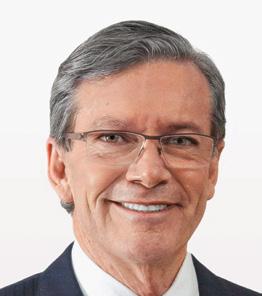
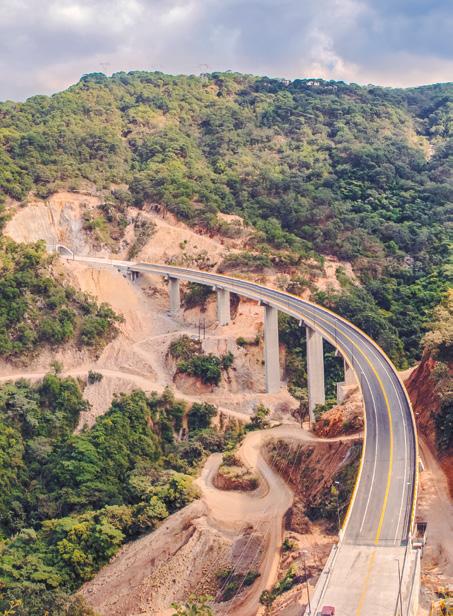
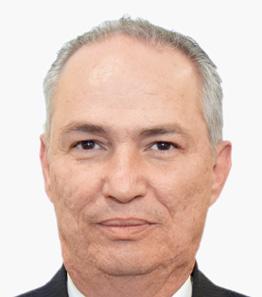
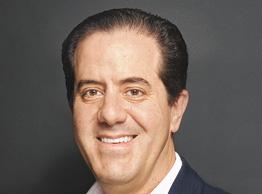
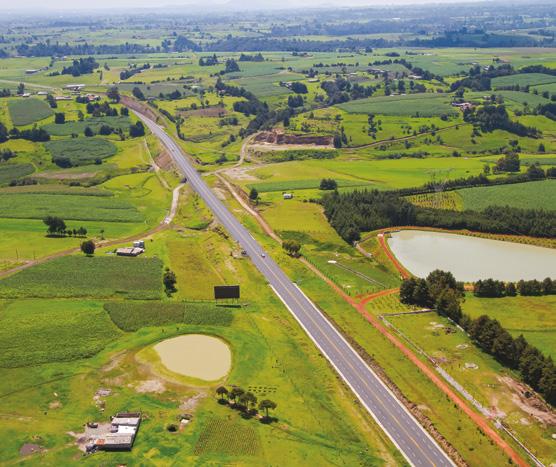
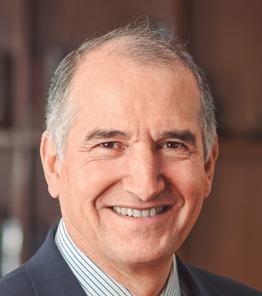
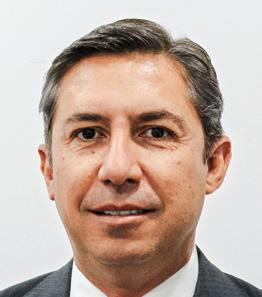
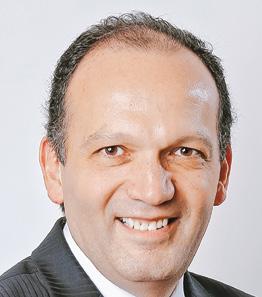
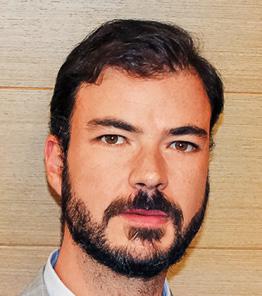
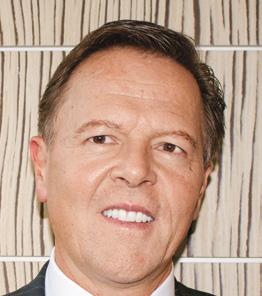
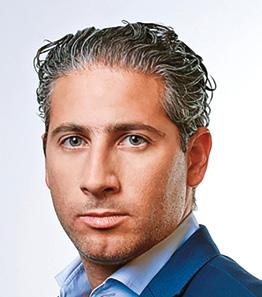
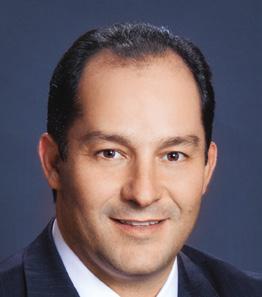
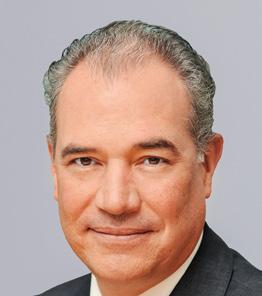
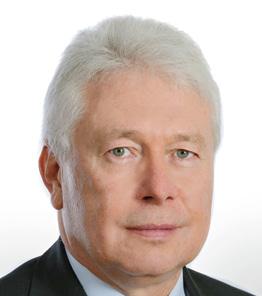
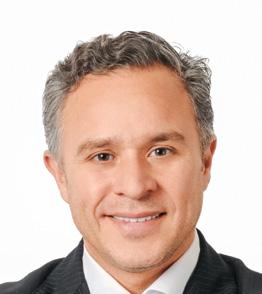
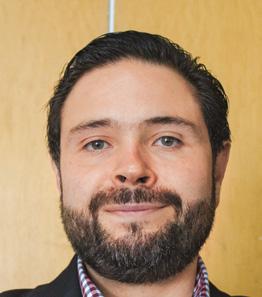
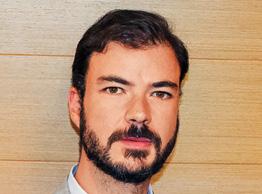
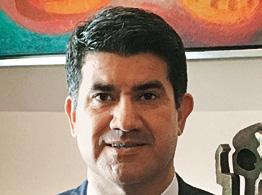
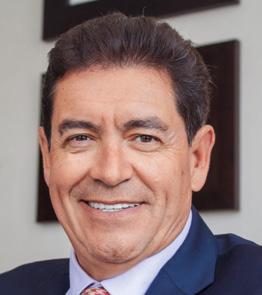
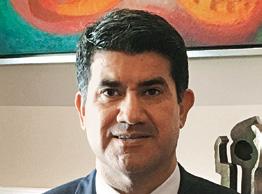
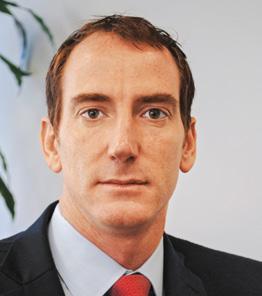
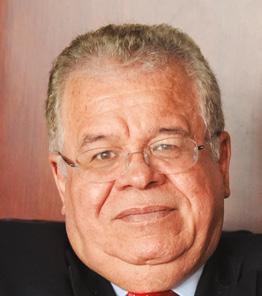
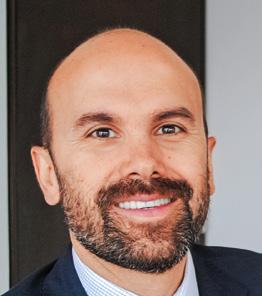
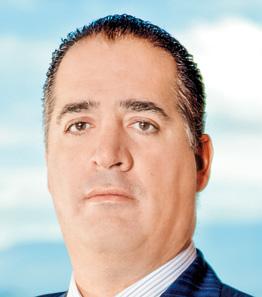
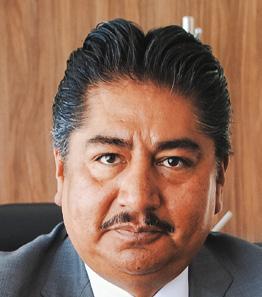
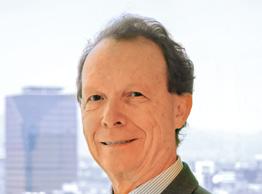
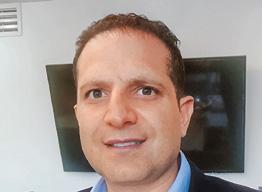
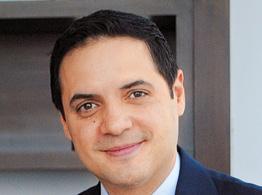
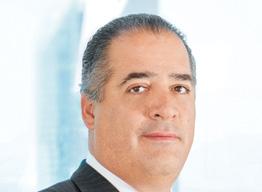
“Wherever a highway, railroad, telecommunications tower or port is constructed, a door to progress and social inclusion is being built”
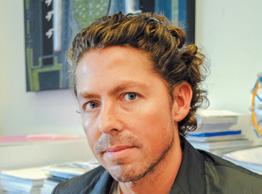
Gerardo Ruiz Esparza, Minister of Comunications and Transport (SCT)
2018
A country’s prosperity is intricately linked to the quality of its infrastructure. Concrete and steel are the building blocks of a nation’s economy, boosting the competitiveness of its industries. For Mexico to join the world’s leading economies, it must invest more time and money in constructing and maintaining its infrastructure. 2018 will mark the end of Enrique Peña Nieto’s presidential term, placing the advancements of the National Infrastructure Plan (NIP) under a magnifying glass. With the country’s hefty US$544 billion infrastructure gap, Mexico would need to spend more on developing its road, rail, port and airport infrastructure fast, or else economic growth could be jeopardized. Against this horizon, 2017 was a year of uncertainty and caution but Mexico was able to rise up and demonstrate its attractiveness to world investors.
The private sector continues to boost the performance of the construction industry and a financial gap has created new opportunities for institutional investors to become involved in infrastructure through the Mexican Stock Exchange (BMV).
Ahead of the 2018 elections, SCT is eager to check off as many commitments a possible from its list and will place its efforts not only on the remaining projects, but also in rebuilding three states damaged by the September 2017 earthquakes. The clock is ticking and the country’s growth depends on the completion of much-needed projects such as NAICM and the Mexico-Toluca Interurban Train to keep up with its fastgrowing cities. Sustainability will come through investment and the development of inclusive and competitive cities, which will drive the future of the country.
The publisher has made all reasonable efforts to provide accurate information, and the information contained in this publication is derived from sources believed to be true and accurate. However, the information in this publication should not be considered to be complete or definitive, and may contain inaccuracies or typographical errors. The publisher accepts no responsibility regarding the accuracy of information and use of such information is at your own risk. The publisher will not be liable to any party for any direct, indirect, special or other consequential damages arising out of any use of information in this publication. The publisher provides no representations or warranties, express or implied, including any implied warranties of fitness for a particular purpose, merchantability or otherwise in relation to any information provided by the publisher in this publication.
ISBN: 978-0-9993108-4-7
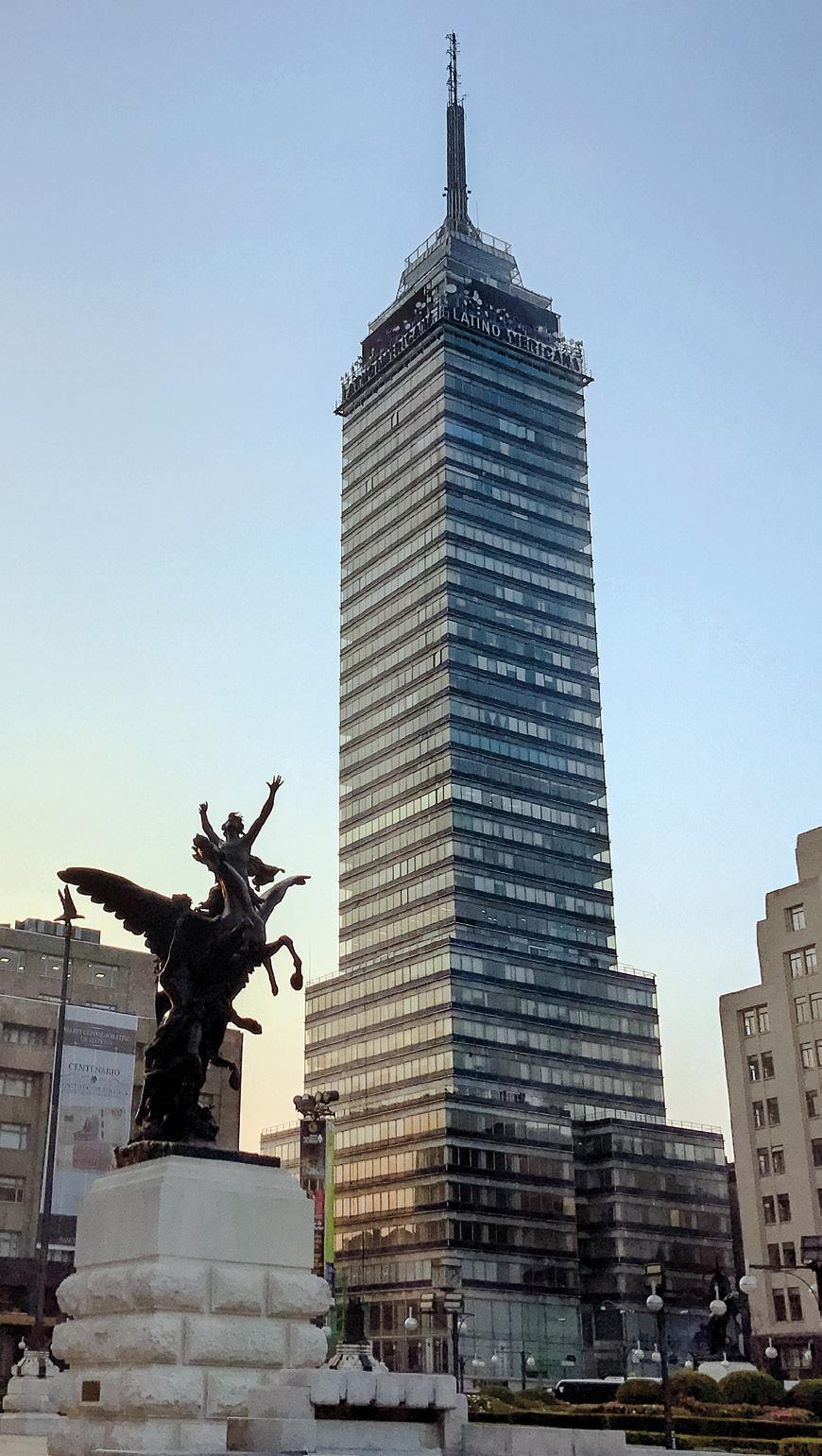
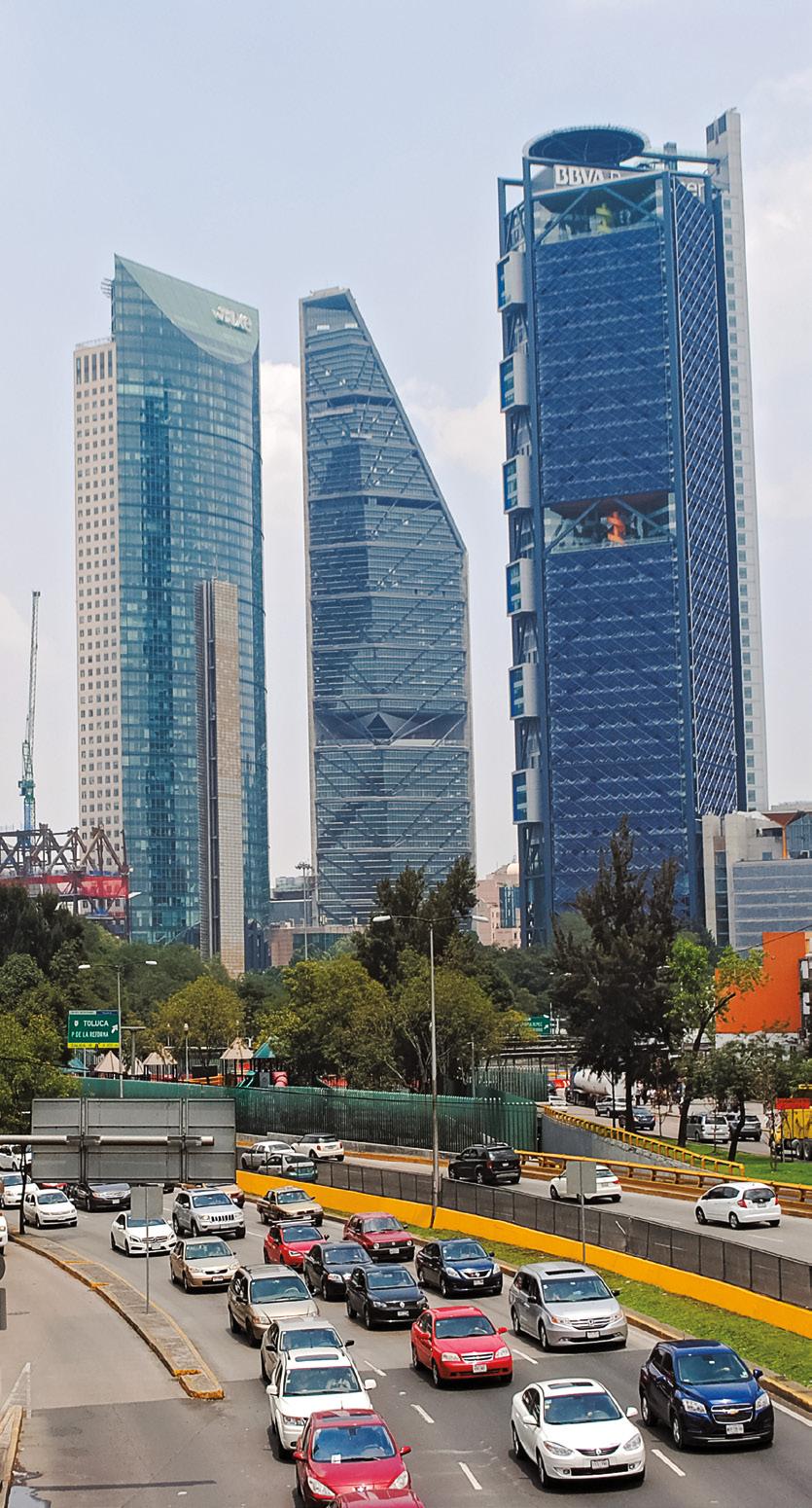
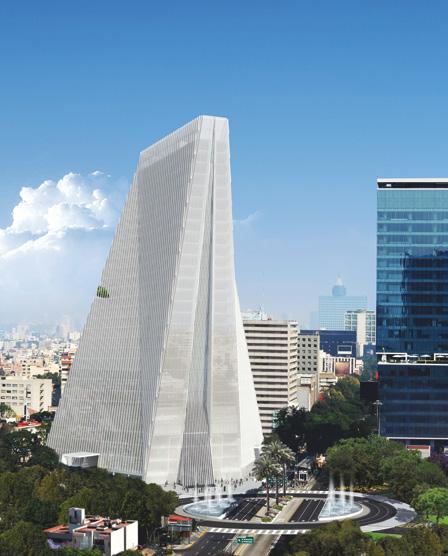
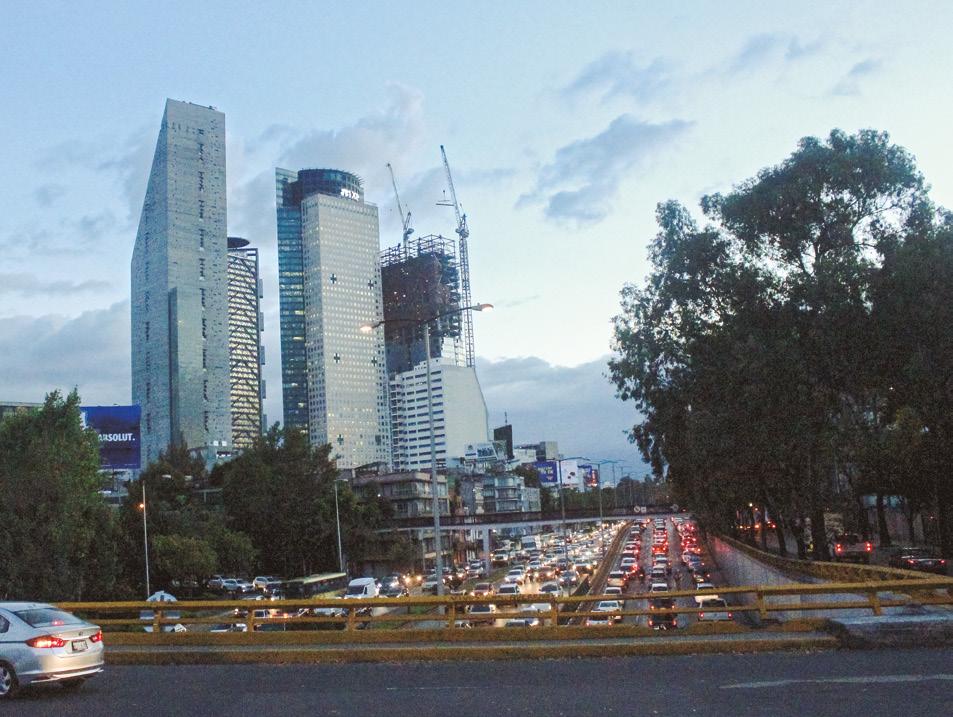
Torre Latinoamericana, Mexico City
STATE OF THE INDUSTRY
1The infrastructure industry is all-encompassing, its impact permeating all spheres of life. Mexico knows it must continue to develop its infrastructure and a growing number of private investors are willing to participate in projects that can better connect the country internally and externally. The best portrait of the state of the industry is painted through its most emblematic and avant-garde projects: NAICM, the Mexico-Toluca Interurban Train and the significant investment in real estate development across the country.
At the same time, the clock is ticking and there is only one year left to accomplish the ambitious goals the NIP established in 2013, with the outcome destined to have far-reaching implications for the country’s competitiveness. All sectors must come together to strengthen the country’s backbone, regardless of the hurdles resulting from unpredictable economic and political environments, both at home and abroad. This chapter provides an overview of Mexico’s ever-changing industry through the eyes of the public and private sectors. Nonetheless, 2017 will prove to be a challenge for the development of the infrastructure the country desperately needs to become a true logistics hub and climb the global competitivity rankings.
CHAPTER 1: STATE OF THE INDUSTRY
8 ANALYSIS: The Year in Review
12 VIEW FROM THE TOP: Jorge Wolpert, CONAVI
14 VIEW FROM THE TOP: Gustavo Arballo, CMIC
16 VIEW FROM THE TOP: José Reyes, ISSSTE
17 VIEW FROM THE TOP: Enrique de la Madrid, Ministry of Tourism
18 VIEW FROM THE TOP: Francisco González, Bancomext
19 VIEW FROM THE TOP: José-Oriol Bosch, BMV Group
20 TECHNOLOGY SPOTLIGHT: The Mexico Projects Hub
21 INSIGHT: Sergio Forte, Banobras
22 INSIGHT: Ricardo Díaz de León, ProMéxico
23 INSIGHT: Francisco Ibáñez, PwC
24 VIEW FROM THE TOP: Renato Berrón, ISCDF
25 INSIGHT: Laura Ballesteros, SEMOVI
26 INSIGHT: Javier Solís, SEDECO Nuevo Laredo
27 ROUNDTABLE: Why Should There Be More Women in the Infrastructure Industry?
THE YEAR IN REVIEW
In 2013, President Enrique Peña Nieto announced his ambitious, but muchneeded National Infrastructure Plan 2013-2018. The clock is ticking to finish 266 commitments, of which 210 are for road, transport, health and education infrastructure
CLOCK IS TICKING ON INFRASTRUCTURE PROJECTS
With the election of US President Donald Trump, investors and the private sector rang in 2017 with uncertainty and conservative investments across all sectors. S&P predicts that that the NAFTA renegotiation could hurt Mexico’s transportation industry over the years due to a potential weakening of the country’s expected GDP growth. But after rating various infrastructure players, the agency believes the sector has strong credit quality that will allow it to weather the storm. Investors were cautious, but nobody backed away from the opportunities. After a couple of months, the sector began to see movement, especially within the real estate segment. By March, Mexico emerged from under the Cloud of uncertainty as the most alluring emerging market and the peso began to pick up after a steep drop.
MEXICO’S
POSITION
Latin American countries on average invest 3.3 percent of their GDP in infrastructure development, while Asian and Pacific countries invest on average 7.7 percent of their GDP, according to the World Bank. CEPAL states that for Latin American countries to bridge their infrastructure gap, they would have to invest 6.2 percent of their GDP annually for eight years.
In the first five years of Peña Nieto’s term in office, MX$521.8 billion (US$27.3 billion) was allocated to SCT,
an average of MX$104.36 billion (US$5.46 billion) each year and 2.4 percent of the total budget. According to the Global Infrastructure Hub, the public sector invested more than US$70.6 billion and the private sector invested US$12.2 billion in infrastructure in the last five years in Mexico, equating to a total of US$16.56 billion per year. With Mexico’s GDP standing at US$1.046 trillion, this adds up to just 1.58 percent of GDP, falling significantly short of the investment required to meet infrastructure demand.
In WEF’s 2017 Global Competitiveness Report, Mexico dropped two spots from 57 to 62 in comparison to last year. Through this presidential term, Mexico failed to rise above the 57th ranking. This year, transport infrastructure was impacted the most, falling in the charts and impacting the total infrastructure ranking.
The country’s quality of infrastructure score is 4.3 of 7 and of the six axes, it performed the best under the Planning and Selection section by having a public project pipeline, a national infrastructure plan and guides for appraisal of projects. Nevertheless, in procurement, where the country does not publish procurement guidelines, it registers low scores in terms of bid evaluations, transparency and post-award management of contracts. GI Hub estimates that Mexico requires a US$1.1 trillion investment to meet its infrastructure needs. It currently has a US$544 billion shortfall in that investment.
SECTOR
Number of Projects
Investment
Source: World Bank: Private Participation in Infrastructure Database
THE ROAD TO ELECTIONS
Election years tend to make not only investors weary but both the private and public sectors. With elections around the corner, as of October 2017 there was little knowledge of candidate plans for infrastructure development. The precandidate for Morena, Andrés Manuel López Obrador, is expected to impact infrastructure development if elected. In his book, 2018, La Salida, he discusses his vision for Mexico’s future infrastructure development. Apart from reverting the education, energy and fiscal structural reforms passed by Peña Nieto’s administration, his plan includes the construction of new highways, two new airstrips in the Santa Lucia Air Base and the cancelation of NAICM. He wants to develop new refineries in Tabasco and Campeche.
Project continuity is one of the most pressing issues concerning industry players when it comes to changes in political terms. “A new administration is a risk to
developers because authorities with a different vision may prevent the continuation of important public projects. This creates a cycle of projects with a short-term vision as it is difficult to ensure the long-term continuity among rotating administrations,” says Francisco Ibáñez, Lead Partner, Capital Projects and Infrastructure at PwC.
Mexico’s short-term vision has stunted its economic growth due to a shortage of transport infrastructure. Various road projects have been stopped for over six years and the expansions of the country’s ports still have a long way to go. “In my opinion, the current political leaders should ask themselves how they would like to see that state or area in five years,” says Julio Amodio, Director General of CAABSA. “If we continue to base our projects and decisions for the short-term, we will not move forward.”
To ensure the continuity of all infrastructure projects and that projects do not fall through the cracks amid changing administrations, various industry leaders say that Mexico could learn from best practices in the UK and Australia and create an independent infrastructure planning body. “To ensure the implementation of the plan despite the changes in the government, an independent body should be in charge of planning infrastructure development in Mexico and provide congruence to the development of infrastructure across all sectors,” says Cesar Monroy, Director of Infrastructure at PwC.
A decentralized infrastructure planning organization could take years to establish and would require a significant investment. “I believe in having an independent citizen body that could push aside political interests and have a long-term vision of Mexico’s infrastructure development,” says Amodio. “It sounds like a great
idea, but these types of organizations would quickly become politicized.” Transparency will be key in future projects to make investors and companies feel safe about investing their time and money in infrastructure. The federal government has taken several steps to promote transparency, including online tenders on Compranet, access to budgets, balance sheets and expenses online, as well as promotion of non-tolerance regarding corruption in infrastructure projects. But there is still work to be done to make the private sector feel at ease.
CONSTRUCTION PERFORMANCE
The construction sector plays a major role in the economic development of the country and has the potential to represent between 4-5 percent of GDP. Budget cuts have deeply impacted the industry in the last five years. From 2013 to 2016 it grew an average of 0.4 percent, mainly thanks to an increase in private sector investment and in specialized works, which rose 4.2 percent and 10 percent in 2016, respectively.
In 1H17, the sector grew 1 percent in comparison to the same period in 2016, a low percentage resulting from the cuts in public spending and rising interest rates. Even though the sector is experiencing slower growth, it is still the fourth most important economic activity in Mexico and the third most important sector in terms of jobs generation, representing more than 6 million direct jobs and 3 million indirect jobs.
According to CMIC, the market is worth approximately MX$2.4 trillion and is divided into 23 percent public sector and 77 percent private sector. Of the private sector’s participation, industrial construction represents 15.6 percent; nonresidential construction, 8.7 percent; housing, 39.2 percent; construction of hospitals and schools, 9 percent; commercial, 18.3 percent; tourism, 4.4 percent; and maintenance and repair, 4.8 percent.
The states with the most construction sector activity are Morelos, Quintana Roo, Chiapas, State of Mexico, Zacatecas, Aguascalientes, Coahuila, Queretaro, Mexico City and Sonora in the first months of 2017.
MOTHER NATURE TAKES A TOLL
Mexico’s cities are growing, and they are growing fast. By 2040, more than 88 percent of the country’s population will be living in urban areas and by 2050 that figure will be more than 90 percent. As part of the 2030 Agenda, Mexico agreed to reach 17 Sustainable Development Goals (SDG) that will help end poverty, fight inequality and ensure a prosperous future for all. Mexico must invest US$544 billion in infrastructure to 2040 to reach the SDGs.
The SDGs that are impacted by or impact the Mexican infrastructure industry are: Clean Water and Treatment, Decent Work and Economic Growth, Climate Action, Sustainable Cities and Communities, Industry, Innovation and Infrastructure, and Clean Water and Sanitation. Companies within the infrastructure industry, such as Rotoplas, are taking matters into their own hands and establishing the same goals for their companies.
In September 2017, Mexico’s foundations were shaken by two earthquakes. The first on Sept. 7 with a magnitude of 8.2 and an epicenter in Chiapas and the second on Sept. 19 with a 7.1 magnitude along the border of Puebla and Morelos. These two earthquakes destroyed more than 150,000 houses, leaving more than 250,000 people without a home, according to SEDATU. The country’s housing deficit in 2017 was 12.2 million homes and will only increase with the damage wrought by the earthquakes. Material prices had been on the rise for the last few months and with the earthquakes, it was predicted that prices would skyrocket as demand increases. In 1Q17, construction prices rose 12.5 percent compared to the same time last year, a rate not seen since 2008.
THE PROPOSED BUDGET 2018
Throughout the Peña Nieto presidential term, infrastructure spending has fluctuated between 1.5 and 3 percent of the federal budget. SCT’s budget has varied through the years with the highest percentage allocated in 2013, 2014 and 2015, following an investment pattern of lower spending at the end of a presidential term. With the proposed budget for 2017, a total of MX$522 billion (US$27.4 billion) will have been allocated to SCT from 2012-2017.
Source: Ministry of Finance
In September, the Ministry of Finance proposed the budget for 2018 but the two earthquakes that struck Oaxaca-Chiapas and Morelos-Puebla have yet to be contemplated. The budgets for 2016 and 2017 were drastically impacted by dropping oil prices, but the preliminary budget for 2018 will not be as harsh, with a cut of MX$43.8 billion (US$2.3 billion, or 0.2 percent of the GDP).
In 2017, the two main investment packages will be in the hydraulic sector and for communication and transportation projects under SCT. MX$11.5 billion (US$604 million) will be allocated to repairing and constructing water infrastructure throughout the country. SCT will have a budget of MX$7.2 billion (US$378 million) to finish all the projects on its list, with more than 25 percent of the budget allocated to railway and multimodal development. GACM will be allocated MX$5.8 billion (US$304 million) to advance the construction of NAICM and MX$3.2 billion (US$168 million) will be for the conservation of roads and highways. The states that will receive the most money in 2018 are Oaxaca, Guanajuato, Campeche, Chiapas and Puebla.
The 2018 budget cuts will place construction companies and SCT on the tightrope as they race against the clock to complete the country’s most important infrastructure projects. The Mexico-Toluca Interurban Train, Guadalajara Electric Urban Train, NAICM and the government’s commitment to boost the country’s road network and water infrastructure are the most important projects for the year to come.
The NIP details three mass transportation projects: Mexico-Toluca Interurban Train, Line 3 of the Guadalajara Electric Urban Train and Line 3 of the Monterrey Metro, which have a 57.4 percent, 67.7 percent and 85 percent completion rate respectively as of July 2017. The MexicoToluca Interurban Train, which was divided in three sections, has been advancing slowly.
The Zinacantepec–Lerma section, constructed by Grupo Hermes, is 79 percent complete at a cost of MX$12.6 billion (US$661 million) and La Marquesa Bitunnel, constructed by ICA, at a cost of MX$2.8 billion (US$247 million) has advanced 53 percent. The section with the most difficulties has been the La Marquesa–Observatorio, with only a 35 percent advancement and a cost of MX$10.4 billion (US$546 million). This section is being constructed by CAABSA.
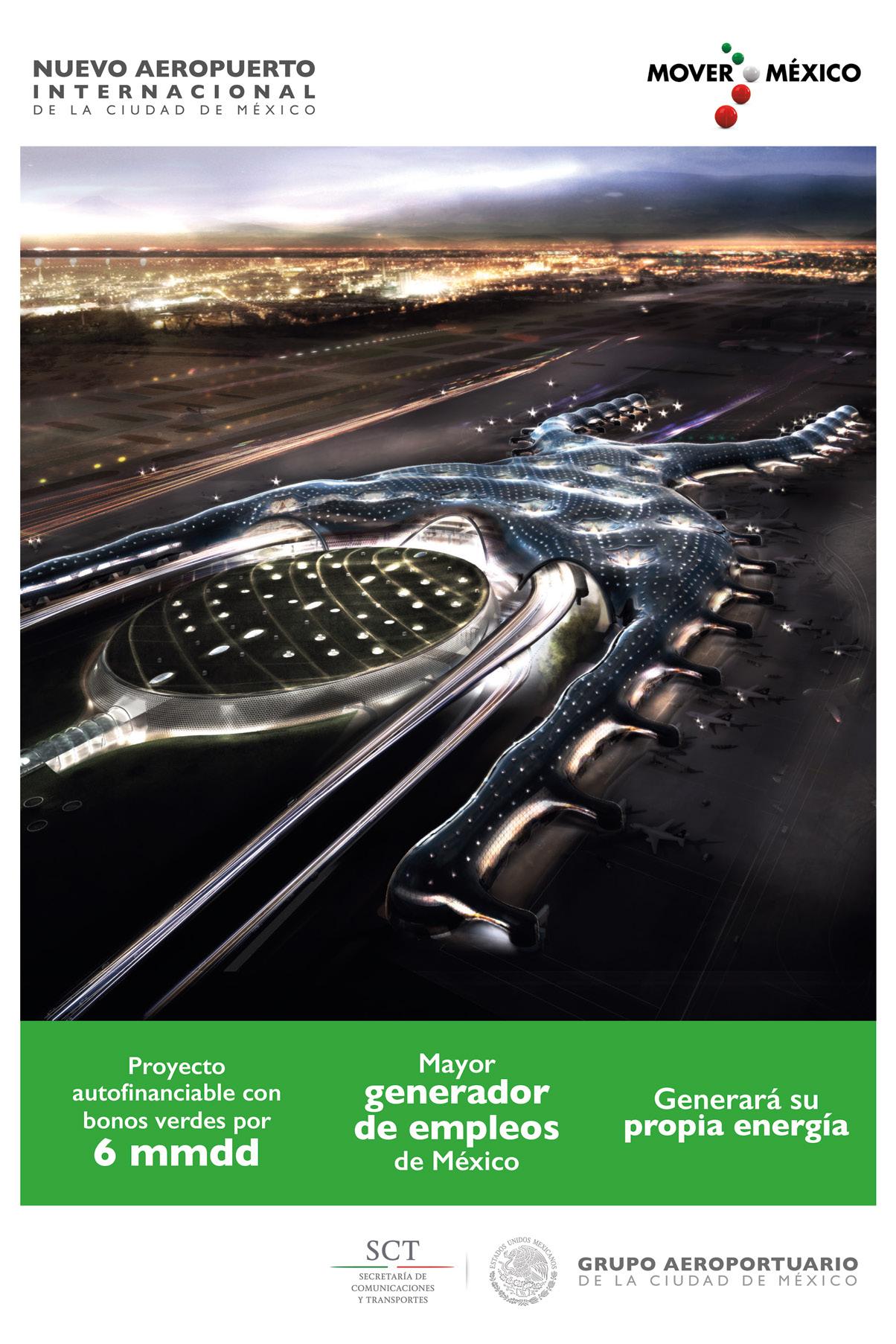
Regarding NAICM, 2017 was an extremely active year with the most important tenders being awarded, the terminal building, control tower and airstrips 2 and 3
SCT BUDGETS DURING PEÑA NIETO'S PRESIDENTIAL TERM (MX$ billion)
Directorate of Road Conservation
Air Space Navigation Services
05 10 15 20 21 SCT Puebla SCT Chiapas
Percentage of SCT budget
Source: SHCP
were awarded. In 2018 the general aviation buildings, heliport, taxiways and platforms, radiocommunication building, airport services center and security systems will be tendered. GACM plans to launch the remaining tenders before the elections in 2018 to stay on track and deliver the first phase of the project by 2020. GACM and SCT bulletproofed the project through its financial scheme using green bonds and involving many funding institutions in order to ensure continuity and that it is not jeopardized by a new administration entering office.
NEW SCHEME TO BOOST ACCESS TO HOUSING
JORGE WOLPERT Director General of the National Housing Commission (CONAVI)
Q: Which segments of the population have the greatest housing needs?
A: The country’s informal housing is occupied by the segment of the population that does not have access to the social security system but that also has the constitutional right to a dignified home. The formal housing sector drew in approximately MX$450 billion in investment in 2016, and this does not account for the more than 500,000 homes that were built independently. This year, we are not only focusing on low-income families. We are also developing a new financial scheme that will allow Mexicans who are not part of the Social Security system, or do not have a savings account, access to financing for a home. At the moment, more than half of families living in informal housing, which equates to approximately 4-5 million families, do not have access to social security. This is an important sector for us but an even bigger market for those who decide to become a part of this formula.
The formal housing sector drew in approximately
MX$450 billion in investment in 2016
This scheme is being developed and will most likely not be ready for 2017, but we are adjusting the way we deliver solutions so it can be completed for 2018. To make this work, we have started a dialogue with the many companies involved in building social housing and have asked them to work together as an organized community of social-housing constructors. They all have different views and perspectives on how to build better homes.
CONAVI is in charge of implementing the National Housing Law and coordinates financing programs for housing subsidies. It aims to boost the development of sustainable social housing in Mexico and provide incentives for developers
We are also working with development banks and have begun creating pilot schemes in the state of Oaxaca and in two other states. The Mexican Bank Association has shown great interest in these new markets too.
Q: Which states will see the highest housing demand in the coming years and which of CONAVI’s policies have been the most successful within the sector?
A: Nuevo Leon and Jalisco’s housing demand continues to grow due to the many working families who are in need of a new home and who already have access to credit. In the coming years, we will see a boom of workers in the south. Oaxaca, Yucatan, Campeche, Tabasco and Veracruz have experienced high demand for new homes and because Infonavit has created loans for all salary brackets, more families will have access.
The integration of sustainable solutions into social housing has been one of the most successful policies adopted by the industry, both in the public and private sectors. At the moment, we offer different programs in various institutions that promote sustainable construction. The commission is developing a set of standards and criteria that will come into effect in 2018. It is important that these standards are created in order to incentivize investment. At the moment, there are various standards depending on the different institutions, and although they are similar, we are convinced that they need to be homologous throughout all institutions.
Q: How will the rules of the game change with the New Human Settlements Law and Housing Law in Mexico City?
A: The city has announced that it will build more than 200,000 social homes in 2017 alone. We are extremely happy to hear these types of commitments and we will help make them a reality, especially since there had not been a plan for formal social housing in the city for many years. Congress has approved the new Human Settlements and Urban Development Law, meaning that each state will now have to create its own law as well. Another large challenge is that the federal law will be
scrutinized and it is important to also turn the housing law into a general law.
Social housing in Mexico has been drastically expanded in the last few years and there have been many changes made since the last presidential term. All social homes now have at least two bedrooms and institutions like Infonavit are providing loans for more than MX$500,000 to MX$1.7 million. More than one-quarter of the total credits approved by Infonavit have been delivered in the last three years. Because the social housing policy falls under the Human Settlements Law, all the subsidies provided by CONAVI must be within the contention perimeters that will prevent inefficient urban growth.
Q: What must the private sector do to boost the development of the social-housing sector?
A: We want to make sure that the public policy is successful and that it is backed up by a robust system and platform so that we can ensure continuity across different political terms. The regional and global economy is not growing at the expected rate. As for the domestic economy, the housing and construction sectors will drive growth in 2017. We are entering a new era of social housing in Mexico. Housing for non-affiliates of the Social Security system is a segment that has never been addressed. It is a new market that needs a new approach
that will guarantee the people’s constitutional right to a decent home.
We must work together as one industry. We are on the right track. With more than 800 companies building formal social homes. We need the industry to become more engaged and to step out of its comfort zone and cater to a niche that does not have many opportunities. Companies must work with their financers to create proper access to finance. It is important that they take the risks, but feel safe that they have the support of both the government and the banking system.
Q: What do you hope will be your legacy as Director General of CONAVI?
A: Particularly because I have been working in the housing sector for many years now, I see the opportunity to drive change and cater to these new sectors, and ultimately to create a sustainable system that works for everybody. I look forward to engaging the industry and other levels of government to follow the same public policy for housing, as well as working with Congress to create the first General Housing Law in Mexico. Although it is not generally discussed because it is not as popular as the Energy Reform or the Education Reform, the Human Settlements and Urban Development Law addresses some of the most important issues the country faces.
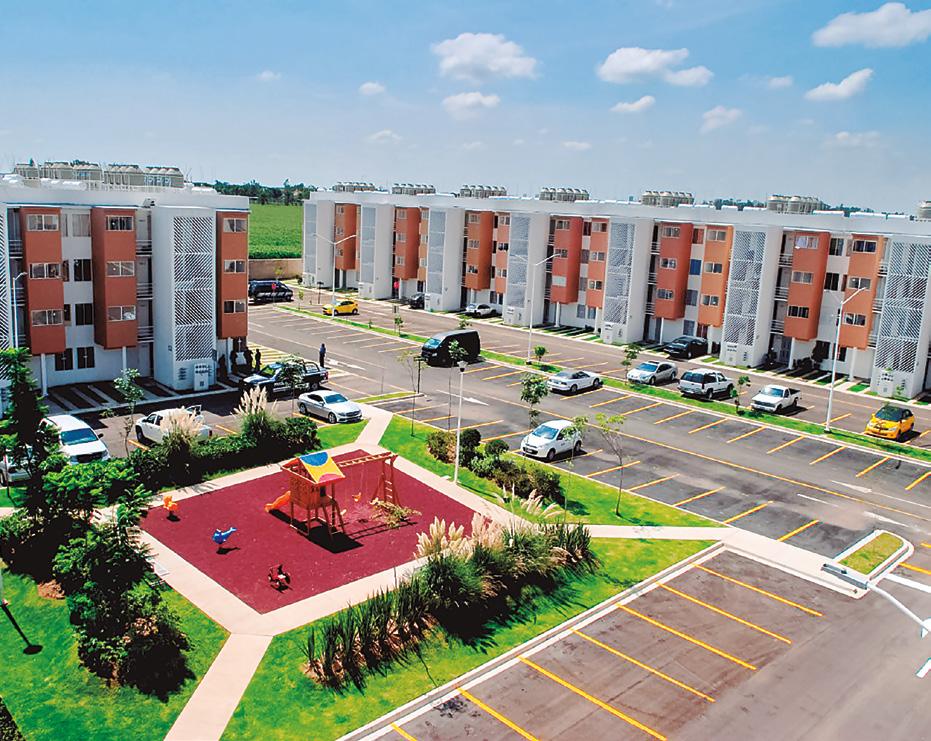
CONAVI Residential Development
STEPS TO A SUSTAINABLE AND INCLUSIVE CONSTRUCTION SECTOR
GUSTAVO ARBALLO President of the Mexican Chamber of the Construction Industry (CMIC)
Q: What is CMIC’s 2017-2018 forecast for the construction industry, especially with the elections around the corner?
A: CMIC expects 2018 to be as difficult as 2017. The real estate industry, especially the construction of medium and high-end residential buildings, mixed-use developments, shopping centers and tourism infrastructure, will likely play a leading role for the remainder of 2017 and in 2018. The Center for Economic Studies of the Construction Sector (CEESCO) estimates growth for 2017 from a contraction of -1 percent to a 0.5 percent expansion due to fundamental factors such as the 23 percent cut in the public investment budget compared with 2016, as well as increases in interest rates. A reduction of 40,000 jobs is expected in the event of a contraction or the creation of up to 20,000 jobs if there is growth.
From January to July 2017, the construction industry contracted 0.6 percent compared with the same period in 2016. It is likely that, for the remainder of the year, factors that inhibit investment and growth will include reduced public and private investment and the rise in the official interest rate to twice its 2015 level, which will make infrastructure projects more expensive. The result of the NAFTA renegotiation could also have an impact by restraining vital exports, in turn negatively impacting investment in industrial and commercial construction and services.
Private investment has been the driving force behind the growth of the construction industry since it represents 75 percent of the total investment in the sector
In 2018, the construction industry is expected to grow between 0.3 percent and 1 percent. Residential construction geared toward the middle and upper classes, as well as a robust tourism sector, commercial and service infrastructure will be the industry drivers in 2018. Risk factors include an even greater reduction in oil prices or oil production,
continued inflationary pressures and an additional cut in 2018 expenditures for public investment in infrastructure.
Q: What are the construction sector’s concerns regarding the New Housing Law in Mexico City and the federal Human Settlements Act?
A: CMIC’s greatest concern within this context is the urban resilience required to adapt to redensification and transformation that entails generating vertical housing for inhabitants. We support both changes to the laws and urge prompt implementation. There has been an exodus of city dwellers due to the lack of housing for workers with incomes equivalent to less than 10 times the minimum wage who are eligible for INFONAVIT and FOVISSSTE, but we hope the new laws will address this and expedite access to housing for this demographic. Another result has been a rise in speculative practices and constant increases in the prices of urban land and houses due to the low supply of popular housing, with values ranging from MX$900,000 to MX$.5 million per dwelling. Additionally, with a lack of activity in popular housing, the construction industry working in this sector has become stagnant, resulting in job losses. In an effort to assist the current Mexico City government, CMIC’s members have identified plots of land that are eligible for use under the new housing law to encourage and facilitate the construction of housing for workers entitled to homes in urban areas. We want to promote the construction of 10,000 living spaces, which is only a fraction of what the inhabitants of this city require.
On the subject of the General Law on Human Settlements, we are interested in information about the adjustments that the local authorities will make to their regulations as well as to their urban development plans, and how this will impact the construction industry. We also wish to see clear commitments and actions that promote real changes in the human settlements of our country, toward competitive, connected, coordinated and equitable models.
Q: What would make the construction sector more attractive to both investors and contractors?
A: In the January-May 2017 period, credit granted by commercial and development banks to the construction
industry fell 6.5 percent in real terms compared to the same period a year before. The total amount of credit provided to the industry in May 2017 was MX$489.8 billion, MX$3.9 billion less than in May 2016. This result is due to two factors that have reduced credit availability to construction companies. The first is the reduction in public works that has narrowed the opportunities to obtain a contract. Without a contract, there is no guarantee with which credit can be obtained. The second is the gradual increase in interest rates, which lifts the cost of credit and reduces available financing. On June 22, 2017, Banxico decided to increase the overnight interbank interest rate by 25 basis points for a third time to 7 percent. With this increase, the benchmark interest rate doubled compared to 2015 levels. Rising interest rates increase the cost of financing, inhibit investment and increase the cost of debt.
In recent years, private investment has been the driving force behind the growth of the construction industry since it represents 75 percent of the total investment in the sector. The reduction of public resources for the development of infrastructure opens up a range of opportunities for the private investor to participate in complementary infrastructure projects like roads, ports, airports, railways, telecommunications and water projects to maximize economic and social benefit.
But steps are being taken to address these issues. In Mexico, we now have the PPP law, which establishes a stronger legal framework for mixed participation, and allows for greater investment in infrastructure. In this way, the law has bolstered investor interest in the sector. It also provides greater legal certainty to the creation of projects that involve the joint participation of the public and private sectors. Within the law, there is the novel USP scheme that allows an investor the possibility of proposing a PPP project to the government. The main areas of opportunity in Mexico for PPPs seem to be hospitals, petrochemical and natural gas, water supply, sanitation, power generation, telecommunications, penitentiaries, schools, roads, railways, ports, transportation and housing.
Q: Which sectors represent the most important PPP projects for construction companies and what are companies looking for to encourage participation?
A: All sectors are of great importance for the construction industry, whether in hydraulic infrastructure, transport, hospitality, education, energy, penitentiaries, railways or ports. In this sense, CMIC recognizes the effort being made by the Ministry of Finance to promote PPP projects in such complex times to achieve competitiveness, economic growth and job creation. But to overcome the problems caused by federal budget cuts, the government needs to ensure that the processes of tendering, awarding and contracting PPP projects are carried out competitively, efficiently and under
principles of transparency and accountability. We must also generate a more collaborative relationship between the public and private sectors, with the purpose of involving the private sector in the design, financing, construction, operation and maintenance of new infrastructure works, as well as the expansion and modernization of existing infrastructure.
Q: Looking forward, what are the sector’s top goals and how is CMIC working to ensure that it thrives?
A: Among the sector’s main goals is the implementation of a public infrastructure policy that allows proper planning, contracting, execution, operation and maintenance of infrastructure projects under conditions of economic viability and financial sustainability and with adherence to environmental impact. Therefore, the private sector and CMIC’s member organizations are working through consultation forums to make a public policy proposal oriented toward competitiveness and productivity, taking into account everything across the development cycle of the infrastructure. This includes project conception, planning and operation and maintenance, which help to improve efficiency and quality of infrastructure. In addition, we have set out to identify the strategic projects that the country needs, from a regional perspective, to create a National Sustainable Infrastructure Program by the year 2030.
CMIC represents the interests of construction companies, offering services to promote a highly competitive industry at the forefront of innovation that incorporates social responsibility and technological innovation
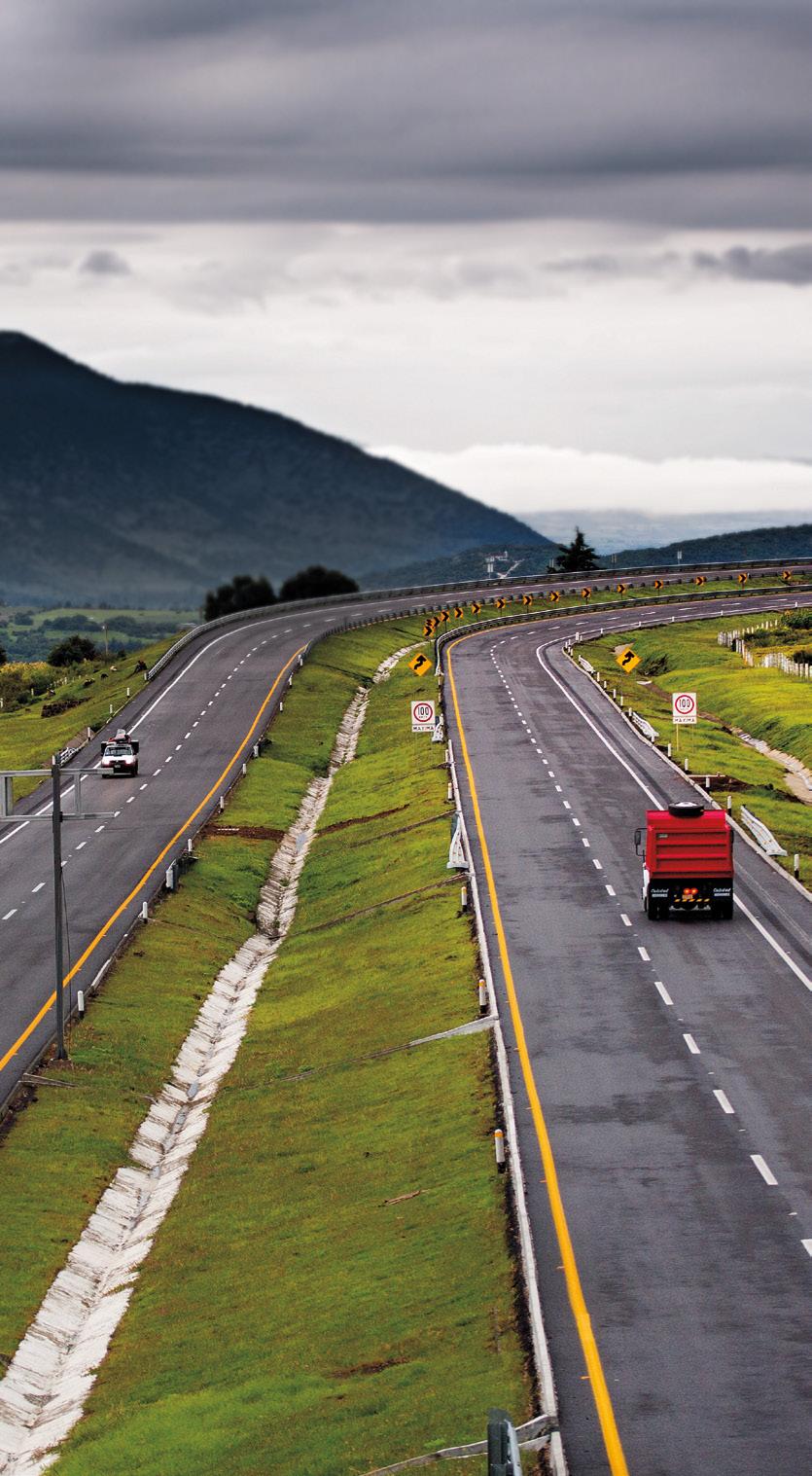
Mazatlan-Durango Highway, Grupo Hermes
EXPANDING PUBLIC HOSPITAL NETWORK THROUGH PPP SCHEMES
JOSÉ REYES
Director General of the Institute of Safety and Social Services for State Workers (ISSSTE)
Q: What are the advantages of building hospitals through PPP schemes?
A: ISSSTE has an internal infrastructure program as well as its own fiscal resources but due to budget adjustments we have had to vary our financing sources. We needed to migrate to a new scheme involving the private sector to continue building and expanding our network of hospitals and clinics. In 2016, ISSSTE invested over MX$4 billion to build and/or expand a number of clinics and hospitals throughout the country. We estimate that remaining investments from PPP schemes during the current federal administration could total about MX$14 billion.
Q: What criteria helps ISSSTE decide where a new hospital or clinic will be built?
A: The concentration of beneficiaries and the existing public health infrastructure in a region are the key criteria.
ISSSTE is the second largest of Mexico's public health institutions, providing services to almost 13 million government workers. It has also released many USPs for the construction of new hospitals
The Ministry of Health, ISSSTE and IMSS have developed a strategy that prevents duplication through mutual subrogation. If there is an IMSS hospital in a community with an ISSSTE clinic and a patient at the latter needs surgery, hemodynamics or cardiovascular services, the procedure will be performed at the IMSS hospital whenever possible. Services will also be subrogated from IMSS to ISSSTE, which does not mean implementing a universalization program but exchanging services and prioritizing cities and states according to the demand for services and the existing public infrastructure. All publicsector agencies need to maintain a close relationship and exchange services before allocating them to the private sector. Of course, cooperation between public institutions does not prevent the subrogation of services to private hospitals. We have contracts for integral services like hemodialysis and some minimally invasive surgeries. We also have collaboration and service-exchange schemes between both public and private entities.
ISSSTE is analyzing several new hospital projects in Tampico, Acapulco, Oaxaca and Mexico City. We have also received requests for new hospitals in San Luis Potosi and Sonora. There is a PPP hospital being built in Merida and three others to be tendered: Mexico City-Tlahuac, Villahermosa and Tepic.
Q: What are ISSSTE’s main priorities for the remainder of 2017 and beyond?
A: First, we want to continue modernizing ISSSTE through several measures: building new facilities, installing new equipment, hiring better-qualified health technicians, reducing processing times for home loans and retirement payments, reducing surgery wait times, accelerating emergency services, consolidating our hemodynamics areas and developing the triage protocol at emergency departments. Secondly, we aim to humanize the institution. If we do not create a warm, more caring ISSSTE, then we are failing. The Trato para un buen trato program is an agreement between ISSSTE and its labor union to make the hospital personnel more patientfriendly.
IMSS Headquarters, Reforma Avenue, Mexico City
INTEGRATE TOURISM INDUSTRY FOR GREATER GROWTH
ENRIQUE DE LA MADRID Minister of Tourism
Q: What can be done to boost tourism investment in Mexico?
A: To drive investment, it is necessary to establish an attractive institutional framework on issues such as regulation, security, environment and fiscal policy. We need investments in basic infrastructure from the public and private sectors, as well as a destination-promotion policy to ensure a permanent flow of investment by lodging, transportation and entertainment companies. Creating added value in the tourism experience, such as food, guided tours, cultural and sports activities or theme parks, can boost investment. Today, travelers want indepth knowledge about their destinations. They do not want to just spend time inside a hotel. We must take advantage of this trend.
Q: What are the main challenges facing the development of the tourism industry in Mexico?
A: The tourism industry in Mexico is so large and diverse that the challenges are different depending on location. However, the main one is to stay attractive in a changing world and amid an increasing number of competitors. To achieve this, we need an innovative attitude when meeting tourist needs, infrastructure that allows us to receive tourists who have demanding and diverse objectives, and more destinations to provide further options and generate benefits for more Mexicans. All these elements will help build a robust and successful tourism sector.
Q: What efforts have been made in infrastructure to boost the sector’s growth?
A: SECTUR has a budget allocated to meeting the specific needs of tourist destinations. Through this program, local authorities contribute a proportional amount. These budgets are determined by Congress through the federal budget but the infrastructure investment the tourism sector requires is greater, so the sector benefits from investments by other entities. For example, SCT’s investments help increase connectivity, reducing transfer times and mobility costs. NAICM has no budget from SECTUR but there is no doubt this project will boost the industry. The private sector also invests in infrastructure through projects such as marinas, cruise line piers, convention centers, sports venues and malls, among other projects.
Q: How can the tourism industry improve the social development of communities in Mexico?
A: Through the development of the tourism industry we can bring growth and wealth to more communities in Mexico, as tourism impacts a community through employment, infrastructure development, provision of basic services and environmental protection. President Peña Nieto’s vision is to strengthen tourism to create economic growth and to generate development opportunities for the Mexican population. He believes tourism contributes to the creation and growth of the middle class in regions with tourism potential. However, the community must be involved. This is the objective of the Programa Conéctate al Turismo (Connect to Tourism Program), which helps SMEs connect with players in the industry to become service providers.
SCT’s investments help increase connectivity, reducing transfer times and mobility costs
Q: The country has a significant number of cities with tourism potential that have not yet been developed. What strategies are being implemented to develop these future tourist sites?
A: It is very important for each destination to identify its strengths, its main attractions and how to create a product that is commercially attractive to tourists. That is why Baja California’s wine region, the tequila district in Jalisco and the henequen plantation route in Yucatan have developed so well. The creation of thematic routes was the key growth path for those destinations. This is the idea behind the Mayan route in the southeast, the circuit of colonial cities in the center of the country and the independence route in the Bajio region. Branding also helps increase tourism in locations that have particular kinds of attractions, such as Pueblos Mágicos
SECTUR designs and implements public policies to develop tourism, promote innovation in the sector, improve the quality of tourist services and the competitiveness of national tourism, and contribute to the industry’s sustainable growth
PROVIDING FINANCIAL ACCESS WITH GOOD RATES, ACCESSIBLE PAYMENTS
FRANCISCO GONZÁLEZ Director General of Bancomext
Q: Bancomext is present in a number of sectors. What determines the bank’s involvement and what opportunities does it look for?
A: The bank is an important player in sectors where currencies play a central role and in those that involve foreign trade and the global chaining of production processes. In this sense, Bancomext’s main areas of opportunity are tourism, industrial warehouses and the energy sector. However, this does not mean that we neglect the transportation sector, which includes the automotive and aerospace industries and other segments such as metal-mechanics, electronics and telecoms.
Q: How does the bank view the frequent increases in Mexican interest rates?
A: The interesting part of Bancomext’s portfolio is that we can access external financing. In 2015, we placed debt certificates totaling US$1 billion. In 2016, we placed certificates worth US$700 million, which earned the recognition of “Deal of the Year” by the World Finance magazine. We just placed certificates in Mexico totaling MX$7 billion in three and seven-year periods. Interest rates have risen but margins have narrowed. We operate efficiently and translate this efficiency to the client. We are enjoying better international rates and opportunities and because of this, a significant number of the rates we offer have not been affected.
Q: What opportunities does the creation of Special Economic Zones (ZEEs) offer Bancomext?
A: As we are leaders in the financing of industrial warehouses, we see a significant degree of interest in these projects and. We also see opportunities to support the importation of needed machinery. Since we work with export trading agencies we can provide structured support in this regard all around the world.
Bancomext is Mexico’s largest development bank. Over its 80 years, the bank has played an important role in furthering Mexico’s export activities as well as financing the development of the tourism and industrial sectors
Q: Bancomext also targets the tourism sector. What has been the reception and impact of the Mejora tu Hotel program?
A: Mejora tu Hotel encompasses the entire spectrum of the tourism industry. This means that we can provide loans to small hotels that have two or three stars. As a result, some hotels have transformed from traditional small brands to establishments that comply with international standards, which helps them increase their occupancy rates from 30-40 percent to 70 percent. However, our offering is not restricted to small hotels. We support large hotels that want to expand their operations and we also participate in large complexes with as many as 6,000 rooms. Tourism is not only about hotels. It also includes the airlines and infrastructure that support the growth of this sector, such as the Cross Border Xpress in Tijuana (CBX).
Q: How is Bancomext collaborating with Mexican companies to reap the benefits and opportunities related to Industry 4.0 (I4.0)?
A: It is important to note that Mexico will be the first country with the capacity to fully insert itself into the I4.0 trend. We will be the first country to have a shared network that will provide a substantial percentage of the population with access to the 4G network and with enough spectrum to allow communication in a more efficient and economical manner. The Internet of Things (IoT) will allow for a more dynamic communication than what we are used to. In industries, either through Radio Frequency Identification (RFID) or through the use of specific communication tools, we will see containers located at different ports communicating, arranging to be delivered at the same time, and the buyer will be able to access all this information with just one click. We already have the hardware and the software components but this is all useless if we do not have the expertise to produce. In this regard, we already have clusters with the necessary manufacturing knowledge. Ricardo Hausmann, Director of the Harvard Center for International Development, says that Mexico has the possibilities and processes to assemble cars, planes and medical devices. We only need to connect the talent.
TAPPING BMV TO FINANCE INFRASTRUCTURE DEVELOPMENT
JOSÉ-ORIOL BOSCH Director General of Grupo Bolsa Mexicana de Valores (BMV Group)
Q: What are the main challenges in promoting the participation of companies in the BMV?
A: Lack of participation is an issue the country faces in general. The biggest challenge is creating a financial culture in Mexico that is open to investing in the stock exchange. The country has 5 million registered companies and only 350 are using the BMV as a form of finance, of which 150 participate in the capital market. Another issue is that over 90 percent of the 350 companies on the BMV are from only four states in Mexico: Mexico City, Nuevo Leon, Jalisco and the State of Mexico. There are 32 states in the country and 12 of these, such as Zacatecas, Durango and Guerrero, do not have any companies listed on the Mexican Stock Exchange in either capital or debt markets, regardless of the industry. This is inhibiting economic growth. But the root of the problem goes beyond the number of companies listed. If 200 companies were to list on the BMV tomorrow, there would not be a market big enough to buy these shares. To create a healthy trading market, a balance of both companies and investors is required. If we had a larger retail base like that in Canada, for example, we could increase participation in the exchange. Banks and brokerages could help redefine this context by offering more financial education.
Q: What is the BMV doing to strengthen Mexico’s financial culture?
A: Our main priority in this matter is to continue developing a stronger financial and trading culture when it comes to businesses, investors and brokerages. The stock exchange and brokerage firms are collaborating to develop products and services that can better serve different types of companies and projects. Traditionally, the stock exchange serves the debt and equity markets as other exchanges, but in the last years it developed equity-financing nontraditional instruments such as CKDs. This tool was developed out of the country’s need for investment to generate resources, employment and new companies. CKDs have financed over MX$100 billion since their creation with close to 80 issues. The main industries that participate in CKDs are infrastructure, real estate and private equity.
Q: What are the benefits of having more Fibras participating in the market?
A: Having more than 10 Fibras in the market benefits the industry and we welcome even more. Other countries, such as the US, have had similar tools, such as Real Estate Investment Trusts (REITS), since the 1980s. In Mexico, they were only created in 2011 with Fibra Uno. Growth was quick and at one point we were questioning if the market was being oversaturated with Fibras. But considering the size of our economy and the existing potential in the real estate industry, Mexico should have many more Fibras. We just need to make sure growth is gradual to avoid a crash or inflation of shares. These tools help facilitate real-estate investment and are a good choice for anyone interested in investing in the realestate industry. They are also quite diverse — we have Fibras for hotels, commercial centers, offices and more.
CKDs have financed over MX$100 billion since their creation with close to 80 issues
Q: How is the creation of a second stock exchange, BIVA, impacting BMV and what opportunities to collaborate have you identified?
A: We are hoping the impact will be positive. We recognize that issues in Mexico’s financial culture cannot be automatically fixed through the creation of a second stock exchange. The regulation in Mexico had to be changed to allow more than one stock exchange to participate. The BMV strives to make sure the additional costs of having a second exchange will not result in inefficiency or fragmentation. Even though there is more than one stock exchange, both are regulated according to the same norms and legislation.
BMV Group operates the Mexican Stock Exchange (BMV), Latin America’s second-largest stock exchange, with over US$530 billion. Infrastructure developers and investors are becoming more active in the BMV through Fibras and CKDs
UPCOMING INFRASTRUCTURE PROJECTS 2017-2018
Sector Project Investment (US$ million) Type of Contract Description Transport Extension of Line 4 of the Mexico City Metro - Martin CarreraTepexpan 1.29
Extension of Line A of the Mexico City MetroChalco - La Paz
PEMEX: Port of Salina Cruz
and Reduction of Leaks in Mexico City
and Conservation of Arriaga - Tapachula Highway
N/A
• 24.52km of rail of which 1.22km will be at ground level and 23.3km in viaduct
• 19 new stations and one new terminal in Tepexpan, along with new workshops
• Initial fleet of 24 new trains with nine cars, each with a capacity of 1,530 passengers per train
• 12.8km of rail
• Six pass-through stations and one terminal station
• 32 new trains with a capacity of 1,530 passengers
• 1.6km breakwater arm
• four docking stations
PPP
Puerto Vallarta Bypass 180 Concession
PPP
• Maintenance of 473km of road on the route MEX200 Teppanatepec-Talisman, from km 47 to 283.5
• Design, construction, operation and maintenance of drainage
• 25.78km with four junctions, two tunnels and seven viaducts Maintenance and Conservation of San Luis Potosi - Matehuala Highway 170
Papantla Prison 186
Source: Mexico Projects Hub, Bancomext
PPP
• Maintenance and conservation of 374km of federal road
• Construction, expansion and equipment of the federal prison facility in Veracruz
• 28.1ha that will house 2,160 inmates
• Four levels of housing with special security measures
The Mexico Projects Hub
PROJECTS HUB TO INCREASE PPP TRANSPARENCY
SERGIO FORTE
Deputy Director General of Investor Relations at Banobras and Former Deputy Director General of Investor Relations and the Investment Projects Hub of Bancomext
The environment surrounding infrastructure development includes an uncertain political environment, rising interest rates and a shortage of public budget for projects. But investors’ appetite to invest in Mexico continues to grow. One of the top demands industry players have is to ensure transparency and access to information for infrastructure projects, especially since entering the Mexican market with just one project is extremely expensive.
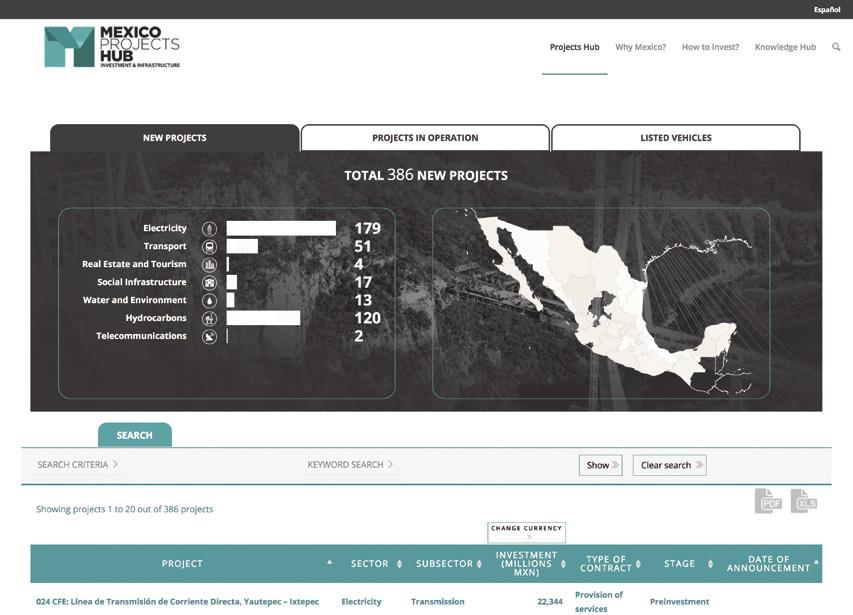
As a way to link investment projects with domestic and foreign potential investors, as well as encourage new companies to participate in bids, SHCP, through the Mexican system of development banks, developed Mexico Projects Hub which is an online database of Mexico’s current infrastructure projects. “As a development bank, we have also been on the other side of the table and we understand the importance of having clear information about upcoming projects,” says Sergio Forte, Deputy Director General of Investor Relations at Banobras. “Mexico Projects Hub will increase transparency and investment in Mexican infrastructure.” This free bilingual platform divides projects into four different stages: preinvestment, bidding, execution and operation to give investors insight throughout all phases of project development. “The main objective of Mexico Projects Hub is to display project information alongside legal and financial data for the entire industry to see,” he says. “It is a tool to provide players with information about similar projects that will increase their appetite to invest even more.”
The hub contains information about greenfield and brownfield projects across all sectors within the industry including electricity, transport, telecommunications, water and environment, real estate and tourism, mining, hydrocarbons and social infrastructure. The hub lists 75 different types of financial instruments such as Fibras and CKDs that can be used to invest in the maintenance and improvement of existing infrastructure. “There is a great deal of opportunity in this sector,” says Forte. “The amount of money in CKDs that can be allocated to projects equates to approximately MX$50 billion of capital, ready to be invested into the industry.” Apart from listing the basic information such as participants, amount invested and entities involved, Banobras included links to all of
the governmental websites and CompraNet where users can find more information and contacts. Each project has a unique File Number and QR code to facilitate information sharing and tracking of changes to the project. Forte believes that this platform will help reduce international and national investors’ costs and time by allowing them to gain better visibility of Mexico’s infrastructure pipeline.
And the platform could not have come at a more opportune time for the industry. Given the shortage of public funds, SHCP announced in March that it wants to encourage the development of PPPs for infrastructure and released 30 projects involving an investment of over MX$60 billion. The benefits of PPP projects are multiple, given they have a mature regulatory framework and offer more attractive conditions for both investors and participating companies. Although some companies are cautious about the recent changes made to the PPP Law, PPPs and public works have become more efficient in the last few years due to the adoption of best practices across all sectors.
SHCP took on the challenge of creating the Projects Hub — the first of its kind in Mexico — to increase transparency and access to these PPP projects, but it has faced various hurdles along the way. Despite the hopeful announcements of more PPP projects, many players in the industry feel there is a lack of innovative projects. “There is always the critique that projects are the same and that there are no new project opportunities. But, what matters is that there is a steady stream of projects being carried out,” says Forte. “Developers can find ways to incorporate innovation in the structure of the project or it can be constructed by a group of companies.”
This platform is expected to level out the playing field when it comes to bids and ensure that there are new companies stepping up to each challenge. One of the main objectives of the hub is to allow investors and participants to give feedback on each of the different projects, especially when bids are about to start. “It is becoming more common for the same two to three companies to bid in all of the projects in certain sectors in Mexico,” Forte says. “The platform will encourage more companies to seek involvement in the industry.”
CONNECTING MEXICO’S INFRASTRUCTURE INDUSTRY TO THE GLOBAL MARKET
RICARDO DÍAZ DE LEÓN
Infrastructure, Mining, Logistics and Tourism Coordinator of ProMéxico
As the public sector continues to struggle with a shrinking federal budget, the infrastructure industry in Mexico must continue to attract FDI to ensure that development does not come to a standstill, says Ricardo Díaz de León, Infrastructure, Mining, Logistics and Tourism Coordinator of ProMéxico. There must be a unified effort from both the public and private sectors to ensure that Mexico’s infrastructure opportunities remain relevant enough to draw capital from the international market.
According to the Center of Economic Studies in the Construction Sector (CEESCO), FDI attracted by Mexico’s construction sector dropped 53.8 percent in 2016 to US$1.1 billion in comparison to 2015’s US$2.3 million.
“Attracting new foreign private investors is one of the biggest challenges the industry faces,” says Díaz de León. “Foreign companies often battle with structures in Mexico that highly favor companies already operating here.” Companies venturing into Mexico must also face international players that already have a strong presence in the country, particularly those from Spain. To improve the competitivity of the market and lower entry barriers, ProMéxico strives to help international companies identify areas of opportunity within Mexico’s industries.
“We organize international missions to bring information about the industry closer to strategic players,” says Díaz de León. “This is important because sometimes opportunities to participate and invest in the country reach investors too late.”
As part of it mission, ProMéxico either promotes an entity or a series of projects to regions that can complement the project’s objective, typically in collaboration with embassies and their commercial offices. “ProMéxico is currently organizing a mission in Asia to promote the Lazaro Cardenas port that recently opened its Tec II automated terminal,” he says. “Strengthening ties with Asia has the dual advantage of diversifying Mexico’s commercial portfolio and ensuring a strong flow of goods to the port as Lazaro Cardenas is one of the most important doors from Asia into Mexico.”
Another notable collaboration was with GACM, which requested support from ProMéxico to promote NAICM
terminal tender on an international scale and attract more bidders. ProMéxico has a particular focus on promoting PPP projects because the model encompasses a wide spectrum of sectors within the industry, from airports to hospitals. “The model invites international companies to share their best practices within iconic projects,” explains Díaz de León. “But the model should be re-evaluated considering that over 90 percent of infrastructure projects in Mexico experience cost overruns and delays.”
Nonetheless, he emphasizes that it is not just the public sector that bears the responsibility of making sure projects are completed on time. “Companies can contribute by choosing to participate only in projects to which they can offer added value,” he says. The scheme also needs to allow the private sector to be more involved in the design and planning phases to mitigate technical issues. This was a lesson the government learned from the Mexico-Toluca Interurban Train project. With the proper risk assessment and private-sector contributions, the rights of way problems faced by the project could have been avoided, therefore preventing the delays and construction issues it has faced. “Developing passenger trains in Mexico is difficult as the region is used to freight trains while Europe and the US have more experience managing a system that includes both passenger and freight trains,” says Diaz de León.
Nevertheless, ProMéxico believes that the development of these projects can greatly benefit the country. “The government must always be certain that the services they are offering to the public have economic advantages, even if the service is highly subsidized,” he says. “This train will facilitate mobility between the State of Mexico and Mexico City and can result in economic prosperity and a better quality of life.”
Overall, Diaz de León believes that the infrastructure industry would greatly benefit from more organization and communication between governmental authorities and the private sector. ProMéxico does its part by promoting the country internationally. “We strive to prove that Mexico is not a mere export destination and that local companies have talent to offer the global market,” he says.
PUBLIC-PRIVATE PARTICIPATION TO BRIDGE INFRASTRUCTURE GAP
FRANCISCO IBÁÑEZ
Capital Projects and Infrastructure Leader at PwC
Stability and well-planned projects within Mexico’s infrastructure industry are factors that directly influence the country’s economic prospects. Considering geopolitical instability in the world, cooperation between the private and public sectors is now more essential than ever to ensure the continuation of the country’s key projects, such as the Mexico-Toluca Interurban Train and NAICM. According to Timetric, a leading global provider of market data and advisory services, Mexico’s infrastructure construction market is expected to reach a total value of MX$1.2 trillion if large-scale infrastructure projects continue as planned.
But, according to Francisco Ibáñez, Capital Projects and Infrastructure Leader at PwC Mexico, fragmented development of infrastructure projects in Mexico is an issue that jeopardizes the growth of the industry and the country. “Without clear multimodal planning, a government official could plan a highway near a port and not realize that the area actually requires a train,” he says. Government officials who plan the infrastructure in a way that solely focuses on their own projects without evaluating the true requirement of the area are allowing room for error.
Intermodal planning is one tool Mexican officials can use to implement successful projects and create an interconnected perception of infrastructure developments. “Intermodal planning can improve transportation logistics in the country and strengthen Mexico’s ability to compete in the global market,” says Ibáñez. “It creates unity, certainty and transparency across a wide range of projects such as ports, airports, highways and roads.”
To do this successfully, the private sector needs information and Ibáñez cites Bancomext’s recently created Mexico Projects Hub as a timely development that will promote investment in Mexico. “One company recruited PwC for the sole purpose of listing PPP projects in the transportation sector, a service that would not be needed if authorities made information more public,” he says. “Online platforms like Mexico Projects Hub can make information about the status of projects available to the general public because at the moment, this data is hard to find.”
Bancomext’s platform goes a long way to increasing transparency in infrastructure PPPs but one issue developers often face when working with the public sector is extremely tight timelines. “Sometimes public entities are only given a few months to submit proposals and this greatly inhibits competition and quality, which limits the amount of companies that can participate in the bidding process,” says Ibáñez. “Mexico can reassure investors and attract funds through the release of public tenders that allow developers enough time to create wellplanned proposals.”
To highlight these challenges and potential solutions, PwC recently developed a report that includes recommendations and best practices from seven countries to promote healthy infrastructure growth. The challenge is making sure that their suggestions and longterm vision are adopted by the public sector. This concern is compounded by the upcoming 2018 elections, since typically incoming administrations place little importance on continuity with the priorities of previous governments. Although the administration has an obligation to fulfil the promises it established at the beginning of the term, developers are rushing to complete projects in light of a possible change of priorities if a new political party takes the reins. “A new administration is a risk to developers because authorities with a different vision may prevent the continuation of important public projects,” says Ibáñez. “This creates a cycle of projects with a shortterm vision as it is difficult to ensure the long-term continuity among rotating administrations.” He suggests the creation of an independent body that can oversee planning and promote the continuation of projects beyond electoral periods.
It is important to have well-planned infrastructure to ensure Mexico’s capacity to thrive in the global market. Ibáñez stresses that the importance of a longterm infrastructure outlook cannot be underestimated. “Ultimately, long-term infrastructure projects are Mexico’s backbone and they enable the country to compete internationally,” he says.
PROMOTING EARTHQUAKE RESILIENCE IN CDMX
RENATO BERRÓN
Director
General
of the Mexico City Institute of Construction Safety (ISCDF)
Q: How does ISCDF contribute to the structural safety of Mexico City’s buildings?
A: ISCDF reviews new and existing public and private buildings and provides technical opinions regarding their structural safety and whether developments are in line with the law. We also financially support research institutions and projects that disseminate knowledge about building safety and the management of Mexico City’s Seismic Alert. ISCDF must find out which projects are noncompliant, issue a verdict on their structural safety and notify the agencies responsible for sanctioning developers. Mexico City has seen many real estate developments arise in several areas and ensuring they comply with the law is the difficult task of ISCDF.
Q: How have ISCDF responded to the September 2017 earthquakes, in particular the second quake that leveled buildings in Mexico City?
A: The fact that the city resisted the first earthquake was clearly no reason to feel overly confident about the structural security of some of Mexico City’s buildings. There were several constructions in highly seismic areas whose structure was damaged by the 1985 earthquake and that did not receive appropriate maintenance before the second earthquake hit. Since 2013, we have carried out more than 40 studies on structural security, the results of which are used to update Mexico City’s construction guidelines on structural regulation, which makes the city more earthquake-resilient. In terms of our response, we have carried out profound revisions of projects in the process of construction, and are collaborating in every way we can, given the small size of our institution. Mainly, we have conducted surveys in collaboration with several engineering firms and other related expert organizations. So far, we have found 700 buildings with structural risk, which require further study and structural rehabilitation through reinforcement.
ISCDF is a decentralized agency of the Mexico City government. It is in charge of verifying that existing and new buildings comply with the Mexico City Building Code. It promotes and finances research projects on structural integrity
Q: What are the most common areas in which developers fail to meet security standards?
A: Violations in administrative requirements and structural security standards are not unusual. These violations often come from errors, oversights, misinterpretations of the code and, in some cases, negligence by developers that want to cut costs. ISCDF is aware that many companies are responsible and pay for an exhaustive numeric and technical revision of their project. But we have also noticed several projects being built that do not comply with the code to various extents. Ideally, all new projects should be revised in-depth but sometimes investors fail to comply in an effort to maximize their profits.
Q: How do differences in types of soil affect the costs of achieving structural security?
A: The type of soil determines the level of structural safety that projects need. Building in former marshlands is more expensive because the technical requirements of buildings are higher since muddy soil intensifies the impact of earthquakes. Constructions on hills are less robust because the soil is firmer and the structures suffer less stress in case of an earthquake, which makes their structural safety more inexpensive. Regarding the number of stories in a building, Mexico City government’s “compact city” policy promotes vertical growth to allow shorter commute times and less traffic. This policy and urban planning studies determine the kind of land usage applicable in each area and the number of stories that developments can have.
Q: What are the main engineering challenges of structural security in Mexico City?
A: Land subsidence and seismicity are some of the key problems. The city sinks unevenly and not every area is affected the same way by earthquakes. Land sinks up to 40cm per year in areas like Iztapalapa and Venustiano Carranza while Mexico City’s center only subsides by about 20cm and other areas do not sink at all. These different subsidence rates jeopardize water lines and building foundations. In terms of seismic activity, the center and east of the city are more affected by earthquakes while the south and west register little seismicity.
FACILITATING THE PEDESTRIAN REVOLUTION
LAURA BALLESTEROS Deputy Minister of Planning at the Ministry of Mobility (SEMOVI)
In Mexico City, the car was always king, so much so that it is easy to forget that the average person in the metropolis does not even own a vehicle. For Laura Ballesteros, Deputy Minister for Planning at SEMOVI, this represents a massive opportunity for carpooling to take the pressure off the capital’s creaky infrastructure. “People tend to forget that the average person –- around 60 percent of the population of Mexico City –- does not own a car,” she says. “This demographic travels four times a day using various mobility systems, yet cars are only shared among family, friends or through the use of an application. That results in an average occupation of 1.2 people per vehicle in Mexico City.”
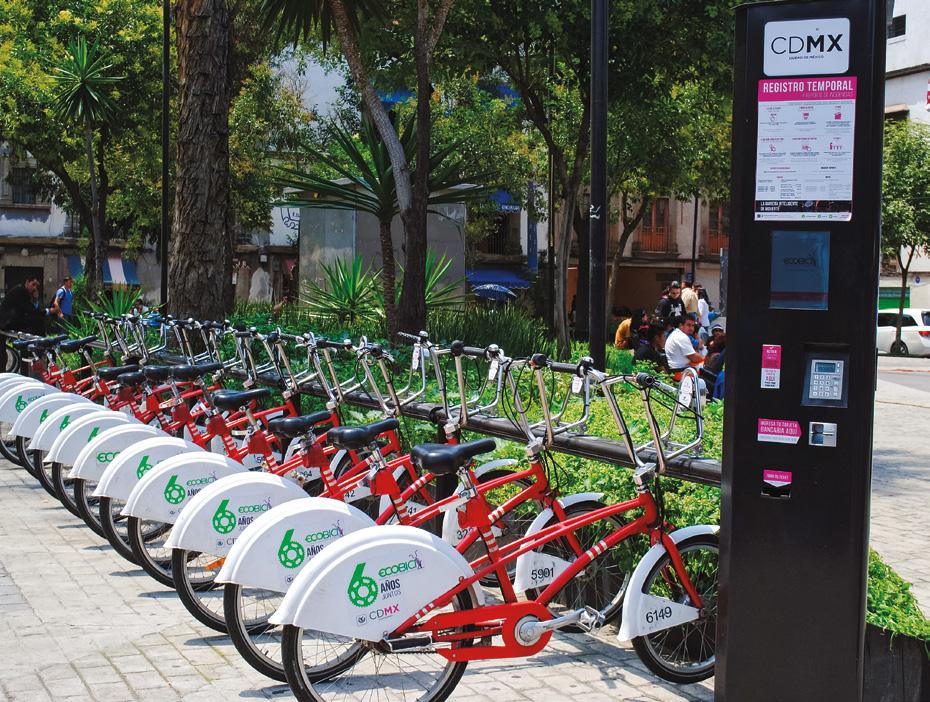
According to Ballesteros, there are currently 5.5 million vehicles in Mexico City alone and 80 percent of its roads are dedicated to vehicle use. “The problem we need to solve is how to successfully partition all the available mobility systems,” she says. “The city’s government has worked on a strategy for two years and our goal is to designate 70 percent of our budget to public transportation projects but to be successful we need the support of the federal government.” In 2014, Mexico City underwent a mobility overhaul after the implementation of the new Mobility Law and the many programs related to road safety. The government’s goal was to make private vehicles only one of many options for transportation, fostering the implementation of carpooling when possible. To do that, it needed to invest in sustainable mobility with safe, connected and quality public transportation. This included more space for mobility options like Metrobús and Ecobici and enough space to promote the use of private bicycles and sustainable buses to replace the current microbus fleet.
The city’s urban planning is also a thorn in the side of regulators. Due to the government’s previous policy of building the city outward, much of the population has a long commute to work. Business centers are focused in certain districts like Polanco, Reforma, Santa Fe and the city center, meaning at rush hour, the city gets saturated at certain locations. To date, says Ballesteros, almost 45 percent of the transit in Mexico City is generated downtown, making circulation almost impossible, particularly at rush hour.
Ballesteros believes parking lots are one of the top culprits in encouraging private car use. “We tried to balance the use of private and public transportation in Mexico City by publishing new parking standards in July 2017,” she says. One of these standards eliminated the obligation for parking space delimitation in new developments in an effort to better organize the city’s parking layout since many international studies show that an excess of parking lots can lead to additional traffic. “A reduction in parking lot infrastructure could help us invest in sustainable public transportation like Metro and Metrobús,” explains Ballesteros. “These standards are the most important the city has published in recent years and together with Guadalajara we are leading this transformation in Latin America.”
Even with modern vehicles, she is skeptical that the pollution that plagues the capital can be curtailed without proper emissions management. “Hybrid and electric cars are necessary to improve the air quality,” she says. “The city is preparing an electromobility plan to promote the use of these vehicles in the short and long term and taxis are the first focus.” Old taxis are gradually being renovated and regulations are making it easier for drivers to choose hybrid models.
SEMOVI is also lobbying to offer benefits to hybrid and electric-vehicle owners, which should go hand in hand with the development of car sales and charging infrastructure. The government of Mexico City has an agreement with tollroad operators to offer discounts to green vehicles and one of its commitments is the construction of infrastructure for electric buses. The 22km Green Corridor in Eje 8 Sur will be the first of its kind in Latin America. The governmental body also wants to make Mexico City’s roads safer for the millions of pedestrians that use them each day. Almost 60 percent of the people who die in a traffic accident are pedestrians and cyclists, while the other 40 percent are people driving a vehicle. “All mobility options must offer the same safety conditions, even when some are more vulnerable than others, which is the main reason why the city’s streets have evolved,” says Ballesteros.
CROSSING THE BORDER WITH EASE AT LAREDO
JAVIER SOLÍS Minister of Economic Development
(SEDECO) for the city of Nuevo Laredo
When considering the contribution of logistics infrastructure to Mexico’s economic development, it is necessary to take into account the two Laredos, as they are an essential zone for international trade. Javier Solís, Secretary of Economic Development for the city of Nuevo Laredo (SEDECO), believes an integrated approach is the way forward.
“On Mexico’s side, Nuevo Laredo is the most important onshore port in Latin America,” he says. “Forty percent of the goods traded between Mexico and its NAFTA partners cross through this city, which contributes about 26 percent of all Mexico’s international trade-generated VAT.” Similarly, on the US side, Laredo, Texas, has the third-most important customs office in the US in terms of freight and value. About US$1 million in goods is transported per minute from one border to the other. New technologies and best international trade practices tend to be rolled out in the Laredos due to its strategic importance.
Cross-border relations between the Laredos is of the utmost importance for economic growth, and with this in mind, SCT and the city of Laredo built a series of bridges to facilitate trade. Four bridges have been built so far: Gateway to the Americas, Juarez-Lincoln, Colombia-Solidarity and the World Trade International Bridge. A fifth project, South Laredo International Bridge, is being considered in an effort to create the first binational World Trade Center.
This new border crossing will entail the creation of fiscal precincts placed right next to the World Trade International Bridge. “The new bridge is expected to have six lanes in each direction and will support approximately 18,000 trailers crossing through Nuevo Laredo on completion,” explains Solís. Within 10 years, this is expected to multiply to 26,000 trailers daily, significantly adding to the 14,000-daily capacity of the World Trade International Bridge. This port is planned to have mirrored fiscal precincts, so that both US and Mexican customs services can be offered in a single office, thus reducing costs for both CBP and the Ministry of Finance (SHCP).
Solís says this project must meet several requirements to come to fruition. “On the US side, it is necessary to receive
a presidential letter before tendering the project,” he says. “Applications have already been presented in Washington, DC, and both the government of Texas and Washington welcome this initiative because they understand how necessary and profitable it is.” On the Mexico side, the South Laredo International Bridge has been declared a priority project by the Ministry of Foreign Relations (SRE) and SHCP. As soon as the US presidential letter is received, the tendering process will begin.
Given Nuevo Laredo’s focus on being a logistics town, rail giant Kansas City Southern de México (KCSM) is building the largest intermodal park in Latin America, which is expected to bring in operations from Monterrey and Laredo. KCSM estimates this park will increase its capacity by 60 percent and expand the number of trains that cross the border daily by 40 percent. “This will help the city attract OEMs and build a supply chain as the local government is willing to offer land in the direct vicinity of KCSM’s intermodal terminal, all the required utilities for production and a strategic position at the heart of NAFTA,” says Solís.
To further improve its cross-border intermodal transportation system, it is necessary for Nuevo Laredo’s authorities to comply with US agreements and to streamline regulations, specifications and controls. An increase in its border-crossing capacity and the number of transport companies with C-TPAT and other security certifications is a priority. This would not only make transportation safer but also cut down on delays, as noncertified cargo carriers commonly wait between three and seven hours to cross into the US, while certified carriers only wait 45 minutes on average.
International commerce crossing through the Laredos has grown at a yearly rate of 6 percent in the last eight to 10 years. Solís warns that if Nuevo Laredo does not start planning how to channel its growth, the city will meet its maximum capacity in about four years. “SEDECO is prioritizing the implementation of solutions in the mid and long terms,” he says. “We want to fully take advantage of our strategic geographical position to become more efficient and attractive to investors.”
According to the OECD, issues with poor mobility, social services, water, healthcare and safety infrastructure can affect women disproportionately more than men, and infrastructure must be designed with these nuances in mind. In a 2010 study carried out by Centro de la Mujer en la Alta Dirección, out of 112 million Mexican citizens, women made up 51 percent of the population but in business, women represented only 16 percent of the workforce. As more and more industries are working to be female-inclusive, Mexico Infrastructure & Sustainability Review asked some prominent female leaders in infrastructure about the importance of women’s participation in the industry.
WHY SHOULD THERE BE MORE WOMEN IN THE INFRASTRUCTURE INDUSTRY?
Infrastructure is a largely male-dominated industry. My brother and I have been able to lead this company by gaining the trust of people within and outside of MABASA and pulling teams together. As a businesswoman, I try to bring a more human vision that complements the largely cold, purely commercial perspectives that are common in infrastructure. Doing this has enabled me to learn more about the industry and help MABASA reach the position it currently holds.
VANESSA BAUTISTA Administrative Manager of MABASA Soluciones Constructivas de Acero
I believe the role of women in the construction industry is the same as that of men: to foster a quality industry and boost the desired results in every way possible. Also, I believe that to include women in managerial roles is as important as to include younger or older people. In the end, we must aim to have different perspectives that will enrich a company’s perspective, which gives a lot of organizational strength through a diversity of opinions. I personally enjoy the constant challenge of bringing innovation that the industry presents in terms of engineering, management, and strategic planning.
DIANA MUÑOZCANO VP of Grupo Indi
As the Fourth Industrial Revolution unfolds, our industry needs preparation to adapt to disruptive changes coming ahead. Tackling gender gaps can unlock new opportunities for growth. Including women in the industry is a must as female talent remains one of the most under-utilized business resources. Mexico has a 50-50 gender balance and this is true in Universities along the country but not true in the workforce. This means we are investing in women’s education and not harvesting their potential to boost the economy.
SILVA Founder and Director General of
ALICIA
Revitaliza Consultores
Metrobús in Plaza de la Republica, Mexico City
URBAN PLANNING & MOBILITY 2
Thanks to previous legislation that prioritized motorized transportation through the construction of highways and parking lots, Mexico’s capital ails from smogfilled landscapes and congested streets. The city is also battling against a growing population influenced by the global trend toward urbanization. The Valley of Mexico Metropolitan Area (ZMVM) has more than 20 million inhabitants and according to CONAPO, this number is projected to grow by 13 percent between 2010 and 2030. Fortunately, regulatory frameworks such as the General Law for Human Settlements, Land Use Planning and Urban Development and the new Mexico City Constitution are helping mold the future development of the capital’s infrastructure.
Urbanists hope that burgeoning cities such as Guadalajara and Merida learn from the mistakes and advancements of the capital to ensure they flourish in an orderly and inclusive manner. Mobility is one of the main challenges faced by cities in the country and strategies must be accompanied by infrastructure that interconnects not only neighborhoods but cities and states. Throughout this chapter, experts from both the public and private sectors discuss the hurdles the country’s urban hubs will confront in providing transformative living spaces for the country’s growing population.
CHAPTER 2: URBAN PLANNING & MOBILITY
32 ANALYSIS: The Sharing Economy: Creating Waves in Urban Planning and Mobility
34 INSIGHT: Bernardo Ortiz, IBI Group
35 VIEW FROM THE TOP: César Valle, IDOM
36 INSIGHT: Iñaki Echeverria, Iñaki Echeverria
37 VIEW FROM THE TOP: Andrés Gómez, GVA
38 ROUNDTABLE: What Do Mexican Cities Need to Improve Mobility?
40 INSIGHT: Rafael Monjaraz, Serrano Monjaraz Arquitectos
Juan Pablo Serrano, Serrano Monjaraz Arquitectos
41 VIEW FROM THE TOP: Francisco Martín del Campo, Arquitectoma
43 VIEW FROM THE TOP: Adriana Lobo, WRI Mexico
44 VIEW FROM THE TOP: Gabriella Gómez-Mont, Laboratorio para la Ciudad
45 INSIGHT: David Baltazar, Colegio de Urbanistas de México
50 VIEW FROM THE TOP: Rodrigo Vázquez, BKT Bicipublica
51 INSIGHT: Luis Prados, Clear Channel Mexico
52 VIEW FROM THE TOP: Aaron Barrios, Plastimadera
53 VIEW FROM THE TOP: Guillermo Villarreal, UnderTerra
55 ANALYSIS: People Traffic Versus Car Traffic
THE SHARING ECONOMY: CREATING WAVES IN URBAN PLANNING AND MOBILITY
Mexico is a predominantly young country and the habits of this age bracket are quickly changing the economy. The popularity of platforms that eliminate the need to purchase a car or a home has led to an expansion of the sharing economy and Latin America is starting to join the movement, with Brazil and Mexico at the helm
According to Investopedia, the sharing economy is an economic model in which individuals are able to borrow or rent assets owned by others. These business models are typically developed through online platforms or applications. It is a relatively young system as many of its initiatives were created in the last five years. But the areas of opportunities are endless for both the public and private sector.
The National League of Cities states in its report Cities, The Sharing Economy and What’s Next, that authorities often assume that these services are limited to ridesharing and home-sharing but are unaware of the wide range of sharing possibilities. “Municipalities, for example, can even share heavy equipment, reducing overall expenditures and providing needed tools that might otherwise have been unavailable,” the report says. PwC projects that that the five key sharing sectors – travel, car-sharing, finance, staffing, and music and video streaming – have the potential to reach a global revenue of US$335 billion by 2025.
THE TRANSFORMATION OF REAL ESTATE
Companies are quickly becoming aware of the changes the sharing economy is creating in people’s habits and are rushing to adapt their products and services to the new reality, including in real estate. Major developer GVA, for example, has stated its commitment to understanding and meeting the needs of newer generations. “Millennials do not want to be locked in an office and they seek through the use of technology new ways to work and interact,” says Andrés Gómez, President and CEO of GVA. “They are now freer to travel around the world and work from their laptops. This means that they are looking for accommodations that suit their lifestyles. We are transitioning toward this reality by taking a plunge into the concept of shared living, an element of the sharing economy trend driven by companies like Uber and AirBnB.”
According to GVA, shared living spaces allow individuals to rent spaces for days or weeks at a time without a contract or financial commitments. The company’s initiative for shared living spaces is one of many that are starting to appear around the world. James Scott,
COO of The Collective, a co-living startup based in London, said in an interview with architecture and design magazine Dezeen, “In the future, we will all be homeless.” He explains that the median age of marriage has shifted from 20 to 29 in the last four decades and that it is one of many factors pushing young people to settle down at a later age. He predicts that housing will eventually shift toward a model of subscription homes or the provision of living as a service. According to The Collective’s website, London is only the beginning and it aspires to expand to other cities around the world and redefine the way people choose to live, work and play. The rise of coliving may not be so far off in Mexico as the capital has already incorporated the use of co-working spaces such as Impact Hub and We Work.
FACILITATING MOBILITY
Just as home-sharing services are impacting the face of real estate, car-sharing services and alternative transportation platforms are changing the focus of the mobility sector. “The global trend is to offer mobility as a service,” says Laura Ballesteros, Deputy Minister of Planning at SEMOVI. “The average person does not own a car in Mexico City. These people represent 60 percent of the population and they travel four times a day using a different mobility system.” In Latin America, transportation is the second-biggest sector among sharing-economy initiatives, according to IE Business School.
Uber proved Mexico’s potential to adopt the sharing-economy principles in mobility as Mexico City is the company’s busiest city in the world, followed by Sao Paulo. In August 2016, the company registered 45 million trips in Latin America. The app is present in 36 Mexican cities and is continuously increasing its reach, although Uber took a hit in September 2017 when London decided not to renew the company’s license to operate. Some speculate the move could open doors for other cities to ban the application as well. But, according to Vicente Torres, Director General of PTV Group América Latina, Uber is only the beginning of what the sharing economy can do in terms of mobility. “Uber was able to provide a short-term service but now the big OEMs are waking up to the trend,” he says. “Ford has already stated it is no longer a car-making company but a mobility-services provider and the new Ford
CEO came from the Ford Smart Mobility Division. That is a message to the market.”
Along with car-sharing, alternative modes of transportation are joining the movement. Public bike systems are becoming increasingly popular. Mexico City alone hosts one of the biggest bike-sharing programs in the world, Ecobici. In the last six years, the platform has provided 36 million trips and offers 6,500 bicycles in the capital.
THE BEGINNING OF A NEW PHASE
Developing countries may just have the upper hand when it comes to the rise of the sharing economy as the infrastructure gaps in these regions can often be an advantage. “The lack of infrastructure is both a liability and a potential asset,” Jeremy Rifkin, author and adviser to the European Union, told the Huffington Post.
“It is often cheaper and quicker to erect virgin infrastructure than to reconfigure existing infrastructure.” Vicente Torres, Director General of smart mobility software company PTV Group América Latina, uses the example of the telecommunications boom in Africa. “There were no landlines and the investment was never made to build the network,” he says. “Instead the country did leap-frogged right into cellphone technology by simply installing some towers.” He believes that smart mobility in Latin America will work on the same premise.
Mexico takes second place in Latin America among countries with the greatest number of sharing-economy initiatives after Brazil, according to a 2016 report on the sharing economy in the region written by IE Business School and the Multilateral Investment Fund (FOMIN). Brazil, Mexico, Argentina and Peru hold 69 percent of the sharing-economy initiatives recorded by the report. Brigit Helms, General Manager of FOMIN, says the sharing economy has the potential to generate a wide variety of benefits to the region, including the reduction of environmental impacts, promoting access to new services and products and facilitating a more equitable distribution of wealth.
The rise of sharing-economy applications also offers unique opportunities for the public sector to take advantage of the collected data. “Data from sharingeconomy businesses, can be a useful tool in tracking services to neighborhoods and designing more effective and equitable transportation networks,” says the National League of Cities in its report. “City governments need to develop data-sharing agreements with transnational companies to monitor services patterns, track pick-up and drop-off locations and ensure that all neighborhoods maintain access to drivers.” In effect, with the population constantly growing, especially in already-saturated urban hubs, the sharing economy could lead to a smarter, more efficient Mexico.
Ecobici Station in Mexico City's Downtown
PARTICIPATORY GOVERNANCE FOR INTEGRATED CITIES
BERNARDO ORTIZ Managing Principal of Mexico and Latin America for IBI Group
As of 2015, more than 79 percent of Mexico’s population lived in a city and INEGI forecasts an increase to more than 90 percent by 2050. This fact alone is pushing some cities to look for more sustainable urban planning and mobility strategies, with the aim of transforming themselves into Smart Cities. Becoming smart allows a city to increase its competitiveness and quality of life, efficiently use resources and support economic sustainability by using technology and creativity to raise the IQ of its environment. Mexico's cities will face many obstacles before they can reach this goal and will have to create strategies to align the priorities of the public and private sectors and citizens.
But the cities that need to brace for these changes –Mexico City, New Delhi and Sao Paulo –- will encounter the most hurdles to achieving sustainability, according to Bernardo Ortiz, Managing Principal of Mexico and Latin America for IBI Group. “Large population cities make the development of Smart Cities even more challenging and some important stepping stones to reaching this goal are comprehensive planning, participatory governance and the strengthening of institutions beyond borders to allow for seamless integration of transportation systems,” he says. Transit is one of the main elements of a Smart City and Mexico City must find solutions for the many challenges its metropolitan area faces.
In addition, Mexico will have to find a middle ground between private and public-sector interests in transportation projects with a focus on efficient mobility options and alternative modes of transportation. In the last few years, the private sector has had to play a larger role in the development and financing of transportation projects due to large cuts to both the federal and state budgets. IBI Group has experience working in the planning, design and engineering of every aspect of infrastructure projects worldwide and in Mexico. It has worked with SEDUVI, SCT and other stakeholders in the public and private sectors to develop projects that increase the efficiency of transportation through public financing or PPP schemes.
With SEDUVI, the company carried out a study to transform Mexico City’s Modal Transfer Centers (CETRAMs) into transportation hubs that are integrated into the urban fabric and can displace residents throughout the city. Ortiz warns that interagency consensus and customer-focused design must play a significant role in the planning and development of these centers. “CETRAMs are sometimes not developed with the right focus in mind,” he says. “There have been cases where the public has to travel through an entire shopping mall to transfer from one mode of transportation to another, which happens when a commercial agenda is given priority over the end-user.”
When the private sector participates in infrastructure projects such as CETRAMs, it is looking to make a profit in the long term but because these projects have a direct impact on society, it is important that the PPP schemes implemented assign risks to the parties best equipped to absorb them between the public and private sectors. According to Ortiz, the element that will attract more investment and foster the development of good quality transportation projects will be transparency.
Another obstacle that could potentially block the development of any type of infrastructure project in Mexico is continuity at both the planning and implementation stages. “We cannot continue to reinvent ourselves every six years when the presidential terms change,” says Ortiz. “Infrastructure and transportation plans change each term and it is always difficult to create the correct schemes when there is no continuity.”
Participatory governance places emphasis on democratic engagement and seeks to increase the participation of citizens in governmental decisions, which is a fundamental component of a Smart City. Although this is often seen as an obstacle for the completion of an infrastructure project, according to Ortiz, it can drastically increase the impact it will have on society. “Smart Cities look to integrate information into society through a series of initiatives that use technology and the vision of what the city should be from the point of view of the end user,” he says.
PRIVATE SECTOR WORRIES FOR ZEE SUCCESS
CÉSAR VALLE Director General of IDOM
Q: What measures is the government putting in place to create successful Special Economic Zones (ZEEs)?
A: Several countries have established ZEEs, but not all have been successful. These zones take many years to completely establish and the Mexican government is doing precisely what they should do to make them a reality. The Mexican government has established ZEEs in the states that have the lowest economic growth and to show its commitment, it created the Federal Authority for Special Economic Zones (AFDZEE) and Federal Law for Special Economic Zones (LFZEE) that will dictate how they will operate. The AFDZEE will create the rules and establish all the necessary incentives, formalities and requisites for operating in these zones. The federal, state and municipal governments will have to work together to implement the LFZEE and ensure transparency.
It is extremely difficult to guarantee that a ZEE will be successful and it will depend on many factors. The most important factor is that the government provides continuity across presidential terms. ZEEs are zones within a country that were unable to flourish on their own and that is why they need the undivided support of the government. When areas do not develop organically, the public sector must intervene to boost development artificially through fiscal and legal incentives.
Q: What are the private sector’s main worries regarding ZEEs and how is IDOM participating in their creation?
A: The private sector has expressed various concerns regarding the ZEEs. These include the lack of infrastructure, security, more attractive fiscal incentives and the training of human capital. According to the rules, for companies to receive these benefits they must generate long-term jobs and economic development of a disadvantaged region.
IDOM was recruited to offer technical expertise in generating the viability studies of the four zones: Lazaro Cardenas, Coatzacoalcos, Salina Cruz and Puerto Chiapas. At the same time, we had to help with the process of creating the AFDZEE as well as the social and environmental impact studies of these zones. The planning had to be carried
out before the declarations could be approved. The ADZEE has done a great job drafting the plan for these zones and creating agreements between the states and municipalities.
Q: In wich ways is the PPP Law helping to close Mexico’s infrastructure gap?
A: PPPs will help solve the country’s infrastructure deficit through the financing of projects but I believe most importantly through experience. The private sector is able to provide input and implement new methods of operating infrastructure projects. PPPs are used all over the world and have proven to be a good method of obtaining funds and creating efficient projects. USP are becoming more popular, especially within the healthcare sector. IMSS and ISSSTE have created various project tenders under the PPP scheme, especially because they realized that the involvement of the private sector in the health sphere could drastically reduce operational costs. I believe this is a good method of developing more infrastructure in the country. The will and innovation of the private sector are there but there is still a lack of results. The challenge is that the government must tender these projects and actually finish construction on time and on budget.
Q: What importance will be given to urban planning initiatives in 2017-2018?
A: Urban planning is necessary and it should be independent of any electoral process. It is fundamental for the development of existing and new cities. The legislation now covers the necessary legal processes for zoning in urban areas. This is important because many cities in Latin America have experienced an urban sprawl that has grown too rapidly to completely organize, generating social and economic inclusion problems along with high infrastructure costs. Having an integral urban planning process optimizes the development of infrastructure and mobility alternatives.
IDOM is a Spanish engineering, architecture and urban development consulting firm with experience in creating masterplans for Mexico’s developing cities. It has worked on NAICM and ZEEs, among other projects
PPP INNOVATION FOR SUSTAINABLE CITIES
IÑAKI ECHEVERRIA Architect and Urbanist at Iñaki Echeverria
Innovation is often overlooked in the development of infrastructure in Mexico, especially in social infrastructure, according to Iñaki Echeverria, Architect and Urbanist. Developers of hospitals, schools, museums and other public infrastructure often feel they must limit innovation due to a lack of public budget, but the sector is beginning to adapt. “The great opportunity in social infrastructure is that 15 years ago, one had to convince developers and the government to try these new strategies,” he says. “But now, some governments are actually demanding them.”
According to the 2017 Global Innovation Index, Mexico rose from 61 to 58 out of 127 countries in terms of innovation from the previous year. And Echeverria has seen that cities like Mexico City have adopted a more sophisticated mindset in that officials now demand innovative solutions to push the boundaries even further.
“In the next 20 years, the industry will see big changes to a more positive scenario that integrates planning, innovation and design. And along with it will be the increase in the demand for consultants and architects like the ones in our firm,” he says.
According to the 2017 Global Innovation Index
Mexico rose from 61 to 58 out of 127 countries
One of Iñaki Echeverria’s most innovative projects was the design of Monterrey’s Children’s Museum. Instead of having it stand out in the skyline, the firm decided to bury the building underground. “Children’s museums should be fun and the idea of going underground and exploring something new was an interesting twist to the traditional models,” he says. Aside from changing paradigms, this design also came with a series of bioclimatic advantages, especially for an area like Monterrey, known for its hot weather. Creating an underground museum would drastically reduce energy consumption through air conditioning, making the building much more sustainable.
For Mexico’s social infrastructure to fully develop, the firm believes that this kind of socialization or “hacking” of infrastructure as Echeverria calls it, is one of the greatest areas for growth. The country is demanding multifunctional infrastructure and when comparing the amount of federal resources that are allocated to social infrastructure to the amounts allocated to water or transport, the gap is significant. “Social infrastructure needs to be more dynamic, multifunctional and integrated seamlessly into society without decreasing its impact,” he says.
The participation of the private sector in the development of social infrastructure through PPPs is fairly new. This year IMSS and ISSSTE created various PPPs for the construction of public hospitals throughout the country, with great success. The federal budget cuts have pushed the government to shift more responsibility to the private sector, and the private sector is biting.
Chicago is an excellent example of what happens when cities hire private companies to do what they do best. It had a vision over 100 years ago to give both operative and budget independence to its public parks system. This meant that whatever money the park could make from events such as concerts was its own to reinvest. “This is why the city has one of the best systems in terms of urban infrastructure in the world,” says Echeverria. “In Mexico, if there is an art exposition in a museum, all the money goes to the central government. This does not provide any incentive to improve social infrastructure.”
But with Mexico’s current centralized system, upcoming presidential elections threaten to disrupt infrastructure development. “In general, infrastructure industries in all countries are subject to political changes,” he says. “But the stronger the country is, the stronger its institutions; in that sense, the executive power should have little influence on the everyday agenda of its states and municipalities.” Ideally, he says executive powers should have some influence on territorial development but the responsibility should not lie solely with them.
PREDICTING RESIDENTIAL, COMMERCIAL AND TOURISM TRENDS
ANDRÉS GÓMEZ President and CEO of GVA
Q: How does GVA differentiate itself from competitors?
A: Throughout our 50-year experience in the market, we have had the opportunity to participate in a wide array of sectors, from tourism to commercial. We have offices strategically located in Latin America, in Mexico, Panama, Colombia, the Dominican Republic and in London. We are used to breaking paradigms to create innovative and profitable developments. We consider ourselves business partners to our clients on every project; we provide leadership and solve each situation in a creative way. We are not afraid to stray from original plans and question developers in an effort to change structures that will improve user experience and satisfaction.
We have a multicultural and multidisciplinary team that ensures the inclusion of many perspectives into our designs. Our team is made up of professionals spanning several generations and that gives us an advantage in the way we perceive and filter the contemporary world. We have vast experience but we preserve a flexible structure that allows us to evolve.
Q: What are the most important projects you are developing?
A: Two of our biggest projects are Arkansas State University Querétaro and América Centro Mundial de Negocios, which is being developed in Bogota. We are also designing a themed all-inclusive hotel, a mixed-use resort with a casino and restaurants that will revolutionize the guest experience. This project is expected to create new benchmarks for the hotel industry in Mexico.
The University of Arkansas is disrupting the concept of education because it is the first time that a public university in the US has established a campus outside the country. It is a significant achievement that it chose Mexico as its first international campus. The university’s educational model is quite innovative because it had to blend the US and Mexican schemes into one campus and it allows students to obtain a degree that is valid in both the US and Mexico. Although it is a traditionally highly subsidized state university, it is private in Mexico, which implies higher profits.
Q: What are the main challenges you face when creating a blueprint?
A: Through our blueprints, we prove our commitment to creating projects that are responsible and promote a better quality of life within cities. The idea is to make sure that 70 percent of a person’s daily movement is within walking or biking distance. We develop integrated districts that can meet the needs of its inhabitants. We strive to go beyond location, and ensure that projects have additional characteristics that make them unique and attract visitors.
It is a challenge to find the balance between human interaction and the business model; we always aim to create added value for our clients. With each project, we strive to design quality of life with creative solutions that are respectful and in harmony with the environment. It is a big challenge to shift the mindset of clients that are not in tune with sustainability. It is much easier to create an entirely new neighborhood, as is being done at the University of Arkansas. When we are renovating an area, we have to make sure we sufficiently understand the needs of the district. Either way, we are always working in a complex ecosystem.
Q: How are you changing the concept of public spaces?
A: The designs of new shopping centers are blurring the boundaries between commercial and public spaces. Streets are becoming an extension of shopping areas, creating a better experience for visitors, who can socialize and interact. I believe rather than changing the concept of public spaces we are bringing back the essence. The streets and public plazas are the true and original mixed-use spaces were people find solutions to multiple needs, where we meet people, interact with the environment, where we find local identity, where we should feel safe and in contact. We are trying to bring back those experiences.
GVA is a developer that creates sustainable and cutting-edge designs through the conceptualization of projects in harmony with their environment. It integrates avant-garde architecture with the reasonable management of natural resources
WHAT DO MEXICAN CITIES NEED TO IMPROVE MOBILITY?
As part of a global trend, Mexico is becoming more urbanized than ever before. Cities often offer a better quality of life and access to job opportunities than rural areas, causing a major shift in the country’s demographics. But this comes with a need for more advanced mobility solutions. According to INEGI, Mexico had over 32 million registered vehicles in 2016. Fortunately, developers and companies that specialize in mobility see these gaps as areas of opportunity. Mexico Infrastructure & Sustainability Review spoke to leading authorities to find out what is being done to combat these challenges and the issues that should be addressed to improve the mobility in Mexico’s cities.
LAURA BALLESTEROS Deputy Minister of Planning at SEMOVI
The government’s goal was to make private vehicles only one of many options for transportation, fostering the implementation of carpooling when possible. To do that, we needed to invest in sustainable mobility with safe, connected and quality public transportation. This included more space for mobility options like Metrobús and Ecobici, enough space to promote the use of private bicycles and sustainable buses to replace the current minibus fleet. We also balanced the use of private and public transportation in Mexico City by publishing new parking standards in July 2017. One of these standards eliminated the obligation for parking space delimitation in new developments in an effort to better organize the city’s parking layout. Many international studies show that bad planning of parking lots and an excess of them can lead to additional traffic. These standards are the most important the city has published in recent years
ANDRÉS GÓMEZ President and CEO of GVA
We are committed to creating projects that are responsible and promote a better quality of life within cities. The idea is to make sure that 70 percent of a person’s daily movement is within walking or biking distance. We develop integrated districts that can meet the needs of their inhabitants. It is a challenge to find balance between human interactions and business models; we always aim to create added value for our clients. In each project, we strive to design quality of life with creative solutions that are respectful and in harmony with the environment. It is a big challenge to shift the mindset of clients that are not in tune with sustainability. It is much easier to create an entirely new neighborhood, as is being done at the University of Arkansas. When we are renovating an area, we have to make sure we sufficiently understand the needs of the district. Either way, we are always working in a complex ecosystem.
JOSÉ SHABOT Executive President of Quiero Casa
Mexico City has the highest levels of traffic in the world according to the Tom Tom Index and it gets worse year after year. This is not an effect of migration into the city but rather citizens from the city getting married and moving to the outskirts. There are almost 50,000 people living in Mexico City who get married and 10,000 getting divorced each year. When they cannot find affordable and decent housing, they move to the outskirts, making the existing mobility problems a bigger challenge. When people live closer to their jobs, mobility and the quality of life of the citizens is improved. Building homes closer to workplaces creates smart and sustainable cities. Convincing the communities where we build that their mobility challenges will improve if residential developments are built within the centers of the city usually takes more than one town hall meeting but we tend to be successful in convincing them.
By 2050, more than 90 percent of the Mexican population will live in the major urban areas and nobody is taking this into consideration when planning these projects. Data is needed in order to implement the right public policy. When tackling transportation and mobility issues, it is important to benchmark the current status of the area and have historical and real-time data to analyze. Because the majority of municipalities and states do not have access to this type of data, the implementation of policies is inefficient. To completely transform mobility in Mexico, there has to be a federal traffic law that is applied in all states and municipalities, including fines and rules. There must be coherence among all states and municipalities in the country.
ALFONSO VÉLEZ Director General of AutoTraffic
One of the biggest challenges is making sure that comprehensive mobility strategies are tied to urban development plans. This is sometimes difficult because the federal budget often overlooks public transportation and non-motorized transportation methods. Municipalities are responsible for making sure there are bicycle routes and pedestrian walkways, but the lack of local resources and low prioritization at the federal level demotivates authorities lower down the chain. Power and fiscal resources should be more decentralized because no single authority has the capacity to oversee Mexico’s 2,000-plus municipalities. The first step in urban planning is establishing a vision. If we cannot imagine the city we desire, we will not be able to create programs that will provide the results we seek. The idea is to create a vision, share it and collaborate to make it a reality.
Cities need to be designed for the people, rather than vehicles. New generations are placing more value on efficiency, mobility and interconnectivity, and infrastructure must follow suit. Real estate developers must adapt quickly to the new generations and change their value propositions or risk becoming obsolete. What matters today and in the future, is the experience that space provides. We have to diversify, integrate the eight principles of urban development and stop encouraging the use of cars. Parking lots are the ultimate enemy of mobility. In San Pedro Garza Garcia alone, there are more than 123,000 people and 1.5 cars per person, and the creation of more parking spaces further encourages the use of vehicles. We spend more than 85 percent of our lives in three areas: our place of work, our house and in our car. We need to change our strategies completely and create spaces where families can thrive.
MARCO GARZA Founding Partner at GM Capital
The main problem with Mexico’s development strategies is that they do not reinforce the importance of urban planning. According to legislation, housing dictates the development of the surrounding areas but it would make more sense if urban planning dictated where housing developments should be. It is important to raise awareness not only among the citizens but most importantly among the politicians who make these decisions. Politicians in Mexico are not interested in urban planning because it is a longterm process that traditionally spans several political terms. During the current political period, no new Metro lines were constructed because the Metrobús was given priority. This is not a complete solution for a city’s mobility problems because it is not designed for long distances. These types of MTS are best for interconnecting different modes of transportation and if not done correctly, it leads to high saturation of the system.
DAVID BALTAZAR
Former President of Colegio de Urbanistas de México
ADRIANA LOBO Director of WRI Mexico
Rafael Monjaraz Partner at Serrano Monjaraz Arquitectos
Juan Pablo Serrano Partner at Serrano Monjaraz Arquitectos
Long hours of daily commutes and pollution have become the norm in Mexico City, one of the largest cities in the world with over 21 million inhabitants in the greater metropolitan area. For the second year in a row, the TomTom Traffic Index ranked it as the city with the most traffic congestion problems in the world. This issue causes drivers to take up to 66 percent more time to get to their final destination in comparison to how long it would take under normal conditions. In all, drivers in the city add up to 227 hours per year in extra travel time, according to the report.
Developers can use the chaos of the capital as a learning opportunity to fix past mistakes through strategic urban design, says Rafael Monjaraz, Partner at Serrano Monjaraz Arquitectos. He says Mexico City needs to be completely restructured. “Everything that does not work should be taken out,” he says. “Soon, we will have new technology like self-driving cars completely changing our concept of roads and streets. We need to adapt our concept of infrastructure to this reality.”
The process will take time and collaboration between the public and private sectors but for now, the architecture firm strives to lead the transformation through awardwinning designs of innovative and sustainable spaces in the corporate, commercial, residential and tourism spheres.
Serrano Monjaraz is developing blueprints for a wide range of projects in the Riviera Maya, Queretaro, Ciudad Juarez and Guanajuato for all types of industries. It has broken paradigms in innovative use of space with the development of projects like Puerta Alameda, which has 650 apartments, each 60m2. “It seemed almost impossible to ensure a high quality of life in such a small space,” says Monjaraz. “But people that work all day and live alone do not need massive spaces. We were even able to include terraces and a park in the residential building.”
The creation of these mixed-use, all-in-one spaces is one of the best ways to improve the quality of life of citizens in highly densified populations, according to Juan Pablo Serrano, Partner at Serrano Monjaraz. “Dense spaces are
URBAN DENSITY: THE KEY TO SUSTAINABILITY AND EFFICIENCY
proven to be more sustainable,” he says. “A study compared Houston, a city with 15 people per hectare (pph), Madrid with 30pph, and Manhattan with 150pph. It found that New York is the most efficient because its density reduces its consumption of energy, carbon emissions and travel distances.” Urban density also has the benefit of requiring smaller infrastructure investments when it comes to transportation and other social services.
Unfortunately, instead of using density to create better planned cities and minimize urban sprawl, secondary cities seem to be copying errors made in Mexico City. “If expansion is not properly controlled, it will be almost impossible to control elements such as transportation in cities like Merida and Tijuana,” says Monjaraz.
This is where he sees Serrano Monjaraz’s expertise coming in. The architecture firm creates an impact in the industry by creating structures that efficiently consume water and electricity. “We want to set an example for the entire industry,” he continues. “Being sustainable and fully integrated is no longer a choice, especially considering how far behind Mexico is in this matter.” The firm is composed of an interdisciplinary team that knows how to communicate with project managers, construction companies, developers and investors to help structures adapt to the demands of the industry, society and the incoming generations.
The innovative firm believes there is still hope for Mexico City since the entire structure of the metropolitan area can be changed step by step. Serrano says the city should work toward reducing its periphery and incentivizing internal urban density as a way to create livable and walkable spaces. “An example is the property that is being left behind by the current international airport in Mexico City,” he says. “Ecological groups are suggesting it become a massive park but it makes more sense to allocate a few blocks throughout the city instead so that housing developments can be surrounded by green areas, rather than having one large park on the outskirts.” Dynamic spaces create more unified neighborhoods and a higher living standard for residents.
REUSE AND RECYCLE: MEXICO CITY’S NEXT OPPORTUNITY
FRANCISCO MARTÍN DEL CAMPO Founder and Director General at Arquitectoma
Q: What opportunities have you identified for new residential projects in Mexico?
A: The country has a large housing deficit. The problem is finding areas where people have sufficient purchasing power to buy homes. Certain areas outside Mexico City have a smaller economy and people cannot always afford to buy a house. Other markets like Puebla are oversaturated and everyone that has the ability to own a house already has one. Queretaro is likely to be in a similar situation soon. Monterrey, Guadalajara and Mexico City will continue to shine in the residential market because they have a good balance between demand and purchasing power. Developers need to be more cautious with projects outside these cities. Tourism follows a similar pattern. Riviera Maya is picking up while Acapulco is attracting more national than international visitors, due to its security issues.
Q: Given a lack of land, what is the next step for Mexico City’s real estate developers?
A: The next step for developments in Mexico City is to recycle and reuse empty and outdated buildings. It is almost impossible to find empty spaces and if companies are lucky they may be able to find a parking lot on which to build. The city has a lot of potential to grow by remodeling abandoned and underutilized spaces. For instance, Paseo de la Reforma used to be mostly houses and it was necessary to gather several small plots of land and recycle them to develop a large project. Areas like Polanco are transitioning from mostly residential to mixed-use and developers should take advantage of this momentum to remodel the neighborhood.
One issue is knowing the identity of the owner of a particular property. Sometimes, the original owner has passed away without designating an heir. These kinds of problems promote underutilization of properties in prominent areas, even when they are in a state of abandonment. The authorities should have a bigger role in these matters but they often suggest people to not get involved.
Q: Project closures can cause companies to lose time and money. What can developers do to avoid these delays?
A: It is incredibly important to have all documents in order. Chapultepec Uno experienced a temporary decommissioning implemented by authorities but fortunately it only lasted 48 hours because all of the project’s papers were in perfect order. The closure was caused by a neighbor with enough influence to cause trouble. Normally, the authorities give a warning at least one week before closing a project but in this case, it was carried out without the proper justification. The authorities often listen to influential people but projects can protect themselves by making sure they are following all regulations and norms.
The next step for developments in Mexico City is to recycle and reuse empty and outdated buildings
Q: How do you use alliances to mitigate risk in your projects?
A: We overcome our weaknesses by allying with partners that have the right expertise. We can offer services in architecture, construction and commercialization and use them as necessary. If the project is only a few hours away by highway, we tend to build the project ourselves. Outside of Mexico City, we use local partners to facilitate access to water and electricity, making the process quicker and smoother. In Puebla, Grupo Proyecta helped us to quickly schedule meetings with CFE to guarantee power for our projects. We also helped Proyecta by offering our expertise on vertical construction in Lomas de Angelopolis for its first vertical projects. We received a percentage of the land value and found additional partners to finance the rest of the project, including financial tools like CKDs.
Arquitectoma specializes in project design and real estate management. It designed one of the highest skyscrapers in Mexico: Chapultepec Uno. Its High Towers development in Puebla was nominated by Obras for Best Construction Project 2017
BBVA Bancomer Tower, Mexico City, Legorreta
WORKING TOWARD A COMPACT, DENSIFIED AND BALANCED CITY
ADRIANA LOBO Director of WRI Mexico
Q: What are the main challenges and benefits of the new Law of Human Settlements?
A: In the next two years, municipalities are required to complete the overhauling of their urban development plans to adhere to the change of vision introduced by the new law. One of the biggest challenges is making sure that comprehensive mobility strategies are tied to urban development plans. This is sometimes difficult because the federal budget often overlooks public transportation and nonmotorized transportation methods.
Municipalities have the responsibility to make sure there are bicycle routes and pedestrian walkways but the lack of local resources and low prioritization at the federal level demotivates authorities lower down the chain. Power and fiscal resources should be more decentralized because no single authority has the capacity to oversee Mexico’s more than 2,000 municipalities. Cities could more successfully create a customized plan through a more balanced distribution of power.
The new Law of Urban Development will bring life back to cities. It substitutes an obsolete law that was created in the 1970s when Mexico City was experiencing a large influx of immigration. The challenges have changed since then, with almost 80 percent of the country’s population now living in urban areas and smaller families boosting housing demand. Low-income communities have now been pushed to the outskirts of the city. The future of Mexico City needs to be less dispersed, more compact, more connected and more balanced. But we do acknowledge the considerable advances cities have made in the past few years.
Q: Which Mexican cities offer greater opportunity to improve their urban development?
A: The country used to be highly centralized economically and politically in Mexico City but secondary cities are more relevant now, which is creating a better balance across the country. Cities such as Merida and Queretaro have many opportunities to explore because their more compact sizes allow them more flexibility to improve urban planning than larger areas like Mexico City.
Cities are capable of creating powerful transformations. Public space projects in Paris, Seoul and Amsterdam are clear examples of what an established vision and a coordinated effort to achieve sustainable urban development can do.
If Mexico City dedicated itself to shortening people’s commuting times, quality of life would improve considerably. The best projects take a long time to develop but can have a strong positive impact on the population.
The first step in urban planning is establishing a vision. If we cannot imagine the city we desire, we will be unable to create programs that provide the results we seek. The idea is to create a vision, share it and collaborate to make it a reality.
Q: What can be done to incorporate a more sustainable vision into the country’s infrastructure industry?
A: Authorities have a responsibility to tender projects that promote sustainability and comprehensive urban development. Developers are simply meeting the needs outlined in the regulations from the public sector and will develop a project whether it has a positive impact or not. Public regulations have a strong influence on a city’s urban development. If the government improves sustainability requirements, companies will begin to compete on that basis. The key to shaping the future of a city lies on planning and conceptual models.
Accountability mechanisms are among the issues behind the lack of quality in public works. When it comes to Mexico City, the political agenda is increasingly recognizing the importance of sustainable development. At the federal level, the agenda is beginning to tackle topics like corruption and transparency.
The World Resources Institute (WRI) has a global presence and focuses on creating wellbeing and economic opportunities for people. It works to achieve eco-friendly development in several areas including health, cities, forests and energy
A PLATFORM FOR COMPREHENSIVE URBAN PLANNING INTEGRATION
GABRIELLA GÓMEZ-MONT Director General of Laboratorio para la Ciudad
Q: What led to the creation of Laboratorio para la Ciudad and which urban planning and policy areas are priorities?
A: Laboratorio para la Ciudad was born four years ago under Mayor Miguel Ángel Mancera and it is officially the experimental arm of the Mexico City government.
I have 20 people on my team, half of whom come from disciplines related to areas like urban planning, sociology, political science and data analysis. The other half come from more creative, artistic fields, including artists, designers, filmmakers, historians, journalists, architects and activists. Most of what we do combines both these worlds. Another particularity is that we function as a bridge between civil society and government. Public participation is incredibly important because it can help us better understand the city and implement new methodologies.
We believe that many social and urban challenges require different players to sit around the same table, and one of the things we needed to do from the outset was to create new tools to better understand the city. In the last four years, we have been implementing a number of projects. Our urban geography department has developed interesting tools with which we have been geolocalizing certain information about the city. We can cross-reference data on the number of children per block with information on access to open and public spaces and marginalization and segregation indexes across the city. We understand that in a city as sprawling and diverse as ours, more datadriven and focused policy is required.
Q: What projects has the Laboratory implemented that demonstrate its value to the city?
A: To really understand the city and include the voices of citizens, we need to understand the city that lives in people’s heads. We surveyed 31,000 people across more
Laboratorio para la Ciudad is an experimental division of the Mexico City government where global specialists pose new ways of approaching issues relevant to the city, incubate pilot projects and promote multidisciplinary meetings around civic innovation
than 1,400 neighborhoods and asked what they thought were the biggest challenges and opportunities of urban planning in the city. It was incredibly interesting because now we can categorize this information by age, by gender and by block and determine how we imagine the future of the city.
Even though there are differences from borough to borough, we find that topics like corruption, mobility, public safety and water are the main concerns. In terms of potential, the number one opportunity across almost all areas was culture. Under the leadership of Cuauhtémoc Cárdenas, the first Mayor of Mexico City, we surveyed 70 high-level people. The survey results pointed to culture, creativity and diversity as the top sources of potential for Mexico City. Because of this, the Laboratory has focused its agenda not only on the city’s challenges but also its potential.
Q: Considering geopolitical transitions, how is Laboratorio changing its goals for the coming years?
A: The current times prove the need for governments to be much more agile and to accept more collaboration both on a local level and with other cities. This is extremely interesting because, although many of the systems in Paris, for example, can be adopted by Mexico City, Paris has also expressed interest in adopting some of our systems.
The average age in Mexico City is 30 and the life of its citizens is very different than it was 30 years ago, so we need to ask ourselves how we can make government a place where the new demographics have a say in the conversation.
During the 1980s and ‘90s, Mexico City was seen as a sprawling megalopolis that nobody really understood. In fact, the city was one of the first three to become a megacity worldwide and we have been one of the world’s largest cities since prehispanic times. The world is realizing that megacities are the future of humanity and critics are now having to take a second look to examine how cities have solved its problems. We are now starting to figure out the sheer potential that megacities could unleash.
LEGISLATION, TRANSPARENCY KEYS TO URBAN DEVELOPMENT
DAVID BALTAZAR Former President of Colegio de Urbanistas de México
As cities grow denser, mobility, housing and water problems are becoming the norm. Modifications to the country’s Human Settlements Law and the legislating of Mexico City’s Housing Law illustrate a desire to promote strategic growth and curtail these issues. But the question remains: what more needs to be done for Mexico to slow its development to a more manageable pace?
“The main problem with Mexico’s development strategies is that they do not reinforce the importance of urban planning. According to legislation, housing dictates the development of the area around it but it would make more sense if urban planning dictated where the next housing developments should be,” says David Baltazar, former President of Colegio de Urbanistas de México. As a civil association, Colegio de Urbanistas de México brings together the country’s urban development specialists by providing specialized courses, conferences and training.
Urban Planning, according to Wharton University, is a process that seeks to control the development of cities through local regulations and direct interventions, to meet a number of objectives. Mexico created regulations and strategies to moderate urban sprawl but still, progress is slow. “It is important to raise awareness not only among the citizens but most importantly among the politicians who make these decisions,” says Baltazar. “Politicians in Mexico are not interested in urban planning because urban development is a long-term process that traditionally spans several political terms.”
Baltazar explains that the country does not have a national urban-planning strategy independent of six-year terms that would allow new administrations to build the infrastructure necessary for future generations. The Mexico City Metro system is an example of why it is so important that these plans exist. By now, the city should have more than 20 metro lines but because no government wants to make this expansion a priority in its short term, the system’s development is postponed again and again. This not only applies to Mexico City but also to Queretaro, Guadalajara and Monterrey.
Public transport is important for solving mobility problems but it also has its limits and must be integrated well into the urban design. During the current political administration, no new metro lines were constructed because the Metrobús was given priority. “The Metrobús is not a complete solution for a city’s mobility problems because it is not designed for long distances,” Baltazar explains. “These types of MTS are best for interconnecting different modes of transportation and if not done correctly, it leads to high saturation of the system.”
Mexico has not completely explored the possibilities for more involvement from the private sector into the development of these types of projects. Although the public sector is adopting the PPP scheme for more and more projects, there are still many other ways it could be applied. Investors are still hesitant to become more involved in the country’s infrastructure development due to the many legal gray areas that still exist, especially regarding the ownership of land. “This type of legal uncertainty, along with dealing with ejidos and legal disputes, discourages investors,” Baltazar warns. “The ROW and working with ejidos are some of the costliest processes in the construction of a project and even to this day, there are still plots of land the ownership of which are unclear, even to SEDATU.”
At the moment, the country is experiencing a real-estate development boom. Mixed-use has become the industry’s most popular development but Baltazar does not see these as a comprehensive answer to the problem. “Mixed-use developments are band-aid solutions,” he says. “The idea of mixed-used projects is to allow inhabitants to work, play and live in the same area. The real problem is that not all Mexicans have access to financing. These islands are not made for everybody but rather for certain segments of the population that can afford it.”
Baltazar suggests a remedy for these infrastructure challenges may be better management of public funds. Money collected from fines or concessions go into the federal fund and from there are allocated to other areas that may not be within the same community.
UNCLOGGING MEXICO’S MOBILITY ARTERIES
To combat the congestion and environmental effects of motorized transportation, the Mexican capital is setting an example for not only the country but also other cities around the world by implementing innovative public policies in mobility. In July 2017, Mayor Miguel Ángel Mancera dropped regulatory requirements for parking spaces in the construction of new developments and pushed to incorporate new uses for existing lots. The announcement
was a stride toward integrated urban planning as mandated parking causes a shortage of living spaces, drives up the costs of housing and promotes the use of automobiles in cities. The city was also the first in Latin America to use a bike-sharing program in 2010. Mexico may still have a long way to go in terms of mobility but concerned citizens and authorities are working to reverse the effects of car-oriented legislation to develop healthier cities.
MEXICO’S BIKE REVOLUTION
Bicycles are gaining popularity as a form of transportation. Over the last three years, the 30 most-populated cities in Mexico invested on average 0.3 percent of federal funds designated to mobility for bicycle use
Extended Paths
There are 737km of bicycle infrastructure in Mexico.
• Mexico City encompasses 170.11km (bike lanes, bus-bike lanes and complete street schemes)
• 15km bicycle paths added in 2016 on main avenues (Revolución, Patriotismo and Buenavista)
• In 2017, Mexico City hosted the Word Bike Forum
Parking Facilities for Bikes
Two massive bicycle parking facilities located at Modal Transfer Centers Pantitlán and La Raza (first of their kind in the city). Automatic accessibility system allows up to 1,200 uses per day
MX$3.5 billion
recived by Mexico City in 2015 from the Mexico-Chile Cooperation Fund Commission to keep promoting the use of bicycles.
Bike-Sharing System
Early in 2010, Ecobici became one of the biggest bike-sharing programs in the world
• 452 stations and 6,500 bicycles
• 36 million trips provided in six years
• 2,652 tons of CO2 reduction (until 2016)
Sources: INEGI
60% of users did not use bicycles before joining Ecobici
METROPOLES ARE MOTORIZED
Vehicle fleet in Valley of Mexico Metropolitan Area more than doubled in one decade; ZMVM includes the capital and 18 State of Mexico municipalities
30 million vehicles registered in 2015
17% of Metrobus users left their cars to use this form of transportation
The New Line 7
Construction is underway for the new route on the emblematic Reforma Avenue
US$84.3 million total estimated investment
US$618,000 for each double-decker bus 90 double-decker buses (for 128 passengers) will replace 180 obsolete units on the avenue
The Mexico City Metro has 195 stations
It has 390 trains Line 12
The Most Expensive and the newest Metro Line in Mexico City
• distributed over 12 lines
• more than 5 million people use it every day.
• 108 of those are under maintenance, special projects or in reserve
MEXICO CITY METRO
Will reduce commute time in the area by 40%
Annual reduction of 19,000 tons of CO2 emissions
• US$11.2 million annual expense for maintenance (tracks and stations)
• US$1.7 billion for service for 30 trains (17-year contract)
The cost of public transportation in Mexico City is complex. The capital may have one of the cheapest subway systems in the world (and one of the most affordable transportation systems in Mexico), but as the average commuter travels long distances using more than one form of transportation, prices can add up in comparison to the base salary.
42.3%
of the approved budget comes from revenues raised by a price hike on tickets (from 3 to 5 pesos implemented in December 2013)
Renovation and Expansion
Expansion of Lines 12, 9, A and B
• 43km total
10 new trains • for Line 1 (for 2018)
The construction of Latin America’s first waste-toenergy facility for Metro
Huge Investment To catch up on the maintenance and repair lags of the system
US$931 million budget for Metro
• The metro requires a US$1.7 billion investment and an annual budget of US$1.1 billion, according to SCT
• Approved by Mexico City Legislative Assembly (ALDF)
ALTERING THE TRANSPORT LANDSCAPE
ABEL LÓPEZ
Urban Transport Specialist at World Bank Group
The World Bank is doing something few entities could: changing the landscape of public transportation systems in Mexico. This has been the main purpose of the US$350 million credit line the Bank extended to the Mexican government. “The role we play is conveying good practices throughout the country,” says Abel López, Urban Transport Specialist of World Bank Group, which has been successful in its mission so far. “We participated in the design of the Federal Program for Urban Mass Transportation (PROTRAM) and through the National Infrastructure Bank (Banobras) we finance projects that contribute to PROTRAM’s objectives.”
While it is true that money does not solve every problem, the Bank’s financing has contributed to the expansion of the Bus Rapid Transit (BRT) system throughout the country. “Eight years after PROTRAM started, we have financed projects, through Banobras, in Monterrey and Tijuana. We are also in the process of financing systems in Mexico City, Cuernavaca, Acapulco, Campeche, San Luis Potosi and Aguascalientes,” says López.
Mexico has more than 93 urban zones with over 100,000 inhabitants
The country’s changing landscape from rural to urban conditions makes the implementation of BRT systems an attractive option. According to López, Mexico has more than 93 urban zones with over 100,000 inhabitants. “When PROTRAM began, we thought Mexico could house approximately 15 projects,” says López. “Today, PROTRAM has at least 40 projects in different planning stages of obtaining or using federal grants for BRT or city-wide transport systems.”
PROTRAM is not short of possible projects but most take half a decade to complete. “There are several potential complications such as finding a government that wants to carry out the entire project, obtaining the necessary funding
to complement PROTRAM’s support and preparing bidding documents for civil works or for a public-private partnership arrangement,” López says.
There are political and financial factors that have a direct impact on a project’s completion. “Most politicians like to be seen inaugurating public projects. If a project takes five or six years to be completed, the three to four years that most politicians are in office are not enough to finish it.” He argues that planning should always be prioritized over cutting ribbons.
Finances also play an important role. “Governments are accustomed to assigning concessions and letting private individuals handle transportation services,” says López. This practice results in dependence on the private sector and has led most local congresses to deprive cities of budget that would have been allocated to public transportation.
Although the Bank’s credit line allows Banobras to fund up to 67 percent of the total debt of a project, a problem often encountered is the private-sector financing. Big commercial banks are also hesitant to provide financing to projects like Metrobús, as it is considered too small to merit their involvement in the other 33 percent. “Local banks have found a niche market that has been neglected by financial institutions. These banks have advanced the appraisal of these projects and created instruments for private-sector financing,” says López.
For the World Bank specialist, the present administration’s goal of adding 100km to 10 Metrobús lines by 2018 seems out of reach. But a respectable total of 80km of additional Metrobús lines would be perfectly attainable in Mexico City, according to López. Currently, the World Bank has agreed to finance the Extension of Line 5, which will contribute 20km of the government’s 100km goal.
No one in Mexico City doubts the success of Metrobús, according to López. The challenge ahead is convincing entrepreneurs and governments from other entities of following the capital’s example.
MORE COLLABORATION NEEDED BETWEEN AUTHORITIES
ALFONSO VÉLEZ Director General of AutoTraffic
Q: What needs to happen for Mexico to transform mobility?
A: Data is needed in order to implement the right public policy. When tackling transportation and mobility issues, it is important to benchmark the current status of the area and have historical and real-time data to analyze. Because the majority of municipalities and states do not have access to this type of data, the implementation of policies is inefficient.
The latest car crash statistics released by the National Center for Accident Prevention (CENAPRA) are from 2015. We are two years behind in terms of data. How can the public or private sectors make decisions about mobility if the information is out of date? When implementing a traffic safety project, there is no way of knowing the true impact it is having in the area and how it could be improved.
Q: How is AutoTraffic promoting the development of safer and sustainable urban-mobility solutions in Mexico?
A: AutoTraffic developed Mobility 3.0 that provides solutions that are oriented to solving mobility issues as a whole and not just safety or traffic. The goal is to create safe and efficient environments for all modes of transportation. We are creating traffic-control systems that include pollution sensors to gather information on how traffic impacts the environment. These street-level sensors measure CO2, NOx, O3 and micro particles emissions at highly congested intersections. The data gathered through this technology helps decision-makers create the right intervention strategy in terms of traffic regulation.
The information we gather is displayed across our SmartMobility Platform that we created with Sin Trafico. This platform was developed by 100 percent Mexican companies. Puebla is the first city to implement the SmartMobility data center, which began operation in June 2017.
Q: What kind of data has the SmartMobility Platform collected?
A: In areas where we have installed speed-control mechanisms, the platform identified a 60 percent decrease
in speeding along with a significant reduction in car crashes. The SmartMobility Platform also maps out all the crashes in the area with a description of the incident. This kind of valuable information will encourage the authorities to invest in these technologies.
It is important to complement the technology and controls with other solutions, such as pedestrian intervention infrastructures and street design. There are two ways to make streets safer for all users: through the implementation of controls and by applying these modifications to slow down traffic. Design can have a great impact on mobility and helps people understand what is happening.
Q: How can technology and controls be implemented by municipalities with small budgets for mobility?
A: AutoTraffic provides the technology and services through a service contract. Our projects are all selffinancing and we are in charge of their entire operation. In a municipal contract, the government pays us for our services through the fines that are collected with the photo enforcement systems. We receive a percentage or a fixed amount of only the fines that are paid to the government. We do not directly charge or receive money from the fines.
The private sector is far more adept in the implementation of technology. The government should manage the city and leave the operation of the technologies to the private sector. For our projects, we take care of all aspects, including cameras, sensors and even maintenance. In Mexico, when the government invests in technology, it often does not take into account the human capital needed to operate and maintain the systems. As a result, the systems are usually broken or left operating without maintenance or oversight for months on end.
AutoTraffic was founded in 2003, with the mission to save lives within the mobility landscape. It is a leader in smart mobility and accident prevention technologies and aims to be a leader at the national level for safe, efficient and sustainable mobility
DIVERSIFYING MOBILITY OPTIONS IN MEXICO
RODRIGO VÁZQUEZ CEO of BKT Bicipublica
Q: What are the main challenges of implementing bikesharing systems in cities?
A: Our biggest challenge is making sure that the cities we enter have incorporated the idea of a public bicycle system into their transportation blueprint, ensuring funding, leadership and commitment. Since bike sharing systems require the creation of norms and bicycle pathways, the impact of the systems is wider than bicycles alone. The issue is that most cities do not have an agency to manage non-motorized mobility. The increasing use of bicycles is
BKT Bicipublica has more than 10 years of experience in the operation of public bicycle systems, operating the MIBICI system in Guadalajara. It has more than 50,000 bicycles, 3,900 stations and 160 million trips around the world
pushing the public sector to change its paradigms. It is important to have a clear business model.
Q: What role should the public sector have in promoting the use of bicycles within cities?
A: Authorities need to embrace non-motorized transportation systems in the short and long term. Jalisco is an excellent example of efficient governance. The government made it clear to pedestrians, cyclists, motorist and public transportation users that budgets should be re-oriented to develop public transport and prioritize more efficient transport methods. This contributed to the funding of the MIBICI bikeshare system. Today, the system is politically supported and reached 3 million trips in September 2017. Our company is based on the concept of social co-creation. We do not impose systems without community consultations.
ALTERNATIVE MOBILITY FOR SMARTER CITIES
LUIS PRADOS Director General of Clear Channel Mexico
Mobility is a key aspect of any city. Ideally, it is an organized and coherent public transport system that eliminates the use of fossil fuels. In Mexico City, this is not always the case. Companies and government players at all levels are moving to change that with the ultimate goal of creating a so-called Smart City. “The first step toward transforming mobility within a city is planning,” says Luis Prados, Director General of Clear Channel Mexico. “When cities try to make this transformation, authorities must first understand the unique characteristics of the city, its needs and how it will adapt.”
Since 2010, Clear Channel, one of the world’s largest outdoor advertising companies, has operated and maintained SEDEMA’s public bike-sharing system, Ecobici. Seven years, 5,120 bicycles and 42 million bike trips later, Ecobici has grown by 400 percent to become the largest bike-sharing system in Latin America. At a cost of MX$416 (US$22) a year, over 240,000 users in Mexico City are able to move through 43 of the city’s main neighborhoods across three delegations, covering an area of 35km2
Like any other project, Ecobici has a phased approach to expansion within the city, but at the moment it is only present in three of 16 Mexico City municipalities. The program has had a 45 percent increase in bike rides since 2010, but due to its extremely low cost and budget cuts, it has not grown as fast as it could. “If users paid MX$1,200 a year, MX$100 a month, the entire system would be selfsustainable. The money could be used to improve and expand the existing system,” says Prados.
Intelligent mobility systems not only reduce traffic and saturation but can also help deter the impact from climate change. “Cities occupy only 2 percent of the earth’s area, yet they consume 70-80 percent of the world’s energy and generate over 75 percent of CO2 emissions,” Prados says. “In Latin America alone, more than 36 percent of the population lives in a city and by 2050, more than 90 percent of Mexico’s population will live in cities.” Rapid urbanization is pushing the need for new and improved mobility solutions. “The future has no car traffic,” he says.
“By 2019 Oslo will ban the circulation of cars and by 2025 it will stop selling gas-powered vehicles. At the moment, 17 percent of cars in Norway are electric.”
But what about Mexico and Latin America? According to Prados, Latin America’s issue is that it listens to respond and not to understand. “We usually hold these solutions at arm’s length due to the socioeconomic differences between Latin America and Europe, instead of really understanding what it implies, but there are also similarities. Just like Mexico, Norway’s main business is gas. But unlike Mexico, it decided to place high taxes on gas-powered cars and exempted all electric cars from paying taxes.” Now, 50 percent of all new cars registered in Norway are electric or hybrid and to further encourage citizens to purchase electric cars, they were also exempt from paying tolls on highways. “It is not that Norway is a first world country, but that the government was able to adapt to the needs and priorities of the citizens,” says Prados.
Ecobici has grown by 400 percent to become the largest bike-sharing system in Latin America
Clear Channel wants to continue pushing for innovation and its next plan is to incorporate its advertising infrastructure into the city’s communication system. Years ago, contingencies, weather alerts and other important announcements were made through the radio. But an IFT report released in 2016 revealed that only 40 percent of Mexicans listen to the radio. Clear Channel proposes a new way to communicate to the masses. “During contingencies, our screens could be used to send out alerts or alarms in places where the entire city can see,” says Prados. As of 2017, 90 percent of the company’s advertising infrastructure is digital and it has screens of all shapes and sizes scattered throughout Mexico City.
COMBINING MATERIALS FOR GREATER SUSTAINABILITY
AARON BARRIOS General Manager of Plastimadera
Q: What sectors take advantage of Plastimadera’s wood substitute and how?
A: Our products can be used in a wide variety of industries and we complement them with tailor-made solutions. Plastimadera manufactures industrial pallets, buoys and speedbumps, building beams and pavilions, railway sleepers, fences, facades, footbridges, rough-use playgrounds, kiosks, paddocks, roof tiles and rough-use floors designed for industrial, real estate and infrastructure activities. Our core business is providing an environmentally-friendly substitute for natural wood made out of recycled plastic.
We expect the real estate industry to continue growing for eight more years, which implies a market in which Plastimadera can also grow. Developers continue to prioritize the sustainability, social and mobility aspects of their projects. Plastimadera thrives on the momentum sparked by these trends.
Q: How is Plastimadera positioned in the real estate value chain?
A: Developers take advantage of our customized services to optimize their projects. They call during the first stages of the project to incorporate our products into the design of areas such as parking lots. Our products are then installed near the end of the construction phase. In short, we help developers finish their projects by delivering tailormade, eco-friendly solutions that impact sustainability and mobility without breaking the project’s original architectural concept. For example, we collaborated on the renovation of Bosque de Chapultepec by assessing an existing project and convincing our construction partner to use kiosks made of both metal and plastic instead of just metal. This made the kiosks more aesthetically pleasing, more resistant and improved the general landscape while adhering to the planned concept.
Plastimadera manufactures a wide range of products with recycled polyethylene to ecologically substitute wood and eliminate the need to cut down trees. The company offers customized services to each client and adapts to each project
Q: What is Plastimadera’s game plan when creating new applications for plastic wood?
A: We innovate through a double strategy. On the one hand, we hire people who can help Plastimadera overcome its weaknesses so the company can identify and take advantage of new opportunity areas. On the other, Plastimadera develops strategic alliances that add value to its projects. For example, when we entered the urban furniture market we brought in specialists who understand Mexican culture. They identified the flaws in our competitors’ products and designed more resistant products. Our allies also help us improve and win contracts. Public dependencies like the Mexican Transport Industry back our products as well as real estate developers and universities like UNAM, IPN and ITESM.
Q: What obstacles does Plastimadera face when introducing its products to developers?
A: Convincing developers to use several materials to create something sustainable is difficult. They prefer to use wood or metal because they are familiar with these materials. Being a young organization is challenging because we have not introduced as many of our products as we had hoped. Another issue is convincing developers of the costbenefit of Plastimadera’s products. People think recycled materials are more inexpensive because the cost system behind recycling is unfamiliar to them. They are not aware that producing a recycled material means investing in a completely new manufacturing process.
Q: How will Plastimadera continue to innovate with its products?
A: We are introducing a new eco-friendly line of lighting poles called Alumbrateck in October and five new urban furniture projects, including benches with umbrellas in new shapes. We innovate by taking a concept that already exists and making it eco-friendlier.
Plastimadera is present in Chihuahua, Jalisco, Quintana Roo, Yucatan, Campeche, Queretaro, Puebla, Mexico City, State of Mexico, Nuevo Leon, Colima and Veracruz. Many of our projects in these locationsare ecological parks and hotels.
UNDERGROUND INFRASTRUCTURE FOR BETTER MOBILITY
GUILLERMO VILLARREAL Director General of UnderTerra
Q: What are the key urban development trends in Mexico?
A: Urban centers that grow as far as the eye can see generally present mobility issues and those cities that fail to solve these issues will see their young population flee to other locations. This is true for all social strata. A construction worker or a young professional will generally earn the same amount regardless of the area of a city in which he or she works. If young people can make just as much money working within walking distance from their home and have convenience stores, bars and other businesses in their direct vicinity, there is no point in wasting time and money in moving around the city. The future is in vertical growth with useful urban mobility.
Q: What role will a company that specializes in underground structures play in vertical growth?
A: It is our duty as engineers to come up with solutions that feed this trend. In the particular case of Monterrey, orography has defined the city’s layout but civil engineering must now prevail over hills. Since the city is expected to grow vertically in the coming 25-30 years, UnderTerra wants to contribute to urban mobility here by interconnecting areas and developments through pedestrian tunnels. The center of Monterrey is practically deserted; there is an abundance of vacant lots and abandoned houses. This provides significant opportunities to develop the area and adjust it to the ongoing urban development trends.
Q: What advantages do pedestrian underpasses or tunnels offer over pedestrian overpasses or bridges?
A: People commonly expose themselves to danger by crossing streets directly instead of using pedestrian bridges. Using a bridge at noon in 40°C heat means spending time and physical effort to go up and down the structure that could be easily avoided by using a tunnel. A couple of tenders for pedestrian bridges in Monterrey were recently awarded. We ran the numbers and realized that UnderTerra’s underpasses could have saved the public treasury 8 percent of the final costs of these bridges. The issue is that the tender was to build overpasses, so coming up with a pedestrian tunnel proposal was out of the question.
Q: How did UnderTerra find the opportunities that pedestrian underpasses provide?
A: In 2009, we built four 3m wide tunnels in Silao, Guanajuato that constitute part of the Federal Highway 45 and that were geared toward solving the rainwater drainage problems that Guanajuato Interior Port was suffering. Six months later in a routine inspection of these tunnels we noticed pedestrians in the area did not use the pedestrian overpass and crossed the road directly. We came up with the idea of using the Tunnel Boring Machine that we used for the highway tunnels to build well-equipped pedestrian underpasses.
Q: Where has UnderTerra implemented these underpasses?
A: UnderTerra has built two tunnels thus far. We approached the mayor of San Miguel de Allende and eventually built the first pedestrian tunnel in that city. It has had a positive impact by reducing the accident rate in the area. Another underpass in Monterrey. The company dug an underpass that connected the new building of the Autonomous University of Nuevo Leon’s hospital with other buildings through basement access. This enabled the hospital to transport hazardous biological waste to the incinerator without having to take it to street level.
Q: What challenges has UnderTerra faced while trying to implement these tunnels?
A: We have faced tough resistance to these solutions. Looking for clients and promoting a unique idea is time and energyconsuming for the company, but it is worth it. For instance, a year and a half passed between us approaching the mayor of San Miguel de Allende and the moment the crossing was finished. But now that the tunnel is there, the press praises it. Our strategy is to educate the market. We show technical directors of public dependencies like SCT, construction companies and real estate developers how they can benefit from these underpasses.
UnderTerra is a Mexican company focused on underground solutions for the infrastructure and real estate industry. The company builds gas, water, electrical, optic fiber-based and copper cable-based telephone networks
View of Circuito Interior
PEOPLE TRAFFIC VERSUS CAR TRAFFIC
It is no secret Mexico needs to improve its mass transportation systems (MTS). Transportation is not only a problem in Mexico City, but now cities such as Monterrey, Guadalajara and Queretaro are seeing symptoms of the country’s dysfunctional, and in some cases nonexistent, public transportation systems.
In 2015, CEPAL estimated that for every 1,000 habitants, there were at least 300 cars. The lack of public transportation incentivized the use of cars and for this reason, cities began to carry out their urban planning around vehicles too. According to AutoTraffic, most of public resources assigned for urban infrastructure have been historically used in increasing capacity for cars, creating bypasses, distributor roads and bridges. Approximately 77 percent of federal investment in mobility has been for cars, yet three out of four trips made in a city are made by bicycle, public transport or walking, CTS Embarq estimates.
“There needs to be more investment in MTS and urban transportation alternatives because options like second floors are extremely expensive and in the long term are not a viable solution,” says César Monroy, Director of Infrastructure at PwC. Local and federal governments are realizing that they have to start investing in MTS and during Peña Nieto’s presidential term, various projects were contemplated, including the Mexico-Toluca Interurban Train and the Guadalajara Electric Urban Train. But as usual, tight budgets and ROW issues make the projects go on for years and seem unfinishable.
“Projects that are located inside the Mexico City metropolitan area are far more complicated due to the high level of interaction a project will have with existing infrastructure in the area,” says Jorge Torruco, Director of Construction at Omega. “This is complicated by the fact there is continuous congestion in terms of vehicles and people, which also generates social problems that can impact the performance of the project.”
CONNECTING MEXICO’S MEGAPROJECT
Connecting NAICM to the rest of the city has been a pending issue in the government’s agenda given its remote location. One of the options the Mexico City government is considering is the Observatorio-NAICM Express Train. This train will travel between the Observatorio Metro station and NAICM, a distance of approximately 25km, passing through the downtown area. According to INEGI, when considering the 42,640m from Observatorio to NAICM, with approximately one block of margin, over 34,507 homes and more than 96,000 people could be impacted.
One party that is familiar with problems on the route to Observatorio is Omega, one of the developers of the third
section of the Mexico-Toluca train. The train’s route has been changed due to the difficulty of liberating the rights of way (ROW), as it will run through heavily populated areas from Santa Fe to Observatorio. The train’s route was changed once because of the inconvenience it would bring to the people of Santa Fe and then changed again due to the concerns of the quantity of trees that would be uprooted in the process. Omega, one of the companies developing the project, stated that the changing of the original path has heavily impacted the estimated costs and budget, which will impact the viability of the project drastically.
The Mexico-Toluca Interurban Train is on a tight timeline and the La Marquesa-Observatorio section as of October 2017 is only 35 percent complete. When completed, the train should greatly reduce transportation times and traffic from Toluca to Observatorio. But the congestion of the Observatorio station could pose a problem. “The next challenge to be solved is the connection between the train and Metro Observatorio since the current station will have to be adapted to receive excessive amounts of people at peak hours,” says Monroy.
When considering the 42,640m from Observatorio to NAICM, with approximately one block of margin, over 34,507 homes and more than 96,000 people could be impacted
Observatorio will become the newest Mexico City Modal Transfer Center (CETRAM). The city currently has 42 CETRAMs scattered in various delegations. These centers have been undergoing renovations for years but given the high rates of passenger traffic, it is hard for authorities to keep up. Tasqueña is one of the largest CETRAMs with more than 29.9 million users per year. It interconnects the south of the city with incoming passengers from Morelos and Guerrero, as well as the Mexico City Light Train. Once the Mexico-Toluca Interurban Train is finished it will interconnect Line 1 and the future lines L9 and L12 of the Metro system. It will service more than 230,000 extra passengers every day in addition to the commuters that already arrive to Observatorio.
Guadalajara International Airport
TRANSPORT INFRASTRUCTURE
3
About 60 percent of goods in Mexico is moved through its highway and road system. The significant demand means there is an imperative need for new projects to make the transportation process more efficient, but also for maintenance, improvement and expansion of the existing routes. With few road tenders left to award, the Port of Veracruz is sure to spark the interest of many companies. Mexico’s ports need to be modified to meet the demand from the country’s booming industrial sectors and of incoming investors. If the country wants to become an international logistics center, it must link its transport infrastructure.
The NIP envisions Mexico as a world-class logistics hub. Three years into the plan, there are many projects yet to accomplish. The construction of several critical roads has been delayed due to issues with land rights and inflating prices. The addition of unsolicited proposals into the PPP Law has caught the attention of companies but there are many areas of opportunity left in the framework. This chapter presents the expertise of port, airport, road and rail developers and consultants to provide insight into where the country is heading, the latest trends and the requirements necessary to fulfill the NIP’s ambitious goals. This is a comprehensive insight into the long-term planning for transport infrastructure in Mexico.
CHAPTER 3: TRANSPORT INFRASTRUCTURE
60 ANALYSIS: What is Preventing Mexico from Becoming a Logistics Hub?
62 INFOGRAPHIC: Improving Mexico’s Logistics
64 VIEW FROM THE TOP: Eduardo Andrade, Sacyr México
66 VIEW FROM THE TOP: César Monroy, PwC
67 VIEW FROM THE TOP: Othón Pérez, Hill International
68 INSIGHT: Ángel Carrillo, INCA Ingeniería, Control y Administración
69 VIEW FROM THE TOP: Alfonso de la Parra, Tecnopeaje
71 VIEW FROM THE TOP: Benito Neme, CAPUFE
73 PROJECT SPOTLIGHT: The Road Now Taken
74 INSIGHT: José Rueda, APM Terminals
75 VIEW FROM THE TOP: Alejandro Manzanilla, API Campeche
77 INSIGHT: José Zozaya, Kansas City Southern de México (KCSM)
78 MAP: The National Railroad System
80 INSIGHT: Fernando Bosque, GAP
81 INSIGHT: Adolfo Castro, ASUR
82 VIEW FROM THE TOP: Alfonso Sarabia, ASA
84 MAP: The National Airport System
88 ROUNDTABLE: What Must Be Done To Promote Mexico’s Transport Infrastructure?
WHAT IS PREVENTING MEXICO FROM BECOMING A LOGISTICS HUB?
For the remainder of the presidential term, SCT is expected to have a budget of MX$77.3 billion to complete its ambitious plan. With such a tight schedule and budget, the government will have to prioritize and accelerate the completion of the country’s most important projects
On the 2017 Global Competitiveness Index, Mexico’s infrastructure ranking has dropped from 57 to 62 in in comparison to 2016, with railroad, port infrastructure and air transport infrastructure rankings falling the most. The country’s demand for transport infrastructure continues to increase but budget cuts and ROW issues continue to set back the completion of projects. The government continues to look to PPPs and USPs to complete infrastructure projects, but tendering processes must be made more efficient to accomplish more goals.
With only a year to go, there are many NIP Infrastructure commitments that are not close to being completed. “Planning is a skill that the Mexican market has yet to master completely, even though it is the base for any public or private project,” says Julio Amodio, Director General of CAABSA. “For 2017-2018, we expect to be more active constructing projects for the private sector than the public sector, given the proximity to presidential elections and budget cuts.”
The NIP placed significant importance on boosting the country’s road and highway network, detailing 76 road and highway projects: 15 highways, 29 roads, 16 beltways, seven junctions and bridges and nine rural roads. By mid-2017, the federal government had completed 59 road and highway commitments that added up to more than 700km and an investment of more than MX$28 billion. From June 2016 to June 2017, the government allocated MX$335 billion and concluded 17 projects. Of the 59 commitments, the most important were the Jala-Compostela-Bahia de Banderas highway and the modernization of the Portezuelo- Palmillas road.
Nevertheless, the big projects have yet to be marked off SCT’s to-do list. Cardel-Poza Rica in Veracruz, TuxpanTampico, Oaxaca-Puerto Escondido and Oaxaca-Istmo, to name a few, have been under construction for years, and some even since Felipe Calderon’s presidential term in 2006-2012.
There have been other setbacks on the way for SCT. On April 5, 2017, the federal government alongside SCT inaugurated the Express Way in Cuernavaca, Morelos. With a price tag of MX$1.45 billion, it was designed to help relieve the dense
traffic of the saturated Mexico-Cuernavaca highway, which is the fastest route from Mexico City to popular tourist destination Acapulco on the Pacific coast. Three months later, a sinkhole took the lives of two people on the new road. This incident placed SCT and the infrastructure sector under the microscope as the country began to question the planning and correct construction of the country’s roads and highways.
The 2018 budget allocation has been announced as MX$15.2 billion for the construction and modernization of 423.2km of the federal network, MX$1.37 billion for the liberation of ROW, MX$559.5 million for pre-investment studies and MX$5.27 billion for the provision of services. Just like in 2016, the conservation and maintenance of roads subsector will be the most active. For this, MX$11.07 billion will be used to reconstruct 6km of roads and 21 bridges, the periodic conservation of 2,100km and routine conservation of 40.262km. All of this will be done through various maintenance and conservation PPPs that will serve more than 2,103km of the network, which means that the private sector will be more involved in 2018.
OFF THE RAIL
The NIP detailed four rail commitments: the AguascalientesGuadalajara railway, the Colima Rail Tunnel, the Coatzacoalcos Rail Beltway and the Celaya Rail Beltway. These projects have all started construction but have not yet been delivered. Between December 2012 and June 2017, the Matamoros rail beltway and the Multimodal Railway Terminal in Durango were both completed, although they were not government commitments. In 2018, the subsector’s budget will be MX$20.65 billion for the construction of rail beltways, preliminary studies that will be shared with three mass transportation projects and the expansion of line 12 of the Mexico City Metro, a number dwarfed by the amount required for the NIP projects.
For freight infrastructure, the private sector has been investing the most in maintenance and construction. Ferromex-Ferrosur invested more than US$250 million, of which 45 percent was for rail, bridge, tunnels and telecommunications infrastructure. The remaining 22.7 percent was for the construction of new terminals, platforms and double rails. KCSM also committed
US$156 million in 2017 and entered joint ventures with WTC and Watco to create a fuel storage facility in San Luis Potosi. Because railways and adjacent land belongs to the government, it is up to legislators to release the ROW and tender new projects to boost the country’s freight capacity and efficiency. José Zozaya, President of KSCM stresses the importance of boosting Mexico’s rail connectivity with the US, given the trade relationship between both countries. “Border crossings like Brownsville-Matamoros and Laredo-Nuevo Laredo require better rail infrastructure and logistics for trains to cross the border efficiently,” he says.
The ambitious NIP also included a plan to construct three MTS. The Mexico-Toluca Interurban Train, the Guadalajara Electric Urban Train and the Line 3 of the Monterrey Metro System. With more people migrating into Mexico’s cities, MTS projects are urgently needed to move people from point A to point B. “There needs to be more investment in MTS and urban transportation alternatives because options like second floors are extremely expensive and in the long term are not a viable solution,” says Cesar Monroy, Director of Infrastructure at PwC.
During this presidential term, MX$40.3 billion has been invested in MTS projects. As of June 2017, the Guadalajara Electric Urban Train is 81 percent complete and is expected to be completed by 2018. Line 3 of the Monterrey Metro advanced 85 percent and is also estimated to be completed by 2018. The Mexico-Toluca Interurban Train on the other hand is only 58 percent completed due to various changes in the route and ROW issues. “The Mexico-Toluca Interurban Train will drastically reduce the quantity of cars but any further notions of passenger trains between cities have been largely overlooked because the government has placed too much focus on the country’s road development,” says Monroy.
INCREASING PORT CAPACITY
The NIP’s goals for its port system is to increase its capacity to more than 520 million tons, and from December 2012 through June 2017, MX$56.05 billion was invested in port infrastructure. Of its seven project commitments, four have already been completed. The modernization of the Port of Guaymas, Port of Matamoros, Port of Seybaplaya and Port of Altura were finished in 2017. MX$9.2 billion was invested from September 2016 to June 2017, of which 52.1 percent came from the private sector and 47.9 percent from the public sector. Mexico’s ports moved more than 1.34 billion tons in the last five years and both the private and public sector have invested in various projects to increase capacity. One, if not the most important, project for 2018 will be
the expansion of the Port of Veracruz that was 37 percent complete as of June 2017.
LOOKING TO THE SKIES
In 2017, NAICM took all the limelight, but seven commitments and 14 strategic airport infrastructure projects were detailed by the NIP. From September 2016 to June 2017, the modernization of AICM in Mexico City was completed, along with modernization of the Chetumal, Istmo, Poza Rica and Atlangatepec airports. With more than 71.9 million passengers and 588,600 tons of goods transported in that time period, a 13.2 percent and 5.6 percent increase compared to the previous year, there is a real need to accelerate infrastructure development. In 2017, the federal government invested more than MX$1.32 billion through the five airport groups – ASA, OMA, GAP, GACM and ASUR – to boost the efficiency of the national airport system. The main ongoing projects are T4 of the Cancun International Airport, the modernization of the Guadalajara Airport, the expansion of T2 of the Los Cabos Airport, the terminal building of the Acapulco Airport, expansion of terminal A of the Monterrey Airport and the beginning of the expansion of the San Luis Potosi Airport.
From 2013 to 2016, ASA invested more than MX$2.27 billion to improve its terminals, airstrips and interconnection. ASUR is operating the second-most important airport in Mexico, the Cancun International Airport. The completion of T4 will drastically increase its capacity to receive passengers and even help relieve some stress from AICM in Mexico City. But the country needs NAICM to serve the demand. “Mexico City is still the hub for most flights arriving from both domestic and international points of origin, and its airport is the tent pole that holds up the rest of the nation’s aeronautical infrastructure,” says Adolfo Castro, Director General of ASUR. “The construction of NAICM is therefore of the utmost importance for the development of air traffic in Mexico.”
WILL THE TARGETS BE MET?
If SCT wants to complete its list of commitments and truly transform the country’s infrastructure, many in the industry believe big changes must be made. Infrastructure development depends on the involvement of the private sector, but tendering processes for PPP projects are still among the country’s biggest challenges. “The root of all infrastructure projects stem from the urgency at which the public sector wants to construct them,” says Amodio. “Because the public sector is sometimes in a hurry to start building a project, the proper studies, preconstruction analysis and planning stages are not properly carried out.” This scenario can often leave the project vulnerable as important steps can be overlooked.
IMPROVING MEXICO’S LOGISTICS
this goal.
Mexico's logistics performance in terms of trade and transport-related infrastructure declined between 2014 and 2016, according to the World Bank. The World Economic Forum's (WEF) Global Competitiveness Report
2016-17, however, shows that Mexico's “quality of overall infrastructure” improved since the previous report. The country jumped five positions to 69th of 140 ranked countries. The quality of Mexico's railroad infrastructure improved in the same period and the country climbed two places to number 59. In 2016, the amount of railroadtransported bulk freight more than doubled. In the "quality of port infrastructure" parameter, the country remained in 57th place, but investments in the expansion and modernization of ports can improve this figure.
Intermodal Corridors
Mexican ports increased their total installed capacity (tons)
9.45% between 2015 and 2016 Sources:
Center-West
• Aceitera El Gallo
• FR Terminales, Terminal Atequiza
• Jalmex Empresarial
• Silos Tysa, Líquidos
• Silos Tysa, Granos
• Sylos Tysa, Terminal El Salto
• Ferromex, Terminal Intermodal de Guadalajara
• Tracomex
• Bulkmatic de México, Terminal Las Teresas
• Ferroservicios
• Lition Logistics
• Networks Crossdocking Services
• Rehrig Pacific Company
• Sylo
• Logistik Servicios Multimodales
• Nafta Rail
• Siderúrgica de San Luís
• Suministros Industriales Potosinos
• Transpolimer
• Ferromex, Terminal Intermodal Silao
• Katoen Natie Mexicana, Terminal Silao
South-Southeast
• Internacional de Contenedores Asociados de Veracruz
• Almacenajes y Maniobras Integrales del Golfo
• Distribución y Servicio Logístico, Terminal Veracruz
Center
• APM Terminals México
• Bulkmatic de México, Terminal Maclovio Herrera
• Bulkmatic de México, Terminal Tlalnepantla
• Diamond International de Mexico
• Ferropark
• FR Terminales, Terminal San Cristóbal
• Katoen Natie Mexicana, Terminal Huehuetoca
• Logística Integral en Transportación
• KCSM, Terminal Automotriz de Toluca
• Vamos a México
• Bulkmatic de México, Terminal Atitalaquia
• Distribución y Servicios Logísticos, Terminal Hidalgo
• FR Terminales, Terminal Tizayuca
• FR Terminales, Terminal Tula
• Terminal Intermodal Logística de Hidalgo
• Thyssenkrupp Materials de México
• Ferrosur, Terminal Intermodal de Puebla
• Organizacion Intermodal de Trasvase Agroindustrial
• Ferrovalle, Terminal Intermodal de Pantaco
Northwest
Northeast
• Bulkmatic de México, Terminal Salinas Victoria
• Bulkmatic de México, Terminal García
• Controladora de Terminales México
• FR Terminales, Terminal San Nicolás de los Garza
• FR Terminales, Terminal Apodaca
• Ferromex, Terminal Intermodal de Escobedo
• Ferrotolvas
• Ferrolasa
• Internacional Regiomontana de Acero
• Industrias KAM
• Soporte Logístico en Distribución
• KCSM, Terminal Intermodal Salinas Victoria
• KCSM, Terminal Automotriz de Monterrey
• TSIM, Terminal Escobedo
• TSIM, Terminal El Carmen
• Azinsa Logistics
• Integradora de Insumos del Noreste
• Servicios Integrales y Especializados de Coahuila
• Ferrogranos México
• Ferropuerto del Golfo
• Altamira Terminal Multimodal
• Ferromex, Terminal Intermodal de Cd. Obregon
• Ferromex, Terminal Intermodal de Hermosillo
• Ferromex, Terminal Intermodal de Mexicali 3
• Ferromex, Terminal Intermodal de Chihuahua
• Sindicato Único de Carreros y Camioneros de Gómez Palacio
• Rancho Lucero
26,891km total length of Mexican railway system INTERMODAL CORRIDORS 70 railroad freight terminals in Mexico ; Nuevo Leon (17) has the most followed by State of Mexico (10). Of the 70 terminals, nine are licensed to railway companies and 61 are operated by permit-holding companies. 8%
STRATEGIC ALLIANCES AT THE FOREFRONT OF INFRASTRUCTURE
EDUARDO ANDRADE Director of Sacyr México
Q: How is Sacyr supporting Mexico’s infrastructure development?
A: Sacyr’s operations in Mexico are still incipient but we are starting to grow and profit from the country’s significant market. Mexico requires first-world infrastructure, which is something I believe all the administrations of the past 20 years understood. That is why the plans are very ambitious. Sacyr is committed to helping Mexico achieve its goals. To be more precise, we have several projects under construction. These include four hospitals, involving an investment of MX$3.5 billion, a freeway that will cost about MX$1.3 billion and the elevated and underground trains in Guadalajara, worth about MX$8 billion. We have also completed several transmission lines with a value of MX$500 million.
Sacyr has several projects under construction, including four hospitals, with an investment of MX$3.5 billion
Q: What alliances have you fostered to create consortiums?
A: We are creating alliances with Mexican companies, a goal that complies with GACM’s requirements. They are helping us to be more competitive and to understand the country’s construction market. In an association, we seek an emphasis on work-related safety, the quality of the work, efficiency and commitment and we ask that the company partner with us on an attractive price proposal. Our goal is to combine our international experience with the local knowledge of our potential partners.
Q: How will your decision to participate in PPPs impact Sacyr’s strategy in Mexico?
A: The legal framework for PPPs in Mexico is welldefined but still new, so many realizations are being made in the process regarding infrastructure financing, design and expectations. Also, many of the proposals lack a cohesive thread. Nevertheless, we believe this scheme is the future of infrastructure development in the country. We
have won tenders for a freeway and a hospital, and our goal is to continue growing. PPPs require previous experience of two to three years. We presented un unsolicited business proposal for a project in Bahia de Banderas more than a year ago. We did not win the tender but this case exemplifies our vision for the Mexican market and how we have been working on this idea for several years.
Our goal is to be leaders in infrastructure development in Mexico, so we plan to take advantage of the related reforms, such as the Energy Reform. Also, the legal certainty that the country offers fosters a better investment environment. Sacyr is a major global player, which I believe is important when participating in PPPs.
Q: What were the main challenges when competing for NAICM’s tenders?
A: There is a high level of competition for the tenders, but what I find remarkable is the quality of the companies that are bidding. For the airport tenders, the system works through prices and points awarded for the qualitative part of the proposal to ensure the winning company represents the highest value. The winning bid must include a competitive price, the guarantee that the cost is worth the excellent quality delivered and compliance with a deadline. I believe this scheme is very useful, as it promises Mexicans will have an airport built by knowledgeable firms that were fully prepared to face such a challenging project.
Regarding how we obtained the concessions, we had to be more creative than our competitors. We provided a more efficient use of time and presented modern designs that incorporated the use of the newest materials and technologies. In my opinion, the challenge is to dream big while comparing our infrastructure with other countries in the region, such as Chile, that have accelerated their development processes. We understand that Mexico requires infrastructure development to be efficiently intercommunicated. Sacyr is committed to advancing this goal.
Q: How do you plan to implement a greenfield-projects approach in Mexico?
A: Sacyr looks for concessions that can create jobs in the construction field, so we look for greenfield projects because these allow us to have control from the beginning of the development. There is uncertainty surrounding brownfield projects and uncertainty hinders our capacity to be completely accountable. When we build greenfield, Sacyr is present from the inception of the project, so we can answer any questions about the quality of its execution and the decisions made to complete it. Also, the fact that we are vertically integrated allows us to be present in the design, financial, execution, operations and maintenance of projects.
Q: When do you expect to finish Guadalajara’s light train?
A: We will finish on time and according to plan, as we use a raise bore drill that helps us to make fast progress. President Peña Nieto visited the construction site and asked us whether we would meet the deadline and we were able to respond with confidence. The project is on track as we have regained the time lost at the beginning of the construction stage. It is a very interesting development and it is an honor to be able to participate in a project of such a magnitude in a country like Mexico.
Q: What role does Sacyr want to play in Mexico in the long-term?
A: We want to be market leaders in the development of infrastructure for basic and energy services. We are a company that possesses strong leadership in several countries and we intend to translate this to the Mexican context. I believe the market, given its growing needs and its high-quality competition, is perfect for the application of this strategy.
Q: What are your expectations for the next administration’s infrastructure program?
A: We expect aggressiveness and ambition. I believe all candidates understand the difference between the infrastructure we have today and what we aspire to have in the future. I expect an ambitious administration that accelerates the infrastructure development in the country. I would also like to express my gratitude to Mexico and its institutions for welcoming Sacyr and for providing a high-quality and industrially safe environment. The private sector should continue to invest in Mexico's infrastructure to increase the quality of life of the country's citizens.
Sacyr is a multinational infrastructure and services company. Its emphasis on innovation and international expansion have made it a world leader in the building and management of infrastructure, industrial projects, and services in 29 countries
Guadalajara Electric Urban Train
MEXICO NEEDS AUTONOMOUS INFRASTRUCTURE PLANNING
CÉSAR MONROY Director of Infrastructure and Project Financing at PwC
Q: What are the biggest areas of opportunity with Mexico’s infrastructure development?
A: Planning and preparation are the most important phases in the infrastructure development cycle, yet these phases have great areas of opportunities in Mexico. A thorough planning stage is essential in order to identify the country’s infrastructure needs and to assess the possible solutions and select the appropriate one. Planning is also essential because in this stage the government defines a long-term vision in terms of infrastructure development, as well as the strategies and goals that will help accomplish the vision. Long-term planning is crucial to initiate a correct preparation and tender of the project. Moreover, it provides certainty to the private sector and society on what the government will invest in the following years. There are two main elements of a good infrastructure plan, the first is a long-term perspective and the second is that it has to be integral. To ensure the implementation of the plan despite the changes in the government, an independent and trans-sexennial body should be in charge of planning Mexico’s infrastructure and provide congruence to the development of infrastructure across all sectors. This body would improve synergies and investment productivity, as well as dictate the country’s priorities and find the synergies to be created within sectors.
Q: If an independent body for planning was created, how can you ensure it would have an impact on infrastructure development?
A: In countries such as Australia or the UK, a planning entity has existed for some years; however, these entities needed a period to mature and develop capabilities in order to influence the development of infrastructure in their countries. Besides, the legal framework must be modified to confer specific responsibilities to the entity, and of course it should have enough resources to perform its activities. It is crucial that this body is completely
PwC helps organizations and individuals create value by delivering assurance, tax and advisory services. With offices in 157 countries and more than 223,000 people, it is among the leading professional services networks in the world
autonomous if its decisions are to build trust among the industry’s players.
Q: Why is there a lack of USPs and what characteristics should they have to expedite approval?
A: The government wants to continue encouraging the development of USPs because this is a way in which the private sector can participate in the preparation of projects. Of course, when a project is self-financed, a USP has more possibilities to be approved and tendered; however, the proponent must show the government that the project is self-financed. If the projects are not self-financed there are other options such as a mixed PPP or a pure PPP. In both cases the government makes a payment to ensure the project is viable. In the case of USPs, it is essential that tenders are competitive to encourage other companies to participate. The government is looking for ways to ensure this and that the premium provided to the proponent of the USP is fair.
Q: What projects should the government give priority to in terms of road and rail?
A: The largest challenge is Mexico’s cities and developing the country’s urban networks, which is where the money should be allocated in the coming years. There needs to be more investment in MTS and other urban transportation alternatives, especially because options like second floors are extremely expensive and not a viable solution in the long term. The Mexico-Toluca Interurban Train will drastically reduce the quantity of cars but any further notions of passenger trains between cities have been largely overlooked because the government has placed too much focus on the country’s road development.
Q: Will the Mexico-Toluca Interurban Train be completed on time and what challenges will it face?
A: The Mexico-Toluca Interurban train is an immense challenge. Environmental, social and rights of way issues have delayed the project. Hopefully the social and environmental issues will not cause any further delays in the construction of the project. The next challenge will be the connection between the train and Metro Observatorio, since the current station will have to be adapted to receive more people during peak hours.
LEARN FROM INTERNATIONAL BEST PRACTICES
OTHÓN PÉREZ Director of Hill International
Q: What are the major risks that infrastructure companies face around the world?
A: The major risks are experienced more by investors in the private and public sector than by infrastructure companies themselves because the owners are the ones who pay the cost overruns of a project. Risk mainly arises from a lack of planning, an improper estimate of costs or the extension of a deadline. The largest infrastructure projects normally finish later and with a larger budget than expected. Projects equally struggle to acquire enough property to build versatile infrastructure projects such as highways and railways.
It is important to create forums where both the public and private sectors can discuss how to improve the tendering process to avoid these situations and to learn from international best practices. Countries like the UK realize the importance of including private companies throughout the tendering process. They collaborate with companies to create a financial model for projects in a preparatory stage instead of releasing tenders without previous consultancy. It is a model that promotes the mitigation of risks and transparency that Mexico could incorporate.
Q: To what extent would a decentralized agency that can supervise tenders in Mexico be successful?
A: A decentralization of the planning process is a phenomenon that we are seeing around the world. It promotes the inclusion of the private and public sectors and could even include the academic sphere. Construction requires technical expertise more than political. A decentralized agency would work as a hybrid of knowledge, allowing us to take advantage of the knowledge of prestigious universities in Mexico. It would help promote a more unified and long-term perspective of Mexico’s infrastructure projects. Mexico could learn from the UK model. The UK already has two large agencies: the Infrastructure and Projects Authority and the Major Projects Authority. The former is part of the Cabinet Office and HM Treasury, and works like the Mexican Investment Unit of the Ministry of Finance. The latter works as a hybrid that helps create the project pipeline. The planning cycle of an infrastructure project is quite long and it can take up to 10 years before the first brick is placed. The true lifecycle of
large infrastructure projects is not aligned with the six-year administrative rotations in Mexico. On one hand, presidents are worried about leaving a legacy after a six-year term; on the other hand, projects require almost 30 years to include a proper planning and construction process. A decentralized planning model would help create a more long-term view of the industry.
Risk mainly arises from a lack of planning, an improper estimate of costs or the extension of a deadline
Q: How does Hill International participate with both the private and public sectors?
A: Private projects make up 95 percent of our portfolio in Mexico. We find it hard to attract public projects because they require us to have some already in our portfolio. Hill International has tried to participate in a wide range of PPP projects, from water to highways, but the lack of PPP experience in Mexico inhibits our entry. In many cases, we are not permitted to use our international experience with public projects as a corporation because our legal entity in the country is labeled as Mexican (Hill International de México). For instance, our branch in Holland has experience working in metros but Mexican authorities do not accept this because our presence in Mexico is through a company with a slightly different name. It is hard to gain the trust of the authorities and for this reason we stick with the private sector. We focus on residential, office and commercial buildings in Mexico. Hill International has a large team of engineers working onsite and helping administrate the projects. We help our clients connect with construction companies and employees.
Hill International provides project and construction management, cost engineering, inspection, scheduling, risk management and claims avoidance to clients involved in major construction projects worldwide
LACK OF PUBLIC FUNDS PUTS PROJECTS ON HOLD
ÁNGEL CARRILLO Director General of INCA Ingeniería, Control y Administración
For years, Mexico’s highway blues have stemmed from a lack of federal budget to complete road corridors through the country, according to Ángel Carrillo, Director General of leading Mexican engineering and supervision firm INCA Ingenieria. “Although the country has been continuously growing, the need for more funds has meant many important projects have been put on hold,” he says.
In the late 1980s, the federal government identified the need to bridge its road infrastructure gap but budgetary constraints meant it had to reach out for support from the private sector by tendering road concessions. At that time, there were few highways and many incomplete routes. During President Carlos Salinas’ 1988-1994 administration, private operators were allowed concessions for 52 highways to drastically expand the federal network. Highways such as Mazatlan-Culiacan and Libramiento de Queretaro were among these and went on to become part of the Highway Concession Recovery Support Trust (FARAC).
FARAC was created in 1997 to rescue 23 of the 52 federal highways that were facing financial problems, absorbing a MX$57.7 billion debt. When these roads were rescued, INCA Ingenieria was invited by BBVA Bancomer as an independent engineering contractor. “We were in charge of the operation and maintenance of the highways, thus rapidly expanding our expertise in the sector,” says Carrillo.
The 2013-2014 NIP’s goal of transforming Mexico into a world-class logistics hub involved an aggressive road and highway development plan but it encountered the same problem other infrastructure plans have experienced. “Road projects are always a priority in government agendas but the issue is that there are never enough public funds,” says Carrillo. He explains that there are many roads that are a priority for the government in order to finish interconnecting the country. The government has continued to invite private companies to participate through concessions but many roads do not produce the volume needed for a favorable ROI. “It is not viable to expect a private company to invest such large amounts of
money without a return for 30-40 years,” he says. “Mexico has yet to develop a scheme to finish constructing its highway network.”
There are many highways in the NIP that have been under construction for many years and due to technical and financial problems are under pressure to be completed. Carrillo uses the example of the Barranca Larga-Ventanilla section of the Oaxaca-Puerto Escondido highway, which was offered as a concession in 2009 and is only between 51-75 percent complete eight years later. This 30-year concession was originally awarded to ICA but its social, rights of way, environmental and budgetary problems have delayed its completion, according to Mexican Construction Chamber CMIC. To reactivate the construction of the highway, FONADIN had to inject more than MX$1.6 billion. Carrillo believes that these types of roads will most likely lack the traffic needed for an ROI high enough to cover its expensive price tag.
INCA Ingenieria has experience working on over 25 road and highway projects and is familiar with these types of situations. According to Carrillo, many of these priority road projects traverse mountains and difficult terrains, making them far more expensive. He explains that one of the most expensive parts of a project is related to the construction of bridges. “Cost overruns are mostly generated in steel structures and bridges because they demand specialized staff, materials and machinery to get to those hard-to-reach areas,” he says.
Although many of the roads needed to complete the country’s system are in these high-risk areas, Carrillo believes there are still many other opportunities to boost the competitiveness of the country’s road infrastructure. In 2017, the government released various road conservation and preservation PPPs for federal highways that were in need of maintenance. Carrillo is confident that the appetite is there and these goals will be completed, and by primarily Mexican companies. “Mexico is home to a great number of strong construction companies that are capable of taking on the most difficult of challenges,” he says.
TECHNOLOGY TO BRIDGE HIGHWAY GAP
ALFONSO DE LA PARRA Director General of Tecnopeaje
Q: In your opinion, what is the current status of Mexico’s road and highway network?
A: There are various issues related to Mexico’s highway and road systems. The sector is divided into two: CAPUFE and Banobras on one side and everybody else on the other. CAPUFE works on its own projects but with many operational deficiencies. Processes are extremely slow with CAPUFE. For example, Mexico-Queretaro is one of the oldest highways in Mexico. The road needs maintenance and after years of construction, the hydraulic concrete phase is about to be completed on the last sections. But the problem is that it took so long to be completed and now it needs to be expanded. Vehicles no longer fit and SCT is not releasing enough projects. The growth of cargo in the country is absorbed directly by the road system. Approximately 60 percent of goods in Mexico are transported through its highway and road system. The growing demand means it is crucial that there are always new projects for maintenance, improvement, expansion and construction of new roads. The only way to remove cargo transportation off the highways is by expanding the railway system, which is a very expensive and difficult initiative.
Q: What areas of opportunity have you spotted within Mexico’s planning of transport infrastructure?
A: Peak hours for cargo on many highways are an absolute nightmare and SCT cannot wait 20 years to expand them. Before any project is tendered, the project needs to exist. By this I mean the planning process must be thorough and include the right of way, permits and studies, which could take four to five years to complete. The right of way could even take longer depending on the area. Infrastructure projects are now even more complicated because it is obligatory that companies submit social-impact studies but that means that the planning phase of these projects must be even longer. To fix Mexico-Queretaro’s highway overcapacity problem, SCT could construct an alternative road but then it would redirect money from the most profitable highway in Mexico.
Q: How could technology be further integrated into the sector and why are Intelligent Transportation Systems (ITS) relevant for developing projects?
A: In 2008, SCT created a system to monitor the country’s highways. It would oversee the operations on all the routes and then provide users with information on the status of the highways. It was a good system but then SCT cut its staff levels. There are not enough people working on these projects and the operation was really never taken advantage of. We designed a system that collects data, organizes it and once standardized, is used to report back to the customer, which may be the authorities, road administrators or users.
Our ITS is used to retrieve data on everything from how much traffic there is in a certain section of a highway at a certain time, speed, congestion, weather or even number of users. It is important to take measurements in specific time intervals to ensure that enough data is collected and compared. After gathering large amounts of data, our system can then identify risky conditions on the roads or many other issues that may be taking place. All sectors need to use an efficient ITS, from SCT and the municipalities to developers. The system will give companies and the government information on how many people pass through an area, peak hour traffic and obstructions, among other indicators.
Mexico-Queretaro is one of the oldest highways in Mexico
Q: Why are some companies reluctant to integrate ITS systems into projects?
A: The public and private sectors are already using similar systems. For instance, SCT established ITS as a requisite for road and highway projects, but there is a lack of saturation. The technologies often require fiber optics but because this is expensive and a target for theft, companies do not install it.
Tecnopeaje was established in Mexico City in 2003. It is a consultancy that fuses capacity and experience to develop specialties in road management. It offers both consultation and social-impact advisory services for highway projects
Maravatio-Zapotlanejo Highway, Guadalajara
BUILDING AND MAINTAINING ROADS TO EFFICIENCY
BENITO NEME Director General of CAPUFE
Q: What is the difference between the road network CAPUFE operates and networks franchised to third parties?
A: The network CAPUFE operates entails 44 highways totaling 4,198km of road or 15,146.35km when adding all the lanes, amounting to 44 percent of the National Toll Roads Network. This network also includes 18 national and 14 international bridges, representing 65 percent of the National Toll Bridges Network. CAPUFE is the largest operator of toll roads in Mexico and one of the largest worldwide. This governmental body has almost 60 years of experience in operating and maintaining toll road infrastructure in Mexico and was a pioneer in the implementation of electronic toll service technologies. CAPUFE offers over 15 services as an added value to its toll road network. These include emergency ramps, user insurance, medical assistance and telecom technologies, including the 074 hotline, through which various toll road services like traffic assistance and information are provided. CAPUFE’s Integral Emergency Attention System handles accidents and medical emergencies. CAPUFE’s vehicle park includes 298 emergency response units including ambulances, towing trucks, dynamic traffic-signaling units and rescue units, all operated by specialized staff and ready to provide efficient assistance anywhere along CAPUFE’s road network.
Q: How do CAPUFE, SCT and other public agencies interact to develop new highways and renewal projects?
A: CAPUFE is in charge of renewing, expanding and modernizing the existing road infrastructure it operates. However, building new roads is the responsibility of SCT. In the case of concessions awarded to CAPUFE, this decentralized body defines and proposes maintenance and modernization projects for highways and bridges to SCT. SCT then procures the necessary funds from the Ministry of Finance using the Federal Expenditure Budget every fiscal year. For those highway and bridge projects that integrate the network of the National Infrastructure Fund (FONADIN), the process is different. CAPUFE defines and presents Banobras a proposal underlining the funds required to execute the projects. Banobras submits these proposals for authorization before the Technical Committee of FONADIN. This committee is composed of representatives from the
Ministry of Finance, SCT, the Ministry of Public Service (SFP) and Banobras itself. It is the latter that provides CAPUFE with the authorized resources.
Q: How does CAPUFE plan to invest in technological developments for toll booths and electronic invoicing?
A: Since the beginning of the current administration CAPUFE has undertaken a wide modernization program in its toll road network. This program aims to widely publicize useful information to support safe, smooth user transit on CAPUFE’s roads, to handle incidents and to provide help and emergency services in a timely and efficient manner. This program entails the installation of variable-message electronic signs, monitoring and local control centers connected to the National Control Center and Users Assistance Central. Between 2012 and 2016, all toll equipment and systems within the Mexico City–Cuernavaca–Acapulco highway corridor and the Chamapa–Lecheria highway were renewed. Users can now pay the tolls electronically or with cash, which has significantly reduced crossing times at toll stations. In 2017, the technological modernization of the Mexico City–Queretaro–Irapuato highway corridor started. This corridor is vital for industry and tourism because of the number of vehicles transporting cargo and passengers through this road system.
Q: How much do you expect tolls to rise in the coming years?
A: CAPUFE’s tolls were dropping in relation to inflation between 2012–2016 because the tolls had not been raised since 2012. FONADIN ordered CAPUFE to raise its tolls 8.7 percent in November 2016 to reduce this lag. These new tolls enable CAPUFE to allocate funds to cover the costs of operation, user services and road maintenance. CAPUFE uses 56 percent of its budget to perform major or minor maintenance on its toll road network. In 2017 CAPUFE’s conservation and modernization program amounted to MX$7.3 billion.
CAPUFE is a public dependency in charge of operating, maintaining and improving roads that are part of its network, either directly or through concessions to private investors. It also participates in projects to develop new roads and bridges
network designed to make life easier for travelers
THE ROAD NOW TAKEN
Every journey has a beginning, a middle and an end. The best journeys are those that start smoothly, continue in comfort and ease, and end as expected at the destination without complications. The roads that carry you between points play a vital role in determining the quality of each of these elements. Building a connection between three key Mexican cities, infrastructure company COCONAL is constructing more than just a highway; it is creating a better journey for travelers.
The first step in this particular journey begins in Toluca, State of Mexico, almost 10 years ago. COCONAL saw an opportunity to ease the congestion that plagued the routes to the city of Zitácuaro in the neighboring state of Michoacan and to vacation destination Valle de Bravo. The Toluca-Zitácuaro highway begins at the entry junction to the Toluca-Atlacomulco highway from Toluca’s northeastern beltway and ends in El Puerto on the border of both states. The first 40km were opened on April 23th 2008, and the last 15km will be finalized and inaugurated by mid-November 2017.
Completion of the connection to Valle de Bravo was the second stage. In the early 2000s, the existing access roads to this tourist region were sinuous, narrow, dangerous and long. The average speed reached only 60km/h, the majority of the route consisted of narrow curves and the roads were dangerous and prone to accidents. COCONAL consequently built the Valle de Bravo access road and the Valle de Bravo-Avándaro walkway.
The access road to Valle de Bravo starts from the TolucaZitácuaro highway at Laguna Seca and provides an entry point into the valley and lake. Its 29km have been in operation since August 2011 and the road has become a quick and popular route to the town, not only for Toluca but also for residents of Mexico City.
The final phase of the project was the Valle de BravoAvándaro walkway, a vital connection between these two towns, since it prevents unnecessary crossings through the narrow and already saturated streets.
Overall, the project has allowed a better traffic distribution between the three locations, and has helped revive Zitácuaro as an economic hub, facilitating the commercialization of products and services. An added bonus is the shortened and more comfortable journey to Mexico City.
APM HERE FOR THE LONG TERM
JOSÉ RUEDA Managing Director of APM Terminals
Amid the surprise results of the Brexit referendum and the US presidential elections in 2016, the global business community is understandably wary of any potential for political upheaval. With Mexico’s 2018 presidential elections around the corner, questions are being asked about the impact from a change in administration on various projects, including high-profile infrastructure developments.
José Rueda, Managing Director of APM Terminals, is not concerned. This despite a US$500 million investment in the first phase of Latin America’s first automated terminal TEC II at the port of Lazaro Cardenas on Mexico’s Pacific coast and the US$400 million development of the second phase due to start in 2021. He dismisses the possibility of the political context interfering in the company’s investment plans. “We have made a commitment to Mexico for at least the next 30 years and we plan to work with every government administration that is elected within that time,” he says. “The most important thing we can do to mitigate any impact is maintain open communication channels with authorities and adhere to all the requirements expected of us during our tendering process.”
More than US$500 million was invested in phase one of TEC II
APM has survived some stormy waters in the development of TEC II. In 2012, APM signed a contract with infrastructure giant ICA for the construction of the megaproject but ICA subsequently found itself in serious financial difficulties that forced it to pull out of the project. APM announced in January 2016 that it would go ahead with construction without ICA and the first shipment was received in February 2017. The setback, says Rueda, was unfortunate but unavoidable. “It was one of the most challenging problems we faced but ultimately we completed the project, albeit one year later than planned,” he says. To address problems, APM tries to preserve constant communication. “As a company working in 59 countries and operating in over 64 ports, problems arise.
Ultimately, we follow the same process of communication and negotiation and we have the background and experience to handle these problems.”
With the introduction of the Energy Reform in 2014, the government is now beginning to place greater emphasis on port infrastructure, meaning opportunities for more terminals. But Rueda does not necessarily believe the increase in terminals equates to price hikes but rather the opposite. “The industry will be driven by competition, driving prices down,” he says. “Terminals will be incentivized to strengthen operational and customer service as the main drivers of their growth.”
Another driver of this growth will be the need for logistics hubs deriving from the government’s creation of ZEEs. Opportunities, he says, will be based on the industries set up within the zones, so the government should evaluate whether incentives should be based on the automotive industry or agriculture for example, depending on saturation. Although Rueda does not expect APM to be considerably involved in the initiative in the near term, ultimately these zones will require strong logistics services to remain competitive. “In any case, APM has a direct rail connection operated by Kansas City Southern Mexico to the Cuautitlan Izcalli facility, located in the State of Mexico, in the heart of the country,” says Rueda. “This will be a leverage for growth.” Being the only facility in Mexico with the capabilities to receive Maersk’s Triple-E vessels that have a capacity of more than 18,000 TwentyFoot Equivalent Units (TEUs) gives APM Terminals another competitive advantage.
All these factors convince Rueda that APM’s ambitious TEC II facility will achieve its objective of becoming a logistics hub, not just for shipments from the Far East but also as the preferred terminal to send and receive deliveries across North and South America. For the moment, his priority is to ramp up the recently minted first phase. “We will analyze customer service levels and the requirements of final customers, and right now this is our priority,” he says. “The plan for phase two is already defined so now we have the freedom to focus on our existing facilities.”
SECURITY, EXPERIENCE, LOCATION
ALEJANDRO MANZANILLA Director General of API Campeche
Q: What added value does API Campeche offer in terms of supporting infrastructure for the Mexican oil and gas sector?
A: Our strength relies on three elements. The first is security, and we are the number one state as far as port security goes. For our three ports in Campeche – Carmen, Seybaplaya and Lerma – we developed partnerships with the Ministry of Public Security through which it provides special security operations at our ports. This has provided us with a strong competitive advantage because most companies in the sector looking to launch port operations always ask about security. Second, we have broad experience with the market. Working for more than 30 years in the energy sector, both with PEMEX and international companies, has allowed us to amass the knowledge and relationships to facilitate the entry of new participants into the market. The third point is Campeche’s strategic position in relation to the main oil fields in Round Zero. Being the closest port for 80 percent of PEMEX’s shallow-water wells offers great potential for future operations related to farm-outs and for future shallow-water rounds located in our shores. API Campeche also has strong relationships with other port administrations.
Q: How is API Campeche preparing for the expected boom in Gulf of Mexico operations?
A: We are developing important infrastructure in the ports of Carmen and Seybaplaya. Carmen will see an investment of over US$55 million, allowing for a 12ha (30ac) expansion with 1km extra of docks. The same investment amount is expected in Seybaplaya, resulting in another 7ha and 412m extra of docks, as well as a modernization of the energy and potable-water installations at the port. The related industrial parks at both ports will also be modernized and the ports’ ISPS codes will be recertified.
One of the main advantages of modernizing the port of Carmen is that it will give the port a 7m draft, meaning almost 3m more. This will allow the port to manage bigger vessels that are required by the offshore operations expected in the short term. The same is being done at Seybaplaya port where we are developing underground
and dredging studies to allow it to accept bigger ships. This modernization is not only for the incorporation of international companies but also for PEMEX, as the NOC is looking to become more competitive.
Q: What is API Campeche’s strategy for consolidation in the near and midterm?
A: We want to stop being seen only as a tax collector and administrator. To achieve this, we are venturing into new working schemes that are helping us to create partnerships with public or private companies. API Campeche is already working on PPP schemes to develop all the projects that will be needed in the short and medium term and that will require large capital investments, such as the potential development of a ship and a platform yard. To capture the attention of companies in this specific area we published official announcements of intent in the main national media outlets. We are also talking directly with companies we know could work with us. We have received interest from important companies, such as Keppel, and hope to launch the official bidding rounds soon.
Carmen and Seybaplaya will see an investment of over US$110 million, allowing for 12ha and 7ha expansions, respectively
API Campeche wants to support the operations of all the companies that are coming to Mexico and starting operations. The new facilities at all our ports must be strongly focused on providing support for the energy sector, providing tailor-made solutions for companies in the sector, while opening space for other opportunities, such as those in the commercial sector.
API Campeche is the port authority responsible for more than a dozen ports and terminals. Carmen and Seybaplaya are the state’s main ports with operations concentrated on the logistics activities of Mexico’s offshore oil industry
Kansas City Southern de México Train Car
BAJIO, NORTHERN REGION OFFER OPPORTUNITIES FOR RAIL INFRASTRUCTURE
JOSÉ ZOZAYA
President of Kansas City Southern de México (KCSM)
Mexico’s first locomotive blew a steam cloud in Mexico City in 1873. Since that moment, the economic development of the country has been closely linked to the efficient transportation means that railways provide. The future seems more than promising, says José Zozaya, President of Kansas City Southern de México (KCSM).
“In railway freight, the greater the volume, the higher the speed and the longer the distance, the greater the efficiency of train transportation,” he says. This makes proximity to railways a must for cross-border trade and export-oriented industries such as automotive. This means the Bajio region and the north of Mexico offer the most opportunities for construction and improvement of railroad infrastructure in the form of city-rail beltways, rail border crossings and switchyards. “Brownsville-Matamoros and Laredo-Nuevo Laredo require better rail infrastructure so that trains can cross the border faster,” Zozaya says. “A major rail bypass in Celaya is also needed to make railway transportation more efficient and safer.”
KCSM is exploiting opportunities in these areas. The company contributes to making the crossing of goods by railway in the Nuevo Laredo-Laredo region swifter and safer. “KCSM is building a double-track that stretches from the Sanchez Switchyard to the Nuevo Laredo International Bridge to create a safe corridor,” says Zozaya. He explains that KCSM is improving the capacity of this bridge by hiring train crews with dual nationalities. “This eliminates the need to stop convoys in the middle of the international bridge for crew changes,” he says. In Celaya in the Bajio region, KCSM identified the need for a major rail bypass, a project in which it would like to participate. “This city experiences a great deal of railway traffic because the local automotive industry requires high numbers of trains and because both Ferromex and KCSM operate there,” Zozaya says. The problem with high levels of rail traffic in the area is that they force trains to move slowly, putting convoys at risk of being vandalized and reducing their efficiency.
In Mexico, railway-transported freight accounts for 27 percent of the total goods transported and, according to
Zozaya, KCSM is responsible for moving 40 percent of this. Of this 40 percent, 17 percent belongs to the automotive industry and the rest to grains, fuels and other products. Zozaya says that automotive companies arriving in Mexico establish their plants as close as possible to the largest railway networks. “This is one of the reasons why the automotive industry has bloomed in the Bajio region, San Luis Potosi and Nuevo Leon,” he says. Railways enable companies to transport light and heavy vehicles and auto parts in a cost-efficient way over long distances. In the specific case of Celaya, Zozaya says that OEMs and their suppliers put pressure on the railway network to expand but that KCSM still has the train capacity to support the growth of the automotive manufacturing plants. “We work together with these companies and jointly prepare for their projected transportation needs,” he says. “Locomotives are locomotives, whether they belong to KCSM or its competitors, but we transport merchandise at lower costs, with high delivery efficiency and security.”
“ Efficient logistics infrastructure is much more than creating and maintaining the physical infrastructure”
As production volumes in the automotive and agriculture industries grow, Zozaya is confident that the use of railway freight in those industries will grow as well. He believes this will detonate growth and enable railway companies to move up to 35 percent of the total freight transported nationally in the long term. In the meantime, he says KCSM will continue investing in Mexico as the company has committed US$156 million for 2017 and has agreed a joint venture with Watco and WTC Industrial for a fuel-storage facility in San Luis Potosi. But, as he puts it, “Efficient logistics infrastructure is much more than creating and maintaining the physical infrastructure.” He says more regulations are needed to enable logistics companies to transport goods swiftly.
Main routes in the national highway system
National railway system
KCSM's cross-border connections
Grupo México's cross-border connections
KCSM'S access to ports
Grupo México's access to ports
Source: SCT, KCSM, Grupo México
Grupo México
9,952km Grupo México's railroad network
GRUPO MÉXICO
RAILROAD NETWORK
Subsidiaries: Ferromex and Ferrosur
Connections to the US through 5 border crossing points
Ferromex has a network of 8,130km with access to 6 ports
Ferrosur has a network of 1,822km and access to 2 ports
KCS
10,622km KCS's railroad network
KCS RAILROAD NETWORK
The KCS coordinated rail network includes KCSR, KCSM and Tex-Mex between the US and Mexico
Connected to major seaports: TampicoAltamira, Veracruz and Matamoros
Exclusive access to Lazaro Cardenas Port
Crosses through international bridges in Nuevo Laredo and Matamoros
MEETING THE CHALLENGE OF NAICM HEAD ON
FERNANDO BOSQUE
Director General of Grupo Aeroportuario del Pacifico (GAP)
With the eagerly awaited NAICM project, there is a huge expectation that many of the major airlines will compete for slots within the megaproject. Fernando Bosque, Director General of Grupo Aeroportuario del Pacifico (GAP), welcomes the competition. “The customer’s goal is to arrive in the fastest time, at the lowest cost, with the lowest number of connections,” he says. “At GAP airports, we offer an extremely competitive service.”
GAP operates 12 airports across Mexico’s Pacific coast and central belt: Tijuana, Mexicali, Hermosillo, La Paz, Los Cabos, Los Mochis, Puerto Vallarta, Guadalajara, Manzanillo, Aguascalientes, Guanajuato and Morelia. The group’s infrastructure greatly impacts the national aerospace market, with five of its airports ranking within the Top 10 in terms of Mexico’s highest passenger-traffic levels, representing 26 percent of the total passenger traffic in Mexico in 2016. Guadalajara is in third place with 11.4 million, Tijuana in fifth with 6.3 million, Los Cabos in sixth with 4.1 million, Puerto Vallarta is seventh with 4 million and Guanajuato ranks 10th with 1.7 million.
With more than 32 million passengers served per year overall, GAP is the country’s second-largest group after AICM in terms of passenger traffic volume. “The composition of GAP airports contributes significantly to Mexico’s civil aviation boom, in relation to the balance between national and international passengers, the characteristics of passengers by destination, cities, business or regions,” says Bosque.
Passenger growth at some of GAP’s airports has been relatively high compared to the average at national airports. Stand-outs include Guadalajara and Tijuana, with 31 percent and 28 percent growth, respectively. Los Cabos and Puerto Vallarta are not far behind, at 12 percent and 9 percent.
“The group as a whole experienced growth of 26 percent in passenger volumes in 2016 compared to 2015, second only to AICM,” says Bosque.
The development of its routes in the most popular destinations like Tijuana and Guadalajara is among the reasons Bosque is not worried about the NAICM project. “Point-to-point flights
with enough demand will not be jeopardized,” he says. “For example, the Guadalajara to Los Angeles route will not be lost as it makes no sense to connect through NAICM on this route.” In fact, he believes the new airport actually represents an opportunity for operators like GAP to consolidate pointto-point routes.
Other routes, however, face some danger, particularly internationally. “Typically, to travel to Europe, many passengers connect through US airports like Dallas or Miami,” he says. “But passengers may find it is now quicker and cheaper to fly to Europe direct from NAICM.” Even at home, there could be issues. “Some of GAP’s airports that are closer to Mexico City may be jeopardized,” he says. He lists Morelia, airports in the Bajio region and even Aguascalientes as possible danger zones.
But Bosque sees this as an opportunity, since it will motivate other operators to improve their offering and provide more competitive deals. “The real value is the passenger’s time, so it all depends on which airport can offer the lowest cost and the least travel time,” he says. “To protect ourselves, we remain competitive, offering low costs and shorter time frames.”
Low-cost carriers have a significant role to play in maintaining GAP’s competitiveness. These airlines provided 38 percent of all GAP seats in 2010 but now offer 59 percent. Volaris and Viva Aerobus alone provide almost 40 percent, meaning they play a fundamental role in the development of new routes, the frequency of flights and the capacity at GAP airports. “These airlines are expected to place a great deal of orders to keep their fleets up to date in the next few years,” Bosque says. “This is not only positive for GAP but for the entire economy as it underpins growth and increases capacity for passengers.”
Bosque takes GAP’s role in the country’s economic development very seriously. “For GAP to strengthen its smaller airports like Manzanillo, Los Mochis and Morelia, we must foster industry in the regions,” he says. “It is important that we anticipate the needs of the airlines and the passengers, and in this way, we can remain in the most competitive position possible.”
SUFFICIENT
AIRPORT CAPACITY KEY TO ECONOMIC DEVELOPMENT
The unrestricted movement of people and goods plays a vital role in facilitating a country’s economic development. Air connectivity has a direct, positive impact on the economic activity of an area, which in turn creates jobs and benefits local communities. It is therefore of utmost importance that airport groups like ASUR ensure that all of its airports are efficiently run and have well-maintained infrastructure and sufficient capacity to handle the traffic received, says Adolfo Castro, the group’s Director General.
ASUR operates nine airports in the south of Mexico and one in Puerto Rico. It also recently secured a majority share in two Colombian operators, Airplan and Aeropuertos de Oriente, which combined oversee 12 airports across the country. Castro says the acquisitions will be an important strategic addition to the ASUR portfolio that allows the Mexican operator to enter the South American market. “These acquisitions will considerably extend the scope and scale of the airport services we offer by giving us the opportunity to serve 10.4 million and 5.2 million additional passengers through Airplan and Oriente, respectively,” he says. “We plan to invest in these new assets to bring them up to the high standards in terms of infrastructure and services that we have achieved in other airports in our group.” These high standards can be seen in the pioneering role ASUR has played in the Mexican aviation market, says Castro. “We were the first privatized airport group in Mexico and the first airport group to be traded simultaneously on the New York Stock Exchange and the Mexico City BMV,” he says. “We set new standards for safety and passenger service in our airports.” With regard to the growth of civil aviation in Mexico, ASUR worked actively to invest to create the necessary infrastructure for growth of its airports.
ASUR operates Cancun airport, one of the most important and busiest in the country. Between 1999 and 2017, the group has invested over US$1.13 billion in the infrastructure of this airport alone. Some notable projects have been the construction of two completely new terminals -– Terminal 3 inaugurated in 2007 and Terminal 4, which will be open this year -– as well as a second parallel runway that allows simultaneous takeoffs and landings, baggage-handling and security systems, new FBO installations and the tallest control tower in Latin America. “Getting things built on time, on budget and to the right specifications is always a challenge but with a lot of hard work from our local team we have managed it,” says Castro. ASUR is working toward making Cancun airport an “airport of the future” through the incorporation of new technologies. “The safety and security of airlines and passengers alike is of fundamental importance, so we have invested heavily in state-
“Mexico City is still the hub for most flights arriving from both domestic and international points of origin and its airport is the tent pole that holds up the rest of the nation’s aeronautical infrastructure”
Adolfo Castro, Director General of Grupo Aeroportuario del Sureste (ASUR)
of-the-art baggage-handling and screening systems that are probably the best in Latin America,” says Castro. The group has also tried to streamline operations by installing the latest self-service check-in facilities and immigration facilities. It has been looking into alternative sources of clean energy, to reduce the airport’s environmental impact.
The group is not only trying to improve its own facilities. It is also working with fellow airport administrators to strengthen the Mexican aviation sector. ASUR has been active in the Latin America Chapter of the Airports Council International (ACILAC). Its director of regional airports served as president of ACI-LAC between 2005 and 2008 and it is a regional adviser to the organization’s World Governing Board. “We have also worked with other airport groups in Mexico to bring new airlines and routes to Mexico and to promote Mexico as a tourist destination in a wide range of international events,” Castro says. “We plan to continue working with and supporting new and existing airline clients to develop routes and increase frequencies on existing routes, whenever this makes good business sense.”
Even though ASUR works in the south of the country, Castro welcomes the development of NAICM in the center. “Mexico City is still the hub for most flights arriving from both domestic and international points of origin and its airport is the tent pole that holds up the rest of the nation’s aeronautical infrastructure,” he says. “The construction of NAICM is therefore of the utmost importance for the development of air traffic in Mexico. We expect that by eliminating slot constraints the new airport will allow more flights between Mexico City and other airports around the country. It will create growth in the industry at the national level.”
LONG-TERM COMMITMENT TO SUSTAINABILITY OF AIRPORTS
ALFONSO SARABIA Director General of Aeropuertos y Servicios Auxiliares (ASA)
Q: What is ASA’S role in the Mexican aviation market and how does it contribute to civil aviation growth?
A: ASA administers and operates 19 airports in the Mexican Airport System. These are located in Campeche, Ciudad del Carmen, Ciudad Obregón, Ciudad Victoria, Colima, Chetumal, Guaymas, Ixtepec, Loreto, Matamoros, Nogales, Nuevo Laredo, Poza Rica, Puebla, Puerto Escondido, Tamuín, Tepic, Tehuacán, and Uruapan. Likewise, it contributes in five airplane terminals in Cuernavaca, Palenque, Querétaro, Toluca and Tuxtla Gutiérrez. During the first half of 2017, ASA’s airports reported a passenger growth of 8 percent, compared to the same period 2016.
Furthermore, ASA Airports are strategically located in Mexico. They have been essential in the management of natural phenomena that has affected airplane connectivity, allowing us to guarantee the safe and optimum transportation of goods, people and other products.
Q: How does ASA monitor the safety and quality of the airlines that operate in its airports?
A: It is paramount for ASA to guarantee safety, which for us means ensuring the safety of the people and the aircraft. Every terminal complies with the safety regulation of civil aviation (AVSEC), which sets the basic procedures for prevention and safety measures for passengers, crew, land staff and civil safeguards.
Q: What are the main lessons ASA has learned through its experience in the construction, expansion and rehabilitation of airports?
A: ASA has more than 50 years of experience, a trajectory that has allowed us to consolidate a group of experts in planning, design, construction and operation of airports that comply with national and international regulations. Moreover, our experience allows us to offer consulting services in environmental permit management, analysis and technical studies for sustainable development. Also, ASA’s Unit of Verification (UVASA) evaluates the compliance with regulations regarding airport operations, with the authorization of the Mexican Entity for Accreditation (EMA).
Q: What are the most urgent airport infrastructure needs at the moment?
A: Airports follow “Master Development Plans” that help forecast their growth or capabilities. ASA updates these programs yearly and transforms them into investment and planned maintenance programs. Likewise, we implement annual actions to cover present and potential airport needs, which are often tied to the behavior and demand of passengers and freight for a given airport.
Q: What will be NAICM’s impact on ASA’s airports?
A: It varies by airport. From its construction, Puebla International Airport was planned to be mostly a cargo airport due to the Volkswagen plant and others in the region. But it has been gaining importance in passenger traffic. Given the intense promotional campaign undertaken by the government of the State of Puebla and ASA, a significant improvement in infrastructure has been made. Therefore, both passengers and airlines are confident in using the airport, which increasingly offers new routes and alternatives so passengers do not have to resort to AICM.
Airlines can also use terminals in Puebla, Cuernavaca, Querétaro and Toluca within the Metropolitan Airport System to attend to the demands of the Valley of Mexico’s metropolitan area and other nearby states. Each airport has its own market and importance, as does that in Mexico City.
In Toluca’s case, the market demand is from the west zone and its surrounding areas. Its operation allows users to do what they need to do in less time and with more ease, both for national and international flights. Queretaro is farther away from Mexico City so the airport has gained its own market, which is performing healthily. Finally, in Cuernavaca, ASA has made significant investments to improve the infrastructure there and to promote the airport’s usage and demand, which we will continue to support through the generation of new air routes.
Q: What strategies are you implementing to foster the growth of smaller airports like those in Nogales, Tehuacán, Loreto, Nuevo Laredo and Tamuín?
A: For these airports we implement different strategies. We foster regional aviation, hold onto strategic air routes, develop new routes based on an efficient identification of the market’s needs and demands and promote the establishment of potential new routes at a national and international level. Consequently, we have created specific committees for air routes and promote interinstitutional agreements with SECTUR, CPTM and other states.
Q: Are you collaborating with the federal and local governments to strengthen these airports?
A: ASA has a clear responsibility and commitment regarding connectivity through the optimum maintenance and operation of its airport infrastructure and the permanent creation of new air routes. We have developed strong alliances with the entities with which we share common goals, such as the federal government through SECTUR and several airlines. Collaborating with other entities helps us carry the goal of connecting Mexico in an efficient way through its airspace. Likewise, the Airport Law considers the operation of consulting committees coordinated by airport managers, allowing the participation of private firms to add know-how and propose solutions, thus fostering a PPP collaboration.
Q: What are the long-term plans ASA has to improve connectivity and promote aerial services to all socioeconomic levels?
A: The Mexican development of aviation has been marked by ASA’s 50-year commitment to excellence. Accordingly, one of our most important objectives is to foster growth and enhance aerial connectivity through airports in different regions to generate business, industry and tourism bonds through a safe and high-quality service.
Aerial connectivity in Mexico is a goal of the National Development Plan that corresponds to the improvement of airport interconnection, which we are achieving through the infrastructure of the airport facilities in our network, and through the promotion of new air routes and the incorporation of new airlines.
Q: What are the main challenges that Mexican and International airlines operating in ASA’s airports face?
A: The aircraft acquisition by Mexican airlines will allow them to bid for new routes and airports, which in the end benefits customers by providing more alternatives. Hence, the challenge will be related to operational efficiency for optimum profitability, a better service quality for the client and an expansion of the air routes with an increased connectivity and broader offer for passengers.
Q: How will ASA’s collaboration with DGAC and ICAO guarantee safe and sustainable airport operations?
A: ASA takes into account the published annexes by ICAO and DGAC to have safe airports. Regarding sustainability, we are also complying with environmental regulations, which we implement through environmental certifications in 18 of our airports. Likewise, ASA has recently supported ICAO in the second conference on aviation and alternative fuel. These efforts seek to contribute to the development of clean fuels, like biofuels.
Q: How is ASA preparing to face the increasing demand for jet fuel?
A: We have a strong commitment to being the main jet fuel provider in Mexico, which we have successfully accomplished. We are a solid organization that is prepared to adapt and evolve according to the new challenges arising in the industry. We guarantee all our services. Accordingly, our main strengths are: 37 certified fuel stations with ISO 9001:2008, ISO 14001:2004 and OHSAS 18001:2007, a certified quality-laboratory (ISO 17025), 300 supply vehicles, a 99.97 percent certainty level in operations that are environmentally responsible, more than 52 years of experience with ND-qualified personnel through the Trainair Plus OACI.
Q: What is the impact of sustainable technologies and lower fuel consumption on ASA’s operations?
A: We are on track for improvement in this regard. We use fossil fuels but in the near future we will prioritize the use of biofuels, which we have been promoting since 2009. ASA is the main promoter of this new sector in the country after the Flight Plan (Plan de Vuelo) initiative. We believe Mexico has huge potential for the generation, use, production and management of aviation biofuel.
The use of biofuels in aviation is a technically proven reality, according to the ICAO. This technology will allow us to reach the goals of reducing polluting emissions in the industry. To date, more than 2,000 green flights have been made worldwide, 36 were promoted by ASA, from which the following stand out: Mexico City-Costa Rica, Mexico City-Sao Paulo and Mexico City-Madrid.
Alternative fuels are the future we must develop now. Soon, the total transition to this product will be a reality. ASA coordinated the second conference for aviation and alternative fuels, which took place Oct. 11-13, in which member countries promoted actions, solutions and recommendations for the development of alternative aviation fuels.
ASA administers and operates 19 airports in the Mexican Airport System. The company also contributes to five airplane terminals in Cuernavaca, Palenque, Querétaro, Toluca and Tuxtla Gutiérrez
MX$1.32 billion invested in 2017 to modernize and conserve airport infrastructure 67 of 137 in quality of air according to WEF's Global Competitivness report
North Central Airport Group (OMA)
Pacific Airport Group (GAP)
Mexico City Airport Group (GACM)
Southeastern Airport Group (ASUR)
Airports and Auxiliary Services (ASA)
Chiapas Airport Group (GAC)
*Data from January-August, Source: SCT
Render of NAICM Interior
WHAT MUST BE DONE TO PROMOTE MEXICO’S TRANSPORT
INFRASTRUCTURE?
ÁNGEL
CARRILLO
Director General of INCA
Ingeniería, Control y Administración
ALFONSO DE LA PARRA
Director General of Tecnopeaje
OTHÓN PÉREZ
Director of Hill International
When Mexico’s National Infrastructure Program 2014-2018 was launched, MX$7.75 trillion was allocated to 743 projects over the course of the administration. As of March 2017, 70 percent of the plan was completed, according to Minister of Communications and Transport Gerardo Ruiz Esparza. Among the most important road projects are the first section of the Piramides-Texcoco highway, with an investment of MX$1.92 million, the rehabilitation of the Mexico-Queretaro highway, with an investment of MX$2.85 million, and the AtizapanAtlacomulco highway, with a MX$8.5 million investment. Mexico Infrastructure & Sustainability Review asked industry leaders how this kind of infrastructure can be optimized.
We were in charge of the operation and maintenance of the highways, thus rapidly expanding our expertise in the sector. The 2013-2014 NIP’s goal of transforming Mexico into a world-class logistics hub involved an aggressive road and highway development plan but it encountered the same problem other infrastructure plans have experienced. Road projects are always a priority in government agendas but the issue is that there are never enough public funds. It is not viable to expect a private company to invest such large amounts of money without a return for 30-40 years. Mexico has yet to develop a scheme to finish constructing its highway network.
We are looking at the sector from a new point of view. Our vision is different from other consulting companies. Consulting companies tend to look at operational things through using traditional methods of research and point of view, which tends to be a sophisticated way to maintain the road infrastructure. We evaluate a highway based on the driver experience, the risk factors, the number of accidents. Many of the country’s highway problems are related to inefficient operations. For instance, the layout of the highways is split into three lanes, where cargo trucks use the right lane, slow cars use the middle and the left lane is for overtaking. The majority of Mexico’s highways are in really bad shape and have many accidents. Highway developers need to have a longterm vision and create a better flow for cars. The people who see this first hand are the highway users.
We can use international best practices to learn how to make an independent planning model more viable in Mexico. Mexico would also have to change its law to create space for an agency of this type. The constitution has to be tweaked as the National Development Plan does not contemplate the need for infrastructure. The current national infrastructure plan is only a small component of the National Development Plan. We would have to thoroughly analyze what laws need to be changed and discuss it with governmental authorities to obtain approval of these modifications. A modified legal structure and finding funds to finance an independent institution are important challenges that need to be overcome to create an independent planning model.
We make sure to differentiate between the various needs of the infrastructure industry in our methodology. Within the project and infrastructure team, Moody’s has over 20 approaches that adapt to the various types of assets and sectors in the industry and two of them are dedicated to PPP projects. One of them covers the construction stage and another one is for the operational phase. Our main focus is the distribution of risks among the governmental and private parties of a project. We asses this element because an unbalanced distribution of risks can put at risk the continuation of a PPP. Moody’s also evaluates the drivers behind the demand of a project, operating and financial performance and metrics. Serious construction companies and sponsors should be able to account for these important factors.
ADRIÁN GARZA VP Senior Analyst at Moody’s Investor Services
We rely on three project development models. One is completely built by the government, another built, operated and maintained by the private sector through the provision of services paid by authorities and the last model requires the private sector to assume the entire risk of the project. We select the model based on demand, fees and risk. We are not keen to invest in projects with a high percentage of merchant risk. The government can also intervene by reducing security issues that we cannot control. An alternative way to mitigate risk is through long-term PPPs but to win these tenders we would have to drop prices to a level that is no longer viable. We try to find a model that sits somewhere in between.
LUIS VILLALOBOS Partner and Director of Business Development at EXI
Mexico’s main problem is the lack of implementation of public policies. We are accustomed to creating projects depending on the priorities of the current administration. There are so many authorities at the federal, state and municipal levels who have different visions of how they want to tackle the mobility issues in their jurisdictions. By 2050, more than 90 percent of the Mexican population will live in the major urban areas and nobody is taking this into consideration when planning these projects. There is a huge need to start planning the future and implement public policies that maintain continuity across presidential administrations terms.
VÉLEZ Director General of AutoTraffic
Mexico needs to change its approach to planning and developing these kinds of projects. This country is used to solving problems and meeting demands rather than planning for the long term and generating demand. We must start planning ahead of demand so that Mexico stops building roads when a connection between two points is already needed, schools when children already need them and industrial complexes when foreign companies have already arrived. The country must start thinking of the present while planning for the future through major infrastructure projects. This can be achieved by approaching the development of real estate and infrastructure projects holistically.
JORGE ACEVEDO President and CEO of JA Group
ALFONSO
Aerial View of El Realito Aqueduct, San Luis Potosi
WATER & WASTE MANAGEMENT
Mexico’s expanding economy has created strong demand for infrastructure and housing developments as cities grow. But growth also poses challenges and among the most urgent is a fragmented water and waste management system in dire need of innovation and repair.
In 2015, Mexico generated 53.1 million tons of solid waste, a 61.2 percent increase from 2003. This implies 1.2kg of solid waste generated per habitant on a daily basis. And according to the latest data available, only 9.6 percent of waste is recycled. When it comes to water, 105 of the 653 aquifers in the country are being overexploited beyond their capacity to recharge. Demand for water in Mexico City alone is among the highest in the world at 300 liters per person.
To mitigate the risks related to these issues, the country’s public and private sectors need to work together to provide creative solutions for the system and ensure the healthy development of infrastructure projects. This chapter highlights the insights from the sector’s experts on how Mexico’s water and waste system could be improved and the role of the private sector in optimizing its management.
CHAPTER 4: WATER & WASTE MANAGEMENT
94 ANALYSIS: The Forgotten Jewels in Mexico’s Water and Waste Management
96 VIEW FROM THE TOP: Ramón Aguirre, SACMEX
98 INFOGRAPHIC: Mexico’s Water Conundrum
100 INSIGHT: Gerardo Garza, SADM
101 INSIGHT: Roberto Olivares, ANEAS
103 INSIGHT: Carlos Orduz, TICSA
Stefano Sacchi, TICSA
106 ROUNDTABLE: What are the Main Areas of Opportunity in Mexico’s Waste Management?
107 INSIGHT: Jordi Valls, SUEZ Mexico
108 VIEW FROM THE TOP: Francisco Chozas, Fypasa Group
109 INSIGHT: Mario Romero, Rotoplas
110 VIEW FROM THE TOP: Daniel Posadas, Inbode Francisco Peralta, Inbode
112 VIEW FROM THE TOP: Iram González, O-tek Mexico
113 INSIGHT: Héctor Castillo-Berthier, Institute for Social Research of UNAM
114 VIEW FROM THE TOP: Luis Alva, Vertical and Grupo Motion Corp
115 VIEW FROM THE TOP: Jahir Mojica, SUEMA
117 TECHNOLOGY SPOTLIGHT: Paving the Way Toward a Circular Economy
THE FORGOTTEN JEWELS IN MEXICO’S WATER AND WASTE MANAGEMENT
Thanks to its geographical location and size, Mexico is known for holding some of nature’s most beautiful treasures. But with an increasingly urbanized population of more than 120 million people, authorities and the private sector must work together to face the rising challenges of Mexico’s water and waste management
According to SEMARNAT’s 2015 report on water, Mexico has 653 aquifers, of which 105 are being overexploited. This implies that 16 percent of the country’s aquifers are being used at a faster rate than they are being replenished. With only 36 reported overexploited aquifers reported in 1972, the progression of high demand and low supply within the space of just 45 years could have dire consequences for the country.
Mexico has a natural water availability of 447.26km3 on average per year, which is higher than most European countries, according to SEMARNAT. The issue is that the four hydrological regions with the highest level of renewable water resources – 67 percent of the country’s total – are located in the southeast of Mexico. But these regions contain only 23 percent of the national population and contribute a mere 22 percent of the national GDP. Meanwhile, the Baja California Peninsula, the North Central Basin and the Valley of Mexico are regions with consumption rates that exceed the aquifer’s ability to recharge by over 100 percent. This implies a misdistribution between the use of water in the country, the location of water sources and the most economically productive areas in the country.
DISTRIBUTION OF THE REGIONAL SUSTAINABLE DEVELOPMENT FUND 2
TYPE OF SOLID WASTE GENERATED IN 2015 IN MEXICO CITY
47.7% Residential
15.4% Open air dumps
12,843 daily tons
13.6% Controlled dumps 10.6% Markets
5.1% Mixed
4.6% Central de Abastos
3% Controlled
is no clarity on the roles, responsibilities and returns of each party,” he adds. “There are only five to 10 successful cases of private investment in water infrastructure so for many investors this sector is still too risky.”
DISTRIBUTION OF THE REGIONAL SUSTAINABLE DEVELOPMENT FUND 2
URBAN SOLID WASTE COLLECTION SYSTEM
53.1 million tons of solid waste generated
Sources: SEMARNAT
11% Mazapil
9% Cananea
7% Nacozari de Garcia
5% Fresnillo
4% Ocampo
4% Caborca
2% Sierra Mojada
64% Landfills
23% Open air dumps
8% Controlled dumps
5% Recycled
2% Sahuaripa
2% Morelos
2% Eduardo Neri
2% Aquila
2% Alamos
1% Chinipas
47% other
Source: CGM, Ministry of Economy 1 With figures to March of 2015
When it comes to the country’s water system, some believe that one of the biggest challenges both in terms of attracting investment and encouraging sustainability is the highly subsidized tariffs that are in place. “Regulations in Mexico are a fundamental area of opportunity,” says Carlos Orduz, Director General of TICSA, a private Mexican subsidiary of state-owned Colombian public-domestic-services company EPM. “Projects in this sector are not financially, environmentally or socially sustainable without a regulatory model where people pay for what they consume. It is the final end user who must pay so that the system is feasible and this regulation must be implemented on a federal level. Subsidizing tariffs removes the urge to save water.”
Sources: Mexico City Government, SEMARNAT
11% Mazapil
9% Cananea
2% Sahuaripa
2% Morelos
THE WATER CHALLENGE
7% Nacozari de Garcia
5% Fresnillo
4% Ocampo
4% Caborca
2% Sierra Mojada
2% Eduardo Neri
2% Aquila
2% Alamos
1% Chinipas
47% other
Source: CGM, Ministry of Economy 1 With figures to March of 2015
Companies are beginning to identify opportunities to fill significant gaps through international best practices and innovation. But as Roberto Olivares, Director General of ANEAS explains, the private sector often does not prioritize these projects due to the fact they do not offer the level of returns that highways and toll roads do. “The private sector is reluctant to invest in these projects because legally there
Considering the context, the country is not simply in need of more water infrastructure projects but requires developments that are sustainable over time. According to Orduz, “even in the case of projects carried out with federal funds and guarantees, if the city government has payment-collection problems, that project will fail.” In this sense, companies like TICSA are interested in working with local authorities and organizations that are committed to providing a service to the people. “We want to work with committed authorities that seek commercial efficiencies, reduction of water losses and that can provide constant domestic water delivery, even in the absence of a compulsory regulatory framework,” says Stefano Sacchi, TICSA’s Commercial Director.
TOP AND LOW WASTE PRODUCERS
Source:INA
THE STATE OF MEXICO’S WASTE
While its limited supply of water is being depleted, Mexico’s landfills are being filled to the brim. In 2015, Mexico generated 53.1 million tons of solid waste, which is a 61.2 percent increase from 2013, according to the report. This averages out to 1.2kg of waste per inhabitant on a daily basis.
According to Héctor Castillo-Berthier, a researcher and scholar at the Institute for Social Research of UNAM (IIS-UNAM) and a specialist in waste-related social dynamics, the main barrier for more companies to enter waste management is that generally city governments are in charge of this activity and corruption is rife. “Officials often ask for bribes to subrogate these services to private companies, which harms their ability to efficiently dispose of garbage,” Castillo says.
1.2kg daily average of solid waste per habitant
Cultural indifference in both the public and social sectors are further problems that need to be addressed, says the CEO of waste-to-energy company SUEMA, Jahir Mojica. He says that initiatives that address these issues are often rejected by a political party or agenda. “In Mexico, each day there are more projects aimed at recycling and transforming waste into energy but at a citizen level there is still a large opportunity for growth,” he says. “This lack of culture has also increased prices and promotes informality within the sector.” CastilloBerthier adds that to develop a system in which a city can take care of its waste appropriately, it is necessary to address local disposal systems and the type and amount of waste produced.
TRASH TO TREASURE
Progress is slowly cropping up across the country as cities like Saltillo stand out for having implemented effective water systems. “We like working in Saltillo with Aguas de Saltillo, a company that is 55 percent private and 45 percent public,” says Jordi Valls, Director General of Suez Mexico. “We find its business model to be unique and efficient as it uses a healthy balance of regulatory and business knowledge. It is easier to work under a company with this model and ensure the viability of projects.” He believes that this company has one of the best performance standards in Mexico’s water industry.
Another issue is that governmental authorities report that over 64 percent of urban solid waste in the Mexican collection system end up in landfills while only 5 percent is recycled and five states alone create 46 percent of the country’s waste. This includes the State of Mexico, Mexico City, Jalisco and Nuevo Leon. Smaller cities that are growing show the fastest increase in the generation of solid urban waste, which from 1997-2012 rose 84 percent from 1.9 million tons to 3.5 million tons.
According to National Association of Plastic Industries (ANIPAC), the recycling market in Mexico is worth US$3 billion, and growing 10% every year
But according to the National Association for the Plastic Industry (ANIPAC), the recycling market in Mexico is worth US$3 billion, and growing 10 percent every year. In 2016, BMV-listed waste-management company Promotora Ambiental (PASA) reported profits over MX$3.5 billion. This firm controls 33 percent of the private formal trashcollection market, 19 percent of domestic concession collection and 33 percent of the final waste landfill market.
In May 2017, SUEMA became the first company to install a biodigester in Mexico, which was also the first of its kind in Latin America. “To convince the public sector to invest in these types of projects, we first began offering support in the expansion of the biggest compost plant in Bordo Poniente five years ago,” says Mojica. “With that we began earning their trust and gaining a reputation for our work."
Guanajua
GREATER DECENTRALIZATION
NEEDED FOR ADEQUATE WATER INFRASTRUCTURE
RAMÓN AGUIRRE
Director of the Mexico City Water Management System (SACMEX)
Q: What is SACMEX’s project timeline for the water plan for the future of Mexico City?
A: Water management for Mexico City is divided into three main issues. First, there is much to do to solve the problem and the key actions to be implemented require a certain level of infrastructure. For example, we estimate that 70 percent of the city’s pipelines need to be replaced, which equals 15,000km, and this takes time to achieve. Second, the cost to develop this level of infrastructure is significant. Third, Mexico City cannot be treated as an isolated system. The capital’s plans must be integrated with those of the State of Mexico. The required investment is approximately MX$256.03 billion, implying a huge total investment. But we can adjust the timeline to ensure that it is attainable. Our current plan foresees an annual investment of MX$6 billion over 40 years.
Sacmex estimates that 70 percent of the city’s pipelines need to be replaced, which equals 15,000km
We need to strategically solve the problem of leaks, given that about 40 percent of water is being lost. The most urgent leaks must be prioritized and eventually, the pipeline network must be replaced completely, as the pipes are 57 years old, on average. Next, we need to focus on the sewer system, which is deteriorating. We need to foster water reuse at all levels and maximize rainwater collection to better manage resources and avoid flooding. Likewise, we must improve our supply sources and we are considering deep wells as a shortterm solution. We also need to build metropolitan treatment plants to reuse water in agricultural areas so they do not put a strain on the aquifers, which are being overexploited.
The Mexico City Water Management System (SACMEX) started operations in 2003 with the merging of the General Direction for Hydraulic Constructing and Operation and Mexico City’s Water Commission. It operates under the the Environment Department
Q: What strategies are you implementing to reduce water consumption?
A: We need people to change their consumption habits if we are to reduce water usage by 30 percent. To facilitate this, we are implementing two strategies: we have launched marketing campaigns on traditional and online media sources and we are implementing differential tariffs and sanctions for high consumption.
Q: What is the private sector’s role in reducing the budget gap to enable compliance with the Water Management Plan for Mexico City?
A: I see a great ally in the private sector to provide services, paid with results. PPP schemes are advantageous in that the reward is derived from benefits of a specific project. For example, rather than paying for a water-treatment plant, SACMEX essentially pays for drinkable water, as our interest is not in the plant but in the quality of the water. But by law, water treatment, distribution, drainage and supply services cannot be privatized. Although water management should be a public endeavor, I believe that it is better to involve the private sector to ensure the proper control of certain services. The problem is that it is simply unconstitutional.
Q: What do you believe would be the ideal relationship between the public and private sectors for water management?
A: Ideally, we would have service provision contracts paid according to results. The problem with the private sector is that the company controls which projects it wants to participate and can withdraw from a project if it no longer finds it lucrative. Conversely, the public-sector finances projects because it is required to and not only because it is cost-effective.
Q: What strategies are you implementing to guarantee that the 40-year agenda will transcend administration changes?
A: The Legislative Assembly is about to create a new binding law to draft and fully execute a strategic plan to manage the issue in the long term. Part of this law
requires the city government to allocate an annual budget for water.
Q: To what extent do you believe that local governments should have more autonomy in terms of budgeting for water management?
A: Mexico’s management model is not adequate, as the dependencies in charge of water constantly change due to political decisions, and their representatives are not appointed on merit. The system is politicized, instead of working according to a technical plan. We need to change our current model and prioritize technical decision-making.
Q: What can be done to make authorities prioritize water management in the country?
A: I have perceived a certain level of neglect from the federal government in the cutting of our budget. We need to make the authorities realize their duty to correct this error, given the consequences it carries by limiting our sphere of action. The issue is highly dependent on the involved players, especially those in charge of the budget, as this is not a matter of goodwill but of financial capabilities.
Q: What is SACMEX doing to prepare in case of meteorological or other natural phenomena that may endanger water systems?
A: The only and best way we can prepare is to take action to ensure that our infrastructure will work efficiently. That is, to ensure that our storm program, which deals with rainfall issues and coordinates the actions of the
Department of Public Safety, the Fire Department, Civil Protection, Water System Management, the Urban Management Agency, the Social Development Department and Health Department, is successful in reducing the risk of flooding by managing water properly.
Q: What is your position regarding the real estate boom in Mexico City and the amount of water that each project will require?
A: We are demanding developers make up for the water they will use. It is clear that a lot of water is being lost due to pipeline leaks, so we want each developer to implement key actions for structure rehabilitation to compensate for the consumption the project will involve. Ultimately, they will not completely solve the problem but this solution will help us mitigate it.
Q: What are SACMEX’s top projects for 2018-2019?
A: Our budget was reduced, so for 2018 we will be focused on small projects that address the current crisis in the most reasonable and efficient way possible. We do not have or plan to start a large and emblematic project. Rather, we will continue with the rehabilitation of the existing infrastructure, among other small new initiatives. Regarding 2019, the upcoming administration will decide the projects it wants to focus on. There are many interesting potential projects, especially related to water network rehabilitation, water-treatment plants and deep wells, which I consider very important. I would probably invest in any of those.
Atotonilco wastewater treatment plant, CONAGUA
MEXICO'S WATER CONUNDRUM
According to a 2015 report from SEMARNAT, four hydrological regions in the southeast of the country encompass 67 percent of renewable water resources but represent a mere 23 percent of the national population and contribute only 22 percent of the national GDP. Meanwhile aquifers in the Valley of Mexico have one of the lowest water-availability rates in the country but serve a projected 9 million people in Mexico City. To increase water availability
LARGEST CONSUMERS OF WATER IN MEXICO
1 Agriculture
2 Domestic use/ urban public sector
3 Industrial use
THE DISTRIBUTION CHALLENGE
38.9% from aquifers
61.1% from superficial sources
in the country and optimize the use of the resource, large quantities of capital are required to modernize outdated systems. In 2017, the approved budget for CONAGUA was cut more than 38 percent to MX$14.9 billion in comparison to 2016. The Water Commission estimates water infrastructure projects require an investment of MX$306 billion to meet the country’s water demand by 2030. Considering this, the collaboration between the public and private sectors is vital.
9 million Mexicans do not have access to potable water In 2016, Mexico had over 3,000km of aqueducts with a capacity to move over 112 cubic meters of water per second
OVEREXPLOITED AQUIFERS
Water use exceeds aquifer recharge by:
• 121% Baja California Peninsula
• 106% North Central Basin
• 101% Valley of Mexico Valley of Mexico
Metropolitan Area has the lowest water availability in Mexico, with only 150m3 per habitant per year
MAIN WATER PROJECTS OF THE NIP 2014-2018 (in terms of investment)
PROJECT
East Drainage Tunnel
MX$40.26 billion
Under Construction
Monterrey VI Project
MX$16.16 billion
Under Review
El Zapotillo Project
MX$40.26 billion
Under Construction
WINNING CONSORTIUM
COMISSA (CISA, ICA, COTRISA, Constructora Estrella and Lombardo Construcciones)
Concretos y Obra Civil del Pacífico. Controladora de Operaciones e Infraestructura, Desarrollos y Construcciones.Rogar, RECSA Concesiones and Productos y Estructuras de Concretos
DAM: La Peninsular Compañía Constructora, FCC Construcción, Grupo Hermes Aqueduct: Abengoa México, Abeinsa Infraestructuras medio ambiente, Sociedad unipersonal, Abeinsa, ingeniería y construcción industrial
Atotonilco WWTP
MX$9.56 billion
Completed
Mexico’s natural water availability is 447.26 km3 on average, per year
Promotora del Desarrollo de América Latina. Controladora de Operaciones de Infraestructura. Atlatec. Acciona. Agua, Desarrollo y Construcciones Urbanas, Green Gas Pioneer Crossing
MORE PEOPLE, LESS WATER
Between 1950-2014, annual water availability dropped 79 percent per inhabitant as the population grew:
• 1950: water availability (17.7km3) population
25.8 million
• 2014: water availability (3.7km3) population 120 million
• 2030: water availability expected drop to 3.3km3
BEST-SELLING BRANDS IN MEXICO (JANUARY-JULY) GRÁFICA DE BARRAS
DAMS
• Mexico has more than 5,100 dams with a storage capacity of 150hm3
• 180 dams represent over 80 percent of the storage capacity of the country
ADDRESSING WATER SCARCITY IN MONTERREY
“People are used to paying very little for the resource and it makes it hard to adjust the tariffs to the real cost of water and its treatment”
Gerardo Garza, Director General of Water and Waste Management Services for Monterrey
Monterrey is undeniably one of Mexico’s most important economic hubs and industrial centers. According to CONAVI, Nuevo Leon took a leading position as the state that offered the highest number of new housing developments in 1H16 with over 50,000 new units thanks to its 2015 economic boom. But buried beneath all this growth is an increasing demand for water and wastewater services that are made even more complex by the city’s drastic climate conditions and the urban sprawl that inhibits proper water distribution.
Gerardo Garza, Director General of Water and Waste Management Services for Monterrey (SADM), an autonomous public utility under the government of the state of Nuevo Leon, acknowledges that Monterrey is in a difficult position. “Water subsidies have become part of the culture,” he says. “People are used to paying very little for the resource and it makes it hard to adjust the tariffs to the real cost of water and its treatment.”
By not charging the true cost of water-management services, the burden is passed from municipalities to federal authorities as the city cannot raise enough capital to bridge the gaps in the system. “These prices are not sustainable and it forces municipalities to request money from the federal budget to meet the costs of basic infrastructure,” says Garza.
To address its water-related issues, Monterrey generated various solutions and strategies, including the creation of a 2030 Water Plan as a way to mitigate the scarcity. “Plans are becoming more long term to make sure that water supply and treatment can support the economic growth of the country and cities like Monterrey, with a focus on efficiency," he says.
A PREVENTIVE, NOT CORRECTIVE APPROACH
ROBERTO OLIVARES
Director General of National Association of Water and Sanitation Utilities of Mexico (ANEAS)
Mexico’s infrastructure industry has a reputation for taking a more corrective than preventive focus and water infrastructure is no exception. Climate change and increases in sea surface temperatures are factors that have contributed to a substantial increase in hurricane activity since the early 1980s, according to the American Meteorological Society. This spells trouble for Mexico, a country that is prone to hurricanes but desperately underprepared for their impact, says Roberto Olivares, Director General of the National Association of Water and Sanitation Utilities of Mexico, (ANEAS).
He offers the example of the 2013 Pacific hurricane season, which saw 12 tropical storms and hurricanes that affected Mexico. Hurricane Manuel in September of that year was a Category 1 storm that affected the entire eastern coast of Mexico and caused US$4.2 billion in damage. In Guerrero’s La Montaña region, for example, heavy rains caused landslides and the raising of the river level, which triggered extensive flooding.
“We need to adapt and anticipate these scenarios, even more so now as climate change has a greater impact,” he says. “We need to adopt a preventive mindset so we can find ways for our water systems to continue working in the face of these intense weather conditions. If we do not bridge the infrastructure gaps, the damage caused by these extreme weather conditions will mean loss of water through leaks will increase to 40-50 percent.”
He suggests that a potential solution to these shortfalls is a better-regulated and more highly promoted PPP system that would encourage the participation of the private sector. But the private sector is often reluctant to invest in water projects, due to the fact they do not offer the level of returns that those like highways and toll roads do. “The private sector is reluctant to invest in these projects because legally there is no clarity on the roles, responsibilities and returns of each party,” says Olivares. “There are only five to 10 successful cases of private investment in water infrastructure so for many investors this sector is still too risky.”
Olivares suggests the government could increase transparency by overhauling the General Water Law, which was last modified in 2005 and believes that, after a one-year transition period, this increased regulation would help the system work like it does in other countries. He takes the example of Cuba.
“In Cuba, the authorities began substituting the water network little by little,” he says. “Now the country has finished this process and is already earning money with the system.”
Compared to Cuba, Mexico’s opportunities in water infrastructure are vast, he says. “In the north of the country, there is little availability and to create it, a great deal of investment is required,” he says. “In the central zone, water availability is unstable and in the south, there is a lot of availability but no infrastructure to connect it to the rest of the country.”
He reiterates that private participation is a “stupendous and noble solution” to decrease Mexico’s infrastructure gap but warns that this has been confused with privatization in the past and has been unfairly demonized. The way the government introduces PPPs to the public is extremely important. Olivares cites Baja California as an example of what should be avoided. “The Baja California government was correct to implement the PPP law but it was done in a bad way,” he says. Olivares stresses the need for state governments to be transparent when implementing these systems so the public can see exactly how they work.
One government he believes to have implemented the system in the correct way is that of Saltillo. “The previous water system in Saltillo was very poor so the state and municipal government examined how they could create an alliance with the private sector,” he says. A new body –Aguas de Saltillo – was created, with the state and municipal government owning a 51 percent share. Aguas de Barcelona was brought in as the project’s operator and owner of the remaining 49 percent. This model should be followed on a bigger scale, says Olivares, but there are certain conditions that must be established to guarantee success. “The service should have well-defined costs, roles for all parties and budgets,” he says.
Wastewater Treatment Plant, TICSA
CREATE CLEARER REGULATIONS TO MOTIVATE PRIVATE SECTOR
Water scarcity is a common issue in several regions of Mexico where access to sewage and potable water is limited. But government subsidies mean that the public sector bears the brunt of costs related to water-provisioning services. Companies that build and operate water-treatment plants would benefit from clearer regulation and the creation of a regulatory enforcement body within CONAGUA, which in turn would motivate more private players to enter the sector, says Carlos Orduz, Director General of TICSA.
“Regulations in Mexico are a fundamental area of opportunity,” Orduz says. “Projects in this sector are not financially, environmentally or socially sustainable without a regulatory model where people pay for what they consume.” TICSA, a private Mexican subsidiary of state-owned Colombian public-domestic-services company EPM, follows a business model that guarantees ROI through tariffs. This model depends on the input of a regulatory agency to control efficiencies, water-loss levels, consumption and investment. “It is the end user who must pay so that the system is feasible and this regulation must be implemented on a federal level,” says Orduz.
A key issue for water management is that local governments usually manage the community’s domestic water service. This jeopardizes the profitability of water projects in absence of a national regulatory body. In a country with over 2,000 municipalities, there is no continuity across domestic water services and no clear framework for developers and operators. “Each city government has to make do with few resources, so most municipal water systems are lacking,” says Stefano Sacchi, Commercial Director of TICSA.
TICSA prefers to carry out public projects alone because collaboration implies sharing profits, says Sacchi. Generally, it is able to make use of parent company EPM’s credit lines, but if the project is too costly or large for TICSA to develop on its own, the company may look for partners to share the risk. Sacchi points to PPPs as an important mechanism for developing water services. “PPPs are an option to finance municipal projects and make projects sustainable in the long term,” he says.
TICSA participates with both the public and private sectors, specializing in building and operating water-treatment plants. Diversifying between Build-only and Build-OperateTransfer (BOT) projects as well enables TICSA to mitigate risks and balance its income. “Build-only projects provide immediate cash flow while BOT projects provide a longterm cash flow that helps when sales are low,” says Sacchi. This diversification has served the company well. It currently operates 10 wastewater plants under this scheme.
In the public sector, water-management projects generally require large investments with long financing periods that the authorities cannot assume alone. In light of this situation, TICSA now manages these investments by collaborating with more players. “Federal institutions like FONADIN or CONAGUA provide part of the financing required, local governments may contribute as well, and private banking institutions provide the remaining funding,” explains Orduz.
The main challenge is not in developing projects, he says, but in making them sustainable over time. “Even in the case of projects carried out with federal funds and guarantees, if the city government has payment-collection problems, that project will fail,” he says. In this sense, TICSA is interested in working with local authorities and organizations that are committed to providing a service to the people. “Committed authorities translate to greater commercial efficiencies and provide constant domestic water delivery, even in absence of a compulsory regulatory framework,” says Sacchi. The commitment is mostly found in governments that are more stable and provide better domestic water services, according to Sacchi. “From a business point of view, it is easier to improve operating efficiencies in water boards with deficient services,” he says. “But those cities tend to be the ones with less stability, which threatens financial long-term sustainability."
In the meantime, TICSA’s work in the private sector is where the company sees an opportunity to shine. TICSA is now in the process of building a Wastewater Treatment Plant (WWTP) for the Constellation Brands’ brewery in Mexicali, Baja California, which will be one of the largest private investment in the state.
Stefano Sacchi Commercial Director of TICSA
Carlos Orduz Director General of TICSA
WHAT ARE THE MAIN AREAS OF OPPORTUNITY IN MEXICO’S WASTE MANAGEMENT?
JAHIR MOJICA CEO of SUEMA
According to SEMARNAT, Mexico generated 53.1 million tons of solid waste in 2015, a 61.2 percent increase from 2003. This implies 1.2kg on average of generated waste per habitant on a daily basis. Considering the amount of waste being generated, the lack of synchronicity in the country’s urban solid-waste collection system can be worrying. Oaxaca, for instance, has 87 municipalities without this service, which represents 3.5 percent of municipalities at a national level. The gaps in the system have proven to be profitable for companies that can offer innovative solutions. In 2016, Promotora Ambiental (PASA) reported revenues of more than MX$3.5 billion from its waste-management services.
To optimize the use of biodigesters in urban areas, selective collection requires a modification in the waste pickup route to collect specific materials. This process could take years and is greatly related to culture. For projects to be successful, optimal markets like central supply centers and restaurant areas should be identified first as they generate large amounts of organic waste. There would have to be campaigns to teach local citizens how to separate waste. The main objective is that people embrace these customs and become aware of what biodigesters can offer their communities. Approximately 80 percent of the components for our Milpa Alta plant were manufactured in Mexico and only the extremely specialized pieces that could not be found in Mexico were imported.
CARLOS ORDUZ Director General of TICSA
The state will have to make a decision to stop subsidizing public domestic services or do so according to social strata so that domestic services are profitable. It is under such models where the opportunities in system operation lie. Moreover, the private industrial sector will continue being an important area of opportunity since there are solid investment projects in it. Cities with efficient access to public services, greater coverage, water quality, service continuity and planning show much greater competition and fewer opportunities for improvement. Because there is no clear regulation each municipality operates of its own accord. Some will continue deeveloping and some will continue lagging. The basis of economic development is providing good public services.
BERTHIER
Researcher at IIS-UNAM and Founder and Director General of Circo Volador
Mexico’s recyclable and waste products market is largely unregulated so public budgets for it are mismanaged and local leaders exercise de facto control of the process. Monterrey, for example, manages its garbage in an industrialized way while other cities hire private companies to perform this activity. Oaxaca merely has open dumps into which people throw garbage without any second thought. On the other hand, Aguascalientes is an example of a municipality that developed a moderately efficient system suited to the city’s needs but overall, the country manages its solid waste poorly, mindlessly and without a long-term vision. To develop a system in which a city can take care of its garbage appropriately it is necessary to address local disposal systems and the type and amount of waste produced.
HÉCTOR CASTILLO-
SUBSIDIZED WATER TARIFFS A DANGER TO WATER EFFICIENCY
JORDI VALLS Director General of SUEZ Mexico
Water is quickly becoming a scarce resource in many parts of Mexico and this problem is only exacerbated by the fact that many areas across the country suffer outdated treatment systems. “The country is in need of a remodeling of its water infrastructure as almost 40 percent of the resource is lost through inefficient pipelines,” says Jordi Valls, Director General of Suez Mexico.
According to WWF, water may cover 70 percent of the planet but only 3 percent of it is considered freshwater that can be used for drinking, bathing and irrigation. Of this 3 percent, two-thirds are inaccessible as they are present in glaciers. Considering this reality, the cost and use of water should reflect its scarcity, says Valls, who points out that water is almost given away in Mexico. “The country cannot provide efficient water services at current prices because it cannot raise enough profits to pay for maintenance costs.”
As a company that provides water-treatment services, Suez struggles with the highly subsidized water tariffs authorities have set. “A middle point needs to be found between the subsidized tariffs and the financial needs of the project to make it more viable,” he says.
Despite the pricing issues, Suez considers Mexico to be one of its most high-potential markets, with a large portfolio of projects that need to be developed. The company already has over 300 plants and more than 50 years of experience in the country.
To make water-treatment services more sustainable and profitable, Valls proposes a scale for tariffs that is divided into blocks and terms of use. “The average family only requires 18m3 of water and households that use more than this should be paying more because water is becoming increasingly scarce,” he says. “Besides consumption, tariffs could also be based on the socioeconomic context as certain families have enough acquisition power to pay for the services without subsidies.” Valls believes other factors should be taken into consideration, such as proximity to water sources. Water services should not cost the same in Chiapas, for example, a state with an abundance of
lakes and rivers, as in Mexicali, which is surrounded by deserts. He says these proposals could potentially solve the issues created by flat tariffs that do not properly control consumption nor motivate people to be more conscious of water use.
An exception in the faulty water system is Aguas de Saltillo, a company that is 49 percent private and 51 percent public. It helped the city of Saltillo in Coahuila acquire one of the best water-performance standards in Mexico. “Its business model is exemplary as it combines the best of both worlds through a healthy balance of regulatory and business knowledge,” says Valls. “It is easier to work under a company with this model and ensure the viability of projects.”
Suez also highlights the BOT model for guaranteeing transparency and legal certainty. The model requires a private company to build, invest and operate a plant for a certain period of time and allows the company to gain its investment back through trusts and tariffs paid by the public sector. The tariffs depend on the cost of capital and the volume of water treated, says Valls. BOT is commonly used by operators and construction companies in the Mexican water industry to mitigate risk and attract muchneeded capital. “The government could use a completely public model to develop its water infrastructure but the amount of capital these projects require often surpasses its financial capabilities,” Valls explains.
Considering the billions of dollars on the line, companies like Suez and Veolia depend on banks to finance projects and risk losing access to capital if costs and timelines are not well-structured. “Some projects are simply ideas that are not executable,” he says. The physical part of the project -– the construction phase –- takes three years to develop but planning is the most important phase.
Suez prioritizes this stage to protect the investment of financial institutions. “The best way to mitigate these risks is by investing plenty of time into the project’s planning phase to make sure that it is executable,” he says. “Fortunately, Mexico has an abundance of capital.”
BIODIGESTERS TO REDUCE TREATMENT COSTS
FRANCISCO CHOZAS President of the Fypasa Group
Q: What opportunities did Fypasa identify in the operation of water-treatment plants?
A: In 1992, the Mexican government implemented a policy to build water (WTP) and wastewater-treatment plants (WWTP) under the Build-Operate-Transfer (BOT) framework for the first time. Before this, public-owned WTP and WWTP projects were undertaken through construction bids, and subsequently the engineering was carried out by consultants and did not include the plant’s operation, which was carried out by authorities. We identified the opportunity to transform from construction to BOT or turnkey (design, build and start up) projects. We shifted from a construction company to one that could also design and operate these plants.
Considering the opportunities that the new policy opened, we allied with GMD and won a bid to design, build and operate the Toluca WWTPs. We created two specialpurpose companies to operate each plant: Ecosys I for the North Toluca plant and Ecosys II for East Toluca. These WWTPs are a source of pride for us. They currently discharge 1,700L/s of treated wastewater into the Lerma River that eventually reaches Chapala Lake, which is one of the water supply sources for the city of Guadalajara.
Q: Which water or wastewater-treatment plants have posed the most difficult challenges for Fypasa?
A: The most challenging project was the industrial wastewatertreatment plant of Leon. The complexity of this project derives from the high amount of garbage and highly concentrated and dangerous pollutants that the tanneries of the local leather industry discharge into the sewerage system. Gerry Shell, one of our company’s consultants, labeled Leon’s wastewater “the mother of all wastewaters” because of its nature and concentration, and because of the difficulty of treating it. Another challenging project was the design, construction and operation of the Toluquilla WTP, which is
FYPASA established in 1942 under the name Filters and Purifiers Aztlán, is specialized in constructing water treatment infrastructure. Since its inception, it has developed its capabilities to be able to treat water at a rate of 23.86m3/s
the largest plant in Latin America removing arsenic, besides manganese and iron, and treating 1,000L/s of underground water in the metropolitan area of Guadalajara.
Q: What is Fypasa’s strategy for securing public contracts through the tender process?
A: Fypasa exists because of water. We are a highly specialized company that, through public bids, treats the potable water the country needs and cleans the wastewater the country produces. There is no secret to winning a bid. By rule, the most inexpensive, technical solution and applicable proposal must win. However, sometimes bids are won by companies that merely offer the lowest price. This leads to cheap projects but not necessarily to quality projects. Sometimes, fraudulent companies offer impossibly cheap proposals and then raise their prices upon winning, flee with the advance payment for the project, do not finish the work, or simply never build the plant. On the other hand, there are some large and economically powerful companies that can offer low prices but lack the technical expertise and support to build good, well-equipped treatment plants. Fypasa is a medium-sized company, but it has many years of experience and plenty of engineering expertise in the water and wastewater-treatment sector.
Q: What trends are on the horizon for water and wastewater treatment?
A: In terms of funding, the water infrastructure sector has experienced deep budget cuts in the last few years. Companies will start using PPP models to develop and operate WTPs and WWTPs. PPP models have not been applied in this sector but they soon will be. In terms of water problems that need to be solved, another key trend could be desalination plants, because in many regions of the country it is not feasible to provide water in any other way. Using biodigesters to produce biogas from the residual sludge of a WWTP for power and heat generation would be a common way to reduce the operational costs of many medium and large-sized WWTPs. Indeed, Fypasa is doing this at the Leon WWTP and will also soon begin performing this operation at the Hermosillo WWTP.
DIVERSIFYING FROM WATER TANKS
Rotoplas’ water tanks are an omnipresent feature across Mexico, and continue to be one of the company’s biggest products, driven by water scarcity. But the company’s newest segment, water treatment, is its fastest growing, with a range of products and solutions for water treatment and recycling. Mario Romero, CFO of Rotoplas says this is the segment the company is now focusing on. “Consumers are leaning toward buying water purifiers instead of purchasing water bottles, boosting the demand for new home solutions,” he says. “Rotoplas is committed to changing the way we think about water and creating sustainable solutions for future generations.”
Water tanks allowed Rotoplas to build a strong brand among Mexican consumers. The challenge the company is facing now is changing the consumer mindset to incorporate an array of products. “Today, water tanks represent no more than 30 percent of our total sales, and we continue to diversify our products,” he says. “As we continue our efforts toward sustainable water, consumers will change their thoughts on what Rotoplas does.”
Water scarcity is a worldwide problem, aggravated by three different factors: population growth, migration into urban areas and the direct increase of water-consumption levels as incomes rise. The fact that demand is growing too fast is creating stress on water availability.
Each country has its particular problems and in Mexico’s case, Romero says the infrastructure has not been properly maintained throughout the years, which poses a major challenge. “For instance, the processes to bring water into Mexico City and remove sewage are extremely inefficient,” he says. “The city’s water has to be pumped from 500km away, meaning 40 percent of the water is lost through leaks.”
Mexico City will continue to grow exponentially, with a projected population of more than 30 million by 2030. At the moment, each person uses more than 250 liters of water a day for drinking, cooking, cleaning and bathing, and this number will only increase in the years to come. In Mexico, only 30 percent of water is treated and only 1 percent is recycled.
The country aditionally has to worry about the fact that renewable water availability dropped 79 percent between 1950 and 2014 from 17,742 cubic meters to 3,736 cubic meters per inhabitant and will keep dropping. Mexico's environmental agency also estimates that 9 million Mexicans do not have access to potable water.
“Mexico City’s water has to be pumped from 500km away, meaning 40 percent of the water is lost through leaks”
Mario Romero, CFO of Rotoplas
Mexico agreed to change this percentage at COP21, where it committed to treating 100 percent of its water and recycling at least 20 percent by 2030. Rotoplas is focused on solving potential water issues by adapting sustainable solutions for the future.
Rotoplas aims to continue finding new ways to treat and recycle wastewater, which applies to both horizontal and vertical construction since usage levels remain the same. He says that creating the proper infrastructure to manage and transport wastewater in cities is not only difficult, but extremely expensive. “We must start recycling and treating our water locally,” he says. “By 2030, Mexico has agreed to change its water habits and recycle more water.” This is an area where he sees the greatest opportunities for Rotoplas’ growth.
Today, it is compulsory for all new construction, from office buildings to commercial centers, to build their own water-treatment plants. The problem, says Romero, is that the vast majority of these are not correctly operated, making it hard to recycle the water.
Rotoplas now offers O&M services for plants to ensure the water can be recycled. “We have some clients that can recycle up to 70 percent of their water,” he explains. “The government can no longer afford to subsidize water and as prices continue to rise, people are beginning to take a closer look at their water bills.”
But even as the largest player in point-of-entry watertreatment and recycling plants in Mexico, Rotoplas is constantly looking for ways to improve its products. It recently acquired an innovation center in Canada with unique water-treatment and recycling technology. “Our goal is for all houses to have our products to recycle and treat water, which we feel is a more efficient way of solving water scarcity and sanitation issues,” says Romero. “Each day, more cities and companies are realizing that this is the path we must take to create a more sustainable country and Rotoplas is ready to work alongside them.”
Daniel Posadas Director General of Inbode
Francisco Peralta Technical Manager of Inbode
Q: How did Inbode become a leader within Mexico’s water segment?
DP: We have more than 27 years of experience in Mexico’s water sector. We understand the different necessities of Mexico’s cities and municipalities and the issues they face. We are constantly innovating to help solve different problems. The company began commercializing Vacall, RST, Global and Thompson Pump brands. Over the past three years, we have been working closely with SACMEX due to an increase in problems with Mexico City’s water infrastructure. We want to continue innovating and taking the next steps to ensure the country’s future water supply.
Inbode has repaired pipes that are more than 110 years old and made of brick
Q: How can Inbode’s solution improve Mexico’s water infrastructure system more efficiently and quickly?
DP: Our solutions allow us to completely repair and replace Mexico’s ancient water pipes without having to dig them out of the ground. There are several pipes beneath major roads in the city, and completely changing a pipe creates mobility and safety problems for citizens. For instance, once the Line 7 of the Metrobús is installed on Reforma, it will be impossible to remove or replace any of the water or drainage infrastructure underneath. This is where we can help because we can rehabilitate water pipes without having to extract them from the ground.
Our products are inserted into the pipeline that covers the old pipe. Our solution is made from fiberglass and automatically repairs the entire pipe in a fraction of the
MEXICO CITY’S OUTDATED WATER INFRA IN NEED OF REPLACEMENT
Inbode is a leading provider of hydropneumatics machines, pumps and drainage inspection equipment in Mexico. It offers maintenance and repair services for large-diameter water infrastructure pipes that have minimum impact on surroundings
time necessary with other methods. Apart from efficiency, the materials have no ill-effect on the public and can be guaranteed for more than 50 years.
We have had various projects in Mexico City. For instance, we were responsible for repairing the drainage pipes on Michoacan street, which crosses through Parque Mexico in Condesa. We were able to repair a 252m segment in just one weekend. The advantage was that people could continue using the park and footpaths during the entire repair. We first diverted the dirty water into a tank and then dug a hole from which we could fix the entire section of the pipe. We have specialized in large diameter pipes and in potable water services. We are the only company in the country that has this technology.
Q: What is the status of Mexico City’s infrastructure and why is it taking so long to improve it?
DP: The biggest problem the country will face in the coming years is that its water infrastructure is extremely old. Roma and Condesa have some of the oldest water infrastructure in the city. For years we have been repairing the pipes but it has now gotten to the point where they need to be completely replaced. The country’s ancient system has many leaks and was constructed using asbestos cement, which is now prohibited due to related carcinogenic problems. We have even repaired pipes that are more than 110 years old and made of brick.
With so many budget cuts and increases in expenditures, local water systems cannot afford the costs of repairing and improving existing infrastructure. The government has been trying to get loans from international development banks to finance these fixes but nothing is concrete yet.
FP: Mexico repairs approximately 1km of pipelines each year while the US repairs more than 200km of pipelines. Mexico City for example has more than 12,000km of sewage pipes and 12,000km of potable water pipes, which are divided into primary and secondary networks. Less than 5 percent of these systems has been changed since they were first installed. But because nobody can
actually see the infrastructure, nobody notices how much water is actually lost through leaks. Mexico’s water system loses more than 40 percent of the water it transports and this is only accounting for registered water.
Q: Why should the private sector be more involved in improving the country’s water infrastructure?
DP: It is probable that many municipal water systems will be managed by private-sector players in the future. This is why we have created a partnership with Suez whereby we service its concessions and solve its water infrastructure problems. We are working together in San Luis Potosi and Ciudad Juarez.
A huge problem with Mexico’s water system is that there are many needs that must be fulfilled, but no money to do it. When the private sector is responsible for managing and ensuring the performance of a water system, it will invest the money necessary to secure a return. Most public-sector leaders who are responsible for the water infrastructure systems prioritize their decisions based on what they can see, and not necessarily on what is most urgent. The private sector is more likely to take into account not only financial costs, but also social and environmental costs that could be generated during a project. It is much easier for us as a service provider to convince a private company of the added value of our solutions rather than the public sector.
Q: What challenges have you faced in convincing the public sector of the value of your products?
FP: Sensitizing the public and private sector to the added value our solutions offer has been the biggest obstacle we have encountered. Because our pipeline substitution products do not require excavation it can be unsettling to some decisionmakers. The public sector wants to carry out projects that are visible, so that the public can see investments are being made to improve infrastructure. Although our products may be more expensive at first, closing down a street, digging and completely replacing the pipe is far more expensive.
Reaching out to the public sector has been a difficult task. It has the power to make these products and methods mandatory for concessionaires. Most of the concessionaires at the moment are focusing only on potable water systems and not sewage but both systems should be made a priority. Potable water is always given preference and nobody is quite sure why.
DP: The lack of financial resources is also the reason why the sector has adopted technology and innovation so slowly. To use our H20 Saertex Liner, which is manufactured in Germany, CONAGUA asked us to obtain a certification from IMTA so that it can be used for potable water. CONAGUA should be the one setting the rules for the products and materials that need to be used in the water systems. It is the only entity that can influence change.
GRP FOR HIGHER QUALITY, LOWER COST
IRAM GONZÁLEZ Director General of O-tek Mexico
Q: What is O-tek’s area of expertise within the hydraulic works sector?
A: O-tek’s DNA is in agricultural irrigation. Most of our sales have been in the Bajio region and in the north of Mexico. The largest projects we have developed in the country are irrigation district 001 in Pabellon de Arteaga, Aguascalientes and the modernization of the La Purisima irrigation district in Guanajuato. O-tek has started targeting development in coastal cities like Cancun, Los Cabos and Tijuana. They are still developing their water infrastructure and are attractive targets because we can offer pipes that resist corrosion from highly saline water or that can withstand UV exposure. The company has installed over 600km of Glass Reinforced Plastic (GRP) piping in several water segments including pluvial drainage, sewage, hydropower generation, desalination, irrigation and industrial applications.
Q: What advantages do O-tek’s pipes have over metal or concrete pipes for water lines?
A: The key features that Glass Reinforced Plastic (GRP) pipes deliver are long-term cost-efficiency and endurance. These pipes can virtually eliminate maintenance costs in hydraulic works. While metallic, concrete, PVC and highdensity polyethylene pipes are so fragile they require constant maintenance or renewal over the lifespan of a water line, GRP pipes have a maintenance-free, 100 to 150year lifespan. Also, GRP pipes weigh less than pipes made of other materials and are produced and sold in longer sections, making them easier and faster to install. Project for project, O-tek is less costly and delivers more.
Q: How is O-tek marketing its services to the public and private sectors?
A: Our direct clients are mostly construction companies although our final customers are local, state and federal public dependencies like CONAGUA. This makes
O-tek International is a subsidiary of Colombian-based multinational company Grupo Orbis. O-tek focuses on applications for Glass Reinforced Plastic (GRP), particularly pipes for hydraulic works
construction companies and the government our natural targets. Many decision-makers find it difficult to implement technologies like GRP piping into their projects because they have been working with concrete, steel or PVC pipes for decades. O-tek approaches potential clients and offers its technical expertise in optimizing projects so that they can acquire the most suitable solution while also delegating responsibility for repairs if a water line is damaged.
To illustrate the advantages of GRP pipes to potential clients, O-tek provides a portfolio comprising over 300 projects that have used this technology so they can request performance references. We also show them how these pipes can solve and prevent problems. For instance, O-tek can help all players involved in installing or changing a water line within a city. The public sector benefits because of the long life of GRP pipes, thus reducing maintenance and repair costs. Construction companies installing the water line can reduce construction time by using our products. For such projects, we deliver pipe sections that 3m wide and 12m long for an easier, faster installation that requires less machinery than shorter concrete or steel pipe sections. O-tek can effectively reduce installation time to a quarter of that for alternatives. The less time a water-line construction takes, the less time streets need to be closed, resulting in a direct benefit for the city’s inhabitants.
Q: What projects have piqued O-tek’s interest?
A: We want to participate in iconic projects like NAICM. The airport will be located on a seismic marshland, which poses many challenges for building and maintaining the water lines and rainwater-collection facilities NAICM will need. O-tek’s GRP pipes can withstand both the salinity of the area and earthquakes that measure up to seven on the Richter scale, and these products are easier to install by pipejacking than pipes made of other materials. The company is aditionally interested in continuing to work with CONAGUA. O-tek is in the process of demonstrating to SACMEX how our pipes can resist seismic movements while preventing water waste through leaks. The company also wants to take advantage of the opportunities that the Energy Reform will unleash in the renewable-energy
GAINS HIDDEN IN GARBAGE
HÉCTOR CASTILLO-BERTHIER
Researcher at the Institute for Social Research of UNAM
It is easy to simply throw garbage away without giving it another thought, but this waste does not simply disappear. Trash disposal is a complex economic activity involving large amounts of money, hundreds of thousands of people and political interests. It also represents an emerging opportunity for companies, provided regulations change and businesses have the foresight to see its bottom-line value.
A company’s ability to find value in waste will determine how much it can take advantage of it, according to Héctor Castillo-Berthier, a researcher and scholar at the Institute for Social Research of UNAM (IIS-UNAM) and a specialist in waste-related social dynamics. “The private sector generates, buys and resells garbage,” he says. He believes companies like Danone and PetStar are among only a few private organizations that have profited from their garbage. These companies hire scavengers and pay them decent wages to separate and collect recyclable materials that are reintroduced to companies’ manufacturing processes. The main barrier for more companies to enter waste management is that generally city governments are in charge of this activity and corruption is rife. “Officials often ask for bribes to surrogate these services to private companies,” he says.
According to 2015 data, the latest available, from Mexico City’s Environment Secretariat (SEDEMA), this city generates around 13,000 tons of waste daily or 4.8 million tons yearly, meaning solid waste transfer stations, which prepare the garbage from several municipalities for transportation, work at maximum capacity around the clock every day. “A lot of taxpayer money goes to sending garbage for disposal to the State of Mexico,” says Castillo-Berthier, SEDEMA reports that Mexico City’s waste-management costs total around MX$3 billion annually, or about MX$8.2 million a day. He calculates that about 300,000 people -– workers and their dependents –- rely on Mexico City’s garbage disposal directly or indirectly.
Castillo-Berthier lists two key trends where value from garbage can be extracted, each with its specific challenges. First, extracting biogas from organic waste, which amounts to half of all garbage produced in Mexico, to produce energy. “This can be a good business for companies,” he says. “But
processing all the organic waste Mexico City produces would require 12 15ha plants that could process over 1,000 tons of trash a day and those do not exist yet.” The second trend is an increasing demand for elements found in electronic waste, such as silver, gold, platinum and other valued materials from computers, cellphones and discarded devices, which scavengers dig out and separate to sell. “There are two problems related to this activity: its health hazards are unknown and there is no regulation on the sale of these materials,” he says.
As with other markets, Mexico is part of the global waste trade. Castillo-Berthier explains that the country imports valuable garbage from other countries like high-quality wastepaper from the US and exports electronic waste to China. The main obstacle to this trade is that “Mexico’s recyclable and waste products market is largely unregulated so public budgets for it are mismanaged,” he says. “This prevents the implementation of better management.”
Garbage management also varies from city to city. “Monterrey, for example, manages its garbage in an industrialized way while other cities hire private companies to perform this activity,” Castillo-Berthier explains. “Oaxaca merely has open dumps into which people throw garbage without any second thought.” He points to Aguascalientes as an example of a municipality that has developed a moderately efficient system suited to the city’s needs but overall, he believes that the country manages its solid waste poorly, mindlessly and without a long-term vision. “To develop a system in which a city can take care of its garbage appropriately it is necessary to address local disposal systems and the type and amount of waste produced,” he says.
He uses Sweden as an example of a society that appropriately manages its garbage. “It has a strong consciousness regarding the processes of generation, collection and final disposition of garbage,” he says. Meanwhile, in 60 years there has been no initiative that seriously addresses the problem of garbage in Mexico. For the country to improve its garbage disposal and waste management, it needs a long-term, national strategy that meets the disposal needs of each area, he says..
FINDING OPPORTUNITIES IN RESIDENTIAL, HEALTH, NAICM
LUIS ALVA
Director General of Vertical and Grupo Motion Corp
Q: What role does Vertical want to play in the development of more sustainable waste solutions in Mexico?
A: We are pioneers in bringing sustainable technology into Mexico. We have been in Mexico for more than 14 years and with more than 1,200 installed projects. We want to play a large role in the proper disposal of waste and encourage the culture of separating trash in homes. There is a growing demand for our vertical waste-disposal products.
The verticalization of cities has increased the construction of high-rise apartments that need garbage chutes for the owners’ comfort. Any building higher than five stories should effectively have a garbage chute installed.
Our pneumatic waste systems are well received and the market wants to automate these types of processes and move toward more sustainable waste systems. We have not installed a pneumatic system in Mexico yet because they are long-term projects. The technology transports waste to the dumpster at about 70km/h and can be applied for developments with more than 500 apartments.
Q: What are the main barriers of entry for a pneumatic waste system in Mexico?
A: One barrier we have encountered is the lack of information in the market regarding the benefits, technology and impact these systems have on their infrastructure developments. There are no other products like this in Mexico so we have to break the paradigm of traditional trash-collection systems. This is a mediumterm investment but because it is installed in buildings with more than 500 apartments it is a more efficient, less expensive option.
Q: Given that pneumatic systems are used in airports around the world, are you looking to install a system in NAICM?
Grupo Motion Corp has two subsidiaries: Vertical and Sistemas Neumáticos de Envíos. Vertical is an industry leader in the handling and disposal of garbage. It has installed more than 1,200 systems in 800 buildings
A: Installing a pneumatic waste system is extremely viable. NAICM will produce 50 tons of waste each day, making it necessary to have a pneumatic waste system, although we do not yet know in which tender this will be incorporated. We are currently working on the design phase of the project. GACM has been receptive and encourages innovation for the various tenders for NAICM.
Q: How would Motion Corp adapt pneumatic waste systems to the unique terrain in the Lake of Texcoco?
A: The pipe that is buried beneath the ground would be given a surface anticorrosion treatment according to the aggressive conditions of the terrain. Based on this, a procedure will be applied that adheres to the maximum aggressiveness permitted under ISO 12944. This procedure is certified for steel structures submerged in salt water and is the same coating applied to the hulls of icebreaking ships. The application of the coating would consist of 450 microns of glass fiber-reinforced epoxy polyamide. Regardless of the coating applied, a cathodic protection system should be provided, in principle by means of a printed circuit. Given the high aggressiveness of the terrain, the quality control measures should again test the integrity of the coating once the pipes have been placed in the trench by means of a porosity detector.
Q: How would one of these systems impact the sustainability of the airport?
A: Firstly, it would greatly eliminate the collection truck traffic entering and exiting the eight waste collection docks. That eliminates CO2 emissions into the atmosphere and also contributes to better logistics. Secondly, the system would collect the already-separated waste, so there would be no substantial manual separation work. The waste would be reused, which is fundamental from the environmental point of view. Finally, inside the airport building, the current garbage container routes would be eliminated. Trash would be hidden during transit, transported through pipelines with minimal electricity cost. This means logistics would improve significantly and the image of the airport would be more modern and attractive.
A GREENER FUTURE, ONE BIODIGESTER AT A TIME
JAHIR MOJICA CEO of SUEMA
Q: Where does Mexico stand in terms of waste-management culture?
A: Mexico has not fully developed a recycling culture. There are many initiatives to raise awareness but they are not given the importance they require. Projects for recycling and transforming waste into energy are multiplying but at a citizen level there is still a large opportunity for growth. This lack of culture has increased prices and promotes informality in recycling, although we see this trend is changing. Since the public sector is lagging in the adoption of strategies, the private sector is taking matters into its own hands. Large corporations like Danone and Coca-Cola are investing strongly in materials recovery through recycling.
Q: What makes Mexico an attractive market for anaerobic digestion infrastructure?
A: The market for biodigesters in Mexico is extremely attractive. Mexican waste composition is mostly organic since the public usually purchases fresh produce from markets and the process of waste management is not especially industrialized. However, if we do not develop the necessary infrastructure, this useful waste will go straight into a regular landfill where its processing is more difficult due to the high amount of gases. The size of Mexico’s agribusiness sector also creates great demand for these types of infrastructure.
Thanks to the public sector embracing and promoting the technology, the private sector has become far more open to it. Now our clients are 50 percent public and 50 percent private. Mexico City developed Milpa Alta, the largest biodigester built in an urban area and in Latin America. It pioneered the wasteto-energy segment in Mexico, showing the rest of the region that recycling is not only good for the environment but that it can also provide economic benefits to those companies and governments that embrace it.
Q: As the first of its kind in Mexico, what steps did SUEMA take to break the paradigms regarding investment in biodigesters?
A: To convince the government to invest in this kind of project, we started offering the public sector support in expanding the largest compost plant in Bordo Poniente five years ago.
This helped us earn the public sector’s trust and build a solid reputation for our work. Because of the brand’s prestige, we were able to approach other municipalities to suggest more projects. Our involvement in social media helps to demonstrate that cost aside, a project has many benefits on a social level. Anti-construction factions commonly arise against infrastructure projects, which can be tackled by co-designing projects with communities. This makes projects more viable when they are taken before decision-makers. In Milpa Alta local communities were happy with the project because they took part in it from its beginning.
Q: What municipalities or states have shown the most interest in this type of projects?
A: Iztapalapa and Miguel Hidalgo are interested in developing their own plants. These two municipalities are governed by different political parties, which demonstrates that these changes are taking place regardless of political ideology. The initial investment for Milpa Alta was approximately MX$15 million but 40 percent of that was dedicated to knowledge generation. The next projects will have a much more flexible initial investment with an ROI of between three to five years. By investing in onsite biodigesters, companies could save all the costs of transportation and collection. However, waste separation can pose a challenge. For instance, a clean PET bottle is worth more than a bottle containing organic waste.
Q: What risks are associated with creating a waste management plant through a PPP?
A: Many municipalities are closed to these types of businesses thanks to local laws that prohibit concessions. Mexico City’s new constitution prohibits the concession of the collection and treatment of waste. The plants that we want to build should not be seen as waste-management plants but instead as energy plants. This allows us to participate in the market by selling energy to companies.
SUEMA is a Mexican startup that focuses on generating energy and compost out of organic waste through biodigesters. It uses agribusiness and public sector landfills to produce biogas and compost that can be used to generate energy and fertilizer
PAVING THE WAY TOWARD A CIRCULAR ECONOMY
SUEMA, a company that specializes in the development of innovative waste-management solutions, broke fresh ground in Mexico with its Milpa Alta biodigester. The plant can produce biogas out of organic waste that can be used to produce heat by combusting it and then turning it into electricity. It is unique in Mexico and even the world thanks to its in-situ processing of the waste, its financial model and its technology.
The Milpa Alta project can be divided into two systems: the biodigester and the generation unit. While the biodigester produces biogas, the generation unit creates two types of energy, electricity and heat, through the use of biogas.
The land hosting the plant belongs to and is installed right beside the central market in Mexico City’s Milpa Alta district. This means that the project was embraced and supported by the community before the government. The project received MX$13 million from Mexico City’s Ministry of Science, Technology and Innovation (SECITI), a quantity that almost funded the entire MX$15 million project. This money was awarded not as a subsidy but as an investment.
Mexico City’s Ministry of Science, Technology and Innovation (SECITI) provided MX$13
of the total MX$15
million
million
The project is expected to produce enough biogas to generate around 150kWh of electric energy per day in its initial phase. All of the electricity produced will be transmitted to the central market of Milpa Alta, where the residues used to create biogas are produced, through an interconnection with the main grid. For the time being, the project will use a net-metering scheme to lower the electricity consumption from the main grid of the Milpa Alta market. As energy production stabilizes, and even increases, the net-billing scheme is expected to become more attractive and create a positive economic inflow for the market. Eventually some of the biogas will be transferred to small surrounding businesses.
SUEMA promotes the development of a circular economy, an economy in which residues are either eliminated or reduced as much as possible. The company believes the plant will demonstrate the potential and positive results circular economies can provide to Mexico.
Autodesk's Smart City Technology
SMART CITIES
Each year more and more people leave behind rural areas in search of a better quality of life. Authorities are starting to prioritize the efficiency and integration of cities through the incorporation of technology and data that encompass the Smart City movement in the world. Technological advancements now allow them to identify and predict traffic patterns to better plan streets and public transportation, among other benefits.
The challenge is for companies to make these solutions affordable enough for the public sector. Mexico is taking important strides as it was chosen to host the Smart City expo for Latin America and show the public sector’s commitment to develop better planned cities. The concept also prioritizes sustainability and minimizing the environmental impact of highly populated regions. According to PwC, Mexico is predicted to be one of the top ten economies in the world by 2050 above Japan, Germany and the UK. Transforming and maximizing the potential of Mexican cities will help make this prediction become a reality.
This chapter unites leading developers and suppliers of smart solutions to discuss the main advancements and areas of opportunities in Mexico.
CHAPTER 5: SMART CITIES
122 ANALYSIS: Connectivity Advance to Have Deep Impact
124 VIEW FROM THE TOP: Javier Cordero, Oracle Mexico
126 INSIGHT: Marco Vigueras, Nokia
127 VIEW FROM THE TOP: Alejandro Preinfalk, Siemens Mexico and Central America
128 INSIGHT: Vicente Torres, PTV Group América Latina
129 INSIGHT: José Fenollosa, Meypar Mexico
131 VIEW FROM THE TOP: Carmen Muñoz, Citelum
132 VIEW FROM THE TOP: Miguel Angel González, Danfoss Mexico
133 INSIGHT: Manuel Gutiérrez, Carrier Mexico
134 ROUNDTABLE: What Are the Main Trends Seen in Smart City Development in Mexico?
136 INSIGHT: Ramón García, Vertiv Mexico
137 VIEW FROM THE TOP: Adán Morales, Avantec
138 VIEW FROM THE TOP: Antonio Quintanilla, Thales Mexico
139 VIEW FROM THE TOP: Francisco Caballero, Alliance Corporation
140 VIEW FROM THE TOP: Pedro Torres, Smartnett Carrier Orlando Armienta, Smartnett Carrier
141 VIEW FROM THE TOP: Patricio Zorrilla, UltraVision
142 INSIGHT: Xavier Paez, WG Fuentes
143 VIEW FROM THE TOP: Gabriel Covarrubias, Grupo Droppin
CLOSING GAPS IN MEXICO'S CONNECTIVITY
Everyday life in Mexico is about to change dramatically with the upcoming implementation of the 4G shared network, also known as Red Compartida. The PPP project is expected to provide mobile internet and telephone services to over 90 percent of the country’s population by 2024
Everyday life in Mexico is about to change dramatically with the upcoming implementation of the 4G shared network, also known as Red Compartida. The PPP project is expected to provide mobile internet and telephone services to over 90 percent of the country’s population of 120 million by 2024. The project could facilitate the rise of Smart Cities in the country as authorities and the private sector will be better equipped to integrate data from traffic lights and transportation systems to control movement while greatly improving the quality of life.
According to the Federal Telecommunications Institute (IFT), Mexico’s telecommunications network suffers from high levels of saturation, leading to high prices, poor service and a lack of investment. The development of telecommunications infrastructure in Mexico is becoming an urgent need as a low percentage of households have access to a network. “According to INEGI, 30 percent of homes in urban areas and only 4 percent in rural areas have access to an internet connection, leaving a major area of improvement for infrastructure development,” says Marco Vigueras, Country Senior Officer at Nokia.
Dolia Estevez, a senior foreign correspondent that specializes in Mexico’s billionaires, reports that America Movil, the biggest wireless telecommunication and Pay-TV provider in Latin America, still owned 60.8 percent of the market share in 2016, just 0.7 percent less than it owned in 2013. Although analysts speculate that by 2020, its share of the market could drop to 55.5 percent, a small number of companies still own the lion’s share of Mexico’s telecommunications market, discouraging competitive pricing and affecting accessibility.
In the second quarter of 2015, INEGI reported that 57.4 percent of the population 6 years or older in Mexico declared themselves internet users. Of these, 70.5 percent are below 35 years old. INEGI finds that 77.7 million people in the country have a cellphone and two out of three users have a smartphone. Data show that the growing population of millennials is bound to create an increase in internet use and the country needs to act now if there is any hope of meeting the growing demand.
The development of telecommunication infrastructure is an essential stepping stone on Mexico’s path toward improved connectivity. “An important challenge faced by Mexico’s
cities in the race to become smart is the quality of the available infrastructure and its functionality,” Vigueras says. “Before talking about IoT, Cloud networks and Big Data, we have to have the adequate foundational infrastructure to handle these processes.” He believes that for cities to thrive, they must become smart, safe and sustainable by investing in shared, secure and scalable infrastructure, also known as the “Six S” strategy.
Investment and deciding who is responsible for taking the first step, however, are key hurdles. “The challenge is in identifying who will pay for the required infrastructure,” Vigueras says. “In the long run, this will no longer be a hurdle because Smart Cities make smart use of city budgets. There are many costs that can be reduced if we use technology, but the problem is getting started.”
THE SHARED NETWORK
This is where PPPs like the Red Compartida project will come in. One of the largest projects of the current presidential term, the project’s goal is to improve Mexico’s telecommunications infrastructure. In November 2016, this project was awarded to the Altán Networks consortium that has Grupo Multitel as a strategic partner. Its financial investors are Morgan Stanley and Caisse de dépôt et placement du Québec (CDPQ) as well as the International Finance Corporation (IFC). Local partners are Axtel and Mega Cable.
The tenders equally caught the attention of some of the largest telecommunication companies in the world, such as Huawei, Motorola and Nokia, which joined the project as service providers. The shared network requires an investment of US$7 billion. As the first self-sustaining PPP in Mexico, the SCT states that the design of the legal framework for the Red Compartida means the project can attract 100 percent FDI. It will sell all of its services only to operators with infrastructure. It will not compete with its clients as it will not sell services directly to end users.
In an article written for El Financiero, Gerardo Ruiz Esparza, Minister of Communications and Transport, said the shared network contract signed by the consortium in January 2017 made history for being the biggest of its kind in the world. The PPP was also the first to adopt standards set by the
World Bank on open contracts. The federal government will be in charge of operating the network but it will be built and financed by the private sector.
The winning Altán Redes consortium proposal promises to offer 92.2 percent of the population a 4G network under a 20-year concession through a series of phases. The first phase should start in March 2018 and Altán is responsible for covering 30 percent of national territory and 25 percent of the Pueblos Mágicos with its network. By January 2020, the group needs to meet 50 percent of its network goal, which implies 50 percent of the population and 50 percent of the Pueblos Mágicos.
MEXICO’S DIGITAL ECONOMY
An expansion of Mexico’s network is important for Mexico’s global competitivity as the OECD’s Digital Economy Outlook 2017 states that in countries like Denmark, Iceland and Japan over 97 percent of the population has access to internet while in Mexico and Turkey this number is less than 60 percent of the population. “Mexico’s lag in connectivity harms the country’s competitiveness, which affects the social sphere,” says Pedro Torres, Managing Director at Smartnett.
According to the World Economic Forum’s Global Information Technology Report 2016, Mexico’s Network Availability reached 76th place, a significant drop from the 69th place it touched in 2015. This was primarily due to the way the pricing of broadband access is captured. According
to the report, the price of the cheapest package in the market was hiked at the same it broadband speed increased. While quality improved, accessibility dropped, which is reflected in the ranking. But the report says that individual usage is rising thanks to gains in mobile broadband subscriptions.
THE FIRST STEP ON A LONG ROAD
Many hope that the success of the Red Compartida will continue to inspire similar projects in Mexico and that the availability of PPPs will attract further private-sector investment. “Innovation in the market is important, in particular with PPP schemes,” says Aniceto Huertas, Director of Fundamental Risk at Afore Citibanamex. “The shared network for telecommunication is the first of its kind in the world and is an example to follow within the sector. This infrastructure initiative can be replicated in other sectors and has the potential to create many opportunities for future development.”
Until Mexico prioritizes telecommunication, its Smart City technology will always lag behind in the global rankings, no matter how much effort is placed on innovation, says Torres. “In terms of IoT, cities and countries cannot achieve ‘smartness’ until everything can be connected,” he explains. “The country will eventually become more conscious of its connectivity needs but the government should accelerate the internet adoption process across all economic sectors and bring connectivity to remote areas. Doing so will speed up both the government’s and companies’ operations and ensure better operational control.”
Autodesk's Smart City Software
SOFTWARE GIANT CHANGES PARADIGMS TO MAKE CITIES SMART
JAVIER CORDERO President and Director General of Oracle Mexico
Q: What does the digital revolution mean and how is Mexico embracing this concept?
A: The world is undergoing a digital transformation that is not about technology adoption but rather about empowering people to create new business models that generate real progress. For instance, Netflix changed the entire industry paradigm and business model and started something bigger. While a lot of technology is required for a business such as Netflix to function, the big turnaround is not necessarily technology but the change in paradigm that was made possible through the existence of an enabler. In Mexico, Oracle is focused on supporting the country’s digital transformation through our technology management. We are enablers for companies and we are looking for new business models within this digital transformation.
This new way of thinking has to be incorporated by all companies, including SMEs. The growth of e-commerce has made competition global instead of local. When it comes to digital transformation, Mexican companies are understanding the strategic value of business models powered by the internet. A few years ago, incorporating a digital strategy was a response to the need to become more efficient, to save money or to just follow a trend. Companies are now venturing into a new digital world to find new business models and to offer new products and services to a more demanding public.
The use of technology is no longer exclusive to big corporations. It is not a matter of size and scale, it is a matter of how the world operates. The world has changed and fortunately, Mexican entrepreneurs are beginning to understand this. This means that we are seeing a significant transformation toward the digital world, regardless of the company’s size.
Oracle is a multinational computer software company headquartered in California. It offers an integrated array of applications, databases, servers, storage and Cloud technologies to empower modern business.
Q: In terms of infrastructure, how do you evaluate Mexico’s readiness to adopt the digital revolution?
A: When it comes to digital transformation, neural networks (ANNs) are fundamental. It is not only telecom companies that are responsible for their development, but networks in general must strengthen to support the existing demand for connectivity. Right now, we are focusing on the traditional business but new industries such as IoT are connecting everything to the internet.
Mexico does not have the infrastructure to support this transformation just yet but this is slowly changing. There are several companies heavily investing to reinforce the existence of the 4G network. Telecom companies are now working toward a new generation of 4G where users will be able to access cable-speed connections without being connected to a cable. This will lead to new business models that we cannot even imagine right now.
Q: What is Oracle’s definition of a Smart City and what are the main components it must have?
A: A Smart City is one that achieves harmony and efficiency between its inhabitants and suppliers. To achieve this, Smart Cities require IoT, the Cloud and Big Data. IoT is fundamental, since every element of the city must be connected to send information to the Cloud. All these data become Big Data and must be analyzed to obtain intelligence and thus make cities more efficient.
The evolution of Smart Cities must now include public policy. Logically, in Smart Cities, tax collection is more efficient, which means that more money is available for infrastructure and education projects. With education, it is easier to access better-paid jobs, which generates a lower crime rate. The trigger for all this to happen is management technology, which is what enables Smart Cities. Unlike other companies that have very focused management technologies, we are working alongside the digital transformation.
Q: How can Oracle help fast-track the development of Smart Cities in Mexico?
A: If a project does not become self-sustainable and does not transmit knowledge to other generations, it is very hard for it to survive. Unfortunately, almost every infrastructure initiative in this country is contemplated over a period of only six years. There are some infrastructure projects that are imperative, but are so expensive that they cannot be completed within the six-year time frame. This means that most governments prefer to shift the responsibility to the next administration. The only real way to provide continuity is to implement projects that are self-financing. But beyond this there needs to be the political will to improve the country.
Oracle is working on these aspects, creating self-financing projects that can transfer knowledge to institutions. We have been working in Boulder, Colorado, alongside the city’s government to establish self-financing projects that do not depend on budgets from future administrations.
Q: What areas of opportunity has the company recognized within Mexico’s digital development?
A: Every human discipline and science is on the path toward greater digitalization. For instance, with the Telecommunications Reform, public television is now digital, as are the taxation system and administrative procedures. This means that data has to be managed, stored, transported and analyzed, regardless of the discipline. Oracle is focusing on all these tasks. Digital
databases, information storage and transportation models are all developed by Oracle. We see limitless possibilities within digitalization. Worldwide, we are experiencing double-digit growth and in Mexico we are growing at triple digits. This growth is not a coincidence; it is inertia from technology that is working.
Q: Where do you see Mexico in terms of digitalization in five years?
A: Digitalization in Mexico has several nuances. It is hard to answer since it varies depending on the industry. In the next five years, the telecoms industry will be highly developed, because it is the vehicle for digital transformation. It is an industry that generates significant business opportunities surrounding the IP part of telecommunications, which is experiencing noteworthy growth.
The financial sector will also experience significant development. The current low levels of access to banks and financial services present both a challenge and a growth opportunity. We cannot transform ourselves into a first world country with the low levels of banking access we currently have. That is why the financing sector is making a concerted effort to become more sophisticated. Unlike others, the manufacturing industry is not developing at the required pace.
Data Center, Oracle
A SHARED NETWORK TO BUILD SMART CITIES
MARCO VIGUERAS Country Senior Officer at Nokia
“Smart” has quickly become an everyday word in the vernacular of development. Whether it is Smart Cities, smartphones or smart cars, smart has become the goal of most cities and companies. More than 59.5 percent of Mexico’s population aged six years and older use the internet and more than 57 percent use a smartphone. But how can Mexico get “smart” if the possibilities for technology are developing faster than the country’s capacity to support it?
Telecommunications infrastructure has seen growth in the last few years thanks to the Telecommunications Reform but not enough to keep pace with the quickly evolving industry. “An important challenge Mexico’s cities face in the race to become smart is the quality of the available infrastructure and its functionality,” says Marco Vigueras, Country Senior Officer at Nokia. “Before talking about IoT, Cloud networks and Big Data, we must have the adequate foundational infrastructure to handle these processes.”
According to INEGI, 30 percent of homes in urban areas and only 4 percent in rural areas have access to an internet connection, leaving a major area of improvement for infrastructure development. To improve Mexico’s telecommunications infrastructure, the government launched one of the largest projects of the Peña Nieto administration, the Red Compartida , with the goal of providing 85 percent of the Mexican territory with internet access by 2018.
In November 2016, this project was awarded to the Altán Networks consortium. Nokia has worked with Altán Networks for many years and was chosen to provide its consultancy and technology services to build the network.
The telecommunications giant chose to get involved with the project because it could see the massive potential it offered to the country’s development. “The Shared Network will reduce the number of duplicated elements needed to provide coverage, sharing infrastructure between different companies using one single network,” says Vigueras. “It is a 4G network, it will provide a high speed and it will be
adaptable to 5G as soon as this technology is available in the Mexican market.” He believes that one of the main challenges that the project may face is in meeting its completion deadline, but Nokia has made the Shared Network its priority in Mexico.
Vigueras believes that another hurdle that has delayed the development of Smart Cities in Mexico is investment. “The challenge is in identifying who will pay for the required infrastructure,” he says. “In the long run, this will no longer be a hurdle because Smart Cities make smart use of city budgets. There are many costs that can be reduced if we use technology. The problem is getting started.”
For Nokia, becoming involved in infrastructure projects such as the Shared Network is a part of its progression. “We are transitioning toward developing more IoT and Smart City solutions for enterprises,” says Vigueras. “Although they were not our main focus a couple of years ago, these segments represent new opportunities for us to expand. Moving on from our roots in mobile phones, we want to create products that will make communication even more efficient in the future.”
Nokia believes that for cities to thrive, they must get smart, safe and sustainable by investing in shared, secure and scalable infrastructure, also known as the “Six S” strategy.
Ultimately, before a city can begin looking at applications to become a Smart City, it has to ensure that it has shared, secure and scalable infrastructure. This allows cities to minimize costs, keep information safe and ensure that the infrastructure will be able to keep up with the rapid growth of its population base.
Infrastructure is the foundation to the development of any city, but it is not the only element that is needed for a city to flourish. Vigueras says strong technology leadership is critical. “The speed in which these changes are implemented depends greatly on the government and on how it is encouraging this transformation,” he says.
STRENGTHENING MEXICO’S ROLE IN THE SMART CITY MOVEMENT
ALEJANDRO PREINFALK
Vice President of Energy Management, Building Technologies and Mobility at Siemens Mexico and Central America
Q: What role do Mexico and Latin America play in the development of Smart Cities and how is Siemens helping?
A: Smart Cities use technology to improve sustainability and energy-consumption goals. Latin America is playing a major role in international agreements such as COP21 and COP22 and Mexico, in particular, is committed to setting and achieving goals related to carbon emissions and energy generation. For instance, 35 percent of the country’s energy-generation needs are to come from clean energy sources by 2024. The government is facing this goal head on through clear steps and actions.
Siemens is collaborating with the government to help it reach its goals. We strive to reduce the country’s carbon emissions by 60 percent through our technology and to make Mexico carbon neutral by 2030. We have clear goals that we strive to meet with our own operations and clients to minimize carbon footprints. In Mexico, we reduced CO2 emissions by 4 million tons in 2016 through the use of our sustainable technology.
Q: What are the costs involved in creating a Smart City?
A: In most cases where we ran a budgetary simulation, we found that it takes up to two years to see a return on investment with this kind of technology. That being said, this can vary greatly from case to case. The renegotiation of NAFTA is one of the elements impacting our business the most because the possibility of a weakened trade deal with the US is making our customers more cautious. Fortunately, as the year goes on, the market is improving in terms of certainty. The exchange rate between the peso and the dollar is improving and becoming more stable and by the end of 2017 we expect an overall more stable context in Mexico.
Q: What allows Siemens’ solutions to deliver more added value than its competitors?
A: We have a strong footprint in Mexico that allows us to provide quick access to services and manufacturing. We have been in the country for over 123 years, which is a guarantee to our customers that we will not disappear tomorrow. None of our competitors in the market can match the performance
or standards we offer. Our major segments are utilities, thanks to all the new projects that are emerging in clean energy, with solar and wind power. The industrial market is a major cornerstone of our business as a wide variety of industries can take advantage of our smart technologies efficiently, including the construction market. According to our calculations up to 40 percent of electricity in Mexico is used by buildings, which leaves a large carbon footprint. This is a major opportunity for Siemens to make the country’s energy consumption more efficient. Our intelligent lighting could reduce energy consumption by 80 percent.
“We strive to reduce the country’s carbon emissions by 60 percent through our technology and to make Mexico carbon neutral by 2030”
Q: In what ways is the private sector taking advantage of Siemens City Performance Tool in Mexico?
A: We received a lot of positive feedback from the first report we developed with the government of Mexico City, where we analyzed how to improve the city’s environmental conditions. We found three major solutions: renewableenergy sources, building automation and e-mobility. Clean energy has a strong capacity to improve conditions as does building automation because both can greatly reduce energy consumption in structures. E-mobility also provides cities with smart traffic solutions through automated subways and electric cars. Our customers have shown a strong interest in incorporating these tools.
Siemens is a German manufacturing and electronics conglomerate founded in 1847. The company provides energy efficiency and a range of digital solutions to the infrastructure industry
MOBILITY REVOLUTION THE NEW INDUSTRIAL REVOLUTION
VICENTE TORRES Director General of PTV Group América Latina
There is a common misconception that Mexico’s Smart City infrastructure is years behind that of developed countries. Industrialized countries have been working on their city infrastructure for 50-100 years and have invested trillions of dollars in creating efficient networks. Many believe this is a good basis to create a Smart City and that developing countries will take many years to catch up.
Not so, says Vicente Torres, Director General of Smart Mobility software company PTV Group América Latina. In fact, he believes Mexico and other Latin American countries actually have the advantage in this regard. “I like to use the example of the telecommunications boom in Africa where there were no landlines and the investment was never made to build the network,” he says. “Instead, the country did a leapfrog jump right into cell phone technology simply by installing some towers.” He says that smart mobility in Latin America will work on the same premise. “If there is something that is moving, PTV Group has a way to optimize that process and make it work better.”
For almost 40 years, the company has been developing modeling, simulation and optimization software and Torres predicts a very aggressive growth trajectory over the next few years. “In our first year, we expected losses but had earnings,” he says. “Over the next few years, we grew at steady rates and have ambitious projections for those to come."
Torres is constantly striving for bigger and better things. “Five years ago, running a substantial model could take between two and 24 hours depending on its complexity,” he says. “Now, the complexity of technology and power competition allows us to run models in real time.” PTV’s technology is capable of measuring information about how the city is running, including highways, subways and even bike lanes. It then extrapolates this information to form a complete overview of the city that can predict patterns five, 10 or 60 minutes into the future.
“This technology is groundbreaking in terms of traffic management,” Torres says. “In the past, the authorities
worked with cameras and had to wait until a problem like a traffic jam happened before they were able to react. Authorities can now be proactive rather than reactive.”
The authorities, Torres says, have been extremely receptive to the software. PTV is working with various government bodies, both at the state and federal levels, to help them plan the next infrastructure investments they need to make. For SCT and the General Directorate of Highway Development, PTV helped to create a model of the entire country and the ministry can now measure vehicle volume on the highway network, meaning it can predict strategic projects for the next NIP. Similarly, with PTV technology, the Mexican Transport Institute can model and research Mexico’s freight patterns, meaning it can accurately measure the impact of NAFTA.
At a local level, PTV has been working with SEMOVI, SSP and SEDEMA within Mexico City for the last four years. “Initially, SEMOVI began to run microsimulations to better understand the impact of some of its projects,” says Torres. As SEMOVI began to show this technology to the corresponding authorities, others began to request modeling software such as SSP. PTV was also able to create a model for SEDEMA with integrated emissions factors for Mexico City’s cars.
PTV believes that mobility is moving away from focusing solely on cars and more toward mobility systems. It strives to be at the forefront of that movement as the operating system of choice for cities.This potential was also identified by Porsche Automobil Holding SE (Porsche SE), a company that acquired PTV Group in July 2017 in a €300 million deal. “This was a strategic long-term investment because Porsche SE understands the future of mobility,” says Torres.
He believes this acquisition will only have a positive impact on PTV’s operations in Mexico, a country that accounts for roughly 45 percent of all the company’s Latin American income. Having operated in Mexico for five years, Torres predicts the fast-growing market will be one of the most interesting in the world for Smart City technology.
PARKING EFFICIENCY AND INNOVATION IN PARALLEL
JOSÉ FENOLLOSA
Director General of
Meypar Mexico
With much of Mexico City’s population facing long public commutes and poor transport links, many choose to travel to work by car. But this poses a problem since there are relatively few parking spaces in the city’s highly saturated business and financial districts.
Having identified this challenge, Meypar has developed a strategy to make the use of parking spaces smarter through IT. “It is necessary to reduce the number of both free and paid parking spaces to counter automobile dependency,” says José Fenollosa, Director General of Meypar. “But parking will always be a necessity and charging for it is a huge area of opportunity for innovation and business.”
The creation of more parking spaces in urban centers to meet demand poses a hurdle for urban mobility, public transportation competitiveness and production of affordable housing areas within the city. Meypar, a company that specializes in parking solutions such as high-tech, energy-efficient parking meters, attempts to both innovate in parking services and discourage the use of the automobile in urban centers. In Mexico City alone, the Mexican Institute for Competitiveness (IMCO) approximates the existence of 6.5 million parking spaces that incentivize the use of the more than 9.5 million automobiles that INEGI estimates circulate in the Valley of Mexico Metropolitan Area. Reducing the number of parking spaces will promote the use of public transportation systems and compel parking service companies to innovate.
Meypar sees charging parking fees as a key way to discourage the use of both parking spaces and automobiles. As Fenollosa explains, “Charging more for parking is one of the best ways to counter common urban issues like pollution and traffic as people will not use public transportation when it is easier and cheaper to drive and park.” The company also wants to develop a mobile app that will help reduce overoccupancy, traffic and waiting times in paid parking lots. Meypar expects this technology to make parking more efficient, not only
by pointing drivers to available parking spaces but also by letting them pay their parking fees from their cellphones.
There are two main challenges to creating smarter parking services. The first is Mexican users’ resistance to buy and adopt new technologies common to Smart Cities. The second is that developers are generally reluctant to cooperate with each other by sharing information as they do not like working with competitors. “Meypar needs to connect all mobility players through on- and off-street parking technology by integrating its products and services in a single multiservice platform,” says Fenollosa. “Our technology will enable operators to gauge parking demand to adjust fees accordingly and promote flow by preventing overoccupancy.”
6.5 million parking spaces incentivize the use of more than 9.5 million automobiles in the ZMVM
Fenollosa trusts that Meypar can improve users’ parking experiences, yet there are several challenges that the parking services market needs to overcome. The public has a misconception that parking should be a free service while ignoring the costs behind it. “Parking fees are the only way shopping centers gain revenue from customers who visit without purchasing anything,” says Fenollosa. “These fees enable parking lots to provide security through video surveillance, maintain the installations and sometimes even install charging stations for electrical vehicles.”Through the implementation of parking solutions, Meypar looks forward to collaborating on several projects with large developers, such as GICSA, Fibra Uno, Liverpool and GDI, and bidding for projects in Santa Fe and Satelite."
Ángel de Independencia, Mexico City
LIGHT CREATES SAFER, SUSTAINABLE CITIES
CARMEN MUÑOZ Director General of Citelum
Q: What impact can lighting have on the social and economic development of a city?
A: Innovation and the development of new technologies has and will further change the role that lighting plays in cities in Mexico and around the world. Lighting can change the way people feel within a city: installing the right light at the right place is an invitation to spend more time outside at night, which then translates into spending more money at hotels, restaurants and stores. This logically improves the local economy. In addition, new technologies now allow us to integrate CCTV into our projects to ensure visitor and citizen safety. The perception of personal safety is directly correlated to the amount of light in an area. To reach these goals, it is important that cities not only upgrade their current lighting: there also needs to be an in-depth analysis to understand the city’s socio-economic patterns so that improvements are optimized based on the goals.
LED lighting also has a huge impact on the volume of energy that streetlights consume, with municipalities generating 50-70 percent of savings by upgrading their lighting systems. In addition to lowering energy consumption, upgrading these systems drastically reduces CO 2 emissions. The use of LEDs can also reduce light pollution by strategically placing these lights toward the desired objects instead of the sky.
Q: What types of financial schemes have been most successful between local, state and federal governments?
A: The cost of these projects depend on their size and scope. We have implemented projects from US$10 million to US$100 million. Decisions for most projects are taken at a local level but financial schemes can be diverse. One of the most common schemes in the world are PPPs, as it allows cities to upgrade their systems without having to provide upfront investment, which is one of the main limitations for these projects. Under this financial model, the company designs, builds, finances, operates and maintains (DBFOM) the system for the public client.
Cities around the world are taking the lead against climate change and they want to act now. They need a private
partner able to design and lead to success, that provides guarantees that the KPIs will be met and with the experience necessary to provide financing solutions that will allow for a smooth implementation.
Q: How can the private sector benefit from the services Citelum offers?
A: Cities are not the only entities that realize that light and smart services can help them reach their goals. Citelum already works with real estate and tourism developers in Mexico and around the world. We worked on indoor and outdoor lighting projects for large hotels in Puebla. The night landscape in this city allows it to attract tourism and increase its safety. We see more of these projects coming in the next few years and expect them to grow in complexity as technology improves.
Beside Wi-Fi, we also deploy Li-Fi. These light poles integrate technology that functions like a Wi-Fi signal, providing mobile users with information. Citizens will be able to retrieve information in places such as schools, hospitals and touristic areas, by simply connecting to the network. The public and private sector could use light to send information to the public without any interference. We are currently in bidding process in several cities to provide this service.
Q: What are Citelum’s most popular solutions and products in Mexico?
A: Delivering the right lightning, at the right place and through an application, is our priority in Mexico. In the future, the integration of urban services into Smart City platforms could deliver more savings and improve the quality of life of its citizens. With the development of new technologies and issues such as climate change, we anticipate that Smart services will soon play a much larger role in the Mexican market.
Citelum is a world leader in smart lighting solutions for both the public and private sectors. It works closely with municipal and state governments to light public streets and monuments throughout various cities
SMALL INNOVATIONS MAKE BIG DIFFERENCE
MIGUEL ANGEL GONZÁLEZ General Manager of Danfoss Mexico
Q: What is your greatest innovation for the development of smart buildings?
A: The heart of any refrigeration system is a small regulation valve, which is the component on which the company was founded. That valve is capable of controlling the entire internal process across the refrigeration system. We have developed this valve to create new products, such as an electronic expansion valve, which can contribute to energy savings.
Another product is the variable-speed drive. Fifty percent of the global electrical energy consumed is through electrical motors. The ability to control the speed of these motors through a variable-speed drive saves a substantial amount of energy. This technology helps regulate the speed of the motor instead of constantly stopping and starting it. With these small components, we are making a big difference. The good thing about Danfoss is that these components can be combined with other smart technologies like compressors to create an energy-reducing system.
Q: How can the private sector cooperate to ensure all the components work well?
A: Innovative companies like Danfoss need to make alliances with other big companies. I do not think only one company holds the solution but multiple companies can provide a complete, comprehensive solution for these applications. Of course, we need to work together with the private sector and the government to make this happen. Various organizations have a strong impact. These include the Industry Transformation Chamber of Nuevo Leon (CAINTRA), which convenes the industrial leaders in Monterrey and drafts regulations. Another is the National Association of Self-Service and Department Stores (ANTAD). Together, the two boast around 15,000-20,000 members representing 10-15 percent of GDP.
Danfoss creates technology that enables the world of tomorrow to do more with less. The company meets the growing need for infrastructure, food supply, energy efficiency and climatefriendly solutions through its innovative products
I think the authorities need to continue to provide support to allow companies like Danfoss to contribute toward these initiatives.
Q: How do your products contribute to energy efficiency in buildings?
A: If the infrastructure sector grows, Danfoss grows because we differentiate ourselves with our energy-efficiency systems. We are a Danish company so in our DNA we have integrated environmental consciousness, a reduction of contaminants in the environment and energy efficiency. We have a variety of products – around 30,000 for cooling and 50,000 for heating. The big difference is the innovation we provide, investing more than 4 percent of our revenues in R&D, in addition to our expertise. We work based on the megatrends we see globally and we predict the future needs of our core clients.
Our technologies can reduce the energy consumption of a regular building by about 30-40 percent, depending on the system and the scope of the project. This means less contaminants in the environment, a reduction in CO2 emissions and a tangible financial saving for our customers. Our projects are sustainable, with a very short ROI of around three years and the main benefit is that we contribute to the reduction of global warming.
Q: How do you see the industry adapting to these new types of technology, especially in Mexico?
A: It is a process because it is a new culture to which many companies need to adapt. This applies not only to the company as a whole but to all its staff. At Danfoss, we are thinking about using renewable energy at our manufacturing plant in Monterrey. This plant has around 1,000 employees and we have gradually changed features like lighting; instead of using regular lamps, we now use LED and we are generating our own energy. Of course, we want to diversify our use of renewable energies and are evaluating the possibility of buying from off-takers like CEMEX. We also have a policy in relation to company cars whereby there is a limit to the amount of CO2 they can emit. These processes are gradually becoming more popular across the industry.
SMART AIR CONDITIONING SYSTEMS TO REDUCE WASTE
MANUEL GUTIÉRREZ General Manager of Carrier Mexico
Delivery of effective, targeted air conditioning solely in spaces where it is needed can significantly cut back on electricity consumption, reducing costs while limiting a building’s environmental footprint, says Manuel Gutiérrez, Director General of Carrier Mexico. “This industry is not about merely conditioning air but making spaces comfortable without impacting the environment,” he says.
Commercial and residential buildings account for 30 percent of global energy demand, of which 30 percent accounts for space heating and 5 percent for space cooling, according to the 2016 Global Status Report of the Global Alliance for Buildings and Construction. This makes reducing energy waste in these specific areas a key priority for real estate and infrastructure developers.
HVAC systems company Carrier developed its i-Vu Building Automation System to address the issue of energy waste by interconnecting every HVAC unit and emergency system in a building. This enables operators to easily manage them through a webpage, schedule when units will start and stop working, limit electrical demand and even set contingency plans for how HVAC units should react in case of fire.
Gutiérrez believes energy efficiency will be one of the key trends to watch out for in real estate development. “There are many product lines in which we mostly focus on optimizing the use of electrical power to condition spaces,” he says. “The company can now achieve cooling capacities of 0.3kW/t, which was difficult a few years ago.”
In Mexico, tourism and residential have traditionally been the largest and most important real estate sectors for HVAC systems, especially for large air conditioning units. These are easily installed and used in each room. However, the company also works in other commercial subsectors like offices and restaurants, in the hotel sector and in industrial applications of air conditioning through its air-cool and water cool-based chillers. To maintain its diversified portfolio, Carrier has a policy of continuous investment in R&D. As the world moves toward making
buildings smarter, Carrier is positioning itself at the forefront, developing innovative solutions that promote sustainability while also reducing costs for developers and operators.
This push toward innovation motivated Carrier to form a JV with Japanese electronics giant Toshiba to create Toshiba Carrier, a company that produces Variable Refrigerant Flow Units (VRFU). These are flexible systems that can be adapted to both new and existing buildings and can reduce energy costs by up to 40 percent.
The technology’s key advantages are its distribution systems that use refrigerant instead of water and their ability to measure the amount of energy being used or wasted in each unit. This enables a building’s operator to accurately charge tenants for the energy that they use to condition their spaces. In June 2016, the company announced that the systems can be connected to i-Vu, further increasing efficiency and accuracy, while reducing energy waste.
Commercial and residential buildings account for 30 percent of global energy demand
But the move toward increasingly smart construction is creating a more demanding customer base and Carrier sees the importance in adapting to changing customer needs. The company is developing its plans for the next five years and one major trend it has identified is in the growing demand for sustainability certifications. As a founding member both of USGBC and its Mexican chapter, Carrier can offer its unique expertise to its clients that are looking to obtain the all-important LEED certification.
WHAT ARE THE MAIN TRENDS SEEN IN SMART CITY DEVELOPMENT IN MEXICO?
JAVIER CORDERO President and Director General of Oracle Mexico
MARCO VIGUERAS Country Senior Officer at Nokia
Technology is being developed at an exponential rate and, given that companies are struggling to adapt to the context, municipalities face even more challenges as they must balance a growing population and budget cuts while still meeting demand. Fortunately, Mexico launched the Association for Mexican Municipalities and Smart Cities (AMECI), which strives to connect strategic sectors, such as energy and mobility with information and communication technology Mexico Infrastructure & Sustainability Review asked leading experts in technology and executives from influential infrastructure companies their opinion on the matter.
A Smart City is one that achieves efficiency between its inhabitants and suppliers. To achieve this efficiency, Smart Cities require IoT, the Cloud and Big Data. IoT is fundamental, since every element of the city must be connected to send information to the Cloud. When it comes to digital transformation, neuronal networks are fundamental. We are focusing on traditional business, but new technologies such as IoT are connecting everything to the internet. Mexico does not have the infrastructure to support this transformation just yet. However, this is changing and we are on the right path. There are several companies heavily investing to reinforce the existence of the 4G network. Telecom companies are now working toward a new generation of 4G where users will be able to reach cable-speed connections without being connected to a cable. This will lead to new business models that we cannot even imagine now.
The challenge is in identifying who will pay for the required infrastructure. In the long run, this will no longer be a hurdle because Smart Cities make smart use of city budgets. There are many costs that can be reduced if we use technology, but the problem is getting started. We are transitioning toward developing more IoT and Smart City solutions for enterprises. Moving on from our roots in mobile phones, we want to create products that will make communication even more efficient in the future. In order for cities to thrive, they must become smart, safe and sustainable by investing in shared, secure and scalable infrastructure, and this is known as the “Six S” strategy. The company is looking to help cities achieve this mission through a holistic and horizontally-layered framework. The speed in which these changes are implemented depends greatly on the government and on how it is encouraging transformation.
GABRIELLA GÓMEZ-MONT Director General of Laboratorio para la Ciudad
We believe that many social and urban challenges require different players to sit around the same table, and one of the things we needed to do from the outset was to create new tools to better understand the city. In the last four years, we have been carrying out a number of projects. Our urban geography department has developed interesting tools with which we have been geolocalizing certain information about the city. We can cross-reference data on the number of children per block with information on access to open and public spaces and marginalization and segregation indexes across the city. We understand that in a city as sprawling and diverse as Mexico City, more data-driven and focused policy is required.
The first thing holding back development is the current infrastructure. As a company, we need to continue innovating our solutions and connected components so we can connect people’s minds to the machines. Smart components can help us predict if something is wrong or if something will happen that will put the system at risk and it can raise yellow flags that allow preemptive action to be taken. For me, Smart Cities have to be based on the optimal quality of life in each city so this same process that we apply on a micro level can be applied to Smart Cities.
General Manager of Danfoss Mexico
Industrialized countries have been working on their city infrastructure for 50-100 years and have invested trillions of dollars in creating efficient networks. Many believe this is a good basis to create a Smart City and that developing countries will take many years to catch up. But Mexico and other Latin American countries actually have the advantage in this regard. For instance, a telecommunications boom occurred in Africa where there were no landlines and the investment was never made to build the network. Instead, the country did a leapfrog jump right into cell phone technology simply by installing some towers. Smart mobility in Latin America will work on the same premise.
Director General of PTV Group América Latina
Large populations make the development of Smart Cities even more challenging and some important stepping stones to reaching this goal are comprehensive planning, participative governance and the strengthening of institutions beyond borders to allow for seamless integration of transportation systems. Mexico City and the State of Mexico must coordinate to overcome their transit problems and create an interconnected and efficient transportation system. Technology needs to be integrated both at a federal and local level and although Banobras, CAPUFE and SCT have various projects in the pipeline, there needs to be more of a macro vision. It is not just constructing the infrastructure but knowing how to operate it with a focus on the end user. There are many cities that can still be molded into smart cities, but we have to start planning now.
BERNARDO ORTIZ
Managing Principal of Mexico and Latin America of IBI Group
End users are looking for ease of use and a smoother parking experience and this demand will spur the entrance of payment applications in the market. When it comes to parking tariffs, clients want to pay their fee quickly, using their phones, for example, so they can avoid waiting in line to pay. Technology will assist in cutting the time users spend finding available spaces and the traffic that the process creates. As this type of technology requires the strategic collection and analysis of data, Clouds will become an increasingly important factor for owners that want a convenient location to place all of the information they receive. In theory, the data should be shared so that software developers can create better apps but in practice, companies struggle with the idea of giving away business intelligence.
JOSÉ FENOLLOSA Director General of Meypar
VICENTE TORRES
MIGUEL ANGEL GONZÁLEZ
RELIABLE DATA CENTERS BOOST MEXICAN SMART CITIES
RAMÓN GARCÍA General Manager of Vertiv Mexico
Mexico is lagging in its data centers which prevents the growth of IoT and Big Data management, according to Huawei’s Global Connectivity Index 2017, which ranks the country in 32nd place out of 50. SMEs increasingly require data centers to achieve edge computing and strive for an optimal use of electricity and network bandwidth to cut costs.
“Mexican SMEs are the main drivers behind the Mexican economy, accounting for 52 percent of GDP and 72 percent of jobs,” says Ramón García, General Manager of Vertiv México. “Their increasing need for IT infrastructure and services creates opportunities for building, maintaining and managing data centers to achieve edge computing.”
Edge computing is the process of gathering and processing data in close proximity to customers, which enables a more efficient use of bandwidth and energy to take place. Vertiv provides this for customers by establishing and maintaining in-house data centers and hosting clients’ servers, as well as by providing solutions in intelligent thermal conditioning and energy support.
Data centers have a noteworthy impact on the environment as they require copious quantities of energy to both function and remain thermally conditioned to prevent breakdowns. According to the SMARTer 2020 report by the Global e-Sustainability Initiative, the presence of data centers is expected to increase most rapidly in the ICT sector with a 7 percent compound annual growth rate, reaching 0.29 gigatons of CO 2 emissions by 2020.
“For all data centers, energy is one of the main expenses, with up to 45 percent allocated to server-cooling services,” says García. Energy and thermal efficiency are goals for companies using in-house data centers and major telecommunications companies providing hosting services. Vertiv offers electricity and thermal conditioning optimizing solutions like iCOM Autotuning, an automated, intelligent device that operates a data center’s complete cooling system in real-time.
Another area of opportunity for Vertiv is smaller companies that have not yet accessed this technology that will seek a host for their servers with a major telecommunications company or establish a small in-house data center. For those companies requiring this service, Vertiv can host the clients’ servers in its installations and for those looking for an in-house data center, Vertiv offers different solutions ranging from small cabinets to full rooms, all with thermal and electric back-ups.
But technology advances at a fast rate and it is costly both for companies offering shared network services and users purchasing the latest devices able to connect to them. “SMEs are ready to invest in edge computing through data centers and advanced shared networks,” says García. “But the market’s needs for high-velocity information gathering, processing and transmission are a matter of economies of scale.” When telecommunications companies start dismantling their older 2G and 3G networks, they help their users pay for devices that can ease the adoption of new technologies and prevent the need to maintain older networks. The availability of data centers for companies and the ability to access shared networks by final customers and users are key for edge computing.
Although García predicts that the trend of Smart Cities will penetrate Mexico soon, he says it is imperative that IT infrastructure, including data centers is improved to anticipate the increased demand. “Smart Cities will depend on connection points and data management,” says García. “They require IoT and Industrial IoT to make decisions automatically, which involves hundreds of thousands of connected devices gathering and processing data. Huge amounts of data and the need to process and send this information at a high enough speed are the challenges data centers face.”
Developing data centers close to the final customers to achieve edge computing is the main opportunity in the sector. To effectively develop and improve Smart Cities, enough data centers capable of managing data and connecting devices efficiently are required, García says.
DISTRIBUTING CONNECTIVITY INTELLIGENTLY: SOLUTIONS IN SERVICE PROVISION
ADÁN MORALES
Engineering Manager at Avantec
Q: How is Avantec helping to improve connectivity in Mexico?
A: In the telecommunications and video surveillance sectors, Avantec uses its technology to help the private and public sectors optimize their use of wired and wireless networks. When it comes to the government we show it how technology can optimize its services and operations through trials and demonstrations. We can help authorities complete connectivity gaps by developing joint studies and providing solutions in video surveillance and intelligence.
Mobile connectivity is one of Avantec’s vertical markets but our participation in this sector is scarce as it requires a significant investment. Among the projects Avantec develops in this segment, Avantec plans to provide Wi-Fi in the Guadalajara subway by collaborating with MetroCarrier. We are also developing the wireless transportation network for the Metrobús stations in Leon. Our system already manages the telemetry of prepayment machines and video surveillance. We are still in the process of consolidating the second phase, which will connect the system to the Cloud and allow end users to view the number of available seats and arrival time of the next bus. This data can help reduce traffic, commute times and in general improve the quality of life of commuters.
Q: What projects has Avantec developed in Mexico and what challenges did it encounter?
A: In 2012, we developed a WiMax-based telecom network in Jalisco designed for 3,000 users. It required 30 radio base stations throughout the state. This infrastructure enables governments to provide services like internet, modules for civil procedures, video surveillance, emergency alerts and traffic control. Avantec additionally developed infrastructure for these services in Sonora and Colima using newer technologies like LTE and free-band. This project was challenging because it required the construction of a ring that enables wireless connection and signal repeaters on hills so that the entire state is covered. Building the towers and transporting the technology to uphill locations often required the use of mules and ATVs due to the lack of roads. Building telecom infrastructure in remote
areas is not much more expensive than in cities but it takes about 8 percent longer, which slightly increases labor costs.
When it comes to transportation, Avantec works with airport groups like ASUR and Grupo Aeroportuario del Pacífico (GAP). We collaborate to develop airport customs systems, ensuring connectivity between airports and promoting security. We will also operate as the technological branch of a construction company that won various concessions in NAICM by providing video surveillance.
Q: What challenges does Avantec encounter while working with the public sector in terms of project continuity and budget?
A: Fitting our solutions into limited governmental budgets and ensuring project continuity between administrations has been a challenge for us. To achieve this, Avantec develops objective and cost-effective projects using statistical intelligence. After ensuring connectivity, we study key areas that require internet, video surveillance or other services. These areas generally show large rates of foot traffic, casualty rates or economic affluence. Based on this information, Avantec creates system solutions that meet the specific needs of its partners.
Q: What is Avantec’s growth strategy and what new cities would it like to be present in?
A: Avantec develops mobility and telecommunicationsbased connectivity projects in Aguascalientes and Yucatan. We look forward to having a direct, physical presence across the entire country, especially Monterrey, Guadalajara and the southeastern region of the country by establishing more commercial offices with technological operators and technicians. Nationally, our company is starting to develop projects in the energy sector and provide IoT infrastructure that can support Smart Cities.
Avantec is a bulk distributor of products for wireless telecom, CCTV and telecom infrastructure. Its engineering area designs and develops telecom projects across several sectors including oil and gas, health and security
SAFETY, CONNECTIVITY GO HAND IN HAND
ANTONIO QUINTANILLA CEO of Thales Mexico
Q: How would you describe the level of Mexico’s connected infrastructure in comparison to the rest of the Americas?
A: Mexico is hungry for innovative technologies. As both private companies and public-sector customers are keen to adopt the latest solutions, Mexico has top-of-the-line technology implemented throughout the country and is a world leader in ATC systems. Thales’ strategy for the Americas includes providing total onboard connectivity through satellites. The company recently signed an agreement with satellite operator and manufacturer SES and broadband operator Hughes to provide telecommunications coverage over the Americas via satellite. This service should start operating by the end of 2018. The company also signed an agreement with SES for the construction of the new Ka band High-Throughput Satellite (Ka-HTS) that will be launched in 2020 to provide coverage to a large part of North America, South America, the Caribbean and the Atlantic. Once this system is operative, all flights from the US to South America will have total connectivity to Europe.
Q: What is Thales Alenia Space’s value proposition in its bid to build the support satellite for Morelos III?
A: That depends on the path the client wishes to follow. SCT is looking for a leasing agreement with an operator rather than a satellite manufacturer. Thales can provide whatever capacity SCT needs, but we need to partner with a satellite operator. We can work together with any satellite service provider to offer customers the right hardware to send into space. Thales is the number one payload manufacturer worldwide as it builds the satellites and their onboard electronics and also defines the bands in which the satellite will operate. Thales can meet any expectation for this L-band satellite by working together with the Mexican government’s operator of choice.
Q: Beyond its production of security and transportation systems, in which segments would Thales like to work?
Thales Mexico operates on five continents and offers unique value propositions to help customers meet the new challenges of globalization, urbanization and cybersecurity. Interoperability is one of its key differentiators
A: Thales is interested in doing more in avionics, particularly products related to IFE systems. This is not a decision that has been made, though. Thales is developing software and installing urban security systems in Mexico. In the security industry, Thales together with its technological partner Telmex implemented one of the largest urban security systems in the world in Mexico City. We placed 15,000 cameras around the city and built the C5 command center and five smaller command centers called C2s. We created another two mobile C2s that are used at concerts and events. In this industry, Thales is looking to offer video analytics services in Mexico City. In the transportation sector, Thales provides tolling systems for CAPUFE and concessionaires that operate highways and tolling systems, ticketing systems for several Metrobús lines and signaling and communication systems for the Mexico City-Toluca interurban train.
Q: What role will the acquisitions of Guavus and Vormetric play in Thales’ long-term strategy?
A: The acquisition of Guavus is mostly related to Big Data, data mining and artificial-intelligence solutions. The more systems evolve, the more sensory information needs to be integrated to manage this input. Finding the relevant information that needs to be presented to the user through the exploitation and exploration of data has become an increasingly complex challenge. The acquisition of Guavus is important for us to overcome this challenge.
Q: How is Thales planning to further contribute to NAICM’s development?
A: Thales wants to maintain its position as ATC systems supplier to NAICM authorities. We have started working on a value proposition for NAICM regarding the airport’s security perimeter, its operational control centers, internal communications systems and anything related to the communications systems inside NAICM’s terminal. Thales wants to take part in any future train and bus line projects that go to and from the airport. There are many opportunities for the company to take part in the development of NAICM. This constitutes a key priority for the company as the call for tenders will come out at the end of 2017 and the beginning of 2018.
EXPANDING HORIZONS THROUGH LESS TRADITIONAL MARKETS
FRANCISCO CABALLERO
Director of Broadband Latin America for Alliance Corporation
Q: What are Alliance Corporation’s main opportunities for security and surveillance in Mexico?
A: Demand for security services in Mexico is among the highest in the world, particularly when it comes to surveillance. The capital is setting a benchmark in this market that other cities follow because all municipalities have large gaps to fill when it comes to surveillance and security in the country. We actively participate in municipal initiatives to establish safe cities.
NAICM is also of interest to us, particularly video surveillance for both the construction and operational phases. A project like this requires a complex distribution of antenna systems and fiber optics to ensure complete and connected coverage, which we can provide. Industrial warehouses are another opportunity area. We predict a boom in wireless needs for this segment that will be similar to that seen with commercial centers and hotels.
Alliance Corporation normally works with integrators that work for developers. They request our support in wireless and security services to complement the requirements outlined in their tenders. Alliance Corporation can provide the entire security and surveillance system needed by both the public and private sectors. Many projects need exact radio frequencies and high levels of efficiency that our equipment can provide. We differentiate ourselves from competitors through our financial options and services. Unlike other companies, we allow clients to rent our equipment and divide the payments in terms of up to five years. This financial model adapts perfectly to the public sector’s budget or for integrators that have to balance many responsibilities.
Q: How can Alliance Corporation’s services help projects shorten logistics times and costs?
A: As a global company, we are introducing international benchmarks to Mexico. For instance, in the US most distributors deliver directly to project sites instead of warehouses or storage centers, reducing time and costs while facilitating the installation process. But this is not the culture in Mexico and many clients do not understand why we offer onsite delivery. Offering this service can also be
challenging because we are increasingly incorporating more products into our portfolio. Soon we will have to expand our 3,000m2 warehouse.
Deciding how much we want to invest into our warehouse is tricky. Companies in the US tend to only invest in warehouses after contracts are signed but in Mexico clients want to see that we have the products readily available before signing. We have to adapt to these expectations and cultural differences. Our goal is to modernize not only our company but the entire industry.
Alliance Corp also strive to be the best and most strategic option for partnership, not simply the biggest distributor. This is when our service helps us stand out the most. Certain competitors may be able to ship in shorter times but the initial contact process takes much longer. Clients have to contact several people to decide what to purchase and then place their order, waiting a week or longer for a reply while we can respond to inquiries in less than two days. Competitors may be able to ship instantaneously but we can identify the needs of our clients more quickly.
Q: What role does the private sector play in your business strategy?
A: For 2018, we want to pursue partnerships to consolidate larger private-sector accounts. Alliance Corporation in Mexico plans to have a diverse portfolio that includes both large and small companies. Our portfolio is transitioning from being more traditionally public sector to one that is increasingly private because the public sector has dropped its demand significantly. It is also important for us to establish relationships with small companies because many have the potential to grow into medium or large companies. We want to achieve consistent and high rates of profit because the last couple of quarters have been challenging for us.
Alliance Corporation is a full-service, distributor and manufacturer for the wireless Industry. With strategically placed stocking facilities throughout North and South America, it carries a broad range of industry-leading products
Pedro Torres Director General of Smartnett Carrier
Orlando Armienta Strategic Relations and Image at Smartnett Carrier
Q: How would you describe Mexico’s key areas of opportunity when it comes to connectivity?
OA: There is no real connectivity policy. Attempts have been made but they have fallen short of meeting the connectivity needs of the population. The Mexico Conectado program was a first attempt but this is still lacking. The 2014 Telecommunications Reform is also falling short of expectations. It is not strong enough to generate secondary laws that promote connectivity among companies or generate new investment channels for national capital. The Mexican government needs to promote investment in technology development instead of technology importation. In terms of the shared network, the Telecommunications Reform approved in May 2017 does not really change the current connectivity situation because it cannot be fully applied. All articles that are focused on the shared network will not be fully implemented until 2020.
Thanks to the Telecommunication Reform, access to internet increased 63 percent to 65 million Mexicans in 2017 from the 40 million in 2013
PT: When both sectors start paying more attention to connectivity quality instead of connectivity price and the government understands the importance of investing, the paradigm will change and so will the connectivity situation in Mexico.
Q: What have been the main results of the Telecommunication Reform?
PT: Governmental sources show that thanks to the telecommunication reform, access to internet increased 63
DEDICATED LINKS FOR RELIABLE OPERATIONS
Smartnett Carrier offers a variety of telecommunication services including symmetrical internet, dedicated internet bandwidth link, digital telephone networks and data centers. It uses its optic fiber to provide its services
percent to 65 million Mexicans in 2017 from the 40 million in 2013. Fixed internet subscriptions have also grown 23 percent, which is three times more than mobile internet.
OA: Despite the efforts of the private sector and the government to improve connectivity, Mexico’s public policy does not clearly guide the constitutional mandate in terms of broadband access. One example of the latter is the fact that our country occupies last place in OECD when it comes to fixed broadband penetration with 12.8 subscribers per 100 inhabitants.
Q: What knock-on effects does Mexico’s connectivity lag have on other areas?
OA: Mexico’s connectivity gap harms the country’s competitiveness. 50 million Mexicans lack access to internet and there are no transversal policies that combat the problem integrally. The private and public sectors do not usually attribute enough importance to technology and connectivity, even if they require critical connections to operate.
PT: The public sector in Mexico does not invest as it should in connectivity. Instead, it segments its expenditure to reach the masses without making substantive changes in their lifestyle or fully achieving adoption of connectivity technology. When the government and major companies start giving connectivity technology its due importance, the country will start growing economically at a much faster pace.
Q: Who are Smartnett Carrier’s clients in the public and private sector?
PT: Smartnett has provided connectivity solutions to clients in the private sector that have high-tech requirements such as DHL, Aeroméxico and Condelmex, as well as internet services for events like the Porsche World Roadshow, Silicon Valley Day and INNOVATION Fest 2015.
In the public sector, our sales proportion is smaller because these clients look for strong security in their connections through access restrictions and content filters. In this sector, Smartnett provides Wi-Fi for both AICM terminals and has worked on an event for the Ministry of Foreign Affairs (SRE).
INTEGRATING ALL ELEMENTS FOR SMARTER CITIES
PATRICIO ZORRILLA Vice President of UltraTelecom
Q: What is UltraTelecom’s most important contribution to Smart Cities in Mexico?
A: UltraTelecom has three main divisions that are working toward Smart Cities. The first is UltraTelecom, which is a pioneer in internet services through the LTE 4.5G Pro network it develops hand in hand with Nokia. We are about to offer the seamless connectivity Smart Cities are based on. Having this network working in 1Q18 is our top priority in the short term because it could affect up to 15 million people.
Also, our public bicycles division, Urbanismo Positivo, continues to offer public bicycle systems and urban furniture that promotes mobility. Sharing systems for bicycles benefit communities in matters of health and promotion of social interaction. The urban furniture required includes tools and air pumps where the bicycle stations are established. City governments that worry about providing citizens with better mobility solutions should pay attention to public bicycle systems.
Finally, the Telemetrika division develops apps where citizens can report problems and situations they face in the streets to the authorities. The company can connect urbanism needs like signaling or parking with the responsible authorities through software and IoT. Potholes are an example. Combining these apps with UltraTelecom’s radio services helps people raise their voices on public issues and have authorities address them. UltraTelecom acts as a facilitator between citizens and authorities through information communication technology like mobile apps and connections.
Q: How does the Urbanismo Positivo bicycle system contribute to Smart Cities?
A: The Urbanismo Positivo division promotes healthy, ecofriendly mobility and employs several initiatives related to quality of life. Also, this division is linked to the connectivity division. All bicycle sites and urban furniture are connected; they offer positive marketing opportunities and gather information on the city for more informed decision-making. Urbanismo Positivo is starting to work with universities to provide shared-bicycle services on campus. We work to raise awareness on eco-friendly, inexpensive and practical
mobility. Most Mexican cities are easy places to implement these systems because they have appropriate weather and are usually flat and small. There are, however, other cities such as Cuernavaca or Xalapa that are challenging due to their rugged topography.
Q: What are the benefits of the LTE 4.5G Pro network?
A: It is the most advanced network in the world, with an incomparable network capacity and connectivity. Smart Cities require connectivity anytime, anywhere and we are working closely with Nokia to supply this. The applications this network will have are multiple - everything from using a smartphone’s data service plan to connect to social media, to powering water and electricity meters and public traffic lights through IoT. UltraTelecom is working with various suppliers to promote the creation of solutions in these areas where new applications could be developed to improve quality of life. For example, devices that track a person’s vital signs could use this connectivity to alert a person’s physician and family in case of an emergency.
Q: How does the network promote connectivity?
A: It eases the process of connecting and increases coverage, capacity and readiness. Every ICT solution has distinct requirements. Some solutions need little bandwidth but constant connection, while some solutions need plenty of bandwidth to transmit critical information but do not require permanent connection. We have only experienced the tip of the iceberg in Smart Cities. Many areas like health, security and transportation will deeply benefit from connectivity and UltraTelecom wants to offer complementary services in all these areas. This project requires the installation of transmission centers. We will use our own locations, those of other internet providers through roaming agreements and access sites in public offices to maximize coverage and efficiency.
UltraTelecom is a communications and media company that works in news, radio, television and sports. The company works to generate value in Mexico, with a mandate to entertain, inform and communicate to the country
SMART FOUNTAINS FOR SMARTER PUBLIC PLACES
“Families with children are attracted to spaces that have water with sound and lights, which changes a plaza’s ambience”
Xavier Paez, Founder and CEO of WG Fuentes
Mexican culture has historically revolved around water, from the ancient Mesoamerican rain god Tláloc, who played a vital role in the civilization’s cultivation of corn, to the city of Teotihuacan, built as a series of canals and serving as the foundation for Mexico City as it exists today. For Xavier Paez, Founder and CEO of smart water fountain company WG Fuentes, integrating water into public spaces is a rising trend in Mexico, especially since the fountain in the Monumento a la Revolución (Monument to the Revolution) in Mexico City was built in 2010. “This was a game changer and people wanted something similar in other public spaces,” he says.
WG Fuentes mainly works with the private sector, especially large property developers in the commercial and residential subsectors, to install smart water fountains in lobbies and plazas. “People have noticed water is a unifying element in public spaces,” explains Paez. “Families with children are attracted to spaces that have water with sound and lights, which changes a plaza’s ambience.” He believes installation of a fountain can completely transform a public space.
With the mixed-use trend gaining momentum, WG Fuentes has found plenty of opportunity to work in developments in Mexico City, Puebla, Guadalajara and Monterrey. The company is currently working with Grupo Sordo Madaleno on the Landmark Guadalajara development, which includes water as a central element. The company also works in the public sector, offering different kinds of products to suit the needs of towns and cities of different sizes, from metropolises to small towns.
According to Paez, any plaza in Mexico could be a smart public space. One of WG Fuentes’ goals is to bring the experience of megacities to the smallest town by offering solutions from MX$200,000 to MX$40 million or more so that all communities can access its products according to their size, needs and budget.
But Paez is also eyeing a new strategy. “WG Fuentes will stop selling fountains and start creating smart public places around fountains through its division WG Espacio Público,” he says. To achieve this goal, the company needs to first collect information on how people move around a fountain and use that information to better plan public spaces and position every element.
“Developing this intelligence will allow us to evaluate the best position for every element of the public space.”
One of WG Fuentes’ patented products, Social Media Fountain, employs an app that people can use to control a fountain’s colors, to make the water dance and so on, but it also allows the company to collect user data.
With the exception of water pumps, all the technology WG Fuentes implements, including software, modules and illumination, are created by Mexican engineers. In 2017, WG Fuentes launched the new RGB-BB illumination, which includes all common colors plus white. Previous systems could only generate white by combining all other colors but the company felt it did not look as aesthetically pleasing.
The company also plans to start employing water robots to create aquatic shows using floating fountains. “For WG Fuentes, the technological challenge is not the most difficult to overcome because most of the required technology for its projects already exists,” explains Paez.
“Generating new concepts and ideas is more difficult because our goal is always to implement at least two concepts in each shopping center where we work.”
As far as generating new concepts, WG Fuentes offers a turnkey service, accompanying clients from the design stage to the moment a fountain is installed and inaugurated and beyond. The company helps clients design and conceptualize the spaces and engineer the processes through monitoring and supervision of the construction’s evolution. “The water fountains we sell are merely metal, water pumps, lightbulbs and cables,” says Paez. “The success of WG Fuentes is due to the additional services we provide.”
Mexico is a stable market for WG Fuentes, with strong organic growth. But to push its growth to higher rates, WG Fuentes has entered Chile and Peru, allied with distributors in the US and Canada. “We also expect to enter the UK and France in 2017,” Paez concludes.
INTEGRATED TECHNOLOGICAL SOLUTIONS IN PUBLIC SERVICES
GABRIEL COVARRUBIAS Director General of Grupo Droppin
Q: What are the advantages of Grupo Droppin’s devices?
A: Grupo Droppin offers an integrated solution in the form of a “Droppin.” These devices provide free drinkable water, cellphone charging and Wi-Fi in public spaces, while also video surveilling and advertising municipalities and private companies’ socially responsible actions. They are designed to counter health, safety, pollution and connectivity issues. A Droppin encourages people to drink water instead of sugary beverages, reduces the reckless use of PET by refilling water bottles, provides video surveillance and innovative advertising means and can collect bottles and connect with the emergency services through emergency buttons.
Droppin’s advertising opportunities are opportunities for private companies to publicize CSR actions and municipalities to present their social policies and programs. We use software to understand precisely how many people approach Droppins to connect, fill a water bottle or charge a cellphone and use this information to promote them among possible advertisers. Advertisements on our devices are designed to reach pedestrians and bystanders in public spaces with noteworthy foot traffic. The revenue we obtain from advertising covers the costs of water, power, internet, maintenance and liability and damage insurance.
Q: What challenges did you face meeting Puebla’s request to have Droppins installed?
A: When we presented them in 2016 at the Smart Cities conference in Puebla, the state government wanted these devices installed immediately in different public spaces of the state capital. We faced two important hurdles to achieving this: the models installed had a water tank limited to 180L and the Droppin screens were too small and not designed to work outdoors. We had to innovate and increase Droppin’s water storage capacity to 450L and changed the type and size of the screens. This reduced refill requirements and improved the picture quality of the advertisements. Depending on where they are placed, some Droppins have more users than others. Puebla’s Zocalo experiences higher and more constant foot traffic than Parque del Arte, for example.
Q: What is the strategy to gain clients in the public and private sectors?
A: The public sector is tricky. Access to internet and water are constitutional rights so city and state governments must ensure their availability. We can provide society these services on the government’s behalf in exchange for being allowed to use the space at no cost, the availability of electrical power and the civil work needed to install Droppins.
But we have faced several permit challenges. In Puebla, we suffered a six-month delay because we required a permit from INAH to install the Droppin. We also had to adapt to the security guidelines of the Department of Civil Protection and the installation of electrical power took several months. In the private sector, it is much easier. Grupo Droppin approaches a university or shopping center and installs the devices without major issues. Working with the government helps us generate a presence in the private sector when people acknowledge the advantages of having a Droppin in a public space.
Q: What alliances are you developing?
A: In the public sector, Grupo Droppin is already in negotiations with the city authorities of Guadalajara, Zacatecas and Veracruz. Also, public universities like the Distinguished Autonomous University of Puebla (BUAP) and some municipalities in Mexico City show interest in leasing our products.
In the private sector, we are negotiating with Anahuac University in Puebla. The company would like to place Droppins in large hotels, gastronomic corridors, sport centers, airports, shopping centers, subway and bus stations and parking lots, and expects to do so soon. Our company has the ability to produce up to four Droppins a day and adapt them to the specific needs of clients.
Grupo Droppin is a young company dedicated to research and technological innovation, based in the city of Puebla. Grupo Droppin drafts proposals that help solve societal issues such as health, safety, pollution, information and connectivity
BBVA Bancomer Tower, Reforma Avenue, Mexico City
ENGINEERING & CONSTRUCTION 6
Transforming ideas into reality is the scope of the country’s strong engineering and construction companies. According to BMI Research, the Mexican construction industry is expected to experience 2 percent real growth in 2017 and an average 2.8 percent annually to 2025, despite the various economic factors causing market uncertainty. Nevertheless, the logistics and the allocation of those resources must be made significantly more efficient through intelligent design and long-term integral planning to lower transportation costs and increase competitiveness. Moreover, a fundamental problem of the industry is rooted in the lack of continuity, which is subject to the terms of political administrations instead of strategic planning that prioritizes the most needed projects.
The increasing popularity of PPPs and the introduced regulation for USPs in the country’s legal framework have begun to change the old rules of the game. As public works projects become increasingly limited, companies are looking to participate in more private-sector developments. The companies presented in this chapter are taking on the country’s most important infrastructure projects and working towards the sustainable development of cities in Mexico.
CHAPTER 6: ENGINEERING & CONSTRUCTION
148 ANALYSIS: Transparency Needed to Build the Future
149 ROUNDTABLE: What Lessons Can be Learned From the September 2017 Earthquakes?
150 VIEW FROM THE TOP: Roberto Calvet, AECOM
151 VIEW FROM THE TOP: Héctor Ovalle, COCONAL
152 VIEW FROM THE TOP: Iñigo Mariscal, Marhnos Nicolás Mariscal, Marhnos
153 VIEW FROM THE TOP: Julio Amodio, CAABSA Infraestructura
154 VIEW FROM THE TOP: Jorge Torruco, Grupo Omega
155 INSIGHT: Mario Rosado, MARQ
156 INFOGRAPHIC: The Legacy of Mexico's Construction Giants
158 VIEW FROM THE TOP: Alejandro Maluf, Techint Engineering & Construction
159 VIEW FROM THE TOP: Fabricio Menegoni, Gerdau Corsa
160 INSIGHT: José Maria Garza, Grupo GP
161 VIEW FROM THE TOP: Giacomo Bonfanti, GDI
162 VIEW FROM THE TOP: Raúl Berarducci, Bovis
163 INSIGHT: Arturo Bañuelos, JLL
164 VIEW FROM THE TOP: Juan Manuel Grimaldi, Grimaldi
165 VIEW FROM THE TOP: Guillermo Ortiz, Consorcio IUYET
166 VIEW FROM THE TOP: Nicolás Morris, Ayesa
167 VIEW FROM THE TOP: Vanessa Bautista, MABASA Soluciones Constructivas de Acero
168 INSIGHT: José Manuel Cánovas, Owens Corning
169 INSIGHT: Agustín Monzón, GGD Bandas y Servicios
TRANSPARENCY NEEDED TO BUILD THE FUTURE
Boosting the development of the Mexican infrastructure industry will take time, but steps must be taken now to ensure a prosperous future. Players are aware of the main factors that are weighing on the industry and what must happen to bridge the country’s infrastructure gap. But the question is: how will it be done?
Transparency continues to be the biggest concern not only for construction companies, but all participants across the infrastructure value chain. From lack of transparency stems project continuity and land acquisition issues, which are the main hurdles the sector encounters when trying to complete an infrastructure project.
WEF estimates that 10-30 percent of the value of the global construction industry is lost through corruption and approximately the same amount is lost by mismanagement and inefficiency. According to the organization, in any country, infrastructure is the sector that is the most impacted by corruption and transparency issues because of the uniqueness of each project, complex transaction chains and the scale of the investments. According to the Transparency International Corruption Perception Index, Mexico is one of the least transparent countries with a rank of 123 of 176 countries.
According to the OECD’s Partnering Against Corruption Initiative – Infrastructure and Urban Development study, the top-ranking forms of corruption experienced by the private sector in Mexico are bribery, facilitation payments and conflict of interest, while nepotism, bribery and conflict of interest are experienced in the public sector. This study says that 71 percent of the private sector has a low to moderately low level of trust in the public sector, a big change from 10 years ago, when the number was closer to 58 percent. The study says 84 percent of the private sector stakeholders are likely to engage in corrupt practices.
TRANSPARENCY
EQUALS CONTINUITY
Any new administration wants to prove itself with a prolific infrastructure project and Peña Nieto’s government is no exception, with its iconic NAICM airport. But issues arise when political terms change, as in Mexico any uncompleted infrastructure project from the previous administration is unlikely to be continued. “I believe there is a lack of continuity, and we have not yet managed to accomplish a long-term vision across different governmental administrations in Mexico,” says Diana Munozcaño, Chief Investment Officer at Grupo Indi. “In the end, we have projects on hold for several years until somebody restarts work on them.”
Likewise, Francisco Ibáñez, Capital Projects and Infrastructure Leader at PwC says, “A new administration
is a risk to developers because authorities with a different vision may prevent the continuation of important public projects. This creates a cycle of projects with a short-term vision as it is difficult to ensure the long-term continuity among rotating administrations.”
AN EXAMPLE TO FOLLOW
The plan to construct NAICM first took root in 2001 with thenPresident Vicente Fox, who began the expropriation of land. But it was not until Peña Nieto’s term that the construction actually began. Fox, the subsequent President Felipe Calderon and Peña Nieto each had their own plan for the megaproject, from architectural design to the financial scheme.
Eighteen years later, AICM is about to buckle under the weight of the country’s demand. For the 2018 elections, the construction sector is worried that the project could be canceled and all of its investment could be lost. Because this has happened before, GACM and SCT have shielded the project through its financial scheme to ensure continuity through presidential terms. “Almost 80 percent of the project’s budget will be allocated by the end of the year to the tenders that have already been published and are about to be awarded,” says Reyes Juarez, Director General of FOA Consulting, the project’s PMO.
INFRASTRUCTURE ACROSS ADMINISTRATIONS
Projects such as NAICM, the Mexico-Toluca Interurban Train and the construction of highways such as the ones in Oaxaca are extremely complex projects that require the efforts of hundreds of companies and government officials. Putting in place transparent tendering processes and setting a clear regulatory framework is crucial for projects' success.
And the lack of continuity could be addressed in a more tangible way, according to César Monroy, Director of Infrastructure at PwC. “In order to ensure the implementation of the plan despite the changes in the government, an independent body should be in charge of planning the infrastructure in Mexico and provide congruence to the development of infrastructure across all sectors, independent of any one political party,” he says. “This body will improve the productivity of investment, as well as dictate the country’s priorities and find the synergies that could be created within sectors.”
Mexico straddles two tectonic plates: the North American plate and the Caribbean plate, with a volcanic axis running across the country’s central belt. On Sept. 7, 2017, a deadly earthquake shook the southern states of Oaxaca and Chiapas, and the tremor could be felt strongly in Mexico City, around 700km to the northwest. As the country was recovering, a second deadly earthquake struck in Axochiopan, Morelos, causing devastation and collapsed buildings, including in Mexico City. In light of the destruction, Mexico’s developers, construction companies and regulators are asking themselves how to ensure a disaster of this magnitude never repeats itself.
WHAT LESSONS CAN BE LEARNED FROM THE SEPTEMBER 2017 EARTHQUAKES?
ISCDF reviews new and existing public and private buildings and gives technical opinions regarding their structural safety and whether developments are in line with the law. We also financially support research institutions and projects that disseminate knowledge about building safety and the management of Mexico City’s Seismic Alert. Violations in administrative requirements and structural security standards are not unusual. These violations often come from errors, oversights, misinterpretations of the code and, in some cases, negligence by developers that want to cut costs. ISCDF is aware that many companies are responsible and pay for an exhaustive numeric and technical revision of their project. But we have also noticed several projects being built that do not comply with the code to various extents. Ideally, all new projects should be revised in-depth but sometimes investors fail to comply in an effort to maximize their profits.
RENATO BERRÓN
Director General of the Mexico City Institute of Construction Safety (ISCDF)
Mexico is a seismic country between two oceans, which increases risks of flooding, hurricanes and earthquakes and everyone in the value chain understands this. It is in a company’s best interest to insure projects against any potential disaster or technical failure. In Mexico projects are insured mostly because property owners and investors request it; they insist on having insurance in place for a project to be carried out, which makes the market similar to any country where Swiss Re operates and where the insurance culture may be more developed. So far, we have not found any distinction between the reinsurance cultures of national and international companies. Swiss Re supports insurance companies that take on big, specific and complex risks as well as risks related to natural disasters.
RICHARD SCHNEIDER
Director General of Swiss Re
It is difficult to design and build prefabricated housing facilities en masse because some cities like Mexico City are made up of three seismic zones with distinct needs and specifications for earthquake resistance, making it costlier and difficult to build modules for each zone. In the social sector, ITISA offers solutions for building resistant hospitals and schools, which alongside other Type A structures require more resistance to earthquakes to, firstly prevent collapses of crowded buildings, and secondly, ensure victims of an earthquake can receive medical attention in a safe area.
Q: How is AECOM innovating in project management and how are its clients benefiting from this?
A: Clients require a single contact that understands the project’s needs and that can single-handedly address those needs. It is risky to have several companies develop processes and introduce distinct technologies without coordination. AECOM’s Integrated Delivery Strategy (IDS) allows us to manage a project with a unified guarantee and a client-supplier strategy. We can manage every stage of a project, from conception to operation throughout the project’s life. This includes planning, design, engineering, construction and operation.
Q: What are the challenges of implementing this strategy in Mexico, where several companies are usually involved in the management of large projects?
A: Clients need to understand the advantages in terms of technology, efficiency and quality of having a single company manage the entire process. Implementing AECOM’s IDS does not imply that other companies will not take part in the project, but that a single management methodology is established and that suppliers from various sectors are more efficiently integrated into each step of a project’s development.
Q: What factors are the most troubling for foreign companies that want to develop infrastructure projects in Mexico?
A: Planning, sustainability, innovation and ethics. First, infrastructure projects in Mexico are not properly planned. All the necessary conditions and factors are not addressed in the best possible way. Second, project sustainability must go beyond addressing how environmentally friendly projects are. The economic, political and social elements of sustainability must also be considered. Social impact studies must be as important as environmental impact
AECOM designs, builds, finances and operates infrastructure assets in more than 150 countries. In 2016 its revenues totaled US$17.4 billion, it was ranked first in Engineering News Record’s “Top 500 Design Firms” for the eighth straight year
or financial feasibility because neighboring communities are always severely affected by infrastructure projects. The third factor is innovation. Mexican companies do not invest enough in their innovation departments, especially in implementing information technologies like BIM or Lean construction. Mexico continues to plan and execute projects as it has done for 40 years. Finally, ethics and transparency weigh on the ability of foreign and national companies to jointly work on large infrastructure projects in Mexico.
Q: What can be done by the government to address these challenges?
A: The National Council on Infrastructure (CNI) is an initiative developed by CMIC. Its purpose is to provide a roundtable opportunity for the private and public sectors to discuss the planning of complex projects. It was designed to guarantee that the government is not the only one to conceive and define the priorities for an infrastructure project by having the private sector – represented by chambers of commerce and associations — present its ideas. The government could take advantage of similar roundtables by listening to scholars and businessmen to address projects with more than political priorities and budget in mind.
Similar councils or committees where private companies, government dependencies and academic institutions can take part would be ideal. If they existed, large infrastructure projects would have to be revised by a committee integrated by members of all three groups and each aspect of the project would be thoroughly analyzed.
The participation of the government through a public organism is important so that the social and political aspects of infrastructure projects are not ignored by the private sector. This is critical because public infrastructure projects are oriented toward creating a social benefit. This interaction between sectors has provided satisfactory results in other countries. In the UK, for instance, the private sector has come up with innovative concepts within public tenders – the compulsory use of BIM is a good example. Today, tender packages are delivered in a BIM format instead of a blueprint format.
NAICM WINNER TARGETING OTHER EMBLEMATIC PROJECTS
Q: How does COCONAL differentiate itself among construction firms in Mexico?
A: Hard work, quality and commitment. I believe this industry requires companies to provide a remarkable added value, not only by doing things well but by delivering a useful product that adds value. Our goal is to execute our projects with the best quality and with a strong social component that will benefit the market. Our levels of competition at an internal and external level are high but I believe that many of our competitors have neglected efficiency and struggle with corrupt, wasteful practices and poor quality. Conversely, we stand out by always remaining transparent and providing a quality service, as our main focus is in creating suitable infrastructure, not only in making money.
The construction industry in Mexico is experiencing a crisis rooted in the disappearance of big Mexican companies and enhanced by the generalized belief that construction is an endeavor that can be managed by any professional, even those who are not qualified as civil engineers. Mexico lacks compliance with the professional law, both in the private and public sectors. To build infrastructure, experts with the required technical skills are required to solve the problems that may arise. Our company stands out due to its adequate channeling of human resources, as all our employees are qualified and specialized in the discipline in which they work. For example, we hire our engineers right after they finish their undergraduate degrees and provide incentives for them to obtain their diplomas. Likewise, we invest in their education and training by sending them to local or foreign courses so we also foster a great loyalty within them.
Additionally, we stand out for having a comprehensive plan in key areas. First is our strategy for the adequate management of human resources. Secondly, our environmental strategy includes about 15 environmental engineers and biologists who focus on waste management, recycling, environmental best practices, permit follow up and legal adherence. Likewise, we encourage our employees to celebrate World Environment Day and we participate in reforestation by planting 40,000 trees per year, among other actions. We also have a high regard for
HÉCTOR OVALLE President
of COCONAL
safety and ensure we provide the optimum equipment for personal protection and the safety of our staff.
Q: What is the importance of the material banks and how did you secure them?
A: First, it is necessary to carry out a general inspection with geologists in the field. Once we have located the quarries, we negotiate with their owners. We are managing 30 tezontle quarries with volcanic foam and 25 rock quarries. Each one has a specific process for exploitation. For example, for the rock, we use explosives, while tezontle is extracted with tractors.
The Toluca-Valle De Bravo highway concession was designed, completely developed and funded by COCONAL, representing a MX$1.3 billion investment
Q: Apart from NAICM, what other emblematic projects is COCONAL targeting at the moment?
A: At an international level, we are bidding for a highway in Guatemala and another in Costa Rica. Our market is in Central and South America, as we have found that the US has very different market conditions that are rarely friendly to Mexican firms. At a national level, we are concluding the last, 15km stage of the Toluca-Valle De Bravo highway concession. This project is very important, as it was designed and completely developed by our company, representing a MX$1.3 billion investment, which was provided 100 percent by COCONAL. We expect to inaugurate it by Oct. 17, 2017.
COCONAL develops infrastructure projects with a focus on timeliness and cost-effectiveness. Its services include constructing, concessions, infrastructure operation and rehabilitation and transport of related machinery
PPP HOSPITAL OPPORTUNITIES FOR CONSTRUCTION COMPANY
Q: What market segment do you expect will see the most growth during the next year?
IM: Residential housing for the middle class lagged behind for several years, so it will continue to grow in the near future. We have acquired the land necessary to develop residential projects up to 2020. PPP hospitals are a potentially profitable segment in the near future. We hope to develop another hospital by next year but generally, growth highly depends on the particular conditions of each state. The projects we have developed allow us to reach a certain level of stability, which in turn enables us to explore upcoming opportunities without risking the company. Also, we have developed a comprehensive process for selecting the projects we want to invest in, which involves a multidisciplinary team that evaluates the viability of every opportunity.
Q: What are the advantages and disadvantages of PPP hospitals and how can this scheme be improved to incentivize investment?
IM: I believe the main advantage of this model is that from the design process onward, the goal is efficiency. Given that the design firm is also the operator, it has an interest in making the project efficient and sustainable. High-quality infrastructure goes hand in hand with optimal operations and effective tariffs, which benefit the government. Also, customer service improves because processes are supervised and errors are penalized, which incentivizes the hospital’s operative capacity to always be 100 percent. We believe the health industry is a big area of opportunity for future development in Mexico, so our goal is to participate in more PPP hospitals.
NM: Our company creates wellbeing and this is the main goal in all our projects. We focus on fostering the owner’s vision, because we believe that this incentivizes
Marhnos is committed to creating welfare through infrastructure and real estate projects. The company’s goal is to triple its value by 2020. It is divided into five business sectors: roads, public and private buildings, hospitals, real estate and residential
developers to constantly improve and, in this case, to have a more efficient service that is permanently available for the hospital’s customers. At the moment, we are operating two hospitals that have proven to be huge successes. The one in Tlalnepantla has provided a highquality service since the day it was inaugured. Also, we are bidding for ISSSTE and IMSS tenders.
Q: What are your strategies and requirements for making your future projects successful?
IM: First, the top priority is to have a pipeline of new projects, which is why we have a strong focus on developing new initiatives and fostering market competition, as more supply implies more market growth. Regarding the CKD market, we believe it has matured. We are raising our second CKD and plan to co-invest with other institutions. The co-investment model has many benefits, given that both parties assume the risk together and put the same effort into making the project successful.
Our vision focuses on finding the best options available in the market. For example, we have just been recognized by the Real Estate Developers Association with an award for the best housing project in 2017. This award evaluates a project’s architectural design, execution, social impact and commercial success. This sort of recognition reaffirms our belief that it is beneficial to invest in quality, and also that we are successful in capitalizing on our past experiences and improving our processes.
NM: When Marhnos wins a tender, Mexico also wins. We are interested in housing projects, especially in areas that are well-interconnected, and create possibilities for people to live in central developments that are easily accessible and close to their workplace. Also, we put a lot of focus on the architectural design of all our projects. It is paramount for us to understand our clients’ use of environment, so we can incorporate this knowledge into the design and the materials used. We are focusing our attention on vertical developments, especially in Mexico City and Guadalajara.
Nicolás Mariscal Commercial Director of Marhnos
Iñigo Mariscal Commercial Director of Marhnos
OVERCOMING CHALLENGES WITH THE INTERURBAN TRAIN
JULIO AMODIO
Director General of CAABSA Infraestructura
Q: What strategy has led to the success of CAABSA Infraestructura in the Mexican market?
A: CAABSA has been building Mexico’s infrastructure for more than 38 years. Today, we are constructing Mexico’s largest and most important projects thanks to the experience we have gathered over the years. To grow and participate in many projects, we first had to secure financial support for the company. CAABSA created the real estate arm Desarrollos Grupo CAABSA to support the company financially, in the event that there are few public works in the market or an infrastructure project is delayed.
Q: What have been the main challenges during the construction of the Mexico-Toluca Interurban Train?
A: The main challenges we have encountered in the development of this project are the change of route for the train and the lack of liberation of the rights of way (ROW) for the project. By not having the ROW before the project begins, it delays the entire construction and can drastically increase prices. The ROW for the interurban train had not been liberated before the project began and that is why even though construction was supposed to begin in January 2015, it began in December 2015. There were many social problems, especially near Vasco de Quiroga and the town of Santa Fe, forcing the path to be changed.
Q: Why is ROW one of the main problems for the successful construction of Mexican infrastructure projects?
A: The Public Works Law establishes that the dependency has the obligation of liberating the ROW for all infrastructure projects. The number one rule for construction is that the developer must be the owner of the land. The interurban train project will cover more than 50km, passing through hundreds of land owners and ejidos , which makes negotiations for ROW even more difficult. The government does not expropriate the land because that would lead to a legal trial that could take even longer.
Q: What are the main characteristics a consortium should have when bidding for a construction project?
A: For the interurban train, we formed a consortium with Cargo, Gonzalez Soto, Pret and Omega. The most important
aspect to consider when forming a consortium is that the companies involved create synergies and complement each other with their unique specialties. For instance, Cargo has the equipment and experience to mount the large pieces of the structures. Pret and Gonzalez Soto specialize in prefabricates and has the experience creating the special columns and locks and concrete structures. As for Omega and CAABSA, both are experienced in constructing complex projects such as this one. We are the company in charge of coordinating the entire consortium.
Q: In your opinion, what are the main challenges construction companies face while participating in public works projects?
A: The root of all infrastructure projects stem from the urgency at which the public sector wants to construct them. Because the public sector is sometimes in a hurry to start building a project, the proper studies, preconstruction analysis and planning stages are not properly carried out. There are many differences between participating in a private-sector project and a public-sector project. Public works are based on unit prices that allow more flexibility when managing the budget. This often extends construction times and creates cost volatility. In the private sector, projects are more likely to completed on time and budget, although they have their own complications. Typically, private works have a defined budget and they have to stay within that budget, leaving little room for contingencies. Planning is a skill the Mexican market has yet to master even though it is the foundation for any public or private project. For 2017-2018, we expect to be more active constructing projects for the private sector than the public sector, given the proximity to presidential elections and budget cuts. At the moment, we are still completing various public projects, such as the MexicoToluca Interurban Train, CETRAM Iztapalapa and the new Papalote Museum.
CAABSA Infraestructura is a Mexican civil engineering firm that belongs to the CAABSA Group. It is dedicated to the construction, consulting, supervision and administration of all types of construction projects
MTS PROJECTS FACE SOCIAL CHALLENGES
JORGE TORRUCO
Construction Director of Grupo Omega
Q: What are the main problems construction companies encounter with public infrastructure projects?
A: The fundamental problem is that infrastructure projects are always subject to the terms of political administrations, not to a strategic and integral plan. This leads these projects to be tendered without the necessary planning or studies. On a local level, as a construction company we are always on the lookout for new and interesting projects to participate in and rights of way is one of the elements that we worry about the most. The preconstruction stage is extremely important because it will provide information regarding the types of permits and land that must be acquired for the project.
Legislation, legal framework, rights of way and social-impact issues keep the country from bridging its infrastructure gap
I believe that we have the necessary legal framework but it is not applied appropriately. There are many laws that favor quick land acquisition but these are almost impossible to apply because there are always social pressures that do not allow the state to take possession of the land without having the rights of way completely liberated. No tendering process should begin unless the rights of way are guaranteed. In Mexico, it is not a problem of technical complexity because we have the skilled human capital to carry out the project. Instead it is a question of legislation, legal framework, rights of way and social-impact issues that keep the country from bridging its infrastructure gap.
Q: How do MTS differ from other transport infrastructure projects in Mexico?
Grupo Omega is a Mexican construction company responsible for construction of various highways such as Durango-Mazatlan and Veracruz-Coatzacoalcos, as well as Line 6 of the Mexico City Metrobús and the Chicoasen II hydroelectric plant
A: Projects that are located inside the Mexico City metropolitan area are far more complicated due to the high level of interaction a project will have with existing infrastructure in the area. This is complicated by the fact there is continuous congestion in terms of vehicles and people, which also generates social problems that can impact the performance of the project. For these projects, it is important to efficiently coordinate the construction and management teams along with the local authorities to prevent or mitigate any problems that could arise. MTS can also bolster the transportation link between cities. Although the national road and highway systems have been improved, they are not ideal for the transportation of large quantities of products and goods.
Q: What measures does Omega implement before becoming involved in an infrastructure project, such as the Mexico-Toluca Interurban Train?
A: Before starting a project, we do our own investigation but we cannot be as thorough as we would like because it is an expensive task. We cannot invest such large sums without some guarantee we will win the project. For the third section of the Mexico-Toluca Interurban Train, in which we are participating, the changing of the original path heavily impacted the estimated costs and budget that was established at the outset. We are currently discussing the extraordinary costs with the government and the real impact is being analyzed. From my point of view, these setbacks will impact the viability of the project drastically. As a strategic project, it is supposed to be finished by the end of President Peña Nieto’s term.
Q: Why has the third section of the interurban train been more complicated than the rest of the project?
A: When this project was tendered, having it operate in phases was not considered because it did not seem like there would be a problem adhering to the established budget and time. Although it seems more logical to have the urban section operating initially as a way to generate income to fund the rest of the project, that section is the most complicated due to social and environmental issues, particularly in the Observatorio area. Toluca-Marquesa has advanced quickly.
PROJECT MANAGEMENT, CONSTRUCTION AND BIM COMBINED
The PM Body of Knowledge (PMBOK) standard, with its 54 different processes, is widely accepted among project, program and portfolio managers as the industry standard to ensure quality projects. But MARQ, a Mexico City-based project management and construction company, goes one step further by adapting the methodology to whatever necessities its projects demand.
“We adapt PMBOK to the Mexican market depending on the individual project,” says Mario Rosado, the company’s Director. “For example, the PMBOK does not cover industrial safety on worksites, so we supplement the standard with our own processes.” MARQ typically looks at about 15 indicators when planning a project, regardless of whether it is a hospital, a train or a highway. It evaluates cost, scope, time, acquisitions, safety and a host of other items. Related to each of those, the firm carries out a planning, control, execution and closing processes.
MARQ is a holding company that owns three other companies and it is in the process of transitioning from a family-owned business into a more institutionalized company. One of its subsidiaries is a construction company that normally works in the private sector. Another is a project management and project supervision company and with this MARQ participates a great deal in the public sector. The third company works with BIM technology. “Due to our wide expertise, depending on the project, we can submit a standalone bid or participate as a consortium,” Rosado explains. “Normally with construction, we try to participate as a consortium along with larger firms or sometimes we are subcontracted for niche projects. In
“We adapt PMBOK to the Mexican market depending on the individual project”
Mario Rosado, Director of MARQ
terms of PM and construction management, we normally submit individual bids.”
Traditionally, MARQ's core business is in the private sector but Rosado says it has started to participate in the public sector. In the health sector, MARQ has experience building hospitals for IMSS and Rosado hopes to continue this relationship for the next few years. The firm has wide experience with partners, having collaborated with Acciona Infraestructura, ATCO and a Mexican-Chinese company called iBuiltec on public-sector ventures. MARQ also strives to increase its participation in airport infrastructure as it has experience working in AICM. “We are bidding for a few of the remaining tenders for NAICM – some as a standalone company and some as part of a larger consortium,” Rosado says.
In terms of the PPPs that were recently released by SCT in the health sector, Rosado says that, although MARQ would not participate in these projects on a standalone basis, many are accessible to the firm through a consortium with Acciona Infraestructura. This is not only within the health industry but also roads and transportation infrastructure. “We have many projects to evaluate and we are assessing in which areas to assert ourselves for the next few years,” he says.
THE LEGACY OF MEXICO'S CONSTRUCTION GIANTS
The construction industry faced a challenging first half of 2017, according to CMIC. Public and private investment in the sector are low, interest rates are on the rise and possible negative results of the NAFTA’s negotiations could harm investment attractiveness in industrial and commercial construction. The industry registered a contraction of 0.6 percent between January and July 2017 but this does not mean that construction has stopped. In his fifth governmental report, President Enrique Peña Nieto announced the completion of eight road projects between September 2016 and June 2017. Investment in these projects amounted to MX$27.6 billion. The report referenced the Interconnection of the Second Story of
TOP 5 LARGEST MEXICAN
1. Empresas ICA MX$20.4 billion
As of Sep. 2017, Empresas ICA undergoes a restructuring and insolvency process. But it is still involved in important ongoing projects including NAICM’s terminal building and foundations. ICA specializes in road and railway infrastructure, hydraulic works, airport infrastructure and tunnels.
2. OHL México MX$18.9 billion
OHL México is a subsidiary of Spanish Grupo OHL. It integrated Mexican investors in 2010 and is listed in the Mexican Stock Exchange. Its specialty is building and operating road infrastructure but it also works in the Toluca Airport project.
Periferico to the Tlalpan Tollbooth, the Elevated Viaduct over the Mexico-Veracruz Highway, the Tepic-San Blas Highway, the Palmillas-Apaseo el Grande Macrobeltway and some sections of the Guadalajara Macrobeltway. CMIC expects the construction industry to grow by between 0.3 percent and 1 percent during 2018 thanks to the momentum of residential and commercial real estate and tourism infrastructure.
CMIC lists the following construction firms as the largest Mexican companies in terms of their sales volumes. These companies participated in the largest ongoing infrastructure and real estate projects.
CICSA is part of business group Grupo Carso. It works in the hydraulic, social and road infrastructure sectors but also develops real estate. It partakes in the construction of NAICM’s terminal building and Runway 3.
IDEAL finances, implements and operates infrastructure projects. It often hires CICSA in the construction process as Grupo Carso and GFInbursa are related parties founded by Carlos Slim. But it also builds projects on its own
FUNO is the first and largest Fibra; the Mexican version of a REIT. It operates, acquires, develops and manages industrial, commercial and office real estate assets. It is building one of the tallest buildings in Mexico City; Torre Mitikah.
Source: Grupo ICA, Grupo Carso, IDEAL, Fibra UNO, OHL México, CMIC, Obras Magazine
PESQUERÍA TO DELIVER PROGRESS TO NUEVO LEON
ALEJANDRO MALUF General Manager North America of Techint Engineering & Construction
Q: What has been Techint’s experience participating in PPPs and how could the process be improved?
A: We are seeing quite a lot of movement in PPPs in many fields, such as hospitals and oil exploration and extraction. In this context, we are monitoring the opportunities. Soon we will see more in energy through CFE. In our experience, the PPPs have proven to be the optimal scheme for deploying large projects that will boost Mexico’s economy. We feel comfortable working under this scheme as it provides sustainability and progress for society. The PPP Law, however, does not provide much flexibility for the participation of stakeholders. Usually there are stakeholders that have primary interest in the early stage of a project, like financing or EPC. In those particular cases, we are interested in participating in the construction phase, maybe even for the entire warranty period. The law has certain constraints when it comes to changing the components of the consortiums developing the projects. But we believe they are a great way of keeping the country moving because they combine the best efforts from both the public and private sectors. This translates into benefits for the entire country.
Q: What are the characteristics of the Pesquería Power Central in Nuevo Leon?
A: All the companies within Techint Group were involved in the design and development of this project. The plant is operated by Techgen and provides energy to Tenaris-Tamsa and Ternium facilities in Mexico. It was an extremely challenging project due to the advanced technology involved. This combined-cycle energy plant makes optimal use of natural gas by introducing a second stage that uses a state-of-the-art GE steam turbine, making it far more environmentally friendly. The plant consumes 35 percent less fuel and one-third of the water of a traditional plant. The whole facility produces zero wastewater because it uses water that comes from the Nuevo Leon water-treatment plant. The buildings were conceived
Techint Engineering & Construction provides engineering, supply, construction, operation and management services for large-scale projects worldwide. It employs 24,800 people worldwide and has completed over 3,500 projects
following a green concept, allowing us to achieve LEED Certification. This certification not only guarantees the client that the project was originally conceived with sustainability in mind, but also that this approach will endure through its whole lifecycle.
Q: What are the main challenges the group faced in the construction of this project?
A: Given the magnitude of the project, safety was a major challenge. We were able to achieve 11 million man hours without a single serious accident. Safety is one of our main goals in all our projects and we always establish the necessary precautions to ensure the safety of our team, especially on such a demanding project. Another important challenge was the short time in which the project was accomplished. It is not common to see a plant like this one being constructed in 28 months without cost overruns. The total amount of investment was US$1 billion. Another challenge in the early stages was the heavy rains in the areas where construction started. This type of risk, which is usually difficult to foresee, can have a great impact on a project. The only way to finish on time is to be creative and recover as much time as possible. We developed an acceleration plan for one of the critical activities, which involved the piping erection work. Working around the clock, we were able to exceed the standard of installing 450 tons per month to overcome the impact of the rain.
Q: Why did Techint decide to participate in the construction of Roberto Roca Technical School in Pesquería?
A: This is the second school of a network that we are building. The first was inaugurated in Campana, Argentina, in 2013. Education is at the heart of our community work and the Roberto Rocca Technical School is named after one of the founders of the Techint Group, an advocate of highquality, technical education. It is an amazing feeling to see a place like Pesquería grow through the years. We have built an industrial center, the power plant and the school, and we will continue to grow. Pesquería is now producing large amounts of energy, products and at the same time local talent and knowledge for future generations. We believe that an industrial project like ours has to grow alongside the community in which it operates.
THE ADVANTAGES OF STEEL IN CONSTRUCTION
FABRICIO MENEGONI
Executive Director of Gerdau Corsa
Q: Why should projects choose steel over other materials?
A: Today more than ever there is a great demand for steel in society. Construction tends to be increasingly efficient in its use by investors. When constructing using steel beams, there are several advantages that help make the use of these resources more efficient to meet current and future demand and guarantee sustainable growth. An advantage of steel beams is that they can be adapted to a wide variety of structures and designs in a short construction time. Moreover, using steel can help projects attain LEED certification because it is made from recycled material and is lightweight.
Q: Considering the geopolitical context, how is Gerdau Corsa diversifying its commercial ties?
A: Mexico is a very competitive country, among the 15 largest economies in the world. It is an open economy with more than 40 free trade agreements, making the steel industry’s supply chain more competitive. In addition, it is among the 10 countries with the highest consumption of steel and the only country in Latin America to appear on the list. We chose Mexico to be the home of our manufacturing hub thanks to its geographical position and its abundance of raw materials. We are providing the civil construction and industry markets with more than 110 measures of steel beams, which are produced in a short time, facilitating their availability and providing multiple benefits to all players in the supply chain. We seek to transform Mexico from being a traditional importer of steel into being a manufacturing hub that can export steel mainly to Central America. We continuously invest in our line of products and our ability to manufacture products in Mexico. It is a way to help customers remain close to our products and receive the material they need at a quicker pace. Gerdau Corsa sees Mexico’s determination to be an open economy as positive but every supply chain needs to be more competitive.
Q: How has Gerdau Corsa adapted international trends to its operations in Mexico?
A: In Gerdau Corsa we seek synergies with global trends, so that the best decisions and practices are implemented for the business as a whole. There is a significant push in
the company toward a new organizational culture, focused on two main business imperatives: empowerment and accountability. We are nearing the end of a supercycle that started approximately eight years ago. It was a rough patch for the company and it pushed us to incorporate a new business model. The cultural change and new practices pushed operations around the world to be more accountable for profits and revenue. The distribution of responsibility helped promote innovation in Mexico and made it more competitive and cost efficient. These rough cycles were also experienced in other industries such as real estate and mining. It made the company start to incorporate cultural change and create more accountability in operations. It pushed us to create the aforementioned educational programs along with other methods that promote collaboration and innovation. We allow space for collaboration and motivate our team to propose solutions in our company through transparency.
Q: In what ways does Gerdau Corsa collaborate with the country’s educators?
A: Our company has a strong set of values that need to be reinforced through education. We have established strong relationships with technical schools and universities in Mexico to collaborate and promote programs in the educational system related to steel construction that complement the work we do as a company. Gerdau Corsa is introducing steel foundations with beams, a new construction technology in Mexico. This technology is already being used in the country but is generally used more widely in Latin America to boost the growth of the sector. We have invested in the creation of a steel design software for student use, which is available for free on our website, so that students can improve their steeldesign techniques. Students and teachers are frequently taken to our plants to learn about the production process for steel beams.
Gerdau Corsa is a steel producer with more than 110 years of history that coincides with the transformation of the global steel industry. Founded in 1901 in Brazil, the company began its internationalization in 1980
STABLE PAYMENTS ESSENTIAL FOR PRIVATE-SECTOR SUCCESS
JOSÉ MARIA GARZA President of Construction and Development Division of Grupo GP
As the public sector battles high levels of debt and smaller budgets, authorities are left with less capacity to close infrastructure gaps, fueling a greater need to promote private-sector participation in Mexico’s infrastructure industry. But considering economic challenges and inflation, the authorities must keep their end of the deal and ensure stable payment terms for private service providers to guarantee their continued partnerships with the public sector.
“PPP projects are almost the only option states have to meet infrastructure demand. For this reason, the government needs to make sure they have the capacity to make payments,” says José Maria Garza, President of the Construction and Development Division of Grupo GP. “Hospitals, for example, built through PPPs require companies to take responsibility for operations. Despite the responsibilities that are being assumed, service providers need guarantees for the payments that they were promised.” He warns that the delays can demotivate the private sector from participating in future public projects. In other words, these types of contracts have to be 100 percent bankable.
Considering the economy and inflation rates, missed payments can greatly impact the wellbeing of construction companies. According to Garza, 2017 is showing a backward trend compared to the steady inflation rates the industry experienced over the last 12 years. “The rise in prices of steel, concrete and labor are causing the cost of construction to go up along with interest rates,” he says. “If the government fails to pay its service providers five months in a row, companies have to deal with the costs associated with much higher interest rates.”
The country’s annual inflation rate has been on a steady climb in the past year but leapt to 4.72 percent in January 2017 from 3.36 percent in December 2016. It now stands around 6 percent on the back of a weaker peso and higher gasoline prices in the aftermath of that market’s liberalization. The central bank has reacted by pushing interest rates to an eight-year high. Inflation is causing the housing industry to become more expensive as well. Garza worries that if
salaries do not increase at the same rate as inflation, people will not be able to afford housing. “It is important to have a balance between demand and supply to avoid oversaturating the market,” he says. “Monterrey for instance has too many houses in the market and not enough people willing or able to buy them.” He believes the best way to mitigate the risk of payment delays is by making sure advance payments are part of the contract. It also helps to treat suppliers as partners. Garza emphasizes that a company’s ability to supply materials can affect project completion. By seeing themselves as partners, suppliers become more committed to the project and its needs.
This is especially true for Grupo GP, a company that takes great pride in its reputation. “As a company, we never celebrate receiving a contract; we celebrate when we manage to complete a project on time and on budget while making a profit.” This attitude is increasingly important as construction bids become more competitive with no hard and fast guidelines to follow. “We manage risks by focusing on type, location and size,” he adds. “If a company takes on a project that is new, in a location in which it has never worked and on a scale that it has never managed, the project is considered high risk.”
Despite the challenges, Grupo GP sees potential in PPP projects and in Mexico. The company is participating in various projects. It is equally taking part in the construction of Line 2 and Line 3 of the metro in Monterrey, a project that faces difficulties due to the presidential transition. “We expect the metro to be operational in the next year or so as these issues clear up,” Garza says.
Among the group’s other important projects is the new Michelin plant in Leon, Guanajuato. The plant is expected to manufacture 5 million tires a year. The company has experience working with international firms such as BMW that tend to be more demanding than their domestic counterparts. “We are building two of the four buildings that BMW has planned for San Luis Potosi. It is challenging because we must meet the strict benchmarks and standards of a German company.”
DIVERSIFICATION HELPS MAINTAIN GROWTH
GIACOMO
BONFANTI
Commercial Director of GDI
Q: What role does GDI play in Mexico?
A: In the last year or so, we obtained a contract for a 1,500km pipeline in the Bajio region so this is the project we will be focusing on in 2017. But we are now seeing a decline in major gas pipelines in Mexico so last year we decided to diversify toward small-diameter pipelines. Most of the equipment we own can also be used for infrastructure development and urbanization. We have been quoting different projects in the Sea of Cortez, which requires a great deal of urbanization to make room for hotels. Highways and telecommunications in terms of fiber optics are areas where we see strong opportunities. We are participating with the Red Compartida project and we are waiting for confirmation of how the EPC contract will be structured. There are nine regions in which the project could be developed and we think that in one of those, the fiber-optic segment will be tendered. One of the machines we want to use is our city trencher, which is a machine that allows engineers to place all the fibers in a small trench. This is much safer than over-ground fiber optics and it also provides a greater deal of certainty and security because the cables will not be broken or vandalized. There is also the aesthetic aspect to consider. This is a specific niche of the telecommunications sector where we feel we could add a great deal of value. It also allows us to find out if there is any hindrance during the installation of the fiber optics, such as a gas pipeline.
Q: How are you working with the players that enter the tenders for PPP projects and what can you offer that no competitor can?
A: We offer a unique flexibility. The proposal alone can cost US$2-3 million and GDI will work with a potential client at this point for free on the understanding that, if the project is won by the company, GDI will be guaranteed a contract. This is usually done with interesting projects in order to provide the client with the necessary alignment to win the proposal. It can be mutually beneficial but it also presents a great deal of risk for both companies. We are aware of cash-flow issues for project owners so we always try to establish a cash-flow schedule to understand our needs and why we have them. With cash flow, it is important to outline the appropriate amount of money we will need to carry out the project.
Q: What are the most challenging aspects of starting and managing a project in Mexico?
A: Everything comes down to planning. In Mexico, it is easy to find those who have a closed mind to new, innovative ideas. At GDI, when we draft a proposal, we try to involve the commercial team, the logistics team and the operations team in order to review the project from each point of view. This allows us a general, comprehensive perspective on how to start a project. When we start, we outlay a detailed cash-flow plan and we try to understand the nuances of the project to accommodate the most crucial risk factor. This is normally something out of our control like a permit or the acquisition of land that does not fall within our scope. But it gives us a fundamental understanding of the project and removes much of the strain when issues inevitably arise over the course of the project.
Q: Within the infrastructure sector in Mexico, what are the biggest areas of opportunity you have identified?
A: I believe building construction in Mexico City needs to stop and infrastructure development must be given a greater focus in other parts of the country, such as San Luis Potosi, Queretaro, Durango and Guadalajara. The country is so big and has many resources but in my view, the current logistics do not work well. Having everything centralized in Mexico City causes companies to incur higher transportation costs. Mexico needs a more intelligent design regarding the allocation of resources in order to become more competitive as a nation. The development of transportation infrastructure would create a more integrated society and would have a significant impact on the distribution of labor across the country. The ability to travel from Mexico City to Puebla or Queretaro in one hour through the use of trains or buses would alleviate many of the problems faced.
GDI is a 100 percent Mexican company with more than 13 years of experience in providing infrastructure services, specializing in engineering, procurement, construction, transportation and production of aggregates
BEST PRACTICES TO ELEVATE MEXICAN CONSTRUCTION
RAÚL BERARDUCCI Director General of Bovis
Q: What role does Bovis play in the Mexican infrastructure sector and its development of new projects?
A: With more than 15 years of experience in the market and having participated in important projects and consolidated a team of more than 250 employees, Bovis has established itself as one of the most important project management and construction companies in Mexico. Over these 15 years, we have developed from offering consultancy services and client representation to general contracting services. This process has been characterized by a learning curve, cautious growth, deep market knowledge and a long-term vision.
Tools like BIM and VR software now allow developers to virtually build the projects, considerably reducing unexpected events
It is very important for us, together with our clients and suppliers, to establish the objectives of the project, agreeing on a singular way of working and aligning partners with our values. Our role in a project is to lead the entire development process, from prefeasibility, preconstruction and construction, to establishing the participants’ wishes, defining logistics, planning strategies and controlling compliance. We like to get involved in every part of the process and take ownership.
Q: What is the company doing to demonstrate the added value of technology like BIM and virtual reality (VR)?
A: Usually the construction industry adopts new technologies with great caution, but we have seen accelerated advances in the last few years. Tools like BIM and VR software now allow us to virtually build the projects, considerably reducing
Bovis is a project management company with more than 15 years of experience in the Mexican market. It works across project lifespans, from the prefeasibility to the management and construction of the project, and offers turnkey services
unexpected events and promoting a more efficient and coordinated way of working. Our attention to safety and sustainability in the construction of our projects helps us to maintain order, take care of participants and improve quality. We understand the risks at each stage of a project and work to mitigate them, always trying to be one step ahead.
We strive to demonstrate that working in an orderly, safe way according to best practices can reduce the risk of time overruns and improve the quality of projects. For this we have cutting-edge management, planning and simulation programs that allow us to plan and develop our projects in an efficient way.
Q: What are the biggest challenges in applying best international practices to the Mexican context?
A: It is very important for us to work according to international best practices and construction methodologies. The experience amassed by companies like ours around the world and carried out under different conditions provides us with expertise that helps improve the construction process. The challenge is to work with these best international practices and remain competitive in an environment where labor costs are low and compliance with regulations is not standard practice. We place a lot of emphasis on developing suppliers, designers and contractors to join this effort and uncover better results.
Q: How important are partnerships with developers and contractors when it comes to sustainable projects?
A: The construction industry, as one of the most polluting, is obligated to reduce its negative impact on the environment by promoting the development of sustainable and efficient projects. It is our responsibility to assist in this process and to contribute our experience to create projects characterized by their sustainability and efficiency.
Incorporating sustainability and best practices into a project is not difficult if the parameters are established from day one. The projects we work with, whether certified or not, must meet certain benchmarks in areas such as waste management and water consumption.
BRIDGING THE PROJECT MANAGEMENT GAP
ARTURO BAÑUELOS
Executive Vice President of Project and Development Services at JLL
Project management is an old concept in the US and in European countries, but in Mexico it is a relatively young segment, having started here a mere 15 years ago. Companies can gain a number of benefits by employing the services of a project manager, says Arturo Bañuelos, Executive Vice President of Project and Development Services at JLL, but many are unaware of the value of this service. “In Mexico, project management is relatively new, making it extremely difficult for companies to understand what we do and what added value we can bring to projects,” says Bañuelos.
Companies are always looking to avoid cost overruns and save time, especially when there is uncertainty in the market, precisely where project management can help. Project managers evaluate all scenarios and options to ensure the least number of mistakes. The tide may be shifting, however. “We noticed that in 4Q16 and 1Q17, our clients were a lot more cautious and allocated more time to planning and decision-making processes,” says Bañuelos. An adequate and thorough planning stage for a project is critical in order for it to be successful. “Planning is essential and it allows us to carry out the proper value engineering practices and find ways to save resources.” Value engineering allows project managers to optimize and improve various aspects of an infrastructure project and to find the solution that is most
appropriate according to the time and budget available. Bañuelos says that there are many opportunities to save money, but insists the main aim is to create value, not make projects cheaper.
The current economic environment has encouraged JLL to target new types of projects and to diversify its activities.
JLL’s project and development services division has worked in the construction of various airport terminal buildings in Mexico, including two terminals at Cancun International Airport. Developing the airport’s Terminal 3 from scratch was a challenge that required a deep understanding of the regulatory framework. JLL had to create synergies between ASUR, SCT, construction companies and other players to enhance communication and ensure the quality of the project. It completed the construction of the terminal building in Cancun three weeks before the deadline and under budget. “These projects are no longer just waiting rooms for people to take their flights,” says Bañuelos. “These spaces now contain places for travelers to dine, shop and entertain themselves. They are shopping centers complementing the airport.” Travel demand for Cancun International Airport is growing at 10 percent annual rate, requiring construction of a fourth terminal that is expected to be completed this year.
KEEPING INDUSTRY ROLLING
JUAN MANUEL GRIMALDI Director General of Grimaldi
Q: How is Grimaldi involved in the development of infrastructure in Mexico?
A: The government is increasingly investing in the construction of infrastructure throughout the country, creating many business opportunities for Grimaldi. Our tires can be used in any infrastructure project that requires the movement of earth, such as highways, bridges or dams. It is crucial that companies have quality tires in order to complete a project on time and budget. These types of projects can be tricky because they are often in isolated areas. We recruit and train people from surrounding communities and offer them certificates. It is a way to ensure safety, efficiency and social responsibility within operations.
Q: Why should companies prioritize tire maintenance and repair in their projects?
A: Tires can represent a large chunk of a project’s budget. For example, in transportation tires are the fourth-largest element in the budget after equipment, fuel and salaries. This makes maintenance an essential part of the sector that can help companies save large amounts of money and time. Massive tire service can take a few hours and it is beneficial for companies to plan their tire maintenance carefully in order to avoid any accidents that could affect productivity.
Apart from suppling pneumatics, we also educate our customers on improving their driving habits and helping them to optimize their equipment’s loading, which is a key factor in material handling. We work hard to maintain our position in the market by staying ahead of the pack and investing in innovation and development
Q: In such a competitive market, what is the value proposition that Grimaldi offers to its clients?
A: The market has many tire and accessory distributors but we stand out by offering a completely integrated
Grimaldi is a Mexican pneumatic products supplier for the infrastructure and mining industry with presence throughout the country. It specializes in tires and maintenance services for automobiles, trucks and industrial vehicles
service. Our goal is not to merely supply companies with our products but also to help them achieve their maximum efficiency levels by meeting additional needs such as tire care and maintenance. We prioritize operational safety and the care of those that handle these products. We analyze and offer recommendations in facilities to optimize the lifespan of the products we offer. Our team inspects operations on a daily basis to ensure that everything is working optimally. Dealing with details such as potholes in roads is an important way to minimize the rise of logistical problems.
Our success lies in our ability to combine high quality and basic products with an efficient provision of services. We used to only offer premium tires but we realized that not all industries prioritize quality over cost. Grimaldi found that the right amount of additional services can make both premium and basic products equally effective. We adapted to the needs of the industry by expanding our portfolio and offering bias ply tires in addition to Michelin tires. The key is knowing when and how to use premium and basic products. The price of the tire can also vary greatly among sectors. In infrastructure, the market is still dominated by lower-cost products over quality while mining is quite specialized and is willing to pay more for a product that can provide a fair balance between cost, quality, performance and safety.
Q: How is the company adapting to the Internet of Things (IoT) and digitalization?
A: Digitalization and IoT are creating important waves in the Mexican market. Software allows clients to manage and register information about the efficiency of the tires and their lifecycle. It helps companies make smarter decisions, optimize processes and reduce costs. Gathering information about tires and their performance allows us to measure and improve our services as well. We work hard to always be up to date with technology and we look for the best in the market. For example, TIRE SENS technology allows us to put sensors inside tires and constantly track their pressure and temperature, whereas VBOX data software provides us with reliable information, enabling mines to use tires efficiently.
FORMING PARTNERSHIPS TO PROTECT AGAINST VOLATILITY
GUILLERMO ORTIZ CEO of Consorcio IUYET
Q: What challenges has Consorcio IUYET encountered within the infrastructure industry?
A: To successfully integrate our high-tech products into such a complex industry, we had to specialize. The country has had various political, social and economic factors impacting its growth. Its dependence on the oil and gas industry was shaken by the oil price drop, which led to drastic cuts in the infrastructure spending. We specialize in offering the best engineering technologies and services to our clients, no matter the political term. To continue being competitive a company has to be the best in what it offers and that is what we do.
Q: What impact did Consorcio IUYET's technology have on the Mexico-Toluca Interurban Train?
A: For the train, we provided our services through a Technical Support Contract for the Mexico City government. It consisted in monitoring the development of the project and informing the government of all changes to project. As of June 2017, there have been more than 30 changes several adjustments to the original project due to rights of way and social impact implications. The rail intersects the route followed by the Cutzamala water system, which is a high-risk situation because if the foundation piles would have accidentally punctured the system, the city would be left without water. HDS™ technology allowed us to identify where the route would exactly cross to avoid a perforation in the system. Applying these types of studies and BIM allows us to identify mistakes or problems that could arise during the construction of the project, which saves both time and money.
Socially, this technology has been especially helpful with the third section, which runs from Santa Fe to Observatorio. Apart from securing the route for the project, the technology has also helped alleviate various social issues along this route. Surrounding communities began to protest against the construction of the project, they thought it would destroy their sightlines and lower the value of their properties because it would cross in front of their homes. With the 3D modeling of the train,
communities could visualize what the project would look like once finished and could see that it would have no impact on their assets. By using drones, we are able to supervise the construction process of the project from above and ensure that it was developing correctly. Our job is to take the project to the desks of decision-makers so that they can see, examine and review it.
HDS™ technology, drones and BIM helps identify mistakes or problems that could arise during the construction of the project saving time and money
Q: How are the public and private sectors responding to new technology and what partnerships has the company created to continue growing?
A: Approximately 97 percent of our projects are for the public sector. Most companies in the industry are afraid of the public sector because there is the misconception that payments take longer from the public sector. But we have realized that the private sector takes much longer to pay and sometimes does not pay at all. We believe it is important to establish a good relationship with commercial banks to have the solvency required to participate in the country’s most important projects. There is a vicious cycle that impacts the entire industry: if no investment is made in technology, a company cannot enter tenders for large projects. But if it does not enter large projects, then it lacks the money to invest in technology. We have worked with many banks throughout the years to a point where they will support us in any project we choose to be involved in.
Consorcio IUYET is a Mexican company that offers services related to civil engineering. It specializes in project management, construction supervision, BIM and engineering projects
ROOM FOR THE PRIVATE SECTOR IN WATER INFRASTRUCTURE
NICOLÁS MORRIS
Regional Director for Mexico, Peru and Colombia of Ayesa
Q: What are the main issues Ayesa has identified within Mexico’s water infrastructure?
A: To solve the country’s pressing water problems, especially in large cities such as Mexico City, we must look at the issue from a different perspective. There are different strategies that will have to be implemented to meet future demand. Extracting water from the city’s aquifers is no longer an option. The water that is extracted is of poor quality and extremely difficult to purify due to the amount of minerals it contains. We must limit the quantities of water that we extract and instead look for alternatives. The Cutzamala System is the country’s largest water infrastructure project and acts as the ZMCM’s water tap. It distributes, stores and purifies much of the area’s water supply. We are involved in the expansion of Line 3 of the system, which includes more than 7.7km of pipes. Apart from bringing water from other locations, we must address the efficiency of the existing water infrastructure. Of the water that is pumped through Mexico City’s water system, less than 50 percent actually makes it to the faucet because of leaks and system malfunctions. Another project in which we are participating is Atotonilco Waste Water Treatment Plant, that when completed, will be the largest water-treatment plant in the Americas and will treat 60 percent of Mexico City’s wastewater. This is a huge step and authorities are aware that water-treatment infrastructure is a priority.
Q: What role does Ayesa play in the construction projects such as Atotonilco and Zapotillo?
A: Ayesa has different roles in these projects. We have supervised the construction of Mexico’s most important water projects, such as the Aqueduct II in Queretaro, the third line of the Cutzamala System and the WWTP in Atotonilco. The role of a supervisor involves technical and constructive expertise, being the eyes of the client and verifying that everything is being done according to what was established in the contract.
AYESA implements computer systems to manage public finances, health and education, among others. It designs infrastructure, provides aircraft manufacturing engineering, works in oil and gas, chemistry, biotechnology and mining
The other role played by Ayesa is all the engineering behind the projects. Ayesa elaborates executive projects that consider the whole lifecycle of the project, from the feasibility studies to commissioning, operation and maintenance. In this role, Ayesa has participated in Zapotillo, Purgatorio and Santa María Dams, a wide portfolio of water-treatment plants, water supply and sewage systems and irrigation systems.
Q: How can the private sector play a larger role in bridging the water infrastructure gap?
A: Private companies can manage certain parts of the water cycle. Privatization is a delicate word in Mexico and personally I do not know why we are afraid of it. I believe that it is necessary to have the private sector become more involved, perhaps not in the complete privatization of a city’s water system but certain parts of the process. For instance, the collection of fees for water services or water treatment could be privatized. Atotonilco will function under a PPP scheme wherein the Mexican government contributes a large sum of money and this is complemented by the private sector, which constructs and finances the project. The private sector will receive a return on its investment through the fees charged for the use of the water-treatment plant. We must combine public resources with private partners to get the most of the limited resources the country has. Nevertheless, it is crucial that the private sector and investors feel comfortable participating under a PPP framework in Mexico.
Q: Given the high subsidies on water services, how can water infrastructure projects become more attractive to investors and engineering companies?
A: Water projects with a standalone private investor are not viable. Much investment is needed to close the water gap in Mexico. Along with public and private investment, we need a cultural change and citizens must pay the real cost of water. For Atotonilco to be developed, it needed heavy public investment. As we move forward and require more private investment, we need to give investors the security that they will see adequate returns. The goal of the private sector is to make money. If the right price is not paid for water, utilities companies will not be able to operate the system and this will promote the misuse of water in general.
CREATING STEEL-HARD CLIENT RELATIONSHIPS
VANESSA BAUTISTA
Administrative Manager of MABASA Soluciones Constructivas de Acero
Q: How does MABASA add value to the industry’s supply chain and differentiate itself in such a highly competitive market?
A: There are many competitors in the prefabricated steel segment but many companies engage in questionable practices. This makes many clients feel steel suppliers and assemblers do not care whether their projects succeed. The market knows which companies raise the costs for the customer over time or which one delivers steel that fails to meet established quality standards. MABASA not only stakes its reputation on honesty to differentiate itself from its competitors but also provides customers follow-up and consulting services. MABASA wants to be perceived by its client companies not only as a steel supplier and assembler but also as a construction adviser and commercial partner. We use a PMI methodology to guide customers throughout all project stages, including startup, planning, execution, monitoring, control and closing processes. MABASA pays close attention to these stages and uses various software to detect and correct inefficiencies and other issues. Being aware of the market and customers’ needs, we have structured ourselves to provide these services. MABASA advises its clients after monitoring projects and drafting engineering studies. This helps MABASA offer an experience that is attractive to customers.
Q: As a steel supplier, what are the main challenges MABASA has faced in participating in NAICM?
A: Since MABASA does not work directly with the public sector, it creates partnerships with winning bidders in projects such as NAICM. For this project, MABASA created alliances with Kingspan and other companies to supply the winning consortium constructing the terminal building with at least 3,000m2 of the airport’s roof. Also, since sustainability is an important element in this project, MABASA must ensure all its insulated panels and steel roofing meets the requirements that help our partners achieve LEED certification. MABASA has experience working on several LEED projects and our partnership with Kingspan helps us offer better products to our clients. NAICM also requires that suppliers and assemblers use Just-In-Time systems, making MABASA fully dependent on
its supply chain. If the company responsible for building the structure has not delivered, our company cannot mount its products, therefore delaying the process. When such issues arise, MABASA endeavors to solve the delay, putting in an extra effort to make up for this lost time. If clients undergo inspections, we can support them so that they see us more as a commercial partner than a simple supplier-assembler.
Q: What other emblematic projects has MABASA participated in?
A: MABASA was involved in the construction of the Santuario de los Mártires de Cristo church in Guadalajara. The intricacy and extent of the metal structure in this project enabled us to start taking part in major projects. To assemble the steel roof at a height of 60m, MABASA formed a JV with a German company and applied a construction system that required rappelling and implementation of a safety network to prevent accidents. We also installed 23,000m 2 of steel roof as part of Guadalajara’s light train system and built six stations of the Greater Mexico Suburban Train.
Q: How can MABASA assist foreign steel manufacturers to enter the Mexican market?
A: Some European and US suppliers are interested in having MABASA distribute their products in Mexico given its experience as Ternium’s main distributor in Mexico. These alliances let us grow as a company and offer customers a wider range of products. Large suppliers look forward to producing and selling in large volumes, yet they can develop special products such as steel in various colors to fit the project’s architectural needs. Traditionally simple commercial and industrial buildings now incorporate more aesthetic designs, so MABASA is entering a niche where it no longer sticks to industrial panels.
MABASA is a 100 percent Mexican construction company that prides itself on the quality of its customer service and efficiency of its technical and professional staff. It designs and carries out projects with high standards of quality and safety
INSULATION TO PROMOTE SUSTAINABLE INFRASTRUCTURE
JOSÉ MANUEL CÁNOVAS General Manager Insulation LA of Owens Corning
During the COP22 summit in November 2016, Mexico established itself as a leader in the charge toward emissions reductions when it became one of the first three countries globally to pledge a 50 percent reduction in carbon emissions by 2050. José Manuel Cánovas, General Manager Insulation LA at Owens Corning, says that Mexico is on the right path to support sustainable industries, but the government still needs to walk the walk. “Protocols signed by the government still need to be converted into reality,” he says.
One way to help reduce emissions is to optimize buildings. According to the WRI, at least 20 percent of Mexico City’s greenhouse gas emissions come from buildings, but the route to lowering these numbers could be simpler than previously thought. “Studies show that beyond energy-saving air conditioners, the best way to reduce energy consumption is to simply eliminate its use when possible,” says Cánovas. “This can be achieved through proper insulation systems that keep spaces warm and cool as needed.” He believes Mexico could still impose more demanding norms and standards when it comes to insulation requirements in construction.
An issue is that investors and contractors tend to choose cheap insulation materials, especially if they intend to simply flip the property when it is completed. “What makes our fiberglass insulation more expensive than that of some competitors is the fact that we pursue very highquality standards,” says Cánovas. “We believe the quality of our products contributes to our identity as permanent market leaders and allows us to be recognized for our efficiency and sustainability.” Fiberglass insulation is often not prioritized because it is located between walls and therefore not an aesthetic factor for developers.
As end users eventually have to face important costs if their buildings are not properly insulated, cheaper materials end up creating higher costs for end users, and they are more prone to fire and safety hazards. “Some of the insulation products in the market today claim to be more ecological, but these popular and cheaper methods attract rodents and are highly flammable,” says Cánovas.
“Companies end up having to use a lot of toxic chemicals to mitigate these effects.”
Despite the competition from lower-priced suppliers, many see the value in Owens Corning’s products, and the company participates in the most important commercial projects in the country. “The market appreciates our high standards and quality,” says Cánovas. “We are leaders in the Mexican insulation market and we have a technical office that offers advice to architects and engineers.” The company is so committed to the country that it established a plant in Mexico City that produces fiberglass products. “We are strategic about the countries in which we establish facilities and we saw value in investing in Mexico,” he says.
Within the company’s international business strategy, Mexico plays an integral role. It represents the US company’s entrance to Latin America and plays the part of Owens Corning’s entry point to the region. Due to its strategic positioning, Owens Corning representative office in Mexico plays a key role to export and gain market share in the insulation market in Latin America. “We see many areas of opportunity to continue penetrating the insulation market as companies are not insulating their buildings properly, and many have yet to incorporate any insulation at all,” says Cánovas.
As part of its expansion strategy, the company plans to fine-tune its services by offering a wider variety of products. “Instead of trying to place fiberglass insulation throughout the entire building, we want to help companies identify the best type of insulation for each area,” explains Cánovas. For example, fiberglass insulation is not the best material for basements; plastic insulation tends to be a better fit. The company’s R&D efforts are routed to provide a solution for any and all projects. Owens Corning’s foam glass insulation is one of the few that provides a 50-year quality guarantee. In Europe, it is widely used in airports. “Companies that are already investing billions of dollars into a project should choose this material,” Cánovas says. “It is a beneficial, incomparable long-term investment and ideal for iconic projects.”
RISK MITIGATION THROUGH DIVERSIFICATION
AGUSTÍN MONZÓN
Sales Manager at GGD Bandas y Servicios
When the need for a new product or replacement arises, companies often struggle with the selection process and finding the time to filter through suppliers in search of the best quality and price. Agustín Monzón, Managing Director at GGD Bandas y Servicios, helps customers to reduce costs and avoid wasting time through a full package of services, both presale and aftersale. “We strive to understand our customers well,” he says. “If necessary, we will visit the manufacturing plant to properly assess their needs. We also offer samples for test trials before installing a product so that clients feel sure of their purchase.”
As a company that traditionally serves the Mexican mining industry, GGD Bandas is using its expertise in conveyor belts to complement the gaps in the country’s infrastructure industry. “Mexico’s economy is largely influenced by the infrastructure sector and we can facilitate the exploitation, grinding and transportation of construction materials such as gravel, sand, volcanic rock and basalt,” he says. “Our conveyor belts are measured by their capacity to transport material and not time, which creates a great deal of demand for our products.” By having a diverse portfolio and servicing different markets, the company greatly mitigates the risks of cyclical phases in the economy and the variation in the international prices of metals that weigh on performance.
“When construction investment rises, mining tends to fall and vice versa,” Monzón says.
GGD divides its business in the infrastructure industry between the public and private sectors. The public sector covers 30 percent of sales while the remaining 70 percent comes from the private sector, says Monzón. “We collaborate on projects with CFE or get subcontracted as part of the supply chain for companies already working in public infrastructure projects such as Carso Infraestructura y Construccion and COCONAL, which are both part of the NAICM project.” Along with its participation in the new airport, GGD Bandas played a role in PEMEX’s fertilizer plant in Coatzacoalcos.
The company’s ability to obtain these high-profile contracts is a mark of the quality of its products and the variety it can offer, says Monzón. The company imports most of the sourcing materials for its conveyor belts because only one company in Mexico manufactures the pieces. “The US used to be our main supplier but the facilitation of trade now allows us to obtain more material from China, India, Europe and South America,” he says. “We import according to the needs of our customers. Premium products from the US are for our most affluent customers while middle-quality products come from India and the most inexpensive from China.”
Uline Distribution Center in Apocada, Monterrey
INDUSTRIAL DEVELOPMENT
Mexico’s economy has been buoyed by its manufacturing industry, which is largely a product of NAFTA. In 2015, the automotive industry alone contributed 3 percent of the country’s GDP. Japanese, Korean and German OEMs and manufacturers also invested a total of US$13.3 billion in Mexico. One segment that has benefited greatly from this boom is industrial real estate. With so many manufacturers entering the country and setting up facilities to meet growing demands, an appropriate space is essential.
But the inauguration of President Trump in February 2017 made the atmosphere especially thick in Mexico. With his promises to renegotiate or even cancel NAFTA, the industrial real estate sector plunged into a period of uncertainty. Industrial real estate developers in Mexico are eagerly awaiting the outcome of the renegotiations.
In this chapter, the leading industrial real estate developers discuss the challenges related to the new political landscape in North America and the potential benefits that could be wrought from the new NAFTA talks. Leading lawyers, meanwhile, provide their views on the future of the trade relationship between Mexico, the US and Canada.
CHAPTER 7: INDUSTRIAL DEVELOPMENT
174 ANALYSIS: E-Commerce Sparks Hope Among Industrial Developers
175 VIEW FROM THE TOP: Claudia Ávila, AMPIP
176 VIEW FROM THE TOP: Luis Gutiérrez, Fibra Prologis
178 INSIGHT: Juan Torres Landa, Hogan Lovells Mexico
179 VIEW FROM THE TOP: Alberto Chretin, Terrafina
180 VIEW FROM THE TOP: Michele Porrino, WTC-SLP
181 VIEW FROM THE TOP: Armando Moreno, Logistik Parque Industrial
183 PLANT SPOTLIGHT: Logistik Industrial Park a Home Away From Home
188 INSIGHT: Salvador Magaña, PARQMEX Industrial Development
189 VIEW FROM THE TOP: Benjamín Mizrahi, Construye Industrial
190 VIEW FROM THE TOP: Carlos Ochoa, Holland & Knight
191 VIEW FROM THE TOP: Alicia Barnetche, Kepler
193 PLANT SPOTLIGHT: Steel Producer Invested in Mexico
194 INSIGHT: Miguel Suaste, DINTELCO Jorge Noveron, DINTELCO
195 INSIGHT: Jesús Arredondo, ARTRON
196 ROUNDTABLE: How Will Nafta Renegotiations Impact the Infrastructure Industry?
E-COMMERCE SPARKS HOPE AMONG INDUSTRIAL DEVELOPERS
With the growth of its manufacturing industry after NAFTA, Mexican industry became extremely reliant on the country’s relationship with the US. But since the election of Donald Trump threw a spanner in the works, how will the renegotiation of the treaty impact the performance of the industrial real estate sector in Mexico?
According to CEPAL, FDI in Mexico decreased 7.9 percent from US$34.8 million to US$32.1 million from 2015 to 2016, but Mexico continues to be the second Latin American country with the most FDI after Brazil. The first round of NAFTA renegotiations caused relatively little movement in the country’s industrial sector, and although there is still uncertainty in the air, investors and developers are still betting on the Mexican market. “In the months following the election we have already witnessed the checks and balances in the US working as they should, which has restored a lot of investor confidence in Mexico,” says Juan Torres Landa, Partner at Hogan Lovells.
But these circumstances have made the industrial sector more cautious and as a result, occupancy rates dropped in comparison to 2015. According to CBRE’s 1H17 Industrial Marketview Report, the net absorption was over 20.7 million ft2, with the highest absorption rates in the Bajio region. But Cushman and Wakefield recorded a decrease from 5.4 percent to 4.5 percent in vacancy rates and average prices for Class A properties dropped from US$5.69 to US$5.05 per ft2 from 2Q16 to 2Q17. Fluctuation in exchange rates and speculation in the market had an impact on the performance of the sector, with national construction decreasing 3 percent from 2Q16 to 26.9 million ft2 from 27.7 million ft2
DEVELOPERS LOOK TO NEW HORIZONS
Despite the numbers, industrial developers and Fibras are beginning to look to e-commerce to pick up the sector’s slack in the next few years. With wary automotive and manufacturing investors, e-commerce is expected to increase the demand for warehouses and other logistics real estate. In the last six years, e-commerce has grown more than 400 percent in Mexico, instilling developers with even more hope. From 2013 to 2014, e-commerce in Mexico grew 34 percent from US$9.2 billion to US$12.2 billion; from 2015-2016, the industry grew another 25 percent to value US$16.22 billion, according to the Mexican Internet Association (AMPICI). This trend is seen continuing in the coming years.
The big players leading the demand, according to Credit Suisse, are Walmart Mexico, Privalia, Linio and Amazon, which will be investing substantially in Mexico through
2017. “The US leader, Amazon, recently established operations in Mexico and has launched its Prime program that guarantees one-day delivery,” says Luis Gutiérrez, Director General of industrial giant Fibra Prologis. “This encourages other e-commerce companies to upgrade their platforms to compete with the service offered by Amazon. For us, this means there will be a greater demand for more logistics space and the traditional warehouse is changing as a result.” Stores such as Liverpool and Palacio de Hierro must increase their online presence and their logistics capacities to keep up with competitors such as Forever21 and even Walmart.
AMPICI data show that Mexico’s largest urban centers are those that embrace this trend the most. Mexico City leads the race. Amazon announced in 2017 that it would be opening a 92 million m2 warehouse on the outskirts of Mexico City. It has two distribution centers located in Cuautitlan Izcalli in the State of Mexico with a total capacity of 46,452m2, both developed by Fibra Prologis. “Companies are following this trend and retail spaces are becoming more compact with warehouses placed strategically around cities to cash in on e-commerce,” says Victor Lachica, President and CEO of Mexico and Central America of Cushman & Wakefield.
RETAILERS FIGHTING BACK
Commercial real estate developers now have to up their game to secure their multimillion-dollar investments in hundreds of malls throughout the country. “E-commerce is fulfilling a purchasing need, rather than a human need, and we need to anticipate this and provide what e-commerce lacks and what new generations are demanding,” says Jimmy Arakanji, Cofounder and Co-CEO of commercial developer Thor Urbana.
The entrance of e-commerce will help diversify the country’s real estate industry and push the standards of developers to ensure quality infrastructure that meet the demand of tenants in the years to come. But industrial developers are sure to be the winner in the e-commerce race. “In the Amazon era of increased e-commerce, we find it more dynamic to be present in distribution,” says Roberto Ordorica, Director General of ALIGNMEX. “I would rather own Liverpool’s distribution center rather than build a shopping center with Liverpool as a tenant.”
INDUSTRIAL REAL ESTATE ATTRACTS FDI
CLAUDIA ÁVILA
Executive Director of the Mexican Association of Industrial Parks (AMPIP)
Q: What type of companies are affiliated with AMPIP and what are the benefits of being part of the association?
A: AMPIP’s members are mostly developers and suppliers. Among the developers are construction companies, such as Copachisa, Grumesa or Crocsa and the suppliers include input producers like CEMEX or Kingspan, among others. AMPIP helps parks achieve certifications that make them attractive to foreign companies. AMPIP’s program to promote international best practices in industrial parks helps our members be prepared for new trends in the market. Our alliance with the Commercial Real Estate Development Association (NAIOP), an equivalent US organization, helps us be aware of future trends coming to Mexico. Companies in the US must engage in certain environmental protection practices that are not obligatory in Mexico yet, so we are preparing for the moment they become compulsory. AMPIP also encourages its members to meet the Mexican Standard for Industrial Parks, which provides evidence of compliance with general public regulations and makes them attractive to companies because this standard is similar to that in the US.
AMPIP created the Green Industrial Park Recognition based on PROFEPA’s National Program for Environmental Audit. This recognition works as a stepping stone to PROFEPA’s in terms of regulation compliance. It contemplates the correct management of solid waste, as well as savings in energy and water consumption. AMPIP works closely with PROFEPA and with the German Agency for International Cooperation (GIZ) to implement environmental protection and sustainability practices and detect opportunities for sustainability within parks. Having this certification attracts foreign companies that ask for a park’s administration to provide environmental protection evidence. In terms of security, potential tenants look for parks with international security standards such as the Authorized Economic Operator (AEO) Program. Led by the World Customs Organization (WCO), this certification is part of a new international trend among countries, to avoid possible terrorist activity and other kind of risk, along global value chains.
Q: What are the key factors that influence the size and location of an industrial park?
A: Due to economies of scale, AMPIP’s members focus on huge developments, which is more cost-effective. It is too costly for a developer to invest US$1 million in a power station, urbanization project or water management facility if they supply a single building. However, if this station supplies 20100 buildings, the overall costs are reduced for the developer. The costs of labor and other inputs are relatively similar, whether it is a 1,000m2 or a 10,000m2 development. It just makes more sense to go big. Building an industrial park in any random location is not feasible and several factors must be considered: proximity to trade routes, levels of urbanization, availability of skilled labor and even some amenities for foreign investors related to life quality, such as bilingual schools for their children, health services and golf courses. Transportation infrastructure is important when planning an industrial park, yet this depends on the kind of transportation that tenants would prefer. Although large quantities of semi-completed goods pass through the ports, they are not processed near the ports. About 80 percent of manufactured materials in Mexico are transported through land-based logistics channels, mostly targeting the US.
Q: What role does the public sector play in the development of industrial parks in Mexico?
A: AMPIP makes alliances with state governments in order to ease the process of land acquisition and permit facilitation. Many governments are interested in having industrial parks because they attract companies that create jobs in their regions but these developments require a high level of specialization that few people have. AMPIP encourages state governments to find a partner and build these parks together. Since building such a development takes several years, project continuity between administrations is usually jeopardized. AMPIP is fostering a new model among governments. They put land in a trust and facilitate the permits while investors assume part of the risk of urbanization and developments.
AMPIP represents owners, investors and managers of parks and industrial buildings before national authorities and investors abroad. It promotes best practices in infrastructure and logistics, among others
GROWING E-COMMERCE TO BOOST INDUSTRIAL DEMAND
LUIS GUTIÉRREZ
Director General of Fibra Prologis
Q: What is your outlook on the industrial real-estate sector in Mexico in terms of Fibras?
A: This year got off to a very rough start with a lot of uncertainty. The US-Mexico relationship and NAFTA were brought into question by the US president. Since NAFTA is arguably the most important trade agreement Mexico holds, questions surrounded the future of US-Mexico trade and the markets became nervous. In January 2017, the value of the peso fell to MX$22 to the dollar and GDP was revised downward.
Having said that, it now seems that the rhetoric and tone of the US government has improved. In that sense, for Mexico, there has been a partial recovery in confidence levels. The exchange rate has rebounded by almost 20 percent, trading at MX$18 to the dollar as of June 2017 and in addition there are now talks about opening up the NAFTA agreement to try to modernize it with a mutually beneficial arrangement. Now, the financial markets are much more stable and there is a new forecast for the Mexican economy.
The real-estate markets have been very strong and consumption has been the key driver of the economy, with the second being manufacturing and exports. Therefore, Fibras that are exposed to these industries are promising because there is a good perception of growth for the Mexican economy for 2017. Some of the securities that trade in relation to infrastructure construction may benefit from more stable markets. Industrial real-estate funding vehicles can be seen as a positive instrument to take advantage of this new strong economy.
For a few years, Fibras fell out of favor among investors but these factors may create a context wherein investment in Fibras will be more attractive. A lot of Fibras are now trading below their net asset value but this may be a better
Prologis is the world’s leading industrial real estate company, with more than 30 years’ experience in the market. Prologis entered Mexico in 1996 and, through a merger with AMB in 2011, went on to become the pre-eminent global industrial real estate company
environment for more investor appetite. We could be on the verge of seeing a growth in Fibras within the market.
Q: What is Fibra Prologis’ role regarding the development and maintenance of industrial assets?
A: Prologis owns 46 percent of Fibra Prologis and has the land bank in its portfolio. Prologis performs the development and Fibra Prologis has the exclusive right to buy from Prologis. We are present in six markets – three related to consumption, which are Mexico City, Guadalajara and Monterrey. The other three are tied to manufacturing in Reynosa, Tijuana and Ciudad Juarez. Prologis has been developing properties in those six markets and the one with most growth has been Mexico City.
Fibra Prologis is designed to be a stabilized portfolio. The operating metrics of Fibra Prologis have been very strong and our 1Q17 numbers show 97.4 percent occupancy rates. There is also a very good pipeline of projects being developed by Prologis and once these are leased, they are offered to Fibra Prologis so we can grow our portfolio.
Q: Why is Mexico City the driver of growth at the moment?
A: The Mexican economy has been driven by consumption and this is fueled by growing employment, the growing population and an increase in credit, which is very much focused in Mexico City. That is producing higher sales. One of our key customer segments is retailers who demand better spaces to store more products, especially in Mexico City, which is serving as a logistics hub to service the rest of the country. Logistics operators like DHL, FedEx, Kuehne + Nagel, UPS and Geodis have seen double-digit growth because a lot of companies want to optimize their supply chains and recruit these third parties to do so. These companies demand modern infrastructure, which is now growing in Mexico City.
A newer trend is e-commerce. Sales in Mexico are 2 percent, which is very low compared to 8 percent in the US. The leader, Amazon, recently established operations in Mexico and has launched its Prime program that guarantees oneday delivery. This encourages other e-commerce companies
to upgrade their platforms to compete with the service offered by Amazon. For us, this means there will be a greater demand for more logistics space and the traditional warehouse is changing as a result.
Prologis and Fibra Prologis is taking advantage of this trend and this is why Mexico City has been the main growth driver of our portfolio over the last few years. Mexico City has experienced the highest demand for industrial space in all of Mexico so we are bullish on the potential of this market.
Q: What opportunities do you see in Mexico for multistory warehouses?
A: Prologis has experience globally and the multistory concept began in Japan. In Japan, it was discovered that the warehousing had to be located very close to the population because people want rapid delivery services. Companies cannot afford to position warehouses at a distance but land in urban centers in Japan is scarce. Prologis then started to build those vertical warehouses, which have up to five levels, so we have a lot of experience in this regard, both in China and Japan.
Very recently, Prologis established warehouses in the Seattle and San Francisco downtown areas where land is expensive and we are building multistory facilities to cater to the demand from the urban area. I believe that, although e-commerce sales in Mexico are 2 percent today, as this figure grows, Mexico City will become an ideal market for vertical storage. The city is extremely land-locked and there is a lack of warehouse
space to cater to the anticipated demand stemming from e-commerce. It will be different for every city but I think this strategy will certainly be applied to Mexico City.
Q: How have you educated your potential clients on the benefits of real-estate leasing?
A: We have seen that manufacturing companies do not want to tie up their capital in real estate, unless it is a strategic acquisition. Going down the chain, the major plants are usually owned by the corporations because those tend to become highly specialized projects. They are built according to a specific model with tools and specifications that cannot necessarily be used by any other company. It would be very difficult for them to find a company to lease those projects. Often, car companies change their models and need to carry out extensive remodeling to retool their production lines.
For Tier 1 suppliers in the automotive industry, plants tend to be highly specialized to fulfil long-term contracts. Sometimes these facilities can be leased or sold but as a renter those facilities are not necessarily attractive for the previously mentioned reasons. In terms of Tier 2 and Tier 3 suppliers, contracts tend to be smaller and more short term so these suppliers have no interest in owning facilities. These are normally the types of clients we cater to and we steer away from Tier 1 or very sophisticated manufacturers. If someone requests a specialized plant, normally we do not provide this because we like to have flexible warehouses.
Construction of Fibra Prologis Industrial Park
ENERGY REFORM OPENS OPPORTUNITIES FOR INDUSTRIAL DEVELOPERS
JUAN TORRES LANDA Partner at Hogan Lovells Mexico
In 2014, the Energy Reform was passed in Mexico and stateowned companies PEMEX and CFE no longer held the monopoly over the country’s oil, gas and electricity markets. In the years that followed, auctions took place for oil fields, gas fields and electricity contracts, which allowed private entities to enter the market and create the kind of competition that is expected to fuel the country’s growth for years to come.
But the benefits of the Energy Reform do not stop there. With the opening of the energy market, Juan Francisco Torres Landa, Partner at law firm Hogan Lovells, believes there will be many benefits for industrial developers and occupants of industrial real estate. “The aerospace and automotive hubs in the Bajio region are huge consumers of natural gas so there will be a need for pipelines that can provide this service effectively and reliably,” he says. The growth of the Bajio has been a huge driver of all types of infrastructure, with OEMs and other companies demanding highway expansions and more strategic logistics routes for greater connectivity to their client base. OEMs have attracted Tier 1, 2 and 3 manufacturers to the states in which they have set up shop, giving the suppliers a greater incentive to contribute to the infrastructure within the corresponding states.
Hogan Lovells represents several developers and operating industrial parks and, given the demand in the Bajio region, companies are now considering additional expansion. The law firm helps in securing the clean property titles, satisfying environmental and energy-related concerns and ensuring proper contracts for connectivity in the area.
Sometimes this can mean dealing with all three levels of government for issues related to zoning, permitting and incentives. “It is important to be very familiar with all aspects of government processes so we can offer the most comprehensive service possible to clients,” says Torres Landa. The firm was formed in 2014 when international firm Hogan Lovells merged with local legacy firm Barrera, Siqueiros y Torres Landa (BSTL), which already had 65 years of experience in the Mexican market so is well-equipped to maneuver complex governmental processes. “Because we have represented the government in many projects, we are
familiar with the procurement rules and the complexities involved in getting a project successfully off the ground,” says Torres Landa.
In the more established states such as those in the Bajio, industrial real-estate developers are not being given enough incentive to develop, says Torres Landa, with most of the tax breaks directed toward the occupants of the units. That being said, states recognize the importance of industrial developers because, without their facilities, it would be almost impossible for many companies to set up operations within the state. “The original incentives for industrial developers were far more significant because the states wanted to attract companies and their investments,” he explains. “Now, this has become relatively diluted in certain states that have well-established industrial hubs and do not have an overwhelming need to attract new developers.”
But he points out that this varies greatly depending on the size of the investment. In 2015, when Toyota announced plans to build a new plant in Mexico with a US$947 million investment for the first stage alone, the Japanese OEM was immediately courted by a variety of different states. Ultimately, Toyota settled on Apaseo el Grande in Guanajuato. The state government gifted the land to the company in exchange for a long-term commitment to the state. Construction of the plant began in November 2016 and is guaranteed to create immediate construction jobs, which will then be reinforced by the direct and indirect employment offered when the facility begins operating in 2019.
“There are varying factors in the incentives provided by the individual states, including existing industry footprint, investment scale and labor availability,” Torres Landa says. In some industrial areas, there is a real lack of qualified labor and this is something he believes is important for developers to bear in mind when choosing a location for industrial infrastructure. But he does not believe that any one state is overly attractive for industrial investment because it varies according to requirements, the type of company, the investment level and the necessary transport links.
FIBRA DOMINATES THE INDUSTRIAL REAL ESTATE SECTOR
ALBERTO CHRETIN Director General of Terrafina
Q: What role should Fibras play in the development of more sustainable cities and industrial infrastructure?
A: Developers must invest in infrastructure, land acquisition, building construction and promotion and must also attract investment. By financing these, Fibras create investment opportunities for industrial developers and allow smaller investors to invest in real estate. Historically, real estate investment could only be carried out with extremely large sums. With the issuance of CBFIs, Fibras make real estate investment available to a wider segment of the population, giving them access to profitable, stabilized cash flows with interesting returns adjusted to risk.
The government’s goal in modifying the Mexican income tax law for the introduction of structured instruments, such as Fibras and CKDs, into the public market was to support the development of real estate. Fibras have greatly supported industrial developers by allowing them to speed up projects, especially in the industrial sector. Fibras are an important instrument to attract investment and allow property managers and developers to continue increasing their activities and to build more. The development of sustainable portfolios will depend on how the market values them. All of Terrafina’s buildings comply with environmental regulations, and some are green buildings.
Q: How will Terrafina differentiate itself, given that experts predict there will be more than 40 Fibras in the market by 2050?
A: Terrafina has one of the largest and the best industrial portfolio in Mexico because it is spread across many locations and has a diverse range of lessees from many sectors, including electronics, medical devices, logistics, automotive and aerospace. We focus mostly in industrial real estate for maquila exports, which involves solid companies with long-term growth strategies. These companies are also influencing the sector by allying with academia to modify study programs for the aerospace industry. There is a strong connection between Mexican manufacturers creating a stable business environment for all manufacturing sectors, including aerospace. Terrafina works closely with property managers such as American Industries, Intermex, O’Donnell,
RMC Real Estate and Amistad Real Estate, to develop solutions that meet their real estate needs.
Q: How has Terrafina’s relationship with PGIM impacted its success in the market and what new partnerships are required to reach its goals?
A: Without a doubt, Terrafina has the best corporate government of all Fibras thanks to having PGIM as an external advisor. In 2013, PGIM had a 19 million ft2 portfolio in two closed funds, which the company brought to Terrafina. When Terrafina was launched as an independent firm, PGIM stayed onas an external adviser for real estate, portfolio management, compliance, treasury and capital markets.
Terrafina has distributed almost US$300 million to its shareholders
Our collaboration with PGIM has allowed us to double our portfolio in less than five years. We have distributed almost US$300 million to our shareholders and also enjoyed a successful capital-raising campaign that was 2.5 times oversubscribed, meaning that while we raised US$300 million we had orders for US$750 million. Terrafina had a dividend yield of 10.3 percent during the first quarter of 2017 and 7.1 percent in the second quarter due to dilution. Our strategy is fully aligned with the interests of our investors and has allowed us to become leaders in acquisitions. We bought American Industries’ portfolio in 2013, which included 84 excellently located properties totaling 11 million ft2 for US$600 million. We also bought 45 properties representing almost 6 million ft2, including new buildings for the automotive, medical and aerospace industries, from Intermex.
Terrafina is a real estate trust, specialized in industrial and designed mainly to acquire, own, develop and manage real estate in Mexico. The properties within its portfolio consist of stores and light-manufacturing properties
PLETHORA OF SERVICES, AMENITIES KEY TO ATTRACTING PARK TENANTS
MICHELE PORRINO
Executive Director of WTC Industrial San Luis Potosí (WTC-SLP)
Q: What is WTC-SLP’s occupancy percentage and which industries dominate the company’s facilities in San Luis Potosi?
A: WTC-SLP comprises two industrial parks: WTC1 and WTC2. In the former we are at 93 percent occupancy and are closing negotiations to reach full occupancy in 2017. We have already started signing contracts with companies that want to operate in WTC2. WTC1 covers an area of 700ha and WTC2 covers 1,400ha. A commercial zone, an office building and a hotel are among the in-park amenities that attracted clients to our first park and we want to replicate those amenities in the second. We are also exploring outside of San Luis Potosi and we built an industrial unit for an important client in San Jose Iturbide, Guanajuato.
WTC1
covers an area of 700ha, WTC2 covers 1,400ha and will reach its full capacity in 2017
About 70 percent of our clients belong to the automotive industry. WTC-SLP works closely with San Luis Potosi’s automotive cluster and ProMéxico’s offices. Our company supports the automotive industry and vice versa, so the more automotive companies there are in an area, the more attractive the area becomes because suppliers are so close. Still, although the automotive industry is very important for the company, we cannot depend on it. Therefore, we are also trying to attract businesses from a variety of sectors, mainly chemical, electrical appliances and fuel-related companies. The size of WTC2 enables us to divide the park by sector.
WTC-SLP is the logistics development property of real-estate giant Grupo Valoran. It comprises two industrial parks: WTC1 and WTC2, a strategic fiscal precinct, customs agent and intermodal terminal
Q: What are the advantages of operating in WTC-SLP?
A: We are interested in FDI coming to Mexico, specifically to WTC-SLP, so we promote our parks’ provision of services such as natural gas, water and electricity. The state has a young population, which means the area offers a well-prepared, competitive workforce that never goes on strike. We also benefit from having a strategic fiscal precinct that aims to reduce operational costs. The park has the largest intermodal logistics terminal in Mexico, in-house customs services and amenities that include our commercial zone. Queretaro is a competing region but one of its weaknesses is air connectivity. San Luis Potosi’s airport is more practical, with several daily flights to Houston, Dallas, Cancun and Mexico City. The metropolitan area in which we operate is peaceful. A study published by the Mexican Institute for Competitiveness (IMCO) in 2016 ranked San Luis Potosi as one of the safest cities in Mexico.
Q: What are the challenges of operating in WTC-SLP and how is the state government supporting the automotive industry?
A: The current road infrastructure struggles to cope with the consequences of exponential regional growth but local authorities are addressing that. We may participate in a tender to build an alternative road to Highway 57 that would lead to the industrial zone and alleviate traffic. A deficient public transportation system can harm employee mobility so companies need to invest in transportation for workers from residential areas who often depend on public transportation to commute to WTC-SLP. We are lucky enough to have a business-driven government, which is sensitive to the needs of companies and supports a variety of clients, offering incentives for OEMs to offer credit to their suppliers. The government and private sector have been working to attract OEMs, such as Ford and BMW. There is a need for more hotels for visiting employees and business partners. We are currently completing one in our industrial park, which is expected to rapidly achieve full occupancy. If this happens, that hotel franchise may ask us to open more hotels in the area.
ADAPTING TO MEET AUTOMOTIVE DEMANDS OF SLP
ARMANDO MORENO Director General of Logistik Parque Industrial
Q: What is Logistik Parque Industrial’s most important goal?
A: We want to create a community of industrial companies inside the park as a way to add value to their operations and to create a trickle-down effect that benefits the communities that surround us. Logistik Parque Industrial is the largest industrial park in Mexico, which makes it versatile when offering spaces to potential customers. We can offer plots of land in various sizes, starting at 1ha, while keeping more than 150ha of terrain in reserve. This enables us to chase business with large assembly plants and Tier 1 and Tier 2 suppliers, and it provides an opportunity for these companies to create synergies in their direct vicinity and to improve their supply chains. The automotive, electronics, agricultural and industrial equipment industries are particularly attracted to these kinds of communities because of the high level of systematization of their production lines.
Q: How did Logistik Parque Industrial evolve from selling land to entering the construction industry?
A: We evolved into a developer to meet the needs of the automotive industry in San Luis Potosi. A few years ago, General Motors needed a space to install its operations and Logistik Parque Industrial provided it. Our company is facing a turning point right now. Our core business is the sale of land, but we are interested in strategic alliances to take advantage of the build-to-suit (BTS) and speculative building models. BTS is optimal for tenants because the location where they install is designed specifically to meet their needs in every way. But building industrial units according to the speculative model enables the developer to consolidate a more varied offer for customers. Speculative building provides more flexibility when negotiating with potential customers. We expect these alliances to increase our ability to cater to our customers’ needs and add value to their operation.
Q: How does Logistik Parque Industrial help new foreign entrants successfully launch their manufacturing operations?
A: Logistik Parque Industrial accompanies them throughout the entry process and helps to minimize or avoid any hurdles that launching operations in a new country entails. Our specialized services division helps companies that lack experience in Mexico to incorporate into the business landscape, to sort
out registration and other legal and accounting procedures, to create a corporate checking account and so on. We want to bring in those companies interested in a well-made facility and that want to take advantage of the park’s world-class infrastructure. Logistik Parque Industrial admires its clients as many of them are pioneers in their sectors. We expect our clients to contribute to our industrial ecosystem by complying with our emissions regulations and not harming the communities that surround the park.
Q: Why is establishing in San Luis Potosi more attractive than in other regions that have a booming manufacturing sector?
A: First, the city and the state of San Luis Potosi can supply the companies establishing here with qualified and highly specialized labor. Second, government entities at all levels are business-friendly. Finally, Logistik Parque Industrial value proposition is not limited to a great location and available inputs for operation. Our goal is to offer our customers certainty and an opportunity to be part of the increasingly sophisticated industrial ecosystem of San Luis Potosi. In the industrial real estate sector, a retained client represents a 1.5 percent rate of reinvestment in local companies. We want our customers to see a space in Logistik Parque Industrial as a guarantee for prosperity. To this day, there is no better place to be in terms of logistics than in San Luis Potosi and Logistik Parque Industrial specifically.
Q: What are Logistik Parque Industrial’s goals for the short term?
A: We have an ambitious growth plan and we still also have a lot of land in our hands. Logistik Parque Industrial is paying close attention to the renegotiations of NAFTA and will make the most financially suitable decisions to pursue its growth goals plan once that process is over. We will continue leading the industrial real estate sector by catering to the needs of the customers that are installed in the park.
Logistik Parque Industrial is Mexico’s largest industrial park at 2,000ha. Its services include an in-park railway and intermodal terminal along with amenities such as water, electricity, wastewater treatment, gas and optic fiber lines
LOGISTIK INDUSTRIAL PARK A HOME AWAY FROM HOME
Located in Mexico’s heart in San Luis Potosi, LOGISTIK Industrial Park offers assets and commodities that surpass expectations. Even though it is already positioned as the largest industrial park in the country, that is only the beginning of what this lustrous property has to offer.
Day after day the global market becomes increasingly competitive and demands more out of the industry than ever before. Due to this, it is of utmost importance that the needs of manufacturers are met with the best care and personalized attention there is to offer. LOGISTIK Industrial Park is familiar with these needs as it has worked with manufacturers that are established in its installations as well as potential clients. No longer is it only about competitive labor costs and location, there are other needs that must be met and desires that companies crave to have satisfied as they expand into new markets.
As the Park moves into a new era not only with high-end clients such as BMW, GM, Eva Group, Minghua and LÓreal, among others, it also moves into a new administration. Directed by Armando Moreno, the team seeks the complete fulfillment of its members, providing an industrial community focused on logistics, sustainability, security and commercial adaptability. LOGISTIK Industrial Park offers solutions for the members of its community, facilitating not only the availability of services such as energy, water treatment plants, natural gas and optic fiber, but also special attention to client needs such as security, transportation advantages with the NAFTA corridor and rail facilities operated by Kansas City Southern.
LOGISTIK Industrial Park caters to the needs and desires of its community and makes sure that they find their home away from home in a city that offers an optimal climate of 18-24°C, with beautiful historical sites and a variety of museums and cultural events, first class shopping centers, recreational parks, and enjoyable golf clubs where relaxation and entertainment is easy to find. The park is located not only in a strategic location for business but also for travel and pleasure, close to the three most important cities in the country and to cities that are rich in culture and capture the visitor’s eye with their beauty. Among these cities are San Miguel de Allende, Real de Catorce, Xilitla and the Huasteca Potosina, which offer a wide range of options for the adventurers who enjoy Eco Tourism. LOGISTIK Industrial Park is not only the largest industrial park in the country, it is also a community and a home away from home.
MULTIMODAL SOLUTIONS NEAR THE BORDER
MAURICIO GARZA Director General of Interpuerto Monterrey
When it comes to industrial parks, suppliers are often attracted to those with premium locations and accessibility, and Monterrey finds itself in a privileged position right in the heart of the NAFTA market, says Mauricio Garza, CEO of Interpuerto Monterrey.
Nuevo Leon is already one of Mexico’s automotive hubs along with Guanajuato and Queretaro. After Kia’s manufacturing operations arrived in the state, many new suppliers started looking for the perfect site to establish facilities and become Kia’s suppliers, says Garza. This created an opportunity for Interpuerto Monterrey. Located in the Salinas Victoria municipality and only an hour away from Monterrey’s city center, the park offered an advantageous position for companies wanting to supply both the domestic market and the NAFTA region.
A two-hour drive is the only thing separating Interpuerto Monterrey from the nearest crossing to the US. It allows companies that choose to source or work with companies in the Bajio to have direct access to the highway. Shipments moving to and from the park can reach the Mariano Escobedo International Airport in less than 35 minutes. Its flexibility has allowed Interpuerto Monterrey to target not only the automotive sector but also the food and beverage, logistics and agricultural sectors, with 10 companies located in the park. Based on its current occupancy, the company is positive about its development as an infrastructure and logistics hub.
“We expect to reach double-digit growth figures in 2017,” Garza says.
Interpuerto Monterrey also offers strong rail connectivity with both Kansas City Southern and Ferromex lines passing right next to the park, which is a considerable benefit given the limited rail infrastructure in the country. Garza says Interpuerto Monterrey is promoting the use of rail as a cost-efficient solution for imports and exports. “Mexican logistics are almost twice as costly as in other developing countries,” he says.
“But rail is an attractive option for investors when comparing volume and shipment costs.” Garza says the industrial park will not rely solely on its accessibility to promote Interpuerto Monterrey. It also stands out by offering tailor-made solutions.
“Interpuerto Monterrey can offer multimodal solutions to fit clients’ specific needs,” he says. The park has developed its service offering to the point of becoming a partner in realestate solutions. “We can sell lots to clients so they can build their plants with any construction company they choose, we can build their plants according to the client’s specifications and lease them, we can build the plant and sell it to companies once finished, or develop speculative buildings and lease them to tenants,” he explains. “In other words, we are a real estate solutions company.”
Despite the park’s optimal transport access, it is combatting one of the industry’s main concerns in customs operations. According to several logistics providers including Hellmann and UPS, customs is among the processes with the most opportunity for improvement so that Mexico can increase its attractiveness as a logistics hub. Interpuerto Monterrey wants to address this. “Most of our clients are importers and exporters, so an internal customs agency would be a crucial advantage for us,” he says. Garza’s three-stage program for Interpuerto Monterrey places a customs office at the top of the list, which must follow the Customs Technologic Integration Project (PITA) established by the federal government. This initiative seeks to automate and expedite customs operations for products entering or leaving the country and Interpuerto Monterrey will be one of the 60 points of revision that the Tax Administration Service (SAT) appoints to manage over 99 percent of Mexican customs operations. “We expect to deliver the facilities to SAT by the end of 2017,” says Garza.
In the medium term and in the interest of attracting business, Garza wants to make the park a free-trade zone (FTZ). According to the latest regulations established by President Peña Nieto’s administration and SAT, parks no longer require a minimal square footage to become an FTZ. Companies cleared under FTZ’s regulations can authorize longer temporary import terms of up to 24 months for products entering the supply chain. These advantages have made FTZs an attractive solution for recurrent importers and exporters.
“We are advancing with this project along with potential clients that might use this service because companies have to be certified to apply for free-trade status,” says Garza.
HVM, HIM METHODOLOGIES FOR MORE STRUCTURED DEVELOPMENT
JORGE ACEVEDO President and CEO of JA Group
Q: What does Mexico need to do to improve its transport and industrial-oriented infrastructure?
A: Mexico needs to change its approach to planning and developing these kinds of projects. This country is used to solving problems and meeting demands rather than planning for the long term and generating demand. We must start planning ahead of demand so that Mexico stops building roads when a connection between two points is already needed, schools when children already need them and industrial complexes when foreign companies have already arrived. The country must start thinking of the present while planning for the future through major infrastructure projects. This can be achieved by approaching the development of real estate and infrastructure projects holistically.
Q: How do JA Group’s Holistic Vision Model (HVM) and Holistic Infrastructure Model (HIM) help both sectors overcome these issues?
A: These models diverge from the premise that the whole is much more than the sum of its parts. There is no point in developing social, educational and economic programs in a fractured way because doing so does not add up to sustainable growth and development. HVM works as a navigation chart that guides social and economic development in the middle and long term by coordinating the efforts of both sectors for mutual gain. HIM is the application of this holistic vision to the development of infrastructure. This entails the use of tools like PMI, Balance Scorecard and LEAD to make the development of construction projects more efficient and integral.
Q: What are the main challenges that JA Group has faced when implementing these models?
A: First, the lack of knowledge about these models and their advantages is challenging. State and city governments are in office for a short term, which makes the implementation of long-term projects difficult. When new state and federal administrations enter office, there is rarely continuity for projects begun by previous administrations. All government levels need to understand that the best legacy projects are those that are continued
across terms. Also, civil society needs to empower itself and push for the respect of trans-sexennial continuity.
Q: How will international trade through Nuevo Laredo be improved through the application of HVM and HIM?
A: Around 43 percent of Mexico’s global trade crosses through this single dry port. The challenge is convincing Laredo and Nuevo Laredo to take advantage of their trade importance to promote economic and social development. It is necessary to ease the trans-border crossing of freight. Nuevo Laredo needs to create infrastructure that promotes the manufacturing sector. There are great carriers, customs agents and logistics operators but they do not really contribute to the value chain.
Q: How does the application of these models make value chains more resilient against harmful macroeconomic trends?
A: JA places the strategic development initiatives and intercompany cooperation projects in mathematical simulators and bombards them with variables. We assess how these projects will react before all kinds of political, economic and social factors to come up with possible outcomes that help mitigate or overcome potential harm. The variables tested can include everything from the results of NAFTA renegotiations to possible terrorist and cyberattacks and educational and religious factors. Planners and developers should consider all kinds of internal and external factors, or they will end up merely patching up projects when issues arise and they have no action plan. For instance, an integral vision of the supply chain helps each economic player understand how it can add value in each step of the supply chain. Considering everything from intermodal infrastructure and customs to kindergartens for workers’ children enables each link to maximize its participation in the value chain.
JA Group consists of consulting companies that promote business development and innovation that deliver a social benefit. Its main pillars are its Holistic Vision Model and Holistic Infrastructure Model
Florido Industrial Park, Tijuana, Baja California
US EXPERIENCE HELPS ANTICIPATE TRENDS
RAFAEL GONZALEZ
Director General of Building Design International (BDI)
Q: How did BDI grow its business to become an important player in the industrial sector?
A: We are based in Mexicali, Mexico with two subsidiary company that have been in business for over 50 years specializing in the commercial sector and with several shopping centers in our real estate portfolio. We also have an import and export division with cold storage warehouses on the US and Mexico sides of the border that specializes in the import and export of beef, dairy, vegetables and fruit. BDI was created to service these two companies all under the same umbrella. Expansion across Mexico over the past 10 years has been steady through organic growth, repeat clients and word of mouth. Our core business is project management, construction management and industrial construction. We will continue to offer our world-class services to Mexican developers and investors and keep expanding our own commercial portfolio.
In Mexico, we mostly build logistics, industrial and manufacturing parks but we are beginning to view the EIP Eco-Industrial Park as the future. BDI is mostly interested in developing along the border with the US because of the area’s potential as the maquiladora corridor. We feel it is a sustainable market due to the strength of the US economy and it is where we are most competitive.
Q: What are the biggest challenges when building industrial parks in Mexico?
A: The occupancy of industrial parks in Mexico is closely linked to the US economy, since our northern neighbor is by far Mexico’s most important partner in trade and investment. The development of new industrial projects will depend on better market conditions, as well as strong cash positions from investors. As a builder, the challenges of building industrial parks in Mexico are varied and based on location. The common factors that we encounter are the contract model, qualified labor, connectivity to the project site and the complete set of coordinated construction documents.
Q: What are the reasons behind the company’s investments in Yucatan and Veracruz?
A: We decided to invest in these states due to the growth in the region fueled by construction in Merida and Cancun. The Riviera Maya is a contributing factor and the expansion of the sea ports in the region are spurring the need for strategic distribution, logistics and staging points. We would like to expand into Baja California, specifically the peninsula. The Tijuana-Cabo San Lucas corridor also has huge potential.
Q: What can Mexico’s industrial park market do to reduce its dependence on the US?
A: We must work strategically with foreign companies and create import partners specifically at major seaports and airports so that goods and services can enter the country independently from the US. We can also leverage the government to create incentives with foreign countries to export goods and services to Mexico.
Q: What trends or patterns are you expecting in this sector regarding growth?
A: BDI sees several trends in the industrial sector in the coming year. There is a need to increase inventory space and, given the lack of such, we have seen developers begin to build vertical storage facilities in industrial settings. We believe LEED will take a backseat at industrial properties, given the plethora of other priorities for the sector. Politics will have a direct influence on foreign direct investment but importers will increasingly look to foreign trade zones for tax breaks and better shipping times. Intermodal shipping will remain a dominant force and continue to grow and transportation management systems will become more sophisticated, seamless and mobile. Security, both on the ground and online, will grow in importance. Finally, and perhaps one of the most important trends, is that e-commerce will encourage brick and mortar retailers to consolidate services. At BID, we are prepared for these trends as they are already unfolding within our existing projects in the US.
BDI was founded in 1992 with a turnkey approach to construction and project management. Since 2005, BDI has played a major role in Mexican real estate, developing residential, tourist and industrial projects
TARGETED INDUSTRIAL DEVELOPMENTS IN THE BAJIO
SALVADOR MAGAÑA CEO of PARQMEX Industrial Development
The steady development of the maquiladora industry in the north of the country has driven the necessity for industrial facilities to meet these manufacturing needs. But according to Salvador Magaña, CEO of PARQMEX Industrial Development, the bulk of the demand has now shifted to the central region of Mexico. “We cannot talk about the automotive industry without talking about the Bajio region, especially Guanajuato and San Luis Potosi,” he says.
Before 2009, the country focused on industrial developments in the north of the country to satisfy the needs of the US market. After the 2009 financial crisis, there was a shift in manufacturing activities all around the world and companies started to look toward the Bajio region. In the last three years, three new OEMs have established in Guanajuato within a 30-minute drive. “Honda and Mazda are already manufacturing their vehicles and Toyota is expected to start operations in 2019, so there is an enormous opportunity to target these companies’ suppliers,” he says. “If we look at San Luis Potosi, BMW just made important investment announcements for two new plants by 2019. Suppliers finalize their contracts approximately three years before they begin operations so many industrial space clients are looking for a potential location for their future investment right now.”
PARQMEX is investment fund ALIGNMEX’s industrial subsidiary, with a focus on developing and managing industrial parks. “We decided to vertically integrate, ALIGNMEX as our investment fund management holding company and PARQMEX as a development subsidiary,” explains Magaña. “That way we can participate in the entire infrastructure development process, which translates into a better alignment of interests with capital investors, and optimizes cost and time variables to reflect higher profit margins.” As PARQMEX, the developer is now focused on industrial projects with a localized strategy and presence in central Mexico, the Bajio region and the Mexico City metropolitan area. “This geographic region offered clear advantages in terms of logistics, market demand, human capital and infrastructure,” says Magaña. “There are several universities that focus on the main manufacturing sectors, and the entire area is interconnected by roads and two main
railway systems managed by Ferromex and Kansas City Southern running from north to south and from east to west.”
These benefits have attracted both investors and industrial space users looking for high-quality industrial spaces. When considering the Mexico City metropolitan market, to date, approximately 7 million m2 of class-A industrial space exists in the area among a population of 22 million. In comparison, Chicago, the second-most important industrial market in the US, has 100 million m2 and a population of 10 million in the metropolitan area. “There is an enormous disparity,” says Magaña. “With this in mind, we developed a business model targeted at addressing the most pressing needs in important industries like automotive, aerospace and e-commerce.” PARQMEX’s strategy is based on modular developments of between four and 10 industrial buildings, gated with control access and focused on providing service and quality at an affordable price. The developer’s first project will be its 20ha land parcel in Celaya that contains approximately 102,000m2 of leasable space. “Although we have more projects at different stages of development, this is our most advanced venture,” says Magaña. With its limited space per project, PARQMEX can define a specific time frame for the entire process from construction to 100 percent occupation of approximately five years.
Magaña believes that PARQMEX’s biggest strength is its focused strategy in terms of geographic location and business model. “Some developers buy and resell land. Others acquire old buildings and remodel them. Meanwhile, we have a clear strategy oriented to our modular developments and building new and current Class A industrial space,” he says. PARQMEX’s geographic focus allows it to be close to its clients and to provide a timely response in case of any problem its tenants might face. Although there are murmurs of uncertainty due to the US administration, Magaña is convinced PARQMEX’s bet on the Bajio and on Mexico will pay off. “There might be some uncertainty but Mexico’s supply chain is so integrated into the global market that it will remain a strong manufacturing platform,” he says. “The peso’s depreciation will result in savings for international players and as long as there is change, there is opportunity.”
SPECULATIVE BUILDING FOR MORE SQUARE METERS, LESS TIME
BENJAMÍN MIZRAHI Director General of Construye Industrial
Q: How would you evaluate Mexico’s industrial real estate market?
A: Mexico has become an increasingly sophisticated industrial real estate market where developers are constantly differentiating themselves and competition goes beyond fighting price wars. NAFTA renegotiations will affect the market for industrial parks but I do not think we should lose sleep over it. Industrial developers owe ourselves to our tenants but our tenants owe themselves to their customers. I would say that industrial properties in Mexico are much better off than in the US. Mexico has incredible trade routes, stateof-the-art parks, high-quality construction, great labor and top-quality executives while still having plenty of room for growth. The US industrial real estate market has not changed in 20 years while Mexico has progressed a great deal.
Q: What strategy does Construye Industrial employ to navigate the market?
A: We are specialized in the speculative building model. If we notice the market needs a space in a certain place, we will build it. In this model, the construction specifications are less strict, so it is possible to build more square meters in less time. Building speculatively forces us to provide for every possible need a tenant might have. Construye Industrial can offer space to virtually any company, regardless of what they do, where they come from or their size. The other model used to develop industrial real estate –- build to suit (BTS) –- requires addressing the specific needs of the future tenant and building accordingly. This method takes longer to build fewer square meters. BTS and speculative building are two radically different kinds of business and each has its own market. Construye Industrial’s expertise and success in speculative building has taken our time and concentration from working with BTS.
Q: What strategies help Construye Industrial outpace other industrial developers in Mexico?
A: Construye Industrial offers tenants the best price in the market without a doubt and a high level of flexibility that none of our competitors can offer. This flexibility comes from our unique customer service. Our company has been labeled “the most boutique industrial developer.” Our clients and future
clients want someone to sit for hours with them to plan their manufacturing plant and understand their needs. We do not treat our customers as numbers in a spreadsheet as some large industrial developers do. Construye Industrial eliminates any worries our tenants might have so they can focus on what they do best. An Asian company arriving in Mexico for the first time will need an industrial real estate developer to help install its plants in an appropriate space. This is where Construye Industrial steps in. Ninety percent of our customers grow with us. They acquire a new space in one of Construye Industrial’s developments and acquire another when we expand into another location. Being versatile, fast and thoughtful are the key features that attract our tenants.
BTS and speculative building are two radically different kinds of business and each has its own market
Q: How does Construye Industrial attract its customers once the parks are built?
A: We plan our parks consciously. When looking for a place to build an industrial development, we pay close attention to several factors. These include proximity to areas of high merchandise traffic and a multimodal platform, enough space, the presence of access routes and communication paths, the existence of a labor pool that can be employed by future tenants and the availability of amenities for the employees of our tenants. Choosing locations where possible industrial clients will have a hard time finding workers is a recipe for failure even if a park is close to commercial routes and amenities. If tenants lack the necessary tools for productive operations, there will be no demand for spaces there.
Construye Industrial is an industrial real estate development company that operates as the industrial division of Carrera Corp. It is a boutique developer that builds industrial parks using the speculative building model
CONFRONTING MEXICO’S ENERGY INFRASTRUCTURE CHALLENGES
CARLOS OCHOA Partner at Holland & Knight
Q: What challenges are developers facing in constructing new energy infrastructure?
A: Real estate, interconnections and obtaining PPAs are the largest challenges developers are facing. real estate is a unique challenge in the Mexican market. The first thing we have to do when a new developer enters the market is explain the different types of real estate rights regimes in Mexico.
It is hard for foreign companies to understand how the Agrarian Law works and why it makes it so difficult to obtain land. About five to 10 years ago, there was a misinterpretation of the Agrarian Law and banks would automatically reject projects that touched upon this issue. If agreements are well drafted from the beginning and the process stablished within the Agrarian legal frame work is followed, then there should be no problems to secure agrarian land for the development of these generation and transmission projects.
It is hard for foreign companies to understand how the Agrarian Law works and why it makes it so difficult to obtain land
Another thing that worries developers is that they do not have certainty on interconnection processes. In the past, these processes would be carried out through CFE but now it must be done through CENACE. The problem was that under the former system, this process had no cost, therefore many developers filed for their feasibility study,
Holland & Knight is an international law firm specialized in Mexico’s growing power and oil and gas industries. Its team has extensive experience in areas that include environmental law, public bids and contracts, antitrust and project finance
for projects that were no longer developed, however for matters of control and reports the national electric grid is “virtually” busy.
In this regard the role of the regulators, particularly CRE, will be of the upmost importance, since they will have to terminate, as they are currently doing, permits granted under the former regime that does not comply with the requisites stablished in the transitory articles of the Electric Industry Law, which will result in the decongestion of some areas of the national electric grid, giving opportunity to the development of new projects in certain areas of Mexico. Now, with the current regime there will not be space for speculators, since guarantees must be filed for the interconnection.
Q: Why has there not been any Fibra Es issued for energy infrastructure?
A: We do not have enough projects in Mexico to issue a Fibra E. There was an effort made for midstream pipelines, but it did not go through. The only projects that I can envision being part of a Fibra in the short term are those that have been built through the former system. The only players that could raise a real Fibra would be PEMEX, CFE or the major utilities with a long-term presence in Mexico.
Q: How would you evaluate the development of social and environmental impact studies (EIA and EIS)?
A: The sector is facing various problems when it comes to EIA and EIS but there are many companies that have been doing a great job. This was something that needed to be included in the Energy Reform. In terms of real estate, giving back to the communities and environment is an important factor in the development of infrastructure. In the oil and gas sector it is a lot more noticeable than the power sector.
Because developers must now give royalties to the landowners, they feel that they are part of the project and that they have a say in the development of their surroundings. What we have seen in the power sector is that now some land owners are asking to have the same agreements that exist within oil and gas.
EXCELLENCE IN REPLICATING SUCCESS
ALICIA BARNETCHE President of Kepler
Q: How does Kepler differentiate itself among an increasingly competitive and International market in Mexico?
A: Due to our specialized work, over the course of our 42 years we have always had international clients. The final clients might be a federal institution, such as PEMEX or CFE, but we participate a great deal directly with the private sector. We are internationally known in the steel, power generation, mining and petrochemical industries. Our clients may change but our policies and ethics remain the same.
Q: What unique value does Kepler offer the Mexican market?
A: We are a basic-infrastructure, heavy construction company that responds to market requirements; that is to say, we are a services construction company. Kepler was born in the steel industry, at a time when the main area of opportunity was in the northern part of Mexico, specifically in the states of Coahuila and Nuevo Leon. Later, it played an important part in the other big steel pillar that developed in Lazaro Cardenas. As the demands of the energy-generation sector began to grow, so did Kepler’s participation in it. One of our main added values as a Mexican construction company lies in the wide spectrum of services we offer. From the very start of a project, we provide civil works, mechanical, erection and electrical services, as well as oversight and the most highly qualified labor. We can contribute to a project all the way to its startup phase. Another added value is the level of quality and safety we offer to our clients and workers. Since 2002, Kepler’s entire range of operations has been certified at the ISO 90012015 standard. We also hold ASME certifications and we work according to international standards in safety and environmental impact. Kepler is a socially responsible company. The fact that national and international clients return for repeat projects is proof of a job well done.
Q: How do you guarantee that projects are completed on time, on budget and of high quality?
A: There is a saying: “We are what we repeatedly do.” If this is true, excellence does not happen by chance but due to broad experience and a great deal of practice. This
is part of Kepler business strategy and staff training. We want to do things right from the outset, which is the basis for completing a project on time, on budget and of the highest quality possible. Another important principle for us is teamwork. These are values that, when repeatedly practiced, save money, satisfy the client and create prestige.
Q: What role do urban projects play within your business strategy?
A: As an industrial construction services company, urban projects are not Kepler’s core business. Having said this, we can and have carried out these projects successfully when required by our clients. We have participated in several hotels, an important international business center, a shopping center, government offices, a resort development and several other urban projects. Kepler is always open to building a wide range of projects.
Q: What role does the energy sector play in your business strategy?
A: Modifications to the secondary energy laws under President Salinas in the early 1990s opened the market to private participation, national and/or international owners. These modifications attracted international participants, and the electricity sector experienced a significant growth in a relatively short period of time. The recent Energy Reform has presented interesting opportunities for participants of all kinds and I believe a market boom is just about to begin. Since the construction of the first privately-owned power-generation plant in Mexico, Kepler has been able to offer construction of over 30 power-generation plants, whether combined cycle, internal combustion or coal fuel. We have built facilities with production of more than 12,000MW. Finally, the high productivity levels we guarantee makes us one of the best options in Mexico.
Kepler is a 100 percent Mexican company that began in the steel industry, developing national projects and gaining international recognition for those of great complexity and scope
MX$600 million investment in the state of Hidalgo
STEEL PRODUCER INVESTED IN MEXICO
Mexico is among the top 10 investment destinations in 2017, ranking eighth, ahead of France and Australia, according to a report by PwC. This leads us to believe that despite current global challenges such as exchange rate volatility and political and social instability, Mexico presents opportunities for investment in the construction, production and logistics sectors. This is thanks to a stable economy, significant trade-friendliness and quality human capital, among many other factors. Ten years ago, Gerdau Corsa entered the Mexican market with a long-term vision for its business. The company has certainty and confidence in the potential that the country has for the development of steel construction and envisions competitive opportunities for its entire supply chain. As proof of this, Gerdau Corsa recently made a significant private investment in the state of Hidalgo of US$600 million, completing the construction of a new structural steel structural plant in the year 2015, with an installed capacity of 700,000 tons of rolled products.
With this investment, national production is strengthened and is able to satisfy the demand of the metallic construct market, which we estimate has a growth potential of five times the current consumption of steel. This now stands at 815,000 tons annually. We are providing civil construction and industry markets with more than 110 measures of steel beams, which are produced in a short time, and this facilitates their availability and provides multiple benefits to all players in the value chain. We are aware that the actions carried out by the company in relation to the environment will affect future generations, which is why we invest in clean technologies and water and air treatment systems. In our plants, an Environmental Management System is implemented, which oversees all processes from the reception of raw materials to the delivery of the final product, including the reuse of by-products.
We are concerned about the entry of products imported from countries that adhere to different and lower environmental standards. Their processes contaminate not only their home country, but also the places where the material is exported, affecting the quality of the air and the oceans. We believe that equal environmental and economic standards must be demanded from importers to ensure a level playing field. Mexican steel is making a difference. National production gives way to technologies that result in innovative, high quality products, which are adapted to the needs required by a national and international market.
Miguel Suaste Director General of DINTELCO
Jorge Noveron Director of Business Development at DINTELCO
The pharmaceutical industry is one of the most highly regulated because the slightest error can jeopardize the health of the population. In effect, the design and creation of spaces dedicated to pharmaceutical activity must comply with a wide range of norms that specify everything from the air temperature to the type of paint on the walls. “Pharmaceutical industrial spaces differ greatly from traditional construction,” says Miguel Suaste, Director General at DINTELCO. “The installation phase is particularly challenging because the space does not have any windows and is effectively a completely sealed box to avoid contamination and ensure sterilization.”
DINTELCO decided to expand its focus from the design of prefabricated pieces to pharmaceutical infrastructure as a way to differentiate itself from the competition. “The market has an abundance of companies and we differentiated ourselves by offering integrated solutions in a wide variety of specialties, including pharmaceutical spaces,” says Jorge Noveron, Director of Business Development at DINTELCO.
The pharmaceutical industry in Mexico is the secondbiggest market in Latin America and among the top 15 in the world, according to KPMG, representing a large area of opportunity. But it is not an easy sector to enter in terms of construction as each aspect of the industrial space follows its own set of norms and standards. “We need to make sure that we meet the exact specifications requested,” says Suaste. “If a client asks for a space that is exactly 240cm and we do not build as instructed, we could be fined for each additional cubic centimeter due to its impact on the pressurized system.”
To ensure accuracy during construction, the company relies on communication tools and invests time in the planning phase. “We make sure that everyone on the team is well-informed about what needs to be achieved and is familiar with all the norms and regulations,” says Noveron. The team continuously monitors the construction from beginning to end and makes adjustments as necessary. It relies on programs such as BIM and Autocad to create 3D
MEETING THE NEEDS OF THE GROWING PHARMACEUTICAL INDUSTRY
models of the structure and elements like air conditioners. These technologies are important in creating accurate, well-structured projects from the outset as changes later on can be more expensive, says Suaste.
Along with compliance and project management, DINTELCO helps the pharmaceutical industry increase sustainability practices. “In the planning phase, we find ways to optimize the entire lifecycle of a project including its maintenance and consumption of resources,” says Suaste. The company achieves this through several methods, including the implementation of water-treatment systems that can treat and reuse rainwater. These systems have the additional benefit of helping companies reduce costs by being more efficient.
Upon completion, the project often goes through a strict verification phase that can take up to six months to confirm compliance and accuracy. This is why the wise use of capital is vital for DINTELCO to develop successful projects. “Many companies tend to spend their down payments quickly and are left without cash flow,” says Noveron. “Because of the long cycles involved in our industry, we prefer to prioritize and use the earnings to reinvest in our projects. It gives our business model more stability and long-term liquidity.”
Its experience in project management and integrated solutions has led prestigious groups such as GACM to seek advice from DINTELCO. “Our track record is strong. We do not move a single rock until we have a master plan that includes the final cost of the project,” says Noveron. “This requires a substantial and intense dedication of time in the planning phase.” Over the last several years, DINTELCO has completed several projects, including eight executive developments with a complete set of services.
The company sees increasing demand for its services in a wide range of sectors, including NAICM. “We want to help iconic projects such as the airport become more efficient,” says Suaste. “Our expertise can help GACM manage all of its project components through a single platform.”
FOCUS ON QUALITY IN THE FACE OF LOW-COST COMPETITORS
In a cyclical industry such as infrastructure, companies are under more and more pressure to remain competitive on prices. But Jesús Arredondo, Director General of construction company ARTRON, says it is necessary to find a balance between these low-cost products while still providing high quality.
“Often, our biggest challenge is that big companies outsource the project managers,” he says. “The outsourcing companies usually will not hire a firm such as ours, but instead, contract a lower-cost company.” Although he admits ARTRON’s services do not come cheaply, he maintains that this is a guarantee of the company’s quality. “We are a committed and responsible company that has civil insurance coverage of up to US$3 million, qualified and certified personnel and the most innovative equipment,” he says.
ARTRON was established 18 years ago by Arredondo as AT Servicios y Mantenimiento del Noreste after he worked as a plant maintenance technician and realized that there was a lack of related services in terms of quality and added value. “ARTRON’s slogan is ‘innovating in the quality of service’ because we have redefined our clients’ ideas of quality, based on their needs and on the failings of many other construction companies,” he says. “Over the last 30 years, Mexico has experienced rapid growth in infrastructure, which outpaced all contractors, including myself. This is why my company started to generate a different culture among our people. We not only provide quality, but also passion, and I try to foster that passion within my clients so they trust our company.”
For ARTRON, the opportunities lie in the private sector rather than the public sector. Arredondo says that prior experiences with public-sector companies like PEMEX and CFE have been largely negative. “Our target has always been the private sector, which includes industrial parks and related maintenance services,” he says. “Public sector companies are extremely vulnerable to governmental changes.”
He says ARTRON’s quality is what sets it apart from its competitors. “We have to knock on all doors and attract the attention of construction companies to show them that we are better than their regular providers,” he says. Although ARTRON’s services may come at a higher cost, the company guarantees its service for a fixed period of time, meaning if something fails or is not suitable, it will
“We have to knock on all doors and attract the attention of construction companies to show them that we are better than their regular providers”
Jesús Arredondo, Director General of ARTRON
fix it free of charge. “All these factors contribute to our value proposition, which adheres to more of a long-term vision,” he says.
Unfortunately, not all companies share this vision, with many having more of a focus on the short-term bottom line. Arredondo gives the example of a 10,000m flooring project for Toyota, a project on which ARTRON recently bid. “Our competitor, a Japanese firm, had a poor-quality product, which made me think that the deal was ours,” he explains. “But when the manager saw the invoices he gave the project to the other company. This shows that companies are not prioritizing quality anymore.” This is how the company realized that the only way to offer competitive prices without sacrificing quality was to become a producer.”
Last year, ARTRON established manufacturing operations in Monterrey. For 2020, the company’s target is Queretaro and from 2020 to 2022 it is planning to open an epoxy manufacturing division in Aguascalientes because many of the materials used to fabricate the resin are produced there. “We are a very practical company, consistently trying to streamline operations and remain competitive,” says Arredondo. “For example, when we were outsourcing the renting of equipment, our costs went up by 10 percent so we set up our own equipment rental company to cut this expense.” Right now, ARTRON buys epoxy from Chicago, which is expensive so it is looking to set up the facility in Aguascalientes as a way to reduce this cost.
So far, ARTRON has financed its expansions through its own funds and Arredondo does not want this to change in the future. “We hope to keep growing with our own capital,” he explains. “So far, we have not had to look for investors, although several have offered to buy in. All the projects we have planned for the next five years will be financed with our own funds.”
HOW WILL NAFTA RENEGOTIATIONS
IMPACT THE INFRASTRUCTURE INDUSTRY?
JAVIER SOLÍS Ministry of Economic Development for the city of Nuevo Laredo
ALFONSO MUNK Managing Director, Americas Chief Investment Officer of PGIM Real Estate
DIEGO DE LA MORA Vice President and Mexico Head of Barnhart Asset Management
US goods and services trade with Mexico totaled an estimated US$579.7 billion in 2016. But with the inauguration of Donald Trump as US president in 2017, the Mexican industrial sector looked ahead with uncertainty given the new president’s promises to renegotiate NAFTA. Mexico’s manufacturing boom seemed to be under threat, and sharing the concerns of this sector was the industrial real estate industry, the growth of which depends largely on manufacturing facilities. Mexico Infrastructure & Sustainability Review asked key actors in US-Mexico logistics about the implications of the renegotiation and their outlook for a new trade deal.
Some companies coming to Nuevo Laredo have placed approved projects on standby while the talks take place. They are waiting for the new rules to be announced, which is understandable as they are thinking about their costs and how their operations could be affected by changes in the content of the treaty. But the market’s progress continues. I think these negotiations stimulated the market instead of harming it. Many European and Asian companies continue to be interested in investing in Mexico. With or without a wall, we continue working. With or without NAFTA, international trade will remain. If the US decides to pull out of NAFTA, all the WTO agreements would enter into force and the US would be harmed the most.
Existing companies with a history in Mexico have not been materially impacted by the new administration, especially in the last month or two when the rhetoric around the US-Mexico relations has been less of a focus. The first gauge of impact in any emerging market is in currency fluctuations, whereas in the investment community, the impact is not felt to the same degree. Obviously, we realize these fluctuations can affect our business, but in the long term, we remain positive about the outlook for Mexico. We have over 400 tenants leasing our buildings in Mexico and none have given us any indication that they plan to leave. Existing occupiers are extremely keen on Mexico, but we have noticed that companies who were considering expanding to Mexico are pausing their plans. This creates opportunities for us to potentially find investment targets at more attractive pricing.
In the retail market, there is still a great deal of space to grow in terms of GLA per capita, to introduce better products, more connectivity, and more specialization. We are also seeing a huge opportunity in the residential sector due to these demographic trends, so in result this is our second priority. Between 700,000 and 1 million new homes are being created each year and, especially because of the difficulties the sector has experienced there is still a lot of opportunity for capital deployment there. The other sector we are looking at is the industrial sector due to the country’s potential for growth in manufacturing and distribution centers, despite speculation over NAFTA renegotiations which have taken a more dovish turn since Trump’s inauguration.
Much of the new president’s rhetoric during the campaign process revolved around Mexico, with pledges including the renegotiation of – or an end to the US’ participation in – the NAFTA treaty. In the days immediately preceding the residential inauguration in January, the Mexican peso reached a record low of almost MX$22 against the dollar. But this is not a fair reflection on how the US-Mexico relationship will unfold. In the months following the election we have already witnessed the checks and balances in the US working as they should, which has restored a lot of investor confidence in Mexico. Both the judiciary and Congress have stepped in to curb some of the US president’s more controversial policies from becoming law, and as of late June 2017, the Mexican peso regained some strength, reaching highs around MX$18 to the dollar.
JUAN TORRES LANDA Partner at Hogan Lovells Mexico
Mexico has become an increasingly sophisticated industrial real estate market where developers are constantly differentiating themselves and competition goes beyond fighting price wars. NAFTA renegotiations will affect the market for industrial parks but I do not think we should lose sleep over it. Industrial developers owe ourselves to our tenants but our tenants owe themselves to their customers. I would say that industrial properties in Mexico are much better off than in the US. Mexico has incredible trade routes, state-of-the-art parks, highquality construction, great labor and top-quality executives while still having plenty of room for growth. The US industrial real estate market has not changed in 20 years while Mexico has progressed a great deal.
BENJAMÍN MIZRAHI
Director General of Construye Industrial
Our lessees are lobbying in the US for an appropriate renegotiation of NAFTA but are convinced that maquila operations will continue in Mexico because these practices are now an integral part of the country’s economy. Furthermore, ending these manufacturing practices would impact the US the most as over 80 percent of the components manufactured by our lessees require raw materials from the US. Limiting these companies would hurt their counterparts north of the border. In my opinion, it is impossible for companies operating in Mexico to move their manufacturing back to the US due to prohibitive costs. While NAFTA is not a minor problem, it not will impact the sector as badly as some fear because the US government wants to increase its exports. A shaky relationship with the US, on the other hand, did impact the generation of new deals but even that impact was limited.
ALBERTO CHRETIN Director General of Terrafina
Since NAFTA is arguably the most important trade agreement Mexico holds, questions surrounded the future of US-Mexico trade and the markets became nervous. In January 2017, the value of the peso fell to MX$22 to the dollar and GDP was revised downward. Having said that, it now seems that the rhetoric and tone of the US government has improved. In that sense, for Mexico, there has been a partial recovery in confidence levels. The exchange rate has rebounded by almost 20 percent, trading at MX$18 to the dollar as of June 2017 and in addition there are now talks about opening up the NAFTA agreement to try to modernize it with a mutually beneficial arrangement. Now, the financial markets are much more stable and there is a new forecast for the Mexican economy.
LUIS GUTIÉRREZ Director General of Fibra Prologis
Torre Manacar, Mexico City
COMMERCIAL REAL ESTATE
Mexico’s commercial real estate boom helped boost the economy throughout 2016, but 2017 is sure to test its strength and endurance. Mexico City, once the country’s leader for office spaces, is now experiencing its lowest occupancy rates in the last 10 years. With many of the industry’s transactions carried out in US dollars, and with several interest rate hikes that pushed the central bank’s key rate to 7 percent in June 2017, the economic environment might place some pressure on the now-thriving sector. To guarantee sustainable growth, developers and the public sector must work together to foster urban development.
In this scenario, standalone projects appear outdated, and mixed-use developments are attracting the attention of many firms, as they reduce risk by combining shopping malls, offices and residential buildings in one place. Customers seek an enhanced experience that brings all these components together, thus their huge success. But, if not planned correctly, these could end up forming economic islands within cities. Finding the right place for every development is also a big challenge, including the intricate process of obtaining all the legal licenses and permits. To produce an accurate insight into the sector, this chapter provides an inside look at the segment through the eyes of the country’s most successful and innovative developers.
CHAPTER 8: COMMERCIAL REAL ESTATE
202 ANALYSIS: Developers Vs Neighbors: The Rising Importance of Social Impact Studies
204 VIEW FROM THE TOP: Gonzalo Robina, FUNO and AMEFIBRA
206 VIEW FROM THE TOP: Javier Sordo Madaleno de Haro, Grupo Sordo Madaleno
208 VIEW FROM THE TOP: Juan Bernardo García, Baker McKenzie
209 VIEW FROM THE TOP: Lyman Daniels, CBRE
210 VIEW FROM THE TOP: Elías Camhaji, ZKC
211 INSIGHT: Fernando Gutiérrez, Gaya
212 VIEW FROM THE TOP: Enrique Villanueva, Pulso Inmobiliario
214 VIEW FROM THE TOP: Israel Fortis, GreenBlue
215 VIEW FROM THE TOP: Eduardo Güemez, MRP
216 INSIGHT: Rodrigo Assam, GICSA
217 VIEW FROM THE TOP: Vicente Naves, Grupo Frel
218 VIEW FROM THE TOP: Jimmy Arakanji, Thor Urbana
219 VIEW FROM THE TOP: Jorge Ávalos, Fibra Mty
220 INSIGHT: Marco Garza, GM Capital
223 PROJECT SPOTLIGHT: Distrito Armida to Breathe New Life into Monterrey
224 VIEW FROM THE TOP: Victor Lachica, Cushman & Wakefield
225 VIEW FROM THE TOP: Pedro Azcué, JLL Mexico and JLL Latin America
226 INSIGHT: Rafael Villamar, Sánchez Devanny
227 INSIGHT: Eugenio González, Altea Desarrollos
228 VIEW FROM THE TOP: Elliott Bross, Planigrupo
229 VIEW FROM THE TOP: James Delano, ATCO Mexico
231 TECHNOLOGY SPOTLIGHT: Imperquimia Takes the Heat Out of Fire Hazards
232 ROUNDTABLE: How are Mixed-Use Developments Influencing the Infrastructure Industry?
DEVELOPERS VS NEIGHBORS: THE RISING IMPORTANCE OF SOCIAL IMPACT STUDIES
Inflation, attracting tenants and land scarcity are common challenges commercial developers face when building new shopping malls in Mexico, but recently their headaches are coming from a difference source: neighboring committees.
The Energy Reform heightened the importance of the environmental and social impact that infrastructure development has on it surroundings. With the Hydrocarbon Law and Electric Industry Law, the elaboration of Social Impact (EIS) and Environmental Impact Evaluations (EIE) was made mandatory in all energy projects. The law empowered citizens to take charge on what is built and how it is constructed in their surroundings and forced the industry to place more emphasis on not just how to be technically sustainable, but also financially, socially and environmentally. This has now spread to all types of infrastructure development and communities are coming together to ensure that constructions are for the good of everybody.
By 2050, INEGI expects that 90 percent of the Mexican population will be living in cities. There will be a greater scarcity of land as the years go by, and it will be more expensive for developers to acquire. ICSC estimates that by 2025 Mexico will have more than 107 million people living in urban areas, approximately 760 shopping centers and 23.3 million m 2 GLA leading to a ratio of 22m 2 of commercial space per 100 habitants. Although the growing middle class and stable economy continues to demand more commercial space, land scarcity in these urban areas is challenging the creativity of developers.
Patio Tlalpan is a power center located in Insurgentes Sur 4177, near the freeway to Cuernavaca. This mall will have more than 38,583 m2 GLA, 65 commercial spaces and is expected to have an area of influence of 309km2. The closest shopping centers total area are Perisur and Galerias Coapa located 3km and 9km away, respectively. The project was expected to be completed by 2Q17 but due to various issues with the surrounding communities, it has been pushed back to 4Q17. In a 500m2 radius around Patio Tlalpan there are more than 7,867 people, 2,630 homes and 252 businesses. The developer, MRP experienced many setbacks due to inconformity of neighbors and the new government.
THE TROUBLE WITH MALLS
In most cases, the determining factor for the success of any type of commercial development is location, location, location. As cities expand, land becomes scarcer and developers must collect their parcels over the course of several years to have a plot large enough for development. For Grupo Sordo Madaleno’s (GSM) Reforma Colón, it took the company three years to fuse together 27 different properties totaling more than 45,000m2 in Mexico City’s historic downtown and this problem will only continue to grow.
Land use regulations in cities have also become stricter due to high densities. To maintain control of urban sprawls, the Ministry of Urban Development and Housing (SEDUVI) developed various processes for companies wishing to develop real estate projects. One of those processes demands commercial developers carry out Urban Impact Evaluations for projects that exceed 5,000m2 and a second evaluation must be done if the project is expanded over another 5,000m2. But changes in the Mexico City Human Settlements Law, Housing Law and new permits and licenses have caused developers many headaches in 2017. “Permits are the most difficult aspect of creating a new commercial real estate development,” says Eduardo Güemez, CFO Of Mexico Retail Properties (MRP).
Regardless of the type of real estate development being constructed, from malls to offices, developers must have all the necessary permits before breaking ground. In 2017, Chapultepec Uno, one of Reforma’s newest skyscrapers experienced a temporary decommissioning implemented by authorities, and even though it only lasted 48 hours it still implies extra costs to the developers. “The closure was caused by a neighbor with enough influence to cause problems,” says Francisco Martín del Campo, Founder and Director General of Arquitectoma. “Normally, the authorities give a warning at least a week before closing a project but in this case, it was carried out without the proper justification. Authorities often listen to influential people but projects can protect themselves by making sure they are following all regulation and norms.”
JUMPING THROUGH LEGAL HOOPS
According to Güemez, the situation is often exacerbated by lack of clarity regarding the role of the developer.
PATIO TLALPAN
“In Mexico City, given its size and density, the permits required by the government must play a big role,” he says. “But unfortunately, developers are often faced with pressure and obligations that are not legally well-defined.” Before MRP purchased the terrain for its Patio Tlalpan project, it was the first psychiatric hospital in Mexico, the San Rafael Clinic, which holds historical value to the community. There was debate about whether developers should be allowed to construct there. With INAH or INBA involved, there were inevitable delays due to the intricacies of developing on or near a historical landmark. On top of the various land and construction permits that developers have to have to build a commercial center.
Another issue developers face is the continuity across different levels of government, that can often impose different requirements. “Having to make agreements with different municipalities or government agencies can increase uncertainty in the project,” says Güemez. “If a developer has the right permits and is respecting the use of the land stated by the government, developments should be respected.” Transparency plays a key role in ensuring that the land is being used in the most efficient way possible to benefit the communities. These blurred lines create room for interpretation and misconception, which is why it is important to improve license and permit processes.
A common concern of neighborhoods is that the mega developments will monopolize the energy and water supply, withholding it from the residential areas. This was the case with GSM’s Artz project in the south of Mexico City. “Artz is a project that by nature transformed it into a controversial topic, not for what it represents but because of where it is located and because sometimes people are not well-informed about a project,” says Director of Architecture, Javier Sordo Madaleno de Haro. GSM invested more than MX$200 million (US$11 million) on public infrastructure around the commercial development, including installing U-turns, bypasses and tunnels to ensure to the community that mobility would not be a problem. For Artz, GSM also allocated 50 percent of the rentable space, which was more than 20,000m2, to green areas for the community.
For both the Artz and Patio Tlalpan projects, the main fear from neighbors was that it would add to the mobility problems the delegations already experience. This is the most common worry whenever there is a new shopping center because more people will be attracted to the area. This is why developers must adapt the surrounding infrastructure the best they can to ensure that the mall does not add to the problem. “The problems that arise with neighborhoods is that everybody wants to have a supermarket nearby but nobody wants it next to
ARTZ PEDREGAL
Artz is designed to be the heart of the south and the new Antara. This 50,500m 2 mixed-use project is located in the heart of one of Mexico’s most expensive housing areas in the south of Mexico, Pedregal. Its dream-like location has access to Periferico, surrounded by hundreds of potential customers and passersby. It is located only 4km away from Perisur which is one of the most popular and oldest malls in the south. In its 500m2 radius, it will impact more than 4,329 people, 1,449 homes, and 212 businesses. For Grupo Sordo Madaleno, the main challenge that it encountered was the reception of the surrounding neighborhoods in terms of mobility and lack of infrastructure.
their house,” says Güemez. “It is important to consult with neighbors and have as many people on board as possible but these types of things could also open doors to excessive demands from the community.”
ICSC estimates that by 2025 Mexico will have more than 107 million people living in urban areas and approximately 760 shopping centers
GOVERNMENT TAKING ACTION
But in the midst of the uncertainty, the government is stepping in. Laboratorio para la Ciudad is an experimental division of the Government of Mexico City. The laboratory is a space where global specialists pose new ways of approaching issues relevant to the city, incubate pilot projects and promote multidisciplinary meetings around civic innovation and urban creativity. Through the Laboratorio, the Mexico City government has already carried out some interesting projects to bridge the gap between developers and citizens. “The Cooperative Action System (SAC) is a program in which a percentage of the funds developers invest in the city are used for projects that benefit the surrounding communities,” explains Gabriella Gómez-Mont, the Laboratory’s Director General. “There have also been public consultations regarding the use of these funds, meaning the communities have an input into the use of the money. Government, local communities and companies invested in the area can sit side by side and make the decisions.”
EXPANDING SOUTH TO MEET UNDERSERVED DEMAND
GONZALO ROBINA Co-CEO of Fibra Uno (FUNO) and President of the Mexican Fibras Association (AMEFIBRA)
Q: What challenges have Fibras faced in 2017 and what has been done to overcome them?
A: This has been a challenging year, mainly due to three macroeconomic factors: the increase in interest rates, the elevated US dollar-Mexican peso exchange rate and higher inflation. Also, international investors withdrawing from emerging markets due to perceived speculation produced a surplus of Fibra certificates, which lowered their price.
The restored confidence in emerging markets is an opportunity, given the existing liquidity in international markets. Portfolio managers are returning to emerging markets. Fibras are appealing in this scenario because we are trading under the net value of our assets. For example, if a company buys shares of FUNO at the moment, it basically purchases real estate assets at a 25 percent discount.
Regulations bind Fibras to invest at least 70% of their assets in real estate for rent, and 30% in other financial instruments
Q: What is your view of the regulatory changes recently made to Fibras in Mexico?
A: There have been several positive changes, characterized by the goodwill of the governing institutions, that have facilitated improvement. We have developed a recurring issuer program, which involves authorization for a certain volume of certificates, without them having to be processed at once, but gradually as a total allowance, providing greater market flexibility.
Whether or not Fibras will be able to invest in projects with returns obtained from sources other than leasing has been an extensively discussed issue. At the moment, regulations bind Fibras to invest at least 70 percent of their assets in real estate for rent, and 30 percent in other financial
instruments. So far, the regulation remains as it is but some points have been clarified and made more flexible.
Q: How are Fibras changing in Mexico, compared to similar financial mechanisms abroad?
A: US instruments date from the early 1970s, and like in Mexico, were originally diversified in several sectors. The US instruments are specialized at the moment, which I believe sets the trend for Mexico, as we have Fibras, such as Terrafina and Prologis, which are specifically designed for one industry. In the long term, instead of one large, diversified Fibra, I think we will have different small ones for specific sectors. FUNO has not done this so far because we believe that our business is more profitable using the current strategy but as soon as we find specialization more advantageous, we will move toward it. The size of our company allows us to divide into smaller Fibras that can thrive independently.
Q: What is the importance of the investment made by Afores in Fibras?
A: Most Fibras have been anchored to an Afore, which for us represents the patrimonial investment of Mexican citizens. Afores, in return, find Fibras as a very useful vehicle to ensure their assets are invested in a very solid sector, with high capital returns, especially given that they often have the resources but lack a solid long-term investment opportunity.
Q: What do Fibras need to do to remain a competitive investment option for Afores given an open international market?
A: Since their creation, Fibras have been regulated by two articles of the ISR Law. One says that their main goal is to promote real estate investment in Mexico. It does not forbid investment abroad, but the incentive is to develop the national industry. Afores can buy shares of any company but Fibras are mostly committed to Mexico, regardless of whether or not it is possible to invest internationally. FUNO is committed to promoting the development of the industry in Mexico, and our capital will stay in the country.
Q: What are your expectations for the Mitikah project?
A: Real estate projects have been focused mainly in Polanco and Santa Fe, and the southern part of the city has been largely neglected. To address a real need, we are practically building a city, which will be FUNO’s and the Helios CKD’s legacy. Mitikah has developed and applied an integrated process involving the community, the authorities and the neighbors. We take care to add value to the community, which is an approach that has taken a lot time and resources, but that we are glad to have implemented.
The first few years were devoted to permits, licenses and infrastructure matters, among other factors. Today, we are building about 4,000m2 to 5,000m2 of structure weekly, and we also have made great progress in the foundations. The first office building is already constructed up to the 10th level. Regarding the retail component, we have preleased 50 percent of the area. For the residential tower, even though it is expected to be delivered in full by 2020, the sales have shown that it is already a huge success, which I believe is due to Mitikah being a unique and highquality project. We are entering an excellent market in a mature area with a good socioeconomic balance.
Q: What are your expectations for Fibras in 2018, especially regarding the possibility of Fibras investing in sectors other than infrastructure?
A: Regarding other opportunities across different sectors, FUNO has a strong foothold in university projects. We lease to the university operator, with the ultimate goal of fostering educational development. We also have the Puerta de Hierro Hospital in Guadalajara, which is externally operated by the renter. To my knowledge, there are no plans yet to create a Fibra specifically for hospitals, but it is unquestionably a sector in which Fibras are growing rapidly.
I think 2018 will be a complicated year. There is a lot of global tension rooted in international conflicts. Also, the elections in Mexico will increase speculation. But Fibra investments are planned for the long term, about 20 to 50 years, so the possible volatility of the next year is something we are prepared for. Often, in these uncertain scenarios, the best opportunities arise. We must be prepared and maintain a certain liquidity to take advantage of them. In Fibra Uno we are convinced that Mexico is a very attractive place to continue investing. We will continue focused on generating the maximum amount of value over time and building a world class real estate company with the best property portfolio in Mexico.
Fibra Uno (FUNO) is the first and largest Fibra in Mexico. FUNO focuses on generating sustainable value for investors through the operation, acquisition, sale, and development of real estate for commercial use
Cuidad Mitikah, Mexico City, Fibra Uno
PUSHING THE BOUNDARIES OF MEXICO CITY’S MIXED-USE DEVELOPMENTS
JAVIER SORDO MADALENO DE HARO
Architecture Director of Grupo Sordo Madaleno
Q: What types of projects does GSM want to develop in the Mexican real-estate market and what challenges does it face?
A: As time passes, GSM is concentrating its efforts more and more on mixed-use developments. It is clear that standalone projects, whether commercial or office developments, are not working well in the market anymore. Consumers are looking for the experience created when all these components are brought together, which are what makes a project successful today. GSM combines housing, tourism, commercial, corporate and cultural developments into one and that is where we see the biggest opportunity in the market.
Finding the perfect location is definitely one of the most difficult elements when constructing in urban settings. There are few AAA lots available but once the land is acquired the next step is getting all the permits, land use and licenses in order. This is a tedious and intricate process that involves many government agencies and can take up to two years but you must do it right.
Q: How is GSM integrating the Artz mall development into a residential area as complex as Pedregal?
A: Artz is a project that because of its nature became a controversial topic, not for what it represents but because of where it is located and because sometimes people are not well-informed about a project. One of the biggest challenges we faced was integrating it into the mobility system of the Periferico highway. We are investing more than MX$200 million (US$11 million) in public infrastructure around the commercial development, including installing U-turns, bypasses and tunnels.
We want to create projects that truly boost the quality of life of their surrounding areas. We always invest large amounts of money in additional infrastructure that improves mobility and flow of traffic in the area. Apart from road infrastructure, we also invest in the improvement and construction of the area’s entire water infrastructure system. Artz Pedregal will bring to life the southern area of Mexico City that had been forgotten for many years in terms of new commercial and mixed-use real-estate developments. I think it is important that both the developers and communities ensure communication is
transparent. For Artz, we decided to allocate 50 percent of the profitable space, which totaled more than 20,000m2, to green areas for the community. We have invested a great amount of money to develop supporting and public infrastructure around our projects to increase quality of life.
Q: What differentiates Artz from other commercial developments in the south of Mexico City?
A: Artz Pedregal is a mixed-use project that will be like no other in Mexico. We are integrating luxury boutiques such as Louis Vuitton, Gucci and other luxury brands that could previously only be found in Palacio de Hierro. There will also be a cultural element integrated into the mall and four corporate towers. We believe that this will be the future of malls. All these new elements that we are integrating will surprise the market and it will be a pioneer in architecture, tenant mix and urbanization. We believe it will surpass the success Antara enjoyed when it was first developed in 2006.
Q: How will Reforma Colón transform Mexico City’s downtown area?
A: Reforma Colón is our largest and most complex project at the moment but it will have a tremendous impact on the urban development of the city. This project will regenerate downtown Mexico City, paving the way for similar projects not only in Mexico but in all of Latin America. For the past three years, we have been working hard to fuse together 27 properties totaling more than 45,000m2, which is a close-toimpossible task in Mexico’s saturated city center. We have the opportunity to truly transform this part of Mexico City and bring it back to life. Concentrating cities in their center is more efficient in terms of investment and infrastructure, while creating microcities within the city makes for much more efficient use of space.
Q: How is GSM able to fund multiple large projects that demand heavy investment?
A: At GSM we are independent developers but at Sordo Madaleno Arquitectos (SMA) we also work as third-party architects with other developers, such as Fibra Danhos and Fibra Uno, on projects such as Parque Toreo and Midtown Jalisco. Most of the projects that form part of GSM’s portfolio
are privately funded. We have our own private fund with some participation from international funds, but we prefer to have control of most of the properties. We have had the opportunity to create a Fibra but our business model is based on private equity. In 2016, GSM developed nine different projects, requiring larger amounts of capital. We are looking into the possibility of perhaps issuing a different financial instrument.
Q: Which cities have caught GSM’s eye for new developments in 2017-2018?
A: We have worked in many cities across the country. A city we believe has great potential is Leon, Guanajuato and we are about to start constructing a mixed project (commercial and corporate) there. It is a city that has significant growth and has an attractive macroeconomic environment. Guadalajara is also a good market but has become slightly saturated in terms of commercial development. In 2017, we are designing five office towers as a third party. Although the market has an absorption rate of 30,000-40,000m2, more than 100,000m2 are currently under construction. Guadalajara is likely to start experiencing the challenge that Mexico City is dealing with regarding a surplus of offices.
To ensure the wellbeing of the communities, we set in motion a System of Action by Cooperation, which demonstrates the responsibility that we have as developers. This system is funded 100 percent by GSM and its purpose is to provide proper urban planning for the project’s surrounding areas, such as the Juarez neighborhood. This will promote the development of more efficient transport, bike lanes and social infrastructure because all the money that we donate will be injected back into these 400ha. Reforma Colón represents a very large investment in road infrastructure planning and improvement to ensure that there are no mobility problems through Insurgentes and Reforma. This project
will raise the value of the surrounding 400ha drastically and there will be updates in land use and even housing. I dare say that in maybe 10 years, Mexico City’s center will be a completely different place.
Q: What are the main factors that will continue to push the development of commercial real estate in Mexico?
A: Location will always be one of the top factors in any realestate development. There are many developers that are taking the initiative to create projects outside of cities due to the lack of land availability. The inertia driving the sector can at times cause developers to make the wrong decision in order to simply place their money in a project. They go to areas that are sparsely populated when we should instead be patient and wait for opportunities that are worthwhile.
E-commerce is a threat but I would not say that traditional commerce will disappear. We just have to evolve with it. Amazon is growing drastically but it is now also opening its own physical stores. Companies have to adapt to changing trends and to the habits of the new generations, which is why our shopping centers are now streets and cultural centers. We do not want people to feel like they are entering a contained and traditional shopping mall when they enter Reforma Colón or Artz. Another project that we will be developing is the Estado Azul in Napoles, which will become the Artz of Insurgentes Sur. In the future, the demands for outlets will grow even more. We are working with Simon Property Group of the US to create fashion outlets with the experience that consumers want. We have ongoing projects in Guadalajara, the south of Mexico City, Cancun and Queretaro.
Grupo Sordo Madaleno is a leading real estate development company and architectural firm that specializes in luxury commercial centers and mixed-use projects. Its newest projects include Reforma Colón and Artz Pedregal
Reforma Colón, Mexico City, Grupo Sordo Madaleno
ADAPTING THE LAW TO MIXED-USE TREND
JUAN BERNARDO GARCÍA Lead Partner at Baker McKenzie
Q: How has the development of mixed-use real estate progressed in Mexico?
A: The prevalence of mixed-use real estate has increased dramatically. Ten years ago, there were few mixed-use projects outside of Mexico City, but then they started cropping up in places like Monterrey and Guadalajara. From a legal perspective, the mixed-use buildings arrived before the law was adapted to them in many cities. This means there was no legal structure in place, until recently. For many years, lawyers had to adapt contracts to complement all the details that were not legally defined in the letter of the law. Now that the laws of many major cities have been updated, projects can be carried out easily and with more legal certainty.
Q: Now that the regulatory framework exists, what is the main concern for developers?
A: The first headache for developers is the zoning rules, especially when several properties must be combined to create a single project. In certain cases, the law treats the use of land as separate parcels, but in certain cases it can be mixed or averaged. Of course, the utilization coefficient is another factor that must be carefully considered by developers.
In certain states, the law does not recognize a building that combines residential, commercial and retail. There are certain requirements for each property type and when they are all combined, there are issues regarding project pricing. Retail, for example, needs to have more parking spaces than residential developments so developers then need to separate common areas and allocate a certain number to the residential portion and a larger portion to retail.
Q: To what extent is there a danger that large scale mixed use projects surrounded by residential areas can be stopped for environmental, social and administrative considerations?
Baker McKenzie is one of the world’s best-known and most respected law firms, representing more than 90 percent of Fortune 500 companies in jurisdictions around the world. It has more than 850 lawyers in Latin America
A: There is a very real danger that these projects can be halted. The environmental impact these types of projects may have could be significant because the construction of greenfield projects typically generates high levels of environmental impact to local flora and fauna, as well as to neighboring properties. In a brownfield project, other risks crop up, such as preexisting environmental conditions, civil protection issues in case the demolition of the existing buildings affects nearby infrastructure. In this way, the closing down of projects is a real danger that developers face. The equivalent to class action lawsuits are now allowed under Mexican law in certain scenarios and, although they are uncommon at the moment, they may begin to increase in prevalence in the face of these large developments if not accepted by the neighboring property owners.
Q: What is your outlook for the real estate industry in 2018?
A: In mixed use, I think the industry should be optimistic. In most major cities, the price of land is skyrocketing so mixeduse buildings are the response to that. People do not want to live hours from their offices, which pushes them to buy a unit in a mixed-use property. This allows more people to live in the heart of the city and, due to demand, this is something that will not change. The trend is good for both developers and consumers because it offers a better quality of life.
The newly enacted federal Urban Development Law provides that municipalities have to be more open as to the zoning, maximum height, parking spaces, and mixeduse projects in a broader range of locations. I predict a lot of litigation and amparos as a result of this change. But the fact that the federal government has acted this way means that it is responding to this new trend and the need for better developed space in urban settings. Now municipalities will have to adapt to that.
The challenge will be to harmonize the civil law, which regulates title and construction contracting, with administrative law, which regulates zoning and construction from an administrative perspective, and with environmental law, which regulates the impact of these projects in nature and communities.
EVOLVING ALONGSIDE THE REAL ESTATE MARKET
LYMAN DANIELS President of CBRE
Q: Which of your services are in the highest demand?
A: Services that directly support institutional investors see the greatest demand. Mexico has changed from a real estate industry based on private parties owning real estate; there is now an exponentially greater number of Fibras and funds in this segmet. A public institution that owns real estate needs to be transparent, which is a requirement of shareholders. There can be no question as to the validity of the information provided to these stakeholders so the services we provide, such as validation of assets and facility property management, are a huge benefit for these institutions because it provides them transparency with their clients, tenants and investors. This is a trend that I believe will continue to gain traction in real estate.
Q: What are the biggest geographical trends for investors?
A: This depends on the investment. Almost 90 percent of overall institutional investment-grade office real estate is located in Mexico City. But industrial real estate is spread across the country. In the past five years, industrial has boomed in the Bajio region, supported by the automotive industry. There has been a lot of concern about the automotive industry in Mexico due to the political situation in the US and the renegotiation of NAFTA. Although I think there may be some impact, I am also skeptical about the extent to which this will impact Mexico. OEMs have spent billions of dollars to build plants and infrastructure in the country and that is the kind of investment they cannot just abandon. The industry will continue to have a presence but it will adjust to the current climate.
Q: What are tenants looking for and what constitutes a better product?
A: A big factor is location but not every location is adequate for a given user. A financial institution in Mexico City should be located on Reforma, whereas a law firm would prefer an area that is more central to clients, like Lomas. Many corporate users also have their own building in Santa Fe. Those are all promising markets but each one has its own individual characteristics that will drive that individual segment. We will see more buildings for rent because many developers are simultaneously racing to satisfy this huge demand. There is no
problem with supply or demand, although the supply side will see a bigger surplus over the next few years as the demand side catches up to the new developments that are appearing. Excluding any unforeseen circumstances, I do not predict that demand will drop significantly over the next few years.
Q: What impact are millennials having on market trends?
A: Any company or professional that is ignoring or overlooking millennials is being myopic because this generation will change the way we work. We tend to group technology and new forms of communication with millennials and this creates a new approach to work. In our offices in Mexico City, we have taken this into account. I have no assigned office or desk and when I come to the office in the morning, I take my computer from a locker, log into a telephone at any desk in the office and work there. Technology and, by extension, millennials are changing the workplace and we are also adopting this approach with our clients. We are showing them innovative ways to work, using a higher degree of technology, which can offer higher returns. The people who are most closed off to embracing this are those who are furthest from this age group. But a company that understands how to think young will be able to adapt, whereas those that are less flexible will take a little longer to get there.
Q: What other commercial trends have you identified in the office market?
A: We have seen a surge in multiuse developments that incorporate not only office space but also a retail component or a residential component. This is because people would rather eliminate time spent in traffic and this is only intensified in a city that is as congested as Mexico City. These are more difficult to develop but if they are done correctly, they become iconic. This means that they become the center of a community rather than just another office building or mall. The Soumaya museum is an example of this.
CBRE is the global leader in consulting, commercial and real estate services. It strives to create thorough, accurate and precise information on conditions and trends in the real estate industry anywhere in the world
FINANCE FACTORS IN REAL ESTATE DEVELOPMENT
ELÍAS CAMHAJI Co-Managing Partner at ZKC
Q: Why did ZKC decide to focus on Mexico City’s commercial market?
A: We have been in the market for 15 years and we have worked on all types of developments, from tourism and retail to housing and mixed use. Since 2009, we have focused mainly in Mexico City and something that we have learned is that real estate in Mexico is a local game. The more local markets you know, the greater the competitive advantage you have. We used to invest in secondary cities and tourism areas, where some projects were successful and some were not, especially during the recession in the US. Tourism investments may enjoy high returns but they are also the most volatile, especially when the economy slows down or there is a crisis. The commercial subsector presents an interesting challenge. The average national GLA remains low in comparison to not only the North American average, but also to that in Latin America. This means that there are many opportunities to grow but the cost of land is extremely high and building only commercial developments is no longer viable. Mixed-use developments have become more popular as developers seek to get the highest returns from the land acquired. An increase in land and commodity prices, along with the depreciation of the peso, has greatly impacted the overall price of construction.
Q: What are the main factors that will determine the performance of Mexico’s real estate sector?
A: This year, there will be two main factors that will impact the Mexican real estate industry. One factor is the US presidential election, which has created a great deal of volatility in the market and overall uncertainty in the industry. This caused, at least temporarily, a decrease in investment and a lower number of transactions in terms of sales and rents. Secondly, real estate is extremely vulnerable to rising interest rates. In 2017, Banxico raised interest rates four times, taking them from 5.75 percent in December 2016 to 7 percent in June 2017. Analysts expect another hike, to end the year on 7.25
ZKC is a real estate investment fund focused on the acquisition, development, repositioning and rental of commercial, industrial and mixed-use assets in the most important cities in Mexico. It has more than 60 properties and over 190,000m2 GLA in Mexico
percent. Developers must be careful because financing will become more expensive, as will the various financial instruments available for real estate. Mortgages have not been impacted thanks to the banks absorbing those hikes so far but ultimately, they will have to be passed on to the end user.
Q: What are the real estate trends developers will follow in the coming years?
A: We continue seeing a solid real estate segment and with many flagship projects being developed. The trends shaping the industry are verticalization, urbanization and mixed use, as well as an increase in quality and square meters of new developments. There are some subsectors that are doing better than others. There is an excess supply of office space in Mexico with more than 3 million m2 under construction. The demand has been solid but it may begin to deaccelerate as a response to a more cautious private and public sector. It is a subsector where companies must be careful and be aware that the most highly leveraged projects will be more challenging to complete. Once lease prices stabilize, it will continue being attractive thanks to the growing demographics that are driving demand. Bank loans and debt issuance will become more expensive in the next year. Companies will have to accept debt with higher rates. The decrease in VAT return application rates that prevailed in the last few years is no longer sustainable, so VAT return applications will probably rise. There will also likely be an increase in capitalization rates, which may force some subsectors to reach double digits.
Q: What types of problems can developers run into when constructing in urban spaces?
A: Most developments have a positive impact on their surroundings. They bring diversity in services and space, along with capital gains to existing developments. There have been instances where neighbors try to gain personal benefits from the development of a real estate project, looking for legal mechanisms that could position entire communities against construction. These situations can increase the level of legal uncertainty in a project. If there is indirect or direct damage made to surrounding properties, it is responsibility of the developer to repair the damage.
THE MILLENNIAL REAL ESTATE CHALLENGE
FERNANDO GUTIÉRREZ
Director General of Gaya
The year 2017 was a volatile one due to global instability that created uncertainty in Mexico. But despite the challenges, many continue to believe the Mexican market is full of opportunities that are complex in nature.
“Lack of investor confidence is one of the country’s shortcomings but despite this context, the market is attracting investment thanks to the demand for new living opportunities by the expanding millennial market in Mexico,” says Fernando Gutiérrez, Director General of preconstruction and construction-stage supervision and control company Gaya.
According to INEGI’s latest Intercensal Survey, of the 119.5 million people living in Mexico, 7 percent are between the ages of 15 and 29 and 27 percent are younger than 15. “We expect almost 40 million millennials to enter the market in the coming years with needs that differ from those of previous generations,” says Gutiérrez. With 30 years’ experience in the industry, Gaya is familiar with the changing demographics and trends within infrastructure development. He believes the most important thing to understand is that millennials seek more than just traditional financial models when deciding on accommodation. Younger generations prefer to rent and seek sharing-economy models similar to Uber and AirBnB over purchasing a home.
Gaya foresees growth in the residential, office and commercial markets along with the mixed-use sector and wants to understand what mixed use means to millennials rather than imposing the requirements of previous generations. “The way people use infrastructure is constantly changing and we must adapt aggressively to ensure Mexico City is a futuristic and forward-looking city,” he says.
Gaya has experience with Miyana and Antara, two significant mixed-use projects in Mexico City. But Gutiérrez believes that the real challenge lies in adapting legislation to the changing use of land and making sure investors understand the different financial
cycles involved in mixed-use projects. “Each segment –residential, commercial and office space – has a different financial rhythm and in mixed-use developments all components need to work together,” he says. “Investors need to understand the dynamic and multicyclical financial model involved in mixed-use developments.”
In the last 40 years, the industry has been moving away from vertically structured offices to more horizontal and matrix-driven spaces and that change is exciting to developers and architects. “In the future, offices will become more open, multifunctional and focused on casual collaboration,” Gutiérrez says, adding that an office space exhibits the theory and philosophy of a company. What was once an optional added value has now become a requisite for success. This can also be seen in the increasing importance of sustainability, which has become a basic element for any infrastructure project.
But Gutiérrez says millennials are pushing the boundaries even further by demanding not only green buildings, but buildings that promote healthy lifestyles for workers. “LEED continues to be important but it is not as relevant as it was, while wellness is increasing in importance,” he says. “The body produces hormones depending on the lifestyle, light and temperature it receives. Being inside a building directly impacts our wellbeing depending on the qualities of the environment.”
The idea of a Wellness certification will push developers to take these factors into consideration and contribute to improving the health of the people who live and work in these structures. The certification focuses on small details such as the wattage and color of a lightbulb –features that can have a massive influence on the body and the hormones it releases. But Gutiérrez says the process is not as cumbersome as it seems. “Wellness does not imply more expensive buildings but simply a smarter use of resources,” he says. “Developers do not have to carry out lengthy research on the matter as the Wellness certification authorities have already collected the information, making it even easier to implement.”
BRINGING MEXICO CITY’S SOUTH BACK TO LIFE
ENRIQUE VILLANUEVA
Development Director of Pulso Inmobiliario
Q: How will mixed-use projects replace traditional commercial centers in Mexico?
A: Commercial shopping centers with the usual three anchor stores are on the way to extinction. In the US, this is already happening and although in Mexico people still prefer them due to security reasons, it will not be long before these kinds of developments begin disappearing. Torre Manacar’s commercial center will be smaller but will provide communities with something different. Stores and tenants have decided to place their flagships in Torre Manacar. For instance, Sports World will have more than 3,500m2 of space, Cinemex has 13 Premium theaters and H&M occupies three floors. The development includes an entire floor of only restaurants for all types of budgets and tastes, which is important for the area. The project has a mega screen on the third floor that can be seen from all levels in the shopping area, and where we will project events, adverts, promotions, videos and create a unique environment in Mexico City. Mexico’s shopping centers will turn into lifestyle centers where people go to do more than just shop.
Our Torre Manacar project was designed by Teodoro González de León, one of Mexico’s most prestigious architects. He told us that the area in which we are constructing Torre Manacar was once called Centro Urbano Manacar, one of the first mixed-used projects in the early 1960s. It had a tower of offices, a shopping center and a huge movie theater with a backdrop created by the famous painter Carlos Mérida, which will now be placed in our office access lobby. The original size of the terrain was 5,030m2 and we decided to purchase another 3,296m2 surrounding the area to make the project larger and be able to develop on a complete block with access points from all four streets. With a height of 31 levels and a total land area of 8,328m2, this project will bring this historic place back to life. The
Pulso Inmobiliario began operations in 2000 with the goal of developing projects of the highest quality, exclusively in premium locations. Over the last decade, Pulso has developed more than 350,000m2 of AAA offices and has 300,000m2 in the pipeline
shape of the tower was designed to leave a large open area in the middle as a plaza to be used by passersby and it will connect to the new roundabout the government is building on Insurgentes.
Q: Why did Pulso Inmobiliario choose Insurgentes Sur as the location for Torre Manacar?
A: Apart from the technical and engineering challenges, the concept of Torre Manacar was a challenge itself. It will become the “Icon of the South” and we believe that the Insurgentes Sur corridor, which runs from Viaducto to UNAM, is a diamond in the rough. At the moment, prices in the Reforma, Polanco and Santa Fe neighborhoods of Mexico City are extremely high. These neighborhoods also have many infrastructure and mobility problems. Insurgentes Sur has great potential to bring back corporates into the southern part of the city. It has good infrastructure, public transport, a good mix of land uses and demographics. A successful project is not just about having a good space for offices. It is also about having a blend of social classes so that a mixed-use project can actually make sense.
Our first development on Insurgentes Sur, City Center on Insurgentes Sur, was our pilot project to measure the potential of the area and it was a success. Cisco decided to move its corporate headquarters there and the remaining spaces were leased before it was fully constructed. To realize the area’s full potential, we decided to create an even bigger project. Pulso Inmobiliario wants to create iconic buildings that are unique to the surroundings. Sustainability is one of the biggest objectives for all our projects, as well as finding ways to exceed the expectations of our investors and of the future end-users of our developments.
Q: What challenges did the company encounter during the construction of Torre Manacar and how does it differ from its previous projects?
A: It took us approximately 12 months to excavate 12 basement-level floors. More than 25,000 cargo trucks filled with dirt were used to complete the excavation, which, if they were all lined up, would reach the distance from Mexico City to Queretaro. The logistics of this process were
extremely intricate and required the coordination of many teams to ensure its efficiency. Eleven of these floors will be dedicated to parking and one to the food court and entertainment. One problem with constructing buildings on Reforma, for example New York Life and Mapfre, is that when excavating around 1.5m, water is typically struck. The terrain is so difficult that it is only possible to construct four to five floors below ground. The further south, the tougher the terrain, which made constructing Torre Manacar a lot easier. However, the process of excavation and cementing the foundations was much more complex.
The commercial center is already 100 percent leased and opened to the public in July 2017, with two months still go before the corporate building is actually completed. Our strategy is to rent a large portion of the building to an important corporate tenant and smaller spaces to other companies. Usually those companies that provide services to the corporate rent spaces within the same building.
Pulso Inmobiliario also likes to have complete control of the real estate stages – the negotiation and purchasing of the land, permits, project and design management construction, commercialization and operation of the building. We also have our own purchasing department, which allows us to buy in bulk and to have greater negotiating power when it comes to things like elevators, steel, facades and cement.
Q: How has Pulso Inmobilario’s financial strategy evolved through the years?
A: Banks prefer to provide loans when the developer is about to finish or has already finished construction, assuming less risk. For the New York Life building, we first secured a lease contract with New York Life to provide Santander the guarantee they needed to give us the loan. Our latest projects are now funded through three to four partners, which are family businesses that have been investing with us for years, while 40-60 percent of the investment comes through bank loans. We have developed a strong relationship with all commercial banks in Mexico, making it a lot easier to obtain loans. We use two to three syndicate loans for each project. The Breathless Riviera Cancun hotel we recently constructed was in partnership with Sabadell, which was syndicated with Bancomext and BBVA Bancomer. This financial scheme allows us to develop or construct two hotels, two commercial centers and two corporate buildings at the same time.
Q: Why is there a lack of international players in Mexico’s real estate market and what is your outlook for the sector in the coming years?
A: International players enter a market when local players can no longer supply the market. Banks are not providing companies with the desired interest rates and the exchange rate deeply impacts negotiations and transactions, especially
in a highly dollarized industry. Investing in real estate is a good business because it is a safe investment, it is long-term and yields high returns. Although real estate is risky at first, it is a noble business and we give work to thousands of Mexican families across the development and operation of our projects, thereby supporting the Mexican economy and the growth of our country.
We are planning to construct another project in the Insurgentes Sur corridor, which will be much larger than Manacar and will be a true mixed-use development. We want to continue building better projects that have a strong impact on the communities surrounding it. A common error in Mexico is that projects are designed to meet only current needs and not the needs of the future. We must anticipate how the city and society will evolve and what the market will require in the future. We are also looking into creating new financial structures to raise resources, whether that be through institutional or independent funds. This will happen in the future, but the rough start to 2017 pushed us to take a more cautious approach. We have not given up on the idea, but we are making sure we carry out the proper analysis before we move forward.
Our main goal is to continue building projects that impact society in a positive way. We want to create urban landmarks in Mexico. For example, the Satelite Towers created by Luis Barragan brought the northern part of the city to life. We need to continue creating these urban landmarks so that people can relate to and feel they are part of an area. Our culture has the need to identify itself with its surroundings through private or public infrastructure such as public squares, parks and all types of urban projects.
Torre Manacar, Mexico City, Pulso Inmobilario
AWARENESS, LIQUIDITY OBSTACLES FOR SUSTAINABILITY
ISRAEL FORTIS
Director General of GreenBlue
Q: In which subsectors has GreenBlue seen the most opportunity for growth?
A: Even though most new buildings in the commercial market begin with the target of obtaining LEED certifications, many developers give up on the process because of the bigger investment high-efficiency solutions require. However, this is not the case in the industrial market, which needs to reduce production costs year after year. This leads decision-makers to seek high-tech solutions not only because of sustainability but also because they know that these will allow them to maintain very competitive costs in the mid to long term. Thus, we have found greater opportunities in the industrial market for implementing high-tech systems. In commercial buildings, we find better opportunities in the leasing subsector where the investor manages the building. IThe savings generated from a high-tech solution represent a cost benefit for investors.
Q: How could buildings become more efficient and ecofriendly?
GreenBlue is a 100 percent Mexican company dedicated to integrating innovative and practical solutions in terms of energy saving and sustainability in the residential, commercial and industrial sectors
A: Companies mainly face two problems when talking about new technologies: knowledge and liquidity. In terms of knowledge, even today there are many companies with little awareness of the new solutions that are available and that have already proven to be reliable. There are also a great number of tech contractors with low-tech profiles that offer “miracle” solutions. These only generate more confusion among customers who do not have a proper engineering background. In terms of liquidity, companies want to move in a new direction and become more sustainable because of the social importance and financial benefits this involves. At this point it is difficult to understand why many key decision-makers fail to implement efficient solutions in their projects. The answer is simple: liquidity. Most of our customers understand the ROI of the new solutions we provide but many also have concerns about the liquidity needed to implement them. According to Schneider Electric, a commercial building emits on average 7.2 tons of CO2 a day and approximately 70 percent of energy consumption in buildings comes from lighting, ventilation and air conditioning. The order of energy-consumption impact in buildings is approximately 60 percent HVAC systems and 15-20 percent lighting, while 20 percent is allocated to other systems, such as escalators, elevators and plug devices.
INTEGRATION FOR STRONGER INCOME FLOW
EDUARDO GÜEMEZ
CFO of Mexico Retail Properties (MRP)
Q: What is MRP’s strategy to develop various projects throughout the country simultaneously?
A: The most important thing is to have the right suppliers. We prefer to have local suppliers in the majority of our projects to achieve a faster response. Another important element is having a strong coordination team that can monitor the various locations. For our developments to be successful, we must have control of each development and budget through well-designed systems and processes. Everything must be planned rather than left to chance.
Q: Which types of commercial developments are receiving the best response from the market?
A: All types of developments have their virtues and their challenges. From a financial point of view, a standalone Walmart or Bodega Aurrera is low-risk, easy to construct, has a long-term contract and is low maintenance because there is only one tenant. Big mixed-use projects have many more complexities due to the large number of tenants and space to maintain, drastically raising the risk profile. MRP prefers to have a balanced portfolio but we always look for the quality of income. From an institutional perspective, we seek income generation since investors want recurring income.
Doing the project right leads to high quality income. The best thing a developer can do is establish a good relationship with its surroundings as a whole, including neighbors and the environment. If a development is done right the first time, it will create a win-win situation for all the players involved.
Q: What are the most challenging aspects of developing commercial real estate in Mexico?
A: Permits are the most difficult aspect of creating a new commercial real estate development. In Mexico City for instance, given its size and density, the permits required by the government must play a big role. But unfortunately, developers are often faced with pressure and obligations that are not legally well-defined. Having to make agreements with different municipalities or
government agencies can increase uncertainty in the project.
One of the most difficult tasks in a project is the construction of an underground parking lot. When digging underground, it is difficult to know what you might find. Processes are not will defined or structured and often differ with each project. These processes cannot be found or carried out online, but there are smaller things such as land use revision that can be.
Q: How will changes in the Mexico City Constitution and Human Settlements Law impact developers such as MRP?
A: Developers take on the risk of not knowing how these changes will impact the sector. These are changes that will create lagoons in the legal framework for the construction of real estate. The problems that arise with neighborhoods is that everybody wants to have a supermarket nearby but nobody wants it next to their house. It is important to consult with neighbors and have as many people on board as possible but these types of things could also open doors to excessive demands from the community.
Municipalities have the responsibility of creating their own urban planning schematics and should make sure that the use of land is respected. If a developer has the right permits and is respecting the use of the land stated by the government, developments should be respected. There are instances involving a valuable piece of land where a residential tower could be built but authorities change the land use, automatically diminishing the value of the property. Both the public and private sector have committed mistakes but to prevent these types of situations, the legal framework must be clear and executed accordingly.
Mexico Retail Properties (MRP) focuses on investing in, developing and operating housing, commercial and mixed-use buildings. MRP has developed 72 shopping centers in 21 states, with more than 2 million m2 and has more than 2,700 tenants
BETTING ON NEW HORIZONS OUTSIDE OF CDMX
RODRIGO ASSAM Director of Financial Planning and Investor Relations for GICSA
Mexico City suffers from a severe lack of space and oversaturation thanks to its estimated population of 9 million, not to mention the millions living in the suburbs. Those that take a gamble outside of the megalopolis benefit from unserved markets. “Many areas in Mexico have a population with high purchasing power but a lack of entertainment and commercial offerings,” says Rodrigo Assam, Director of Financial Planning and Investor Relations for GICSA. “It is a major area of opportunity for us as we are the only ones developing such innovative mixed-use developments outside of Mexico City.”
The company has completed over 60 projects in Mexico and is a pioneer in the industry as the first to develop Class A and LEED-certified buildings in the country. It has a pipeline of 17 projects, two in operation since December 2016: Forum Cuernavaca and Isla Vallarta. GICSA’s portfolio includes the Explanada projects, a new concept for commercial centers that focuses on social interaction and entertainment. GICSA is in the process of developing this concept in five cities and has identified 10 other areas to expand into. Its first Explanada is expected to open in 1Q18.
GICSA’s focus on innovation and expansion has helped the company secure important partnerships with large companies that boost the success of its developments. “They see our projects as opportunities for growth in Mexico,” says Assam. “We have already confirmed a presence for Liverpool in Queretaro and La Isla Merida.” GICSA is also catching the attention of trendy international stores like H&M, which is significant considering that these are becoming just as important as traditional anchor stores like Palacio de Hierro and Liverpool. Commercial centers used to have to chase these anchor stores but Assam says GICSA’s reputation and successful track record is leading to a reverse situation. Now, these brands are approaching the developer. Assam says the company ensures the quality of its developments by using a demanding tendering process to contract companies and by adapting to the unique context of each location. “Companies trust our strategic selection of tenants,” he says. “All our tenants have to prove that they can attract visitors to our commercial centers before they can pay rent. We make sure
that our centers do not become oversaturated with the same type of stores.” The company’s strategy motivates tenants to renew their contracts and to pay higher rent in return for the foot traffic. Assam also finds it essential to offer highquality gastronomical choices and entertainment options because food courts are changing into food halls that offer local options and food trucks.
Along with its careful selection of tenants and high-quality offers, Assam emphasizes the importance of a solid financial model. “We are reasonably conservative when it comes to the amount of debt we use as we mostly rely on private equity,” he says. “Our limit is 40 percent of debt per project, which is quite reasonable in comparison to the rest of the industry.” The company uses a model based on capital, debt, partners and investors that is adapted to the needs of each project. It is also contemplating the use of new tools available in the market such as green bonds and becoming part of the sustainability index. GICSA is listed on the stock exchange and has placed two successful capital raisings.
In the context of an ever-transitioning market impacted by new trends and geopolitical factors, GICSA is not afraid to change its plans to mitigate risk. “We recently suspended a project on Reforma, and that surprised many considering its location,” says Assam. “But our studies show that Reforma is oversaturated.” GICSA is waiting for the current offer in the financial district to be absorbed by the market before reinitiating a project in the area.
Assam expects GICSA’s strategy to triple the company’s size by 2020 in terms of square meters for rent and operating income, with the goal of building 30 new commercial centers by that year. “We are optimistic about our results as we grew 17 percent in terms of EBITA in 1Q17 despite expectations of poor economic conditions,” he says. GICSA’s properties and sales estimates are above the country’s average and its shopping centers not only received 68 million visitors in 2016 but also experienced a 13.4 percent increase in store sales. “This is a significant number for us because it shows tenants that the visitors our commercial centers receive have an increasing amount of purchasing power,” he says.
DEVELOPER RAISES FIRST COMMERCIAL FIBRA
VICENTE NAVES Deputy Director General of Grupo Frel
Q: The US experienced a boom in commercial centers that is now fading. How does Mexico’s growth in this sector differ?
A: In comparison to the US, Mexico has several advantages thanks to its demographic and cultural differences. Shopping centers in the US are greatly affected by e-commerce and online shopping. In Mexico, online payment services are not as big of a concern as there is a general lack of trust of online payment methods. Also, a large amount of Mexico’s population is in the 18-35-yearold bracket and will continue to be until 2030. This is good news as studies show that 35-year-old are often the biggest consumers. Most of the US population is over 50, an age bracket that tends to consume less.
Mexico’s socio-economic situation and its culture are also important factors. The US has an abundance of public spaces where families can spend time while Mexico has a very limited quantity. Consequently, Mexican families often use shopping centers as a meeting point and recreational space. Safety is an issue as well because even if Mexico had more public spaces, families might not be willing to visit them due to the lack of security. They feel more secure spending the day in a shopping mall. Finally, the GLA per capita in the US is very high, whereas in Mexico it is much lower.
Q: How is Grupo Frel adapting to the new trends in commercial spaces and what is its latest contribution to these trends?
A: We are based in Mexico City while our projects are in Mexico, Acapulco, Cancun, Los Cabos and Queretaro. Fibra Shop invests mainly in power centers, which are built for convenience. People visit these spaces up to two times a week because they are home to amenities such as grocery stores and dry-cleaning facilities. When it comes to shopping centers that are more focused on the experience and entertainment, we are creating a new concept called Espacio Latino, with the idea of offering a space for Latin American designers and artists with the creation of different experiences that will happen in the mall. We want to enrich the experience of commercial spaces by incorporating Latin culture into the design. This space can even be used to create fashion shows and concerts. We are incorporating this
concept into two centers, Plaza Kukulkan and Via Paraiso. The remodeling of Plaza Kukulkan should be finished by 4Q18 and Via Paraiso is an extension that we are adding to the current Puerto Paraiso in Los Cabos by 4Q19. We want to eventually incorporate this concept into Fibra Shop, which we raised alongside Grupo CACEBA and Central de Arquitectura. It will be the first Fibra specialized in shopping centers and power centers, and we hope to use this platform to expand to the rest of Latin America.
Q: What is your financial strategy for developing projects?
A: Many of our projects are not commercial and do not fit the requirements of Fibra Shop. In these cases, we often use capital from the group to develop mixed-use developments, among other projects. We are exploring different financial strategies when it comes to equity and debt. The company is analyzing the possibility of inviting more funds and investors to participate and we are contemplating the use of financial vehicles, such as CKDs and CerPIs. Our company is quite conservative when it comes to debt but we want to participate in the financial market more through bonds.
Q: How do you make sure your projects are completed on budget and on time?
A: Our project management model is based on best practices outlined by the Project Management Institute (PMI). To make sure projects are completed on time, developers need to invest up to three years in the planning phase. This is when the budget is at risk of inflating. It can sometimes be years before we get the land permits and conclude negotiations with surrounding communities. At Frel, we developed our own project management process and policies called P3. This stands for Professional Project Processes. Although following and implementing this process may not necessarily guarantee the desired end result, it certainly provides a higher probability of achieving strong results.
Grupo Frel is a real estate developer that has a wide variety of projects in its portfolio, from commercial and mixed use to hotels. The company is known for creating architectural icons in Mexico, with over 60 years of experience as a construction company
LEVERAGING THE EXPERTISE OF AN INTERNATIONAL PARTNER
JIMMY ARAKANJI Co-Founder and Co-CEO of Thor Urbana
Q: What is your analysis of the real estate industry and how do you evaluate optimism in the sector?
A: We continue to be very optimistic and bullish about the potential of real state in Mexico in general. Obviously, certain sectors are more appealing to us than others and we see more growth potential in certain segments. But in general, we think the industry is going through an interesting time. This has been developing since the opening of the capital markets in Mexico seven or eight years ago when the first Fibra was created and the CKDs were launched. At this point, the real estate industry in Mexico underwent a complete transformation, from being a very family-dominated industry to being a much more professional and institutional market.
For the first time, people were able to understand exits when it comes to real estate and they were able to access real estate assets through Fibras on the BMV, not necessarily owning building blocks but owning shares in real estate companies. This resulted in a great deal of liquidity, certainty and transparency in the market. This happened alongside the creation of the CKDs, which allowed Afores to invest in real estate for the first time. At this point, there were hundreds of billions of pesos in pension funds that were not being invested appropriately and were not producing returns. The creation of these instruments created the foundation for a new cycle of real estate development. We have seen in recent years a great deal of capital coming from abroad and looking to capitalize on Mexico’s real estate opportunities. This has translated into a more world-class and up-to-date inventory of real estate, from shopping malls to mixed use and residential developments.
Q: In which sectors do you see most opportunities within real estate in Mexico right now?
A: Different sectors are at a different point in their cycle right now. We continue to be big believers in the retail sector and its growth potential going forward. More and more international
Thor Urbana is a Mexican real estate development firm with a management team that collectively has over 120 years of experience in the development of A+ real estate in Mexico, the US, Latin America and Europe
brands continue to enter the country every year looking to capitalize on Mexico’s growing middle class, favorable demographics and expanding consumer credit. In terms of office space, there is much more supply than demand, with many vacancies in the prime office sectors, and rents have not achieved significant growth. This sector concerns us. We have been reluctant to invest in office space because we think the speed at which space is being leased is not aligned with the speed of development. We do not see any opportunities for developing office space in Mexico City, Monterrey or Guadalajara because those cities are oversupplied. Residential is a very interesting sector with many subsectors, such as multifamily. This sector is dynamic right now, driven by the desire of Millennials to change their lifestyles. They want to be closer to work and to the city centers and amenities. Residential for rent is an interesting niche that we are looking at right now and residential for sale also appeals to us. The demand for residential in Mexico is still far from being met. There are different socio-economic price points, but the general demand will not be met for the next 10 years so there is a lot of potential. Residential real estate in Mexico is underdeveloped and most of the current stock is obsolete so we continue to see development potential going forward.
Q: What do you require to reach your goals and continue growing as a company?
A: Thor Urbana is a company that is really looking to push the boundaries and break paradigms. Our goal is not to become a Mexican real estate company but to become a global player delivering a world-class project. We have a joint venture with Thor Equities, which is one of the leading real estate investors in the retail sector in the US and Europe. We are trying to leverage its expertise, global exposure and proximity to the most developed markets around the world to gain insights into new trends, new and revolutionary concepts and fresh ideas. There is a lot of information sharing that is helping set us apart from the competition. A new concept called The Lab was launched last year. It is in the development stage at the moment, but through this, we will be tracking local and up and coming entrepreneurs and designers who have great ideas and want to try conceptual business models.
PARTNERS, RISK MITIGATION KEYS TO 2020 VISION
JORGE ÁVALOS CEO of Fibra Mty
Q: What is Fibra Mty’s investment profile and what is its strategy to maintain an accelerated growth rate through 2018?
A: Our profile for investments will not change in the next year. We want to maintain our portfolio with a mix of 50 percent industrial and the other half in office developments. In terms of geographic diversification, we want to concentrate 50 percent of our assets in Monterrey and the remainder throughout the rest of the country. Today our investments are distributed throughout nine cities and seven states. Our 2020 Vision includes reaching more than MX$20 billion in assets by 2020 and also defines the risks that we will incur depending on each tenant family. We do not participate with more than 15 percent in each subsector like automotive, technology, logistics or aviation. This helps mitigate the cyclical risks of each subsector and geographical area.
Q: How will a larger participation of Afores in Fibras impact the sector?
A: The participation of Afores will continue to boost Mexican Fibras and a larger participation of Afores will benefit the CONSAR. So far, Afores have more than MX$27 billion to invest in these types of assets. Vehicles that are already in the market and have participation from Afores will look to find new investors to diversify their investor base. We see Fibras moving into a structure of internalization, such as Fibra Inn. In 2017, we saw the first case where an externally managed Fibra took the decision to internalize itself, which is what Fibra Mty did when it first entered the market two years ago. Fibras are looking to create vehicles where their interest is aligned with those of investors and to maintain transparent corporate structures.
Q: What are the main challenges Fibras will face in 2018 and how is Fibra Mty mitigating those risks?
A: One of the main challenges is managing the volatility of exchange rates, especially with dollar-denominated profits. One can have a surplus due to the revaluation of profits and large deficits from the subvaluation of profits. We have already seen this happen in 2017. In 1Q17 we had a large revaluation of profits and in 2Q17 it was the opposite where we went from a surplus of MX$22 to MX$17 per dollar. The predictability of
flows will be a challenge for Fibras in the next year. A challenge for us will be to not focus on growth in terms of size. Instead, we must focus on having satisfied tenants, efficient assets and to predictable earnings. This will translate to guaranteed contract renewals for us, even if a competitor has lower prices.
The Fibras that have a track record and have been in the market longer are more worried about investing in technology. In 2016, it took Fibra Mty a year to develop its enterprise resource planning (ERP) model. We were the first to integrate S4 Hana ERP, which is a vertical made specifically for real estate. It allows us to have a more efficient reporting system and management of business intelligence. For example, in 2016, it took us two weeks to draft our financial earnings report for the BMV and in 2017 with this new system, it took us only two hours.
Q: What new partnerships does Fibra Mty want to develop to strengthen its position in the market?
A: We are always on the lookout for new partners and investors to participate in the Fibra. We have four development partners that participate with certificates in the Fibra, one of which is our principal partner, Desarrollos Delta. We also have developed a partnership with Grupo Valoran, which developed WTC Industrial Park. We want to create partnerships with developers that we know build quality developments so that we can create long-lasting relationships.
2018 will be a complicated year due to the volatility created by the NAFTA negotiations, and while this goes unresolved we could see some hesitation from national and international investors. Next year, presidential elections will also pose some difficulties. But I am very positive that Fibras will grow and the modifications that have been made to the regulatory framework through AMEFI will help boost the sector’s efficiency and results.
Fibra Mty has been in the market for two years and specializes in industrial and office assets in Monterrey. As of August 2017, it had a value of US$355 million, 42 properties and a GLA of 494,240m2
DESIGNING CITIES FOR PEOPLE
MARCO GARZA Founding Partner at GM Capital
As commercial real estate evolves and more developers turn their attention to mixed-use spaces to maximize the potential of their square meters, citizens want more infrastructure that benefits the surrounding communities and increases their quality of life. Marco Garza, Founding Partner of GM Capital, warns that developers must adapt “the pedestrian culture” as a philosophy or risk going out of business.
“Cities need to be designed for people, rather than vehicles,” he says. As priorities change, with new generations placing more value in efficiency, mobility and interconnectivity, infrastructure must be customized to follow suit, just like in any other industry. “Real estate developers must adapt quickly to the new generations and change their value propositions or risk becoming obsolete.”
For instance, there are 249 shopping centers in the metropolitan area of Monterrey, most of them concentrated in the area of Valle in San Pedro Garza Garcia, one of the most luxurious zip codes in the country. By the end of 2018, it is estimated that there will be at least 10 new shopping centers in the area. But what differentiates one from the other?
“Shopping malls can disappear,” Garza predicts. “What matters today and in the future, is the experience that space provides. We are continuing to develop different retail spaces that offer the same value proposition and the market is becoming saturated.”
Around the world, former retail kings such as Neiman Marcus, Saks Fifth Avenue and Macy’s are being forced to close after failing to anticipate the needs of new generations. “It has come to a point where we are discussing whether or not we reinvent Plaza Fiesta San Agustin, one of our biggest shopping malls in San Pedro Garza Garcia, for two reasons: we are not taking full advantage of the land and it creates no experience.”
As more people move into cities, developers will be obligated to steer away from the traditional shopping
malls and Garza believes that a more holistic approach is required. “Simply constructing shopping malls only creates walls and limits the opportunity to make the most of the available land,” he says. Mixed-use projects are growing more popular among developers and add more value than traditional shopping malls.
With this in mind, GM Capital aims to help people make the most of their time by working, playing and living at a stone’s throw through the funding and development of three large mixed-use spaces in the next 20 years. Distrito Armida in San Pedro Garza Garcia is not like any other mixed-use project. The 600,000m 2 development will integrate health, education, culture, housing, commercial, corporate and service all into one place. Importantly, Garza says, it will reduce traffic and increase mobility, creating a more livable neighborhood.
“We have to diversify, integrate the eight principles of urban development and stop encouraging the use of cars,” he says. “Parking lots are the ultimate enemy of mobility. In San Pedro Garza Garcia alone, there are more than 123,000 people and 1.5 cars per person and the creation of more parking spaces further encourages the use of vehicles.”
This saturation is exacerbated by the fact that more than 190,000 people commute through the municipality each day. Garza believes that the first step to solving the area’s mobility problems is to densify the area and create more housing that allows people to live closer to their places of work. For this reason, Distrito Armida will consist not only of commercial and hotel developments, but also housing units.
“Many people that work in San Pedro Garza Garcia live in other housing developments with an average price tag of MX$2-4 million,” he says. “Typically, they cannot afford the high-priced homes, education and costs of living in the neighborhood where they work.” Distrito Armida will contain three residential towers with 120 apartments in each at an average cost of MX$2.5-4.5 million, making it one of the most affordable housing units in the area.
But providing housing is not always enough to motivate people to move into an area. “In San Pedro Garza Garcia, the schools are extremely expensive because tuition fees not only cover the building costs but take into account the amenities like courts, fields and auditoriums,” says Garza. Education is an important factor for families and GM Capital decided to dedicate a portion of its development exclusively to education.
The company plans to provide education, from kindergarten to high school, in the same district with a more accessible price tag. Garza explains that these schools will not incorporate the traditional facilities such as soccer fields or tennis courts, giving people a scaled-back alternative to those that already exist, without sacrificing quality. “By providing them with cheaper living and education options, people will automatically move to San Pedro Garza Garcia and this will instantly reduce mobility issues,” says Garza.
Apart from Distrito Armida, GM Capital is laying the foundations for two similar projects, another in Valle and one in the Escobedo neighborhood. With such a vested interest in Valle, GM Capital took a leadership role in creating the Parque Rufino y Olga Tamayo Trust to undertake the urban
regeneration of the Valle Oriente financial district of San Pedro Garza Garcia. Real estate developers, construction companies and educational institutions joined this trust to raise money to regenerate parks, streets and other public areas. Its first project was to restore the Rufino Tamayo Park with a total investment of MX$81 million.
“People have the misconception that the public sector should carry out projects like this but ultimately the public sector simply manages the city, while the private sector has to operate it,” says Garza. The trust will continue to work on a six-year MX$500 million project to completely restore and regenerate the urban area of Valle Oriente, which will include a free public transportation system for the area.
And ultimately, the private sector will play a larger part in transforming Mexico’s cities into sustainable urban hubs in the future and real estate developers will have a key role. “We spend more than 85 percent of our lives in three areas: our place of work, our house and in our car,” says Garza. “We need to change our strategies completely and create spaces where our families can thrive and create a happier, more productive and inclusive society.”
Magma Towers, Valle Oriente, Monterrey
18,000m2 of net usable area
923m2 floors with 360° views
DISTRITO ARMIDA TO BREATHE NEW LIFE INTO MONTERREY
As urbanization spreads and people in cities increasingly look for a better quality of life, mixed-use spaces are rapidly becoming the next big trend. Providing a space where citizens can live, work and play has become a must for many developers. GM Capital’s 600,000m2 Distrito Armida project in Monterrey fits the bill.
The development, in the Valle Oriente neighborhood of the San Pedro Garza García commercial district, is expected to be carried out in five phases, with the first 111,000m2 already under construction. This stage will provide a 6,600m 2 commercial podium at the base with more than 40 retail locations, including restaurants, a gourmet market, a fitness center, a hotel and a cultural venue for exhibitions and art events. It will even incorporate a kindergarten. This phase will also see the construction of the first of GM Capital’s four office towers in Distrito Armida: the 20-storey Torre Malva.
Torre Malva is designed to frame the urban complex and is already in the pre-sale phase. With more than 18,000m2 of office space for sale or rent, it will have a reception area with services and controlled access, security systems, more than 1,400 mixed underground parking spaces, a lunch room, meeting rooms, a daycare center, a play area and a terrace.
To combine business with leisure, Distrito Armida will also contain an exhibition hall for institutional and business events, as well as entertainment activities. The development’s 8,500m2 AC Marriott hotel will have 168 rooms and first-class amenities. Distrito Armida will also incorporate a sizeable three-tower residential complex, designed by renowned firm The Jerde Partnership.
Phase two, expected to begin construction in 3Q18 will include a second, 150-room hotel, the second 12,800m2 office tower and 1,000m2 of space intended for retail and services. During phase three, expected to begin in 2019, three new residential buildings will be constructed, each with more than 360 modern and comfortable apartments and 5,500m2 of exclusive commercial space will be added.
Phase four will see the growth of the district with the third, 22,000m 2 office tower and a 1,000m2 extension to the commercial area. The final phase is expected to consolidate the growth of Distrito Armida with the construction of a new 38,000m2 office tower as well as 2,000m2 commercial area that will be allocated to house the best brands and establishments in the area. The fourth and fifth phases are expected to be completed within a 10- to 15-year range.
CHANGING LIFESTYLES DEMAND CHANGING REAL ESTATE
VICTOR LACHICA President and CEO of Mexico and Central America at Cushman & Wakefield
Q: How is Cushman & Wakefield differentiating itself and how does it plan to position itself further in the market?
A: We want to be seen as a one-stop shop in terms of advice. Not only do we want to sell or lease spaces, but we want to serve as advisers regarding efficiency of operations, streamlined interaction with other companies and improving client products. We are transparent and honest and most people will see the value in our service because we are experts in the field. Some of our competitors are exclusively transaction oriented while others are exclusively advisers. We want to bridge that gap and offer the whole range of services.
Q: What is your outlook for the Mexican commercial real estate market in the next two years?
A: In the short term, office, industrial and retail real estate will undergo a consolidation period, meaning there will be more caution over investments, portfolio consolidation and old properties will be sold in exchange for newer buildings. Clarity will be sought regarding the new policies implemented by the US. That being said, the industry is already taking advantage of several features. The people who know the market will take advantage of new entrants. For example, if one international fund wants to unload properties, a long-term investor in Mexico will be able to acquire these for more favorable rates than they would have in 2016. I see a lot of interesting movement in terms of more conservatism and more aggression.
During times of market uncertainty, two subsectors emerge in the market: those that are easily scared and want to unload assets and those that see the opportunity in buying these assets at reduced costs. Mexico has many more developments in percentage terms than most other countries. No country in Europe and no city in the
Cushman & Wakefield is a US commercial real estate company headquartered in Chicago. It is one of the world’s largest commercial real estate firms with annual revenue of US$5 billion and more than 43,000 employees in 60 countries
US compares to the rate at which we are developing. This also applies to Queretaro, Puebla, Guadalajara and Monterrey. All our main cities are booming and the country is urbanizing quickly, and I do not believe this will stop in the next few years.
Q: How are your clients mitigating the risks associated with longer wait times between building and leasing?
A: Some of our clients are developers that hire us to lease their space and others are users or tenants seeking office space. In terms of the developer, our recommendation is to be very aggressive regarding modernization and efficiency. In a market that is oversupplied, a building that is competitive on price and technology will be the first to be leased. An oversupply forces developers to become more competitive and offer clients greater content. In Mexico City, the typical office space absorption per year is around 350,000m 2 but in years of oversupply, this increases to around 500,000m 2. With 1.5 million m 2 of office space under construction, this will only last around two to three years. Office building leases are very much dollarized and we believe this context can push dollar prices down between 10-15 percent in the next few years.
Q: Where is the retail industry heading given the growth in ecommerce trends?
A: In Mexico City, we will see a trend in which people will be more reluctant to move around, meaning that E-commerce will gain some momentum. There will be an increase in logistics and delivery transportation as a result. We are around four or five years behind the US in terms of technology and trends but last year in the US 46 percent of consumption was ecommerce, which will gain greater traction. Companies are following this trend and retail spaces are becoming more compact, with warehouses placed strategically around cities to cash in onE-commerce. Mexico City will become much more efficient, sustainable, enjoyable and hopefully more controlled in terms of crime rates. Vertical growth means crime is much easier to control due to higher population density within an area. We will also see much more interactive retail spaces that will be used as entertainment or social areas rather than just shopping malls.
THE DOLLAR-PESO BATTLE IN LEASING
PEDRO AZCUÉ CEO at JLL Mexico and Chairman at JLL Latin America
Q: What major challenges are shaping the real estate industry?
A: Historically, financing has been one of the biggest challenges developers have encountered. But due to the change in the Mexican pension fund system (Afores), financing real estate projects has become easier. A huge amount of money is being channeled through new types of financial vehicles for the development of both real estate and infrastructure projects. These local funds are in most cases not dependent on what occurs in international markets, decreasing the dependency on foreign capital. There is a lack of IPOs in the BMV, which means there are limited options for Afores to invest in. This has spurred the funds to seek investment alternatives like real estate, which can provide the long-term returns they want. It is possible that these funds will start looking at investment in foreign companies if there are no new locals to which they can allocate all their funds.
Q: How will Fibras react to changing economic conditions within the Mexican market?
A: A problem we are facing is the deterioration in the value of Fibras. In some cases, their share prices have fallen significantly in peso terms. Because of this, Fibras are less likely to raise more equity because if they did, it would significantly dilute the holdings of the original investors. It is likely that Fibras may not be the most important buyers of properties in 2017 because if they need to raise more equity their shareholders will most likely want to hold off on new acquisitions until the equity market recovers. However, Fibras will invest in new projects if they can raise the money through debt as long as they do not decrease their equity. I am not convinced that in the near future we can count on Fibras to be the important providers of capital they were in the recent past.
Q: What are your clients most worried about when it comes to new investments in Mexico?
A: Some companies that are looking to lease new facilities in Mexico are worried about signing contracts in dollars and the owners of the buildings are worried about signing longterm leases in pesos. Signing long-term leases in pesos can over time lower the real value of the property, especially if the peso continues to depreciate significantly and the lease
escalations do not reflect true cost of living increases. The Consumer Price Index (CPI) does not entirely reflect the reality of the cost of living increases from a developer’s point of view because the index measures a different basket of goods and services to that of a typical developer. For example, when dollar-denominated materials such as steel rise, the index only increases by a few points but developers might experience a much greater cost impact than what the CPI reflects. By signing long-term leases in pesos, companies are gambling because one party will end up with a better deal over time.
Q: What is your outlook for the commercial real estate market in the next couple of years?
A: Although it falls under the real estate sector, one cannot generalize outcomes because this sector varies significantly depending on the region and product type, whether it is office, industrial or retail. For instance, the country is experiencing a boom in the tourism sector, where there are many new hotels being built in Los Cabos and in the Riviera Maya while at the same time areas impacted by security issues and concerns are far less dynamic. In real estate, the quality of projects also matters greatly. There are many buildings in Mexico that have taken years to be leased, while others that are not even finished construction fill up rapidly. Residential continues to do rather well and this demand will continue to increase. In cities, such as Mexico City, it is always difficult to find attractive land and when water, energy and sewage problems are added, it makes it even more challenging to develop viable projects. The industrial market might depend greatly on changes to NAFTA and US policies. Some projects will continue with construction because they cater to internal demand but others will hold off until there is less uncertainty in the political environment. Renegotiating NAFTA is a risk but it might also prove to be a great opportunity if the US decides to further look at North America as a competitive block.
JLL helps companies negotiate better terms for leasing and developers to create spaces that will be taken off the market quickly. Its strength comes from its diversified business platform that specializes in property and project management
DIVERSIFYING FROM INDUSTRIAL TO RETAIL
RAFAEL VILLAMAR
Real Estate, Infrastructure and Hospitality Partner of Sánchez Devanny
With large international retailers increasingly entering the Mexican market, the goalposts are shifting. These chains, such as H&M and Bed, Bath and Beyond, are demanding large population centers, higher quality developments and a dynamic mixture of stores within the complex, even welcoming competition in a bid to boost traffic. International companies are also now imposing punitive clauses in contracts stipulating that failure to meet certain conditions can result in penalties for the developers. But this was not always the case in Mexico.
Sánchez Devanny, a pioneering law firm, was among the first to negotiate one of these contracts for its clients. “These kinds of international demands and penalty fees previously did not exist,” says Rafael Villamar, Real Estate and Infrastructure Partner at the firm. “Slowly, the industry has begun to accept this as standard and now as more retailers are entering, the road is easier to negotiate.”
With over 20 years’ experience in the industry and offices in three of the biggest real-estate hubs in the country –Mexico City, Queretaro and Monterrey – Sánchez Devanny has adapted to the changing needs of the market as trends have emerged. With the introduction of NAFTA and the maquiladora boom in the late 1990s, for instance, the firm identified the opportunity to expand into the industrial realestate sector. Sánchez Devanny quickly formed a specialized division and began to act as an intermediary between developers and off-takers in industrial parks. Among the most important deals the firm oversaw was a deal to sell 8.45 million ft2 of FINSA assets to GE Capital Real Estate in what FINSA itself describes as “the most significant real-estate transaction in Latin America to that date.”
Since then, Villamar says the maquiladora golden age has waned slightly, influenced by external socio-political factors and uncertainty surrounding the current US administration and possible renegotiation of NAFTA. “The Fibras in industrial sectors are getting nervous because time is passing and portfolios are failing to grow,” he says. “Of course, there are successful Fibras that specialize in industrial parks like Macquarie but others are not seeing as much movement in the sector.”
San Luis Potosi grew a great deal due to the industrial boom and it was hard hit by Ford’s 2017 announcement that it would cancel plans to build a plant in the state. Villamar says the sector’s contraction is due to doubts felt primarily within the automotive and maquiladora industries, which rely on US exports, and notes that 1Q17 was especially sluggish.
Due to this slowdown, Sánchez Devanny is trying to increase its presence among developers in the retail segment to begin working with institutional investors. This is aided by the firm’s longstanding real-estate presence and the fact it has been involved in negotiations with over 350 companies, including GICSA, Prologis and Fibra Uno, through its Parks Desarrolladora industrial park subsidiary. “Mexico is a country with a lot of potential for retailers right now,” says Villamar. “E-commerce has not yet taken off thanks to poor logistics – we do not yet have adequate regulations for our postal system and often packages do not arrive to the recipient.” Other factors influencing this trend are limited internet access and the country’s large informal economy as only 44 percent of adults have a bank account, according to the World Bank.
Geographically, Villamar sees most potential in growing hubs like Guadalajara, the Bajio region and the country’s central belt, where land value has increased by 400 percent since 2012. “Mexico, Queretaro and Guadalajara are the locations where we can see the most potential for development of mixed-use spaces,” he says. “This growth rate means international institutional funds are looking to Mexico as a stable economy where profits can be made. The opportunities for them are primarily found in mixeduse, hospital and tourist developments.”
The hospital development industry in Mexico fell flat in 2008 as a result of the financial crisis, since it was dependent on a great deal of US investment. Now with its recovery, and the relatively flat nature of the industrial sector, Villamar predicts these strategic sectors and locations will provide ample opportunities for foreign investors seeking a safe investment opportunity.
SATURATION DRIVES DEVELOPER TO LOOK FOR GREENER PASTURES
EUGENIO GONZÁLEZ CEO of Altea Desarrollos
Metropolitan Monterrey has quickly become one of the country’s top areas for total number of commercial malls, with a new construction seemingly around every corner. But a failure to look outside traditional areas is driving up land prices and a great deal of purchasing power is being left on the table, according to Eugenio González, CEO of Altea Desarollos. “Certain areas of Monterrey’s real estate market are becoming saturated, following the paths of Guadalajara and Mexico City,” he says. “The Valle and Cumbres neighborhoods are oversaturated in terms of commercial real estate, but there are many regions that are areas of opportunity for developers to take advantage of.”
According to Colliers International’s 1H17 Commercial Market Overview, the metropolitan area of Monterrey has more than 266 shopping centers, with the vast majority in the municipality of San Pedro Garza Garcia, which is home to the state’s most prosperous neighborhoods. With more than 67 shopping malls and seven more under construction in 2017, the high demand for space has caused the prices of land in Valle to increase more than 110 percent in the last three years, also pushing up leasing prices. According to González, highly saturated areas are becoming risky for commercial centers because they are starting to experience high tenant turnover. “Competition is growing tougher and as a developer, it is clear that when tenants are constantly leaving, there is something going wrong,” he says.
But Nuevo Leon is a large state and Monterrey’s metropolitan area has many neighborhoods with high potential for developers that are willing to look outside the traditional locations. “In terms of square meters of commercial area per capita, Mexico is approaching the same area as the US without the same purchasing power,” González says. Shopping centers continue to be concentrated in the country’s most affluent areas while segments of the population with greater density but with a lower income per capita are overlooked. “I believe that these areas are not taken advantage of, not because of insecurity or that they do not yield attractive returns but because of social comfort,” he says. Paseo La Fe is one of Altea Desarrollo’s latest developments and it was designed to cater to the middle-income segment in the lesser-served
San Nicolas de los Garza neighborhood. This shopping center contains lower-budget stores like Forever 21, H&M, Bershka, Pull and Bear, Liverpool and many others and González says that, among this demographic, it would be difficult for more expensive stores such as Massimo Dutti to be successful.
“The brands were skeptical at first and initially created much smaller stores than they usually would have,” says González. “When the mall opened, they realized that they should have had more faith in this location.”
Altea Desarrollos took a leap of faith and is demonstrating that this model is profitable and even more attractive. “We expect to recover our investment for Paseo la Fe in seven to eight years, which is a healthy number, especially since the competition developing projects in Valle will not see a return for 20 years,” he says. González explains that at the moment, there is little competition in these areas and that the challenge is in understanding the largest segments of the country’s population. In lower-income communities, the traditional outdoor markets are where most of the commerce takes place. Families buy food, accessories, clothing, electronics and more from these informal markets but González believes that if they had a mall nearby, they would much rather spend their money there. “Many SMEs want to sell in a formal establishment but we need to make the prices accessible to them,” says González. He adds that these informal sellers currently pay “rent” to a labor union in order to sell goods in these outdoor markets.
“This means that labor unions may pose another challenge when constructing a large mall in these areas,” he says. Nevertheless, he is confident that if the correct path is followed, problems can be averted.
Altea Desarrollos has also had a project under construction in Merida for a couple of years, but with the sudden real estate boom in the region, it decided to hold off its inauguration. “There are many companies building in Merida and I prefer to wait for the market to fully develop,” González says. “Merida is a market of 1 million inhabitants that has more shopping malls than Puebla.” In the meantime, Altea Desarrollos wants to keep building projects such as Paseo la Fe and bringing value to all cities across Mexico.
CONSOLIDATING MARKETS FOR GROWTH
ELLIOTT BROSS Director General of Planigrupo
Q: What were the main challenges Planigrupo faced when switching from a private to a public company?
A: In 2016, we completed the shift from being a private company to a listed company on the Mexican Stock Exchange (BMV). Although there was a turbulent political and economic environment, most of the Afores in Mexico invested with us as part of that transaction. Not only have we met our business plan’s expectations but our growth exceeded all goals and objectives. Our EBITDA and net operating income were positive due to the various shopping centers that we sublet and operate in our portfolio. Last year we inaugurated Macroplaza in San Luis Potosi, Paseo Solidaridad in Hermosillo, Paseo Alcalde in Guadalajara and we are about to finish the construction of Urban Village and Paseo Hipodromo in Monterrey.
Q: What strategy does Planigrupo implement to ensure the success of its developments in various regions of the country?
Planigrupo is a horizontally integrated infrastructure developer listed on the Bolsa Mexicana de Valores (BMV). It has five divisions: development, design, construction, commercialization and property administration
A: Planigrupo caters to the largest segment of the country’s socio-economic pyramid, which is more than 80 percent of the population. Our developments focus on B- and C markets but we are currently developing a AAA project in Mexico City. Paseo Hipodoromo is located in front of the Chapultepec Golf Club in Conscripto. This is within one of the wealthiest neighborhoods in Latin America called Lomas Hipodromo. We are now among the developers in Mexico with the largest number of rentable square meters in the country. We are currently the third largest in Latin America with more than 800,000m2 and we would like to continue growing in the AAA segment.
Q: To what extent will Mexico’s commercial boom create a surplus in the market in the coming years?
A: Next year, experts speculate that there will be a surplus of offices in the market. Mexico is experiencing a boom in mixeduse development but the drive that creates these commercial spaces is the fact that there are offices above filled with potential customers. A decrease in occupation rates will definitely impact commercial spaces within these mixed-use projects. Mexico City represents 25 percent of the country’s GDP and eventually all of these spaces will be rented. Mexico has approximately 3ft2 of retail space per capita in comparison to the US, which has 20ft2 per capita.
THE VALUE IN REDUCING LOST TIME
JAMES DELANO General Manager of ATCO Mexico
Q: What opportunities have you identified in Mexico?
A: ATCO is a company that can build a city due to all the infrastructure assets we can put together and the experience we have in gas, water, energy generation and distribution and building infrastructure. The latter is a sector that is just beginning to develop in Mexico. ATCO has developed modular structures for worksites, especially in the Alberta oil sands, as first of all a place to work and then a place to live. This is very important in Canada for developing industries like oil and mining due to the remoteness of the locations.
In the last few years, ATCO has been working on workforce housing camps, where we can house up to 35,000 people with all services included. It is almost a hotel in the mountains, with all the necessary amenities. In 1960, when building our modular structures business, ATCO was building hospitals, schools, hotels, homes and medical centers with these modular structures. Each module is built in a factorycontrolled environment and can be assembled onsite very quickly and accurately, causing less waste. It is interesting how people become accustomed to the materials they live with. In Canada, where there is a great deal of wood, customers like their houses to be built from this material. In Mexico, the preferred material is cement. We can incorporate these elements into the design but the backbone of the building is a steel structure, which is strong and extremely convenient.
Q: How would you evaluate the reception to these types of structures in Mexico?
A: This is becoming more and more popular. This is a trend we have seen previously in Canada and the US. The modular business is more accepted in the US than anywhere else due to its practicality and durability and our buildings are often more sturdy than traditional buildings in Mexico.
In Mexico, it is becoming more and more accepted, especially with the entry of international companies that are familiar with the benefits of the construction. ATCO can build multistory hotels that do not have the slightest appearance of being a modular building. Retail centers like 7-Elevens and Oxxos can be built by putting two or three modules
together and operations can commence within one month. This solution can cut down on build times and therefore save companies considerable time and money. We have also built gasoline stations and supermarkets, demonstrating our flexibility and our ability to adapt to customer needs.
Q: How does your type of construction contribute to sustainability?
A: Our buildings have less waste because they are tailored more to the specific needs of each project. When building traditionally, waste can contribute around 30 percent to sustainability since materials are not always pre-cut. In a factory, everything is so pre-planned that waste is not a problem. In terms of labor hours, our team is working specifically on certain parts of the project and there is no time wasted in pouring cement, meaning there is far less lost time. Especially for a commercial project, this is extremely valuable to the client because the operation can be started much faster. The planning period and foundations would take the same amount of time for each project. But with a prefabricated building, the construction is being built in the factory simultaneously while the foundations are poured. This eliminates a great deal of lost time.
Q: In Mexico, how are you positioning yourself to become the partner of choice for developers?
A: At the moment, we are at the beginning. We are defining the markets we will be looking at, and these will be dependent on the markets we have experience working in and those in which we have found success in other parts of the world. Our focus in the last two years has been on the projects for which we have won bids: the pipeline project with Altura Energy and PEMEX’s cogeneration plant. Those projects have been a little slower to develop and we have been successful in finding other commercial projects. We are looking toward private infrastructure projects.
ATCO Mexico is part of the ATCO Group. With approximately 7,000 employees and assets of US$20 billion, ATCO is a diversified global corporation working in three sectors: electricity, structures and logistics and pipelines and liquids
13,000 people can fit inside the Metropolitan Auditorium
IMPERQUIMIA TAKES THE HEAT OUT OF FIRE HAZARDS
One of the new icons of civil construction in Mexico is the new Metropolitan Auditorium, located in Ojo de Agua, State of Mexico. It was built across an area of 147,000m 2 and can accommodate up to 13,000 people. The emblematic building required very specific quality and security controls, and IMPERQUIMIA, specialized in chemical solutions for construction, became an important strategic partner.
To safeguard visitors, IMPERQUIMIA provided its water-based fire-protection system Fire Quim® for the columns and beams. The system gives the premises a three-hour window in the event of a fire, not only providing structural resistance, but also allowing vital security and evacuation time for the people that visit the auditorium. The technology used in IMPERQUIMIA’s formulation prevents peeling and smoke formation, eliminating the risks of intoxication in the disaster areas.
Fire Quim® is a barrier against fire, which can be applied as a coating on metal structures. When exposed to the fire, this coating expands from 35 to 40 times its original thickness, twice as much as competing products. The coating gradually becomes an insulating foam that protects the metal substrate and prevents it from reaching its critical yield temperature (approximately 538°C), reducing the possibility of structural damage and collapse.
A sublimating product, it absorbs an enormous amount of heat and provides real protection to the metallic substrate, preventing it from losing its mechanical properties due to high temperatures. The technology is completely flame retardant, withstands high temperatures on direct fire and is nonconductive, preventing the flames from spreading to other areas. Tests show the coating perfectly withstands four hours of exposure to direct heat, where the average temperature of the hot surface is 1,100°C. In this instance, the maximum temperature of the metal reaches 204°C. The technology was awarded the Underwriter Laboratories (UL) certificate for sustainability and the use of this product helps to add points for LEED certification.
IMPERQUIMIA, a company with more than 50 years of experience in Mexico, is one of the most reliable suppliers in the construction industry. It has a vast portfolio of chemical products and solutions for any infrastructure project, including products that promote sustainability. It has the technical ability to customize solutions according to the client’s needs. All of the above gives IMPERQUIMIA unique qualities that makes it the perfect strategic partner for any great builder.
HOW ARE MIXEDUSE DEVELOPMENTS INFLUENCING THE INFRASTRUCTURE INDUSTRY?
RODRIGO ASSAM Director of Financial Planning and Investor Relations for GICSA
LEOPOLDO ARNAIZ CEO of Arnaiz & Partners
The world is quickly becoming more urbanized. Today, 54 percent of the world’s population lives in cities and this is expected to increase to 66 percent by 2050. Previous government policies implemented in Mexico City promoted horizontal developments, which resulted in derelict and abandoned urban sprawls being created on the city’s outskirts that were largely cut off from amenities and entertainment facilities. Times are changing and people are abandoning traditional real estate spaces for convenience, and greater added value. This has caused a boom in mixeduse development, and Mexico Infrastructure & Sustainability Review asked the leaders how this trend will unfold.
We strive to identify cities that have the potential to benefit immensely from the projects we develop. Many areas in Mexico have a population with high purchasing power but a lack of entertainment areas and commercial offer. It is a major area of opportunity for us as we are the only ones developing such innovative mixed-use developments outside of Mexico City. It is also much easier to develop large projects in smaller cities because Mexico City suffers from a lack of space, oversaturation and the area is also undergoing the political transition from a city to a state. The idea of anchor stores is changing. Now, stores like H&M are just as important as more traditional anchor stores such as Liverpool and Palacio de Hierro. In the past, commercial centers would have to chase anchor stores and now we are reversing this phenomenon thanks to our successful track record. It is also essential to offer high-quality gastronomical choices and entertainment options.
There are projects within the Territorial Development Program called Mi Barrio , which they seek to create and develop complete and autonomous urban units that include the specific elements of the different components of the city. This prevents a project from being incomplete because of lack of communication or social acceptance. The project consists of creating mixed neighborhoods with all kinds of economic levels and complementary uses of shops and offices. They are designed for the informal population without access to state support and provide innovative social programs. We seek, therefore, to carry out social development in a modern and innovative urban setting and image. This is intended to set an example of what can be achieved in the growth of the city.
ANDRÉS GÓMEZ President and CEO of GVA
The designs of upcoming shopping centers are blurring the boundaries between commercial and public spaces. Streets are becoming an extension of shopping areas, creating a better experience for visitors, who can socialize and interact. I believe, rather than changing the concept of public spaces, we are bringing back the essence. The streets and public plazas are the true and original mixed-use spaces that meet multiple needs. Where we meet people, interact with the environment, where we find local identity, where we should feel safe and in contact. We are trying to bring back those experiences. We are going against the grain by reducing the amount of commercial spaces our centers have because public spaces attract more visitors. Common areas promote inclusivity and a sense of community in neighborhoods because they do not require money or purchases to be made.
We are building open spaces and true mixed-use communities that are close to public transportation and employment centers. Mira is interested in making sure projects integrate communities and have a positive impact on society. Nuevo Polanco in Mexico City has already broken ground. The plans for Nuevo Polanco include three office buildings, retailers and restaurants on the ground floor and 400 condominiums. It will complement developments like Antara, Miyana and Plaza Carso. People who work in the area will have a quiet, quaint area for lunch and residents will have a variety of daily services and a family-oriented place to go.
At the moment, prices in the Reforma, Polanco and Santa Fe neighborhoods of Mexico City are extremely high. These neighborhoods also have many infrastructure and mobility problems. Insurgentes Sur has great potential to bring back corporates into the southern part of the city. It has good infrastructure, public transport, a good mix of land uses and demographics. A successful project is not just about having a good space for offices. It is also about having a blend of social classes so that a mixed-use project can actually make sense. Commercial shopping centers with the usual three anchor stores are en route to extinction. In the US, this is already happening and although in Mexico people still prefer them due to security reasons, it will not be long before these kinds of developments begin disappearing. The Torre Manacar commercial center will be smaller but will provide communities with something different.
ENRIQUE VILLANUEVA
Development Director of Pulso Inmobiliario
Cities need to be designed for the people, rather than vehicles. Real estate developers must adapt quickly to the new generations and change their value propositions or risk becoming obsolete. Shopping malls can easily disappear. What matters today and in the future is the experience that space provides. We are continuing to develop different retail spaces that offer the same value proposition and the market is becoming saturated. Simply constructing shopping malls only creates walls and limits the opportunity to make the most of the available land.
Our 600,000m 2 Distrito Armida mixed-use project in San Pedro Garza Garcia, Monterrey will integrate health, education, culture, housing, commercial, corporate and service all into one place.
Mixed-use developments are band-aid solutions. The idea of mixed-used projects is to allow inhabitants to work, play and live in the same area. The real problem is that not all Mexicans have access to financing. These islands are not made for everybody but rather for certain segments of the population that can afford it. An example of how mixed-use can create islands is the municipality of Granada in Mexico City. Mixed-use projects Plaza Carso, Miyana and Antara were designed to integrate themselves into the community and improve the area. The community has grown exponentially thanks to these developments making it one of the most problematic areas in the city in terms of mobility. There are no new public transport links for all the people who must commute through that area and no MTS lines pass through it.
MARCO GARZA
Founding Partner at GM Capital
JAVIER BARRIOS
Founder and Director General of Mira Companies
DAVID BALTAZAR
Former President of Colegio de Urbanistas de México
Quiero Casa's Recinto Development, La Condesa, Mexico City
RESIDENTIAL REAL ESTATE
The housing market is getting back on its feet thanks to Mexico’s expanding upper-middle class. The new Housing Act was passed and it is expected to have a ripple effect on the industry, raising many questions for investors. The government is providing incentives for developers to create sustainable living quarters within cities but there are still many areas of opportunity for the development of social housing. Residential real estate developers face the challenge of understanding the population of the cities they work in. Furthermore, not all cities require the same kinds of projects, as some have greater demand for commercial and mixeduse spaces, especially large urban hubs.
This year’s edition finds companies and the government working to reduce Mexico’s housing gap. Both government and developers have a role to play, working together for the efficient integration of water, electricity, gas and lighting infrastructure, among other amenities. They must anticipate and meet the changing needs of the current generation and those to follow, laying the foundations so future problems can be avoided. This chapter gathers insights from the leading companies restoring Mexico’s housing sector and betting on the country’s growing economy to continue boosting the industry.
CHAPTER 9: RESIDENTIAL REAL ESTATE
238 ANALYSIS: How Mexico’s Housing Sector is Creating Islands
240 VIEW FROM THE TOP: Ignacio Bezares, Grupo Lar
243 PROJECT SPOTLIGHT: Luxury Development in State of Mexico for Greener Lifestyle
244 VIEW FROM THE TOP: Antonio Ruiz, Grupo IGS
245 INSIGHT: Javier Barrios, Mira Companies
246 VIEW FROM THE TOP: Eduardo Orozco, Greystar
248 VIEW FROM THE TOP: José Shabot, Quiero Casa
249 VIEW FROM THE TOP: Alejandro Ballesteros, Grupo Copri
250 VIEW FROM THE TOP: Carlos Rousseau, Orange Investments
251 INSIGHT: Alberto de la Garza Evia, IDEI
252 VIEW FROM THE TOP: Marcelo Rodríguez, Grupo Proyecta
254 INSIGHT: Antonio Elosúa, U-Calli
255 INSIGHT: Roberto Kelleher, Inmobilia
256 VIEW FROM THE TOP: Victor Legorreta, LEGORRETA
257 VIEW FROM THE TOP: Rogelio Zambrano, Carza
258 INSIGHT: Humberto Treviño, BECK Mexico
259 INSIGHT: Daniel Tovar, Grupo Acerta
260 ROUNDTABLE: How are Housing Developers Adapting to Younger Generations?
262 VIEW FROM THE TOP: Leopoldo Arnaiz, Arnaiz & Partners
263 INSIGHT: Xavier Valladares, ECOstudio XV
264 INSIGHT: Christopher Heard, Metropolitan Autonomous University (UAM)
265 VIEW FROM THE TOP: Alejandro Aguirre, Panel Rey
266 INSIGHT: Jaime Jiménez, TRANE Mexico
267 INSIGHT: Carmina Zamorano, Carnan Properties
HOW MEXICO’S HOUSING SECTOR IS CREATING ISLANDS
Verticalization is the buzzword of the year among residential developers. But if the 2014 National Housing Plan created by SEDATU and CONAVI was meant to bring people back into the cities and contain urban sprawls, why are people continuing to move to travel an average of two hours to reach their job?
Mexico’s 10 largest cities are Mexico City, Ecatepec de Morelos, Guadalajara, Puebla, Cuidad Juarez, Tijuana, Leon, Zapopan, Monterrey and Ciudad Nezahualcoyotl. Eight of these cities are the motors that drive Mexico’s economy and are home to the country’s most important industries. Two are the result of exponential growth, lack of space and rising home prices. Cuidad Nezahualcoyot and Ecatepec de Morelos have a combined population of more 2.8 million people and form part of the Valley of Mexico Metropolitan Area (ZMVM).
The urban sprawl surrounding Mexico City has grown so much that it has eaten up various states and municipalities around it. The ZMVM includes 60 additional municipalities from the State of Hidalgo and the State of Mexico, which together have more than 20 million citizens. Of these, only approximately 9 million live in the actual city and the remaining 11 million live in the 60 other municipalities, such as Ecatepec and Nezahualcoyot.
According to INEGI’s 2010 housing and population survey, of every 100 Mexicans, 52 moved from Mexico City into the State of Mexico and in INEGI’s Intercensal Survey in 2015, more than 545,284 migrated out Mexico City.
MONEY TALKS
According to INEGI’s National Occupation and Job Survey, more than 24 million workers earn less than MX$5,000 a month. Mexico’s minimum wage continues to be just MX$80.04 a day with exhausting working hours that are among the highest in the world. With that in mind, Mexico City (MX$1.53 million) Queretaro (MX$1.45 million) and Morelos (MX$1.21 million) are the three states with the most expensive average when it comes to housing prices. When compared to the national average as of 2Q17 of MX$744,943, according to Federal Mortgage Society (SHF), the concept of bedroom cities begins to make more sense.
Mexico City’s most attractive delegations are Alvaro Obregon, Cuajimalpa, Miguel Hidalgo, Benito Juarez and Cuauhtemoc, at an average price between MX$22,000-40,000 per m2, an 86 percent increase from 2012-2017. By using CONDUSEF’s credit simulator, for a nonaffiliate of Infonavit, the lowest monthly payment for a mortgage loan would be MX$8,630.85 from Santander for a house of a value of MX$1.02 million. To qualify for the loan, the applicant needs a minimum income of MX$20,135.18 a month and after 15 years the total amount paid will be MX$1.9 million.
For an Infonavit affiliate, the monthly payment would fall to MX$6,363.02 a month and a monthly income of MX$14,654.31 would be required to qualify for a loan for a MX$750,000 house. With a MX$1.02 million mortgage loan, a person could purchase a home of 46.3m2 or a 25m2 apartment in the central delegations in the city. This does not take into account the luxurious apartments in Miyana in Polanco or in Santa Fe, where apartments start at MX$8 million for a two-bedroom unit.
Another factor keeping people away from cities is a change in demographics. “There are almost 50,000 people living in Mexico City who are getting married and 10,000 divorcing each year,” says José Shabot, Executive President of housing developer Quiero Casa. “They need housing and when they cannot find affordable and decent housing, they move to the outskirts, making the existing mobility problems a bigger challenge.”
It is no wonder people are migrating to the State of Mexico. Ecatepec de Morelos has an average price of MX$7,413 per m2, which means a 60m2 apartment would cost only MX$444,780. While the cheapest apartment according to Quiero Casa in Mexico City has a price tag of MX$600,000, and the size and safety of the apartment is almost always compromised. Ecatepec de Morelos and Cuidad Netzahualcoyotl also happen to be some of the most dangerous areas not only in the ZMVM but also in the entire country.
OTHER CITIES MUST BE CHEAPER
For five years in a row, Nuevo Leon continues to be the state with the greatest level of housing development in the country, according to Realty World Mexico. Nuevo Leon developed more than 69,535 homes in 2016, followed by Jalisco with 55,945 and Quintana Roo with 32,440 homes. Prices in Monterrey have also increased along with production. In the first quarter of 2017, the price of housing has increased 5.18 percent in comparison to 1Q16, with an average price of MX$744,943, according to SHF. Monterrey was the city with the highest increase, with 5.83 percent in comparison to 4.50 percent in Mexico City and 4.34 percent in Guadalajara.
Just like in Mexico City, Monterrey’s urban sprawl has caused municipalities to mix and now the most populated areas in Nuevo Leon – Guadalupe, Apodaca, Santa Catarina, General
Zauzua and General Escobedo and Juarez – have turned into the Metropolitan Zone of Monterrey. The phenomenon repeats, with high housing prices and the need to commute for more than two hours to reach places of work.
San Pedro Garza Garcia is the one of the most expensive cities in Mexico, with a price per square meter of MX$38,312.95. To live at a decent distance from their jobs, people would need to pay approximately MX$2.3 million for a 60m2 apartment. “Many people that work in San Pedro Garza Garcia live in other housing developments with an average price tag of MX$2-4 million,” says Marco Garza, Founding Partner at GM Capital. “Typically, they cannot afford the high-priced homes, education and costs of living in the neighborhood where they work.” People want to live closer to where they work and play, driving the construction of housing back into urban areas.
Developers in Monterrey also believe that mixed-use developments could be the cure to the city’s problem. As of 4Q16, there were 24 mixed-use developments, seven under construction, and it is projected that there will be nine new projects in 2017. But with such exorbitant prices and the average income of Nuevo Leon being MX$7,962 a month in 1Q17, it is out of reach for most families. “The San Pedro Garza Garcia market is a little saturated and Monterrey has other submarkets that are gaining traction,” says Carlos Rousseau, Senior Partner and Co-Founder of Orange Investments. “The more rural areas of Monterrey are beginning to see further commercial developments, mixed-use projects and shopping malls being built. I think in the future, we will start to see a big movement toward Monterrey’s downtown.”
IS MIXED-USE REALLY THE CURE?
Mexico’s cities are only beginning to build upward. Verticalization is slowly taking over the housing sector, but of the 2,586,438 households in INEGI’s 2016 National Housing Survey, only 818,661 (31 percent) live in an apartment complex, and 1,725,214 (66.7 percent) live in an independent house in Mexico City. The number of people living in an apartment increased 1.8 percent and the number of people living in an independent house decreased 1.3 percent from 2014-2016.
Residential developers in Mexico believe it is a slow but sure transition. “By 2025, millennials will represent approximately 75 percent of the country’s workforce,” says Marcelo Rodriguez, Director General of Grupo Proyecta. “Currently, there are more than 30 million millennials living in Mexico between the ages of 21 and 34 who will be looking to either rent or buy housing in the coming years.” New generations want to live closer to their everyday activities, but the current housing and mortgage prices do not match the salaries of recent graduates.
The 2014-2018 National Housing Policy wants to bring people back into the cities, but are the right mechanisms in place to ensure that the cities are inclusive? Mixed-use developments are on the right track, but they are not affordable for the majority of the population. “The problem with sprawls appears when it does not come from a natural process, but from a commercial condition artificially created by the government or developers, mainly due to economic efficiency motives and speculation, even when there is no need for it,” says Gabriel Ballesteros, Partner at Ballesteros Mureddu. “If the expansion of the city does not come from a growing process that respects the contiguity of the city, then it creates new spaces whose value will grow within the speculation process.”
Mexico City’s new Housing Law is a ray of hope for creating decent and inclusive living conditions within the city. It will allow the use of government land to make more housing developments and has new codes that will grant developers new conditions and incentives. For instance, if developers are building for Infonavit or Fovissste, they will be allowed to build more stories, further verticalizing the city. “Combining these new policies will make land cheaper and in turn will create lower prices for the end consumer,” says Shabot. “This will help provide apartments to not only middle class, but also to people who are below middle class. Our homes are within the range of MX$600,000-2.5 million and our average price is MX$1.5 million. But if land becomes cheaper, then we would be able to lower the price at least by MX$100,000 in some of our segments.”
Antara Mixed-Use Development, Mexico City
VENTURING INTO LOWER BUDGET MARKETS
IGNACIO BEZARES
Regional Director for Mexico and Peru of Grupo Lar
Q: How does Mexico fit into Grupo Lar’s international strategy?
A: Grupo Lar is a Spanish multinational present in seven countries, and in Mexico since 2004. We are real estate developers and investors in different sectors and in Mexico we are focused on the niche of residential real estate with a maximum value of MX$4 million. The company also plans to venture into a lower price segment due to the high demand in the State of Mexico and Mexico City. Mexico City is our main niche at the moment. We are looking for wellconnected areas in terms of public transport. For example, Azcapotzalco is a neighborhood that interests us and, despite complicated soil conditions that can compromise the integrity of buildings taller than four stories, we believe it meets all our criteria and demand is growing quickly in the area.
In Mexico City about 16,000 homes priced above MX$1 million can be sold annually
Q: What are the biggest challenges for real estate developments in Mexico?
A: Mexico is an atypical market compared to others we have worked in. For example, in Mexico City about 16,000 residential units priced above MX$1 million can be sold annually. Given the city’s population, this is very low in comparison to similar markets. It is also atypical because of those 16,000 units, 10,000 will cost over MX$4 million, which is unprecedentedly low in any capital city in Latin America. The supply of development units below MX$2 million in the city is lower than that for units above MX$4 million. I believe the main challenge for the Mexican market is to implement incentives that allow developers to supply housing under MX$4 million, which is a neglected segment in which there is huge demand. Also, the land available to develop projects in this price range is almost nonexistent, given the high price of real estate in the city.
Q: What strategies are you implementing to develop affordable social infrastructure in well-connected and centric urban areas?
A: The general belief is that there is a need for apartments under MX$2 million in downtown Mexico City. But in my opinion allocation of land for low-cost developments within the city would create an uneven development of the sector. Instead, the government should offer the possibility of living in the suburbs and being able to commute to the city in less than 30 minutes. Instead of pushing to find space in the city, public investment should be focused on improving transport infrastructure. Mexico lacks policies that foster a transport network that would allow families located outside the city to commute to work, schools and businesses efficiently.
I believe the issue is rooted in two main causes. First, there is a need to improve public transport infrastructure, which demands higher budget allocations. Second, the government should reinvest the income generated by real estate developers to improve infrastructure for the surrounding areas. As it stands, the government often redistributes resources to other areas that are unrelated to the project that was tax burdened.
Q: How do you collaborate with the public sector to guarantee investment in transport infrastructure when choosing where to develop a project?
A: We collaborate by meeting all our lawful obligations. For example, our last developments were projects of more than 2,000 residential units, which implies compliance with environmental and urban impact standards, among others. This demands a substantial tax payment. Also, investors must donate 10 percent of the land value to the government. These are the resources that I believe should be allocated to infrastructure improvement in the surrounding areas. The problem is not a lack of resources but their mismanagement, which often discourages investors.
Q: How do you manage your joint ventures and strategic alliances in Mexico?
A: Grupo Lar has a strong culture of forming alliances in all the countries in which we work. Most of our projects abroad
have been developed with an industrial or financial partner, but in Mexico 100 percent of our current developments have been entirely independent. We are open to having partners, but we are working alone at the moment because we have not ventured into new markets in which we would require the expertise of an associate. Our focus remains the State of Mexico and Mexico City, where we have more than 14 years of experience.
We want to gradually venture into projects below our usual price of MX$4 million. If we eventually begin projects under MX$1.5 million, then we would not have the required expertise and would need to enter a strategic alliance with a partner that could help us understand that specific market. Mixed-use projects, if developed by our firm in the future, would also demand a partner, wherein we would use our expertise for the residential portion and our associates would be experts in other areas, like office spaces or shopping centers. We find that the current land opportunities favor these kinds of developments.
Q: What strategies does Grupo Lar use to finance its projects?
A: Grupo Lar Mexico works entirely with the resources generated by our projects, without requiring corporate or additional financial sources apart from project bank debt. We are aware that some companies raise capital through CKDs to expand their operations. We think that is a good idea, but it takes about a year to complete this process and with the coming change in administration, it could be even
longer. For this reason, we are not looking at CKDs at the moment. We are considering other financial alternatives, like raising corporate debt, to accelerate our investment plans in the country for next year, given that our outlook for Mexico is strong.
Q: What is your most significant project in Mexico at the moment?
A: We have an available land portfolio that would allow us to build 6,500 residential units. Our most important investment at the moment is developing 2,800 units in Bosque Real, which is extremely interesting as we are convinced that the new tunnel connecting it with Interlomas will lead to a significant increase in demand. We believe Bosque Real is the city’s last oasis as there is no comparable area given its connectivity.
Our goal is to be a reference point when it comes to housing development by playing a meaningful role in the MX$4-8 million range. Also, in five years’ time we want to have gained expertise in the MX$2-4 million segment. The opportunities we want to take advantage of remain in the State of Mexico and Mexico City, as we have a deep knowledge of this market.
Grupo Lar funds and manages commecial, residential, industrial and corporate assets. Its strategy is based on risk diversification and development of competitive advantages through international alliances
Render of the Gym Building in Grupo Lar's Real de Monteza Development
LUXURY DEVELOPMENT IN STATE OF MEXICO FOR GREENER LIFESTYLE
Just to the east of the hustle and bustle in Mexico City is the green respite of Bosque Real. The sprawling hills are dotted with trees. This is the location Grupo Lar has chosen for its latest Real de Monteza development.
This will be an important residential project with a privileged location within Bosque Real Country Club, where safety, nature and quality of life are uniquely united.
As the central feature of the project, the master plan considers the development of a quality Club House that spans more than 6,000m2. The interior has been designed to offer unparalleled comfort and excellent recreational facilities, and clients will be able to enjoy sports, social and recreational activities.
The Club House will be surrounded by more than 2,000 luxury homes with a total area of 123,000m2. These homes will be high-rise towers that overlook the picturesque vistas and rolling hills of Bosque Real. The towers of the State of Mexico and Mexico City are just visible in the distance.
More than 50 percent of the surface will be green and pedestrian areas. The master plan considers pedestrian walkways that place the Club House no more than a fiveminute walk from any of the towers or green areas.
Real de Monteza will be divided into 19 lots, which will be developed in different stages for a perfect functionality and design in each of its spaces, generating an environment of harmony and comfort.
Real de Monteza is a space that will give residents the unique opportunity to change their entire lifestyle and focus on growing personally, sharing the experience of living in a natural environment with family, friends and neighbors.
Located in an area of the state with the greatest trajectory in terms of potential growth, Real de Monteza is not only a life experience, but an excellent investment in the short and medium term.
The first two phases of Real de Monteza, both for investors and for end users, have been launched for sale.
FUND MANAGER BANKS ON CKDs
ANTONIO RUIZ CEO and Chairman of Grupo IGS
Q: How has Grupo IGS worked with Mexican pension funds to construct social housing in Mexico?
A: We have introduced three CKDs to the market so far, all in the industrial and residential real-estate sectors. They used to be exclusively for investing in social-interest housing but since INFONAVIT and FOVISSSTE started raising credit limits and financing properties of higher value, this has changed. The ability of these institutions to finance costlier residences is attractive because it has enabled PPPs. Now, these publichousing finance institutions and private financial institutions like COFINAVIT can jointly finance the same asset.
As a result of the FDI and jobs generated by NAFTA, there is now a residential deficit of between 6-8 million homes in Mexico
Launching a CKD requires a solid and complete business plan along with the demonstration of the company’s ability to invest and generate an adequate return. These instruments are difficult to launch because they are new, having been introduced in 2009, and the first CKD cycles remain incomplete. They require five years to invest and another five to disinvest so many organizations that raised CKDs do not yet know whether they will return the expected yield. Grupo IGS has been able to offer Afores the promised yields of around 16 to 20 percent annually through investing the resources rapidly and divesting, selling off the industrial portfolios and the houses.
Q: What is Grupo IGS’ role in terms of fund management and the building of these developments?
A: We do not build directly because it would entail a huge conflict of interest. We offer developments
Grupo IGS is a real estate fund manager and developer that has successfully issued various CKDs for the development of social housing. In May 2017, it issued IGS3CK for MX$2.7 billion to develop its industrial and housing porfolios
through tenders in which construction companies can participate. Depending on the type of development, different strategies are put in place. If the development is industrial, Grupo IGS rents it to companies through longterm leasing contracts and sells the portfolio after it has stabilized. If it is residential, the units will be sold by the developer. When the houses are sold, Grupo IGS retains a portion of the paid price, the financing institution retains another percentage to repay the bridge credit and the developer keeps the rest. This is a good business for committed developers but those who fail to deliver end up losing everything because in such cases Grupo IGS retains the rights to the land to ensure the investment.
Q: What risks does Grupo IGS take on when acquiring new assets?
A: Grupo IGS makes acquisitions only after proper analysis. We then place the asset in escrow and come to an agreement with the developer. The developer can start building the residential development with the money received as a bridge loan from financial institutions. When the house is sold, the financing is obtained by the homeowner through INFONAVIT or FOVISSSTE. Risk is distributed over time and to different players. We assume the land risk, the developer the risk related to the bridge credit and INFONAVIT and FOVISSTE the house acquisition financing.
Q: What are the main factors that have impacted the residential sector’s growth in Mexico?
A: The residential sector is doing well. As a result of the FDI and jobs generated by NAFTA, there is now a residential deficit of between 6-8 million homes in Mexico. A market with so much demand for housing prevents the creation of a residential bubble because there are enough resources to finance projects and enough developers to build homes. The sector is healthy because it demands highly transparent practices and great discipline in resource management as the resource for financing homes comes from both employer and employee. This is also the case with bridge credit financing; this money belongs to the people that deposited their savings with the financial institutions that provide bridge loans.
USING INTERNATIONAL MIGHT TO CONQUER MARKET
JAVIER
BARRIOS Founder and Director General of Mira Companies
Mixed-use projects are the new trend in real estate but companies attempting to break into the segment are running into financing hurdles. These kinds of developments normally require considerable investment and only large developers with critical mass can afford to enter this potentially lucrative market.
Backed by two world-class real estate companies, Mexican real estate developer Mira has attracted the funding to issue the first CerPI since these financial vehicles were created in 2015. Black Creek Group, an American-based real estate investment group, and Ivanhoé Cambridge, the real estate subsidiary of Caisse de Dépôt et Placement du Québec (CDPQ), are partners in Mira’s mixed-use projects. “Having Ivanhoé Cambridge backing us gives us a lot of credibility,” says Javier Barrios, Founder and Director General of Mira. “With the CerPI, we were able to bring in two Afores and one insurance company to co-invest with Ivanhoé Cambridge’s.”
One of the advantages of CerPIs for both the investment manager and co-investors is the responsibility managers are given to make investment decisions in their areas of expertise, while removing that responsibility from Afore managers on multiple industries in which they are not experts. “The CerPI gives us discretion over the investment because Afores no longer need to approve these decisions beforehand,” Barrios says. “This takes away the responsibility of Afores to invest in sectors where they are not experts and passes the responsibility to managers.” Although Mira is not required to submit investment proposals before technical committees for approval, it must report simultaneously to both Mexican Afores and the foreign institutional investor Ivanhoé Cambridge. Another particularity of CerPIs is that fund managers must contribute at least 25 percent of the total funds raised through this vehicle, and this is where Mira’s critical mass and access to funding is key. “It will be hard to replicate this vehicle because of the high co-investment the manager must contribute,” says Barrios. “The main reason we were able to issue a CerPI is because Ivanhoé Cambridge is also owner of our management company.”
Mira is about to call for the first tranche of capital since the CerPI was issued in September 2016. “We have chosen to work at a relatively slow pace because there is a lot of money in the market right now,” says Barrios. “We believe some assets are overpriced and we are being patient so we can find investments priced at the right risk-reward ratio for the CerPI.” These new investments will add to the company’s portfolio of projects in Mexico City, Monterrey, Cancun and Baja California Sur. Mira sees the development of mixed-use projects as a way of providing communities a better quality of life and a place where people can spend more quality time with their loved ones. “We are building open spaces and true mixed-use communities that are close to public transportation and employment centers,” says Barrios.
There are, however, several challenges to developing such large mixed-use projects in terms of working with local communities and municipalities. “Mira is interested in making sure projects integrate communities and have a positive impact on society,” says Barrios. “But developers are always the bad guys. Nobody wants any obstruction to their property and much less a shopping center.” To tackle this situation, Mira strives to foster proper communication with neighbors and communities. For Barrios, the more sensitive a developer is to the issues that stress the community, the better the project design and results will be. This enables developers to embrace these issues and resolve them.
Mira currently has six of these mixed-use communities under development. Tres Santos in Baja California Sur is giving the town of Todos Santos the first public pedestrian access connecting the town to the water at Punta Lobos. This project plans to bring in four more hotels and eventually some housing. Before Mira can start selling residential housing it needs to position the area as a renowned destination.
According to Barrios, Tres Santos requires more hotel brands to create traffic and to boost the project’s attractiveness. “Homebuyers need to see more established brands to gain a sense of investment security,” says Barrios. Mira is focused on attracting more hotels and wants to close negotiations with them by the end of 2017. To do so, the company wants the town of Todos Santos to be seen as an extension of Los Cabos.
DEVELOPER POSITIONING FOR AFORE INVESTMENT
EDUARDO OROZCO Managing Director Latin America of Greystar
Q: As a multifamily property developer and manager, what market characteristics do you look for when deciding where to develop?
A: The ideal characteristics we look for are comparable around the world: we focus on large cities with rapid employment growth, a young population and a demographic shift. Many cities are growing quickly and the infrastructure is falling behind, which creates a great number of challenges from an urban standpoint. This results in challenges to quality of life. We are interested in at least 12 major cities in Mexico that are highly concentrated in the services industry, which tends to attract the younger demographic and millennials.
At the same time, we see a complex infrastructure situation. Take for example Santa Fe, where almost 200,000 people work every day but there are less than 15,000 residential units. Between 100,000-150,000 people come and go to Santa Fe through two points of access. This opens an opportunity for our market to provide really high-quality residential developments with many amenities and a high level of services for a demographic with a real housing need and a lifestyle problem.
Q: What are the challenges in Mexico City’s regulatory framework for developers?
A: For the first time, the new Federal Housing Law includes rental properties as part of its scope. Previously, the focus of public policy was on the volume of people who could be placed in housing rather than on the quality of that housing. There are large regions on the outskirts of Mexico City that resemble ghost cities because it makes no sense for anyone to live there given the working demographics and geography.
One of the most encouraging signs as developers and operators is SHF’s strong program for providing financing for multifamily developments. Commercial banks are still trying to understand the product in Mexico, whereas it is well-established in countries like the US. Every institutional investor has massive exposure to multifamily development, which are the second-biggest asset class owned by REITs after retail developments. From a local government perspective, there have been several changes introduced by Mexico City’s new Constitution. We are concerned about the repercussions from the constitutional changes that make Mexico City a state rather than a special district. Traditionally, we have witnessed that decentralization is not very conducive to transparency or accountability. As an institutional investor that has been present in Mexico for five years, we are committed to the market and we want to participate as much as possible in the dialogue.
There is a requirement for 40-60% more houses because people are living alone or with roommates
In a pattern similar to the US in the last five years, we are seeing a new preference in Mexico for renting rather than owning. There is a much greater drive toward lifestyle and the 24hour city wherein people want to be closer to work and have more convenience. The population is more mobile and less willing to commit, there are more single-person households, people delaying marriage and parenting and similar trends. As a result, for the same population, now there is a requirement for 40-60 percent more houses because people are living alone or with roommates rather than in large family units.
Q: Why did Greystar choose a CKD over other financing instruments like CerPis?
A: As an experienced asset manager, we are raising and deploying funds from various global investors, including insurance companies, pension funds, sovereigns, endowments, institutions and family offices. When we first came to Mexico, we started by investing a dedicated account from a Canadian pension fund and we were successful in deploying that capital into some landmark projects in Guadalajara and the Mexico City areas of Periferico Sur and Bosque de las Lomas.
When looking at the asset class, it makes sense to have the returns denominated in the same currency as the investment. The rents in Mexico are and always will be in pesos because
people are paid in this currency. When we grow in a new country, we always try to find a balance of new investors, and these tends to be local investors because they have a presence and know the market. For us, strategic partners like Afores are the right move in the Mexican market.
We chose CKDs over other types of instruments because we knew Afores had never had access to these asset classes because they had never been formally developed in Mexico. We thought a CKD would bring in different kinds of investors so they could familiarize themselves with the asset classes and understand how we carry out our business as investor manager, developer, and operator of core buildings. We also believe that CKDs are relatively simple instruments for both investors and managers. Our plan going forward is that once we are successful in deploying the capital from the CKD we want to pursue other opportunities related to these instruments so we have a long-term commitment to the market.
Q: How do you mitigate risks associated with a potential housing market slowdown?
A: In Mexico, our business plan is to build 10,000 units in the next five years. Right now, we are in the process of building 1,500 units and we want to speed that up considerably. To achieve this, one of the most important questions is funding. We believe the Afores have the opportunity through our CKD to gain access to an asset class they do not have to date. Traditionally, the risk spectrum of the multifamily product has been significantly lower than that of other asset classes in the real estate world because housing is a basic need that is less prone to the macroeconomic environment.
From a market perspective, the last expense people will cut out when the economy slows is rent, since a living space is a basic need. When examining occupancy rates of our portfolio of 350,000 units during the crisis in 2008-2009, office and
residential were operating at a 96 percent rate. In the depths of the crisis, our occupancy rates fell to 93 percent, while office portfolios dropped to around 80 percent due to the different risk profiles.
Q: What are the main challenges you encounter in attracting investors?
A: We have had a lot of interest but the queries are more about the asset class rather than about us as a manager. There is a preconception associated with renting that links it to instability, to the extent that in 80 percent of our meetings we are asked about this. The difference comes in the sheer size and scale in which we are working because many of these ideas are related to informal apartment owners who have all of their patrimony invested in the apartment and do not have the resources to screen those renting the property or respond when the tenant is not paying.
When operating 500 apartments, each individual unit is a tiny part of the overall cash flow, meaning that if one tenant is unable to pay or throws up legal issues, it will not affect our return. One of the most important things we do is to screen those who will rent in our building and to do so, we examine several different factors. We gauge the risk profile and, based on the outcome, we personalize the level of requirements, including security deposit, insurance policy, co-signee or letter of recommendation from the employer. In addition, since we control the operation of the asset with technology and a team in the building, we have protocols to address all the potential operational challenges that come up. This is the real value add of an experienced and institutional operator.
Greystar provides world-class services in the multifamily real estate business. Its innovative business model integrates the management, development and investment disciplines of the multifamily industry on international, regional and local levels
Américas Country, Guadalajara, Greystar
MAKING RESIDENTIAL MORE ACCESSIBLE
JOSÉ SHABOT
Executive President of Quiero Casa
Q: What are the main factors that have led the company to capture 12 percent of the Mexico City market as of 2017?
A: High demand is among the factors. The second-largest player in our area has only a 4 percent share. A reason why we have been able to differentiate ourselves is that we invest a great deal in developing alongside communities. A new development should not impact neighboring complexes in a negative manner, especially when it comes to water and energy supplies, as well as transportation and environment. Quiero Casa dedicates 2 percent of its construction budget to improvements in the community and construction of new social infrastructure surrounding our projects, such as parks and sidewalks. Our goal is to create infrastructure that makes communities more sustainable. This is something that allows us to open developments in different parts of the city and with this strategy we sell 1,700 apartments every year in Mexico City. The institutionalization of our business has also played an important role in our growth, bolstered by our focus on corporate governance, systems and processes.
The cheapest apartment in Mexico City is MX$600,000 but with greater land availability, we can lower that 10%
Q: What impact will the Mexico City Housing Law and Human Settlements Law have on housing developments in the city?
A: I actually think that it was great news for the industry that a new Housing Law was passed. This was actually the first housing law in the history of Mexico City. The new law dictates that every citizen has the right to have a house. It
Quiero
is a developer and construction company that has been operating in Mexico since 2009. Quiero
strives to build homes that offer the highest quality of life for Mexican families at an affordable price
will also allow government use of land to construct even more housing developments, as well as the creation of new housing programs. The law also encourages neighborhoods within Mexico City to prioritize residential zoning when creating its codes. Besides the law, new codes were passed, one of which grants developers the permission to build more stories if they are building for Infonavit or Fovissste credit holders. If our clients have access to these loans, we will now be able to construct taller buildings with more apartments. Combining these new policies will make land cheaper and in turn will create lower prices for the end consumer. This will help provide apartments to not only the middle class but also to people who are below middle class. Our homes are within the range of MX$600,000-2.5 million and our average price is MX$1.5 million. But if land becomes cheaper, then we would be able to lower the price at least by MX$100,000 in some segments. The cheapest apartment in Mexico City is MX$600,000, but with greater land availability, we can lower that another 10 percent.
Apart from facilitating development, new government codes stipulate that developers must now show their projects to their neighbors, who along with community groups will be part of the process to accept the construction of new developments in their communities. Despite the fact that some developers might think that it will be a large challenge to include communities in these processes, I think including communities will bring long-term sustainability to our projects.
Q: How will the company continue to finance its growth and develop more apartments in the coming years?
A: We have enough equity resources to buy land and maintain our size with the private funds we have structured. These funds come from Mexican high-net worth individuals and family offices. However, due to the expected growth of our company and the opportunities we see in the market, we will need more resources. That is why we secured joint-venture agreements with institutional real estate private equity funds in the last few years. In terms of debt, we have a close relationship with 13 commercial banks that provide us with construction bridge loans. That is the only form of debt that we use and we do not want new debt products.
Casa
Casa
KING OF DEVELOPERS TAKES INVESTMENT DAY BY DAY
ALEJANDRO BALLESTEROS
Commercial Development and Marketing Director of Grupo Copri
Q: Why has Grupo Copri decided to invest MX$10 billion in projects through 2020 in Mexico, given the uncertainty in the market?
A: Residential, commercial and office developments are longterm investments. One must make decisions one day at a time, accelerating or slowing down the rhythm of investment depending on demand. We continue to invest and we believe in the success in both the country and the real estate sector. Nobody knows what interest rates or the exchange rate of the peso will be like in the next months or years, or the impact that market volatility will have on demand. These factors will impact the market, but it is the medium to long-term vision that allows us to continue our plans. Year by year, or quarter by quarter, we will make the adjustments necessary to balance out the rise in commodity prices, the US dollar and interest rates. It is difficult to tell how much concrete or steel will cost, we can only predict. If the economy is healthy, some projects can be finished in four to five years, but in a slower economy they could take another two to three years to complete.
Q: What factors did you take into consideration when choosing projects?
A: The sector is aware that there is a residential deficit, especially in areas such as Santa Fe, and that it has become complicated to find good land. Therefore, we will continue to develop well-located residential projects where we have been able to acquire land. There are many cities with big demand for commercial developments. Large urban hubs such as Mexico City have land shortages, increasing the demand for mixed-use spaces that combine housing, commercial and corporate developments. Mexico City also has a surplus of offices spaces for rent. However, there are many investors looking to make medium to long-term investments in office spaces. Of our three office projects, two will offer offices for sale.
Q: Rental housing is growing rapidly in Mexico. How will Grupo Copri adapt to the preferences of future generations?
A: We are not in the rental housing business but we do recognize that it is a growing market. We are considering selling parts of our residential projects to rental housing experts. Millennials are not so different from past generations;
it just takes common sense to profile them. People continue to look for nice neighborhoods that are close to their jobs and to their recreational activities. Of course, they demand that technology is well integrated into their day-to-day activities, which is why we are incorporating it into our developments. Companies must always be aware of emerging trends and be prepared to improve the quality of life of consumers.
Q: How has collaboration between the government entities and developers improved?
A: It is crucial that projects are developed in cooperation with government authorities and through the ADI, we have been able to work more closely together. It is extremely important that we as developers understand the problems and demands of both the government and a project’s neighbors. Grupo Copri’s philosophy is to be involved in developments that benefit the neighbors and that are in line with the government’s growth plans. Projects must have a positive impact on the surrounding area and contribute to a better quality of life of its clients. We take advantage of the infrastructure that already exists and contribute to the improvements that are needed. All players must understand this because it is the only way in which we will create a winwin situation for all involved.
Q: What states or cities have the highest investment potential in the next two years?
A: Queretaro without a doubt continues to grow, although there is speculation that it will expand at a slower rate than in past years. Quintana Roo, Playa del Carmen and Cancun are also growing at a rapid pace. Competition is growing stronger and new developers are entering the arena each year, which is why we must continue to create sustainable developments that improve our client’s quality of life. Our next big projects are the Encinar and Sky Offices in Mexico City, Mision del Parque in Queretaro and Lunamar in Playa del Carmen.
Grupo Copri is a 100 percent Mexican company, created in 1991. It is one of the most important developers and builders in the national market for increasingly ambitious real estate projects
DISRUPTORS COULD CAUSE PROPERTY BUBBLES, DEVELOPER WARNS
CARLOS ROUSSEAU Senior Partner and Co-Founder of Orange Investments
Q: How would you evaluate the residential market in Monterrey and what hurdles do you anticipate?
A: Monterrey is a large city with various submarkets. Right now, we are working in San Pedro Garza Garcia, which is the neighborhood with the highest income per capita in Monterrey, so this is where most high-end projects are focused. That market is a little saturated and Monterrey has other submarkets that are gaining traction. The more rural areas of Monterrey are beginning to see further commercial developments, mixed-use projects and shopping malls being built. I think in the future, we will start to see a big movement toward Monterrey’s downtown. The traffic in San Pedro Garza Garcia is becoming unmanageable and the millennial generation wants to live close to their places of work and entertainment. At Orange, we are working on a huge project downtown that will have 12,000 units. This is more of a middle-income development because that is where we feel our residential portfolio is lacking. All the projects carried out in San Pedro are carried out with a lot of equity as there are many wealthy people who develop or buy these units as an investment. The traffic situation in San Pedro is becoming untenable and, with the desire to live close to the centers, I predict future developments will move away from traditional areas in Monterrey.
Q: What is your opinion about the various financing vehicles that are available on the market?
A: There is a lot of money to invest in the infrastructure industry. This can be a cause for concern because there are many people willing to spend a lot of money who are not necessarily equipped with the market intelligence to carry the projects out successfully. Many markets have seen these disruptive projects and this can also lead to bubbles due to the sheer amount of funding available, especially from Afores.
Orange Investments is a real estate developer that specializes in business intelligence, consultancy and finance strategies. It has completed several developments across Queretaro and Nuevo Leon
Q: What needs to be done to curb this behavior and stabilize the market?
A: First, it is necessary to invest responsibly. There are seasoned investors who have a great deal of money but do not spend unless they find the right project. But the system is designed to provide incentives based on speed, which is the real problem. CKD guidelines say the money must be spent within three years or it will be removed. This is not conducive to an environment of responsible investment. Having said that, I believe the country has many opportunities. We are underdeveloped in many markets and we need to understand that Mexico is not only Mexico City, Monterrey and Guadalajara. People are beginning to understand this, with developments springing up in alternative locations, such as the Bajio region, Puebla and Merida. But there are other markets, such as Tijuana, Cancun and Aguascalientes, that are largely overlooked but have a great deal of potential. And in certain mature markets like Mexico City there is a need to provide alternative infrastructure like multifamily rather than providing more of the same.
Q: What strategy is Orange Investments implementing to overcome challenges and continue expanding?
A: We have always tried to differentiate ourselves from others by investing a great deal in intelligence. We diversify our operations across the country and outside Mexico so that we are not overly vulnerable to the cycles of one market. We have in-depth data and comparisons of different markets, products and services all over Mexico, and this gives us a good indication of where the main opportunities are. There are certain trends that Mexico is just starting to see, like multifamily and for rent. Our strengths lie in this intelligence and in our creative culture, and when combined, we can create great products.
We want to expand quickly. We are in the process of raising a large fund and that will give us more traction and help make us more dynamic in Mexico. We see this as a race because there are many players and often, the one that is first to market comes out on top. We work with many international and local funds. Right now, we are raising our own fund.
VERTICIAL HOUSING GAINS TRACTION
Monterrey is one of Mexico’s largest cities, with a housing market that has two competing sides: horizontal and vertical. Each has its own challenges but Alberto de la Garza Evia, Executive President of the Administration Council of IDEI, says that not only is the vertical segment gaining traction but the trend will transform cities and ultimately save money.
“Horizontal housing’s largest challenge, which benefits the vertical sector, is that the country is finally changing the way cities are built. By creating more compact cities we can save up to 70 percent in public infrastructure,” says de la Garza Evia.
The two sectors that continue to prosper in Monterrey are the plus and the luxury residential developments. In 4Q15 to 4Q16 period, 37,646 homes were sold in the metropolitan area of Monterrey, of which 34,436 were horizontal and 3,210 vertical homes. Monterrey has had the largest growth in value of m2 in middle-high vertical housing, according to Tinsa’s Monterrey report.
National Housing Program 2014-2018, a government initiative to bring housing back to cities, and the sector’s positive growth spurred IDEI to change Monterrey’s skyline with the tallest mixed-use construction in Mexico, which started construction in 2012. The 279.5m Torre Koi overlooks Monterrey’s metropolitan area. Torre Koi’s 65 floors include 27 for offices and 37 for apartments.
According to de la Garza Evia, one of the most challenging tasks was acquiring the more than 34,000m2 of land the project demanded. “Obtaining land is usually one of the most challenging phases of any project because not only is land scarce, it also must have the appropriate land-use permits,” he says. It is also crucial that in buildings as tall as Torre Koi, architects work simultaneously with the engineers to ensure the aesthetics go hand-in-hand with efficiency, cost and time.
That sometimes means looking abroad for help. “Coordination between contractors is an intricate task and although we wish we could have involved only Mexican companies in this project, the amount of experience required was more than what the local market could offer at the moment,” he says.
IDEI has developed several vertical housing developments in Monterrey, including Saqqara. Saqqara, a 38-floor housing tower, was completed in 2016 with an investment of more than MX$1.5 billion (US$82 million). But at the
“
H orizontal housing’s largest challenge, which benefits the vertical sector, is that the country is finally changing the way cities are built. By creating more compact cities we can save up to 70 percent in public infrastructure”
Alberto de la Garza Evia, Executive President of the Administration Council of IDEI
beginning of 2017, the company decided to sell it. “Our original intention was to either keep the building within our rental portfolio to become part of a Fibra or to create our own Fibra. In the end, we decided that it was better for the company to integrate itself into an already existing Fibra instead of entering a business area we are not overly familiar with,” says de la Garza Evia.
De la Garza Evia believes that it is extremely important to take control of its finances in order to grow each year. “For each project, we assign a liquid amount of capital and credit from a bank. Each project is handled as if the company’s growth depended on it, which reduces risk for each project. Many developers are tempted to take money from one project for another project that may be in trouble,” he says.
The company has been a pioneer in the Mexican real estate market, with most of its experience based in Nuevo Leon and Texas. One of its short-term goals is to start developing projects in other cities in Mexico and at the moment, the company is scouting locations. “We have our sights set on Guadalajara, Mexico City, Leon and Tijuana. Mexico City is where we want to move next but we need to decide how our business strategy is expected to unfold there. Mexico City has about 60 percent of the country’s shared capital,” he says. De la Garza Evia says that IDEI is also looking into evaluating the type of business model that would best suit its entry to these new markets. “So far, we think that a partnership may be our best option because we can exchange best practices and be successful in each new market we decide to enter. We look for three qualities in our partners: professionalism, experience and ethics.”
PLANNED COMMUNITIES TO ATTRACT YOUNGER GENERATIONS
MARCELO RODRÍGUEZ Director General of Grupo Proyecta
Q: What differentiates Grupo Proyecta from other companies that offer the same products or services?
A: The difference is the high quality of the product we deliver and the accessible prices we offer. We believe in giving a life experience to all our clients. We offer a variety of parks for each of the residents’ needs, including parks with lakes, waterfalls, different areas for sports courts, as well as water parks or pet parks. We create planned and purposeful communities that are ready for investment, which is why we offer attractive payment plans. We always obtain the best capital gains from the real estate market.
Q: As land grows scarcer, how will Grupo Proyecta approach land acquisition for its larger developments?
A: We decided that we had to have a team within the company dedicated full-time to purchasing land for projects in different states such as Guerrero, Guanajuato, Yucatan and Puebla. Because we create supporting infrastructure for the developments, we have to work closely with the various
municipalities. This experience has allowed us to become facilitators for companies that want to develop or construct housing by providing them with the basic services like water and electricity and by securing the permits needed for them to construct.
Q: How has the company created strategic alliances with other housing developers and construction companies?
A: We have clients that purchase one lot for residential home construction, and others that purchase several to secure midterm capital gains. There are local construction companies that build 10-15 homes and others like Ruba and Urbana de México that build on a much larger scale. These companies purchase large territorial reserves they can develop in three to five years. Vertical housing developers are also starting to look at us. Companies like Frondoso, Metropolis, Baita and Arquitectoma are now developing vertical housing within our projects and even though they are targeting a different market niche, they still work with our
supervision to create communities. We have various strengths regarding the design of the masterplan and landscape, as well as the commercialization, management and operation of the developments. This has caught the eye of companies that have large land reserves and they have begun to reach out to us to propose joint-construction initiatives, which was the case with our newest project in Merida.
Another project we are developing is a housing project over more than 210ha in Irapuato. This project will not only serve the market in Irapuato but is also designed to attract markets from Silao, Celaya, Salamanca and Leon. This is possible thanks to the construction of various highways that link the Bajio region. It is important that we diversify and adapt to local demand.
Q: How does the group finance its projects and how has its strategy evolved to attract newer generations?
A: The products we develop are all sold during the presale period of the project and that income is reinvested in new developments. To this day, none of our developments have required bridge loans and no partner has had to invest further for the development of supporting infrastructure. We have been successful with presales because potential buyers can come and see the homes. Seeing the development firsthand along with all the amenities that are included convinces them that it is the right investment to make.
We have developed closer relationships with banking institutions to analyze various sales structures, such as trusts, to offer new solutions to our clients. We want to move away
from traditional schemes into more flexible credit plans. We now have a partnership with BBVA Bancomer whereby the bank will provide our clients a preferential rate called Tasa Lomas. Having this preferential rate could highly increase sales at our developments and will continue helping the company finance its future projects through presales. We are also developing a product for new graduates above the age of 22. This product will have lower monthly fees and provide a stepping stone to owning their first real-estate asset.
Q: What were the defining factors in the company’s decision to create Lomas de Angelopolis in Puebla?
A: Grupo Proyecta began constructing in Puebla after identifying the large area of opportunity in developing well-integrated residential projects with a good location and planned connecting infrastructure. The housing developments we are creating in Puebla prioritize green areas, as well as the development of commercial and social infrastructure within the neighborhoods. As of June 2017, we have more than 25,000 homes within our developments. We decided to look for the best players in the international market to help us create communities, not just housing developments. We work with EDSA, Cal y Mayor, Michael McKay, WATG, DTJ and Federico Bautista, which are the best in their field and have many years of experience.
Grupo Proyecta strives to innovate the development of real estate projects for future generations. It has developed over 860ha and sold over 25,000 lots. One of its largest projects is the renowned Lomas de Angelopolis, located in Puebla
Lomas de Angelópolis, Puebla, Grupo Proyecta
SOCIETY TAKING BACK RESPONSIBILITY FOR CITIES
“What our cities need are plans. We have to take advantage of the little space that is left in urban areas by creating better infrastructure and densifying the area, and nobody knows how to do this better than the private sector"
Antonio Elosúa, Council President of U-Calli
Monterrey’s city center has become a neglected district filled with abandoned land and homes. But slightly to the west, San Pedro Garza Garcia is emerging as one of the most luxurious neighborhoods in Mexico, with the cost of A Class residential space coming in at US$24.08/m2, just behind that of Mexico City at US$26.15/m2. Within San Pedro, and just a 10-minute drive from the center’s notorious Barrio Antiguo neighborhood, Valle Oriente can be found nestled on the south bank of the Santa Catarina River, setting the precedent for the private sector to carve exclusive and efficient neighborhoods out of the city and juxtapose them against less exclusive areas.
The Loma Larga tunnel acts as a border between old and new: the historic center and San Pedro Garza Garcia. High-rise buildings dominate the skyline and the buzz of the financial district can be felt in the air. But it was not always like that.
Within Valle Oriente itself there used to be more than 200ha of land owned by hundreds of different stakeholders. These various owners, myself included, decided to work together to create the first well-planned district in Monterrey. Together we developed the region, raising the value from US$250/m2 to more than US$2,500/ m2. We created the city’s blueprint, zoning specific areas for commercial, housing and corporate spaces.
When it comes to infrastructure, there is an ongoing debate regarding who bears responsibility for developing it. Society tends to place all responsibility on the public sector but in reality, the private sector could be more involved in developing well-planned infrastructure for Mexico’s future cities.
What our cities need are plans. We have to take advantage of the little space that is left in urban areas by creating better infrastructure and densifying the area, and nobody knows how to do this better than the private sector. As long as the public and private sector continue to pass the buck, Mexico’s cities will continue to spiral out of control. But together, we can restore our cities and communities for future generations.
In the case of Valle Oriente, the difference in comparison with other municipalities was staggering and eventually, even the government wanted to be involved. In 1993, the State of Nuevo Leon decided to create the Trust for the Realization of Road Works in the Zone of Valle Oriente and Adjacent Areas (FIDEVALLE) to fund not only the construction of the Loma Larga tunnel but also bypasses and other roads that would connect Valle to other municipalities.
Halfway through the construction of the tunnel, the project was halted due to a lack of funding. Knowing the importance of connecting Valle Oriente to the city’s center, the private sector stepped in once again to bridge the gap. With the project running a MX$80 million deficit, landowners divided the amount among themselves by placing mortgages on their land using the Specific Improvement Tax. This provided a capital gain on the properties and allowed owners to pay off their mortgages little by little. The neighbors continued to collaborate on the improvement of the area, making it one of the country’s best neighborhoods to live.
The Valle Oriente example has now had a multiplying effect within San Pedro and its surroundings and each day developers tear down ancient buildings, creating apartment complexes and with it raising land prices. The housing market has grown exponentially in the last few years and the competition has become fiercer.
Since 1972, U-Calli not only saw the transformation of Monterrey’s neighboring municipality, Valle Oriente but played a major role in constructing it. U-Calli stands for “ Urbanizadora Calli” – Calli meaning “the place where one lives” in Nahuatl. We started out as a small construction company, building small housing projects in Santa Maria, one of the richest areas in Monterrey. Based on the principles observed in the Valle Oriente neighborhood, we decided to apply our urban planning expertise and become a developer. Instead of waiting for the government to invest in the region’s growth, we took the reins and were able to make a greater impact on Monterrey’s urban planning and development.
SUPPORTING INFRASTRUCTURE TO IMPROVE PROJECT VIABILITY
While many residential developers have their eyes fixed on the large urban centers like Mexico City, Guadalajara and Monterrey, Inmobilia prefers to focus on the lesserserved growing cities like Veracruz, Villahermosa, Merida, Campeche, Cancun and Tulum. “Our company is primarily focused on medium-sized cities with a population over 1 million,” says Roberto Kelleher, the company’s CEO. “We prefer these areas over Guadalajara, which has a great deal of competition.”
The company has a large pipeline of projects for the coming 15 years. It is developing a 100ha project in Tulum, the design for which will be completely eco-sustainable. The development includes a hotel, housing and a shopping center. In Cancun, Inmobilia has a large luxury residential complex called Novo Cancun, where it has already completed the sale of SLS Cancun, a hotel and residential tower. It is about to start its second development of this kind in Cancun, while in Merida, its mixed-use development Via Montejo is planned to include 1,100 apartments.
Inmobilia strives to understand the population of the cities it develops projects in. In Tulum, 65 percent of its clients are foreign and the rest are national. Of the foreigners, 80 percent are Europeans. Playa del Carmen and Tulum tend to attract more Europeans while Cancun is composed 60 percent of nationals and 40 percent foreigners, mostly from Canada and the US. On the other hand, half of Merida’s market comes from other parts of the country, such as Monterrey and Mexico City. This flow of internal migration to Merida is made of people in search of a better quality of life, and this is a need Inmobilia is eager to meet.
Although developing in these smaller cities means Inmobilia comes across fewer problems related to land availability, there are other considerations. “There is a scarcity of land in larger cities but an abundance in smaller towns, and most often the terrain requires a heavy investment in infrastructure,” he says. For instance, although Inmobilia’s 400ha Yucatan Country Club project was categorized as the best residential project in Latin America, as a result of its complexity and size, the process was similar to building a small city. “We needed to consider investment in lighting, water-treatment plants and access,” he says.
This infrastructure gap normally requires a great deal of communication and cooperation with government authorities. “We usually negotiate with governmental authorities at the municipal, state and federal level to co-
“Our company is primarily focused on medium-sized cities with a population over 1 million. We prefer these areas over Guadalajara, which has a great deal of competition”
Roberto Kelleher, Director General of Inmobilia
invest with us in infrastructure that can help both the city and our projects.” In the past, he says Inmobilia has donated land to the government to improve both the viability of its projects and access routes. “Projects need to be in an optimal location and we invest a great deal in road infrastructure,” he says.
Inmobilia not only cooperates with the public sector but also works a great deal with complementary companies in the private sector. “Partners are important because they complement our skills and abilities to make sure our projects are the best in the market,” he says. “As developers, we specialize in vertical residences, luxury housing and creating communities. We fill in the gaps with strategic alliances.” For example, when developing Via Montejo, Inmobilia felt Thor Urbana was the best choice with which to create not just a fashion mall but a lifestyle center. It also has an international partnership with Related Group in Miami, the biggest luxury housing group in the US and is using this expertise to create projects in Cancun, a city that is similar to Miami.
Inmobilia executes a thorough socioeconomic study of the clients to understand them and their financial needs. Only then does it create a credit plan through its alliance with Banorte. “The plan provides clients with a fixed-payment scheme, for instance MX$30,000 on a monthly basis for 30 years,” Kelleher explains. This payment scheme can work well for millennials, and he says the younger generation is one demographic the company is following closely. “Most millennials are not interested in buying houses. They are getting married later and thinking less about families,” he says. “This means that people up to 35 years old prefer to live in apartments that are 45m 2. We are developing innovative projects using these trends as a springboard.”
GENTRIFICATION A CATALYST FOR NEW HOUSING TRENDS
VICTOR LEGORRETA Managing and Design Director and Partner at LEGORRETA®
Q: What are the main architectural trends to incorporate sustainability into buildings?
A: Fifty percent of global energy consumed is by buildings and 25 percent by transportation so the way we plan cities and construct buildings has an effect on 75 percent of total energy consumption. As architects and urban planners, we have a great deal of responsibility in designing for the future and I see this as a big opportunity. The most in-demand designs will be more eco-friendly and sustainable and now new materials and elements will begin to be used in a much more creative way. In some ways, we will also go back to traditional architecture, incorporating more natural light and cross-ventilation and using more locally sourced materials.
Q: Why are you trying to achieve the Living Building standard with your Casa Encino project?
A: The client was particularly interested in the standard and wanted the building to blend in with the landscape since it is located in the middle of the woods. We explored a variety of options, including recovery of rainwater, installation of solar panels and use of natural materials and cross ventilation. The landscape is based on local vegetation so no additional water is required for the plants and an orchard is part of the property. It made us think of solutions we had never considered before. This project also taught us that it is important to be flexible and not remain attached to a preconceived idea or way of working. With Encino, we examined the overhangs to evaluate how much they would have to be extended to offer protection and also considered how the architecture would look. These decisions should not be looked at as a constraint but more as an opportunity.
Q: What is the main added value you can offer developers looking to work in residential real estate?
A: One benefit is lower maintenance due to our focus on eliminating waste and increasing sustainability in our buildings.
LEGORRETA® is a Mexican architecture firm founded in 1965. During the 1960s and 1970s, LEGORRETA® was recognized for iconic Mexican works, such as the Camino Real hotels in Mexico City, Cancun and Ixtapa
It must be said that sometimes it can take years to fully recover the investment when incorporating these methods and materials but this does not negate their importance. I am very happy that younger generations especially are placing more emphasis on sustainability and are willing to choose one property over another due to this factor. For designers and for the developers that pay attention, this is a considerable opportunity, not only for apartments but also for workplaces. People are really placing extra value on this.
Immediately when incorporating these features, the architecture begins merging with the culture and location of Mexico. The company is working on a Four Seasons hotel on the Pacific coast with Taller de Arquitectura Mauricio Rocha + Gabriela Carrillo, and at the beginning the hotel wanted to adhere to a certain standard it incorporates globally. Subsequently, the hotel carried out a study to determine what holidaymakers valued and ultimately the results showed a greater value placed on a reflection of the local culture within the hotel’s architecture. Their customers want the Mexican experience when staying in a Mexican hotel. We are now working with two clients from the US and one from the UK on building houses in Los Cabos, Baja California and all three requested that Mexican culture be incorporated into their dwellings from the outset, while remaining contemporary.
Q: This year, where are the key areas for real estate development in Mexico City?
A: We are beginning a project in Lindavista starting a large development in Satelite that will involve converting industrial areas to residential. I think these are the areas that have a lot of opportunity as well as others in the north of the city around the same area. The rapid gentrification of the Roma and Condesa neighborhoods is now beginning to spread to Juarez and Reforma in the north and Del Valle and Narvarte in the south. Development will largely be concentrated in the center of the city in these key areas. Previous government policy was horizontal development on the outskirts of the city, which was completely unsustainable, especially when considering today’s changing demographic. Young people now want to live in the same area where they work so neighborhoods can develop organically, which is much more sustainable.
PROVIDING QUALITY OF LIFE, NOT JUST APARTMENTS
ROGELIO ZAMBRANO Director General of Carza
Q: What factors have fueled Carza’s success in the housing market?
A: We are a family-owned business with over 36 years of experience in the industry and I think our success has been due not only to very good planning but more importantly, to good execution of those plans. It can also be attributed to a lot of hard work and perseverance because we have undergone very hard times. Plans do not always go accordingly but because we have remained nimble, we have been able to react quickly to changes in the market. All our projects are designed in such a way that they are executed to meet the current market needs, which has served us well.
Q: What lessons have you learned from the challenges you have faced?
A: One lesson that has been clear is that constant contact with clients is essential. We need to always anticipate their needs and, in this case, we need to know what kind of houses people want to live in. We also have to take the market into consideration, which means being familiar with the financial constraints of our target demographic.
Q: What are the emerging trends within the Monterrey market?
A: We focus on the MX$1-5 million market, with the bulk being between MX$2 million and MX$3 million. Having said that, I foresee greater population density in the Monterrey market. For a long time in Monterrey, there was a perception that people would dislike apartments but this no longer seems to be the case. I think we are seeing that residential buildings contribute a lot to the economy and to society because they allow us to make more efficient use of taxes by having all the necessary amenities within one community. Even though more manpower would be required for these urban centers, they would require less infrastructure. For example, although these areas may demand more teachers and police officers, they would require fewer physical schools and police stations. This also contributes a great deal to community relations because it breeds tighter-knit communities. One of our upcoming projects is Cantera, which we believe is in a very good location and that is extremely important because it contributes to a greater quality of life for our clients. Quality of life is the added
value we want to provide. We are working in the San Nicolas municipality in Monterrey, where we believe apartments will greatly benefit the community.
Q: How do you stress the advantages of vertical developments over horizontal buildings to your clients?
A: Over 90 percent of people in Monterrey live in homes rather than apartments because there is not yet enough of an offering for the latter. The buildings Carza proposes are not standard apartment buildings but are more family oriented and community-focused. I think we can provide a better product offering than a home, especially regarding location. The city continues to grow horizontally and construction space is limited. Traffic is becoming an issue because of population density so a location close to office districts, schools and hospitals can be invaluable to many clients.
Carza focuses on the MX$1-5 million market, with the bulk being between MX$2-3 million
Q: What projects is Carza developing for 2017-2018?
A: We are executing Cantera right now and we just started a new project called Living San Nicolas in the San Nicolas municipality. This development has around 720 apartments and is also a project where we are looking to create a community rather than just a housing development. We also have another project in the Huixquilucan municipality in the State of Mexico.
Carza is a leading Mexican developer that focuses on creating real estate that improves quality of life for its residents. It has developed more than 7.1 million m2 in residential developments, 136,000m2 in commercial and 7.1 million m2 in industrial
INTEGRATION CHANGES RULES OF THE MARKET
HUMBERTO TREVIÑO Director General of BECK Mexico
Today’s society is demanding ever more convenience and construction companies are no stranger to this trend. Twentyfour years ago, US construction company BECK merged with an architecture firm from Dallas. With this transaction, executives began to see the value in offering a service that was quite unique in the market: integration. “We are one of the few companies that offer both architecture and construction services,” explains Humberto Treviño, BECK Mexico’s Director General. “We can serve as both the designers and the builders of the projects.” This is something that few companies are doing well in the commercial market, so he believes the future opportunities with the integrated model are significant.
But rather than competing with architecture firms, Treviño says that BECK respects the work that they do and highlights that the services are completely different. “We do not compete with architecture firms in that we do not sell a design,” he says. “We sell an integrated model that involves the design and construction and this is where we are unique in the market.” This is a relatively new service in the market, he says, but he anticipates a warm reception from developers and institutional clients. “One of the advantages of our integrated services is that a project becomes much more efficient under the collaboration model, with architects, contractors and technology experts working on it from the concept stage through to completion,” he points out. “It helps reduce the overall schedule of the project and a more efficient project will inevitably create cost reduction.”
Reading the needs of the market is something that is inherent within the company. Although BECK was initially deeply involved with the tourism sector, it gradually moved into almost every other type of development, constructing mixeduse, retail, office, residential hospitality, interiors and even higher education stadium projects. Treviño explains that this is due to BECK’s desire to create long-term relationships with its clients. “A few years ago, we did not carry out construction in cities, but rather built developments in coastal areas due to the strength of the hospitality and second-home sectors,” he says. BECK concentrated developments on the emerging tourism hubs like Cancun, Puerto Vallarta and Loreto. “But the market changes and we follow our clients,” says Treviño.
When the tourism industry slowed, BECK found that urban projects began to gain traction so it moved with its clients into major cities like Mexico City, Monterrey, Queretaro and Guadalajara. Although these locations still enjoy a high degree of dynamism, Treviño says that the trends are now shifting and that clients are looking to return to tourism. “Urban construction will continue, at least in the next five years,” he says. “But we will return to our original tourism markets due to the desire of several existing clients to develop major hotels and resorts.” This will create additional growth for the company, he says, rather than attention being taken away from urban bases.
BECK has seen a lot of success in its 105 years, but the relationships it cultivates with existing clients is key to its business strategy. Rather than working on one major project with a developer, Treviño says the company has a more longterm vision when it seeks partners. “We are a company that stakes a great deal on our reputation,” he says. “While many construction companies fail to complete a project on time or on budget, our company is built on following through on our promises.”
This is shown by some of the projects in which BECK is invited to participate and the repeat clients that it attracts. Right now, the company is present across almost all infrastructure segments, and in cities including Mexico City, Monterrey, Toluca and Veracruz. With some of the largest construction projects in the country, BECK is building major mixeduse projects and large office buildings in Mexico City and a large office building in the Santa Fe neighborhood, as well as multiple shopping centers and high-end residential developments. “We differentiate ourselves to make sure the client comes back,” says Treviño. In this way, BECK’s target audience is a little different than that of most companies in that the construction company. “We serve sophisticated clients who have the vision to demand something different,” he says. This is a path that BECK is committed to, says Treviño, and the future will entail strengthening these core markets and fostering relationships with key clients. He believes that, for these sophisticated clients, the integrated model BECK offers is exactly what they need.
TRUST ISSUES CREATE SETBACKS FOR NEW DEVELOPERS
DANIEL TOVAR
Director General LATAM of Grupo Acerta
One of the toughest challenges any new company faces when launching its first project is finding capital. But with new sources of financing ranging from institutional investors to crowdfunding, money is out there; the real question for developers is how to get their hands on it. “The first project is always difficult and creating trust is decisive when searching for capital. Having a well-planned project is no longer enough,” says Daniel Tovar, Director General LATAM of Grupo Acerta.
With economic and political uncertainty in the air, 2017 is projected to be a difficult year for Mexico’s housing sector as interest rates are expected to continue to rise. But developers and financing institutions remain optimistic. BBVA is planning to invest more than MX$67 billion in mortgages, 15 percent more than in 2016, and developers are looking for more capital in the Mexican Stock Exchange (BMV) in the form of Fibras and CKDs.
The market appears to be growing and developers are eager to build, but although the money is there, the Mexican construction industry seems to continue to struggle to access it. “Developers often start projects with their own capital, but if they do not have enough financial resources committed to it, problems arise,” says Tovar. He explains that to obtain this capital, developers must prove their capabilities, especially in the Mexican market. For this, he says, hard numbers are needed. “Investors want developers with experience in Mexico, which presented a challenge for Grupo Acerta even though we have infrastructure projects in various countries,” he says. “It is a matter of tenacity, perseverance and time. A developer must be willing to risk money too. This way investors can measure commitment to the project.”
Grupo Acerta is a company known for its project management expertise, but it has decided to branch out and has begun developing its first project, Altos, in Juriquilla, Queretaro. The project is a housing development with lots allocated to green areas and commercial spaces. The 366,000m2 development aims to build a community and better quality of life for its residents, with recreational areas,
walking paths and entertainment spaces for children. Tovar expects Acerta to succeed as a first-time field developer on the Altos project thanks to its ability to delegate, plan, commercialize and finance, and its knowledge of the law and due diligence.
Infrastructure development is complex and requires many years of experience and vast knowledge to meet the demand of Mexico’s market. National and international players of all sizes are entering the country’s residential market, drastically increasing competition and boosting quality. “There are many projects that are unsuccessful in Mexico but each country has its areas of opportunities in infrastructure development,” says Tovar. “The Mexican infrastructure industry is often targeted by players from other sectors, where due to their lack of experience, they are unable to negotiate its nuances.”
Although a newcomer to project development, Tovar believes the company’s extensive experience in project management will stand it in good stead. He says developers need to improve their project management and planning processes to ensure the success of projects and to attract the attention of investors. But large companies that have easy access to capital are eyeing the housing industry. “The most important resource for infrastructure development is capital and when companies get their hands on it, they sometimes create projects carelessly,” he says. “They enter the housing industry, learning through trial-and-error and not fully understanding the rules of the game.” He argues that, because infrastructure is a long-term investment that requires substantial investment, it is important to prevent as many mistakes as possible. “Unlike other sectors, real estate largely overlooks market research before creating a product,” says Tovar. “Companies must first carry out the proper, in-depth studies before investing in a project. When mistakes are made in this sector, they are expensive to correct.”
But Tovar suggests that in the next few months, it is important to be cautious not only about costs, but in the speed and flexibility in which developers respond to the market. “As developers, its crucial to make the least investment possible and secure the highest number of sales,” he says.
HOW ARE HOUSING DEVELOPERS ADAPTING TO YOUNGER GENERATIONS?
EDUARDO OROZCO Managing Director Latin America of Greystar
MARCELO
RODRÍGUEZ Director General of Grupo Proyecta
According to 2010 census figures, around 46 million people in Mexico are now aged between 15 and 34 years old, a demographic that is known as millennials. Making up 36 percent of the population, it is no surprise that housing developers are beginning to shift strategies to take this up and coming client into consideration. Housing needs of Millennials is significantly different to that of their parents’ generation, as they shun mortgages for housing.. The desire of Millennials for convenience and entertainment is driving new trends within the residential sector and developers are taking notice. Mexico Infrastructure & Sustainaibility Review asked the industry how they are staying ahead of these changing trends.
We are interested in at least 12 major cities in Mexico as they have a high concentration of services, which tends to attract the younger demographic and Millennials. In much the same pattern we have seen in the US in the last five years, we are seeing a new preference in Mexico for renting rather than owning. There is a much greater drive toward lifestyle and the 24-hour city wherein people want to be closer to work and create more convenience. The population is more mobile and less willing to commit, there are more single person households, with people delaying marriage and parenting. As a result, for the same population, now there is a requirement for 40-60 percent more houses because people are living alone or with roommates rather than in large family units.
By 2025, Millennials will represent approximately 75 percent of the country’s workforce. Currently, there are more than 30 million Millennials living in Mexico between the ages of 21 to 34 who will be looking to either rent or buy housing in the coming years. These millennials are 100 percent dependent on technology and prefer to have specialized products. We have been pushing for more interaction with our clients through social media in the last year and we discovered that 61 percent of the social media interactions regarding our Lomas de Angelopolis development is from millennials. They value a good location, excellent connectivity, sustainability, green areas and the integration of technology. For example, all the green areas and parks in our developments have free Wi-Fi. Cholula-Puebla has become a millennial hub thanks to the many universities and academic organizations that have formed throughout the years.
FERNANDO GUTIÉRREZ Director General of Gaya
Despite the geopolitical context, the market is attracting investment thanks to the demand for new living opportunities that are being transformed by the expanding Millennial market. We expect almost 40 million Millennials to enter the market in the coming years with needs that differ from those of previous generations. We foresee growth in the residential, office and commercial markets along with the mixed-use sector. Gaya strives to understand what mixed use means for Millennials rather than impose on them the view of older generations. Overall, Mexico City has significant challenges but great advantages. The way people use infrastructure is constantly changing and we must generate aggressive change to ensure Mexico City is a futuristic and forward-looking city. We look forward to the entrance of multiple investment vehicles in the near future.
GVA is committed to understanding and meeting the needs of these newer generations. Millennials don’t want to be locked in an office and they seek through the use of technology new ways to work and interact. They are now freer to travel around the world and work from their computers. This means they are looking for accommodations that suit their lifestyles. We are transitioning toward this reality by taking a plunge into the concept of shared living spaces, an element of the sharing-economy trend driven by companies like Uber and AirBnB. It allows Millennials to rent spaces for days or weeks at a time without a contract or financial attachments. These accommodations also offer common areas where they can socialize. Young people can save money by sharing and collaborating. They benefit from a sense of community that is not often offered by more traditional apartments. New generations yearn for zero-commitment lifestyles.
ANDRÉS GÓMEZ President and CEO of GVA
Monterrey is a large city with various submarkets. Right now, we are working in San Pedro Garza García, which is the neighborhood with the highest income per capita in Monterrey, so this is where most high-end projects are currently focused. That market is a little saturated and Monterrey has other submarkets that are gaining traction. The more rural areas of Monterrey are beginning to see further commercial developments, mixed-use projects and shopping malls being built. I think in the future, we will start to see a big movement toward Monterrey’s downtown. The traffic in San Pedro Garza García is becoming unmanageable and the Millennial generation wants to live close to their places of work and entertainment.
CARLOS ROUSSEAU Senior Partner and Co-Founder of Orange Investments
Residential, commercial and office developments are long term investments. One must take decisions one day at a time, accelerating or slowing down the rhythm of investment depending on the current demand. We continue to invest and we believe in the success in both the country and the real estate sector. We are not in the rental housing business, but we do recognize that it is a growing market. We are considering in selling part of our residential projects to rental housing experts. Millennials are not so different from past generations; it just takes common sense to profile them. People continue to look for nice neighborhoods that are close to their jobs and to their recreational activities. Of course, they demand that technology is well integrated in to their day-to-day activities, which is why we are incorporating them into our developments. Companies must always be aware of the incoming trends and be prepared to improve the quality of life of the consumers.
ALEJANDRO BALLESTEROS
Commercial Development and Marketing Director at Grupo Copri
I am very enthusiastic about carrying out projects designed for the younger generation because it is developing a new way of life. This can be seen with car ownership and the new emphasis on Uber and shared economy. I cannot predict how this will trickle into housing but I feel that people now do not place so much importance on owning property. I think we are just seeing the beginnings of the shared economy because young people are focusing more and more on quality of life rather than on owning possessions. This will definitely affect our architecture. I think that developments of the future must be personalized because there are so many unique family structures now that one family has completely different needs from another.
VICTOR LEGORRETA Managing and Design Director and Partner at LEGORRETA®
MASS SOCIAL HOUSING CAN PROVIDE SIZEABLE RETURNS
LEOPOLDO ARNAIZ CEO of Arnaiz & Partners
Q: What role does Mexico play in Arnaiz & Partners’ international strategy?
A: In Mexico, we are launching a social housing project in Acapulco that is our most important in the country, although we have developed several real estate projects in Mexico City. We have also dedicated many years to the aspects of technology linked to cities and to urban planning. We believe in the use of technology to facilitate the control of the city and the creation of information. Our goal is to achieve citizen participation in the city and to incorporate technical infrastructure to optimize the functionality of urban controls.
A city has hundreds of different components and urban indicators. Understanding the globality of a city has become a science that Arnaiz dominates. The challenge is to create projects that promote synchronicity between all elements and the players involved, including urban planners, administrators, developers and the end user. In Mexico, we also collaborate with the Federation of Municipalities to propose ideas and solutions in the topics of technology and city planning.
Q: What have been the main challenges you have faced with the Acapulco project?
A: Our project in Acapulco consists of 30,000 units that will be inhabited by 120,000 people. We are practically building a city, which constitutes a new center for Acapulco, and we have to consider all kinds of elements, from amenities to the proximity to work centers. We will invest US$1.5 billion toward land purchase, planning and design, urbanization, implementation and commissioning of the necessary equipment and the construction of housing. We were interested in the idea of developing a social housing project in this municipality because it is recognized worldwide. Other cities of similar size in Mexico would not be so well-known and Acapulco has the advantage of offering added value to our international portfolio.
Arnaiz & Partners has over 37 years of experience executing complex urban projects along with the construction of residential, industrial and commercial developments around the world
This development will take place in several stages over five to 10 years. We expect to start construction in one year and to finish the first stage in three years. Each home will have an average cost of between MX$40,000 and MX$45,000. The planning stage for the project has rather long due to administrative changes in the municipality and the impact of weather disasters in the area.
Q: What strategies do you use to mitigate the risks of urban planning and social housing construction?
A: We always seek to ensure an adequate link between the location of employment and the urban core of the project, and we ensure it is covered by all local services, such as schools and health centers, or general services such as universities and hospitals. We also consider safety and waste-management services so that the projects truly become sustainable and environmentally friendly developments.
Territorial planning should include a vision for the municipality in 10, 15 and 20-year time frames. It is also necessary to ensure continuity of projects through a commitment to the authorities. It sounds difficult but it is possible and has been achieved in a short time in other cities around the world. For example, in China there are cities with more than 10 million inhabitants built in less than 15 years.
Q: The luxury home segment accounts for a great deal of the residential investment in Mexico. Why are you choosing to develop social housing?
A: Latin America needs to develop 60 million units of affordable housing over the next 20 years to meet society’s demands. Many developers choose to focus on high-end or luxury homes, as 50 homes in this range can earn the same as 1,000 affordable homes. What we propose is to make large social housing developments with several thousands of units, which entails a fair return, in order to adequately satisfy this real demand for economic housing. Funding is also a challenge since more than 50 percent of the Latin American population does not have access to credit because it is “informal.” This informality implies that many families cannot access housing, although there are several support mechanisms and, above all, international financing for large projects.
PROMOTING SUSTAINABILITY IN RESIDENTIAL DEVELOPMENTS
XAVIER VALLADARES
Associate Director of ECOstudio XV
The commercial sector has been extremely receptive to sustainability certifications and in raising the bar in terms of energy efficiency standards, but the residential sector is another matter. Of the 3,979 LEED projects registered by the USGBC in Mexico, only a fraction are fully residential developments. With housing responsible for more than 17 percent of the energy consumption in Mexico, the segment must fully embrace sustainability policies, says Xavier Valladares, Associate Director of ECOstudio XV.
For years, demand for sustainable developments has grown stronger in the commercial sector, but has been lagging behind in the residential sector, with only premium housing developments targeting a certification. “Commercial developments have adapted sustainability standards much more quickly in response to the strong demands of the international markets,” Valladares says. “The increase in competitivity has driven the local market to adapt high sustainability standards, whereas the residential sector has not had such a push.”
In 2015, Mexico’s commercial, residential and public sectors consumed more than 5,094PJ of energy, of which the residential sector was the highest consumer with more than 755PJ. The residential sector consumed around 52 percent of the total use of secondary energy flows before 2015 and in order for the country to reduce its energy consumption completely, controlling the total primary energy use (PEU) of the residential sector is critical. The need for more sustainability and energyefficiency policies for the residential sector is there, yet the Energy Reform failed to include any policy instrument to regulate consumption in the sector. Because there is no strong demand or incentive from either the market or the government to adapt these measures, Mexico’s housing developments, especially social housing, have advanced much more slowly. “There needs to be a push in terms of public policy,” says Valladares. “Making evaluations and the fulfillment of sustainable practices obligatory is the best way to push the industry to achieving the country’s goals. This is the only way to truly have an impact on the country’s residential sector.”
Although the Energy Reform did not take into consideration the residential sector, CONAVI, other government institutions and international organizations have turned Mexico into a world reference in the assessment of sustainable housing. It was the first to adapt a policy that uses the “whole house” National Appropriate Mitigation Action (NAMA) system for developing sustainable social housing and in 2012 INFONAVIT developed the Green Housing Evaluation System (SiseviveEcocasa) along with GIZ and the British Embassy in Mexico. This system enables an integrated and holistic approach to the implementation of energy efficiency, energy conservation and renewable technologies, assessing compliance toward national standards, policies and how far the development performs from the baseline. It was adopted by the Federal Mortgage Society (SHF) for the Ecocasa program.
This evaluation method uses two tools to measure the efficiency of a house: DEEVi and SAAVi. DEEVi, which was created by the Passivhouse Institut (PHI), calculates the energy balance of a house. SAAVi was developed by CONAGUA, INFONAVIT and GIZ as a tool to estimate the water savings per house and person. Although it has proven to be a great tool to measure the status of the sector, few developers are actually using it. “SiSeViVe is not compulsory and because of this, the sector has not adopted it. Only a few developers are using it as a tool to differentiate themselves in the market,” says Valladares. What does not include any of the tools, but is fundamental for maximum optimization of resources, is an integrated bioclimatic strategy, which should be done during the design stage, ideally before starting to use DEEVI. This study should assess the ideal orientation, the adequate proportion and location of the windows, as well as the size and location of sun-shading, to ensure that the houses can achieve comfort levels without the need for or minimum use of heating or air conditioning.
Through the years, sustainability has become a buzzword in the vocabulary of most sectors and the only true path to differentiation is with a certification, says Valladares. But it is not only an increase in certifications that will transform Mexico’s homes but the adoption of green practices such as bioclimatic passive design, ventilation and even positioning.
Lecturer and Researcher at the Metropolitan Autonomous University (UAM)
Industrial real estate developers have placed energy-efficiency as a central part of the design, construction and operation of their projects and the trend is here to stay. But the residential sector remains strongly underdeveloped in terms of energyefficiency. As Christopher Heard, Lecturer and Researcher at the Autonomous University of Mexico (UAM), points out, “the implementation of energy-efficiency in residential real estate can strongly and positively impact households and the country and improve householders’ quality of life, but there is little incentive for it.”
This lack of incentive is largely due to subsidies that reduce residential energy tariffs. “Homeowners prefer to consume energy produced through renewable sources and reduce their grid-energy consumption,” Heard says. “But this reduced consumption puts households on a subsidized tariff scheme where they pay less, inadvertently removing incentives for energy-efficiency.” Although subsidies are beneficial for lowincome sectors of society, they prevent the country from promoting energy-efficiency as the installation of renewables is financially inefficient for householders. Renewablesimplementation programs like FIDE also make it harder to teach people about the advantages of energy efficiency.
To create incentives for energy efficiency, Heard says it is important to increase regulations on the residential sector and to redirect subsidies to benefit society as a whole instead of focusing only on the individual, as the current scheme does. “The social and fiscal benefits produced by regulations that promote investments in technologies that make use of energy in the residential sector more efficient are far greater than those created by individual subsidies on energy consumption.” To boost energy-efficiency, these subsidies need not conflict with the implementation of renewable energies, but complement them. To achieve these new policies, however, political will is more important than an economic assessment as households will see their energy tariffs increased, which can cause turmoil. For residential real estate developers to profit from energy-efficiency regulations, these must be intertwined with appropriate subsidies that boost their implementation. A house built with energy-efficiency in mind that, for example, has proper thermal management and insulation, has lower
energy consumption and can be more comfortable for its inhabitants. But investing in these and other technologies is economically unfeasible for developers unless they can take advantage of subsidies that make doing so attractive. “The main goal of real estate developers is to create returns for their shareholders, so asking them to implement energy efficiency at their own expense is not reasonable,” says Heard. He proposes the fostering of the implementation of these technologies by subsidizing them, pointing out that such a policy could result in tangible economic benefits for society, particularly in zones with 1F, 1E and even 1D tariffs.
Heard points out that the local small-scale photovoltaic (PV) generation plants can be beneficial in the housing sector since PV is the easiest technology to install and maintain while small-scale wind energy farms could be a good option for rural areas. “Just as personal computers, smartphones and other electronics become increasingly powerful and cheap on a daily basis, renewable technologies are becoming more affordable and efficient,” he says. For instance, PV modules can generate more energy at a lower price using the same surface area. Moreover, batteries designed to store energy are becoming more compact, cheaper and have increasingly longer lifecycles. For Heard, such technological advancements make the use of renewable-energy technologies in the residential real estate sector more viable without subsidies.
There are several opportunities to supply residences with renewable energy on a large scale, but according to Heard “big industries producing all the energy far from cities will be confronted by a new reality where locally generated energy can be stored and managed for the benefit of residents.” He believes distributed generation, small-scale production and energy storage are emerging trends that will completely change the paradigm of energy generation. These processes will not only make residences more energy-efficient by decreasing the base-loads of households, but also enable residents to have a better position when negotiating electrical tariffs. “Mexico needs to be careful about the long-term energy structure it wants to have, and residential developers should take advantage of the possibilities that new regulations can bring and properly manage them,” he says.
PROMOTING THE CONSTRUCTION BENEFITS OF DRYWALL
ALEJANDRO AGUIRRE
Commercial Director of Panel Rey
Q: What are the main benefits of drywall in construction and how do you overcome the cultural resistance in Mexico?
A: People in Latin America are not used to the drywall in their home. The first thing many people do before purchasing a home is knock on the wall to test out the sturdiness and they are not used to hollow sounds on the walls. We focus on teaching people the benefits of drywall in terms of insulation, construction speed, sound barrier and control and remodeling, taking it step by step. Our drywall is more competitive in comparison to traditional systems that require the use of additional insulation. The product may have a higher initial cost but it reaps many long-term benefits. Construction companies like the material because it helps them complete projects faster.
Our systems are ideal for areas prone to high temperatures and for cities in the desert, which tend to be quite cold in the winter and hot in the summer. Families that live in these regions, such as Hermosillo and Monterrey, often find that their homes register high temperatures in the evening. It often takes hours for the temperature to cool down even with the use of air conditioners. On the other hand, our drywall can greatly reduce these costs by maintaining inner temperatures at a lower level. If the temperature outside is 40°C, the inside of the house can retain its coolness for a long period of time with drywall. This can help improve the quality of lives of many people in the region. The cost of energy will continue to rise and people are looking for ways to consume less.
Q: What logistical challenges does your company face in terms of distribution?
A: Transportation is key to our business, and we believe that Mexico and Latin America needs to invest in better infrastructure to allow goods to move faster and cheaper. The railroad is definitely a solution, but not the only one. Ports and highways also need to be improved. We fulfill our final customers’ needs by having a full range of distributors so that the product can be delivered on time and in the quantities needed by them. Our distributors play a key role in our commercial strategy, and we work hand in hand with them to service the needs of construction companies anywhere.
Q: How are you improving the services your company offers to the infrastructure industry?
A: We will open a plant in Ciudad Juarez by the end of 2017 to better supply the western side of Mexico and the US. We plan to build more plants and we are constantly evaluating locations that have potential.
The drywall markets in the US and Mexico have different patterns. The US tends to promote more DIY projects and drywall is sold almost as commonly as tortillas are in Mexico. Fortunately, our products are beginning to gain more acceptance in the market here. DIY television programs are starting to influence our country. Our participation in the US market is still small but we are the leaders in Mexico and Latin America.
Our building system provides a solution in the construction industry through which companies can complete their projects in less time and with higher quality than with regular construction methods. By doing this, the return on investment is obtained faster with our system, giving the clients the opportunity to rent or sell the property quicker.
Our biggest successes have been with commercial projects but we are starting to grow in the residential market, which has proven to be more difficult to enter due to our cultural background. That being said, that is changing rapidly. Panel Rey’s goal is to increase its participation in both North American countries and to expand into South America to boost the company’s global share. Architects are an important entry point for us. Building companies listen to what architects say and we meet often with them to highlight the benefits of our products. We also listen to their needs and adapt our products accordingly. This strengthens our areas of opportunities in the country.
Panel Rey, a Mexican company, specializes in integrated construction services and products in residential, institutional, industrial and commercial. It offers specialized products such as drywall, structural studs and tools
SMART AIR CONDITIONING SOLUTIONS FOR SUSTAINABILITY, HEALTH
“Our purification systems were created to meet increasing demands for clean indoor air, within living, working and commercial spaces, especially given the rising levels of urbanization”
Jaime Jiménez, Director General of TRANE Mexico
Construction companies and developers are under more pressure to create projects that can obtain gold, silver or platinum LEED certification to attract international tenants. “Foreign investors are increasingly demanding strict ecological standards to lease and occupy buildings,” says Jaime Jiménez, Director General of heating, ventilation and air conditioning (HVAC) company TRANE.
Although Mexico is the country with the greatest level of expected green commercial activity, only 35 percent of Mexican building project activity was green in 2015, according to Dodge Data & Analytics’ World Green Building Trends 2016. The study additionally found that Mexico has one of the lowest expectations for new green institutional projects. Green retrofitting older residential buildings and the construction of ecological commercial buildings are noteworthy areas of opportunity in Mexico considering the gap between supply and demand.
The rise of sustainability certification is equally promoting a drive for technology that can harness green commercial activity. As a company that offers air conditioning solutions that optimize energy consumption, TRANE is familiar with this demand from customers. Its products can reduce energy costs by 50 percent through an automated control system that delivers an exact amount of cooling or heating as needed.
In addition to energy efficiency, TRANE offers a better – and longer – quality of life. Around 16,798 deaths among Mexicans was attributed to ambient air pollution in 2012, the latest available data according to WHO’s 2016 Ambient Air Pollution report. Pollution was the identified root cause of strokes, lung cancer, acute lower respiratory infections, chronic obstructive pulmonary disease and ischemic heart diseases.
As a result, air purification has become an opportunity area in the real estate industry. “Our purification systems were created to meet increasing demands for clean indoor air, within living, working and commercial spaces, especially given the rising levels of urbanization,” says Jiménez. The benefits of clean air are priceless, according to OECD’s 2016 report on The Economic Consequences of Outdoor Air Pollution and World Bank’s 2016 The Cost of Air Pollution. They include the reduction of health expenditures and welfare costs and the promotion of labor productivity. Clean air also ultimately reduces the chance of premature death and highly enhances quality of life.
Given the levels of air pollution in major Mexican cities like Monterrey and Mexico City, it is little surprise that TRANE has seen such success in the country. For instance, Mexico City, the largest city in North America, is known to have among the worst air quality in the Western Hemisphere with levels that are three to four times higher than New York, Los Angeles or Buenos Aires, according to Lucas Davis, Faculty Director of the Energy Institute at Haas School of Business, Berkeley University, whose research focuses on the economic and business impacts of environmental policy. “Mexico became our most important market in Latin America after the political and economic crisis in Brazil, particularly in the residential segment,” says Jiménez. This, added to increasing urbanization, creates the perfect environment for TRANE’s services.
According to CONAVI data, 1,088,815 new mortgage applications are expected to be made in 2017, the vast majority of which is concentrated in Mexico City and the State of Mexico (80,835 applications) Nuevo Leon (75,434) and Jalisco (58,246), totaling almost 20 percent of all demand.
Nuevo Leon especially has a great deal of potential for TRANE. The World Health Organization (WHO) labeled Monterrey the most contaminated city in the country based on statistics from 2011. “Monterrey is the largest market for residential air conditioning as its population has high purchasing power, it is one of the most populated areas and it suffers from high temperatures,” says Jiménez.
Southern Mexico is also attractive because of the concentration of hotels and resorts under construction. “Tourism-oriented real estate is one of the few industries to benefit from the depreciation of the Mexican peso,” he says. “This country has become a more inexpensive destination for foreign visitors, even those it lost when security issues were on the rise.”
BROKER SEES UNTAPPED POTENTIAL IN INTERNATIONAL SEGMENT
By keeping their eyes pinned to the domestic market, Mexico’s developers sometimes miss the opportunity to cater to another lucrative segment: the international set, says Carmina Zamorano, Director General of Carnan Properties. “Mexican developers often lose sight of just how attractive the Mexican market is for international investors,” she says. “The market must continue creating living experiences and not just homes to attract international players.” But over the last two years, Mexico’s residential sector has raised the bar in terms of the quality of its projects, which have begun to catch the eye of international investors looking to buy assets in the country.
According to International Living, a print and digital publication on retirement destinations, Mexico has occupied third place for the second consecutive year as the most attractive country for American retirees. The National Population Council (CONAPO) estimates there are more than 1 million US citizens living in Mexico and each year, more are looking to retire in Mexico’s cities and beach destinations.
Carnan Properties, a leading international home brokerage, has learned to take advantage of the interest from foreign investors and the advantages that volatile currency exchange rates offer. One of the company’s most successful projects in Mexico is the El Milagro housing development, located in San Miguel de Allende. The wellknown tourist destination is home to more than 30,000 US residents and the peso’s weakness against the dollar has increased the attractiveness of investing in real estate there. “Investors who purchased these homes two years ago already have a profit of more than 30 percent because of the increase in the dollar to MX$18 from MX$15 in mid-2015,” says Zamorano. The strong dollar allowed foreign investors to purchase homes in El Milagro at prices between US$80,000 and US$260,000, something unheard of in the US.
This trend is unfolding across the country, and the high demand is incentivizing some developers to build higher quality, more innovative designs. Still, most have decided to stay at home rather than take their ideas to what could be another lucrative venture: building abroad. Zamorano believes there should be more Mexican developers catering to the international field but she says those are few and far between. “Mexican developers have to be willing to take the risk and take advantage of new opportunities abroad,” she says. “The problem is that there is a secure market in Mexico and they are not interested in looking to new destinations since they enjoy enough demand at home.”
“The Mexican market is filled with opportunities but it is up to the sector to create housing that adds value for investors”
Carmina Zamorano, Director General of Carnan Properties
Carnan Properties wants to encourage Mexican developers to venture into the US market and naturally, promote their Mexican developments simultaneously. “The world needs to take a closer look at all the opportunities that Mexico has to offer,” she says. With interests in Mexico, the United Arab Emirates and the US, Carnan Properties is well-positioned to project the market’s behavior in the next few years. “The real estate market in Miami has incredible opportunities but I believe that its growth will slow down in the next year,” says Zamorano. “Properties are grossly overvalued in areas like Phoenix, the Los Angeles metro area and Las Vegas, and we want to wait for these regions to regain some strength.”
On the other hand, Texas is proving to be a bountiful market and Carnan Properties has begun to sell its projects before construction is complete. The company currently has more than 4,800 units to sell in Miami and only 87 in Houston but Zamorano explains that inventory in Houston is sold almost instantly. “Developers that decide to invest in Houston have a great return on their investment,” she says. The company currently has two projects under construction, Arabella and Marlow, which are located in downtown Houston with an estimated completion date of October 2017. One of the characteristics that will make these projects successful is that developers are adapting to new generations and trends that will change the concept of housing completely.
“I believe demand for gated communities will increase in the next few years and demand for high rises will wane,” she says. “Families are looking for more space and a garden where their children can play.” says Zamorano. Developers are bringing housing back into downtown areas and will continue building smaller apartments within walking distance of cultural forums and shopping areas, which are attractive for young professionals and retired citizens. “The Mexican market is filled with opportunities but it is up to the sector to create housing that adds value for investors.”
Rosewood Mayakoba, Riviera Maya
TOURISM INFRASTRUCTURE
Mexico’s dependence on the oil and gas sector has steered the economy for many years but the Energy Reform and low petroleum prices have the country looking at tourism to fill the coffers. Mexico ranked 22nd out of 136 countries on the World Economic Forum’s Travel and Tourism Competitiveness Report 2017, with more than 32 million tourists having visited the country in 2017, generating spending of US$17.7 billion.
The tourism industry in the country is rapidly growing, having risen eight positions in competitiveness. Nevertheless, given its huge potential, if Mexico wants to boost those figures, it has to upgrade its tourism infrastructure, especially in luxury developments, which according to trends, are the key opportunity for the industry. Moreover, the government has to focus on increasing security in traditional tourist areas and on complying with international treaties for the environmental sustainability of tourism development.
Throughout this chapter, the largest tourism developers will allow a view into their realm to discuss the new tourism hubs, trends and the arising opportunities they have spotted with the support of the government in the last year.
CHAPTER 10: TOURISM INFRASTRUCTURE
272 ANALYSIS: Luxury in Favor as Tourism Booms
274 VIEW FROM THE TOP: Pablo Azcárraga, CNET
275 INSIGHT: Charles El Mann, Parks
276 INSIGHT: José Rivera, AM Resorts
277 VIEW FROM THE TOP: Pablo Azcárraga, Grupo Posadas
279 INSIGHT: Javier Arce, Hoteles City Express
280 VIEW FROM THE TOP: Gustavo Jiménez, Barceló Hotel Group
281 INSIGHT: Borja Escalada, RLH Properties
282 INSIGHT: Jorge Herrera, AMDETUR
283 INSIGHT: Henry González, EY
284 INSIGHT: Ricardo Montaudon, RCI
285 VIEW FROM THE TOP: Antonio Villarreal, Axioma
286 VIEW FROM THE TOP: John McCarthy, Leisure Partners
287 INSIGHT: Charles Azar, Ideurban
288 INSIGHT: Jean Pierre Juanchich, Crystal Lagoons
289 INSIGHT: Gustavo Alanís, CEMDA
291 PROJECT SPOTLIGHT: Ritz-Carlton to Sparkle in the Crown of Chapultepec Uno
292 ROUNDTABLE: What Are the Main Opportunities and Challenges in Mexico’s Tourism Development?
LUXURY IN FAVOR AS TOURISM BOOMS
According to AMDETUR, luxury tourism is the country’s largest area of opportunity. In Mexico, luxury hotels represent 24 percent of the total number of existing hotel rooms and over 10,700 rooms are being developed, equal to more than 54 percent of total tourism construction
In the last 10 years, the world’s middle class has grown exponentially. In 2009, the global middle class was 1.8 billion. That number jumped to around 3.3 billion in 2017, according to the Brookings Institute, a non-profit public-policy organization based in Washington, DC. The Institute estimates this figure will reach 4 billion by 2021 and 5 billion by 2027, representing 60 percent of the world’s population. With this increase in disposable income, the tourism industry is flourishing.
Mexico’s privileged location next to the US, its rich heritage and sunny climate has made the country a strong contender for global tourists in recent years. According to Pablo Azcárraga, President of the National Tourism Business Council (CNET), “the country has countless competitive advantages simply because of its location next to the world’s largest consumer market, the US, and the continuous growth of its internal market.” In 2016, Mexico received about 35 million tourists, an increase of 8.9 percent compared with 2015, according to SECTUR. Moreover, the country reached a historic peak in tourism expenditure, with a 10.4 percent increment from 2015 to 2016 and revenue of US$19.57 billion.
54% of tourism construction in Mexico correponds to luxury developments, with over 10,700 rooms being developed
The burgeoning tourism landscape opens up space for hotel chains to strengthen their position. According to the World Tourism Organization (WTO), France attracts the most tourists and the US generates the most income from the tourism industry. Mexico occupies the eighth and 14th places for 2016, respectively. As a result, hotel chains see great potential in the country. Spanish tourism developer Barceló Hotel Group Mexico says the country plays a key role in its strategy. “Mexico is the most important country in our portfolio,” says Gustavo Jiménez, the group’s Director General. “Our hotels in Mexico are responsible for the company’s largest growth, revenue and profit, with our five-hotel, 2,700-room Riviera Maya resort being the biggest contributor.”
TAPPING INTO THE LUXURY SEGMENT
One of the most effective methods of generating revenues is through luxury resorts. The Integral System of Information on Tourism Markets (SIIMT) reported in 2014 that most hotel rooms in the country belonged to 4- and 5-Star brackets. In this context, “generating more income by room in luxury hotels is possible,” says Azcárraga.
The luxury sector has the highest growth levels in the industry. “More and more international brands continue to enter the country every year looking to capitalize on Mexico’s growing middle class, favorable demographics and expanding consumer credit,” says Jimmy Arakanji, Co-Founder and Co-CEO of Thor Urbana, the developer behind the eagerly anticipated Ritz-Carlton hotel in Mexico City. The number of 4- and 5-Star hotels in the country increased in 2017, according to The Forbes Travel Guide 2017 Star Award. The main players in the luxury sector featured on this list are The Ritz-Carlton, Esperanza, An Auberge Resort, Rosewood Resorts, The Resort at Pedregal, The Four Seasons Resorts and Belmond Resorts. Marriot International announced in April 2017 that it would open 14 new luxury and business hotels in the following 12 months. Mexico is the company’s second most profitable country in Latin America and the Caribbean.
The Mexican Council for Touristic Promotion (CPTM) considers, in its marketing intelligence plan, a premium segment of travelers earning over US$75,000 a year, setting the trend for choosing the most luxurious and exclusive hotels. The Premium Luxury market is growing, especially among US travelers that want to visit the beaches of Mexico. Customers increasingly seek to buy into a quality and exclusive experience at resorts with golf courses, spas and water activities. In this scenario, Jones Lang LaSalle Properties (JLL) finds that Los Cabos, Cancun, Riviera Maya and Riviera Nayarit are the main destinations for premium resorts in the country.
A GREATER MARKET CONSOLIDATION
Juan Carlos Reus Expansion Director Mexico and the Caribbean of NH Hotel Group says the key to success in meeting the increased market demand is simple: economies of scale. Independent hotels make up for about 70 percent of the Mexican market. But they
lack the sales force and negotiation weight that larger hotel brands possess along with their wide network of suppliers, which allow them to trade at very profitable rates. This in turn is also perceived as more appealing for investors. As a result, when it comes to luxury resorts, the most prestigious hotel chains tend to prevail and this is especially true of the luxury resorts built in beach destinations like Cancun, Riviera Maya and Los Cabos.
Nevertheless, the Small Luxury Hotels of the World (SHL) 2017 trends report finds that boutique hotels are increasingly cropping up as an alternative to the more traditional brands, meeting the needs of a very specific market niche. Their perceived level of exclusivity, privacy and comfort attracts visitors who seek a selective lodging in establishments with fewer rooms, and who are seen as more select. Mexico’s Pueblos Mágicos have also cashed in on the boutique hotels boom, often combining spa facilities with a rich cultural and gastronomic offering.
MARKET CHALLENGES
Despite the boom the Mexican tourism sector has experienced, there are several challenges that may negatively affect the industry. On one hand, according to JLL’s 2017 Hotels Destination Report for Mexico, “while safety and security have become less of a concern in the last few years, security issues continue to challenge the country’s perception and place a damper on the economy.” Moreover, “investors expressed that security issues remain a source of concern for investment.”
The Mexican Association of Tourism Developers (AMDETUR) says Mexico’s luxury tourism segment has experienced annual growth rates of 7 percent. But JLL’s most recent Latin America Hotel Investor Sentiment Survey suggests that the government could increase its efforts for making the country safer to address
investors’ concerns. In the midst of the boost the tourism infrastructure development is experiencing, the focus must also remain centered on promoting a sustainable growth.
“To drive investment, it is necessary to establish an attractive institutional framework on issues such as regulation, security, environment, and fiscal policy,” says Enrique de la Madrid, Minister of Tourism. Likewise, he suggests Mexican cultural and gastronomic wealth should be highlighted with complementary infrastructure thematic routes and water parks as a strategy to make the country even more appealing to potential visitors.
But with challenges come opportunities. The luxury tourism segment has high barriers to entry that requires larger investments in order to ensure exclusivity. In comparison to mid-market hotels, low barriers to entry often increase the risk of developing in this segment and also tend to be more vulnerable to rate fluctuations in the 4- and 5-star market according to PwC. Land scarcity also creates a strong barrier to entry for the luxury segment.
“The luxury segment’s entry barrier is the fact that there are only a few unique locations where such hotels can be built,” says Borja Escalada, CEO at RLH Properties.
Although the country has many beautiful destinations, luxury hotels have more demanding requirements in terms of location and space required. The more unique and prime the land is, the higher the price which can make it unfeasible for some developers and could have much lower returns. The luxury segment will continue to grow in the upcoming years, attracting national and international players to compete for the country’s premier locations. This creates many opportunities for success, but for companies to take advantage of this trend changes must first be made.
PABLO AZCÁRRAGA President of the National Tourism Business Council (CNET)
Q: What role does tourism play in Mexico’s economic development?
A: Mexican tourism follows a cyclical process. The 2008 financial crisis had a significant negative impact on tourism but in the last five consecutive years this sector has seen double-digit growth, which has motivated the industry to continue investing. Tourism revenue totaled much more than that of oil and gas exports in the last year and it was the only sector to register a surplus in 2016, which amounted to US$9.3 billion, while oil and gas saw a deficit of US$12.8 billion. Although the results have been strong, we must continue to demand more, not least because of the number of jobs the sector creates. In contrast to other industries, tourism will not be displaced by technologies because the service cannot be substituted.
Q: What does Mexico need to do to reach its tourism potential?
A: The sector needs more investment either in infrastructure or image. It needs to diversify, attract new markets other than only the US and Canada and finally move away from its dependency on beach destinations. Although North America will continue to be the most important contributor to Mexico’s tourism development in the future, we should complement this with higher market penetration from other countries. Infrastructure is key. If we want to attract 50 million tourists per year, we have to invest in infrastructure since, with the existing framework, we do not have the capacity to receive or host more tourists. If we do not invest, our numbers will remain stagnant at 30 million foreign visitors for years to come. The lack of a large airport in Mexico has been an enormous bottleneck for the industry. This is the price the country has paid for the lack of political will. It often goes unmentioned but this lack of airport capacity has impacted not only tourism, but all Mexican industries.
The National Tourism Business Council (CNET) represents 96 percent of tourism activities in Mexico through 11 chambers of commerce. It looks after the interests of private companies and contributes to the sustainable growth of the sector
Q: How is CNET joining forces to secure the sector’s future growth?
A: For the first time, tourism executives have a seat on the Business Advisory Board for Mexico’s Economic Growth at CNET. Because CNET is able to bring together all associations and chambers associated with the tourism sector, it can represent the industry well. CNET is asking the government to develop an entity that will use public funds to develop Mexico’s priority tourism destinations. There must be more public investment in tourism to ensure the competitiveness and sustainability of each destination. Tourism is vulnerable and if we do not invest, it will lose all its competitive advantages. Without sustainable development, there will be even more problems that will create bottlenecks for future growth.
Q: How could the regulatory framework and fiscal incentives be improved to attract more investment?
A: There must be a change in the Fiscal Reform. We live in a vicious cycle whereby, if a tourism destination is successful, the municipality and state are allocated fewer resources to support the sector. The state and municipal governments suffer because the money collected in taxes is absorbed by the federal government and it leaves only a small proportion for the development of the area. This will only lead to problems since four to five days of the week, destinations are at full capacity. We need to develop a new fiscal incentive for tourism investment.
Q: What is the main factor that is holding back the Mexican tourism sector?
A: Mexico is a difficult country to develop because it continues to be extremely bureaucratic and has too many formalities. Often, federal government requisites are not aligned with those of the state and municipalities, which results in a delay in investment due to a lack of continuity. But all in all, the future looks bright. We have a steady growth that will continue to motivate players to change the sector’s business model and incorporate more efficient schemes that will allow us to boost growth. The potential market is huge, with more than 200 million people traveling within the US, while only around 20 million come to Mexico.
VENTURING INTO TOURISM FOR DIVERSIFIED PORTFOLIO
With Mexico’s tourism industry on the brink of a boom, Charles El Mann, Director General of Mexican developer Parks, believes that one thing is preventing its growth: the country’s stunted infrastructure development. “Cancun, for example, is the top tourist destination in the country because it has the second-most important airport, and it is building a fourth airstrip,” he says. “This is important because air routes work like roads to bring more tourists.”
Parks has traditionally worked in commercial, mixed use and industrial development but began to venture into the tourism segment when it recognized the market’s potential. It is building 10 hotels: two Hiltons, a Marriott and two other projects in Cancun and Riviera Maya, and inaugurating a couple more. Parks mainly works to develop hotels across a variety of chains, including Waldorf Astoria, Hilton All Inclusive, Marriott, J.W. Marriott, Aqua and Fiesta Americana. “We are targeting different market segments through diversification,” says El Mann.
Parks has 4,800 operating rooms in 10 different states, each with a unique appeal. “Merida perfectly mixes tourism and business,” he says. “Oaxaca, given its outdated infrastructure, receives few tourists despite its beautiful beaches. What we need is a development program in these areas, like those that have been implemented in Cancun or Cabos.” As real estate developers, Parks is willing to invest in the country but El Mann stresses that the industry needs adequate infrastructure.
There are many high-quality hotel chains establishing operations in Mexico, so he sees the need to position Parks with higher quality and better cost supply. “We must try to generate growth in tourism expenditure in the country, which depends on the sort of tourism we foster,” he says. “But there are many market segments we are not reaching due to our lack of infrastructure.”
An example he gives is Puerto Vallarta, which has not grown as it could because its airport is small given the potential demand. “I believe Mexico possesses the optimal market demand and a strategic geographic location to exponentially and quickly grow in this sector, but it lacks the infrastructure,” he says.
Despite infrastructure challenges, Parks chose to enter the tourism segment because it saw promise. In the Riviera Maya, the developer has invested US$1 billion. “We are still estimating the returns, which depend on the credit mechanism we choose to use,” El Mann explains.
“We must try to generate growth in tourist expenditure in the country, which depends on the sort of tourism we foster. But there are many market segments we are not reaching due to our lack of infrastructure”
Charles El Mann, Director General of Parks
“We are considering several financial alternatives to be able to move forward with all our projects, as we believe this is a great time for Mexico, given its macroeconomic indicators and the market’s performance.”
El Mann believes tourism will continue to grow as long as the government guarantees security and certainty to developers. One problem that could be addressed is that of community relations. “The biggest challenge is to comply with all the regulations and to obtain all the required local, state and federal permits,” he says. “Also, the land acquisition process has been difficult, given that we often build on ejido land, so we need to purchase the land and overhaul it.” This often requires negotiations with the ejido leaders and the revision of historical land rights to avoid the risk of previous owners making future claims.
But although the developer is experiencing success in tourism at the moment, he says Parks will not shut itself off from other sectors with potential. “As a group, we are experiencing significant growth, which I believe positions us as the real estate company with the greatest presence in different sectors,” he says. “Our biggest advantage is our level of diversification, which gives us great flexibility to adapt to changing demand. Also, in the face of international competitors, our expertise and knowledge of the local market is our added value.”
Parks is a real estate developer that seeks to innovate through projects that add a high value to the real estate industry and which positively impact society. Its business units are construction, project management, marketing, project operation and sales
RESORTS TO BREAK THE MOLD
“ Of the 2 million holidaymakers we serve, 1 million look for 5-star resorts and the other million for 4-star
José Rivera, Vice President of Development of AM Resorts
Cheap or luxurious? This is the dilemma of Mexico’s tourism sector. For most vacationers, the stereotype is cheap. For Mexico’s developers, the desire is luxury. For industry executive Jose Rivera, the way to get there is knowledge. Know your market, he says. “It is incredibly difficult to create a new hotel because it requires a high investment but the strongest tool a developer can have is the knowledge of exactly what market it wants to serve and what it is demanding,” says Rivera, Vice President of Development of AM Resorts. Political, economic and social factors have increased skepticism within the market but Mexico is breaking away from the stereotype of being an affordable Spring Break destination to a luxurious, yet reasonably priced vacation spot.
Hotel chains and private investors from all over the world have set their sights on the country’s beaches over the past five years, giving strength to Mexico’s tourism sector. One area that presents opportunity is the four-star segment. “Of the 2 million holidaymakers we serve, 1 million look for 5-star resorts and the other million for 4-star,” says Rivera. “That is where the biggest opportunity for growth is in Mexico and that is where we want to develop.” Owners can be resistant to this change until they learn of the benefits. “Owners want the prestige of a 5-star hotel, but as soon as they discover that 4-star hotels can make more profit, they rapidly change their mind,” according
to Rivera. This is “Ego Business,” he says. Fourteen years after opening its first resort in 2003 and with a total of 54 hotels in operation, AM Resorts knows the Mexican market inside and out. The company has created six very different brands of allinclusive resorts that serve each market niche. As an operator, AM Resorts operates third-party hotels, guiding them through the planning, development and operational phases of creating one of their six resorts. “We create partnerships with construction companies, architects, and developers to ensure the quality of the project,” says Rivera. In 2017, the company plans to sign off on the development of 12 to 14 more resorts but Mexico will maintain the focus with 35 resorts in operation and five under development. With developers like AM banking on the country, Mexico’s tourism sector seems to be flourishing but there is a factor that continues to hold new investors back.
The company has worked with the industry’s most important players and when asked about the biggest fear developers have when building hotels, Rivera concludes that it is times and how they have changed. “Hotels are no longer what they used to be,” he says. “Travelers are looking for an experience and are demanding more space.” He says that 10 years ago, hotels would have a small bathroom and a small pool with an island in the middle. But now, clients want a big, luxury bathroom with a bathtub and a pool as big as the hotel. Tourism also is changing completely. Technology is intensifying competition, with new digital platforms and companies such as Airbnb gaining larger market shares. As of Dec. 2016, the SECTUR estimates that there are roughly 19,000 hotels in the country. The construction of new hotel rooms has increased 11.6 percent, to more than 736,512 in 2015 from 651,160 in 2011. But of those 19,000, most are old hotels that Rivera says will need to take the leap and adapt, or risk collapse. Now that competition is heating up, developers have no excuse to rest on their laurels if they want to compete.
Secrets Hotel, Los Cabos, Pulso Inmobiliario
SHIFT FOCUS TO BROADEN GROWTH
PABLO AZCÁRRAGA
Chairman of the Board at Grupo Posadas
Q: What are Mexico’s greatest areas of opportunity within the tourism sector?
A: There are various indicators that demonstrate Mexico’s strong potential for growth. For one, 90 percent of leisure tourism is focused on beach destinations with a lack of focus on cultural, ecological or religious tourism. In Europe, the main reason for travel is cultural, whereas Mexico has a rich culture but the country does not take advantage of this.
Ninety percent of international visitors go to only four destinations: Riviera Maya, Mexico City, Los Cabos and Vallarta. Mexico has a great deal of potential and has grown exponentially with more than 35 million international tourists, approximately 80 percent of whom enter by plane from the US. These are strong numbers but the World Tourism Organization has projected that Mexico should be attracting more than 50 million tourists by now. This can be attributed to the fact that the country does not invest enough in promoting and advertising the treasures that exist within the country. Mexico is much larger than most people expect and the sector has great growth potential.
Q: How has Grupo Posadas positioned itself in the Mexican market and what are its expansion plans in Latin America?
A: Grupo Posadas is the leading Mexican hotel developer and the only one with a presence in Mexico as an operator. We are four times larger than our closest competitor and as of 1Q17, we have 156 hotels with more than 25,000 rooms in operation as well as 40 new hotels under construction, equating to almost 7,000 more rooms. We opened 13 hotels in 2016, which is considerably more than our competitors, which tend to open one or two a year. City Express has 11,000 rooms compared to our 25,000, and others have fewer. We have many competitive advantages. There are more than 80 million Mexicans traveling inside the country compared to the 35 million foreign visitors, so being a 100 percent Mexican company with deep knowledge of the Mexican market adds to our success. Grupo Posadas’ diversified portfolio enables us to cater to each segment in Mexico.
We invested in South America 10 years ago, where we purchased and developed many hotels, all with third-party
investments. Grupo Posadas later managed to sell these businesses at 20 times the original EBIDTA, when in this sector deals are usually closed at eight to 10 times EBIDTA.
Q: Why has Grupo Posadas decided not to franchise its brands?
A: We do not franchise because there is no real need to do so. Our business model helps us to continue growing and to maintain optimal quality in our services and hotels. Our success comes from having a balanced portfolio between both leisure and business. Tourism is sensitive to the economic state of a country, but when one segment is underperforming, another complements it. Our large client and investor numbers help us to avoid allocating a large quantity of resources to materials. Instead, we can develop our people, innovation and technology. Of the 40 hotels we have under construction, 90 percent are third-party properties. Our client network is satisfied and has enough confidence in us to sign 20-year O&M contracts. Because we deliver results, most contracts are renewed. The fact that we are listed on the BMV allows us to keep our liabilities in bonds and to raise more money for new projects.
Q: What is Grupo Posadas' growth strategy for the next two to three years?
A: The future is bright for Posadas. In 2016, we reported an EBITDA growth of 21 percent in comparison to 2015. We have maintained our competitive advantage and remained at the forefront of the industry for the last 15 years. We will open 18 hotels in 2017, some under the Fiesta Americana brand, many under Fiesta Inn and a few attached to our new brand, Gamma. Generating more income by room in luxury hotels is possible, but luxury hotels require larger investments that do not necessarily translate into profitability. We prefer to grow all our brands rather than only create luxury resorts.
Grupo Posadas is the largest Mexican hotel company and one of the largest in Latin America with over 25,000 hotel rooms in the 152 hotels it owns, operates, manages or leases. It manages nine brands in both city and beach destinations
Hoteles City Express Hotel in Mexico City
THE INGREDIENTS IN A RECIPE FOR SUCCESS
JAVIER ARCE Chief Development Officer of Hoteles City Express
With the influx of tourism activities in Mexico, it becomes imperative for hotels to stand out from the crowd. Solid branding can be a major differentiator. Through its broad presence in 63 Mexican cities and three Latin American countries, City Express has built a loyal following, according to Javier Arce, the hotel giant’s Development Director. “We want our clients to think that if they need to travel to any business city in Mexico they will surely find a City Express,” he says. “With the exception of Guerrero and Morelos, we are present in every state of the country.”
Proper growth planning and a focus on the business tourism market over the past 15 years have been factors in the brand’s rapid development. “As a company focused on the business traveler, we wanted to grow along the most important business routes in the country,” says Arce. “There are certain business routes that coincide with pleasure tourism. In these cases, affordable rates, combined with our holistic approach to quality, have also made us a good option for these tourists.”
The group now has 125 hotels operating and it is continuing to open units on average every 6.4 weeks. Arce says that this means the hotel chain is enjoying the most significant growth in Mexico and Latin America. The first route the company opened in Mexico was the NAFTA corridor. This paved the way for expansion into the automotive hub in the Bajio region and allowed the company to branch out further into the oil and gas heartland on the Mexican Gulf coast. Several years later, City Express began to open new hotels along the Pacific Coast, this time aimed at the perishable goods route instead of traditional manufacturing.
According to Arce, the company’s hotel assembly-line approach has been key to the growth of the business. But he also says certain factors hinder the company’s growth. The first is land ownership and location, which plays an important role in the hotel’s profitability, although, according to Arce, this can be solved. The second major challenge is related to permits and regulations, which is not as easily solved. “There are locations that incentivize investment through expedition of permits but there are
others where it has become more difficult,” he says. “For instance, in Mexico City getting all the necessary permits can take up to six years.”
For any hotel developer, constructing hotels is just half of the work. The other half is ensuring the building’s profitability. For Arce, the key to profitability is in the building’s design and maintaining low operational costs. “Every component of the building needs to be efficient, which keeps maintenance costs low,” he says. By following this strategy, City Express produces consistently strong balance sheets for its investors. According to the company’s latest financial statements, 2Q17 recorded revenues of MX$609 million, a 22 percent increase on 2Q16.
While there are several factors that add up to City Express’ success, there is one particular aspect in the business model that Arce identifies as key: sustainability. The company goes beyond a commitment to the environment and also touches upon preservation of culture and traditions as well as promoting active involvement with local communities. Its Biosphere Responsible Tourism Certification is evidence of this. “We have several LEED certifications as well as Excellence in Design for Greater Efficiencies (EDGE) certifications, but Biosphere is the only certification that is aimed exclusively at the tourism sector and City Express is the only hotel chain that is in process of certifying all its sites,” says Arce.
Obtaining certifications and being sustainable is easier said than done. For Arce, the hardest part is finding the correct balance between natural resource preservation and guest comfort. “We can ask all our operators to be environmentally responsible but we cannot do it at the expense of our clients’ comfort,” he says. City Express also makes sure its suppliers are onboard with its sustainability targets. “All our suppliers need to comply with two conditions: the first is that their production processes cannot be polluting in any way and the second is that at least 10 percent of the materials they use must come from a recycled source,” he says. “All our hotel furniture contains a certain ratio of recycled material.”
SPANISH CHAIN LOOKS TO MEXICO
GUSTAVO JIMÉNEZ
Expansion and Urban Hotels Director at Barceló Hotel Group
Q: What is Mexico’s position within Barceló Hotel Group’s business strategy?
A: Mexico is the most important country in our portfolio. Although we have many more hotels in Spain, Barceló Hotel Group has almost 8,000 hotel rooms in Mexico since the incorporation of the Barceló México Reforma Hotel. Our hotels in Mexico are responsible for the company’s largest growth, revenue and profit, with our five-hotel, 2,700-room Riviera Maya resort being the biggest contributor.
Having a presence in the country’s most important cities is integral to our strategy. The Barceló family’s business plan dictated that we focus on US beaches until the end of 2013 and then start focusing on city destinations. The growth Barceló Hotel Group has experienced on the other side of the Atlantic has been more balanced between beach and city destinations. Despite our growth in the urban segment in Latin American countries such as Guatemala, El Salvador and the Dominican Republic, Mexico is the country where we are most interested. The city destinations we are targeting are Guadalajara, Monterrey, Leon, Merida, Campeche city and some oil cities in the Gulf of Mexico, such as Coatzacoalcos.
Q: How does Barceló Hotel Group optimize the operation of assets like Barceló México Reforma?
A: We have a large number of assets. Of the 250 hotels we operate in 21 countries around the world, about 50 belong to the Barceló family. On the contrary, the Mexican hotel giant Grupo Posadas, with 150 hotels across all its brands, only owns about 10 of them. This means Barceló Hotel Group owns five times more hotels than its biggest Mexican competitor. This provides several advantages, including greater profits because there is no need to pay for branding. In terms of hotel operations, as a company
Barceló Hotel Group, the hotel division of the Barceló Group, is the third-biggest chain in Spain. It has more than 230 4 and 5-star urban and holiday hotels and more than 50,000 rooms under four brands: Royal Hideaway, Barceló, Occidental and Allegro
policy, if we buy, lease or associate with somebody in a hotel deal, this hotel must carry one of our brands, whether that be Allegro, Occidental, Barceló or Royal Hideaway. It must also be operated directly by Barceló Hotel Group; no hotel operated under our brands is a franchise.
Q: What business model does Barceló Hotel Group follow when building new developments?
A: Barceló mainly follows two different models. The first entails associating with a fund and having it build a hotel for Barceló to operate. The second involves an investor offering to build a hotel and to lease it to Barceló Hotel Group. We would like to grow in terms of operating contracts, leasing contracts and co-investment instead of making so many new investments in terms of building new hotels. Part of the growth we experience in the short term will be by participating as a minority investor while having operating contracts with investors.
Q: What are Barceló Hotel Group’s key goals in the short term?
A: We want to establish in the city of Campeche, where we are building a new hotel. Barceló Hotel Group is currently exploring options for growth in Coatzacoalcos, Guadalajara, Leon and Monterrey. These are new projects that will involve the entire construction and operating process. Depending on the type of destination and size of the project, some hotels will take longer to complete. Building a new 125-room business hotel like that in Campeche can take 18 months while the Barceló 300room project in Guadalajara can take up to three years.
We also aspire to have 30 percent of the company’s commercial activities carried out electronically. Barceló Hotel Group’s digital and e-commerce division has already achieved 20 percent of the business brought in. We need to let our usual customers know that they can now find the Barceló experience they know and love in city destinations too. Barceló Hotel Group hopes the Barceló México Reforma will be helpful in leveraging the urban hotel services we develop and in boosting our market share in this segment.
BETTING ON MEXICO’S BEACHES TO ATTRACT US VISITORS
BORJA ESCALADA CEO of RLH Properties
Although geopolitical uncertainty and exchange-rate volatility have dominated the conversation in many of Mexico’s main markets, one sector that can boast rapid and impressive growth, and which seems to be relatively immune to all the chatter, is tourism.
The three main holiday destinations for US tourists are Hawaii, the Caribbean and Mexico. Travel to Hawaii entails at least five hours by plane and the Caribbean lacks proper air travel connections. Mexico, however, barely requires 2.5 air travel hours on average to beach destinations like Los Cabos, Cancun or Puerto Vallarta. Borja Escalada, CEO of RLH Properties, says this gives the US’ southern neighbor the edge. “Mexico’s proximity to the US, its culture, food and weather constitute ideal conditions for the country to be a key player in tourism,” he says. “These characteristics make Mexico a preferred and realistic destination.” According to INEGI data, tourism contributed 8.7 percent of Mexico’s GDP in 2015 and 10,700 hotel rooms in the country belonged to the luxury and ultra-luxury sectors in 2016, according to real estate services firm JLL. “Most clients of luxury hotels are foreigners, largely from North America,” says Escalada. More than 35 million international tourists visited Mexico in 2016, 58 percent of which were from the US, according to the Ministry of Tourism. Given all these components, RLH Properties was motivated to focus on the acquisition and development of Mexico’s city and beach luxury-tourism sectors.
Although the market is full of opportunities, RLH Properties is selective about its investments and requires that each hotel adheres to certain characteristics. “The locations we choose for our hotels must be special in order to ensure a unique experience for our clients, so that they remember it in the future,” he says. For RLH Properties to invest in a hotel, it must be located in a consolidated destination near an airport with high passenger inflows and be eligible to be managed by renowned operators. The company invests in hotels that are ready to build or already developed, handling design, construction and operational risks. It does not invest in assets that have tenancy-related risks or that lack the environmental permits necessary to begin construction.
Despite the opportunities, there are also challenges, some of which are also seen as an opportunity by Escalada. “The luxury segment’s entry barrier is the fact that there are only a few unique locations where such hotels can be built,” he says. To expand its portfolio, RLH Properties is always looking for dedicated partners. The luxury segments require that both the operator and the owner of a hotel understand that the experience provided is key to the success of a contract, explains Escalada. “RLH Properties does not want to work with operators that fail to provide the excellent experience we want to offer or with construction partners that do not offer compliance guarantees for financial and construction delivery times.”
The company’s asset-management policy entails working closely with operators as these contracts are usually long-term and RLH Properties serves as an active investor. As is standard in the industry, RLH Properties also keeps a CAPEX reserve for renovation and maintenance that depends on the hotels’ goals and amounts to a certain percentage of the hotel’s total revenue. Last year, the company completed a total renovation of one of its most famous hotels, Four Seasons Mexico City. The positive results seen from investing in renovations has motivated the company to increase the funds invested in the renovation of some of the other hotels in its portfolio.
Since its debut in the BMV in November 2015, RLH Properties has gone from strength to strength, growing from MX$451 million to MX$9 billion, making it the second-largest hotel company in terms of capital behind Mexican hotel group Grupo Posadas. The company also recently acquired OHL Mexico’s Mayakoba Resorts, which include four hotels and a golf course in Playa del Carmen. RLH Properties is building the 108-room One&Only Mandarina hotel in Puerto Vallarta as part of a plan to accelerate profit generation for investors and shareholders, and the Rosewood Mandarina in Riviera Nayarit is currently under design. RLH Properties has identified an ocean of opportunities in Mexico, including the creation of more hotels for the local market. “Banyan Tree Mayakoba has a relatively higher proportion of Mexican guests than Rosewood Mayakoba,” says Escalada. “There is a lot of potential in the local market.”
NEW LAW COULD HAMPER INDUSTRY DEVELOPMENT
JORGE HERRERA President of the Mexican Association of Tourism Developers (AMDETUR)
The mesmerizing blue beaches and wide spectrum of restaurants, clubs and outdoor adventures that Riviera Maya grants visitors is proof of the positive economic impact tourism can have on a region. Tourists inevitably spend money in local stores and restaurants during their visits, which benefits the surrounding community. But growth could be impeded by new laws in the pipeline, a potential contradiction to the administration’s objective to boost tourism in Mexico, along with a marked disconnect across the country’s roads and flight routes.
“Developers are working toward setting new benchmarks and improving the quality of the sector,” says Jorge Herrera, President of AMDETUR. “Areas such as Los Cabos, Riviera Maya and the north of Cancun have been showing consistent signs of growth. But the tourism industry is particularly concerned about the Consumer Protection Law that is currently under review by the authorities.”
“The tourism industry is particularly concerned about the Consumer Protection Law that is currently under review by the authorities”
The law includes an increase in cancellation periods to 30 calendar days from five. The action allows consumers up to a 30-day cooling off period after signing any contract with entitlement to a full refund. The industry is worried about the impact it may have as similar regulations in other countries have failed, says Herrera, and this would put Mexico at a disadvantage when competing with countries such as the US and Canada. Aside from the new law, the tourism sector must face the additional challenges that come along with a new requirement to register vacation property contracts twice. “PROFECO normally only applies double registrations to pawn shops,” says Herrera. “The recent change demotivates investment.” According to AMDETUR, the tourism
industry is hoping that the government can understand that there needs to be a balance between business needs and consumer demand.
Along with these regulatory obstacles, the asymmetric competition in Mexico’s tourism industry must also be addressed as a way to ensure the growth of the industry. “Foreign companies tend to have access to cheaper credit with longer grace periods and lower interest rates,” he says. “Other countries such as the Dominican Republic offer discounts on rent and payment plans as a way to boost investment. Mexican companies do not receive enough benefits from the government and that puts them at a disadvantage in the market.” However, the market does have certain agencies like Bancomext that offer attractive interest rates. Growth has also been promoted by the government through programs like Mejora Tu Hotel (Improve Your Hotel), which has a designated budget of MX$60 million per hotel. Companies are able to request credit from FONATUR to invest in new hotels, expansion or remodeling. The creation of these financial tools, along with Fibras, help national companies compete more efficiently. But Herrera says that it does not compare to the benchmark set in other parts of the world.
To help close these gaps, communication is key. Considering the regulations that are being created the sector must remain close to authorities and provide them the information they need, he says. The improvement of connectivity in the country can be an important area of opportunity as well.
“Developers need to consider connectivity around their projects to avoid recreating a situation similar to other destinations in Mexico that greatly lack access to roads or flights,” he says. “Tourism companies refuse to invest in areas without flights and routes cannot be created in places without enough hotels.”
Despite the challenges, Mexico continues to stand out as an attractive tourism location thanks to its culture, history and geographical position. “Caribbean countries may have beautiful beaches but the treatment visitors receive does not compare to the welcome they get in Mexico,” Herrera says.
GEOPOLITICS FORCING TOURISM DEVELOPERS TO ADAPT
HENRY GONZÁLEZ
Leader of Real Estate, Hospitality and Construction Mexico and Central America at EY
It is no secret that experts believe the Mexican tourism sector will experience one of the highest growth rates of any of the country’s industries through 2020 and with more than 35 million visitors in 2016, the demand for infrastructure will only continue to rise. But the geopolitical and economic situation has made it more complicated to make decisions.
“The impact of an expensive dollar in the short term is beneficial for the tourism sector but in the medium term, costs and inflation could catch up, making development more complicated,” says Henry González, Leader of Real Estate, Hospitality and Construction Mexico and Central America at EY. The cost of construction has increased between 10 to 15 percent in 1Q17 and according to EY, in the short to medium term, dollar-peso fluctuation and inflation will cause the economy to deaccelerate and will reduce the inflow of investment.
As a precaution, the government has promoted the sector extremely well and has created incentives for both foreign and Mexican firms. One of the most important upcoming projects that will most likely take off at the end of 2018 are the Special Economic Zones (ZEEs).
There are four main zones: Oaxaca-Veracruz, TabascoCampeche, Yucatan and Michoacan-Guerrero. The government will encourage the states and municipalities to participate by reducing income tax and VAT, as well as offering support for lodging and payrolls. By providing tax breaks and facilitating trade, the government looks to attract even more development to Mexico’s marginalized states, ultimately boosting the country’s internal economy. “It will become a competition between the different zones and it is up to each municipality and state to do its homework and promote collaboration,” says González.
But one of the biggest hurdles that the government will have to overcome to make these zones a success is to ensure continuity across political administrations. “The government has to create the legal framework that will
shield the ZEEs from changes in the political environment, so projects can fully develop,” says González.
Adaptability is a competitive advantage in the tourism sector, whether it is to the changing economic environment or to the incoming millennials who will rule the market. According to González, tourism experience-oriented developments are the best paid in Mexico and this trend is being driven by the younger generations. “The industry is now focusing on creating developments that allow its visitors to build an experience and an emotional attachment, as well as further embracing the sharing economy,” he says.
But it is not just millennials changing the game for tourism developers, as Mexico’s other shifting demographics will also steer the direction of the industry. “In 10 years, 15 percent of the population will be senior citizens, which leads to a countless number of opportunities to create and invest in developments that accommodate the elderly,” says González.
These opportunities, says González, may be the reason the tourism industry is becoming more active in the stock market. “CKDs have more strength than Fibras because the latter are limited to only rental properties,” says González. “CKDs are the best option for developing infrastructure projects.” These instruments have attracted both national and international funds, especially those from the US. But González cautions that although Mexico is attractive to investors, the fluctuating exchange rate and Trump’s ambitious infrastructure program will pose a challenge and increase competition. “This increase in competitiveness will allow local players to play a bigger role in the industry.”
These local and international players are setting their sights on investing and developing along the Mexican coasts. “Puerto Peñasco, Los Cabos, Nuevo Vallarta, Huatulco and Puerto Escondido are attracting investment on the west coast and in the south,” says González. “Isla Mujeres will experience the next boom due to its proximity to Cancun.” By reactivating the pacific coasts, the second-home market will grow even more, he concludes.
VETERANS MUST ADAPT QUICKLY TO DISRUPTION
RICARDO MONTAUDON President and Executive Director for
Latin America at RCI
As technology enables more and more disruptive companies to enter the market, veterans like RCI need to rapidly adapt to these changes, says Ricardo Montaudon, the timeshare company’s President and Executive Director for Latin America. “Instead of acting as developers, these companies are becoming a distribution chain offering a different experience from ours,” he says.
But he is not overly worried that these changes will endanger traditional timeshare developers. “Disruptors will keep coming but I believe that the market will also continue growing and changing,” he says. “Millennials may be millennials today, requiring alternative solutions that fit with their lifestyles, but in a few years, they will get married, have children and their needs will change.”
RCI offers an array of experiences that includes national and international destinations, cruise and tour exchanges through the use of an exchange program. The system depends on a fee paid by enrolled hotels, which covers inspections and marketing materials. Member hotels then pay RCI based on the number of visitors and sales made.
However, for the exchange program to function, Montaudon says that a number of factors must be taken into consideration, including the destination and the hotel development and quality. While it is easy to select destinations such as Cancun or Los Cabos, other
destinations might not be as obvious. For Montaudon, the important thing is to select a destination that has an important inflow of visitors, so it can generate new enrollments and exchanges. The other important factor to consider is related to the legal details surrounding properties. “We can only affiliate developers and not marketers, since the latter do not have any real rights over the development,” he says. “But the marketers are a key component of the developer’s success.” Even though the appearance of new players will not jeopardize RCI’s business, Montaudon says that the only way hotel developers will be able to compete effectively with disruptors is through the creation of new and unique experiences. “It is a matter of having a product that people want to buy,” he says.
When it comes to offering one-of-a-kind experiences, Grupo Vidanta, RCI’s largest developer in Latin America, is taking the lead with a new project in Nuevo Vallarta. The project includes a theme park estimated to open in 2018 and will feature the first ever Cirque du Soleil theme park. Choosing Nuevo Vallarta as a destination was no coincidence. In 2015, the city received over 2.5 million tourists and this inflow is estimated to double in the next five to 10 years. Montaudon notes that these types of projects are key to ensure a flow of tourists. “We are seeing a transformation. The beach is no longer the destination but a complement.”
Palafitos Overwater Bungalows, Riviera Maya, RCI
OVERCOMING PROJECT MANAGEMENT CHALLENGES
ANTONIO VILLARREAL Director General of Axioma
Q: What areas of opportunity do you see for project management in Mexico?
A: Mexico has yet to set a single term for the responsibilities undertaken by a project manager. The name can vary among projects from construction administrator to project supervisor. Developers in the US understand and widely use the term project manager to describe the company that oversees the entire development of a project, including its conception and financial aspects. Mexico still has several projects that are being built without project managers and the lack of structure and methodology can make them more prone to delays or cancellation.
Q: What challenges must a project manager overcome?
A: Projects are much more complex than 20 years ago when only four or five companies were involved. Now we need to consider sustainability, security and even landscape design, which can get complicated. This is made additionally complex due to the fact our company helps clients develop quality projects from design to operation.
Sometimes the hardest part is assessing the client and guiding them to fit their ideas within realistic time frames. A client may approach us wanting to build a plaza in less than 12 months without understanding its costs or the project’s complexity. On occasions we have had requests to turn in proposals within a day. We advise our clients about the importance of planning to avoid time and budget overruns. For this reason, we almost never work with the public sector because it only tends to seek basic supervision of the construction while we strive to go above and beyond. Projects in remote areas such as Puerto Peñasco entail additional challenges. In Sonora, the logistics can be more difficult and we have had to bring in suppliers from Guadalajara.
Q: How do you find a balance between meeting client needs and assuring timely and high-quality projects?
A: We prioritize communication and adapt to the style of our clients. Some prefer to receive documents digitally
and others physically and sometimes they request to have weekly or monthly meetings. We try to make sure issues are addressed right away and our clients appreciate this honesty and transparency.
Axioma strives to use standards and processes to help create better quality and more well-planned projects. We achieve this by not only training employees but our clients as well, which helps promote congruency across the different phases. Almost 90 percent of our business comes from recommendations. It is also important for companies to find their niche and to focus on that. Expanding to other areas can be risky and raises the likelihood of failure. Throughout our 25 years in the market, we have never expanded out of our role as project managers because we know it is what we do well.
Q: What sectors do you prioritize?
A: We work in a wide range of projects but our main priority is tourism. In Los Cabos, there is a 17,000-room project on the table. The sector is ideal for us because it guarantees a minimum of three years of work, including one for planning and two for construction. Hotels also have the benefit of not depending on investment funds and this reduces the risk of project cancellation. Tourism requires a wide range of specialties because it involves many details such as recreational activities and communication and automation systems.
We have noticed that industrial demand is decreasing while residential is experiencing a boom. We participate in commercial and vertical housing. The boom may have started in Mexico City, Monterrey and Guadalajara but it is spreading to other areas such as Queretaro and Tijuana. Axioma is involved in commercial developments as well and just contracted an 8,000m2 commercial development in Torreon.
Axioma manages projects in every step of the development process from pre-construction to post-construction. The company specializes in tourism real estate and has worked with chains such as Hampton Inn, Holiday Inn and AM Resorts
BOUTIQUE CONSULTANCY PROJECTS CONTINUED GROWTH
JOHN MCCARTHY Founding Partner and Principal at Leisure Partners
Q: What is behind the tourism industry’s success in the last few years?
A: Tourism in Mexico has become competitive in many ways. Areas like Cancun and Ixtapa, which were completely empty not too long ago are now full of resorts. Few countries have invested as much in their tourism sectors as Mexico has over the last few decades. The country has a large number of financial agencies such as Bancomext that help finance project development that would otherwise be deemed unfeasible by commercial banks. This institution has financed 50 to 60 percent of the hotels that are being built in both coastal and city destinations in Mexico.
Many believe Mexico’s competitiveness is based solely on the depreciation of the peso but other factors play into the country’s success. First, Mexico’s geographical situation is helpful because it attracts visitors from the US and Canada due to its proximity and sunny climate. Second, our current administration has cleaned up Mexico’s image as an unsafe country, encouraging the return of tourists in large numbers. We have a rich cultural heritage and attractive natural reserves. Finally, the country’s massive population of over 120 million and the resulting internal tourism is a factor many overlook.
Q: What industry segments does Leisure Partners cover?
A: We specialize in resorts but also cover other segments. Leisure Partners is sure that traditionally strong cities such as Guadalajara, Monterrey and Mexico City will continue thriving since many private equity funds are now deciding to focus entirely on tourism real estate, which is less risky.
Leisure Partners is excited to revitalize what once was Mexico’s prime destination: Acapulco. We are working to adapt the area to the current market needs. Another incredibly important project for our company is Puerto
Leisure Partners is a real estate consultancy focused specifically in hospitality. It provides integral solutions, including financial advisory, assistance in finding operators, debt restructuring, asset management, brand and project marketing and sales
Peñasco, Sonora. We are practically creating an entirely new destination there. Leisure Partners is also looking into building hotels in Huatulco, Oaxaca and Mexico City.
Developers in this segment often make the mistake of duplicating the successful methods applied in one area to another. For instance, Loreto in Baja California Sur is a beach destination that was originally designed to imitate Los Cabos to the south. This was a mistake as Loreto lacks the same atmosphere and characteristics as Los Cabos. Emphasizing each destination’s unique tourist attractions is important.
Q: In what ways does your company collaborate with the public sector?
A: We have close ties with the government both directly and indirectly through finance schemes and permits. For example, Mexico’s National Trust Fund for Tourism Development and Promotion (FONATUR) provided the land on which we are building a US$170 million project in Huatulco. We will be able to bring back investment with the support of the public sector. Working with the government provides us extra security in the areas where we develop projects.
This collaboration also effectively reduces risk for investors as the support of the government exponentially increases the probability and speed of ROI. Large projects such as Puerto Peñasco need the participation of the public sector to ensure smooth operations and long-term benefits for investors, the area and the country.
Q: How does the company see its positioning in the tourism industry in the years to come?
A: We have a lot on our plate right now. Leisure Partners takes pride in being a boutique consultancy that carefully selects projects and developments. Our biggest challenge at the moment is a completely new city we are building outside an old Mexican town. We cannot disclose the location yet but the idea is to build the infrastructure from scratch and create a location with all the necessary amenities. We hope to have a river in the middle and a tram that connects the development to the nearby town.
ZEEs HAVE POTENTIAL TO BOOST COUNTRY’S DEVELOPMENT
CHARLES AZAR CFO of Ideurban
Mexico has been working nonstop for many years to whet investor appetite for developing the country’s southern states, especially through tourism, yet they remain the most impoverished and underdeveloped regions in the country. Special Economic Zones (ZEEs) may be the answer but the government needs to step up its incentives to attract the needed private investment, says Charles Azar, CFO of real estate developer Ideurban.
The private sector has been reluctant to construct new tourism developments within these areas due to elevated risk levels. It is the government’s responsibility to ensure that all the right pieces are in place to convince investors the time is now. “The government has to be the first to be held responsible for the country’s development. It must make a plan along with the private sector and create a framework that will incentivize investment,” Azar says.
With the creation of the ZEEs, the government’s goal is to take advantage of the country’s strategic geographic position to create new possibilities for businesses and jobs by incentivizing the development of real estate, transport and industrial infrastructure within the zones. One of the ZEEs, which may be the most important, covers the Isthmus de Tehuantepec, which passes through Mexico’s most underdeveloped states: Chiapas, Oaxaca and Guerrero. Azar believes the best way to start developing in these areas is by constructing auto-sufficient cities, where citizens can work and live. The government’s fiscal incentives will make investment more attractive to the private sector, with the goal of bringing in new factories and companies to first boost business tourism and later bringing in leisure tourists.
But there are challenges. The ever-changing economic and political environment in Mexico, as well as the government’s efforts to decrease its dependency on oil and gas, has put tourism in the spotlight to help boost the economy. The problem, as Azar sees it, is that too much is lacking in terms of infrastructure to realize tourism’s full potential. “The government has created great marketing and publicity campaigns to attract tourism but it does not have the right infrastructure to accommodate the rising demand,” says Azar.
Streamlining the process for getting a project off the ground would go a long way to avoiding the setbacks that often plague developments. “For one project, a developer has to go to more than 10 different governmental agencies and obtain various permits from each one. The system needs to be centralized.” Uncertainty is another issue with which developers must contend. Many companies are not willing to take such a large risk of developing in an area where there is no clear market. “The goal is to create projects that will spur development in unexpected places,” says Azar. He says that developers turn down building in these areas because market studies do not project high capital gains. “But it is impossible to compare when there is no building like it in the surrounding area.”
Ideurban is known for stimulating urban development in new areas. Iconic buildings in its portfolio include Mexico City’s St. Regis Hotel on Reforma Avenue and the towers of the Residencial del Bosque in Polanco, which have sparked both economic and infrastructure development in those neighborhoods in the last decade, transforming them into the most important business hubs in Mexico. “As a company, we take the risk of creating projects in areas where nobody else wants to. Our goal is to create iconic infrastructure that completely transforms the surrounding area and adds value to the terrain,” Azar says. Since Ideurban constructed the Residencial del Bosque, costs per square meter in that part of the city have skyrocketed.
Reforma is a successful example of the government and the private sector creating partnerships that are winwin situations for both. Throughout the 2000s, the PRD administration changed the land-use permits to exempt developers from paying income tax for the following eight years after a project’s completion, boosting the construction of skyscrapers. The new activity helped to alter Mexico’s skyline as more and more buildings went up. This boom not only created an important business hub but also provided the government with a steady income. “Had the government not done this, it would not now have the income it receives from the collection of property tax on each construction,” says Azar.
USING TECHNOLOGY TO BREAK PARADIGMS
“We use our technology and artificial lagoons as an amenity that has the power to transform the value of an unwanted property”
Jean Pierre Juanchich, Country Manager Mexico of Crystal Lagoons
Mexico’s tourism sector is booming and the number of visitors from North America is growing every year. But many of these visitors prefer to swim in swimming pools, rather than in the sea, according to Jean Pierre Juanchich, Country Manager Mexico of Crystal Lagoons. This is just one of the reasons why the company saw such potential for its product in Mexico.
“We use our technology and artificial lagoons as an amenity that has the power to transform the value of an unwanted property,” he says. “Our crystal lagoons allow hotels in the area to meet these demands in a low cost, sustainable way.”
The company’s technology requires the lagoons are filled only once because they are highly water-retentive, even in hot areas. The lagoons use 30 times less water than a golf course and 50 percent less water than a green space. In this way, it can be far more economical for hotels to install a lagoon than a swimming pool.
Crystal Lagoons was founded in 2008 as a solution to a property in Chile that was close to the sea, but bad weather conditions and rough waters made it dangerous to swim in.
The company’s, Fernando Fischmann, decided to bring the feeling of idyllic beach life to Chile by building an artificial lagoon to the property. But as the lagoon quickly became dirty and full of bacteria in less than a week, he decided to develop new technology. Now, the lagoon is crystal clear, has increased housing demand in the area and won a Guinness World Record for “World’s Largest Crystalline Lagoon.” In Mexico, it is not just the typical beach resorts that Juanchich sees potential in. Growth in the Bajio region has also attracted the company’s attention. “Queretaro has a strong market and we are working in the area with a project that is expected to
Crystal Lagoons is a Chilean developer of crystalline artificial lagoons with more than 600 projects in 60 countries. It currently has projects in Puebla, Queretaro, Baja California and Quintana Roo
become one of the most emblematic in the country,” he says. “It is still under approval but it will involve everything from hotels and offices to a commercial center.”
When it comes to sectors, Crystal Lagoons does not prioritize a specific one. Rather, it always strives to identify areas where it can improve the quality of life, says Juanchich. Crystal Lagoons covers every segment from luxury developments to middle and low-income housing. It is also involved in primary and secondary housing projects and hotels. The company is currently collaborating with a hotel development that consists of 1,800 rooms. It also has a project in Cabo San Lucas that has one of the best golf courses in the world. “We greatly augmented the value of the location with our technology because it is not close to the beach,” Juanchich explains. “It also transformed a male dominated activity – golf – into a family activity by offering a safe place where the entire family can have fun and enjoy recreational sports.” This is essentially Crystal Lagoons’ mandate: to collaborate with developers and construction companies to increase the value of their projects with its technology. “Strategic alliances are important to us and we will continue to increase our presence in the market through these relationships,” says Juanchich. The company recently signed a contract to install a lagoon in the Wynn Las Vegas hotel, making it the first hotel to establish a beach in the area. It is one of the ways Crystal Lagoons is innovating and generating increased demand for its product.
Juanchich believes in creating a world full of water where everyone can enjoy the resource in a sustainable manner. And even with Mexico’s water shortage issues, Crystal Lagoons is able to innovate to provide sustainable products. “When it comes to our source of water, we analyze the location to identify the nearest and most sustainable option,” Juanchich explains. “We recently finished a project in Sharm El Sheikh, Egypt, which is essentially a desert location. We managed to install a 12.5Ha lagoon that is being used as a reverse osmosis plant for the surrounding community. It significantly improved the quality of life for its residents.”
And Crystal Lagoons is not only relevant to the tourism sector, it can also offer industrial solutions. Mining companies use its water-cooling technology to reduce their consumption and minimize contamination. Previously, they would collect cool water from the ocean and return it at a warmer temperature, causing contamination. They can install a lagoon to collect cool water and use its technology to return water at the same temperature. “It is an inexpensive way to reduce energy consumption and environmental impact,” he says.
MORE ENVIRONMENTAL FOCUS MEANS GREATER PROFITS
GUSTAVO ALANÍS
President and Founder of the Centro Mexicano de Derecho Ambiental (CEMDA)
When it comes to environmental laws and regulations, Mexico has a wide spectrum of tools on hand as well as environmental institutions. But the country still struggles with effective compliance and enforcement. The context puts one of Mexico’s most important sectors, tourism, at risk as its natural resources are some of the greatest attractions for national and international visitors.
Gustavo Alanís, President and Founder of CEMDA, considers environmental compliance to be among the biggest challenges that Mexico faces. The country is a champion when it comes to environmental regulation but putting it into practice is another story, he says. “On the one hand, certain developers are not doing enough to align their projects to the country’s environmental standards while on the other, governmental authorities have a limited capacity to oversee that each project is fully in compliance.” The context comes as no surprise considering that PROFEPA, the Attorney General for Environmental Protection, has only around 700 inspectors, which is a drop in the ocean. In comparison, the UK has around 10,600 inspectors despite being a fraction of Mexico’s size. “Budget cuts in the country are another issue,” says Alanís. “Inspectors are not sufficiently rewarded nor do they have the access to the technical support they need to do their job properly.”
Fortunately, a new generation of investors and developers with a sustainable conscience are entering the country and developing projects that increasingly respect the environment, primarily due to market demand for ecofriendly tourism. Alanís highlights that citizens are much more vigilant toward the construction of projects. Thanks to the internet and technology, information gets shared quickly and people are quick to take legal action against projects that are not ecological and legally friendly.
CEMDA, as an organization that uses the law to defend the environment and natural resources, offers advice and support to different sectors of society that do want to comply with the law and respect nature. It recently analyzed a residential project that was intended to be built in Valle de Bravo, State of Mexico. The developers had already purchased the land
but after a series of studies, the organization concluded that the area was not feasible because there was an ecological zoning program in place that does not permit projects of this nature and also because there is a natural protected area where the project was intended to be built. CEMDA helped point the developers to a new piece of land in the area that will ultimately make the project more environmentally sound.
The organization was also asked to oversee the construction of a university in the area of Contadero, Cuajimalpa, a neighborhood on the outskirts of Mexico City. A US$15 million property had already been purchased but CEMDA found that the land could not acquire construction permits as it was in a conservation area. It also contained hazardous waste, which implied an additional cleanup cost. “The key is to take preventive measures and ensure that a project meets the requirements of environmental legislation before purchasing land or starting construction to avoid conflict or cancellation,” he says. “Meeting these standards is important as otherwise the credibility of the project is greatly affected.”
To remain competitive in the tourism sector, Alanís says Mexico needs to promote the respect of its legal framework through the environmental impact assessment process and ecological zoning programs. “Limits are not being respected,” he says. “Some developers that have a permit to develop five rooms per hectare end up building five times above the limit without incurring a fine.” Environmental prioritization is particularly important considering new markets such as Cuba are attracting global attention. Alanís fears that if the country does not clean up its tourism development, it could potentially eliminate itself from the competition, even if it is one of the world’s most biodiverse countries. “We need to ensure that tourism developers are behaving properly because if beaches are dirty and polluted, the attraction for tourists is eradicated,” he says.
He stresses that the public, private and social sectors need to find middle ground to ensure the long-term growth of Mexico’s tourism sector. “Infrastructure companies should continue developing projects but need to take into account the environmental considerations from the outset,” he says.
deluxe suites with uninterrupted views of Chapultepec
RITZ-CARLTON TO SPARKLE IN THE CROWN OF CHAPULTEPEC UNO
In 2014, ground was broken on a new project to add to the collection of skyscrapers on Mexico’s iconic Reforma avenue. Chapultepec Uno, upon completion, will sit at a height of 241m spread across a construction area of 1 million ft2 on 58 stories, and between the 35th and 47th floors will nestle one of the jewels at the top of its crown: the Ritz-Carlton hotel.
With an investment of over US$100 million from Thor Urbana, the Mexican real estate investment and development arm of international firm Thor Equities, this will be the first RitzCarlton in Mexico City, the second in the country and only the eighth in Latin America. It will boast 153 deluxe suites and is scheduled to be inaugurated in 1H19. The hotel’s suites will boast uninterrupted views of Chapultepec Castle and its surrounding forest, one of the largest urban parks in the eastern hemisphere, spanning 678ha.
Thor Urbana will work alongside fellow developers GSA Grupo Inmobiliario and Heldan Hotels & Resorts to create the hotel, while design development will be down to Taller G. Conceptual design will be carried out by KMD Architects. With the building boasting amenities like a spa, sky lounge, gym and helipad, the prestigious hotel brand will be a welcome addition.
Mexico City is fast becoming one of the world’s business hubs, and Reforma Avenue plays the part of the city’s financial district. With the new trends for mixed-use developments, stays in the Ritz-Carlton will be ideal for busy visiting executives who will be located just a stone’s throw from work. With Chapultepec forest accessible by simply crossing the street, the hotel’s location will provide business travelers with the best of all worlds: business, leisure, luxury and accessibility.
“With this hotel, we want to position ourselves as the reference hotel and leader in Mexico City’s luxury segment,” said Jaime Fasja, Thor Urbana’s CEO in an interview with El Financiero.
“We believe it will be a unique hotel and it should become the preferred choice for the business and leisure traveler.”
Thor Urbana has just over 1 million m2 under construction and has invested US$1.4 billion over the last five years.
Although this project does not necessarily represent its biggest investment, it is an iconic project that Thor Urbana’s founders hope will position the company as one of the leading developers in Mexico’s luxury segment.
WHAT ARE THE MAIN OPPORTUNITIES AND CHALLENGES IN MEXICO’S TOURISM DEVELOPMENT?
JOHN MCCARTHY Founding Partner and Principal at Leisure Partners
JORGE HERRERA President of AMDETUR
Mexico is home to some of the purest virgin beaches and one of the oldest cultural heritages in the world. It is no wonder then that Mexico attracted 35 million international tourists in 2016, a 9 percent increase from the previous year. With its close proximity to the US and Canada, warm climate and low costs, Mexico is becoming more and more popular as a tourist destination. As a result, hotel developers and operators must constantly innovate to ensure they retain and increase their market share in an increasingly competitive market. Mexico Infrastructure & Sustainability Review asked the main players in the tourism industry about the main challenges the industry faces and how it overcomes them.
Leisure is part of IADG, a conglomerate that seeks to expand a hotel franchise into Central America and a part of Mexico. Being part of this group and partnering with Grupo Portales gives us the ability to develop our franchise. We have committed to develop 10 hotels in Central America and part of the Yucatan Peninsula within the next five years. Expanding into a market where it is much less expensive to build is an exciting opportunity. A resort usually costs about US$100 million while the ones planned in this project require between US$6-8 million each. The idea is to find local partners that are willing to provide land and equity. Most of the supplies will come from Mexico and we plan to use financial institutions like the World Bank as one of our capital sources. All these projects will be challenging but this market certainly presents many areas of opportunity.
Developers are working toward setting new benchmarks and improving the quality of the sector. Areas such as Los Cabos, Riviera Maya and the north of Cancun have been showing consistent signs of growth. But the tourism industry is particularly concerned about the Consumer Protection Law that is currently under review by the authorities. The law includes an increase in cancellation periods to 30 calendar days from five, which puts us at a disadvantage against direct competitors like the US or Canada. The recent change demotivates investment. Developers need to consider connectivity around their projects to avoid recreating a situation similar to other destinations in México that greatly lack access to roads or flights. Tourism companies refuse to invest in areas without flights and routes cannot be created to places without enough hotels.
BORJA ESCALADA CEO of RLH Properties
Mexico’s proximity to the US, its culture, food and weather constitute ideal conditions for the country to be a key player in tourism. These characteristics make Mexico a preferred and realistic destination. Most clients of luxury hotels are foreigners, largely from North America. Although the market is full of opportunities, the locations we choose for our hotels must be special in order to ensure a unique experience for our clients, so that they remember it in the future. The luxury segment’s entry barrier is the fact that there are only a few unique locations where such hotels can be built. Finding a good deal for our shareholders that fits our requirements is a challenge. There is talk about trade agreements with the US and currency rates but the most important issue for tourism is insecurity within Mexico.
In macroeconomic terms, Mexico is a noteworthy global player. The existence of clusters, special economic zones and a huge territory that prevents the saturation makes the country attractive for foreign investors. Companies like Honda, Toyota and Mazda that have established operations in the Bajio region require commercial services, including hotels – and many hotel chains have jumped on this opportunity. In Salamanca there are seven hotels located right next to Mazda’s assembly facility. In Celaya, nine hotels have been opened in the last two years. We want to establish in the city of Campeche, where we are building a new hotel. Barceló Hotel Group is currently exploring options for growth in Coatzacoalcos, Guadalajara, Leon and Monterrey. We also aspire to have 30 percent of the company’s commercial activities carried out electronically.
GUSTAVO JIMÉNEZ
Director General of Barceló Hotel Group
With the help of the government and private sector, tourism will continue blooming. In 2015 and 2016, the Riviera Maya and Cancun experienced historic occupation records and we expect this trend to continue in the coming years. Our experience in the Caribbean has given us the confidence to expand our operations to Los Cabos, Baja California Sur, and Huatulco, Oaxaca, and we are working to venture to Nayarit Riviera and Nuevo Vallarta. Tourists that go to Los Cabos tend to have more resources than those going to Cancun or the Riviera Maya. They feel that Los Cabos is somewhat detached from the rest of the insecurity problems the rest of the country suffers. Also, Cancun’s airport has become a flying hub. It is just four hours away from the US and Canada and the city has economies of scale and infrastructure that do not exist in other Caribbean touristic destinations.
SANTIAGO JUÁREZ
Director of Corporate Banking for Real Estate and Hotels at Banco Sabadell
We find that the Bajio region is growing rapidly in Mexico and attracting the development of many projects. Queretaro has a strong market and we are working in the area with a project that is expected to become one of the most emblematic in the country. It is still under approval but it will involve everything from hotels and offices to a commercial center. From the central belt to Queretaro, there are many areas that are expected to face a great deal of migration. Our technology can create added value to developments being built from scratch as well as those that already exist. When it comes to sectors, we do not prioritize a specific one. We always strive to identify areas where we can improve the quality of life. Crystal Lagoons covers everything from luxurious developments to middle and low-income housing. We are also involved in primary and secondary housing projects and hotels.
JEAN PIERRE JUANCHICH
Country Manager Mexico of Crystal Lagoons
In 2016, Mexico received more than 35 million international visitors but it also received more than 80 million domestic tourists. These tourists complement each other since they travel at different times of the year to different destinations. Tourism will continue to grow in the years to come, generating more than US$19.5 billion in foreign revenues and an investment has had more than US$86 billion in the last five years. It is the industry that invests the most in Mexico. and we are constantly opening new hotels. Each of the hotels we construct requires at least US$50 million of investment. There is a curious disconnect between tourism and other industries in that a US$20 million investment in a project from any other industry is newsworthy, whereas in tourism that amount does not represent even one development. The tourism boom Mexico has experienced in the last five years has been healthy for the country’s economic development.
President of the National Touristic Business Council (CNET)
PABLO AZCÁRRAGA
Bolsa Mexicana de Valores (BMV), Reforma Avenue
PROJECT FINANCE
One of the biggest challenges construction companies and developers face is making sure projects are completed on time and on budget. Reducing and evenly distributing the risks of these two factors are essential to guarantee financial support from investors and banks as well as the continuation of projects. Infrastructure is a highly competitive industry and companies must prove the value of their projects at a local and international level to attract capital.
On the bright side, emblematic projects in the country are showcasing Mexico’s ability to innovate. The use of green bonds by the new Mexico City International Airport is an example, having been recognized as the biggest debt issuance in the world in 2016. Mexico’s various budget cuts have additionally forced the government to explore new ways to finance the construction of the infrastructure the country requires through the release of new PPP projects.
This chapter gathers the country’s most experienced credit reference agencies, consultants and law firms to discuss the main challenges both national and international companies face in terms of project finance while addressing the key areas of opportunity in Mexico.
CHAPTER 11: PROJECT FINANCE
298 ANALYSIS: Mexico’s Role in the Green Bond Market
300 INSIGHT: Carlos Fiorillo, Fitch Ratings Mexico
302 VIEW FROM THE TOP: Alberto De La Parra, Jones Day
303 INSIGHT: Alberto Jones, Moody’s Investors Service
304 VIEW FROM THE TOP: Vicente Corta, White & Case
305 VIEW FROM THE TOP: Rodolfo Gómez, CIAPP
307 VIEW FROM THE TOP: Fernando Montes De Oca, HR Ratings
308 INSIGHT: Ignacio García de Presno, KPMG
309 INSIGHT: Eduardo De La Peña, Deloitte
310 ROUNDTABLE: What Best Practices Can Projects Use to Reduce Financial Risks?
312 VIEW FROM THE TOP: María Ariza, AMEXCAP
313 INSIGHT: Pablo Marti, Armour Secure
MEXICO’S ROLE IN THE GREEN BOND MARKET
The rise of global warming is causing world leaders to prioritize sustainability. But New Climate Economy predicts an infrastructure need of US$93 trillion worldwide by 2030 to guarantee a low-carbon economy. Fortunately, new investment tools are being released in the market to fund sustainable projects
According to United Nation’s Climate Action, the green bond market saw its biggest jump between 2013 and 2014, climbing to US$36.6 billion from US$14.8 billion. Bloomberg New Energy Finance expects the market to hit triple digits for the first time by the end of 2017, to US$134.9 billion, a 36 percent increase from US$99.1 billion raised in 2016. Of the 24 countries that have issued green bonds, China leads the race as the largest issuer. In 2016, Chinese stakeholders issued 27 percent of all green bonds globally. But Mexico is gaining on its competitors. The Climate Bonds Initiative recognized the NAICM megaproject for being the largest green bond issuer as a nonfinancial corporation through its US$2 billion issuance.
Mexico has released a total of five green bonds worth approximately US$6.7 billion through development bank NAFIN, the Mexico City government and NAICM. The first green bond issued by NAICM in 2016 was emblematic as it was also the first green bond to be issued for the construction of an airport. Grupo Aeroportuario de la Ciudad de México (GACM) issued a second bond in September 2017 worth US$4 billion that received the participation of 750 investors from Asia, Europe, the US and Latin America.
REGULATORY HURDLES TO OVERCOME
To further motivate the Mexican market to join the green bond movement, additional regulatory stability and assurance is required. Montes de Oca believes that one of the main challenges is the lack of incentives.
“The Mexican market is excited about green bonds but the lack of projects and incentives to get them into the public market are the biggest challenges the industry will encounter,” he says. The market has not been standardized as there is no global definition of a green bond nor established rules, which leaves regulation in the hands of individual governments and local authorities.
Source: Bloomberg New Energy Finance
THE GREEN BOND LIMELIGHT SHINES IN MEXICO
Despite their growth, green bonds only represent 1 percent of the total bonds issued globally, according to Fitch Ratings. Considering its strong track record, the market is an important area of opportunity for projects that seek to expand or further develop. “There is a growing market for green bonds in Mexico,” says Fernando Montes de Oca, CEO of HR Ratings. “Many companies have been turning to them for their projects.”
Montes de Oca cites Germany as an example of a successful green bond market as many investors have asset allocations and incentives are given to funds that have set low allocations. China also established a Green Financial Bond Guideline in December 2015 through the People’s Bank of China for bonds issued by financial institutions and a Green Finance Task Force that provides recommendations on legal frameworks and fiscal incentives, among other details. “If these incentives are not set (in Mexico) it will be extremely difficult for investors because they also have their fiduciary duty to provide the best returns to their shareholders,” he says.
“Once incentives are established the green bond market will boom.”
The Mexican Stock exchange (BMV) could play an important role in this as 40 percent of green bonds are listed on the stock market, according to Mexico CO2, a business founded by the BMV in 2014. It says that the issuance of green bonds through the stock exchange contributes to the development of basic rules and new
tools in sustainable finance. The BMV has two green bonds, one from NAFIN and another from the Mexico City government.
BUILDING A GREENER FUTURE
Even though green bonds in Mexico have some regulatory hurdles to overcome, companies continue to show support for green bonds in the country and view it as an opportunity to expand ambitious projects. “We are analyzing green bond opportunities and are eager to participate in sustainable infrastructure projects in the future,” says Aniceto Huertas, Director of Fundamental Risk at Afore Citibanamex. “Sustainable investments are a global trend and investors are willing to pay more to promote the development of climate-friendly investments. There are many opportunities that will provide positive returns in the long term.” Rodrigo Assam, Director of Financial Planning and Investor Relations for GICSA, says the developer is “contemplating using various new tools available in the market, such as green bonds and becoming part of the sustainability index.”
Green bond projects can be issued for everything from light-rail extension projects to wind turbine manufacturing. Their potential is massive considering that the Climate Bonds Initiative found that there is a large amount of bonds in the market that are being used to finance low carbon and climate resilient infrastructure yet they are not being labelled as green. These climate-aligned bonds totaled US$694 billion in 2016 from 780 issuers around the world. According to the Initiative, only around 17 percent of climate-aligned bonds are labeled as green bonds.
ALIGNING INFRASTRUCTURE AND SUSTAINABLE DEVELOPMENT
Interest from the private sector should provide an extra boost as the green bond market has traditionally been dominated by development banks. But interest is sure to progress in Mexico as regulation mandates that by 2024, 35 percent of the country’s energy consumption
ANNUAL GLOBAL GREEN BOND ISSUANCE IN COMPARISON TO ISSUANCE IN MEXICO BETWEEN 2013 AND 2017 ( US$ Millions)
Annual Global Green Bond Issuance
Green Bond Issuance in Mexico
Source:
must be green and companies are being required to meet specific standards in their use of the resource. Montes de Oca says that there are 100 different types of projects that can be catalogued for a green bond to combine the infrastructure Mexico needs with the stipulated regulation in sustainable energy consumption.
Mexico is at the head of the pack in its commitments to landmark international agreements on climate action such as COP21 in Paris, which is aimed at curtailing global temperature rises below 2°C this century. In this matter, the development of sustainable infrastructure is crucial as infrastructure is responsible for more than 60 percent of the world’s greenhouse gas (GHG) emissions, according to New Climate Economy. The low interest rates available in the market and the development of technology make it an especially opportune moment to invest in sustainable infrastructure-led growth for a better future. “We believe that one of the best alternatives to finance these changes is through the issuance of green bonds,” says Montes de Oca.
Sources: Bloomberg New Energy Finance, Plataforma Mexicana de Carbóno
RATINGS AS A STEPPING STONE TO INCREASED FINANCING
CARLOS FIORILLO Managing Director of Fitch Ratings Mexico
In August 2017, Fitch Ratings revised the outlooks on Mexico’s foreign and local currency long-term IDRs to Stable from Negative, while affirming the IDRs at a rating of BBB+. But the agency’s long-term outlook for Mexico’s growth remains relatively positive, says Carlos Fiorillo, Managing Director of Fitch Ratings Mexico.
“The main drivers of our change in outlook were the reduced downside risks to the country’s growth outlook and expected stabilization of the public debt burden,” says Fiorillo. Fitch believes that the risk of a disruptive scenario that undermines Mexico’s export competitiveness and hurts potential growth or jeopardizes overseas remittance flows is diminishing. But Fiorillo warns that the country’s weaknesses must also be taken into account. “Mexico faces limited fiscal flexibility to confront an unforeseen change given its increased debt burden and modest fiscal buffers,” he says. “We will continue to monitor fiscal developments and implementation of structural reforms under the new administration to assess Mexico’s growth and fiscal profiles.”
“Infrastructure spending should account for 5 percent of GDP annually and many countries are far from reaching this objective. As a result, there is a real need for financing vehicles for infrastructure investment”
Mexico is a top market for Fitch, a leading Credit Ratings Agency (CRA) in Latin America with more than 20 years in the Mexican market, one of its biggest in the region, alongside Brazil. The country’s investment is the secondbest in Latin America after Chile but in terms of country size, Mexico’s potential is probably one of the best in the region, Fiorillo says. “We have not only been trying to
gain global coverage but also local presence in key Latin American markets.” “This means in Mexico, we want to increase our presence among companies that can seek local ratings or cross-border ratings.”
Infrastructure remains an opportunity not only for Mexico but across the region. “Infrastructure spending should account for 5 percent of GDP annually and many countries are far from reaching this objective,” Fiorillo says. “As a result, there is a real need for financing vehicles for infrastructure investment.”
Infrastructure projects are divided by sector, which Fitch then divides into subsectors like toll roads, ports, airports, power plants and social projects. Normally, these projects seek financing from capital markets so it is Fitch’s responsibility to assign a rating to the debt those companies seek. “I do not believe there is one particularly important project but in terms of our subsectors, we see big demand for toll roads and transportation projects,” says Fiorillo. “Obviously, in the energy and oil sector, we anticipate a lot of new projects entering the market since the CNH licensing rounds and PEMEX farm-outs have attracted a great deal of foreign investment.”
He believes the financial vehicles available to fund projects are relatively sophisticated but are failing to take advantage of opportunities to access funds from capital markets. “These vehicles still lack participation from the capital market directly and that is where we see more infrastructure financing opportunities,” he says. “There are certain projects that can go directly to the capital markets and issue bonds locally and this could mean the projects will be developed faster.”
Ratings are essentially a function of how CRAs measure and evaluate the risk a project may present. Of course, certain projects will present more risk than others. “Greenfield projects tend to have more risk related to permits, environmental studies and construction development than others,” Fiorillo explains. “One way to mitigate this risk is for the government to implement
a strong legal framework and assure the private sector that PPP projects are well-managed on the public side.”
The way to create stability, according to Fiorillo, could be creating a National Infrastructure Agency, similar to the model in Colombia. In Mexico, infrastructure projects are assigned to the relevant ministry, he says. For example, a toll road project would be assigned to SCT and it would be the responsibility of the ministry to organize the PPP. But Fiorillo argues that the ministries have many other priorities and are not necessarily able to assign the appropriate amount of time to these processes. “The creation of an agency with the exclusive mandate of developing infrastructure projects would be useful in fomenting a forward-looking infrastructure plan that is not subject to governmental administrations,” he says.
One thing the government is doing well is making efforts to reassure investors with a strong macroeconomic framework and stable governmental policies, according to Fiorillo. He believes that the central bank, Banxico, and policymakers have been managing the context of currency depreciation and inflationary pressures well. This stability needs to continue to keep attracting investors.
“Transparency has always been a challenge for the Latin American region and from our point of view, ratings offer a good way to be more transparent to the market,” says Fiorillo. “We believe there is an advantage to accessing
ratings not only for the major companies but also for medium-sized enterprises.” These midsized companies may be privately financed but their growth trajectory may involve accessing capital markets in the future, which is why seeking a rating from a CRA like Fitch would be appealing to them.
Fiorillo emphasizes that a company does not necessarily need to have access to capital markets to be rated by CRAs like Fitch. “There is a correlation because publiclylisted companies must adhere to strict governance standards and this wealth of information makes it easier for Fitch to apply a rating,” he says. The CRA’s next challenge is to attract second-tier companies like familyowned businesses. These companies require higher standards of governance to list on a stock exchange but the transparency required by a credit rating could open the door for them.
Moreover, a rating can also communicate to a third party how strong the company is as an investment and attract private capital, says Fiorillo. “When a company obtains a rating, particularly a midsized company, this creates opportunities for the banking sector to offer alternative financing options,” he says. The company could then qualify for an international rating, whereby Fitch compares the company on a global scale, opening more doors for investor scope. A Mexican rating, says Fiorillo, can be a stepping stone to a more global scope of financing options.
View from Bridge over Circuito Interior, Mexico City
LONG-TERM PLANNING FOR PROJECT SURETY
ALBERTO DE LA PARRA Partner at Jones Day
Q: What measures can companies implement to protect their projects against changes in political administrations?
A: Investors must ensure that their concessions are respected, regardless of how elections unfold. The solid legal framework in place helps to maintain the certainty of concessions. Most companies hold international bonds or equity stakes, especially large developers. These types of deals are protected by NAFTA, among many other free trade agreements, which is why the Canadian and Mexican governments have asked that Chapters 11 and 19 of NAFTA be respected. These chapters regulate foreign investment and the arbitration and dispute resolution when investment is not respected in a country. Mexico is among the countries with the most free-trade agreements in the world and Chapters 11 and 19 form a good framework for protecting investment in concessions.
Commercial banks are giving shorter, 10-year financing while development banks offer 20year financing
Q: Why should there be more PPPs to develop infrastructure in Mexico?
A: The more we create PPP schemes and the more pension funds invest in the projects, the more guarantees the projects will have. We have not seen as many PPPs because it is always more expensive for the government to finance a project through a PPP than through a budget. For the private sector, access to funds is more expensive than for the government. To finance a project using the private sector or PPP, that financing will be charged at the higher private-sector rate so that the government is essentially paying more than it would for a fully-public project. There
Jones Day is an international law firm that served as lead counsel for NAICM’s US$2 billion green bond issuance, winning Structure Finance and Securitization of the Year by IFLR. In 2016, it was also named Best Infrastructure Law Firm in Mexico by Latin Finance
have been few unsolicited proposals and those have not worked as expected when the PPP law was amended. But the government is now pursuing more PPPs for toll roads and some electricity projects because these are the ones that are more attractive to the private sector, which means the government can leverage itself more favorably.
Q: In terms of developers or the government, who has responsibility for land rights?
A: Land rights are always an issue and vary from project to project. For instance, eminent domain provided for hydrocarbon projects grants preference to the oil industry over any other activity. But acquisition of a plot of land is more an issue of negotiation with stakeholders. In transport and telecommunications projects, it is difficult because each piece of land must be negotiated separately. In the past, the government would expropriate the land or negotiate the right of way but now that responsibility across the entire project sits with the developer. If in the end there is no possibility of obtaining the right of way, the government can expropriate the rights of way, upon request from the developers.
Q: What new projects will be tendered in 2017-2018?
A: The possibility of the high-voltage transmission lines being ready by the end of this year would be a great triumph, and it could be under a PPP scheme or a service agreement contract with CFE. PPPs have gained momentum not only because of budget constraints but because the Energy Reform requires more activity in infrastructure development. We have seen it with the opening of the gasoline stations and retail sales in Mexico by private entities. There are many projects in gasoline transportation and storage, which are not necessarily related to the government but that are being carried out by the private sector. All of these are mostly financed through similar schemes, in which even commercial and Mexican development banks are interested. The difference is that development banks have more appetite for long-term financing than commercial banks. Commercial banks are giving shorter, 10-year financing while development banks offer 20-year financing.
PROPER RISK ALLOCATION PROMOTES PPP SUCCESS
PPPs promote the development of infrastructure by evenly distributing risks and responsibilities but they are not as commonly used as they could be, according to IADB’s Infrascope 2017. Moody’s Investor Services offers riskdistribution assessments and performance diagnoses to ensure the success of PPPs.
Reducing and evenly distributing financial risks in PPP projects is fundamental to ensure the completion of the project, but both parties tend to commit errors. “The usual mistakes private companies make in infrastructure PPPs are trying to meet unrealistic deadlines that do not consider the project’s conditions and also, failing to prepare for the worst,” says Alberto Jones, CEO of Moody’s Investors Service. “On the government’s side, the mistakes are designing unfeasible projects and over-pushing developers to deliver,” adds Adrián Garza, Vice President and Senior Analyst at Moody’s Investors Service.
Moody’s Investor Services helps assess the operational and financial performances of both public and private parties in PPP projects and the distribution of risks between players. These ratings help PPPs acquire financial products to develop the project at hand. There are, however, challenges to risk mitigation. “Freezing capital in an account during the construction period or the whole life of a project to guarantee financial readiness is a common government requirement that harms the viability of projects,” says Jones. “Incorporating international practices such as using rated company bonds or letters of credit is easier for companies and reduces financial risks.”
Garza adds that Mexico has many areas of opportunities when it comes to institutional strength and transparency “but PPP’s have the advantage of clearly highlighting and isolating the financial and operational obligations that governmental and private entities must honor.” These obligations can be more efficiently allocated. Governments could, for example, help developers obtain the rights of way for projects because they are better positioned to do so. “Rights of way are significant challenges for construction companies and their sponsors, especially in emerging
economies like Mexico,” says Garza. “If companies issued bonds during a project’s construction phase when risks are being adequately managed within PPPs, that could help these companies receive the financing they need to build the infrastructure.” Difficulties in obtaining rights of way inhibit the amount of project bonds that exist in the market. Most bonds in the market are for infrastructure that is already generating revenue, such as operating toll roads. In this sense, the lack of rights of way prevents new projects from receiving finance as it harms the ability to produce project bonds.
Between 1990 and 2016, 266 PPP projects have been awarded in Mexico
PPP infrastructure projects in Mexico are not new. Between 1990 and 2016, 266 PPP projects have been awarded by Mexico, according to IADB Infrascope 2017. The federal government strongly promotes PPPs, which are an explicit objective of the federal government’s National Development Plan 2012-2018. This policy is regulated through the Public Private Partnerships Law that came into force in 2012 and implemented through the Program for Promotion of Public-Private Partnerships in Mexican States (PIAPPEM). An increasing number of market-oriented states are starting to adopt these mechanisms to build the infrastructure they require, according to IADB.
WEF Global Competitiveness Report 2016 ranks corruption as the most problematic factor for doing business in Mexico. The inadequate supply of infrastructure ranks seventh. An increasing level of transparency in bids for projects and the promotion of PPPs can tackle both elements. “Tenders are increasingly transparent, which makes investors feel safer about placing capital in the country and more certain about how and when the awarded tenders are decided,” says Jones.
Adrián Garza
Vice President and Senior Analyst at Moody’s Investors Service
Alberto Jones Director General of Moody’s Investors Service
BALANCED RISK ALLOCATION TO BRING IN FDI
VICENTE CORTA Partner at White & Case
Q: What areas within the infrastructure industry will attract the most FDI in 2017?
A: The uncertainty of Mexico’s economic and political environment has made investors more cautious about investing in Mexico. Nevertheless, I do not see any hesitation from funds or companies. There are issues and structures that they do not like and are concerned about, but the majority are dedicated to the Mexican market and are already aware of these factors. Most investors, domestic and foreign, find Mexico’s courts challenging and this creates anxiety within the sector. The government’s proposed risk allocation is often unrealistic and generates additional costs that the public sector cannot absorb. If it transfers more risk, of course the private sector will demand higher returns. Another challenge is the perception or the reality of corruption in the market. There are many issues that arise from a deficit in transparency. Regardless of these challenges, sophisticated and dedicated companies continue to find the Mexican market attractive.
Q: What changes are necessary to make more projects available in Mexico?
A: Although federal government resources are limited to some degree, SCT, CFE, PEMEX and CONAGUA have large development budgets for new projects. These projects must have project managers that are able to structure more efficient processes. Infrastructure projects often involve both the local and federal governments and require the participation of public servants who often lack the experience necessary for the project. This often causes more delays and additional costs. There needs to be a standardized model put in place that will help coordinate these multidisciplinary teams. For instance, when toll roads failed in 1995, the sector worked together to create a new model that has reduced uncertainty and the risks related to the financing and construction phases of the project, in return lowering costs and expediting completion.
White & Case is a leading law firm with expertise in project finance, securities and regulatory matters. The firm advised Atlán Redes during negotiations for the Shared Network project, the country’s first shared mobile network
Q: Why are some infrastructure projects labeled as unviable for investors?
A: Risk allocation can be one of the most challenging tasks in the project financing for Mexican infrastructure projects. There is a standard method of allocating risk in the market, but some projects require more creativity and negotiation than others, incrementing the duration of the project. If the financing of the project generates a vast amount of public debt and has exceeded the limit, it can create many legal hurdles that have to be sorted out before financing can proceed. The money for new infrastructure projects is out there, depending on the project, but sometimes finding the right structure is the challenge.
Whenever there is an economic obstacle to a project, it has to be acknowledged from the very start. Financing institutions like FONADIN can help with subordinate capital if needed to generate the business case the project requires. But if it is not viable, then it is better for the public sector to take charge of the project or to start from scratch instead of insisting on a progressing with a project that has no market.
Q: How have investors responded to the financial vehicles created to increase investment in infrastructure?
A: These vehicles have increased investment in infrastructure and will continue to attract new investment. There are a variety of models and instruments that will facilitate the development and acquisition of infrastructure. They include tax benefits and breaks that other markets present to investors. Although some vehicles, such as Fibras, have not have not been as profitable as expected due to market volatility, they continue to attract attention.
Fibra E is a complex structure that will take time to become a large source of funding going forward. It was created to encourage investment in the energy sector but most of the assets that could be placed under a Fibra E are still under the domain of CFE or PEMEX. That is why it is easier to use it for a toll road rather than a project in the energy market.
SOCIAL INFRASTRUCTURE
ALIGNED TO PRIVATE-SECTOR BUSINESS MODELS
RODOLFO GÓMEZ Director General of the Applied Research Center for Public Policies (CIAPP)
Q: What are the advantages of participating in PPP projects for social infrastructure such as hospitals?
A: Overall, PPP projects can be complex considering the number of contracts that are involved. The main challenge in these projects are related to culture, finance and risk management but the biggest one is time. This can be an enemy when it comes to PPP projects because governmental authorities have a short window in which to create and develop programs. Projects that cannot be finished on time are often forgotten and new authorities lose interest in promoting them. PPP projects need to have more realistic time and cost models to generate better infrastructure in the country.
We notice that there is a demand for both PPP projects related to mobility and social infrastructure. CIAPP has participated in two highway maintenance and conservation tenders released by SCT. The main difference between mobility and social infrastructure lies in the way projects are executed. In highway concessions, large construction companies tend to participate and these projects are often complex with clearly set standards. Hospitals are different because their PPP schemes align well with private-sector business models. There are various and viable management strategies that can be used in hospitals. The model naturally attracts service providers and the private sector to the
health industry. But when it comes to unsolicited proposals, these projects need to be more aligned to the business models of the private sector and avoid putting companies at risk through use of a clear pipeline.
Q: What is CIAPP’s mandate and what is its role in the infrastructure industry?
A: CIAPP was founded to create a link between the private and public sectors. Many of our partners have experience with the private sector, while my expertise is more related to the public sector, which creates a healthy balance. Our six associates have come together to strengthen the link between these sectors and design PPP schemes that promote the development of the industry. This requires collaboration with the public sector, which is complex, takes time and requires trust between key players. We also work on financial matters with certain municipalities and federal authorities to strengthen their ability to design infrastructure.
The Applied Research Center for Public Policies (CIAPP) assists the private sector in the legal structuring of infrastructure projects, especially when using PPP schemes. Its team has vast experience in project finance and PPPs
ABC Medical Center, Mexico City
La Venta Wind Farm, Oaxaca, CFE
GREEN BONDS TO TRANSFORM FUTURE INFRASTRUCTURE
FERNANDO MONTES DE OCA CEO of HR Ratings
Q: What impact are Fibras having on the infrastructure industry?
A: We have seen an incredible boom in the creation of Fibras. In the past 36 months, 10 new Fibras have entered the market and we rate nine out of those. The Fibras have become an extremely important segment in Mexico, attracting new investors but also requiring deep analyses. Fibras will bring into the market new types of investor profiles that have experience with the particular risks of these instruments.
Q: How will green bonds impact the development of sustainable infrastructure?
A: There is a growing market for green bonds in Mexico. Many companies have been turning to them as a source of financing. There are only three green bonds in Mexico at the moment and these are targeting NAICM, NAFIN and Mexico City. There are 100 different types of projects that can be catalogued for a green bond that combine the infrastructure Mexico needs with the country's target percentage of national green energy consumption of 35 percent by 2024. We believe that one of the best alternatives to finance these changes is through the issuance of green bonds.
HR Ratings has the capacity to analyze and rate green bonds. We are also part of the Climate Finance Advisory Council in the BMV, where many pension funds and different market participants discuss various green alternatives and how to boost the green bond market in Mexico.
Q: What is the main misconception the market has regarding green bonds?
A: There is a misunderstanding about our position in green bonds. Whenever we rate a specific issuance as a credit rating agency, it involves the cash-flow generation of the entity in order to cover financial obligations. green bond ratings tells the grade of “greenness” the bond will have, so if a company is issuing to investors or equity holders of the company, this does not fall under the remit of a green bond. However, if the debt acquired is for the construction of a hydroelectric plant to improve the sustainability of a building, that project will qualify. The greenness of the
bond will depend on the amount of CO2 savings that can be obtained from the asset. The Mexican market is excited about green bonds but the lack of projects and incentives to get them into the public market are the biggest challenges the industry will encounter.
Q: What is your outlook of the infrastructure industry for 2017-2018?
A: In the upcoming year, there will be elections that will shift the priorities of each state. The new infrastructure plans that are expected to be announced, such as in the State of Mexico, are not fully defined yet. New infrastructure projects will also depend greatly on the political parties that will take charge.
In the last 18-24 months, there have only been two to three new projects announced, with most from previous market issuances. The most important projects in the next few years are NAICM and the Mexico-Toluca Interurban Train, but there have been various delays in both projects due to oil prices and a change in priorities.
Even though there is hope for new projects to come, it is definitely not what we expected. A lack of federal resources greatly impacted the development of infrastructure in the country and external conditions increased the effect even more. The main challenges that we have seen, especially with toll roads, is that they are based upon the capacity of each project to generate cash flow. The positive factors that keep us in infrastructure are the announcement of new PPP projects, despite the fact that there were similar announcements made in the beginning of the administration that were not carried out. These PPPs are being used not only to fill the country’s infrastructure gap, but to maintain and improve the existing infrastructure as well.
HR Ratings is a top Latin American credit reference agency and labelled as 10th globally. It is the first Latin American securities rating agency to be certified by the European Securities and Markets Authority
PPP OPPORTUNITIES FOR SOCIAL INFRASTRUCTURE
“
Working through the PPP model is an art because aligning the interests of both parties requires plenty of skill”
Ignacio García de Presno, Lead Partner of Global Infrastructure and Projects Group at KPMG
Mexico needs more hospitals, schools and watertreatment plants, but building them at a time of low public expenditure is difficult. As budget cuts hinder the government’s ability to develop these projects on its own, Ignacio García de Presno, Lead Partner of Global Infrastructure and Projects Group at KPMG believes PPP models are among the best options to satisfy the social infrastructure needs of the Mexican population.
“Part of the money in PPP project comes from taxpayers, so projects with strong social benefits must be prioritized,” he says. For a PPP project to succeed, the interests of the involved private and public parties must be aligned. The government is interested in social and political gains while private companies look for profits but both parties must take a series of actions and be willing to compromise to ensure success. Finding this balance is a substantial part of KPMG’s role as adviser to PPP projects.
On one side, “the government must distribute projectassociated risks according to each party’s ability to handle them,” says García de Presno. “Transferring all the risk to the private sector will make a PPP project extremely expensive if not prevent its completion in cases where companies default to protect themselves.” The public sector also needs to make projects attractive to private investment by initiating PPP proceedings, developing studies and acquiring essential approval for components like land and rights of way.
On the other side, private companies need to consider the social benefits of a project besides the economic gains they will receive from it. “The financial benefits of health and water projects may not be as significant as others, but their social benefit is great,” explains García de Presno. Companies also need to effectively assess the project viability and negotiate accordingly.
According to García de Presno, Mexico has all the necessary components to launch strong projects in the market. But he says risks, costs and timeframes must be defined clearly and in advance by the government so companies can properly evaluate the projects. “Planning and evaluation are important for companies to develop an effective project,” says García de Presno, “For example, the likely barrier for OHL in the Mitla-Tehuantepec highway project was the failure to properly evaluate the road and changes in financial conditions caused by the 2008 crisis.”
PPPs are increasingly used to fund and develop infrastructure developments. “Many water projects laid out in the NIP were delayed or suspended, so they have become urgent and present the greatest opportunities,” says García de Presno. Major cities, such as Mexico City, Monterrey and Guadalajara, already experience extreme water shortages, so huge investments are needed in water transportation, dams, aqueducts and water treatment. “Most industrialized cities are in the north and center of the country whereas most of the rainfall takes place in the southeast. The challenge is in transporting water to where the demand is,” he says.
NDP 2014-2018 includes the development of 84 water projects worth MX$417.8 billion throughout the country. The water segment that shows the largest lag is wastewater treatment. According to CONAGUA, only 3,810hm3 of 7,230hm3, or 52.7 percent of municipal wastewater, was treated in Mexico in 2015. Moreover, 2,220hm3 out of 6,770hm3, or 32.8 percent, of nonmunicipal wastewaters were treated in the same period, including that generated by industry. This means only 42.75 percent of all wastewater produced received treatment.
Northern areas of the country will be more prone to drought due to their arid climate. “Monterrey’s population is growing and so are the industrial needs of automotive companies installing facilities in the city,” García de Presno says.
“The existing water and drainage supply will not be able to cope with the short and medium-term demand of the city.” Therefore, he says both the government and private companies must have enough foresight when planning water projects in the area.
Creating a successful PPP is a balancing act, and KPMG wants to continue playing the role of mediator between both parties as this model begins to really take off in Mexico. “Working through the PPP model is an art because aligning the interests of both parties requires a great deal of skill,” says García de Presno.
ZEEs A POSSIBLE GAME CHANGER FOR SOUTHERN DEVELOPMENT
EDUARDO DE LA PEÑA
Infrastructure and Capital Projects Partner at Deloitte
Over the years, the Mexican infrastructure industry has developed its own chicken-and-egg quandary with the debate over whether development or investment should come first. To this day it remains unclear if it is the role of the government to build infrastructure that will attract investors or if private investment is needed from the outset. The development of Mexico’s Special Economic Zones (ZEEs) have brought the dilemma into the limelight, especially since the country’s southern states have the most underdeveloped infrastructure in the country.
“Whatever comes first, there has to be a mechanism in place that assures investors that the proper investment will be made in developing that zone’s infrastructure in the long term,” says Infrastructure and Capital Projects Partner at Deloitte Eduardo De la Peña. But past experience means investors have grown wary of these kinds of projects. De la Peña explains that there have been cases where investors would set up their companies and the supporting infrastructure that was promised would never materialize. “This assurance of investment can be done through a trust, a portion of the federal budget or a fund but there has to be clear proof for investors to see,” he says.
As a strategy to boost investment in infrastructure development, the government has decided to create ZEEs in Mexico’s southern states. Many countries have developed these zones but due to the lack of integrality of the projects, around half have been unsuccessful. “Globally, successful ZEEs are those that can effectively integrate themselves into the local economy,” De la Peña says. “The main challenge for a ZEE is to provide the private sector with the right incentives to develop in a certain area with the hope that in years to come it will change the face of that zone into a prosperous hub.”
To ensure that these zones are a success, the government created the Federal Authority of the Special Economic Zones (AFDZEE) to oversee their development. “AFDZEE was created to serve as the regulator for the ZEEs, a decentralized and independent entity with its own budget,” says de la Peña. But for it to work, it must convince the
different levels of government to cooperate throughout the entire process and to gain the trust of international and national investors.
Mexico has a large infrastructure gap and ZEEs are only one idea the government has come up with to incentivize development. But although there are more initiatives to promote the use of PPPs for the development of infrastructure, many of these projects are not completed. According to De la Peña, there are three things that need to happen to close the gap: the public sector must strengthen its capacities, the private sector must become more involved and all projects must follow a national development strategy.
The participation of the private sector in the industry has been increasing throughout the years but in Mexico it does not participate as much as it could in comparison to other countries. Historically, the planning and structure of projects were carried out by the government and funding would come from the public purse but amid budget cutbacks, the authorities realized they had to create new ways to finance the country’s development. “The private sector grew accustomed to the government developing projects and creating tenders, where the former would assume little risk,” says De la Peña. “But now, the private sector must be more proactive in seeking projects that address real needs and fill the gap.” He suggests mechanisms like USP to boost development.
As for the public sector, De la Peña believes that it must ramp up its efforts. “This does not mean government agencies are doing a poor job but that they need to strengthen their teams,” he says. “When there are federal budget cuts, one of the first reactions is to eliminate government jobs, but in infrastructure, a lack of manpower to plan, analyze and review projects may lead to bigger project deviations. In an effort to save pennies, the government may end up losing dollars. The infrastructure planning units need to be stronger and able to attract talent from the private sector.” The heart of Mexico’s infrastructure is overseen by a relatively small team but it is important to invest in this asset so it can effectively identify valuable projects in Mexico.
WHAT BEST PRACTICES CAN PROJECTS USE TO REDUCE FINANCIAL RISKS?
ENRIQUE VILLANUEVA
Development Director of Pulso Inmobiliario
MARIA ARIZA Director General of AMEXCAP
One of the biggest challenges all developers and construction companies face is turning in projects on time and on budget. Companies need to prove project viability to investors, funds and banks as well as their ability to complete deadline goals. As Mexico continues to attract more international companies, competition in the market will become more challenging. To rise above competitors, companies in the sector need to incorporate international best practices into their financial models to prove their added value. Mexico Infrastructure & Sustainability Review asked a wide range of experts what they are doing to hold projects to high standards when making investment decisions.
Obtaining a loan for office spaces is difficult because there is no guarantee that it will work. It is not like a hotel where there is an operations contract or a shopping center where it has anchor stores to guarantee returns. Banks prefer to provide loans when the developer is about to finish or has already finished construction, assuming less risk. For the New York Life building, we first secured a lease contract with New York Life to provide Santander the guarantee it needed to give us the loan. Our latest projects are now funded through three to four partners, which are family businesses that have been investing with us for years, while 40-60 percent of the investment comes through bank loans. We have developed a strong relationship with all commercial banks in Mexico, making it a lot easier to obtain loans. We use two to three syndicate loans for each project.
Internal Rates of Return (IRR) make infrastructure projects particularly time sensitive, which underlines the need to develop projects that are planned well enough to receive funding. The private equity market prioritizes projects that can deploy capital quickly. Projects need to advance at a faster rate and with the support of the government to better take advantage of the assets that are being developed. Financial tools are important because they allow private capital institutions and investors to diversify their portfolios. Mexico has around 71 CKDs that are worth US$19 billion, of which 18 are focused on infrastructure and have a capital commitment of US$6.6 billion. Other new tools like CerPIs are public vehicles that follow high standards and international best practices, such as allowing project managers to be part of the decision-making process.
JUAN MANUEL VALLE Director General of Afore XXI Banorte
Infrastructure projects are the perfect match for pension funds. It is natural that Afores want to participate more in these types of projects. Afore XXI Banorte has put together one of the strongest investment teams in the country that focuses on alternative investments with sound corporate governance and processes. We have been putting together a benchmark portfolio that reflects our strengths. Managers have been more prompt to invest in real estate than infrastructure in general, possibly because real estate projects are completed much more quickly. In infrastructure, there are projects with a longer “J” curve, where we have yet to see results, whereas in real estate, we are already receiving flows. As an example, we are a significant investor in Red Compartida, a project that will provide Mexico with over 90 percent of coverage in mobile and data service at speeds of 700MHz.
We have developed closer relationships with banking institutions to analyze various sales structures, such as trusts, to offer new solutions to our clients. We now have a partnership with BBVA Bancomer whereby the bank will provide our clients a preferential rate called Tasa Lomas. Having this preferential rate could highly increase sales at our developments and helps the company finance its future projects through presales. We are also developing a product for new graduates above the age of 22. This product will have lower monthly fees and provide a stepping stone to owning their first real-estate asset. The products we develop are all sold during the presale period of the project and that income is reinvested in new developments. To this day, none of our developments have required bridge loans and no partner has had to invest further for the development of supporting infrastructure.
MARCELO RODRÍGUEZ Director General of Grupo Proyecta
If the project is only a few hours away by highway, we tend to build the project ourselves. Outside of Mexico City, we use local allies to facilitate access to water and electricity, among other factors. In Puebla, Grupo Proyecta helped us quickly schedule meetings with CFE to guarantee power in our projects. It makes the process quicker and smoother. We also helped Proyecta by offering our expertise on vertical construction in Lomas de Angelopolis for its first vertical projects. It gave us a percentage of the value of the land and we found additional partners to finance the rest of the project, along with other financial tools like CKDs. We also have two JVs—one with Walton Street Capital and another with Prudential—that provide us enough capital to finance our projects. Walton Street Capital is known for not only financing projects but also developing.
FRANCISCO
MARTÍN DEL CAMPO Founder and Director General of Arquitectoma
All investors like to see predictability and that translates to contract structures that offer certainty in terms of the scope of activities to be performed and the risk allocation between the parties involved. The health sector and contracts with IMSS and ISSSTE are no exception to this. A clear division of responsibilities regarding the acquisition of land, permitting of that land all the way through to the operation of a hospital, for example, need to be defined from the outset. Today, we operate a PPP hospital in the municipality of Zumpango, State of Mexico. This is a 126-bed high-specialty hospital and we have been fortunate that our hospital performs on par with some of the best institutions in the world. That is the mark of a truly successful PPP. The government provides the staff and we provide the facilities.
JUAN LEAUTAUD Managing Director of BlackRock
We use a financial model that consists of our own capital, debt, partners and investors from the stock exchange that changes for every project. Some require more assistance from our investors but we strive to finance most of our projects. We have a property in Coapa that we are developing, of which we own 75 percent through a combination of capital and debt. Our limit is 40 percent of debt per project, which is quite reasonable in comparison to the rest of the industry. When it comes to the stock exchange, our projects are an attractive alternative to Fibras. We have the benefit of being a fully integrated company as we have the capacity of managing and developing our own projects. This helps us retain more profit. Being part of the stock exchange is a big achievement for us as we have a unique business model; we have already successfully raised debt twice so the market recognizes our growth and innovation.
RODRIGO ASSAM Director of Financial Planning and Investor Relations for GICSA
PROMOTING THE GROWTH OF MLPS
MARÍA ARIZA Director General of AMEXCAP
Q: How does the private equity market prioritize projects in the infrastructure industry?
A: Internal Rates of Return (IRR) make infrastructure projects particularly time sensitive, which underlines the need to develop projects that are planned well enough to receive funding. The private equity market prioritizes projects that can deploy capital quickly. Projects need to advance at a faster rate and with the support of the government to better take advantage of the assets that are being developed. Structured, long-term projects would help unlock the potential of private capital in Mexico.
Mexico has 71 CKDs that are worth US$19 billion, of which 18 are focused on infrastructure and have a commitment of US$6.6 billion
In this matter, AMEXCAP strives to connect projects with not only Mexican investors but also institutional players abroad. We collaborate with SCT to make sure projects are well-planned and ready to receive these significant investments. AMEXCAP recently traveled to Australia and found that large infrastructure investors are interested in the Mexican landscape. The idea we have with this initiative is to bring Mexico closer to private equity investors and vehicles locally and internationally.
AMEXCAP is an important link between capital and projects. The trick is to properly combine these opportunities with the right partners at the right time.
We are a private equity association in Mexico with members that include over 170 funds. The association’s
AMEXCAP is a nonprofit organization that strives to strengthen the development of the private capital and venture capital industry. It currently represents 170 firms that focus on growth capital, venture capital, real estate, infrastructure and energy
members have raised approximately US$51 billion since its creation in 2003. It has around 31 members in the infrastructure and energy industry alone that have raised more than US$15 billion. When it comes to dry power— cash reserves kept on hand by companies—AMEXCAP members have over US$8 billion. These numbers do not reflect the amount of capital raised in 2017, which is significant because we raise between US$5-7 billion per year. Of the capital raised for infrastructure and energy, 48 percent has been deployed into oil and gas investments, 34 percent into industrial and 5 percent to healthcare.
Q: How are financial vehicles penetrating the country and the infrastructure industry?
A: Financial tools are important because they allow private capital institutions and investors to diversify their portfolios. Mexico has around 71 CKDs that are worth US$19 billion, of which 18 are focused on infrastructure and have a capital commitment of US$6.6 billion. Other new tools like CerPIs are public vehicles that follow high standards and international best practices, such as allowing project managers to be part of the decisionmaking process. We only have one CerPI in the market as they are a relatively new tool but we expect several more to be raised by the end of 2017.
Fibra E is another vehicle that focuses on energy and infrastructure assets. PINFRA acquired one for its construction, operation and maintenance of the MexicoToluca highway. We predicte that several more should be released in the next several months, including by companies such as PEMEX.
To further diversify the tools in the market, AMEXCAP is promoting the creation of more Master Limited Partnerships (MLPs) as Mexico only has one. This vehicle facilitates capital transactions with foreign investors and helps companies reduce the need to travel abroad. The vehicle is used frequently around the world and we are collaborating with the Ministry of Finance to accelerate its growth in Mexico.
AN INVESTMENT IN INSURANCE EDUCATION
PABLO MARTI
Sales and New Business Director of Armour Secure
Property insurance has yet to gain a proper foothold in Mexico. Although the country’s real estate industry has grown exponentially in the last few years, less than 2 percent of related transactions have title insurance in comparison with the US, where 98 percent of properties are bought with this failsafe. For the title insurance segment to grow in Mexico, the real estate sector must understand why all transactions should have insurance. Title insurance policies are contracts of indemnity that guarantee the purchaser’s and the seller’s ownership rights throughout a real estate transaction. The use of an escrow provides the buyer security when the seller is unknown, and protects middlemen, such as brokers.
In Mexico, there are only three title insurance providers. Pablo Marti, New Business and Sales Director of Armour Secure, has been working alongside Mexican real estate developers and investors to ensure their ownership rights, backed by Lloyd’s of London reinsurance. He says real estate transactions in Mexico, whether they are commercial or residential, are extremely complicated, due to the unique challenges posed by the country’s developing infrastructure and lack of legislative clarity. “Corruption and lack of formality within the public registry system increases transaction risk,” he says.
When searching for the ownership history of a property, there could be various owners who may have inherited the property or who may have sold the property without any record of the transaction, which complicates the land acquisition process for the developer. Armour Secure insures against risks such as forged or revoked documents and gaps within the chain of custody.
These insurance products were introduced into the Mexican market through the residential sector with US citizens who purchased second homes in the country. Today, Armour Secure continues to cater to the needs of foreign investors in Mexico and does not have many Mexican clients. “In residential, our activity is in Los Cabos, the Tijuana-Ensenada Corridor, San Miguel de Allende, Puerto Vallarta and the Riviera Maya, which are all tourist sites where US citizens purchase second homes,” says
Marti. But with land ownership comes another unique challenge for Mexican real estate and infrastructure developers. “Most of the claims we receive come from transactions involving ejidos,” he says. “To purchase land from an ejido , there are many processes that must be followed. For instance, all information regarding these deals must now be published publicly.”
Protection against these issues has a high value that Marti believes companies are overlooking. “Today, we provide the largest number of title insurance policies within the residential sector but in monetary terms, commercial and industrial developments generate higher returns for the company,” says Marti.
Although the country’s real estate industry has grown, less than 2 percent of related transactions have title insurance
This approach is set to become more and more ingrained in the Mexican infrastructure sector as Afores and international funds boost their investment in real estate developments and look for ways to ensure the safety of their affiliates’ pensions. “Although Afores have not yet made title insurance a requisite, they feel more comfortable participating in transactions that do have a policy because then the money of the affiliates is guaranteed if something goes wrong,” says Marti. Fibras and CKDs are also purchasing these types of insurance policies but there is still ample room for growth for Armour Control. “We are insuring approximately US$5 billion a year in Mexico but the market could be a lot bigger. If we had the residential market, it would be multiplied by 100,” says Marti. Armour Secure has 98 percent of the title insurance market in Mexico but Marti believes that this is only a drop in the ocean compared to the country's true potential.
ARTZ Development, Mexico City
FUNDING & INSTITUTIONAL INVESTORS
Infrastructure projects require significant investments from commercial banks, capital markets and other institutional players. The creation of financial instruments such as Fibras, CDKs, and CerPIs has increased the appetite of Mexican pension fund, and investment in infrastructure, a typically stable, long-term return, is an ideal match for them. This scenario is leading investors to seek the predictability of contract structures for certainty and risk management on infrastructure development. Despite the significant infrastructure gap in the country, state governments are finding success in attracting private capital, resulting in a growing number of projects.
Optimism permeates the future of infrastructure in Mexico, as the divide between economic output and existing infrastructure sets up private capital to finance development, which opens space for private investors to participate. According to those in the financial sector, the money to fill Mexico’s infrastructure gap is available. This chapter will address the question: is there a lack of investment or a lack of projects? The experts in financing projects will share their experiences in Mexico’s development and the challenges that will arise in the coming years as the country moves to build its infrastructure competitiveness.
CHAPTER 12: FUNDING & INSTITUTIONAL INVESTORS
318 ANALYSIS: Financing Instruments: The Infrastructure Cash Cow
320 VIEW FROM THE TOP: Juan Manuel Valle, Afore XXI Banorte
322 VIEW FROM THE TOP: Raúl Martínez-Ostos, Grupo Financiero Barclays México
323 VIEW FROM THE TOP: Aniceto Huertas, Afore Citibanamex
324
INFOGRAPHIC: Pension Funds to the Rescue
326 INSIGHT: Santiago Juárez, Sabadell Global Corporate Banking
327 VIEW FROM THE TOP: Carlos Rojo, Grupo Financiero Interacciones
328 VIEW FROM THE TOP: Juan Leautaud, BlackRock
329 VIEW FROM THE TOP: Ernesto González, MIRA
330 VIEW FROM THE TOP: Santiago Ortiz, GBM Infraestructura
331 VIEW FROM THE TOP: Mario Budebo, EXI Luis Villalobos, EXI
332 VIEW FROM THE TOP: Alfonso Munk, PGIM Real Estate
333 VIEW FROM THE TOP: Gerald Ricker, Reichmann International
334 INSIGHT: Roberto Ordorica, Alignmex
336 VIEW FROM THE TOP: Luis Quintero, HR Ratings
337 VIEW FROM THE TOP: Richard Schneider, Swiss Re
338 VIEW FROM THE TOP: Diego De La Mora, Barnhart Asset Management
340 ROUNDTABLE: Is There a Lack of Projects or a Lack of Funding?
FINANCING INSTRUMENTS: THE INFRASTRUCTURE CASH COW
Fibras, CKDs and CerPIs are becoming ever more popular as a vehicle for Afores to invest in the infrastructure industry, since long-term, stable returns are an ideal match for pension funds. But how are these vehicles really impacting infrastrcuture development in Mexico?
Faced with a with a cash crunch, the government is casting a wider net to meet its budget shortfall to fund Mexico’s much-needed infrastructure projects. SCT’s 2017 proposed budget of MX$84.6 billion is more than MX$20.6 billion less than the year before. SCT will have to do the best with what it has to complete as many NIP commitments as possible by the end of 2018. Funding has always been the Achilles’ heel of infrastructure development, and with the possibility that a great chunk of the budget will go to repair and restore infrastructure destroyed by the two earthquakes in September 2017, the government will have to get creative to fund everything else. When looking for alternative sources of funding, SCT and the federal government decided that their experience in PPPs would help bridge the gap, while sharing both costs and risks with the private sector. In March, SHCP announced 18 new PPP projects with a total investment of more than MX$22 billion for hospital and road projects. Of these, four were road conservation and maintenance projects where winning companies would have to guarantee the preservation of the Saltillo-Monterrey-Nuevo Laredo, Matehuala-Saltillo, Piramides-Tulancingo-Pachuca and Texcoco-Zacatepec highways for 10 years. “These PPPs are being used not only to fill the country’s infrastructure gap, but to maintain and improve the existing infrastructure as well,” says Fernando Montes de Oca, CEO of HR Ratings.
“However, the government can increase the involvement of the private sector in filling this gap, whether it is through PPPs or USPs.” Although SHCP has another package of 18 PPPs for 2018 worth over MX$36.4 billion to help accomplish as many commitments and strategic projects as possible, there will not be many new projects, just like in 2017. “Even though there is hope for new projects to come, it is definitely not what we expected,” says Montes de Oca. “A lack of federal resources greatly impacted the development of infrastructure in the country and external conditions increased the effect even more.” But PPPs are not a magic pill. “We need more infrastructure but not all of it can be built through PPPs, as the private sector assumes most of the risk,” says Diana Munozcaño, Chief Investment Officer of Grupo Indi. “We try to work through unsolicited proposals (USP), which we think is an interesting way of collaborating with the public sector, even though this tool requires a high level of investment that may hinder its application.”
THE STOCK MARKET
Experts agree that improving project finance structures is only half the battle. The government needs to come up with more options to obtain money to pay for all these projects. BMV became the new ATM machine and Afores the new bank teller for the government to get funds for its projects.
Source:
FIBRAS IN BMV
Afores, the Mexican pension funds, began taking matters into their own hands and are becoming more involved in financing the construction of Mexico’s backbone. As of mid2017, Afores manage more than MX$3.02 trillion, representing approximately 15 percent of the country’s GDP. So far, they have invested more than MX$310.7 billion in infrastructure projects. In total, Afores have invested more than MX$196.9 billion in structured instruments, which includes Fibras, CKDs, CerPIs and Fibra Es. Of this investment, 35.5 percent (MX$52.12 million) is invested in infrastructure and energy projects and 27.3 percent (MX$40.06 million) in real estate. Through these instruments, they have been able to invest more than MX$58.5 billion in road infrastructure, financing the construction and maintenance of more than 6,400km of roads according to CONSAR. In the 73 CKDs and one CerPI in which Afores have participated, they have invested more than MX$146.9 billion, making them one of the preferred investment vehicles. “CKDs are a perfect vehicle to capture long-term capital and deploy it in Mexican energy and infrastructure projects because of their lifespans,” says Santiago Ortiz, Director General of GBM Infraestructura. “Their useful life generally lasts between 20-30 years and only Afores can engage in such long-term capital investments.” As of October 2017, only one CerPI has been issued on the BMV. The first CerPI issued was by Mira Companies, a mixed-use real estate developer along with Canadian pension funds, Black Creek Group and Ivanhoé Cambridge. “It will be hard to replicate this vehicle because of the high co-investment the manager must contribute,” says Javier Barrios, Director General of Mira Companies. “The main reason we were able to issue a CerPI is because Ivanhoé Cambridge is also owner of our management company.”
THE FIBRA ROUTE
Fibras have also caught the eye of Afores in the last few years thanks to the steady returns generated. “We have seen an incredible boom in the creation of Fibra,” says Montes de Oca. “In the last 36 months, 10 new Fibras have entered the market and we rate nine out of those 10. Fibras will bring into the market new types of investor profiles that have experience with the particular risks of these instruments.” Afores have been involved in 12 Fibras and 1 Fibra E with a total of MX$55.6 billion representing 34.4 percent of the amount issued for the Fibras. Most of these Fibras concentrate on commercial, office and mixed-use real estate developments and a few on industrial and tourism properties. There has also only been one Fibra E issued in the market by PINFRA for a road infrastructure project. “Fibra Es are starting to gain market traction,” says Ortiz. “Investors like holding onto material and operating assets and Fibra Es are an asset to which institutional investors can hold on once the project’s construction phase is over.” Fibra Es have potential to boost road and energy infrastructure in the future but because it is a new instrument, the industry is still adjusting to the requirements and regulatory framework. Fibras on the other
AFORES' INVESTMENT IN INFRASTRUCTURE
billion
Afores manage MX$3.02 trillion which is equivalent to 15% GDP
Source: CONSAR
MX$55.6 billion
12 Fibras 1 Fibra E
MX$146.9 billion
73 CKDs 1 CerPI
hand want to have the ability to invest in more than just offices or commercial spaces for rent. “Fibras will be allowed to invest in other instruments that do not necessarily represent real estate assets that generate flows from rents,” says Jorge Avalos, CFO of Fibra Mty. “Articles 118 and 119 of the ISR Law stipulate that we can only invest in real estate assets that will lead to generation of profit through leasing and that we can invest a maximum of 30 percent in government issuances such as CETES.” In 2017, various regulatory changes regarding Fibra investments were made, which included giving Fibras the ability to repurchase their own tittles.
THE MONEY TREE
Structured instruments have become a kind of money tree for the industry, but with such fast growth, there could be consequences to the participation of pension funds in these projects and in the popularity of the instruments. “Although the Mexican market has capacity for more Fibras, there has been a great deal of consolidation among the Fibras,” says Montes de Oca. “These instruments grew rapidly through equity and debt issuances in the BMV but the uncertainty in the market has considerably slowed down the Fibras’ growth rates.” It is expected that there could be up to 20 Fibras in the market by 2020, but to continue seeing the solid returns they have had, they would have to consolidate and the regulatory framework would need to be expanded to invest in other types of assets. When it comes to the participation of Afores, the real estate sector in Mexico’s largest cities have experienced such a large boom, that in some areas there are surpluses of assets. In Monterrey for instance, in the last few years there have been so many new office and commercial spaces being created that there are numerous empty buildings. “There is a lot of money to invest in the infrastructure industry,” says Carlos Rousseau, Senior Partner and Co-Founder of Orange Investments. “This can be a cause for concern because there are many people willing to spend a lot of money who are not necessarily equipped with the market intelligence to carry out the projects successfully. Many markets have seen these disruptive projects and this can also lead to bubbles due to the sheer amount of funding available, especially from Afores.”
CHANGE IN AFORE RULES TO BOOST INFRASTRUCTURE INVESTMENT
JUAN MANUEL VALLE Director General of Afore XXI Banorte
Q: How attractive are infrastructure and real estate for Afores, especially with the emergence of new investment vehicles?
A: Infrastructure projects are the perfect match for pension funds. It is natural that Afores want to participate more in these types of projects. Afore XXI Banorte has put together one of the strongest investment teams in the country that focuses on alternative investments with sound corporate governance and processes. We have been putting together a benchmark portfolio that reflects our strengths.
Afore XXI Banorte has committed more than MX$60 billion for investment in CKDs, of which MX$17 billion are invested in infrastructure
As of August 2017, we have committed more than MX$60 billion for investment in CKDs, of which approximately MX$17 billion are invested in infrastructure (28 percent) and MX$16.3 in real estate (27 percent). Afore XXI Banorte has been involved in various successful real estate projects and is investing in new projects in Mexico. Among these is a major project that could change the footprint of downtown Mexico City and this could be announced soon and could modify our investment figures.
Managers have been more prompt to invest in real estate than infrastructure in general, possibly because real estate projects are completed much more quickly. In infrastructure, there are projects with a longer “J” curve, where we have yet to see results, whereas in real estate, we are already receiving flows. As an example, we are a significant investor in the Red Compartida project, which will provide Mexico with over 90 percent of coverage in mobile and data service at speeds of 700MHz throughout Mexico.
Q: How does Afore XXI Banorte approve an investment in an infrastructure project?
A: We are active investors in all the projects in which we are involved. It usually takes six months from the first proposal to the time we authorize the investment. Our investment team analyzes each project and once it has a strong case, it is then presented to an internal committee. Several lawyers and I participate in this internal committee, which is where we submit the project as an internal discussion to prepare for presentation to the Investment Committee. In 2016, we approved one of every three projects that we received.
Q: How does the Afore prefer to participate when it comes to large infrastructure projects?
A: For large projects, we work with the strongest players in the international markets such as Caisse de dépôt et placement du Québec (CDPQ), BlackRock and Riverstone. A good example is the Zama well that recently struck significant oil in shallow waters off the coast of Tabasco and is the first successful exploratory well found in the fields auctioned in the bidding rounds. Afore XXI Banorte owns almost 5 percent of that project through two different vehicles issued by Riverstone and BlackRock. We are indirectly investing in this project because both companies approached us to invest in their CKDs.
In the largest CKD that we have, Infraestructura Mexico, we had originally planned to invest independently. But we partnered with CDPQ and the idea of this CKD was that for any investment that CDPQ found interesting, we would invest at the same level, ensuring that neither would have the majority share. The company that would be operating the project would have to have 51 percent of the entire investment. This provides the incentive to have good administrators and operators for the project, as well as institutional investors that are there for the long term. We have been working with funds that have been in the market longer than we have and we receive feedback from them to adopt best practices. Our teams also go abroad and receive training from these large international pension funds. We believe that our approach to creating partnerships with other funds and international players helps improve the success of our investments.
Q: How could Afores help bridge the financial gap in the infrastructure industry and attract investment from international funds?
A: There are many funds interested in investing in sectors such as toll roads, ports, housing, commercial, energy or renewables, but they do not feel comfortable doing it on their own. We want to make them feel comfortable partnering with us. When they see that Mexico’s largest pension fund is involved they tend to feel better about investing. Now that the regulation will change and Afores will be allowed to invest 100 percent of a CKD and no longer be limited to 35 percent, our experience tells us that it is better to co-invest with international funds. The previous regulatory framework limited the ownership of a vehicle by an Afore to a maximum percentage, so the general partners had to collaborate with at least three Afores to raise a successful CKD. Although we will now be able to invest 100 percent, we will not do so and instead invest with dedicated international funds such as Temasek, CDPQ and PSP, among others. For future projects, we want to partner with large funds as co-investors.
Q: How will these changes to the regulatory framework affect the country’s ability to invest in projects?
A: This will be a positive change. For the largest Afores and projects, the way things are set up today limits the capacity for doing things quickly. If four Afores sit at a table with investors to finalize a proposal, everybody wants something different. The current regulatory framework limits the flexibility of investors and large projects require great amounts of funding. The changes will make it easier for fund managers to raise money. Some managers have told us that there is so much interest that they could raise the resources abroad. The best opportunities for us are in Mexico but investing in the BMV is complicated for us because we are too large.
Q: To what extent are Afores ready to boost investment and what needs to be done to make them feel comfortable using this new financial instrument?
A: We analyzed the pros and cons of CerPIs against CKDs. In a CerPI, we do not have the option to decide where it will be invested. If we were to invest in that vehicle, it would be much easier with managers who have proven their capacity. For instance, we would consider partnering in a highway CerPI with a company that has been successful through a CKD in acquiring and managing highways. If RLH Properties for instance had issued a CerPI with the experience that it has, we would have invested because of the company’s experience. We are already own a 35 percent participation in RLH Properties through various projects.
Q: What opportunities do you see in Afores investing in Special Purpose Acquisition Companies (SPAC)?
A: For new instruments such as the CerPI or SPAC, it all depends on who is behind the projects. Riverstone and the former YPF management team are behind the first SPAC, and they are great managers with strong track records. The energy sector has large oil companies, but there are also small ones. There is an opportunity to consolidate a company that may never play with their larger counterparts, but provide economies of scale. In terms of SPAC, managers have to bring the project to us, similar to a CKD but on an international scale. If we decide to invest in a project and the process is finalized, our managers will remove the SPAC and enlist the company. If we decide not to invest, we receive our original commitment. The operational costs are all assumed by the sponsors. Afores are relatively new in Mexico, having been in the market for only 20 years. For many years Afores were only allowed to trade bonds but since the regulatory framework changed, they have been the driving force of these new instruments.
Afore XXI Banorte is the largest pension fund manager in Mexico and the fourth-largest in Latin America. It manages more than MX$660 billion in 16 different Siefores, representing 23 percent of the market
Reforma Colón, Mexico City, Grupo Sordo Madaleno
BANKING ON A STRATEGY OF LONG-TERM UNDERSTANDING
RAÚL MARTÍNEZ-OSTOS Chairman of the Board and Director General of Grupo Financiero Barclays México
Q: How is Mexico positioned in Barclays’ global strategy?
A: Historically, investment banks tend to place Mexico within their Latin America strategy, but for Barclays it made more sense to include Mexico on the North American map due to the complements of the economies. We believe that, with or without NAFTA, Mexico’s business world will intertwine with North America, given the synergies between the three economies. We are the most active bank in the issuance of CKDs and we issued the first CerPI. We are also strong participants in government and private debt issuance. It is important that we send the message that Barclays is a strong bank, committed to Mexico. Bank strategies tend to be defined for the short-term, but Barclays’ strategy is based on understanding a country in the medium and long term. We understand that Mexico will experience episodes of volatility and that there will be bumps along the way, but in terms of reforms and new initiatives the country is doing what needs to be done, and there is a solid platform to build and strengthen our markets and investment banking strategy. Moreover, Barclays is one of the leading international investment banks with capital committed to our Mexican subsidiary, which is a growing trend that is expected to continue.
The most important CKD is estimated to total between
billion and is made up of Afores and the Canadian Pension Fund
Q: Beyond NAFTA, what is Mexico’s value proposition to the world?
A: Mexico has achieved a lot thanks to NAFTA, but also thanks to the bilateral and trilateral relationships of the North American bloc. For example, Canadian pension funds
are investing in infrastructure and energy in Mexico, although it is not circumscribed in NAFTA. The most important CKD, which is estimated to total between US$2.5 and US$3 billion, is made up of Afores and the Canadian Pension Fund, which is unrelated to NAFTA; it is related to the bilateral relationship between Mexico and Canada. NAFTA has been a cornerstone of the trilateral relationship but the economies are so close and complementary that the relationship will continue regardless of what happens with NAFTA. One positive achievement for Mexico is that it has signed bilateral agreements with different countries beyond NAFTA, which solidifies Mexico’s position. We will continue to be one of the US and Canada’s most important economic partners, but at the same time we will continue to be very important trading partners for other countries.
Q: What opportunities and challenges might arise for financial institutions following the NAFTA renegotiation?
A: NAFTA will bring stability to the region and if the result is positive the economic ties in the region will be reinforced. For the financial sector, having clarity is important for generating more investment. There are many aspects that go beyond a mere business perspective but which will play a central role in the renegotiation. Factors such as financial security, money laundering or areas where cooperation is needed will end up benefiting both countries. Between the financial entities of the three countries, we can work together to ensure the safety of our nationals and the integrity and stability of the financial sector of the three countries.
Q: What challenges does Barclays perceive that could hinder investment in the country?
A: Instability could play an important role. Regardless of the results of the Mexican elections of 2018, it is essential to maintain the basic principles of responsible macroeconomic management and to foster an environment of clarity, certainty and transparency. Investment in Mexico has not only increased but also strengthened. In moments of strong volatility, foreign ownership of government bonds did not fall. These examples that reflect the mid-term focus of investment, which has grown despite the fact that there are many tasks that need to be tackled in terms of security, corruption and the rule of law.
YOUNG AFFILIATE BASE SPURS LONG-TERM INVESTMENT
ANICETO HUERTAS Director of Fundamental Risk at Afore Citibanamex
Q: What role do Afores play in bridging Mexico’s infrastructure gap and what sectors are the most attractive for investment?
A: The infrastructure sector is key for Afores. On average, the affiliates of Mexican Afores are in their early 40s, meaning that they will keep saving for more than 20 years. Our objective is to increase our exposure to long-term assets that provide stable cash flows. One of the most advantageous features about infrastructure investments is that they are normally linked to inflation, meaning that employee pensions are better protected against spikes in inflation. With a track record below 10 years, CKDs in Mexico are a relatively new asset class that has become a priority in our investment portfolio. Afore Citibanamex is the largest Afore, measured in number of affiliates, and the most active in the alternative investment field in Mexico. Due to existing regulations, all investments we carry out in private infrastructure are through CKDs. At the moment, there are fewer than 10 infrastructure CKD managers in the country and we proactively invest and work with most of them. For instance, in 2015 we structured a vehicle together with Canadian pension fund Caisse de Dépôt et Placement du Québec (CDPQ) in order to better access more opportunities in the infrastructure field.
Q: What subsectors within the infrastructure industry are attractive for investment?
We are actively pursuing opportunities in virtually every type of infrastructure class: transport (roads, rail, ports and airports), energy and power (oil and gas, upstream, midstream, downstream and clean energy) and social infrastructure, such as health and education. In the renewable-energy sector, last year’s clean-energy auctions were a success. Actually, Mexico now has one of the lowest clean energy prices in the world, which is excellent for the country’s economic development. Mexico has been able to provide a stable regulatory framework and long-term PPPs of up to 20 years, which has attracted many international investors. If the country has foreign investors placing their money in these long-term projects, it is a show of faith in the country’s future development. We invested in projects in the first and second auctions and we will continue allocating investment in auctions to come.
Q: What are the main differences between CKDs over Fibra E and CerPIs?
A: The current regulation limits Afore’s investments in private infrastructure projects to CKDs, CerPIs or Fibra E. Fibras pertain to projects that are already in operation, generating a stable cash flow. CKDs and CerPIs are similar in the sense that they are optimal for the development of new projects. The main difference between a CKD and a CerPI is that CerPIs require a 30 percent co-investment from the sponsor or a national or international co-investor. Governance also changes between CKDs and CerPIs since Afores have more direct participation in the former whereas CerPIs rely more on the credentials and experience of the co-investor. As of June 2017, there has only been one CerPI issued in the market, where the co-investor was Ivanhoé Cambridge, a subsidiary of CDPQ focused on the real estate sector. In 2016, Fibra Via was the first Fibra E issued in the market, designed to hold stabilized assets. Its main asset is the Mexico-Toluca toll road, which provides a longterm and relatively predictable cash flow to its investors. Through Fibra E, Afore investments are not subject to taxes, meaning that all the income generated by the operation of the investment flows directly to the Afore’s affiliates.
Q: How will financial tools be used in 2018 and what characteristics does Afore Citibanamex look for when choosing managers?
A: 2015 and 2016 saw the greatest number of CKD issuances in Mexico, especially in the real estate and infrastructure sectors. We have seen few Fibra Es in the market because they require a consolidated portfolio of large assets. It takes time to optimize the structure and make it appealing for investors. In 2Q17, we expect to see much more activity in the Fibra E pipeline. Afore Citibanamex seeks managers with ample experience, a positive track record and credentials.
Afore Citibanamex is Mexico’s largest pension fund in terms of affiliates and the most active pension fund in infrastructure development. It has been involved in financing educational infrastructure and road infrastructure development
PENSION FUNDS TO THE RESCUE
As the Federal budget for infrastructure development shrinks, the sector is looking to the BMV to obtain money for its projects. Structured vehicles such as CKDs and CerPIs are gaining popularity among developers and funds that can now access funds from Afores , to bridge the country’s infrastructure gap, whether in public infrastructure or real estate. Throughout the years, regulatory framework for Afores has allowed them to invest more and more in the infrastructure industry, and
with new instruments such as Fibras and Fibra Es, they will become more active in years to come. In September 2017, CONSAR announced that the limit Afores can invest in a Fibra or CKD in a single issuance will be increased from 35 percent to 100 percent, which will provide Afores with more flexibility to invest in bigger projects in the future. But with more flexibility to invest, which subsectors within the infrastructure industry are most attractive to Afores ?
Sources: CONSAR, BMV, 414 Capital Inc MX$3.02 trillion which is equivalent to 15% of Mexico's GDP is managed by Afores
Profuturo
SURA
XXI-Banorte
0 10 20 30 40 50 60 70 general
Variable return
International equity
Goods
National private debt Structured Instruments Fibras International debt Government value
OPPORTUNITIES FOR TOURISM DEVELOPMENTS REMAIN ATTRACTIVE
SANTIAGO JUÁREZ
Former Director of Corporate Banking for Real Estate and Hotels at Sabadell Global Corporate Banking
A challenge that is often cited by developers is access to financing, especially given the high investment required for a tourist resort. But, according to Santiago Juárez, Former Director of Corporate Banking for Real Estate and Hotels at Banco Sabadell, Mexico has developed an attractive financing ecosystem for tourism real estate whereby development and private banks collaborate to support this segment. “The offer of financial services has grown a lot in the last couple of years, which reduces costs for developers,” he says.
The growth of tourism real estate will continue to create a series of opportunities for national and international institutions to offer those financial services that developers need. “More than competition, we feel that there is a market in which all banks can participate,” says Juárez. “If we collaborate, we can find the best deals for our clients.”
In the tourism real estate segment, Banco Sabadell operates through its two financing divisions, banking and MultiPurpose Financial Society (SOFOM). Nationality is no longer an obstacle to doing business and risk-sharing in Mexico, so Banco Sabadell has an important relationship with all the banks in the sector. “An average hotel financing product accounts for more than US$50 million, so it is really hard to see a bank taking on the entire risk on its own,” he says.
The bank takes advantage of its experience in Caribbean tourism and its understanding of hotel operations to thrive in the Riviera Maya. There are 31,662 hotel rooms in Cancun alone, according to the Ministry of Tourism (SECTUR). This number is expected to increase by at least 50 percent by 2020 and Banco Sabadell wants to both support this growth and take advantage of it.
“In 2015 and 2016, the Riviera Maya and Cancun experienced historic occupation records and we expect this trend to continue in the coming years,” says Juárez. “With the help of the government and private sector, tourism will continue booming.” According to SECTUR data, in 2015 and 2016, Cancun and the Riviera Maya experienced occupancy rates of 70 percent on average, a percentage that Juárez say is rarely seen in other parts of the world.
While it is true that in Mexico, Cancun and the Riviera Maya have been Banco Sabadell’s natural niches, Juárez is confident that the bank’s expertise has given it enough momentum to expand its horizons and venture into other cities that are also experiencing considerable growth in tourism. “Our experience in the Caribbean has given us the confidence to expand our operations to Los Cabos, Baja California Sur, and Huatulco, Oaxaca, and we are working to venture into Riviera Nayarit and Nuevo Vallarta on the Pacific coast,” he says.
“We feel that there is a market for all banks to participate. If we collaborate we can find the best deals for our clients”
In Los Cabos, Juárez says that there is a significant investment boom, particularly after Hurricane Odile hammered the peninsula in 2014. “This investment wave was fostered by the government and the private reinvestment that had to be made to renovate hotels,” he says. “This catalyzed the growth of Los Cabos in an unprecedented way.” The investment directly coincided with a rise in disposable income and this area is now the preferred destination for affluent guests. “Tourists that go to Los Cabos tend to have more resources than those going to Cancun or the Riviera Maya,” Juárez says. “They feel that Los Cabos is somewhat detached from the security problems the rest of the country suffers.”
While the industry has grown by leaps and bounds in the last couple of years, Juárez is certain that there is still considerable room for growth, particularly in the niche of hotel development. In the US, about 70 percent of hotel keys belong to large hotel chains, but in Mexico less than 30 percent of hotel keys belong to these large chains. This is why Sabadell sees so much opportunity in large developments. “Although independently-owned hotels always offer an interesting value proposition in terms of originality and diversity, hotel chains offer a higher degree of sophistication and institutionalism that attracts tourism on a larger scale,” says Juárez.
PROVIDING RESPONSIBILITY TO INVESTORS, COMMITMENT TO COUNTRY
CARLOS ROJO Director General of Grupo Financiero Interacciones
Q: Banco Interacciones registered double-digit growth in 2016. What were the contributing factors?
A: 2016 was a spectacular year for Banco Interacciones. We experienced an 18.24 percent increase in our credit portfolio, our return on equity was 17.52 percent and our utilities grew 14 percent. Within our portfolio, infrastructure grew 40 percent and our new leasing service grew 60 percent. We did all this while also reducing our past-due loan portfolio, which concluded the year at 0.05 percent, one of the lowest percentages registered in the world. Among the factors that favored Banco Interacciones’ growth during 2016 is the Fiscal Discipline Law, which was set in motion during the first months of the year. It forces states and municipalities to have more transparency regarding the use of public resources. The law also stipulates that states can acquire debt for productive investment, which is 90 percent infrastructure, a niche that Banco Interacciones knows very well. The fact that states are becoming more transparent in the way they present information makes our analytical process for determining risk much easier.
Q: How does Banco Interacciones reconcile the high state indebtedness with the bank’s participation in infrastructure projects?
A: One of the most common misconceptions is that the states are overindebted. However, Mexican state indebtedness only represents 2.9 percent of the country’s GDP. In similar economies, this level ranges between 6 and 12 percent. In more developed economies, the level rises to 24 percent of GDP. In Mexico, states have been plagued by cases of corrupt administrations, but the authorities have begun taking the necessary actions to avoid this from happening again. At Banco Interacciones we do not provide loans to governors or mayors. We finance infrastructure projects and we focus on the financial and technical viability of the project. As of today, every infrastructure project we have financed is already concluded and operating.
Q: What factors do you take into consideration when analyzing a project’s social, technical and financial feasibility?
A: We have such a level of specialization that we have a team of civil engineers that analyzes the project’s technical viability
alongside our clients, ensuring the project is logical and that the cost expected by the client is in line with our estimates. If the cost the client is proposing is much higher than our estimates, we will not participate. We also have a specialized team of lawyers that focuses on understanding the local laws and the way states operate. When we are structuring a credit, we isolate the capacity that our client has to repay the loan. Typically, our clients pay us through a federal trust, where the federal government deposits these resources and then the credit is paid. Once the payment has been covered, the remainder of the credit is delivered to the state authorities.
Q: How do you expect FDI to behave during 2017, particularly in terms of infrastructure?
A: The truth is that at the end of 2016 and the beginning of 2017 the movement we have seen in the exchange rate has translated into competitiveness. We believe that we will continue to see relevant investment in the country that will translate into growth for Banco Interacciones. The northern states of the country have a significant dependence on maquila manufacturing and the US. Even though many people believe that investment will be curtailed due to the new US political administration, this is not necessarily the case. Many of the central states, on the other hand, have growth percentages above the national average and their investment agenda has not been affected. In the south, we perceive that the Special Economic Zones (ZEEs) will be an important engine for investment engine, providing the necessary tools to give these states an industrial component. The ZEEs are expected to generate significant fiscal benefits, such as income tax exemptions for the first 10 years, and later to lead to progressive growth. These incentives alone make the ZEEs competitive when compared with other ZEEs around the world. This scheme is also prompting states to invest in basic infrastructure to compete for the investment that is coming.
Grupo Financiero Interacciones is the only financial institution specialized in providing personalized and comprehensive financial services to the three levels of government, as well as to private companies and individuals
CONDITIONS BODE WELL FOR INFRASTRUCTURE DEVELOPMENT
JUAN LEAUTAUD Managing Director of BlackRock
Q: What progress has been made to bridge the infrastructure gap and what projects are the most critical for the country?
A: I am optimistic about the future of infrastructure in Mexico for a number of reasons. Although we continue to have this gap between our current economic output and our existing infrastructure, there are a number of elements that bode well for infrastructure development. Public finances are pressured because of the international context, the drop in oil prices and the current state of Mexican finances. That scenario creates an environment in which private capital is welcome in infrastructure development. There is a need for private capital to play a role and a wide range of opportunities to address that necessity.
Another reason for optimism is that infrastructure projects are always slow to come to fruition. Assembling a bankable project takes time. In my view, the government has made tremendous strides in identifying and pushing forward a number of projects, whether those are PPPs in the health sector, highway projects released by SCT or state-level projects focused on water and social infrastructure. Although there is a significant gap, there is now a growing number of identifiable projects.
The third reason is the progress on the part of state governments in terms of bringing in private capital to address infrastructure needs. Baja California has released a PPP project for a desalination plant in Rosarito that will provide water for the city of Tijuana at 4.4m 3/s. This is a US$700 million project that is already in the contracting stages and tremendously significant to the state. The state is also tendering a 4.5km bypass for the city of Tijuana valued at MX$1.5 billion that will improve the connectivity within the city and the surrounding
BlackRock is a global leader in investment and risk management as well as advisory services in more than 30 countries. It has participated in various road, health and penitentiary infrastructure projects in Mexico
areas. Both these projects have been carried out with complete transparency and are a reflection of the fact that state-level participation is increasingly significant. I am optimistic that other states will follow suit in building up an infrastructure pipeline.
Q: What are investors most worried about when investing in new projects?
A: All investors like to see predictability and that translates to contract structures that offer certainty in terms of the scope of activities to be performed and the risk allocation between the parties involved. The health sector and contracts with IMSS and ISSSTE are no exception to this. A clear division of responsibilities regarding the acquisition of land, permitting of that land all the way through to the operation of a hospital, for example, need to be defined from the outset.
Q: What is holding back USPs and how can BlackRock help the players looking to make it happen?
A: The Tijuana bypass undertaken by BlackRock was carried out through the USP framework. We presented different options to the state government and began working in partnership with it to find the necessary structure to make it happen. The government understood the need for this road, launched the bid in accordance with the regulatory framework and BlackRock presented the winning proposal. This is a good example of a system that is working and we are now working on a second USP, which is a federal project.
Q: In which sector do you see the greatest potential for Mexican infrastructure?
A: We have a robust pipeline of investment opportunities spanning energy, midstream oil and gas, transportation, water and power so it is difficult to choose a sector I believe will be the most profitable. We are confident that we can continue to diversify and invest our clients’ funds effectively. In 2017 and 2018, BlackRock will come to the end of its investment funds and we will consider raising Fund Three in the near to mid term. Through this, we will continue our trajectory in developing our pipeline.
BETTING ON MEXICO’S TELECOMS
ERNESTO GONZÁLEZ Managing Director of Macquarie Infrastructure and Real Assets (MIRA)
Q: Which of these infrastructure sectors do you think will be the most successful?
A: We are very bullish on Mexican infrastructure. We have been here for quite some time and have a relatively large team with a lot of on-the-ground experience. When examining Mexico’s demographics and fundamentals, they are very promising. This is also illustrated by the arrival of various companies to the country in recent years. We define infrastructure as investments that require large CAPEX expenditures and which we can contract on a long-term basis, allowing us to use project finance.
We focus on energy, both conventional and renewable, and we are also focused on transportation – more specifically, roads and ports. In the midstream sector, we are primarily focused on greenfield liquid storage. Finally, the telecoms sector is a promising because there continues to be a significant lag in this kind of infrastructure in Mexico, compared to countries like the US. Within each of those, we serve niche areas. For example, in power generation, we are not looking at any of the auctions since we find them to be overly competitive. We are trying to find angles in which we can build a relationship or solve a client’s specific problem.
Q: How would you evaluate the Telecommunications Reform and how did this impact your decision to invest in this sector?
A: We invested in the telecoms sector back in 2014. We started with a cluster of fewer than 200 towers, and we now have 1,700. At that time, when we looked at the market dynamics, we saw a very low penetration of towers throughout the country and many users per tower compared to developed markets. The Telecommunications Reform has had a favorable impact in that there was a bidding process for the Red Compartida. This program is expected to deploy a vast national network to expand coverage to end users and we are part of the backbone of this goal. Mexico Tower Partners has developed greatly from this, but we continue to see a lag in the penetration of cell phones and data usage per customer in Mexico compared to what we have seen in locations like the US and Europe. This is why we continue to be very bullish about telecommunications infrastructure.
Q: What challenges have you faced when participating in PPP concessions in Mexico?
A: The Ministry of Finance’s recently announced program of 13 PPP projects was fairly well-structured. The projects were geared toward i construction companies. Most of the contracts were refurbishment or construction contracts rather than investment opportunities. The problem is that some of these projects are simply too small for us.
I think one of the challenges with any type of project is matching the national need with local and state regulation and local and state interests. The program the Ministry of Finance released was fairly synchronized with some buy-in at each level, and this is why the projects worked well. On the other hand, some USPs today take time because they work from the bottom up and can be much more complex than PPP projects. Having said this, the USP scheme is one we really like and I believe it is an option we could pursue in the future. We are in discussions with a couple of construction companies that we are interested in working with on these kinds of proposals. In this area, the education sector interests us.
Q: What is your outlook for the change of administration in 2018?
A: We have the benefit of working in infrastructure and by definition, these are very long projects. When we look at investing in a project, of course the overall political landscape matters but ultimately, we are investing in projects where we feel we have identified a fundamental need that must be met. If there is a real need for an infrastructure project, it should be impervious to changes in political administrations. We focus on the fundamentals rather than the political landscape. Although political factors do not drive the investment decision, they will influence the discount rate or risk factor of the project and will impact the ability to secure third-party financing.
Macquarie Infrastructure and Real Assets (MIRA) is the world’s largest infrastructure asset manager with growing portfolios in real estate, agriculture and energy. It has been investing in and managing infrastructure for more than 20 years
INFRASTRUCTURE DEVELOPMENT RELIES ON NEW FINANCIAL VEHICLES
SANTIAGO ORTIZ Director General at GBM Infraestructura
Q: Why is using CKDs an efficient method to finance infrastructure development and how is GBM Infaestructura using them?
A: In 2016, GBM Infraestructura raised its second fund totaling MX$10.5 billion, where it issued MX$9 billion through the BMV and raised the equivalent of 20 percent of the total fund itself. CKDs are a perfect vehicle to attract long-term capital and deploy it in Mexican energy and infrastructure projects because of their lifespans. Their useful life generally lasts between 20-30 years and only Afores can engage in such long-term capital investments. Pension funds are withdrawn upon retirement, which allows Afores a long-term investment window. Despite Afores ’ allocation in alternative investments being small compared to countries with more developed private equity, most of GBM Infraestructura’s money comes from these institutional investors.
Q: To what extent will GBM Infraestructura start using new financial vehicles?
A: We want to start using CerPIs because there are notorious benefits in regulatory compliance and associated costs. GBM Infraestructura sees CerPIs as another version of CKDs because they are very similar. Both are listed vehicles and both entail definite fiscal advantages, especially for Afores . However, CerPIs’ compliance requirements are similar to that of a credit vehicle in the US. Moreover, Fibra Es are starting to gain market traction. Investors like holding onto material and operating assets, and Fibra Es are an asset to which institutional investors can hold on once the project’s construction phase is over. CKDs and Fibra Es are complementary; GBM Infraestructura expects to use Fibra Es in the near future for CKD divestment purposes.
Q: What kinds of projects does GBM Infraestructura focus on?
GBM Infraestructura is part of GBM Group, which has been in the market for more than 30 years. GBM Infraestructura has a proven ability to begin, analyze, structure, negotiate, invest, track and exit infrastructure opportunities through CKDs
A: We address both greenfield and brownfield projects. By the end of 2017, 85 percent of our portfolio’s value will be bolstered by GBM Infraestructura’s existing toll-road and water concessions. There are more opportunities for riskadjusted returns in new projects than in mature projects because of the capital amount coming from institutional investors such as private equity funds, whereas foreign pension funds prefer to place capital in mature assets. The issue is getting the returns that we need from mature projects while continuing to work on new ones.
Q: Which subsector provides the highest ROI to GBM Infraestructura’s investors?
A: GBM Infraestructura works mainly in water, energy and toll roads. In the company’s first fund water projects were a great value creator. With the second fund, a substantial part of the pipeline seems to be geared toward energy projects as a consequence of the Energy Reform, especially in midstream electrical power developments. The toll-roads sector is experiencing less movement. GBM Infraestructura is very selective about the projects we consider because we want the second fund to replicate the success of the first fund. As a country, we must enforce a rule of law that ensures the legal framework for concessions to attract foreign private equity. Also, projects must have firm concession titles, be financially feasible, produce stable long-term returns, require high initial capital expenditures and be protected against inflation. GBM Infraestructura looks for specific characteristics in revenue streams that give investors a natural hedge in volatile markets.
Q: What challenges impact toll-road projects the most?
A: In greenfield toll-road projects the key issue is in obtaining rights of way for developers to build the project within the expected timeline since delays in construction mean higher costs. New projects from tender guidelines usually have funds destined for rights of way but as the project is developed, some price negotiations can surpass the project’s planned budget because the last parcels to be liberated are always the most expensive. Contingency for these projects can cause overruns on the planned costs of between 10 and 15 percent due to unplanned but necessary work and rights of way.
REDUCING RISKS THROUGH LONGTERM INVESTMENTS
Q: What are the main areas of opportunity in the energy and infrastructure industries?
MB: Demand in the market tends to fluctuate. A couple of years ago we saw a bigger boom from the infrastructure sector but regulatory changes are causing the market to experience a higher percentage of projects related to energy, such as electricity and oil and gas. When we raised our first fund, infrastructure was more in demand and we directed more capital to this industry. Now that energy has a better outlook, we are prioritizing this sector for the capital raised by the second fund. Water projects are of interest to us too because these tend to be built in areas with high rates of growth and the country’s demand for potable water is increasing.
We have the advantage of having a team that understands the energy and infrastructure sectors in Mexico and internationally. But as a Mexican fund we are forced to diversify through industries and not regionally. We do not invest in projects outside of Mexico. When it comes to tenders, we see them as an exception and not a preference. We prefer to find partners and project managers to create and develop new areas of opportunity. We collaborate with a wide range of companies from large AAA companies to the public sector. Overall, the results of our investments have surpassed our expectations and our shareholders are reaping the benefits. Our second CKD benefited from our track record and easily attracted capital.
Q: What strategies help guarantee shareholder dividends from your investments?
LV: To guarantee dividends we use several strategies. First of all, we make sure to have a portfolio with a healthy mix of greenfield and brownfield projects in a wide variety of sectors. We ensure a constant flow of capital by having projects already in operation while we wait for those in construction to be completed. We strive to select projects in states that have elevated growth rates, political stability and security in comparison to the rest of the country. The company also mitigates risk by having a strategic group of partners. We do not favor certain companies over others and always select projects that have a solid financial structure.
Our third strategy is to choose projects based on their growth potential. For example, we consider to the Mayakan gas pipeline that passes through Campeche and Yucatan to be visionary, as it passes through several states and can expand into other businesses. Its infrastructure and location could be used to transport other liquids or products. Additionally, we choose to mitigate risks by creating our own platform of projects instead of depending on the release of viable projects. Investors are fond of this strategy because it allows the company to identify and develop new areas of opportunity faster and in a more financially stable manner.
Water projects are interesting to EXI because they tend to be built in areas with high growth rates and the country’s demand for potable water is increasing
Q: How do you mitigate the risks related to highway projects in more remote areas?
LV: We rely on three project development models. One is completely built by the government, another built, operated and maintained by the private sector through the provision of services paid by authorities and the last model requires the private sector to assume the entire risk of the project. We select the model based on demand, fees and risk. We are not keen to invest in projects with a high percentage of merchant risk. The government can also intervene by reducing security issues that we cannot control. An alternative way to mitigate risk is through long-term PPPs but to win these tenders we would have to drop prices to a level that is no longer viable.
Fomento a la Energía e Infraestructura de México (EXI) is an investment vehicle in Mexico, operated by Mexico Infrastructure Partners (MIP), with the objective of developing and financing energy and infrastructure projects
Luis Villalobos Partner and Director of Business Development at EXI
Mario Budebo Partner and Director General of Business Development at EXI
INTERNATIONAL INVESTOR IN MEXICO FOR THE LONG HAUL
ALFONSO MUNK Managing Director, Americas Chief Investment Officer of PGIM Real Estate
Q: What importance does PGIM Real Estate see in Mexico and what is its importance in your global portfolio?
A: PGIM is the investment management arm of Prudential Financial, which is a large public financial services company headquartered in the US. In Mexico, Prudential has a number of businesses, including a life insurance business, which constitutes a small part of what we do in the country. The largest of Prudential’s businesses in Mexico is PGIM Real Estate, which is the real estate investment arm of the company. We are the largest and longest tenured international real estate manager in Mexico, having established our operations in 1999. At that point, we began specifically investing in real estate in Mexico at a time when few international companies were doing so. We have a wide portfolio of assets totaling more than US$3 billion, mainly concentrated in the industrial sector. We are the external advisor of a publicly traded Fibra called Terrafina, whose portfolio includes warehouses for logistics and manufacturing, and is one of the largest owners of industrial assets in Mexico. Many of our tenants are US companies exporting manufactured goods. Our tenants include GM, Honeywell, Zodiac, Goodyear, Continental and Cessna, among many others.
While the main pillar of our business is industrial, we have expanded to other sectors within real estate over the years, such as for-rent residential and retail, where fundamentals have improved due to a growing middle class. The manufacturing sector has increasingly brought formal employment to the country. Twenty years ago, one in 10 people was formally employed; 10 years ago, this increased to one in eight and now it is one in three people. This increase in formalized employment provides people access to the government housing fund, allowing them to obtain a mortgage and buy a residence. This disposable capital drives the residential segment and PGIM Real Estate is a large investor in this segment in Mexico. The increased access to consumer credit
PGIM Real Estate is the real estate investment arm of PGIM, the global investment management business of Prudential Financial. PGIM Real Estate’s team helps its clients evaluate its real estate equity, debt, and securities investment strategies
also drives more demand for shopping and retail centers, where we also invest. While our holdings in Mexico constantly fluctuate, we always have a considerable stake in the market here, and even with the concern about US trade and NAFTA, we still believe in the long-term investment viability in Mexico.
Q: The PruMex IV CKD will allow PGIM Real Estate to expand into multifamily-for-sale, residential and mixed use. Why do you see so much potential in these areas?
A: PruMex IV is the fourth fund we have raised in Mexico and it is not the first time we have invested in those sectors. It is a continuation of the 17 years we have spent investing in Mexico. PGIM Real Estate was a pioneer in bringing multifamily-for-rent to the Mexican market. Previously, people tended to buy single-building units or condominiums and rent them but nobody had full buildings dedicated to rental. In 2008, we developed a portfolio of six assets consisting of 3,500 units for this purpose. This was a successful endeavor and we then opted to sell these assets. We feel industrial is the core of Mexico and the main driver of other real estate sectors. Residential, both for-rent and multifamily, has been a very successful part of our business. Now, Mexican culture is becoming more aligned with that of the US so people are beginning to favor renting apartments over buying. Compounded by the younger population that is no longer interested in purchasing property, we are seeing strong demand for these types of properties.
Q: What are you doing to raise sector confidence and how do you plan to continue raising capital from Mexican institutional investors?
A: Mexico has been a particularly difficult market in which to raise money. I believe the fact we were able to raise MX$4.422 billion for our PruMex IV CKD means Mexican Afores are starting to see the value of investing money with an established, household name. Our parent company and PGIM Real Estate are viewed as extremely strong and stable, and we are doing things the right way with our investors at the forefront of our decisions. As a principle, we never blur the lines or do business in a way that our actions could be ethically questioned. I think this is what has kept us in the market for 17 years.
HITTING HOME RUNS ON REFORMA
GERALD RICKER Director General of Reichmann International
Q: What is the advantage of investing in central, businessoriented areas and what is your strategic approach to development?
A: The heart of any city is in its central business district. People do not remember cities by their malls or suburban areas but by their skylines and downtown areas. We entered Mexico after the 1985 earthquake. The city wanted to keep up with international trends and fix the damage created by the natural disaster and asked Paul Reichmann to be part of the revitalization in the early 1990s. Our most famous project is Torre Mayor.
In terms of our next projects, we are considering parcels of land on Reforma. Over the last couple of years, the area has widened by several blocks. Torre Diana is an example of this growth as it is not directly on the main avenue. Reichmann only develops strategically located Class A and Class A+ buildings to build up a portfolio of the most productive and efficient buildings in the country. To do so, we provide the best operating systems in terms of elevators, telecommunications and more. We are long-term developers that strategically invest in buildings that can meet the needs of our clients and make sure that our investors make a solid profit in our developments. We prefer to have fewer more strategic projects than to juggle the management of several projects as this jeopardizes the quality of the developments. This strategy helps us secure big leases such as ATT, Deloitte and AON that sign contracts for up to 15 years.
Q: What financial model do you use when developing your projects?
A: We generally use a 50/50 combination of debt and equity. In the US, it is normal to have between 80-95 percent debt balance in projects but given that Mexico is more volatile and at risk of exchange rates we avoid overleveraging. Instead we choose to fund projects with our own capital or with partners. We have solid lenders such as Metlife, Prudential or major banks such as Scotiabank and HSBC that provide construction loans. We built Torre Mayor with Paul Reichmann’s capital, at a cost of almost US$300 million. He was a risk-taker with a vision and took advantage of the opportunity to increase the value of the area. By the time we achieved a 50 percent
occupancy rate in Torre Mayor, we took a securitized loan on Wall Street and acquired partners to recoup the capital. We are also the manager for all our projects and design the projects ourselves. It is a lot of work but we prefer to deal with the headaches up front. The hard work is paying off as 80 percent of the office-end commercial spaces within Torre Diana were preleased before construction was finished.
Q: What trends do you foresee in Mexico City’s office spaces?
A: The country has a growing middle class, which is going to increase the demand for services such as telecommunications and transportation. All these service companies will require strategically placed offices to be able to meet these demands. There are probably 10 million m2 of houses in Mexico that have been readjusted to work as offices. But a lot of these are occupied by small companies that sooner or later will need bigger spaces.
10 million m2 of houses in Mexico have been readjusted to work as offices
People tend to classify all new building as Class A but the definition takes into account a lot more, such as parking, management and operating costs. The market is being saturated by taller towers that end up taking longer to build and offer fewer square meters of available space. For example, one of our neighboring towers in Torre Mayor took nine years to build and has less than a third of its tower leased. On the other hand, Torre Diana took three and a half years to build and is 95 percent occupied. Torre Diana also has 64,000m2 of rentable space while the average project in the market has 35,000m2
Reichmann International operates as a real estate holding company that owns properties in Canada, the US, the UK and Mexico. It financed and developed some of the most emblematic projects such as Torre Mayor and Torre Diana
IN SOME SEGMENTS, SPECIALIZATION BEATS DIVERSIFICATION
ROBERTO ORDORICA Director General of ALIGNMEX
Property developers often believe diversification is the key to success because it allows them to guard against market instability. Not so, says Roberto Ordorica, Director General of ALIGNMEX, a Mexican real estate fund manager that specializes only in multifamily rental and industrial real estate and only in specific regions of the country.
“We like to invest in sectors we understand well so that we can forecast our CAPEX needs for the long term,” he says.
“In terms of revenue, margins on industrial and multifamily developments are among the highest and least volatile.”
ALIGNMEX develops industrial parks through its Parqmex subsidiary and multifamily through SíRenta. In multifamily, ALIGNMEX saw a market opportunity because few institutional investors in Mexico focus on this segment. This means that quality family properties are hard to come by and are often old or built in units. “To attract the attention of Afores, we needed to focus on quality real estate, which was lacking in Mexico,” says Ordorica. “This means that we had to develop the property instead of simply going out and buying it.”
The fund manager raised its first CKD in May 2016, valued at MX$2 billion. It was also the first CKD in the Mexican market to specialize in for-rent properties and the company’s goal is to follow the same path with a Fibra in the next few years.
“Our business plan has placed us in a position whereby we can develop 500-1,000 units annually, with the first coming online in August 2018,” says Ordorica. “After that point, we expect to have a new building coming online every three months or so. When we reach around 3,000 units, we will have the size to carry out a public listing and raise the first for-rent Fibra.”
But he stresses that these plans are not set in stone. Rather, ALIGNMEX’s policy is to do what is best for the investor. “Our number one priority as a fiduciary is to provide the best alternative and execution for our investors,” he says. If that means that ALIGNMEX reaches its goal of 3,000 housing units and attracts the attention of a large company that wants to buy the project, the company would be willing to sell instead of raising a Fibra – provided it is in the best interest of investors.
ALIGNMEX’s investor-first policy also plays a role in the sectors the company works in. Traditionally in a CKD, the fund manager decides where the money is invested but Ordorica is adamant that the Afore should have more choice in where its money goes, which is why ALIGNMEX chooses to only work within two sectors. “We believe that when a company specializes in one or two areas, it gets better at it,” he says. “One fund with a hotel in Los Cabos, a residential development in Monterrey and an industrial park in the Bajio is not going to be able to do industrial as well as we do.” This strategy helps ALIGNMEX create more value, Ordorica says.
Its local presence and global mindset is another value-add, says Ordorica. The company partners with Pritzker Realty Group, a Chicago-based real estate investment group with over 90 years of experience working all over the world. Penny Pritzker, the company’s Founder and Chairwoman and the former US Secretary of Commerce, is also a registered ALIGNMEX partner. “This is extremely important because she can provide extensive global knowledge and ALIGNMEX can apply that locally.”
But while ALIGNMEX partners with Pritzker Realty Group, Ordorica stresses that his company has made it a policy not to enter into joint ventures and instead operates as a verticallyintegrated company. “We take care of the entire chain of requirements, from sourcing land, purchasing, developing and operating the buildings,” he says. “With JVs, it is very easy to experience cost overruns. We mitigate that risk by taking 100 percent responsibility for our expenses.” ALIGNMEX does not depend on any JV partner to provide its pipeline, meaning it has much more control over operations and timelines. “This model is also beneficial for the end-user since it is in our best interests to build a quality development that will reduce maintenance costs over the building’s lifecycle,” says Ordorica.
ALIGNMEX chose to participate in the for-rent segment because it was so complementary to its other sector of choice – industrial. The fund formed subsidiary PARQMEX in May 2015 with a “strategy to focus on markets that have high barriers to entry, proximity to a large demographic base and/ or access to major distribution hubs.”
While multifamily is peso-denominated, industrial development is often dollar-denominated, meaning exchangerate fluctuations have little effect on ALIGNMEX’s business model. Moreover, both sectors are engines of economic growth, with industrial plugging into the manufacturing hubs created by the automotive and aerospace industries and multifamily focusing on consumption, labor growth and other economic drivers.
Although many believe the best way to capitalize on consumption is through the retail segment, Ordorica disagrees. “In the Amazon era of increased e-commerce, we find it more dynamic to be present in distribution,” he says. “I would rather own Liverpool’s distribution center rather than build a shopping center with Liverpool as a tenant.” As long-term investors, ALIGNMEX focuses on long-term trends and Ordorica predicts that those trends favor industrial over retail. He admits that in industrial, a company can go from 100 percent occupancy to 0 percent with the loss of just one client but he maintains that this sector is much more predictable nonetheless. This occupancy issue in industrial is diametrically opposed to the situation in multifamily forrent. Ordorica uses the example of an office building or a shopping center, where a tenant leaves and the amount of CAPEX required to compensate is significant, especially since office buildings often require a complete refurbishment when a new client moves in. “Multifamily is much more fragmented and if a tenant leaves, this equates to 120m2 or less,” he says. “The amount of CAPEX required in these other property types is much more significant and complex than that required in multifamily and even in industrial.”
Even though the multifamily sector has not yet gained traction among fund developers, Ordorica dismisses the notion that ALIGNMEX is a pioneer and stresses that the
segment is already very much a reality. It simply has yet to be institutionalized. “The difference between our company and others is that we are extremely well-capitalized,” he says. “Even when we raised the CKD, we did not really require the capital but it allowed us the opportunity to grow in a faster way.” Regardless, he says that ALIGNMEX would have invested in multifamily with or without the aid of the financial tool. In fact, the company carried out its first three projects using 100 percent equity but now the use of leverage and financing allows it to see the results more quickly.
In a country where 30 percent of the population rents, Ordorica does not see multifamily decreasing in importance anytime soon. But the opportunity still remains to formalize this experience since the majority still rents from an individual. He believes the issues that often arise in these situations and the lack of complementary services will eventually drive tenants into the arms of more institutional rental agents like ALIGNMEX.
Fortunately, the government is also starting to recognize the significance of this market segment, which is largely countering the reluctance of commercial banks to finance these projects. “The banking system in Mexico has little experience in underwriting the for-rent segment so it does not have information on CAPEX, default rate, re-rent timeframe or other important variables,” says Ordorica.
“The Mexican government has now recognized that forrent is something the country needs.” The Federal Mortgage Society (SHF), Infonavit and Fovissste are all now starting to provide the first financing and loan tools that allow development in the same way as in many other parts of the world. “Ultimately, we all need a place to live,” says Ordorica. “This is a basic requirement and now the government is starting to recognize the opportunities here.”
CONAVI Housing Unit,
MARKET STABILITY DERIVED FROM FIBRAS
LUIS QUINTERO Executive Director of HR Ratings
Q: What role do ratings companies play in the market?
A: HR Ratings’ values dictate that its ratings should be as clear and transparent as possible to clients and issuers. We always try to be as detailed as possible about what we can offer to clients since investors read our reports and seek our analysis to decide whether certain investments should be made. We have detailed analyses in which we include the profile of the company, industry, operation and background to understand where they come from and how they operate. Our ratings are based on qualitative analyses that include business strategy, corporate governance and executive management, among other factors. HR Ratings complements this information with quantitative analyses that incorporates financial projections based on what the company has shared with us. Our objective is to provide a thorough analysis of the company and to gauge where it will be positioned in the future considering its current trajectory. Investors appreciate this information because it gives them an alternative way to visualize the company. This is part of our core mission in terms of being transparent and providing as much as detail as possible.
Q: What are the biggest advantages the real estate market should consider when it comes to Fibras?
A: Many construction companies and developers struggle with the noncore areas of their business, such as the operation and management of projects. Fibras are a useful channel for them, in the sense that developers can use them to allocate their assets more quickly than with a participation obtained through CFBIs. Developers normally place an asset within the Fibra and gain access to certain liquidity that they use to develop additional assets that meet the needs of the Mexican market, such as office, commercial and retail development. Real estate has greatly benefited from these tools as many old buildings have been replaced under a more professional administration, allowing developers to keep on building.
The Fibra market is currently much calmer in terms of acquisitions, which is why we believe that Fibras will begin to gain larger market share.
Q: What challenges are issuers facing to improve their ratings and what can they do to close these gaps?
A: When it comes to Fibras, in this period of economic volatility, we will continue to assess the cash-flow generation of the companies to evaluate their payment capacity. When it comes to cash-flow generation, this is dependent on the occupancy rate, the rollover of lease agreements and the renewal of rents at a new rate, whether it is in dollars or pesos. Industrial and office buildings are more related to dollars, while commercial is seen more in terms of pesos. In this case, we try to ensure Fibras are aligned in terms of the rent charged and the revenue generated in local currency.
Based on the Fibras’ cash-flow generation, we assess their capacity to meet their financial obligations in the short term by their Debt-Service Coverage Ratios (DSCR), while in the long term we focus on years of payment. Real estate is a longterm investment and we welcome Fibras and real estate assets whose business strategies seek financial longevity.
Real estate assets tend to be relatively stable under economic recession and periods of volatility. They are not as volatile as investment assets within other industries and we will continue to evaluate the strength of this sector. Although we have experienced a certain degree of volatility in 2016, revenues have remained stable for most Fibras. Some Fibras have even gone as far as to raise a CKD to develop property. Also, we have seen new issuances in the last year from Fibra Uno, Fibra Inn and Fibra Danhos, which speaks to the market’s interest in this sector. Fibras are starting to focus on the debt market as an opportunity to rebalance their debt structure with longer terms, aligned with assets that last 20 to 30 years. We really expect Fibras to continue heading in this direction. In the next two to three years, we can expect more participation in the debt market in terms of debt issuances. There are only four Fibras that participate in Mexico but we will continue to see that number grow.
RISKS SPUR REINSURANCE MARKET
RICHARD SCHNEIDER Director General of Swiss Re
Q: How would you rate Mexico’s reinsurance culture?
A: Mexico is a seismic country between two oceans, which increases risks of flooding, hurricanes and earthquakes and everyone in the value chain understands this. Considering that the technology used in the renewable-energy sector is newer compared to more traditional generation technologies, it is in a company’s best interest to insure projects against any potential catastrophe or technical failure. In Mexico projects are insured mostly because property owners and investors request it, which makes the market similar to any country where Swiss Re operates and where the insurance culture may be more developed. So far, we have not found any distinction between the reinsurance cultures of national and international companies.
Swiss Re supports insurance companies that take on large, specific and complex risks as well as risks related to natural catastrophes. Swiss Re has a very well diversified worldwide book of businesses. We reinsure all types of risk across all continents. This diversification enables us to reinsure our clients—the insurance companies—at a lower capital cost than other local and less-diversified companies could.
Q: What kind of reinsurance services do you offer in Mexico?
A: As reinsurers, our purpose is two-fold. Firstly, we reinsure our client’s risks, which allows our clients to write more insurance business without having to increase their capital base. Secondly, we provide them with knowledge, expertise and experience. Insurance companies contact us with questions and given that our underwriters know every segment of an energy project’s value chain, from the construction of a new power plant to its day-to-day operation, they visualize what risks are present and help the insurance company provide the best coverage option for its client.
Swiss Re offers the traditional types of coverage as well as newly developed, more innovative insurance policies. Traditional coverage insures the assets of an insurer. If, for example, a natural catastrophe forces an insurer to pay for lost assets, such as windmills or solar panels, we support our client in paying the loss. Another common reinsurance
product we offer is for the construction of new power plants. Because projects in the energy sector are often complex and they need to begin operation on a scheduled date, this insurance is essential for developers who have to start paying for the acquired debt. We analyse the specific construction project, define terms and conditions and together with our clients reinsure it so they can offer an insurance product.
One innovative product we have started to offer, and that we are pushing for implementation in Mexico, is parametric coverage. Parametric coverage takes on the risk of reduced production resulting from a lack of resources. Take a wind park, for example, for which a study indicates the expected amount of wind. If weather conditions do not meet expectations and less energy is produced as a result, we cover the gap to allow the company to meet its energy production commitments. This insurance product has been adopted by some power companies in the US because they realize the need for it. Parametric coverage can be adapted to the type of plant, so it can cover water, sun and wind; it just needs to be adapted accordingly.
Q: How do you expect the reinsurance market for the energy sector to evolve in Mexico?
A: In general, our expectations in terms of investments to be made because of the Energy Reform have not been met. This is mainly due to the high expectations that the government set out, as well as to external factors such as oil price, devaluation, security and so on. This does not mean that the results have been negative. On the contrary, the market has been growing and we are expanding our activities in the country. Government institutions, as well as every other player in the market, have a lot to learn and it will take time for the Energy Reform to show its full potential. Swiss Re will be present in Mexico when that happens. We are here for the long term.
Swiss Re is a leading wholesale provider of reinsurance, insurance and other insurance-based forms of risk transfer. Founded in Switzerland in 1863, Swiss Re serves clients through a network of around 80 offices globally
CANADIAN EQUITY FUND ACTS AS BRIDGE IN MEXICAN MARKET
DIEGO DE LA MORA Vice President and Mexico Head of Barnhart Asset Management
Q: What is your role within the Mexican real estate industry?
A: Barnhart is a private equity fund manager focused on allocating global institutional capital across the Mexican real estate market. Developers in Mexico are highly fragmented and localized and as a consequence, lack the exposure to the foreign institutional capital we can offer. Thus, our role is to act as a bridge to help institutionalize the domestic market, all the while creating value for our investors and ultimately benefiting all parties involved. Our focus at the moment is on the retail segment. However we are in the process of forging strategic alliances with residential and industrial developers alike as we look to widen our investment scope and diversify our portfolio across the numerous real estate asset classes in Mexico that are poised for growth.
private wealth, however the tide is beginning to turn and the market is poised to become more institutionalized. Herein lies the opportunity. Nimble investors able to identify and partner with institutional-grade local developers will not only be better positioned to attract domestic institutional capital but will also be frontrunners in sourcing foreign capital eager to tap into the Mexican market. The reality is that Canadian institutional investors are all enticed by the opportunities presented by the emerging middle class in Mexico. Their concern, however, remains in mitigating the risks associated with investing in a developing economy.
Q: How can Mexico’s investment vehicles such as Fibras, CKDs and CerPis be developed and improved?
Between 700,000 and 1 million new homes are being created each year
Q: What are the primary differences you have found between working in Mexico and working in Canada?
A: First and foremost, the real estate and capital markets in Canada are significantly more mature in comparison to Mexico’s. Canadian pension plans are considered the most sophisticated in the world and continue to be a significant source of funding for real estate developments across Canada. Mexico, on the other hand, has just begun to allocate institutional capital to real estate via the creation of CKDs, which first made their appearance in 2009. Real estate in Mexico is still primarily held in the hands of
Barnhart Asset Management is a private equity firm focused on real estate with headquarters in Toronto. It creates value for its institutional and high-net worth investors through active development and management of high-quality real estate
A: The Mexican financial market has made significant strides in the past 10 years. Being a developing market, there are numerous areas that can be improved on the legislative and regulatory front. The introduction of CKDs in 2009 gave pension funds the opportunity to invest in areas which previously were not permitted. In my view, it is a matter of experience. When considering regulation from the outset, the role of the pension plans within the CKD committees has changed a great deal. In the future, there should be a little more regulation and specialization in the market. Some CKDs are multisectorial and I believe the trend will be to specialize more in one area because the different sectors within real estate require different expertise and capabilities. Few CKD managers have this full spectrum internally.
The same thing is happening with Fibras. The first to be issued had no regulation that specified how to avoid conflict of interest between the development arm of a given group and a Fibra. The assets were therefore being sold internally. The market and regulators have now realized that this is an issue and action has been taken to remedy these aspects. Nevertheless, Fibras are an attractive vehicle for investors and will promote the country’s growth. Fibras are now making the market more competitive and all that is left is for the market to become more specialized and more tightly regulated.
Q: What subsectors do you think are most attractive right now for foreign investors in the Mexican real estate industry?
A: Our investment thesis when analyzing the various real estate subsectors strongly hinges on macroeconomic factors. Right now, the prominent trend in Mexico is the emerging middle class. As of 2010, 42 million individuals comprised the middle class, forming the largest in Latin America. This number will grow by between 50-55 percent in the next 20 years. This growth will translate into an increase in consumer spending and household formation directly benefiting the retail, residential and industrial segments of the market.
In the retail market, there is a great deal of space to grow in terms of GLA per capita, to introduce better products, more connectivity, and more specialization. We are also seeing a huge opportunity in the residential sector due to these demographic trends, so as a result this is our second priority. Between 700,000 and 1 million new homes are being created each year and, especially because of the difficulties the sector has experienced, there is still a lot of opportunity for capital deployment there. The other sector we are looking at is the industrial sector due to the country’s potential for growth in manufacturing and
distribution centers, despite speculation over NAFTA renegotiations, which have taken a more dovish turn since Trump’s inauguration. In the future, I also see some opportunities in the rental residential sector especially in secondary cities across Mexico.
Q: How are you entering the residential real estate market and what are the main considerations?
A: Barnhart is a young company, starting in 2013 in Mexico with the view to work in Latin America. Everything that we have done so far has been exclusively in the retail sector. Our retail portfolio has grown due to the range of opportunities in the sector. In the last 18 months, we have begun looking for residential and industrial JV partners. In residential, we look for regional players within the fastest growing cities in Mexico working in high-rise or singlehome units. It is important to note that the largest 16 cities in Mexico will represent 50 percent of the growth created by the emergence of the middle class. These cities will double their combined GDP by 2025. It is my view that metro migration will continue to shape the Mexican residential market and its demand for housing. Finally, an important prerequisite we have as well when selecting a potential JV partner is seeking a group that has a strong local presence and some institutional background.
Lomas de Angelópolis, Puebla, Grupo Proyecta
IS THERE A LACK OF PROJECTS OR A LACK OF FUNDING?
Fund managers often complain about the lack of viable infrastructure projects in which to invest in Mexico. But the PPP and USP mechanisms have allowed the government to tender more civil works projects, mainly for the road, hospitals and education sectors. With new projects slowly but surely becoming available, developers are voicing concern about a lack of funding that would enable them to use their expertise to bridge Mexico’s infrastructure gap. In light of the undeniable gap in development, Mexico Infrastructure & Sustainability Review asked industry leaders what was the root cause of the country’s underdeveloped infrastructure.
JUAN MANUEL VALLE Director General of Afore XXI Banorte
Before institutional investors, projects were funded by whoever would undertake the project, which was not the best scheme. The issue is not that there is not enough money but that managers and developers need to work closer together to complete projects. Nor is there a lack of projects. Projects just need to be put together in a way that they provide certainty to institutional investors that have a fiduciary responsibility to more than 10 million workers. For many years, these projects were put together and funded by the government but now there are many more opportunities for the Mexican market to grow.
DIANA MUÑOZCANO Vice President of Grupo Indi
Neither is true. Rather, I believe there is a lack of continuity, and we have not yet managed to accomplish a long-term vision across different governmental administrations in Mexico. In the end, we have projects on hold for several years until somebody restarts work on them. This system could be optimized to boost the development of infrastructure. At the moment, I do not perceive a lack of financing but that has certainly been the case in the past. Another issue is that there are many projects but a shortage of expert professionals to make them viable.
JUAN LEAUTAUD Managing Director of BlackRock
I do not believe anyone will say that the problem is a lack of funding because Mexico is an attractive market and capital wants to come here for the variety of reasons we discussed. Contrary to popular belief, I do not believe there is a lack of projects. Capital moves faster than projects. In my mind, I do not think there is a mismatch between the two. There is great appetite to enter Mexico and I think we have a large and growing pipeline of infrastructure investment opportunities to satiate that appetite. It is a wheel that turns faster than it did five years ago and hopefully it will continue turning even faster. I think this education is part of Mexico’s path to growth.
Mexico is growing and we need the infrastructure supply to be ahead of the demand, which unfortunately does not always happen. Most of the time this is due to a lack of funding or the short-term vision of the people who make these decisions. Infrastructure requires long-term planning and prioritization of the necessary projects. The engineering of these high-impact projects must be carefully planned and researched to reduce the margin for error but ultimately none of that matters unless the rights of way are liberated and both the social and environmental impact studies are done properly. These are the reasons why most projects are often not completed on time or on budget.
JORGE TORRUCO
Construction Director of Omega
The needs are huge, funding is there and there are good managers but there needs to be more cooperation between managers, investors and the government to create even better opportunities. We are investing heavily in systems and processes to do so. Working with international funds also allows us to better structure projects and to learn from their best practices. Innovation within the market is important, in particular with PPP schemes. For instance, the Red Compartida for is the first of its kind in the world and is an example to follow within the sector. This infrastructure initiative can be replicated in other sectors and has the potential to create many opportunities for future development.
ANICETO HUERTAS
Director of Fundamental Risk at Afore Citibanamex
As is usually the case, the answer is somewhere in the middle. This must be examined through the lens of personal interest, whereby developers want really cheap capital and this is scarce when projects are risky. On the flip side, when projects are less risky, cheap capital is abundant, which can be seen in the renewable energy auctions. Most investors view these projects as very low risk given the duration and currency of the contract. I think there is more of a lack of projects than there is a lack of funding. Any project that is tendered and has a strong structure around it has easily found a great deal of capital. I would use the Red Compartida as a good example of that because it is a project with various risks but it had good political support, a transparent bidding process and the concession agreement was clear.
ERNESTO GONZÁLEZ
Managing Director of Macquarie
Infrastructure and Real Assets (MIRA)
The positive factors that keep us in infrastructure are the announcement of new PPP projects, despite the fact that there were similar announcements made in the beginning of the administration that were not carried out. These PPPs are being used not only to fill the country’s infrastructure gap, but to maintain and improve the existing infrastructure as well. However, the government can increase the involvement of the private sector in filling this gap, whether it is through PPPs or USPs. The Monterrey- Nuevo Laredo highway is Pinfra’s first USP and more may arise in the future. HR Ratings becomes involved in these projects whenever the company wants to enter the stock market or if the government needs a public financial analysis. We work with companies that are trying to issue debt.
CEO of HR Ratings
FERNANDO MONTES DE OCA
Render of NAICM Interior
Mexico’s gate to the rest of the world. One of the country’s most intricate infrastructure projects. An international hub and a global logistics platform. The second-biggest airport worldwide. These terms have all been used to describe the eagerly awaited NAICM project. This is a mega infrastructure project with a price tag of MX$186 billion that is to take Mexico’s infrastructure to another level of development.
But NAICM also comes with its challenges. World-class engineering is required to construct atop a complex soil composed of 80 percent water and 20 percent clay. It remains to be seen whether the project can come in on budget and on time by October 2020. And can the project really be a 100 percent sustainable airport that is worthy of receiving the LEED Platinum certification? This project is seen widely as a measuring gauge of how far the country has come in terms of accountability and transparency.
The task is not an easy one and this chapter collects the insights of many of the most important players involved to present an accurate perspective on the progress made to date, the current state of NAICM and the biggest challenges in the years to come.
CHAPTER 13: NAICM
346 ANALYSIS: On Track: NAICM So Far
348 VIEW FROM THE TOP: Federico Patiño, GACM
350 VIEW FROM THE TOP: Héctor Ovalle, COCONAL
350 BOX: Displacement Cures NAICM Headache
351 INSIGHT: Jorge Torruco, Grupo Omega
352 VIEW FROM THE TOP: Maxime Sion, Grupo TADCO and TASANA Consortium
354 VIEW FROM THE TOP: Fernando Romero, FR-EE
356 INSIGHT: Reyes Juárez, FOA and FIDIC
354 VIEW FROM THE TOP: Nicolás Morris, Ayesa
358 VIEW FROM THE TOP: Diana Muñozcano, Grupo Indi
359 VIEW FROM THE TOP: Alberto De La Parra, Jones Day
359 BOX: A Firm at the Forefront of NAICM Financing
360 VIEW FROM THE TOP: Guillermo Ortiz, Consorcio IUYET
361 BOX: A Look at the Mexico City-Toluca Interurban Train
362 VIEW FROM THE TOP: Elbson Quadros, SITA
Alex Covarrubias, SITA
Uriel Torres, SITA
364 ROUNDTABLE: What Are the Challenges and Best Practices NAICM Can Offer the Industry?
ON TRACK: NAICM SO FAR
Expected to be finished by October 2020, NAICM is a mega infrastructure project involving national and international players. A 100 percent sustainable development, it is being built on unique soil conditions and is a mixture of the best engineering and design, with an eye to becoming Mexico’s gateway to the world
The NAICM project is Mexico’s ambitious replacement for its saturated main air terminal, Mexico City International Airport (AICM). When operations take off in 2020, the new airport will accommodate 70 million passengers per year, a number that will grow to 125 million passengers per year when the second phase is completed. The final tab for NAICM is expected to tally MX$186 billion (US$10 billion).
THE STORY SO FAR
The process has moved into the construction stage, in part due to the presence of a prestigious team of experts in the design and planning stages. Arup developed the master plan and the project was designed by Fosters + Partners in collaboration with FR-EE, as the master architects. Parsons is the project manager, NACO the master civil engineer, Landrum and Brown participated in the planning,
On its webpage, GACM says that NAICM will be the first hub in Latin America to concentrate all operations in a single airport, thus providing greater efficiency and coverage of top domestic and international routes. It is expected to be a global logistics platform, as cargo facilities will triple, increasing freight traffic. Furthermore, it is expected to improve connectivity and lower transportation costs, fostering a greater investment in infrastructure in the country and boosting the economy. According to Federico Patiño, Director General of GACM, the project is on schedule: 2014 and 2015 were devoted to planning, 2016 and 2017 were for awarding the top tenders, the design and the start of construction, and the coming years, the most construction-intensive, will be for consolidating the project.
TIMELINE OF TENDERS AND WINNERS' LEVEL OF INVESTMENT (MX$ MIllions)
December 2014
Gexiq received the first construction contract worth MX$40 million for NAICM to remove 441 buried steel tubes in the land
Source: GACM
October 2015
NAICM received a revolving credit line from 13 global banks worth US$3 billion
December 2015
COCONAL received the contract to level and clean the land for the airport for MX$1.8 billion
September 2016
NAICM became the first Mexican and Latin American entity to emit green instruments in the international market through its emission of US$2 billion green bonds
Boston Consulting Group developed the business plan, and MITRE provided strategic support with the main feasibility studies. Ayesa is among the companies participating in the consortium that won the technical supervision contract for the project. “One of the biggest challenges is to coordinate the technical and administrative relationships between each of the contracts,” says Nicolás Morris, the company’s Regional Director for Mexico, Peru and Colombia.
The preliminary construction work included 61,000km of drainage for runways 2 and 3. There was also the construction of on-site offices, three water-pumping plants, site leveling, debris removal and the construction of 48km of internal access roads. According to GACM, the preliminary works are completed and 65 percent of the project resources have been committed. As for the work in progress, this is mainly focused on the construction of the electrical substation, the laying of runways 2 and 3, the foundations for the passenger terminal and the air traffic control tower.
SUSTAINABILITY, TRANSPARENCY
NAICM has been conceived to be a reference point in the way major infrastructure projects will be developed in the
future. Its level of sustainability means it is a contender for the LEED Platinum certification, due to its neutral carbon print and efficient use of resources. According to plans, it will reuse 70 percent of its consumed water through its 24 water-treatment plants, 50 percent of the construction materials and 75 percent of the generated waste materials.
A PPP financing scheme was implemented to guarantee a minimal impact on public finances without undermining the resources for operations and maintenance of the current airport, while also bolstering transparency. The first phase used revolving credit facilities up to a value of US$3 billion, while the second will have a long-term financing strategy through the issuance of green bonds for up to US$6 billion.
According to GACM, the excess cash flows generated by NAICM and AICM are enough to repay the debt and recover the government’s investment. NAICM is expected to be Mexico’s gateway to the world. Finishing on time and on budget will be challenges, given the complexity of the development. If all goes well, the first plane should take off in October 2020.
March 20 Aldesa, Jaguar Ingenieros 1,242,171 Oct 20
Dec 30
El Cajón, Controladora de Operaciones de Infraestructura
7,555,647
Aug 22
Aug 22 SACYR, EPCOOR 1,399,983
Oct 14
Dec 6
Terminal Building for Passengers CTVM 84,828
US$10 billion
is the estimated investment the project expects according to Proyectos Mexico (MX$ 186 billion)
September 2016
The winning consortiums for runway 2 and 3 were announced
January 2017
ICA and Carso won the contract to build the terminal building for NAICM worth over MX$84 billion
February 2017
SCT released a package of 20 tenders for NAICM with a value of MX$35 billion
September 2017
NAICM emitted US$4 billion of green bonds in the international market
September 2017
Studies for the express train connecting NAICM to Mexico City worth MX$74 billion were given to ISSA
NEW AIRPORT PROGRESSING ACCORDING TO PLAN
FEDERICO PATIÑO Director General of GACM
Q: What progress has been made on NAICM’s development?
A: The project was announced in September 2014 by President Peña Nieto. Since then, GACM has hired the best team worldwide. We have the world’s best consultants, Parsons as our Project Manager, the best architect in the world, Norman Foster in partnership with FR-EE Fernando Romero, Dutch engineering firm NACO and Arup, which is responsible for the master plan. In that regard, 2014 and 2015 were years dedicated to planning and carrying out the required tests. Several studies were carried out even before this point. An airport is a project that involves complex logistical development and demands a high level of sophistication.
We then focused on the design, always keeping various questions in mind: What sort of airport do we want, a regional or an international hub? What was the desired capacity and the expected growth? This was necessary to plan the size of the project according to passenger and airline growth trends. The project was designed to meet the country’s needs, so that it could serve as the gateway from Mexico to the world. Starting in 2016, the construction began with preliminary projects for site preparation, such as the 33km perimeter fence, access roads, construction of the on-site offices, the removal of debris, the temporary sewage and ground leveling. All those projects are now completed. In the same year, we tendered around 65 percent of the project’s value, awarding runways 2 and 3, the foundation piles and the electrical substation, among others.
In 2017, we started the construction of the terminal foundations, the control tower and runways 2, 3 and 6. The runways are being built simultaneously, starting with 2, 3 and 6 in the first phase and 1, 4 and 5 in the second. This year we started to see the project take shape in a tangible way. We have 7,000 trucks moving material every day and 40,000 people working on the project. By next year, we expect to have generated 160,000 direct and indirect jobs.
Q: What challenges has GACM faced in the initial construction phase and in the creation of the masterplan for tenders and construction?
A: During 2015, we focused on the design and planning of the project. Part of this was the design of the master plan. It involved the active participation of all the parties involved in the project, and balancing their needs. We held over 230 meetings with regulatory and international agencies, national and international airlines, government agencies and service providers, to hear their needs and concerns and take them into account in the design of the master plan.
The biggest challenge for me is to prove that Mexico can carry out projects of this magnitude in a transparent and honest way. GACM endeavors to become a reference for projects of this scale. Also, we want to complete the project on time and within budget, especially given its level of complexity. This project involves a series of contingencies and uncertainties, and we constantly encounter surprises that we must solve. The possibility of making a mistake with decisions is always present, so we try to have the best counseling possible. It is also paramount to have a sense of urgency because often we do not have much time to react to certain situations.
Q: What strategies are being implemented by the different companies involved to optimize processes and the areas where cost overruns are arising?
A: Only 6 percent of the megaprojects constructed around the world are finished on time and within budget. We are one of the first projects in Mexico and the first of its kind to use BIM (Building Information Modeling). This methodology helps us use intelligent, connected workflows to help improve predictability and productivity. We also work closely with the project manager, contractors and supervision entities to develop management strategies.
NAICM is also a self-financing project. Recently, we issued green bonds for up to US$4 billion, which gives us a total financing of US$6 billion. The financing scheme is backed by the current airport’s excess cash flows and eventually by the new airport. Fortunately, the financing scheme is based on the TUA that is charged to most passengers, and is charged in dollars. This protects the private financing from the peso’s devaluation and volatility in the markets.
Q: What are the expectations for NAICM for the end of 2017 and into 2018?
A: 2017 was the year for big tenders and the beginning of construction. By the end of 2017, we will have already tendered around 85 percent of the project’s value with our most important projects awarded. These include the passenger terminal building, the air traffic control tower, runways 2, 3 and 6, the electrical substation and the ground transportation center, among others. The next two years will see the development’s consolidation as we will really be constructing these projects simultaneously. We will see harmony among the people, ground and machinery. These years will be the most construction-intensive so NAICM can finish the project by 2020.
GACM is the owner of AICM and the concessionaire of NAICM. Once we inaugurate NAICM we will have to close AICM, which is 770ha. After constructing NAICM, GACM will be its operator. In the meantime, we are carrying out the required tests, in collaboration with the Mexico City government, to determine what we will do with AICM’s land.
Q: What do you believe is the best future use for the AICM territory?
A: I believe this land comprises a territorial reserve that is unavailable elsewhere in the State of Mexico; it is twice as big as Central Park. We cannot make a mistake, as we owe it to future generations to put the area to best use. In my personal opinion, we must consider the best practices of other countries when closing an airport and opening a new one. I find this a marvelous opportunity to build a smart and modern city that is environmentally friendly and that is directed to the potential middle class and to younger people.
I would avoid the excessive use of cars and instead have a great number of bicycle paths. I would also like to see a lot of technology and many universities to build a city of knowledge, as well as a place in which people can live where they work and in which they will find everything they need. This would be a happy city that can regain the style of the typical Mexican neighborhood, similar to La Condesa or La Roma. With the AICM land, we have the ideal place to achieve this goal, but we must come up with something completely out of the box, involving lateral thinking instead of duplication and making more of the same. We have a great opportunity here to build a masterpiece like we expect NAICM will be, but also an extraordinarily cultural space for our citizens.
Q: How are GACM and SCT ensuring the continuity of NAICM’s development beyond the presidential elections in 2018?
A: Funding is guaranteed by the placement of green bonds for US$6 billion. The contracts for the tenders are signed and construction is underway and advancing very quickly. We have contractual obligations with the bondholders and the contractors working on the construction of the new airport. Canceling the project would be a waste of money and it would imply the loss of thousands of jobs, sending the wrong message to the capital markets about Mexico’s obligations.
GACM is the group that oversees the operation of AICM and the construction of NAICM. It is a government dependency and is charged with ensuring tenders for the new airport are carried out with speed and transparency
NAICM Perimeter
RUNWAY 2 WINNER BIDDING FOR MORE TENDERS
HÉCTOR OVALLE
President of COCONAL
Q: What strategies are you implementing to deliver NAICM’s second runway on time?
A: We are focusing on initial comprehensive strategic planning. For example, before we started bidding, we carried out a market study to understand where the required materials were most abundant and bought four materials banks. We have worked in AICM for many years, so we know how vital the materials are, as they account for about 50-70 percent of the construction’s total value. We have made significant advances due to our strategic planning, and we already have everything in place to ensure completion of the runway by November 2018. As we speak, 2.5km out of the 5km runway is preloaded. In short, our strategy is basically to negotiate, plan, work with qualified personnel and exploit our own quarries. We have already signed a contract with CEMEX for the cement, as well as with our paving provider, so when it is time to carry out the work, we have all the components in place to allow us to complete our part of the project on time and on budget.
COCONAL develops infrastructure projects with a focus on timeliness and cost-effectiveness. Its services include constructing, concessions, infrastructure operation and rehabilitation and transport of related machinery
DISPLACEMENT CURES NAICM HEADACHE
Q: What financial strategies are you using to finance the project?
A: Our credit strategy involves working with three commercial banks. We are billing MX$500 million monthly and we have also financed a total of approximately MX$1.5 billion. Banorte, Banamex and Santander all provided special credit lines for the project. We also monetized a portion of our investment portfolio. Our liquidity today is limited, which is unusual for us. But we are not concerned because once the airport is finished and we begin to reap the financial returns, our margins will be restored to full health.
Q: Where do you expect the construction for the second NAICM’s runway will lead the company?
A: Our goal is to win the construction for Runway 6, which is under military control. Also, we want to take part in the bidding rounds for several of NAICM’s commercial platforms. This part of the project will be tendered soon. Likewise, other constructions for airport access and part of the underground drainage system remain available. The whole project implies the development of 10km of road infrastructure in order to guarantee end users that the new location will be easily accessible. COCONAL wants to take part in this as well.
Composed of 80 percent water and 20 percent clay, the soil of Texcoco Lake demands sophisticated engineering and architectural techniques to guarantee the airport will not sink over time. Accordingly, the runways will be constructed following the Archimedes Principle so they float and prevent compression of the soil. Likewise, a preload construction technique will be implemented to allow water to exit and thus increase the consolidation of the soil and enhance its load capacity enough to prevent substantial movements.
The area also required a significant effort for cleaning and leveling, as it was abandoned land where much of the debris from the 1985 earthquake ended up. COCONAL was the awarded contractor for this endeavor, a tender that cost almost MX$1.8 billion. Tender packages for Runways 2 and 3 include the preload and geotechnical instrumentation systems, the infrastructure, the pavement structure and visual aids. There must be geotechnics monitoring to evaluate the vertical settlement of the soil and its horizontal displacement. Airstrips 2 and 3 are currently a work-in-progress, but on completion they will measure 5km long by 60m wide.
EXPERIENCE AND FINANCIAL CAPACITY DETERMINE SUCCESS
JORGE TORRUCO
Construction Director of Grupo Omega
PPP projects have long been a way for the public sector to mitigate risk by tendering projects to its private counterpart. But the private sphere is no longer as willing to gamble on these projects and is taking out its own insurance in the form of consortiums. These alliances provide many benefits for bidders, especially for megaprojects like NAICM, because they allow smaller companies to compete with more experience and less risk allocation, according to Jorge Torruco, Construction Director of Grupo Omega. This means that the market is no longer dominated by international construction giants and as a result, smaller, national companies can grab hold of their market share even without the cash flow of the majors. “Experience and financial viability are the two main characteristics construction companies must have to successfully win a tender for NAICM,” says Torruco. With both aspects provided by a consortium, in addition to better risk mitigation, this option becomes a beneficial solution for midsized companies.
Since Grupo Omega was founded in 1982, the group has gained experience in developing and constructing projects such as highways, hydroelectric plants and MTS throughout the entire country. The group’s vast knowledge of the industry, strong alliances with other construction companies and ability to efficiently manage projects motivated it to take on the challenge of participating in NAICM. The construction of the new airport began with the first tender package, labeled “Leveling of the Terrain,” which contained three tenders. One was launched for the clearing of the debris and land preparation for the project’s foundations on Lake Texcoco. After a rigorous tendering process, Grupo Omega, along with Calzada Construcciones (Calco) and Construcciones y Dragados del Sureste (Cydssa) were awarded the bid.
This consortium was different to the others in that it was one of the first where all three members were 100 percent Mexican companies. “Although all consortiums were required to incorporate Mexican components, the level of experience needed to complete the project traditionally calls for a consortium with international companies,” says Torruco. This tender, however, required experts with years of experience working on Mexico’s terrain in particular. “Mexican companies
had the advantage of familiarity with the land and its unique characteristics,” he says. “The subsoil in Mexico City is difficult to build on and Lake Texcoco poses a real challenge to all construction companies participating in the project.” During the first phases of the tender, the consortium cleared the debris, trash and other elements that would pose a challenge to the construction of the two runways and terminal building. “We removed more than 3 million m3 of material, transported it to banks authorized by various governmental agencies and then replaced it with materials such as tezontle, a highly oxidized volcanic rock,” he says.
2,000 trucks moved more than 3 million m3 of material from NAICM into authorized banks
One of the main challenges Omega and the consortium faced was transporting the debris. Although the NAICM plot measures 4,430ha, the roads that existed were crude and difficult to navigate. “While we were working, there were other consortiums working on leveling the terrain, preparing the water infrastructure and other preconstruction work,” says Torruco. “The primary paths were saturated with thousands of trucks belonging to different participants. Omega alone had more than 2,000 trucks working on our tender.”
Another challenge was finding ways to work with labor unions, which also tend to be a different animal in Mexico. “Working with construction labor unions is a challenge in itself because they do not follow a defined legal structure,” Torruco says. “Instead their work is based on trust and how close they are with the company.” Mexico’s construction sector is composed of various unions, such as the Mexican Workers’ Confederation (CTM), that have a great impact on infrastructure projects. Torruco says it is essential to know how to create long-lasting relationships with unions since they have the power to provide unfavorable pricing or working conditions.
DUTCH-MEXICAN CONSORTIUM COMBINES INTERNATIONAL, LOCAL EXPERIENCE
MAXIME SION
Director of Operations at Grupo TADCO and General Coordinator at TASANA Consortium
Q: What are the main areas in which TASANA is focusing for NAICM?
A: The consortium was formed in 2014 in response to the bidding for the NAICM tenders. At the beginning, we carried out important tasks distributed according to the capacities and expertise of each partner. Depending on those tasks, the Netherlands Airport Consultants (NACO) defined the conceptual part and translated it into a preliminary project or a design-level development that Sacmag, as a company that is very experienced in engineering in Mexico, transformed into constructionlevel development.
Since the beginning, we have been a 50-person team in the main office with other staff working from different locations. Today, we have other associates overseeing technical aspects. For example, Sacmag still has about 100 employees working from its office in Del Valle, Mexico City, and NACO has approximately 50 people in the Netherlands. Each company has had its team involved at different stages of the project.
Since the beginning, TASANA has been a 50-person team in the main office with other staff working from different locations
We are mainly in charge of the design. The companies working on NAICM are functioning as a complex chain in which Arup defined the masterplan and the master architect and master civil engineer worked on the designs. Based on this information, we developed most of what can be seen on NAICM’s current design plans,
TASANA is a consortium formed by two Mexican companies –TADCO Group and Sacmag Group – as well as the Netherlands Airport Consultants (NACO). It was formed specifically to work on the NAICM project
with the exception of the terminal, air traffic control tower and control center. Our design is planned around the several teams involved and includes runways, taxiways, aprons, AGL, navigation systems, administration and maintenance buildings, aircraft rescue and firefighting facilities, fuel farms and all related utilities and roads. The most challenging part was perhaps the commercial apron due to all the interactions with the terminal building with regard to the soil conditions. Other challenges, due to the soil conditions are the runways and tunnels for internal communications to ensure vehicles do not interfere with an airplane’s path. The technical aspects of the design were also highly detailed, given the level of specificity they required.
Q: What challenges have you faced while working together as a consortium?
A: Dutch and Mexican cultural differences represented a challenge at the beginning but we all learned how to work together. We have a coordinating team comprised of about three people per company, which reaches consensus and then works independently with its own teams. This is the filter we have implemented for all the information to be properly communicated to the teams and the client. Also, we defined goals and duties at the outset to clarify which area is responsible for every task and implemented a specific time frame. We have been very strict with our planning and its corresponding deadlines, which we established before starting the project, and I believe this has been key to its success.
Q: What areas of opportunity have you found in NAICM’s tender process?
A: An area of opportunity that I perceive two years later refers to the fact that we were hired to work with certain concepts, including airstrips, platforms, electrical systems and so on. But afterward, we found that many of these are interlinked with other components. For example, it would be impossible to complete a tender for the runway without considering its sewage system. We had to integrate these concepts into our tenders, which took a lot of time. We could have avoided this delay by better defining the packages beforehand. I think
the tender process has been transparent and well prioritized, but the number of companies bidding has undermined the possibility of speeding it up.
Q: What is the current status of TASANA’s work on NAICM?
A: We have delivered the designs but are still revising some of the packages that will be tendered next year. We are prioritizing according to deadlines. We are also participating in accompanying services, supporting construction processes by clarifying matters of design. These are our main duties in the current phase.
I believe NAICM is advancing well. Airstrips were the main concern from the beginning, given that the construction logistics for working on Texcoco soil are complicated, but I perceive a steady improvement in clarifying the whole process. We decided to use vertical drains combined with a preload construction, which allows water to exit and increases the consolidation of the soil under the weight of the preload material. Thus, the pre-consolidation of the terrain through preload, in a soil mostly composed of clay, enhanced its load capacity enough to prevent substantial movement of the soil.
Q: What is the added value that TASANA was able to provide to NAICM?
A: I believe we have a very important player in airport construction, NACO, which has impressive experience as well as local knowledge, which allowed us to prepare the most cost-effective proposal. Also, while we did not submit the cheapest proposal, ours was cost-effective. I believe those were the most important factors that convinced the authorities to choose our project. Also, we are always seeking to innovate and remain as current as possible. We focused on integrating the whole design. Arup delivered the masterplan in September 2014 but this
THE WINNING TENDER FOR THE NAICM EXECUTIVE PROJECT 2015
• Tender Description: Executive Project for runways, platforms, navigation aids and other installations
• Price tag: MX$1.3 billion
• Notification of the Decision: January 13, 2015
• Independent Social Witness: Academia de Ingeniería
• TASANA was the lowest bidder (28% of the highest offer)
• The Netherlands Airport Consultants have worked in 550 airports in more than 100 countries
Source: SCT, Milenio
plan did not consider certain aspects, so we have had to constantly adjust throughout the different phases. The year we have been collaborating together on NAICM has led to the creation of an improved masterplan.
Q: Would TASANA like to bid for another NAICM tender?
A: We would like to continue bidding and collaborating in NAICM, but we still have a valid contract for accompanying services until 2019, which will probably extend beyond. I believe it is better for us to focus on our current responsibilities. If in the future other design issues arise, we would be glad to collaborate. Also, we will continue to work as the TASANA consortium in any endeavor we pursue in NAICM.
Q: What projects are TADCO, as an individual group, planning to pursue in the near future?
A: TADCO designed the INE building. Previously, we were working on the rehabilitation of prisons in Mexico. We are also considering exporting TASANA to work in other port projects in Latin America, as Sacmag and TADCO have the regional experience, and NACO has the technical expertise. So, we will seek to bid for other airport tenders in South America.
DESIGNING MEXICO’S GATEWAY TO THE WORLD
FERNANDO ROMERO Founder of FR-EE
Q: What is FR-EE’s key differentiator from other successful architectural firms?
A: We firmly believe that architecture is an opportunity to mark a specific historical moment and boost the development of a given context. Every context has information that can be translated to improve the economic development of a certain area, and that also is as an opportunity to portray the development of the technology of a civilization. We incorporate that knowledge into our designs, which is our main differentiator.
Q: What role do architects play in defining the future of Mexico’s infrastructure?
A: About 99 percent of infrastructure has been designed by engineers, who solve quantitative problems based on numbers. I think that architecture is an amazing opportunity to go beyond the quantitative aspects of problems and find the symbolic potential of every project. This means that infrastructure is a great chance to portray the identity of a country. We do not want to merely solve numeric problems. As architects, we are interested in answering fundamental problems from a perspective that will enrich people’s quality of life, while boosting social and economic development.
NAICM comprises more than 1 million m2 of total construction, including a ground transportation center and the control tower
Q: How do you think architecture has changed in Mexico during the last couple of years?
A: We come from a very strong modern movement. Modernity carries the post-war conscience of constructing buildings with the capacity to be easily reproduced. Post-modern architects have been educated through the suffering of several economic crises, and I think the experiences of the 1940s and 1950s have given us a strong
heritage in Mexico. Through this, we were able to connect with a context that combined the global with the local.
Mexico is one of the richest countries in terms of natural resources, and one of the most visited countries in the world. I firmly believe it has all the elements, including the cultural heritage, to create amazing architecture. But we have not placed a higher value on the context and that must be our main goal, especially in this interconnected globalized world with a melting pot of cultural identity. We must also ask ourselves how we can use the existing technologies to enrich this culture by connecting and understanding its information.
Q: What do you think about architects creating alliances with other clusters to work on NAICM?
A: I think collaborations have long been present in architectural history. For example, the Centre Pompidou in Paris was built through collaboration and became an icon. To me, it was a blessing to be able to collaborate with Norman Foster, probably the most admired architect in the world today, who has a remarkable knowledge regarding the design of airports. It was extraordinary to see our ideas converge in developing NAICM’s masterplan. Norman was very open and sensitive to our vision of the project. Also, his capacity to build the argument and stress the ideas was paramount when selling our design. The competition was exceptionally strong, but we are convinced we developed the most coherent and beautiful solution, which is why we were awarded the project.
Q: What are the main challenges you encountered while designing NAICM?
A: NAICM is a complex project given the number of flows that will happen within its structure: of people, goods, luggage, systems, employees, agencies and so on. Its scale is extraordinary, as it comprises more than 1 million m2 of total construction, including a ground transportation center and the control tower. In terms of technical aspects, to build it on soil that was once a lake and thus has a huge compression capacity makes the project as complicated as building on the ocean. The technical aspects can be solved
with technology. We scanned the area and realized that the underground soil is changing in depth, so we needed to come up with a structure that could float. We followed the principle of compensation, which enabled us to plan floating foundations for the airport. This is important because the terminal has to work harmoniously within the masterplan and the runways need to move with the compression capacity of the soil.
I believe the NAICM project is the best investment for the future development of the economy and tourism of the country. FR-EE saw the competition as an opportunity to design a building that solved numeric problems but to also design the gate of Mexico, which has the potential of connecting our history with modern architecture to project to the rest of the world. We seek to use architectural design to create the first experience many will have in the country.
Q: What strategies have been implemented to guarantee the safety of the airport in case of an earthquake or another natural phenomenon?
A: The structure is designed to last 1,400 years and to resist earthquakes. Given that it is horizontally designed, I believe it is seismic immune. The challenge is more geared toward other issues, like the dimension of the structure versus how comfortable it is for a passenger to walk its distance; the international standards for other risk situations, like fires and other incidents. NAICM is the biggest airport in the Americas, and after Istanbul’s, the biggest one in the world in terms of square meters. Given its location in a highly
seismic area, it is important to incorporate earthquakeresistant technologies into the structure.
Q: What are the most important aspects of creating a truly sustainable masterplan for cities in Mexico?
A: I think the world is changing very quickly. In the next few decades, we will be confronted with realities that today appear as science fiction. Our cities come from medieval schemes that have evolved through migration and yet remain somehow disconnected from the current reality. If we are at a time when civilization is exploring how to live on Mars, the question is how can we try to use the same intelligence and resources to think about the cities of the future. An important segment of the population will reside in urban areas in the near future, so I am particularly fascinated by how these metropolises can be planned with new notions that incorporate the fast-changing features of the world, new technologies and new communication systems. Cities of the future will have to question how we live today. We need to start inventing notions of new urbanism, to develop a post-modern utopian model and innovate to create sustainable growth for our planet, through cities that have a coherent relationship with the environment.
FR-EE is a global architecture and industrial design firm founded by Fernando Romero. Its commitment to translating historic, social and environmental contexts into contemporary urban destinations has generated impact in cities and communities
Render of the Completed NAICM Airport
LOOKING BACK TO PREVENT AIRPORT SATURATION
REYES JUÁREZ
President and Director General of FOA and Board Member at FIDIC
The air transportation needs of the Valley of Mexico have overcome AICM’s capacity. In an airport where delayed flights are common, the problem is only getting worse as air traffic grows. As Reyes Juárez, President and Director General of NAICM project manager FOA puts it, “the older airport’s saturation is no longer manageable as passenger and flight volumes have grown drastically.”
AICM’s field saturation was officially recognized through a memo published in September 2014 in the Official Journal of the Federation. Still, between 2015 and 2016, total passenger volumes rose 8.5 percent and flight operations climbed 5 percent. Some measures, like reducing AICM’s traffic, have been put in place to boost the airport’s efficiency. Small and official planes have also been diverted to other airports in the Metropolitan Airport System, especially Toluca. But these measures have not stalled AICM’s overcapacity problems.
Since the 2014 memo was published, NAICM has become a top national priority and it cannot start operating soon enough. “NAICM’s size and its ability to cope with large passenger flows and a higher number of flight operations can turn Mexico into a key logistical hub in America,” says Juárez. As part of NAICM’s Project Management Office (PMO), FOA maintains direct communication with GACM and provides final instructions to contractors while supporting the project’s administration through its engineering subsidiaries. The firm manages part of the new airport’s risk using its experience in end-to-end project management. In the case of this particularly important project, addressing the issues that led to AICM being overwhelmed and implementing technological solutions accordingly is necessary so that the same mistakes are not made.
Over time, several issues have reduced the older airport’s capacity to cope with the increasing number of flight operations. “AICM was originally planned to have two runways well separated from each other, but they ended up being built far too close to one another to run simultaneously,” Juárez says. After the devastating earthquake of 1985 that leveled parts of Mexico City, the government had to use some land originally destined for the airport to build homes
for victims of the catastrophe, he says. This forced AICM’s developers to fit the original plans into a smaller piece of land and limited its potential capacity. “If the original plan had been respected, AICM would face fewer problems in meeting the city’s demands,” says Juárez. But it is not only saturation issues that FOA must consider; the firm faces a series of challenges as part of NAICM’s PMO. “To achieve NAICM’s construction’s approval, the Law of Public Works had to be changed since it was not designed with the administration of such a huge project in mind,” says Juárez. FOA must also manage the millions of decisions made on size and priority and the number of contracts on the project. Authorities seek concessions with the least number of contracts to mitigate the coordination required and to promote the project’s continuity between administrations.
Several tools are being used to help ensure that GACM and NAICM’s PMO finish the project on time and on budget. Primavera is a software that organizes the project’s many details, ACCONEX manages the documents the project requires and PGPI-Risk, developed by FOA, helps the company register and control risks by organizing them according to urgency. “This software is updated daily by onsite workers, which helps FOA keep track of changes and daily matters ranging from weather to community discussion and possible risks,” says Juárez. Constantly updating information and properly organizing data are essential to prevent risks from becoming serious problems, to guarantee timely completion and to facilitate accountability whenever an issue arises. “It is much cheaper to invest in well-designed plans and risk mitigation tools than cleaning up a problem after it occurs,” says Juárez.
The construction of NAICM is essential to the country’s development. He says the inclusion of both international and national firms in such a complex project ensures the application of international best practices while also showcasing Mexican talent. “Mexican companies taking part in NAICM will be able to more efficiently compete internationally and more easily join mega infrastructure projects around the world,” he says.
CORRECT OVERSIGHT KEY TO ELIMINATING OVERRUNS
NICOLÁS
MORRIS
Regional Director for Mexico, Peru and Colombia of Ayesa
Q: What added value is Ayesa contributing to the technical supervision of NAICM?
A: It is a huge technical challenge, especially given the terrain on which it its being developed. The project is moving along according to schedule. We are extremely excited about the project, especially since it is something the country desperately needs. The fact that the government is placing emphasis on the sustainability of the projects sets the example for the rest of the country. About 95 percent of the people that work in Ayesa Mexico are Mexican and the added value that we bring to the industry is a world-class engineering approach with a strong sensibility of local needs.
Q: What are the day-to-day activities Ayesa carries out in NAICM and what are the main challenges the company has encountered in the technical supervision of the construction of the terminal building?
Ayesa is the project’s supervisor, along with Cal y Mayor, AECOM and Ineco. This consortium supervises the work performed by several contractors throughout the different stages of the project. NAICM is a huge project, with one group of contractors for each individual segment, such as the runways, terminal buildings and control tower. The main challenge is to coordinate the
technical and administrative relationships between each of the contracts.
Q: How is Ayesa’s performance in the project evaluated and what hurdles does the project face to meet its 2020 completion target?
A: GACM is the player that evaluates the performance of the consortium. In an effort to increase oversight, we also have a resident for the Supervision Contract, and this person is in charge of verifying that we are doing our work correctly. For the project to be completed by 2020, there has to be an effective communication channel across all parties involved as well as across all the different facets of the project. The companies involved must also provide an excellent technical performance in order to reduce or even eliminate the risk of delays. Quality control is key to maintaining the project’s flow and to avoid delays and time and cost overruns due to construction errors.
AYESA delivers computer systems to manage public finances, health and education, among others. It designs infrastructure, provides aircraft manufacturing, engineering and works in oil and gas, chemistry, biotechnology and mining
INFRASTRUCTURE CANNOT REST SOLELY ON PPP SCHEME
DIANA MUÑOZCANO Chief Investment Officer of Grupo Indi
Q: What impact have public tenders and schemes like PPPs had on infrastructure development?
A: Infrastructure is a sector with slow mobility that requires patience and preparation. I believe that its processes have consistently improved, as PPPs have allowed a professionalization that goes beyond engineering, to a more stable financial flow that facilitates comprehensive strategic planning for the long term. Regarding the tenders, we are still trying different models to adapt to different times and contexts. There is no ideal scheme.
We need more infrastructure but not all of it can be built through PPPs, as the private sector assumes most of the risk. We try to work through unsolicited proposals (USP), which we think is an interesting way of collaborating with the public sector, even though this tool requires a high level of investment that may hinder its application. It would be very interesting to see more USPs at the state level, as local construction firms often have a more in-depth knowledge of their market needs.
Grupo Indi’s main projects in Mexico include a mega container terminal in Michoacan and the second floor of Periferico in Mexico City
Q: What strategies does Grupo Indi implement to minimize project risk?
A: I believe that a key component of our success is that we have ventured into projects as investors and not only limited our participation to construction. We are also exploring diversification by venturing into real estate. We also have tourism as a second option when the infrastructure industry
Grupo Indi has 40 years’ experience in the market, developing projects for the public and private sectors. It is divided into four business units: building, infrastructure, services and WeIndi
decelerates. It is a sector that we know well, being the first we entered as investors, and we will continue to foster the industry given its constant growth. Also, the maritime industry promises to gain strength.
Q: What have been Grupo Indi’s most challenging projects in 2017?
A: Our most challenging project is NAICM. Also, the Circuito Interior is an interesting and complex project as it is a PPP for the first underground road in the country, built under Mexico City. It was essential that we planned the logistics well for the construction stage to ensure the least possible disruption of the daily dynamics of the area. For this project, we collaborated with La Peninsular and IDINSA. We believe that partners multiply the value that we can add to our projects, so we are willing to associate with firms that can complement our knowledge, expertise and with which we can build a relationship based on trust.
Q: How do you view your experience working at NAICM?
A: In this project we have found three main challenges given the number of players involved. First, the interoperability of all the tenders must be harmonized, as there are many local and international players involved. Second, the technical challenges are vast, given the unique and complicated soil conditions that required specific materials and engineering. Texcoco’s ground has been challenging. Third, we were responsible for taking the project to trial phase, which took us longer than expected but allowed us to test the viability of the project. We have managed to optimize our time-efficiency and make up for the delays. Our goal is to continue our participation in NAICM and I believe we can contribute most to the foundations.
Q: What imprint do you want to leave on the Mexican infrastructure industry?
A: We want to be among the top construction firms in the country and to remain present and relevant for a long time. Also, we aim to foster development through quality projects, both as investors and constructors. We have been dabbling in energy-waste management for a year. It is a slow process but we are excited to participate more in clean-energy initiatives.
CHALLENGES AND OPPORTUNITIES IN NEW AIRPORT
ALBERTO DE LA PARRA Partner at Jones Day
Q: What were the most challenging elements Jones Day faced when closing the various NAICM deals?
A: Each deal was complex in its own way. For instance, with renewable-energy deals, the balance in off-taker profiles is important because the full financial risk is based on their strength. With the old self-consumption permits, PPAs were formed based on the financial strength of each of the off-takers, meaning that the banks would review the balance sheet of the off-takers and the termination rights outlined in the PPA. Since the revenues from the repayment of the financing come from the PPAs, they require strong termination rights and penalties. With the new system, we have an energy market and guidelines for compensation with a different risk factor. The most complex issue is how the banks will assess that risk.
The airport bonds provide great certainty to the market due to the fact that all the revenue comes from TUA directly from the airlines into a trust, which is the source of payment for financing. There is no way for the airport to misappropriate those funds. Terminal 2 of AICM was financed the same way and this method guarantees the financing banks are repaid.
Q: What advances have there been in interconnecting NAICM to the rest of the country and how viable are these projects?
A: GACM, along with the federal and Mexico City governments, have worked arduously to create viable proposals to interconnect NAICM with the rest of the country. There are various projects in the pipeline, including highways and metro line extensions, as well as the express train that will run from Metro Observatorio to NAICM. That is a project that will belong to the Mexico City government and not the federal government or NAICM. In the end, it will come down to the viability of the project and whether or not the costs will require government subsidies. At this point, there is no way for the government to subsidize the amount required. The Mexico-Toluca Interurban Train is a great project but requires a significant subsidy from the government.
Q: Apart from NAICM, what other types of projects would Jones Day like to participate in over the coming years?
A: We are extremely excited about the new gasoline transportation projects, as well as the high-voltage transmission lines. In toll roads, FONADIN has a large portfolio that requires modernization but private investment will be necessary. We might see toll road projects from FONADIN by the end of 2017. There are still many projects that need to be financed and these will probably be done through PPPs. The most important factor is that all of these facilities are completed at the same time because we do not want to be in a position where the government is paying for facilities that are not yet complete and therefore cannot be used.
A FIRM AT THE FOREFRONT OF NAICM FINANCING
Latin Finance’s Annual Project and Infrastructure Finance Awards 2017 recognized two deals overseen by Jones Day. Firstly, the Best Airport Financing and Best Transport Financing Award for the counseling the firm provided for NAICM through GACM. The firm helped the airport obtain an initial two-tranche 10and 30-year 144A and Regulation S bond offerings for $2 billion, which was the biggest initial offering ever made for an airport transaction. The transaction obtained Baa1, BBB+, and GB1 from Moody’s, S&P and Fitch. Likewise, the firm carried out several other winning deals for the Mexico City Airport Trust. Also, the firm was ranked #1 in BTI’s Client Service Ranking for 2017. Since it was established 16 years ago, Jones Day has occupied the first place nine times. This year it managed to become the only firm that has ever achieved a “Best of Best” status in the 17 categories that compose the BTI survey for superior client service.
Jones Day is an international law firm that served as lead counsel for NAICM’s US$2 billion green bond issuance, winning Structure Finance and Securitization of the Year by IFLR. In 2016, it was also named Best Infrastructure Law Firm in Mexico by Latin Finance
BIM TO INCREASE ACCURACY IN NEW AIRPORT
GUILLERMO ORTIZ CEO of Consorcio IUYET
Q: What role did Consorcio IUYET play in the development of NAICM?
A: Before participating in NAICM, Consorcio IUYET had been involved with CONAGUA in various projects, one of which was the hydraulic project for Lake Texcoco, where NAICM is being constructed. We carried out various studies and were responsible for monitoring its subsidence. We participated in NAICM through the geomatics studies tender, which included the entire land for the construction of platforms, runways, roads and terminal buildings. The terrain on which the airport is located is incredibly unstable. We had to find a solution to ensure that the control points were reliable enough to provide a stable reference network for the project. Because of NAICM’s unique terrain and its size of 5,000ha, the use of traditional methods to collect data would have taken us a year to finish. Our technology allowed us to do it in just four months. Apart from our technologies, our years of experience of working on Lake Texcoco made the task easier.
We are automating processes. With normal data gathering, a company could retrieve 400 points per day. Our technology captures more than 1 million points per second. We can collect more data at a better price, making our technology far more competitive than any other in the market. Because we are automating these studies, we also require fewer personnel. Instead of having to use many trucks filled with equipment and twice as many employees, we can do it with one truck and fewer people, which also favors the environment, a great variable in sustainable developments. We can use our technology in any phase of a project and have a great impact on the overall results.
Q: What technologies is Consorcio IUYET using to increase the accuracy of the project?
A: Consorcio IUYET integrates High Definition Surveying (HDS™), Building Information Modeling (BIM) and drones
Consorcio IUYET is a Mexican company that offers services related to civil engineering. The company, with 40 years of experience, specializes in project management, construction supervision, BIM and engineering projects
into its projects. These technologies allow us to obtain detailed and accurate data in a fraction of the time compared to traditional methods. HDS™ is performed with a 3D scanner that collects topographical data in high definition that can be used for large infrastructure projects like bridges or buildings. BIM is the construction of a project in a virtual environment with real information. This methodology makes it possible to analyze the building or infrastructure to find impediments and to solve problems before its physical construction. BIM allows companies to save money by modeling the design, the construction and even the maintenance stages of a project.
There is still a low acceptance of new technology because in many cases companies do not know it exists, what it does or how it is used and so they are skeptical of the outcome. We believe it is vital to comply with the standards and specifications of the industry when using these technologies, especially because its uncommon in Mexico. We are the first company in the world to obtain an ISO 9001:2015 certification in High Definition Surveying (HDS™). All our drones and pilots are authorized and possess a license from the General Direction of Civil Aeronautics (DGAC). The Public Works Law will be reformed to integrate BIM into its requirements. All large projects will be modeled in BIM. The private sector agrees with this change as long as it is adapted to the Mexican market. While building in Mexico, international companies tend to stick to their home country’s norms and ignore Mexican normative and construction methodologies.
Q: What other tenders does IUYET want to be involved in within NAICM?
A: Consorcio IUYET would also like to participate in the maintenance and monitoring of NAICM. We are constantly researching technological innovations from around the world to apply them in Mexican projects. An airport can never suspend operations completely, not even to provide maintenance. We must look for nondisruptive technological alternatives to ensure the continuous and optimal operation of the airport. Our task is to contribute to finding these alternatives and to put them into practice.
A LOOK AT THE MEXICO CITYTOLUCA INTERURBAN TRAIN
The Mexico City-Toluca Interurban train was announced on 2012 by President Enrique Peña Nieto but took until 2014 for its construction to begin. It is scheduled to begin operations in 2018. The Toluca Valley and the West area of Mexico City will be connected by this modern transportation system, the first in its kind in the Latin American region. The project will be 58 km long, of which 4.7km will be a tunnel. It will have six stations, consisting of two terminals (Observatorio and Zinacantepec) and four stations in between (Pino Suárez, Tecnológico, Lerma, and Santa Fe). The system will integrate 30 trains, each with five wagons that will run at a speed of 160km/h, transporting approximately 230 passengers a day, according to data released by the Ministry of Communications and Transport (SCT).
The project will contribute to multiple benefits for users, the surrounding communities, and the environment. The most significant ones, according to SCT, comprise a C02 emissions decrease of 27,827 tons per year, which equals 225ha of forest land. Likewise, the expected decline of car usage on the Mexico-Toluca Freeway will avoid an estimated 400 road accidents per year. Moreover, commute times from one terminal to another will be reduced in 39 minutes by travel, implying a more efficient passenger mobility for 3.5 million people through a direct service. Also, the time saved in commuting translates to MX$4.4 billion a year and a decrease in car-operation expenses of MX$1.8 billion. Also, the construction phase of the project will benefit the economy through the generation of 15,000 direct and 35,000 indirect posts of employment.
The complexity of this project requires is such that the smallest mistake can cost the planners dearly in terms of money and time. This is why it was so important to accurately map the project, and the BIM portion of Section III was carried out by IUYET. In this way, the company can clearly show how the project will turn out, which is especially important in this project due to its complexity, crossing ravines, roads and traffic, while adhering to strict protocols.
END-TO-END INFORMATION TECHNOLOGY TO IMPROVE PASSENGER EXPERIENCE
Q: What differentiates SITA from other IT companies?
AC: SITA belongs to the airline community. This gives us a unique understanding of these companies’ business processes and how to improve efficiency. Our goal is to work with different organizations to define industry standards.
EQ: We are passionate about the industry. We work closely with airlines, airports and governments and are helping them improve their processes. All our efforts aim to help generate success and to make passengers happy. What differentiates us is our extensive experience and familiarity with all players in the sector, which permits us to pinpoint their needs and create solutions for them.
Q: How do you envision the airport of the future and what role will technology play in its development?
EQ: An airport is all about passenger experience. SITA aims to make the passenger’s trip as pleasant as possible, which involves a significant amount of technology and services. For passengers, the check-in process, baggage documentation and security checks are the most stressful parts of traveling. To make their journey more straightforward we have created automated services to eliminate the long periods of time spent standing in lines. We have innovated in self-service technology for many years and are now incorporating kiosks for automated immigration, check-in and luggage drop.
There are many steps that travelers never see, such as managing many different processes simultaneously, including flight operations, catering, maintenance and clearing. This area, called airport management technologies,
Airports at Société Internationale de Télécommunications Aéronautiques (SITA) is an international IT company focused on providing practical solutions for air navigation and traffic services, commercial airport management and luggage processing
ensures flights take off and land on time. A new area involves the personalized services airports provide to passengers. Many people want to use mobile technology to have greater control of their trip, so we inform passengers of the status of their flight and the location of their luggage. These perks improve the passenger experience.
AC: Airport technology efficiency focuses on how passengers and luggage are managed. Using technology at the core of these processes can generate revenue for airports and reduce costs for passengers, which can in turn make airports more competitive. Since NAICM aims to become a hub for the region, it could greatly benefit from incorporating this technology to be efficient and competitive.
UT: Infrastructure constitutes a significant part of any country’s GDP. This airport is going to be the second largest in the world, so its construction will boost the economy. Also, its location in the middle of the Americas makes it an excellent entry point to Latin America from Europe and Asia and vice versa.
Q: In which areas can SITA support NAICM’s construction?
EQ: NAICM will need to develop a comprehensive road map for its construction to become a gateway to Mexico City. We already provide services for AICM, the Cancun International Airport (AIC) and all airlines operating in Mexico so we are well-informed about the sector’s needs. We are preparing to participate in the airport’s technology bids because we want to bring the same improved technologies to NAICM.
UT: SITA analyzes different technologies and passenger needs to streamline trips through airport infrastructure. We are wellacquainted with the processes involved and study how to improve them for various passenger profiles. We would like our role to be ensuring that technology is in place and fully integrated. Our goal also is to provide our expertise in master systems integration and to support operators as they move from the old airport to the new location. SITA is also focused
Alex Covarrubias
Vice President for Airport Business in Latin America of Airports at SITA
Elbson Quadros
Vice President for Latin America Airports of SITA
Uriel Torres Commercial and Corporate Relations Director for Airports at SITA
on sustainability, so we can help the airport acquire LEED and other certifications.
AC: Technology is often installed after the construction of an airport but it should be incorporated much earlier in the process. The earlier that technology is incorporated into the design the better for the airport’s long-term prospects. Having a single integrated program managing all technological aspects of construction from the very start is important. Internally, we have prepared strategies to support NAICM’s construction and our team is excited to be able to participate in the tenders of this project. Airports last for decades so it is necessary to incorporate sufficient flexibility into their design to adapt to future needs.
Q: What impact will NAICM have on its neighbors and how could SITA support a streamlined incorporation of technology in the area?
UT: NAICM will impact the entire city but the area surrounding the airport will feel this impact the most. We are preparing to offer NAICM a service that can integrate all the technological needs of the airport, the surrounding area and the transport system linking the airport with all neighboring streets. We call this the “Aerotropolis.” Businesses located around the airport will provide services so we are studying how to develop IT systems to serve this part of society.
AC: Creating an Aerotropolis around the airport will increase commercial revenue both for the airport and the surrounding area, provided it caters to users’ needs. But technology changes each year so our challenge is to develop a product for the area surrounding NAICM that can sustain the evolution of technology throughout its lifetime and still be modern when the processes are operational in 2020.
Q: Which airports are incorporating this end-to-end service and how do you foresee its incorporation into NAICM?
AC: NAICM’s team is incorporating recommendations from industry experts and working with the International Air Transport Association (IATA) to get input from airlines on improving passenger processing. SITA works with all Mexican airlines, mapping their needs within this collaborative environment to ensure we implement the right processes and systems. We are also working with Jet Blue and Miami International Airport to implement biometrics technology. Its installation requires a collaborative effort between airports, airlines and government entities. IATA has been closely advising airports about the implementation of processes and technology and SITA has held workshops with airlines for the last three years, preparing them for the introduction of technologies like self-tagging facilities.
WHAT ARE THE CHALLENGES AND BEST PRACTICES
NAICM CAN OFFER THE INDUSTRY?
FERNANDO ROMERO Founder of FR-EE
NAICM is seen as a model of best practices and sustainability. The airport plans to be the first in the world to obtain the LEED Platinum v4 certification and all contractors and suppliers for the project must meet strict standards to ensure NAICM sets a precedent of sustainability and best practices in the industry. But it is not just environmentally friendliness GACM is focusing on. Transparency has been demanded across the tendering phase, cutting edge technology has been adopted and financing has gone smoothly. Mexico Infrastructure & Sustainability Review asked the companies involved what has been done well, what can be improved, and what other projects can learn from NAICM.
From the architectural point of view, designing buildings that are environmentally responsible makes a lot of sense. From the political perspective, it was a priority to have a project that was the most important infrastructure development of the administration, and also addressed the sustainability agenda. For these reasons, we proposed the first LEED Platinum airport, challenging different aspects, including conception, design, development and construction. The pollution issue was a challenge, given that it comes from the airplanes. We did not want the building breathing from the façade, but rather from the roof. We have 21 mega columns through which the building can breathe, by bring it fresh air from the roof and injecting it inside. Also, another challenge was how to divert the sun in order to capture the natural light required for energetic consumption and reflect the heat in order to reduce the usage of cooling systems.
REYES JUAREZ Chairman and CEO of FOA Consultores
As part of the Project Management Office (PMO), our role, among others, is managing the project’s risk. Our ability to intervene consists of directly communicating with the executives at GACM who are responsible for providing final instructions to contractors. We also support the administration of the project through one of our engineering subsidiaries. It is a way to always have people onsite who can follow up on the details of the project. We represent local talent and help our Prime Contract, Parsons, an international firm, adapt to the context in Mexico. Few countries have the opportunity to build an airport with such large passenger flow, both nationally and internationally. The airport will turn Mexico into an important logistics hub within the Americas.
ALICIA SILVA Founder and Director General of Revitaliza Consultores
One of the challenges in infrastructure, like in every industry, is transparency. But I have been working on several projects lately that have worked very hard to avoid potential corruption, the NAICM project being one of them. The whole tendering process and Request for Proposals (RFP) has been completely straightforward. The best proposal is awarded the project. This happened to us because we had no contacts within the project and we competed against companies from the US, Germany and other countries but because we presented the best proposal, we were awarded the contract. This brings hope because it means the only requirement is good work. Mexico is now realizing that a straightforward process is the best way to incentivize the economy and attract the attention of the markets.
Each NAICM deal was complex in its own way. For instance, with renewable-energy deals, the balance in off-taker profiles is important because the full financial risk is based on their strength. With the old self-consumption permits, PPAs were formed with each of the off-takers, meaning that the banks would review the balance sheet of the off-takers and the termination rights outlined in the PPA. Since the revenues from the repayment of the financing come from the PPAs, they require strong termination rights and penalties. With the new system, we have an energy market and guidelines for compensation with a different risk factor. The most complex issue is how the banks will assess that risk. The airport provides great rates for its bonds because all the revenue that comes from TUA goes directly from the airlines into a trust. There is no way for the airport to misappropriate those funds.
We participate in the NAICM green bond with NAFIN. The green bond dynamic is something that will grow over the near future globally because investors are now increasingly conscious of investing in securities and assets that include social and environmental responsibility components. It is complex because the investor is still not reaping the benefits of being green because it does not yet necessarily offer lower prices. But I believe the green component will become more relevant and even if it does not affect price directly, it will be opening a broader scope of alternatives from the investor side.
Educating the sector has always been a challenge for us, especially when approaching public officials. The public sector has a low acceptance of new technology because it is not sure what that technology does or why it is used. For example, in NAICM, the government urgently needed various geological studies. To retrieve that information, we had to integrate new technologies. But because the government did not understand the technology, it automatically discarded it. We had to personally explain to the government entities what the technology did, how it was used and the advantages it had in comparison to traditional methods.
MABASA does not work directly with the public sector, but it creates partnerships with winning bidders in projects such as NAICM. For this project, MABASA created alliances with Kingspan and other companies to supply the winning consortium constructing the terminal building with at least 3,000m2 of the airport’s. Also, since sustainability is an important element in this project, MABASA must ensure all its insulated panel and steel roofing products meet the requirements that help our partners achieve LEED certification. MABASA has experience working on several LEED projects and our partnership with Kingspan helps us offer better products to our clients.
GUILLERMO ORTIZ Director General of Consorcio IUYET
ALBERTO DE LA PARRA Partner at Jones Day
VANESSA BAUTISTA
Administrative Manager at MABASA Soluciones Constructivas de Acero
CARLOS FIORILLO Managing Director of Fitch Ratings Mexico
Customs at Puerto Interior, Guanajuato
BUILDING THE FUTURE
To bridge Mexico’s vast infrastructure gap, there must be innovation within the market. As new technological advances are discovered, processes become smoother and infrastructure more resilient. Companies from all sectors must work together to transform Mexico’s cities into effective, sustainable economic hubs that will boost the overall development and competitiveness of the country. Likewise, the increase in energy prices has made people grow conscious of their consumption, creating the need for sustainable solutions. Subsequently, the number of certified green buildings has experienced an exponential increase, as more developers target LEED certification.
Mexico has the capabilities and resources to become a sustainability champion, not just for energy efficiency with projects like Net Zero buildings, but also for its bet on achieving an infrastructure development that advances demand growth for future generations. This chapter highlights the companies that are pushing for innovation and paving the way for the industry to create a sustainable country. Experts will present their outlook for the industry, including the challenges and opportunities to come and how to prepare for the post-Peña Nieto landscape.
CHAPTER 14: BUILDING THE FUTURE
370 INSIGHT: Juan Torres Landa, Hogan Lovells Mexico
371 INSIGHT: Luis Vega, SUMe
372 VIEW FROM THE TOP: César Treviño, BEA
373 INSIGHT: Alicia Silva, Revitaliza Consultores
374 INSIGHT: Enrique Toscano, Reto
375 INSIGHT: Marco Vidali, Rizoma Pablo Lezama, Rizoma
376 VIEW FROM THE TOP: Manuel Montoya, Crestron
377 VIEW FROM THE TOP: Santiago Echeveste, Johnson Controls
379 VIEW FROM THE TOP: Alexis Behaghel, CIMESA
380 INSIGHT: Gabriel Santana, ITISA Prefabricados
381 VIEW FROM THE TOP: Miguel Ángel Bazúa, Imperquimia
382 INSIGHT: Jorge Barba y Sánchez, Grupo Baysa
383 VIEW FROM THE TOP: Isaac Askenazi, Mármoles Arca
384 VIEW FROM THE TOP: Luis Adame, General Cable
385 INSIGHT: Luis Inman, Jumbo
386 ROUNDTABLE: How Will the Industry Be Impacted by the 2018 Presidential Elections?
NO NEED FOR PANIC OVER NAFTA RENEGOTIATION
JUAN TORRES LANDA Partner at Hogan Lovells Mexico
The North American Free Trade Agreement (NAFTA) was the primary reason for the boom in Mexico’s maquiladora industry. Since the agreement was ratified in January 1994, automotive and aerospace manufacturers have found a home in Mexico’s Bajio region. Incentivized by the country’s proximity to the US, low costs and experienced labor, more and more OEMs including Volkswagen, Audi, Ford, GM, Mazda, Honda, Toyota and Kia have set up manufacturing plants in the key states of Puebla, Nuevo León, Aguascalientes, Guanajuato, Querétaro and San Luis Potosí. The states have been rewarded by double-digit growth.
But with the inauguration of US President Donald Trump in January 2017, doubts began to surface about the future of industrial development. Much of the new president’s rhetoric during the campaign process revolved around Mexico, with pledges that included the construction of a wall to keep out immigrants and the renegotiation of –- or an end to the US’ participation in –- the NAFTA treaty. As a result, in the days immediately preceding the presidential inauguration in January, the Mexican peso reached a record low of almost MX$22 against the dollar.
This, says Juan Francisco Torres Landa, Partner at global law firm Hogan Lovells, is not a fair reflection on how the US-Mexico relationship will unfold. Torres Landa has more than three decades of experience practicing corporate law in Mexico. The majority of his career was spent at 65-year-old local legacy firm Barrera, Siqueiros y Torres Landa (BSTL) until it merged with Hogan Lovells in 2014, meaning he has extensive corporate experience on both sides of the border. Torres Landa’s article The Changing Times: Foreign Investment in Mexico was published in the New York University Journal of International Law and Politics and has since been cited in various publications in relation to NAFTA.
“We are very bullish that hard facts and sound economic policies will outweigh any negative perceptions of the industry,” he says. “In the months following the election we have already witnessed the checks and balances in the US working as they should, which has restored a lot of investor confidence in Mexico.” Both the judiciary and Congress
have stepped in to curb some of the US president’s more controversial policies from becoming law, and as of late June 2017, the Mexican peso regained some strength, reaching highs around MX$18 to the dollar.
This is aided by the dissent from Donald Trump’s own party. Republicans are traditionally defenders of free trade and Torres Landa believes there will be a great deal of resistance to any attempt to withdraw from NAFTA. The agreement greatly benefits the agricultural business in the US Midwest as Mexico is the third-largest consumer of US corn, soy, pork, dairy and beef products, an export market worth US$18 billion alone in 2016. “This market cannot be replaced for the US because the US producers are able to export them by land, which is relatively easy,” explains Torres Landa. Mexico is the US’ thirdlargest trading partner, with US exports to Mexico totaling US$262 billion in 2016 and supporting an estimated 1.2 million jobs in 2015, according to the US Trade Representative.
The mounting evidence of the relative unpopularity of the president’s Mexico-related policies within his own party spurs Torres Landa’s confidence in the state of the industrial sector in Mexico, which has largely been buoyed by NAFTA and the country’s proximity to the US. More than this, one condition of the renegotiation of NAFTA is that all three countries must agree on the terms – if there is even one holdout, the agreement will not pass. “It is highly unlikely that US legislators will allow the complete revocation of NAFTA so either the agreement will be favorable to all parties or it will remain as it is currently,” he says.
But the renegotiation of NAFTA can be seen as a positive development, says Torres Landa. “Ultimately, the agreement is 23 years old and there are now a lot of new trends that were not accounted for in the previous agreement, such as e-commerce,” he says. There is a specific need for negotiation, even for Mexico, especially in light of the newly opened energy sector. “The current NAFTA agreement eliminated energy due to the constitutional restrictions in place in Mexico,” he explains. “Now the market is open to private investment, the inclusion of this industry could be extremely beneficial for all parties.”
LOWERING ENTRY BARRIERS FOR GREEN CERTIFICATIONS
LUIS VEGA President of Sustentabilidad Para México (SUMe)
Sustainability is no longer just a buzzword in the infrastructure industry as more and more developers are realizing it can offer tangible energy, water and cost savings on a project. In Mexico, it is taking a little longer but these trends are starting to creep in. The country was ranked 47 out of 65 in RobecoSAM’s 2017 Country Sustainability Ranking and 67 out of 180 in Yale University’s 2016 Environmental Performance Index. In both cases, Mexico was overtaken by countries moving at a faster pace in sustainability. There has been improvement but there is still plenty to do.
To truly adopt sustainability, the country must change its mindset in relation to what the word means, according to Luis Vega, president of private sustainability certification association Sustentabilidad para México (SUMe). “Sustainability is not about saving water or energy, it is the cultural process of defining how people want to live in the future and the kind of world they want to leave for their children,” he says. SUMe is dedicated exclusively to the Mexican market and offers a variety of green building certifications and education in sustainability to its member organizations. “There are 275 certified projects in our portfolio and about 947 in the process of being certified,” says Vega. “This is only the beginning: every new building can look better, use recyclable construction materials and be much more energy-efficient.”
World Green Building Trends 2016 SmartMarket Report (WGBT 2016) estimates that 65 percent of construction activity in Mexico is conventional while only 35 percent is green. But Mexico is the global leader in terms of expected growth of green activity in the commercial sector according to this report. This will require green certifications. Vega believes this increased focus on sustainability will also increase demand for cutting-edge technologies like Building Information Modeling (BIM). “BIM processes and wellbeing of personnel will be the main focus for companies in the coming years,” says Vega. “Having a better development built with better materials that adopts a culture of sustainability is possible and it does not need to push up prices.” BIM helps construction companies simulate the construction of their developments so they can better allocate their resources, troubleshoot and develop their
projects sustainably in a more efficient manner through the use of software, prior to even breaking ground.
There are still challenges to be overcome in promoting green building and sustainability within the Mexican infrastructure industry, both in the public and private sectors. The most important one, according to WGBT 2016, is high initial outlay, the second being lack of public awareness and third the lack of government support or incentives. To combat high initial costs, the company helps investors achieve returns on investment in sustainability by helping them create new strategies, providing education on sustainability and reaping the benefits of those results. This can include greater market share due to customers looking for green alternatives and cost efficiency. SUMe provides strategies for a range of different areas including energy saving, waste management and logistics. Forty-five percent of its associates are assigned to sustainability advising, certification and education, 25 percent to materials and 30 percent to areas related to construction.
There are 275 certified projects in SUMe's portfolio and 947 in the process of being certified
In terms of government support for these sustainability initiatives, Vega says that “the government is involved in regulating and certifying sustainable business processes, specifically BIM.” This software is compulsory when building IMSS projects, for example. Moreover, there are laws in force that aim to promote sustainability like the General Law on Climate Change or General Law for the Prevention and Integral Management of Waste, as well as several regulations drafted by SEMARNAT. “If SUMe manages to engage the government in processes, if norms and certifications become mandatory and if these norms are applied seriously, sustainability will be improved,” says Vega.
MEXICO’S DEVELOPING GREEN SKYLINE
CÉSAR TREVIÑO CEO and Founder of Bioconstrucción y Energía Alternativa (BEA)
Q: What is your perspective of the industry in Mexico and how much are developers adopting LEED certifications?
A: There is a lot of interest in sustainable construction in Mexico and this has been the case for the last eight to 10 years, with an ever-increasing appetite for green building. We can see a very competitive market emerging for these types of developments. Within this market, developers must constantly offer more innovative products. The first LEED buildings were certified as a result of the developers’ own commitment to environmental stewardship. Objectives and priorities have changed dramatically in the last few years and the trend moves towards a wider range of stakeholders that are interested in green buildings.
The fact that one-third of new buildings are aiming for the LEED certification is an indicator of the interest in sustainability. Ultimately, LEED certifications help a company’s image but the main benefit is that there are tangible cost savings over the building’s lifetime. I am confident that the critical mass of real-estate projects in Mexico will place increasingly more importance on sustainability. It is promising that new buildings are adopting these kinds of certifications, but the true potential for market transformation will come when existing buildings seek to become more sustainable. One of the main elements of sustainable construction is now looking at the bigger picture. At the beginning of the project, the building’s lifecycle as well as the construction materials and processes used must be examined to gauge the level of emissions the building will release over the years. The challenge is in forward thinking, which affects all design aspects. We need to shift paradigms to obtain better results.
Q: To what extent is the land’s use taken into account for LEED certifications?
BEA is a Mexican professional services company that focuses on helping developers achieve sustainability certifications. The company has been awarded USGBC’s LEED Proven Provider recognition for its success in achieving certifications
A: Land use is a controversial topic and there are various prerequisites for environmental stewardship of the location. That also goes hand in hand with regulations for land use in terms of density, verticality, access to transport and the amenities provided within the complex. This space can be greener in the sense that open spaces can be supplied, land can be reclaimed and the area can be used efficiently. Urban planning and mobility are also links in this chain. There are few institutions financing urban mobility projects compared to the numbers working on transport and residential real estate.
Q: How is LEED expanding its requirements to demand more from developers in terms of sustainability?
A: LEED and other international certifications are incorporating broader elements into sustainable cities. LEED is now focusing on a rating system that addresses groups of buildings instead of individual buildings, but on a wider range. In October 2016, it was announced that LEED for cities would be the organization’s priority, along with an increased focus on green retrofits on existing buildings. BEA’s headquarters in Monterrey were the first building in Latin America to achieve LEED Platinum status upon being built in 2011. Not only that, we were re-certified under the LEED v4 program in 2015 and became the fifth building globally to obtain this LEED version’s Platinum level, meaning our headquarters was the first building in Mexico and Latin America to obtain a double LEED Platinum certification. We were also in charge of the LEED certification process for the HSBC tower in Mexico City, which went on to become the first new building to earn a LEED Gold certification in Latin America.
Every project registered with the LEED program includes access to the LEED Arc platform. This program can measure a building’s real-time performance and if the operators do not continually adhere to the standards required to be certified as Platinum, they can wake up one morning and have their ratings dropped. Arc Platform is connected to the Building Management System (BMS) so the data is taken directly from the building’s monitoring and control systems. This tool simplifies the recertification process, which was previously more difficult, demanding and costly.
MEXICO TO LEAD IN SUSTAINABILITY AND INFRASTRUCTURE
ALICIA SILVA
Founder
and Director General of Revitaliza Consultores
Mexico may not be the first country that comes to mind when listing the greenest countries on the planet or even in Latin America. But it could become a sustainability champion because of the exponential increase in the number of certified green buildings the country has seen in recent years. Revitaliza Consultores wants to continue contributing to this trend by helping clients obtain LEED and other certifications. “In 2011, there were only 11 LEED-certified buildings in Mexico and now there are more than 700, which is a considerable improvement,” says Alicia Silva, Founder and Director General of the green consulting firm.
There are several factors that promote the adoption of sustainable practices in Mexico. According to Dodge Data & Analytics’ World Green Building Trends 2016 Report (WGBT16), the positive impact that green policies have on business is the most important. Silva points to the country’s several international commitments to sustainability, with COP21 and COP22 being the most recent and important, as a foundation for the adoption of sustainable practices in construction and other sectors. To meet these commitments, Silva proposes that the country raise the bar on standards. “Mexico and Latin America in general are ready to compete in markets with higher sustainability standards,” she says. To this end, Revitaliza Consultores offers a series of consulting services on sustainability and energy efficiency to help its clients achieve certifications that include LEED, LEED for Homes, EDGE and WELL.
The company is working on several key projects, such as the commissioning of NAICM and airports in Cancun and Colombia, the certification of several IMSS hospitals in Sonora and the Bajio region and a cooperation with tequila company José Cuervo toward a Sustainable Sites certification related to onsite infrastructure management. Silva says Revitaliza’s certification efforts on the José Cuervo project were complemented by the Parksmart certification the project received, which is related to how parking is handled. As part of its recertification portfolio, the company is applying the Arc data management platform in Torre Mayor, which helps the building achieve a higher LEED score. Mexico leads the world in terms of expected commercial green activity, according to
WGBT16. But there are challenges that must be faced in the infrastructure and real estate industry. Among them, Revitaliza Consultores underlines transparency and specialized training. “There are several projects that are implementing stringent measures to avoid corruption, including NAICM,” says Silva. “In this project, the tendering and Request for Proposals (RFP) processes were completely straightforward.” On training and education, Revitaliza Consultores has noticed a lack of education and skills among some employees. To overcome this, the company imports appropriate personnel that can train Mexican workers to develop the skills that are necessary for commercial green activities. Silva says doing so enables these capabilities to stay in the country and to improve domestic competitiveness.
Silva explains that tourism was one of the sectors initially reluctant to adopt LEED certifications because of regulatory restrictions, but developers are starting to implement sustainability programs in their projects. A proposal for 150 hotels in the portfolio of a major hotel chain in Mexico was recently submitted to Revitaliza Consultores. For Silva, this demonstrates that the industry is addressing sustainability not as an add-on but as a centerpiece of business. “A great paradigm change had to take place, it was a case of learning from the experience of others before investing,” she says. “The LEED certification has already been available for over 10 years and we are seeing increasing numbers of Mexican companies that are ready for it, and that the number of certified buildings has grown exponentially.”
There are new sustainability certifications, such as Net Zero Energy Building (NZEB) and Living Building Challenge (LBC), yet Silva believes their adoption is unlikely in the immediate term. “Those new standards are so ambitious that LEED now seems almost easy to obtain,” she says. Both NZEB and Living Building are sustainability certifications created by the International Living Future Institute. NZEB focuses on buildings obtaining energy from renewable sources installed on-site and LBC focuses on every aspect of sustainability, ranging from net-zero energy and water to health, aesthetics and equity. The main problem with these certifications is not the absence of technology but the slower ROI.
SATISFYING THE NEED FOR INTEGRATED TECHNOLOGY SYSTEMS
ENRIQUE TOSCANO Director General of Reto
City landscapes are evolving at a faster rate than ever before. As space becomes increasingly scarce and the country’s urbanization continues unfettered, developers are focusing on vertical developments to meet the demands of businesses. As more towers rise from the ground, telecommunications and data management companies like Reto are increasingly pressed to deliver services sooner, rather than later.
“Large companies often require us to update their IT systems or install completely new ones in less than 24 hours,” says Enrique Toscano, Director General of Reto. “We helped one company transfer and install systems to their new headquarters. These types of projects can be a challenge due to the technical and engineering details involved.”
Toscano emphasizes the uniqueness of the telecommunications supply sector, because clients rarely come to them with the specific solutions they need. “We have to analyze the requirements of each company and design the structure,” he says. Reto began as a distributor of electric products and expanded its services according to client demand. It now provides complex telecommunications and data management solutions that include the installment of new infrastructure.
With 28 years of service under its belt, Reto can provide integrated telecommunications services to a wide range of industries, both in the public and private sectors. “We work at a national level and collaborate with large companies that have several offices throughout the country, and also with smaller businesses.” The task can be difficult because the amount of information that each company handles needs to be considered when creating a management structure.
Reto offers an added value to the market by making sure the quality of its engineering expertise and solutions are above market standards, Toscano says. The company supplies carefully selected premium products, although this also means that domestic companies are often left out. “We search for manufacturers that are a point of reference in
technology,” says Toscano. “Unfortunately, the majority of our products are foreign because few national companies can provide international standards.”
To overcome the lack of national manufacturers, Reto is taking on the challenge of creating its own line of products. “Our group has experience manufacturing products but that part of the company broke away from us,” Toscano says. “We then decided to start manufacturing products again after one of our suppliers stopped providing automated products, also known as smart products.” Reto’s new products are still in the initial phase of production. The company has developed the technology and is working on making them more visually aesthetic before commercialization. “It is a highly ambitious project but we expect the market to receive it well. It will be highly costcompetitive.”
The company’s goal is to use its new line to facilitate the central control and management of a group of products. For example, having a master switch that can be programmed to adapt illumination curtains to the amount of natural light in a room. Or parking lots that can automatically turn off overhead lights when there is a lack of movement.
Promoting the development of new technology is also important because products need to adapt to the changes in the use of office and commercial spaces. “Companies are beginning to see the phenomenon of home office more often and this implies a change in occupancy,” says Toscano. “Offices no longer need to have the lights on at a constant rate and this is where the use of automated technology can help reduce costs.”
Toscano says Reto helps clients adapt to new trends that may not be common in Mexico yet but are bound to emerge, such as e-commerce. “Our team has a responsibility to guide clients through state-of-the-art technology,” he says. “It can be hard to convince them to invest in products like security software that can protect the integrity of operations. But as the rate of security incidents rises, we see that companies are giving this area a higher priority than before.
EMBRACING THE BIM REVOLUTION
Building Information Modeling (BIM) is a growing trend in the infrastructure industry to lower costs and increase accuracy. Pablo Lezama, Innovation and Development Manager of Rizoma, says the challenge is knowing how to successfully adapt it to each project and to form a highly specialized team that knows how to get the best out of the software. “BIM is not just a software but an entire methodology,” he says, adding that there are more companies in the market that are using BIM, but are not true experts of the tool. “Many of these companies are using the software in its standard mode. To truly optimize BIM, one has to add more functions and program it to fit the precise needs of each project. The software is only 20 percent of the project; the rest lies with the experts who handle it.”
Latin American countries, including Mexico, have a history of being resistant to change and technology. According to Marco Vidali, the engineering solutions firm’s Managing Director, they are resistant to technology because they think it entails an additional cost for their projects. Fortunately, there are many companies that are beginning to realize that projects that use BIM from the outset have a better chance of pre-empting problems, drastically reducing cost and time overruns. “Most projects experience a 40 percent cost overrun and they are almost never finished on time,” Vidali says. “Although it is more difficult to measure the impact of BIM, there are fewer surprises during the project, which results in the optimization of resources.”
Apart from overruns, the Mexican market’s reticence to adopt these technologies can also be traced to labor costs that are much lower than in other countries. “Instead of buying a new machine for a construction site, a developer can hire more than 100 people at the same price,” says Vidali. He adds that the generation gap can also play a role as older generations may sometimes struggle to see the added value BIM technology provides. “BIM requires teamwork and collaboration, which can sometimes be difficult for old-school industry players,” Vidali says. “In Mexico, everybody wants to have individual information because there is a lack of trust in shared data and we do not have a culture of working together to reach better results.” These tools help increase transparency and
encourage data sharing between different work teams, a concept that has also made some people cool to the tech. “This tool has also made people uncomfortable because it promotes transparency. All parties involved can see the information and status of the project in real time, with no filters.”
Because BIM is a new technology, millennials and younger generations are more open to integrating it into their projects. The technology has permeated younger generations, more so due to a norm that has been published to encourage the use of BIM and universities that offer degrees in a related field are actively promoting its use. “Graduates have a new mentality when it comes to technology and they are more willing to adapt BIM into their projects,” says Vidali. Despite hesitance, the public sector is even beginning to integrate it into its projects. IMSS has even made BIM mandatory in certain projects to detect interference and GACM also made it a requirement for the construction of NAICM. But working with the public sector can be demanding and Vidali says it is not without issues. “The public sector made BIM mandatory, but the construction company, designer and project manager did not want it and looked at it as an extra cost,” he says. “The lack of consensus between teams made the project a lot more difficult to complete.”
In Mexico, the private sector has been embracing this tool the most. Developers and architects are working together along with the government to make this mandatory for all PPP projects, just like in the UK. This is now becoming the norm and Lezama believes that BIM is here to stay. “We must stop teaching it as just another software, but rather as a tool that has a huge impact on the various phases of a project,” he says. Rizoma decided that it was important to change the sector’s perspective of BIM as just a software. “We combined BIM with preconstruction services such as the management, planning and costing of the project,” Lezama says. “This made our results more measurable for the clients.” The company believes that because BIM is a relatively new technology, the learning curve is much steeper and it is important to frame the benefits in a way the industry can grasp to convince developers to try new things.
Pablo Lezama Innovation and Development Manager of Rizoma
Marco Vidali Managing Partner of Rizoma
GIVING PREMIUM PROJECTS THE ‘WOW’ FACTOR
MANUEL MONTOYA Director General of Crestron
Q: How does Mexico fit into the company’s international business strategy?
A: In Mexico, the company focuses on corporate solutions, followed by education and residential. We are entering the hotel industry and recently finished a flagship development in Los Cabos for a new luxury resort. Our products are in over 300 of the project’s units. We also participated in the biggest new financial corporate building providing solutions for more than 400 meeting rooms. We are proud of the fact that the majority of our products are manufactured in Guadalajara. Geographically, we prioritize Mexico City, Guadalajara and Monterrey, areas in which end users and corporations are concentrated. But, we do have projects outside of these cities, including Guanajuato, a hub for the automotive industry. Our Mexican office is responsible for Mexico, Central and South America.
Q: What makes Crestron stand out among its peers?
A: Crestron automates and integrates all types of technology through specialized control systems that use a wide range of audiovisual tools. It focuses on the premium and AAA market. We have a reputation for being pioneers in automated systems. We strive to predict new trends and the needs of the incoming generation. For example, we created a unique “all-in-one” system for corporate buildings that has a speaker, microphone and wireless video transmitter that can connect to a wide variety of devices and soft-codecs. We even provide software to international corporations called Crestron Fusion that allows people to use their phone to reserve meeting rooms in different countries. Our solutions help save money and time.
Q: What are the main areas of opportunity Crestron has identified in Mexico’s hotel industry?
A: We are prioritizing the hotel industry, which we consider a main area of opportunity. Several hotels in the country
Crestron is a leading provider of automation and control solutions for offices, homes, schools, hotels and more. Its technology integrates systems such as lighting, shading, IT and security to allow the control of entire environments with the push of a button
are already using our technology. Our goal is to provide solutions for rooms and conference spaces within hotels. Crestron dominates conference and exposition centers and can easily provide lighting and registration systems, among other elements. Our real challenge is winning entry to the premium-hotel segment because end-users in the segment are particularly demanding. Clients in five-star hotels tend to already have high technology in their homes and everyday life. This makes providing the “wow” factor more difficult. But, we are ready to take on the challenge as many premium hotel users use Crestron in their home. The company covers a large percentage of the residential market. It helps us understand our clients well and their expectations.
We offer basic services such as access cards that can detect the user and offer a welcome statement upon opening the door. In terms of innovation, for the Windsor Hotel in Las Vegas, we installed a voice-recognition system in each room. With this system, users can use their voice to adjust lighting and turn off the television, among other actions. In the hotel industry, we push ourselves to continue surprising clients with new automation systems and tools that provide greater comfort during their vacation experience.
Q: How do you secure contracts with international companies and demanding clients?
A: Our portfolio includes clients such as Coca-Cola, Facebook, Uber and American Express. At a more local level, we serve national companies such as CEMEX and PEMEX. Crestron also collaborates with universities, including UNAM, Ibero, ITESM and BUAP among others. In the residential sector, many of our clients grew up with Crestron technology and use it in their homes when they have a family. They understand the quality of our products and their ability to extend the signal of any space and to integrate systems. We use global contracts to acquire exclusivity with companies like Microsoft. Any time these companies open a new office they take our technology with them. Crestron’s Mexican office focuses on reaching out to national companies or corporations like Pepsi Co that manage their offices regionally and not on a global scale.
REFRESHING THE MARKET THROUGH MERGERS
SANTIAGO ECHEVESTE
Vice President and General Manager, Contracting, Systems and Refrigeration, Building Technologies and Solutions of Johnson Controls
Q: What is Johnson Controls’ reasoning behind the merger with Tyco and what challenges will it have to overcome in the next year?
A: Growth. Together, Johnson Controls and Tyco will create a stronger company that will be better positioned for success in the future. The merger will connect comprehensive portfolios of controls, HVAC, fire and security and energy systems to advance unique capabilities in technology and application expertise, including design, installation and value-added services. Johnson Controls and Tyco have complementary branch networks and access to independent channels for global growth, which will help enhance revenue and earnings growth opportunities. The immediate challenge we face will be to make sure we optimize our combined offerings quickly so that customers can take advantage of our newly expanded portfolio. As two very large companies with thousands of products and offerings, it is our top priority to make it easy for our customers to continue doing business with us.
Q: Why have sustainability and energy efficiency become more than just passing trends in Mexico?
A: People have become more conscious about their energy consumption due to the increase in energy prices. New commercial developments are looking to achieve LEED certification, not just for energy efficiency, but because they want to achieve the complete circle of sustainability. At the moment, we are working on the very first “Net Zero” building in Mexico. Net Zero buildings are constructions that have a zeronet energy consumption. It is a significant upcoming trend in the industry. We have joined a consortium of companies, bringing together the expertise of different sectors to be the first to construct a development of this type. Although the construction will have an ecological design and will not use heating and cooling, we are in charge of creating and installing the entire control system that will help coordinate the many other technologies in the building.
Q: How does Johnson Controls illustrate the added value of its solutions and which products have the largest market share?
A: We accompany our clients through the entire lifecycle of a construction. In order for our clients to see the added value
of our solutions, we create ROI analyses that demonstrate how they could reduce operational costs drastically. Mexico does not have strong regulations when it comes to energy efficiency. We must first show our customers that there is a strong ROI. The second most difficult part is that one may need to approach them with a financial proposal. We work closely with the Energy Saving Trust (FIDE) to get funding for our customers.
Inverters are also gaining a large market share , especially in residential, as they are quieter and have lower operational costs
We are seeing an increase in demand for magnetic chillers, as well as for our division of retrofits. This division visits clients with 15-20-year-old buildings and proposes new technology that could make their operations more efficient. As a company, we have decided to make a conscious choice to no longer offer R-22 refrigerant in the Mexican market. Instead, we now are offering more environmentally friendly solutions. Inverters are also gaining a large market share, especially in residential. In contrast to traditional systems, inverters are quieter, have lower operational costs and are far more efficient. As for commercial, Variable Refrigerant Flow (VRF) is becoming more common between developers, decreasing the use of chillers. Buildings Controls is the foundation of Johnson Controls. This is the ability of a building operator to control the building’s settings from lighting, to air conditioning to access on one platform increases efficiency, reducing operating costs and creating healthy environments that promote productivity.
Johnson Controls is a multinational leader in HVAC and air system products that focuses on innovation and boosting the efficiency of buildings. It has vast experience working in the commercial and health sectors
SECURING THE COUNTRY’S UNDERGROUND DEVELOPMENTS
ALEXIS BEHAGHEL Director General at CIMESA
Q: What can clients expect from CIMESA regarding construction in Mexico City?
A: We try to provide our clients with solutions that can solve one of the principal difficulties of a construction project: the soil. The structural technique is a component that is easily manageable, as it depends on the contractors and the materials, among other parameters that are established beforehand and controlled, and so are rarely surprising. Conversely, soil conditions are usually different for each development and it can be difficult for developers to predict their behaviours. Mexico City has great variety in terms of problems related to the soil and foundations, especially in the presence of earthquakes, sinkholes, and other phenomena. We offer turnkey services by adjusting to our client’s needs, whether they be security, time, quality or budget. CIMESA has been in the country for 50 years and our network of clients and our personnel are almost 100 percent Mexican. We have about 800 direct Mexican employees and our Mexican identity is paramount to our success.
Q: What strategies do you implement to guarantee public projects come in on time and on budget?
A: Regardless of the project, for it to happen on time and budget we must focus on the strategic job scheduling. If project management is not meticulously considered, it will be very hard to comply with the agreement. We always try to implement solid planning and engineering before starting a project, so we avoid small setbacks that can potentially delay the whole project. Thinking before acting will be the success key, regardless the kind of project.
Q: What is your most emblematic project?
A: Every project is interesting because each one represents a new challenge, especially when it comes to foundations, which is our area of expertise. The soil in Mexico City is always challenging and it is usually hard to predict how it will behave. We are proud to participate in main of the major projects in Mexico City and a lot of them break the precedent record in terms of size, depth or technical difficulties. For instance, we just laid foundations for a tower at 65m depth, which was the
deepest in the city, and we are preparing the next one, which will reach a depth of 70m.
Q: In what sector is CIMESA focused for the short-term?
A: Right now, our main business is localized in Mexico City where the real estate market is very dynamic and ground conditions complicated. Reforma Avenue is a good example of this dynamism in the city, where we were part of iconic projects like Torre Reforma, Torre Bancomer, the St. Regis hotel and Torre Diana, among others. This avenue remains very important for our group, and clearly real estate development is the strongest sector for us.
Essentially, we go where our clients are. We have no preference for working in a specific area; we only care that we can add value to projects in terms of organization, technical difficulties or any specific need that our client can express. We have projects in many parts of the city, from Tlalpan in the south to Tlalnepantla in the north, NAICM in the east to Santa Fe in the west. Each part of the city and each different project requires a specific technical solution. We try to come up with the most appropriate, in accordance with our clients’ needs. An example is a car park of 16 underground levels that we are constructing in Insurgentes Avenue. In this project, we utilized the “top down” solution, which allowed us to excavate the 50m depth needed for this project.
We are open to working everywhere but Mexico City is always a challenge for us given the soil and earthquake issues and the important project developments in terms of building height. Accordingly, it has very specific requirements for foundations, which is an area in which CIMESA adds value. But we also have projects in Tampico, Cancun, Tijuana, Baja California. We also want to develop our expertise in maritime structures, in areas such as Veracruz.
Cimentaciones Mexicanas (CIMESA) is a construction and engineering company with more than 50 years in Mexico. Its main focus is the construction of underground structures, cementing and civil works, port structures and industrial works
THE MIDDLE POINT BETWEEN TRADITIONAL AND FLEXIBLE
GABRIEL SANTANA
Commercial Director of ITISA Prefabricados
Reducing labor costs and building times are common goals in the global infrastructure industry. Modular building can be an important step to achieving this goal but Mexico’s low labor costs and the trend toward vertical developments discourage its use, says Gabriel Santana, Commercial Director of prefabricate company ITISA Prefabricados, which offers a middle ground with precast, prestressed concrete.
“Labor in Mexico is inexpensive so traditional building systems are commonplace and there are few incentives to restructure toward buildings using modular systems,” says Santana. The minimum legal wage for a construction worker in 2016 in Mexico was MX$106.49 (US$5.86) per day, while in the US in the same year the average hourly wage for a construction worker was US$16.07. These extreme differences in costs mean companies lack the incentive to invest in modular building systems.
“Building horizontal housing developments on the outskirts of cities is no longer profitable because it requires investing in service provisions and people dislike having to commute for several hours to and from work,” he says. Single-story social interest houses can be easily built with modules off-site and then assembled on-site, but the vertical building trend moves away from this kind of development. Moreover, it is difficult to design and build housing facilities en masse because some cities like Mexico City are made up of three seismic zones with distinct needs and specifications for earthquake resistance, making it costlier and difficult to build modules for each zone.
These problems are familiar to ITISA Prefabricados, a company that provides a middle point between modular building and traditional concrete-pouring methods. ITISA produces various kinds of precast and prestressed concrete for diverse purposes in the industrial, vertical and horizontal housing, commercial, transportation and social sectors. According to Santana, “the company has built modules before with some success but migrating to industrialized building models does not make much sense for ITISA.” Although Mexico’s building industry remains resistant to moving away from traditional construction methods, ITISA develops solutions in precast and prestressed concrete for other sectors. In the transportation
infrastructure sector, ITISA develops concrete beams and pillars that can support the weight of a vehicular bridge, like the second floor of the Anillo Periférico road in Mexico City. In the commercial sector, ITISA specializes in strong, heavy concrete for commercial centers. These are built on relatively small lots and require several underground parking lots to achieve a compensation system that prevents expansive clay from damaging the mall structure while also supporting the weight of large stores.
In the social sector, ITISA offers solutions for building resistant hospitals and schools, which alongside other Type A structures require more resistance to earthquakes to, firstly prevent collapses of crowded buildings, and secondly, ensure victims of an earthquake can receive medical attention in a safe area. “All infrastructure segments in Mexico are largely influenced by prestressed and precast concrete,” says Santana.
The use of precast concrete, however, is largely dependent on the customer’s time constraints and a willingness to invest a little more than in traditional materials. “This kind of concrete is suitable for building urgent infrastructure because it is easy and fast to create,” says Santana. Commercial centers, for example, are more prone to using precast, prestressed concrete because developers in this sector look to obtain yields from their investments in the short term and thus invest more money in these kinds of solutions. In nonurgent buildings like hospitals, developers usually prefer to stick to traditional concrete-pouring and deliver the finished construction a little later rather than investing more for fast completion. “This material is generally more sought after in government projects where there are tight constraints on production times,” says Santana.
Building modular systems is challenging in Mexico but the use of precast, prestressed concrete in the infrastructure industry is also latent. “Property developers make huge investments and want to see quality buildings delivered on time and within budget as part of their return on investment,” says Santana. “This is something they can achieve with precast concrete.”
INNOVATION ACROSS ALL INFRASTRUCTURE SEGMENTS
MIGUEL ÁNGEL BAZÚA Director General of Imperquimia
Q: What are the areas of opportunity that influenced the entry of Imperquimia into Mexico?
A: We have been present in the Mexican infrastructure sector for 50 years and this includes roads, railroads, Mexico City Metro and regional airports. Now, we are involved with one of Mexico’s biggest projects – NAICM. This project will cost over US$13 billion, which is an unprecedented investment in infrastructure over the last few decades, making NAICM the largest venture in the Americas. The biggest challenge for the project’s proper development is the soil. Its salinity is four to five times greater than that of the Dead Sea. It is a very corrosive environment so it is essential to protect the infrastructure from the groundwater. We have the technology to do this with a low carbon footprint, so we are in an excellent situation to compete.
One of the most interesting and important projects this administration will carry out is the Mexico-Toluca Interurban Train. The biggest challenge for this project is the size of the tunnels, since they are extremely large. Therefore, the speed at which the construction must be carried out is crucial and requires prefabricated components to be manufactured very quickly. We competed with international companies and managed to develop a way in which to speed up the manufacture of these pieces.
Another project that presents a significant challenge is Mexico City’s Metro System. The city was constructed over a lake so naturally, water can seep into the tunnels. It is vital for this project not only to protect the whole construction but also to be able to propose a solution that levels the tracks. We have been carrying out this task by using our new line of products with cutting edge technology. There are very tight deadlines to finish this work and it must be done overnight while the train is not operating.
Q: How did Imperquimia become such an important part of the sector?
A: This industry is strongly reliant on petrochemicals. Around 4-5 percent of the GDP of oil-producing economies comes from petrochemicals and in Mexico this is about 1 percent. Sadly, we have not been able to close this gap yet. The big
opportunity for Mexico is to invest in local petrochemical manufacturing so it can get to the same level of other oilproducing countries. Imperquimia is based on innovation and in terms of waterproofing; we were one of the pioneers of the segment. We established the first production line of prefabricates systems used for waterproofing in Mexico and furthermore, we were responsible for introducing acrylic systems globally. We then developed a method to manufacture these products in an international scale. One of our most important differentiators has always been our ability to provide our customers with an agile response to their needs based on tailor-made quality solutions.
Q: To what extent do you want to create new technologies for the infrastructure industry?
A: We have been investing around 1 percent of our income in R&D, but we spend at least 10 percent of our time on it. Our technology provision is evolving and the industry adapts new skills constantly. When a certain amount of GDP per capita is reached, new technologies tend to enter the market. Although we have a wide portfolio of products, only a few lines are a significant proportion of our income. These are cement and concrete waterproofing products. In waterproofing, the world is moving toward more and more sophisticated systems and Mexico is not the exception. When the economic indicators move up in Mexico, there will be a greater penetration of the products we already developed.
Q: How can Imperquimia offer its products to the ports?
A: Ports must withstand a great deal of time and stay in good condition. Our line of cement and concrete products can help the structures withstand the pressures caused by saltwater and other corrosive substances. Ports also have a lot of additional infrastructure, so we can help protect steel structures and other buildings, such as educational and health infrastructure.
Imperquimia is a 100 percent Mexican company founded in 1967 that offers the construction market products of the highest quality divided into five lines: waterproofing, paints and enamels, special coatings, concrete products and elastic sealants
STEEL STRUCTURES FOR SKY-HIGH DEVELOPMENTS
JORGE BARBA Y SÁNCHEZ Director General of Grupo Baysa
Mexico has a long-held tradition of building developments with concrete due to the material’s low cost and resilience. Cast-in-place reinforced concrete can withstand over 200mph winds and has extremely high resistance to explosion or impact. But as commercial and residential developers look to reduce their environmental footprint while still building ever taller and more complex structures, steel is becoming the new darling of the industry.
With the construction boom in Mexico City, Jorge Barba y Sánchez, Director General of Grupo Baysa, expects an increase in the prevalence of steel structures for 20172018. “Approximately 25 percent of the Mexican market uses steel structures today but that percentage is growing rapidly as the industry continues to evolve,” he says.
There are many reasons for the switch. Using steel means buildings are much lighter in comparison to concrete buildings, which equates to smaller foundations. In addition, fewer workers are required to carry out construction, although they must be specialized. “Using steel instead of concrete makes the project much simpler and developers can create more slender structures,” says Barba y Sánchez. “When it comes to the price, steel structures are slightly more expensive than other building options at the outset. But because they can be assembled much faster and provide developers with more square meters to sell, it can easily become a cheaper option in the medium term.
Grupo Baysa, a 100 percent Mexican company and a leader in the steel industry, is working with Abilia and Grupo Sordo Madaleno to construct one of Mexico City’s most luxurious housing developments: Ruben Dario 225. Located on one of Mexico’s most expensive streets in Polanco, this housing development will consist of three towers containing more than 122 apartments ranging from 250m 2 to 500m 2. Barba y Sánchez explains that two of these towers will be connected at the 17th floor, increasing the complexity of the steel structure. One tower is taller than the other to create penthouses and
lofts that will have some of the best views of the city’s landmark Chapultepec Park.
Whether working with steel or concrete, all constructors face challenges, not least of which is accommodating local residents. “We have many restrictions in terms of working hours due to the neighbors,” he says. “This means that we have to have everything prepared so that the workers can begin working at 9am and we must also limit the days we can work.”
To work as fast and efficiently as possible given the time constraints, the company, founded 30 years ago, has integrated the Tekla Building Information Modeling (BIM) software to help plan projects before construction actually starts. This ensures greater accuracy and more coherent oversight of the project, which is especially important considering the scale of these projects. Ruben Dario 225, for example, will require approximately 8,000 tons of steel.
The development also will go a long way to helping Grupo Baysa reach its 2017 goal of installing 30,000 tons of steel. “Previously, we have installed 20,000 tons a year and this increase demonstrates the growing popularity of steel as a construction material,” says Barba y Sánchez. “To keep up with this demand, our factory located in Lerma, State of Mexico, supplies us with the necessary materials.” The Lerma plant has an installed capacity of 2,300 tons per month.
Grupo Baysa is also hoping to participate in the construction of NAICM. The Terminal 1 building will require such a large quantity of steel that the company cannot supply it alone, says Barba y Sánchez. There would have to be a consortium of steel companies working to supply the sheer volume of materials necessary and Baysa is eager to offer its expertise to the tender winners. “We want to continue participating in iconic projects in the years to come,” says Barba y Sánchez. “If we continue developing projects such as Ruben Dario 225 and we have the opportunity to participate in the construction of Terminal 1, we will certainly surpass our yearly goal.”
ACCESORIZING SPACES: THE NEW CONSTRUCTION MATERIALS’ SHOPPING EXPERIENCE
ISAAC ASKENAZI Sales Director of Mármoles Arca
Q: How has the construction explosion impacted the marble and luxury finishes sector in Mexico?
A: Natural stones were not commonly used much outside of bathrooms and entrance floors. But since the construction industry has steadily grown, using marble in a complete house or building is not uncommon. The selection of natural stones used to be narrow but as the construction industry grew, Mármoles Arca grew with it. We now stock an immense variety in stones and finishes from all over the world. Ninety percent of our natural-stone catalogue is imported, amounting to 200 containers monthly, from over 25 countries including Italy, Brazil and China; the remaining 10 percent is Mexican.
Fifteen years after being founded, Mármoles Arca has sold more than 20 million m2 of natural stone and created the most developed commercial infrastructure in this sector. We have set a benchmark in Mexican construction, an industry that employed almost 600,000 people and had a production value of about MX$35 billion as of May 2017, according to INEGI. Working and understanding architects has enabled us to introduce new products into the Mexican market, enter new markets throughout the country and start exporting. Hotel and residential sectors are the most important for us as they acquire most of our marbles and woods through our store, The Woodshop. Office buildings also use these products but usually in small amounts.
Q: What is unique about the company’s business strategy and what has made the company so successful?
A: We face an inflection point – it is time to change the experience of buying construction materials. Natural stone is a commodity and although Mármoles Arca offers a higher quality of stones than our competitors, that is no longer enough. We are innovating in the market by creating a shopping experience. Our company has moved away from dusty warehouses that doubled as stores. We have showrooms and design centers where between 80 and 90 different stones are on display. Mármoles Arca has successfully turned its marble stores into boutiques and construction materials into accessories.
Design Center Toreo, our new 6,000m2 showroom, displays over 250 products including rare dark-room translucent stones. We want to promote artistic and cultural events in these showrooms as part of our shopping experience. To easily address architects’ needs, Mármoles Arca created a color chart that contrasts various marbles instead of paint colors and a software that helps clients visualize their projects. We add value through unique shopping experiences, decorative finishes and a diverse offering of unique stones to differentiate ourselves. This helps us gain the momentum we need to thrive in our markets.
Mármoles Arca has sold more than 20 million m2 of natural stone
Q: What products and services does Mármoles Arca offer to the Mexican market?
A: Mármoles Arca focuses on design, selling and sometimes cutting the materials depending on the customer’s needs. Our company has two main divisions: projects and retail. In projects, we assess what architects want in their developments to procure products, ideas and finishes they need. If a hotel project requests 40,000m2 of marble, Mármoles Arca delivers the order cut in the shape and size the hotel requires so that the installer only needs to place the product where needed. This is more cost-efficient than selling stone panels as it reduces product waste. Remaining close to architects and developers enables us to deliver adequate solutions for major developments.
Mármoles Arca is a 100 percent Mexican company that focuses on selling natural stones, especially in the tourism and residential real estate sectors, with over 20 million square meters of natural stones sold
INCREASED SAFETY, REDUCED COSTS
LUIS ADAME
Commercial Director of General Cable
Q: What role does Mexico play within your global business strategy?
A: For General Cable, Mexico is a strategic market because in terms of market size it is the second-biggest in Latin America. We see big opportunities in mining, oil and gas and infrastructure. Within the latter, the main opportunities for us are in railroads, mainly in metro projects. General Cable can work across a range of areas, such as signaling, power and telecommunications. We also see big opportunities in ports and airports.
GenFire Cables can withstand temperatures up to 900°C for around three hours
Q: What projects in Mexico highlight your brand and what opportunities would General Cable like to participate in?
A: NAICM is one of the projects everyone is talking about and the Mexico-Toluca Interurban Train is attracting a great deal of attention. We are also contributing to the new metro system in Guadalajara. The airport is an emblematic project for the country and we feel like it would be a good project to show our brand positioning. In terms of railroad projects, we have a large market share in this area in Europe so we have specialized projects for signaling, controlling and electrification. We increasingly see PPP projects as opportunities because we normally work with private investors from overseas on projects in Europe or Brazil. In many cases, we already have some kind of contact with them and we like the fact that they bring new technologies and new specifications for products. Every country has its own way of working and typically it is difficult to raise the bar. But when international companies enter the arena it is beneficial as this organically raises standards within the industry.
General Cable has been an industry leader and innovator for 170 years. Today, it is one of the largest wire and cable manufacturers in the world. It provides products and technologies for building, maintaining and advancing power and information infrastructures
Q: How do your solutions help companies stay within budget?
A: We employ internal vertical integration with very specific products. One of our most important brands is the Stabiloy, which is a special aluminum cable that allow developers to save money. General Cable has both manufacturing plants and distribution centers in Mexico. At our factory in Tlaxcala we produce low, high and medium-voltage telecommunications cable. As a global company, we have factories in the US and Latin America, and we have developed our technology to European and US standards. Almost 100 percent of our manufacturing in Mexico supplies the country but we do import products for niche markets. For key clients like PEMEX, having a local manufacturer is key so we keep a high level of inventory to service the industry well.
Q: How do you define which products you would like to be part of?
A: It depends what we can bring to the project. We have a special product called GenFire, which is a fire-resistant cable that is extremely useful for installation in tunnels or refineries. The technology is developed with some of our compounds and can withstand temperatures up to 900°C for around three hours. Those cables can ensure emergency lights and ventilation systems continue to work in the case of an emergency and the risk of explosion or fire is greatly mitigated. The cables also emit no black smoke and there are no chloric acid emissions, which is not a standard in Mexico, but one that is set internationally. Another of our technologies is E3X, which is used by CFE for overhead lines. This is a cable that transmits equal levels of power but dissipates much less energy. In these specific types of projects, we know we can contribute a product that will increase safety and ultimately reduce costs, so we tend to target projects where we can bring an added value that our competitors may not be able to. We are committed to low costs because we understand the competitiveness of certain industries. We develop compounds and certain metals to allow our clients to keep costs low. For General Cable, safety is key and our products are high quality and offer a long lifespan.
HIGH-TECH FUTURE FOR PLAYGROUNDS
Children come in all ages. Even adults sometimes need to let loose their inner child. This reality creates an innovative opportunity for commercial developments to attract clients by appealing to families and adults alike, says Luis Inman, Director General of Jumbo, which develops interactive playgrounds that combine the traditional essence of parks with a modern technological twist. “Jumbo uses innovative playgrounds to help commercial centers, hotels and municipalities boost their ability to attract visitors,” says Luis Inman, Director General of Jumbo. “Our products are for children of all ages.”
The 42-year-old family-run company started its business serving the residential sector with playsets for households. But, as houses became smaller, the company adapted to the market by opening up to the public sector. “We provide services to municipalities by collaborating with construction companies,” says Inman. The transition was hard in the beginning because the company had to adjust to the long bureaucratic processes within municipalities and establish relationships with the relevant companies. Jumbo also had to battle the influx of low-cost, poor-quality Chinese products infiltrating the market. Fortunately, Inman says, the public quickly realized that the durability and quality of Chinese playsets did not compare to those made locally. The company is well-known to the public sector but faces a long list of requirements and lack of clarity in terms of payment schedules. To mitigate the risks and diversify its portfolio, the company is starting to enter the private sector. “We can offer solutions to a wide range of projects,” Inman says. “Families, particularly mothers, are more likely to buy a house or go shopping in places that have playgrounds. It can increase sales and profits. We can even make hotel lobbies more attractive. Our only limit is our imagination.” The company already collaborated with a commercial center in Saltillo and successfully integrated a playground.
“Clean areas with playgrounds that offer spaces for recreational activities can quickly become meeting points for friends and families”
Luis Inman, Director General of Jumbo
Along with offering interactive technology, the company strives to be socially responsible. “We truly enjoy working with municipalities to create parks in marginalized areas. Some of these areas are inhabited by children who have never seen a slide or a swing before.” The company’s showroom displays all its products and simultaneously serves as a giant playground, where schools and youth organizations are invited for recreational days. Jumbo is taking these steps to help eliminate violence and crime from the most economically unstable municipalities. “Clean areas with playgrounds that offer spaces for recreational activities can quickly become meeting points for friends and families,” says Inman. “This can help reduce the frequency of illegal activities.” However, the private sector and the public sector often overlook the importance of creating public spaces in their developments.
Along with being socially responsible, Jumbo strives to be sustainable. Its manufacturing plant in Puebla runs on solar power and does not emit waste. Even dust is reused. The plant manufactures 80 percent of its products and imports the rest from the US or Europe as needed. Jumbo has branches across the country and its business relies on two basic elements: distributors and company-owned stores in cities like Merida, Cuernavaca and Queretaro.
Miyana, Mexico City, GAYA
HOW WILL THE INDUSTRY BE IMPACTED BY THE 2018 PRESIDENTIAL ELECTIONS?
IRAM GONZÁLEZ Director General of O-tek Mexico
The 2018 presidential elections are fast approaching. Even amid budget cuts within infrastructure, the current administration has prioritized the development of vital projects for Mexico, such as NAICM and the Mexico-Toluca Interurban Train. But against the backdrop of the shock results witnessed in the US presidential election, the Mexican infrastructure sector is feeling uneasy about the prospect of a radical president who will move the industry’s goalposts. The industry depends on business-friendly policies and federal budgetary strategies that promote PPPs for private sector participation. Mexico Infrastructure & Sustainability Review asked leaders about their outlook on the results of the election.
I think the second half of 2017 and the first half of 2018 will see some increase in federal budgets for infrastructure projects. Conversely, the second half of 2018 and the first of 2019 will be troublesome. During this period, the current president will leave office and the next one will enter. Projects that are already under construction will be given guarantees of continuity but new projects will be scarce. Anticipating that, O-tek is focusing on client diversification by increasing its participation in the private market, in industrial parks and real estate developments. However, because of the line of business in which O-tek thrives, this will only help us get by. O-tek is interested in selling pipes by the kilometer rather than by the meter.
SANTIAGO ORTIZ Director General of GBM Infraestructura
We feel comfortable there will be a smooth transition regardless of whoever comes to power. There are new options where third parties develop projects, the private sector absorbs most risk and public expenditure is kept to a minimum while the projects produce clean energy at competitive prices. It would be unlikely for new administrations to effect changes that could damage these options. GBM Infraestructura is prudent about the volatility stemming from the upcoming Mexican elections and the volatility we experienced throughout 2017. GBM Infraestructura is very conservative about where it identifies value and deploys capital.
NICOLÁS MORRIS
Regional Director for Mexico, Peru and Colombia of Ayesa
Mexico has a large infrastructure gap and I believe that whoever runs in the next election will have to address the solutions to bridge it. We will see a different process. We are more democratic in the way we access information and the population is better informed. It will be more difficult for a candidate to promise that they will build an exaggerated number of hospitals without saying how. Access to information allows the population to easily discern whether or not proposals are viable. Candidates are in for a challenge in the next elections.
The government certainly provides a great deal of the infrastructure projects and it has slowed down a little recently with the upcoming elections and other political factors. However, it is time to start finding a real solution to infrastructure and the private sector should not necessarily be relying on the government for their entire pipelines. Not every project is a social-interest project, and these are the ones that should be tendered by the government. Another area of opportunity for foreign direct investment is in infrastructure for growth, such as fast-food chains, gasoline stations and small supermarkets. The government is not the player investing in these projects. When the projects generated by the Energy Reform start to take off, they will begin to move more and more away from cities. There is so much free space and the reform is a great way of generating jobs in nonurbanized areas.
JAMES DELANO Vice President, Structures and Logistics
An important factor that will impact real estate development are Mexico’s upcoming elections. The first indicator will be the results of the State of Mexico’s elections and then the presidential election in 2018. Foreign investors are more worried about these results than national investors. Another factor that can impact growth and investment is the social aspect. In the last months, there has been a great amount of social discontent surrounding corruption and security issues. But this situation may severely impact the both the external and internal conception of the country and investment in a long-term industry like real estate.
ELIAS CAMHAJI Co-Managing Partner of ZKC
I do not predict changing administrations to endanger infrastructure development, particularly in energy. The Energy Reform is a constitutional reform. In order to abrogate this reform, a qualified majority of the federal congress (senate and house of representatives), as well as the acceptance of majority of the State legislatures shall be needed, which considering the current political map and the preliminary polls for the presidential election, is a very unlikely scenario given that we will not be having a hegemonic party. I believe that it will stay as it is for the moment. However, there are some executive order that can be enacted by the new President that could affect the development of these sector in Mexico.
Investors must ensure that their concessions are respected, regardless of how elections unfold. The solid legal framework in place helps to maintain the certainty of concessions. Most companies hold international bonds or equity stakes, especially large developers. These types of deals are protected by NAFTA, among many other free trade agreements, which is why the Canadian and Mexican governments have asked that Chapters 11 and 19 of NAFTA be respected. These chapters regulate foreign investment and the arbitration and dispute resolution when investment is not respected in a country. Mexico is among the countries with the most freetrade agreements in the world and Chapters 11 and19 forms a good framework for protecting investment in concessions.
CARLOS OCHOA Partner at Holland & Knight
of ATCO Mexico
ALBERTO DE LA PARRA Partner at Jones Day
AFDZEE Federal Authority for Special Economic Zones
Afores Mexican Pension Funds
AICM Mexico City International Airport
AMEFI Mexican Fibra Association
BMV Mexican Stock Exchange
BOT Build, Operate, Transfer
CAPUFE Federal Road and Bridges
CBFI Real Estate Stock Certificates
CEPAL Economic Commission for Latin America and the Caribbean
CERPI Investment Project Stock Certificates
CETRAM Mexico City’s Modal Transfer Centers
CFE Federal Energy Commission
CIEN Certificate for National Educational Infrastructure
CMIC Mexican Chamber of the Construction Industry
CNBV National Banking and Stock Commission
Compranet Mexico’s electronic procurement system
CONACYT National Council of Science and Technology
CONAGUA National Water Commission
CONAVI National Housing Commission
CONSAR National Commission for the Retirement Savings System
COPARMEX Mexican Employers’ Association
DBO Design, Build, Operate
Ejido Area of communal land
EPC Engineering, Procurement and Construction
Fibra Mexican Real Estate Investment Trust
Fibra E Mexican Real Estate Investment Trust for the Energy and Infrastructure Sectors
GACM Grupo Aeroportuario de la Cuidad de Mexico
GLA Gross Leasable Area
IFT Federal Telecommunications Institute
IMSS Mexican Institute of Social Security
IMTA Mexican Water Technology Institute
INAH National Institute of Anthropology and History
INEGI National Institute of Statistics and Geography
INFONAVIT Institue for the National Housing Fund for Workers
IoT Internet of Things
ISSSTE State’s Employees’ Social Security and Social Services Institute
ITESM Monterrey Institute of Technology and Higher Education
LFZEE Federal Law for Special Economic Zones
MLP Master Limited Partnerships
MTS Mass Transportation System
NAICM New Mexico City Airport
NIP National Infrastructure Program
NOM Mexican Official Norm
OECD Organization for Economic Cooperation and Development
PMO Project Management Officer
PPP Public Private Partnership
R&D Research & Development
ROI Retun On Investment
ROW Right of Way
SAT Revenue Service
SCT Ministry of Communications and Transport
SEDATU Minsitry of Agricultural, Urban and Territorial Development
SEDUVI Ministri of Urban and Housing Development
SEMARNAT Ministry of the Environment and Natural Resources
SHCP Ministry of Finance and Public Credit
SHF Federal Mortage Society
SME Small and Medium Enterprises
UNAM National Autonomous University of Mexico
USP Unsolicited Proposals
WEF World Economic Forum
WTP Water treatment plants
WWTP Wastewater-treatment plants
ZEE Special Economic Zones
ZMVM Valley of Mexico Metropolitan Area
AECOM 150, 357
Aeropuertos del Sureste (ASUR) 60-61, 81, 84-85, 86-87, 137
Afore XXI Banorte 255, 310-311, 320-321, 324-325, 340, 350
ALIGNMEX 188, 324-325, 334-335
Alliance Corporation 139
Altea Desarollos 227
AM Resorts 276
API Campeche 75
APM Terminals 70-71, 74
Armour Secure 313
Arnaiz & Partners 232, 262
Arquitectoma 41, 202-203, 252-253, 310-311
ARTRON 195
Aeropuertos y Servicios Auxiliares (ASA) 60-62, 82-83, 84-85, 86-87
ATCO Mexico 229, 386-387
Autonomous Metropolitan University of Mexico (UAM) 264
AutoTraffic 49, 88-89
Avantec 137
Axioma 285
Ayesa 166, 346-347, 357, 386-387
Baker McKenzie 208
Bancomext 18, 19, 22, 27, 212-213, 282, 286
Banobras 18, 19, 48, 67, 69, 134-135
Barceló Hotel Group 272-273, 282, 292-293
Barnhart Asset Management 196-197, 338-339
BDI 187
Beck Mexico 258
Bioconstrucción y Energia Alternativa (BEA) 372
BKT Bicipublica 50
BlackRock 310-311, 320-321, 328, 340-341
Bovis 162
CAABSA Infraestructura 60-61, 153
Caminos y Puentes Federales (CAPUFE) 67, 69, 134-135, 138
Carnan Properties 267
Carrier Mexico 133
Carza 257, 324-325
CBRE 174, 209
Centro de Investigación en Políticas Públicas (CIAPP) 305
Cimentaciones Mexicanas (CIMESA) 378
Citelum Group 131
Citibanamex Afore 122-123, 298-299, 323, 340-341
Clear Channel 51
CMIC 14-15, 66, 150, 156-157
COCONAL 72-73, 151, 169, 346-347, 350
Consorcio IUYET 165, 358, 359, 364-365
Construye Industrial 189, 196-197
Crestron 376
Crystal Lagoons 288, 292-293
Cushman & Wakefield 174, 224
Danfoss Mexico 132, 134-135
Deloitte 309, 333
DINTELCO 194
ECOstudio XV 263
El Colegio de Urbanistas de México 38-39, 45, 232-233
Grupo Aeroportuario de la Ciudad de México (GACM) 1011, 22, 60-61, 64-65, 84-85, 86-87, 114, 148-149, 194, 298-299, 346-347, 348-349, 356, 357, 359, 364-365, 375