Despite grim projections for the Mexican automotive industry at the end of 2016, the sector remains in good shape, slower perhaps but on track for greater growth. Even after a couple of months of uncertainty, the sector has maintained its position as one of the top drivers of the national economy. The world’s seventh-largest lightvehicle manufacturer and third-largest exporter, Mexico has a strong opportunity to keep climbing the ranks and to overtake India as the sixth-largest manufacturer by 2018. Companies remain confident in the country’s development and investment continues to pour in from traditional foreign sources such as Germany and Japan, as well as from newcomers such as South Korea and China.
The industry’s challenge is to address its main areas of opportunity to maintain its competitiveness. Talent remains a concern, especially considering the increasingly technological nature of the automotive sector. Local supplier development also worries investors and industry leaders who expect the industry to grow its added value and boost Mexico’s position beyond a low-cost manufacturing hub. Experts see collaboration between the industry and the government as a key point to ensure success both in talent and supplier development.
Mexico Automotive Review 2017 addresses these issues along with success stories, new projects and other areas of opportunity and investment that industry leaders have identified in the past year. Through 14 chapters, Mexico’s automotive industry, from top to bottom, is brought to light.
The publisher has made all reasonable efforts to provide accurate information and the information contained in this publication is derived from sources believed to be true and accurate. However, the information in this publication should not be considered to be complete or definitive and may contain inaccuracies or typographical errors. The publisher accepts no responsibility regarding the accuracy of information and use of such information is at your own risk. The publisher will not be liable to any party for any direct, indirect, special or other consequential damages arising out of any use of information in this publication. The publisher provides no representations or warranties, express or implied, including any implied warranties of fitness for a particular purpose, merchantability or otherwise in relation to any information provided by the publisher in this publication.
ISBN: 978-0-9993108-2-3
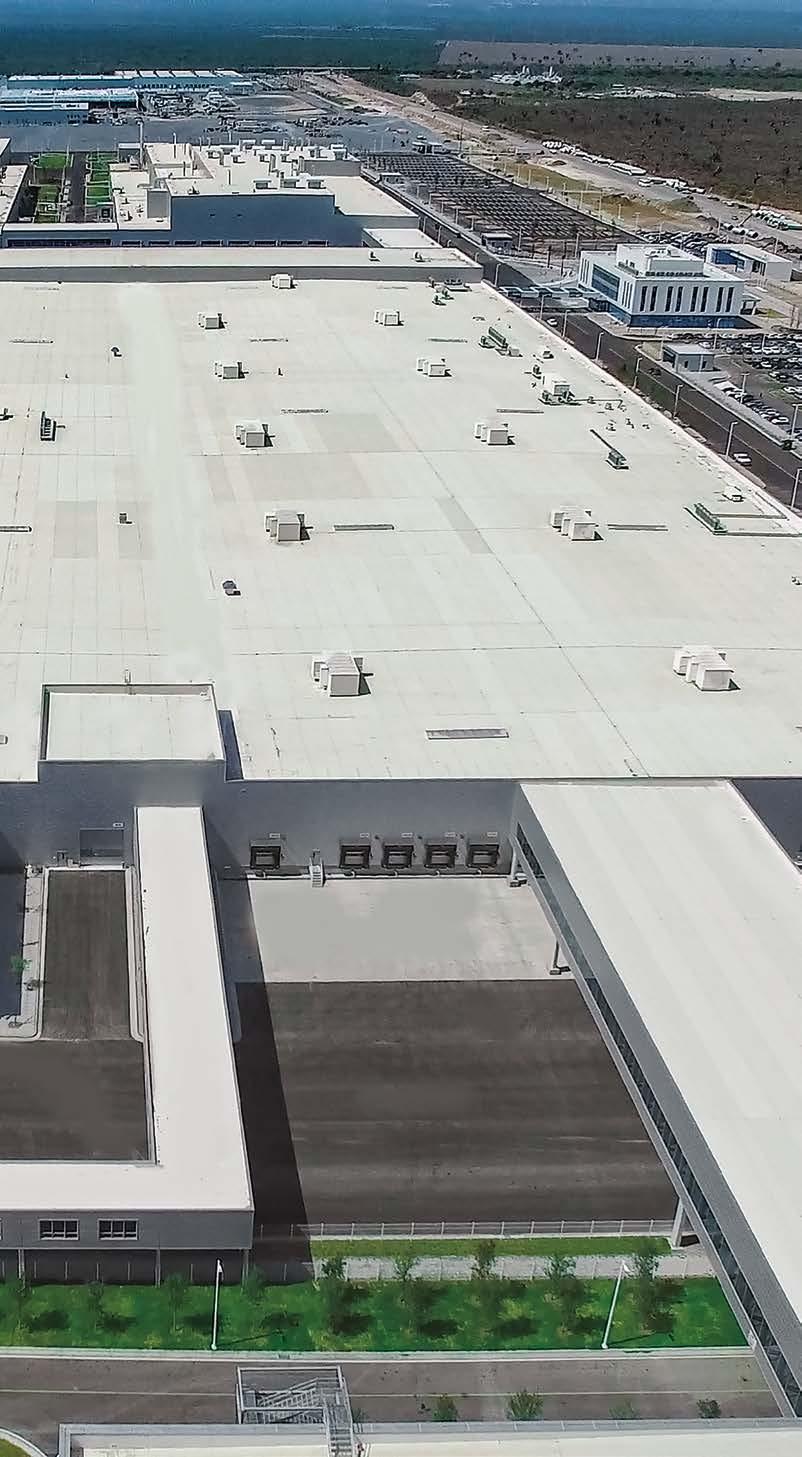
Kia's new plant, Pesqueria, Nuevo Leon
STATE OF THE INDUSTRY
1Despite uncertainty and exogenous threats, the automotive industry remains a pillar for the Mexican economy. The country maintains its position as the seventh main light-vehicle manufacturer with strong chances of climbing up the ranks. The industry represents 3 percent of the national GDP and after the arrival of Kia and Audi, Mexico has officially replaced Canada as the main exporter to the US and has taken India’s place as the third-biggest exporter globally. The renegotiation of NAFTA stands as a potential hurdle to further growth.
This chapter gives an overview of the industry, focusing on the highlights of 2017. The insights within this section cover recent investments and new programs the country is implementing to promote the national automotive industry. Additionally, State of the Industry offers clear perspectives on the current challenges and opportunities the country is facing, especially regarding the supply chain and the evolution of the domestic market.
CHAPTER 1: STATE OF THE INDUSTRY
14 INFOGRAPHIC : Executives Expect Stability From The Market
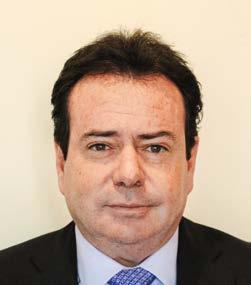
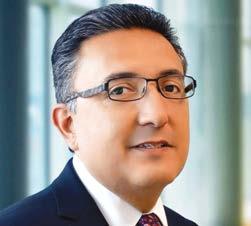
16 VIEW FROM THE TOP : Ildefonso Guajardo, Minister of Economy
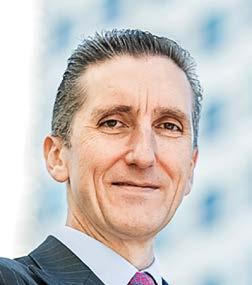
17 VIEW FROM THE TOP : Eduardo Solís, AMIA
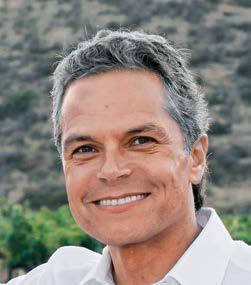
18 VIEW FROM THE TOP : Juan Carreras, Governor of San Luis Potosi
19 VIEW FROM THE TOP : Gustavo Puente, Minister of Economic Development of San Luis Potosi (SEDECO)
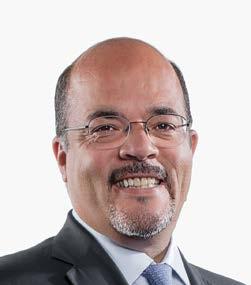
20 VIEW FROM THE TOP : Miguel Márquez Márquez, Governor of Guanajuato
21 VIEW FROM THE TOP : Fidel Otake, CLAUGTO
22 INFOGRAPHIC : Boosting Competitiveness for National Growth
24 VIEW FROM THE TOP : Manuel Montoya, CLAUT
25 INSIGHT : Jaime González, CLAUZ
26 VIEW FROM THE TOP : Héctor Soto, Automotive Cluster of San Luis Potosi
27 VIEW FROM THE TOP : Óscar Albin, INA
30 VIEW FROM THE TOP : Miguel Elizalde, ANPACT
31 VIEW FROM THE TOP : Guillermo Rosales, AMDA
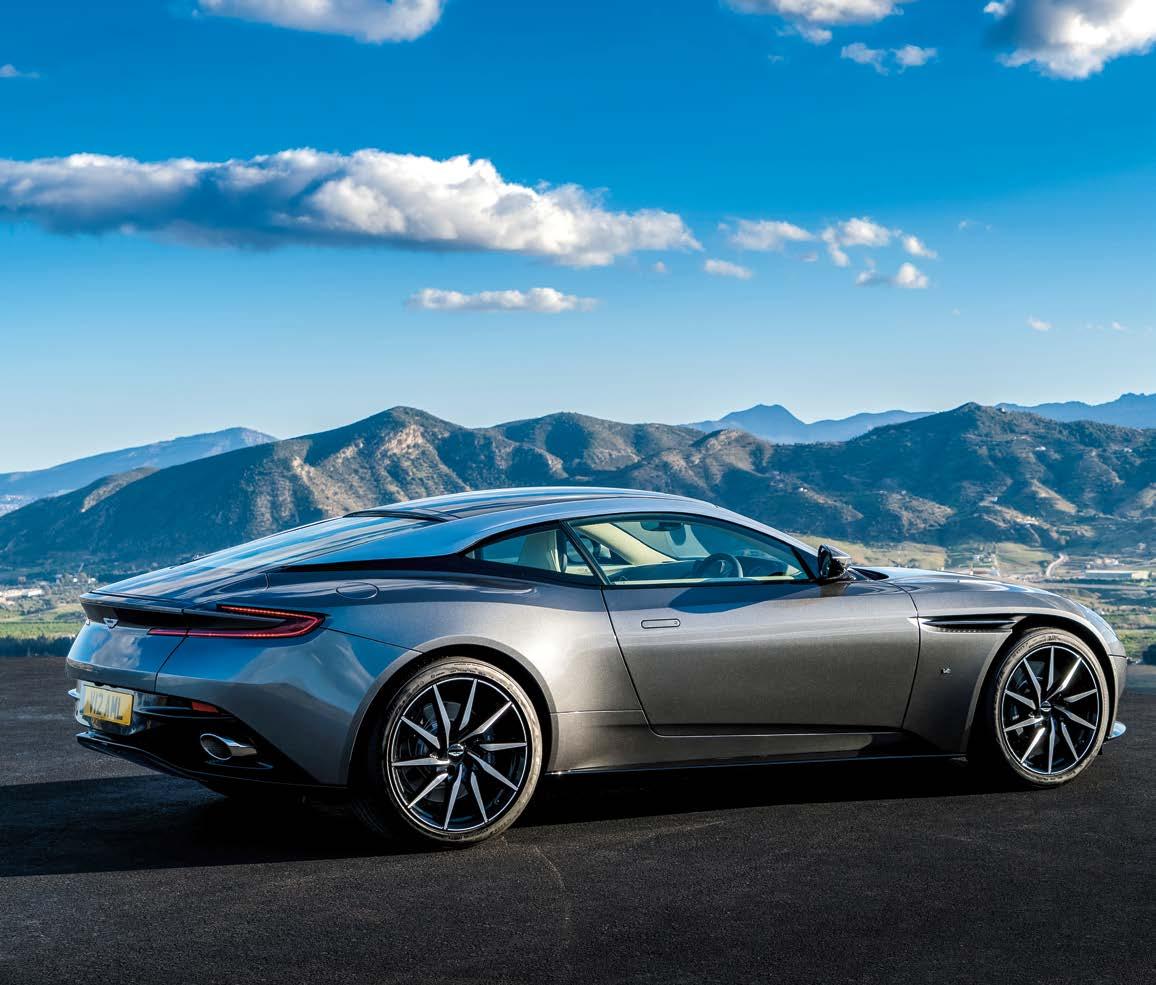
32 VEHICLE SPOTLIGHT : Aston Martin DB11
THE YEAR IN REVIEW
Record sales and production marked the latter half of 2016 but a slowdown set in during the first half of 2017, marked by shrinking sales of light vehicles in the key US market. Uncertainty marked the previous 12 months, with the renegotiation of NAFTA spurring the country to cast an eye at alternative markets for growth
As 2017 headsinto the final stretch, Mexico retains its position as the seventh main light-vehicle manufacturer in the world but it has now climbed up the ranks in terms of exports. In 2016, the country moved up one position to become the third-ranked light-vehicle exporter globally, behind Germany and Japan. The automotive industry represents approximately 3 percent of Mexico’s GDP and 18 percent of its manufacturing GDP. Breaking down these numbers, the auto parts sector contributes 1 percent to national GDP and 8 percent to manufacturing activities.
Data for 2016 show Mexico achieved record numbers in terms of production, exports and sales of light vehicles. By the end of the year, production accounted for 3.47 million vehicles, representing a 2 percent increase compared to 2015. Of these, 2.77 million were exported, a rise of 0.3 percent year on year. With the arrival of Kia and Audi, not only did the country move up the international rankings, it also became the main vehicle exporter to the US.
In the domestic market, sales jumped 18.6 percent to more than 1.6 million units. Numbers from January to July 2017, however, suggest a slowdown is in progress. Production and exports are exhibiting the strongest growth at 10.8 percent and 13.1 percent, respectively. Kia continues to ramp up its production and according to Eduardo Solís, Executive President of AMIA, other automakers have finalized platform updates that were the main cause of moderate production growth in 2016. Meanwhile, sales have only grown 1.4 percent between January and July
2017 compared to the previous year when they reached a total 853,620 units. Solís and Guillermo Prieto, Executive President of AMDA, agree that the most likely outcome for the domestic market will be moderate single-digit growth for 2017 of no more than 5 percent.
Unlike its lighter counterpart, production in the heavyvehicle segment plunged 21 percent in 2016, totaling 150,889 units, due to lower demand in Mexico’s main export markets, which Miguel Elizalde, Executive President of ANPACT, expects will continue, leading to a further 20 percent production decline in 2017.
PRODUCTION
The Mexican automotive industry comprises 23 lightvehicle and 15 heavy-vehicle production plants in operation, distributed across North Baja California, Sonora, Chihuahua, Coahuila, Nuevo Leon, Aguascalientes, San Luis Potosi, Guanajuato, Jalisco, Queretaro, Morelos, the State of Mexico, Puebla, Hidalgo and Veracruz.
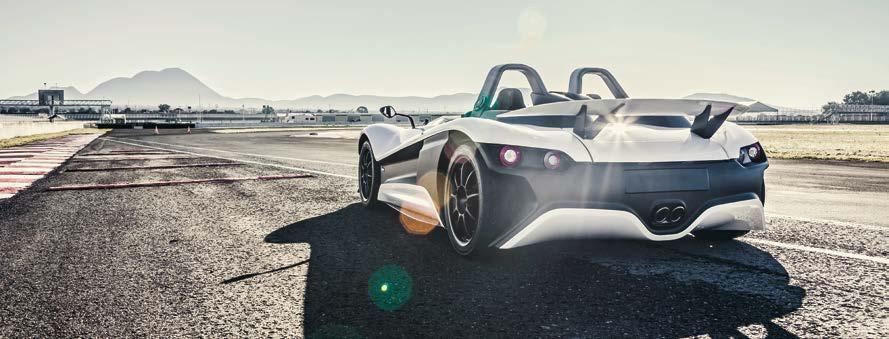
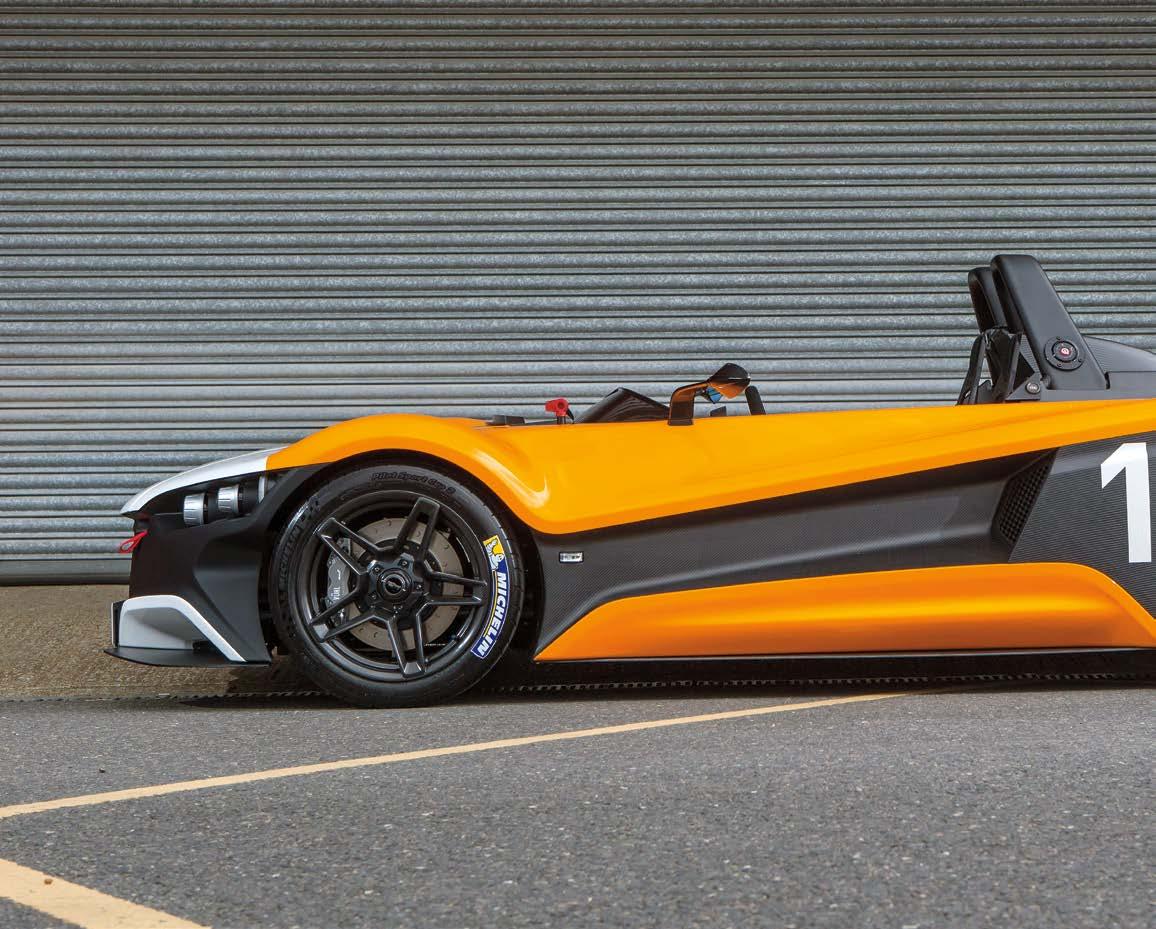
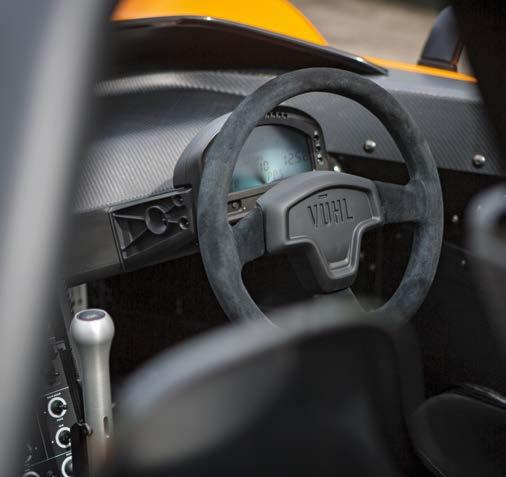
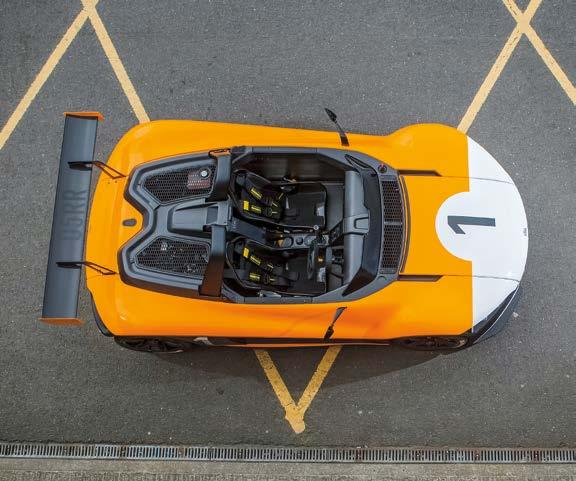
After two years of planning, Mexican innovator VUHL opened its MX$65 million (US$3.7 million) plant in Queretaro, where it plans to manufacture 25 cars per year. Grupo Bimbo’s subsidiary Moldex is also expanding its vehicle production outside Bimbo’s borders and will now produce electric vehicles for the national market in collaboration with billionaire Carlos Slim’s Giant Motors at its plant in Hidalgo. In terms of foreign investment, along with the entrance of Kia and Audi, Mexico attracted
Chinese OEMs looking to target the Latin American market and eventually the NAFTA region.
In collaboration with Giant Motors, in which Slim’s Grupo Inbursa is a 50 percent owner, the Chinese brand JAC will begin manufacturing two SUVs at Giant Motors’ plant in Hidalgo. JAC has invested MX$4.4 billion (US$249 million) and production is expected to begin in 2018. A collaboration between Grupo Picacho and the Chinese maker BAIC also resulted in a new manufacturing project. Originally a distribution deal, Picacho and BAIC’s relationship transformed into a production venture. BAIC started manufacturing its vehicles at truck manufacturer Foton’s plant in Veracruz in April 2017.
Three more light-vehicle plants are expected to start operations no later than 2019. The Renault-Nissan Alliance in collaboration with Daimler is now building the COMPAS project in Aguascalientes, which is scheduled to begin operations by the end of 2017. The project will start with production of INFINITI models and will integrate MercedesBenz vehicles into the production line in 2018. BMW’s venture in San Luis Potosi is projected to start in 2019. The project is under construction but the company expects to have an annual production of 150,000 units of its Series 3 model when the plant comes online. Toyota also has a new plant in the works, scheduled to begin producing in 2020. The company’s facility will be located in Guanajuato and will focus on production of pickup models.
Mario Hernández, Leading Partner of the IMMEX Segment at KPMG Mexico, says the country’s economic and political stability have been key selling points. “Our demographic distribution is perfectly centered and the domestic market is equally strong. The country offers a great opportunity to target North America and it has now become the main entry point to the Latin American market. Brazil is undergoing political, economic and social problems, making Mexico a sound alternative for investors as our fiscal environment is far simpler.”
AMBITIOUS GOALS
Despite an expected slower growth pace in 2017, Mexico has ambitious goals regarding production and development of the domestic market. According to Solís and Prieto, the country’s target for 2020 is to achieve production of over 5 million vehicles and domestic sales of 2 million units. Mexico seems to be on track for both targets although there are factors that could potentially present a risk to meeting these goals.
The first consideration is the evolution of the international vehicle market. Due to the plunge in oil prices starting in July 2014, the market began favoring larger vehicles
LIGHT VEHICLE SALES (THOUSANDS OF UNITS)
LIGHT-VEHICLE SALES (thousands of units)
LIGHT VEHICLE PRODUCTION (THOUSANDS OF UNITS)
LIGHT-VEHICLE PRODUCTION (thousands of units)
Source: INA
Source: INA
Source: AMIA
Source: INA
thanks to lower gasoline prices. In July 2014, the prices of a barrel of WTI mix peaked at US$102.4 but then reversed fortunes until reaching its lowest point in February 2016 at US$30.6. Since then, the mix has regained strength but it is still below half of what it cost in 2014, sitting at around US$45 at the end of June 2017. According to Solís, Mexico’s production is highly dependent on the behavior of the
Hermosillo
Chihuahua
THREE SCENARIOS FOR LIGHT-VEHICLE SALES IN 2017
company would transfer its production to China in an effort to further reduce costs. According to a statement from Joe Hinrichs, President of Global Operations at Ford Motor Company, the company will save US$1 billion by moving its operations to China, liberating budget to invest in its light-truck plant in Kentucky and new projects related to autonomy and electrification.
TRENDS
PARTICIPACIÓN EN FINANCIAMIENTO 2016
COMPANIES' PARTICIPATION IN THE FINANCING MARKET (Jan-Jun)
2016
11% Mazapil
9% Cananea
7% Nacozari de Garcia
5% Fresnillo
4% Ocampo
2017
4% Caborca
2% Sierra Mojada
70.9% OEMs’ financing arms
25% Banks 4.4% Self-financing
Sahuaripa
Morelos
Eduardo Neri
Aquila
Alamos
Chinipas
other
Advanced technology trends are another concern for the national industry. Mexico has developed as a global manufacturing hub but its operations are mostly oriented toward low-cost production. Meanwhile, the industry is moving forward in terms of technology integration and without any added value to its operations, Mexico risks losing competitiveness in the near future. “Our whole industry is based on a product that will cease to be relevant in 10 or 15 years, involving enormous investments in manufacturing capabilities and infrastructure,” says Guillermo Rosales, Director General of AMDA. “Rendering our industry obsolete will have a natural and enormous impact on employment generation and revenue. What the world saw in Detroit between 1990 and 2000 is an example of what could happen to Mexico unless we move toward value generation instead of simple manufacturing.”
Source: CGM, Ministry of Economy 1 With figures to March of 2015
Source: AMDA
11% Mazapil
9% Cananea
7% Nacozari de Garcia
5% Fresnillo
4% Ocampo
4% Caborca
2% Sierra Mojada
71.3% OEMs’ financing arms 24.1% Banks
4.4% Self-financing
Chinipas
Source: CGM, Ministry of Economy 1 With figures to March of 2015
US and Canadian markets and in both markets, demand is intricately linked with oil prices. These two countries have seen a decrease in demand but compact models took the hardest blow. Since most Mexican production is oriented to these types of vehicles, the industry’s growth has decelerated.
Solís does not seem concerned, however. “Although there is currently a preference toward larger vehicles and SUVs in the US, I would not expect Mexican plants to shift their production toward these models,” he says. Nevertheless, the country has already tasted its first disappointment due to receding demand for compact vehicles in the US. After canceling its investment in San Luis Potosi, Ford announced that its projected production of the new Focus would be relocated to its existing plant in Hermosillo. However, the company issued a statement in June saying that the
In terms of sales, the forecast is much more favorable but there are clear areas of opportunity to enhance Mexico’s chances to reach the 2 million-vehicle yearly sales mark. Financing is growing and now represents 68.2 percent of all sales in the country. OEM financing arms remain the leaders in this market, although banks such as Scotiabank and Banorte have shown interest in its development. Growth in financing needs to be maintained, while also boosting the opportunities that leasing presents for the domestic market. “Mexico’s domestic market could easily grow to 4 million vehicles per year thanks to leasing but we still have many legal and fiscal issues to address before this can happen,” says Gerardo San Román, Head of Latin America for JATO Dynamics. Solís also highlights the importance of maintaining a strict regulation in usedvehicle imports coming from the US. “The domestic market is still recovering from a decade of imported used vehicles plaguing our roads,” he says. “These units had a terrible impact on new vehicle sales and we did not see any recovery until 2015. The situation is somewhat under control and each month we see fewer cars enter the country.”
THE TRUMP CARD
Since 1997, Mexico’s inflation rate has dropped steadily, maintaining below 5 percent since 2010 and hitting an alltime low of 2.72 percent in 2015. According to estimates
from the International Monetary Fund and the World Bank, Mexico’s GDP grew 2.2 percent in 2016 to US$1.17 trillion.
In its report The World in 2050, PwC forecasts that Mexico could grow at an inter-annual rate of 3.8 percent up to 2050, becoming a driving force for the global economy.
“We project new emerging economies like Mexico and Indonesia to be larger than the UK and France by 2030 (in purchasing power parity (PPP) terms),” the report says.
While the long-term outlook remains relatively unchanged, the economy in the short term has been hit by uncertainty in the wake of Donald Trump’s rise to the US presidency.
Trump started targeting the Mexican manufacturing industry in the second half of 2015, declaring that Mexicans were stealing jobs from the US. The rhetoric intensified in the last quarter of 2016 when prior to the US elections, Trump began to attack automotive companies directly via Twitter.
The real estate billionaire's premise was that given Mexico’s unfair trade balance with the US, the ideal measure would be to slap a 35 percent tariff on vehicle exports coming from Mexico. The result was a wave of uncertainty and hesitation among companies with manufacturing operations in the country. Ford’s case was the most well-known in the automotive industry after the company canceled its US$1.6 billion investment plan for San Luis Potosi. However, as
a renegotiation of NAFTA moves forward, the Mexican government has stood its ground against Trump.
According to a survey conducted by Mexico Automotive Review 2017 with 184 executives of the national industry, uncertainty remains the main factor hindering companies’ competitiveness. Still, growth projections for Mexico are positive. According to Fitch Ratings’ latest review on Mexico’s perspective, the ratings firm has awarded the country a BBB+ mark, with an upgrade to “stable” from “negative.” According to a statement from the firm, “the risk of a negative scenario that could affect the competitiveness of Mexico’s exports is reduced now that the US seems to be taking a moderate position regarding the renegotiation of NAFTA.”
The economic and political landscape has been less than ideal for Mexico but it has forced companies and the government to re-evaluate potential diversification opportunities outside the US. Although the Transpacific Partnership Agreement negotiations fell through once Trump took office, companies see Asia and Latin America as regions that could boost their business in Mexico. Approximately 86 percent of light-vehicle exports destined for Canada and the US show that NAFTA is the main FTA for most players but there are many other agreements to choose from.
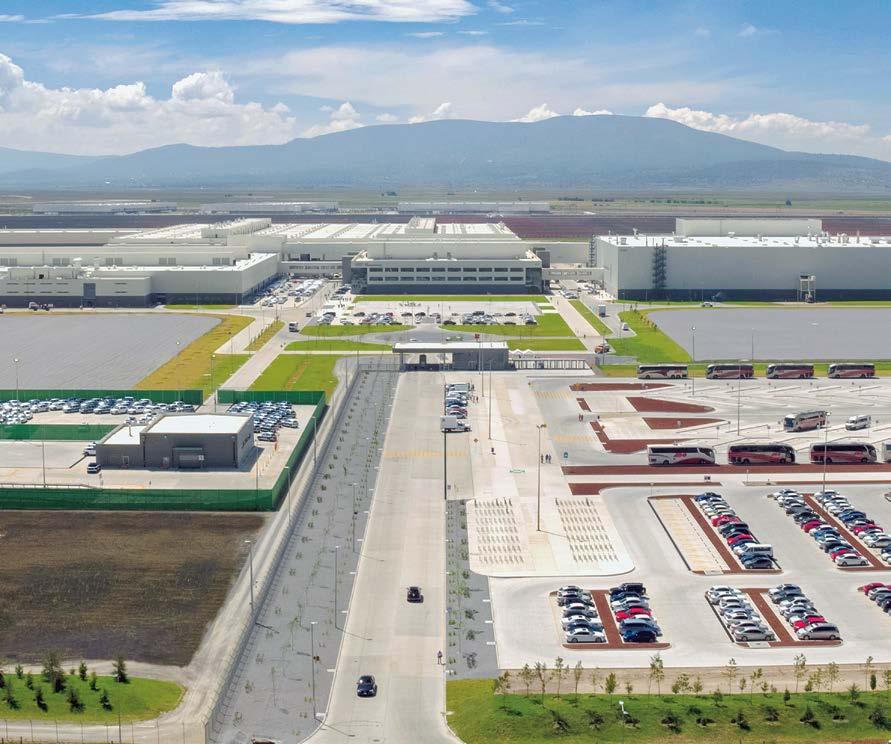
Audi's new plant, San Jose Chiapa, Puebla
EXECUTIVES EXPECT STABILITY FROM THE MARKET
After a period that dripped with uncertainty between 4Q16 and 1Q17, confidence is returning to Mexico. The gloomy economic forecasts that characterized the end of 2016 in the wake of US President Donald Trump’s election have given way to expectations among foreign and domestic CEOs of a stable 2017
Mexico Automotive Review 2017 asked 184 executives for their perspectives on three macroeconomic factors and their potential impact on the Mexican economy: the dollar-peso exchange rate, the price of oil and the effect of President Trump’s policies on Mexican industry. The answers were mostly positive, especially after the liberalization of gasoline prices in Mexico in January 2017. Although prices soared by 20
percent, executives expect low fluctuations in oil prices, which could minimize further impact on gasoline prices. Regarding the Trump effect and the peso’s position against the dollar, most executives think the impact will be moderate or null. This is reflected in the current exchange rate. The peso touched a record low in January 2017 against the dollar at around MX$22 but has since rebounded to hover around the MX$18 mark.
WHAT ARE YOUR EXPECTATIONS REGARDING THE PESO’S POSITION AGAINST THE DOLLAR FOR THE END OF 2017?
What are your expectations regarding the peso’s position against the dollar for the end of 2017?What are your expectations regarding the peso’s position against the dollar for the end of 2017?
46.20% Will remain stable
29.89% Will weaken 14.13% Will strengthen 9.78% No answer
Q: How much do you expect Trump’s policies to impact the Mexican automotive industry?
HOW MUCH DO YOU EXPECT TRUMP’S POLICIES TO IMPACT THE MEXICAN AUTOMOTIVE INDUSTRY?
42.93% Moderately
12.5% Significantly
3.8% No impact
PRIORITIES FOR MEXICO’S TRADE RELATIONSHIPS
ILDEFONSO GUAJARDO Minister of Economy
Q: How will Mexico take advantage of the renegotiation of NAFTA to boost the country’s manufacturing competitiveness in the auto industry?
A: The automotive industry in North America is a key driver of economic growth, job creation and global competitiveness for the region. There is the possibility to assess if we can enhance NAFTA’s competitiveness by increasing the region’s value add. Nevertheless, such an evaluation should be based on the importance of preserving the integration achieved over the past 23 years among the sector’s value chains and which has promoted cost-effective production for automakers in all three countries. Mexico and its NAFTA partners can explore additional means to increase competitiveness by collaborating on safety standards, infrastructure improvements to border facilities and by streamlining customs procedures.
Q: What strategies is the Ministry of Economy following to ensure that Mexico remains a competitive destination for FDI despite international uncertainty?
A: Mexico is one of the most open economies to international trade and investment. The structural reforms carried out by President Enrique Peña Nieto’s administration have helped attract domestic and foreign investment in strategic sectors. Specifically, the Ministry of Economy has implemented several actions to simplify doing business in Mexico. First is the easing of regulations to facilitate investment in sectors where FDI was previously restricted. Second is increased accessibility and transparency of the Public Registry of Commerce and Property. Third is the creation, with the support of Congress, of a new corporate figure called Simplified Joint Stock Company, which allows for the creation of an online business at no cost and at any time when annual income is below MX$5 million. Finally, the use of electronic platforms to ease processes related
Ildefonso Guajardo was appointed Minister of Economy by President Enrique Peña Nieto on Dec. 1, 2012. Originally from Monterrey, Guajardo has also served as President of the Economy Commission and was a member of the Ministry of Finance
to FDI registry, as well as access to the required national standardization procedures and applicable standards or technical regulations.
Q: What are the government’s priorities regarding the establishment of commercial agreements with Asian and Latin American countries?
A: The Asia-Pacific region is a priority for Mexico. Over the last four years, we have followed different routes to strengthen the country’s commercial ties with these countries. In late 2012, Mexico joined TPP negotiations. However, since TPP’s entry into force is uncertain, Mexico is exploring additional paths to approach the region. For instance, in March 2017 in Viña del Mar, Chile, the Pacific Alliance established the “associate state” category, with the goal of signing trade agreements with Asia-Pacific countries, mainly targeting other TPP hopefuls. Within the framework of APEC, leaders of the Pacific Alliance engaged in dialogues with Asian economies in which they explored common cooperation areas, namely SMEs and trade facilitation.
Q: What strategies is the government planning to implement to help companies diversify operations outside the US?
A: President Peña Nieto’s administration expects to diversify Mexico’s trade agenda with potential markets and deepen our integration with existing partners. We are modernizing our trade agreements with both the EU and the European Free Trade Association countries. In Latin America, we are deepening the existing agreements with Brazil and Argentina.
Q: How is the Ministry working to boost the presence of Mexican companies abroad?
A: ProMéxico serves as a useful platform to help internationalize Mexican companies. It provides them with assistance to identify the most suitable export or foreign investment opportunities through market studies and accompanies them through the process, from packaging, labeling and brand registration, to finding legal advice across the border. ProMéxico also develops promotional activities to help position Mexican products abroad, such as missions, fairs or seminars, which help them enhance their growth.
THE GOALS OF THE MEXICAN AUTOMOTIVE INDUSTRY
EDUARDO SOLÍS Executive President of AMIA
Q: What are your growth projections for Mexican manufacturing operations based on 2016’s results?
A: The goal for 2017 is to manufacture 3.5 million vehicles. During the first three months of the year, production rose 17.1 percent, mainly fueled by the incorporation of new manufacturing facilities from Kia and Audi. In addition, several plants increased production compared to last year when production was hampered by the reduction in vehicles produced as some OEMs switched vehicle platforms. Production is closely linked to Mexican export destinations. Although there is currently a preference toward larger vehicles and SUVs in the US, I would not expect Mexican plants to shift their production toward these models. Mexico is mainly focused on manufacturing compact vehicles and switching platforms to incorporate larger models is a complicated process.
Q: What successes has the National Group of Academic Institutions and Research Centers achieved?
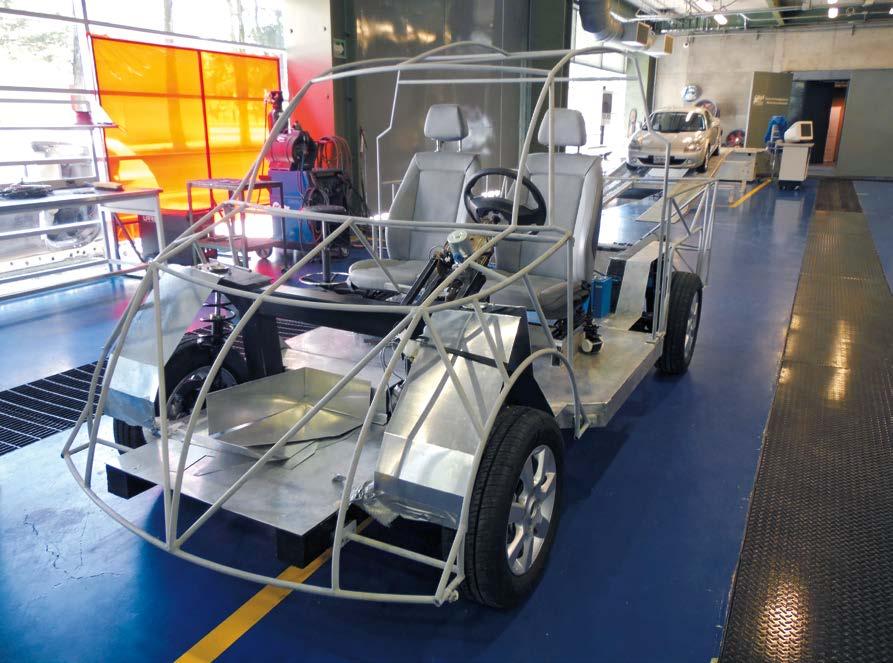
A: The group, created in 2015, has already yielded successful results from collaborative research projects. Research centers with a focus on automotive applications are now participating in the development of a Mexican demo car. This vehicle will need to comply with three characteristics: it has to be electric, connected and autonomous. We will organize an innovation workshop with 850 students to generate proposals that incorporate these features.
The group has been an excellent catalyst for boosting collaboration between public research centers managed by CONACYT and CINVESTAV, as well as private centers from OEMs and suppliers. Collaboration on engineering and innovation projects is essential for the Mexican industry to develop and there is much excitement and high expectations for the success of this venture. UNAM, IPN, ITESM, Anahuac, the People’s Autonomous University of Puebla (UPAEP) and the Autonomous University of Nuevo Leon (UANL) are among the academic institutions participating in the group. Universities and research centers are supported by the Ministry of Economy, the Treasury, the Ministry of Public Education, the National Council for Standardization and Certification of Labor Competences (CONOCER) and ProMéxico.
Q: What opportunities do you see regarding financing, considering its importance to growing domestic sales?
A: Financing has played a crucial role in the domestic market’s development. Almost 70 percent of all vehicles sold in Mexico are bought through a loan. The international benchmark for financing is 85 percent, which means there is still room for growth. Longer payment terms are becoming more attractive for clients and financing institutions, and both banks and multiple-purpose financial institutions (Sofomes) are promoting these terms as a sign of certainty in the development of the domestic market and in Mexico’s economic situation.
Q: What impact do you expect Chinese newcomers like BAIC and JAC will have on competition in the domestic market?
A: It is still uncertain what kind of impact these companies will have. What remains true is that all commercial directors are implementing strategies to maintain and grow their current market share. We are already in contact with both BAIC and JAC, which are not yet members of AMIA.
Q: What are your projections for electric vehicle sales, especially after the increase in gas prices?
A: We expect to see more and more of these vehicles on the streets, especially after the increase in gasoline prices, but fiscal or technological breakthroughs are still needed before Mexico sees a drastic increase in demand. Right now, there are almost no incentives to purchase and use electric vehicles, unlike in other places like California, where clients receive a US$7,500 incentive from the federal government plus US$2,500 more from the state government. These incentives are necessary because costs related to these vehicles are still too high. Batteries remain too expensive but as soon as the technology becomes more affordable, governments will no longer have to resort to financial compensation for clients.
The Mexican Association for the Automotive Industry (AMIA) is a civil association formed in 1951 with the goal of representing the interests of vehicle manufacturers established in Mexico
AUTOMOTIVE A MAJOR DRIVER FOR JOB CREATION
JUAN CARRERAS
Governor of San Luis Potosi
Q: How has the automotive industry in San Luis Potosi helped boost jobs and benefits for the state?
A: A hundred years ago, nobody would have thought that the automotive industry would be one of the main engines of the world economy at the beginning of the 21 st century. Not only does this apply to OEMs but to the whole supply chain and domestic sales as well. The automotive industry is a very important sector for San Luis Potosi. It is highly valued because it constantly develops research and technology and continues to be a great employment generator. The automotive industry generated 16,463 new jobs in 24 months by July 2017. Almost the same number of jobs were created in the six years spanning 2003 to 2009. Growing employment is reflected in the population’s salary contribution to the Mexican Institute of Social Security (IMSS), which has increased significantly since automotive investments arrived. This also makes it one of the industries for which we see the greatest future in our local economy.
Q: What factors have attracted companies to the state over other automotive clusters?
A: San Luis Potosi is part of Mexico’s northwestern region but it is next to many Bajio states, making it one of the most dynamic areas in the country. It is an important platform for those that export to North America, with strong transportation links and connections with states that also participate in the automotive industry, such as Guanajuato, Queretaro and Aguascalientes. Moreover, there has not been a strike here in 14 years. This illustrates the good communication between the government and industry.
Q: How is the state helping develop human capital and industry-targeted education?
A: We are trying to link middle schools with dual education models that involve learning at school complemented by
Juan Manuel Carreras was elected Governor of San Luis Potosi on Sept. 26, 2015 for a six-year term. From 2000 to 2003 he served as Federal Representative at the LVIII Legislature of the Mexican Congress representing the State of San Luis Potosi
real-life training focused on preparing students to join the labor market. Higher education in the state is well served, with excellent public and polytechnic universities, as well as a state-of-the-art technology university that starts classes in August 2017. Our goal is to offer an education that covers the entire manufacturing industry, including the automotive sector. This new university will also operate a dual model so young people can combine study and real-life work experience.
The Consortium of Molds, Dies and Tooling (MTH) will be inaugurated in San Luis Potosi to provide training and mold manufacturing and to coordinate with other facilities to make molds on request for companies. It will be the only center of its type in the country and will grow according to the needs of companies in the industry. This was made possible thanks to an initial investment of over MX$100 million (US$5,676,000).
Q: How are automotive companies and government working together to improve the state’s competitiveness?
A: Many companies have internal development programs and we try to support these locally through our research systems. The government has agreements with specific companies to improve their operations and to train people effectively.
I had the opportunity to visit several automotive companies’ operations abroad, where I met Mexican workers fulfilling periods of training at flagship plants. Some of these training sessions lasted three to six months or even more depending on the skills needed here in Mexico.
Many of those recruits were between 24 and 32 years old and many were from San Luis Potosi. They told us the automotive industry had offered them chances their parents would not have had a generation ago. These experiences give young people expertise and professional characteristics that provide more opportunities for them to grow in their careers. This also increases their longterm quality of life.
KEEPING PACE WITH A THRIVING INDUSTRY
GUSTAVO
PUENTE Minister of Economic Development of San Luis Potosi (SEDECO)
Q: How much does the automotive sector contribute to San Luis Potosi’s GDP and growth potential?
A: The manufacturing industry in San Luis Potosi, of which automotive is a major part, represents 25 percent of the state’s GDP. Automotive specifically makes up almost 7 percent of the total, more than double what it was 10 years ago. In the rest of the country, manufacturing accounts on average for 18 percent of GDP. This, teamed with the rapid expansion in automotive operations, shows that San Luis Potosi is industry-focused.
Q: Which projects have boosted quality of life for San Luis Potosi’s residents?
A: We estimate 90,000 people are employed by the automotive industry and projections for the next three to four years estimate 30,000 new jobs will be created during our term. The administration plans to close its six-year term with 120,000 people specifically employed in the automotive industry by 2021. We have broken records switching people from the informal to the formal labor market. In July 2017, we registered 417,546 employees with social security across all industries, 41,463 of whom were newly registered workers in the current administration. In the first year of this administration, inaugurated in September 2015, the state received investments totaling US$1.7 billion, which is equal to what Ford was expected to invest here. In our second year in office we reached US$2 billion.
Q: How will the state take advantage of the supply chain that was put in place before Ford canceled its plant?
A: The investment plan and cancellation happened so quickly that few companies had time to establish new operations in preparation. The majority had not even purchased land because choosing a location is often the most complicated step for company expansions, so the effect of Ford’s cancellation was limited. Eight companies canceled their expected projects in San Luis Potosi but at least six more went on to establish a relationship with BMW.
Q: To what extent do states compete for automotive investments or collaborate to boost the country’s competitiveness?
A: We are so close that it is hard for each state to specialize in just one area of the industry, and we do not need to if we work together. Toyota, Honda and Mazda are next door in Guanajuato, Aguascalientes is home to a huge Nissan plant, Puebla is a growing cluster and home to Volkswagen, and even though Queretaro does not have any OEMs, there are vast supply-chain operations established there so being located in the Bajio region is a prudent decision for any automotive company. Within less than 300km of San Luis Potosi, seven OEMs have facilities. As a result, the supply chain has developed so that within 250km, companies can find 836 automotive suppliers covering Tier 1, 2 and 3 operations. We are not far from FCA in Toluca nor from the capital city where most corporate headquarters are located. If a company plans to invest in Mexico, the Bajio is a better bet than Tijuana or Monterrey, for example, which is the reason behind the central region’s impressive growth.
Q: How is the state building infrastructure and facilities to keep up with rapid industry growth?
A: As a state, San Luis Potosi grew 3.1 percent in 2016 while Mexico’s growth reached 2.3 percent. Based on our R&D expansions and the rate of investment we have already seen, we estimate 3.3 percent growth in the state by the end of 2017 while the country is projecting 1.5 percent. Traffic is increasing in the locality and companies sometimes misdiagnose a lack of employee mobility as a lack of available workforce. We need to create solutions to get the skilled population to the many workplaces that are opening. In response, the government is implementing a mobility plan that will improve connections with industrial zones and Mexico City to the southeast. This will involve a MX$3 billion (US$170 million)investment. We have already started creating some bridges with the federal government’s help. Government and state concessions will hopefully begin 70-80 percent of the project and complete it by the end of the administrative term, funds permitting.
SEDECO promotes and creates the necessary conditions for San Luis Potosi’s development, which is home to General Motors, BMW and over 200 suppliers. The Minister promotes the state’s advantages to encourage investment
ATTRACTING INVESTMENT TO SUPPORT GROWTH
MIGUEL MÁRQUEZ MÁRQUEZ Governor of Guanajuato
Q: How have new investments in Guanajuato impacted its automotive industry?
A: For 15 years, we were traditionally an agricultural, livestock and textile trade region. The first manufacturing company that came to the state was GM, 20 years ago, which was responsible for boosting our growth. Before GM, we were exporting US$200 million per year but now we export more than US$20 billion per year from our automotive and other manufacturing activities. The industrial sector remains the driver for these exports and the automotive industry’s results put it in first place among all industries. In second place is the agricultural industry followed by metal mechanic. Automotive manufacturing is a big part of Guanajuato’s development and in five years it has grown to represent 17 percent of the state’s GDP.
One of every five vehicles that is produced in Mexico is made in Guanajuato, putting us among the top five manufacturers in the country. By the year 2020, most OEMs established in Mexico will have operations here. Toyota will lead us to consolidate as the most important cluster in Latin America for vehicle production. The top brands that are working here are Honda, Mazda, GM, Hino Motors and Volkswagen, as well as top suppliers including American Axle and GKN, among many others. Ford’s transmission plant will start operations in 2017. Together these companies have generated 90,000 jobs. Guanajuato's unemployment rate, at under 4 percent, is lower than the average in Mexico.
private schools promote lifelong learning, and the State Commission for the Planning and Programming of Upper Secondary Education (CEPPEMS) have established a workplan for 2035. The decisions of these entities will guide education in Guanajuato for the coming years. The 30 universities inaugurated in the past nine years in Guanajuato all have technological profiles. They are not traditional colleges because they train talent to meet market demand, primarily in engineering and metal mechanics.
90,000
Jobs generated in Guanajuato by the automotive industry
Adjusting to market demand involves growth in the Guanajuato State Training Institute (IECA), an intermediary between schools and the private sector where companies join forces to train young people. We have negotiated many agreements with Germany for business training through the dual-education program. There is also an association of retired German teachers that helps us. Many of them developed careers in the automotive sector and visit the state to help train our youth. An agreement with Japan’s International Cooperation Agency (JICA) supplements this with a student and teacher exchange from those studying at the National College of Technical Professional Education (CONALEP), to imitate the advantages of the Japanese education system and create equivalent certifications in technical colleges.
Q: How is the state promoted to attract investment and to build stronger relationships with countries besides the US?
Q: What is the government’s strategy to boost research and technological development?
A: The State Commission for Higher Education Planning (COEPES), an institution through which public and
Miguel Márquez Márquez is a Mexican politician affiliated with the PAN party. He currently serves as Governor of Guanajuato, a position he has held since 2012. Prior to his position as Governor, Márquez was mayor of the Purisima del Rincon municipality
A: The Foreign Trade Promotion Coordinator (COFOCE) has been working in Guanajuato for 25 years. This coordination is older than ProMéxico and has helped us broaden our scope of trade. COFOCE is a permanent effort that works on all continents because diversification is key to our growth. Twenty-eight countries are investing in Guanajuato, including Japan, the US, Germany and France. The US is our main market and it will continue as such. The market is constantly moving and the reality of trade and industry overshadows intimidating speeches, such that 50 percent of what we export goes to the US.
We have strengthened our relationship with Canada and many companies are already purchasing directly from us. Africa is beginning to buy the first exports headed that way and Asia is a great opportunity for the agricultural and livestock sector. We are interested in continuing to negotiate with countries such as Japan, Korea and China. We have also exported to Guatemala and the rest of Latin America, as the south of the continent has turned into an area of opportunity for Mexico. Our goal for direct investment from foreign industries was US$5 billion but we received foreign investment of over US$10 billion. By the end of our administration in September 2018 we expect between US$11 billion and US$12 billion, because we are diversifying in the aerospace, energy and automotive sectors.
Q: What is the development goal of the production chain in the automotive sector?
A: Our development strategy is based on a plan for the year 2035 and its targets need to be updated to work toward a new deadline in 2040. We need more adjustments, so Guanajuato’s policies reflect its short and medium-term
goals, and do not simply become the duty of the governor in office. These policies should focus on diversification. Newly arriving companies make the development of local suppliers more attractive because importing services tends to be more expensive. Companies prefer to have the product close by since imports represent a setback due to delayed transfers and tariffs. We are pleased that local companies are integrated into the supply chain and we are working on improving any area of opportunity for Mexican companies. This is one of the priority mandates that the President of the Automotive Cluster of Guanajuato (CLAUGTO), Fidel Otake, proposed.
Q: Will you be the new presidential candidate for PAN?
A: I am mentioned as a possible candidate for the party but, at the moment, I am concentrated on Guanajuato where there are many investments. We are closing deals with 22 industrial parks, when the initial goal was seven. We have a lot more work than we expected to have, though we are happy so many companies want to expand in our state, even if we are rushed to close deals in the year and a half we have left.
GUANAJUATO’S AMBITIOUS GOALS FOR 2020
FIDEL OTAKE President of CLAUGTO
Q: How have trade uncertainties impacted Guanajuato’s automotive operations?
A: The automotive sector in the state continues to grow, as illustrated by employment indicators. Over 75,600 jobs were registered in the sector in 2015. This number rose to 88,000 in the first quarter of 2017 and it is estimated to reach more than 100,000 jobs within the next three years.
Q: How has Toyota’s renewed commitment to the state helped the cluster and Guanajuato’s development?
A: By ratifying its commitment to invest in Guanajuato, Toyota has sent a clear signal of trust and a commitment to a positive long-term relationship with the state. At the same time, Toyota is boosting confidence from investors, the established supply base, government institutions, citizens and consumers.
Q: What growth do you expect from auto parts production and how will the state participate in advanced manufacturing and R&D?
A: We are developing several specialized projects to improve competitiveness. In particular, we created a Local Supplier Development Committee and a system for evaluating and developing direct and indirect suppliers. Companies should invest in Guanajuato because of its solid economy, infrastructure, advantage in logistics and its specialization in automotive manufacturing operations, in addition to the strong base of technical schools and universities. The forecast for local growth by 2020 is encouraging. Overall, we expect the state to reach the following yearly production goals: 1.2 million vehicles, 1.81 million engines, 2.32 million transmissions and 12 million tires.
The Guanajuato Automotive Cluster (CLAUGTO) was officially presented in 2012 as a civil association made up of six committees focused on preserving and promoting the development of the automotive industry in the state
VIEW FROM THE TOP
BOOSTING COMPETITIVENESS FOR NATIONAL GROWTH
The Ministry of Economy has outlined its priorities to boost the image of the national automotive industry but executives think there are other factors that are equally, if not more important, to ensure international competitiveness and decrease Mexico’s dependence on a single market
Although one of the main advantages foreign investors highlight about Mexico is its proximity to the US, many of the 184 executives surveyed by Mexico Automotive Review 2017 say that Mexico’s dependence on the US is one of the country’s main obstacles. Mexico’s FTAs with 45 countries, excluding NAFTA, open the door to many more business opportunities
THE AUTOMOTIVE INDUSTRY’S DEVELOPMENT IS BASED ON FOUR PILLARS ACCORDING TO THE MINISTRY OF ECONOMY:
A strong FTA network with over 45 countries
human capital-oriented strategy The promotion of engineering and R&D activities
and executives are realizing that. However, to increase its competitive value, the country must also address some internal issues. Security, talent availability and a strong local value chain are among the priorities for Mexico’s executives, along with a plea for legal certainty from the government when doing business or establishing new operations.
WHAT ARE THE MAIN INTERNAL OBSTACLES FOR NATIONAL INDUSTRY?
WHAT ARE THE MAIN EXTERNAL OBSTACLES FOR NATIONAL INDUSTRY?
GROWTH OPPORTUNITIES FOR NUEVO LEON AND THE COUNTRY
MANUEL MONTOYA Director of CLAUT
Q: What impact will Kia’s arrival have on Nuevo Leon and how will it help the cluster attract new members?
A: Before Kia, we did not have light-vehicle production in Nuevo Leon. Kia’s production represents new exports and a new opportunity for growth for Nuevo Leon. There are new companies establishing in the state and there is already one Korean company in the cluster. We are waiting for Kia’s production to ramp up. That will attract more companies and create more business. Some players were already in the state and now they are producing for Kia.
Q: What are the competitive advantages Nuevo Leon can offer to new Tier 1 and Tier 2 suppliers coming to the state?
A: Nuevo Leon has the advantage of a well-established industry that has been in place for more than 30 years. After NAFTA was signed, the first companies started to arrive and they were the ones that helped the region develop its strong local supplier network. These companies have also been responsible for training the local human capital, creating a skilled talent pool for all future investors. These factors have created confidence among new entrants, who know they do have a strong foundation to start their operations.
Q: How are local companies integrating into the automotive supply chain and what are the main areas of opportunity?
A: I think the main opportunity is in the Tier 2 level. Most Tier 1 companies have already invested in Mexico but there is still a lack of participants in the lowermost tiers of the production chain. We have a good supplier base of Tier 2 companies in Nuevo Leon — all local players — but they are mostly focused on commodities such as plastic injection, stamping and foundries. Nuevo Leon has good foundries, steel foundries mainly, but we lack other activities like die casting and aluminum injection. There are hardly any forging companies in the country, either for cold or hot forging. Strengthening the supplier base is an opportunity
The Automotive Cluster of Nuevo Leon (CLAUT) is a civil association made up of leading suppliers, academic institutions and government branches related to the automotive sector in Nuevo Leon
not only for Nuevo Leon but for the whole country. We still import many components from abroad, so this is a great opportunity for automotive players to explore.
Q: What challenges has the industry faced considering the incentives offered to Kia and other players by the past administration?
A: It is not a big issue because Nuevo Leon has changed its policies and it has given hardly any incentives to new companies. The case of Kia was very special. An OEM is an important player than can attract many more companies to the state. However, investors do not establish in Nuevo Leon because of incentives, they come to the state because they find good suppliers and a skilled talent pool compared to other regions of the country. The skilled people we have here are highly productive and a company looking for a quick start has to have good and prepared talent.
Q: How can the government help local companies grow and improve their operations?
A: I think the main priority here is to reduce the number of activities related to complying with the government’s regulations. Companies that export may recover the VAT, but the problem is that the paperwork companies have to do is too complicated, especially for SMEs. For larger companies, it is not that much of a problem because they can survive without that rebate. But for smaller players, a slow process can affect their cash flow. Regulations regarding imports and exports are also in constant flux, which is another problem for smaller players.
Q: What is your perception of the stance of US companies given the nationalistic rhetoric of President Trump?
A: The presence of US companies is very important in Nuevo Leon. They are the main foreign investors in the state. Companies are still investing in Nuevo Leon and the ones that made previous investments still remain. All we have are political speeches from President Trump and his administration. Companies from both sides of the border are interested in maintaining a good relationship between Mexico and the US because any changes in regulation would lead to negative effects for both parties.
COLLABORATION SOMETIMES MORE PRUDENT THAN COMPETITION
JAIME GONZÁLEZ
Director
of the Automotive Cluster of the Center Region Puebla – Tlaxcala (CLAUZ)
Recognizing that any investment arriving in one state impacts the other, a group of businessmen from the automotive sector and the governments of Puebla and Tlaxcala decided that it would be more prudent to join forces rather than try to compete against each other. This practical strategy resulted in the birth of a regional automotive cluster in 2017.
“It was a great achievement to have two state governments from different political parties at the same table. Having different points of view but among people who are willing to collaborate is the essence of the cluster,” says Jaime González, Director of the Automotive Cluster of the Center Region Puebla–Tlaxcala (CLAUZ). In 2016, the value of Puebla and Tlaxcala’s auto parts sector reached US$4.8 billion. This figure is equivalent to 5 percent of the national production of auto parts, totaling approximately US$83 billion, of which 80 percent is exported. The cluster’s goal is to unite automotive companies, and initiatives are driven by three parties: governments, the academic sector or the automotive industry itself.
After these businessmen made the decision to form a working partnership, they hired Manuel Montoya, Director of the Automotive Cluster of Nuevo Leon (CLAUT), to assess and advise them on how to set up the cluster. The cluster’s team worked on the model until it was ready to launch in 2016. This is a cluster that operates with industry and regional governmental funding, but with regional initiatives from the governments of Puebla and Tlaxcala liaising with their respective companies.
To function more effectively three committees were created. One committee oversees human capital, just as in other clusters. “This team intends to be a bridge between students of every level who can join the operations, but we must still invest more in the workforce’s skills,” says González. Another committee was created to promote innovation. The cluster hopes that implementing better processes will lead to greater profitability, novel products and differentiation in the market as the industry becomes more competitive. The third committee is focused on supplier development and has been working since January
2017 to fill the supply gaps in the country and to influence companies that have yet to innovate their operations. “A large area of opportunity in Mexico relates to the many transnational Tier 1s and OEMs that still maintain design operations in Europe, Asia or the US. This generates high levels of auto part imports,” says González.
The challenge Mexico faces is how to venture into collaborative design. “Once we have that, production can stay in Mexico. We want to replicate a project where the Nuevo Leon automotive cluster duplicated tools used abroad for use in Mexico. It operates under a subsidy from the Ministry of Economy in Nuevo Leon. We think we could achieve something similar in CLAUZ, having discovered that Puebla and Tlaxcala need to work together instead of against each other because the competition should be outside the region.”
Another project to boost innovation will map out all infrastructure and equipment in a virtual laboratory database that will include descriptions of what is available to the companies in the region with a preferential price to members. Allowing the equipment to be commercialized at a lower cost to companies in the cluster should reduce the number of companies that send R&D abroad, which companies do because they do not know there are universities, research centers or companies equipped with the machines they need.
One of these locations is UPAEP, which has a strong research center specialized in plastics. The Iberoamerican University of Puebla has an Institute of Design and Technological Innovation (IDIT) and ITESM is home to CeDIAM, a research center focused on automotive research.
CLAUZ’ short-term goal focuses on integrating Tier 1s into the cluster because the projects they can complete will be larger. In a second stage, it plans to integrate Tier 2 companies into Tier 1 projects. A third stage will integrate new members to fill gaps in the supply chain. “The cluster’s role is to share industry analyses with the government as they seek the attraction of specific investments,” says González. “Attracting companies should be focused on completing the supply chain to avoid having 20 companies dedicated to the same area” and competing for the same projects.
CLEAR STRATEGIES FOR SUSTAINABLE GROWTH
HÉCTOR SOTO
Managing Director of the Automotive Cluster of San Luis Potosi
Q: How is San Luis Potosi innovating as one of the newest automotive clusters in the country?
A: Unlike other clusters, BMW and GM are active participants in the association as heads of our different committees, which has helped us attract more members. We organize supplier days with our members, where Tier 1 companies can mingle with smaller players that can satisfy their needs locally. The idea behind these events is that potential suppliers strike deals with bigger companies right there, having a clear idea of which type of components they can supply and the volumes that better adapt to their capabilities. The supplier days have been particularly effective to plan projects that will come into effect in 2018, since they allow Tier 1 suppliers to analyze different companies and their proposals.
To boost online business with technology, we created a communications platform similar to a social network. The platform is open to direct and indirect suppliers, as well as service companies. No state is self-sufficient so we also accept companies from nearby states to the cluster, to complement San Luis Potosi’s existing supply chain. Digital communication helps collaboration at a distance. We have standardized profiles of each of our corporate members, which helps Tier 1s or OEMs when looking for a specific component supplier. Since the platform is built with a social network interface, executives can discuss opportunities without having to wait for scheduled business encounters. All data is protected and the platform is only open to cluster members, which proved crucial for attracting more members.
Q: What additions to the new cluster have most contributed to its evolution?
A: The cluster’s first contribution to the industry was the creation of the Human Capital Committee and the Supply Development Committee of San Luis Potosi in 2013. The
The Automotive Cluster of San Luis Potosi is a civil association of private companies, academic institutions and government entities, focused on San Luis Potosi’s development in the automotive sector
following year, the Ministry of Economic Development for the state turned its attention to attracting BMW’s investment to San Luis Potosi, although it took until Sept. 14, 2015 for the Automotive Cluster to be fully established. It started with five members, three academic institutions, the Ministry of Economic Development and the Ministry of Labor and Social Welfare, collaborating with the two original committees in the state. We eventually created the Development of Technical Capabilities Subcommittee within the Human Capital Committee.
The cluster now has 42 members, mostly private companies and thanks to tangible results, our members asked for two more committees to be created. The first will be an education committee focused on identifying the industry’s needs and creating programs that guarantee students graduate into employment. The second will be a supplychain development group to boost logistics operations in the state, as well as supply-chain safety standards following ISO 28000 and ISO 31000 standards.
Q: What are your expectations for how the cluster will boost San Luis Potosi’s development in 2017?
A: In December 2016, we started negotiations with the Japanese government along with the Mexican government for a five-year project. The initiative was finalized in March 2017 and the project started in July 2017. Through this collaboration, 20 Japanese experts will come to Queretaro, Guanajuato, Aguascalientes and San Luis Potosi to help local companies participate in the automotive production chain, becoming suppliers for Japanese Tier 1s and OEMs.
Supply-chain development should be a priority for national industry and we plan to offer new opportunities to national SMEs. There are still challenges for the industry in terms of human capital, especially considering that by 2020, companies will need to fill approximately 300,000 positions in the Bajio region, 50 percent of which will be in production operations. The cluster is also collaborating with the Ministry of Economy to identify the industry’s needs, to adapt education plans accordingly.
AMBITIONS FOR MEXICAN AUTO PARTS
ÓSCAR ALBIN Executive President of INA
Q: What is Mexico’s current position in auto parts production and what are the country’s goals for 2017?
A: Auto parts production remained stable in 2016, increasing approximately 1.5 percent compared to 2015. This was mainly due to stronger light vehicle production in the US, which fueled our exports there and to Canada. The final results of 2016 showed production of close to US$83 billion of auto parts and our forecast for 2017 is to grow between 2 and 3 percent. Mexico is the sixthbiggest auto parts manufacturer globally, only behind China, the US, Japan, Germany and South Korea. Provided vehicle production remains on schedule and the US market keeps growing, we will be close to US$100 billion in auto parts production by 2020. This would catapult us to fourth place in the international ranking, neck and neck with Germany.
Q: How many Mexican companies participate in auto parts manufacturing operations?
A: Approximately 25 percent of total auto parts production comes from Mexican companies, mainly Tier 2 and Tier 3 suppliers. There is a limited number of Mexican Tier 1 providers acting as true multinationals with significant production or sales operations abroad, but this happens in other countries as well. Design and engineering for vehicles and auto parts is concentrated in the US, Germany, Japan, South Korea and France, so most leading suppliers come from these nations. Mexico, among several other countries, is gradually seeing more leading national suppliers and several local companies have set international standards in the automotive industry.
Q: What is the biggest problem for the Mexican aftermarket and how can the industry address it?
A: We have a severe problem related to indiscriminate importation of low-value soft components, particularly from Asia. A lack of proper Mexican norms has allowed entry to all sorts of components, regardless of their price or quality. We are not against auto parts imports and Mexico is a very open country with practically no added trade tariffs. Mexican companies are also prepared to compete against foreign components. But this is only true for parts of a
certain standard. This level of quality is not defined as a rule to participate in the Mexican market.
Addressing this issue is one of the country’s priorities but it is difficult to fix. Canada solved a similar problem when signing NAFTA by incorporating quality norms from the US. Mexico decided to write its own norms but the process has proven to be a real ordeal because we lack the technical skills or testing facilities necessary to develop these regulations. NAFTA renegotiations present an opportunity to write a specific chapter focused on quality standards for the whole region. This would save us years of work and it would be an excellent boost for product quality.
Q: What led to China becoming such an important presence in the international aftermarket industry?
A: All countries buy vehicles but only 12 are responsible for the world’s automotive production: China, the US, Japan, Germany, South Korea, India, Mexico, Spain, Canada, Brazil, France and Thailand. These are the most important markets for original equipment components. Auto part manufacturing has developed around those countries and few have ventured to export to other regions.
Normally, the only components that travel overseas are those destined to the aftermarket and to be successful in this kind of venture, companies must invest heavily in marketing and localization strategies. In 2007, China decided to become the aftermarket supplier for the entire world, forcing other countries like Mexico’s manufacturers to compete with Chinese imports. Almost 40 percent of the components used in the Mexican aftermarket are imported, mostly from China. The market has become extremely price-competitive and the only way for Mexican companies to compete is to abide by strict quality policies that override the low prices China can offer.
The National Auto Parts Industry (INA) is an association formed by auto part manufacturers that wanted representation before Mexico’s government. Its goals are to promote the growth and sustainable development of all its members
HOW CAN MEXICO RENEW ITS HEAVY-VEHICLE PARK?
MIGUEL ELIZALDE Executive President of ANPACT
Q: How open is the government to updating the scrappage scheme?
A: The government has been open to revisiting the scrappage scheme’s guidelines and there have been several adjustments to the program. The remuneration a person or a company can receive for their vehicle was increased, but it cannot surpass 15 percent of the cost of the new vehicle. The downside is that due to the volatility in the dollar-peso exchange rate, the increase in dollars has not been that much. With the January dollar-peso exchange rate, the limit value of MX$336,000 is close to US$18,970, which was indexed to the National Producer Price Index (NPPI). We lobbied for the government to index the incentive to the dollar-peso exchange rate but were unsuccessful. Nevertheless, the NPPI is still above the inflation rate. The scrappage scheme is evolving despite obstacles that hinder its appeal, such as owner-operators.
In 2015, 7,250 vehicles were destroyed through the scrappage scheme. But budget restrictions led the government to establish a limit of 6,000 units per year. Of that total, 3,000 vehicles can be scrapped by transportation companies, while the remaining incentives are destined to owner-operators. In 2016, applications reserved for companies were allocated by September and the program did not reset until January 2017. This means that by 2017, four months of applications had accumulated. In May, the authorities removed the 3,000-vehicle limit on companies owning more than five vehicles, so all 6,000 applications could be used by larger fleets. If the 6,000 limit is reached prior to January 2018, owner-operators could still use the scrappage program up to 3,000 more units. However, it is not enough to scrap 6,000 units per year, especially considering that at that pace it would take us 30 years to replace the 180,000 vehicles that are 21 years or older and should not be on the roads now.
The National Association of Bus, Truck and Tractor Manufacturers (ANPACT) has represented heavy vehicle and engine manufacturers since 1992, promoting the development of the transportation industry in Mexico
We have also asked the government to increase the total number of applications available in the program. Austerity policies have led the Treasury to limit the number of units that can be destroyed but to reduce the average age of the fleet we should be scrapping up to 20,000 thousand units yearly for the next 10 years.
Q: What are the main issues that need to be addressed to improve the scheme’s performance?
A: The program needs to become more attractive for owner-operators. Otherwise, applications will continue to be wasted. The 3,000-unit limit was established by the Treasury to promote vehicle renewal among owneroperators and small businesses but the US$18,970 remuneration might not be enough for these users and the government needs to take into consideration that this demographic might not be part of the banking population.
To address this issue, we proposed a chain program that allows two companies to participate in the scrappage scheme per application. The original initiative permitted each company to present an old vehicle and receive remuneration for the purchase of a new unit. The chain program involved two participants, a bigger player looking to buy a new vehicle to renovate a used but still functional vehicle, and an owner-operator wanting to scrap one of its old vehicles in exchange for the used unit. Unfortunately, this is more complicated and has not yet come into effect.
Q: How are other heavy-vehicle associations responding to the changes in the scrappage scheme?
A: The limited remuneration value in the scrappage scheme has also been a problem depending on the type of vehicle to be renovated. For trucks, US$18,970 is close to 15 percent of the value of a new unit. Buses, however, require a bigger initial investment and might cost twice or even three times as much as a truck, so US$18,970 is not as useful. Associations like CANAPAT are now lobbying for the incentive to be much greater for bus operators and we are completely supportive, considering approximately 60 percent of the applications for the scrappage scheme are for bus units.
DOMESTIC MARKET GETTING GREENER BUT COSTS A HURDLE
GUILLERMO ROSALES Director General of AMDA
Q: What are the main barriers to growth in the electric and hybrid vehicle segment and how can the government boost sales?
A: Hybrid and electric models remain a very small percentage of all new vehicle sales, totaling 8,260 units at the end of 2016, which barely represents 0.5 percent of Mexico’s sales. Growth will continue but the main restriction to the success of hybrid and electric vehicles remains price. The cost of electric technology has restricted these vehicles to medium and high-end models because most of the Mexican population has low purchasing power. The average price of cars sold in the country is MX$280,000 (US$15,300). While 10 years ago the price difference between a combustion engine model and its hybrid counterpart was approximately 40 percent, today that gap has narrowed to 20-25 percent.
Q: How is volatility in the dollar-peso exchange rate impacting the revenue margins of OEMs and distributors?
A: Some of the reasons behind currency fluctuations originate in external factors such as speculation and uncertainty, so neither the industry nor the government have much control over them. Mexico has experienced exchange rate instability since 2014 and the situation was aggravated due to imbalanced public finances.
A weak peso favors the operations of local manufacturers with export activities. Labor and certain parts are sourced locally, while other parts are imported from regions with currencies that have also lost ground against the dollar. However, volatility and a price-sensitive environment have forced the Mexican market to detach from price-fixation standards set by the global industry. Companies set prices in dollars but these have to adapt to the reality of the domestic market. As a result, vehicle prices in Mexico may be different to prices in the US. Between 2007 and 2016, car prices have increased below the average inflation rate and as the peso weakens against the dollar, the effect becomes more substantial for OEMs and distributors. The industry started increasing prices more substantially in March 2016. Since then, prices have increased monthly above the average inflation rate, rising 8 percent between April 2017 and April 2016. These price surges do not compensate for the
extreme devaluation the peso suffered of almost 20 percent. OEMs are doing everything they can to keep consumers from feeling the devaluation, which has helped the market maintain its momentum. But preventing prices from moving naturally is also affecting distributors’ revenue margins.
Q: How can OEMs minimize the negative effects of currency volatility?
A: Prices are set by automakers but profit cuts are divided between the OEM and the distributor. Both players must also sacrifice part of their earnings to offer deals and special promotions to keep attracting new clients. For OEMs, the situation is not as serious because they can dilute their losses with cost-reduction strategies and other financial instruments. But dealerships see a direct impact on their profit. Their only possible countermeasure is to increase sales volume. This, however, has not been an option for some industry participants. The gradual price increase above the inflation rate has softened the blow for some distributors. But the measures have been slow because companies do not want to jeopardize their position in the market.
Q: How ready are Mexican clients to discard their negative perception of Chinese vehicles?
A: Any company wanting to participate in the local market must bring products that are superior to the standard available. Chinese companies suffer a handicap due to the negative perception many Mexicans have of Chinese products. Their challenge is to build an individual reputation. BAIC, JAC and any other brand wanting to come to Mexico will find market niches to compete in but they will have to build brand awareness among potential consumers. Vehicles coming from China are no longer cheap products — their price difference with Italian or German models is only 10 percent. The Chinese industry’s product-development process can compete with that of any other brand in the market.
The Mexican Association of Automotive Distributors (AMDA) was founded in 1945 and it now represents over 1,800 distributors and dealerships located in more than 210 cities across Mexico
ASTON MARTIN DB11
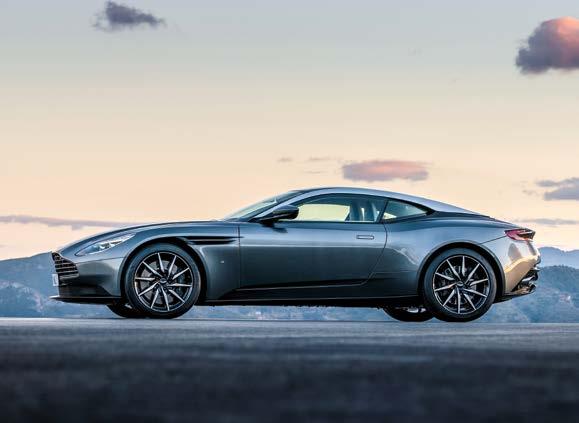
With the debut of the DB10 in the James Bond movie Spectre, Aston Martin hinted at what the new DB generation might look like. Mexican fans have the opportunity to see for themselves with the arrival of the DB11 to Aston Martin’s Mexico City dealership at a price of US$315,000.
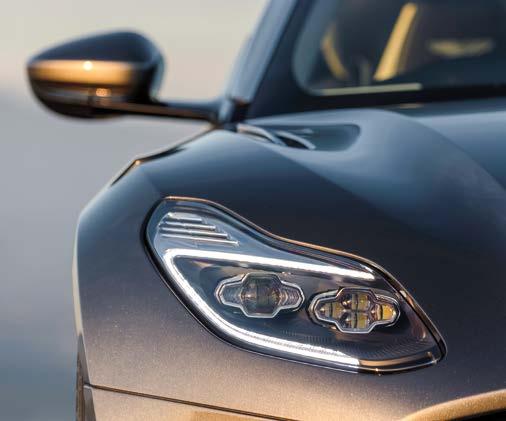
The DB11 has just about enough from the old DB5 to make it recognizable as part of the DB family but it immediately suggests a more powerful core thanks to its aerodynamic lines and surface details. Just like the DB10, the DB11 has a new grill, complemented with all-new LED head and taillights, as well as a clamshell hood that gives it a more elongated and expressive image. The exterior features are wrapped around a bonded aluminum frame that makes the car lighter and stronger, while increasing interior space.
Aerodynamics in the DB11 go beyond controlling airflow over its bodywork. Thanks to the Curlicue and Aston Martin Aeroblade innovations, the Grand Tourer can let air flow through its bodywork. With the grill-like vent Curlicue in each front wheel arch lining, the car can reduce its frontend aerodynamic lift. Meanwhile, Aston Martin Aeroblade enhances stability at the back thanks to air intakes positioned at the base of the C-pillars.
The
Aston Martin DB11 is priced at US$315,000
Underneath the hood, the DB11 has a new twinturbocharged, 5.2-liter V12 engine that makes this “the most powerful and most efficient ‘DB’ production model in Aston Martin’s history” according to the brand itself. The engine can deliver 600bhp of power at 6,500 rpm and 700Nm of torque at 1,500 rpm, allowing it to reach 100 km/h in just 3.9s and a maximum speed of 322 km/h. The chassis, suspension, steering and electronics have also been tuned to match the engine’s capabilities according to three settings: GT, Sport and Sport Plus.
The DB11 is also the most fuel-efficient DB model in the family, according to Aston Martin. The engine can restrict cylinder use during low-demand periods leading to less fuel consumption. The result is a combined fuel consumption of 11.4 liters/100km.
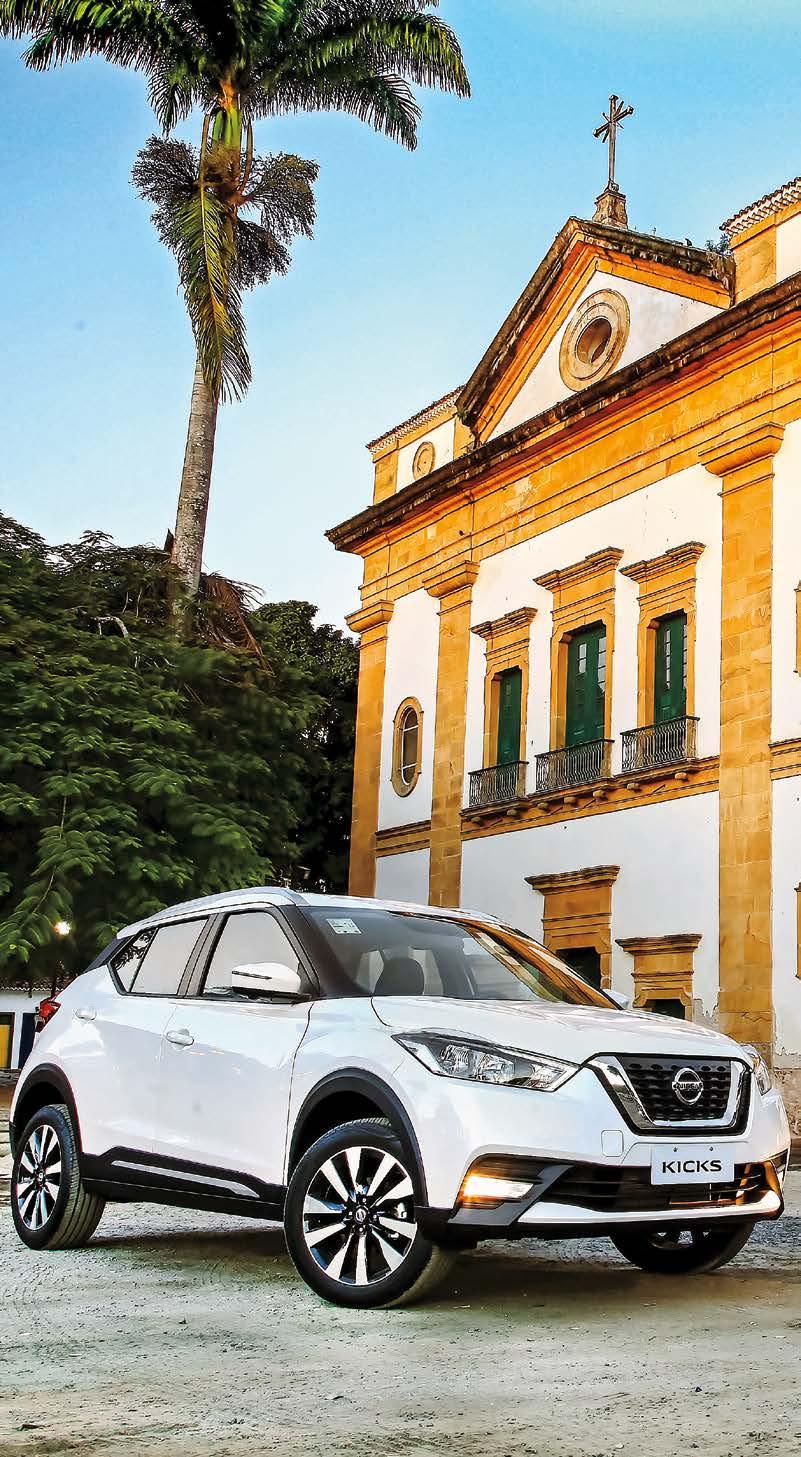
Nissan Kicks manufactured in Aguascalientes
LIGHT VEHICLES
2Mexican light-vehicle production is in the midst of challenging times. On the one hand, low oil prices have decreased US demand for compact vehicles. On the other, the latest investments in the country are starting to ramp up, pushing production forward, while companies continue to introduce production lines to the country, attracted by cost and logistics advantages. New competitors are also arriving to the domestic market, including Chinese brands that seek to redeem their country’s image.
The second chapter of MAR 2017 analyzes the challenges and opportunities that light-vehicle OEMs have and the strategies they are implementing to improve their operations, reduce costs and increase their market share in this competitive environment. New plants will be featured, while production and sales goals are discussed as the market keeps evolving in line with the users’ needs. The effect of economic and political changes mentioned in the first chapter will also be revisited to give a more rounded perspective on the future of light vehicle OEMs.
CHAPTER 2: LIGHT VEHICLES
38 ANALYSIS : Sales Slow Down But Production Rises Again
40 VIEW FROM THE TOP : Mayra González, Nissan Mexicana
42 VIEW FROM THE TOP : Alfons Dintner, Audi México
44 ANALYSIS : Assessing The Big Three
46 VIEW FROM THE TOP : Radek Jelinek, Mercedes-Benz México
48 VIEW FROM THE TOP : Horacio Chávez, Kia Motors México
49 VIEW FROM THE TOP: Pedro Albarrán, Hyundai Motor de México
50 ANALYSIS : He Who Rules Social Media Will Rule The World
51 INSIGHT : Torben Eckardt, Volvo Car México
52 VEHICLE SPOTLIGHT : 50 Years of AMG
54 VIEW FROM THE TOP : Edgar Pacheco, Honda de México
55 INSIGHT : Eric Pasquier, Renault México
56 INSIGHT : Kotaro Watanabe, Subaru México
57 VIEW FROM THE TOP : Philipp Heldt, INFINITI Mexico and Latin America
58 VIEW FROM THE TOP : Patrick Yang, BAIC de México
SALES SLOW DOWN BUT PRODUCTION RISES AGAIN
After a year of moderately successful results in terms of production and exports, Mexico is now back on a growing track fueled by longstanding players and the arrival of newcomer Kia. Sales, on the other hand, are now slowing down after two years of record-breaking growth
Beating the initial expectations from early 2016, the lightvehicle industry grew past its results from 2015 in terms of production and exports, albeit barely. Between January and May 2016, the picture was grim and the numbers suggested a possible contraction in overall results for the end of the year. However, a turnaround in June mainly fueled by Kia starting its manufacturing operations reinvigorated the industry, leading to continuous growth that maintained throughout 2017.
At the end of 2016, the industry achieved a 2 percent rise in production, according to AMIA. The group’s Executive President, Eduardo Solís, says internal industry factors kept the sector from better results. “Production was hampered by the reduction in vehicles produced as some OEMs switched vehicle platform.” Growth was mainly driven by Kia, which launched operations in May, as well as a 24.7 percent increase in production volumes from Honda and 33 percent from Toyota. Although Mazda presented considerable production growth of 78.2 percent by the end of 2015, its results fell 18.2 percent in 2016. FCA, Ford and Volkswagen also showed slightly lower figures, while GM and Nissan remained stable.
Exports, meanwhile, increased only by 10,000 units. Most brands decreased their exports with the exception of Honda and Mazda, which boosted their numbers by 26.6 percent and 33.6 percent respectively. Kia was the main reason why exports did not fall by the end of the year, considering the company contributed with 93,107 units against zero from the year before. Overall results do
not include Audi’s numbers, though, since the company cannot publicly disclose localized information regarding production and exports until the parent releases its yearly earnings report. The latest figures Audi has reported for Mexico show production from September-December 2016 totaled 10,746 vehicles.
For 2017, projections are more positive. Solís says the industry is expected to grow its production to a total of 3.5 million vehicles and if the industry keeps its current momentum, that goal could be easily reached. Furthermore, according to Andrés Lerch, Advisory Partner and Leader of the Operations Transformation Area at EY Mexico's Automotive Center, the country could eventually overtake India and become the sixth-largest light vehicle producer globally. At the moment, the country occupies the seventh position behind China, the US, Japan, Germany, South Korea and India.
By July 2017, companies manufactured a total of 2.17 million light vehicles and almost all companies show signs of recovery. Kia keeps ramping up its operations and in seven months it has already produced more than in its first eight months of 2016. Ford’s negative streak continues, however, posting an 18.6 percent decrease in production, followed by Mazda with a 5.1 percent decrease. Meanwhile, after a year of growth, Honda is slowing down by 19.8 percent.
Sales, however, show a reverse trend. After two years of strong growth of 19 percent in 2015 and 18.6 percent
*Annualized data
Source:
Source: AMIA
in 2016, the market is in neutral. Overall sales have incremented by just 1.4 percent between January and July 2017 compared to 2016 and some strong players are already on track for weaker results. Nissan, the best-selling brand in the country, has contracted by 1.1 percent, followed by GM with a 10.5 percent decrease, Volkswagen with 2.7 percent and Ford with 10 percent. However, the latest entrants Kia and Hyundai are keeping up their pace, reaching growth rates of 66.5 percent and 20.6 percent, respectively. The premium segment has also shown signs of strengthening since 2016. By the end of that year, the market had grown 18.6 percent with brands like Mercedes-Benz and BMW leading the charge with sales rising 34.4 percent and 20.1 percent, respectively. The trend continued into 2017 between January and July although at a somewhat tempered pace of 28 percent and 17.4 percent.
Source: Source: CAAM, JAMA, VDA, KAMA, SIAM, AMIA, ANFAC, Automotive News, Data Center
Regardless of variations in sales numbers, the market split remains unchanged. Considering numbers between January and July 2017, Nissan holds a 25 percent market share, followed by General Motors with 17 percent and Volkswagen with 16 percent. The Nissan Versa still occupies the coveted position of best-selling model, followed by the Chevrolet Aveo, the Volkswagen Vento, the Chevrolet Spark and the Nissan March, replacing the New Jetta. While in the same period of 2016 Nissan had five models among the top 10 best-selling cars, the Tiida lost its footing, leaving the brand with only four best-selling models: Versa, March, Sentra 2.0 and Tsuru. This last remains strong despite Nissan halting its production earlier in 2017.
Guillermo Prieto, Executive President of AMDA, says that the most likely outcome will be to reach sales of 1.7 million units, which would represent single-digit growth for the end of the year. Although Prieto also has a best-case scenario in which the country keeps its double-digit growth for one more year, results presented by AMIA support his singledigit forecast.
Source: AMIA
Source: AMIA BEST-SELLING MODELS IN
90,543
80,052
63,201
60,598
60,561
THE VISION OF INTELLIGENT MOBILITY
MAYRA GONZÁLEZ President and Managing Director of Nissan Mexicana
Q: Mexico is Nissan’s fourth most important market globally. How will the company maintain its growth here?
A: After eight consecutive years of being the leading brand in Mexico and with a market share of 25 percent during our 2016 fiscal year, our goal is to continue with our winning formula. Our latest target is to surpass the 406,995 units sold in FY16, which is a record in itself because no other brand has managed to sell that many vehicles in Mexico in a single fiscal year. Nissan’s innovative approach has been one of the pillars of the company’s success, with a strong vehicle portfolio that allows it to participate in almost all market segments. Our manufacturing operations have also helped to strengthen our presence in the country and to offer competitive prices to our clients. We now have two plants in Aguascalientes, another in Morelos and we will open our fourth plant, also in Aguascalientes, by the end of 2017.
Our financing arm, NR Finance, has been key to growing our market share in Mexico, reaching demographics that we could not service otherwise. Our distribution network has also grown to more than 230 points of sale and we are now transforming the image of our dealerships with the implementation of the Nissan NREDI 2.1 global standard across our Mexican network. The goal of NREDI 2.1 is to create attractive dealerships with more open spaces that foster enjoyable interaction between our customers and our vehicles. All the information they need will be at hand. Dealerships will be much more modern and technology will be the basis for all our operations. This is an international effort and the first NREDI 2.1 dealership in the world was inaugurated in May 2017 in Playa del Carmen.
Q: How will Nissan’s recent acquisition of 34 percent of Mitsubishi's stock boost the company’s position in the global market?
Nissan Motor Corporation is a unit of the Renault-Nissan Alliance. The company is the largest OEM in Mexico with sales of over 400,000 units in 2016 and four manufacturing plants, three of which are focused on Nissan models and one on INFINITI vehicles
A: Mexico has not yet defined a new model for how Nissan's, or even Mitsubishi’s, operations will change but globally this acquisition will only strengthen the alliance between Renault- Nissan and now Mitsubishi. After we acquired 34 percent of Mitsubishi’s stock, the alliance became the third most-important automotive group in the world. The alliance sold over 10 million vehicles around the world during the first half of 2017. The three companies complement each other and I think the best of this venture is yet to come. We still need to define how each company will take advantage of the others’ manufacturing infrastructure, supply chain, distribution network and technology. Negotiations on how the new alliance will impact each country are ongoing but Carlos Ghosn, Chairman and CEO of the Renault-Nissan Alliance, says the addition of Mitsubishi could transform the alliance into the most important automotive group in the world.
Q: What role does Mexico play in Nissan’s global manufacturing footprint?
A: We manufacture a new vehicle in Mexico every 34 seconds and our production line in the Aguascalientes’ A1 plant is flexible enough to incorporate five different models in the future. Mexican manufacturing has become a corporate standard for our global operations, having attracted US$5 billion in investment from Nissan since 2007.
Aguascalientes was the first location to manufacture the Nissan Kicks crossover with an investment of US$150 million. Since this model was the official vehicle of the Rio Olympic Games of 2016, the first batch produced was sent to Brazil. Subsequently, production went to our local distributors. The Nissan Kicks allowed us to compete in a market segment that we had not explored in our 53 years in Mexico. Now we can proudly say that so far, in the current 2017 calendar year 2017, we are leaders in the small crossover segment as well.
Q: To what extent are Mexicans participating in Nissan’s R&D efforts?
A: Mexico led the Kicks' production and the vehicle’s design was a collaboration between Nissan’s R&D centers in Rio de Janeiro in Brazil, San Diego in the US and Atsugi in Japan.
These three centers brought their vision to Mexico and our local engineers were responsible for ensuring the vehicle’s quality and implementing all the necessary modifications and improvements to the original design.
Mexican talent has been a decisive factor in elevating the quality of our manufacturing operations. The country’s challenge will be to generate enough talent to support the production of 4.9 million vehicles by 2020, 1 million of which will be produced by Nissan. With the Nissan University program in Aguascalientes, the company can also help develop this talent and generate new opportunities, both for the company and the country. Our university has become an aspirational institution because it helps students develop the necessary practical knowledge to fill jobs at Nissan and its partners.
there was no charging infrastructure available. We could not wait for the government to start developing this market so we invested our own resources in the country’s charging infrastructure and launched the first electric vehicle. Nissan LEAF became the first EV to be launched in Mexico and the country’s best seller, with more than 270 units sold to date.
25%
Nissan’s market share in Mexico
To this day, Nissan has the largest charging network with over 230 charging points across the country. If we include the public infrastructure we developed alongside the government, universities and parking spaces, more than 170 charging points add to those 230 chargers throughout our dealership network.
Q: How is Nissan transforming its value proposition to incorporate global automotive trends?
A: The Nissan Tsuru was a flagship model for Nissan in Mexico. We manufactured a total of 2.4 million Tsuru vehicles until production stopped in May 2017. Its sustained success was thanks to it representing a reliable and affordable mobility solution for the Mexican population. But after three decades, we decided it had accomplished its mission. We hope to satisfy consumers with the entry versions of the Versa, March and Tiida models.
Nissan is now moving on to a new era driven by Intelligent Mobility. Terminating the production of Tsuru was the first step we took into this new era. We sold 1,000 units of a commemorative edition and followed with the launch of the new Nissan GT-R in May 2017, when we formalized our promise to the public to provide innovation and exciting driving experiences.
Our new mission is to revolutionize mobility globally through three principles. The first, Intelligent Driving, will focus on how to incorporate new technologies to make driving much more efficient and eventually autonomous. Intelligent Power, the second cornerstone of our new initiative, will guide Nissan on the use of alternativeenergy sources. Finally, Intelligent Integration will create connectivity between vehicles, the Cloud and road infrastructure. These three branches of Intelligent Mobility are the key to reaching our Double Zero target of zero emissions and zero road fatalities.
Q: How important is the electric and hybrid vehicle market for the brand’s operations in Mexico?
A: Nissan was one of the pioneers in the electric vehicle market. When we decided to launch the LEAF in Mexico,
Although the electric and hybrid vehicle market is growing of its own accord, most efforts have come from OEMs and the private sector. The government needs to develop state incentives to boost sales.
Q: What opportunity does Nissan see to participate in the growth of on-demand driver services such as Uber and Cabify?
A: These services are already important to the brand. We foresaw an opportunity to create a specialized product with our financing arm that targeted these clients. This led to the Versa becoming the preferred vehicle for services like Uber and Cabify. Nissan has built strategic alliances with these companies and we signed more than 25,000 contracts through NR Finance’s Private Driver Program in the fiscal year 2016. Approximately 95 percent of all financed vehicles for on-demand driver services were Versa models. We are optimistic about growth in the on-demand driver market, especially considering the room these platforms have for development in Mexico.
THE NEW MEMBER OF THE ALLIANCE
The Renault- Nissan Alliance acquired 34 percent of Mitsubishi in 2016 for US$2.3 billion. With this acquisition, the Alliance became the third most important automotive group in the world. Carlos Ghosn, Chairman and CEO of the Renault- Nissan Alliance and CEO of Renault and Nissan has now left the latter's leadership to Hiroto Saikawa to become Chairman and CEO of Mitsubishi and help the company get back on a growing track. The plan is for Mitsubishi to lean on the technological and financial backbone of Renault-Nissan to boost its operations.
INDUSTRY 4.0 A REALITY IN MEXICO’S LATEST OEM PLANT
ALFONS DINTNER
President of Audi México
Q: Why did the company choose San Jose Chiapa, Puebla for its plant and supply chain over more industrialized areas?
A: We did a lot of research before establishing facilities in Mexico. San Jose Chiapa, Puebla offered us the freedom to build our plant how we wanted. We visited several industrial parks in the country but none offered us the same possibilities to work according to the Audi Production System. This location is also excellent for logistics, with a direct connection to the Atlantic and the Pacific through rail infrastructure. The existing supplier network was another advantage. Most importantly, the people in Puebla are well-educated.
Producing premium quality cars with is not a big challenge for us. The Audi Production System has set global standards that have allowed us to efficiently build our operations in Mexico. The real challenge we found when we arrived in San Jose Chiapa was that there was little infrastructure. It was hard for our people to build something from scratch in this environment but they knew why this project was important and how it would benefit Audi. We received lots of support from our colleagues at Volkswagen in Puebla city and the Mexican authorities put the right infrastructure in place for us to establish the newest smart factory in the Audi production network.
Q: How has Volkswagen’s presence in Mexico helped Audi in its early development stages?
A: In the 53 years Volkswagen has been in Mexico, the industry has evolved significantly. We are using many of the same suppliers as our colleagues and Volkswagen has attracted even more companies to the region thanks to our new manufacturing presence. The supplier network includes around 180 companies, including those with whom we continue to negotiate. In fact, 100 of these companies were already located in Mexico and 64 of them built new plants specifically to support our operations.
Audi is the only premium brand manufacturing in the country and competition between suppliers is essential because it helps OEMs maintain the highest quality standards and to remain cost-competitive in their manufacturing operations.
Q: What do you see as the main opportunity for Mexico to develop its local supplier network?
A: If all suppliers were already equipped with the latest IT systems, the entire value chain would be more competitive. This is part of the idea behind Industry 4.0 and a challenge all around the world. Materials and components need to spend as little time traveling as possible so communication and supplier integration is crucial. We need intelligent systems to know where components are and how we can shorten our logistics and manufacturing cycles.
Q: How is Audi innovating to incorporate Industry 4.0 practices in its new plant?
A: It can be hard to translate technology from theory to practice but our plant in Mexico is an example of how Industry 4.0 can be integrated right from the construction of the plant itself. We built our facility in San Jose Chiapa in record time and before we moved all our manufacturing equipment to our body shop, we modeled the facility on a computer.
We projected that same model onto the production floor with a laser, so our team knew where each machine should be and how to secure it to the floor. We projected the arrangement of 670 robots plus a number of connecting conveyor belts for our body shop and every interconnection between machines was already digitally mapped beforehand. In the end, instead of isolated work modules, we had a completely interconnected construction and later manufacturing system.
Production is monitored through our control center and vehicles are traced with radio frequency identification (RFID) antennas. All manufactured cars are traced during each step of the process; the computer knows the model and color of the car, its features and its destination. The system displays which machines are operating and information on any piece of equipment in the factory, all in real time. This means we can monitor every car in the plant from any Audi site in the world. Our logistics, manufacturing and IT experts work together in the control center to determine how the plant is running and
where potential improvements can be made. Some of our suppliers already send their components with RFID tags, so we can be sure that everything is on its way and gets to the right place at the right time. The information we gather from the control center is also available to our suppliers, so we can perfectly manage just-in-sequence operations with our partners.
Q: What is the ratio between automation and talent in Audi’s Mexican operations?
A: Each stage in the plant has a different level of automation. The body shop is 87 percent automated. Final assembly is mostly handled with manual labor and we always make sure we maintain the highest levels of comfort and ergonomics to support our people.
Q: How did Audi’s expectations regarding local talent compare to what the company found in Mexico?
A: It was clear we needed to bring people from Germany to train our local workforce and implement Audi’s technology in Mexico. It was also clear we needed to train people from Mexico in Germany so they could learn everything about the Audi Production System.
Around 750 Mexican experts received training at our headquarters in Ingolstadt and other sites in Europe. Additionally, we secured an agreement with the local government to build a training center in San Jose Chiapa. Once the training center was ready we had over 200,000 applicants, which speaks volumes about the interest in working at Audi México.
We had to develop a strict selection program to choose the best people for our operations. More than 5,000 local employees are directly working at Audi México. Many of our staff members from Germany and other European countries are now returning home, opening further opportunities for locals to build their careers within Audi.
Q: How have Audi’s advances shaped the company’s goals for 2017?
A: We have incorporated the latest manufacturing technology into our production site in Mexico, including a new welding process to fuse steel and aluminum. Our operations have advanced as planned. We started our production on Sep. 30, 2016 with vehicles destined for the European market. As the level of individualization in Europe is very high, this was a challenging task. All features and equipment available resulted in high complexity right from the start of production.
We successfully managed the project and delivered the planned volume for the market launch on time. Our next target for 2017 was to produce vehicles for Mexico, the US
Audi took 750 Mexican engineers to its headquarters in Ingolstadt
200,000
Applicants to Audi’s training center in San Jose Chiapa
150,000
Vehicles Audi expects to manufacture per year in Mexico
Audi has 670 robots in its bodyshop plant in Mexico
180
Suppliers in the NAFTA region
and Canada. So far, we have received excellent feedback regarding the quality of our products. The launch in Mexico took place in February 2017 and for the US in April. In addition to the Q5, we are also manufacturing the SQ5 and will soon start with the hybrid variant of our Audi Q5 in Puebla. Altogether, we expect to produce 150,000 vehicles per year.
Q: Why does Audi not publish its production numbers monthly as all other members of AMIA do?
A: We are part of Audi AG in Germany and as a publicly traded company we have to follow market regulations. This means making all information available worldwide at the same time. Audi AG publishes global production figures in its quarterly reports. However, we can say that production and export figures show a healthy operation in our new plant in Mexico.
Audi is a German premium automaker founded in 1909 that is now part of the Volkswagen Group. The company’s headquarters are in Ingolstadt, Germany, and it has specialized production sites in Hungary, Belgium, India, China, Brazil and Mexico
ASSESSING THE BIG THREE
The Big Three are not so big anymore in Mexico. With the exception of GM, which has managed to maintain its market share, US OEMs have lost ground against Japanese companies and Korean newcomers. Their growth projections do not seem much more favorable
They were the trailblazers. Ford, GM and FCA, the Big Three, first entered the Mexican market in the 1930s and were instrumental in building the manufacturing dynamo that Mexico is today. As new OEMs arrived with their brands in tow, the American giants have had to battle for every sale. All three retain significant market share – 6 percent (Ford), 19 percent (GM) and 6 percent (FCA), according to AMIA figures for 2016 – but Japanese and Korean brands are growing in popularity and altering the landscape.
Between 2010 and 2016 the Mexican market practically doubled, moving to 1.6 million units from the 834,024 vehicles sold in 2010. But only GM has held its share. In 2010, Ford, GM and FCA enjoyed 10 percent, 19 percent and 9 percent of the market, respectively. Brands like Toyota and Mazda are gradually gaining ground and the early numbers from January to July 2017 provided by AMIA show Kia and Hyundai as other strong competitors with shares of 6 percent and 3 percent respectively. The Big Three have been unable to extend their share in the face of tougher competition but neither are they losing much ground, showing their resilience. In the same period, they posted a market share of 5 percent (Ford), 17 percent (GM) and 7 percent (FCA).
A strong customer-oriented approach and a focus on aftersales has helped relative newcomers like Kia and Hyundai make inroads. “Some more established OEMs struggle to renew their operations and keep using certain bad practices, which ends up affecting their sales,” says
Juan Manuel Díaz de León, Automotive Practice Director of Overlap Consulting Mexico. “Meanwhile, new OEMs have a clean slate with regards to service and reputation, which could work to their advantage.”
However, word-of-mouth remains as important as ever to create a good reputation and even more so when the development of social media and its role in marketing are considered. Unfortunately for the American OEMs, the buzz surrounding them has been less than favorable since the second half of 2016.
After US presidential candidate Donald Trump threatened OEMs that manufacture vehicles in Mexico with exportrelated tariffs and then continued his assault into his presidency, Mexicans reacted.
The first victim was Ford. Already taking heavy fire from Trump’s official Twitter proclamations, the company dropped its own bomb onto the Mexican market. After announcing in early 2016 a US$1.5 billion investment for a new plant in San Luis Potosi, the company went back on its word and in January 2017 declared that the project was officially canceled. According to a statement issued by Mark Fields, CEO of Ford Motor Company, the decision had nothing to do with Trump’s threats of imposing a 35 percent border tax on Mexican imports. He also said that the production intended for San Luis Potosi would move to the existing plant in Hermosillo. However, the damage was done.
BRANDS' MARKET SHARE (2010)
23.1% Nissan
19% GM
13.3% Volkswagen
10.2% Ford
9.3% Chrysler
6% Toyota
4.8% Honda
Source: AMIA
11% Mazapil
BRANDS' MARKET SHARE (2016) MARKET SHARE (2016)
9% Cananea
7% Nacozari de Garcia
5% Fresnillo
4% Ocampo
4% Caborca
2% Sierra Mojada
2% Sahuaripa
2% Morelos
2% Eduardo Neri
2% Aquila
2% Alamos
1% Chinipas
47% other
25% Nissan
19.2% GM
12.8% Volkswagen
6.5% Toyota
Source: CGM, Ministry of Economy 1 With figures to March of 2015
6.4% FCA
6.2% Ford
5.5% Honda
Source: AMIA
11% Mazapil
9% Cananea
7% Nacozari de Garcia
5% Fresnillo
4% Ocampo
4% Caborca
2% Sierra Mojada
2% Sahuaripa
2% Morelos
2% Eduardo Neri
2% Aquila
2% Alamos
1% Chinipas
47% other
Source: CGM, Ministry of Economy 1 With figures to March of 2015
The announcement brought anger from Mexican consumers, leading to drops in sales and the cancellation of contracts from Mexican fleets. “Ford took a hit mainly because of negative media attention around its plant construction’s cancellation in San Luis Potosi,” says Carlos López de Nava, Director General of Grupo Alden. “Many clients canceled their orders and the brand was criticized on social media. Nationalism and protectionism are returning to influential economies and Mexico experienced this in its own way.”
Among the companies cutting ties with Ford were construction company Coconal and tourism company Grupo Experiencias Xcaret, both of which sent letters to the automaker’s distributors canceling further vehicle acquisitions.
Sales numbers for the first half of 2017 illustrate the fallout for Ford. AMIA figures show that between January and July 2017, Ford’s sales dropped 10 percent, to 46,845 from 52,054 during the same period of 2016. This, after the brand posted sales growth of 13.4 percent in 2016.
Ford has also been decreasing its production volumes in Mexico since 2014. Furthermore, after canceling the San Luis Potosi project, the company announced that the vehicles that were to be manufactured in Hermosillo would now move to China. According to Joe Hinrichs, President of Global Operations at Ford Motor Company,
3% Mazda
2.3% Renault
1.7% SEAT
1.5% Mitsubishi
1% Suzuki
0.73% Peugeot
0.7% BMW
0.65% Audi
0.6% Mercedes-Benz
0.32% Lincoln
0.3% Fiat
0.25% MINI
0.23% Acura
0.73% Others
3.6% Kia
3.4% Mazda
2.3% Hyundai
1.9% Renault
1.5% SEAT
0.96% Audi
0.95% Suzuki
0.91% BMW
0.9% Mercedes-Benz
0.5% Peugeot
0.4% MINI
0.15% Lincoln
0.14% INFINITI
0.62% Others
the shift will save the company US$1 billion compared to its original production plan focused on San Luis Potosi.
Sales at GM have also taken a hit, although the company has kept a lower profile regarding Trump’s proclamations. AMIA reports that sales of the brand fell by 10.5 percent between January and July, totaling 142,943 units sold compared to the 159,733 in 2016. In contrast, the company grew 20.6 percent in 2016 with total sales of 308,624 vehicles.
FCA, too, reacted to the new uncertainties pock-marking the landscape. Sergio Marchionne, CEO of the company, issued his own statement saying that in the event of a border tax, FCA was ready to pull its production activities out of Mexico and take them back to the US. “The repatriation of the Ram heavy-duty truck is possible,” says Marchionne. “The infrastructure to execute that is in place and, given the right motivation, it could be accomplished quite easily.” Unlike Ford and GM, the brand has grown 4.9 percent in the first seven months of the year, compared to 2016.
Although conditions have not been the most favorable for American OEMs in Mexico, the domestic market’s growth still presents a recovery opportunity for them. “Despite uncertainty created by US President Trump’s comments and potential changes in his country’s relationship with Mexico, there is still high demand,” says López de Nava.
NEW VENTURES AND FUTURE STRATEGIES
RADEK JELINEK
President and Director General of Mercedes-Benz
México
Q: What strategies are you implementing in Mexico to retain Mercedes-Benz’s global position as the leading brand in the premium segment?
A: We moved from third place in the premium market to pole position among premium carmakers by closing the sales gap with our competitors, year after year. Having closed 2016 as the number one premium brand globally, we have mimicked that in Mexico in the first two months of 2017. Our battle with Audi and BMW in Mexico is interesting because it is a close race in total sales numbers. This encourages us to find better and new ways to stand out in the market and we strive to be the number one brand by the end of the year. We achieved 34.4 percent growth by the end of 2016 in Mexico, which is almost twice BMW’s increase and over four times what Audi grew. We expect to achieve double-digit growth once more in 2017.
increases of over 45 percent. The launch of the new E-Class was also a success in Mexico and we are now planning the release of the cabriolet and coupé versions.
Mercedes-Benz expects success in the SUV segment in 2017, as well as for our C and CLA models. We are also launching a facelift for the GLA and limited editions such as the AMG 43 GLE Coupé. We will have a new surprise each month and expect 2017 to be as interesting as 2016.
Q: How likely is it that Mercedes-Benz will bring the new Maybach G 650 Landaulet to Mexico?
50th
Despite uncertainty and challenges related to exchange rate volatility, we expect the premium segment to remain strong in 2017. Our peers have more conservative goals for the year but I think during uncertain times people tend to buy more. Additionally, Mexican automotive prices are more attractive than other markets.
Anniversary of the AMG brand
A: We have already registered interest in this vehicle. Only 99 units of this limited edition will be available around the world and it will cost approximately MX$20 million (US$1.1 million). There are many collectors in Mexico and the new Landaulet, the 300 units of the S 650 Maybach cabriolet and all our other collector’s editions are part of our strategy to merge new technology with Mercedes-Benz’s mysticism and legend. Economically, these models generate small returns but they keep clients captivated by the brand.
Q: Which flagship models led Mercedes-Benz toward its 34.4 percent growth?
A: The first model that changed the market’s dynamic was the SLS AMG with its sporty design and gull-wing doors. Posterior A-Class models and other families started using the same design language, combining sportiness with elegance. Mercedes-Benz has transformed its image to appeal to a younger generation, which has made us even more approachable to new clients.
Our models have been welcomed with open arms by the local market. We do not hold extensive inventories so our main problem is vehicle availability. J.D. Power awarded us top marks in its Customer Service Index, ranking Mercedes-Benz as the top premium brand surveyed. Traditionally, our bestselling model in Mexico is the C-Class, followed by the CLA family. But the SUV segment showed the most growth, with
Q: Why did Mercedes-Benz choose to enter the pickup market?
A: Our more than 35 models allow us to compete in most market segments but we continuously analyze the areas in which we do not yet participate and try to adapt our philosophy to them. We will not offer a standard pickup but a top-of-the-line, luxury model. There is a niche we can enter with this model, planned for release in Mexico and North America in 2018. Diversification and evolution is paramount to brands’ survival and globally, our only competitor in this segment will be Volkswagen with its Amarok model.
Q: How important is the hybrid market for Mercedes-Benz’s international strategy?
A: It is one of our main priorities and we could even classify it as a life-or-death factor for Mercedes-Benz. Demand is growing as clients become more aware of their impact on the environment and hybrids are our route to meet stricter
emissions regulations. Electric mobility is the future and we consider plug-in hybrid vehicles as the best stepping-stone for the Mexican market because of its flexibility. There are many changes on the way, one being the creation of a new brand for all our hybrid and electric models. We presented the EQ concept at the Paris Auto Show, a new brand under the Mercedes-Benz name that will allow us to showcase these vehicles without losing the brand’s traditional appeal.
We plan to introduce four new hybrid models to the country, two of which, the GLE and S-Class, will arrive in 2017. The GLC and the C-Class will reach the market in 2018. In addition, we are launching a fully electric Smart that will debut in 2017. This model is perfect for the city and a safe bet in the electric market thanks to its small size.
Hybrid technology is also part of our AMG line and we just presented a new GT concept at the Geneva Auto Show. This will be the third vehicle fully designed by AMG, following the SLS and the original GT. AMG will celebrate its 50th anniversary in 2017 and we will release two limited editions: 500 GT C vehicles and 300 GT R models.
Q: How is Mercedes-Benz innovating in connectivity and mobility technology?
A: Daimler just announced the creation of a new company called CASE, meaning Connected, Autonomous, Sharing, Electric. It will resemble a startup but will collaborate closely with Mercedes-Benz, allowing us to compete with all the new technology development companies and data applications. These innovations present a challenge for Mercedes-Benz, the oldest automaker in the market. In response, the board decided to change the company’s mindset in 2015, making our innovation process much more agile. Technology development will still include areas like safety and driving performance but we will complement it with updates matching global trends. Collaboration with research centers and academia will be imperative
and Daimler already has a center in Silicon Valley working closely with some of the startups in the region.
Q: What is your view on mergers between automakers to facilitate technology development processes?
A: Cooperation has been present for many years in the industry, mainly focused on reducing costs through economies of scale. Particularly when managing volume, collaboration between companies is a powerful tool to reduce production costs for certain components. We have many agreements with Nissan for part development although we have always made sure to keep the actual design of the vehicles separate. Autonomy is important and it is part of Mercedes-Benz’s identity, whether concerning quality or image branding.
Q: What are Mercedes-Benz’s expectations for its Formula 1 participation following Nico Rosberg’s departure and Valtteri Bottas’ appointment as the new team member?
A: Few people know Formula 1 has featured hybrid technology for the last three years. The hybrid engines are state-of-theart, delivering 800hp with six cylinders and 1.6L capacity. Ten years ago, this was inconceivable but this year, we expect our car to be 3 or 4s faster than in 2016 thanks to aerodynamic adjustments. Everything is changing for Mercedes-Benz in Formula 1 and even though we are still favorites, there could be surprises for our fans.
I have high expectations for Valtteri Bottas; he will be a great partner for Lewis Hamilton. The championship is important for this year’s strategy and we will invest heavily to make the Mexican Grand Prix the party of the year once again.
Mercedes-Benz is a German automaker and part of the Daimler AG holding. The company participates in the premium segment and it was responsible for the first gasoline-powered car
Maybach G 650 Landaulet
IMPROVING SALES, CUSTOMER SERVICE
HORACIO CHÁVEZ Managing Director of Kia Motors México
Q: After growing over 400 percent in 2016, how confident is Kia about reaching its 80,000-unit sales target for 2017?
A: Between January and April 2017, we achieved 91.8 percent growth in sales. Local operations have also strengthened since we started producing the Forte locally in May 2016. This model was previously imported from Korea and so was subject to import tariffs. In 2017, the most important factor to increase our sales volume will be national production of the Rio. We started production in January with the Rio Hatchback and we have also launched the Rio Sedan. Locally producing 100 percent of the units that we sell in Mexico will help us reach our target of 80,000 units sold.
Q: How did the company successfully penetrate the market and grow sustainably?
A: We implemented an aggressive growth strategy following four pillars. The first was launching the brand with attractive products to position ourselves well from the outset. Sportage, Sorento and Forte are our high-end models, which we launched initially. Then we brought the more economical Rio and Soul. The second pillar of our strategy was boosting brand awareness through marketing. We broke many rules about how brands should start in a new country. We had a strong presales campaign with the “Kia on Tour” events, visiting all cities where we planned to work and scheduling test drives.
Our third pillar of growth is based on developing our distribution network. We selected the best in terms of customer service, managerial and financial capabilities to create a network of 73 dealerships that opened in just 12 months. We added 12 more sales points in July 2017, which will take us to 97 percent national coverage. Each dealership on average costs US$3.5 million to build. The final pillar in our strategy refers to our differentiating policies. We created Kia Finance, our financing arm that works in collaboration with BNP Paribas, the largest bank in Europe. Along with
Kia Motors was founded in December 1944 as Kyungsung Precision Industry, initially manufacturing bicycles. The company began producing cars in the 1970s. It has since joined forces with Hyundai to create the Hyundai-Kia automotive group
financing, the most attractive factor that helps garner trust from our customers is having the most extensive warranty in the Mexican market of seven years or 150,000km.
Q: How is Kia positioned among its competitors in terms of sales and aftersales services?
A: We use studies by J.D. Power as a reference. In 2017, Kia occupied the sixth position among non-premium brands. We are not yet participating in J.D. Power’s aftersales studies because the volume of repairs and maintenance we manage is still too low. Our cars are still relatively new compared to other brands and need few services but we will participate in 2018. By 2019, we hope to be rated among the top three companies with the best levels of satisfaction in the country.
Aftersales services offer the greatest opportunity in Mexico. People always doubt whether repairs made to their vehicle were necessary or not, so Kia developed a global tool called Customer Value Innovation System (CVIS) that personalizes the service. When a new vehicle is sold, the sales representative must download an application to the client’s smartphone, which generates dates for maintenance and reminders for services. Drivers can schedule appointments or reschedule, and the application shows the car’s status and when it will be ready after servicing. Even the payment can be handled through the application. We started implementing this innovation in 2016 with 30 dealerships and Mexico will be the first country where 100 percent of the dealerships will integrate the application.
Q: How do you expect your participation in the hybrid vehicle market to grow, especially in Mexico?
A: During 2016, we were less confident about introducing a hybrid vehicle to Mexico but after the environmental contingencies in Mexico City, we saw sales of hybrid vehicles from competitors dramatically increased. We have seen there are great opportunities to launch greener vehicles here. Kia had considered launching a global product in Mexico, which could have important differentiators from a traditional car. The Niro is a special vehicle designed from the beginning as a hybrid. It is the first light SUV born as a hybrid, designed to be aerodynamic and avant-garde.
TOP 5 CARMAKER BRINGS PRODUCTION TO MEXICO
PEDRO ALBARRÁN Managing Director of Hyundai Motor de México
Q: How much did 2016’s product launches change growth projections for 2017?
A: We enjoyed growth in sales to almost 37,000 units in 2016, from approximately 25,000 sold in 2015. We could have sold many more cars as demand exceeded supply. We were not prepared for such high demand; all units in stock were sold, which is a good problem to have but a growth barrier nonetheless. We introduced two new SUV models to Mexico, the Creta and the Santa Fe, increasing our product line to six models. Both vehicles enjoyed great success and helped us reinforce the idea that Hyundai is a complete brand. We now have a balanced portfolio with three sedans and three SUVs and for 2017, we expect Creta to be our flagship model, followed by the Tucson and the Grand i10.
Our expectations for 2017 are to sell 45,000 vehicles with probably three more product launches, two sedans and an SUV. The seven-seater Santa Fe was already launched in June 2017, Accent will be available in August 2017 and we will have a final release in October 2017. This will allow us to compete in new market segments and reinforce our presence in the country. Regarding our dealership network, we closed 2016 with 50 distribution points and our goal is to open five or six more in 2017. We do not think we need many more dealerships so our goal is to consolidate the ones we already have.
Q: How do you face challenges caused by exchange-rate volatility?
A: We understand that this is how market cycles work and Hyundai has enough experience in international markets to face these challenges. We would have preferred to face something like this years from now because we are newcomers to Mexico. The dollar-peso exchange rate has been a challenge since 2016 but we managed to grow more than the industry’s average, showing the strength of the company in Mexico and worldwide.
Hyundai increased prices 6 percent in 2016, in line with industry levels. But this price adjustment barely tempered the 20-percent variation in the dollar-peso exchange rate. We absorbed much of the extra cost to protect our customer base.
I expect to see general light vehicle sales receding slightly compared with 2016’s sales. The results in 1Q17 were positive growing 8 percent, but we are not far from reaching the cycle’s peak. Volatility in the dollar-peso exchange rate remains a concern coupled with increasing inflation rates, forcing clients to choose longer-term financing plans.
Q: What role has financing played in Hyundai’s evolution in Mexico?
A: Hyundai sold 55 percent of its total vehicles with financing through its collaboration with Bancomer and BNP Paribas. A further 15 percent of clients use their own financing solutions. Our main collaboration with Bancomer has proven effective and swift. Clients only need to present an official ID and can receive an answer on any financing plan almost immediately. Bancomer is probably the strongest bank in automotive financing and almost 55 percent of the population using any type of banking product already has a relationship with the bank. Bancomer has created specialized plans for Hyundai, making it a constructive relationship so far.
Q: What are Hyundai’s plans for production facilities in Mexico?
A: We are going to bring our Accent production to Mexico, integrating it to Kia’s plant in Pesqueria, Nuevo Leon. There is nothing confirmed in terms of production volumes or a solid date to start manufacturing but it will happen in the second half of 2017. Hyundai’s production was designed into the plans for Kia’s manufacturing site in Nuevo Leon.
Although uncertainty in the Mexico-US relationship slowed our development process, it did not impact our production plans. These decisions were taken years ago and we will not change them overnight in response to a transitory situation. If complications persist, Mexico will not feel the effects until three or four years from now but I do not see this happening.
Hyundai Motor is a South Korean OEM and the fifth-largest automotive manufacturer in the world. The company established its corporate presence in Mexico in 2015 and it currently sells six different models in the country
HE WHO RULES SOCIAL MEDIA WILL RULE THE WORLD
Social media has become an extremely effective communication tool, as well as a relevant player in both sales and new business' projections. Thanks to US President Donald Trump and his Twitter account, the automotive industry has learned this the hard way
When Jack Dorsey, Noah Glass, Biz Stone and Evan Williams launched the first version of Twitter in July 2006, they probably did not imagine their invention would one day become such a powerful tool, capable of turning the business world on its head. Social media has become an extremely effective communication tool, with platforms that reach around the world. According to Statista, 97 percent of all businesses globally use it in their marketing strategies, resulting in a total expenditure of more than US$17 billion in the US alone.
The market’s globalized nature is forcing more and more players to embrace it as part of their day-to-day activities. The automotive industry is no stranger to these circumstances. Facebook and Twitter have proven crucial for automakers to survive in a competitive environment. No wonder: according to INEGI, 57.4 percent of people in Mexico are internet users and 70.5 percent of internet users are under 35 years of age. Although these people might not go online with the specific intention of buying a car, INEGI specifies that 88.7 percent of all internet activity is related to finding information while 71.5 percent of the time people log into their social media accounts.
There is a definite marketing opportunity that cannot be overlooked. According to Mayra González, President and Director General of Nissan Mexicana, the company focuses a huge part of its resources on its digital presence. “These platforms allow us to connect with our clients on a more personal level, sharing the emotional response we want them to feel with our vehicles,” she says. OEMs know sales paradigms have changed and while customers might still visit dealerships and browse for a while, most arrive with a clear idea of what they want. This is particularly true of the millennial generation. INEGI specifies that almost 30 million people in Mexico fit into this category. “Millennials are tech-savvy and they make informed decisions based on in-depth research,” said Miguel Luz, Marketing and PR Director of Hyundai Motor de México. “We have turned our marketing strategy around so that 70 percent of our investment is in digital platforms. Social networks have become one of our main tools.”
Perhaps the most interesting development is how social media has impacted investor confidence within the automotive industry over the past year. US President Donald
Trump’s Twitter campaign was mostly based on attacking automotive companies around the world. After coming up with his infamous wall, Trump’s attention turned to NAFTA, the automotive industry and Mexico’s success in attracting foreign investment. In several campaign speeches, Trump threatened to slap a 35 percent tax on cars entering the US from Mexico and publicly shamed Ford for announcing it would move its entire compact production to Mexico and invest US$1.6 billion in a new plant in San Luis Potosi.
Once elected, Trump’s weapon of choice started to fire again. After Ford announced it would cancel its latest investment in Mexico, the president tweeted his thanks for the 700 new jobs the company would create in its Michigan plant, along with the US$1 billion investment plan and 2,000 jobs that FCA planned for the US. The only US OEM remaining was GM but it was not long before Trump threatened the company directly with another tweet: “General Motors is sending Mexican made model of Chevy Cruze to U.S. car dealers-tax free across border. Make in U.S.A. or pay big border tax!”
According to GM, most of the Cruze vehicles sold in the US are built in its Ohio plant. However, the threat was effective enough to put GM on its toes and for its stock to decline by 24 cents that same day. Toyota went down the same rabbit hole after Trump’s next shot. “Toyota Motor said will build a new plant in Baja, Mexico, to build Corolla cars for U.S. NO WAY! Build plant in U.S. or pay big border tax.” The statement was incorrect since the company’s new investment will be in Guanajuato. Nevertheless, Toyota’s stock fell 64 cents that same day and by the next had dropped a total US$1.24, ending at US$119.84.
Trump’s declarations put such uncertainty on Mexico that according to Bloomberg, several currency traders joked about the country buying Twitter instead of blowing up its reserves to counter the effect of these threats on the Mexican peso against the dollar. The fact that someone thought of it shows the impact that 140 characters have on the world’s economics. Ari Fleischer, a former White House press secretary, told The Washington Post in a Jan. 3 article that Donald Trump’s Twitter account is the greatest bully pulpit that has ever existed. “In 140 characters, he can change the direction of a Fortune 100 company, he can notify world leaders and he can also notify government agencies that business as usual is over.”
SWEDISH AUTOMAKER CHANGING FOR THE BETTER
TORBEN ECKARDT Managing Director of Volvo Car México
Change is not always easy. Hard decisions must be made when companies are not performing as well as they hoped. Torben Eckardt, Managing Director of Volvo Car México, says it is better to suffer a six-month painful transition rather than deal with a bad operation for years to come.
“Volvo’s approach in Mexico has not been the best in previous years, which is why our new strategy will focus on improving all neglected aspects of our operations,” says Eckardt.
Although the brand’s sales grew 20 percent in 2016, which was above the industry’s overall performance of 18.6 percent growth, its overall market share remains at 0.1 percent with 1,607 units sold by the end of 2016. As the new Managing Director of Volvo Car in Mexico, Eckardt was not pleased with what he found after arriving to the country.
“Our distributors were underperforming both in terms of business management and customer service,” he says. Eckardt took office in June 2016 working as a part-time consulting partner and assumed his position full-time on Oct. 1, 2016. By Nov. 15, 2016, he had already shut down the biggest dealership Volvo had. “This is an indication of the commitment we have to improving performance,” he says.
Eckardt’s improvement strategy puts Volvo in a tough spot. On the one hand, the brand has shut down six dealerships and service points while on the other, the latest findings from J.D. Power’s 2017 Customer Satisfaction Index show a decrease in general satisfaction in sales in Mexico. “We know clients expect to have showrooms and repair shops close by but we decided not to rush into looking for a distribution partner,” says Eckardt. “We want to find the right fit for our customers.” This is taking more time than he expected, however. Eckardt has found a cultural barrier that has complicated the way the company does business. “In Mexico, there is too much eagerness to please and promise things. The most common words I hear are ‘don’t worry,’” he says.
Eckardt is now learning to navigate the Mexican penchant to say “yes” when asked for something. Although his previous experience in Turkey and Sweden have shown him two different points of view of how to do business, they do not
fully compare with how Mexicans operate. “In Sweden, when you ask someone for something and they cannot do it, they say ‘no.’ That ‘no’ is absolute and is non-negotiable,” he says. “In Turkey, when you ask for something and people say ‘no,’ they actually mean ‘maybe’ and they are willing to negotiate to find the best deal for both parties. In Mexico, no one says ‘no’ and that creates uncertainty.
This does not only affect Volvo Car México internally. Eckardt has also found that this approach creates false expectations on the part of consumers, which in the end, affects the brand. “This is not the way we want to work,” he says. “We want to be honest about our capabilities and we will not overpromise and underdeliver anymore.”
As proof of the company’s willingness to establish clear and honest goals, Eckardt concedes that Volvo’s previously stated target of reaching 15 percent growth in sales by the end of 2017 is too ambitious. This is mainly due to the company’s restructuring of its dealership network and the challenges the country has faced with a volatile dollar-peso exchange rate. “Our dealer network is not completely ready and our numbers have suffered in 2Q17,” he says. That being said, Eckardt expects that once internal changes are finalized between 3Q17 and 4Q17, Volvo will reap the benefits of a possibly growing premium market, which by 2016 grew by 18.6 percent compared to the numbers from 2015.
Eckardt has high expectations for Mexico and he is sure Volvo will be able to mimic its success in the European market. The brand is also bringing the new generation of the XC60 to Mexico in August 2017, which according to Eckardt will be another flagship product for Mexican customers to understand the true Volvo experience. The company might still be looking for a new distribution partner but in the meantime, the company already has plans to open a new showroom in Santa Fe in August 2017 and another one in Puebla by the end of that month. Before the end of September, Volvo will open a third dealership on Presidente Masaryk avenue. “Opening three new showrooms in just two months shows we take Mexico seriously, that we are stronger than ever and that we will achieve our goal of 15-20 percent growth by 2018.”
99,237
50 YEARS OF
AMG
AMG’s first win at the 24-hour Circuit de Spa-Francorchamps race back in 1971 set a standard for sports cars. A total of 18 victories and 32 podium finishes in 2016’s racing season honored this standard for vehicle performance. The company famously stands out as an engine manufacturer and is now in charge of Mercedes-Benz’s new eight-cylinder engine production, enhanced with its own V8 engine development.
AMG’s collaboration with Mercedes-Benz, launched in 1990, led to the creation of the Mercedes-AMG brand, boosting technology development for both companies. Now, the once upon a time two-man company founded by HansWerner Aufrecht and Erhard Melcher is celebrating its 50th anniversary with more than 1,500 employees and sales of 99,237 vehicles in 2016.
To this day, Mercedes-AMG continues to develop its broad portfolio, adding 10 new vehicles in 2016 alone. The brand’s lineup now encompasses over 50 models, ranging from sporty four-cylinder compacts to large 12-cylinder vehicles, SUVs, coupés, cabriolets and roadsters. Among the most popular launches of 2016, Mercedes-AMG released the GT R, GT Roadster and GT C Roadster models. As part of the celebrations for AMG’s anniversary in 2017, the company will also launch the AMG GT C Coupé, which will be equipped as the special Edition 50.
“We’re on the road to worldwide success with our strategic portfolio expansion and can look back on a sensational year,” says Tobias Moers, Chairman of the Board of Management of Mercedes-AMG GmbH. “In addition, our AMG GT series, which was developed entirely in-house, is now available as a broad-based family, with which we have impressively demonstrated our expertise as a sports car brand.”
Technology is one of Mercedes-AMG’s cornerstones for advanced sports car performance. As part of the company’s one man, one engine philosophy, each of Mercedes-AMG engines is hand-crafted by only one engineer, ensuring not only quality but exclusivity in each of the brand’s units. The company has also worked on axles and suspensions specifically designed for AMG models. It has even delved into lightweight trends with the intelligent aluminum construction used in GT models. Mercedes-AMG is now moving one step forward, translating Formula 1 technology into the first commercially available street-legal hypercar in 2017. The car will have a power output of 1,000hp, fourwheel drive and an all-electric front axle.
OPENING DOORS TO SMART MOBILITY
EDGAR PACHECO
Sales Subdirector of the Commercial Division at Honda de México
Q: How is Honda dealing with the peso depreciation against the dollar and the resulting increase in car prices?
A: Mexico is one of the cheapest places in the world to buy a car, which proves an advantage for the end customer. Margins are narrow in automotive sales in general but the situation is aggravated when cars are imported. Having plenty of choices available in the country is another contributing factor to maintaining stable prices. The introduction of new brands led to a price war because all players want to protect their market share. We have a strategy in place to fight the peso’s depreciation against the dollar but we are developing sustainably and not accelerating ahead of market conditions. The decreasing dollar price is helping all brands level their margins but further price increases are to be expected.
Q: How will Honda’s technology help the company justify these price increases?
A: Since last year we have seen great success with the Civic, which sells in greater quantity than the Accord. The latter has been our flagship product since we came to Mexico but unfortunately, the large sedan segment has been decreasing. The Civic now has new technology and a new engine that is the same as that installed in the CR-V, our best-selling model. This 1.5L turbo engine was unveiled last year and outputs the same horsepower as the previous model using a small engine. This makes the vehicle lighter, eco-friendlier and in line with international EPA standards.
Another advantage of our product line is the inclusion of continuously variable transmissions (CVT). We tested CVTs against traditional configurations and we think it is the best and most intuitive one. Some people complain about the CVT’s responsiveness because many want to hear the gear changes. However, many test drivers loved this characteristic because of its responsiveness and it has been well-received by the market.
Honda was founded in 1948 in Hamamatsu, Japan and opened its first US storefront in Los Angeles in 1959. What began as a nimble operation with eight industrious associates quickly grew to astounding heights in vehicle production and sales
Q: How is Honda approaching the environmental element related to its vehicles?
A: In anticipation of 2025 mileage regulations established by the Environmental Protection Agency in the US, we began working with hybrids before they attracted attention in the market. These became more popular due to pressure from environmental policies such as the No Drive Day vehicle restrictions in Mexico City and the State of Mexico, rather than consumer concern for the environment. Some years ago, we marketed two hybrid vehicles that were not as successful as we had hoped. Now the need for environmentally friendly vehicles will inspire new launches.
The purpose of the new Civic launch is to lower the engine grading to comply with EPA standards and to downsize the cubic capacity of new vehicle engines. Honda’s VTEC system improves the volumetric efficiency of an internal combustion engine and helps a 6-cylinder engine work with the same capacity as a 3 or 4-cylinder one.
Q: How is Honda working to improve its internal processes and the customer experience?
A: We tell car owners openly what is damaged or replaced on their cars when they arrive at the dealership. We charge transparently, which also generates customer loyalty. Our quality is rated excellent by customers just as our aftersales services is. Instead of aiming to be the cheapest on the market, we offer customers a level of distinction. One specific worldwide problem with Takata, the provider whose airbags were unsafe for use, affected Honda’s aftersales service. We presented information about the incident to the Federal Attorney’s Office of Consumers (PROFECO) and we organized a recall to replace these faulty components.
Honda's main area of opportunity is in data management. With social media, our data sources have only expanded so we must find a way to include all this information. To change faulty airbags, we have struggled to contact all vehicle owners. We have the original owners’ information for the entire Honda vehicle park but cars change hands over the years and there is no public record that tracks the used-car market.
LACK OF MANUFACTURING PUTS LIGHT ON AFTERSALES SERVICE, QUALITY
ERIC PASQUIER Director General of Renault México
Local production can be a major advantage for controlling costs, especially in a volatile currency exchange-rate environment, but sensible product launches and an integrated image might be enough to get ahead in the local market, according to Eric Pasquier, Director General of Renault México. This is the challenge the French automaker faces in Mexico as it imports 100 percent of its products. “Without a local manufacturing presence, it is hard to deal with an unpredictable exchange rate that ultimately impacts our revenue,” says Pasquier.
The euro exchange rate is not favorable for the imports-based Renault and if conditions worsen, Pasquier fears the company will not be able to commit to growth beyond a 2 percent market share. “What is most important is to always aim for a balance between sales volume and revenue for the company.” To counter its lack of manufacturing activities in the region and achieve sales goals, Pasquier has focused on aftersales services, financing for 60-70 percent of Renault’s overall sales in the country and a strong lineup of quality products.
Pasquier says that previously, Renault had a lineup for Europe and another for the international market. “Now, we are striving to build the real image of Renault in Mexico. We are marketing vehicles with fewer differences to those in Europe.” The company unveiled two models that follow its global image: the new Koleos was launched at the end of 2016 and in May 2017 Renault released the Captur, both with the same design as their European counterparts.
The Koleos and Captur are part of Renault’s SUV portfolio, complemented by the Stepway and the Duster. With these models, the company already participates in the compact, mid-size and full-size SUV subsegments and according to Pasquier, Renault plans to introduce a mini SUV that will complete its lineup and allow it to compete in all subsegments. SUVs have shown strong growth in recent years, according to data from AMIA. SUV sales increased 17.8 percent between 2015 and 2016, representing 19.5 percent of the country’s overall sales in 2016. Although the Captur will be the company’s only new launch in 2017, Pasquier is already planning the release of the Duster Oroch
within the first six months of 2018. “This pickup model has been launched in Colombia, Argentina and Brazil,” says Pasquier. “The Duster Oroch will build upon the Duster’s good name in the Mexican market and it will also help us diversify our portfolio even more.”
“What is most important is to always aim for a balance between sales volume and revenue for the company”
Pasquier hopes to capitalize on the domestic market’s expected growth of approximately 5 percent to improve the company’s share. Renault holds a 1.9 percent market share in Mexico and its highest participation historically has been 2.6 percent. Between 2015 and 2016 the brand’s sales grew by 23 percent but this is not enough, says Pasquier. “If you do not have at least a 5 percent market share in a country, it is like having no presence or brand awareness,” he says. “Although reaching a 5 percent share in Mexico is still a long way into the future for Renault, we are set on recovering our 2 percent share quickly. We must, however, be cautious of factors that could damage our operations.” Although the SUV segment is Renault’s priority for the time being, the brand has also detected a growth opportunity in the sedan market with large fleets such as those used by companies like Uber. The Renault Logan has been particularly successful with ondemand driver companies, according to Pasquier, although he stresses that the brand must not neglect market segments where it has already gained ground.
The company is also participating in the electric-vehicle segment. To accompany the compact Twizy, Renault expects to launch its Zoe model from Europe but Pasquier believes this will not be finalized in 2017. Pasquier sees an opportunity for the vehicle but he acknowledges the Mexican market is not ready to incorporate such costly models until it improves its charging infrastructure and the government provides the right incentives.
DRIVER EXPERIENCE, SAFETY BEFORE SALES
KOTARO WATANABE Director General of Subaru México
Vehicle brands must constantly evolve with technology, preparing for the future without losing sight of user experience. Among Subaru’s goals is to design cars for a more enjoyable life. The vehicle maker has been building its reputation by inspiring trust among Mexicans for over 10 years with a focus on the driver. Its target? To conquer 1 percent of local market sales by 2020.
“Our plant does not aim to produce in volume. We are interested in quality for our customers,” says Kotaro Watanabe, Director General of Subaru México, who adds that the company’s objective is to identify its customers in any given country and establish the brand using the same methods already working in other countries. Before expanding to capture new clients’ attention, the OEM wants to care for the clients it already has and improve its aftersales service.
Watanabe recognizes that gaining a loyal clientele is a team effort. His goal is to reinforce Subaru’s service quality together with its dealerships by first understanding how their operations cross over. The next step is to improve mutual capacity, mechanics’ skills and the service that sales advisers provide. Its commitment to Mexican clients led Subaru to open offices in the capital city in 2016, and the first Auto Parts Warehouse in Mexico City.
Watanabe explains that his team is not looking for massive sales at the moment. It wants to strengthen direct communication channels using the internet and has implemented a development plan to consolidate its countrywide distribution chain. During the last 10 years, Subaru has grown in the US, especially in the Sun Belt states just next to the border with Mexico. Through customer contacts received via the internet, it has detected that many Mexicans, especially those who frequently cross the border, are already familiar with Subaru’s quality. Success in Mexico will rely on matching the quality of local service to the brand’s standards.
To cater to those limited to online information about Subaru’s vehicles, the company made big changes to its homepage and established a social media campaign launched in September 2016. Watanabe says online service quality can always be
improved, “especially in areas that enable us to understand the needs of our customers or areas where improvement is required.” He believes a strong distribution chain is important because people do not enquire about budgets online, they ask where to buy.
The OEM wants Mexicans to become familiar with its diverse portfolio of products, such as the Boxer engine, which Subaru firmly believes is the optimum design for driving enjoyment. The Subaru Symmetrical All-Wheel Drive system is another interesting market proposition for customers. Designed to optimize both traction and balance, the entire system lies along the centerline of the vehicle, balancing weight distribution to provide optimal performance and control.
As part of the company’s plans to promote its driver-focused vehicles in Mexico, it will launch the Subaru Global Platform (SGP), a cutting-edge redesign of the body and chassis that advances performance and delivers a new type of superior driving experience. SGP reinforces the vehicle’s rigidity by 70100 percent compared to current models, stabilizing handling and shock absorption by 40 percent. These security-focused changes to technology are different from others brands, according to Watanabe.
The brand’s Lineartronic technology, a continuously variable transmission, not only makes driving quieter and smoother, it makes the Subaru Boxer engine and Symmetrical AllWheel more efficient. This keeps the engine in its ideal power range to deliver class-leading fuel consumption and reduce CO2 emissions. In terms of security, the product Eye Sight, a driver-assist technology, helps with movement in traffic, optimizes cruise control and warns the driver if the car leaves the lane.
The company’s objective is to sell 2,000 units in 2017 but the priority to improve service and processes stands. After the brand announced the next SUV, the new Subaru XV, another surprise is lined up for the Mexican market in 2017. The seven-seater SUV Ascent, a new concept announced at the New York International Auto Show in April 2017, will replace Subaru’s Tribeca SUV.
FUTURE LOCAL MANUFACTURER SEEKS FURTHER GROWTH
PHILIPP HELDT
Managing Director of INFINITI Mexico and Latin America
Q: What are your strategies to build on the steady growth the company has experienced?
A: Over the last three years we have experienced accelerated double-digit growth. Nevertheless, 2017 is a more challenging year for everyone in the industry. As a brand, we expect to keep growing and strengthening INFINITI’s presence in Mexico but at a slower pace than we did in previous years.
Our geographic expansion has been a priority for the brand through 2016 and the first half of 2017. Sales success has driven INFINITI to grow its dealer network, offering a better service to our clients and increasing brand awareness in the country. Our dealership network now has a total of 12 INFINITI Centers, up from the nine we had at the end of 2016. One of the cities we targeted was Cancun. We also expanded our presence in the Mexico City metropolitan area with a new dealership in Toluca and another in Satelite. The latter was our latest opening and it is now the biggest dealership we have in Mexico and in Latin America.
Q: How are you adapting your portfolio to ensure the brand’s success in the market?
A: We plan to continue growing our product portfolio just like we have done since 2015 and particularly through 2016. This past year we introduced our completely new QX30, which allowed us to compete in the compact crossover segment. We also launched a makeover of the QX60, which is our bestselling SUV, and new versions of our best-selling sedan, the Q50, including a new top-of-the-line version called Q50 400 Sport featuring a new twin-turbo V6 engine with 400hp. This model is allowing us to participate in the high-performance sedan subsegment, which we had not previously explored.
In 2017, we have already launched the new Q60 coupé. This is a renovated version of the coupé we already had but it now incorporates the new image of the brand in terms of design and technology. We will make further product announcements in 2017 but we do not have defined dates for their arrival. Our Q50 2018 will include several enhancements in terms of exterior design, especially for the high-end versions. INFINITI already presented its new QX50 concept at the Detroit Auto Show, so it could arrive in the near future
to Mexico. The brand also teased what the new QX80 could look like at the New York Auto Show, which shows what the future could be like for our top-of-the-line SUVs.
Q: How is your manufacturing venture in Mexico advancing?
A: INFINITI experienced a record year in 2016, not only in Mexico but worldwide with over 200,000 vehicles sold. To cater to this growth, the company has increased its production footprint beyond Japan, reaching the US, China, the UK and now Mexico with the new COMPAS joint-venture between Daimler and the Renault-Nissan Alliance. The plant located in Aguascalientes will satisfy global demand and address the domestic market. We have not yet decided which product we will manufacture there but we know it will be a further addition to our current lineup. The project is advancing on schedule and we expect to start production by the end of 2017.
Q: In terms of technology, how is INFINITI innovating to address the latest trends in the automotive industry?
A: We just presented our innovative variable-compression turbo (VC-T) engine. Having variable compression in a combustion engine has been a long-pursued dream in the automotive industry because it allows for the combination of high-performance and high-power configurations with fuel-efficient results. INFINITI is the first brand to present a production-ready design. We expect to include this engine in at least one of our products in the near future.
Our VC-T technology strengthens our vision of launching industry-first developments. INFINITI was the first automaker to introduce a 360° camera, an active hydraulic suspension, fully electronic or Direct Adaptive Steering (DAS) and a Safety Shield comprised of an array of cameras and sensors that allow the vehicle to brake by itself while driving forward or backward and to stay in its lane.
INFINITI is the luxury unit of Nissan. The brand was created in 1987 and it started selling in the US in 1989. INFINITI is present in over 50 countries and currently sells over 200,000 vehicles globally
CHINESE OEM MAKING ITS MARK IN MEXICO
PATRICK YANG
Director General of BAIC de México
Q: How has BAIC grown to be one of the main OEMs internationally and what role do you expect Mexico to play in your global strategy?
A: BAIC’s internationalization began on June 22, 2013. Being a young company gives us room to do things differently and to stand out from other automakers in the market, especially Chinese OEMs. We purchased our technology from SAAB in 2009 and built the BAIC brand incorporating global ideas and technology. In addition, our partnerships with Hyundai and Daimler supported us with experience, adding to the knowledge provided by our auto parts division and our merger with Inalfa. These alliances allowed us to create an international business model and to offer the best solution to our clients.
After putting our globalization efforts into motion in 2013, we chose several countries as strategic markets for our operations. One was Mexico, alongside Russia, South Africa and Brazil. Up to that point, Brazil was a promising region but changes to the country's automotive market moved our focus to Mexico and South Africa. Our goal is to build production sites in all these countries and in December 2015 we signed an agreement with the South African government to build a new plant with an US$800 million investment. The project started in August 2016 and the plant is expected to begin operations in the second half of 2018. It will allow us to target the entire African continent.
Following the same strategy, we plan to have a manufacturing facility in Mexico to manage our exports in the region. We will first focus on neighboring countries in the Caribbean and Latin America, eventually moving to North America. Chinese companies are known for working fast so we expect to decide where, when and how much we will invest in Mexico by the second half of
BAIC stands for Beijing Automotive Industry Corporation, a company that and is present in 44 countries including Mexico via the distributor Grupo Picacho. BAIC has joint projects in China with Daimler, FCA and Hyundai
2017. Subsequently, we will establish our five-year plan to show the country how ambitious we are.
Q: Considering the lack of precedent set by Chinese OEMs in Mexico, how will you build trust to participate in such a competitive market?
A: Previously, another Chinese company tried to market its products in Mexico but was not successful. This led us to come up with a new way to promote our brand and our products. From the experience of this company and our own experience in other international markets, we determined that we needed a formal distribution channel to properly target the Mexican market, just like other international OEMs. This would allow us to showcase the vehicles and provide the necessary aftersales service for our clients.
Aftersales was a major area of opportunity for Chinese carmakers venturing into Mexico so before introducing our vehicles to the market, we made sure we had the support of local auto parts branches. We already have a spare parts center in Mexico City and we plan to build another two in the Bajio region and the north of the country.
Our future investment will also show our long-term commitment to Mexico. We will offer financial support for our customers through Chinese and international banks. We are currently working with Banorte in Mexico and have an alliance with JP Morgan in the US. Additionally, we have a partnership with ICBC from China, HSBC and Santander. We are trying to use as many resources as we can from international companies to build our own strengths and advantages. We are a Chinese company but we are also a global player and through these strategies we can create trust with clients and with the Mexican government. Right now, we are in Mexico and we are established as a Mexican company as well.
Q: Why did BAIC choose Grupo Picacho as its main distributor in the country?
A: Before signing an agreement with Grupo Picacho we carried a two-year study of the Mexican market. We talked
with several dealership groups and discovered that many of them were not confident investing in and distributing a Chinese brand. Each of our dealerships required an investment of approximately US$1 million so it was a risky decision for them. After several discussions with Grupo Picacho, we reached a mutual understanding.
The Group’s directorate visited BAIC’s operations in China and saw the results of our current joint-ventures with Daimler and Hyundai. Noticing that we had more than 58 years of experience, a healthy background with the Chinese government and a strong market share in our home country, it signed the agreement and both parties were pleased with the decision.
Q: Where does BAIC see the biggest opportunities to market its products?
A: After our two-year analysis, we concluded that Mexico City and its neighboring states represented more than half of the total automotive market in Mexico, allowing us to determine the best locations for our distributors. The first was established in Mexico City in June 2016, the next in Cuernavaca in July and the third distributor in Queretaro by the end of October. Another four dealerships were opened before the end of 2016. We will continue to focus on the center of the country, the Bajio region and the north of Mexico due to the growth levels we have seen through 2015 and 2016.
Q: What opportunities does BAIC see for its electric car offering?
A: The electric car market is not as big as we imagined it would be, not only in Mexico but in the whole world. Even in China, electric vehicles are a small percentage of overall sales, though Beijing is currently the biggest market for electric cars with almost 10,000 units in use, mostly as taxis. In 2017, the plan is to double that number
and by 2022 when Beijing hosts the Winter Olympics, the city aims to only have electric taxis. These vehicles are an attractive solution for the government to reduce its carbon emissions and ease traffic conditions and we have the necessary experience to support companies that want to integrate electric units into their fleets.
BAIC's goal is to hold 3 percent market share by 2020
We will not sell electric cars to the Mexican public in the short term. Most investments in electric technologies go to establishing charging stations. Without the right program, the investment is not a practical alternative but we are working with the government to find an adequate solution for public transportation and leasing operations.
Q: How do you see China and Mexico’s relationship improving after BAIC’s move into the country?
A: We see this as an excellent opportunity for our commercial relationship with Mexico to grow further. China’s President Xi Jinping visited Mexico in 2013 and President Enrique Peña Nieto went to China in 2014. Both have met at several international conferences and both countries are hoping to do more business.
Three years ago, China opened its borders to more imports and I think there are many products we could source from Mexico. There is a definite opportunity to improve our bilateral relationship and BAIC’s investment will boost this exchange. We do not want to focus on numbers in Mexico but on market-oriented growth. Our goal is to hold 3 percent market share by 2020. In addition, we plan to expand beyond the domestic market, so our production base in Mexico will have an even greater reach in the future.
Mercedes-Benz Tourismo
HEAVY VEHICLES
As stricter regulations are enforced, heavy-vehicle manufacturers must follow proper guidelines in their manufacturing practices. However, this entails an upsurge in price that will not sit well with users. This presents a challenging situation as the government pushes for a more aggressive renovation strategy for the vehicle park while refraining from offering the proper incentives to carry it out. The global economic situation presents an additional impact as the volatile exchange-rate environment hampers domestic growth.
The Heavy Vehicles chapter offers an insight into the most important heavy vehicle players in Mexico. Producers present the new technology that will help them to comply with environmental standards and to improve vehicle performance. New regulations are analyzed to highlight their impact in manufacturing, exporting and sales operations, taking into consideration the latest market demands. Companies also share their strategies to counter the negative effects of the peso’s weak position in this dollar-dependent sector.
CHAPTER 3: HEAVY VEHICLES
64 ANALYSIS : Dollar-Dependent Market Needs Incentives to Grow
65 VIEW FROM THE TOP : Miguel Elizalde, ANPACT
66 VIEW FROM THE TOP : Leonardo Soloaga, MAN Truck & Bus México
68 INSIGHT : Carlos Pardo, Navistar Mexico
69 VIEW FROM THE TOP : Jan Hegner, Daimler Buses México
70 VIEW FROM THE TOP : Enrique Enrich, Scania Mexico
72 TECHNOLOGY SPOTLIGHT : Mitsubishi Electric Automation’s Redundant Control System
75 VIEW FROM THE TOP: Moshé Winer, Volvo Group México
DOLLAR-DEPENDENT MARKET NEEDS INCENTIVES TO GROW
A plethora of factors combined in 2017 to put the brakes on the country's production growth and domestic sales are also seen lagging the results of the previous year. Currency volatility, nationalistic rhetoric north of the border and slower export markets are among the main culprits hindering the sector
Even though Mexico enjoys a better position in the global ranking of heavy-vehicle manufacturers and exporters than in the light-vehicle industry, conditions have not been favorable for the market in general, leading to a decrease in production volumes. Sales posted relatively strong results in 2016 but growth will not last for long, according to industry insiders.
Total heavy vehicle production accounted for 150,889 vehicles in 2016, which represented a decrease of 21 percent compared to figures from 2015. As a result, exports also took a heavy hit, ending the year down 32.4 percent from the previous period for a total of 106,161 units. Miguel Elizalde, Executive President of ANPACT, links this decrease in operations to a slowing market in Mexico’s main export destinations. “[Demand in] the US, Canada, Colombia, Ecuador, Chile and Peru has decreased significantly,” he says. “Almost 95 percent of Mexico’s heavy vehicles go to the US and we have not yet recovered our presence in the Colombian market, which was our second-main export destination in 2012.”
Early numbers from INEGI show a stable operation for 2017 but Elizalde expects a further reduction in Mexico’s production of 20 percent. Between January and May 2017, 55,468 vehicles were produced while 40,974 of those were exported. Elizalde says that an increased investment in infrastructure in the US could fuel the market once more but the erratic rhetoric of President Donald Trump clouds ANPACT’s vision for the rest of the year.
Within the domestic market, conditions seemed more favorable until 2016. Though moderate, both retail and wholesale numbers showed an increase compared to 2015. Retail sales totaled 45,339 vehicles while wholesale numbers reached 46,162 units. This represented growth of 11.29 and 10.39 percent respectively. This upward trend will not be as strong in 2017, though. Figures from January to May 2017 show signs of deceleration for both retail and wholesale. INEGI reports 17,700 units sold through retail and 16,033 in wholesale, which represents growth of 7.07 and 8.22 percent compared to the numbers from 2016.
Being an industry mostly valued in US dollars, uncertainty in the dollar-peso exchange rate has greatly impacted sales
projections for heavy-vehicle manufacturers. After the peso hit rock bottom at approximately MX$22 in January 2017, makers could no longer hold prices at previous levels, putting pressure on both OEMs and end clients. “We deliver quotes with a certain price and an expected profit margin but these change before we deliver the vehicle,” says Enrique Enrich, Director General of Scania Mexico. To counter these negative effects, companies have adopted different strategies depending on their priorities and areas of expertise. Daimler Buses, for example, chose to change its invoicing to pesos in an effort to provide clients with more certainty. “We know that 80 percent of our clients invoice their operations in pesos and for this reason we changed our own pricing to pesos in March 2015,” says Jan Hegner, CEO of Daimler Buses México. Others, such as Scania, have chosen to grow their focus on service operations, betting on loyalty and a closer relationship with the client.
Price volatility has also limited the evolution of the vehicle market, which is currently stuck at Euro IV environmental regulations when the world is already moving to Euro VI. “We want to implement new engine and emission-control technologies but we need the support of the government, including incentives to cover the 30 percent increase in vehicle costs inherent to these technologies,” says Jaime Jaime, President of CANAPAT. Current conditions do not allow for technology renovation. OEMs and associations agree that without incentives, clients are not willing to invest 15-30 percent more in a new vehicle, while manufacturers refuse to absorb that cost.
The country is still far from reaching its goals of replacing the 180,000 vehicles that according to ANPACT are 21 years of age or older. To boost vehicle renovation, the government has put in place a scrappage scheme but that has its own limitations. Due to budget limitations, regulations from the Ministry of Communications and Transportation dictate that only 6,000 units of over 10 years of age are eligible to be scrapped and receive a remuneration of up to MX$336,000 (US$18,970) per year, 3,000 from large fleet managers and 3,000 from owner-operators. Both the monetary and unit caps are an obstacle, according to Elizalde. “At that pace, it would take us 30 years to replace [all vehicles],” he says. “To reduce the average age of the fleet we should be scrapping up to 20,000 thousand units yearly for the next 10 years.”
A ROCKY ROAD FOR HEAVY VEHICLES
MIGUEL ELIZALDE Executive President of ANPACT
Q: What is the outlook for Mexico’s heavy-vehicle manufacturing operations?
A: Mexico ranked sixth in heavy-vehicle production in 2016 and the country still maintains its number one position as an exporter of fifth-wheel tractor trailers. Regarding overall vehicle exports, the country was ranked fourth globally. By 2016, production decreased over 20 percent and the preliminary numbers for 2017 indicate a further reduction of 20 percent. Heavy-vehicle exports to our main destinations including the US, Canada, Colombia, Ecuador, Chile and Peru have decreased significantly, negatively impacting the country’s production numbers by a total of 40-50 percent. Almost 95 percent of Mexico’s heavy vehicles go to the US and we have not yet recovered our presence in the Colombian market, which was our second main export destination in 2012.
Q: What do you see as the main opportunity for the heavy vehicle industry after NAFTA is renegotiated?
A: Current regulations have been excellent for promoting our exports so ideally, we would like to keep them that way or improve them for the benefit of both countries. Following US threats to impose border tariffs, Mexico decided to increase local content in production but this would also be a challenge for national industry. The heavy-vehicle sector works with one of the highest rates of regional content in NAFTA, at 60 percent. This percentage is high enough and anything higher would risk making the region uncompetitive.
Q: How have exchange rates affected the domestic market’s development?
A: Against all odds, the domestic market maintained growth in 2015 and 2016, even after challenges related to the dollar-peso exchange rate. Truck sales are currently on the rise, following the economy’s overall development, and we expect them to stabilize later in the year. In contrast, bus sales are much more dependent on government programs and vehicle-renewal cycles. We might be looking at an accelerated purchase effect, fueled by the OEMs’ commercial strategies. Although we grew in the first months of 2017, we do not see this momentum keeping pace throughout 2017. Our projections show that sales
could decrease by 16 percent. This is the same growth rate the industry saw in 2016 so in reality, we could go back to the same sales levels posted in 2015.
Mexico has an ideal potential market of between 60,00070,000 heavy vehicles per year, if we compare it to countries that have a healthy renovation strategy. The most we have sold is approximately 53,000 and more than 180,000 vehicles are 21 years old or more. We cannot replace 180,000 vehicles in a single year, which is why 60,000 to 70,000 is a more realistic goal.
Q: How will an expensive dollar impact the adoption of stricter environmental technologies?
A: SEMARNAT is in charge of the adoption of Euro V/EPA07 and Euro VI/EPA10 technologies and the application of NOM044. The official rule has not been published yet due to the lack of ultra-low sulfur diesel availability but the adoption of new technologies to comply with stricter environmental regulations can represent an added investment of between 1020 percent. With the increase in dollar prices seen in January 2017, that difference has increased over 30 percent, which is why it is important to improve the country’s renewal strategies. We expect regulations to be published in the first half of 2017. These would be gradually implemented from January 2019, which is also the government's timeframe for offering 100 percent availability of ultra-low sulfur diesel (ULSD).
The liberalization of fuel costs is another obstacle, as it also increases the total cost of ownership of the vehicle. Fuel represents 25-35 percent of a company’s operating costs and will imply a revision of either tariffs or subsidies for both transport and logistics operations. The combination of the adoption of new technologies and added fuel expenses will leave operators unable to take on aggressive renovation strategies.
The National Association of Bus, Truck and Tractor Manufacturers (ANPACT) has represented heavy vehicle and engine manufacturers since 1992, promoting the development of the transportation industry in Mexico
WORKING TOWARD A STRONGER MARKET PRESENCE
LEONARDO SOLOAGA Managing Director of MAN Truck & Bus México
Q: MAN has set goals for 5 percent market share in the truck segment and 18 percent in the bus segment. How successful have you been?
A: Between January and April 2017, we reached a 2.7 percent market share in trucks and a 16.4 percent share in the bus segment. There are still areas of opportunity for the company but we are well on track to reach our proposed goals by the end of 2018.
In past years, we have grown at a rate of 15-20 percent year-on-year both in sales and production in our plant in Queretaro. We expect to continue delivering the same results in 2017 and in the near future. Although we currently do not plan to export to the US, our operations in MAN Latin America are promoting our exports. Twenty Latin American countries have increased their exports by 40 percent so far, including Mexico.
Q: How has the company evolved in terms of client relationships and what new contracts have you closed?
A: Grupo IAMSA is one of our main clients at the moment and we are working to strengthen our relationship by offering new products and services. We are in the final stages of delivery for the last contract we signed with the company. We have also closed other major negotiations in 2017. Two of the most important contracts were with ADO and Heineken.
Q: What development plans does the company have to achieve 30-40 percent national content in its production?
A: We are restructuring our engineering and purchasing divisions in an effort to make them more oriented toward the development of Mexican suppliers. We are already in contact with several local companies who are now participating in the development of some of our components. Mexico is one of the most important heavy-vehicle manufacturers in the
MAN Truck & Bus is a subsidiary of the Volkswagen Group. The company is headquartered in Germany and focuses on the production of buses, light and heavy trucks. In Mexico, the company manages the VW and MAN brands
world. In 2015, the country was the largest truck exporter globally. The supplier network is strong and extensive and we are confident that local players are capable enough to address all our requirements regarding quality. Our strategy is to keep growing our local content, understanding the needs of our customers.
Thanks to the arrival of BMB Mode Center to Mexico, we will now be able to transform vehicles to suit the needs of our local customers. We will perform these changes with local supplies, guaranteeing the same quality as if these vehicles were originally manufactured with these specifications.
Q: How have the traditional VW and MAN families evolved and how are you integrating the latest additions to the company’s product portfolio?
A: We are developing new vehicles with our body manufacturing partners, always integrating the latest advances in technology, innovation and alternative fuel applications, such as natural gas. The goal is to complement our existing product line by identifying the best opportunities in the market. In 2016, we released six new models to the market and by the end of 2017 we expect to deliver two or three more. As a result, MAN Truck & Bus México will have one of the most complete portfolios in the market.
BRT models will be one of our new alternatives and we expect our vehicles to be available by the end of 2017. That being said, midibus models are still a crucial part of our portfolio. Our 15.190 model, for example, doubled its sales in the first months of the year.
Q: What goals does the company have in the natural gas segment after presenting its Volksbus 17.280 OT chassis at Expo Foro?
A: Among our new projects, natural gas units are also a focus for this year and we are currently in the testing phase for some of our new models. We believe that natural gas units will be a relevant alternative for Mexico’s transportation landscape and we are preparing to take advantage of this opportunity.
Q: How successful have cab-over models been in Mexico and how are regulations promoting the adoption of these units?
A: Mexican operators are gradually accepting cab-over models because they understand the benefits the vehicle can offer in terms of cargo volume, maneuverability and visibility. Cab-over trucks are also more versatile when it comes to inner-city deliveries and are safer than conventional models. In the light-truck segment, acceptance for these vehicles is growing considerably and we expect that trend to translate to the heavy-vehicle market.
Q: What strategies has MAN implemented in the cargo sector to achieve a greater position in the market?
A: We are participating in different events organized by transport associations such as CANACAR and ANTP. We target shows oriented toward owner-operators, as well as SMEs and large companies, so they can understand what kind of solutions we can offer their business and the integral service portfolio we offer to cover all their fleet and transporting needs. We are also participating in the Logistics Summit & Expo because it is an excellent opportunity to show our products and technology to companies participating in the logistics sector. Expo Transporte ANPACT in Guadalajara is also a priority for the company. This is the biggest event in the region for transportation companies and we are ready to show our latest innovations and our most recent launches in November.
Q: What are the main advances the company has worked on in terms of driver and passenger safety and connectivity?
A: In terms of safety, MAN units can currently be equipped with three systems. First, our adaptive cruise control (ACC) technology, powered by the “MAN Tempomat” system, constantly monitors the area in front of the vehicles, helping the driver maintain a safe distance between the truck and the vehicle in front. The system can adjust speed when it detects the vehicle in front slowing down. Second, the lane guard system (LGS) can alert the driver when the vehicle is leaving its programmed lane, ensuring timely maneuverability and avoiding potential accidents. Third, the emergency brake assist (EBA), together with the ACC and LGS systems, helps the driver if the truck approaches an obstacle. EBA alerts the driver and activates the braking system, minimizing and in ideal conditions, avoiding an accident.
The company has also made connectivity one of its main objectives. All units are equipped with our CAN LOGGER fleet-management system, which allows the client to monitor the performance and physical condition of every vehicle. This helps the company track its shipments, improving fuel consumption and anticipating maintenance procedures, thus reducing operating costs. The system can be configured according to the needs of each client and the platform can be escalated to perform telematics operations, helping the client consult information remotely.
JOINT PROCUREMENT STRATEGY ENSURES GROWTH
CARLOS PARDO
Vice President and Managing Director of Navistar Mexico
Its backstory is interwoven with the US industry, but Navistar continues to see a strong future in Mexico’s automotive sector, backing up that faith with investments despite the nationalistic rhetoric from President Trump that has impacted the local industry. Carlos Pardo, Vice President and Managing Director of Navistar Mexico, says the company’s focus is on Mexico rather than on what could possibly happen in the US. “Uncertainty definitely does not help. Although we do have a Plan B plan should the worst happen with NAFTA, I do not think that it will come to this. It is in the best interest of the three countries to have a strong treaty.”
Navistar’s confidence in the country’s automotive future is reflected in its recent investments and changes in production. In 2016, the OEM announced it would produce a vehicle for GM at Navistar’s plant in Springfield, Ohio, meaning that current US production of Navistar’s medium-sized trucks will be transferred to the manufacturing site in Escobedo, Nuevo Leon, by late 2017. “Our site in Escobedo represents around 50 percent of our worldwide production. It is by far the most important site for Navistar,” says Pardo.
With only one manufacturing shift and two in paintwork and cabins, Pardo says the Escobedo facility can easily add a second manufacturing shift. “There is still a lot of room for growth.” Should there be any doubt regarding the company’s confidence in the country, Navistar has also invested in a new metal forming area at the plant to stamp metal pieces.
Pardo also believes that Volkswagen’s acquisition of 16.6 percent of the company’s shares will help Navistar consolidate its position in the Mexican market. “Although the company will continue operating in an independent manner, we will see an impact in terms of cost reductions, which will help us improve our competitiveness, profitability and technology.”
Pardo believes that Volkswagen’s strategy for procurement for both businesses will not hinder the development of a local supply chain. “In terms of content and cost, having a single procurement strategy does not imply not having regional or local suppliers. What makes sense for us is having local supply with global negotiations.”
Despite joint innovation projects with Volkswagen, Navistar will not be leaving its OnCommand Connect program behind. In addition to a standard telematics service with GPS, the program provides real-time information on the physical and mechanical status of the vehicle, and also on driving habits. Navistar boasts 5,000 units connected with OnCommand technology and the target for the end of 2017 is 9,000 connected vehicles in Mexico. Along with its OnCommand technology, Navistar also developed a program called “Repair Advocate” for fleets, which is managed by experts that advise clients of any anomalies, alarms or mechanical updates to keep their fleets running in optimum condition. The service, Pardo says, will help clients develop a more profitable business.
Navistar’s telematics services are embedded in a strategy the company follows to create loyalty among clients. It has also installed a training center for clients, distributors and employees and hopes to soon open new centers in Monterrey and the Bajio region. The company is also working alongside Anahuac University to develop online courses and degrees. “The goal is to have the best sales force and technicians in the country,” Pardo says.
Pardo projects 15 percent company growth in Mexico by the end of the year, which he acknowledges is “an aggressive projection but we have the support of our clients and the market behind us.” This will not be dependent on the scrappage scheme, since the number of units the government will permit in the scheme is limited to 6,000. “While the price ceiling offered is adequate, there are more than 400,000 vehicles in Mexico that should be scrapped,” says Pardo. “With such a small budget dedicated to the replacement scheme, the country will never reach its environmental or safety goals in heavy vehicles.” Until the low-quality units are taken off the roads, Pardo says, there is no point in introducing stricter pollution regulations.
Navistar is the second-ranked heavy truck manufacturer, second in urban buses and third in medium-sized trucks in Mexico. “Navistar was one of only two OEMs that grew in 2016, three market points to be specific,” Pardo says.
NEW BUSES AND NEW SHOPS TO KEEP THEM RUNNING
JAN HEGNER CEO of Daimler Buses México
Q: Mexico is the number three market for Daimler Buses globally. How will you keep growing your presence here?
A: We have been a leading player in Mexico for the past 19 years. This country is so important for Daimler that we developed a unique bus for the domestic market that is not sold anywhere else in the world. This model, the Boxer, has been the most-sold bus in the country for many years. In 2016, we unveiled new innovative solutions that are fully oriented toward the needs of our clients, including the new Toreto bus. Other strategies include the launch of the Safety Bus system, which makes Daimler buses the safest in the market, and the inauguration of Center Bus service points across the country that guarantee our customers receive constant attention. Our broad and technological product portfolio and an aftersales service approach has helped us maintain our foothold in the market, coupled with our financing solutions supported by Daimler Financial Services México and a strong distribution network.
Q: Now that Safety Bus will be available in Mexico, how do you expect that to boost demand for Daimler units?
A: A high percentage of bus accidents are caused by human error. Passengers want to travel safely and bus operators want to offer safe travel. With Safety Bus, we can offer a special platform for the bus segment, with state-of-the-art technology that can decrease accidents and minimize their impact. We have shown the advantages of Safety Bus to clients around the country and we think it will be a great incentive for companies to renovate their fleet.
Q: In terms of distribution, what advantages does the Center Bus program offer to clients?
A: Center Bus is our innovative concept for the care, preservation and maintenance of Mercedes-Benz buses. It is a joint service offered by dealerships and our aftersales division, with the goal of increasing customer satisfaction. We already have a highly experienced distribution network and the services offered by Center Bus will take it to the next level. Our objectives with Center Bus are to offer a service that is 100 percent specialized in buses, with trained and qualified technicians. Facilities are adapted to optimize response times and clients always receive clear,
professional and quality information to help them in their decision-making process. Lastly, all our Center Bus service points are built to enhance the comfort of our operators and are available 24 hours a day, 365 days a year. It takes a dealership approximately one year to become a certified Center Bus point. Personnel must be trained, including collaborators, managers, technicians and the entire sales force. Currently there are four Center Bus service points in Mexico and our goal is to open two more by the end of 2017.
Q: How are you protecting revenues against the peso’s weak position versus the US dollar?
A: The Mexican market requires constant vehicle renovation, which is why despite the unfavorable economic conditions the country might face, the industry remains stable. This helps us have a clear perspective of how the market will behave. Whatever economic certainty we can offer to our clients is a key factor in maintaining our company’s profitability. We know that 80 percent of our clients invoice their operations in pesos and for this reason we have changed our own pricing to pesos since March 2015. In an effort to keep this from harming our finances, we have established a nationalization strategy for our parts and components-sourcing operations. We follow that same strategy with our spare parts portfolio.
Q: How has the Toreto been received in Mexico and what are your projections for this model?
A: Marketing Toreto was an excellent idea. The bus was designed to meet the mobility demands of large cities, including Mexico City. We sold 150 units in the first six months of the year and we are confident that its success will continue during the second half of the year. We see Toreto as an opportunity to renovate the microbus fleet in the city. This will transform Mexico’s vehicle park and will reinforce our commitment to urban mobility.
Daimler Buses is a subsidiary of the Daimler Group focused on production and commercialization of bus units. The company manages three brands globally: Mercedes-Benz, Setra and BharatBenz
NEW BET ON MEXICO
ENRIQUE ENRICH
Director General of
Scania Mexico
Q: How does Scania plan to develop a greater presence in the truck segment?
A: Mexico remained the biggest market for Scania buses for the second year in a row in 2016, although we are still number 27 in the market. We relaunched our truck portfolio in 2016 and have already delivered significant orders including one for the Mexico City fire department. We see this as an important market for the company to drive our growth. Scania achieved 50 percent market share in 2016 in the coach segment, which means there is little room for further development.
Our new bet is that in the next four years, over 30 percent of the trucks sold in Mexico will be cab-over units. Changes in regulations to NOM-012 regulating truck size will result in a full renovation with cab-over vehicles. We expect massive growth for companies dealing with cab-over units and Scania is already participating in that market.
Q: How did Scania’s service network growth help the company maintain a strong foothold in the country?
A: In 2016, we inaugurated 12 service points across the country, nine of them within our clients’ facilities. These companies designated a large area to tooling and spare parts services and dedicated personnel to clients’ operations, making it easier for clients to take units to the closest service point. Our three other service points, located in Veracruz, Hermosillo and Culiacan, are open to the public.
This marked another record for the company and we still have expansion plans for 2017, expecting to open two more service points in Tijuana and the south of Mexico City. We need one more operation in Mexico City because our current service shop is already full and working 23 hours a day.
Q: How rapidly do you expect demand for heavy vehicles to grow in Mexico?
A: We see a smaller market in 2017 compared to 2016 and the production capabilities of body manufacturers will play a pivotal role in this process. We stock chassis in case of extra orders but our body manufacturers in Queretaro
and Monterrey are limited in the number of orders they can fill. These two companies represent 90 percent of our vehicle production capacity, which means that any new orders were frozen for the first quarter of 2017.
We are looking to establish new relationships with body manufacturers, especially in the urban and natural gas segments. We are firm believers in free competition and clients must be free to choose whichever body manufacturer they prefer. Companies previously limited the body options clients could choose from, which I believe is still a sign of the weak consumer rights that exist in Mexico.
Q: What opportunities exist for Scania to develop its own bodies?
A: Body manufacturing is a truly artisanal process and the market is completely different to what we know about chassis production. A company’s portfolio must be immense and competing with companies with years of previous experience would be exhausting. In countries like Finland and Poland, Scania does have a body manufacturing branch but they are isolated efforts with focused investments.
Q: What will the Next Generation Scania initiative bring to the Mexican market?
A: This project was launched in Europe and will not reach the Mexican market until the country embraces Euro VI regulations. The new vehicles are more fuel efficient and clients will be pleased with the results they offer.
We are distributing our current lineup in Mexico, which has many advantages over American trucks, including pneumatic suspension in the cabin, user-friendly transmission, improved visibility and innovative braking technology. Safety is one of our priorities and our emergency braking systems have demonstrated their efficiency under the worst conditions. Many of our Mexican clients are now demanding this system in new vehicles.
Q: How successful have Scania’s natural gas units been in the market?
A: Scania placed a huge bet on natural gas vehicles but institutional uncertainty has limited the adoption of these units in several cities. Tijuana spent two years developing a new public transportation project with natural gas units. But due to a lack of permits to establish a natural gas station, the private operator decided to purchase diesel units. Other cities have had similar problems in terms of regulations, forcing natural gas to take a step back.
In 2015, I expected Scania’s natural gas units to represent 25 percent of our total volume by 2017 but our volumes remain less than 3 percent of vehicles. Our natural gas success is directly linked to exogenous factors so it is difficult to predict when we will reach the original goal. We need government transparency in regulations in order to continue developing this industry.
Q: How will the peso-dollar exchange rate volatility impact Scania’s operations in 2017?
A: Volatility affects our sales department so we are always trying to be more efficient in terms of costs and training. If the peso devaluates 50 cents, our previous efforts are diminished but this forces us to be constantly prepared. Although we assemble our bus chassis locally in Queretaro, we import components valued in dollars from Europe and Brazil.
Currency volatility motivated us to develop our aftersales operations. If we focused solely on selling vehicles, Scania would already have failed. We deliver quotes with a certain price and an expected profit margin but these change before we deliver the vehicle, aggravated by body
manufacturers’ timeframes. These companies normally took 60 days to deliver a vehicle but in 2016 the waiting period extended to 90 days. We are positive about the future of the Mexican market and we have changed our quotations to dollars to counteract these challenges. Clients understand because they know we tried to delay these measures as much as possible.
Q: What are your growth expectations for 2017 after the record numbers Scania achieved in 2016?
A: 2016 was not only a record year in sales but also in manufacturing activities, signed service contracts and sales of spare parts. Even though vehicle sales were favorable, our growth in these three other areas was even more noticeable. Our vehicle park in Mexico grew 10 percent while our aftersales division grew almost 30 percent, demonstrating a much more solid position in the market.
By the end of 2016, we managed 63 percent of our fleet through a maintenance policy. Although this level is common in Europe, these numbers are unheard of in the Mexican industry, making it a record for Scania and for the country itself. We value this much more than a sales number because it required greater effort in terms of team development and corporate structure.
Scania is a global enterprise with a service and sales network covering 100 countries as well as offering financial services. Its production facilities are located in Europe, South American and Asia
Next Generation Scania R 500
MITSUBISHI ELECTRIC AUTOMATION’S REDUNDANT CONTROL SYSTEM
Automation can be a key to higher efficiency but if the system fails, the entire production line can crash. In this case, redundancy may be just what a company needs.
Mitsubishi Electric Automation complements its integrated control platform Series iQ-R with a superfluous function module to create a redundant process management system for applications that require highly reliable control. The process CPU of the new Series iQ-R/Redundant System is designed for industrial applications in oil and gas, water management and process automation in manufacturing operations, as well as in manufacturing processes that require high availability to guarantee continuous production. The system ensures close to 100 percent operability to prevent costly and harmful interruptions. The system can manage emergency stops and processes that require strict synchronization to avoid potential bottlenecks.
Series iQ-R/Redundant System can ensure close to 100 percent operability
Among its main characteristics, the redundant control system of the Series iQ-R includes multiple-level redundancy thus reducing single-point failures, high availability in multiple levels to improve the system’s reliability, extensive
visualization and data acquisition with SCADA MC Works64 of Mitsubishi Electric and easy configuration with an integrated engineering system, GX Works3.
“The redundant controller in the new Series iQ-R can reduce damage and unscheduled stops in production when a controller fails,” says Deana Fu, Product Manager of Mitsubishi Electric Automation. “Engineers and plant managers can be at peace knowing that with Mitsubishi’s redundant system, the plant’s critical operations will continue without significant efficiency losses or inferior production quality.”
Besides its redundant control benefits, the Series iQ-R platform also provides clients with security functions to protect intellectual property and the plant’s safety. The system includes a database in an integrated SD memory card that provides functionality to all registries without the need of an external server. The Series iQ-R operates in a CC-Link IE Field network with deterministic performance in industrial Ethernet, improving response times and input/ output synchronization.
The integrated design of the Series iQ-R allows managers to consolidate all production lines into a single control rack. The system can hold up to four CPUs per rack in any combination of sequences or control processes. In addition, controllers can be mixed and standardized in a single platform, simplifying spare part inventory.
JAPANESE OEM BANKS ON ACROSS-THE-BOARD QUALITY
NOZOMU HARADA
President and Director General of Hino Motors Sales México
Quality is crucial when deciding between two products.
Hino Motors is more than aware of this, so the Japanese company is determined to make quality the company’s flagship characteristic. “We want to offer high quality across all businesses,” says Nozomu Harada, President and Director General of Hino Motors Sales México. Though Hino may not yet enjoy the same popularity as more-established competitors, the Japanese OEM is growing steadily in Mexico. “Right now, we hold a 4 percent share in the Mexican market. By 2017 we expect to increase this market share to 5 percent,” says Harada. While the 4 percent mark might seem low compared to the 50 percent participation the company has in the Japanese market, maintaining the steady growth it has been experiencing is more important.
Harada says that to increase the company’s market share and maintain its sales levels, Hino Motors plans to expand its product line. In addition to its medium and large trucks, the company is introducing a smaller truck in Mexico and a long-haul tractor in the near future. “Transport technology is constantly changing. We believe that for inter-state transport, larger trucks will still be the preferred transportation means but smaller trucks will become more popular for inter-urban travel,” says Harada.
Hino’s contribution to the transport sector exceeds the scope of truck sizes. The Japanese OEM offers green options, including hybrid and natural gas engines. Its product offering complements Volvo and Daimler’s existing hybrid products and natural gas engines offered by Scania and Daimler. The use of hybrid engines is expected to play an important role in the reduction of pollution in Mexico in the coming years. Unlike diesel engines, vehicles with hybrid engines do not generate the same amount of nitrogen dioxide particles associated with several health conditions. “Hino wants to contribute to Mexican society. We are concerned about the environment and want to play our part in taking care of it,” says Harada.
The use of hybrid engines not only contributes to improving the quality of the environment but also has a positive impact on cost reduction. According to the California
Environmental Protection Agency (CalEPA), “hybrid technologies reduce fuel consumption from heavy-duty vehicles significantly. Fuel economy improvements for these units have been reported to range from about 10 percent to 50 or 70 percent depending on the level of hybridization, hybrid architecture and duty cycles.”
Harada expects price considerations to play an important role in people choosing to use hybrid technology, particularly the fact that a hybrid vehicle decreases operational costs. “Usually, the biggest expenses of operating a heavy vehicle come from three different sources: fuel, maintenance and the operator’s wages. With a hybrid vehicle, we expect to decrease fuel consumption levels and thus overall prices.”
Contributing to green transport while increasing market share is, in most cases, easier said than done. But Harada has a plan to position Hino in the Mexican market through quality. “Hino’s strategy is based on three quality pillars. These are: product quality, customer service and a strong aftersales service.”
The distinction between these three factors is pivotal. “Product quality is directly related to the trucks and engines we sell and the service clients get from sales people or service consultants,” Harada says. Hino values quality in its products, the mechanic’s service and skills and its customer service. The products come from Hino’s plant in Japan, which ensures they arrive with the best quality, and Hino’s service points in Mexico are home to mechanics who are trained in-house to be skilled workers. The OEM is focusing on drivers because they have the most contact with distributors. This implies contacting them and offering training programs or product information on a regular basis.
Hino Motors is also implementing a service feature that has been widely successful in other industries, Hino Passports. “The passport is intended for the unit so even if the vehicle’s operator changes, the new operators still have reason to use Hino’s aftersales service.” To further encourage the use of Hino’s aftersales service, Harada is working to increase locations. At the end of 2016, Hino had more than 70 service points but Harada’s goal is to reach 100.
REWRITING THE CONCEPT OF PASSENGER MOBILITY
JOSÉ MARTÍNEZ Director General of MASA
A stressful commute ruins everybody’s day. Living in a city where traffic is endemic can mean numerous problems for its citizens in the shape of long commutes and delivery times, bad air quality and high noise levels. To address the root of the problem, MASA, an old player of the Mexican public transportation industry, aims to reshape mobility, improving passenger comfort, safety and drivers’ wages.
Mexico City has the second-worst traffic in the world, according to TomTom’s Traffic Index. The company also calls Mexico City the worst in the world for day-long traffic jams. This is unsurprising considering there were 5.5 million cars registered in the city in 2016, according to SEMOVI’s data, and 250,000 more are added each year.
While many are analyzing how to address this problem, MASA is acting to improve mobility through better bus options, making curing Mexico’s greatest ailment part of its core.
“ MASA aims to improve mobility in Mexico,” says José Martínez, Director General of MASA. The company is experienced in dealing with Mexico City traffic thanks to a history that can be traced to the 1940s. After its acquisition by Volvo Group in 1998, MASA’s core business shifted toward the sale of rear-engine buses in Mexico, which Martínez sees as a tool to improve mobility in the city. “Now, MASA has refocused on improving mobility and supporting society and the authorities by developing new ways to transport people.”
Rear-engine buses are preferable for urban mobility with benefits beyond passenger comfort. Besides incorporating more efficient engines that optimize fuel use, moving the engine to the back is also more comfortable for drivers as the cabin will be cooler and less noisy. Martínez explains the importance these buses will hold for drivers: opportunities for better wages. “Nowadays, bus drivers are under constant pressure to transport larger numbers of paying passengers,” he says. “Better paid drivers will be less stressed and feel less pressure to drive faster through the city.”
The transition toward safer rear-engine buses required a few corporate sacrifices. “We are not participating in the front-engine bus market, which is the most popular,” says Martínez. “We are focusing on offering a product that can improve mobility in Mexico.” He says approximately 70 percent of the market in Mexico is front-engine buses, 20 percent are low, rear-engine buses while other models represent the other 10 percent. MASA holds between 10 and 15 percent of the rear-engine market.
The company is currently working with Metrobús, in a partnership that Martínez expects to continue as both Metrobús and MASA are collaborating with SEMOVI to generate “feeder” lines. Feeders are smaller bus lines that connect Metrobús’ users with surrounding areas. “We already have 15 sub-feeder units and we are helping Metrobús to develop one or two more feeder lines.” Martínez believes these feeder lines are convenient both for MASA and for mobility as they will eventually transport more people than current Metrobús lines.
MASA’s goal for 2017 is to sell 150 units, doubling sales, says Martínez. Volvo’s targets for MASA are even more ambitious. “Volvo MASA aims to have 20 percent of the bus market in Mexico by 2020,” he says. To achieve this, Martínez says that MASA will need to introduce new products and to transform the market itself. “By increasing the quality of transportation, passengers will be happier and use the services more, but this will take time. Volvo’s MASA strategy is to continue using front-end buses for cargo and to use these new models for passenger transportation.”
In the short-term, MASA will focus on selling to governments. It is looking toward Queretaro, Monterrey, Torreon, San Luis, Hidalgo, Puebla and Tijuana as potential locations. There are also market opportunities in compressed natural gas (CNG) engines favored by the government. “Our largest clients will be city governments interested in sustainable solutions,” says Martínez, who sees a bright future despite misconceptions. “The market has changed in the past 20 years, but operators are now much more prepared.”
CHANGE AND INNOVATION DRIVE GROWTH
MOSHÉ WINER Commercial Director of Volvo Group México
Q: What are the main concerns of heavy-vehicle users and how can Volvo address them?
A: Clients buy our products to offer their own services in a timely and effective manner, which means that a broken unit stuck in a warehouse is not generating any money. Our offering goes beyond a bus; it is a profitable mobility solution. We need to deliver quality products and back them up with efficient support services. Close contact with customers is essential, especially if they service and repair their own units.
We train mechanics and operators on how to best service our buses. We also have maintenance contracts with several fleets, relieving clients of any worry regarding maintenance. The Mexican market is becoming more open to servicing contracts and we already have 600 deals within our existing client base. In addition to maintenance services, we have an expansive availability of spare parts. We can solve 96 percent of our clients’ demands immediately and only 4 percent of orders have to be scheduled for later. Our network of 50 distribution and service points is essential to guarantee this level of efficiency and to meet our objective of keeping all Volvo vehicles up and running as long as possible.
Q: What factors drove Volvo’s success in 2016?
A: Two factors propelled our growth. One was the success of the 9800 model, a major update from the 9700 model in terms of design and technology. The 9800 is taller and wider with top-quality noise-canceling technology for passenger comfort. It is also lighter and 5-7 percent more fuel efficient than its predecessor. This new generation of buses includes our safety technology package, which is a major pull factor for owners and also for passengers. The system includes an emergency brake assist that stops the bus if it gets too close to the car in front and a lane-keeping assist that sounds an alarm and makes the driver’s seat vibrate if it detects the bus leaning toward the other lane.
The creation of our chassis offering for third-party body manufacturers was an outstanding success. Of the 755 units we sold in 2016, 200 were chassis. This was a huge
step for us, having been a one-stop shop for 18 years. Although that was a good strategy, we had to adapt to the needs of the market. This has pushed us to compete in new segments. Our complete models participating in the lower end of the coach segment, including the 8300, were efficient vehicles but less attractive in terms of design or cost-effectiveness. Now, we can offer our B410R and B290R chassis to body manufacturers and they can add their own interior and exterior design without losing the performance of a Volvo bus.
Q: What are your goals for the chassis market?
A: We plan to keep growing our chassis supplier arm so we also have to work on our market image. We are establishing new relationships in the market and body manufacturers are becoming our partners, although they remain our competitors in the luxury segment. Clients need to test our vehicles to appreciate Volvo is now a strong alternative for chassis. In just one year we sold 200 chassis and many were bought by returning clients.
Q: What is Volvo’s position in the urban segment and how is the company innovating to grow its position?
A: The urban segment is the biggest branch of the bus market and Volvo has focused on maintaining its leading position in the BRT segment, participating in special tenders. We became BRT promoters in many cities and work closely with the government and operators across the country. We are also a strong competitor for low-entry units and were the first company to offer these models in Mexico.
The next step for Volvo is the introduction of Euro VI buses into the urban segment, even though NOM-044 established Euro IV as the industry standard until 2020. Mexico is invested in having the best technology to control pollution, particularly in Mexico City.
Volvo Buses is one of the leading coach and urban bus companies in the world, with operations in over 140 countries. The company delivers over 10,000 vehicles every year with the help of over 7,000 employees worldwide
Mercedes-Benz 6-cylinder diesel engine OM 470, Euro VI
SUPPLY CHAIN
As new OEMs establish in Mexico, the local supply chain is expanding to satisfy growing demand. Foreign investment continues to arrive but there is a pressing need to develop the national supply chain further so Mexican companies can participate in the US$79.3 billion auto parts market. Integration between international and domestic companies is integral to this process. Only through collaboration can smaller companies become true players in a highly competitive and demanding market.
The Supply Chain chapter offers insights regarding both direct and indirect suppliers within the automotive production chain. Both national and international players are included in this section, all with an expert opinion on the development of the industry and Mexico’s most urgent needs in the manufacturing sector. Challenges are also discussed, particularly regarding the country’s deficiencies in terms of raw material production and advanced-process integration. Production goals from OEMs are matched with suppliers’ growth potential, offering a complete perspective on the entire supply chain.
CHAPTER 4: SUPPLY CHAIN
80 ANALYSIS: Supply Chain Short On Local Development
81 VIEW FROM THE TOP: Óscar Albin, INA
82 ROUNDTABLE: What are the Main Priorities for Boosting the Local Supplier Network’s Capabilities?
84 INSIGHT: Alejandro Veraza, TI Automotive
85 INSIGHT: Carlos Turner, Katcon Global
86 VIEW FROM THE TOP: Fidel Otake, GKN Driveline Operation in Mexico
87 VIEW FROM THE TOP: Tom Gravalos, Pirelli Mexico
88 INSIGHT: Luis Villalba, ZANINI de México
88 VIEW FROM THE TOP: Gonzalo Esparza, Tachi-S México
89 VIEW FROM THE TOP: Luis Moreno, OSRAM México
90 TECHNOLOGY SPOTLIGHT: Universal Robots' Adaptable Working Arms
92 INSIGHT: Rodrigo Mosqueira, PolyOne de México
93 INSIGHT: Miguel Avalos, Air Design
94 INSIGHT: Arcan Ergur, Teklas Automotive Mexico
95 INSIGHT: Jesús Vizcarra, SuKarne
96 INSIGHT: Pablo Paredes, Trelleborg Mexico City Eduardo Basurto, Trelleborg Sealing Solutions Automotive Hub North America – Mexico
Mexico’s development as an automotive manufacturer gave way to a strong supplier base with national and international experience. But many raw materials and specialized components are still imported, leaving a gap in the chain that is an open opportunity for local players, if they can rise to the challenge
According to ProMéxico, there are approximately 345 Tier 1 suppliers in the country, plus more than 1,000 lowertier providers. Analyzing the Ministry of Economy’s FDI figures for each state shows that Nuevo Leon, Puebla and Guanajuato stand out as the regions with the highest investment received in automotive and auto parts-related operations in 2016 with US$798 million, US$664 million and US$587 million, respectively. At the end of 2017’s first quarter, however, the leaders were Aguascalientes, San Luis Potosi and Nuevo Leon with US$287 million, US$169 million and US$162 million. By the end of 2016, the auto parts production market represented US$79.3 billion, 3.6 percent below the market value in 2015, which stood at US$82.2 billion.
Óscar Albin, Executive President of INA, is not concerned about this decrease. He says the variation was mainly due to the volatility in the dollar-peso exchange rate and that production values had not only maintained but increased. “Auto parts production remained stable in 2016, increasing approximately 1.5 percent compared to 2015,” he says. “This was mainly due to stronger light-vehicle production in the US, which fueled our exports there and to Canada.” Albin expects the local production market to keep growing, reaching 2 to 3 percent by the end of 2017. Early figures from January to April 2017 already show an increase of 4.8 percent in auto parts production for a total of US$27.4 million.
While it is true that the country has gone a long way in strengthening its supplier base, there are still opportunities to tackle. According to Alejandro Calderón, President of the National Association for Representatives, Importers and Distributors of Spare Parts and Accessories (ARIDRA), almost 80 percent of the national auto parts production is exported, while more than US$40 billion worth of components are imported to complement the national offering. Airton Cousseau, Vice President of Dongfeng Motor Co. and former President and Director General of Nissan Mexicana, in Mexico Automotive Review 2016, addressed the impact of most raw materials being imported, including electronics, plastics, steel and chemicals, which represents the largest proportion of total cost per car produced. “Mexico is competitive in terms of labor and energy prices among other aspects but these only represent 8 percent of a vehicle’s cost,” he said.
The country has been slow to develop a local supplier base that can address the most basic needs of large Tier 1 and 2 suppliers. Investment research and analytics platform Market Realist states that approximately 47 percent of the production cost for any vehicle is related to raw materials. However, 43.6 percent of the Mexican production is oriented toward electrical parts, carpets, seats and transmission and clutch parts, leaving much room for development in the Mexican industry. ProMéxico also outlines the market opportunity that exists in several auto parts and system markets, highlighting electric and electronic engine components, electric and electronics systems and exhaust parts as segments with over 70 percent market opportunity.
With the last OEMs arriving to the country by 2019, more suppliers are expected to enter the market and complement the existing supply chain. Nevertheless, participation from local companies is imperative to ensure a healthy and competitive operation, although technology advances may hinder many local entities. “Mexican companies are not ready to face the technological challenges presented by the industry; they are more focused on surviving,” says Alberto Torrijos, Partner and Consultant at Deloitte Consulting Group. “If these companies do not offer an added value, their products will be commoditized, which will be a huge problem in the next five years due to the extreme competition in the market.”
Government participation is paramount to take Mexican companies to the next level. To address these concerns, the government launched the ProAuto program in 2014 as a financing aid for companies wanting to participate in the automotive supply chain. Managed by the development bank Bancomext, ProAuto focuses on financing plans of up to MX$40 million (US$2 million) for small and medium enterprises (SMEs), particularly in areas the government sees as having the most potential for the development of the local production chain. Priorities include forging, stamping, machining, plastic injection, molding, pressing and die forming. The project has been successful in promoting growth among national SMEs and according to Eduardo Muñiz, Automotive, Aerospace and Logistics Financing Director of Bancomext, by the end of 2016 the bank had already granted 220 loans reaching a total of MX$200 billion (US$11.3 billion) in financing.
MEXICO’S COMPETITION LIES BEYOND THE AMERICAS
ÓSCAR ALBIN Executive President of INA
Q: What are the main challenges that members of the local supply chain will have to face during 2017?
A: Companies in the original equipment segment will face two main challenges during 2017 and the coming years. First, they must address the topic of human capital availability. Suppliers are facing a lack of skilled talent and the industry is demanding more workforce, particularly in the Bajio region and the north of the country. This gap between supply and demand is creating high staff turnover and a need for better talent attraction, development and retention plans. We think this situation will force companies and new investors to look at new cities and states where the industry is less developed than in Guanajuato or Queretaro. Several locations have strong potential, such as Tlaxcala and Hidalgo in the center, as well as Durango and Zacatecas in the north.
The second challenge suppliers will face is renegotiating the NAFTA agreement. This is a key component in Mexico’s success because 90 percent of our exports go to Canada and the US. We are certain that we will leave these negotiations with better conditions for the automotive market. Both countries need Mexico’s lowcost manufacturing because it is the only way for North America to remain competitive internationally. Europe has low-cost partners such as Turkey, Tunisia and Morocco, while Japan and South Korea are supported by Thailand, Malaysia and the Philippines. Powerful European and Asian countries are not going to give up their cost-competitive advantages and their tariff restrictions to enter the NAFTA market are capped at 2.5 percent. The US government knows this and the country is trying to figure out how to protect the region against imports coming from outside the NAFTA market.
Currently 80 percent of all imported raw materials come from the US so most auto parts exported within NAFTA contain US components. Meanwhile, auto parts coming from Europe and Asia are unlikely to have any NAFTA content. If the US imports something from anywhere but Mexico, it misses out on 100 percent of the regional content it could have contributed to this part’s production.
Q: Which regions are the biggest threat to the NAFTA region’s original equipment manufacturing?
A: Imports from Germany, Japan and South Korea are understandable, considering the number of OEMs from these countries that have moved into Mexico. Although many suppliers have followed them with local installations, automakers still need to import certain components like engines and transmissions from their home countries because order volumes do not justify local production efforts. China, however, does not have any manufacturing presence in the NAFTA region, which means that 100 percent of its exports are destined to non-Chinese OEMs. This is a great opportunity for regional suppliers, as long as Chinese companies respect standards of fair play, and it does not matter if components are manufactured in Mexico, the US or Canada.
Q: What are your expectations regarding Chinese companies as potential investors in Mexico?
A: Right now, 80 percent of Mexico’s supplier network is made up of Mexican, American, German and Japanese companies. Korean players are just starting to grow their presence and we welcome all potential Chinese investments. Chinese companies are interested in bringing vehicle production to Mexico and targeting the NAFTA region. To this day, China is the largest automotive manufacturer in the world, producing approximately 25 million vehicles per year, 95 percent of which stays in China.
For these companies to conquer other markets they must invest in those regions and outsource their production, just as Japan did when it wanted to target the US market. It took Japan many years to be successful but today, no one can deny the relevance of Japanese brands in the NAFTA market. Similarly, China’s presence in the NAFTA region will not be short-lived once it secures its place.
INA is an association formed by auto parts manufacturers that wanted proper representation before the government. Its goals are to promote the growth and sustainable development of its members, as well as the automotive and auto part industries
WHAT ARE THE PRIORITIES FOR BOOSTING LOCAL SUPLPLIER NETWORK'S CAPABILITIES?
MARIO RODRÍGUEZ CEO of Arbomex
Foreign investment has strengthened the local supplier base with leading international Tier 1 and Tier 2 suppliers. However, the country has failed in building its own provider network to address the needs of these larger companies. Investors agree that although Mexico presents attractive business development conditions, raw materials and other components must be imported to build products at an affordable cost and with the quality the industry desires. What should be the priorities while building Mexico’s supplier base? Companies also have that well-defined after years of trying to decrease costs and provide an added value to their customers.
Mexico has developed complete production lines from Tier 1 to Tier 2 and 3 suppliers, moving away from its original maquila idea. Engines, seats, control panels and many other components can be completely manufactured in the country from the tiniest wire to its connectivity features. Most OEMs have based their strategies on quality, costs and logistic advantages. Quality has to be the main driver for the local supply chain, along with the possibility of being a benchmark in terms of costs. Communication and integration are also vital for any client throughout all levels of the production, design and logistics process. Advanced manufacturing operations must also be a priority. Software and basic engineering processes are still carried in the companies’ headquarters. However, each day more and more universities collaborate with companies to encourage innovation and entrepreneurship among students.
RENÉ SCHLEGEL President of Robert Bosch México
Mexico has made huge progress but there is still a long way to go. Our local content has increased by double-digits in the last four years and although the market’s development has boosted this, our own involvement in the local supply chain has made a considerable difference. Our goal is to help suppliers enough to create added value for us. We need more Mexican suppliers that want to become international players. This should be the business plan of any new industry participant, going beyond supplying Mexico to the rest of the region or even world. This takes time, however, and requires better financing schemes for small and medium-sized corporations here. The country has made progress in this regard and the government is already ahead of other Latin American countries where central banks remain part of the corporate financing structure.
CARLOS TURNER CEO of Katcon Global
At a Tier 1 and Tier 2 level, the local production chain is robust and most of our competitors are already in the country. But we do see opportunities for Mexico to grow in raw material supply at competitive prices. Stainless steel, for example, is hard to come by locally, as are quality tooling components and manufacturing equipment. The biggest opportunity for Mexican companies lies in product and technology development. The country has become highly competitive in manufacturing and assembly but growth is only sustainable if the industry moves into added-value activities. Most R&D and engineering facilities are located outside Mexico so the moment the global industry finds a more cost-effective way of manufacturing components than those applied here, the country will lose its competitiveness.
There are several factors that could greatly benefit our global competitiveness, among them the development of a high-tech raw materials national supplier network. Our industry requires high-grade, specialized steel, which unfortunately we have to import to satisfy our clients’ demand. Currently there are no companies in Mexico producing such raw material specifications, or if available, they cannot supply the large volumes the industry needs. The Mexican supplier network needs to revisit the top 10 or 20 needs of the industry considering what is being imported to Mexico in processed or semi-processed form and setup discussion forums to properly address those needs in a coordinated manner.
JOSÉ CANALES CEO of MACIMEX
The Mexican industry faces two pressing needs. The first is for local companies to invest in certifications and process optimization. OEMs and Tier 1s no longer focus on just-in-time processes. The goal now is just-in-sequence, which means suppliers must now become part of their clients’ production line, delivering the products the line needs in the exact moment, quality and quantity it demands. Companies that cannot meet these standards will be left out. The second priority for Mexico is to grow availability of products that are not manufactured locally. At the moment, almost 60 percent of all automotive components are imported, including electronics and casted parts. The lack of quality parts is forcing the industry to lose confidence in the capabilities of the local supply chain, incentivizing imports.
ALBERTO TORRIJOS Partner and Consultant at Deloitte Consulting Group
Local industry faces two main challenges. Mexico is full of good suppliers that are too small to participate in the production supply chain. These players do not have the right infrastructure to promote their products or supply the large volumes customers require to the right quality standards. As a result, they fall short when competing against international companies. The country also needs to learn how to utilize the skills of Mexican engineers to grow in segments where Mexico is not currently participating. Tooling manufacturing is an area of opportunity. The country has the talent to design these components but we still cannot compete with markets like Portugal and China on price. Development of the local supply chain will only occur with training for companies and if large Tier 1s and OEMs share their best practices with smaller players.
OEMs come to Mexico accompanied by their Tier 1, Tier 2 and sometimes even Tier 3 suppliers, creating a strong international supplier network. However, the country has neglected the development of its own local suppliers. Mexico has a strong incentive strategy oriented to foreign players while local SMEs receive little support when establishing business lines or when looking to enter the automotive industry. The government needs to change that if we are to develop our local supply chain. At the same time, Mexico must continue attracting investment related to research and engineering activities. These kinds of projects have gradually become more common and they are a crucial factor in developing the country’s supply capabilities.
ANDRÉS LERCH
Advisory Partner and Leader of the Operations Transformation Area at EY Mexico’s Automotive Center
DANIEL ROMERO
Americas Automotive Division Manager of Schunk Electro Carbón
SUPPLY CHAIN FORCES EFFICIENCIES ELSEWHERE
“Since suppliers based in Mexico do not make up as strong a supply chain as it could be, we have to import more raw materials than we would like”
Alejandro Veraza, Managing Country Director of TI Automotive
A weak supply chain continues to be an area of opportunity for the Mexican automotive industry, while also forcing companies to find efficiencies in other areas of the manufacturing process, says Alejandro Veraza, Managing Country Director of TI Automotive, which develops and produces automotive fluid systems. “Much of our product content comes from the US, Canada and Europe. Since suppliers based in Mexico do not make up as strong a supply chain as it could be, we have to import more raw materials than we would like,” says Veraza. “Knowing what raw materials cost has led us to make our logistics and distribution operations as inexpensive as possible, negotiating with suppliers and looking for efficiencies in-house when possible.”
While improving the industry’s supply chain has long been on the agenda of both the government and private companies, Veraza says that in most cases the investment needed to start producing new components largely exceeds the benefits. “The acquisition of new equipment for Mexican companies keen to branch into new products makes manufacturing these components comparatively more expensive for new entrants.” TI Automotive, which has more than 120 manufacturing locations in 29 countries, has chosen to source the needed pieces from outside Mexico. “We have been able to source these pieces from less convenient locations from suppliers that require less financial cushioning as they already supply several other companies,” says Veraza.
Although the supply chain remains an opportunity area, Veraza believes the country and the industry should focus on its most important selling point: human capital. While automation can be beneficial for safety reasons, companies that choose to bring production to Mexico tend to be looking for competitive personnel. “Although automation can offer competitive advantages in other
countries, to date the absence of automation is one of Mexico’s selling points. If a company were to automate a process, it could do so in Germany, France or Canada,” he says.
TI Automotive is a strong participant in the industry. At least 40 percent of the Mexican automotive industry uses one of TI Automotive’s products and Veraza says that there is still room for growth with new companies like Daimler and Audi, as well as Ford’s increasing operations, despite the San Luis Potosi plant suspension.
The company has remained a steady player in the industry, consistently gaining market share, partly because of its focus on safety. “All clients want safety to be taken care of,” says Veraza. “Not only do buyers want products that adhere to high-safety standards, companies look to contract suppliers with safe distribution channels and in-house processes.”
TI Automotive ensures everything within logistics, manufacturing and personnel respects health and safety standards. “Safety has become the most important topic in the automotive industry,” he says. In an attempt to make the products they offer for traditional fuel-engines even safer, the company continue to develop technology that reduces the complexity of vehicles by using fewer components. “The lower the number of seals or joints in a system, the lower the probability of leaks,” says Veraza.
Although TI Automotive excels in high-risk components such as fuel distribution and braking systems, Veraza says the company does not foresee a market share reduction due to the shift from combustion engines to electric vehicles. The company has already taken measures to participate in electric vehicle development and Veraza says this will ensure TI Automotive maintains a healthy market share.
“We do not expect our gasoline products to become obsolete as soon as 2025, when many believe that electric cars will overtake fossil-fueled cars in market penetration.” Particularly for Mexico and Latin America, Veraza believes the adoption process for this new technology will take longer, so he predicts an extended need for their current components in the local market. “Until electric recharging technology develops, we see gasoline and diesel cars dominating the automotive sector in most geographical areas.”
PLACING TRUST IN MONTERREY FOR DESIGN
CARLOS TURNER CEO of Katcon Global
The Mexican automotive industry is dominated by international companies that mostly bring manufacturing operations to the country, generally leaving design, innovation and engineering operations in their home countries. Carlos Turner, CEO of Katcon Global, thinks the next big step for suppliers is to offer their manufacturing capabilities in tandem with local design and engineering to their clients in Mexico.
Turner has an ace up his sleeve to give Katcon’s Mexican operations a boost. “Having engineering capabilities in Mexico is a proven advantage for OEM’s that choose Katcon as their supplier. It benefits the development process to provide technical solutions locally without the unnecessary delays and complications of having to touch base with headquarters all the time,” he says. But Turner wants to go a step further by increasing its Monterrey Engineering Center’s responsibility in their R&D and innovation projects as well.
The company has design and engineering services in Monterrey, Michigan, Luxembourg and Shanghai. Projects are assigned to each office depending on the clients’ location and each center’s expertise and workload. Instead of depending exclusively on the 3.4 million vehicles manufactured in Mexico and its potential growth, the company makes global plans to drive its own expansion. This means also competing for business in China’s 28 million-vehicle market, while looking to supply components for the 12.2 million vehicles made in the US and the combined production of more than 23 million cars from Japan, Germany, South Korea and India, the other four largest car manufacturers in the world.
China became Katcon’s largest market in 2016. According to Turner, in 2017 the company will generate over 50 percent of its global turnover from this market. China has fueled Katcon’s growth of approximately 17 percent per year since 2014 and will continue to generate a substantial portion of its revenue growth over the next couple of years. Turner sees the company’s growth accelerating in 2017 thanks to the new contracts Katcon has closed with Chinese OEMs. “We will grow at an average of 24 percent per year until 2020 and we will need to open two more manufacturing facilities in China by the end of this year, plus at least one more in 2018.”
One reason behind Katcon’s expansion efforts outside Mexico is that what appears to be an opportunity with the arrival of a new OEM to the country may in fact turn into a threat for the local supply base. Arriving OEMs tend to bring their trusted Tier 1 suppliers from their home countries to mitigate risk. “The early stages of an OEM’s establishment represent a threat as much as an opportunity for local suppliers,” he says. “With new OEMs coming to Mexico, new suppliers arrive each year, adding competition and increasing installed capacity for many commodities. Even when they do not bring their suppliers, OEM’s prefer to work with a global partner if they already have operations in Mexico. This is why we believe it to be imperative to become a global supplier in today’s automotive environment.”
Katcon Global chooses to innovate in its offering, helping automakers meet stringent environmental regulations around the globe. The Environmental Protection Agency’s goals of reaching fuel efficiency of at least 23.1 km/L and CO2 emissions of no more than 101 g/km led the company to experiment with advanced materials for lightweight components. This is in addition to its established operations focused on exhaust parts. These innovations are all happening in the company’s R&D center in Monterrey. Katcon began studying the application of advanced materials in automotive components in 2014, starting with a manufacturing cell focused on carbonfiber components. In 2015, the company took another step toward lightweight trends, working on steel and aluminum substitution for structural components, using composites instead.
Even as advanced materials become a priority for Katcon, Turner understands that new technology-development processes can be a precarious investment. “Not all technology developments are embraced by the market and in the automotive industry, new products must be thoroughly tested to ensure their reliability and safety before moving them into volume manufacturing,” he says. “If the technology proves effective, manufacturing process must also be evaluated for potential obstacles in production, supply or even international trade.”
OPERATIONAL EXCELLENCE A TOP PRIORITY
FIDEL OTAKE
Vice President of the GKN Driveline Operation in Mexico
Q: What new client relationships have you established and how important will Audi and BMW’s operations be for the company?
A: We have started a relationship with our customer Mercedes-Benz in Mexico. This company, along with Audi and BMW form a distinguished group of German automobile manufacturers that have settled in the country. Globally, GKN has a long history with all of them but the operational relationship in Mexico is relatively new. It is crucially important to quickly establish GKN’s Mexico operations as a provider of excellence for the premium sector, as it is already recognized for other markets where the company operates.
Q: How are you helping local players develop and participate in the automotive chain?
A: We are supporting the creation of forums that help suppliers show their range of products and solutions. GKN is also sharing and developing tools to improve local providers’
GKN Driveline is focused on manufacturing traditional and electrified driveline systems. The company works with 90 percent of all car manufacturers globally, with 46 manufacturing locations and over 26,000 employees
capacity to meet the requirements of the automotive sector, contributing in the evaluation and creation of technical and specialized training programs while bringing companies closer to Guanajuato’s technical specialization centers.
Q: With the growth in electrification, how attractive do you think your eDrive solutions will become in the near future compared to your CVJ and AWD systems divisions?
A: We expect this portfolio to be very attractive. Our eDrive division is growing fast based on the near future expectations and how the world is moving toward electrification. Mobility in big and megacities will demand less CO2 emissions and eDrive — both hybrid and full-electric — solutions will be crucial to meet these requirements. GKN Mexico is part of a global Engineering web that supports the GKN innovation strategy and new developments, so we are already involved in the development of these advanced components.
Q: GKN Driveline represents the largest percentage of GKN’s overall revenue. What are its growth expectations for 2017?
A: North America accounts for 33 percent of GKN Driveline revenues and it is crucial to have an integrated North American manufacturing strategy to supply this large market. With the addition of new OEMs to Mexico, GKN Driveline’s projected growth in Mexico is 20 percent for 2017.
10 MILLION TIRES AND COUNTING
TOM GRAVALOS CEO of Pirelli Mexico
Q: How are Pirelli’s investments in Guanajuato developing and what challenges have you encountered?
A: Pirelli announced a further US$200 million investment in 2015, which will bring our total investment dedicated to Mexico to about US$620 million. The new plant we are building now in Guanajuato will cover 70,000m2 when completed, bringing our total combined capacity to produce between 7 and 7.5 million tires per year across two plants. We expect most of these tires to be exported, either directly or indirectly. The project is moving forward well. We broke ground in June 2016 and we expect to start producing tires in the new plant during the second half of 2017, by which time we will have a total workforce of more than 1,800 associates in the two plants.
Q: How do you expect this production increase to impact your operations in the original equipment segment?
A: It is a positive step at a time when many new carmakers are coming to Mexico. We were the first in the Bajio to invest in a modern plant and are well ahead of our competitors. We celebrated the production of our 10-millionth tire made in Mexico in 2016 and five years of production since the first tire was manufactured in the state of Guanajuato. Pirelli has become a part of the community and we are delighted to be in Silao, Guanajuato.
Our factory produces tires for Audi, Volkswagen, Ford, BMW, Mercedes-Benz and for the Challenger Hellcat. All the tires for these models are designed and manufactured in Mexico for local and export markets. Globally, BMW and MercedesBenz are our customers and we have expectations that when their Mexican plants are ready to find a tire supplier, we will have the opportunity to participate in that business. We also have ongoing relationships with Asian carmakers. But even though Kia, Mazda, Honda and Toyota are now all in the area we do not supply them from the Guanajuato plant. This does not mean that we will not do so in the future.
Q: How is Pirelli performing in Mexico’s aftermarket and retail segments?
A: We are gaining market share and continue to open new retail locations throughout the country. Targeted strategic
growth that is not just for the sake of growing means our business is developing long-term viability. In the premium segment, we are one of the market leaders.
We want to be the premium brand of choice for the Mexican consumer, the supplier of choice for the Mexican distributor and the employer of choice for Mexicans in the automotive industry. We are building solid foundations for this to happen. Six years ago, there were 28 people working for Pirelli in Mexico, today there are more than 1,700 of us.
Q: What new products are you going to launch from Pirelli’s new factory?
A: At the moment, our factory is focusing on products that are mainly designed for North America, although some are also for the global market. In Mexico, we produce a series of “Plus” tires, such as the P7 All Season Plus, Scorpion Verde All Season Plus and the P Zero All Season Plus. These tires are designed for the replacement market.
Building on the world-famous P Zero line, we are already producing the next generation and new Scorpions are in the making. Our R&D team in Mexico continues to grow. The company’s 24 engineers, of which 22 are Mexicans, work in a world-class laboratory. We perform R&D and laboratory activities for other facilities around the world.
Q: What is the global strategy to face the changes in the global automotive industry?
A: Globally, the car business is clearly growing but more so in the premium category, and that is our target market. This allows us to follow our customers, the carmakers as well as aftermarket companies, to markets where premium cars are sold more widely, such as the US, Europe and China. We tailor our tire technology to make new cars better, and carmakers appreciate this quality service.
Pirelli is a premium tire manufacturer established in 1872 and the single supplier for F1 tires since 2011. The company has 19 manufacturing facilities in 13 countries and a commercial network across 160 countries
RIDING NEW AUTOMOTIVE TRENDS
LUIS VILLALBA
Site Manager ZAM of ZANINI de México
Guanajuato seems to be the big winner regarding investment attraction. Its success has rubbed onto its neighboring state, which many suppliers seem to favor due to its high level of industrialization, central location and skilled labor. Queretaro is home to many leading industry participants, one of them with almost 20 years of history in the state.
In 1998, ZANINI Auto Group decided to expand beyond Europe and Queretaro was its preferred destination to enter the North American market. The company is now one of the leaders in wheel trim applications. According to Luis Villalba, Site Manager ZAM of ZANINI de México, ZANINI's volume represents supply for one in every five wheels produced on the planet. The company already works with
VIEW FROM THE TOP
almost every automaker in the world and many of its clients, such as Audi, Nissan, GM and Volkswagen, are positioned in Mexico. “ZANINI de México satisfies most of the country’s domestic needs for wheel trim,” says Villalba. Besides wheel trim, ZANINI offers chroming and other metal finishing solutions that help components be thinner and lighter.
“ZANINI’s dedication to innovation has set the industry standard for plastic interior and exterior functional trim,” says Villalba. This innovation-driven vision is leading ZANINI to explore new trends. The company is delving into safety, autonomous driving and sensorization, using its experience to integrate radar components behind the vehicle’s exterior plastic components with permeable metallic finishing.
SUPPLIER SEEKS TO BECOME TESTING CENTER FOR OTHER LOCAL PLAYERS
GONZALO ESPARZA
President of Tachi-S México
Q: How has your project for the construction of a design and testing center (TSELA) evolved?
A: Our project was defined as a design, testing and advanced engineering center. We are about to complete the last stage of our testing lab that will include a state-of-the-art sled machine. That will give Tachi-S the capacity to run 100 percent of all testing required by the automotive industry, not only for seating systems but for many other components. We will be ready to serve the local and regional industry, and we are making progress
Tachi-S is a Japanese independent seat manufacturer with over 60 years of experience in the industry. The company supplies 4 million seats annually around the world thanks to its manufacturing operations in Europe, Asia and North America
in training local talent and absorbing part of the activities normally developed by Japan or the US. Our priority now is to speed up the training process to be able to run all design processes for new projects locally. We also plan to offer our new testing capabilities to other companies that might gain a competitive advantage by running their tests locally.
Q: How prepared do you think the local talent is to participate in these types of operations?
A: Local talent is well-prepared. However, there are many companies coming to the region, so it will be difficult to convince specialized talent to stay with the company long enough to take them to the technical level they must reach. That is actually delaying our development but we expect our operations will stabilize soon.
ADVANCED LIGHTING A FUTURE MARKET OPPORTUNITY
LUIS MORENO SP Business Director of OSRAM México
Q: What growth opportunities has OSRAM detected in the original equipment and aftermarket segments?
A: The automotive industry is the most important segment for our Specialty Lighting (SP) division, including both aftermarket and original-equipment operations. In the latter, the company sees significant growth opportunities particularly in the premium-car segment. We participate with most OEMs in the country including Ford, Volkswagen and FCA and now that BMW, Audi, Mercedes-Benz and INFINITI are arriving to the country, we expect a boost to our original equipment operations.
The aftermarket also presents attractive opportunities. Unfortunately, we have to compete with products that have both a lower cost and lower quality, which has proven to be a challenge. Our strategy is to educate our customers regarding the advantages provided by OSRAM, while developing a strong product portfolio that can participate in all market segments. Original equipment is our biggest market in Mexico and we have established close and strong relationships with our clients in this segment. That being said, our growth opportunity in the aftermarket is much larger and we have implemented a much more aggressive strategy to improve our position.
Q: Regarding advanced lighting technologies, where does OSRAM see the biggest opportunity for the automotive industry?
A: LED, OLED and laser-lighting technologies all have strong development potential in the automotive market. However, LED appears to be the preferred innovation in Mexico. Laser is still practically unknown in the domestic market and OLED could be a second stage in the development of LED technology. Advanced lighting technologies are predominantly found in the premium and luxury market, mostly because of the price-driven nature of that segment.
Q: What is the company’s R&D commitment and what opportunity is there in lighting components with connectivity and self-driving applications?
A: In 2016, OSRAM completed its carve-out process, separating the traditional lighting division, which is now
called LEDVANCE, from the rest of the company’s operations. The sale of LEDVANCE was finalized in the spring of 2017. Our company is now more driven by high-tech products and applications and OSRAM is fully committed to the development of new technology by developing long-term strategies based on innovation. This is particularly important in the automotive industry, considering that we expect LEDbased lighting to grow at a compound annual growth rate of 9 percent between 2015 and 2020. Before the carveout, OSRAM destined 6 percent of its revenue for R&D applications but now, that number has grown to 8 percent, leading to an increase in R&D expenditure in the SP division of 22 percent. Between 2016 and 2020, the company plans to invest €2 billion (US$2.2 billion) in R&D activities. Even though Mexico is still focused on LED, our goal is to keep investing in new technologies, including laser modules for headlamps and OLED applications.
Q: What is OSRAM’s overall growth forecast and how does that translate to its Mexican operations?
A: OSRAM is already a leader in the lighting industry and our growth in the automotive industry will be sustained by our existing and new relationships with Tier 1s and automakers. Specifically in Mexico, our growth in 2016 has been superior to the country’s GDP and our goal is to maintain that success in 2017. According to its “Diamond” innovation and growth initiative, OSRAM’s global goal between 2017 and 2020 is to reach annual revenue growth rates of 8 percent with total sales between €$5 billion (US$5.5 billion) and €$5.5 billion (US$6.1 billion). We have established a five-year strategy for our Mexican operations and advanced lighting development is a main priority. We also want to consolidate our distribution and supply operations both in the original-equipment and the aftermarket segments, making our operations as cost- and time-efficient as possible.
OSRAM is a leading German company with more than 100 years of experience in the lighting market. The company has four divisions including Speciality Lighting and Opto Semiconductors, both with automotive applications
3 kg
Load capacity of the UR3
5 kg
Load capacity of the UR5
10 kg
Load capacity of the UR10
SMALL AND ADAPTABLE WORKING ARMS
No safety guards? No problem. When Universal Robots developed its line of collaborative robots, it kept in mind flexibility, ease of use and cost. The UR robot looks and acts like a human arm, does not require a protective cage, allowing direct interaction with human operators, and has attracted a growing customer base across industries, including automotive.
Installing traditional industrial robots entails a hefty investment in additional infrastructure such as safety cages for the robots and enough space for the units to move without affecting other robots on the line. Universal Robots helps to eliminate those added costs by combining automation equipment with human labor. UR robots mimic the movement and flexibility of a human arm with six degrees of freedom, a maximum linear speed of 1m/s and a maximum rotational speed of 180° per second. Thanks to their flexibility, the automotive industry has embraced these robots in high-quality and precision-driven operations such as engine foundry, laser-cutting, press-forming and molding.
The company offers three different models that adapt to clients’ size and load capacity requirements. The smallest model, UR3, can automatize tasks in a 500mm radius with a load capacity of 3kg. Its small size makes it ideal for gluing, tool handling, welding and painting in tight spaces as it only needs 128mm of available space for its base and weighs 11kg. UR5 has a load capacity of 5kg and an action radius of 850mm. This model is mostly used for repetitive pickand-place operations and testing procedures. Its installation diameter is 21mm wider than the UR3 and it weighs 18.4kg. The largest option in Universal Robots’ portfolio is the UR10, with an installation diameter of 190mm and a weight of 28.9kg. This robot can handle tasks that require a load capacity of up to 10kg in a radius of 1300mm. Its size and weight make it ideal for more robust applications such as packing, pallet placement and montage.
Their collaborative makeup includes sensors that detect when human operators touch the equipment, stopping it entirely. The robots can also be programmed to work more slowly in areas where human contact is more likely. The company also strives to make its robots as user-friendly as possible, which means that their programming is simple enough to restart operations by pressing just a couple of buttons. An added bonus is versatility: the robots can be relocated and reprogrammed nimbly depending on the clients’ manufacturing needs.
COLOR PALETTES FOR THE TRENDS OF TODAY AND TOMORROW
RODRIGO MOSQUEIRA
Senior Business Manager, Color and Additives of PolyOne de México
Identifying trends is never easy, and predicting them before they are fully evolved is even harder. PolyOne decided several years ago to take on this challenge and get ahead of automotive trends.
Technology advances and changes proposed by PolyOne have one objective in mind, delivering the best possible technology solutions to improve driver experience. “Every year, PolyOne’s InVisiO designers investigate global inclinations and perform color research. The team develops unique palettes that resonate with both rapidly evolving developments and longer-term societal trends,” says Rodrigo Mosqueira, Senior Business Manager, Color and Additives of PolyOne de México. Customers can use these assessments as inspiration for their own designs and future product launches, and as a way to differentiate themselves from the competition.
Initiatives beyond color preferences are influencing new car designs, such as weight reduction through customization metal replacement, elimination of paint and desired color harmony among plastics components. To reduce environmental impact, automotive companies are opting for lighter materials that limit fuel-consumption, such as Henkel’s use of resins, aluminum and magnesium for interiors that make cars lighter. A recent weight reduction success by PolyOne involved an underbody brace for high-performance cars. The company worked with its customer to replace aluminum with a thermoset composite material, reducing the component’s weight by 17 percent without compromising structural rigidity.
While lightweight composites for structural components could benefit the industry, Mosqueira believes it may take some time before they are widely adopted. To accelerate this process, he recommends open communication between OEMs and the companies in their supply chain. “OEMs are open to new technologies, but collaboration with the entire supply chain is critical for success because each participant needs to understand the innovations that are possible for use in next generation product designs.” PolyOne is also helping automotive customers to replace conventional painted plastic parts with those colored at the injection molding machine. Molded-in-color parts not only help reduce costs
but also minimize harmful volatile organic compounds, while delivering production flexibility for customization. Mosqueira says: “When you look at the entire painting process, you will see it is not very ‘green.’ On average, a well-controlled plastics painting operation still generates scrap from over 10 percent of production, and unfortunately no current process exists for these scrap parts to be recycled.” By adding color at the injection molding press, Mosqueira believes auto parts producers can improve production speed and efficiency. “Estimates show that OEMs can reduce scrap rates to 2 percent or less,” he adds.
Another argument in favor of paint replacement is that the trend toward vehicle customization is accelerating. “We believe customization is one of the most important consumer trends for automotive,” says Mosqueira. Color is a crucial component of customization and differentiating a component at the molding stage allows for greater customization without additional cost. “With standard manufacturing processes, you would need to stock large inventories of multiple paint colors,” Mosqueira says. ”But molding in color at the press enables OEMs and part suppliers to produce only the required amount and customize small volumes, at competitive costs.”
In the very near future buyers might be able to enter a dealership and choose the color of the vehicle’s steering wheel, interior panels, gear shift knob and other components to truly reflect the personality of the driver. PolyOne sees this happening within the next two years. PolyOne’s product offerings and manufacturing facilities in Mexico gain relevance at a time when the hunt for costefficiency and competitiveness has made the automotive industry look for new production methods.
Despite discussions about trade treaties within North America, Mosqueira is confident about the future of the automotive industry in Mexico. “Automotive investments are not done in one day. These decisions are well planned, new ventures will not disappear from one day to the next,” he says. “We do foresee challenges but at the same time believe that the best is yet to come for Mexico and its automotive manufacturers.”
LOCAL PARTNER SOLIDIFIES POSITION IN CUSTOMIZATION
MIGUEL AVALOS Director General of Air Design
More than 50 car brands compete in the Mexican market, each of which produces several models to cater to different market segments. Although standard models are the bulk of new vehicle sales, special and limited editions have found a niche in which to compete regardless of the vehicle’s price or make. Buyers can choose from an array of options, ranging from a racy limited-edition VUHL 05RR to one of the 1,000 special-edition Tsurus that Nissan released to commemorate the end of this model’s production. To help automakers develop special units, Air Design is a valuable local partner.
Miguel Avalos, Director General of Air Design, says the company evolved with an industrial focus, mainly targeting the automotive industry. Unlike other companies in the supply chain, Air Design stands out as a player with a strong design and engineering process. Finding its niche in the special-edition market, it realized that the best way to compete was by offering in-house product development and manufacturing. “We conceptualize our designs digitally and once we move onto the prototyping phase, automation also plays an important role. Coupled with our ability to design and manufacture molds in-house, we can offer a well-rounded solution to clients,” he says.
The major obstacle for Air Design was establishing enough credibility to participate in the market. The team became experts in design of special-edition components and now Air Design participates as a Tier 1 supplier. “We evolved from a very artisanal process to incorporating digital and technological advantages,” he says. “Keeping up with the latest trends in the market helps us offer attractive and revolutionary options to clients. Integrating styling and advanced material concepts, we achieve best-practice quality installing equipment in the most effective way.”
The company detects a potential threat from players like Magna and Faurecia that are venturing into special-edition component development. But Avalos remains confident, citing Air Design’s time-effective development process. “We can develop an entire customization kit for a vehicle in less than 10 weeks thanks to our fast prototyping process and our in-house development of molds and
tooling components. Other companies are subject to long timeframes to follow the vehicle’s design process.” What gives Air Design the upper hand in the market is being able to give a second wind to products in a mature stage of their lifecycle. Limited or special editions are normally released two years after the model hits the market and that is the window of opportunity that Air Design targets.
A clear perspective of how the market is moving can help companies to remain ahead of the game. “Sedan and hatchback models are already well-equipped in standard versions. Furthermore, there has been a gradual change in the clients’ preferences,” says Avalos. Drivers began to move from subcompact cars to large trucks and SUVs as stronger economies increased purchasing power. Particularly in the US and Canada, Avalos sees an opportunity in the large truck and pickup segment. “The best-selling model in the US is the Ford F-150 pickup with approximately 800,000 units in 2016, followed by the Chevrolet Silverado. Only in 2017, the market is expecting sales of 10 million pickups in the US, fueled by low gas prices,” he says.
Analyzing these trends, the company saw an opportunity of between US$5,000 and US$20,000 in accessories for every unit. According to Avalos, only in the US, the market for vehicle customization is approximately US$60 billion. Deducing from this number, the size of Mexico’s vehicle park and the US$18 billion worth of aftermarket components, Avalos sees a US$5 billion potential market for special edition accessories in Mexico. “We can definitely see an increase in demand for special-edition vehicles and more experience in dealerships, which now offer more equipped units to the clients,” he says.
Dealership profitability fuels the growth of the special component market. Margins in the automotive industry are generally low and in Mexico, they are barely above 1 percent. The situation is worsened by the weak position of the peso against the dollar. As companies try to maintain stable prices for vehicles, revenue margins are reduced. Avalos believes that the opportunity for distributors lies in aftersales services and customization alternatives. “Only in this latter segment, profit levels are between 30 and 50 percent,” Avalos says.
GLOBALIZATION LEADS TURKISH LEADER TO MEXICO
ARCAN ERGUR
Plant Manager of Teklas Automotive Mexico
Mexico’s political stability has helped attract OEMs to the country, resulting in a thriving domestic supply chain. Since Lázaro Cárdenas’ government in 1934, Mexico has enjoyed stable power transitions that continue to this day. Other countries are less fortunate and in many of them companies cannot enjoy the advantages of healthy domestic production. Turkey is among the countries impacted by geopolitical conflicts, which have hindered the development of its Tier 1 suppliers. The arrival of globalization turned the tables, letting Turkish companies like Teklas find their export niche and eventually expand to other regions.
Thanks to its growth in exports, the fluid circulation systems and windscreen-wiper manufacturer was able to invest in other countries in a short amount of time. Its first foreign investment was in Bulgaria in 2006 and by 2011 the company had already ventured into China as well. It came to Mexico in 2016. The company is currently in the development phase of its production site in Mexico and once it is ready, the goal is to expand within the NAFTA market.
“Our plans in North and South America are rooted in globalization,” says Arcan Ergur, Plant Manager of Teklas Automotive Mexico and the person in charge of developing the company’s position in the Americas. OEMs are looking for suppliers that can keep up with their global footprint to save costs and maintain the same level of quality across their entire production network. “Vehicle and auto part designs are becoming more global, which means we have to be present in more countries to strengthen the production chain.”
Once Teklas had decided to establish operations in Mexico, the company performed an analysis that concluded Aguascalientes was the best option to invest in. Safety and the government’s involvement in industrial development were two defining factors for Teklas’ new investment, Ergur says. The company outsourced the plant’s construction project to a Mexican company in July 2016 and the complete infrastructure was expected to be ready by mid-2017. Ergur is also building its supplier base, leaning on Teklas’ existing network in Europe. “At this early stage, even companies located in Mexico that are already our suppliers cannot
compete with their European counterparts in terms of price,” he says. The company is still exploring local opportunities and negotiating with Tier 2 suppliers that could be validated by Teklas’ OEM clients in the near future. “So far, we are right on schedule with our Mexican operations.”
Teklas already works with most OEMs in the European market and it has established global contracts with companies like Volkswagen, BMW, Volvo and GM. “We have a 30-percent market share in Europe and although we are just starting production in Mexico for the North and South American markets, we see great potential, an even bigger opportunity than in China,” says Ergur.
The company will follow two strategies in the Americas. It will begin its production operations in the second half of 2017 to supply Volkswagen and Audi, BMW and Volvo by 2019, and subsequently GM, Daimler and Tesla can be added to its client portfolio for the Mexico plant. The company will also manage imports from Bulgaria to cater to GM in the US and Mexico, FCA and the Volkswagen Group. As its Mexican production facility is completed, Ergur’s plan is to transfer all components that are sourced from Bulgaria to be manufactured in Mexico.
Teklas’ current production in Mexico will be oriented toward fluid circulation systems. This is the company’s main product line and Ergur sees cooling and heating-line components for internal combustion, hybrid and electric engines as the priority. Once the plant ramps up its operations, Teklas will introduce air-intake systems to Mexico, mainly for turbocharging applications. “Gasoline and diesel prices have become a concern for many manufacturers, making turbocharger components a critical component to improve the vehicle’s performance,” says Ergur. According to Markets and Markets, this segment is expected to grow at a compound annual growth rate of almost 8 percent globally, reaching a market size of over US$18.5 billion by 2021. This shows a clear opportunity for Teklas, coupled with the 20-percent increase in gasoline prices in Mexico at the beginning of 2017. “Electric vehicles are also a priority in the industry and we are focusing on innovating in our portfolio to cater for models between 2019 and 2025,” says Ergur.
MEAT PRODUCER COOKS UP LEATHER NICHE
JESÚS VIZCARRA President and Director General of SuKarne
The manufacturing industry might seem like an odd place for a meat producer but demand requires supply and that equation sometimes makes for strange bedfellows. When the arrangement creates benefits on both sides, it also makes perfect sense.
Booming demand for leather interiors has caused the automotive industry to outshine footwear producers’ demand for the material. This has created an opening for companies like meat producer SuKarne, which until recently had been content to dominate the meat sector, its main niche for 30 years. “We began to enter the industry by working with highly specialized tanners such as Bader and Midori that are certified by automotive companies, expanding our operations into the maquila industry,” says Jesús Vizcarra, President and Director General of SuKarne.
The Economist reported a 40 percent increase in demand in Mexico between 2013 and 2015, just within the automotive sector. Until 2014, 80 percent of the leather used in all industries was imported but new players are emerging as Tier 3 suppliers to carmakers. The Guanajuato Chamber of the Tanner Industry (CICUR) cites demand for leather at over 150,000 pelts per day to satisfy automotive demand.
“The governments in each Mexican state have evidently worked hard to develop the automotive value chain, so entering this industry is pivotal for the future of SuKarne,” says Vizcarra, echoing AMIA’s view of the industry as a “catalyst of growth in Mexico.” The new entrant into the automotive supply chain opened a distribution plant in March 2017 in Leon, Guanajuato, which will supply the country for the moment but the company prefers to be closer to the client long-term. “Our teams want to be located near companies that see us as long-term suppliers and not as opportunists.” That would also help the company integrate into the industry, to understand its needs and avoid simply supplying companies that look for a one-off saving.
The distribution center will supply the wholesale market initially, up to its capacity of 33,000 tanned pelts per week, 40 percent of which will be exported and the remaining
60 percent will go to companies based in Mexico. Vizcarra reiterates the company’s focus on Mexico: “We want to offer a local solution to companies that need high-quality materials, so they need not purchase leather overseas and incur extra costs.”
Though the company plans to use the same business model that has been successful in the meat industry, Vizcarra also recognizes how long relationships with clients can take to consolidate. The company would ultimately supply OEMs indirectly, by working with companies that handle the interiors of cars for seats and steering wheels specifically. This will include international companies, several of which already use SuKarne. “SuKarne is working with 15 international companies and three Mexican automotive suppliers,” says Vizcarra. SuKarne’s meat is produced in Mexico and Nicaragua and the company’s products have presence in a handful of Asian, European and South American countries and is building its leather capabilities to export leather to more markets. But SuKarne’s meat business shares the automotive industry’s principal export destination: the US purchases 70 percent of its exported product.
The company’s leather supply division estimates 1.6 million pelts will be produced in 2017. “We are the top leather supplier in the country, handling 40 percent of Mexico’s production, so we have many plants that are certified by the Federal Government and the United States Department of Agriculture (USDA),” says Vizcarra. Working to these standards has meant the company has had to acquire specific certifications and quality standards over the years for various clients. Today SuKarne can guarantee quality in-house processes and supply Tier 1, 2 or 3 automotive companies with leathers to their specification.
SuKarne’s philosophy is to reach more people every day, with the best products and accessible price tags. “It is crucial for me to offer quality at a reasonable price. To guarantee this quality, our control of livestock is based on traceability.”
Tracing every step of the process from birth of the livestock to its arrival at SuKarne’s facilities is the main advantage Vizcarra sees for the automotive industry and its high standards.
STRENGTH IN INNOVATION AND DIVERSIFICATION
“Clients place high importance in quality”
Pablo
Paredes, General Manager of Trelleborg Mexico City
Mexico is home to a price-driven automotive market. But the competitive prices offered have neither stopped clients demanding high-quality products to export, nor do small drops in sales affect the impetus of international players to produce quality, says Pablo Paredes, General Manager of Trelleborg Mexico City.
“After 10 years of experience in the automotive market, we have found that even in price-oriented product segments such as seals and gaskets, clients place high importance in quality,” says Paredes. This vision has encouraged the company’s faith in the sector since, according to Eduardo Basurto, Customer Service Adviser of Trelleborg Sealing Solutions Automotive Hub North America – Mexico, even after a small drop in sales in the US, Trelleborg’s qualitydriven operations have led it to participate with large internationals like Bosch and Continental.
Technology development trends in the last three years have contributed to Trelleborg’s global growth in the automotive industry, except in the US in the first months of 2017. Basurto sees dips and peaks as normal in any industry and identifies trends in automation, hybrid technology and intelligent vehicles as a signal that combustion engine production will drop in five years’ time. Since Trelleborg is present in both ecological and traditional engine productions, its team expects it to thrive in spite of any economic or market trend fluctuations. The company invests approximately 20 percent of its income in innovation to stay ahead of oscillations and product preferences.
“Our core business revolves around sealants for any piece that needs it,” says Paredes. Door panels, sensors and instruments all require seals and Trelleborg manages innovative technology in precision seals such as liquid silicone combined with plastics and polytetrafluoroethylene composites. The company looks for new compounds as needed, adapting to certifications and vehicle innovations. It can also draw on preapproved compounds when clients ask, which allows it to compete in the Mexican export market contributing to vehicle safety, weight reduction and comfort. “We create work plans with companies for up to 15 years, demonstrating long-term commitment to clients and the industry’s evolution.” Amid many options to
form partnerships, the company prefers to work with large players that provide long-term projects supplying OEMs.
The company’s 100 years of experience and Swedish roots underpin its reputation and helped it become the preferred brand of the European market, says Paredes. The sealant expert’s international operations span North and South America, Europe and Asia, and NAFTA has allowed Trelleborg to supply Tier 1 and 2 companies, as well as OEMs with operations in Mexico from its US plant. Over 60 percent of the US branch’s production is destined to companies based in Mexico. “We can provide continuity to companies in global markets,” says Paredes.
“Automotive sales represent 26 percent of (Trelleborg Sealing Solutions') income, meriting the creation of a department called AutoHub”
Eduardo Basurto, Customer Service Adviser of Trelleborg Sealing Solutions Automotive Hub North America – Mexico
Through 10 years of supplying several industries in Mexico, the most important of which has been the automotive sector, Trelleborg has branched into mining, aerospace and oil and gas, solidifying its reputation for supplying high-quality products. “ Trelleborg Sealing Solutions is our most important division and automotive sales represent 26 percent of this division’s income, meriting the creation of a department called AutoHub to cater to the automotive supply chain,” says Basurto. Although it has not reached excessive specialization in one industry, namely automotive, the Sealing Solutions division trusts the sector to evolve and plans to remain a part of this evolution to stay in the race. “Some companies may be concerned by over-specialization in one industry and the increasing numbers of Asian companies in Mexico are imposing a bleak panorama on national companies that depend on automotive manufacturing,” says Paredes. As Japanese, Korean and Chinese OEMs import their supply chains, which distinguishes their brands’ manufacturing, Trelleborg is not afraid of this influx. “Our reputation precedes us,” says Paredes.
GROWTH THROUGH SEGMENT AND MARKET DIVERSIFICATION
ADONAI GARCÍA Managing Director of Mirka Mexicana
Change is part of nature, though that does not always mean it is easy or quick. Companies must adapt to new technologies and, as a leading innovator in the abrasives industry, Mirka understands how difficult a transition process can be for its customers. The company has found ways to show the advantages of clean and effective abrasive solutions and that success is now propelling Mirka toward new market opportunities.
“All companies seek to reduce costs but that does not necessarily mean buying the cheapest alternative,” says Adonai García, Managing Director of Mirka Mexicana. “Mirka’s products might not be the cheapest but they help our clients meet quality standards and increase efficiency and productivity.” With its unique technology of Abranet family products, the company found a niche among companies searching for a cleaner environment, better health conditions, cost reduction and improved dust-free sanding in their refinishing operations. Abranet proved to be at least 30 percent more effective than other abrasive refinishing products, providing a better cost-benefit relation. Today, Mirka’s sales are 70 percent oriented to the automotive industry, with 50 percent of its business in the original equipment sector. While remaining a Finnish family-owned company, Mirka is one of the most influential players in the abrasives market, competing with companies such as 3M and Norton Saint-Gobain.
Although the advantages of its products were clear, one of the main obstacles Mirka faced from clients was fear of change. The company also participates in the aftermarket segment, which is a much more traditional sector. “Clients are used to doing things in a particular way, so introducing new technology confronts certain reluctance,” explains Adonai García. Mirka leveraged its experience in the original equipment sector to permeate the aftermarket segment. As shops and distributors became aware of Mirka’s relationships in the original equipment segment they began to test the company’s products and Adonai García found that paint companies were particularly important when gaining the favor of potential new clients.
The original equipment sector currently represents half of Mirka’s business in Mexico but aftermarket or automotive refinishing trade (ART) segment is the company’s largest operation worldwide. This business accounts for 20 percent of Mirka’s Mexican operations and García has plans to level the field for both sectors. “We would like 30 percent of our business in original equipment, 30 percent in ART operations and 30 percent in other industries,” he says.
Innovation will be critical for Mirka to reach its goals and García is confident about the company’s capabilities. He says that Mirka’s facilities in Finland are among the most advanced manufacturing sites in the world for abrasive and micro-abrasive solutions. Micro-abrasives are most effective for manufacturing processes with narrow tolerances, like the production and rectification of engine and transmission components. The company already participates in these kinds of projects and in 2016, started working with MACIMEX on crankshaft production. The company was using abrasives incapable of reaching the tolerance required for the final product, forcing it to find a new solution. “Clients are looking for innovative products and specialized services, in line with what we have created in the automotive sector,” says García. “We use these technologies to strengthen our position in the automotive sector and to make our way into new industries.”
The company is already enjoying a fruitful period and it has high expectations for the years to come. García says 2016 was excellent for Mirka, with 25 percent growth compared to 2015 and 2017 looks to be one of the best years yet for the company. García says Mirka plans to maintain steady growth for the next five years, at approximately 25 percent per year. His priority is to consolidate the company’s existing client base, while looking for growth opportunities within these same companies. Mirka also has defined a plan to find new clients, including Chinese companies that will arrive to the country. The company already works with some of them and ART is its strongest segment. “We see definite growth opportunities considering the potential for Chinese manufacturing activities in Mexico,” he says. “These companies are looking to diversify their target markets and manufacturing and potential exports are definitely the most interesting factors.”
SMALL PARTS, BIG IMPLICATIONS
DANIEL ROMERO
Americas Automotive Division Manager of Schunk Electro Carbón
Parts supplied to OEMs must meet the same quality standards to be sold under the vehicle’s branding and the importance of a small part cannot be underestimated. As consumers demand more comfortable vehicles, Daniel Romero, Americas Automotive Division Manager of Schunk Electro Carbón, says that even Tier 4 or 5 suppliers have to ensure they meet rising expectations.
Schunk Electro Carbón, a subsidiary of the German Schunk Group, is innovating based on its customers’ needs. “Companies are introducing much more comfort to their vehicles, especially Asian players,” says Romero. “The growth opportunity with Asian companies is immense.” The company has already established a relationship with Denso, one of Toyota’s main suppliers, and Schunk Electro Carbón has been recognized as the best carbon-brush manufacturer within the entire Schunk Group. Schunk Electro Carbón produces carbon brushes for all electric motors in the vehicle. Brushes are the connecting part that transmit electrical current from a static to a rotating part in a motor or generator, so without them there would be no movement in an array of components in the vehicle, including the engine itself.
“Our customers set minimum requirements for us to meet. Then we develop products with raw materials of several grain sizes and different specifications to surpass their expectations,” explains Romero. Motor brushes are manufactured using a sintering process in which metal powder is compacted and sintered below its melting point. This creates components with defined shapes and high strength as well as improved electric and thermal conductivity. Depending on the quality of the powder mix, brushes can have better conductivity and higher wear resistance, which is where Schunk Electro Carbón can innovate to make its products more competitive. “A clear example is our work for start-stop motors,” says Romero. “These brushes require more energy and voltage to function while remaining operational for at least 300,000 cycles.”
The company has built strong relationships in the original equipment segment thanks to its hard-wearing components and also has presence in the aftermarket. Schunk is known
in this segment by the ELCA brand which represents approximately 20 percent of its automotive sales. In Mexico, the company traditionally manufactured only original equipment components but its constant growth in the aftermarket led Romero to delve into manufacturing operations that could also target this segment.
For its original equipment operations, Schunk Electro Carbón sources its raw materials from its sister company in Austria, including the powder mix. But doing the same for aftermarket components would be too expensive. “The standards are different in the aftermarket, so companies cannot justify the investment in manufacturing components with the same materials as original equipment,” Romero says. “Instead, we found a way to source the powder mix locally from one of our sister companies in the US without compromising our quality standards. Now, we receive a premixed powder that we finish mixing in our Mexican plant. This has helped us reduce our logistics and manufacturing costs by 40 percent.” Romero says that part of Schunk Electro Carbons’ success has been its customeroriented approach, which has guided its manufacturing and technological development process. The company has a zero-defect policy and a goal to solve all customers’ requirements within 24 hours. Schunk Electro Carbón is also constantly innovating its product line and working hand in hand with its customers through simultaneous engineering processes to offer adequate solutions for all motor applications.
The company’s strategies have proven successful with a compound annual growth rate of almost 5 percent in sales since 2012. “Even with the uncertainty that plagued the second half of 2016, we managed to increase sales nearly 5 percent that year.” Regarding production, the company has increased its productivity each year by 10 percent since 2014 thanks to the implementation of lean manufacturing and best practices, preventive maintenance operations and visual factory concepts. “Our good results have helped us reach double-digit growth in our EBIT in 2016. For 2017, we forecast almost 10 percent growth in sales, maintaining our EBIT in double-digits,” Romero says.
SEWING SUCCESS: THE IMPORTANCE OF THREAD
ROBERTO CÁNOVAS
Director General Mexico & CA of Coats México
A vehicle’s performance is based on the sum of its parts and many of those parts are held together by thread. In the automotive industry, thread used in everything from car seats to airbags must be manufactured to withstand challenging conditions of abrasion, wear, sun exposure, flexing and heat for an average car lifetime of 14 years, says Roberto Cánovas, Director General Mexico and CA of Coats México.
Coats, one of the founding members of the London Stock Exchange and a leading global industrial threads and consumer textiles company, has developed specific technologies for the automotive market, where weight and resistance are fundamental for product success. Innovation and new technologies have helped add new glues and epoxy resins to the company’s traditional portfolio of industrial threads and textiles. The company, founded in Scotland in the 1750s, manages different brands in its automotive portfolio including its flagship product Neophil, a range of industrial threads that include nylon and polyester and is ideal for the automotive industry, particularly for airbags.
As a safety component, airbags must be sewn with excellent quality thread to withstand the explosive speed of their deployment, which means that the thread must keep its integrity while the bag inflates and after a person collides with it. Coats’ Neophil solution provides a three-ply twisted bonded thread made up of three nylon filaments that are “precision twisted and bonded to create a circular crosssection that is consistently uniform throughout its length,” according to the company’s website. Compared to a singleply monochord thread, Neophil distributes the load among three independent plies, which means that if one breaks, the stitch is not compromised. Its broad portfolio allows the company to participate in the production of door panels, spare wheel covers, steering-wheel covers, carpets, floormats, car headliners, convertible tops, gear stick covers, seat belts, seat covers and seat trims. “The automotive sector represents roughly 25 percent of our global operations,” says Cánovas.
In Mexico, Coats has the advantage of being the sole thread manufacturer focused on the automotive industry. Coupled with its manufacturing flexibility and production
quality, this proves an attractive sourcing alternative for Tier 1s and Tier 2s looking to optimize their production costs and lower their logistics overhead, he says. The company is optimistic about its business opportunities in Mexico and Cánovas expects to capitalize on the growth of the automotive market. Cánovas says the company has now located its entire production of airbag thread for the US market in Mexico. “We have a plant in Tlaxcala solely dedicated to airbag thread manufacturing,” he says. “The plant transforms polyester, nylon and cotton into the final product, while our factory in Orizaba focuses on color and finishing.”
Coats originally had three plants in Mexico — Tlaxcala and Orizaba plus a third in Xochimilco. When the company implemented its environmental strategy Azteca in 2016, the Xochimilco plant was shut down due to lack of compliance with the ecological standards of the region where it was located. Sustainability has now become a priority for Coats and it has put in motion two projects to modernize its operations. In Orizaba, the company plans to build a new water-treatment plant that will be ready no later than May 2018. Paint and metal-finishing operations are among the most water-consuming operations in automotive production and Cánovas says thread-dyeing is heavily water-dependent.
The company’s second project is oriented to power consumption in its Tlaxcala operations. “The plan is to create a joint-venture that will allow us to source green energy,” he says. “Modernization is a slow process that can take many months and even years but we hope to reduce our energy consumption and be connected to green energy generation by 2018.”
Cánovas says Coats has only been in the Mexican automotive industry for five years but the company is ready to grow its footprint. “We trust in the quality of our products and we are looking for clients that demand technology that only Coats can offer,” he says. “We expect to keep expanding in Mexico, probably reaching double-digit growth thanks to the automotive market.”
28 million Crankshafts manufactured by MACIMEX to date
MANUFACTURING MEETS INNOVATION
In the fast-paced environment of the automotive industry, a company cannot hold its leading position without offering added value to its clients. Founded in 1979, MACIMEX is among the largest independent crankshaft manufacturers in the world. The company’s two manufacturing plants are strategically located close to Mexico’s original automotive clusters, one in the Tenango Del Valle area in State of Mexico, only 45 minutes west of Mexico City, and the other in Ramos Arizpe, Coahuila. Together, the facilities can meet the requirements of MACIMEX’s customers in Mexico, Canada and the US.
For more than 38 years, MACIMEX has served global OEM’s in the automotive, agricultural, recreational and off-highway industries, delivering approximately 28 million crankshafts. The company’s expertise allows the company to deliver highperformance components under low or high-volume annual demand requirements, machined from cast and forged raw material, spanning a full engine range from one to eightcylinder configurations.
MACIMEX’s high-precision machining and technical capabilities include internal and external milling, gear-shaping, auto-balancing and lightening and central thru-hole drilling. The company can also perform special processes such as induction hardening and plasma nitriding. Its manufacturing sites also include advanced production equipment such as automated assembly cells, state-of-the-art CBN grinders, seven-axis machining centers, as well as high-pressure and ultrasonic washers.
Beyond manufacturing, MACIMEX has evolved in its operations to the point of becoming a strategic engineering and product development partner for its customers. “We are not only fostering product improvement initiatives but also looking for ways to improve manufacturing results and new materials development,” says José Canales, CEO of MACIMEX.
The company’s Research, Innovation & Advance Development Center (Centro I2DEAS) allows it to convert its technical manufacturing capabilities into highly skilled and experienced operations capable of satisfying all its customers’ needs, from crankshaft prototyping requirements to high-performance and up to 300,000 annual-unit production requirements. “Our philosophy is to be at the forefront of technical advances in the field of complex precision machining and heat-treatment processes, thus allowing our company to become a highly competitive partner to our customer base,” says Canales.
Lamborghini Huracan Spider
TECHNOLOGY & DRIVER EXPERIENCE
5
Technology and innovation are not only reaching manufacturing operations. Cars are becoming more advanced in themselves, transforming into another device rather than just a transportation solution. Connectivity is now essential, paving the way to what one day will be fully automated driving. Driver experience has also been enhanced beyond measure in terms of safety and performance although companies must remain careful to address the latest regulations regarding fuel efficiency and emissions. Although OEMs are driving this transformation, suppliers must also adapt their offering to integrate new trends and maintain their position in the market.
Technology & Driver Experience provides a detailed look at the latest trends in the market regarding fuel efficiency, performance and overall driver experience. Innovation is explained from a supplier standpoint, focusing on disruptive changes that will transform car platforms and user interaction. Luxury OEMs also present their views on how technology is changing and what they expect from the vehicle of the future.
CHAPTER 5: TECHNOLOGY & DRIVER EXPERIENCE
106 ANALYSIS: Performance, Comfort at Forefront of Innovation
107 VIEW FROM THE TOP: René Schlegel, Robert Bosch México
109 VIEW FROM THE TOP: Mario Rodríguez, Arbomex
110 VIEW FROM THE TOP: Martín Rosales, Goodyear México
118 INSIGHT: Martin Josephi, Lamborghini, Aston Martin & Morgan Mexico
119 VIEW FROM THE TOP: Martin Josephi, Lamborghini, Aston Martin & Morgan Mexico
120 INSIGHT: Eduardo Henkel, Rolls-Royce Mexico
121 VIEW FROM THE TOP: Joseph ChamaSrour, Jaguar Land Rover Mexico
122 ROUNDTABLE: How Will New Technological Trends Impact Vehicle Development?
PERFORMANCE, COMFORT AT FOREFRONT OF INNOVATION
From brake-assist tech to lane-changing safety advances, the modern car is a far cry from its origins as simply a means of getting from Point A to Point B. And in this new era of advanced connectivity, not only does today's vehicle talk to you, it lets your applications 'talk' to each other.
Gone are the days when cars were just a means of transportation. As technology evolves and more brands participate in the market, automakers seek to stand out by improving driving performance while creating mobility spaces that indulge comfort and enhance connectivity with the digital world. Performance and passenger experience have generated two paths for automakers to focus on during their product-development process, each with its own end-goals and challenges for both OEMs and suppliers.
Performance, on one side of the coin, has focused on enhancing the driver experience by delivering vehicles with a higher power output while also delivering more fuel efficiency. To manage this, OEMs must perfect a vehicle’s design to improve aerodynamics and reduce drag, using lighter materials in as many components as possible. Previously, these were mostly concerns for sports car brands but drastic times call for drastic measures. The US Environmental Protection Agency and the National Highway Traffic Safety Administration have set fuel efficiency and consumption standards for 2025 at 54.5 mpg (23.17 km/L). This represents an increase of almost 50 percent from the latest standards presented by the US Bureau of Transportation Statistics, at 36.4 mpg (15.5 km/L).
The 2025 efficiency goals are under revision once more after automakers and US government representatives expressed concerns over their impact on production costs and the final price for users. Nevertheless, fuel efficiency is an ongoing trend that all automakers are trying to follow. That puts the spotlight on suppliers participating in the production chain. Raw materials suppliers have found a market niche in the use of lightweight materials including metals like aluminum, as well as polymers and composites that can be used alongside steel. The introduction of these new alternatives to steel has also led to the use of more adhesives to replace traditional welding techniques. “Components are now made of plastic even when they have a structural or mechanical role,” says Juan José Zaragoza, Marketing and Sales Manager and Mexico Country Leader of DuPont Performance Materials - NEP/HPS. “Polymer components have made vehicles not only lighter but safer.
Auto parts now have a higher impact resistance, have a longer lifespan and are better adapted to manage harsh environmental conditions.”
Engine developers have also felt the impact of increased fuelefficiency standards. Eight-cylinder engines, the once-upon-atime normal configuration for most vehicles, are now reserved only for high-performance sports and luxury brands like Aston Martin and Ferrari. Downsizing has become a priority for volume brands, resulting in engines of three and four-cylinder engines. Models from volume brands like Ford and Nissan that demand high power are now equipped with turbochargers to get the most out of a small engine configuration. According to market research company Markets and Markets, turbochargers are expected to have a compound annual growth rate of 7.63 percent and a potential market size of US$18.5 billion by 2021.
The other side of the coin is to improve passenger experience. This focus has created a new business for developing better electronics that provide connectivity between the car and mobile devices, and for components that ensure greater comfort for the passenger. “Cars will become an extension of your office or your living room,” says Torben Eckardt, Managing Director of Volvo Car México.
Infotainment solutions have now evolved to the point of being as advanced and complex as cellphone platforms. Moreover, software developers like Apple and Google have now developed their own automotive systems: CarPlay and Android Auto. The line dividing automotive suppliers and IT providers is blurring as technology companies become more involved in the development of new vehicles. “Particularly when managing volume, collaboration between companies is a powerful tool to reduce production costs,” says Radek Jelinek, President and Director General of Mercedes-Benz México.
Samsung Electronics is a clear example of the importance technology companies are placing on the future of the automotive industry. To take advantage of the business opportunities in the industry, the company acquired the sound system giant Harman International Industries. “The close of this transaction opens the door to create substantial growth opportunities and to deliver greater benefits for customers worldwide,” said Young Sohn, President and Chief Strategy Officer of Samsung Electronics, and Chairman of the Board at HARMAN, in a statement issued after the completion of the acquisition. “We see transformative opportunities in the car and a future that seamlessly connects lifestyle across automotive, home, mobile and work.”
A CLEAN FUTURE FOR THE INDUSTRY
RENÉ SCHLEGEL President of Robert Bosch México
Q: How are you reacting to changes in the automotive industry and new trends favoring mobility alternatives?
A: The idea that the car industry is changing is wrong. What is evolving is the transport and mobility industry; the automotive industry is an important part of that. Companies that cannot identify this wider framework are doomed to stagnate or even disappear. The car is just a means to an end, to transport people and goods from one place to another. The real concern facing the industry is how to improve mobility by transforming existing solutions or by developing new ones. Companies must identify client needs and react to them, offering the fastest, most convenient and cost-efficient solution that damages the environment the least. We want to provide important input to drive such solutions.
Q: How is Bosch working to develop cleaner and environmentally friendly solutions for its clients?
A: Developing cleaner products has been one of our core values since the company was created. Bosch strives for safer, cleaner and more comfortable solutions across all the industries we serve. These three factors are driving innovation in the mobility sector too and we assign considerable resources to develop technology around them. We spend approximately 10 percent of our turnover on R&D activities, which amounts to nearly US$10 billion per year.
Q: What opportunities do you see for Bosch in alternative powertrain applications?
A: There has been tremendous progress in electrification and how energy is being produced. But getting your energy from a plug does not mean using clean power. There are still challenges the industry must address including making electrical energy storage and charging more efficient, lighter, faster and cheaper. But the fact that these challenges exist represents a great opportunity for the industry to meet considerably more challenging standards. There are plenty of energy alternatives the industry could embrace, used individually or in combination. Some players are still interested in hydrogen. Chemically, this substance is one of the simplest molecules available in abundance, which is precisely what makes it interesting. But we don’t think there is just one solution. Gasoline, natural gas and electric engines
all have their merits. We must only consider issues such as effectivity, efficiency, availability and ease of distribution to determine how best we can apply each of these alternatives to transport people or cargo. We still see great potential for the internal combustion engine too, mainly because of the energy density in carbon-based fuels. Further improvements in terms of efficiency and cleanliness for this type of powertrain remain promising options for many applications.
Q: How has Bosch’s R&D initiative in Guadalajara evolved and what has been your experience concerning Mexican talent?
A: The project has been a success although it was not easy at the beginning. The center in Guadalajara is heavily oriented toward development, which is still not common in Mexico, and we had a hard time selling the idea internally in the beginning. We developed the project in collaboration with Bosch India starting with 11 people in 2014. Today, we have 280 engineers working at the site and we have proven that there are very skilled and talented people in the country, capable of delivering projects on time, on cost and on spec. Our employees in Guadalajara come from different STEM backgrounds (science, technology, engineering and mathematics), creating an interdisciplinary environment that fosters innovation. Our demand for R&D projects in Mexico is now booming, both from internal and external customers domestically and internationally.
Q: In what ways do you see the automotive industry being affected by external influences?
A: During uncertain times, companies and investors need to separate the wheat from the chaff, reinforcing calm among investors, associates, academia and politicians where possible. Companies must keep advancing, cautiously maybe, but never stop innovating or offering the best possible value to their customers and stakeholders. Standing still because of uncertainties is not an option, prudence is.
Robert Bosch is a leading supplier of automotive components, including gasoline and diesel systems, electrical drives, starter motors and generators. The company generated US$82.4 billion in sales in 2016 and US$3.7 billion in EBIT
NEAR-NET GEOMETRIES, HEAT TREATMENTS, ALUMINUM TO STAY CURRENT
MARIO RODRÍGUEZ CEO of Arbomex
Q: What are Arbomex’s goals in terms of material and process innovation?
A: Our main strength is our vertical integration between iron foundry and precision machining. This integration gives us enough competitiveness to stand up against our international counterparts. In terms of innovation, we have substituted steel products with heat-treated iron. Our next step is to develop a foundry process for iron that can replace steel without the need for an additional heat treatment.
We are waiting to obtain the first patent for a camshaft manufactured through a foundry process of iron and steel. This will be a disruptive improvement for the engine. Combining both materials will result in less weight, lower costs and better injection-system performance. We need to work on our testing processes, to assure our clients that this component will provide better quality at a lower cost.
Q: How can Arbomex solve engine and injection-system problems to improve vehicle efficiency?
A: There is a trend to change the traditional Otto cycle in an engine to the Atkinson model and that puts a lot of pressure on the camshaft. This component operates the valves that will allow air to enter and exit the cylinders thus controlling the moment fuel is injected to the engine. We have a specialist dedicated to analyzing several types of engines and establishing a benchmark of the advantages each presents. That way we can offer several solutions for our clients to choose whatever works best for their performance, cost and efficiency objectives.
Suppliers are increasingly involved in the design process for new components. This allows us to analyze and test all aspects related to a new part, along with its manufacturing conditions and related costs. That is how we designed a solution for one of our main customers. The system previously had only one cam and we added another two. That way, according to the fuel demand and speed stability, one or maybe two cam actions could reduce fuel consumption. Our improvements may be advantageous in terms of manufacturing or logistic costs and the client must decide how best to alter its operations.
Q: How will Arbomex address the growth of electric and hybrid cars in the industry?
A: The three main drivers for the automotive industry are mobility, connectivity and alternative energy sources. By 2035, we expect electric vehicles to take over the market and we are preparing to face this development accordingly. We must take the elimination of camshafts as a likely scenario and that will lead the company in two directions. The internal combustion engine, although it may be limited, is unlikely to disappear and we want to be the best camshaft company in the world. At the same time, we are targeting the heavy vehicle industry, particularly in parts that are expensive to manufacture. We plan to move toward other types of components, delving into near-net geometries and new materials like aluminum.
Q: How has Arbomex’s possible joint venture with a Japanese company evolved?
A: The company wants to take advantage of the experience Arbomex has in the Mexican market but recent exchange rate volatility and the situation between Mexico and the US has slowed the process. But negotiations have not halted and we hope to finalize the deal before the end of 2017.
Q: How can Mexico attract further investment in advanced manufacturing and design processes?
A: Software and basic engineering processes are still carried out abroad. Most design centers in Mexico focus on small changes and product adaptations according to the region but the base design is done in Germany, Japan or the US. Each day more and more universities are collaborating with companies to encourage innovation and entrepreneurship among students. Some institutions already have excellent manufacturing and material research centers but the industry would benefit from more integration with them.
Arbomex is a Mexican company that specializes in engine component manufacturing. This includes camshafts, foundry and machined precision parts. Its main export destinations are the US, the Czech Republic, Germany and China
EXCELLENT RESULTS DESPITE CHALLENGES
MARTÍN ROSALES
President and Managing Director of Goodyear México
Q: How did external factors impact Goodyear’s performance in Mexico in 2016?
A: We saw excellent year-end results in 2016 compared to 2015, which was challenging within the context of an economy with slower growth. The projections for GDP growth for 2016 were overestimated and the Mexican peso’s value weakened unexpectedly following the US elections. In 2015, the currency devaluation was associated with oil prices, so when we worked on our plan for 2016 we did not anticipate these challenges. Changing circumstances forced us to revise our plan, adjust decisions and act on a larger scale.
We have grown in volume by improving the mix of products we sell and increased profitability by efficiently handling our costs, finally leading to the financial results of 2016. Alongside other Latin American countries with different economic contexts, Mexico’s automotive industry registered record production levels in 2016 and new vehicle sales in the local market helped spur our double-digit growth.
Q: What is Goodyear’s participation in the original equipment segment in Mexico?
A: We always maintain our position as the first or secondbiggest brand in the country, both in car and SUV applications. This latter segment is growing quickly along with the light truck segment, especially in the north of Mexico. We participate in original equipment in all vehicle platforms as part of our company strategy, preparing for the consumer trends of the future.
Q: What need will Goodyear’s new production plant in San Luis Potosi address when it starts operating in 2017?
A: Our plant’s production will begin in mid-2017. In April 2015, we invested US$550 million to create the new Mexican plant and construction is progressing as planned. During 2016, 3.4 million vehicles were produced in Mexico and projections
The Goodyear Tire and Rubber Company is a multinational tire manufacturer founded in 1898. Goodyear generates sales of over US$15 billion per year from Goodyear tires and its related brands: Dunlop, Kelly, Fulda, Sava and Debica
of infrastructure for vehicle manufacturing indicate that by 2020 there will be 5 million vehicles produced per year. Those vehicles will require the type of tires that we decided to produce in Mexico. The old vehicle park needed tires for 13 or 14-inch rims. Everything that is currently bought in Mexico is for 16-inch rims or larger and that vehicle platform requires production of high-performance tires. They must also meet increasingly complex technical specifications. Few manufacturers in the industry can meet the technical requirements of cars being sold today.
The plant we will open in 2017 will have top Goodyear technology, even more advanced than our other 50 sites around the globe. The quality of our staff and processes will afford us high-performance products to fit vehicles to be produced in Mexico. Even though the plant will begin production in the second half of 2017, we have already hired more than 400 personnel for the 1,000 direct jobs we want to create.
Q: How adept is the local workforce in skills they will be using at Goodyear’s high-tech facility?
A: We have been recruiting a completely Mexican workforce for the new plant. Last year, we developed the content of several school programs that could be useful for the plant in collaboration with the National College of Technical Professional Education (CONALEP), located in San Luis Potosi. We took 100 people to be trained outside of Mexico for four months and teams went to the US, Slovenia and Brazil for onsite training at Goodyear plants. This allowed them to see our quality standards and become familiar with the technology they will handle.
More than 4,000 candidates applied, which confirms the availability of local talent. In each of the plants they visited, weekly reports were made of the process evolution and our plant managers did not want to let the Mexican students go because they were so good. It did not surprise us that the talent we found in Mexico was more than qualified and we confirmed this when we sent them outside the country. These trainees came back to Mexico and began to train other people who will be part of our plant’s operations.
Q: What are the main trends driving innovation for Goodyear’s operations?
A: There are two major trends in the automotive industry. The first is looking for energy sources or alternative fuels that are eco-friendly and the second is to improve the driving experience, particularly as the industry moves toward autonomous vehicles. In alternative fuels, the most commonly seen advances are in electric cars. 'Goodyear innovatively designs and creates new products for electric vehicles in preparation for the market of the future. Driving an electric car is a much quieter experience than driving a gasoline-fueled car and this must be taken into consideration when developing new products for this segment.
Another innovation that Goodyear unveiled at the Geneva International Motor Show was its latest concept tire, called Eagle 360 Urban. It is designed for the cities of the future, which will have vehicles that are not only silent but also autonomous. Among the advantages of the concept tire is that by being spherical, it allows the vehicle to move in any direction. One of the most interesting developments we worked with was that when the tire detects water or a surface variation it can adapt its shape, or if it senses a defect on its surface, it will rotate to compensate without
compromising performance. The damaged part will have no contact with the road and the Eagle 360 Urban will begin to self-repair thanks to recent advances in artificial intelligence.
Q: How is Goodyear innovating to improve the impact its products have on the environment?
A: From a manufacturing perspective, Goodyear does many things around the globe to show its ever-growing commitment to the environment. An example is the new San Luis Potosi plant, which will be a zero-waste-to-landfill and zero-solvent facility. It will use natural gas, energy-efficient LED lighting and top-notch dust-collection equipment. Some of these environmentally friendly initiatives are standard for all our facilities.
From a product perspective, there are also several factors that make Goodyear products more efficient for customers and their vehicles. We have technologies such as FUELMAX or our Efficientgrip tire line that lower rolling resistance. This not only lessens our clients’ fuel-related spending but also decreases emissions, thus helping the environment. These initiatives, technologies and products are strong statements to our unbroken commitment to the environment and our customers’ satisfaction.
BRAND SPOTLIGHT
MORGAN, ELEGANT NOSTALGIA
There is a brand of unique cars that evokes the nostalgia of classic cars but with modern technology included. Morgan has been in the market for 120 years, preserving its personality and surviving the times. The brand has even stayed in the family through the years. To date, the British company is most known for its Aero 8 model, the Classic and the 3 Wheeler.
The success of the Morgan Motor Company was founded on an icon, the Morgan 3 Wheeler. This brilliant but simple design by Henry Fredrick Stanley Morgan became one of the most successful lightweight cars of the early days of motoring. The three-wheeler, which the company describes as simple design done brilliantly, is fitted with a powerful motorcycle engine and a simple transmission in a lightweight chassis. The market in Mexico for different types of vehicles is growing due to urbanization, overcrowding in cities and parking lots. At the beginning, when Morgan’s team was deciding whether to export these types of models there were doubts, but the country’s need for alternatives persuaded them to take the risk. Fortunately, the expectations of the agency and the factory were exceeded.
“We decided to add the 3 Wheeler to our product catalog and it worked very well. People fell in love with the brand, with the cars that look very classic. It is a relatively new product that they had made in the 1950s and now revived. It is for people who like vintage designs,” said Martin Josephi, Director General of Lamborghini, Aston Martin & Morgan Mexico.
With the help of Lamborghini, Morgan managed to bring its fun vehicles to Mexico in 2016, updated with new technology. Its power train is a V-twin fuel injected engine, which gives it the motorcycle sound, and is mated to a Mazda 5-speed gearbox.
There is nothing like the unique design of the three-wheeled car but Morgan also has a line called Classic. Josephi says that it is so well-designed that it is hard to differentiate between a 2017 and 1958 version because the craftmanship has been preserved and the manufacturing is done by hand. The Classic that was brought to Mexico comes with a 6-cylinder twin-turbo engine that gets 300hp, and an excellent gearbox, according to Josephi.
PREPARING TO FACE FUTURE TRENDS
JOSÉ CANALES CEO of MACIMEX
Q: Considering the automotive industry’s development, how is MACIMEX positioned to meet its clients’ demands?
A: MACIMEX's current manufacturing footprint is more than capable of satisfying all our customers’ needs from both our locations: our Tenango del Valle plant in the State of Mexico, and our Ramos Arizpe facility in Coahuila. Historically, we have provided goods and services to not only NAFTAlocated customers but we have also exported directly to South America, Europe and Asia with highly competitive advantages.
MACIMEX has demonstrated efficiency at providing end products that meet the strictest end-customer specifications, from prototype design to end-of-program lifespan, as well as from low to high annual volume demand either per SKU or set of SKUs, according to product families ranging from 5,000 units up to 300,000 units per year.
Q: Last year, you said that lightweight trends were crucial in your line of business. How are these affecting your processes?
A: The industry is shifting either to lightweight vehicles — those utilizing three and four-cylinder engines — or high-performance cars with either six or eight-cylinder turbocharged engines. To be competitive in these product segments is quite different. One requires highly flexible and quick change-over and turnaround manufacturing processes, while the other demands super high-speed manufacturing operations to deliver three and four-cylinder crankshafts in a competitive way. Our company is working in both arenas, developing state-of-the-art manufacturing lines and ensuring total satisfaction for our customers focused on six and eight-cylinder engines.
Q: What was MACIMEX’s main focus in 2016 and what are your expectations for 2017?
MACIMEX was founded in 1979 as a subsidiary of Grupo Quimmco. The company is one of the largest independent crankshaft manufacturers in the world. MACIMEX has two manufacturing plants in Mexico, in the State of Mexico and Coahuila
A: During 2016, we focused on the consolidation of our current projects, fostering new partnerships with our existing customer base as well as making new inroads with potential Asian and Korean customers, particularly those with established Mexican or NAFTA engine-manufacturing operations. Additionally, MACIMEX pursued and started preparing for new projects oriented toward non-automotive industries such as recreational and off-highway customers.
Our growth projections are developed based on five- and 10year strategies, in line with our products’ lifespan. However, our main objectives for 2017 are to guarantee the success of new standard operating procedures we have put in place for 2017 and 2018. We want to optimize our operational capabilities and most importantly, develop a clear connection between our manufacturing operations and the company’s R&D efforts, led by MACIMEX’s I2DEAS (Innovación, Ingeniería y Desarrollo Sustentable) center, in close coordination with our corporate direction “SIQ” (Sistema de Innovación QUIMMCO). Our company goals are to ensure these research and development activities materialize in the form of new or more efficient processes, products or a combination of both to benefit our clients and meet their needs.
Q: With the evolution of electric and hybrid powertrain applications, what does MACIMEX’s future look like?
A: The electric vehicle revolution is a trend that under the traditional scenario could hinder any company dedicated to traditional engine components. However, we do not see this as the case for MACIMEX. If we analyze the annual global demand for engines versus the projected demand for electric vehicles, particularly on a region-by-region basis, we do not forecast a demand greater than 20 percent for electric vehicles by 2035. Thus, instead of shrinking, opportunities most likely will increase for companies such as ours. Our target customer base will be required to explore and divert resources to the development of electric vehicles, providing us an important opportunity to expand with them as they explore new opportunities. At the same time, the niche market for high-performance six and eight-cylinder engines will most likely expand, thus giving us greater opportunities in this field.
RACING PILOTS PUT MEXICAN ENGINEERING TO THE TEST
“Everything can be done better with its next generation”
Guillermo Echeverría, Director General of VUHL
Mexico is globally attractive as a high-quality manufacturing destination for the automotive industry but not as a technology development hub. According to Guillermo Echeverría, Director General of VUHL, this status can only be gained by sustainable results over time.
As the only active Mexican supercar OEM, VUHL had to work with the strictest quality standards to attract both investors and customers to its products. After taking its initial steps in 2008, VUHL is now growing its brand in the international automotive market with dealerships not only in Mexico but in the UK, Kuwait, France and the US. To gain this presence, the brand had to rely on a heavily R&Doriented strategy and an out-of-the-box proposition that could distinguish the first VUHL 05 from other supercars with years of experience in the market. Mexican at its core, VUHL’s development is now an international effort in terms of production and final assembly. The car’s carbon fiber body — the reason for its lightweight characteristics and high-power performance — is manufactured in Canada, while the final assembly is done in Mexico.
With an investment of MX$65 million (US$3.7 million) the company opened its manufacturing plant at the Technological Innovation Park in Queretaro in 2016. Fully ramped-up, VUHL’s plant has a production capacity of 60 vehicles per year. However, for Echeverría, 25 cars are more than enough to
supply global demand. The company is focused on optimizing its production process and one of Echeverría’s goals is to grow VUHL's local supplier network. “This is a midterm goal for our company,” he says. “We have been able to increase our local supply for several specialized processes.”
The challenge VUHL faces to increase its local content is the specialization of its operations. “Our products are highly demanding in terms of performance and aesthetics,” Echeverría says. “We are in constant communication with our suppliers, ensuring each part arrives on time and according to specification.” After having developed the next generation of its debut model, the VUHL 05RR, Echeverría still sees innovation as the driving force behind VUHL’s growth.
“Everything can be done better with its next generation,” he says. “Our R&D team is on a continuous search to make every part of the car lighter, stronger and better performing, squeezing in some mutations from time to time.” The car was unveiled at the Goodwood Festival of Speed, which according to a statement from Iker Echeverría, Technical Director of VUHL, “is a mecca for performance car aficionados and the perfect place to reveal the stunning new 05RR.”
Echeverría and his team have worked to promote the image of Mexican engineering and the VUHL brand throughout the world. One of the company’s latest successes was its participation as a partner in the Race of Champions in Miami in January 2017. The VUHL 05 ROC Edition was specially modified to handle the demanding conditions of the Miami race track and some of the best drivers in the world, such as Jenson Button and Sebastian Vettel, had the opportunity to race in one of the white, orange and black 05 ROCs. “We think we are walking on the right path and are happy to see our first customers now buying their second VUHL 05 from us,” says Echeverría.
GOODYEAR EAGLE 360 URBAN
Have you ever wondered why parallel parking is so complicated? It would be much simpler to just pull over next to a free space and slide into it horizontally. However, tires and current directional systems do not allow for such simple measures. That could change thanks to Goodyear and its “smart” Eagle 360 Urban tire concept.
“A revolution will take place at the intersection of autonomy, mobility and connectivity,” Jean-Claude Kihn, President of Goodyear Europe, Middle East and Africa, told the 2017 Geneva Auto Show. “Tire technology will be even more important than it is today. To safely navigate their surroundings, the autonomous vehicles of the future will need to learn to cope with the millions of possible unknowns we face in every day driving experiences.”
Unveiled at the Geneva show, Goodyear’s concept of a spherical tire is expected to be 3D-printed and will employ artificial intelligence, which would allow it to feel and interact with its environment, deciding and transforming accordingly. The Eagle 360 Urban would be suspended by a magnetic field, allowing autonomous vehicles to move in every direction in a fluid motion to better maneuver across urban areas.
Eagle 360 Urban was revealed at the 2017 Geneva Auto Show
The company wants to manufacture the Eagle 360 Urban with bionic skin printed with a super-elastic polymer. This would make the tire as flexible as human skin, allowing it to expand and contract as needed to maintain control of the vehicle regardless of the terrain.
The tire’s skin would be covered in sensors to obtain road information. That would help the Eagle 360 Urban make the decision to open holes and grooves in rainy conditions or change to a smoother surface in dry environments.
The tire’s smart nature would also allow it to self-repair. Sensors locate the damage to the tire’s skin and rotate the tire to create a patch. During the process, there is no need to stop the car. In case of severe damage, the Eagle 360 Urban can connect with a service station to arrange a quick replacement.
MORE THAN A CAR, A UNIQUE EXPERIENCE
JOSÉ SOLANA
Managing Director of Ferrari Mexico
After seventy years of history, Ferrari has become the poster company for aspirational brands and Mexican clients are no strangers to its effects. José Solana, Managing Director of Ferrari Mexico, says a new generation is looking at Ferrari and Ferrari is looking back. “Successful clients between 20 and 30 years of age are now our most avid customers. The generational change brings much more informed clients. They are aware of the technology in our cars and await special editions coming to the market.”
The brand’s dealerships in Mexico City, Guadalajara and Monterrey sold 40 vehicles in 2016. Compared to the 1.6 million vehicles of all brands sold in Mexico every year, 40 might not seem impressive. But only 7,000 Ferraris are produced every year. North America is the largest market for Ferrari and the US alone represents 45 percent of the company’s total sales, buying over 3,000 units. Mexico is only 0.5 percent of Ferrari’s business, according to Solana, but the country is still more attractive than other European markets such as Spain.
Clients can have different priorities when choosing a car but with a Ferrari, the most relevant technological feature is its engine. With a V8 or V12 configuration, Ferrari’s engines are among the most powerful engines in the market, delivering between 670 and 780hp. “The engine has always been the most attractive feature in a Ferrari. Its performance is unparalleled and even its sound is alluring,” adds Solana. Ferrari cars can easily reach speeds over 300km/h in offtrack conditions. Formula 1 has had a massive impact on how Ferrari’s technology evolves. The LaFerrari model includes a 200hp electric motor connected to a kinetic energyrecovery system, which is a similar system to that used by the Ferrari team’s. Formula 1 car, also helped introduce engine configuration systems for different environments and road conditions. Now, cars can adapt to rainy or snowy roads at the touch of a button.
In Mexico, four cars stand out as the brand’s flagship models. The F12 Berlinetta is the top of the line, followed by the 488 that took the 458’s place with both its coupe and cabriolet Spider versions. Being a four-seater, the FF has also been
a popular model as a family option, according to Solana, joined by the California, which is a convertible. The 488 Spider is currently the brand’s most popular model in the country, which Solana says is mainly because of its convertible nature. Standardization is not a concept high on Ferrari’s list of priorities. “People come with a defined idea of what they want and we help them make that vision a reality by customizing the car’s every detail,” says Solana. Clients can choose the color of the interior leather, of the brake calipers and even of the seat’s stitches.
In addition to all possible vehicle configurations, Ferrari has several special and limited editions available and Solana says Mexican clients actively bid for these vehicles. For Ferrari’s 70th anniversary in 2017, the company launched the LaFerrari Aperta at the Paris Autoshow in 2016 as a commemorative edition, announcing that only 200 units would be available worldwide. Solana says that two Apertas have already been sold to Mexican clients and they are expected to arrive in the country by the end of 2017. The only downside to coveting limited editions like the Aperta or the new 812 Superfast presented at the Geneva Auto Show, aside from price tags, is that the plant in Maranello, Italy chooses which clients are eligible to buy them. Ferrari holds client records showing how many cars they have purchased and how many they still own, to reward clients who have been the most loyal to the brand.
Whether regular or limited edition, once clients have their car, they have access to all the events the company organizes as part of the Panorama Ferrari calendar. The carmaker organizes driving experiences year-round where clients can use their cars to their full potential. Twice a year, the Festival Ferrari in the Hermanos Rodríguez Autodrome is open the entire day for track driving. Ferrari also offers specialized driving courses under the Corsa Pilota program, covering everything from how to sit properly to how to use the world-famous engine to its full potential. Although these courses are normally located in the US, Canada and Italy, Ferrari’s new initiative Corsa Pilota Around the World brought the brand’s Italian training team to Mexico for the second year in a row in 2017. “Our clients not only buy a car, they buy a whole experience,” Solana says.
A PARTNER CAN GET YOU A LONG WAY
MARIO OLEA Director General of Bentley de México
Constant evolution is the key to success, now more than ever. With shorter average development cycles of 24 months and new technology advances regularly hitting the industry, companies must be prepared to invest in R&D, engineering and services to remain competitive. Bentley found the perfect patron in the Volkswagen Group back in 1998 and the group continues to inject resources to ensure the brand’s constant evolution and technological growth.
At the turn of the century, Bentley sold approximately 2,000 vehicles per year. After Volkswagen’s involvement and following an investment of US$2 billion in Bentley’s plant in Crewe, England, the company consistently grew until it surpassed the 10,000-car mark for the first time in 2009. In 2016, Bentley sold over 11,000 vehicles and according to Mario Olea, Director General of Bentley de México, the forecast for 2017 is to reach sales of 13,000 units. Bentley will celebrate its centenary in 2019 but in Mexico, it commemorated its 10th anniversary in 2016.
In its 10 years in Mexico, Bentley has sold 150 units, maintaining stable sales numbers of between 15 and 20 vehicles throughout the years. “In Latin America, Bentley commercializes around 25 vehicles per year, making Mexico the biggest market by far,” says Olea. “Big growth opportunities in the region are undeniable so by 2022, we might be looking at sales of 100 vehicles per year.” The company has plans to grow in Mexico and although it will still be part of the Volkswagen Group, Olea says Bentley will be more autonomous in its operations. “We aim to increase sales to 20-25 vehicles per year by the end of 2017, maintaining stable results in the coming years.” Pushing Bentley to increase its sales was one of Volkswagen’s goals after acquiring the company. One of its main strategies was to ditch the stigma that related Bentley with older people. Today, the average age of its clients is between 30 and 45, according to Olea, but to manage that, the company had to grow in terms of technology and performance.
“Bentley offers the best of both worlds,” says Olea. “Since its conception, the brand wanted clients to enjoy a luxurious vehicle with a sports car’s performance under the hood.”
This is no easy feat considering that the Continental and Mulsanne models weigh over 2 tons on average. Thanks to the incorporation of lightweight components in the cars’ internal structure and engine technology development however, the brand can offer clients a true sportscar feel. The company has a long racing history, including participating in the 24 hour Le Mans race, which helped it perfect its engine technology. Today’s Bentley models can go from 0 to 100km/h in just 4.1 seconds, operating with either of two engine configurations, V8 or W12. Olea says that the W12 configuration is the most in-demand by clients, as it can deliver between 582 and 640hp.
Impressive credentials have not stopped the company from improving its existing lineup. In 2015, Bentley took its range a step further, presenting its first SUV at the Frankfurt Motor Show. The Bentayga, built on Volkswagen’s MLP platform, became a cornerstone of the company’s positive expectations and is currently the brand’s most popular model. “The Bentayga has helped us approach new client segments, including women who view Bentley’s other models as too masculine,” says Olea. “Being an SUV, it has advantages in Mexico on handling the difficult conditions drivers encounter on city roads and it offers an off-road performance that outshines other Bentley models.” The company is also riding the electrification wave and presented an electric concept at the 87th Geneva Auto Show called the EXP 12 Speed 6e Concept. Bentley is analyzing hybrid motorizations and according to Olea, it has leaned on much of Volkswagen’s knowledge to evolve with this trend.
With modernization, however, comes the risk of losing originality. That is why Bentley has remained cautious in maintaining its DNA which, in Olea’s words, comes down to just one thing: perfection. “We will never give up our artisanal approach,” he says. Even so, the company is committed to technological improvement when automation is necessary. The company keeps investing in new manufacturing technology and equipment and Olea says production of the Bentayga has sped up to take only 150 hours, thanks to advances in robotics and automated operations. It seems progress cannot be stopped.
A NEW WORLD TO CONQUER: THE SUV
“Some years ago, luxury cars were not sold as much, but since 2015 we have started to see unique cars arrive on the market with higher prices”
Martin Josephi, Director General of Lamborghini, Aston Martin & Morgan Mexico
Sales of performance cars, a natural market for luxury models like Lamborghini, are on the rise in Mexico thanks in part to loan accessibility. But there are other worlds to conquer and the Italian brand’s first bet on SUVs is pumping expectations at the company, says Martin Josephi, Director General of Lamborghini, Aston Martin & Morgan Mexico.
For Lamborghini, revolutionary thinking remains a staple. The company is always looking to make exotic vehicles with great performance, featuring the latest and most exclusive technology, and it is applying those trademarks to the Lamborghini Urus, set to arrive in mid-2018. These SUVs will use turbo V8 engines and are envisioned to be hybridized in the future. As Lamborghini branches beyond the sportscar market, by preparing for the SUV segment, the company is entering one of the fastestgrowing areas of the automotive market, while the market for smaller cars remains stable.
Josephi says the possibility of launching hybrid models will depend on the SUV’s reception as much as the local market’s development, since the Urus will have turbo engines despite the target market being less likely to take it to a race track. The Lamborghini plant is currently 100 percent carbon-footprint neutral, taking its green intentions beyond what is offered to the consumer. Lamborghini intends to keep possible environmental damage to an absolute minimum during the production process.
The company’s optimism about the SUV project is evident in that they are expanding its carbon-neutral factory in Sant’Agata, Italy, exclusively for the SUV. “We are going to make thousands, looking for a larger volume but retaining Lamborghini’s quality and prestige,” says Josephi. Production of the model will not exceed 8,000 units, however, protecting its exclusivity compared to models
such as the Porsche Cayenne, of which 8,015 units were delivered to Germany alone in 2016. Sales growth in 2017 is not expected to be as marked as the 30 percent seen in 2016. The company expects sales to grow 10 percent. But by 2018, with the SUV on board, the brand could grow 80 percent, according to Josephi. This is possible because as a brand with low volume production, when a new model comes out, sales peak. In Latin America, Mexico is the number one country in sales, higher than Brazil, Peru and Chile. The country makes up more than half the company’s sales in Latin America.
The brand’s reputation rests on years of innovation and performance and Lamborghini will continue to market its rapid race contestants. “Some years ago, luxury cars were not sold as much, but since 2015 we have started to see unique cars enter the market with higher prices. Now that there is more presence of premium models and more marketing, this segment in Mexico is prospering,” Josephi says.
Director General of AMDA Guillermo Rosales told Mexico Automotive Review 2016 that a rise in the availability of car loans has boosted the possibility for people to buy performance vehicles, making it the “most active category” of car sales. As financing is expected to increase, all sports car manufacturers are likely to see sales for the more affordable models rise. The Huracan is the lowest-priced model to break the Nürburgring record and did so thanks to superior aerodynamics, which Lamborghini calls Aerodinamica Lamborghini Attiva. Its 2L V10 aspirated engine is not to be sniffed at though, which boosts torque to output 640hp.
Beating the Porsche 918 Spyder with a time of 6 minutes 52.01 seconds on one of the most admired tracks, where brands put their vehicles’ performance to the test, the Hurucan was a breakthrough for other brands. With it, Lamborghini announced that a smaller car had arrived to outstrip them all. Its weight has been reduced to give the V10 an even better chance at excelling, 40kg was dropped just through using carbon fiber. To keep the car grounded amid improved aerodynamics and lower weight, both the front and rear of the car have spoilers and adaptable intakes, to improve grip on curves.
“Our range of products has grown from the Huracan with rear-wheel drive to the Aventador SuperVeloce and the Centenario, of which only 40 will be available worldwide. Two of these models will arrive to Mexico in 2017,” says Josephi.
PERFORMANCE, LUXURY AND STYLE
MARTIN JOSEPHI
Director General of Lamborghini, Aston Martin & Morgan Mexico
Q: What value does Aston Martin place on the technology within its vehicles?
A: The brand does not neglect technology within the car. Since we are not experts in this regard, we started collaborating with Mercedes-Benz regarding infotainment. All the technology for the vehicle’s interior is something in which Mercedes excels, so we worked alongside the company to include its technology in Aston Martin models. It is important to note that although we use Mercedes-Benz’s technology, the design remains entirely Aston Martin’s. Our vehicles are very wellequipped, including a camera that provides 360° vision and detection sensors that are placed all around the car. Our vehicles offer a number of technology advances that no other sports car has.
The DB11 model was the first model to reflect our collaboration with Mercedes-Benz in terms of infotainment. This model in particular is equipped with up to 13 speakers. Although components like these can add weight to a sports car, we believe the DB11 can afford the extra cargo because it has its own driving options. For instance, you can choose to drive the DB11 in its turbo configuration and hear the engine or you can opt for a more comfortable driving mode with a more silenced cockpit.
Q: What are the engineering and design differences between the DB and the Vanquish and Vantage models?
A: DB models are the brand’s core family. These are our main cars and the model from which the rest of our vehicles are derived. The DB9 shares a number of similarities with other models. For instance, the DB9 and the Vanquish have the same chassis, even though the Vanquish has a completely different body made of carbon fiber. This characteristic is quite unique because few cars are made from this material. Carbon fiber allows the vehicle’s design to have certain curves that cannot be accomplished with aluminum, which results in a more attractive and aerodynamic design. The engine also has more horsepower and due to its sports nature, includes improvements in the suspension and the car exhaust. We
could say that the DB family is the classic, timeless model while Vanquish is the extreme version of Aston Martin.
Vantage models are a completely different platform, with a sportier focus. It can be compared to Lamborghini models. Vantage cars do not come with much equipment, which allows the car to carry less weight.
Currently, we are working on a new generation of the DB model. Although we only have the DB11 as part of this new generation, this particular car will serve as the base for Aston Martin’s new vehicles. It has a completely new concept and does not share any characteristics with previous models.
Q: What are Aston Martin’s goals for the new AMR brand?
A: Rather than sales goals, our AMR brand has more of a marketing focus. The brand includes only limited-edition cars and has presented only two models so far. One is the Rapide AMR, of which Aston Martin will only produce 210 units, and the Vantage AMR Pro limited, with only 10 units for the entire world.
Aston Martin will produce only 10 units of the Vantage AMR
When it comes to these vehicles, we do not focus on sales but on displaying what the brand can do. The company’s vision is for every model to have an AMR version in the future. I do not know if we will sell one of the Vantage AMRs in Mexico but we are already on the list to receive the Rapide AMR model.
Aston Martin , founded in 1913 by Robert Bamford and Lionel Martin as ‘Bamford & Martin LTD,’ has developed into an iconic brand synonymous with high performance and elegance
ULTRA-LUXURY BRAND READIES ELECTRIC PROTOTYPE
EDUARDO HENKEL Director General of Rolls-Royce Mexico
Reducing CO2 emissions is a long-term global goal across industries and the automotive sector takes a leading role. From hybrids to all-out electric vehicles, car companies are coming up with solutions to comply with stricter eco-friendly regulations and satisfy consumer expectations for cleaner rides. That includes the luxury segment, says Eduardo Henkel, Director General of Rolls-Royce Mexico.
Rolls-Royce, among the world’s most elite auto brands, is responding with a prototype that is 100 percent electric. “There will always be someone with an ecological mindset who wants an environmentally friendly model so the prototype is ready and waiting for that client. Designing in advance is the most logical, most sensible and the best way to do business,” Henkel says. The company’s environmental awareness extends to its Goodwood plant in England, where care is taken with surplus and 60 percent of its waste is recycled.
The electric initiative brings the brand full circle, having been one of the first companies to implement internal combustion engines. Rolls-Royce is no stranger to keeping pace with various advancements. BMW bought the Rolls-Royce brand in 1998 to combine German technological expertise with RollsRoyce’s known quality. Henkel says the German technology brought improvements to the suspension, brakes and engine, while preserving the classic finishes and craftsmanship. “The company mixes tradition with advanced technology aimed at the most exclusive customers in an increasingly demanding and competitive market,” Henkel says.
In Mexico, the company’s goal is to provide safety without neglecting luxury. Rolls-Royce’s newest models are made of steel and although protective shielding can be incorporated more easily, it requires a lot of personalized product development. “Some details must be modified in vehicles to meet requests from the most exclusive customers, such as for armored cars. This was not possible with aluminum vehicle bodies, which makes it complicated for OEMs to cater to this request,” says Henkel. To arrive at the finished product is a long process: Henkel says it takes 17 days just to complete the interior.
The brand is targeting sales of 18 cars a year in Mexico, although it does not expect a big promotional push. “RollsRoyce does not have to launch huge promotional campaigns because the brand is well-known; interested customers come to us to look for the vehicles,” says Henkel. Exclusive vehicle brands have a different marketing model to volume brands. Marketing strategies are distinct and brands need to differentiate less between models and more between individual units without making them ostentatious, he says. Models such as the Wraith or the Ghost are so popular that Henkel’s team does not promote their designs.
The company deliberately maintains small volumes, just 4,000 vehicles per year, to retain its aura of exclusivity. By comparison, Bentley’s factory manufactures more than 10,000 vehicles per year. Quality comes at a cost and shows in the details that include interior woods and leather. “In other countries, the Phantom enjoys the highest sales. In Mexico, buyers think that the Ghost is a suitably-sized car and prefer it,” says Henkel. Rolls-Royce describes the Ghost as a vehicle that encapsulates contemporary luxury, complemented by modern features and unique details such as a version with a 6.5L V12 engine.
Rolls-Royce’s global sales increased 6 percent in 2016 in comparison to 2015, according to a company report. During 2016, it announced sales of 4,011 cars, delivered to customers in more than 50 countries. This was the secondhighest sales year since the brand was created. Six of the 4,011 were sold in Mexico.
In May 2017, Rolls-Royce introduced a one-off custom-built car called the Sweptail with a price tag near US$13 million, according to Business Insider. It was the most expensive new car ever built. Rolls-Royce reported that a customer contacted the company in 2013, asking for a unique car inspired by the luxury of the 1920s but also equipped with high technology. “Models like these are proof of the quality that the company can offer to satisfy customers, where luxury represents a certain lifestyle. This is tangible when someone drives any of the vehicles designed according to their personality,” Henkel says.
Q: How are Jaguar and Land Rover changing their portfolio to target a younger audience?
A: Our two brands are focusing on a new generation of clientele. Jaguar includes a broad vehicle portfolio with amazing and seductive products like the entry level XE compact sedan, the F-TYPE sports car and our first SUV, F-PACE. Our cars are aimed at customers who are looking for high-performance luxury vehicles and who want the best-looking ride in its class. Several powertrains and different versions are adaptable and can be customized according to the client’s lifestyle.
In the case of Land Rover, we recently added the new Range Rover Evoque convertible, a compact luxury SUV awarded globally more than 200 times. The new version offers a very attractive silhouette with a power-folding soft top and we are sure young adults will love this exclusive vehicle.
Q: What are the technology developments that are shaping Jaguar’s and Land Rover’s efforts in design and interior comfort?
A: Our brands are distinguished in the automotive industry by their avant-garde style, exquisite craftsmanship and use of the latest technology. The latest example of innovation in overall design and interior excellence is the new SUV Range Rover Velar. This model uses groundbreaking technology and engineering such as matrix-laser LED headlights with full-beam illumination up to 550m and flush door handles that increase aerodynamic efficiency. Inside, Velar debuts our innovative 12.3-inch TFT virtual instrument cluster and our Touch Pro Duo infotainment system featuring two 10inch, high-definition touchscreens that provide an intuitive interface with unrivalled performance and functionality.
Q: How involved are Jaguar and Land Rover in the hybrid and electric vehicle race?
A: We already have electric race cars for competition. Our Formula E team, Panasonic Jaguar Racing, is the newest participant in the championship with five races under its belt this season. Additionally, we have two cars that race around the globe to showcase the company’s innovations in green technology.
This new and exciting category of motorsport allows research and development with tangible benefits for the future electrification of Jaguar and Land Rover vehicles. Such developments are already being implemented in the Jaguar I-PACE Concept electric car that was presented early this year at the Geneva Auto Show. I-PACE will be launched in the second half of 2018. It has an impressive performance and will deliver 700Nm of instant torque, 400hp and will accelerate from 0 to 100km/h in approximately 4s.
Q: What characteristics do you think will be crucial in the value proposition of the light vehicle of the future?
A: From the company's perspective, autonomous driving is a major factor that will impact the cars of the future. Jaguar Land Rover is developing innovative technologies to enhance the driving experience and allow autonomous cars to go anywhere. Another important characteristic is engine efficiency. Jaguar Land Rover has developed a new family of premium diesel and gasoline engines designed, engineered and manufactured in-house with the goal of offering classleading levels of torque, horsepower and refinement while reducing emissions and fuel consumption.
Q: How are you innovating in your traditional engines to make them more fuel-efficient and environmentally friendly?
A: Jaguar Land Rover will expand its powertrain family, unveiling new technologies for both current and future vehicles. At the heart of its low-emissions strategy, the new four-cylinder Ingenium gas engine is now in production at Jaguar Land Rover’s £1 billion Engine Manufacturing Centre. Designed, engineered and manufactured in the UK, Ingenium is the most advanced engine the company has ever developed. It will deliver up to 25 percent more power than its predecessors and offer fuel consumption reductions of up to 15 percent.
Jaguar Land Rover is the largest automaker in the UK and currently represents 30 percent of the UK's automotive production operations. The company produces to export to 136 markets
HOW WILL NEW TECHNOLOGICAL TRENDS IMPACT VEHICLE DEVELOPMENT?
RADEK JELINEK President and Director General of Mercedes-Benz México
MARTÍN ROSALES President and Managing Director of Goodyear México
HORACIO CHÁVEZ Managing Director of Kia Motors México
The automotive industry is gradually transforming into a mobility industry and in this paradigm shift, technology will play a crucial role in determining how vehicles will evolve. Electrification is but one of the angles companies are now analyzing when constructing the car of the future. Autonomy is gradually making its way into the mainstream and with it, developments such as the internet of Things, connectivity and new ideas regarding what is best for the driver and for the passenger. Though the trend-setter might be automakers, suppliers will also have to change their strategy and offering to participate in a high-technology environment.
The future will be autonomous and cars will become boxes of data, proving a new challenge especially for companies in the premium segment. Although we were previously distinguished by our drivetrain and performance, new technologies will shift clients’ focus. People will stop driving and will use vehicles as a platform to work on other activities. The car will have to know what its passengers want, your likes and dislikes and even how are you feeling health-wise. We are already on top of these new trends, becoming the first company to release a production car with license plates for autonomous-driving tests in the state of Nevada. For 131 years, Mercedes-Benz has been a trend setter striving for constant innovation. That is what will make us move forward in the future.
We are currently working with artificial intelligence, connecting tires to the vehicle to send the driver information, adapt to surfaces or different climates to provide the correct displacement to prevent accidents. Tires will be able to connect directly with service centers when the car requires maintenance. Sending this information to the vehicle from the tires will be on the market sooner than we think. We have several products being developed for the passenger car and SUV segment, but for heavy vehicles, tires in our product line contain a chip that provides this information. Located inside the tire, the chip reads performance and the load, monitoring the speed and continuous periods of driving. All this information allows us to investigate the needs of our clients and adapt our innovations to them.
Kia has been evolving in an interesting way. In terms of efficient powertrain technologies, we are already working on hybrid and electric vehicles and developing fuel cells. The company has evolved in autonomy with a program called DRIVE WISE. This sub-brand was created by Kia to incorporate automotive innovations into an improved driving experience. In the next decade, we will see autonomy become a reality. Approximately 30 percent of vehicles will have a certain level of autonomy by 2025 and by 2030, 20 percent of all cars can be fully autonomous. With this vision, we are developing technologies focused on security and comfort.
Cars will become an extension of your office or your living room. Clients will be able to choose if they want to relax, work or simply enjoy the ride, or if you want to drive and feel the excitement of being in control of the vehicle. The technology is already on its way but regulations and law enforcement are still missing. I think Europe will be the first to incorporate autonomous technology considering it is already working on agreements focused on what must be fulfilled for a car to be certified to drive by itself. California will probably follow given its technological advances and its apparent commitment to continue fulfilling the Paris Agreement.
Connectivity will differentiate cars in the future. Companies have mastered the technology that makes a car move, now they must master integrating new systems into their existing platform. The world is facing many challenges in terms of emissions, mobility and traffic and Nissan’s goal is to find the best way to help its clients overcome these hurdles. We want to empower clients to choose whether they drive their vehicles or let technology take over while they admire the landscape or simply make better use of their time. The company is investing heavily in these technological advances to be marketing cars with autonomous technology by 2020. The industry is moving quickly and people now want mobility rather than a vehicle. Nissan’s bet is on Intelligent Mobility.
MAYRA GONZÁLEZ
President and Managing Director of Nissan
The classical individual car may not dominate mobility as much in the future as in the past. Our Automotive division became the Mobility Solutions division. This is not just a name change. Our aim now takes people and goods that move more into account than just vehicles. Sensors, the internet of Things, Big Data, machine learning and faster processing power with communication technology allows for much reduced latency in decision-making processes, which will help us reach considerable innovation. The possibilities regarding the application of these technologies in the mobility sector are endless and fascinating. Many companies are looking to participate in this process, both from within and without the sector.
RENÉ SCHLEGEL
President of Robert Bosch México
Autonomy is already a priority for the industry and it will only grow in importance as technology moves forward. The Renault-Nissan Alliance is already working on autonomous developments and we are very fortunate that we can take advantage of these innovations in INFINITI models. Our plan is to include more and more autonomous capabilities in our new vehicles. We are already featuring single-lane autonomy in some of our models and the next step is to integrate multiple-lane driving. Connectivity is also key for future vehicle developments. INFINITI cars are now equipped with technology to connect with mobile devices and use different applications but we expect our technology to keep evolving according to user needs.
TORBEN ECKARDT
Managing Director of Volvo Car México
PHILIPP HELDT Managing Director of INFINITI Mexico and Latin America
Mexicana
Honda Civic production in the UK
MANUFACTURING & INDUSTRY 4.0
The ultimate goal of companies establishing operations outside their home country is lowering production costs. However, that can no longer be achieved through cheap labor alone. Automation has become a need rather than an option, especially in a time-sensitive industry like automotive. With the arrival of the fourth industrial revolution, digital processes and integration are making manufacturing processes even more efficient as they integrate the entire production chain into a seamless process.
This section focuses on the companies that offer an added value to their clients in terms of manufacturing and automation operations. Industry 4.0 and its impact in the automotive industry are two of the main topics in this chapter, coupled with innovative manufacturing processes that are making their way into auto parts and car production. From metrology solutions to new manufacturing techniques, these companies share their experience and solutions in an already advanced market.
CHAPTER 6: MANUFACTURING & INDUSTRY 4.0
128 ANALYSIS: The Future of The Industry
130 VIEW FROM THE TOP: Manuel Sordo, Universal Robots
132 VIEW FROM THE TOP: Omar Esparza, Mitsubishi Electric
133 VIEW FROM THE TOP: Arturo Zavala, Carl Zeiss de México
134 VIEW FROM THE TOP: Rafael Martínez, ART Robotics
135 VIEW FROM THE TOP: Sergio Bautista, ABB México
136 VIEW FROM THE TOP: Leonardo Romero, Helmut Fischer
138 VIEW FROM THE TOP: Gabriel Alvarado, Kronos
139 VIEW FROM THE TOP: Bernd Noack, FESTO Mexico
140 VIEW FROM THE TOP: José Figueroa, Marposs México
142 VIEW FROM THE TOP: Pedro Garza, Epicor
143 INSIGHT: Rafael Funes, LOVIS Mexico
144 VIEW FROM THE TOP: Gustavo Moya, Ixaya
146 INSIGHT: Gabriel Roldán, Gaden
147 INSIGHT: Patrice Gosselin, Averna Mario Nieto, Averna
148 VIEW FROM THE TOP: Ricardo Martínez, SIMSA
150 INSIGHT: Gustavo Rojas, Grupo Gersa Monterrey
151 INSIGHT: Juan Barragán, Motorola Solutions de México
152 INSIGHT: Victor Ruiz, 3D Systems Latin America
153 INSIGHT: Eduardo Arizpe, Alturin
154 TECHNOLOGY SPOTLIGHT: ZEISS COMET L D 2
THE FUTURE OF THE INDUSTRY
Without automation and process digitalization, producing a car every 34 seconds would be impossible for the largest manufacturer in the country. Just how advanced is technology in manufacturing processes? What exactly is the so-called Industry 4.0 and how can it help companies meet production and cost-reduction targets?
Rather than just one concept, Industry 4.0 is the conjunction of several ideas and practices that lead to what is now called a “smart factory:” automation, digitalization, data collection and analysis, connectivity and development of advanced manufacturing solutions and human-machine interaction. It is called Industry 4.0 because it represents the fourth industrial revolution hitting the industry.
On its own, automation in the automotive industry is nothing new. Robotics and automation equipment have become standard, especially among OEMs and big Tier 1 suppliers that depend on large production volumes. However, one of the elements of Industry 4.0 is how to implement the advantages of automated manufacturing into a production planning process. That is where data collection and analysis come into play.
Having automated processes allows companies to monitor each step of their production and how products and equipment are behaving. Component defects can be detected
COST REDUCTIONS EXPECTED PER INDUSTRY (US$billions and percentage per year until 2020)
immediately by embedded quality-checking machines and manufacturing conditions can be adjusted accordingly. Meanwhile, maintenance operations can be scheduled around production deadlines without affecting the company’s overall output. All information is digitalized and centralized so it can be available at any time.
The data generated is useless, however, unless it can be employed to further optimize the entire production floor while reducing response times between the company’s different areas. Executives must be aware of how much is being produced to plan the accompanying raw material purchases. Meanwhile, the sales department must know the amount of stock available to avoid saturating the company’s own production capacity. Connectivity is a key element to create a direct link between manufacturing, suppliers and clients and according to PwC’s Industry 4.0: Building the Digital Enterprise research of 2016, 50 percent of 2,000 executives surveyed in 26 countries think data and analytics are becoming more relevant in decision-making processes, 49 percent regarding the automotive sector alone. However, only 18 percent of the companies surveyed have a strong data-analytics strategy.
The amount of data necessary for these analyses can be immense, especially when factoring in different part numbers, purchasing orders and product destinations. Many companies are still skeptical but cloud-based applications have now become a standard in the industry, particularly to connect companies with their clients or suppliers. Even for players clinging to more traditional models, companies such as Epicor have developed hybrid solutions that combine cloud with on-site benefits to bypass these objections. “New external challenges arise continuously that require information to be available onsite, which means we cannot neglect the traditional ERP models,” says Pedro Garza, Channel Development and Customer Advocacy Director / LATAM of Epicor.
Many Industry 4.0 practices seek to improve existing production operations but there is a final branch that has innovation as a priority. Advanced manufacturing solutions are also part of the new industrial revolution, which means that additive manufacturing, 3D scanning, virtual modeling and many other solutions are permeating the traditional production process.
For example, 3D printing was previously used only in prototype production but as technology becomes increasingly affordable and the reliability of metal 3D printing improves, more companies are choosing this alternative to reduce production costs. “Additive manufacturing was previously considered too costly and unprecise for mass production,” says Victor Ruiz, Managing Director of 3D Systems Latin America. “Now, it has become a complement to traditional manufacturing processes.” Collaborative robots are also making inroads in the industry. Instead of large production cells with caged robots, companies can now install smaller collaborative equipment that can work with human operators.
The fourth industrial revolution is already underway. Yet, not all players are ready for what it may bring. According to PwC’s research, only 33 percent of the executives surveyed think themselves prepared for the likely changes Industry 4.0 will spur. That number is expected to double by 2020, reaching 72 percent. The same survey shows that companies expect an average 2.9 percent increase in revenues due to digitalization, as well as an average 3.6 percent annual cost reduction (3.9 percent when it comes to the automotive sector).
For its part, Mexico remains a laggard in the implementation of these advances. “There are massive technology gaps in the automotive supply chain,” says Manuel Nieblas, Partner and Manufacturing Industry Leader at Deloitte Mexico. “SMEs are practically unaware of the advantages these advances can offer and they do not have the necessary resources to invest in advanced manufacturing equipment.” Meanwhile, Alberto Torrijos, Partner and Consultant at Deloitte Consulting Group, believes that Mexican companies are not ready to face the technological challenges presented by the industry; they are more focused on surviving.
Although José Rogelio Garza, Deputy Minister of Industry and Commerce, told Mexico Automotive Review in 2015 that the government’s goal is to transform Mexico from a low-value manufacturing location into a high-tech production hub, Juan Manuel Kuri, Country Manager of Siemens PLM Mesoamerica told an Industry 4.0 seminar that Industry 4.0 practices will not become a standard for the Mexican industry until 2030. As a low-cost manufacturing country, labor costs outweigh the cost benefits from implementing advanced automation solutions. However, equipment costs keep decreasing, which means the country could soon face a paradigm shift in the way it presents itself to potential investors.
The automotive industry is one of the leading drivers in the implementation of Industry 4.0 practices and Mexico prides itself as a leading automotive hub. The question is, how ready is Mexico to embrace Industry 4.0?
THE INDSUTRIAL REVOLUTIONS
1712
Industry 1.0
Thomas Newcome builds the first steam engine 1870 Industry 2.0
production
3.0
4.0 Communication between people, services and things
Source: ABB
ALL ROBOTIC HANDS ON DECK
MANUEL SORDO
General
Manager LATAM of Universal Robots
Q: What strategies have helped Universal Robots to stand out in the competitive robotics market?
A: Innovation has allowed Universal Robots to take approximately 80 percent of the global market share in collaborative robots. Our goal has been to define the different aspects that make up a collaborative robot and so far, the largest names in robotics have not been able to compete with us in our specialty. The gap has narrowed over the years but we are planning a new product launch for the end of 2017 that will once again put us well ahead of the competition.
We started operations in Latin America during 2012 and every year we have grown 250 percent on average. When we arrived in Mexico, Universal Robots was practically unknown but over the last six years we have noticed exponential growth in our market presence. Although we were competing against mature leaders in the robotics sector, we discovered a previously untapped niche in the collaborative robot segment. Even companies like KUKA that refused to accept these products are now entering the booming collaborative robot market because such products have become mainstream.
Programming ease was the decisive factor that allowed us to secure such a large market share. Our hardware and software are developed in-house together with a simple interface that any person can learn to use in just two hours. Companies can train operators who previously managed repetitive and monotonous activities, giving them the opportunity to grow and supervise the functionality of an automation unit. The system is intuitive and just as easy to use as a tablet.
Q: What advantages do collaborative robots offer over traditional automation units?
A: If we compare traditional industrial robots from 40 years ago with the machines of today, there are few physical differences. Programming and versatility have evolved but the technology has remained practically unchanged. Advanced programming also requires a high technical aptitude, resulting in complex equipment that cannot be used by everyone. These robots also require large investments in installing protective cages to isolate them from the rest of the production line. Robotic
manufacturing cells are highly inflexible, so companies cannot easily relocate them to other production areas.
Although collaborative robots do not have the same load capacity as their industrial counterparts, their advantages are numerous. These units do not require cages or other types of protection equipment. They occupy a small area and the user can relocate them throughout the plant to complete different tasks. The robots have several sensors that detect human operators and slow the unit down if a person comes in close contact. If the person touches the robot, it stops moving completely. This does not compromise the entire production line, however, because operators need only press a couple of buttons for the robot to resume its task.
Q: How did Universal Robots consider the clients’ view of collaborative robots and operator safety issues during development?
A: We knew operator safety concerns would be one of our main obstacles to enter the market. Every safety standard in place was related to traditional robotic applications, so there was no precedent for our offering. New standards had to be created and even now there are still grey areas.
When we acquire new clients, we always recommend they perform a safety analysis of their operations to determine if collaborative applications are the best way to go. We have not encountered any obstacles to companies adapting to our solutions and many have helped us promote our equipment’s advantages.
Q: How relevant has Universal Robots become to the Mexican automotive industry’s growth in 2017?
A: BMW, FCA, Volkswagen, GM and many automotive companies use our robots in Mexico. We have aggressive growth expectations. Globally, we expect to keep growing between 70-80 percent and plan to increase sales in Latin America by 300 percent by the end of 2017. We are negotiating with several OEMs that are new to Mexico and are close to finalizing international deals. Latin America represents 20 percent of our sales in North and South America and by 2020 we expect that number to grow to 40 percent.
The automotive industry was the perfect target for Universal Robots due to the sector's familiarity with robotic applications. These companies are very open to technology integration and like to be early adopters when new alternatives arise. Our solutions allow companies to automate processes they have not previously considered. The potential for technology adoption in Mexico is immense, not only in OEMs’ facilities but with suppliers as well. Our robots are now included in several manufacturing activities, improving quality and efficiency at companies of all sizes.
Q: How easy is it to integrate Universal Robots’ solutions to existing automation infrastructure?
A: Integration is simple. Our systems can be controlled using the most common programming languages and are compatible with all communication protocols available in the industry. We are always innovating with our platform and have collaborated with peripheral hardware developers. This will allow our clients to communicate, program and supervise their equipment via a mobile device. We understand the need for autonomy in the industry and are ready to offer modern solutions.
Q: How can Universal Robots compete on total cost of ownership of the equipment?
A: Our robots are designed to be maintenance free. The equipment can run continuously for 35,000 hours and if any repairs are needed, the system being based on a modular architecture allows corrections to be made in a matter of minutes. Our distribution network is equipped with all the necessary spare parts to offer repair services immediately at all times. Our 100 sales representatives in Mexico are dedicated to sales and service operations, and our engineers are trained to operate and repair our products.
Our robots are versatile so users can relocate them to any area they desire. Being truly universal means countless companies in the market that manufacture accessories could use our robots in diverse production applications. The company’s goal is to imitate a human arm’s abilities and offer our clients a high level of customization.
Q: What opportunities exist for Universal Robots to target growing Mexican suppliers?
A: There are thousands of companies competing at an entry level and the only way for them to participate in advanced manufacturing activities is by investing in automation. Our challenge is to promote our solutions among Mexican SMEs. A US$100,000 investment can be daunting, and this would buy a small traditional robot with a working space of 0.5m and the necessary infrastructure from some competitors. A Universal Robots solution with similar capabilities represents an investment of only US$25,000. This is much more accessible and companies usually see returns in just three months.
80% Universal Robots' global market share
300% Growth expectations for Latin America in 2017
35,000 Hours the robots can run without maintenance
US$25,000 Approximate cost of a UR collaborative robot against a US$100,000 traditional solution
195 Average days for return on investment
Universal Robots is a Danish company that aims to integrate collaborative robotic technology into all types of manufacturing companies, regardless of their size. It is the market leader in collaborative robots
DIVERSIFY TO COMPETE AS AN INDUSTRY
OMAR ESPARZA
Senior Manager, Global Key Accounts, Automotive, Mexico and Latin America at Mitsubishi Electric
Q: How is Mitsubishi Electric’s participation impacting the development of the automotive industry?
A: Both private and public companies need to improve their technological processes for the country to keep growing. Mexico has gone through a technological revolution in the past 10 years, moving from its low-cost manufacturing foundation to a low-cost but high-quality production standard. Mexican labor has evolved with the industry and companies now recognize the country’s capabilities.
Previously, 100 percent of the equipment used in manufacturing operations was designed and manufactured abroad. Today, Mexican engineers participate in design processes to attract new investment projects. Mitsubishi Electric has become much more globalized in that sense. We no longer focus on talent and knowledge transfer. The company is now looking for talent and potential around the world, leveraging the needs of each region. We innovate so that our products will be adopted by capable local talent, and we identified Mexico as a country of opportunity.
Q: How could the current economic and political climate boost the national industry?
A: Exterior political challenges will push all companies in the automotive sector to become more productive and cost-effective. Regardless of size, all industry participants must make technology one of their priorities to remain competitive as part of a long-term growth strategy. Before, the lowermost levels of the production chain usually had few demands in terms of automation and technology integration. The work was artisanal but relying on these types of companies left suppliers vulnerable. After years of depending on imported components, bigger companies are now helping the local supplier network to grow and develop the necessary strengths to compete in an industrialized environment.
Mitsubishi Electric applies advanced technology and expertise to a range of business segments. The company also makes social contributions as a global, leading green company
Q: How can Mitsubishi Electric incorporate the latest technological trends into its business development strategy?
A: Market diversification is the key to developing our presence. German companies often supported other German companies, while Japanese players did the same. But to truly participate amid the new market challenges and technology needs, we need to expand and overcome country borders. In Mexico, this is happening more often as we expand from an initial client portfolio of almost purely Japanese companies. The more open we are to European and US standards, the more we can collaborate with other players.
Open platforms are no longer simply an alternate business strategy because of the need for efficiency in the globalized market. Now, compatibility is a requirement. Mitsubishi has worked for years on this subject, developing what is called our e-F@ctory concept. It operates under the same principle as Industry 4.0 or the internet of Things, based on connectivity and obtaining crucial data from manufacturing processes.
Our goal is to offer the best cost-benefit results depending on the technology clients acquire. We want companies to understand how our technology works, so we are transparent about how their investment will develop. The last five years have been crucial for our presence in Mexico. The company is a strong player here and although we could grow indiscriminately, our goal is to be selective with our partners.
Q: What is Mitsubishi Electric’s perspective regarding the future of the automotive industry?
A: The market follows economic trends and though there may be uncertainty at the moment, we are confident it will turn out for the better. While NAFTA is a trilateral agreement and Mexico has much to offer, we hope the political circumstances serve as a lesson for the Mexican government regarding its dependence on the US and therefore its vulnerability if it does not diversify. In the meantime, Mitsubishi Electric remains committed to its relationship with Mexico, demonstrated by the fact that we have opened new operations facilities in Queretaro’s Technology Innovation Park. The country is the entry point to the Latin American market and we have to move forward with our plans no matter what.
METROLOGY LEADER SEES SOFTWARE DEVELOPMENT OPPORTUNITY
ARTURO ZAVALA
National Sales Manager of Carl Zeiss de México
Q: What role will Industry 4.0 play in the development of the Mexican automotive industry?
A: One of Mexico’s main advantages is its cheap labor but once Industry 4.0 becomes standard in all companies, production costs in Europe and the US might match those in Mexico. If this happens, the only option for Mexico to remain competitive will be to move past its initial image as a low-cost and nontechnological manufacturing hub. We have tried to change our clients’ mindset regarding technology, especially among SMEs, to accept and integrate it into their operations.
Q: How is Carl Zeiss innovating and participating in the latest manufacturing trends?
A: We want to participate by developing software that helps companies integrate Industry 4.0 practices into their quality processes. We have years of experience with hardware but Carl Zeiss’ future is in software and complex solutions that connect equipment and automate quality processes. We are looking for alliances and merging with different software and technology manufacturers to develop new products and new markets. We have a software development center in Munich to implement this strategy. WEB is an example of a software solution we developed to easily create statistical reports and to correlate data that allow for agile decision-making.
As part of our digital strategy, we are also building a webstore. Carl Zeiss has migrated its catalogs and all traditional operations to the web so clients can configure their solutions to meet their needs and receive quotations for new equipment accessories. Once Industry 4.0 becomes more prevalent, we want our equipment to be connected to an intelligent system that can schedule maintenance and repair operations in a predictive way without the need for human intervention.
Industry 4.0 is also present in our strategy related to 3D scanners. Digitalization is a megatrend in the automotive industry and coupled with additive manufacturing techniques, it teaches companies to become more flexible and efficient. 3D scanners provide enormous amounts of data that can be uploaded to the cloud, achieving greater interaction between the equipment, the design process and the component itself.
Q: How much did Carl Zeiss’ industrial metrology division grow in 2016 compared to 2015?
A: There has been a considerable increase in the acquisition of metrology equipment in Mexico. Between 2015 and 2016, Carl Zeiss enjoyed more than 50 percent growth in domestic sales. For 2017, we expect at least 25 percent growth. Metrology is becoming increasingly important in the Mexican industry. OEMs establish quality standards among their main Tier 1 suppliers and these companies transmit those standards to their entire supply chain, reaching even SME players.
Q: How important is Mexico to Carl Zeiss’ global operations?
A: Foreign investment has helped local industry evolve but the real development will happen once small and mediumsized Mexican players can add value to manufacturing. Companies will create their own research and engineering centers, leading them to export technology from Mexico. Carl Zeiss is committed to helping these players grow. We have a product portfolio that targets Latin America and stands out because it boasts lower prices achieved through costeffective strategies. Our Latin American clients receive the same technology as our bigger collaborators but at more accessible costs. Providing financing schemes also helps to penetrate the market. We understand budget limitations can impede a company’s technological advancement. We created leasing options for clients that need the equipment but lack the immediate liquidity to acquire it.
The final alternative we offer to support clients is to become partners during their product-development process. We collaborate with research centers and have just opened a Demo Center in Monterrey fitted with our equipment, which clients can use as their own research center. Monterrey was our first venture, mirroring the region’s tendency toward innovation and entrepreneurship. Our goal is to have a Demo Center in every industrial hub in Mexico.
Carl Zeiss is a German company with a specialized division focused on industrial metrology. Carl Zeiss’ portfolio includes CNC coordinate measuring machines, multidimensional metrology and image processing systems
LOCAL LINK CHANNELS NEW TECHNOLOGIES TO MARKET
RAFAEL MARTÍNEZ President of ART Robotics
Q: How have manufacturing changes in Mexico impacted ART Robotics’ operations?
A: Thirty years ago, almost 80 percent of all manufacturing activities were manual while only 20 percent were managed by automatic equipment related to stamping, welding and assembly, mainly because of the cheap nature of Mexican labor. It took us years to convince clients to automate their processes. Companies realized they needed to increase their production and started calling ART Robotics to transform their factories.
Today, only 20 percent of all operations in automotive manufacturing are done manually. That being said, there are still clear gaps in terms of technology when comparing plants with more than 20 years in the country against the more modernized projects built in recent years. Mexico has a plan to grow its manufacturing floor capabilities and there are still areas of opportunity to address. ART Robotics acts as a link between international manufacturing equipment consortiums and the automotive sector. We work with brands like AFCO, Mayfran, Norgren, Schmalz, Knight Global, ATI Industrial Automation and Springer, and we supply equipment to companies working for OEMs such as FCA, Nissan, the Volkswagen Group, GM and Ford, and their Tier 1 suppliers.
Q: What strategies did ART Robotics implement to show clients the benefits of automating their operations?
A: Automated stamping lines can be very expensive, incurring an investment of over US$20 million, which means companies must understand the benefits of acquiring the equipment before committing to it. Working a press manually with the goal of cutting expenses in terms of labor results in no more than 100-150 hits per hour. However, taking the same line and automating it can lead to an increase in production to 400600 hits per hour. The industry realized that it cannot meet its production targets without automation because in the end,
ART Robotics was founded in 1988 in Mexico City and is specialized in sales, distribution, installation and service for stamping and assembly equipment destined for the automotive industry
it is more expensive to maintain operations as they are rather than modernizing the plant. Our results show that with a 30 percent higher capital investment in stamping, companies can achieve a 400 percent increase in productivity.
Q: What added value does ART Robotics offer that convince clients to choose it as their technology integrator?
A: Our competitive advantage was to bring companies closer to the technology they needed to improve their operations. Twenty years ago, used stamping presses were mainly brought from the US and Europe. Once the equipment arrived, companies realized they could not use it manually because doing so would not just justify the investment. Machines needed to be automated and the automation equipment had to be new for the line to work properly. Mexico is gradually growing as a technology integration hub but the country is not mature enough yet. We saw an opportunity to become local partners for all these companies trying to modernize their equipment and now we have become a supplier for all tools needed for automating production lines.
Q: How advanced is Mexico’s technology environment compared with other manufacturing hubs?
A: Mexico is still young when it comes to tooling and technology design and innovation, which is why most companies must work with foreign integrators. ART Robotics is one of the few equipment companies that works as an engineering, manufacturing and distribution partner. We implemented international development strategies, allowing us to keep up with the industry’s evolution.
Q: What are your growth projections based on the development of manufacturing operations in Mexico?
A: We have maintained an annual average growth of 30 percent thanks to our projects with companies allied to Volkswagen, Audi and Nissan. Our goal is to maintain that same rate for 2017. Many companies are reaching out to us, so we must prioritize where we can offer the biggest benefit. We are working on our 2020 strategy and deciding which innovations to focus on. We are integrating key technologies into our portfolio, such as Voxeljet 3D Printing and Jaten Robotics’ automated guided vehicle systems.
COLLABORATIVE ROBOTS COMING TO FACTORY FLOORS
SERGIO BAUTISTA
Local Division Manager of Robotics and Motion and Local Business Unit Manager of Robotics for ABB México
Q: What future do you see for collaborative robots in the automotive industry and how will they compete with traditional robotics solutions?
A: Collaborative robots will offer the best added value in the automotive industry in final assembly applications for car interiors. Powertrain components will also provide an opportunity for this type of equipment, as well as electric and electronic parts for harnessing, board manipulation and deck applications where human-robot collaboration is needed. All these operations will open a niche with Tier 1 suppliers.
However, these units will not compete with traditional robotic solutions. Collaborative robots have a niche market and if a traditional robotic solution is the right one, it should not be replaced in favor of a collaborative robot. That could put the entire manufacturing operation at a disadvantage and in the end, no added value would be gained.
Q: What does ABB Ability bring to the manufacturing industry and how will it help Mexico take the next step toward Industry 4.0?
A: ABB Ability is a unified, cross-industry platform based on the concept of the internet of Things, Services and People. This new initiative will provide simplification, collaboration and digitalization to the manufacturing industry by collecting data through sensors and software that will be later monitored on-site and remotely to simulate and optimize processes. Together, all these operations will build the factory of the future. To make this a reality, ABB Ability is bringing together all the capabilities of ABB’s products and putting them in one single platform that can speed up manufacturing operations. Clients will see improvements in performance, pre-engineering, connected services and predictive maintenance.
ABB is partnering with Microsoft and IBM to bring extra benefits to its customers. Microsoft Azure will be the Cloud platform that will ensure ABB Ability’s connectivity features, while IBM Watson will provide industrial artificial intelligence capabilities for real-time understanding of what is happening on the production floor.
Q: With Industry 4.0 practices gaining pace in the automotive industry, what challenges or opportunities does Mexican talent face?
A: Mexico has skilled talent when it comes to basic technical operations. However, local talent must understand new technology and learn how to implement it. The Mexican industry needs more digitalization, more connected equipment, advanced protocols and increased data safety and Big Data applications. All these concepts are already applied in the global automotive industry and people must be able to understand that language and apply digitalized tools. Augmented reality will also redefine interactions for task development, engineering and design operations, as well as how new processes are carried out in production plants.
Q: When do you think the benefits of automation will outweigh Mexico’s perks as a low-cost manufacturing hub?
A: The automotive industry must first define how processes will change in car manufacturing and implementation will follow. Automation will improve certain processes but skilled human labor will still be needed within the same production environment. Mexico will remain an attractive low-cost manufacturing hub; the only difference will be the increased presence of automation. Nevertheless, the country needs to switch its focus to an added-value human labor force focused on advanced knowledge and innovation.
Q: How important has the automotive industry been for ABB in Mexico and what are your growth projections for 2017 and the near future?
A: The automotive industry is critical for ABB in Mexico and all over the world. We have defined specific actions to strengthen our position in the automotive market and to grow our efforts to support our customers. These initiatives are part of our 2020 strategy, focused on delivering an excellent customer experience for all players doing business with ABB.
ABB is an automation and robotics equipment manufacturer that works with industrial, transport and infrastructure leaders in over 100 countries. The company has installed over 70,000 control systems around the world
DETECTING DEVIATIONS TO SMOOTH OUT COATING PROCESS
LEONARDO ROMERO Senior Sales Manager of Helmut Fischer
Q: How can Helmut Fischer’s products augment automated production lines?
A: The company has a strategy to extend our equipment’s use beyond inspection and testing processes to the actual manufacturing line. Helmut Fischer wants to move past taking isolated samples to integrate our testing probes into robots and other automation equipment. One possible application could be in the painting process. While robots paint the car’s body, our equipment can send testing values from several components to a computer in real time. This would provide the client with continuous access to data, removing the need to download it from the equipment before analysis.
The goal behind this innovation is to solve connectivity issues with industrial applications and to ensure compatibility between different communication protocols. We are now participating in equipment design and data-collection software. Having developed the technology in-house in Germany, we are looking for anchor clients in Mexico to test solutions that have already proven successful at our headquarters. We are collaborating with an axle manufacturer in Guadalajara and exploring new projects with a spark plug factory in Piedras Negras, Coahuila and an electric-motor manufacturer in San Luis Potosi for windshield wipers.
Q: How advanced is the company’s technology development regarding automation applications?
A: Our equipment is already manufactured with Ethernet and Profibus ports to connect with the production line’s network. Additionally, the software features a Windows CE® platform so clients can design the testing process for each component. This aspect makes it possible to integrate additional programs for robot controllers. Our focus right now is to find an appropriate partner to support our solutions. We are not robot manufacturers so we need a third party to fully automate our clients’ processes.
Helmut Fischer is a leading specialist in solutions for coating thickness measurement, material analysis, microhardness and material testing. The company works in several industrial sectors, wherever precision and metrological simplicity is needed
Q: What direct impact does Helmut Fischer’s equipment have on the production line?
A: The equipment’s most important aspect is the effective measuring of coating thicknesses along the process. Some coating processes require numerous coats and detecting deviations from the specifications at the end of the line could represent losses in scrap. The traditional way to avoid this is to test random samples in a laboratory. This is inefficient and if performed while the line continues operating, it does not prevent more components being produced with the same flaw. Coating processes also affect the parts’ dimensions and if they are not tested properly, this can affect assemblies further down the production line.
There is an added investment in coupling testing processes with manufacturing operations, which is possibly five times what clients spend in traditional processes if applying X-ray technology. But this investment represents savings in rectification after the process is complete and decreases scrap. We have simpler solutions that can be implemented with assisted robots to lower the initial investment. Helmut Fischer’s products have the advantage of operating standard-free measurements that lead to precise results, which are improved once the equipment is calibrated.
Q: What other innovations is Helmut Fischer incorporating in its testing equipment?
A: One of the main inconveniences in the manufacturing industry is when coat testing requires contact with the component. In painting operations for example, OEMs normally require up to three weeks to calibrate their whole process, painting a component several times to determine the most effective way for robots to apply the chemicals. Operators tend to correct the process after each round. Integrating testing technology could eliminate this process and the related costs. Certain processes involving high temperatures or adverse environments make contact impossible. We are developing new Terahertz technology that will require no contact with the sample and will reliably measure multiple layers of paint.
The only other multilayer alternative available in the market is ultrasonic technology. This requires complex calibration processes and can only be standardized for a certain paint color at a time. It also requires direct contact with the component and the application of a special gel as a coupling interface. Terahertz on the other hand, is based on pulsed laser technology and signal refraction. The solution is in the last development stages in Germany and we are looking for a client to invest in its application to see it in action under real manufacturing conditions. Once we obtain satisfactory results, we will bring Terahertz to Mexico.
Q: What is the extent of your relationship with the Mexican automotive industry?
A: Early in 2016 we finalized negotiations with a German OEM to collaborate in their new plant in Puebla. We are supplying the company with testing equipment for anticorroding inorganic coatings, mostly used in brake and drive components. Helmut Fischer is helping the company ensure its production is in line with the expected geometric tolerances and environmental standards related to heavymetal content in automotive parts.
Our X-ray technology performs Restriction of Hazardous Substances (ROHS) testing on all plastic components that require a metal coating. One of the newest carmakers to enter Mexico uses similar equipment for rear-view and side mirrors. Those two contracts are already secured and we are negotiating with a third OEM to collaborate on a new plant in San Luis Potosi.
Q: What are the company’s expectations for Mexico following the entry of these OEMs?
A: The automotive sector represents over 60 percent of our business in Mexico. Our goal for 2020 is to reinforce our position in the market and increase the number of Helmut Fischer machines used in the industry. The company has years of experience in other countries that have moved onto R&D activities and the technology arising from those advances is now migrating to Mexico. We have a direct relationship with OEMs testing large components but we also have business opportunities with Tier 1 and 2 suppliers right down to manufacturers of the smallest parts.
We want to diversify our reach and delve into applications whose relevance might not be obvious for our equipment. We have enough expertise in inorganic coatings but have found that our X-ray technology can also be efficient for testing organic solutions such as adhesives used for rubbermetal joints. There are many new companies in the market tapping into this technology and we want to explore the potential business opportunities for Helmut Fischer.
DIGITALIZATION CREATES SMART HR EFFICIENCIES
GABRIEL ALVARADO
Latin America Vice President and General Manager of Kronos
Q: Kronos has a wide range of solutions and products. What is the company’s unique impact on the automotive industry?
A: Kronos has a positive impact in three different areas of the automotive industry. We focus on managing work productivity, as well as controlling and reducing labor costs. Our product collects information about the labor costs for every manufacturing process, which helps us discern smart ways to make these processes more cost-efficient. Reducing labor costs is not about firing workers but about correct and proper management. This can also relate to compliance with governmental regulations, including monitoring compliance with local work regulations and ensuring employees receive all the benefits negotiated by their union.
Most existing efficiency software only focuses on machinery, stocks and production lines and not human capital. Kronos works with people and helps reduce those situations in which they feel they are not being fairly treated and or that other employees receive preferential treatment. We support an organizational culture, recognizing that every company has different processes and policies defined by its human resources department. Unfortunately, those processes can become simply part of the company’s guidelines and are never used or followed because supervisors and department heads tend to apply their own rules. This creates a segmented work culture across teams. In these cases, we create a corporate governing board to provide consistency in the decision-making process, whether by supervisors, heads of departments or company directors.
Q: How does Kronos help deal with high staff turnover?
A: In Kronos, we believe that for a company to succeed, employees must be engaged, committed to their work and emotionally attached to the company. Companies are not made up of products or machinery but of people. To build commitment to the organization, our Workforce Institute
Kronos is a US-based multinational workforce management software and services company, employing more than 5,000 people worldwide. Its powerful tools and services help companies efficiently manage and engage their workforce
analyzes a company’s team dynamics. We have deduced that one of the reasons for staff turnover is that employees tend to feel they are treated unfairly. Kronos’ software takes this into consideration, such as whether team members prefer working the morning or the evening shift, or if they are open to working on Saturdays. Taking personal preferences into consideration helps increase productivity. Kronos specifically contributes by reducing dynamics that damage this, creating consistency in processes and fostering a competitive environment in which employees are paid fairly.
Mexican work culture is more focused on arrival and departure times than productivity itself. We create an employee skills profile that includes information regarding how productive employees are, their work quality, their skills and certifications. The algorithm can assign workers to tasks they are most suited to, considering their personal preferences.
Q: How does Kronos contribute to the digitalization process regarding human capital?
A: I like to think of Kronos’ work in layers. First, we remove the payroll’s manual control. We guarantee perfect paychecks, ensuring employees are paid correctly. This is basic but it is important for employees when done right. Secondly, we optimize the workforce by assigning the right person to the right task at the right time. Thirdly, we focus on providing financial intelligence on a series of costs related to the lack of productivity. For instance, when OEMs do not have the necessary parts and components, halting a production line can cost them thousands of dollars. When this happens, we mitigate all idle time by implementing a backup plan.
The last part is related to analytics. We create dashboards so clients have on-screen real-time business indicators. This tool automates decisions, processes, productivity and corporate-government tasks. We keep an eye out for ways to complement the functionality of our services so we recently acquired Datamatics Management Services, which has provided us with data analytics tools. Having invested in Cloud services, we now have information from over 20,000 clients saved there. This provides us with data to discern and convey practices that generate further value.
ROBOTICS, SELF-DIAGNOSTICS TO UPDATE, ADAPT
BERND NOACK General Manager of FESTO Mexico
Q: What is FESTO doing to incorporate Industry 4.0 practices into its solution?
A: The concept of Industry 4.0 has not yet been fully established in the industry. It will continue developing hand in hand with technology in the coming years. FESTO is working intensively with research centers, universities and clients to identify the industry’s needs and to generate adequate technology. The implementation of Industry 4.0 requires capital and collaboration, with which FESTO can help. We want to participate in robotics and self-diagnosis, as well as technical teaching and software development.
Industry 4.0 encompasses much more than just the internet of Things. It involves Big Data, virtual reality, cyber-security and much more. The company is designating a lot of resources to technology development and to generating associations with institutions that foster technological improvements. Adapting to Industry 4.0 practices is not only about developing new products but also about improving manufacturing processes.
Q: Which has greater appeal for FESTO in terms of growth opportunities: hardware or software?
A: Software and hardware developers are in a race to take the lead on Industry 4.0 practices in the automotive sector. Both types of developers are trying to venture into each other’s business. The question we are now facing is whether software developers will manufacture cars or car manufacturers will develop their own software and compete. I believe the trend we will see is the latter. At FESTO, we are generating products that require software and data management. We will generate control systems, sensors and software to compete effectively in the market. Technology development goes hand in hand with alliances. Regardless of new software development, we are considering acquiring complementary companies in the future to expand our product portfolio.
Q: How close is FESTO to meeting its goal of doubling sales by 2020?
A: I am convinced that the Mexican market will keep growing as the Mexican automotive sector attracts new investments from the likes of BMW and Audi. To reach our sales target we will develop new, less traditional sectors, such as mobile
pneumatics that will allow us to generate the volumes we need. Another important opportunity area is supporting machinery manufacturers. Unfortunately, we import most of the machinery used in factories in Mexico. Imports total 80 percent of the machines used in industries such as pharma.
Q: How is the deceleration of the US automotive industry affecting FESTO’s manufacturing operations?
A: We have not felt the impact from the slowdown in US car sales. It is important to remember that the automotive industry is cyclical and continues to be dynamic. Recent and projected investments in the industry reflect confidence in its performance but we are concerned about FESTO’s dependence on the automotive industry, which represents one-third of our sales. We are venturing into markets that are less familiar to us, such as home appliances, to balance out any fluctuations in the automotive industry. It is important to consider how the Mexican automotive industry will be affected by new technology trends. Engines or piston manufacturers will be affected by the introduction of electric vehicles. All sectors affected by this trend must prepare themselves but FESTO is not fazed by the emergence of electrically powered vehicles.
Q: How can FESTO contribute to the development of the manufacturing supply chain?
A: We are working to develop and strengthen our distribution channel, so that companies can offer the same service clients would get directly from us. We have limited resources so we want to focus them on clients with whom we see the most potential. SMEs have to become aware of how necessary investing in technology is for their survival. Depending on the industry, technology investment can reduce costs by 1520 percent and in some cases, up to 30 percent. This is why it is so important for SMEs to have available capital to invest in new technology.
FESTO is a leader in pneumatic automation, eletropneumatic and electromechanical solutions. The company has presence in over 60 countries and it has more than 40 years of experience in the Mexican market
ROBUST METROLOGY FOR ENGINE MANUFACTURERS
JOSÉ FIGUEROA
Director General of Marposs México
Q: What is Marposs’ involvement in the Mexican automotive sector?
A: We started in Mexico in 1981 and our focus has been the automotive industry. At the beginning, we just managed a few businesses in the north of the country because we were established here as a supporting contact for foreign companies. Some of the Marposs equipment in Mexico was purchased from other international branches. We support them and those investments represent between 60 and 80 percent of our work.
We employ 70 people across the country. Our main clients are engine manufacturers of all brands that are currently working in Mexico. This industry invoices around US$12 million a year so greatly merits participation and innovation. This is not our only participation in automotive. We are developing many projects outside the country for companies such as Ford and GM in the US, Volkswagen in Germany and Nissan in Japan.
characteristics and offer a customized product accordingly. The machines used in Chrysler’s production are different to those used at GM or Ford, so we always follow up and maintain close communication with the client.
Customized specifications mean challenging equipment development. We assign 25 percent of our annual earnings to new product development in two areas, improving products to make them more reliable and developing new technologies.
US$12
million: Marposs' invoices to the auto industry per year
Our three offices are based in Atizapan in the State of Mexico, in Queretaro and in Saltillo, Coahuila. Being spread out across the country is a result of our founder’s vision; Mario Possati believed in personalized customer service to guarantee quality. This is why Marposs has offices in every industrialized country that manufactures engines.
Q: How does Marposs develop its components?
A: The development of Marposs components goes hand-in-hand with customer requests. We adapt to the technical specifications and requirements of each client for monoblock, crankshaft, camshaft and other component manufacturing operations. We analyze process
Marposs Mexico is part of a global group of companies launched in 1952 to support all Marposs applications and products. As an ISO 9001-approved company, Marposs provides solutions that improve manufacturing efficiency and product quality
Marposs’ products 10 or 20 years ago were drastically different but they have evolved thanks to the technology we have integrated. Our solutions are constantly being refined, because to continue competing in the market, we need to adapt to the market’s needs.
Q: What competitive advantage does Marposs offer customers?
A: Equipment from other companies often requires clean rooms with a controlled environment for metrology machines, to keep them calibrated correctly. We specialize in selling robust equipment normally operated by hand at the worksite, which can be contaminated by open environments. This is why our products must be ergonomic, easy to handle and resistant to moisture with a perfect seal.
We have invested in machine interfaces. All electronic peripherals can be adapted to the machines’ panels then directly connected to programmable logic controllers and data networks. We are getting ready for next generation technology. We use microprocessors that can share data through the network and with sensors, to make decisions regarding auto-calibration. These compensate for external factors to improve the machine’s operations, which reduces operator errors such that in some cases they only need to supervise the manufacturing procedure.
Q: How are you taking part in and implementing Industry 4.0 in your operations?
A: Marposs is present during the first part of the process, the manufacturing area where all sensing systems capture data and compare it with the network. Our equipment has been developed to share data in real-time and to communicate with areas like computerized numeric control systems.
If a piece is measured and a machine needs to correct its dimensions by five microns, the equipment must be capable of receiving a signal and applying the necessary recalibration immediately, so the next piece will be produced according to new specifications. This is a challenge for us but it increases the quality of the product and safety as the machine operates independently.
In the past when a machine was broken or there was a loss of control, the impact was very expensive or even caused accidents. We bought companies and equipment that can allow internal monitoring in real-time to avoid this, taking care of the details for manufacturers. Today, when a machine behaves strangely or detects something that needs to be fixed, it sends a stop signal to prevent any damage.
Q: What benchmarks have you identified regarding cost reductions as they relate to clients?
A: Every piece of equipment is different but all offer savings. Applications can be varied and difficult to sum up in just a number. We save time avoiding replacements in case of an equipment failure, reducing material waste and risks for the operator.
Q: What are your plans to achieve further growth within the automotive industry in 2017?
A: One of our plans was to acquire a workshop in Queretaro, where we will include a design department, manufacturing, assembly and new equipment installation. The site has been up and running since July 2017 and will help us cater to customers more effectively without importing equipment.
Another goal is to diversify our market and start negotiating with the aerospace sector, which has been developing in Mexico in the five most important clusters. One cluster is in Queretaro, where the automotive industry is also flourishing, so the new plant will allow us to grow and attract new customers. Our interest in aerospace emerged as the number of aircraft passengers tripled in recent years.
At the end of 2016, 90 percent of our income was derived from automotive and 10 percent from other industries. We want this ratio to be 60:40 and to do so we will dedicate equipment to the aerospace sector and implement Industry 4.0 practices.
MORE DATA MEANS BETTER DECISIONS
PEDRO GARZA
Channel Development and Customer Advocacy Director for Latin America at Epicor
Q: How has Epicor aligned its technology development process to the emerging automation and Industry 4.0 trends in the automotive industry?
A: Industry 4.0 has become a priority in our innovation process. Keyboards are no longer the only data sources for ERPs as new sensors and interfaces become vital for collecting data from manufacturing processes. Manufacturers are now including data transmission components in their equipment so we must be able to connect with them.
Pirelli is a perfect example of how companies are changing their products to receive more information. The company is now adding a chip to its tires, which feeds information to the manufacturer regarding wear, use and even how fuel consumption relates to the tire. All this data is collected by the ERP, helping Pirelli make decisions regarding its portfolio. Systems are becoming much more customized as new variables are analyzed according to the company’s needs and the way clients use a certain product. We are opening our channels of communication and through the Cloud we receive all the information we need directly from our clients’ facilities.
Q: How is data collection impacting your clients’ operations and what challenges is Epicor facing to ensure sufficient connectivity and data management?
A: Processes are becoming technology-driven, impacting not only manufacturing activities. In marketing applications, for example, we have created a social ERP whose functioning resembles Twitter’s. The first phase of this project is to create an interdepartmental communication in our client’s operations. After that, we want to establish direct communication between the company and its clients through social media. The company will be able to monitor how clients interact on social media regarding its products. All this information will strengthen the ERP and it will help the company attack new market segments effectively.
Epicor is an ERP software developer focused on providing solutions for manufacturing, distribution, sales and services applications. The company has more than 40 years’ experience in corporate processes using Cloud, hybrid and onsite applications
Managing the quantity of information needed to offer strong results to our clients is one of our main challenges. Our priority is to offer a stable platform and the best way to do this is through Cloud-based applications. This type of platform is flexible enough for clients to receive the information they need, while we manage all necessary updates and transformations.
Q: How are Epicor’s hybrid Cloud applications evolving to reflect industry trends?
A: There are companies that are still reluctant to adopt fully Cloud-based systems. In response, Epicor worked on developing a hybrid Cloud application so certain processes and bits of information can be kept onsite. New external challenges arise continuously for our clients that require information to be available onsite.
The evolution of Cloud applications will depend on how ready our clients are to administer this change. Technology integration is always a difficult process but we are trying to market this as a way for companies to invest in their employees. Training people in new ERP implementation and process digitalization is valuable for their career development and by taking this approach, the company ensures enough motivation during a difficult transformation process. We also have to take into account how ready the company’s technology is to adopt innovations. Some clients are willing to implement advanced ERP systems but after doing an extensive analysis of their operations, we find out that their equipment cannot support these improvements.
Q: What level of standardization can Epicor implement in its solutions and how does that affect the client?
A: Epicor’s solutions are known for their adaptability but radical changes to the platform are not recommended. Epicor has implemented best practices in several ERP processes and the client can choose what to implement and what to maintain from its previous process. We understand that we cannot be experts in everything and that companies know which practices provide an added value. We negotiate the level of standardization to implement and the best results come from creating hybrids of Epicor’s knowledge and the clients’ best practices.
RHETORIC SHIFTS FROM CONCERN TO AWE
RAFAEL FUNES
Executive
Chairman
of LOVIS and President of LOVIS Mexico
The tendency to treat manufacturing as an isolated activity from other departments exists but no business can claim to be cost and resource-efficient without having application integration that reaches beyond manufacturing. While the world is just beginning to understand that the best way to achieve this integration is through an Enterprise Operating System (EOS), LOVIS worked this out over a decade ago and is now battling to iron out bad habits among users of EOS’ ancestors, ERP.
“We created the EOS concept 13 years ago and explained it to clients as a replacement for ERP,” says Rafael Funes, Executive Chairman of LOVIS and President of LOVIS Mexico.
According to research presented by Joseph Rahme Youssef, Gregory Zacharewicz and David Chen at the 25th Institute of Electrical and Electronics Engineers (IEEE) International Conference on Enabling Technologies, an EOS is the path to developing a “smart factory” capable of dealing with rapid changes in market trends. “We believe that the EOS approach presents the best perspective for the future in the context of the internet of Things and Factory of the Future.”
While EOS is beginning to receive sparkling reviews, Funes says the industry is wary of its implementation. “Companies tend to raise one of three main concerns. It is an online realtime solution, it is on the Cloud or they have already paid out for an ERP solution.” Ironically, one of the advantages of an EOS portrayed by Youssef and others in their research is one of the biggest concerns companies have: an online real-time solution. “Most companies are so adapted to the offline ERP model that they have built several mechanisms to cope with it,” the researchers said. Funes says concern regarding Cloud security is a hurdle. while it should not. “We have much higher security standards than some governments,” he says.
For Funes, the third concern related to money already spent on ERP and consultancy services, is something unavoidable. “You cannot consider the money spent on an ERP to be an investment since it does not yield the expected results in terms of return on investment.” According to the LOVIS Institute, with data from Panorama Consulting and LOVIS, a
traditional ERP yields an average of 9 percent of the total expected benefits, while LOVIS’ product yields 95 to 96 percent of the expected benefits.
“The return on investment of an ERP project averages 8 percent, while 100 percent return on investment made in the first year of an EOS is delivered that same year. The ROI made in consecutive years is two to one,” says Funes. He adds that the fact that ERP does not yield the expected results is a fault of the model itself.
Youssef and his partners point out that EOS and ERP have similar objectives but their approaches could not be more different. “ERP is a top-down integrated approach, while EOS is a bottom-up federated approach only providing enterprise operating functions that allow various heterogeneous applications from different vendors.” In Funes’ words, LOVIS’ EOS “has a universal, understandable, scalable and configurable enterprise application. It is configured to fulfill client requirements without moving a single line of code.”
An added benefit of LOVIS’ EOS is the time it takes to update the system. “A company typically takes four months to update its ERP and it costs around 60 percent of what was originally paid. For each EOS client, the software update takes around four hours and comes at no cost,” says Funes.
LOVIS contributions were recently mentioned in a paper published by the IEEE. “The paper says that EOS can be considered a precursor of Industry 4.0 practices and that our EOS development completely meets the expectations that researchers had of what an operating system should be able to do,” says Funes.
In spite of all the advantages of an EOS, there are few early adopters in Mexico. Funes is confident that after the publication of IEEE’s paper, many companies will come around. “The EOS has been permeating the automotive industry very slowly. We are not planning to target global automakers in the very near future. We are selecting a handful to which we can be genuinely helpful, specifically in operations.” The system is so advanced that it requires carmakers to understand it deeply before deploying it worldwide.
LINKING MANUFACTURING OPERATIONS TO BUSINESS INTELLIGENCE
GUSTAVO MOYA CEO and Research Director of Ixaya
Q: What advantages do Ixaya’s solutions offer automotive clients?
A: Ixaya adds value by managing both software and hardware solutions, while linking manufacturing operations to business intelligence. Other companies focus on equipment specialized in certain activities, which means adapting to the local market may turn out to be an expensive process. In contrast, we can modify our programmable logic controllers and equipment to operate just as the client requires, obtaining only the most relevant information regarding each process.
We are relatively new in the automotive market, with only three years in the sector. That being said, the company has 11 years of experience working on complementary systems for manufacturing and logistics operations.
Ixaya had already participated with companies like PEMEX and eventually moved into the automotive industry. This led us to the realization that most clients did not have a company that could provide the level of integration between software and hardware that we can manage.
Q: How has the company’s success thus far influenced Ixaya’s growth expectations in the automotive market?
A: Our sales in the automotive sector have grown between 120 and 150 percent year on year since 2014. They now represent approximately 30 percent of our business. We detect considerable growth opportunities with these types of companies and are collaborating with local players to increase our presence. Just like the automotive sector has OEMs, Tier 1 and Tier 2 players, we act as a direct link with our clients while incorporating smaller developers that strengthen our operations. We integrate their solutions and adapt them to the automotive industry.
Ixaya has been developing high-level software for more than 12 years, generating solutions and cellphone applications to make businesses more efficient. The company offers ERP, business intelligence and project management systems
Our biggest opportunity to develop is with Tier 1 and Tier 2 companies. OEMs are not forthcoming when it comes to sharing their software and ERP solutions, so it is more difficult to enter that market. But they are not closed to integrating other solutions that complement their current systems, especially when it helps suppliers integrate their operations. As Tier 1 companies become more technologically oriented, Tier 2 and Tier 3 companies look to emulate these players, making our integration process easier.
Q: How easy is it for Ixaya to integrate its solutions with competitors’ ERP software?
A: Depending on the company’s level of integration we can offer a specific alternative to meet its requirements. There are companies that solely use Ixaya’s equipment, while others only activate our automatic data-collection solutions to complement their manufacturing solutions. Our systems are certified by all major ERP’s in the market including Oracle, SAP and even Microsoft Dynamics.
ERPs are transforming from a physical system to a Cloudbased application, allowing companies to integrate their operations around the world. Many Tier 1 suppliers are looking for a way to connect these Cloud solutions to their local devices but lack the experience to do so. These hybrid architectures allow us to link directly with the ERP, offering an alternative to our Tier 1 and Tier 2 clients.
Q: How can Ixaya support its clients in business intelligence activities?
A: Many companies see business intelligence as static reports without any added value. However, the benefit of business intelligence is to mix previous data to generate new information that can help your operations. Ixaya merges all the metadata generated by ERP software and consolidates it for the final user.
Big Data is an important area of opportunity for many companies that did not know how to take advantage of the information they were generating. The future of manufacturing is for all equipment to be integrated,
transferring relevant data to the rest of the supply chain. Communication between clients and suppliers allows the process to be automatically adjusted.
The Six Sigma strategy implemented by Toyota is based on managing only the necessary components to manufacture the product. Data collection and process integration ensure effective resource management. Technology integration is also a good strategy to prevent future problems, and its constant monitoring leads to productive maintenance and an effective decisionmaking process.
Q: What other integration opportunities exist between Ixaya and its fellow software-developing companies?
A: We are collaborating with Guanajuato’s government to create an IT cluster so Ixaya and other companies can offer integral solutions to potential clients. Many companies are creating automation solutions locally that do not generally reach the market. Breaking into the automotive industry is challenging, so we offer these players an entrance, while ensuring the client gets the best solution with guaranteed quality. We are one of seven companies leading these efforts.
We also have operations in Salt Lake, Utah where we are also collaborating with other local companies to complement their services. In the US, we mostly focus on general manufacturing activities but eventually transfer all knowledge to our automotive operations.
Q: What challenges do you see in being a technology development company in Mexico?
A: The most common barrier for software companies in Mexico is patent generation. Software cannot be patented here since the Mexican Institute for Industrial Property does not consider these products an invention. Without
protection, other players can simply copy what you have created, which blocks the company’s development strategy. I am not completely against this idea because I believe technology should be access-free. Source code should be protected by copyright but not the idea itself. You can patent software in the US and that has allowed companies to commercialize many products. But this has also opened the door to “patent trolls” that only protect an idea without creating a solution.
Another obstacle startups face in Mexico is getting funds and investors. When a company in the US fails to generate funding, it pivots and creates a new product from the original idea. This leads to what is now called a “unicorn” company, listed in the stock market and valued at more than US$1 billion. But initial public offerings in Mexico are expensive and even though there are a few financial structures like stock market promotion companies (SAPI), it is complicated for startups to participate in the Mexican stock market.
Funding is more traditionally managed in this country and companies depend on the government or a bank trusting in their idea. The only other option is to get funding by selling your products but during the developmental phase, this is difficult. After 11 years in the market, we know it takes us around four years to start selling any new idea we generate. Therefore, we try to create new products every two years to compensate.
A collaborative environment is also necessary to promote research and development. Silicon Valley and other regions in the US have successfully fostered innovation through co-working and networking, creating opportunities for companies and entrepreneurs to integrate their solutions with complementary ideas. Although we have a similar approach and some of our solutions are open source, Mexico is still quite protectionist in that sense.
A ONE-STOP VALUE PROPOSITION
GABRIEL ROLDÁN
Director General of Gaden
Gaden’s value proposition is unusual: a company that offers repair services, original equipment manufacturing, distribution, licensing and client representation. Director General Gabriel Roldán describes Gaden as a one-stop-shop for specialized, high-technology products. Not all companies can easily manufacture or sell the products and services they manage.
Selling the majority of peripheral components for CNC machines provides Gaden with its competitive advantage, allowing it to distribute and repair parts economically. Machine manufacturers are not direct competition because the company’s goal is to renew product guarantees as though those products were original pieces, ensuring the same durability. “Our staff aims to repair pieces at below 50 percent of the original price of a new part,” says Roldán. Being able to both manufacture and service parts gives a broader perspective of the market and makes the company a comprehensive service provider.
“Depending on a company’s position in the supply chain, it requests different volumes of product and service.” OEMs manage more machines and mass production, which can mean heavy wear and tear. The automotive industry presents this challenge: sheer repetition of an action thousands of times a day that can deteriorate equipment rapidly. The increase in manufacturing with aluminum also ups the ante on how quickly a machine will need repairing. More and more frequently, this metal is being integrated into Audi, Mercedes-Benz, Land Rover and Ford vehicles thanks to its lightweight and environmental advantages. Aluminum boosts fuel economy and absorbs twice the crash energy that mild steel can, improving safety.
Gaden finds itself acting as a bridge between two entities, a foreign repair company and an equipment owner for example, or the individual responsible for guaranteeing a product’s effective repair. “As an operations center for our suppliers, we sometimes offer warranties in their name. Our team must ensure they resolve the problem to respectfully represent our clients,” Roldán says. This is the case for certain companies that require the Mexican team to provide services in Canada and the US as well, homogenizing their service quality across
countries. Security guarantees must be equally safe across borders. Having Gaden as a strategic partner often secures business for foreign companies, as access to local service providers can make or break a sale.
“We support clients to make products last longer, creating a permanent partnership with them.” Counting commercial partners on every continent and as repairers of their products, Gaden must ensure the same quality without fail, to protect clients’ reputation. Customer loyalty is the one-stop shop’s reward for making sure products last up to another five years after Gaden services it. Conversely, Roldán recognizes the value of honesty to indicate when a part or machine simply needs replacing. The “repair for less than 50 percent of a new piece” rule must also protect the client from fixing something that would be better value to replace.
As the company already has a working relationship with most automotive players in Mexico, its target going forward is to increase sales percentages. Venturing into new industries is also a possibility. “Tamsa and Alstom are examples of metalmanaging companies but as their industry has stalled recently, so have our services for them,” says Roldán. “We may see an increase in our aerospace participation to replace slowing industries but while our diversity gives us stability, automotive continues to be the strongest sector.”
The company has no interest in doubling its efforts. Roldán sees more value in steadily reaching objectives, with care and attention to offer the right service the first time. “Clients come back to us because we offer something extra,” says Roldán, describing the company’s precision and attention to detail, which makes him confident it will always receive positive feedback. This is also thanks to its flexibility when automotive clients require on-demand service.
As soon as the US political landscape stabilizes, Gaden’s development plan will fire up in full force. Irapuato is where Roldán is setting his sights to build an installation to house the two representatives already generating business there. A team for the upcoming workshop in Irapuato and additional staff in Mexico City are probable next steps.
SELECTIVE SUPPLIER OF QUALITY TESTING
Patrice Gosselin Operations and Business Development Manager of Averna
Consumers know that buying cheap can be more expensive in the long run. Test and quality leader Averna suggests that industrial companies should think similarly. Quality comes at a cost, which Averna justifies because its network is composed of talented individuals who are trained to help in very specific cases. “Being a global company means we have direct access to skilled engineers, many of whom are specialized in telecommunications, vision systems and RF signal-processing,” says Patrice Gosselin, Operations and Business Development Manager of Averna.
The Montreal-based testing and engineering company has offices in Canada, the US, Europe, Mexico and Japan that cover prototyping, test systems and products and precision assembly. While it has divisions in consumer electronics, telecommunications and aerospace, the automotive industry represents 15-20 percent of Averna’s global sales. “In Mexico, the sector accounts for up to 25 percent of what we sell,” says Gosselin. “We directly and indirectly supply OEMs, primarily working with Tier 1s and often within more than one country for each client’s production line.” Continental’s design team is among its global clients, for whom Averna tested the company’s active wheel-speed sensors. Averna also branches into the health sector, which draws parallels with automotive as the same high-technology processes are used. The quality was easy to transfer from automotive to medical manufacturing because the health sector is subject to strict laws.
Mario Nieto, Sales Manager Mexico of Averna, sees the automotive industry as most closely linked to electronics, however. “Seven years ago, an iPhone could not connect to a car but now the two connected entities can make calls, send emails, turn the air conditioning down and switch the engine on.” The same relationship is true for safety features, which is why Nieto considers the two industries to be comparable.
Averna has checked that electronics companies’ products enhance driver experience, improve vehicle safety and provide high-quality traffic and information services for as long as the market has existed. Its 15 years of
experience seem insignificant compared to the history of auto part suppliers but in the realm of component and systems testing, Averna is a veteran and part of the list of companies boosting local manufacturing quality. Testing is becoming widespread, leading to the establishment of private facilities such as Intertek and Carl Zeiss’ new Demo Center in Monterrey. Research centers also take on the responsibility of quality testing, among them the Automotive Industry Development Center in Mexico (CeDIAM) and the High Technology Investigation Center (CIATEC). Private and public sectors contribute in different ways but both reflect the increasing participation of Mexico in design and engineering operations.
The automotive sector represents 25 percent of Averna's sales
Integrating connectivity components also poses a safety issue to manufacturers. Beyond the normal difficulties of integrating any new technology into existing products, a system that can take control of a vehicle cannot fail. “The possibility of putting passengers at risk makes quality control even more relevant for manufacturers,” says Nieto. The installation and operation of connectivity must be validated by a company like Averna. “We do not miss a trick when it comes to finding faults in components but we are also careful not to reject good parts, as disposing of and remaking components implies a cost for our clients,” says Gosselin.
Big Data facilitates the integration of processes and Averna’s service dubbed Proligent Analytics specifically manages test results. “Reports are generated that fix processes and return data that can be used for further analysis of process quality. Proligent aims to eventually remove the need for testing,” says Gosselin, “and our systems are advanced enough to detect a faulty piece before it advances on the production line. Therefore, we can send a signal to fix machines before they repeat the error.”
Mario Nieto Sales Manager Mexico of Averna
UNEXPECTED BUT WELCOME GROWTH AND ALLIANCES
RICARDO MARTÍNEZ President of SIMSA
Q: How did Ford moving production out San Luis Potosi impact SIMSA’s business?
A: We focus on powertrain manufacturers so we did not expect to benefit directly from the assembly plant’s introduction. We will participate in Ford’s new transmission plant’s production in Guanajuato, strengthening our ongoing relationship. SIMSA’s machines are already being delivered to the Ford plant. As BMW and Toyota increase their presence in Mexico, we have begun quoting for machine deliveries to their suppliers such as JD Norman Industries, which makes connecting rods and axles. Other SIMSA participation includes GM’s new three-cylinder engine to be made in Saltillo. Our equipment, including grinders and polishers, will be used to manufacture that engine.
Q: To what extent has SIMSA’s refurbishing service been welcomed by automotive clients?
A: Refurbishing has grown far more than I expected. Two years after opening the plant, we reached full capacity and are already investigating an expansion. We did not expect so much interest but until we introduced the service, refurbishing was not available in Mexico. Production grinders and balancers had to be sent to the US, Japan or Europe to be renovated beforehand, so offering this service locally has grabbed the attention of many large companies.
Q: What other areas of the company’s operations have been in the spotlight in 2017?
A: We are discussing an alliance with a French company that refurbishes in the US to start making new machines in Mexico and to deliver these worldwide. This will put us in competition with Europe, China, Korea and Japan. The plant will be located in Aguascalientes, where we had already found an excellent climate for manufacturing and a reliable workforce. The skillset of those working in Aguascalientes
SIMSA sells machinery to the automotive industry. It is an expert in refurbishing spindles and high-technology machines. The company also trains its service technicians to install equipment in Africa, Asia, Europe, North and South America
is regionally recognized and we plan to use their expertise to make grinders.
Another strategic alliance with Japan to rebuild spindles was formalized in 2017. Mechanical moving parts in any machine, like tires and wheels on a car, are subject to wear and tear. NTC, one of the largest manufacturers we work with, currently sources all its spindle-rebuilding from Japan, implying lead-times of four to five months per spindle. Its 1,000 machines installed in Mexico replace spindles frequently, forcing it to buy extra parts that cost US$25,000-35,000 each. This waste of resources can be avoided by SIMSA offering the service here in Mexico and we can offer turnaround times of three to four weeks. We have a spindle room in the Aguascalientes facilities and the company is already 95 percent equipped. We are also sending staff to Japan to train further.
Q: To what extent will the NTC venture affect your relationship with other clients?
A: This venture has attracted interest from other companies and will increase the value manufacturers can add to products in Mexico. We are considering developing a separate division to keep this joint venture specialized and not impose on our existing customers whose operations are unrelated to our NTC plan. Importantly, it does not pose a threat to our customers. On the contrary, a German client of ours has expressed interest in participating in manufacturing tools. This synergy provides an opportunity to reduce unnecessary transport of pieces and machines so unsurprisingly many want to be involved in the business.
Q: How do you expect SIMSA’s continued growth in 2017 will lead to new challenges?
A: Last year we grew from scratch to a little over US$1.8 million in income to date. We have set a goal for three years from now to be making income of between US$8 million and US$10 million. Our biggest hurdles so far have been at customs and sourcing within Mexico. Bureaucracy often complicates rapid imports, so we created a department within SIMSA dedicated solely to handling these operations. We import key components such as drives and motors that
are not available in Mexico, primarily from the US, so our operations depend heavily on smooth customs processes.
Powertrains are changing mechanically due to hybrid and electric cars entering the market. We do perceive a threat over the long-term because the market that contracts us will change dramatically. However, I still see life in the gasoline-powered market for another five or 10 years. We certainly hope that powertrains of this sort continue to be manufactured for much longer but we are reaching out to OEMs to see how we can help them with our existing operations in Mexico. We may be manufacturing some components for certain electric motors or axles in the future. We will have to adjust to the market and are planning accordingly, contacting foreign companies whose machines are no longer made in their country. Landis-Bryant precision grinders provide an example of a company that focused on automotive machines in the 1980s, and which we plan to rediscover. No longer made in the US, these grinders will be made by SIMSA in Mexico and will build off the branding that Landis established for this machine.
Q: How prepared is your current workforce for the changes you plan to make to SIMSA’s business?
A: We are bringing in new skilled workers who are shadowing our experienced engineers. The seniority of our personnel reaches 18-23 years working for SIMSA so we have faith in these knowledgeable technicians passing on
their expertise. Making machines is a very specific, unusual task and especially to the technology standards that we maintain, so when inexperienced employees join our teams they are always excited and keen to get on board.
Seeing two generations of workers, within one family in some cases, is heartwarming. As they learn to service machines we are proud to see the younger generation grow alongside their parents. Some of the new recruits have just completed technical college certifications and they are all eager to learn.
Q: How are you building a reputation as a Mexican company to compete against many established players?
A: It is a challenge in an industry that tends to prefer buying from its own country’s suppliers, except Mexico. German brands buy German parts, Japanese buy Japanese but Mexican companies do not necessarily prefer Mexican suppliers. We believe this will change over time because Mexican talent and engineering is extraordinary. Overcoming this mentality is hard work that pays off, leading to programs under SIMSA’s charge established by our customers, shipping machines to the US beginning in the spring of 2017. This is a reflection on our dedication and trustworthiness. Our priorities remain finding resources and high-level expertise within Mexico, ideally Aguascalientes, to incorporate local talent and businesses into our supply chain.
NARROWING THE COMPANY TECHNOLOGY GAP
“A company without a platform that can clearly provide information about its key performance indicators is not reliable”
Gustavo Rojas, CEO of Grupo Gersa Monterrey
Automotive is a highly technological industry but not all industry participants can afford to implement complex control projects. Regardless of their purchasing power, Gustavo Rojas, CEO of Grupo Gersa Monterrey, says smaller suppliers along the production chain will still have to assimilate new technology for project management, if only to comply with their clients’ requirements.
“A company without a platform that can clearly provide information about its key performance indicators is not reliable.” Although the CEO thinks technology integration in the Mexican market will take 10 more years before becoming a true standard, he has already found a way to help smaller companies become much more technology-friendly.
In between projects involving 100 robots or small manufacturing cells with just two or three robots, there is a niche that neither big automation players nor small local technology developers can address. “Global integrators are not interested in projects with 15-20 robots because of small profit margins, while smaller players cannot cope with their size and complexity,” Rojas says. Grupo Gersa has specialized in filling this gap. Along with automation projects, the company has created a business line focused entirely on software development. As manufacturing demands more connectivity and integration, Rojas says Mexico still lacks data-collection project implementation, especially at a midtier level, encompassing connectivity between machines and data analysis for production planning. “Data collection at a base-level, on the production floor, is required for manufacturing processes to work but midtier connectivity remains an unexploited practice for small companies.”
Grupo Gersa’s software development offers similar solutions to what clients might find in traditional manufacturing control and management platforms. But Rojas highlights that his company can offer much more
flexibility than large software developers. “Communication with ERP platforms is generally rigid and there is little room for individualization,” he says.
The flexibility of Grupo Gersa’s system allows it to offer simpler solutions that can be much more cost-effective than a generalized ERP platform. This makes it affordable for smaller companies requiring less technology integration. Rojas explains that the standard company revenue to justify the integration of an ERP software like SAP or Oracle is about US$100 million annually. “But many successful players have lower profit margins and are not catered to by other solution providers. Our goal is to meet their needs.” Automotive companies now account for about 70 percent of Grupo Gersa’s client base. The company offers project integration solutions to small suppliers and to large companies like GM and Magna. The road to success has not been easy, though. Rojas explains that international investors tend not to believe in the technological abilities of Mexican companies, a complaint that is echoed by other national technology developers such as LOVIS Mexico. “Most clients only choose a local supplier when their budget is too low to contract a multinational player,” says Rojas.
To change this perception, Rojas has pushed Grupo Gersa to attain global quality certifications that prove what the company can really offer. Grupo Gersa is certified as a Value Provider by ABB, which puts Rojas and his team ahead of other competitors that act only as project integrators. The company is also certified by most of the original equipment manufacturers in the automation segment, including Rockwell, Siemens, FANUC and KUKA. Being certified by the Control System Integrators Association (CSIA), a group of 500 corporate members from 27 different countries, includes Grupo Gersa in a group of automation-project integrators that strives for an integral vision between engineering and business skills. Rojas explains that this certification has helped gain the trust of leading companies like Vitro that place CSIA standards above even their own auditing processes.
The company has grown an average of 12 percent year-onyear since 2015 and the automotive industry represents twothirds of this growth. Rojas expects to deliver similar results for 2017. “Demand for project integration services surpasses Grupo Gersa’s supply capabilities,” he says. Rojas says Grupo Gersa received multiple visits in 2016 from leading suppliers, such as Saint-Gobain, Vitro, Michelin, Bridgestone and Gestamp, that were looking specifically for local equipment suppliers and project integrators in Mexico.
EFFECTIVE COMMUNICATION PREVENTS REVENUE LOSSES
JUAN BARRAGÁN
Distribution Channel Director of Motorola Solutions de México
Companies are becoming more digital as equipment connects with ERP systems and automation dominates most operations. Human-machine interaction is crucial to achieve the key attributes of Industry 4.0 and to avoid costly downtime, meaning communication systems need to adapt to these new requirements, says Juan Barragán, Distribution Channel Director of Motorola Solutions de México.
Unplanned downtime costs are directly related to equipment availability during manufacturing operations and how well the company manages its maintenance schedule. When a breakdown is detected, systems must communicate effectively to prevent the entire production line coming to a stop. In a Motorola Solutions 2015 study, Innovations in Plant Communications, 46 percent of CEOs, plant managers, operations personnel and engineers interviewed said digital radios can reduce downtime by 10-20 percent.
Motorola Solutions has focused on developing equipment that addresses problems such as sound clarity and coverage to make manufacturing efficient. “Regardless of the complexity of the operation, production requires the coordination of different work lines and that is where our services can offer a clear advantage,” Barragán says.
Maintenance and repairs are examples of when machines might communicate with operators. “Most companies have their own alarm displays for equipment malfunction and we are now communicating those alerts to our MOTOTRBO radios,” says Barragán. MOTOTRBO connects the machine and handles the alert registry for data collection. This helps companies build statistical data that can lead to schedule maintenance and prevent equipment malfunction. David Bell, Vice President of Business Development at SmartSignal, says downtime can lead to losses of between 1 and 3 percent of a company’s revenue. Bell’s affirmation was later used by Motorola in its 2015 study to show that approximately 20 percent of a plant’s production capacity is lost to downtime.
Smartphone complexity and the potential to integrate technology into smartphones would make them ideal devices to connect with manufacturing equipment. But Barragán
says smartphones are not an efficient way to communicate in a production facility. Operators need to communicate with several people at the same time, so they would have to make multiple calls. With a radio, communication is simultaneous.
Motorola’s study shows manufacturers want two-way radios that can connect with other devices including smartphones, tablets and computers. “Companies must now be connected with their suppliers at all times and we have developed WAVE, a solution to connect suppliers’ cellphones with radios on the manufacturing floor,” says Barragán. WAVE connects plant operators with all personnel who do not have a radio.
Motorola’s next step is Wi-Fi integration. Motorola Solutions has just released a new version of its equipment that incorporates Wi-Fi, opening a new dimension for its clients. “With Wi-Fi, data transmission broadens to communications that require more bandwidth, which complements the advantages that radio frequency can offer.” Barragán expects Wi-Fi features to become standard across all Motorola Solutions’ products. These are all based on the same equipment architecture, which he sees as the company’s greatest advantage to attract new clients. Depending on their needs, clients can gradually add more features to their radio by simply acquiring new product licenses. Companies make the same initial investment in equipment and later decide how much functionality they want to add.
Motorola Solutions has positive growth expectations in the Mexican market, especially as more automotive companies arrive to the country. The company has already established close relationships with several automakers around the world and once these companies bring their operations to Mexico, they are likely to build on this relationship with Barragán’s team. He says the automotive industry is the second-largest sector in the manufacturing division, only behind lowcost manufacturing maquiladora operations. “Automotive is a sector that likes technology and is accustomed to incorporating innovation into processes, so we see an opportunity to grow our client base and bring more complex solutions to Mexico.”
BUILDING TRUST IN NONTRADITIONAL MANUFACTURING
“Additive manufacturing was previously considered too costly and unprecise for mass production. Now, it has become a complement to traditional manufacturing processes”
Victor Ruiz, Managing Director of 3D Systems Latin America
Mexico is falling behind when it comes to advanced manufacturing-technology integration. Companies are not yet aware of all the different technologies they can incorporate into their facilities, creating significant potential for businesses that offer nontraditional manufacturing solutions, according to Victor Ruiz, Managing Director of 3D Systems Latin America.
“Additive manufacturing was previously considered too costly and imprecise for mass production,” says Ruiz. “Now, it has become a complement to traditional manufacturing processes.” Taking plastic injection as an example, traditional manufacturing processes for a certain component require not only the design of the part but also of its mold. This must be validated through a series of tests and once approved, manufactured components must go through quality and measurement validation. These steps involve iterations that lengthen the process, incurring added costs for the company.
With 3D printing there is no added tooling required. The component is designed according to its final measurements and if adjustment is needed, designs can easily be changed in the modeling phase. There are still limitations, especially considering the time difference between traditional manufacturing and additive manufacturing, but these alternatives are gaining trust. In its Global 3D Printing Report of 2016, EY highlights that approximately 29.7 percent of the companies in the automotive and aerospace segment use 3D printing for end-component production, while 21.6 percent use additive manufacturing in tooling production. At the same time, according to 3D Systems’ estimates, the additive manufacturing sector has grown at a rate of 30 percent since 2012 and Ruiz’s projections are for the industry to maintain that same level of growth at least until 2025.
Additive manufacturing has so far been limited to the production of low-volume components and prototypes. However, Ruiz says the process does not refer to a single technology. According to the Loughborough University in the UK, there are seven different types of additive manufacturing: material extrusion, powder bed fusion, material jetting, binder jetting, directed energy deposition, VAT photopolymerization and sheet lamination. Although 3D printing is the commonly used name for these technologies, “depending on their needs, companies can choose exact finishing solutions for assembly tests or more rough finishing alternatives for first-concept modeling used in marketing campaigns,” says Ruiz.
Having already conquered the design and prototyping market, 3D Systems’ goal is to move into the volume production market. “All our investments are focused on developing affordable equipment that can deliver faster results,” says Ruiz. The company has developed its Figure 4 manufacturing cell to deliver ready-to-use pieces from a photo-sensitive resin. “There are already companies testing our Figure 4 solution,” says Ruiz. The company has established business relationships with OEMs including GM, Volkswagen, Nissan and Ford, and suppliers such as Continental and Hella.
Technology has been one of the main reasons behind 3D Systems’ success but Ruiz says the company has a global strategy to move beyond that. Companies expect to improve their capabilities after introducing new equipment to their plants and they expect a return on the investment. More than an equipment manufacturer, 3D Systems wants to become a consulting partner for its clients, helping them understand and incorporate advanced manufacturing techniques into their operations. “We help clients analyze how our equipment can best support their operations by saving resources, shortening development cycles or simplifying production,” Ruiz says.
One of 3D Systems’ strategies to make its operations more appealing is the implementation of adequate 3D-modeling and 3D-scanning technology. The company has developed its own software platforms to meet these needs. For 3D printing, the company created the 3D Sprint and 3DXpert software. Regarding modeling, scanning and measurement control, 3D Systems launched the Geomagic software family. Finally, for machining and tooling design for molds and dies, the company’s solutions are GibbsCAM and Cimatron. After installation of both hardware and software, the company offers the necessary training to use the equipment. “We provide frequent training to our clients and we also offer certifications for companies that need them to incorporate their operations into the production chain,” says Ruiz.
ARTIFICIAL INTELLIGENCE: THE KEY STEP FOR INDUSTRY 4.0
EDUARDO ARIZPE CEO of Alturin
The fourth industrial revolution is based on two fundamental ideas. The first is that systems must be capable of interconnecting and sharing data on all the company’s operations. Though this is a new idea, it has permeated the industry and most technology players are improving data collection and systems’ connectivity in preparation. The second aspect, however, is still a work in progress. Once companies can gather information efficiently, it must be analyzed in a way that supports automatic decision-making.
Although startups are more frequently driving technology innovation, Mexican companies are rarely participants in this trend. Alturin is using an attractive value proposition for all manufacturing players to try to change the mindset of Mexican companies toward accepting artificial intelligence. Eduardo Arizpe, CEO of Alturin, explains that his system is based on mathematic algorithms that take equipment past simple automation. The goal is for machines to learn based on their environment and make decisions on their own. “The platform works in a similar way to Spotify,” he says. “The recommendations users receive on Spotify are based on their playlists and favorite artists. This information is handled by a mathematical algorithm that analyzes data and generates specific results for each profile, much like Alturin’s solution.”
In manufacturing operations, artificial intelligence can help companies generate optimal production routes without spending on an employee who manually tracks each step of the process. “Our software can be directly linked to ERP solutions. These platforms are key sources of data, the most important factor in artificial intelligence,” says Arizpe.
Harriet Green, General Manager of IBM’s internet of Things, Commerce and Education businesses, reports that almost 90 percent of the information currently gathered through internet of Things applications is unused. Until the linkage exists, Industry 4.0 will not become a reality. Moving a step further in transforming the industry, Alturin’s system compares key characteristics of new products to the historical data of every other component the company ever manufactured. That way, it can detect how to make the production process much more efficient. Route optimization
is essential when starting new processes because it helps managers avoid downtime and relocate resources to balance workload and available resources.
Even though process optimization is not new, Alturin’s value proposition is modern. The company offers a consulting service that is personalized to each client, so it can adapt artificial intelligence to the company’s needs. “Clients receive a unique solution depending on which variables must be analyzed,” Arizpe adds. Alturin works with three companies in the manufacturing sector and is designing a solution specifically for the automotive industry. “Our biggest opportunity is with OEMs because securing this type of client would catalyze our operations.”
Although his focus is on manufacturing, Arizpe sees big opportunities for Alturin’s software in data analysis for sales and service applications. He believes vehicles would benefit from being equipped with sensors that compile data on driving practices. The software could then build maintenance schedules based on the data. “This would be a win-win for the client and the automaker,” he says. “The former would be sure the car will always receive maintenance at the right time and the latter would know the customer was satisfied.”
Until now, Alturin has operated only under its own capital and Arizpe wants to keep it that way for as long as possible. “We want to develop our technology before raising government or private funding.” The company has aggressive growth strategies and by 2020, Arizpe expects Alturin to be a strong player servicing local companies and other players in the US and Latin America. Particularly after the threats President Trump made against Mexican manufacturing, Arizpe sees R&D as a priority for the Mexican industry, as well as technology integration into all manufacturing activities.
The company has had considerable success in the market and its only limitation is the size of its workforce. Six companies have requested a personalized solution but the CEO says Alturin cannot handle the additional workload. “Once we can increase and train our team, we expect to sign five or six clients by the end of 2017,” he says.
ZEISS COMET L D 2
Reverse engineering processes and mold-design operations normally require 3D scanning solutions to ensure exact measurement of the component to be manufactured. ZEISS COMET L D 2 is the company’s latest sensor for reliable 3D data capturing.
The system allows customers to generate 3D data of components quickly and accurately. It is equipped with state-of-the-art sensing technology and a highperformance software. Its data-acquisition software colin3D ensures consistent results throughout the measuring process. It can generate false color comparisons for individual component analysis and documents measuring results.
ZEISS COMET L D 2 has five customizable measuring fields of view
Thanks to its flexible set-up, ZEISS COMET L D 2 can be used for a wide range of applications including quality control and inspection, as well as design, rapid manufacturing, reverse engineering, tool and model making. The sensor is compact and light, making it easier to transport to different application sites. Its high light intensity and fast camera also gives it the flexibility it needs to work on different environments and to measure different object surfaces.
The 3D sensor also has a minimal working distance of 760mm, allowing to work under limited-space conditions. The system comes with five measuring field of views that can be customized by changing the camera lenses: 45, 75, 100, 250 and 500, each with a larger measuring volume ranging from 51,300 mm3 to 48.6 million mm3
ZEISS COMET L D 2 system can recognize vibrations and changes in exposure in harsh ambient conditions, ensuring reliable data. That way, the user only needs to focus on measuring.
The system has a resolution of 2448x2050 and is equipped with a tripod stand with a manual rotational and tilt axis for easy handling. ZEISS COMET L D 2 offers also an optional fully integrated rotary table, ZEISS COMETrotary, for automatic object positioning. The system is also compatible with a desktop computer or a laptop.
Audi's engineering operations in San Jose Chiapa, Puebla
TALENT & INNOVATION
One of Mexico’s advantages as a manufacturing hub is its cheap labor. However, the sector’s rapid development toward more automated solutions is diminishing this factor’s importance. To remain competitive, Mexico now must develop the proper talent the industry requires, focusing on the areas that remain a challenge for the country, including engineering, design and tool manufacturing. Equally important is the development of original research and design operations to offer an added value to all investors establishing in the country.
This chapter highlights the importance of human talent in manufacturing and engineering operations. The relationship between the industry and academia is vital in this section to understand how the country can evolve as a technology developer and not just as a parts producer. Companies and research centers also share their latest projects oriented toward local technology development and fostering an environment for advanced manufacturing processes.
CHAPTER 7: TALENT & INNOVATION
160 ANALYSIS: Mexico’s Challenge: Theory Versus Practical Application
161 INSIGHT: Yugo Hashimoto, Sumitomo Corporation de México
162 VIEW FROM THE TOP: Gabriel Aparicio, Kelly Services México
163 VIEW FROM THE TOP: Gerardo Kanahuati, Hays Anna Czarnocka, Hays
164 INSIGHT: Raúl Pérez de Celis, Out Helping Ricardo Iñurria, Out Helping
165 INSIGHT: Bryan Burstein, Adecco
166 INSIGHT: Andrés Sánchez, Randstad
167 VIEW FROM THE TOP: Mónica Flores, ManpowerGroup
168 INSIGHT: Germán Hernández, Spencer Stuart
169 ANALYSIS: R&D Remains Mexico’s Achilles’ Heel
170 VEHICLE SPOTLIGHT: VUHL 05RR
172 INSIGHT: Hans Schwerdt, CIM Co. Muganes Musharrafie, CIM Co.
173 VIEW FROM THE TOP: Miguel Saldamando Flanagan, ceat and Técnica test
Israel Salas, ceat and Técnica test
Miguel Saldamando Rangel, ceat and Técnica test
174 INSIGHT: Sebastián Romo, Tridi
175 VIEW FROM THE TOP: Jesús González, CIDESI
176 INSIGHT: Alejandro Rojo, CIMA at ITESM Toluca
178 INSIGHT: Luis Trápaga, CIATEQ
179 VIEW FROM THE TOP: Gabriel Siade, CIDETEQ
180 ROUNDTABLE: How Will the Millennial Generation Impact the Industry?
MEXICO’S CHALLENGE: THEORY VERSUS PRACTICAL APPLICATION
Investment in Mexico has created a talent war, mainly in highly industrialized areas, and has brought attention to the fact that the country needs more focused educational efforts. Stronger collaboration between companies and universities should ensure the industry is well-prepared for the expected growth in the industry
This is a common scenario in Mexico: the day after graduation. After five years of hard work, a student has fulfilled his dream of becoming an engineer. He loves cars and has landed an excellent job in a leading automotive company. The new graduate is ready to take the next step in his professional journey and he is excited to apply all he has learned at school. But when he arrives for training, he realizes that he has almost no practical experience to apply to his job.
Education in engineering is thriving in Mexico. According to the OECD Science, Technology and Industry Scoreboard, Mexico is eighth in the world for producing the most natural science and engineering graduates, behind Korea, Germany, Sweden, Finland, France, Greece and Estonia. Over 100,000 engineers graduate each year in Mexico.
Data from ProMéxico show that the automotive sector alone was responsible for over 875,000 direct jobs both in car and auto parts production as of December 2015. “These students already know where the job opportunities are and know they have an opportunity for a good quality of life,” says René Schlegel, President of Robert Bosch México. “[But] we have found that when people leave university, they do not know how to make the transition to work life.”
considered this lack of skills as a reason for significant problems in terms of cost, quality and time.
Though this may be true, Mexico Automotive Review has found that most executives have high confidence in the skills of new graduates. Companies have fought to become more actively involved in the talent development process. The dual-education program is an excellent example of this collaboration. German companies brought their experience on talent management to Mexico, developing a career plan where students participate in real-life projects at a company while still at university. This provided future graduates with the skills and knowledge needed for their job, eliminating the need for extensive training after leaving school.
Players like Scania have also developed close relationships with universities with the goal of transmitting the real needs of the industry to academia. “Sometimes universities create a certain degree program but neglect to include the technical side, so the industry’s input is crucial to develop better educational plans,” says Enrique Enrich, Director General of Scania Mexico. “We have arrangements with several universities and some of them have asked us to participate in their lectures.”
Although the talent pool exists, companies are still finding gaps between what students learn and what they need to apply in their jobs. According to McKinsey & Company’s Education to Employment: Designing a System that Works report, only 42 percent of the employers surveyed within the manufacturing sector considered new employees prepared for their job. Meanwhile, 40 percent of the Mexican employers surveyed considered lack of adequate skills as the main reason for persistent job vacancies and 36 percent of all employers
HOW MUCH CONFIDENCE DOES THE COMPANY HAVE IN THE VOCATIONAL
The relationship between the private sector and academia is crucial for Mexico to move on to a higher added-value offering as, according to Israel Salas, Commercial Director of ceat and Técnica Test, “students, even from the best universities, are rarely aware of the intricacies of working for an automotive company.” Adds Schlegel: “It is not the same to prove a hypothesis or conduct an experiment than ensuring a process has enough replicability to last thousands or even hundreds of thousands of cycles. Especially in the automotive industry, products must withstand the strictest quality tests to ensure the safety of our clients.”
Schlegel, however, sees training as a necessity and something unavoidable, not only in Mexico but in all countries. “Theoretical knowledge will always be more important in school life. When students come to us, they need to learn how to apply the concepts they already know,” he says. “We understand that there are skills graduates need to learn and we do not mind investing in our new hires. Moreover, new people come with fresh theoretical knowledge that we might not be applying. It is a give and take and we see it as a natural process.”
WANTED: TALENT AND MEANS TO GROW
YUGO HASHIMOTO President of Sumitomo Corporation de México
Before companies can develop higher ambitions, the market and the company’s achievements must provide fertile terrain on which to grow. Sumitomo has one side sorted: a 60-year history in the Mexican market with over 20 different investments in the country. But the market is threatening to falter. The company’s current focus is shown in 14 of its 20 investments targeting the automotive industry, and a maintained focus on manufacturing operations as it waits for the right conditions to expand further. Sumitomo is keen on developing engineering and added value activities and is eyeing up the means and human capital to do so, says Yugo Hashimoto, President of Sumitomo Corporation de México.
Hashimoto says the company’s main priorities are to improve its process quality and the skillset of its teams. “There is talent in Mexico but we find limited hands-on experience among specialists.” According to Hashimoto, the lack of specialization to fill middle-management positions, both in manufacturing and corporate activities, is a hindrance. His concerns are similar to those of C-level executives in the industry, demonstrated by Hays’ Labor Report for Mexico in 2016, which shows quality, operations and production manager positions as most in demand from companies with engineering and manufacturing activities. Sumitomo, among other Japanese companies, is indirectly collaborating with several universities in Mexico to improve academic programs, and specifically offers expertise to the industry from abroad, providing an example to automotive hires in Mexico. “We are working with other Japanese companies and the Japanese government to import experts to Mexican companies who can train locals,” Hashimoto says.
Hoping that the market evolves enough for Sumitomo to expand its capabilities in Mexico beyond manufacturing activities, Hashimoto says that Mexico should collaborate in technology development processes, but not enough talent is ready yet. “Once we stabilize our current operations, we could find new business opportunities in the Mexican market, for example in retail, transportation and even technology development segments.” The company has several subsidiaries that could enter Mexican niche markets, according to Hashimoto. Leasing and transportation solutions
are particularly interesting for the manufacturing company. But rather than starting from square one, Sumitomo’s goal is to develop the market it knows to its fullest and elaborate on the company’s previous expertise. “Each country has its own needs and characteristics but it is easier for us to adapt our already successful business models from other countries.”
Green technologies could also have their moment in Mexico when Hashimoto considers the market ready for these initiatives. In Japan, the company is actively participating in the battery segment with a second-life proposal for used lithium-ion car batteries. Meanwhile, Sumitomo is one of the country’s developers of charging-station infrastructure. These technologies could be introduced in Mexico once the market matures. Although Mexico has integrated electric vehicles to its offering, it has yet to penetrate demand to the same degree as combustion engines and the national charging infrastructure only totals 154 stations. Meanwhile, Japan has over 40,000 charging points, exceeding the 35,000 gas stations in the country, according to the World Economic Forum. “We need consumers to lead the change but drivers inevitably need charging infrastructure that incentivize electric-vehicle purchases,” explains Hashimoto. “There is an opportunity to develop charging infrastructure for vehicles with fixed routes, which eventually would boost private usage, but we need the government’s cooperation to achieve this.”
There are other areas, however, that do not need previous market development processes in which Sumitomo is ready to participate. Hashimoto says that two of the corporation’s main interests are the internet of Things (IoT) and autonomous driving applications. “Autonomous technology will change the way we use and sell vehicles and we would love to be part of those changes.” The company has allocated venture capital in Silicon Valley in the hope of integrating IoT technology within its other business units. All these developments may only be plans but Sumitomo has not averted its focus from Mexico and its manufacturing advantages. The company is bringing new investment to support future production. “The value chain has evolved effectively and gradually more companies will engage in added-value activities,” says Hashimoto.
ANALYTICAL STAFFING, OUTSOURCING SOLUTIONS
GABRIEL APARICIO
Director General of Kelly Services México
Q: How have you conveyed the advantages of outsourcing to your automotive clients?
A: The Mexican market is still developing and the arrival of multinational companies has made outsourcing a more common solution in the industry. This is an opportunity for us to compete with the countless companies in the human talent sector. What makes Kelly Services stand out is its own workforce and experience in diverse operations.
Although one of our strengths has been staffing operations, our business model has evolved to offer the best solution to the client. We identify the ideal profile the company is looking for, design the best attraction strategies for this particular profile and then manage the hiring process. Our people must be well-acquainted with the client’s work culture and policies since we also offer induction and training for all new employees. We normally manage contracts lasting two to three years but we highlight Kelly Services’ low turnover thanks to our focus on service, continuous improvement and client-oriented operations.
Q: How important is Mexico for Kelly Services, particularly in the automotive industry?
A: Kelly Services was born out of many companies’ need for large quantities of workers for short periods of time. The company has evolved and is now celebrating its 70th anniversary. With operations in more than 37 countries, 560,000 employees and approximately US$5.6 billion in sales generated, the company has become an icon in human capital outsourcing services, particularly in the automotive industry, which now represents 27-34 percent of our Mexican business. Our operations in Mexico are spread across 13 branches, although our focus is mostly toward on-site solutions. We know it is best to work in clients’ facilities to create build-to-suit solutions. We have more than 225 clients in Mexico, supported by 500 full-time
Kelly Services was founded in 1946. It offers flexible talent administration services to companies of all sizes across the automotive, aerospace, life sciences, financing, technology and energy sectors
employees and 12,000 temporary workers who form part of our “staffing” program. This allowed us to hire more than 30,000 people for our clients by the end of 2016.
Q: What are automotive companies demanding from potential employees and how is Kelly Services addressing those needs?
A: Automotive companies demand basic operating profiles, professional technicians, as well as middle and upper-management candidates. We have just started a consulting process with a German wheel rims company entering the Mexican market. The client wanted to identify the best location to establish its new operations based on its partners’ location and specific advantages the region could offer. The company analyzed the entire country and the human capital and logistics opportunities indicated that Nuevo Leon and San Luis Potosi were the most viable states in which to build their new facility. Once the company had narrowed its options to these two regions, we performed an in-depth analysis of the characteristics of the human capital in each state. We focused on skills, quality of recent graduates and the company’s attraction capabilities according to compensation and the benefits it could offer.
Q: How much geographic mobility exists in Mexico and how can Kelly Services address this issue?
A: Geographic mobility is a hot topic and people wanting to participate in the automotive sector know they must go where the industry is. Demand for talent is there but the reality is that one in every two graduates does not have the right skills to participate in their work environment. Similarly, national tests show general deficiencies exist in science, math and languages, obliging companies to look for applicants with the best test scores even if they come from different industries. One of Mexico’s main advantages is its young workforce. The disadvantages lie in the skills of these people and their geographic distribution. Most talent is centered in main cities in Mexico, primarily in the metropolitan area, Nuevo Leon, Jalisco and the Bajio region. Unfortunately, each city does not always have all the profiles needed to satisfy the needs of the industry so it is important to find people willing and capable of moving if necessary.
DEEP KNOWLEDGE ACROSS
INDUSTRIES A DIFFERENTIATOR
Gerardo Kanahuati Managing Director of Hays
Q: What is Hays’ value proposition to propel it above other recruitment companies?
GK: Companies want the best talent and Hays’ value proposition is to meet that need before anyone else. Our knowledge of the market and the intricacies of every industry makes Hays a strong consulting firm. We see our biggest competition in our clients’ human resources departments, so we aim for companies to see us as a strategic partner. We offer the same advantages to our candidates. Our goal is to present them with the best opportunities for their profile before anyone else. This involves technical skills and an understanding of where the person is in their career, their life plan and what a new opportunity could represent.
Q: How has the evolution of the talent market in Mexico impacted the needs of Hays’ clients?
GK: Talent is increasingly in demand by the automotive industry and its scarcity is becoming more evident. Mainly Tier 1 and Tier 2 companies need people specialized in quality operations, whose abilities are not always transferable to or from other industries. There are companies creating their own talent development strategies but a lack of specialized profiles is undeniable. This has led to a wage gap between what companies are willing to offer new hires and what people with the right skills consider fair compensation for their services. The result has been noticeable talent migration from one company to another.
AC: Mexican talent has become a commodity for our clients. For foreign investment companies, it is important to contract Mexican expertise and they are willing to invest in the necessary training to help people reach their potential. Hiring Mexican talent increases the company’s retention level and competitiveness, ensuring continuity in the clients’ operations and helping them understand how to do business in the country. Companies value loyalty in recruits and to retain staff long-term, many create development programs to show they offer professional growth opportunities.
Q: How does salary vary between middle and uppermanagement positions and how does that impact companies’ recruitment processes?
GK: There is a considerable difference between wages for middle and upper-management positions. For example, a specialized position can pay a yearly salary of between MX$350,000 (US$19,700) and MX$400,000 (US$22,500) while a top-level director or executive can earn approximately MX$1 million (US$56,200). Hays’ focus is on positions starting at yearly salaries of MX$650,000 (US$36,500), which is where talent scarcity is most noticeable.
AC: Companies are less interested in a candidate’s experience in the industry and more in the impact that candidate had in previous positions. This can imply higher salary demands but companies are willing to meet them and offer training to candidates that appear capable. Amid a common need to fill middle and upper-management positions, Hays has worked to ensure consistency in its clients’ organizational structures and a healthy transition in the case of any replacement. As recruiters, we try to bridge the gap between what companies are willing to offer and what the candidate expects in order to find the perfect match for both. This must go beyond an economic offering, particularly in middle and upper-management positions within the automotive industry.
Q: How has the recruitment process evolved to appeal to younger generations?
GK: Social media has become crucial in Hays’ recruitment process and we have moved from posting a new position toward making it attractive for the applicants. In the automotive industry, there is an added challenge caused by brand recognition. Most candidates recognize large companies and OEMs but not all the companies in the manufacturing chain. Therefore, we present the recruiting company and all the future development strategies related to a specific job offer.
Hays is a leading global professional recruitment group. With headquarters in the UK, the group recruits qualified, professional and skilled people worldwide for both the private and public sectors
Anna Czarnocka Team Lead in Engineering and Manufacturing of Hays
Raúl Pérez de Celis Partner and Director of Out Helping
Ricardo Iñurria Operations and Projects Director of Out Helping
The Bajio has grown to become the most dynamic region in the country for the automotive industry. In Guanajuato alone and counting Toyota’s upcoming arrival, there are six light vehicle OEMs, 75 Tier 1 companies and more than 200 Tier 2 suppliers. The Guanajuato Automotive Cluster reports these companies generate approximately 40,000 direct jobs, each of which represents five indirect jobs related to logistics, technology and other peripheral services. Out Helping’s more than 15 years’ experience in human talent management within the Bajio region gives it the expertise to work with Tier 1 and Tier 2 suppliers, as well as several OEMs in the heavy vehicle sector.
The Bajio region’s development and contribution to the Mexican economy has gained it the nickname “Aztec Detroit,” as reported in Actinver’s Regional and Sectorial Study of the automotive industry in Mexico. But no level of fame comes without challenges. Expanding demand for engineers, technicians and operators means the country is now facing a shortage of talent and the Bajio is one of the most challenging areas in terms of labor sourcing.
Several companies see outsourcing recruitment and staffing operations as the best option to contract employees, opening the market up for companies like Out Helping that can match employers with the desired staff. Raúl Pérez de Celis, Partner and Director of Out Helping, says the company has managed over 120,000 employees since 2000, 50 percent of whom work in automotive filling operator, technician and managerial positions. The recruitment company’s recent joint venture with LKS has given it another ace to play, offering added benefits to clients needing cost reductions, without jeopardizing profit. “While Out Helping delivers the right human talent-management strategies, LKS’ expertise contributes with continuous improvement methods that have been tried and tested in the automotive industry. LKS also provides warehousing and inventory-streamlining processes aligned with the logistics chain,” says Pérez.
For 2017, the company aims to increase its annual revenue by 23 percent, mainly leveraging its relationship with automotive clients and prospects. Pérez highlights that the
OUTSOURCING A STRONG SOLUTION TO MEET TALENT NEEDS
company has already closed a deal with several new plants starting operations in the second half of 2017 and he expects more Tier 1 and 2 clients will follow the OEMs arriving to the region. These ambitious goals will require Out Helping’s best strategies as competition becomes fiercer. “The Bajio region has become challenging as demand increases for personnel at different levels of the organization and competition for talented individuals is high,” says Ricardo Iñurria, Operations and Projects Director of Out Helping.
Iñurria says the most frequently required positions among automotive companies include quality, project and process engineers, as well as production supervisors and maintenance technicians. These can be filled by industrial, mechatronics and mechanical engineering graduates. There is also high demand for high-school and technical-school graduates. Iñurria adds that Out Helping often acts as a link between the academic and the industrial world as candidates seek an opportunity to balance theoretical and applied concepts through dualeducation programs. In addition, the company aims to place personnel with knowledge of TS-16949 certification processes and through LKS it can offer experience in Six Sigma, VSM and other lean-manufacturing tools. Beyond manufacturing operations, Out Helping also sees an opportunity for Mexican talent to participate in more advanced operations. “We are welcoming the arrival of design and engineering companies, attracted by the competitiveness of Mexican engineers both in knowledge and costs,” Iñurria says.
As many foreign companies fill their top-management positions with non-Mexican talent, it is imperative for local candidates to master the English language. Iñurria explains that graduates approach Out Helping with all the necessary technical abilities but a limited knowledge of spoken English. This tends to be a deal breaker for many employers, especially when top-level executives do not speak any Spanish. “Candidates are often rejected because they might be able to read and understand a machine’s manual but cannot communicate with the equipment’s supplier,” says Iñurria. “The industry and academia should continue promoting languages as a crucial part of the curriculum, incorporating stronger English language programs.”
TALENT-SEARCHING SOLUTIONS CRUCIAL FOR COMPANIES
BRYAN BURSTEIN
Commercial Director of Adecco
Skilled talent is among the hottest commodities for the automotive industry. Companies need capable people at all levels, from operative positions to middle and top management, and candidates looking to participate in the automotive sector are in a privileged position. Adecco’s Salary Index in 2017 showed 7 percent of the best-paid personnel in Mexico work in the automotive industry and production managers are among the best remunerated positions across all industries. The high rewards for these positions reflect the reality of a lack of specialized talent in Mexico.
“The country cannot cover demand for specialized labor, making talent-searching solutions crucial for automotive companies,” says Bryan Burstein, Commercial Director of the human resources company Adecco. “Employee turnover directly impacts productivity. Companies have to find talent but then work hard to keep it. The Bajio region is particularly competitive for talent attraction at operative levels.” The first decisive factor for most candidates at an operative level is salary and the automotive industry is competitive not only on salaries buy also benefits.
“An automotive operator earns an average of MX$7,000 (US$350) per month when other manufacturing sectors might offer salaries of MX$5,000 (US$250),” says Burstein.
The industry’s constant evolution forced executives like Burstein to look for new ways to attract potential candidates to fill positions in the industry. New hires no longer approach companies. Recruiters have to go into the market and look for a fit for each client. Burstein sees an opportunity for Adecco to take advantage of the industry’s development regardless of competition for workers. “Growth in the automotive industry has allowed us to improve and integrate more technology into our operations,” he says. “It also has transformed our usual business model from transactional processes to becoming a partner, creating retention and talent-development strategies.”
The company’s Global Talent Competitive Index places Mexico in 74th place out of 118 analyzed countries and Burstein sees four main areas the country could work on.
Automation and its inclusion in the industry is one of the first areas of opportunity for talent development. “Local industry is advancing but without integrating automation equipment into its operations,” he says. Technology integration is the second factor, in production activities, corporate processes, all the way to communication strategies. Education is also a fixer-upper, according to Burstein, which fits with the opinion of many executives that think the industry would benefit from closer collaboration with the academia. “Our educational systems do not have the required flexibility to integrate professional practices and the only way for the country to improve is through the triple helix cooperation of industry, government and academia.”
The final area of opportunity that Burstein points out is flexibility. Younger generations are more focused on maintaining a healthy work-life balance than on monetary compensation. This becomes more important as people move up the corporate ladder. He agrees it might be difficult to grant flexibility at operative levels due to nonstop production lines but it is essential for middle-management positions. “Employee productivity is vital in automotive and companies realize that giving more freedom to employees leads to more targets met,” he adds. “In a globalized industry, we must include better practices to remain competitive not only in the automotive industry but in all sectors.”
Burstein says universities are incorporating industry needs into their programs, digitalization is becoming a priority for companies and flexibility is now a new norm in the working environment. Regardless of its deficiencies, Adecco is optimistic about Mexico’s international position in the talent market, which is reflected in the emphasis the company has placed on growing in the country. Mexico represents 40 percent of Adecco’s income in Latin America and is the number one emerging country for the company. Adecco Mexico manages almost twice as many employees as Colombia, the second-largest market for Adecco in this region, totaling 27,000 Mexican staff members. The automotive sector alone represents 12 percent of the company’s temporary recruitment operations and Burstein expects to double that participation by 2019.
PRESENTING THE COMPANIES’ BEST FACE TO POTENTIAL EMPLOYEES
ANDRÉS SÁNCHEZ
Managing Director of Randstad
Understanding each other’s motivations is key for successful business collaborations. To find the right person for a job, Andrés Sánchez, Managing Director of Randstad, thinks a company must also understand its own vision and how best to present itself to potential candidates.
The Dutch talent management leader Randstad has helped many companies in the European market build their own employer branding to find the best talent for their needs, moving later to Asia and the US. Its next challenge is to conquer the Latin American market and according to Sánchez, Mexico and the automotive industry will play a crucial role in this strategy. This sector represents 5 percent of the company’s global revenue totaling over US$1 billion. It also was one of the main drivers for Randstad’s investment in Mexico. The company now has several Tier 1 clients and about 25 percent of the companies Randstad has in the pipeline belong to the automotive sector. Sánchez is confident that by 2020, the automotive industry will become one of the company’s main business verticals in the country.
Its investment in learning about the industry is one reason Sánchez is so confident about Randstad’s potential in the country. He says the company sources its own talent from within the automotive industry and trains its sales people on the latest trends of each of its business verticals. “Our strategy is not to grow aggressively but to know how best we can support our clients according to their operations and needs, based on our industry knowledge,” he says. Sánchez agrees with Minister of Economy Ildefonso Guajardo and other government officials that there is more than enough talent available in Mexico. With over 100,000 engineers graduating per year, the challenge for the automotive industry is not volume but the lack of skills and level of specialization these people have. To help its clients find the needle in the haystack, Randstad has developed its True Fit methodology that analyzes the candidate’s affinity with a potential employer from three different perspectives: Job Fit, Company Fit and Boss Fit. Randstad can offer its clients a complete analysis on the number of people who can meet the company’s requirements, where they are located and the salary level they are looking for.
When companies demand large numbers of people with a high level of specialization, Randstad’s Recruitment Process Outsourcing (RPO) solution can give the extra edge clients need. The company designates a team of several people to work in its client’s offices to recruit large numbers of highly specialized talent. “This solution has been very attractive in Latin America and we think it will be one of our main sources of revenue in Mexico, supported by our Permanent Placement and Staffing services,” says Sánchez. The latter is Randstad’s flagship solution with over 600,000 employees managed globally and 4,000 in Mexico alone.
Although Randstad can help companies go a long way in their talent attraction process, Sánchez acknowledges that recruitment is a complicated endeavor. The automotive sector is growing and many companies are arriving to the country. This creates a battlefield in labor attraction activities as small suppliers and service companies must compete for the best talent with large and renowned multinationals such as Audi and Kia. Because of this, the executive stresses the importance of companies generating a positive employer branding to attract more and better applicants. “Creating awareness among potential applicants is particularly important in blue-collar industries such as automotive, because people tend to leave their current employers for the slightest improvement in monetary benefits,” he says.
Location is key when establishing employer branding, according to Sánchez. New companies have to be careful when choosing where to build their facilities to ensure maximum talent attraction. Although they might compete with more popular companies at a national or regional level, they will succeed if they are the best-known corporation in a small locality. Another important factor is word-ofmouth and how employees perceive the company. Many corporations are now looking for employer certifications such as the Great Place to Work award. “Having close contact with workers and learning how to improve their relationship with the company is crucial to creating employer branding and ensuring proper talent attraction,” Sánchez says.
MOLD TALENT AT UNIVERSITY
MÓNICA FLORES President LATAM of ManpowerGroup
Q: How popular have outsourcing practices become for Manpower within the automotive industry?
A: The manufacturing sector accounts for 32 percent of associates globally. ManpowerGroup provides contingency and permanent workforce recruitment solutions and the number of employees in the automotive industry within the company grew 61.7 percent in 2016. ManpowerGroup has a specialized area for this sector that allows us to connect people’s potential with the right businesses. Our employees have a digital training platform at their disposal and receive more benefits than the minimum established by the law.
Q: How does outsourcing influence loyalty to the employer?
A: Outsourcing practices do not have a negative impact on employee loyalty. According to the last Ciett annual economic report, most associates would recommend agency work to a family member or a friend and 47 percent said staffing employment has helped them secure a permanent position.
Q: As competition becomes fiercer, how is ManpowerGroup making sure the right talent is available?
A: We are facing a shortage of talent. In Mexico, 40 percent of employers are struggling to fill positions. While there are plenty of opportunities, the fields with the greatest demand are not attractive to the younger set. The hardest jobs to fill since 2012 have been skilled trade workers. Emerging economies such as Mexico should encourage young people to study professions in demand. These include technical careers and engineering and less in communications and graphic design, for example. Current educational programs do not focus on the abilities required today, such as English proficiency, problem solving, teamwork, and leadership. We need to close the gap between graduate competencies and those required by the labor market.
Companies will pay an extra 22 percent for the right talent. Current educational models need to be redesigned to combine classroom teaching with workplace learning. Professional internships are crucial for young people to acquire experience and be job-ready.
Q: What practices have you implemented to minimize talent theft in the industry?
A: The rise of a demographic known as “Continuous Candidates,” who are always looking for the next job opportunity, can make retention challenging. One in three candidates across the globe is a Continuous Candidate. Mexico leads this trend with one in two, according to ManpowerGroup studies, far exceeding the global average.
Organizations need to create a sense of loyalty in employees and we know what people look for in an employer. Many employees prefer a career plan to a high salary, so we offer career conversations and offer training to increase their employability. This motivates them to stay and we receive positive feedback regarding their labor environment. Many also want to make a social contribution at work, have flexible schedules, recognition and to use technology effectively. The four generations generally present in the workplace respond differently to work, authority, coworkers and benefits. Companies must identify each generation’s traits and create a welcoming environment for each.
Q: How can the industry balance the need for qualified talent with the cost competitiveness of Mexico’s workforce?
A: Talent is the new capitalism because workforce potential is now the catalyst for change and the major agent of economic growth. ManpowerGroup identified a need to improve productivity and reduce operational costs. Companies can adopt new initiatives like variable compensation based on achieved goals. But an alternative exists thanks to technology. The technology revolution is changing the way we work and conduct business. Companies should automate repetitive tasks that do not need a person and empower employees to take decisions and implement new manufacturing models. This can balance the cost of operations and talent.
ManpowerGroup provides recruitment solutions across many industries as well as talent management, outsourcing and professional development. It is present in 80 countries with more than 3,600 offices
FILTERING EXECUTIVE ELITE TO FIND THE BEST
GERMÁN HERNÁNDEZ
Office Manager of Spencer Stuart
The demand for manufacturing talent is advancing by leaps and bounds within the automotive sector but in R&D it is lagging. For executive search firms, when demand for R&D operations begin to rise, opportunities follow, says Germán Hernández, Office Manager of global executive search and leadership advisory firm Spencer Stuart.
“We conduct searches for OEMs, Tier 1 and Tier 2 suppliers for management-level talent in commercial, operations and manufacturing positions,” says Hernández before adding that he and his Mexico City colleagues have not been asked to search for large numbers of researchers or designers. “In R&D, there have been no large-scale R&D operations in Mexico to date but we believe that once Tier 1 and 2 manufacturing companies are consolidated, demand will grow.”
In the long term, research opportunities will be generated where assembly plants and Tier 1 companies begin to strengthen their capacities and generate products on global platforms. “The automotive industry will continue to grow because its cost structures are strong, it benefits for the economy and Mexico’s proximity to the US and Canadian markets gives an extra advantage to automotive companies,” says Hernández. When recruiting for a company in the automotive sector, Hernández’ team looks for Mexican talent but also widens the search to nearby countries. In those instances, the search takes on a higher level of challenges. According to Hernández, this is due to the fact that few countries enjoy the same level of leadership experience found in Mexico’s automotive industry.
The Brazilian market is not an ideal source of talent for Mexican positions because the country’s area of expertise is different, explains Hernández, making it more complex to import talent. Because of this, Spencer Stuart often looks to regions such as the US and Europe, where leadership roles demand similar characteristics to what Mexican companies are looking for in their senior positions. But for expats, adapting to a new country’s culture has its challenges: learning the local language, understanding how business is done and how to interact is generally difficult for
executives. “Problems in Mexico arise from how things are done locally and the organizational culture. A company’s Mexican operations differ from those in the US or Japan, which makes the adapting process more complex for new recruits,” says Hernández.
Finding the perfect candidate for a position means it is essential to make topics like compensation, desired previous industry experience, training offered, languages needed, international experience, teamwork and management variables clear to candidates. “We partner with the client to define each competency and skill set required to create a document that serves as a navigation chart to complete the search swiftly and efficiently,” says Hernández.
As for what makes a search swift and efficient, Hernández points to those companies that have a formal succession process in place. “Those companies with a thoughtful succession plan have the ability to move at an appropriate pace, regardless if the need is immediate or long-term,” says Hernández. “Some organizations develop these plans only for high-level positions but the reality is that a number of companies still fail to truly plan for succession.”
Hernández’s team must be flexible to adapt to the needs of its automotive clients, often leading them to look at other sectors for potential sources of talent. At this moment, Spencer Stuart’s team sees an intersection between automotive and aerospace due to both sectors having similar supplier chains.
Spencer Stuart performs 80 to 100 searches per year in Mexico, 10 percent of which are related to the automotive sector. “Finding someone to lead a major industry player is a difficult job that takes preparation, experience and a selection process with filters that ensure candidates meet the requirements of the position,” says Hernández. “This is key for executive positions, which must be filled with someone with a demonstrated record of success who will generate long- and short-term value for the company and a have a genuine understanding of the company’s culture.”
R&D REMAINS MEXICO’S ACHILLES’ HEEL
The country has moved forward at tremendous speed in the automotive world but the Achilles' heel of the Mexican industry remains a lack of R&D and engineering activities. Yet, there is hope for the country as more companies start betting on Mexico to participate in advanced manufacturing and engineering operations
Technological trends could be highlighted as the main drivers pushing the industry forward. In manufacturing, Industry 4.0 (or the internet of Things, depending on the region) is taking companies by storm. As companies try to make processes more efficient by combining automation solutions with data collection and connectivity features, the industry is becoming much more integrated among clients and within companies themselves. “Companies are constantly trying to gain competitive advantages over their counterparts and Industry 4.0 is the next technological surge that will accomplish this,” says Bernd Noack, General Manager of FESTO.
Electrification and the boom in self-driving initiatives are also transforming the traditional business model of automakers and suppliers alike. The increased importance of sustainable and integrated mobility has fueled these two technological trends. Yet, Mexico’s participation in these trends is still limited. “The ‘Made in Mexico’ brand is excellent but we need to start working on the ‘Thought in Mexico’ approach,” says Guillermo Bilbao, Director General Mexico of PA Consulting. Two main factors are holding the Mexican industry back: its international image and the expertise of its talent pool. Rafael Funes, Executive Chairman of LOVIS Holdings says, “Mexico is well-branded as a manufacturing country but not as an R&D and engineering center.” René Schlegel, President of Robert Bosch México, agrees, adding: “As development activities were practically nonexistent in the ‘90s in Mexico, there are almost no individuals with years of experience in these areas.”
Most R&D efforts in Mexico originated in the private sector, as companies sought shorter response times, particularly in redesign and tropicalization activities. Companies like Ford and FCA established engineering facilities in the country and eventually suppliers caught up with this trend, including players such as Bosch and Continental. These facilities also helped companies narrow the gap between industry and academia. One flagship example of this collaboration is the Nissan School program in Aguascalientes which, according to Mayra González, President and Director General of Nissan Mexicana, “has become an aspirational institution because it helps students develop the necessary practical knowledge to fill jobs at Nissan and its partners.”
President Enrique Peña Nieto has declared that by the end of his administration, expenditure in R&D activities in Mexico would represent 1 percent of the national
GDP. However, that number is barely above 0.5 percent. Additionally, CONACYT enforced budget cuts at the beginning of 2016 of more than MX$500 million (US$25 million). With barely a year to go till the end of Peña Nieto’s administration, it seems unlikely the country will reach its 1 percent target.
Looking at Mexico’s position in terms of education and technological development, there is still considerable room for improvement as well. According to the World Economic Forum’s Global Competitiveness Index 2015-2016, Mexico is ranked 86 out of 140 in higher education and training, 73 in technological readiness, 50 in business sophistication and 59 in innovation. However, according to that same index, the country is transitioning from an efficiency-driven economy to an innovation-driven economy. Mexico Automotive Review 2017 has also found worries among most industry executives who think that the current educational plans do not cover topics oriented to the needs of the industry. Out of 184 executives surveyed, only 26 percent consider academic programs sufficient for the development of automotive operations.
The country, however, seems to be moving toward an R&D future. Marcos Pérez, Director of Product Development at Ford de México, issued a statement in January 2017 saying Mexico has the advantage of being three times cheaper than the US or Germany in technology-development processes. Nisssan’s González also showcases the participation of Mexican engineers in the development of Nissan’s products for the international market. “Our local engineers were responsible for ensuring the Nissan Kicks’ quality and implementing all the necessary modifications and improvements to the original design,” she says.
DO YOU THINK THE CURRENT EDUCATIONAL PROGRAMS COVER THE INDUSTRY’S NEEDS?
DO YOU THINK THE CURRENT EDUCATIONAL PROGRAMS COVER THE INDUSTRY’S NEEDS?
Source: Mexico Automotive Review
No Answer
VUHL 05RR
Mexico might not have a locally designed volumeproduction vehicle yet but it has cracked the highperformance market. The VUHL 05RR is the country’s first road-legal lightweight supercar, according to VUHL, the family-owned company behind the car.
Designed from scratch by the Echeverría brothers, Guillermo and Iker, the 05RR is the latest iteration of the VUHL 05, which was the company’s first venture into the supercar market. Although Mexican by design, the car is the result of an international effort. Its hybrid body is manufactured in Canada, while the final assembly is performed in Mexico under the guidance of industrial design company Adman Leku.
The VUHL 05RR can deliver 385bhp of power
The car weighs only 640kg and has a weight distribution of 40:60 from front to rear. Its height is barely above 1.1m and it has a ground clearance of 0.1m. The 05RR can deliver 385bhp of power and 500Nm of torque thanks to its 4-cylinder, turbocharged engine with a displacement of 2,300cc, coupled to a Sadev six-speed sequential transmission.
Compared to its predecessor, the 05RR is 55kg lighter and enjoys increased power and torque, by 100bhp and 80Nm respectively. The 05RR’s aerodynamics are also boosted by a flat underbody, front and lateral splitters, a rear diffuser and spoiler. As a result, the vehicle can reach a top speed of 254km/h. In terms of acceleration, the VUHL can go from 0 to 100km/h in just 2.7s and brake from 100 to 0km/h in just 30m.
The core of the 05RR is a hybrid carbon-aluminum bonded chassis with a honeycomb structural floor, which is the secret behind its lightweight nature. The chassis or X-Vario platform is made of 6061-T6 aluminum and is connected to a suspension optimized for both road and track use thanks to its excellent torsional stiffness properties. In terms of safety, the car is equipped with a three-stage-programmed energy-absorption aluminum crash box, double-layer aluminum high walls and optional five-point, harness Schroth seat belts approved by the Economic Commission for Europe and the International Automobile Federation.
Hans Schwerdt Managing Director of CIM Co.
Muganes Musharrafie Project Manager of CIM Co.
Mexico stands out in the global industry as a manufacturing hub with distinct benefits in terms of labor costs and logistics, but it has not moved past this image in the eyes of many companies. There are players that strive to change this situation and put Mexico on the map as a competitive region in terms of design and engineering. CIM Co. is one of these companies, distributing 3D optical scanning equipment for reverse engineering and metrology, CAD and CAM software and offering reverse engineering services to companies looking to provide added value to their clients. 3D scanning precisely captures the topology of a part or tool and reverse engineering can help manufacturers understand how worn-out molds, tools and dies are made to enhance or reconstruct them.
The idea behind CIM Co.’s value proposition was to offer a way for clients to analyze components and tooling equipment, detecting potential flaws while reducing costs and time. After 16 years working in reverse engineering, CIM Co. has collaborated on projects with OEMs and direct suppliers located in Mexico, US, Italy, Spain, China and Brazil and smaller projects in other European and Asian countries. The company has helped them evaluate their processes and improve parts such as cylinder heads, engine blocks, complex plastic components and lateral body panels, as well as turbine parts, housings and blades for aerospace companies.
Since 2001, CIM Co. has been the distributor of the GOM brand in Mexico, focused on software and equipment for 3D measuring and testing. “Changes in technology from tactile to optical required us to break paradigms. When the industry standard was contact-measuring equipment, we were among the first to apply scanning technology to reverse engineering processes in Mexico,” says Hans Schwerdt, Managing Director of CIM Co. “After benchmarking GOM as the brand and CIM Co. as the provider, we convinced customers to switch to our new optical 3D-scanning technology." The company installed its first GOM system at an OEM and a Tier 1 in 2003 and 14 years later, it became the main 3D optical scanner provider, with installations in all OEMs in Mexico.
TAKING ON THE INDUSTRY WITH A STRONG TEAM
Schwerdt says that one of the main reasons that CIM Co. stands out in the market is its outlay on training and talent development focused on understanding how its metrology equipment works. “We like to invest in our people, not just in theoretical knowledge but in practical applications. Because of that, we can compete with any GOM distributor globally,” he says.
The company stays true to its goals and the idea that a good team is the basis for growth. “The best equipment without people who know how to operate it, is useless,” says Muganes Musharrafie, Project Manager of CIM Co. The company has 39 employees in Mexico. “International companies tend to work with partners that have the same cultural background, but we have used our competitive advantages to acquire business with OEMs and Tier 1s from several countries,” he says.
Schwerdt and Musharrafie agree that Mexico could explore design and engineering activities much more. President Enrique Peña Nieto set the country a goal of investing 1 percent of the national GDP in science, technology and innovation activities by 2018, from the current 0.5 percent invested. “Most design and engineering takes place at the company’s headquarters and Mexico is pushing to develop training programs and experience to grow from a maquila industry into engineering that adds value,” Musharrafie says.
Musharrafie adds that the country should work on improving initiatives like the dual-education program that has been successful for German companies. “I would like to see more initiatives like the dual-education program to develop industry practice and skills before students enter the job market.” He highlights an opportunity for the education system to promote initiatives involving students in the industry parallel to their studies as part of their curriculum.
CIM Co. has ambitious development plans in the automotive industry and other sectors. The company is negotiating several projects outside Mexico for new investments yet to be announced. “We are currently focused 70 percent on the automotive industry,” Musharrafie says.
INNOVATING AND DESIGNING UPSTREAM
Q: What are the main drivers for ceat and Técnica test’s growth and how can you offer a competitive advantage to your clients?
MSR: We saw that many Mexican companies’ response times are too long when repairs or assistance is required. The market is large enough for all players but it is not easy to enter. To be successful, a corporate view that fully understands the client’s needs is of the utmost importance. Some of our competitors lack an in-house automation department, which is a competitive advantage for us. It allows us to provide comprehensive solutions. We remain competitive by building strong relationships with clients and by providing excellent services and solutions.
Q: How can smaller companies, such as yours, compete with an OEM’s design center?
IS: We do not directly compete with major design centers but collaborate with them to streamline their processes. OEMs’ design centers are significantly slower than a smaller center due to the large number of processes they have to comply with. In large companies, decision-making takes longer. While we must adhere to a company’s internal processes, most of our clients acknowledge that following every single step would make our processes as slow as theirs, so there is room for flexibility. Once we establish contact with a new client, we discuss which processes we should adhere to. This allows for the project’s completion in a timely matter while following their basic procedures.
Q: How would you describe the development of design processes for the automotive sector in Mexico?
MSR: Design practices for the automotive sector have expanded over the last 10 years. Many years ago, local companies did not see the added value that design operations could provide, they were interested only in manufacturing. This is changing as manufacturers acquire best practices and new technologies.
MSF: International companies operating in Mexico are substituting imports with local products, which may promote local design, force companies to design locally and lead to more best practices and newer technologies. We expect this technological shift to be beneficial for companies that design and build machinery like ceat and Técnica test.
Q: What are your growth expectations for the short and middle term?
MSR: We are expecting growth in the short term and have expansion plans for the next year to address the increase in demand. In 2015, ceat grew by 500 percent compared to 2014 thus we have to restructure ourselves to make this growth more sustainable. Continuing at this growth rate without implementing deep structural changes may be problematic in the midterm. ceat and Técnica test operate separately, as one specializes in services and the other in commercialization. Having distinct companies grants us two access channels to potential clients.
IS: So far, 90 percent of our processes are dedicated to the automotive industry, 5 percent to aerospace and the remainder is divided between energy and raw materials. Within the automotive industry, we are working mostly with Tier 1 and 2 companies and focusing on component and manufacturing inspection.
MSR: We plan to continue this trend and in the short term we will focus on restructuring and boosting our international presence. We are constantly collaborating with research centers such as CIDESI and CIATEQ. These collaborations will facilitate the creation of new partnerships later on.
ceat and Técnica test supplies high technology products and services, to be applied to quality control of finished and semifinished products. Its experience in integral support branches into consulting for technology solutions and engineering support
Miguel Saldamando Flanagan (MSF), Director General, Israel Salas (IS) Commercial Director, Miguel Saldamando Rangel (MSR), Operations Director of ceat and Técnica test
A LONG WAY TO GO BUT 3D PRINTING ON ITS WAY
SEBASTIÁN ROMO CEO and Founder of Tridi
In Mexico, 3D printing is still in its infancy. “Automotive companies in other countries have been using 3D printing for manufacturing for over 20 years,” said Sebastián Romo, CEO and Founder of Tridi, “but this practice is new in Mexico.” Mexican SMEs find it hard to acquire US$5 million equipment, he says, and OEMs are often interested in manufacturing a great number of pieces so it is hard for smaller companies to work with them. Romo says that one of the greatest challenges in Mexico is communicating the added value this technique can offer the automotive sector, as many decision-makers struggle to grasp the advantages of the process.
Additive manufacturing, known as 3D printing, is growing at an accelerated rate globally and is increasingly permeating traditional manufacturing practices. The global 3D printing industry surpassed US$5.17 billion in 2015, according to Wohlers Associates, and has enjoyed an average CAGR of 26.2 percent for the past 27 years. Advanced 3D printing is increasingly used in prototyping and product development in a wide range of sectors, from dental and medical products to the automotive industry. Audi, for instance, is incorporating metal 3D printing to manufacture spare parts. The company has described it as “faster and more cost effective” for their purposes.
The practice of 3D printing is not recommended for all steps of the manufacturing process. Romo explains that 3D printing becomes advantageous when pieces cannot be manufactured through regular processes due to their specifications. While it can be used to print molds for other parts, its use is limited to 20 pieces because, to date, 3D printing is mostly performed with plastics and resins. But that is changing as advances in materials widen the possibilities that can be used.
Last year, polycarbonate was the most resistant polymer material for the automotive industry because at the time it was too complex to print with fiberglass. Now, some 3D printers can print exclusively with fiberglass, creating extremely light and resistant pieces comparable to those made of metal and industrial plastic.
While there is potential for the use of 3D printing in mass production, Romo says, “there is still a long way to go.” This is feasible for other sectors such as aerospace, as an OEM may manufacture an aircraft every two weeks, allowing enough time to use additive manufacturing. It stops being feasible when 7,000 or 8,000 pieces are required per month. A simple piece may take an hour to be manufactured through 3D printing, while plastic injection allows thousands of pieces to be manufactured in that same hour. Because of this, the process is also too expensive.
To integrate 3D printing into the manufacturing chain the process needs to be faster. A piece that costs MX$150 to manufacture through 3D printing may cost a few US cents through plastic injection. While additive manufacturing still needs to improve before being incorporated into regular manufacturing processes, the technique has successfully improved design processes by reducing time and costs.
Additive manufacturing will play a significant role in the automotive sector in coming years but applications will come gradually, Romo says. He expects the process to gain relevance in optimizing final components, for vehicle part specialization, to test and validate automotive components and to manufacture tools. “The automotive sector is constantly on the lookout for cost-sustainable practices. For this purpose, 3D printing is an attractive alternative.”
Romo has not seen an overpowering need for this practice in Mexico yet, as many Mexican companies receive their designs from offices abroad. But he predicts local market demand will grow as an increasing number of companies bring their R&D divisions to Mexico. Companies of this type now represent between 30 and 40 percent of Tridi’s clients for prototype creation. Tridi sees potential clients in Tier 1 and 2 companies. “OEMs have a sufficiently large infrastructure to house printing equipment and are already incorporating these process,” said Romo, “but there is plenty of potential in Tier 1, 2 and 3 companies, especially those that specialize in plastic injection and manual assemblies.”
ADAPTING INDUSTRY 4.0 TO INNOVATIVE ENDEAVORS
JESÚS GONZÁLEZ Director General of CIDESI
Q: How is CIDESI integrating new automation and advanced manufacturing processes?
A: Industry 4.0 is the global trend leading the industry and we align our efforts with this concept. CONACYT also has strict instructions to develop and integrate technology, which we must follow to support national companies. The government and CONACYT have implemented Longlasting Research Programs (PILAs) to incentivize research in Mexico and CIDESI is coordinating two investigative projects focused on Energy and Advanced Manufacturing. Consortiums created by CONACYT among research centers with similar vocational goals provided CIDESI with the opportunity to lead advanced manufacturing and hydrocarbon ventures. We support Mexico’s transition from a traditional manufacturing scheme. The country is ranked the sixth most-attractive manufacturing location, but to remain competitive we must delve into intelligent manufacturing processes.
Q: How is Mexico evolving in technology development strategies and its relationship with the US?
A: Mexico is participating in technology development initiatives with several countries. CIDESI, in particular, is collaborating with the US government in Binational Intelligent Manufacturing Initiatives, part of a program created by former US President Barack Obama and President Enrique Peña Nieto in 2013.
The program focuses on sharing best practices in intelligent manufacturing developments. Few companies are betting on intelligent manufacturing practices but some players are making this a priority, and local governments are supporting these initiatives. Nuevo Leon is a perfect example, where three major companies have established a goal to transform their entire manufacturing platform to an intelligence-based system by 2020.
Additive manufacturing solutions are another cornerstone for the industry’s development. High-value industries like automotive and aerospace no longer consider simply manufacturing components as effective and are considering re-engineering activities to restore used parts
and increase their useful lifecycle. CIDESI is focusing on hybrid manufacturing systems that can incorporate additive solutions with traditional production techniques.
CIDESI also has an interest in electronics development. We manufacture components for Texas Instruments that allow companies to connect their operations to the Cloud. These are essential to make the internet of Things a reality for industrial operations, connecting with all other intelligent manufacturing developments. We began microelectromechanical (MEM) component production in May 2017, which will give companies a much more cost-effective alternative when needed for custom-made applications. We will be the only player in the country with MEM manufacturing capabilities, including design, simulation, optimization and production operations.
Q: What projects is CIDESI developing under the Innovation Stimuli Program (PEI)?
A: As the leading center in PEI, 46 percent of the projects we supported were related to intelligent manufacturing. Approximately 50 projects fell into this category, including automation projects, human-machine interfaces and collaborative robots. This resulted in an investment of over MX$44,300 (US$2,514). Early in 2017, we delivered a collaborative-robot assembly platform for Ford starter engines capable of manufacturing one component every 17 seconds, differentiating between four different types of starters.
The PEI budget was cut by 30 percent in 2017 and CONACYT approved only 26 projects for CIDESI in intelligent manufacturing. This year, these initiatives account for approximately 25 percent of the number of programs supported by CONACYT and Big Data, SCADA, mobile applications and software will support the growth of intelligent and sustainable manufacturing practices.
The Industrial Engineering and Development Center (CIDESI) is focused on creating high-value solutions for its clients, based on applied research and experimental development
INNOVATION SPURS INDUSTRY EVOLUTION
ALEJANDRO ROJO
Director of the Research Center for Automotive Mechatronics (CIMA) at ITESM Toluca
Mexico’s low-cost manufacturing approach has prevented the industry from identifying the country with strong technology-development capabilities. But localized efforts, fueled by relationships between the government, private companies and academia, are helping change this perception. The ITESM Toluca's Research Center for Automotive Mechatronics (CIMA) is proof of Mexico’s deep desire to participate in R&D, and to contribute to shaping the automotive industry’s future.
Located in the State of Mexico, CIMA has a strong relationship with the region’s automotive companies. MACIMEX was among the companies that sought the center’s collaboration when developing its technological capabilities for rapid prototyping solutions. The relationship has gone one step further and now CIMA is helping MACIMEX embrace Industry 4.0. “CIMA has evolved past its purely mechanical approach and we are now integrating its Industrial Engineering and Information Technologies departments in our projects. Our most recent development is focused on Big Data applications,” says Alejandro Rojo, Director of CIMA. “Thanks to our previous ventures with the MACIMEX team, we have generated enormous amounts of data that we now have to analyze to improve its manufacturing process and to make prototyping projects more efficient.”
Jesús González, Director General of the Industrial Engineering and Development Center (CIDESI), says the federal Innovation Stimuli Program (PEI) was cut by 30 percent in 2017, which Rojo says has dented the project’s funding. But he expects to receive new funds from the Treasury to support MACIMEX’s new initiative. The center’s reach is growing within the Automotive Cluster of the State of Mexico and it is now developing Sypris’ technology center, while training teachers and graduate students on the Toyota Production System (TPS) concept for lean manufacturing applications. “We want to become experts and help companies improve their processes by implementing TPS,” explains Rojo.
A flagship initiative began in 2015, when CIMA collaborated with the National Center of Research and Technological
Development (CENIDET), the San Luis Potosi Institute of Scientific Investigation and Technology (IPICYT) and the University of San Luis Potosi to develop a fuel-cell commercial vehicle. The initiative aimed to show that the government and academia could work together to deliver a functional advanced-technology project. The project was finalized in 2016 and CIMA’s interest was piqued. Drawing from this previous experience, the center’s team saw an opportunity to delve into the world of electric vehicles, focusing on the design of powertrain and chassis improvements, as well as on the development of powertrain, batteries and electric motors performancetesting processes.
“There is no infrastructure in Mexico to evaluate the efficiency of electric vehicles, which means there is no way to obtain torque-power curves,” says Rojo. “We decided to submit an initiative to the Ministry of Energy and CONACYT to develop the first test-bed for electric vehicles in the country.” CIMA wants to be able to characterize electric motors and transmissions by 2018, leading to the creation of Mexico’s first testing lab for electric vehicles in 2019. “We are working extensively with the National Institute for Electricity and Clean Energies (INEEL) and by 2019 we hope to establish legal standards for all electric vehicles manufactured in the country.”
CIMA already had experience testing internal combustion engines but electric systems were new territory. To understand how big companies performed their own motor characterization, the center established a relationship with Tesla that also evolved into a more advantageous exchange. Starting in 2017, many students of ITESM’s undergraduate and graduate programs are now participating in academic exchanges directly in Tesla’s laboratories. “Students are becoming more interested in Automotive Design Engineering, partly because we involve them in real industry projects,” says Rojo.
Although Mexico seemed a long way from being able to participate in the electric vehicle race, CIMA’s developments and recent industry news changed the playing field.
Bread-making company Bimbo’s subsidiary Moldex had already worked on adapting some of its own vehicles to use electric technology, in collaboration with Giant Motors Latinoamérica. “The company had the technology to turn their trucks into electric vehicles but it was still using lead-acid batteries,” Rojo says. “Having started with our characterization project, we suggested Moldex use lithium-ion batteries and design trucks based on the company’s needs, with powertrains suited to routes and power requirements, rather than just replacing the engine and transmission.”
Arturo García, Director of Technical Development at Moldex, had already expressed the company’s goal to become one of the transport industry’s biggest electric vehicle suppliers in the long term. But the opportunity presented itself sooner than he thought. After the double No-Drive Day restrictions in Mexico City in 2016, the government launched an invitation for Mexican companies to become the first national electric vehicle manufacturers for taxi applications. Moldex announced its ambitions to participate in the tender. Together with CIMA, the company presented one of the three proposals that were analyzed by the federal government.
“We won the tender and now have to present three prototypes by October 2017,” says Rojo. “CIMA is designing the powertrain for these prototypes, choosing the best motor-battery configuration for a utility vehicle (taxi). We analyzed driving patterns and conditions of existing taxis,
which showed us the size of the engine we need and the energy capacity it requires.”
CIMA’s efforts are constantly expanding and branching out to the automotive industry’s most advanced trends. In 2015, CIMA participated in an autonomous personal rapid transit project with ModuTram in Jalisco, on ModuTram’s development of the chassis, powertrain and coupling system for the monorail system. The center’s participation ended in 2016 once the project moved into the control and data communication phase. Today, the center is researching the development of high-energy density ultra-capacitors with the National Institute of Nuclear Research (ININ). ININ is using carbon nanotubes that will boost the components’ energy-storage capacity. The goal is to have a product that can be commercialized by 2019.
The center is knee-deep in electric technology research and Rojo believes it could promote Mexico to the next level in the industry. “Our analyses are crucial to developing electric-motor technology and designing complete powertrain systems in Mexico without depending on foreign companies or importers,” he says. Once electric vehicle production becomes a reality in Giant Motors’ production facility in Ciudad Sahagun, Hidalgo, demand for motors will surge for the 10,000 taxis that must be delivered by 2020. “This will also attract more suppliers that are focused on electric-vehicle technology and it will strengthen Mexico’s position as an automotive manufacturer,” Rojo says.
CIMA's laboratory in ITESM Toluca
INNOVATION MATCHED TO INDUSTRY NEEDS
LUIS TRÁPAGA
Director General of the Queretaro State Research and Technical Assistance Center (CIATEQ)
The use of advanced materials in the automotive industry in the coming years will be oriented to weight reduction, by employing either light composite materials or metallic components fabricated by additive manufacturing technologies, says Luis Trápaga, Director General of CIATEQ.
“CIATEQ has a great interest in the development of lightweight metallic components by direct metal laser sintering (DMLS),” says Trápaga. The projects help in the design, fabrication and restoration of specific titanium and nickel-based components by DMLS. These materials are particularly interesting in the development of self-supported metallic cellular structures, which have potential in weight-saving applications for different industrial sectors, including shock-absorption components. In the field of thermal spraying, CIATEQ is working on the development of thermal and environmental barrier coatings that have direct application in powergeneration systems, which “can also be considered for some specialized automotive applications,” says Trápaga.
Research and technological development activities are currently a priority in Mexico. As part of CENAPROT, the national laboratory of thermal spray technologies located in Queretaro, CIATEQ shares infrastructure and highly skilled personnel with CINVESTAV and CIDESI. “This consortium is quite interested in the development of projects focused on the overhaul of engine monoblocks and transmissions by employing state-of-the-art technologies such as cold spray and laser cladding,” says Trápaga.
Although the main focus of CENAPROT’s collaborations is the aerospace sector, Trápaga also sees an opportunity to target the automotive industry. “We are working on additive manufacturing and thermal spray projects with General Electric and the US Air Force,” he says. “However, the knowledge and experience gained in such endeavors can be applied either to the design and fabrication of high-value specific components or to the overhaul and repair of high yield parts.”
Beyond advanced material research, CIATEQ’s contribution to Industry 4.0 developments is also helping the Mexican
industry advance toward technological integration and an energy-efficient future. According to Oscar Lambert, Vice President Mexico and Central America, Energy Business of Schneider Electric, only the combination of automation and energy efficiency practices will lead the industry to a green and cost-efficient future. “Communication between every piece of equipment and constant analytics are essential,” he says.
Trápaga says CIATEQ’s projects in advanced manufacturing operations have focused on three main goals. The first is the integration of cyber-physical systems that optimize production processes through cost reduction. The second is energy efficiency diagnoses in manufacturing processes through measurement and analysis of energy consumption, generating analytical data to identify potential savings. The last is research in internet technology for vehicle applications to innovate in logistics, mobility and environmental sustainability.
Since 2010, CIATEQ has invested MX$50 million (US$2.8 million) in the acquisition of state-of-the-art manufacturing equipment and about MX$3 million (US$169,000) in the construction of new research facilities. “All this investment is to keep research growing in Mexico but also to ensure a prosperous future for postgraduate students who want to incorporate the latest technology trends in the industry,” says Trápaga.
Trápaga adds that an important step in technology integration is to train the center’s technical staff, as well as graduate students and lecturers, so they can also help shape academic programs according to the industry’s real needs. “Our main mission is to train personnel from the industrial sector and the postgraduate courses we offer are regarded as the most important in Mexico,” he says. “We either meet with companies to know their current technical requirements or look for technology trends within a specific sector to adapt our academic offer. The most innovative topics that we have been working on recently include embedded intelligent systems, die manufacturing and development of specialized software.”
STRENGTH IN NUMBERS FOR TECHNOLOGY DEVELOPMENT
GABRIEL SIADE Director General of CIDETEQ
Q: How is CIDETEQ growing its infrastructure to support more projects oriented to the automotive industry?
A: CIDETEQ is growing at an accelerated pace, both in number of projects and infrastructure dedicated to research in electrochemistry. We have several technological specialties that are recognized worldwide and which are internationally competitive. These have allowed us to participate in the automotive and aerospace industries, as well as the food sector and in water-treatment operations.
We inaugurated new facilities in April 2017, which represent an addition of 1,200m2 to our existing infrastructure. These 14 new laboratories will surely be an added advantage for our operations in the automotive sector because they will boost our capacity to accept new projects. We have designed our new laboratories in a way that will foster interaction between students from different majors, boosting creativity in the development of new solutions for the industry. Our goal is to eliminate all work barriers among research groups so all our researchers can actively participate in technology development for the automotive industry.
Q: CIDETEQ is working on new compressing technologies for hydrogen applications. What automotive applications do you foresee?
A: Nanomaterial science is becoming more relevant each day in different science and research areas. Scientists working on electricity generation through fuel cells are no strangers to this condition. At CIDETEQ, we are working on the development of new nanomaterials with unique properties that will allow us to use industrial waste as fuel to generate clean electricity.
This and other technologies must evolve from joint efforts between the public and private sectors. There are already automotive companies working to produce hydrogen fuel cells on a mass scale to power their own products in the future.
Q: What development plans does CIDETEQ have for the recently established inerTec OTT office?
A: The new Technology Transfer Office inerTec OTT brings together seven R&D centers: CIATEC, CIATEQ, CIDESI, CIDETEQ, CINVESTAV, CIQA and COMIMSA. This initiative
has the goal of generating wealth and value through the collaboration of its participants. The idea is to have an open innovation program that combines the experience and complementary knowledge from these centers to develop solutions with a high-technological transfer potential. This is a novel work model in Mexico. The end goal of the OTT office is to consolidate a wider technological offer in the country and offer advanced solutions to potential clients.
Q: How involved will this new R&D conglomerate be in innovation projects for the automotive industry?
A: Our priority now is to consolidate this new effort and build our capabilities to be prepared for the future. All R&D centers must work with decisiveness and intelligence on joint projects under a consortium scheme, which in the end will allow us to strengthen the competitiveness of automotive companies participating in all levels of the production chain. In the end, this will have a positive impact on the country’s economic development and the substitution of auto part imports. This project is the first real effort from CONACYT to develop an integrated R&D center network and it is a stepping stone toward a brighter future for Mexico in research activities. inerTec OTT will also boost intellectual property activities by offering consulting in areas related to confidentiality, as well as registry and protection.
Q: How will inerTec boost technological development and integration among local companies?
A: We visualize many advantages for local companies that will result in more and better technology-development projects. We want to have a closer relationship with the manufacturing sector, offering the knowledge and imagination of our researchers to improve products and processes. Companies must understand that innovation is a constant activity that allows them to maintain a competitive position in the market.
The Electrochemistry Research and Technology Development Center (CIDETEQ) was inaugurated in September 1991 with the goal of connecting the industry with academia and national research activities
HOW WILL THE MILLENNIAL
GENERATION IMPACT THE INDUSTRY?
Together with technological innovation, the millennial generation has brought disruption to the industry. While some companies see these potential employees as a risk for business, others see them as an opportunity to grow and adapt to future trends such as digitalization and e-commerce, depending on the position the company has in the industry. It is true that priorities have changed among younger employees and consumers. However, companies are now learning to detect these differences and are changing their approach to remain attractive as an employment option and as product and service providers.
RENÉ SCHLEGEL President of Robert Bosch México
Millennial is just another label. There are many other conditions beyond generational factors that perhaps define what makes people similar or different but, in the end, there is no real generational gap between any of us. Age is a continuum. It maybe just seems useful to make a distinction between different generations because it allows us to put people in convenient boxes, easy to label. But from an applied perspective, there are many more considerations that unite rather then divide us. Our goals are similar regardless if we are 80 or 20 years old, even if how we want to achieve them differs. The best way we have found to work with millennials, baby-boomers and all other generations is to put people in mixed work groups. This way, remaining differences become useful and everyone can work toward the same target.
ISABEL DÍAZ Managing Director of HELLAMEX
There is a clear generational gap that we must take into consideration when talking about millennials. As employers, we must consider new elements that are important for young people and their life plan, such as quality of life and work flexibility. New graduates are leaving university with adequate skills to participate in the industry but we still should train them on how to work in a corporate environment. Teamwork, responsibility and loyalty to the company are among the most important values we must work with. On the other hand, from a commercial standpoint, millennials are our future clients and if we do not understand how this generation thinks, we will not meet their needs. Younger people are focused on new digital trends and we need to shift our own business strategies to fit these.
ALBERTO TORRIJOS Partner and Consultant at Deloitte Consulting Group
Millennials are the ones driving change in terms of sharing-economy integration. Young people usually do not have the economic means to buy a car but they still have mobility needs, which has made solutions like Uber and Cabify extremely attractive. Although we have found that these people are the most willing to ditch the idea of vehicle ownership, they are also the most willing to invest more to incorporate advanced technology in their vehicles. There is a misconception that millennials will crash vehicle sales projections due to their indifference toward ownership. In reality, what is changing is the clients’ profile and how companies must target potential buyers. Between 40 and 45 percent of the active clients in the next 10 years will be part of the millennial generation, which means companies will have to shift their priority from the product to the consumer.
Millennials have great skills in software and hardware management, making them an asset for companies. We have gradually changed majors like Mechatronics and Mechanics to include more analysis and simulation activities, helping our students take advantage of their digital skills. Careers such as Automotive Design Engineering have also been conceived to boost students’ software capabilities from the beginning. This gives them an advantage over graduates trained more traditionally.
ALEJANDRO ROJO
Director of the Research Center for Automotive Mechatronics (CIMA) at ITESM Toluca
Millennials have different priorities and companies must learn to adapt to new requirements. These candidates might have similar goals to previous generations in terms of knowledge and human development but they are more relentless and ambitious. Millennials will turn down a job they do not feel satisfied with or connected to it. Management and motivation structures have to take this into consideration so new candidates feel like they are part of something bigger than just a day job. Companies are now changing their vision to this new mindset and must continue improving the interaction between older and younger generations. There is a common misconception that younger candidates look for a new job every two years. In fact, they just want to learn new skills continuously.
GERARDO KANAHUATI Managing Director of Hays
By 2020, millennials will make up over a third of the global workforce and they are surprisingly upbeat about their careers. Job security is critical for them, but they are not the job hoppers some would have us believe. Rather than one long job for life, millennials understand the need for continuous skills development to remain employable. Ninety-three percent want lifelong learning and are willing to spend their own time and money on further training. Four out of five say the opportunity to learn new skills is a top factor when considering a new job, and 22% intend to take an extended break from work to gain new skills and qualifications. The millennial mindset sees individual jobs as stepping stones to self-improvement, rather than a final destination.
MÓNICA FLORES President LATAM of ManpowerGroup
The biggest challenge regarding the millennial generation is understanding each individual’s goals and motivations. Managing this will help companies find their perfect match according to their own needs. The situation must be addressed from both the company and the applicant standpoint. Companies must learn how to handle members of this new generation and understand that these people are moved by challenges and opportunities. If companies cannot offer millennials an interesting working environment with a clear growth plan, they risk losing their talent. From an applicant’s perspective, Randstad is investing many resources in understanding the millennial mindset, to help our clients as much as possible. The company is also investing in technology from startups that have a focus on human capital management and outsourcing, boosting its relationship with younger generations.
ANDRÉS SÁNCHEZ Managing Director of Randstad
Wind farm Parque La Venta, Mexico
SUSTAINABLE DEVELOPMENT
8Efficiency might be a priority for OEMs and suppliers but that does not have to imply a dirtier process. Green and sustainable practices are becoming a standard throughout the industry, impacting manufacturing, development and even administration processes. Whether it is by implementing lean solutions, developing materials with lower environmental impact or changing their energy supply strategies, OEMs, suppliers and equipment manufacturers now have the planet among their main priorities.
This chapter focuses on environmental standards and the way companies are pushing their operations toward a more sustainable goal. Cost-reduction strategies are matched against environmental projections, both in terms of manufacturing and the end product. Success stories in the industry are featured, as well as service and material providers that help companies have a cleaner footprint. Technology integrators also share their perspective on how effective energy management coupled with automation can lead to greener operations.
CHAPTER 8: SUSTAINABLE DEVELOPMENT
186 ANALYSIS: Clean Energies Driving Efficiency
187 VIEW FROM THE TOP: Oscar Lambert, Schneider Electric
188 ROUNDTABLE: How Will Environmentally Sustainable Practices Permeate the Industry?
190 VIEW FROM THE TOP: Jaime Martínez, ERM
191 VIEW FROM THE TOP: Víctor Fuentes, Mitsubishi Electric
192 VIEW FROM THE TOP: Frank Hezel, BASF's Coatings Division in Mexico and Central America
194 INSIGHT: Ricardo Homma, Dow
195 INSIGHT: Juan José Zaragoza, DuPont Performance Materials - NEP/HPS
197 INSIGHT: Pascal Kornfuehrer, Covestro
198 VIEW FROM THE TOP: Sylvain Gleyal, Henkel Corporation - Adhesive Technologies, Engineered Adhesives and Surface Solutions
200 INSIGHT: Michael Giesenkirchen, FMT Christof Industries México
201 INSIGHT: Ángel de Lope, Kaeser Compresores de México
203 INSIGHT: Eugenio Floresgómez, Pochteca
204 INSIGHT: Mario Galindo, Contour Hardening
205 INSIGHT: Arturo Dávalos, StrikoWestofen de México
206 VEHICLE SPOTLIGHT: NIssan GT-R 2017
CLEAN ENERGIES DRIVING EFFICIENCY
Amid all the talk of robotics and automation, the drive toward clean energy in the automotive industry can seem an afterthought. But as many industry insiders point out, without efficiency the savings from automation is moot, and the road to efficiency goes through clean energy
For automotive companies, the goal of reducing costs and improving performance of products and processes is a constant. After the development of just-in-time and just-insequence operations, the next target for OEMs and suppliers is to boost energy efficiency and reduce the environmental impact of all manufacturing operations.
Energy efficiency has become a priority for companies, especially considering the growing importance of automation and technology integration. Implementing robotics and automation equipment has an effect on productivity but if it is not coupled with effective energy-management systems, the investment is not justified. Víctor Fuentes, Director General of Mitsubishi Electric, says some companies have neglected technological updates for years, which limits their potential for improving energy efficiency. For that reason, the first step is to analyze where the company stands. “As a basic engineering principle, you need to measure something before you can control it,” he says.
Analyzing information from the production floor is a basic principle of Industry 4.0 and Smart Factory, which can also lead to further energy-cost reductions. Oscar Lambert, Vice President Mexico and Central America, Energy Business of Schneider Electric, says “a typical top-five automotive company has an annual excess in its energy bill of US$1 billion.”
This can be reduced with the implementation of efficient energy-management solutions coupled with Industry 4.0 practices. “internet of Things’ solutions can reach up to 80 percent power savings,” says Odón de Buen, Director General of the National Commission for the Efficient Use of Energy (CONUEE). “Savings come not only from energy but from operating efficiently.”
The increase in energy prices poses another threat for manufacturers. Between May 2016 – when electricity reached its lowest cost at MX$0.93/kWh (US$0.05/kWh) – and June 2017, energy prices have increased by 66.9 percent, according to the Ministry of Energy. However, there is an opportunity that some companies are already brave enough to explore. The Energy Transition Strategy established by the federal government sets a goal to source 35 percent of the national energy consumption from clean sources by 2024. The Federal Energy Commission (CFE) is buying energy from clean generators at competitive prices, which according to information from the National Center of Energy Control
(CENACE), reached an average of US$33.47/MWh (US$.03/ kWh) at the second tender for electric energy, representing 60 percent in savings when compared to electricity obtained from fossil fuels.
Luis Miguel Ruíz, Operations Director of COFEMSA, says that clean-energy projects such as photovoltaic cells are still mostly a marketing strategy for companies. “It allows them to present themselves as socially responsible but they are not as efficient at saving money,” he says. Meanwhile, Fuentes points out that “alternative energies such as photovoltaic cells or wind farms are still expensive to implement in Mexico, at least within the automotive industry.” However, some companies, including many OEMs, are already exploring the opportunities clean energies can provide.
Marco Ribera, Senior Corporate Manager Environment and Safety of Nissan Mexicana, says that Nissan already sources 68 percent of its energy from renewable sources in its Aguascalientes A1 plant. “Considering our total energy consumption, renewables represent between 30 and 32 percent,” he says. “We have a wind farm and a biogas plant producing energy from urban waste.” Volkswagen also has an environmental project developed according to its Think Blue. Factory. strategy. The company has a power purchase agreement (PPA) with a wind farm in Mexico. “(The project) is in its construction phase and we expect to start receiving energy by 2017,” says Jorge Salas, Energy Management Manager at Volkswagen de México.
Regarding solar energy, solar panel company Grupo Desmex told Mexico Automotive Review 2016 it was developing a project in the industrial park Puerto Interior in Guanajuato, which was unveiled in October 2016 with an energy capacity of 3MW. “We are already working on the second stage and have landed a five-year contract with one of the park’s tenants,” says André von Frantzius, Commercial Director of Grupo Desmex. “The second stage will add 10MW and we are planning a third phase for an additional 10MW.” Other industrial developers such as Interpuerto Monterrey and FINSA are also analyzing the possibility of investing in energy projects to support manufacturing operations. “Our huge client base demands high electricity volumes,” says Sergio Argüelles, President and CEO of FINSA. “The company is still evaluating how it can best offer these solutions while ensuring added benefits to its clients.”
NEW TRENDS PUSH ENERGY EFFICIENCY FORWARD
Vice President Mexico and
Central America, Energy
Q: How can Schneider Electric help companies reach their sustainability goals?
A: A typical top-five automotive company will have an annual energy bill in excess of US$1 billion. These large global enterprises have a substantial impact on all sustainability topics. We offer these companies the opportunity to save up to 30 percent on their electricity bill. These savings go beyond monetary costs since they also reduce the environmental impact. Schneider Electric has the most complete portfolio for the automotive sector. It can help customers to achieve most of their sustainability goals and can make production eco-friendly through specific solutions like WAGES metering and Data Collection Solutions, Facility Energy and Building Management Solutions and Renewable Energy Solutions, just to name a few.
Q: What would you suggest to automotive companies to increase energy efficiency in their manufacturing processes?
A: Connectivity has significant potential to increase efficiency in manufacturing plants through the internet of Things. The collected information is analyzed and the results are used for process optimization to make plants more efficient. All our electrical distribution products include this feature and can be used by companies in every manufacturing sector. Automotive manufacturers are investing in sustainability as it is closely linked to energy efficiency. Several of the global top 10 automotive companies aim to reduce CO2 emissions by up to 25 percent.
Q: How will automation impact manufacturing in terms of energy savings?
A: Automation is the best way to improve energy efficiency but to be implemented it requires reliable power sources that can ensure a continuous flow of energy. Mexico’s low percentage of renewable energy consumption is gradually changing. Most energy in Mexico is generated from fossil fuels, which makes it costly. The Energy Transition Law provides a framework for clean energy, energy efficiency and greenhouse gas emissions reductions.
Q: What new opportunities will the Energy Reform bring to Schneider Electric?
OSCAR LAMBERT
Business of Schneider Electric
A: When the Energy Reform was conceived, there were two possible paths Mexico could take. One was the improvement of the country’s energy infrastructure, which would generate jobs and new business opportunities. The second was the path chosen by Mexico: the implementation of strategies that would reduce energy costs in the country. This will lead companies to be more competitive over the long term. Allowing competition will generate more options for companies, lower prices and lead to smaller operational costs. Mexico is in the midst of a transition toward the goal of generating 35 percent of energy through renewable sources by 2024.
Q: What main energy and automation trends do you perceive in the automotive sector?
A: The automotive sector is developing autonomous cars and increasing connectivity. Cars will become computers on wheels that will autonomously transport individuals. Ownership models are also changing as carpooling becomes prevalent. An increase in connectivity will reduce the need for technicians to perform diagnostics and many problems will be solved remotely. Schneider Electric expects an integration of solutions that allows manufacturers to execute their sustainability strategies in Mexico. Based on these trends, the company is developing end-to-end solutions to help our customers face their challenges successfully.
Q: How important is Mexico in Schneider Electric’s global strategy?
A: Mexico is among the top priority countries worldwide for Schneider Electric. The country has a very important manufacturing footprint for us in North America. We now have 12 manufacturing plants that export mostly to the US and Canada and employ over 9,000 individuals. Mexico is becoming increasingly attractive thanks to the Energy Reform and our experience will help us to advise clients as they navigate changes brought about by this reform.
Schneider Electric, founded in 1836, creates connected technology and solutions to manage energy safely and efficiently, with an evident commitment to sustainable development
HOW WILL ENVIRONMENTALLY SUSTAINABLE PRACTICES PERMEATE THE INDUSTRY?
PASCAL KORNFUEHRER
Managing Director of Covestro
ROBERTO CÁNOVAS
Director General Mexico & CA of Coats México
ALEJANDRO MALUF
General Manager North America at Techint Engineering & Construction
Sustainability has transformed the industry. Beyond the arrival of electric vehicles, companies are now looking for the best way to reduce their environmental footprint regardless of their line of business. New materials are being used, efficiency measures are being adopted and even alternative power-generation solutions are making their way into the industry. The automotive industry is a high energy and water-consuming sector. Yet, for some companies Mexico has become a standard for clean energy for manufacturing operations.
Currently, there is a dependency in the industry on crude oil and raw materials are immediately affected once oil prices go up. It is our intention to push boundaries and that means getting rid of any preconceptions we may have regarding what we can or cannot do with cars. If you ask anyone on the street if it is possible to fly a plane without any fuel, they will say no. Similarly, if you ask them if it is possible to power a car only with photovoltaic cells, they will say no. We cannot know for sure when change will come but we are certain it is possible. We want to support development and prove that any of these ideas are possible, as long as we do not limit ourselves and we commit to a sustainable operation.
Our sustainability efforts will impact our plants in Orizaba and Tlaxcala. We plan to build a water-treatment facility in Orizaba. Dyeing thread requires high water consumption and even though we comply with specifications from the Mexican government, Coats has its own water consumption standards. These may be stricter but we want to comply with them. The project will demand a multimillion-dollar investment but in the end we will be able to provide clean water to the Veracruz community. Our project in Tlaxcala will be electricity oriented. Threading is a powerheavy process, which is why we are negotiating with a wind-power generator. The plan is to create a joint-venture that will allow us to source green energy. Modernization is a slow process that can take many months and even years but we hope to reduce our energy consumption and be connected to green energy generation by 2018.
All companies within the Techint Group were involved in the design and development of the Pesqueria Power Central in Nuevo Leon. The plant is operated by Techgen and provides energy to TenarisTamsa and Ternium facilities in Mexico. It was an extremely challenging project due to the advanced technology it involved. This combined cycle energy plant makes optimal use of the natural gas by introducing a second stage that uses a state-of-the-art GE steam turbine, making it far more environmentally friendly. This plant consumes 35 percent less fuel and one-third of the water of a traditional plant. The whole facility produces zero wastewater because it uses water that comes from the Nuevo Leon water treatment plant. The buildings were conceived following a green concept, allowing us to obtain a LEED Certification (Leadership in Energy and Environmental Design).
We already have a substation and we are analyzing the possibility of implementing energy generation solutions with a cogeneration project. An energy company has already approached us to collaborate in this initiative but we must analyze the potential demand for this service to determine if now is the right time to get involved in an energy-generation project and evaluate to seek the most benefits to our clients. We are firm believers that companies should focus on their core business. We see this as a potential business opportunity and we would eventually like to find a partner to help us run this project.
Director General of Interpuerto Monterrey
Our 'Think Blue. Factory.' strategy promotes positive actions for environmental protection, establishing an objective to reduce energy consumption 25 percent by 2018 compared to energy indicators in 2010. By September 2016, we reached a 37 percent reduction, reflecting the significance Volkswagen attaches to this goal. We achieved reductions in consumption of electricity, natural gas, water and both CO2 and Volatile Organic Compound emissions. This is visible in our processes and awareness of the issue among our partners. In 2017, we will consolidate our efforts to ensure we achieve the desired results with some planned measures that will optimize energy consumption.
Sustainability is included in different aspects of Nissan’s global business plan called 'Nissan Power 88.' Nissan Mexicana owns three manufacturing plants in Mexico: two in Aguascalientes, one in Morelos and we will soon open our new COMPAS plant in Aguascalientes as well. Our Aguascalientes A1 plant sources 68 percent of its energy from renewable sources but considering our total consumption, renewables represent between 30 and 32 percent. Since we started using renewable energies in 2013, we have manufactured more than 700,000 vehicles using wind energy. That means that of all Nissan’s subsidiaries, we are the one that has manufactured the most vehicles with lower CO2 emissions. Biogas represents 4.1 percent of the energy consumption at our Aguascalientes A1 plant, the largest biogas usage in any of Nissan’s plants globally.
MARCO RIBERA
Senior Corporate Manager
Environment & Safety of Nissan Mexicana
In 2012, we launched an ambitious project to develop electric vehicles to suit the needs of a company like ours. We are implementing this through Moldex, a subsidiary of Grupo Bimbo. In the first phase of this project, we hired young Mexican talent to transform existent vehicles into electric models. They later analyzed the possibility of opening a small electric-vehicle manufacturing line, which we opened in 2013. With this initiative in place, we inaugurated our first Ecological Distribution Center in 2013, located in the historic center of Mexico City with 73 electric vehicles. Nowadays, we have four Ecological Distribution Center and over 320 electric vehicles on the streets. In 2015, we launched a new vehicle with a load capacity of 1 ton and 100km autonomy and in 2016 we made it available for purchasing to other companies that transport goods.
MAURICIO GARZA
JORGE SALAS
Energy Management Manager at Volkswagen de México
ALEJANDRA VÁZQUEZ
Environmental Sustainability Manager at Grupo Bimbo
SUSTAINABLE PRACTICES THAT MAKE SENSE FOR BUSINESS
JAIME MARTÍNEZ
Business Development Director of ERM
Q: In which areas do the automotive industries still have room for improvement and how do you help them?
A: Much of what is discussed in terms of sustainability is only words. Many practices regarding sustainability end up being philanthropic acts with limited effect and little action. There is a gap between what companies can do and what they actually do. The only way to close the gap is to follow in the footsteps of those who have already implemented efficient practices. There are several certifications that companies can obtain and ERM has a special division focused on certifications and verification services to support clients. But getting a certification should not be an objective. Certifications should always be a consequence of good practices.
Q: What is the impact on costs and efficiency of developing sustainable practices for the automotive industries?
A: At ERM, we believe that sustainability should be approached as a business decision. It is our belief that if every company approached sustainability the way other business areas are tackled, industries would have different results. When implementing these practices, companies should start with small steps, with clearly defined objectives to achieve results in the short-term. Positive results from initial objectives justify presenting further ideas to decision-makers. These results reflected at the bottom of the pyramid will inspire the allocation of funds for more aggressive objectives. Sustainable practices entail several advantages that can easily be put onto paper. Translating wishful objectives into concrete actions is harder. The method should be assembling a strong business case for modest objectives and achieving the targets before applying them on a larger scale.
Q: How willing are automotive companies to adopt these practices?
A: In general, automotive industries have been successful in adopting sustainable practices, applied for instance to
Environmental Resources Management (ERM) is a consulting firm focused on environmental, health, safety, risk and sustainability. The company has 160 offices across more than 40 countries, employing over 4,500 people
quality matters. This sector has advanced significantly in quality and safety. The automotive industry has managed to develop safe cars for its users. Its success in safety, built into cars, sets an example for other companies keen to begin employing sustainable practices within their industries.
The relationship companies have with the community is equally important and another area in which the automotive sector excels. Companies across all industries must generate strong communications departments. The Mexican automotive industry has become a hot topic as critics abroad claim Mexico has taken jobs from the US but this is not true. A significant percentage of automotive manufacturing has seen impressive technological advances and an increased use of automation. Technology irretrievably decreases the necessity for an extensive workforce, causing many jobs to be lost to robotics and efficiencies. We have a responsibility to study the social impact of technology and to find and adopt alternatives so industries do not leave a sector unprotected.
Q: What are the main areas in which automotive companies can implement good practices to use resources efficiently?
A: When considering energy efficiency, specifically the use of water and resources, concrete short-term objectives arise from business analysis. Automotive and aerospace companies must detect where most waste is generated or which process consumes more water. Once these areas are identified, companies need to redirect attention and resources to them. The next step is to set medium-term objectives with modest, realistic and attainable goals. Then, companies can use these successes as a springboard to continue with more ambitious objectives.
Often, companies overshoot the mark and run into problems with ambitious projects to obtain more efficiency. Projects can sound and look good on paper but they are not always achievable. Every company has areas of opportunity in operational efficiency and the aerospace and automotive industries are no exception to the rule. I would even venture to say that almost every industrial process could be made at least 10 percent more efficient.
EFFICIENCY THE THREAD THAT CONNECTS OPERATIONS
VÍCTOR FUENTES Director General of Mitsubishi Electric
Q: How conscious are companies of the role energy efficiency plays in productivity and process automation?
A: Certain companies struggle because outdated strategies hold them back from replacing old equipment. The machines continue working but not necessarily as efficiently as they did when new. After years of neglecting technological updates, they have missed steps that could have helped them improve their processes. Our philosophy is based on measuring, visualizing and administrating. As a basic engineering principle, you need to measure something before you can control it. Sometimes, clients know they have to reduce their energy intake but have no idea where to start, so we need to analyze the process and identify where they can improve.
What companies like Mitsubishi Electric experience is not resistance to change but ignorance about positive investments. Implementing cost-reduction strategies is not the answer if clients do not know how much they spend at each step of their process. But the Mexican industry is transforming as companies gradually become more aware of these opportunities.
Q: How does Mitsubishi keep pushing the boundaries of energy efficiency?
A: Efficiency is the thread that connects all our operations, including our e-F@ctory approach. The industry has to produce more with less and the energy market in Mexico has made this a challenge for every company as prices keep increasing. Our responsibility at Mitsubishi is to figure out how to provide adequate automation solutions that also reduce energy consumption.
Part of our job is to make all deficiencies clear to the client and to put a strategy in place that includes measuring, control and automation equipment. Each part of the manufacturing process has different priorities. The operators’ main concern is that the machine works correctly. For those at middle-management levels, their most important objective is to keep the entire production line running with adequate productivity. The administration is focused on operational costs and how much the company
can save. Our e-F@ctory concept caters to all these elements, allowing companies not only to produce more but to know how much the current process costs them and how it could be improved. The platform also acts as a direct link with information technology and data administration.
Our “Eco Changes for a Greener Tomorrow” vision contributes to sustainability from our manufacturing process up to the moment we deliver our products to the client. We have implemented photovoltaic cells in our production and our motors are among the most efficient in the market. Those benefits are tangible to clients.
Q: How will these changes impact the role human capital plays in manufacturing operations?
A: Companies need to orient new investments toward their teams’ best interests. A talent development strategy must go hand in hand with the company’s growth expectations. Automation has undeniably impacted the need for employees but there is always an opportunity for people to develop alongside technology. Complications that are not in the handbook will always exist and that is where people have the best opportunity to contribute to process improvements.
There is untapped potential in Mexico to effectively use our talent pool. Mitsubishi Electric sees an opportunity to advance its presence in Mexico but we must first develop the appropriate technical expertise among our employees. We have worked with our people for three years and formed strategic alliances with the Autonomous University of Aguascalientes. This enterprise aims to ensure the latest technology is available to students, so they can grow in line with the industry. Research makes new products obsolete after two years, thus our collaboration must be continuous.
Mitsubishi Electric applies advanced technologies and expertise to companies in a range of business segments, pursuing initiatives that create a vibrant and affluent society. The company also makes social contributions as a global, leading green company
SEVERAL BILLIONS OF EUROS TO ADVANCE SUSTAINABILITY
FRANK HEZEL
Business Vice President of BASF's Coatings Division in Mexico and Central America
Q: BASF will invest US$40 million in its North American automotive coatings division. How will Mexico’s operations improve?
A: A large portion of the money will be invested in Tultitlan, State of Mexico. Our focus is on developing waterborne coatings dedicated only to the automotive industry. Our priority is to increase our production capacity and we see high demand for these solutions in the automotive market as more companies move from solvent-borne coatings to waterborne solutions. All new investments of European and Asian OEMs in Mexico are focused on waterborne solutions.
We are also investing in our paint and spraying capabilities in Tultitlan. BASF is focused on the new generation of paint. We have more than 650 people working to support our customers in Mexico. To meet their needs, we must have the best paint application equipment. BASF is also working on improving the efficiency of its paint production equipment through modern and sophisticated processes.
Q: Being part of the Dow Jones Sustainability World Index, how important are sustainable practices in the automotive sector?
A: Sustainability is one of BASF’s core strategic principles. The company has implemented a 10-year plan to 2025 and sustainability is a crucial element. In the past, the general population considered the chemical industry the bad guy in terms of environmental practices. We took this criticism seriously in an effort to understand what we could do better or how we could communicate our strategy better to other companies and potential clients. We concluded that if chemical companies did not address these issues, no one would. As one of the biggest companies with a broad portfolio of products and solutions, we have a responsibility to reduce our environmental impact. BASF is investing billions of euros every year in R&D and almost 100 percent of our projects have a sustainable approach.
Q: How does BASF see its products adapting to meet the environmental challenges of an evolving world?
A: According to the UN, there will be approximately 9 billion people living on Earth by 2050, which means there will be an even more pressing need to find sustainable solutions for everyday operations. Besides nourishment, which is also a priority for BASF, we have identified mobility as one of the biggest challenges people will face in the future. Megacities will become a common concept and people will need to find a way to transport and deal with waste, energy and housing.
Coatings will be essential in transportation applications, not only for aesthetics and protection but to ensure the efficiency of lightweight components. Electric and hybrid vehicles will become mainstream, which means that polymeric solutions will become a standard to reduce weight and to ensure better heat-management results in powertrain and battery systems, leading to reduced energy consumption.
Q: How can companies incorporate green alternatives while maintaining accessible production costs?
27.2% Accelerators in BASF’s product portfolio
A: One is not independent of the other. Companies need to come up with solutions that provide a benefit both for the company and its clients. If our R&D efforts are oriented solely on sustainability, we might end up forging a great but extremely costly solution. In the end, this would narrow our market potential to only the most exclusive companies that do not mind paying an extra cost to remain sustainable. We want to target these players as well as companies with mass production.
Our environmental vision has led us to analyze our own products and determine if they comply with the standards we want to set in terms of sustainability and if they are changing the industry for the better. We have denominated all products that meet our sustainable standards “accelerators” and we have worked to make sure our R&D efforts are always oriented toward
accelerator development. This is part of our Steering Sustainable Solutions program launched in 2015.
Considering our current portfolio, 27.2 percent of our products are accelerators, 68.3 percent meet basic sustainability standards, 4.2 percent have issues that are already being addressed and only 0.3 percent represent a concern for the company. Our goal for 2020 is to grow our accelerator percentage to 28 percent. We are working closely with all our clients to innovate in these solutions or scrap them when necessary. Automotive is a strong participant in this trend and we are pleased that each year more of our products become accelerators for the automotive industry.
Q: What can solutions such as the CathoGuard line offer to be considered an accelerator for the industry?
A: CathoGuard is an electrocoating solution used to protect components against corrosion and harsh environmental conditions. Due to their geometric complexity, parts must be submerged in a bath to ensure the coating covers all surfaces in direct contact with the environment. That guarantees that even though water might make its way to the interior of the car, parts will not be corroded. Before electrophoretic coatings, wax had to be inserted in all cavities in the vehicle to prevent corrosion but that was neither efficient nor aesthetically pleasing.
The added advantage CathoGuard offers to clients is that it is effective in reaching all a vehicle’s cavities with less material. Coatings are deposited in the component’s surface via an electric current. The effectiveness of the process depends on how easy it is for the coating material to be carried by the electric current.
Our results have shown that CathoGuard leads to an average 20 percent waste reduction in the coating process compared to traditional technology, which also leads to reduced energy consumption during the coating and once the component is dried in the furnace.
Q: How is BASF working to counter the negative effects of raw material price increments?
A: We have not announced a general price increase in 2017, at least for our OEM portfolio. The rise in raw material prices has been a challenging situation and our margins have been narrowed because of it. Both solvents and resins are byproducts of oil, which means the slightest increase in its price affects our operations. Nevertheless, we are always focusing on how we can optimize our operations and innovations, both in product and processes, and on reducing the impact on our clients of higher prices for raw materials.
BASF will invest US$40 million in its North American automotive coatings division in the next two years
Q: How can BASF help its clients find the most costeffective and environmentally friendly solution available?
A: In 1997, BASF implemented eco-efficiency analyses to determine the true monetary and environmental cost of a product from its origin as separate raw materials all the way to its distribution and application as a finalized solution. We considered energy streams, raw material costs and the environmental impact of both raw materials and production processes, delivering a numeric value. We also partnered with Dürr to analyze not only our products but the cost of their application to our customers. Our goal was to determine what paint process was the most cost-efficient and environmentally friendly to help our clients decide how to build their paint shop according to their needs and conditions.
We found the answer was not that simple because the most efficient paint shop application depends on the company’s environmental conditions. Climate, air and humidity all impact how paint is applied and how much time the process is going to take. The advantage of waterborne solutions is that water is an environmentally friendly compound. Unfortunately, it does not evaporate easily, which means it requires heat to finalize the process and the climate window in which waterborne paint works is narrower than that of solvent-borne products. Solvents, on the contrary, do not require that much heat, which reduces energy consumption. We arrived at the conclusion that if companies did not need to climatize their operations much, waterborne was the ideal solution. Otherwise, solventbased paint would be the way to go. This is a complicated idea to explain, so we needed the right tools to show our customers the pros and cons of each alternative.
Back in 2000, I was told solvent-borne paint would be obsolete in 10 years. Seventeen years later, the technology is still used. Solvent-based products can be more harmful than waterborne paint. However, when coupled with a complete manufacturing process, solvent might just be the most environmentally friendly option.
BASF is a chemistry company founded in Germany in 1865. The company has 17,500 employees in North America and 2,000 in Mexico, Central America and the Caribbean. In 2016, it generated sales of US$16.2 billion in that region
PARTNERSHIPS HELP BUILD ENERGY-EFFICIENT TECH
RICARDO HOMMA
Commercial Director Mexico-Caribe-CAM, Automotive Systems Business at Dow
Developing technology is a resource-intensive process and companies are building relationships to deliver innovative technology to their clients. Ricardo Homma, Commercial Director Mexico-Caribe-CAM, Automotive Systems Business at Dow, says a key point is to complement products with the idea of helping both the company and its customers. “We are betting on science and research,” says Homma. “We are in a demanding industry where customers ask for the best in mobility and energy savings.”
Dow has oriented its material-development strategy toward making cars quieter, lighter and more sustainable. “Customers’ needs have changed and so has the environment in which they live,” says Homma. “Previously, drivers looked for safety. Now, they want safety and energy efficiency.” With the introduction of materials such as aluminum and reinforced fiber composites for structural components, Dow's Automotive Systems’ goal has been to offer advanced structural adhesives to help automakers reduce the vehicles' weight.
Traditional welding techniques can only join components made from the same material. However, automakers are now looking for ways to replace steel parts with aluminum and other materials, forcing them to find alternative bonding solutions. According to Homma, adhesives help to reduce
the thickness of the overall assembly and lead to weight reduction of 0.6kg to 1.1kg for every meter of structural adhesive applied. The company has also worked on the development of polyurethane foam technology, mostly used in the production of seats, head and arm rests and other interior components. Homma says Dow’s Automotive System business has focused on developing low-emission foams with a reduced environmental impact during their production.
Dow's Automotive Systems business seeks to improve the company’s solutions. Its partnership with CONACYT is one pillar of its strategy in Mexico. Both players have been working together since 2012, mostly in the development of advanced foams with diverse applications. The partnership has already filed two patents but Homma says the company is keen to continue developing solutions to meet the requirements of OEMs. “CONACYT has been a very good match for us,” says Homma. “We have specialized engineers in our automotive area and this relationship has helped them build their knowledge.” The company’s focus on technology has led it to open a specialized plant in Tlaxcala, which according to Homma is what has helped the Automotive Systems business maintain its position in the sector. “Our corporate vision is 100 percent aligned with our mission of developing advanced raw materials and innovative technology for the industry,” he says.
AN UNWAVERING SUSTAINABLE VISION
JUAN JOSÉ ZARAGOZA
Marketing and Sales Manager and Mexico Country Leader of DuPont Performance Materials - NEP/HPS
The trend toward lighter materials in the automotive industry is more than just a cost-saving tactic; it provides tangible benefits for end users and contributes to environmental sustainability efforts, says Juan José Zaragoza, Marketing and Sales Manager and Mexico Country Leader of DuPont Performance Materials - NEP/HPS.
“People tend to think that lightweight trends only address cost-efficiency needs but that is not the case,” says Zaragoza. “Lighter materials result in a more efficient vehicle that demands less power from the engine.”
DuPont Performance Materials has now made its core business to deliver lighter components that meet the cost requirements of both automakers and suppliers, while maintaining the same structural soundness companies can gain from metal applications. “DuPont Performance Materials has even innovated to integrate recycled material into its polymer resins for further environmental gain,” he says. As a raw material supplier, DuPont is in a crucial position to support companies as they innovate to create greener solutions. “Our engineering polymers are the primary material to produce an auto part that will go into a system and that will finally end up in a vehicle.” DuPont also participates in the design of new components and ensures the final proposal meets quality and functionality standards.
The company also works in process optimization to help reduce costs. “All manufacturing processes need energy and work, which means consumption. If raw materials are processed in the most efficient way, energy costs are lower and production cycles are optimized,” he says. DuPont’s operations in Mexico have expanded to now represent 70 percent of the annual revenue in the Performance Materials division. Zaragoza says recent investments in the country are paying off. “We reached double-digit growth in 2016,” he says. “Our expectations for 2017 are to maintain growth thanks to our business with Japanese and European suppliers.”
Technology will play a key role in sustaining DuPont’s growth and as it supports its clients’ sustainable development. DuPont has been responsible for the invention of fibers
like nylon that are now commonly used in a variety of applications, including automotive. Zaragoza says nylon is a crucial component in under-the-hood components including intake manifolds, fans and water-recovery pans. “Polymer components have made vehicles not only lighter but safer,” he says. “Auto parts now have a higher impact resistance, have a longer lifespan and are better adapted to manage harsh environmental conditions.”
The automotive industry is constantly innovating and plastic is becoming more relevant in automotive manufacturing with each new design cycle. “Components are now made of plastic even when they have a structural or mechanical role,” says Zaragoza. The implementation of fuel-efficient technologies has also presented an opportunity to create materials with higher heat resistance and heat dissipation rates. “Turbochargers have helped downsize engines from eight to four cylinders while maintaining the same performance. Nevertheless, they have also incremented the temperature in the exhaust by more than 50 percent,” says Zaragoza. “Automakers need materials that can dissipate that heat and prevent it from reaching the cabin.”
Even electrification trends are impacting plastic applications. Connectivity and automation require the use of sensors and connectors and these parts need a plastic cover that can withstand heat and wear. “Clients now look for increased connectivity and advanced electronics technology in their vehicles and that is where DuPont can participate,” Zaragoza says. Like many companies that do business globally, DuPont is also keeping an eye on the political environment in the US, which has placed a focus on the automotive industry, among others. One area of concern is US support for sustainable practices but Zaragoza says the industry will continue its quest toward efficiency and improved performance. DuPont continues to believe that US participation in the Paris Agreement would benefit both the US economy and the global environmental future. “We remain committed to working with governments, companies, NGOs and other international players to bring solutions to the market that reduce greenhouse gas emissions, create jobs and enhance competitiveness,” says Zaragoza.
Covestro's
INNOVATION DEMANDS COURAGE, COMMITMENT
PASCAL KORNFUEHRER
Managing Director of Covestro
The world is working to lower its dependence on oil but to succeed companies must have the courage to push boundaries and embrace change en masse, says Pascal Kornfuehrer, Managing Director of Covestro. “A sustainable vision demands a change in mindset from all industry participants,” he says. “Companies must embrace change and have the courage to implement it.”
Practicing what it preaches, Covestro has made sustainability a cornerstone in its global development plan. When the company established its business proposition before its IPO in September 2015, it outlined both R&D and sustainability as two drivers for its global strategy. This has paid off and Covestro’s share price has enjoyed an upward trajectory that now oscillates between €60 (US$68) and €70 (US$79.4) from its debut price of €24 (US$27). Covestro has focused on delivering sustainable technologies that contribute to profitable growth, while having positive implications for society and the environment. The company invests around 2 percent of its revenue in R&D operations, which accounted for €260 million (US$294.4 million) in 2016. “Our goal is to identify how we can improve our products to satisfy our clients’ demands, reduce our impact on the environment and identify opportunities to target new industry needs,” says Kornfuehrer.
Purging the world’s dependence on oil is a company priority and a driver for innovation. In 2016, Covestro was able to transform CO2 into a raw material, which not only had positive implications for its greenhouse gas emissions but allowed the company to replace up to 20 percent of the crude oil it normally used to manufacture polyurethane. “With this new technology, we have found a sustainable solution that also increases profitability along the value chain,” says Kornfuehrer. Covestro is using its CO2 technology in the production of a soft polyurethane foam used in mattresses. However, the material is also used in other industries, so for Kornfuehrer an application in the automotive industry is conceivable.
The company has also found a way to produce aniline, one of the main raw materials used in rigid insulation foams, from biomass. Aniline is normally obtained from benzene, which
is a byproduct of crude oil and according to Kornfuehrer, over 5 million tons of aniline are produced globally every year, with Covestro being responsible for approximately 20 percent of that. “Our 100 percent biomass aniline takes us one step further toward an oil-free industry,” he says. Covestro’s quest for sustainability and innovation has also led the company to support OEMs and suppliers with lighter structural components. The company recently delivered a concept design for an electric car at the K 2016 plastics trade fair in Düsseldorf. The car was wrapped in transparent polycarbonate glazing, replacing all glass components. This resulted in less weight and increased aerodynamics, directly impacting the vehicle’s fuel consumption.
Automotive suppliers like HELLA collaborated on the vehicle’s development stages, along with students from universities such as the Umeå Institute of Design in Sweden and the Northern Works design agency in Finland. “There is a constant exchange of technology between Covestro and other players in the automotive supply chain,” says Kornfuehrer. “We must not only focus on what we think is right for the industry. We need to talk with other players in the supply chain to identify current needs.”
The company also took its innovations to the skies in 2016, participating in the Solar Impulse 2 project. The goal was to create an aircraft that could circumnavigate the world solely powered by solar energy. Covestro supplied materials and technology that supported functionality. “We developed insulation polyurethane for the Solar Impulse 2 project to maintain a rigid structure while protecting the aircraft and also the pilots from extreme temperatures,” says Kornfuehrer. The company also provided transparent polycarbonate for the cockpit and coated the aircraft with polyurethane to protect it from wind and to reflect the sun. Solar Impulse 2 exemplifies what the future may look like for Covestro. “It is our intention to push boundaries and that means getting rid of any preconceptions we may have,” says Kornfuehrer. The company is already participating in its next challenge as a sponsor for Team Sonnenwagen Aachen in the World Solar Challenge 2017. The goal? To build a solar-powered vehicle that can travel 3,000km under the Australian sun.
UNIFIED FRONT FOR SUSTAINABILITY
SYLVAIN GLEYAL
Marketing Director North America / Latin America North of Henkel CorporationAdhesive Technologies, Engineered Adhesives and Surface Solutions
Q: What benefits do you expect to reap by merging Henkel’s North American and Latin American businesses and what will that mean for your automotive operations?
A: It did not make sense for the company to manage North America and Latin America as separate entities because our customers work across the entire region. We decided to align our company to the way our customers do business, which will also represent a positive change for our automotive operations. We have invested heavily in R&D, sales and development in the US and Canada and now Mexico will benefit from our expertise across all business divisions.
It has been difficult to merge resources and technologies across different countries but it is a crucial process to maintain the value of the company. We want to remove all redundancies and barriers while sharing our knowledge. The human factor is also a priority for Henkel. We believe in diversity and having people who speak different languages and are from different backgrounds leads to innovation and agility in our processes and to new business. This transition will help us target new markets.
Q: What role will Mexico and the newly established Americas region play in Henkel’s 2020+ strategy?
A: Mexico is a key piece of the 2020+ strategy and one of Henkel’s main regions in the company’s automotive business. The forecast calls for vehicle production to grow 33 percent from 2016 to 2020 in Mexico. We have already invested in the past with multiple plants but our goal is to keep growing our presence. Only in 2016, we opened a new plant focused on production of sealants for the automotive industry in Salamanca, Guanajuato. We are also investing locally in our equipment, expertise and our people. Our goal is to provide a strong technical customer service to all companies. We are constantly looking for a way to optimize our resources and to narrow the gaps in our processes. We
Henkel is a 140-year-old German company with worldwide operations. Henkel has been in Mexico for over 55 years and has a manufacturing presence in the State of Mexico, Nuevo Leon and Guanajuato
need to develop new marketing and sales strategies as well because this will give us more opportunities to connect with potential customers.
We are expecting double-digit growth in Mexico in 2017. There are still many business opportunities in the country and by uniting Canada, Mexico and the US we will have a more diverse array of competences and skills. One of our goals has been to divide the country by regions depending on what products are made there, the type of technology used and how our portfolio can best target each region. With this information, we have created specific strategies to grow in the Bajio and the north of the country.
Q: What is the company’s inorganic growth strategy for Mexico and for your operations within the automotive sector?
A: Any potential alliances will depend on the available opportunities in each market but inorganic growth is a key element in our new strategy. We have participated in many mergers and acquisitions in the past and in July 2017, the company completed its latest acquisition in North America, buying Darex Packaging Technologies, which was originally owned by GCP Applied Technologies. We are constantly screening the market for further possibilities to generate value and Henkel is open to new opportunities.
Q: How is Henkel translating its sustainability goals to its automotive operations, both in its own manufacturing process and in its customers’ results?
A: Sustainability has been in the company’s DNA and that of its owners for over 140 years. We try to balance economic growth with social responsibility and development. One of the programs we have developed to this end is called ‘Sustainability Ambassadors,’ where we train our employees to understand the true meaning of sustainability and how Henkel’s products can support its customers’ environmental goals. To this day, we have trained over 25,000 ambassadors in 79 countries.
Within the automotive industry, our most direct participation in sustainable practices is by supporting
lightweight trends and by helping our customers optimize their resources. Carmakers and suppliers are constantly looking for technology that enables vehicles to be ecofriendly and to support stricter automotive regulations. A lighter car can have a lower impact on the environment, so we have developed adhesive technologies that can bond lighter components with the same effectiveness as alternative welding processes, as well as more efficient coatings for steel and other materials. An example is BONDERITE M-NT 1800, a coating process used as an efficient alternative to zinc phosphate in vehicle manufacturing. BONDERITE uses 20 percent less water than alternative technologies and the coating process requires 30 percent less energy due to its lower temperature. Using this technology can help companies reduce sludge generation by 90 percent.
Our varied portfolio grants us considerable advantages over our competitors in terms of sustainability. Henkel participates in every step of a car’s manufacturing process, from the pretreatment of steel coils to coatings and surface treatment of stamped parts, as well as bonding together the body structure and interior trim systems. At each step, our technologies help customers save weight in different components, leading to total savings of up to 30kg when the vehicle is finished.
Q: Considering that 62 percent of Henkel’s R&D expenditure is allocated to Adhesive Technologies, what innovations is the company planning to bring?
A: One of our most recent projects in terms of lightweight materials has been in collaboration with Clemson University in the US. Together, Henkel and the university are researching the effects of thermal expansion in differentmaterial automotive structures. We are analyzing how steelaluminum and steel-composite architectures behave and the best way to bond these materials without distortion.
Henkel currently has 25,000 ‘Sustainability Ambassadors’ in 79 countries
In the past, assembling a body with pure welds was stateof-the-art in the automotive industry. Now, aluminum has become a key element in car manufacturing but its properties are different to steel. Aluminum expands more than steel when heat is applied, which means that trying to bond these materials through traditional welding techniques will lead to adhesive stress and potential component failure. Part of the goal for our project with Clemson University is to understand how to predict the stress in the component. Our findings will help us develop proper adhesives with the correct elongation to compensate differences between the materials and will allow OEMs to design components with the right tolerances to avoid internal stress.
Q: How do Henkel’s solutions compare with other available alternatives in terms of cost-effectiveness?
A: Cost-effectiveness is based on innovation, value creation, risk evaluation and close cooperation with technology users. Companies are looking for better performance and highquality solutions at lower costs and so far our investment in innovation has allowed us to maintain our leadership in the market. We need to identify technologies that will allow us to differentiate our company against our competitors. Although we develop technology ourselves based on what we know from our customers, we must also look beyond our borders and analyze what other players are doing. Startups often have disruptive technologies that prove to be just what the industry needs. We can support these innovations and grow together to support the automotive industry.
FROM ELECTRONICS TO ENERGY GENERATION
“The energy generation sector is one of our priorities for all industry verticals and we hope to participate in these kinds of projects in the near future”
Michael Giesenkirchen, Head of Sales Electrical and Instrumentation Systems at FMT Christof Industries México
Electrical components are integral to automotive manufacturing but the industry suffers a lack of basic parts at competitive prices. For companies like Austrian’s FMT, an expert in mechanical and electrical infrastructure installations, this represents an opening.
“The automotive industry needs certified, high-quality electrical components and we have many projects in the pipeline for these applications,” says Michael Giesenkirchen, Head of Sales, Electrical and Instrumentation Systems at FMT Christof Industries México. The company, whose core business includes piping, welding and control cabinets for plants’ equipment, participates in Mexican manufacturing by offering cost-competitive solutions, including the production of specialized electrical and electronic components.
The need for basic electrical and electronic parts is a widespread deficiency in Mexico that executives like Alejandro García, Vice President North America Operations of Harman, and Hideki Ono, President and Director General of Pioneer Electronics de México, have identified as a factor that decreases the country’s competitiveness. According to FMT’s Giesenkirchen, the main problem is that producing these components is too expensive in Mexico. FMT’s global approach allows it to supply the base parts from Austria and to make the final installation at the client’s plant in Mexico. For FMT, the supply deficit also denotes a gap in the available workforce specialized in electrical installations. The company has jumped to fill that opening in the production chain, making its specialized talent one of its main advantages when attracting new customers.
Regardless of the size and complexity of the project, Giesenkirchen thinks every client can benefit from the company’s global connections and its team’s expertise.
“One of our clients in the automotive industry is the German company Dürr,” says Giesenkirchen about the equipment and engineering company. “This client knows FMT from its previous projects in Europe and it has already contracted FMT’s specialized services for electrical installations in its paint shop projects in Mexico. Our global reputation precedes us so clients like Dürr are certain we can offer the same added value and quality we have in Europe.” FMT’s approach might be global but it also sees the value in a local presence, which is the main reason behind the establishment of a new subsidiary in Mexico. FMT is relying on the Austrian Embassy to build a local network with potential clients. The company’s global Managing Director, Günter Dörflinger, is in close contact with the Embassy in Mexico to increase awareness of FMT among Austrian and German players.
The company’s ambitions are not limited to the initial opportunity of electrical installations, however. After 35 years in plant construction and modernization processes, FMT has developed the technology and experience to also explore a previously untapped area in the Mexican industry: energy generation through waste.
The segment is an underdeveloped area that companies have begun exploring in Mexico since the country’s market-opening 2013 Energy Reform. Only this year, the Mexico City government awarded a permit to construct a plant for energy generation to Veolia and its subsidiary Proactiva Medio Ambiente México, the first permit to supply energy to the city’s subway system. “The Energy Reform has allowed companies to produce their own energy and even sell it to others. The energy generation sector is one of our priorities for all industry verticals and we hope to participate in these kinds of projects in the near future,” says Giesenkirchen. Energy, however, is forward-thinking for FMT. In the meantime, the company is focusing on installation projects mainly for German companies. The company has already participated in the installation of Audi’s paint shop at its new plant in San Jose Chiapa and since BMW is bringing a manufacturing site to San Luis Potosi, FMT got in line to offer its services to the premium automaker.
FMT’s ties with German players will be stepping stones to other automotive contracts and Giesenkirchen says that his next targets are local clients. “As companies grow, they need a partner that can support their infrastructure and equipment development.”
THE POWER BEHIND AUTOMATION
ÁNGEL DE LOPE
General Manager of Kaeser Compresores de México
Automation and Industry 4.0 practices are intricately related to efficiency and productivity in manufacturing processes. To achieve this efficiency, choosing which operations to automate is important. But determining how to power and manage automation equipment is equally relevant to achieve the highest levels of energy efficiency and cost optimization. Companies can decide between managing their equipment with a purely electrical installation or implementing pneumatic solutions and powering machines through compressors. For Ángel de Lope, General Manager of Kaeser Compresores de México, the choice is a no-brainer.
“Although it is true that transforming electric to pneumatic energy instead of powering everything directly from the grid can lead to conversion losses, it is more cost-efficient because it removes all the added expenses related to the equipment’s installation,” he says. Kaeser Compresores’ goal is to help its clients save as much energy as possible by offering the best compressing solutions in the market, minimizing any negative effects that pneumatics might entail.
Each electric motor needs its own electrical installation, while robots and other automation equipment require several electric motors to function. The installation would also require a number of different electric motors on standby for emergency use. De Lope says managing this through purely electrical installations is inefficient due to the number of wires and the complexity of the control rack. Pneumatic installation, on the other hand, only needs one compressor that can power all motors at the same time through one feeding pipe. If the plant needs a back-up system, the client only needs to install one more compressor.
The main disadvantage of using pneumatic equipment is the risk of air leaks, since each leak can represent losses of millions of dollars. De Lope says each unit of horsepower lost in the system represents US$600 in energy costs per year. “Fortunately, new aluminum pipelines coupled with effective leak-detection systems ensure an almost 100 percent leak-free operation,” he says.
“Our goal is to develop technology with a larger air output and lower energy demands,” says de Lope. All the company’s innovations are focused on improving energy efficiency, ensuring minimal pressure drops and conversion losses, while implementing the best cooling systems for each project. De Lope explains that all Kaeser compressors are powered by Siemens motors, which until recently followed IE3 efficiency standards. This is the European standard for Premium efficiency that, depending on the number of poles in the motor and its kW output, ranges from 80.7 to 95.8 percent. De Lope says that the most recent Kaeser equipment now features IE4 motors, a Super Premium efficiency standard that results in 10-15 percent more efficiency compared to the previous standard, according to the Washington State University Extension Energy Program. Thanks to these and other mechanical advantages in Kaeser’s rotary-screw compressors, de Lope says the company can offer between 10 and 30 percent more efficient solutions than its competitors.
However, what makes Kaeser a valuable partner for its clients is its analysis and understanding of how each client’s operations work. “We consider ourselves air doctors. Before quoting a compressor, we perform a pneumatic audit in the client’s facility, an Air Demand Analysis (ADA) to understand how the process works and we test the existing infrastructure for leaks and energy losses. We present a full diagnosis to the company and based on that we offer the best solution for the plant.” A complete diagnosis is particularly important in the automotive industry since, according to de Lope, many clients have a unified pneumatic installation for their entire plant without understanding that different stages in the production process require different air quality standards.
“There are many bad practices that we can detect with ADA and in the end companies might end up not needing to buy new compressors. Just fixing their existing infrastructure can result in energy savings and cost optimization,” de Lope says. “Electric engines and air compressors can represent up to 40 percent of a plant’s total energy consumption. Whatever we can offer in terms of energy efficiency goes a long way for our clients.”
SOLVENTS AN ATTRACTIVE OPTION WHEN DONE RIGHT
EUGENIO FLORESGÓMEZ Director of Sales and Branches at Pochteca
Paint processes consume more energy and water than many others along a manufacturing line. Although waterborne solutions have been widely implemented as a way to reduce a company’s environmental footprint, effective and easydrying solvents can still be an attractive option under the right conditions.
“The paint industry is looking to eliminate volatile organic component emissions,” says Eugenio Floresgómez, Director of Sales and Branches at Pochteca, a raw material supplier with more than 28 years in the market. “However, if the painting process is done in a closed area, it is more efficient to use solvent-based products than water-based.”
“Every time you reuse something, you have implicit savings just by eliminating waste”
Solvent-borne applications do not require as much temperature control as waterborne paint and their volatile nature allows for easier drying. Executives such as Frank Hezel, Business Vice President Coatings of BASF Mexicana, agree that depending on conditions, solvents might be more environmentally friendly when considering the entire paint process.
According to Floresgómez, many companies started migrating to water-based paint as a way to solve the problem of volatile organic compounds. Instead, Pochteca found a way to maintain the advantages of solvent-borne processes while still offering an environmentally friendly solution. “We developed our ‘Closed Loop’ solvent recovery systems as a way to reuse waste in the production of new solvent,” says Floresgómez. Pochteca’s solution allows companies to minimize waste in their paint shops, while it helps the company rationalize the use of raw materials while reducing costs and increasing efficiency in paint and solvent manufacturing.
“Every time you reuse something, you have implicit savings just by eliminating waste,” he says. Floresgómez adds that there are already companies in the market that offer waste-recovery services but they are third parties, completely independent from product and raw material suppliers. That gives Pochteca an added advantage by offering an integrated solution. Solvent recovery was the first step for Pochteca because now, according to Floresgómez, the company wants to grow its business in the waste-management segment. “We are actively looking for new clients in this segment,” he says. “We are focusing on solvents but our goal is to also recover battery, metal, plastic and paper waste.” Floresgómez explains that most hazardous materials are recovered and then confined but Pochteca’s goal is to reuse as much of this waste as possible to optimize production costs.
Pochteca has made solvent recovery one of its main priorities. The company has already invested in five recovery plants in Leon and it has created business relationships with companies like Mazda and GM to support their paint processes. Floresgómez says the company remains open to new potential clients. “We would like to work with Nissan and other automakers but it is difficult to integrate our technology when companies have not built their plants with a recovery system in mind,” he says. “Nissan CIVAC, for example, would require complicated renovations due to the age of the plant.”
To maximize its business potential, the company is focusing on growing within its existing client base and taking advantage of new plants being built in Mexico. “Our clients are realizing that the benefits are not in the solvent per se but in how efficient and environmentally friendly they can make their processes,” says Floresgómez. He is confident about the technology Pochteca can offer to the industry and the company has detected strong growth potential in Puebla, Aguascalientes, San Luis Potosi, Guanajuato, Sonora, Queretaro and Guadalajara. His only concern is the industry’s capacity to embrace these solutions. “Our offering, though competitive, is still new to the Mexican market,” he says. “Change takes time.”
INDUCTION: THE ANSWER TO HEAT TREATMENTS
MARIO GALINDO
Operations Director Mexico of Contour Hardening
No company is an island. There will always be areas where partners are needed to fill gaps in expertise. The more complicated the process, the greater the need for help to maintain quality, says Mario Galindo, Operations Director Mexico of Contour Hardening, a specialist in heat-treatment processes for metals. Companies cannot be experts in everything and metallurgy is a complicated science. "We are on hand to help them maintain a certain level of quality,” he says.
Contour Hardening is an equipment provider and outsourcing company for heat treatments. In Mexico, its plant is located in Silao, in the state of Guanajuato. Although some clients prefer to own their own machines, Galindo has big expectations for the company’s outsourcing operations. “We see the biggest room for development in our outsourcing services. Due to volume variability in parts production, not all companies want to invest in a machine.” As experts in heat-treatment solutions, it was natural for the company to start offering this service rather than just selling the machines, Galindo adds.
induction processes, however, like those used by Contour Hardening, offers tolerances of up to 12µm of distortion. As a result, the client sees considerable savings in post-machining and rectifying processes. A heat-treatment process varies in duration for each component but in general, when using a conventional furnace it lasts one hour for every inch of thickness. An induction process uses electricity to heat the material through electromagnetic induction and requires less than a second to get the part to the desired temperature.
The only inconvenience Galindo sees in induction technology is energy costs. “Induction heat treatment is the most innovative and sustainable alternative in the market,” he says. “But energy is expensive in Mexico compared to in the US, for example.” According to the Ministry of Energy and the Energy Information Administration (EIA), energy prices in Mexico were approximately 65 percent higher compared to tariffs in the US before 2013. This could change as the Energy Reform revamps the market and prices.
5%
Potential growth Contour Hardening expects for 2017
The global metal heat-treatment market has the potential to reach 6.2 percent compound annual growth between 2016 and 2020, according to Research and Markets, putting Contour Hardening in an advantageous position. Galindo says that the induction technology employed by the company is one of the most innovative solutions in the industry. “Induction heat treatments have proven effective in eliminating distortion problems,” he says. “It also ensures our quality and process replicability.”
A traditional heat-treatment procedure requires components to go through a carburizing process. After hours of heating, the metal’s microstructure is hardened. The part usually has to go through an additional tempering process to reduce its fragility. One alternative is to treat the component using nitriding or carbonitriding. The time spent on this heat treatment is lowered but distortion is unavoidable while furnace variables remain the same. The equipment used in
The company has projected growth of approximately 5 percent by the end of 2016 and for 2017. Contour Hardening works with OEMs and suppliers within the automotive sector but sees opportunities in the aerospace industry too. Galindo hopes the company will eventually grow 10 percent across all its divisions, which would be well over the sector’s 6.2 percent, although the 5 percent figure is more realistic in the short term.
Contour Hardening has been in Mexico for nine years and 95 percent of its exports go to the US. Galindo acknowledges the current economic situation between the two countries is difficult. “After experiencing the crisis of 2009, which Contour Hardening survived, we expect a similar or even more complicated situation for the industry in 2017.” Nevertheless, he does not perceive a true risk for Mexico’s commercial partnership with the US. Galindo expects Mexico’s plans to diversify into other countries will prove to be a sound strategy and encourages the decision to start looking toward new markets.
FURNACE TECH KEEPS ENERGY INSIDE, REDUCES CONSUMPTION
ARTURO DÁVALOS
Director General of StrikoWestofen de México
Aluminum component manufacturers begin with first step, casting parts that will be later machined to the perfect geometry and tolerances. But companies need industrial furnaces to melt aluminum and other metals, which is one of the main sources of natural gas consumption in the industrial sector. The Ministry of Energy reported the Mexican automotive manufacturing sector alone was responsible for using 1.6TWh of energy from natural gas in 2015.
“The furnace is the core of any melting process for which StrikoWestofen can guarantee a considerable reduction in energy consumption,” says Arturo Dávalos, Director General of StrikoWestofen de México. Working with his company’s equipment can reduce natural gas consumption by 30 percent, which is 10 percent more than competitors can offer. “Our furnaces are designed to keep as much energy as possible inside, minimizing heat breaches,” says Dávalos.
Not all manufacturing operations are the same so StrikoWestofen customizes its services to each client’s operations. Dávalos explains that the company has an innovation department that is constantly working on improving the equipment’s geometry and its internal capabilities. For every new project, StrikoWestofen performs an analysis to determine needs and specifications within the client’s plant. “We approach the engineering, production and maintenance departments to have a clear perspective on how the client’s operations work,” he adds.
The sophistication of StrikoWestofen’s equipment not only results in savings related to energy consumption but also in reducing metal losses during melting. The company sets standards of achieving 98 percent or better metal yield but Dávalos says the goal is to reach 99.9 percent efficiency. For the last 12 months, aluminum prices have increased by approximately US$400/t, reaching US$1,865.75. “The price of aluminum varies every day, which means that the less material you lose, the more cost-efficient your operation will be.” Energy and material savings are part of the Green Foundry concept driving StrikoWestofen’s global operations. The automotive industry is underpinned by strict goals in terms of efficiency and productivity and according to
Dávalos, “the Green Foundry concept has been attractive for companies looking for a quick return on investment.”
StrikoWestofen holds over 50 percent of the industrial furnace market in Mexico and the automotive industry represents more than 80 percent of its operations. The company already has a strong global presence and Dávalos says the next step is establishing offices in Mexico. “The country is now the sixth-largest aluminum market, so there is potential to expand our business,” he says. “We have European, Asian and American clients that are already in the country or have plans to open a manufacturing facility, which means that our regional support is mandatory.”
The company found its home in Queretaro and has big expectations for its development in Mexico. Although it already had a commercial presence, everything was managed from the US and Germany. Dávalos says that clients had to resolve their problems by telephone or wait for a technician to come from the US, Germany or another international branch. “Many companies did not know how to reach us but now, doors are opening for StrikoWestofen.”
With its new offices, the company is now projecting 30 percent growth in sales in 2017, compared to the numbers obtained in 2016. The priority for the company at the moment is to strengthen the relationship with its existing client base, while looking for new clients. The company already works with OEMs like GM, Volkswagen and Nissan, as well as large Tier 1 suppliers such as Martinrea, Grupo Bocar, Nemak and American Axle.
As part of a larger holding named Light Metal Casting Solution, the company can offer a wide portfolio of melting, casting and metal injection processes. One service missing from its portfolio was heat treatment solutions but after the acquisition of BPR-Engineering, StrikoWestofen completed its offering. With a complete portfolio, the company feels confident about attacking the Mexican market and Dávalos’ next goal is to bring equipment construction activities to Mexico. “The country has the necessary infrastructure to manufacture its own furnaces. This is the next logical step for the company.”
565 hp
Power output in the new GT-R 2017
NISSAN GT-R 2017
“Godzilla” has arrived in Mexico and is ready to win the hearts of adrenaline, speed and high-performance enthusiasts. Built at Nissan’s plant in Yokohama, Japan, the new GT-R will compete in the supercar segment.
Clients across the country can now order the GT-R 2017 at any of Nissan’s 230 dealerships, selecting from three available body colors: orange or “Blaze Metallic,” pearl white and metallic grey, which can be matched with black or orange interiors. Nissan will also market a unique Premium version that comes with MX$2.6 million (US$147,350) price tag.
“Nissan GT-R is the model that materializes our brand’s promise to offer innovation and excitement to all our clients in Mexico and around the world,” says Mayra González, President and Managing Director of Nissan in Mexico. “GT-R represents the explosive and adrenaline-filled face of Nissan that we want clients to fall in love with, get excited about and identify with.”
The new GT-R is powered by a V6, 24-valve, 3.8-liter twinturbo engine capable of delivering 565hp at 6,800 rpm and 633Nm of torque. All GT-R engines have an artisanal touch, carefully crafted and assembled by a “Takumi,” or master engineer. The engine's cylinders feature a unique plasma coating on the inside walls, with an independent intake system for each bank, helping reduce friction and weight, improving their cooling capabilities, power output and the system’s overall fuel efficiency. The engine is coupled to a double-clutch, six-speed transmission, allowing the vehicle to reach the same gear-shifting speed as a Formula 1 car – approximately 0.15s – without compromising torque or acceleration in low and highspeed conditions.
Both the transmission and the vehicle’s suspension can be adjusted to maximize the driving experience according to three levels: R-Mode for sport performance, Normal-Mode for everyday use and Comfort-Mode for long journeys and slippery conditions.
The car’s performance extends to the body, which was designed to boost aerodynamics. The rigid hood reduces deformation and both the front spoiler and the door moldings improve air flow to increase stability. Although the GT-R was built with a rear-wheel drive configuration, its Integral Drive System ATTESA E-TS can transfer power to the front wheels up to a 50:50 ratio depending on speed, lateral acceleration, turning angle and tire slip.
Shared electric scooters, Mexico City
MOBILITY & URBAN TRANSPORTATION
The 2 million sales target for light vehicles that Mexico has set for itself is excellent news for OEMs and manufacturers. However, Mexico City and the country in general cannot support an exponentially growing vehicle park. Infrastructure is not growing fast enough to cover the domestic market’s needs. Public transportation and mobility integration are key to transforming the country’s mobility but these concepts also need to evolve toward an international standard, bringing together public transportation, nonmotorized mobility alternatives and new sharingeconomy technology platforms.
The Mobility & Urban Transportation chapter addresses Mexico’s challenges in terms of infrastructure and public transportation, coupled with the new solutions the market is embracing to achieve true mobility integration. Both motorized and nonmotorized examples are addressed, focusing on their benefits and their collaboration with traditional urban transportation. New emissions regulations are also analyzed together with the rising demand for electric and hybrid vehicle options.
CHAPTER 9: MOBILITY & URBAN TRANSPORTATION
212 ANALYSIS: Integrated Mobility, the New Frontier
214 VIEW FROM THE TOP: Laura Ballesteros, SEMOVI
216 VIEW FROM THE TOP: Fernando Páez, WRI México
218 INSIGHT: Jaime Jaime, CANAPAT
219 INSIGHT: Abel López, World Bank Group
220 INSIGHT: Elías Dana, Transportes LIPU
221 INSIGHT: José Luis Moreno, Greyhound Lines Mexico
222 TECHNOLOGY SPOTLIGHT: Bosch, We Connect the Mobility Industry With the Digital World
224 ANALYSIS: Apps and Carmakers: Stronger Together
225 INSIGHT: Ricardo Weder, Cabify
226 INSIGHT: Jaime Aparicio, Easy
227 INSIGHT: Alejandro Morales, Econduce
228 INSIGHT: Rodrigo Bejarano, SmartBike México
229 INSIGHT: Fernanda Rivera, SEDEMA
230 INSIGHT: José Monterroza, Wheels
231 INSIGHT: Alberto Padilla, BlaBlaCar Mexico
232 ROUNDTABLE: How Much Potential Do Motorcycles Have to Become a True Mobility Alternative?
234 INSIGHT: Arturo Zapata, Corporación Zapata
235 VIEW FROM THE TOP: Raymundo Cavazos, Harley-Davidson Latin America
236 INSIGHT: Sergio Mirensky, Bajaj Motocicletas
237 INSIGHT: Alberto Tanus, Italika
238 VEHICLE SPOTLIGHT: Harley-Davidson Street Rod®
INTEGRATED MOBILITY, THE NEW FRONTIER
Mobility in Mexico City has transformed from a scheme where the car is king to a new model that favors pedestrians above all else. There are still areas of opportunity to improve the city's mobility but investment from the government is helping to speed the process
With almost 9 million inhabitants, Mexico City is one of the most densely populated cities in the world. According to INEGI, more than 5.2 million vehicles including cars, trucks, buses and motorcycles were circulating on Mexico City’s roads as of 2015. Of those, 4.9 million were cars. This means that roughly, there is one car for every two people in the city. No wonder, as the saying goes, every hour is rush hour.
Saturated traffic has become the regular state of the city and it is almost no surprise that the maximum average speed in the city is 17 km/h or that the average commute time can be between two and three hours depending on the destination. However, as light-vehicle sales continue rising, mobility has become a concern for both the government and the population.
In an interview with Mexico Automotive Review 2016, Laura Ballesteros, Deputy Minister of Planning at SEMOVI, outlined the history of the problem: the car was for years the king of the mobility scheme in Mexico and most infrastructure investments were oriented to make trips easier for commuters with a private vehicle. Public transport infrastructure had been neglected and people without a car relied mainly on the microbus network to move around the city. With the turn of the century,
MOBILITY PYRAMID
Pedestrians (Particularly handicapped people and individuals with limited mobility functions)
however, new initiatives were implemented to boost the city’s mobility.
The RTP bus system was inaugurated in 2000 with the goal of offering an accessible and affordable mobility solution. Later, in 2016, the RTP network was consolidated as Mexico City’s Mobility System 1. BRT lines also made an appearance in 2005 with the inauguration of Line 1 of Metrobús. The city’s subway had seen its last expansion in 2000 before the inauguration of Line 12 in 2012. All these projects marked the beginning of a shift in the city’s priorities toward an integrated mobility plan.
According to the new Mobility Law published in 2014, the government’s priorities toward mobility must follow 10 principles: security, accessibility, efficiency, equality, quality, resilience, multimodality, sustainability, social responsibility and technological innovation. All these refer to a wider mobility plan that strives to solve the population’s mobility needs, offering diverse transportation options that can make commutes more efficient while connecting as much of the city as possible.
Following the opening of the Metrobús Line 1, five more routes were inaugurated, making a total of six BRT lines by 2016 that now complement the Metro’s 12 routes. In 2015, Mexico City’s government approved the construction of Line 7 across Reforma Avenue and the project is almost completed. Following the goals established in the new Mobility Law, the government is also working to make transport options as sustainable as possible.
Sources: SEMOVI
Public Transport Users
Cargo and Distribution Transport Users Cyclists
Cargo and Distribution Transport Operators
Private Vehicle Users
The RTP fleet already includes hybrid and natural-gas powered units and Ballesteros told Mexico Automotive Review 2017 that one of the government’s priorities is to build the necessary infrastructure for electric buses to operate. According to Ballesteros, the projected 22km Green Corridor in Eje 8 Sur will be the first step in the country’s new electric public transportation system. When completed it will also be the first of its kind in Latin America, according to the Mexico City government.
Miguel Mancera, Governor of Mexico City, also issued a statement in 2016 saying that a norm would be published that bans microbuses from the city. “No more
Only 21 states have planning instruments focused on mobility
• Only 40 percent of Mexico City’s population own a car
• Low-income families destine 18 percent of their resources to transport
MEXICO'S MOBILITY EVOLUTION
Year Event
1999 The first 13 stations of Line B of the Mexico City metro are inaugurated
2000 The RTP bus system is inaugurated
2000 Eight more stations are added to Line B of the Mexico City metro
2005 BRTs arrive to Mexico City with Metrobús
2008 Line 2 of Metrobús is inaugurated
2010 ECOBICI starts operating in Mexico City
2011 Line 3 of Metrobús is inaugurated
2012 Line 4 of Metrobús is inaugurated
2012 The Mexico City metro inaugurates Line 12
17km/h
Average speed in Mexico City
Source: WRI
concessions will be granted for this type of vehicle,” he said, forecasting a gradual exit for all microbuses in the city if the norm is officially published.
Along with the investments in public transport, the city started recognizing alternative, non-motorized mobility options. Fernanda Rivera, Director of Cycling Culture, Design and Infrastructure for the Ministry of the Environment at Mexico City (SEDEMA), says the ECOBICI system started operating in 2010 with 84 bike stations and 1,114 bikes. The system was operated by SmartBike based on what its parent company Clear Channel had implemented in Barcelona, according to Rodrigo Bejarano, Director of SmartBike Mexico.
“Public transportation is efficient in this city, including the metro and the metrobus, but it is static, linear. Routes go from point A to point B without deviating from their specified path,” says Bejarano. ECOBICI and other lastmile alternatives offered the flexibility and connectivity people needed to move from public transportation stations to their final destination.
The government is also no longer the only participant in developing the city’s mobility structure. The evolution of digital platforms and the rise of alternative technologies has led to the entrance of global players that are providing new alternatives. Platforms like Uber and Cabify have been so successful that Roberto Fernández, Director General of Uber in Mexico City, told Forbes México that Mexico City is already the second-most important city for the company globally.
2013 Line 5 of Metrobús is inaugurated
2014 Mexico City publishes its new Mobility Law
2015 The Mexico City government approves the construction of Line 7 of Metrobús
2016 Line 6 of Metrobús is inaugurated
2016 The RTP network becomes Mexico City’s Mobility System 1
Sources: Metro, Metrobús, SEMOVI
“The global trend is to offer mobility as a service,” says Ballesteros. “The average person does not own a car in Mexico City. These people represent 60 percent of the population and yet they travel four times a day using a different mobility system.” According to the new goals of Mexico City’s integrated mobility plan, the car is no longer king of the road. The hierarchy has changed, putting pedestrians at the top (particularly people with disabilities and individuals with limited mobility functions) followed by cyclists, public transport users, public transport operators and cargo and distribution transport operators. Private vehicle users are at the bottom.
The city is moving in the right direction to reach an integrated mobility system but there is still work to be done, particularly in terms of planning and education. Mobility ministries are still fragmented across the country, preventing the creation of a national mobility plan. Meanwhile, years of favoring the use of private vehicles has marginalized pedestrians, cyclists and bikers, and for an integrated mobility system to work, all participants must follow the rules established by the Mobility Law.
“The street belongs to all of us, no matter what we drive or how we move on it,” says Raymundo Cavazos, Managing Director of Harley-Davidson Latin America.
MOBILITY BASED ON SAFETY AND STRONG REGULATION
LAURA BALLESTEROS Deputy Minister of Planning at SEMOVI
Q: Considering Mexico City’s environmental issues, what are the government’s plans to implement permanent driving restrictions?
A: In 2014, Mexico City underwent many changes regarding mobility after the implementation of the new Mobility Law and the many programs related to road safety. The government’s goal was to make private vehicles only one of many options for transportation, fostering the implementation of carpooling when possible. To do that, we needed to invest in sustainable mobility with safe, connected and quality public transportation. This included more space for mobility options like Metrobús and Ecobici, enough space to promote the use of private bicycles and sustainable buses to replace the current microbus fleet.
To date, almost 45 percent of the transit in Mexico City is generated downtown, making driving almost impossible, particularly at rush hour. We tried to balance the use of private and public transportation in Mexico City by publishing new parking standards in July 2017. One of these eliminated the obligation for parking space delimitation in new developments in an effort to better organize the city’s parking layout. Many international studies show that bad planning of parking lots and an excess of them can lead to additional traffic. A reduction in parking lot infrastructure could help us invest in sustainable public transportation like Metro and Metrobús. These standards are the most important the city has published in recent years and together with Guadalajara we are leading this transformation in Latin America.
Q: How important are electric and hybrid vehicles in the city’s mobility plan and what are the government’s growth strategies for charging infrastructure?
A: Even with modern vehicles, we cannot curtail pollution without proper emissions management. Hybrid and electric cars are necessary to improve air quality. The city is preparing an electromobility plan to promote the use of these vehicles in the short and long term and taxis are the first focus. Old taxis are gradually being renovated and regulations are making it easier for drivers to choose hybrid models.
We are also lobbying to offer benefits to hybrid and electric-vehicle owners, which should go hand in hand with the development of car sales and charging infrastructure. The government of Mexico City has an agreement with tollroad operators to offer discounts to green vehicles and one of its commitments is the construction of infrastructure for electric buses. The 22km Green Corridor on Eje 8 Sur will be the first of its kind in Latin America.
Q: How close is the government to achieving its goal of reducing road fatalities by 35 percent in 2018?
A: Road safety is the main goal. Almost 60 percent of the people who die in a traffic accident are pedestrians and cyclists, while the other 40 percent are people driving a vehicle. All mobility options must offer the same safety conditions, even when some are more vulnerable than others, which is the main reason why the city streets have evolved.
We have adopted Vision Zero as our road safety policy. Implemented in 2015, this is part of a global strategy that works to eliminate road fatalities in urban areas. Most road accidents can be avoided and because of that, the city has implemented stricter speed reduction regulations. According to the World Health Organization, this strategy helped us reduce road fatalities by 20 percent from 2015 to 2017. This perfectly matches Mexico City’s plan to reduce road fatalities by 35 percent by 2018. SEMOVI is also working to implement driving tests, the construction of safe pedestrian routes and training for transport operators so they can help when an accident occurs.
Q: How effective have speed limits, photo fines and other new regulations been in reducing road accidents in Mexico City?
A: There is a new mobility hierarchy, where the pedestrian is king, followed by cyclists, public transportation users and private drivers. This is not about some people having more rights than others. It simply relates to the vulnerability of each user. A vehicle moving at 50km/h is a lethal weapon and speed is a decisive factor in a traffic accident.
The new regulations established by the Mexico City government say that the maximum speed on a main road is 50km/h and 40km/h on a secondary road. In calm zones, the limit is 30km/h and in school and hospital areas the maximum speed is 20km/h. Previously, the streets prioritized cars and that is why we had so many road fatalities: almost 1,000 people a year or three per day. The new safe crossings and pedestrian signs are a fundamental part of the new speed reduction strategy, reducing fatalities by 50 percent. The implementation of driving-license exams for private drivers and public transport operators alike will be part of that same strategy.
Q: How has the federal budget transformed in favor of projects that target pedestrians and cyclists?
A: It is changing and evolving. This 73 percent represents a decade of pro-vehicle initiatives that are slowly disappearing. We currently have 5.5 million vehicles in Mexico City alone and 80 percent of its roads are dedicated to vehicle use. The problem we need to solve is how to successfully partition all the available mobility systems. The city’s government has worked on a strategy for two years and our goal is to designate 70 percent of our budget to public transportation projects but to be successful we need the support of the federal government.
Q: Now that OEMs are transforming their business models from car sellers to mobility providers, what do you see as the main opportunity to transform Mexico City’s mobility?
A: The global trend is to offer mobility as a service. This is an offshoot of the fourth industrial revolution. The industry is in constant change and now alliances are being formed between technology companies and OEMs.
Mobility has two elements, one related to hyper-specialized services and the other to interconnected services, both of which are controlled through a digital platform that allows companies to manage data. Following that concept, companies can participate in innovation of mobility services in five different ways: road management, parking space management, data management, mobility platforms and management of public spaces. An innovation in any of these five sectors is valuable for the city when considering sustainability, emissions reduction and the efficient use of vehicles.
Q: How can the city cope with the growing vehicle park, especially considering the continuous growth in domestic car sales?
A: The industry needs to understand the city’s behavior and how citizens move around the city. The average person does not own a car in Mexico City. These people represent 60 percent of the population and yet they travel four times a day using a different mobility system.
Almost 45 percent of the transit in Mexico City originates downtown
35%
Reduction of road fatalities expected by 2018 in Mexico City
1.2 Average vehicle occupation in Mexico City
The Green Corridor in Eje 8 Sur will be the first of its kind in Latin America
July 2017
Publication of Mexico City’s new parking standards
Mexico City has the goal of introducing hybrid and electric vehicles to the taxi fleet
Carpooling represents a big area of opportunity. Right now, cars are only shared among family, friends or through the use of an application and that results in an average occupation of 1.2 people per vehicle in Mexico City. If we complement that with a strong connectivity between private vehicles and the public transportation network, there is a big opportunity not only for the industry but also for the city in the battle for a better quality of life and a better environment.
The Ministry of Mobility of Mexico City (SEMOVI) is in charge of all regulations related to public and private transportation within Mexico City. Its goal is to consolidate the city’s regulations with the safety of all users and the preservation of the environment
SMART MOBILITY FOR BETTER CITIES
FERNANDO PÁEZ Operations Director of WRI México
Q: How have BRT systems evolved in Mexico compared with other countries in Latin America?
A: The BRT concept started in Curitiba, Brazil more than 40 years ago. The project that followed was the Quito trolleybus in 1994 and the Transmilenio system in Bogota in 2000, which prompted the implementation of this technology in many other countries. The idea behind the BRT was to offer a service similar to a subway but with buses. BRT networks only require an exclusive lane on already laid roads, which means considerably less infrastructure than a subway project, as well as lower investments and shorter construction times. Stations are placed at specific points along the bus routes and the system is optimized with the use of electronic pay systems and high capacity vehicles.
The BRT concept has become an easily implemented urban public transportation solution. A new 20km system can be constructed and put into operation in approximately two years. Mexico currently has BRT lines in Mexico City, Leon, Guadalajara, Acapulco, Chihuahua, Ciudad Juarez, Puebla, Pachuca and the State of Mexico. In Latin America, BRT systems operate in Brazil, Ecuador, Chile, Argentina, Peru and Guatemala, among other countries.
Q: What new challenges must Metrobús face to fulfill the need for better transportation?
A: Although they have spurred change and have had a positive impact at an urban level, many BRT systems face challenges that are mostly related to financial and operational elements. In the case of Metrobús, Mexico City’s BRT system, the biggest challenge is to better manage the high demand the system currently faces. One of the biggest complaints that passengers have, especially during rush hour, is the severe crowding of buses and stations. In addition to the difficulty of getting on and off the buses coupled with an uncomfortable trip, there have been cases of pickpocketing and other crimes.
The World Resources Institute (WRI) is a global research organization that spans more than 50 countries. WRI has six work programs focused on cities, climate, energy, forests, food and water
To solve this, the number of buses needs to be increased, as well as the frequency of the service, while taking the station and road infrastructure capacity into account. The Metrobús system has distinguished itself as an excellent solution to shorten travel times and reduce traffic accidents on roads where it has been implemented. Yet, there is still room for improvement. The challenge is finding sources of financing to support Metrobús’ growth, considering that its financial security cannot be dependent on the fares it charges users.
In general, public transportation in Mexico City can be improved by focusing on the different services offered and making multimodality and connectivity a priority. The city must offer multiple transportation options for people to arrive at their destination. At the same time, the government must make sure the infrastructure, payment methods and service schedule is in place to facilitate this integration.
Q: How can transport be improved without reliance on political planning?
A: There are three essential elements that can improve transportation other than public policy approaches. The first is to consider the user as an essential factor in mobility solutions. The second is to create budgets that can ensure regulations are enforced and to make planning instruments become realities. The third is to engage institutions that have the technical capacity to manage imminent change.
Q: How can users become true participants in the development of mobility solutions?
A: User participation in improving transportation should be rooted in public appropriation of transportation culture. People must know their rights and meet their obligations as mobility users through training and communication. Another aspect that can encourage user participation is the availability of information on transportation indicators that allow more public involvement when proposing new solutions.
Q: How does public transport in Mexico City compare with other cities in the world?
A: Each city has its own way of operating public transportation, depending on how this essential public service has been
structured historically. Today, Mexico City has a varied public transportation offering including 12 metro lines, one tram line, one suburban train line, eight trolleybus lines, six Metrobús lines, seven routes on the M1 passenger transportation network, 105 other transportation routes controlled by microbus operators and the public bicycle system, ECOBICI.
Comparing this offering with other cities, it is clear that such services are offered by cities like London and New York. The big difference is the way they are planned, managed and controlled, considering that in more developed regions management of the urban transport system is integrated. Madrid and Seoul are also excellent examples of how transport systems can function in an integrated mobility scheme. These cities have the infrastructure, technology and institutions necessary for integration. They have also oriented investments to ensure passengers have a pleasant travel experience, fostering the use of public transportation while discouraging private vehicle use.
Q: How do you see public transportation changing in Mexico and what new projects are in development in the country?
A: The most important change happening in Mexico is the paradigm shift toward an integrated mobility system. The government is working to ensure the population’s right to transportation and, in the mobility hierarchy, to give priority to pedestrians, followed by cyclists and users of public transport, while leaving cargo transport and private vehicles at the bottom of the pyramid. This change is reflected in the publication of new mobility laws in different states of the country and in the development of integrated mobility plans that reaffirm this new paradigm shift. In terms of projects, Mexico has worked to transform its public transportation system for the past 15 years. The Mass Transit Federal Assistance Program (PROTRAM) has launched several urban transport projects in the seven years since it began operations and currently, nine of these initiatives have come to fruition and are already in operation in Mexico City. Other states are also planning and implementing new projects.
WRI Mexico (formerly CTS EMBARQ Mexico) has been a dynamic force in the process of transforming public transportation in the country. Regarding the inclusion of nonmotorized transport, it is worth mentioning that new public bicycle systems have been put in operation in Mexico City, Guadalajara, Puebla and Pachuca, and at the moment there are seven more systems in development or under construction. There are also projects for pedestrianization and recovery of public spaces in 12 states of Mexico. An important step has also been taken to integrate new kinds of mobility services, as is the case of shared platforms such as Uber and Cabify, which give users another option so they can make the best decision on how to get to where they need to be.
CHALLENGING TIMES FOR PASSENGER TRANSPORT INDUSTRY
JAIME JAIME
President of the National Chamber of Passenger and Tourist Transportation (CANAPAT)
All companies must face a cost-efficiency battle on a daily basis. But when external factors come into play, this quest becomes a question of survival. At the end of 2016, Mexico said goodbye to the gasoline subsidies that had reigned since the creation of PEMEX. After being the last member of the OECD without liberalized gasoline prices, Mexico took a step forward. But progress came at a cost: a 20 percent increase to be exact. According to Jaime Jaime, President of the National Chamber of Passenger and Tourist Transportation (CANAPAT), fuel is the main input for interurban transport companies, representing up to 30 percent of their operating costs, depending on available routes and bus models.
After the price increase on fuel, labeled the gasolinazo, companies suffered a 6 percent increase to their operating costs, which was further aggravated by volatility in the pesodollar exchange rate. Spare parts are commonly priced in dollars, resulting in added costs for all repair and maintenance operations. “Renovation strategies are also affected by dollar prices, even though the final payment might be in pesos,” says Jaime. “The negotiation is based on a certain number of dollars, which impacts a company's future investments.”
Companies have their own renovation strategies but they can also take advantage of the scrappage scheme implemented by the government to reduce costs, according to Jaime. But CANAPAT found a weak point in the program: the limited number of units that can be scrapped. According to the Ministry of Transportation and Communications (SCT), a maximum of 6,000 vehicles over 10 years of age can be renovated every year. This number includes both bus and truck units and 50 percent of the renovations are destined for owner operators. “As a result, applications ran out in September for large fleets,” explains Jaime.
With renovation comes new technology adoption. Jaime says that both the Chamber and its members are in favor of stricter fuel and emissions regulations. But they ask the government for certainty regarding quality diesel availability throughout the country. “We want to implement new engine and emission control technologies but we need the support of the government, including incentives to cover the 30 percent
increase in vehicle costs inherent to these technologies,” he says. Jaime explains that an analysis of cost-effectiveness is necessary since CANAPAT members cannot raise tariffs easily. “Our demand is highly sensitive to price,” he says. “If we increase tariffs too much, our 500-600km routes might start competing with low-cost airlines.”
Competition is a foe that passenger and tourist transportation companies must face. Low-cost airlines are bus lines’ biggest competition but Jaime says planes still face limitations, specifically distance and accessibility. “The government is promoting national tourism to beaches and historic towns, most of which can only be reached by bus.” Other initiatives like the interurban train between Mexico City and Toluca will bring new competition to the market but Jaime is not fazed by these. “Train services are very good worldwide but we know most systems are subsidized by city or state governments,” he says. “The most cost-effective alternative to improve interurban mobility is to develop the bus network.”
The informal side of the business is another kettle of fish. SCT has granted 100,000 number plates for passenger and tourist transportation and of this number, approximately 50 percent operate irregularly. Jaime explains there is a new threat he calls simulated tourism, where companies with formal tourism number plates sell individual tickets and pretend people are traveling in a group. “These companies are not regulated and their drivers are not certified to offer these services, creating unfair competition,” he says.
CANAPAT has gone to great lengths to train and certify companies and operators, legalizing their businesses. The chamber signed an agreement with the National Council for Normalization and Certification of Labor Skills (CONOCER) to certify drivers. It offers middle-management training to members and a Master’s degree in collaboration with UNAM, which has already seen its second generation of graduates. This program is directed at well-positioned executives to help them professionalize their business. Jaime explains he is looking to expand CANAPAT’s degree offering but the specialized profile of educators limits the number of people that can be accepted into the program.
THE END OF THE MICROBUS?
ABEL LÓPEZ
Urban Transport Specialist at World Bank Group
The days when microbuses reigned over Mexico City will be long gone. Miguel Ángel Mancera, the city’s former mayor, announced measures to advance the renewal of microbuses with cleaner buses as a means to reduce pollution. Abel López, Urban Transport Specialist at World Bank Group, thinks this is a necessary policy but not sufficient to reduce pollution. “We tend to think that microbuses pollute more than new cars but there is little difference. Every additional car in use occupies road space, influencing traffic congestion and speed.”
Microbuses do not receive positive reviews from Mexico City’s population. A poll taken in 2013 by market analysis and research company Parametría on mobility and transport in Mexico City revealed that microbuses are the least esteemed transport method among users, with 75 percent stating they have a negative opinion of the service. Data from the Institute of Transportation and Development Policy (ITDP) show the costs of public transport systems and the associated externalities in areas of safety and comfort make the use of public transportation a less preferred option. ITDP revealed that 81 percent of those surveyed would be willing to leave their cars at home if public transportation were safer and 79 percent said they would also do so if it were more comfortable.
Though newer and greener units will help the environment, that alone will not do the trick. “The real impact we can have on CO2 reduction comes from people leaving their cars at home and using public transportation,” says López. "To encourage this modal shift, we need to promote methods that could improve the travel experience in a clean, safe, affordable and reliable way.” Realizing effective infrastructure improvements might prove more difficult than expected, particularly in a city where the allocation of responsibilities within government entities can be blurry. According to article 39, section XXVIII of the Organic Law of the Public Administration of the Federal District, municipalities are obligated to propose to the competent government entity the necessary measures to improve streets’ conditions. Section LII of the same article establishes that municipalities are responsible for building and rehabilitating secondary roads within their territorial demarcation. While the law might be clear, the practice is rarely as easy as the theory sounds. There are ongoing
disputes between municipalities and the city’s government regarding the reach of their responsibilities.
According to López, for people to move to public transport there needs to be a change in the total travel cost. “Travel cost includes several variables. The access cost is the time it takes to get to a bus stop and the conditions of streets people must use to get to that point. The cost of the bus fare and the cost associated to the conditions of safety and comfort must be added to the time spent getting to one’s destination,” he says.
Asking for a change in the way people move around the city is easier said than done. When the Metrobús project was inaugurated back in 2005, it expected a modal shift of 10 percent, says López. More than 10 years after Line 1 opened, he says the system has only witnessed a 4-6 percent modal shift. While results might not have been what was expected, Metrobús provoked a positive response from users. Parametría’s poll found that 83 percent of those surveyed reviewed the service positively and Mancera says that the latest Metrobús route, Line 6, helps 1.1 million users commute on a daily basis across the 20km covered.
Regardless of all the discomfort microbuses cause, they are well integrated and connected to other public transport routes. “In Mexico City, almost every microbus route makes a connection with at least one metro station,” says López. Though the entrance of new buses is expected to alter some existing routes, new routes will be designed to reflect demand and to be integrated with other modes of transport. For López, the change of microbuses obeys a legal rather than environmental logic. “The law says that microbuses must be 10 years old on average but many of Mexico City’s units are older than 20 years, which means that they operate outside the established legal framework.” Mancera’s determination to remove the estimated 14,000 microbuses in Mexico City from the transport system will take some time. The disappearance of the microbus goes beyond merely renewing old units. “There will be a change in the concession scheme. Group concessions will be favored instead of individual owneroperators,” says López. “We will no longer be able to call them microbuseros. Instead they will be entrepreneurs.”
DIFFERENTIATING TRANSPORTATION FROM SERVICE BASED ON PEOPLE
ELÍAS DANA Director General of Transportes LIPU
Buses are not all the same, nor are all transportation services. Making users aware of this is part of the mission set out by Elías Dana, Director General of Transportes LIPU. The transport company aims to create differentiated transportation services. “We want to change the traditional transportation model to that of service based on people,” says Dana.
“We intend to compete with a differentiated service with the person driving the bus at its center, through constant training, recruitment filters and incentives for our drivers.” The incentives LIPU offers its drivers are part of the company’s social responsibility strategy, focusing on staff wellbeing.
To differentiate the company’s services, Dana is also pushing to increase Transportes LIPU’s fleet. For 2017, the company expects to maintain the 20 percent growth it has been experiencing for the past three years. Growth itself is important because it feeds into the company’s fleet renewal policy. “Every year we renew around 10 percent of our fleet. However, in 2017 we will renew around 30 percent as we enter new markets.” Transportes LIPU’s growth is partly rooted in the company being the preferred transportation service in several public and private sectors. “We are focused on personnel transport. We have a significant presence transporting personnel from the public sector thanks to annual bidding processes. However, we believe that the private industrial sector has much more growth potential,” says Dana.
Technology advances change the way companies such as LIPU conduct their business and operations. “We are experiencing rapid technology changes. Year after year the company’s needs change,” says Dana. LIPU’s concern regarding technology advances translates into more than just telematics systems. “Besides tracking and fleet monitoring, we want to update mileage precision using GPS solutions. We also intend to increase safety mechanisms with the introduction of virtual co-drivers that provide real-time warnings of road hazards to operators.” Waze and Google Maps are recognized leaders in virtual co-drivers but many companies are entering the field, as their popularity becomes a necessity rather than a luxury. Telematics tools are useful for monitoring the operator’s behavior but are not the only way LIPU is involving its drivers
with the use of technology. “A common misconception is that operators do not use technology tools because they do not know how to use them,” says Dana. He believes apps can help operators adopt more efficient driving routes. “We use apps on a daily basis, applied to the management of the operation.”
Though several heavy vehicle OEMs like Scania and Daimler have invested in the development of telematics features, Dana says this is not enough. “OEMs have fallen behind when it comes to the added value they offer with their buses. We have had to find solutions on our own to meet our requirements.” The automotive sector offers promising opportunities for Transportes LIPU. “This year the automotive sector grew impressively and we believe in the next two years it will enjoy a similar level of performance.” According to data from ProMéxico, the automotive sector contributes 3 percent of the country’s GDP and the country hosts 12 light vehicle OEMs, nine heavy vehicle OEMs, and 90 of the top 100 Tier 1 companies in the world. This means that there is an immense pool of possible clients for LIPU.
The accelerated growth LIPU has experienced in past years due to its entrance into new markets and the corresponding increase in its fleet have prepared Transportes LIPU to brave the Mexican peso’s volatility caused by the global economic climate. “A volatile exchange rate is a circumstance that we have contemplated in our business negotiations. We have debt coverage and are open to establish negotiations to review our clients’ price terms when facing volatile exchange rates.” Transportes LIPU’s approach contrasts with the decision taken by members of the Mexican Council on Transport and Logistics (CMET), who have already announced that it will postpone possible increases in its fleet. Dana is not fazed. “OEMs are looking for ways to counter exchange rate volatility, they cannot just increase their prices. They have to find ways to lessen the impact.”
At the end of the day, LIPU’s biggest bet is service. “Punctuality, quality service performance and users’ safety are our main concerns,” says Dana. “We do not intend to be the transport service with the lowest price but the service with the best quality and the best drivers.”
US INTERCITY BUS LINE TESTS THE ROAD IN MEXICO
JOSÉ LUIS MORENO
Regional Vice President of International Operations for Greyhound Lines Mexico
After the deregulation of the coach market in 1993, new opportunities opened for US companies and José Luis Moreno, Regional Vice President of International Operations for Greyhound Lines Mexico, says cross-border transportation continues to offer a unique opportunity for new investors.
Hoping to take advantage of the more than 183 million border crossings reported by the US Bureau of Transportation Statistics between Mexico and the US in 2014 and the more than 14 million reported only in the Laredo-Nuevo Laredo crossing, Greyhound expanded its existing bus route network to the city of Monterrey. The company had already been present in Mexico since 1958 but only with ticket sales. In 2015, the company’s 100th anniversary, Greyhound finally decided to take passengers directly from Monterrey to the Texan cities of Laredo, Dallas, Houston, San Antonio and Austin.
“We analyzed demand at our seven ticket-sales locations in Mexico and we combined that information with the potential market that exists in the country,” says Moreno, who says Mexico is one of the largest passenger transport markets in the world. This is backed up by Miguel Elizalde, Executive President of ANPACT, who told Mexico Automotive Review in 2016 that almost 98 percent of all passengers in Mexico travel by bus. Across all its different market segments, Greyhound transports between 12,000 and 13,000 people per month.
“We were positive about the potential that large and highly populated cities such as Monterrey offered and we expected high demand from routes to Texas,” says Moreno. The company had two main target demographics: recurrent travelers who had to cross the border several times a week because of their work and people with relatives in the US.
Moreno might have expected a smooth entry to the country but what he did not foresee was the level of success Greyhound would have thanks to its unusual value proposition. The company bet on a digital marketing strategy to target its clients, selling tickets at preferential rates depending on how early the client was willing to buy them. This was revolutionary for the Mexican industry, in which only airlines used this business model. The strategy helped Greyhound
reach a penetration rate in digital ticket sales of 62-63 percent. In comparison, the online share of its Mexican competitors is limited to between 4 and 5 percent, according to Moreno.
“Depending on their flexibility in terms of dates and departure times, clients could find cheaper tickets if they used our digital services,” he says.
Greyhound’s digital approach also brought an unexpected surprise for Moreno. Along with its two main client pools, the company found a third niche to exploit. Concerts, sports events and other social gatherings attract a large number of people to the south of the US every year and, according to the Texas Tourism Marketing Plan for 2017, visits from Mexico only in 2015 generated spending of over US$4.7 billion. College students, for example, found in Greyhound a cost-effective alternative for short tourism and cultural trips.
At the moment, private cars are Greyhound’s main competitors. But Moreno highlights security as one of the main advantages the company can offer potential clients as a mobility alternative. The company is in contact with the state and federal governments on both sides of the border to prevent any possible incidents and clients can be sure they will travel to safe terminals in the US with enough last-mile connectivity to move to other destinations. Safety is assured using Prevost X3-45 buses built with a modular structure that ensures the unit’s integrity in case of an accident.
As an added bonus to promote Greyhound as a true mobility and tourism alternative, the company is also working with the US government and the US Department of Homeland Security to speed up bus crossings at the border through the Advance Passenger Information System (APIS). The idea is to collect information from passengers wanting to cross the border and upload it to a database connected with the US Immigration Office to pre-validate access. Monterrey is the first step for Greyhound in Mexico. According to Moreno, the company is still in its first stage in the country and its goal is to prove that its value proposition is attractive both for potential clients and investors. “We believe there is still an opportunity to grow in this market and once we deem it possible, we will analyze the possibility to branch out into new routes,” he says.
BOSCH, WE CONNECT THE MOBILITY INDUSTRY WITH THE DIGITAL WORLD
Urbanization is creating challenges for the industry, raising the question of whether today’s mobility is fit for the future. Transformation calls for new and diverse solutions including technologies that reduce emissions, increase safety and solve traffic congestions. With its innovative concepts, Bosch pursues these three visions and pioneers the developments that will turn them into reality.
FLEXIBILITY FROM A TO B THANKS TO CONNECTED MOBILITY
Taking the stress out of mobility means reducing traffic levels. Ways to address this would be to turn exclusively to clean and safe transportation solutions, merge housing developments with industrial areas and foster the use of intermodal transportation. This can be possible with an intelligent, connected infrastructure. Intermodal mobility solutions would allow commuters to use whichever mode of transportation is available. Bosch connected services already provide road users with unprecedented levels of flexibility today.
ONE STEP AHEAD WITH AUTOMATED MOBILITY
Automated driving significantly improves comfort, reduces stress levels and increases road safety. Bosch has a clear vision: make urban mobility accident-free to the greatest extent possible. In cities such as Tokyo, there are three to five road fatalities for every 100,000 inhabitants. In others like Guadalajara, this figure rises to 15-35. Advanced infrastructure and better-equipped vehicles lead to safer roads. Nine out of 10 accidents are caused by human error, which means automation can play a major role in improving road safety. Current Bosch Accident Research studies indicate automated solutions could cut accidents in Germany by approximately one-third. With its many solutions, including driver assistance systems or innovative parking, Bosch is taking the next step toward a future of virtually accident-free mobility.
TOWARD AN EMISSIONS-FREE FUTURE WITH ELECTRIFIED MOBILITY
A significant proportion of urban transport will be electrically powered in the future. Bosch is pulling all the stops to drive forward this development. However, conventional powertrains remain viable options and research indicates fuel-powered engines have optimization potential. Engines may be converted to run on synthetic fuel produced using renewable energy, making it resource-conserving and CO2 neutral. Emissions-free mobility calls for multidimensional thinking and Bosch is working on how to get there as quickly as possible.
APPS AND CARMAKERS: STRONGER TOGETHER
Automakers are coming to the realization that people are less and less keen on buying a car, especially in economically developed countries. With so many new mobility alternatives, a car’s total cost of ownership is no match for a couple of Uber rides a day or the occasional rental of a shared unit
INEGI says the millennial generation now consists of approximately 30 million people. These individuals are changing the purchasing paradigm, leaving ownership on a second plane. In a study carried out by Deloitte regarding millennials and their mobility preferences, 85 percent of the interviewees planned to buy a car within the next five years. But Alberto Torrijos, Partner and Consultant at Deloitte Consulting Group, says “young people usually do not have the economic means to buy a car. But they still have mobility needs, which has made solutions like Uber and Cabify extremely attractive.”
Sustainability is a contributing factor to the rise in popularity of shared mobility platforms. Paris, Madrid, Athens and Mexico City have now announced their commitment to eliminate diesel vehicles by 2025. Furthermore, the Mexican government was the first emerging economy to present its environmental objectives to the UN, including a goal of reducing carbon emissions by 51 percent and greenhouse gases by 22 percent by 2030. This could potentially boost early adoption of alternative mobility solutions and limit the use of private vehicles in the city’s central areas.
“ (Young people) have mobility needs, which has made solutions like Uber and Cabify extremely attractive”
Alberto Torrijos, Partner and Consultant at Deloitte Consulting Group
The truth is, however, that cars will not disappear. Strong and continuous investments in Mexican roads and car-oriented infrastructure will make sure of that, at least in the medium term. During the current administration’s term since 2012, the government has invested approximately US$4.7 billion in road infrastructure, aiming to complete 52 new highways by the end of 2018. According to the OECD, while Mexico’s metropolitan area (ZMVM) is now considered the largest urban agglomeration in the world with over 25 million people, it still suffers from a significant infrastructure deficit.
There will likely be a revolution in terms of mobility that will challenge all automakers to adapt. OEMs are realizing that a business model focused on producing cars is not enough. Ford is leading the much-needed transformation announcing it will become a mobility company instead of a car manufacturer. Other companies have followed suit including the best-selling brand in Mexico, Nissan. Through its new Intelligent Mobility concept, Mayra González, President and Director General of Nissan Mexicana, says “[Nissan’s] new mission is to revolutionize mobility globally.” But after years of solely building cars, no company can go through this process alone. Mark Fields, CEO of Ford, has stated that the company would invest in 25 mobility initiatives as part of its new strategy. Other leading automakers are following the same trend and investing, partnering or even acquiring mobility companies around the world.
Although Uber has been the face of global mobility efforts, especially in Mexico, many other companies have started to emerge and even to lead mobility transformation in certain countries. The biggest example is Didi in China. The company was Uber’s biggest competitor in the region and acquired Uber’s Chinese division after a two-year battle. Other examples include Cabify in Spain, BlaBlaCar in France, MyTaxi in Germany, Lyft in the US and Gett in Israel. Many of these players are attracting the attention of large automakers looking for the perfect partner to help them gain ground in the mobility race.
General Motors invested in Uber’s competitor Lyft, Volkswagen boosted Gett, while Ford, Toyota, FCA and Volvo decided to target Uber. BMW and Daimler are also riding the trend. The former is investing in ride-sharing and carpooling services like Skift and Scoop, while the latter moved resources to Hailo and MyTaxi, which will now merge to become one of Europe’s main car-hailing companies. Car-sharing and micro-transit services are also attracting resources with flagship cases like ZipCar and Chariot with Ford and Car2Go with Daimler. The momentum remains strong and companies keep looking for new mobility solutions to invest in. According to Visiongain, by the end of 2016 the automotive on-demand mobility market will generate more than US$5 billion in revenue. Uber alone has more than 8 million users who request approximately 1 million rides per day.
PRE-EMPTING THE NEXT TRANSPORTATION REVOLUTION
RICARDO WEDER
General
Manager of
Latin America for Cabify
Necessity is the mother of invention and the modern world’s mobility needs are paving the way for new solutions. In fact, by 2020, the shared-mobility industry is expected to be valued at US$300 billion. Ricardo Weder, General Manager of Latin America for Cabify, is certain that a third transport revolution is coming and Cabify is determined to be one of its leaders and most relevant players.
“The combination of shared mobility, autonomous and electric cars will be the long-term solution for mobility problems,” says Weder. The expectation that the shared-mobility industry will be worth US$300 billion is small compared to 2020 expectations for global light vehicle production alone, which was seen at US$1.6 trillion in a ProMéxico report, but the estimate is enough to interest companies like Cabify.
Weder’s premise is simple: newer technologies have improved the power and safety of cars. However, the underlying value proposition for the use of private vehicles remains unaltered. Several factors point to the upcoming transformation of transport services. “For young people in developed countries, it no longer makes sense to buy a car and in the future people will stop owning them.” Though the future for shared-transportation companies seems bright and growing in popularity, there are still several challenges. The biggest hurdle in Mexico, Weder says, can be found in government regulations. “Companies must lobby to change regulations that will open markets to mobility startups,” he says.
Encouraging healthy competition between all industry participants is important. “More competition equals more alternatives for users. The more competition, the bigger the industry becomes and we all win.” Weder argues that the only way to keep users’ interest at heart and promote the creation of mobility startups is to define laws that promote open industry, locking the possibility of price dumping out of the sector. For Cabify, this is not a matter of protectionism but of regulations that make sense socially and economically. “Mexico City is the first place in Latin America with regulations for transport networks. Now it needs to perfect them,” says Weder. Cabify’s competitor, Uber, holds 60 percent of the Mexican market, while Cabify dominates the other 40 percent,
says Weber. Mexico holds untapped potential that makes it attractive for shared-mobility companies. INEGI reported around 50 million people using smartphones in 2016 with the capacity to host the platforms of shared-mobility companies.
Market openness allows for the creation of diversified products. Cabify has over 65 different offerings. The company’s digital platform has five options in Mexico including Executive, Lite, Access, CabiFLY and CabiFLY Shuttle. The Lite and Executive options are similar to those offered by competing on-demanddriver companies. Both options offer the possibility of making reservations for future trips, a feature that stopped being exclusive to Cabify in late 2016 when Uber started a similar service after users asked for it.
Innovation and originality of service become evident in Cabify’s third and fourth service offerings. The Access service is intended for people with physical disabilities. Vans used for this service are conditioned to fit five passengers, including the driver and a wheelchair in the back of the van. Data from INEGI show that as of 2010 Mexico had more than 5 million people with physical disabilities, accounting for 5.1 percent of the total population.
Meanwhile, CabiFLY Shuttle is today a helicopter service offered between Mexico City’s Polanco neighborhood and the Mexico City airport. The company expects to extend the service to the Santa Fe area in Mexico City in the future. Cabify is also working with IT suppliers such as Google to create real-time information on traffic and a street’s physical condition such as potholes and road work. Should the plan be successful, information gathered will contribute to the creation of an integrated mobility system meshing private companies such as Cabify with public transportation. According to Weder, technology companies such as Google and Apple could benefit immensely from information retrieved from mobility solutions, since it opens doors to new business opportunities. But IT suppliers are not the only partners Cabify foresees. Weder believes that in the future, e-commerce companies such as Amazon and Alibaba will depend on alternative mobility companies to provide express delivery solutions.
EXPLOSION IN ADOPTION OF MOBILITY TECH FOR TAXIS
JAIME APARICIO
Global COO at Easy
Technology often generates more social disruption than not and technological advances are often received with a mixture of fear and rejection. Trying to avoid this combination, fatal for innovative enterprises, taxi app business Easy proposed a solution using the existing social and economic infrastructure to generate a new mobility solution, says the company’s Global Chief Operating Officer Jaime Aparicio.
“Easy is the traditional startup story: a company that without many resources started developing technology to validate it with users,” Aparicio says. Its first milliondollar investment came in October 2012, when the startup received US$4.9 million from Rocket internet, known for investing in internet companies. This boost allowed Easy to expand operations into Mexico, Malaysia, the Philippines and Thailand. “The fact that presenting the platform in new markets does not imply great costs helped Easy expand its footprint,” says Aparicio. When the company started operating it only focused on taxi services. But evolution of the market and competitors has made Easy’s services evolve as well. Transitioning to a new corporate identity, Easy Taxi became only Easy to position its new service, Easy Go, which offers private cars for transportation just like Uber and Cabify. “In Mexico, we have two services, Easy Taxi and Easy Go, both operating on the Easy platform. As Easy Go is a novelty, it has been Easy’s most popular product this year,” says Aparicio.
Though taxis in Mexico tend not to have such a positive reputation, Easy is determined to convince its users that their taxis offer quality services. “Our platform brings together multiple mobility solutions and presents them to users so they can move through cities in the safest, most transparent and agile manner, using existing infrastructure,” says Aparicio. This makes up Easy’s product offering, Easy Taxi and Easy Go, two services that aim to provide a mobility alternative, offering consumers the opportunity to choose between a traditional taxi service or a private-car-driver model.
Data from SEMOVI tags Mexico City as home to approximately 140,000 taxis, being driven every day. Therefore, Easy’s possible pool of 140,000 vehicles surpasses Uber vehicles
by almost 60,000 units, on top of many privately-owned cars that Easy can also take advantage of for its newest service. The explosion in the use of cellphones in Latin America helped Easy become a truly relevant player. According to data from the Society’s Innovation Index (QuISI) 2015, in Mexico 57 percent of the population uses a smartphone. This percentage exceeds Latin America’s 51 percent average. It is no wonder Mexico has been targeted by several app-based mobility companies.
“There are certain characteristics that make a market attractive enough and that every mobility company looks for. The number of transactions, or number of trips that take place in one day, is among the most important,” says Aparicio. The explosion in the adoption of mobility technologies led by Uber, combined with the high number of “transactions” made in taxis facilitated Easy’s entrance to the Mexican market.
“Drivers that have been with us since the platform started understand the market’s evolution and have seen their businesses grow,” says Aparicio. Maintaining clear and open communication channels with drivers and users also influenced sustainable growth. “We offer our drivers a cost structure that allows them to operate and grow their own business,” adds Aparicio. “We want to translate benefits to drivers so they continue growing and constructing their patrimony.” Easy does not face Uber and Cabify’s traditional struggle with taxi unions, and unlike its competitors, Aparicio does not appear to be as concerned with demanding stricter regulations. “Rather than more governmental regulation, what companies need is legal certainty and the ability to improve the conditions under which they operate.”
Companies like Easy not only have an impact on the mobility business but also on other industries’ marketing strategies. Easy has teamed up with companies Windows, Xbox, Librerías Porrúa and Fresca to find innovative and efficient communication channels with passengers. “Rides usually last between 15 and 25 minutes. With the appropriate marketing message, we can generate a high impact experience and interesting brand association,” says Aparicio.
SMART, INCLUSIVE CITY TRANSPORT
ALEJANDRO MORALES
Co-founder of Econduce
Sustainable, smart and inclusive cities connected through technology is Alejandro Morales’ vision for Mexico City. The Co-founder of Econduce says the company’s business model has sharing economy at its center. “We knew we wanted to improve the city, the environment and people’s lives, while also offering a profitable business opportunity,” says Morales.
While Econduce’s scooter model might be innovative enough to catch investors’ eyes, it was the environmental contingency period that began on March 14, 2016, and the subsequent extended No-Drive Day policy enforced by Mexico City’s government that boosted Econduce’s popularity. When this happened in mid-2016, cars were prohibited from being used one day a week depending on each vehicle’s number plate. This measure forced commuters to investigate new modes of transport. “Demand rose from one day to the next. We had a planned and controlled growth rate but the No-Drive Day policy gave us momentum,” says Morales.
Despite being a startup, Econduce handled the extra demand without altering its services or prices. “The availability of our scooters was reduced but all our users understood it was due to the period of restricted private vehicle use,” recalls Morales. He says the rise in the service’s popularity during the No-Drive Day period was no surprise.
During the days that the city’s government enforced its car-use policies aimed at reducing pollution in the capital city, the public transport system passenger count on the metro increased between 15 and 18 percent. This accounts for almost 800,000 additional passengers to the usual 5.5 million daily commuters.
According to Morales, the real surprise for Econduce came months after the contingency ended when the company registered even more trips than during the months of the extended No-Drive Day policy. The company’s growth and acceptance has been of such magnitude that Econduce is now facing a problem that every company would love to face. “We have reached a point where we would like to maintain the number of users for a period of time because an increase in users may limit their access to the service.”
While the service’s popularity reflects positively on the quality and functionality of Econduce’s vehicles, it also reflects the success of a business model that does not rely on standard marketing strategies. “We operate a business based on a networking model,” says Morales. “If we have more scooter stations and more scooters available, users will feel that it is a convenient transportation method for them and we will grow more.” Expanding this is the company’s short-term plan. Of Econduce’s almost 3,000 active users, 60 percent have become regular clients. With only 5 percent of the company’s users being referrals from existing clients, the remaining 35 percent are the result of the company’s limited marketing campaigns, media appearances and promotional events.
Closing 2016 with almost 250 scooters, Econduce has already reached the maximum number of clients it can accommodate per scooter. “The biggest challenge now is to invest in expanding the scooter fleet, so units are available to users at all times,” says Morales. The company plans to double its scooter fleet in 2017 to attract more customers and to open more scooter stations. But this is easier said than done. Even though Econduce’s vehicles do not require special infrastructure such as complicated charging stations, they do require funding to bring more scooters into the country and improve the technology that forms the business’ base. The company’s participation in the Google Launchpad Accelerator will have an important role in this process. In fact, Econduce fits perfectly with the Launchpad Accelerator’s objective: a Latin American tech startup that can grow with the help of Google engineers, resources and mentors. “Econduce has a central technology component but it needs to improve. Our app already has functions that can turn any scooter on and off but we need an extra push,” says Morales.
Though increasing the fleet and making scooters more available is a business strategy, it is also intended to help create an integrated transportation system in the city. “We do not compete with Ecobici or other similar services,” says Morales. “We complement each other and in the end, we all want the same thing: for people to be more responsible in the way they use their private vehicle. That will reduce traffic and pollution.”
INTERNATIONAL MOBILITY STANDARDS REACH MEXICO
RODRIGO BEJARANO Director of SmartBike México
Public bike-sharing solutions in many large cities around the world have provided commuters with an alternative to ownership, saving cyclists maintenance and providing the flexibility of switching transport within the same day. SmartBike México manages the public bike-sharing service in Mexico City. These bikes are parked at specific spots around the city, creating an alternative network of public transportation, and are available for use when needed.
“The system we created for Mexico City was based on what Clear Channel had implemented in Barcelona. Both cities share several things in common: both have mountains, a valley, public transportation is similar and in certain manners, the movement of the population was similar,” says Rodrigo Bejarano, SmartBike México’s Director.
The company’s bike-sharing service started 20 years ago in Rennes, France, and is now present in 15 cities worldwide. Mexico represents 30 percent of their global operations with 6,400 bicycles, although Bejarano believes this number could rise to as much as 20,000. He explains that when SmartBike first implemented the service in the capital city’s historical center, his team was worried about security but in reality, the bicycles were well-received. “Public transport is efficient in this city, including the metro and the Metrobús, but they are static, linear. They go from point A to point B without deviating from their specified route. Private vehicles congest roads ridiculously, and other alternative motor transports such as microbuses are also limited,” he says.
If more people use bikes, fewer people will travel in private cars, thus liberating road space for freer-flowing traffic. It also means better air quality and the levels of pollution are less likely to hit 150 IMECA points, the limit at which the “NoDrive Day” contingency is implemented in the city.
Besides avoiding traffic, taking bikes to work and back can help improve overall fitness, sorely needed in one of the world’s most overweight and obese nations. As one of the main reasons cited for not exercising is lack of time, cycling to work could be an excellent option. Bejarano explains that when comparing travel time between two points in microbus,
metro, private cars and cycling, bikes mostly come first or second only occasionally to the metro.
In addition to being more efficient and environmentally friendly, the renting system for the cycles is computerized and so generates Big Data that the company shares with the city. Bejarano says the company shares more data than even the metro, which in 2015 transported over 1.6 billion passengers, according to the metro’s website. “We generate information on users, trends, routes taken, most-used stations and how all these points are connected,” he says. He adds Buenavista as an example, a metro station to which a million people arrive by the suburban train in the morning and leave from in the evening. “We have 15 stations in that zone alone. Users take bikes from that area and leave them generally between the Diana Fountain on Reforma and the Angel roundabout. This information is extremely valuable.” It can be used by the city to improve urban planning, determining which zones need more frequent upkeep or may need special cycle infrastructure.
Bejarano is already prepared for the future and is ready to adapt the cycle system to it. “The application of new technology to bicycles is much easier than in larger complex systems. The current system of scanning a membership card will become a thing of the past.” The possibility of using phones to scan a QR code, or a proximity system that detects when a user approaches a station, could speed up the process.
SmartBike México has not yet finished expanding in the city. “We usually grow 12 percent annually. In the four months following the gasolinazo, from January to April 2017, registrations grew by 7 percent and usage has grown,” says Bejarano, detailing the company’s expansion plans. “We think we will be able to reach zones we do not yet operate in although this decision is entirely up to Mexico City’s government. We could expand to the southeast of the city, Coyoacan, Nuevo Polanco, within the central zone, Florida, Del Valle, all of which present great growth opportunities,” he says, adding that even without expanding the areas in which SmartBike is present, it could potentially install an extra 5,000 bikes.
PEDAL POWER CYCLES INTO MEXICO MAINSTREAM
FERNANDA RIVERA
Director of Cycling Culture, Design and Infrastructure at the Ministry of the Environment at Mexico City (SEDEMA)
The public automated-bicycle system is an alternative mobility solution that is altering transportation habits worldwide. Having the option of using bikes for public use in big cities is helping users reduce inconvenient commutes. It is a healthy, eco-friendly and cheap way to move around cities, which is why 16 percent of over 200,000 registered users in Mexico City changed their cars for pedal power, according to Fernanda Rivera, Director of Cycling Culture, Design and Infrastructure at the Ministry of the Environment at Mexico City (SEDEMA).
ECOBICI, Mexico City’s shared bike network, is a transportation service created for residents and which aims to improve mobility in the city. “The capital city registers 21 million daily trips for all purposes, while ECOBICI records 35,000 average daily trips,” says Rivera. “The government established three main objectives for this transportation method. The construction of safe infrastructure with bicycle lanes was prioritized, alongside the creation of a cycling culture not just for recreation but also as a means of transport, and the implementation of mobility integration that could complement the public transportation network.”
The system allows registered users to take a bike at any station and return it to the one closest to their destination within 45 minutes. Anyone who wants to access the ECOBICI system can pay a subscription for MX$416 (US$23) per year, equivalent to MX$1.16 per day (less than US$0.07 per day). Rivera explained that ECOBICI started operating in February 2010 with 84 bike stations and 1,114 bikes. In only six years, the system has grown 400 percent due to user demand. There are now 452 bike stations and more than 6,000 bikes.
On average, 13 percent of city SmartBike users are women. But in Mexico City, 40 percent of ECOBICI users are women. Rivera says one of the main reasons behind this is the feeling of freedom this transportation method gives them. Cyclists may feel safer on a bike than walking on the street. Also, SEDEMA offers free training for people who need to feel more secure as urban cyclists and to public transport drivers. They use the bike service once so that they will have more empathy toward bikers and understand how to share the lane.
ECOBICI stations are located in three areas of Mexico City, namely Cuauhtémoc, Benito Juarez and Miguel Hidalgo. These were chosen because they are the busiest sectors of the city. Surprisingly, studies from SEDEMA show that only 50 percent of the users live near these stations and the other 15 percent live in the State of Mexico. “Every station is approximately one and a half blocks away from another and there are stations in 36 metro stations in the city, as well as along four of the six Metrobús lines,” says Rivera.
SEDEMA teamed up with CTS Embarq and researched emissions mitigation in the city due to the implementation of ECOBICI. They found that ECOBICI users reduced CO2 by approximately 3,000 tons, almost equivalent to having planted 9,000 trees since the public service started. Rivera says that this mobility initiative is a key to reducing climate change, such that public policies should benefit users in many ways. “It is in the government’s interest to encourage cyclists because ECOBICI helps Mexico City’s Climate Action Plan 2014-2020, a tool that integrates, coordinates and promotes actions to reduce the environmental, social and economic risks of climate change,” Rivera says.
To offer customers a better user experience, during 2013 the government integrated the ECOBICI payment method with other systems, so they can pay the metro, Metrobus and light rail system with the same card. The ECOBICI app is also useful for cyclists. Users can report a bike in need of repair, if the system is not working properly and other incidents. Stations are also labeled in colors. A red label on the station means that the rack is empty. An orange label means there are five bicycles or less. Green means the rack has more than five bicycles ready to be used. This measure was added in 2015, to improve the user experience.
“We want to improve our operation and have better operating strategies. A better system, better maintenance and in-depth analysis of travel options in case of an expansion. We made this on the basis of cyclists’ demands that guide us to areas in which we need to grow,” Rivera says.
FIXING MEXICO’S MOBILITY, ONE COMPANY AT A TIME
JOSÉ MONTERROZA Country Manager Mexico of Wheels
With over 5 million vehicles on the streets, Mexico City is among the worst cities in the world for traffic. According to TomTom’s Traffic Index, commuting time increases approximately 66 percent during peak traffic periods compared with commute times off-peak. In zones like Santa Fe and Polanco, access is limited and traffic jams can last for hours. All these factors contribute to the need for contingency measures and made Wheels realize the city might benefit from sustainable mobility planning between companies and neighborhoods.
The company entered the Mexican market in 2015 presenting a carpooling platform that would take advantage of the more than 31 million empty seats moving daily through the city. Wheels targeted large communities like companies and universities, offering its solution at practically no cost. The company has moved forward to become a consulting partner for companies that want to implement a healthy mobility plan for their employees. “In 2016, we focused on attracting users to our platform, primarily to identify the needs of the national market,” says José Monterroza, Wheels’ Country Manager for Mexico. “Now that we have understood how Mexico City moves, we can charge companies for the implementation of our services through an annual subscription.”
Wheels sustainable mobility plan is based on three services. First, the company performs a mobility diagnosis that allows it to understand how employees or members of a community usually move around the city, detecting preferred routes and approximate commuting costs. After that, the company implements its mobile platform called Wheels Social, optimizing time, environmental damage and monetary costs. “We create a closed group for each company within the platform, so all members can interact to work out the best ways to share their commutes,” says Monterroza. “People log into the platform, they register their commutes and their preferred method of transport.” Members can participate as drivers, passengers or register as willing to share a taxi or cycle together. All commutes are defined with a date and time, point of origin and destination. That way, the platform can calculate the optimal route and the estimated time of arrival, and it can look for other users that could also share
this journey. “Security and reliability are two of our main priorities,” says Monterroza. “Employees can join the platform with their corporate mail account or we can build a closed server, depending on the company.”
Wheels already has 10 companies affiliated in Mexico and 30 globally. Its goal for 2017 is to close the year with 25 corporate deals, building a network of 25,000 corporate users. But the company has a much more ambitious target to solve Mexico City’s mobility problems altogether. “Mexican clients are aware of the mobility problems in the city and the environmental risks of an expanding automotive market. The government is also looking for solutions in terms of mobility and infrastructure,” says Monterroza. “That led us to the conclusion that Wheels could work with the public sector to implement its mobility plans on a larger scale, connecting whole neighborhoods at a time.”
Monterroza expects to attract more companies to join Wheels’ network and tackle mobility issues in the most congested zones in the city. “With a sustainable mobility plan, we could gather all companies located nearby and find a solution that involves all residents and commuters,” he says. “As more companies participate in the platform, road conditions will improve and commutes will be more effective.”
According to Monterroza, these practices are now common in Colombia and the government has actively promoted adequate mobility conditions. Companies with more than 200 employees are now legally obliged to implement a sustainable mobility plan and report how their employees are moving throughout cities. “Mexico is currently focused on regional or national plans, rather than targeting companies individually and metropolitan areas are experiencing mobility issues,” he says.
In Queretaro, Wheels is focusing on promoting the use of bicycles after the implementation of the Quebici program. “We are also exploring how to integrate routes for pedestrians and how to include public transport routes to the platform. We see an opportunity to grow our services to help the corporate buildings in these areas,” he says.
BUILDING A ‘TRANSPORT COMMUNITY’
In a country where interstate transportation services are limited to planes and buses, the first option to expand the offering falls on a better use of the existing grey infrastructure and vehicle park. With this is mind, BlaBlaCar Mexico is working toward creating a transport community based on trust.
“Rather than selling a car-pooling service in Mexico, we facilitate a sharing economy, while contributing addedvalue services to the ride,” says Alberto Padilla, founder of BlaBlaCar’s Mexican subsidiary. Those services include a range of features such as supply-and-demand matching, ride safety and insurance, the latter two of which are key elements in the business model.
“Many people believe that safety is a restraining factor for the success of a company like BlaBlaCar in Mexico. But we have found that at first almost every country believed that,” says Padilla.
In a country where, according to the 2016 National Survey on Urban Public Security (ENSU), 53.9 percent of its citizens feel unsafe on the country’s roads and 39.8 percent feel unsafe in their own cars, safety warranties are essential to the success of a car-sharing company. “We try to generate a platform of information, so people feel comfortable and safe traveling with their ride companions,” says Padilla. The platform validates the pictures and IDs of people who want to use the service. It also includes user profiles and reviews from other users.
BlaBlaCar is overcoming reservations surrounding traveling with strangers, offering 1 million car seats at the end of its first year in Mexico. “Mexico has the potential to offer up to 100 million car seats,” says Padilla. But the company’s founder knows that meeting that potential will take some time and patience, since BlaBlaCar’s presence in France for 10 years did not take off until five years ago.
To date, BlaBlaCar offers mobility options between 1,000 cities in Mexico but there is room for growth. Padilla believes the cities that could most benefit from BlaBlaCar’s
ALBERTO PADILLA Founder of BlaBlaCar
Mexico
offering are those with populations that exceed 800,000 inhabitants. The Bajio, central and western regions of the country offer the best opportunities in terms of potential customers. “Collaborative economies work because of available information and information sharing would not be possible without the development of technologies,” says Padilla. “BlaBlaCar works thanks to the widespread use of internet and smartphones, which allow people to find new transportation means.”
The widespread use of smartphones combined with the country’s characteristics and the prior existence of carsharing services made Mexico the perfect country in Latin America to introduce BlaBlaCar. Padilla tags the company’s acceptance on the prior existence of services such as mobility startups and Airbnb, a community of people who rent their homes or rooms within them to users with a verified ID and payment method.
Padilla says BlaBlaCar’s business model is more focused on being a transport community than transportation professionals. The guidelines prevent drivers from generating revenue from the rides, riders simply contribute to the fuel costs of a journey that a driver would make regardless of other users, to take advantage of existing resources while sharing expenses.
While it is true that services such as BlaBlaCar provide innovative vehicle-use solutions, Padilla believes they can also help OEMs with their business. BlaBlaCar can be an ally to manufacturers, he says, as carmakers begin to understand the emerging mobility concepts and the way users are viewing cars. “Services like BlaBlaCar can offer OEMs information such as possible product designs and new patterns of use.”
The future of BlaBlaCar revolves around services rather cars. “We do not place as much emphasis on the vehicle as we do on the services that accompany each ride,” says Padilla. This opens a business opportunity for insurance companies to cover a newly created market niche, such as AXA that has already teamed up with the ride-sharing company.
HOW MUCH POTENTIAL DO
MOTORCYCLES HAVE TO BECOME A TRUE MOBILITY ALTERNATIVE?
ALBERTO TANUS Director General of Italika
The more than 2 million motorcycles circulating on the country’s streets barely represent 5 percent of the country’s entire vehicle park. Even so, manufacturers, distributors and even financing companies have faith in the imminent growth of the motorcycle market. As mobility becomes a growing concern, clients can choose between an average motorbike with a cost that might range from MX$20,000 to MX$30,000 (US$1,100 to US$1,700) and a car with a base price between MX$150,000 and MX$200,000 (US$8,400 and US$11,200). The unknown is how well the city might embrace this mobility alternative in a system that until recently has been mostly car-oriented.
Public transport is rarely the perfect mobility option due to inefficiencies, so many people opt for motorbikes as a mode of transportation. Motorcycles use less space on the streets and less than half the gasoline that a car consumes. The motorcycle sector’s growth in the country was so fast that although users are learning how to move respectfully, a culture of respect between motorcyclists and drivers on the streets is still needed. Italika offers a mobility solution but places safety with active participation above all. To educate people on sharing the streets with other vehicles requires government assistance and proper regulations to stipulate the responsibilities of drivers according to their vehicle. Confined lanes for two-wheeled vehicles should be defined and traffic regulations must consider motorcycles as a private vehicle.
SERGIO MIRENSKY Director General of Bajaj Motocicletas
Bajaj sees the motorcycle market growing in the country but it is not yet at the level of countries like Colombia, Brazil, Argentina or similar Latin American countries where there are at least three times more people on a motorcycle than in Mexico. Motorbikes became a valid means of transportation for people about 14 years ago but their market penetration still has a way to go. This is related to the car-centric culture that dominates the market. Another aspect relates to the image of motorcycles as dangerous. This issue has been addressed and it is expected that the number of motorcyclists will increase. We did a test of a typical route on the streets of Mexico City where we compared the times and costs against public transportation and a car, and motorcycles were advantageous.
EDGAR PACHECO Sales Subdirector of the Commercial Division at Honda de México
Honda has a plant in Guadalajara with a production unit for motorcycles but our growth in this market is not as high as we would like. Motorcycles are growing well but a per-capita calculation is much lower than in Asian countries where there is one motorcycle for every two people. Our best reference in Latin America is Colombia where there are 18 bikes per 100 people. In Mexico, we do not even own two bikes for every 100 people, so we have high growth potential. Government initiatives rather than segment development has been opening the market. The price of gasoline and No-Drive Days in some cities may boost motorbike sales, particularly among people who can afford a car but have nowhere to park.
Mexico has a small motorcycle volume compared to other Latin American countries such as Venezuela and Colombia. However, sales of this type of vehicles will grow mainly because of the traffic conditions in Mexico City. People are tired of spending hours driving. Right now, bikes can be a riskier option but once we learn how to coexist with them, they will offer a quicker transport option resulting in an enhanced mobility environment. There are thousands of cars occupied only by one person and taking space that can be shared by at least four motorcycles. Replacing these vehicles could help reduce local traffic.
IGNACIO CARIDE
Director General of MercadoLibre México
The motorcycle industry will keep growing as its perception as a mobility option increases, especially in cities. Mexico is a great market and we have opportunities in many areas but we must start changing our mindset and focusing on education. Harley-Davidson has more students in its driving academies, which shows that people want to drive responsibly and are being proactive about learning. This means we need the best conditions in the country and in the market to guarantee safe transportation for motorcyclists. The street belongs to all of us, which means legislation and infrastructure should reflect it. With respect for other modes of transport and people, be they pedestrians, bikers or bus drivers, we can avoid most accidents.
CAVAZOS
Managing Director of HarleyDavidson Latin America
The potential for growth in the motorcycle market is immense; it already represents between 4.5 and 5 percent of BNP Paribas’ credit portfolio. These vehicles can become a true mobility solution both in urban and suburban environments, particularly in locations with underdeveloped urban transportation. Motorcycles offer an affordable and comfortable mobility alternative and at BNP Paribas we remain positive about our potential business opportunities in this segment. We already have partnerships with Harley-Davidson and several other motorcycle brands to be their official financing arm. Our challenge now is to develop products that can target the country’s unbanked population.
JORGE ÁLVAREZ
CEO Mexico of BNP Paribas Personal Finance (July 2013-July 2017)
Right now, motorcycles are not recommended because they are not safe to use in urban settings such as Mexico City. The majority of road accidents registered, and often the most complex, involve a motorcycle. These vehicles do represent a mobility option in certain cities around the world but they are not an option we are looking to promote at the moment. Speed limits are essential for a city to function properly and that includes limits for motorcycles as well. Not all alternatives can fit into a sustainable mobility system. However, if the proper use of motorcycles becomes a standard and people learn to respect speed limits, then these vehicles could be accepted in the city’s mobility plan.
LAURA BALLESTEROS Deputy Minister of Planning at SEMOVI
RAYMUNDO
COMPLEMENTING MOBILITY SOLUTIONS UNDER ONE ROOF
ARTURO ZAPATA
President of Corporación Zapata
Necessity is the mother of invention and Corporación Zapata knows it well. Since the crisis of 1994, the company has looked for new ways to address its customers’ needs, creating new branches and spin-off companies such as Ariza, Autocosmos, Kromtek and V4B. Zapata’s vision was to develop integrated solutions for mobility challenges but the holding had focused only on vehicles as its main product in one way or another. Finally, in 2016 the company took a leap of faith and partnered with Piaggio in a new mobility alternative that until now had not been made available in the Mexican market.
“Motorcycles could be an efficient solution to the lack of mobility options but not in the way they are used right now,” says Arturo Zapata, President of Corporación Zapata. “They are currently seen as a basic transportation method used by someone who cannot afford anything else.” Zapata says that the market for motorcycles in the country mostly targets delivery services, motocross aficionados and an ultrapremium segment that uses them purely for leisure activities. INEGI estimates motorcycles and scooters in Mexico City barely surpass 200,000 units, while almost 5 million vehicles make their way through the overly congested streets.
Mobility advantages were one of the reasons Corporación Zapata pushed to enter this market. The company’s president says that even though trends show people living closer to their work place, their commute may not be improving. The UN’s Urban Mobility Report sheds a light on one of the main reasons for this problem, showing an average of 1.2 passengers per vehicle in Mexico. “In Mexico City alone there are more than 20 million people, which means that our mobility issues will not be solved by adding more roads,” says Zapata. Finding a parking spot is yet another crusade. “Especially around schools and universities, streets are packed with people who cannot find a place to park,” Zapata says. Diego Solórzano, Director General of Carrot, explains in Mexico Automotive Review 2015 that cars are underutilized assets that spend 90 percent of their useful life parked.
The environmental factor was another trigger for Corporación Zapata. “Moving around in a car one hundred percent of the time is simply not sustainable,” says Zapata. “We are
convinced that moving forward, all those who drive a car will have to adopt a complementary solution. Cars will be used only for highway driving, long rides across the city or when driving with other people.” Motorcycles, on the other hand will be better suited for inner-city driving thanks to their advantage in terms of space, allowing drivers to maneuver more freely, negotiate traffic and reduce commute times.
Now that Corporación Zapata has found its ideal partner in Piaggio, the company is working on its brand development strategy and the establishment of a strong dealer network. The holding opened a model dealership in Mexico City in late 2016 and has since received letters of intent from various investors wanting to open more dealerships in Mexico City and in several cities throughout the country. Three new stores are already open to the public in Mexico City and Metepec, State of Mexico. Zapata now faces the challenge of transforming the traditional business model of motorcycle purchases. “Until now, buying a motorcycle in Mexico was like buying a blender,” explains Zapata. “There is little emotional connection attached to the purchase.”
Along with its new dealership approach, Corporación Zapata has set up competitive automotive financing for motorcycles and adequate aftersales service. Zapata believes that service and financing, or their lack thereof, are truly a nightmare for motorcycle buyers. Financing rates for motorcycles are between 25 and 40 percent with only one- to two-year terms. In partnership with Scotiabank, Corporación Zapata has branded its solution as Piaggio Financial, powered by Scotiabank. “The bank had never formally financed motorcycles but is convinced that there is a solid and attractive business opportunity in Vespa scooters among Mexico’s middle class and particularly the highly educated and ecologically minded young executive market,” Zapata says.
Corporación Zapata made the decision to focus on mobility, evolving from being a traditional car dealership and joining the list of companies that are transforming their business model. If its strategy succeeds, it will uncover a previously untapped market. “We do not want a slice of the pie that already exists. We are creating a new market,” says Zapata.
RIDING TO FREEDOM
RAYMUNDO CAVAZOS Managing Director of Harley-Davidson Latin America
Q: What qualities have made Harley-Davidson’s units so coveted in the motorcycle market?
A: Harley-Davidson makes quality vehicles and we make sure customers have the best experience. We promote life experience and dreams of freedom, which means the driving experience must be perfect. Although we offer motorcycles, accessories and clothes, Harley-Davidson’s real focus is the person. But people have to feel connected beyond a mere romantic notion. When clients buy a motorbike, they need to feel comfortable and the vehicle needs to fit their body. When clients finds their perfect match, the driving experience intensifies.
We have a range of products for different market segments and solutions. In Monterrey and in Mexico City customers enquire about vehicles that would offer a mobility solution to escape the traffic. Many are looking for accessible prices and the option to buy with financing. The best-selling models in Mexico are currently the Sportster Iron 883™ and the HarleyDavidson Street® 750. The 750cc motorcycle moves with agility and smooth braking. Its torque allows riders to travel in a safe and practical way.
Q: How has the company innovated to maintain its technological edge?
A: It is remarkable how much technology a motorcycle has. Our Touring family, for example, has completely transformed since 2013. People need to be aware of our full range of products to choose a suitable model. Many think Harley has only similar models to the Touring bikes but we have a wide portfolio offering many technology and safety features. Our bikes have anti-lock brake system, strong suspensions for rough streets and renovated frames for a smooth drive. High-end models also include tire-pressure monitoring, infotainment systems, GPS, a touchscreen and even mobile connection to control smartphones and to talk with other bikers. Technology in bikes is close to onboard car technology but is mostly aimed at offering our drivers the safest ride possible.
Q: What led the company to develop the #TheStreetsBelongToEveryone (#LaCalleEsDeTodos) initiative and to what end?
A: The reason we created this mobility and safety-oriented program is simple: the street belongs to all of us, no matter what we drive or how we move on it. Everyone needs to respect each other to avoid accidents regardless of whether they are walking, driving a bus or on a bike. We must all follow the same urban rules.
We are participating in the creation of a road safety culture and collaborating with the Mexican government at a federal and local level to make this happen. It is a difficult change to achieve but not impossible. Our first goal was to promote the new road regulations implemented by the government and for people to behave with the same manners we see in other countries, where drivers respect confined lanes and priorities, so that each mobility option can coexist safely. Some companies have already noticed our campaign and want to participate, so we see a bright future for this initiative.
Q: Harley-Davidson entered Mexico in 2007. How has the market evolved?
A: In cities like Mexico City, Guadalajara, Monterrey and Queretaro, transportation needs are changing because of the number of cars. People are looking for other transportation alternatives and the motorcycle is being transformed from something recreational to a mobility option.
Brazil and Mexico represent 80 percent of our entire Latin American sales. Brazil is the biggest market for HarleyDavidson in Latin America. Mexico is the second, followed by Argentina. We are building a strong network within these countries. After that, we will open new branches in Chile, Colombia and Peru. In Mexico, we have seen doubledigit growth in sales since 2009. The year 2017 started more slowly because of general market conditions. In times like these we need to build results-oriented strategies that help us achieve better results.
Harley-Davidson is one of the world’s largest motorcycle manufacturers. It began selling in Mexico in 2007, after 75 years in the US. Celebrating its 10th anniversary in Mexico, HarleyDavidson has taken an interest in improving road safety
INDIAN LEADER WANTS TO LEAVE MARK ON MOBILITY SCENE
SERGIO MIRENSKY Director General of Bajaj Motocicletas
Smaller vehicles can help solve mobility problems and as the consumer increasingly is more informed, motorcycles are gaining greater acceptance as a viable transportation option, says Sergio Mirensky, Director General of Bajaj Motocicletas.
After only four years in Mexico, India-based Bajaj has positioned itself in the domestic market as a fast-growing company. For 2017, it expects sales of 50,000 motorcycles, having sold 30,000 bikes in 2016. Mirensky says globally, investors have a positive perception of the transnational company. It produces approximately 4 million vehicles per year in four plants and investors appreciate that it leans on market research to make decisions, carries out R&D and manages competitive plants.
Few motorbike companies are manufacturing or even assembling locally, neglecting to take advantage of economies of scale the automotive industry could offer motorbike companies. Bajaj, however, has an assembly plant in Tultitlan, State of Mexico, where it puts the finishing touches on its utility, commuter and sports two-wheelers.
“Manufacturing in Mexico has experienced dizzying growth, boosted by the commercial area. We already need to install more production lines or more shifts to meet sales demand,” says Mirensky. He explains that its Mexico plant faces challenges related to contracting, training and controls, mainly because it aims for perfect assembly operations to make the vehicle functional. Despite these challenges, the local operations are reporting strong results, Mirensky says. Historically, Bajaj has worked with 100cc and 200cc models but it wants to introduce motorcycles with larger displacements. Mirensky believes that Mexicans are becoming more critical in their choices, comparing prices and products, so there is space for different brands. “There are different Bajaj products, price ranges for different budgets and we want to give the best value possible at the best price,” he adds.
Despite its successes, Mirensky sees much work ahead in Mexico. “The motorcycle market keeps growing in the country but it is not yet at the level of countries like Colombia, Brazil, Argentina,” he says. “This is related to the car-centric culture
that dominates the market.” Bajaj is focusing on broadening its portfolio before expanding its alliances to boost customer satisfaction. It also plans to offer a shopping and service experience that could be a competitive advantage, along with its focus on providing excellent customer service and sound financing plans.
In Mexico, Grupo Autofin distributes Bajaj’s products according to the Indian maker’s international business model that places a master distributor in each country, which then selects and operates a local company with the capabilities to complement the parent’s vision. Grupo Autofin offers customers technology, quality and innovation according to their purchasing power, based on its experience as a leader in car distribution, a model that is replicable for the distribution of motorcycles.
According to many international newspapers like the Economic Times, Ducati has been looking since the beginning of 2017 for a partner in India like Bajaj. This is to make smallengine bikes in order to get into a bigger competition with global markets. Regarding the possibility of the company joining forces with Ducati, the Director General says: “if tomorrow we were to enter into a partnership with Ducati, we would operate exactly the same way, holding a stake in the company. We would leave business strategies, marketing and designs all to the other party, Ducati in this case, and we would support some manufacturing issues where we can add value to the product.”
There is a great opportunity to increase the company’s position in the Mexican motorcycle market thanks to several factors, according to Mirensky. “Mexican consumers are more than aware of the price of gasoline here, and the general advantage of motorcycles over cars is that they use much less fuel.” The company performed a test in a typical route on the streets of Mexico City to compare the times and costs of a motorcycle against public transportation and private vehicles. In the end, motorcycles proof more advantageous. “This was proof that regardless of whether a buyer has the money to buy a car, the motorcycle presents a reliable mobility option and it is growing in popularity every day,” Mirensky says.
MOTORCYCLES: AN URBAN MOBILITY OPTION
ALBERTO TANUS
Director General of Italika
Motorcycling in Mexico has not yet reached the popularity that dealerships hoped but it has been growing over the years. INEGI reported during the last quarter of 2016 that 2.2 million bikes were circulating on the streets. Although the market is not at its peak, the country’s top-selling brand, Italika, sees great potential just down the road. By targeting people whose habits are evolving toward new mobility alternatives and providing more affordable products, the company says it is on course to sell a million bikes, doubling its current yearly sales.
“We did not enter the market to take customers away from Honda, Yamaha or any other brand. We created our own market, developing the category in which we wanted to participate and increasing the overall audience for motorbikes,” says Alberto Tanus, Director General of Italika.
Italika established its manufacturing operations in Toluca for better market development and to speed up penetration, Tanus says, “but motorbike manufacturing still has room for development in the country.” Components of national origin are required for Italika to no longer depend on imports. The automotive industry already supplies motorbike assembly with a certain level of local content but in the motorcycle industry, there are areas of opportunity that have not been exploited, according to Tanus. “During the crisis of 2008, we tried using local automotive industry suppliers to take advantage of their production capacity but they were not familiar with our business, even though some parts of a motorcycle are similar to those of a car,” says Tanus. He suggests that it would be easy for several suppliers to cross over; tire makers for example could simply make different tire shapes and sizes with the same raw materials.
Tanus says motorcycles are gaining speed as an alternate mobility solution. “We are looking to give people access to their own means of transportation, allowing them to be more efficient while conducting their daily activities in a comfortable, reliable and fun way,” says Tanus. The company’s priority is to make customers feel confident that bikes will meet their transportation needs. Italika is specifically targeting people who want to leave either the traffic or public transport
behind. Italika’s 500,000 motorcycles sold annually reflect demand for alternative transport that is not as costly as a car but gives the user more control, Tanus says.
However, motorbikes can be both a problem and a solution when talking about mobility, Tanus says, adding that various issues must be addressed for motorcycles to become a viable alternative. “Brands must promote better use of motorcycles in terms of safety, by providing active training.” When motorbike owners are in areas where they do not know the regional rule of law on bike use, they can become a hazard. These problems arise due to the user’s ignorance, which could be corrected with proper training.
Another inhibiting factor is the government. If the legal framework including Mexico City’s mobility law had welldefined incentives, motorbikes could become a mobility solution, Tanus says. “Cities should also have adequate parking for motorcycles, since units parked on the sidewalk obstruct pedestrians, posing another problem. Mexico’s car culture can cause further complications because when the police tow an illegally parked motorcycle, they rarely have the tools to do so properly and may damage the bike by removing it with equipment for towing a car.” Despite these issues, Italika is confident of driving its sales up. “The potential market of 1 million motorbikes per year is not an idea that can be discarded for those of us in the industry. In the longterm, motorbikes could be considered an excellent option for Mexican mobility.” Market growth is expected to remain constant and Tanus speaks of double-digit increases in sales. This will be derived from an expansion of the company’s distribution network and a wider range of models to extend Italika’s products to more consumers.
Italika already has 3,500 points of sale in the country, 200 of which are specialized distributors. The company also ventured into online sales in 2016, which accounts for 1 percent of its annual sales. “The fact that there is interest from the consumer so quickly tells us this sales outlet has great potential,” Tanus says. One sticking point is that delivery of online purchases requires a complex logistics process, with direct distribution from the plant.
HARLEY-DAVIDSON STREET ROD®
Even luxury manufacturers are no strangers to current mobility needs. Harley-Davidson designed the Street Rod® with a single purpose in mind: to make the most of it in an urban environment. From fender to fender, the bike has been carefully designed to address the growing niche of efficient mobility.
The Street Rod®’s single overhead-cam 8V 60° V-Twin High Output Revolution™ X 750 engine has 8 percent more torque than the Harley-Davidson Street® 750 with a total of 64Nm. The engine is tuned to deliver its best power output between 4,000 and 5,000rpm, with a strong midrange performance that allows the driver to enjoy the bike in most common street situations. Its compression ratio has also increased to 12.0:1 from 11.0:1, allowing power to be delivered between 8,000 and 9,000rpm.
The High Output Revolution™ engine was designed to match the geometry of the Street Rod® chassis and its aggressive driving constitution. The bike’s suspension and brakes have also been redesigned to offer agile handling. The Street Rod® chassis includes rigid USD forks of 43mm supported by lightweight aluminum rods and an angle of between 32° and 27° to improve handling. The rear shock absorbers feature an external deposit to increase flow capacity and maintain stable absorption. The bike includes double-piston calipers and front disk brakes of 300mm, as well as anti-lock braking system (ABS) to improve braking control. To support all mechanical adjustments, the seat has an unladen height of 765mm to improve visibility and the bike’s tilt angle has increased to 37.3° on the right and 40.2° on the left from the a previous maximum of 28.5° on both sides for better handling.
The High Output Revolution™ X 750 engine has a torque output of 64Nm
The Street Rod® follows Harley-Davidson’s Dark Custom™ concept based on lean and aggressive lines. The bike is available in three colors: Vivid Black, Charcoal Denim and Olive Gold, all sporting black 17-in, seven-split, openspoke cast aluminum wheels and new Michelin Scorcher 21 tires sized 120/70 R17V on the front and 160/60 R17V on the rear.
NAICM Mexico City
FLEETS & LOGISTICS
Reaching the industry’s target to produce 5 million light vehicles by 2020 will be a feat on its own. However, once the industry reaches that number, companies will need to get those cars to the final client. Mexico being a natural logistics hub, proper infrastructure and customs policies are essential to ensure a healthy operation, not just in automotive but in every industry. More than half of the national cargo moves by truck and besides a more complete road network, the only way to make the logistics process more efficient is by developing strong rail and port infrastructure.
Fleets & Logistics highlights the challenges and opportunities within the logistics sector both from a user and a service-provider standpoint. Technologies used to improve logistics through telematics are also featured along with their potential impact on efficiency and security. Legislation and new trading systems are also discussed, along with new international agreements impacting Mexico’s automotive sector.
CHAPTER 10: FLEETS & LOGISTICS
244 ANALYSIS: Mexico Improving Infrastructure but Hurdles Abound
245 VIEW FROM THE TOP: Benito Neme, CAPUFE
246 MAP: Main Ports, Airports and Highways for the Automotive Industry
248 VIEW FROM THE TOP: Piotr Zaleski, Hellmann Mexico Honorio Rodríguez, Hellmann Mexico
250 INSIGHT: Miguel Trejo, Agility Mexico
251 VIEW FROM THE TOP: Alejandro Marines, GEFCO México
253 VIEW FROM THE TOP: Eduardo Alba, Expeditors
254 INSIGHT: Christian Speit, DACHSER Mexico
255 INSIGHT: Torge Koehnke, DSV Air and Sea
257 VIEW FROM THE TOP: Erik Meade, Panalpina
258 VIEW FROM THE TOP: Antonio Vargas, Mexproud Shipping
260 VEHICLE SPOTLIGHT: Symmetrical All Wheel Drive + Motor Subaru Boxer
262 VIEW FROM THE TOP: José Luis García, DHL Supply Chain México
263 INSIGHT: Daniel Miranda, UPS Mexico
264 VIEW FROM THE TOP: José Zozaya, Kansas City Southern de México
265 VIEW FROM THE TOP: Ernesto Donnadieu, Ryder de México
266 VIEW FROM THE TOP: Humberto Cantú, Dicka Logistics José Vega, Dicka Logistics
267 INSIGHT: Rafael Mora, Corrubox México
268 INSIGHT: Miguel Cavazza, Walmart de México y Centroamérica
269 VIEW FROM THE TOP: Ángelo Gordillo, Sitrack México
270 INSIGHT: Andreu Casadellà, TomTom Telematics
271 VIEW FROM THE TOP: Barak Gazit, Traffilog Latin America
272 ROUNDTABLE: How Satisfied are You With the Available Talent Pool in Mexico in Terms of Logistics?
MEXICO IMPROVING INFRASTRUCTURE BUT HURDLES ABOUND
Investors consider Mexico an ideal entry point to access 46 other markets including the US thanks to a wide array of FTAs. The country’s trade and natural geographic advantages, however, is now being limited by its saturated infrastructure and faulty administrative processes regarding logistics
Recognizing that the intertwined logistics problems have an impact on the country’s competitiveness, the government has set out to make improvements, investing large amounts in the renovation of roads and the construction of new highways and railroads. According to the Ministry of Transportation (SCT), 26 highways have been constructed or expanded since 2012 and the current presidential administration’s goal is to complete a total of 54 by the end of its term in 2018.
Even so, transportation remains a hurdle. “Mexico has improved its road infrastructure but there are still some obstacles on major highways. One of the challenges for Mexican exports via road and air is also the efficiency of customs procedures. This is one of the most difficult areas for the logistics industry because truckloads repeatedly may have to wait weeks at the border before they can cross,” says Agustín Picado, Country Manager of UPS Mexico.
“Existing infrastructure is barely enough and many highways are already showing signs of overcapacity”
Andrés Lerch, Advisory Partner and Leader of the Operations Transformation Area at EY Mexico's Automotive Center
Among the solutions are free-trade zones (FTZ) that have gained importance as an option for companies to make their border crossing more efficient. Under the Customs Technologic Integration Project (PITA), established by the Ministry of Finance and Public Credit and the Tax Administration Service, the government expects to modernize and digitalize 60 points of revision that manage almost 99 percent of all customs operations in the country, allowing companies to receive their goods directly at the industrial park instead of waiting for approval at the border.
Industry watchers says much more is still needed. Andrés Lerch, Advisory Partner and Leader of the Operations
Transformation Area at EY Mexico's Automotive Center, told Mexico Automotive Review (MAR) 2016: “It is vital to expand the current logistics network with roads and railroads, ports and dry ports. Existing infrastructure is barely enough and many highways are already showing signs of overcapacity.” Logistic costs in Mexico can represent from 10 to 40 percent of a product’s overhead. In developed countries, this cost is only 10 percent. As the automotive industry grows, more cars need to move across the country to reach either ports, airports or the border with the US, 5 million by 2020 to be precise. Without enough connectivity, rather than being in a privileged position, companies will face added expenses related to logistics problems.
Airport infrastructure also poses issues of its own. Mexico has the third-largest number of airports in the world, after the US and Brazil, with a total of 1,414 airports reported by the General Direction of Civil Aviation (DGAC) in 2015. However, not all are operational or available to most aircraft. Only 360 of those airports are certified by DGAC and many of those are unused. According to the Global Competitiveness Index 2016-2017, Mexico ranks 61st out of 138 countries in quality airport infrastructure. The federal network of Mexican airports shows only 76 are officially registered. Of all flights in Mexico, 76 percent are concentrated in only 10 airports, according to DGAC. Internally, operating airports also must confront difficulties. Francisco Pertierra, the Director General of AeroUnion, says smaller airports “do not have the necessary infrastructure to load and unload large cargo airplanes.” This forces cargo companies to either use smaller aircraft or to move loading equipment to the final destination, increasing costs. Those flying into Mexico’s capital and largest business hub, Mexico City, arrive at Mexico City International Airport, which is saturated.
The construction of the New Mexico City international Airport will ease things up, according to Erik Meade, Country Managing Director Mexico of Panalpina, as one of the main dilemmas for the country’s airports is the priority of passengers over cargo. “The government should incentivize the construction of more airports throughout the country, mostly because the issue directly relates to Mexico’s competitiveness,” he said. “The Bajio region is growing thanks to the automotive industry, yet some locations would benefit greatly from better air connectivity.”
LOGISTICS OPERATORS WANT ONE UNIFORM TOLL SYSTEM
BENITO NEME Director General of CAPUFE
Q: How do CAPUFE, the Communications and Transport Ministry (SCT) and the federal government collaborate on the allocation of resources for highway projects?
A: SCT has sole responsibility for new highway projects while CAPUFE is in charge of all renovation, extension and modernization initiatives for the infrastructure it manages. We establish all priorities related to the concessions granted to CAPUFE and we communicate those to SCT. The ministry then negotiates the allocation of resources with the Ministry of Finance and Public Credit (SHCP) during the establishment of the Federal Expense Budget in each fiscal term. Regarding projects for highways and bridges managed by the National Infrastructure Fund (FNI), CAPUFE is in charge of designating the necessary resources needed for each project and presenting a proposal to Banobras. This entity then submits all projects for authorization to FNI’s Technical Committee, which includes SHCP, SCT, the Ministry of Public Affairs and Banobras.
Q: How much are tolls expected to rise in the coming years and how are those resources going to be allocated?
A: FNI instructed CAPUFE to increase all tariffs in its road and bridge network by Nov. 30, 2016. Tariffs had not increased since 2012, which represented a significant lag when compared to the 18 percent accumulated inflation between 2012 and 2016. Tariffs have been updated with an average increment of 8.7 percent to balance this disparity. New tariffs generate more resources, which in turn can cover operating expenses, as well as maintenance for all roads.
Q: How much of CAPUFE’s budget is destined for maintenance operations?
A: Annually, CAPUFE allocates approximately 56 percent of its budget to low and high-maintenance projects. The current administration has made a historically high investment in infrastructure preservation, allowing CAPUFE to maintain its entire network. Just in 2017, CAPUFE’s budget for preservation and renovation was MX$7.28 billion (US$409.8 million).
Q: What are the most common demands from fleet managers and operators regarding the conditions of roads managed by CAPUFE?
A: With the goal of optimizing transport times, the most common demand from fleet managers and road users is to employ only one electronic toll collection system (ETS) for all toll roads in the country. To address this issue, SCT in collaboration with all road operators across the country put in motion the Interoperability System in 2014. At the same time, the ministry implemented the new ETS established by CAPUFE, which is now used as a reference for all other operators in the country.
To ensure the efficient implementation of the new ETS, CAPUFE modernized all its electronic toll equipment and introduced multiprotocol antennas to ensure a wider capability to detect and read different ETS protocols, including 18000-6B, 18000-6C and IAG. Currently, of the 1,032 lanes with ETS booths in CAPUFE’s network, we have installed multiprotocol antennas in 692. This modernization project has strengthened the network’s multimodality, increasing users’ payment options.
Q: What are CAPUFE’s investment plans regarding technological development and modernization of ETS infrastructure?
A: Between 2012 and 2016, CAPUFE invested nearly MX$800 million (US$45 million) in the renovation of toll booths and equipment in the Mexico City-CuernavacaAcapulco corridor, as well as the Chamapa-Lecheria highway. This investment has reduced crossing times at all toll booths. CAPUFE still has more projects planned for the administration’s remaining term and in 2017 we started a technological modernization project in the Mexico CityQueretaro-Irapuato corridor. These roads are crucial to both industry and tourism due to the volume of private and cargo vehicles circulating daily. This is only one stage in a long project CAPUFE has set in motion to benefit users and the country.
Federal Roads and Bridges (CAPUFE) is a decentralized entity with over 50 years of experience in the management of toll roads and bridges. Its goal is to exploit and manage all roads and bridges operated by itself or through other entities by concessions
MAIN PORTS, AIRPORTS AND HIGHWAYS FOR THE AUTOMOTIVE INDUSTRY
Modernized
Federal Highway
Highway
Not Modernized
Within the New National Logistics Platforms System
Integral Port Administration (Private)
Construction of Specialized Terminals and Installations
New ports
Expansions
Ports and Terminals tendered to the State Integral Port Administration
Integral Port Administration (Federal - STC)
Airports
Source: Ministry of Communications and Transportation
Tijuana Ensenada Mexicali
Nogales
Santa Ana
Hermosillo
Ciudad Obregón
CiudadJuarez
Chihuahua
Lazaro
Irapuato
Zamora
Zacatecas
Guadalajara
Aguascalientes
Leon
Mazatlan
Manzanillo
Colima
Todos los Santos
La Paz
Culiacan
Tepic
Durango
Torreon
Piedras Negras
Nuevo Laredo
Reynosa Matamoros
Altamira
Tampico Tuxpan
Cd Valles
Ciudad Victoria
Progreso
Campeche
Cancun
Tulum
Chetumal
Merida
Ciudad Hidalgo
Tuxtla Gutierrez Villahermosa
Salina Cruz
Oaxaca
Lazaro Cardenas Puebla
Monterrey Saltillo
San Luis Potosí Queretaro
Veracruz
Jalapa
Acapulco
Chilpancingo
Morelia Toluca Cuernavaca Mexico City
Atlacomulco
Piotr Zaleski President and CEO of Hellmann Mexico
Honorio Rodríguez Automotive Logistics Manager of Hellmann Mexico
Q: What have been Hellmann’s main drivers of growth since 2016?
PZ: Depending on our line of business, we are growing between 10 and 15 percent year-on-year, which is above the logistics industry’s average of approximately 5 percent. Service has been a priority for Hellmann and has been the cornerstone of our growth. Unlike other companies that focus on building their commercial presence first, we seek to be as close to our clients as possible. We open operations offices wherever we are needed. We prefer to not offer our services when we know we cannot comply with clients’ requirements and we have found they value this honesty. There is nothing worse than a failed project and having a negative reputation preceding you.
Our staff is also a huge part of our success. Our talent turnover per year is less than 1 percent, which gives clients confidence in how things are run at our company. Our clients always deal with the same person, which ensures continuity. At Hellmann, we always try to develop our own talent first, before hiring someone new to fill a high-level position.
HR: We saw good results in 1Q17 and among our different Vertical Industry Solutions (VIS), the automotive industry was among the most successful, representing 40 percent of Hellmann’s total revenue in 2016. The arrival of new OEMs has proven an advantage for the company, both through direct targeting them directly as well as their supplier chain.
FOCUS ON SERVICE SPURS ABOVEAVERAGE GROWTH
countries. We have enough experience in road, rail, sea and air transportation and we also offer sequencing and distribution solutions. Now, we are trying to bring all that knowledge to Mexico.
PZ: Having developed our sea and airfreight services it is time to bring our warehousing and distribution operations to Mexico. Challenges regarding local infrastructure make these services crucial for clients to remain competitive. We are analyzing how our clients’ distribution centers are spread across the country and based on that, we are creating the best solutions for the company. This will also help us minimize waste in the supply chain, which is where we see the biggest opportunity in the Mexican network.
Q: Why had Hellmann not explicitly targeted the Mexican OEM sector before?
HR: Today, Hellmann’s operation in Mexico has grown enough for us to offer this service effectively and with good revenue margins. We secured an OEM client in March 2017 and we are negotiating an umbrella contract with another company to offer a similar service to what we do in Europe.
20% Hellmann’s road freight and intermodal operations
Q: What are Hellmann’s plans to offer added value to automotive clients?
HR: In Mexico, 40 percent of our operations are managed through ocean freight, 40 percent with airfreight and the remaining 20 percent is divided between road freight and intermodal services. Until now our focus was on Tier 1 and Tier 2 companies but we have started working with various OEMs located in Mexico. We already work with several European automakers in their home
Q: What do you see as the main obstacles for Mexico to grow as a logistics hub?
PZ: The automotive industry keeps growing but the road and rail infrastructure is reaching its peak. Meanwhile, sea and air transport providers are not normally aligned to the needs of the market, causing over or under-capacity situations that have to be addressed. Ports and custom offices are also critical factors that cannot be overlooked. Mexican ports are among the most expensive in the world. All customs offices have different points of view and bureaucracy is increasing costs radically. The only way for Mexico to compete with other logistics hubs is to integrate customs agencies into the supply chain.
Investment in logistics infrastructure and human capital development is vital for Mexico’s growth. Talent will be
Mexico’s tool to compete with more advanced economies and companies can contribute by helping young people reach their full potential. Having a cultural exchange within Hellmann has helped our Mexican team learn best international practices and it helps foreign employees understand how the local market works. We want to bring our international best practices to Mexico, which means all spending on training is an investment more than a cost.
Q: How have Hellmann’s operations in Mexico impacted your client-attraction strategies?
HR: We are selective with our clients because we think we can offer a better service if we remain specialized. Many of our existing contracts have been sealed thanks to referrals from our existing network.
PZ: As a family company, we are flexible enough to transform our operations locally and globally. We react quickly, which proves a clear advantage especially with automotive companies. But not all companies match Hellmann’s philosophy and just as we choose our providers, we choose which companies we can cater to. The only way to have a healthy client portfolio is to have a mixture of big, medium and small clients. Moreover, clients that move one container per month are just as important as those moving 100 containers in that same period. Rather than just numbers, clients are faces that we recognize each day.
Q: How is Hellmann innovating in technology and what new applications are available?
HR: Our real-time, end-to-end cargo monitoring system for sea, air and road transportation, Hellmann Smart Visibility, is gaining ground in the market thanks to its security advantages. We have also created a variation of this platform called Sky Angel, which connects cargo directly with the police force. The original platform allowed clients to know where the cargo was and how the operator was performing. This new version sends an alert to authorities, shortening the response time in case of any eventuality and increasing the recovery rate of stolen containers.
The original Smart Visibility add-on is a growing technology advantage and we keep working on improving it. Customs cannot release the system as part of the cargo, representing added costs for clients. This has forced us to limit this solution to the export market. With Sky Angel, however, we have had more success in national freight. We noticed that the biggest security risks are in the last stretch of the cargo’s journey. We presented this product in 2017 and are gradually overcoming the fact that prevention culture is not that common in Mexico.
Almost 40 percent of Hellmann's revenue comes from the automotive industry
The company is also focusing on improving the IT department and establishing a better connection with clients’ operations. This is particularly important in the automotive sector where large amounts of data are generated and shared. We are consolidating the clients’ ERP software into our own platform, offering companies a much more condensed analysis of how their cargo is moving, which components are being shipped and what transportation providers they are using. These projects are still limited but we expect more companies to be interested before the end of 2017.
Q: How do you see the relationship between Mexico and the US impacting logistics operations?
HR: Due to our German origins, our biggest market opportunity is in logistics operations from Europe, Asia and South America. But what we saw was more fear and uncertainty than an actual negative impact to general operations. We had many secured contracts and both OEMs and suppliers kept coming to the country despite announcements made in the second half of 2016.
After the announcement of an OEM divesting in San Luis Potosi, many companies that were planning to follow that OEM panicked. Luckily, they did not lose the business and they only had to transfer their operations to other production sites. Companies also have many markets to develop other than the US and some Mexican plants are the sole manufacturers of certain vehicle models that are distributed globally. Although the US remains Mexico’s biggest client, companies are taking advantage of Mexico’s other trade relationships.
The only clients that remain more cautious are the ones supplying predominantly to OEMs in the US. These companies are waiting to find out how the business relationship between Mexico and the US will develop before continuing their own growth initiatives. This does not mean they are diminishing their production capacity or previous investments in the country.
Hellmann Worldwide Logistics is a third-party logistics provider founded in 1871 by Carl Heinrich Hellmann. The company now has a network of 19,300 employees in 443 branches located in 157 countries
PERSONAL TOUCH INTEGRAL TO WINNING FORMULA
MIGUEL TREJO
Sales Director of Agility Mexico
The personal touch can be the determining factor in winning and retaining clients by instilling confidence that a job will be done well. In the logistics segment, this means ensuring supplies will arrive punctually and intact, regardless of the complexity of the transport means.
“I like to make collaborative relationships with our customers, especially with companies also focused on improving their supply processes not only in terms of cost but also in efficiency,” says Miguel Trejo, Sales Director of integrated logistics provider Agility Mexico. “Many customers are looking to reduce costs. If we do our job well, we create a partnership in which logistics savings are not just a reduction of our prices.”
A third of Agility’s Mexico operations are related to the automotive market. The company’s goal is to treat different types of customer, from SMEs to big multinational companies, in the same way – an approach born from its roots as a small company itself in Kuwait. Agility has grown both organically and through mergers with global brands. Today, a logistics provider like Agility Mexico with a presence in more than 120 countries is an added value for its customers, Trejo says.
Because it was founded in an emerging market, the company has focused on serving businesses in these countries. Typically, big logistics providers are from Europe or the US, which can cause them to lose touch with all the challenges a small business may face. Consulting firm AT Kearney estimates that logistical costs in Mexico represent 12.6 percent of the supply chain’s overhead, so savings are not to be sniffed at. While 40 percent of these logistics costs corresponds to transportation, the remaining 60 percent is related to inventories, order processing, warehousing and planning for transport operations.
Agility provides freight-forwarding products for air, sea and road. It also has logistics, including warehousing, distribution, systems and technology and specialty services for companies worldwide. The company can suggest the best mode of transportation and the most efficient route to cost-sensitive customers.
The company works in a variety of industries but its focus is on the automotive industry. Cooperation with large vehicle manufacturing companies remains largely unexplored because Agility specializes in alleviating the logistics challenges of the suppliers to these manufacturers. “The Agility Connects' suite of advanced IT tools gives customers visibility and control over their supply chains,” says Trejo. The company even provides the possibility of locating a specific piece or article inside a container with just an SKU through its Agility Orders Management tool. Another benefit offered is notification of proactive status. This is how an executive within an automotive plant can track anything through an Electronic Data Interchange application, which also allows access to information in real time.
Unsatisfied with just technological improvement, Agility continues to define areas requiring attention, such as infrastructure. Trejo explains that the advantage of working in automotive is that it affords an understanding that while the government has invested heavily in infrastructure, “we still see some areas of opportunity that need to be addressed including road quality and railroad concessions.” Approximately 75 percent of cars are transported either to the US or to a port for importation or exportation at some point during the production process. Rail infrastructure needs to be improved to provide more options for moving parts and vehicles. Access to sound infrastructure is necessary to guarantee delivery times, reliable execution and safe transfers. Customers work with Agility so they can focus on their core business, Trejo says. “You have to map the customer’s needs for each solution. Simply giving a quote online does not necessarily solve the customer’s genuine needs.”
Another issue for customers is continuity. “We are the best option for transfers of complete production lines, including disassembly, transportation, logistics and reinstallation when companies want to work in another country. Mexico is in eighth position among emerging markets for our operations out of the total 120 countries in which we have a presence. Because Brazil, one of the most important economies in Latin America, is struggling with a complex situation, it is the moment for Mexico to shine,” says Trejo.
FRENCH GIANT SEEKS GROWTH IN MEXICO
ALEJANDRO MARINES Director General of GEFCO México
Q: How is GEFCO positioned in the Mexican market?
A: We are in a transitional process. The company is growing and establishing relationships with other businesses. Every company starts with someone and our first partnership was with Peugeot. From there, we grew our presence and approached other companies worldwide. We can offer automotive companies every service they need to grow their operations, including vehicle transport, internal logistics and auto part shipments for the aftermarket. We endeavor to improve our portfolio in a local way, supported by our global experience. Most of our competitors are specialized either in inbound or outbound operations. Our advantage is that we can do both. Our participation in Mexico is expanding and on average, we are growing our revenue by 30-35 percent each year. We are still a small player in the country but we are getting stronger.
Q: Your solutions are handled by a control tower that coordinates GEFCO’s entire supply chain. How does that work in Mexico?
A: The control tower is located in Paris and works with Mexico to coordinate the work with Peugeot Argentina and Brazil. This tower coordinates auto part shipments to Peugeot’s facilities in these countries. These operations combine many types of transportation to reach their destinations. Sometimes we combine ground transportation with storage, sea containers, customs services and whatever our customer needs. Our control tower is in charge of measuring all distances, estimated arrival times and costs, so we can align all operations to the client’s budget. The experience we have in the automotive industry has also helped us expand to other sectors, working together with our customers to continuously improve.
Q: What hurdles have you identified to improving logistics operations in Mexico?
A: The logistics market in Mexico is big and has great potential. However, we need more investment from the government in better and safer infrastructure. In theory, this is not the responsibility of the logistics companies but we are the ones that suffer due to bad road conditions. Even when we have the technology, the infrastructure can make logistics operations
go wrong. This keeps us from improving our quality and satisfying the demands of our customers. The public and private sectors must work together to solve infrastructure issues and put new projects in motion as soon as possible.
Q: What environmental strategies is GEFCO implementing in its operations?
A: We have two long-term projects with other companies to build reverse logistics services. However, to make this viable for the market, we need the participation of companies willing to share their packaging. We must also establish a solid network with recognized routes to make our transportation operations efficient. Furthermore, we need to understand if our clients use cardboard, plastic or pallets and how they usually transport their products. Without that information, we would only waste resources. This service is still incipient in Mexico because there are few clients willing to participate.
Another element of our environmental strategy is to keep trucks in the best possible condition. As soon as we grow our customer base, we will be able to do more in the sustainability area. I expect to see electric heavy-duty trucks in the future. Electric cars are already here, which is why I think it is part of our responsibility to innovate with these kinds of solutions.
Q: What are your growth expectations for 2017 and how does innovation impact your planning?
A: Our expectation is to maintain 35 percent growth, just like in previous years. We are always looking to reduce our costs. We know that logistics costs are a key part of supplychain development, so we must be creative enough to keep our prices competitive by introducing new technologies. Online operations are growing, for example, which means we need to adapt to new e-commerce strategies and learn to compete in new markets. The automotive sector is always evolving and we need to keep up with our clients’ growth.
GEFCO is a French logistics provider for manufacturers with global operations. The company offers ground, air, sea and rail transportation for a variety of industries including automotive
SINGLE PLATFORM ENSURES CLEAR SHIPPING STRATEGY
EDUARDO ALBA District Manager of Expeditors
Q: How do you capitalize on your global network to benefit clients?
A: We have different offerings for all industries but our core solutions include our single platform and business solutions department. We have a single system for all different branches. When customers do business with us, they work with one single system no matter where they are in the world. The platform is electronically integrated, which allows us to have a wide variety of different measurement tools for customers. Our single platform is reliable and gives real-time information for tracking from all branches that have access.
Q: What specific solutions have you created for the automotive manufacturing industry?
A: Our business solutions department integrates end-toend solutions for automotive customers. Although airfreight is our strongest sector, we consider ourselves to be logistics integrators. The more our business solutions department can integrate different areas for our customers, the stronger our solutions will be. We manage a lot of airfreight for the automotive industry and we have new technological tools to help them with reliable tracking. We are working closely with the automotive industry because airfreight services will always be required. They must react quickly to changes and orders to keep production going.
The shipping methods that clients prefer depend on their budgets and the industry’s needs. Automotive has production constraints so companies need to move products quickly. All these industries need a fast airfreight service. Trucking is another option for industries that do not have these constrictions, assuming they ship to the US and Central America.
Q: What are the main challenges you face in Mexican industry?
A: Infrastructure problems are the main challenge, especially for airfreight, which has been developing at pace with the country’s growth. The limitation of direct international flights from most Mexican cities results in expensive and time-consuming cargo changes. Old infrastructure, such
as the Mexico City airport with its limited customs holding areas, also make it more difficult for companies that manage airfreight.
Q: What are the main competitive advantages you offer to clients?
A: Our main advantage is our organic growth involving our systems and staff. The fact that we have not sold, bought or merged with other companies has allowed us to have a single platform. This also ensures a clear strategy for human resources. We hire mainly from Mexican schools and almost never from the competition. The company offers an internship program, in-house training that motivates our employees, and a very low turnover rate. Our staffing stability creates stability within the company, which is as important as client retention for a company to prosper.
Our market penetration in Mexico is similar to our market share in the rest of the world. We are growing because we can offer integrated solutions to customers and promise excellent customer service. Expeditors is a company that grows organically, based on opportunities and a strong sales presence that relies on expert knowledge and experience. We have excellent relationships with all the trucking companies, airlines and warehouses. We also develop solid partnerships with other companies not related to airfreight. One of the reasons for opening the office in Queretaro was to create a closer relationship with these businesses.
Q: What are your expectations for 2017?
A: We have very high expectations. Our customers’ growth has not slowed and this is encouraging for our business. Our own growth in the past five to six years has been rapid, and there are still some industries and markets we want to penetrate. We expect 2017 to be a big year for Expeditors in Queretaro and we hope to gain more business in the Bajio region.
Expeditors offers end-to-end logistics solutions. Their 16,000 long-term industry experts support a comprehensive suite of global services, managing and tracking logistics activity at the level of a part or vehicle identification number (VIN)
MEXICO INTEGRAL TO LOGISTICS LEADER’S STRATEGY
CHRISTIAN SPEIT
Managing Director of DACHSER Mexico
Mexico has enjoyed solid growth over the past years but a lack of infrastructure could hinder its potential, says the Managing Director of DACHSER’s Mexican subsidiary, Christian Speit, who nonetheless sees a solid future for the country’s industries. “In this emerging market, we have seen growth for decades and perceive it as the country with the greatest potential in Latin America.”
DACHSER understands diversity. The German company was founded in 1930 during the Great Depression, amid the Wall Street stock exchange’s collapse that took the global economy with it. Today, the logistics provider acts with a long-term vision for business, client relationships and the environment. “Any decision we make is based on achieving sustainable growth. The fact that we achieve healthy year-on-year growth proves that this strategy is working,” says Speit. Now that Mexico has captured nine of the last 11 announced assembly plants in North America, as reported by the Center for Automotive Research, Mexico’s importance has grown for DACHSER, a global leader in logistics, to become a focal location for the company. “We obtained the best results in the history of DACHSER Mexico in 2016, reaching double-digit growth and we expect to do the same in 2017,” says Speit.
Bernhard Simon, DACHSER’s CEO, reiterated the company’s strength at a press conference in April 2017, having maintained a stable global market position through organic growth. “DACHSER continued to grow in fiscal year 2016, generating consolidated gross revenue of around €5.71 billion, representing a consolidated revenue increase of 1.7 percent on the previous year.” Tier 1 and 2s represent the majority of DACHSER’s automotive clients in Mexico, for whom maritime and air freight are the most popular solutions. Speit says the company plans to implement other services, such as road freight and consolidated logistics, that would complement its solutions.
Speit says the company stands out because it adapts to the client, offering a range of solutions for air and sea and additionally offering integrated connection to the company’s comprehensive European road network.
Clients have visited the company specifically looking for this personal service after having been disappointed by competitors in logistics, says Speit. DACHSER Mexico is also moving into consumables and pharmaceuticals but automotive continues to represent 60 percent of DACHSER’s local operations.
Environmentalism plays an important role in the company’s strategy. It is driving toward greener operations and calls on its suppliers to follow suit if they want to partner up. As a European leader in environmental activities, DACHSER works with stakeholders throughout Europe to reduce air pollution. “This is more difficult in Mexico because we do not operate our own logistics facilities here,” says Speit. The company would ideally implement more environmentally friendly engines in its trucks as it does among its subcontractors in Europe. “But we take care to choose suppliers that share our green perspective and comply with emissions restrictions.”
Working in Mexico has its challenges and chief among them for many logistics companies is the local infrastructure. according to Speit. Transport companies have expanded and serve the emerging and established industries effectively but without investment in ports, airports and railroads, the country will fall behind. “Using cargo trains would reduce pollution because there would be fewer trucks on the highways,” he says. “Mexico is already investing in the Lazaro Cardenas port and in the new airport in Mexico City but the economy is growing even faster than the transport links.”
To ensure smooth operations, whichever mode of logistics is chosen, DACHSER offers another transport management system that links all activities on the ground and warehousing, which tracks every delivery. Labeled Othello, it was rolled out in Mexico in April 2017 to ensure uniform operations across sea and air freight. “Having standardized processes that are well integrated with our global, selfdeveloped IT systems has been the key to DACHSER’s worldwide success,” says Speit. “Our goal is to be the best integrated logistics option for our clients, so we want to grow in line with them,” says Speit.
FLAT HIERARCHY ENABLES SWIFT DECISIONS
“Different sectors expect us to offer tailor-made services and to provide an expert operation in their industry”
Torge Koehnke, Vice President of Latin America at DSV Air & Sea
In an industry characterized by varying products and fluctuating volumes, the automotive industry requires flexible, quality transport services, which logistics companies strive to provide, says Torge Koehnke, Vice President of Latin America for DSV Air & Sea. To widen its coverage of the supply chain, DSV Logistics has chosen to broaden its team, joining forces with carefully selected companies that can provide specially-designed services for each client in any country.
Its horizontal organization has permitted several efficient integrations of other companies, including ABX Logistics in 2008. “ABX Logistics was fully integrated within one year and we acquired some smaller entities such as SBS,” Koehnke says. “M&As follow instructions from our headquarters but the execution is done locally. We send our plan outlining synergies and the top directors approve it. But the managers handle direct contact with newly-added companies.”
DSV closed 2016 by successfully completing its merger with UTi Logistics and the Danish company’s Director General, Jens Bjørn Andersen, reported UTi’s operational deficit neutralized only five months after its integration. “DSV’s hierarchy is very flat and the fact that we are not as heavily organized as other competitors facilitates swift decisions,” says Koehnke.
The company’s DSV Solutions unit works with major automotive clients in the region, providing advantages under the IMMEX program. “The IMMEX program allows us to import under the supplying company’s name,” says Koehnke. Ford has spoken favorably of DSV, which delivered 800 Twenty-foot Equivalent Unit (TEU) containers from Europe and India for the OEM’s operations in Chihuahua and Irapuato, according to Martin Hernández, Operations Supervisor of the Ford Motor Account for DSV.
Like many logistics companies in Mexico, security — and organized crime, in particular — remains an issue. Koehnke says that thieves are more skilled now and companies are understandably concerned with the possibility of losing complete truckloads without a trace. Mexico City and the State of Mexico are highlighted as regions with high crime rates. The National Public Security System (SNSP) counted 1,000 assaults on cargo shipments between January and November 2016, specifically with vehicles on highways.
The number may be higher as crimes are not always reported, according to Yolanda Bernal, President of the Mexican Association of Vehicle Tracking and Protection (ANERPV). This also discourages all but the truly passionate to become truck drivers, says Koehnke, who highlights the need for more qualified drivers.
DSV Mexico combats this gray zone with a whistle-blower program that discourages bribe-taking and which is aimed at making corruption among the company’s staff almost impossible. “Our employees receive strict training when they join our team and our subcontractors are investigated before we begin operating with them,” says Koehnke. “Of course, this does not prevent attempted crime but we employ all the mechanisms we can to minimize it within DSV.”
The company’s efforts extend to its road transport units, which are installed with GPS, although technologically advanced methods can block tracking devices from transmitting a signal. Koehnke’s team offers workshops to inform companies on how to protect their cargo. The team also provides courses on international commerce terms (INCOTERM) for the logistics chain.
The INCOTERM concepts defined by the International Chamber of Commerce dictate the role and responsibilities of buyers and sellers with respect to the delivery of tangible assets. Familiarizing clients with insurance policies and security measures supports the whole transport chain, so that all companies can react promptly to natural disasters, strikes and road accidents.
DSV has secured clients thanks to its individual service offering and the fact that it is easy to escalate any problem directly to a manager. “Different sectors expect us to offer tailor-made services and to provide an expert in their industry to support them,” says Koehnke.
FREIGHT FORWARDER MOONLIGHTS AS CARRIER WITH OWN FLIGHT
ERIK MEADE
Country Managing Director Mexico of Panalpina
Q: What advantages can Panalpina offer over other international players in the logistics sector?
A: Panalpina offers a service that no other logistics company can provide in the Mexican market. We control a Boeing 7478 that travels twice a week to Mexico City after departing from Stansted, UK and passing through Luxembourg and Huntsville, Alabama. Although the automotive industry more commonly uses ocean freight, this flight offers many benefits to our clients. The plane has 140 tons of cargo capacity, is environmentally friendly and can be configured to accommodate our clients’ space and volume needs. With a layover in Huntsville, we are the only company that can target the entire US Midwest. Panalpina chose to control this route and use secondary airports to offer its clients more flexibility, instead of larger cities with saturated airports.
We have the added advantage of acting as both forwarder and carrier. Managing our own plane allows us to compete with airlines and carriers, while our other services match those of international logistics players. We manage 70 percent of our capacity as forwarders and we negotiate with the same airlines as all other forwarders in the market. But we can offer clients an additional 30 percent cargo capacity that no other player can provide. When airports are saturated, we still have the possibility of moving that 30 percent of our cargo.
Q: How does the Boeing 747-8 benefit automotive companies?
A: Companies may experience incidents during the production process and this plane allows us to address our clients’ emergencies so they can avoid any production stops. With this aircraft, we do not have to depend on other airlines nor do we have to compete with other forwarders for cargo space. Our clients have enjoyed the flexibility we offer, particularly Volkswagen, which is now managing the launch of the new Tiguan in Europe. Our services have proven a great advantage for Volkswagen to meet its production deadlines.
Q: Aside from its added value in air freight, what can Panalpina offer to automotive clients?
A: On top of our air freight and charter services, we also offer purchase consolidation services and maritime logistics,
mostly for car imports and exports. We offer purchase consolidation services to companies that have a supplier network distributed across Europe and Asia. We manage shipments from different countries and consolidate them into one big shipment to avoid extra costs for the client. We have specialized services for the automotive industry such as hand carriers and charters for extraordinary situations when just one component is needed in a short amount of time. In the automotive industry time is money and through our portfolio, we want to make sure our clients have all possible options to deliver products on time at a competitive cost.
Q: How important are automotive operations in Mexico for Panalpina’s international strategy?
A: The company had a strong share in the oil and gas and energy industries. After oil prices dropped in 2014, Panalpina had to grow in other markets, one of them being the automotive sector. Thanks to our intercontinental logistics approach and our European origins, we are wellconnected with German companies. We have already built strong relationships with leading OEMs plus a number of Tier 1 and 2 businesses. The automotive sector is our biggest industry in Mexico, representing 36 percent of our total revenue compared with 25 percent in 2015.
Mexico is one of the main markets for Panalpina in the Americas, even ahead of Canada and Brazil. Our local operation is one of the biggest in the company’s international network and Mexico is ranked among the top 10 countries in terms of importance. In the local market, the International Air Transport Association (IATA) in Mexico positions us as the second-most important company and when we add our charter operations, we come up as the biggest forwarding company in terms of air freight volume.
The Panalpina Group is a leading provider of logistics and supply-chain solutions. The company originated in Switzerland and it combines air and sea freight with consolidated logistics services
TO GUANAJUATO AND BEYOND
ANTONIO VARGAS CEO of Mexproud Shipping
Q: What is the company’s approach to the automotive industry as one of the few Mexican players in the freightforwarder business?
A: We do not work with OEMs directly. We work with auto parts suppliers, handling their imports and container shipments. However, given the growth in light vehicle production of recent years, we are exploring the opportunity to become a partner for automakers. We are already looking into acquiring car-hauling trucks and we expect to enter this business presently.
The automotive industry currently represents 9 percent of the company’s total revenue. Our growth in the sector is parallel to the growth in Mexican exports to the rest of the world. During the first half of 2017, the industry registered an increase of 14 percent in the number of light vehicles exported. Meanwhile, our business grew 16 percent in comparison with the figures from 2016.
Q: What added value can you offer automotive companies that would make them choose Mexproud Shipping over international competitors?
A: We operate according to the just-in-time philosophy implemented by Toyota and other industry leaders. Our goal is to always deliver components on time to our customers. This is a common standard among logistics players but the added value we deliver is our close relationship with ports and customs agencies. This helps us solve any problem and avoid delays at the docks or during customs checks. Many of our volumes come from Asia, which means most enter through the Lazaro Cardenas and Manzanillo ports. We have a direct relationship with local authorities and we do not have any problems in any part of the process during cargo transportation. Our operations are based on service, rather than cost. If companies want to find the cheapest way to ship their cargo, the most effective
Mexproud Shipping is a Mexican logistics company with 26 years of experience in the market. The company is mostly focused on international cargo operations for a variety of industries
way is to contact carriers directly. However, we can offer them the guidance to avoid any problems during the import and export process, which is also why we are not focused only in one industry. That being said, we see considerable business opportunities in the automotive sector, which is why we opened new offices in Leon to target automotive companies directly.
Q: What do you see as the main obstacle that could hinder your growth and operations in Mexico?
A: The federal government has invested heavily in logistics infrastructure. An example of this is the port of Veracruz and the specialized automotive terminal in Lazaro Cardenas, a port with booming operations. Security was once the big concern in Michoacan — where Lazaro Cardenas is located and where most of our operations are — but the government has worked to make sure clients know there are much fewer criminal incidences in the area.
However, there are still areas requiring improvement and to this day it has been a challenge to deal with the low capacity of the existing infrastructure. Authorities should continue making infrastructure a priority, especially considering the projected growth in automotive exports. This industry is based on timely deliveries that ensure proper just-in-time operations. Delaying shipments even by just a few hours can lead to negative effects for the entire supply chain.
Q: How important will the automotive industry be in the company’s growth strategy and what new projects are you planning to start?
A: Overall, our plan is to grow 30 percent in 2017 and the early figures for the first half of the year show we are on track to reach our goals. Growth in the automotive sector will certainly boost our numbers but we are also relying on increasing our operations in other industries. Our offices in Leon will also help us attract more business in the Bajio region and our midterm goal is to grow our footprint outside Mexico. We opened a branch in Beijing in July 2017 because we see great opportunities to attack this market and take advantage of the commercial relationship between Mexico and China.
CEO
of
CUSTOMS OPERATIONS
A HURDLE FOR LOGISTICS PROVIDERS
JUSTIN FACEY
North America, Central America and Caribbean for TIBA Logistics Solutions
Although Mexico is a natural logistics hub, enough experience is needed to handle the country’s challenges, especially when dealing with customs operations. Not all companies are capable of that, says Justin Facey, CEO of North America, Central America and Caribbean for TIBA Logistics Solutions.
“Logistics are complex but with a carefully structured process and the right people in your team, everything gets easier,” says Facey. “We have a very strong team with experts in customs operations. They are in constant training and have a good knowledge of the administrative operations required by the Mexican government.” Customs are, according to Facey, one of the biggest problems in the country, especially for smaller companies that do not have the resources to face such complicated processes.
Prior to arranging any logistics operation, TIBA, a Spanish logistics freight forwarder and customs brokerage service provider founded in 1975, works hand in hand with its clients to understand what they will export and showing them the best way to do it. “Our relationship with our customers is really close,” says Facey. “We must understand their requirements, problems and how to address whatever their logistics demands.” The company also works with industrial parks in different automotive clusters, especially in the country’s northern region, to plot the logistics route that best meets its customer’s needs.
“We specialize in high-volume and oversized shipments and there is not enough infrastructure to support these operations.” Infrastructure is among the main complications companies face, according to Facey. Port saturation sometimes forces ships to dock at alternate destinations instead of adhering to their scheduled arrivals, increasing logistics costs and slowing delivery times for customers. Airport capacity also represents a problem, especially at the Mexico City International Airport. “We work with many Asian companies and there are normally problems when cargoes arrive to Mexico,” says Facey.
The complexity of the Mexican market, however, can help TIBA grow its presence in other regions, Facey says.
The company has Spanish roots but its focus in Mexico and Latin America has helped it understand the local problems automotive companies face and translate those experiences into access to markets in Central and South America.
Facey says TIBA has strong growth expectations based on its results in 2015 and 2016. Between January and March 2017, the company grew its invoicing by almost 40 percent compared to its total reported in 2016. According to Facey, growth in 2017 could have been higher but some projects were canceled due to economic uncertainty, the political strain between the US and Mexico and the negative repercussion this had on the peso’s position against the dollar. However, the company’s fortunes have recovered since July 2017 and it expects further growth by the end of the year and for 2018.
Mexico’s automotive industry will underpin that growth. The sector represents 10-12 percent of its business and the plan is to boost that number. According to the company’s results from 2016, offices in automotive hubs like Puebla, Mexico City and Leon have contributed most to TIBA’s invoicing and the first quarter of 2017 delivered similar results. The company already works with European OEMs and it is developing a strategy to bring personnel from TIBA’s operations in Japan, Taiwan and Korea to target the Asian market. “In the automotive industry, culture and trust play a key role,” says Facey.
Approximately 40 percent of the company’s clients are OEMs, with the remainder from among suppliers and the aftermarket. “That percentage is strategic,” says Facey. “The more specialized we can be in a sector, the better.” Facey wants to take advantage of the industry’s overall growth, which according to numbers from AMIA totaled 1.5 million light vehicles exported during the first half of 2017 and a 14 percent increase compared with the same period in 2016. TIBA has positive expectations for the future of the industry, detecting new opportunities in the sector thanks to its privileged location to import or export from anywhere in the world.
SYMMETRICAL ALL WHEEL DRIVE + MOTOR SUBARU BOXER
When choosing a primary engine configuration, most automakers, including Audi, Ford, GM, Honda and Mazda, opt for the V design. Others such as Volvo, Volkswagen and BMW go for the in-line. Very few would call the boxer, or horizontally opposed engine, their preferred choice. Subaru is among the exceptions.
The Japanese carmaker has based its entire product portfolio on its exclusive Symmetrical All Wheel Drive + Motor Subaru Boxer platform, combining innovative and safety-oriented engine and powertrain technology.
Symmetrical All Wheel Drive +
Motor Subaru Boxer includes a boxer engine, all-wheel drive and a Lineartronic transmission
At its technological core is Subaru’s boxer engine, which has opposed pistons that work together to equilibrate the systems’ vibrations and offer a smooth ride. Being completely horizontal, the boxer configuration is lighter and smaller in height than its V and in-line counterparts. Its center of gravity is lower and it can be placed closer to the floor, lowering the vehicle’s overall center of gravity.
Connected to a four-wheel drive platform, the low position of the engine also helps limit the movement of the chassis, offering better handling and stability in curves or during braking. The four-wheel drive also delivers better traction compared to front- or rear-wheel drive systems, ensuring increased safety. The engine is installed linearly with respect to the rear differential to keep the whole platform as balanced as possible. This completes Subaru’s Symmetrical AWD, a configuration the company has worked on since the development of its first four-wheel drive solution for light vehicles released almost 40 years ago.
Subaru’s boxer engine is connected to Lineartronic, the first chain continuously-variable transmission (CVT) in the world, developed for all-wheel drive, light vehicle applications. Just like a normal belt CVT, Lineartronic automatically keeps the engine at a constant velocity regardless of the vehicle’ speed. However, its chain configuration allows the driver to also operate the transmission manually, providing an added value to the whole system and maintaining the fun factor within the vehicle.
Subaru Boxer
PREVENTIVE MEASURES HELP STRENGTHEN SUPPLY CHAIN
JOSÉ LUIS GARCÍA Vice President of Automotive Operations for DHL Supply Chain México
Q: What opportunities have you detected in Mexico to help you offer better supply-chain analysis and design operations?
A: As a country, we still need to give logistics and supplychain operations the importance they should have in a company’s development strategy and to understand how these elements can establish a competitive advantage. DHL Supply Chain works to improve its clients’ operations by delivering the highest quality standards and by adding value in terms of design and logistics engineering to provide solutions according to the demands of each customer.
Logistics is a relatively new area in most universities and although in Mexico most logistics professionals come from a different background, we expect that the new generation of professionals will begin making operational and commercial decisions based on strong academic credentials in logistics.
Q: What are your growth projections for 2017, specifically in the automotive industry?
A: DHL Supply Chain is the leading logistics provider in the global and the Mexican markets. We have over 20 years of local experience in the automotive and auto parts sectors and we have seen continuous growth over the years. Our objective is to grow at least at the same rate as the light vehicle industry in Mexico and our early results in 2017 show we are on the right track to meet that goal.
The company’s strategy to optimize services and ensure just-in-time operations includes the implementation of technological and IT solutions. The company is also working on its physical equipment by installing high-performance lithium-ion batteries in lift trucks, as well as the use of augmented reality and other solutions that can prevent alterations in the execution of common activities in our clients’ supply chain.
DHL Supply Chain is a branch of Deutsche Post DHL. It provides logistics solutions supporting the supply chain of customers.
DHL Supply Chain designs logistics operations from initial consultancy services to last-mile delivery and reverse logistics
Q: What are your expectations regarding the Resilience360 cloud-based risk-management solution?
A: DHL Supply Chain has been an important player in the development of the Resilience360 concept and is a leader in its implementation at a worldwide level. As inventories become leaner and supply chains become narrower, there is a greater risk that a larger financial impact could disrupt a client’s operation. This is true for all industries, not just automotive, and the costs can be extremely elevated.
Resilience360 allows DHL Supply Chain and its clients to visualize their supply chain interactively on a world map from end to end, understanding how shipments are moving and how long it will take for them to reach their destination. This helps companies take preventive measures in the event of an imminent natural phenomenon, an unexpected social disruption or an infrastructural problem. Clients can even counter negative and sudden factors that can affect their influx of resources or services at any given time.
Q: Once Resilience360 detects a possible disruption, how can DHL help its clients find a solution to guarantee timely deliveries?
A: At DHL Supply Chain, we think that ideal solutions should have equal components of planning and prevention. That way, we can design and implement the most effective supply-chain solution together with our clients in the most effective and flexible way, ensuring enough visibility to manage all shipments under any circumstances.
Q: What added value do you expect from Supply Watch, considering the relevance of social media in the corporate world?
A: Supply Watch allows us to receive an early warning regarding any situation that could impact our clients and their providers. The platform is based on language processing and machine-learning solutions, applied to public data that is constantly monitored in social media. With this technology, DHL is one step ahead in giving clients the opportunity to react quickly against any event or phenomenon, adding another layer to the traditional situational risk analysis by analyzing information practically in real time.
TECHNOLOGY, AUTOMATION NOT JUST FOR MANUFACTURING
DANIEL MIRANDA
Marketing Segment Manager Automotive Industry of
UPS Mexico
Digitalization and automation are two leading manufacturing trends that have also made their way into logistics. As technology rapidly evolves and clients demand more from their providers, companies must deliver, says Daniel Miranda, Marketing Segment Managers Leader of UPS Mexico.
“UPS is a company made up of engineers,” says Miranda. “Our team continuously works to make our processes more efficient.” The company has made automation and technology integration two global priorities for its future development. In 2015, UPS invested US$1.8 billion to acquire Chicagobased Coyote Logistics, betting on its technology-oriented approach. Coyote Logistics’ advantage was its capability to manage a network of 14,000 road transport operators and 40,000 logistics providers with its own software.
UPS has gradually integrated Coyote Logistics’ technology and according to Miranda, it has already become a pillar of the company’s full truckload (FTL) services. These road shipments between Mexico and the US have increased to the point that the company saw the need to open a Coyote Logistics office in Guadalajara. This office will promote UPS’ FTL and road logistics portfolio within the domestic market. Miranda highlights that road logistics operations between Mexico and the US have been one of the drivers for growth in UPS’ Supply Chain and Freight segment. “The US remains our main partner in ground logistics through our Expedited Ground Freight service,” he says. “This service has allowed us to grow our participation in the automotive industry and we have developed a specialized portfolio for companies that trade between the US and Mexico.”
Together with technology integration, UPS has worked to make road logistics as efficient as possible by taking advantage of Mexico’s airports and internal ports. Managing all customs arrangements at these locations minimizes downtime, which is the third-biggest challenge companies face during their logistics process, according to 82 percent of respondents in a UPS study developed by Grupo Expansión called Exports in Mexico: Challenges and Opportunities (Las exportaciones en México: Desafíos y Oportunidades).
Miranda says the government is working on several pilot projects to unify customs processes, cutting downtime in half. “The government is taking steps to make customs operations much more automated. Now certified importers and exporters with frequent operations are registered by the government to speed up their customs processes,” he says. “All these innovations will eventually help minimize delays and make the process flow seamlessly.”
On top of UPS’ strategy for traditional logistics, Miranda hints that the company has further plans regarding technology integration. “We expect to see an increase in e-commerce operations and this division is one of our main priorities, along with the development of the automotive and aerospace industries,” he says. “Consumers will gradually use the online aftermarket more and we expect significant growth in logistics for e-commerce operations.” This, however, requires an effort from UPS to accommodate clients’ requirements in e-commerce deliveries. Another study by UPS, called Pulse of the Online Shopper, reported clients are demanding higher flexibility in shipping destinations and payment options.
Miranda is not alone in having such optimistic views on e-commerce in the automotive sector. “There are automotive manufacturers that skip retailers to participate directly on an e-commerce platform, including their distribution network, for example,” he says. The Pulse of the Online Shopper report also shows that social media influences shopping decisions for 75 percent of all consumers and 80 percent of millennials surveyed. The aftermarket might be the gateway into e-commerce for the automotive market but Miranda thinks there is also an opportunity to grow these services in B2B operations. As industry participants widen their supplier network, that gives UPS an opportunity to attract providers to its platform.
“Especially with manufacturing equipment, suppliers often work globally. It is essential they have a strategic partner to ease international logistics operations,” he says. “We are noticing more and more companies are willing to buy products online and now suppliers can take advantage of the experience UPS has developed in other countries.”
TAKING THE EXPRESS TRAIN TO INTERNATIONAL ECONOMIC DEVELOPMENT
JOSÉ ZOZAYA
President of Kansas City Southern de México (KCSM)
Q: What areas of opportunity are there in railway infrastructure in Mexico?
A: Investment in train infrastructure has risen but city rail beltways, border crossings in the north and some switchyards are areas of opportunity. Border crossings like BrownsvilleMatamoros and Laredo-Nuevo Laredo require better rail infrastructure and logistics for trains to cross the border efficiently. KCSM is building a double track, stretching from the Sanchez Switchyard to the Nuevo Laredo International Bridge to create a safe corridor. KCSM also works with organizations on both sides of the border to improve this bridge’s capacity by employing crews with dual nationalities so that the train does not need to stop in the middle of the bridge as it currently does for a crew change.
In the Bajio region, developing a major rail bypass in Celaya is an important area of opportunity for achieving more time-efficient railway transportation. Celaya experiences plenty of train traffic because the local automotive industry requires high numbers of trains for logistics purposes and because both Ferromex and KCSM operate in this city. This traffic forces trains to move slowly, which puts convoys at risk of being vandalized.
Q: How can KCSM expand the Mexican railway network when the network belongs to the government?
A: Freight railways operate under a concession scheme granted to train companies, which have the responsibility and obligation to invest in the railway network's maintenance and improvement along with equipment to keep the system in motion. However, railways as well as adjacent and underlying land belong to the government, so any railway expansion must be submitted to public tenders. Expanding the railway network through new routes is not in KCSM’s hands but we can and do build longer sidetracks to enable several trains to cross a region in less
Kansas City Southern is a rail transportation company that connects Mexico and the US with a single rail network. The company already transports vehicles from 12 automotive companies and it plans to add four more by 2019
time. The company will continue investing in Mexico. We have committed US$156 million for 2017 and have agreed a joint venture with Watco and WTC Industrial for a large fuel-storage facility in San Luis Potosi. If KCSM reaches an agreement with the Ministry of Communications and Transport, we will participate in the train bypass in Celaya.
Q: What is the percentage breakdown of the railway freight KCSM moves?
A: Railway freight accounts for about 27 percent of the total national freight transported. KCSM moves about 40 percent of railway-transported freight, 17 percent of which belongs to the automotive sector. Other important products KCSM transports are grains and fuels.
Expanding the share of railway freight in Mexico is difficult because, unlike the US and Canada, Mexican topography is more rugged, making train operations costlier. Railway companies may eventually move up to 35 percent of the total national transported freight but such growth takes a long time. As production volumes in the automotive and agriculture industries grow, so will the use of railway freight in those industries. KCSM would like to move as much merchandise as our capacity allows and we can provide services to all industries moving products in containers.
Q: What should be done during the next Mexican presidential term to achieve a world-class logistics hub?
A: Efficient logistics infrastructure is more than creating and maintaining the physical infrastructure of ports and airports. Useful legal and regulatory infrastructure is needed to enable logistics companies to transport merchandise swiftly so the capacity of a port or airport is increased. Providing certainty to transportation through legal means increases a port or airport’s capacity beyond its physical capacity. Also, improving road and railway infrastructure will help Mexico increase its transportation abilities. Mexico is beginning to strategically place logistics centers through the creation of Special Economic Zones (ZEEs) situated in areas that have the required infrastructure to promote trade. All these actions will make the country a world-class logistics hub.
EXPERT IN BORDER CROSSINGS SEEKS DIVERSIFICATION
ERNESTO DONNADIEU Director of Operations at Ryder de México
Q: What is Ryder’s target market and what strategies have you implemented to assure success?
A: We work with OEMs, Tier 1 suppliers and aftermarket companies. Our coverage is one of our main advantages, coupled with the development of a tailored solution for each of our clients regardless of their requirements or position in the industry. Ryder’s logistics engineers analyze each customer’s situation to detect new opportunities and design build-to-suit solutions. The automotive industry requires precision and quality in each process and clients know we are capable of handling their processes.
We believe that networking is the most efficient way to attract customers. Our prestige and experience in the industry has also helped us create a name for ourselves and word-of-mouth has been an effective tool to establish new relationships. Once we identify a potential client, we can arrange presentations to show our capacities and current operations, highlighting our results, our key performance indicators and the services we can provide.
Q: How is Ryder taking advantage of the number of border crossings by truck between Mexico and the US?
A: Our focus is to make things easier for our customers during cross-border operations. Our priorities are time and cost reduction at both the north and south borders and to manage that, we have several safety and quality certifications, including the Authorized Economic Operator designation granted by the European Commission. This gives us a direct link with customs offices, avoiding delays. We also work with authorities from Mexico and the US to ensure our trucks are allowed to use express lanes at the borders.
Our integrated service helps us guarantee our clients that border crossings will take us between two and three hours. When a truck departs to the US, we start filling out all customs clearance documents so that everything is ready when drivers arrive at the border, preventing delays due to paperwork. Our goal is to do as much as we can in advance, which means that our quality must be on point to avoid any possible mistakes. In addition, we always make sure our trucks meet all standards and regulations to avoid any passing restrictions.
Q: What are the advantages of leasing a fleet over owning one and how have you transmitted those advantages to clients?
A: Ryder has one of the biggest fleets in North America. This helps us acquire equipment at preferential prices, which allows us to provide the vehicles our clients’ operations require. If we are going to transport heavy merchandise, for example, we can ensure the truck has the correct engine for the job, a good transmission and everything that it needs to save fuel and make its operation as efficient as possible. We have been in the market for 80 years. Customers can trust us and invest in their own business rather than in transport units.
Q: How attractive have your natural gas units been among your automotive clients?
A: Sustainability is a priority for the company. Our natural gas units are currently restricted to the US market, along with electric trucks and hydrogen units, although we plan to introduce those in the future. However, we also have several environmental projects in Mexico. We are currently trying to reduce power consumption in our warehouses. The company is converting all its lighting systems to LED, resulting in less energy consumption. We always strive to reduce costs and anything that can help us achieve that is welcome.
Q: What are Ryder’s growth projections for 2017?
A: We will finish 2017 with double-digit growth in comparison with 2016, which is a better result than what we expected due to economic uncertainty and the volatile dollar-peso exchange-rate. We have been in Mexico for 23 years and to date we have 3,000 employees and 3.5 million ft2 of leased storage space. We trust in Mexico’s growth and we are optimistic about the local business opportunities we can explore. The automotive industry represents 40 percent of our revenue and although it will always be our core market, in the coming years our goal is to diversify into other industries.
Ryder is a logistics provider that offers transportation and supply chain management solutions to over 50,000 customers. The company has over 80 years of experience and manages over 234,000 vehicles
CEO of Dicka Logistics
José Vega Commercial Director of Dicka Logistics
Q: As a Mexican company, what strategies have you implemented to compete against international logistics giants?
JV: Some of our clients have had experience with international logistics companies but have found there is no added value in their offering. Besides our storage and distribution services, we try to improve our clients’ operations by recognizing and highlighting areas for improvement. We like to consider ourselves a consulting partner for our clients. Rather than offering this as a separate service, we include it in our standard solutions.
Dicka Logistics manages 152,000m 2 of storage and distribution space in the country, including both our own warehouses and the in-house operations we manage through agreements with companies such Nemak and Whirlpool. In these cases, the client has its own warehousing facilities and we control all warehousing operations with our own employees, forklifts, scanners, security, racks, computers and preventive maintenance.
Q: Which companies are Dicka Logistics’ preferred clients?
JV: We are focused on big clients that need to move at least 3,000 pallets. We do not serve small operations and we try to have a fixed number of customers to offer a personalized service. Other companies our size like to handle 350 clients with between one and 3,000 pallets. However, those are complex operations because small customers can be very demanding. We sometimes service companies with 2,000 pallets or less but that depends on their growth expectations and how well they are doing in the market.
Q: Being a provider for Nemak, how important is the automotive sector for your operations?
JV: The automotive industry looks for good service; it does not care that much about price as long as it can get quality.
Dicka Logistics is a Mexican company that provides comprehensive but personalized logistics services to improve supply chain operations, both as a third party partner or as an in-house operator
LOGISTICS DONE THE MEXICAN WAY
Just-in-time is crucial because a faulty process can freeze a plant, which can lead to excessive costs. Developing our know-how in the sector is imperative and the fact that we are already working with a leading supplier like Nemak can help us greatly when attracting new clients.
Q: What are your strategies to grow your presence in major automotive hubs such as the Bajio region and the north of the country?
HC: Automotive clusters are recently playing a more active role in the industry by promoting projects that can benefit their associates. We are establishing close relationships with clusters both in the north and in the Bajio region. Aftermarket companies, in particular, require new logistics providers to support their growing operations. Many original equipment suppliers are entering this new business segment and we are targeting both Mexican and foreign players.
Q: What technology have you implemented to make your processes more efficient and to ensure traceability?
HC: We just finalized a significant investment in a warehouse and transport management system to improve our services. This platform will allow us to connect with our clients’ interfaces in real time, ensuring inventory control and traceability in all warehousing and distribution operations. Within the automotive industry and particularly in the aftermarket, we have found both fully automated companies and others that manage their operations traditionally. There is a great opportunity with all of them.
Q: How much has Dicka Logistics grown and what are your expectations considering the potential of the automotive market?
JV: Automotive keeps growing and we are ready to meet more clients in this sector, especially in the aftermarket segment that is growing at double-digit rates. Many companies want to grow their distribution centers, which means we can offer them our own facilities or in-house management of their warehouses. We want to make this industry a priority for Dicka Logistics and our goal is for it to represent 20 percent of our revenue. In 2016, we grew approximately 45 percent in revenue and we are expecting similar results this year.
Humberto Cantú
SIGN, SEAL, DELIVER: INTEGRAL SOLUTION OFFERS COMPLETE PACKAGE
RAFAEL MORA Commercial Director of Corrubox México
The Mexican packaging industry expects production to climb 5 percent in 2017, just as it did in 2016, to produce a total of 10.8 million tons of packaging. As the Mexican Packaging Association (AMEE) points out, everything produced anywhere needs packaging to be transported and sold. That creates room for companies like packaging solutions and logistics services provider Corrubox to not only maintain growth but to increase it.
Corrubox’s business strategy is to develop its participation in the supply of logistics services, from packaging-material management to road logistics and storage. “We work with 60 percent of the automotive market in Mexico. This is possible thanks to the OEMs making consolidated purchases of packaging. OEMs sent Corrubox as a service provider to some of their auto parts manufacturers, which allowed us to gain this leading positioning,” says Rafael Mora, Commercial Director of Corrubox México.
Corrubox’s solutions include a rapid-service offering that provides temporary assembly plants and storage for three or four-month periods. These facilities store parts that the industry manufactures frequently, improving the flow of packaging and logistics. “We manage packaging from the raw material to assembly, handle JIT stock, packing lines for the clients and then store products until they are sent to their destination. This saves our clients time and money, which makes us competitive in the sector,” says Mora.
Logistics services have been booming in Mexico and Corrubox provides the competitive advantage of offering the raw materials for safe transport of products without needing third-party suppliers, which helps keep costs down. The main competition is from foreign companies but Mora says his company stands out because of its economical service and its familiarity with the local market. Providing a solution that meets all logistics needs, from packaging to delivery, is a more substantial business model than most companies currently manage and has resulted in growth of 35-40 percent per year, says Mora. In 2017, Corrubox projects 60 percent growth thanks to industry demand.
Corrubox’s first contact with the automotive industry is via OEMs, through which it has a relationship with 90 percent of the auto parts industry. The company has supplied Mazda and Honda, and works with Ford, GM, Volkswagen, Audi and Nissan. Corrubox is starting to support FCA’s operations. The only OEMs it does not service are Kia and BMW.
“The lack of services from general packaging manufacturers left a gap in the market that became Corrubox’s area of opportunity,” says Mora. Industries like automotive know the risks of halting a production line because Tier 1 and 2 suppliers have to regularly hold stock for some manufacturers. Clients may run into problems when their suppliers cannot meet short orders, so they have to keep high volumes of inventory.
“With good suppliers that meet orders, automotive clients like OEMs do not need huge stocks. This saves on warehousing and logistics costs,” says Mora, whose company aims to be that reliable supplier to automotive companies.
Mora says one of Corrubox’s advantages is its flexibility to tailor its offering, providing an integral solution from the beginning of packaging production to the product’s delivery. To adapt, the company has a skilled engineering area with 20 years of experience supported by the imagination of capable young talent and can adjust packaging from the developmental stage. The company’s just-in-time (JIT) delivery allows it to stand out as a candidate to handle deliveries for production lines, as companies have stock on hand when needed, creating further savings.
More than half the company’s operations are focused on the automotive sector but the company is looking to grow as a logistics solutions provider. Corrubox’s success was derived from its service to Mexico’s automotive hubs.
Mora sees opportunities beyond Mexico as well. Between 2018 and 2019, Corrubox plans to open locations in the US, starting with a branch in Texas, and is sketching plans for another in Detroit because many suppliers based outside of Mexico supply local OEMs. The main challenge will be labor, which is more expensive abroad, making it harder to replicate the successful business model Corrubox has used in Mexico.
WORKING FROM THE INSIDE OUT
MIGUEL CAVAZZA
Vice President of Logistics and Distribution of Walmart de México y Centroamérica
The challenge of implementing growth plans in Mexico is that the country simply has huge potential to fulfill, according to Miguel Cavazza, Vice President of Logistics and Distribution of Walmart de México y Centroamérica. This opens the field up to many plans suggested in-house but not all are suitable for such a large region.
Cavazza is from Argentina, which has the smallest number of Walmart stores worldwide — 108 compared to the challenge that 2,300 Mexican stores present. Walmart is the biggest private company in Mexico and has targeted US$1.3 billion for logistics infrastructure over the next 10 years to support its commercial strategy and total enterprise benefits. This represents 1 percent of the US$127 billion in direct investment in Mexico registered in the four years to 2016.
“The collaboration and integration of supply chain transportation will continue looking to become more efficient every time”
Walmart’s investment will create 10,000 new direct jobs, to be added to the 192,434 jobs the business already generates in 471 cities in Mexico. The retailer spent 2015 boosting productivity. In 2016, it implemented a threeyear growth plan that its main logistics service named Backhaul. In Mexico, this logistics solution facilitates merchandise transfers from facilities to distribution centers and verifies effective delivery.
Backhaul moves dry and perishable goods for all parts of the supply chain, avoiding trips with empty trucks by moving products from other companies. This saves on transportation for Walmart’s suppliers and contributes to sustainability efforts. “We handle more than 30 percent of Unilever transportation through Walmart, for
example. The collaboration and integration of supply chain transportation will continue looking to become more efficient every time. We want to improve the quality of life for Mexican families by saving them money,” says Cavazza.
The Backhaul service is a win-win for many companies. The 3,300 daily trips made by the store’s fleet require efficient routes, so satellite tracking is used to improve planning and save fuel. “Satellite tracking allows us to be more efficient, to share our economic productivity. It also guarantees a closer relationship with vendors and suppliers, fuller loads and sound product scheduling,” says Cavazza.
One key to Walmart’s improvements is the technology used to track units. The company initiated a significant investment in various systems in the second half of 2015. It has invested in servers such TMS and GLS and in a computer system that Walmart uses at an international level to operate its distribution centers.
Looking forward, Cavazza has considered boosting the eco-friendliness of Walmart’s vehicles, electric or hybrid trucks. This would require large investments from automotive companies, however, and the sustainability of such an option is questionable, he says. The company continues to evaluate the idea, considering expectations for the future of transportation, as well as cost-savings should fuel prices rise again.
With 2,300 stores across Mexico, the company has a long reach and its logistics are demanding. “The regional dispersion that we handle with multiformat stores is huge. Our logistics network is the largest in the country,” Cavazza says.
To continue growing in the domestic market Cavazza expects to be even more efficient in transportation, to improve relationships with vendors and suppliers and to become the most honest, transparent logistics service in the market, working from the inside out.
HEAVY TECH ALSO SUITABLE FOR LIGHT VEHICLES
ÁNGELO GORDILLO Managing Director of Sitrack México
Q: How has Sitrack used opportunities in the market to develop new technology and benefit its clients?
A: Sitrack México has focused on security issues for the past six years. As technology became more prevalent in transportation, we saw a need to improve our value proposition to remain competitive. Tracking technology has evolved around the world but in Mexico it has yet to find a market. As margins for transport companies shrink due to elevated operational costs, we offer the advantage of a multi-brand solution, making us more cost-competitive and attractive to potential clients. Together with our headquarters in Argentina and our Chilean branch, we have developed new technology to help our clients and insurance partners face ongoing challenges related to unit theft.
Criminals will eventually understand how tracking technology works and how best to avoid it. Our new platform nullifies that possibility with secure new locks interacting directly with vehicles’ onboard computers. The system detects if a unit is being stolen and sends an alert to the authorities.
Q: What challenges did Sitrack face and how did the company overcome them?
A: The main deficiency was the dependence on hardware, which can be ineffective because criminals always know where a truck’s GPS unit is located and can disable it. Sitrack’s technology merges the hardware with a software solution that cannot be overridden. The possibility of criminals removing the tracking unit led most insurance companies to lose interest in transportation companies. The situation was further aggravated by the peso’s depreciation from the end of 2016 because the resulting rise in the cost of auto parts boosted demand on the black market even more. Cargo only adds another attraction for thieves. Although insurance companies are projecting a rise in vehicle theft in 2017, we expect our technology to restore their confidence in the market by ensuring their potential return on investment. Besides the benefits offered to insurance companies, transportation businesses must consider the value this technology represents in keeping their logistics network operational.
Q: How has the market received Sitrack’s new solution to protect against gasoline theft?
A: We launched our gasoline solution in December after testing its full capabilities and we are already negotiating with our first clients for this product. But even this solution is not as groundbreaking as our new technology, which will be unveiled during 2017. We are still finalizing our testing process and the next step will be to launch it with Qualitas. Once this first field is fully operational, we will approach new clients.
Q: How likely is it that this technology will be implemented in light vehicle fleets?
A: Even though a heavy vehicle engine is different to a car’s engine, we know our expertise will be applicable to light vehicles as well. Although our main client is Qualitas, we have already participated in the insurer AXA’s latest tender and hope to offer it a solution for light vehicles. This new technology is part of a long-term regional strategy and even though 2017 seems to be a challenging year, we also see enormous opportunity to incorporate developments that we have yet to bring to Mexico.
Q: How will Sitrack’s collaboration with the State of Mexico’s government impact the company’s growth?
A: We are the only company that has dedicated people in the State of Mexico’s C-5, which is a new building that comprises all data regarding the state’s security measures. This allows us to have a direct connection when our system sounds an alarm. Our team in C-5 contacts the police immediately, initiating a recovery strategy for the stolen unit. Our six years of experience in the Mexican market has also generated statistics regarding criminal activity in the country, which the government has found useful. We signed our agreement in October 2016 and as our operations grow, we expect to create new alliances with intelligence units from other states.
Sitrack manages processes for heavy vehicle companies, optimizes and protects their operations with security solutions. Its service extends to driver safety, the efficiency of routes and measuring fuel consumption and theft
TAKING FLEET OPERATORS BEYOND TRACKING
ANDREU CASADELLÀ
General Manager Mexico of TomTom Telematics
Orchestrating logistics in a country as large and diverse as Mexico can be complicated. The CIA Factbook lists the country as spanning 1,964,375km2, making it the 14th-largest worldwide. TomTom’s Traffic Index tagged Mexico City as the most congested in the world for the second year in a row, leading companies to lose approximately MX$16 billion (US$800 million) per year due to traffic conditions.
Navigational and tracking systems are vital in this environment but Andreu Casadellà, General Manager Mexico of TomTom Telematics, believes the solution to improving traffic conditions lies in the efficacy of technology integration. TomTom Telematics division focuses on fleet management and tracking systems. “There is a lot of competition focused on security and unit recovery, whereas we are more dedicated to light- and commercialvehicle fleet distribution and added-value services through technology and connectivity,” says Casadellà. TomTom Telematics currently holds a small share of the total market in Mexico if companies selling simpler B2C GPS services are included in the sector, but this is set to change quickly. “We are doubling in size year on year. We have been well-received by the Mexican market and it is now the country where the company sees the most growth,” says Casadellà.
While some companies would shy away from investing in Mexico after the global challenges of late 2016 and early 2017, Casadellà says TomTom has no intention of leaving. “Despite the uncertainty seen since the end of 2016, TomTom is investing in Mexico,” says Casadellà. “Our opportunity lies in linking hardware. Software and maps as technology solutions are our strong suit.” TomTom’s experience in navigation software gives its telematics solutions an edge. The company also develops its own universal SIM for 3G connectivity, linking GPS tracking with data transmission.
By using TomTom’s solutions, clients save an average of 20 percent on costs through fuel savings, logistics management, lowered maintenance costs, accident avoidance through safer driving and savings on insurance policies. But integrating drivers into the process is paramount for the solution to be successful. TomTom’s OptiDrive 360 solution
gives each driver a grade based on their driving manner, evaluating fuel usage, the amount of time a vehicle is idle and braking conditions. “There is a fear of telematics becoming a watchdog for drivers,” Casadellà says, “but a professional human-resources strategy could make it a development opportunity for the company and driver alike.”
One of TomTom Telematics’ cornerstones of development is its integration capability with clients’ ERP and customer relationship management platforms. The company created an application programming interface that enables them to connect hardware and software with open code, and collect information for internal management use. “This is a keystone of our strategy as companies are digitalizing,” Casadellà says. With CRM applications, for example, TomTom Telematics’ software WEBFLEET is now fully integrated to Salesforce. This allows fleet managers to know how long an employee spent with a client or how best to organize the fleet in line with client requests.
The next step for the company is to innovate in connectivity and connected car applications. TomTom Telematics also runs an online marketplace of homologated applications, developed by third parties. These apps usE the data generated by the platform and complement it with analytics from external applications. Casadellà says the company will launch a tablet with an Android operating system called PRO 8, which will help vehicles integrate both TomTom’s WEBFLEET and all third-party apps so the client can access both at all times.
“The most important thing for TomTom is for clients to embrace what the platform can offer them,” says Casadellà. Previously, fleet managers were only concerned about leasing the company’s fleet and its maintenance, not the operational details. Although that is gradually changing, many clients still see fleet management operations as simple route and tracking systems. Casadellà and his team have made it a priority to offer webinars and face-to-face training to teach clients about TomTom Telematics’ platform. “Without the correct information, clients do not know how they can save money,” he says. “It has been an uphill battle to lead clients away from basic tracking services but we have seen a gradual change.”
DATA-DRIVEN MANAGEMENT FOR SECURITY, COST-SAVINGS
BARAK GAZIT CEO of Traffilog Latin America
Q: How has Traffilog’s business in Mexico and Latin America developed over the past year?
A: We have several customers in the pipeline as Traffilog has been well-accepted by the Mexican market, particularly by bus companies. Their interest in our product stems from the fact it provides them exactly what they need. Last year, we signed a contract with Transportes LIPU, a large transportation group present across the country. We provide them with a vast amount of useful information, prioritizing safety and cost savings through the planning of routes, time frames and stops.
We also have a strong alliance with Navistar, one of the biggest heavy vehicle OEMs in Mexico, and now every Navistar truck has our software on board through the OnCommand Connection program. One of the most important features of this program is telematics. Through Navistar we have increased the value of second-hand trucks.
Q: Given its successful partnership with Navistar, is the company planning to work with other OEMs?
A: That is in our plans. We are negotiating with other OEMs but those kinds of discussions take a long time to finalize. We hope to have at least one of these agreements in place by the end of 2017. Our solution is comprehensive. In the case of SENDA and CEMEX, companies with which we have worked for the past three years, we began in just one area and gradually incorporated several more services. SENDA now incorporates our services in nearly every single area, including human resources, maintenance, ticket purchasing, planning, traffic and fuel control and safety. CEMEX’s system notifies both the server and the customer whenever a truck leaves or arrives at its location.
We provide much more than just information on the specific location of a vehicle. We connect a vehicle’s onboard computers and collect the data that is generated. This is similar to the internet of Things wherein all systems are connected to each other, producing and collecting data that can be used to address various needs. In Europe, we launched a program alongside TomTom that we will soon debut in Mexico. TomTom excels in maps and truck
hardware. Our role in this partnership was to create the software for TomTom’s Breach device, which is a screen that displays real-time information on the truck’s status and keeps drivers in constant communication with each other and their home base. TomTom describes Breach as the most complete application it has ever had.
Q: Why did Traffilog decide to ally with TomTom?
A: TomTom is the Apple of software for the vehicle market. While other software companies are starting to develop their own programs for vehicles, TomTom has taken the lead for vehicle-driven technology and the alliance will be fruitful for both of us. The Breach device has a broad series of features, including cameras, passenger counters, ticketing machines and Wi-Fi. It is a product that complements our portfolio.
Q: How has Traffilog developing its relationship with the insurance market?
A: This year we launched Traffilog in Israel and we are negotiating a collaboration with an insurer in Mexico, but this is a slow process. We are planning a product that will incorporate a collision detector that will change the way insurers deal with accidents. A large problem in Mexico is that many cars are uninsured, either because people cannot afford cover or they feel it is unnecessary because they seldom use their vehicles. For these customers, we are designing an insurance product that is driver-based rather than car-based and which will allow clients to request insurance as a prepaid package for specific distances, such as 1,000km for instance. It is a model used in Israel and Europe mostly for high-risk or young drivers.
We always try to do something that is comprehensive and innovative. In this case, the product we are offering requires a strategic alliance with an insurance company. We have a good and interesting product. Now we need a partner.
Traffilog is a telematics solution provider for automakers, insurance companies and fleet managers. The company was founded in 2003 and has specialized in mechanical solutions and predictive diagnosis
HOW SATISFIED ARE YOU WITH THE AVAILABLE TALENT POOL IN MEXICO IN TERMS OF LOGISTICS?
PIOTR ZALESKI President and CEO of Hellmann Mexico
MIGUEL TREJO Sales Director of Agility Mexico
Talent availability is an issue for all companies with manufacturing operations in Mexico. The talent pool in the country cannot satisfy the demand from all the players in the market. However, for logistics companies the problem is even greater. Universities do not normally offer logistics specializations, which means corporations must settle with graduates from unrelated majors. At the same time, these players must face the same challenges as all other industry participants regarding talent development, retention and employment satisfaction. Mexico Automotive Review asked industry leaders their views on talent in Mexico.
Digitalization is a key trend in the industry. Although it poses new business development opportunities, it also forces us to adjust our processes and our way of thinking. Companies that cannot face this transformation process are doomed to disappear. Hellmann is currently at this crossroads and we are evolving to offer solutions for the 21st century. Specialized training courses for our labor force help us ensure a healthy transition. Our two-year International Leadership Management program focuses on making sure our top managers are well-trained to adopt more responsibility and to understand clients’ needs. We also have a middle-management initiative called International Graduate (Intergrad) Program, which works similarly to the dual-education program.
Professionalism in logistics is important. Operators who have worked within the area for some time struggle to obtain higher qualifications. For 10 years, some universities have been offering bachelor’s degrees in logistics when the closest to this specialty used to be international trade or international relations. There are already graduates contributing to building this field and professionals with years of experience who want to be better prepared by having these degrees, often with a focus on the supply chain. We launched an evaluation of our business to see if we have the right people in the right jobs or if anyone needed specific training. We want their job to be as professional as it can be so we must have skilled people willing to do an excellent job to keep our customers happy.
ERIK MEADE Country Managing Director Mexico of Panalpina
For many applicants and recent graduates, logistics is not as attractive as other careers. The sector is largely unknown and logistics companies do not have the same exposure as other industry players. Industries like automotive and aerospace have succeeded in communicating their needs to academia but in logistics the problem remains that few young people study specifically to work in logistics. Unlike in countries such as Germany and France, most Mexican applicants come from international business and similar majors. These are much more oriented to the establishment of trade agreements rather than the actual shipment of products around the world and the regulations that reign over international trade. We are trying to change this and we have already established relationships with universities such as ITESM to boost awareness of the career possibilities.
Talent is not scarce and Mexico is among those countries that graduate the most engineers per year. There is still an opportunity to align academic programs to what employees will actually do in their work life. We have developed our own human capital methodology and have found that how most people learn is by actually doing their job rather than by watching their peers or through courses and training. We do have training and mentoring programs in place but the most effective way to accelerate the applicants’ learning curve is to introduce them to their own activities as soon as possible.
Marketing Segment
Companies always look for the best talent available but it is also their job to train new hires to ensure they have the skills required to perform at their best. Rotation is also a main area of opportunity for logistics companies. Competition is growing and there are not enough people to satisfy the industry’s labor demands, which means it is also the company’s responsibility to find a way to retain its talent. Corporations must take the human factor into consideration, giving workers the best tools to carry on with their job and to ensure they are in the best possible working environment. Currently, my biggest challenge is to lower the company’s rotation rates.
ANTONIO
CEO of Mexproud Shipping
Talent with experience in logistics is scarce. We look for people with experience and we try to keep them with us as long as possible. We have developed a strong talent strategy with attractive job conditions, good payment plans and training so people feel they are part of the company. If these people grow with the company, that will be reflected in Dicka Logistics’ customer service. There are few people with many years in the sector though, which is why we try to form teams staffed by both experienced people and newcomers. That way, we can pass on our experience to younger people and they can participate in the development of new and innovative solutions.
Commercial Director of Dicka Logistics
Mexico is filled with creative and ingenious people who must find their professional path. There is growing demand, especially for engineers and technicians, in many sectors, including supply-chain management and operations. The demand is there but we still need to find a way to link the objectives and necessities of the three players that participate in the development of Mexican talent: individuals, companies and academia. First, individuals must remain well-informed about their options and possible opportunities in order to develop a medium and long-term growth plan. Second, the industry must have a clear definition of what it looks for in applicants, both in terms of knowledge and soft skills. Finally, academia must create effective models that develop the skillsets required by the industry, rather than just focusing on scientific knowledge.
Vice President of Automotive Operations at DHL Supply Chain México
JOSÉ VEGA
DANIEL MIRANDA
Manager Automotive Industry of UPS Mexico
VARGAS
JOSÉ LUIS GARCÍA
Morgan 3 Wheeler
SALES & FINANCING
The market is moving toward a digital age where the client knows everything about a product and its alternatives. Similarly, purchasing priorities are changing and these favor environmental sustainability and sharing-economy solutions. OEMs and distributors must therefore change their marketing and sales strategies to adapt accordingly. An integration between sales and service has also become paramount, especially in a market as varied as Mexico, with financing and insurance solutions as pivotal factors in this transformation.
This section analyzes the strategies that distributors and OEMs are implementing to appeal to an evolving audience, both in age and purchasing habits. The relationship between distributors and financial partners is addressed to offer a clear perspective on the evolution of the Mexican market. Expansion plans for dealership groups are also contemplated, as well as the impact of new brands entering the already highly competed domestic market.
CHAPTER 11: SALES & FINANCING
278 ANALYSIS: Domestic Market a Mixed Bag of Success
280 ROUNDTABLE: Will Digital, Autonomous and Sharing-Economy Advances Put the Distribution Business at Risk?
282 VIEW FROM THE TOP: Eduardo Sáenz, Grupo Picacho Automotriz
283 VIEW FROM THE TOP: Carlos López de Nava, Grupo Alden
284 INSIGHT: Ángel Torres, Grupo Torres Corzo
285 VIEW FROM THE TOP: Fernando Enciso, Grupo Autofin México
289 VIEW FROM THE TOP: Juan Manuel Díaz de León, Overlap Consulting Mexico
290 VIEW FROM THE TOP: Gerardo San Román, JATO Dynamics
292 INSIGHT: Thierry Merienne, ALD Automotive
293 INSIGHT: Roberto Varallo, LeasePlan
294 VIEW FROM THE TOP: Aureliano García, Scotiabank
296 VIEW FROM THE TOP: Miguel Plazas, GM Financial de México
297 INSIGHT: Rafael Portillo, NR Finance México
298 INSIGHT: José Chacón, Navistar Financial Corporation Mexico
299 VIEW FROM THE TOP: Cédric Desplats-Redier, BNP Paribas Personal Finance Jorge Álvarez, BNP Paribas Personal Finance
300 VEHICLE SPOTLIGHT: Harley-Davidson CVO™
302 VIEW FROM THE TOP: Gerardo Gómez, J.D. Power
303 INSIGHT: Eveline Loza, Marsh Brockman and Schuh Mexico
DOMESTIC MARKET A MIXED BAG OF SUCCESS
They say all good things must come to an end and Mexico seems to be reaching its saturation point in terms of sales. Opinions from AMDA and AMIA say the market has a potential for 2 million new vehicles sold every year but for that, financing needs to keep growing and companies must adapt to new purchasing conditions
Closing numbers from 2016 showed record-breaking sales growth of 18.6 percent, reaching a total of 1.6 million units sold. It was pretty much downhill from there. The industry plunged from those lofty heights to single-digit growth that in the first half of 2017 topped out at 8.9 percent in March. The accumulated figures for January-June show sales decelerating to just 2.9 percent. By the end of the year, most insiders expect moderate growth of no more than 5 percent.
The sales decline and conservative forecasts have not dampened financing, however. Overall, the financing market grew approximately 7 percent between January and June 2017, according to information from AMDA, even after two months with negative numbers in April and June of 5.3 and 3.7 percent, respectively. The 21 and 22.5 percent increases of January and March offset those missteps and the market’s average has it on an upward trajectory, with financing now representing 68.2 percent of all sales in Mexico.
OEM financing arms remain the biggest players in the domestic financing market with a 71.3 percent market share.
A small hiccup in January made NR Finance lose its leading position to GM Financial when the company enjoyed a brief one-month reign. According to Rafael Portillo, Director General of NR Finance México, this was merely a result of the increased demand for NR Finance’ solutions in December 2016. The company regained its leadership position in February. AMDA reports that between January and June 2017, the company held 20.1 percent of the financing contracts in Mexico, with a total 101,918 units financed in the period.
From the perspective of financing companies, the evolution of the domestic market remains positive. But, there is some debate over what certain indicators regarding customer preferences and behavior could mean for companies. AMDA data shows an increased preference for longterm commitments of 36, 48, 60 and even 72 months.
Approximately 30.9 percent of all contracts signed between January and June 2017 were financed with 60-month plans, which represents a 31.3 percent increase in preference for this modality when compared to 2016. Meanwhile, even though they only represent 12.3 percent of all loans, 72-month plans showed a 53.1 percent increase when compared to the previous year.
“Longer payment terms are becoming more attractive for clients and financing institutions, and both banks and multiple-purpose financial institutions (Sofomes) are promoting these terms as a sign of certainty in the development of the domestic market and in Mexico’s economic situation,” said Eduardo Solís, Executive President of AMIA. Gerardo San Román, Head of Latin America at JATO Dynamics, has a different view: “When the industry’s average for contracts was 48 months, companies could manage their development cycles accordingly and renew their platforms every two years. Now, sales cycles are elongating and eventually companies will lose the clarity needed to know how to design and develop processes.” Financing players must keep these changes in mind and understand how the market might fluctuate in order to maintain a healthy portfolio with minimal overdue contracts.
Source: AMDA
2016 2017
Source: AMDA
11% Mazapil
9% Cananea
7% Nacozari de Garcia
5%
4% Ocampo
4% Caborca
2%
Source: CGM, Ministry of Economy 1 With figures to March of 2015
Financing is not the only thing changing regarding customer preferences. The latest data from AMIA shows that between January and May 2017, 4,249 hybrid and electric vehicles were sold, which represents a 94.7 percent increase compared to the figures from 2016. At 0.7 percent, these cars are still far from impacting overall sales volumes in the country but their numbers are growing past the accumulated sales numbers of brands like Peugeot and MINI. Unless technology costs decrease, these will not represent a significant portion of Mexico’s vehicle park in the near future. “Research into battery technology will eventually lead to lower prices,” said Guillermo Rosales, Director General of AMDA. “In the meantime, the government must implement fiscal incentives to further cut prices of hybrid motors.”
Government regulations aside, sustainability has made its way to the automotive market, transforming the industry toward a mobility-oriented vision. Companies are starting to change their business model to address these demands, which are mostly fueled by younger generations. According to research on millennials and their mobility needs in Mexico, from Partner and Manufacturing Industry Leader at Deloitte Mexico Manuel Nieblas, cost of ownership has become an important purchasing decision for younger customers who favor sharing-economy solutions. According to Nieblas’ findings, 59 percent of all Mexican millennials
11% Mazapil
9% Cananea
7% Nacozari de Garcia
5% Fresnillo
4% Ocampo
4% Caborca
2% Sierra Mojada
2% Sahuaripa
2% Morelos
2% Eduardo Neri
2% Aquila
2% Alamos
1% Chinipas
47% other
Source: CGM, Ministry of Economy 1 With figures to March of 2015
enjoy driving but a third of them would get rid of their vehicles if maintenance and operations costs become too high. In terms of sustainability and alternative-fuel technologies, Nieblas says that in five years, 78 percent of millennial consumers will prefer alternative powertrain vehicles, 38 percent of them favoring hybrid models.
The millennial generation is also transforming the sales process, boosting the popularity of digital. Yamil Zarate, Commercial Director of SICOP, says that practically 100 percent of all potential clients start their search process online. He adds that priorities have changed and now dealerships and automakers must choose a digital marketing strategy as their preferred option to target potential customers. While that may be true, companies are still unfamiliar with the digital sales process and according to Ángel Torres, General Director of Grupo Torres Corzo, “no dealership group knows exactly how social media works.”
Dealerships and auto companies in general should figure it out quickly – their reputations might count on it. “Once clients post something online, it is impossible for brands to change the perception the post has generated,” said Juan Manuel Díaz de León, Automotive Practice Director of Overlap Consulting Mexico. “In this era, what a company’s webpage says is not what customers pay attention to.”
WILL DIGITAL, AUTONOMOUS AND SHARING-ECONOMY
ADVANCES PUT THE DISTRIBUTION BUSINESS AT RISK?
ARTURO ZAPATA
President of Corporación Zapata
Distribution groups keep opening new dealerships but instead of visiting them, many clients only go there to finalize their purchasing process. Online research has become the new normal in the industry and gradually, companies are realizing the importance of a strong digital presence to attract new customers. Used vehicle sales have already moved from the classifieds in newspapers to a digital world and although Mexico is still a young country in terms of e-commerce, new vehicle sales could one day leap to the internet. At the same time, the evolution of autonomy and the sharing economy opens the question of how much vehicle sales could grow when ownership is no longer a priority.
We might be near the end of the dealership business as we know it and yet we continue inaugurating dealerships every year. We only hope we have the talent and strength to continue listening to our customers. People will always need mobility solutions. However, new developments such as the evolution of electric and self-driving platforms will transform our business. Only one of these technological developments could radically impact how we see our business today; yet they are all coming at the same time in a “technological tornado.” All industry participants need to start planning ahead, redefining what the new distribution model will look like into the future and developing solutions that will solve our customers’ mobility needs going forward.
GUILLERMO ROSALES Director General of AMDA
As the industry evolves, Mexico faces an imminent challenge in distribution and manufacturing. Our whole industry is based on a product that in 10 or 15 years will cease to be relevant. We must prepare for when that happens. Global trends now dictate that cars must emit zero emissions and aim for zero accidents, while reducing ownership. Although we still do not know when it will happen, we can be sure that just as vehicles are now transforming, so will the role of dealerships. I do not think they will disappear, however. Their activities might become more digitally oriented but there will always be a need to have a point of contact between the OEM and the consumer.
EDUARDO SÁENZ Director General of Grupo Picacho Automotriz
Digital marketing and social network presence will become a priority for all distributors. However, I do not think clients will ever stop shopping at dealerships. Cars will not be sold online, at least in the short term. There will be a need for a strong community managing strategy that translates leads generated online into actual sales in the dealership but this will be a complementary process rather than a transformation strategy. Shared economy will not destroy the dealership business model either. People that own a car will be able to share it, just like people that do not own a place at the beach can now access one through an internet application. Global forecasts predict technology will decrease new vehicle sales but I do not see that happening. Mobility needs keep growing and services like Uber create a new market segment.
The industry is still in a development phase and we need to see these innovations as an opportunity rather than a threat. Many things need to improve and even our dealerships are worried about how technology will impact their business. Retail will change to incorporate digital outlets but physical presence will always be necessary to offer maintenance and repair services, so I do not fear the destruction of the distribution model. On the contrary, shared economy will become the new normal, boosting industry growth in a different way.
Technology adoption deadlines have narrowed immensely. No dealership group knows exactly how social media works, yet it is probably the most cost-efficient way to position the brand in the market and generate new leads. I see both dealerships and digital sales platforms as complementary rather and opposing forces. Even though companies like Amazon have had success in clothing sales, department stores have not yet disappeared. Therefore, we are working with a company in Silicon Valley to help us understand how the digital world will evolve and which new virtual tools and strategies we will have to put in place in the future.
ÁNGEL TORRES
Director General of Grupo Torres Corzo
There has been a noticeable decrease in traffic to showrooms. Right now, buyers who visit dealerships have already decided to make a purchase, since they have researched what they want and the terms of their purchase. For that reason, our main strategy is to grab this opportunity by not letting anyone leave our showrooms without a sale. Dealerships will keep running but the high rental prices of real estate and local maintenance make it more difficult for car distributors to survive in metropolitan areas. Bigger facilities are no longer sustainable and the model is beginning to adjust.
JOSÉ GÓMEZ CEO of Grupo Gocar
Almost 69 percent of the used-vehicle market exists online and one day, people will buy new cars online. Clients will still have to receive maintenance and repair services every six to eight months at dealerships so our responsibility will become offering excellent service, first and foremost. Even though our support represents a cost for automakers, we also help them solve many problems and deal with the client directly. People have been predicting the death of the dealership for 60 years but it has not happened yet and dealerships will not disappear even if platforms like Amazon enter the business. When autonomous cars become a reality, we will shift our focus toward them just as we have done with all innovations entering the market.
CARLOS LÓPEZ DE NAVA
Director General of Grupo Alden
RADEK JELINEK
President and Director General of Mercedes-Benz México
THE BIRTH OF AN IMPORTERDISTRIBUTOR-MANUFACTURER HYBRID
EDUARDO SÁENZ
Director
General
of Grupo Picacho Automotriz
Q: How has Grupo Picacho’s participation in the Mexican automotive market changed since 2016?
A: Grupo Picacho is among the top 15 Ford dealerships nationally. Picacho was the first Mazda distributor in Mexico. Excluding two of Mazda’s dealerships, which are managed by a different Grupo Picacho division, we are the fifth main Mazda distributor in the country. Among Lincoln distributors, from 2013 to 2016 we were the topselling group although in 2016 we dropped to second place. The main driver that increased Grupo Picacho’s profit was operating efficiency and the growth in Ford vehicle sales. Even though other brands like Jaguar and Land Rover were negatively impacted by dollar-peso exchange rate volatility, 2016 was the best year for Grupo Picacho.
Q: What opportunities did Grupo Picacho see in BAIC to become its distribution partner in Mexico?
A: BAIC contacted us looking for distributors and we met Francisco Fu, the PR Director of BAIC de México. The company was one of the fastest-growing players in China. Worldwide, it is among the 150 biggest companies internationally and it has a strong financing arm in Hong Kong. In just three years, BAIC went from having presence in three countries to more than 50.
The problem BAIC faced in its previous business model was finding an importer that could manage all the distribution and marketing operations in our country. Our initial efforts were aimed at showing them the true value of the Mexican market and BAIC’s development opportunities. We started negotiating our distribution agreement but my personal goal was to bring BAIC not only as a brand but as manufacturer. We showed BAIC’s executives how other companies handled their production operations in Mexico and how they could eliminate the 20 percent tariff they were paying to import their vehicles. We eventually reached an agreement and the company launched its manufacturing
Grupo Picacho originally began as a Ford distributor and eventually added Lincoln, Land Rover, Jaguar, Mazda and FAW Trucks to its portfolio. In 2016, the group integrated the BAIC brand, extending its network to a total of 20 dealerships by 2017
operations in Mexico in April 2017. Although BAIC’s initial target was the Mexican market, more ambitious plans to target Latin and South America are now in place with a strong vision toward the North American market.
Q: What were your concerns about the image of Chinese vehicles in Mexico and how did you address them?
A: I was unsure how the public would react to Chinese vehicles, particularly in the metropolitan area. But clients have moved past the previous misconception they had about these cars. We conducted blind tests and clients never guessed that these vehicles were Chinese. Interest in Chinese brands is growing considerably. Many groups and individual dealerships are now approaching us, which shows the market’s acceptance of the new BAIC brand. The real challenge we found was in facing that same mindset with potential financing partners. We struggled to find a financing branch that would trust our product.
Q: How does working with a Chinese company and your approach to their business evolution differ from other clients?
A: Chinese companies have a young, dynamic team eager to understand our market. They are accessible when analyzing how the business model must adapt to the local market. We reconfigured our operations to meet their needs and became an importer-distributor-manufacturer hybrid in this joint venture. We are making every decision in collaboration with BAIC but eventually, the brand will probably handle all manufacturing operations while we focus on distribution and marketing.
Q: What is the market potential and your development forecast for BAIC?
A: If we focus on the end-user market, our target is to hold a 3 percent market share in the compact, SUV and small SUV segments. The latter two are growing at rates of 7 and 8 percent and could represent half of the current compact market in a couple of years. The market potential is close to 20,000 units but we could reach 8,000 units per year once our portfolio and dealership network are complete in January 2018. We plan to open a new dealership every month until the end of 2017.
SMALL, MEDIUM FIRMS CONTROL INDUSTRY’S DESTINY
CARLOS LÓPEZ DE NAVA Director General of Grupo Alden
Q: What are your expectations for domestic market sales, considering economic deceleration forecasts?
A: The industry has grown since 2014 and in 2016, it reached unbelievable heights. Brands like Kia sold impressive quantities of vehicles and others like Hyundai were only limited by their own inventory. Brands like Kia and Nissan are barely coping with the demand. I thought sales would fall by 10 percent in 2017 but early results are positive. Each brand and analyst has different expectations but the industry will probably remain stable, allowing for slight variations of 3 to 5 percent. But even if my initial predictions hold true and sales fall by 10 percent, most companies would continue to feel positive about the 1.6-million result in 2016.
Q: How might different brands participate in the market’s evolution?
A: While certain brands are gaining ground in the local market, others might fall behind. Ford, for example, took a hit in 2017 mainly because of negative media attention around their plant construction’s cancellation in San Luis Potosi. Many clients canceled their orders and Ford was criticized on social media.
The rise or fall of the industry will depend on OEMs. Despite uncertainty created by US President Trump’s comments and potential changes in his country’s relationship with Mexico, there is still high demand. Companies are restructuring their sales strategies because it is not currently that attractive to sell cars in Mexico. Some brands may cap the number of cars they bring to the country to limit the financial losses they are incurring due to the peso’s weak position against the dollar. Toyota will probably import the same number or a few more cars in 2017 as in 2016 but Mazda announced it will import fewer. We have interminable waiting lists for several models but not all brands are interested in meeting that demand. Nissan plans to keep its momentum. Mexico is the fourth most important market for the company, now representing a market potential between 450,000 and 500,000 units.
Q: How will price increases impact the industry’s development?
A: It will all depend on how companies manage their sales strategies. Companies like Mazda, Toyota and Volkswagen
might take gradual steps to reach their desired prices but other are taking extreme measures with sudden increases. Even though the most affected are importing companies, local manufacturers are also impacted by the weak peso.
Dealerships are facing problems as well. We borrow the money to buy cars from financial institutions, some of which are linked to OEMs, until we sell them, then we are charged the price plus interest. These rates are increasing along with prices, which means we pay more for every month the car stays in inventory. If the vehicle stays in the dealership too long, eventually we lose whatever profit we could gain from it.
Volatility in prices has also created another complication for automakers. Although we make sure we stay clear of these practices, several exporters are now buying vehicles from dealerships at standard Mexican prices and sending them to foreign markets such as Europe. This creates unfair competition since these people are selling units at much lower prices than clients would pay in a registered European dealership, but they are still making significant profits.
Q: What opportunity do you see to incorporate Chinese brands into your portfolio?
A: It is about time we get involved with Chinese companies. There might not be that many exchange-rate limitations with these brands if they start manufacturing in Mexico. We have already invested in risky ventures, so this would be no different. We must act now or possibly regret passing up an opportunity. People previously mistrusted Chinese vehicles due to negative safety perceptions. Standards in these brands were much lower than any other competitor in the market but I believe that has changed. Chinese companies are getting rid of their stigma for copying technology and the way they are perceived is changing. These still remain a risky investment but we are in a good position to take the bet.
Grupo Alden is a new and used vehicle dealership group that started operations in 1984. The group now handles 13 different brands including Kia, Hyundai, Ford Mazda, Audi and Lincoln
BRAND, REGION SPECIALIZATION
ÁNGEL TORRES
Director General of Grupo Torres Corzo
People are always advised to not bite off more than they can chew and the same is true in the business world. While many distribution groups handle various car brands, Grupo Torres Corzo decided to focus on just one. As it happens, this brand eventually became the biggest in the Mexican market.
Grupo Torres Corzo’s strategic partnership with Nissan began with the opening of their first dealership in Zacatecas in 1987. Following its core values of discipline and loyalty, the group has been devoted to the brand and now has 10 dealerships, one in Mexico City and the others in the Bajio region, Zacatecas, San Luis Potosi, Aguascalientes and Guanajuato.
“In 2010, Nissan restructured its dealerships to optimize geographical coverage and therefore get the best results,” says Ángel Torres, Director General of Grupo Torres Corzo.
“Our entire circle of influence is within less than a two-hour radius, including Mexico City considering a 45-minute flight.”
According to data from AMDA, the Bajio states, where Grupo Torres Corzo is present, contribute over 8 percent of the national sales. Including Mexico City pushes this number to almost 27 percent. Both regions have noticeable differences that impact the way distributors work. “The fast development of states like San Luis Potosi and Guanajuato make it hard for distributors to keep up with demand,” says Torres. Guanajuato is a challenge in itself, being the sixth-largest economy in the country with 6.5 percent growth, according to INEGI.
The size of the Bajio states and their population also impact Grupo Torres Corzo’s participation. Torres says that even though competition exists throughout the country, it is fiercer in Bajio states where the same brands that battle in a large marketplace like Mexico City target a smaller population. The company has to guarantee clients are attracted to the shop floor. “Marketing is one of our biggest strengths,” says Torres. “My first responsibility is to ensure that when someone wants to buy a car, their first thought is Nissan. And after that, clients should think of Torres Corzo.” The company invests approximately MX$3 million (US$170,000) per month on marketing, including radio spots, promotional events, YouTube videos and Instagram among other social networks. Having drawn customers into the dealership, Torres’ next
priority is to be sure they are attended perfectly by people who know how to sell their products. “The probability of a client buying something increases when they feel comfortable in the space, so we make sure they feel at home.”
Overall, automotive sales are expected to grow around 5 percent in 2017 but Torres has a more ambitious goal to double that forecast, catalyzed by training Grupo Torres Corzo’s sales personnel. The company also invests in its own mystery shoppers to visit every distributor once a week. Torres says they pay special attention to the state of the dealerships and how effective the team is when closing the sale. “Nissan expects a lot of us, so we must be equally demanding of our people,” he says. “The quality of our investments is measured by the number of first visits to the dealership. After that, we track the effectiveness of account managers with customers’ returning visits and the number of signed contracts.”
Grupo Torres Corzo applies the same technique to aftersales service. Torres says that Nissan is keen to be the best car brand in aftersales operations and he is confident about the results Grupo Torres Corzo can deliver. “Clients start their driving experience at 18, so over 50 or 60 years driving, one person could buy a new vehicle from us around 10 times,” he says. To guarantee a long-term relationship with these clients, the distributor must ensure a positive aftersales experience. “Although we strive to make our clients’ visits to the dealership as comfortable as possible they will always want to leave as quickly as possible, so our aftersales service has to be swift and efficient.”
The executive team at Torres Corzo leans on IT to make gradual improvements in the way sales are handled and for efficient maintenance and service scheduling. “There is still room for development with clients who visit our dealership but leave without any of our cars,” says Torres. “But our goal remains to become one of the best dealerships in the entire country.” Although there are still opportunities to be addressed regarding digital payments, the company will launch a new project by the end of 2017 that it says will put it ahead in the technological race.
DIFFERENT FINANCING ALTERNATIVES FOR DIFFERENT MARKET CONDITIONS
FERNANDO ENCISO CEO Automotive Division of Grupo Autofin México
Q: How attractive is self-financing in Mexico as an alternative to traditional financing?
A: Self-financing is an attractive option in developing economies and can coexist with traditional financing methods. It becomes a viable option for clients when interests grow and financing opportunities decrease. Regardless of the economic environment in the country, self-financing is also an alternative for demographics who do not have access to traditional financing options due to a lack of stable or verifiable income.
Q: What role does Grupo Autofin play in the car loan company Autofinanciamiento México?
A: We operate within a conglomerate of more than 60 companies participating in different industries. The holding company is Grupo Autofin México and one of our divisions is focused on the automotive sector. In almost 50 multibrand dealerships across the country we sell cars traditionally, offering financing alternatives through banks and OEM financial arms. The group also has a bank called Banco Autofin México and a third branch solely focused on self-financing services called Autofinanciamiento México. This broad portfolio allows us to cover different market needs and to prosper in any economic environment.
Q: What are Grupo Autofin’s growth expectations, building on its 10 percent self-financing market share?
A: We expect to remain at that same level in terms of self-financing. We are in the middle of renovating our brand and see self-financing as a good option not only for people without a steady income, but also for young clients acquiring their first financing product. Millennials and recent graduates often lack a financial history and this solution is an alternate starting point for them.
As part of Autofinanciamiento México, we are also betting on increasing market participation through traditional financing and new leasing services. Mexico is an emerging market in terms of leasing and other alternatives to ownership in which we see an opportunity to expand our operations. Leasing is still expensive in
Mexico and monetary incentives are not as attractive as those offered in the US but benefits include flexibility. Younger demographics are also the perfect target for new mobility alternatives because they are not as rigidly set on ownership as older generations. Companies are made up of many generations and we must also flexibly cater to any client.
Q: How does Grupo Autofin manage its relationship with automakers and other dealerships?
A: The dealership part of Autofinanciamiento México works like any other multibrand player in the market. The Chevrolet dealer sells Chevrolet models, Mazda offers Mazda vehicles and so on. Some of our points of sale are even number one dealerships for many brands. One of our distributors is the top Mazda seller nationally and the second one globally.
We work with budgets rather than models in selffinancing. Clients establish the maximum amount they want to spend and based on that we offer them the models we have available. Automakers sometimes have extra vehicles in stock, allowing us to make a deal with OEMs for a large fleet of vehicles, giving clients direct access to a specific model. We manage most brands in the market through self-financing and we even manage some high-end brands like Jaguar and Land Rover, although these volumes are more limited. We must adhere to each brand’s specifications. Mazda, for example, does not allow us to market its products through self-financing but we can sell them through our traditional dealerships using Mazda’s own self-financing branch. Nissan allows us to sell their cars through self-financing as long as we do not exhibit them. For brands that we do not manage like Toyota, Autofinanciamiento México can negotiate with another dealership to offer clients the car they prefer.
Grupo Autofin is a Mexican financing company with more than 60 subsidiaries participating in different industries. Grupo Autofin pioneered the self-financing system and it has more than 30 years of experience in the Mexican market
USED CAR SALES STARTING TO CLICK
JOSÉ GÓMEZ CEO of Grupo Gocar
Q: What led Grupo Gocar to explore the used car market?
A: We see used vehicles as a complimentary option to new car sales. I have worked as a distributor for 22 years and used cars have been important since the beginning of my business. We are focusing on online sales because it gives us opportunity areas to grow and also allows us to sell more cars in better condition. For this, you need a quality car inventory and knowledge of digital marketing. Financing for used cars is getting easier. Certifications and warranty extensions are more reliable and expected by customers, so income from used cars can be even bigger than that of new vehicles.
Q: What factors are boosting the used car market in Mexico?
A: There are several reasons to explain why the used car market is becoming more important in Mexico. In the last few years, the Mexican car market has been maturing and consumer behavior is becoming similar to the European and American markets. A great achievement was the federal government’s decision to close the market for so-called “chocolate” cars, as used units coming from the US are known. This action provided OEMs, car dealers and used vehicle distributors with certainty and generated momentum for the professional used car business both at the brand and dealer level. Today, the internet has underpinned the fast development of the used car market, providing the business with transparency, agility and reliability.
Q: Which used model is the favorite of the Mexican market?
A: Depending on the area in which used vehicles are being sold, we see different vehicle preferences. In Mexico City’s Santa Fe and San Angel neighborhoods, the cars sold are luxurious and more expensive. Within the State of Mexico, we see distinct buyer profiles varying from expensive to low-value cars.
Grupo Gocar is a dealership group that buys and sells used and new cars, while offering financing solutions. Through its CarPlanet platform, the group also participates in the online market
Q: How have digital solutions boosted your sales and recognition in the market?
A: We launched our Business Digital Center in November 2016 and online sales represented 5 percent of new and used cars. This is excellent because we are just beginning. Our goal is to increase used vehicle sales to 25 percent of our total sales by the end of 2017. All our numbers indicate that this is achievable, partly thanks to our online sales representatives offering personalized attention. Hiring a team of salespeople working homogenous schedules at the same location increases internal performance and customer experience during purchases through our Business Digital Center (BDC). We also have a web page called Seminuevos Gocar that lists the group’s inventory.
Grupo Gocar also works with CarPlanet and the practices of both have helped us improve Grupo Gocar’s internet performance, applying best practices across platforms and strengthening both. CarPlanet holds inventories from many car dealerships as well as private users. Gocar only manages its dealerships’ inventory, so customers using CarPlanet have many more options compared to Gocar’s smaller but higher quality stock. We use Google AdWords for search engine optimization and we have a live chat on our web page that connects customers with a specialist salesperson, who offers personalized advice. In the live chat, they can close a sale and sign the contract. All these practices keep us at the forefront of online vehicle sales.
Q: What are Grupo Gocar’s growth expectations for 2017?
A: Results have been positive and our goal is to maintain high customer satisfaction across all the activities we do, and to focus on greater digital sales numbers. On the CarPlanet website, we are now also offering used motorbikes, which is a huge market. We are still unfamiliar with it but we can handle this segment on CarPlanet. Regarding Grupo Gocar’s future projects, we are opening a new Renault store in the south of Mexico City and our goal is to double the sales of used cars. New car sales are more frequent than used cars, so we negotiated an alliance with Bancomer to increase sales through car loans from 30 percent of our total used sales to 60 percent, which is our objective.
E-COMMERCE GROWS AS CONSUMERS GAIN CONFIDENCE
IGNACIO CARIDE
Director General of MercadoLibre México
As more people gain confidence in e-commerce and take their shopping online, those involved in automotive sales are recognizing an opportunity to widen their reach, says Ignacio Caride, Director General of MercadoLibre México.
“Previously, when someone wanted to sell their car, the only way for potential clients to see the vehicle was to visit a dealership,” says Caride. “Now, the internet allows people from all over the country to see it.”
The internet has simplified the process of model comparison and has reduced the time clients spend looking for a vehicle.
Carlos López de Nava, Director General of Grupo Alden and other players in the distribution segment agree that the next step in automotive sales is in the online market. During 2016, general e-commerce grew 36 percent compared to 2015, which is above the automotive industry’s growth of 18 percent.
“This is the future,” says Caride. “We are growing more than 100 percent each year, we had 17 million hits on our site each month and sold approximately 1 million used cars in 2016.”
With a focus on used vehicles, popular models such as the Volkswagen Jetta, Chevrolet Aveo and Ford Focus are the most sold at MercadoLibre. Certified programs have been crucial in boosting sales in this market, since according to Caride, they give clients confidence regarding the functionality of the vehicle and the warranties clients can claim. However, the premium and luxury segments have also found a niche in the online market. Currently over 1,000 vehicles above MX$1 million (US$54,900) are on sale on the platform, with brands like Porsche, Ferrari, McLaren, Aston Martin, Maserati and Lamborghini. The company also has its own section focused on auto parts and is working with suppliers like Bosch and distributors such as NAPA. “By the end of 2016, MercadoLibre had already sold 1 million auto parts,” says Caride.
Demand growth in the digital market will continue in the coming years, according to Caride, and carmakers are realizing they need a partner that knows how to grow their online business. “Vehicle brands are excellent at what they do but they do not know how to do online sales,” he says. “We can offer OEMs our expertise and become the perfect
tool for distributors.” Caride highlights it is simpler for consumers to look at one inclusive webpage than to visit numerous individual sites. Dealerships, he says, are realizing the advantages this strategy can offer.
Opportunity creates competition but Caride is not fazed by the arrival of other e-commerce leaders such as Amazon. He believes the increase in online sales platforms will foster confidence among consumers in the online shopping market in Mexico, resulting in more business for MercadoLibre. “We do not expect to lose market share. Competition in digital sales will only affect traditional retailers,” says Caride. “Many car dealerships remain attached to outdated sales structures.”
Caride says MercadoLibre’s diversification will also help lift it above other online retailers that are solely focused on the automotive market, such as Seminuevos.com and Soloautos. mx. “Even though the market is growing, we cannot depend on a single business line,” Caride says. “That being said, automotive is one of our business verticals and we have a team dedicated just to that area.” While consumers are gaining confidence in the online shopping experience, they remain wary of payment security, says Caride. MercadoLibre’s platform addresses this concern by allowing clients to talk directly and privately with the owner of the article. By the end of 2017, consumers will be able to pay a deposit to hold a product or vehicle for a specified time. If the transaction is not completed, MercadoLibre will return the money to the buyer.
Caride says MercadoLibre will continue investing in its automotive vertical and it is also analyzing the option of offering financing to both buyers and sellers in an effort to keep growing online transactions. “There are millions of Mexicans outside the financial system, not because they do not want it but because they are rejected by the banks,” says Caride. “We have a great advantage over traditional financial institutions mainly because of the information we can gather from our clients and from businesses that use MercadoLibre as their distribution platform. We know their overall performance, how much their business is growing and how they resolve conflicts.”
HELPING DEALERSHIPS EMBRACE THE DIGITAL AGE
“Digital leads for new vehicle sales have grown to 30 percent from just 4 percent since 2013”
Ricardo Bustamante, CEO of SICOP
The automotive industry has entered the digital age. Yet, according to Ricardo Bustamante, CEO of SICOP, dealerships are ill-prepared to deal with online lead generation and digital marketing strategies. “In the used car segment, digital leads account for 80 percent,” says Bustamante. “Meanwhile, digital leads for new vehicle sales have grown to 30 percent from just 4 percent since 2013. But of this percentage, only 1 percent of all leads become actual sales.”
Following an 18.6 percent sales increase in 2016, this year is gradually decelerating and by July, the average growth compared to the previous year was only 1.4 percent. This means that distributors must seize any opportunity to boost their numbers. “Currently, it takes dealerships 48 hours to call interested buyers back and they only do this with 29 percent of the customers at most,” says Bustamante. Even though digital marketing has become a standard for OEMs and distributors, Bustamante thinks there is still potential to improve companies’ strategies. Ángel Torres, General Director of Grupo Torres Corzo, agrees, saying in an interview with Mexico Automotive Review 2017: “No dealership group knows exactly how social media works, yet it is probably the most costefficient way to position a brand.”
“Although 30 percent of all leads are digital, we could safely assume that 100 percent of all potential clients start their search process online,” says Yamil Zarate, Commercial Director of SICOP. “This is a tool we have to take advantage of.” After 20 years in the automotive market, SICOP has become an expert in lead management and Customer Relationship Management (CRM). According to Zarate, SICOP is already working with all the OEMs present in Mexico through their distributors and some of them, including Nissan, FCA and Ford, have made SICOP their CRM standard.
Although CRM platforms are widely used in the industry, Bustamante says global solutions cannot evaluate the
intricacies of the domestic market. “Personnel turnover is high in the distribution sector at over 120 percent every year,” he says. “There are many different businesses and departments to manage including financing, fleet management and used vehicle sales.”
SICOP’s goal has been to create a disruptive solution that can help dealerships connect efficiently with its clients and within its own departments, tracking the entire sales process from the generation of the lead to the delivery of the vehicle. “Dealerships using our platform call clients five minutes later and they reach 100 percent of the people interested in buying a vehicle,” says Bustamante. “This method transforms the original 1 percent of sales coming from digital leads into 14 percent.” SICOP works through an application downloaded by both the client and the distributor, allowing the company to track information on the clients’ most popular vehicle requests and the busiest months in terms of sales.
Regarding their digital marketing strategy, Bustamante says SICOP’s platform can help clients identify which media outlets generate the best results. “A ‘like’ does not mean that someone is really interested in the product,” he says. “Companies can purchase spaces on many social media pages but 50 percent of leads generated are not serious.”
“Although 30 percent of all leads are digital, we could safely assume that 100 percent of all potential clients start their search process online”
Yamil Zarate, Commercial Director of SICOP
Both Bustamante and Zarate agree that the best conversion rate from lead to sale comes from organic leads, which represent people who register on the clients’ website because they are already interested in information regarding a purchase. However, only 5 percent of all digital leads come this way, according to Bustamante. “The goal is for companies to grow these leads with effective marketing strategies that result in all clicks landing on the OEM’s or the dealership’s website,” he says.
REACTING, ADAPTING TO FREE-MARKET MODEL
JUAN MANUEL DÍAZ DE LEÓN Automotive Practice Director of Overlap Consulting Mexico
Q: How could financial uncertainty affect automotive financing in Mexico?
A: Automotive financing will continue growing, though this growth will decelerate. The main driving force the internal market experienced in past years was due to import restrictions on used cars from the US. This means that to a point, we are seeing the Mexican market’s real potential for new vehicle sales reflected in numbers. Because of the current exchange rate, car prices will likely go up starting with one or two of the biggest OEMs and the rest will follow. Overall sales will be impacted within the first months of the year but the market will adjust by the second half of 2017. Decelerated growth will also lead to an increase in used car sales.
We need to take gasoline into consideration. People are angry about the rising prices but eventually they will get used to this free-market model. Following a period of adjustment, consumers will rationally analyze their purchases more closely and start considering factors such as engine efficiency and gas mileage. OEMs will push to portray vehicle efficiency and reasonable total costs of ownership. Rising prices will also be positive for hybrid cars as demand will surpass the current supply. I expect three markets to grow, namely sedan vehicles, hatchbacks and SUVs. The demand we have seen so far for these segments will continue growing, particularly for small crossover SUVs.
Q: What does the distribution network need to do to adapt its sales model to car-sharing?
A: We need to provide the necessary information for analytics. Final users no longer go to dealerships to get information, which means brands need to work on their online reputation and adapt their products to new markets, including units economically designed for car-sharing services.
Q: What would more traditional OEMs need to do to remain competitive in terms of sales?
A: There are two main methods that OEMs could employ. The first is to analyze product offering to reach an accessible market, as not every brand has vehicles for every demographic. OEMs need also analyze dealership structure, size, equipment and potential customers to define a modern dealership
structure. After that, they must train people in brand services and customer experience. If the aftersales department does not offer appropriate service, people are going to find out through social media and sales may be affected. OEMs struggle to renew their reputation and keep using certain bad practices, which ends up affecting their sales. Meanwhile, new OEMs have a clean slate with regard to service and reputation, which can work to their advantage.
In terms of new brands like BAIC that are just entering the market, they should provide incentives and a well-organized communication strategy that highlights their customer service. These companies must provide good guarantees and maintenance contracts. Mexico is a highly price elastic market so Chinese OEMs can find a market niche here.
Q: What is the main opportunity in dealerships’ service?
A: The problems dealerships have in maintenance services relate to the reception of a vehicle. It is common for service consultants to just file orders without advising clients on the vehicle’s problems. Drivers take their cars to be repaired but they break down again on leaving the agency because the customer service team could not offer an adequate assessment of the car’s condition. A significant percentage of client dissatisfaction comes from vehicle failures that were not even detected when the car was first received.
Follow-up is another important opportunity area, as well as keeping promises made. Dealerships need to comply with dates and times of delivery as well as explaining the work done on the vehicle. Another potential improvement area for some OEMs is related to appointments. In Mexico, we are used to taking our vehicles for service whenever we feel like it, which means that repair centers end up saturated. It is important to implement an appointment system through which clients can easily make appointments.
Overlap Consulting is a rapidly growing consultancy based in Spain. The firm has three areas of expertise focused on sales and commercial profitability, business transformation and client experience
HOW LONG CAN MEXICO MAINTAIN ITS SALES GROWTH?
GERARDO SAN ROMÁN Head of Latin America at JATO Dynamics
Q: How do OEMs now view the domestic market?
A: The domestic market has undoubtedly become more attractive and the perfect example is the entrance of two new Chinese brands to the country. It seems that BAIC will play with a more moderate strategy but JAC will face the industry head-on. These companies, alongside Korean manufacturers, installing facilities in Mexico is no accident. Perhaps Hyundai and Kia arrived when there was less uncertainty but OEMs make their investment plans following long-term strategies. Many things can happen in short periods of time, which means companies must be patient and consistent in their plans. Companies might experience losses but those will be compensated once the market stabilizes and their investment consolidates.
Uncertainty has made projections difficult but new investors consider the worst-case scenario right from the start. Investors are probably calculating their profit according to a 10- or even 15-year strategy. Companies like BAIC and JAC are betting on the domestic market and eventually they will take advantage of Mexico’s relationships to target the North and Latin American regions.
Q: What will the government’s role be in the development of the domestic market?
A: Mobility strategies implemented by the government will be crucial for the evolution of the domestic market. Initiatives like the Mexico-Toluca Interurban Train are helping suburban areas evolve, and are not distracting travelers from the automotive industry. Trains will help distribute the growth of domestic sales. Dealership networks in regions like Mexico City are decelerating growth but there are many other regions that are becoming stronger.
Q: What do you see as the main challenges that could hinder the continuous evolution of the domestic market?
A: I am more worried about internal than external challenges. The country needs to address security and transparency concerns to remain positive in the eyes of potential investors, both national and international. National companies are the first to feel the impact of unclear regulations and a faulty rule of law.
Secondly, I see a challenge in how companies are managing their marketing and financing strategies. OEMs have accelerated the purchase process and this will affect future sales. Clients who planned to buy their car in 2017 may have already acquired it in 2016 and will no longer buy one now. Aggressive strategies have resulted in financing contracts offering long-term plans of up 72 months. When the industry’s average for contracts was 48 months, companies could manage their development cycles accordingly and renew their platforms every two years. Now, sales cycles are elongating and eventually companies will lose the clarity needed to know how to develop processes.
There is currently no harmony between manufacturing, sales and the aftersales process. If financing moves the entire market and clients are choosing the longest plans, companies need to adapt to clients having less purchasing power. Both OEMs and clients must take the car’s total cost of ownership into consideration, not only the loan’s monthly payment. If these costs start pressuring a client’s purchasing power, the overdue portfolio is bound to increase.
Q: How will new trends such as increasing gasoline prices impact technology integration in Mexico?
A: All brands are pushing to downsize their engines and incorporate fuel-efficient technologies. This is a good trend because it is helping companies amortize the costs related to technology development. Eco-friendly technologies were previously only available in high-end vehicles but now clients are requesting these features in volume models. Paradigms are breaking and brands whose signature engines were six or eight cylinders are now moving to a four-cylinder turbocharged engine platform. Even sports brands are betting on fuel efficiency and the incorporation of hybrid technologies. The only thing that could have driven this change was a direct impact on final customers’ pockets. The increase in gasoline prices was inevitable and in the end, this will be beneficial for incorporating new technologies.
Gasoline prices will have a definite impact on the market’s development and it is already starting to show. Companies will also incorporate it in their development and planning
process. The real impact will come when companies like Tesla roll out vehicles like the Model 3 at only US$35,000. The Mexican government needs to stop subsidizing everything and people need to understand the real costs of what they consume. People are already buying more efficient home appliances and gadgets, so why not do the same with cars?
Q: What role will leasing play in the market’s consolidation?
A: Leasing is a great alternative for the Mexican market and it could also contribute to the amortization of technology costs. The US market would have never reached its current numbers without embracing leasing as an alternative. Mexico’s domestic market could easily grow to 4 million vehicles per year thanks to leasing but we still have many legal and fiscal issues to address before this can happen. Right now, this service is restricted to people with corporate activities.
Exchange rate volatility has been more of a macroeconomic challenge than a microeconomic obstacle. The domestic market has developed enough to remain strong amid complications and many vehicles sold in the country are produced locally, minimizing the potential impact a strong dollar could have.
60-72
months
financing terms gaining popularity in Mexico
Leasing companies are present in the market and they are willing to enter the private client market. Once the government implements clear policies that allow companies to have more strength and credibility in their legal processes, the leasing market will boom. This will also help Mexico in its technology integration process, as fleet managers favor cheaper and lower-maintenance vehicles.
Q: What pushed Mexico’s domestic market to grow 18 percent in 2016?
A: No one knows for sure what spurred so much growth in 2016 because most industry participants had more conservative projections. My original forecast was that the market would grow approximately 5 percent but it ended up at 18 percent. Uncertainty in the second half of 2016 due to the presidential elections in the US did not deter the market’s momentum which maintained pace all the way to the end of the year. Anticipated purchase plans from many clients who wanted to take advantage of aggressive financing offering contributed to growth. By the end of the year, 66.5 percent of the vehicles in Mexico were sold through credit. But maintaining such a price-elastic market is not easy and we have noticed signs of deceleration in 2017’s sales.
Q: How will the dollar-peso exchange rate impact automakers and the industry in general?
A: The effects of volatility in the dollar-peso exchange rate have already passed. The market has maintained its development trend. OEMs endured the worst months at the end of 2016 although some players have been late to implement price adjustments. Some brands are probably losing money in the hopes of maintaining their market share. Each company has its own strategy but this is not the most viable alternative considering the market’s dynamics.
Prices were adjusted but in volume brands the difference was minimal. Furthermore, the variation was practically eliminated by aggressive marketing and financing strategies from most brands. In the end, the panic was far greater than the actual effect on the industry. Uncertainty has receded and it seems that the dollar and the peso have found a balancing point. This is certainly not ideal but it has also brought other advantages. The weak peso makes Mexico more attractive for foreign investment, attracting countries like China.
Q: What is your view on Mexico’s relationship with the US and potential changes to the NAFTA agreement?
A: While Mexico depends heavily on the US, as long as demand exists in the US and Mexico remains capable of supplying those vehicles, we have nothing to fear. President Trump has proposed several measures to block crossborder trade but the only possible outcome is that any extra taxes will be passed on to consumers in the US.
The US stance switched to making only cosmetic alterations to NAFTA, which is probably the wisest thing to do. Changing or even removing an agreement so intricately ingrained within the Canadian, Mexican and US economies will only cause problems for all involved, and not only in the automotive sector. People need to be more pragmatic about decisions on trade policies, as no single person is responsible for decisions.
Nonetheless, Mexico has the advantage of having commercial relationships with 45 countries, in addition to NAFTA. We are also enjoying a domestic market capable of supporting the country’s development. In previous years, we talked about a recuperation phase after the crises of 1995 and 2008, but now we are seeing true growth. Financing has become the engine behind the domestic market and the only question now is how long we will maintain the same growth levels without putting the market at risk.
JATO Dynamics is a business intelligence provider focused on the automotive industry. The company has specialized solutions for car and auto parts manufacturers, distributors and fleet managers
NAVIGATING AWAY FROM OWNERSHIPORIENTED MINDSET
“Cars are a necessary evil for our clients”
Thierry Merienne, Director General of ALD Automotive
It is no secret that Mexican vehicle culture is ownershiporiented. But that is gradually changing and financing companies are noticing. Leasing grew approximately 40 percent in the country between 2013 and 2016, according to Fitch Ratings, and both national and international players are betting on double-digit growth within the automotive industry. With strong expertise in the European market, ALD Automotive is one of the contenders preparing to take advantage of the opportunities Mexico has yet to explore.
“Mexican companies put a lot of emphasis on owning their assets,” says Thierry Merienne, Director General of ALD Automotive. “The culture is oriented to building patrimony and leasing goes completely against that idea. But companies, on the other hand, are being pressured to compete with global standards.”
Celebrating its 10th anniversary in Mexico in May 2017, ALD Automotive is now one of the two main participants in the national leasing market and Mexico is an important part of ALD Automotive’s international strategy. Its success has spurred other ventures in nearby countries. “Latin America has become a priority for us,” he says. “We opened offices in Chile in 2015 and a Peruvian branch in 2016. We will start operating in Colombia in 2017 and have signed two partnerships to attack the Argentinean and Central American markets.”
That leasing is an incipient market in Mexico has not stopped ALD Automotive on the road to success. “Some might see this as a challenge but we see it as the main strength that will lead ALD’s development,” says Merienne. “Mexico has considerable growth potential. Many of our international clients are already present in the country and we see opportunities to target national players.”
Fueling ALD Automotive’s high expectations is the fact that the most important thing for companies is resource allocation to their core business. “Cars are a necessary evil for our clients,” Merienne says. These players need big fleets to follow strict maintenance and administration schedules. The advantage ALD Automotive can offer fleet owners is the chance to externalize this crucial part of
their operation, saving time and making processes more efficient. Full service is the ace up ALD Automotive’s sleeve and a key factor for its growth in the country. “The idea of complementing leasing operations with fleet management strategies appeals to big corporations and so far, only one other company can match us on services,” says Merienne. “The concept is new for most of the companies we approach and is not even that common in the US.”
The full service option includes the leasing of the vehicle, as well as all services related to its use and maintenance. The company administers clients’ units, managing corrective and preventive maintenance, taxes, insurance, plus all other technical and financial aspects. Merienne says that fleet management expenses are highly volatile but ALD Automotive’s expertise allows it to project how much vehicles will cost over three or four years. The company assumes the risk related to these factors, including the car’s residual value.
“Full service leasing has progressed significantly but companies are yet to understand and embrace this alternative,” says Merienne. Part of the challenge for ALD Automotive is clients’ knowledge of total cost of ownership. Big companies usually know their fleet’s total cost of ownership but smaller players do not always have a clear idea of how much they spend on their cars. “At first, potential clients are put off by the cost of our full service solution, until we explain all the costs they incur owning their fleet. Sometimes, our first approach with new clients can be offering traditional fleet management operations and eventually upgrade them to a full service scheme.” Fiscal advantages represent another unknown for most Mexican players, according to Merienne. The country offers tax exemptions that are not available in other markets but clients are generally not aware of them. Therefore, the company must make companies understand what there is to gain and what they can expect from leasing.
After reaching more than 20,000 leased vehicles in Mexico, ALD Automotive wants to keep up the momentum. “We are a proactive company and are constantly looking for new partnerships with automakers and banks that can support our local operations,” says Merienne. ALD Automotive also acquired other leasing players in Europe that helped it strengthen its operations. Although there is no short-term plan to approach local players, the possibility exists. The next target, says Merienne, is SMEs. “We will do our best to address these companies to present our offering and our partnerships will help us penetrate the market.”
CONVINCING LESSORS WITH DIGITAL INTEGRITY
ROBERTO VARALLO CEO of LeasePlan
Launch a physical company, then digitalize processes to keep up with technological advances. Master operating in your home country, then extend to other markets. This cookiecutter business strategy has worked for many businesses. But car lessors identified the market need, supplied the solution and were halted by a reluctance to accept that solution.
The obstacle is a deep-rooted Mexican value for vehicle ownership as a status symbol. LeasePlan combats reluctance with digital integration, offering shorter response and processing times to simplify car leasing by supplementing technology with the human touch The company's CEO, Roberto Varallo, says: “As soon as we get around the ownership obsession and perceive cars as tools to meet objectives, companies will turn to leasing to contract cars.”
The size of the market within Mexico means the number of fleets could be up to 700,000 vehicles, Varallo says. “But this is not the size of the market’s potential. We hope that in two or three years we will see the market welcome the leasing model and have this model’s penetration exceed the current 15 percent.” To encourage people to embrace a solution that can financially favor drivers and simplifies fleet management for companies, LeasePlan launched its physical company in Holland, went on to master the European market and extended to other markets. Following standard practices and learning from experience in other markets is a sound business strategy, a strategy LeasePlan has observed while digitalizing its processes. “Europe taught us that people are important for certain moments of the transaction but human resources can be maximized and driver experience improved, if we also provide the option of digital contact when appropriate.”
In an increasingly digitalized industry, delivering a superior tech-enabled service is essential to establishing a leading market position. “We are therefore actively investing in automation and customer-facing technologies to enhance our service offerings,” says Varallo. A mobile app for LeasePlan drivers is part of the digitalization of the physical company. Drivers can consult their lease contract or car information, request repairs or maintenance and speak to the wellallocated employees regarding insurance when human
contact is comforting. “Lower than 5 percent of our leased fleet uses the app.” The company’s overriding objective is to encourage the people that have downloaded the app to use it.
Having practiced elsewhere is also helping LeasePlan in its digital focus for 2017. The rising trend toward mobility alternatives such as Uber and Cabify requires cars and will need the support of leasing companies to grow. “Shared mobility companies have similar internal business models and our European operations have already targeted this market,” says Varallo.
Europe was also the guinea pig for the company’s Operative Client Management (OCM) now being used in Mexico. LeasePlan will continue to invest in integrated systems as long as they provide added value for customers as well as increased internal efficiency. In March 2016, the company began developing technology platforms that manage workflow for suppliers, drivers and clients. “When a car arrives at a workshop, or an insurance quote is approved, the system is updated and generates full control on this specific process, also providing alarms when there are delays. This allows our personnel to dedicate themselves to accompanying customers.” Shorter processes save time and results in fewer tickets for LeasePlan to resolve.
“SME and private leasing markets are accelerating, especially in Europe. LeasePlan will meet this demand by creating a global private lease and SME offer, building on several successful propositions in key markets,” says Varallo. SMEs save money by being able to contact LeasePlan for a quote digitally. This segment grew in the first quarter of 2017, and could be supported by a leasing solution called FlexiPlan, launched in the same year to offer more flexible contract duration and mileage. Digitalizing methods and boosting SME participation should lead to LeasePlan’s professional gain and encourage Mexicans to trust leasing as a concept. Varallo says. “We expect to grow 16 percent in 2017, to 24,000 cars from 21,000 by the end of the year. We need to reduce costs and be efficient, planning our internal processes so as not to be overwhelmed by growth. As defined by our headquarters, this is ‘smart growth.’”
SPEARHEADING INNOVATION IN AUTOMOTIVE FINANCING
AURELIANO GARCÍA
Automotive Financing Director and CFA of Scotiabank
Q: What are your expectations for the automotive financing market after a near 27 percent increase in 2016?
A: I think the market will remain stable in comparison to total vehicle sales. Mexico achieved a record of over 1.6 million light vehicle units sold in 2016 and almost 1 million were offered through a loan. The year 2017 promises to be more challenging and industry growth might decelerate. In January 2017, sales grew only 3 percent compared to 2016. We are now at one-digit levels after 16 months of doubledigit growth.
There is definite uncertainty due to the political and economic climate so many people postpone purchases until the market’s future is clearer. Even so, we are confident about Mexico’s growth opportunities. The automotive industry is cyclical and even during the worst economic crisis, Mexicans always buy cars. The only variable is who is going to sell these cars.
Our main goal for 2017 is to support clients throughout the lifetime of their loan to provide the best solution for their needs and payment abilities. Back in 2016, an automotive financing boom saw many companies grant loans to people who could not afford them. We want to be mindful of how we grant loans and to whom. Particularly in the face of uncertainty, our responsibility as a bank and financial institution is to sell while supporting the client. Provided the industry remains at similar levels to 2016, we can expect moderate growth for Scotiabank of 7 or 8 percent by year-end. The bank holds a 4.5 percent share of the automotive financing market and our goal for 2021 is to achieve 8 percent. Reaching 5.1 or 5.2 percent in 2017 is a challenging target for us.
Q: What impact will higher car prices resulting from peso weakness have on the financing market?
A: Carw prices have been rising since November 2016. But the way companies choose to play with their prices will determine
Scotiabank is the Canadian bank with the largest international presence. It was founded in Halifax, Nova Scotia in 1832 and it reached the Mexican market in 1996 in collaboration with Grupo Financiero Inverlat
their sales outcome. Many companies are rightly choosing to increase prices gradually throughout the year, which has a positive impact on the client. In the end, prices might go up 4 or 5 percent but will vary each month by less than 0.5 percent. By March 2017, most companies were already at the price level they need to maintain to counter the effects of exchange rate volatility.
From a financing standpoint, these increases will most likely slow our clients’ decision-making process and force them to weigh up different options. We do not see sales being affected by this and in fact, financing will become more important than ever. We will offer clients the option to dilute the extra MX$20,000 (US$1,135) or MX$30,000 (US$1,700) that inflation will imply for their monthly payments, softening the blow.
OEM financing arms have grown aggressively, supported by interest rate subsidies and bonuses for cars sold through financing. But when interest rates are higher than OEMs expect, banks have an opportunity to increase their participation. We adjust to the market’s rates so we are not impacted by increased subsidy costs. If current momentum continues in the market’s cyclical nature, we forecast a stronger position for banks by 2019.
Q: With so many loans granted in 2016, how likely is it that the industry will collapse under unfulfilled payment obligations?
A: The possibility exists but in Scotiabank’s case, we have maintained an overdue portfolio below 1.5 percent. Scotiabank’s conditions for loans are accessible but the goal is for clients to pay off their loan and acquire another one to continue growing personally. It is in no one’s interest to offer loans to people who cannot pay them. We do not forecast fraud or overdue problems and I am proud of Scotiabank’s risk management strategy.
Other institutions used aggressive sales strategies during 2016 and after 12 months they will start to realize how that will impact their portfolio. As a result, overall results might be lower compared with 2016 but this is fortunately not the case for Scotiabank. We keep our risk department
in the loop to determine the best options for our clients and the bank.
Q: How has Scotiabank’s strategy for electric and hybrid models evolved since 2016?
A: Sales of hybrid and electric models totaled 8,260 by the end of 2016 fueled by stricter emissions regulations that spurred an increase in loan applications. Electric and hybrid products are a cornerstone of our social responsibility and environmental consciousness.
Our excitement about the electric vehicle market led us to organize the first national event to gather all brands marketing electric or hybrid models. We are organizing the event with several dealerships. The event will target VIP Scotiabank clients and we expect the event to boost Scotiabank’s current financing of 10-15 vehicles every month. The event will send a clear message to the Mexican audience about our interest in the market as the only bank with a solution specifically designed for electric and hybrid cars.
Once the government decides to offer the same incentives available in other countries, electric vehicle sales will boom. We want to be there when that happens. Scotiabank Mexico is spearheading innovation in financing for electric models and many of our other branches are already approaching us to understand how the market works.
Q: What new projects is Scotiabank introducing to Mexico in 2017?
A: Part of our strategy for the year is to form long-term alliances with automakers and distribution groups. We now have agreements with 38 dealership groups in the country, having already signed to become Subaru’s financing arm and we are in negotiations with Suzuki. Our alliance with Mazda celebrates its eighth anniversary in 2017 and we have increased from 21 percent penetration to 37 percent since July 2016. The certified used-vehicle market spurred us to introduce four or five events throughout the year, at which 30-40 distributors will show 400-500 certified used vehicles. We feel it is our obligation to offer an integral solution that covers new and used vehicles sales, as well as financing for new dealerships or remodeling projects.
In the motorcycle market, we are now Piaggio’s financing arm. Rather than just financing cars, we seek to offer our clients an integrated mobility portfolio. Not everyone’s lifestyle suits a car and young people are looking for easier and cheaper mobility solutions that also demonstrate a certain social status. Piaggio is the perfect option to satisfy these demands and our collaboration with Corporación Zapata was a match made in heaven. The group has an aggressive growth strategy for the distribution network and we expect double-digit growth each year, with 35-40 percent penetration in Piaggio’s total sales.
DIFFERENT BRANDS NEED DIFFERENT STRATEGIES
MIGUEL PLAZAS
Sales, Product and Marketing Director of GM Financial de México
Q: What were GM Financial’s results in 2016 and how did you bank on the domestic market’s development?
A: The number of car loans we granted grew by 68 percent compared to 2015, totaling 177,428 vehicles. Our synergy with GM and its dealer network nurtured this development. Both the OEM and GM Financial have generated a strong message to target customers based on an attractive portfolio of vehicles and financial services easy to implement. The used vehicle market also holds potential and is already presenting the highest growth in the company at approximately 45 percent in 2016. Our dealer network is increasing used-vehicle sales, fueled by our certified used-vehicle program.
GM Financial has also benefited from overall growth in the domestic market and the importance the industry is placing on financing. Customers are finding it much easier to buy vehicles thanks to the array of credit options available. We offer low down-payments of about 5 percent of the car’s total cost and payment plans of up to 72 months.
Q: As the financing arm for all GM brands, how does your strategy differ for each?
A: We adapt strategies to the market we want to target. The celebration of our 85th anniversary in 2016 marked the launch of a successful project, separating divisions for each of GM’s brands. In 2017, we announced Chevrolet Servicios Financieros, Buick Financial Services, GMC Financial Services and Cadillac Financial Services, creating a specific branding strategy for each type of client. Chevrolet benefits from a focus on interest-free and low monthly payments, extended warranties and a wide portfolio of insurance options. Our luxury brands Buick, GMC and Cadillac show better results from our leasing solutions. We started offering leasing Chevrolet in 2016 but we already see an excellent opportunity for this market in Mexico market thanks to fiscal advantages and the attraction of being able to replace a vehicle every 36 months.
GM Financial is the second-largest automotive financing company in the Mexican market. Currently, the company holds a 22.8 percent market share in the domestic market managing the Chevrolet, GMC, Cadillac and Buick brands
Q: What are your strategies to remain among the top two financing companies in the Mexican market?
A: Our main target is to create long-lasting relationships with customers. If we focus our efforts and innovations toward cultivating customer loyalty, success and industry leadership will ensue. In 2016, we managed to offer 84.7 percent of GM’s sales with financing, which was the largest participation any financing partner had with its own brand. This shows that our collaboration with dealers is paying off. We reached the top position in automotive financing in January 2017 and we are certain we will see this result sustained. We are subject to possible changes in the domestic market’s demand but we will keep supporting GM and its goals. We expect to continue financing at least 84.7 percent of GM’s sales and the first half of 2017 indicated we were at 86 percent.
Q: What role do you expect digital channels to play in GM Financial’s development?
A: We keep looking for easier ways for customers to replace their old vehicles with new ones. One of the best strategies to connect with them is through social media and other online resources, so we have invested heavily in our website and launched an aggressive social media campaign in collaboration with GM. We are already contacting customers via email and text messages with the goal of maintaining permanent contact with them. These investments are proving efficient and digital media is emerging as the future for brand awareness and market positioning.
Q: How risky do you think elongated financing plans are for the industry and for your operations?
A: Our overdue portfolio has remained stable. We have grown consistently by not risking uncertainty in payment plans. Although we offer elongated loan terms of up to 72 months, not all customers choose this option. Depending on their needs, we find the best payment scheme to finance their purchase. Even before the plan is paid off, we invite customers to renew their contract by leaving their used car at the dealership and get a new one. This strategy has been very effective for ensuring a healthy payment strategy and has helped customers move from an entry compact model to a higher-end vehicle or even an SUV.
EXPANDING THE MARKET, ONE SME AT A TIME
RAFAEL PORTILLO Director General of NR Finance México
Automotive financing has grown in double-digits since 2011 when 464,172 units were sold through credit. Data from AMDA shows that 2016 was a historic year with an increase of over 27 percent in contracts resulting in more than 66 percent of all light vehicles being sold through financing.
Of the total number of loans granted in 2016, over 72 percent were offered by captive companies and the indisputable leader remained NR Finance México, with close to 22 percent of the entire market. The company has reached out to the unbanked population in the country to grow its presence. Its goal now is to build on the company’s success and improve its processes using the most effective communication channels.
Rather than being fazed by the peso’s weak position against the dollar, NR Finance México rose to the challenge to maintain its position in the market. After the Interbank Interest Rate (TIIE) increased to 6.5 percent from 5.34 percent in November 2016, the company began to work intensively with the Renault-Nissan Alliance’s dealership network to maintain competitive interest rates. “We can still offer our clients 0 percent rates on 24-month plans and we have several singledigit rates to offer,” says Rafael Portillo, Director General of NR Finance México.
Portillo says two pillars are at the heart of the company’s main drivers for growth. Its Súbete program has helped the company attract successful entrepreneurs who cannot present income receipts. This program targets both private clients and SMEs, a segment where Portillo thinks there is enormous potential. “Many of these players have little or no experience with loans, so we made our processes faster and much friendlier,” he says.
NR Finance México involves the Mexican development bank, Nacional Financiera (NAFIN), to incentivize growth in the SME market. “SMEs are showing strong growth and our overdue portfolio in this segment is practically zero,” says Portillo. “This segment will be one of the cornerstones for our future growth.” He adds that leasing appears to be growing as an interesting option for SMEs due to the fiscal incentives it offers and a 100 percent deductibility on rental of commercial
vehicles. “Companies have much to learn about how they can outsource their assets but NR Finance México, among many financing competitors, feels 2017 will be the year for leasing.”
The second pillar supporting NR Finance México’s development is the success companies like Uber and Cabify have enjoyed. Thanks to its experience in handling applications without income receipts, the company has gained a distinct advantage in this segment. Both Nissan and Renault are among the preferred brands and the Versa is currently the most used vehicle for private driver services. These contracts now represent 13 percent of the company's portfolio.
These initiatives have fueled NR Finance México’s rise. Portillo says the company receives approximately 25,000 loan applications every month, 35 percent of which are approved immediately without the client presenting any documentation. The company enjoyed an excellent fiscal year from April 2016 to March 2017, delivering record results with more than 200,000 contracts. “We contribute to over half of Nissan’s sales, we have a 65 percent penetration in the Renault brand and approximately 36 percent with INFINITI.” The company has already invested over US$21 million in its new corporate building in Aguascalientes, to be inaugurated in October 2017. This location will manage almost all of NR Finance's operations in Mexico and it will include a support office for the US and Canada. The company has positive expectations for 2017 and even though it has set the bar high with growth rates of 18 and 20 percent in 2015 and 2016, Portillo forecasts growth between 7 and 8 percent in 2017.
Among NR Finance México’s strategies to ensure its continued success, is a digital marketing and sales strategy. “To date, we only capture leads digitally and we complete the process via telephone or a visit,” Portillo says. Yamil Zarate, Commercial Director of SICOP, says 30 percent of all leads for new vehicle sales are digital although practically all customers start their search process online. “We want to be the first company to sell a financing plan without the client having to visit the dealership. We can already give clients a response within seconds, so now our goal is to improve the sales experience using social media and other digital platforms,” says Portillo.
FINANCING CRUCIAL TO MODERNIZE VEHICLE PARK
JOSÉ CHACÓN Executive President of Navistar Financial Corporation Mexico
In the commercial and heavy vehicle business, financing is vital for companies that face the need to expand or upgrading their fleet, according to José Chacón, Executive President of Navistar Financial Corporation Mexico. Support to meet such capital needs is necessary to renew the country’s current fleet.
“Financial institutions play a key role by supporting new and old clients with capital injections for their transport or logisitics operations,” says Chacón. Unlike what happens in the light vehicle segment, where financing plans and loans are oriented to the end user, heavy vehicle financing is crafted to support the particular needs of a company, regardless of size or corporate structure. Chacón says Navistar and Navistar Financial lean on development banks, private banking and debt investors to secure funding sources.
Navistar Financial has found in NAFIN and Bancomext the perfect allies to support companies with imminent fleet renewals, including owner-operators and small companies with an average fleet age above 17 years. These development banks provide the funds to deliver units and Navistar Financial crafts tailor-made solutions that may include financing of used vehicles in cases when the purchase of a new unit is not an affordable option. For companies requiring hundreds of units, Navistar Financial partners with banks and other investors.
Private parties share the risk when getting involved with financial assets issued by Navistar Financial, which is why the company is committed to managing its credit-risk ratio to ensure portfolio quality. “Our overdue portfolio remains stable at 2-2.5 percent and all our financing plans are backed by the significant residual value of our vehicles,” says Chacón. Navistar Financial’s structured financings have earned good ratings from entities such as HR Ratings and Standard & Poor’s — HR AAA and mxAAA, respectively — bolstering investor confidence in the medium and long term.
Navistar Financial participation in its parent OEM represents 50 percent of the company’s overall sales. According to Chacón, considering only truck sales, Navistar Financial’s
contribution is around 60 to 65 percent. Although the company’s priority is to look out for its clients’ best interests, Navistar Financial has also found a way to support its parent company’s operations by financing vehicle exports to Latin America.
Navistar Financial’s portfolio has grown 14 percent on average for the last five years and it expects to maintain this momentum at least until 2021. Along with traditional financing, Navistar Financial has developed leasing solutions that according to Chacón “are perfect for clients that want to grow their fleet but do not have the needed capital structure. Leasing can be ideal for clients with contracts of a fixed duration,” he says. “At the end of the contract, the client can choose to either return the vehicle or purchase it at the market value.”
To maintain steady growth for the next five years, Chacón knows that Navistar Financial must adapt its plans and solutions to provide the best fit for each client. The company already provides its clients with expert advice regarding the best financing and leasing plan based on the clients’ specific needs. The company is also working on structured insurance programs and Chacón says Navistar is offering insurance solutions for cargo, employees and even a company’s facilities. Digitalization has been another priority in the last few years, deriving benefits for clients such as the possibility to monitor their financial and credit status online. The company’s goal for 2019 is to build a user-friendly digital platform that will foster a tighter relationship between Navistar Financial and its clients.
Amid economic uncertainty and a volatile exchange-rate environment, Navistar Financial denominates its financing plans in pesos and offers clients fixed terms for financing and leasing. “Those elements eliminate payment volatility,” says Chacón. “It helps Navistar maintain its sales and ensures clients can follow a healthy payment program.” Our business strategies should ensure continued growth in 2017, says Chacón. “We estimate positive results in 2017, likely surpassing the OECD’s projections for the country’s GDP. This would mean that Navistar Financial expects revenue growth above 2 percent for 2017.”
INTERNATIONAL FINANCING EXPERIENCE FOR THE DOMESTIC MARKET
Cédric Desplats-Redier CEO Mexico of BNP Paribas Personal Finance
Q: How does the company manage its duality as an independent financing company and a financing arm for OEMs?
JA: We act as the main financing arm for Kia, Peugeot and Volvo. We also have an agreement with Hyundai but we are not its only financing partner. Our strategy to maintain a healthy relationship with all these companies is to have independent operations for each brand. We have a commercial team for each OEM and we create different products for all of them depending on their target market.
CDR: One of our main advantages as an independent financing company is our international experience with different brands across the world. Our partners know our service will be consistent from one country to another, both in terms of financing for distributors and for the end user.
Q: What are your expectations regarding the growth of the domestic market and the role BNP Paribas will play in its development?
CDR: In slow-growth scenarios, financing becomes even more important for domestic sales. OEMs and distributors need strong financing plans to keep renewing their stock. Meanwhile, end clients rely on financing to maintain a varied portfolio of vehicles and financing solutions. From an outsider’s perspective, I think Mexico has good foundations for growth but volatility will continue to be an issue in 2017 and until mid-2018.
JA: Financing penetration in overall sales will keep growing. Back in 2014, financed sales accounted for approximately 50 percent of all domestic sales. That number has now grown to over 65 percent. The industry is decelerating but we think financing will continue to be a key element in the country’s growth. Although inflation rates climbed until 1Q17, we are entering a recovery stage and our forecasts have already factored in lower rates for 2018. We have positive expectations for our participation in Mexico and due to its growth, our main partner will continue to be Kia. The brand keeps increasing its sales numbers and at BNP Paribas we expect to achieve similar growth to Kia by the end of 2017 of approximately 35 percent.
Q: How can BNP Paribas compete against captive companies, while maintaining a strong position compared to longstanding banks such as Bancomer and Banorte?
JA: Our differentiated offer depending on the brand will be a key part of our strategy. At the same time, BNP Paribas has tried to make its operating costs as competitive as possible to counter the negative effects of elevated inflation rates. We are also betting on the business opportunities we can create by targeting Mexico’s unbanked population. There are still many people who do not have access to financing solutions and our growth will depend on how well we can target new markets.
CDR: We may not have the same footprint as other banks in Mexico but we do have much more expertise thanks to our other international ventures. We know how to work with new financing solutions and we understand what OEMs and distributors need to grow their business. There are not many financing institutions that can offer support to carmakers in as many countries as BNP Paribas.
Q: How do you think the financing market could better target the needs of the Mexican population?
CDR: I expect Mexico will have a much more integrated service portfolio in the mid to long term. Use of the vehicle will become more important for financing solutions and companies will cease to focus just on ownership. Leasing will be a crucial solution for end users, as it includes both use and maintenance for the same monthly fee.
A healthy car replacement strategy could also have an effect on the development of Mexico’s secondary market. The usedvehicle market in the country is underdeveloped and not many distributors give it the importance and attention it needs. Having a more varied financing portfolio could offer more clients the chance of acquiring a vehicle, maybe not new but still in excellent condition.
BNP Paribas is a French bank with presence in 84 countries, managed by 200,000 employees around the world. The bank came to Mexico in 2004 under the Cetelem brand and established as BNP Paribas Personal Finance in 2008
Jorge Álvarez
CEO Mexico of BNP Paribas Personal Finance (July 2013-July 2017)
HARLEY-DAVIDSON CVO™
With a goal of revolutionizing long and urban motorcycle rides, Harley-Davidson has developed a high-end vehicle line with design and performance attractive enough for the most demanding drivers. The CVO™ line comprises three different models: CVO™ Pro Street Breakout®, CVO™ Street Glide® and CVO™ Limited, all with defining characteristics.
CVO™ Pro Street Breakout® is all about style and performance. The bike includes an 1800cc V-Twin Screamin’ Eagle® air-cooled twin-cam 110B engine with smoked satin chrome finishes on the pipes, push rods and cylinder heads. This engine is the largest Harley-Davidson offers in the Screamin’ Eagle® line. The Screamin’ Eagle® is coupled to a six-speed Cruise Drive® transmission, delivering a torque of 147.9Nm at 3,500rpm. The Pro Street Breakout® has stylish finishes from fender to fender, complemented with a dark and elegant color that round out its aggressive look. It also sports a five-spoke Aggressor wheel in the front and the rear but the bike has a 240mm rear tire for better grip during acceleration.
The granite-black, 1,870cc Twin-Cooled™ MilwaukeeEight® 114 powering the Street Glide® is the best-performing engine in Harley-Davidson’s portfolio with a torque output of 168.1Nm at 3,250rpm. The bike has a rear suspension designed to be easily adjusted through emulsion shock absorbers with 23 turns of precharged adjustment.
CVO Street Glide® combines performance with a powerful sound and infotainment system. Street Glide® features a 6.5-in touchscreen display as part of the BOOM!™ Box 6.5GT system coupled with 6.5-in BOOM!™ Stage II front speakers connected to a 300W amplifier. The system is Bluetooth™ friendly, with voice recognition and the capability to connect multimedia devices through a USB port.
Finally, CVO™ Limited goes all out on comfort. Its TwinCooled™ Milwaukee-Eight® 114 engine and the BOOM!™ Box 6.5GT system are the same as the CVO™ Street Glide® but the CVO™ Limited also includes a BOOM!™ Audio SiriusXM® satellite radio system. This bike is supported by a dual-bending valve front suspension and rear emulsion shock absorbers, coupled with Reflex™ Linked Brembo® brakes with antilock braking system (ABS) to ensure more handling control and driving comfort. The CVO™ Limited also includes heated hand grips and suspended, dual-control heated plush seats with backrests for both the driver and the passenger.
ANALYZING THE AUTOMOTIVE MARKET
GERARDO GÓMEZ Director General Mexico of J.D. Power
Q: What advantages derive from comparing Mexico with other countries where J.D. Power has operations?
A: We listen to and represent customers. Our added value comes from measuring all OEMs by the same yardstick, so we can provide comparative feedback and they can improve their products. We know the competitors in the automotive industry and what their clients are looking for, which is valuable to OEMs when designing their strategies.
Our quality perception research is not only gathered in the national market. We also look at parallel information from the US and Japanese markets, identifying global customer needs and trends. We always consider presale services at the dealership, aftersales services such as repairs and follow-up, a vehicle’s quality perception and new product launches, gathering data at every stage.
Comparing several markets allows us to provide more extensive information because all the products in Mexico could potentially be exported to foreign markets. In Mexico, the retail stage is currently demanding most of our attention.
Q: What were the results of J.D. Power’s latest Sales Satisfaction Index?
A: BMW, Buick and Audi were the most popular in the luxury section while the top vehicles in the volume section were RAM, Honda and SEAT. This ranking was created according to customer satisfaction in a questionnaire that measures the same factors from different brands.
The questionnaire is completed by buyers seven months after purchasing a new vehicle. During these first few months buyers can still remember how they were treated, from when they crossed the dealership’s threshold to taking delivery of the vehicle.
J.D. Power is a global leader in consumer insights, data, analytics and advisory services. It has 17 offices worldwide and over 750 professional analysts, statisticians, economists, consultants and experts in demographics and consumer behavior
Q: J.D. Power has found that fewer people are test-driving vehicles at car dealerships. Why is this?
A: We have found that fewer people are doing so because it involves a lot of paperwork and few people feel confident driving a vehicle that is not theirs. We are lobbying to make this procedure easier because it is the best way to compare brands, fall in love with a product and finalize a purchase. If test drives were simpler, it might make it easier to close a sale, which would boost domestic vehicle sales.
To change this tendency of customers not asking for test drives, dealerships must have clean vehicles available, with license plates and paperwork in order. Dealerships would like to make this process easier but negative experiences often stop them thinking about their customers and instead they focus on protecting the vehicle. The market must find a middle ground where the experience can be much more pleasant for the consumer but safe for the company.
Q: How can OEMs increase customer satisfaction when a vehicle is bought with a part-exchange?
A: Customers who leave a vehicle at a dealership as part of the deposit for a new vehicle reportedly have lower satisfaction rates than those who do not. We began evaluating this new area in 2015 to understand the quality of service during vehicle part-exchanges. The results indicate that excessive legal and tax-related red tape is not helping this transaction run smoothly. Dealerships will have to change how they sell to the public to match the current market conditions and service expectations.
When the customer negotiates a purchase with a partexchange, it is handled by two different departments that may deliver service differently, affecting clients’ perception of continuity within the brand. Concessionaries and dealerships must rethink this process to make the sale more customer-friendly. When people buy a vehicle, they sign 24 pieces of paper on average just for the vehicle to be delivered. If they also contract a car loan, that will require another 15-20 signatures. Requiring 40 signatures for a vehicle gives the impression that the process takes precedent over customers and their experience.
INSURANCE BASED ON PROTECTION NOT ACCIDENTS
EVELINE LOZA
SVP Director of Marsh Brockman and Schuh Mexico
The insurance industry must create confidence among consumers if it is to transform a culture that eschews coverage beyond the required liability, says Eveline Loza, SVP Director of Marsh Brockman y Schuh Mexico.
At the end of 2016, Marsh reported Mexico’s automotive insurance industry grew 20 percent compared to 2015. “For us, this is an important piece of data because while it reflects the growth of the industry, it is teamed with an increased accident rate,” says Loza. According to Marsh, accidents in the automotive industry grew by 15.59 percent in 2016 and only in the light vehicle segment they increased by 15.52 percent.
“Our biggest challenge is to reduce this by supporting clients with strategies, preventive measures and consultancy jointly with insurance companies.”
There are 83 insurance companies in the Mexican market, 32 of which offer automotive coverage, according to statistics from the Mexican Association of Insurance Companies (AMIS).
“The insurance market has grown more than the general economy in Mexico during 2017,” says the SVP Director, but the insurance culture has room for improvement, according to Marsh’s professional team in Mexico. Direct premiums in the industry including light and heavy vehicles, tourist and mandatory policies grew by 20.44 percent in 2016, compared to 2015, and only cars presented a growth of 19.98 percent in that same period according to AMIS.
The company’s focus is on quantifying risks and defining areas of opportunity. Marsh believes premiums should reflect broad options for drivers to protect their vehicles with value-formoney rather than a rise in the number of accidents. “Less than 30 percent of Mexico’s vehicle fleet has insurance. Insurers need to change their commercial strategy to boost consumer confidence. Buyers need to see the importance of having insurance, besides the fact that regulations today demand all drivers have liability insurance. That has not been 100 percent achieved to date,” says Loza.
Marsh is described as a multidisciplinary broker because it has specialized practices for each individual industry. The company’s automotive practice has a global span, permitting
communication between representatives in different countries and the sharing of intellectual property and leadership strategies. Together, this keeps the company at the forefront when it comes to solutions for customers.
Marsh has established a strategy involving credit and mobility that caters to current trends away from ownership. “For example, Uber is a modern company providing private drivers and we offer a solution with a certain type of insurance suited to the financial organisms that provide car loans,” says Loza. For specific cases, Marsh can adapt products and solutions so that end-users have a policy suited to their needs.
Technology can boost adaptability, as applications change the communications landscape. Several insurance companies in Mexico offer cell-phone applications that allow customers to report accidents or check information about policies but it is generally necessary to promote their use among customers. Loza says customers are used to handling accidents or claims over the phone. “Insurers have invested in the digital aspect of insurance, especially the largest companies, but there is a need for more digital culture among end-users,” says Loza. In an effort to establish technology and innovation models, Marsh invested in developing differentiating products with strategies aligned to the brand specifically.
The current economic challenges motivate Marsh to work on technology solutions, commercial strategies to continue increasing penetration, to improve insurance conditions and to diversify policies. Marsh’s success over the past 55 years is thanks to its collaboration with authorities and clients. This has led to a return on investment from risk management, through a defined process called Marsh 3D methodology. With this method, the company seeks to support entities by promoting and encouraging insurance as a protection measure.
Although 2017 has been a difficult year for some because of fluctuations in the exchange rate, Loza sees an opportunity. “An increase in interest rates is expected but we see this as an opportunity to establish commercial strategies and work on innovative projects that simplify insurance for consumers with more user-friendly tools,” she explains.
Bosch's engine analysis technology
AFTERMARKET 12
With approximately 40 million vehicles, Mexico’s vehicle park offers a plethora of opportunities for auto parts suppliers and aftersales services. However, the country also presents significant challenges as the average age of these vehicles fluctuates around the 17-year-old mark. Companies must keep updated with the latest technology without neglecting the large number of older vehicles circulating on the streets. At the same time, digitalization becomes a stronger trend in the domestic aftermarket, forcing companies to adopt online strategies to reach the final customer.
The Aftermarket chapter focuses on the challenges and opportunities auto parts companies face outside the original equipment segment. Technology integration is crucial, as well as keeping track of new brands and models arriving to the market. Different distribution models are analyzed, the relevance of quality versus price in a dollar-dependent market, along with the obstacles that lowerprice imports present to quality players.
CHAPTER 12: AFTERMARKET
308 ANALYSIS: Price No Longer Controls the Market
309 INSIGHT: Alejandro Calderón, ARIDRA
310 VIEW FROM THE TOP: Gerardo Varela, ZF Services
312 INSIGHT: Andreas Schmid, MAHLE Aftermarket México
313 INSIGHT: Thomas Kerkhoff, Valeo Service Mexico
314 VIEW FROM THE TOP: Eugenio Bergeyre, Haldex Products de México
315 INSIGHT: Hideki Ono, Pioneer Electronics de México
316 VIEW FROM THE TOP: Isabel Díaz, HELLAMEX
318 VIEW FROM THE TOP: Víctor Ochoa, Sherwin-Williams Automotive Finishes Efrén Zagal, Sherwin-Williams Automotive Finishes
319 INSIGHT: Sergio Álvarez, Hankook Tire de México
320 TECHNOLOGY SPOTLIGHT: HELLA Miniature Light Bulbs Black Edition
321 VIEW FROM THE TOP: Wilson Vizeu, Exide LATAM
322 VIEW FROM THE TOP: Mario Argüello, Blue Side
324 INSIGHT: José Pescador, Fast Autopartes
325 INSIGHT: Benjamín Centurión, Dacomsa
326 VEHICLE SPOTLIGHT: Range Rover Velar
328 INSIGHT: Eduardo Tamer, Industrias Tamer
329 INSIGHT: Fernando Murguía, TecAlliance Mexico
PRICE NO LONGER CONTROLS THE MARKET
Customer preferences are continuously changing and companies must learn to adapt quickly to the new priorities their clients identify. Particularly in an environment as tough as the Mexican aftermarket, remaining ahead of new trends is a must for all players
Price has been for years the sole deciding factor for a company’s success in the Mexican aftermarket. Due to the lack of proper regulations regarding quality for imported components and the open nature of the national market, low-quality parts and knockoffs could compete against original and, therefore, more expensive components from leading international brands. The result is obvious: “There is an oversupply in the market and it has become increasingly difficult to offer a quality product at a competitive price,” says José Pescador, Director General of Fast Autopartes. Imported components enter the market at lower prices than the industry’s standard, creating unfair competition for companies that cannot lower their prices further lest they compromise their quality.
“Especially among retailers, availability is key to retaining customer loyalty”
Isabel Díaz, Managing Director of HELLAMEX
This condition is finally changing. Companies are noticing a gradual change in mindset in the Mexican consumer who is now favoring quality over price. “The market has debugged itself and brands that couple quality products with good post-sale services prevail,” says Benjamín Centurión, Managing Director of Dacomsa. Aftermarket players are finding it easier to approach customers with a better value proposition without fear of being rejected due to a higher price. Technology integration has also been a contributing factor in the growing acceptance of quality and original equipment components. The implementation of stricter emissions tests in the country have also forced clients to seek the best option to avoid No-Drive Day restrictions. “Knockoffs can fool the client at first sight but they cannot bypass digital scanners,” says Alejandro Calderón, President of the National Association for Representatives, Importers and Distributors of Spare Parts and Accessories (ARIDRA).
However, price is not the only factor that has become a priority for the customer. Mexico’s 17-year-old vehicle park
and the more than 40 brands competing locally have created a vehicle diversity so rich that companies cannot hope to cope with demand for every single brand and model available, much less when factoring in the differences between older and newer models. “Now, availability is the main driver for a company’s success,” says Isabel Díaz, Managing Director of HELLAMEX. “Especially among retailers, availability is key to retaining customer loyalty.” Although companies cannot guarantee service to the 40-million national vehicle park, Díaz says companies can choose the market segment where they want to participate and become experts in that specific niche. “Specialization has also become a trend among wholesalers and we found suitable partners to commercialize our products with success,” she says.
Digital trends are also catching up to the aftermarket. Companies are gradually changing their strategies and from small national providers to large multinationals, players are looking to build a presence in the online world. “The biggest change we will face in Mexico is going to be e-commerce,” says Gerardo Varela, General Manager of ZF Services. “In our strategic plan, we will skip retailers and start participating directly on an e-commerce platform, including our distribution network. We started in July 2016 and we are already seeing sales increase through this channel.” According to UPS’ Pulso del Comprador en Línea (Pulse of the Online Buyer) research, 44 percent of tablet users and 39 percent of smartphone users have made online purchases.
Díaz agrees on the importance of digital strategies saying: “It is now time to create a strong digital strategy if we want to be competitive in the years to come. We must update on a regular basis the information on our webpage so users, spare-part dealers and distributors can take advantage of our catalogue and offer a better service to their own clients.” UPS’ study says only 70 percent of all online buyers are satisfied with the quantity of information related to the product that helps them decide whether to buy or not.
Online strategies are gradually replacing traditional marketing and product-management strategies and companies that fail to keep up with this transformation will put their participation in the market at risk. “The brand that creates the best digital platform will be the one that controls the market,” says Pescador.
DEMAND FOR QUALITY ON THE RISE
ALEJANDRO CALDERÓN
President of the National Association for Representatives, Importers and Distributors of Spare Parts and Accessories (ARIDRA)
Technology integration has become crucial in the industry and is pushing companies to develop and learn how to deal with these innovations, says Alejandro Calderón, President of the National Association for Representatives, Importers and Distributors of Spare Parts and Accessories (ARIDRA).
An example is how the new standards for vehicle emissions tests are impacting clients’ mindset. In the second half of 2016, Mexico City and other major metropolitan areas in the country implemented stricter emissions testing rules for vehicles bought after 2006. The process became much more technological and instead of connecting the car to traditional emissions gaging equipment, testing centers started using On-Board Diagnostics (OBD) technology. Now, the gage connects to the vehicle’s central computer and revises 15 monitors with information on different components and sensors. Eliminating the possibility of human error forced drivers to see that pirated components and low-quality equipment only set them up to fail the city’s new standards. “Knockoffs can fool the client at first sight but they cannot bypass digital scanners,” says Calderón.
The new rules disqualified six out of every 10 drivers from using their cars every day of the week, says Calderón. Vehicles that fail the emissions test must be rested one weekday every week and two Saturdays per month, assigned according to license plates. Despite the traditional price-oriented nature of the Mexican market, Calderón says that the more accurate testing technique presents an opportunity for distributors to focus only on components with the same quality as original equipment. This will also mean companies and repair shops must profoundly understand how technology works. “Demand for highquality products will increase significantly and clients will realize that quality components can lower the cost of ownership and help reduce fuel consumption,” he says.
The effects of this change in mindset are already palpable and the association sees companies struggling to cope with demand. “The vehicle park keeps growing and more than 1 million new vehicles enter the country on a yearly basis. Coupled with more stringent regulations, this will lead
to growth in the aftermarket segment of between 3 and 5 percent, in terms of spare part consumption as well as preventive and corrective maintenance,” says Calderón.
The auto parts sector in Mexico represents approximately 3 percent of national GDP and production has a market value over US$86 billion. Of this number, US$68 billion is destined to exports while the country imports over US$43 billion. This results in a net consumption of over US$61 billion in Mexico. But that total includes components used in the automotive supply chain as well as spare parts sold in the aftermarket. Calderón says that 70 percent of market consumption is linked to the automotive supply chain, leaving US$18 billion for general spare parts used in mining, agriculture and automotive applications. “In the end, US$9 billion worth of components reach spare-part retailers and large distributors.”
Potential for aftermarket players can be measured by the size of Mexico’s vehicle park, which is over 40 million units. Calderón predicts continuing market strength, even considering the current political climate. Mexico’s commercial agreements have been beneficial for the aftermarket, according to Calderón, since they allowed for a reduction in tariffs that led to a more controlled market. He says that before Mexico entered the General Agreement on Tariffs and Trade (GATT), a commercial partnership between 23 countries, importing some components could have entailed tariffs of over 300 percent. Distributors could either deal with locally manufactured products or resort to the black market.
The tariffs at 0 percent throughout 2016 fueled an increase in demand for original equipment. “President Trump’s beef is with automakers, not with the aftermarket,” says Calderón. “If the US were to pull out of NAFTA, export and import taxes between Mexico and the US would have to revert to their previous state. Since both countries were part of the GATT, trade taxes on auto parts were at zero so it would not make sense to raise them to 20 or 35 percent.” Calderón also says that breaking a relationship as intricate as NAFTA would not only impact the automotive industry. “A trade agreement like this would have implications for agriculture, mining, retail and many other sectors in both economies.”
REINVENT AFTERMARKET TO REACTIVATE MEXICAN MARKET
GERARDO VARELA
General Manager of ZF Services
Q: What challenges has the company faced in consolidating and integrating ZF Services after TRW’s acquisition?
A: We integrated two large groups with different business strategies and organizational cultures. TRW was a public company in the US while ZF was a private German company. The way both planned and managed operations was dissimilar. This situation created foreseeable consolidation difficulties, as well as opportunities to look for internal benchmarks and implement the best of both.
Initially, TRW was considered a new division within ZF’s business structure, retaining its complete structure and operations. After evaluating the merger, a special group was created to conduct the process integration, focusing on fixed objectives and strategies while learning from each part.
The group identified synergies and gaps between the companies. Finally, with a better and broader idea of how to best proceed, the company started an integrationconsolidation process, applying the best of both companies’ techniques. The group tried to balance the use of each company’s resources. The divisions focused on OEM customers were consolidated more quickly, while those serving the aftermarket were the last to integrate. This was mainly due to the complexity of integrating our One Aftermarket division and ensuring it had a global scope for all the product lines.
Q: How did the newly founded merger ensure each company’s strengths remained present?
A: The head of One Aftermarket is a ZF representative but the remaining important positions within the structure were designated among ZF and TRW executives. We based our merging strategy on the ideas of integration and the creation of new sales concepts.
The different structures we use to attend to the aftersales market dictated the need to eliminate duplicities and use synergies as much as possible. We identified each company’s strengths and merged them to create a single
fortified strategy. We needed to recognize that selling components alone was no longer a strategic approach, so we began selling integrated solutions. TRW used to sell “corner modules,” a concept that integrates brake pads, shock absorbers and other suspension parts. All these elements experience constant wear so though it might seem an additional expense to change an entire module when one thing wears down, in the long run doing so is safer for end-users.
ZF now sells concepts that make sense to distributors, installers and consumers. Distributors only have one supplier to negotiate with for complementary components. We believe that this new concept responds to current market trends. Selling components or spare parts is not enough to compete in the market, sales must be accompanied by added support and aftersales services.
Q: Do you have plans to pursue a horizontal integration with TRW?
A: ZF only has manufacturing sites for original equipment. Consequently, all our machinery and equipment are the same for OEM components and the aftermarket. This means that every piece has the same quality and the same technology is used in its production. TRW’s strategy included manufacturing sites focused on aftersales, where conditions and quality demands are fine-tuned if necessary. These sites could fix flaws found in original equipment, while keeping costs to a minimum. We now have an investment plan in place to integrate these two strategies horizontally.
For this horizontal integration, we are prioritizing offering global coverage for the vehicle park. We want to cover at least 95 percent of the vehicle park in any given market. In Mexico, for instance, our 95 percent coverage of the shock absorber line is much greater than in other countries worldwide and we will align those markets to this strategy. Achieving our coverage goal is going to take time but we have already started its development. We could get closer to the goal by buying other plants that will focus entirely on the aftersales market.
Q: What other products are you developing with TRW?
A: We are mostly developing electronic components and devices for mobility, connectivity and safe driving. These apply to passenger cars and both light and heavy commercial vehicles. In the auto parts segment, our team is working to develop product lines missing from each market, combined with the creation of service readiness to provide addedvalue solutions and greater business for our distributors. This encompasses a trained technical support team, high spare part availability and documentation in several languages.
Q: After TRW, what other acquisitions or mergers are you considering?
A: ZF Services has identified opportunities to acquire more manufacturing facilities worldwide but they are not declassified due to strategic reasons. We do understand that no single OEM manufacturer has the capability to produce all the applications of any product line globally without additional investment for specific aftersales requirements.
Q: What new technologies do you plan to offer the market with your ZF 2025 strategy?
A: We recently sold our Engineered Fasteners and Components division to Illinois Tool Works, the revenue from which is already allocated to future investments. We need to prepare and offer new added-value components for the automotive industry’s upcoming innovations, such as autonomous cars. Autonomy and new technologies will impact the aftermarket division. Fortunately, there is still time to prepare for this. We expect to see autonomous cars on the streets by 2025 or earlier and ZF needs to be prepared to supply components for them. We have a plan in motion although we do not yet know which components we will need. There are currently three possible technologies intended to be included in these vehicles, all of which were proposed by Silicon Valley companies, so we need to wait to see which of the three will come out on top.
Q: What best practices could Mexico import from aftermarket-oriented regions to reactivate the local market?
A: Mexico has to reinvent itself. Repeating the patterns practiced in the US is not an option because it is depredatory for horizontal distribution. Big retailers have put several spare parts suppliers out of business due to conditions they establish. These may include payments over one-year periods or sending product returns without verifying with the supplier. Selling to these companies is very expensive and we cannot follow the same pattern in Mexico.
The biggest change we will face in Mexico is going to be e-commerce. In our strategic plan, we will skip retailers and
ZF completed the acquisition of TRW
in 2015
US$12.4 billion
Value of the acquisition 95%
ZF Services’ coverage of the shock absorber market in Mexico
ZF Services wants to supply components for autonomous vehicles by 2025
ZF Services wants to cover 95 percent of the vehicle park in any given market
start participating directly on an e-commerce platform, including our distribution network. We started in July 2016 and we are already seeing sales increase through this channel.
Helping end-users to correctly identify the part they need to buy will lead to higher online sales. A complete change in the way we sell spare parts will not happen. There will always be users who want to go to a workshop and see the pieces before they buy them. But we are pleased to see how our distributors respond to this change and are adapting to find innovative ways to remain competitive. We are living in times of accelerated change so we need to invest in technology and its proper application.
ZF is a global leader in driveline and chassis technology. The company's portfolio includes powertrain and chassis technology, commercial vehicle and industrial technology, e-mobility, the aftermarket and active and passive safety technology
ACHIEVING PROFESSIONALIZATION THROUGH DIVERSIFICATION
“Companies are now more willing to invest between US$5,000 and US$8,000 in professional equipment, resulting in better quality, cleaner and more efficient services”
Andreas Schmid, Director General of MAHLE Aftermarket México
Many repair shops operating outside dealership networks are still reluctant to incorporate advanced equipment but Andreas Schmid, Director General of MAHLE Aftermarket México, says this could lead to a more professional industry.
“In small repair shops, oil changes are usually done manually,” says Schmid. “Not only is this inefficient but it also compromises the employee’s safety.” MAHLE detected a need for specialized fluid-exchange equipment in Mexico and although the company is mostly known in the aftermarket for its engine components, a new opportunity arose after the company’s acquisition of RTI Technologies in 2012. This company specialized in maintenance equipment for fluid exchange, nitrogen tire-inflation systems and air-conditioning services. MAHLE incorporated these machines into its portfolio and is now penetrating a previously unexplored market.
“Our first client is an Asian automaker and we are currently looking for other partners in the distribution and repairshop segment,” says Schmid. “It is still a green segment for MAHLE but we have detected that companies are now more willing to invest between US$5,000 and US$8,000 in professional equipment, resulting in better quality, cleaner and more efficient services for the client.” Thanks to RTI Technologies’ portfolio, which is now part of MAHLE’s new Service Solutions division, the company has also identified an opportunity to collaborate with tire maintenance and repair shops, especially because of the benefits nitrogen can offer to clients in Mexico.
Service Solutions is still a growing segment in Mexico but the company has positive expectations for its development. Schmid says repair shops must understand that this new offering presents further opportunity for professionalization.
“Incorporating advanced technology can help repair shops
become a one-stop solution for clients,” he says. Outside the OEM shop segment, service points are normally specialized either on engine or tire maintenance, which means clients are forced to find several shops that can offer a complete service for their vehicles. “Diversification can help tire maintenance shops become full-service points, creating customer satisfaction by delivering timely services.”
Schmid will not wait for Service Solutions to take off to grow the company’s position in Mexico, however. As one of the leading suppliers in the original-equipment segment, MAHLE can translate its innovation efforts to the aftermarket in its engine component, filter and peripherals and coolant divisions. The challenge the company faces is that it is not always easy to convince the client about the advantages new products can bring, an obstacle Schmid will also have to overcome while marketing the company’s Service Solutions line. “Particularly with the final users in repair shops, we need to make sure they understand how the new technology works, not only the moment we show it to them but afterward, when they are planning their next purchase,” he says.
Looking to remain competitive amid economic uncertainty spurred by a weak peso, the company has implemented specific strategies to combat exchange-rate fluctuations. “Many of our products have suffered, either because they are imported or because the raw materials are priced in dollars,” says Schmid. MAHLE is negotiating with its suppliers to establish better costs for raw materials without impacting the final quality of its products. At the same time, Schmid has made sure to understand the requirements of the aftermarket, which in most cases are not as strict as those in the originalequipment segment. Other companies such as Schunk Electro Carbón have also identified the difference between original equipment and aftermarket standards as a potential opportunity to reduce costs. “Standards are different in the aftermarket, so companies cannot justify the investment in manufacturing components with the same materials as original equipment,” says Daniel Romero, Americas Automotive Division Manager of Schunk Electro Carbón.
Schmid says MAHLE can “meet industry standards without incurring in added expenses that could potentially affect our clients.” He also highlights the importance of keeping an adequate balance between cost-reduction strategies and the incorporation of new trends and technologies in the development of new products. “We are incorporating new materials in our product-development process, with the goal of achieving better performance at a lower cost,” he says.
EVEN EXPERIENCED PLAYERS FACE ENTRY CHALLENGES
THOMAS KERKHOFF Division General Manager of Valeo Service Mexico
Entering the Mexican aftermarket is challenging for even the most experienced players. Valeo is already a strong player in the global aftermarket but its focus in Mexico has been the original equipment segment. The company has 10 production plants distributed across five Mexican states but now it wants to build a strong position for its service division, says Thomas Kerkhoff, Division General Manager of Valeo Service Mexico.
The aftermarket represents 11 percent of Valeo’s global sales and in Mexico, Valeo is in the startup phase. Fortunately, the company has a wide enough reputation to start building a name in this segment. One in every three clutches sold globally in the original equipment segment is Valeo and in 2016, six out of the 10 mostsold vehicles in Mexico had a Valeo clutch. Kerkhoff says that this is the kind of recognition Valeo wants in the aftermarket. “Although repair shops know our brand thanks to our presence in original equipment, most distributors still need to become familiar with Valeo. It is easy to communicate the tremendous business potential they could have by working with Valeo as we have a very strong original equipment footprint and are a leading technology company.”
Gaining wide visibility is the main concern for Kerkhoff. Valeo competes with more than 800 entities that commercialize spare auto parts and the company is not yet a household name. “Valeo only started to have a more serious presence in the Mexican aftermarket five years ago. Now, our goal is to elevate our status to the same level we have in Europe,” he says. “This is possible if we strengthen our leading position with radiators as well as making our clutch offering available in Mexico. We are also launching our leading range of windscreen wipers in 2017 to the Mexican aftermarket.”
Kerkhoff thinks a strong service and support approach is key to achieving these goals, coupled with competitive prices and coverage of the main product lines in the country. But to achieve this, the company cannot drag its heels. “Mexico is a diversified market, making time one of
our main constraints. We must make our locally produced spare parts available to the Mexican market to strengthen our presence and make us attractive to customers.” Of course, the company knows that it cannot succeed alone. Strong foundations in the market will depend on a wellstructured distribution network and the company is relying on wholesalers to insure its development plan. “Our wellbalanced distribution network means we can choose the right partners who are looking for new and fresh business,” says Kerkhoff.
Along with the need to grow as a company, Valeo’s motivation is fueled by the opportunity that exists in the aftermarket. Mexico’s vehicle park comprises almost 40 million vehicles, according to INEGI and the expectation for growth arising from an increase in new vehicle sales has inspired Valeo to adopt an aggressive strategy for Mexico. “We are the main windscreen wiper provider globally but we do not sell a single unit in Mexico,” he adds. “That is only one of many examples of the massive market potential that is encouraging us to develop a firm market share here in the next five years.”
Rushing into this unexplored market has not blinded the company to inherent challenges of servicing the millions of vehicles in the country. “Unfortunately, in Mexico many vehicles are sold in their most austere versions and sometimes they do not even have basic safety systems like ABS brakes. This relegates some products with advanced technology to the bench,” Kerkhoff adds.
The company’s experience in Europe handling technological advances is less relevant in Mexico, which is still growing in terms of its vehicle renovation. “Connectivity and autonomy features are available in Mexico but only in the high-end segments. There is still time for the volume production aftermarket to develop enough to supply more advanced technology,” he says. Valeo will have to test the water and adapt accordingly. “As we make our way into the Mexican aftermarket, we will determine the kind of technology we can bring to clients and the business potential for each of our product lines.”
‘BRAKING’ THE COMPETITION WITH QUALITY
EUGENIO BERGEYRE
National Sales and Service Manager of Haldex Products
de México
Q: What are the biggest challenges facing the aftermarket in the heavy vehicle industry that the company could help address?
A: One of the main issues is working under inappropriate regulations. Regulations in Mexico in general are outdated and until they catch up with international standards we will continue battling against the knockoff components in the market.
It is natural for businesses to want to save money on every part of their process. But this can stretch to using cheap parts for heavy-duty trucks to cut down logistics costs, mainly related to fuel and tires. We helped launch an unofficial standard, called NMX-D313, that stipulates the standard quality of brakes on large vehicles specifically. This is a step toward standardizing component care and replacements across the market.
Q: What external factors influence your operations and the overall market quality?
A: Sometimes, tires imported from unofficial suppliers can cost between US$150 or US$300, which is much lower than the commercial price of a quality product. A valve that costs US$33 can be bought for US$13 from a lower-quality manufacturer. This demonstrates the need for regulatory improvements because they are unclear in Mexico and practically non-existent in Central America. Many suppliers can therefore sell low-quality parts directly and cheaply to places like Panama, Guatemala, Costa Rica or Mexico.
Independent parts shops represent direct competition for aftermarket chains, but this only becomes a problem if independent sellers start selling low-quality auto parts. Since 2000 and especially after the US financial crisis in 2008, many suppliers, particularly from Asia, started to
Haldex provides innovative brake solutions to the global commercial and heavy vehicle industry with a focus on enhanced safety, environmental awareness and vehicle dynamics
blossom. Subsequently, local companies worked against the domestic market, importing pieces that do not meet our standards through ignorance of regulations or lack of etiquette. Brakes are such an important part of the vehicle’s safety that we cannot overlook potentially dangerous imitations. Air brake standards are strictly stipulated by the US Department of Transportation, just as in the European Union. Mexico has been a heavy vehicle manufacturer for such a long time, we should have a regulatory framework that reflects this history in the market.
Q: How do you manage competition and maintain a quality image in many countries?
A: We invoice 12 percent of sales in North America but compete with many distributors operating in the US, where a lot of trucks are produced. Haldex prefers to focus on selling new genuine parts, designing and manufacturing them. The company supplies OEMs directly, and offers price lists, catalogues, designs and production information to ensure transparency and to gain the trust of dealerships. The downside is that providing this classified information to original equipment suppliers can open our components up to being copied. We still consider it worth the risk because it reflects our etiquette.
Q: What are your expectations for Haldex’ operations in 2017?
A: We see the greatest potential for our market to grow within Mexico’s own ANTP and among private fleets, as well as urban transportation fleets, especially because we work with two of the largest fleets in Mexico. Our interest in competing worldwide is not diminished, however. Having seen a 2 percent drop in sales in 2016 compared with 2015, we will implement survival strategies. This is not a negative forecast, as no fleet or logistics company can function without brakes, which also need to be changed sooner or later. Constant parts renewal means few players in the brake and suspension market leave to explore other markets. Hybrid and electric technology may affect other vehicle manufacturers but our products simply evolve.
LOCAL PRODUCTION COUNTERS NEGATIVE CURRENCY EFFECTS
HIDEKI ONO
President and Director General of Pioneer Electronics de México
Volatile exchange rates can have a negative impact on importing companies but local production can be a stabilizing factor, according to Hideki Ono, President and Director General of Pioneer Electronics de México.
“Our mission is to make our products more affordable,” he says. “Local production can help us do that.” As an aftermarket supplier of infotainment units, Pioneer faced a challenging transition since the second half of 2016. As US President Donald Trump’s campaign against Mexico’s automotive manufacturing operations gained strength, the peso weakened beyond what the company could withstand.
The situation worsened for Pioneer after the liberalization of gas prices at the beginning of 2017. Not only was purchasing power diminished for vehicle owners, popular discontent led to unrest that affected several businesses, including major retailers that sell Pioneer products. According to a statement issued by Walmart to the Mexican Stock Exchange, 27 stores were closed in January 2017 as a preventive measure against looting from protesters. The company also reported an impact of approximately 150200 base points on its revenue, resulting in growth of only 6.2 percent compared to 2016.
“Too many negative factors piled up at the same time and we faced a grim first quarter in 2017,” says Ono. In response, Ono was forced to adjust prices across the company’s entire portfolio, raising them by 20 percent in what he believes will be a temporary measure. Two factors are behind Ono’s optimism: the peso is already gaining ground against the dollar, hovering around MX$18 after reaching a peak of MX$21.9 on Jan. 19, 2017; and Pioneer’s new manufacturing plant in Lagos de Moreno, Jalisco will cut production and logistics expenses. Headquartered in Japan, the company has shipped most of its products from abroad to supply its retailer clients both in Mexico and the US, a process that took approximately one month.
Pioneer’s new plant was inaugurated in January 2017. By March, the company had begun testing production for the aftermarket and in May it started to deliver its first
orders. “After these necessary price increases it is time to make our products cheaper, especially in our most basic categories,” says Ono. “The aftermarket presents an excellent opportunity in Mexico.”
Although initial operations were oriented to the aftermarket, Pioneer’s plant in Lagos de Moreno will also supply original equipment starting in 2018. Ono’s expectations are for this new site to reinforce its clients’ supply chain. “Once we consolidate our operations and grow our sales in our most basic product lines, we will bring production of new multimedia solutions compatible with Android Auto, CarPlay and Waze,” he says. Pioneer also wants to take advantage of the country’s free-trade agreements with Colombia, Peru and Argentina, among others. In the meantime, Ono says the company is already exporting speakers for the US aftermarket.
According to Ono, Pioneer made the decision to invest in Mexico prior to Trump’s election victory. “This left us a bit uncertain about the future of our investment and the potential obstacles we could face exporting to the US aftermarket,” he says. However, the company has had time to analyze the potential threats to its operations and thanks to the optimistic perspectives of both analysts and government officials, Ono says their forecast is much more positive now than at the beginning of the year. “Negotiations will not be so dramatic. NAFTA will be revised and the treaty will include new addendums to focus on things like e-commerce that did not exist before,” he says. “If negotiations go wrong, it will not only be bad for Mexico but also for the US.” This view is shared by most industry experts including Eduardo Solís, Executive President of AMIA and Guillermo Rosales, Director General of AMDA as portrayed in their interviews in Mexico Automotive Review 2017.
The goal for Ono right now is to maintain steady growth and to concentrate on making its products more affordable. “Our projections are not that aggressive,” he says. “We have already seen recovery in our sales in 2Q17 but we still have inventory left from the first months of 2017. Our target for the end of the year is to reach single-digit growth.”
AVAILABILITY OVER PRICE: THE NEW MARKET STANDARD
ISABEL DÍAZ Managing Director of HELLAMEX
Q: What are the main challenges for companies participating in the Mexican aftermarket?
A: The market’s complexity demands reinforcement in marketing and product management so companies can develop proper strategic business plans that feature a deep analysis of the company’s target markets and its priorities to consolidate its brands in the market.
The way we do business is another challenge altogether, as younger consumer generations change trends giving more importance to online business. Auto part players must invest in new technologies, marketing campaigns, market research and human resources that bring different and innovative approaches to service and how the company connects with existing and potential customers.
Q: What opportunities do you see in the growing domestic vehicle park and the new brands entering the country?
A: The auto parts markets is highly dynamic, mainly due to the increase in the number of car brands and models available. This represents a challenge for all players in the aftermarket and distribution sectors in terms of availability and flexibility to provide adequate services to the customers. Specialization by brand or by mechanism could be an option for companies to solve this problem. That way, players can focus on specific sales and market share targets, providing a complete product portfolio for a selected niche. The best opportunity for aftermarket companies is to couple specialization with an innovative product portfolio, supported by a healthy distribution network and a strong marketing and production management plan that includes an online strategy.
Q: How has HELLAMEX integrated specialization into its corporate strategy?
A: HELLAMEX' strategy was defined 5 years ago. Our goal was to consolidate our brand in the Mexican aftermarket.
HELLA is a German family-owned auto parts supplier founded in 1899. The company specializes in lighting and electronic components and has more than 125 locations around the world
We did an intensive analysis of our product portfolio and developed the strategic plan for product categories where we saw the best opportunity to grow in the different markets.
As a commercial branch of the HELLA Group in Mexico, HELLAMEX decided to focus mainly on lighting, electric and electronic products, as well as components coming from our two joint ventures. One of them is focused on thermal and cooling systems as a result from a collaboration between Behr and HELLA that spurred the Behr Hella Service brand. The other is a partnership between HELLA and Pagid, resulting in Hella Pagid Brake Systems.
Our venture with Pagid is a perfect example of our specialization strategy. After analyzing the Mexican market, we realized we could not satisfy the needs of European, Asian and American brands at the same time. When we launched the Hella Pagid Brake Systems brand, we decided to only focus on European automakers and we established a promise to satisfy the demand from these vehicles. We understood that by focusing just on this market segment, some distributors would not want to do business with us. However, specialization has also become a trend among wholesalers and we found suitable partners to commercialize our products with success. We are now in the process of integrating a product portfolio oriented toward Asian brands and our goal is to be as reliable as possible for that specific niche.
Q: How has the client mindset changed and how has that affected aftermarket players?
A: The aftermarket had always been characterized as a price-driven segment and companies tended to focus purely on offering low prices to maintain their competitiveness. However, this trend has changed and now availability is the main driver for a company’s success. Especially among retailers, availability is key to maintain customers’ loyalty. Price has now taken a backseat in the consumers’ mind and even quality has climbed up the ranks on the clients’ list of priorities and is now just as important as availability.
Aftersales services have also grown in importance, as well as marketing strategies supported by online tools to make the purchasing experience as smooth as possible.
Consumer behavior has changed and we should focus on the buyers’ needs and how to do business with them using all available technologies to make their experience easier and faster.
Q: What role do you expect digital trends to play in the development of the Mexican aftermarket?
A: One of Hella’s priorities to remain successful in the country is to develop a strong online platform. It is now time to create a strong digital strategy if we want to be competitive in the years to come. We must update the information on our webpage on a regular basis so users, spare-part dealers and distributors can take advantage of our catalogue and offer a better service to their own clients. At the same time, we are working on our response time regarding warranties and purchase orders, making availability a core value for the company.
Technology will be crucial for companies and for the industry to develop more business and increase customer satisfaction. Digital databases are important in this process, linking all new products to the vehicles they are destined to. They also provide a clear connection between clients and distributors, helping companies to properly track availability.
Q: What position does HELLA enjoy in the Mexican market and what is your strategy to deliver brand awareness?
A: Although it is difficult to establish our true position in the market because of the number of product categories we manage, we are certain that HELLA enjoys a significant share of mind. The final consumer identifies HELLA as a leading brand with high quality standards. We have gained such a presence in Mexico that our share of mind is even greater here than in other European markets.
We strive to maintain our processes as cost-efficient as possible but we have no interest in competing with lowcost and low-quality products. Therefore, we must ensure that clients understand HELLA is the best alternative both in quality and total cost of ownership. We have invested in training for our technical staff to support our clients in the best way possible, showcasing the advantages of using a quality product, and we try to keep in close contact with our customers as much as possible.
Our goal for 2018 and 2019 is to consolidate our product portfolio and our retail operations in the Mexican aftermarket. Our exports to Latin America are limited but retail and our business relationships with companies such as AutoZone and Walmart have opened a new door for us. We also see an opportunity to grow in a segment we call Special Original Equipment, supplying non-exclusive parts for OEMs that have low production volumes. At the same time, we want to grow our business in different industries like mining, construction and special vehicles.
Víctor Ochoa Director General of SherwinWilliams Automotive Finishes
Efrén Zagal Commercial Director of SherwinWilliams Automotive Finishes
Q: How important is the automotive aftermarket for Sherwin-Williams and what growth expectations do you have for Mexico?
VO: Sherwin-Williams acquired the Mexican brands Excelo and Flex in 1997 and 2007, respectively. The company decided to retain the original brand image of both, which allowed us to grow in the domestic market. Today, we have 1,200 points of sale specialized in automotive refinishing. Our distribution network has allowed us to target vehicle fleets and refinishing shops, both independent and OEMs, leading us to double-digit yearly growth rates since 2015.
EZ: Our production facilities in Mexico supply 95-98 percent of our domestic sales and thanks to technology transfers from our US sites, we now export some of our products to that country. Mexico is also home to one of our four global research laboratories. Working with with our centers in the US, India and Brazil, this site has developed 25 percent of the colors managed by Sherwin-Williams. The company is growing and we are optimistic about our opportunities in the automotive sector. Sherwin-Williams represents 30 percent of the refinishing business in Mexico. We expect to maintain our momentum and reach double-digit growth in 2017.
Q: What are your strategies to maintain that level of growth in 2017?
EZ: One of our main drivers for growth is the size of the vehicle park and the increase in new car sales. More than 60 percent of all new vehicles are financed and insured, which means that if they have an accident they must be fixed immediately. That presents a great business opportunity for Sherwin-Williams. When a car is no longer insured or its repairs are no longer done at the OEM’s workshop, we can also offer our products at independent shops. Our biggest participation is with volume cars but we are also growing in the premium and luxury segments.
Sherwin-Williams is a US company founded in 1866 and focused on the production and distribution of paint and coatings for industrial and commercial applications. The company has been in Mexico for over 84 years
COLORING THE AUTOMOTIVE MARKET
Q: How have your prices been affected by economic fluctuations and how have you countered these negative effects?
EZ: Volatility in the dollar-peso exchange rate at the beginning of 2017 affected us considerably. Raw materials also increased in price due to general inflation and as a result we also had to raise our prices. Right now, we are trying to keep our prices stable by optimizing our processes. We have a logistics group called Global Supply Chain that is in charge of our plants’ administration and one of its priorities is to implement lean manufacturing practices.
Q: What do you see as the biggest challenges SherwinWilliams faces in the automotive aftermarket?
EZ: One of the main challenges is technological because Mexico is divided in two regions. From the Bajio upward, technology is much more similar to what we can find in the US, where companies are oriented toward efficient processes. However, from the Bajio downward, we still see demand for acrylic lacquer, which we originally thought would disappear from the market.
VO: We also face problems in terms of color. This topic has become increasingly complex; pigments are more sophisticated and it has become harder to match colors when repairing a vehicle. Color matching is an art and there is no machine that can match tones exactly, even when vehicles are painted on the same manufacturing line. To have functional refinishing operations, shops must have an experienced colorist. We offer training to our clients but what really makes a good colorist is constant practice.
Q: Where is the biggest market opportunity for SherwinWilliams in the automotive sector?
EZ: Around 25 to 30 percent of our entire market is with repair shops, both independent and those belonging to OEMs. There are around 3,000 shops within this segment and we are their second preferred option. Vehicle fleets are another important segment that represents around 10-12 percent of our refinishing market. There is especially high demand for our products in the bus segment because these units have an image to maintain when they are part of a transportation fleet.
FOCUS ON ORIGINAL EQUIPMENT TO TARGET THE AFTERMARKET
SERGIO ÁLVAREZ
Commercial
Director of Hankook Tire de México
When the bottom fell out from under crude oil prices, companies like tire maker Hankook took the opportunity to pass on its savings by way of a steady diet of discounts for its customers, bolstering its overall sales. Now that prices have rebounded from lows, those discounts are fewer and farther between, and Hankook says it will widen its footprint to keep growth at targeted levels.
Costs in the tire manufacturing segment are highly dependent on prices for raw materials, especially crude. “When oil prices plunged from US$108 to US$31 in January 2016, companies like Hankook Tire could offer attractive discounts on their products to boost their overall sales,” says Sergio Álvarez, Commercial Director of Hankook Tire de México. However, that situation could not last forever and now that the cost of crude is rising again, those promotions are no longer viable. “Higher oil prices are managed gradually, with seasonal discounts in the summer or over the Easter holiday,” says Álvarez.
Oil price fluctuations have contributed to the company’s overall growth, which hit 12 percent in 2015, and 16 percent in 2016. Though the situation is not as favorable as in 2016, Álvarez still expects the company to close 2017 with double-digit growth. However, to meet this expectation Hankook Tire will have to expand its distribution footprint in the country, he says.
Since 2010, Hankook Tire has been strengthening its distribution network but Álvarez says the company is now trying to target a niche segment. The company is growing its Hankook Masters network, which are highly specialized shops focused on the premium market. At the same time, although previously focused on medium and small-sized retailers, the company is looking for new distribution channels among large supermarkets, such as Sears, Sam’s Club and Chedraui, which offer a more attractive option for clients looking for their preferred product. To support these goals, Hankook Tire will be opening a new distribution center in Monterrey. The project will be finalized in the third quarter of 2017 and will serve customers in Nuevo Leon, Coahuila, Chihuahua, Durango and the northeast of
the country. This new distribution center will complement Hankook’s operations in Queretaro, which will focus on the center and south of the country.
The company also plans to target the digital market with a new website that allows customers to locate Hankook distributors or service centers more easily. To shop online, customers only need to input the brand and measurement of their tires to locate several related outlets. “We are committed to e-commerce,” says Álvarez. “In Mexico, only 1-2 percent of all sales are carried out online. In about five years that number will grow to 5-6 percent. The success of e-commerce starts with young people, who are not afraid to buy products through the internet.”
Álvarez says, however, that the aftermarket will not be Hankook’s sole objective in Mexico. In 2017, the company will open a tire factory in Tennessee that is expected to produce 6 million tires annually. This project will help Hankook target the original equipment market in Mexico. “We have 10 percent participation in the global market. We keep growing thanks to our work with brands like Ford, GM, Kia, Hyundai, Volkswagen, Nissan, Mercedes-Benz, Audi and BMW with our run-flat tires. These allow cars to travel at a speed of up to 80km/h, even after losing air pressure due to tire damage. We are the sole suppliers for the Chevrolet Spark globally and will soon be working with a Japanese OEM,” says Álvarez.
The heavy vehicle market also represents an opportunity for Hankook. While the brand targets the light vehicle segment with the Hankook and Laufenn brands, truck fleets and manufacturers favor its Hankook brand. Together with fuel, tire replacement costs are the two main expenses truck and bus fleets have to face. Álvarez says Hankook tires offer the performance and safety necessary to ensure driver comfort while cutting costs per kilometer between 10 and 15 percent. “Hankook protects its presence with logistics companies by offering long-lasting premium tires, thus reducing maintenance costs,” he says. “Our company follows four main values which are performance, safety, comfort and sustainability. We apply all of these with the goal of maintaining the same growth we have achieved in the past 10 years.”
HELLA MINIATURE LIGHT BULBS BLACK EDITION
Drivers who have found themselves caught in a fog bank in the middle of a highway know how important it is to see the tail lights of the car in front of them. The same applies when driving at night down an unlit road. Lighting is a key component in automotive safety and aftermarket or original equipment products must deliver optimal results under any conditions.
HELLA Black Edition miniature automotive light bulbs meet
tests include geometric measurement, vibration and paint adhesion tests and light output measurement.
HELLA’s commitment is for its Black Edition line to comply with expectations from the original equipment market, both in fit and performance. Their quality standards make Black Edition light bulbs a perfect fit for newer models.
The brand has an extensive portfolio to cater to practically
HELLA’s Black Edition line includes light bulbs of 6V, 12V and 24V
TESTING THE WATERS TO EXPAND BATTERY REACH
WILSON VIZEU Vice President-General Manager of Exide LATAM
Q: How has Exide positioned itself in the Mexican market against its competitors?
A: Our share is small compared to the actual size of the Mexican market and our potential market share. To date, we hold around 2 percent but we see many opportunities in the country, particularly in the original equipment segment and the aftermarket.
Q: What are the main strategies that Exide is following to expand the brand in the local market?
A: Both the light-vehicle and heavy-vehicle segments are important for our positioning strategy. We have experience and presence in the heavy-vehicle market but in the lightvehicle market we still have room for growth and to extend our presence. Exide has considered moving part of its production to Mexico. We are conducting feasibility studies but to make this decision we must consider our global partners, the size of the market and several other factors before investing. There is a general agreement in Exide that a presence in the country would be beneficial, with local production and local development, rather than just distribution.
Q: What segment is Exide’s priority market in Mexico?
A: Exide’s current priority is the aftermarket. We like that the segment sees quick response times and we have laid solid foundations to increase our participation in this sector. Original equipment is also an important market for us even though it involves a longer work cycle, wherein market conditions such as product approvals and investments in production lines can delay operations. Developing our aftermarket participation remains part of the company’s medium to long-term strategy. To do so, we need to double our service and support efforts. When the company first established operations in Mexico, we were heavily invested in national distribution services. Now we need to develop services and support for both our distributors and wholesale clients.
Q: What differentiates your premium products from other brands’ offerings?
A: The production process of batteries has two critical stages. The first is related to the internal construction of the battery and its components, which is the most critical
stage, and the second stage is its formation process. We pay close attention to the quality of both steps. Exide has existed for 128 years and we are leaders in the development of new technologies. We have been producing start-stop vehicle technology for over 60 years, though this remains largely unknown and represents a small market share. Nevertheless, our constant innovation and generation of new technologies has helped us to create reliable and stable products.
Q: What level of importance has Exide given the hybrid and electric car market?
A: Over the years, we have made and continue to make investments in R&D for the hybrid and electric vehicle market, and products for these vehicles have been released in Europe. We are closely monitoring market trends and doing what we can to develop the market through work at our two research centers, in Germany and in the US.
The global automotive industry has yet to define its future path regarding battery technology for green vehicles, moving away from lead acid batteries. The short-term future of the automotive industry involves the development of hybrid technology. We believe that this kind of technology has room for improvement and many companies will invest in this segment in the next few years.
Q: What are your growth expectations for the distribution segment?
A: We need to work together with our distribution networks so they can prepare for our growth. In some regions, our network will have to grow and become more professional. Our distribution efforts will focus on developing commercial presence with independent distributors, some retailers and some national accounts. Working with retailers is probably our best bet because of the sales volume they manage.
Exide produces batteries that are present in top-selling automobiles and heavy-vehicles in North America, Europe and Australia. The company operates in Mexico via a distribution center in Tepotzotlan, State of Mexico
SPECIALIZATION PAVES ROAD TO SUCCESS
MARIO ARGÜELLO Director General of Blue Side
Q: How are Blue Side’s different business lines distributed geographically to best integrate its projects?
A: Blue Side started by focusing on cooling system components for light vehicle applications with the K’nadian brand. Previously, clients imported cooling components separately and there was no company that offered a specialized approach for this system. I started offering this integration at another company and eventually I created Blue Side in 2007 as a specialized brand. Blue Side has become a holding company managing five different businesses in the automotive segment, three of which are in Mexico. Blue Side retained its focus on cooling components for light vehicles while Blue Side Manufacturing and Trade Solutions has a cooling portfolio for heavy vehicles with the K’nadian Heavy brand. Our KND Germany business manages other system’s spare parts components for popular models in the domestic market.
Our other two companies are in the US. Blue Side USA in Florida manages our exports to South America, Florida and the Caribbean, and Sunflower in Texas focuses on the digital US aftermarket through eBay and Amazon. Blue Side USA started a year ago and we are now exporting our products to Colombia, Ecuador, Peru, Dominican Republic, Puerto Rico and Florida. We chose to manage our international operations from the US because it made our logistics more efficient and accessible for clients. It also gave us an opening to target the US market. A new project will be finalized in the first half of 2017 that will integrate KND Germany’s operations. This new venture will focus on manufacturing activities and the development of a small industrial park.
Q: Where do you see the biggest areas of opportunity for Blue Side?
A: We see the biggest growth opportunities in Blue Side and Blue Side Manufacturing and Trade Solutions. There are
Blue Side is an aftermarket distributor specialized in cooling system components for light and heavy vehicles. The company has 10 years of experience in the Mexican market and is number one in sales for cooling applications
18 lines of components that we could manage for cooling systems and we currently offer only 10, which leaves enough room for development. We have gradually added new product lines to our portfolio, ensuring that existing lines are already mature before introducing a new one.
Q: What role does your distribution network play in Blue Side’s development strategy?
A: Approximately 90 percent of our products are imported and the rest are manufactured in Mexico so distribution is crucial for the company’s growth. Our direct clients are large wholesalers and regional distributors and our main collaboration in Mexico is with Autozone. We started our relationship in 2011 and we have learned a lot from it. Autozone has brought professionalism to the sector and has taught companies to rely on the quality of their products and service. This collaboration also led us to explore the option of manufacturing our own products. When we started the pulley business, we approached a plastic injection factory in Mexico to help us develop our own molds. Thanks to our relationship in Mexico, we are now in the early stages of negotiating with Autozone US.
Q: What are your expectations regarding Blue Side’s digital presence?
A: The digital market is emerging as a dominant trend. The industry has changed radically from small distributors to large wholesalers and digital platforms will be the next big transformation. In the short term, 80 percent of the industry will be managed digitally, so now is the time to explore our options. The internet is an excellent platform to target market segments in which we have little participation or have faced entry obstacles.
Mexico is still new and inexperienced in these matters but some of our clients are now delving into digital applications. We are supporting them with a complete catalog and rapid service. Riding the digital wave, we recently launched a new application that allows clients to consult our catalogue on their cellphones. We do not yet manage sales through the app in Mexico but would like to use it to create a stronger relationship between our wholesalers and the final customer.
Q: What is K’nadian’s position in the Mexican market and how does it compete with other imported brands?
A: As Blue Side grew as an importer for third-party brands, our value proposition became to offer a build-to-suit solution for distributors to distribute imported products under their own brand or with the K’nadian label. But we were slow to develop the K’nadian brand, so we have worked hard since 2014 to build our reputation in the domestic market. Today, several distributors commercialize our products under the K’nadian brand with excellent results. We work closely with our distributors and offer them our full support, regardless of whether they market our products under their own name or ours. We want these players to view us as their purchasing department for cooling system components.
Q: How has your strategy as an importer evolved and impacted your products?
A: Our main advantage is that we offer near-premium products at competitive prices. The gap between the premium and the volume market has narrowed in quality and price, which means that clients do not choose based on a product’s origins, as long as they are certified. When we started the company, 40 percent of the components were imported from Taiwan, 40 percent from China and the remaining 20 percent came from the US, Canada and South Korea. Our portfolio has gradually evolved in line with the Mexican aftermarket’s development and now Chinese products represent the bulk of our portfolio. We
have always made sure we import quality components from certified equipment manufacturers. We now have a commercial office in Taiwan that follows the development of new products and manufacturing quality standards.
Q: How has exchange rate volatility affected Blue Side’s activities?
A: As an importer, it has certainly impacted us, even our manufacturing operations. Although only 10 percent of our products are made in Mexico, raw materials and components are imported. This impact is similar for all industry participants, so we have worked to find a way to minimize it and remain competitive. Many of our Asian suppliers have benefited from the exchange rate volatility. We have reached agreements with clients to keep prices stable to affect our clients as little as possible.
Q: What are your growth expectations based on 2016’s results?
A: Our growth has been constant thanks to our expertise in the market. In 2015, we grew 35 percent and in 2016 we grew 34 percent. We believe 2017 will be a difficult year as we start approaching Mexican elections in 2018 but Blue Side was born in times of crisis, so we know how to manage our growth in tough conditions. We will face new challenges developing our network, so we must especially try to integrate new product lines. Our goal is to grow at least 20 percent by the end of 2017.
SAFETY STANDARD FOR COMPONENTS NEEDED
JOSÉ PESCADOR
Director General of Fast Autopartes
Almost 25 million vehicles were being used in Mexico in 2006 and only 10 brands focused on brake components to service these units. In 2017, there are almost 35 million vehicles on the roads and the number of brake parts suppliers is now over 120. Having become an extremely competitive sector saturated with local and international brands and providers, the Director General of Fast Autopartes, José Pescador, sees price as the foremost driver in the country.
“There is an oversupply in the market and it has become increasingly difficult to offer a quality product at a competitive price,” says Pescador. “The most common enquiry for distributors is the cost of a Tsuru brake pad.” The Tsuru is the perfect embodiment of how the aftermarket works, according to Pescador. For many years, this Nissan model has been the low-cost standard in Mexico and a strong contender despite safety deficiencies, according to Stephan Brodziak, Air Quality and Vehicle Safety Coordinator of El Poder del Consumidor. Similarly, Pescador among several executives specializing in the aftermarket, says that many spare components enter the market without having to comply with any safety standards, which puts quality and more expensive components at a disadvantage.
Despite the market conditions, Fast Autopartes has searched for ways to remain competitive while offering high quality and safety standards. Although the company sources its products from Mexico, China and Europe, it follows the R90 European norm for all its brake parts. This regulation establishes a limit of up to plus or minus 15 percent quality standard compared to original equipment components.
To reinforce industry standards, Fast Autopartes has bet on training programs as a direct promotion technique to its clients. The company created the Dynamik Brake Center initiative to certify mechanics as professionals in its products and collaborated with Michelin to broaden the scope of the program. Pescador still sees standards as a pressing need for the industry. “Chambers of commerce need to promote the creation or adoption of a quality norm,” he says. “Our training efforts have paid off but the market remains price-driven.”
Fortunately, Fast Autopartes has found a way to compete against low-cost and low-value brands. Pescador says these competitors are tied to large volumes and narrow margins. Given the exchange rate volatility between the peso and the dollar, low-cost players have to adjust their prices continuously to maintain stability. Distributors like Fast Autopartes only change their prices once or twice a year at most. Fast Autopartes has countered rising dollar prices by tweaking its agreements with Asian manufacturers. By changing component pricing to yuan instead of dollars, Pescador has offset costs related to the dollar-peso exchange rate. “We also price our European imports in euros and depending on demand, certain components cost the same whether we source them from Europe or China.”
Although the company depends on some international supply, it also strengthened its local offering to counter the added cost in imports. Fast Autopartes started a new relationship with Bosch’s national brake plants and even though it is not looking for a new partner, it is open for business with any local manufacturer that is interested. “Establishing relationships with local manufacturers and building a strong e-commerce network is behind our company’s prowess.”
E-commerce is the final stepping stone in Pescador’s development plan. The company lists components in MercadoLibre and invests in technology integration in an effort to bypass wholesalers and other distributors. Building on four large distribution centers in Monterrey, Guadalajara, Mexico City and Queretaro, Pescador’s goal is to create microcenters across the country, approaching local distributors. “We want to become providers to smaller players so they can have access to our entire product portfolio,” he says. “We can finance the products through a payment plan, giving the distributor access to our digital platform.” He sees a digital strategy as a door to new opportunities. “The brand that creates the best digital platform will be the one that controls the market,” he says. Fast Autopartes has a 2.5 percent market share in Mexico and Pescador says developing the company’s traditional business model as well as its digital presence and establishing new alliances with national manufacturers could take it to a 3 to 4 percent share.
CHALLENGES FOR PARTS SUPPLIERS INCLUDE GLOBALIZATION, AGING VEHICLE PARK
BENJAMÍN CENTURIÓN Managing Director of Dacomsa
Although the aftermarket offers growth possibilities both domestically and for export, each market’s needs could not be more different. While the export market demands pieces for newer models, the Mexican market relies heavily on pieces for older models.
According to Benjamín Centurión, Managing Director of Dacomsa, the vehicle park has seen an accelerated increase since 2010. INEGI in 2015 reported almost 40 million motorized vehicles registered in Mexico. This has translated into a more pressing need for spare parts, particularly once vehicles’ guarantees have expired. Despite the obvious business opportunity for Centurión’s company, it also poses a challenge: holding spare parts for cars that might be too old.
“The vehicle park in the country has been growing at record levels in recent years but this has not forced older cars to disappear. They are still in use and still need spare parts,” says Centurión. The longevity of the local vehicle fleet is undeniable. Mexico’s vehicle park is on average 17 years old, with 52 percent of registered vehicles being over 14 years old. This number is particularly high compared to the 11 years that US vehicles average or the median 13-year-old Brazilian vehicle park.
The complexity of catering to the Mexican market does not end with supplying parts for older vehicles. “The real challenge in our company has been supplying parts for the entire array of new cars that have entered the country since NAFTA came into effect,” says Centurión. He says that on some occasions OEMs introduce new cars but no spare parts to the market, which makes it harder for aftermarket suppliers to create the necessary products.
Once the product is developed it is easier to export, however. “Fortunately, production platforms are becoming homogenous worldwide so the same vehicles are sold in different countries. This gives us the opportunity to export our products to South America, the US and Europe,” says Centurión. Unlike the European and US market, the Mexican market is fairly open, which means that several types of products can be commercialized, including those of doubtful
quality and imitations. Centurión assures us that the market’s self-regulatory processes do not allow these products to last long. “The market tends to debug itself and brands that couple quality products with good post-sale services prevail.”
Centurión predicts the existing relationship between the national industry and US products will impact prices to the benefit of Mexican manufacturers. “Though the economy is somewhat dependent on the price of the US dollar, national products with US materials or services included in their manufacturing will increase prices. But the increase will not be as hard-felt as that experienced by imported products,” says Centurión. “National manufacturers that offer quality products and services will see this situation as an opportunity to grow.”
Though uncertainty seems to be the rule for 2017, Centurión identifies several things to be considered when assessing the probable performance of the industry. “A weaker peso means more competitive exports, at least temporarily.”
Another important consideration is that the aftermarket has its own dynamics, generally disassociated from automotive production cycles. “The aftermarket is more connected to direct demand from consumers rather than automotive industry cycles,” says Centurión. “If the economy does not grow or market liquidity is limited, users might postpone decisions regarding car repairs.”
Despite the industry’s atmosphere of uncertainty, the expected impacts of new US economic policies began to be defined during the first quarter of 2017. “The year 2017 is a complete enigma. So far, the automotive industry has been one of the country’s engines for development. If the industry faces deceleration, consequently the economy will slow down.” Even with the gloomy outlooks some have of 2017, Dacomsa expects to maintain stable sales numbers in 2017 although Centurión does not expect the company will beat 2016’s 8 percent growth rate. “Our plan to maintain our commercial situation is to remain close to our clients, final users, workshops, mechanics, retailers, distributors and small businesses. We want to understand their needs and what we can do to improve,” Centurión says.
RANGE ROVER VELAR
After 47 years in luxury SUV production, Land Rover digs up an old name to match the face of its most recent model. With the new Range Rover Velar, the British automaker expects to offer clients a minimalist and elegant option that features state-of-the-art technology at the driver’s fingertips.
On the outside, the Velar’s smooth lines strengthen its aerodynamic capabilities, complemented by deployable door handles and an integrated rear spoiler. Its matrix-laser LED headlights also add to a sense of continuity that starts with the front grill and ends with the vehicle’s LED taillights.
Range Rover Velar offers six different engines, depending on the market
The clean and minimalistic approach continues within the new Velar, the name that graced the first generation of Range Rovers almost 50 years ago. The vehicle features two 10-inch touchscreens with Land Rover’s Touch Pro Duo infotainment system, plus an interactive driver display, a heads-up display and two 8-inch rear-seat entertainment screens. Premium leather and textiles coupled with configurable ambient lighting add to a feeling of comfort for all passengers, complemented by a panoramic roof that fills the cabin with natural light. “[The] new Range Rover Velar’s interior is a calm sanctuary, created through elegant simplicity and a visually reductive approach,” says Gerry McGovern, Chief Design Officer of Land Rover.
Designed to fill the gap between the Range Rover Evoque and the Range Rover Sport, the Velar delivers the characteristic off-road performance that defines Land Rover models. Its all-wheel drive system with Intelligent Driveline Dynamics optimize torque distribution and fuel efficiency, while delivering maximum traction under every condition. The Velar also features innovative traction technologies including Hill Descent Control, All Terrain Progress Control, Terrain Response and Terrain Response 2 to cope with any road.
Depending on the market, the brand might offer a choice of six different engines, ranging from the most fuelefficient, turbocharged 2-liter V4 Ingenium version capable of delivering 180CV of power and 430Nm of torque to a supercharged, 3-liter gasoline V6 with 380CV of power and 450Nm of torque.
DIVERSIFY FOR SURVIVAL, STABILITY AND GROWTH
EDUARDO TAMER Director General of Industrias Tamer
When the peso plunged to its lowest level ever against the dollar after the US presidential election and continued its slide in the following days to slip past MX$21, aftermarket participants took a cautious stance. Coupled with the renegotiation of NAFTA, the new landscape has its challenges but it also has spurred companies in Mexico to diversify, says Eduardo Tamer, Director General of Industrias Tamer.
“The market is changing and it is increasingly necessary for companies to develop specialized business models in many different areas,” he says. In the near term, however, the exchange rate is reining in spending. “Aftermarket clients are showing more responsibility by keeping purchases in check and only buying what is needed,” Tamer says, adding that he expects this conservative trend to continue throughout 2017. Industrias Tamer, which commercializes its own Mikel’s brand of aftermarket equipment including wrenches, jacks and other tuning tools, grew at over 20 percent for the past 15 years and Tamer expects net growth for 2017 of approximately 12 percent.
As the NAFTA talks get underway, Tamer sees many significant growth opportunities for the country and for the automotive industry thanks to Mexico’s manufacturing capabilities. “As a low-cost country, Mexico has known how to take advantage of its capabilities to increase its exports and manufacturing base,” he says. “Even if investment from the US falls, the Mexican automotive sector is still attractive enough to many other destinations.” Mexico has a significant manufacturing automotive industry beyond the US. In fact, in 2015 most of the cars manufactured in Mexico were from Japanese maker Nissan, totaling 822,948 units.
Tamer says he is also seeking further opportunities in other locations, even if this is a slow process. “We increased our exports to Central and South America by 2 percentage points in 2015 and now this market represents 7 percent of our sales.” Companies troubled by this period of uncertainty may find it convenient to diversify more. One area Tamer finds attractive is e-commerce. “For our company, e-commerce has grown over 100 percent during the past year.” Online sales are increasingly gaining strength in Mexico.
According to a study by technological consulting company Tecnocom, by mid-2016 about 65 percent of Mexican companies had a webpage and 22.5 percent of those businesses were selling online, either through their own platform or a third party’s site. This percentage is expected to reach 40.6 percent by the end of 2017, according to Tecnocom. “Those who are not using this tool should pay attention and those who are using it quickly notice the speed with which Mexicans are adopting this medium,” says Tamer. This sales tool has its own added challenges because sellers sometimes do not take packaging and distribution costs into consideration, according to Tamer, only noticing later that their pricing strategy may not be turning a profit.
Industrias Tamer is also entering the air conditioner niche as part of its diversification strategy. “We produce a manifold product which can be used by Carrier, Rim Air and Calorex,” says Tamer. “While this sector is very different from the automotive industry, they resemble each other in audits and the need for efficiency alongside competitive prices.”
Diversification can be a necessary strategy and is exactly what Mexican industry must do to survive long term, says Tamer. Industrias Tamer supports its automotive activities with other divisions, while Mexico supports its trade balance targeting destinations other than the US. The Director General of Grupo Bursamétrica, Ernesto O’Farrill Santoscoy, is among those that encourage diversification as a method to survive transitions, “Mexico needs to diversify its markets, either through new international agreements such as the Asia-Pacific Economic Forum (APEC) or new bilateral agreements in the Asia-Pacific region.”
To weather the current conditions surrounding US trade, Tamer recommends both precaution and perseverance. “We took preventive measures against economic hurdles but it may not have been enough to account for the cost of the dollar,” Tamer said. “Yet, our work will continue no matter the exchange rate as we do not take unnecessary risks.” Tamer has hopes for expanding his market north of the border. “We are looking for a partner to generate a market in the US. Once we find one, we will be able to grow in this market.”
NEW THINKING NEEDED TO USE INFORMATION EFFECTIVELY
FERNANDO MURGUÍA Director General of TecAlliance Mexico
Modern businesses collect data in many ways, recognizing the exercise’s contribution to a faster and more efficient automotive aftermarket service. But the industry needs to develop a different way of thinking in the spare parts, accessories and vehicle components market to use this information effectively, to report on trends and to react to them, says Fernando Murguía, Director General of market intelligence business TecAlliance Mexico.
TecAlliance sees itself as the international driving force behind data, processes and integrated solutions in the automotive aftermarket. “We provide market intelligence and services that generate a community,” says Murguía. TecAlliance gathers market intelligence data about vehicles and spare parts directly from automotive suppliers and the industry. Its shareholders are the leading companies in the international parts industry. They promote TecAlliance as both partners and customers.
The company developed operations in Europe, Asia, South America and the US before coming to Mexico. It cut the ribbon on its new installations north of Mexico City and started operating officially in 2016. Since then, it has been creating its expansive auto parts database in the country, targeting aftermarket commercialization and distribution with the intention of changing the way companies negotiate in this segment. The team has set up modern tools for consulting services, data delivery and implementation, the most common users of which are auto parts manufacturers, repair shops, spare part distributors and strategy and marketing departments of automotive companies. The platform provides market intelligence that increases the presence of all parts manufacturers in the market, while providing information on the national vehicle park to identify new business opportunities.
Keeping pace with the ever-changing requirements of the digital aftermarket, the company also offers an up-to-date and integrated electronic parts catalogue. Murguía needs to prove the value of the company to the Mexican market. Supported by 25 years of experience in the global market, he strives to show how TecAlliance’s
network and services can reach out to all companies, from those handling parts distribution to the final customers purchasing replacement parts.
The operating strategy behind TecAlliance works in three different ways. First, all the information regarding auto parts manufacturers is gathered and organized. Through wholesalers and spare part stores, TecAlliance gathers further information to complete its auto parts search engine. Third, the company provides web-based solutions for the information collated in its TecDoc Catalogue.
Murguía explains that his team helps the aftermarket sector to improve its business in line with the era of digitalization.
“We convert a parts catalogue from an old-style printed version to a standardized electronic web solution that can be easily updated and transferred to the final user.”
In Mexico, few companies try to improve technology by focusing on parts manufacturers, distributors, workshops or installation facilities. Many are unaware of the easiest way to do so. Manufacturing companies in general could make a greater effort in this area and adopt best practices from TecAlliance, Murguía says. “Companies should try to produce a standardized parts catalog of electronic and web solutions. TecAlliance provides expertise in digital information to help them.” If companies approach TecAlliance early on, they can create their own electronic catalogue and extend this data to an e-commerce solution, for example. This is made possible through the creation of the largest vehicle database in Mexico, with more than 65,000 types of vehicles, over 6 million automotive parts, information dating back to 1945 translated into Spanish and a range of images.
“Our catalogue provides comprehensive information for vehicle identification to facilitate the appropriate selection of vehicle spare parts,” says Murguía. “Our goal is to create an electronic parts catalogue with the highest number of parts manufacturers to support the entire commercial chain.” If parts manufacturers do not have the resources to make this process, TecAlliance is prepared to support them by offering cataloging services.
Industrial Park FINSA Puebla
BUSINESS DEVELOPMENT
Companies arriving to Mexico must deal with an ever-changing bureaucracy that can only be understood with the help of the right partner. There are many political, legal and customs pitfalls to be deliberated, which investors might not consider right from the start, and cultural differences that might prove challenging for new investors. In addition, location has become one of the key factors to achieve success in the market and finding the right place to establish requires detailed analysis and careful growth projections.
The Business Development section focuses on the advantages that Mexico offers as an automotive production and exporting hub and the way companies can make the best out of the country’s challenging business environment. Industrial developers are featured, as well as legal, financing and consulting companies that can offer an updated overview on Mexico’s political, legal and economic framework. The latest changes in international trade are also featured along with their potential impact on foreign investments in Mexico.
CHAPTER 13: BUSINESS DEVELOPMENT
334 ANALYSIS: Treaty Talks Expected to Bolster Mexico’s Competitiveness
335 EXPERT OPINION: Bruno Graikowski, HSBC Mexico
336 INFOGRAPHIC: To Invest or Not to Invest
338 VIEW FROM THE TOP: Mario Hernández, KPMG Mexico
339 VIEW FROM THE TOP: Akira Yamada, Ambassador of Japan in Mexico
340 VIEW FROM THE TOP: Viktor Elbling, Ambassador of Germany in Mexico
341 VIEW FROM THE TOP: Eduardo Muñiz, Bancomext
342 VIEW FROM THE TOP: Gerardo Tietzsch, Unifin Eduardo Castillo, Unifin
344 VIEW FROM THE TOP: Héctor de la Garza, E factor Network Adrián de la Garza, E factor Network
345 INSIGHT: Guillermo Bilbao, PA Consulting
346 VIEW FROM THE TOP: Ricardo Castro, Baker McKenzie
347 INSIGHT: Jorge Barrero, Santamarina + Steta
348 VIEW FROM THE TOP: Josef Koberl, Comerica Bank
349 INSIGHT: Abel López, World Bank Group
350 VEHICLE SPOTLIGHT: Ferrari 488 Spider
352 VIEW FROM THE TOP: Salvador Magaña, PARQMEX Industrial Development
354 ANALYSIS: China Makes Inroads Into Mexican Market, Wants More
356 VIEW FROM THE TOP: Michele Porrino, WTC Industrial San Luis Potosi
357 VIEW FROM THE TOP: Alejandro Lara, American Industries
TREATY TALKS EXPECTED TO BOLSTER MEXICO’S COMPETITIVENESS
Mexico is the quintessential manufacturing hub and companies have leveraged its advantages to minimize production costs and optimize profitability. A natural location, however, would be nothing without the proper business connections.
Investors are confident NAFTA negotiations will result in better conditions for Mexico
Mexico has, according to the Ministry of Economy, 12 freetrade agreements (FTAs) with 46 countries, 32 investment promotion and protection agreements with 33 countries and nine partial-scope economic complementation agreements. Its commercial network connects the country with players such as the US, Canada, the EU, Latin America and Japan, representing over 1 billion potential customers and 64.9 percent of the global GDP, according to ProMéxico.
Mexico is also a member of the World Trade Organization (WTO), the Asia-Pacific Economic Cooperation and the Organization for Economic Cooperation and Development.
All these commercial agreements bring many benefits to potential investors in terms of low export and import tariffs. However, they also entail certain obligations. Companies must have a fixed percentage of local content in their production, a regulation that is commonly known as rule of origin. In the automotive industry, depending on the export destination and the applicable FTA in the region, corporations must have between 22 and 65 percent of local content in their products. NAFTA regulations require regional content of 62.5 percent for vehicles for 15 passengers or less and 60 percent for vehicles for 16 passengers or more.
Without a doubt, out of all its FTAs, NAFTA has been the most beneficial to Mexico. According to data from AMIA, between January and July 2017, 76.4 percent of all light-vehicle exports were destined to the US. However, NAFTA has also allowed North America to become a strong automotive hub, capable of competing against the European market and the growing Asian forces. Óscar Albin, Executive President of INA, says “(Canada and the US) need Mexico’s low-cost manufacturing because it is the only way for North America to remain competitive internationally. Europe has low-cost partners such as Turkey and Tunisia, while Japan and South Korea are supported by Thailand, Malaysia and the Philippines.”
President Donald Trump’s threats about the US pulling out from NAFTA might not come to fruition but the agreement is nonetheless being renegotiated. The first round of talks started in August in Washington, D.C. Representatives expect seven rounds of negotiations, scheduled every three weeks to be finalized before the end of 2017. According to El Financiero, one of the Mexican negotiators stated this was planned to avoid an overlap with Mexico’s presidential
elections in 2018. Among Trump’s promises regarding NAFTA was the implementation of a 35 percent tariff on automotive exports entering the US, which was later transformed into a border adjustment tax that would favor US exporters while charging companies importing products to the US. Both of these initiatives have found resistance from investors and members of the Democratic and Republican parties but Automotive News reported in July 2017 that the border tax adjustment proposal might still be pursued, impacting production costs and final prices for the end consumer.
Rules of origin might also be revised during NAFTA negotiations but AMIA and its counterparts in Canada and the US are already lobbying to keep regulations unchanged. “NAFTA represents a success story and we should not be messing around with important topics such as rules of origin,” says Eduardo Solís, Executive President of AMIA in an interview with El Financiero in May 2017. “Our members feel very strongly that rules of origin are not the tools to use to re-shore jobs into the US,” said Ann Wilson, Senior Vice President of Government Affairs for the Motor and Equipment Manufacturers Association in an interview with Reuters in July 2017.
One of US Trade Representative Robert Lighthizer’s objectives is to ensure rules of origin favor material sourcing from the US. The goal is to decrease the US$74 billion trade deficit the US has with Mexico and limit the entrance of Chinese auto parts to the region. However, a more stringent limit than the 62.5-percent local content regulation already in place would force automakers to go straight to paying the added tariff, according to a statement from Charles Uthus, Vice President for International Policy of the American Automotive Policy Council issued in July 2017.Although negotiations are barely under way, investors are confident that the outcome will suit all three nations.
Many of MAR 2017’s interviewees are optimistic about the talks and 42.9 percent of them say Trump’s positions will have a moderate impact on Mexico’s development. In fact, there could even be a unforeseen benefit for Mexico.
“Changes to Mexico’s commercial relationship with the US will push the country out of its comfort zone and bring new opportunities to local industry,” said Adonai García, Managing Director of KWH Mirka Mexicana.
WHAT CAN THE RENEGOTIATION OF NAFTA MEAN FOR MEXICO?
BRUNO GRAIKOWSKI Director of Global Banking, Multinationals at HSBC Mexico
NAFTA gave everybody a political and economic playing field that, at the moment, is shattered. But Mexico is wellprepared for renegotiations and the country will benefit long-term from this.
A good example of how the Mexican automotive industry has developed is in Juarez City. Juarez is a popular industrial destination and the second-busiest crossing between Mexico and the US after Tijuana. I always find it a bit surreal that a big part of the Mexican automotive industry calls this dry and desert-like environment home. Many US auto part companies established in the region and they are still there despite the tweets and comments from President Trump.
Another good example of success for the Mexican industry is the German investment coming to the country. With the Germany-Mexico Dual Year finished, Germany is the main commercial partner for Mexico in Europe, representing 1.1 percent of all Mexican exports as of 2016 and 3.6 percent of Mexican imports. Germany could find the full cancellation of NAFTA beneficial as the US still represents 81 percent of Mexican exports. However, for the European automotive industry Mexico is the platform to reach the US market competitively, which means that a fine-tuning of NAFTA would be even more beneficial.
German direct investments in Mexico have increased by US$2.2 billion in 2016, representing 9 percent of all foreign direct investment, while the US leads the list with around 39 percent. Yet, a qualified workforce is crucial to deliver products with a quality standard similar to the “Made in Germany” brand. Discussions regarding the dual-education program after the German success model are intensifying. Education is being enhanced by including technical skills and knowledge into standard education programs. More companies are implementing the dual-education scheme and graduates are in high demand.
NAFTA is being renegotiated at the request of the US but in Mexico, it is business as usual. The main issue the country still faces is the lack of a qualified workforce,
which is high in demand by all companies present here. This shortage creates one of the main challenges for the industry. This is true not only for automotive but for all other industry sectors in Mexico and solving this issue will be one of the main roadblocks for Mexico’s future economic development.
In the case of a fundamental renegotiation of NAFTA that would lead to a decrease in foreign direct investment, Mexico will need to create further incentives for companies to invest in the country, while focusing on further training and development of the Mexican workforce.
Regardless, Mexico is still the most attractive emerging market with almost US$27 billion of foreign direct investment in 2016 and will be for some time due to its geopolitical position and the advantages it brings even with a renegotiated NAFTA. But Mexico, and even the US, will lose some momentum as uncertainty is not a word that companies need while deciding on multimillion and even billion-dollar investments with a five to 10-year timeframe. HSBC Mexico’s conservative estimate for total foreign direct investment coming to the country in 2017 is US$16 billion.
Mexico’s track record and expertise in arranging trade agreements will help in negotiations. Negative migration numbers between Mexico and the US are a result, among other factors, of the job opportunities NAFTA has created. In the end, the underlying trade flows and dependencies between the US and Mexico are beneficial for both countries and will remain.
HSBC is uniquely positioned in the NAFTA market and North America is at the heart of our core strategy. Our network and knowledge within the region and our ability to deliver our expertise to clients are among the main attractors for companies in Germany and other countries alike. We are a global bank, founded to support trade flows. We still believe in the opportunities of cross-border trade flows and our strategy is designed to facilitate our clients’ access to the US, Mexico and Canada markets.
TO INVEST OR NOT TO INVEST
Early numbers from the Ministry of Economy show that the country could receive more investment by the end of 2017 compared to results from 2016. Still, Mexico Automotive Review 2017 has found obstacles and areas of opportunity that could impact Mexico’s chances to remain an attractive business destination
Despite the renegotiation of NAFTA, executives have not lost their faith in the Mexican market. More than half of the 184 directors surveyed by Mexico Automotive Review showed a willingness to invest in their Mexican operations in 2017, although uncertainty remains the main factor hindering projects and their competitiveness, along with a volatile currency exchange rate environment.
Automotive industry executives also have clear opinions about measures the government could take to boost further investment in the country amid a difficult political environment. It is important to note that clear policies for doing business and transparency are the two main factors influencing investors, followed by a longstanding need for fiscal incentives.
TOTAL FDI RECEIVED PER STATE (US$ billions)
TOTAL
US$33.3 bllions in 2015
US$27.4 billions in 2016
US$7.9 billions in 2017 in 1Q17 (31,782.40 annualized)
Aguascalientes
Baja California
Baja California South
Campeche
Chiapas
Chihuahua
Mexico City
Coahuila
Colima
Durango
State of Mexico
Guanajuato
Guerrero
Hidalgo
Jalisco
Michoacan
Morelos
Nayarit
Nuevo Leon
Oaxaca
Puebla
Queretaro
Quintana Roo
San Luis
Potosi
Sinaloa
Sonora
Tabasco
Tamaulipas
Tlaxcala
Veracruz
Yucatan
Zacatecas
HOW CAN THE GOVERNMENT BOOST MEXICO'S COMPETITIVENESS?
24.52 Transparency
23.37 Clear policies
6.90 Import Substitution
4.48 Other
22.22 Fiscal incentives
13.03 International promotion
WHAT ARE THE MAIN FACTORS THAT WOULD HINDER YOUR COMPETITIVENESS AS A COMPANY?
30.67 Uncertainty
18.67 Exchange Rate Volatility
17.33 Employee Turnover
11.33 High Internal Costs
5.67 Interest Rates
4.33 Lack of Government Support
6.67 Other
5.33 No Answer
DOES YOUR COMPANY PLAN TO INVEST IN MEXICO IN 2017?
57.61% Yes 17.39% No
25% No Answer
DIVERSIFICATION ON RIGHT PATH BUT QUICKER PACE NEEDED
MARIO HERNÁNDEZ Leading Partner of the IMMEX Segment at KPMG Mexico
Q: How will Mexico’s economy face the protectionist rhetoric presented by other international markets?
A: Mexico evolved in a globalized environment that fostered international trade through fiscal incentives. The big leap for the country was NAFTA in the early 1990s, followed by trade agreements with Europe and other countries in Latin America. The TPP was set to consolidate this idea of an open economy, decreasing Mexico’s dependence on the US dollar and the North American market. The country still has a strong economic link with the US in terms of oil and manufacturing, and with Canada in the mining sector. Several governments have tried to diversify our commercial relationships and even though there have been success stories, Mexico is far from the position it should have.
The recent changes in the global economic landscape, will mean that Mexico along with other Latin American economies will feel an impact on their development strategies. There is uncertainty as to what will happen in the years to come and right now the only thing the world has is campaign promises. Mexico’s strategy to diversify is on the right path but our efforts have to be faster, boosting strategies like the Energy Reform. We have natural resources, tourism, a strong manufacturing base and an excellent location between North and Central America to expand our international presence.
Q: What is your view of the US President’s attacks on NAFTA and the prospects for a renegotiated treaty?
A: There were worries in the US regarding employment generation, independent of whoever was elected president for 2017. The country has a considerable commercial deficit and debt and as in many other markets, companies had to move abroad to remain competitive against China, Korea and Japan. But it would be unrealistic to talk about a fully protectionist idea wherein all manufacturing activities were
KPMG provides audit, tax and advisory services globally and for automotive clients, specializes in regulatory compliance, international commerce and customs, and market entrance or growth strategies
carried out in the US. Production and living costs make this economically inviable.
Unfortunately, many blame NAFTA for the sense of unrest. But the reality is that with or without this agreement, companies needed a way to be efficient. The trade and customs barriers that were implemented in prior years to protect the US market and manufacturers were insufficient. The decision to become an open economy is still valid.
Nonetheless, NAFTA’s main bases remain strong. Countries can regulate the economy but companies set the rules. It is not a political but an economic decision and as long as this remains the same, there should not be no major effects.
Q: How will Mexico’s commercial position evolve as an exporting country?
A: As globalization impacted more and more countries, companies started to invest in markets without considering all influential factors. Manufacturing savings did not counter the logistic costs that corporations needed to make, leading to the creation of regional economic blocks. Mexico and Central America became the manufacturing hub for North America, Eastern Europe became the main production destination for Europe, while China, Korea, Singapore, India and Vietnam targeted the Asian markets.
When European and Asian companies started to invest in Mexico, they did so with the intention of targeting the North American market and not their home regions. Investment will be directed at the US and South American markets. Companies will not move their production facilities to the Americas to target the Asian or the European markets. On that same note, investors will not move their manufacturing sites out of Mexico unless it is economically beneficial.
If the US wants to solve its employment issues, it needs to find a way to improve its competitiveness. Many US states have offered incentives to companies looking for a new production site. China went through the same process once manufacturing activities began migrating to Vietnam and Singapore. The reason is completely economic-oriented.
Q: Which countries might find the greatest advantage in investing in Mexico?
A: Mexico remains as one of the most attractive manufacturing destinations thanks to its costs and economic and political stability. Our demographic distribution is perfectly centered and the domestic market is equally strong. The country offers a great opportunity to target North America and it has now become the main entry to the Latin American market. Brazil is currently undergoing political, economic and social problems, making Mexico a sound alternative for investors as our fiscal environment is far simpler. Europe, China, Japan and Korea will be important players in attracting foreign investment to Mexico in the future.
Q: How can Mexico move past incentives and into an added value for companies looking to invest?
A: We consider that Mexico could be losing competitiveness against other countries with similar business models related to manufacturing operations and
currently many companies already located in Mexico are wondering if Mexico has the necessary infrastructure to support its projected growth. We also hit a fiscal bump two years ago, which needs to be resolved in the coming years. The country continues to operate under the same manufacturing scheme it created almost 50 years ago. Mexico has not incorporated the local supply chain into the process and still needs to make the leap toward higher added-value activities.
Even though we produce engineers, we do not target areas that could boost the industry. We focus on industries that already exist without creating any new products. The relationship between the automotive and aerospace industries is a clear example. It took decades for the automotive sector to develop adequate human talent and to establish a few research and engineering centers in the country. Now that the aerospace industry is growing, companies are looking to the automotive sector for engineers but they still need training.
JAPANESE COMPANIES EYE YOUNG POPULATION, BEMOAN INFRASTRUCTURE BOTTLENECK
AKIRA YAMADA Ambassador of Japan in Mexico
Q: What are the main concerns of Japanese OEMs and what can Mexico do to address them?
A: Mexico as a country has both advantages and challenges. Like any other country in the world, Mexico faces some political problems but it enjoys political stability as a democracy. Despite economic constraints, economic policy in the country is sound and stable. Inflation is controlled and although the country’s economic growth might not be remarkable, it is growing at a steady rate of 2 percent with stable labor conditions.
Another advantage Mexico possesses is a young population that is entering the workforce. The geography of the country plays to Mexico’s advantage, positioned between two oceans and with good highway and railway infrastructure. Mexico has a wide network of free-trade agreements with Japan, North America, Latin American and European countries. Improvement could be made to secure solid growth, such as improving infrastructure. The development of several industries has created an
infrastructure bottleneck for export and import operations. Other important challenges include security and education. Both the Japanese government and companies assign much importance to human resources development.
Q: Whatever the outcome of a renegotiated NAFTA, what main value will Mexico continue to offer foreign companies?
A: NAFTA has worked well for Mexico, the US and Canada, and it has been changing the face of Mexico in a positive way. When the treaty came into effect in 1994, a lot of people were concerned about its impact, but in the long run I think that NAFTA was instrumental in the country’s development and is now one of Mexico’s most attractive assets.
Akira Yamada, former Director General of the Foreign Ministry’s Latin American and Caribbean Affairs Bureau, now oversees Japan’s links with Mexico, home to more than 1,000 Japanese companies’ manufacturing, sales and services operations
TALENT DEVELOPMENT: A PRIORITY FOR BUSINESS GROWTH
VIKTOR ELBLING
Ambassador of Germany in Mexico
Q: How important is German investment in the development of the Mexican automotive industry?
A: There are already almost 2,000 German companies that have come to Mexico, totaling an investment of approximately US$35 billion. This amount is not restricted to the automotive industry but we have identified this sector as a pillar for Germany’s commercial relationship with Mexico. With the exception of Porsche, almost all German automakers have already brought manufacturing operations to the country. Although OEM presence is clear, the business opportunity that German investment has created for automotive suppliers and the effect this has had on employment generation is also noticeable. According to our estimations, for each direct job created by an OEM or provider, three indirect jobs are generated. German companies are responsible for about 150,000 direct jobs across all industries, impacting over 450,000 jobs in total.
Q: How have initiatives like the German dual-education program permeated the Mexican industry?
A: When companies like Volkswagen arrived to Mexico, they brought their own training practices based on the German dual-education program. Talent in Mexico grew to German standards but it was mostly because of a private effort from German investors. In 2013, Mexico created its own dualeducation system supported by the German government, to develop a strong network of Mexican talent that could participate in Mexican and German companies, as well as in corporations from any other country. At the moment, there are approximately 5,000 students enrolled in the dual-education system and the Mexican government’s goal is to reach a total of 10,000 trainees by 2018.
Mexico needs both the government and the private sector to be involved in talent development so companies can have a rich pool of potential hires with the skills the industry
Viktor Elbling was born on April 4, 1959 and is the Ambassador of Germany in Mexico since 2014. He majored in Law from the University of Bonn and has graduate studies in Political Sciences and Romance Studies
demands. At the same time, training must not be limited to college-level students but promoted at the technician level. In Germany, 60 percent of all high-school graduates do not go to university. Instead, they are trained directly by companies for two or three years until they become technicians and specialists in their own sectors.
Q: What are the main opportunities to strengthen Mexico’s commercial relationship with Germany?
A: Germany is already Mexico’s first commercial partner in the EU and almost one-third of all commercial transactions are managed with Germany accounting for over US$18 billion. The country is part of the NAFTA region, opening the door to one of the largest consumer markets in the world, and its commercial agreements result in tariff-free trade with 46 countries. There is still opportunity to grow our collaboration and we think there is still much potential to grow Mexican exports going to Germany in sectors like automotive, electronics and agriculture. Similarly, we see an opportunity to bring more Tier 2 and Tier 3 providers to the country.
The biggest challenge companies face is the scarcity of skilled talent, particularly in the most industrialized regions of the country. Labor turnover has become a real problem among companies, creating a war for the best talent. Now that the industry is moving toward new trends such as electric mobility and autonomous driving, companies need specialized people who can actively participate in the development of these technologies.
Q: How might the economic and political chill in US-Mexico relations alter the position of investors?
A: We have observed that German players remain satisfied with their ventures in Mexico. There is caution regarding Mexico’s current relationship with the US but companies know their investments are long-term projects. No player invests with a four, eight or even a 12-year vision and particularly in the automotive sector, new projects require over US$1 billion in resources that can only be justified with a long-term development plan. Companies trust in Mexico and there has not been one German company that has expressed to us its desire to leave the country.
FINANCING SUPPLY CHAIN TO COMPETE GLOBALLY
EDUARDO MUÑIZ Automotive, Aerospace and Logistics Financing Director of Bancomext
Q: How can Bancomext help the Mexican aftermarket become a more relevant global player?
A: For the automotive industry alone, we provided financing to over 220 companies. The bank is promoting financing for the lower end of the automotive supply chain, helping companies become competitive both nationally and globally. The extent of integration of Mexican companies in global manufacturing chains signals that any company that can be competitive domestically can compete in international markets.
The automotive sector is Mexico’s main revenue generator, such that the bank has developed specific strategies to support subsectors involved in export operations, developing a specialization in the aftermarket sector. We help develop full supply chains in the sector, from OEMs to Tier 4 companies. Developing manufacturing chains is our priority, as are logistics and transport companies that work with the sector. Since many aftermarket products are shipped overseas, we also provide financing for specialized terminals that handle automotive manufacturing at the ports in Lazaro Cardenas, Veracruz and Tuxpan, among others.
Q: After a successful 2016, what can we expect from the ProAuto program by the end of 2017?
A: The results of ProAuto have been very favorable. Since the bank joined forces with other institutions, mainly the Ministry of Economy, we have multiplied the number of companies that we support by five or six. The articulated coordination between the bank and other governmental entities is the reason the program has yielded so many benefits. In addition to ProAuto’s usual financing tools, we rely on our network of commercial banks, which allows us to reach more people. National and international banks located in Mexico are aware of the program’s risks and opportunities and decided to participate in the project nonetheless, showing great optimism among financial organisms. We work with more than 20 intermediaries and see potential to keep growing.
Bancomext identified a very particular need in the tooling industry. The Ministry of Economy and the bank believe it is an unusual niche, since many companies in this sector
are not bankable. So, alongside the Ministry of Economy, we want to create financing structures that would support it. This is part of our mandate and, as a development bank, we are willing to participate in sectors that appeal less to commercial banks, due to their inherent level of risk.
Q: How is Bancomext expecting interest and exchange rates to affect its portfolio?
A: I would even venture to say that the current exchange rate represents an opportunity for the sector. The exchange rate in 2015 meant costs of production were 10 percent lower in Mexico than in the US. Therefore, the current exchange rate is pushing production costs in the country even lower than they already were. The upcoming inflation adjustment processes will impact overheads but we are currently enjoying lower costs of production. Regarding interest rates, we are dealing with a global phenomenon that is not restricted to the Mexican market. An significant part of our portfolio is in dollars, and interest rates continue to be competitive. The companies we are financing are prepared to face probable international turbulence. Prices will have to be adjusted but we are open to renegotiate credit awarded to any of the companies that work with us.
Q: What impact will decisions such as Ford reducing its investment in Mexico have on companies that form its supply chain?
A: Though Ford’s announcement generated some panic, it was made before the plant had advanced much beyond foundation laying, so other projects associated with this plant probably had not begun either. Furthermore, to be a player in the automotive industry, a company needs certifications that take several years to obtain. So even if an OEM moves locations, suppliers in Mexico would have secured these useful certifications to switch and supply other companies.
The National Bank of Foreign Trade (Bancomext) became the number one institution in 2017 in automotive sector financing in Mexico, allocating a MX$200 billion portfolio across several industries in 2016
SOUND INVESTMENTS PROTECT AGAINST VOLATILITY
Gerardo Tietzsch Business Director General of Unifin
Eduardo Castillo Deputy Director General of Automotive Financing for Unifin
Q: Why did Unifin choose to issue bonds instead of bank financing that could have lower interest rates?
GT: Rather than focusing on a specific financing source, we diversify across three main financing sources. These are banking financing, securitization on the domestic market and the 144A-Reg S global bond. All three mechanisms are effective tools for Unifin. At the end of November 2016, we went through a securitization of MX$2.5 billion and even though the markets were facing unfavorable conditions, we were successful. We also refinanced our participation in the 144A-Reg S global bond. This allowed us to move 2019’s expiration to 2023, by setting a fixed peso rate with an exposure specifically to pesos. We have proved that regardless of adverse market conditions Unifin is a solid company that is well-positioned to face the volatility ahead.
We have experienced consistent growth of approximately 35-40 percent accumulated year on year. Our existing resources allow us to continue the same dynamic in our three business units, namely automotive financing, leasing and factoring. Unifin designates 100 percent of acquired resources toward procuring new portfolios.
Even when no future capital market placements are on the horizon, we always keep them in mind because market opportunities can arise unexpectedly. It also helps us to maintain solid ratios and metrics. Unifin has a capitalization level above 15 percent, which illustrates our stability. We would consider new capital market placements if company growth would enable us to obtain ratios under 12 percent.
Q: What would you say is the main reason investors feel so comfortable with Unifin?
GT: Capital markets by rule try to anticipate a company’s results, which means trying to anticipate the value of a company’s shares 12 to 24 months ahead of time. When Unifin
Unifin is a Mexico City-based entity that offers financial services. It was the first multiple-purpose financial entity (SOFOM) to securitize its assets portfolio. Unifin handles automotive financing, leasing and factoring for suppliers
went public, the company’s shares were worth MX$28 and now they are worth around MX$50. Our shares are behaving positively thanks to the credibility of the company and the confidence that all our investors have in the company’s ability to continue growing and yielding the results they expect.
Q: What are Unifin’s plans regarding taking on new business?
GT: Our focus is always on providing our clients with tailormade financial solutions. But building a relationship and providing personalized solutions to small companies is challenging, so we plan to channel all our attention into doing this successfully. In terms of selling ourselves to new businesses, we describe Unifin as a one-stop shop that meets our clients’ financial needs.
Q: How is Unifin working to strengthen its leasing services, while also diversifying business operations?
GT: Leasing represents around 90 percent of our business and 85 percent of our profits. Our leasing division finances transportation equipment and industrial equipment. These two areas have grown well and proportionate to the growth of our portfolio. Unifin is one of the main financiers of the transportation sector and of SMEs. Our diverse portfolio is one of our advantages as it means that the entire business does not depend on one area.
EC: Most of our operations are managed through assets, so half of our portfolio consists of assets related to the transportation sector, while the other half is related to industrial equipment or other assets. Being a multibrandfinancing company is one of our competitive advantages.
Q: What is the strategy to have a greater impact on the automotive industry?
EC: We need to have a clear and strong presence where market opportunities may arise. Foreign financing companies have a significant presence in the Mexican market. The resource availability these companies provide is a competitive advantage. That is why Unifin, with its focus on SMEs, has found important market niches in which to establish a strong presence and highlight our competitive
advantages. We have always focused on providing rapid, tailor-made solutions, complying with our clients’ demands in the least possible amount of time.
GT: By personalizing our business we can make our clients aware of our capacities and by understanding their needs we can foster long-term business relationships. All our efforts in marketing are focused on making clients identify us as a personalized solution rather than just financial products.
Q: What is Unifin’s growth expectation for the automotive financing market?
GT: We want to provide an agile and personalized service, which means authorizing a credit line for all our products in less than 48 hours. This is something no other financing company can do. We will continue promoting our existing products and complement our services with an insurance division. Our auto loan division enjoyed the most growth during 2016 and our future growth depends on how we approach customers and how they approach us. Instead of selling a product, we want to sell a solution that meets people’s needs. In 2017, we do not expect to grow in line with market growth but to increase our market share by maintaining the growth levels we have experienced so far.
Our market participation must be evaluated differently, depending against which institution we compare ourselves. In terms of GDP, for instance, leasing is not an important
activity, accounting for around 0.5 percent of the country’s total GDP. In comparison, total loans represent approximately 30 percent of the national GDP.
The Mexican leasing sector is not fully matured compared to its Colombian or Chilean counterpart — in these countries, leasing represents around 8 percent of GDP. The sector has potential in Mexico and competition is fair. In the leasing sector, no one player dominates, we all focus on our own market niche. Unifin’s specialty is helping SMEs, with an approximate market share of between 10 and 15 percent, which positions us as segment leaders.
EC: Consumption patterns have changed immensely and to keep up, we try to be as agile as possible and upfront with our clients, always with the goal of supporting them. Technology has changed the way people make decisions and we are always trying to learn new techniques to understand the market. Even though automotive financing is not our biggest business unit, its behavior provides us with insight into business patterns, allowing Unifin to increase its automotive-financing segment faster than the competition. We expected 2016 to close with the highest number of cars sold in the country, 1.5 million vehicles, of which 70 percent would have been sold through a financing scheme. Although financing did not reach this expectation, we still detected an opportunity for Unifin to increase its market participation.
SUPPLY-CHAIN FINANCING THROUGH PEAKS AND TROUGHS
Héctor de la Garza Director General of E factor Network
Adrián de la Garza Director of Sales for E factor Network
Q: How have your market expectations changed since you told us about your company’s unusual offering in 2016?
HG: Supply-chain financing becomes relevant in times of economic instability or market volatility. Our product is particularly useful during periods of rapid expansion as well as troughs in economic growth. If one sector of the economy drops and a company needs financial support, or unexpected growth demands sudden personnel recruitment and raw material acquisition, our product can play a starring role in caring for that company.
The US president’s election sparked instability and we saw this alter the Mexican currency. Similarly, exports took a hit. We do not expect this development to have a longterm effect on our economy but the impact on automotive is interesting. For foreign companies, whose spending on human resources is their second or third-biggest expense or who sell in dollars, a lower price for Mexican pesos is good news. For E factor Network, our business benefited from the uncertainty that Trump’s election generated. We signed six new automotive companies within the month following him taking office, ramping up financing much faster than the usual three or four years we would expect this growth to take.
Q: How has automotive participation in E factor’s portfolio changed since the company was created?
AG: Our presence in Mexican manufacturing clusters resulted in 16 of the 60 corporations we manage being automotive enterprises. The industry represents more than 35 percent of our portfolio in loan values. Automotive clients set demanding timeframes for their suppliers, which makes free cash flow and forward planning crucial to smooth industry functioning. Therefore, E factor provides one of the few financial services that can keep suppliers risk-free while companies have sufficient cash flow.
E factor Network carries out electronic invoicing for domestic and factoring for foreign buyers using funding from national and foreign financial intermediaries. Its electronic platform provides financial solutions for efficient capital management
Q: To what extent does a one-sided repercussion on inflation affect financing due to rising cost of loans?
HG: Inflation always damages certain economic indicators but the central bank and the government’s policies will aim to minimize this impact. Automotive’s dependence on the dollar means prices and revenue can fluctuate accordingly. The value of finance solutions will grow in line with an increase in prices. The impact of inflation on the base rate (TIIE), which increased over 300 base points in 2016, will impact the price of goods and services provided to automotive industry. Companies taking out a loan will pay more for their loans, so the authorities need to reduce the impact of interest rates on the industry as much as possible.
Q: What kinds of companies do you hope to include in your client base?
AG: We are focused on Tier 1 companies but are also negotiating with OEMs like Volvo, to support Tier 2 and 3s in their supply chains. We also visited Volkswagen and Nissan to explain the benefits we can offer their suppliers, hoping to secure them in the future.
We see opportunities in the Mexican market, and it seems Navistar has identified the same possibility. This crossborder venture shares the risk with the Bank of Mexico and a foreign financial entity. Another example is Nemak, a Mexican company for which we helped obtain financing for an Italian supplier of theirs. This was obtained in euros via French bank Credit Agricole. One of the main benefits of using our cross-border platform is that it has led us to understand that international companies need flexibility. We aim to become market leaders ourselves in electronic financing by 2021.
HG: E factor aims to develop the whole marketplace every year, from banks to brand-new suppliers. We closed a deal with Nemak in February 2017, having negotiated technology and financing solutions for this influential company. But the main value of having such a large company on our books is the fact that it will attract all sorts of new players, strengthening the supply chain. The more we develop the full supply chain, the more each new player will attract further suppliers, international or national banks, all the way up to OEMs.
HOLISTIC APPROACH TO COST OPTIMIZATION
GUILLERMO BILBAO Director General in Mexico of PA Consulting
In manufacturing and corporate activities, all processes can benefit from optimization strategies, although there are different ways to achieve it. Guillermo Bilbao, Director General in Mexico of PA Consulting, explains that companies work from a strategic to an operational level and each has different cost-reduction approaches. “Process optimization is absolutely necessary and does not require large investments. But when companies need to transform their organizational culture, they must bet on a cost-out strategy.” Cost-out maturity is the basis of PA Consulting’s offering, transforming its clients’ business radically. The company has already worked with leading supplier Magna Steyr in product-development processes and it also participated in a project with FCA that resulted in savings of over €1 billion (US$1.2 billion) per year.
When faced with a cost-optimization problem, companies have two ways of looking at it. They might choose a transversal approach, seeking the best way to improve interaction between departments within the company, or they can follow a functional strategy minimizing costs and cutting corners vertically, Bilbao says. Once executives implement these strategies, they often discover the project lacks a holistic approach that can combine both aspects. Certain positions that seemed irrelevant at first might be eliminated at a functional level but transversally they might be crucial to run operations seamlessly, says Bilbao. As a result, cost-reduction projections are limited because overheads might increase in order to maintain a healthy interdepartmental communication.
“For cost-out maturity to be achieved, all different levels of an organization must be aligned under a single strategy and communicate with one another,” says Bilbao. “A cost-out transformation strategy considers the company’s strategy, organization, processes, tools, skills and approaches to a certain problem. The analysis goes beyond handling only manufacturing processes and we might end up transforming even people’s habits.” Performing this level of analysis is not easy and Bilbao explains that the only way to deliver it properly is following system dynamics guidelines. This concept was created at the MIT Sloan School of Management
to help executives understand and manage change. Rather than focusing on isolated processes, every operation must consider all the variables that might affect its outcome.
Having worked with PEMEX and the Mexican government, PA Consulting is experienced in the local market. Its expertise has been applied to logistics companies such as DHL Express and DSV Road, creating an IT replacement system capable of supporting the division’s ambitions for growth. In line with technology development in manufacturing, Bilboa hopes to penetrate automotive companies globally as they can reach much higher maturity levels following a cost-out model. He sees the biggest area of opportunity is in developing competencies and skills, particularly regarding information integration. Industry 4.0 might prove an ally in process development. The idea behind its concept is for companies to manage large amounts of data and apply it to decisionmaking processes. Although it is a common concept in manufacturing, all corporate processes can be improved by effective data collection and analysis strategies, Bilbao says.
Industry 4.0 is just one example of how the industry is moving forward and now that innovation is becoming standard industry practice, cost optimization is taking centerstage. “Cost-out maturity allows companies to move past innovation and into an implementation phase,” says Bilbao. He says sustainability is the perfect example of innovation. Although it might be seen as an obstacle for efficiency and investments might be larger at first, operations transform positively in the long term and provide companies with the product offering needed to survive recessions and industry turnarounds. Bilbao explains how in the 2000s the global automotive industry was peaking and was faced with an imminent cliff edge. European companies, in particular, were struggling to compete with American and Japanese players on costs and the only way to regain their competitiveness was developing a disruptive product that kick-started new product lifecycles. That is when companies turned to electric and hybrid technology. “When the industry started investing in electric vehicle technology, it was not because they were interested in the environment. They did so because it opened up a whole new business dimension,” he says.
CHANGES TO KEEP INVESTORS INTERESTED IN MEXICO
RICARDO CASTRO Partner at Baker McKenzie
Q: With talent scarcity becoming a problem for companies, how will this impact the country as an advanced manufacturing hub?
A: Mexico has proven throughout the years that its workforce delivers better results in terms of quality and cost than other manufacturing hubs. Today, Mexico is one of the cheapest countries in which to do business in comparison with other countries. Unfortunately, Mexico still has an area of opportunity in retaining the most qualified and talented employees, particularly with high-level knowledge and skills oriented to advanced technology operations. It is a common practice for Mexican automotive companies to hire CEOs, vice presidents, CFOs and COOs from the US, Canada and Brazil, among other countries, to run their operations in Mexico.
The biggest challenge for the local supply chain is the lack of legal certainty
Q: How ready is Mexico to participate in R&D and engineering activities?
A: One of the biggest challenges that Mexico faces is that sooner or later, it will have to adapt its internal legislations in accordance with the automotive industry and how it is evolving toward a more technological future. Companies will have to take into account the investment that represents and modify the way in which they are operating in Mexico to incorporate new machinery and equipment by terminating part or all of their workforce.
Q: As manufacturing operations become more advanced, what role will alternative power generation play in the automotive industry?
Baker McKenzie is a global law firm focused on tax, dispute resolution, banking and finance, M&A and capital markets. By the end of the fiscal year 2017, the company reported US$2.67 billion in revenue
A: Due to the current amendments that Mexico has made to its energy legislation, manufacturing operations will have a better environment to become more cost-efficient. To reach these savings, companies investing in Mexico must understand how regulations have changed and the way in which these amendments may impact their operations.
Q: What are the biggest challenges and areas of opportunity related to the development of the local supply chain?
A: The local supply chain suffers from a lack of legal certainty. Even though Mexico has changed its legislation with the aim of becoming more competitive and attractive for new investors, as well as established players, the automotive industry does not have enough incentives in terms of taxes, real estate and labor elements, among others.
OEMs and Tier 1 suppliers have been participating actively through the IMMEX in Mexico, analyzing the conflicts within the industry. The goal is to propose new incentives, amendments to the current legislation, as well as federal and local rules that apply to this industry. These activities are coordinated by the government at a federal, local and municipal level, taking advantage of the association’s experience and with the support of the corresponding experts in different areas, such as economy, tax, energy and labor, among others.
Q: What are the areas of opportunity to improve how companies invest and participate in the local market?
A: Mexico has different advantages when compared to the US and Canada in terms of the quality of their services, low labor costs and a legal environment that takes into consideration energy, real estate and labor. Every state in Mexico is somehow competing with the others to be the one offering the best and most incentives. Therefore, companies that are willing to invest in Mexico and those that are already established in the country have the opportunity to compare the different incentive packages the government offers. To make an informed decision, companies must be aware of the environment in Mexico and understand where it would be more suitable to invest in terms of logistics, tax, real estate and labor environment.
DEFENDING AUTOMOTIVE INDUSTRY DEVELOPMENT
JORGE BARRERO
Lawyer and Partner at Santamarina + Steta
Growing inorganically in any industry through mergers and acquisitions means navigating a labyrinth of international law. Corporate mergers can encroach on technology development, financial and strategic planning, guarantees and authorization processes, says lawyer Jorge Barrero, of Santamarina + Steta. But alliances feed growth, especially when rapid technology development is needed, he adds.
“The Chinese strategy for entering a new market is a clear example,” Barrero says. “Chinese companies have now carried out acquisitions in places like Canada and Germany. When expanding abroad they look for international businesses with a presence in other countries and have consistently gained the technology they need through mergers and acquisitions.” Case in point: China’s BAIC group, which Fortune magazine ranks 13 th in the global automotive industry, entered Mexico by leaning on distributor Grupo Picacho to begin selling its cars.
Barrero sees M&A as Mexico’s road to deeper involvement in the automotive production chain. Limited R&D investments in Mexico hinder the country’s global competitiveness but Barrero also sees an opportunity for Mexican companies to improve their competitiveness. “Local companies could take more advantage of joint ventures with investments from large multinational players to build and strengthen their technological skills,” he says. Although Mexico has taken great strides to become more competitive, there are many inconsistencies regarding support for local and international companies. “There is an excess of regulations covering imports and exports, in part because some players have abused of fiscal incentives used to support industry participants in the past.” This over-regulation makes crossing the border with goods time-consuming and costly.
Santamarina + Steta, celebrating its 70 th anniversary, provides legal representation to companies facing all sorts of legal issues from their creation, all the way their business consolidation. The firm has been an important part of the automotive sector, with some client relationships now exceeding 50 years, says Barrero. Santamarina + Steta has locations in Mexico City, Monterrey and Queretaro, giving it a
presence in the largest and most influential automotive and industrial hubs. “We are a full-service law firm with a longstanding international scope and tradition,” says Barrero, who represents clients entering the market through acquisitions or starting greenfield projects, including property acquisitions, facility lease or construction, obtainment of government incentives and securing of permits and licenses.
Working in such a diverse market and across several countries gives the firm a global perspective of the industry. This means its team understands the trends, business cycles, weaknesses and concerns of industry players, becoming experts in the supply of raw materials, parts and components, Barrero says. The experience they have acquired over the years working in international transactions and their best practices come in handy while providing advice and during negotiations, whether defending or arguing a patent or trademark or in strategically planning the obtaining of clearance for projects by collaborating with authorities in several countries.
Barrero highlights Grupo Industrial Saltillo (GIS), a client the firm has supported for many years, during and after its initial public offering more than 40 years ago. Recently, the group has grown vigorously through mergers, acquisitions and joint ventures. One of its most successful joint ventures was a project with TRW (now ZF TRW) producing cast iron parts for brake systems. GIS later worked with Fagor Ederlan, a large Spanish cooperative in an equal-participation partnership focused on machining of auto parts. At the end of 2015, GIS completed a friendly takeover of a Polish publicly-traded company with plants in Spain, Poland and Czech Republic through a public offering. It not only received the base operations but also the company’s management team and its knowledge of the European market. In December 2016, GIS acquired Grupo Infun, a Spanish company operating six facilities across Spain, Italy and China. “In addition to taking advantage of all the experience and knowledge Santamarina + Steta has in Mexico, GIS also benefitted from the firm’s unique global platforms and business collaborations, which allowed it to rely on Santamarina + Steta as a one-stop shop, by securing legal support in other jurisdictions, working seamlessly as a single firm,” says Barrero.
US FINANCING EXPERIENCE HELPING THE NATIONAL MARKET GROW
JOSEF KOBERL
Senior Vice President and Country Manager Mexico of Comerica Bank
Q: How attractive have Comerica’s leasing solutions been among clients that want to upgrade their available infrastructure?
A: Although Comerica does not directly offer leases in Mexico, we have established strategic alliances with several leasing companies to carry out leasing operations, in which Comerica funds the transactions through a discount on our clients’ lease agreements. Since our alliances are with the main leasing companies in the country, the contracts available to our clients through this program are very competitive compared to the conditions of the leasing market in Mexico.
Q: How do you help companies find the best ways to finance their operations?
A: For over 165 years, Comerica has actively supported the manufacturing sector in the US Midwest, and we have significant experience and specialization in the automotive sector. In Mexico, our representative office was established in Monterrey to support our Mexican-based customers, which includes several automotive clients. Over the years, we have developed long-term relationships and cooperated closely with manufacturing companies. In terms of products and services, we provide a variety of loan types that give our customers flexibility in managing their finances. In Mexico, Comerica offers commercial banking products and services; we are not active in structuring capital markets transactions. From the financing standpoint, we offer working capital lines and equipment financing facilities with different structures that can be adapted to the needs of our customers.
Q: How do you support national players looking to grow their operations and international companies looking to establish in Mexico?
A: Comerica is a bank with integrated commercial services throughout Canada, Mexico and the US. With established business operations in all three countries and a dedicated
Comerica Incorporated is a publicaly traded company focused on financial services. The company has commercial branches in the US, Canada and Mexico and is headquartered in Texas
International Finance group, we make doing business across borders simple, streamlined and efficient. We understand the nuances of international investment and cross-border trade, and can help our customers hedge risks and increase profitability. In Mexico, we have adjusted our service offer to fit the needs of our local clients. We offer a variety of financial products such as US$ Financing, Supply Chain Finance, Letters of Credit, FX and Forwards, as well as Treasury Management Services. As for international clients seeking to establish or expand in Mexico, we have worked proactively with other departments in the international area of Comerica, serving European, Asian and US clients to identify their needs and address them in a timely manner.
Q: What are the biggest challenges Comerica faces amid the economic uncertainty created by the Trump administration?
A: The expectations for and the results of the US elections, their effect on the country’s relationship with Mexico and the volatility that was generated in the exchange rate caused several of our customers to delay their investments since mid-2016. Despite these factors, we have seen that in recent months our clients are resuming their investments. We hope that the NAFTA negotiations that began in August 2017 will conclude with reasonable terms for all three countries. One of our challenges will be to adapt efficiently to the changes in the needs of our clients and to be competitive against local banks in products for risk hedging.
Q: How fruitful has the Mexican market been for Comerica’s development and what are your expectations for the automotive sector?
A: Throughout more than 25 years in Mexico, Comerica has established long-term relationships with clients in diverse sectors, especially automotive and manufacturing. The Mexican market has always been relevant for Comerica Bank. The new arrival of massive investment from automotive OEMs into Mexico presents several attractive opportunities. Many of our current clients in the US are establishing subsidiaries and manufacturing facilities in Mexico, which has allowed us to develop close relationships with key players in this industry. We have initiated relationships with new customers, as well as expanded our relationships with existing clients.
ALTERING THE TRANSPORT LANDSCAPE
ABEL LÓPEZ
Urban Transport Specialist at World Bank Group
The World Bank is doing something few entities could: changing the landscape of public transportation systems in Mexico. This has been the main purpose of the US$350 million credit line the bank extended to the Mexican government. “The role we play is conveying good practices throughout the country,” says Abel López, Urban Transport Specialist at World Bank Group. “We participated in the design of the Federal Program for Urban Mass Transportation (PROTRAM) and through the National Infrastructure Bank (Banobras) we finance projects that contribute to PROTRAM’s objectives.”
While it is true that money does not solve every problem, the bank’s financing has contributed to the expansion of the (BRT) system throughout the country. “Eight years after PROTRAM started, we have financed projects, through Banobras in Monterrey and Tijuana. We are also in the process of financing systems in Mexico City, Cuernavaca, Acapulco, Campeche, San Luis Potosi and Aguascalientes,” says López. The country’s changing landscape from rural to urban conditions makes the implementation of BRT systems an attractive option. According to López, Mexico has more than 93 urban zones with over 100,000 inhabitants. “When PROTRAM began, we thought Mexico could house approximately 15 projects,” says López. “Today, PROTRAM has at least 40 projects in different planning stages of obtaining or using federal grants for BRT or city-wide transport systems.”
PROTRAM is not short of possible projects but most take half a decade to complete. “There are several potential complications such as finding a government that wants to carry out the entire project, obtaining the necessary funding to complement PROTRAM’s support, negotiating with current service providers and preparing bidding documents for civil works or for a public-private partnership arrangement,” López says. There are political and financial factors that have a direct impact on a project’s completion. “Most politicians like to be seen inaugurating public projects. If a project takes five or six years to be completed, the time that most politicians are in office are not enough to finish it.” He argues that planning should always be prioritized over cutting ribbons. “We believe that those who plan and lay the first stone are those who are remembered in the long run.”
Finances also play an important role. “Governments are accustomed to assigning concessions and letting private individuals handle transportation services,” says López. This practice results in dependence on the private sector and has led most local congresses to deprive cities of budget that would have been allocated to public transportation.
Although the bank’s credit line allows Banobras to fund up to 67 percent of the total debt of a project, a problem often encountered is the private-sector financing. Big commercial banks are also hesitant to provide financing to projects like Metrobús, as it is considered too small to merit their involvement in the other 33 percent. “Local banks have found a niche market that has been neglected by financial institutions,” says López. “Nevertheless, banks have yet to develop financial instruments to meet the sector’s needs.” López believes the country still has a long way to go, signaling the need for an institutional, legal and financial overhaul.
For the World Bank specialist, the present administration’s goal of adding 100km more of 10 Metrobús lines by 2018 seems out of reach. But a respectable total of 80km of additional Metrobús lines would be perfectly attainable in Mexico City, according to López. Currently, the World Bank has agreed to finance the Extension of Line 5, which will contribute 20km of the government’s 100km goal. The challenge ahead is convincing entrepreneurs and governments from other entities of following the capital’s example. “The most important factors relate to concessions because they balance the challenges of the business’ operation.” According to the World Bank’s specialist, the government needs to provide current microbus operators legal certainty regarding possible investments in BRT or citywide systems.
“The government needs to assure the private sector that there will be transparency and fair competition,” says López. In this context, the World Bank’s work becomes more relevant. “We work to convey good practices on a wide array of subjects that go beyond transportation such as road safety and the prevention of gender-based violence in public transportation,” says López, proving that the bank’s participation impacts much more than just public transportation.
FERRARI 488 SPIDER
Conceived in the Ferrari Design Centre, Ferrari has delivered its latest V8, convertible model from the well-known Spider architecture. The 488 Spider sports a radical design that highlights its aerodynamic capabilities, while framing the pleasure of drop-top driving. This model features a retractable hard top, following in the footsteps of the 458 Spider, the first ever vehicle with a mid-rear engine.
Ferrari made it a priority to minimize resistance while maximizing the aerodynamic load in the 488 Spider. Though opposed, Ferrari’s engineers managed to bring together both concepts, resulting in an aerodynamic efficiency of 1.53, a record for a Spider Ferrari.
The Ferrari 488 Spider has an aerodynamic efficiency of
1.53
The 488 Spider was designed according to Ferrari’s Formula 1-inspired philosophy that places particular importance on the interaction between car and driver. Most controls are embedded in the steering wheel while the rest are distributed around it. The light and compact dashboard is also curved around the cockpit, featuring ultra-sport air vents.
The heart of the 488 Spider is a turbocharged V8 engine of 3902cc that has become a technological reference in the industry due to its advanced architecture. Its power capabilities reach 670CV at 8,000rpm with a maximum torque of 760Nm at 6,750rpm. The engine is connected to a double-clutch, seven-gear F1 transmission, allowing the Ferrari to reach a top speed of 325km/h. The car can go from 0 to 100km/h in just 3s and from 0 to 200km/h in 8.7s with a progressive torque controlled by its Variable Torque Management system combined with specific gear ratios.
The 488 Spider has a fuel consumption of 11.4 l/100km and average emissions of 260g CO2/km.
With such power output, Ferrari had to make sure the 488 Spider could be easily maneuvered. With its Brembo Extreme Design braking system, the vehicle can brake at a 9-percent shorter distance compared with the 458 Spider. The company also perfected the pairing between the car’s mechanical configuration with its electronic systems, including an advanced version of its side slip control or SSC2 with a 12-percent faster longitudinal acceleration output. As a result, the 488 Spider has an average response time that is 9-percent faster than its predecessor.
INDUSTRIAL OPPORTUNITY FOR PROPERTY MANAGEMENT
SALVADOR MAGAÑA CEO of PARQMEX Industrial Development
Q: How does the automotive sector fit in PARQMEX’s development strategy?
A: We cannot talk about the automotive industry without talking about the Bajio region, especially Guanajuato and San Luis Potosi. Before 2009, the country focused on industrial developments in the north of the country to satisfy the needs of the US market. After the 2009 financial crisis, there was a shift in manufacturing activities all around the world and companies started to look toward the Bajio region. In the last three years, three new OEMs have established in Guanajuato within a 30-minute driving radius. Honda and Mazda are already manufacturing their vehicles and Toyota is expected to start operations in 2019, so there is an enormous opportunity to target these companies’ suppliers. In San Luis Potosi, BMW announced large investments in two new plants to be built by 2019. Suppliers finalize their contracts approximately three years before they begin operations so many industrial-space clients are looking for a potential location for their future investment right now.
The automotive industry is based on productivity and efficiency so any disruption to the process might result in gaps in just-in-time and just-in-sequence operations. The government and private rail companies have announced investments in rail infrastructure that will increase capacity by 30-40 percent, while port capacity will also be doubled in Mexico. The automotive sector is one of the main users of these services so its growth will contribute to the continuous development of manufacturing and export operations. We must provide strong foundations for the sector with proper industrial infrastructure.
Q: What opportunities did ALIGNMEX detect in the real estate sector in Mexico to create PARQMEX?
A: ALIGNMEX’s professionals have years of experience in the real estate sector, both in industrial development
PARQMEX is the industrial development arm of the Mexican ALIGNMEX Real Estate Capital. It develops high-quality distribution warehouses and light manufacturing facilities in Mexico to lease to corporate tenants
and private equity investment management. We decided to vertically integrate ALIGNMEX as our investment fund management holding company and PARQMEX as a development subsidiary. This allows us to participate in the entire infrastructure development process, aligning interests with capital investors and optimizing cost and time variables to reflect higher profit margins.
As PARQMEX, we are now focused on industrial projects with a localized strategy and a presence in central Mexico, the Bajio region and the metropolitan area. This region offered clear advantages in terms of logistics, market demand, human capital and infrastructure. There are several universities that focus on the main manufacturing sectors, and the entire area is interconnected by roads and two main railway systems. These are managed by Ferromex and Kansas City Southern running from north to south and from east to west. The Bajio region is well-protected against most natural disasters, which is relevant to time-sensitive and complex manufacturing processes.
These benefits have attracted investors looking for highquality industrial spaces. Approximately 7 million m2 of class-A industrial space exists in Mexico City. Chicago, the secondmost important industrial market in the US, has 100 million m2 and a population of 10 million people in the metropolitan area. Meanwhile, Mexico’s 7 million m2 are distributed among approximately 22 million people. There is an enormous disparity. With this analysis in mind, we developed a business model to address the most pressing needs in important industries like automotive, aerospace and e-commerce. Our system is based on modular developments of between four and 10 industrial buildings, gated with control access, focused on providing service and quality at an affordable price. The model gives us enough control of our operations and costs, while offering the best service to our tenants.
Q: As the Bajio area continues its industrial expansion, what challenges are likely to arise in offering competitive infrastructure?
A: Understanding our clients and the main areas of opportunity led us to detect, particularly in the automotive
and aerospace industries, that one of the most important factors is human capital. For that reason, our entire portfolio is located in regions with a strong labor base. We also emphasize land that is close to main highways and accessible to transportation services like railways or airports. Proper infrastructure must include accessibility to services like water, electricity and natural gas. The country keeps developing so we must protect our clients from a lack of infrastructure or services. Our expertise in regulations and permits needed for infrastructure developments provides an added advantage for our clients. As long as they keep producing in a profitable way, we can consider our objective fulfilled.
Q: How does PARQMEX compete with other developers that look for the same advantages in their portfolio?
A: They work with a local company with a global reach. Our biggest strength is our focused strategy regarding our location and our business model. Some developers buy and resell land, while others acquire old buildings and remodel them. Meanwhile, we have a clear strategy oriented to modular developments and building new Class-A industrial space. PARQMEX builds to lease finalized parks, keeping quality and good service in mind. Our regional focus keeps us close to our clients to provide a timely response in case of any problem our tenants might face. Security is one of our main concerns and wherever the client is located in one of our parks, they will get the best service and infrastructure we can offer. Since our offering is limited and completely standardized, we can keep offering quality at competitive prices. Our developments are between 20ha and 40ha for each industrial cluster, which means we know exactly how much PARQMEX is going to invest during the construction phase, where the entrances are going to be located and how much the clients will pay for their space and property-management services.
Q: How successful has PARQMEX’s model been and what are the company’s occupancy expectations for the near future?
A: With our limited space per project, we can define a specific timeframe for the entire process from construction to 100-percent occupancy in approximately five years. Our first project is Celaya on a land parcel of 20ha and approximately 102,000m2 of leasable space. Although we have more projects at different stages of development, this is our most advanced venture and we already handed over the first building of over 30,000m2 in 1Q17.
Q: As the real estate sector is so dependent on domestic and foreign investment, how have your projections been affected by decisions in the US?
A: There might be some uncertainty regarding the change in the US’ administration but Mexico’s supply chain is so integrated into the global market that it will remain a strong manufacturing platform. The peso’s depreciation will result in more savings for international players. Added to commercial partnerships with more than 40 countries, this only boosts the opportunities for manufacturing and logistics companies.
When we made the decision to focus on the Bajio region, we detected an enormous investment coming not only from the US but Europe and Asia. These companies have a long-term commitment to Mexico thanks to our commitment in turn to free-trade agreements with many countries, so they will not go anywhere. The markets are volatile and the main lesson we have learnt from previous challenges is that we can always bounce back after stumbling. The automotive industry is now one of the main engines of the Mexican economy despite taking a hit in 2009. Similarly, the aerospace industry is now taking off and the country is gradually transforming to address new requirements. Real estate is a long-term investment and we do not see the country changing its manufacturer status any time soon. Mexico is stable economically and politically, allowing for a free exchange in monetary resources. The country understands the need for competitiveness and investment will come based on economic decisions.
CHINA MAKES INROADS INTO MEXICAN MARKET, WANTS MORE
NAFTA renegotiations have spurred Mexico to look at other markets for growth and China appears to fit the bill. China is eager to expand its global footprint — and its image. Mostly regarded as a low-quality source of both vehicles and auto parts, China’s latest ventures into Mexico are shifting the industry’s perspective
As the “Three Amigos” — Mexico, Canada and the US — begin the work of modernizing NAFTA, another economic powerhouse is letting it be known that it could also be a good friend to Mexico. China, the world’s second-largest economy behind the US, is making a play for a larger share of the Mexican auto market and turning heads in the process. Often viewed as a producer of low-quality goods, the Asian dynamo is rapidly changing its image and making inroads in a market dominated by the US.
In just a few years, China has dramatically expanded its presence in the Mexican market. It is Mexico’s secondleading supplier of imports, with an 18 percent share, according to data from the US Congressional Research Service. It also enjoys a trade surplus with the country, unlike the US. According to Mexico’s central bank, Banxico, the country’s trade deficit with China totaled US$30.3 billion between January and June 2017. In a July 2017 interview with Xinhua News Agency, Francisco Gonzalez, Director General of Bancomext, said trade between the two countries was expected to hit US$70 billion in 2017, an increase of 9 percent from 2016. González also highlighted the opportunities to grow in the Chinese market, saying that “exports to China represent barely 2 percent of Mexico’s total exports while the US maintains a share of 80 percent.”
According to the Ministry of Economy, figures from 2015 show imports of auto parts from the US to Mexico totaled US$19.8 billion and US$4.0 billion in assembled vehicles, while Mexico’s exports to the US totaled US$46.0 billion in auto parts and US$49.3 billion in assembled vehicles. China, however, is already a significant player in Mexico’s aftermarket with ambitions to do more. According to Óscar Albin, Executive President of INA, 40 percent of the components used in the national aftermarket are imported, mainly from China. If according to Alejandro Calderón, President of ARIDRA, Mexico’s aftermarket consumption accounts for US$18 billion. This would mean that China represents approximately US$7.2 billion in aftermarket imports alone.
Although very few pundits expect the US to leave NAFTA, the talks have awoken Mexico to the need to diversify. With an established footprint in the country, China could be the biggest beneficiary, since both Mexico and Canada have shown willingness to open more trade with the country.
Even after TPP negotiations fell through, there were discussions about creating a new agreement without the US and including China.
China’s main challenge in Mexico is overcoming the shoddy image of its brand. Particularly in the aftermarket, lowquality Chinese products have had a negative impact on the development of a price competitive market. Eugenio Bergeyre, National Sales and Service Manager of Haldex Products de México says, “tires imported from unofficial suppliers can cost between US$150 or US$300 dollars, which is much lower than the commercial price of a quality product.”
Chinese players are now playing a different game, however, latching onto advanced technologies and international standards that has companies gradually changing their previous views of the “Made In China” brand. “Standards in (Chinese) brands were much lower than any other competitor in the market but I believe that has changed,” says Carlos López de Nava, Director General of Grupo Alden. “Chinese companies are getting rid of their stigma for copying technology and the way they are perceived is changing.” Companies like Fast Autopartes and Blue Side have found reliable partners in Chinese companies, ensuring reduced costs without compromising quality. China, also, is taking its own steps to ensure growth in the North American region and, regardless of the outcome of NAFTA negotiations, the country is becoming a stronger presence.
Branching out from the auto parts segment, the country has now exported two of its light-vehicle brands to Mexico. Chinese BAIC and JAC have partnered with Chinese heavy-vehicle manufacturers that have a local presence, as well as with local players Grupo Picacho and Grupo Inbursa, respectively, in an effort to target Mexico’s domestic market and Latin America, with the ultimate goal of penetrating the US. A previous effort by Chinese OEM FAW left only bad memories in the Mexican market but BAIC and JAC are pulling all the stops to show their commitment to the country. “We determined that we needed a formal distribution channel to properly target the Mexican market, just like other international OEMs,” says Patrick Yang, Director General of BAIC de México. “We are trying to use as many resources as we can from international companies to build our own strengths and advantages. Right now, we are in Mexico and we are a Mexican company as well.”
SOFT LANDING FOR COMPANIES IN MONTERREY
MAURICIO
GARZA CEO of Interpuerto Monterrey
Although OEMs like Audi and Kia have shown a willingness to invest in their locations, Mauricio Garza, CEO of Interpuerto Monterrey, says automotive suppliers now look for turn-key solutions that can provide a soft landing in a new country.
Nuevo Leon is already one of Mexico’s automotive hubs along with states like Guanajuato and Queretaro and according to Garza, “Monterrey is in a privileged position right in the heart of the NAFTA market.” After Kia’s manufacturing operations arrived in the state, many new suppliers started looking for the perfect site to establish facilities. This created an opportunity for Interpuerto Monterrey. Located in the Salinas Victoria municipality and only an hour away from Monterrey’s city center, the park offered an advantageous position for companies wanting to supply both the domestic market and the NAFTA region.
A two-hour drive is the only thing separating Interpuerto Monterrey from the nearest crossing to the US. If companies choose to source or work with companies in the Bajio instead, they have direct access to the highway. Interpuerto Monterrey also offers strong rail connectivity with both Kansas City Southern and Ferromex lines passing right next to the park, which is rare given the limited rail infrastructure in the country. Garza is promoting the use of rail as a costefficient solution for imports and exports. “Mexican logistics are almost twice as costly as in other developed countries,” he says. “But rail is an attractive option for investors when comparing volume and shipment costs.”
“Interpuerto Monterrey can offer multimodal solutions to fit clients’ specific needs,” says Garza, who does not want to rely solely on its accessibility to promote Interpuerto Monterrey’s market position. The park has developed its service offering to the point of becoming a partner in realestate solutions. “We can sell lots to clients so they can build their plants with any developer of their choosing, we can build their plants according to the clients’ specifications and lease them or build the plant and sell it to companies once finished, or develop speculative buildings and lease them to tenants. In other words, we are a real-estate solution company,” he says.
The park is also combatting one of the industry’s main concerns: customs operations. Several logistics providers including Hellmann and UPS say customs is among the processes with the most opportunity to increase Mexico’s competitiveness as a logistics hub. Garza has created a development plan to address this. “Most of our clients are importers and exporters, so an internal customs agency would be a crucial advantage for us,” he says. Garza’s threestage program for Interpuerto Monterrey places a customs office at the top of the list, which must follow the Customs Technologic Integration Project (PITA) established by the federal government. This initiative seeks to automatize and expedite customs operations for products entering or leaving the country. “We finalized the details in July 2017 and we expect to deliver the facilities to the Tax Administration Service (SAT) by the end of 2017,” says Garza.
In the medium term, Garza wants to make the park a free-trade zone (FTZ). According to the latest regulations established by President Enrique Peña Nieto’s administration and SAT, parks no longer require a minimal square footage to become an FTZ, they can be built in modules. Companies cleared under FTZ’s regulations can obtain benefits such as longer authorizations for temporary import of up to 24 months for products entering the supply chain. These advantages have made FTZs an attractive solution for recurrent importers and exporters. “We are advancing with this project along with potential clients that might use this service because companies have to be certified to apply for free-trade conditions,” explains Garza.
Interpuerto Monterrey’s long-term initiative is to establish a binational customs office between Mexico and the US. This would allow cargo to come directly to Interpuerto Monterrey without stopping at the border, pre-validated by customs agents from the US. Garza expects both its customs and real-estate solutions to help Interpuerto Monterrey have a clear service offering that can satisfy its clients current and future needs. Even in its early stages, Interpuerto Monterrey already appeals to investors in the state of Nuevo Leon and Garza says both the state and the municipal governments are using the park as an investment promotion tool.
PLETHORA OF SERVICES, AMENITIES KEY TO ATTRACTING PARK TENANTS
MICHELE PORRINO
Executive
Director
of WTC Industrial San Luis Potosi (WTC-SLP)
Q: What is WTC-SLP’s occupancy percentage and which industries dominate the company’s facilities in San Luis Potosi?
A: WTC-SLP comprises two industrial parks: WTC1 and WTC2. In the former we are at 93 percent occupancy and are closing negotiations to reach full occupancy in 2017. We have already started signing contracts with companies that want to operate in WTC2. A commercial zone, an office building and a hotel are among the in-park amenities that attracted clients to our first park and we want to replicate those amenities in the second. We are also exploring outside of San Luis Potosi and we built an industrial unit for an important client in San Jose Iturbide, Guanajuato.
About 70 percent of our clients belong to the automotive industry. WTC-SLP works closely with San Luis Potosi’s automotive cluster and ProMéxico’s offices. Our company supports the automotive industry and vice versa, so the more automotive companies there are in an area, the more attractive the area becomes because suppliers are so close. Still, although the automotive industry is very important for the company, we cannot depend on it. Therefore, we are also trying to attract businesses from a variety of sectors, mainly chemical, electrical appliances and fuel-related companies. The size of WTC2 enables us to divide the park by sector.
Q: What are the advantages of operating in WTC-SLP?
A: We are interested in FDI coming to Mexico, specifically to WTC-SLP, so we promote our parks’ provision of services such as natural gas, water and electricity. The state has a young population, which means the area offers a wellprepared, competitive workforce that never goes on strike. We also benefit from having a strategic fiscal precinct that aims to reduce operational costs. The park has the largest intermodal logistics terminal in Mexico, in-house customs services and amenities that include our commercial zone.
WTC-SLP is the logistics development property of real-estate giant Grupo Valoran. It comprises two industrial parks: WTC1 and WTC2, a strategic fiscal precinct, customs agency and intermodal terminal
Queretaro is a competing region but one of its weaknesses is air connectivity. San Luis Potosi’s airport is more practical, with several daily flights to Houston, Dallas, Cancun and Mexico City. The metropolitan area in which we operate is peaceful. A study published by the Mexican Institute for Competitiveness (IMCO) in 2016 also ranked San Luis Potosi as one of the safest cities in Mexico.
Q: What are the challenges of operating in WTC-SLP and how is the state government supporting the automotive industry?
A: The current road infrastructure struggles to cope with the consequences of exponential regional growth but local authorities are addressing that. We may participate in a tender to build an alternative road to Highway 57 that would lead to the industrial zone and alleviate traffic. A deficient public transportation system can harm employee mobility so companies need to invest in transportation for workers from residential areas who often depend on public transportation to commute to WTC-SLP.
Q: What is WTC-SLP doing to attract OEMs and what are your growth expectations for 2017?
A: 2015 and 2016 were years of spectacular growth after Ford announced a new plant in San Luis Potosi in 2015. This accelerated all our projects. We started 2017 with a promising outlook, but on Jan. 5, Ford canceled its plans. That was a shocking moment for WTC-SLP. Many of our clients put their expansion plans on hold and some canceled outright. This negatively impacted WTC-SLP initially but ultimately had a positive effect because the worldwide media attention was the equivalent of free global advertising for us. There are OEMs that are now interested in the location Ford relinquished. If anyone decides to settle in Ford’s vacated space it will occur at the beginning of 2018. I think growth will return to previous levels by 2018 as well. We will spend 2017 consolidating our growth and commercializing our parks, although not at the same rate as previous years. Our original plan was to commercialize WTC1 until 2020 and start with WTC2 in 2022 but Ford’s initial investment accelerated our projects. We will start commercializing WTC2 this year and complete the first park by the end of 2017.
SHELTER EXPERT SEEKS GROWTH THROUGH EXPANSION, DIVERSIFICATION
ALEJANDRO LARA Director General of American Industries
Q: What advantages does American Industries offer the Mexican market?
A: We rely on the strength of our ISO 9001 2015-certified services portfolio. Our Oracle-based IT platform and our experienced personnel have also proven an advantage that clients appreciate. We believe there is no one in the market able to ensure the success of manufacturing clients starting operations in Mexico the way American Industries is positioned to do.
Q: How are you dealing with the lack of human talent, particularly in highly industrial areas such as the north and the Bajio?
A: We recommend that our clients be creative in rewarding the loyalty of Mexican workers. Companies must build effective communications with their associates and of course, offer a competitive salary and benefits package, coupled with a strong career-development plan. Because shelter services are part of our core business, American Industries can offer its experience with our more than 50 corporate clients in human-capital management and how to deal with talent attraction and retention challenges.
Q: With the arrival of Mercedes-Benz to Aguascalientes, BMW to San Luis Potosi and Audi to Puebla, what are your plans to expand your shelter services into these states?
A: We are currently planning an expansion to San Luis Potosi. We are supporting a soon-to-be-announced project of over 200 employees in that region. We are open to support companies in Aguascalientes from our nearby operation centers in Guadalajara or Leon in the short term. That being said, we have an open mind and we are not closed to the possibility of opening a new operations center in Aguascalientes.
Q: How attractive has your real estate portfolio been compared to your shelter operations?
A: Real estate has been equally attractive. We have premier locations for shelter and real estate in most major automotive clusters such as Guanajuato, Queretaro, Chihuahua, Nuevo Leon, Jalisco and San Luis Potosi. We are a flexible player with significant experience in the real estate
market. We have land reserves in some of the best industrial regions in Mexico and a strong financial backbone with some of the most respectable sources of capital globally.
Q: Overall, what are your growth projections for American Industries in 2017 based on your results from 2016?
A: We expect to reach 15 percent growth in the number of projects we manage thanks to the strong development in all automotive regions. We have positive growth expectations for the industry, although we would also like to offer our professional services to other sectors such as IT or possibly the agro sector. We would also like to serve national companies with an international presence, rather than just foreign multinationals.
American Industries expects 15 percent growth in the number of projects it manages
Q: What effect has economic and politic uncertainty had for shelter services?
A: We believe it has created some delay on investment decisions from some companies. Nevertheless, Mexico’s competitive advantages are still recognized and we believe companies are aware that the country can contribute in a very positive way to the overall health of the NorthAmerican productive economy. Our general expectation is that NAFTA’s renegotiation will be constructive and will make the North-American economy stronger than before. We can even see that expectation reflected in the foreign-exchange markets. Nevertheless, negotiations can be filled with some drama. But, overall, we believe in the competitiveness of the Mexican workforce and production infrastructure.
American Industries is a shelter and real-estate services provider with more than 40 years of experience in the Mexican market. The company has helped over 200 manufacturing companies establish their operations in Mexico
Durango-Mazatlan highway, Grupo Hermes
THE ROAD AHEAD 14
Global developments will always impact Mexico’s development both as a manufacturer and a consumer. Even though truly disruptive changes like automated driving and other mobility alternatives might take a while to reach the market, they will eventually permeate the industry and its participants. Mexico is already feeling the impact of a mobility-oriented culture and the effects that technology integration will have on the country’s production activities.
The Road Ahead is Mexico Automotive Review 2017’s final chapter and an overall conclusion regarding automotive trends and practices that will define the country’s and the industry’s future. This section analyzes the feasibility of these trends reaching the Mexican market in the near future and the country’s position against other international markets. Expert opinions from consultants, lawyers and industry leaders are featured to illustrate a global insight on what executives think will be the next step for the national automotive market.
CHAPTER 14: STATE OF THE INDUSTRY
362 ANALYSIS: Autonomy Almost a Reality
363 VIEW FROM THE TOP: Guillermo Prieto, AMDA
364 VIEW FROM THE TOP: Arturo Zapata, Corporación Zapata
365 VIEW FROM THE TOP: Andrés Lerch, EY
366 VIEW FROM THE TOP: Juan Francisco Torres Landa, Hogan Lovells BSTL
367 VIEW FROM THE TOP: Manuel Nieblas, Deloitte Mexico Alberto Torrijos, Deloitte Consulting Group
368 ROUNDTABLE: What Future Do You See for Alternative Powertrain Technologies?
370 VEHICLE SPOTLIGHT: Mercedes-Benz EQ
AUTONOMY ALMOST A REALITY
While the integration of connectivity and digital features have made vehicles safer and better-performing, the integration of these technologies has one ultimate goal: to make self-driving vehicles a reality in the not-so-distant future. The technology exists, the only question is when it will be implemented
The industry is not that far from full autonomy. Semiautonomous features are becoming a common feature in consumer brands, mainly due to the safety advantages these technologies offer. Lane-keeping assist systems are among the common examples. In its most basic functionality, entry models already include this technology, which acoustically alerts the driver when the vehicle starts straying into another lane. Premium and luxury models feature an advanced version that actively prevents the driver from changing lanes without using the vehicle’s signal lights. This entails a certain amount of control over the steering system, which was previously reserved solely for the driver.
“Autonomous technology can be a viable option for Mexico. However, without a smart-city infrastructure … any effort will be worthless”
Andrés Lerch, Advisory Partner and Leader of the Operations Transformation Area at EY Mexico’s Automotive Center
Technology is rapidly advancing and even emergency brakingassist technologies have made their way to the consumer market. Depending on the conditions, these systems either alert the driver when there is danger of a collision or take over the braking system and reduce the vehicle’s speed to diminish the effects of an imminent impact. The combination of these technology platforms has allowed OEMs to delve further into self-driving applications.
Tesla is now the poster company for semi-autonomous vehicles already available on the market. According to the company, every vehicle produced by Tesla has the necessary hardware for self-driving. This includes the Model 3, Tesla’s newest and least expensive model at only US$35,000. With Autopilot, the company became the first market brand to offer an advanced degree of autonomy in its vehicles. In its first version, Autopilot allowed the driver to relinquish control of the vehicle to the software, which could control the car’s speed depending on traffic conditions and steer following
highway markings. In case of wanting to change lanes or exit the highway, the driver had to take back control of the vehicle. Tesla has now upgraded its Autopilot software and the driver’s involvement is practically unnecessary in highway scenarios. Autopilot can now switch lanes at will and exit main roads without assistance. The driver needs to intervene only when entering secondary roads. The company is confident that its technology can perform well-enough to ensure fullautonomous functionality under almost every condition. However, according to Tesla’s webpage, the implementation of such advanced technology will depend on regulations established by federal governments.
Industry experts agree that technology is not what limits the evolution of self-driving cars. “If you run over a person or you have an accident while in a self-driving vehicle, who is at fault: the driver, the manufacturer or the insurer?” asks Andrés Lerch, Advisory Partner and Leader of the Operations Transformation Area at EY Mexico’s Automotive Center. “The technology is ready but the problem is deciding how it should be regulated.” The difficulty with these technologies is that they are not a single company’s effort but the combination of different technologies that in the end, will be self-controlled. Today, insurance companies know who is at fault in a collision and if there is a malfunction in the car, the component can be traced back to its original manufacturer. Software and artificial intelligence applications are more difficult to control. On the one hand, if drivers are not in control of the vehicle, how can they be blamed for something it did, even when they own the car? On the other hand, who is to blame for a system malfunction: the developer, the company who implemented it or the OEM that assembled the vehicle?
The US is leading the charge in the implementation of laws and regulations focused on autonomous vehicles. According to the National Conference of State Legislatures, 33 US states introduced legislation focused on autonomous vehicles in 2017 and so far, 20 states have passed legislation, including Nevada, which was the first state to authorize tests of selfdriving vehicles in 2011.
There is still a long way to go for autonomous vehicles and according to Lerch, Mexico’s time will come even further down the line. “Autonomous technology can be a viable option for Mexico. However, without a smart-city infrastructure to support connected cars, any effort will be worthless,” he says.
WHAT THE FUTURE HOLDS FOR THE DOMESTIC MARKET
GUILLERMO PRIETO Executive President of AMDA
Q: What role has financing played in the industry’s development and what are your projections for 2017?
A: Financing has been crucial for the development of the domestic market and will continue to be important for Mexico to reach its true sales potential. Payment terms are becoming longer and interest rates remain competitive despite increased inflation. These conditions have been favorable for the market and OEM financing arms are seeking funds to offer attractive solutions to clients. Carmakers’ financing branches now have a share of approximately 70 percent of the market. At the end of 2016, 67 percent of all new vehicles were sold through financing and early numbers for 2017 show that by March, 71 percent of the cars sold in Mexico were bought with a loan.
Q: What future do you see for the industry, despite economic and political uncertainty between Mexico and the US?
A: Even though companies are gradually increasing their prices, price-tag adjustments have been moderate to maintain competitiveness. Margins for automakers and distributors dropped considerably when the dollar surpassed the MX$20 mark and interest rates skyrocketed after the Interbank Equilibrium Interest Rate (TIIE) increased to 6.8 percent. Both OEMs and distributors had to find a way to reduce costs without risking the relationship with the customer. But price increases have now combined with a 12-13 percent appreciation of the peso against the dollar, giving companies more room to breathe. Although the end of 2016 and the beginning of 2017 were turbulent times for the industry, uncertainty has subsided. Considering the market’s development, we can imagine three possible scenarios for Mexico’s automotive market in the near future.
The most plausible and conservative outcome would be for the market to reach the 1.7-million mark in sales by the end of 2017, which would represent an increase of 6 percent compared to 2016’s figures. This target is contingent on a careful and healthy renegotiation of the NAFTA agreement.
The most optimistic outlook would be 11 percent industry growth. Some brands can barely cope with the high demand for their vehicles and regarding regional development, there
are states growing well above the average of 6 percent, almost at 50 percent. But others are showing negative growth rates, so reaching 11 percent growth would be difficult but not impossible.
The worst situation for the industry would be a decrease in sales of approximately 17 percent. This would be the case if the US pulls out of the NAFTA agreement and refuses to comply with World Trade Organization’s regulations. But if sales dropped, we would simply go back to the results we saw in 2015 of approximately 1.3 million vehicles sold.
Q: Based on 2016’s results and your forecast for 2017, what trends do you expect for the domestic market to 2020?
A: Considering 1.6 million vehicles as the baseline for the industry’s growth, the domestic market might reach around 2.2 million vehicles sold by 2020 if three conditions are met. First, the industry must maintain its momentum so we can reach 85 percent of new vehicle sales with financing, to sell an extra 250,000 units. Second, if used vehicle imports coming from the US remain capped at a limit of 110,00115,000 per year, we could add 200,000 more units to the new vehicle sales results. Imports decreased by 18 percent in 2016 and norms regulating vehicle imports keep evolving. Unfortunately, they are not as clear as we would like them to be. But the Tax Administration Service has a positive perspective on the results these changes might bring.
The third condition is related to Mexico’s economic growth. The automotive industry is directly connected to the country’s overall economic performance and in every crisis, the sector has suffered. Since automotive has been identified as a driver for Mexico’s development, the government has taken steps to strengthen its operations. If the structural reforms take effect and the country reaches an annual growth rate of 3 percent starting in 2019, we could sell an extra 200,000 vehicles.
The Mexican Association of Automotive Distributors (AMDA) was founded in 1945 and it now represents over 1,800 distributors and dealerships located in more than 210 cities in Mexico
HOW WILL TECHNOLOGY CHANGE THE INDUSTRY?
ARTURO ZAPATA
President of Corporación Zapata
Q: How soon can electric vehicles become a relevant player in the automotive market?
A: All new automobiles sold 10 years from now will be electric but I would dare say it will be even sooner than that. Combustion engines are extremely inefficient, as only 35 to 37 percent of the fuel’s potential energy is transformed into kinetic energy, while the other 63 to 65 percent is released into the atmosphere as heat and gases. An electric motor is lighter, smaller, encased, does not overheat and has an efficiency of approximately 70 percent. The only thing holding back the transition between these two technologies is battery development. Current battery technology is still similar to that available 15 years ago, which means that cars are essentially powered by a pack of cell-phone batteries, which represents almost 30 percent of their total cost.
We made a significant investment about 10 years ago in a battery development technology that was theoretically brilliant. Unfortunately for us, the technology proved to be no more than just beautiful theory. That being said, this is only one of hundreds of similar theories being or already tested. The objective is to be able to store energy in significant amounts and at lower costs. For now, electric vehicles remain a luxury, targeting people who can afford them.
Q: How will electric vehicles impact the traditional dealership business?
A: Our current distribution model is sustained on two pillars: income from new car sales and income from auto parts, maintenance and repair services. Electric vehicles require much less maintenance and body work aside, vehicles would only need to replace brake pads, tires and lubricants for the first three to six years. Maintenance technology is also evolving and now most failures can be detected through the car’s own computer. As sales become more digital, the current distribution model will have to evolve.
Corporación Zapata is a conglomerate of companies with more than 57 years of experience in the vehicle dealership sector. The company operates in over 12 cities in Mexico and manages brands such as Ford, Mazda and Mercedes-Benz
Q: What other trends have you detected that could potentially pose a threat to your business model?
A: Vehicle ownership will be threatened as technology develops, especially if we add autonomy to the equation. In fact, we are already detecting a change in the market as new generations are choosing not to buy a car. The shared economy concept is now a crucial element of mobility. Uber is a pervasive alternative and Mexico City has become the single largest market for the company. On-demand driver alternatives do not require any special infrastructure or added investment from governments and self-driving technology will only add to their efficiency.
Of course, there will always be people who want to own a car. The advantage may be that instead of buying two or three cars for every family, you will only need one selfdriving car that adapts to everyone’s schedule. Vehicles will become extremely efficient and they will extend their usefulness by avoiding being parked most of the day. I expect autonomous technology to become accepted and prevalent within the next five to eight years.
Q: How easy will it be for self-driving technology to enter the logistics and transportation segment?
A: There are laws and mindsets that need to change before self-driving technology can fully permeate the heavyvehicle industry. If a car hits another on the way to pick someone up, it is an inconvenience. But, if a truck without a driver hits another vehicle, the magnitude of impact, linked to the fact the vehicle is owned by a corporation looking to reduce costs, could result in substantial liability issues.
Q: To what extent will technology developers participate in the evolution of the self-driving car?
A: Integration will change the relationship between carmakers and technology developers similar to how computers are now sold. Previously, consumers chose a certain PC manufacturer because of the reliability the equipment could offer but today we all choose them based on their operating system. The technology developers’ role in the adoption of self-driving technology and the design of new vehicles will be crucial in the future.
TECHNOLOGY GAP NOT A RISK AT THE MOMENT
ANDRÉS LERCH
Advisory Partner and Leader of the Operations Transformation Area at EY Mexico’s Automotive Center
Q: What factors will help Mexico rise to sixth place globally for light vehicle production and when will this happen?
A: That will likely not happen in 2017. Mexico could be the sixth-largest automaker, overtaking India, but many factors must first fall into place. Uncertainty between Mexico and the US must be eliminated. US President Trump’s politics might be less aggressive now but they are a constant source of uncertainty. Some OEMs are taking their investments to other countries, which in the end might result in less investment in Mexico. The domestic market must also expand to boost Mexico’s manufacturing capabilities. Both 2017 and 2018 will be difficult years due to Mexico’s presidential elections. Periods such as this normally generate much uncertainty, which keeps people from buying new vehicles. Our forecast is that Mexico will take India’s place in the automotive manufacturing rankings between 2018 and 2019.
Q: How tangible is the risk of Mexico losing its competitive edge against other manufacturing hubs?
A: The risk is always there. Though we normally focus on currency volatility, we must also consider changes in consumer preferences. Companies make huge investments in a certain brand or vehicle model but if clients start losing interest, the project might lose its value. As a country, the risk is that vehicles produced in Mexico suddenly lose ground in the international market, particularly in the US, which is our biggest export destination.
However, I do not see a significant number of companies exiting the country in the short term because the costbenefit ratio does not justify that. It is one thing to relocate an investment that has not been finalized and another to expatriate an entire project. For the time being, labor costs and Mexico’s other advantages outweigh the country’s lack of manufacturing technology. Yet, sooner or later, OEMs will want to increase their productivity and that will create new complications for Mexico. Robotization could become a real threat for many direct jobs.
Q: According to EY, companies are ill-prepared to face technological disruption. Where does that leave Mexico?
A: The local branches of global companies established in Mexico cannot decide which technologies they will integrate into their manufacturing or sales processes. Those are corporate decisions that are made at company headquarters in Japan, Germany or the US.
In the next five years the automotive industry will change more than in the last 25 years. Powertrain technology will evolve from internal combustion to hybrid and electric systems and although electric cars will never make up 100 percent of the global vehicle park, we think they will represent 30 percent of it in about 15 years. Companies will gradually integrate autonomous and self-driving solutions into their portfolios. The evolution of this technology will depend on how regulations and infrastructure evolve, together with incentives from the government. According to an EY survey, local C-level executives recognize that these changes are coming but they do not know when or how to capitalize on them.
Q: How do you expect new trends such as connectivity and autonomy to shape the future of the industry?
A: Autonomous technology can be a viable option for Mexico. However, without a Smart-City infrastructure to support connected cars, any effort will be worthless. I expect this technology will first permeate small Mexican cities and small areas of larger cities where pilot programs can be implemented. We are currently proposing a mobility plan in Santa Fe to test how we can take advantage of digitalization and the city’s infrastructure. We intend to promote carpooling between neighbors and local workers while enticing companies to implement staggered working hours. This would reduce traffic and alleviate people’s stress levels. We are developing this initiative with the private sector, the government and the schools in the area, forming an advisory council that can align the priorities of each
EY (formerly Ernst & Young) is a globally integrated professional services organization. The firm was created in 1989 after the merger of two consulting firms and is currently headquartered in London
EFFICIENCY, R&D TO DETERMINE PROFITABILITY
JUAN FRANCISCO TORRES LANDA Partner at Hogan Lovells BSTL
Q: How could the economic environment encourage new mergers between large automakers?
A: Consolidation in the industry is possible and has existed for the last 10 to 20 years. If we compare the number of independent companies that existed before the conglomerates that have formed over the years, there are now five or six big groups managing most brands in the market. Further consolidation may occur but it is a difficult process. For competition purposes, antitrust authorities will block consolidation efforts that could potentially result in a player being too big. The groups we know today are already large, so any new mergers could only be between two or three players, creating a similar union to those already participating in the market.
FCA is a natural candidate for this kind of process, considering it is not the same size as Toyota, GM or Ford. The situation resembles that of Nissan and Renault before they joined forces. The companies realized they could not compete by themselves but combined they could be much more efficient. Over the years there have been some mistakes, such as the consolidation of Daimler and Chrysler. FCA is seeing more success today but it still struggles to compete against the market leaders. Aside from antitrust issues, large companies like GM and Ford must make sure they synchronize their geographical footprint, product portfolio, pricing and technology before delving into a potential merger.
Q: What role will technology play in the industry’s evolution and the integration of different companies?
A: The industry has learned from its mistakes but we will see what changes arise with the new administration in the US. There are SMEs that have managed to remain afloat, targeting a specific niche with higher margins. But the most profitable companies in the years to come will be the most efficient and those that invest heavily in R&D.
Hogan Lovells advises clients in the automotive industry on complex legal issues, having worked with government agencies and authorities. The international legal practice has counseled leading OEMs and automotive parts suppliers and distributors
We will see more changes in the automotive industry within the next five years than we have seen in the last century. Driverless cars, automation and digitalization will be part of the new automotive industry and this will mean a race against time to incorporate the latest technologies. Companies with the resources to integrate developments will prosper and stay ahead of the market while the rest will disappear or fight just to survive. It is no coincidence that companies such as Google, Apple, Yahoo and others are investing in forming joint ventures with large automakers or small technologydevelopment companies. This is an indication of how the industry will transform over the next few years.
Q: What factors do most companies consider to remain competitive?
A: Relying on traditional methods and previous ideas of transportation will be the downfall of certain companies. Even clients’ mindsets and the reasons they buy a car are different today. Over the next five years, there will be fewer incentives to own a car, or at least the market will discourage private ownership. Self-driving cars will serve the same purpose as two or three cars, leading to a drastic change in the industry since companies will not have to sell as many cars as they do now. Traditional business models will be discarded as demand drops between 50 and 70 percent and competition will be even more important as customers choose companies based on service quality.
Companies are currently worrying about trade barriers and the future of NAFTA but the real threat for the industry is technological change and challenges. Focusing on temporary issues is distracting us from the bigger picture. Corporations must be ready for when driverless cars become just another transportation method. Insurance, for example, will change dramatically in deciding who is responsible for an accident when there is no driver to blame. Premiums will have to change and risk allocation will be completely different with no human factor involved. Theoretically, accidents will reduce dramatically with this new technology but there are bound to be problems that must be ironed out as the new rules begin to be implemented.
A TECHNOLOGICAL FUTURE AWAITS
Manuel Nieblas Partner and Manufacturing Industry Leader at Deloitte Mexico
and
Q: How aligned is Mexico with the technological trends adopted by other industrialized hubs?
MN: Mexico has always been regarded as a low-cost manufacturing destination. In contrast, Industry 4.0 implementations require large investments. The moment technology becomes more affordable than human labor, the industry will transform. According to the OECD, Mexico is the least prepared country in sensorization and digitalization. We can already see some robotic and automation strategies but human labor remains the most cost-effective alternative in the country. The problem Mexico faces is that technology prices keep falling and it will not be long before they match the country’s labor advantages. The automotive industry’s innovation-oriented vision will only accelerate this transformation.
Q: How ready are Mexican companies to face technological challenges posed by leading international players?
MN: There are massive technology gaps in the automotive supply chain. SMEs are practically unaware of the advantages these advances can offer and they do not have the necessary resources to invest in advanced manufacturing equipment. The situation worsens when we consider there are no real incentives from the government to incorporate advanced technology in national suppliers, while the industry is not that committed to developing the local supply chain. For years, the driving force in the Mexican industry was to produce more with less. This is no longer enough according to international standards.
AT: Mexican companies are not ready to face the technological challenges presented by the industry; they are more focused on surviving. If these companies do not offer an added value, their products will be commoditized, which will be a huge problem in the next five years due to the extreme competition in the market. The country will keep manufacturing internal combustion vehicles but we will gradually see how companies make way for electrification. Small suppliers must find a way to enter the production chain or they will meet their end.
Q: How will connectivity and advanced technology permeate the development of automotive technology?
AT: Technology integration is propelling the industry toward a global strategy of connectivity between processes in manufacturing and between vehicles and infrastructure regarding the end product. Cars operate with over 1 million lines of code and the industry’s goal is to capitalize on the information gathered from both products and processes.
Connectivity and advanced technology will play a defining role in the industry’s future, not only in manufacturing but also for the end user. The world is changing its focus toward mobility and we expect the industry to transform in four stages. We are already looking at a first shift in mindset related to ownership and assisted driving. Once users ditch the idea of ownership, the market will move into a new phase of shared economy. The third stage in the industry’s transformation will be full autonomy, which will eventually lead to a sharing autonomy future where data collection and analysis will be crucial to ensure safety and overall functionality.
Q: How attracted is the Mexican consumer to autonomous and connected features in their cars?
MN: According to our Global Research on automotive consumers, Mexican clients are more focused on safetyoriented technology and security features, such as how to track vehicles remotely. Although this is not new to the industry, it is the basis for connected innovations and an autonomous future.
AT: Although the first priority for the user is safety, we found that clients are willing to pay more for advanced technology features in their vehicle. Mexican consumers are among those willing to invest more in new technology compared to other users in the international market. Our research shows that members of the Y and Z generations are open to spending MX$35,000 (US$1,900) for advanced technology, particularly in greener powertrain alternatives.
Deloitte Touche Tohmatsu Limited, more commonly known as Deloitte, is a conglomerate of independent firms that offer audit, tax, consulting, risk and financial advisory services. In 2016, the company generated US$36.8 billion in revenue
Alberto Torrijos Partner
Consultant at Deloitte Consulting Group
WHAT FUTURE DO YOU SEE FOR ALTERNATIVE POWERTRAIN TECHNOLOGIES?
ANDRÉS LERCH
Advisory Partner and Leader of the Operations Transformation Area at EY Mexico’s Automotive Center
ERIC PASQUIER Director General of Renault Mexico
PHILIPP HELDT Managing Director of INFINITI Mexico and Latin America
Electrification is a growing trend in the global automotive industry but it is not the only available option to reduce the environmental impact from cars. Hybrid powertrains and fuel cells are among the technologies being developed for the market. Each option carries its own challenges, some related to the vehicle itself and others to the infrastructure needed to support new technologies. Automakers are choosing their preferred solution and the question is: which technology will prevail? Most importantly, how ready is Mexico to embrace each of these innovations?
We are ready to embrace new and greener automotive technologies. Unfortunately, Mexico’s infrastructure is not prepared. Other countries are already experiencing a technological transformation as gasoline and diesel consumption declines while methanol, electricity and hybrid alternatives grow. In advanced economies, it will take 10 to 12 years for these new technologies to become a key part of their industry but in Mexico it will take the same time for these technologies to start permeating the market. There are benefits in owning an electric or hybrid car, including no ownership tax and less gasoline expenditure, but the initial investment to acquire one of these models is still too high. If the government does not offer fiscal benefits for leasing eco-friendly solutions, this market will not grow. Limiting deductibility in leasing is frankly retrograde and Mexico is the only country in the world with such regulations.
Electric and hybrid technology is certainly attractive and functional, so the only question is how soon it will permeate the entire market. Latin American markets, Mexico included, have less awareness of the environmental advantages that these models could bring. Meanwhile, markets like Europe are much more advanced and we have had years of participation in the electric-vehicle market. Renault, like many other volume brands, started developing electric-vehicle technology with batteries having an autonomy of around 150km. Now, we have just presented the new Zoe with an autonomy of over 300km. In Mexico, the growth and acceptance of electric and hybrid models will depend on the cost-benefit advantages of the product and the development of the charging infrastructure. We hope the market grows for the next two years but I expect a real difference to be noticeable by 2027.
Alternative powertrain technologies are crucial for INFINITI and within the RenaultNissan Alliance, electrification is one of the pillars for growth and for the future of mobility. INFINITI is focusing on hybrid applications and its unique interpretation has allowed it to contribute to the Renault Sport F1 team in its technology development process, later translating those innovations to performance-oriented hybrid vehicles. We were among the first brands to introduce hybrid technology to the Mexican market and today we are among the best-selling brands regarding hybrid models, accounting for about 20 percent of our total sales volume. We will continue innovating in hybrid technology and we have already presented a new Q60 coupé concept with a hybrid configuration and similar energy-recovery systems like those used in the Renault Sport F1 team: our project Black S.
We are at a crossroads in the industry. Over the last 130 years, cars have not evolved dramatically in their inner workings. There is an ongoing battle between combustion engines and electric motors for either fully-electric or hybrid applications but fuel cells are another big, unanswered question. MercedesBenz has worked on these units for many years but one of the main struggles is developing the infrastructure for hydrogen refueling. Fuel cells basically work through a mini nuclear reactor, making it imperative to find safe and economically viable applications.
RADEK JELINEK
President and Director General of Mercedes-Benz México
With the development of energy cells, electricity and hydrogen-powered vehicles, we have many projects planned for the industry’s future. Honda’s management in Japan does not commit to just one technology. The future is uncertain and we cannot know which type of energy will replace the current number-one fuel. Companies will begin investing in hybrids, electric cars or hydrogen cells and we are investigating all options. The future will probably be defined by governments and their ability to build enough hydrogen or electric vehicle charging stations to meet demand efficiently and remaining profitable.
EDGAR PACHECO
Sales Subdirector of the Commercial Division at Honda de México
Technology still needs to evolve in the short term. Fuel cells remain too expensive and storing hydrogen in mass production vehicles is too complicated. It is unlikely that fuel cells can be used as the main power source in a car, however. Many variables impact the process. The amount of oxygen in the system limits the amount of energy a car can deliver so air quality plays a crucial role in the fuel cell’s efficiency. Nevertheless, fuel cells could participate as a back-up system to recharge batteries in an electric car.
ALEJANDRO ROJO
Director of the Research Center for Automotive Mechatronics (CIMA) at ITESM Toluca
Hyundai has invested millions in R&D into alternative powertrain applications, including fuel cells, which means we must bring them to Mexico. We are the only brand with a production vehicle powered by fuel cells and we are testing its performance and acceptance in Nordic markets. Electric cars were a game-changer but fuel cells are the end of the line and when hydrogen recharging stations become a reality, there will be an industrial revolution. This scenario is still far from happening, unfortunately. Technology needs to improve and become more efficient to implement in mass production processes.
PEDRO ALBARRÁN
Managing Director of Hyundai Motor Mexico
All energy alternatives will have their niche but full-electric vehicles still have a lot of potential to grow in the market. We created an alliance with BMW to develop the country’s charging infrastructure together. There are many hybrid options and alternative combustion-based solutions but the electric vehicle market is still relatively uncharted territory in Mexico. Until these cars become more affordable, the government must work on offering incentives that narrow the price gap between these and internal combustion engine units. Consumers are gradually becoming more interested in electric and hybrid vehicles and Mexicans are aware of the importance of using these technologies.
MAYRA GONZÁLEZ
President and Managing Director of Nissan Mexicana
“We have designed the EQ the way the car of the future has to be: networked, self-driving, free of emissions”
MERCEDES-BENZ EQ
Science fiction predicted it and soon it may be a reality: zero-polluting cars that drive themselves. Mercedes-Benz, whose powerful engines and performance-driven vehicles have kept it a cut above the rest for years, is banking on connected and electric automotive trends to keep it there. A new spin-off brand will take the 130-year-old automaker into the future. EQ, which stands for Electric Intelligence, will deliver its first model in 2018.
The new brand is part of Mercedes-Benz’s umbrella strategy called CASE, meaning connected, autonomous, shared and service, electric. Electric vehicles are expected to represent a significant portion of Mercedes-Benz’s sales by 2025. “We have designed the EQ to be the car of the future. It will be fully connected, self-driving and emissions free,” says Ola Källenius, Board Member of Daimler AG. The company expects the first real EQ to transform drivers into passengers at will, unless they prefer to be behind the wheel.
Autonomous features such as real-time traffic analysis and environment recognition are expected to lead EQ models toward an accident-free future. The car will provide new realms of comfort by learning passengers’ preferences regarding routes, radio stations and ambiance control. While remaining in a personalized bubble is attractive, connectivity will also transform the car into a digital platform that links people to the outside world. EQ and Mercedes-Benz are adopting the slogan, “Network yourself with your car, and your car will network itself with the world.”
Mercedes-Benz’s technology even considers health and fitness. EQ vehicles will feature an integrated system connected with the Mercedes me platform, where drivers will introduce personal data that the car will translate into active and healthy lifestyle recommendations. The platform will monitor vital signs with sensors embedded in the steering wheel or through wearable devices and the car will respond adjusting the aroma, ambient lighting and climate to keep passengers in optimal health and stress-free conditions.
All this new technology merits a significant visual transformation in EQ’s models. The development of a new concept of electro-aesthetics will replace buttons and other control devices for touchscreens and displays. The dashboard and instrument clusters will be replaced by a 24-inch thin-film transistor widescreen, side mirrors will be replaced by cameras that project images onto displays and the rear-view mirror will also transform into a display screen.
AMDA Mexican Association of Automotive Distributors
AMIA Mexican Association of the Automotive Industry
ANPACT National Association of Bus, Trucks, and Tractors Manufacturers
ANTP National Association of Private Transport
BRT Bus Rapid Transit
CONACYT National Council for Science and Technology
CONALEP National College of Technical Vocational Education
ERP Enterprise Resource Planning
FCA Fiat Chrysler Automobiles
FTA Free-Trade Agreement
GDP Gross Domestic Product
GM General Motors
IMMEX Maquiladora Manufacturing Industry and Export Services
INA National Auto Parts Industry
INDEX National Council of the Manufacturing, Maquila, and Export Service Industry
INEGI National Institute of Statistics and Geography
IPN National Polytechnic Institute
ITESM Monterrey Institute of Technology and Higher Education
ISO International Organization for Standardization
KPI Key Performance Indicator
ROUNDTABLES
82-83 What are the Main Priorities for Boosting the Local Supplier Network’s Capabilities? 122-123 How Will New Technological Trends Impact Vehicle Development? 180-181 How Will the Millennial Generation Impact the Industry? 188-189 How Will Environmentally Sustainable Practices Permeate the Industry? 232-233 How Much Potential Do Motorcycles Have to Become a True Mobility Alternative? 272-273 How Satisfied are You With the Available Talent Pool in Mexico in Terms of Logistics? 280-281 Will Digital, Autonomous and Sharing-Economy Advances Put the Distribution Business at Risk? 370-371 What Future Do You See for Alternative Powertrain Technologies?
SPOTLIGHTS
32-33 Aston Martin DB11 52-53 50 Years of AMG
72 Mitsubishi Electric Automation’s Redundant Control System 90-91 Universal Robots’ Adaptable Working Arms 100-101 MACIMEX, Manufacturing Meets Innovation 111 Morgan, Elegant Nostalgia