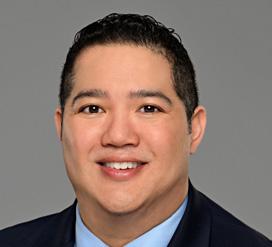
Frederick V. Livingston, MB&L, PLLC frederick.livingston@mblfirm.com
By: Michael Jolet, Hewson & Van Hellemont, PC mjolet@vanhewpc.com
Frederick Livingston is known throughout the insurance industry for zealously investigating and litigating against fraud in a wide array of property and casualty claims, whether perpetrated by individuals or corporations.
Frederick focuses his practice on insurance defense litigation, with an emphasis on premise liability matters, automobile negligence cases, workers’ compensation, and First-Party No-Fault cases, many of which involve fraud and excessive medical treatment. He is known for aggressively defending his clients in litigation while always communicating to his clients any obligations that may be owed to an injured party.
He has a long history of outstanding successes from successful motion practice that has saved clients millions of dollars along with successfully trying several cases to verdict.
Celebrating a Decade of Legal Excellence in Michigan’s Defense Bar
A Decade of Distinction in Defense Advocacy
As President of the Michigan Defense Trial Counsel (MDTC), I am honored to celebrate a significant milestone: our 10th Annual Legal Excellence Awards. This event, scheduled for March 19, 2026 at Detroit’s historic Gem Theatre, marks ten years of recognizing practitioners who embody the very best of Michigan’s defense bar. It’s incredible to reflect on a decade of excellence – not only in courtroom victories, but in the integrity, mentorship, and community leadership that define true professionalism. This year’s awards will be a signature celebration, and we’re delighted to have Fox 2 News anchor Roop Raj as our emcee to lend the evening an extra touch of prestige.
What makes the MDTC Legal Excellence Awards so special is our focus on the whole attorney. We don’t just applaud win-loss records; we honor how those wins are achieved and what our members give back. Our selection criteria explicitly look for civility, community involvement, and dedication to educating the next generation of lawyers. In other words, we celebrate lawyers who serve as pillars of the profession and the community. As I look at this year’s honorees, I see a group that truly lives these values. Each has excelled in advocacy and contributed fundamentally to advancing our profession’s ideals.
It’s also striking how much this year’s honorees have in common. Many share deep, inside-out knowledge of our legal system – gained from roles like judicial clerkships or leading major institutions – which they leverage to benefit the defense bar as a whole. For example, both Phillip J. DeRosier and Mary Massaron began their careers as clerks at the Michigan Supreme Court, giving them rare insight into the judiciary. Hon. James Jamo spent 28 years as a civil litigator before ascending to the bench, bringing a practical perspective to his judgeship. And Megan Norris led her firm’s Board of Managing Directors for years, shaping legal practice at an institutional level. These paths reflect a principle we in MDTC hold dear: the most exceptional attorneys understand the system from within and use that knowledge not just for individual cases, but to strengthen the fabric of civil law for everyone.
This year we honor six outstanding individuals across four award categories. Each award highlights a different facet of excellence: appellate advocacy, trial practice, emerging leadership, and judicial integrity. Yet, as different as their domains are, all of our honorees share a commitment to elevating our profession. I’m proud to introduce them here, and I hope their stories inspire you as much as they have inspired me.
Appellate Advocates Shaping Our Legal Landscape
The John P. Jacobs Appellate Advocacy Award is reserved for those whose longterm contributions have truly shaped the law and the defense bar’s future. This year, we recognize two appellate powerhouses: Phillip J. DeRosier and Mary Massaron. In honoring Phil and Mary, we acknowledge that favorable, well-reasoned precedent is
the bedrock of our practice. Their careers remind us that when appellate advocates win a pivotal case, it doesn’t just help one client – it stabilizes the legal landscape for all defense lawyers and their clients. I firmly believe that their influence on Michigan’s jurisprudence will protect companies, insurers, and individuals for decades to come.
Phillip J. DeRosier (Dickinson Wright) has spent over two decades mastering the art of appeals in both Michigan and federal courts. Early in his career, he gained invaluable perspective as a law clerk to Michigan Supreme Court Chief Justice Robert P. Young, Jr., and as a staff attorney at the Michigan Court of Appeals. That inside knowledge of how judges deliberate has served him – and all of us in the defense community – extraordinarily well. Phil has secured numerous landmark victories that set important precedents. Notably, he prevailed in the Michigan Supreme Court on behalf of an automotive manufacturer in a case of first impression, convincing the Court to find no duty to protect against “take-home” asbestos exposure. As a result, a $9.5 million judgment was overturned – a huge win that drew a clear line limiting manufacturers’ liability in toxic tort cases. In another case, he successfully defended a hospital in the Michigan Supreme Court, leading to reversal of a $30 million medical malpractice verdict and a clarification of the rules for admitting expert testimony. His impact goes even beyond our state; he has argued and won in the U.S. Supreme Court on a key issue defining the SEC’s disgorgement powers. Through victories like these, he has literally helped write the rulebook that all Michigan civil defense lawyers rely on. It’s no surprise he’s often recognized among the top appellate lawyers in the nation, including multiple “Lawyer of the Year” honors for appellate practice. His commitment to our profession also shows in leadership roles – from chairing the State Bar’s Appellate Practice section to co-chairing our Bench-Bar appellate conferences. He exemplifies the appellate advocate who not only wins cases, but also mentors others and improves the system itself.
Mary Massaron (Plunkett Cooney) has likewise dedicated her career to shaping the law through appeals, and she’s done so on a national stage. Mary is a former Michigan Supreme Court clerk (for Justice Patricia J. Boyle) and a nationally renowned appellate attorney who has handled hundreds of appeals, often with multimillion-dollar stakes. When I think of Mary’s impact, I think of how she has carried Michigan’s defense bar influence far beyond our state lines. She is a past president of DRI and a past chair of the ABA’s Council of Appellate Lawyers. In those roles, she helped shape national
policy and best practices in defense litigation, proving that leadership from Michigan can guide the agenda for defense counsel nationwide. Mary has been instrumental in cases that, for instance, overturned outdated precedents and clarified laws vital to our clients’ interests. She has been involved in everything from solidifying statutory protections for businesses to overturning erroneous judgments that could have set harmful precedents. Her peers have rightly lavished her with honors –she’s a fellow of the prestigious American Academy of Appellate Lawyers, among many accolades. Beyond the courtroom, Mary’s leadership in organizations like DRI and Lawyers for Civil Justice demonstrates a commitment to improving our civil justice system at the highest levels. Mary’s career-long devotion to appellate advocacy and professional leadership perfectly embodies what the John P. Jacobs Award stands for.
Together, Phil DeRosier and Mary Massaron represent the architects of precedent that every successful defense bar needs. They ensure that our trial victories are not pyrrhic – they endure because the law itself evolves in a fair, predictable way. I am proud that MDTC is recognizing their contributions, and I know their example will inspire younger attorneys to engage in appellate work and bar leadership.
Trial Excellence Paired with Leadership and Service
The Excellence in Defense (EID) Award has always been close to my heart, because it honors those who not only win cases but elevate the practice of law itself. Established in 1992, the EID Award recognizes civil defense lawyers who demonstrate superb advocacy and go beyond their role as advocates – through professionalism, mentorship, creativity, sound judgment, and public service. This year’s honorees, Jenna Wright Greenman and Megan Norris, truly set a high bar for what it means to be an outstanding defense attorney in and out of the courtroom. They are veteran trial lawyers who have racked up impressive legal achievements, yet they’ve also dedicated themselves to leading others and giving back to the community. As President, I couldn’t ask for better role models in our organization.
Jenna Wright Greenman (Kitch Attorneys & Counselors) is a principal trial attorney whose specialty in defending complex medical malpractice and birth trauma cases has made her one of the go-to litigators in high-stakes healthcare lawsuits. Jenna’s cases often involve catastrophic injuries and highly technical medical issues – the kinds of lawsuits that keep hospital ex-
ecutives up at night. Time and again, she has stepped into this pressure and emerged with successful verdicts for her clients. In fact, her peers recognized her skill by naming her the 2023 “Lawyer of the Year” in Medical Malpractice Law (Detroit). This is a tremendous honor that speaks to Jenna’s talent and dedication in a very challenging field. What strikes me about Jenna, however, is not only her courtroom prowess but also her compassionate leadership outside of it. She has devoted countless hours to community service – most notably serving six years as President of the Ronald McDonald House of Detroit, a nonprofit providing a home for families of hospitalized children. Leading a major charity for that long (while maintaining a busy practice) shows true heart and commitment. Jenna even organizes an annual 5K/10K race on Belle Isle to raise funds for charity, and recently joined the board of the Shades of Pink Foundation to help cancer patients in need. These efforts exemplify the spirit of the EID Award: excellence in advocacy combined with genuine compassion for the community. Jenna has proven that a defense lawyer can be both a fierce litigator and a force for good in the world. We are proud to have her in our ranks and to honor her this year.
Megan Norris (Miller Canfield) is another towering figure in our defense community, known both for her trial record and her leadership in the profession. Megan has been an employment and labor defense lawyer for over 35 years, and she’s respected as one of the very best in that arena. She has tried over 30 cases as lead counsel – an almost unheard-of number in modern civil practice – including high-profile lawsuits involving civil rights, discrimination, whistleblower claims, and more. Whether it’s a complex Title VII discrimination case or a whistleblower retaliation claim, Megan has likely tried it and won it. Her breadth of experience spans state and federal courts in Michigan (and even beyond), and her expertise in employment law is second to none. But Megan’s contribution doesn’t stop at winning in court. She has been a true leader within her firm and the broader legal community. At Miller Canfield, she led the Employment and Labor Group for over 20 years, mentoring dozens of attorneys along the way. Even more impressively, she served eight years on the firm’s Board of Managing Directors – the last six years as the Board’s Chair. Running a major law firm’s board while juggling a heavy trial caseload is an extraordinary feat of leadership, vision, and stamina. Under her guidance, the firm navigated strategic decisions, and Megan set an example as a champion of diversity and excellence. She’s also shared her expertise with numerous higher education clients and even spent nine years on Wesleyan University’s
Board of Trustees, gaining insight that helps her advise educational institutions. It’s no wonder Megan has been perennially listed in Super Lawyers (every year since 2006) and has earned countless accolades over her career. Through it all, she remains approachable, dedicated to mentoring younger lawyers, and passionate about improving our profession. Megan’s career shows that a great trial lawyer can also be a great leader – they are not mutually exclusive. We honor her not just for the cases she’s won, but for the many ways she has strengthened our defense bar and inspired others to follow in her footsteps.
When I look at Jenna Wright Greenman and Megan Norris together, I see two different career paths with a common theme: excellence matched with service. Both have reached the pinnacle of trial advocacy in their fields, and both have used their success to lift others up – whether it’s running a nonprofit or running a law firm. They remind us that being an outstanding lawyer isn’t just about individual achievements, but about bettering our legal community and society. I am proud that MDTC is celebrating them, and I know their stories will encourage all of us to strive for a blend of professional success and meaningful service.
A Rising Star Illustrating the Defense Bar’s Future
One of the most heartening parts of the Legal Excellence Awards is seeing fresh talent being recognized. The Golden Gavel Award is given to a “rising star” in our defense community – an attorney in the early stages of their career who has already demonstrated excellence, dedication, and rapidly expanding impact. This year’s honoree, Chloé C. Schumacher (Foley, Baron, Metzger & Juip), personifies the bright future of the Michigan defense bar. As MDTC President, I find Chloe’s story especially inspiring because it shows how the next generation is carrying forward our values with new energy and perspectives.
Chloe has been practicing law only since 2016, but in that short time she has built an impressively broad defense practice. She’s handled medical malpractice defense, general negligence cases, employment and labor matters, and even civil rights litigation – a wide range that speaks to both her talent and her desire to take on new challenges. It’s not easy for a young lawyer to juggle such diverse areas, but Chloe has done it and earned the respect of colleagues and clients along the way. What really distinguishes Chloe, though, is the unique experience she gained right out of law school. Instead of the typical path of starting at a law firm, she worked in-house at one of the Big
Three automotive companies as an associate labor counsel. In that role, she was directly involved in national-level negotiations with the United Auto Workers (UAW) – an extraordinary opportunity for a junior attorney. Imagine being a young lawyer at the table for high-stakes contract talks with a major union; the pressure and learning curve are immense. Chloe emerged from that experience with skills in negotiation and an understanding of corporate dynamics that many lawyers don’t acquire in a lifetime. This kind of foundational experience has undoubtedly given her an edge in her litigation practice. She approaches her cases with a strategic, big-picture mindset, honed by having seen how disputes play out on a large stage. Whether she’s defending a hospital in a malpractice case or a company in a negligence lawsuit, Chloe brings a level of poise and insight well beyond her years.
Chloe is also deeply engaged in our professional community. She’s an active member of MDTC (which is how many of us have gotten to know her), as well as the State Bar’s Negligence Law section and the Women Lawyers Association of Michigan. She even served as a barrister in her law school’s American Inns of Court program, showing her commitment to mentorship and ethics early on. Outside of work, Chloe’s personal passions reflect the same discipline and drive she brings to her career. She was a competitive cheerleader all her life and, after law school, took up Olympic weightlifting – even competing at the national level for a time. This athletic pursuit isn’t just a fun fact; it speaks to Chloe’s character. The mental toughness and strategic thinking required in high-level sports are the very qualities that make for a successful litigator. Chloe’s story shows how the grit and determination she cultivated in athletics have fueled her rapid rise in law. We honor her with the Golden Gavel Award not just for her early accomplishments, but for the promise she shows as a future leader of our defense bar. If attorneys like Chloe are the future, then our profession is in good hands.
Integrity and Innovation on the Bench
The Judicial Award this year recognizes Hon. James Jamo, a judge who exemplifies the highest ideals of our judiciary and has a special connection to the defense community. As MDTC President – and as a litigator myself – I have tremendous appreciation for judges who approach every case with fairness, deep knowledge, and respect for the role of advocacy. Judge Jamo embodies all of these qualities, and he brings something extra: an innovative spirit of service that extends beyond the four walls of his courtroom.
Judge Jamo serves on Michigan’s 30th Circuit Court in Ingham County. Before he donned the robe, he was very much one of us – a civil defense lawyer for 28 years, and a partner in his own firm. Having been in the trenches of civil litigation for nearly three decades, he understands the challenges that attorneys and clients face. When he took the bench in 2013, he carried with him a practical, empathetic perspective on the law. I’ve often said that judges with real-world litigation experience are invaluable, because they appreciate the nuances of complex cases and the importance of each ruling. Judge Jamo’s long career as a respected litigator means he approaches his judicial role with a balanced mindset and a deep respect for the rule of law. Lawyers who appear before him know they will get a fair shake and a judge who truly listens – and that is reflected in his reputation for integrity and even-handedness.
What truly makes Judge Jamo stand out, however, is how he has leveraged his position to address broader community issues. He has shown that being a judge isn’t just about deciding cases; it can also be about improving the community that the law is meant to serve. In recent years, Judge Jamo became the first judge to partner with the “Off the Street” program, an innovative anti-violence initiative in Lansing. Through this partnership, he uses his judicial discretion in a forward-thinking way: certain offenders, instead of being sent straight to jail for probation violations, are required to complete an anti-violence educational program supervised by the court. This approach gives individuals a chance to break cycles of violence through learning and rehabilitation, rather than just punishment. It’s a form of restorative justice that addresses root causes and, hopefully, prevents future harm. I find this enormously inspiring. Judge Jamo is showing that upholding the law and showing compassion are not mutually exclusive – in fact, they can complement each other to make our communities safer. By encouraging positive change in offenders, he is actively working to reduce gun violence and help people get on a better path, all while maintaining accountability to the law. It’s no wonder he’s recognized for fairness and innovation in his role. Judge Jamo reminds us that the judiciary can be a force for good well beyond the courtroom, and that judges with courage and creativity can tackle problems at their source.
In honoring Judge Jamo with the Judicial Award, MDTC acknowledges not only his decades of excellent service to the legal profession, but also his unwavering commitment to justice and community welfare. He exemplifies the kind of judge every lawyer hopes to appear before: knowledgeable, fair, and invested in the greater good. His leadership on the bench re-
inforces the trust that is so essential between the public and the judicial system. As someone who has seen the defense bar from both sides (advocate and judge), Judge Jamo’s recognition is especially meaningful in this 10th anniversary year.
Looking Ahead: Join Us in Celebration
Reflecting on all these honorees – Phillip DeRosier, Mary Massaron, Jenna Wright Greenman, Megan Norris, Chloé Schumacher, and Judge James Jamo – I feel a profound sense of pride and optimism. Their careers span different disciplines, generations, and perspectives, yet together they represent the pinnacle of what the Michigan defense bar stands for. They have set precedents that protect our clients’ futures, fought and won trials that uphold justice, led institutions and communities with vision, mentored the young, and even reinvented what it means to serve as a judge. In short, they are defining what excellence looks like in our profession. By celebrating this cohort, we not only honor their individual achievements, but also shine a light on the broader values of professionalism, integrity,
and service that will guide the next decade of our organization. I believe their stories will inspire all of us to aim higher and to contribute more, in whatever roles we play.
I warmly invite all of our MDTC members, colleagues, and friends to join us in honoring these remarkable individuals. The 10th Annual Legal Excellence Awards event on March 19, 2026 promises to be an inspiring evening. Come out to the Gem Theatre in Detroit and be a part of this celebration. Let’s gather as a community to applaud our honorees, learn from their examples, and reaffirm our shared commitment to excellence in the defense of our clients and the rule of law. I encourage you to attend, not just to support the award recipients, but to reconnect with fellow professionals and reignite the passion for what we do. Together, we will celebrate the very best of Michigan’s legal profession and look ahead to the future we will build on the strong foundation these honorees have laid. I hope to see you there – let’s celebrate this decade of excellence and chart the course
MDTC Schedule of Events
Legal Excellence Awards
Thursday, March 19, 2026
6:00 p.m. – 9:00 p.m. @ Gem Theatre, Detroit
Annual Meeting & Summer Conference
Friday, June 12, 2026
9:00 a.m. – 5:30 p.m. @ DoubleTree Hotel, Detroit
Winter Meeting
Friday, November 6, 2026
8:00 a.m. – 5:00 p.m. @ Sheraton Detroit Novi Hotel
Castles Made of Sand: Preparing for New Precedent in a Purple State
By: David M. Saperstein, Maddin Hauser dsaperstein@maddinhauser.com
Originally published on Maddin Hauser
Disclaimer: The opinions in this article are those of the author alone, and do not represent the views of the author’s employer, clients, or the MDTC.
“Castles made of sand fall into the sea eventually.” – Jimi Hendrix
Henry of Huntington was a 12th Century English historian whose work Historia Anglorum described the history of England from the earliest period through the accession of Henry II in 1154. The book recounts the legend of King Canute (or King Cnut) the Great, who ordered his courtiers to carry his throne to the seashore. Sitting on the royal throne, King Canute then commanded the incoming tide to halt and not to wet his regal feet and robes. The tide continued to advance, ignoring the royal edict.
The story of King Canute is a welcome warning to legal practitioners in Michigan, which is one of 24 states to use elections to fill the seats on their Supreme Court. While technically the elections are on a nonpartisan section of the ballot, that distinction is made less meaningful by the fact that the political parties nominate the candidates to be put on the ballot. In a purple state that is neither reliably Republican nor reliably Democratic, this means that the decisions of the Court are subject to wide fluctuations, like the tides of the sea.
Conservative Orientation in 2000s
In the 2000s, Republican-nominated Justices in Michigan held a 4-3 majority on the Michigan Supreme Court. During that time, many members of Michigan’s Plaintiffs’ Bar complained that the Court was abandoning precedent and was inevitably ruling in favor of corporations and against injured individuals. After a landmark decision by the Court held that there was no discovery rule for the statute of limitations for common law torts, “Getting Away With Murder” was the deliberately vague title by one commentator who did not specify whether the title referred to the murderer or the Court.
The ideological divisions on the Court during this era became intensely personal. One Justice on the majority described a Justice in the minority as “holding her breath until she gets her way. She hopes, as a child engaging in a tantrum, that one of the adults will give[] in and allow her to dictate.” This led to a gag order, Administrative Order 2006-08, passed by a 4-3 vote, that mandated the confidentiality of all internal
David M. Saperstein
Maddin Hauser
dsaperstein@maddinhauser.com
David M. Saperstein, shareholder, concentrates his practice on professional liability defense, attorney grievance proceedings and appellate law. He primarily defends attorneys, insurance agents, registered representatives, broker-dealers, accountants, and real estate agents. He joined Maddin Hauser in July 2001, and is admitted to practice law in Michigan, Ohio, and California.
Castles Made of Sand, cont.
correspondence, memoranda, and discussions. Following the retirement of that Justice in the minority, she wrote a book in which she lamented that “being on the Supreme Court was like dealing on a daily basis with hatred, lust – particularly lust for power – revenge, and deceit.”
Current Orientation in 2020s
In 2020, Democratic-nominated Justices regained a majority on the Michigan Supreme Court, which has since expanded to a 5-2 supermajority. It is not surprising that the Court’s decisions in personal injury cases reflect a new orientation. Now it is Michigan’s defense Bar who complains about the politicization of the Court and the overturning of precedent.
The case of Kandil-Elsayed v. F and E Oil Inc., 512 Mich. 95 (2023) was a long-anticipated case that ushered in a new era in Michigan jurisprudence. The Court reconsidered Lugo v. Ameritech Corp., Inc., 464 Mich. 512, 516-517 (2001), in which the Court had held that a landowner does not generally owe a duty of care to its invitees if the alleged danger was open and obvious. Although the “open and obvious rule” included an exception if there was evidence of special aspects of the allegedly dangerous condition, the rule had been invoked to dismiss
hundreds of premises liability cases in the intervening years after Lugo.
In Kandil-Elsayed, the Michigan Supreme Court overruled Lugo, holding that whether a danger was open and obvious is an issue relevant to breach and comparative fault, but not the landowner’s duty. The Court reiterated the longstanding proposition that land possessors owe a duty to exercise reasonable care to protect their invitees from an unreasonable risk of harm caused by a dangerous condition of the land. The Court held that the Lugo decision was a relic of a contributory negligence framework in a state that had shifted to pure comparative fault.
A recent decision of the Court reflects another move away from precedents that had been established in the 2000s. In Rayford v. American House Roseville I, LLC, _ Mich. _; 2025 WL 2177754 (2025), the Court considered the enforceability of contractual limitations periods, and reconsidered the earlier decision of Rory v. Continental Ins. Co., 473 Mich. 457 (2005). The Court in Rory had condemned judicial abrogation of contractual limitations provisions that were based on the Court’s independent assessment of reasonableness, and instead held that such provisions must be analyzed under basic contract principles.
Castles Made of Sand, cont.
In Rayford, the Court held that Rory was a “radical departure” from earlier precedent and ignored a long line of precedent treating adhesion contracts with skepticism. While the Court in Rayford did not overrule Rory, it limited the application of Rory to insurance contracts, and held that the reasoning of Rory did not apply in the context of adhesion employment contracts. Because the contract at issue in Rayford was an adhesion contract, the Court remanded the matter to the trial court to decide whether the contractual six-month limitations period was reasonable under precedent that predated Rory.
Conservative or Moderate Decisions of the Current Court
Although defense practitioners fear that today’s Michigan Supreme Court is unfairly biased in favor of Plaintiffs in a way analogous to the perceived defense bias of the Court in the early 2000s, there are indications that the Court is adopting a moderate position. For example, in Daher v. Prime Healthcare Services-Garden City, LLC, _ Mich. _; 2024 WL 3587935 (2024), the Court examined the availability of damages for lost future earnings in wrongful death cases. In Daher, the Plaintiff had sought $11 million to $19 million in damages for the Decedent’s alleged lost future earnings. Given an opportunity to review and potentially overrule another decision from the 2000s, Wesche v. Mecosta Co. Rd. Comm., 480 Mich. 75 (2008), Michigan’s Supreme Court instead held in a unanimous opinion that Michigan’s Wrongful Death Act enumerated the types of damages available and that lost earning capacity damages were not available.
Similarly, one of the frequent complaints of the Plaintiffs’ Bar in Michigan concerns the enforceability of statutory caps on noneconomic damages. In the 2000s, the Michigan Supreme Court upheld the constitutionality of the statutory caps. See, e.g., Phillips v. Mirac, Inc., 470 Mich. 415, 419 (2004). Some expected that as soon as it could, the newly constituted Michigan Supreme Court would overrule that precedent and strike the statutory caps.
It may be that the Court will eventually take up the issue, but it declined to do so when given a promising opportunity
to do so. In the case of In re Certified Question from United States Dist. Ct. for E. Dist. of Michigan(Beaubien v. Trivedi), _ Mich. _; 21 N.W.3d 918 (Mich. 2025), a federal district court judge had held that the constitutionality of Michigan’s statutory cap on noneconomic damages in medical malpractice cases was unsettled, and certified the question for resolution by the Michigan Supreme Court. The Michigan Supreme Court declined the request to answer the certified question in a one sentence opinion. In a concurring opinion, Justice Cavanagh wrote that the certified question process is aimed to resolve unclear questions of state law, not to relitigate settled issues of law.
Conclusion
We are currently in a new era for the Michigan Supreme Court. Defense-side practitioners who are proceeding under the assumption that nothing has changed risk being caught unprepared and surprised by the changing tide. To incorporate the quote of Jimi Hendrix that leads this article, their defense strategy should not be built on castles made of sand. At the same time, plaintiff-side practitioners who expect that every defense-friendly decision from the 2000s will now be overturned are likely to be disappointed by a Court that has at times demonstrated caution.
A more contemporary musical artist, Cage the Elephant, was surely referring to the legal climate when the band warned of, “trouble on my left, trouble on my right.” Instead of following unrealistic expectations, the task of legal practitioners in today’s world remains the same as it has always been – preparation and informed evaluation of risks from whatever direction they might come.
Disclaimer: The opinions in this article are those of the author alone, and do not represent the views of the author’s employer or clients.
1 Judicial Deceit: Tyranny & Unnecessary Secrecy at the Michigan Supreme Court, by Chief Justice Elizabeth A. Weaver (ret.) and David B. Schock, Peninsula Press, 2013.
Thank you to Katherine Smith for your contributions to this article.
Angela Joseph v. Lawyers and Law Firm, unpublished per curiam opinion of the Court of Appeals, issued August 12, 2025 (Docket No. 369994); 2025 WL 2324910.
Facts
Angela Joseph hired defendant lawyers and their law firm (“lawyers”) to represent her in an employment discrimination case against her former employer. On September 23, 2021, a federal district court granted the employer’s summary disposition motion, dismissing Joseph’s claims against it with prejudice.
The lawyers scheduled a call with Joseph to discuss the ruling, and before the call (on September 30, 2021), the lawyers sent an email to Joseph explaining that it was not in her best interest to appeal the ruling, and that they believed that her chances on appeal were very low. The lawyers prepared a draft appeal notice and attached it to the email “should [Joseph] wish to proceed pro se.”
Joseph decided to proceed pro se and on October 8, 2021, the lawyers sent her documents that she requested and additional documents that they believed would be helpful in her appeal. On October 19, 2021, Joseph emailed the lawyers asking questions about the evidence and what was included in the record. The lawyers responded on that the same day answering the questions regarding various pieces of evidence she could use and arguments she could make. The lawyer ended the email with a reminder that the deadline to appeal is November 22, 2021 and that a formal email closing out the representation was forthcoming.
The next day, the lawyers sent an email formally closing out the matter: “As [Law Firm] has completed its work on your behalf, I write to let you know that I am closing your file at [Law Firm]. This will now end [Law Firm]’s…representation of you.” On November 16, 2021, the lawyers filed a motion for leave to withdraw their representation. That motion was granted on May 2, 2022.
The Sixth Circuit affirmed the district court’s decision and the United States Supreme Court denied her petition for certiorari. On October 19, 2023, Joseph brought an action against the lawyers and their law firm, alleging breach of contract, professional negligence and common-law negligence.
Jim is a member of the firm’s Professional Liability and Commercial Litigation practice groups. He has extensive experience defending lawyers and other professionals in malpractice claims. Jim’s practice also concentrates on representing lawyers and judges in ethics matters.
Before joining the firm, Jim worked on complex litigation and federal white-collar criminal defense. He has experience representing clients in healthcare fraud cases and antitrust investigations. He also served as an Assistant Prosecuting Attorney in Wayne County, Michigan, where he gained valuable trial experience.
David Anderson
David C. Anderson is a share- holder of Collins Einhorn Far- rell PC, and has over 20 years of litigation experience. He has successfully defended a wide variety of professional liability claims, ranging from legal malpractice to claims against accountants, insurance agents, architects and engineers, real estate/title agents and even fine art ap- praisers. He has also successfully defended numerous corporations against product liability claims, including death cases. Over those years, David has gained considerable jury trial and arbitration experience.
Legal Malpractice Update, cont.
Ruling
The court found that Joseph’s claim was barred by the 2-year statute of limitations applicable to legal malpractice matters.
Citing MCL 600.5838(1), the court explained that a malpractice claim accrues at the time that person stops serving the plaintiff in a professional capacity. Michigan law provides that the representation generally continues unless the client or the court terminates it, but that retention of an alternate attorney will effectively terminate the relationship. The court reasoned that when Jospeh made clear that she was going to proceed pro se, she effectively terminated her relationship with the law firm. The court couldn’t identify the exact date that the relationship terminated, but found that it was prior to October 19, 2021. Even though Joseph continued to communicate with the law firm on that date, the court explained that the law firm’s actions relative to her case, including sending her legal documents and answering questions about her case where simply ministerial efforts concerning past representation. The court determined that these were attempts to facilitate Joseph’s posttermination transition to pro se status, not a continuation of her representation.
Practice Note
Sending timely written communications advising the client that the representation has concluded is a best practice that will benefit both you and your client. Ministerial work after that letter is sent (i.e. sharing of the file, answering questions) will generally not serve to continue or resurrect the representation.
Post-Game Celebration
Five Lenses for Settling Personal Injury Cases: Applying Advanced Problem-Solving Frameworks
In the world of personal injury litigation, nearly every case ends in a settlement. Trials are expensive and unpredictable, so finding a fair deal early is usually the goal for everyone involved. The challenge, of course, is getting there. A personal injury case isn’t just two sides arguing—it’s a maze of people, interests, and moving parts. You’ve got plaintiffs, intervening plaintiffs, defendants, insurance adjusters, attorneys (sometimes multiple on each side), maybe a judge pushing the case along, possibly a mediator, and even outside voices like family or bosses giving opinions. Each player has their own goals and limited information. No wonder settling a case can feel complicated and at times impossible.
If you’re a defense attorney, you might also be feeling pressure from the court system to resolve cases faster. Many courts nowadays are nudging parties toward early resolution with things like expedited trial dockets, strict scheduling orders, and mandatory mediation sessions. They want cases off the docket sooner, which means you need to be ready to negotiate and settle quicker than in the past. To do that effectively—and to do right by your client—you can’t just rely on gut instinct or the same old playbook. It helps to get creative and look at the problem from different angles.
One approach is to borrow a set of tools from the business strategy world: five flexible problem-solving frameworks, or “lenses,” that can each shed light on a complex situation. These five lenses come from different disciplines (think network theory, evolution, game theory, systems thinking, and information science), but you don’t need a PhD in any of them to use them in a practical way. In plain terms, each lens is just a different way to analyze your case. If you consciously walk through all five, you’re almost guaranteed to spot something you might have missed otherwise. It’s like examining a gem under different lights—each light reveals a new facet. By applying all five perspectives to, say, a no-fault auto claim, you can generate fresh ideas to drive the case toward an earlier and smarter settlement.
Mapping the Web of Influence (The Networks Lens). One way to look at a lawsuit is as a web of people and relationships. Who influences whom? Every case involves a network: the obvious nodes are the plaintiff, the defendant, their lawyers, and the insurance representatives. But there are often other nodes in the network that we don’t always think about. For example, perhaps the plaintiff has a spouse or friend who is in their ear, encouraging them to “hold out for more money.” Maybe the defense attorney (you) have a supervisor or co-counsel whose opinions shape your strategy. The insurance adjuster might have a manager who they must get on board. There could be medical experts or doctors whose evaluations of the plaintiff’s injuries influence the settlement value. And of course, judges and mediators are part of this
Frederick Livingston MB&L, PLLC
frederick.livingston@mblfirm. com
Frederick Livingston is known throughout the insurance industry for zealously investigating and litigating against fraud in a wide array of property and casualty claims, whether perpetrated by individuals or corporations.
Frederick focuses his practice on insurance defense litigation, with an emphasis on premise liability matters, automobile negligence cases, workers’ compensation, and First-Party No-Fault cases, many of which involve fraud and excessive medical treatment. He is known for aggressively defending his clients in litigation while always communicating to his clients any obligations that may be owed to an injured party.
He has a long history of outstanding successes from successful motion practice that has saved clients millions of dollars along with successfully trying several cases to verdict.
Five Lenses for Settling, cont.
web too—judges can apply subtle (or not so subtle) pressure to settle by setting tight deadlines or hinting at the strengths and weaknesses of a case, and mediators literally specialize in influencing both sides toward middle ground.
Using a network lens means taking a step back and mapping out all these players and their connections. Ask yourself: Who are the key influencers in this case? Who listens to whom? You might literally sketch a quick diagram with names in bubbles and lines showing relationships or influence. You’ll often discover someone who isn’t a party to the case but holds a lot of sway. Once you identify these people, you can adjust your strategy to leverage them.
For instance, if you know the plaintiff’s attorney respects a particular mediator, you might push to use that mediator, figuring that the mediator’s suggestions will carry weight with the attorney. On the flip side, be mindful of negative influences: maybe there’s a medical provider or case manager who is encouraging the plaintiff to continue receiving additional medical treatment. Those influences can sabotage settlement talks. If you spot someone like that in the plaintiff’s network, you might need to address it—for example, negotiate with the provider directly to come to an agreement to waive future benefits, or ask the mediator to assist with the issue.
By managing the whole web of influence around the case, you increase your chances of aligning everyone toward resolution. It’s not just about convincing the plaintiff and their lawyer—sometimes you also need to satisfy a spouse’s concerns, an adjuster’s guidelines, or a supervisor’s oversight. A settlement often comes together only when the key people around the negotiating table are on board or at least not actively pushing against the deal. The network lens reminds us not to overlook the human relationships that can drive or block a settlement. When you handle those relationships wisely (whether it’s by providing information, reassurance, or slight pressure via a respected voice), you grease the wheels for an agreement.
Adapting Through Trial and Error (The Evolutionary Lens). Legal cases are dynamic. As a defense attorney you know that things change—new facts come out, attitudes shift, and what worked in one case might not work in another. That’s why it pays to be flexible and experimental in your approach to settlement. The evolutionary lens is all about trying multiple approaches, seeing what feedback you get, and then doubling down on the things that move you closer to a deal (and discarding the things that don’t). In other words, don’t marry one strategy at the outset. Instead, be willing to evolve your tactics as the case progresses, almost like a scientist running experiments and learning from each result.
In practice, using an evolutionary approach could mean a
lot of different things. Early in a case, you might test the waters with a small, low-risk move. For example, perhaps you file a targeted discovery or partially dispositive motion early on. How the court and the plaintiff’s side react to that motion can tell you a lot. If the court grants it or seems sympathetic to your argument during the hearing, that’s a sign your leverage is strong; you might then get more aggressive in settlement talks. If the motion is denied outright, you’ve learned that the judge sees the case differently—knowledge that will save you from overconfidence, and you can pivot accordingly (maybe focus on negotiating sooner, since the legal win you hoped for didn’t pan out).
Another experiment: float an early settlement proposal. This doesn’t have to be your best and final number; it can be modest, just to gauge the plaintiff’s expectations. Do they reject it without even a counteroffer? That reaction is data. It might tell you the plaintiff has very high (perhaps unrealistic) expectations or that it’s too early for them to settle. On the other hand, if they come back with a counteroffer, now you have a starting point for dialogue. Similarly, you can experiment with how the settlement is structured. Maybe a key consideration is retaining future benefits, or they are enticed by waiving future benefits to obtain a larger settlement amount. Each offer and counteroffer in negotiation is essentially an experiment that yields information about the other side’s mindset.
You can also think bigger. In a high-value case, you might conduct a mock jury exercise or bring in a focus group. This is no different than a controlled experiment: present a strippeddown version of the case to some mock jurors and see what they say. If, to your surprise, the mock jury comes back with a huge sympathy for the plaintiff and a suggestion of a big award, that’s a loud wake-up call—settle this case sooner rather than later. Conversely, if the focus group is underwhelmed by the plaintiff’s story or sees partial fault on the plaintiff, you gain confidence that your case has strength—information you can use to hold a harder line in negotiations or to persuade the plaintiff that their position isn’t as ironclad as they think.
The key with the evolutionary mindset is to remain agile and learn at every step. Go into the case with a Plan A, but have a Plan B and C in your back pocket. As you gather feedback— maybe a deposition goes unexpectedly well for you, or perhaps an interrogatory answer reveals a new weakness in your defense—be prepared to adjust. Let’s say you were counting on a certain defense but through discovery it becomes clear that it is very weak; recognize that early and shift strategies rather than clinging to a sinking ship. Or imagine you thought an aggressive approach would intimidate the plaintiff into lowering their demand, but instead it’s made them and their lawyer dig their heels in. Okay, time to try a different tack: perhaps a
Five Lenses for Settling, cont.
friendly phone call to rebuild some goodwill, or a new piece of evidence to change the tone.
Thinking Through Everyone’s Incentives (The DecisionAgent Lens). Another lens to apply is essentially classic game theory: put yourself in each person’s shoes and try to see what they see as their best option. The idea here is that a case will settle only when all the key players believe they’re better off settling than continuing to fight. So as a strategist, you want to arrange the situation (or the deal) such that each player’s selfinterest is served by settling.
Start with the plaintiff. What does the plaintiff really want, and what are they weighing in their mind? Usually, a plaintiff is balancing a sure thing (a settlement now) against an uncertain thing (a possible jury verdict later). The jury verdict could be higher than the settlement – sometimes much higher – but it could also be zero, and even if it’s high, it comes with delays and costs (attorney fees, trial stress, time). A settlement offers certainty and immediacy: money in hand now with no risk of walking away empty-handed. The crucial question is: at what dollar amount does that guaranteed payout now become more enticing to the plaintiff than rolling the dice in court? If you can estimate that, you’ve found the rough zone where a deal can be made. This is often about figuring out their BATNA, or “best alternative to a negotiated agreement,” which in litigation is essentially the expected outcome at trial. If the plaintiff thinks their best alternative (trial) might net them, say, $100,000 (after considering the chance of winning and the legal costs), and you offer them $80,000 now, they might decide $80k now is better than a maybe-$100k later. But if you only offer $20,000, they might prefer to gamble at trial. Part of your job is to realistically assess what their case might be “worth” at trial and craft an offer that looks better than that future gamble – enough better to account for their risk aversion or immediate needs.
Now consider the plaintiff’s attorney. They’re an independent decision-agent too, with their own incentives that are related to but not identical to their client’s. Plaintiff’s lawyers often work on contingency, meaning they get a percentage of whatever the plaintiff recovers. They want a good outcome for their client (both out of duty and because it means a better fee), but they also think about the time and money they’re investing in the case and the risk of getting nothing if they lose at trial. Sometimes a lawyer might be more optimistic (or aggressive) about a case than the client is – perhaps the lawyer believes a jury will be sympathetic and is hungry for that big verdict that could also boost their reputation. In such instances, the lawyer might encourage the client to reject decent offers because the lawyer is envisioning a home run. Other times, especially if the case has problems, the lawyer might be more eager to settle than the client, because the lawyer doesn’t want to sink more hours into a losing battle. This mismatch can complicate settle-
ment: you might have a client who’d take the deal but a lawyer pushing them to hold out, or vice versa.
How do you handle that? One approach is to structure your offers to help the opposing attorney “save face” and meet their needs as well. For example, if you suspect the plaintiff’s lawyer is the one stalling because they’ve poured a lot of work into the case and don’t want a low settlement that barely covers their costs, you might have to offer to cover the costs of the facilitation/arbitration to reach a settlement. That way the lawyer can justify to the client, “This is a fair deal—I’ve gotten some of our costs back and a solid result.” In mediation, a skilled mediator might also play on the plaintiff’s attorney’s incentives by reminding them, gently, of the risk of spending more time and money only to possibly lose at trial. A mediator can sometimes persuade the attorney to lean on their client to be more realistic, especially if the mediator hints “you’ve done a great job lawyering this case, but all lawyers eventually recognize when a good deal is on the table.”
Now, think about your side: the defendant and typically the defendant’s insurer. Insurance companies (or self-insured defendants) make a calculation: How much will settling now cost us versus how much will continuing to fight cost us? “Continuing” includes not just the potential trial verdict but also the defense attorney fees, court costs, and intangible costs like time and distraction, and even reputational damage or precedent. Those thoughts can act as mental ceilings. Part of your role as defense counsel is to feed the insurer the right information to make a smart decision. If you can show, for instance, “If we push on, we’ll incur more in legal expenses, and even if we win, we might not get out cheaper because of how interest or attorney fees could be applied if we lose,” the defendant will understand that settling may be a wash or possibly better financially.
So with the decision-agent lens, you’re orchestrating a scenario where, ideally, everyone’s motivations align toward “let’s settle this thing.” The plaintiff gets the certainty and the number they can live with. The plaintiff’s lawyer gets a decent fee and avoids a loss (or endless work). The defense/insurer pays an amount that, while not delightful, is acceptable compared to the risk and cost of trial. When all sides are at least okay with the deal—when none of them see a clear advantage in continuing the fight—that’s when a settlement happens. If one player still thinks they might do better by fighting on, they will, and you won’t settle. So your job is to eliminate that feeling by adjusting the pieces on the board (with offers, information, timing, etc.) until continuing the litigation no longer seems attractive to anyone.
Seeing the Big Picture and the Clock (The System-Dynamics Lens). Lawsuits unfold over time, and they involve processes that can speed up, slow down, or spiral out of control.
Five Lenses for Settling, cont.
The system-dynamics lens asks you to view the case as a whole system with inputs, outputs, feedback loops, and accumulations of things like cost and stress. It’s a bit like looking at your case as if it were a machine or an ecosystem: what happens if you poke this part, or if something runs longer than expected, or if two parts start reinforcing each other?
One major element of the system is time. Time can be your friend or enemy, and it often affects each side differently. Think about what is accumulating as the months tick by in a personal injury case. For the plaintiff, maybe medical bills are adding up, or they’ve been out of work and their financial pressure is increasing. For the defense/insurer, legal fees are accumulating; every hour you spend on discovery or motions is money out the door. Both sides might become more entrenched in their positions the longer the case goes. I’ve seen many cases where, by the time we’re a week from trial, neither side wants to budge an inch on principle alone, when months earlier they might have found a middle ground. Why? Because each side has invested so much at that point that settling almost feels like losing; they start thinking “after all this, I’m not giving in.” That’s a vicious cycle: time leads to more investment (money, emotion), which leads to hardened positions, which leads to more time spent fighting.
To use the system-dynamics perspective, it helps to diagram or at least clearly articulate these cause-and-effect relationships. For example, consider a feedback loop: legal costs rise -> defense feels pressure to settle. That might be a balancing loop (negative feedback) in the sense that the more it costs, the more you want to stop the bleeding by settling. But there’s another loop: legal costs rise -> plaintiff’s expectations rise (because if the plaintiff knows the defense is pouring money in, they might think the defense also believes the case is serious). Meanwhile, time passes -> plaintiff has to deal with depositions, stress, medical exams -> plaintiff feels more urgency to settle. Or, alternatively, time passes -> plaintiff’s medical bills grow -> plaintiff insists on a higher number to cover them These loops can conflict with each other. The point is to map them out and see where you might intervene to change the pattern.
One practical move from this analysis is to address things early before they snowball. If you suspect that the plaintiff’s mounting expenses are going to drive them to demand more later, you might consider attempting to reduce motion practice or extensive discovery. In exchange, you might attempt to negotiate that certain damages won’t be claimed or will be capped because you are not spending time delving into the claims. In essence, you’re preventing the “costs over time” from ballooning and driving the two sides further apart. It’s a bit outsidethe-box, but in the right case, it can break a nasty cycle.
Also, pay attention to court-imposed timelines as part of your system. If a court sets a firm trial date six months from now and mandates mediation in three months, that’s a very different system than a court that lets cases drag on for three years. A fast timeline means everything is condensed: less time for interest on damages to accumulate, less time for everyone to spend money on litigation (which can keep positions from hardening too much), but also less time to prepare if you were relying on delay. If you normally like to fully complete discovery and order all records before making an offer or considering resolution, that won’t work if the judge says “trial in six months, no extensions.” In these cases, speed can actually favor the defense if used wisely—you might push to get key depositions or an independent medical exam done right away, then take those results to the mediation and say “look, we’ve got what we need and we’re prepared to try this case tomorrow; here’s our evidence, let’s settle now.” If the plaintiff was hoping to stall, that strategy is foiled. Conversely, in systems where courts allow lots of time, sometimes defense benefits from delay (for example, a plaintiff might become more willing to settle after a long wait), but it could also benefit the plaintiff, allowing more time to accumulate damages and medical treatment. The system-dynamics lens forces you to think through these “if-then” scenarios: If we push this deadline out, then what happens to expenses, interest, attitudes? Or if we move fast, then what are the consequences?
Another insight from systems thinking is dealing with psychological feedback loops. I touched on one: sunk costs leading to stubbornness. There’s also the loop of adversarial escalation: one side files an ugly motion, then the other side responds in kind, and pretty soon both sides are angry and less likely to compromise—each action reinforces the conflict (positive feedback in system terms). To counteract a reinforcing loop like that, you want to introduce a balancing element. A great balancing loop is humanization and empathy. It might sound a bit soft, but it works. For example, arrange a moment during mediation (or even informally) where the people actually talk human to human. We’ve all been in mediations where the atmosphere changed 180 degrees after a simple sincere apology or an explanation was given. What that does is shortcircuit the demonization that often happens over months of litigation. Instead of “greedy plaintiff” and “heartless insurance company,” both sides suddenly see each other as people trying to solve a problem. This can create a new feedback loop: empathy -> cooperative behavior -> faster resolution. It doesn’t always magically settle the case on the spot, but it might stop the escalation and soften positions enough that a deal becomes possible. In system terms, you’re adding a negative feedback loop to counter the positive feedback loop of conflict escalation.
Five Lenses for Settling, cont.
When applying the system-dynamics lens, it can be helpful to literally jot down a mini map of your case timeline and the various pressures at play. Identify points where you can intervene: Can you shorten a delay here, speed something up, slow something down? The more you control the flows of the case, the less you become a victim of the system’s inertia. Often, quicker exchange of information means quicker alignment of views, which means earlier settlement (more on the information part in a moment).
Think in terms of “stock” and “flow”: what is building up as stock (legal costs, bills, frustration) and what is flowing (information, money offers, etc.)? Are there reinforcing loops making things worse? Are there balancing loops that could make things better? Always ask, “And then what?” about any action you take. If you file that scorched-earth discovery request, then what will the opponent do? Possibly retaliate, driving up costs further and making them angry (so settlement goes out the window). If you, instead, call the opposing counsel and say “Hey, rather than objecting to each other’s requests for the next six months, let’s share what we both truly need and agree on a streamlined discovery plan,” then what? Maybe you save both sides a lot of time and money, and you create a bit of trust and goodwill. That counsel might then be more receptive to your settlement offer because you’ve shown you’re not just trying to run them into the ground. Every move changes the system a little—be deliberate in choosing moves that set off positive chain reactions (or at least avoid setting off negative ones). The system-dynamics lens basically boils down to being strategic about timing, sequence, and understanding the indirect effects of actions in a case.
Managing Information for Better Decisions (The Information-Processing Lens). At its core, settling a case is about making a decision: both sides deciding that a compromise is better than continuing to fight. And what drives decisions? Information. Think about it: a lawsuit is really an information game. Each side is trying to gather facts (through discovery), each side is trying to frame those facts in a favorable way, and ultimately the key players (clients, adjusters, lawyers, sometimes mediators or judges influencing things) are making judgment calls based on the information they have. If that information is incomplete or skewed, their decisions will be off-target. So, the information-processing lens urges you to focus on how information is collected, shared, and digested during the case, and to optimize that flow so that everyone is basing decisions on a clear, accurate picture. When both sides see the reality of the case similarly, settlements tend to happen because the element of surprise or wishful thinking is removed.
How do you use this lens in practice? One aspect is what information you share with the other side, and when. Tra-
ditional litigation strategy sometimes says, “hold your cards close, and maybe even ambush the other side with a smoking gun.” But if your goal is an early settlement, that logic might be backwards. Say you have a piece of evidence that really undercuts the plaintiff’s case—a surveillance video that shows the plaintiff doing something they claimed they could not. You might salivate at the idea of revealing this late, well after the plaintiff’s deposition to crush the case. But think about settlement: if the plaintiff’s team doesn’t know about this evidence, they might be valuing their case way higher than they should. They’ll come into litigation thinking they have a great case, not knowing a bombshell awaits. They’ll likely refuse your reasonable settlement offers because they believe their case is strong. If you only unveil the bombshell late in the game they’ll be shocked and their case might indeed collapse—but by then, the opportunity to settle cheaply is gone; you’ve already spent tons on litigation, and you’re much closer to the end of the case than the beginning. In an information-sharing approach, you’d consider revealing that bombshell earlier. For instance, you might share the surveillance footage early into the case. Yes, it gives up the dramatic surprise, but it also might bring the plaintiff down to earth or cause the plaintiff to abandon the case, stop medical treatment or cause the attorney to withdraw. Confronted with hard evidence that undercuts their claim, the plaintiff and their lawyer will reassess the risk of continuing with litigation. You’re effectively helping the other side update their information, so their expectations align with yours. When both sides’ expectations overlap (“okay, this case should settle around X dollars”), a deal is right there.
Of course, not all information should be dumped on the table freely. You still have to be smart about it. If something is harmful to your case, you can’t hide it (you have to disclose evidence as required by law), but you can manage how it’s presented. Perhaps you disclose a bad fact in a context that softens its impact. For example, if you have a negative report from one physician but you immediately follow up with an explanation or counter-evidence, so the other side understands it’s not as devastating as it looks. The key is to avoid unpleasant surprises that derail negotiations. If the plaintiff’s side discovers a damaging fact at the 11th hour, trust breaks down and settlement can blow up. Far better that you be the one to tell them (spinning it as best you can), maintaining credibility and control over the narrative.
Now think about information flow on your own side. How well is information moving between you (the defense attorney), the claims adjuster, any experts, and the insured defendant (if they’re involved)? It’s important to set up a good internal communication system: regular updates, summaries, and strategy sessions. After every major development, take the time to di-
Five Lenses for Settling, cont.
gest what it means for your case and shoot a clear, concise update to the client/insurer. Provide your evaluation of what that means for potential settlement or strategy going forward. This not only keeps everyone on the same page, but it builds trust; your client will feel informed and be less likely to second-guess decisions if they’ve been part of the information loop all along.
Now, regarding the opponent’s perspective: if they seem to be acting on incorrect information or assumptions, find a tactful way to correct them. This is a bit of an art. You don’t want to come off as condescending, but it’s in both parties’ interest to negotiate from the same factual baseline. Maybe the plaintiff’s attorney is very confident because they think they have the lack of pre-existing injuries in their favor, but unknown to them, you found records to the contrary. You might share a portion of your findings in a conversation or at mediation, so they realize “oh, the defense has something that undercuts us.” If the other side is overestimating their case due to lack of info, you can often bring them back to reality just by giving them the info. It’s not always instinctive for lawyers to do this—we often think, “why should I help my opponent?” But a misinformed opponent is a recipe for impasse. If they’re clinging to a belief that’s untrue or unprovable, no wonder they won’t settle at a reasonable figure. You don’t have to hand them everything on a silver platter, but find a way to let the crucial facts be known.
Bringing It All Together. We’ve explored five different lenses—five ways of thinking about a case and how to drive it toward settlement: networks (who’s influencing the process), evolutionary (keep adapting and learning), decision-agent (align everyone’s incentives), system-dynamics (use timing and feedback loops to your advantage), and information-processing (get everyone on the same factual page). In reality, you’ll often use several of these at once. They’re not rigid silos; they overlap and reinforce each other. For example, suppose you decide to share that key piece of evidence early (information-processing) and you channel it through a mediator that the plaintiff’s side trusts (networks) during a mediation scheduled early by the court (system-dynamics). By doing so, you might simultaneously change the game-theory calculation for each party (decision-agent, because now the plaintiff sees their chance at trial is weaker and the insurer sees the plaintiff’s expectations coming down). You also treated that early mediation as an experiment to see how they’d react (evolutionary). In one swoop, you touched on all five perspectives! The result might be that a case which seemed hopelessly stuck is now moving toward common ground because you looked at it from multiple angles and intervened thoughtfully.
Today’s legal environment, especially post-pandemic, is evolving. Courts and clients alike appreciate lawyers who can resolve cases efficiently and fairly without wasting time. Embracing these diverse problem-solving approaches makes you a more innovative and effective advocate. It’s not about abandoning the traditional tools of lawyering—good legal analysis, thorough discovery, persuasive argument—those are still fundamental. It’s about adding new tools to your toolbox. When you consciously step back and ask, “Have I considered the relationships at play? Have I tried different approaches and learned from them? Do the economics make sense for everyone right now? What is the timeline doing to us? Does everyone have the information they need to make a decision?”—you are far more likely to spot the way to settle that wasn’t obvious at first.
In the end, being a defense litigator isn’t just about arguing the law; it’s about being a strategist and a problem-solver. The best defense attorneys I know are the ones who can zoom out and look at a lawsuit from a business perspective, a psychological perspective, a systems perspective, and so on. They don’t get stuck in a one-track mindset. They’re flexible, creative, and always thinking a few moves ahead. By applying these five lenses to your cases, you position yourself to reach optimal settlements by design, not by luck or exhaustion. And that’s a win-win: your client is well served with a fair, timely resolution, and you’ve efficiently resolved a case in a way that frees you up for the next challenge.
2025 - 2026 Firm & Vendor
Sponsorship Opportunities
We offer many packages to fit your needs. Personal connections with potential clients is hard in today’s fast-paced and busy work environments.
Partnering with the MDTC provides your company access and valuable networking with top litigators across Michigan in a less formal yet professional environment. Follow the links to learn more and submit your sponsorship today.
Sponsorship
Thank you to our Winter 2025 Conference Sponsors!
held on November 7, 2025 at Sheraton Detroit Novi Hotel, Michigan
Collins Einhorn Farrell PC
Complete Investigations LLC
Data Surveys, Inc.
Dawda PLC
Dr. Ernest Chiodo – Medical Expert
ESi
ExamWorks
Exponent
Garan Lucow Miller PC
Kitch Attorneys & Counselors, PC
LCS Record Retrieval
Lexitas
Lingual Interpretation Services, Inc.
MAI IME MDpanel
Michigan Evaluation Group / Medlogix
Nemeth Bonnette Brouwer PC
Ottenwess Law PLC
Rudick Forensic Engineering, Inc.
Seibold & Associates Consulting Agency
Shadow Investigations
Sherlock Investigations
SuperiorX Investigations
US Legal Support
Veritext Legal Solutions
Click here to view all Winter Conference photos
The End of the HIPAA Reproductive Health Attestation Rule
By: Ahmad Zeki, JD, LCS Record Retrieval
On June 18, 2025, the U.S. District Court for the Northern District of Texas, in Purl vs. United States Department of Health and Human Services, issued a nationwide injunction striking down nearly all parts of the HIPAA Privacy Rule to Support Reproductive Health Care Privacy. This rule, which took effect in June 2024, had required healthcare providers, health plans, and their business associates to obtain a signed attestation before disclosing protected health information (PHI) potentially related to lawful reproductive healthcare—covering areas such as abortion, contraception, IVF, gender-affirming care, STD screenings, and maternity services.
Purl v. HHS: What Happened?
In Purl, the court ruled that the United States Department of Health and Human Services exceeded its statutory authority under HIPAA and the Administrative Procedure Act (APA).
Specifically, the court found:
• The attestation requirement improperly restricted lawful disclosures permitted under HIPAA.
• HHS failed to adequately consider the impact on state laws, including mandatory reporting of suspected abuse and criminal investigations.
• The rule created unworkable burdens on covered entities and law enforcement without sufficient justification.
As a result, the attestation requirement and related restrictions on PHI disclosures for reproductive health purposes have been vacated nationwide.
“The Final Rule impermissibly rewrites the balance Congress struck in HIPAA between patient privacy and public interest.” ~ Excerpt from the Purl decision.
What the Vacated Rule Means
The attestation is no longer required for protected health information requests tied to reproductive health, including health oversight, judicial/administrative proceedings, law enforcement, or disclosures to coroners and medical examiners. HIPAA’s core privacy protections remain intact, and covered entities still must safeguard protected health information and honor all existing HIPAA privacy rule provisions. In the ruling, the court identified statutory overreach, stating the Department of Health and Human Services exceeded its authority and impermissibly limited state reporting obligations.
Ahmad Zeki, JD Regional Sales Director LCS Record Retrieval
ahmad@teamLCS.com
The End of the HIPAA, cont.
What Providers Must Do Now
Providers must now retire attestation forms and eliminate related procedures tied to reproductive health protected health information. Furthermore, they must revert policy manuals, workflows, best practices, training, and business associate agreements that were updated to support the now-defunct rule. It is also urged that providers continue to monitor developments as this vacatur may be challenged or altered upon appeal.
Your Policy Update (What This Means for Attestation Letters) — Now Live!
In light of these changes, LCS Record Retrieval has updated its HIPAA compliance policy:
• No longer required: The court struck down parts of an HHS rule that previously required HIPAA-covered organizations to get a signed attestation before releasing PHI potentially connected to reproductive health services.
• Removed compliance duties: As a result, healthcare entities regulated by HIPAA are no longer obligated to follow the procedures that involved collecting and verifying these attestation forms.
• Not needed for certain requests: In scenarios where an attestation used to be mandatory—such as oversight investigations, legal proceedings, or law enforcement inquiries—those attestations are now unnecessary.
In short, the Purl decision ends the requirement for attestation letters when accessing certain reproductive health-related information. This policy update ensures your organization stays aligned with current federal guidance while maintaining trust and compliance.
Summary
Though the Reproductive Health Rule and its attestation requirement have been vacated, HIPAA’s foundational privacy standards persist. Providers and business associates should focus on:
• Undoing attestation/formal protocols tied to reproductive health.
• Staying vigilant—legal challenges or reinstatements remain a possibility.
At Legal Copy Services, we’re here to guide you through these changes - visit our updated HIPAA solution page to learn how we can help ensure your compliance remains current and robust.
MILLER ENGINEERING
Appellate Practice Report
By: Phillip J. DeRosier, Dickinson Wright pderosier@dickinsonwright.com
Late Applications for Leave to Appeal:
Don’t Underestimate the Need to Explain the “Reasons for the Delay”
Under the Michigan Court Rules, a party who has failed to timely file a claim of appeal (or application for leave to appeal if the judgment or order was not appealable as of right) has the option of filing a late appeal. Depending on where the judgment or order being appealed originated, such a late appeal can be filed either in the circuit court or the Court of Appeals. See MCR 7.105(G) (governing “late” appeals to circuit court from a district court or agency); MCR 7.205(A)(4) (governing “delayed” appeals to the Court of Appeals from a circuit court, the Court of Claims, or an agency or tribunal from which an appeal can be taken to the Court of Appeals).
Because late appeals are always discretionary, it is necessary to file a delayed application for leave to appeal. In addition to the usual requirements that apply to any application for leave to appeal (allegations of error and relief sought, concise argument, etc.), the appellant must also provide a “statement of facts explaining the delay.”
MCR 7.105(G)(1); MCR 7.205(A)(4) (requiring a statement of facts explaining the “reasons for the delay”). The appellee’s answer “may challenge the claimed reasons” for the delay, and the court “may consider the length of and the reasons for the delay in deciding whether to grant the [delayed] application.” Id.
Attention should always be paid to explaining the reasons for the delay, and providing good grounds, but it is especially important for late appeals to circuit court. Why? Because the Court of Appeals has long said that it reviews a circuit court’s denial of leave to appeal only for an abuse of discretion. See, e.g., People v Flowers, 191 Mich App 169, 172; 477 NW2d 473 (1991) (“The decision of a circuit court to grant or deny leave is reviewed under an abuse of discretion standard.”); Blue Cross & Blue Shield of Mich v Comm’r of Ins, 155 Mich App 723, 730; 400 NW2d 638 (1986) (“A decision denying a motion for leave to appeal will not be reversed absent an abuse of discretion.”). That is consistent with MCR 7.103(B), which states that a circuit court “may” grant leave to appeal from certain orders.
Application of the abuse of discretion standard can be especially problematic if the circuit court rejects the claimed reasons for a delay appealed and denies leave on that basis, without ever addressing the merits. That is precisely what happened in Teddy 23, LLC v Michigan Film Office, 313 Mich App 557; 884 NW2d 799 (2015). Teddy 23, a movie production company, sought a “postproduction certificate of completion” from the Michigan Film Office (MFO) in order to receive a tax credit from the Michigan Department of Treasury. Id. at 560-562. The MFO denied Teddy 23’s request, finding that its claimed expenditures were significantly overstated. Id. at 562. The MFO also advised Teddy 23 that it had “60 days” to
Phillip J. DeRosier
Phil DeRosier has more than 20 years’ experience representing industry-leading corporations, banks, insurance companies, and individuals in the Michigan Supreme Court, Michigan Court of Appeals, and U.S. Courts of Appeals. Phil has briefed and argued a wide variety of appeals, ranging from commercial contracts to insurance to business torts. He also devotes a significant part of his practice to briefing dispositive motions and working with trial counsel on pre- and post-trial motions, jury instructions, and preserving issues for appeal.
Phil is a past Chair of the Governing Council of the State Bar of Michigan’s Appellate Practice Section, and is consistently recognized in Best Lawyers and Michigan Super Lawyers in the area of appellate practice. Phil is co-chair of the Michigan Appellate Bench Bar Conference and a contributing author to the Institute for Continuing Legal Education’s Michigan Appellate Handbook . Before joining the firm, Phil served as a law clerk for former Michigan Supreme Court Chief Justice Robert P. Young, Jr., and was a staff attorney at the Michigan Court of Appeals.
Appellate Practice Report, cont.
pursue “any rights of appeal.” Id. at 562.
Instead of appealing to the circuit court, Teddy 23 filed an original action against the MFO and the Department of Treasury in the Court of Claims. The Court of Claims, however, dismissed the action for lack of subject-matter jurisdiction because the decision that aggrieved Teddy 23 was the MFO’s administrative decision to deny it a postproduction certificate of completion, and not a “assessment, decision, or order” by the Department of Treasury that would trigger Court of Claims jurisdiction under the tax revenue act. Id. at 563. As a result, review of the MFO’s decision was subject to the circuit court’s exclusive jurisdiction. Id.
In the meantime, while the MFO’s and Department of Treasury’s motions to dismiss were still pending in the Court of Claims, Teddy 23 also filed a delayed application for leave to appeal in the Ingham County Circuit Court, arguing that it “did not file a circuit court action sooner because defendants induced them to believe that the Court of Claims had jurisdiction to review the MFO’s decision.” Id. The circuit court denied Teddy 23’s delayed application for leave appeal. Id
In addressing the circuit court’s denial of leave to appeal, the Court of Appeals cited the abuse of discretion standard, and
held that the circuit court did not abuse its discretion in denying leave to appeal. The Court rejected Teddy 23’s claim of having been misled about its appeal rights, and noted that Teddy 23 had waited several weeks after the MFO and the Department of Treasury challenged the Court of Claims’ jurisdiction before filing its delayed application for leave to appeal in the circuit court. Id. at 569-570. Consequently, neither the circuit court nor the Court of Appeals ever addressed the merits of Teddy 23’s appeal.
While it may seem extreme, the Teddy 23 decision illustrates the importance of not only acting promptly in filing a delayed application for leave to appeal in circuit court, but giving ample attention to the reasons being offered as to why the appeal is late. Otherwise, there is a real risk that the delayed application for leave to appeal could be denied, and that decision upheld by the Court of Appeals, without the merits of the appeal ever being considered.
Thank you to 2025 Golf Tournament Sponsors!
2025 Vendor Table Sponsors
Data Surveys, Inc.
DigiStream Investigations
Exponent, Inc.
Fortz Legal Support, LLC
Lexitas Legal
Lingual Interpretation Services, Inc.
ManageAbility IME, Inc.
MDpanel
Shadow Investigations
SuperiorX Investigations
View all Golf Tournament photos at Click here
2025 Hole Sign Sponsors
Hewson & Van Hellemont
Kitch Attorneys & Counselors
LCS Record Retrieval
Records Deposition Service
Referral Services Network
The Law Offices of Brian A. Robillard PLLC
Sherlock Investigations
2025 Cart Sponsors
Explico
The Law Offices of Brian A. Robillard PLLC
Beyond the Brief: Confronting Attorney Burnout in Civil Defense Firms
Burnout isn’t just a personal problem—it’s a business crisis and cultural challenge for today’s law firms. In a late 2021 survey, lawyers reported feeling burned out 52% of the time on the job. The repercussions are tangible: rising attrition, faltering morale, and mounting costs. Replacing even a single attorney is expensive, which hits small and midsize civil defense firms especially hard. Younger attorneys, in particular, are increasingly unwilling to tolerate toxic, unsustainable work environments—they vote with their feet. The message is clear: attorney burnout is your firm’s business, and ignoring it can drain both your talent and your bottom line. This article explores how civil defense firm leaders can recognize burnout’s warning signs, understand its systemic causes, and take proactive steps to build a healthier, more sustainable practice.
Spotting Burnout Early: Warning Signs in Your Legal Team
Burnout creeps in gradually, so firm leaders must learn to spot the warning signs before a valued attorney hands in their notice. According to the World Health Organization’s definition, burnout is a work-related syndrome resulting from chronic stress that hasn’t been successfully managed. It’s characterized by three dimensions: persistent exhaustion or energy depletion, growing cynicism or mental distance from work, and a reduced sense of professional efficacy or accomplishment. In everyday terms, an attorney on the road to burnout may seem mentally and physically drained, increasingly cynical or disengaged, and doubtful that their work has impact or value.
Common red flags include frequent exhaustion, a marked increase in irritability or cynicism, and noticeable drops in productivity or work quality. You might observe an attorney missing deadlines or making uncharacteristic mistakes as their focus wanes. Physical symptoms often accompany burnout as well. In one survey, 83% of lawyers who reported a decline in well-being also suffered disrupted sleep, 81% experienced heightened anxiety, and nearly half reported trouble in personal relationships. Complaints of headaches, frequent illnesses, or gastrointestinal issues can be the body’s alarm bells that chronic stress is taking a toll. An attorney who was once engaged in team meetings may now withdraw or display a “checked-out” demeanor. Absenteeism—whether in the form of repeated sick days or simply being mentally absent—is another clue that burnout could be brewing.
It’s critical for leaders to cultivate an environment where these signs can be safely discussed. Often, burned-out lawyers feel ashamed or fear stigma, so they suffer in silence. Don’t wait until an annual review or an exit interview to discover that an associate has been struggling. If you notice a normally reliable litigator becoming erratic in their hours or a junior lawyer growing unusually cynical about their work, check in early. A supportive, non-judgmental conversation can open the door for the attorney to
Frederick Livingston MB&L, PLLC frederick.livingston@mblfirm. com
Frederick Livingston is known throughout the insurance industry for zealously investigating and litigating against fraud in a wide array of property and casualty claims, whether perpetrated by individuals or corporations.
Frederick focuses his practice on insurance defense litigation, with an emphasis on premise liability matters, automobile negligence cases, workers’ compensation, and First-Party No-Fault cases, many of which involve fraud and excessive medical treatment. He is known for aggressively defending his clients in litigation while always communicating to his clients any obligations that may be owed to an injured party.
He has a long history of outstanding successes from successful motion practice that has saved clients millions of dollars along with successfully trying several cases to verdict.
Beyond the Brief:, cont.
share what’s going on. Early intervention is key: like a canary in the coal mine, these warning signs tell you that something in the work environment needs attention before the situation worsens.
Understanding the Systemic Causes of Burnout in Civil Defense Practice
Burnout is too often mislabeled as an individual failing. In reality, research confirms that systemic workplace factors are the primary drivers of burnout—not personal weakness. Civil defense practice comes with inherent stresses, but the difference between a thriving attorney and a burned-out one usually lies in the firm’s environment and expectations. Let’s unpack three systemic causes especially relevant in civil defense firms: excessive workload, toxic or isolating workplace culture, and lack of autonomy or control.
Excessive Workload & “Always On” Pressure: Heavy caseloads have long been badges of honor in litigation defense, but there’s a fine line where demanding work crosses into unsustainable territory. Consistently working 60+ hour weeks, being expected to answer client emails at midnight, or canceling vacations due to trials all contribute to chronic stress. Lawyers commonly cite the feeling of “always being on call” and unreasonable workload as top factors undermining their mental health. In civil defense, looming court deadlines and the high stakes for clients can create a relentless pace. Without periods of recovery, attorneys hit a breaking point. Overwork isn’t just about hours, though—it’s also about inefficient processes. When every day feels like an uphill battle against an overflowing inbox and back-to-back depositions, even passionate defense lawyers will eventually burn out.
Toxic or Unsupportive Workplace Culture: A toxic workplace is any environment where employees feel unvalued, belittled, or unsafe, and it’s the single biggest predictor of burnout symptoms. In a law firm, toxicity might look like partners publicly scolding associates, a cutthroat mentality where colleagues hoard information, or a lack of basic civility and respect. Civil defense firms may also suffer from a macho “tough it out or leave” culture that stigmatizes asking for help. Non-inclusive behavior can amplify stress too. If women or minority attorneys feel they must work twice as hard to be taken seriously, the extra emotional labor contributes to burnout. Even without overt toxicity, a lack of community support is problematic. A survey found that lawyers who felt unappreciated and received little feedback were far more likely to consider leaving due to burnout than those who felt valued. In short, a firm culture that tolerates bullying, fails to celebrate contributions, or treats lawyers as cogs rather than human beings will drive even the most dedicated attorneys out the door.
Lack of Autonomy and Control: Few things are more demoralizing to a professional than feeling powerless in their job.
Yet lack of autonomy is a classic culprit in attorney burnout. This can range from micromanagement by a senior partner that leaves a lawyer no control over their schedule to rigid policies that allow no flexibility in how and when work gets done. In civil defense practice, associates may feel they have little say in which cases they handle or how to approach them—feeling more like passengers than drivers in their own careers. Over time, this lack of agency erodes engagement. Research shows that low job control is a major stressor across professions, and lawyers are no exception. Without some autonomy—whether it’s the ability to set boundaries on after-hours communication or to have input on case strategy—attorneys can quickly feel as if they’re drowning in obligations with no say in the matter, a recipe for burnout.
It’s worth noting that these factors often interact. A toxic leader usually overloads the team and strips away autonomy; an excessive workload often goes hand-in-hand with an alwayson culture that punishes setting boundaries. Ultimately, burnout isn’t about weak individuals or just long hours—it’s about mismatch. When the demands of the job chronically exceed the resources and support available, burnout becomes almost inevitable. Conversely, when lawyers have manageable workloads and a supportive culture, they stay far more resilient even during busy periods. The challenge for civil defense firm leaders is to realign that balance: reduce the toxic pressures and boost the supportive factors.
Beyond Yoga and Apps: Systemic Strategies for a Healthier Firm
No amount of lunchtime yoga or mindfulness apps will fix a fundamentally unhealthy work environment. Put simply, you can’t “yoga” your way out of burnout when the workplace itself is toxic. Many law firms have poured money into wellness programs—meditation webinars, gym memberships, time-management training—only to see burnout continue to climb. Why? Because these well-intentioned efforts focus on individuals managing their stress rather than leaders addressing the causes of that stress. Here are some proactive strategies civil defense firm leaders can implement to promote genuine wellness and resilience across the organization:
Cultivate Sustainable Workloads and Boundaries: Evaluate how work is assigned and whether expectations are realistic— does every attorney have a truly manageable caseload? Regularly ask your team about their workload in meetings or one-onones. If certain people are chronically overburdened, redistribute tasks or bring in additional support. Leaders should also model healthy boundaries. For example, if partners routinely fire off emails at 11 PM expecting instant replies, junior attorneys will feel compelled to stay glued to their phones. Instead, set a tone that evenings and weekends are generally off-limits, and that vacations are actually time off. Recognize that lawyers have lives outside the office: they may stretch to handle occasional emer-
gencies, but it can’t be every day. Design work to be compatible with a healthy personal life—offer flexible schedules or remote work options when feasible—to foster longevity on your team. In a profession known for marathons, building in rest stops is crucial.
Foster an Inclusive, Supportive Team Culture: Toxic behavior accelerates burnout, so rooting it out is non-negotiable. Make civility, respect, and inclusivity core values of your firm. This starts at the top: reflect on how you treat others and what you tolerate. If a rainmaking partner belittles associates, it must be addressed regardless of their book of business. In fact, some firms now factor “how you treat others” into performance evaluations. Repeat offenders should be coached to change—and if they won’t, let them go. Alongside zero tolerance for bullying or harassment, actively cultivate psychological safety on your teams. That means lawyers should feel safe to admit mistakes, ask questions, and express concerns without fear of retribution. Lawyers operate in high-stakes environments, but your firm’s internal culture should be a safe zone where people can be honest about workload or mental health struggles without stigma. Encourage senior attorneys to share their own challenges and how they overcame them; doing so normalizes the conversation and breaks the old “never let them see you sweat” mentality. When people feel seen and supported, they are far less likely to burn out, even during the toughest cases.
Increase Autonomy and Flexibility: Autonomy is a powerful buffer against burnout, so find ways to give lawyers more control over their work. This could mean allowing junior attorneys to have a say in which cases they take on or letting them set their own working hours on days without court. In practice, flexibility might be as simple as trusting someone to work from home when they don’t need to be in court, or as significant as involving associates in strategic decisions about their cases. Micromanagement sends the message that you don’t trust your team. Empowering lawyers to decide how to meet their goals rekindles their sense of ownership and pride in the work. Even small gestures count: for instance, let an associate handle part of a case in their own style to show you respect their judgment. By building in flexibility and autonomy, you show that you trust your people and care about their long-term success—which in turn boosts loyalty and motivation.
The Bottom Line: Burnout’s Economic Toll and the “Less Committed” Myth
If the human case for addressing burnout isn’t convincing enough, consider the economic costs. Burnout is expensive. When attorneys leave because of burnout, firms incur substantial costs to recruit and train their replacements. Estimates commonly put turnover costs at around 1.5 to 2 times the attorney’s annual salary when you factor in lost productivity and hiring expenses. One analysis calculated that a firm of 800 lawyers with a 23% annual attrition rate would lose roughly $64 million per
year to turnover. A 20-lawyer firm, even at a much lower attrition rate, could still be out hundreds of thousands of dollars. And that’s just direct turnover. Burnout also bleeds productivity from those who stay. Exhausted, disengaged lawyers are more prone to mistakes, more likely to take sick days, and generally less efficient. In a trial setting, one burned-out team member can be the difference between a well-prepared defense and a lastminute scramble that puts the case at risk.
Burnout can damage a firm’s reputation as well. Lawyers talk, and in the age of Glassdoor and social media, a firm known as a “burnout factory” will struggle to recruit top talent. Clients are taking notice too—some now ask about their law firms’ wellness efforts, recognizing that burned-out lawyers may not serve them well. On the flip side, investing in burnout prevention and a healthy culture yields real returns: lower turnover costs, higher productivity, fewer mistakes, and a stronger employer brand that attracts both talent and clients.
Finally, let’s dispel the notion that younger lawyers are simply “less committed” or too soft. Seasoned partners might claim, “back in my day we worked hard and didn’t complain,” but times have changed—and so have expectations. Younger attorneys are indeed quicker to leave a job that doesn’t meet their needs, but it’s not because they lack work ethic. Unlike many older lawyers who felt obligated to pay their dues at any cost, today’s young attorneys won’t hesitate to vote with their feet if a firm’s culture is unsupportive. They’re less willing to sacrifice their mental health for a one-sided employer relationship—and that’s not a character flaw. It’s a rational response to a profession long plagued by mental health issues. It’s not that the new generation is less committed to law; they’re just less willing to stay in a one-sided relationship with their employer.
In fact, some of your most “resilient” high performers may be the first to walk out of a toxic workplace. The people you’d expect to tough it out are often the least willing to tolerate a dysfunctional culture. If your young lawyers keep leaving, the issue likely isn’t their grit—it’s your culture. They have options, and they won’t sacrifice their well-being for a firm that doesn’t value them.
Attorney burnout is a serious challenge that demands introspection and systemic action—but it’s one that civil defense firms can overcome. By spotting burnout warning signs early, addressing the root causes in your firm’s culture and practices, and making meaningful changes from the top, you can turn the tide. The benefits are substantial: a more engaged, stable team, better client service, and a firm culture that attracts talent. Most importantly, you’ll be doing right by your people—proving that a legal career can be sustainable and rewarding, not a slow march to exhaustion. As the profession grapples with a well-being crisis, the firms that lead on these issues will thrive and redefine what it means to succeed in law. Burnout is not a badge of honor; it’s a signal to build a better normal. And in civil defense litigation, building that better normal could be key to your firm’s future.
Michigan Court Rules Update
By: Carlos A. Escurel, Foley Baron Metzger & Juip, PLLC cescurel@fbmjlaw.com
Proposed Amendments
Before determining whether a proposal should be adopted, changed before adoption, or rejected, notice is given to afford interested persons the opportunity to comment on the form or the merits of the proposal or to suggest alternatives. The Court welcomes the views of all. These matters will also be considered at a public hearing. The notices and agendas for each public hearing are posted on the Public Administrative Hearings page.
2022-31-Proposal to amend Court Rules to update the definition of “newspaper” for notice by publication
Rule affected: MCR 2.106
Issued: October 22, 2025
Comment period: Expires February 1, 2026
The proposed amendment of MCR 2.106 would update the definition of “newspaper” for notice by publication. See MCL 691.1051.
2023-09-Proposal to amend Court Rules to align the rule with MCL 780.66(6) which addressed the return of deposited percent bonds
Rule affected: MCR 6.106
Issued: October 22, 2025
Comment period: Expires February 1, 2026
The proposed amendment of MCR 6.106 would align the rule with MCL 780.66(6), which addresses the return of deposited percent bonds.
2024-02-Proposal to amend Court Rules to clarify the procedure in cases where the Court of Appeals remands a case to the trial court and retains jurisdiction
Rule affected: MCR 7.215
Issued: October 22, 2025
Comment period: Expires February 1, 2026
The proposed amendment of MCR 7.215 would clarify that in cases where the Court of Appeals remands a case to the trial court, the Court of Appeals will review the decisions made on remand, and in criminal and termination of parental rights cases, the parties are afforded the right to supplemental briefing.
Carlos A. Escurel
Carlos is an Associate Principal with the firm. He has defended healthcare professionals and institutions for over 17 years. His primary focus is handling complex medical malpractice claims and premises liability claims. Carlos has experience handling cases involving anesthesiology, emergency medicine, orthopedic surgery, general surgery, cardiology, obstetrics and gynecology, nursing, podiatry, and radiology.
Before joining Foley, Baron, Metzger & Juip, Carlos worked for a Detroit law firm handling medical malpractice claims for nursing homes, physicians and hospitals located in Wayne, Oakland, Macomb, Genesee, and Saginaw counties. Prior to that, he worked for a Livonia law firm defending one of Detroit’s largest health systems in medical malpractice and premises liability cases. Carlos also has experience defending physicians in state licensing board matters.
While in law school, Carlos served as Chairperson of the Free Legal Aid Clinic (FLAC) and a Board Member for the Student Trial Advocacy Program (STAP). He also served as a member of the Student Board of Governors for the law school.
Carlos was recognized as a “Rising Star” by Michigan Super Lawyers in 2010, 2011, 2012, 2013, 2014, and 2015.
Members only service (Must be logged in to the website)
Michigan Court Rules Update, cont.
2024-07-Proposal to amend Rules Concerning the State Bar of Michigan to address the nomination and election of members of the Representative Assembly, including their terms and vacancies
Rule affected: SBR 6
Issued: October 22, 2025
Comment period: Expires February 1, 2026
The proposed amendment of Rule 6 would address the nomination and election of members of the Representative Assembly, including their terms and vacancies.
2024-10-Proposal to amend Court Rules to reorganize and update the rule to clarify the procedure when a court sua sponte corrects a Judgment of Sentence
Rule affected: MCR 6.429
Issued: October 22, 2025
Comment period: Expires February 1, 2026
The proposed amendment of MCR 6.429 would reorganize and update the rule to clarify that a court must afford parties an opportunity to object to its sua sponte correction of a Judgment of Sentence and that the parties must raise any objections when that opportunity is provided.
2024-30/2024-30-Proposal to amend Court Rules to clarify some previously-adopted amendments and would allow new original actions relating to recounts or proposed recounts of the ballots cast in a presidential election to be filed in the Supreme Court
Rule affected: MCR 7.306
Issued: October 22, 2025
Comment period: Expires February 1, 2026
The proposed amendment of MCR 7.306 would clarify some previously-adopted amendments and would allow new original actions relating to recounts or proposed recounts of the ballots cast in a presidential election to be filed in this Court as a means of reducing any judicial-related barriers that may interfere with the outcome of such a recount or proposed recount.
Declined Amendments
2023-25-Proposed Amendment of Michigan Rules of Professional Conduct 1.6-Supreme Court declined to adopt a proposed amendment that would have provided an exception to the confidentiality rule regarding disclosure of confidences or secrets to prevent self-harm that may result in client’s death
Issued: April 23, 2025
Effective: Immediately
On order of the Court, the proposed amendment of Rule 1.6 of the Michigan Rules of Professional Conduct having been published for comment at ___ Mich ___ (2024), and an opportunity having been provided for comment in writing and at a public hearing, the Court declined to adopt the proposed amendment.
Adopted Amendments
2022-08-Amendment to Court Rules establishing procedures for handling count reapportionment challenges
Rule affected: MCR 7.206
Issued: May 21, 2025
Effective: September 1, 2025
The amendment of MCR 7.206 establishes procedures for handling county reapportionment challenges.
2022-34-Amendments to Court Rules regarding the restoration of appellate rights in juvenile and criminal cases
Rules affected: MCR 3.993 and MCR 6.428
Issued: May 21, 2025
Effective: September 1, 2025
The amendment of MCR 3.993 adds a new subrule (F) to provide for the restoration of appellate rights in juvenile cases, similar to that of criminal cases under MCR 6.428. In addition, the amendments of MCR 3.993 and MCR 6.428 require that a motion be filed within a reasonable time and establish a presumption of reasonableness. Furthermore, both amendments clarify that a motion for restoration of appellate rights is limited to grounds for relief not raised in a prior proceeding or appeal, as well as require parties to provide the Court of Appeals with a copy of the order restoring appellate rights when filing the appeal unless the Court of Appeals directs otherwise.
2022-48-Amendment to Michigan Code of Judicial Conduct allowing a judge to make reasonable efforts to facilitate the ability of all litigants to be fairly heard
Rule affected: MCJC Canon 3
Issued: May 21, 2025
Effective: September 1, 2025
The amendment of MCJC 3 allows a judge to make reasonable efforts to facilitate the ability of all litigants to be fairly heard
2023-33-Amendment to Court Rules clarifying that the appellate courts can sua sponte order a stay of proceedings or stay the effect or enforcement of any trial court judgment or order
Rule affected: MCR 7.209
Issued: May 21, 2025
Michigan Court Rules Update, cont.
Effective: September 1, 2025
The amendment of MCR 7.209 clarifies that the appellate courts can sua sponte order a stay of proceedings or stay the effect or enforcement of any trial court judgment or order.
2024-03-Amendment to Court Rules clarifying the assignment procedures when a business court judge has been disqualified from a case
Rule affected: MCR 2.003
Issued: May 21, 2025
Effective: September 1, 2025
The amendment of MCR 2.003 clarifies the assignment procedures when a business court judge has been disqualified from a case.
2024-38-Amendment of Administrative Order No. 1985-5 to update the juvenile probation officer employment standards
Rule affected: AO 1985-5
Issued: May 21, 2025
Effective: September 1, 2025
The amendment of AO 1985-5 shortens the timeframe in which juvenile probation officers and casework staff must complete the Michigan Judicial Institute (MJI) certification training; establishes new employment criteria when hiring juvenile probation officers; and ensures that copies of various tools, guides, and results are incorporated into the case record. These amendments align with recommendations from the Juvenile Justice Task Force and recent legislation.
2021-27-Amendment to Court Rules clarifying some procedural requirements for requests to change custody or parenting time and for the issuance and service of certain exp parte orders and requires courts to hold an evidentiary hearing prior to entering an order changing a child’s established custodial environment in contested cases
Rules affected: MCR 3.207 and MCR 3.210
Issued: June 18, 2025
Effective: September 1, 2025
The amendment of MCR 3.207: (1) clarifies the pleading requirements for requesting certain ex parte orders, (2) requires that an evidentiary hearing be scheduled anytime the court enters an order that may change a child’s established custodial environment, and (3) clarifies the procedure following service of an ex parte order. The amendment of MCR 3.210 requires courts to hold an evidentiary hearing prior to entering an order changing a child’s established custodial environment in contested cases.
2023-30-Adoption of Administrative Order No. 2025-1 creating a pilot project allowing accompaniment services in legal proceedings
Rule affected: AO 2025-1
Issued: June 18, 2025
Effective: Immediately (pilot project will begin when SCAO opens registration)
The adoption of AO No. 2025-1 creates a pilot project allowing accompaniment services in legal proceedings.
New IASIU Listserv - Free for This Year!
We are excited to announce the launch of our newest feature: the Insurance Affiliate SIU Listserv (IASIU)! This exclusive platform allows our members to interact directly with Insurance Affiliates and share insights on Special Investigation Units (SIU).
With the IASIU Listserv, you can:
Engage in meaningful discussions
Exchange valuable information
Stay updated on the latest trends and best practices in the industry
Please note that the advice and opinions shared on the IASIU Listserv do not constitute legal advice. Always consult with a qualified legal professional for specific legal guidance. Access to the IASIU Listserv is available for an additional fee of $25 per year, in addition to your current membership. This small investment provides you with a valuable resource to enhance your knowledge and professional network. However, for the first year only, we're offering it free for all members!
Please send an email to info@mdtc.org to participate. For more information click here