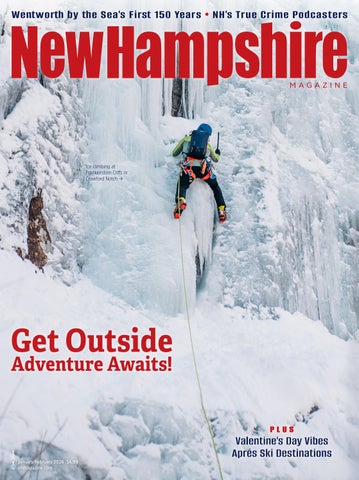
Ice climbing at Frankenstein Cliffs in Crawford Notch →














Finding a home at Taylor means more than access to a stunning new cottage or apartment – it means receiving the keys to present and future peace of mind.
Taylor Community is located in the beautiful Lakes Region of New Hampshire with campus locations in Laconia, Wolfeboro, and Meredith. Whether you prefer an active lifestyle lled with tness classes and an extensive lineup of social and recreational opportunities, or would rather enjoy a ne dining experience with friends after a day spent by the lake... Taylor is the place for you!






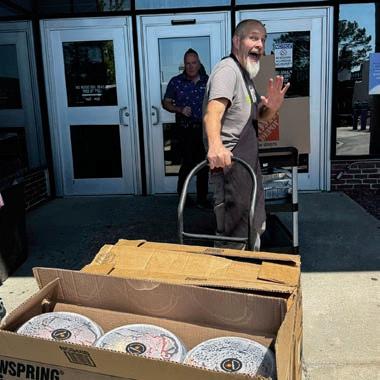
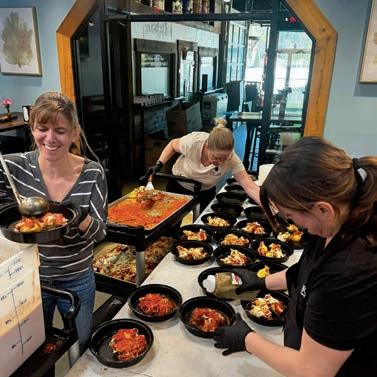
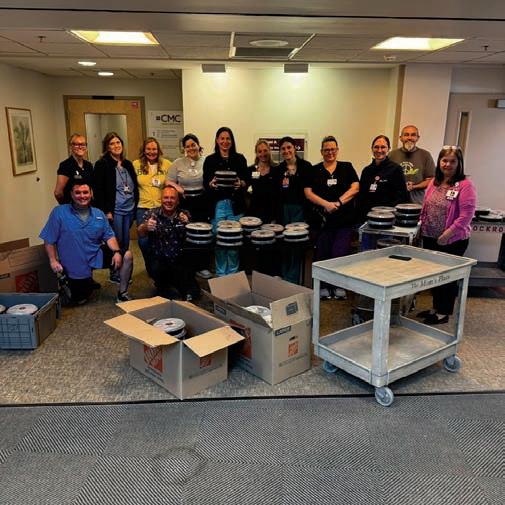
While millions of us gather with family and friends to share a holiday meal, many others sacrifice time with their loved ones to heal and help the most vulnerable. And others in our community find few reasons to celebrate as they struggle to feed themselves.
For the fifth year, Meals of Thanks will provide thousands of dinners prepared by New England’s Tap House Grille to essential workers and food-insecure residents. Sponsorship from Harvard Pilgrim Health Care, Northeast Delta Dental, CGI Business Solutions, and our generous advertisers, allows our whole community to enjoy a full holiday meal.
Meals of Thanks will support:
· The Way Home

· Manchester VA Medical Center
· Formerly homeless veterans in southern NH

· New Hampshire Food Bank
· Nursing staff at area hospitals in honor of National Nurses Week during May
Thank you to our sponsors and advertisers for supporting New Hampshire Magazine and this mission. Together we are Granite State strong!
Sponsored by:




CARING FOR OUR COMMUNITIES AND MEMBERS, BIG AND SMALL.

Principal Sponsors:



6 Editor’s Note
6 Contributors
FEATURES
52 Adventure Awaits
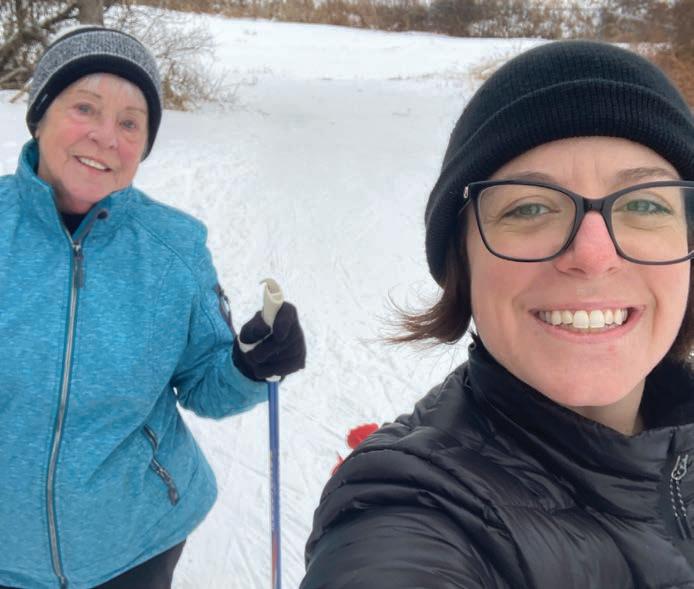
Grab some cross-country skis, a fat tire bike or a pair of snowshoes to enjoy winter at your own pace. Take a hike. Climb an ice wall. Just get outside!
By Jill Armstrong
62 Murder Most Heard
True crimes in New Hampshire have fueled popular podcasts — hunker down and listen in.
By Lara Bricker
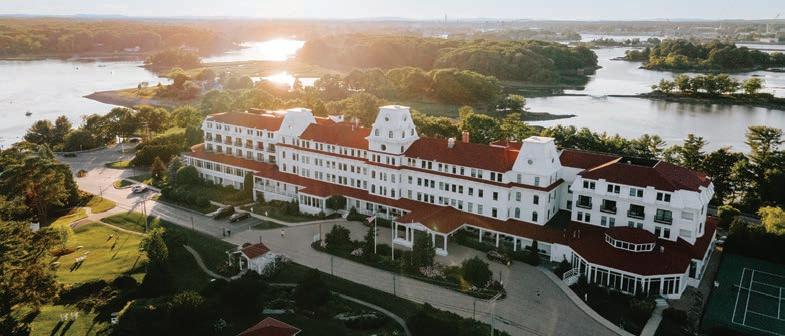
70 Wentworth by the Sea Wentworth by the Sea hotel in New Castle has had many lives over the course of its existence, but more than anything, it's a survivor.
By J. Dennis Robinson
12 The Big Picture Locomotive 4266 is a winter staple of the Conway Scenic Railroad in North Conway.
Photo by Russell Jones
14 Our Town
The town whose state college grew into a university could soon see more big changes.
By John Koziol
20 Savor
Fill your aprés ski cravings at these four restaurants covering classic resort areas.
By Kara McGrath
28 Community 'Library of things' collections let patrons borrow toys, games, tools, outdoor gear and more.
By Megan Rogers
34 Q&A
Podcast and public radio veteran Laura Knoy merges fact with fiction in debut novel
By Emily Reily
36 What Do You Know?
The Legend of Jigger Johnson
By Marshall Hudson


86 Living
Put a new twist on the classic traditions of this lovers’ holiday — using a few NH favorites
By Alexis Lindley-DeAngelis
90 Out and About Calendar of events
Compiled by Elisa Gonzales Verdi
94 Healthwise
New Hampshire sees an infusion of IV vitamin therapy clinics By Krysten Godfrey Maddocks
96 Live Free
A Little Trouble is Good for You

By Jill Armstrong
SPECIAL ADVERTISING SECTIONS
38 Independent School Guide
48 Heart Health
80 Ask the Experts

Small-Home Assisted Living and Memory Support

Discover a community designed for connection.
If someone you love is becoming socially isolated due to physical limitations or cognitive decline, small-home assisted living and memory support at Orchard Inn o ers an intimate environment where they can nd purpose, joy and friendship.
Speci cally designed to support connection and foster engagement, our four households accommodate just 10 residents each.
With no long hallways to navigate, your loved one need only step outside their spacious private suite to dine with neighbors, participate in programs, socialize around the replace or kitchen, enjoy fresh air on the outdoor terrace, or even receive physical therapy. Everything is within easy reach — including a newfound sense of belonging.
To learn why social connection is vital for your loved one’s well-being, read our blog post, “Loneliness and social isolation present health risks.”
Scan the QR Code or go to TheBaldwinNH.org/Blog


IN EARLY DECEMBER, the first storm of the season blanketed New Hampshire with fresh snow, prompting cheers from skiers pining to hit the slopes and jeers from anyone who has to shovel their own driveway. I cheered. I jeered.
When I moved back to New Hampshire a decade ago from Colorado, I worried about how I would handle winter’s short days and long nights. I must have learned something while I was away. Every season in New Hampshire has its charms. You just need to embrace them to cut through the darkness.
By the time you read this, I hope to have hit the slopes several times. And while my wife and I like to pack our own lunch when we go skiing, we also like to indulge in some après ski fun. Kara McGrath spotlights some of the Granite State’s best places to satisfy those cravings at four resort areas (page 20).
You don’t need to be a ski bum to appreciate great food and libations. Just add “après” to whatever winter activity gets your heart pumping. Jill Armstrong offers a primer on outdoor recreation with tips on cross-country skiing, snowshoeing, hiking and riding fat tire bikes (page 52). She also shares a heartwarming story about Nordic skiing with her grandmother (page 96).
Want to try some new outdoor activity, but don’t have the gear? You might be able to rent it for free. Many libraries in New Hampshire have curated “library of things” collections where you can check out snowshoes and backpacks, among other useful items, Megan Rogers reports (page 28).
If you prefer to huddle indoors, wrap yourself in a comfy blanket and binge a true crime podcast. Lara Bicker, a true crime author and licensed private investigator, takes you on a tour of New Hampshire crimes that have inspired popular podcasts (page 62).
You could also curl up with a good book. Laura Knoy, best known for the 25 years she hosted New Hampshire Public Radio’s “The Exchange,” recently debuted as a novelist with “The Shopkeeper of Alsace,” a tale based on the true story of a Jewish family’s fight for safety during WWII. Assistant Editor Emily Reily talks with Knoy for this month’s “In Their Own Words” (page 34).
If history is your jam, check out J. Dennis Robinson’s chronicle of Wentworth by the Sea, the grand New Hampshire hotel that opened in 1874 (page 70). It’s a tale laced with luxury, intrigue and international politics, of fortunes won and fortunes lost.
‘Gettin’ Jigger wit it’
Marshall Hudson’s latest “What Do You Know?” entry recounts the tale of Jigger Johnson, the New Hampshire lumberjack, river log driver, trapper and fire warden for the U.S. Forest Service. Johnson’s life story is peppered with tall tales.(page 36).
Plymouth rocks
New Hampshire’s college-turn-university town is conveniently located off Interstate 93 along the route to many of the state’s ski areas, making it an “après” ski village, if you don’t mind driving back home a bit first or you just did some turns at Tenney Mountain. John Koziol visits Plymouth for this month’s “Our Town,” recalling its small-town roots and hinting at big things to come.
Save me a seat at Biederman’s. I can beat the winter blues with a beer and a giant sandwich. I might even kiss the moose.






Vice President/Publisher Ernesto Burden 603-624-1442 x5117 ernestob@yankeepub.com
Editor Mike Cote 603-624-1442 x5141 mikecote@yankeepub.com
Managing Editor Emily Heidt 603-624-1442 x5115 eheidt@nhmagazine.com
Managing Editor, Sarah Pearson 603-624-1442 x5128
Custom Publications sarahekp@yankeepub.com
Assistant Editor Elisa Gonzales Verdi 603-624-1442 x5010 egonzalesverdi@nhmagazine.com
Assistant Editor Emily Reily 603-624-1442 x5119 emilyr@yankeepub.com
Art Director John R. Goodwin 603-624-1442 x5131 johng@yankeepub.com
Creative Services Director Jodie Hall 603-624-1442 x5122 jodieh@yankeepub.com
Graphic Designer Christian Seyster 603-624-1442 x5116 christians@yankeepub.com
Senior Graphic Nicole Huot 603-624-1442 x5116
Production Artist nicoleh@yankeepub.com
Director of Business Jenna Pelech 603-624-1442 x5154 Development jennap@yankeepub.com
Sales Executives Josh Auger 603-624-1442 x5144 jauger@nhmagazine.com
Jessica Schooley 603-624-1442 x5143 jessicas@yankeepub.com
Connie McCullion 603-624-1442 x5000 conniemc@yankeepub.com
Operations Director Ren Chase 603-624-1442 x5114 renc@yankeepub.com
Sales & Events Coordinator Paul Milone 603-624-1442 x5121 paulm@yankeepub.com
Digital Operations Morgen Connor 603-624-1442 x5149 and Marketing Manager morgenc@yankeepub.com
Information Manager Gail Bleakley 603-563-8111 x113 gailb@yankeepub.com
Assistant Controller Nancy Pfuntner 603-563-8111 x138 nancyp@yankeepub.com
VP/Consumer Marketing Brook Holmberg brookh@yankeepub.com
VP/Retail Sales Sherin Pierce sherinp@yankeepub.com
250 Commercial Street, Suite 4014 Manchester, NH 03101
603-624-1442, fax 603-624-1310
E-mail: editor@nhmagazine.com
Advertising: sales@nhmagazine.com
Subscription information: Subscribe online at: nhmagazine.com or email customerservice@nhmagazine.com
To order by phone call: 877-494-2036
© 2025 Yankee Publishing, Inc.
New Hampshire Magazine® is published by Yankee Publishing, Inc., 250 Commercial Street, Suite 4014, Manchester, NH 03101, 603-624-1442. All rights reserved. Reproduction in whole or in part without the written permission of the publisher is prohibited. The publisher assumes no responsibility for any mistakes in advertisements or editorial. Statements/ opinions expressed herein do not necessarily reflect or represent those of this publication or its officers. While every effort has been made to ensure the accuracy of the information contained in this publication, Yankee Publishing, Inc.: New Hampshire Magazine disclaims all responsibility for omissions and errors. New Hampshire Magazine is published monthly, with the exception of February and April.
USPS permit number 022-604. Periodical postage paid at Manchester 03103-9651. Postmaster send address changes to: New Hampshire Magazine, P.O. Box 37900, Boone, IA 50037-0900

PRINTED IN NEW






Send letters to Editor Mike Cote, New Hampshire Magazine, 250 Commercial St., Suite 4014, Manchester, NH 03101, or email him at editor@nhmagazine.com.

OVER 140 New England wedding professionals came together Nov. 18 for a sold-out end of year celebration at The Hawthorn in Portsmouth, as hosted by our sister publication, NH Magazine's BRIDE. The evening was filled with connection and celebration with friends new and old. We're so excited to see more opportunities like it to come about in the future through budding collaborative groups like The Granite State Network. Stay tuned.
Thank You to our Participating Sponsors: The Hawthorn • Brittany S Events • Nectar & Vessel Erica Warren Photography • AMR Design Studio PEAK Event Services • The White Apron Free Spirits Mobile Bar • Caroline Carleton Socials Beauty by Jill Tilton • Bright Set Entertainment Paige Lindsey Design • Magic Mirror of NE Ellie and Piper • Three Sisters Cake Shop Premier Lighting of New England • Espresso Dave CG Boards Co. •Candle Man Lux • Quino Home Waffle and Sugar • Reverie Social
Spot FOUR newts like the one here, hidden on ads in this issue, tell us where you found them and you might win a gift certificate for $50 to use at The Common Man Restaurants. Each month’s gift card will be different, which adds to the overall Newt fun. Let the hunt begin!










To enter our drawing for Spot the Newt, visit spotthenewt.com and fill out the online form. Or, send answers plus your name, email address and mailing address to:
Spot the Newt c/o New Hampshire Magazine 250 Commercial St., Suite 4014 Manchester, NH 03101
You can also email them to newt@nhmagazine.com.
Last month’s “Spot the Newt” winner is Lisa Thorn of Manchester. December issue newts were on pages 5, 6, 97 and 100.


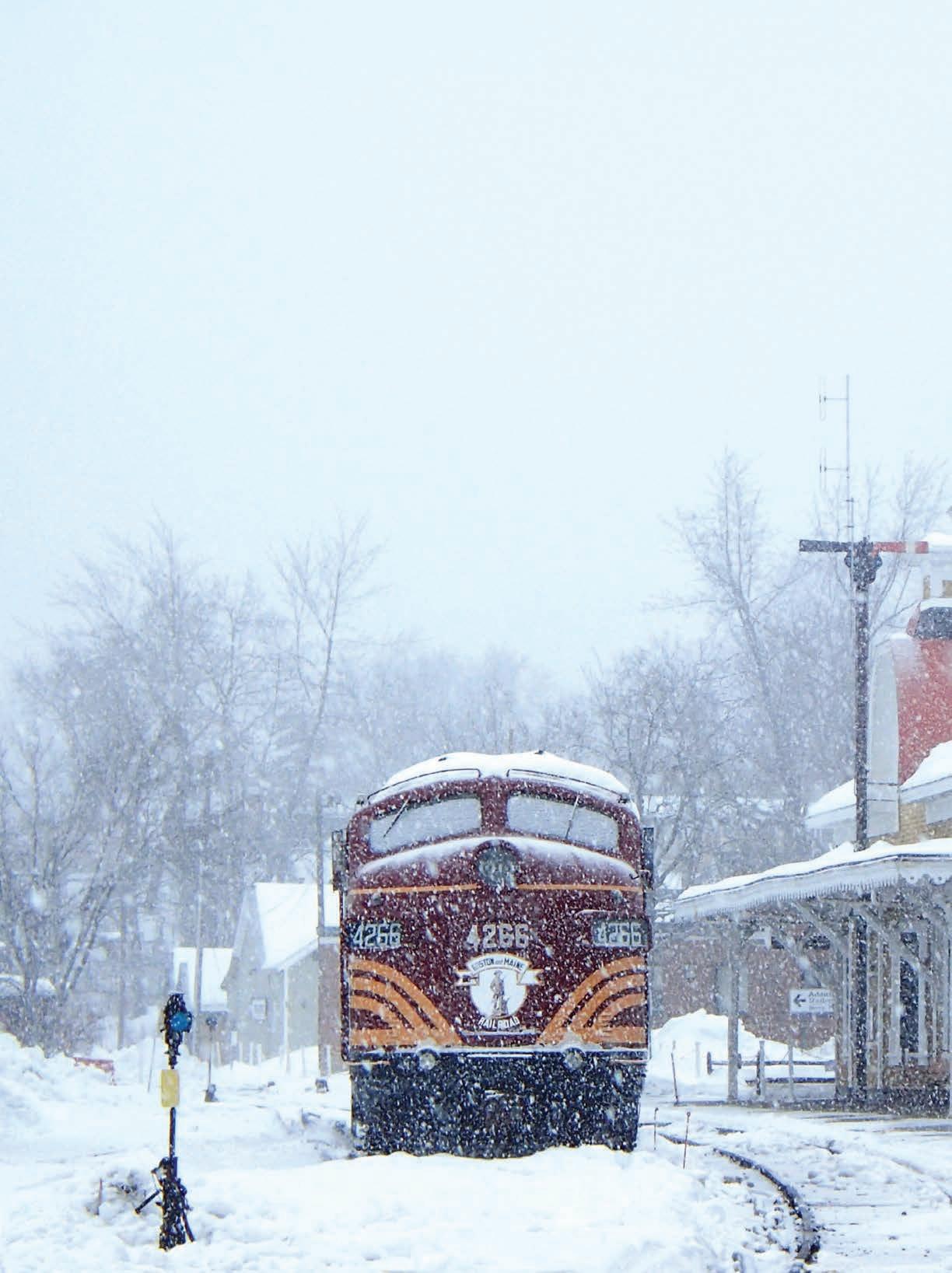
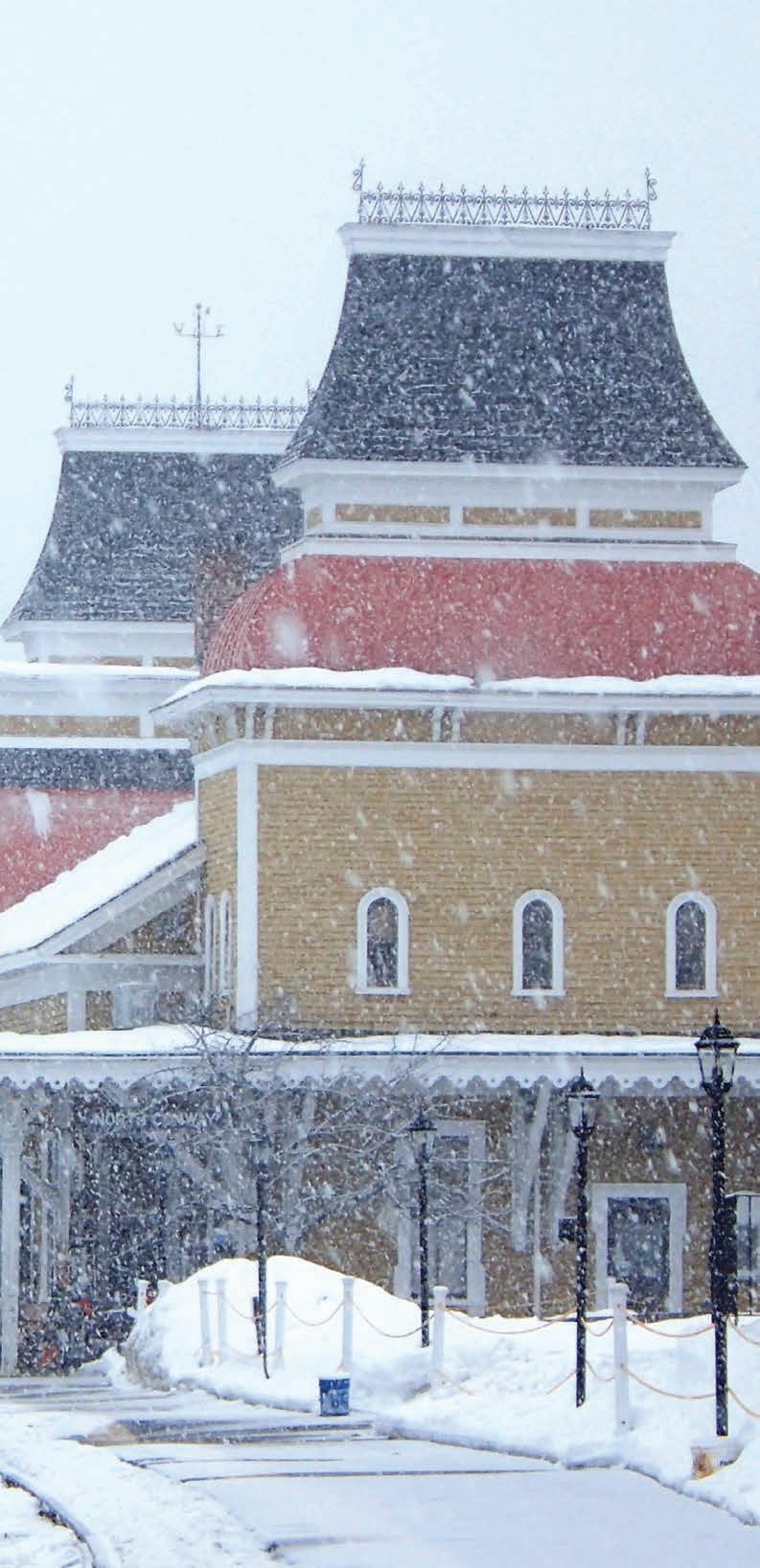
“I’m a railroad enthusiast as well as a model railroader who enjoys vacations in North Conway as a skier in the winter months and as a hiker in the summer. North Conway Village becomes magical under a layer of light snow.
Pictured is Boston and Maine Locomotive 4266, a fully restored EMD F7 unit built by the Electromotive Division (EMD) of General Motors in 1949. The F7 line was a popular diesel engine used in both freight and passenger service.
Locomotive 4266 is currently owned by the 470 Railroad Club (based in Portland, Maine) and is operated by the Conway Scenic Railroad for use in scenic excursions through the White Mountains.
Locomotive 4266 is pictured with the iconic B&M Minuteman logo painted on its nose as it sits parked behind the fully restored B&M Railroad station (built in 1874 and current home of the Conway Scenic Railroad).”
PHOTO BY RUSSELL JONES
The
into a
STORY & PHOTOS BY JOHN KOZIOL / ILLUSTRATION BY PETER NOONAN
Plymouth, the town, and Plymouth State University, the institution of higher learning, are both famous for many reasons.
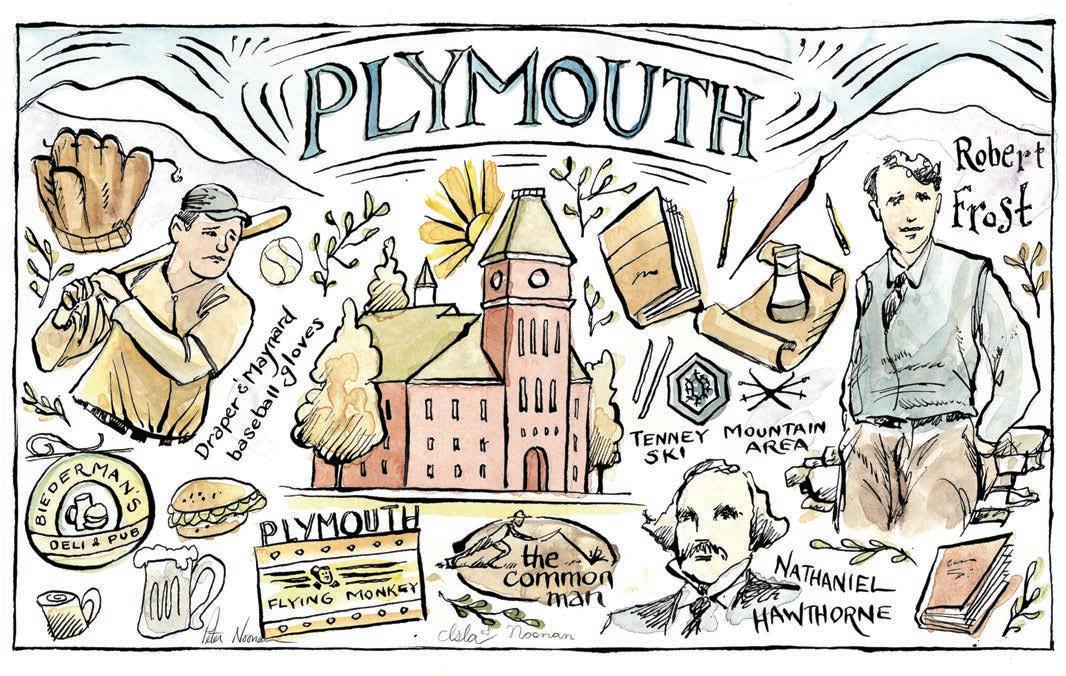
The former, incorporated in 1763, is the place where novelist Nathaniel Hawthorne died and where a Red Sox standout named Babe Ruth acquired his baseball equipment. The latter is where poet Robert Frost taught and is the alma mater of Ray Burton, the longest-serving executive councilor in New Hampshire history.
In 1871, Plymouth became the home of the Plymouth Normal School, the first teacher’s college in the state and the precursor of Plymouth State College. The school, which became Plymouth State University in 2003, also has a tinge of the notorious. It was twice a Playboy magazine party school (1987 and 2010) and the place where decades ago, stu-
dents at the end of the school year would place their old furniture in the street and set it on fire.
The town has outgrown the shenanigans of flaming student furniture and could become the Northeast’s version of Chapel Hill, N.C., a community celebrated for its concentration of creativity, education, high tech and research facilities.
That effort, which is a long-term project still in the conceptual phases, is being spearheaded by Steven Kelly, the owner and CEO of Timberline Construction Corp., Timberline Communications Inc. and Tenney Mountain Resort, which is located in west Plymouth.
To date, Kelly said he has put “well over $20 million into the mountain,” which he wants to transform from just a ski area into a four-season destination, complete with
hotel and conference center. He also wants to build a technology park, sports academies and housing there.
He anticipates that the technology park will create up to 1,500 jobs directly and 400 jobs in the hospitality industry, which would undoubtedly further benefit the Common Man family of restaurants, which already enjoys a high profile in Plymouth.
“If you build an amenity-rich environment” in Plymouth, people will come, said Kelly, who sees Plymouth State as being a “good reason for why a tech campus could do really good there.”
Sean Brown, The Common Man’s chief operating officer, has worked for the company since 1995 when he was a student at Plymouth State. He said the town “makes sense” for The Common Man, which has multiple venues there: four restaurants, the Flying Monkey movie and performing arts center; and The Common Man Inn and two annexes. In total, he said there are 17 Common Man venues statewide, from Windham to Lincoln, most along the Interstate 93 corridor.
Plymouth is just one town over from Ashland,
bronze
where The Common Man was founded by Alex Ray and is headquartered. “It really is a gateway to the White Mountains,” Brown said, with The Common Man restaurants and hotels in Plymouth serving people going up to the White Mountains and/or coming back from them.
He summed up that Plymouth “is also a great location,” although he acknowledged that high housing costs make it challenging for The Common Man to hire and retain employees.
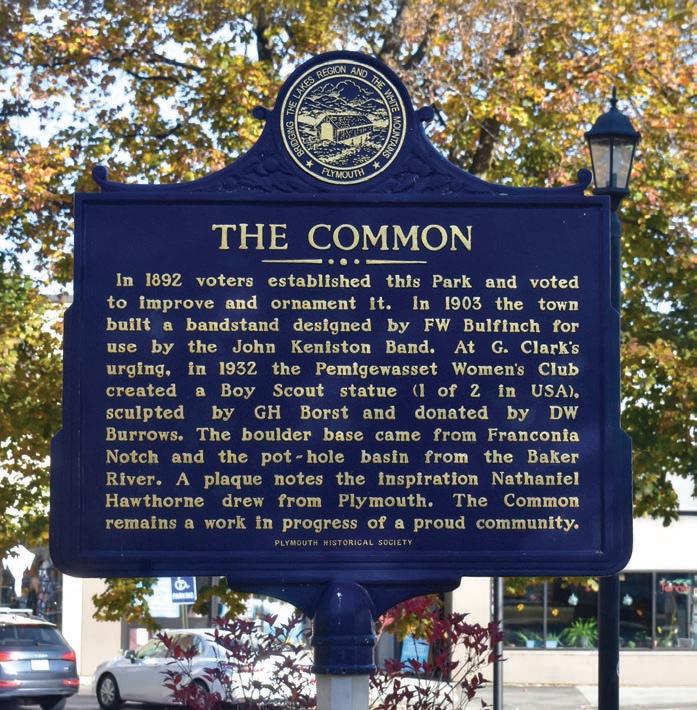
Less than a mile long, Plymouth’s downtown is eminently walkable and a fun place to explore on foot. The downtown is centered by The Common, and a plaque there announces that The Common remains “a work in progress of a proud community.”
An attractive place to enjoy an al fresco meal, The Common, which includes a bandstand and tables and benches, is also a great place to simply watch the world go by.
A stone’s throw away is the Museum of the
White Mountains, which, according to its website, “explores the region’s past, present, and future through high-quality exhibitions, interdisciplinary educational programming, and stewardship of our collections.”
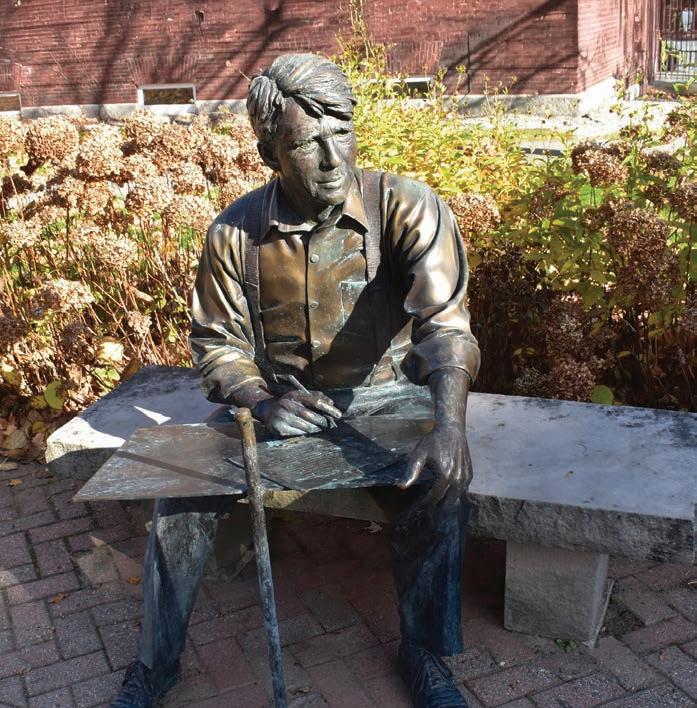
A short distance from the museum, outside Rounds Hall on the Plymouth State campus, is a bronze statue of poet Robert Frost, who taught briefly at Plymouth State, working on a draft of “The Road Not Taken.”
The Plymouth Historical Museum & Memory House, right next to Town Hall, is where Daniel Webster first practiced law before going on to earn national prominence.
Below Main Street, there is an amphitheater on the west bank of the Pemigewasset River, which separates Holderness and Plymouth, and there is a concrete skate park at the southern end of the road, which is also known as U.S. Route 3A.
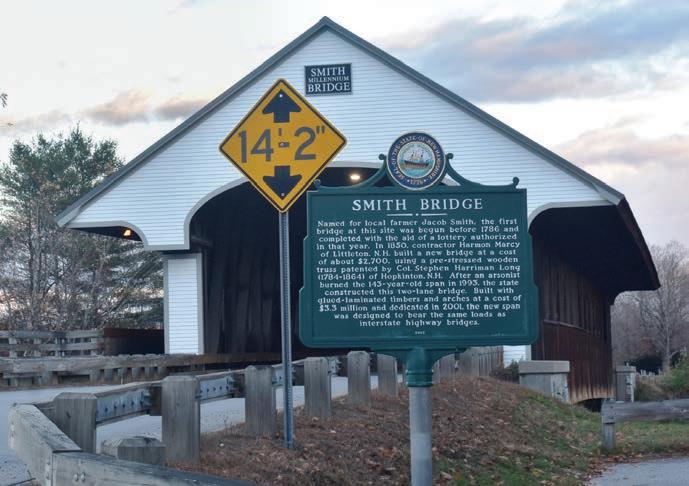
Off Tenney Mountain Highway, which is where several big-box stores and franchise eateries are located, is the Smith Millennium Bridge. Spanning the Baker River, the bridge is both attractive and, given its size, solidly imposing.
The legacy of Biederman’s Ben Crosby, who since 2022 has owned and operated Biederman’s Deli & Pub with Zac
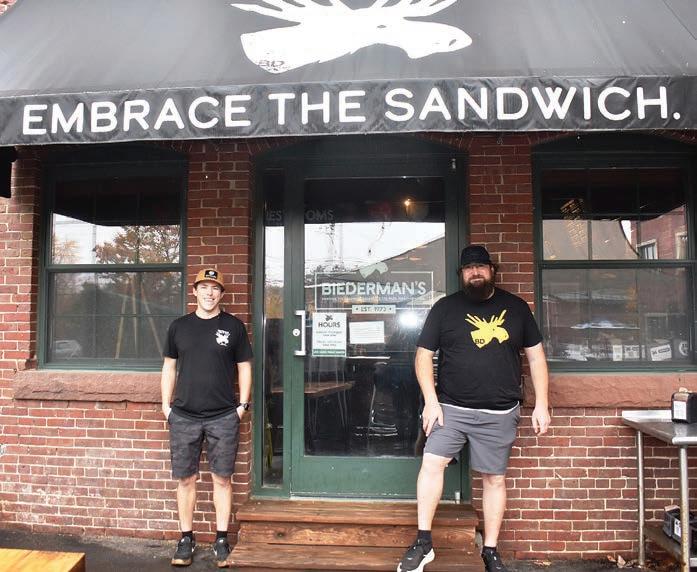
Penn, said there is no place he’d rather be.
Both Crosby and Penn are PSU alumni who previously worked at Biederman’s; later, each worked for a statewide beverage distributor.
The new owners never considered changing the name, but they added a patio out back, and boosted the number of beers on tap to 20, “focused on local,” Crosby said.
He said Biederman’s cellar-like location in the basement of the Rollins Building downtown is a powerful attractant — so powerful that it should expand. The downside of doing so, however, is that there is no room in the existing space to grow. He worries about not being able to recreate the vibe at a different location.
He remembers that when he was the general manager at Biederman’s, there was a conspicuous change in the volume of summer business. There were metaphorical tumble weeds blowing up Main Street then, he recalled, but none now: Biederman’s is busy year-round.
“We’re in the bosom of the White Mountains and the Lakes Region,” Crosby said with noticeable pride, adding that the reasons for Biederman’s success have remained a constant in the form of its beers, sandwiches, and welcoming feel as a “hang bar.” The place is decorated with classic beer trays and rock ‘n’ roll albums; a montage of the music is played regularly.
Biederman’s is delighted to be part of a
vibrant community, said Crosby, adding that “It is a great spot to be. There’s just a lot of things going on. We have restaurants and art galleries and there’s a lot of stuff for families
to do.”
Louise (nee Samaha) McCormack said downtown Plymouth remains the kind of place where chances are good that you will see a friend or neighbor.
A Plymouth native, McCormack grew up on Main Street where her family has run a convenience store since at least 1917.
She earned an undergraduate degree from Plymouth State; a master’s from Ohio State; and a doctorate in education from Boston University before returning to Plymouth, where she taught in the math and physical education programs at Plymouth State for 36 years before her retirement in 2016.
Its former vice president, she is now a member of the board of directors of the Plymouth Historical Society and one of her hometown’s most ardent supporters.
McCormack pointed out that while the Massachusetts Institute of Technology is well known for the surreptitious placement of objects atop the rounded roof of one of its buildings, Plymouth State’s tradition of putting pumpkins atop Rounds Hall annually is even older.













She noted that Plymouth also has the distinction of being where, at the former Draper & Maynard Sporting Goods Co., “the first baseball glove … the first padded baseball glove in the U. S.” was produced, a fact that in 1916 drew Babe Ruth and his teammates up for a visit.
“This is a friendly town. We love where we live,” said McCormack, who sees the town and Plymouth State as being inseparably linked.
Rodney Ekstrom, Plymouth State’s director of development and alumni relations, concurred with McCormack’s sentiment.
Plymouth State’s legacy of preparing “educators for New Hampshire’s classrooms,” endures to the present, he said in an e-mail, even though Plymouth State has undergone several name changes since its founding, including as Plymouth Teachers College (1939), Plymouth State College (1963), and since 2003, as Plymouth State University.
“Today, PSU offers a wide range of programs — from traditional disciplines to cutting-edge fields like robotics, cybersecurity, and game design — alongside accelerated 96-credit, three-year degrees designed for affordability and efficiency,” Ekstrom said.
37 Annual Cornerstone Awards Gala th FOR EXCELLENCE IN RESIDENTIAL HOME BUILDING ALONG WITH THE INDUCTION OF THE 2026 NHHBA OFFICERS
TUESDAY, JANUARY 27, 2026
COCKTAILS: 4:30PM
DINNER AND PROGRAM: PROMPTLY AT 6:00PM GRAPPONE CONFERENCE CENTER, CONCORD, NH
THERE ARE 35+ CATEGORIES RANGING FROM HOME OF THE YEAR TO LANDSCAPING TO SPECIALTY ROOMS. SPECIAL CATEGORIES FOR GREEN BUILDING AND ENERGY EFFICIENT HOMES. OVER 300 OF THE BEST BUILDER MEMBERS IN NH PARTICIPATED IN 2025. YOU DO NOT NEED TO BE A MEMBER OF NHHBA TO PARTICIPATE/ENTER.
Melanie Nelson, a 1997 graduate of Plymouth State College with a bachelor’s degree in travel-tourism marketing, earned a master’s degree in education from Plymouth State University in 2007 and now resides in Bend, Oregon. Nelson is an educator in that community.
Born and raised in Nashua, Nelson said that as she readied to continue her education after Nashua High School, her late father, Richard, informed her that she had three choices as to where she should apply.
“My dad said you could go ‘instate, instate or instate,’ ” said Nelson, meaning that he would pay for her to attend either Keene State College, the University of New Hampshire or Plymouth State.
After reviewing her options, Nelson settled on Plymouth State.
“I really love the town of Plymouth. It’s a beautiful town, and I absolutely loved it,” she said.
“During fall foliage, you didn’t have to worry about peak season and trying to catch it just right. You just stepped out the door.” NH





BY KARA MCGRATH
The only thing better than skiing through a fresh coat of powder on a clear, sunny day is making your way to the après ski spot for a hot meal and a tasty drink. Whether you’re looking to warm up with a bowl of Thai noodles, chow down on a hearty dish of steak and potatoes, or sip on a creative cocktail, these four restaurants are great places to hit after you’re done with the slopes.
Near Gunstock Mountain: Junction Restaurant & Provisions
51 Elm St., Laconia
Skiers coming off Gunstock Mountain can warm up, quite literally, with a flaming cocktail at Junction Restaurant & Provisions.
“Around this area, there aren’t too many craft cocktail places,” says owner Terrence Burney. “We spend a little extra time doing some of our cocktails, but I think people
that come here and try them understand why we do that.”
The presentation is flashy and often involves live flames: The Ember Margarita is lit on fire before it’s brought to the customer; the Inflated Manhattan comes with a fake $100 bill on top that also gets a tableside burning.


Burney grew up on Sanibel Island, Florida, and started working in restaurants when he was 13. After a brief stint in college, he got back into the dining game as a corporate trainer, opening up new locations of a chain restaurant across the country, which he says helped him become efficient at the backend parts of running a restaurant.
After opening his own restaurants in

Florida, he made a COVID-inspired move up to New Hampshire. Junction Restaurant opened in the summer of 2025.
“I wanted to do something a little different from the norm for this area,” Burney says of Junction’s food menu. “You don’t really see a lot of Southern takes on (food) up here.”
He says about 50 percent of the menu has a Southern spin. Seafood etouffee, a New
Orleans stew, was a huge hit over the summer, as was the wild boar ragu.
The lobster popeye is also popular, though it goes off the menu in the winter since lobster prices skyrocket. Duck poutine isn’t necessarily Southern but sells quite well — it would be a nice way to carbo-load after a day on the slopes. A new winter menu features pimento cheese dip and a shrimp
and grits dish with a deep-fried great cake.
In addition to the sit-down restaurant, Junction has a small market with prepared meals and provisions from local vendors for sale. If skiers don’t have time to have a full meal, they can grab a beer and a meal to go. It’s also a good place to stop avant ski: They make breakfast sandwiches from 8 a.m. to noon every day.
Near Cannon Mountain: Chang Thai Cafe
77 Main St., Littleton
Thailand native Emshika Alberini moved to New York in the early 2000s to attend graduate school for organizational management.
While she was studying in Albany, her sister, Sriwipha Phathan, was working as a chef in Englewood, New Jersey. The two planned to open a restaurant together, but then Phathan died suddenly, leaving Alberini to spearhead the endeavor. “I never said, ‘I’m going to be a chef,’ but (my sister’s) tragic accident drove me to accomplish this, not knowing if I can do it,” Alberini says. “But I did it anyway, with my mom on my side.”
Chang Thai opened in 2008, the first Thai restaurant on Main Street in Littleton. Alberini says she avoids words like “authentic” or “traditional” to describe the menu, because there is no one “authentic” way to make Thai food. “There’s so much variation in Thailand,” she says. “Pad Thai can be, like, 15 versions in different regions.” Instead, she says the food she serves is contemporary, a mix between tradition-
al, authentic and modern techniques.
Alberini’s mom, who goes by Mama Nee, is the sous chef and director of kitchen operations at Chang Thai.
“She doesn’t speak English,” Alberini says. “However, she can read all the tickets in the restaurant, and we have over 100 items (on the menu.) I don’t know how she learned to do that. She’s a very talented woman. She has a cooking skill that has a lot of rich history.”
Alberini has learned from her, both by following her recipes and just watching her cook. “My mom taught me to go with the flavor,” Alberini says of her inherited cooking techniques. “Don’t go by measurement, go with the flavor. We taste (the food) and say, ‘Oh, this is what is good.’ ”
Alberini says people often come to the restaurant after a ski day to “get comfort food, to warm their bellies up” with meals made in a way Alberini says you can’t find anywhere else. One popular winter dish is the traditional Thai-style noodles in a “very spicy” Tom Yum broth. Alberini

also shouts out the Tamarind Duck, which simmers for an hour in a base Mama Nee makes from scratch. The Curry Steak also is her mom’s twist on a traditional Thai dish.
“My mom will marinate it with chili paste for 24 hours at least. Then we make curry
BY

paste and we put that on top of (the steak),” Alberini says. “Usually, this curry paste goes with a seafood … but we feel like they go well together.”
Alberini is determined to stay fresh despite being a local staple for 18 years. “You
can’t be the same. Every year is different. There’s a learning curve every single year.”
One way they’ve grown is by incorporating more local ingredients when they can.
“I don’t call us ‘farm to table’ ... but I’m part of helping local farms by using their ingre-
dients seasonally based on what’s available that month,” Alberini says. Being an active member of the local community is crucial to success. “It’s not a trend to become part of the community,” she says. “Our little town is small, but its quality is big. Come visit us!”
Near Loon Mountain: Gordi’s Fish & Steak House
260 Main St. at the Depot, Kancamagus Highway, Lincoln
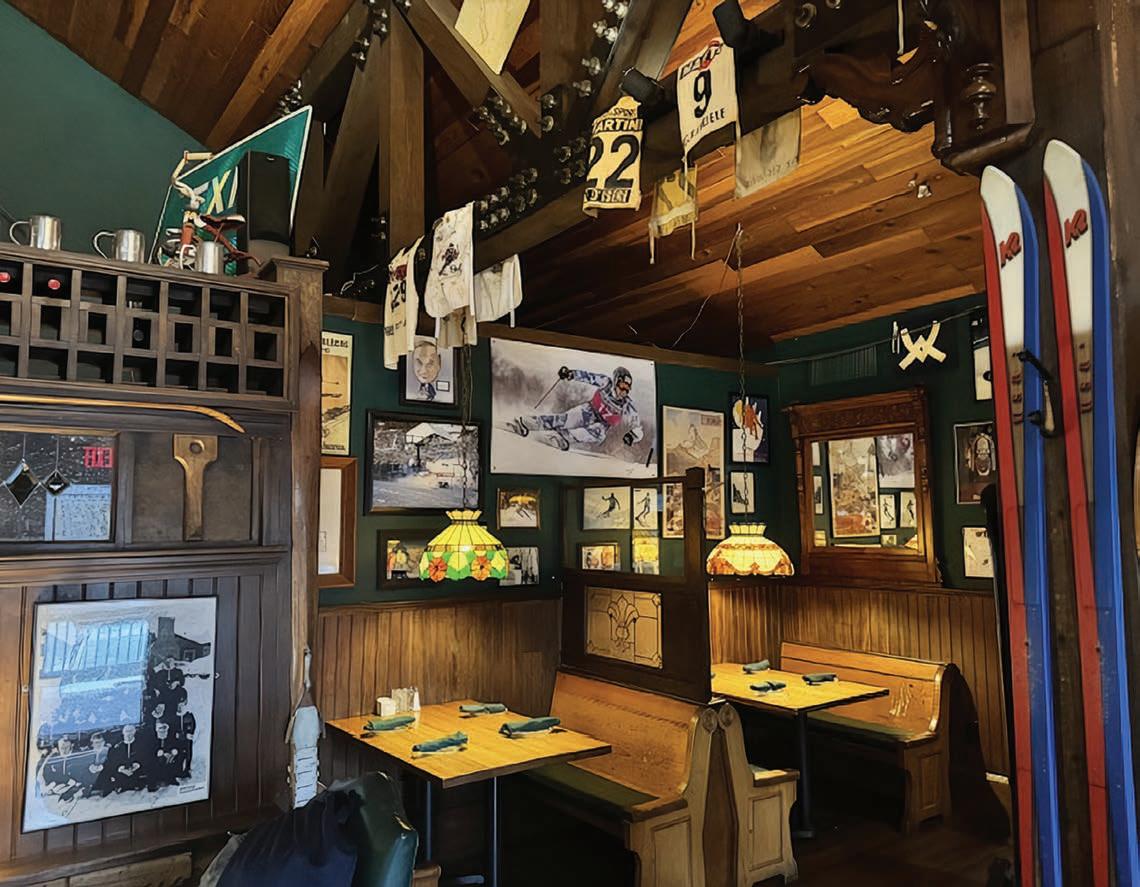
Ever since Gordi’s Fish & Steak House opened in 1986, it’s been a tribute to the ski community. Two of the four founders were Olympic skiers themselves: Gordi Eaton was on the 1960 and 1964 Olympic ski teams; and Karen Budge Eaton was on the 1968 and 1972 Olympic teams.
These days, 40 years’ worth of memorabilia — like a signed photo of American World Cup alpine ski racer River Radamus, whose mom the Eatons used to coach — plasters the walls.
The Eatons may have brought the ski connection, but it’s Irene “Muffy” Copenhaver who’s “the real brains behind the operation,” according to the restaurant’s general manager, Bob Shaw. Muffy’s husband, a different Bob, grew up with Gordi in Littleton; eventually, they decided to go into the restaurant
business together, with Muffy as their foodie guide.
Shaw has been there for 35 of the restaurant’s 40 years. He says that although the menu has changed slightly over the past 40 years, Gordi’s has been “steak and seafood from day one.”
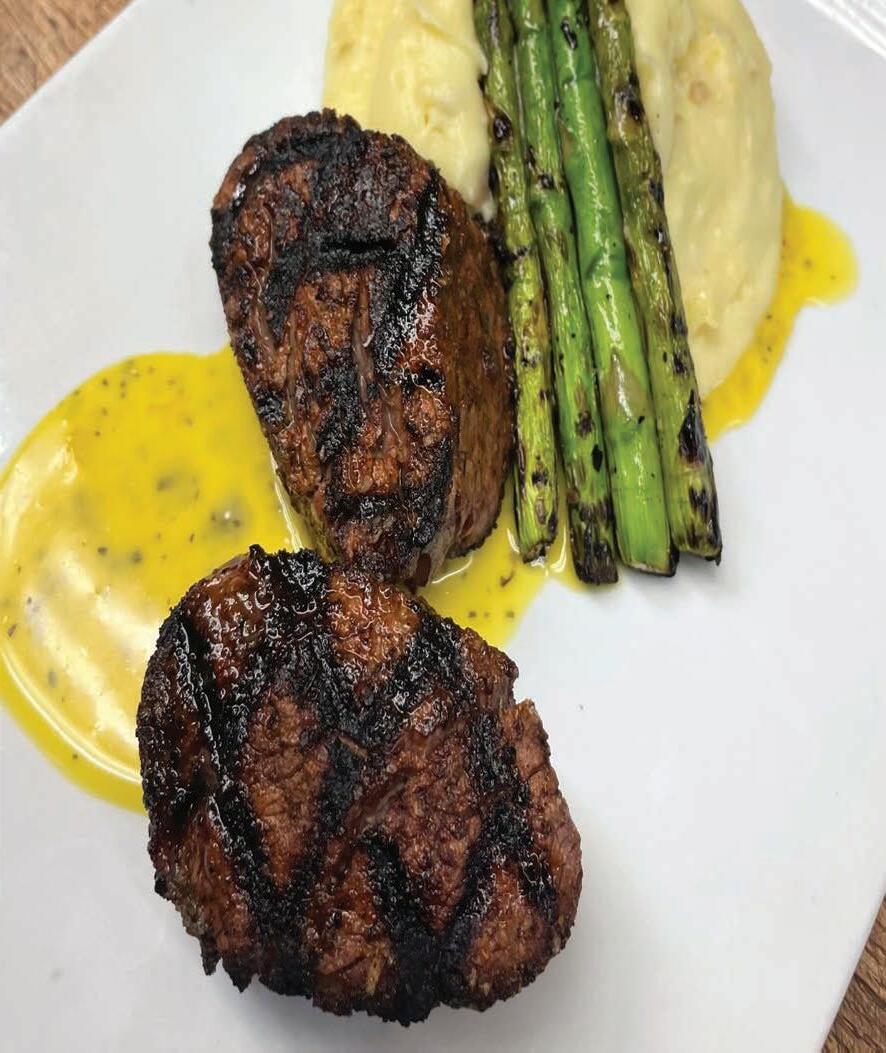
“We have everything from filets and ribeyes to salmon and scallops and a lot of fried seafood,” he says. “We also have a lot of chicken dishes and some burgers and sandwiches.”
One of the staples is the clam chowder, Muffy’s recipe “that we’re not allowed to tinker with at all.” While he won’t share the full secret recipe, Shaw says that what sets it apart is that it’s made without any flour. This makes it a lighter appetizer, and great for people seeking gluten-free options.
As soon as Loon Mountain’s season starts,
Gordi’s offers après ski specials in the bar area: half-price appetizers and a discounted draft beer every day from when they open until 5:30 p.m. For the main course, popular dishes include Gordi’s bleu cheese filet mignon (topped with spicy walnuts, bleu cheese and a lemon demi-glace), the grilled Atlantic salmon (topped with a maple horseradish glaze made from Fadden’s General Store’s award-winning syrup), the chicken “Gordon” blue (sauteed chicken breasts topped with ham, melted Swiss and a cheesy mornay sauce), and many surf-and-turf combos.
In other words: Gordi’s makes food that’ll stick to your ribs. “We’re not your micro pub with your fancy 2-ounce appetizer that costs you 30 bucks,” Shaw says with a chuckle.
“You’re going to be full when you leave.”
Near Mount Sunapee: Suna
6 Brook Road, Sunapee
Suna is the newest of the five New Hampshire restaurants that make up Magic Foods Restaurant Group. Scott Ouellette, who co-owns Magic Foods along with Andy Juhasz, started his cooking career as a chef in Atlanta. “I migrated back home just after the ’96 Olympics down there,” he says. “I was a chef for the Australian Olympic team.”
Ouellette doesn’t consider Magic Foods a chain, but there are some similarities between the restaurants. “We’ve been very fortunate to have a good following, which we attribute to all of our employees, our chefs and our managers,” he says. “(Customers) trust they’re going to get the same quality and service at all the locations.” They can also get some of the same favorite dishes, like the lobster mac and cheese, the Thai-style
calamari, USDA Prime New York strip steaks, and the warm blue cheese chips appetizer, at all locations.
Where each restaurant sets itself apart is in the specials menu, and Suna has become the location where diners can get a taste of proteins they’ve likely never tried before. Chef Kevin Bedard loves to experiment with unexpected game meat: alligator, antelope, camel and kangaroo have all been on the menu, along with more regionally familiar venison and rabbit.
These meats provide a fun challenge for Bedard as he figures out how best to prepare them. Kangaroo, which Bedard says tastes like a less-gamey venison, has been served as fajita, “on a sizzle platter and everything.” He usually makes alligator into fritters or stew since it can be a bit tough. With camel,
he makes sliders topped with a pineapple salsa. While these animals certainly aren’t local to New England, Bedard says they source from U.S. farms that raise them.
“People say, ‘I can’t believe I can come to northern New Hampshire and get something this good,’ ” he says.
The cocktail menu, spearheaded by Suki Brown, features familiar favorites like a blueberry lemon drop and cosmopolitan as well as items less commonly spotted in New England, like Cuba libres and Batangas. They offer a happy hour from 3:30 to 5 p.m. every day.
Both Ouellette and Bedard describe the vibe as an upscale menu in a comfortable, casual setting. As Bedard puts it: “We do a lot of fine dining that you just won’t find in New Hampshire.” NH


Ingredients:
2 parts Maker’s Mark 46 Bourbon
1 part mulled wine
2 dashes bitters
Garnish: Orange peel studded with cloves
Combine ingredients in a mixing glass with ice and strain into a chilled coupe glass. Garnish with orange peel studded with fresh cloves.

Ingredients:
1½ parts Knob Creek Smoked Maple Bourbon Whiskey
3 teaspoons brown sugar simple syrup
3 dashes of orange bitters orange peel
1 strip of candied bacon
Garnish: Candied bacon and orange peel
Cut the bacon strip in half. Chop one half into small pieces. In a cocktail shaker, add the small bacon pieces, brown sugar simple syrup and bitters. Add ice and shake until well mixed. Double strain into a low ball glass with fresh ice, removing the bacon pieces. Add bourbon and stir. Garnish with the remaining ½ bacon strip and a sliver of orange peel.


Ingredients:
1 part Hornitos Plata Tequila
½ part lime juice
½ part simple syrup
4 parts champagne
Add Hornitos Plata Tequila, lime juice, and simple syrup to an ice-filled shaker. Shake and strain into glass. Top with champagne.


Ingredients:
1 part Jim Beam White Bourbon
4 parts tomato juice
½ part lemon juice
8 dashes hot sauce
4 dashes Worcestershire sauce
½ spoon horseradish sauce Black pepper
Garnish: Celery stick and lemon wedge
Roll ingredients by pouring them back and forth between two large glasses. Once fully combined, strain into a tall cocktail glass over fresh ice. Garnish with a celery stick and a lemon wedge.


Ingredients:
1½ parts Hornitos Black Barrel Tequila
1 part simple syrup
½ part amaro liqueur
2 dashes bitters
2 dashes orange bitters
Garnish: Orange peel
Combine Hornitos Black Barrel Tequila, simple syrup, amaro and bitters. Add ice and stir. Strain over fresh ice and garnish with an orange peel.


Ingredients:
2 Parts Toki Japanese Whisky
½ part chilled sake
1 sugar cube
1 dash bitters
Absinthe, to rinse glass
Garnish: Lemon peel
Pour absinthe into a rocks glass; swirl to coat interior before pouring out. Combine Toki, Sake, the sugar cube, and bitters to a shaker and shake well. Pour into a rocks glass over a large ice cube. Garnish with lemon peel.


‘Library of things’ collections let patrons borrow toys, games, tools, outdoor gear, art prints and more
BY
MEGAN ROGERS / ILLUSTRATION BY JOHN R GOODWIN
At the local library, you can find books. You can also find a paper shredder and a label maker to tackle organizing projects. A karaoke machine to liven up a birthday party. A puppet theater with six adorable wild animal creatures to check out when grandkids visit.
Welcome to the library of things.
Games, outdoor gear and kitchen and household items might not be the items
you think of when you think of a library, but libraries across the state are increasingly adding unusual and useful items to their catalogs. These library of things collections allow patrons to try out new products before buying their own, borrow tools they’ll only need a few times a year and pursue new hobbies.
“What an amazing thing, right?” says Rachel Baker, president of the New Hamp-
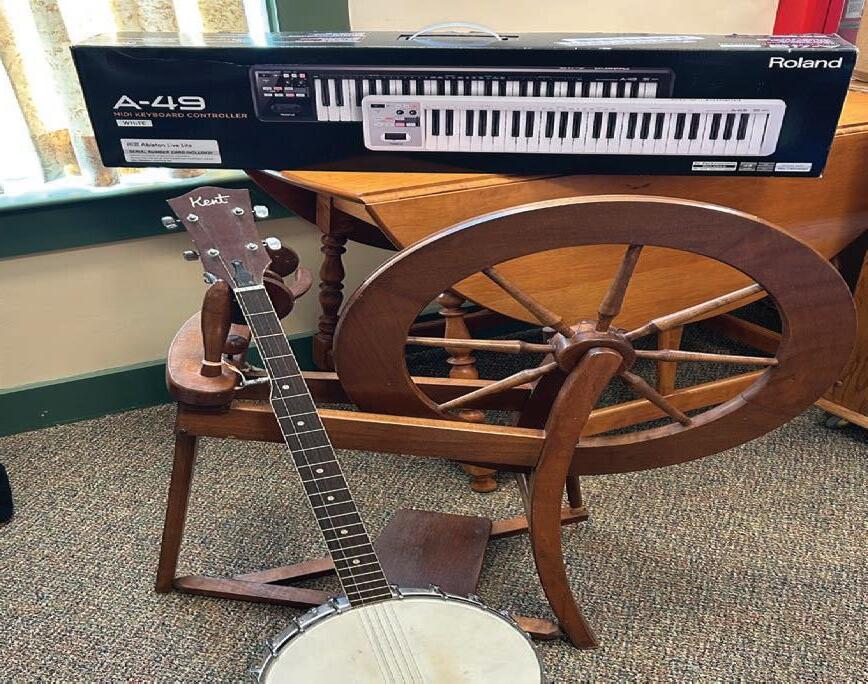
shire Library Association and director at Elkins Public Library in Canterbury. “Books inspire us to do all sorts of things, but it's a pretty powerful thing to be able to say here's an electric keyboard that may go to a household where a young child learns they love music. That’s a neat thing to be part of.”
Elkins’ expanded library of things, which launches early 2026, includes a canning set, party tents, a record player and more.

Library of things has grown significantly in New Hampshire in recent years. Libraries with these collections have their own policies that detail who can check out items and for how long. Now, with a public library card, you can check out a birdwatching kit (North Hampton Public Library), inflatable pool games (Exeter Public Library) and snowshoes (Brown Memorial Library). That’s in addition to accessing best-selling, new, and classic books, museum passes, storytimes, community events and more at the library.
“It’s not just about books. It’s about shared resources and community and letting people know that, of course we’re here to encourage reading and literature, but we’re here to help you explore your interests,” says Molly Foye, library director at Freedom Public Library, where visitors can
check out a metal detector, binoculars, snow shoes, a slide projector and more.
Across the state, many libraries started their library of things collections with telescopes provided by the New Hampshire Astronomical Society. Through its library telescope program, the organization has been placing telescopes in libraries in New Hampshire and beyond since 2008.
That’s how the Nashua program got its start, with both a telescope and a ukulele
donation from a local music group.
Recently, library patrons started asking for more items to check out, says Jennifer McCormack, library director. In September 2024, the library of things collection launched with 26 items. Today, the catalog features 51 items.
“One of the most popular items in our lot collection is our cat. We have an animatronic cat. It’s our companion pet cat. It’s basically a toy cat. It purrs. It moves a little bit. It’s used with dementia patients,” McCormack says. “Many, many families have borrowed

it. That’s something that’s a good example of using the library of things for a try before you buy.”
Sustainability is a big reason behind Nashua’s collection.
“You’re sharing these items with your neighbor, other community members, rather than buying it and having it sit on the shelf and used once a year or less often,” McCormack says.
At Maxfield Public Library in Loudon, the library of things collection started when patrons donated a metal detector and a pressure washer. The collection now consists of about 30 items, including a popcorn machine, a Yoto Mini audio player and a DVD player.
“One of the great opportunities that (libraries of things) provide for patrons is if someone’s interested in raising chickens — we have an egg incubator for example — you could try it out with our machine at our library of things so you don’t have to invest
the money yourself,” says Kersten Matera, library director.
Derry Public Library has a fun story about how its unusual items collection started.
At some point, a time capsule was buried at the library. The only issue? No one knows exactly where the time capsule is buried. So, the library team purchased a metal detector to find the time capsule. Ultimately, the location of the time capsule remains unknown, but the library staff decided to lend the metal detector to patrons, says Kathleen Kenny, library director.
Today, a metal detector is one of more than 20 items available to check out from the unusual items collection, including a pickleball set, a roll-up piano and a blood-pressure monitor.
A focus of library of things collections are often tools that are used a few times a year, where patrons may prefer to check an item out of the library rather than pay for and store an item themselves. Examples from libraries around the state include stud finders, media digital converters, garden soil test kit, and a tree and weed puller, energy detectors and an auto code reader.
Another popular theme in library of things collections is family fun activities –from giant versions of popular lawn games (Connect Four, Jenga and Candyland) to the popcorn machines, pop-up tents and cake pans that can spruce up a birthday, graduation, or retirement party.
Howe Library in Hanover offers a mix of both categories.
“You may not want to purchase an electronic knife sharpener; you surely want to sharpen your knives,” says Sam Milnes, adult services librarian at Howe Library. “That’s a popular one.”
So are the lawn games.
“The giant Jenga set is very popular in the summer,” she says. “It’s always one I wish I could check out, and then it’s checked out.”
The library, in the same town as Dartmouth College, has also lent out one nonbook item since before its library of things collection was created: art prints.
For more than 30 years, the library has loaned framed art prints. Patrons can browse through two large wooden bins near the circulation desk, but they likely won’t see the full scope of the 100-print collection when















they do so. At any given time, nearly all of the prints are on loan, Milnes says. Students at the local schools like to rent the prints out to decorate their dorm rooms, as do offices looking to spruce up their workplaces.
New Hampshire is known for its outdoor recreation, and a library of things collection can help you access the nearby trail, river or campsite.
At Lebanon Public Libraries, e-bikes are available to check out at the Kilton branch.
Celeste Pfeiffer, outreach librarian, has stories of how the e-bikes have helped people in the area. Just this year, a library patron checked out an e-bike every day so that she could commute to her part-time job. Eventually, she purchased her own e-bike and increased her work hours, Pfeiffer says.
Making e-bikes available “so fits with our library’s mission, because it removes barriers and supports our community,” Pfeiffer says.
“All of the feedback shows that people
really value the kind of program the library can provide,” Pfeiffer says. “We’re not just about books, we’re about experiences and tools of life.”
When people see the bikes, they become a conversation starter about all that the library offers, from museum and state park passes to books and access to NYTimes Cooking and Comics Plus.
Pfeiffer also used the e-bikes via the library after an injury made it difficult to cycle. Today, Pfeiffer commutes to work on an e-bike of her own.
At Keene Public Library, visitors have access to a library of things, an outdoor gear library, and a garden tool library. Keene Public Library cardholders can borrow items from all three collections, and any Cheshire County resident who registers for a special card can check items from the outdoor gear library and the garden tool library.
In addition to a battery-powered hand-seeder, a compost thermometer, pruning tools and more, the garden tool library also features adaptive Easi-Grip tools.

Since February 2024, nearly 600 items have been checked out from the outdoor gear library. Offerings include fishing rods, coolers, personal flotation devices, tents, lanterns, sleeping bags and head lamps. Because Keene is a college town and also offers many outdoor recreational opportunities, many people in the area are renters who may not have the storage space for larger items themselves. When people learn about the items they can check out from the library, the reaction is positive, says Marti Fiske, library director.
“They’re always excited by it. No matter how much advertising we try to put out, they’re like ‘oh, we didn’t know,’ ” Fiske says.
She recently spoke at regional conferences about the behind-the-scenes work it takes to make the collections sustainable, from policies and storage, to marketing and software system needs. Her advice for anyone who wants to see a library of things collection at their local library? Bring it up with a librarian, she says.
“Just ask and be curious,” she says. NH

The Design Awards returns to The Venues at the Factory in Manchester for the home design event of the year!
Sponsors


For up-to-date event details and a complete list of award categories, judging criteria and the submission process, visit nhhomemagazine.com/design-awards


BY EMILY REILY
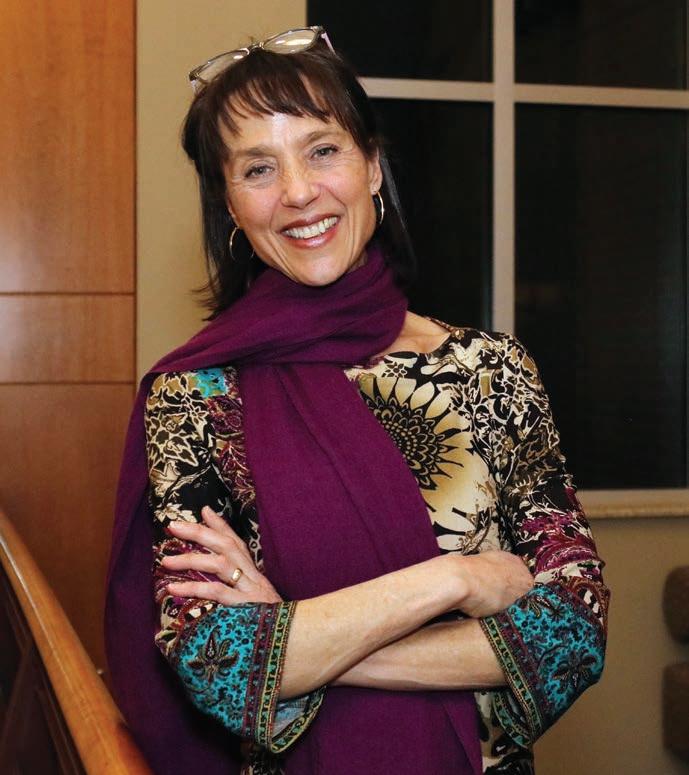
Years before NHPR radio personality
Laura Knoy gave her final signoff on “The Exchange” in 2021, the popular daily news radio show she hosted for 25 years, there was still one story that she couldn’t let go. The idea followed her throughout her career as a journalist, and eventually became her debut novel, “The Shopkeeper of Alsace.” Knoy’s book is a work of historical fiction interwoven with the true story of one Jewish family’s fight for safety amid the horrors of WWII. Knoy based the book upon the true
accounts of her friend, Annette, whom she met as an exchange student in Strasbourg, France, in the mid-1980s.
Knoy is the host and founder of “ReadLocalNH,” a podcast about New Hampshire authors and local bookstores; is director of community engagement at the Rudman Center at UNH Franklin Pierce School of Law; and is a sought-after narrator and interviewer.
Knoy briefly paused her whirlwind book
tour to talk about her first book and leaving “The Exchange,” and shared sage advice for other would-be writers.
New Hampshire Magazine: Do you miss working on The Exchange?
Laura Knoy: No. It was great for 25 years, but it was also really, really hard. NHPR was great to me, and everybody was fantastic. But 25 years of being on deadline every single day and just cranking out a live radio program ... it was time to move on to something slightly more chill.
NHM: Were those long days for you?
LK: During the pandemic, it was. Most of the time it wasn’t 12-hour work days. It was definitely manageable. And I had two kids. The 2020 elections and the pandemic — that was nuts. You’re always on deadline, yes, and a serious deadline, like, you have to be there in that studio, ready to go at 9 o’clock. Doing “The Exchange” was great, but I just wanted to do something else.
NHM: What were some of your proudest moments on “The Exchange”?
LK: Covering those elections of 2020 because, first of all, they were very contentious. By the time the general election rolled around, we were in full pandemic mode. So not only do we have unbelievably challenging content, we had an unbelievably challenging technical setup. And after (the debates) were over, I took myself off to the White Mountains for three days. I just rented a cabin and stayed by myself. It was wonderful.
Often public radio stations could choose whether they would take NPR’s presidential primary coverage (on) primary night or ours, and we always made the case, ‘Hey, you know, take ours, we’ve been covering this thing forever … we didn’t just fly in two weeks ago.’ Many stations took our coverage, which I was really proud of. That was fantastic.”
NHM: Why was this the right time to write “The Shopkeeper of Alsace,” given you met this person decades ago, and only decided in 2016, “I have to follow this story.”
LK: Why did I wait that whole time? When I met her, I just started getting little scraps of the story. Over the years of our friendship, she (would) just like, drop another (revelation). And then we’d move on. It didn’t occur to me to even write a novel about this until 2015. It was just kind of organic. Annette had
shared her story for 35 years before she died in 2015, and then I began thinkingg, “Oh, all these stories, like, where are they going to go? Well, maybe I could do it.”
NHM: While you were still working on “The Exchange”?
LK: Yeah, the first three years that I was researching and writing, I was still working on “The Exchange.” That included the most intense period ever on the show, which was during the pandemic, and the elections of 2020, so I just kind of wrote whenever I could.
NHM: Is this book fiction or nonfiction?
LK: It’s historical fiction, so, heavily based on a true story.
NHM: How did you balance that?
LK: I had the basic facts, but I had to really fill in the heart, the soul, the characters, the relationships, the frustrations, the dialog. All that stuff had to be made up. For example, there’s some pretty dramatic stuff that happens in
the book. At one point, someone gets lost. I have that fact. What I don’t have is, how did everybody else react when this person got lost? How did they feel? There was a lot of fill in.
A lot of people have said, “Well, gosh, you had this true family saga, why don’t you just write nonfiction?” Memory is a very tricky partner. We’re starting to find this out in criminal justice, right? Three different witnesses will remember the crime three different ways. As a novelist, you get to pick what really happened.
NHM: How did you research this book?
LK: The research started with the family’s saga. The children of the family recorded their memories in 2005. That was kind of my guiding star for the research. That formed the basis of all the other research I did.
I can’t even tell you how many dozens of books in English and French, hundreds of articles. I visited, I don’t know, a dozen museums. I probably interviewed at least a dozen
researchers. There are first-person narratives, videos of people who lived through these times. But I was lucky, because I did have the family saga — as that was the core of the research, their personal narrative — and then I did everything else to fill in the blanks.
NHM: What advice do you have for people who are thinking of writing their first book?
LK: I would say, do it. Don’t put it off. Get tons and tons and tons of feedback and edits. When you think you’re done, you’re not done, and when you think the second time, you’re not done, and maybe the third time and the fourth time and the fifth time, you’re not done, because you’re too close to it. Submit your stuff for awards. Submit your stuff at conferences.
Get edited, get feedback, get critiqued, get rejections. Don’t seek feedback from people you’re comfortable with. Go to, like, the tough editors and the mean editors and the ones you’re afraid of.
NHM: What did you learn about yourself when writing this book?
LK: I’ve been a journalist for 30 years, so this was the first time I actually got to make stuff up. (In) journalism, you’re dealing with the facts — how people reacted, how they felt, what they said. The story is heavily factbased, but the relationships, the romances, the conversations, I had to make that stuff up. That was challenging. The other smaller thing I discovered is that my punctuation is terrible. Luckily, I now use online tools to help me with my punctuation.
NHM: What else would you like readers to know about your book?
LK: A lot of the historical fiction that takes place during the world wars in France is focused on the area of Paris. People are so excited to learn about another part of France that experienced the war completely differently. I really kind of feel like I’ve tapped into something, that people are jazzed, people really dig this.

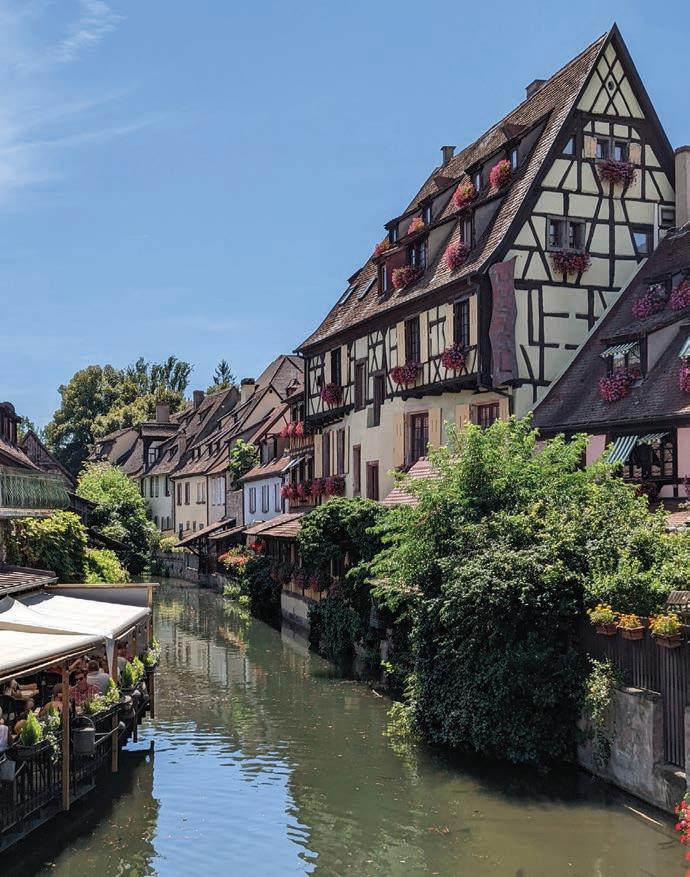
Buy Laura Knoy’s debut book at Amazon, bedazzledink.com, books2read. com and Barnes & Noble. “The Shopkeeper of Alsace,” published by Bedazzled Ink, is a novel of historical fiction set in Colmar, in the Alsace region of France.
BY MARSHALL HUDSON
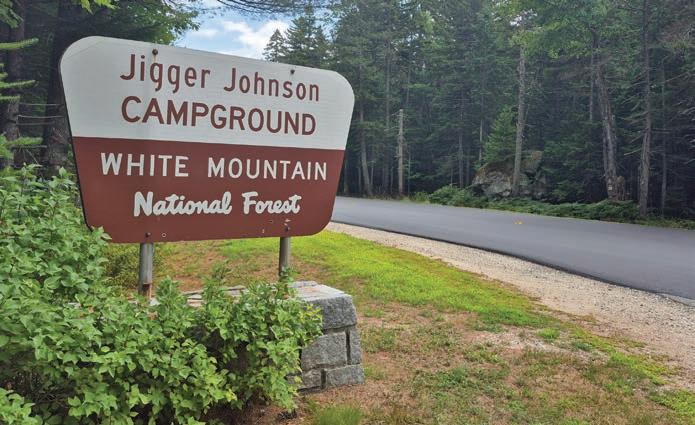
In the late 1970s, I worked as a surveyor on a U.S. Forest Service crew in the White Mountain National Forest. Depending on where we planned to work the next morning, our team would determine the rendezvous location to meet at the night before. Jigger Johnson Campground on the Kancamagus was convenient when working in the Passaconaway area, so we regularly made plans to meet at “Jigger’s.”
While waiting for late crew members to arrive one morning, I asked a seasoned forest ranger, “Who was Jigger Johnson?” His answer sounded like a Paul Bunyan tall tale. Later, back in the office, the ranger retrieved an old folder and shared it with me. Inside were newspaper clippings, typed notes and book excerpts describing the life of Albert Lewis “Jigger” Johnson.
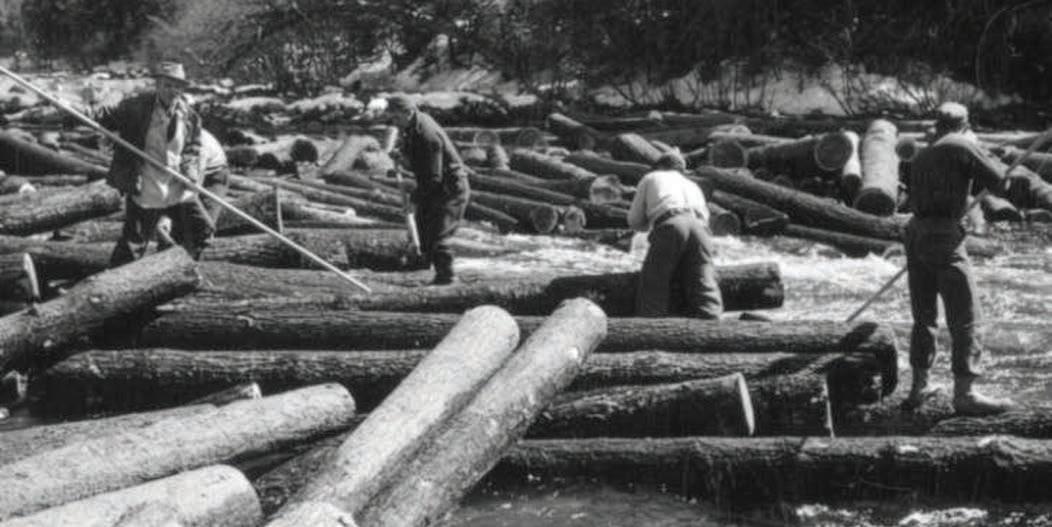
Jigger was a lumberjack, river log driver, trapper and fire warden for the U.S. Forest Service. The nickname “Jigger” seems to have originated with his small stature. While the tales about Jigger seem larger than life, his physical size wasn’t impressive. He stood
5 feet, 6 inches tall and weighed perhaps 150 pounds.
New Hampshire forester Bob Monahan is quoted in The Mountain Ear saying, “All of him was coiled steel-spring muscle, except his head, which contained brains-a-plenty. Those who witnessed him in battle still recall his courage and ferocious attack — no matter the odds against him.” Monahan says that Jigger worked hard, drank hard, fought hard and lived a hard life.
Jigger was born in 1871, in Fryeburg, Maine, and folklore says he came out of his mother’s womb with a wad of tobacco in his mouth, spiked boots on his feet, an ax in one hand and a peavy in the other. His childhood was brief. Jigger claimed he only attended two days of school in his life; the first day, he forgot his books and the second, the teacher was out sick. At the age of 12, Jigger went to work in a logging camp as a cook’s assistant. He helped prepare food, served loggers, washed dishes and chopped firewood. In this camp, conversation was forbidden at dinner because it led to arguing, then fighting.
This rule was challenged when new loggers arrived intoxicated. One of them insisted on talking loudly, and the scrawny young Jigger dutifully asked him to stop. The belligerent newcomer struck the boy and began pummeling him. Jigger bear-hugged the logger and sunk his teeth into an ear. When the two were pried apart, part of the big man’s ear remained in Jigger’s mouth.
The camp boss ordered the drunken loudmouth, with a missing chunk of ear, to start walking. Impressed with the grit of 12-year-old Jigger, he bought him a new shirt replacing the one torn in the fight.
Jigger worked his way up the logging camp ranks, and by the age of 20 was foreman of an outfit on the Androscoggin. The dynamics of managing these remote camps required that the foreman be able to out-brawl any of the men he supervised as well as out-drink, out-cuss and out-work them. As foreman, and one of the smallest and youngest men in camp, Jigger had to continually prove himself, and did not tolerate any backtalk from bigger antagonists challenging his authority.
Relying on ferocity, strength and quickness, Jigger held his own in many brawls.
Jigger was an honest boss who paid his men fairly, but in return demanded a lot from them. On one occasion, Jigger told his men to wait in camp while he went to recruit additional log drivers. In his absence, some of the men snuck off to a local bar. When Jigger returned and discovered the men missing, he went after them. Jigger entered the bar swinging a peavy, and his logging crew quickly skedaddled back to camp without argument.
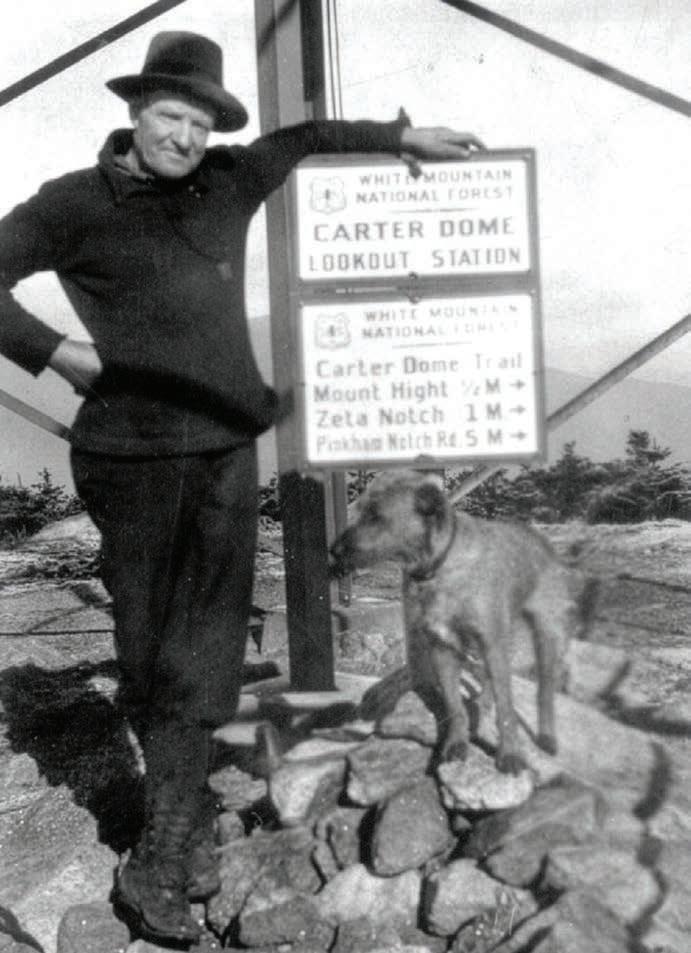
When the log drives came to an end in the early 1920s, Jigger hung up his spiked boots and retired as lumberjack. For a few years he worked as a fire warden in lookout towers on Mount Chocorua, Carter Dome and Bald Mountain. He also became an instructor at a Civilian Conservation Corps (CCC) camp where he taught young men about working in the woods. But the CCC life did not suit him. There were too many rules about shaving, bathing, drinking and mandatory study every
night. Jigger left the CCC camps and took up fur trapping.
Monahan writes that as a trapper, Jigger was very successful and caught lynx, bobcat, mink, muskrat, weasel, beaver, fox and fisher.
Bobcat and lynx became his specialty because of a bounty paid for them in addition to their pelt. But when Jigger discovered the wildcats were worth even more if captured alive, he learned to grab them barehanded and stuff them into a gunny sack.
One story tells of a windowless shack in a logging camp where the company stored dynamite. A wildcat had gotten inside and scattered blasting caps and dynamite all over the floor. No one dared go inside the unlit shed with a cornered wildcat. Jigger went in with a kerosene lantern and came out with the dynamite and a bagged wildcat.
Another tale tells how Jigger used a deer carcass to lure two bobcats beneath a tree he had climbed. When the bobcats took the bait, Jigger pounced from the tree and bagged them live, barehanded. He sold one of them to the University of New Hampshire for their wildcat mascot.
The end for Jigger Johnson came after selling a profitable lynx pelt and going into Conway to celebrate. The next morning, a hired man drove him back to Passaconaway to resume checking his traps. Their car slid off the road as Jigger was jumping out, pinning him to a tree. He was taken to a hospital and died of his injuries on March 30, 1935.
The old folder given to me by the seasoned ranger contains many more stories of Jigger’s colorful exploits. If even half of these tales are true, then Jigger Johnson, the river-driving woodsman, is worthy of this campground named in his honor ... and I’m glad I asked who he was. NH



So, you’re considering an independent school for your child. Good call.
Now more than ever, it’s essential that students be prepared for change, equipped for lifelong learning and eager to embrace the challenges of life. They need a sense of independence that is guided by the experience of mentors and guarded by a great institution of learning.
Ask parents why they chose an independent school for their children and the list of reasons is long: great teachers, smaller classes, more personal attention, a welcoming atmosphere, and the chance to explore new opportunities both in and out of the classroom.
Independent schools are where many of our best academic professionals can be found, and, after all, how successful or well prepared could any of us be without the right teachers and advisors to show us the proverbial path? These men and women are there not simply to teach the correct answers but to impart the ability to ask the right questions. Talented educators and academic professionals provide the tools we need — parents and children alike — to make wise choices for ourselves.




efore you can find the right place for your child, it’s important to understand what an independent school is. Though types of schools vary, the basic principle applies to each: “They are a particular kind of nonprofit private school, distinguished by having a free-standing board of trustees that is solely responsible for the school and by being independently funded, primarily by tuition.”
This is the definition supplied by the Association of Independent Schools in New England, a helpful resource for prospective students and their families.
With more than 2,000 independent private schools throughout the country, ranging from pre-K through high school, it’s easy to feel overwhelmed by choice. Within the New England Association of Schools alone, there are a number of options, from small elementary schools to large boarding schools. So how to find the right one?
Before you begin your research, you and your family should create two lists. First, write down the particular features you want for your child, and then outline your child’s specific needs and interests. From there, request a copy of each school’s mission statement — all schools affiliated with the Association of Independent Schools in New England have such a statement. Finally, the following list can help you identify important questions you might want to consider before choosing a school.
■ Does the school’s program suit your child’s academic needs?

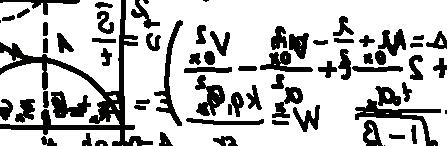

geographical distribution (especially for residential schools)?




■ Does the academic program have the breadth and depth to challenge the range of students admitted?
■ How are the most able students challenged?
■ What is unique about the academic program?
■ If this is a denominational school, how is that reflected in the program?
■ What does the school offer in co-curricular areas such as athletics, dramatics and community activities?
■ Does the overall program of the school include learning experiences of residential life (when applicable)?
■ Are there programs for exceptional children? Learning-disabled children? Those with physical or emotional handicaps?
■ What kind of students does the school seek?
■ Is a student profile available, including racial and ethnic characteristics, percentage of students receiving financial aid and
■ If the school has a denominational affiliation, what percentage of students are from that denomination? What other denominations are represented?
■ Are there examples of students participating in school-sponsored volunteer community projects?
■ Where do students go following graduation or completion of the program? How does the school stay in touch with them?

■ What degree of involvement is expected of parents in school activities and other supporting roles? Involvement with sports? Academic support? Advising? Participation in clubs or functions?
■ Is the atmosphere that of a “tight ship” or is it informal?
■ If this is a residential school, then what is residential life like?
■ Are students required to participate in some form of organized athletics? Dramatic projections? Other school-wide activities?
■ What is the student attrition rate? What are the reasons?
■ What is the school’s policy on substance abuse? Alcohol use? Smoking?
■ What types of infractions are considered serious, and what disciplinary procedures are used?
■ How do the personal and educational guidance and advisory systems work?
■ What is the typical class size, particularly in English, foreign languages, mathematics and science?
■ What is the individual teacher load, including numbers of students as well as preparation and other duties?
■ In what professional organizations do individual faculty members participate?
■ Is the physical plant — including classrooms, library, laboratories and physical education facilities — adequate for and compatible with the mission of the school?
■ Is the plant well maintained, and does it show signs of people caring about the physical environment? (Include dorms and individual rooms if this is a residential school.)
■ Is the food service area clean, and are certificates of appropriate health and sanitary inspections displayed?
■ What is the annual tuition?
■ What percentage of the per-student operating cost of the school does the tuition meet?
■ If tuition doesn’t meet all costs, how is the balance made up?
■ What is the school’s tuition refund policy?
■ Is there a tuition insurance plan?
■ What is the amount and purpose of the endowment?
■ Does the school have an annual giving program?
■ In the operating budget, what are the percentages and categories of expenses? (This may indicate some school priorities.)
■ For what purposes are annual funds requested and expended?
■ Is the school separately incorporated, nonprofit, proprietary, a member of a school system such as a diocesan system or affiliated with a parish or parishes?
■ Who establishes policy for the school?
■ Who is the chief administrative officer of the school? What is his or her background and experience? How long has she or he been at this school?
■ With what education-oriented associations is the school affiliated?
■ By whom is the school accredited?

The NAIS Private School Review provides free, detailed profiles of USA private day schools and their surrounding communities. privateschoolreview.com/ new-hampshire
Introducing young people, ages 9 to 14, to the fun and excitement of science and technology.
603-666-3907 • firstlegoleague.org
With an ongoing commitment to equity and inclusion, AISNE shapes the educational landscape for independent schools through leadership, education, service and strategic advocacy. 617-329-1483 • aisne.org
NEW ENGLAND ASSOCIATION OF SCHOOLS AND COLLEGES
A voluntary membership organization of public and independent schools and colleges with a mission of assessing and promoting the quality of education through the accreditation of its members.
781-425-7700 • neasc.org
The Young Inventors’ Program inspires the next generation of STEM leaders by fueling excitement for innovation. The Academy’s mission is to fuel the spark of genius by exciting today’s youth in science, technology, engineering and math (STEM).
603-862-3401 • fuelthespark.org
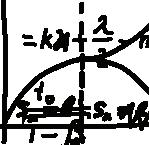
Are all independent schools the same?
Within the Association of Independent Schools in New England membership, there is an extraordinary range of schools, from small elementary schools to big boarding schools, and everything in-between. While most schools are coed, a number are singlesex. Many schools have a particular religious affiliation or follow a particular educational philosophy. Some schools define themselves as traditional in their approach; others see themselves as progressive. There is much more variety within the world of independent schools than there is in public schools, because public schools must all follow the same standards and prepare for the same standardized tests.
What does it mean to be accredited?
An AISNE-accredited school has undergone a rigorous and thorough process that includes the creation of a self-study document that describes current practice and establishes a set of priorities for future action in all areas of the school, such as curriculum, staffing, admissions, finance, governance, health and safety. After completing the self-study, the school hosts a team of teachers and administrators from other independent schools who visit the school for three days and prepare a comprehensive report that includes both commendations and recommendations for future action. Schools are expected to address the recommendations over the next few years. There are interim reports and an interim visit scheduled during the 10-year cycle to monitor progress.
What’s involved in applying to an independent school?
There are a number of steps to follow, including doing your homework to pick the schools that will be a good match, visiting the schools, filling out an application, filling out financial aid forms, arranging for any required testing, and arranging to have your current school send records and evaluations. Remember that the admission professionals at our schools are there to help you every step of the way.
AISNE member schools report an average of 18% students of color and an average of 25% of students receiving financial aid. Few suburban public schools could claim to be as racially and socioeconomically diverse. So the independent school down the street may well be more reflective of the diversity of the “real world” than your public school.
What does parent involvement look like?
You will be treated as a full partner in the education of your child. That means regular communication via different media, early notification whenever there is a concern, face-to-face meetings with teachers and administrators as needed, and an acknowledgment that you know more about your child than anyone else. Independent schools want you to be active participants in the community, to actively engage in the life of the school. Every school will have a wealth of volunteer opportunities, from chaperoning to fundraising to helping the school get greener. You will always be welcome at school.
Many of our independent schools have low student-teacher ratios. This is designed because having fewer students allows the teachers to: 1) get to know each student in depth; 2) be able to closely monitor the student’s progress; and 3) have the time to help when a student has difficulty.
Do you have to have a low income to receive financial aid? Do schools have much financial aid to give out?
“No” and “It depends.” Financial aid is based on your need, and many families with above-average family incomes are surprised to find that they do qualify for some support. The amount of available aid varies from school to school. The average AISNE school provides financial aid to 25% of its families and the average grant is about $20,000 — note that this includes boarding schools with higher costs. If you know that you will need financial aid, be sure to ask about it when you visit schools.
Source: Association of Independent Schools in New England – aisne.org

The Virtual Learning Academy Charter School (VLACS) offers a customized online learning experience for students in grades K-12 and adults. Whether your student wants to take one or more courses or make VLACS their official school as a full-time student, VLACS’ flexible programs are designed to fit your family’s needs.
With over 400 courses, including core subjects, electives, and career exploration opportunities, VLACS helps students:
• Create a schedule and calendar that meets their needs.
• Master tough subjects with extra support and extended time.
• Earn credits to graduate on time.
• Accelerate their learning or take advanced courses.
• Explore careers or prepare to enter the workforce after high school.
At VLACS, students learn at their own pace with one-on-one support from certified teachers all from the comfort of home or wherever they are.
Tuition is free for New Hampshire K-12 students.

The goal of Montessori education is to foster a child’s natural inclination to learn. Montessori teachers guide rather than instruct, linking each student with activities that meet their interests, needs and developmental level. The multi-age classroom is designed to allow movement and collaboration, as it promotes concentration and a sense of order.
North End Montessori School currently offers education for toddlers, pre-school, kindergarten through fourth grade.


< Attend a virtual open house to learn more!

Our elementary program uses the Montessori method of child-directed activities that emphasize:
• Reading
• Writing
• Grammar
• Geography
• Culture
• Science
• Ar t
• Music
• Mathematics
• Technology
• Physical education
(603) 778-2500
information@vlacs.org
www.vlacs.org

World Academy is a private, independent, NEASC-accredited school for students from Infant through grade 8. Our cutting-edge, 75,000 square foot campus is located on 7.5 beautiful acres and serves more than 500 families with a team of 75 highly-credentialed teachers. Our mission is to prepare students for success in a diverse and rapidly changing world through research-driven and experiential learning, whole-child focus, and family involvement. Learn about our programs and schedule a personal tour at worldacademynh.com.
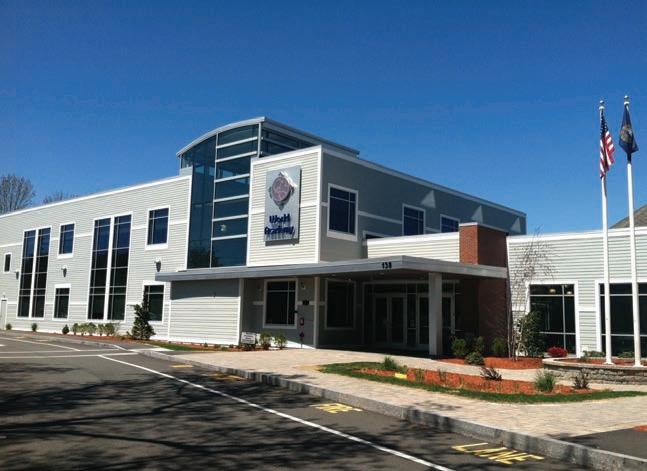
Nashua, NH • (603) 888-1982 www.worldacademynh.com

Shaker Road School is a place where learning, character, and community come together to help every student thrive!
Innovative and challenging curriculum designed to inspire curiosity, confidence, and a lifelong love of learning.

Character and citizenship program that fosters a strong sense of community, celebrates individuality, and teaches respect and responsibility.
Wide range of extracurricular opportunities—from athletics and the arts to clubs and outdoor adventures— encouraging students to explore their passions, develop new skills, and broaden their minds.

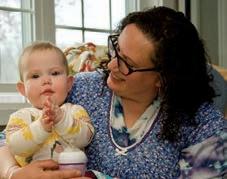






Newport Montessori School is now accepting 2026-2027 enrollment applications for the following grade levels and classrooms: junior classroom (sixth-, seventh- and eighth-grade students), upper elementary (third-, fourth- and fifth-grade students), lower elementary (first- and secondgrade students) and primary classrooms (pre-kindergarten and kindergarten). The Newport Montessori School is located at 96 Pine St., Newport, New Hampshire. For more information about NMS or to request an enrollment packet, please call us.
Newport, NH 603-863-2243
www.newportmontessori.org




(see our profile on page... A)
Members of the Independent School Association of Northern New England and advertisers.
Academy of Notre Dame - Tyngsboro Day Pre-K to 12
180 Middlesex Rd., Tyngsboro, MA 01879
ndatyngsboro.org • (978) 649-7611
Coed
The Beech Hill School Day 5-8 Coed 20 Beech Hill Rd., Hopkinton, NH 03229
thebeechhillschool.org • (603) 715-5129
Bishop Guertin High School m Day 9-12 Coed
194 Lund Rd., Nashua, NH 03060
bghs.org • (603) 889-4107
Brewster Academy Boarding 9-12 Coed
80 Academy Dr., Wolfeboro, NH 03894
Cardigan Mountain School
62 Alumni Dr., Canaan, NH 03741
brewsteracademy.org • (603) 569-1600
cardigan.org • (603) 523-4321
Crossroads Academy Day K-8
95 Dartmouth College Hwy., Lyme, NH 03768
crossroadsacademy.org • (603) 795-3111
The Derryfield School Day 6-12 Coed
2108 River Rd., Manchester, NH 03104
Dublin School
18 Lehmann Way, Dublin, NH 03444
Hampshire Country School
28 Patey Circle, Rindge, NH 03461
derryfield.org • (603) 669-4524
dublinschool.org • (603) 563-8584
hampshirecountryschool.org • (603) 899-3325
Boarding/Day 9-12 Coed
Boarding 3-12 Male
Heronfield Academy Day 6-8 Coed
356 Exeter Rd., Hampton Falls, NH 03844 heronfield.org • (603) 772-1336
High Mowing School
Boarding/Day 9-12
Coed
Pine Hill Campus Day Pre-K-8 Coed
222 Isaac Frye Hwy., Wilton, NH 03086 highmowing.org • (603) 654-2391
Holderness School
33 Chapel Ln., Holderness, NH 03245
holderness.org • (603) 536-1257
Boarding 9-12 Coed
Kimball Union Academy Boarding 9-Post Graduate Coed
7 Campus Center Dr., Meriden, NH 03770 kua.org • (603) 469-2000
New Hampton School
70 Main St., New Hampton, NH 03256 newhampton.org • (603) 677-3400
Boarding 9-Post Graduate Coed
Newport Montessori School n Day 1-8 Coed
96 Pine St., Newport, NH 03773 newportmontessori.org • (603) 863-2243
North End Montessori School k Day K-4 Coed 698 Beech St., Manchester, NH 03104 nor thendmontessori.com • (603) 621-9011
The Oliverian School
28 Becket Dr., Pike, NH 03780 oliverianschool.org • (888) 922-5565
Phillips Exeter Academy
20 Main St., Exeter, NH 03833 exeter.edu • (603) 772-4311
Boarding 9-12 Coed
Boarding/Day 9-Post Graduate Coed
Pinkerton Academy Day 9-12 Coed
5 Pinkerton St., Derry, NH 03038 pinkertonacademy.org • (603) 437-5200
Proctor Academy
204 Main St., Andover, NH 03216 proctornet.com • (603) 735-6000
Boarding/Day 9-12
Shaker Road School m Day 1-9
131 Shaker Rd., Concord, NH 03301 shakerroadschool.org • (603) 224-0161
Spark Academy of Advanced Technologies l Day 9-12
Coed
Coed
Coed 1066 Front St. #300, Manchester, NH 03102 sparkacademynh.org • (603) 945-9151
St. Paul’s School Boarding 9-12
Coed 325 Pleasant St., Concord, NH 03301 sps.edu • (603) 229-4600
Tilton School
30 School St., Tilton, NH 03276
Waterville Valley Academy
tiltonschool.org • (603) 286-4342
Boarding 9-Post Graduate Coed
Boarding 6-12
Coed PO Box 186, Waterville Valley, NH 03215 wvbbts.org • (603) 236-4811
The White Mountain School
Boarding/Day 9-Post Graduate Coed 371 West Farm Rd., Bethlehem, NH 03574 whitemountain.org • (603) 444-0513
Williams Bridge Academy Day 3-12
Coed 1247 Washington Rd. #3, Rye, NH 03870 williamsbridgeacademy.org • (603) 964-4903
Wolfeboro Camp School Summer 6-12
Boarding/Day 6 weeks-8 Coed
Coed 93 Camp School Rd., Wolfeboro, NH 03894 wolfeboro.org • (603) 569-3451
World Academy l Day K-8 Coed
138 Spit Brook Rd., Nashua, NH 03062
worldacademynh.com • (603) 888-1982


BY VIKAS VEERANNA, MD AND PETER SHAW, MD Fellowship-trained Advanced Imaging Cardiologists at Elliot Heart and Vascular Center
Many patients are surprised by how much we can now see without surgery or invasive testing. Over the past decade, advanced cardiac imaging has transformed how we diagnose and manage heart disease. At The Elliot Heart and Vascular Center, we offer one of the few programs in New Hampshire with this level of expertise and technology.
Cardiac MRI lets us see the heart in amazing detail—how it looks, how it works, how well it pumps, and whether there are changes in the heart muscle that could affect future health. It is considered the gold standard for evaluating heart function.
Unlike other tests, cardiac MRI provides a clear, three-dimensional picture of the heart without radiation. It uses a strong magnetic field and radio waves to produce detailed images. This technology helps answer specific questions that echocardiograms, nuclear stress tests, or CT scans cannot always answer.
With cardiac MRI, we can identify scar tissue from past heart attacks, detect inflammation, measure chamber size and function, and detect conditions like amyloidosis—caused by abnormal proteins in the heart. For patients with inherited heart disease, this precision helps detect early changes before symptoms appear.
At The Elliot, advanced cardiac imaging—especially cardiac MRI—is fully integrated into a comprehensive cardiovascular care model. This level of diagnostic precision and collaboration, typically seen at major academic centers, is available right here in southern New Hampshire.
What makes this integration impactful is the seamless coordination between imaging specialists, cardiologists, and car-

diac surgeons. Each scan is tailored to the patient’s needs, ensuring accurate and meaningful results. In the past, patients had to travel for this caliber of testing. Now, they can receive it locally without sacrificing quality or continuity of care.
Cardiac MRI doesn’t just diagnose - it guides treatment. In heart failure, it can show whether symptoms stem from blocked arteries, a weakened heart muscle, or inflammation. Each cause requires a different approach, and MRI helps pinpoint the issue without invasive procedures.
It also monitors treatment effectiveness. In patients undergoing chemotherapy, MRI can detect early signs of heart strain, allowing timely adjustments. It can also help determine whether a patient may benefit from a defibrillator, ablation, or surgery.
Advanced imaging allows us to move toward prevention. When we identify risk or early changes before symptoms develop, we can intervene sooner and protect the heart from future damage.
The CDC lists high blood pressure, high cholesterol, diabetes, smoking, obesity, and inactivity as key risk factors. These often strain the heart silently. Imaging shows how
these factors affect the heart muscle before a heart attack or heart failure occurs.
In New Hampshire, heart disease accounts for about one in four deaths annually. Continued awareness and access to advanced diagnostics are vital for our region.
Women also need to be aware of their risk. While somewhat protected during childbearing years, that advantage fades. After age 65, women’s risk equals men’s, and by 75, it exceeds it. Pregnancy complications like preeclampsia or gestational diabetes also increase future risk. Awareness and early evaluation make a real difference.
The Team Approach at The Elliot
Advanced imaging is part of an integrated heart and vascular team. We collaborate daily with interventional cardiologists, electrophysiologists, cardio-oncologists, heart failure specialists, and cardiovascular surgeons. If imaging shows a patient needs a procedure or closer follow-up, we connect them quickly with the right specialist. This coordination ensures smooth transitions from diagnosis to treatment to recovery.
At The Elliot, patients receive more than just a test. They benefit from a connected, collaborative care experience focused on precision, communication, and long-term heart health.
Imaging is just one piece of the heart health puzzle, but it is a powerful one. Our advice: know your numbers like blood pressure, blood sugar and cholesterol. Talk to your provider about family history and any symptoms, even minor ones. If you are at higher risk or already seeing a cardiologist, ask if advanced imaging could offer more insight.
Early, personalized information helps you and your care team make confident, informed decisions. That is what modern heart care is all about. n

At The Elliot Heart and Vascular Center, advanced cardiac imaging helps us see the heart in extraordinary detail. This clarity allows our team to pinpoint the cause of symptoms, tailor treatment plans, and monitor progress with unmatched accuracy. The result? Better decisions, faster care, and stronger outcomes for every patient.
Early detection starts with a conversation. Speak with your doctor to see if advanced cardiac imaging at is right for you.
> Learn more at ElliotHospital.org/Cardiology
Heart and Vascular Center

BY JAMES M. FLYNN, MD, FACC, FSCAI Cardiovascular Specialists of New England
e live in an era of unprecedented prosperity and abundance, yet our society faces a paradox: despite spending trillions of dollars on healthcare, we are witnessing declining life expectancy, rising obesity rates, and worsening overall well-being— both mental and physical. No civilization in history has invested as much in health, yet the outcomes remain disappointingly mediocre. This raises an important question: Is there a beמּer way forward? The answer is both clear and simpler than many realize.
If you have high blood pressure, high cholesterol, diabetes, heart disease, or a strong family history of heart problems, you are at higher risk for serious heart events. The good news is that healthy lifestyle changes— like eating a balanced diet, staying active, managing stress, geמּing enough sleep, and avoiding tobacco—can lower your risk, improve your health, and help you feel your best. Even small steps can make a big difference.
Lifestyle medicine is a powerful, evidencebased approach to preventing, treating, and even reversing heart disease and other chronic conditions. It is centered on six key pillars that work together to optimize your health.
1. Whole-Food, Plant-Predominant Nutrition: Emphasizes eating mostly minimally processed, plant-based foods— fruits, vegetables, whole grains, legumes, nuts, and seeds—to support heart and overall health.
2 Physical Activity: Encourages regular movement, such as walking, cycling, or structured exercise, tailored to your abilities and goals.
3 Restorative Sleep: Focuses on achieving 7–9 hours of quality sleep each night to allow your body to recover and function optimally.
4. Stress Management: Teaches practical techniques—like mindfulness, meditation, or breathing exercises—to reduce the harmful effects of chronic stress.
5. Avoidance of Risky Substances: Supports minimizing or eliminating tobacco, excessive alcohol, and other substances that can harm your health.
6 Positive Social Connections: Promotes building and maintaining supportive relationships, which are vital for emotional and physical well-being.
by
Your care team may include doctors, dietitians, and wellness coaches, all working together to guide you through these six pillars.
What to Expect
• 1-on-1 visits with lifestyle experts
• Personalized food and exercise plans
• Group classes and online support
• Simple, trackable goals each week Your Care Team
• Doctor: Oversees your medical progress
• Dietitian: Helps you eat for your heart
• Coach: Keeps you motivated and on track
• Behavioral Support: Assists with stress and sleep management
SUCCESS STORIES
• "I lost 20 pounds and came off 2 meds."
• "I feel beמּer than I have in years."
• "This program gave me my life back."
READY TO BEGIN?
Talk to your cardiologist or care team today. We’ll help you set your goals and get started. You’re not alone—we’ll do this together
TO LEARN MORE, VISIT WWW.CSOFNE.COM OR CALL US AT (800) 639-8480
|

|



Dedicated to redefining heart and vascular care. We are committed to empowering our local communities with timely access to comprehensive, personalized heart health solutions from prevention to advanced procedures.








Cardiac Testing
Coronary Artery Disease Intervention
Atrial Fibrillation Treatment
Catheter Ablation
Stroke Prevention (Watchman, Amulet)
Heart Valve Procedures (TAVR, TEER)
Arrhythmia/Heart Rhythm Treatment
Congestive Heart Failure Management
Vein & Vascular Intervention
Cardiac Rehabilitation
Hypertension Clinic






Grab some crosscountry skis, a fat tire bike or a pair of snowshoes to enjoy winter at your own pace. Take a hike. Climb an ice wall. Just get outside!
BY JILL ARMSTRONG
Ilove to snowboard. There’s nothing better than those first few turns in untouched snow on a steep trail or cruising alongside friends on freshly groomed corduroy tracks, the rosy glow of morning rising behind shadowed peaks, warming our bodies and illuminating everything.
I also love opportunities to explore winter landscapes at a slower pace, whether it’s pedaling a fat tire bike on crunchy, snow-packed terrain, snowshoeing on trails
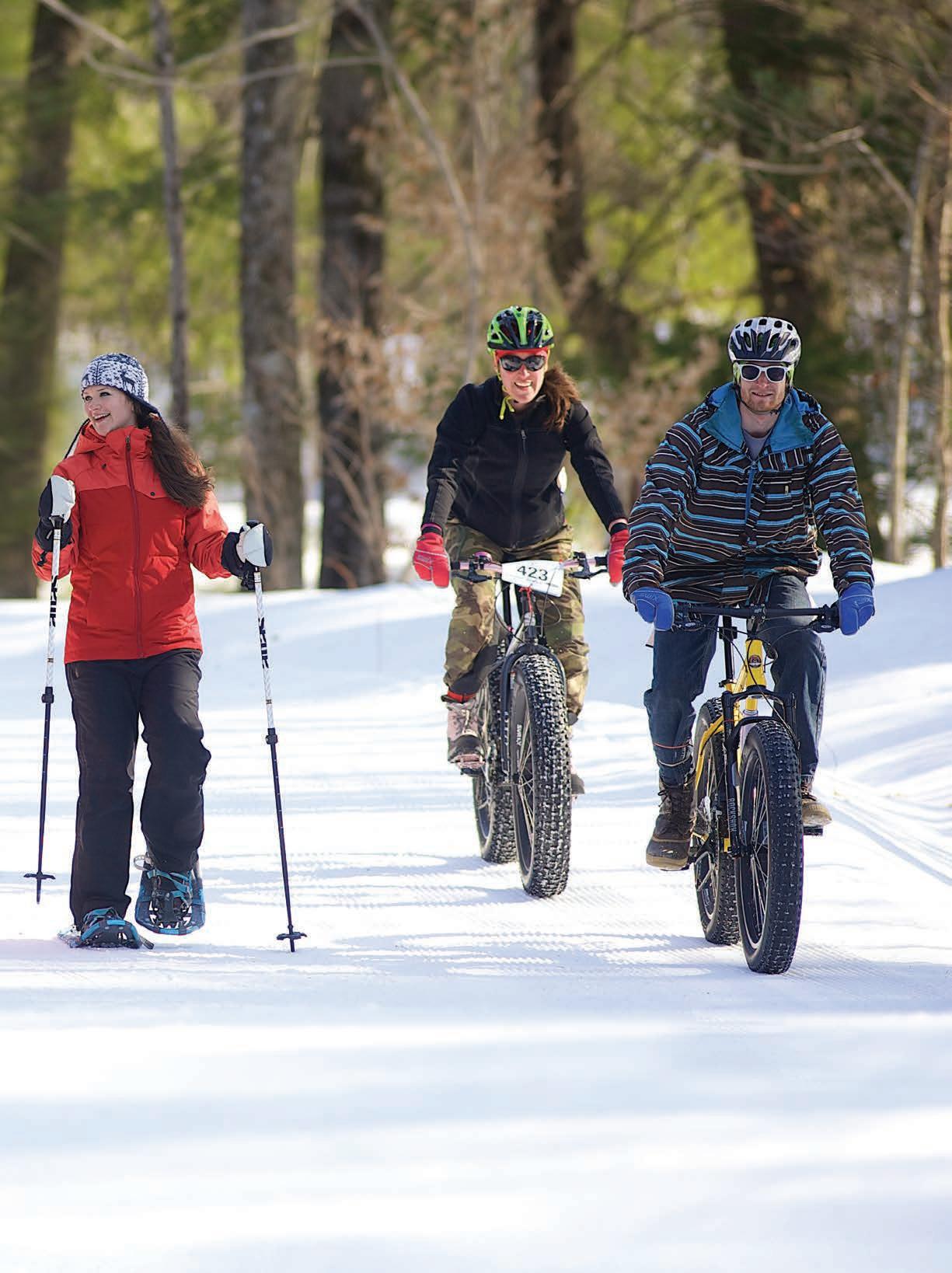
framed by drooping pine boughs, or scaling a frozen wall of ice with a pair of ice axes and crampons.
Winter in New Hampshire is a special time, and what I’ve learned over the years is that there isn’t one way to appreciate the season. While I understand the allure of a crackling fire and a good book when the skies are gray and the air cold, there’s too much to see and do outside. My recommendation? Bundle up, grab a pal and embrace a new adventure in the outdoors.
Winter hiking provides a serious challenge — between the extreme weather conditions and the physical demands — but also yields equally as serious a reward: The cold air rejuvenates, sparkling, snow-covered surfaces energize, and the views of white-capped, towering peaks inspire. Not as many people inhabit the trails in winter, making this season one of solitude and tranquility. Perhaps best of all? There are no bugs to contend with this time of year.
“I think getting out into the woods is everything,” said Jennifer Karnan, director of marketing and sales for Cannon Mountain and Franconia Notch State Park. “The more often folks get out into the woods, the better they’re going to feel. Humans weren’t built for hibernation. We were built to move around and be outside, and so it's important to commit to that and get out as often as we can.”
One of Karnan’s winter hiking recommendations is the Lonesome Lake Trail, which begins at the Lafayette Campground in Franconia Notch. This short but steep (and sweet!) ascent provides a great introduction to the beauty — and demands — of

winter hiking. The well-marked trail emerges onto a lake, with a boardwalk circling the perimeter. On the far side, recreationists will spot the Appalachian Mountain Club’s hut and a viewing platform, perfect for taking in the entirety of Franconia Ridge across the notch on clear days.
The 1.5-mile West Ridge Trail rises 1,200 vertical feet to the summit of Mount Cardigan in Cardigan Mountain State Park. At just over 3,100 feet, the treeless granite summit affords views of the White Mountains to peaks in surrounding Vermont and Maine. Note: State parks aren’t staffed in the off-season, and the gate to the parking lot is closed, adding an extra ¼-mile walk into the park.
For a more challenging hike, and the chance to tackle a 4,000-footer in winter, try Mount Waumbek via the Starr King Trail, 7.2 miles out and back. A gradual, steady climb through hardwood and pine forests provides protection from full exposure, although the location, in Coos County, is quite remote.
When it comes to winter hiking, it’s important to start small, be prepared and, most importantly, always know when to turn back.

Traveling along the banks of frigid streams, around the open expanse of white fields and through hardwood forests, cross-country skiing — also known as Nordic — is the ideal activity for experiencing winter’s beauty, all while testing your balance and building cardiovascular strength. If you can master the technique of gliding, a day out on two skinny planks becomes a master class in meditation.
Beginners should take a lesson at one of the state’s many touring centers, but trail networks exist in the state parks and White Mountains for practiced skiers looking for adventure off the beaten path.
Eastman Cross Country in Grantham offers 24 miles of groomed trails, including the scenic Lake Trail, an aptly named, dog-friendly trail that travels the perimeter of Eastman Pond.
For those who aren’t willing to part with the rush of

downhill speed entirely, consider planning a weekend away that pairs the vertical with the horizontal. Located in the Town Square, the Waterville Valley Nordic Center accesses more than 44 miles of Nordic ski trails in the White Mountains. Rental gear and lessons are available as well as a variety of packages for first-timers and advanced clinics for experienced skiers wanting to up their game.
The Jackson Ski Touring Foundation — a communitybased nonprofit organization in the village of Jackson — has been home to some of the finest ski trails in the Northeast for more than 50 years. With more than 62 miles of trails, a ski school, lessons, rental shop and a family-friendly base lodge, Jackson XC is a top-notch destination for all abilities. Visitors will meander through forests, farmlands and the quintessential New England town.
PHOTO BY DAVID GROGLE
While hopping on two wheels and navigating slick terrain may feel counterintuitive, fat tire biking is becoming an increasingly popular way to recreate in the winter. Fat tire bikes feature oversized tires, typically around 4 inches wide, that run at low pressure. They aren’t particularly fast, but they’re designed to handle a variety of terrain types, like sand and snow, and can maneuver over just about any obstacle in the trail. What’s best about fat tire bikes? They make pedaling a year-round sport.
Many New Hampshire ski areas and bike shops offer fat bike rentals, and there are several locations across the state with groomed trail networks. Those trying fat tire biking for the first time can rent equipment and cruise the carriage roads at the Great Glen Trails Outdoor Center at the base of the Mount Washington Auto Road in Gorham.
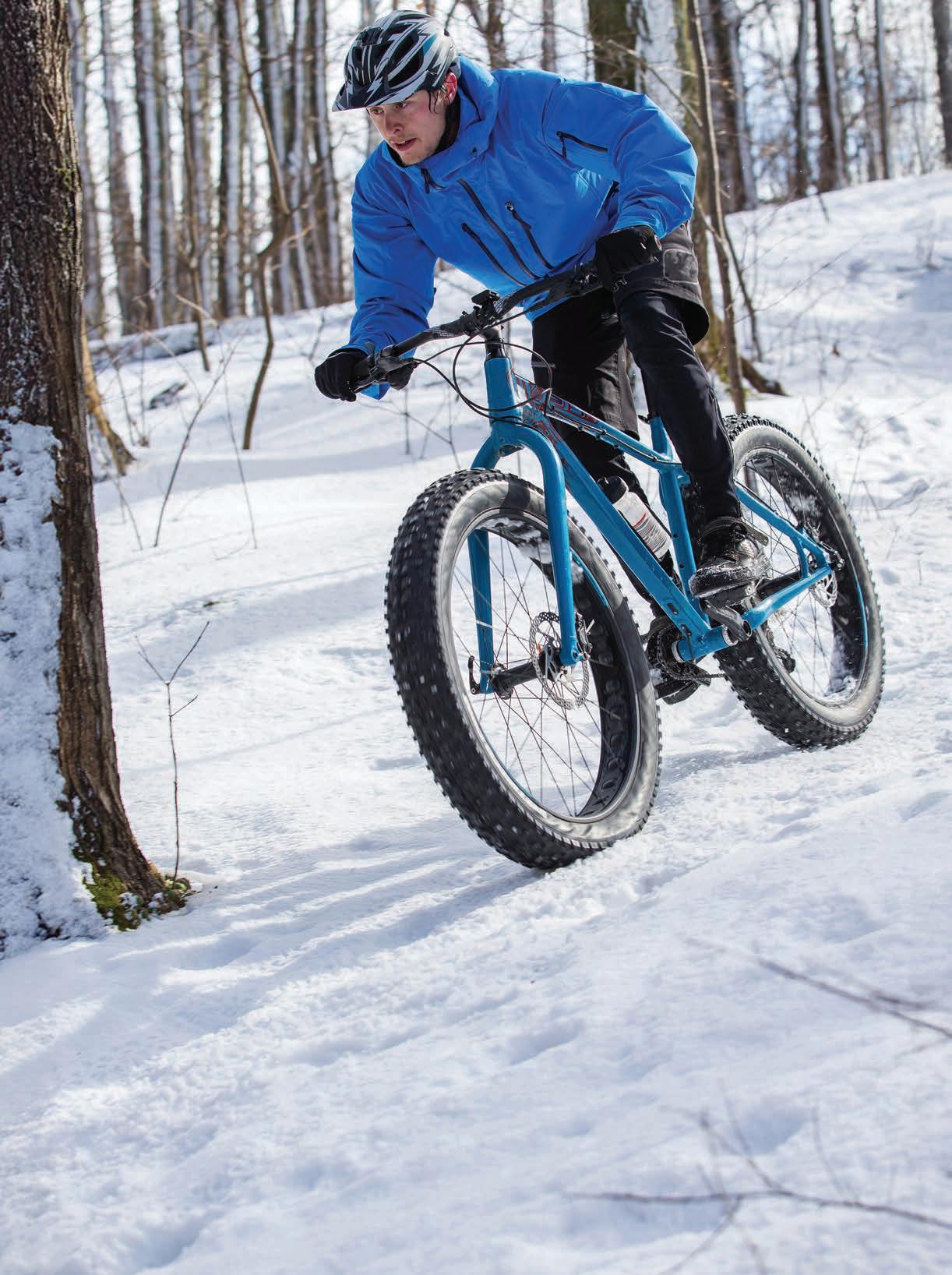
Although rentals aren’t offered here, riders with their own gear can explore the Valley Trail System at Bretton Woods Nordic Center, which meanders around the historic grounds of the Omni Mount Washington Resort and offers views of the Presidential Range, the staggering beauty of snow-capped peaks providing a postcard-worthy backdrop.
The Franconia Inn and their adjacent outdoor center is a one-stop shop where riders can find rentals, trail suggestions and even bike tours. Access more than 10 miles of trails that start from the inn, or travel to PRKR Mountain in Littleton, a 25-mile network of year-round, community-built trails. Insider tip: Visit the White Mountain Bike Shop to chat with Bobby Big Ring — a local legend who’s been riding bikes for more than 50 years — about gear and riding in the White Mountains.

It’s commonly said that if you can walk, you can snowshoe, and that’s what makes it a simple and accessible winter activity for all ages. Snow-covered trails or even backyards reveal animal tracks, and the exposure to sunshine on clear days provides an extra boost of vitamin D, something hard to come by when the days are short. Snowshoeing also provides time for observation — a chance to slow down and really appreciate nature in its current state.
The Seacoast transforms in the winter: The rocky shoreline covered in white a stark contrast to the dark blue, brewing Atlantic beyond. While many might not think of the beach as a cold-weather destination, the trails at Odiorne State Park, traversing from Odiorne Point on the Gulf of Maine to Little Harbor, are an easy network for testing out snowshoes or for those craving that salty sea air.

Purity Spring XC & Snowshoe Reserve, which features 12.4 miles of scenic trails that wind around Purity Lake and meander through the forested Audubon Hoyt Wildlife Sanctuary in Madison, is an ideal spot for beginners looking to rent gear. Similarly, the Mount Washington Valley Ski Touring & Snowshoe Foundation offers afternoon guided snowshoe walks along the East Branch and Saco Rivers, where participants learn about trees and wildlife while mastering basic techniques.
Gunstock Mountain Resort runs evening snowshoe ridge tours where guests, equipped with headlamps and snowshoes, ascend the mountain via chairlift, then traverse the ridge at sunset before descending by foot.
“There’s a camaraderie created through any outdoor adventure,” says Bonnie MacPherson, Gunstock’s director of marketing, “but making a winter trek as a group builds bonds between people and creates memories that last a lifetime.”

Even with my slight fear of heights, I’m drawn to the physical demands of ice climbing: ascending towers of frozen water, propelling oneself upward with metal spikes on feet and in hand. But I also appreciate the mental fortitude required: remaining calm, focusing on pick placement and moving meaningfully.
“For me, there’s something contemplative about ice climbing,” said Matt Yosca of the International Mountain Climbing School in North Conway. “What's more, the ice changes throughout the season as it melts and refreezes, so what you climbed one day could be wildly different on another.”
Ice climbing requires a ton of gear — rigid mountaineering boots, ice axes, crampons, harness, helmet, rope, screws — and even more expertise. While ice climbing can offer an entirely new way to engage with the elements, it’s incredibly important for your safety (and the safety of others) to hire a guide. They'll be updated on local conditions, are familiar with the best climbing spots, are trained to teach participants how to climb, and will outfit climbers with everything needed to stay warm and dry.
Along with ICMS, notable ice climbing companies include Cathedral Mountain Guides, Synnott Mountain Guides and Northeast Mountaineering. For unique climbing opportunities, consider registering for a clinic during the Mount Washington Valley Ice Fest, held Feb. 5-8.


Winter provides us with a whole new landscape and a new outdoor playground, and with the right gear and mindset, you can turn cold days into active, gratifying adventures.
But it can also be hard to embrace the unknown, and so one of my recommendations is to reach out to organizations like the Appalachian Mountain Club, which hosts a variety of family-friendly educational programs and outdoor winter adventures throughout the season. Not only will you receive proper gear and instruction, but it’s also a great way to meet like-minded individuals trying to enjoy the outdoors, too.
“You don’t have to ski to embrace winter,” said Sarah DeLucia, AMC’s director of programming. “Snowshoeing, winter hiking, birdwatching, even stargazing, all offer movement, fresh air and a chance to fall in love with the season’s magic.” NH


n the true crime podcasting world, there is the time before “Serial” and the time after “Serial.”
Released in 2014, and hosted by Sarah Koenig, “Serial” reexamined the case against Adnan Syed, as a potential wrongful conviction. Syed was convicted of the 1999 murder of his ex-girlfriend, Hae Min Lee, a high school senior.
His story captivated the world; there were more than 300 million downloads of “Serial” in its first season. Many point to “Serial” as ushering in an era of widespread interest — some might say obsession — with true crime podcasts and audio storytelling.
That interest hasn’t escaped New Hampshire, which has provided the setting for a handful of true crime podcasts since “Serial.”
“I think a lot of it is the lure of the White Mountains,” said podcaster Lance Reenstierna of Crawlspace Media. “New Hampshire has always been sort of an outlier.”
His podcast partner, Tim Pilleri, also of Crawlspace Media, observes New Hampshire’s personality through the lens of growing up in Massachusetts.
“When I’m up there it seems like it’s a little more private and mysterious,” Pilleri said. “It seems a little wilder, maybe because of the cold. The people want to be left to themselves for the most part.”
The geography of New Hampshire lends itself to mysteries. “It has this ‘Twin Peaks’ type feeling to it, a lot of forests, a lot of places you can wander into,” Reenstierna said.
Jason Moon, senior reporter for New Hampshire Public Radio, is originally from Alabama and finds a strong sense of setting in New Hampshire towns.
“Each is a place unto itself,” said Moon, host of NHPR’s critically acclaimed “Bear Brook” true crime podcast. “Every town is its own little world with its own set of characters, its own small police department and its own mysteries.”
One of those towns is the rural community of Haverhill in the northwestern part of the state, which serves as the backdrop for one of the most baffling missing person’s cases in modern history — the disappearance of Maura Murray.
Haverhill isn’t as well-known as some of its Upper Valley neighbors. It’s a community where people work the land, meet up at the annual North Haverhill Fair, or stop for homemade ice cream at Hatchland Farms.
On Feb. 9, 2004, Maura, then a 21-yearold nursing student at the University of Massachusetts Amherst, told her professors she would be absent because of a family emergency — there wasn’t one — and withdrew some money at the ATM. She got in her black-colored Saturn sedan and drove into the White Mountains. Around 7:30
p.m., she crashed her car along a desolate stretch of Route 112 in Haverhill, where she declined help from a passing motorist.
By the time police arrived at the scene, she was gone.
Despite massive search efforts and a police investigation, no trace of Maura was ever found. It was as if she simply vanished. In the years since her disappearance, her family, police and an army of amateur sleuths have attempted to find her, without luck.
Pilleri and Reenstierna began filming a documentary focusing on the armchair detectives who became increasingly obsessed with Murray's disappearance in 2013, which segued into the podcast called “Missing Maura Murray” in 2015. After they began making the podcast, fervent followers of the case began reaching out with their own theories about what happened to her.
“People are inherently curious, they have this need to solve puzzles, there’s always a need to have an answer,” Reenstierna said. “She disappeared without having an obvious reason. There was no one obviously stalking her. There was no physical abuse at home. There was nothing like that.”
Maura’s disappearance has a lot of unanswered questions, like why she left or bought certain items, which captivates amateur sleuths.


“The more complicated people’s theories got, the more dug in they got,” Pilleri said. “You dig in so hard; it almost becomes your identity.”
The widespread interest in the case can prove challenging when theories and speculation commingle with facts. That’s when Reenstierna and Pilleri return to what they do know.
The search dogs lost Maura’s scent at a certain point. There were no footprints in the snow. He believes she was picked up by a car. But within those facts is room for interpretation.
“There’s another side to pretty much anything you say,” Pilleri said.
The investigation into Murray’s disappearance remains open and active as a suspicious missing person’s case with the New Hampshire Cold Case Unit, according to Senior Assistant Attorney General R. Christopher Knowles, chief of the New Hampshire Cold Case Unit.
“What we most want to publicize is our
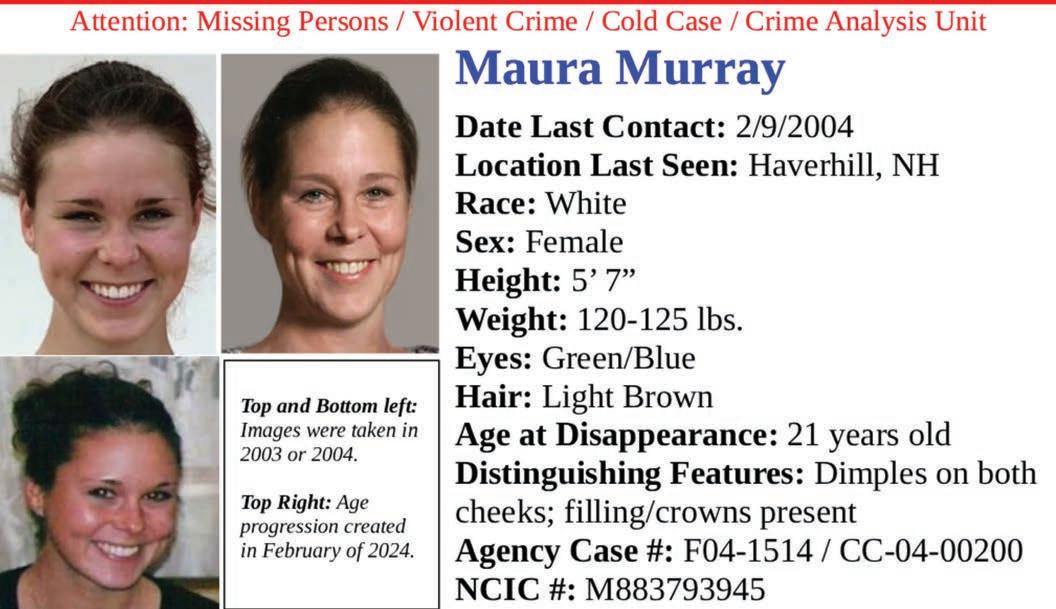

continued commitment to finding answers for Maura and her family,” Knowles said. “The single most helpful thing the public can do is report any information, no matter how small or insignificant it may seem, directly to us.”
The biggest challenge in the case is the passage of time.
“The public interest in Maura's case, including documentaries and podcasts, has been helpful in keeping her case in the public eye and ensuring people are still thinking about her. This renewed attention can, and has, generated new tips,” Knowles said.
Jason Carroll
Ironically, it was publicity from the podcast “Undisclosed” that led New England Innocence Project (NEIP) Attorney Cynthia Mousseau to long-lost DNA evidence in the case of Jason Carroll.
Mousseau was at a court hearing for Carroll when the court clerk told her she knew about his case because she had listened to “Undisclosed.” She told Mousseau, “It’s so crazy, I was just in the basement and saw this big box of evidence with Jason’s name on it.”
Mousseau’s mouth dropped. “I go ‘wait, what do you mean there’s a box in the basement?’ ”
The clerk told her she didn’t know what was inside the big cardboard TV box, but that it had Carroll’s name on it.
Carroll has always maintained his innocence in the 1988 murder of Sharon Johnson, of Bow. The New England Innocence Project (NEIP) took on his case, saying the only evidence was a coerced confession, made after his own mother, a police officer, screamed at him during his interrogation.
The box in the basement could be valuable in proving his innocence. After talking with her supervisor, Mousseau made an unusual decision to ask NHPR’s Jason Moon to be a witness when she went to look at the box. Moon was featuring Carroll’s case in the second season of the “Bear Brook” podcast.
The two speculated about what might be inside. It could be papers, or files. “Or like Christmas, the thing you’ve been dying for; or it could just be underwear and socks,” she said.
They didn’t get their hopes up. The box was brought up. Butcher paper was rolled on two tables, where everything inside was





laid out. “I remember being like ‘this is not paperwork,’ ” she said.
Within the items, Mousseau saw an envelope labeled “fingernail clipping.” It was the moment she realized they might have something that could be DNA tested. She looked at Moon, whose face flushed. “We were both like ‘Oh my God,’ ” she said.
It brought the reality of the situation front and center. “It was one of those moments where it really is unavoidable, the fact of what happened. Here you have the clothes a person was wearing when a person was horribly murdered right in front of you,” Moon said. “It was sobering. It was humbling.”
He continues to update the case in the “Bear Brook” podcast feed. Since the box was found in 2022, the New Hampshire State Police Forensic Lab confirmed there is DNA on several items, which had previously not been tested. Mousseau hopes to get some results in 2026.
“We got a lot of feedback on that
podcast,” Mousseau said. “It’s not that everybody thinks that Jason (Carroll) is innocent, but it’s that everybody is thinking about false confessions, which are not as uncommon as people think.”
Steven Chua was working as a journalist in British Columbia when he heard about the unsolved murder of Jesse James, a rock climber whose body was found in a burned-out GMC Yukon in Squamish in 2017. He has since reported and hosted the podcast, “Dirtbag Climber,” about the case, which traces the victim from his childhood as a Jewish kid in Massachusetts to his time as a neo-Nazi to his time as an internet scammer.
Though everyone realized James was not his real name, it took three years for his true identity to be revealed as Davis Wolfgang Hawke. Hawke was also known as Andrew Britt Greenbaum and Commander
“Every town is its own little world with its own set of characters, its own small police department and its own mysteries.”
— Jason Moon

Bo Decker. Hawke was the mastermind behind a massive internet spam centered in Manchester in the early 2000s. In 2004, AOL won a $12.8 million judgment against Hawke, whom they accused of violating anti-spam laws by sending unwanted emails to its subscribers.
“He was hitting up an astronomical number of emails for different products. The greatest hit of them all was an herbal penis enlargement pill,” Chua said.
Hawke met Brad Bournival, a New Hampshire high school student, at a chess tournament in 2001, and recruited him to work for him. They expanded into a huge space in Manchester, which they filled with computers rigged to send spam emails around the clock during the days of dial-up internet.
“On top of it being a lot slower, the audience was a lot more naïve and willing to believe what showed up in their inboxes,” Chua said. “People would see these emails and think if it shows up in my AOL inbox, it must be legit.”
Hawke was reportedly making $500,000 per month, which he converted to gold and
bitcoin. “He had perfect timing. He was very ahead of the curve,” Chua said.
Hawke vanished after the AOL suit, and Chua’s podcast traced his life in the years after, until his murder, which remains unsolved. The podcast has brought more attention to the case, though authorities remain tight-lipped about leads.
“Regardless of what you think of the guy, the fact that there is an unsolved murder out there is not a good feeling,” Chua said. “I do hope the podcast gives a bit more motivation to solve it.”
After AOL won their suit against Hawke, they announced their plan to search for the buried gold at his parent’s house in Massachusetts, but never did.
“Legend has it that the gold bars are buried somewhere in the White Mountains,” Chua said.
In researching his podcast, Chua interviewed Brian McWilliams, who profiled Hawke’s case in his book, “Spam Kings.”
“Brian McWilliams talked to one of their associates, and that associate said he was there when Brit brought the shovel to start burying
the gold somewhere in the White Mountains,” Chua said. “As for where in the White Mountains, that’s still a mystery. It feels like one of those things that is an almost mythical story — you too could become a millionaire if you wander around the White Mountains of New Hampshire long enough.” NH
Lara Bricker is a journalist, true crime author, licensed private investigator and certified cat detective. She has been writing and reporting on crime and justice issues since 1998. A community journalist at heart, Bricker is among those mourning the loss of resources for local journalism.
Her work has appeared in Woman's World magazine, USA Today, Vulture, Boston Globe and more. In 2008, she covered the first death penalty case to go to trial in New Hampshire in almost 50 years for the Associated Press.
Bricker previously worked as a defense investigator for the New Hampshire Public Defender system for seven years. During that time, she was involved in investigating cases from misdemeanor assaults to felony murders. She is currently a licensed private investigator who works throughout New Hampshire on behalf of her clients.
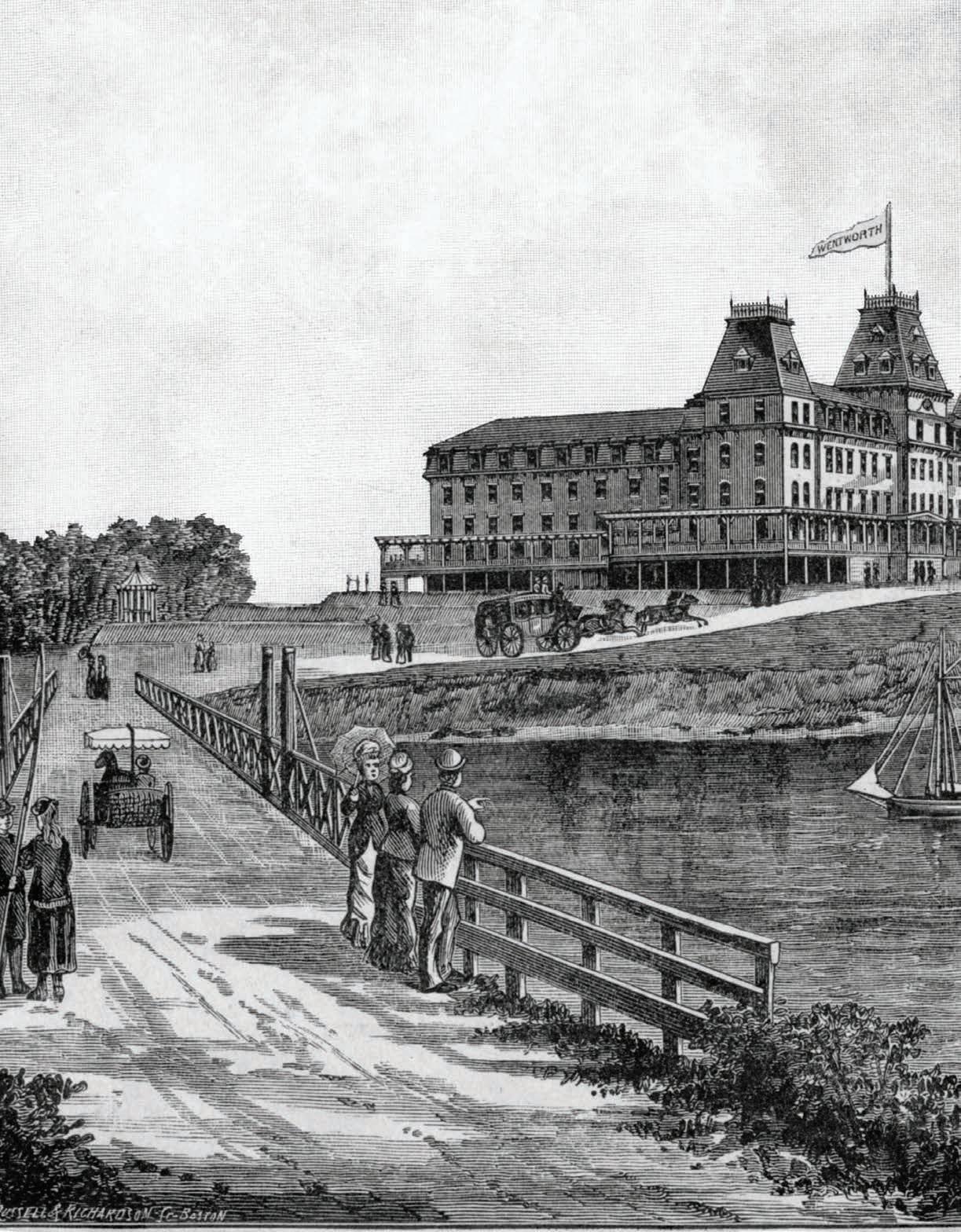
BY J. DENNIS ROBINSON
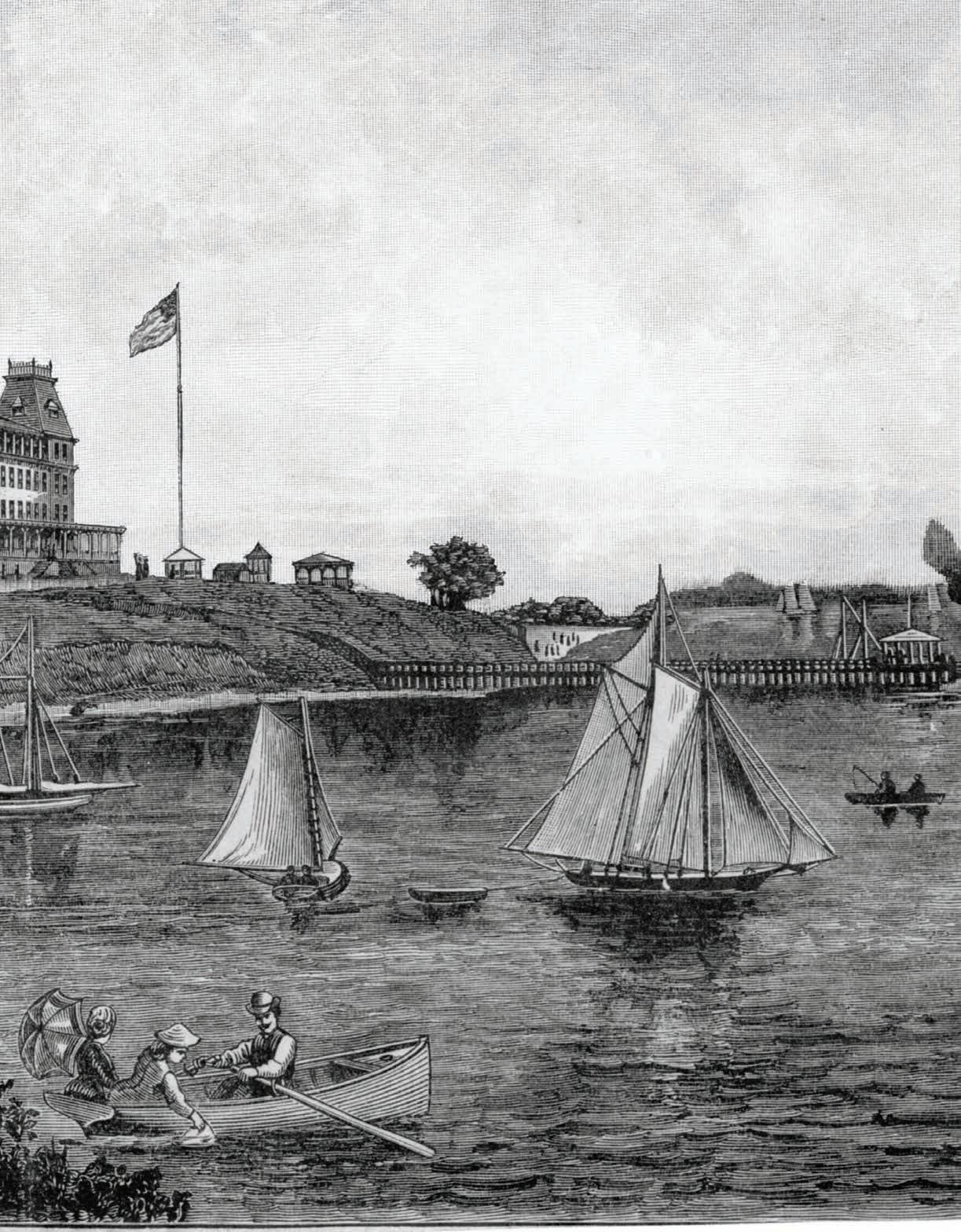
Wentworth by the Sea is a survivor. It stands while so many other great Atlantic hotels of its era have disappeared. It did not burn, like most rambling wooden structures. In fact, it grew, expanding until the buildings dominated a quarter of the island town of New Castle.
t evolved and made international headlines. It went dark for two decades, then reappeared, phoenix-like. Today's Wentworth is not a reconstruction. Only the front portico and its three towers date to the 1870s. The 21st-century Wentworth, instead, is reborn — a modern hotel with a historic heart.
The location was too perfect to ignore. Someone, New Castle residents predicted, was going to build a grand hotel atop the scenic bluff on the southwest side of the island. That person, all but lost to history, was Mr. Daniel E. Chase. A liquor distiller by trade, Chase bought the land in 1873 from Sarah Campbell for $4,000, worth $100,000 today.
Described as “a manly man … in the Puritan character,” Chase had the funds, but Sarah and her husband, Charles, both New Castle locals, had the dream. Skilled in the hospitality trade, by June 1874, the Campbells found themselves managers of a boxy wooden hotel with 82 apartments known simply as The Wentworth.
The L-shaped structure offered magnificent views at every point of the compass: from Little Harbor, site of the first New Hampshire settlement in 1623, to the Isles of Shoals, coastal Maine, and the mansion of royal Gov. Benning Wentworth at the Back Channel, dotted with tiny islands.
An early newspaper account detailed an extensive entry hall and parlor with a grand piano, a reading room and a dining room
capable of seating 400 guests. A 14-footwide piazza wrapped the exterior on three sides. A gushing spring provided water. Gas lamps lit every room. The fine carpets and walnut and oak fixtures led up a wide stairway to an observation cupola on the roof with views of the White Mountains on a clear day. “The scene at sunrise and sunset,” a contemporary reported, “is as wonderful as fairy land.”
The primary activity at Victorian hotels was relaxing away from the heat and smog of industrial cities. Guests sat on the piazza in rocking chairs and watched the sailing ships gliding between harbor and sea. They lounged on the rocks and read, played cards and chatted. Eating was their second-favorite activity.
Physical fitness had not yet come into fashion, but for the vigorous souls, the Wentworth offered swimming in the protected bay, horseback riding, fishing and sailing. Carriages and ferries were available for those who wanted to view historic sites, attend church or shop in Portsmouth.
Following a banner first season, Daniel Chase threw money into buying more seaside real estate. In 1875, he added a new hotel wing. But Chase, according to New Castle historian John Albee, “forgot to count cost.” Shifting employees, skilled pastry chefs, a new billiard room, pier, bowling alley and stables all hit the bottom line hard. Then, amid a looming recession, Daniel Chase went bankrupt, abandoning Sarah Campbell and 92 other creditors. By 1877, the liquor distiller was out and the ale tycoon was in.
Where Daniel Chase saw a modest hotel on a hill, Frank Jones saw the grandest world-class luxury hotel in New England. Jones didn't have to ask the bank for help. He owned the bank. He would come to own an insurance company, the local utilities, a railroad line, a brewery, horse racing stables, a theater and office buildings.
Born on a farm in Barrington in 1832, Jones was 16 when he delivered an oxcart full of charcoal to Portsmouth. From rag-picker to stove salesman to brewer, he showed uncanny business skill. A Portsmouth mayor and NH congressman, Jones left politics in 1879, the same year he purchased the Wentworth. He poured money into his new property, installing another story to the main building. He added three distinctive towers, each topped with the curved “mansard” roof that we recognize today. Extensive renovations doubled the length of the hotel to 160 feet.
Manager F.W. Hilton took wealthy guests up a steam-powered elevator to 200 beautifully appointed rooms. A 20-piece Boston orchestra was in residence for the entire summer. Hilton instituted athletic competitions, a longtime Wentworth tradition, featuring sprints, tennis, golf, baseball, rowing and swimming events. Wentworth horses were immaculately groomed. Carriage drivers were prompt and neatly dressed. Hundreds of anonymous workers were seen, but not heard. A marketing genius, Hilton broadcast news of the luxurious accommodations throughout the East. Patrons from Louisville, Cincinnati, Chicago and St. Louis dominated the hotel register.
“These are men of wealth and refinement,” manager Hilton told the press. “They want the best service, and are willing to pay for it … Their entire families appreciate the atmosphere at the Wentworth, and leave it with regret.”
Tapping his congressional contacts, “The Honorable” Frank Jones arranged a visit by President Chester A. Arthur. In September 1882, the president and his entourage breakfasted at the Wentworth. They praised the view from the roof before stopping by Jones’ Rockingham Hotel in downtown Portsmouth, now converted to private apartments. Even a whistle-stop visit was enough to affix the presidential seal onto the hotel
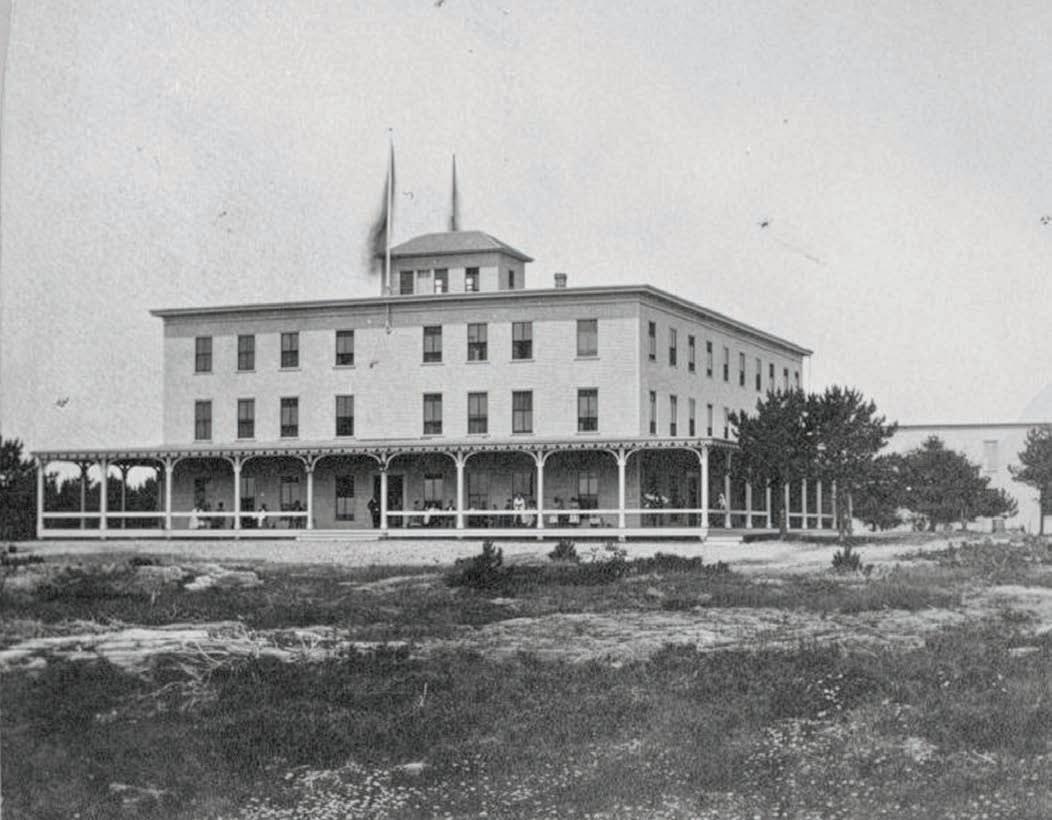
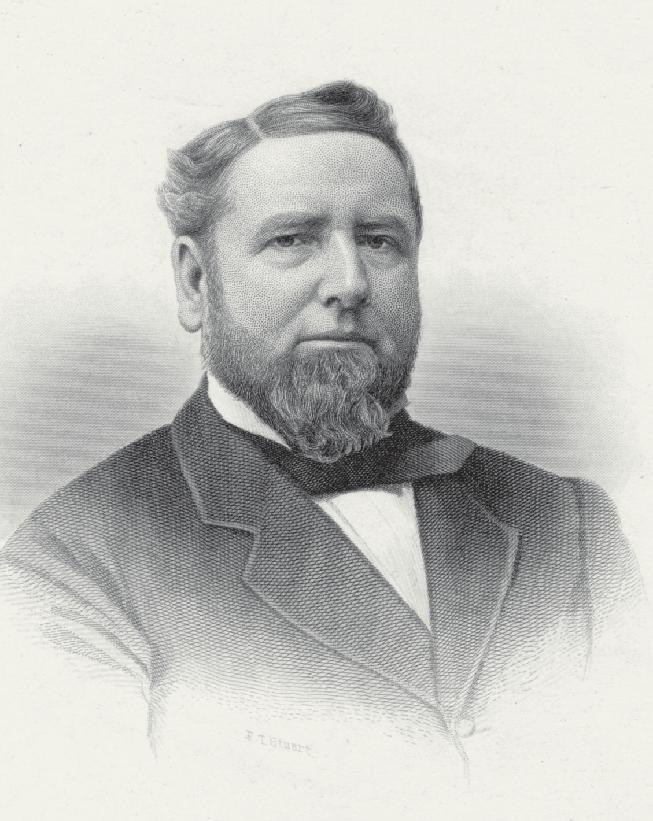
Business tycoon and former U.S. Congressman Frank Jones purchased The Wentworth in the late 1870s. Over 25 years, his investments changed the shape and size of the hotel, transforming it into one of the most exclusive resorts on the Atlantic coast.
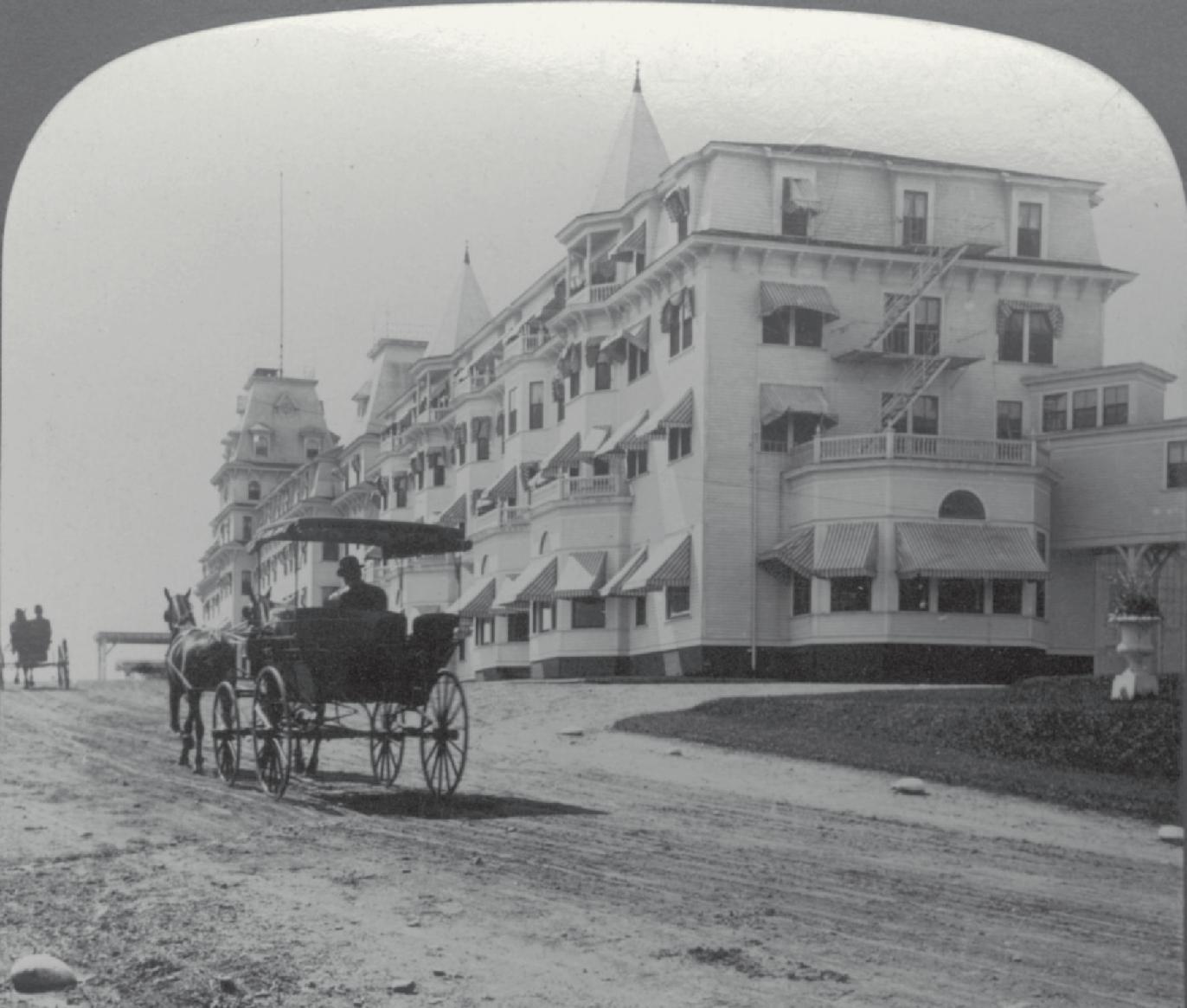
advertising campaign. Jones openly offered to give the new president a free parcel of land if he wished to build a summer cottage in New Castle.
Of all its innovations, none was more welcome to the Victorian traveler than the marvelous water closet, although, at first, only a few were added to each floor. They flushed directly into Little Harbor, from which the mighty tides carried the effluent out to sea. Jones also pioneered the use of electricity. In July 1880, seven outdoor electrical arc bulbs cast a flickering, futuristic glow over New Castle for the first time. Jones built his own coal-fired plant that, initially, supplied power to his Portsmouth mansion and his two local hotels. By 1895, the outline of the hotel was lit by hundreds of bulbs. Observing the scene from across the Piscataqua River, a reporter wrote: “Its grandeur dwarfs all other hotels on the Maine and New Hampshire coasts until they become almost insignificant.”
Peace Treaty and beyond
Frank Jones never lived to see his greatest triumph, but he set the stage. Before he died in 1902, he nearly doubled the size of his hotel. The Wentworth Annex was designed to function independently. It had its own parlor and office, a billiard area, rooms to sleep 100 guests and an innovative separate dining facility built onto the top floor. Half a world away, Japanese and Russian soldiers were locked in a territorial conflict that had killed half a million men. For Portsmouth residents, until the summer of 1905, the Russo-Japanese War was no more than an emperor battling a czar in a distant and mysterious land.
Fearful that the balance of world power was shifting dangerously, President “Teddy” Roosevelt invited the two nations to meet on neutral ground. Roosevelt wrote: “I am taking steps to try to choose some cool, comfortable, and retired place for the meeting of the plenipotentiaries where conditions will be agreeable and where there will be as much freedom from interruption as possible.”
The Wentworth, now two conjoined hotels, was selected as the home base for both delegations. In August, 1905, Japanese and Russian envoys arrived to find a boisterous welcoming parade. For one month, the
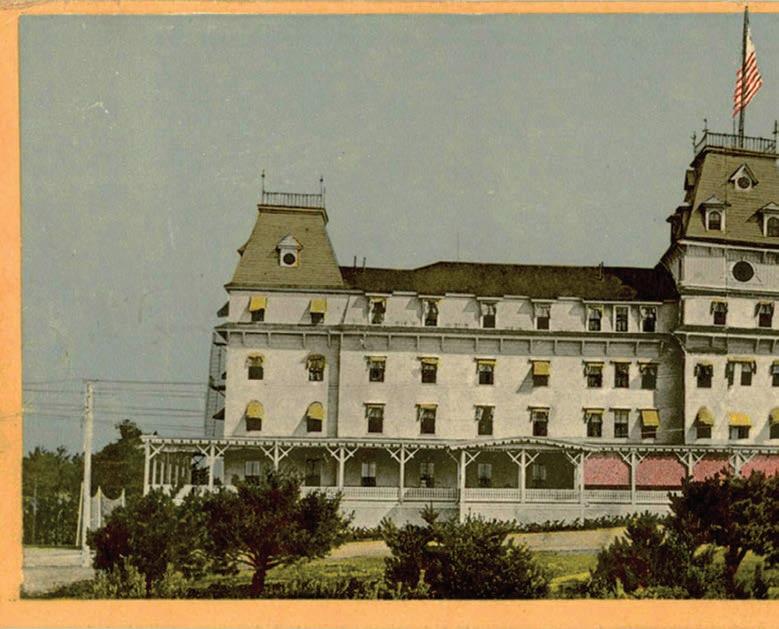
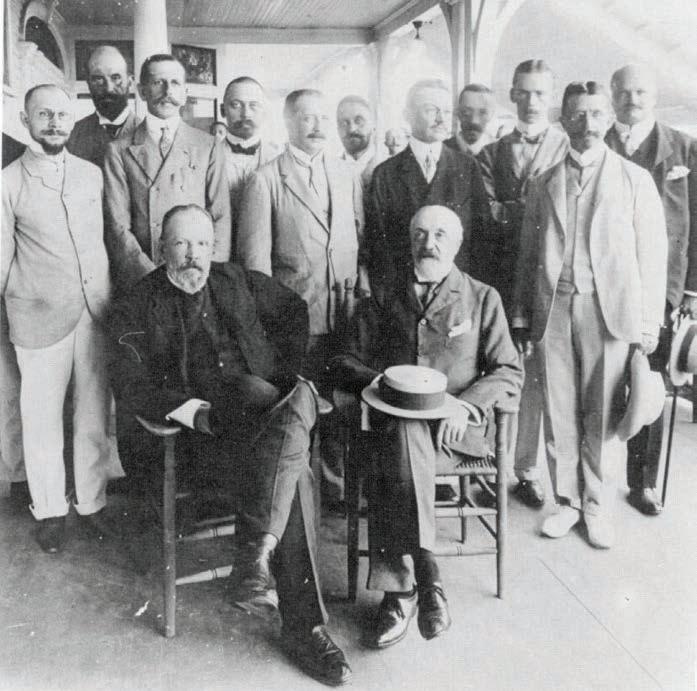
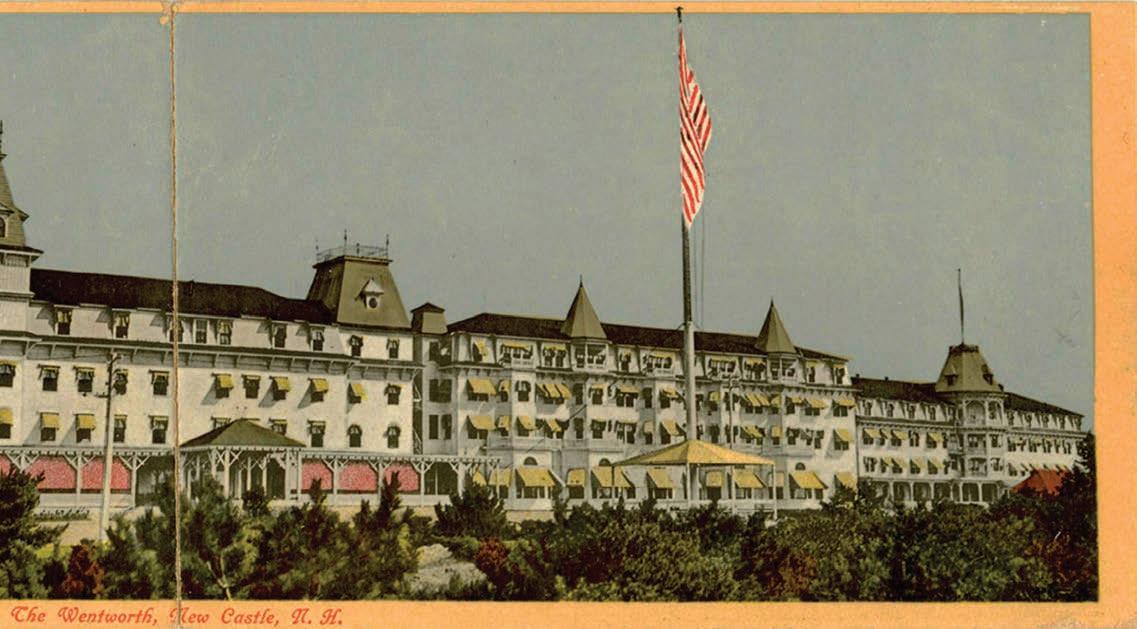
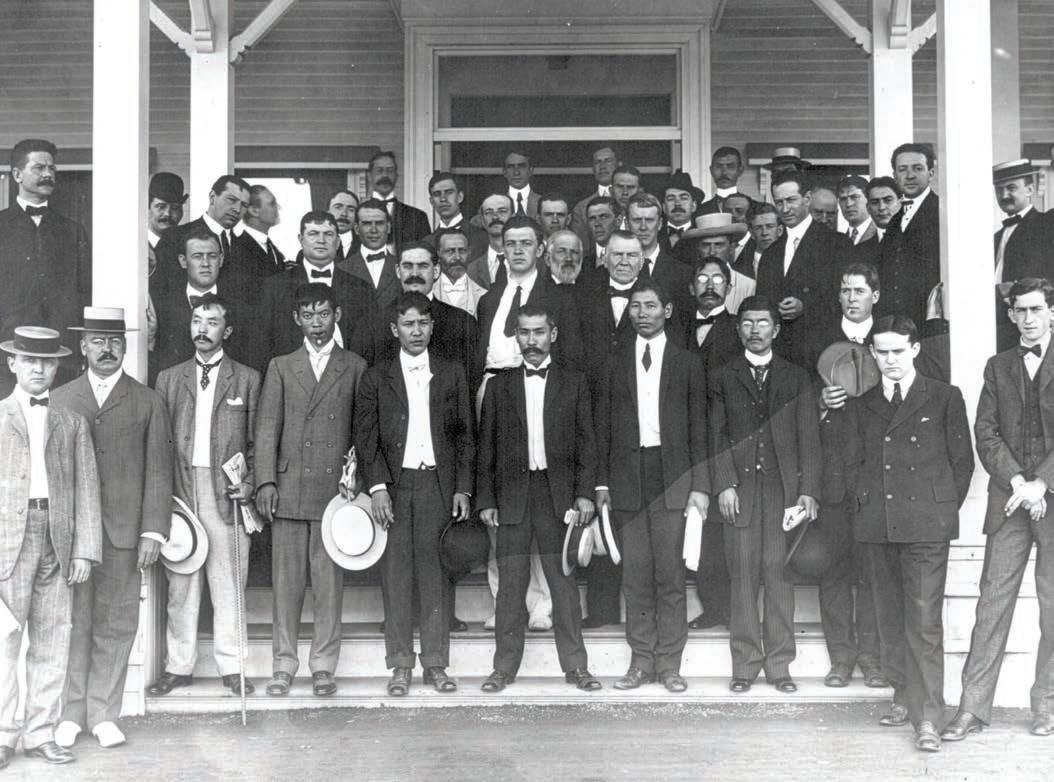
delegates shuttled back and forth by navy cutter from the Wentworth to the secure brick “Peace Building” just across the Piscataqua River at the Portsmouth Naval Shipyard in Kittery. A hundred journalists jostled for newsy tidbits. Photographers captured Sergei Witte of Russia and Jutaro Komura of Japan staying in separate wings of the hotel.
It was a nail-biter, but in the final hours, a treaty ending the bloody war was signed. The mayor of Portsmouth ordered church bells to be rung for a half-hour, a tradition honored annually in Portsmouth. “PEACE!” The newspaper announced in 5-inch letters on Aug. 29, 1905. Historians continue to debate what went right in the successful Treaty of Portsmouth.
Sold and sold again, the now-famous Wentworth adapted to the times. In 1916, as the First World War loomed, new owner Harry Priest hired the hotel’s most famous employee. Gray-haired, but as precise as ever, 58-year-old Annie Oakley demonstrated her riding and shooting skills on the hotel grounds.
Golf and swimming dominated the Harry Beckwith era that stretched from the Roaring Twenties to the Great Depression. His engineers created a deep, massive pool with a cement floor. Filled with seawater by the tides, it had to be pumped dry and scrubbed clean every three days. Beckwith also introduced “The Ship,” a massive wooden casino shaped like a cruise boat. Here, guests could view Olympic divers, listen to live music, attend movies and lectures, or watch boxing matches. One critic described The Ship as “an ocean liner stuck on a reef.”
But the guns of war were sounding again. Contrary to legend, the Wentworth was not painted black during World War II as a defense against marauding German submarines. Instead, the lights were simply switched off, the resort “blacked out,” and the doors shuttered.
Margaret and Jim Harry Beckwith wouldn’t take a penny less than $200,000. It was way more than Margaret and James Barker Smith had in 1946, but they couldn’t resist the offer. The Wentworth sale included the sprawling 256-room hotel, its staff dormitories and outbuildings, The Ship and tidal pool, docks, and the golf and tennis courses, plus the Beckwith summer
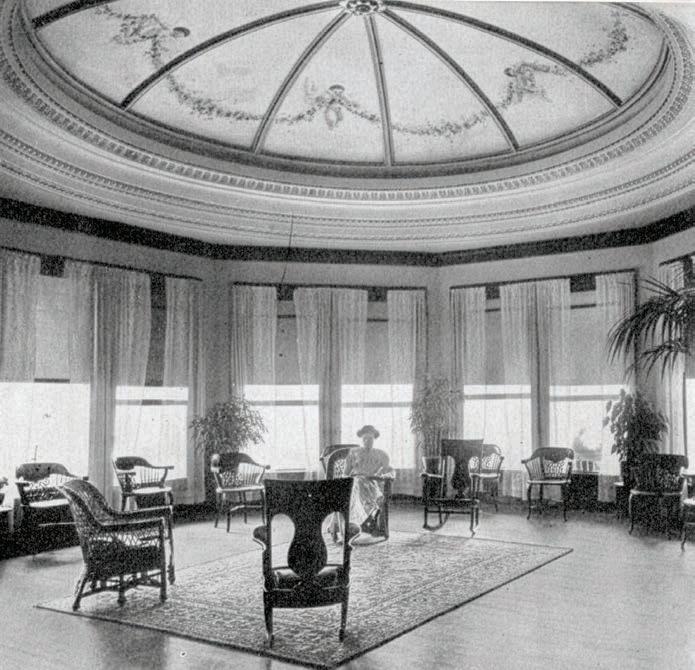
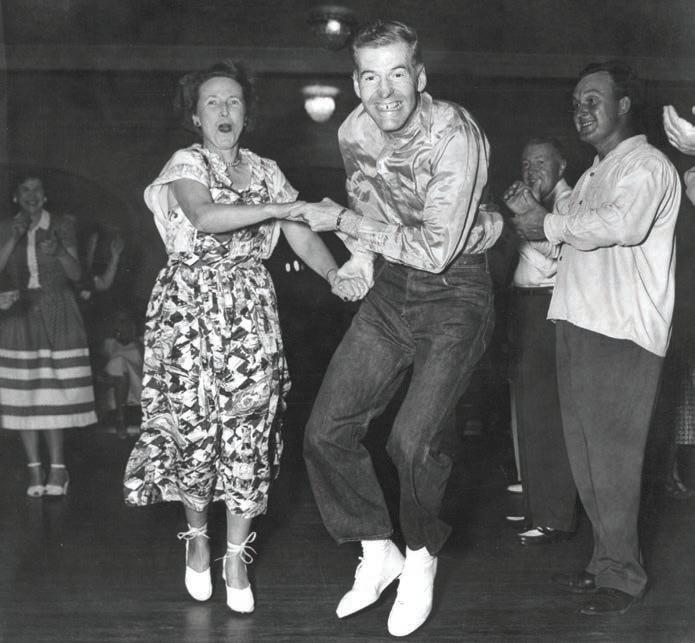
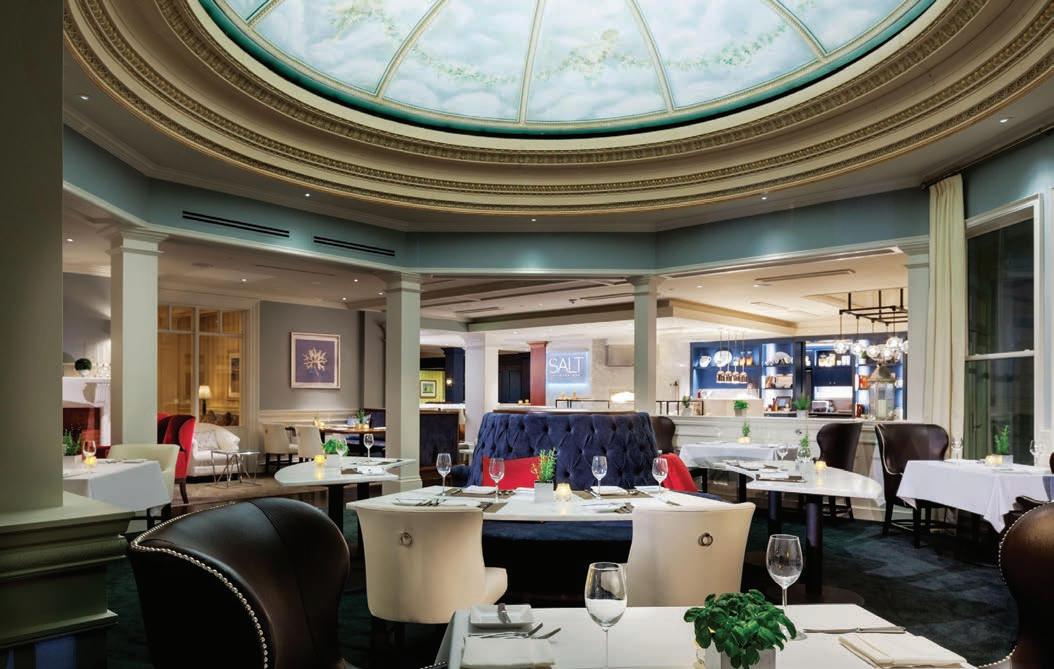
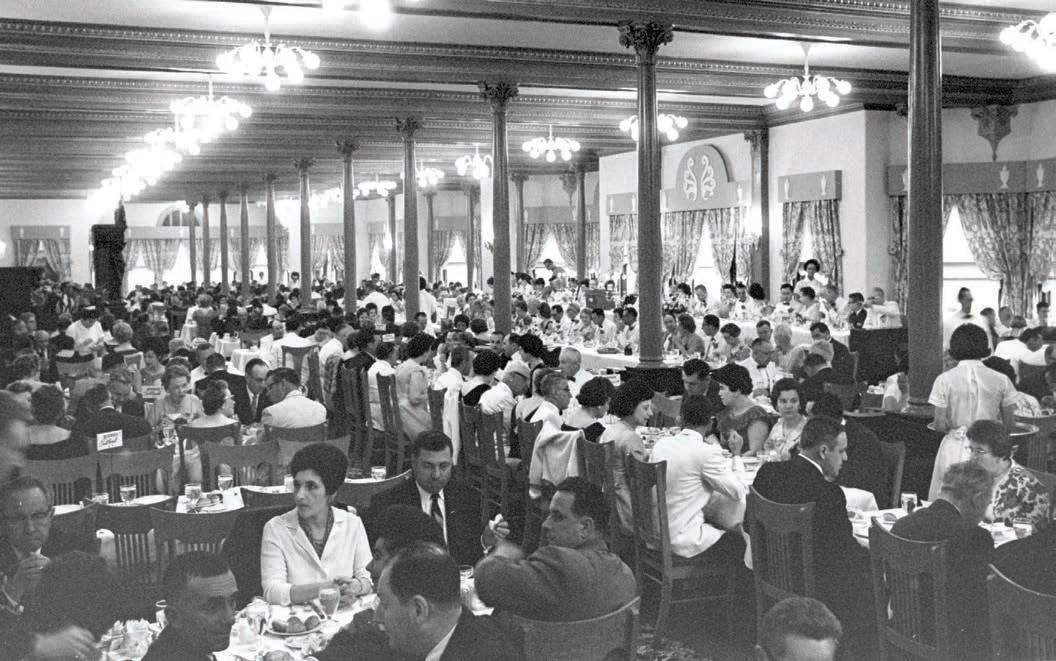
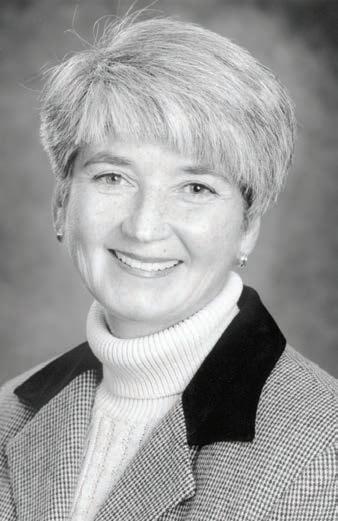
house and several hundred acres in Rye and New Castle. Born to the hospitality trade, the couple from Kansas and Colorado would run their summer resort for three decades.
Margaret handled the business while Jim acted as genial host. Each week followed a strict schedule of cocktail parties, movies, ballroom and square dancing, masquerades and concerts. Post-war Americans rushed to rusticate amid the fading grandeur of a bygone era. The Smiths, like their forebears, initially ran an “exclusive” hotel that shunned Jewish, Catholic and guests of color. But by the mid-1960s, those barriers were shattered by law, by economics and by shifting social norms.
Despite rumors to the contrary, celebrity guests were few and far between during the Smith era. Actress Gloria Swanson was clearly on the scene. Also sighted were actors Jason Robards, Fred Rogers and Zero Mostel, columnist Ann Landers, athlete Arnold Palmer, and economists Milton Eisenhower
and John Kenneth Galbraith. FBI Director J. Edgar Hoover went unseen, but his thankyou note is in the Smith Collection archive. Vice presidents Hubert Humphrey, Richard Nixon and Dan Quayle shared the podium with presidential hopefuls Ralph Nader and Sen. Edward “Ted” Kennedy. Archived photos show the Smiths posing with Prince Charles in 1973.
The couple thrived by inching up room rates while extending the summer opening and fall dates. They kept employee wages low and hosted as many as 250 conventions and business gatherings annually. The Smiths, who wintered as managers of a hotel in Florida, ran a tight ship. But maintaining the aging property, Jim Smith claimed, swallowed a quarter million dollars annually. In the fall of 1980, after 34 summers by the sea, James and Margaret Smith called it quits. Their reign over the magic kingdom was complete, and their departure, though regal and well deserved, nearly brought the castle down.
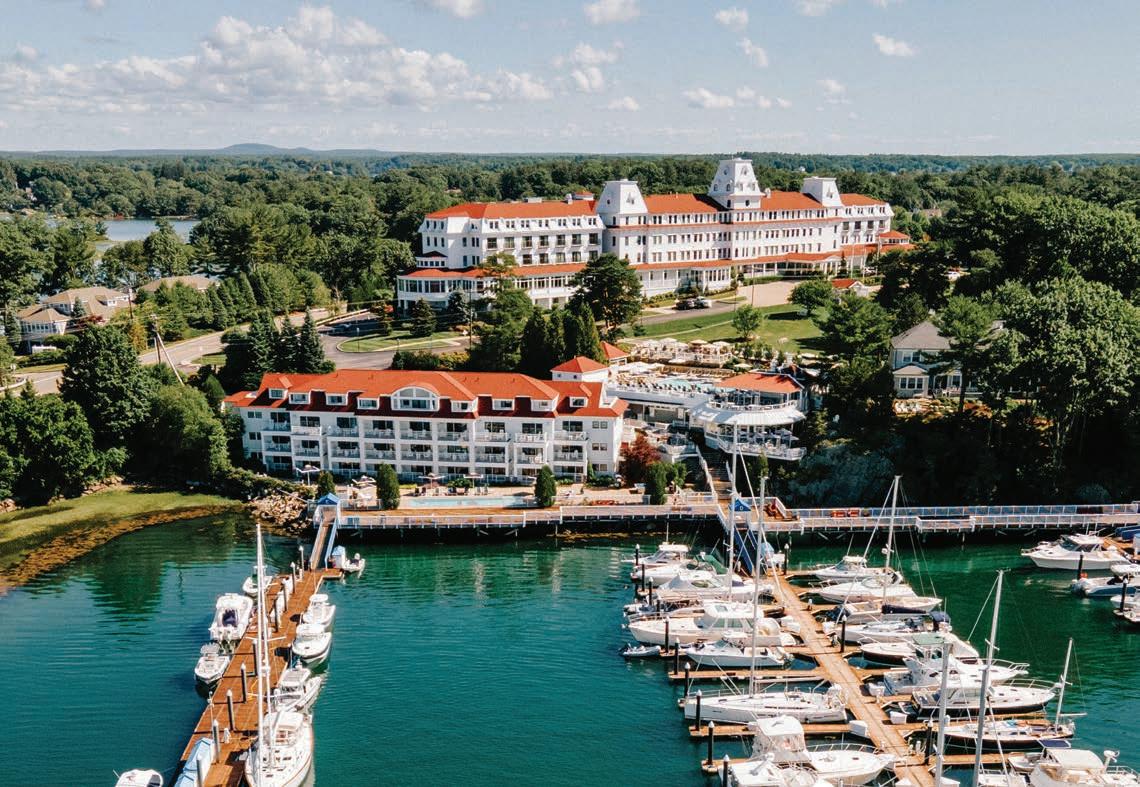
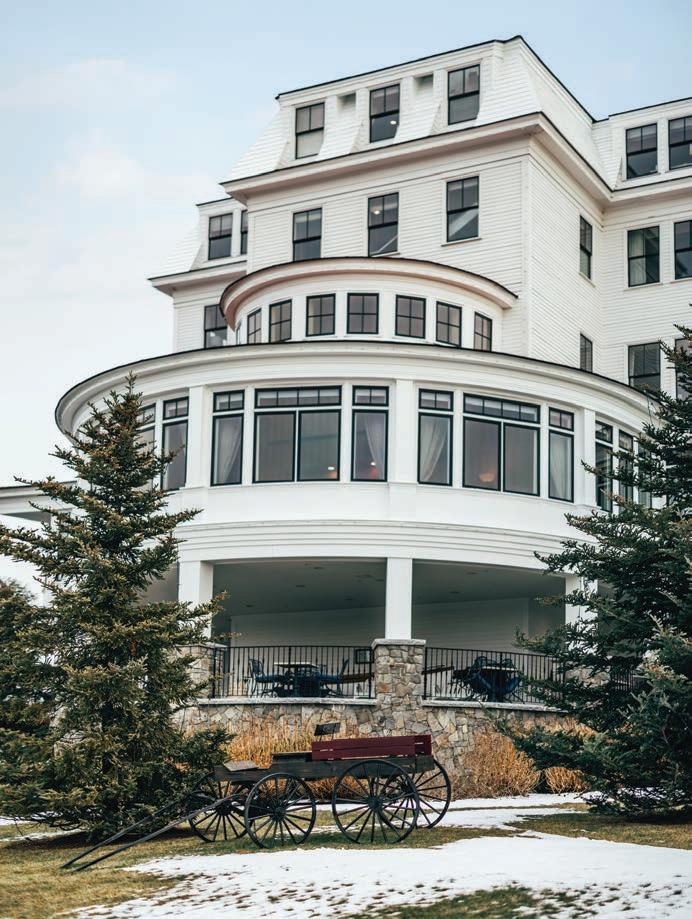
With the Smiths gone, the hotel itself appeared to lose heart. After a failed revival by their son James Smith Jr., Wentworth by the Sea closed for the next 22 years. Half a dozen owners followed, but each seemed more interested in the great expanse of scenic Wentworth property than in the waning hotel itself. None of the owners were truly “hotel people,” and with each sale, the building and its surrounding estate grew smaller.
By the 1990s, surrounded by a metal fence, only a battered portion of the original building was left standing on 4 acres. When former Wentworth tennis pro Wadleigh Woods, then in his 90s, visited the ruined site, he wept. But there was a faint pulse. What began as a local effort to slap on a fresh coat of paint became the nonprofit Friends of the Wentworth. Led by Etoile Holzaepfel,
a New Castle landscape architect, the group lobbied tirelessly to find an owner. “We are not interested in preserving it as a relic or as a museum,” Holzaepfel told reporters. Use it or lose it was the group’s motto.
Years of negotiations passed. Then, on Feb. 19, 1997, a Portsmouth Herald banner headline proclaimed: “The Wentworth is Saved.” Ocean Properties, a locally owned hotel management company, agreed, conditionally, to buy and rebuild “the grand dame of the Gilded Age.” It would take six more years and $26 million. Today, because the building stands, its countless stories, preserved within the original beams, are being told and told again. NH
J. Dennis Robinson is the author of 20 history books for readers of all ages, including Wentworth by the Sea: The Life & Times of a Grand Hotel. For more information visit jdennisrobinson.com.
Mary Carey Foley is on a mission. Her official title at Wentworth by the Sea is concierge. Her real job, she says, is “to make people happy.”
“I just think of my mother,” Foley says. “She made the best out of everything. I try to be like her every single day.”
Her mother, Eileen Foley, was the longest-serving mayor in Portsmouth history. Mary’s grandmother, Mary Carey Dondero, was elected the city’s first female mayor in 1945. Those are big shoes to fill.
“When my brothers, Jay and Barry, and I were growing up in the 1950s, for a treat after Friday dinner, our family would take a ride around the New Castle loop,” she recalls. “We’d stop for ice cream at Bartlett’s (later the Ice House). A cone was 5 cents with sprinkles! Passing the hotel always fascinated me. My parents were married at the Wentworth. It was just so beautiful. The older I got, the more I wanted to work there.” More than half a century later, Foley got the job.
“Now I’m always at work,” she says. “I’ve been here 19 years. I’m the concierge, but I also do Thanksgiving dinner and the Christmas buffet. I do the wine festival. When it’s not too busy, I’m around back answering the telephone.” As a justice of the peace, Foley notes, she is even available to officiate at weddings.
“The Wentworth is as special as the first day I started work,” she says. “I’m turning 75, but I’m like one of the kids here. I’ve gotten very close to a lot of my guests over the years. They’re not just customers. They’ve become my very, very close friends.”

Some of the most important decisions for New Hampshire retirees to make include where and how they want to live, and whether to stay in their own homes or to transition to a retirement community. We reached out to some retirement living experts to learn about the planning process and what they have to offer so New Hampshire residents can ask the right questions as they enter this stage of their life journey.
MEET THE EXPERTS:


ORCHARDINNCARE.ORG
QOrchard Inn at The Baldwin provides assisted living and memory support. What makes Orchard Inn unique?
AOrchard Inn is the only Assisted Living and Memory Support community in southern New Hampshire that uses the innovative, small-home model. At Orchard Inn, each of our four households accommodates just 10 residents, with care that is highly personalized and focused on empowering residents to maintain their highest level of independence. With no long hallways to navigate, everything is within easy reach. Residents can simply step out of their spacious private suites to dine with neighbors, participate in programs, socialize around the fireplace, or enjoy the outdoors.
In addition, while typical senior living communities put healthcare wings off to themselves, separate from the community, Orchard Inn is located on the second and third floors of The Baldwin’s main building. This makes it easy for those living at Orchard Inn to enjoy The Baldwin’s amenities, remain part of community life, and participate in programs, classes, and more.
QIs Orchard Inn’s pricing all-inclusive or à la carte?
AOrchard Inn’s pricing is all-inclusive, so you’ll know exactly what to expect when your bill arrives. There are no surprise charges or bumps to a higher tier just because a resident needs extra support with medications, more hands-on help, a meal brought to their room, or additional oversight as their needs change. Because of this, all-inclusive pricing can actually be more affordable in the long run with savings that really add up. Plus, instead of worrying about surprise fees every time care needs change, you’ll have a consistent budget and priceless peace of mind.
Scan the QR code to learn more about the true cost of care.

— Kathleen D’Amico, Marketing Director, The Baldwin
To see this innovative community for yourself, call 603.699.0100 and schedule a tour. Or go to TheBaldwinNH.org/Events to find an upcoming open house.

QW hat is Continuing Care at Home?
AContinuing Care at Home is an innovative alternative to Continuing Care Retirement Communities. Members receive a life plan that blends care coordination, in-home support, and engaging programming, all while remaining in the home they love.
QHow does At Home By Hunt work?
AMembers are paired with a dedicated Care Coordinator right from the start who guides wellness planning and will help to manage any future care needs. When support is needed, it is delivered directly to the Member in their home, and the program will offset the costs of that care.
QHow is this different from long-term care insurance?
AWhile long-term care insurance is more of a reactive benefit, At Home By Hunt offers a preventative approach. Members start a relationship with the At Home By Hunt team from the start. When they need it, their Care Coordinator assists with initiating services, navigating medical needs, and managing care as life changes, which goes far beyond what typical long-term care insurance provides. No claim forms and long holds on the phone—this program is about people helping people. At Home By Hunt is a great alternative to long-term care insurance, and a great supplement to an existing plan if the Member already has one in place.
QHow does its not-for-profit mission shape the experience?
AQ
W ho is a good fit for this program?
AAt Home By Hunt is designed for adults 62 years of age or older who are healthy, independent, and want a proactive plan for their future. Many choose the program to avoid last-minute, stressful decisions, allowing them to maintain control over how and where they receive care.
QYour partner is ready to move to a retirement community, but you are not. As New Englanders, we love our home and independence, but you also see the logic of planning ahead. So, how can you stop going around in circles and get unstuck?
AThis is quite a common dilemma. Often one partner is protecting safety and future security, while the other is protecting identity, independence, and a home full of memories. Both are valid.
Start by talking about what you each want life to feel like in the next 10–20 years, not about floor plans. You may find you share the same values like freedom from home maintenance, connection, and control over future choices—even if you imagine different paths. Next, take low-pressure steps together. Visit a community for lunch, attend an event, or talk with residents who moved sooner than they expected. Joining a waitlist can be an excellent beginning to planning logistics of the move, while still exploring life and making new friends in the community.
In my experience, many couples feel relief once they have real information instead of assumptions. If you are curious
As part of the Silverstone Living family of not-forprofit Communities, including Hunt Community, The Huntington at Nashua, and Webster at Rye, At Home By Hunt is guided by a mission of service, transparency, and long-term stability. Decisions prioritize the Members’ well-being first, and the program is backed by more than a century of caring for older adults in New Hampshire. To learn more or schedule a personalized consultation, visit AtHomeByHunt.org.
— Kelley Kennedy, Executive Director, At Home By Hunt
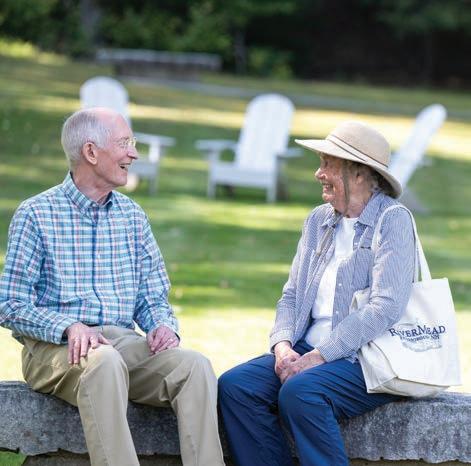
about exploring optimism at communities like RiverMead, online is a simple first step. Learn about LifeCare, compare options, and start a calm, informed conversation at home. Begin your research at RiverMead.org, then come see our stunning two-campus community located in Peterborough, New Hampshire. Call 603-924-8611 to speak with our team directly and schedule a tour.
— Kim Murphy, Director of Marketing & Sales, RiverMead







BY ALEXIS LINDLEY-DEANGELIS
Nothing’s wrong with a Hallmark greeting card and arrangement of flowers from the grocery store, but why not do something a little extra special? Your partner is sure to notice how much thought you put into your Feb. 14 plans when your ideas show next-level consideration and creativity. From places to go to activities to try and goods to share, we’ve found new ways for you to say “I love you” this Valentine’s Day. Don’t worry — we won’t tell anyone if you pull all your ideas right off our list!
When you think of a romantic evening by candlelight, you might picture tapers and tea lights... but what if you did something a little more surprising? Quiñohome soy candles come in seasonal scents that capture both the unexpected and the familiar. Winter scents like Picnic in Provence fill the air with subtle lavender, driftwood and citrus — like a breeze on a spring afternoon in the country — while Mountain Air drifts with pine, balsam and hints of apple, like a late-summer hike. Light a scented candle after dinner and suddenly the room will smell like a fond, forgotten memory —warm and inviting, made for lingering conversation. quinohome.com
Valentine’s Day can sometimes feel like a chase for the perfect gift, when really the focus should be on simply enjoying time together. A shared experience can bring the attention back where it needs to be. Try wheel throwing at 550 Art Center in Manchester where the two of you can laugh over wobbly clay, celebrate your (probably imperfect) one-of-a-kind creations, and leave with souvenirs and lasting memories. 550arts.com


Taste the subtle, savory and sweet differences in these made-in-Manchester small batch bars that celebrate chocolate from around the world, one bar at a time. Maine Sea Salt is rich and creamy, made with 70 percent dark chocolate from globally sourced cacao beans and solar dried Maine sea salt for the perfect combination of salty and sweet. If you’re interested in a bit of a kick (medium to hot salsa level), The Ghost & Sea bar has the same blend of dark chocolate and Maine sea salt with chocolate ghost peppers for a fun play on your senses. loonchocolate.com
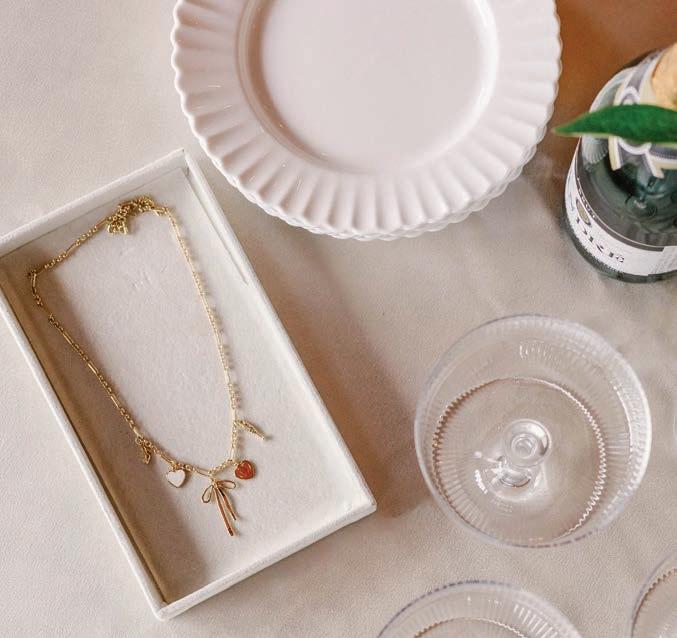
Nothing says “personalized” like a charm bracelet or necklace created through NewHampshire-based jeweler, Hip Hope Hoorah. Assemble charms that remind you of your partner’s personality — perhaps their favorite food, “spirit animal” or birthstone — or choose charms that tell the story of your time together, like a locket that contains your first photo as a couple, alongside a shell that brings back memories of your first beach date. This gift is sure to get a lot of wear because it shows how much you care … Even better? It doesn’t cost as much as diamonds! hiphopehoorah.com
If you and your partner love a classic wineand-cheese night but want to try something more unique for Valentine’s Day, consider swapping wine for mead. Sap House Meadery, a Center Ossipee maker of traditional and seasonally inspired honey-wines, brews flavor profiles you won’t find in a typical bottle of red or white — including such notes as maple, berries, spices and even teas. Set out two or three different meads with fruit, savory crackers and a few cheeses (let them warm to room temp for optimal flavor), and settle in for an intimate evening built around tasting, comparing and deep conversation. saphousemeadery.com

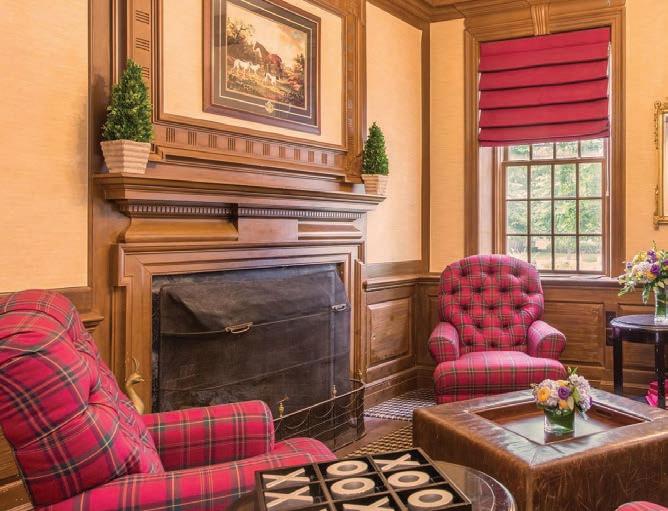
If you think a romantic night in sounds just about perfect, what about a romantic evening at a local inn? An overnight getaway at The Exeter Inn will remind you what making time to be together is all about. When you book the Epoch Evenings package, your stay includes a delicious dinner at the atmospheric on-site Epoch Gastropub, where the warm glow and hot meal will have you feeling all rosy and cozy before you ever even head back to your room to snuggle up in your soft robes for a night of just-you-two time — in a place with no interruptions and no distractions. Breakfast is always complimentary, too! theexeterinn.com

You can take your partner to dinner any night … so if a night out is your gift this Valentine’s Day, choose a place that invites you to stay awhile. At the newly-rebuilt restaurant and wine bar known as Louie’s in Portsmouth the waitstaff are never in a rush to turn over tables, and the rooms feel so intimate it’s easy to forget anyone else is around. Every dish is lovingly prepared (down to the pasta made from scratch) and the wines are meant to be savored slowly. Your evening will naturally stretch into maybe your only night all week that feels unhurried, and it will be forever memorable. Your partner will know that to you, being together is the point, and the location just makes the night that much more special. louiesnh.com NH

Rivet Collective, Hampton Falls ↑ rivetcollective.com
Bella Funk Boutique, Littleton bellafunkboutique.com
Gondwana & Divine Clothing Co., Concord gondwanaclothing.com
Fresh of Nashua, Nashua freshofnashua.com
Alapage, Bedford alapageboutique.com
Check out nhmagazine.com for a list of more local boutiques to visit this Valentine’s Day as well as home decor and unique gift and specialty shops.
Cranberry Meadow Farm, Peterborough cranberrymeadowfarminn.com
Chesterfield Inn, West Chesterfield chesterfieldinn.com
Sutton House Bed & Breakfast, Center Harbor, sutton-house.com
Sugar Hill Inn, Sugar Hill sugarhillinn.com
Inn at Valley Farms & Cottages, Walpole innatvalleyfarms.com
Top of the Ridge Farm Bed & Breakfast, New Durham, topoftheridgefarm.com
The Kelby Boutique Motel, Hebron thekelby.com ↓
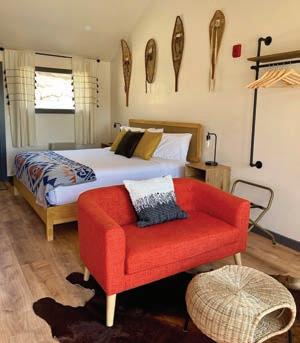
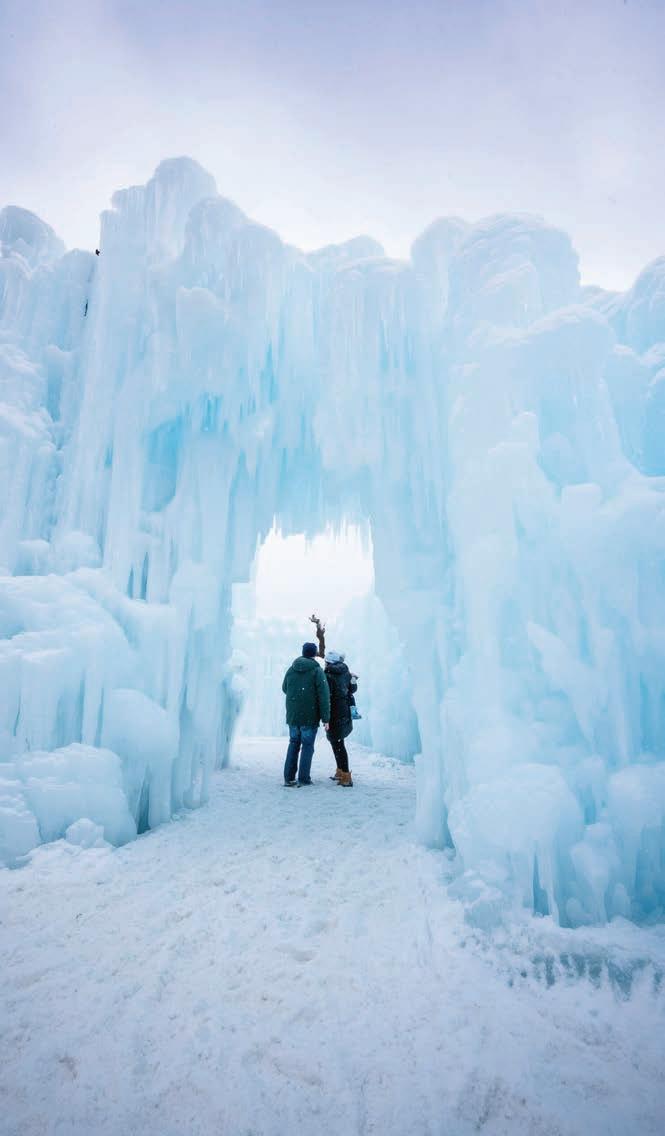
THROUGHOUT JANUARY AND FEBRUARY
The Ice Castles in North Woodstock is an unforgettable winter creation that brings fairy tales to life. The structure is built entirely by hand using hundreds of thousands of icicles “grown” by professional artists. The castle includes LED-lit sculptures, frozen thrones, carved ice tunnels, slides and fountains. Dates and times vary, and are weather-dependent. icecastles.com
There’s a festive feel in the air with the magical display of lights in Derry. Experience the magic of New England’s best outdoor holiday and winter light display, featuring millions of twinkling lights. The outdoor light display is a walking tour along designated paths through the golf course. Ticket prices and times vary. LaBelle Winery, 14 Route 111, Derry. labellewinery.com
JANUARY
The New England Winter Wine Spectacular, the premier event of New Hampshire Wine Week is New England’s largest showcase of wine. This event that benefits the New Hampshire Food Bank features over 1,700 wines — paired with a variety of delicious food from some of the best restaurants from around New Hampshire. Enjoy an unforgettable evening with exclusive access to top global wine brands, meet renowned winemakers, and dive into the art of food and wine pairing. Ticket prices vary. 6 p.m. DoubleTree by Hilton, 700 Elm St., Manchester; eventbrite.com
JANUARY
3 days, 8 rinks, 8 divisions — all hockey. The 1883 Black Ice Pond Hockey Championship and Festival has become one of the largest outdoor winter events in New Hampshire. The event hosts 95 teams and close to 700 hockey players that participate in the Black Ice, along with activities, bonfires, a rock wall, live entertainment, food trucks and more. The event will also include youth hockey teams from New Hampshire playing in the Shinny Classic. The Black Ice’s mission is to expand ice skating and recreational opportunities while preserving hockey history and creating new interest for the game. White Park, 1 White St., Concord. blackicepondhockey.com



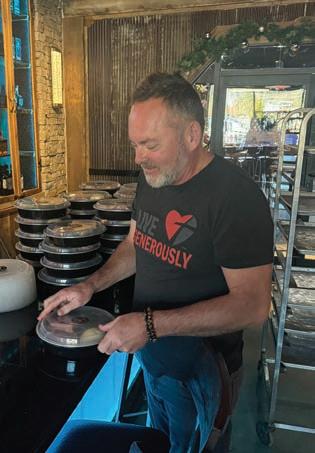

FEBRUARY 13-15
World Championship Dog Sled Derby
Since 1929, the Lakes Region Dog Sled Club has held this major winter sporting event in the heart of Laconia. Join in the tradition by cheering on the mushers, and learn about the rich history of sled dogs at this weekend-long event. Times vary; lrsdc.org
JANUARY 24
Concord Winter Fest
Now in its eighth year, Concord Winterfest is bigger than ever. Enjoy watching New England’s talented ice carvers compete on the statehouse lawn, and warm up with a delicious array of local food trucks. For a sneak peek at the carving, you can watch them being carved live at the statehouse on Friday, Jan. 23, from 3-9 p.m. and Saturday from 11 a.m. to 4 p.m. Downtown Concord. intownconcord.org
JANUARY 30
Los Lobos: Disconnected
It’s a matter of time. 50 years to be exact. And in that time, Los Lobos have created an unprecedented body of work, a legacy of greatness. Beyond all the hoopla and applause (and the source of it all, really) is the tremendous heart. Rather, hearts. Cinco corazones. Five blood brothers who have dedicated their off-stage time to helping others, working for peace and justice, penning some of the most literate and important music of their time, transforming the hard cries from the East L.A. barrio into songs of hope, tales of common folk finding ways to endure. As their liner notes put it, quite simply: “Los Lobos still are David Hidalgo, Louie Pérez, Jr., Cesar Rosas, Conrad Lozano, Steve Berlin.” $45-$65, 7:30 p.m., The Colonial Theatre, 95 Main St., Keene; thecolonial.org
FEBRUARY 5-8
Mount Washington Valley Ice Fest
Experience New England’s premier climbing event in the wonder of the White Mountains. Spend the weekend celebrating ice climbing and winter mountaineering and the people that make it a part of their lives. It continues to provide a great opportunity for those attending to network, socialize, try new gear and participate in multiple day courses, one-day technical clinics and privately guided climbs. The Mount Washington Valley is one of the finest waterfall ice climbing destinations in North America. Each year the festival offers a variety of skills-based clinics and exciting slide shows with featured climbers and guides from the New England area and around the world. All clinics (unless otherwise noted) meet at 8 a.m. at Ledge Brewing Company. mwv-icefest.com
FEBRUARY 7
Annual Keene Ice and Snow Festival
Bring family and friends to watch ice blocks being carved come to live — an entirely free day of fun. The beloved festival will host 12 ice carvers alongside many events and activities, including: a train ride, roasting s’mores, sugar on snow, “find the yeti” scavenger hunt, hot cocoa stations, cartoons and more. 10 a.m. to 4 p.m., Free, Downtown Keene, Facebook
FEBRUARY 7-8
Ice Climbing Photography and Rigging with Joe Klementovich
In this two-day clinic held during the Mount Washington Valley Ice Fest, join NH Magazine photographer Joe Klementovich for a photography workshop you won’t want to miss! Day one is held indoors, and participants will dive into composition techniques, rigging fundamentals, and creative storytelling. This session assumes you’re already familiar with shutter speed, aperture, and ISO — come ready to expand your creative approach. During the second day outdoors, you’ll apply your skills in the field! Learn how to plan and set up the perfect shot, collaborate with “Talent,” and direct your vision while hanging from a rope. The weekend will wrap with a real ice shoot, ensuring you leave with stunning portfolio-worthy images (and some great ones for your mom). $415, 8 a.m. to 4 p.m., Ledge Brewing Company, 15 Town Hall Road, Intervale; mwv-icefest.com/clinics
FEBRUARY 14
Beveridge Ice Fest
Bundle up, friends — Ice Fest is back. The Beveridges are once again teaming up with some of the best craft breweries around for an epic day of Tasting Brews on 19 Mile Bay. This marks the 13th Annual Ice Fest, and we can’t wait to be out on the frozen surface of Lake Winnipesaukee sharing good beer and good times. Dress for the chill — think long johns, furry hats, ice cleats, and plenty of warm layers (hand and foot warmers highly recommended). Noon to 3 p.m., 19 Mile Bay, 3 Bay Rd., Mirror Lake; events.beerfests.com
FEBRUARY 22
Annual Inn-to-Inn Chocolate Festival
North Conway inns and eateries will open their doors and offer up chocolate goodies. You’re welcome to drive or take advantage of the complementary festival shuttle, but the real fun comes from making your own transportation. The fest is a fundraiser for the Mt. Washington Valley Ski Touring & Snowshoe Foundation, so tour stops are conveniently located along 27.96 of cross-country paths. Strap on your snowshoes or skis and enjoy this delectable event known as “The Sweetest Day on the Trails.” Festival passes include dozens of different chocolate treats prepared by area businesses, local bakers and more! Locations and times vary; mwvskitouring.org. NH


At the Y, every step leads to something greater. It’s where movement builds connection, health brings happiness, and community feels like home. Discover what moves you and begin your journey today!
• Fitness Center / Group Exercise Classes
• Family Activities / Community Events
• Indoor Pools & Aquatics Programs
• Health & Wellness Programs
• Sports Courts & Indoor Turf
• Kids Stop - Babysitting
• And So Much More! JOIN
SPONSORS:
YMCA OF GREATER NASHUA www.nmymca.org/joinus PRESENTING SPONSOR:


BY KRYSTEN GODFREY MADDOCKS / ILLUSTRATION BY JOHN R GOODWIN
Post-holiday sniffles, darker days and frosty temperatures can leave you feeling more fatigued than usual. Now, there’s a drip for that.
Once known as a hangover cure or a recovery solution for depleted athletes, wellness clinics offering intravenous vitamin infusion therapy are popping up throughout the Granite State.
IV vitamin infusion therapy, also known as IV hydration therapy, delivers vitamins, minerals and other nutrients to your bloodstream through an intravenous (IV) drip.
“The best form of absorption, of whether it be fluid or vitamins, is going to be through IV therapy, says Mariah Frisella, owner of Origin Wellness in Manchester. “It’s bypassing your gut completely. It’s 100% bioavailable to you.”
Vitamin-packed infusions can help boost
your immune system, relax your muscles and help you feel better, says Candace Byrnes, owner of The DRIPBaR franchise in Portsmouth, now beginning its third year of operation.
“We’re not trying to replace doctors,” she says. “We’re helping people stay well before they get sick.”
Byrnes has a 20-year background in wellness and franchising. During the pandemic, she left a franchise development role at Planet Fitness and was recruited by The DRIPBaR corporate office to help grow the brand — which has grown to 100 locations. After experiencing a drip, she was hooked on the benefits of IV vitamin therapy.
“I believed in the business, but I hadn’t tried it myself. I’m needle-nervous, but I finally went to our Newport, Rhode Island,
location for my first infusion — and it was the most wonderful experience ever,” she says.
Frisella, a former registered nurse with experience in critical care, family practice, and orthopedic surgery, opened her first Origin Wellness location about four years ago. That location, in Hooksett, closed earlier this year. She currently operates in space inside the Executive Health and Sports Center in Manchester, where she offers IV drips and other wellness services.
“I’ve personally been a big, big fan of IV therapy for a number of years, but I was struggling to find anywhere (I could go) in New Hampshire,” she says.
In New Hampshire, clinics that offer IV vitamin therapy are not required to be owned or operated by a physician, and any licensed medical professional, including a medical assistant with doctor supervision, can administer IV vitamin therapy.
A typical drip session involves inserting a small catheter into a vein (usually in the arm) and infusing a sterile saline solution mixed with nutrients such as vitamin C, B-complex or B12 vitamins, magnesium or zinc. Generally, registered nurses or
medical providers administer treatments. Infusions take 30 to 45 minutes to complete — quick enough to fit into a customer’s lunch hour.
The DRIPBaR’s proprietary vitamin formulas have been created and approved by the company’s medical professionals, Byrnes says, adding that each franchise has access to the corporate office’s medical team. At the Portsmouth location, each drip is carefully mixed in a sterile hood.
“We’re dealing with needles, so there’s no room for error,” Byrnes says. “Our nurses and paramedics are incredibly skilled — they make sure every client has the best experience possible.”
Origin Wellness also works closely with clients and employs a nurse practitioner who serves as its medical director. She reviews patient questionnaires and medical records and can prescribe medications to be added to vitamin formulations, if needed, Frisella says.
Owners of businesses that administer IV infusion therapy must follow strict guidelines to ensure their clients remain safe.
“You need to be following regulations on when vials were opened, and how many additives can be mixed into one bag at one time,” she says. “Are there any cross interactions with allergies or medications?”
Customers can choose from a variety of combinations, depending upon what ails them.
The DRIPBaR advertises several “lifestyle drips,” most of which cost $199 each.
The “Shield” is an immune booster that includes vitamin C, zinc and B vitamins. The “Flu Fighter” is a high-dose vitamin C and zinc drip for people with an active illness.
Once you’ve recovered from your cold, the “Post-Viral” drip can help you get back to snuff. Other products include the “Powerpack,” with B vitamins for energy, and the “Soother,” which includes magnesium for relaxation and muscle recovery.
Individuals preparing for or recovering from surgery can opt for special drips. These “Health Support Drips” vary in pricing, according to the franchise’s brochure.
Origin Wellness’s IV infusion prices are about the same as The DRIP BaR’s. Frisella says her clientele represents a mix of people, including high school and college athletes, and people who need hydration or migraine support.
“If you come to us for a migraine treatment, it’s going to be $200, versus going to your ER and running that through insurance.”
Can IV vitamin drips actually prevent you from getting the common cold? The results are inconclusive, according to a recent article written by Dr. Robert H. Shmerling, senior faculty editor at Harvard Health Publishing, who concluded, “Studies looking at various supplements for colds and other similar infections have been mixed at best.”
Still, a recent study published in 2025, titled, “To IV or Not to IV: The Science Behind Intravenous Vitamin Therapy,” suggests that the delivery mechanism provided by IV vitamin therapy is particularly beneficial for patients with impaired nutrient absorption, including those with gastrointestinal issues or patients who’ve undergone bariatric weight loss surgery.
Although there are skeptics, Frisella says many people can benefit from IV vitamin infusions.
“A lot of what we see in mainstream medicine today is maybe just pill pushing or prescriptions being given when, if we really look deeper, maybe all they need is some vitamins,” she says. “Maybe they need more hydration, magnesium, or B12. B12 is actually a better antidepressant than Prozac, and there’s tons of studies out there showing that.”
Byrnes says she’s seen firsthand the impact of IV vitamin therapy has had on people struggling to recover from serious illnesses.
“We had a woman who came in after brain surgery. She couldn’t sit up in a chair,” Byrnes says. Over a few months, working with our doctors, she was back to traveling again. That’s what keeps me going.” NH
From boutique wellness studios to fullservice clinics, IV vitamin continues to grow in popularity across New Hampshire.
The DRIP BaR – Portsmouth Origin Wellness – Manchester
Confident Med Spa – Seabrook, Epping, Rochester, Amherst • confidentmedspa.com
Hydropeutics – Manchester (also offers mobile IV across NH) • hydropeutics.com
Prime IV Hydration & Wellness – Salem primeivhydration.com
Remedy Med Spa – Nashua • remedy-nh.com

BY JILL ARMSTRONG
My grandmother tells this story every time the family gathers:
As a 6-year-old, I despised cross-country skiing. Yet, my grandmother still dragged me along each time she made the 10-minute journey to White Farm, a historic and sprawling property in Concord.
Each outing, I’d struggle to stuff my feet into the stiff leather boots that resembled gray bricks or snap the block toe into the binding of my little white skis.
But soon enough, with the aid of my grandmother, we’d be off exploring the expansive trail system, skating across open fields before ducking into bordering forests, the pine boughs often sagging under the weight of snow.
I tried to mimic my grandmother’s movements, a weightless glide over the packed surface — right, left, right, left. But my little limbs struggled to find any rhythm at all, usually ending in a faceplant or upside-down with my skis overhead, one ski parallel to the ground, while one tip seemed inevitably to find itself trapped in the hardened snowpack.
I spent the majority of each trip moaning and crying, proclaiming how unfair it was that she, my grandmother, never once fell. She knew everything, it seemed. She could do anything, it seemed! Why was life so unfair?
It often didn’t take long for her to threaten me — “Why don’t you walk back to the car, then?” — before I’d stop my whining and reluctantly continue on behind her in silence, lips pouted and eyes locked on her back in a permanent death stare.
It wasn’t until I first saw her stumble that I had a change of heart.
On one outing, as we approached the final hill before the parking lot, she lost her footing and slipped off the trail, her skis tangled
in a notorious “pricker” bush. It was then that I started to laugh, not in a menacing way, but a hearty burst, deep from the belly, causing her to laugh as well.
After our initial reactions, I put my little gloved hands on my hips, puffed out my chest and hollered down to her this line, the same line she shares at the dining room table year in and year out: “Are you havin’ a little trouble down there, ho-ney?” We continued to laugh together until our sides hurt.
From that point on, my grandmother told me, I never complained again.
Two winters ago, I snapped into a pair of cross-country skis for the first time in 25 years, and joined my grandmother, then 82, for a jaunt around the groomed track at White Farm, laughing and reminiscing about those days.
We don’t spend much time exploring the vast trail network anymore (I think we’d both walk away with injuries now), but we enjoy moving slowly and observing what’s around us: cardinals perched on dark branches, the dull blue-gray of a winter afternoon, the fresh, crisp air touching our faces.
As a child, I spent a lot of time outdoors with my grandmother. I’d follow her around in the woods, spotting flowers behind a bright green bush or squirmy bugs wriggling within an upturned log.
In the summer we’d make lunchtime excursions to the local brook, splashing one another in our shorts and T-shirts and
to the big boulder up the road, the mission of course to scramble to the top first. In the winter, we’d point out the tracks of deer or fox on the path, noticing our boots leaving prints of their own.
I learned a lot from my grandmother during this time.
How to have fun. What’s life without a little competition?
How to be fearless. That it’s OK to trek off into the woods on a cold day, even as a woman with a young girl in tow.
And how to be mindful, slowing down and appreciating the small joys that are often overlooked. I credit her with the unbridled enthusiasm I have for the outdoors as an adult today.
But looking back on our time together cross-country skiing, there’s one lesson that strikes me most after all these years: that she taught me how to be vulnerable.
When I peered down and saw my grandmother entangled in her skis, likely mumbling a few choice words that need not be repeated, I saw myself.
In that moment, I came to realize that, despite seeming unbreakable, she had vulnerabilities of her own. That she could, did, and would fall.
What I came to understand at the top of that hill, in my pink snowsuit and fluffy hat, surveying the scene below, is that falling is fine.
You just have to get back up and laugh it off. NH