The Voice of an Immigrant
The Cultural value of architecture in London to migrants/immigrants
Maria Alejandra Ruano Delgado
BA (Hons) Architecture BA University of Westminster 2023
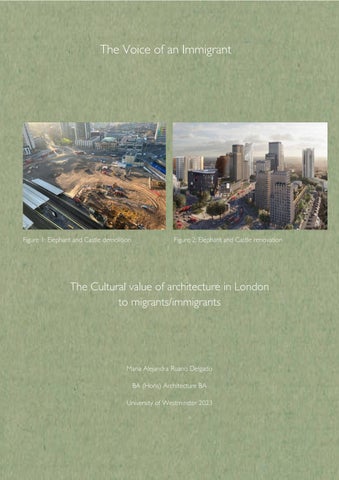
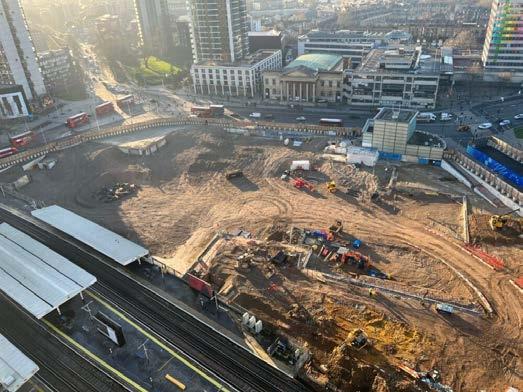
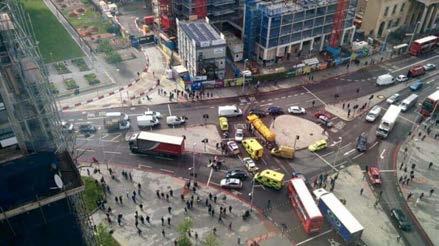
Figure 1: Elephant and Castle demolition
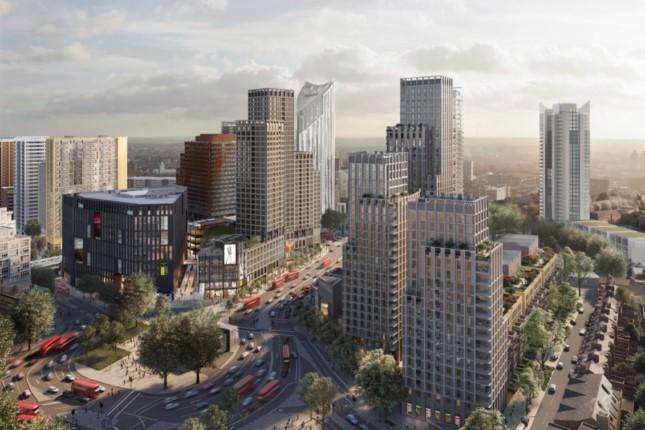
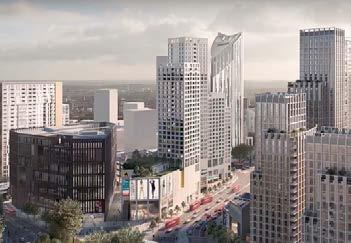
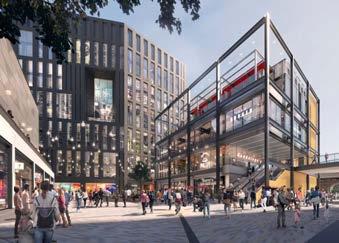
Figure 2: Elephant and Castle renovation
Table of contents
1.Abstract
1.1Frank Lloyd Wright Quote
2.Introduction
2.1Passage
2.2 Walter Benjamin
2.3 Victor Gruen
2.4 Northland Centre/Malls
2.5 Mall’s Analysis
3.Immigration and Migration
3.1 What is an immigrant and what is a migrant
3.2 Responsibility
3.3. Laws on protection in the UK
3.4 Ways to come to England
3.5 Benefits of coming to the UK from South America
3.6 What is mental health
3.7 What is architecture
3.8 Benefits of being around the same community as you
3.9 Disadvantages of being in the same community as you
3.95 Lain American Culture/ La Familia
4.Elephant and castle
4.1 Elephant and castle heritage
4.2 Shopping Centre Renovation
4.3 Importance of maintaining this
4.3 La Bodeguita Restaurant
5.Conclusion
6.Bibliography
The emergence of architecture – its transference from buildings to culture, appears a puzzling procedure. It is because of this that a voice must be present. One that, represents all the communities who thrive in their environments as they are not just buildings, but spaces which hold memories and where they socialise every day. The move from one country to another is an extremely hard thing to do. I will conduct a case study and a series of interviews to collect the data of the Latin community in Elephant and castle and see the mental health effects of having the birthplace of the Latin community in their borough be brought down.
In this regard, this study tries to investigate and compare how much architecture can affect wellbeing and the mental health of migrants/immigrants who come to this country with the hope for a change or better future alongside the down effects of only remaining in your community. It will do so by presenting the demographics and their correlations to the use of London’s architecture as many of London’s boroughs are defined by their communities and therefore so it’s the architecture.
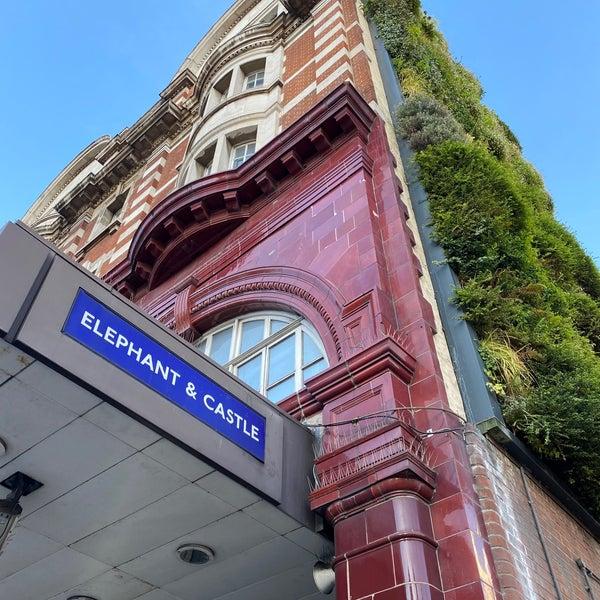
Figure 3: Elephant and Castle Station
“Without
an architecture of our own we have no soul of our own civilization.”1
-Frank Lloyd Wright
1Frank Lloyd Wright Quote, Thursday 20th October 2023
https://architizer.com/blog/inspiration/industry/frank-lloyd-wright-tribute/
Introduction Passage
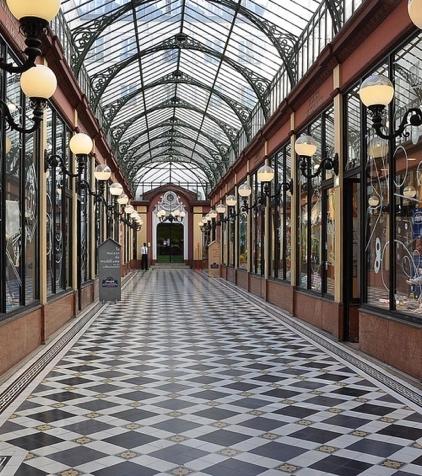
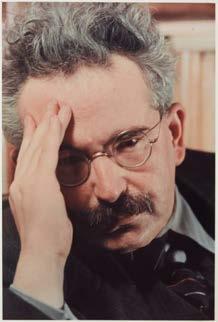
Walter Benjamin died fleeing the Nazis before he could complete his final project. At last, the fragments of that book have been translated into English. He collated the project between 1927 and 1940. The arcades were shopping precincts indoors, they varied in sized. Their glass roofs were designed to let daylight in and gas lamps for the night-time were customs in their design. Paris was very popular for them in 1822 until 1854 Baron Haussmann curved out new boulevards and cleared huge areas of the city which pushed their decline. Today, there are twenty-four still active. Although they were privately owned, they allowed shops to be elegantly showcased which really separated them from the regular shops on the traditional street.
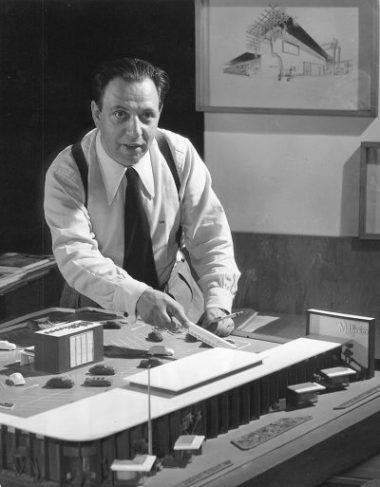
The New Yorker newspaper suggested that "Victor Gruen may well have been the most influential architect of the twentieth century." Until the mid-1970s, his office designed over fifty shopping malls in the United States. Following World War II (1939-1945), many downtown areas in Detroit were being neglected. Gruen drove past commercial and ugly retail developments, during this he noticed how bad the situation was. People kept moving out to the suburbs and a few would return to the city to do their shopping. The smaller stores in the suburbs simply were not enough, but they were much closer to home and parking was much easier than in the city. A few local shop owners had been forced to open in less desirable spaces outside the city, however this turned into an advantage when the migration of residents to the suburbs began. In response to this, Gruen envisioned a world where retailers from the suburbs would surround the cities department stores and drive them out of business. The Hudson’s was a chain of
Figure 4: Passage des Princes
Figure 5: Walter Benjamin
Northland Centre/ Malls
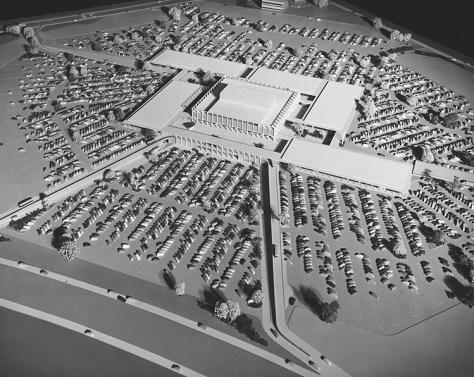
Figure 6: Model of mall built in Southfield
Figure 7: Victor Gruen in 1946
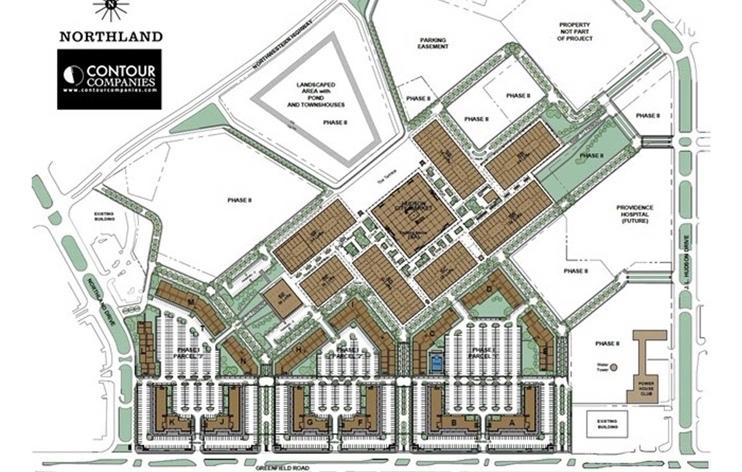
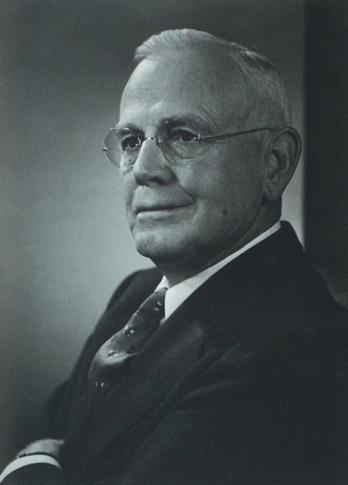
departments stores that for years wanted to open stores outside the city. However, it had an image of exclusivity which could not project as there was no way to open a store in a seedy commercial strip. Within Gruen’s plan, there were many advantages for the company in the proposal. An example of this was that Hudson’s as a company would now be able to choose exactly which businesses opened nearby to avoid competition. By designing and owning this shopping centre, Hudson’s would diversify beyond retailing and start a path in real estate as well as property development. Furthermore, concentrating all these stores in one shopping centre would keep the surrounding space open as it would discourage other small businesses from opening. Oscar Webber then reviewed Gruen’s proposal with all the data he had collected in Detroit suburbs and accepted it. This information included the development of four shopping centres. The names of these were Northland, Eastland, Southland and Westland Centres, each in a different suburb.
Hudson’s immediately started buying land and hired Gruen as the designer although his experience only included designing two shopping centres which were not built. Eastland Centre was selected for development on June 4th, 1950. However, as the Korean War developed it placed brakes on all nonessential construction brakes, the project was discontinued and Gruen had extra time to develop his concept. Hudson’s decided to build the Northland first with a change of design where all the parking spaces where on the outside instead of the inside like the Eastland Centre suggested. And so, Gruen was credited with the title “father of the mall”. Until then, most developments had two parallel strips of stores, these storefronts would face inward towards each other across an area of landscaped grass called a “mall”, hence its name. Gruen’s design was attempted several times after at larger scales by different companies, but they were not successful. The plan had Hudson’s department store located right in the middle of the mall, this was there strategically so that customers would walk from the parking lot, past the 3 smaller stores either side to the biggest attraction.
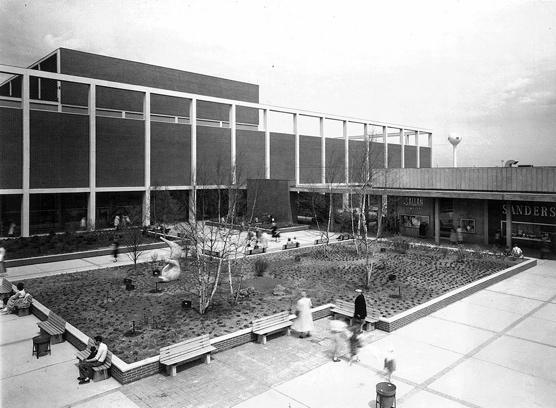
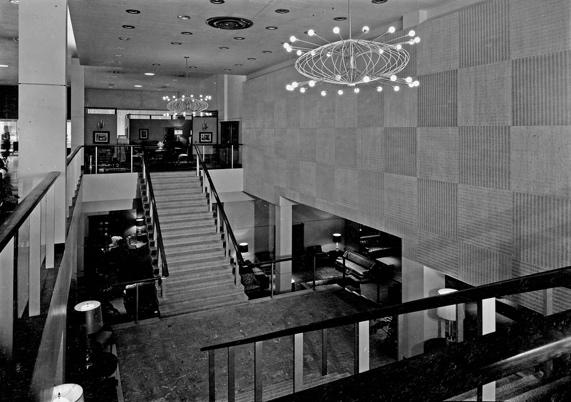
Figure 8: Northland City Centre plan
Figure 9: 1960 Richard H Webber
Figure 10: Northland Shopping Centre
Figure 11: Interior of Northland
According to Oscar Webber’s opinion this was the key to the mall’s success, they forced their customers to walk past these small stores making them financially viable and therefore giving the mall a successful reputation. Gruen’s Northland shopping centre was extremely innovative. The project was at a massive scale and had a vase number of stores but as a native from Vienna, Austria Gruen thought the spaces between shops were meant to be used just like he remembers in downtown Vienna, with its busy cafes and outdoors. He did not incorporate grass, but he wanted his shops to blend and create a lively urban feel. He divided the spaces into different names such as: Great Lakes Court, Community Lane and Peacock Terrace just like the Hudson’s do in their stores. These were filled with fountains, artwork, landscaping, covered walkways and park benches for people to not just walk to their destination but enjoy their surroundings. The success of the mall made Dayton’s stores immediately offer Gruen a project where he would go and design the first fully enclosed, climate- controlled shopping mall in history with many features which are still found in modern malls today.
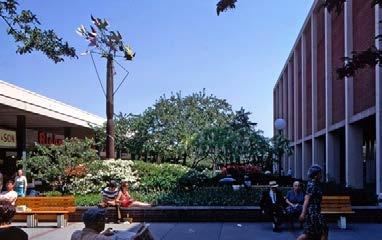
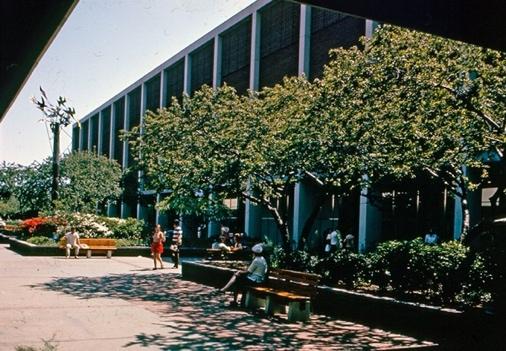
Gruen’s ideas were extremely successful. So successful that the value of the surrounding land increased drastically. Developers stayed away from trying to replicate the shopping mall idea but quickly sold their land instead. And so, the once cheap and abandoned real state become strip malls and other commercial developments that Gruen came to find in the mid-1960s, 10 years after the opening of Northland Centre. Due to these malls several states in America needed remaking in order to recapture some of their businesses lost to malls. Gruen hated what his design had become.
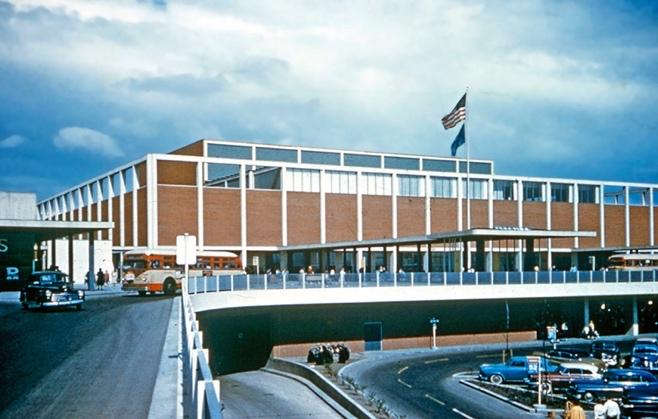
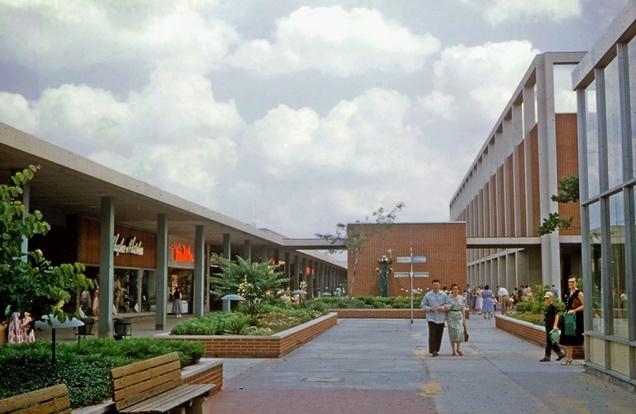
Finally, in 1968 Gruen closed his architectural practice and moved back to Vienna. He saw that the once thriving cafes and shop which inspired his mall designed where being threaten by the very thing which a developer had just opened outside the city. And so, he spent his remaining years writing and giving speeches where he would criticize and blame shopping malls for becoming “land-wasting seas of parking “and “gigantic shopping machines”. His main target through his series of interviews was the developers “I refuse to pay alimony for these bastard developments” where he made it very clear at the London audience in 1978 during his speech
Figure 12: Northland mall green garden
Figure 13: Northland mall park benches
Figure 14: Northland Shopping mall entrance
Figure 15: Northland mall terrace
titled “The Sad Story of Shopping Centres”. So much so that Gruen asked for a public oppose to the construction of malls in their communities, but they were already in the middle of a 20year building spree which would see to them having over 1,000 shopping malls added to the American landscape.
For society today, Victor Gruen has been largely forgotten but this can be considered quite positive considering how much he grew to despise the creation that gave him fame. On the other hand, the term “Gruen transfer” does live on with mall designers refereeing to it for the moment customers come to the mall to buy a particular item but instead they are distracted and begin wondering the spaces impulsively buying any merchandise that may catch their attention. Two years prior to his death. He said, “I would like to take this opportunity to disclaim paternity once and for all”, “I refuse to pay alimony to those bastard developments. They destroyed our cities”
Mall’s analysis
In order to criticise or understand why Elephant and Castle was not successful, I must understand what elements compose a successfully functionable mall. Most shoppers won’t walk about three city block which is about 1,000 feet before they feel the need to get back to where they started. So, 1000 feet is the standard size for most malls. The stairs, escalators and elevators are located at the ends of the malls, not the centre. This is done strategically so shoppers will walk past all the shops in a floor before they move on to the next. Another truism is that people prefer to park on the upper level, not the lower level, on the theory that the likely hood of them travelling down to visit stores is much more likely than the opposite, similarly, to water.
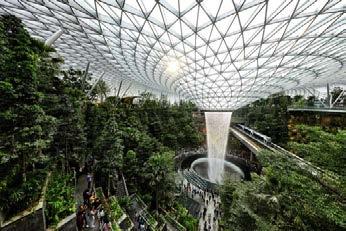
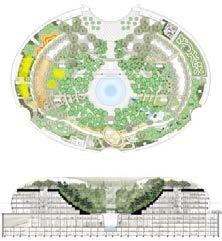
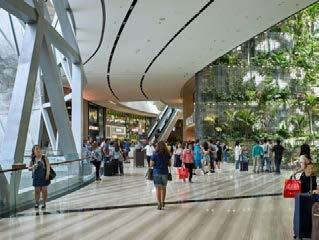
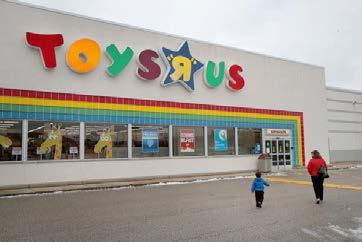
Malls are designed to have great openings in the middle from floor to floor, this allows shoppers to see stores on both levels from any point they are. But it’s important to note that these openings have handrails to protect shoppers from falling to the floor underneath. Eventually society did catch on and saw Gruen’s vision. It is because of this that malls now also have a very dull interior. This is a very conscious choice by designers so that shoppers will not be distracted and can focus on the merchandise which is much more important. Skylights flood the interiors of malls too, but these have been modified to keep direct sunlight from reflecting off storefront glass. This prevents glare and the possibility of distracting shoppers from looking at the items for sale. These skylight floods also contain artificial lightning which comes on automatically as the natural light fades, so the shoppers do not receive a visual cue that it’s time to go home. The present-day shopping experience is much different to the situation that Gruen was targeting. We now have stand-alone stores like Toys “R” us, offering a great selection of toys for a lower price that stores in the mall couldn’t match. As well as big box stores like Walmart and Costco. Yet this was revolutionised once again in the early 1990s by TV shopping and online shopping companies like Amazon.
Figure 16: Jewel Changi Airport
Figure 17: Plan and Section Figure 18: Interior of shopping mall
So, with all these obstacles, malls have been on the decline as land is no longer cheap and most communities have more than one already. This is the reason why malls rebrand themselves regularly and must keep themselves to such high standard. The most successful rebranding was not the open-air remade into enclosed mall strategy but the incorporation of other areas. Mix used developments now include rental apartments, office buildings, outdoor shops and restaurants as well as green spaces. From this this we learn that Gruen’s original ideology for the mall would become their salvation after developers only showed interest on how much profit they can produce
What is an immigrant and what is a migrant?
Why must we protect different communities? What is the importance of diversity? Why must we value different communities and their beliefs? An immigrant is a person who moves from one country to another with the intention of establishing permanent residence in the new country. They typically go through legal processes, such as obtaining visas or green cards, to live and work in their chosen destination. On the other hand, the term “migrant” refers to any person who moves from one place to another, whether it’s with the same country or across international borders. Migrants move for various reasons, including work, opportunities, family, reunification, fleeing from conflict or persecution.
Responsibility
The nation has a global responsibility to provide support and refuge those fleeing difficult conflict or being persecuted. This is because they must demonstrate solidarity with the global community in addressing humanitarian crisis. Immigrants like every other person have a fundamental human right that should be considered regardless of the immigration status. If we are to look at the law, The human rights act ensures that they are treated with dignity, furnace and respect. In line with international human rights standards, this was put in place so that immigrants can be protected.
Figure 19: Toys R Us box store
Figure 20: Online Shopping
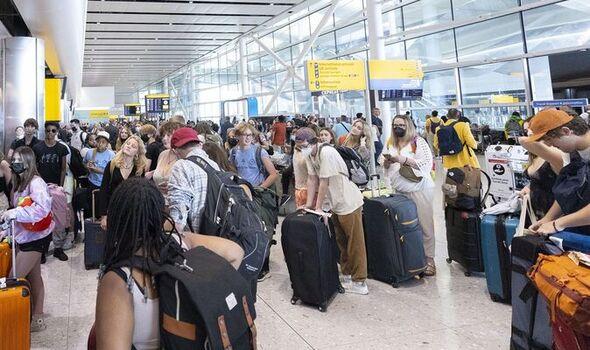
Figure 21: Migrant boat sinks in British shore Figure 22: UK airport
Everyone, it’s essential for the cultural, social and economic diversity of the country. Different experiences, communities, various perspectives and skills foster innovation and cultural exchange. Migrants and immigrants fill essential roles in a country’s labour force, services and sectors that may face shortages as well as contributing to industries that can help sustain a growing economy By protecting immigrants, we also recognise the importance of family unity. Many come for a better life, to reunite with family members, social cohesion and perhaps stability. Moreover, when immigrants feel protected and included it fosters integration within their communities, this reduces tension and helps build resilient societies
Laws on protection in the UK:
Earlier I spoke about my mother and the difficulty of her paper’s application process as well as the challenges that brought when finding a job. However, her journey was not the hardest I have heard of. Every Latin person I have met has or knows somebody that has gone through an impressive number of challenges due to their immigration status. It is because of this that I find it imperative to study what laws are in place to alert future generations and hopefully help their journey. If we are to look closer to the law in place, we find the following United Kingdom has laws and regulations in place to protect the rights of immigrants and migrants, including refugees and asylum seekers. The laws that appear the most are the Human Right Act from 1998, the Immigration act in 1971, Asylum, Immigration Tribunal, Refugee Convention, Humanitarian Protection, European Convention of Human Rights, and the EU Settlement Scheme
Fundamental rights to freedom, right to life, freedom from torture or slavery and the right to a fair trial are stated in the humans’ rights act 1998 and are things that we may not value as much as we did when it was affecting our great grandfathers or great-great grandmothers. The Act describing the rules explaining the process of entry, stay and removal of individuals in a country is called the Immigration Act 1971. If any immigrant was to appeal their status or confront any challenges regarding immigration decisions made by the home office, they must refer to Asylum and Immigration Tribunal. On the Refugee Convention and Humanitarian Protection on the UK is signatory since 1951 UNFC (United Nations Refugee Convention) to protect any individual that qualifies as a refugee. If a person is a victim of this, the UK is obliged to provide asylum due to fear of persecution in their home country.
Figure 23: Protestants in front of Parliament
Figure 24: Refugee boat by British shore
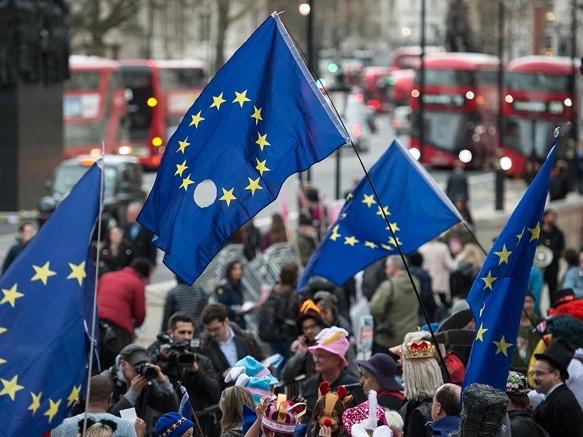
Brexit was huge for immigrants and migrants as many countries had individuals coming to the UK legally from Europe but due to Brexit this became illegal or just not a possibility all together. Although this occurred the European Convention on Human Rights (ECHR) is still active, this protects the right and freedoms of individuals. This was incremented through the Human Rights act so immigrants were aware that “Brexit will not prevent cases being taken to the ECHR, but the repeal of the human Rights Act might render the ECHR less effective” It also states that the “UK will not be bound by changes to EU law”. 8
Furthermore, Latinos were impacted by Brexit extensively. The EU Settlement Scheme was enacted to protect the rights that were granted to EU citizens and their family members living in the UK prior to it leaving Europe. The EU settlement Scheme is an application so they can keep living in the UK.
8 Brexit and Human Rights Article
https://www.disabilityrightsuk.org/resources/brexit-and-humanrights#:~:text=The%20European%20Convention%20on%20Human%20Rights%20is%20an%20international%20treaty,have%20signed%2C%20in cluding%20the%20UK
12 Humans Right Act
https://www.citizensadvice.org.uk/law-and-courts/civil-rights/human-rights/what-rights-are-protected-under-the-human-rights-act/
Ways to come to England
The Latin community is large in the UK. As previously mentioned, everyone has had a different and very interesting experience. To arrive to the UK the law states that you must have a work, study, family, visitor, entrepreneur and investor, asylum and protection, global talent or an ancestry visa. Each category has specific requirements and different processes of applications as
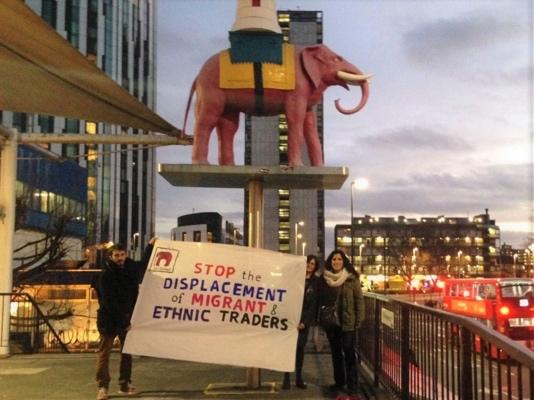
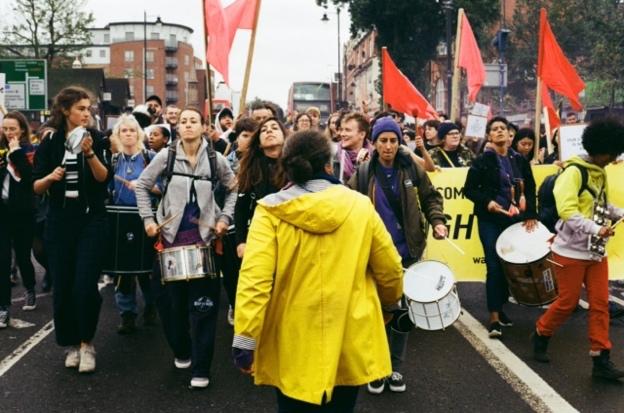
Figure 25: Elephant and Castle protestants Figure 26: Colombians in the UK
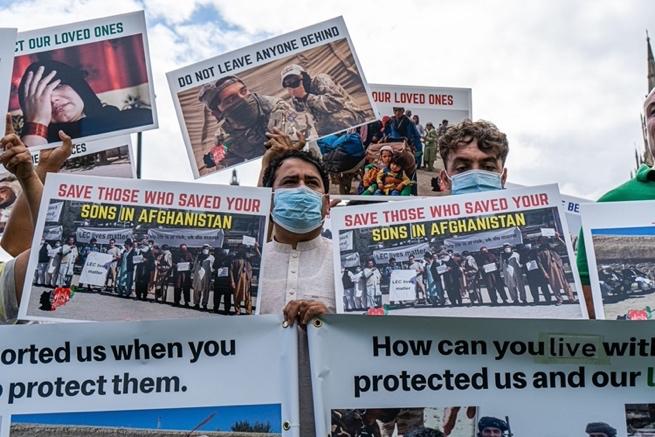
Figure 27: Migration protestant
Figure 28: Brexit Protestants
well as criteria for eligibility. It is often advised and needed for an applicant to consult in the official UK government website or seek advice from an immigration layer.
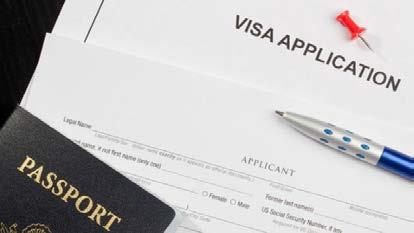
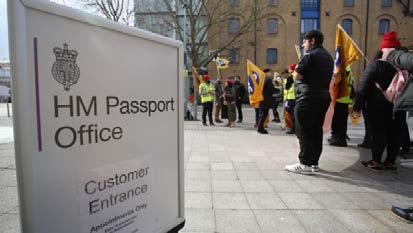
If a person has a job offer in a country where they require a work visa, their most likely best option is to investigate the Intracompany Transfer Visa and other specialised work visas for specific professions. International students are allowed to come to England on a Tier 4 visa to pursue higher education at recognize institutions. In some cases, these visas offer a student to work part-time as well as study. Otherwise, it is a studying only visa. If an individual has a relative abroad and wishes to join them in England, they can apply too Spouses, children, partners or any dependent relative can be considered a family relative. If a person’s interest is tourism, short-term business, visiting families or even friends they can apply for a visitor visa. There are also cases where a person may decide to start or invest on a business in the UK. There are specific visas for each one, the Innovator or Start-up visa. If a person is also making a substantial investment in the country, there is the Investor visa. The Global talent visa specifies that an individual must have an exceptional talent or promise in subjects such as engineering, humanities, arts, culture, digital technology or science. Finally, the ancestry visa is granted for individuals who have had a grandparent born in the UK. An ancestry visa allows individuals to work, live and study in the UK.
Benefits of coming to the UK from South America
Everyone moves for different reasons. Each jorney has always been and will remain an individual and unique experience. In the UK there are different “opportunities” or benefits compared to countries from South America which Latinos refer to when explaining why they moved. As many benefits as there are, there are also challenges, such as adapting to a new culture, integration hurdles and potential very long immigration processes. For example, some of the most prestigious universities and educational organizations reside in the UK. This may also mean mixed academic experiences and a higher quality of education. The UK also offers exciting career prospects as it had a very diverse economy.
Figure 29: Student visa to the UK.
Figure 30: Passport Office
Figure 31: British-born Latin Americans
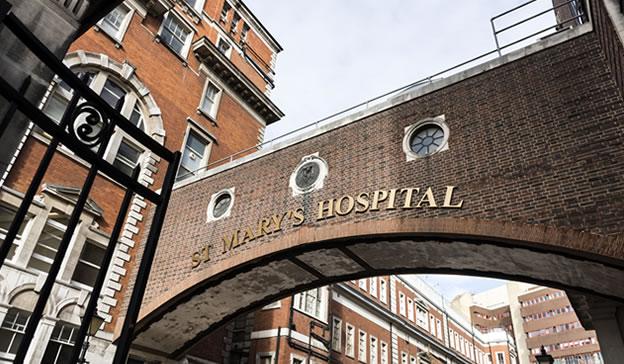
Figure 32: St Mary’s Hospital
In sectors like finance, technology, healthcare and engineering. Professionals in the UK are exposed to multicultural experiences. Different traditions, cuisines and lifestyles mean a higher amount of sharing and learning experiences. I have met hundreds of Latin parents that have come to London just so their children can learn a perfect English. English is the number one language spoken in the world. As of today, there are 1,452 million speakers in the world. Mandarin stays second with 1,118 million speakers all over the world. Coming to the UK also meant the possibility of holding a European passport for future travel, cultural exchange and job opportunities Once Latinos have established their residential status, the UK offers a safety net for its residents and access to healthcare as well as social support. While south America is known for its beauty, it’s also very known for its crime rate and theft. In this sense, the UK’s legal framework protects human rights much better from any individual experiencing an injustice or discriminations.
What is Mental Health?
Mental Health is a person’s condition about their psychological and emotional well-being. The World Health Organization states that “Mental health is a state of mental well-being that enables people to cope with the stresses of life, realize their abilities, learn well and work well, and contribute to their community.”3 Many of us don’t realise it is the blueprint of our lives, therefore it is crucial that we spread our knowledge about it so to help each other. Research supports that everyone’s vulnerability depends on many factors and none of these manifests themselves at a specific age, but risks are present “at all stages in life” 4
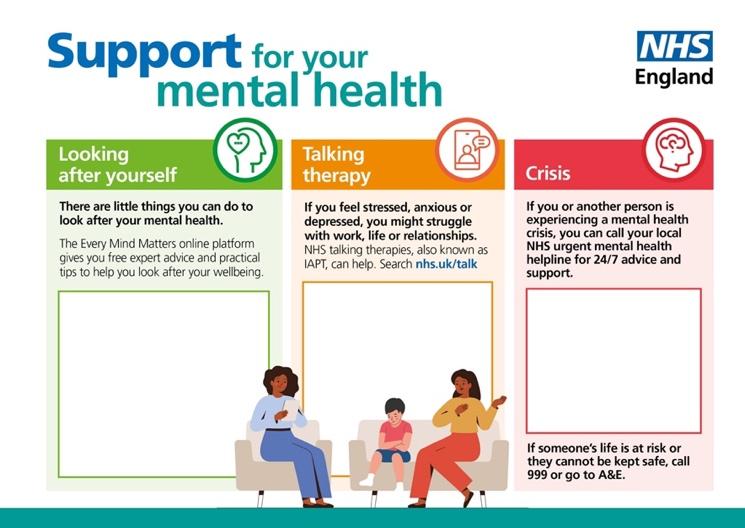
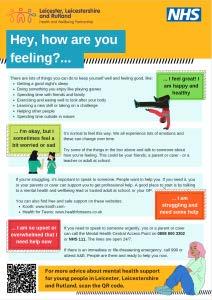
In terms of the UK, we are a part of the NICE act. In 1959, the Parliament passed the Mental Health Act.5 This was more than a decade after the NHS was established. The Mental Health Act stablished that the local authorities had to provide and maintain residential homes for people’s care. Amongst this, they were also required to keep and fund centres for training, provide ancillary or encouraging maintenance. The main change between 1959 and 1983 in England and Wales was consent. When a “patient could be detained against his/her will, consent was a crucial feature” this was put in place because the demand of treatment increased but many patients were not in the right state of mine to give consent, so families did so. The 1983 Act covered “the assessment, treatment and rights of people with a mental health disorder.”8. After the 1983 act people could be detained in need of urgent treatment for a mental health disorder and/or if they were at risk of harming themselves or others.
Figure 33: NHS Support for your mental health
Figure 34: Poster launched for young people
3 World Health Organization
https://www.who.int/news-room/fact-sheets/detail/mental-health-strengthening-our-response
4 World Health Organization Article
chrome-extension://efaidnbmnnnibpcajpcglclefindmkaj/https://cdn.who.int/media/docs/default-source/mentalhealth/risks_to_mental_health_en_27_08_12.pdf?sfvrsn=44f5907d_10&download=true
5National Institute for Health and Care Excellence
https://indepth.nice.org.uk/mental-health-and-the-nhs/index.html
6National Library of Medicine
https://pubmed.ncbi.nlm.nih.gov/18589931/
7 National Library of Medicine
https://pubmed.ncbi.nlm.nih.gov/22113089/
8NHS Mental Health Act
https://www.nhs.uk/mental-health/social-care-and-your-rights/mental-health-and-the-law/mental-healthact/#:~:text=The%20Mental%20Health%20Act%20(1983)%20is%20the%20main%20piece%20of,with%20a%20mental%20health%20disorder
What is Architecture?
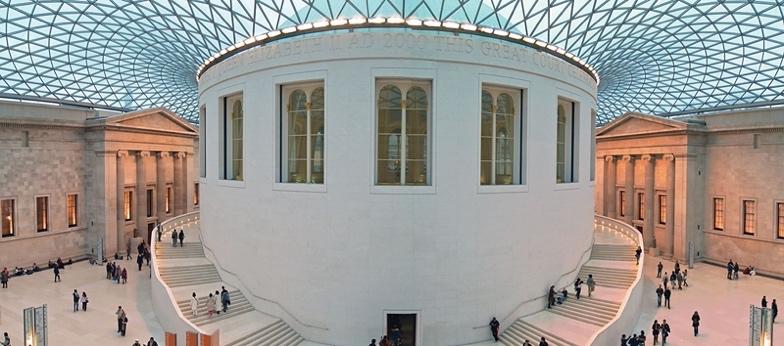
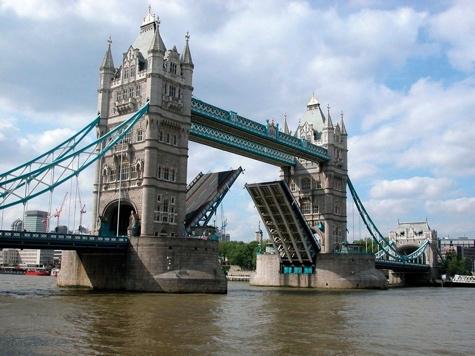
How can architecture be successful without being a successful development of its intended purpose? Can architecture have cultural value? Could architecture impact a specific community? As defined by Roman architect Marcus Vitruvius “architecture is a building or object that is structurally sound, functional and beautiful”1. At its roots, architecture exists to create an environment where people live. However, it is much more than this. It is also part of the culture; it is a representation of how we see ourselves as well as how we see the world. Architects are responsible for designing structures that meet the needs of their users while considering factors such as aesthetics, sustainability, safety, and cultural context. For architects to focus on functionality, safety, aesthetics and the environmental impact of their concepts/ designs, they produce a series of sketches, models and orthographic drawings to collaborate with engineers, construction teams and clients to bring their project to life. However, at the heart of it architecture is so much more. In many architects’ opinion, architecture is supposed to enhance the human experience, interact harmoniously with its surroundings, as well as evoke emotions to its visitors It is because of this that although Elephant and castle was not considered a successful development, in the eyes of architecture it was. It brought cultural values, technological advancements, societal needs and artistic expressions to a growing community. Uplifting the demographics of the borough of Southwark and creating a multifaced platform for technical expertise and creativity.
Figure 35: Interior of British Museum.
Figure 36: Tower Bridge, UK
Benefits of being around the same community as you
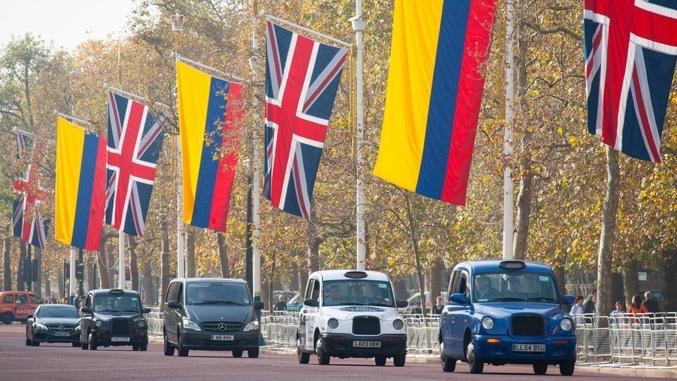
Culture influences society by shaping individuals' beliefs and behaviors Latinos believe that our culture makes us who we are, it truly shapes our identities. Being culturally aware also helps us knowledge our heritage and worldviews. Learning about different cultures really helps individuals see the difference between cultural awareness and self-awareness. Cultural values and norms can influence decision making, such as what is considered appropriate behavior in a given situation Individuals that socialize in countries with different cultures typically will hold different values These differences represent a critical resource for effective decision making in groups. A benefit of being in the same community is social support. Being part of a community whom you may share same ethnic, cultural, social background can offer a strong support system. The sense of unity can provide practical and emotional support though challenging times in which can positively affect an individual’s mental health. Strong relationships exist between people in the community People come together to work towards shared causes. People trust one another. People trust in and feel represented by institutions. There are opportunities for communities to be included in decision making. As an individual in a community, it also means storage, accumulation and transmission of human experience.

Many times, in communities a sense of belonging also occurs. Being around people who share your background can create a strong sense of belonging and identity. This can boost self-esteem and reduce feelings of isolation, contributing to better mental well-being. In addition to this, communities often share common values, traditions, and norms providing a sense of stability and predictability in one's social environment, which can be comforting and reduce anxiety. Within a community we also believe that unity is extremely important. A society that has unity will become stagnant This exposure nurtures empathy, understanding, and acceptance, ultimately leading to a more inclusive society.
An understanding of one another often occurs as they may have had the same experiences, this leads to reduced discrimination and stigma. This can help individuals feel more accepted and
Figure 37: Colombian connection to the UK
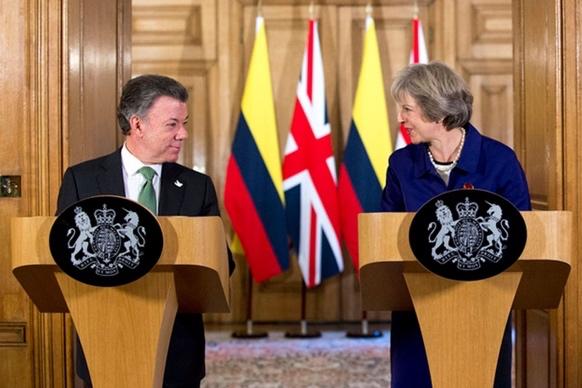
Figure 38: PM with President Santos
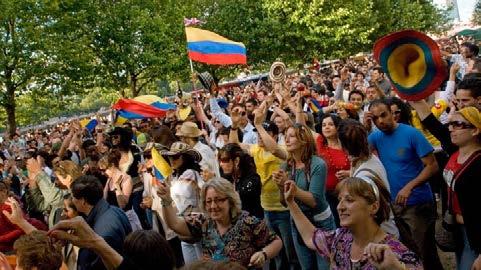
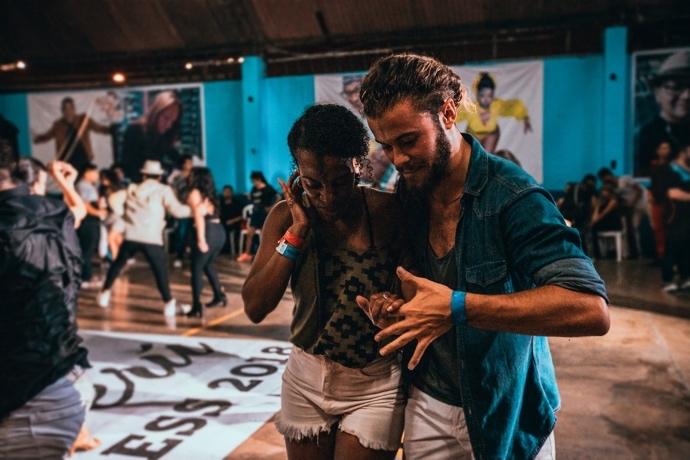
Figure 39: Salsa in London
Figure 40: Colombian empanadas
valued, which positively affects mental health. Same culture also means same festivities. Communities are often found to celebrate cultural events and traditions. Engaging in these celebrations can provide joy and a sense of cultural pride
Disadvantages
of Being in the Same Community as You:

One potential disadvantage of staying within the same community is limited exposure to diversity, this can lead to narrow perspectives and a lack of understanding of other cultures and viewpoints, potentially contributing to prejudice or bias. Staying within a homogenous community also will limit exposure to diverse perspectives and ideas, which can hinder creativity and personal growth. Sometimes people with different cultural identities fail to understand each other, this misunderstanding can lead to fear. This can cause prejudice which is the intolerance and mistreatment of a person because of their race, religion, sexuality, disability or political beliefs. Cultural issues cover a broad range of concerns including race, ethnicity, religion, sexual orientation, gender, and disability One of the greatest disadvantages of community participation is that it is time consuming. It slows down the decision-making process because it is difficult to bring people on shared grounds quickly. This also takes away time to do other things due to the devotion demanded by the community. Signs of an unhealthy community can include high crime rates, lack of access to resources and opportunities, social isolation, lack of trust in community institutions, a lack of sense of belonging or disconnection among residents The absence of supporting networks can create a negative atmosphere and discourage cooperation and empathy.
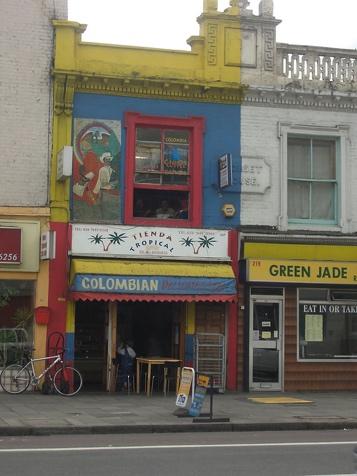
A lack of trust is one of the most common challenges. Little awareness about the outside world often occurs too. Communication Barriers as perhaps that community speaks a specific language
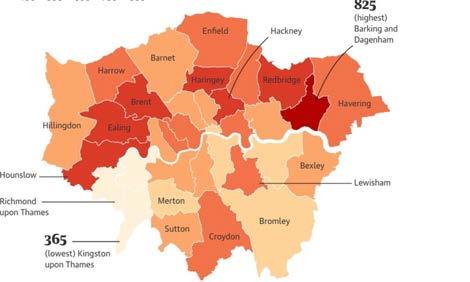
Figure 41: Equality, Diversity and Inclusion. Figure 42: Most Dangerous areas in London
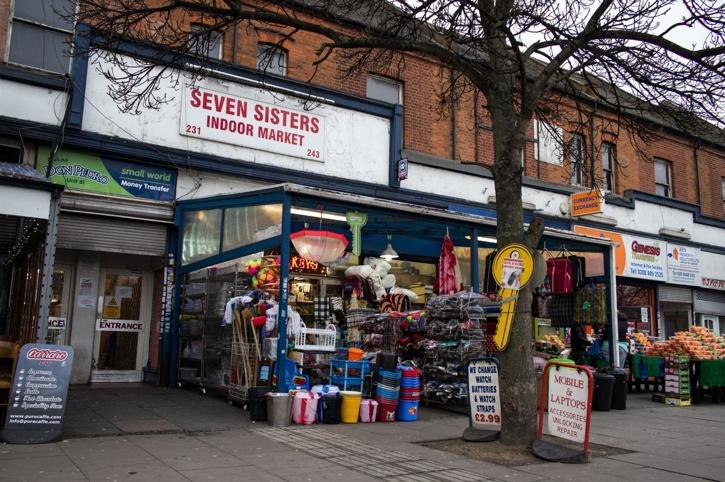
Figure 43: Final bid of Latin market demolition
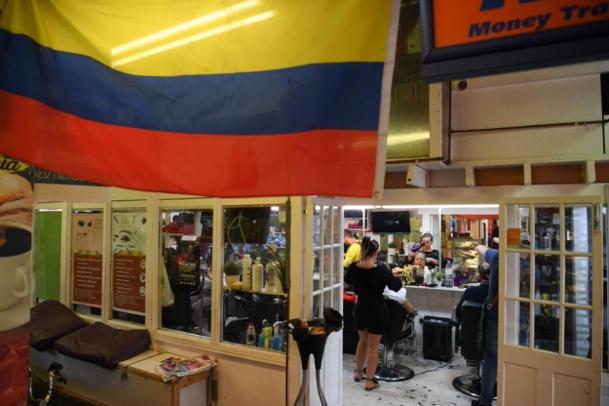
Figure 44: Colombian Shop in 2004
different to the country’s main language. Resistance to change as people may become comfortable and would not want to explore. Historic low engagement as they are only aware of this community. Communities can sometimes exert pressure on individuals to conform to specific cultural or social norms. This pressure to fit in can be stressful and may lead to mental health issues if it conflicts with an individual's prior personal beliefs or desires. Staying exclusively within one's own community can lead to isolation from mainstream society. This can limit opportunities for personal growth, education, and career advancement.
Latin American culture/ la Familia
Overall, the meaning of family is beyond biological ties, encompassing a network of social, emotional and practical support. This shapes communities and individuals to influence their values and well-being.
In the Latin American culture, we have a diverse range of indigenous traditions with European influences and African heritage. This is because our history is marked by colonization and independence. The most spoken languages in Latin America are Spanish and Portuguese There are also indigenous dialects as well as various European and African languages spoken in different areas. Another key feature of the Latin American Culture is its vibrant music and dance styles. Salsa, Bachata, cumbia, samba and reggaeton have unique rhythms deeply sourced from its cultural heritage. Moreover, Latin food is not only extremely affordable over there and very well recognised for its variety and flavour. They are mainly composed dishes of corn, beans, rice and a variety of meats. Empanadas, ceviche, feijoada, tacos and even arepas have become very popular in countries all over the world. During our celebrations and festivals like Rio de Janeiro’s Carnival or Day of the Dead in Mexico we also display our art. Artist like Diego Rivera and Frida Kahlo as well as literary figures such as Pablo Neruda, Gabriel Garcia Marquez and Mario Vargas Llosa are known for his social commentary The elements I have mentioned aim to provide an outline of the Latin culture, but there is so much more. While this is quite broad and general, each country practices its own beliefs and traditions. Haitians for instance, are known to exercise voodooism while their neighbours (Dominican Republic) are known for being Christians or Catholics. If I had to pick the most valuable and common belief amongst Latinos, it would be family. Strong networks and a collective sense of identity and unity are traits that we are all raised with. Families provide emotional support to one another, comfort, security and stability. Through families an individual also learns traditions, beliefs and cultural values that have been passed down from generation to generation Furthermore, each person has a chance to find their identity, ethics, guiding principles and morals based on other generations A child also learns language, problem solving abilities and interpersonal skills through their early years of life in their families. Financial assistance and providing resources when needed as a family member struggles builds strong family ties which improves mental health. It gives people a sense of belonging and lowers their stress levels. A nurturing environment is crucial for children to develop healthily and to know how to form strong relationships in life. Within families there are typically a major age range. The bridge
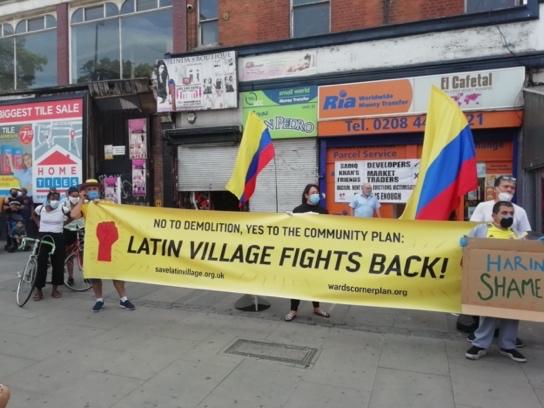
Figure 45: Latin Village in North London
Figure 46: Latin Village Protestants
between generations means older members can provide experience, guidance to younger ones and wisdom. This fosters, respect, continuity of traditions and understanding of one another.
Elephant and Castle Heritage
Figure 47: Elephant and Castle roundabout. Figure 48: Elephant and Castle in 1963
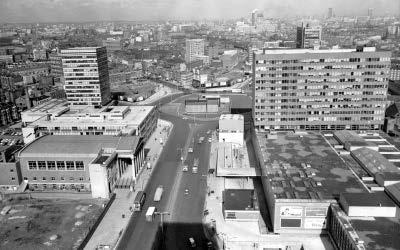
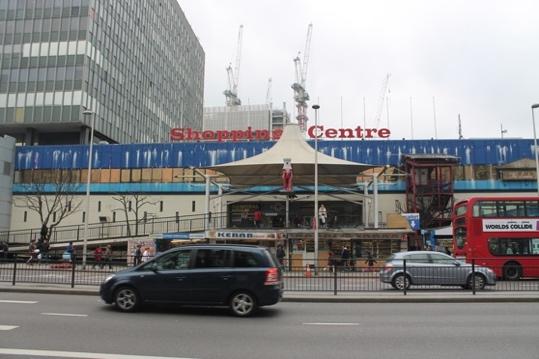
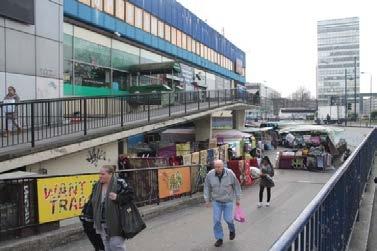
The Elephant and Castle opportunity area includes the Elephant and Castle junction and shopping centre, the Heygate estate, Walworth Road, the Pullens estate, West Square, St George’s Circus, the Enterprise Quarter bounded by London Road, Borough Road and Newington Causeway and the Rockingham estate The Elephant and castle shopping centre is located on what for centuries was the main road into London from the south and at the point where roads from Walworth, Newington, Westminster and New Cross converge. The number of theatres and taverns which were established in the area, including the once famous Elephant and Castle Inn, gave it a reputation as the “Piccadilly Circus” of south London. The Elephant and Castle suffered massively in the Blitz between September 1940 and May 1941. The junction and its immediate surroundings were seriously destroyed, and the area was damaged beyond repair. Many of the terraces in the surrounding area were also damaged. In response to the damage, a succession of masterplans were drawn and the area was cleared for redevelopment in the 1950s. A design competition was held for the shopping centre and the winning design featured Europe’s first American-style enclosed mall which was completed in the early 1960s. By this time, roads had been realigned and subways installed The redevelopment of the Elephant and Castle has left a legacy of large, single use buildings and a traffic dominated road network that creates an unpleasant environment for pedestrians and cyclists and that disconnects adjoining neighbourhoods. However, the regeneration of the area keeps occurring so to stop this division In July 2010, Southwark’s Cabinet agreed to the terms of a detailed Regeneration Agreement with commercial partners, Lend Lease, that will pave the way for the £1.5bn transformation of the Heygate estate. Lend Lease prepared a masterplan for the area and progressed on submitting a planning application by spring 2012.
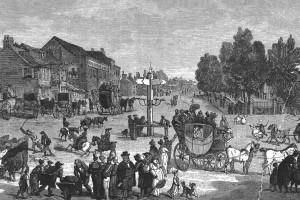
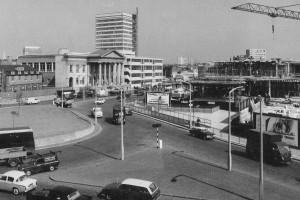
The opportunity area contains a mix of uses including shopping and town centre uses around the Elephant and Castle junctions and on Walworth Road, educational uses in the London South Bank University campus on Keyworth Street and Borough Road and in the London College of
Figure 49: The junction circa 1800
Figure 50: Elephant & Castle being rebuilt after WW2
Communication, commercial uses around Newington Causeway and residential use around the Heygate estate, Brandon Street, West Square and the Pullens estate. There are many developments opportunity sites in the area The area includes a complex road junction system, which forms part of the London Inner Ring Road. There are two tube stations serving the Northern and Bakerloo lines. The shopping centre is connected to the mainline rail station which serves Thameslink and Southeast Trains. Elephant and Castle is a significant bus interchange, with 24 bus services travelling through the area, eight of which terminate there. The bus stops for these services are widely distributed around all the approach roads to Elephant and Castle. However, most bus services use either the bus stops located between the shopping centre and the London College of Communication, or the bus stops on New Kent Road.
In terms of demographics, the number of people claiming out of work benefits in and around the opportunity area is higher than the Southwark average with a claimant stock of 7,505 working age residents. In 2009 there were 1.45 jobs per working age resident in Elephant and Castle, compared to 1.18 in Southwark and 0.9 in London. The strongest industry sectors in Elephant and Castle are business administration, support services, scientific, technical, public administration and others. Real estate, renting and business activities is the strongest growth sector.
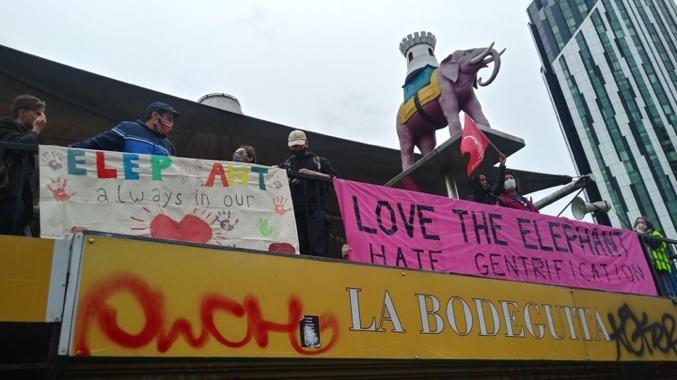

The Elephant and Castle has the potential to become a fantastic town centre. Currently the centre contains several minority ethnic businesses, with a particular concentration of LatinAmerican businesses which reflects the growth of the Latin American community in Southwark. There are a range of faith communities in the opportunity area. We need to provide more homes of all types in the area to meet Southwark’s needs and London Plan targets. The current reduction in social housing grant available is making the delivery of affordable housing more challenging. New homes should provide a high standard of accommodation, including generously sized rooms. The Elephant and Castle has a positive reputation as a creative area. The universities provide gallery space and there are several local artists’ studios which contribute to the strength in the visual arts sector. It is well served by heritage facilities in museums like the Cuming Museum and the Imperial War Museum.
Shopping Centre Renovation
Figure 51: Elephant and castle protestants
Figure 52: Latin Americans in London
Figure 53: Redevelopment Aerial View
Figure 54: Town Centre
While Elephant and Castle has a strong specialist function Southwark’s town centres are not meeting the needs of the borough’s residents. Most people travel to the West End, Croydon and Lewisham to shop Retail studies suggests that around 18,000sqm of new floorspace for comparison goods and a small amount of convenience goods floorspace could be provided at Elephant and Castle without harming neighbouring centres in Southwark, Croydon or Lewisham. The provision of new shopping floorspace at Elephant and Castle will help consolidate its role as a major centre in the hierarchy of town centres and help provide a step change which enables it to compete with other London centres. In order to maximise diversity within the town centre a range of shop units’ sizes should be provided in large retail developments, suitable to accommodate a range of occupiers such as large multiple stores and independent small and medium sized operators Southwark Plan Policy 1.10 protects essential local services where they are the last available use of their type within a 600m catchment area. This is because they recognise that they provide a valuable service to the community they serve. It also enables them to be available within easy walking distance of as many homes as possible, in order to minimise car journeys.
The aim of the new development is to strengthen the Elephant and Castle as a major shopping destination by increasing the amount of shopping space by up to 45,000sqm in the town centre. Providing a vibrant mix of activities in the town centre, ensuring it is busy throughout the day and evening. Reinforcing retail activities on the main roads leading into the town centre. Improve the evening economy and the variety of arts, cultural and entertainment offer by providing more cafes and restaurants as well as supporting leisure and cultural facilities. More opportunities for local people and small and medium sized businesses. Regenerate railway arches, enabling their use for a mix of uses including business, retail and community uses. Ensure that new retail and business opportunities generate around 5,000 new jobs.
Importance of maintaining this
Although Elephant and Castle is just a district in South London, it holds great value for London and Great Britain all together. It has been going continuous and significant transformations Although it holds very important historical roots, it holds most value in an evolving identity as one of the most dynamic and diverse parts of London. Its cultural diversity, transport hub, educational institutions, cultural landmarks, economic hubs, its community and regenerations.
La Bodeguita Restaurant
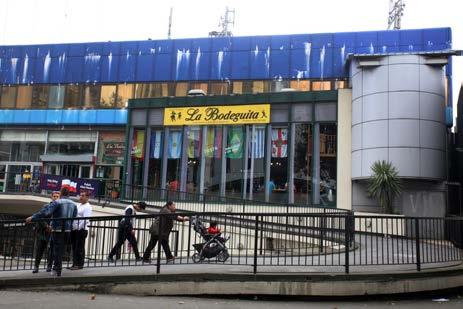
Figure 53: Front Entrance
Figure 54: Disability access to front entrance
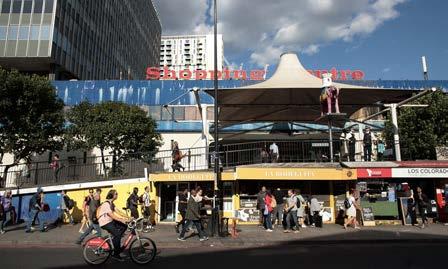
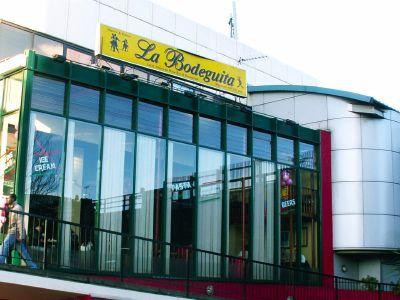
A family-owned restaurant, specialising in traditional Colombian dishes. La bodeguita was the first restaurant I entered in Elephant and Castle shopping mall so it holds a special place in my heart. When a costumer walks in, they are immersed in traditional foods, drinks and culture as well as typical Colombian entertainment. A special “el menu de el dia” is the cheapest menu you can find there, featuring a soup and main dish of the day. As you sit down you can ask your assigned waitress or waiter what is “todays menu” and make your choice.
La Bodeguita’s literal translation is “small warehouse” I had the pleasure to interview Diane Sanchez, she mentioned that they made this name their choice because they wanted this to be a cosy place where friends and family catch up while eating their favourite dishes. Some of these dishes were Chorizo and Bandeja Paisa. Diane is also on the Bodeguita website with a message to all Latinos looking or a place to eat in elephant and castle “People come here to feel at home even if they are far away from home” says Diana Sanchez. This ‘small” family-owned restaurant has grown over the 12 years that has been opened, now at 150 cover seating space.
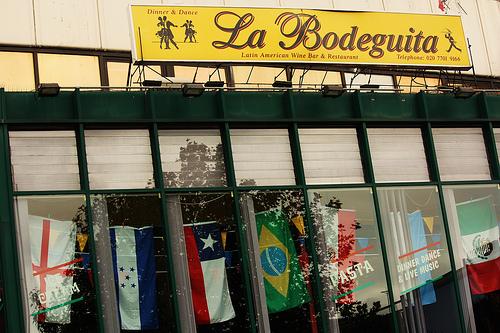
Diana originally came to London from Cali in Colombia to study English when she was 18 and then spent 12 years working in an Italian coffee shop in Victoria. It was always her dream to open her own place providing the food she grew up with and in 1998 she took over a kiosk in the Elephant and Castle Shopping Centre, where a Colombian lady had previously sold clothes and perfumes and started serving traditional dishes cooked in her kitchen at home, alongside selling Latin American produce. Diana’s Colombian food became very popular with shoppers, local residents and workers and when, in 2001, the owner of the Italian restaurant opposite asked if she wanted to take over their premises too, she jumped at the chance.
Figure 55: La Bodeguita
Figure 56: La Bodeguita
Figure 57: La Bodeguita
Figure 58: La Bodeguita
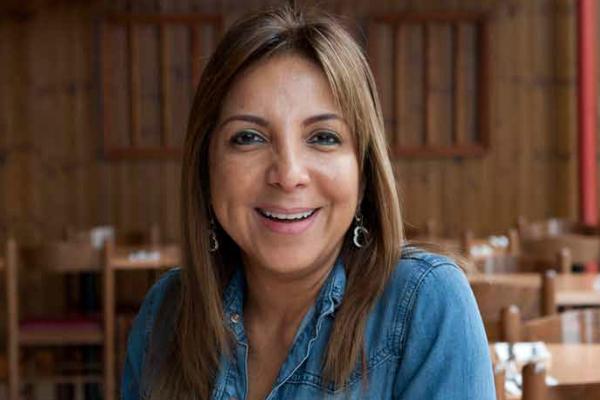
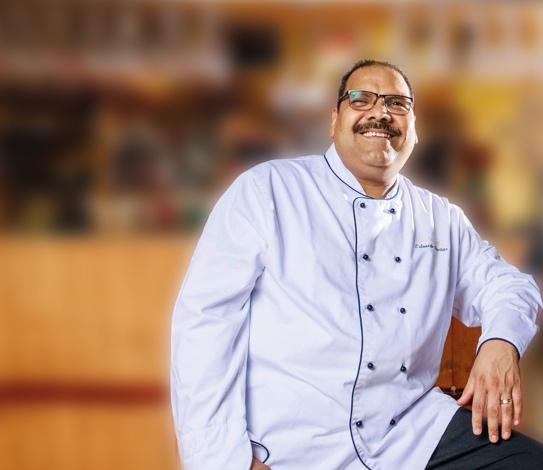
La Bodeguita is very much a family affair. “When I opened the restaurant I asked my brothers, Eduardo and Joseph to join me and I’m very glad I did. I couldn’t have done it without them”, explains Diana “We were here 24 hours a day at the beginning, and it was very hard work, but it was great as we saw it gaining popularity.” Customers come from across London, but also as far afield as Manchester, for everything from birthdays to baptisms. “If they have anything to celebrate, they come to us”, says Diana although their clientele is Latin American. “People come from all over. We get a lot of students who come here to study English and it’s nice that they like to bring their non-Latin American friends. She has witnessed a growing interest in Latin American cuisine over the years and says it is now much easier to source ingredients. “When I first started, getting hold of plantain was difficult but now everywhere has it”, she says. But La Bodeguita isn’t just about food, it’s about dancing too, and at 11pm on Friday and Saturday night the central tables are cleared away and the balcony sound system kicks in. Parties are a regular feature, and they recently celebrated their 12th birthday in true La Bodeguita style with a special night of food and drink, live bands, DJs and salsa, merengue and bachata dancing.
Figure 59: Diane Sanchez (One of three owners) Figure 60: Eduardo Sanchez (Brother/Owner)
Conclusion
Culture can affect everyone. We all come from somewhere. Most often culture bears on how people feel, it can shape our thoughts, our emotions, and our actions
I started writing this essay to investigate why elephant and castle was not successful. I kept exploring threads and found many articles and precedents that I found interesting. However, it was clear to me that I also wanted to express the significance that south American shops have on Immigrants/migrant and second-generation born Latinos The main critical point that Gruen made on his developments was that a mall should be an experience not a place of consumption It was then proven by developers as they tried to replicate his success but were not able to. Although his observations and ideas were completely spot on for the future of shopping centers, these were not considered soon enough and his creation destroyed the very thing he wanted to help, people.
Elephant and Castle was not a functionable, effective, performing profitable mall The dysfunction of the place as a commercial entity was vast. The research of the architecture realm was my catalyst to understand that I was wrong. Elephant and Castle really was successful and rich, just not in the eyes of a developer. I am witness of the formation of a Latin community here where many people from different backgrounds called home. This is our voice. The key moment here is the discrepancy between commercial planning and domestic usage. There was no respect towards the sentimental value the community had towards the architecture. I was personally devastated when I heard it was to be shut down in 2020. Furthermore, the new scheme speaks volumes of what they would like to do but there is no evidence of research within the community. Once again, they are designing without considering the costumer urban scenery instead of designing entirely for the customer of the goods on display.
Finally, it was a pleasure to speak to Diana Sanchez. I visited la Bodeguita several times while it was open in Elephant and castle, but I didn’t quite understand why they kept moving. She confessed that the rent kept going up and as customers kept leaving due to the soon arrival of Brexit in January 2020 she had to adjust with her brothers. “I think the shopping center was much more than a place of work for me. I saw mothers bring their sons when they were 5-year-olds and now they are adults that come to eat with their own families. This restaurant was my house; therefore, the shopping center was my home” said Diane when I asked her what the Elephant and castle shopping center meant to her.
“Creo que el centro commercial era mucho mas que un lugar de trabajo para mi. Vi mamas traer a sus ninos cuando tenian 5 anos y ahora son adultos que vienen a comer con sus propias familias Este restaurante fue mi casa, por lo cual el centro commercial mi hogar”
- Diane Sanchez (December 20th, 2023)
Bibliography
Websites
Frank Lloyd Wright Quote
https://architizer.com/blog/inspiration/industry/frank-lloyd-wright-tribute/ [Accessed 20th October 2023]
Figure 1: Elephant and Castle demolition
https://londonnewsonline.co.uk/building-work-starts-at-new-elephant-castle-complex/ [Accessed 20th October 2023]
Figure 2: Elephant and Castle renovation
https://elephantandcastle.org.uk/overview-of-the-plans/ [Accessed 20th October 2023]
Figure 3: Elephant and Castle Station
https://irr.org.uk/article/you-need-to-look-closely-because-elephant-and-castle-is-a-model-forother-dispossession-projects/ [Accessed 21th October 2023]
Figure 4: Passage des Princes
https://www.maisonmere.co/blog/articles/the-most-beautiful-covered-passages-of-paris-9thdistrict-30309 [Accessed 21th October 2023]
Figure 5: Walter Benjamin
https://www.centrepompidou.fr/es/ressources/oeuvre/cybkMj [Accessed 22nd October 2023]
Figure 6: Model of mall built in Southfield
https://landscapearchitecturemagazine.org/2018/09/18/dreams-and-regrets/ [Accessed 22nd October 2023]
Figure 7: Victor Gruen in 1946
https://landscapearchitecturemagazine.org/2018/09/18/dreams-and-regrets/ [Accessed 22nd October 2023]
Figure 8: Northland City Centre plan https://www.cnu.org/publicsquare/2021/08/16/historic-shopping-mall-site-slated-mixed-use [Accessed 22nd October 2023]
Figure 9: Richard H Webber
https://hudson-webber.org/who-we-are/history-of-the-foundation/ [Accessed 23rd October 2023]
Figure 10: Northland shopping Centre https://www.gruenassociates.com/project/northland-shopping-center/ [Accessed 23rd October 2023]
Figure 11: Interior of Northland https://www.gruenassociates.com/project/northland-shopping-center/ [Accessed 23rd October 2023]
Figure 12: Northland mall green garden https://www.gruenassociates.com/project/northland-shopping-center/ [Accessed 23rd October 2023]
Figure 13: Northland mall park benches
https://www.gruenassociates.com/project/northland-shopping-center/ [Accessed 23rd October 2023]
Figure 14: Northland Shopping mall entrance
https://www.gruenassociates.com/project/northland-shopping-center/ [Accessed 23rd October 2023]
Figure 15: Northland mall terrace
https://www.gruenassociates.com/project/northland-shopping-center/ [Accessed 23rd October 2023]
Figure 16: Jewel Changi Airport
https://www.architecturaldigest.in/content/singapore-changi-airport-worlds-tallest-indoorwaterfall-safdie-architects/ [Accessed 25th October 2023]
Figure 17: Plan and Section
https://www.architecturaldigest.in/content/singapore-changi-airport-worlds-tallest-indoorwaterfall-safdie-architects/ [Accessed 25th October 2023]
Figure 18: Interior of shopping mall
https://www.architecturaldigest.in/content/singapore-changi-airport-worlds-tallest-indoorwaterfall-safdie-architects/ [Accessed 25th October 2023]
Figure 19: Toy R Us shops
https://www.nytimes.com/2018/02/22/business/toys-r-us-stores.html
[Accessed 25th October 2023]
Figure 20: Amazon Online Shopping https://techboomers.com/t/what-is-amazon
[Accessed 25th October 2023]
Figure 21: Migrant boat sinks in British shores
https://www.nbcnews.com/news/world/least-27-dead-migrant-boat-sinks-bid-reach-britishshores-rcna6619
[Accessed 27th October 2023]
Figure 22:
https://www.express.co.uk/travel/articles/1648802/travel-chaos-uk-airport-staff-shortages-newsdocumentary
[Accessed 27th October 2023]
Figure 23: https://www.theguardian.com/commentisfree/2018/dec/28/christmas-channel-crossings-britainrefugees-migrants
[Accessed 27th October 2023]
Figure 24:
https://www.theguardian.com/commentisfree/2018/dec/28/christmas-channel-crossings-britainrefugees-migrants
[Accessed 27th October 2023]
Figure 25: Elephant and Castle protestants
https://irr.org.uk/article/you-need-to-look-closely-because-elephant-and-castle-is-a-model-forother-dispossession-projects/
[Accessed 27th October 2023]
Figure 26:
https://academic-accelerator.com/encyclopedia/colombians-in-the-united-kingdom [Accessed 29th October 2023]
Figure 27: Migration protestant
https://www.opendemocracy.net/en/podcasts/podcast-borders-belonging/migrant-global-britainbrexit-governance/ [Accessed 29th October 2023]
Figure 28: Brexit Protestants
https://www.independent.co.uk/news/uk/politics/brexit-50-studies-impact-economy-nurses-eua7893216.html
[Accessed 29th October 2023]
Figure 29: Student visa to the UK https://www.britishcouncil.in/study-uk/student-visa-uk [Accessed 29th October 2023]
Figure 30: Passport Office
https://inews.co.uk/news/urgent-passport-applications-strain-hmpo-strike-appointments2253541
[Accessed 2nd November 2023]
Figure 31: British-born latin americans https://www.newstatesman.com/politics/2019/12/latin-americans-are-one-of-the-uks-fastestgrowing-groups-so-why-arent-they-recognised [Accessed 2nd November 2023]
Figure 32: St Mary’s Hospital
https://www.imperial.nhs.uk/our-locations/st-marys-hospital [Accessed 2nd November 2023]
Figure 33: NHS Support for your mental health https://www.england.nhs.uk/publication/going-further-for-winter-mental-health-supporting-resources/ [Accessed 2nd November 2023]
Figure 34: NHS poster launched for young people https://www.leicspart.nhs.uk/news/new-emotional-health-support-poster-for-young-peoplelaunched-in-time-for-childrens-mental-health-week-6-12-february-2023/ [Accessed 2nd November 2023]
Figure 35: Interior of British Museum https://www.britannica.com/topic/architecture [Accessed 2nd November 2023]
Figure 36: Tower Bridge, Uk https://www.britannica.com/topic/Tower-Bridge [Accessed 2nd November 2023]
Figure 37: Colombian connection to the UK https://www.bbc.co.uk/news/world-latin-america-37826823 [Accessed 5th November 2023]
Figure 38: PM with President Santos
https://www.gov.uk/government/speeches/president-of-colombia-state-visit-prime-ministerspress-statement
[Accessed 5th November 2023]
Figure 39: Salsa in London https://london-salsa.co.uk/about-us/ [Accessed 5th November 2023]
Figure 40: Colombian Empanadas
https://thelittlearepa.com/colombian-empanadas-vegan-recipe/ [Accessed 5th November 2023]
Figure 41: Equality, Diversity and Inclusion
https://www.strictlyeducation.co.uk/news/importance-of-equality-diversity-and-inclusion-schoolsacademy-trusts
[Accessed 15 November 2023]
Figure 42:Most dangerous areas in London https://www.theguardian.com/cities/2018/sep/20/new-data-reveals-most-dangerous-londonborough-for-pedestrians
[Accessed 15 November 2023]
Figure 43: Final bid od Latin market demolition https://www.standard.co.uk/news/london/final-bid-to-stop-demolition-of-latino-market-at-sevensisters-a4113886.html
[Accessed 15 November 2023]
Figure 44: Colombian Shop in Seven sisters 2004 https://www.slas.org.uk/post/latin-americans-in-the-uk-an-increasingly-visible-population [Accessed 15 November 2023]
Figure 45: Latin Village in North London https://www.independent.co.uk/news/uk/home-news/latin-village-seven-sisters-indoor-marketlondon-colombia-elephant-castle-a9637001.html
[Accessed 15 November 2023]
Figure 46: Latin Village Protestants https://www.independent.co.uk/news/uk/home-news/latin-village-seven-sisters-indoor-marketlondon-colombia-elephant-castle-a9637001.html
[Accessed 17th November 2023]
Figure 47: Elephant and castle roundabout https://southwarknews.co.uk/news/transport/elephant-and-castle-roundabout-is-worst-inlondon-for-cyclists/
[Accessed 17th November 2023]
Figure 48: Elephant and Castle in 1963 https://www.elephantandcastle.org.uk/a-brief-history/ [Accessed 17th November 2023]
Figure 49: The junction circa 1800 https://www.elephantandcastle.org.uk/a-brief-history/ [Accessed 17th November 2023]
Figure 50: Elephant and Castle being rebuilt after WW2, 1963 https://www.elephantandcastle.org.uk/a-brief-history/ [Accessed 17th November 2023]
Figure 51: https://londonnewsonline.co.uk/protesters-chant-homes-for-people-not-profit-as-elephant-andcastle-shopping-centres-closes-after-more-than-half-a-century-of-trading/ [Accessed 17th November 2023]
Figure 52: https://www.latinolife.co.uk/articles/revolutionary-people-brief-history-latin-americans-london [Accessed 17th November 2023]
Figure 53: Redevelopment Aerial View https://www.constructionenquirer.com/2018/07/05/londons-elephant-castle-new-town-centreapproved/ [Accessed 17th November 2023]
Figure 54: Town Centre https://www.gardiner.com/projects/elephant-castle-town-centre [Accessed 20th November 2023]
Figure 55: Front Entrance
https://londonist.com/2015/03/an-ode-to-elephant-and-castle-shopping-centre [Accessed 20th November 2023]
Figure 56: Disability access to front entrance https://londonist.com/2015/03/an-ode-to-elephant-and-castle-shopping-centre [Accessed 20th November 2023]
Figure 57: La bodeguita https://www.theguardian.com/cities/2018/jul/03/save-the-elephant-and-castle-the-fight-toprotect-south-londons-anti-westfield [Accessed 20th November 2023]
Figure 58: La bodeguita
https://www.london-se1.co.uk/restaurants/info/371/la-bodeguita [Accessed 20th November 2023]
Figure 59: La bodeguita http://www.ingridguyon.com/latin-elephant [Accessed 20th November 2023]
Figure 60: La bodeguita https://littlelondonobservationist.wordpress.com/2010/10/08/taste-of-colombia-in-london/ [Accessed 20th November 2023]
Figure 61: Daniela Sanchez
https://www.elephantandcastle.org.uk/wp-content/uploads/2017/07/bodeguitadi64.jpg [Accessed 20th December 2023]
Figure 62: Eduardo Sanchez
https://www.castlesquarelondon.com/traders/food-and-drink/la-bodeguita/ [Accessed 20th December 2023]
Elephant and castle partnership website https://www.elephantandcastle.org.uk/ [Accessed 20th December 2023]
Southwark council website https://www.southwark.gov.uk/regeneration/elephant-and-castle [Accessed 20th December 2023]
Daily mail
https://www.dailymail.co.uk/news/article-9465379/End-iconic-EYESORE-Bulldozerstramplesouth-Londons-Elephant-Castle-Shopping-Centre.html [Accessed 20th December 2023]
Allies and morrisons
https://www.alliesandmorrison.com/projects/elephant-and-castle-town-centre [Accessed 20th December 2023]
Books
WALTER
BENJAMIN BOOK ON PASSAGE
Articles
How does culture affect mental health https://www.mentalhealthfirstaid.org/2019/07/four-ways-culture-impacts-mental-health/
Websites
Elephant and castle partnership website https://www.elephantandcastle.org.uk
Figure 8: Gruen mall image https://landscapearchitecturemagazine.org/2018/09/18/dreams-and-regrets/ Southwark council website https://www.southwark.gov.uk/regeneration/elephant-and-castle Elephant and castle brief history https://elephantandcastle.org.uk/a-brief-history/