McGill-Queens University Press catalogue Winter 2026
McGill-Queen’s University Press acknowledges the financial support of the Canada Council for the Arts for our publishing program.
McGill-Queen’s University Press acknowledges the financial support of the Government of Canada for our publishing activities.
Contents
Architecture / 1
Biography / 15, 16
Cultural studies / 13
Eastern European studies / 24
Environment / 4, 5, 6
Gender / 7
Health and medicine / 8
History / 1, 2, 6, 10, 21, 25, 27
Human rights / 11
McGill-Queen’s University Press also acknowledges with gratitude the assistance of AMS Healthcare, the Azrieli Institute of Israel Studies, the Brian Mulroney Institute of Government Studies in Leadership, Public Policy, and Governance, the Canadian Corporation for Studies in Religion, Carleton University, the Donald J. Savoie Institute, the Humanities and Social Sciences Federation of Canada, Livres Canada Books, the McGill Institute for the Study of Canada, the Montreal History Group, the Royal Military College of Canada, the Smallman Fund of the University of Western Ontario, the Social Sciences and Humanities Research Council of Canada, and the Wellcome Trust for their support of its publishing program. Above all, the Press is indebted to its two parent institutions, McGill and Queen’s universities, for generous, continuing support for the Press as an integral part of the universities’ research and teaching activities.
Montreal
McGill-Queen’s University Press 1010 Sherbrooke Street West, Suite 1720 Montreal, qc h 3a 2r 7
Canada
Kingston
McGill-Queen’s University Press Douglas Library Building 93 University Avenue
Kingston, on k 7l 5c 4
Canada
COVER DESIGN
salamanderhill.com
INTERIOR DESIGN & TYPESETTING
oneonone@videotron.ca
Islamic studies / 26
Labour studies / 21
Law / 20
Life writing / 8
Literary studies / 25
Literature / 27
Memoir / 12, 23
Philosophy / 3, 4
Photography / 14
Poetry / 17, 18
Policy studies / 9
Politics / 5, 7, 11, 15, 16, 19, 20, 23, 28
Public administration / 22
Queer studies / 12, 13
Refugee studies / 9, 28
Religious studies / 26
Sociology / 19
Urban studies / 22
Series
Confronting Atrocity: Human Rights and Restorative
Justice Series / 11, 20
Études d’histoire du Québec / Studies on the History of Quebec / 21
Footprints Series / 15, 16
Hugh MacLennan Poetry Series, The / 17, 18
McGill-Queen’s/Beaverbrook Canadian Foundation
Studies in Art History / 1
McGill-Queen’s Refugee and Forced Migration Studies / 9, 19, 28
McGill-Queen’s Rural, Wildland, and Resource Studies Series / 6
McGill-Queen’s Studies in Early Canada / Avant le Canada / 2
McGill-Queen’s Studies in Modern Islamic Thought / 26
McGill-Queen’s Studies in Protest, Power, and Resistance / 24
McGill-Queen’s Studies in Urban Governance / 22 Outspoken / 4
Rethinking Canada in the World / 25
Studies on the History of Quebec/Études d’histoire du Québec / 21
Check us out online at mqup.ca
Follow us on Facebook, Instagram, LinkedIn, and Bluesky @McGillQueensUP
Visit our blog at mqup.ca/blog
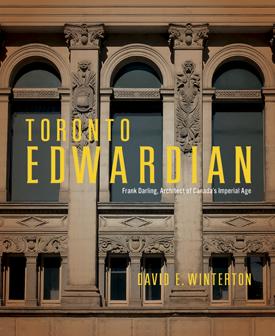
Toronto Edwardian
Frank Darling, Architect of Canada’s Imperial Age
david e. winterton
Foreword by Michael McClelland
Navigating the architectural history of the Edwardian era and its most accomplished Canadian protagonist.
Beginning his career as an independent architect in the mid-1870s, Frank Darling came to prominence as the principal of Darling & Pearson Architects, designing a plethora of delightful bank buildings in the early twentieth century. Darling’s work aligned with the national ambitions of his clients and gave shape to Britain’s global imperial project on Canadian soil.
In Toronto Edwardian David Winterton positions Darling as a leading architectural figure of the era. He demonstrates that the Canadian Edwardian Grand Manner was not merely an architectural interlude: it was pivotal to the development of Canada’s cultural identity and of the possibility of a national architecture in the early twentieth century. Darling was the first Canadian architect with a truly national presence, with built projects in every province – over 360 known buildings – ranging from elaborate urban designs to prefabricated banks that rose up in many towns and villages west of Lake Superior. Winterton has drawn from institutional archives and consulted with local historians, heritage professionals, and scholars to meticulously reconstruct the story of Frank Darling and his work. First exploring biographical, cultural, and patronage contexts, then
focusing on the design and construction of fine houses, academic buildings, banks, and even the country’s first skyscrapers, Toronto Edwardian features new and previously unpublished photographs that illuminate the firm’s considerable influence and provide a visual record of Darling’s approach to style.
Toronto Edwardian richly illustrates the breadth of Darling’s architectural creation and compellingly articulates the Edwardian period’s importance to Canadian architecture.
“Toronto Edwardian is a field-defining book. Bringing to light a vast amount of new information on Frank Darling and the firm of Darling & Pearson, Winterton offers a penetrating account of Canadian architecture in its international context, raising its study to a new level of elegance and sophistication.”
Matthew M. Reeve, co-editor of Casa Loma: Millionaires, Medievalism, and Modernity in Toronto’s Gilded Age
David E. Winterton is a Toronto-based architect and architectural historian.
SPECIFICATIONS
McGill-Queen’s/Beaverbrook Canadian Foundation Studies in Art History February 2026
978-0-2280-2655-6
$80.00T US, $80.00T CDN, £64.00 UK cloth 9 × 11 384pp 300 photos, colour throughout eBook available
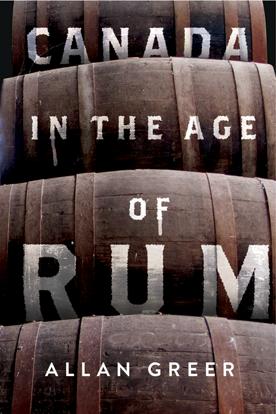
Canada in the Age of Rum
allan greer
A new history revealing early Canada as a place where people drank rum – and a lot of it.
Awash in a sea of rum describes the years between the 1670s and the 1830s in the colonies that would later become Canada. Millions of litres of the sugar-based liquor were imported every year to supply a comparatively small population of colonists and Indigenous people. Why rum, and why so much?
Rum was cheap and plentiful. Intimately connected to the West Indian slave plantation complex, rum shipped to early Canada and around the Atlantic World was part of the early modern expansion of intercontinental trade known as the first globalization. Canada in the Age of Rum shows what happened to the vast quantities that came to Canadian shores: rum was especially important to workers in the early Canadian staples industries. Fishermen and fur-trade voyageurs drank rum in massive quantities, supplied on credit and at grossly inflated prices by their employers, an arrangement that served to claw back wages and ensure the profitability of enterprises that would not have been viable otherwise.
Traders deliberately sought to get hunting peoples hooked on rum in order to ensure a steady supply of pelts – alcohol was not so much a commodity for sale as it was a gift used to induce hunters to
conform to the ways of the capitalist economy. However, Indigenous people drank rum in their own ways and for their own reasons; and when drinking became a serious social problem, they organized to resist it. The story ends in the 1830s when the combined effects of the temperance movement and the rise of whisky led to a sharp decline in rum consumption.
This brilliant history follows the thread of a single commodity from West Indian plantations to Newfoundland, Quebec, and the west, revealing rum as a critical lubricant of the social life of early Canada and its particular version of early capitalism.
Allan Greer is professor emeritus of history at McGill University.
SPECIFICATIONS
McGill-Queen’s Studies in Early Canada / Avant le Canada
March 2026
978-0-2280-2689-1
$28.95T US, $28.95T CDN, £24.99 UK cloth 5.5 × 8.5 252pp 25 photos, colour section, 5 tables eBook available
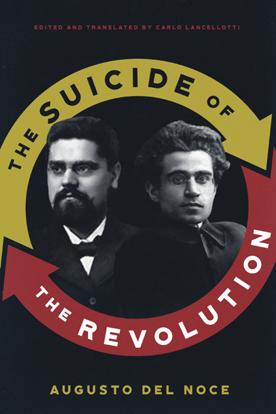
The Suicide of the Revolution
augusto del noce
Edited and translated by Carlo Lancellotti
An exploration of Italian cultural-political history from the reception of Marxism and the rise of fascism to the cultural hegemony of Gramscian communism.
Philosopher Augusto Del Noce (1910–1989), one of Italy’s foremost cultural critics and political thinkers, examined the relationship between fascism and Gramscian Marxism in four influential essays. First published in Italian in 1978, The Suicide of the Revolution contends that Giovanni Gentile’s late-nineteenth-century critique of Marxism had a foundational influence on Antonio Gramsci and, ultimately, shaped not only fascism but also the thinking of many anti-fascists. Deeply controversial at the time of publication, Del Noce’s interpretation of twentieth-century Italian cultural history remains vibrant and relevant.
In twentieth-century Italy, the process of modernization and secularization unfolded in a very transparent and consequential way due to a strong parallelism between philosophy and politics. Del Noce argued that Gramsci’s attempted reform of Marxism had the unintended consequence of lending ideological support to a radical form of neoliberalism that ironically nullified Gramsci’s own revolutionary hopes. By the 1970s the Communist party in Italy had become the party of the progressive bourgeoisie, supported by academics, journalists, artists, and intellectuals,
all of whom were deeply invested in the status quo. This inversion of the left, which Del Noce saw happening throughout the Western world, marked “the suicide of the revolution” that he regarded as the most important political development of the twentieth century.
Translated into English for the first time, this collection is essential reading for those seeking to understand the deep intellectual currents that shape contemporary politics.
Augusto Del Noce (1910–1989) was professor at La Sapienza University of Rome and a distinguished philosopher, political thinker, and public intellectual.
Carlo Lancellotti is professor of mathematics at the College of Staten Island and a member of the physics faculty at the Graduate Center of the City University of New York.
SPECIFICATIONS
April 2026
978-0-2280-2680-8
$34.95A US, $39.95A CDN, £26.99 UK paper
978-0-2280-2679-2
$125.00S US, $125.00S CDN, £100.00 UK cloth
6 × 9 368pp eBook available
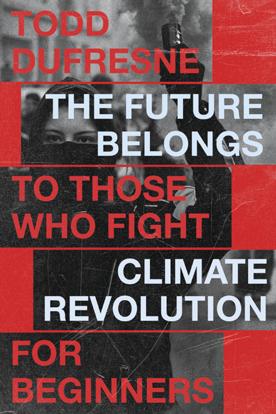
The Future Belongs to Those Who Fight Climate Revolution for Beginners
todd dufresne
A manifesto against well-mannered nihilism that dares to imagine a new world built on empathy, justice, and reason.
We are living through the sixth mass extinction. Capitalism, the essential driver of carbon emissions, is reaching its inevitably brutal endgame: techno-feudalism. Not only are we facing a climate emergency – we need to prepare for climate revolution.
In a series of reports from the front lines, philosopher-journalist Todd Dufresne provides an urgent analysis of the knowledge and morals that are fuelling this revolution. His manifesto outlines the links between Western values, capitalism, and climate change, rejecting the “pathology of politeness” afflicting mainstream climate activism and warning that the systemic violence of post-capitalist society will be met with violence. Dufresne champions the radical critics of capitalism whose ideas, courage, and exuberant energy have the power to forestall the social murder of humanity in service of short-term profits for a tiny, irredeemable elite.
A fearless – and fearsome – account of the world-historical social and material conditions confronting us, The Future Belongs to Those Who Fight is a call to support utopic realism: a vision that embraces empathy, freedom, community, and universal human rights. It lays out what may be the only path to a world worth living in: left populism.
Todd Dufresne is a Canadian philosopher and the author or editor of a dozen books, including The Democracy of Suffering: Life on the Edge of Catastrophe, Philosophy in the Anthropocene.
SPECIFICATIONS
Outspoken
March 2026
978-0-2280-2683-9
$24.95T US, $24.95T CDN, £18.99 UK paper
5.5 × 8.5 204pp eBook available
Ecological Nation
Toward Peace, Order, and Good Government
byron williston
Safeguarding Canada’s environmental and political sovereignty as the country engages in a new nation building project.
At the quarter mark of the twenty-first century Canada faces two existential threats: runaway climate change and the rising global tide of right-authoritarian imperialism. The inextricable relationship between the two threats requires clear vision and bold policy as Canada reconceives its future.
Arguing that peace, order, and good government form the cornerstone of Canada’s national identity, Byron Williston revives the vision of philosopher George Grant to explore how these values can guide Canada in reimagining its identity across its own regions, within the North American context, and in the global political order. In a work that lays out a positive vision for Canada rooted in the ideal of an ecological nation, Williston argues that this country faces a stark choice between this ideal and absorption into the American empire. The key is a refined governance model addressing the failed history of Canadian climate policy and overcoming the false belief that Canada is essentially a land of inexhaustible resources. The nation-building project described here will both benefit all Canadians and avoid capture by the forces of social and political regression. It will help secure a sovereign and flourishing future for this country.
The challenges Canada faces are profound. To meet them the country must engage fully with the eco-national project. While daunting, this moment provides a unique opportunity for Canada to link its national well-being to that of planetary health and to create a singularly Canadian political ethic informed by Indigenous knowledge and developed in step with the ongoing project of reconciliation.
Byron Williston has published extensively on environmental ethics, the climate crisis, and Canadian environmental and climate policy. He teaches at Wilfrid Laurier University and lives in Kitchener, on .
SPECIFICATIONS
January 2026
978-0-2280-2666-2
$34.95A US, $34.95A CDN, £26.99 UK paper
6 × 9 318pp eBook available
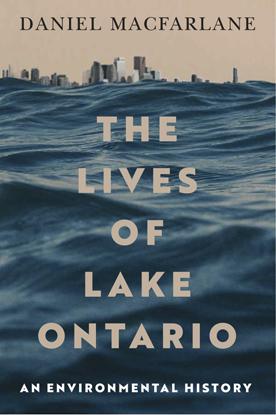
The Lives of Lake Ontario
An Environmental History
daniel macfarlane
A history of using and abusing Lake Ontario.
Lake Ontario has profoundly influenced the historical evolution of North America. For centuries it has enabled and enriched the societies that crowded its edges, from fertile agricultural landscapes to energy production systems to sprawling cities.
In The Lives of Lake Ontario Daniel Macfarlane details the lake’s relationship with the Indigenous nations, settler cultures, and modern countries that have occupied its shores. He examines the myriad ways Canada and the United States have used and abused this resource: through dams and canals, drinking water and sewage, trash and pollution, fish and foreign species, industry and manufacturing, urbanization and infrastructure, population growth and biodiversity loss. Serving as both bridge and buffer between the two countries, Lake Ontario came to host Canada’s largest megalopolis. Yet its transborder exploitation exacted a tremendous ecological cost, leading people to abandon the lake. Innovative regulations in the later twentieth century, such as the Great Lakes Water Quality Agreements, have partially improved Lake Ontario’s health.
Despite signs that communities are reengaging with Lake Ontario, it remains the most degraded of the Great Lakes, with new and old problems alike exacerbated by climate change. The Lives of Lake Ontario demonstrates that this lake is both remarkably resilient and uniquely vulnerable.
“A deeply researched, authoritative account of the physical phenomena that formed and continue to shape the fourteenth-largest lake in the world … Beyond his ability to distill an abundance of complex scientific detail into crisp, digestible prose, [Macfarlane] truly shines in elucidating the reciprocal relationship between the lake and the people surrounding it.”
Dan Rubinstein, Literary Review of Canada
Daniel Macfarlane is associate professor in the School of Environment, Geography, and Sustainability at Western Michigan University and the author of Natural Allies: Environment, Energy, and the History of US-Canada Relations
SPECIFICATIONS
McGill-Queen’s Rural, Wildland, and Resource Studies Series February 2026
978-0-2280-2654-9
$24.95T US, $29.95T CDN, £18.99UK paper 6 × 9 282pp 41 photos eBook available
Northern Blood
Period Politics and Activism in Canada
edited by lisa smith and francesca scala
How power, culture, and social norms shape the way we talk about menstruation and what this means.
Menstruation is an everyday reality for many Canadians, yet it has long been a site of inequity and at the margins of political and academic inquiry. This is changing. Over the past two decades the global menstrual equity movement has pursued a spectrum of efforts to resist the mandate of shame, secrecy, and silence and to heighten awareness of menstruation as a social and political issue.
Groundbreaking in its exploration of period politics from a uniquely Canadian perspective, Northern Blood brings together lived experiences, stories, and teachings from the broader menstruation justice movement and sets them within the context of decolonization, multiculturalism, and gender equity. This powerful collection sheds light on the diversity of sites where period politics and activism take place – from universities to prisons to social and geographical communities. Individual chapters discuss how online spaces are used to challenge menstruation stigma; the role of student-led advocacy in menstrual activism; how menstruation activists mobilized for the removal of the gst from menstrual products in 2015; structural injustices in menstrual experiences and activism among Black people, Indigenous people,
people of colour, transgender men, and nonbinary people; and the barriers that may prevent menstruators from choosing reusable products.
The first book of its kind to explore menstrual activism in Canada, Northern Blood brings together key voices to reflect the diversity of the menstrual equity movement in Canada, highlighting emerging and established scholars, grassroots activists, and political advocates.
Lisa Smith is a sociologist and researcher in the Department of Sociology at Douglas College.
Francesca Scala is professor of public policy in the Department of Political Science at Concordia University.
SPECIFICATIONS
January 2026
978-0-2280-2722-5
$39.95A US, $39.95A CDN, £31.00 UK paper
6.25 × 9.25 408pp 39 photos, 9 tables, colour throughout eBook available
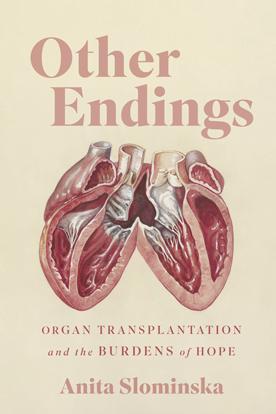
Other Endings Organ
Transplantation and the Burdens
anita slominska
of Hope
A journey through grief, loss, and coming to terms with the tragic ending of a transplant story.
In this raw and intimate memoir Anita Slominska recounts her sister Shauna’s eighteen-month wait for a liver transplant that failed to take place in time to save her life. Shauna’s death, at age twenty-nine, defied the usual redemptive promise of a life-saving transplant and forced Slominska to confront difficult questions: Why was she so unprepared for the devastating loss of her sister? Why do so many chronicles of organ transplantation celebrate survival, while few acknowledge failure and loss? Who are the people who die waiting, and why are their stories untold?
Weaving together personal memoir with indepth research, Other Endings explores the triumphalist narrative of transplantation as medical progress and happy ending. This narrative, Slominska argues, does not capture the complicated, messy, and imperfect reality, nor does it make room for the experiences of hope and anguish involved with waitlist deaths, which are more common than we realize. Incorporating excerpts from Shauna’s online journal as well as reflections on her own role as her sister’s caregiver, Slominska challenges readers to imagine what it is like for patients and families to experience a wait for a transplant that ends in death.
A profound contribution to narrative medicine, Other Endings excavates societal beliefs that shape our expectations of science and medicine, raising critical questions about why and how we tell illness stories. Throughout, Shauna remains central: the indelibly human face of one person who died waiting.
Anita Slominska is a postdoctoral fellow at the Research Institute of the McGill University Health Centre and the Institute of Health Sciences Education at McGill University.
SPECIFICATIONS
February 2026
978-0-2280-2719-5
$24.95T US, $24.95T CDN, £18.99 UK paper 5.5 × 8.5 204pp 3 photos eBook available
A Renewed Canadian Welcome
Eleven Visions from Migrants and Advocates
edited by emilio rodríguez
Reimagining Canada’s immigration policies through the lens of lived experience.
Canada is a nation forged by immigration, but for many its promise is eclipsed by exclusion and precarity. A Renewed Canadian Welcome brings together the voices of those who experience the system firsthand to ask a question fundamental to public justice: What would our immigration policies look like if they were reimagined from a human rights perspective, informed by lived experience?
Blending personal narrative with sharp policy critique, this book unpacks topics such as refugee resettlement, immigration detention, labour exploitation, and family separation. It centres the perspectives of migrants, refugees, and advocates, describing the many barriers they face and detailing how, working together and with allied organizations, they have overcome bureaucratic hurdles, developed strategies, and mobilized policy goals. Contributors offer practical policy proposals that will transform Canada’s immigration program: develop a human rights–based approach that responds to the precarity of all migrants; draw from the expertise of migrants and refugees to design effective policies; and strengthen civil society’s role in immigration policymaking.
Born of the work of Citizens for Public Justice, a national research and advocacy organization, A Renewed Canadian Welcome is a must-read for those advocating for human rights in immigration policy. It is a compelling call to reimagine Canada’s approach to immigration as one that affirms dignity, equity, and justice for all.
Emilio Rodríguez is a Salvadoran-Canadian policy leader with expertise in Canadian immigration and foreign affairs. He lives in Ottawa.
SPECIFICATIONS
McGill-Queen’s Refugee and Forced Migration Studies
March 2026
978-0-2280-2707-2
$32.95T US, $32.95T CDN, £24.99 UK paper
6 × 9 204pp 1 table eBook available
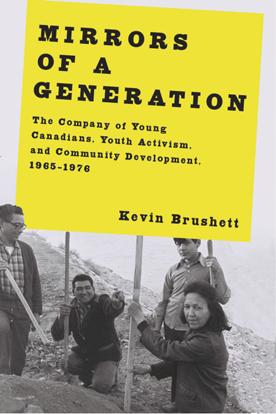
Mirrors of a Generation
The Company of Young Canadians, Youth Activism, and Community Development, 1965–1976
kevin brushett
A rich portrait of the youth program tasked with alleviating poverty and disenfranchisement across Canada.
The 1960s saw Lester B. Pearson launch a war on poverty and Pierre Trudeau promise a just society. Central to both visions was the Company of Young Canadians (cyc ), a community development program sponsored by the federal government that attempted to mobilize the restless energy of Canadian youth. From 1965 until its closure in 1976, cyc volunteers marched into neighbourhoods across the nation to help locals develop community-based solutions to poverty and disenfranchisement.
Reflecting the perspectives of these young volunteers and the communities who embraced their assistance, Mirrors of a Generation tells the story of the cyc as a unique quasi-state institution dedicated to promoting grassroots social justice initiatives. It seeks to better understand why governments and social activists of the period believed that decentralized community development delivered by inexperienced young people could end poverty, promote democracy, and foster more equitable economic development. What emerges is a nuanced account of the relationship between the state and civil society organizations that tracks
how government funding dispersed through the cyc contributed to a broad swath of anti-poverty, Indigenous self-government, and anti-racism advocacy organizations; second-wave feminist, environmentalist, and Québécois and Acadian nationalist groups; and the counterculture and labour organizing more generally.
Katimavik, founded in the cyc ’s wake, continues to organize Canadian youth participation in community service. Mirrors of a Generation reveals that despite the monumental tasks the cyc faced and the numerous mistakes it made along the way, it produced a generation of committed social movement leaders, leaving behind a rich legacy of community organizations that influence social justice politics in Canada to this day.
Kevin Brushett is associate professor of history at the Royal Military College of Canada.
SPECIFICATIONS
February 2026
978-0-2280-2675-4
$44.95A US, $44.95A CDN, £35.00 UK paper 6 × 9 552pp 26 photos, 4 maps, 1 table eBook available
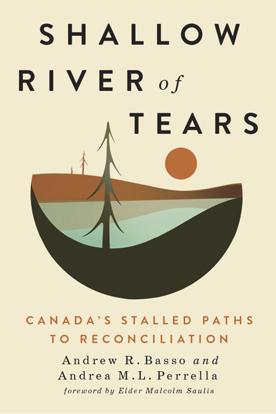
Shallow River of Tears
Canada’s Stalled Paths to Reconciliation
andrew r. basso and andrea m.l. perrella
Foreword
by Elder Malcolm Saulis
Modelling Settler attitudes toward Reconciliation to assess new ways to move forward.
The Truth and Reconciliation Commission of Canada’s final report marked a new moment in national consciousness: a recognition of Indigenous histories, an awareness of the injustices committed by Settlers and their governments, and an understanding of the need for redress and the restoration of rights. At the time, Settler populations largely voiced support for these recommendations and committed to a more just future; in the years since, words have eclipsed actions.
In Shallow River of Tears Andrew Basso and Andrea Perrella mobilize four years of survey research to understand why Reconciliation has stalled. They draw from one of the largest databases of Settler attitudes to explain support for – and resistance to – what they term “Reconciliaction”: real change that fosters individual and community success while remedying past and ongoing harms. The authors identify and analyze key stages preceding action on the part of Settlers: denial, recognition, sympathy, and empathy. These variables are measured against public opinion to offer a solid empirical foundation for effecting sociopolitical change and moving Reconciliation forward.
Thoughtful and provocative, this book provides guidance for students, scholars, practitioners – indeed, all systemically empowered Settlers – so they may choose to act in support of Reconciliation and the second chance it provides.
Andrew R. Basso is an adjunct faculty member at Wilfrid Laurier University.
Andrea M.L. Perrella is associate professor of political science at Wilfrid Laurier University.
SPECIFICATIONS
Confronting Atrocity: Human Rights and Restorative Justice Series
March 2026
978-0-2280-2669-3
$42.95A US, $42.95A CDN, £33.00 UK paper 6 × 9 448pp 22 tables, 1 diagram eBook available
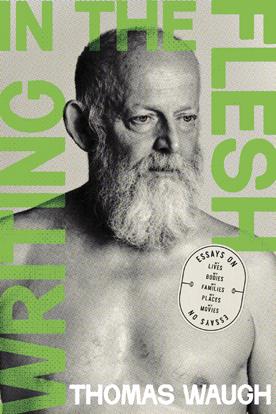
Writing in the Flesh
Essays on My Lives, My Bodies, My Families, My Places, My Movies
thomas waugh
A vivacious vita full of queer relations: the erotic, the pedagogical, the familial, the romantic, the platonic, and, of course, the cinematic.
A confessional of the unrepentant, Writing in the Flesh caresses taboos, confronts sentimentality, and recasts memory. Thomas Waugh writes the body back into the intellectual autobiography, revealing the unsettling arguments and politics born from the tastes and desires of his own carnal vessel.
Shaped by the arc of a life still in full flight – a preacher’s kid who grows up to be a porn teacher and, along the way, a New Left activist and expert in documentary, queer, and Canadian film –Writing in the Flesh confronts the struggle of writing the self. Against the backdrop of Montreal’s Plateau-Mont-Royal, New York City, and the Punjab, Waugh brings places and people to life in profound and unexpected ways. This is also a memoir about history, the archive, and ephemera: Waugh mines his personal annals for photographs, film stills, testimony, and correspondence to reconstitute the voices of blood and chosen families, to hedge against erratic memory, and to give sense to life. Indebted to the tradition of queer first-person rabble rousers, Waugh takes us on a journey through seven decades of queer relations: the erotic, the pedagogical, the familial,
the romantic, the platonic, and, of course, the filmic.
Sexy, cinematic, encyclopedic: this vivacious vita celebrates a life filled with family and chosen family, movies, and beefcake. At the same time these pages are, as the title declares, a writing in the flesh: the unveiling of the fraught, vulnerable, declining yet still robust and pleasured body at the very centre of it all.
Thomas Waugh is a writer, programmer, and activist who taught film studies, queer studies, and sexuality at Concordia University from 1976 to 2017. He lives in Montreal.
SPECIFICATIONS
January 2026
978-0-2280-2734-8
$39.95T US, $39.95T CDN, £31.00 UK paper 6.25 × 9.25 392pp 127 photos eBook available
Nights in Fairyland
Gossip, Blackmail, and the Many Lives of Broadway Brevities
will straw
The story of a New York City magazine whose obsessive interest in nonconforming sexualities left in its wake an abundance of detail about alternative ways of living and loving.
In 1925 the publishers of Broadway Brevities were tried for running an extortion operation targeting New York’s social and cultural elites. While the first version of the magazine whispered gossip in columnists’ suggestive innuendo, later incarnations shouted bold accusations in graphic tabloid headlines. On the pages of Broadway Brevities gossip was instrumentalized and urbanized, taking its place among the noisy, sensational features of city life.
The life of the magazine’s long-time editor, Canadian-born Stephen G. Clow, runs through this story, connecting the different incarnations of the magazine and the circles in which they were published (in New York, 1917–34, and later in Toronto). Clow’s career took him from Manhattan’s literary world, in his role as a critic and book publisher, to notoriety as a scandal-mongering editor. Beginning in the 1920s Clow gathered – or fabricated – allegations about high-profile people in theatre, cinema, and enterprise, then threatened to publish unless they paid up. Clow would brag to Time magazine that he was “the most famous and wicked blackmailer in world history.” Broadway Brevities became infamous for sensa-
tional, vicious, and lurid coverage of gay life. Despite its mocking homophobia, Will Straw shows, the magazine can today help reconstitute the spaces and places of historical queer life in New York.
Drawing on a singular complete collection of Brevities issues discovered over decades of research, Nights in Fairyland is a rich account of an overlooked form of periodical publishing and of urban nightlife, queer sociability, and the commodification of gossip in the 1920s and 1930s.
Will Straw is James McGill Professor Emeritus of Urban Media Studies at McGill University.
SPECIFICATIONS
February 2026
978-0-2280-2659-4
$24.95T US, $29.95T CDN, £18.99 UK paper 6 × 9 296pp 39 photos eBook available
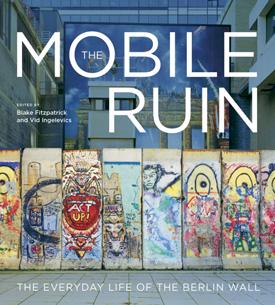
The Mobile Ruin The Everyday Life of the Berlin Wall
blake fitzpatrick and vid ingelevics
How do we understand the afterlife of a historical icon – that once impenetrable border now in motion, gifted and sold around the world?
The Berlin Wall divided the city for almost three decades before it fell on 9 November 1989. But this symbol of the Cold War has been travelling longer than it stood still. An object that once seemed immovable now wanders around the world in every format from two-tonne slabs to pocket-sized souvenirs.
This collection envisions the atomized and displaced remnants of the Berlin Wall as a mobile ruin with an evolving history. Blake Fitzpatrick and Vid Ingelevics’s photographic investigation of the geographical dispersement of its fragments is a form of witness to the history of the wall after it fell. Featuring over one hundred photographs, intercut with powerful contextual writings by artists, scholars, and curators (including people involved in souvenir production and sale), this unique work raises compelling questions about the shifting meaning of Berlin Wall artifacts –essentially banal pieces of concrete – in light of their physical relocation and shifts in geopolitical power.
Contributing to our understanding of material history, public commemoration, border politics, and documentary studies, The Mobile Ruin explores the ongoing resonance of the wall and the new life it takes on in a series of unexpected international locations.
Blake Fitzpatrick is professor in the School of Image Arts, Toronto Metropolitan University, and co-editor of Place Matters: Critical Topographies in Word and Image
Vid Ingelevics is professor emeritus, School of Image Arts, Toronto Metropolitan University, and a visual artist, writer, and independent curator.
SPECIFICATIONS
April 2026
978-0-2280-2686-0
$37.95T US, $39.95T CDN, £28.99 UK paper 9 × 10 224pp 139 photos, colour throughout eBook available
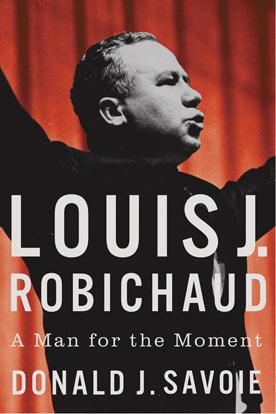
Louis J. Robichaud
A Man for the Moment
donald j. savoie
An incisive account of the political accomplishments and enduring legacy of the first elected Acadian premier of New Brunswick.
Louis J. Robichaud, the first elected Acadian premier of New Brunswick, transformed an inwardlooking province with an ingrained aversion to change into a vibrant modern society now home to strong political, administrative, and educational institutions. Donald Savoie draws a portrait of adroit political leadership and of a man who, recognizing his province’s need for modernization, rose unwaveringly to the demands of office and ushered in profound and enduring change for Acadians and for all New Brunswickers.
In a timely biography informed by a long friendship between fellow Acadians, Savoie contrasts the challenges of governing New Brunswick in the 1960s with those faced by governments and political leaders today to better understand the magnitude of Robichaud’s accomplishments over a ten-year span. Leading a province with a long history of intolerance towards minority groups, notably Acadians, Robichaud’s Liberal government confronted the dominant Anglo-Protestant political class and introduced reforms that included the Official Languages Act, broader access to education for francophones, the establishment of the Université de Moncton, and initiatives in regional and natural resource development,
health care, and equitable public services across the province’s disparately funded urban and rural counties. Seismic changes at the time, these reforms are now woven into the social fabric of New Brunswick.
Informative and lively, Louis J. Robichaud argues convincingly that while the premier’s achievements can be viewed as specific to his era, his political fortitude and vision are a model for politicians, legislators, and civil servants today.
Donald J. Savoie holds the Clément-Cormier Research Chair in Economic Development at the Donald J. Savoie Institute. He is the author of numerous books including Speaking Truth to Canadians about Their Public Service.
SPECIFICATIONS
Footprints Series February 2026
978-0-2280-2710-2
$34.95S US, $34.95T CDN, £27.99 UK cloth
6 × 9 258pp 9 photos eBook available
Le moment était venu pour quelqu’un comme lui
Louis J. Robichaud
donald j. savoie
Compte rendu incisif des accomplissements politiques et de l’héritage impérissable du premier Acadien élu premier ministre du Nouveau-Brunswick.
Louis J. Robichaud, le premier Acadien élu premier ministre du Nouveau-Brunswick, a transformé sa province repliée sur elle-même et réfractaire au changement, en une société moderne et dynamique maintenant dotée de solides institutions politiques et administratives et d’établissements d’enseignement. Donald J. Savoie trace le portrait d’un leadership politique adroit et d’un homme qui, reconnaissant la nécessité de moderniser la province, s’est consacré sans relâche à l’exercice de sa charge et a insufflé un changement profond et durable dans la communauté acadienne et toute la population du Nouveau-Brunswick.
Éclairée par une longue amitié entre confrères acadiens, cette biographie qui tombe à point met en contraste les défis de diriger le NouveauBrunswick dans les années 1960 et ceux auxquels les gouvernements et les dirigeants politiques font face aujourd’hui, afin de bien saisir toute la magnitude de ce que Robichaud a accompli en une décennie. Dirigeant une province marquée par une longue histoire d’intolérance envers les groupes minoritaires, notamment les Acadiens, le gouvernement libéral de Robichaud a tenu tête à la classe politique anglo-protestante dominante et
adopté des réformes qui comprenaient la Loi sur les langues officielles, un accès élargi à l’éducation pour les Acadiens, la création de l’Université de Moncton et des initiatives liées au développement régional, à l’exploitation des ressources naturelles, aux soins de santé et à l’équité des services publics dans tous les comtés ruraux et urbains de la province, au financement très inégal. Ces réformes, véritables changements sismiques à l’époque, forment maintenant la trame du tissu social du Nouveau-Brunswick.
Informative et vivante, cette biographie de Robichaud fait valoir avec éloquence que si les réalisations du premier ministre peuvent être considérées comme particulières à son époque, son courage politique et sa vision sont un modèle pour les politiciens, les législateurs et les fonctionnaires actuels.
Donald J. Savoie est titulaire de la Chaire de recherche Clément-Cormier en développement économique à l’Institut Donald J. Savoie. Il est l’auteur de nombreux livres, dont Speaking Truth to Canadians about Their Public Service.
SPECIFICATIONS
Footprints Series February 2026
978-0-2280-2713-3
$34.95S US, $34.95T CDN, £27.99 UK cloth
6 × 9 296pp 9 photos eBook available
Rush of Wingspan
eleonore schönmaier
Outwards from a northern wilderness childhood these poems thrum musically with intuitive environmentalism in urban, coastal, and boreal forests.
Eleonore Schönmaier explores three great forests of her life through the lens of experiential environmentalism. Along woodland trails and on the shores of essential bodies of water, she reveals beauty and loss in equal measure in these poems. Wildlife appears at regular intervals, never when expected. In Schönmaier’s boreal forest childhood, she witnesses human and environmental exploitation and lives a life of labour. In a moment of joy, a canoe transforms into a sled. As she moves into adulthood, music creates a pulse to her life and her poems. In a heatwave, two pianists perform Wasserklavier in a botanical garden. A singer works in the Dutch resistance. A Greek composer creates love songs. An organist rides the rear carrier of a bicycle. Turkish composer Fazıl Say performs his Black Earth. Goldfinches, blue-winged teals, waterthrushes, blue herons, and flickers inhabit the pages of Rush of Wingspan. The soundscape of these poems is intimate in scale – about nature, art, animals, cycling – chamber music more than opera. Love is the blue-river thread in the warp and weft of the collection. Schönmaier’s focus on planetary and human rights is the red-blood contrast.
Eleonore Schönmaier is the internationally translated, award-winning author of Field Guide to the Lost Flower of Crete, Dust Blown Side of the Journey, and Wavelengths of Your Song. She divides her time between Nova Scotia and coastal Europe.
SPECIFICATIONS
The Hugh MacLennan Poetry Series March 2026
978-0-2280-2716-4
$19.95T US, $19.95T CDN, £14.99 UK paper
5 × 7.5 192pp eBook available
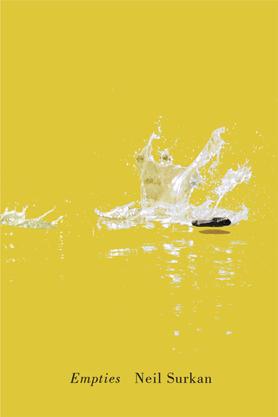
Empties
neil surkan
Varied meanings of empties coalesce in vivid poems that find much in the world “to cherish / as it brinks.”
In a powerful interplay of striking descriptions with tender intimations, Empties, Neil Surkan’s third poetry collection, reckons with fatherhood in a depleted and collapsing environment: Is it possible to nurture new shoots while the fires close in?
Feelings of emptiness, acts of emptying, and physical empties coalesce in these vivid and timely poems. Through a queer lens, Surkan’s speaker scrutinizes masculinity and fatherhood as he confronts the necessary emptiness that comes with becoming someone’s ancestor. Arrays of drained and discarded entities – empty bottles, broken pots and cups – summon a world, husked and untenably extracted, that teeters toward collapse, but even those empty spaces are receptacles for fleeting moments of vulnerability and tenderness. At its core, Empties explores the conditions of life on the verge of hopelessness. It finds, among shadows of doom and despair, unlikely but nonetheless inevitable reasons to hope.
These are poems that teach endurance “in the face of all that won’t / be saved” while still finding much in the world “to cherish / as it brinks.” In direness, there is also awe: one mustn’t forget, Surkan reminds us, that only empty bottles can sing.
Neil Surkan is the author of two other books of poetry, Unbecoming and On High, as well as the chapbooks Die Workbook, Ruin, Their Queer Tenderness, and Super, Natural. He is the poet laureate of Nanaimo, bc .
SPECIFICATIONS
The Hugh MacLennan Poetry Series March 2026
978-0-2280-2731-7
$19.95T US, $19.95T CDN, £14.99 UK paper 5 × 7.5 112pp eBook available
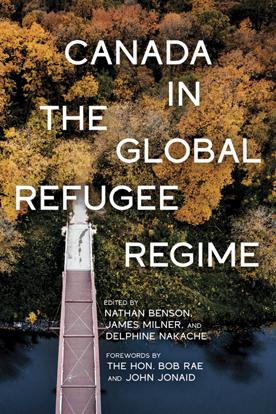
Canada in the Global Refugee Regime
edited by nathan benson, james milner, and delphine nakache
Forewords by the Hon. Bob Rae and John Jonaid
A timely, critical exploration of Canada’s complex and consequential role in global refugee protection.
With global cooperation on refugee protection under mounting strain, understanding the role of individual states has never been more urgent. Canada in the Global Refugee Regime offers the first comprehensive look at Canada’s involvement with the institutions and norms of this regime and the politics that shape refugee protection worldwide.
Bringing together leading experts from multiple disciplines, this volume explores how Canada has influenced global refugee responses and where its impact has been more muted. Chapters examine the country’s actions in international forums; its resettlement and sponsorship initiatives; its engagement in key regional contexts such as Latin America, Southeast Asia, and the Middle East; and the links between refugee policy and foreign policy. Contributors reflect on the relationship between Canada’s international leadership and its domestic practices, offering a nuanced account that moves beyond simplistic narratives of benevolence.
Canada in the Global Refugee Regime invites readers to rethink the regime itself: not as a fixed system, but as a contested space shaped by the interests and actions of states and other participants.
It is an essential resource for scholars, students, and policy actors seeking to understand how a single state navigates, contributes to, and is shaped by the global politics of refugee protection.
Nathan Benson is director of strategy at Pathways International and the University of Ottawa Refugee Hub.
James Milner is professor of political science at Carleton University and project director of the Local Engagement Refugee Research Network.
Delphine Nakache is professor in the Faculty of Law and University Research Chair on Migrant Protection and International Law at the University of Ottawa.
SPECIFICATIONS
McGill-Queen’s Refugee and Forced Migration Studies February 2026
978-0-2280-2672-3
$39.95A US, $39.95A CDN, £31.00 UK paper 6 × 9 416pp 13 photos, 3 tables eBook available
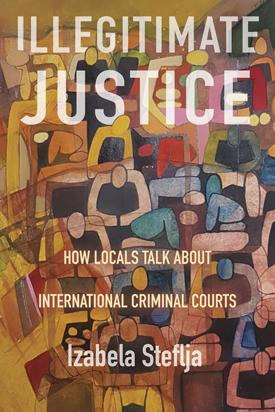
Illegitimate Justice
How Locals Talk About International Criminal Courts
izabela steflja
Challenging the view that international criminal courts are fulfilling their purpose by uncovering their lack of accountability to local communities.
International criminal courts exist to help countries and communities move forward after atrocities and to bring those accused of war crimes to justice. Yet local residents and witnesses often perceive them to lack political legitimacy. Drawn from extensive primary research in Rwanda, Bosnia-Herzegovina, Serbia, and Kenya, Illegitimate Justice challenges the view that as long as international courts are striving for the concept of justice, establishing legal precedents, and prosecuting war criminals, they are fulfilling their purpose. Through interviews with individuals in the fields of education, law, religion, politics, the media, and civil society, Izabela Steflja listens to the people affected by conflict and by the justice processes meant to repair harm. She reveals how international courts have failed local communities through lack of accountability – even, at times, active disregard. The stories local people tell about international courts differ radically from those the international community tells itself about justice and reconciliation.
Combining field research with an original comparative narrative model, Illegitimate Justice will be invaluable reading for people active in post-conflict communities and work, as well as for legal, political, and human rights students and scholars.
Izabela Steflja is associate professor of political science at Wilfrid Laurier University.
SPECIFICATIONS
Confronting Atrocity: Human Rights and Restorative Justice Series
March 2026
978-0-2280-2728-7
$34.95A US, $39.95A CDN, £26.99 UK paper 6 × 9 376pp eBook available
L’heure des pétitions est passée
Les luttes des sans-travail au Québec, 1919-1939
benoit marsan
Comment les sans-travail se sont-ils mobilisés face au chômage au Québec durant l’entre-deux-guerres.
Au cours de l’entre-deux-guerres au Québec, les luttes des sans-travail jouent un rôle déterminant dans la politisation du problème du chômage. Ce sujet devient alors un enjeu à la fois collectif, social et politique remettant en question la relation entre la démocratie et le capitalisme en plus de participer au processus de formation de l’État.
Ces mobilisations, jumelées à celles qui se déroulent ailleurs au Canada, expliquent pourquoi le chômage devient une question d’importance qui est soudainement débattue largement dans la sphère publique. Après la Première Guerre mondiale, les manifestations prennent racine à Montréal pour ensuite s’étendre à d’autres villes québécoises au cours de la Grande Dépression. En attirant l’attention des autorités, elles contribuent à poser un regard différent sur le chômage et la pauvreté en plus de forcer une intervention étatique accrue. L’heure des pétitions est passée explore le répertoire d’action collective et l’économie morale des sans-travail afin de mieux comprendre leur rôle dans l’histoire du chômage.
Considérant que leur incapacité à trouver un travail est indépendante de leur volonté, les protestataires formulent des revendications annonçant une redéfinition de la citoyenneté comprenant de nouvelles attentes envers l’État. De ce fait, ils considèrent avoir droit à une protection sociale leur permettant de satisfaire leurs besoins fondamentaux.
S’inscrivant dans une démarche d’histoire vue d’en bas, L’heure des pétitions est passée démontre le pouvoir de l’agentivité collective des gens ordinaires ainsi que leur rôle dans les processus de transformations sociales.
Benoit Marsan est historien du travail, chargé de cours à l’Université du Québec à Montréal et à l’Université du Québec en Outaouais ainsi que chercheur affilié au Centre d’histoire des régulations sociales de l’uqam .
SPECIFICATIONS
Études d’histoire du Québec / Studies on the History of Quebec April 2026
978-0-2280-2698-3
$44.95A US, $44.95A CDN, £35.00 UK paper 6 × 9 328pp 3 maps eBook available
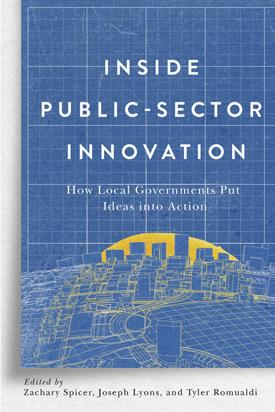
Inside Public-Sector Innovation
How Local Governments Put Ideas into Action
edited by zachary spicer, joseph lyons, and tyler romualdi
A practitioner-oriented guide for elected municipal officials and public servants looking to adopt innovative solutions in their organizations.
Faced with increasing demands from residents, and amidst growing legal and resource constraints, municipalities are experimenting to find new ways of making things work. Inside PublicSector Innovation profiles the expertise and experience of local administrators in Canada who have successfully moved innovation from conception to reality.
A practitioner-oriented guide, this volume features multiple innovations from rural, urban, and suburban governments of various sizes. Exploring organizational, process, and service innovations, public administrators directly involved in their implementation highlight lessons for other practitioners considering similar strategies. Chapters cover challenges across policy domains including diversity and inclusion, public health, environmental sustainability, and service delivery inefficiencies. All together, these case studies enhance our understanding of what local public-sector innovation entails and how enterprising public servants can put it to immediate use.
Recognizing local governments in Canada as drivers of experimentation, Inside Public-Sector Innovation advances research through its rich descriptions and analysis of municipal strategies,
drawing attention to the unique complications and opportunities associated with innovation at scale.
Zachary Spicer is associate professor in the School of Public Policy and Administration and the head of New College at York University.
Joseph Lyons is assistant professor of political science and director of the Local Government Program at the University of Western Ontario.
Tyler Romualdi is a PhD candidate in the Department of Political Science at the University of Western Ontario.
SPECIFICATIONS
McGill-Queen’s Studies in Urban Governance April 2026
978-0-2280-2725-6
$39.95T US, $39.95T CDN, £31.00 UK paper
6 × 9 360pp 5 diagrams, 6 tables eBook available
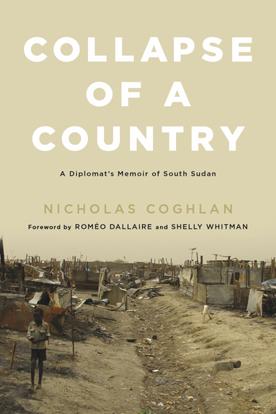
Collapse of a Country A Diplomat’s Memoir of South Sudan
nicholas coghlan
Foreword by Roméo Dallaire and Shelly Whitman
A rare first-hand account of the violent implosion and ongoing humanitarian tragedy of the world’s youngest state.
The first Canadian diplomat to be posted to war-torn Sudan, Nicholas Coghlan was a natural choice to lead Canada’s representation in the new Republic of South Sudan soon after the country was founded in 2011. In late 2013 Coghlan and his wife Jenny were in the capital, Juba, when it erupted in gunfire and civil war pitted one half of the army against the other, Vice-President Machar against President Kiir, and the Nuer tribe against the Dinka.
This action-focused narrative, grounded by accounts of meetings with key leaders and travels throughout the dangerous, impoverished hinterland of South Sudan, explains what happened in December 2013 and why. In harrowing terms, Collapse of a Country describes the ebb and flow of the war and the humanitarian tragedy that followed, the Coghlans’ scramble to evacuate South-Sudanese Canadians from Juba, and the well-meant but often ill-conceived attempts of the international community to mitigate the misery and bring peace back to a land that has rarely known it. Coghlan’s stark narrative serves as a lesson to politicians, diplomats, aid workers, and practitioners on the breakdown of governance and relationships between ethnic groups, and the
often decisive role of international development representatives.
Fast-paced and poignant, Collapse of a Country gives an insider’s glimpse into the chaos, violence, and ethnic conflicts that emerged out of a civil war that has been largely ignored by the West.
Nicholas Coghlan, author of Far in the Waste Sudan and The Saddest Country, served in five Canadian embassies overseas before he was appointed Canada’s first resident ambassador to South Sudan. He lives on Salt Spring Island, bc .
SPECIFICATIONS
February 2026
978-0-2280-2678-5
$34.95A US, $34.95A CDN, £27.99 UK paper
6 × 9 304pp 32 photos, 3 maps eBook available
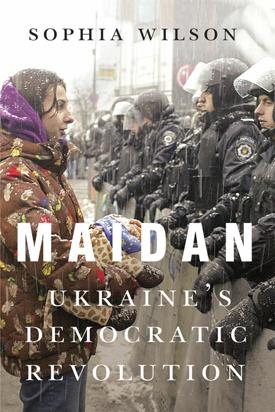
Maidan
Ukraine’s Democratic Revolution
sophia wilson
How the grassroots victory of the Revolution of Dignity renegotiated the social contract and reaffirmed democracy.
The 2013–14 Maidan Revolution, or Revolution of Dignity, was far more than a series of protests: the coalescence of complex social networks formed a powerful grassroots movement that restored democracy to a country slipping into authoritarianism. Maidan gives a carefully researched account of the underbelly of the resistance process, investigating how participants self-organized to create the resistance, why the peaceful movement eventually turned to violence, and how the revolutionary process changed those who came to change the country.
Democratic revolution is a state-society dialogue about rights, and the regime that results depends on the ideas negotiated during revolutionary socialization. Offering an unparalleled opportunity to see that negotiation in action, Maidan draws on more than one hundred personal interviews, oral histories, legal documents, and court hearings. The Ukrainian state used violence and violations of due process to suppress the resistance, thereby declaring new boundaries in rights relations. In turn, the people pushed back in multiple arenas – the protest square, courtrooms, hospitals, churches, and media – to successfully challenge the constitutionality of the state’s actions.
Western media accounts tend to oversimplify the Revolution of Dignity as backlash against President Viktor Yanukovych’s decision not to sign a European Union agreement. The reality had far deeper implications for the geopolitics of the region. Sophia Wilson’s account of the revolution, and the Kremlin propaganda about it, underscores why it is impossible to understand Russia’s invasion of Ukraine without first understanding what fuelled the Maidan: the affirmation of democracy and the rooting out of Russian puppet authoritarianism.
Sophia Wilson is associate professor of political science at Southern Illinois University Edwardsville.
SPECIFICATIONS
McGill-Queen’s Studies in Protest, Power, and Resistance March 2026
978-0-2280-2737-9
$44.95A US, $44.95A CDN, £35.00 UK paper 6 × 9 328pp 5 tables, 7 diagrams, 1 map, 17 photos eBook available
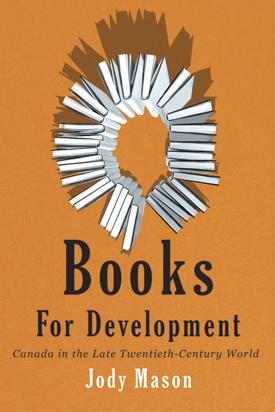
Books for Development
Canada in the Late Twentieth-Century World
jody mason
How the book came to function as a key representative of Canadian settler exceptionalism.
Canadian book culture has served, in both domestic and international contexts, to underpin a moralizing rhetoric of enlightened liberal tolerance for difference. Between 1945 and the end of the 1970s the book – as object, as symbol, as idea –was used within the context of the development paradigm to express solidarity with newly decolonized nations, to argue for the importance of Canadian leadership in the new international order, and to secure settler liberal rule at home.
The confluence of books and a national brand was shaped during the postwar decades by a liberal internationalism that privileged the book, and the associated skill of literacy, as a tool of development. Jody Mason analyzes how governmental and non-governmental actors deployed books as instruments of development in various parts of the Third World, how African decolonization movements shaped the nationalisms of Canadian writers who travelled to Africa as part of the burgeoning ngo movement, how late twentieth-century developmentalist ideologies shaped book-centric initiatives aimed at Indigenous communities in Canada, and how Indigenous activists and writers responded to, reframed, and sometimes rejected outright the premises of book development.
This rich interdisciplinary study brings the work of Canadian historians into conversation with book history, literary studies, and settlercolonial studies to encourage a critical assessment of the values that supported developmentalist thinking, and the goals of development itself, at home and abroad.
Jody Mason is professor of English, Carleton University, and the author of Home Feelings: Liberal Citizenship and the Canadian Reading Camp Movement.
SPECIFICATIONS
Rethinking Canada in the World February 2026
978-0-2280-2701-0
$39.95A US, $39.95A CDN, £31.00 UK paper
6 × 9 368pp 15 photos, 3 tables eBook available
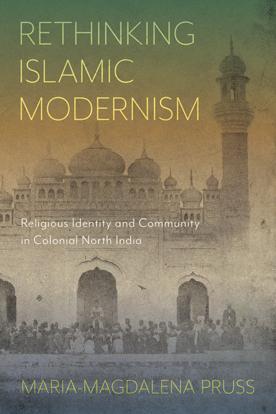
Rethinking Islamic Modernism
Religious Identity and Community in Colonial North India
maria-magdalena pruss
A social and intellectual history of Islamic modernism in colonial North India.
Over the course of the late nineteenth and early twentieth centuries, Muslim modernist thinkers and writers in South Asia demanded a reconciliation between Islam and European thought in response to a perceived crisis of Islam. In the ensuing modernist movements, newly founded voluntary associations and their lay members played a crucial role in popularizing and disseminating modernist ideas on the ground, transforming definitions of both religious identity and community in the process.
Through an in-depth and multifaceted historical analysis of one of the foremost Muslim associations of colonial North India, the Society for the Defence of Islam (Anjuman-i Himayat-i Islam, established 1884 in Lahore), Maria-Magdalena Pruss proposes a nuanced understanding of Islamic modernism as a mode of thought, highlighting its internal diversity and complex development over a period of more than sixty years. The evolution of this influential association reveals the role and work of lay people, who are shown to be a highly active force in defining and redefining Muslim religious identity through social and educational reform, community welfare initiatives, polemical and apologetic publications, and debates – both
within and outside the Muslim community – as well as anti-colonial and nationalist activism.
Turning the spotlight away from religious scholars and drawing from extensive, previously untapped local archives and vernacular source materials, Rethinking Islamic Modernism uncovers alternative and localized genealogies of Islamic modernism and makes a compelling argument for taking modernism seriously as a religious tradition in its own right.
Maria-Magdalena Pruss is a postdoctoral fellow at the Freie Universität Berlin.
SPECIFICATIONS
McGill-Queen’s Studies in Modern Islamic Thought January 2026
978-0-2280-2704-1
$44.95A US, $44.95A CDN, £35.00 UK paper 6 × 9 320pp 13 photos eBook available
Open-access edition available
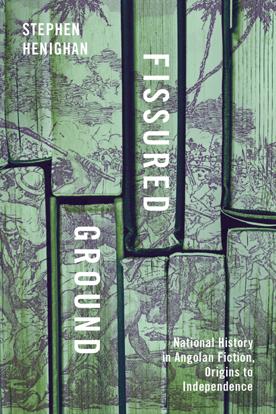
Fissured Ground
National History in Angolan Fiction, Origins to Independence
stephen henighan
A compelling history of literature’s role in Angolan nation-building up to its independence in 1975.
Angola, a nation formed by the trans-Atlantic slave trade, has a unique identity in Africa, enshrined in its hybridized, outward-looking, Portuguese-speaking culture and expressed by its rich literature. The development of a distinctive national prose tradition can be found throughout colonial Angola’s fascinating history, shaped by the slave trade’s impact on the formation of Angolan society and the creation of a nascent mixedrace national bourgeoisie strongly connected to Brazil. Creolized Angolans imagined the future nation in their literature – a vision brought to fruition through nationalist activism.
The emergence of anticolonial writers in the 1940s consolidated the fissures found in Angola in the buildup to its War of Independence (1961–75).
Drawing from rich historical records, Stephen Henighan traces the race debates among proindependence groups and examines work by exiles writing in 1960s Paris and Algiers, guerrilla memoirs by women, fiction written in concentration camps, and Brazilian and Cuban influences on Angolan prose. Prominent Angolan intellectuals such as Agostinho Neto, José Luandino Vieira, and Pepetela play parts in this panorama, as do
international figures such as Che Guevara, Frantz Fanon, and Henry Kissinger, who are seen from fresh, unexpected angles. The story culminates in Angola’s 1975 independence and the country’s resolve to found national literary institutions. The product of nearly two decades of research, and only the first part of what will be a foundational work, Fissured Ground illustrates how Angolan literature contributes to a unified national identity and connects to the global struggle for independence.
Stephen Henighan is professor of Spanish and Hispanic studies at the University of Guelph.
SPECIFICATIONS
April 2026
978-0-2280-2692-1
$110.00S US, $110.00S CDN, £88.00 UK cloth
6 × 9 616pp 17 photos, 1 map eBook available
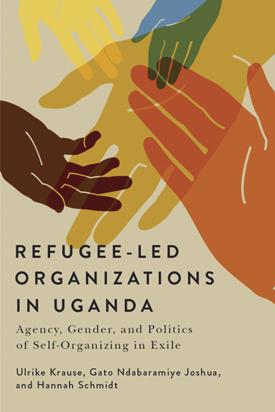
Refugee-Led Organizations in Uganda Agency,
Gender, and Politics of Self-Organizing in Exile
ulrike krause, gato ndabaramiye joshua, and hannah schmidt
Highlighting the vital roles of self-organizing in humanitarian response and the everyday lives of refugees.
Self-organization plays an essential yet often overlooked role in the everyday lives of refugees in exile. By self-organizing, they challenge restrictions, claim political representation, foster social relations and belonging, and create ongoing economic opportunities.
While government authorities and aid organizations are supposed to provide protection and assistance, refugees often continue to face adversities, restrictions, and risks, prompting them to establish and maintain their own support systems. Refugee-Led Organizations in Uganda offers nuanced insight into the problems arising from the aid system and especially the significance of the spectrum of informal and formalized selforganizations. Ulrike Krause, Gato Ndabaramiye Joshua, and Hannah Schmidt draw on a gendersensitive understanding of relational agency and situated knowledge and use empirical research in Uganda’s camp Kyaka II and the capital, Kampala, to reveal how individuals collectively contribute to their own support in times of emergency and in everyday life.
Interwoven with reflections written by refugees in Uganda – Bengekya Mugay Gédéon, Noella Kabale, Paul, Janvier Hafasha, and Isreal Katembo, as well as the director of an lgbtq + refugee-led organization – the book centres on individuals’ lived experiences of self-organization in exile.
Ulrike Krause is professor of political science and director of the Center for International Gender Studies at the Institute for Political Science, University of Münster.
Gato Ndabaramiye Joshua is a counselling psychologist in Uganda and affiliated research associate with the Center for International Gender Studies at the University of Münster.
Hannah Schmidt is a researcher in the Migration Policy Research Group at the Institute of Social Sciences, University of Hildesheim.
SPECIFICATIONS
McGill-Queen’s Refugee and Forced Migration Studies
April 2026
978-0-2280-2577-1
$39.95A US, $39.95A CDN, £19.98 UK paper
6 × 9 304pp
eBook available
Open-access edition available
sales representatives and ordering information
terms of sale
ISBN Prefixes
978-0-2280
978-0-7735
978-0-88629
978-0-88911
978-0-88645
978-1-55339
978-2-89448
978-0-9829155
Distributor for School of Policy Studies at Queen’s University, Institute of Intergovernmental Relations at Queen’s University, John Deutsch Institute for the Study of Economic Policy, Institute for Research on Public Policy, Les Éditions du Septentrion, Fontanus Monograph Series, IPI Press
Trade Returns Policy
Returns accepted after 3 months up to 12 months in resalable condition.
Payment Terms
Net 30 Days
Discount Policies
Contact the distributor in your area for current discount schedules. T indicates Trade; A indicates Academic; and S indicates Scholarly.
Co-op Advertising Policy
Contact Sales Manager
Roy Ward roy.ward@mcgill.ca
Review Copy Requests
Contact Publicist
Jacqui Davis jacqueline.davis@mcgill.ca
Desk or Exam Copy Requests
Contact Sales Manager
Roy Ward
roy.ward@mcgill.ca
canada
Orders and Customer Service
McGill-Queen’s University Press c/o University of Toronto Press 5201 Dufferin Street, Toronto, ON Canada, M3H 5T8
Tel: 416-667-7791
Fax: 416-667-7832
Toll Free Tel: 1-800-565-9523
Toll Free Fax: 1-800-221-9985
E-mail: utpbooks@utpress.utoronto.ca
Business hours: 8:30am – 6:00pm ET
Address for Returns:
McGill-Queen’s University Press c/o University of Toronto Press 5201 Dufferin Street, Toronto, ON Canada, M3H 5T8
Freight Policy: Free freight for all combined orders over $300 net value (after discount). Freight charged at 3.5% for all combined orders with a net value of $300 or less.
Trade
Representatives
British Columbia/Alberta/ Saskatchewan/Manitoba/ Yukon/Nunavut/NWT Ampersand Inc.
Pavan Ranu, Kim Herter, Dayle Sutherland, Dani Farmer, Colin Rier
Chicago Distribution Center 11030 South Langley Avenue
Chicago, IL 60628
SAN: 2025280
Tel: (800) 621-2736 (773) 702-7000
Fax: (800) 621-8476 (773) 702-7212
Email: orders@press.uchicago.edu
Trade Representatives
Columbia Consortium Sales Consortium Manager
Catherine Hobbs
Tel: (804) 690-8529
Email: ch2714@columbia.edu
Mid-Atlantic
Samuel Jaffe Goldstein
Tel: (347) 645-3949
Email: sj3176@columbia.edu
Northeast Conor Broughan
Tel: (917) 826-7676
Email: cb2476@columbia.edu
Midwest
Kevin Kurtz
Tel: (773) 316-1116
Email: kk2841@columbia.edu
South
Catherine Hobbs
Tel: (804) 690-8529
Email: ch2714@columbia.edu
West
William Gawronski
Tel: (310) 488-9059
Email: wg2289@columbia.edu
australia, new zealand, asia, and the pacific
Afghanistan, Australia, Bangladesh, Brunei, Cambodia, People’s Republic of China, Hawaii, Hong Kong, Indonesia, Japan, Korea, Laos, Malaysia, Myanmar, Nepal, New Zealand, Pacific Islands (Fiji, Guam, New Caledonia, Papua New Guinea, Samoa, Tahiti, U.S. Trust Territory of the Pacific), Pakistan, Philippines, Singapore, Sri Lanka, Taiwan, Thailand, & Vietnam.
Royden Muranaka
RTM Asia-Pacific Book Marketing 4348 Waialae Avenue PMB 749 Honolulu, Hawaii 96816
Tel: (808) 728-6214
Email: royden@hawaii.edu
MQUP’s eBooks are distributed through Ingram-Coresource. Our audiobooks are distributed through ECW Press. Below is the current list of retailers and aggregators that carry our titles in digital format. Each vendor has its own pricing and delivery policies. As we regularly add new vendors, please check directly with your preferred vendor if it does not appear below.
eBooks for Individuals iBooks
Barnes & Noble Nook Blio Google eBooks Kobo Amazon
eBooks for Institutions
Proquest ebrary
EBSCO
Myilibrary JStor CEL Overdrive
Bibliotheca
Audiobooks
Audible
Audiobooks.com
BookBeat Downpour
Findaway Apple iTunes Hoopla
KoboLibro FM Mackin
Midwest Tapes
Overdrive
Recorded Spotify Storytel
author/editor index
Basso, Andrew R. / 11
Benson, Nathan / 19
Brushett, Kevin / 10
Coghlan, Nicholas / 23
Del Noce, Augusto / 3
Dufresne, Todd / 4
Fitzpatrick, Blake / 14
Gato Ndabaramiye Joshua / 28
Greer, Allan / 2
Henighan, Stephen / 27
Ingelevics, Vid / 14
Krause, Ulrike / 28
Lancellotti, Carlo / 3
Lyons, Joseph / 22
Macfarlane, Daniel / 6
Marsan, Benoit / 21
Mason, Jody / 25
Milner, James / 19
Nakache, Delphine / 19
Perrella, Andrea M.L. / 11
title index
Books for Development / 25
Canada in the Age of Rum / 2
Canada in the Global Refugee Regime / 19
Collapse of a Country / 23
Ecological Nation / 5
Empties / 18
Fissured Ground / 27
Future Belongs to Those Who Fight, The / 4
Heure des pétitions est passée, L’ / 21
Illegitimate Justice / 20
Inside Public-Sector Innovation / 22
Lives of Lake Ontario, The / 6
Louis J. Robichaud / 15
Maidan / 24
Pruss, Maria-Magdalena / 26
Rodríguez, Emilio / 9
Romualdi, Tyler / 22
Savoie, Donald J. / 15, 16
Scala, Francesca / 7
Schmidt, Hannah / 28
Schönmaier, Eleonore / 17
Slominska, Anita / 8
Smith, Lisa / 7
Spicer, Zachary / 22
Steflja, Izabela / 20
Straw, Will / 13
Surkan, Neil / 18
Waugh, Thomas / 12
Williston, Byron / 5
Wilson, Sophia / 24
Winterton, David E. / 1
Mirrors of a Generation / 10
Mobile Ruin, The / 14
Moment était venu pour quelqu’un comme lui, Le / 16