The Manteo Strategic Plan was prepared by the NC State University Coastal Dynamics Design Lab for the Town of Manteo in close collaboration and engagement with community members, town staff, subconsultants, and other local stakeholders.
This planning effort was made possible through a North Carolina Department of Commerce Rural Community Capacity Building Implementation Grant.
Board of Commissioners
Sherry Wickstrom, Former Mayor
Betty Selby, Mayor Pro Tem
Michael Basnight
Tod Clissold
Hannah Forslund
Eddie Mann
Ruth Stetson
Town of Manteo Project Team
Melissa Dickerson, Town Manager (2022–2025)
Kevin Brinkley, Interim Town Manager (2025–present)
Jamie Whitley, Town Clerk/Public Information Officer
Brad Eilert, Chief of Police
Heather Doughtie, Finance Director, Human Resources Director
Josh Houston, Community Development Coordinator
Ashley Weast, Community and Economic Development Director
Josh O’Brien, Water and Sewer Director
Frankie Woodley, Public Works Director
Carl Woody, CGCIO, IT Administrator
Kevin Zorc, MA, Emergency Manager/Fire Marshal
Barry Wickre, Waterfront Operations Manager
Consultant Team
COASTAL DYNAMICS DESIGN LAB
A MESSAGE FROM THE BOARD OF COMMISSIONERS
Dear Friends and Neighbors,
It is with great pride that we present to you the Town of Manteo’s Strategic Plan—a guiding document that reflects both our shared aspirations and our collective resolve to shape a vibrant future for our community.
This plan was developed to ensure that the town remains proactive and purposeful in meeting the needs of our residents, businesses, and visitors. With thoughtful attention to our town’s unique character, we began this process over a year ago, engaging in dialogue, reflection, and goal-setting to create a roadmap that is both visionary and practical.
The development of this Strategic Plan builds upon the solid foundation laid by previous planning efforts, including our Comprehensive Land Use Plan, Hazard Mitigation Plan, and other resilience initiatives. Rather than existing in isolation, this plan connects and coordinates the many initiatives already underway, helping us to make more informed decisions and use our resources wisely. It provides a unified framework to align our policies, programs, and investments with the long-term vision of our community.
What makes this plan especially meaningful is how it was created. From the beginning, we prioritized public participation, drawing on the voices, values, and expertise of our residents. Through our public survey, interviews, and workshops, we worked together to identify key priorities and shape the direction of this plan. This is not just a government plan—it is a community plan.
We would also like to extend our sincere gratitude to the North Carolina Department of Commerce’s Rural Community Capacity Building Implementation Grant, whose generous funding supported the professional expertise of the Coastal Dynamics Design Lab of North Carolina State University to make this effort possible. Their support enabled us to take the time and care necessary to develop a thoughtful, inclusive, and actionable plan.
As we move forward, this Strategic Plan will serve as a compass—helping us navigate both opportunities and challenges while staying true to the values that define Manteo. On behalf of the Board of Commissioners and town staff, thank you for your continued engagement and partnership. Together, we will build a stronger, more resilient, and more connected Manteo.
Warm regards,
Betty SelBy, Mayor Pro teM
eddie Mann
HannaH ForSlund
MicHael BaSnigHt
rutH StetSon
tod cliSSold
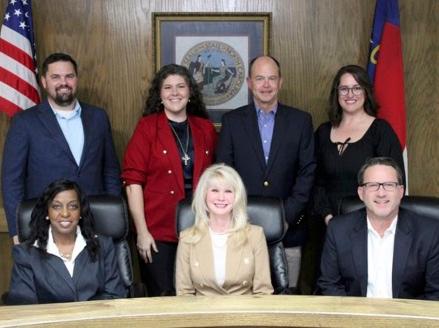
Pictured above
Back row: Eddie Mann, Ruth Stetson, Tod Clissold, Hannah Forslund
Front row: Betty Selby, Mayor Pro Tem; Sherry Wickstrom, former Mayor; Michael Basnight
WHY THIS PLAN, & WHY NOW
Manteo is a historic town facing a new set of challenges. As growth pressures increase across the Outer Banks, the town must make careful decisions about where and how to invest in housing, infrastructure, and public services—without losing the sense of place that makes Manteo unique. Rising seas, aging infrastructure, and changing community needs have created urgency for action.
While the town has adopted a Comprehensive Land Use Plan and a Hazard Mitigation Plan, there is a clear need for a unified strategy that connects long-range goals to near-term priorities. This Strategic Plan is designed to do just that. Informed by community and Board insights, the plan identifies the most pressing needs and highest-impact projects to help guide the town’s decisions over the next five years and beyond.
It outlines key focus areas, major initiatives, and a phased timeline to help the town “preserve and prosper”—not just in principle, but in practice.
Community & Board Insights
The Strategic Plan reflects the lived experience of Manteo’s residents, business owners, and elected leaders. Over the past year, the town has engaged the community through elected official interviews, a statistically valid public survey, and a series of planning workshops. Several common themes emerged, highlighting both the pride people feel in the town’s identity and the practical challenges they want addressed.
What We Heard
1. Protecting Manteo’s Character & Addressing Housing Pressures
Residents are deeply invested in maintaining what makes Manteo special—its walkable downtown, maritime heritage, and small-town traditions. At the same time, rising housing costs and limited options for working families have created real pressure. There is strong interest in balancing growth with preservation, ensuring newcomers feel welcome, and expanding housing options—especially for teachers, public employees, and long-term residents—while maintaining the character of existing neighborhoods. Participants expressed a range of views on short-term rentals and the town’s role in shaping development that reflects community values.
5. Stewardship of Public Resources
Elected leaders voiced strong support for using public funds wisely and ensuring transparency in decision-making. There was a clear desire for the town to pursue grants and partnerships, prioritize cost-effective solutions, and demonstrate fiscal responsibility in both planning and implementation. Residents want to see that their tax dollars are invested in projects that make a visible difference, invest in the future, and reflect community values.
STRATEGIC ISSUES: KEY FOCUS AREAS
The Strategic Plan focuses on five core issues that must be addressed to ensure Manteo remains a resilient, welcoming, and well-functioning town. These issues emerged from workshops with elected officials, community input, and a review of existing plans and priorities. Each represents a challenge that demands a thoughtful, coordinated response over the next 5–20 years.
Questions that lead to the key focus areas:
1. How can Manteo preserve its unique identity while supporting housing choice and inclusive community growth?
2. What investments are needed to protect public infrastructure and manage the effects of sea level rise?
3. How can the town improve connectivity and access across neighborhoods and public spaces?
4. How can the town stay focused, organized, and responsive as it grows?
5. How can the town ensure long-term financial sustainability and remain a responsible steward of public resources?
Guiding Principles for Manteo’s Future Core Values
While the strategic issues and community feedback identify what Manteo must address, the town’s vision, mission, and core values define how it will move forward. These guiding principles reflect what matters most to the people of Manteo— legacy, resilience, inclusion, and stewardship—and provide a foundation for decision-making across all departments and initiatives. Together, they ensure that the town’s actions stay grounded in purpose as it charts a path toward the future.
Vision Statement
Manteo envisions a future rooted in its history and shaped by thoughtful progress. The town seeks to remain a close-knit, coastal community that invests in resilience, supports local families and businesses, and maintains its identity as a place where tradition, natural beauty, and small-town life thrive together. This vision is guided by a desire to ensure that Manteo remains a great place to live, work, and raise future generations—without losing what makes it unique.
Mission Statement
The Town of Manteo advances the well-being of residents and elevates future generations by preserving its legacy, protecting its natural resources, and investing in thoughtful improvements that strengthen community life and honor the town’s coastal identity.
Stewardship
We take seriously our responsibility to honor the town’s history, natural environment, and public infrastructure for the benefit of future generations.
Legacy
We honor the people, traditions, and stories that have shaped Manteo—and ensure they remain visible, celebrated, and respected.
Resilience
We prepare for current and future challenges, including environmental and economic shifts, with forward-looking investments that protect what matters most to our community.
Community
We support strong relationships for all members of our community.
Transparency
& Follow-Through
We believe that trust is built through clear communication, measurable progress, and a commitment to getting things done.
Practicality
We prioritize solutions that are achievable, cost-effective, and make a visible difference in the daily life of the community.
Connection
We work to ensure that all residents and visitors—whether walking, biking, living downtown, or outside of it—can move safely and participate in town life.
A FIVE-YEAR STRATEGY TO PRESERVE & PROSPER
Each of the five strategic focus areas outlined below reflects a priority identified through community feedback, elected official workshops, and analysis of current and future challenges. Together, these areas form the foundation for Manteo’s work over the next five to ten years, guiding decisions, investments, and actions across departments and partner organizations.
1. Authentic & Thriving Community
Manteo’s unique sense of place is one of its greatest assets. Residents consistently expressed a desire to preserve the “feel” of the town—its historic core, small businesses, walkability, and community traditions. At the same time, the town must be able to respond to change, adapt to new residents, and ensure that growth aligns with what makes Manteo special. This strategy area focuses on tools and investments that support thoughtful preservation and protection of the natural, historic, and cultural environment to honor the town’s past while planning for its future.
2. Prepared & Resilient Systems
As a coastal town with aging infrastructure and increasingly unpredictable weather, Manteo faces growing risks to its systems and neighborhoods. The condition of Manteo’s core infrastructure—particularly drainage and sewer systems—was a key concern for residents and town leaders alike. This focus area addresses the need for resilient public infrastructure that can serve current residents while preparing for future challenges. It includes upgrades to drainage, sewer, and stormwater systems, alongside nature-based solutions that reinforce the town’s connection to its shoreline. Planning ahead now helps protect property, public safety, and the everyday functioning of town life.
Manteo’s ability to act on its priorities depends on strong internal coordination, steady leadership, and reliable public communication. As the town grows, so do the demands on its staff, systems, and partnerships.
3. Interconnected Neighborhoods
Manteo is a town of neighborhoods—historic, walkable, and deeply rooted in place. Yet access to housing, infrastructure, and safe mobility options varies across the community. As the town grows, so does the need for stronger physical and social connections between neighborhoods. This strategy area focuses on the links between housing stability, infrastructure investment, and transportation access. It emphasizes the importance of safe streets, reliable services, and housing options that allow families, workers, and older adults to remain part of the community they call home.
4. Effective & Accountable Government
Manteo’s ability to act on its priorities depends on strong internal coordination, steady leadership, and reliable public communication. As the town grows in complexity and ambition, so do the demands on its staff, systems, and partnerships. This focus area is about building the town’s capacity to deliver on its commitments—from capital projects to community programs—while earning and maintaining public trust. It emphasizes implementation, accountability, and the organizational foundations that ensure planning turns into action.
5. Fiscal Stewardship & Strategic Partnerships
Manteo’s long-term success depends on responsible financial management and the ability to make the most of limited public resources. As the town faces rising costs, infrastructure needs, and increased demand for services, it must prioritize investments that offer clear community benefit and long-term value. This focus area emphasizes fiscal discipline, transparency in budgeting, and the pursuit of grants and external funding to extend local capacity. It also recognizes that the town cannot—and should not—do everything alone. Strategic partnerships with regional agencies, nonprofits, and other stakeholders will be essential to amplify impact, share expertise, and deliver high-quality services and infrastructure. Together, stewardship and collaboration ensure that Manteo can fund its future while honoring its responsibility to current and future residents.
1.AUTHENTIC & THRIVING COMMUNITY
Manteo’s unique sense of place is one of its greatest assets. Residents consistently expressed a desire to preserve the “feel” of the town—its historic core, small businesses, walkability, and community traditions. At the same time, the town must be able to respond to change, adapt to new residents, and ensure that growth aligns with what makes Manteo special. This strategy area focuses on tools and investments that support thoughtful preservation and protection of the natural, historic, and cultural environment to honor the town’s past while planning for its future.
Objectives:
1. Create an attractive streetscape appearance for downtown that encourages residents and visitors to spend time downtown and connects civic uses, business areas, and neighborhoods.
Initiative 1.1 Launch a Downtown Streetscape Program by developing and implementing a phased plan for streetscape enhancements that improve pedestrian comfort, connect civic and business uses, and support Main Street vitality.
2. Preserve and maintain the town’s unique range of cultural, historic, and scenic places.
Initiative 2.1 Preserve and maintain the town cemetery through ongoing maintenance and enhancements to ensure it remains a place of history, reflection, and community heritage.
Initiative 2.2 Implement a Historic and Cultural Interpretation Program:
2.2.1 Install interpretive signage and exhibits on maritime history, including the Lost Colony.
2.2.2 Partner with community organizations to highlight the history of the Freedmen’s Colony.
2.2.3 Implement improvements outlined in existing historic and cultural asset plans to broaden access to Manteo’s collective history.
Manteo’s unique sense of place is one of its greatest assets. Residents consistently expressed a desire to preserve the “feel” of the town—its historic core, small businesses, walkability, & community traditions.
AUTHENTIC & THRIVING COMMUNITY
3. Promote responsible development that provides and preserves access to Manteo’s natural resource areas to enhance the local quality of life and economic development opportunities.
Initiative 3.1 Adopt policies and tools that require or incentivize low-impact development in both public and private projects.
Initiative 3.2 Conduct a comprehensive Zoning Code Assessment:
3.2.1 Review and update the zoning code to ensure consistency with the Comprehensive Plan.
3.2.2 Align development standards with community goals for walkability, housing diversity, and preservation of natural resources.
3.2.3 Ensure zoning updates support long-term resilience, environmental protection, and equitable economic opportunities.
Initiative 3.3 Implement targeted economic development by designating priority areas for investment and adopting strategies to attract equitable development and job opportunities in locations that support Manteo’s long-term goals.
Initiative 3.4 Implement a residential retrofit program to assist homeowners in elevating or retrofitting high-flood-risk structures.
4. Provide public safety services that contribute to a safe, welcoming, and high-quality community life.
Initiative 4.1 Evaluate our public safety staffing and facility needs to verify that they provide for the desired level of safety.
4.1.1 Establish and implement an Equipment Analysis study to guide replacement schedules, lifecycle management, and cost efficiency.
Initiative 4.2 Seek funding to be directed toward community safety efforts, anti-crime, and traffic safety enforcement programs.
Initiative 4.3 Promote safety through education, partnerships, and best practices that empower the community members to contribute to a safe and vibrant community.
Initiative 4.4 Strengthen relationships between officers, staff, and the community through programs that build trust, enhance visibility at community events, and improve communication around funding priorities.
4.4.1 Continue participation in the Governor’s Highway Safety Program to maintain eligibility for discounted state-provided equipment.
4.4.2 Expand innovative technology use in traffic enforcement, DUI checks, child safety seat programs, and investigations.
4.4.3 Enhance programs for seniors and residents with special needs, such as Helping Hands and wellness visits, to support residents.
5. Support an active lifestyle for our residents by providing vital Parks & Recreation opportunities.
Initiative 5.1 Expand parks and open space by acquiring land and developing facilities to ensure adequate access to parks and waterfront.
Initiative 5.2 Upgrade park facilities by improving benches, playgrounds, restrooms, and other amenities.
Initiative 5.3 Deliver inclusive programming by partnering with community groups to provide diverse, affordable arts, recreational, and cultural opportunities.
Initiative 5.4 Implement maintenance standards to match park growth with long-term care plans that ensure high-quality facilities.
6. Provide opportunities for community-wide cultural and entertainment efforts.
Initiative 6.1 Prioritize community-driven events and traditions.
Initiative 6.2 Pursue partnerships and alternative funding sources for local events.
Initiative 6.3 Seek public feedback on cultural and entertainment efforts to increase effectiveness.
Initiative 6.4 Develop and implement an Excessive Heat Plan for crowd gathering events.
7. Support locally owned businesses as anchors of identity.
Initiative 7.1 Reduce barriers to business investment by streamlining town policies, programs, and processes to support small business growth and economic expansion.
Initiative 7.2 Establish partnerships with the business community to promote inclusive, equitable investment and direct support to areas of greatest need.
2.PREPARED & RESILIENT SYSTEMS
As a coastal town with aging infrastructure and increasingly unpredictable weather, Manteo faces growing risks to its systems and neighborhoods. The condition of Manteo’s core infrastructure—particularly drainage and sewer systems—was a key concern for residents and town leaders alike. This focus area addresses the need for resilient public infrastructure that can serve current residents while preparing for future challenges. It includes upgrades to drainage, sewer, and stormwater systems, alongside nature-based solutions that reinforce the town’s connection to its shoreline. Planning ahead now helps protect property, public safety, and the everyday functioning of town life.
Objectives:
1. Plan capital investment with a long-term, risk-informed lens to ensure infrastructure can meet both current and future demands.
Initiative 1.1 Adopt resilient design standards to ensure all capital projects use durable materials, modern technologies, and climate-informed siting.
Initiative 1.2 Protect environmentally fragile areas by regularly updating plans and policies to prevent negative development impacts.
Initiative 1.3 Update zoning to account for climate resilience by revising land use standards to reflect vulnerabilities such as sea level rise.
Initiative 1.4 Leverage grant opportunities by establishing a system to identify and pursue resilience-related funding to reduce taxpayer burden.
Initiative 1.5 Develop a resilient Capital Improvement Plan that prioritizes projects increasing long-term resilience and aligning with hazard mitigation goals.
As a coastal town with aging infrastructure & increasingly unpredictable weather, Manteo faces growing risks to its systems & neighborhoods.
PREPARED & RESILIENT SYSTEMS
2.Reduce flood risk in vulnerable areas through innovative stormwater systems, nature-based solutions, and resilient coastal development guidelines.
Initiative 2.1 Implement a Stormwater Infrastructure Policy that sets standards for design, capacity, and maintenance.
2.1.1 Adopt and implement shoreline and flood risk reduction strategies identified by technical consultants and university research partners.
2.1.2 Expand green infrastructure solutions such as rain gardens, living shorelines, and permeable pavements to reduce runoff.
Initiative 2.2 Improve town-wide stormwater performance by conducting maintenance and targeted upgrades.
2.2.1 Upgrade stormwater systems by replacing and expanding infrastructure to meet current and future demands.
Initiative 2.3 Adopt a wetland protection plan to identify, preserve, and manage key wetland areas.
Initiative 2.4 Enforce resilient building standards to minimize damage to life, property, and natural resources during extreme weather events.
2.4.1 Maintain Community Rating System (CRS) participation to preserve flood insurance benefits.
3. Maintain and upgrade public sewer, water, power, and drainage infrastructure with a focus on reliability, sustainability, and resilience.
Initiative 3.1 Update and upgrade utility infrastructure to meet resilience needs.
3.1.1 Maintain an upgraded wastewater treatment facility that can sustainably manage the town’s current and future capacity needs.
3.1.2 Implement recommendations from the 2018 lightning study for the water and sewer plant.
3.1.3 Replace or retrofit critical and high-risk facilities below base flood elevation.
3.1.4 Continue to enhance the Water and Sewer Department’s backup generator system for all lift stations.
3.1.5 Purchase new mobile standby generator.
3.1.6 Undertake phased upgrades to the wastewater treatment plant, including microstrainer replacement, tertiary sand filter replacement, clarifier rehabilitation, MCC rehab, and eventual expansion.
3.1.7 Switch to AMI meters for improved utility efficiency.
Initiative 3.2 Create an adaptation plan for high-risk and critical infrastructure facilities vulnerable to climate impacts.
3.2.1 Coordinate with the State to replace heat strips and water-sewer lines on utility lines running under the Cora Mae Basnight Bridge.
3.2.2 Renovate Town Hall to house the Police Department, creating a central hub for emergency response and storm preparedness.
3.2.3 Replace terracotta pipes to lower inflow and infiltration risk.
3.2.4 Floodproof East, West Hammock, and Ballast Point Peninsula lift stations.
4. Leverage grant opportunities and external funding to advance resilient infrastructure projects and reduce the burden on local taxpayers.
Initiative 4.1 Develop a grant readiness package for the town’s priority capital projects, including stormwater, utilities, shoreline protection, and public safety, to speed up applications when funding becomes available.
Initiative 4.2 Assign or secure dedicated staff capacity or consultant support for grant writing and administration.
Initiative 4.3 Build partnerships with universities, nonprofits, and regional agencies to submit joint funding applications for resilience and infrastructure projects.
Initiative 4.4 Track and report the financial impact of external funding annually to demonstrate taxpayer savings and support future funding requests.
PREPARED & RESILIENT SYSTEMS
5. Provide ongoing information and education to residents on environmental responsibility, resilience, and risk preparedness.
Initiative 5.1 Create and implement a Hazards Communications Plan that includes signage throughout town.
5.1.1 Create extreme weather contingency plans for town programming.
5.1.2 Participate in and conduct Emergency Management training for appropriate town staff.
5.1.3 Expand police participation in storm preparedness planning, mutual aid agreements, and FEMA documentation to strengthen emergency response capacity.
Initiative 5.2 Develop and implement strategies to build community members’ resilience to disasters, prioritizing vulnerable communities to support equitable recovery and growth following a disaster.
5.2.1 Conduct, or partner with organizations to provide, ongoing community education programs on environmental sustainability.
5.2.2 Incorporate learning opportunities into existing town events.
5.2.3 Educate residents on water-saving techniques.
5.2.4 Educate the public on the benefits of participation in the Fire Wise program.
6. Cultivate strategic partnerships with regional, state, and federal agencies, as well as local institutions and nonprofits, to strengthen Manteo’s capacity for resilient infrastructure and emergency preparedness.
Initiative 6.1 Maintain participation in the Community Rating System.
Initiative 6.2 Participate in the Resilient Coastal Community’s Program to plan, scope, and implement green infrastructure projects.
Initiative 6.3 Leverage regional, state, and federal relationships to fund the implementation of resilience infrastructure projects.
Planning ahead now helps protect property, public safety, & the everyday functioning of town life.
3. INTERCONNECTED NEIGHBORHOODS
Manteo is a town of neighborhoods—historic, walkable, and deeply rooted in place. Yet access to housing, infrastructure, and safe mobility options varies across the community. As the town grows, so does the need for stronger physical and social connections between neighborhoods. This strategy area focuses on the links between housing stability, infrastructure investment, and transportation access. It emphasizes the importance of safe streets, reliable services, and housing options that allow families, workers, and older adults to remain part of the community they call home.
Objectives:
1. Improve connectivity and safety across neighborhoods and downtown by investing in complete streets, sidewalks, boardwalks, and bicycle infrastructure.
Initiative 1.1 Collaborate with the county and state to design and implement multimodal paths that connect neighborhood and business districts, encouraging the transportation connections in all areas.
Initiative 1.2 Organize a pedestrian/bicycle program and explore funding opportunities to allow the town to invest in design and implementation of the program.
Initiative 1.3 Connect downtown to the College of The Albermarle Dare Campus.
Initiative 1.4 Develop strategies to strengthen multimodal connections between high impact activity nodes and identify, prioritize, and implement projects that strengthen connections between different modes of transportation.
Initiative 1.5 Identify areas characterized by disinvestment and community harms (poor air quality, disconnected transportation, and other environmental health outcomes) and recommend mitigation strategies to implement solutions in these areas.
2. Ensure accessibility and safety for all users through ADA-compliant infrastructure, well-lit crossings, and safe routes for all users.
Initiative 2.1 Upgrade and expand sidewalks to be compliant with the Americans with Disabilities Act (ADA).
Initiative 2.2 Establish reporting system for citizens and visitors to provide feedback on accessibility challenges and opportunities.
3. Expand and repair the sidewalk and boardwalk networks to close gaps and strengthen connections between neighborhoods, downtown, and the waterfront.
Initiative 3.1 Partner with the Main Street Advisory Board and other stakeholders to implement wayfinding as part of a broader placemaking and economic development effort.
4. Integrate local heritage and identity into signage and wayfinding systems to foster a sense of place and guide residents and visitors.
Initiative 4.1 Seek funding to implement wayfinding signage throughout Downtown Manteo and along major roadways.
Initiative 4.2 Incorporate wayfinding standards in future Manteo Way Plan updates.
5. Increase the availability of housing types accessible to a wide range of residents, including working families, seniors, and year-round residents while supporting neighborhood stability.
Initiative 5.1 Seek new partnerships for the development of mixed-income housing and a broader range of housing choices for varying lifestyles, preferences, and age groups.
Initiative 5.2 Explore partnerships and opportunities to incentivize more landlords to accept housing vouchers.
Initiative 5.3 Review town processes for opportunities to streamline and reduce barriers to promote the production of housing.
4. EFFECTIVE & ACCOUNTABLE GOVERNMENT
Manteo’s ability to act on its priorities depends on strong internal coordination, steady leadership, and reliable public communication. As the town grows in complexity and ambition, so do the demands on its staff, systems, and partnerships. This focus area is about building the town’s capacity to deliver on its commitments—from capital projects to community programs—while earning and maintaining public trust. It emphasizes implementation, accountability, and the organizational foundations that ensure planning turns into action.
1. Leverage the town’s culture of efficiency, effectiveness, and equity to continue to identify opportunities to improve service delivery.
Initiative 1.1 Implement customer service standards through training and adoption of best practices for all departments.
Initiative 1.2 Conduct a customer service survey to measure and report resident satisfaction with town services.
Initiative 1.3 Meet audit and reporting deadlines by submitting annual audited financial statements.
2. Align organizational resources to meet the needs of a growing and diverse community and changing environment while maintaining financial stability.
Initiative 2.1 Develop and update all employee job classifications and review pay and benefit levels with industry standards.
Initiative 2.2 Ensure the town’s ability to provide services during times of severe stress through a review of business continuity plans and resiliency principles.
Initiative 2.3 Prioritize desired projects and identify or seek funding options, including governmental and private grants, sponsorships, and volunteer efforts.
Initiative 2.4 Conduct a Pay and Classification Study, with specific focus on law enforcement needs, executive management, and project delivery positions including grant writing.
Initiative 2.5 Establish a Human Resources function within the town to provide policies, procedures, and support for recruitment, retention, and employee well-being.
3. Recruit, develop, and retain a diverse, high-performing workforce.
Initiative 3.1 Develop recruitment strategies to ensure the town attracts and hires diverse, highly qualified candidates, while leveraging the strengths of the local workforce.
Initiative 3.2 Celebrate employee achievements by creating programs that recognize innovation, teamwork, and performance.
Initiative 3.3 Implement an annual performance evaluation system that sets clear goals and objective criteria for all employees.
4. Build capacity for project delivery and grant administration.
Initiative 4.1 Create capacity for dedicated grant writing to expand access to funding sources for public safety and infrastructure projects and programs.
5. Improve internal systems for tracking and reporting progress.
Initiative 5.1 Establish an internal control framework by documenting and reviewing key internal financial and operational processes.
Initiative 5.2 Provide quarterly financial reporting to share budget-to-actual results with Board members and the public.
Initiative 5.3 Monitor key business metrics such as fund balances, receivables, and debt service compliance.
Initiative 5.4 Develop a governance framework by adopting policies and procedures for consistent updates and revisions.
6. Communicate transparently with residents and stakeholders.
Initiative 6.1 Develop and distribute a regular newsletter communication to town residents, business owners, and visitors, and include information in it on how to access town services.
Initiative 6.2 Provide access options to communications content and information to meet the diverse needs of our community.
Initiative 6.3 Update the community engagement process by conducting a study of engagement practices and implementing improvements.
5. FISCAL STEWARDSHIP & STRATEGIC PARTNERSHIPS
Manteo’s long-term success depends on responsible financial management and the ability to make the most of limited public resources. As the town faces rising costs, infrastructure needs, and increased demand for services, it must prioritize investments that offer clear community benefit and long-term value. This focus area emphasizes fiscal discipline, transparency in budgeting, and the pursuit of grants and external funding to extend local capacity. It also recognizes that the town cannot—and should not—do everything alone. Strategic partnerships with regional agencies, nonprofits, and other stakeholders will be essential to amplify impact, share expertise, and deliver high-quality services and infrastructure. Together, stewardship and collaboration ensure that Manteo can fund its future while honoring its responsibility to current and future residents.
Objectives:
1. Develop strategies and tools that encourage and strengthen the development of businesses throughout the community.
Initiative 1.1 Review town policies, programs, and processes for opportunities to reduce barriers to business investment, small business growth, and economic expansion; implement and communicate improvements effectively.
Initiative 1.2 Establish priority areas for economic development and job opportunities and develop strategies that promote these areas and encourage developers to invest in these areas.
2. Develop and maintain policies and systems that prioritize fiscal transparency and responsibility while reflecting local priorities.
Initiative 2.1 Review outside resources and consult with the Local Government Commission to develop a desired inventory of policies appropriate for the town.
Initiative 2.2 Monitor fiscal health metrics including fund balances, receivables, and debt service compliance.
3. Foster partnerships to share costs and responsibilities on large-scale initiatives.
Initiative 3.1 Participate in regional, state, and national forums, conferences, and networks to strengthen relationships and identify partnership opportunities that advance town priorities.
Initiative 3.2 Establish regular meetings or joint work sessions with partner organizations (e.g., Dare County, NCDOT, universities, nonprofits) to share information, coordinate efforts, and build trust for future collaboration.
Strategic partnerships with regional agencies, nonprofits, & other stakeholders will be essential to amplify impact.