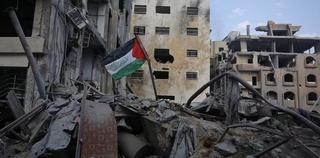
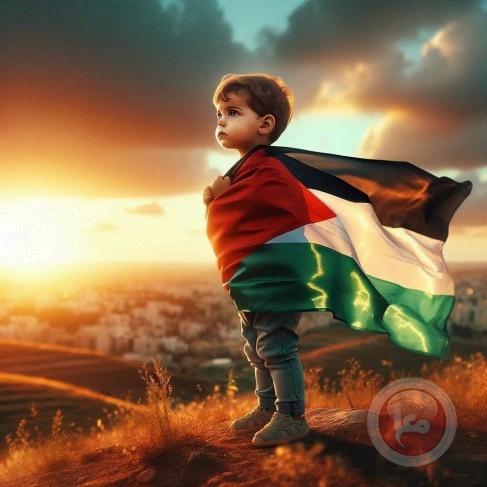
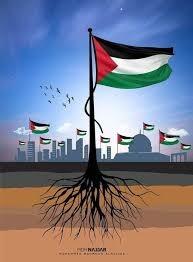
Of course, the brave people of Gaza and Palestine have not trodden the glorious path of resistance and resilience since Oct. 7th. Undoubtedly, their courage, defiance, and unflinching struggle for freedom and dignity have been here for more than seventy years. The change, as everyone by now may well know, is that the veils over lies, hypocrisy, manipulation, and deceit have been ripped; the long-worn masks, fallen. The whole world now can easily tell who the real villain in the story is. The land must come back to its people come what may; freedom snatched, rights restored, identity, heritage, and past reclaimed, and history retrieved.
Indeed, history is being rewritten, with/in blood, yes, but with a good deal of resilience, pride, courage, dignity, and faith. How disappointing and outrageous, however, that the heroic people of Gaza are waging their war literally on their own, without much tangible, efficient support, except for a few actions, here and there. Amid an absurdly heartless world and a humanity that is neck deep in shame though, any small act of solidarity and empathy remains meaningful. For what can be more disgraceful than being an accomplice in/through silence?
The idea for a special edition on resistance & resilience in homage to the intrepid, irrepressible people of Gaza sprang from our innermost belief in “this little we can do”. With much sincerity, devotion, and enthusiasm, we embarked on this special 3rd edition, hoping our humble homage succeeds in at least revealing the generation’s maturity and creativity, and the wider community’s unwavering support for the Palestinian cause.
Trilingual and varied, the magazine’s content is organized into three parts. The first part has become a most endearing tradition of our magazine, and grown a favorite of ours, truly. The section regularly devoted to what students say and write about each edition’s topic is a free space for them to articulate their thoughts, attitudes, and feelings about a given theme. We have cherished this desire to let students express themselves in a laid-back manner so as to encourage them to speak their minds and overcome hesitation and/or timidity if any. This special edition’s students’ section has been particularly moving and thoughtful. Both its spontaneity and truthfulness struck a chord with us, testifying to this generation’s respect for and dedication to the Palestinian cause.
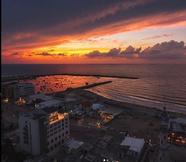
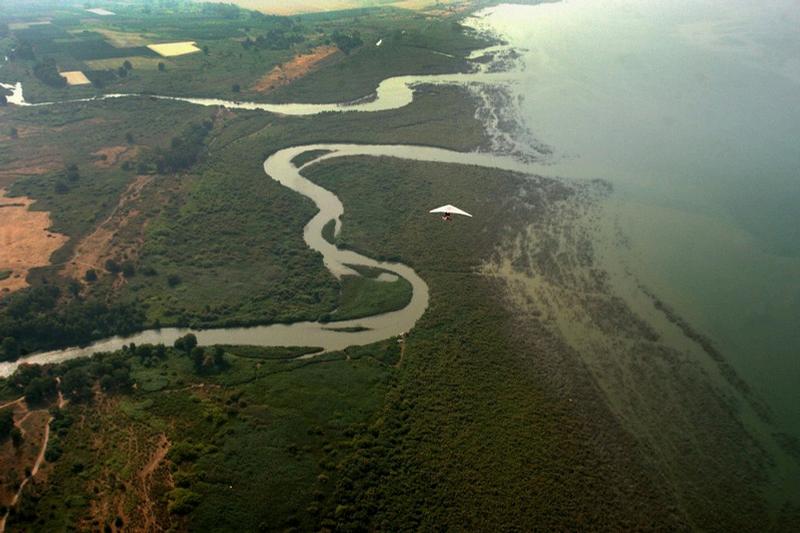
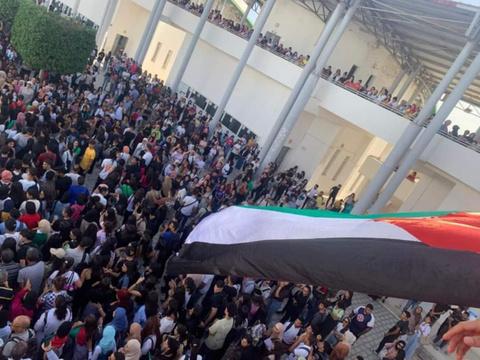
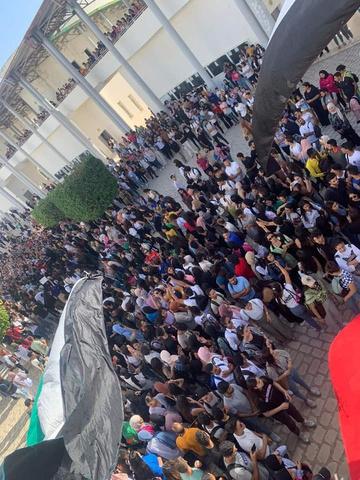
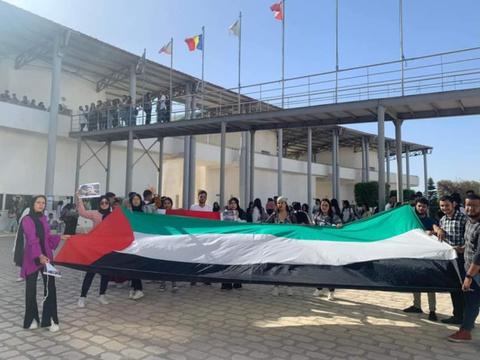
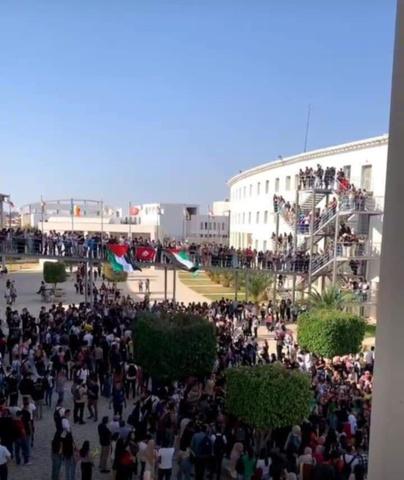
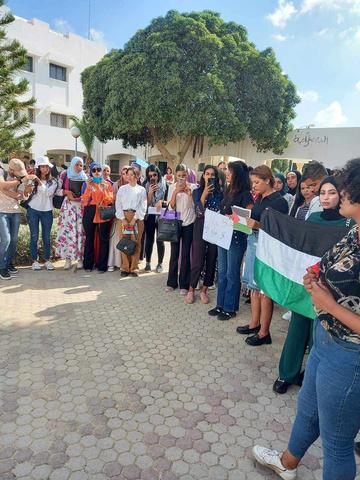
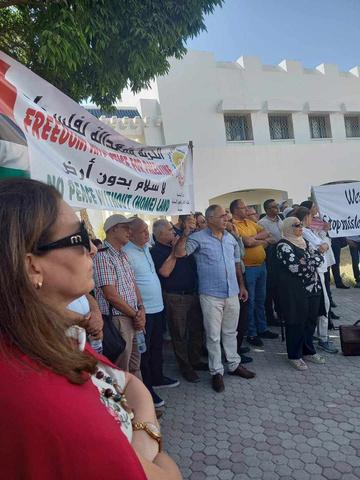
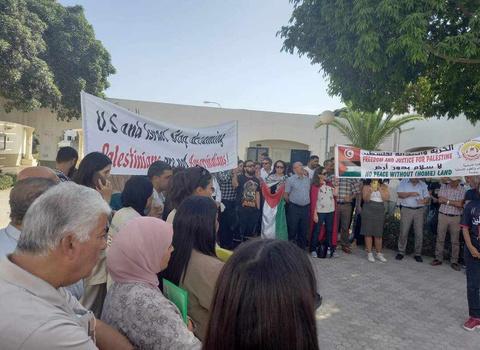
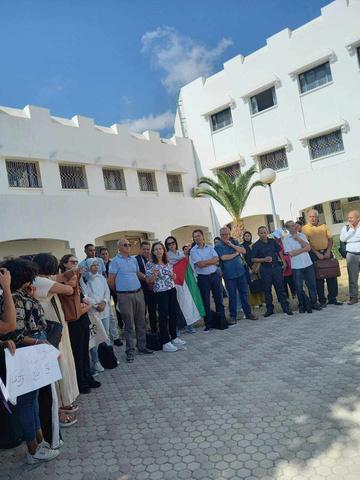
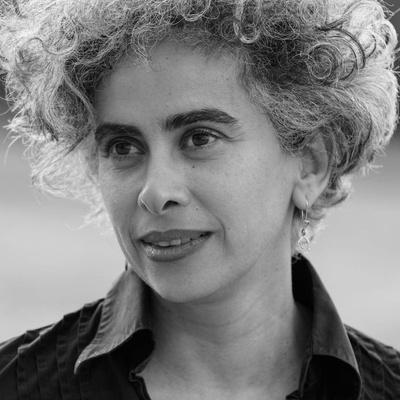
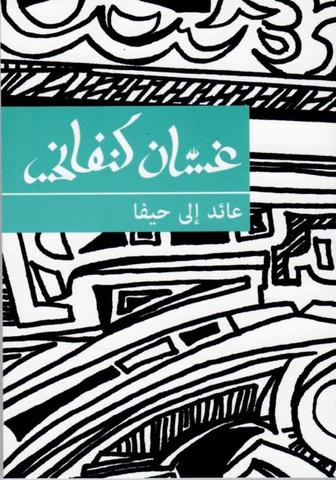
Inspired by the iconic slogan “From the River to the Sea, Palestine will be Free”, parts two and three in this edition start from the pristine, frothy, abundant river reaching to the deep, sapphire, roaring sea. Part two includes a glimpse on how Tunisian universities first responded to the Oct. 7th events and a number of thoughtful articles on the war in Gaza with a special focus on resistance and resilience There is Dr Yasser Rhimi’s introspective piece on the Gaian resilience of Gazans, Oumaima Bousrih’s timely review of Adania Shibli’s acclaimed Minor Detail, and Wiem Jbeli’s detailed reading of Ghassen’s Kanafani’s ﺎﻔﻴﺣﱃإﺪﺋﺎﻋ
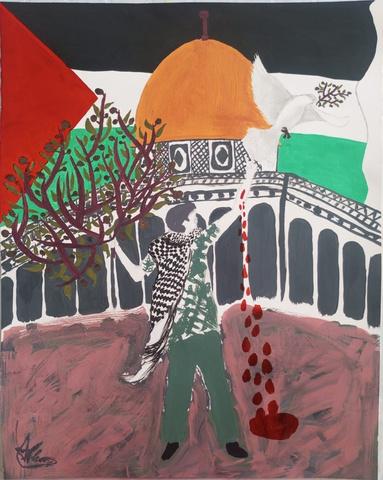
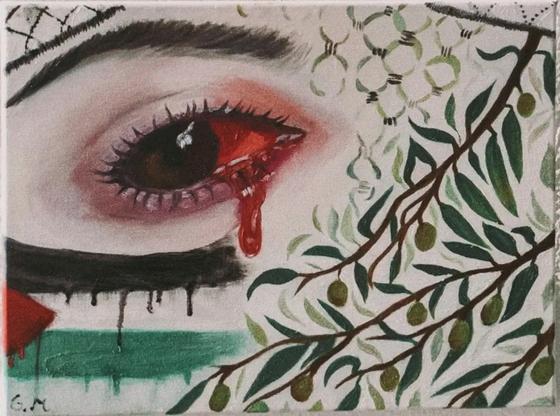
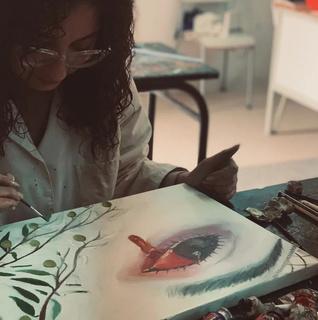
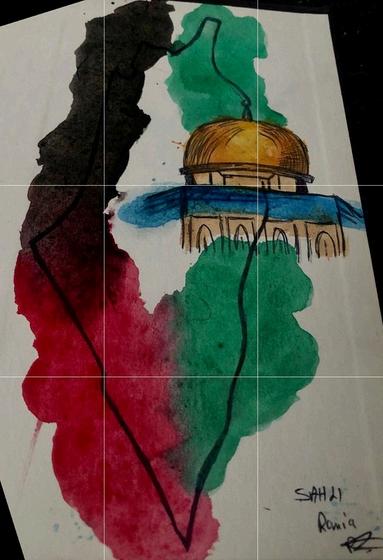
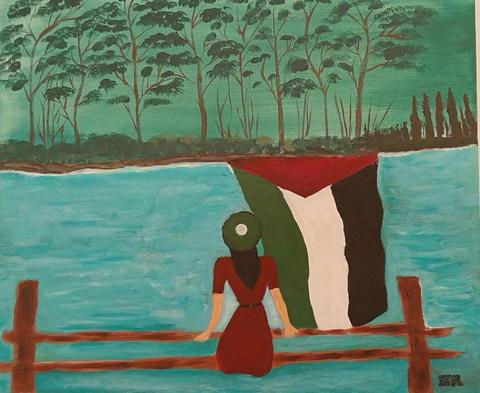
Part three for creative writing and artwork includes a neat and smart prose piece by Souhir Zekri, three brief but thought provoking pieces by Nesrine Chikh Rouhou, a sublime text on Gaza by Hanadi Mesrati, four poignant, edgy poems in English by Rafik Romdhani, and a most exquisite and compelling poetry in French by Professor Nefissa Ayachi. There are also selected writings in Arabic by students from different Tunisian universities. Other contributors have chosen to voice their solidarity with Gaza via color and brush; hence, featured in this edition also is artwork by Rafika Zahrouni, Rania Sahli, Ahlem El Abed and Mariem Gharbi.
Sit-ins, thoughts, words, poetry, painting, music, and art are all forms and means of resistance. Probably in no way they can equal or come close to the daily, on-the-ground, compelling resistance of the brave, resilient, invincible people of Gaza. Nevertheless, they remain a source of solidarity, empathy, motivation, and encouragement to go on, to carry on the struggle towards freedom, dignity, and justice. So let us not stop speaking, writing, and acting for the Palestinian cause, the noblest of all causes. Let us celebrate resistance, cherish resilience, and reverberate in confidence and pride: “From the River to the Sea, Palestine Will be Free”!
Imene Bennani
Students on resistance, resilience, and Gaza...
FROM THE RIVER TO THE SEA " LEVE PALESTINA "
Que représentent la résistance et la résilience pour vous ?
Comment se manifestent ils à Gaza aujourd’hui ?
What do resistance and resilience mean to you ?
How are they manifested in Gaza today ?
ءﻼﺷﻷاوﻢﺟﺎﻤﺠﻟاﺖﻨﻀﺘﺣاﻲﺘﻟاﺎﻬﺋاﺪﻬﺷنﺎﻔﻛأضﺎﻴﺑ
« Les habitants de Gaza luttent pour leur dignité, leur liberté et leur droit à vivre dans des conditions de paix et de sécurité »
La résistance est un acte de lutte et de défense face à une oppression ou une injustice Elle représente la volonté de se battre pour ses droits, sa liberté et sa dignité, malgré les obstacles ou les dangers. La résistance est souvent associée à un combat courageux et déterminé pour faire valoir ses convictions et ses valeurs
La résilience, quant à elle, fait référence à la capacité à surmonter les épreuves, à rebondir après des situations difficiles et à se reconstruire malgré les traumatismes. C'est la force intérieure qui permet de faire face aux adversités et de retrouver des solutions pour se relever et avancer
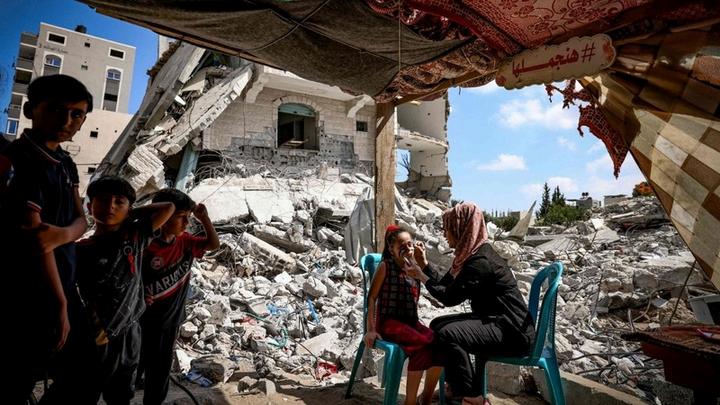
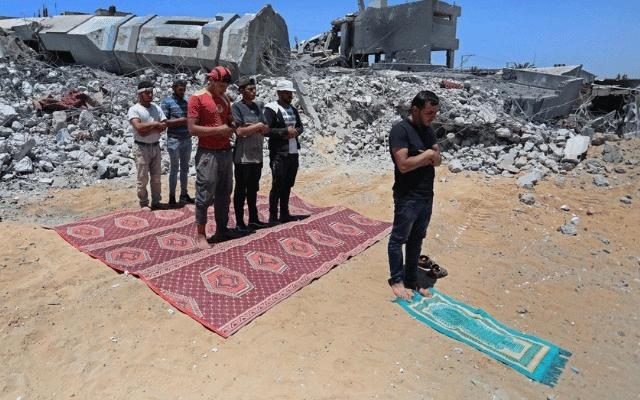
En ce qui concerne ce qui se passe à Gaza, la résistance et la résilience sont des notions qui prennent tout leur sens. Les habitants de Gaza font preuve d'une résistance extraordinaire face à un contexte de conflit et d'instabilité permanent. Leur capacité à rester forts, solidaires et à continuer à vivre malgré les conditions très difficiles qu'ils subissent montre leur incroyable résilience Ils luttent pour leur dignité, leur liberté et leur droit à vivre dans des conditions de paix et de sécurité.
Attahirou Issaka Elhadji
Madougou MA1 IEE FSEG
Sousse
“LIMITLESS
RESISTANCE,
RELENTLESS RESILIENCE”
Resistance and resilience are two substantial interconnected concepts that display the human capacity to overcome adversity and to endure inability and despair. Resistance is intertwined with doing whatever it takes to preserve one's identity, values and assets Resilience on the other hand, is the ability to adopt and find a way to come back as a stronger version from hardships and to recover from the witnessed trauma.
Today, in Gaza, these two striking concepts are powerfully illustrated on a daily basis by its people who are experiencing constant oppression, persecution and all sorts of struggle and pain. Their resistance is limitless through not only physical means but also through relentless striving for liberty and dignity which were severely threatened by the occupiers Still, they did not surrender to their devastating circumstances as they kept trying to find a way to spread positivity and maintain education even through the darkest times Despite the countless deaths, hunger and displacement, the people of Gaza always find hope and joy in the simplest things, thus representing the true meanings of patience, endurance, and resilience The invincible spirit of Gaza's people conveys a strong message to the world: in the face of obstacles, they exemplify the unity of resistance and resilience, leading a narrative of hope that is beyond their suffering
Oumayma Derbali 2nd year
English Faculty of Letters Sousse
FROM THE RIVER
WE GAZA,
STAND PALESTINE WITH/FOR
“Of Gaza’s Blaze and Humanity’s Disgrace: The Gaian Resilience of Gazans”
Fall of the Western Myth of Human Rights; or “the Horror; the Horror”[1]
If we are seeking a summary of the then recent Israeli war on Gaza, Palestine, looking for the numbers of victims, or maybe seeking cathartic solace in Gazans’ plight, this article is too short; and no data gathered on the ground will ever suffice to do justice to the poor sufferers and their families’ experience of “horror” under the gaze of international law. It is not that I do not wish to mournfully as well as shamefully record the horrendous and heart-wrenching facts about the genocidal Israeli practices on the ground But the shocking realities that this war has evinced should guide our basic understanding of core notions of what it means to be human nowadays and, in the future, namely life, liberty, and the pursuit of resistance and resilience under brutal occupation. A month after the outbreak of the war on October 7th 2023, the UN Secretary-General António Guterres warned that, “[w]e are witnessing a killing of civilians that is unparalleled and unprecedented in any conflict” since 2017. Now, provided that we embark upon pouring out all the evidence-based information related to the current genocide perpetrated by the so-called “Israel Defense Forces” (IDF) against the indigenous and native-born Palestinians both in the Gaza Strip and in the West Bank, not only since October 7th, but since the Declaration of the State of Israel in 1948,
will we care more and carry on sharing their unendurable plight? Will we dare question and speak truth to Israel’s unequivocal infliction of systematic dehumanization, starvation, and terrorization of what it means to be Palestinian in the West bank, and even more cruelly in the roughly 365 km2 Gaza Strip? Will we be able to take courage in both hands, not necessarily as academics, but as ethical human beings, and defy the dominant Euro-American propaganda unconditionally supporting the Israeli extermination of the Gazans?
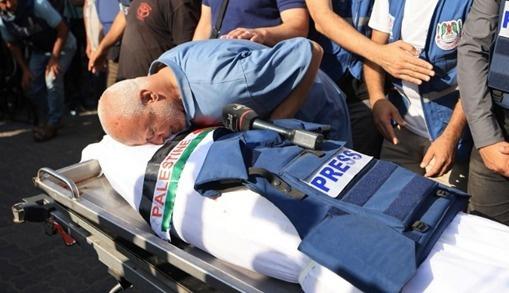
A relative bids farewell during the funeral of Palestine TV journalist Mohamed Abu Hatab and 11 family members, the day after they were killed in an Israeli bombardment of Khan Yunis in November 2023. Image: Mahmud Hams/AFP via Getty Images, February 16, 2024. [7]
In 200 days, at the moment of writing this article, there have been, at least, 35,000 murdered civilians and 78,000 injured, mostly from children, and women.[4] These numbers do not mention the injured or the hundreds of thousands who are either declared lost or still buried under the rubble, and whose estimate is feared to be around 10,000 human lives.[5] According to the UN, by early February, nearly four months since the war’s beginning, “122 journalists and media workers ha[d] lost their lives in the Gaza Strip, with many others sustaining injuries.”[6] These numbers are relatively confirmed by international organizations like Reporters Without Borders and the International Consortium for Investigative Journalists (CPJ).
Everybody is unsafe in Gaza: Doctors, patients, ambulances, schools, and hospitals sheltering the injured women, children, and elders; all have been targeted by the IDF. Every single creature is a living dead Even animals are not safe They have been either potential targets or left to eventually stray and starve in the absence of their owners. There is also the denial of access to international organizations, except with the restricted Israeli permission. In short, never has the contemporary era witnessed a reality more atrocious and more devastating than the organized IDF extermination of the indigenous Gazans for the last seven months Have the so-called “modern” world wondered about what a 3 or 4 or 5 or 6 or …, say, 15-year-old Gazan child may endure the moment they are hit by the most sophisticated Israeli arsenals? How could these kids’ miniscule bodies, already undernourished and psychologically traumatized by their occupier’s imposing of 16-year land and sea and air blockades[8] since 2007? Do these ever have the chance to wake up from their rightful sleep, and perhaps realize that their graves have already meticulously been dug by other “humans”, hellishly blowing up a five- or six- or seven- or even eleven-storey building to the ground, pitting hundreds of innocent human lives in a pitch-dark space under the rubble? Then, heart-wrenchingly the babies’ cries, the unbearable wounds of the mothers, fathers, sons and daughters rise in the midst of an apocalyptic carnage of the other muted dismembered bodies. Who are they? Do they have names and lives worthy of respect like any other European or American? These victims have dreams, hopes, and cultural identity has deep-seated every inch and corner of their indigenous land. Their smiles and giggles will be heard should we come closer in reading the text
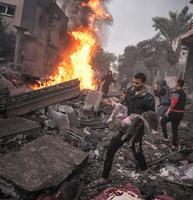
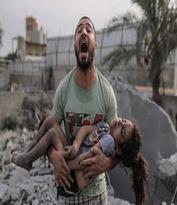
GAZA CITY, GAZA - OCTOBER 09: A Palestinian man holds the dead body of his cousin that he pulled from the rubble after Israeli airstrikes in Gaza City, Gaza on October 09, 2023. Search and rescue works continue. (Photo by Belal Khaled/Anadolu Agency via Getty Images) [9]
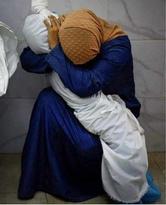
RAFAH, GAZA - OCTOBER 21: A Palestinian mother hugs the dead body of her child at EnNeccar hospital after the Israeli airstrikes which continue for the 15th day in Rafah, Gaza on October 21, 2023. (Photo by Abed Rahim Khatib/Anadolu via Getty Images) [10]
Part II: “Winter of Discontent” [11]; or What Comes Before Resistance
How could the poor surviving victims endure their wounds both physical and psychological with the tragic loss of their families and siblings whose safe and delicate bodies have been cruelly disfigured and dismembered everywhere by the Zionist colonizer? Thousands of them have already been lost while desperately looking forward to potential empathetic saviors from both the allegedly closer Arab brothers and sisters to the non-Arab world of human rights activists and the somewhat modern nations and organizations In this carnal context, the American government succeeded a number of times in vetoing a UN resolution imposing immediate ceasefire on the rogue Israeli state. The most significant legal act came with South African parliament’s filing a genocide case on 29 December 2023 in the International Court of Justice (ICJ) condemning the state of Israel for perpetrating war crimes against the Gazan civilians. Unprecedented as well as revolutionary in ripping off the veil from the traditional Euro- American solidarity with a terrorist state of Israel, the ICJ failed to impose a ceasefire and end the war on Gaza immediately; which once again has granted license to the Zionist state to proceed in replenishing its sadistic bloodthirst at the expense of 2 3 million innocent Gazan civilians Fortunately, however, the Palestinian child, and Gazans, in particular, have long since realized the sole and indubitable “truth” that only in cultural indigenous resistance could they gain and regain their dignity and long-targeted humanness.
Meanwhile, those who have sided with Israel before and will continue to do so from both Euro- American and pro-Zionist Arab states will always cling to the most politically correct, though helplessly ridiculous-to-many, answer, “condemn Hamas”[12], specifically, that ruthlessly bombed civilian Gazan child whose forefathers have been systematically occupied and displaced over generations since the 1948 Nakba (Arab for “catastrophe”) while the free post- 1945 world coalesced and refrained from objection Then, in the 1967 Naksa (“Setback”), Palestinians were displaced and dehumanized again and again to eventually be quotidianly terrorized, and starved and humiliated since the 2007 blockade on Gaza; knowing that basic needs, such as water, food, and electricity have been kept to below what a human or a community may need to survive in the 21st century. Once the surviving grown-up child, now- identified as HAMAS fighters, retaliated on October 7th to 75 years of geographical displacement, cultural erasure, and economic-political marginalization in the international arena, slogans and historical stereotypes like “antisemitism” and “Islamic terrorism” popped up again to the fore of the mainstream media scene, not even reconsidering the human rights or the indigenous Palestinians’ history What could be gained from this shocking as well as paradoxical selectivity of truth or reality on the ground remains prisoner to the reader’s will to either speak historical truth and realities to the global Zionist power, or simply yield to a concatenation of “post-truths”[13] entirely vaporizing the legitimacy of international law, human rights, and just causes for the entire future of humanity.
It is in this vein that as it should not selectively be conceived of as an isolated attack by a marginalized militant group, the history of its land, culture and people they continue to demonize, October 7th should give rise to a series of awakenings in both global conscience and ethics. It is, indeed, what, locally as well as globally, different activists and organizations have begun and agreed to continue to cherish: defending the just cause of the Palestinians to live in dignity and to strengthen the strife to secure their land and cultural heritage. But, thanks to October 7th, they have woken up to the emergency to resist the dominance of Zionism as a destructive ideology of settler colonialism everywhere in the world.
Part III: Spring is Coming and Gaia’s Summer of Resilience is Blazing
I would not be telling a fantasy or a sci-fi story if I just mentioned that a few thousands of Gazan freedom fighters have for seven months been combating not just Israel, with all its most sophisticated fatal weapons. But, according to the Stockholm Peace Research Institute, the United States, Germany, Britain, Italy (until October 7th), have been arming as well as financing the Israeli war crimes at steady paces and at different social, economic, and political degrees and levels No doubt, many other European and Non-European countries are secretly following suit While Israeli airstrikes destroyed and burned to the ground every reason for life for Gazans in the Gaza Strip, Gazan Palestinians continued to arm themselves with a super-human spirit that is entirely infused with Gaia-like regeneration and resilience. That said, never have contemporary times experienced an atmosphere of hope, resistance, love, and resilience in the face of all sorts of unimaginable barbaric brutality of settler colonialism more than what occurred under international eyes in the most recent Israeli genocide against the Gazans
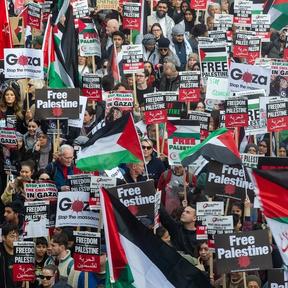
In just two weeks of its outbreak on October 7th, “Israel has dropped more than 25,000 tons of explosives on the Gaza Strip , equivalent to two nuclear bombs ”[15] After nearly seven months, however, neither the random bombing on the most densely populated area in the world, including hospitals, schools, and international relief organizations as the UNRWA and World central Kitchen, nor the recently discovered mass graves of civilians cruelly and morbidly burying them alive (doctors, injured, women, elders, and kids) under the ground succeeded in burying the light of the Gazan’s will to life, liberty, and resilience. Yes, the Gazans have incarnated superresilience in the face of mainstream global indifference and utilitarian cowardice It is worth mentioning, here, that hundreds of thousands of European and American people took to the streets for about six months to date. But their governments kept ignoring their calls for immediate ceasefire Everybody could bear witness to the Palestinian journalists not recoiling for a second to document the truth on the ground that both Israeli war criminals and Euro-American allies craved to bury under their hysterical legal lies and unconditional support of genocide The whole world has fortunately (for truth’s sake) as well as unfortunately (for the victims’ families) born witness to how the
Gazan kids never ceased from wearing; Their fiery smiles and hopes; in a cold loaf of bread warming their hearts in the heat of a cracked ceiling, under the rubble of humanity
Every tree, every bird, and every dew drop of Gaza outlives Arabia’s barren Sahara, melts Toronto’s ice dunes, and acts in Washington’s intercepted tubes
“I can’t wait for the ceasefire to secure the next Ceasefire,” says a little boy,
“I shall rebuild my pet’s home, and fetch for my grandpa’s tomb, lest the tyrant occupier brings the day of doom unto the miserable creatures of the world.
“But how can I help you?” Suddenly asks a man, whose camera’s just returned from the dead.
“Nothing!” Says a little girl whose name was written on her face, and shivering limbs,
“Go tell my brothers and sisters on the present Mount of Zinai or on the Tower of Khalifa:
If birds in Gaza are dying of the world’s indifference, mother trees in NY and Texas are raising an army of reverence Not just for Gaza, but for an eternal Palestine for Palestinians.”
Unimaginably, since October 7th, there have been reasons for resistance, resilience, and will to life instead of surrendering to the atmosphere of death, shame, and indifference to which the Gazan people have sadly been subject Suffice it to say that for seven months, Gazan freedom fighters have been incessantly retaliating to the systematic extermination of their families while living in underground tunnels they had already constructed in case of war These freedom fighters are actually the little kids whose entire families had once been erased from the surface of the earth in one of the random or organized Zionist military operations The freedom fighters’ ancestors and offspring’s massacred bodies were gone But the seeds of their memories, hopes, and dreams of dignity and the will to life were carefully preserved and grown in the spirit of the present and next generations of both the people and the indigenous earth, water, olives and strawberries. Extraordinarily, while the ruthless occupier and its allies kept waging their war propaganda and lies on mainstream media, and the international law and the UN resolutions proved to be inefficient and useless before the Israeli government’s barbaric operations and the European and American governments’ indifference and support of the genocide against the Gazans, Gaza’s Gaze succeeded in embracing Gaia’s resilient spirit. The whole world has born witness to the Gazans’ defiant character: While some have peacefully buried their entire families thanking Allah for accepting them as martyrs, and calling for the freedom fighters to carry on the strife for liberty and life, others were holding graduation vivas and ceremonies And still others went even to organize real, though restricted in number, weddings in both symbolic and material expressions of their Gaian will to a resilient life
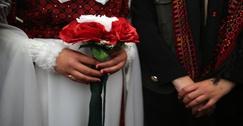
A couple celebrate their wedding at a camp for displaced Palestinians in Deir Al Balah, in the central Gaza Strip, on February 16,
2024 Nur Photo via Getty Images [7]
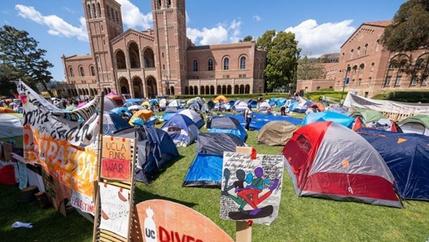
When the rest of the free world have come, though recently, to realize that surviving these calamitous circumstances required not only the will and courage of superbeings to life, but the reality and fact that only the indigenous people of the land could act so super-humanly, movements of global boycotting of international brands and products involved in financing and sustaining the Zionist economy and war in Gaza have surged. Myriad genres of art from painting to poetry and music have also subscribed since the outbreak of the war to an anti-imperialistic consciousness whose primary façade is the European and American governments, and whose presence on the ground is manifest in the Zionist settler colonialism in Palestine Nobody could imagine that the Boycott Divest and Sanction (BDS) of Israel movements around the world would ever be regenerated after the Western governments’ and, particularly, America’s continuous attempts to entirely ban their ani-Zionist activism in recent years. Today, the students of the world’s most prestigious universities, such as Columbia, Harvard, UCLA and still many others in the United States like Yale, Johns Hopkins, M.I.T., and Texas who have recently joined the waves are engaging in the proPalestinian protest against the genocide in Gaza. Thousands of students have been clashing with the police forces, after their universities’ administrations’ denying them of their basic constitutional right for peaceful protesting Ironically, the active students who have attempted to exercise their First-Amendment right to “freedom of speech, the press, assembly,
Shutterstock [20]
and the right to petition the Government for a redress of grievances” were either arrested or detained Nowadays, many forcibly removed encampments have been relocated outside of the universities and some of the protests are taking place in the streets.
The American students’ encampments in the world’s top universities may represent a step forward for the American elites’ moral consciousness after nearly 70 years of participating in the Zionwashing of the state of Israel’s settler colonialism. To the indigenous people of Palestine and the wretched people of the earth, it is a giant leap towards more exposure of the Western superpowers’ double standards and hypocrisy towards not only the other: Non-Western, Arab, African, and Palestinian. But it is even worse: In order for the Zionist state of Israel to marshal its plans of genocide against the Palestinians, the United States and the pro-Israeli European nations are unconditionally ready to sacrifice the basic freedom and rights of their own people, elites, and children by banning and cracking down on them.
While Israel’s current Prime Minister Benjamin Netanyahu proceeded shamelessly in his military crimes in Rafah, where 1.5 million Gazans, are concentrated there, more students’ encampments in many Western countries like Italy, France, Germany and the Netherlands, though cracking down on their students, and others parts of the world have positively reacted and joined the American students’ pro-Palestine protest waves Meanwhile, at this moment, a new indigenous Gazan child is born, olive and lemon and strawberry seed is sown and grown, and a freedom fighter will always be ready to claim his own and all the indigenous peoples’ rights to their own land, liberty, and eternal return.
NOTES
From Joseph Conrad’s Heart of Darkness published in 1895.
https://palestine.un.org/en/253284-gaza-unprecedented-and-unparalleled-civilian-death-toll-guterres https://jacobin com/2024/04/israel-gaza-war-crimes-genocide-idf https://news un org/en/story/2024/05/1149256#:~:text=Rising%20toll&text=The%20same%20source%20h as%20reported,in%20Gaza%20and%2077%2C765%20injured.
From Shakespeare’s play Richard III, Act 1, Scene 1.
This question has turned into a phenomenal opening of every single media or news outlet in the proZionist western camp Ironically, it has gone as a viral joke in the anti-Zionist activists in an attempt to counter the mainstream pro-Israeli discourse.
Basic or plain facts which are constantly denied only to maintain the status quo
https://www nytimes com/2024/04/10/world/middleeast/israel-weapons-suppliers-us-germany-italy html https://euromedmonitor org/en/article/5908/Israel-hits-Gaza-Strip-with-the-equivalent-of-two-nuclearbombs
https://www.thenationalnews.com/news/mena/2024/04/23/gazans-find-marriage-amid-chaos-of-war/ “Since its launch in 2005, BDS is having a major impact and is effectively challenging international support for Israeli apartheid and settler-colonialism ” See: https://bdsmovement net/what-is-bds https://www.reuters.com/world/us/pro-palestinian-encampments-us-universities-2024-05-02/ https://www.whitehouse.gov/about-the-white-house/our-government/theconstitution/#:~:text=The%20First%20Amendment%20provides%20that,the%20right%20to%20bear%20ar ms https://ips-dc.org/americans-agree-with-the-student-protests-the-war-in-gaza-must-end/
Dr. Yasser RHIMI ISEAHT
Decolonizing Palestinian Minor Details:
On Adania
Shibli’s Minor Detail
As Paul Auster once observed and asserted: “We hear things, but we can’t always see them, or, even if we do see them, we’re not sure that we’re seeing correctly. Hence: Invisible.” We are driven by these words to question this nuanced and complex concept of “invisibility.” Auster’s view opens our eyes to the idea that our definition of invisibility itself depends on our vantage point. Indeed, it has been drawing more and more attention as a recurrent thematic choice in numerous works of fiction, especially in the recent two decades.
Contemporary writers, who belong to oppressed or marginalized groups,
tend to rely on this thematic direction to underscore the heavy burden of the unspeakable and the unseen In a context of settler colonialism, authors from Palestine and the Palestinian Diaspora stand out as they struggle to transform their peoples’ hushed experiences and circumstances into narratives that decolonize even the tiniest and most ordinary details about them. That is, they look for ways through which they can amplify “minor details” that are likely to escape us while reading or watching news covering the Palestinian ongoing struggle and endurance in the face of the Israeli Zionist regime.
Being part-fiction and partnonfiction, the novella covers in its first fifty five pages a real historical event, that is considered and treated as a “minor detail,” about a Palestinian teenage girl who was gang raped then murdered by a group of Israeli soldiers in the Negev Desert back in 1949. The second part is rather fictional as Shibli sketches an anonymous first-person female narrator who randomly comes across the aforementioned minor detail and decides to investigate it. The unapologetic and detached style by which Shibli has depicted the two parallel lives of her two female protagonists led the novella to receive wide literary recognition. It was praised for its powerful and sharp representation of an agonizing Palestinian reality. In fact, Minor Detail was a finalist for the National Book Award for Translated Literature in 2020. It was also longlisted for the International Booker Prize of 2021.
In its first section “Part 1: A Summer of 1949,” Shibli introduces her readers to a set of shocking events that took place just after the Nakba An unknown Bedouin young girl is captured, raped, then heartlessly killed and buried in the Negev Desert by Israeli soldiers Following her death and burial, this event passes as a mere “minor detail” with no relevance in the broader context
on both the oppressed and the oppressor’s sides This part is told in a straightforward style that mirrors the harsh reality of the Palestinian experience starting from the Nakba year onward. It explores this haunting event in order to shed light on the unvoiced, invisible, and erased history of an oppressed nation as it grapples to give voice to its atrocious situation. The third-person narration is quite minute but one-dimensional. It takes in tiny details such as the chief surgeon’s hygiene routines, his daily struggles with insects, namely spiders, as he tries to keep his room clean and tidy. The narrator also minutely describes these repetitive actions in a rather cold and detached style that challenges and disconcerts our reading of the whole narrative This first section, brutal and condensed as it is, sets the stage for the second section “Part 2: Modern Day” where Shibli switches genres and goes
for a fictional exploration of a modern-day female protagonist living in Ramallah The two parts are juxtaposed and connected in a transcendental aesthetic and thematic style that studies, meticulously, the smallest of details. As put by the anonymous protagonist: “sometimes it’s inevitable for the past to be forgotten, especially if the present is no less horrible.” This connection transforms what is invisible into a visible and significant topic. Shibli designs a narrative by virtue of which she is trying to decolonize these invisible details Her storytelling style brings forth several minor details that were and are likely still overlooked in most non-Palestinian authorial attempts to chronicle the ongoing Palestinian struggle for freedom on the occupied lands
At the heart of the second part is the unnamed female narrator who lives in Ramallah and who happens to learn about the 1949 “minor detail” through a newspaper article. What made her get fixated on this detail, in particular, is the fact that the two female protagonists share another minor detail in common According to the article and the records it reproduced, the day the teenager girl was murdered and buried coincides with the second protagonist’s birthday. Eventually, this likely “unimportant” information becomes her new obsession and leads her to embark on a whole investigatory journey from Ramallah to the IDF History Museum and other museums to take a look at its archives. To her, “there are some who consider this way of seeing, which is to say, focusing intently on the most minor details ... as the only way to arrive at the truth and definitive proof of its existence.” Here, Shibli exposes another dark side of life on the occupied Palestinian lands as the modern-day protagonist finds it extremely difficult to reach the museums because of the Zionist travel restrictions Shibli’s close attentiveness to the minor details of this part’s spatial setting with its roads, landscapes, and buildings puts forward the novella’s inner purpose of decolonizing war narratives from the hostile predominant image endorsed by the Zionists This section comes to an end not only in an abrupt way, but with an abrupt event. Having violated the colonizer’s forced restrictions, the unnamed woman, who has reached the same spot where the Bedouin teenager was buried, is shot dead by Israeli soldiers
Shibli’s subtle depiction of the ongoing dynamics of settler colonialism on the Palestinian lands decolonizes minor details thanks to which the reader’s attention is drawn to the nature of this human experience In its essence, the novella is a profoundly powerful exploration of Palestinian history, memory, and endurance. Through her thought-provoking and decolonizing thematic and aesthetic structures, Shibli breaks away from the conventional writing techniques and sets up her own narrative voice that speaks louder than all the hushed voices By reliving the 1949 experience in Minor Detail, Shibli seems to be keen on giving the whole book a sense of authenticity. The double facedness of this single crime/war story brings forth a narrative pattern with irreducible details yet one dimensional human existence We can see this in the fact that the characters are rather blurry since we barely know anything about them, not even their names. Indeed, what matters in the novella are the characters’ journeys and responses in the face of the ever-growing challenges of dispossession, dehumanization, and confinement. Shibli’s meticulous and precise narrative resists these colonial forces and serves as a literary work of resistance that confronts Zionist dominant narratives and voices the harsh Palestinian truths.
The novella ends with a cliff hanger-like twist. Shilbi’s present-day female protagonist, failing to get further information from her dangerous visit to the museums, becomes as homeless and lost as the Bedouin girl from the first part. Ultimately, the fine line that separates the two stories gets tangled and we are suddenly transported back to the same 1949 crime scene as the Ramallah woman gets executed at the exact same spot. With this shocking end, Minor Detail manages to decolonize several overlooked elements at the heart of the Palestinian experience with the Zionist forced settlement. Shibli does this by reflecting on the authoritative power dynamics which dictate what could pass for major and what could be seen as simply a minor event or memory This is maintained and stressed in the novella’s title itself as it underscores the deep impact of “minor details” on individuals and communities. By leaving a number of unanswered questions at the end of the book, Shibli unapologetically pushes her readers to look up all possible answers, especially as far as what makes a Palestinian story a true one is under scrutiny
Oumeima Bousrih PhD Candidate Faculty of Letters of Manouba
TO THE SEA
BREATHLESS
Souhir Zekri Masson ISEAHT
His eyes hurt and pricked as sweat and blood gradually filled them, but he continued to run. Ghassen couldn’t look back just yet. He tried to think of that nice song: “When will you know, when, that I love you, when?” What’s the name of that gorgeous singer again? He’d always been good at singing that refrain, especially at family reunions. Family reunions were also a nice recollection to think of. Oh, those days preceding the 7 October were the best, although people were…Well, there used to be that…embargo in Gaza, around 360 square meters and two million inhabitants which scared the “Others.” Now, this permanent eclipse has taken place and… New thought, new thought, quick!
He was now running past a supermarket, one of the most luxurious of the city, its windows smashed and walls blackened by fire and smoke. There were dark silhouettes walking around at an extremely slow pace; old people, for sure, the only ones spared by the frenzy of fleeing citizens. Probably because they already belonged to a different time and place. But I wonder who is clearing the shop this morning… Ever since the sun and moon disappeared, night and day became as indiscernible as anger from fear. Not sure what happened, some divine storm which, having gathered all the junk and old satellites on its trajectory, hit the two celestial bodies with full force and disintegrated every sparkling particle and atom. Why or how the earth survived this catastrophe was as mysterious to Ghassen as the reason for which he was running through the streets of Gaza. He used to live in a beautiful area near the city centre, full of shops and restaurants. Now, everything was deserted, like an old, disused film set.
In parks, what used to be “Nature” had by now lost its quietude, and animals no longer possessed any survival instinct. Birds, stray dogs and cats swarmed near ponds and reminded him of strangers standing at other strangers’ dinner parties. He knew he had to avoid those parks he loved so much. Not because of the animals, but because of…the “Others”…These so-called human beings, well, they became a little scarier to him than before. Soldiers were the worst. He could no longer bear their red eyes and rude, savage ways. No stop sign or barbed wire could ever put limits on their frenzied attempts to humiliate, to hurt, to undermine, to alienate, every single time of the day or night. He thought back of the night, Lina, his deceased wife, had been blown out on her way back from the city centre; her body had never been found, only his little daughter had survived…But she…She began to develop the same frenzied look as the “Others,” like a small, wet kitten’s, minutes before it is run over by a huge truck…Ghassen was now breathless.
He slowed down to check whether the supermarket still had food supplies; only the indispensable things: bread and, most crucially, water bottles to carry on running. No chocolate, no way, not now. Or maybe just one? Or two? Who knew how long he still had to sprint before he could run into one of these frenzied people? There was this boundary he had to cross, more symbolic than geographical really, on the verge of Khan Yunis, a sort of cold-grey highway area where he knew people’s faces could metamorphose at once. Even the smells and sounds were different in Khan Yunis.
He started to feel a pain in his chest and stomach, a warm liquid ran out of his nose all of a sudden, and he wiped it with the sleeve of his green leather jacket. It wasn’t blood, it was a murkier green than his jacket’s. Is it already happening? It’s been only two hours since…
By the time Ghassen reached the much-dreaded area, the pain had increased to such an extent that he had to slow down again to catch his breath and try to quell it a little. His breathing became jerky and his head started spinning. Some of that dark green liquid now oozed from parts of his skin, on his forearms and on his face. He could no longer distinguish the road in front of him. He was now blinded by a green haze which started burning his eyes and cheeks as he accelerated again.
A tall grey building appeared as suddenly as a giant ogre and Ghassen knew he had to let himself be devoured by it, or he would not survive the metamorphosis. He was turning into a frenzied “Other.”
The building was empty, there was not a soul around. He finally stopped and sat at the reception desk. A computer and a landline phone caught his eye in their silent whiteness. What’s the use? Google “frenzy”? “End of the world”? “Deadly disease and the end of humanity”? Humanity was already an old-fashioned concept, too abstract for his understanding. If only that woman didn’t come so near at the garage a few hours earlier, perhaps she would have let him stand a chance? She looked like that singer he liked, and she seemed lost. She had no car or motorcycle, only what looked like a sleeping baby in her arms. She slowly opened her mouth, as if to try and say something very clever or unusual, but her empty stare seemed to prevent her from emitting any sound.
-May I help you, Ma’am? Ghassen asked with solicitude, staring at her eyes.
-…Help me…with the baby…please…I need you to hold it…The young woman stuttered as her frail arms reached out to Ghassen’s. The bundle fell abruptly on the floor.
Why did he have to talk to her and try to help her? By trying to be humane, he was now losing his humanity little by little. He didn’t even ask for her name.
The pain in his chest intensified and started stifling him. He thought of another refrain: “Oh Lonely traveler, leaving me alone”… Mohamed Abdel-Wahab. No Eid or any other celebration this year. He felt a jerk run through his whole body and his breathing accelerated. He stood up with difficulty and went to the bathroom. When he saw his face in the mirror, it was contorted and greenish. His scared heart skipped a beat: his transformation was taking place in front of him, on the spot. He yelled, then bellowed, then groaned. He moved closer to the mirror…
By now in full frenzy, what remained of Ghassen and his humanity looked back in terror at their reflection on the glassy surface stained by a greenish mist.
ON HOLY RESISTANCE,
LOVE GUNS, AND TANGIBLE HEROES: THREE THOUGHT PIECES ABOUT RESISTANCE AND RESILIENCE.
I"Liberty or death" is a straightforward manifesto engraved in the hearts of the people. It is commonsensical and needs no deciphering or compromise. If I might say, it's a sacred attribute one's heart is endowed with. We are born free and the only chains we have is failing to resist and persist. The heads might fool you, buzzing: it is helpless. But here comes your rage which is a holy oracle that guides you towards God's trajectory. As Malcolm X once said "There’s nothing in our book, the Quran [...] that teaches us to suffer peacefully. Our religion teaches us to be intelligent. Be peaceful, be courteous, obey the law, respect everyone; but if someone puts his hand on you, send him to the cemetery. That’s a good religion." Your head might keep you astray, but your faithful heart will always guide you towards resistance; the path of holiness.
IISartre states: "Let us start fighting, and if we've no other arms, the waiting knife's enough." The waiting knife is sharp, thirsty to pierce the plague of this age: the rusty hearts that masquerade as civilized. The fuels of our rage disrupt this phony simulacrum of the Western ethos. If this resistance is "terror", it is so as it terrorizes and hampers the falsehood of their narratives. It is the righteous lens of love. It divulges lies; that is why it is feared. Love? Blessed (s)he whose heart is an agent of love. Blessed be the locus of the firing gun; for it emanates from the fervent kernel of a heart bound by love.
It is the catalyst kindling the history-making process. In silence, whispers coalesced with the fervor of resistance and echoed between lovers, "It's not finished". Love transcends, subverts, liberates; it is the presence of Godly might. The quest against the megalomaniacal hegemony of colonial aggression is a holy fight. Blessed be whose veins, whose blood surrenders not to oblivion. All hail to the sweat and sacrifices that strive against compliance as they sow the seeds of liberation and continuation.
In pop culture: TV shows, music, fashion, etc.., the West is always framed as the "hero", the sanctuary and outlet for faded hopes. To borrow Louis Althusser's terminology, these frames function as their "ideology state apparatus". Moreover, suppressing the "otherized" discourse is what this Western self hinges on to survive. Satisfyingly enough, this is proving to be a brain-dead act as people started discerning the vacuous bogus from the real. We dwell in a spirit of an age wherein no apparatus can hide the truth or justify atrocities. Today, our heroes are not fictional. They are among us, far yet so close. They are also you and me, real and tangible, and their power is boundless. The margin chooses to speak up, proactively focalizing the posture of resilience that will keep on reverberating to meet the end of liberation, and by any means necessary.
Nesrine Chikh Rouhou
GAZA CHILD
Half the window is a mirror for flying dust instead of birds, above gloomy trees. The other half, an erect ear eavesdropping on the wide footsteps of death as it nears the breath of a Gaza child. Half the window wants to fly and fade anywhere. The other, still stoic there like a true mirror for children's dreams, and come what may.
Rafik ROMDHANI
UNREAD EPISTLE
Tightened grip on unseen shards Pinions held captive for so long. Dream digests an ensnared nightmare in a place where it should never be. The beast from the dark looking East for no purpose. The door of death invisible, creaks. A child holds before his own unknown a cup of milk so cold. "Mum, say something please," his hand perching like a quail on her ice-cold chest. "I will join you up there, mum Maybe tonight or tomorrow" he cries. Eyes to the sky like two pearls pretty certain of their destination. Animarium on the red mirror of dawn. Every day a new episode of gruesome scenes comes out to the world. A black mule struck dead as well for just being there near death's door. The sun, still an unread epistle being tossed above our heads as we look at our own feet like buffoons.
RED RIVER
The swift, flowing, red river gives dawn the colour it has. Clouds of cockroaches and insane locusts are washing away. Hot anger, gathering into a fierce wind, drives a herd of cattles towards an unknown place. No such thing as an unpunished for dance on a ground of wounds. No way to run out of the green picture you have burnt. Slaves of the devil Suffocated by grandeur! Spent shadows now lost in a quagmire of blood and unflinching tears. Death has long licked the bare feet of children, stung hard their ears. No way to escape your red mirrors. Weary eyes overlooking a half-risen sun. Windows receiving ricocheting screams and witnessing backs fading into distance. God stretches His hand, stones you with pious hearts! The swift, flowing, red river gives dawn the colour it has. Clouds of cockroaches and insane locusts are washing away and seen no more.
LAUNDRY
Swollen eyes from exhaustion. A long journey under the sun. You can't make the pain in your head stop. Dancing temples to time, The laundry like a piles of corpses of men long dead on a cold floor.
Sweat on your sauntering forehead, white but wise like blood Your kitchen door, fairly ajar waiting for you to return and turn off the cooker you kept on as you went out meditating, shaking hands with the trees and not caring about the thorns.
Laundry burnt; the stove no more. The walls blackened, ashes soared and clutched to the ceiling. In my absence rose a war that heated the hinges of each door.
Fire danced and burnt the dreams in all my pockets, The left cheek of the window was kissed hard. The green tea pack crumpled and turned red. Everything was painted black Fire knows where to go Fire knows when to pack. The laundry waited no more.
CRY ME A COUNTRY
Don’t cry over my scattered shreds
my body, my heart and spilt
Cry over your rotten cowardice ---
My stolen land knows you accomplice. Those hands drew my country’s map
Amira Jammezi English Teacher Carthage University
Those legs ran through fields and borders
My tongue, this tongue, loudly shouted When my fingers fearlessly pointed,
Don’t cry over my shredded corpse, heart and arteries ---
My tribe’s spilt b l o o d has grown into F L O -------------------------O D
My blood is ink of martyrdom
My words are flesh for freedom
My eyes bear witness to the t. e. a. r. s … of mothers.
Don’t cry over my body - - - my pieces
Cry over your treacherous treaties
Of peace;
And --- my torn limbs still curse your peace.
Gaza, le berceau de l'héroïsme, la source de la résistance et le symbole de la résilience.
Gaza ! Un terme composé seulement de quatre lettres ! Mais qui a submergé le monde, envahi tous les cœurs, secoué les âmes, brisé les frontières et réduit les distances Hommes, femmes, enfants de tout le globe chantent ce nom en le glorifiant jour et nuit Il s'agit d'une minuscule région où tous les démons et les monstres se sont réunis pour l'anéantir, voire l'effacer de la carte géographique, mais qui continue à leur tenir tête, en restant debout malgré ses blessures qui ne cessent de saigner La tête haute, les bras écartés au souffle de l’enfer et la poitrine exposée aux balles, aux bombes et aux missiles, la bande de Gaza refuse de se mettre à genoux Pourtant, les vautours se multiplient, s’acharnent davantage contre elle quotidiennement Ils manifestent leur impatience de la réduire en charogne afin de la disséquer et de la dévorer, mais ils se sont confrontés à une résistance inégalée et à une résilience extraordinaire qui se rejoignent pour former son bouclier
Cette région si minuscule mais si grandiose ne cesse de prouver sa capacité d’apaiser les coups les plus atroces, d'alourdir les pas des envahisseurs et d'épuiser leur détermination. Voilà qu'un amour inconditionnel pour la patrie, aussi bien qu'une volonté de fer pour la défendre, font face à des armes puissantes, sophistiquées et intensément destructrices.
Certes, les décombres s'étendent aussi loin que le regard se porte aux alentours, les corps sans vie s’éparpillent par-ci et par-là, quant aux survivants, ils se trouvent affamés, assoiffés, privés de soins et torturés par les serviteurs de Lucifer, mais ils refusent malgré tout d’abandonner leur terre ou de renoncer à leur droit de citoyenneté Par conséquent, ni la barbarie des colons, ni les dégâts causés par ces sauvages, ni les atrocités commises n'ont pu ébranler la foi en la résistance Cette dernière semble tellement puissante et tellement intarissable que les sionistes finissent par la considérer comme un acte terroriste, menaçant leur sécurité et compromettant leur stabilité
Quelle ironie du sort ! Le fait de ne pas se plier devant un envahisseur, de tenir à sa patrie et de vouloir la défendre à tout prix devient un acte terroriste et un comportement condamnable !
Heureusement, étant donné que la résistance semble leur devise dans la vie, les Gazaouis s'en servent pour nourrir leur lutte contre le blocus israélien. C’est leur moteur pour se remonter le moral et leur motivation pour s'unir contre le pire ennemi de l'humanité.
Force est de constater qu'il ne s'agit plus d'une guerre d'appartenance, plutôt d’une guerre d'existence ! A maintes reprises, les résistants ont prouvé au monde entier qui se contente d'observer et parfois de s'indigner, leur solidarité et leur résilience malgré les traumatismes de l'occupation Ils donnent depuis un quart de siècle aux futures générations des leçons sur le patriotisme, la loyauté envers son pays, la bravoure et l'héroïsme Nous sommes donc face à un peuple qui se sacrifie corps et âme et qui se bat bec et ongles, rien que pour défendre ses convictions et préserver ses terres et sa dignité Nous le vénérons au point de nous sentir honteux et lâches dans notre passivité vue qu'il mène tout seul ce combat se bat au nom de tous les humains gardant encore en eux une part d’humanité
La force de la résistance sait qu'elle est dans son droit, qu'elle se démène pour la bonne cause et que la justice est de son côté, bien qu'on ait tout fait pour la démentir Décidément, là voilà, en fin de compte, victorieuse puisqu’elle a réussi à démasquer par sa résilience le véritable visage et les vraies intentions de leurs tortionnaires et de ceux qui les soutiennent On a beau essayer d’interdire les manifestations pro-Gaza, allant même jusqu'à sanctionner ceux qui prononcent son nom, mais ses habitants désarmés et au tempérament invincible ont su éclater tous les blocus, braver tous les obstacles en s'imposant avec force et assurance à tous les maîtres de l'ombre qui se sentent désormais impuissants, ridiculisés et discrédités aux yeux du monde entier.
Que Dieu puisse bénir Gaza, le berceau de l'héroïsme, la source de la résistance et le symbole de la résilience
Hanedi Mesrati MA1
DANS LE SEL DE LA DOULEUR
'innommable fuse sur nos regards hagards comme la hache au poing du bourreau, la chair des mots arrachée...
Sous un ciel de plomb, oliviers, figuiers, orangers et thym s'éteignent
Rabougris, rachitiques, aveugles...
La terre millénaire en génuflexion de cendres, la prière de l'absent et le muet des larmes
L’opaque du noir et l'effacé du blanc...
Dans le sel de la douleur, le Maître des lieux
Flottant hors de son corps exilé, s'agrippe à l'humus ancestral
Tout s'épuise à même le sol meurtri et les racines du ciel barbelé
Du dedans, le poème en son âge du début, tirera de l'oubli le non-lieu
Entre la trace des aïeux et la mémoire muette
La poussière se rappellera le terreau, l'âme des vergers dévastés, la rumeur hurlante des saints déserts
Comme le sang dans le tranché des veines
Nul n'écoutera le chant des damnés que le ciel dans sa béance.
INDÉCENCE DU POÈME
Le poème se tord jusqu'à la moelle des os, se vomit...
Il a en son ventre les boyaux du monde
Vers de terre en charognes putrifiées
Humus noir et grain de mil déracinés
Les damnés de la terre entre enclume et marteau
Sonne le glas!
Flagellations et le bourreau en nous
Coups de couperets des mots
Et le sang candide de blancheur gicle sur les feuilles
noires de honte
tel repentir d'une bouche enferrée
Comme sur la gueule des chiens, les muselières
Comme prière avortée sur les lèvres
Mater dolorosa en vallées des larmes
Le cœur bandé de suaires lourds de béance
Le laurier jette sur nous le parfum de l’infamie !
Le Verbe engrené se fait fils de barbelés
La parole captive fléchit !
Indécence du poème en temps d'exode
Il devient lâche, quand les pieds déshérités
s'interdisent de quitter l'âtre et le bercail
Rouges et noirs
De chair meurtrie, du mouroir à l'exil.
SUR LES CHEMINS
SAISONNIERS DE L'ESPOIR!
Marche souveraine des hommes libres, des remueurs de la terre, des faucilleurs de blé
Marche saccadée sur la terre millénaire se dérobant sous leurs pas
La maison ancestrale est sous les décombres
Seules les clés se souviennent du plus faîte des exodes forcés
Exilés nostalgiques des rivages natals
Seules les racines les retiennent et la chair du
Verbe altissime
Et la terre féconde se déployant à perte de vue
Dans leur mémoire nourrie par la parole des aïeules, témoins millénaires
Semence de mots qui germent comme l'humus des aubes premières à humer jusqu'au vertige
Comme le sein en son miel sur les lèvres de l'Amant
Élan du retour sur les chemins saisonniers de l'Espoir!