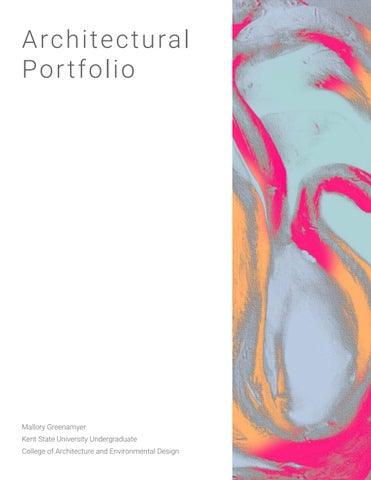
Architectural Portfolio
Mallory Greenamyer Kent State University Undergraduate College of Architecture and Environmental Design
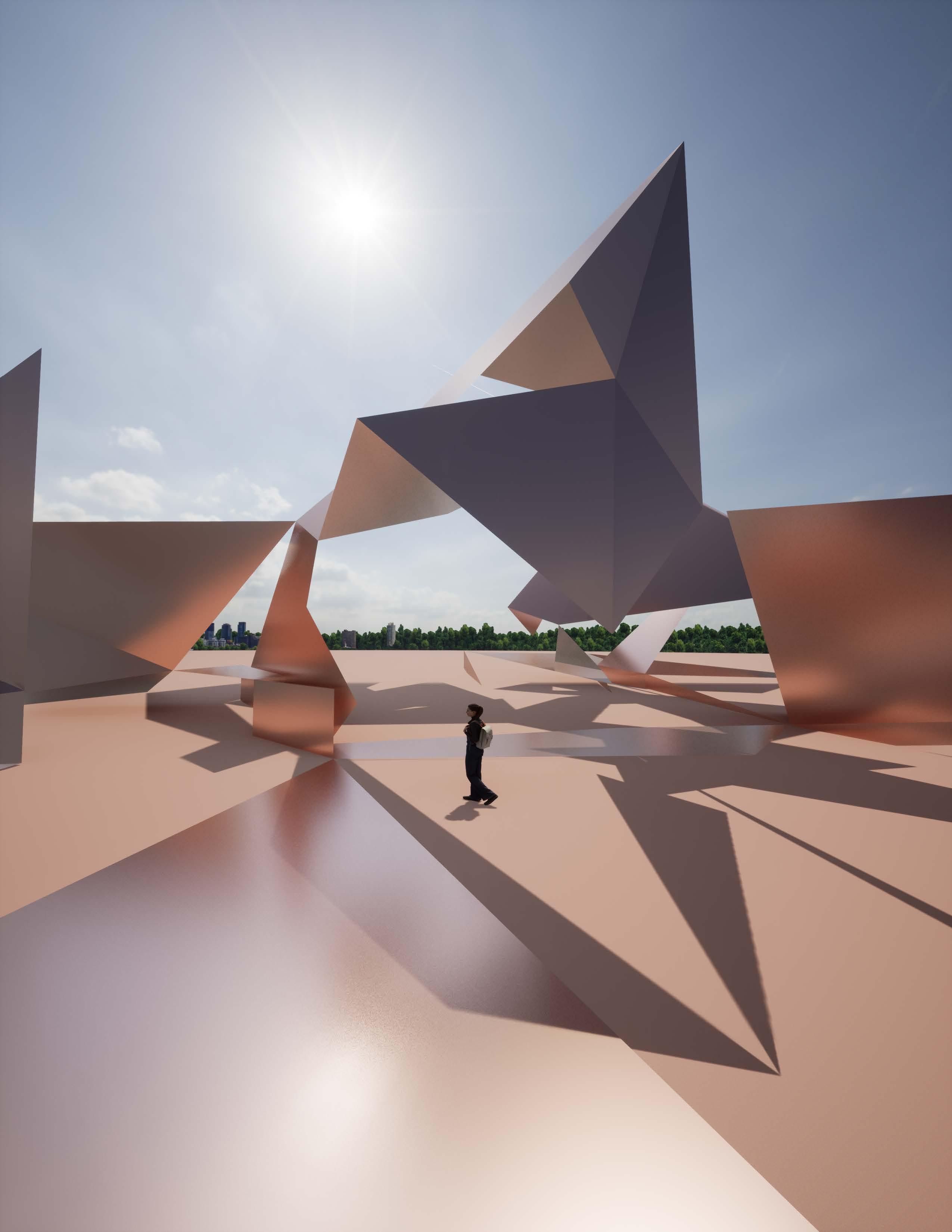
Question
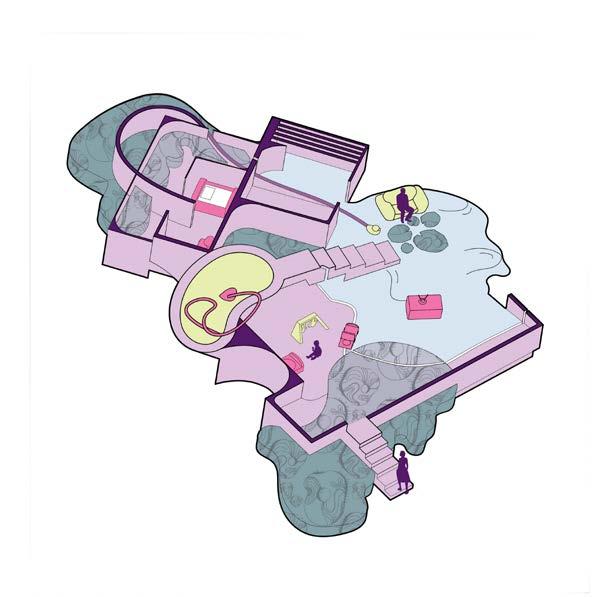
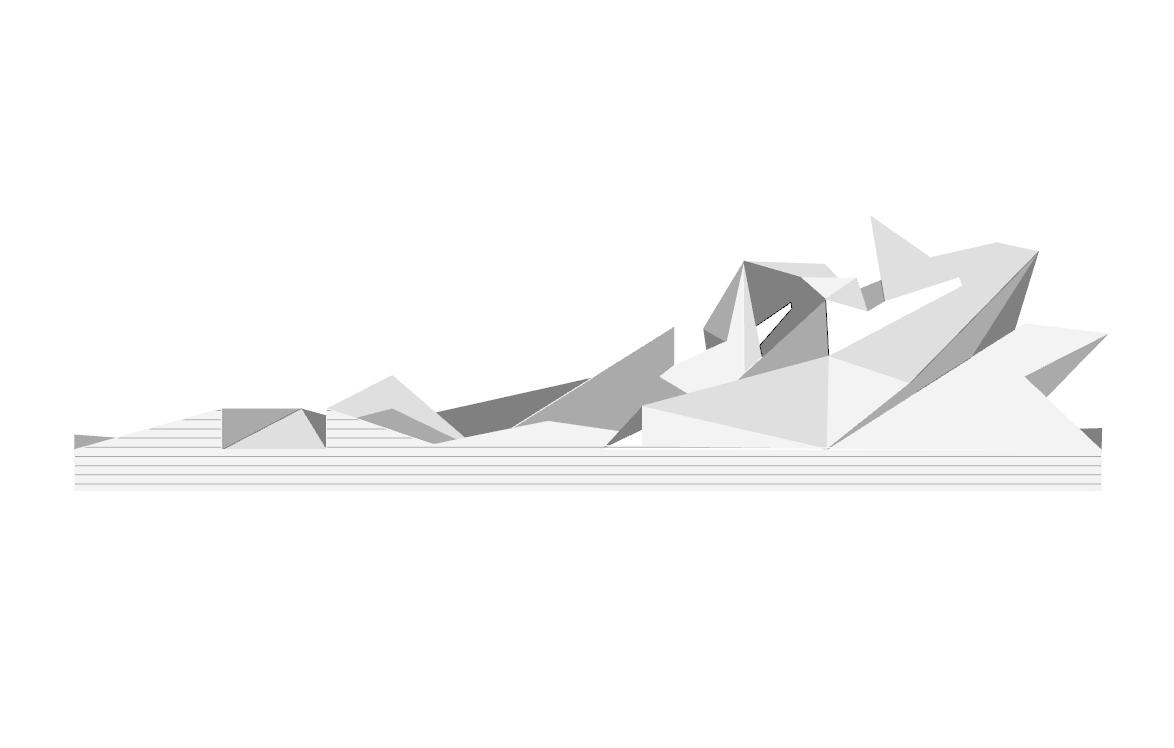
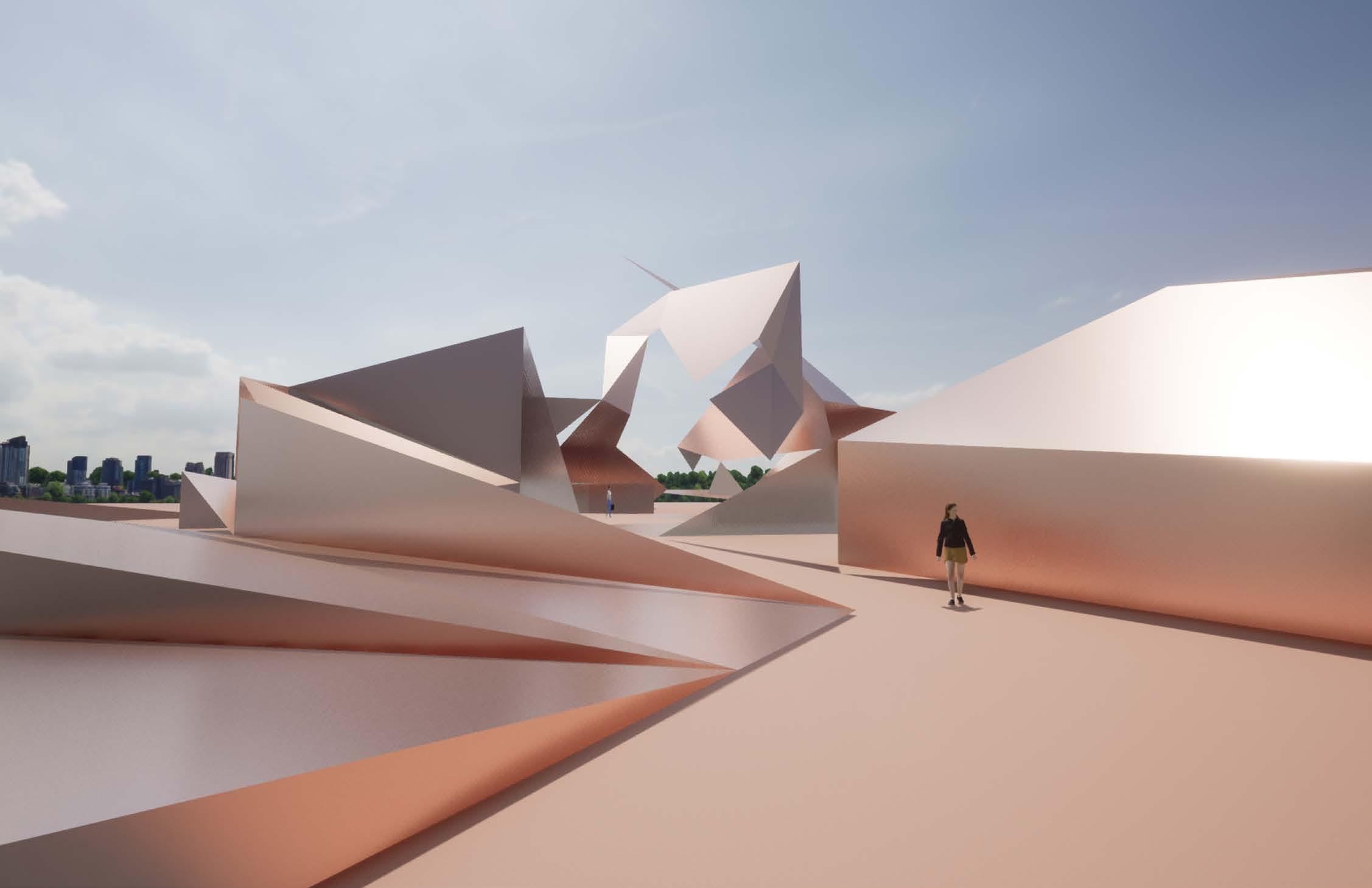
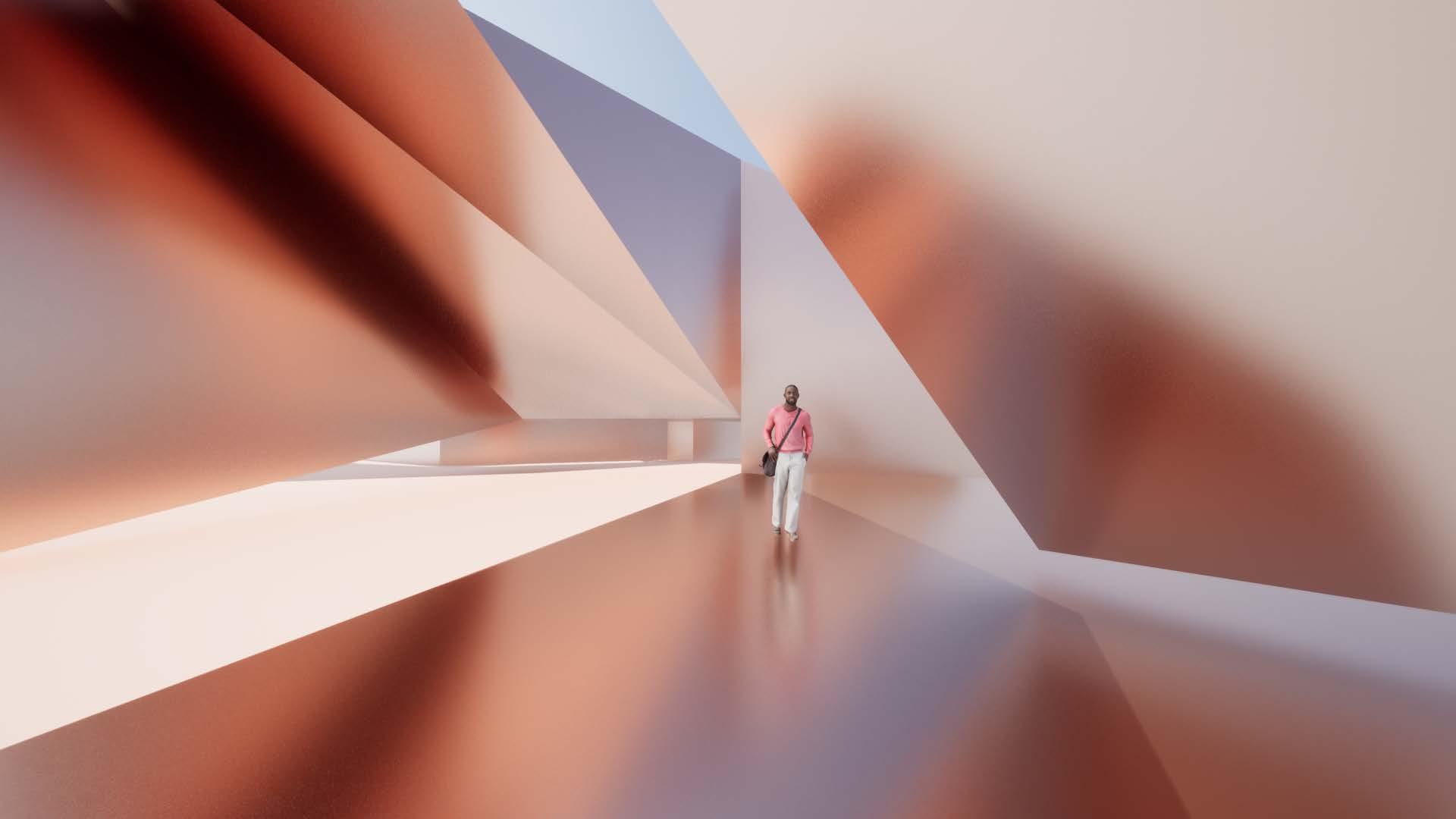
How can you create a three-dimensional landscape that emphasizes interiority from a flat, two-dimensional drawing?
Answer
The space between, around, and behind a form is just as important as the shape itself.
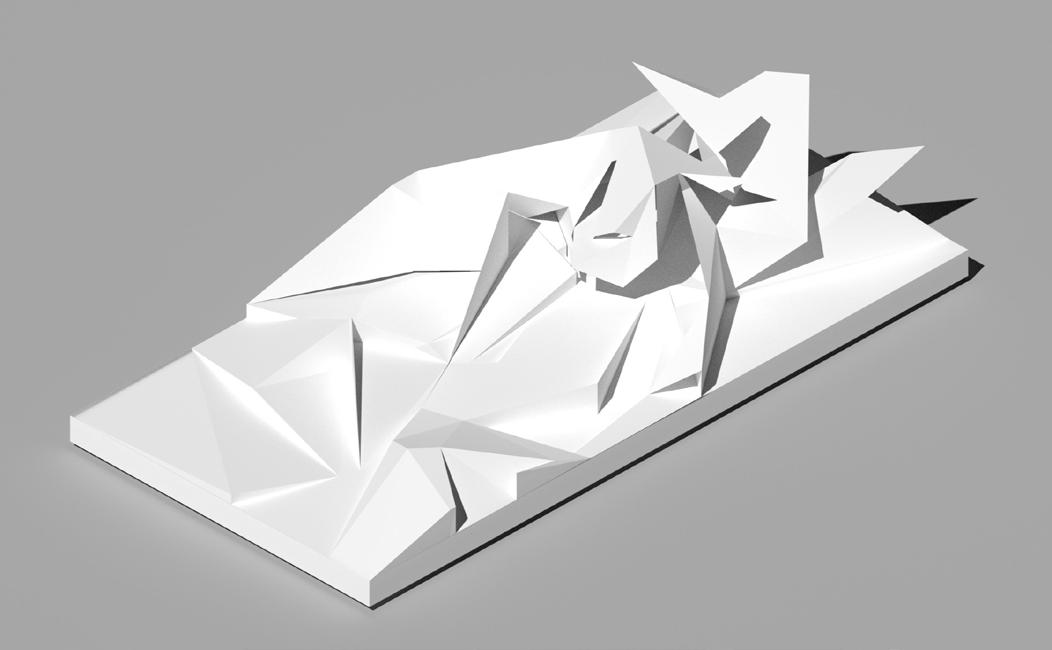
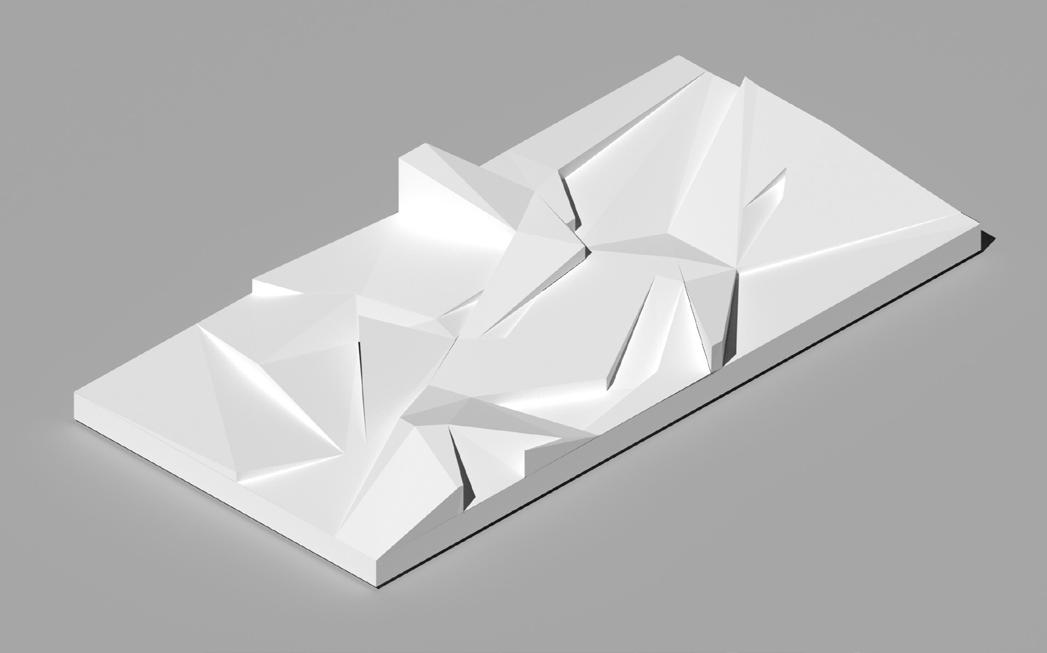
Do not blindly choose geometries solely for their visual value--consider both directional qualities and how they will relate to other forms.
Inward does not solely equate to a single radial point; perhaps, the forms act as an arm trying to push past the center, reaching for a position outside the shell.
There is not a chronological order when translating from 2D to 3D---revise both aspects simultaneously.
Question
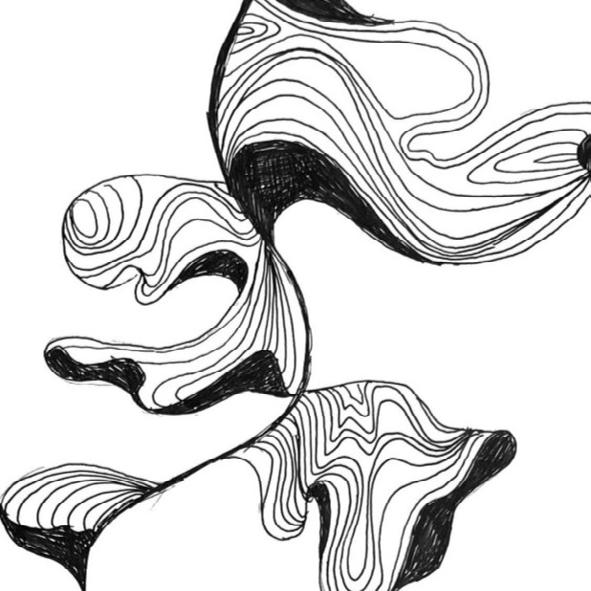
How can you create a synthetic maze from a natural landscape?

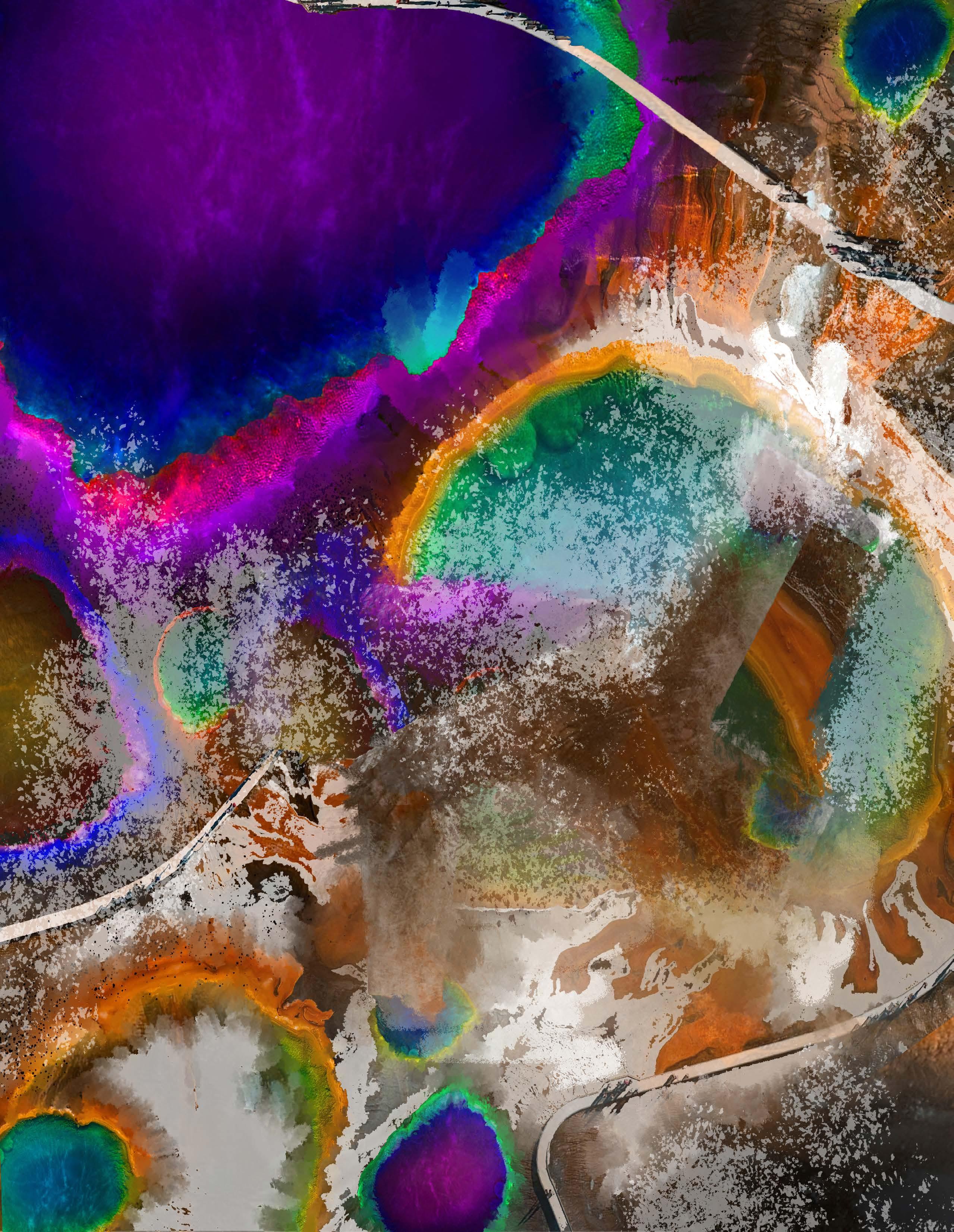
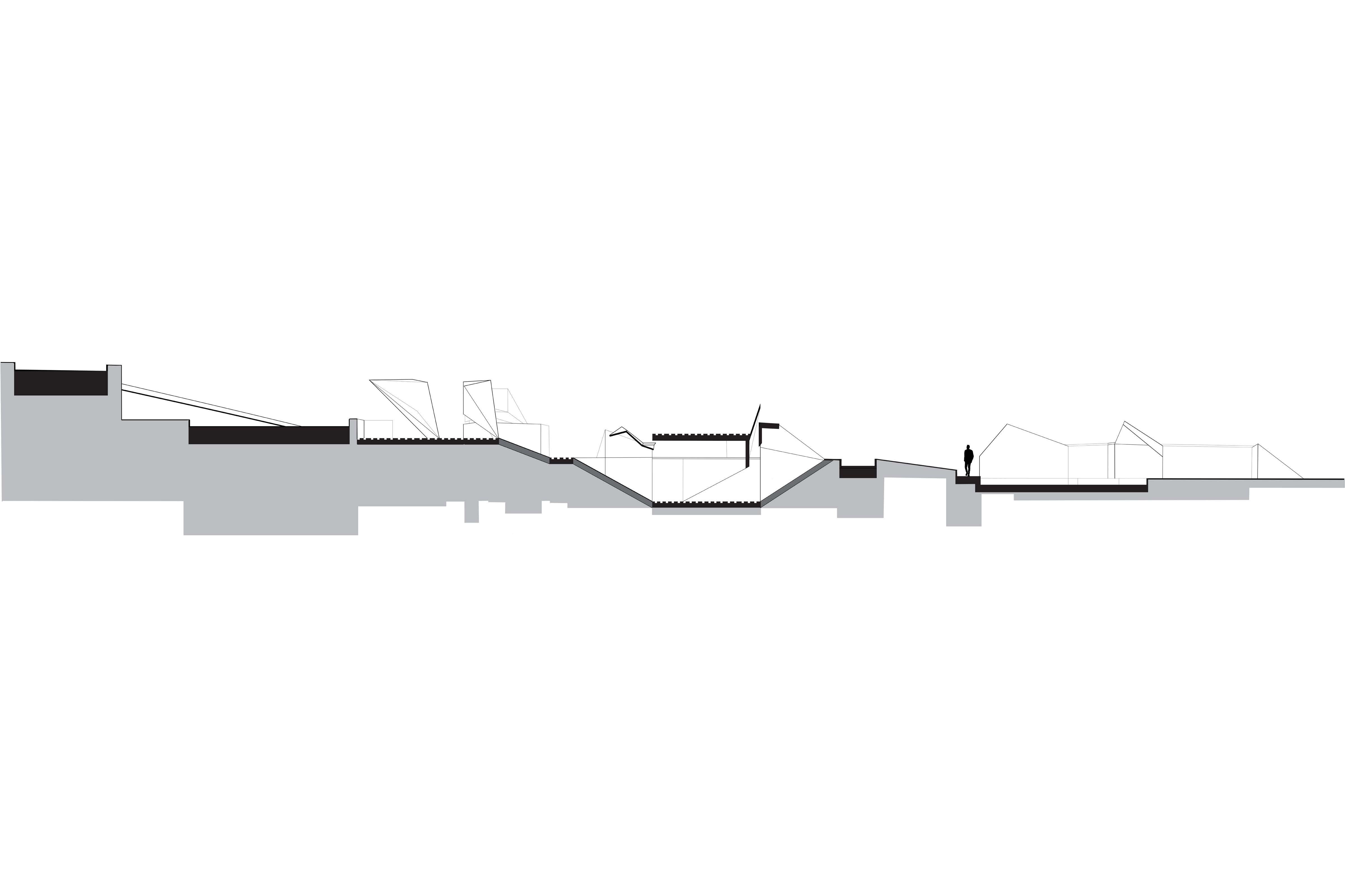
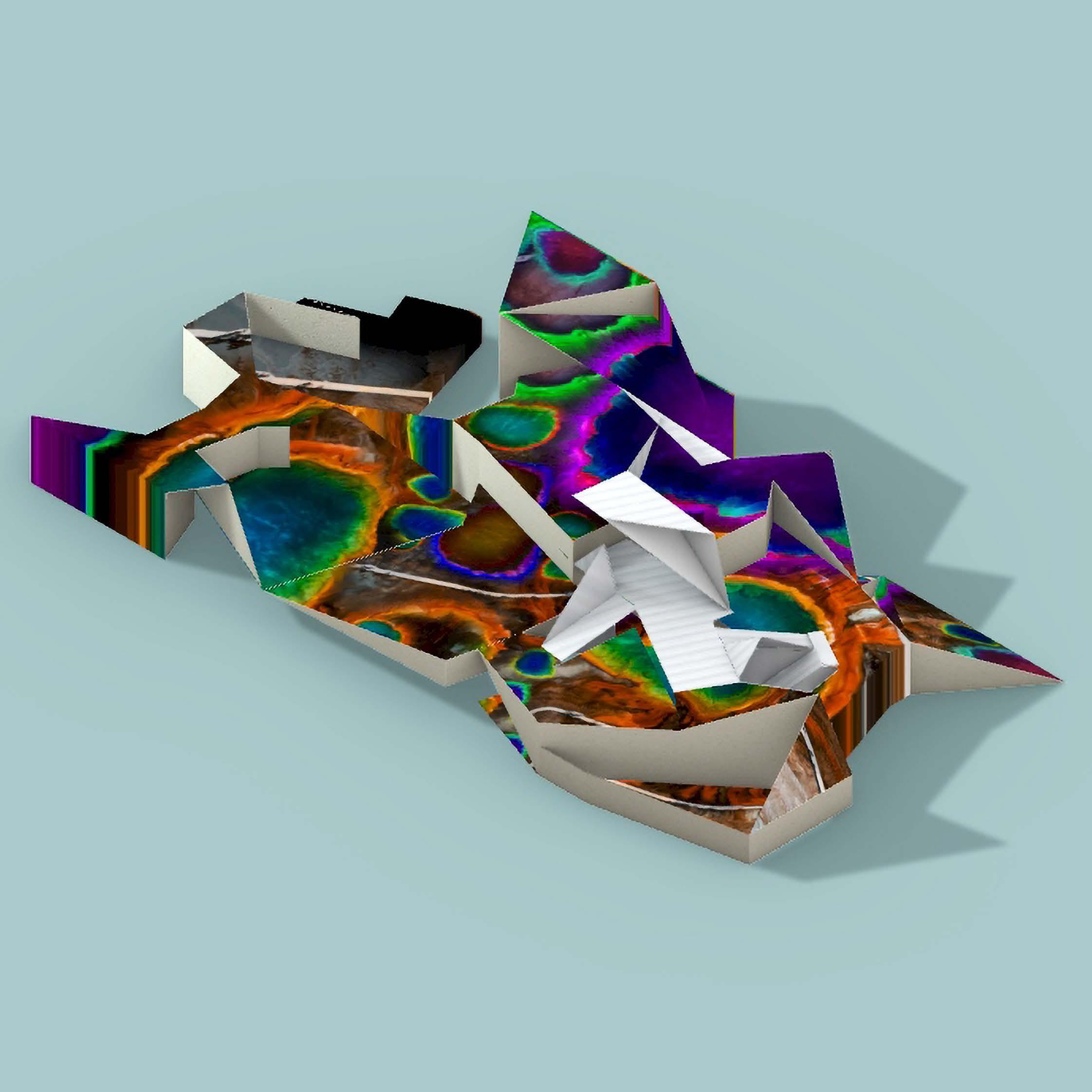
Dueling geometries---the curves of the natural pods and the folded planes of the synthetic landscape---can coexist. One form can influence the placement, elavation, and walkable path of the other.
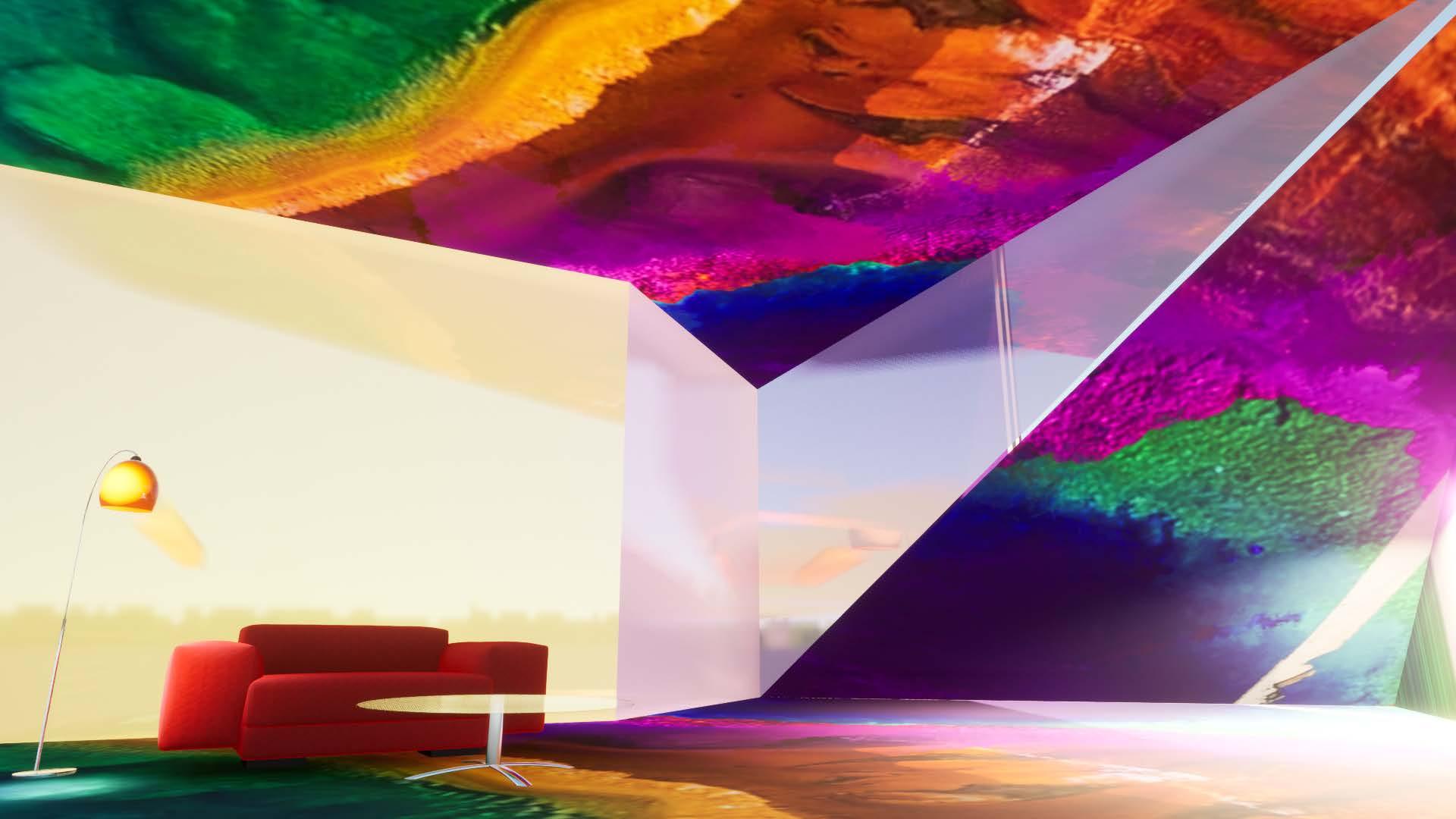
Creating zoning rules for each type of geometry can start to create a design logic. For example, larger clusters of the curved pods indicate an area of high traffic and elevated surfaces.
Question
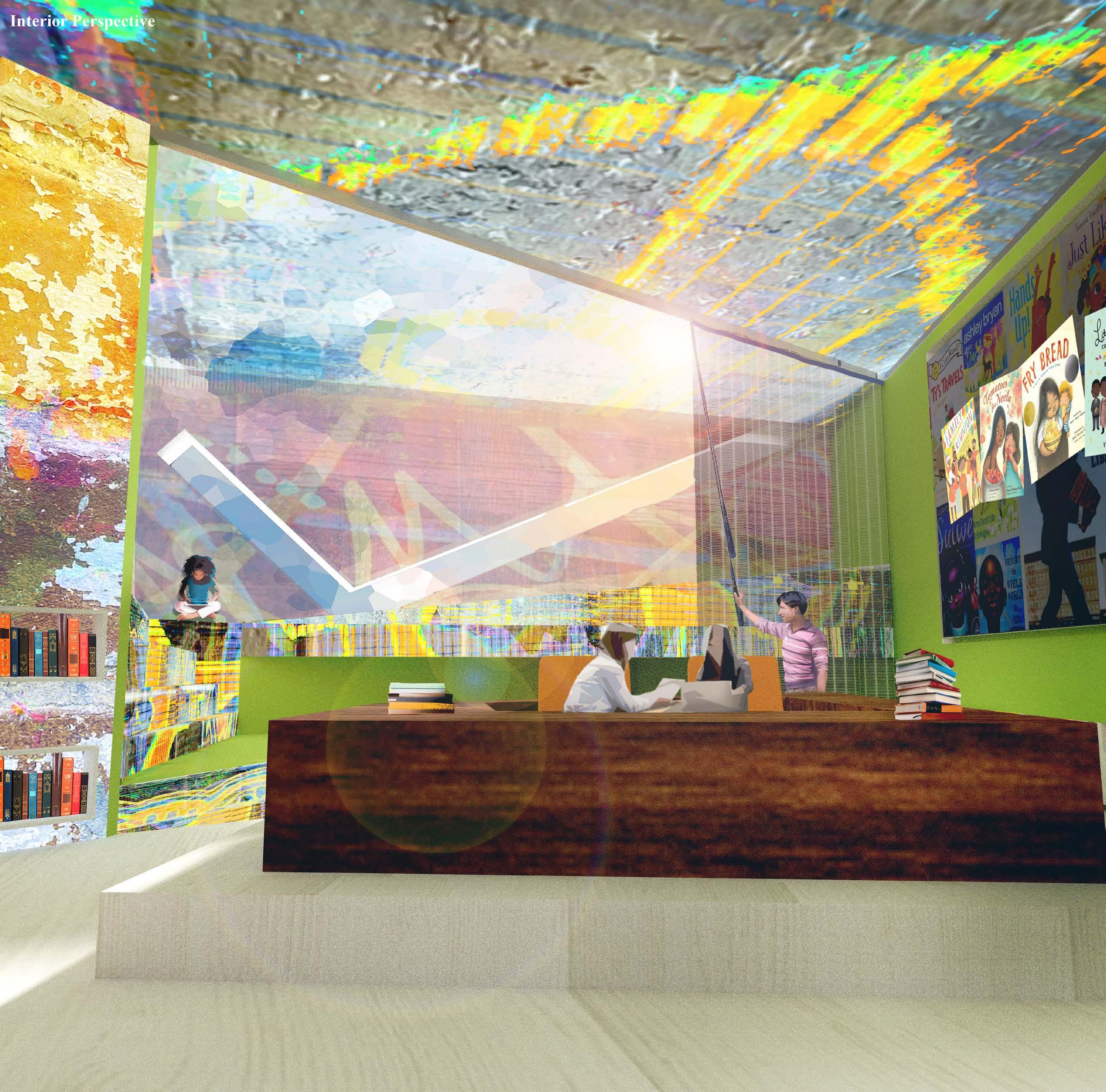
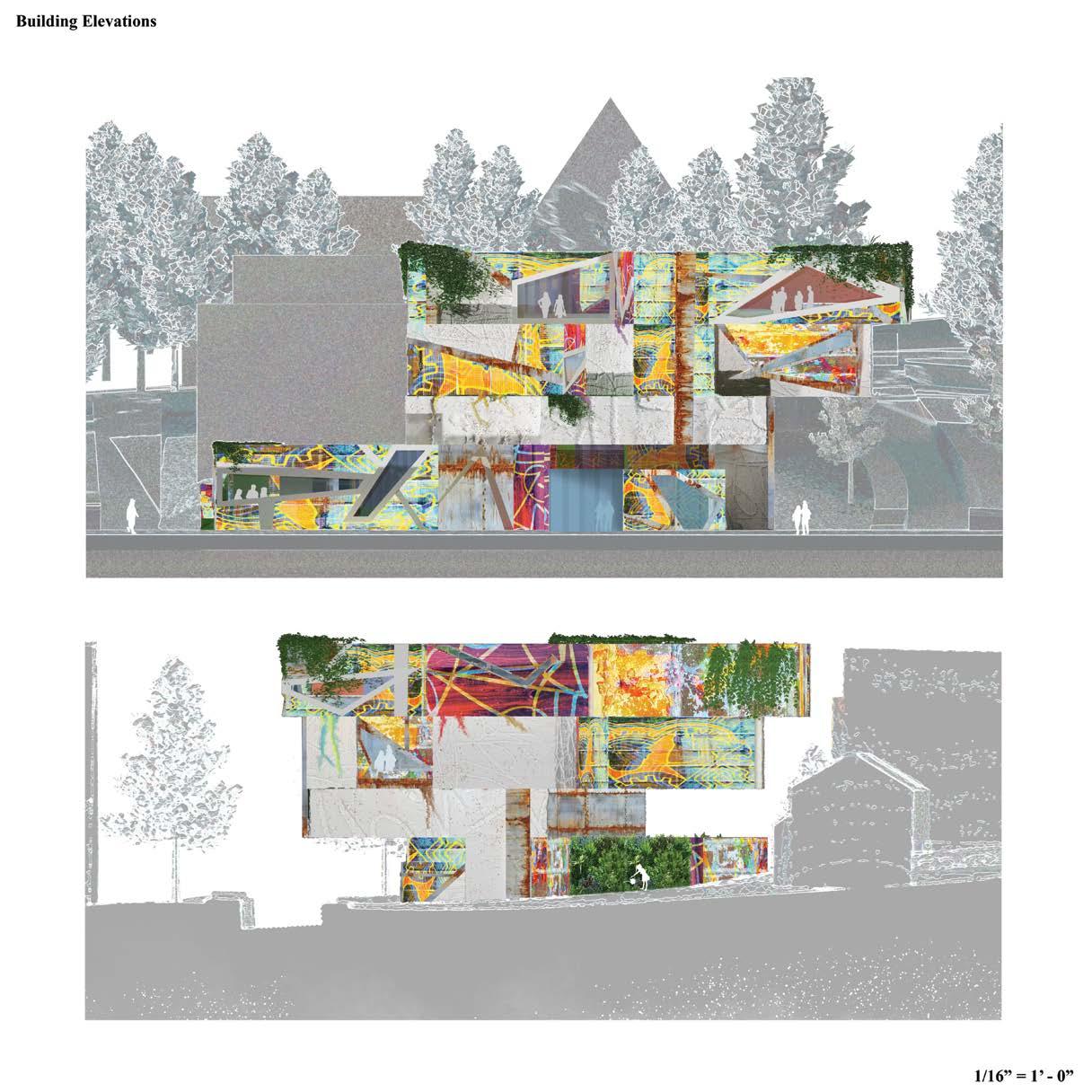
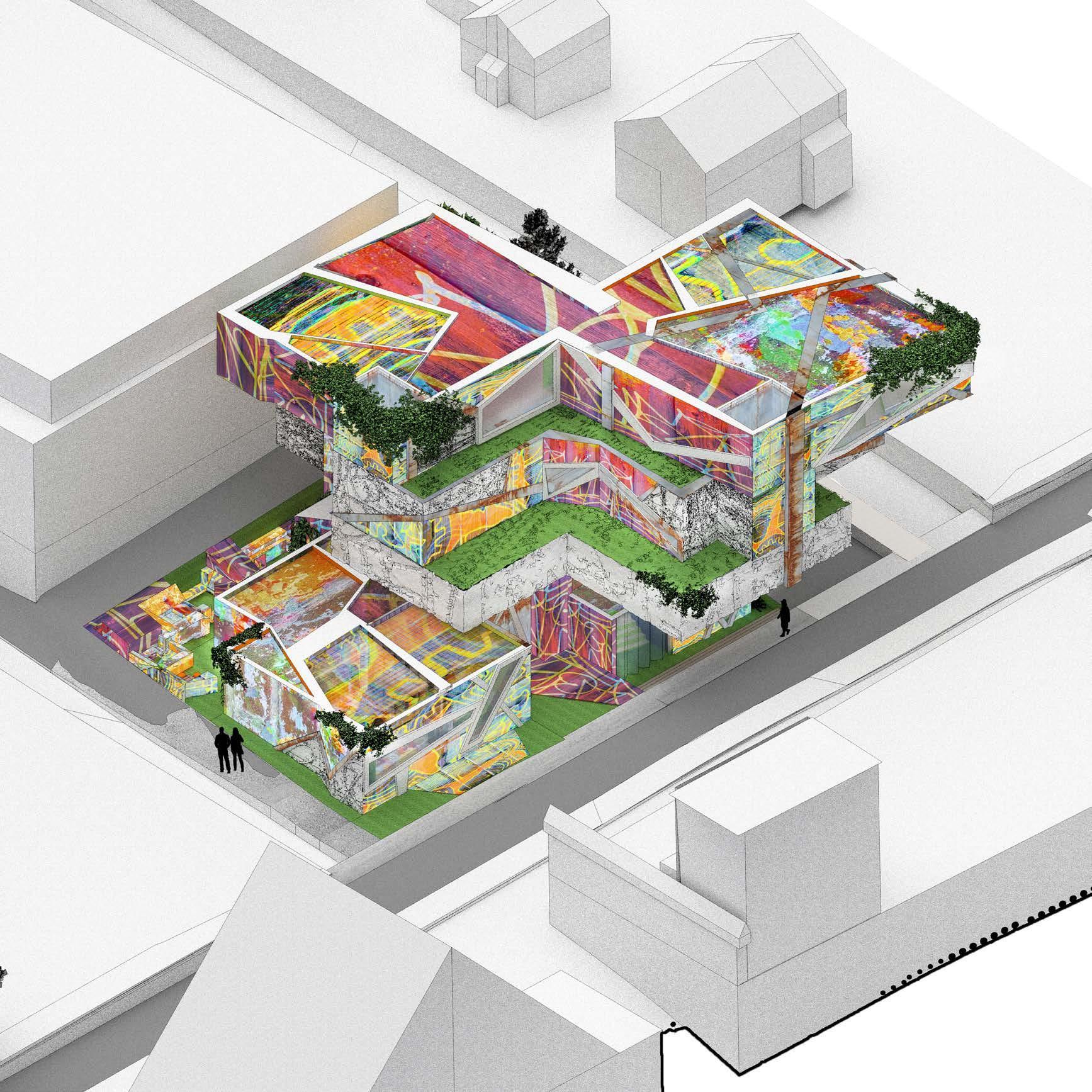
How can a kindergarten evolve alongside its students?
Answer
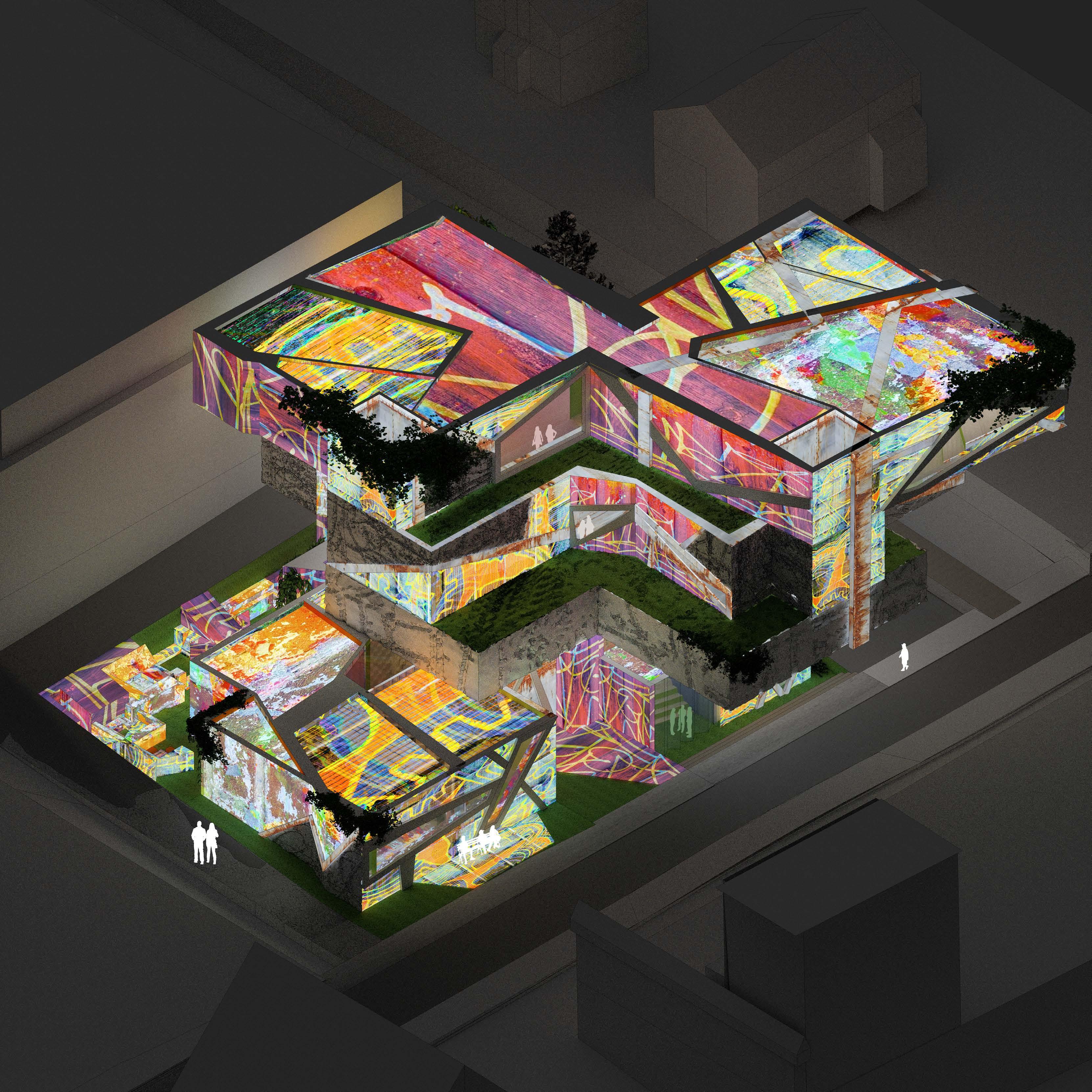
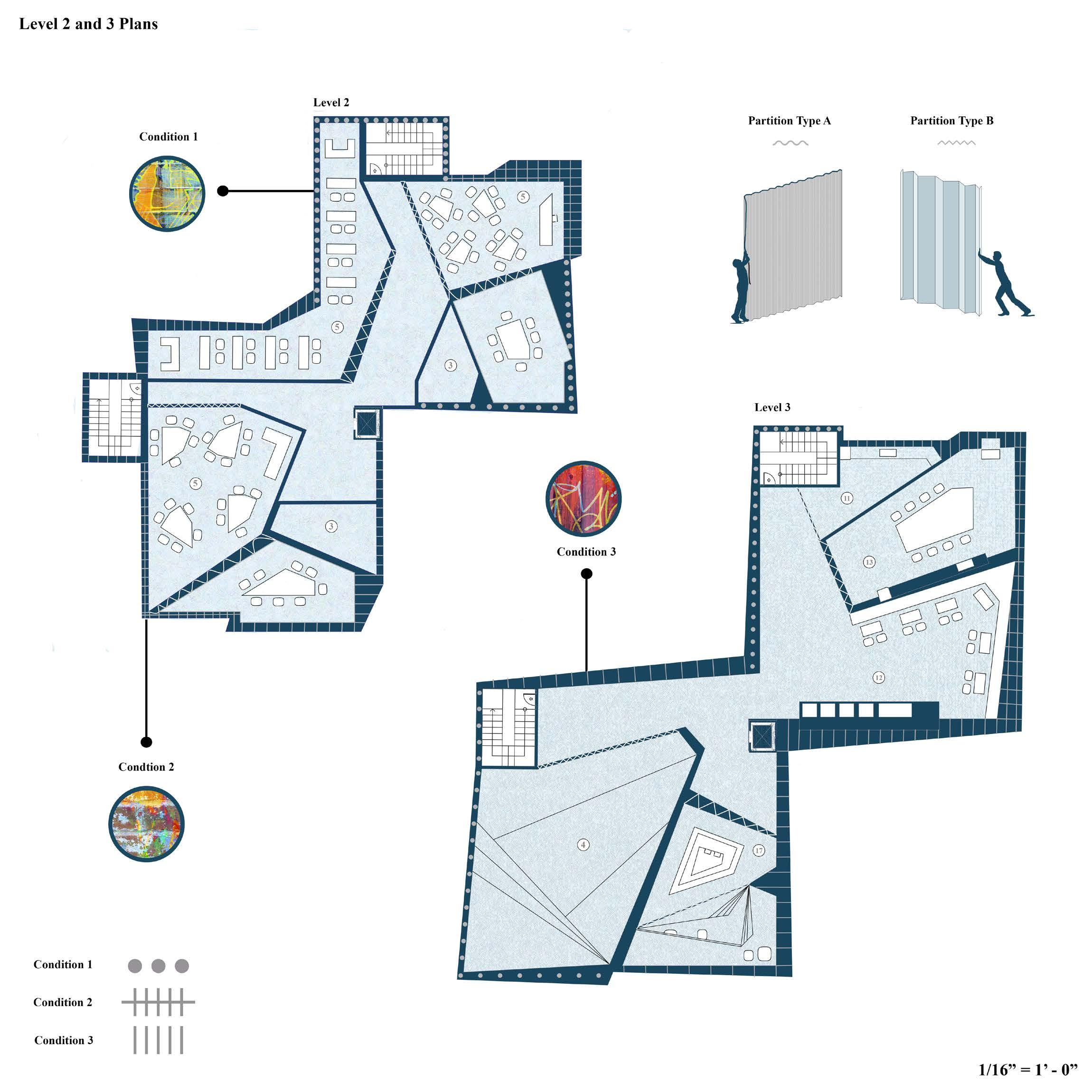
Consider the design over different timelines: day to day, year to year, decade to decade.
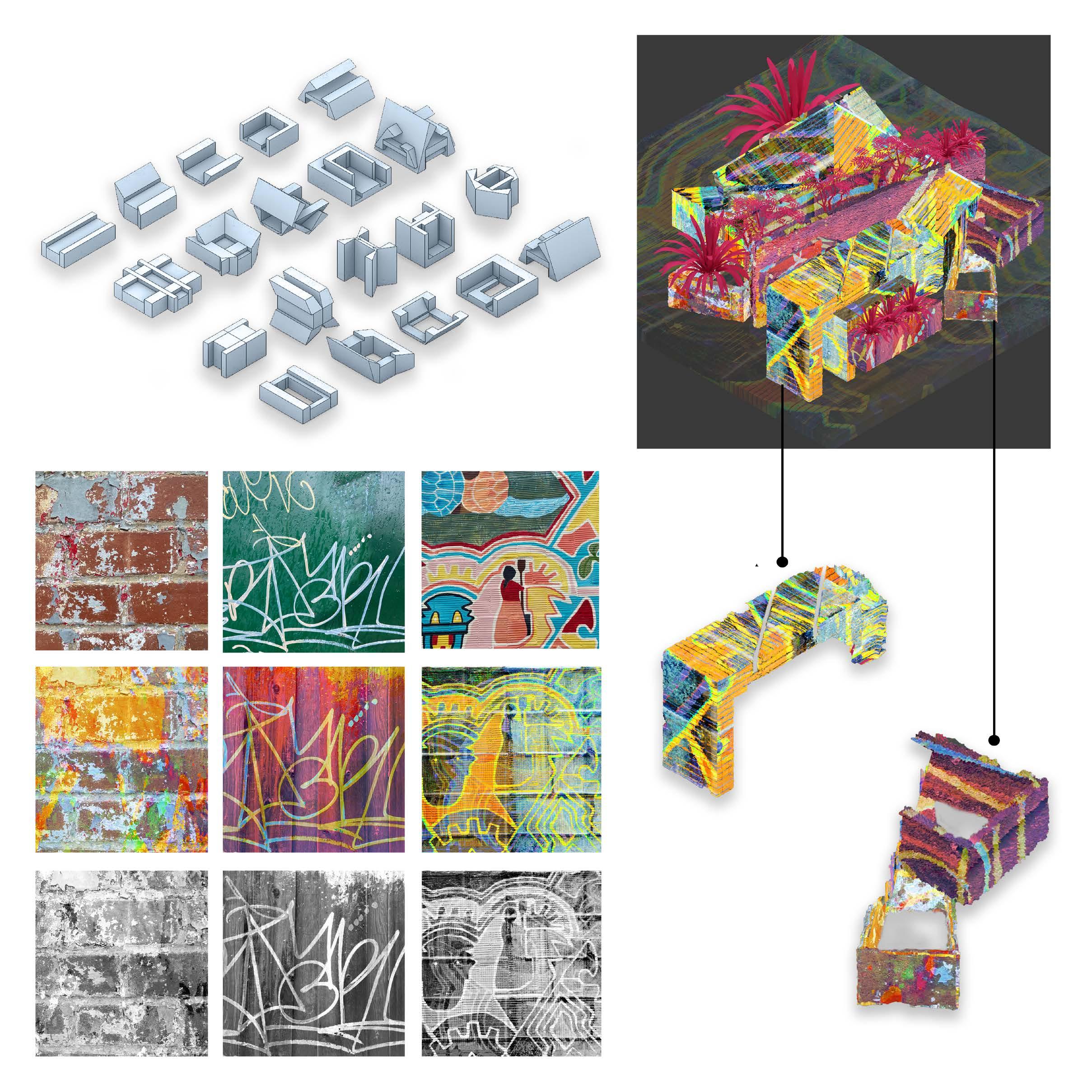
Elimination of the traditional doorway led to the use of two types of moveable partitions for day to day change: metal, mesh curtains and foldable, plastic partitions.
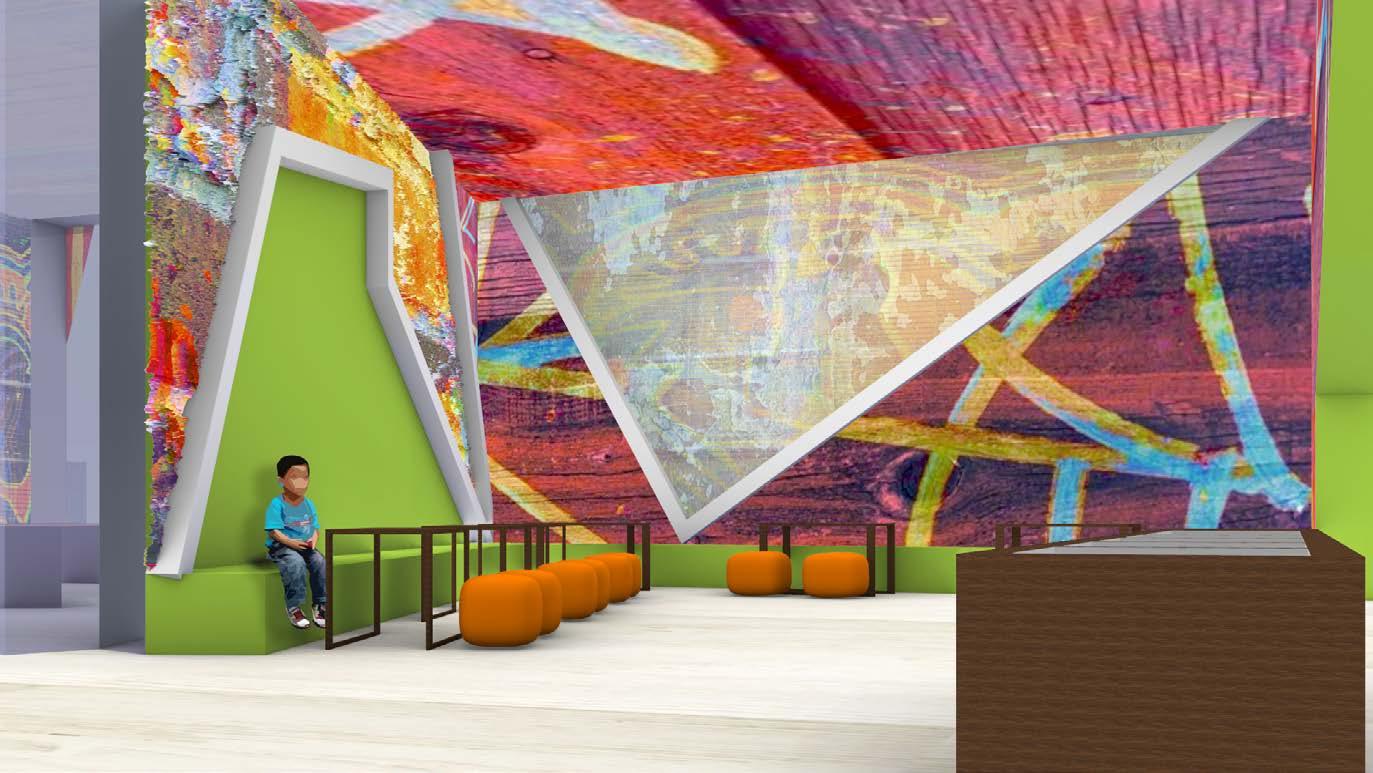
Material erosion does not have to occur chaotically. A sense of control is created by channels in the white cement, where the colorful chalk art can flow.
Question
How can the atmosphere of a wellness center improve the mental and physical health of a community?

Answer
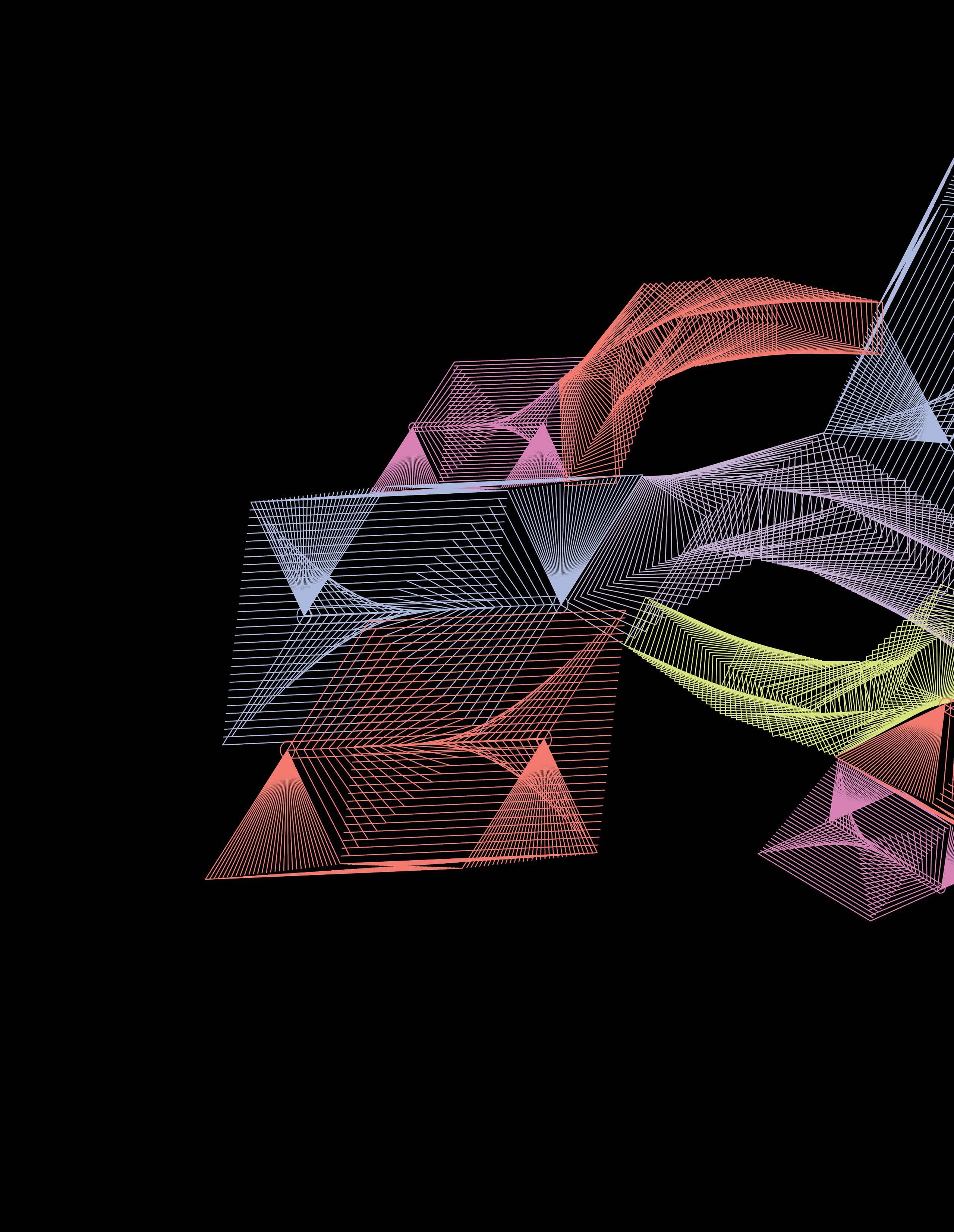
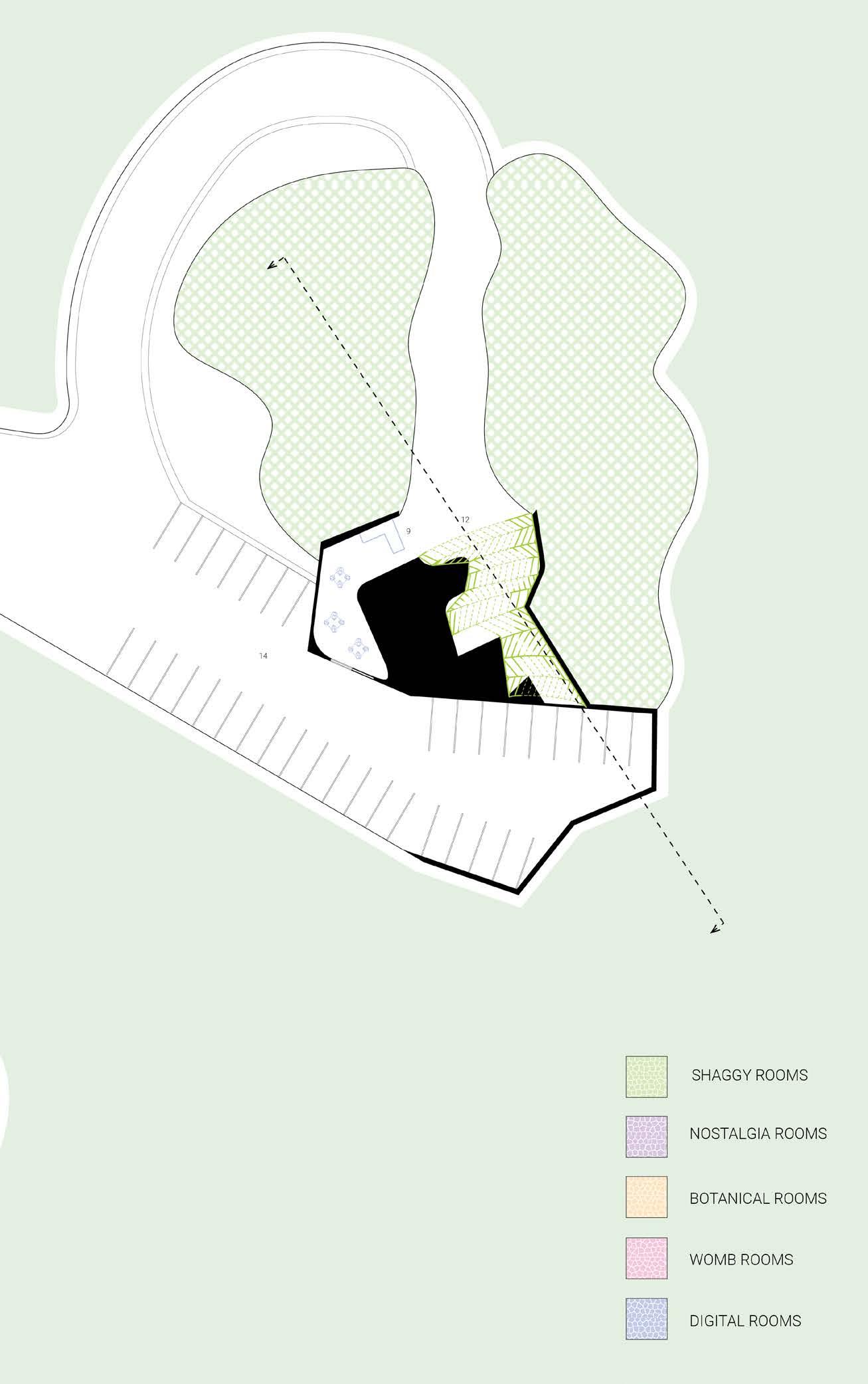
Consider how lighting, color, material, and programmatic organization can create a curated flow. Under a singular canopy roof, place dark, tightly packed spaces next to light, open areas---letting the light create programs rather than physical boundaries.
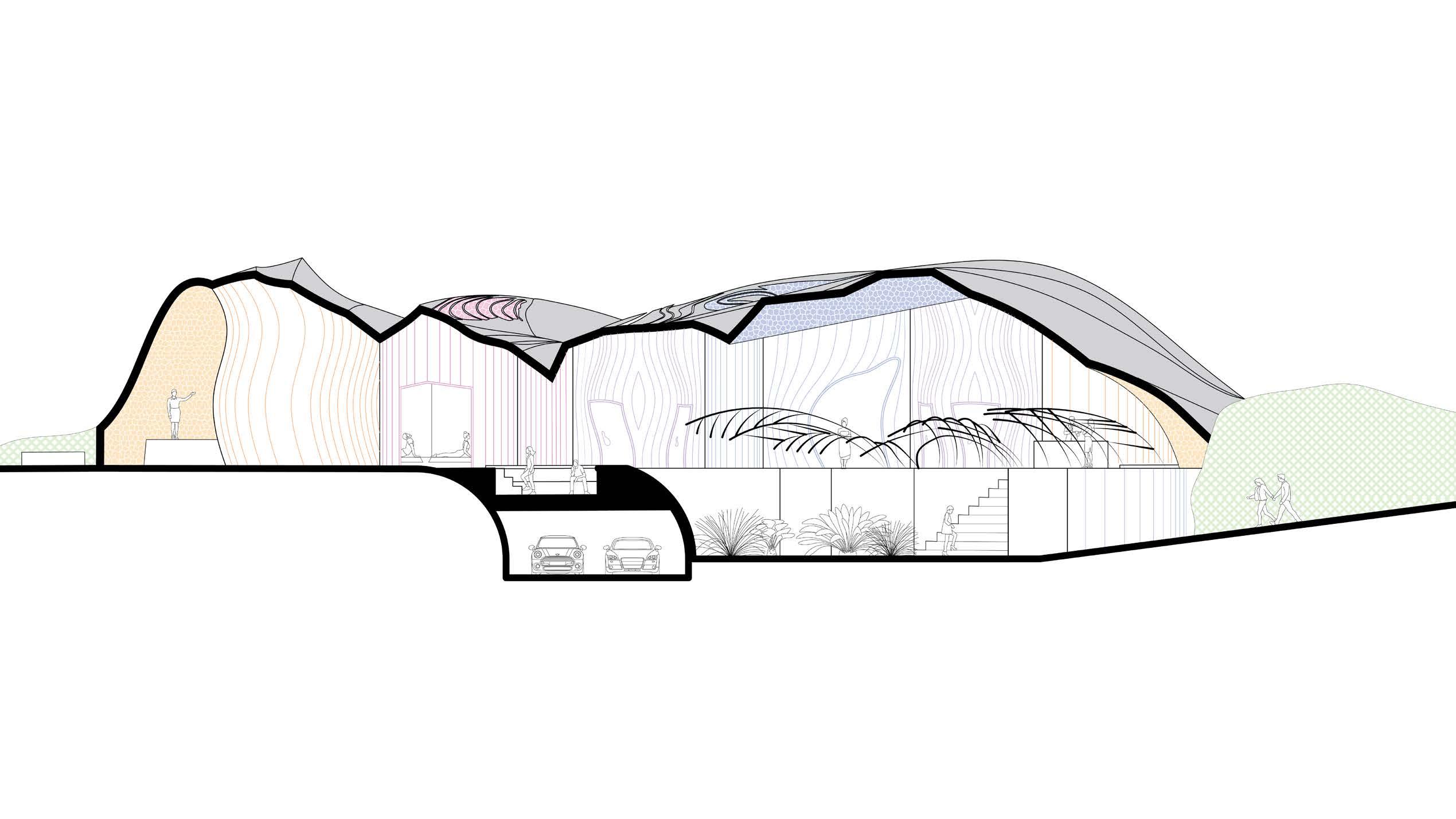
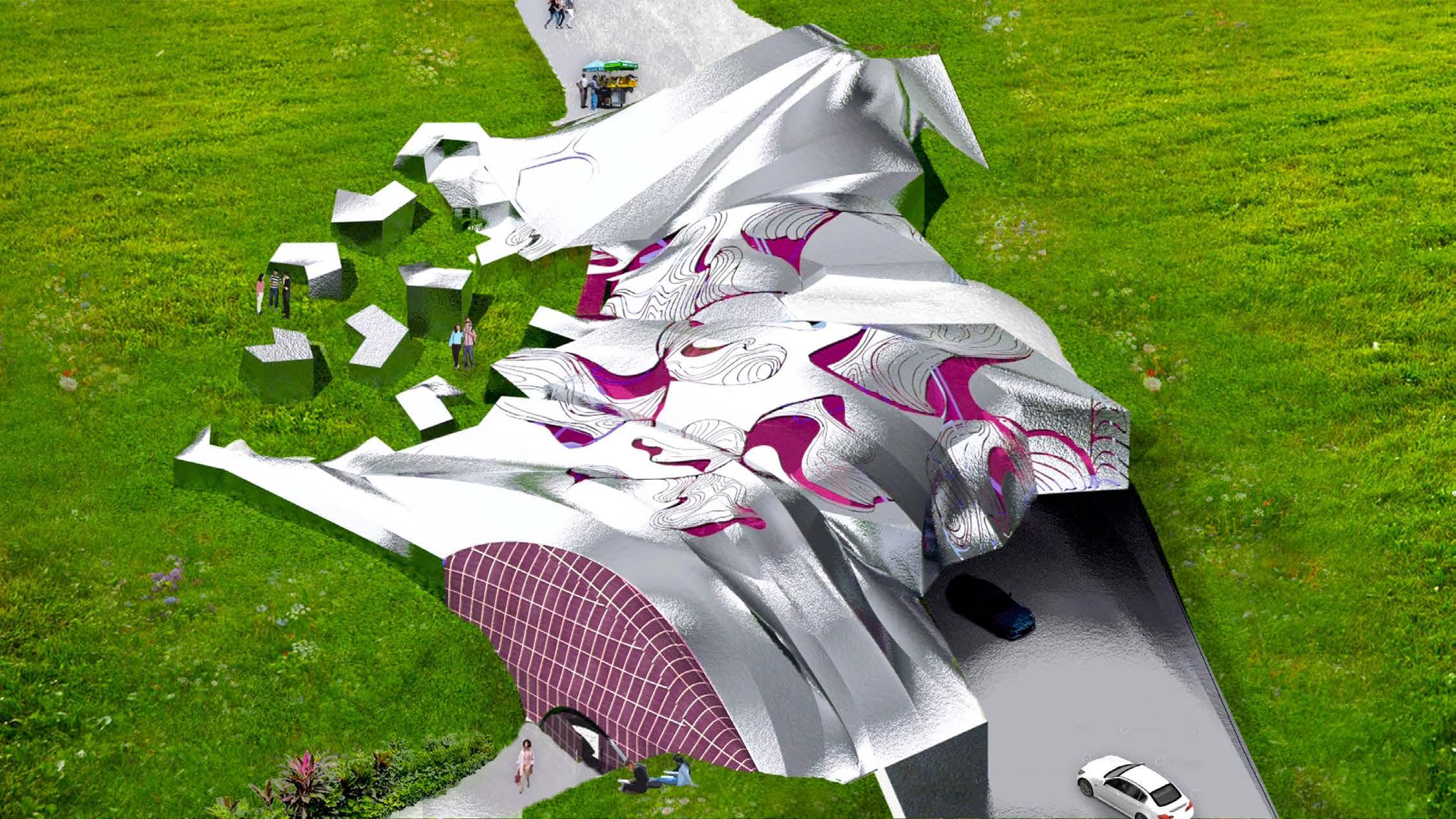
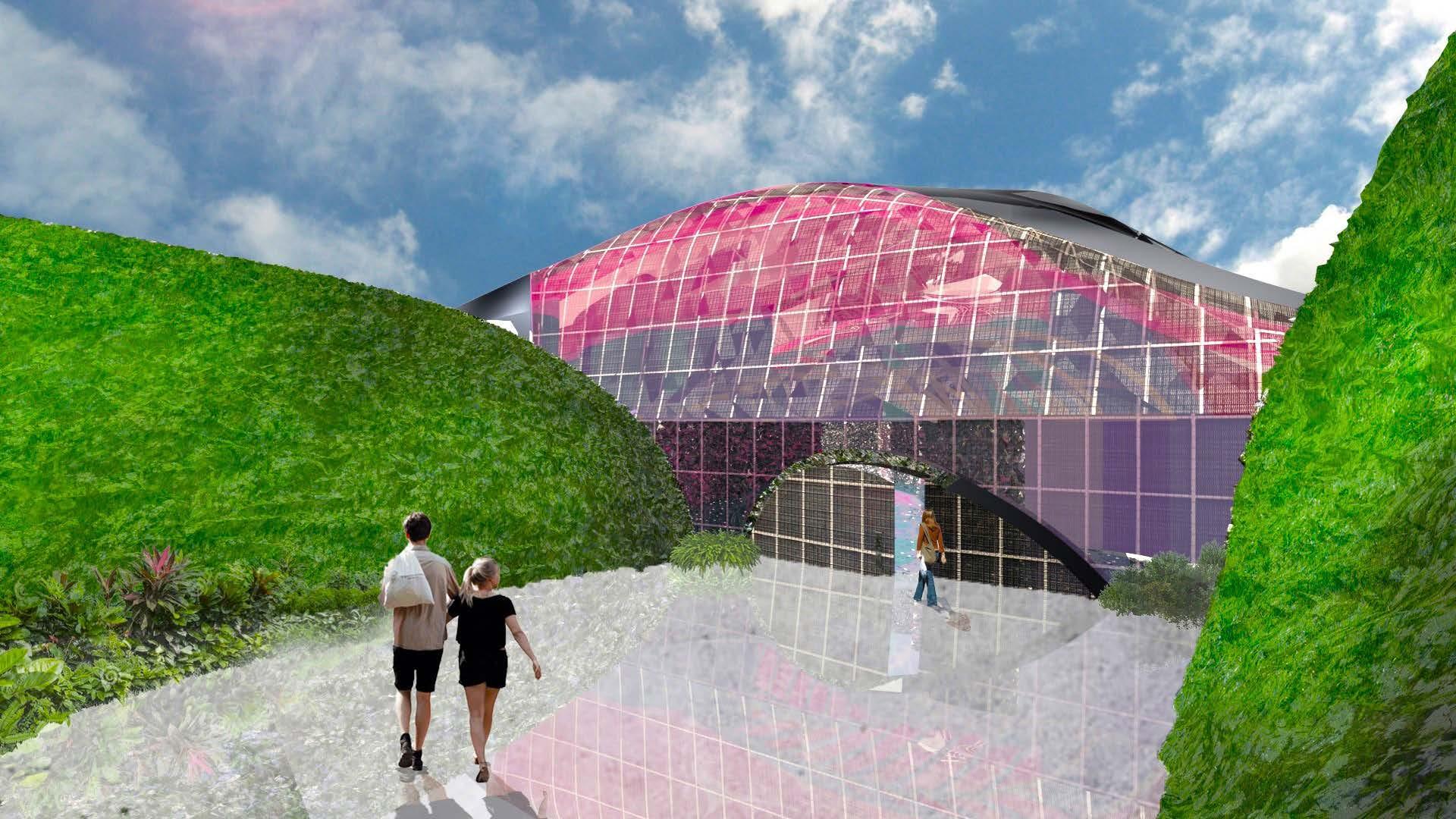
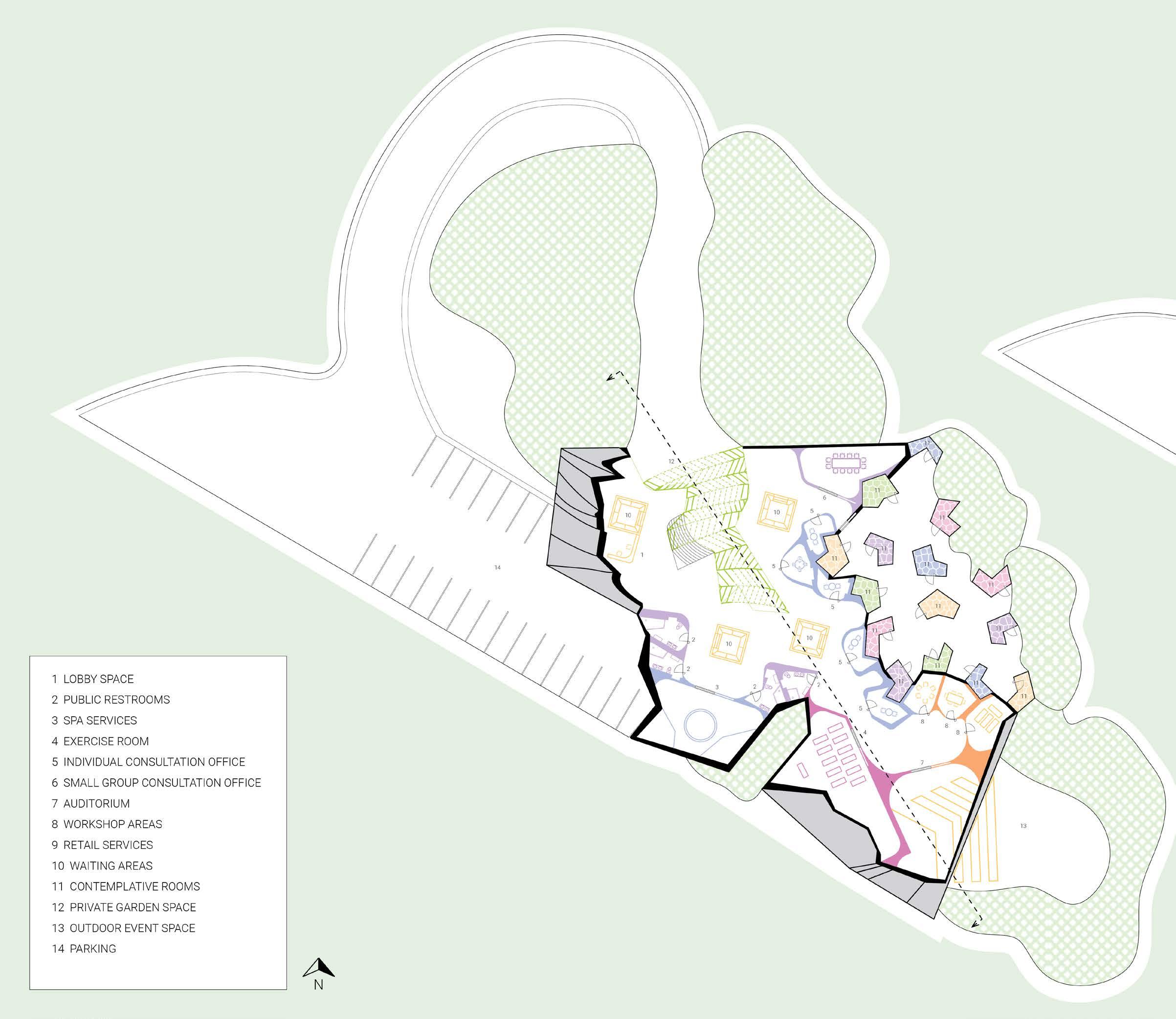
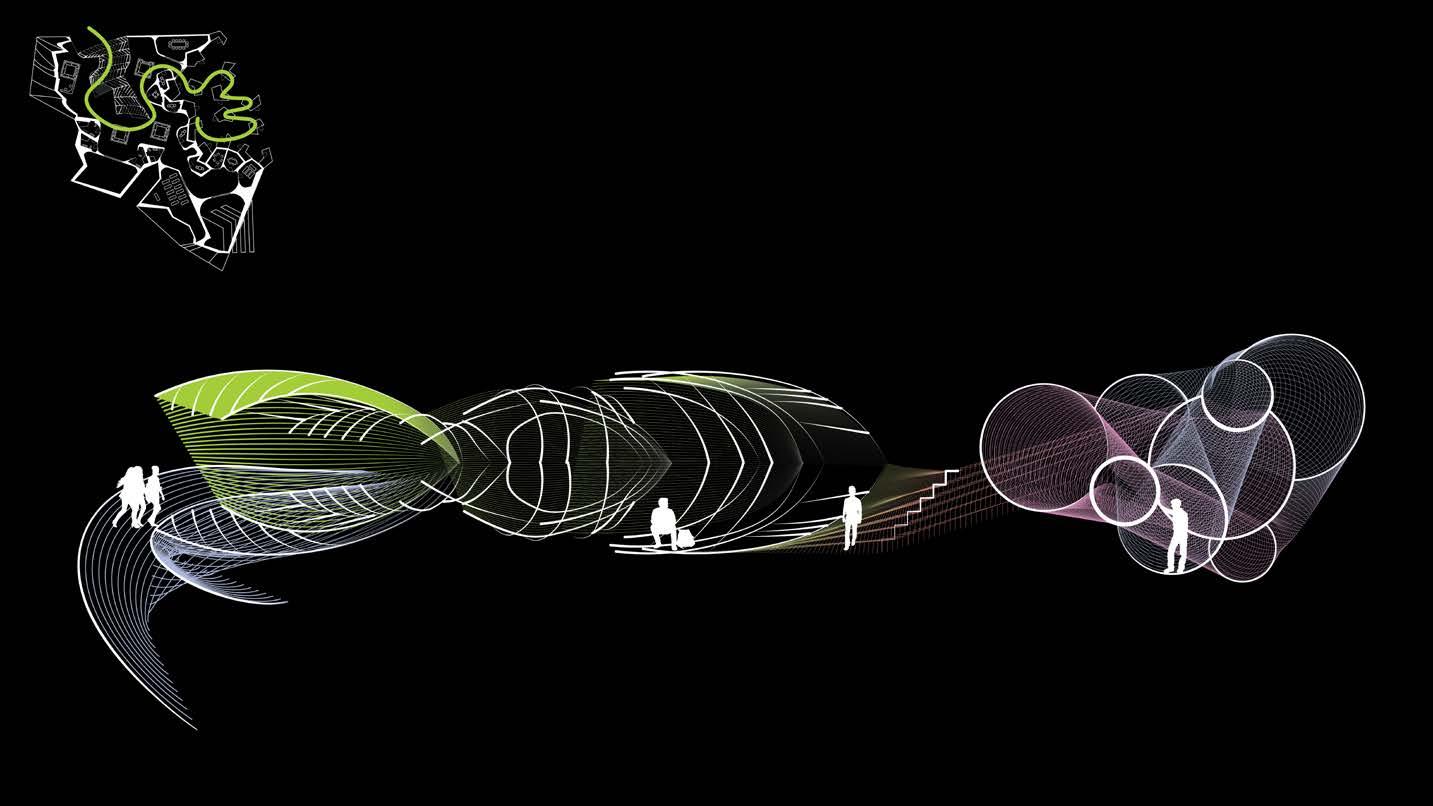
Understand the needs of the occupants. In contrast to the large community areas, create individudal contemplative rooms that evoke various emotions. It is not certain how people will respond in such spaces, so create flexible spaces that mimic the vastness of the human brain.

Question
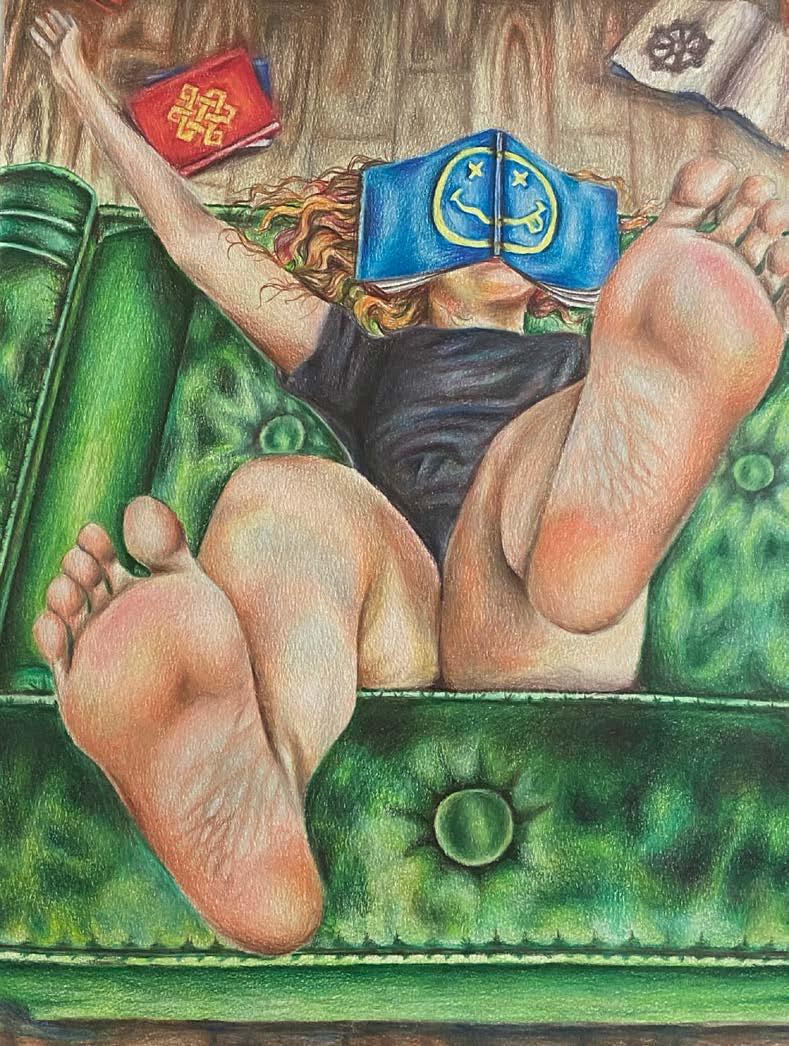
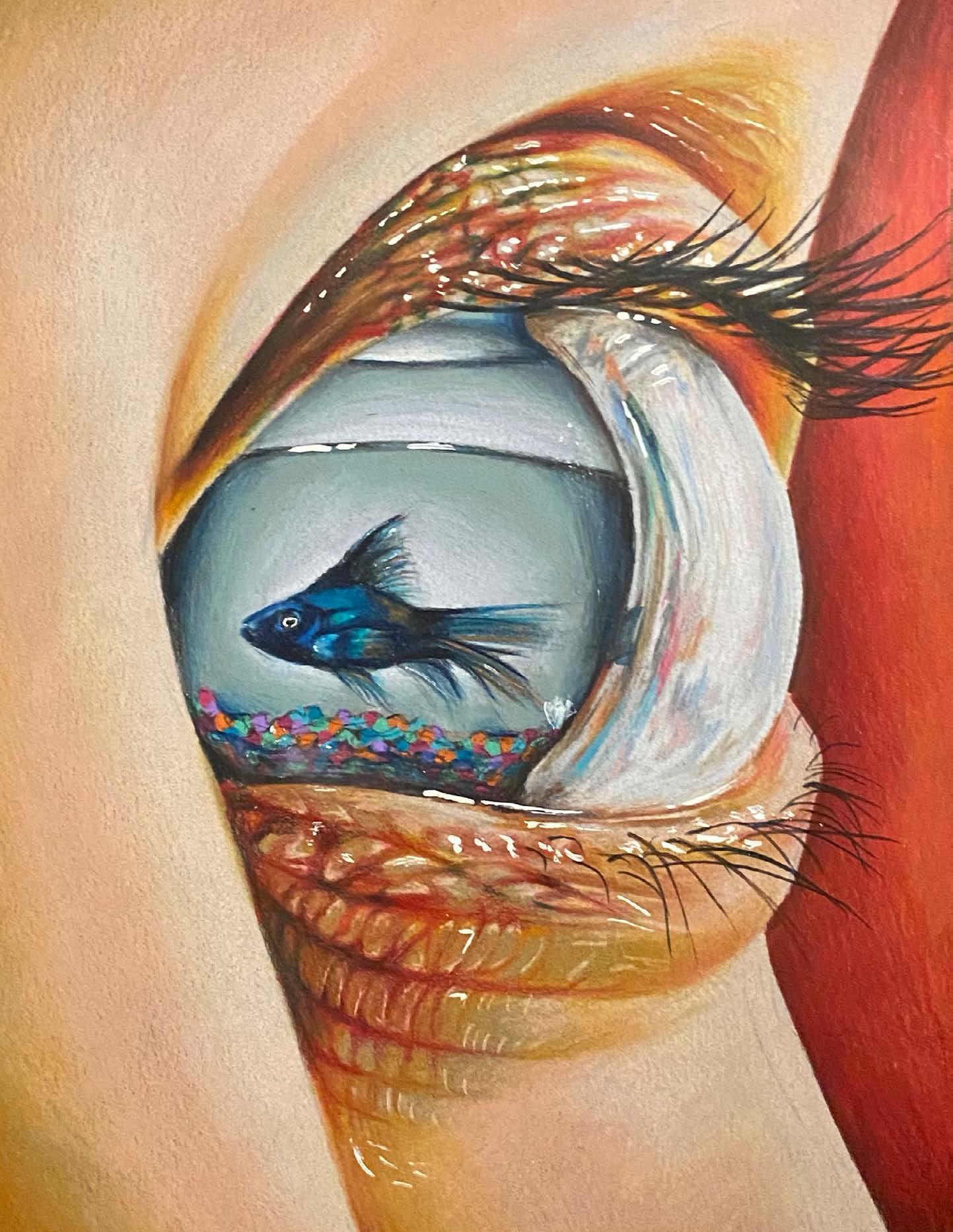
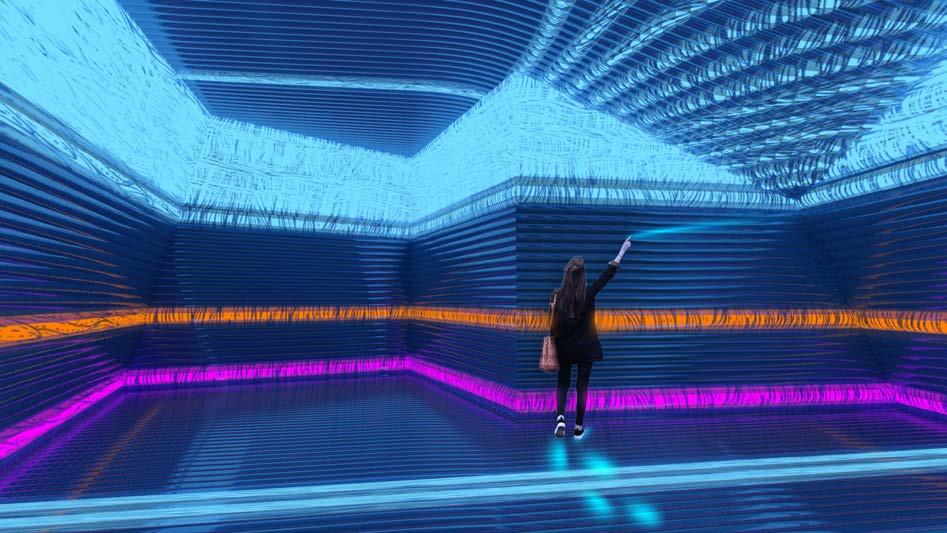
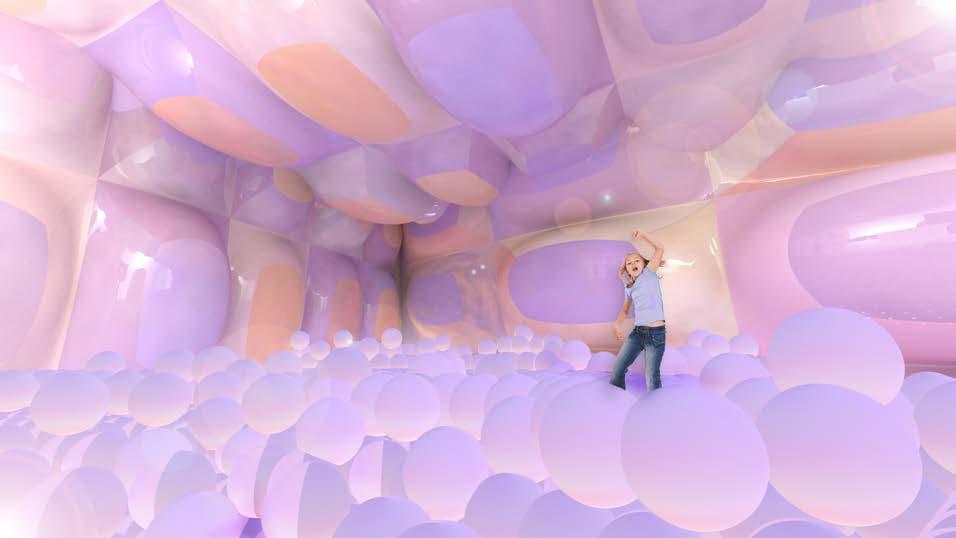
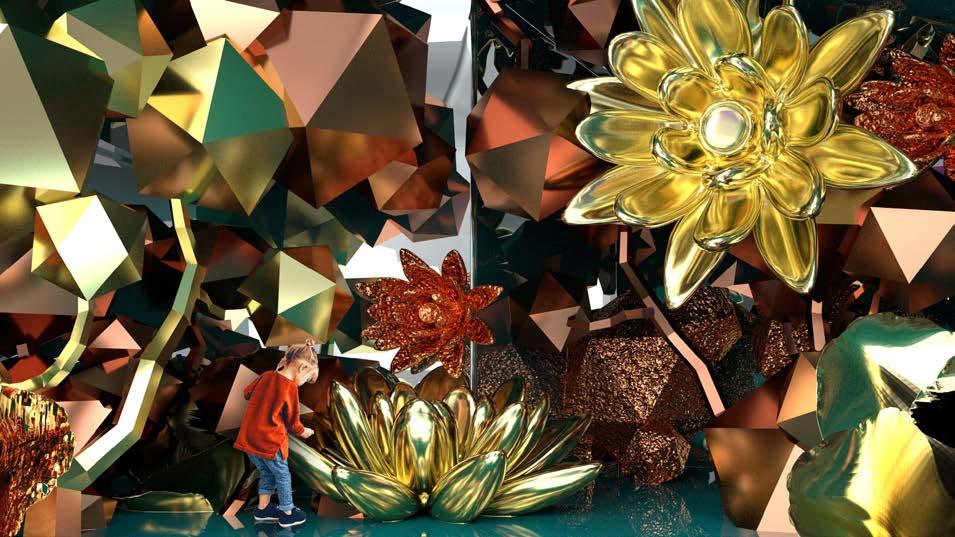
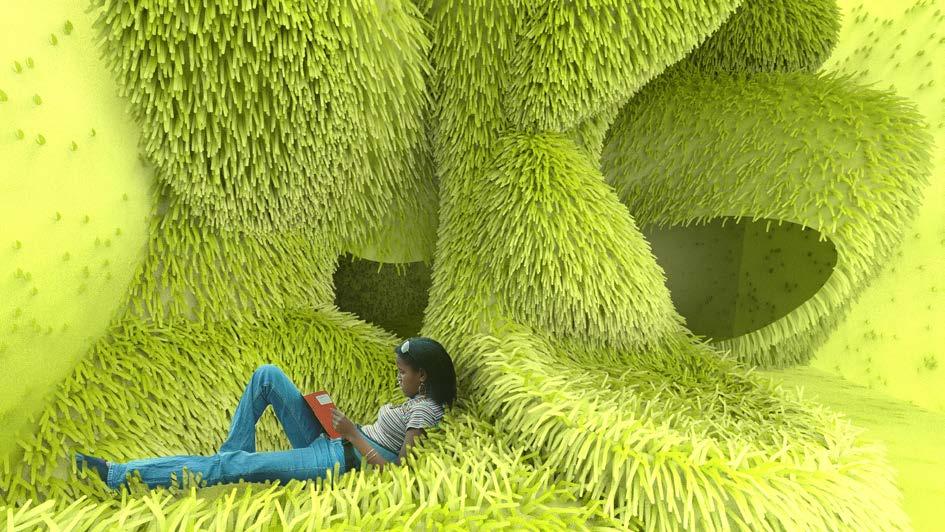
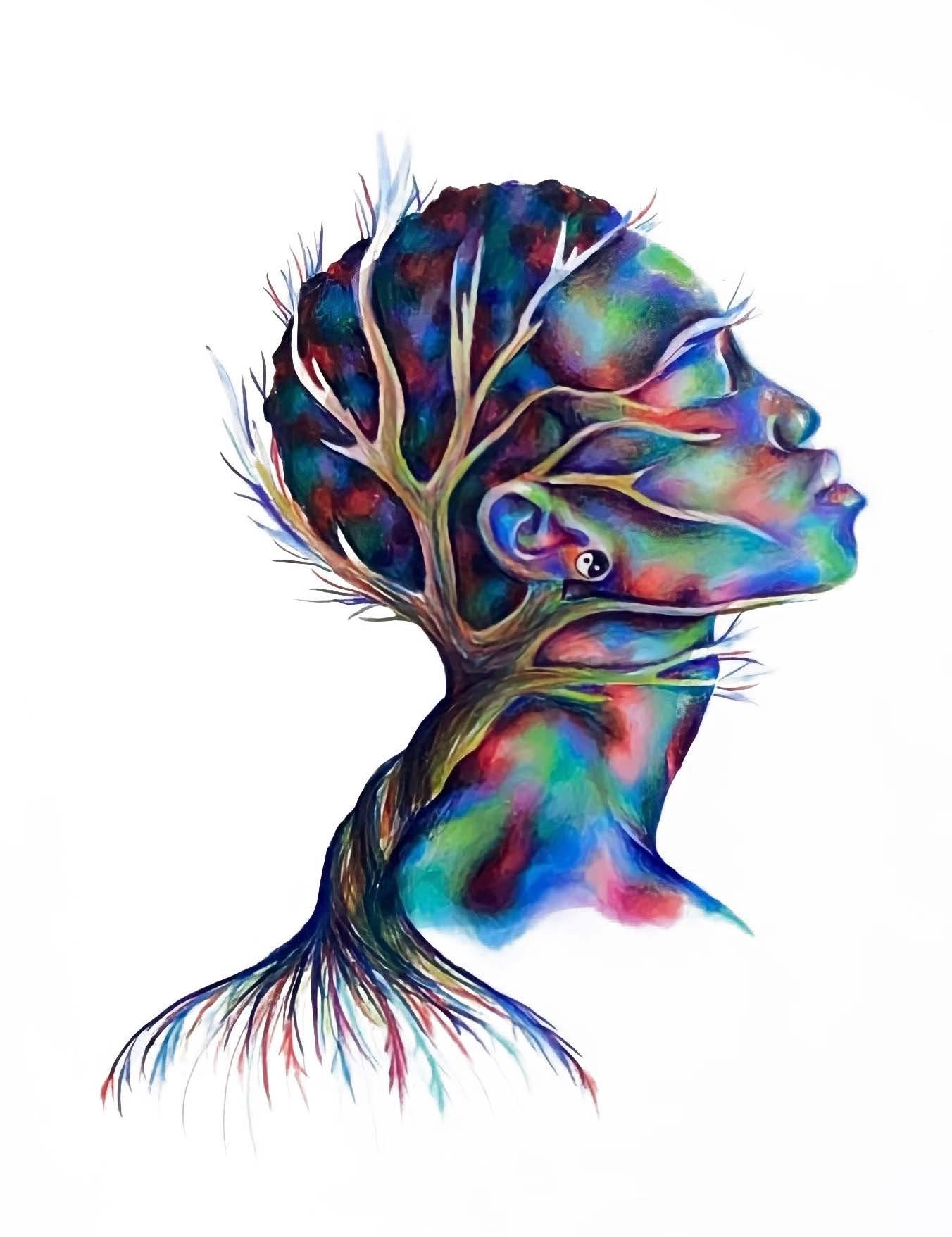
How art influence my design?
Answer
Allow the qualities of my art---limitless worlds, colorful palettes, underlying stories---to seep into the rigid demand of building program types. Both practices allow me to take ideas from my mind and simply create something that didn’t exist before.