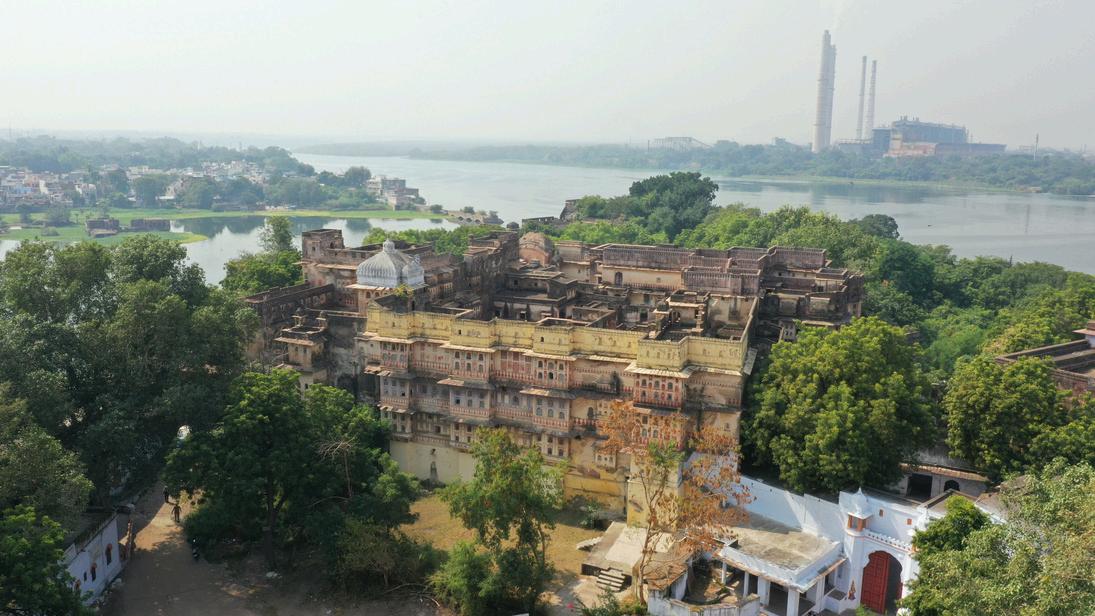
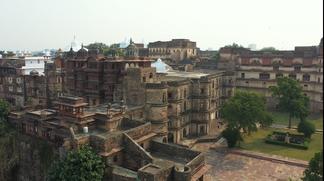
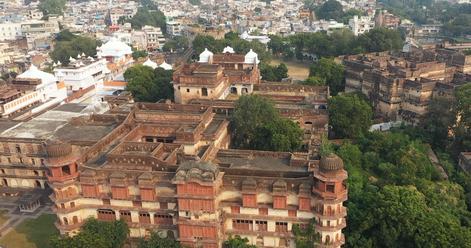
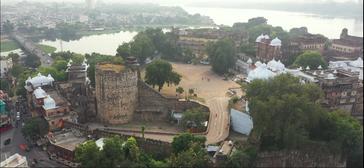
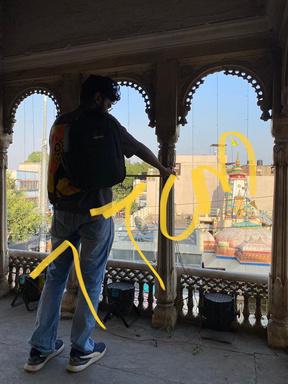
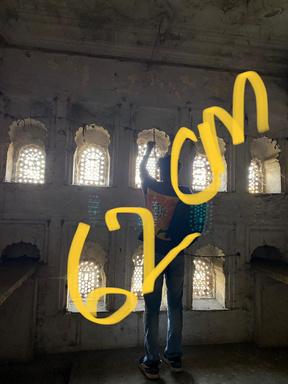
REPORT- GARH PALACE, Kota, Rajasthan,
INTRODUCTION
Adaptive reuse refers to the practice of repurposing an existing structure for a new and often different use, while preserving its historic and architectural elements When applied to a palace, adaptive reuse involves transforming the grandeur of a historical palace into a functional and relevant space that meets contemporary needs.This approach not only breathes new life into the structure but also honors its cultural and historical significance By combining preservation with innovation, adaptive reuse of Ghar Palace can create a harmonious blend of the past and present, fostering sustainability and contributing to the cultural richness of the surrounding community.
NEED OF THE STUDY
To preserve historical and culturally significant buildings, preventing the loss of architectural heritage
To understand how to balance the need for modern functionality with the preservation of historical and cultural elements.
To Involve community engagement and participation, fostering a sense of ownership and connection among residents.
AIM
Rehabilitation of historic grounds of kota garh palace to a modern interpretation of cultural induction.
That has to be the way forward for the proposed national memorial - one that does not glorify war or panders to jingoistic nationalism but honors and commemorates those who have laid down their lives in uniform. That would benefit a democratic, modern India and the more than 26,500 soldiers the memorial intends to remember
OBJECTIVES
To understand and help in our progress towards an ideal society.
As history serves as a laboratory and the past serves as a demarcation to understand the regional laws and social structures
To protect them and our history. As Majority of historic buildings are unprotected-Eroded due modernization and urbanization
To improve quality of environment by understanding the interdependent ecological network
To conserve our past and define our future
To know the traditional building skills.
To understand the symbiotic relationship with natural environments
SCOPE
Conservation of Garh palace from deterioration of the building will lead to more and more tourist attractions
Connecting people with local tradition, culture and historical ambiance.
Adaptive reuse is concentrated in some parts while others are kept for their historical significance. Scope of doing adaptive reuse is vast and encompasses economic, environmental, cultural, and urban development aspects.
LIMITATIONS
Balancing the need for public access with the preservation of the palace's integrity can be a delicate challenge
The local community may have specific expectations regarding the use and preservation of the palace, which can complicate decision-making
Adaptive reuse may have environmental implications, especially if there are concerns about preserving surrounding landscapes or ecosystems.
SITE
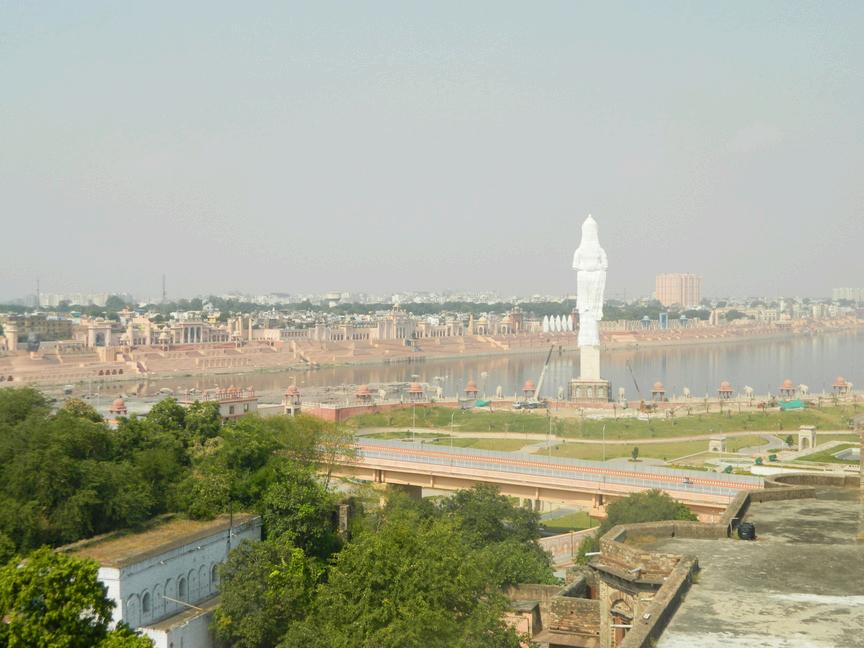
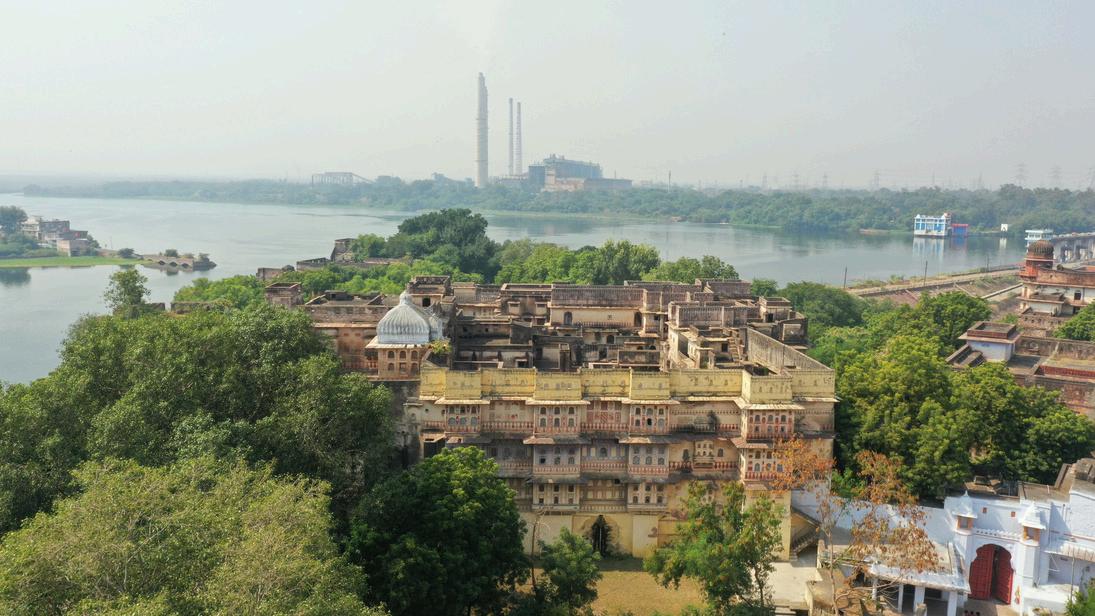
LOCATION: Garh Palace, Kota, Rajasthan, Near Chambal river.
APPROACH: From Nagar Nigam Road, 10 M road width.
SITE AREA: 84,100 SQM, 20 8 ACR
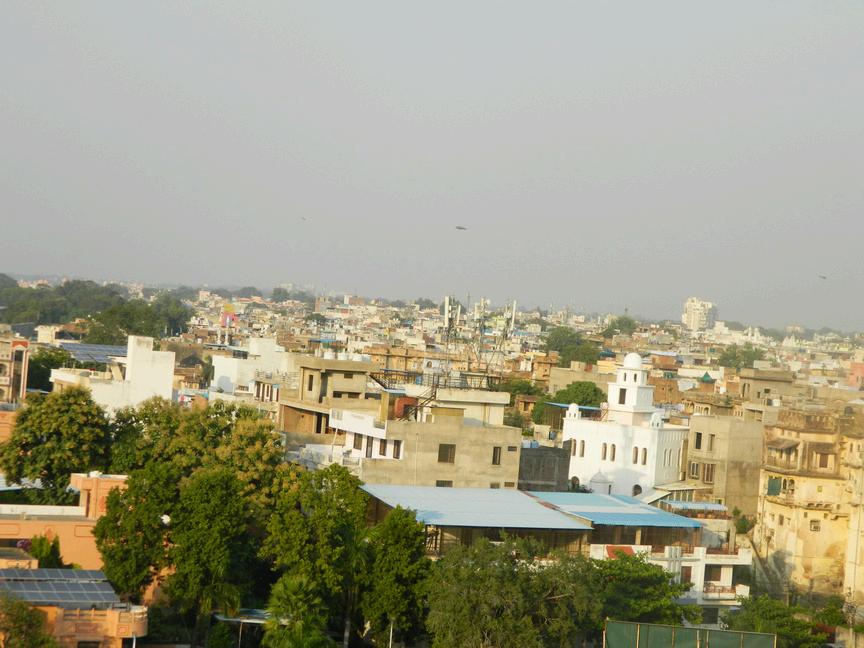
SITE SURROUNDINGS: Chambal riverfront development, Residential apartments
INTRODUCTION-KOTAH CITY
City in southeastern rajasthan, on the chambal river.
3rd most populous city in rajasthan, known for:
Education hub: popular for coaching institutes
Historical significance: former rajput
Kingdom, with palaces and gardens reflecting it's past.
Part of smart cities mission: aiming for sustainable urban development
Chambal riverfront in kota, india: world's first heritage riverfront on chambal river (6 km long)
Amenities: walking/cycling tracks, children's park, food court, water sports complex, museum
Nighttime beauty: illuminated by lighting system
Project started in 2020, faced delays
INTRODUCTION-КОТА
H GARH
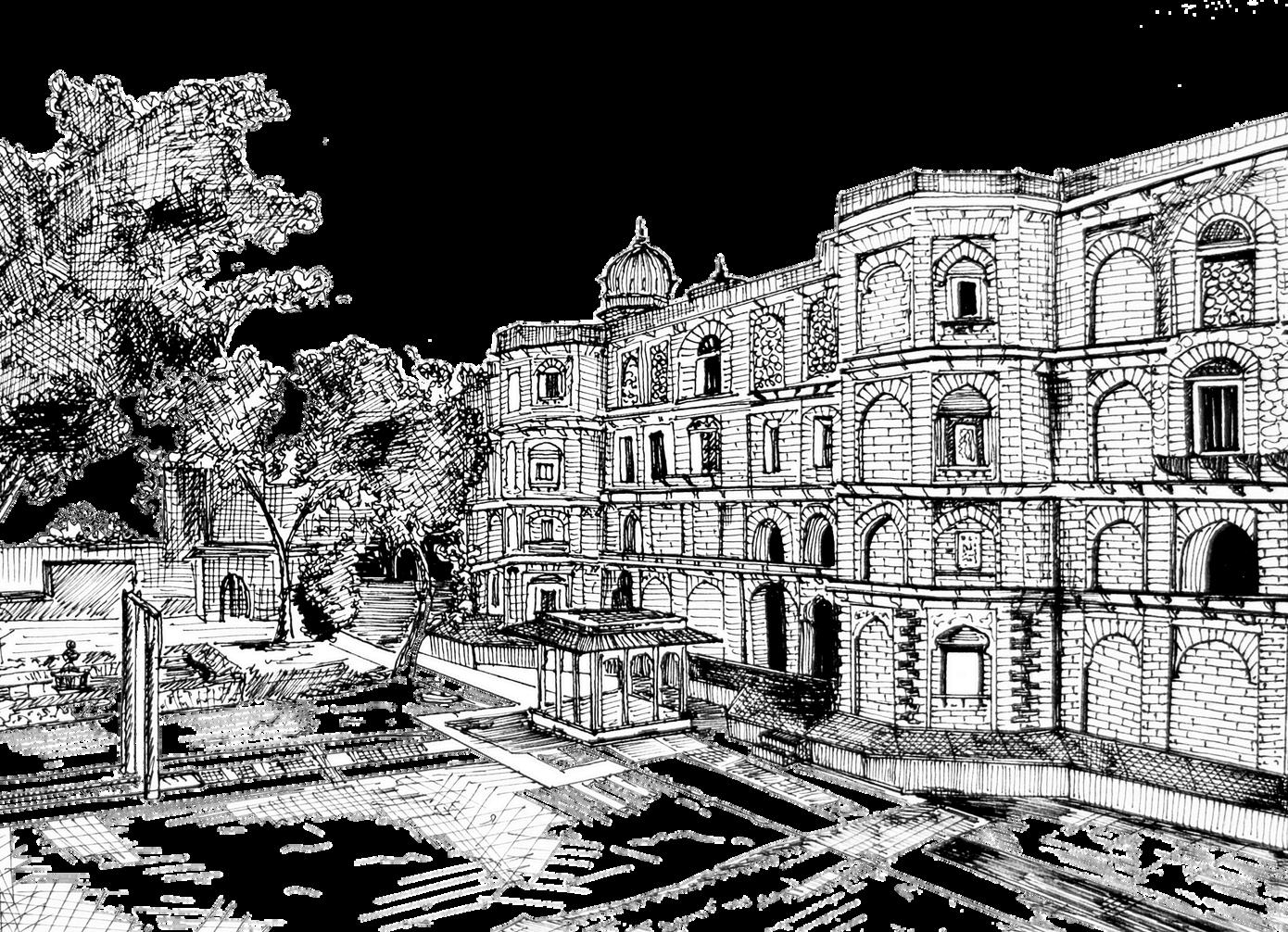
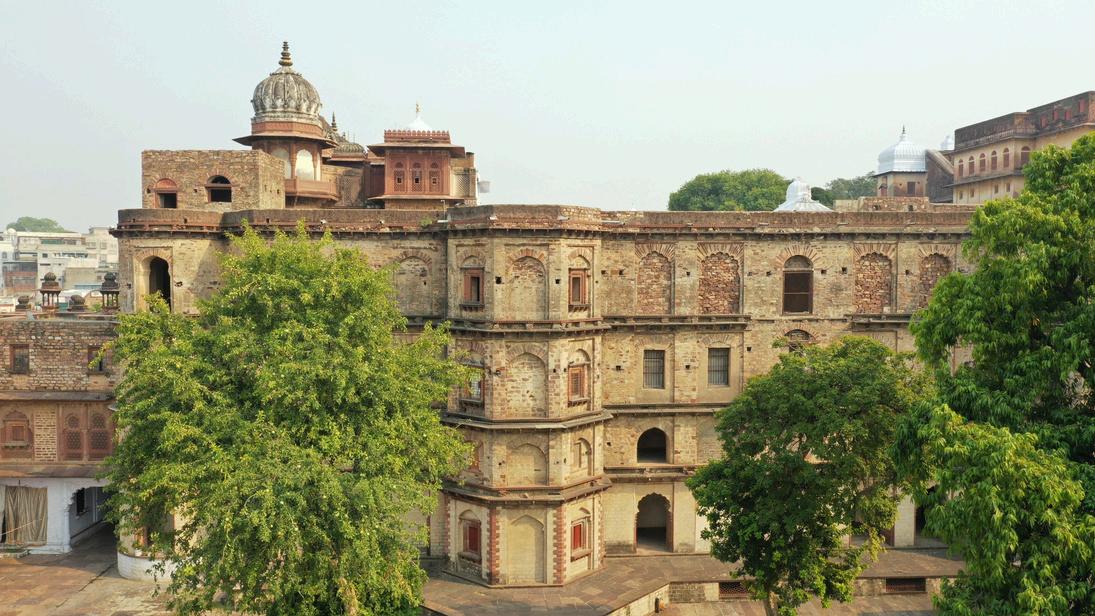
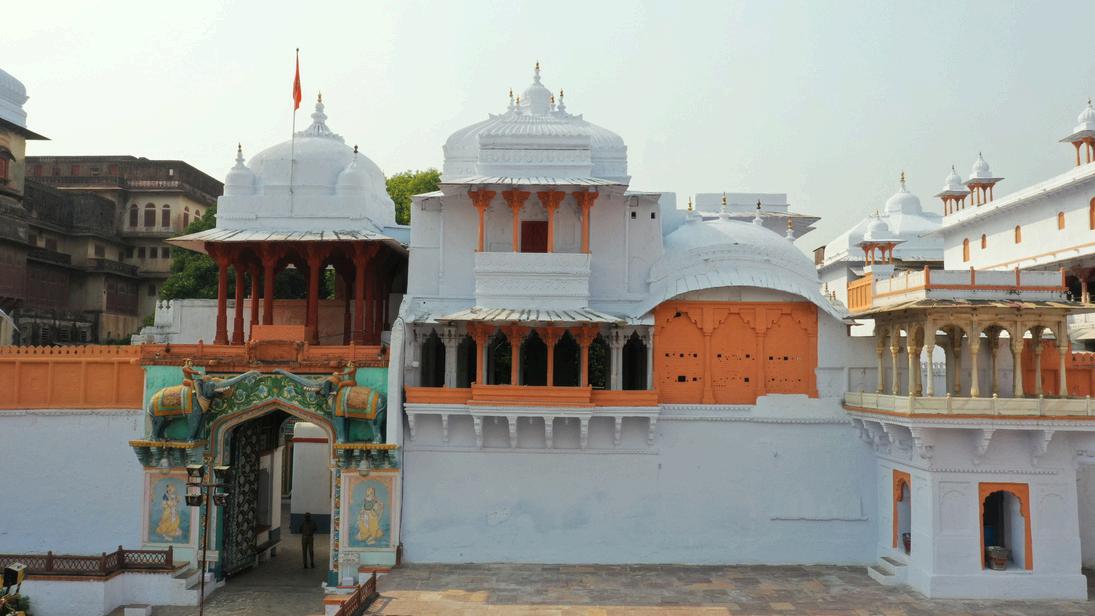
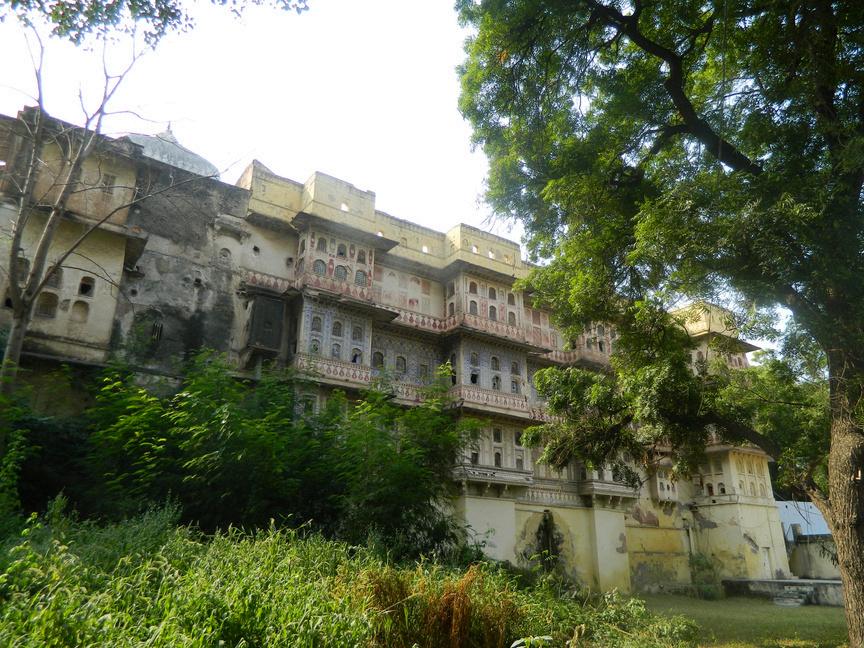
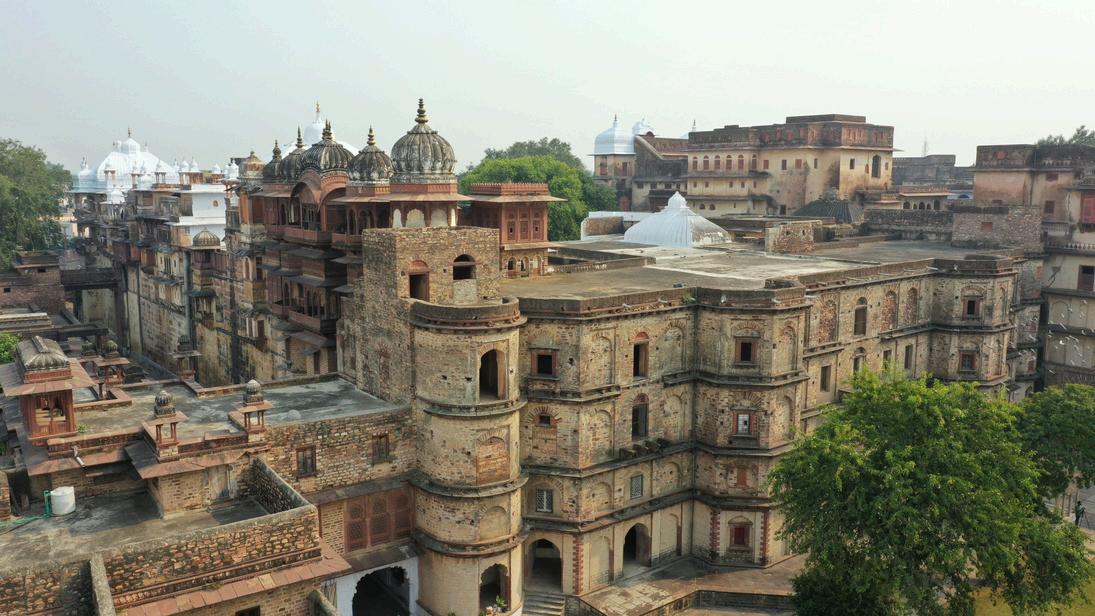
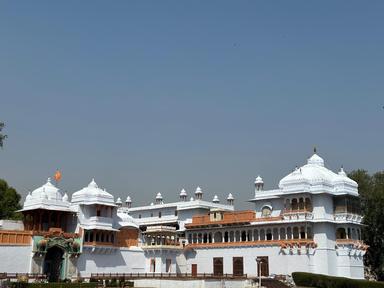
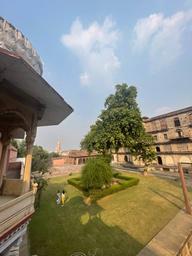
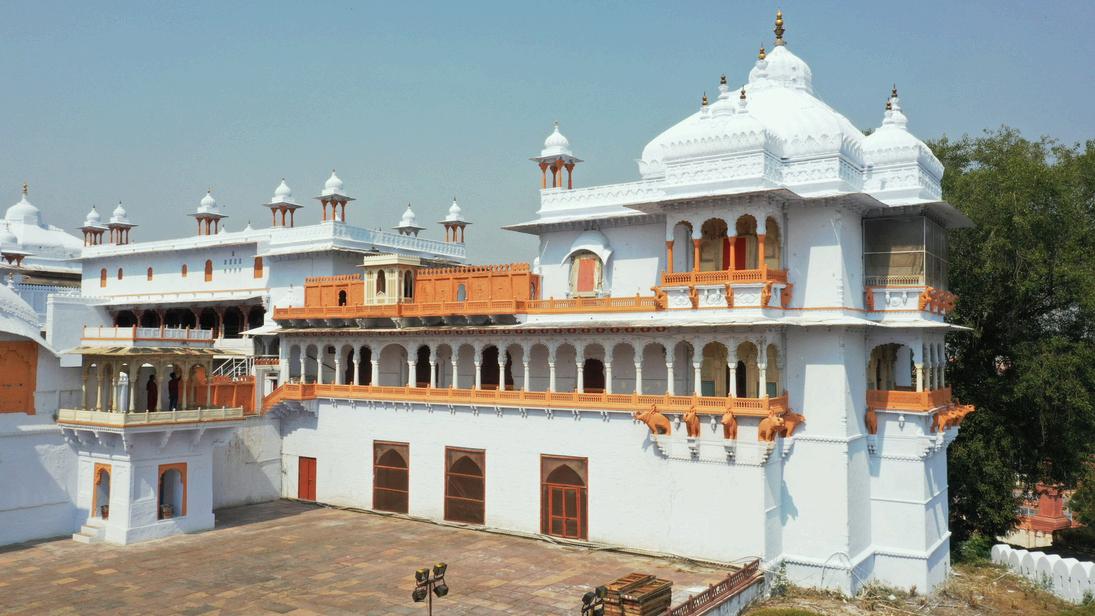
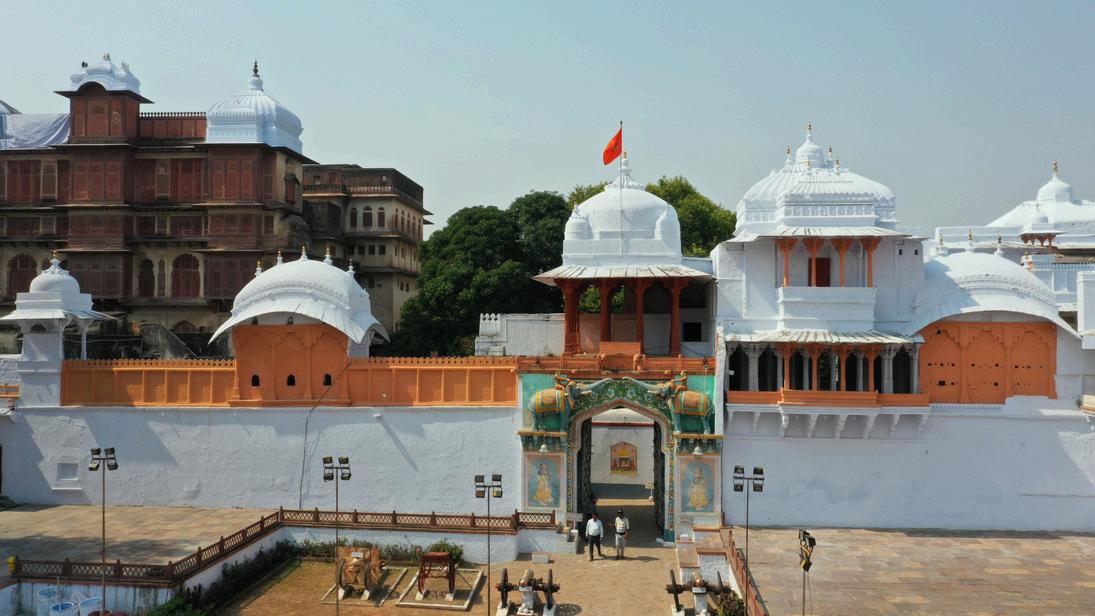
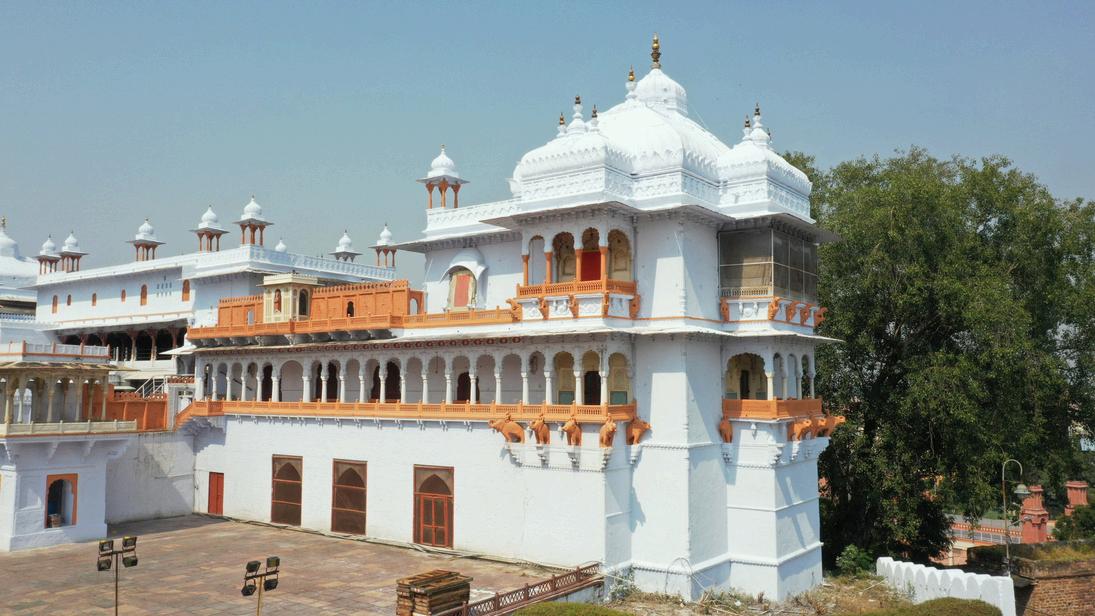
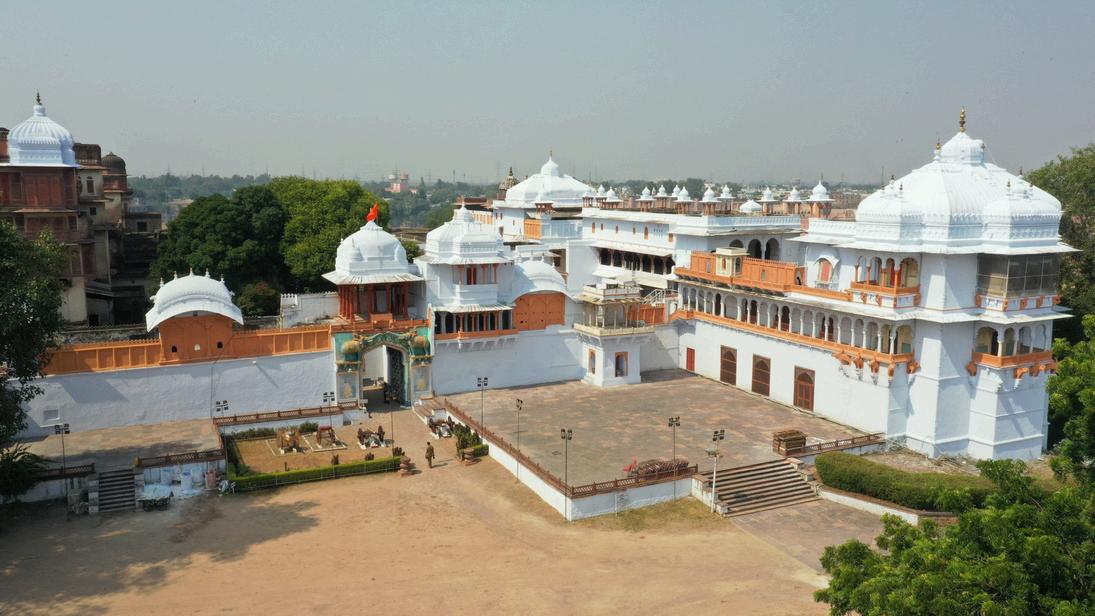
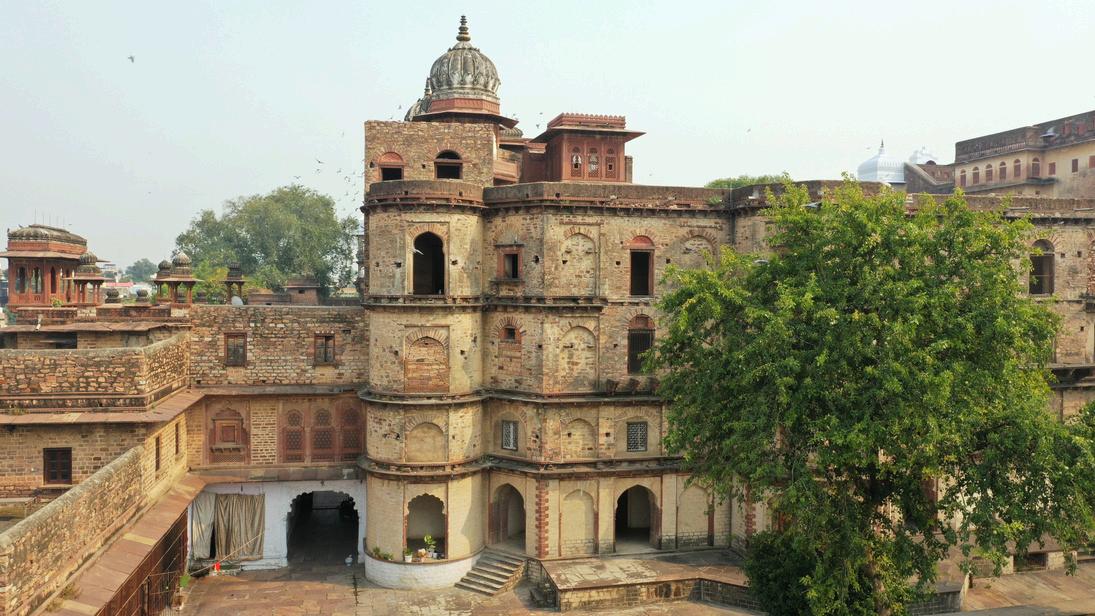
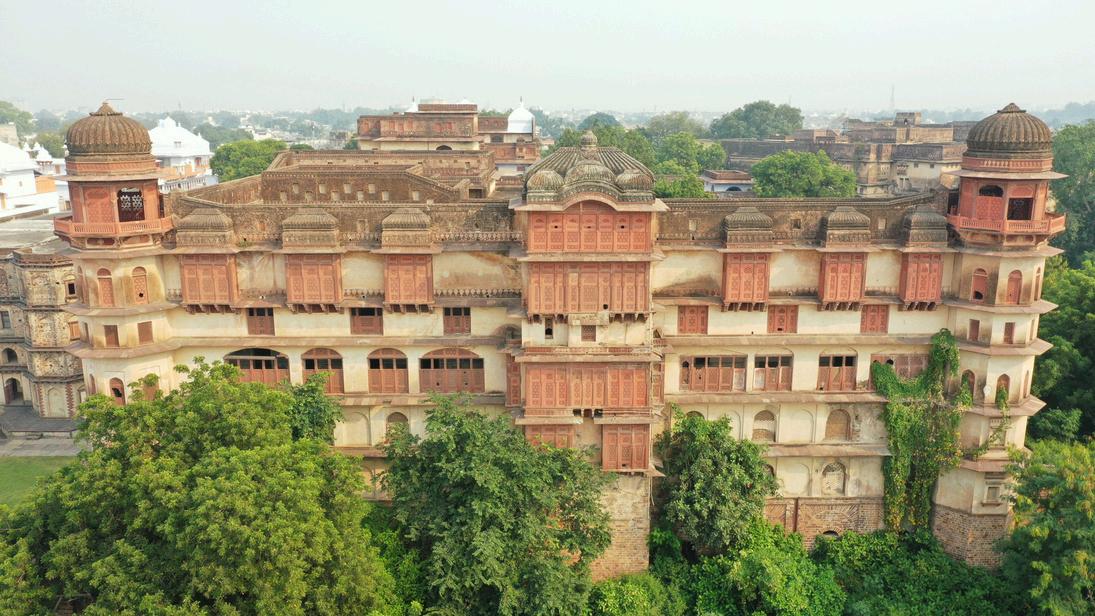
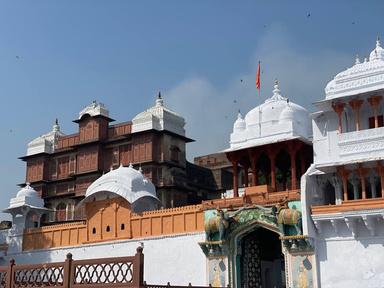
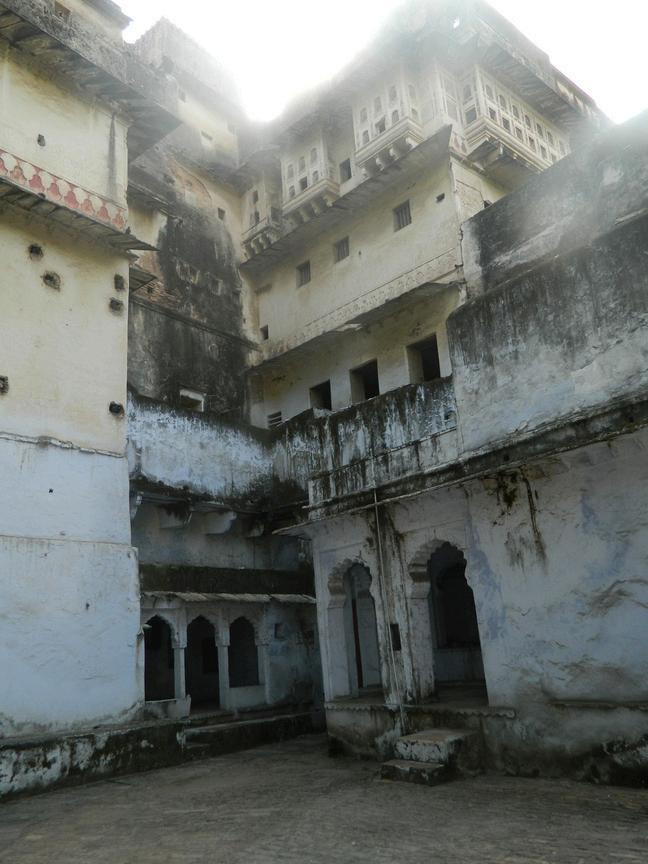
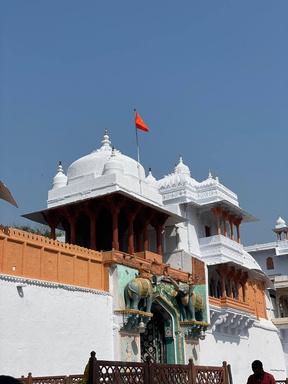
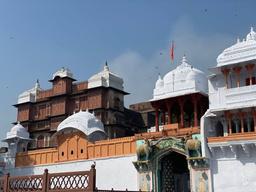
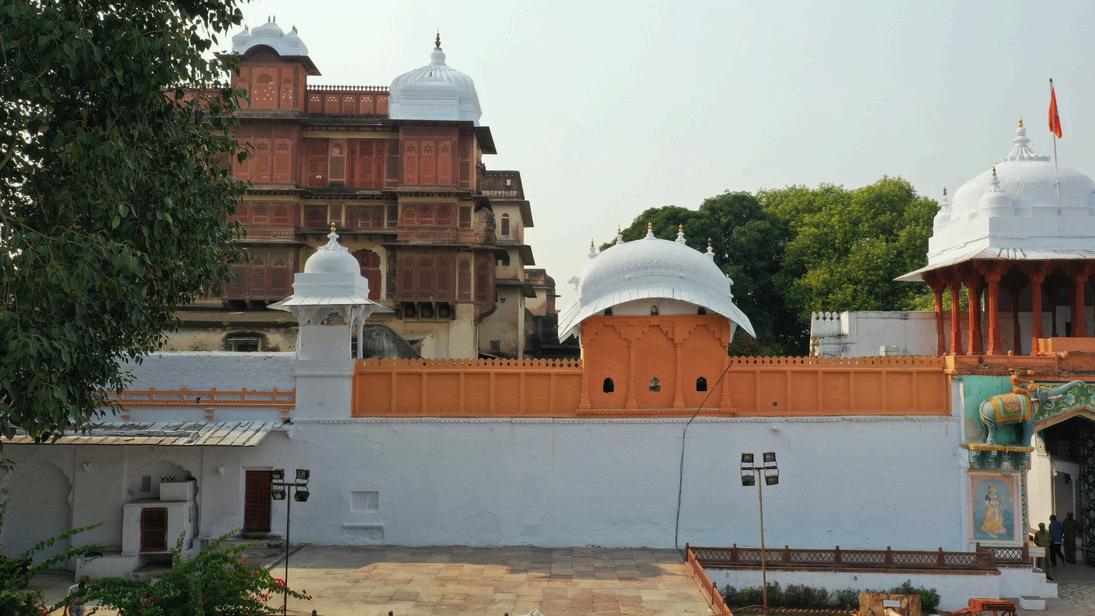
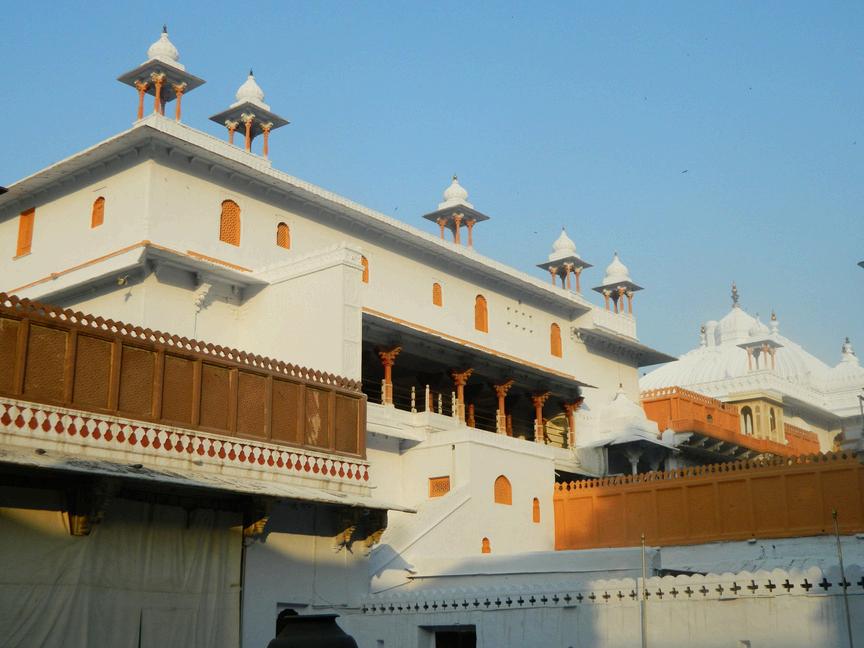
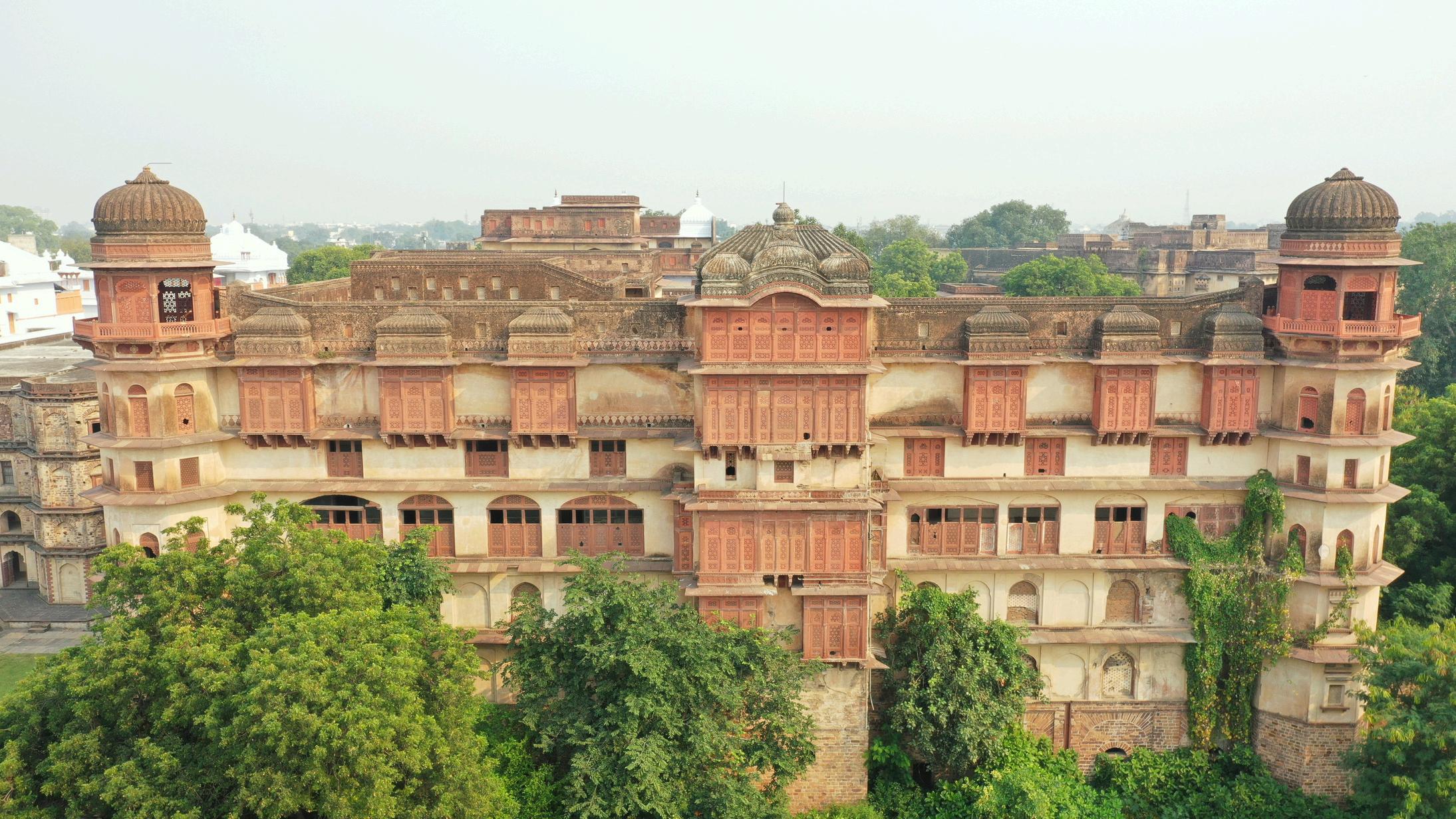
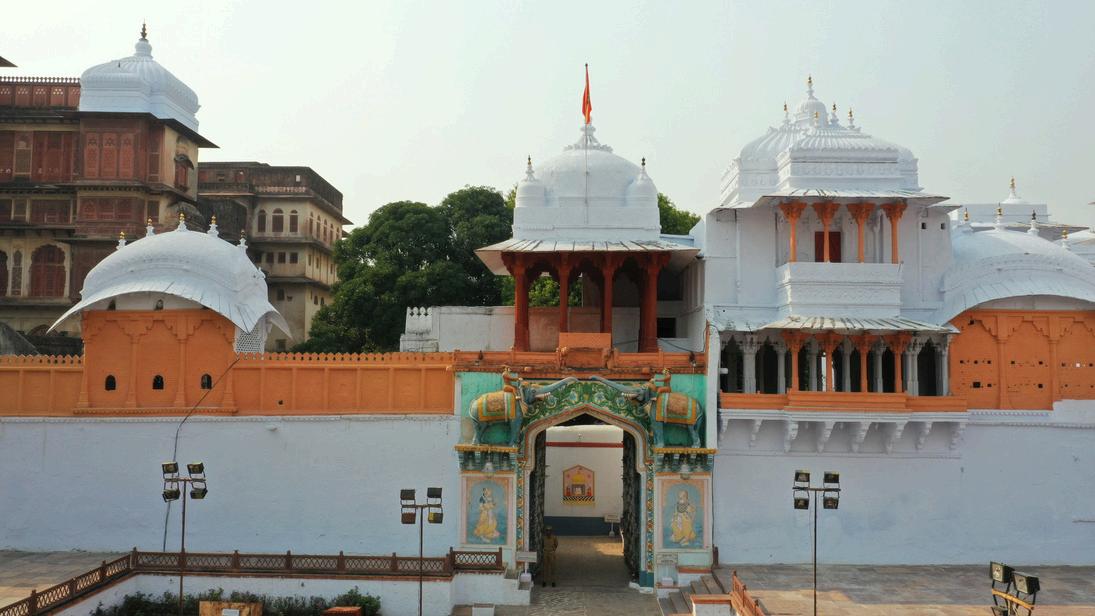
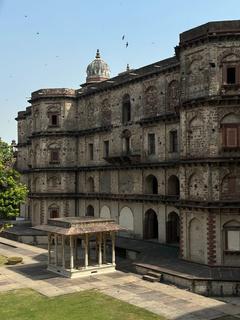
Garh palace, a fortified palace in kota, rajasthan, was the former residence of the maharaos of kota. also known as city palace, kota garh, and kota fort
Houses a vast heritage collection, including canons, paintings, armor, palaces, instruments, attire, manuscripts, murals, and buildings, some dating back to the 13th century. Maharao madho singh museum occupies the ground floor.
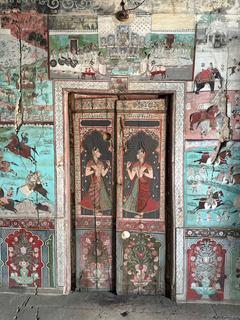
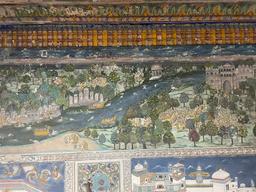
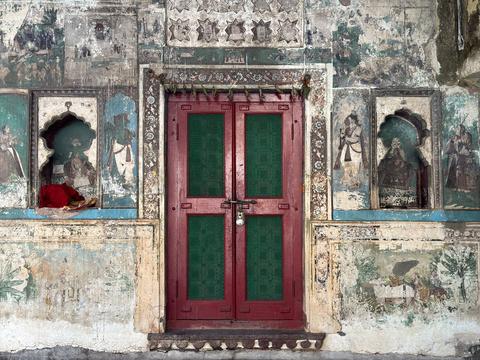
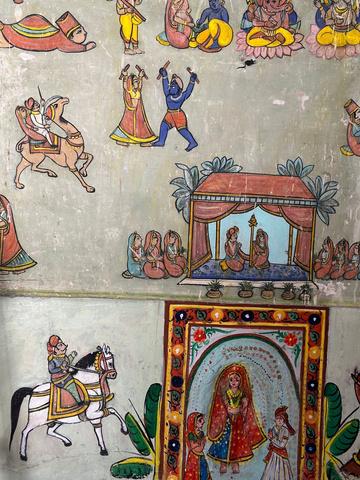
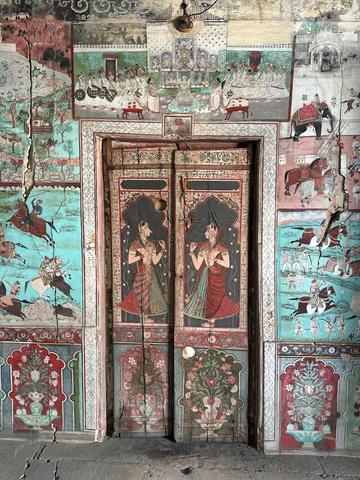
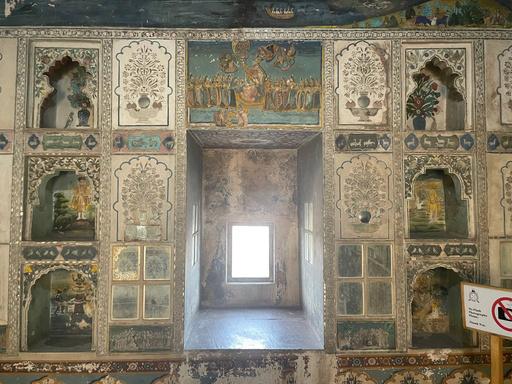
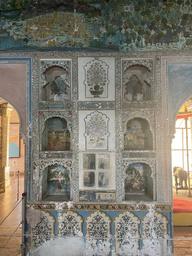
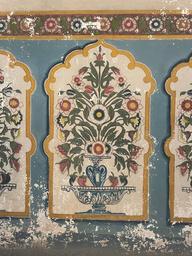
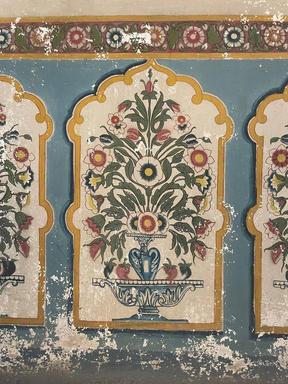
The palace is decorated with imposing wall paintings, mirror walls, mirror ceilings, hanging lights, and floral decorations all these make kota fort a memorable location
SURVEY DETAILS-
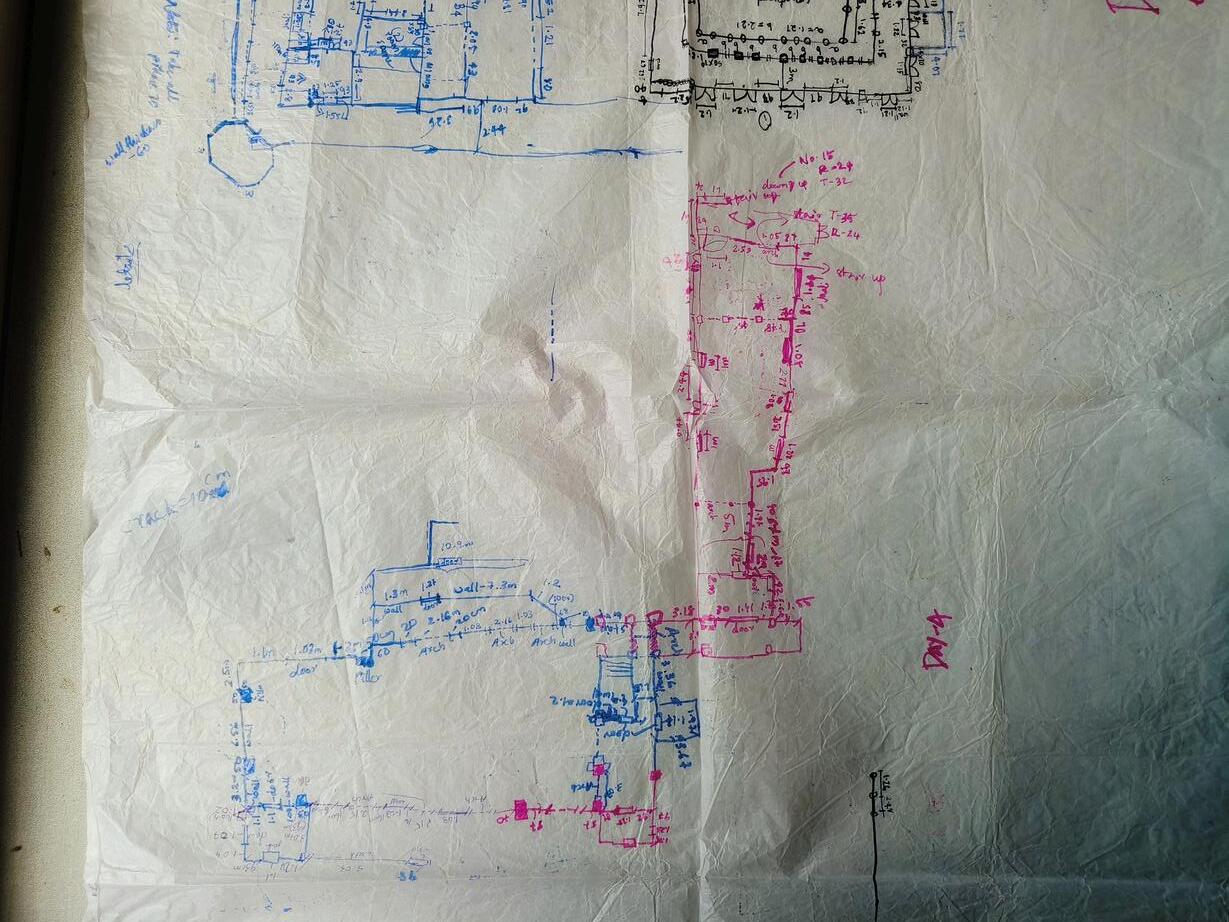
Drone Lidar survey
3-D scanning
Documentation
Condition survey
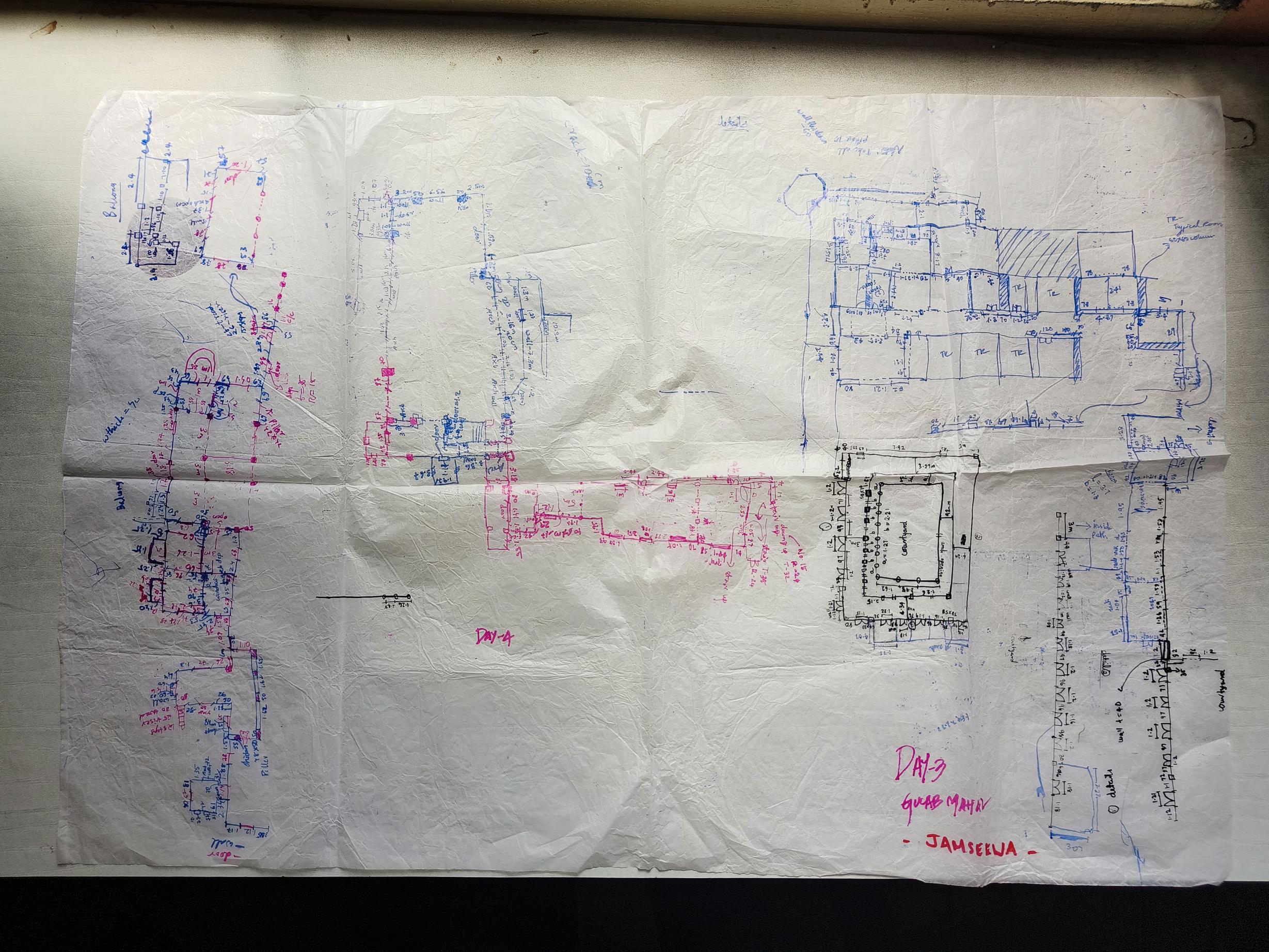
Measured survey
Material survey
Facade survey
Heritage impact survey
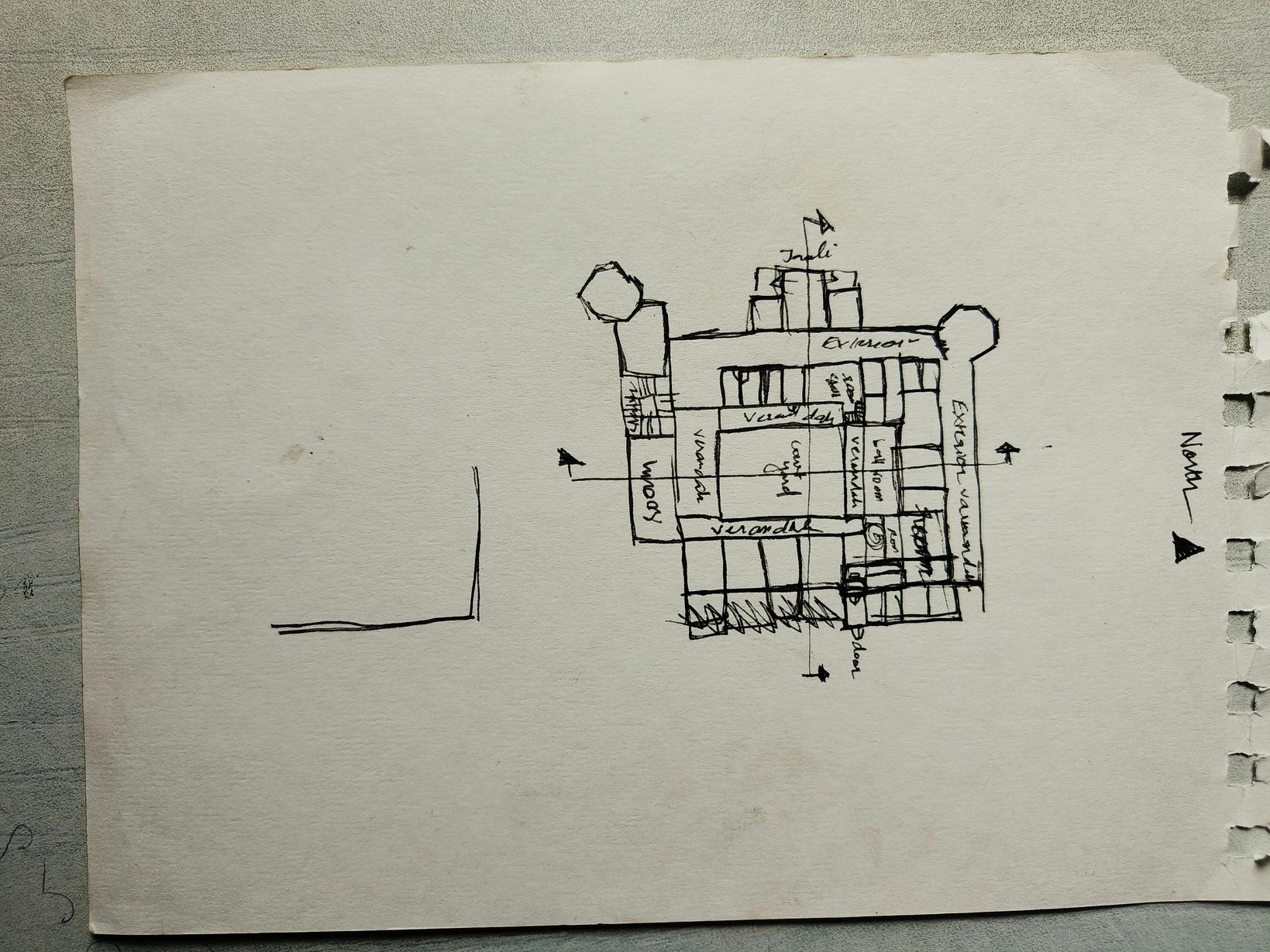
Documentation of fort
Accessibility survey
Drone Lidar survey and 3-D scanning
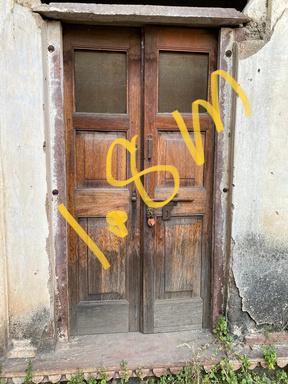
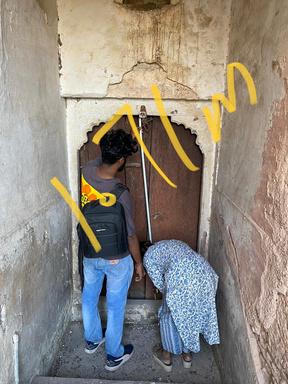
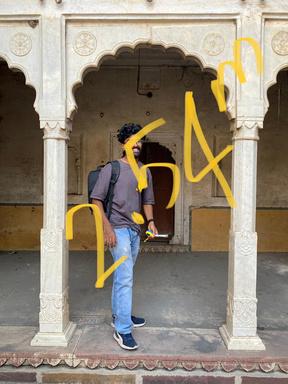
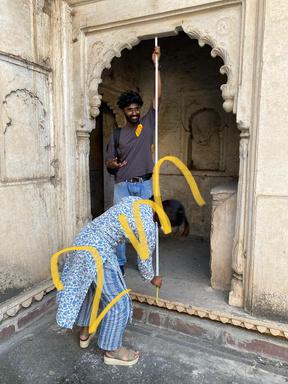
On the whole of 29 students have did the entire documentation from 14 july 2024 to 20 July 2024. Different types of surveying techniques have been used like terristial survey , Background study, photographic surveying, secondary data collection etc.
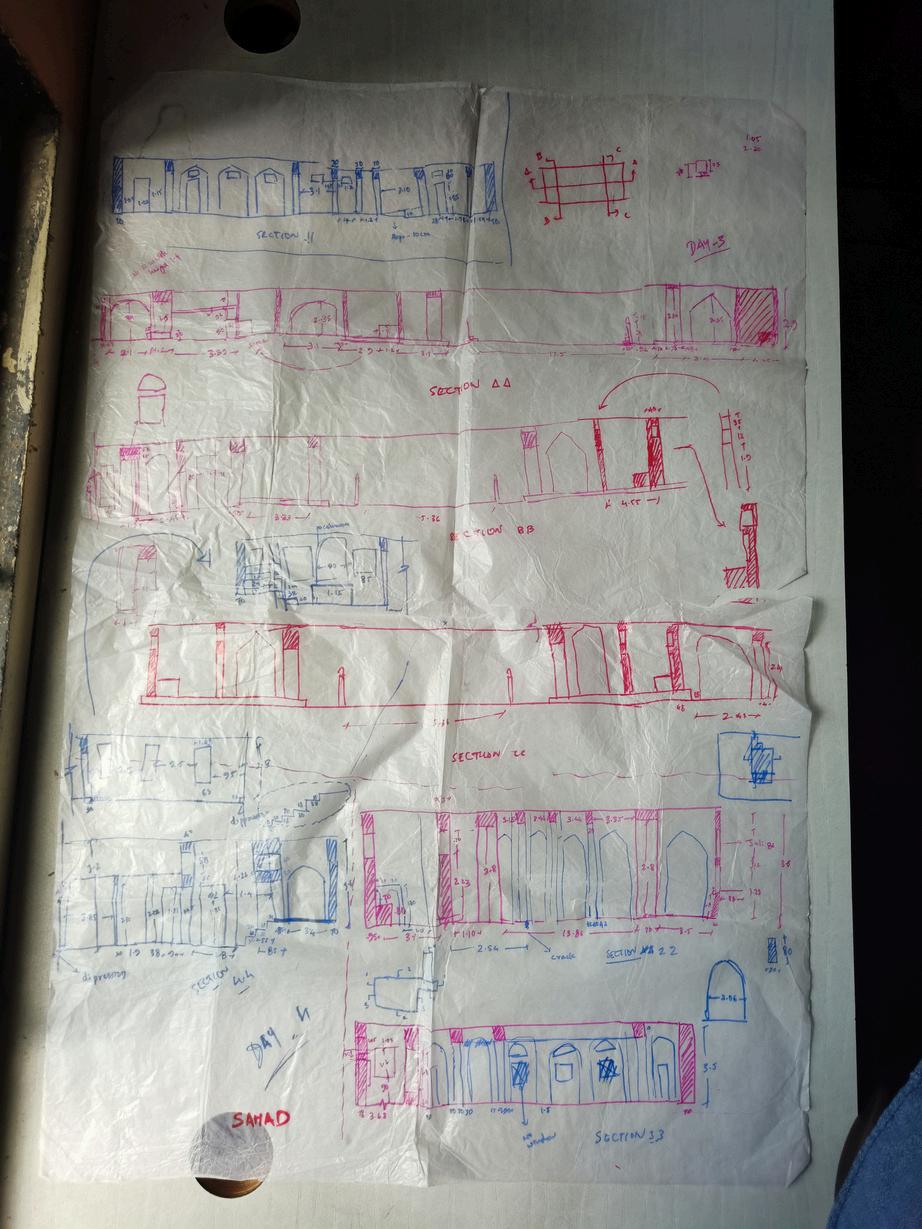
The entire team have been divided into 5 team , In each team 5 students and last team had 4 members 1 st day we did pilot survey where we divided into 4 teams -2 students was for plan, 2 student for section and 1 student for the photographs Second day and third day we did the survey of the museum area 4th and 5 th day was for gulab Mahal and bhut Mahal , 5 th day we also took the details of landscape and contour documentation. Last day we did drone survey and lidar survey.
WHY KOTAH GHAR?
Towering above the chambal river, kota garh stands as a majestic guardian of kota's past.but its significance reaches far beyond mere age. It is a tapestry woven with stories of royal lineage, artistic finesse, and engineering ingenuity. Within its ramparts lie treasures: intricate miniature paintings adorning its walls, the gleam of a silver chariot, and whispers of ancient water harvesting techniques
This legacy faces the looming threat of deterioration. neglect and time can wear even the strongest stone, dimming its grandeur.we must act now, not just for the sake of preservation, but for the future. Every effort to conserve kota garh is an investment in our heritage, a promise to keep kota's vibrant history alive for generations to come. kotah ghar should not slip into oblivion.
To ensure that kota garh continues to tell its story, echoing through the ages
HISTORY AND EVOLUTION
-TIMELINE-KOTAH GARH
1264ce: prince jait singh of bundi defeats koteya bhil and lays the foundation of the city palace on the site. sailar ghazi darwaza, the oldest extant structure, is built. 1545-1561 се:-pathan brothers kesar khan and dokar khan rule kotah and rebuild the sailar ghazi darwaza in islamic style.
1631 ce:-rao madho singh enters kotah triumphantly through the naqqar khana darwaza. Construction of the rajmahal and surrounding buildings begins.
1719 ce:maharao bhim singh i brings shri brijnathji, the guardian god of kotah, from mathura.
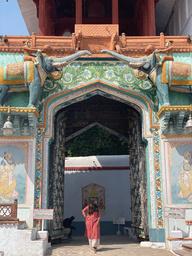
1720 ce:--maharao bhim singh / brings captured elephants from bundi and flanks the hathian pol with them. mid-18th century:-maharaos guman singh and umed singh i extend the mardana eastwards, adding the bhim mahal and bada mahal late 19th-maharao umed singh ii adds further apartments to the west of the rajmahal and builds a massive zenana complex. early 20th century:-maharao umed singh ii builds the naya darwaza and hawa mahal as the new entrance to the palace. present day:-the city palace is a museum, open to the public -the dilkusha bagh garden is now a wedding venue. -the architecture of the palace blends mughal and rajasthani styles the palace maintains a more intimate scale than other rajasthani palaces the zenana contains several temples important to the hada rajput lineage.
DETAILS OF KOTAH STATE
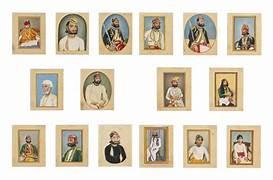
Ruling family: hada chauhan
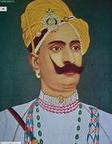
Full title :maharajadhiraj mahimahendra maharao raja
City founded in: ad 1264
State founded in: a d 1624
Gun salute: 17 guns
Area of state: 5725 sq miles
Revenue in 1948 ad approx rs 1 25 crores
Population of state in 1948 a d: approx 10 lacs
Population of kota city in 1948 a d: approx 60 thousand
HOW THE SEPARATION OF KOTA LED TO A DIVERGENCE IN PAINTING STYLES
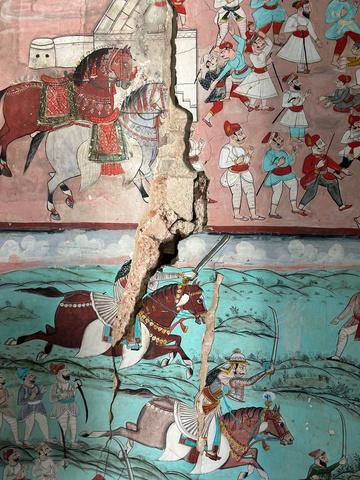
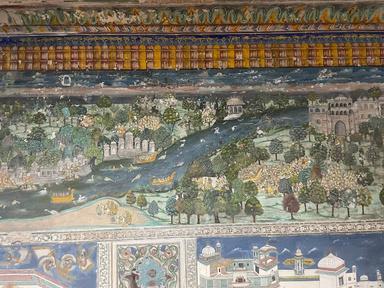
Born from bundi art, kota paintings blossomed into a distinct style under Rao Jagat Singh.Influenced by the mughals, they evolved beyond mere reinter- pretation, showcasing vibrant scenes and framed narratives even on palace walls Bundi may hold the roots, kota kalam carved its own vibrant identity, as seen in the diverse and captivating paintings of garh palace.garh palace, built in the 17th century, became a vibrant hub of art and prosperity in kotaEach ruler contributed, adding murals, paintings, and artifacts Bundi's artistic concepts were reimagined, while kota flourished as an industrial center, leaving bundi a rural town in its shadow
TRACING THE EVOLUTION OF KOTA PAINTINGS THROUGH HISTORY
While kota paintings initially resembled bundi's style, their unique character blossomed under rao ram singh, evident in the rukmani series Mukund garh further showcased this blend of bundi figures and kota-style nature.Ram singh ii, an eccentric and artistic ruler, fueled kota painting' peak with vibrant hunting scenes and commissions depicting court life hunts, and festivals. his patronage cemented kota's distinct artistic legacy
EXPLORING THE
STYLES
AND THEMES
OF KOTA PAINTINGS-Though
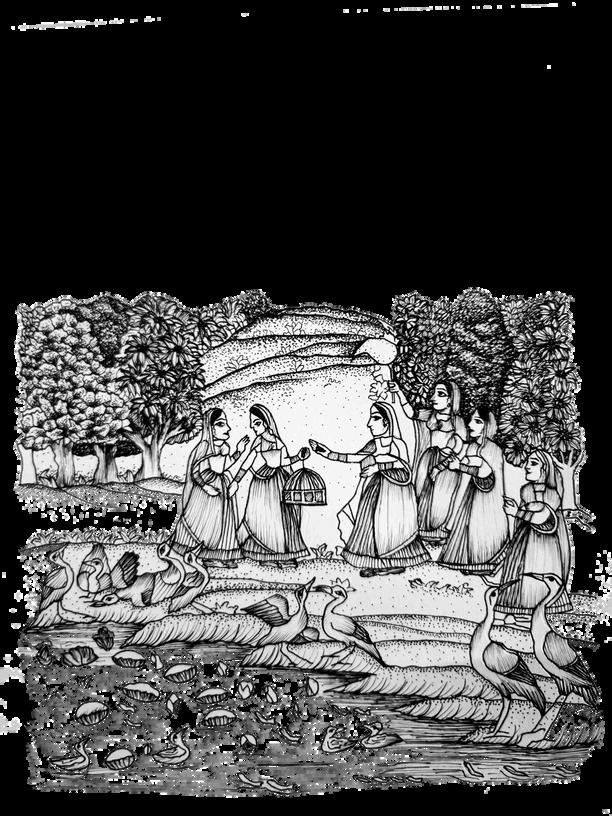
kota and bundi miniatures share vibrant colors, fine detail, and hunting themes, they have distinct features.Kota developed later, featuring heavier shading, ceremonial scenes,and European influences Initially based on hindu epics, it shifted towards hunting and royals. figures stand out with ruddy complexions, distinct LANGUAGE
The inscriptions on many kota paintings are written in mewari dialects.This leads us to believe that several of kota's accomplished artists were originally from mewar but settled in kota and operated from there
KOTAH GARH - CULTURE
kota garh, of kota, rajasthan, stands as a majestic testament to the region's rich and layered history. its architecture reflects a captivating blend of rajput, indo-islamic, and mughal influences, each contributing unique elements to create a harmonious yet distinct style
THE RAJPUT LEGACY FORTIFIED GRANDEUR
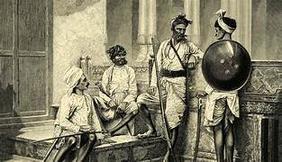
Built in the 13th century, kota garh served as a fortified palace for the hada rajput dynasty.its imposing walls, strategic location overlooking the chambal river, and bastions like the kishori burj speak volumes about its defensive capabilities,
INTRICATE CARVINGS
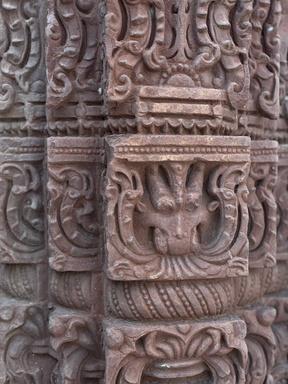
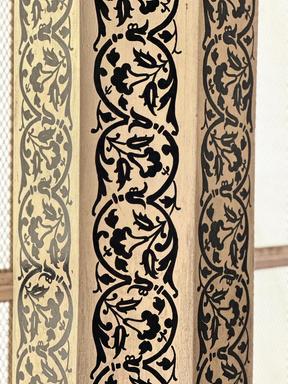
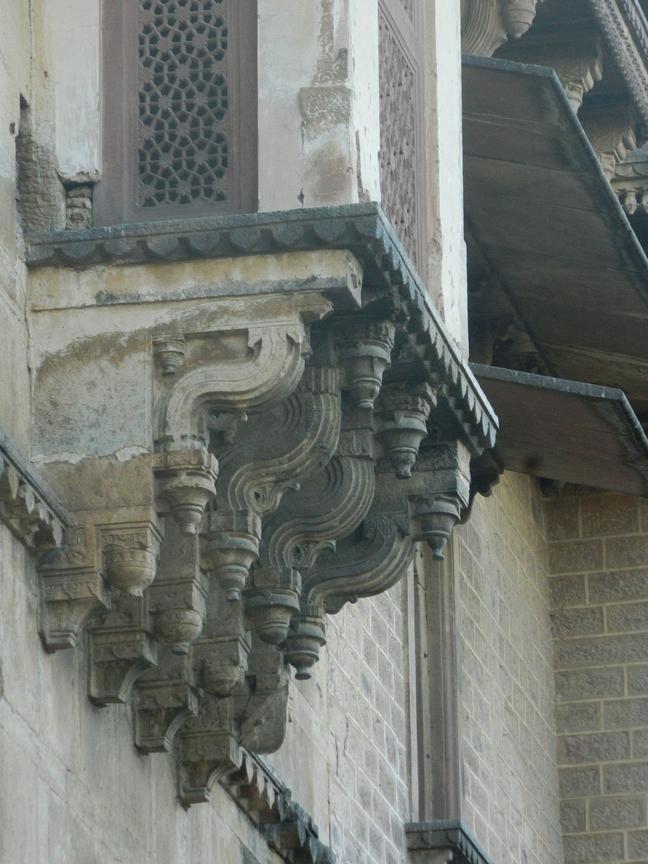
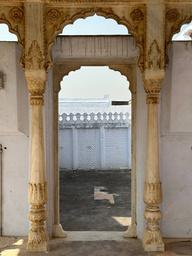
Rajput influence is evident in the intricate stone carvings adorning the palace exteriors, geometric patterns, floral motifs, and scenes from mythology intertwine, showcasing the skilled craftsmanship of rajput artisans.
COURTYARDS AND MANDAPS
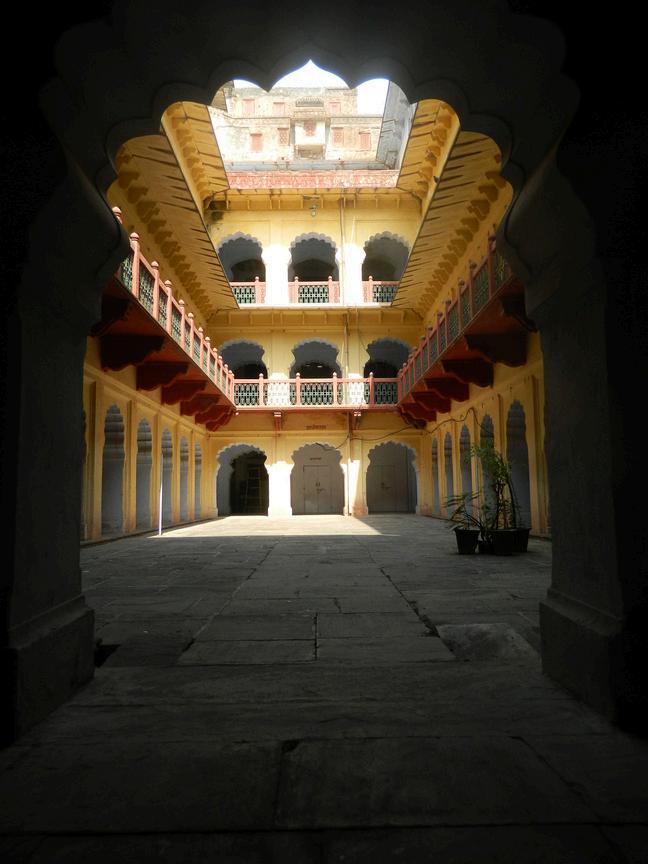
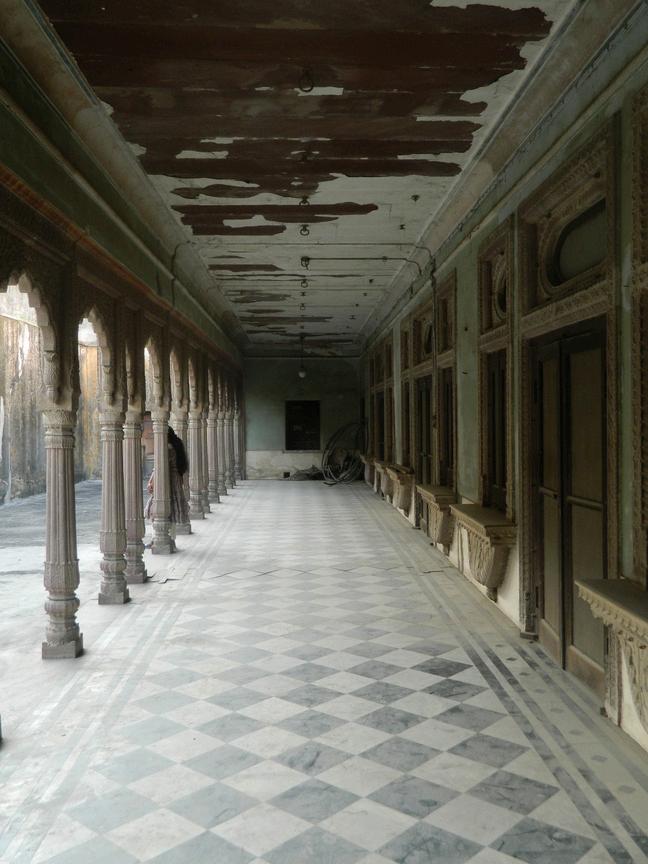
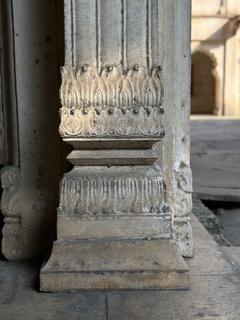
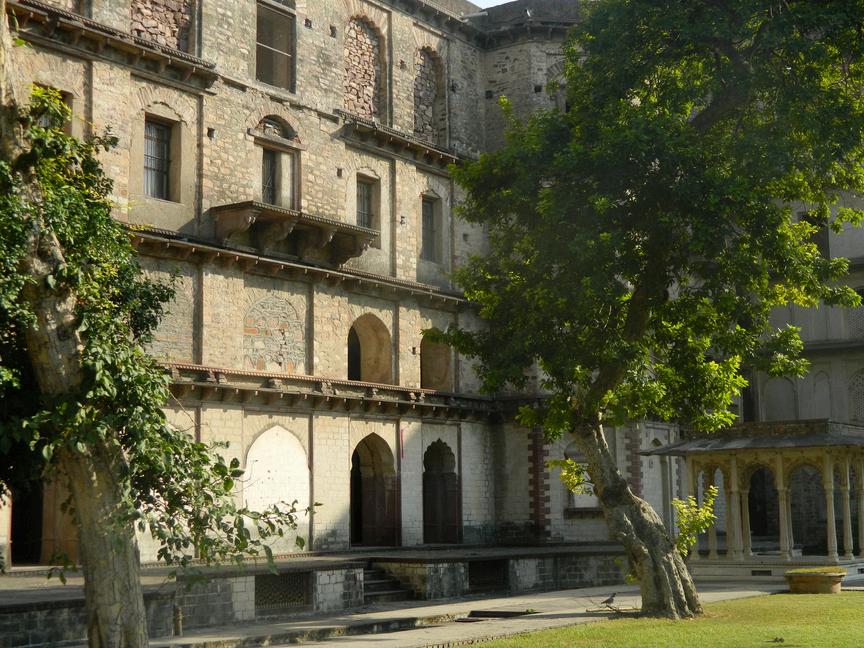
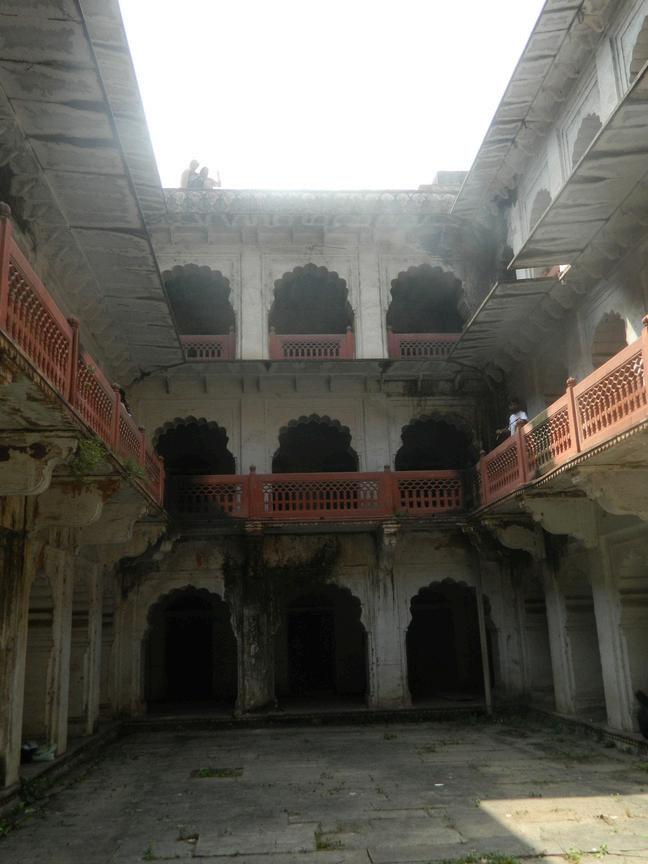
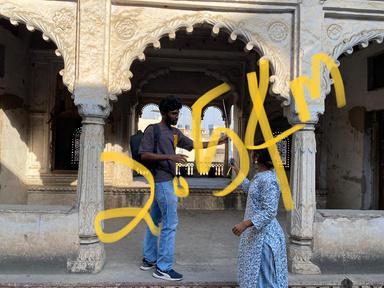
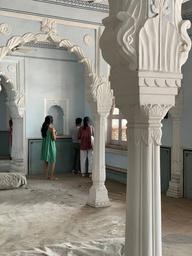
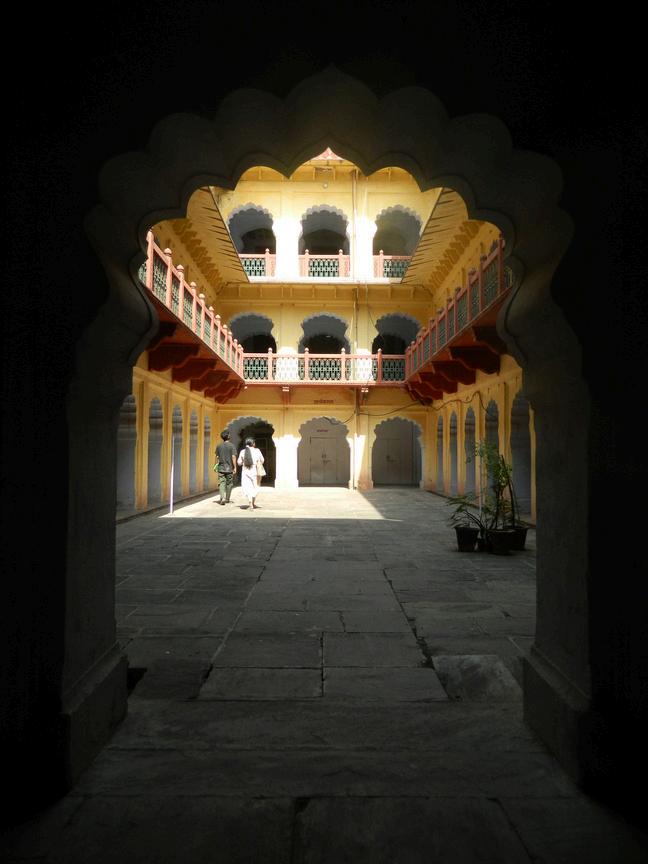
Stepping into the palace, one encounters spacious courtyards, reminiscent of rajput architecture These open spaces provided natural light and ventilation, while also serving as venues for gatherings and festivities. mandaps, or pillared pavilions, further add to the grandeur, often featuring intricately sculpted pillars and ceilings.
INDOS-ISLAMIC INFLUENCES JALI WORK
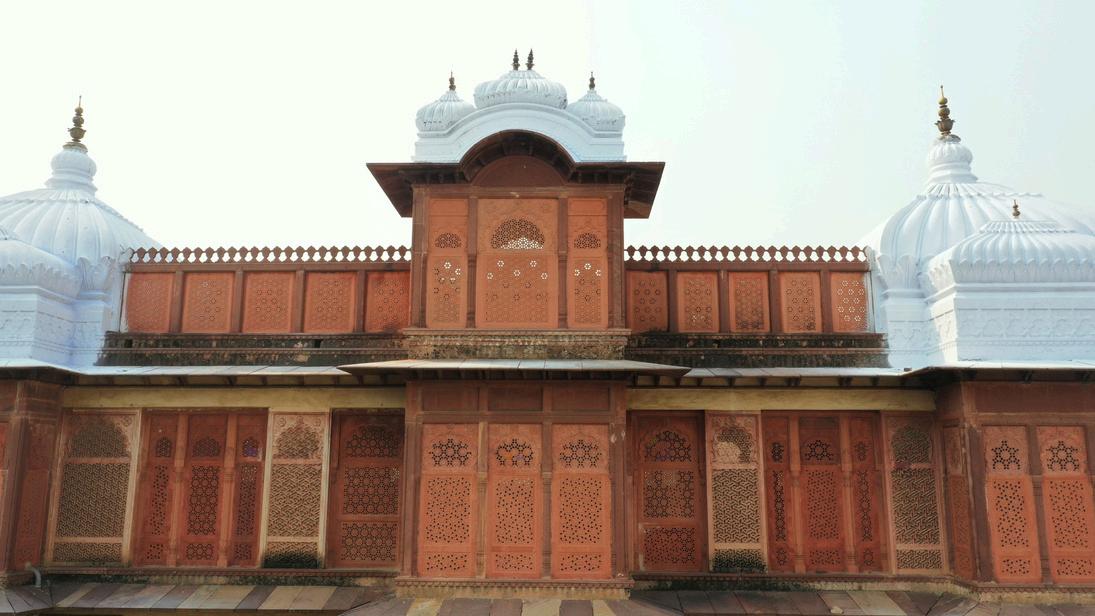
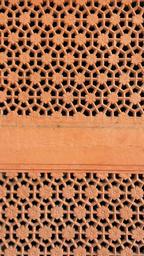
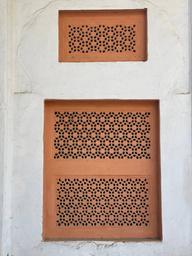
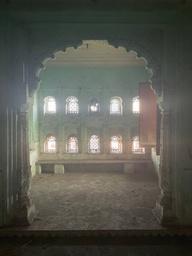
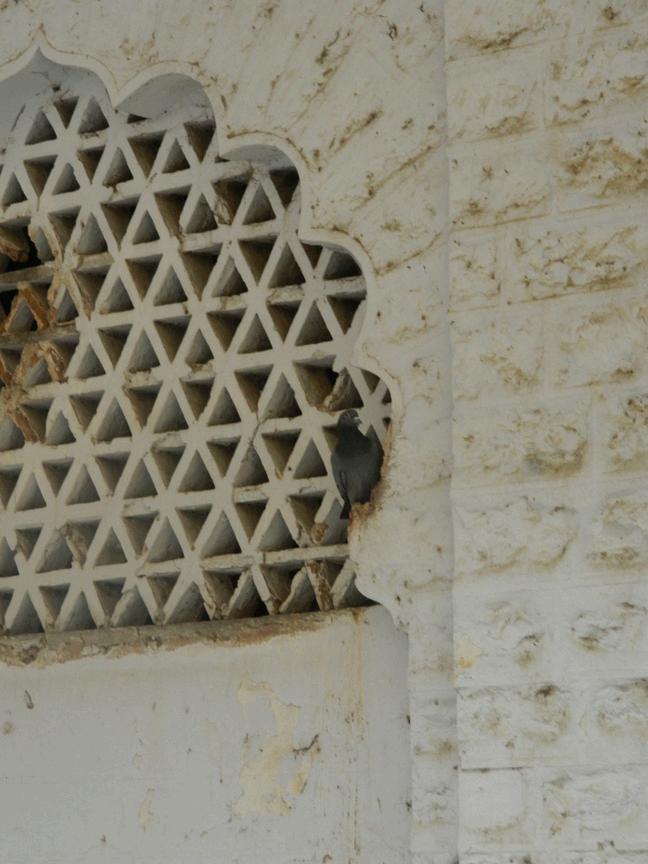
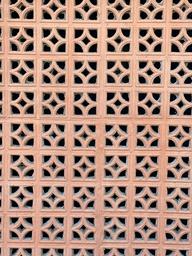
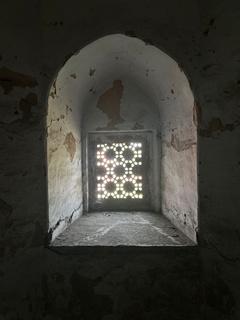
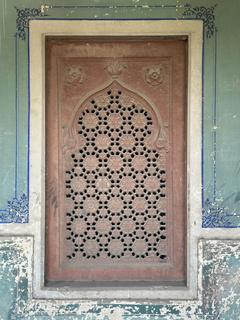
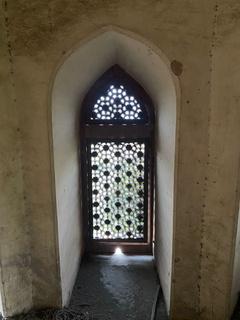
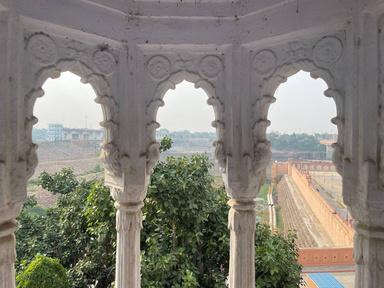
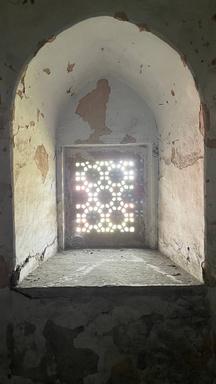
The fusion of rajput and indo-islamic styles becomes apparent in the exquisite jali work seen throughout the palace. These latticed screens, often made of stone or marble, offer privacy and ventilation while creating stunning geometric patterns
ARCHED
DOORWAYS AND OPENINGS
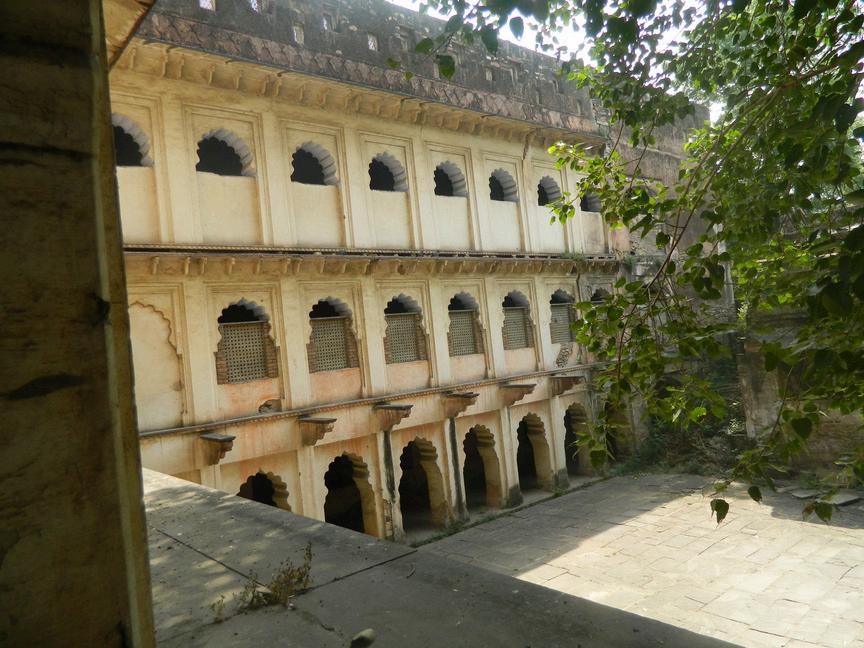
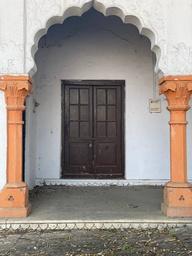
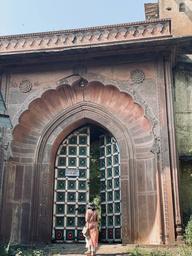
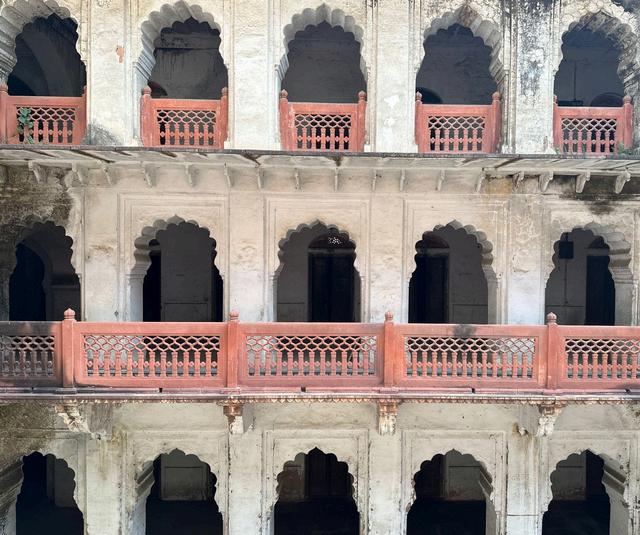
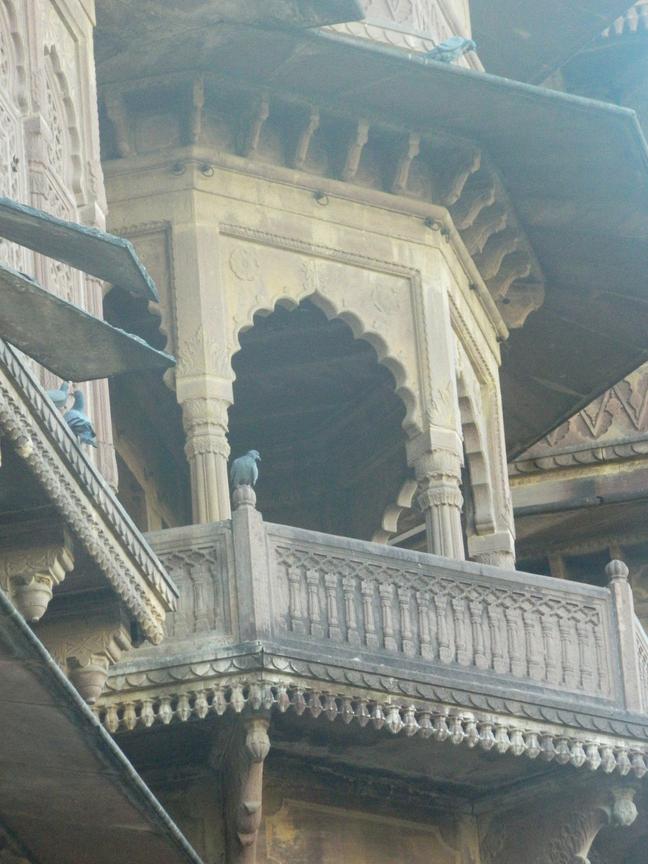
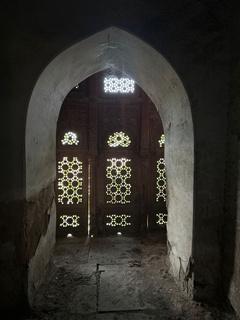
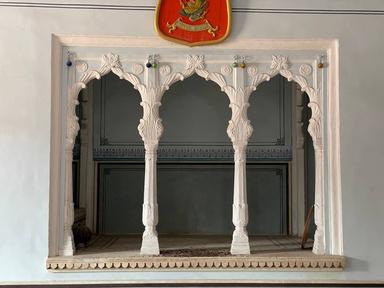
Pointed arches, a characteristic feature of indo-islamic architecture, can be found in doorways, windows, and even decorative niches within the palace, these arches lend an air of elegance and grandeur to the rajput structures.
WATER ELEMENTS
The incorporation of water features like fountains and pools is another element borrowed from indoislamic architecture. These elements not only add to the aesthetic appeal but also contribute to the natural cooling of the palace during the hot Rajasthani summers
THE SHIKAR
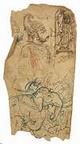
The "shikar" hunting theme thrived under king Ummed Singh i, reflecting the popularity of the activity across social classes.artists captured landscapes and diverse animals, with tigers holding prominent place alongside elephants, cheetahs, and others.Kota artists mastered elephant portrayal, using them as symbols of royalty and depicting their fierce side in fights or hunts, contrasting with the usual gentle image in Indian art.
KOTAH GARH - CULTURE
ARCHITECTURAL FUSION
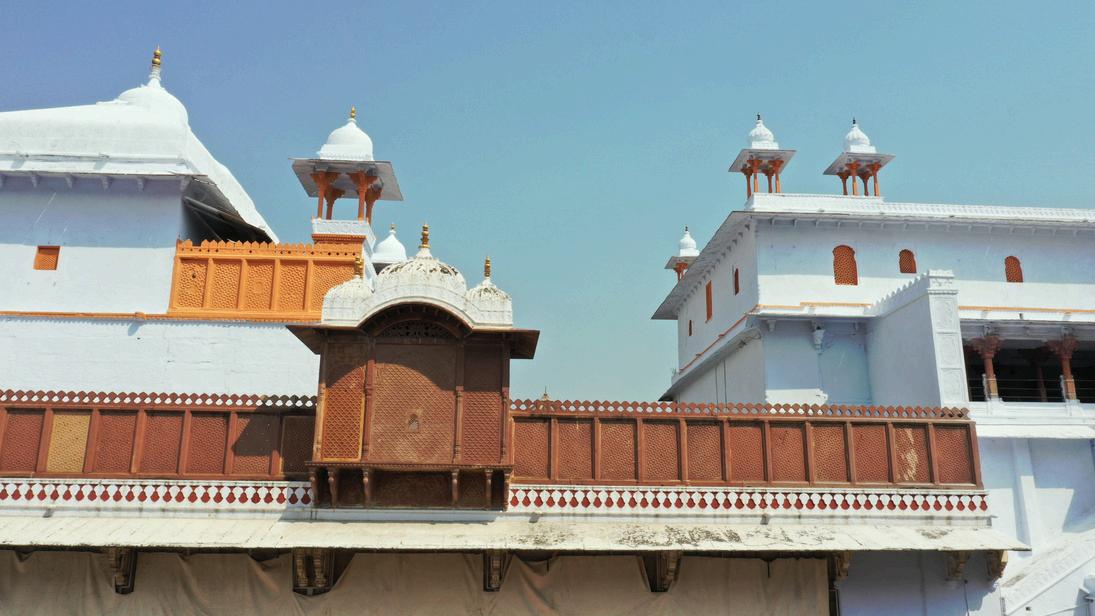
Kota garh showcases a unique blend of rajput and mughal architectural styles this is evident in the use of red sandstone, intricate carvings, and jharokhas (ornamental windows)alongside mughal arches and gardens.
ROYAL LEGACY
The garh palace served as the residence of the maharaos of kota for centuries, and its culture reflects their opulent lifestyle. this can be seen in the grand halls lavish decorations, and extensive collection of royal artifacts like weapons, armor, and paintings displayed.
ARTISTIC HERITAGE
Kota is renowned for its distinct miniature painting style, characterized by vibrant colors, intricate details and depictions of courtly life and religious themes this artistic legacy is preserved in the garh palace murals and paintings offering a glimpse into the region's rich artistic heritage.
SPIRITUAL SIGNIFICANCE
Kota garh also holds religious significance as it houses several temples and shrines dedicated to hindu deities like lord shiva, krishna, and hanuman. the prominent mathureshji temple attracts devotees from across India, further contributing to the cultural tapestry of the garh.
TEXTILE TRADITIONS
Kota is known for its unique handloom textiles, particularly the kota doria sarees these sarees are woven with a special technique that creates a distinctive checkered pattern and are prized for their lightweight and airy texture. the garh palace showcases a collection of these beautiful textiles, providing insight into
VIBRANT FESTIVALS
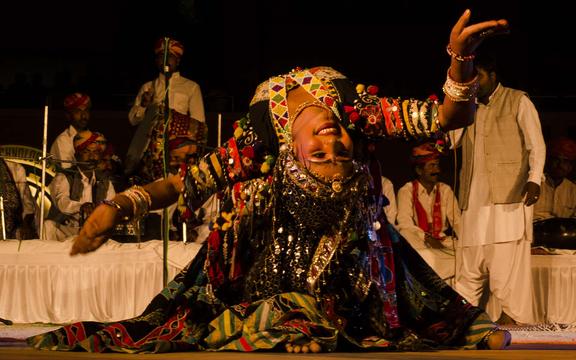
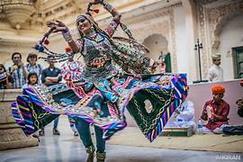
Kota garh comes alive during festivals like dussehra, holi, and teej, which are celebrated with great fervor and enthusiasm these festivals showcase the region's colorful traditions, music, dance, and culinary delights.
DUSSEHRA (NAVRATRI):
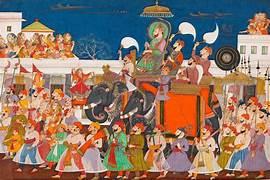
This ten-day hindu festival celebrating the victory of good over evil is the most important festival in kota.while the main ceremonies and processions happen across the city, kotah garh serves as a key location for royal rituals and observances during dussehra Durga puja and aarti: the royal family performs special pujas and aartis inside the palace for goddess durga.Royal procession: the maharaja participates in a grand procession on elephants and horses, starting from the palace.
PRIMARY DATA
DOCUMENTATION: MASTERPLAN
TOTAL SITE AREA :84,100 MSQ, 20.8 AC
TOTAL BUILDING COVERAGE : 18,600 MSQ
FAR: 0 23
AREA STATEMENT
1Hawa Mahal First Floor: 270 msq,0: entrance: 50 msq
1: hall: 37 msq+ 5 msq balcony,2: pillared hall: 23 msq+ 2 msq balcony,3: pillared hall: 85 msq,r1 :4 msq,r2: 6 msq,r3:35 msq,r4: 4 msq,r5: 6 msq,
AREA STATEMENT
hawa mahal second floor: 270 msq,1: hall: 40 msq + 5 msq balcony,2:10 msq,r1:5 msq,r2:9 msq,r3:4 msq,r4:4 msq,r5:4 msq,r6:7 msq,r7:7 msq,r8: 4 msq,r9: 2 msq,
ANALYSIS
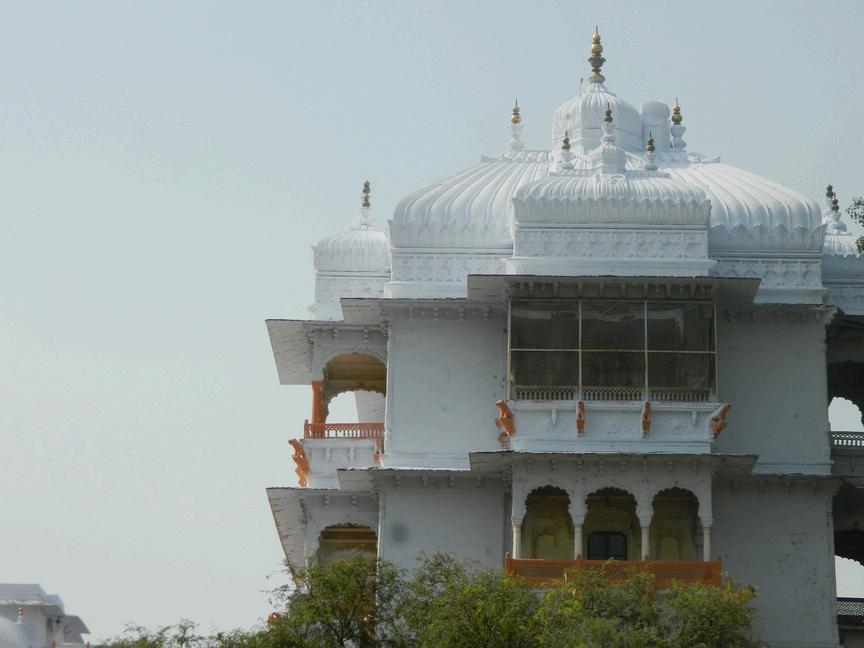
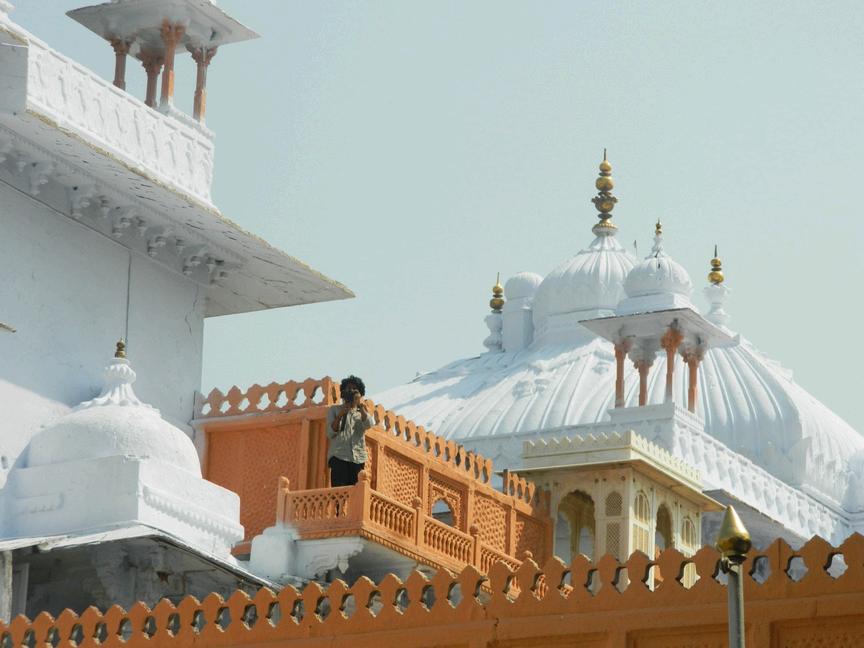
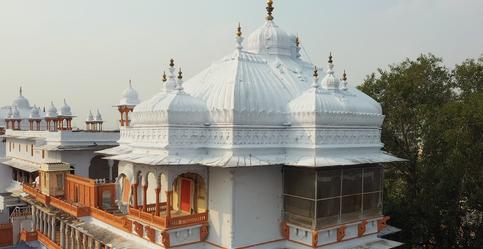
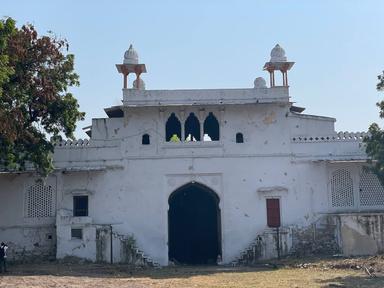
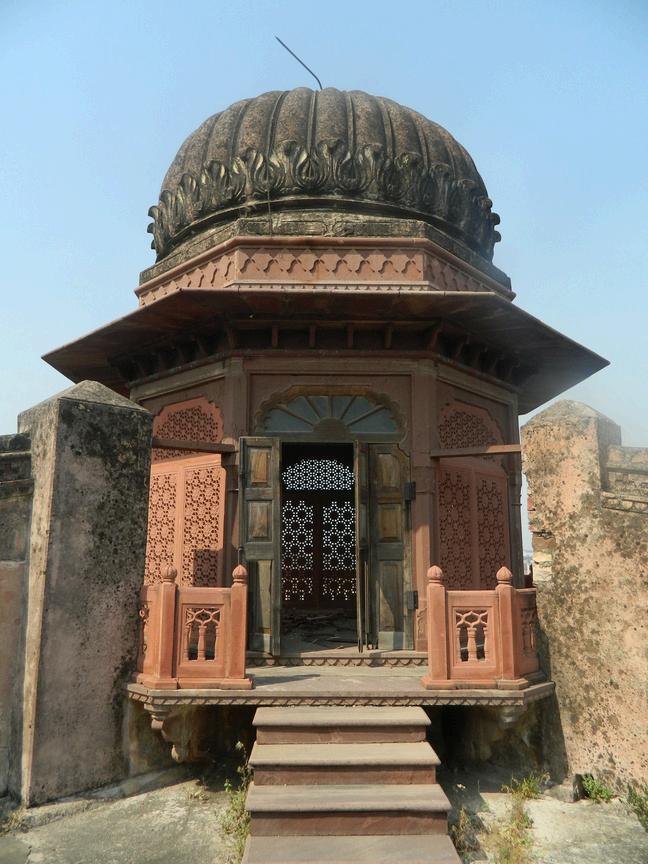
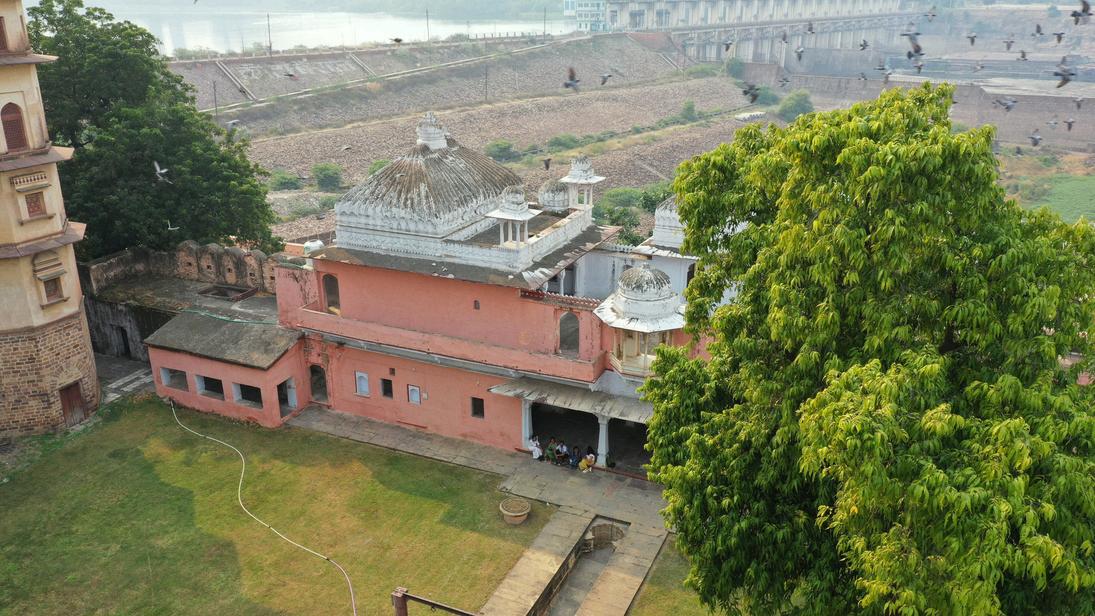
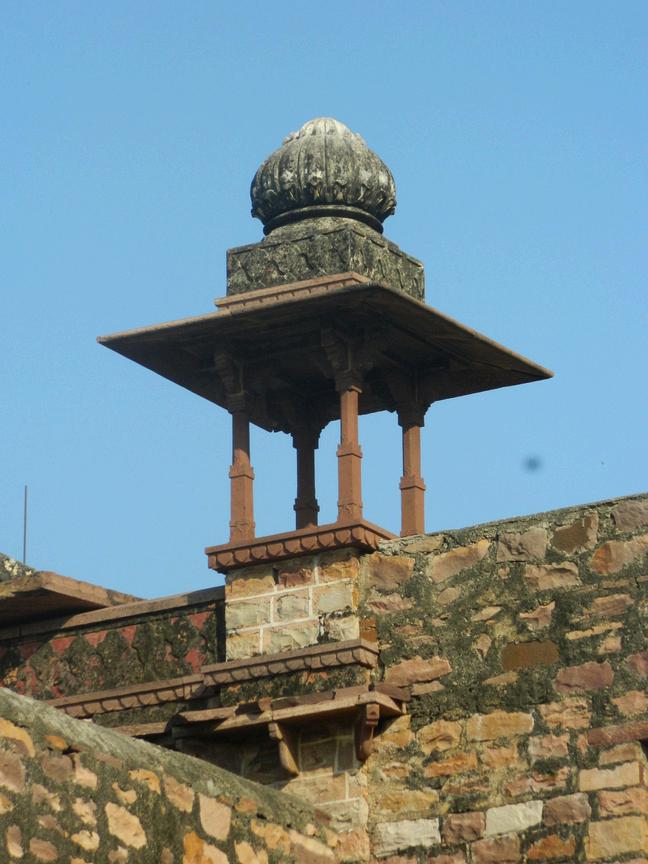
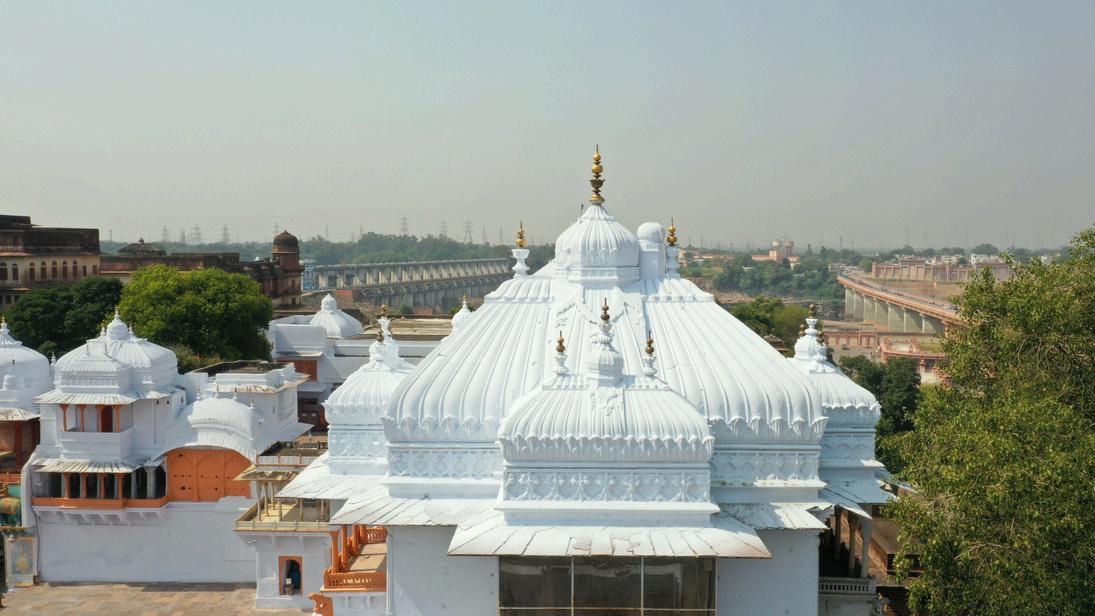
CHHATRIS: these ornately decorated kiosks with dome-shaped roofs are a defining feature of the palace. They are often built on top of pavilions or gateways, offering stunning views and providing shade.
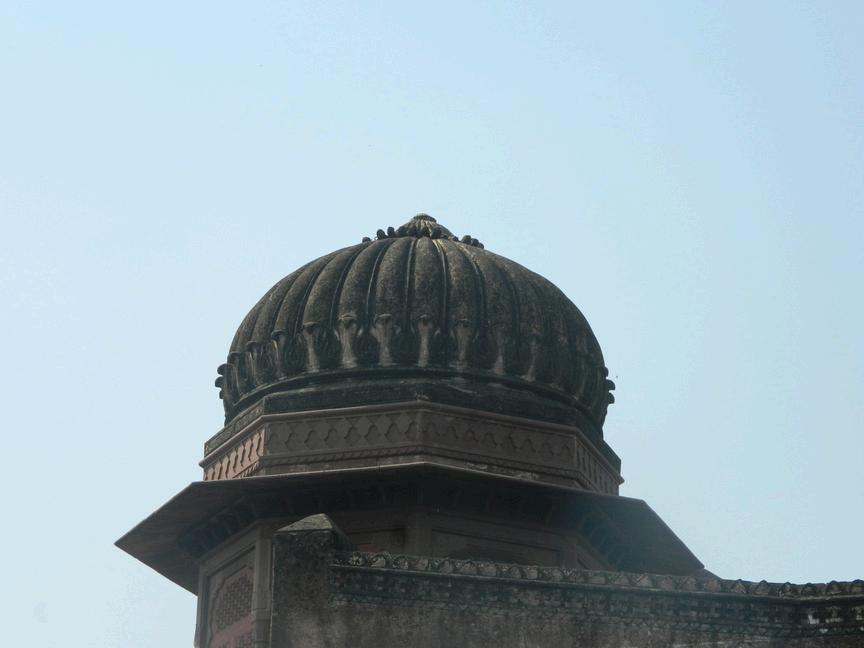
BANGALDAR DOMES these domes have a ribbed or fluted design, resembling the inverted hull of a bengali boat. They are less common in the palace but add a distinct visual element when presene
GILT COPPER: in some instances, particularly for chhatri roofs, thin sheets of copper were gilded with gold, creating a shimmering and opulent appearance.
GUMBAZ: these hemispherical domes with a bulbous top were influenced by mughal architecture, they are typically made of red sandstone or white marble and often adorned with intricate floral or geometric patterns.
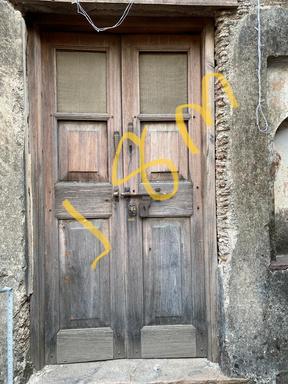
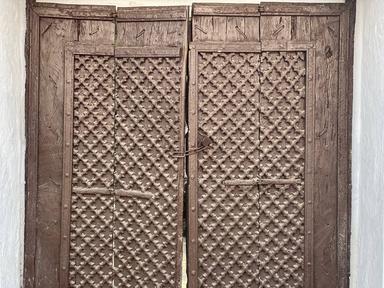
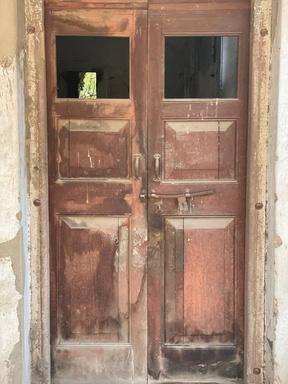
INDIAN TEAK: -Slightly lighter color than Burmese teak -Used for decorative elements on doors, such as carvings and moldings.
BURMESE TEAK: -Most commonly used teak variety in Rajasthan.
Deep golden brown color, fine grain, and excellent strength -Resistant to termites and other pests, making it ideal for doors that will be exposed to the elements.
PLAN AND ELEVATIONS OF FORT
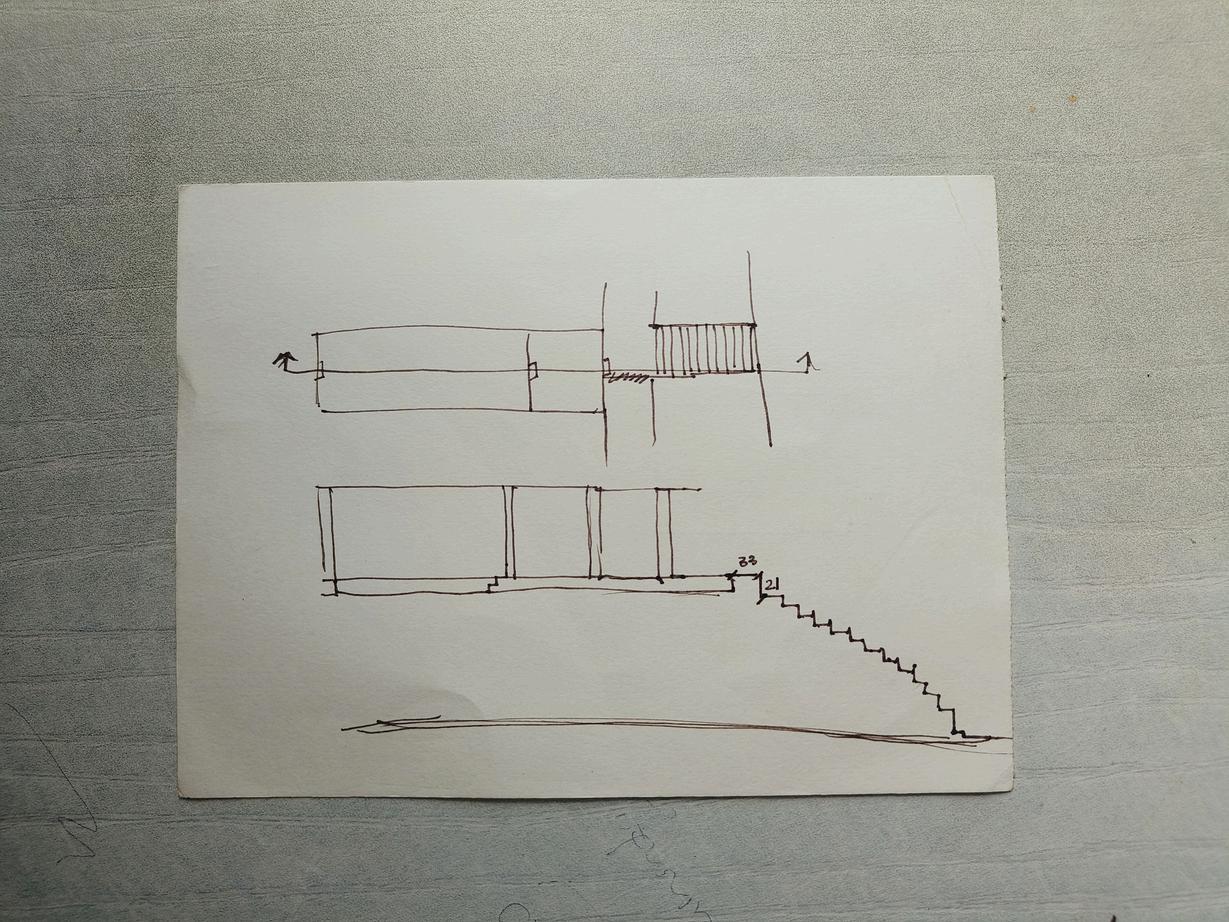
SECTIONS , STEPS, FOUNDATION
CONSTRUCTION MATERIALS AND CONSTRUCTION TECHNIQUES
COLOUR ANALYSIS
DOMINANT COLORS:
Red: Associated with royalty and power Used extensively in red kotah stone, murals,and accents
Yellow:Symbolizes knowledge, wisdom, and prosperity. Found in ochre tones on walls, ceilings, and decorative elements.
Green:Represented nature, fertility, and new beginnings Seen in verdant hues on painted ted foliage, gardens, and architectural features.
Blue:Denotes the sky, divinity, and calmness Used in cobalt shades for ceilings, borders, and accents
White Signifies purity, peace, and spiritual enlightenment. Employed in marble, stuccowork, and accents.
Black: Used sparingly for contrast and outlining details
Gold: Added richness and opulence to murals, jewelry, and furniture.
COLOUR PRODUCTION METHODS:
Red: Derived from ochre (iron oxide), hematite (iron ore), and cinnabar (mercury sulfide).
Yellow Extracted from turmeric, orpiment (arsenic sulfide), and gamboge (gum resin)
Green Created from malachite (copper carbonate), verdigris (copper acetate), and indigo (plant extract)
Blue Obtained from lapis lazuli (a semi-precious stone) andindigo . White Used lime plaster and white clay Black Made from charcoal or lampblack (soot)
Gold Applied as gold leaf or mixed with other pigments for a shimmering effect.
THE PROCESS WAS INTRICATE AND INVOLVED:
Mining and collecting raw materials Minerals were extracted from mines, plants we animal products were sourced.
Purification and processing: Raw materials were ground, washed, and refined to remove impurities
Mixing and binding:Pigments were mixed with binders like gum arabic or egg white to create usable paints.
INFERENCE
The specific colors and their prominence varied depending on the time period and artistic preferences of the ruling Maharaja
Natural dyes and pigments were predominantly used, leading to a unique and earthy color palette
The vibrant colors of the Kotah Garh Palace not only enhance its beauty but also hold symbolic meanings associated with royalty, nature, and religion.
SIGNIFICANCE OF RAJPUT STYLE:
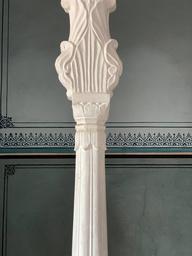
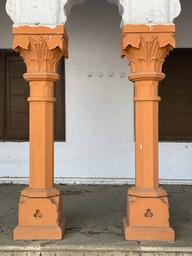
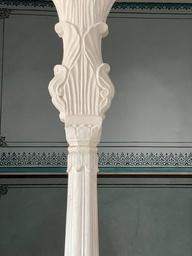
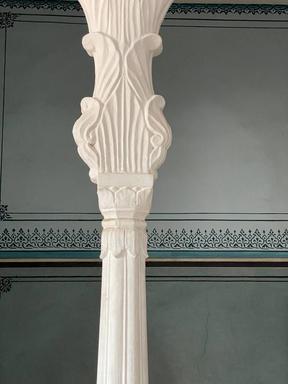
Rajput style pillars are a distinctive and beautiful element of Rajput architecture.They are typically made of stone, and are often richly carved with intricatedesigns These designs can include floral motifs, geometric patterns, and even figures of humans and animals.The pillars are usually quite tall and slender, and they often support the roofs
KOTA STONE: Kota stone is a type of limestone quarried in the Kota district of Rajasthan, India. It is known for its creamy-brown color, smooth texture, and durability Kota stone pillars are strong and weather-resistant, making them suitable for both indoor and outdoor use.Kota stone pillars can be polished or honed to create different finishes Polished pillars have a high-gloss shine, while honed pillars have a more matte finish. Kota stone pillars can be plain or carved with intricate designs. -Carved pillars are often used in traditional Indian architecture
INDOS-ISLAMIC STYLE:
Fusion of Influences: Indo-Islamic pillars blend Islamic elements like arches and geometric patterns with Indian traditions like lotus motifs and luted columns.Ornamentation: Richly decorated with carvings, calligraphy, inlay work (often with semi-precious stones), and floral or geometric designs-Functional and Decorative: Pillars support structures while adding aesthetic appeal, often framing doorways, arches, or niches
WHITE MARBLE:Elegant Simplicity: The white marble shines with a pure and elegant simplicity, echoing the focus on divine light and purity in Indo-Islamic architecture Local Influences: The white marble pillar might incorporate elements of local artistic traditions. With the use of specific floral motifs, the shape of the pillar itself, or even the way the surface is polished or textured
KOTA STONE-WHY IS IT USED?:
Durability: Kota stone is a very durable material that can withstand the elements for centuries. This is important for a palace that is meant to last for generations
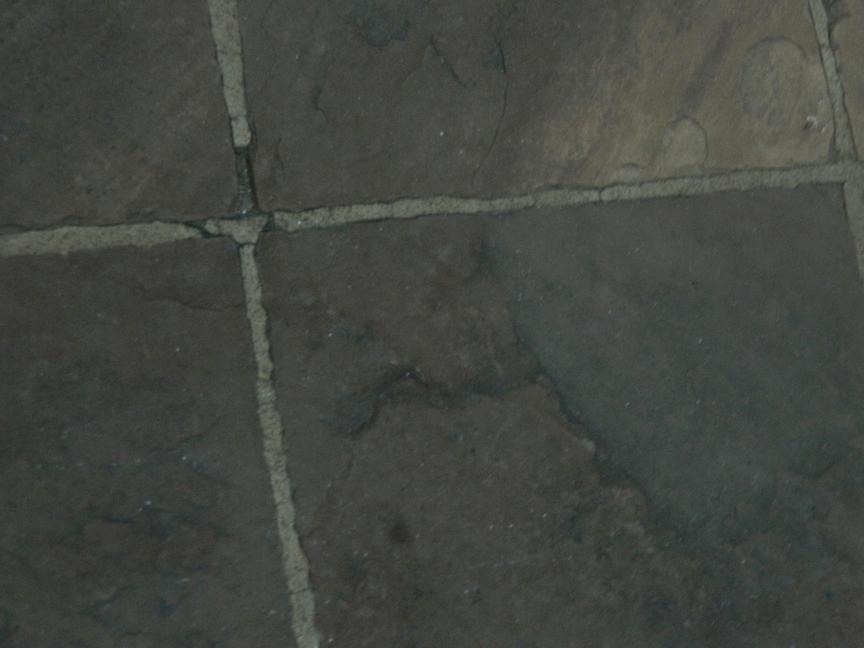
Non-slippery surface: The non-slippery surface of Kota stone makes it a safe material to use for flooring and other surfaces that people will be walking on Resistance to wear and tear: Kota stone is resistant to wear and tear, so it can withstand the heavy foot traffic that a palace would experience
Beauty: Kota stone is a beautiful material that comes in a variety of colors and textures. This makes it a perfect material for use in a palace that is meant to impress
JAIPUR PINK STONE:
Geological name: Kotah Sandstone
Color: Pinkish-red, ranging from light pink to deep red
Properties: Fine-grained, easily carved, and resistant to weathering
Location: Found in the Kota district of Rajasthan, India.
WALL DETAILS LAYERS
:
PREPARATION:
1.Surface cleaning the old plaster or loose materials are removed from the wall surface to create a clean and even base
2.Dampening: The wall is thoroughly dampened with water to ensur proper bonding of the plaster layers. LAYERS-
1 Marbatti (First layer):
Material:Mud mixed with cow dung and straw, applied wet.
Purpose:Provides a rough base for the upper layers, enhances bonding, and acts as a thermal insulator
2.Ghichi (Second layer):
Material: A paste made from red burnt soil, sieved and mixed with water -Purpose: Levels the surface, fills gaps, and strengthens the base.
3.Sanakri (Third layer):
Material:A finer paste of red burnt soil, sieved and mixed with water and sometimes lime
Purpose:Provides a smoother surface and improves the water resistance.
4 Chauki (Fourth layer): Material: A paste made from white lime and marble dust, sometimes mixed with buttermilk or jaggery.
Purpose:Creates a smooth, white finishing layer and enhances water resistance.
5 Rang (Fifth layer) (Optional):
Material:Natural or vegetable dyes mixed with water or lime.
Purpose: Adds color and decorative elements to the plastered surface
FOUNDATION ANALYSIS
HISTORICAL CONTEXT-
The initial construction of the palace started in 1264 CE, with additions and modifications made over centuries by various rulers
The palace served as a fort, suggesting a strong foundation was crucial for defense.
The region of Rajasthan is known for its arid climate and rocky terrain.
FOUNDATION TYPES-
Stone masonry: Locally sourced stones has been used to create a sturdy and deep foundation
Rammed earth: This technique involves compacting layers of earth to create a solid foundation. It was often used in conjunction with stone masonry.
CONSTRUCTION TECHNIQUES AND MATERIALS-
Local materials: The palace predominantly used locally available materials like sand-stone, granite, and red kotah sandstone.Bricks were also used, particularly in later additions.
Traditional techniques: Construction methods likely involved skilled artisans employingtechniques passed down through generations. These techniques would have included stone carving, lime mortar construction, and intricate roof construction using wooden beams and trusses
Mughal influence: As Kotah came under Mughal influence, some architectural elements have been incorporated Mughal techniques like arches, domes, and jaali work (intricate lattice screens).
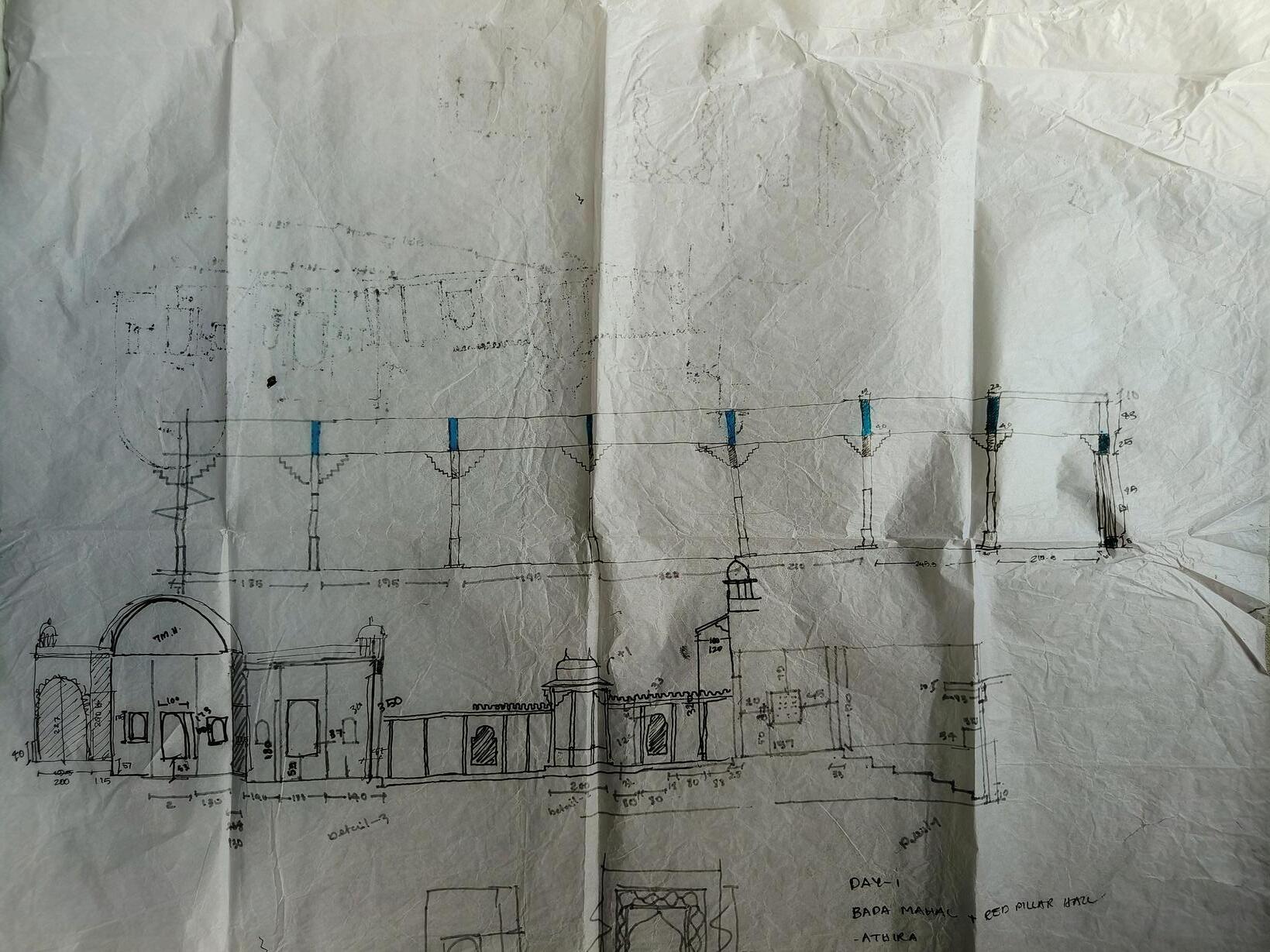
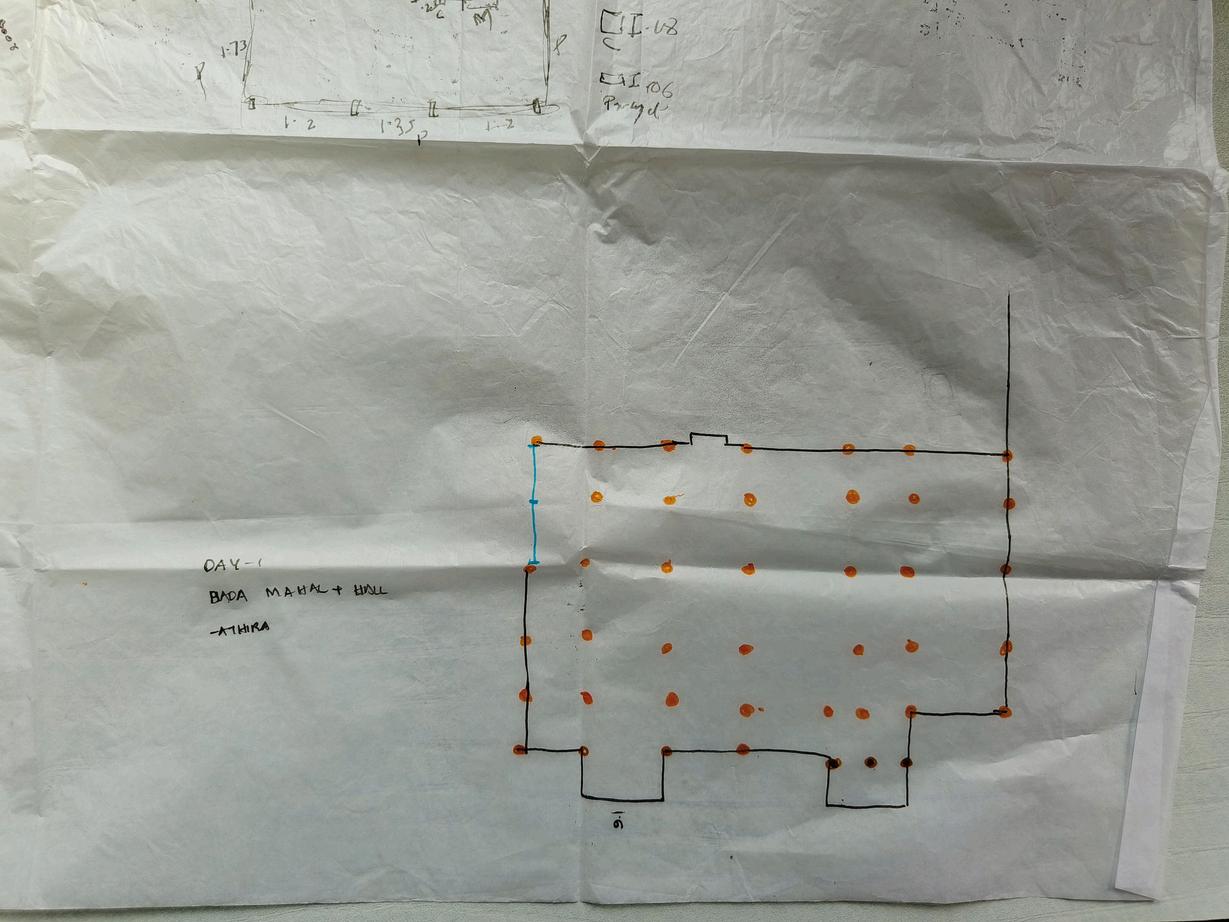
CONSTRUCTION - BADA MAHAL + HALL ( STONE MASONARY AND RAMMED EARTH)
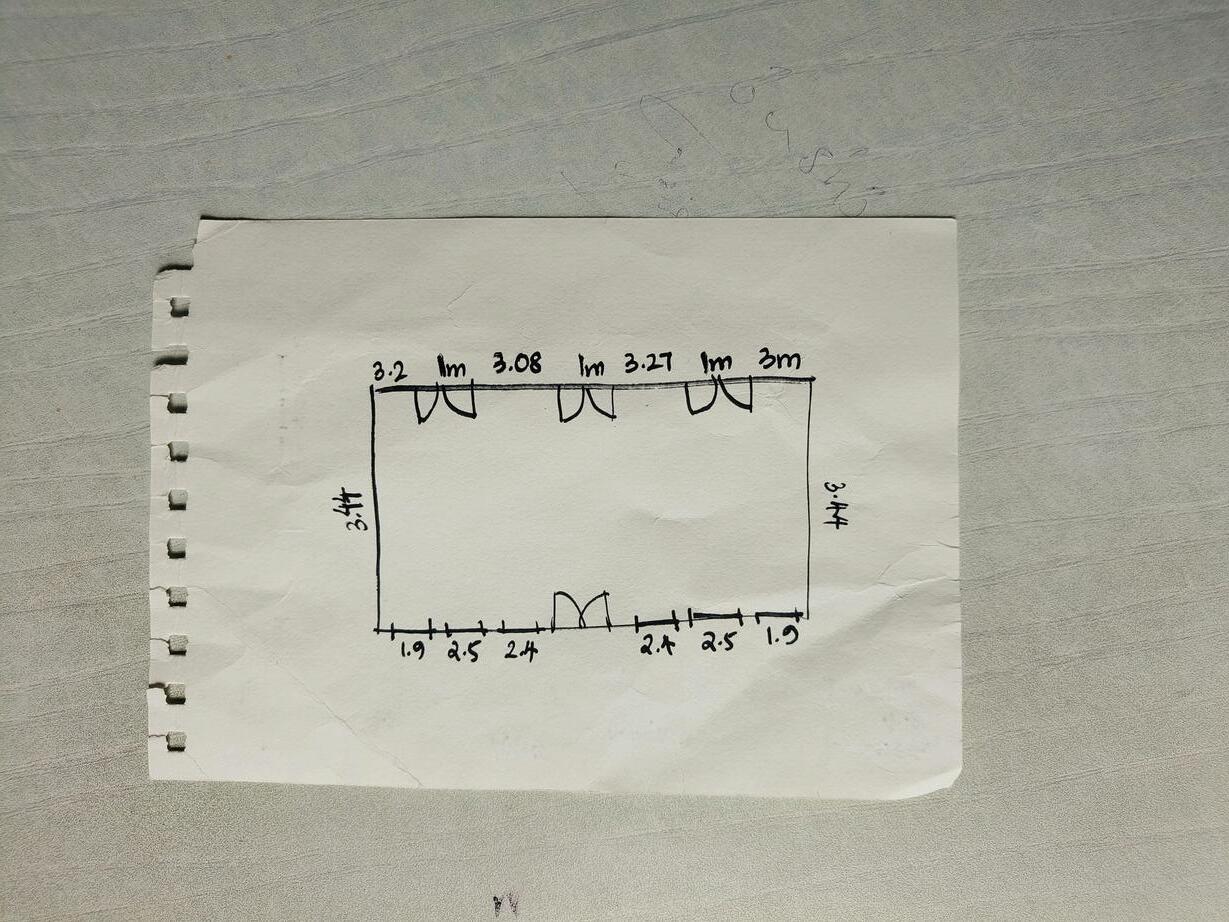
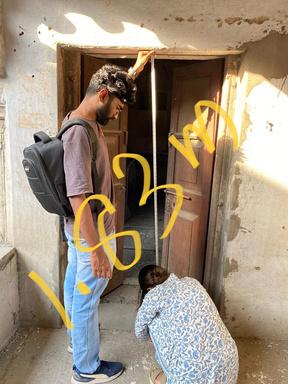
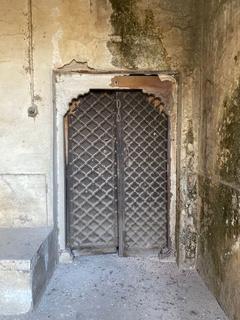
CONSTRUCTION TECHNIQUE - DOOR DETAILS
DOOR - PLAN
DOOR DETAIL
ARCHES DETAIL
DOMES DETAIL
DETAIL
JALI
COLUMN AND PILLAR DETAIL
ANALYSIS
Kota, Rajasthan, is renowned for its rich architectural heritage, particularly in the design of forts Foundation:
Kota's forts are built on a foundation of stone masonry , rubble masonry, using locally available stone and lime mortar.
-The foundation is typically 3-4 meters deep, providing stability to the structure
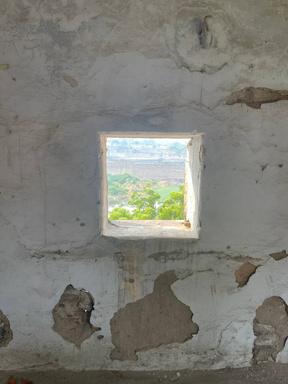
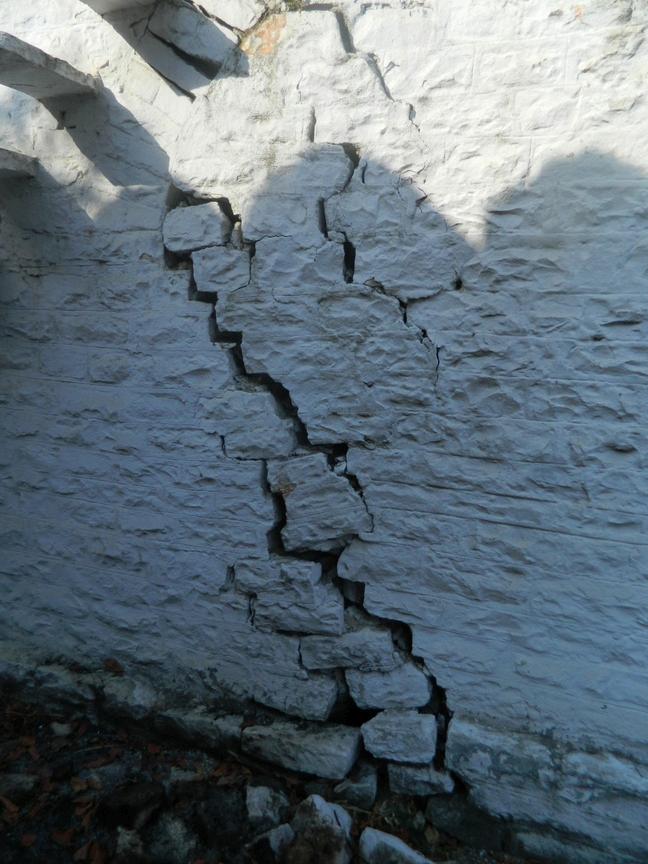
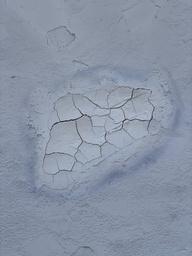
The cracks have been formed ,due to the material now which is being exposed to the atmosphere
Pillars and Columns:
Pillars and columns are made of sandstone or marble, often featuring intricate carvings and ornate designs
They are typically square or octagonal in shape, with a circular or octagonal base
The pillars and columns support the weight of the arches and domes, showcasing exceptional engineering skills.
Arches:
Arches in Kota's forts are typically pointed or horseshoe-shaped, reflecting Islamic influences.
They are constructed using the "arch-and-beam" technique, providing additional strength to the structure.
Arches are often decorated with carvings, calligraphy, or geometric patterns.
Domes:
Domes in Kota's forts are typically hemispherical or onion-shaped, adding to the structure's grandeur
They are constructed using the "dome-and-drum" technique, providing additional stability.
Domes are often decorated with intricate carvings, finials, or kalash (ornamental pots)
Exterior of Fort:
The exterior of Kota's forts features high walls, often with battlements and watchtowers.
The walls are constructed using rubble masonry, with a combination of stone and lime mortar
The exterior is often decorated with carvings, Jalli (lattice) work, or intricate stone carvings
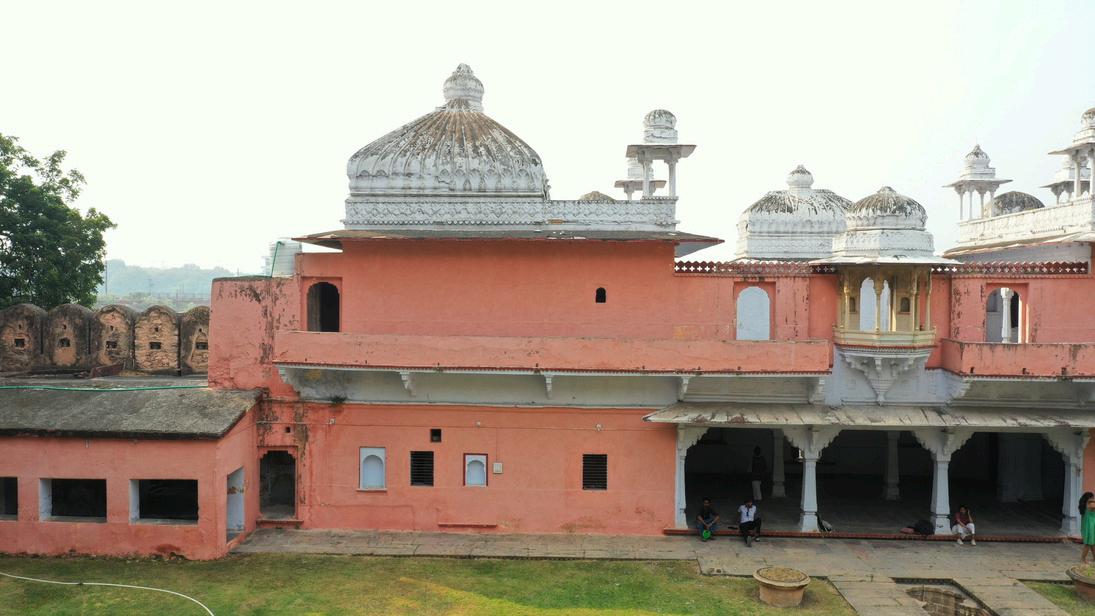
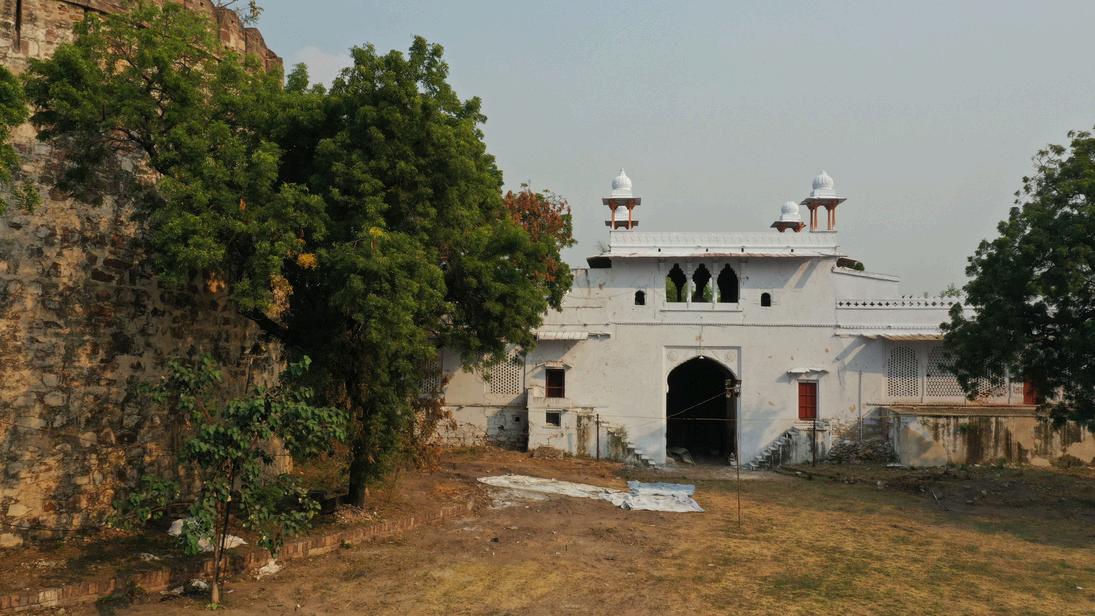
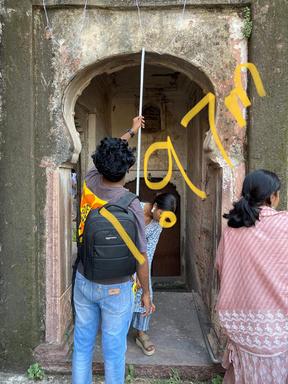
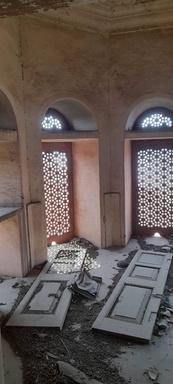
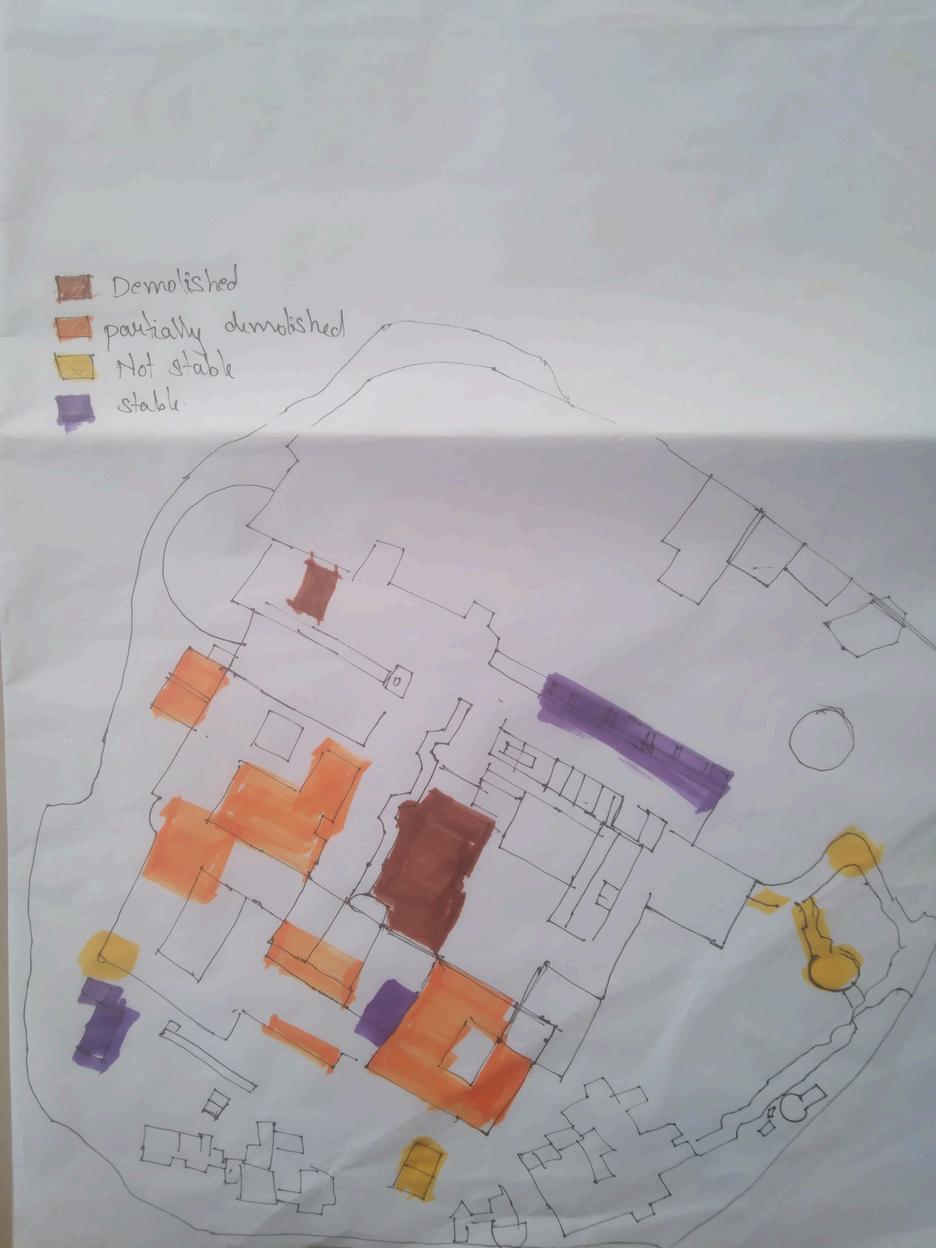
The places shows the demolished area where the most of the damage have been in the walls and in the foundation where the restriction is been followed, in partially Demolished area we could see the damage in the walls, and in the structure where it can be replaced by other materials
Floor and wall being cracked
CONCLUSION
The Kota fort in rajasthan has extremely rich architectural heritage which has the architectural influence of the rajput ,the Mughal and the islamic architectural style.
The arches , domes,doors,pillar foundation and the exterior of the fort shows the exceptional craftsmanship and the engineering skills
The foundation and the pillars and column support the weight of the structure , while the arches and domes add the immense grandeur and the majesty with elegance
The exterior of the forts ,with the high wall, battlements and watch towers give the security and strength Intricate carvings, ornamental Design and decorative elements adorn the structures , reflecting the regions cultural and artistic richness.
The use of local material such as the sandstone ,white marble and vernacular construction techniques have been the resourcefulness of the region's builders.
BIBILOGRAPHY AND ACKNOWLEDGEMENTS
https://in.images.search.yahoo.com/search/images;_ylt=AwrKHA fislmUQQAeRe7HAx.;_ylu=Y29sbw NzZzMEcG9zAzEEdnRpZAMEc2VjA3BpdnM-?p=KOTAH+RAJASTHAN+RULERS&fr2=pivweb&type=E210IN885G0&fr=mcafee#id=50&iurl=https%3A%2F%2Fcdn orientalartauctions com%2 F1ebc4537-a8c2-6d94-9f0c-0242ac1a0007%2F643b10141749d-300-5221-03__w_750.jpg&action=click
https://in images search yahoo com/search/images;_ylt=AwrKHA fislmUQQAeRe7HAx.;_ylu=Y29sbw NzZzMEcG9zAzEEdnRpZAMEc2VjA3BpdnM-?p=KOTAH+RAJASTHAN+RULERS&fr2=pivweb&type=E210IN885G0&fr=mcafee#id=74&iurl=https%3A%2F%2Fwww.christies.com%2Fimg%2F LotImages%2F2016%2FCKS%2F2016_CKS_12471_0111_000(sixteen_portraits_of_rajput_rulers_rajast han north india late 19th cen).jpg&action=click
https://in images search yahoo com/search/images;_ylt=AwrKHA fislmUQQAeRe7HAx.;_ylu=Y29sbw
NzZzMEcG9zAzEEdnRpZAMEc2VjA3BpdnM-?p=KOTAH+RAJASTHAN+RULERS&fr2=pivweb&type=E210IN885G0&fr=mcafee#id=56&iurl=https%3A%2F%2Fedurev.gumlet.io%2FApplicatio nImages%2FTemp%2F18bf90be-4d34-4d6e-b10a-638d996efc7f_lg.jpg&action=click