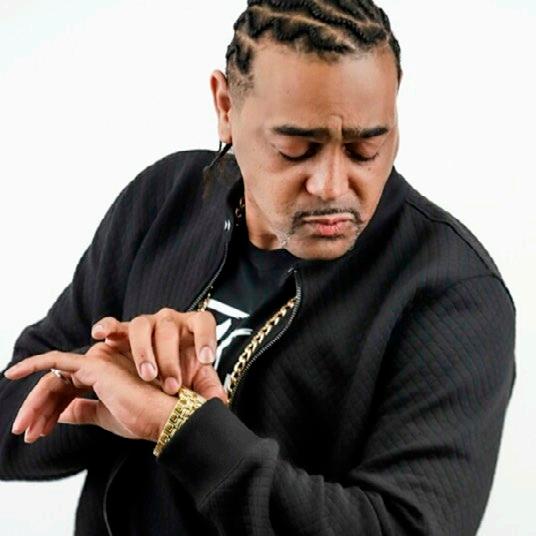
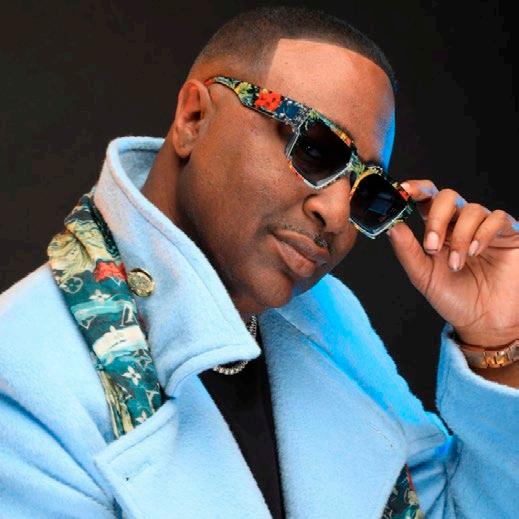
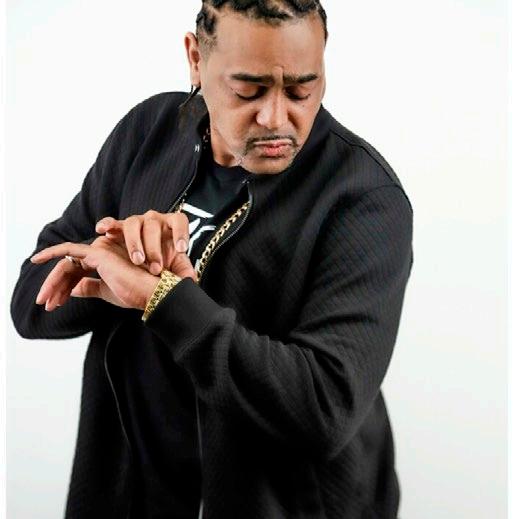
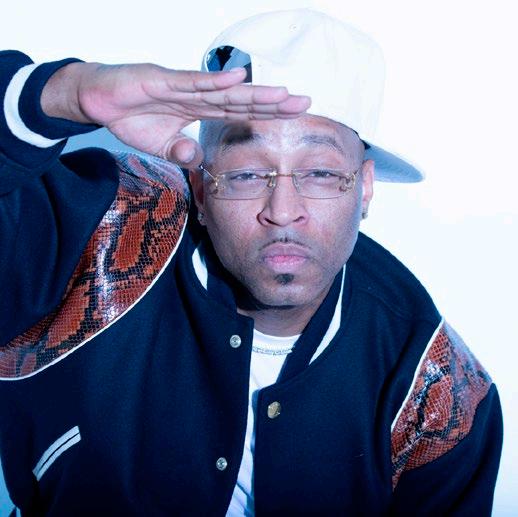
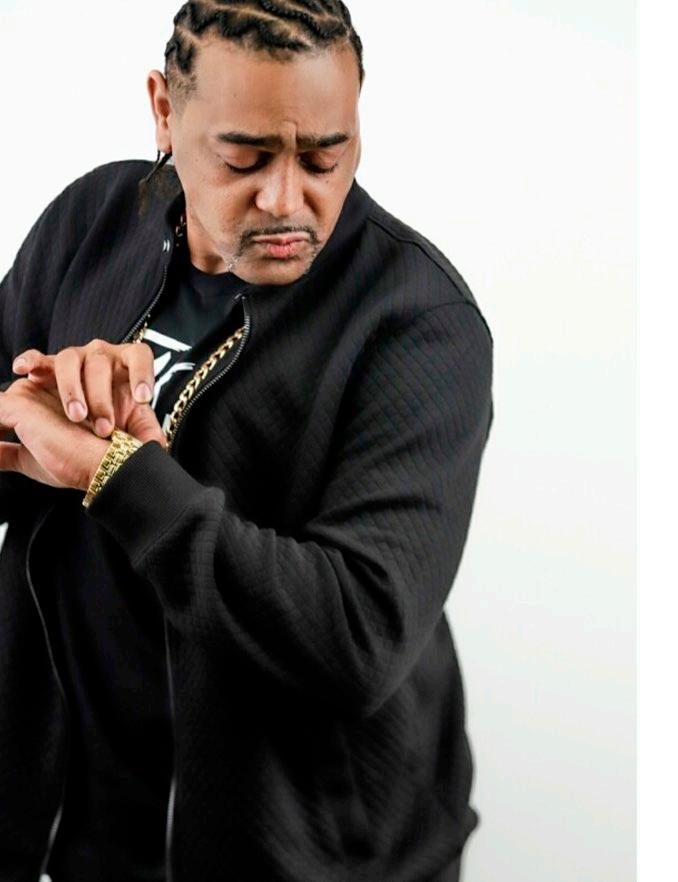
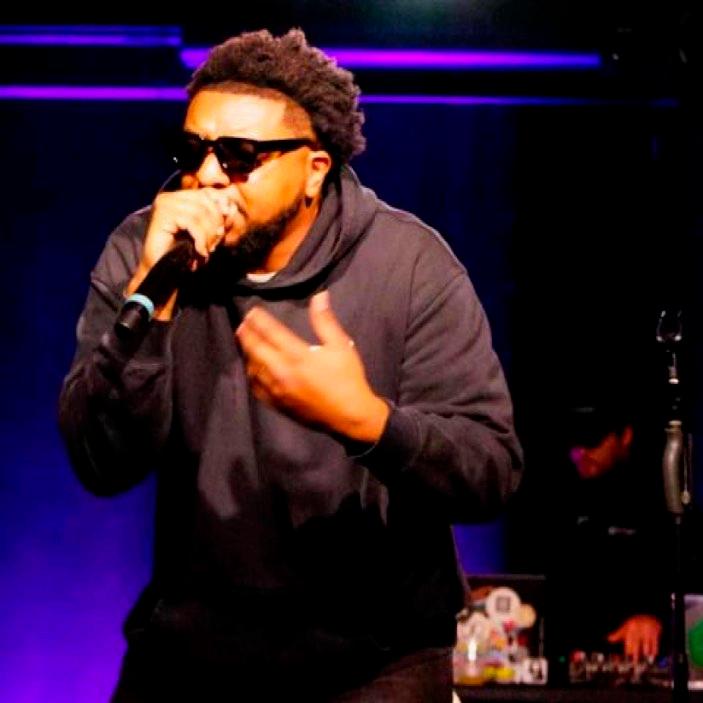
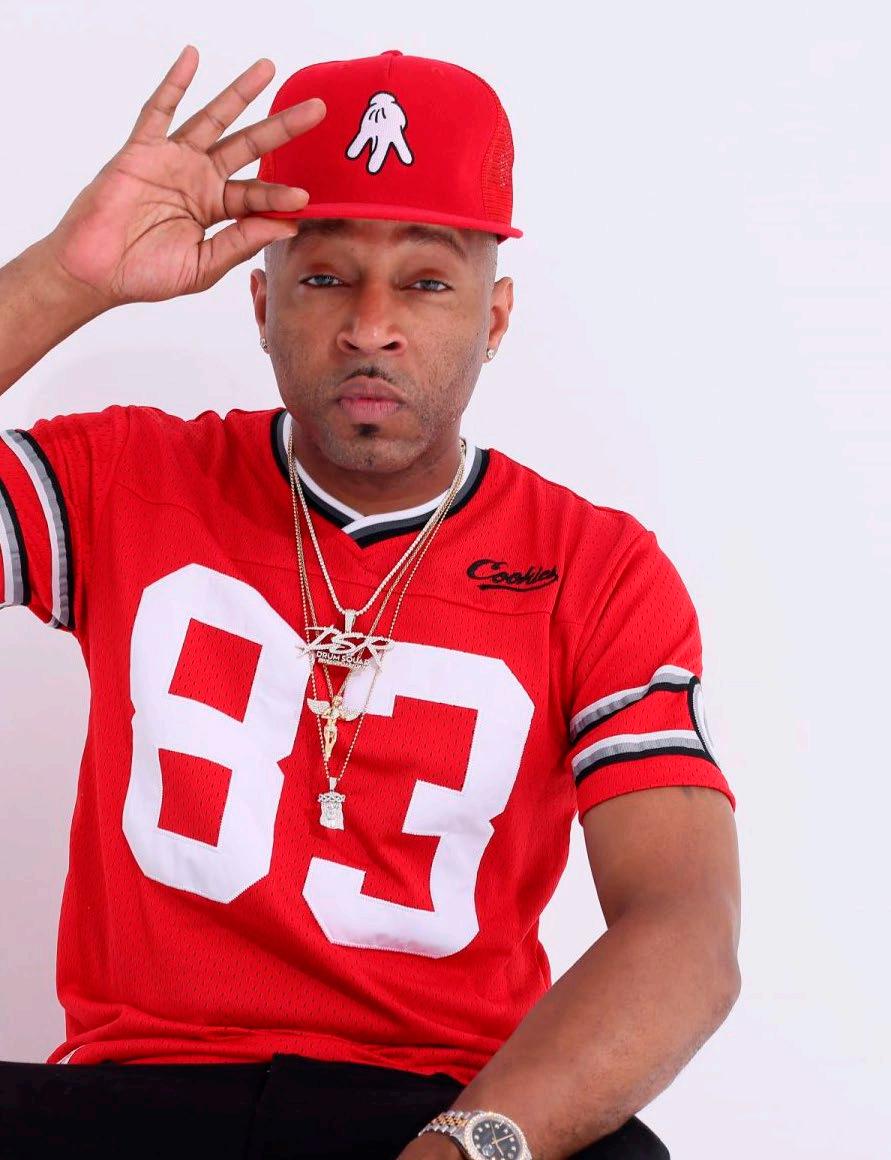
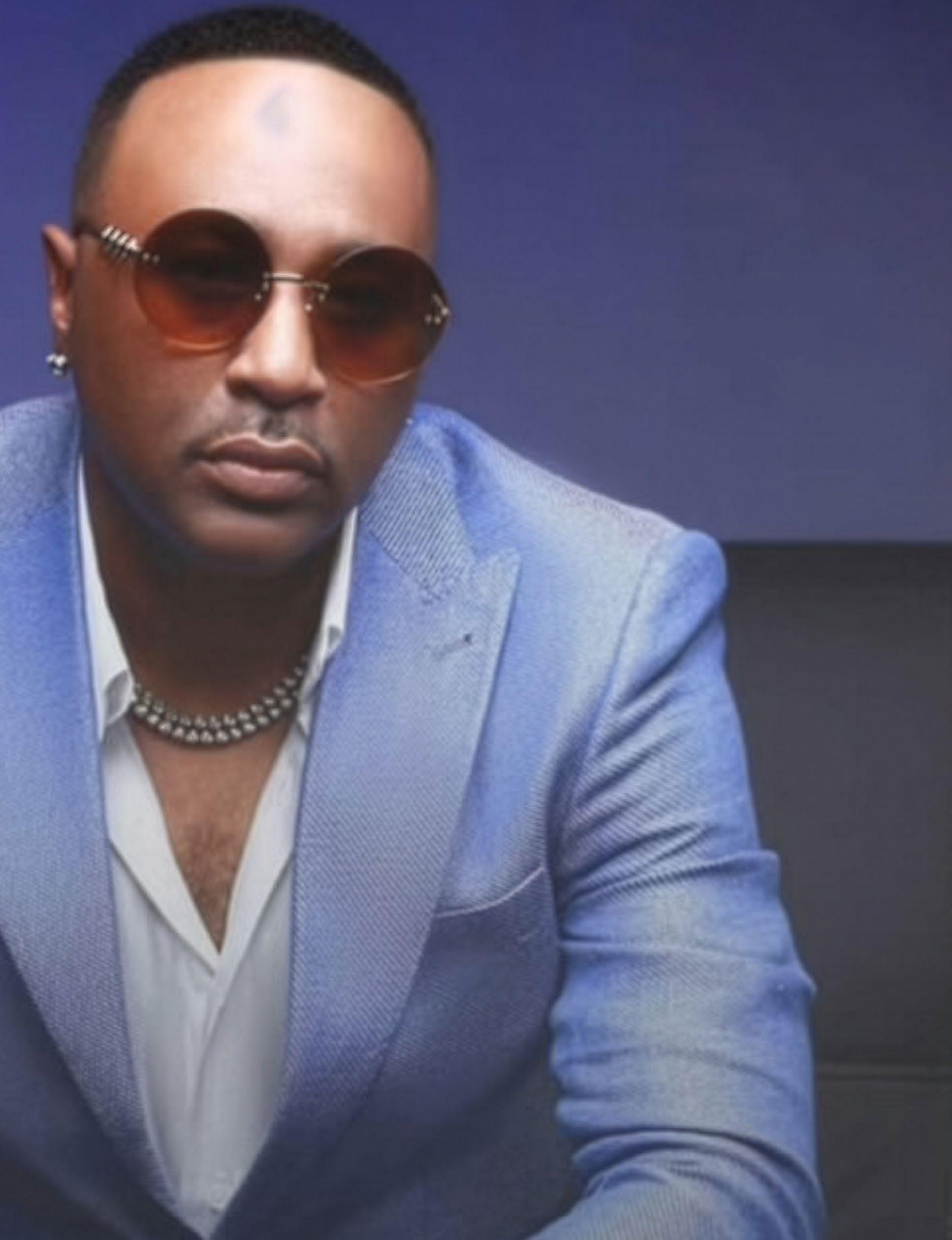
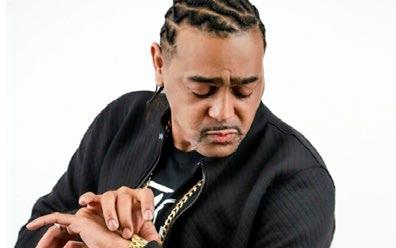
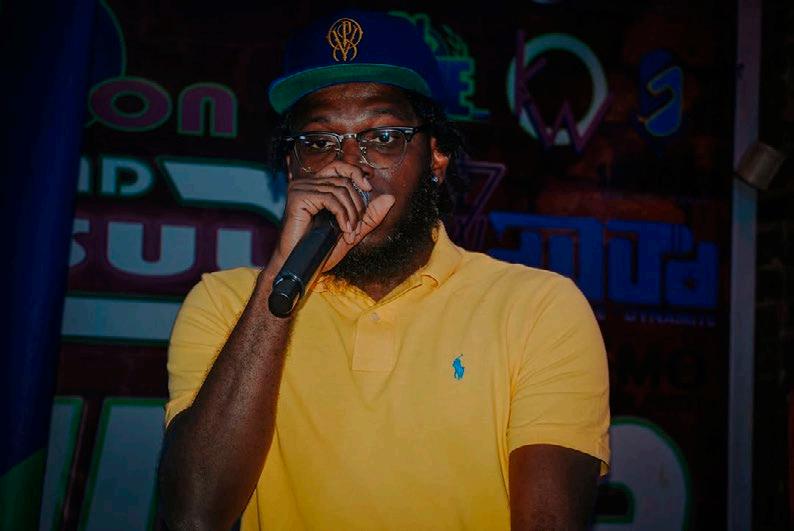
From San Diego roots to Pensacola stages and now Hollywood screens, JSapp MadStak represents the modern multi-hyphenate entertainer—rapper, actor, songwriter, entrepreneur, and film producer. His career trajectory demonstrates what's possible when raw talent meets relentless work ethic and an artist refuses to be confined to a single creative lane.
The music remains his foundation. With tracks like "Hush Button" amassing 150,000+ Spotify streams and a signature sound bridging old school hip-hop with modern production, JSapp has built a fanbase that translates to real-world impact. His recent headlining show pulled in over $1,200 in gross ticket sales. He's earned placements on Makin' It Approved on Spotify, and rotation on 90.3 FM WESS FunkNATION Radio.
His transition to film marks JSapp as an artist to watch. When writer/ producer/director Elrico Tunstall witnessed JSapp deliver two legend-
JSAPP MADSTAK Building an Entertainment Empire
One Role at a Time
ary performances in one day—Spring Break Fest 2K18 before 4,000+ attendees, then a benefit concert at Vinyl Music Hall—he immediately signed him to M.O.T.Y. (Manager Of The Year). JSapp graduated as valedictorian of M.O.T.Y. Actor's Corp 3.
Since then, JSapp has appeared in productions including Hulu's "The Act," Hulu's "Mike," "Jumanji 2: The Next Level," "How High 2," "Daisy Jones & The Six," and Peacock's "Killing It." His first speaking role came in 2023 as Detective Hish Jackson in "Sacred," but his breakout arrived with the lead role of Stephen Mahomes in Elrico Tunstall's "What The Heart Wants"—a film that debuted on Prime Video in July 2024, achieved over 500,000 streams, and featured five of his songs on the soundtrack, earning him a commemorative trading card. Most recently, he landed a featured role in "Cash Out 2: High Rollers" (March 2025) alongside John Travolta, Lukas Haas, Quavo, and Gina Gershon.
His industry connections run deep— from exclusive backstage access with Bone Thugs-N-Harmony to collaborating with multi-platinum producer NY Bangers, from sharing stages with Silkk The Shocker to broadcasting live from Universal Orlando Resort as a celebrity guest co-host. His entrepreneurial ventures, including StakLife Clothing, demonstrate business acumen beyond performance.
With his sights now set on international bookings and continued film work, JSapp MadStak embodies the complete entertainment package. For music collaborators seeking an artist with both underground credibility and commercial appeal, for venues looking for a headliner who delivers crowds and memorable performances, or for filmmakers needing talent who brings genuine screen presence—JSapp MadStak is built for the moment and ready for what's next.
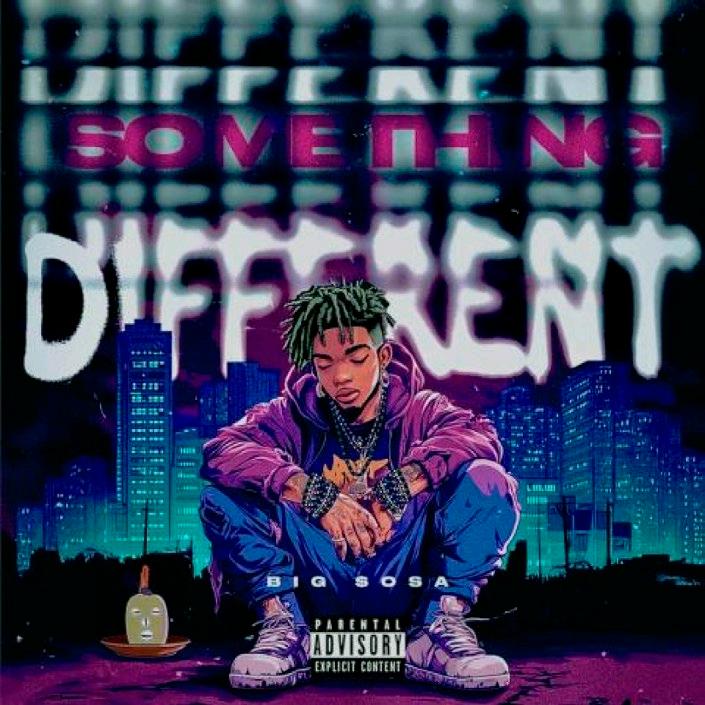
Big Sosa’s Afro-Caribbean single hits TV in South America, radio, and 1M YouTube views.
Big Sosa’s latest single, "Something Different", is a vibrant Afro-Caribbean track that fuses dancehall, Afro-pop, and Caribbean-style beats, creating a sound built for the international stage. The song has already earned TV placements across Africa, Brazil, Bolivia, and Colombia, and radio play in over 10 countries, showcasing its global reach and broad audience appeal.
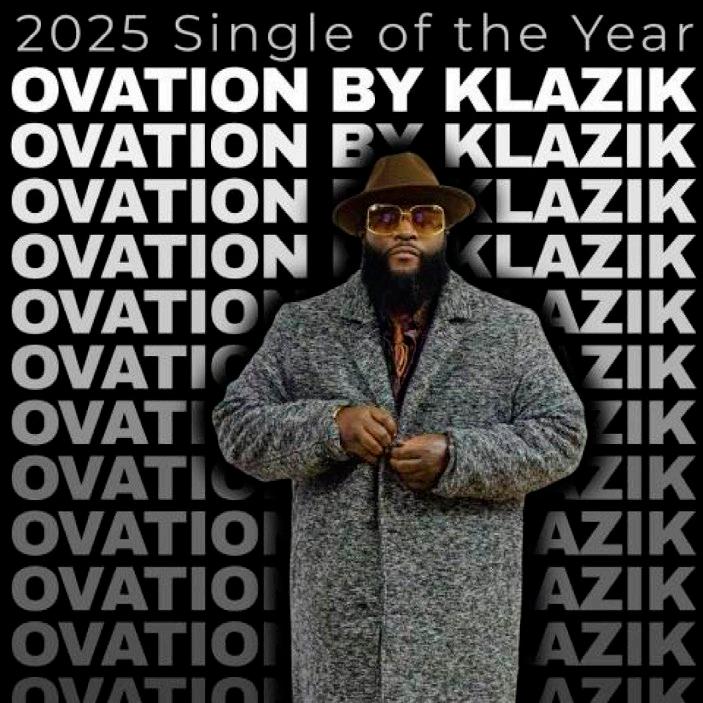
Klazik Scores Iowa Music Award for “Ovation”
Klazik’s single “Ovation” has been crowned Single of the Year at the Annual Iowa Music Awards, celebrating the artist’s breakthrough impact on the state’s emerging music scene. The award, presented at the ceremony in Burlington, honors Klazik’s creative excellence and connection with listeners. “Ovation” now stands as an undeniable song, further cementing Klazik’s legacy in Adult Contemporary Hip Hop. Scan QR Code to listen to the award winning single.
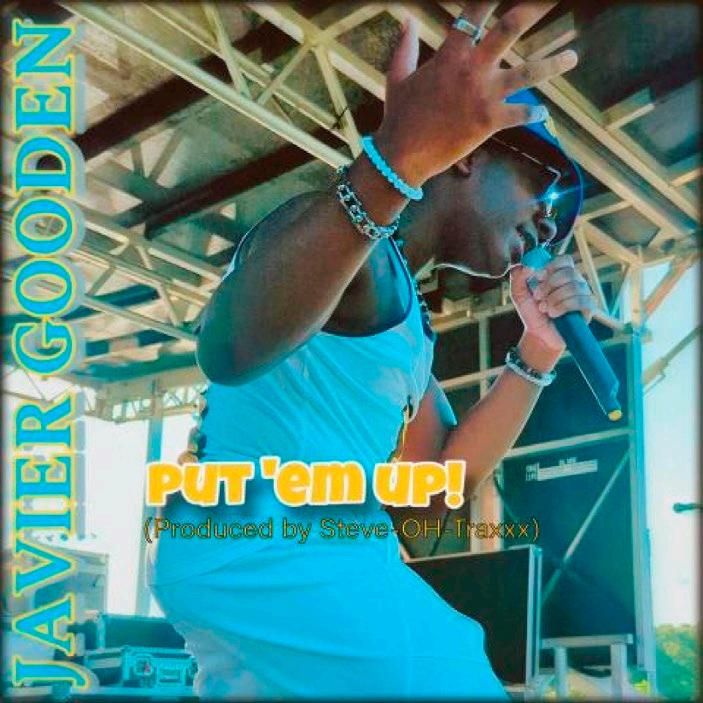
JAVIER GOODEN's "Put 'Em Up" gains international airplay w/ Morocco & Australia FM radio ADDs.
JAVIER's 1st single "Against My Soul" is in ROTATION in Illinois on Chicago 77.3 as well as in Canada & Pennsylvania on Indie 101.5. He's in HEAVY rotation on Party 104.9 on iHeartRadio in NYC & WDRT 91.9 FM in Wisconsin aired him too. Now JAVIER GOODEN has his 2nd single "Put 'Em Up" getting airplay in Marrakesh, Morocco on NESS FM and also in Australia on 99.9 BAY FM . Put 'Em Up is from his LP "Young Kings Wear Crowns V2" released on FUNKnation Recordings. Put 'Em Up is available on ALL DSPs.
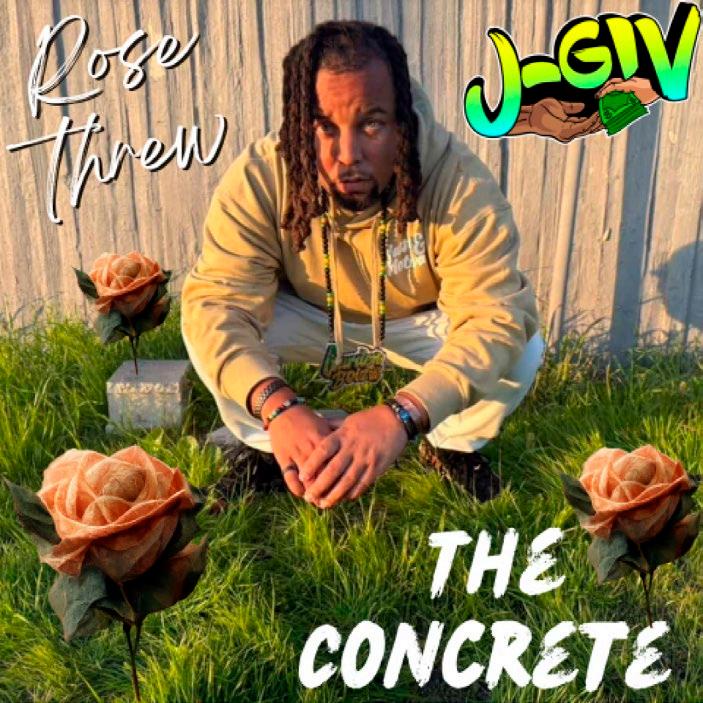
J-Giv Blooms From Struggle on New Single “Rose Threw The Concrete”
Bay Area artist J-Giv delivers a powerful new single, “Rose Threw The Concrete,” a genre-blending anthem about resilience, growth, and turning adversity into purpose. Blending hip-hop with electronic, Latin, funk, soul, folk, and world influences—layered with grime, trap, and conscious energy—the song captures raw emotion with forward-thinking sound. It’s reflective, street-rooted, and motivational, proving beauty can rise even in the harshest conditions. Releasing Dec 31st 2025 Ending Off the Year Right
DWheel Locks In and Doubles Down on His Music Grind
DWheel has been locked in, taking his music more seriously than ever. In the past month he recorded four new songs, shot two visuals, including one with Atlanta’s own BHM Peezy, and hit the studio with The Mixgod David Lee. Focused on growth and consistency, he’s laying the foundation for what’s next while searching for the right producer to help shape his sound. Check out one of his latest visuals to see the progress for yourself.
Spits Nelson Joins Vedo, Seddy Hendrix, and More on Hitmkr.com's 2026 Artists to Watch List
Named as one of 9 artists to watch in 2026 by Hitmkr. com, Spits Nelson was recently booked to perform at the company's Los Angeles' Fundraiser in November. Hitting the Stage at The Paramount, Spits put on a performance that immediately led to another Spring 2026 booking and multiple feature requests from West Coast artists. As the momentum from his Good Coffee Club series continues to grow, so does his fanbase and opportunities. We look forward to seeing Spits expand the brand internationally in 2026.
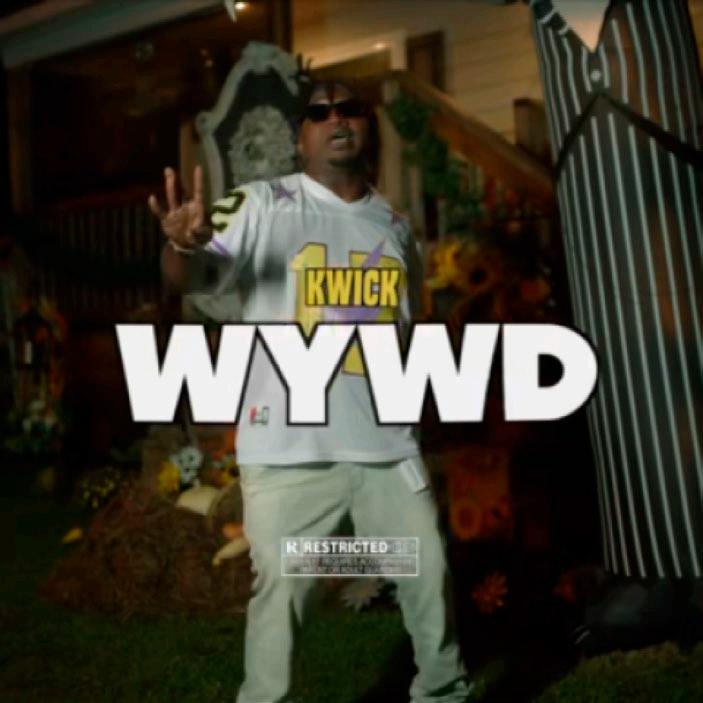
Kwick Brings Fans to the Trenches with Official Video for “WYWD”
From the moment you press play, “WYWD” taps into the raw musicality Louisiana is known for. Baton Rouge rapper Kwick delivers infectious energy, gritty bars, and commanding presence as he introduces listeners to his world. Directed by Flex Montana, the visuals keep it simple but engaging, spotlighting Kwick’s charisma and the support of his team. Themes of loyalty, loss, and staying solid run deep, as he tucks personal moments into a club-ready anthem that has crowds chanting “What You Want Do?” Watch the official video now and tap in with Kwick’s movement.
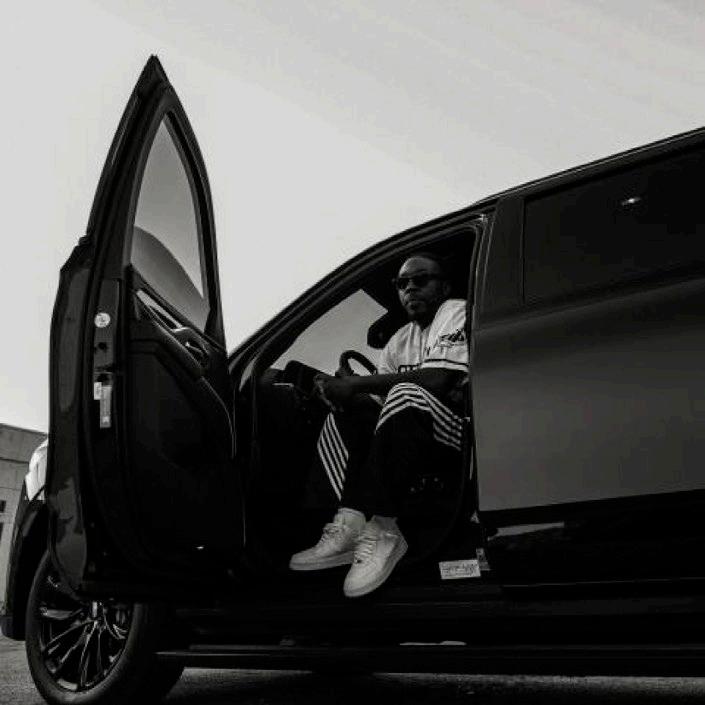
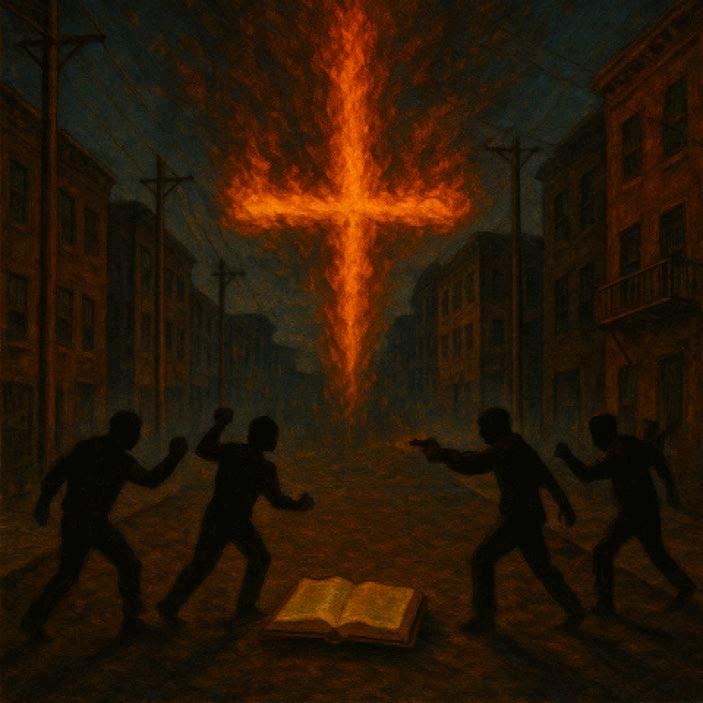
What does “Maranatha” really mean—and why is he bringing it back with street-level intensity? Raised in Newark, NJ and forged in chaos, AbeFromTheAve’s latest track blends gritty hip-hop realism with a deeper message of urgency and awakening. Maranatha, “Come quick, Lord,” signals a turning point: leaving survival mode behind and stepping into clarity and purpose. Raw, reflective, and unapologetic, this record pulls listeners into a moment of reckoning you don’t want to miss. Listen for yourself.
GENERATIONAL SOUND: HOW DRUMMA BOY TURNED LEGACY INTO LONGEVITY
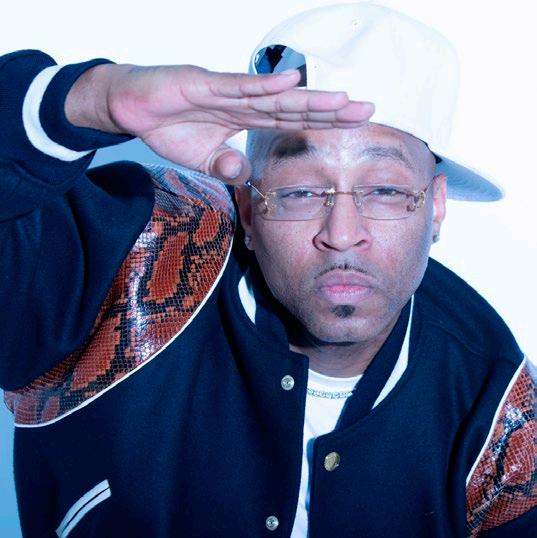
Legacy isn’t something Drumma Boy takes lightly— it’s something he was raised in and chose to build upon.
Music excellence ran deep in his household. His father broke barriers as the first Black first-chair musician in the Memphis Symphony Orchestra and later became a tenured music professor. From an early age, Drumma Boy learned that music wasn’t just about talent—it required discipline, preparation, and respect for the craft.
That foundation was reinforced by his older brother, Ensayne Wayne.
Ensayne mentored Drumma Boy in production and ushered him into the industry while he was still in high school, helping him land his first placements. But access never became an
excuse. Instead of sitting back, Drumma Boy hit the streets with the same hunger as an independent artist—passing out flyers with his production credits the way artists passed out CDs. Shaking hands. Kissing babies. Building relationships face-to-face. He didn’t rely on his brother’s relationships; he built his own and added value to what they were creating together.
That work ethic paid off quickly.
Before the age of 30, Drumma Boy had already produced multiple #1 records and worked with some of the biggest names in urban music. His sound blended Southern grit with musical sophistication, making him a go-to producer during a defining era. In an industry known for short runs, his
success proved durable.
In 2018, Drumma Boy faced profound loss with the passing of Ensayne Wayne. Together, the brothers had founded their production company more than a decade earlier, grounded in ownership, independence, and longterm vision. Continuing without his brother wasn’t just emotional—it was a responsibility. Drumma Boy chose to honor that legacy by expanding the company, pouring into new talent, and ensuring their shared vision continued to grow.
The accolades place him in rare air.
Out of more than 200 million songs available on DSPs, fewer than 200 have achieved Diamond certification, making Drumma Boy part of an
elite group even rarer than Grammy winners—a distinction he also holds. Still, awards aren’t what define him.
What stands out most is how he carries himself.
Drumma Boy moves with assurance, not ego. There’s a warmth that reflects his love for music and culture, paired with a clear understanding of business, digital assets, and ownership. Now a father, he’s thinking beyond hits—positioning himself for the legacy of another generation.
From mentorship to mastery, loss to longevity, Drumma Boy’s journey is about more than success.
It’s about respect—and building something that lasts.
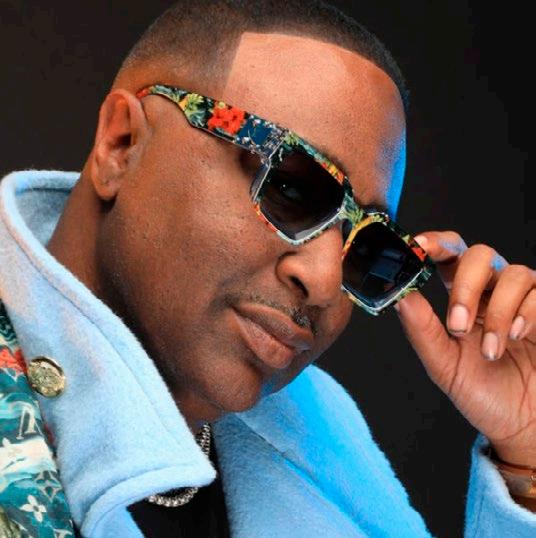
In 1996, when 112's "Only You" first hit airwaves, there was no Instagram to show you the artist. No TikTok to create a personality. There was only the music—and Marvin "Slim" Scandrick's signature falsetto was so distinctive, so unmistakable, that it needed nothing else. But what audiences didn't see behind that voice was a classically trained musician, an 8-time ASCAP Awardwinning songwriter, and a complete artist whose depth of mastery is the secret to his three-decade legacy.
112's debut was explosive, spawning charttoppers like "Cupid," "Peaches & Cream," and "Anywhere." Their contribution to "I'll Be Missing You" earned them a Grammy for Best Rap Performance by a Duo or Group. Slim's high tenor falsetto carved out unique sonic space in the crowded '90s R&B landscape, differentiating 112 from the gritty tenors of Jodeci and the harmonies of Boyz II Men. When Sean "Puff Daddy" Combs signed the group, he recognized this distinctiveness and restructured their vocal arrangements to feature Slim prominently.
WHY SLIM'S CAREER OUTLASTED THE TRENDS
A MASTERCLASS IN MULTI-DIMENSIONAL TALENT
But the voice was just the surface. Slim plays viola, cello, double bass, and violin—concert strings that informed 112's sophisticated vocal arrangements and harmonic complexity. His understanding of musical theory and instrumentation created layers that casual listeners enjoyed without realizing the craftsmanship behind them. His songwriting credits include fanfavorites "Dance With Me," "Love Me," and "U Already Know," earning him eight ASCAP awards. Real-life situations and observations fuel his creative process, transforming everyday experiences into timeless R&B classics.
Today, Slim mentors young artists, emphasizing live instrumentation over digital plugins and the importance of authentic harmonizing. He's fighting to preserve the fundamentals that defined the Golden Era—real musicianship, not shortcuts. His philosophy is simple: traditional R&B values aren't outdated; they're the foundation for longevity.
This commitment hasn't made Slim irrelevant—it's made him timeless. His
June 2025 single "Somebody to Love" proves that old-school principles still create contemporary hits. Meanwhile, the Room 112 Tour sells out shows nationwide, celebrating their 30th anniversary. TikTok has introduced Gen Z to 112's catalog while original fans pack venues, sometimes bringing their children to experience the music live.
The numbers tell the story: over 10 million albums sold, 15 Hot 100 hits, five numberone R&B singles, and packed shows three decades later. Multi-platinum success and Grammy wins don't happen by accident—they happen when artists master their craft completely.
As Slim continues creating and touring, he represents something increasingly rare in music: an artist whose depth matches his reach. The falsetto made him famous. The musicianship, songwriting, classical training, and commitment to craft made him timeless. For independent artists building sustainable careers, the lesson is clear—be more than your moment. Be complete.
Scan QR Code to hear music from everyone featured in this issue.
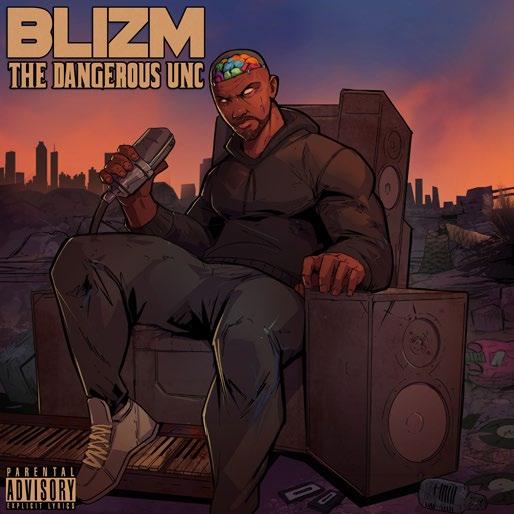
The Dangerous Unc Blizm
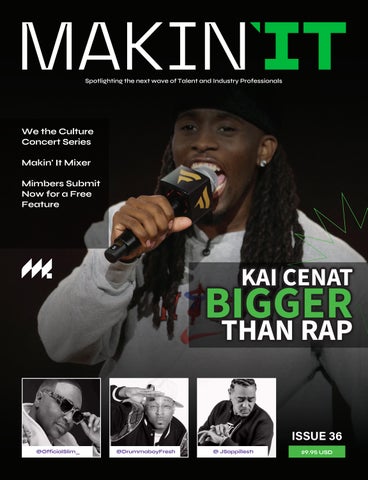
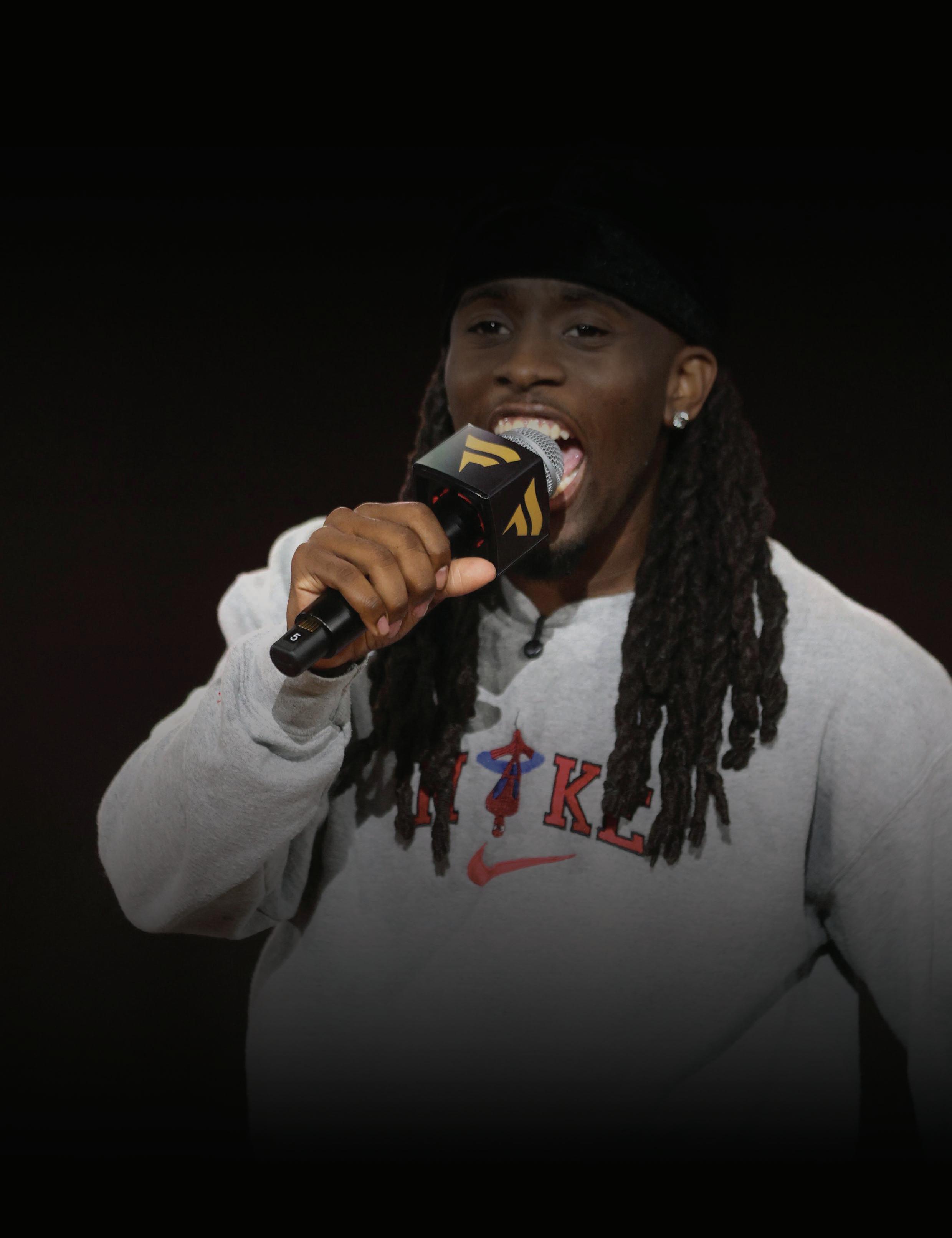
KAI CENAT BIGGER THAN RAP
How Streamers Took the Crown and Why Rappers had to Bow Down
Kelby Cannick
The announcement came during a marathon stream that had already broken records. Thirty days straight. Twenty-four hours a day. Kai Cenat, 22 years old, sitting in front of his camera setup doing what he does every single day—just being himself. Then the notification: One million paid Twitch subscribers.
Not followers. Not views. Not "engagement." One million people who decided that watching Kai Cenat live his life was worth paying for. Every single month. Automatically.
Do the math. At minimum, that's five million dollars monthly. Fifty percent goes to Twitch, sure, but Kai still walks away with $2.5 million. Every month. From people who chose to pay, not because an algorithm tricked them or a label forced bundles down their throats, but because they genuinely wanted to support him.
Now do this math: When's the last time a rapper sold a million copies of an album? Not streaming equivalents—not algorithm-inflated numbers where 1,500 streams equals one sale. Actual copies. Physical CDs, vinyl records, digital downloads. People choosing to spend actual money to own the music.
The answer takes you back nearly two decades. In 2007, Kanye West's Graduation sold 957,000 copies in its first week—actual purchases, not streams. That same year marked the famous sales battle where Kanye outsold 50 Cent's Curtis, a moment widely considered the cultural turning point when hip-hop shifted away from gangsta rap. Before that? Nelly's Country Grammar in 2000 kept selling over 200,000 copies per week for months. Eminem's The Marshall Mathers LP moved 1.76 million copies in its first week.
But after 2007, pure sales collapsed. By 2014, only two albums in America sold a million copies: the Frozen soundtrack and Taylor Swift's 1989. In hip-hop? The drought was even worse. Today, the best-selling rap album of 2024 sold about 160,000 pure copies total.
Kai Cenat convinced a million people
to pay him every month. Most platinum rappers can't convince a million people to pay them once. That's not just a flex. That's a fundamental shift in cultural power.
THE GODS WE MADE
There was a time when rappers were untouchable. The distance between artist and audience was carefully engineered, meticulously maintained, and absolutely essential to the product. You saw rappers when they wanted to be seen: on MTV, on BET, on magazine covers, in music videos where every frame was storyboarded and every image approved.
The mystique wasn't accidental. It was the whole point. Biggie rapped about blowing up like the World Trade and we believed him because we only saw him when he was larger than life. Jay-Z talked about moving weight and retiring in the Maybach and we couldn't fact-check it because there was no real-time.
Rappers sold aspiration. They said: "Look at my life, my cars, my chains. You want this. You want to BE this." And we did. Brands knew it too. Reebok paid $50 million for Jay-Z. Sprite built entire campaigns around hiphop. The rapper was the ultimate cultural product: aspirational, unattainable, and therefore infinitely valuable. The key word there is "unattainable." You couldn't touch them. You couldn't access them. You couldn't see behind the curtain. Until suddenly, you could.
THE GREAT UNMASKING
Instagram launched in 2010. Twitter had already been around for a few years. Suddenly, the curtain didn't just have holes in it—it evaporated entirely. At first, it seemed like a win for rappers. Direct access to fans! No media gatekeepers! Except they couldn't control the narrative. Because the thing about 24/7 access is that it's 24/7. You can't maintain mystique when you're post-
ing Instagram Stories from the club at 3 AM. You can't be larger than life when everyone watches you argue with your baby mama in real-time.
The Shade Room became bigger than any rap blog ever was, not by breaking new artists but by breaking down existing ones. Every day, another crashout. Every week, another rapper exposed for fake jewelry, rented cars, fabricated street credentials.
6ix9ine cooperated with federal prosecutors and livestreamed his life afterward. The "stop snitching" era died in a courtroom, and everyone watched. Tory Lanez and Megan Thee Stallion's entire legal saga played out like a reality show. Rappers kept beefing on social media, kept going live to address their "haters," and with every post, the illusion crumbled.
The authenticity that rappers had sold as their ultimate product—their "realness," their "street cred"—was revealed as just another costume. Gen Z, growing up with all of this, developed immunity. They'd seen too many rappers crash out, get exposed, and fall apart publicly. The aspiration model broke. You can't look up to someone whose lowest moments are memed and whose worst decisions are documented in 4K.
And into that vacuum stepped someone who never pretended to be anything else.
THE NEW PARASOCIAL ARISTOCRACY
Kai Cenat goes live, on average, six to eight hours a day. During Mafiathon 2, he streamed for 720 consecutive hours. An entire month. Think about trying to maintain a fake persona for 720 hours straight. You can't. Nobody can. And that's precisely the point.
Streamers built their empires on a fundamentally different value proposition
than rappers ever offered. Not aspiration. Companionship. When you watch Kai Cenat, you're not watching someone you want to be. You're watching someone you feel like you know. Someone who feels like a friend. He's not selling you a fantasy life. He's sharing his actual one—the boring parts, the goofy parts, the vulnerable moments. The kids eating cereal for dinner while watching Kai play video games don't want his life. They want him in theirs. There's a crucial difference.
This is the parasocial relationship perfected. Not celebrity worship from a distance, but simulated friendship at scale. You're not a fan. You're part of the community. And when you hang out with someone six hours a day, every day, for months or years? You develop loyalty that no album rollout could ever inspire.
Rappers used to say "I'm so important I only appear when I want to." Streamers say "I'm here whenever you need me." In 2024, the second message won.
THE RESENTMENT CHRONICLES
You can feel the tension. A rapper walks into a streamer's setup to promote their album. The streamer is younger, hasn't accomplished anything the rapper would traditionally respect—no platinum plaques, no street credibility. But the streamer has something the rapper desperately needs: attention. Youth attention.
So the rapper smiles. Plays along. Endures being the content, not the star. The Kai Cenat and Wale interaction became a controversy for exactly this reason. Wale, a multi-platinum artist, felt disrespected during an appearance on Kai's stream. Underneath the specifics was a more fundamental tension: an established artist grappling with the reality that his credentials meant less than Kai's viewer count.
Plaqueboy Max has had multiple confrontations with rappers. Lil Baby. Fivio Foreign. The pattern is consistent: street-oriented rappers forced to bite their tongues around someone they'd normally dismiss as a "goofy," because that goofy has millions of followers. The disrespect is palpable. But they show up anyway. Because the math doesn't care about respect. And every time a rapper swallows their pride and shows up on a streamer's platform, they prove the very thing destroying hip-hop's mystique: it's all just business. The "realness" is negotiable. The authenticity is a costume that comes off whenever the numbers require it. The kings became supporting characters, and everyone noticed.
THE MATH DOESN'T LIE
A Platinum Rap Album in 2024: Top-selling rap album sold 160,000 pure copies for the entire year. Most rappers now go "platinum" via streaming equivalents. Label takes 80-85%. Producer points, feature costs, marketing recoup. Artist might see $100K-$500K if lucky. Three to four year wait for the next album.
Kai Cenat's Mafiathon 2: 1 million paid subscribers. Minimum $5/month = $5M monthly gross. Twitch takes 50% = $2.5M to Kai monthly. Plus donations, sponsorships, merch. Recurring revenue—they re-subscribe automatically. Can repeat monthly, indefinitely. No label. No recoup.
Kai Cenat made more money in one month than most platinum rappers make from their albums. And he can do it again next month. But the money is secondary to what it represents: loyalty. When someone subscribes, they're saying "I value this enough to pay for it, monthly, even though I don't have to."
Rappers used to create fans. Streamers create communities. Fans buy albums—or they used to. Communities pay subscriptions. One is a transac-
tion. The other is a commitment.
THE CLIPSE CLAUSE
But there's a counter-narrative. Pusha T and No Malice reunited as Clipse and released Let God Sort Em Out in 2025, their first album in 15 years. They did not chase streamers. They did not manufacture viral moments. Instead, they made calculated appearances that reinforced their brand: collaborations with Pharrell, conversations with Tyler, the Creator, features in legacy publications.
They focused on art, not attention. The album earned a Grammy nomination. The Clipse rollout worked because they understood something crucial: hip-hop is 50 years old now. It's not a youth culture anymore. It's a mature art form with multiple subgenres and fragmented audiences. You don't need everyone's attention. You just need the right attention.
What the youth owns now isn't hiphop. It's attention itself. The Clipse
didn't need Kai Cenat because they weren't trying to be the center of youth attention. They were making meaningful art for their audience—an audience that values substance over virality. This is the wisdom: You can't be 22 forever. Chasing
they chipped away at the mystique that made them powerful.
You can't be aspirational when you're available. You can't be larger than life when you're posting from the grocery store. Rappers wanted the access that social media
streamers for clout is like a 40-year-old hanging out at the high school parking lot. It doesn't make you young. It makes you look desperate.
WHAT COMES AFTER COOL?
Streamers didn't steal hiphop's cultural power. Rappers gave it away. Every Instagram Live rant. Every Twitter beef. Every public crash-out. Every time a rapper broke character to reveal the insecurity underneath,
cause he never pretended to be anything other than himself. That authenticity created trust. Trust created community. Community created recurring revenue.
THE VIEW FROM 50
Hip-hop turned 50 in 2023. If you measure by attention, hip-hop lost. The kids are watching streams, not music videos. But if you measure by art, by cultural impact? Hip-hop won decades ago. It influenced every genre. It changed fashion, language, business. It created generational wealth. It gave voice to communities that had been silenced.
Maybe the real problem is that we kept measuring success by youth attention long after hip-hop outgrew being a youth movement. Rock and roll went through this same crisis and didn't die—it matured. Hip-hop is at that inflection point now.
Success on stage starts with the strength to bring people in the door. Each issue, The Draw spotlights the independent artists proving their pull by moving tickets and packing out shows. These numbers don’t just represent sales, they represent influence, community, and momentum. This issue's numbers come from the We The Culture Concert held in Atlanta on Sept 27th.
provided but didn't understand that access and mystique are opposing forces. You can't have both.
Streamers understood this from the beginning. They built their model on the opposite: radical transparency. Constant availability. Friendship, not worship. In an attention economy with infinite content, presence beats performance. Consistency beats spectacle. Being there beats being cool.
Kai Cenat didn't have to manufacture an image be-
The streamers aren't the enemy. They're just the next generation creating culture that speaks to them. Kai Cenat is bigger than rap—not because rap failed, but because rap succeeded so thoroughly that it no longer needs to be the center of everything to matter.
Hip-hop is 50 years old. It's time we let 50-year-old artists make the art their experience has earned them the right to make. The youth will always move on. The art remains. Kai Cenat has his million subscribers. Hip-hop has 50 years of proof that it changed the world. If we're going off impact there's nothing bigger than that!
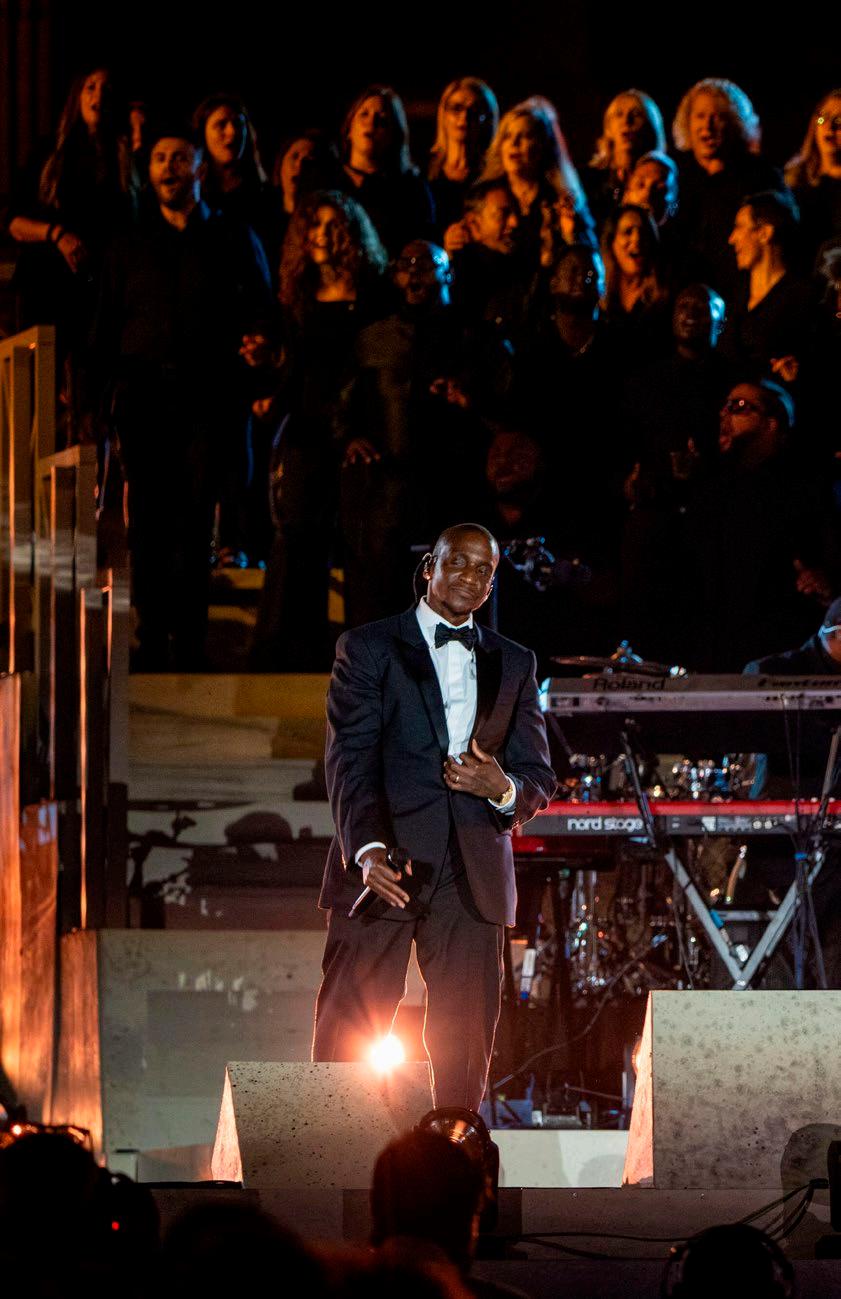
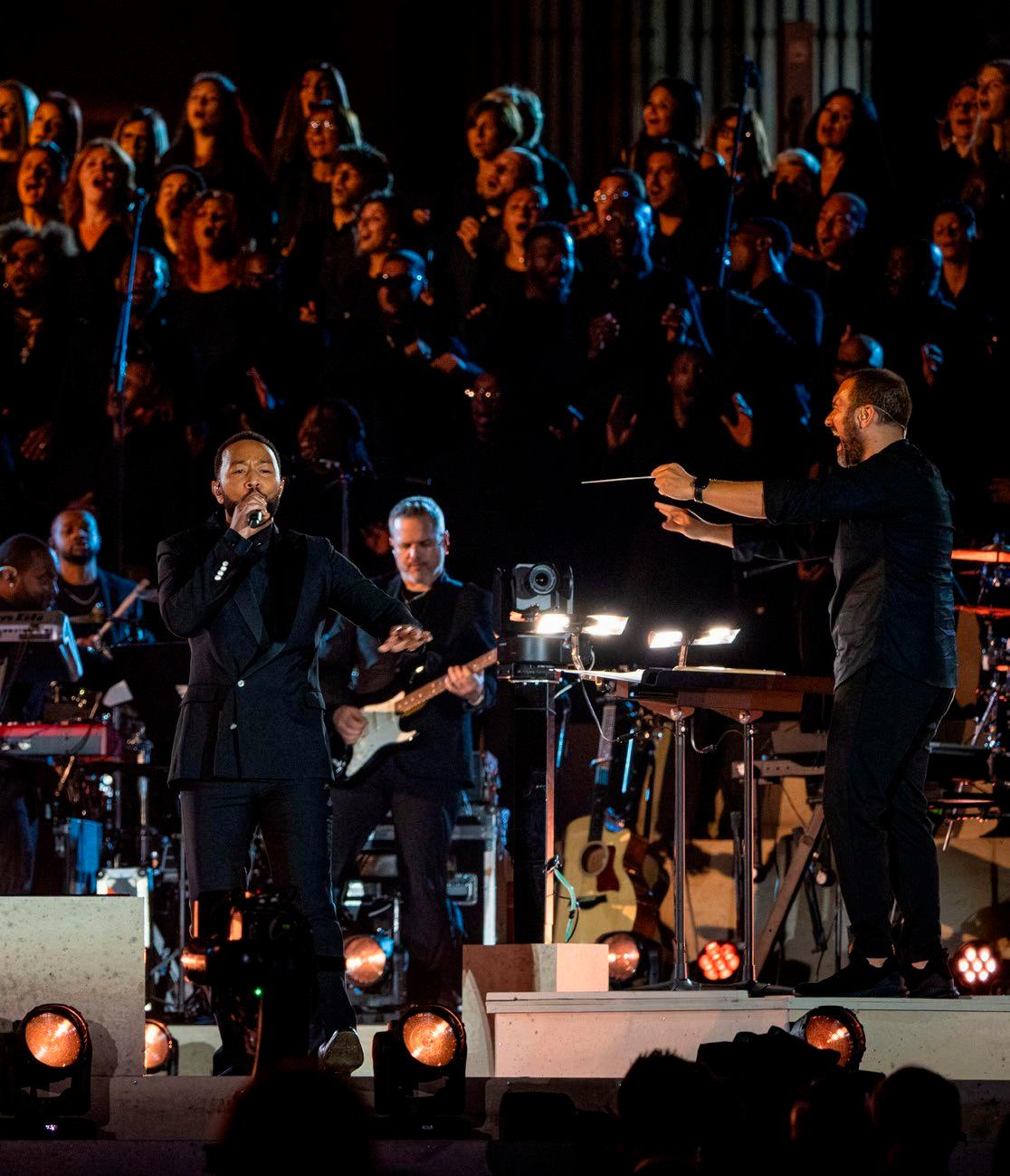
The Clipse performing at the Vatican.
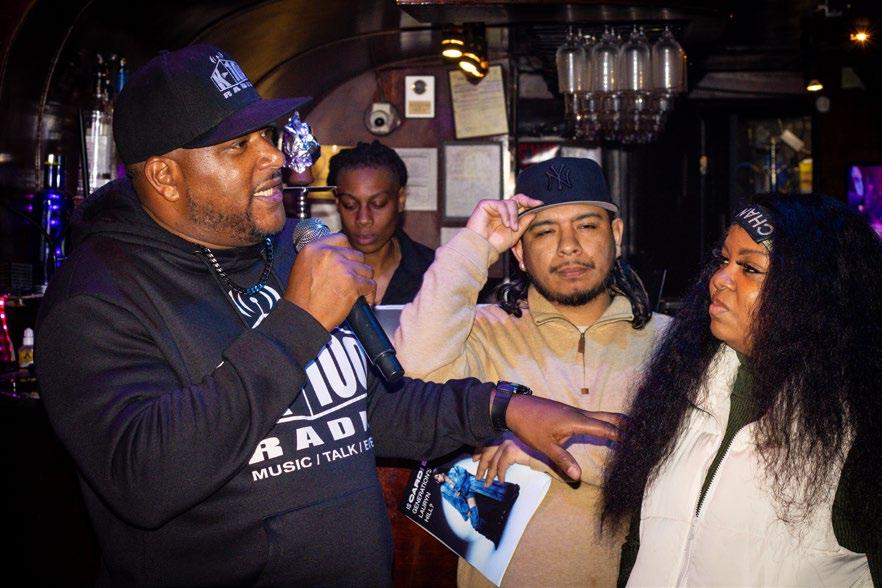
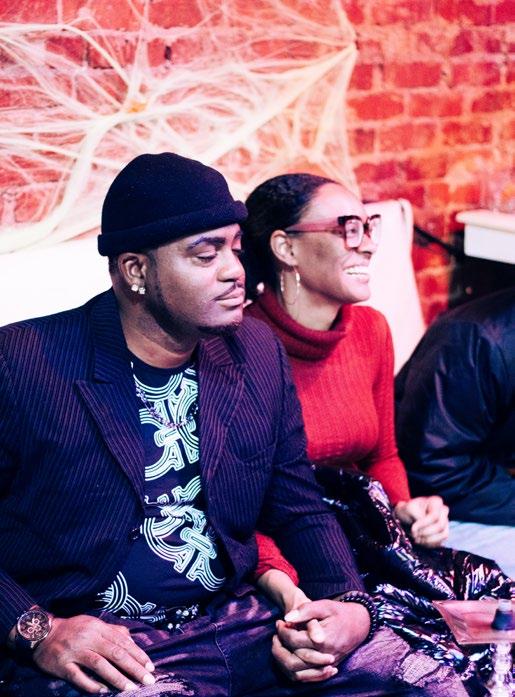
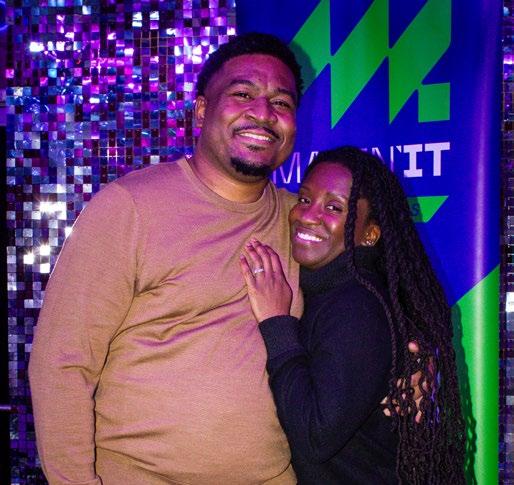
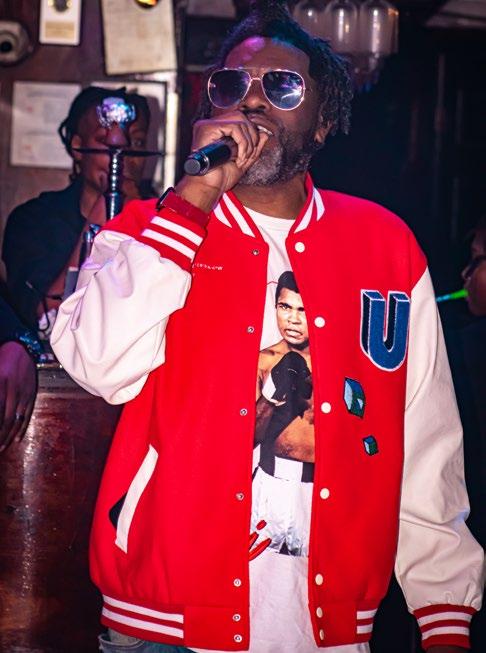
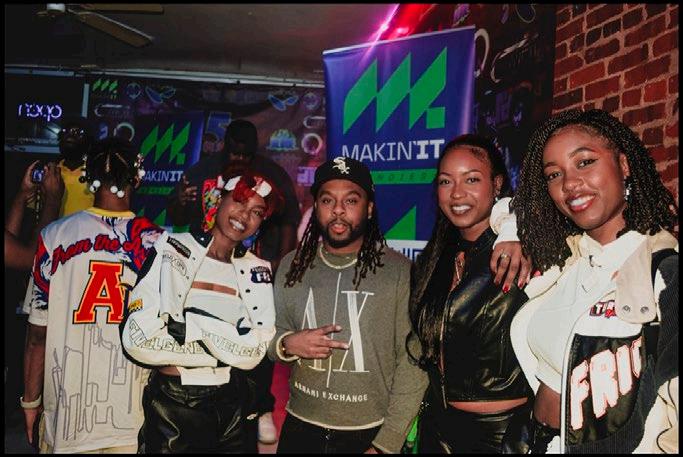
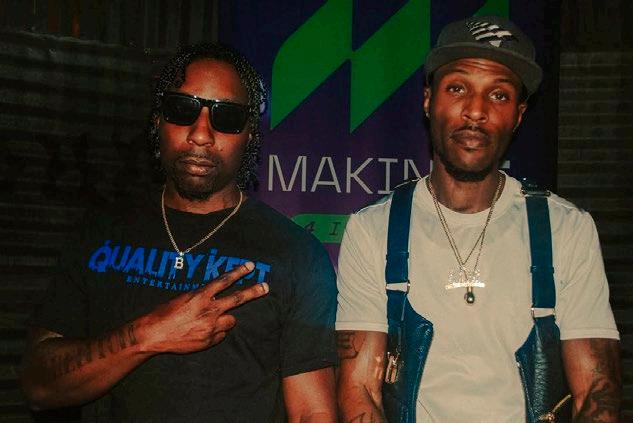
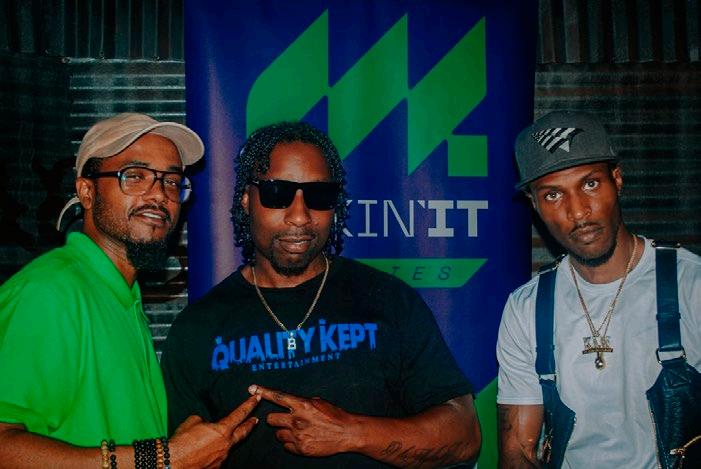
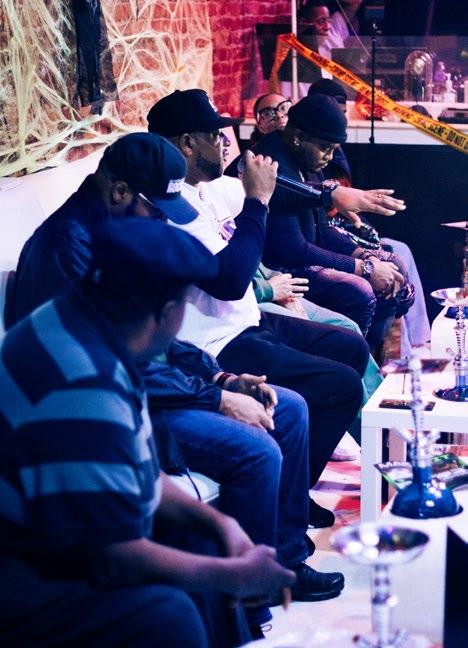
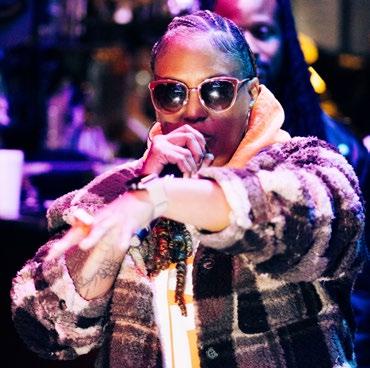
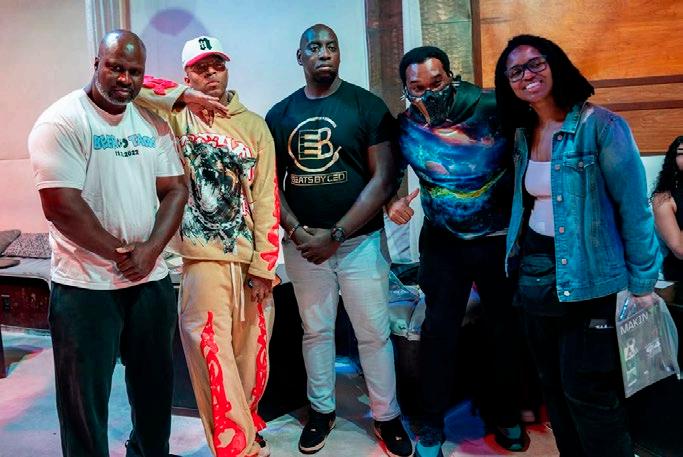
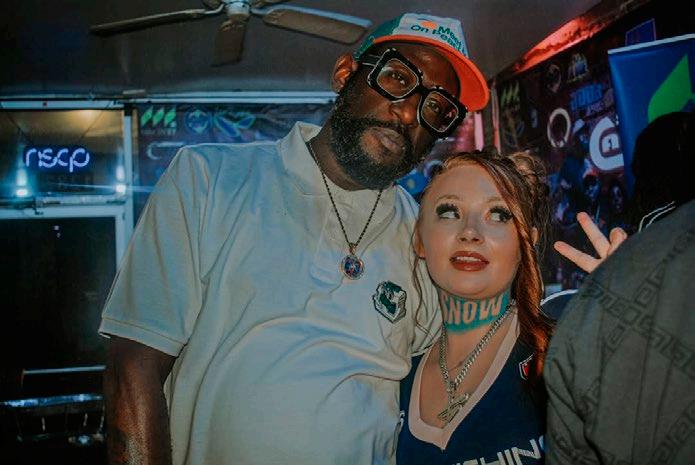
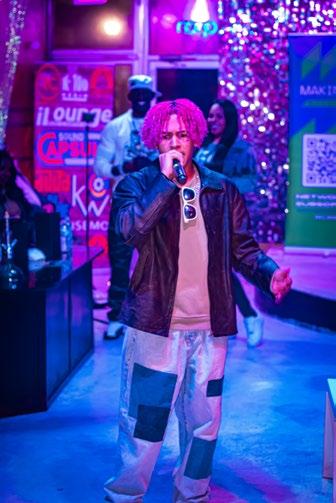
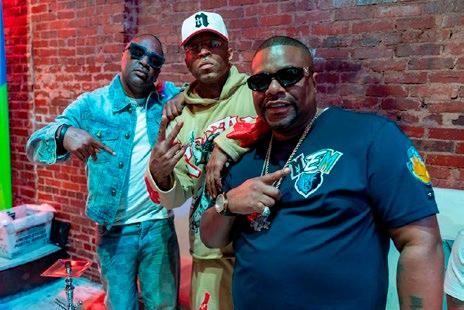
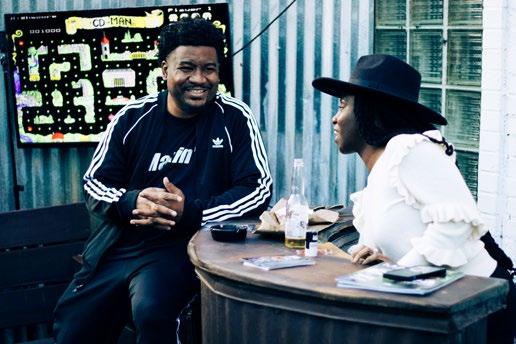
MAKIN' IT INDUSTRY MIXER
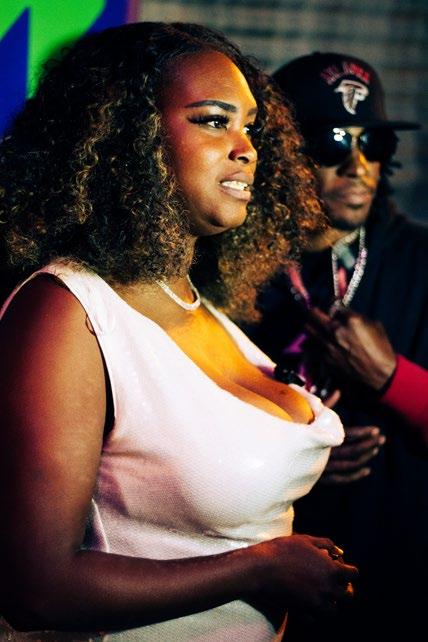
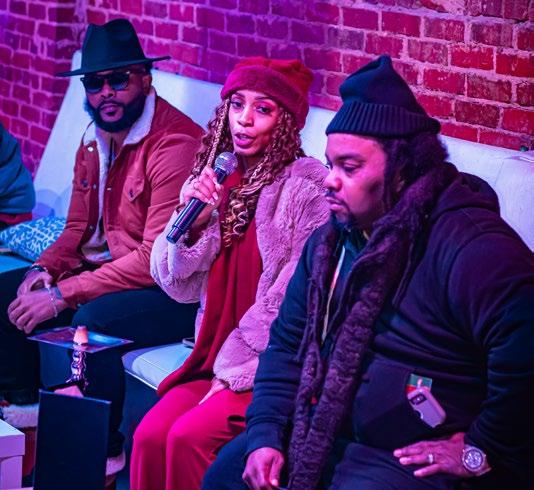
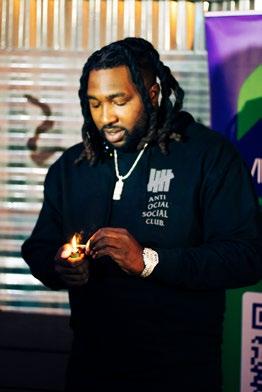
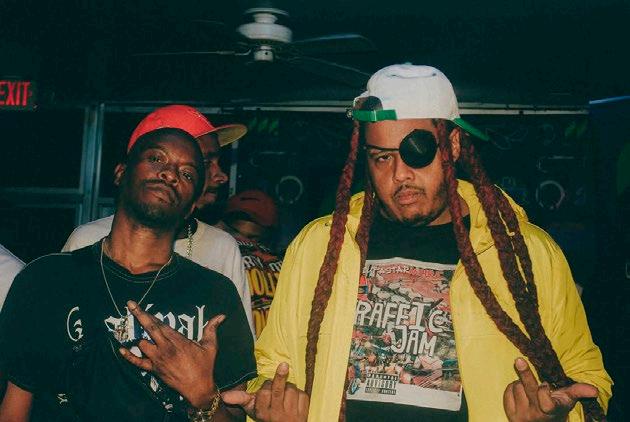
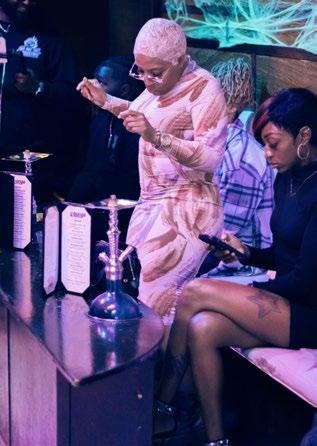
Photos by Tre Cooks Photography (Follow @Photos.by.Tre)
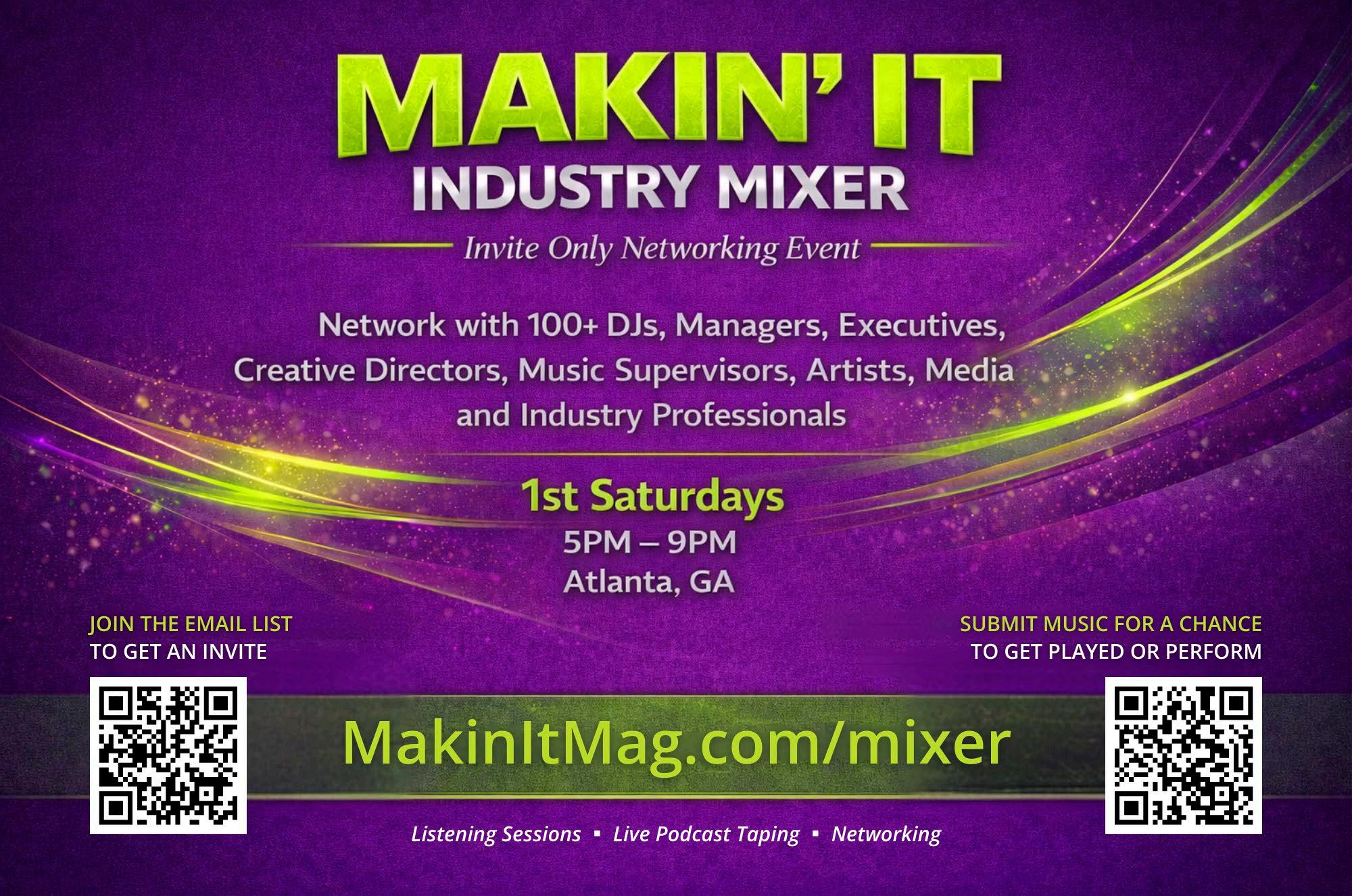
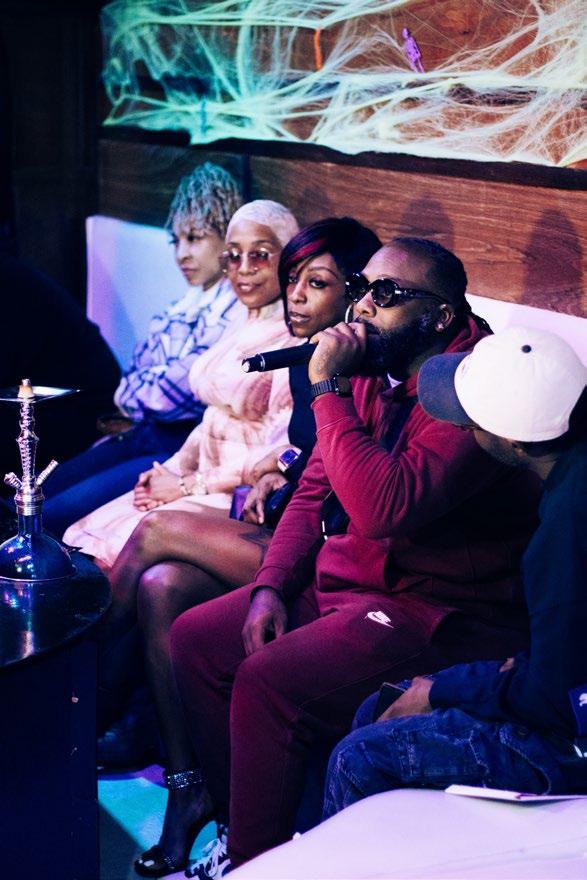
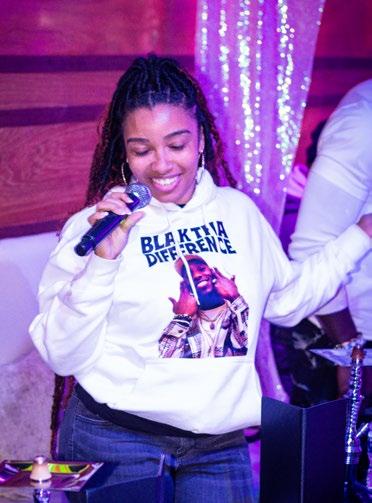
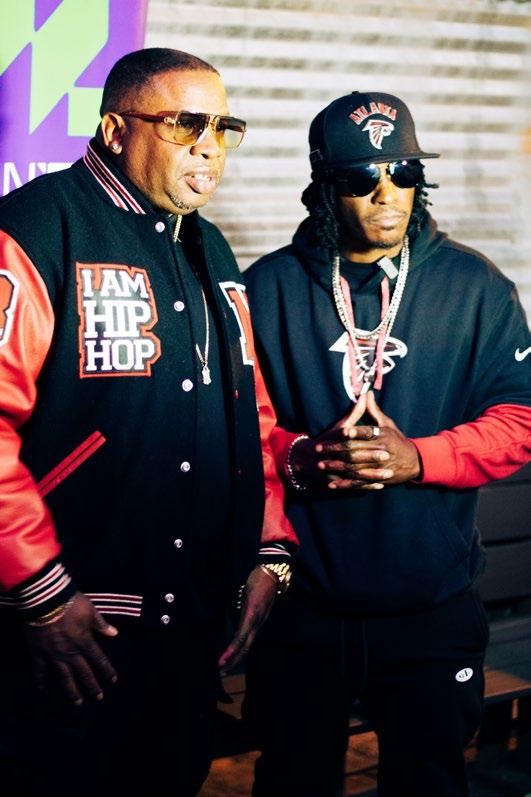
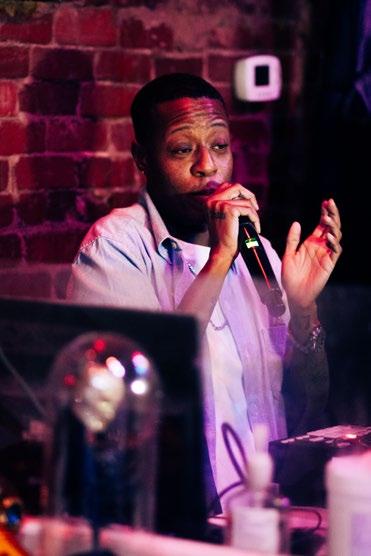
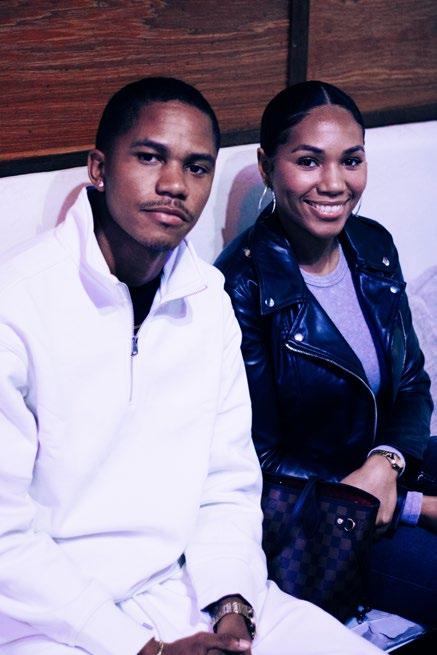
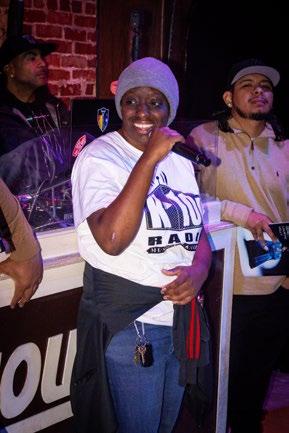
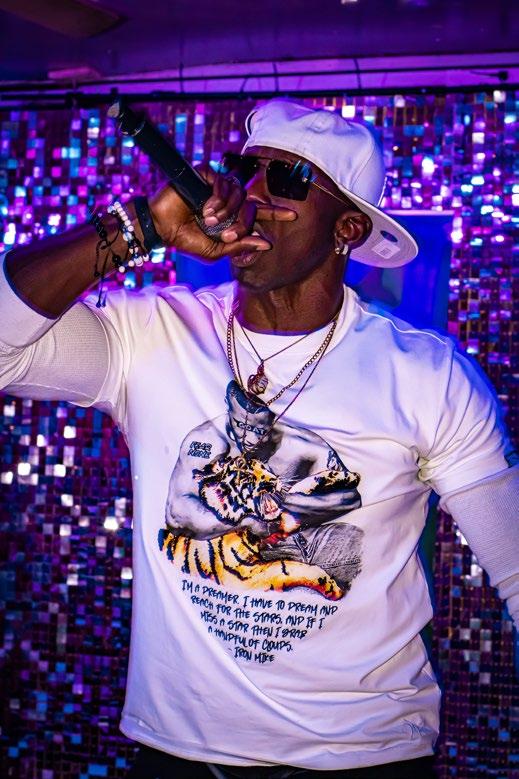
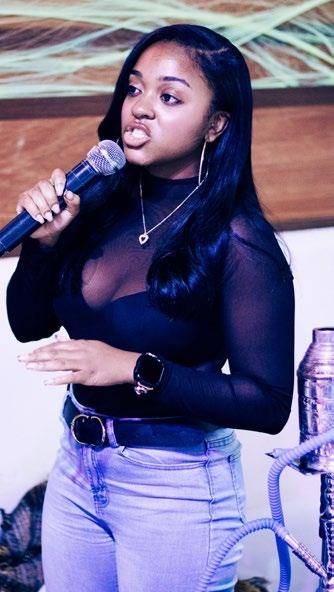
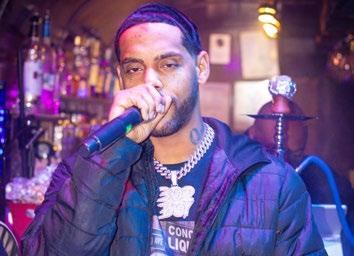
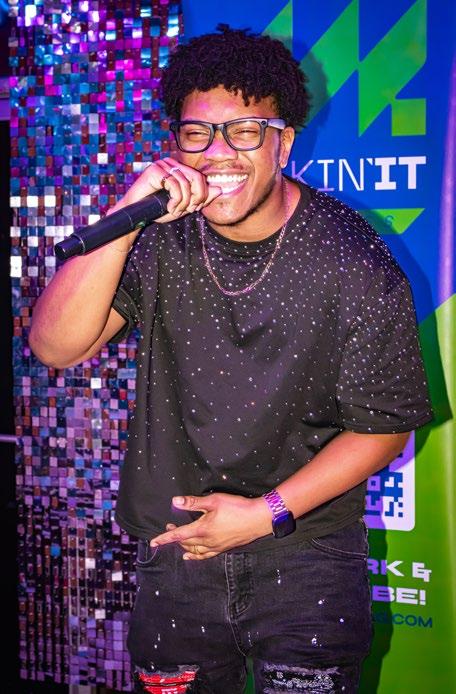
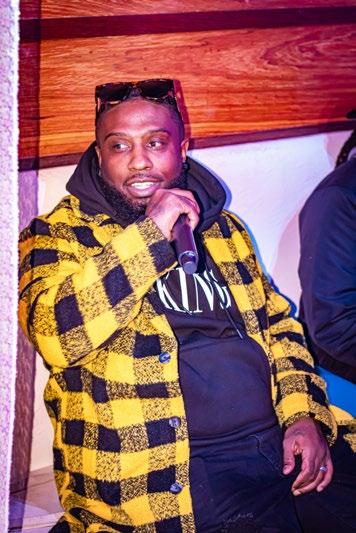
The Makin’ It Industry Mixer was created to fill the gaps traditional industry events leave behind. Every first Saturday, Makin’ It Magazine and our curation partners bring together music supervisors, managers, media, promoters, artists, and professionals across tech, film, fashion, and music for an evening of real networking.
This is not an open mic or a showcase — it’s a vibe. A room built for meaningful conversations, new clients, real collaborations, and long-term partnerships. VIP guests leave with USB drives preloaded with music and contact info from standout artists, producers, and songwriters, while each mixer spotlights two to three featured acts.
From celebrity meet-andgreets and live podcast tapings to listening sessions and curated experiences, the Makin’ It Industry Mixer is where relationships are built and opportunities begin.
Invite-only. Join the email list to receive invitations: makinitmag.com/mixer