
LENGTH-WEIGHT RELATIONSHIP AND CONDITION FACTOR OF CLARIAS GARIEPINUS (BURCHELL, 1822) IN ZOBE RESERVOIR
Sadauki, M.A., Bichi, A.H and Geidam, M.BDepartment of Fisheries and Aquaculture, Faculty of Renewable Natural Resources, Federal University Dutsin-Ma, Katsina, Nigeria
ABSTRACT
The length-weight relationship as a vital fishery management gadget that devised to estimates mean weight at specific length in a given set in order to assess a comparative wellbeing of a fish population In this study length-weight relationship and Fulcon’s condition factor of Clarias gariepinus in Zobe reservoir were evaluated. A total of 90 fish obtained from three landing sites were sampled monthly for 6 months. Length and weight of sampled fish were measured with standard methods. Results shown that, fish population consisted of 47 males and 43 females. The length-weight regression analysis showed that the bvalues of 2.80, 2.89 and 2.85 exhibited negative allometric growth in males, females and combined sex respectively. The significant linear relationships “r” of 0.97, 0.96 and 0.96 were recorded in both males, females and combined sex. The condition factor “K” reported is the same for the male, female and combined 1.04, 1.04 and 1.04 respectively In this study condition factors “K” values recorded were greater than 1, showed that the male and female C. gariepinus from Zobe Reservoir were stable. The condition factors of entire sampled fish species were within the appropriate recommended range for gravid tropical freshwater fish species. The drag nets and Malian traps were used with the assistance local fisher folks captured the fish. In addition consideration should be given to the type of gears and mesh sizes used, fish life stages in the water bodies in order to avoid indiscriminate fishing
KEYWORDS
Allometric growth, Condition factor, African catfish, Zobe reservoir.
1. INTRODUCTION
Fish is among the inexpensive, commonly obtainable animal protein’s sources. In term of nutrients composition, its quality made it became a choice for human consumption (Afolabi et al., 2020). Besides landings from captured fisheries, aquaculture production has provided fish species for human consumption among other uses (Afolabi et al., 2020). In Africa, African catfish, Clarias gariepinus, is one of the commercially important fish species which has enjoyed aquaculture development (Nazia et al., 2014; Sadauki et al., 2022a). This fish species is widely distributed in African water bodies, ranging from swamps to streams, rivers and lakes (Akinsanya and Otubanjo, 2006; Sadauki et al., 2022b). The widespread occurrence of Clarias gariepinus in inland waters has been ascribed to their abilities to utilize several varieties of items as food, can with stand different degree of environmental conditions, fast growth rate, high fecundity rate, ease of artificial spawning and good marketable value are among the characteristics that made them desirable (Greenwood, 1966; Uedeme-Naa and Nwafili, 2017; Afolabi et al., 2020).
Life Sciences: an International Journal (LSIJ) Vol. 1, No. 1, 2023
Due to its higher commercial value, it became fish of an aquaculture and capture fisheries importance (FAO, 2012). These characteristics, along with moderately low input costs, have made this fish species a popularly cultured freshwater fish in tropical and subtropical countries (Uedeme-Naa and Nwafili, 2017)
African catfish had been established as a very important freshwater candidate for aquaculture in Nigeria, they are most cultured fish species due to its capability to withstand a several degree of harsh weather conditions, rapid growth rate, high rate of fecundity, easy spawn artificially and can fetch worthy market price (Sadauki et al., 2022a). Fish palatability and nutritional values had caused rises in demand for consumption in the rural areas and cities in Nigeria (Afolabi et al., 2020). Thus, an intensity of artisanal fishing is alarming
Therefore, for fishery resources to effectively manage, fish species and among other inhabitants, needs significant awareness of length-weight relationship (Dan-kishiya, 2013). This relationship is very vital as it allows assessment of average fish weight in the given length group; estimate the well-being of individuals and determine the variation between separate unit of fish stocks that are of the same species (Beyer, 1987; King, 2007; Getso et al., 2017). Also, this relationship is useful in fisheries management for comparative growth studies ( Dan-kishiya, 2013). Length-weight relationship provides valuable data on the aquatic medium and also aquatic ecosystems modelling (Kulbicki et al., 2005). Furthermore, the importance of condition factor in determination and comparison of living condition, fatness or wellbeing of fish species has been reported (Ahmed et al., 2011). Condition factor is a useful index for monitoring of feeding intensity, age and growth rates in fish (Ndimele et al., 2010). It is strongly influenced by both biotic and abiotic environmental factors and can be used to assess the status of an aquatic ecosystem (Anene, 2005).
A valuable for the investigation of aquatic organisms is the data on the quantitative aspect such as length-weight relationship and condition factors The data can be used to estimate weight from length estimates made in the yield assessment. The condition factor “K” is used to measure the physiological state of the fish in relation to its health. When comparing two populations living in different feeding densities and climate’s conditions, it also provides distinct data (Suleiman et al., 2017). Reservoirs are very large natural or artificial water bodies that provide habitat and food for many fish species (Atobatele and Ugwumba, 2008). Many of these reservoirs were constructed as a result of societal need for portable and industrial water sources, irrigation, fish production and recreational activities (Mustapha, 2011).
Zobe Reservoir is a man-made lake that serves as a source of water source for uses in the surrounding communities. Hence, knowledge of country’s fish fauna is of utmost importance in determining its ecosystem as well to understand its productivity There is little information on the Length-weight of C. gariepinus population in the reservoir. This study assessed the length-weight relationship and condition factors (K) of C. gariepinus in Zobe reservoir with the view of bridging the information gap on the condition of the fish inhabiting the Reservoir.
2. MATERIALS AND METHODS
2.1. Study Area
Zobe reservoir, situated in Dutsin-Ma Local Government Area of Katsina State, is located between latitude 12°’20’34.62”N and 12°23’27.48” N and between longitude 7°27’57.12”E to and 7°34’47.68”E. Zobe reservoir was constructed on River Karaduwa and extends to about 7 km long and a surface of about 4,500ha.
Life Sciences: an International Journal (LSIJ) Vol. 1, No. 1, 2023
Zobe reservoir consists of two tributaries, the River Karaduwa and River Gada, while River Gada empties River Karaduwa. The Dam was built on River Karaduwa and extends to about 2.7 km long and a surface of about 4, 500ha. Yearly rainfall in the area differs from 600-700mm; mean annual temperature is about 25oC (Adediji, 2005, Sadauki et al., 2022b)
2.2. Sample Collections
For the purpose of this study, three landing sites selected around the reservoir were Raddawa, Makera, and Tabobi. Samples of African catfish, Clarias gariepinus, were collected monthly from each landing site for period of (6) months. Five (5) samples were collected from each of the three sample sites (15) monthly with the assistance of local fishermen who used their drag nets and traps for fish capture. The fish samples were transported alive to the Biology Laboratory, Federal University Dutsin-Ma, Katsina State, in a plastic container filled with water for identification. Fish samples from each location were identified using the description of Teugels (1986). The standard length of sampled fish was measured using a meter rule, while the weight was measured using a top loading sensitive weighing balance system(GT4100 model).
Morphometric measurements such as body weight, total length and standard length were taken following the method of Teugels (1998) for morphometrical identification of Clarias species.
2.3. Measurement of Length-Weight
Precision the length–weight relationship of Clarias gariepinus was determined by Le-Cren (1951)
Thus, W=aLb
Where; W = Fish’s weight in g,
L = Fish’s length in cm,
a = constant value, and
b = an exponent.
The values of constants a and b were calculated using least square linear regression to give: logW = loga+blogL
2.4. Condition Factor’s Determination
The condition factor “K” was determined for each sampled fish, using the normal formula used by Froese (2006). The ratio of the length to the weight of the fish was determined as the function of the fish weight.
Condition Factor “K” = W x100 L3
Where K as Condition factor;
W = Weight of fish in grams; and L = Length in cm
3. RESULTS
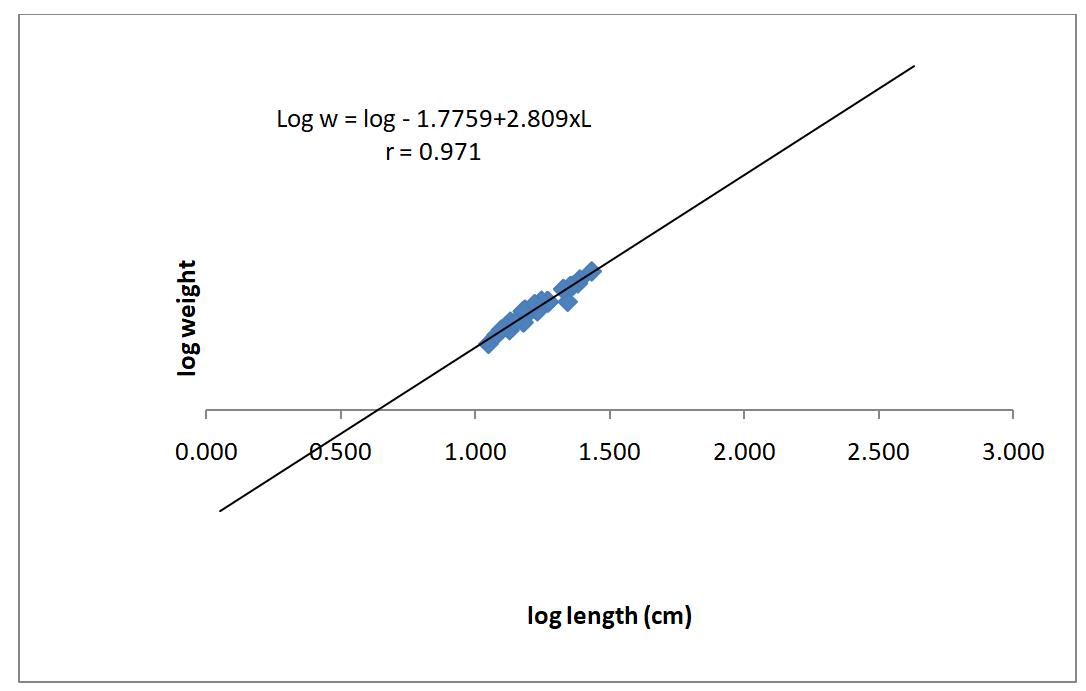
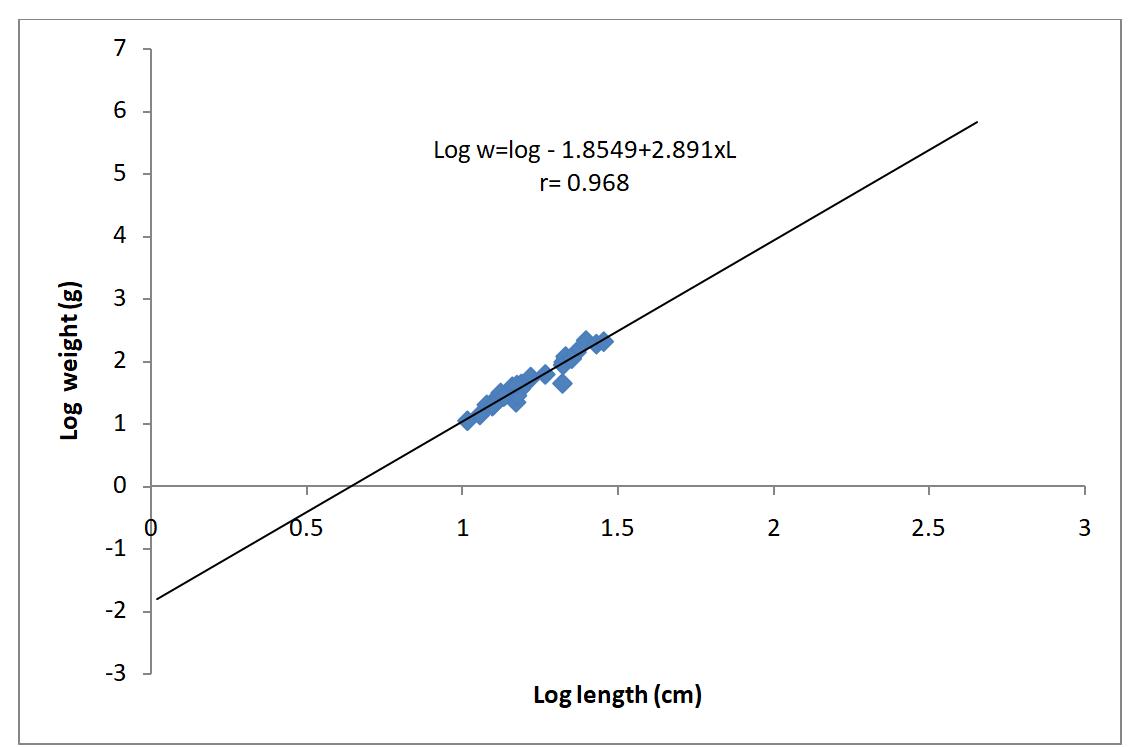
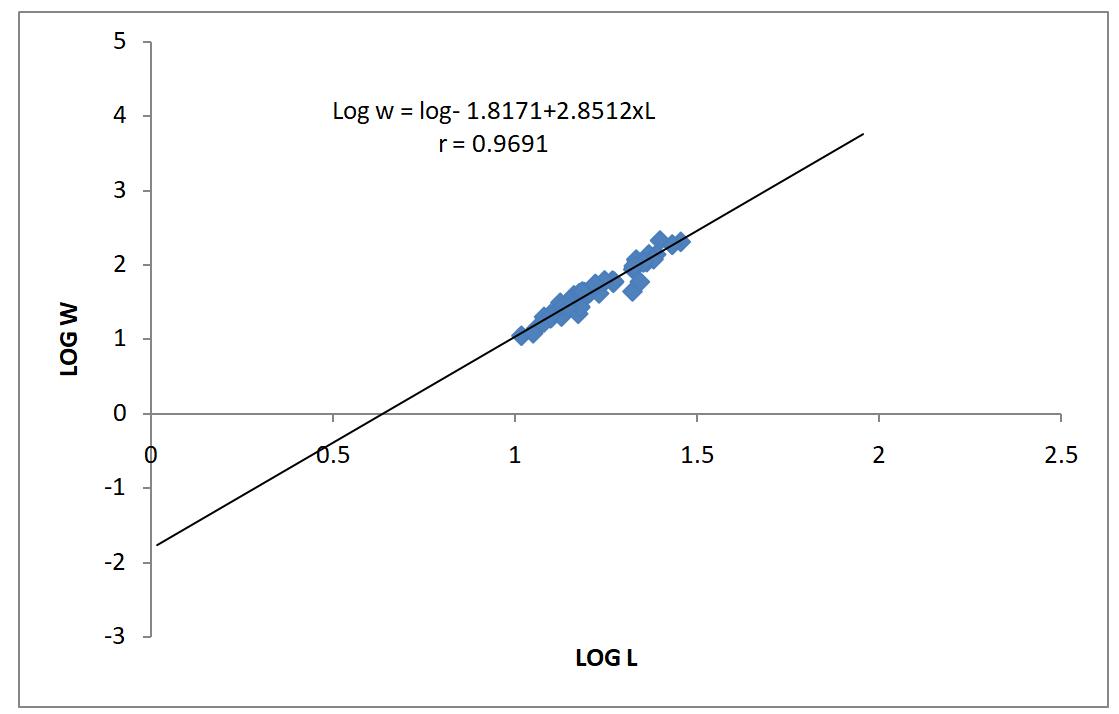
A population of 90 Clarias gariepinus was collected from a Zobe reservoir, 47 of which were males and 43 were females. The length-weight relationships analysis of the sampled Clarias is shown in Table 1. The estimated value of ‘b’ of the female samples was 2.89, that of the male samples were 2.80 while the combined ‘b’ value of male and female samples was 2.85. Analysis of both males and females samples carryout separately and combined revealed that all the species had a negative allometric growth pattern as shown in table 1.
Therefore, Clarias gariepinus follow the cube law, showed positive correlation between total length and the body weight and the relationships were highly significant (P<0.05) with ‘r’ values greater than 0.90 for all the catfish species obtained from Zobe reservoir shown in Table 1. There was strong correlation between the fish’s length and weight as shown in Table 1. The K value obtained was 1.04 for male sample, 1.04 for female samples and 1.04 for combined sexes respectively.
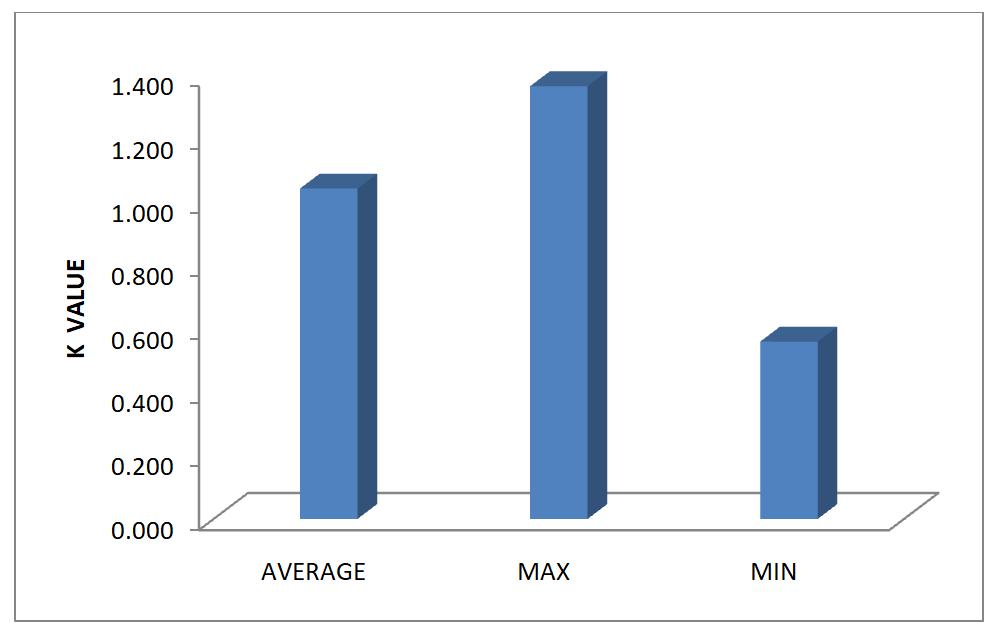
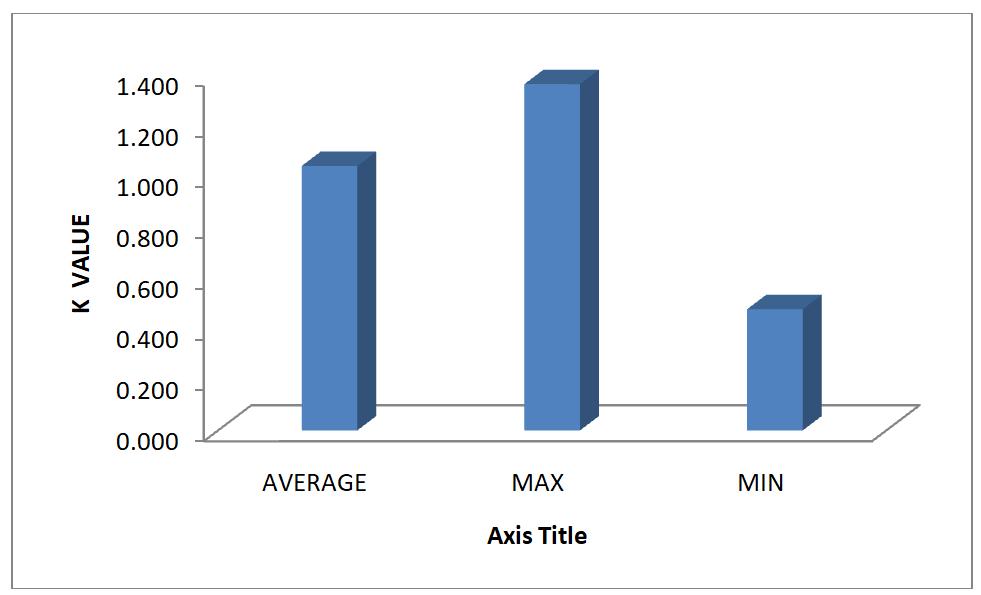
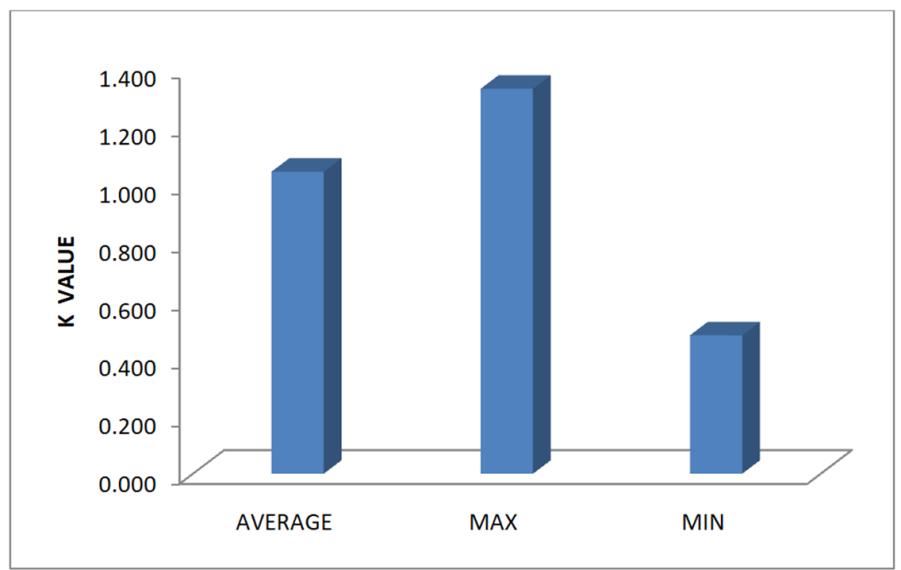
Table 2 results showed the means values of length (cm) and weight (g) of male, female and combined Clarias gariepinus obtained from Zobe Reservoir. The mean length and weight of the male samples were 954.44+20.31cm and 4413.43+93.91g, respectively. Also, the females had 522.58+12.16cm length and 1396.56+32.48g weight, while the combined samples had mean length of 1476.98+ 16.43cm and weight of 5809.99+64.56g. The values of condition factor “K” ranged from 1.04, 0.56 and 1.36 for males samples, 1.04, 0.47 and 1.33 for females samples respectively with 1.04, 0.47 and 1.36 for combined samples of C. gariepinus as shown in Table 3.
The length-weight relationship for male, female and combined is graphically represented by figures 1, 2 and 3, respectively. Similarly condition factor average, minimum and maximum values for male, female and combined sexes were represented in figures 4, 5 and 6.
N= Number of samples, a = Intercept/regression constant, b = Gradient/regression coefficient, r = Correlation co-efficient, K = Condition factor
4. DISCUSSION
The results of length-weight relationship of Clarias gariepinus obtained from Zobe Reservoir revealed allometric pattern of growth. Clarias gariepinus “b” values was less than 3.0, indicating a negative allometric growth increase, which meant that the fish weight increased at a slower rate than the cube of the body length. This agrees with the study of Kumolu-Johnson and Ndimele (2011) which reported similar growth for Clarias gariepinus in Ologe Lagoon, Lagos. Negative allometric growth pattern in freshwater fishes has also been reported in studies such as Imam et al (2010), Ibrahim et al. (2012), Dan-kishiya (2013), Getsoet al. (2017) and Dan-kishiyaet al. (2018). The fish’s weight is determined by length’s function (Zafar et al , 2003; Odedeyiet al , 2007). This study was related with documented researches from inland water bodies in Nigeria. Noticeable among fish length-weight encompasses the outcomes of Abubakar (2006) at Lake Geriyoand Peter and Diyaware(2014), in their study length-weight, fecundity and condition factor of Clarias gariepinus at Luhu Reservoir. Also, the allometric growth pattern experimented observations was similar to evaluation of length-weight relationship of fish species in Ebonyi River (Udeet al. 2011).
The fish species growth pattern is determines by the “b” values in length-weight relationships. A typical fish with a dimensional consistency and the isometric of “b” value would be 3.0.This value has been observed only occasionally. A ‘b’ value greater or less than 3.0 indicates allometric pattern of growth. A ‘b’ value less than 3.0 indicates that the fish became lighter (negative allometric) while a ‘b’ greater than 3.0 indicates that the fish became heavier (positive allometric) for a given length (Zafar et al., 2003; Odedeyiet al., 2007). Negative allometric growth was also observed for C. gariepinus in water body (Dan-Kishiya, 2013 and Atamaet al., 2013).The coefficient of determination (r) for length-weight relationship for Clarias gariepinus was 0.97 for the male samples, 0.96 for the female and 0.96 for the combined sexes in Zobe reservoir, indicating that the length increased with increase in weight of fish at the reservoir. This is in agreement with past findings (Laleye, 2006).
4.1. Condition Factor “K”
When the “K” value is less than 1.0, the fish is considered not to be in good physiological condition and when value is greater than 1.0 the fish is considered to be in good physiological state.
All fish species sampled in different sampling sites of the present study had condition factors greater or equal to 1 and “K” value obtained for male (1.04) female (1.04) and combined sex (1.04) samples met the criteria recommended by Ujjania et al, (2012) which states that a condition factor greater or equal to one indicates a good level of feeding and appropriate environmental conditions. The condition factors “K” of the species of fish in this study were similar to what was obtained in other tropical water bodies. The condition factors “K” of the species of fish in freshwater fishes has been reported (Dan-kishiya et al., 2018; Dan-kishiya, 2013; Ibrahim et al., 2012). In Nigeria, Oso and Iwalaye (2016) reported a ranged of K values of 1.02-1.52 and 1.06-2.02.). Iman et al. (2010) reported a ranged of K values of 0.93 and 3.40 in Wasai Reservoir in Kano, while, in Lagos’ Ologe Lagoon, Kumolu-Johnson and Ndimele (2011) also obtained a “K” value of between 0.91 and 8.46 from Ologe Lagoon in Lagos. But Ibrahim et al. (2012) recorded a mean “K” value of 1.98 ± 0.35 in Kontagora Reservoir in Niger State. While Ahmed et al. (2011) recorded a “K” value range of 0.506 and 3.415. The “K” values documented in this study are less than the range of 2.9 and 4.8 recommended for mature freshwater fish by Bagenal and Tesch, (1978).
5. CONCLUSION
The results obtained on the C. gariepinus obtained from Zobe Reservoir in Dutsin-Ma Local Government Area of Katsina State, showed that they exhibited negative allometric growth. The “K” values obtained also indicated that the fish samples were in a good state of health in the water body.
RECOMMENDATIONS
Lastly, additional researches cover the aspects of physicochemical parameters of water, nourishment richness, length-weight relationship and condition factor of other fish species and stock assessments are recommended to be carried out in in Zobe reservoir hence as to make available additional significant scientific evidence.
REFERENCES
[1] Abubakar, K.A.(2006): A study of Aspects of Productivity and Stock Status of Oreochromisniloticus and Clarias gariepinus in Lake GeriyoYola, Adamawa State, Nigeria. Unpublished ModibboAdamaUniversity of Technology,Yola,
[2] Adediji, A (2005). Reservoir Sedimentation: The Case of Opa Reservoir Catchment, South-Western Nigeria. “South African Geographical Journal” Vol. 2: Pp. 123.
[3] Afolabi, J.O., Oladele, O.O and Olususi, C.F (2020). Assessment of bacterial loads of Clarias gariepinus (Burchell, 1822) obtained from cultured and natural habitats. “Journal of Basic and Applied Zoology” Vol. 81 Pp. 32
[4] Ahmed, E. O., Ali, M.E. and Aziz, A. A. (2011). Length-weight Relationships and Condition factors of six fish species in Atbara River and Khashim El- Girba Reservoir Sudan “International Journal of Agriculture Sciences” Vol, 3 (1) Pp. 65.
[5] Akinsanya, B and Otubanjo, O.A (2006). Helminth Parasites of Clarias gariepinus in Lekki Lagoon, Lagos, Nigeria. “International Journal of Tropical Biology” Vol. 54, Pp. 93.\
[6] Anene, A (2005). Condition factor of four Cichlid species of a Man-Made Lake in Imo State, SouthEastern Nigeria “Turkish Journal of Fisheries and Aquatic Sciences, 5: Pp. 43.
[7] Atama, C. I., Okeke, O. C., Nzenwaji, N. E., Onah, I. E., Ivoke, N., Onoja, U. S. and Eyo, J. E (2013). Length-Weight Relationship and Condition Factors of Six Cichlid Species of Anambra River, Nigeria “Journal of Fisheries and Aquaculture” ISSN: 0976-9927 and ISSN: 0976-9935, 4 (2): Pp. 82.
[8] Atobatele, O.E. and Ugwumba, O.A (2008). Seasonal Variation in the Physico-Chemistry of a Small Tropical Reservoir - Aiba Reservoir, Iwo, Osun, Nigeria. “AfricanJournal of Biotechnology” 7 (12): Pp. 62
[9] Bagenal T. B and Tesch, F. W. (1978). Methods of Assessment of Fish Production in Fresh Waters. IBP Handbook, Number 3, 3rdedition. Oxford Blackwell Scientific Publication, London. Pp. 101136.
[10] Beyer, J.E (1987). On length-weight relationships part 1: Computing the Mean Weight of the Fish of a Given Length Class. Fish byte Vol. 5(1): Pp.11-13.
[11] Dan-Kishiya, A.S (2013). Length-Weight Relationship andCondition Factor of Five Fish Species from a Tropical Water Supply Reservoir in Abuja, Nigeria. “American Journal of Research Communications”Vol. 1(9): 175-187.
[12] Dan-Kishiya, A. S (2013). Length-Weight Relationship and Condition Factor of Five Fish Species from a tropical water supply reservoir in Abuja, Nigeria. “American Journal of Research Communication, 1(9): Pp.175 www.usa-journals.com, ISSN: 2325-4076.
[13] Dan-kishiya, A. S., Bichi, A. H. and Nababa, A. S (2018). Length-Weight Relationship and Condition Factor of Silver Catfish (Bagrusbayadforskal, 1775) in Zobe Reservoir, Dutsinma, Katsina state, Nigeria. “FUDMA Journal of Sciences” 2(1): 178-182.
[14] FAO, (2012). Cultured Aquatic Species Information Programme: Clarias gariepinus. In: Food and Agriculture Organisation of United, Fisheries and Aquaculture Department. Rome-Italy
[15] Froese, R., (2006). Cube law, Condition Factor and Weight-Length Relationships: History, Metaanalysis and Recommendations. “Journal of applied Ichthyology” 22(4) Pp. 241
[16] Getso, B.U, Abdullahi, J.M. and Yola, I.A (2017). Length-weight relationship and condition factor of Clarias gariepinus and Oreochromisniloticus of Wudil River, Kano, Nigeria. Agro-Science, 16 (1), 14. DOI: https://dx.doi.org/10.4314/as.v16il.1
[17] Greenwood, P.H. (1966). The fishes of Uganda. The Uganda Society, 2nd editions. Kampala.
[18] Ibrahim, B. U., Auta, J. Balogun, J. K., Bolorunduro, P. I. and Dan-kishiya, A. S (2012). Lengthweight relationship and condition factor of Bariliusin Kontagora Reservoir, Niger State, Nigeria. Biological and “Environmental Sciences Journal for the Tropics”Vol. 9 (2) Pp. 155.
[19] Imam, T. S., Bala, U., Balarabe, M. L. and Oyeyi, T. I. (2010): Length-Weight relationship and condition Factor of Four Fish Species from Wasai Reservoir in Kano, Nigeria. “African Journal of General Agriculture” Vol. 6 (3): 125.
[20] King, M. (2007). Fisheries Biology Assessment and Management. 2nd (Edn.), Blackwell Scientific Publications, Oxford, Pp. 189-192.
[21] Kulbicki M, Guillemot N, Amand M. (2005). A General Approach to Length
Weight Relationships for New Caledonian Lagoon Fishes Cybium 29: Pp235
Life Sciences: an International Journal (LSIJ) Vol. 1, No. 1, 2023
[22] Kumolu-Johnson, C.A and Ndimele, P.E (2010). Length-weight relationship and condition factor of twenty one species from Ologe Lagoon, Lagos, Nigeria. “Asian Journals Agricultural science, Online” Vol. 2 No. 4, Pp. 174-179.
[23] Kumolu-Johnson, C.A and Ndimele, P.E (2011). Length-weight relationship and condition factorof nine species from Ologe Lagoon, Lagos, Nigeria. “African Journals Biotechnology, Online” Vol. 10 No. 2, published 2016. eISSN: 1684-5315.
[24] Laleye P.A. (2006). Length-weight and length-weight relationships of fishes from the Oueme River in Benin (West Africa). “Journal of Applied Ichthology” 22, Pp 330
[25] Le Cren, E. D. (1951). The Length-Weight Relationship and Seasonal Cycle. In Gonad Weight and Condition in the Perch (Percafluviatilis). “Journal of Animal Ecology” 20: 201-219.
[26] Mustapha, M.K. (2011). Perspectives in the Limnology of Shallow Tropical African Reservoirs in Relation to their Fish and Fisheries “Journal of Trans disciplinary Environmental Studies” 10(1):1623.
[27] Nazia. A.K., Sitti, A and Zizah, M.N (2014). Isolation of microsatellites in the bighead catfish, Clarias macrocephalus and cross amplification in selected Clarias species. “Journal ofMolecular Biology Research”Vol. 41 (3) Pp 1207
[28] Oso, J.A and Iwalaye, A.O.(2016): Growth pattern and Condition factor(K) of four dominant fish species in ero dam in Ekiti State, Nigeria. “BritishJournal of Applied Research” Vol. 1(02):0810212Pp.
[29] Odedeyi, D. O., Fagbenro, O., Bello-Olusoji, O. and Adebayo, O (2007). Length-weight Relationship and Condition Factor of the Elephant Fish, Mormyrusrume (Valenciennes, 1846) in River Ose, South Western Nigeria. “Animal Research International”Vol. 4(1) Pp. 617- 620.
[30] Peter, K.J and Diyaware, M.Y (2014). The length-weight, condition factor and fecundity of Clarias gariepinus inLuhu Reservoir, Michika Local Government Area, Adamawa StateNigeria. “Nigerian Journal of Fisheries and Aquaculture”Vol. 2 Pp. 1-5
[31] Sadauki, M. A., Bawa, S. B, Nababa, A. S.(2022a).Gastro-intestinal helminth fauna of Clarias gariepinus (burchell, 1822) in Jibia reservoir, Katsina state, Nigeria.FUDMA Journal of Sciences (FJS)ISSN online: 2616-1370ISSN print: 2645 - 2944Vol. 6 No. 1, March, 2022, pp 107111DOI:https://doi.org/10.33003/fjs-2022-0601-883
[32] Sadauki, M.A, Bawa, S.B. and Umar, J.(2022b).Studies on parasitic infestation and prevalence in Clarias gariepinus (Burchell, 1822) from Zobe reservoir, Katsina State, Nigeria.“Nigerian Journal of Animal Science”Vol. 24 (1).Pp. 100-107
[33] Suleiman, I. O., Akpa, G.N., Kabir, M. and Bolorunduro, P. I.(2017).Length-weight relationship and condition factor of Clariid fish species in Kano Rivers, Kano State, Nigeria.Nigerian Journal of Animal Production. 2017, 44(3):135 - 139Nigerian Society for Animal Production
[34] Teugels G.G. (1986). A systematic revision of the African species of the genus Clarias(Pisces: Clariidae). Ann. Sci. Zool. Mus. R. Afr. Centr, 247, 15-48.
[35] Teugels, G. G., Legendre, M. and Hung, L. T.(1998) Preliminary results of the morphological characterization of natural population and culture strains of Clarias species (Suliriformes, Clariidae) from Vietam. Pp. 27-30.
[36] Ude, E. F., Ugwu, L. L. C., Mgbenka, B. O. and Nwani, C. D. (2011). Evaluation of lengthweight relationship of fish species of Ebonyi River, Nigeria. Nigerian Journal of Fisheries.8(1): 136-144.
[37] Uedeme-Naa B, Nwafili S (2017).Influence of African catfish (Clarias gariepinus) brood stock size on fingerlings growth rate.Applied Science Reportswww.pscipub.com/ASRE-ISSN: 2310-9440 / PISSN: 2311-0139 DOI: 10.15192/PSCP.ASR.2017.19.3.8588
[38] Ujjania, N.C., Kohli, M.P.S and Sharma L.L. (2012). Length-weight relationship and condition factors of Indian major carps (Catlacatla, L. rohita and C. mrigala) in Mahi Bajaj Sagar, India. Research Journal of Biology, 2 (1), 30-36
[39] Zafar, M., Mussaddeq, Y., Akhter, S. and Sultan, A. (2003). Weight-length and condition factor relationship of Thaila, Catlacatla from Rawal Dam, Islamabad, Pakistan. Pakistan Journal of Biological Sciences, 6(17): 1532-1534.