Lowcountry Dog’s mission is to be the leading local resource for dog owners regarding regional events, health and wellness information, trends, style and lifestyle choices. We also strive to be a mouthpiece to the public for various dog related non-profits and promote pet adoption and other responsible pet care practices.
Dog lovers can pick up the bimonthly magazine for free at most area veterinarians and pet stores throughout the lowcountry, as well as numerous restaurants, coffee bars and retailers. A full distribution list is posted to the magazine’s web site, lowcountrydog.com. Subscriptions are also available. Please call 843-478-0266 for more information.
The entire contents of this magazine are copyrighted by Lowcountry Dog Magazine with all rights reserved. Reproduction of any material from this issue is expressly forbidden without permission of the publisher. Lowcountry Dog Magazine does not endorse or guarantee any product, service, or vendor mentioned or pictured in this magazine in editorial or advertising space. Views expressed by authors or advertisers are not necessarily those of the publisher.
february/march 2012
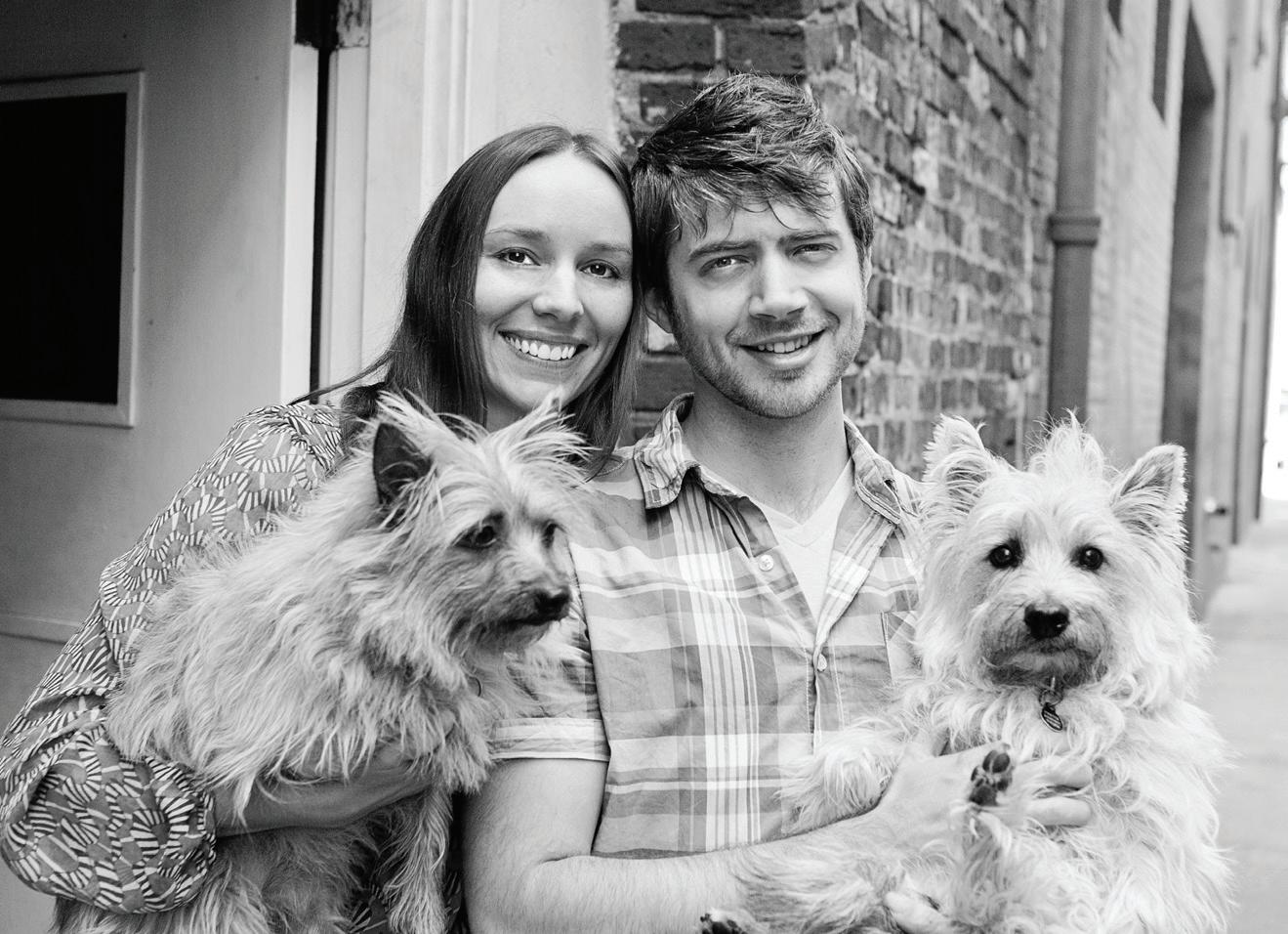
fido’s friends 4 Robert and Megan Lange
a challenge to charleston 6 the dogtor is in 8
a bark-worthy cause 10 dogs at work 14
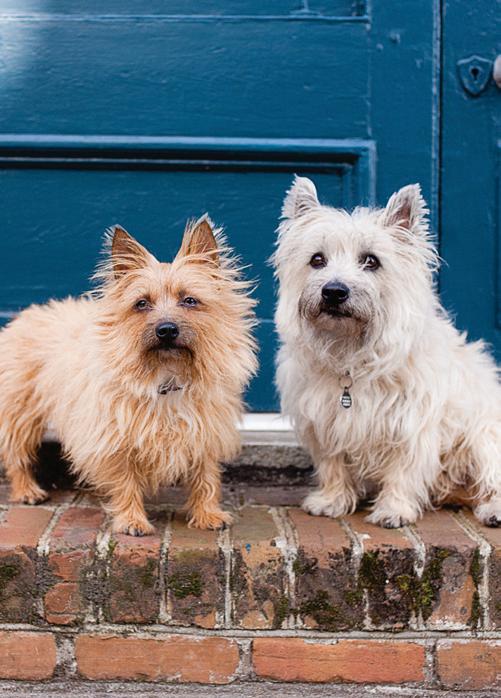
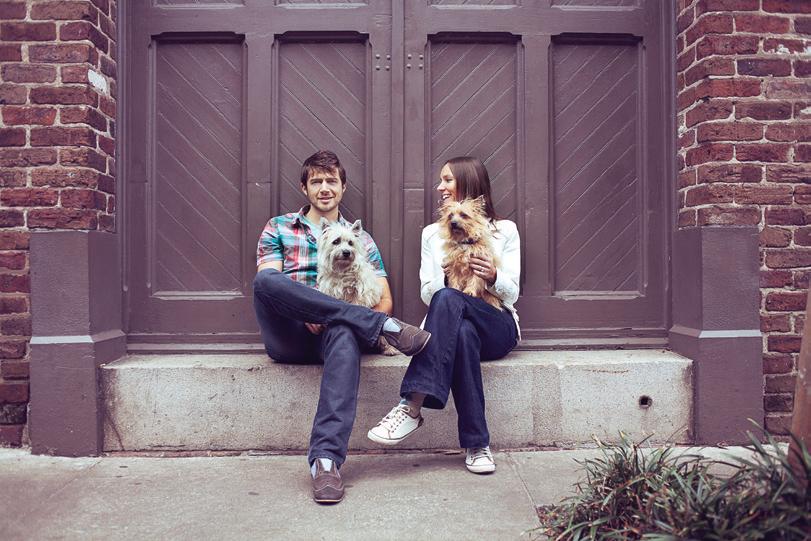
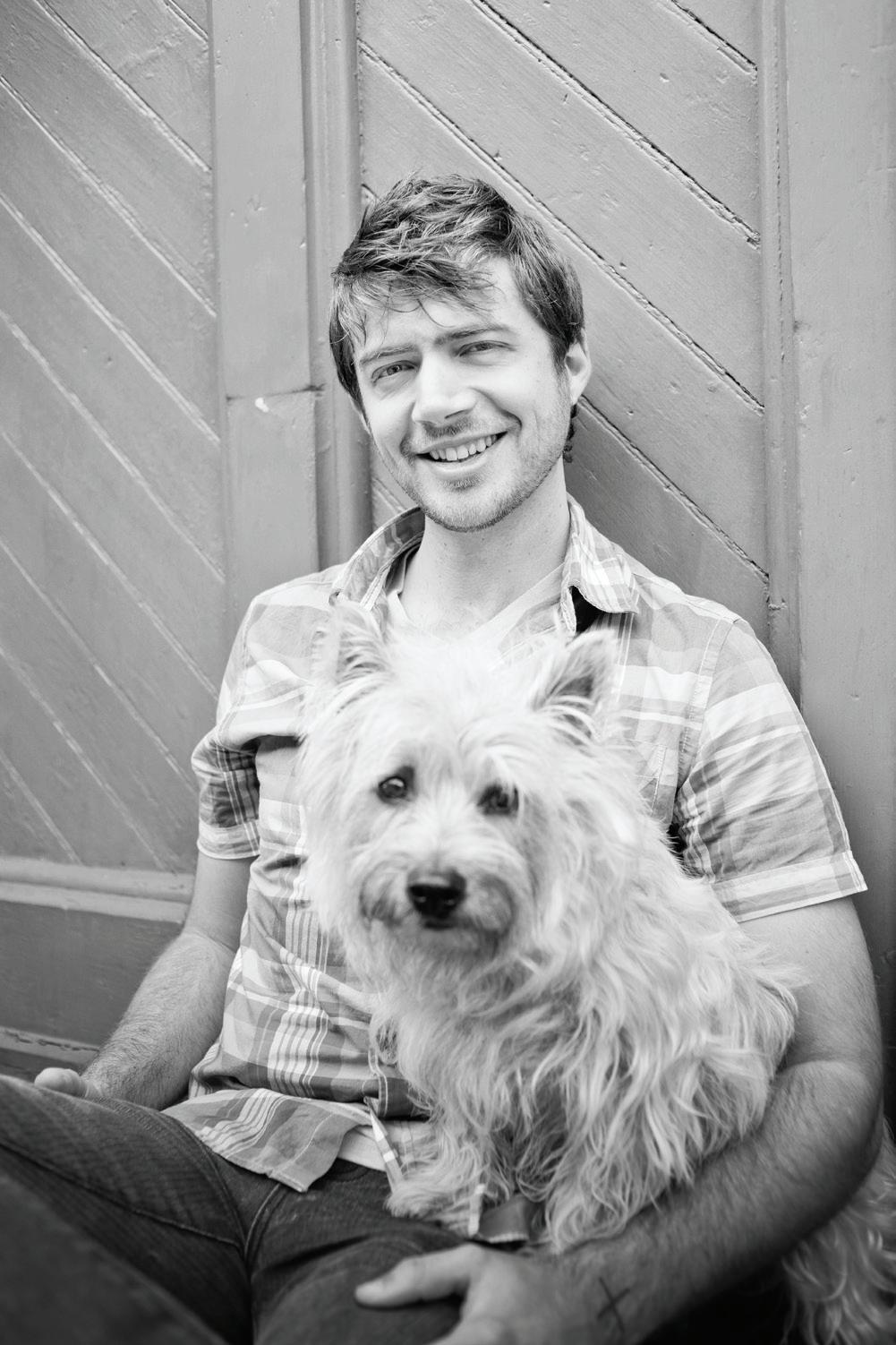
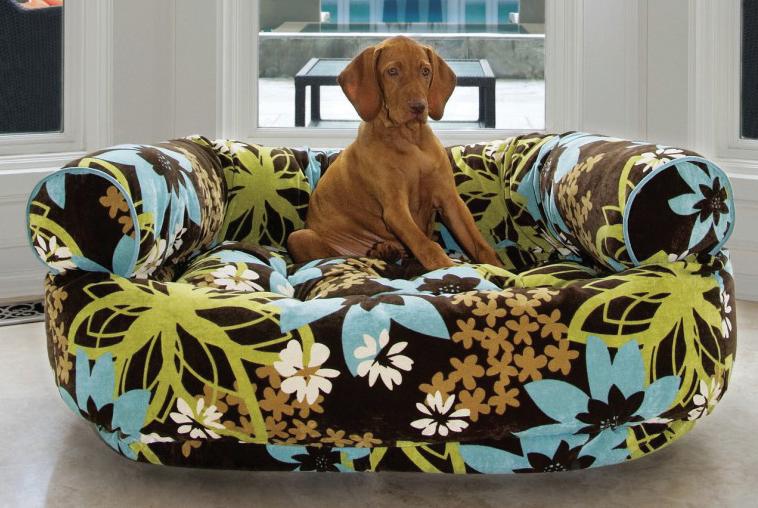
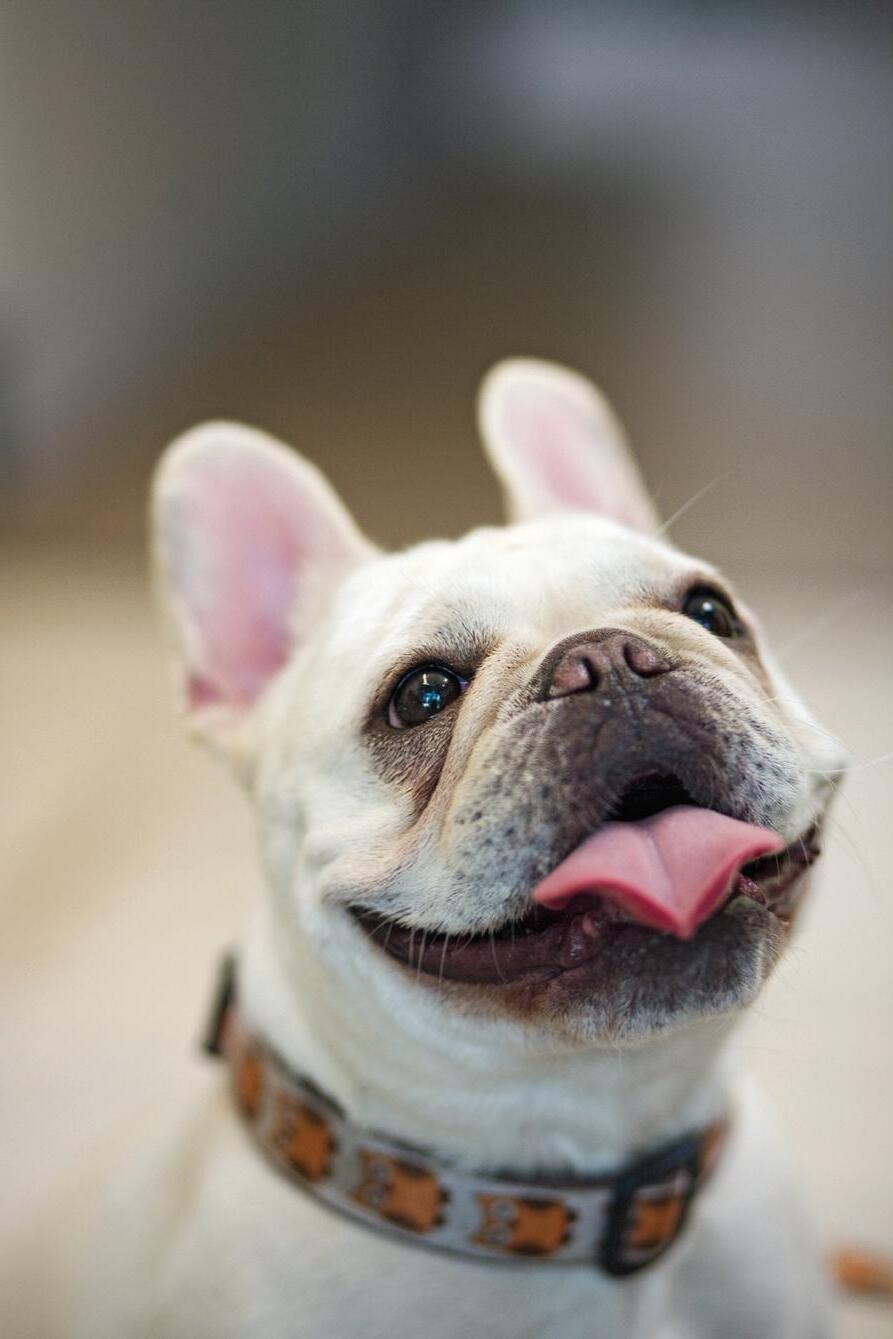
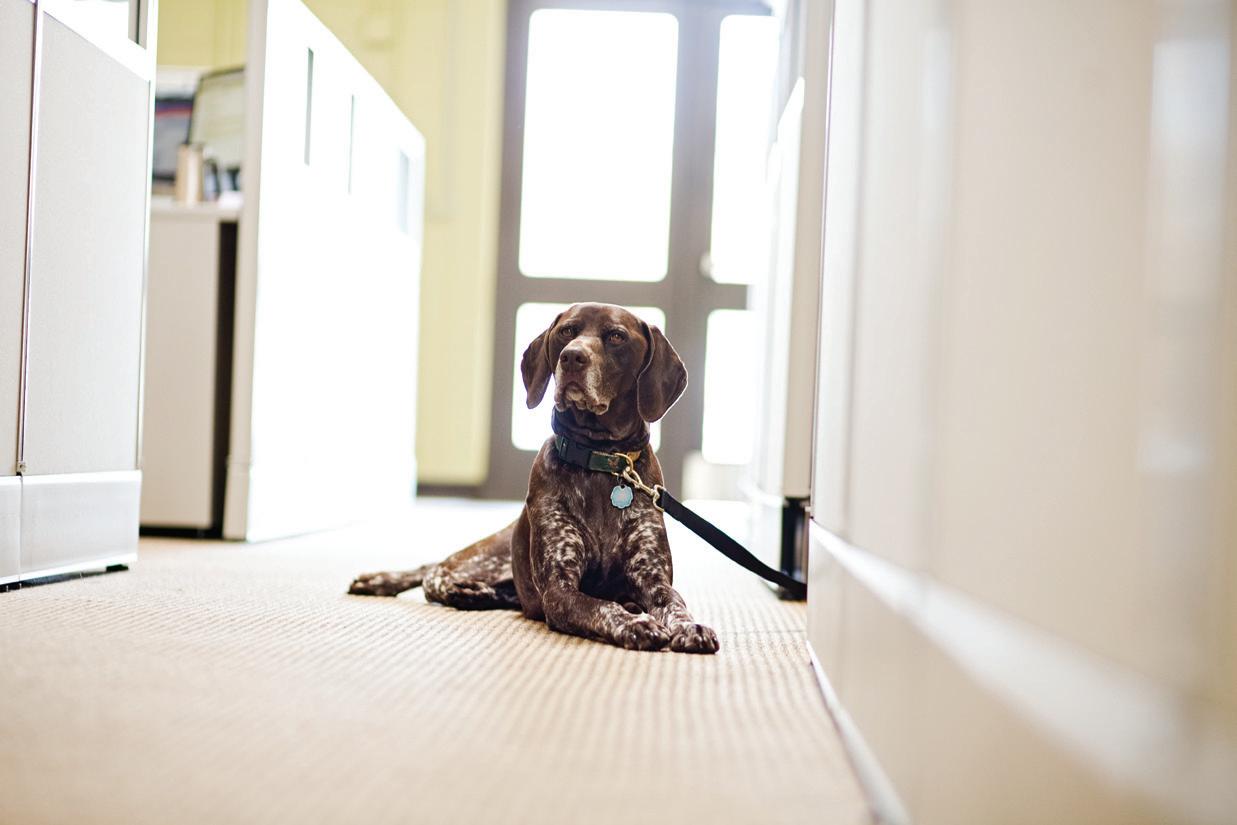
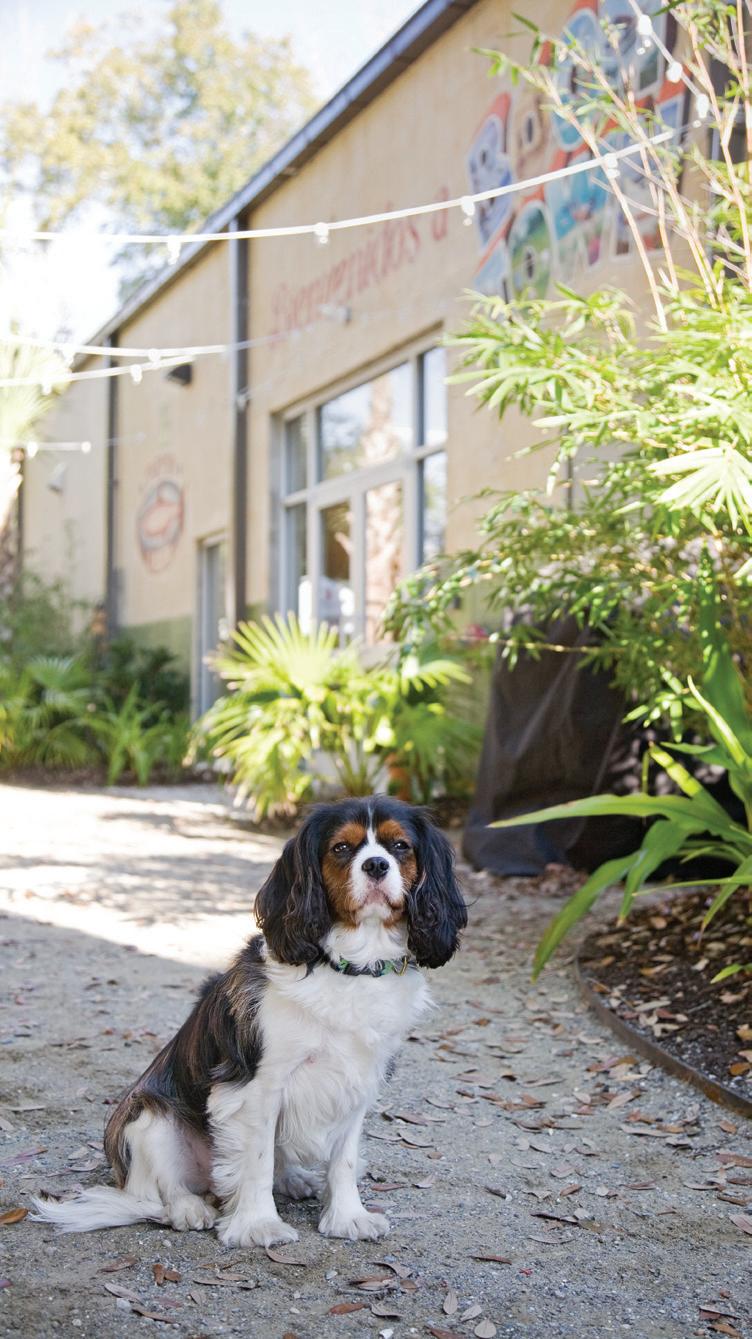
photo, 3rd Table of Contents photos by Julia Lynn. 1st & 2nd Table of Contents photo by Laura Olsen Imagery. This magazine is printed on 100% recycled paper. Continue the green process by recycling this copy
calendar of events 21 health and wellness 22 Tracheal Collapse training 24
Rover for Baby
Fido’s Friends robert & megan lange
Occupation: Gallery Owners & Artists
Dogs in Household: TWO Named: Porter & Maya Lives: MOUNT PLEASANT
1. What’s the best thing about owning a dog? We’ve trained our dogs to paint the paintings. So, we just get to sit back and relax.
2. What do you find the most frustrating about your dog, or struggle with as a dog owner ?
Now that we have three pets,[2 dogs and a cat] we’re out numbered. Whenever there’s a family vote we always lose. Which means we’re going to the beach and on walks all the time.
3. All time favorite memory of your dog?
Porter teaching Maya how to dig a hole in the sand.
4. Favorite place to hang out with your dog in Charleston? Backyard, especially when the evil sprinklers on. Complete entertainment.
5. With what aspect of your dog’s personality do you most identify? We have similar sleep habits. Run around. Nap. Run around. Nap. Crash for the night and wake-up hungry.
6. In your opinion, what’s the one item all dog owners must have?
A second. We gave our dog a second dog and he’s been playing with her ever since.
7. If your dog were some other sort of animal, what would he/she be?
Porter would be a bear in hibernation. Maya already thinks she’s a fox.
8. How does your dog inspire you? Or what has your dog taught you about life and work?
They are daily reminders that it’s important to walk away from what you’re doing and enjoy life.
9. How do you KNOW you and your dog are best friends?
We tried (unsuccessfully) to kick them off our bed. It took roughly 15 minutes before we decided our life had become empty.
10. What’s your favorite thing about Lowcountry Dog Magazine?
The online series, “Meet a Lowcountry Dog.”
by
photos
Laura Olsen Imagery
A CHALLENGE to Charleston
by Joe Elmore Senior Director, Community Initiatives ASPCA
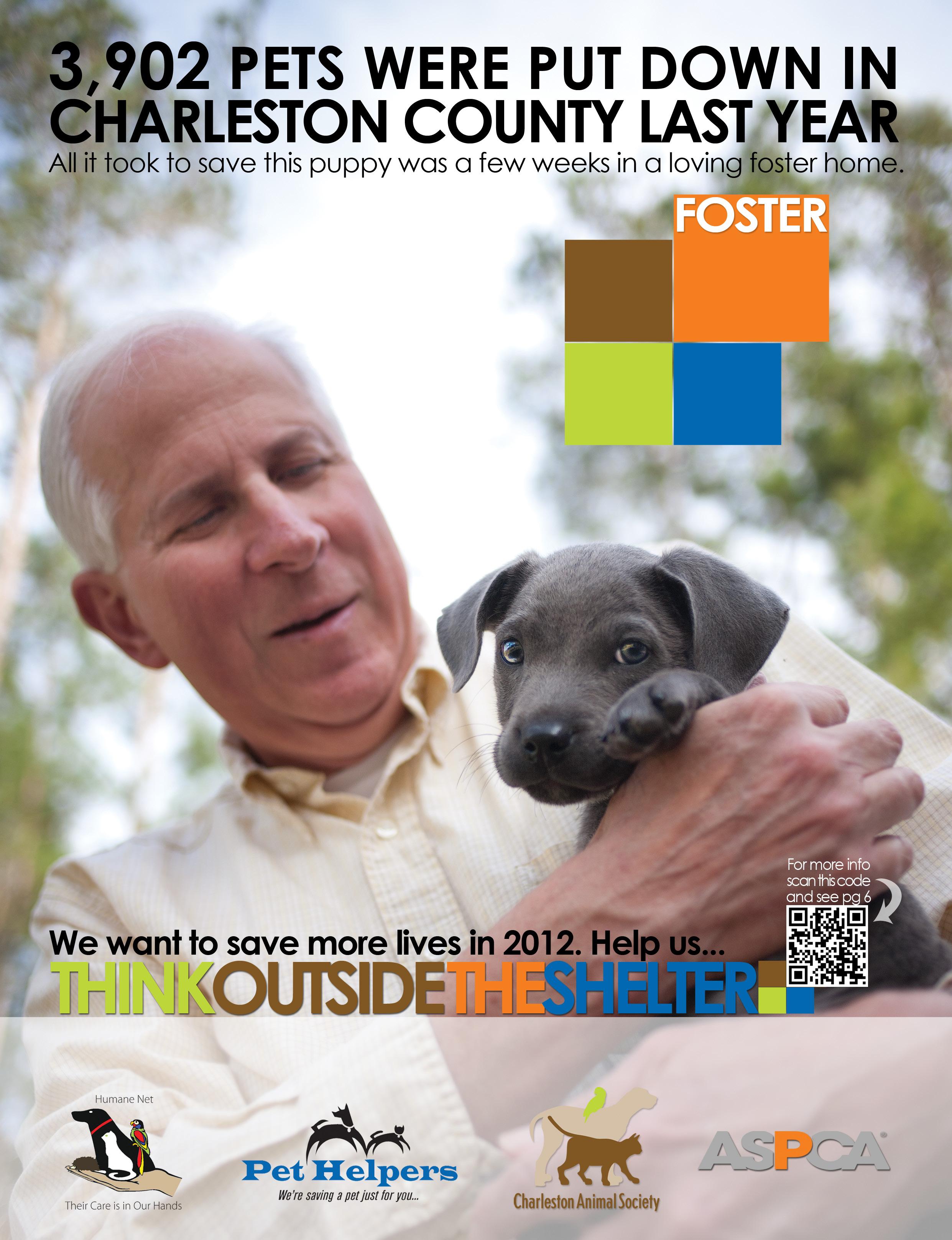
The ASPCA Partners in this project (Charleston Animal Society, Pet Helpers and Humane Net) are striving to save 75% of the community animals this year.
Last year, 11,720 homeless animals entered Charleston shelters.
Our community saved 7,666. 3,902 were put down.
When the ASPCA Partner Community project began in Charleston County nearly 4 years ago, only 37% of the animals entering the sheltering system were leaving alive. Through 4 years of implementing strategies aimed at increasing opportunities to save more lives, coupled with strategies aimed at reducing the number of animals entering shelters, Charleston saved 65% of shelter animals in 2011.
This is an impressive achievement for the community; however, there is much more work to be done to save even more lives.
Since 2008, the ASPCA has invested nearly 1 million dollars in the following lifesaving strategies implemented throughout Charleston County:
1. Increasing adoptions
2. Increasing spays and neuters
3. Managing free roaming cats
4. Reducing animals entering shelter
Nearly 4,000 animals are estimated to be put down in 2012 due to health issues. Most of these will be kittens and puppies who were not old enough to be adopted but could be saved with some tender loving care and nurturing in homes for a few weeks. Once they have become old enough, they can be adopted into permanent homes. It’s as simple as that!
The ASPCA Partners have developed a support structure for more foster families to help save these 4,000 lives. Without foster homes, these pets, some with only minor health issues, will die. Your family, your home and your care are critical to making them ready for adoption.
Volunteers are the backbone of a vibrant foster care program.
Because there are so many homeless pets entering shelters, there isn’t enough room and not enough time to nurture the ones who are not healthy or old enough for adoption.
There is nothing like the incredible and rewarding feeling of saving lives through fostering. Nor is there a better opportunity to teach children the value of life by mentoring them through fostering pets and making them ready for adoption.
Can Charleston save 4,000 more lives this year? It’s up to you!
Call us at 843875-4031 now or go to www.
SaveMoreLives.org to learn more.
• Over 100 years combined, trusted experience in the Lowcountry
• Online emergency pre-registration on our website
• New state-of-the-art facility opens December, 2011 • Fastest, most advanced & safest MRI in South Carolina
843-884-2441
843-216-7554
The Dogtor is In by Chris England
In 1945, my grandfather returned home to central Pennsylvania from the Pacific theater, having served as a Navy flight surgeon on the USS Independence. He was eager to return home to his private medical practice in the small dairy farming town of Roaring Spring.
After the war, he purchased a farm and converted their large intown Victorian home into his medical office. He converted several bedrooms into exam rooms and the spacious parlor served as the waiting room. Dr. “K.B” England was well admired in the community. He was a true “black bag” carrying country doctor making routine house calls to farms and homes in the area. His loyal patients and hospital staff all recount memories of his warm bedside manor. Occasionally, when seeing hardscrabble patients, he would accept a bushel of sweet corn or a homemade pie in exchange for his exam fees. For those patients that could pay, cash was the primary means of payment. With prescription drugs and a sizable cash box, he felt the office needed some protection. A lifelong animal lover, each day he brought his favorite dog, Sheba, from the farm to keep watch over the practice. A sleek, athletic Doberman Pinscher, Sheba was only fierce in appearance. She was a regular fixture at the medical office for many years, and the patients loved her company in the waiting room, despite several notorious antics.
K.B. brought Sheba to work one hot summer morning, leaving her briefly in the waiting room when he arrived and then calling her back to his private office where she would spend the rest of the day. Late in the afternoon after the last patient was seen, he and Sheba left through the parlor to head home. But something didn’t smell right. Directly in the middle of the waiting room floor was a large present Sheba had laid that morning, some 10 hours earlier. One might speculate that it was only out of professional and personal
respect, that not one of the 30 patients K.B. saw that day said a single word. Yes, Sheba couldn’t always be contained to K.B.’s private office and more than occasionally revealed her mischievous side.
Dr. England was a general physician and surgeon who also delivered over 900 babies in his long career, including both my mother and my brother! On one occasion while conducting a pelvic exam on a young woman, he stepped out of the room for a short time. This gave Sheba just enough time to sneak into the exam room and steal the undergarments from the compromised and unsuspecting patient. Sheba then galloped through the packed waiting room, proudly prancing around with her prize.
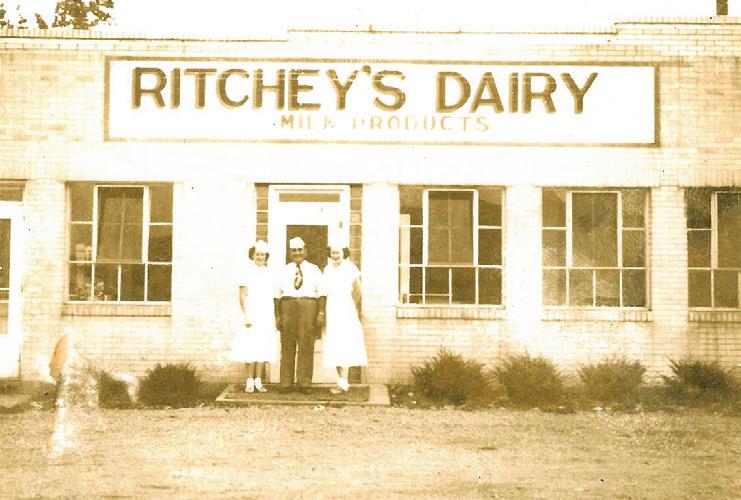
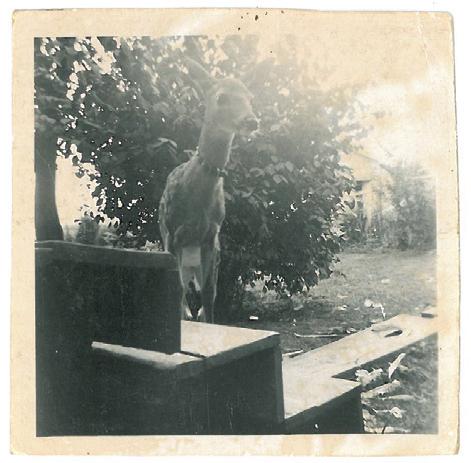
Roaring Spring is predominantly a dairy farming community. My maternal grandmother, Audrey, pictured on the right, worked at one of the many dairy farms. The England family farm had a menagerie of animals, including Arabian horses and tame deer.
Not long after the pantyraiding incident, Sheba retired permanently to the family farm as a companion to the other farm dogs. She became especially fond of the Arabian horses K.B. raised there. She lived a long happy life, and the old timers in town still chuckle while telling tales of the good doctor and his occasionally devilish Doberman. I cherish these stories of K.B. He died when I was very young, and I don’t even own many photographs of him. It’s through stories like these that I get a sense of the kind of man he was, and the impact he made on his community.
With stringent health regulations, a dog is not likely to be seen in many physicians’ offices these days, but some things never change. Dogs have certainly played a part in the workplace for decades, arguably even longer. I imagine we will continue to find ways to bring our animal companions to work, though if Sheba is of any lesson to us, solid dog training might be in order before we allow our dogs to punch the clock.
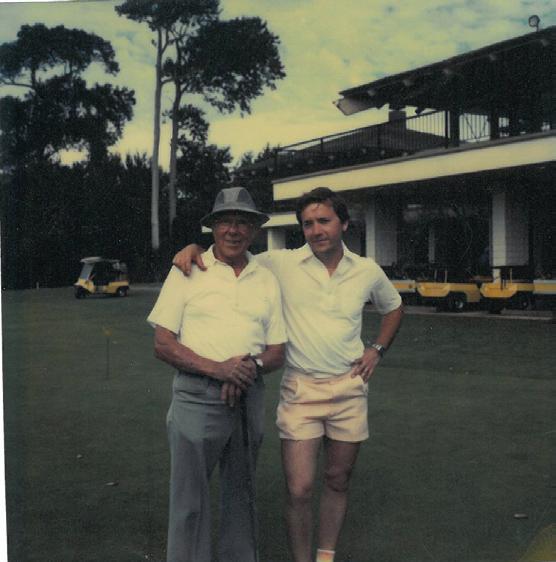
K.B. and my father, Kent.
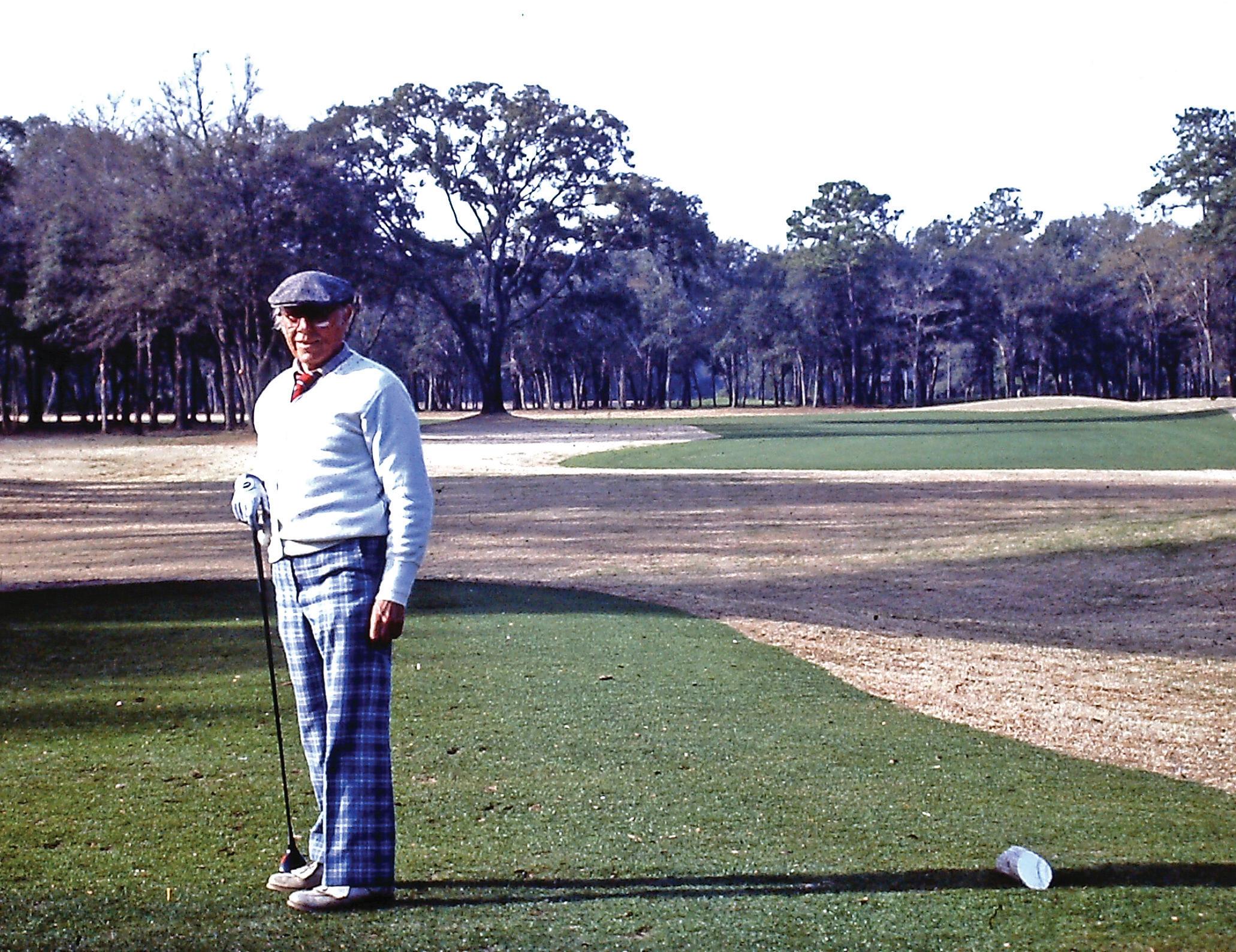
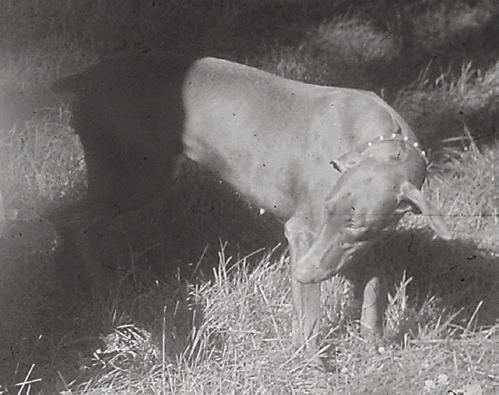
K.B was an avid golfer. This photograph was taken shortly after my family moved to Hilton Head Island in the early 80’s. The inset photograph is one of the only remaining photographs of his beloved Sheba.
Pet Boarding & Doggie Daycare
111 Acres Drive • Ladson, SC 29456 (843) 553-3710 (843) 553-3713 fax scladson@aol.com preppy pet sc Mon-Fri: 7-12 and 2-7 Closed 12-2 Sat: 8-1 and Sun:1-4 It’s
A Bark-Worthy Cause After scandal, the Charleston Animal Society works to recover by Stratton Lawrence
When news broke in December that Charleston Animal Society’s former board president Charles Karesh had ‘inappropriately taken’ $69,000 from the organization, the majority of donors and the public were shocked. Karesh was frequently lauded in the news; even the coverage of the scandal cited not only his years of service for CAS, but his work with the Charleston County Heart Association, Charleston County Planning Committee, and his Lunch Buddies program that pairs low-income children with mentors. As recently as last May, Lowcountry Dog covered Karesh’s efforts to pass legislation toughening up South Carolina’s lax animal abuse laws.
“There’s no question about the wonderful things that Charlie has done,” says Barbara Eggers-Parker, who stepped into the role of board president when Karesh resigned in September. “I told him to his face that I admired everything he ever did, except for this one last thing.”
Although Karesh has not been formally charged with a crime, the Charleston
County Sheriff’s Department confirms that a SLED investigation is currently underway. Beginning in 2007, Karesh took cash from the shelter, writing checks for whatever funds he borrowed. Those checks bounced and were returned to CAS. Former shelter bookkeeper JoAnn Pridemore has also been implicated in the scandal for concealing that checks were being returned from the bank.
When CAS board members first became aware of the situation in late September, they allowed Karesh to quietly resign. At that point, however, few realized that the missing funds would total as much as $69,000. That news only became public in December, when CAS sent out a press release detailing the situation.
Eggers-Parker says that without Pridemore’s complicity in the scandal, the missing funds would likely have become more apparent much earlier. Pridemore is no longer with CAS. In January, the organization formed a new position, Finance and Administration Director, hiring Joy Huber (previously of the Citadel
Foundation) to fill the role.
“We’ve tripled in size in recent years, with 60 employees and 400 volunteers, so our human resources needs are much more complex,” says Eggers-Parker. “We require a person who can handle those changes and Joy is perfect for the position.”
The shelter also announced last month that a new CEO, Joe Elmore, will take the helm in mid-February. Elmore comes to Charleston from the national ASPCA, where he served as Senior Director of Community Initiatives and led the organization’s recovery efforts in Mississippi after Hurricane Katrina. With new structure and leadership in place, CAS hopes to quickly move past the negative incident.
“I’m sorry that there weren’t things
in place to make that not happen in our system, but we are going to learn from that, and it’s never going to happen in our history again,” says Kay Hyman, CAS’ Director of Marketing and Public Relations, pointing out that 2011 was the non-profit’s best year of fund-raising to date, despite the late year news of Karesh’s indiscretions.
Eggers-Parker stresses CAS’ 2012 goal of a 75 percent live release rate for the animals that come in, building on the 2011 goal of 65 percent that was met. In 2007, the live release rate was only 37 percent, accounting for 3,000 more animals’ lives saved in 2011 than four years prior.
CAS is the only shelter in Charleston that accepts every animal that comes to their door, an integral part of their mission since contracting with the county government to take over its pound operations three decades ago. It’s a legacy that began with the founding of the S.C. Society for the Prevention of Cruelty to Animals (SPCA) in Charleston in 1874, making it one of the oldest shelters in the nation. Their current state-of-the-art
31,000 square foot facility on Remount Road is the group’s fifth location since their inception almost 140 years ago.
“One little blip in our history does not change the fact that we’ve been doing lifesaving work in Charleston for over a century,” says Hyman, passionately describing the poor conditions animals were once subjected to at the county pound before CAS (previously the John Ancrum SPCA) stepped in and agreed to take any and every animal that showed up at their door. “We (the community) demand that animals, who for no other reason than the fact that they’re lost or abandoned end up at our shelter, be taken care of properly.”
Since the incident, fundraising calls for pledges and donors have still received a warm response, overall, says Eggers-Parker. Inevitably, however, some people question whether or not Karesh’s impropriety could have been caught earlier.
Mary Black, a longtime supporter, says
she was ‘sickened’ by the news.
“It’s very unfortunate. CAS provides a safe haven for all animals, in a welcoming venue for those wishing to find a companion who will delight and enrich their life with an abundance of unconditional love,” she says. “It’s very unfortunate that this issue surfaced. I think that it’s been taken care of and will be properly prosecuted.”
To date, no formal charges have been filed against Karesh, with CAS taking the stance that they’re focused more on recovering the funds than pursuing criminal charges. Before the story even went public, says Eggers-Parker, fellow board member and Charleston County Council Member Elliott Summey approached supporters and friends of Karesh’s to raise the missing funds, an effort still underway. Summey did not return a call to comment on this story.
In their coverage of the incident, local NBC affiliate WCBD Channel 2 asserted that board members had attempted to cover up the possible embezzlement by quietly raising money, pointing out that a portion of CAS’ budget comes from tax payer funds designated by County Council.
Donors and people connected to CAS have questioned how hundreds of checks could have been written over several years without it ever coming to light. The Post and Courier pointed out the 2006 foreclosure of Karesh’s West Ashley home, as well as two small claims court cases in 2011 for unpaid debts.
Former CAS Executive Director Jim Bush was terminated from his position after a year-and-a-half in November 2010, a decision that Karesh played a role in. Bush says he’s still a strong advocate of the
organization and its mission.
“It’s the only place that takes in every single animal that comes to them, and if they didn’t do that, a lot more animals would die and suffer in the community,” says Bush, adding that he thinks CAS could do a better job of being transparent with its use of funds.
Even Karesh himself remains a strong supporter of CAS and animal welfare. Although the ongoing SLED investigation prevents him from commenting on the situation, he stressed during a phone call with Lowcountry Dog that he’s still hard at work on legislation at the state level, including a law that would ban shelters from using gas chambers to euthanize.
“I was involved with (CAS) for ten years and was interim director (of CAS) three different times for a year-and-a-half, with no pay,” Karesh points out, adding that he raised ‘about $6.5 million’ for the organization. “I’m still going to work for animal organizations and I still actually have people reaching out to me about how they can help animals.”
Eggers-Parker agrees that if it weren’t for Karesh’s efforts, CAS would not have raised the necessary funds to move to their current facility on Remount Road.
Just a week before the scandal news broke, CAS and Pet Helpers joined forces in an editorial to the Post and Courier calling for an effort to make Charleston the first ‘no-kill’ city in the South. Even with the increase in the live release rate, 4,000 animals were still euthanized last year in our county. Through spaying and neutering, and adopting instead of buying pets, Charleston can reach that goal, said the letter.
It’s a mission CAS continues to excitedly pursue.
“We want to be upbeat,” says EggersParker. “Our mission is to save lives.”
Special thanks to those who spoke with LCDM for this story. The topic is a difficult one, and we appreciate everyone’s willingness to talk with us openly and to trust us with this delicate matter. LCDM believes CAS will continue to be a beacon of light for animals in need, and encourages our readers to continue supporting the organization.
only takes a moment to realize that Blue Ion isn’t your typical office. Step inside the digital marketing and web design firm’s King Street headquarters (perched above the Apple store) and you immediately notice the bikes hanging from the wall. The single room layout stretches over 150 feet from end to end, its hard wood floors and open rafter layout complimented by a full bar, a stage, and a rooftop patio.
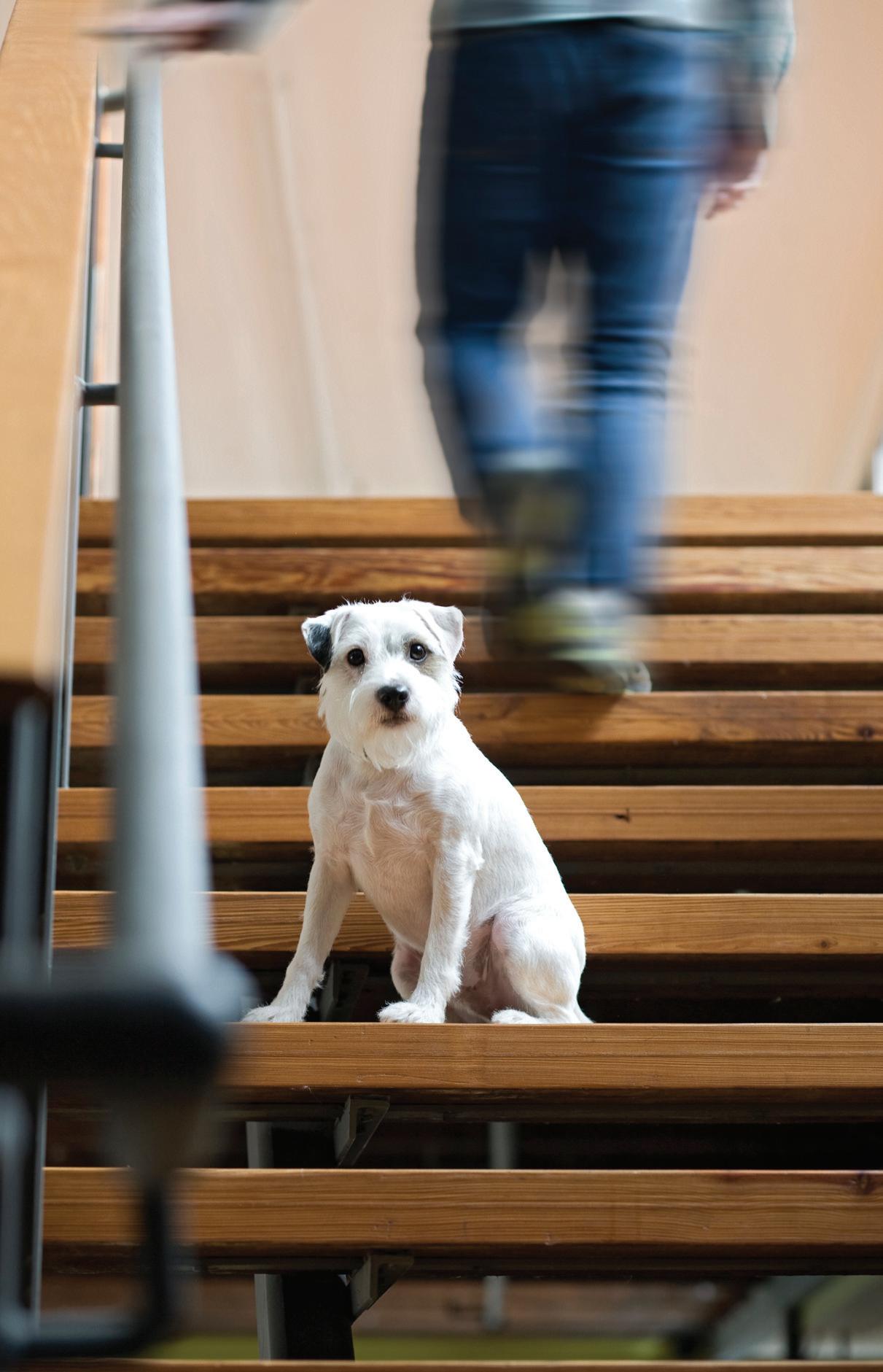
But it’s not the welcoming architecture, the impressive paintings, or even the intricate tiles and pebble-lined sink in the bathroom that first catch your attention upon entering. It’s Brutus, the Parson Jack Russell Terrier who runs to top of the staircase and inquisitively cocks his head to one side as he greets visitors.
Brutus tags along nearly every day with his pal Craig Anthony, a programmer and designer at Blue Ion. The dog’s likeness even graces the company’s t-shirts, and he makes regular appearances in promo videos created by the company.
“He really loves his B-A-L-L,” spells out Anthony, relaxing with Brutus on a couch at the office on a Thursday afternoon. “But he hates trucks outside. That’s his main dislike.”
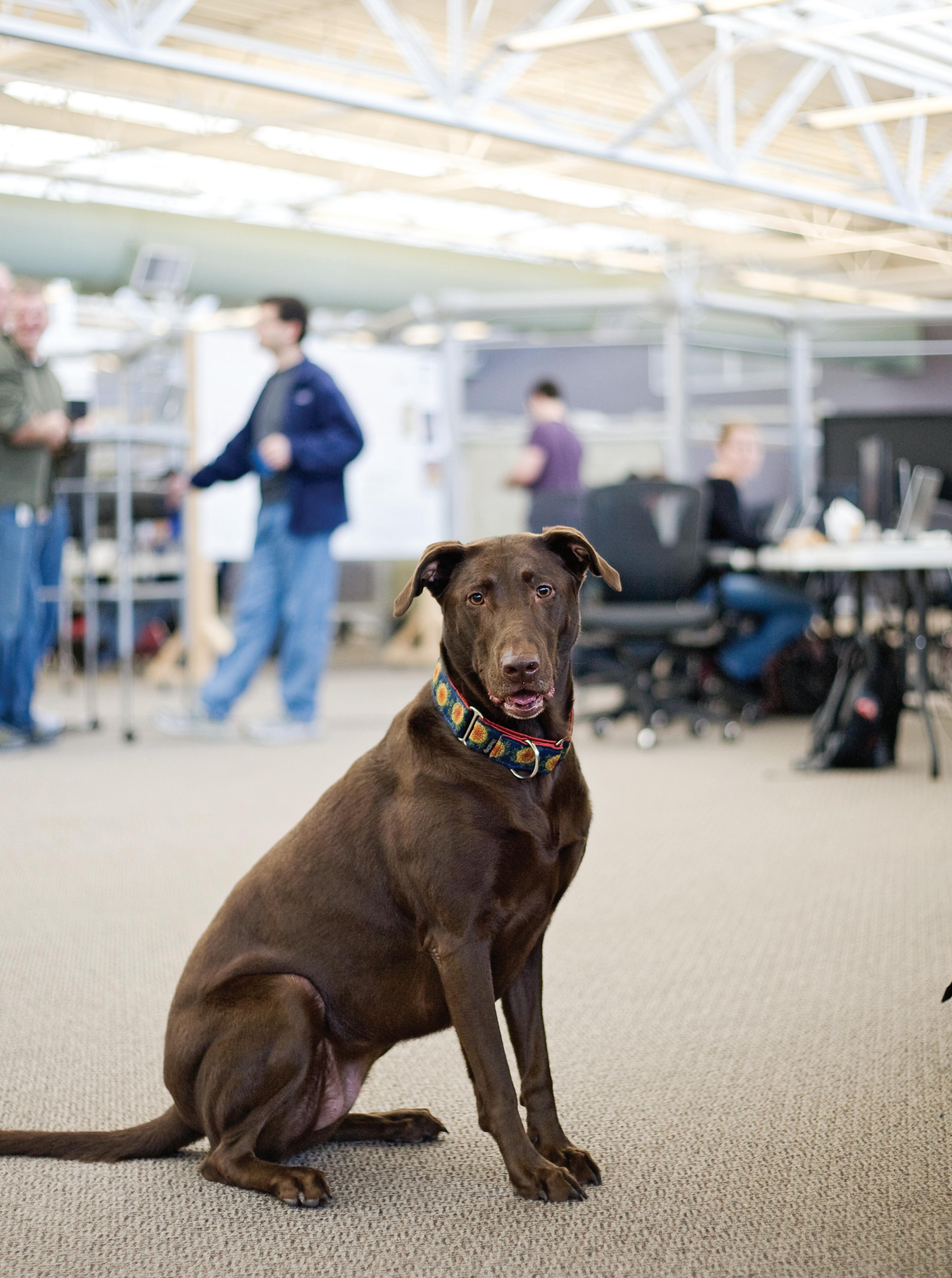
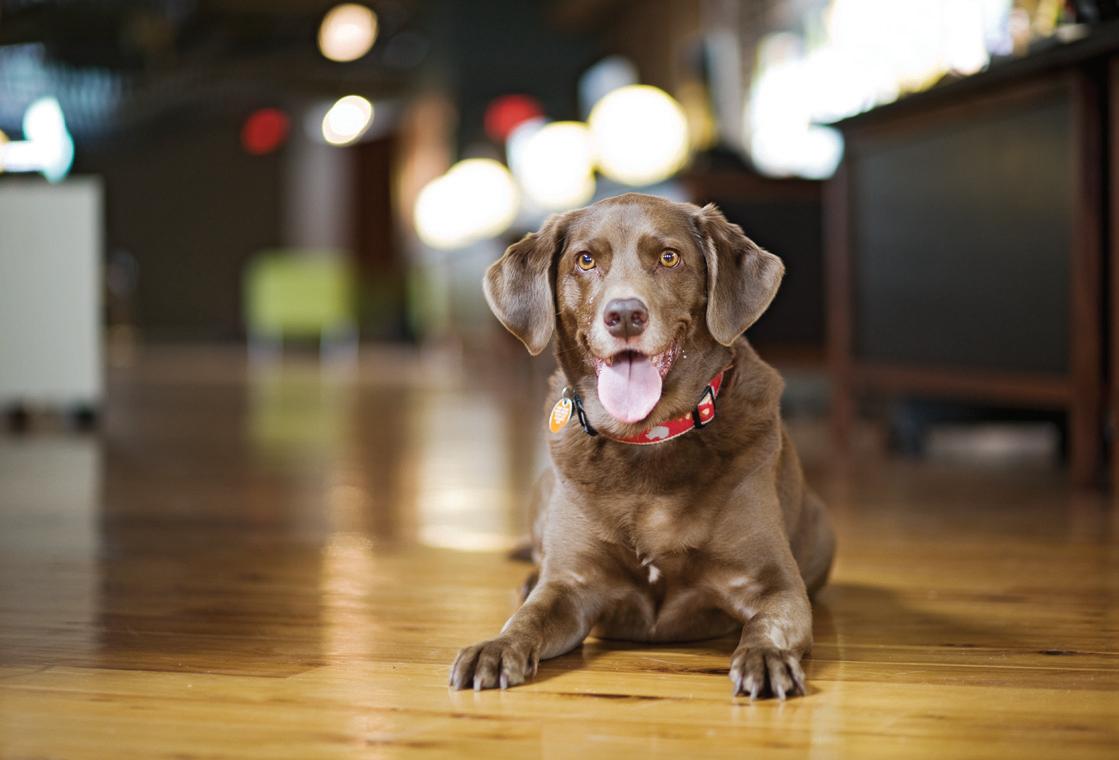
Gus, a chocolate lab-mix, jumps in on the action, challenging the much smaller Brutus to leave his perch on Anthony’s lap and wrestle on the floor. Brian Dadin, a web developer and programmer at Blue Ion, attributes the company’s dog friendly policy to making Gus’ adoption a possibility for his family.
“When he was a puppy, he had to go out several times a day. Being able to have him here was a huge reason we were able to adopt him at all,” explains Dadin, who lives half an hour from the office in West Ashley. “Going all
Dogs at Work
It’s Ruff Work, but Somebody’s Got to Do It
text
by Stratton Lawrence photography by Julia Lynn
the way home and back during the day is just not an option.”
For Gus, dad’s job made him an especially lucky pup. Dadin and his wife rescued him, the only survivor of a stray, emaciated mother who buried her starving litter. Dadin’s bio page at Blue Ion’s website includes a picture of Gus at a few weeks’ old, and another as the happy, playful puppy he’s grown into a year later. While Dadin and his coworkers create cutting edge designs to brand local projects like Maverick Southern Kitchens (High Cotton, SNOB) and the Charleston Convention Center, their canine pals rotate between lying at their feet and roaming the office.
“Part of the whole atmosphere of a creative agency is freedom,” explains Dadin. “This clearly isn’t a typical office.
Being dog friendly is part of that no-dresscode, kitchen-and-bar type office.”
It’s not uncommon for employees to hang out after hours (or during work hours), cooking up communal meals in the kitchen or challenging each other at pingpong and shuffleboard. Still, bringing your dog to work isn’t about bribing employees to work longer hours, says Anthony. The company doesn’t push the 60-hour week other marketing agencies might encourage.
“Everyone understands that family is important, as well as getting exercise and enjoying time with friends,” Anthony explains. “It’s not that the dogs are here to keep us around the office longer than necessary, but it is nice during an eight hour day to look over and have a dog
there.”
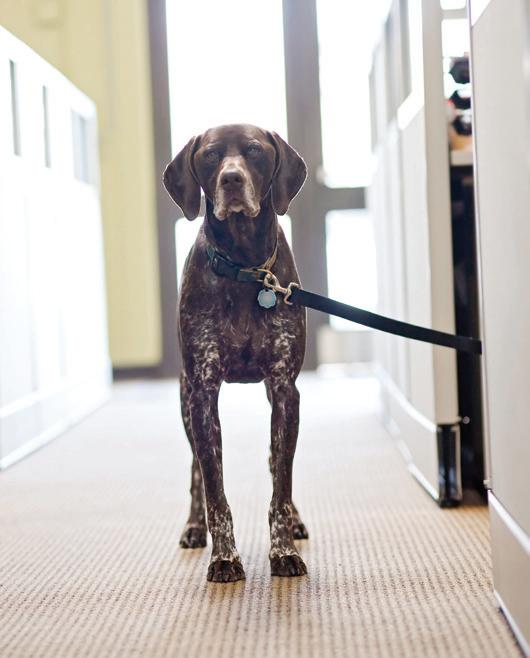
A short hop away on Rutledge Avenue, another innovative startup adopted a similar dog-friendly policy upon their inception in 2006. On a recent Tuesday, Scout, a four-year-old German Shorthaired Pointer, relaxed in the walkway of a series of low-walled cubicles in BoomTown’s open office. Equally at home hunting birds in the field as playing with his friends at work, Scout’s quick to roll over and raise a paw to request a belly scratch as employees stroll by.
Recently lauded as the #18 fastest growing software company in the nation by Inc. Magazine, BoomTown uses a custom real estate marketing platform to streamline the buying and selling process online. Scout’s owner, Kelly Horton, is one
Brutus guards the stairwell.
Vita, are you finished typing up that one sheet yet?
of the company’s first employees. She’s watched BoomTown grow from ten to 42 people, now working with 377 clients as of January.
“2011 was the year we just exploded,” says Horton, a senior client success manager. “I had never worked at another company where it was so very apparent that everybody has a vested interest in the clients and products to do well. In an atmosphere where everybody wants to see the company succeed, office rules control themselves. It’s the same sort of thing with bringing dogs in.”
BoomTown doesn’t have any official rules governing dogs. It’s an unspoken policy, explains Horton, that when you hire good people who want to take care of the company brand, they’ll feel empowered to make the right choices (including whether or not their dog can manage an office environment).
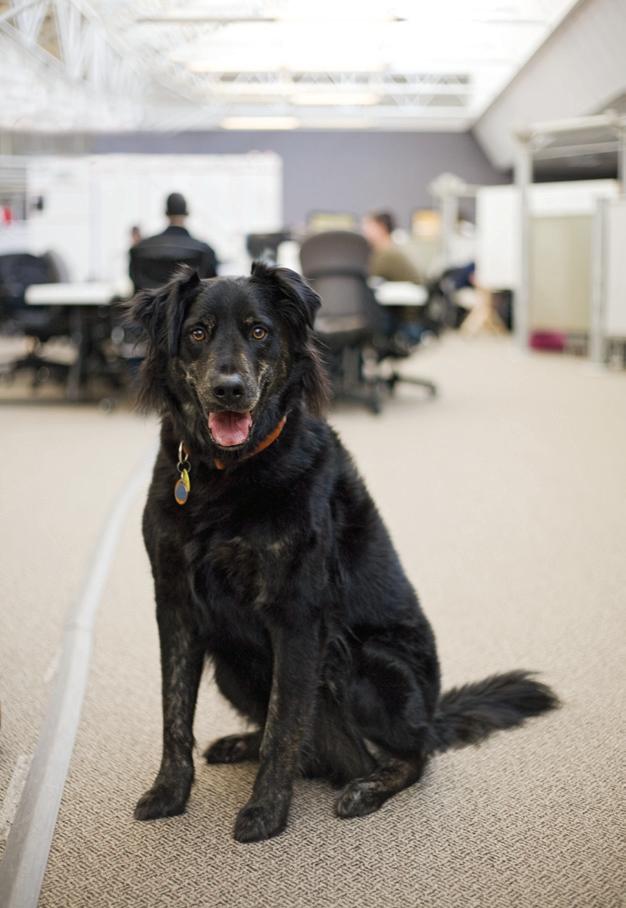
On any given day, there are typically a handful of pups roaming around the BoomTown office. Recent hire Dotty Strobel wasn’t aware of the policy when she applied, but was thrilled to discover that her rescued Chichuahua-dachsund mix, Horton, could accompany her.
“I was like, ‘Oh, I can bring my dog to work? Fantastic!’” recalls Strobel, as the two-year-old pup paws at her feet. “That was yet another cherry on the sundae of getting this job.”
Horton was a ‘Pet Helpers’ special, says Strobel, nearly requiring a leg amputation to be adopted. She instead opted for a month of physical therapy, and the 14-pound pooch has adapted nicely, although the tenderness in his leg is
apparent when he walks.
For a dog owner whose pal has health concerns, it’s a huge relief to be able to keep a watchful eye on them during the work day. Even for employees who don’t have dogs, having their coworkers’ pals around the office can reap benefits by raising morale.
“It’s important for our team to feel relaxed and at home while at the office,” says vice president Cooper Bane. “Dogs add some fun and a welcomed distraction to the work day. Our pets are a huge part of the relaxed atmosphere that we have at BoomTown.”
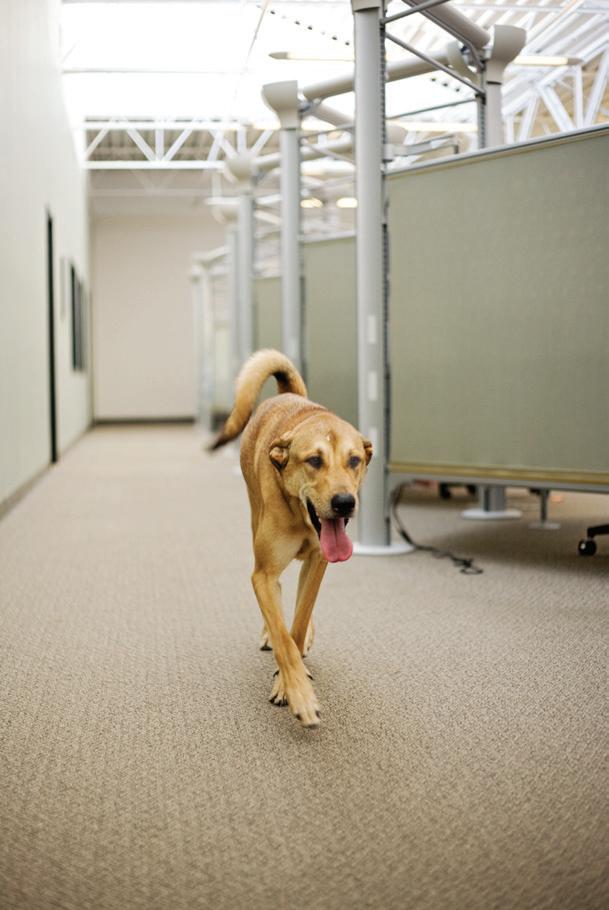
By 4 o’clock on Friday afternoon, it’s not uncommon to find employees abandoning their desks for the office’s long hallway, dogs in tow and tennis ball in hand. There’s also room to roam behind the office, allowing for quick breaks during a busy day.
“If I know I can’t get out of the office until late, I don’t have to worry about it. I can stay and get my work done,” says Scout’s owner, Horton. “It’s great to know he’s not cooped up in the house, and it’s hard to get irritated with a dog at your feet.”
Across a few bridges on Clements Ferry Road, multi-service company SPARC also realizes the benefits dogs can bring to an office environment. The company, which provides everything from architecture
software to iPhone app development to green energy solutions, allows their 140 employees to bring dogs to work on Fridays.
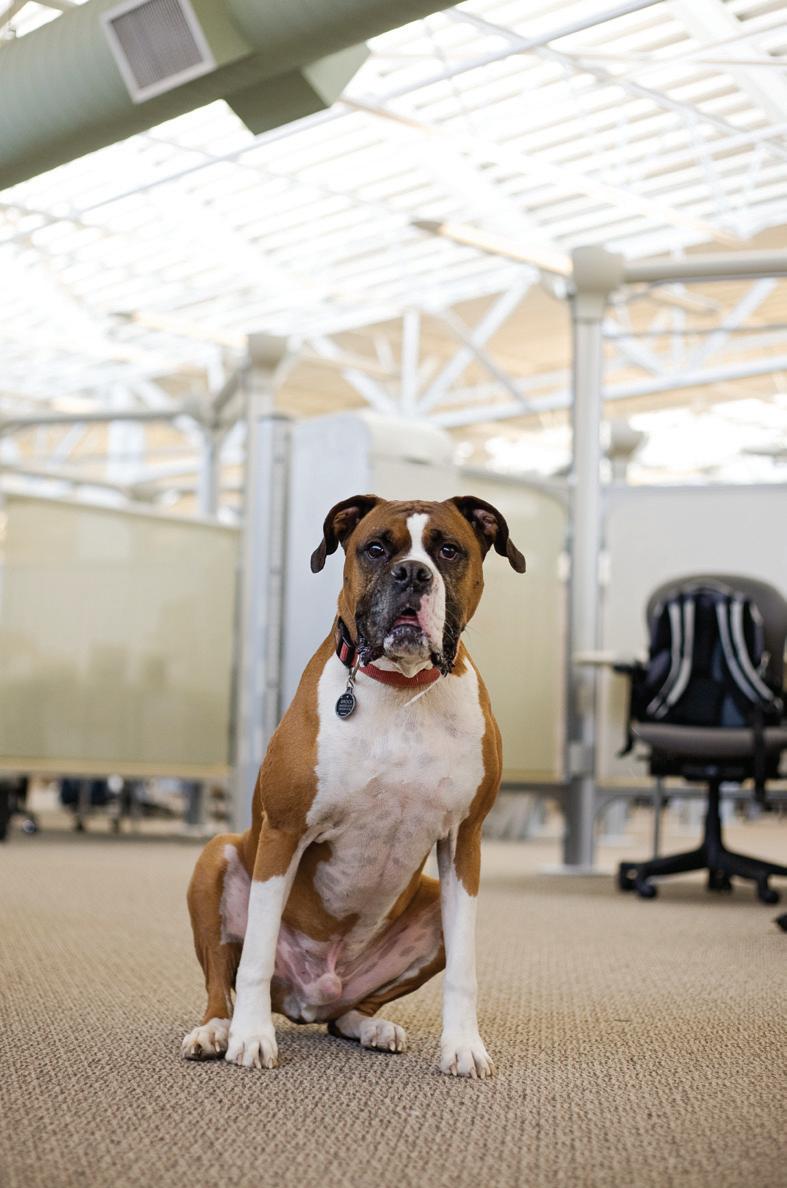
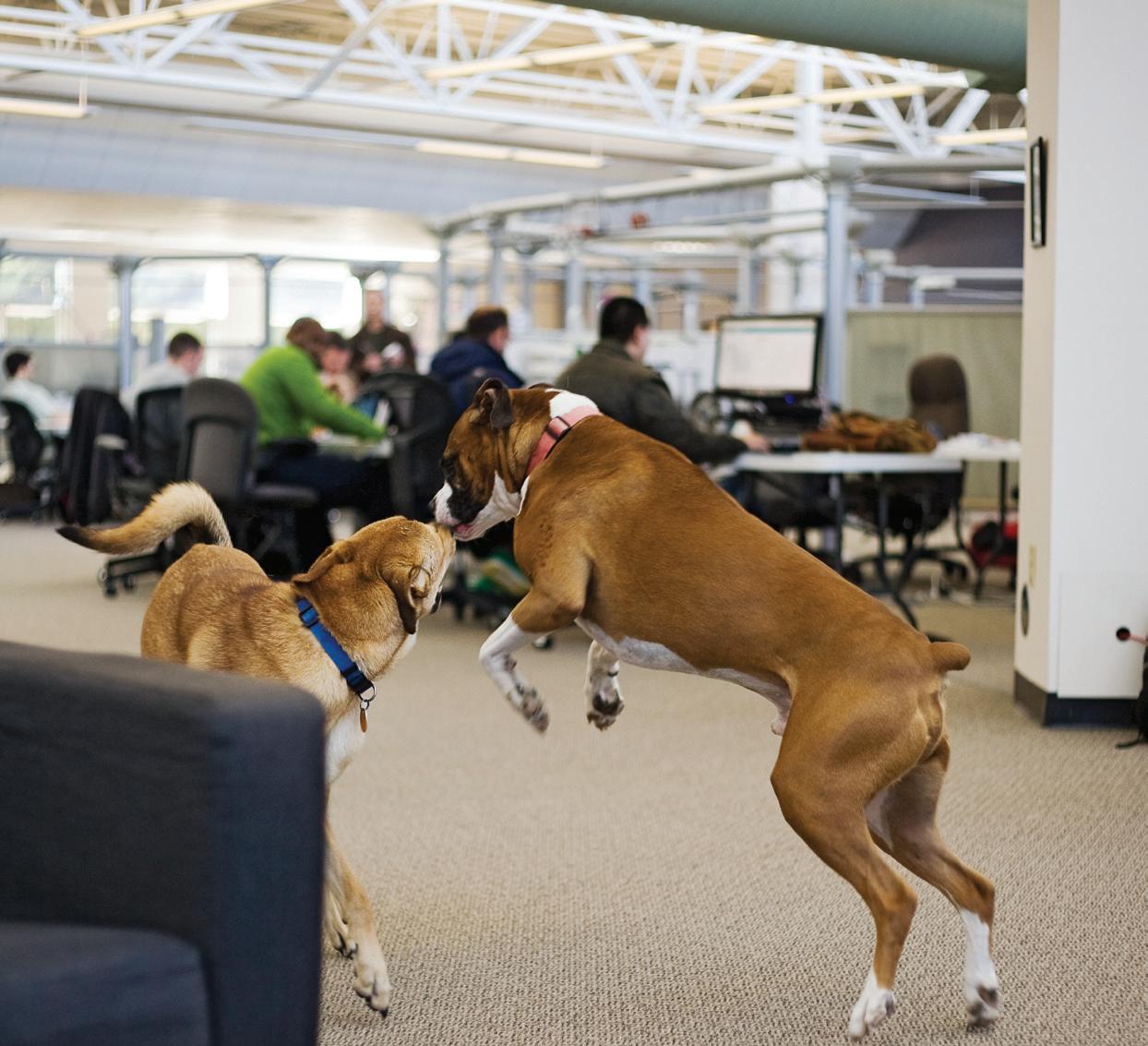
Technical requirement analyst Keith Adamson brings his six-year-old boxer, Brock, nearly every week. Brock spends the day roaming the expansive office and playing at the pond outside with the dozenor-so other dogs who might accompany their owners on the weekly outing.
“When I get home, he’s completely exercised, so he’s ready to cool down and chill out,” says Adamson. “My wife and I can head right out to dinner and we don’t have to worry about him.”
The greatest benefit of bringing dogs to work, says Adamson, is their effect on the overall mood of the office.
“We’ll often have business meetings with clients on Fridays that can be relatively intense,” he explains. “When you throw a dog into the mix, everybody lightens up. I’ve been really surprised by how it changes the presence in the room.”
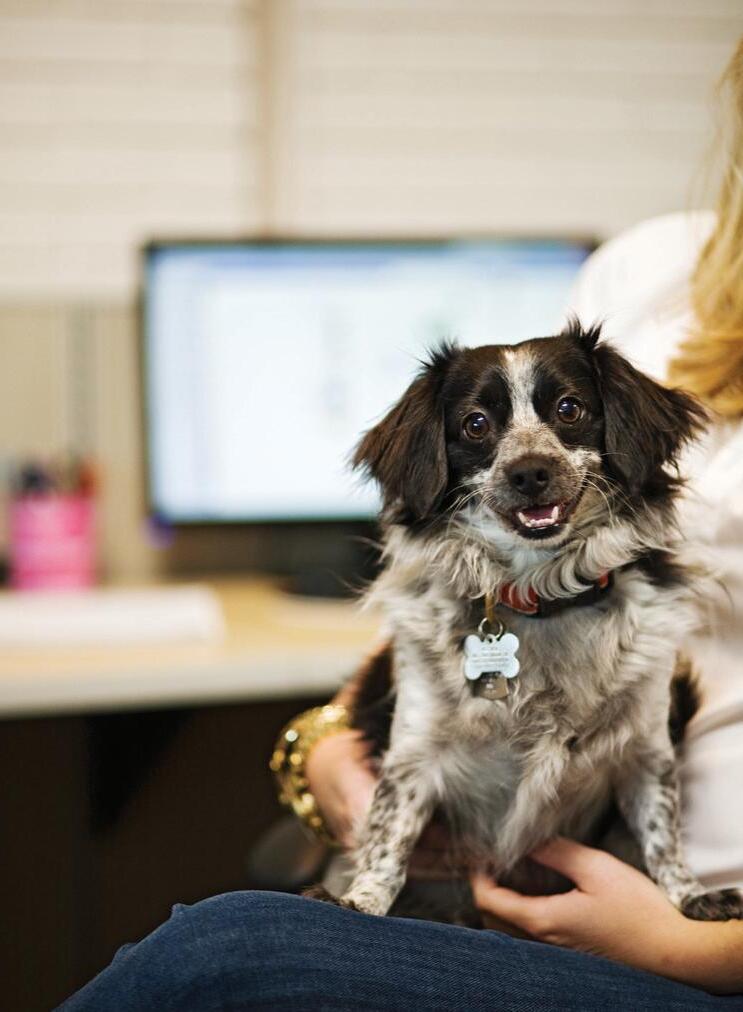
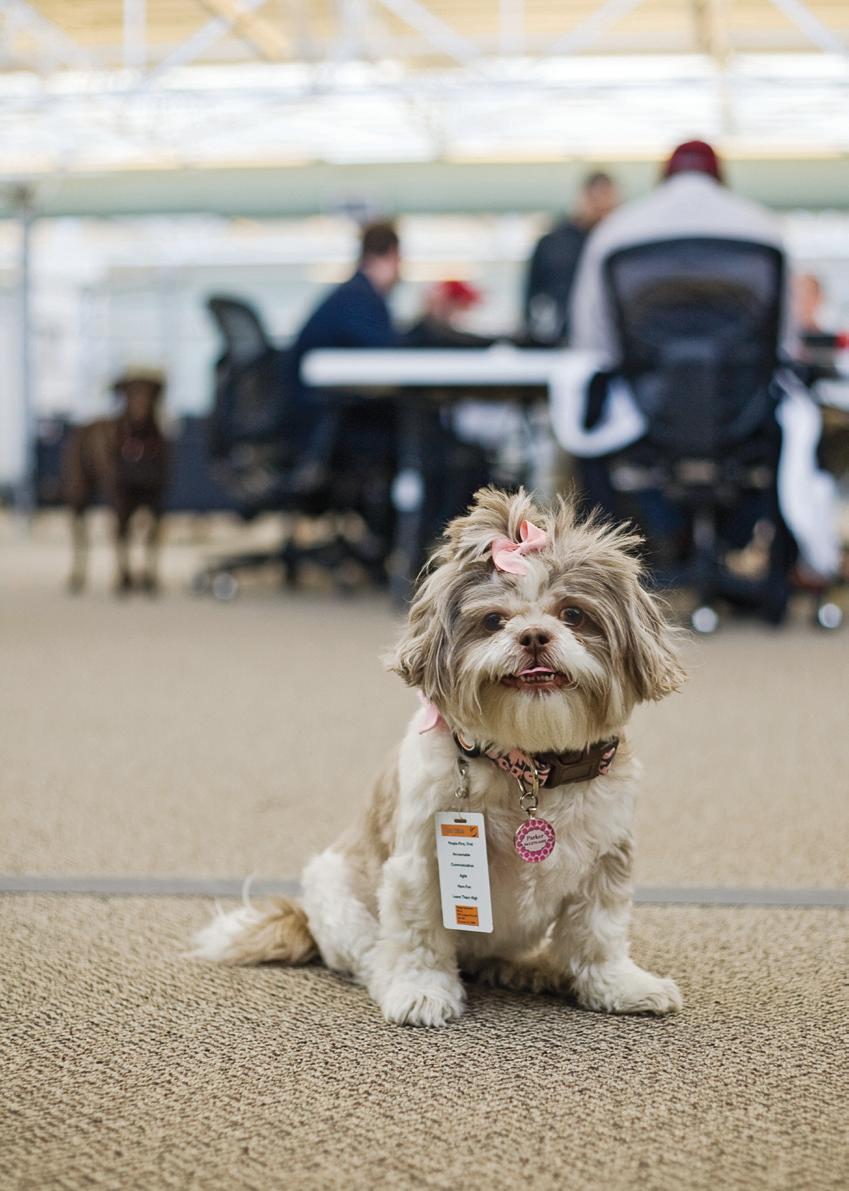
SPARC’s human resources administrator, Amber Mason, brings her Shih Tzu, Parker, most weeks as well. Mason commutes from half-an-hour away in Summerville, so being able to let Parker tag along makes planning out errands more convenient. Parker even has her own clearance tag for the building (one of Mason’s job duties is to make these), so she’s ‘official’ as she wanders from desk to desk throughout the building.
“She’s very social,” laughs Mason. “She has some close friends here, so I really can’t even find her for half the day.”
In between play sessions with pals Brutus & Vita, Gus chills in Blue Ion’s open, loft-style office space.
Horton cozies up with his Mom.
Wally wonders how anyone gets any work done with his cute mug around.
No matter the company, few employees express any serious pitfalls about allowing dogs around the office. Businesses that allow pets are more likely to accompany that with an attitude of trust, instilling a sense of personal responsibility in their employees. Dogs prone to fight and growl are self-governed by their owners, and typically don’t make a repeat visit to the office if their tendency is to start trouble.
Of course, accidents happen, whether they be scuffles or indoor bathroom calls, but with most office dogs that’s the exception. Over at Blue Ion, even little Brutus can leave some hair around, but it’s no problem for owner Anthony, who makes
a regular circuit across the hardwood floors with an industrial dust mop.
All in all, the benefits far outweigh the negatives. It’s no secret that a dog cozying up at your feet breeds a healthy work ethic.
The Lowcountry’s most creative and fastestgrowing companies realize that, and they’ve taken the ball and let the dogs run with it.
Other companies who answered our call on Facebook for dog friendly work spaces:
• Orbis
• Sadler and Hamm
• Gil Shuler Graphic Design
• Atkinson Pool and Spa
• Be A Mentor
• Rawle Murdy
• A&E Digital Printing
• Baker Sanders Barshay Grossman Fass
Muhlstock & Neuwirth LLC
• Futeral & Nelson, LLC,
• SRC
• MaidPerfect
Special thanks to Blue Ion, BoomTowm and SPARC for their time, talents, and for sharing their dogs with us!
• Lowcountry Lacrosse
• Woodall’s Construction Sandblasting and Painting
• Sea Island Habitat for Humanity
• Freshfields Village
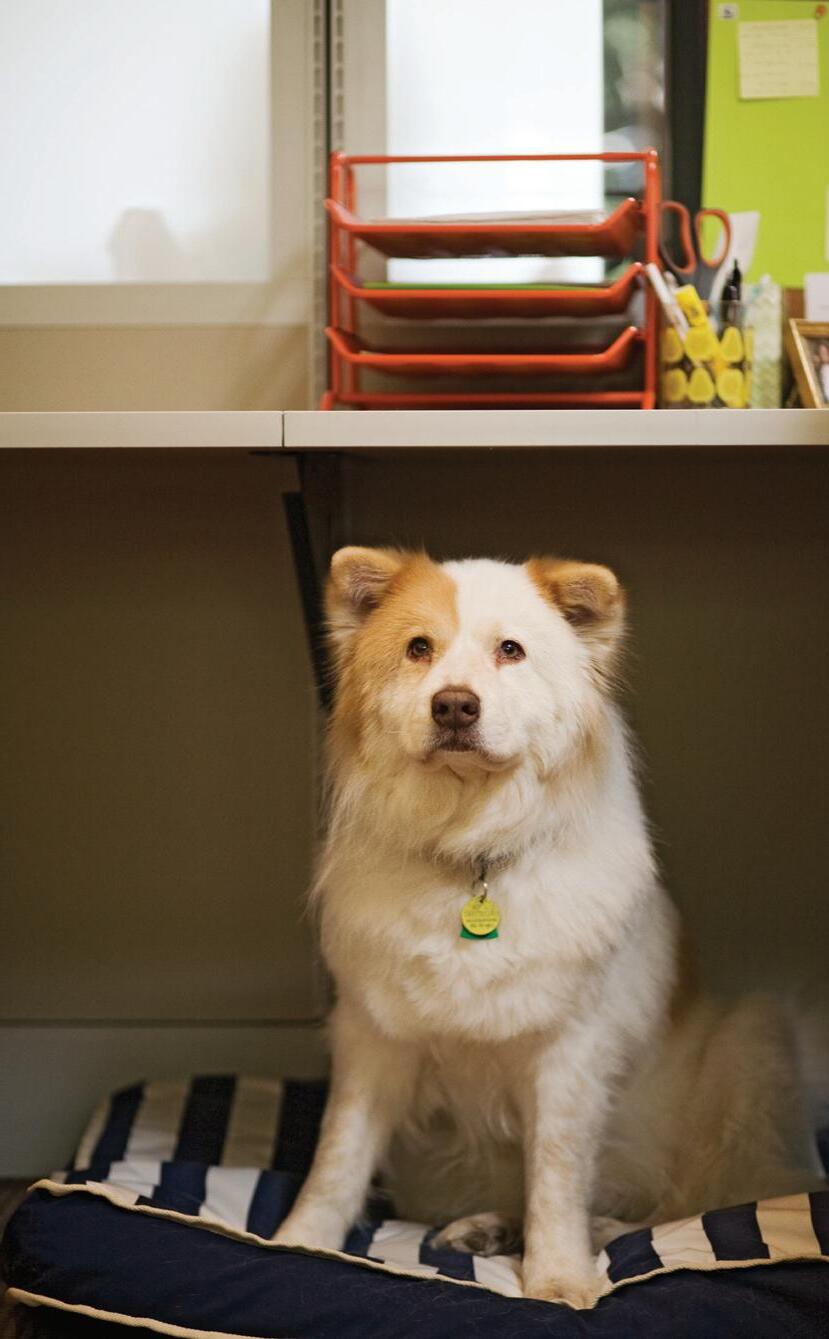
Willow’s favorite snoozing spot is under the desk.
Lulu sure looks happy to work at BoomTown!
BoomTown’s outdoor space is fit for a King... King Charles Spaniel , Tucker.
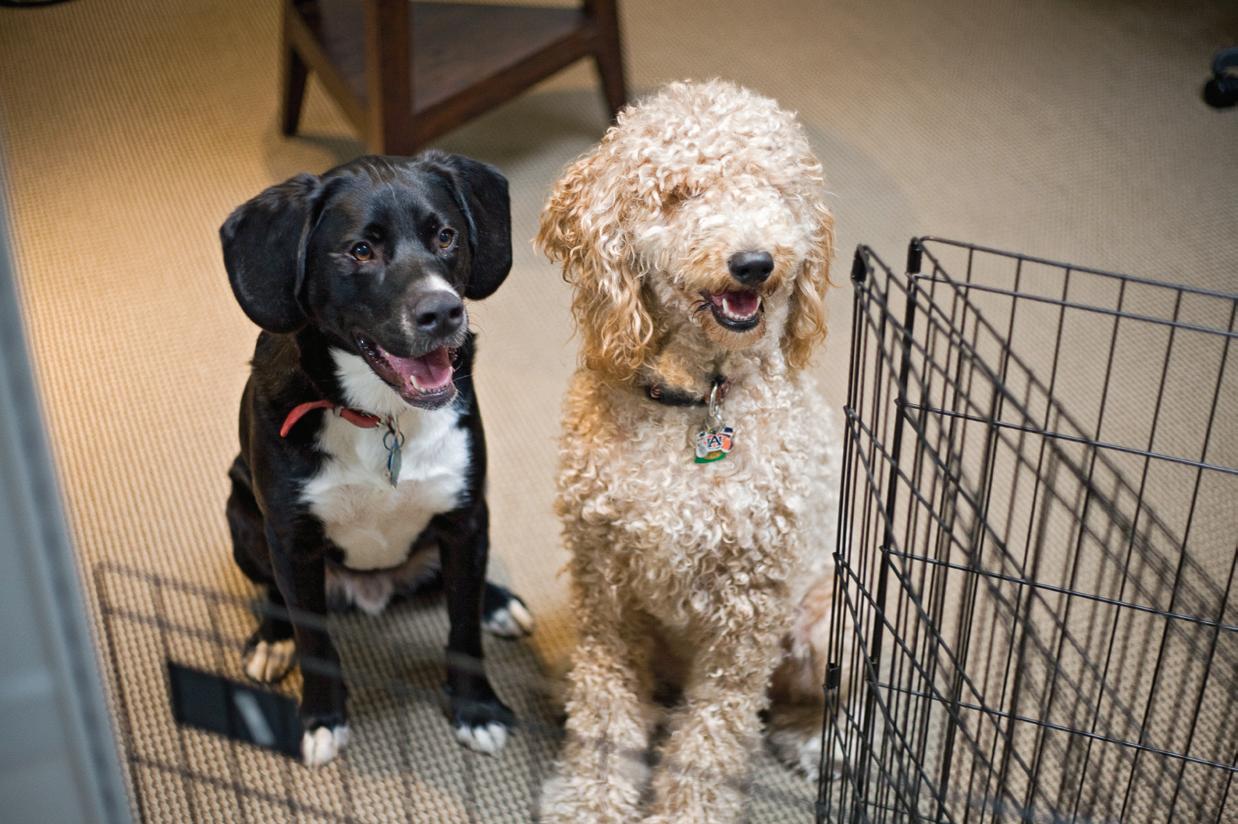
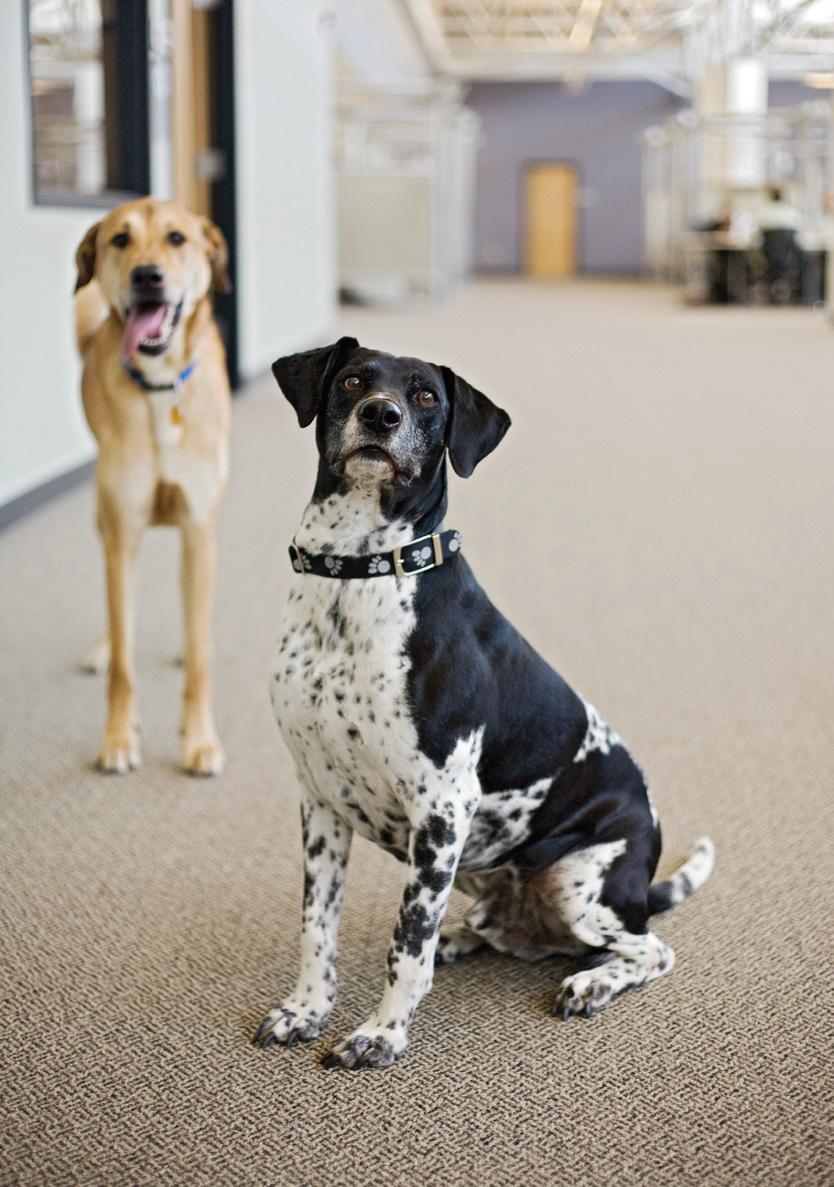
Crash Davis (L) and Rory (R) are a dynamic duo, who love to entertain. Don’t ask them about office politics.
Scout prefers life outside the cubicle, where a keen eye can be kept on all.
Parker sports her own clearance tag which, no doubt, gives her full access to the building.
Penny
sits
long enough for a
She has more important tasks on her to-do list.
Brock enjoys his days “at work.”
Charlie stops playing with Seamus long enough to pose for the camera.
Seamus looks ready to deliver mail!
Cooper supervises a meeting .
How could you not smile with a dog like Frank in the office?
barely
still
photo.
Brock and Seamus at play.
Trixy gets some love from a SPARC employee.
february 4th: 6:00-10:00pm annual downs byrd memorial oyster roast/silent auction. Miler Country Club, Summerville. Tickets are $25 in advance; $30 at the door/ Single select oysters and pizza and desserts. Lots of wonderful auction items to bid on. All proceeds benefit the Frances R. Willis SPCA. Click below for the event flyer.
february 9-11th pet helpers spayghetti supper. The following restaurants will serve Spayghetti (and no balls) or Neuteroni, with a portion of the proceeds to benefit Pet Helpers. J.Paulz, Mondo’s, Atlanticville, & La Tela Pizzeria. www.pethelpers.org for more info.
february 11th-12th: humane net community adoption event at petsmart. 2076 Sam Rittenberg Boulevard Friday, 3-8 Saturday, 10-7, Sunday, 12-5. Visit savemorelives.org or call 843-875-4031 for more info.
february 11th: 11:00am frwspca adoptathon. Come on out on January 14th and February 11th to All is Well for the Frances R. Willis SPCA Adoptathon at 440A Old Trolley Rd. in Summerville, SC from 11am-2pm. Foster pets & shelter pets are invited.
february 17-19th southeastern wildlife exhibition. Retriever Demonstrations, Dock Dogs, Area Rescue & Shelter Booths. www.sewe.com for tickets.
february 18th: 11:00am frwspca adoptathon. Come on out on January 21st and February 18th to Pet Lovers Warehouse for the Frances R. Willis SPCA Adoptathon at 620 Bacon Bridge Rd. in Summerville, SC from 11am-2pm. Foster pets & shelter pets are invited. Bring home a forever friend!
february 25th: 9:00am doggie day at the rec. All dogs and puppies are invited to the 6th Annual Doggie Day at the Isle of Palms Recreation Department. The event offers the opportunity to get your annual rabies vaccination from
9:00am -11:00am in the Bark Park located on 29th Avenue as well as a chance for residents to purchase their City required dog licenses for $5.00. Proof of rabies vaccination is required to get City licenses. This year’s Dog Show completion is open to all dogs and will begin at 10:00am. Only 15 dogs will be accepted in each category so registration may not be available on event day. To register, call 886-8294. Visit www. iop.net for more information.
february 26th: 1:00-5:00pm lowcountry animal rescue’s annual dogmore stew festival. Magnolia Plantation & Gardens. Adults $17 ($20 at the door) $10 children 12-6/$5 5-3 / under 3 free / well behaved, leashed pets are free. Tickets include admission to the plantation & it’s gardens, a lowcountry feast of hors d oeuvres, Frogmore Stew, and delicious desserts. Please call 843-3438063 for more information.
february 26th 1:30-3:30pm paws go red. James Island County Park Wappoo Shelter. Pet Helpers, the American Heart Association’s Go Red for Women Campaign & MUSC Heart & Vascular Center team up for Human and Canine Health featuring: Heart Health Screenings for Dogs and Owners, Go Red Dog Walk, Pet and Owner Photos by Laura Olsen Imagery, Go Red Costume Competition and More! All for $1 entry fee into the park. For more information call 843.795. 1110.
march 3rd: 11:00am frwspca adoptathon. Head on over to the Frances R. Willis SPCA Adoptathon on March 3rd at Summerville Catholic School. Foster pets & shelter pets are welcome. Come bring home a forever friend!
march 10th: 8:30am-12:30pm frwspca garage sale. 215 South Magnolia St., Summerville. All of the proceeds will be used for the Foster Medical Fund. If you would like to donate items to the sale, please contact Kathy at 843-695-1272.
march 17th 10:00am-2:00pm the
citadel’s beautiful bulldog contest. Held prior to the football team’s annual spring game at Johnson Hagood Stadium. A $5 donation admits spectators, $30 to participate in the contest. Registration begins at 10, pageant begins at 12:30. Proceeds benefit mascots, General and Boo, in addition to The Citadel Football Scholarship program. To preregister, www. thecitadelfootballassociation.com.
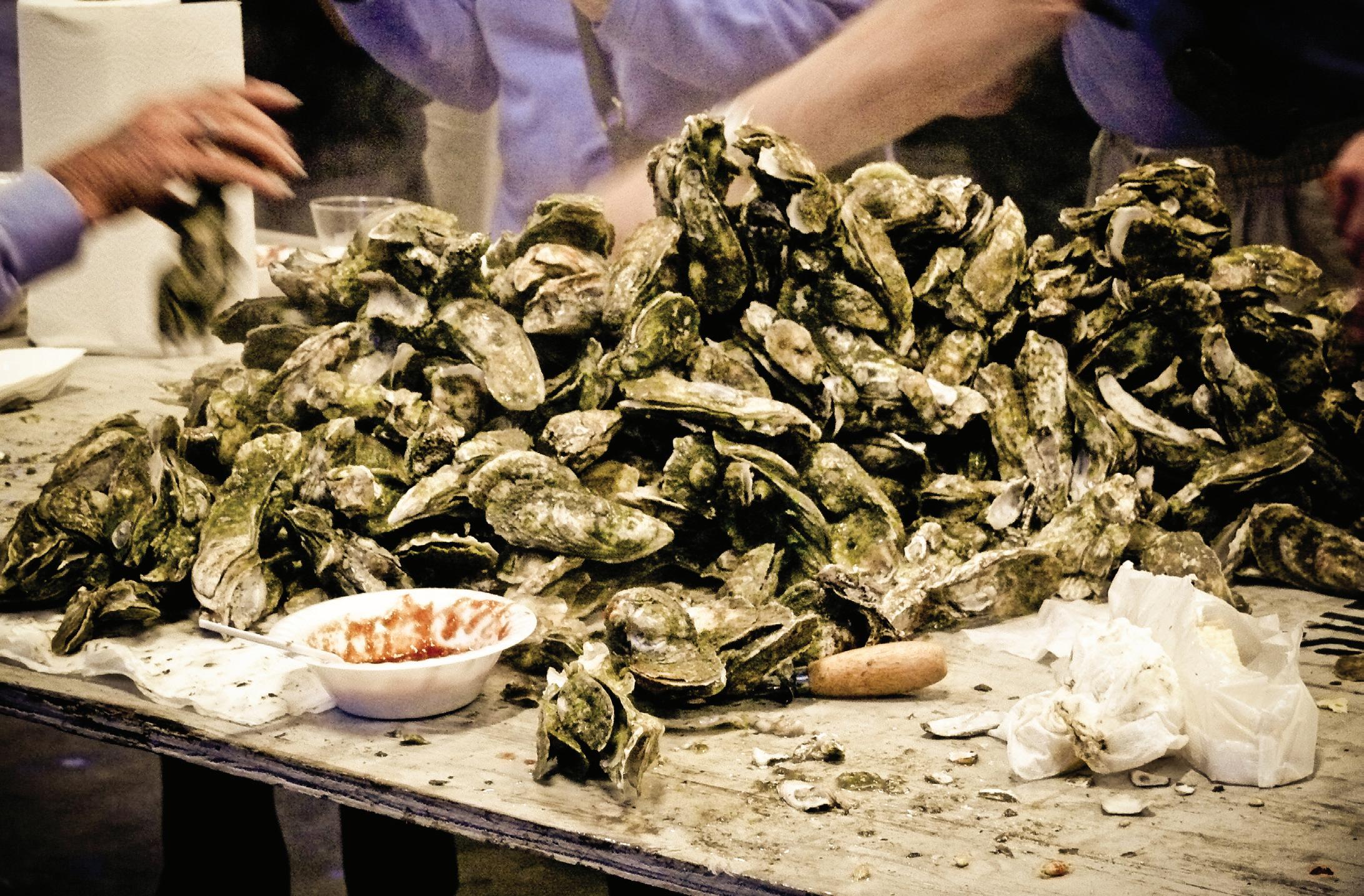
march 24th 7:00-11:00pm pet helpers oyster roast. Visitor Center Bus Shed 375 Meeting Street. All you can eat oysters, lowcountry boil, chili, hot dogs and veggie dogs. Live music by folk/ bluegrass band Blue Spartina. www. pethelpers.org for tickets.
march 24th: 5:00pm cas spirit of caring oyster roast. www. charlestonanimalsociety.org for more info and tickets.
march 30th -april 1st come meet your match at the aspca mega match-a-thon Pet Adoption Event. Friday, 3-8 Saturday, 10-7 Sunday, 12-5. Location TBA. For information on location visit savemorelives.org or call 843875-4031.
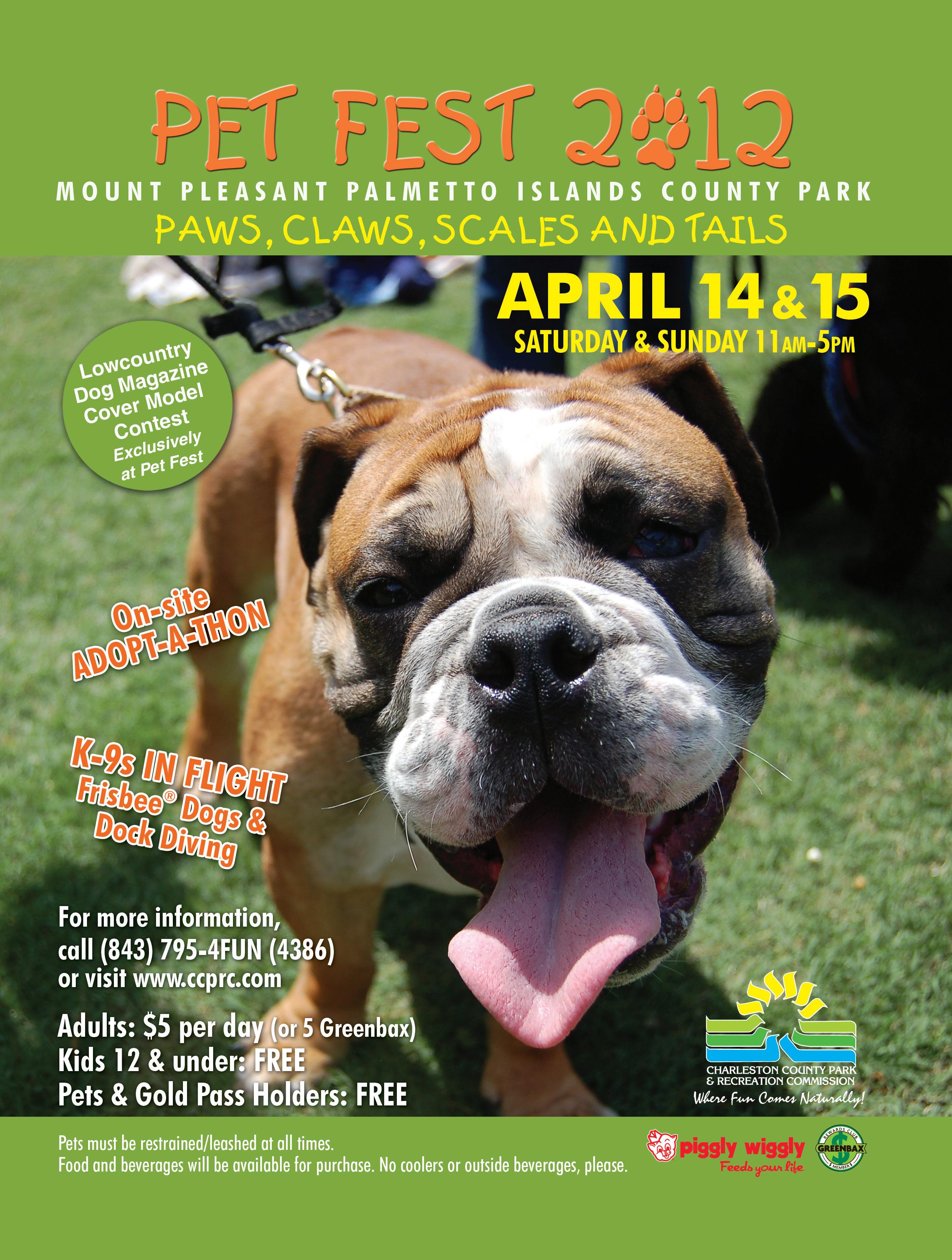
april 14th & 15th: 11:00am-5:00pm pet fest and lcdm model contest. Do you dream of your dog on the cover of Lowcountry Dog Magazine? Now’s your chance! Enter the LCDM model contest at this year’s Pet Fest. It’s a free and fun contest where your dog will meet publisher Leah England and his or her doggie headshot will be taken. Last year 600 dogs vied for the prize! Mark your calendars now for this fun event filled with dog friendly vendors, rescues and shelters, a charity walk, a microchip clinic, frisbee demonstrations, entertainment, food tents and much more. Entry into the event is $5 per person. Palmetto Islands County Park in Mt. Pleasant. www.ccprc.com or (843) 795-4386 for more info.
Questions? Comments? Call 843-478-0266. Want to submit event information? Visit www.lowcountrydog.com and click on Add an Event. We will do our best to include your event as space allows. Our online calendar lists all events in full.
Tracheal Collapse
From Therapy to the Age of Bionic Dogs
by Serge Chalhoub, DVM
Alfie, a male 5-year-old French Bulldog, presented to the Charleston Veterinary Referral Center for continued workup of a chronic and worsening cough. His regular veterinarian had excluded heart disease as a possible cause for the cough. Alfie had been coughing for the past year. On physical examination, he was overweight and his breathing was very loud. His owners described the cough as sounding like a “goose honk.” He would initially only cough during the daytime but now the cough would happen at night as well. It was suspected that Alfie had a condition called tracheal collapse.
Tracheal collapse is a condition whereby the large airway (the trachea) collapses on itself, hence causing resistance to
breathing.
The collapse can occur anywhere in the trachea, and depending on the location and severity (part of the trachea or the entire length) we can see various degrees of coughing and difficulty breathing. It is an acquired disease that certain breeds of dogs are predisposed to. We tend to see brachycephalic breeds (dogs with small and compressed faces) being more affected, such as Chihuahuas,
Pomeranians, Toy Poodles, Shi Tzus, Lhasa Apsos, Yorkshire Terriers, Pugs, and French Bulldogs. The cause of the collapse is unclear, but there are other conditions that can worsen the disease, such as being overweight, heart disease, chronic lung disease such as chronic bronchitis, and consequences of being a brachycephalic dog (small nares, elongated soft palate, weaker (hypoplastic) trachea). Clinical signs include harsh, dry coughing, which usually gets worse over time. The cough can be worse after exercise, and can sound like a goose honk. When the condition worsens (imagine the trachea flattening like a pancake) then animals can experience serious difficulty breathing, cyanosis (turning blue), and collapse. On physical examination your veterinarian may detect a sound called stridor, which is heard over the trachea on inhalation and indicates a possible narrowing of the trachea. Your veterinarian will want to rule out other causes of coughing such as heart disease, infectious diseases such as kennel cough, and pulmonary disease like chronic bronchitis, and will most likely recommend thoracic radiographs and laboratory analysis. Tracheal collapse can sometimes be seen on radiographs but it is often missed because it is a dynamic process (i.e. occurs with the phases of breathing). Therefore, many pets will need special medical imaging techniques such as fluoroscopy (continuous live xrays) or bronchoscopy (camera inserted through the mouth into the trachea) to get an accurate diagnosis. They may also need a bronchoalveolar lavage (literally a lung wash) to collect cells from deep down in the lungs to rule out infectious disease causing or worsening the cough. When CVRC staff proceeded with Alfie’s fluoroscopy, we could see that on inhalation his trachea would collapse to about 75%. This meant Alfie only had 25% of his trachea to breathe from.
Tracheal collapse is a condition that cannot be reversed but there is medical therapy that can potentially slow it down and improve an animal’s quality of life. One of the most important aspects of medical therapy will be weight loss,
Continued on page 27
Preparing for Baby
by Susan Marett
Pregnancy is an exciting time for mothers and fathers who are waiting for their newest family member to arrive. Many of these expectant parents also have a much loved family dog. While most have visions of their dog watching adoringly over the new baby, many parents-to-be worry about the safety of their newborn around the family dog or dogs. What to do?
There are many ways to prepare the family dog for baby’s arrival. Let’s discuss the major areas of concern.
Training
While you’re counting down the months until delivery, this is a great time to brush up on your dog’s training. Training reduces unpredictability and keeps baby safe. Here are some common and not so common skills your dog should know.
Sit – Ask your dog to sit or sit stay when he may jump up because of curiosity. Use a sit when you pick up your baby from the changing table or from a swing or bouncy seat. Sit Stay is also great for greeting visitors who’ll be coming over to see the newest family member.
Down – Ask your dog to down or down stay while you are nursing or feeding a bottle, for rocking your baby to sleep, or preparing to change a diaper.
Place, or Go to Your Bed – Have your dog lie down in a specific place while you are busy with baby. If you like having your dog in the nursery, this is a really useful
skill and allows you to interact with your baby while having your dog nearby.
Leave It – Baby toys and pacifiers….. Both are great reasons for dogs to know leave it. Baby items are often similar to dog toys and fun to chew. Dirty diapers are particularly alluring to dogs and are dangerous for them to ingest. Gross, but a great reason to get a really terrific diaper pail that stays shut!
Here’s a wonderful tip from the international Dogs and Storks Program, founded by Jennifer Shyrock. Dogs and Storks is a pre-natal program that helps expecting families with dogs prepare for life with baby. Practice all of your dog’s obedience skills while holding a doll.
Dogs are terrific at reading our body language and learn very specific cues for obedience commands. When you hold your baby, your body language will change. Help your dog adjust to your new posture and body language by training while holding a life-sized baby doll.
Baby equipment
There are so many wonderful products designed for infants that aid in sleeping, soothing, relaxation, and stimulation. Households waiting for baby to arrive usually include portable rockers and swings, car seats, strollers, pack and plays, gliders and other gear.
It is exciting for expectant parents to bring this equipment into the home, but dogs may view these items with
apprehension. The equipment may bounce, rotate, vibrate, hum, or even play music.
Help your dog become comfortable by giving him ample time to become used to its appearance and to any movements or noises it may make. Reward interest in the equipment and any appropriate behavior around it. Treats, petting, and praise are terrific rewards!
Another helpful suggestion from the Dogs and Storks Program is to dab a little of the baby lotion or powder you’ll be using on the baby equipment itself – prior to the baby’s arrival. This will help your dog familiarize himself with the baby’s smells.
Training sessions around the equipment can also help prepare your dog for real life use. Once your dog has become comfortable with its presence, have him sit or down stay while you turn on the bouncy swing or rocker. This is a great time to use the doll. Place the doll in the swing or rocker while your dog stays nearby or goes to his bed.
During some of your walks, bring along the new stroller. This will enable both of you to learn new skills: how to negotiate sidewalks, curbs, and turns with a stroller leading the way. If your dog is afraid of the stroller, this can intensify with a new baby along. Practice until walking near the stroller is no longer frightening. The nursery
Whether or not you’ll decide to let your dog or dogs in the nursery is a personal decision. Many families feel that it is best to make the nursery a no dog zone. They may feel that their baby is safer, and that the nursery is cleaner when the dog is not allowed to enter. Other families feel that supervised access is best. Some access to the nursery communicates a sense of normalcy, and avoids creating anxiety or excitement about the baby.
Whatever your decision, begin training as soon as you begin setting up your nursery. When your dog enters the room, gently but firmly ask him to leave or escort him out. Be consistent! If you decide that supervised access is best, have short training sessions in the room. Especially focus on teaching sit stays, down stays, and “go to your bed.”
Creating a safe place for the dog
If your dog is currently allowed free run of the house, consider creating a safe area for your dog. This area is child-free and allows temporary confinement when your dog needs a break from the baby, or when you can’t provide active supervision of all dog and baby interactions.
The safe area can be a room or part of a room. Baby gates can be used to confine your dog safely in the space. Crates or exercise pens can also be used for this purpose.
Begin introducing the area by feeding all meals there. If the space is large enough, you can also use food-dispensing toys for meals. Some of these toys include the Buster Cube, Kibble Nibble Ball, Tug-A-Jug, Kong, Kong Wobbler, and the Nina Ottosson line of toys. These provide mental exercise along with the meal.
You can also drop several treats in the area a few times a day, allowing your dog to walk in and find them. This will make the area extra special!
Build up to several minutes a session, two to three times a day, in which your dog is left in the area with his breakfast or dinner, a stuffed Kong, or a safe chew bone. When you let your dog out, remain neutral. Increase the time gradually to thirty minute periods.
Introducing new caretakers
A new baby may temporarily mean sleep deprivation and possibly less free time as parents adjust. If you plan on utilizing a dog walker, allow your dog to spend time with him or her before delivery. Your dog will have fewer new things to cope with when baby arrives. If you’d like to use a dog day care facility, schedule some half-day and full day visits several weeks before your due date.
Be assured that your efforts will pay off in the long run, creating a positive association with the baby before he or she has even arrived. These preparations will help keep the baby safe, and the family dog part of new family activities.
Susan Marett is the owner of Purely Positive Dog Training, www.purelypositive.com, and has trained Charleston area owners and their dogs for sixteen years. She is a licensed presenter of Dogs and Storks. For more information on Dogs and Storks, please visit www.familypaws.com.
adoption
Pet Helpers
Pet Helpers was founded in 1976 by Carol Linville, now President of Pet Helpers, after she read that 8,000 pets were being euthanized each year at local shelters. It began as a weekly ‘adopt a pet’ column. Thirty years later, that column has grown into Pet Helpers Rescue and Adoption Shelter, one of the foremost pet rescue organizations in South Carolina. Pet Helpers has slowly evolved into a widely recognized, innovative shelter that offers caring solutions to the serious problems created by pet overpopulation.
Pet Helpers is a private, non-profit 501c 3 Adoption Center and Low Cost Spay/Neuter Clinic that serves communities across the Lowcountry. Our mission is to end the euthanasia of all adoptable cats and dogs by keeping all animals until adopted; providing low cost spay/neuter surgeries; offering humane education programs; pursuing animal cruelty prosecution; and initiating animal welfare legislation.
Please learn more at www.pethelpers.org
Dusty is a 1 year old beautiful border collie mix. He first came to Pet Helpers to escape the flooding in Memphis back in May. Just a pup then, he has grown into a beautiful, tall dog who would make the perfect running partner for any person. While he doesn’t do well with small kids, he would do great in a home with other dogs and with teens or adults who would be willing to throw the ball with him.
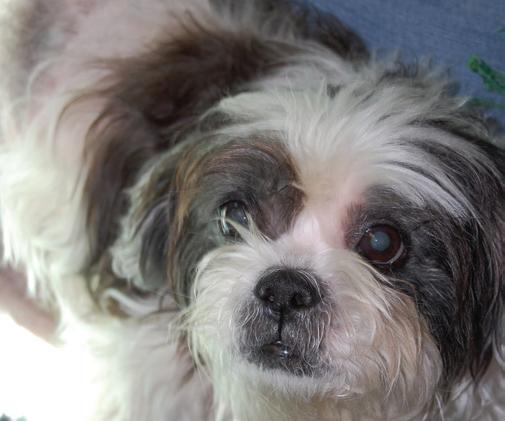
Gumbo is an almost 9 year old male, grey and white Shih Tzu. Poor guy hates being in the shelter! And this time of year, he’s a little cold because an untreated flea allergy caused him to lose a lot of his hair. However, it’s growing back and he will soon have a beautiful coat! Gumbo gets along with all other dogs and would really enjoy one-on-one daily walks with you. Come meet him!
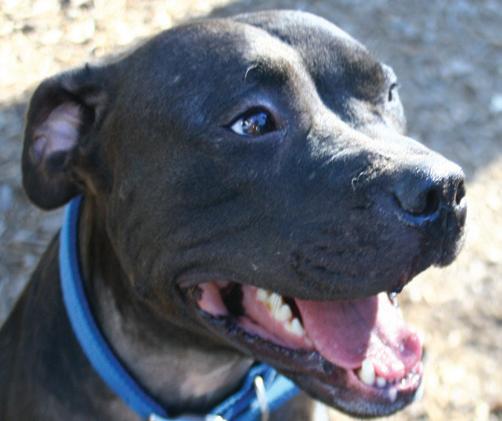
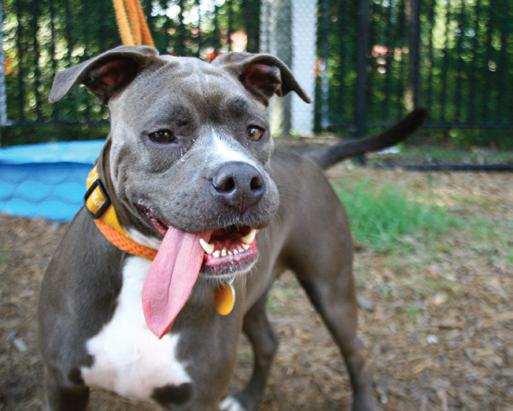
Sage is a 2 year old blue/black pit Staffordshire Terrier. She is shorter in stature, but athletic as the rest of them! She has a love for tennis balls and really enjoys being outside playing in the yard. Her smile is contagious, and love for people is obvious. She will be your best friend!
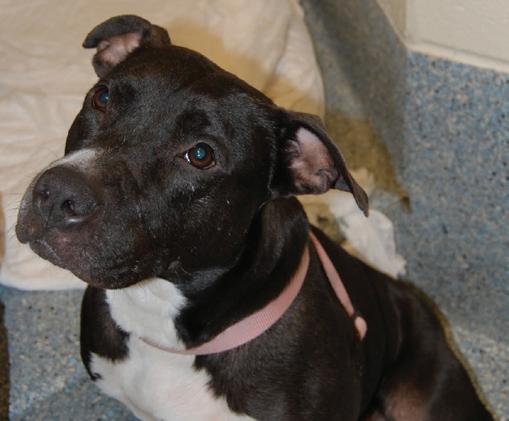
Armani is a 3 year old Pit Bull mix. She was heartworm positive when she first entered the shelter but has since received heartworm treatment. She is sweet-as-pie and very well mannered. It is important to do a proper meet and greet with any existing dogs in the home, but she should warm up easily!
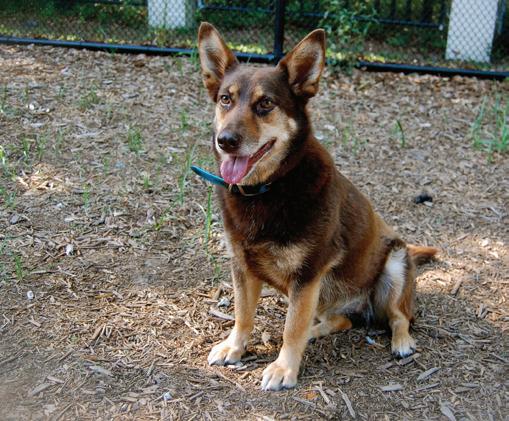
Poko is a very friendly and cute 3 year old Corgi mix. She has a beautiful, thick, chocolate colored coat with tan accents. She was originally found wandering the streets of Ravenel, but has since enjoyed the luxury of living in the shelter (if you can call it that!). She really deserves a home and family to call her own.
Let’s find BB a home! She’s a 4 year old blue pit bull that has spent her entire life in the shelter system. BB is a true people lover and couch potato. Due to abuse she received as a puppy, her skull is lopsided and her tongue hangs out of her mouth, true character! BB is house trained and very obedient. What a great girl and a friend to anyone!
as excessive weight will push down on the trachea. Your veterinarian may recommend a weight loss diet to help with this. Suppressing and preventing the cough is also extremely important. This is done with cough suppressants such as hydrocodone or butorphanol. These agents are opioids and can cause sedation, but they work very well. Even if the cough disappears while on the drugs, it is important to continue to give them to prevent further coughing. The more a dog with tracheal collapse coughs, the weaker the trachea can become.
Sometimes dogs will also get prescribed bronchodilators (drugs used to open up the smaller airways), antibiotics (if a secondary bacterial infection is suspected or documented), and anti-inflammatory medications (when inflammation from coughing is suspected). If a dog has evidence of brachycephalic syndrome, we would also aim to correct what we can (opening the nares, shortening the soft palate). If the coughing frequency
can be reduced by 75% or more, then we can usually control the disease medically. However, if we cannot control the cough despite higher dosages of medications, or if a pet’s quality of life is unacceptable due the coughing, then there are other treatment alternative. In the last few years intraluminal tracheal stents have been developed for dogs. These stents are made of a material called nitinol and they are very resistant to compression once deployed. They are not placed surgically but rather placed using minimally invasive techniques called interventional radiology. A pet is placed under anesthesia, and using fluoroscopy the stent is placed into the trachea and slowly deployed. We pre-measure the length of the collapsed parts of the trachea to determine the needed length of the stent. This is all done under live, realtime imaging, and the entire procedure can be done under 30 minutes when there are no complications. Dogs can live normal, happy lives with stents in place.
It is important to continue to suppress the cough for life to prevent stent fractures. Alfie’s cough could not be controlled with medical therapy, despite aggressive medications and weight loss. Alfie had a tracheal stent placed and the procedure went well. He now enjoys chasing squirrels outside, and can sleep comfortably again!
Serge Chalhoub, DVM is Head of Internal Medicine, Interventional Me‑dicine and Nephrology at the Charleston Veterinary Referral Center, www.charlestonvrc.com