
Sizing up VP options as a decision nears Page 10

By KAREN OCAMB
The Nov. 3 election can’t come fast enough for many Americans devastated by the Trump administration’s disastrous handling of the coronavirus pandemic and the upending of civil liberties. But with stabilizing the economy and rebuilding the nation’s healthcare system expected to take at least a year after regime change, many in Los Angeles are looking beyond the immediate future to March 2022, when primary elections will begin to shape a new city government.
Hopeful Angelenos envision a city government shaken free of institutionalized modus operandi and willing to tackle progressive reform by rooting out the systemic injustice that Black Lives Matter and others have been protesting for years.
On the 2022 ballot are races for Mayor, City Controller, and the odd numbered half of the 15 City Council seats, including Districts 11 and 13 now held by out Councilmembers Mike Bonin and Mitch O’Farrell, respectively. But it is the City Attorney who will be called upon to deliver advice and counsel and help develop new policies to address injustice.
Rick Chavez Zbur, Executive Director of Equality California, wants that job. While continuing to lead the organization he’s shaped and expanded since 2015, Zbur is also out sharing this vision for what he would do as the city’s top legal counsel.
And Angelenos are listening. The former senior and first openly gay partner at the famed law firm of Latham & Watkins — where he was known for his advocacy on environmental issues as president and chair of the board of the California League of Conservation Voters — Zbur has already raised $254,000 for a race that’s just under two years away.
that bubble up.
The homeless crisis, for instance, is a critical, personal issue for Zbur.
“LGBTQ people are probably the group that is most represented among people experiencing homelessness,” Zbur says, citing statistics from the Williams Institute and a host of other studies. “Four out of 10 homeless youth are LGBTQ. The number is almost as high among homeless adults. So 40% of homeless youth are LGBTQ when we may be five to 10% of the population.”
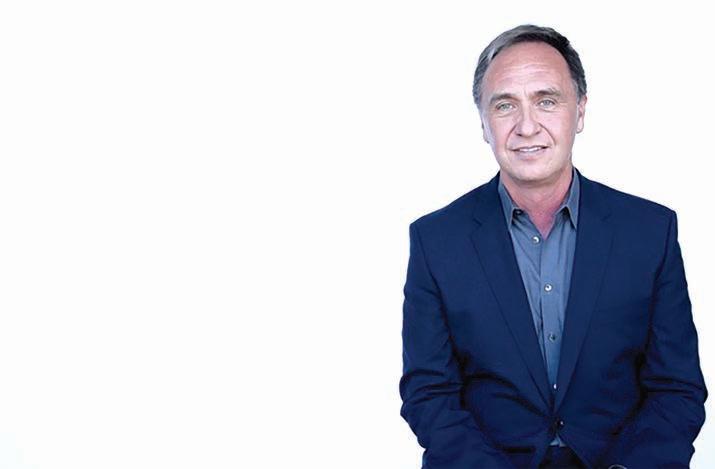
Zbur says he’s proud of his leadership of Equality California, “now more than ever,” and will campaign for City Attorney on his own time outside of work.
“Government serves the people when government is representative of the public that it serves,” says Zbur. “LGBTQ people are not represented in proportion to our numbers in the public. It’s important because we bring a perspective that is important to government.”
Three years ago, Equality California hired Tulchin Research to conduct a statewide poll to gauge what percentage of California’s voters identify as LGBTQ. “We were actually surprised to find the 12% of registered voters in the state of California are members of the LGBTQ community,” a percentage not reflected in the number of out elected officials.
“My running for city attorney, advancing LGBTQ civil rights and social justice clearly will be an important priority, but I’ve dedicated my career to really advancing progressive values and focusing on work that helps improve the lives of average and vulnerable people,” Zbur tells the Los Angeles Blade.
The office of city attorney has the power “to reform how the city does business,” he says, starting with looking at the city’s problems and how the city attorney can provide strategic leadership in solving some of them.
Zbur wants to create a “reform public policy legal think tank in the city attorney’s office,” partnering with the mayor and the city council rather than just responding to proposals
Los Angeles needs “outside the box” thinking focused on getting people into transition services and helping them expunge their records, not just using law enforcement to sweep people out of areas and charge them with misdemeanor crimes. “Think about it. You’ve got homeless folks that basically are just racking up misdemeanor, criminal records.”
The latest LA County homeless report did not include LGBTQ statistics.
“Every public agency that gathers demographic data on race and ethnicity should be gathering it voluntarily on sexual orientation and gender identity,” Zbur says. “It’s important information to understand the extent to which our community is facing challenges and disparities and measures of health and wellbeing. And it’s important to understand whether public programs are meeting the needs of our community.”
LGBTQ data is needed to review police charging policies, as well.
“We’ve got many, many cases of transgender people, particularly transgender women, being arrested simply on solicitation charges for really walking around,” says Zbur, who advocates policies that “deemphasize that as a public problem.”
Zbur says he wants to scrutinize “differential kinds of enforcement” that wind up with the city mistreating trans people, undocumented immigrants, and members of the Black and Latinx communities.
“I really want to take a new, fresh look at how charging decisions are made and really looking at reforming them and really trying to address some of this systemic discrimination that is embedded in the way our laws are enforced,” Zbur says. Anytime “you’re seeing disproportionate impacts on a particular community, then that raises a flag that you’ve got a problem.”
As city attorney, Zbur wants to work with the police commission and the police department to do “a full scale review” of the office’s charging policies and to review “where their enforcement priorities are and take real steps to address systemic discrimination that’s embedded in our criminal justice system,” including racism, homophobia, transphobia and xenophobia.
“Systemic problems need systemic approaches to solve them,” says Zbur. “The city attorney not only has a role in deciding whether to prosecute or defend the city in a particular case, it can look at the policies that guide all the city’s actions.”
For more, visit https://rickchavezzbur.com/
By KAREN OCAMB
It may have been painful for him to tell the truth, but Donald Trump finally acknowledged that the coronavirus pandemic will probably “get worse before it gets better.”
The news is not surprising to elected and public officials in Los Angeles County where new cases of the coronavirus now average more than 21,000 daily. Deaths have passed 4,000, though there is still no data on how many are LGBTQ.
Some public health officials are looking through the intersectional lens of HIV/AIDS, STDs, mental health and substance abuse treatment and prevention, however. And on July 21, Richard Zaldivar, founder and executive director of The Wall Las Memorias, a non-profit LGBTQ Latinofocused community health and wellness organization, brought a number of those top professionals together for the Act Now Against Meth virtual roundtable.
The important data-heavy discussion addressing HIV and the crystal meth crisis among queer, gay and bisexual men — men who have sex with men (MSM) —in LA County is on The Wall Las Memorias Facebook page.
Zaldivar noted that more than a decade ago, the Office of AIDS reported that “out of every five cases of AIDS in Los Angeles County, three of the five cases were attributed to crystal meth use.” A workforce was created, “but the workforce didn’t do anything.”
In response, The Wall Las Memorias helped create the Act Now Against Meth Coalition, which later brought a 10,000-signature petition to the Board of Supervisors. That yielded $1.6 million in new funding for treatment and prevention.
But meth became lethal with the introduction of fentanyl. Last year, meth caused more than 1,000 sudden deaths in LA County. Between 2008 and 2017, emergency hospital admissions for meth rose by 604% in California.
Meth made headlines after the 2017 accidental overdose of Black escort Gemmel Moore and Timothy Dean in 2019 in white gay politico Ed Buck’s West Hollywood apartment.
LA County Public Health was poised to launch a new MethFreeLACounty.org campaign last March when COVID hit. The roundtable was intended to jumpstart a grassroots community-based response.
Cheryl Barrit, executive director of the LA County HIV Commission, noted the disproportionate impact on Brown and black communities,” especially with the complicated intersections of Meth, HIV and COVID-19.
“We need to take charge of creating our own narrative moving forward on how to respond to this crisis,” she said. Mario Perez, director of the Division of HIV and STD Programs, immediately noted that “the gas pedal was sort of let go a little bit” on the response to meth. The community much reenergized around “the ongoing and
quite frankly, worsening meth epidemic.”
In fact, he said, LA County is experiencing “a few epidemics. One is the HIV epidemic, the meth epidemic, and more and more, there’s a syphilis epidemic,” with the intersection of HIV and syphilis exacerbated by meth.
Added to that — a report in April showed that HIV positive meth users exposed to COVID “will have far worse COVIDrelated health outcomes,” Perez said. He presented data indicating that “those 2008 numbers that caused such an alarm are, in fact, worse,” concluding that “the impact of this drug is quite profound.”
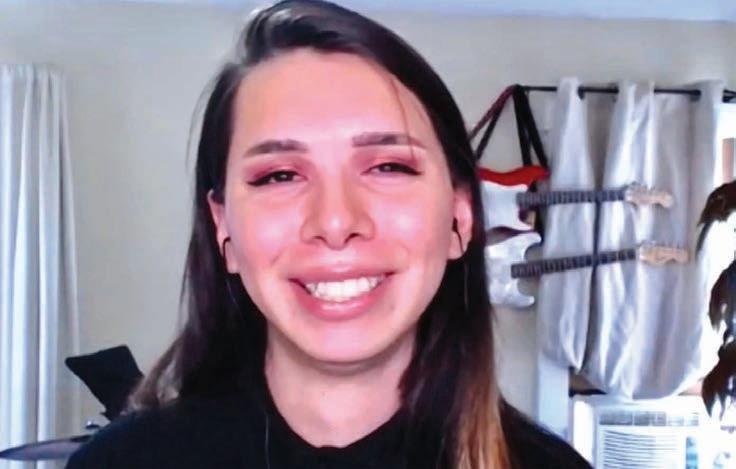
Also participating in the roundtable were Anders Corey, health deputy for Board of Supervisors President Kathryn Barger, who remember that 10,000-signature petition; Dr. Gary Tsai, SAPC Interim Director and Medical Director, who talked about counterfeit methamphetamine, the increase in hospitalizations and deaths; longtime addiction researchers Dr. Steve Shoptaw, Director of UCLA’s Center for HIV Identification, Prevention and Treatment Services (CHIPTS) and Cathy J. Reback, Friends Research Institution/ UCLA, who talked about harm reduction, evidence-based biomedical interventions and the importance of meth users to stop smoking.
The roundtable also featured powerful testimonies from Eric Dixon, who talked about meth and homelessness, and a young drag queen/community organizer named Joey Valladares, an example of an LGBTQ person who was lost to meth and found sobriety.
Joey never expected to touch meth after rough family experiences. “I knew that it was something that I could never touch because of it. I didn’t like who my brother became,” Joey shared. “I saw how it tears people apart.”
Then Joey met a random stranger at age 20. “He pulled out a meth pipe and began to smoke next to me and offered me a hit. At that point I had tried math twice at parties by accident. I didn’t like how it made me feel, so I
was like, I don’t understand the hype behind this. I don’t know why people do it,” Joey said. But “I accepted and I took a hit of his pipe. And in that second and me doing it, it changed me for the rest of my life. It became an immediate problem. It was something that I thought about from that moment on.”
Joey found free meth meeting people through Grindr. “I lost sight of all my dreams and everything that I wanted in my life. It all became clouded in meth,” Joey said, spurning friends and family, drastically losing weight, getting meth skin and mouth. “I couldn’t stop.”
Lost, paranoid, wandering downtown barefoot, turned away for having that meth look, Joey had an epiphany.
“I saw a really ugly side of humanity that day. And from that moment, I knew that if I kept smoking and if I kept getting high, I was going to really lose who I was as a person,” Joey said.
Family and friendly connections on Facebook enabled Joey to get help and build a support system.
Now, two years and eight months sober, Joey said: “Luckily, I’m really happy, but there are still so many people that aren’t — people that are still struggling. These conversations are so important and are really needed.”
For more, visit http://www.thewalllasmemorias.org/
Trump finally admits ‘it will get worse before it gets better’
By BRODY LEVESQUE
Health officials in Los Angeles announced Tuesday that not only is the situation with the coronavirus pandemic worsening as cases of new infections and hospitalizations spike, more than half of new cases are young persons.
“The tragedy of what we are witnessing is that many of our younger residents are interacting with each other and not adhering to the recommended prevention measures, while our older residents continue to experience the results of this increased spread with the worst health outcomes, including death,” said Dr. Barbara Ferrer, Los Angeles County’s Director of Public Health.
Her department confirmed 50 new deaths and 2,741 new cases of COVID-19. Of the new cases reported by LA County Public Health Tuesday in a statement (excluding Long Beach and Pasadena), 57% occurred in people under the age of 41 years old.
There are 2,218 confirmed cases currently hospitalized, 26% of these people are confirmed cases in the ICU and 18% are confirmed cases on ventilators. This is the third consecutive day of over 2,200 hospitalizations. To date, LA County Public Health has identified 161,673 positive cases of COVID-19 across all areas of LA County, and a total of 4,154 deaths.
This rapid surge in numbers is in part due to officials re-opening too quickly County and City sources have privately expressed to the Blade. Los Angeles Mayor Eric Garcetti appearing on CNN, was asked by host Jake Tapper about a Los Angeles Times editorial that criticized the rapid reopening pace in his city as well as other parts of California, which was followed by a spike in new COVID-19 cases and hospitalizations.
The mayor told Tapper that “I do agree those things happened too quickly,” Garcetti said, adding that the decisions were made at the state and county levels, not by city officials. He cautioned that he was on the verge of rolling back the city’s reopening and issuing a new widespread stay-at-home order.
“It’s not just what’s opened and closed, it’s also about what we do individually,” Garcetti said. “It’s about the people who are getting together outside of their households, with people they might know. It might be their extended family, it might be friends. They might think because they got a test two weeks ago, that it’s OK. But it’s not,” he added.
Sources within the LA County government Tuesday told the Blade that discussions were underway regarding a potential scaling back of re-opening, but emphasized that no decisions have been reached.
Against this backdrop of surges, not only in Los Angeles but across the United States, as of Monday, CNN reported that 31 states have seen more new cases this past week, compared to new cases from the previous week, according to data from Johns Hopkins University.
During an afternoon Tuesday White House coronavirus briefing, President Trump told reporters that “It will probably unfortunately get worse before it gets better.” The president also pointed out that there had been a reduction in deaths and rapidly evolving progress on vaccines and treatments for COVID-19, which the president referred to repeatedly as the “China virus.”
Trump offered belated encouragement for Americans to wear masks when social distancing is not possible, “Whether you like the mask or not, they have an impact.”
“I’m getting used to the mask,” he said, pulling one out from his pocket, after months of suggesting that mask-wearing was a political statement against him. He had tweeted a picture of himself Monday wearing a mask with the presidential seal during his visit to the Walter Reed National Military Medical Center complex in Bethesda, Maryland earlier this month.
Dr. Anthony Fauci, the nation’s top infectious disease expert, told NPR Tuesday that he was glad Trump has begun to promote mask-wearing and expressed optimism the president would reinforce that message Tuesday.
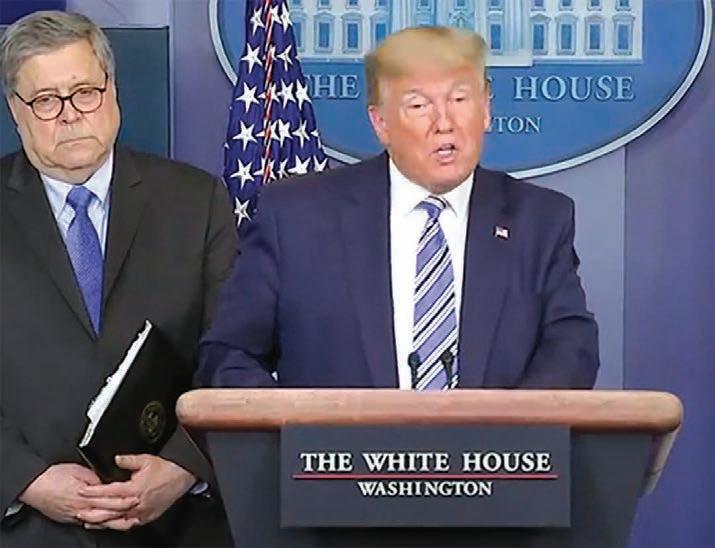
“If we, during those conferences, come out and have consistent, clear, noncontradictory messages, I believe it will be very helpful in getting people on the track of knowing the direction that we need to go to get this pandemic under control,” he said.
Earlier on Tuesday the president on his Twitter account claimed “tremendous progress” on vaccines and treatments for COVID-19. Trump also claimed that “by comparison to most other countries, who are suffering greatly, we are doing very well – and we have done things that few other countries could have done!”
Health experts at leading research universities including Johns-Hopkins in Baltimore have established that the United States leads the world in confirmed cases, 3,897,465 and 141,972 deaths from the virus as of Tuesday morning — and ranks near the top on a per-capita basis as well.
The Los Angeles County Department of Public Health urges Angelenos to avoid “the Three C’s: Crowded places, Confined spaces and Close contact with others not in your household. Everyone should always wear a face covering securely over your nose and mouth and keep six feet apart from others not in your household when out in public. Public Health reminds everyone that you remain safer at home.”
By BRODY LEVESQUE
Los Angeles Mayor Eric Garcetti, in an interview Sunday with CNN’s Jake Tapper, conceded that the resurgence of new COVID-19 pandemic cases and hospitalizations has pushed him to likely rolling the city back into a more restrictive environment with a variant of the previous mandatory stay-at-home order.
Sources with the Los Angeles County government told the Blade Tuesday that the County Board of Supervisors is eyeing a similar measure, but stressed those discussions were still ongoing as of July 22.
Los Angeles County has led the state of California in the rates of new confirmed positive cases and hospitalizations since March when the pandemic became critical. This week the Los Angeles Department of Public Health identified 161,673 positive cases of COVID-19 across all areas of LA County with a total of 4,154 deaths so far.
There are 2,218 confirmed cases currently hospitalized, 26% of these people are confirmed cases in the ICU and 18% are confirmed cases on ventilators. Tuesday marked the third consecutive day of over 2,000 hospitalizations per day.
For the business community in the greater LA Metroplex, already battered by the first stay-at-home orders issued in April and coupled with the Black Lives Matter protests last month, set-off by the murder of George Floyd by Minneapolis Police, the threat of a second round of shut-downs has created fear in the commercial sector that another rollback will permanently put many small commercial ventures out of business.
The signs of distress are highly visible, especially in retail zones in West LA’s The Grove, and the famed Beverly Center, which in the words of one tenant, ‘is a ghost town.’ Businesses along Santa Monica Boulevard, Third Street, Melrose Avenue, the Sunset Strip and in other shopping districts across Los Angeles including the City of Santa Monica’s famed Third Street Promenade are filled with ‘closed’ signs. Prior to this current environment, many were boarded up for the civil unrest in June and as shops opened up, some remained boarded up or had closed signs hanging in their entryways.
COVID-19 related eviction moratoriums had been instituted by LA County, the City of West Hollywood, and the City of Los Angeles and are getting ready to expire adding further strain. Some jurisdictions are now discussing extending those moratoriums to assist businesses.
This past week, West Hollywood City staff prepared a memo for the City Council recommending that the city extend its rent eviction moratoriums. In the memo staff noted, “While financial impacts may have been difficult to document at the beginning of the pandemic, tenants
now have months of financial information that could be utilized to justify reliance on the eviction protection moving forward.” On Tuesday, July 21 WeHo’s City Council in a unanimous vote approved the city’s WeHo moratorium extension.
A spokesperson for the West Hollywood Chamber of Commerce acknowledged to the Blade that the Weho City government had contracted the Chamber to offer mediation services to negotiate deals between commercial landlords and tenants unable to pay their rent.
A source in the WeHo government told the Blade that commercial tenants have been urged to make partial payments for those businesses that cannot afford to pay the full amount due.
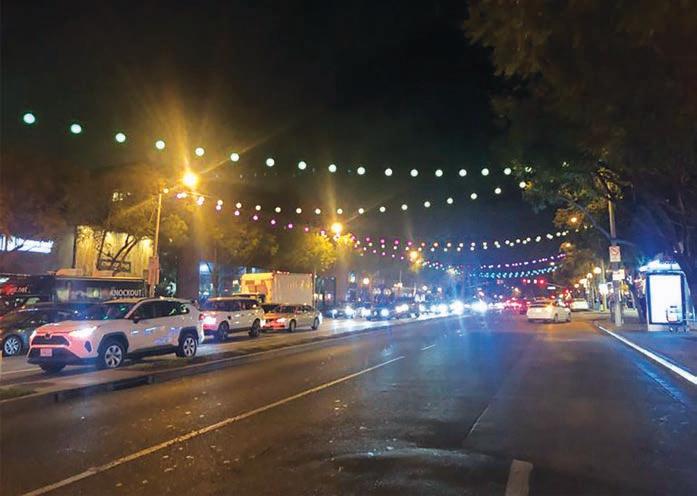
Another option the official noted was to utilize rent security deposits to make partial payments. This solution had been approved with the caveat though that a deposit must be repaid when the moratorium expires. Once Weho’s moratorium expires, the commercial tenants are granted six months to pay back rent.
The City of West Hollywood is heavily dependent on revenues from taxation most of which is derived from the hospitality industry, especially bars, hotels, and restaurants. Multiple sources in WeHo government have told the Blade that the cash reserves, which pre-pandemic topped $140 million, have dropped significantly as the revenue stream has all but dried up especially with bars and night spots re-shuttered due to a statewide order by California Gov. Gavin Newsom last week.
Foot traffic is a major factor. For the City of Weho, closure of the bars, nightspots, and last week’s ordering that dinein patronage of restaurants ceased by modifications of the stay-at-home orders by Newsom and LA County’s Public Health Director Dr. Barbara Ferrer has seen foot traffic dramatically decrease across the Southland.
Another by-product of the health orders is the ban on large gatherings and groups of people. One West Hollywood business owner, who asked to not be identified, told the Blade that cancellation of LA Pride meant a
revenue loss of nearly 45 percent of his annual income. He also acknowledged that the downward spiral in foot traffic has meant that even with the federal stimulus relief, with a drop off of walk-in customers he has let go all but one employee and now faces permanent closure.
The city of WeHo has also taken a blow with the cancellation of LA Pride as one source estimated that nearly $3-5 million in revenue vanished with no immediate solution to make up for that loss.
Speaking to the Chambers of Commerce in West Hollywood, Los Angeles, as well as other chambers across the greater LA County metropolitan area, the Blade learned that a key component to the demise of business traffic is termed the “Amazon effect.”
The financial website Investopedia defines this as the “impact created by the online, e-commerce or digital marketplace on the traditional brick and mortar business model due to the change in shopping patterns, customer expectations, and a new competitive landscape.”
As Angelenos prep for another potential scaling back of the re-opening efforts, business leaders are fearful that a good deal of especially the Metroplex’s small business community will forever close unable to generate income, pay rent, or pay taxes, which are likely to rise as jurisdictions look to find new revenue streams.
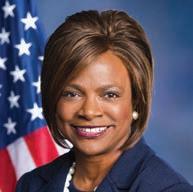
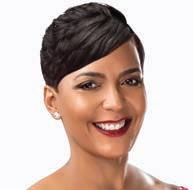
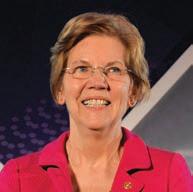
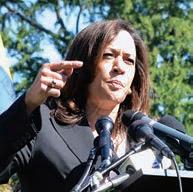
By CHRIS JOHNSON cjohnson@washblade.com
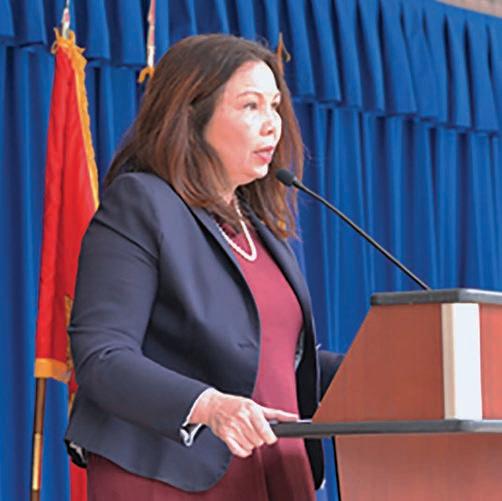
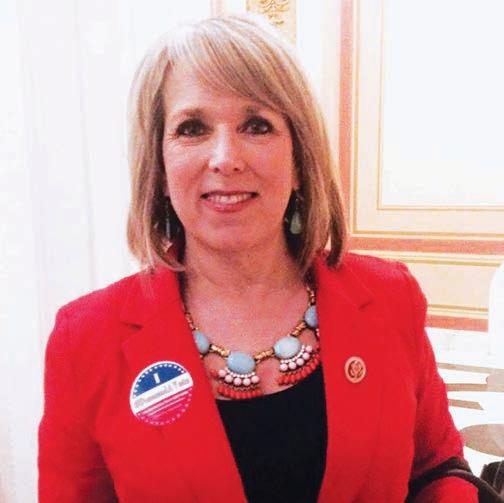
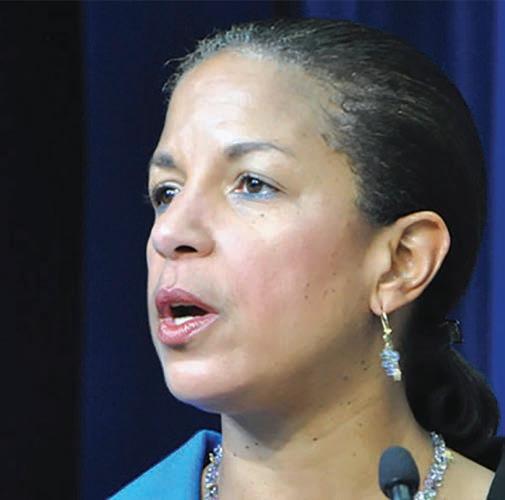
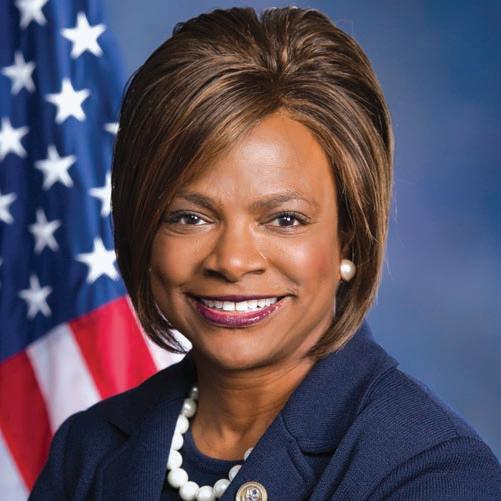
As the 2020 presidential campaign continues to heat up, Joseph Biden is expected to soon name his choice for a vice presidential running mate on the Democratic ticket. Biden has committed to naming a woman and is looking strongly at women of color amid a national awakening on racial justice after the killing of George Floyd.
Here’s a roundup of possible choices and a snapshot of their backgrounds on LGBTQ issues:
Susan Rice
Notable offices held: U.S. ambassador to the United Nations, 2009-2013; National Security Adviser, 2013-2017 LGBTQ record: Rice promoted LGBTQ human rights issues as a component of U.S. foreign policy as U.S. ambassador to the United Nations, then national security adviser under President Obama. When Uganda was debating a “Kill the Gays” bill, Rice called leadership to get them to abandon the initiative and denounced the anti-gay comments from the president of Gambia. Rice also spoke out in an interview with the Washington Blade after the Pulse nightclub shooting in 2016, which led to the deaths of 49 patrons in the establishment.
Notable quote: “This is a jolt. What we are seeing sadly more recently is an infusion of hate-filled rhetoric into public discourse and a greater degree of attention being paid to it and then in some people’s mind it becomes more acceptable.” — Rice to the Blade in 2016 on the Pulse shooting
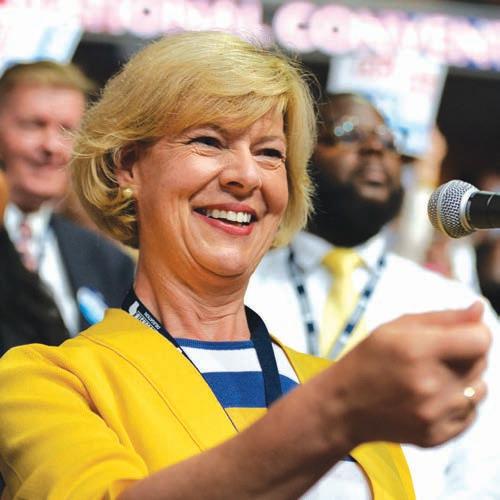
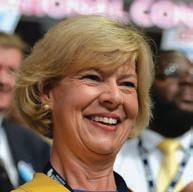
Tammy Baldwin
Notable offices held: Wisconsin state Assembly member, 1993-1999; U.S. House member, 1999-2013; U.S. senator, 2013-present
LGBTQ record: What hasn’t she done? In 1998, Baldwin became the first out lesbian elected to Congress, then became the first openly gay person elected to the Senate in 2012. Baldwin has been a consistent leader on LGBTQ rights, pushing for a transgender inclusive Employment Non-Discrimination Act and the federal protections against anti-LGBTQ hate crimes. After her election to the Senate, Baldwin became a leader on the Equality Act, which would comprehensively ban anti-LGBTQ discrimination under civil rights law. Baldwin has also taken the lead on lower-profile issues, such as ending the ban on gay blood donations.
Notable quote: “We don’t want to just live in a country where our rights our respected under the law, we want to
live in a country where we are respected for who we are, where we enjoy the freedom and opportunity not because the Supreme Court gave us permission, but because we’re Americans, and that’s all there is to it.” — Baldwin at DOJ Pride celebration in 2013
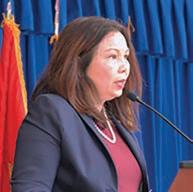
Tammy Duckworth
Notable offices held: Director of the Illinois Department of Veterans Affairs, 2006-2009; U.S. House member 20132017; U.S. senator, 2017-present
LGBTQ record: Tammy Baldwin isn’t the only Tammy said to be under consideration for the VP slot. Elected to the House in 2012 and the Senate in 2016, Duckworth is a combat veteran of the Iraq war, the first Thai American woman elected to Congress, the first female double amputee in the Senate, and the first senator to give birth while in office. A favorite among progressive veterans, Duckworth has spoken out against President Trump’s ban on transgender service members and recommended the nomination of lesbian U.S. District Judge Mary Rowland. She is a co-sponsor of the Equality Act to ban anti-LGBTQ discrimination.
Notable quote: “When I found myself sitting in that field, where we landed a couple hundred yards from where the bad guys were jumping in pickup trucks and headed toward us, and I was bleeding out in that aircraft, I didn’t care if the guys risking their lives to save me were gay, straight, transgender, black, white, male or female. All that mattered was they had an American flag on their shoulder and they did not leave me behind.” — Duckworth at DOD Pride event in 2019
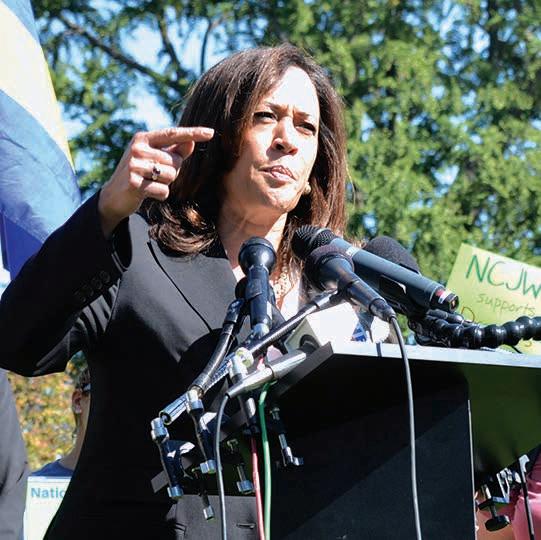
Kamala Harris
Notable offices held: California attorney general, 20112017; U.S. senator, 2017-present
LGBTQ record: Since becoming a U.S. senator, Harris has resisted efforts to keep U.S. citizens from identifying themselves as LGBTQ in the 2020 Census; urged investigations into the death of transgender immigrant Roxsana Hernández, who died after being held in ICE detention; and called on the Justice Department to stop excluding transgender people from its enforcement of Title VII. But Harris also championed LGBTQ issues as California attorney general, declining to defend Prop 8 and marrying the first same-sex couple in California after courts struck it down. Critics, however, have taken issue with her defending California in refusing transgender surgery for prison inmates.
Notable quote: “I grew up in a community and a culture where everyone was accepted for who they were, so there wasn’t a moment where it was like, ‘OK, now let’s let this person in.’ Everyone was a part of everything. It was about community. It was about coalition building. It was about equality, inclusion. I mean, I had an uncle who was gay. [But] there was no epiphany” about gay people. — Harris to the Los Angeles Blade in 2018
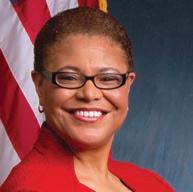
Karen Bass
Notable offices held: California Assembly member, 20042010; U.S. House member, 2011-present LGBTQ record: The current chair of the Congressional Black Caucus, Bass has a long history of activism going back to her work as a community organizer in Los Angeles during the 1980s, which included a firsthand experience with the devastation of HIV/AIDS at the peak of the epidemic. In her time in the California Assembly, Bass joined with leaders in the legislature to pass marriage equality legislation before it was vetoed by then-Gov. Arnold Schwarzenegger. Bass has embraced the Black Lives Matter movement, has supported the Equality Act to ban anti-LGBTQ discrimination and is considered the likely successor to House Speaker Nancy Pelosi.
Notable quotable: “I went through the AIDS crisis from its very beginning. I watched all of Santa Monica Boulevard get wiped out near Vermont (Ave.). That whole area there. I watched everybody die within a matter of two years.” — Bass to the Los Angeles Blade in March
Val Demings
Notable offices held: Chief of the Orlando Police Department, 2007-2011; U.S. House member, 2017-present LGBTQ record: Demings is relatively new to the national stage as a two-term member of the House, but has spoken out on LGBTQ issues. A former chief of police in Orlando, Fla., Demings drew on that experience to condemn antitrans violence in an op-ed for The Hill newspaper, saying “an epidemic of anti-transgender violent crime is going unaddressed.” Demings also supports the Equality Act to ban anti-LGBTQ discrimination.
‘Pushed our country closer to the promise of a more perfect union’
By CHRIS JOHNSON cjohnson@washblade.com
LGBTQ rights supporters are mourning the loss of Rep. John Lewis (D-Ga.), a civil rights icon who worked with Dr. Martin Luther King Jr. and died late Friday after a battle with pancreatic cancer at age 80.
Alphonso David, president of the Human Rights Campaign, said in a statement Lewis was “a hero and civil rights icon who pushed our country closer to the promise of a more perfect union.”
“Future generations will learn how he faced down discrimination with courage and defiance, boldly challenging the United States to envision a future where every person, no matter their race, sexual orientation or gender identity, has an equal chance at the American Dream,” David said. “His legacy will live on in the work we do every day to further his mission and continue to get into ‘good trouble’ in the name of equality and justice.”
In the 1960s, Lewis was a leader of the Civil Rights Movement, which fought for voting rights for Black Americans and the end to legalized segregation in the United States. Lewis helped organize the 1963 March on Washington, where King delivered his iconic “I Have a Dream” speech, and was the youngest person to speak from the stage.
Lewis also took part in the Selma to Montgomery marches in 1965, when in an event later known as “Bloody Sunday,” Alabama state troopers beat Black demonstrators seeking to register Black Americans to vote after they stopped to pray peacefully.
During his long service as a lawmaker representing Georgia in the U.S. House beginning in 1987, Lewis would describe those events in contemporary tellings as “good trouble” and “necessary trouble.”
Former President Barack Obama awarded Lewis the Presidential Medal of Freedom.
Janson Wu, executive director of the New Englandbased GLBTQ Advocates & Defenders, said in a statement Lewis’s death “is a tremendous loss at a moment when his moral conviction and clarity are needed perhaps more than ever.”
“But his legacy and vision are alive in a new generation of young leaders pushing today to dismantle the systemic racism and white supremacy that persist within our institutions of power,” Wu said. “His insistence on believing that America could be a country where true justice prevails for everyone is both an inspiration and a challenge to us all to stay engaged in that work.”
Lewis was a strong supporter of LGBTQ rights in Congress, lending his support to the Equality Act,
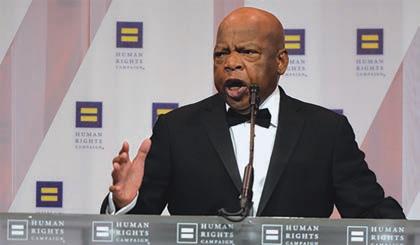
legislation that would amend the Civil Rights Act of 1965 to ban anti-LGBTQ discrimination. Lewis also was lead sponsor of the Every Child Deserves a Family Act, legislation that would prohibit antiLGBTQ discrimination in adoption.
Kevin Jennings, CEO of Lambda Legal, said in a statement Lewis demonstrated a commitment to LGBTQ people in face of anti-LGBTQ attacks from the Trump administration.
“As an LGBT advocate, John Lewis was not only a champion of marriage equality, but he introduced the Equality Act, a bill to prohibit discrimination on the basis of sexual orientation or gender identity in employment, housing, credit, education and jury service,” Jennings said. “He has stood with our communities against the recent attacks from the Trump administration that we are fighting in court, including the ban on transgender service members and the anti-transgender health care rule.”
Also recognizing Lewis upon his death was Obama, who said in a statement, “America is a constant work in progress” and the civil rights icon recognized the power of ordinary citizens to enact change.
“In so many ways, John’s life was exceptional,” Obama said. “But he never believed that what he did was more than any citizen of this country might do. He believed that in all of us, there exists the capacity for great courage, a longing to do what’s right, a willingness to love all people, and to extend to them their God-given rights to dignity and respect. And it’s because he saw the best in all of us that he will continue, even in his passing, to serve as a beacon in that long journey towards a more perfect union. “
CONTINUED FROM PAGE 10
Notable quote: “Political attacks and hate crimes against LGBTQ people are increasing right along with the divisive and hateful rhetoric. No place feels this more deeply than Orlando, where in 2016, 49 people were killed at the Pulse Nightclub. The shooting was the deadliest attack against the LGBTQ community in modern American history and remains one of the worst our country has ever experienced.” — Demings in a 2018 op-ed for The Hill
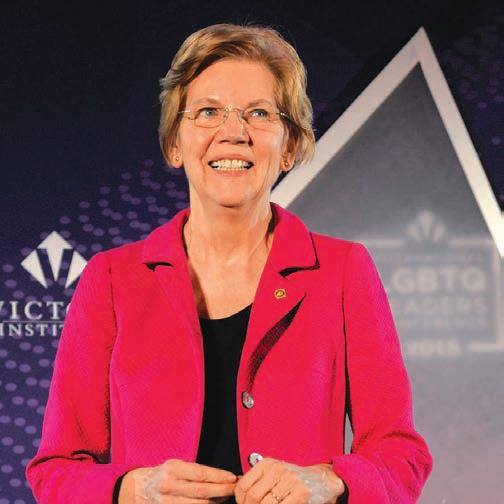
Elizabeth Warren
Notable offices held: Special adviser for the Consumer Financial Protection Bureau, 2010-2011; U.S. senator, 2013-present
LGBTQ record: Warren sought to advance LGBTQ rights even before she took office as a U.S. senator, telling the Washington Blade she wanted to see former President Barack Obama support same-sex marriage, as his then-stated evolution continued. (Obama would come out for marriage equality months later.) In the Senate, Warren has introduced the Refund Equality Act, which would give gay couples a refund on back taxes they would have owed if not for DOMA. As a 2020 candidate, Warren said she’d read aloud as president the names of transgender people killed each year in the White House Rose Garden.
Notable quotable: “I want to see the president evolve because I believe that is right; marriage equality is morally right.” — Warren in Washington Blade interview in 2012
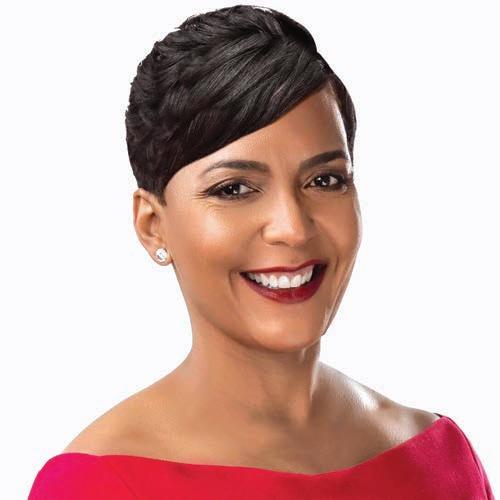
Keisha Lance Bottoms
Notable offices held: Atlanta City Council, 2010-2018; Atlanta mayor, 2018-present
LGBTQ record: As mayor of Atlanta, Bottoms passed a resolution in 2019 calling on the state of Georgia to ban widely discredited conversion therapy. Earlier this year, Bottoms issued the city’s first Biennial Report of LGBTQ Affairs, which highlights pro-LGBTQ policies, programs and initiatives under her administration of the city. Among the achievements cited in the report are the appointment of the firstever city official on LGBTQ Affairs; the establishment of a diverse Mayoral LGBTQ Advisory Board; expanding access to PrEP; and bolstering financial support of local grassroots organizations to provide needed social services for LGBTQ people, such as housing for transgender people.
Notable quote: “Atlanta’s LGBTQ community has long been an active contributor to the vibrancy of our city, and as mayor, I will ensure the city continues to balance the scale and take a more active role in contributing to the wellness of our LGBTQ residents and neighbors.” — Bottoms in statement on first-ever LGBTQ report
Michelle Lujan Grisham
Notable offices held: Secretary of Health of New Mexico, 2004-2007; U.S. House member, 2013-2019; New Mexico governor, 2019-present
LGBTQ record: As New Mexico governor, Grisham signed a measure codifying into law same-sex marriage, which the state had as a result of a judicial decision in 2013, as well as legislation designating single-occupancy restrooms as gender neutral. Grisham has repeatedly expressed a commitment to LGBTQ rights and cosponsored the Equality Act before she left Congress. Grisham faced a complaint from a former transgender intern who spoke out during the “Me Too” movement to allege discrimination in the congresswoman’s office, although a spokesperson vehemently denied discrimination.
Notable quote: “I was an early advocate for the Hate Crimes Act and spearheaded efforts to recognize same-sex partners as legally qualified to make medical and healthcare decisions for their partners. New Mexico was the first state to include the provision in state law.” — Lujan-Grisham in 2012, according to her House campaign website.
All we need to make the picture of a Trump “Fantasy Island” complete is for Mike Pence to stand there looking at him adoringly and yell, “Boss, da plane, da plane.”
for the Blade.
But this Fantasy Island is the one in hell not the place anyone wants to be. Trump has lost all sense of reality if he ever had any. If someone were to make a film of these past three and a half years of his administration and future generations watch it, they would think it was all made up and never believe it could have really happened. For our democracy to survive we must elect Joe Biden and move back to some form of normalcy at the same time we move forward and make the changes needed to secure full equality for all our citizens.
As we live though Trump’s alternate reality we have to do everything we can to minimize the damage he is inflicting on our nation and the world. His niece’s book, “Too Much and Never Enough: How My Family Created the World’s Most Dangerous Man,” gives us some insight into how this man was formed but some people are just born evil. Intellectually I know it’s all about nature and nurture but there are born psychopaths and there are born congenital liars and there are some that no matter what you try to do for them will be bad.
Donald Trump was born with the proverbial silver spoon in his mouth yet he has squandered most of what that could have brought him and it is not fair to lay all the blame on his father. He may have been a bastard
to some but his son has clearly outdone him in that area.
In three and a half years as president he has intentionally pitted group against group in our country making it once again easy for neo-Nazis, white supremacists, racists, homophobes and sexists to spew their hate in the public square. I lay that evil all at the doorstep of Donald Trump and his creation of the Fantasy Island from hell.
It seems he has passed that evil on to his two older sons and his eldest daughter who has been so taken with her trappings and perceived power she has become an enabler for her father and is spewing the evil herself. I hope when her father is defeated and the power and prestige of being in the White House is in her past she will be shunned by those who once called her a friend. That would serve her right for the harm she is inflicting on so many.
In order to stall his falling poll numbers the president is actually becoming much more strident. The Washington Post calls it a “dystopian shift in his attacks on Biden.” They say “Trump is going from calling Biden ‘Sleepy Joe’ … to saying he wants to abolish the American way of life.”
Republican senators are fearful Trump’s insistence on focusing his rhetoric only on his base is going to hurt them. Americans by a large majority in the latest Post-ABC poll view him as mishandling the coronavirus pandemic. With the numbers of people getting the virus and dying only going up those numbers will likely not improve in time to help him in the November election. So while Trump continues to live in his alternative universe and pretend he is on a Fantasy Island those of us living in the real world will continue to suffer. People will continue to die in a pandemic he has called a hoax, and those who are impacted the most because of lack of access to healthcare, and judicial and economic inequality, will continue to suffer. It is only by being soundly defeated that the cult of Trump can start to be erased from our society.
ADDRESS
5455 Wilshire Blvd, 21st Floor, Los Angeles, CA 90036
PHONE 310-230-5266
E-MAIL tmasters@losangelesblade.com
INTERNET losangelesblade.com
PUBLISHED BY Los Angeles Blade, LLC
PUBLISHER
TROY MASTERS tmasters@losangelesblade.com 310-230-5266 x8080 (o), 917-406-1619 (c)
SALES & MARKETING
SALES EXECUTIVE
ROMAN NAVARRETTE roman@losangelesblade.com 310-435-3022
PALM SPRINGS ACCOUNT EXEC BRAD FUHR, 760-813-2020. brad@gaydesertguide.com
NATIONAL ADVERTISING
RIVENDELL MEDIA sales@rivendellmedia.com, 212-242-6863
MARKETING DIRECTOR
STEPHEN RUTGERS
srutgers@washblade.com, 202-747-2077 x8077
EDITORIAL
CONTRIBUTING WRITER
KAREN OCAMB karenocamb@losangelesblade.com
NATIONAL EDITOR
KEVIN NAFF kna @washblade.com, 202-747-2077 x8088
INTERNATIONAL EDITOR
MICHAEL K. LAVERS mlavers@washblade.com
CONTRIBUTORS
CHRISTOPHER KANE, AUSTIN MENDOZA, JOHN PAUL KING, JOEY DIGUGLIELMO, CHRIS JOHNSON, LOU CHIBBARO JR., MARIAH COOPER, REBEKAH SAGER, JON DAVIDSON, SUSAN HORNIK, CHANNING SARGENT, SAMSON AMORE, CHRISTOPHER CAPPIELLO, MICHAEL JORTNER, DAN ALLEN, SEAN SHEALY, SCOTT STIFFLER CREATIVE DESIGN/PRODUCTION AZERCREATIVE.COM
DISTRIBUTION
CHRISTOPHER JACKSON, 562-826-6602 All


‘Because
Many
“Here, I thought, looking around me, is where it all changed, because I was still too young to understand that history is not simply made up of moments of triumph strung together like pearls. I didn’t know that large changes were made up of many small ones, and of moments of suffering and backsliding and incremental, selective progress; unnecessary sacrifices and the opportunistic, privileged and lucky walking forward over the vulnerable and the dead.” —Carmen Maria Machado
The road to LGBTQ equality has been long and winding, made up, legally, of two paths — sex (gender) stereotyping and “because of . . . sex.” Until the Bostock decision last month we had a quantum mechanical, “Schrödinger’s Cat” causal conundrum — would the decision be based on “sex” as written in Title VII of the 1964 Civil Rights Act, or “sex stereotyping” as developed in the landmark 1989 Price Waterhouse v. Hopkins Supreme Court decision? Many guessed it would be the former, “because of . . . Gorsuch” and his penchant for textualism, but that didn’t stop plaintiff Aimee Stephens’ lawyer, David Cole, from arguing with the latter. Turns out it was the former, but before I trace the social history of that path, I would like to point out a delicious irony. It’s long been understood that the modern Supreme Court rarely leads, and usually follows, public opinion. That opinion is shaped by the people, and primarily by the people’s activist corps. In the case of the gay rights movement, the people universally known through the 1960s as homosexuals became known in the 70s as gay people. Why? Because the “sex” in “homosexual” directed one’s gaze to sex acts, which is still what most Americans conjure in their minds when they hear the word “sex.” And since many were repelled by the thought of gay sex, it became evident a different, de-sexed, label was necessary.
Similarly with the trans community, which had been universally known as the transsexual community through the 1980s, and which de-sexed “transsexual” to “transgender” in the ‘90s (the first national trans rights group, founded by Riki Wilchins and Denise Norris in 1993, was called “Transexual Menace,” and the second, was the “National Transgender Advocacy Coalition,” in 1999), and then finally just the single syllable “trans” in the aughts, to match the single syllable, “gay.” Language matters. Just as Americans viewed homosexual people through the lens of their sex acts, they viewed transsexual people the same way, often reduced to sex workers and homicidal maniacs (“Dallas Buyer’s Club,” 2013 and Hitchcock’s classic, “Psycho,” 1960).
So, today, gay and trans individuals have their employment rights, and soon full protections with the Equality Act next year, because of a return to the modern source of those rights, the Civil Rights Act of 1964, and “because of . . . sex.” Not gender, but sex, and, refreshingly so, but devoid of any implications of sexual activity. Justice Gorsuch, interestingly, returned to using the archaic term “homosexual” throughout his opinion, but did not revert to “transsexual,” and treated Ms. Stephens respectfully in his comments.
How did we get here? In the weeks following the decision many of the analyses of the decision missed the real history. That history is written by the victors, but it also very much matters which victors do the writing.
The path of “because of . . .” and “but for” sex began in the 60s, as Justice Gorsuch mentioned: Not long after the law’s passage, gay and transgender employees began filing Title VII complaints, so at least some people foresaw this potential application.
Trans persons won some lower court decisions in the ‘70s, before the religious and feminist backlash began in 1979 with Janice Raymond and then the Reaganites. Trans plaintiffs lost in the late ‘70s and ‘80s because transsexualism was not recognized as a form of sex (Holloway v. Arthur Andersen, 1977, Sommers v. Budget Marketing, 1982 and Ulane v. United Airlines, 1984). And then, in 1989, came Price Waterhouse v. Hopkins, and the landscape utterly changed for trans plaintiffs.
The first, and until Bostock, only SCOTUS decision (and victory) for a trans plaintiff occurred in 1994, in a unanimous Eighth Amendment decision written by Justice Souter on behalf of the plaintiff, a black trans woman, Dee Farmer. The next federal appeals court case, and the first in a string of victories leading to Bostock, was Smith v. City of Salem in 2004, won on both sex and sex stereotyping concerns, followed by another Sixth Circuit case, Barnes v. City of Cincinnati in 2005. Philecia Barnes was also a black trans woman and she won “because of sex.” The only hiccup in
this long chain of victories was Etistty v. Utah Transit Authority in the 10th Circuit in 2007. This was followed in rapid succession by the blockbusters: Schroer v. Billington, 2008; Glenn v. Brumby, 2011; and Macy v. Holder, 2012.
It was the unanimous Macy decision at the EEOC, led by Commissioner Chai Feldblum, that protected trans persons in all 50 states, and cemented the “because of sex” approach to protecting trans persons. Professor Feldblum, a major author of the 1991 Americans with Disabilities Act (ADA), had been living in Takoma Park, Md., in Montgomery County in 2007-08 when I led the campaign for Basic Rights Montgomery to pass and defend the county gender identity law. That law generated the first bathroom bill backlash in the United States, and Professor Feldblum, who had been a believer in the doctrine that trans status was a function of sex and, therefore, covered by Title VII, was further encouraged to pursue it if she ever got her chance in the federal government to make it a reality. Presciently, these were her words 20 years ago: “But a strict textualist approach might work as well (or even better) for those seeking to achieve broad protection for gay people and transgender people. Under such an approach, the intent of the enacting Congress (or state legislature) is not as important as the words the legislature chose to use.”
It had been obvious to me, as well, as I had been teaching and lobbying for years on the medical basis of transsexualism being rooted in brain sex. Research begun in 1995 had been making that very plain. But few LGBTQ attorneys, with the notable exception of Katie Eyer, believed in the possibility of progressive textualism, even though the Constitution is the product of the Enlightenment.
So after being nominated by President Obama to the Equal Employment Opportunity Commission (EEOC) and confirmed by the Senate, Professor Feldblum looked for the right case and found it in Mia Macy. She then did the same for David Baldwin in the first national gay rights victory, Baldwin v. Foxx, in 2015.
Just looking at these cases it was clear that the federal courts (and some state courts as well) were beginning to respect trans persons enough, including black trans women, beginning in the ‘90s to not only not summarily throw them out of court, but to seriously apply the “because of sex” and sex stereotyping arguments to them. All that at a time when fewer than 8% of Americans (in a 2013 poll) admitted to knowing a trans person; when gay people, far better represented in the media and known in their communities, were routinely failing in federal court. Yet there have been post-Bostock analyses by highly respected civil rights lawyers that turn this history on its head. For example, Shannon Minter, the trans attorney for the National Center for Lesbian Rights (NCLR), said: “We’ve always known that our legal arguments are strong and should be accepted, but the reason it took decades for the courts to accept these arguments was because transgender people were so foreign to the courts.”
This is not the first time. After promoting the trans legal case “because of sex” for years, I tried to get the national LGBTQ, and particularly trans, organizations to recognize our success postMacy. They would have none of it. The lawyers at HRC, the National LGBT Task Force, and even NCTE, the National Center for Transgender Equality on whose board I sat, refused to acknowledge the breakthroughs. To get the word out I had to publish a pamphlet, with attorney Jillian Weiss and activist Riki Wilchins, which was promoted by Masen Davis and the Transgender Law Center, the only nationally oriented trans group willing to get on board. We were also supported by Tico Almeida and Freedom to Work.
Fortunately, thousands of trans persons got the message, and filed claims with the EEOC. Many won, with most settling out of court because, you know, the law matters. Yet others have lived the past eight years in fear and anxiety because our institutions’ lawyers repeatedly said that we had no protections without a decision of the Supreme Court. I countered that it would take years, or might never happen because we were winning all our cases, and without a split at the appeals court level the Court might not even take up the issue. Fortunately for us today, SCOTUS rolled us into the Circuit split on the gay rights cases (Bostock and Zarda), and we pulled the gay community along to victory. No gays left behind. We had not lost a Circuit Appeals case since 2007, the only one in the 21st century, so I, for one, was not surprised.
People who are committing themselves to activism need to understand the history so as to most effectively pursue their goals in the future. LGBTQ folks need to understand the bureaucratic resistance within their own movements, from the most well-meaning people. It is, indeed, always a long and winding road to liberty and equality.
By JOHN PAUL KING
With the initial spread of COVID-19 in the U.S. back in the early months of 2020, perhaps the first definitive proof that it had hit crisis-level proportions was the widespread cancellation of live events nationwide.
Every corner of the media and entertainment industry was impacted. Concerts, theatrical performances, award shows, conventions, lecture tours – every large in-person event across the country was either cancelled or postponed for the foreseeable future.
Among those were the two annual presentations of GLAAD’s Media Awards. The LGBTQ advocacy group was forced to pull the plug on both its planned ceremonies, set for New York and Los Angeles, and leave them in limbo for what we all then hoped would be only a month or two, at most, surely.
Now, as the country faces a new and even more alarming surge in the pandemic, GLAAD is stepping up to the plate to remind us that, despite whatever other challenges the world may be facing as we move into an increasingly uncertain future, the fight for equality must go on – and befitting its role as one of the foremost leaders in that fight, the organization has decided that it’s time for the 31st Annual GLAAD Media Awards to go on.
Slated for Thursday, July 30, the awards (which honor media for fair, accurate, and inclusive representations of LGBTQ people and issues) will be presented in a streaming event over GLAAD’s Facebook and YouTube platforms at 8 p.m., before airing on Logo on Aug. 3 (also at 8 p.m.). Taking the place of both original ceremonies planned for earlier this year, the virtual ceremony may not be the gala event that has become an annual tradition since its inception in 1990, but it will nevertheless continue the Media Awards’ legacy of sending powerful messages of acceptance to audiences globally as the most visible annual LGBTQ awards show in the world. In January, GLAAD announced more than 175 nominees in 30 categories. These include nods for “Bombshell,” “Booksmart,” “Downton Abbey,” “Rocketman,” “Adam,” “Brittany Runs a Marathon,” and several other films in both the Wide and Limited Release categories; “Batwoman,” “Billions,” “Euphoria,” “Pose,” “The L-Word: Generation Q,” “Brooklyn Nine-Nine,” “Dear White People,” “Schitt’s Creek,” “Sex Education,” “Vida,” and many more TV shows in the Drama and Comedy categories, as well as a long list of other programs and films made for television; Adam Lambert, Brittany Howard, Lil Nas X, Melissa Etheridge, Mika, Tegan and Sara, and several other big LGBTQ names are in the competition for Outstanding Music Artist; there are categories for Outstanding Comic Book and Outstanding Video Game, as well as the returning category for Outstanding Broadway Production; in addition, the Outstanding Kids & Family Programming category expanded to 10 nominees as a result of an increase in LGBTQ images across kids and family television programming and an increase in GLAAD’s work to advocate for inclusion in this genre. If all that weren’t enough, there’s another whole list of Spanish-language nominations.
Washington Blade in August 2019. A deep-dive into the ongoing legal battles in the wake of President Trump’s controversial, tweeted 2017 proclamation that transgender individuals would no longer be allowed to serve in the U.S. military, the article is a strong contender against other nominated work from such journalistic heavy-hitters as both the New York Times and the Los Angeles Times.
One of the ceremony’s certain winners, as announced all the way back in January, will be the Los Angeles Blade’s Karen Ocamb, a longtime giant of LGBTQ journalism in L.A. Along with Philadelphia Gay News founder and publisher Mark Segal and the Netflix series, “Special,” Ocamb is one of three recipients of Special Recognition Awards from GLAAD.
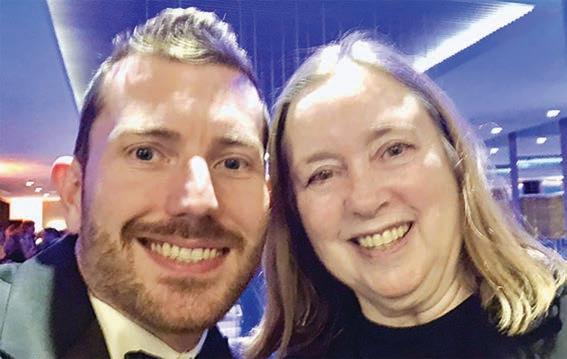
Los Angeles Blade Publisher Troy Masters says, “I am so proud to work with Karen Ocamb on a near daily basis. She is a powerful brain trust on LGBT and AIDS matters. Her integrity and devotion to truth have immensely benefited the LGBTQ community of Los Angeles and nationally, and it has made the Los Angeles Blade a force in journalism. Karen has added mightily to our partnership with the Washington Blade.”
As for Ocamb, she says, “I was surprised to receive the Special Recognition from GLAAD. I’ve been hesitant to submit any of my work for award consideration because it felt like a possible conflict of interest. But being recognized as an heir to LGBTQ reporters such as Jim Kepner and Del Martin and Phyllis Lyon is an incredible honor. And I greatly appreciate GLAAD serving as a watchdog over if and how our stories are being told since we are still a long way from full equality.”
Ocamb’s comments resonate with those of GLAAD President and CEO Sarah Kate Ellis, who said in a statement, “Among this year’s nominees are a wide range of stories and narratives about LGBTQ people of different races, ethnicities, genders, religions, and other identities that demonstrate the power of inclusion and diversity in fostering positive cultural change. As this year’s Media Awards go virtual, we hope to send a powerful message to LGBTQ people that in the midst of this culturally and politically divisive time, our visibility and voices have never been more important.”
Of course, entertainment is only one side of the media – there’s also its all-important role in providing news and information, something GLAAD recognizes with awards for Outstanding achievement in LGBTQ journalism. Among those being acknowledged in these categories are two of the Blade’s own reporters.
Nominated for Outstanding Newspaper Article is Chris Johnson, for “Military Reports No Discharges Under Trans Ban — But Advocates Have Doubts,” which appeared in the
It’s safe to say that a good number of the famous names and faces from that list of nominees will be making an appearance on July 30, but you’ll have to watch the ceremony to find out who the winners are. Comedians Fortune Feimster and Gina Yashere will host, and there will be a special performance from Grammy-nominated duo Chloe x Halle. Special guests will include Cara Delevingne (“Suicide Squad,” “Valerian and the City of a Thousand Planets”), Kaitlyn Dever (“Booksmart”), WWE superstar Sonya Deville, Beanie Feldstein (“Booksmart”), Jonica T. Gibbs (“Twenties”), Dan Levy (“Schitt’s Creek”), Lil Nas X, Rachel Maddow (“The Rachel Maddow Show”), Ryan O’Connell (“Special”), Dolly Parton, Peppermint (“RuPaul’s Drag Race,” “Head Over Heels”), the cast and producers of “Pose,” trans model and advocate Geena Rocero, Angelica Ross (“Pose,” “American Horror Story”), comedian Benito Skinner, Brian Michael Smith (“9-11: Lone Star,” “The L Word: Generation Q”), Dwyane Wade & Gabrielle Union, Lena Waithe (“Master of None,” “Queen & Slim,” “Twenties”), Olivia Wilde (“Booksmart,” “House”), and Raquel Willis (Writer, Activist, Director of Communications for Ms. Foundation).
For more information, visit www.glaad.org/mediaawards and follow @glaad and #glaadawards.
Cushman was known as our ‘first celebrity’
By KATHI WOLFE
Queer history stories can be worthy, but too scholarly, even snooze-inducing. Or they can grab you by the lapels and jolt you awake like a double shot of espresso.
“Lady Romeo: The Radical and Revolutionary Life of Charlotte Cushman, America’s First Celebrity” by Tana Wojczuk will keep you up at night. Turning the page – hungering for more. Her mouth was compared to “the Arc de Triomphe.” Abraham Lincoln was a fan. Queer poet Walt Whitman praised the “towering grandeur of her genius.” Louisa May Alcott wrote in her diary that she “had a stage-struck fit” after she saw Cushman perform. The governor of New York and railroad magnate Cornelius Vanderbilt were in the audience for Cushman’s farewell performance in November 1874.
Cushman and her partner sculptor Emma Stebbins lived as a married couple for more than two decades.
The Bethesda Fountain on Poet’s Walk in Central Park is a secret tribute to her.
Yet, most of us haven’t heard of the queer 19th century American actress Charlotte Cushman. Wojczuk, brings Cushman, who lived from 1816 to 1876 and was as famous as Alcott, Ralph Waldo Emerson or Charles Dickens, vividly to life. As you read, you forget that you live in the 21st century. You’re with Cushman as she performs in theaters lit by oil lamps, receives telegrams and gets seasick while traveling by ship from the United States to England.
It’s ironic that Cushman is largely unknown today. Because during her lifetime, she was as well known as Tallulah Bankhead or Cher. “Before Charlotte, America had no celebrities; now they manufacture them like blue jeans,” writes Wojczuk, an editor at “Guernica.”
It would have been difficult for even Dickens to have imagined Cushman’s story. Cushman was born in Boston to a middle-class “Mayflower” family. But her life changed dramatically when her father left her family when she was 13. She left school to help her mother run a boardinghouse.
As a teenager, Cushman goes to New Orleans. Her foray into singing opera is trounced by the critics. But, through a twist of fate, she found herself with little time to learn the part, suddenly cast in the formidable role of Lady Macbeth. Despite her youth and scant acting experience, the critics agreed that “like Hamlet thrusting his sword through a shadow in the curtains, Miss Cushman had hit immediately on a starring role,” Wojczuk writes.
Cushman became famous at a time when many thought acting was sinful. Yet, throughout her over 40-year career, Cushman, often described as “mannish,” played not only Lady Macbeth but male roles. She became famous for her “breeches parts,” Wojczuk writes, “Macbeth, Cardinal Wolsey, henry VIII, Hamlet, and especially Romeo.”
Men and women of all ages and classes worshiped Cushman. Working class admirers, who knew Shakespeare by heart though they couldn’t read the Bard in books, waited in long lines to get tickets to her shows, Wojczuk notes. The press followed Cushman’s every move, and men and women imitated her style.
Cushman became well known for playing Romeo in England. Often, her sister Susan played Juliet. In another unusual move, Cushman insisted that actors work with the full text of “Romeo and Juliet,” Wojczuk writes. “Charlotte, an American, insisted on a purity and fidelity to the original that Shakespeare no longer enjoyed in his own land.”
You could easily make several movies or at least an opera of Cushman’s life. She had female lovers, controlled her financial affairs (at a time when women couldn’t vote), and at age 33, with Max (one of her lovers) started an artist community for women in Rome.
Wojczuk rescues Cushman from history’s dustbin. “Lady Romeo” brings a queer icon back to the stage.
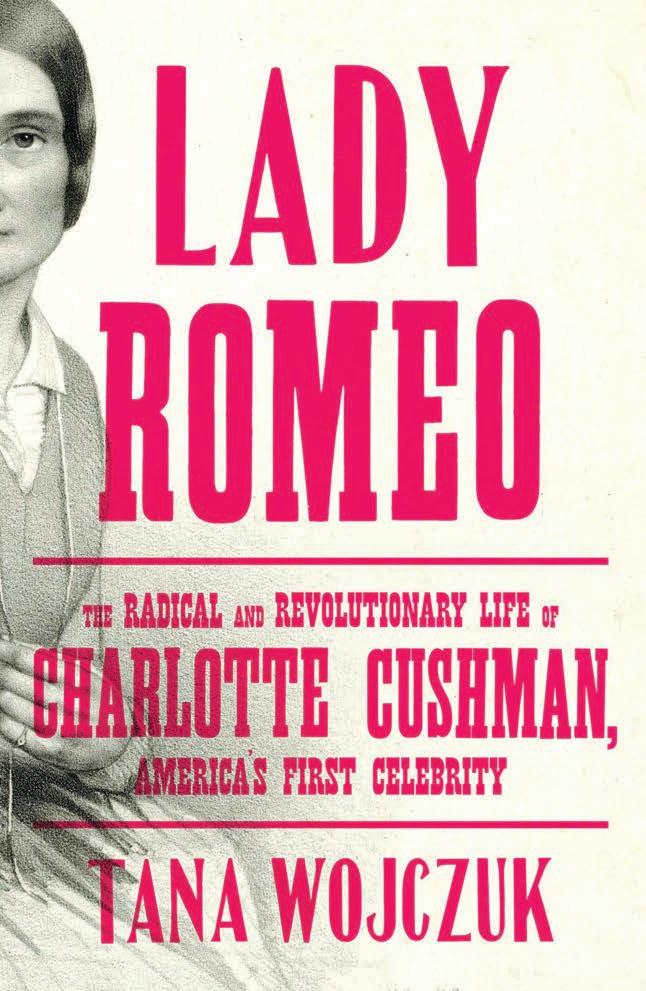
‘Lady
Romeo: The Radical and Revolutionary Life of Charlotte Cushman, America’s First Celebrity’ By
Tana
Wojczuk Avid Reader Press /Simon & Schuster $27, 240 pages
By BRIAN T. CARNEY
TV and movie fans are starting to face a crisis: there’s not a lot of new content being released and you can only watch your old favorites so many times.
To help fill in the gap, the Blade is launching a new series called FROM THE VAULTS, a curated collection of films and shows from the last decade or so that readers may have missed. Drawing from Top Ten and Year in Review lists, reviews, previews and interviews, the series will offer a fresh look at noteworthy films and filmmakers that are currently available to stream or rent.
The first edition of FROM THE VAULTS focuses on BLACK FEMALE DIRECTORS, whose outstanding films examine aspects of our past and present that are all too often erased from history and whose work envisions a future that truly embraces American ideals.
First on the list, in alphabetical order, is JULIE DASH, whose 1991 masterpiece “Daughters of the Dust” examines the rich matriarchal traditions of the Gullah islanders living off the coast of Georgia in 1902.
A magnificent restored version of “Daughters of the Dust” was released in 2016. That same year, Beyoncé released her visual album “Lemonade,” which was an homage to the work of Dash and her husband, cinematographer Arthur Jafa.
A blazing cinematic force, Ava DuVernay is known not only for her acclaimed work as a filmmaker across genres and media, but for her fierce dedication to social justice and to the celebration and promotion of other Black female directors. As a director, DuVernay made her mark with “Selma,” a historical drama about the Rev. Martin Luther King, Jr., “13th,” a scathing indictment of Clinton-era mass incarceration policies; and the sciencefiction spectacle “A Wrinkle In Time.” For television, she created “When They See Us” about the Central Park Five and “Queen Sugar,” a popular series that has employed dozens of Black female writers and directors.
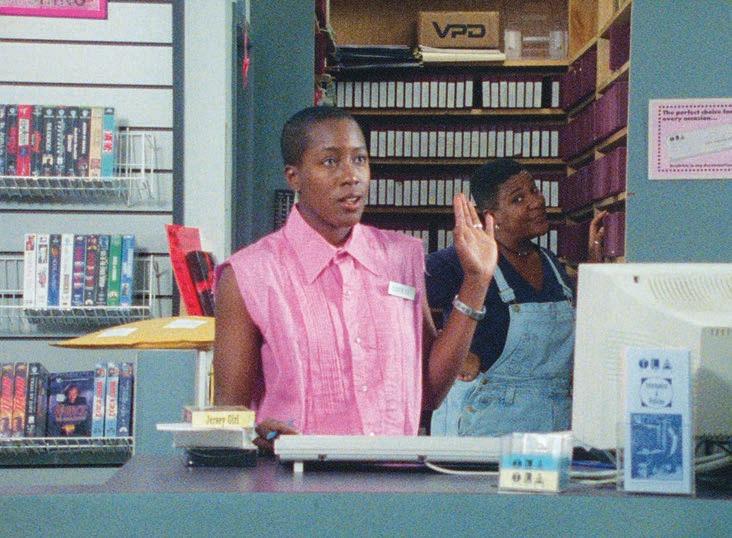
One of the directors who has worked on “Queen Sugar” is the trailblazing Cheryl Dunye whose brilliant 1996 mockumentary “The Watermelon Woman” was the first feature length film written and directed by an out Black lesbian about out Black lesbians. A restored version was released on DVD in 2017.
Dunye plays a video store clerk and aspiring filmmaker who becomes obsessed with “Fae Richards,” a fictitious early film actress billed only as the “Watermelon Woman.” The film cleverly weaves fake archival footage into Cheryl’s story, creating a tribute to Black actresses who have been written out of mainstream film history.
After a successful career as an actor (including playing Jodie Foster’s roommate in “The Silence of the Lambs”), Kasi Lemmons made her directorial debut with the highly acclaimed “Eve’s Bayou” in 1997. “Harriet,” her 2019 biopic of Freedom fighter Harriet Tubman generated significant Oscar buzz.
Previously known for video shorts, newcomer Melina Matsoukas made her featurefilm debut in 2019 with “Queen and Slim.” With a script by Lena Waithe, the story of love on the run and police brutality won the 2020 BET Award for Best Movie along with several other awards and nominations.
With the release of “The Old Guard” on Netflix, Gina Prince-Bythewood became the first Black woman to helm a comic-book movie. The movie stars Charlize Theron as the
leader of a troop of immortal warriors; Kiki Layne (“If Beale Street Could Talk”) is the new recruit.
In a potentially interesting move, Prince-Bythewood includes a gay couple among the warrior band. Unfortunately, they are played by straight actors.
Out filmmaker Dee Rees has brought an amazing variety of work to the screen: “Pariah” (2011), her powerful coming-out/coming-of-age movie; “Bessie” (2015), her flamboyant biopic of singer Bessie Smith; and the historical epic “Mudbound” (2017). For a change of pace, she’s now directing episodes of the comedy “Space Force” for Netflix. Finally, the best queer movie of 2017 was directed by out Black filmmaker Angela Robinson. “Professor Marston & the Wonder Women” told the unbelievable story behind an American icon, including an Ivy League campus, a polyamorous relationship and the latest BDSM theories. While we wait for “Wonder Woman 1984” to finally be released, a double feature of “Professor Marston” and “Wonder Woman” (2017) will certainly help pass the time.








•