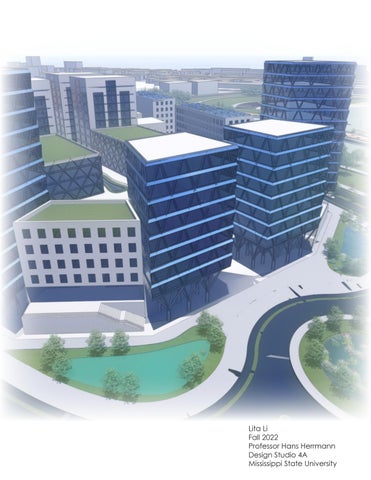
Lita Li Fall 2022 Professor Hans Herrmann Design Studio 4A Mississippi State University
Project Statement
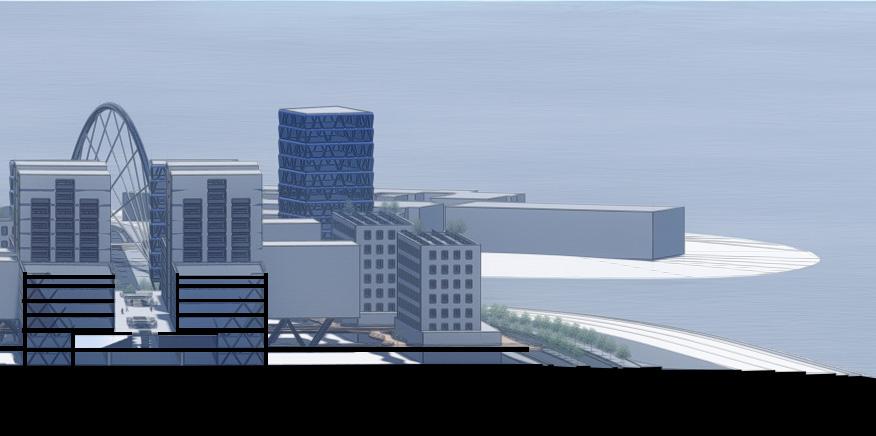
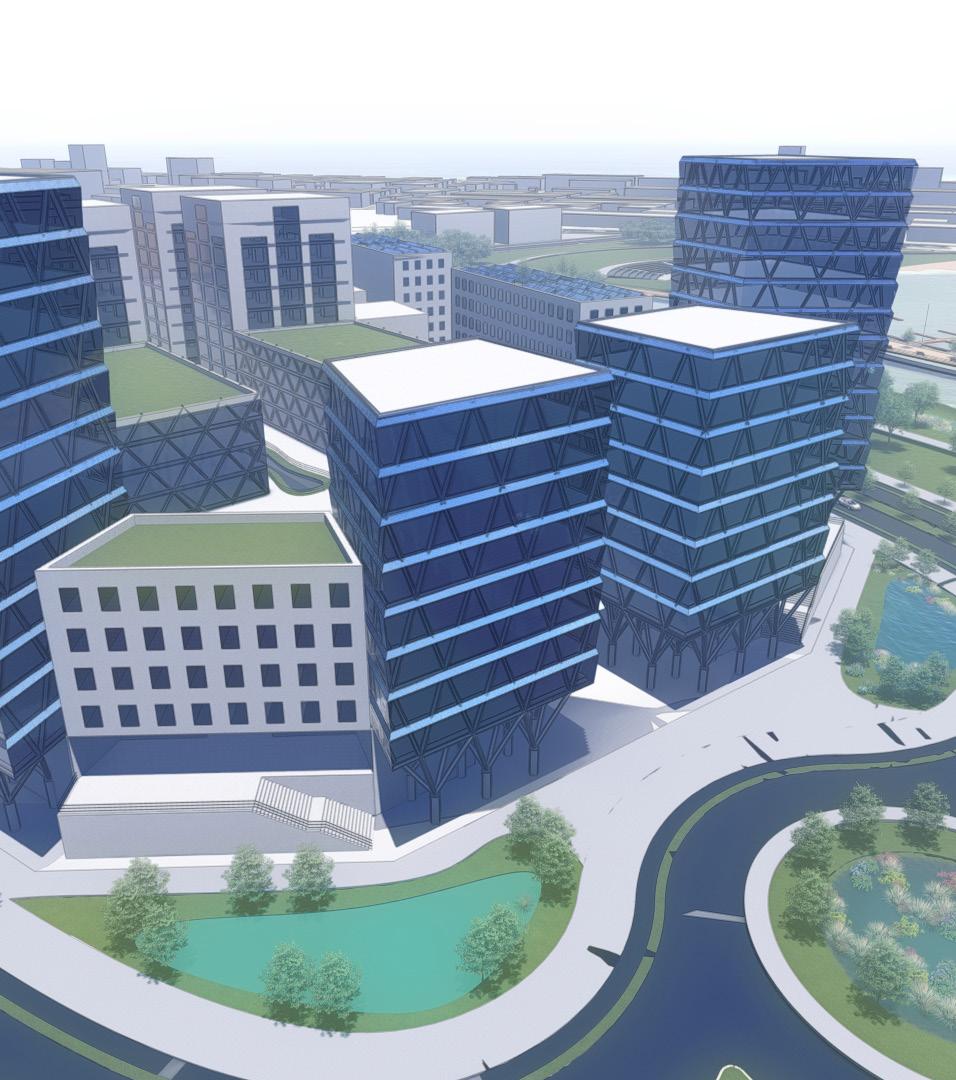
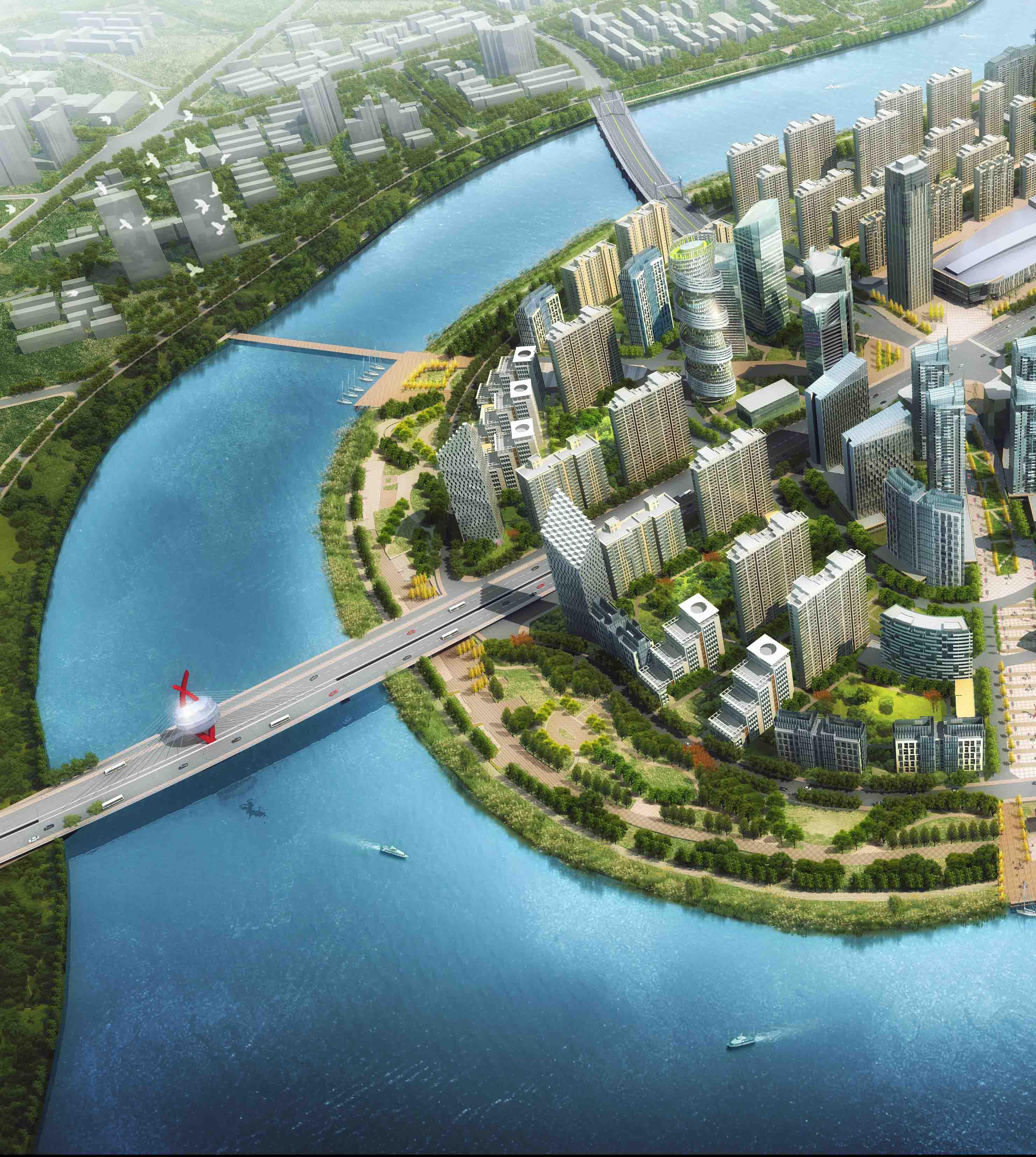
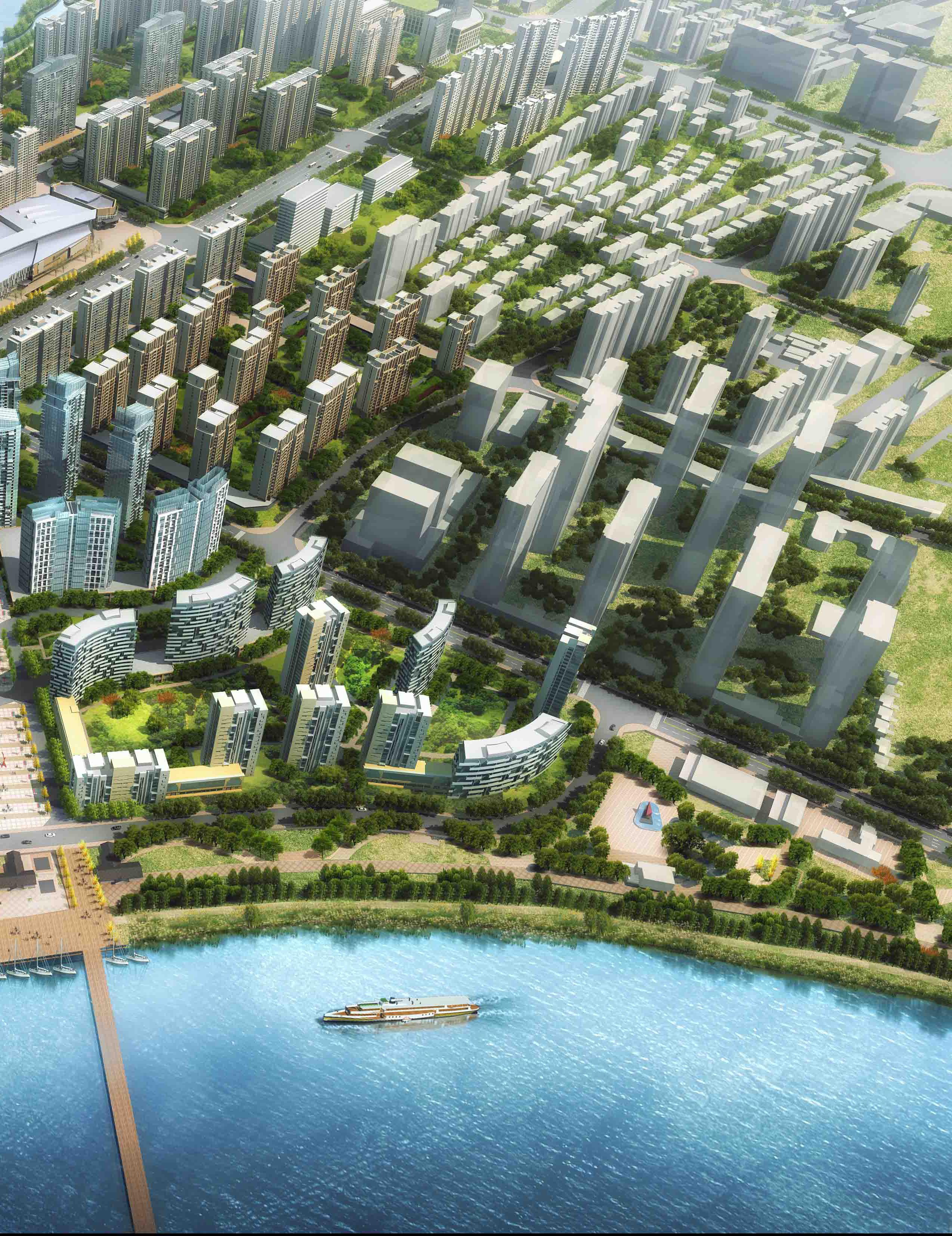
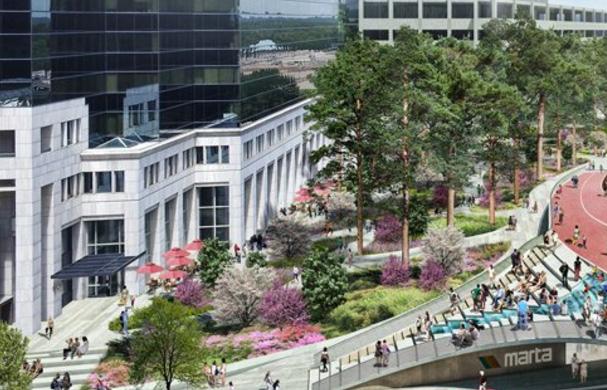
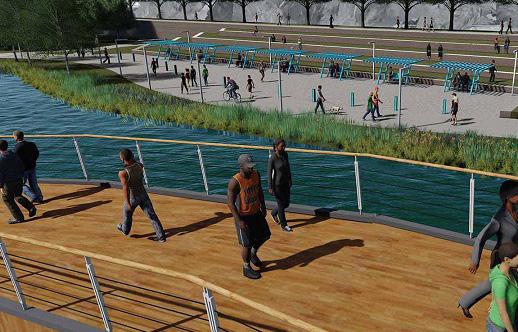
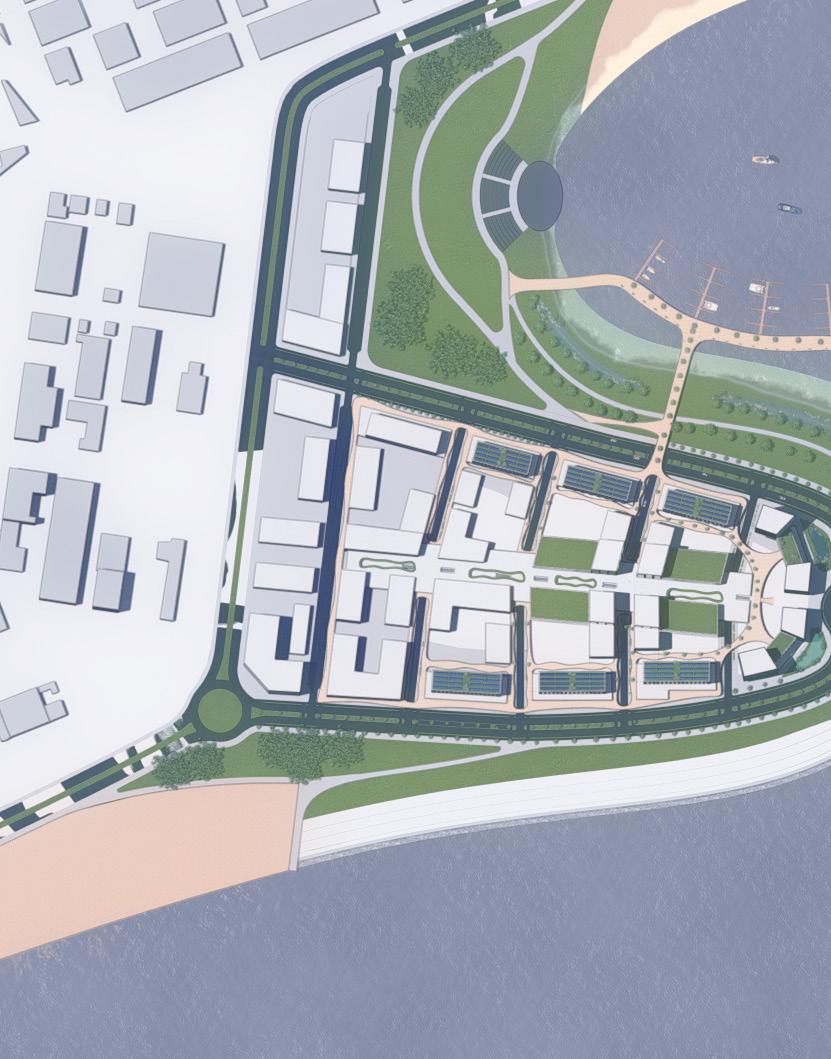
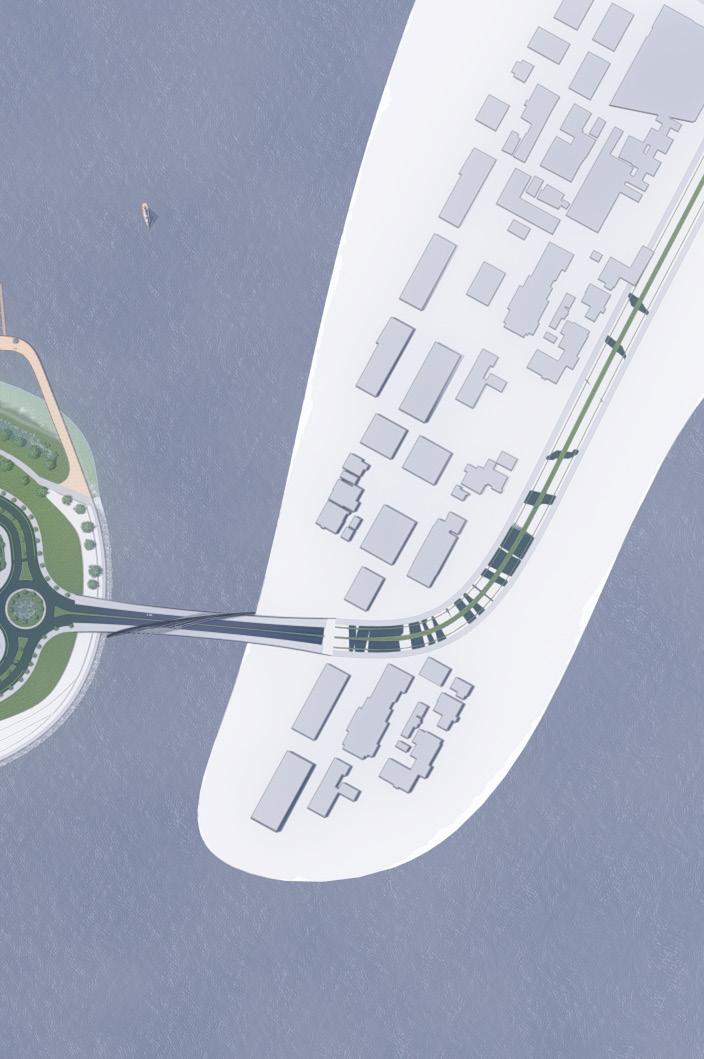
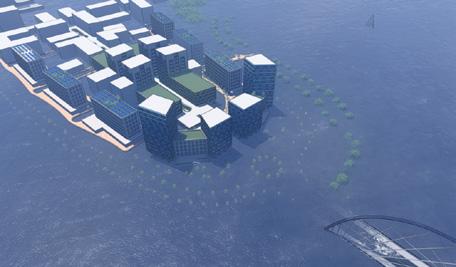
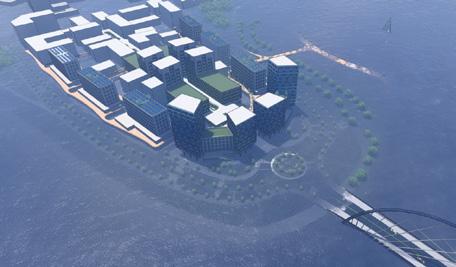
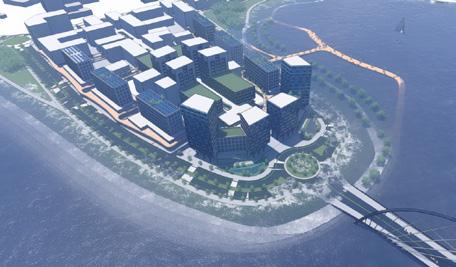
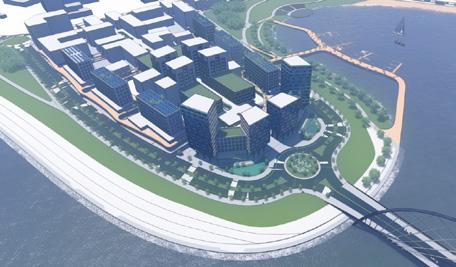
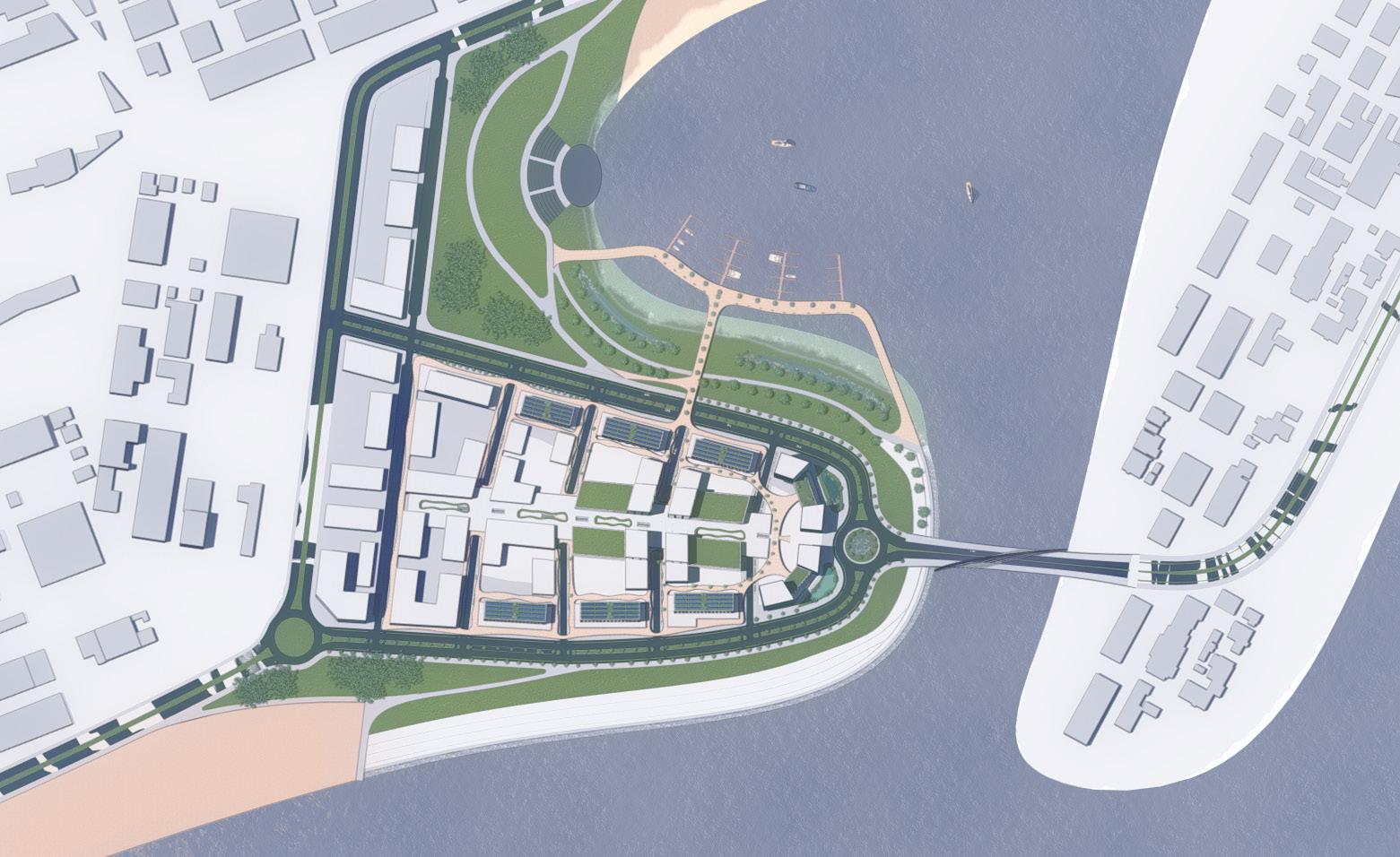
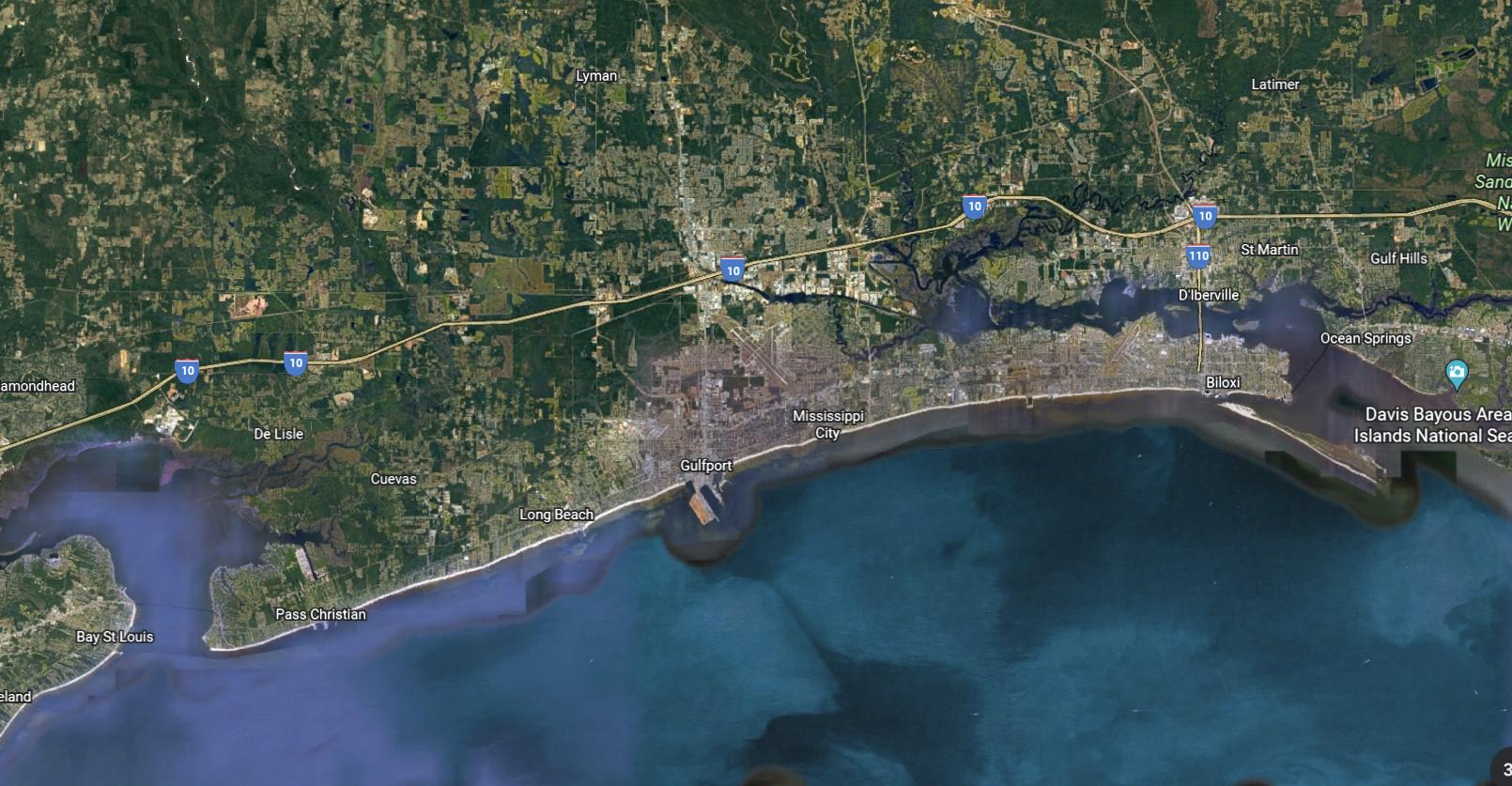
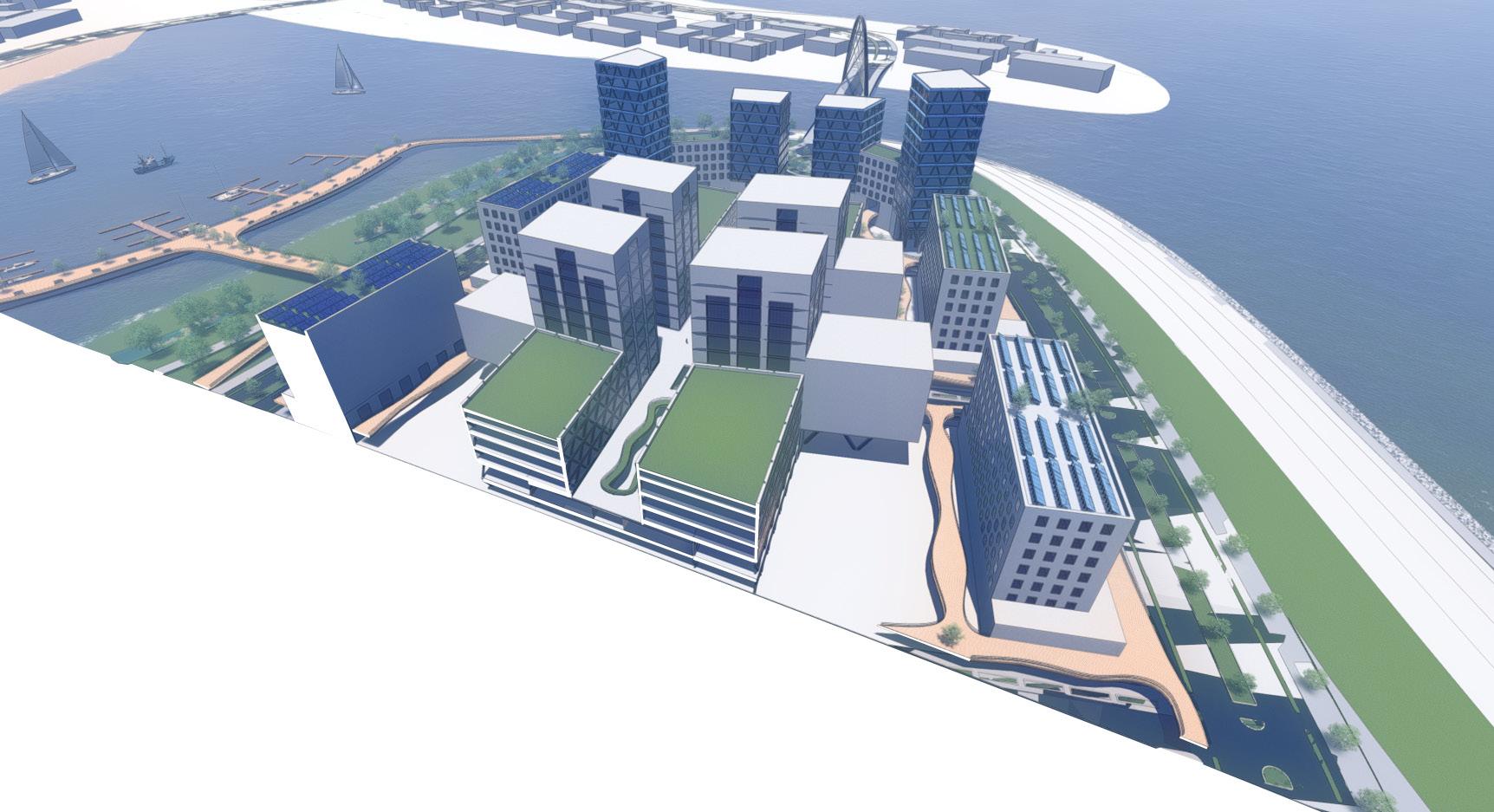
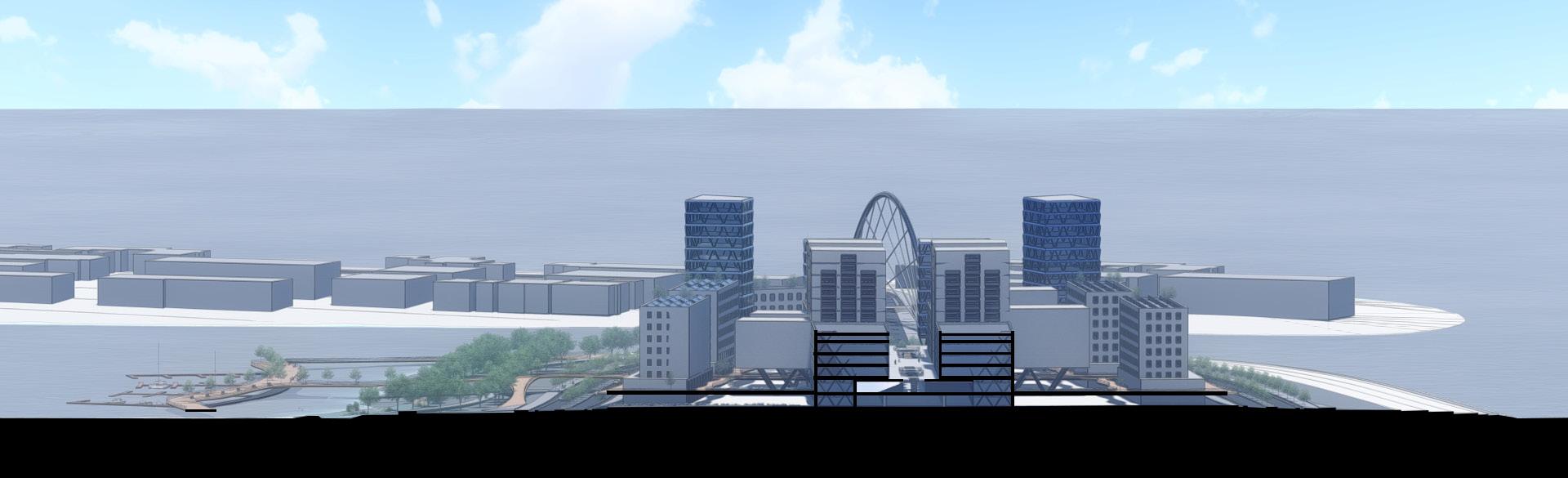
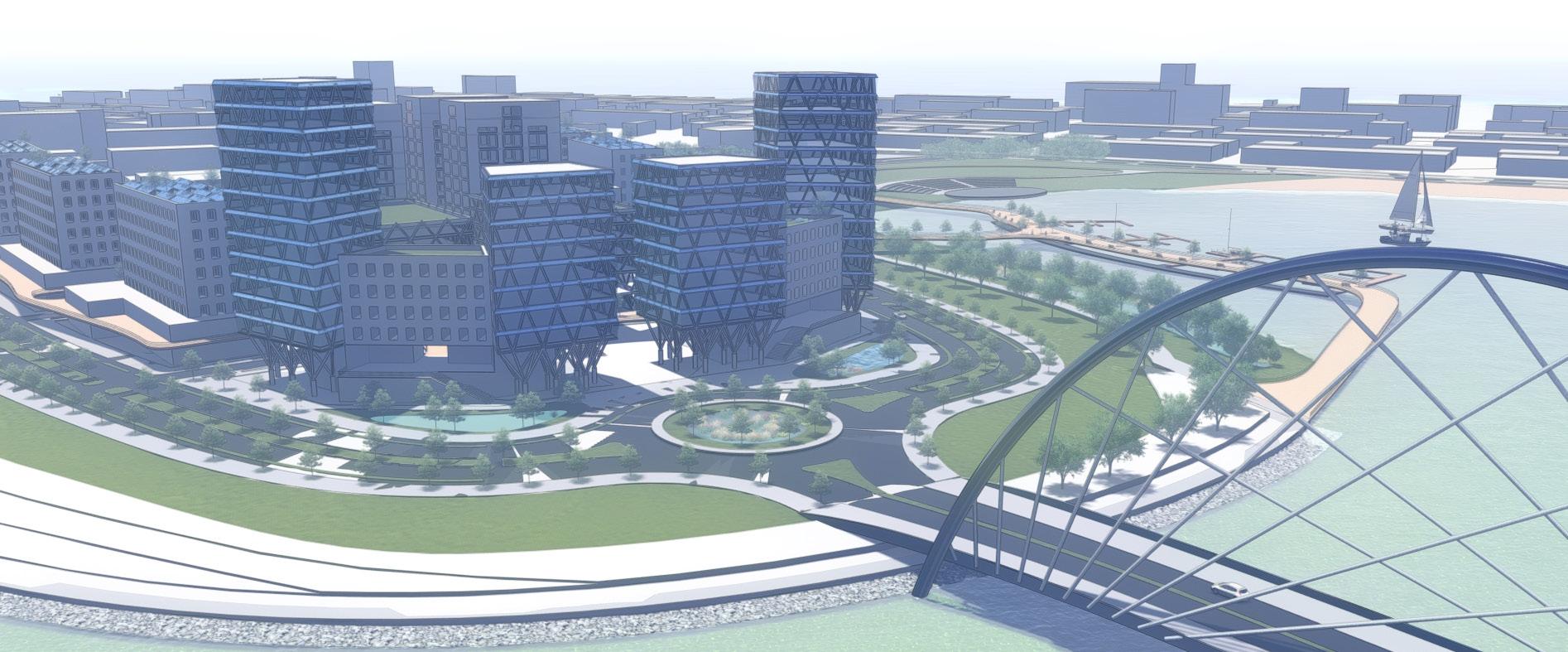
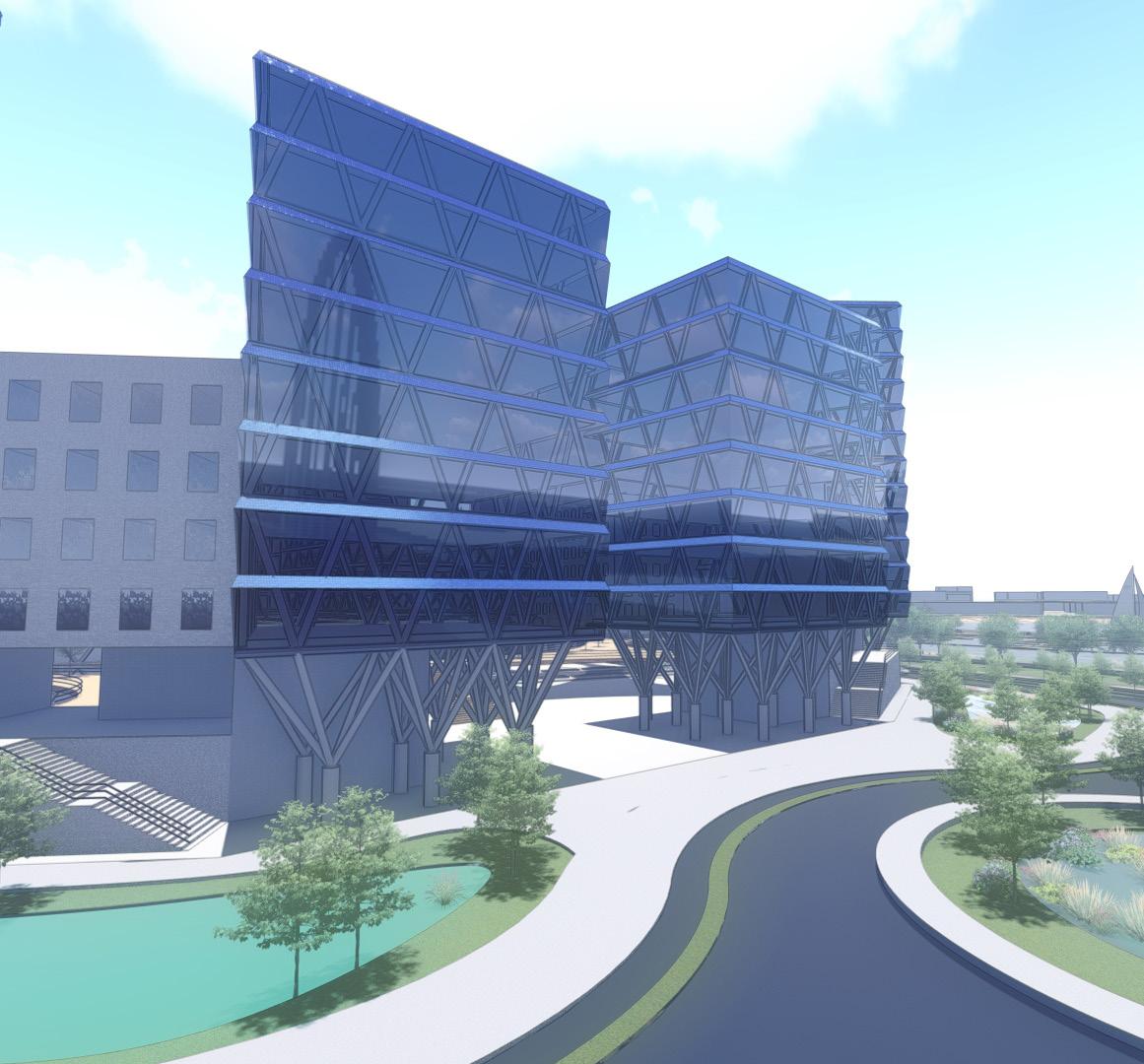
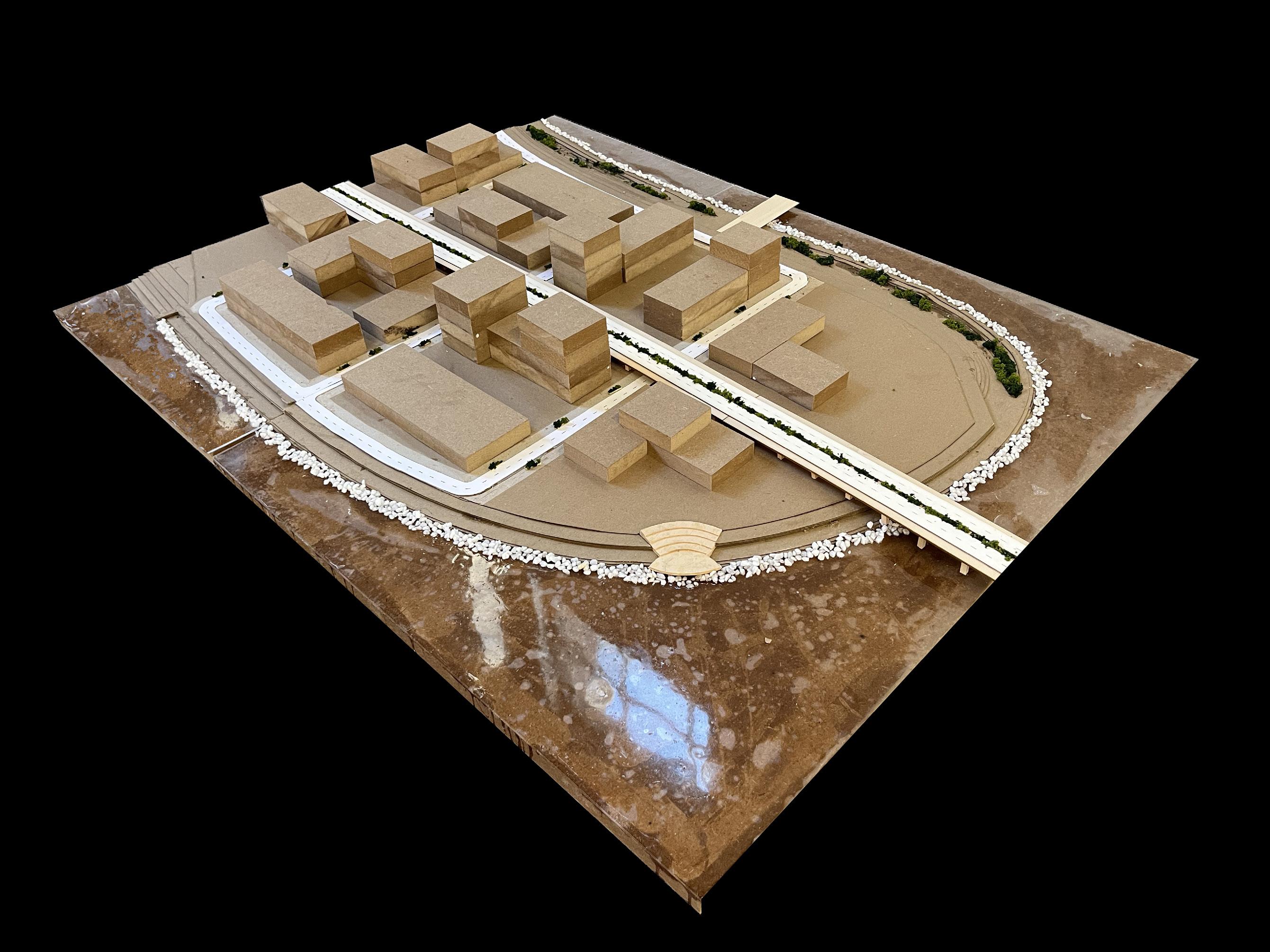
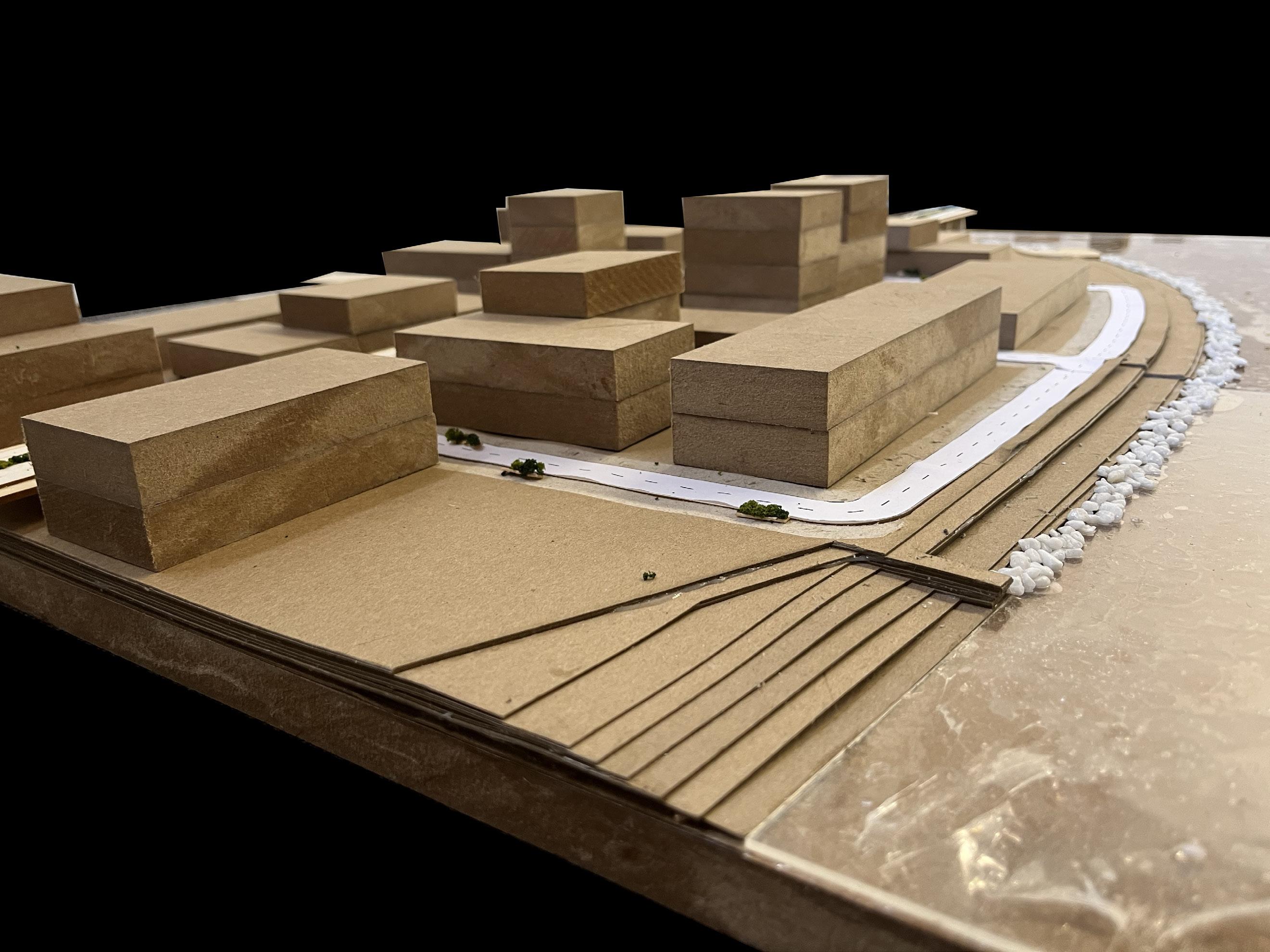
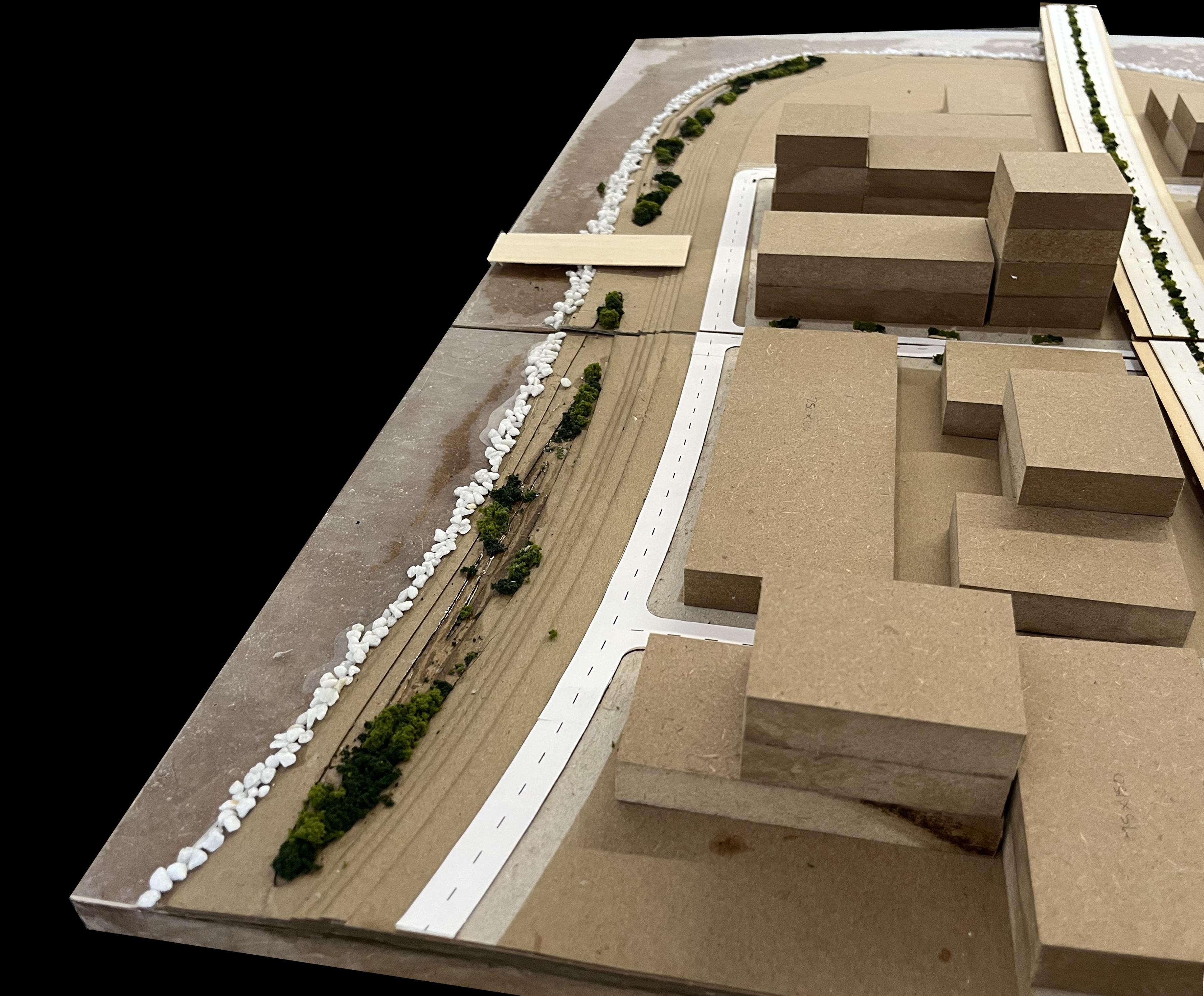
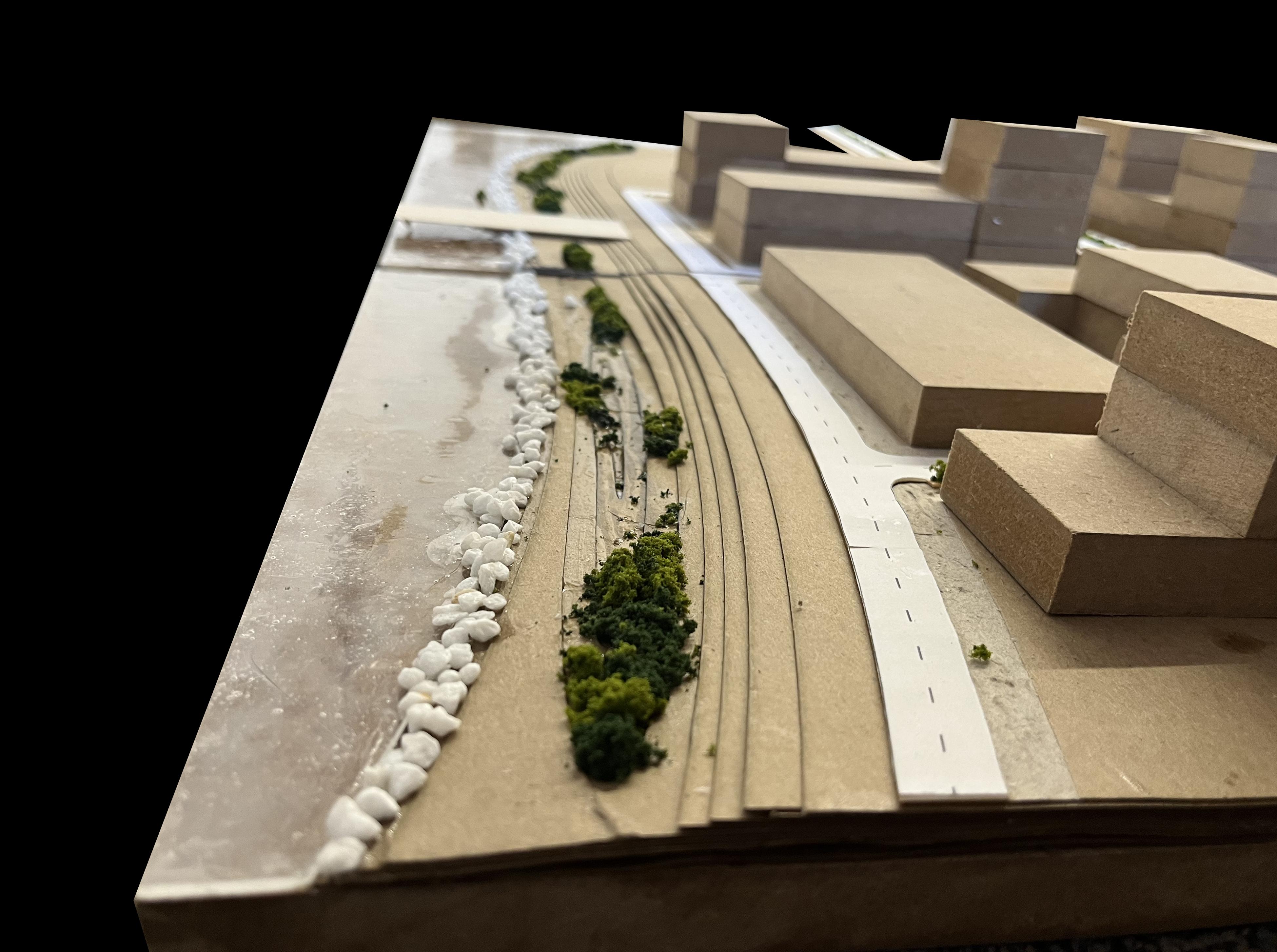
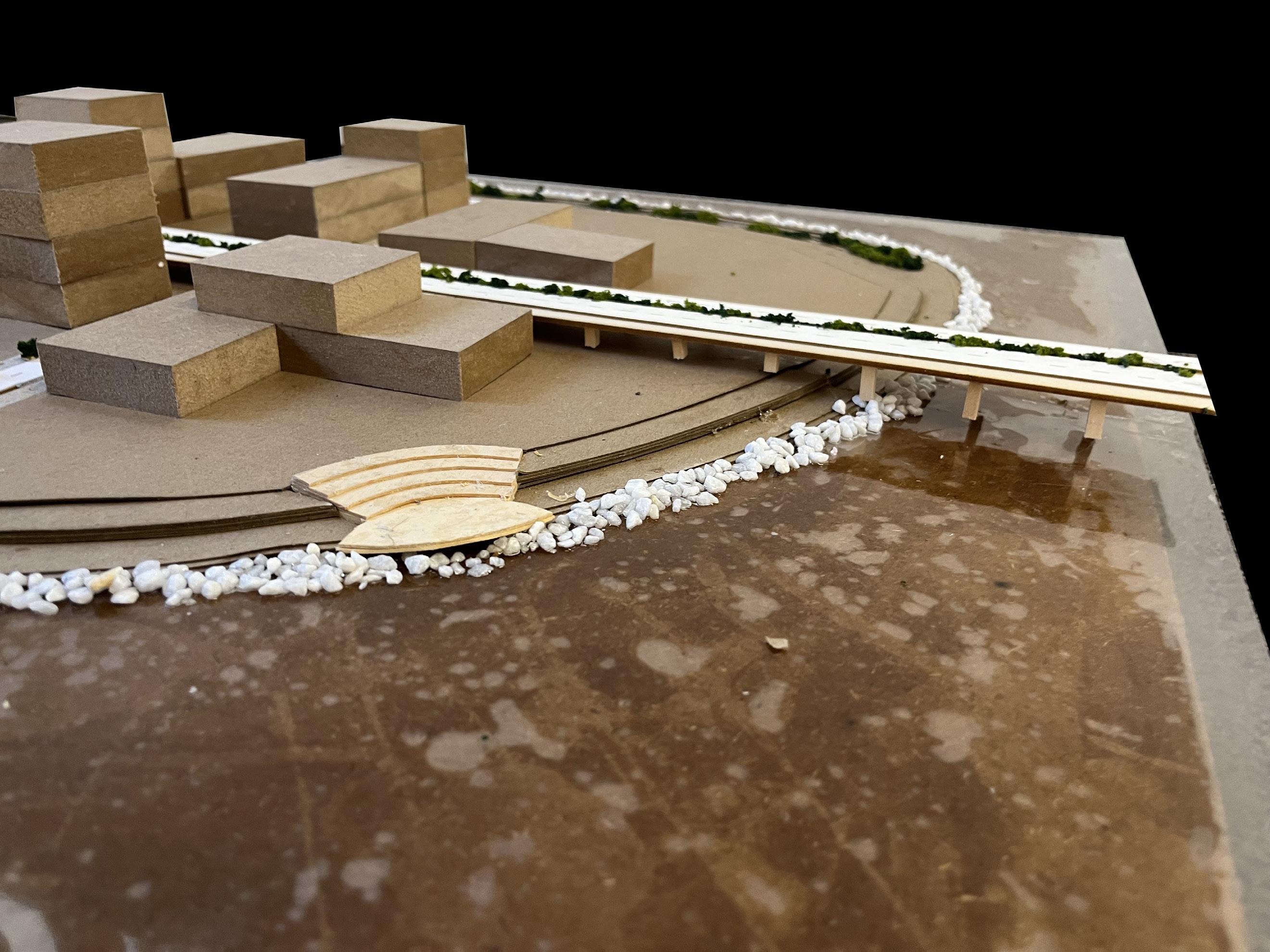
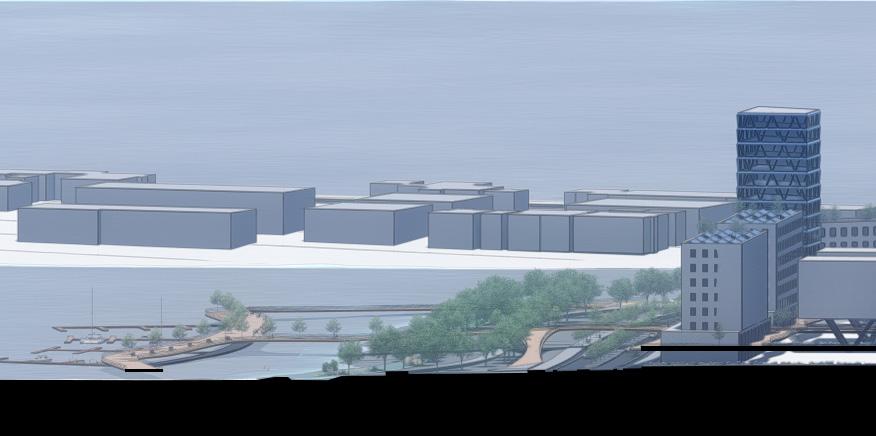
The Bay of the Coast is using and designing land to protect land. This condition can be repeated several times along the coast in areas that need it, especially in areas with low topography. The land is dug out and used to build a bay condition that reaches out into the water. While there is development all along these new bay conditions, sustainable high-density development are built on the peninsulas, which act as defensible walls to protect development in the inner bay. On the inner part of the bay is a living shoreline with living breakwaters for aquaculture while on the outer part of the bay is a hardened shoreline that can contain beaches. The calmer waves in the inner part of the bay allow for boats to set off from the piers. The living shoreline contains bioretention ponds for stormwater management as well as adding some nature into the high-density development. There is two planes of living: the ground plane and an elevated plane. The ground plane is floodable while the elevated plane is protected. The first level of all the development is designed to be able to flood while the rest of the development is safe from storm surges. Along all the streets, there are bioswales for additional stormwater management. There are walks and parks all around the peninsula while a beach can exist in portions. The midrise high-density development will include BlueTech companies, dense residential, shops, and other businesses. Additionally, many of the buildings will have green roof and solar panels to help improve the quality of living in the bay area. This site activates several planes of living.

PRECEDENTS.................................4-7 MASTER PLAN...............................8-9 POSTERS....................................10-17 3-ACRE MODEL.........................18-19 10-ACRE MODEL......................20-21 30-ACRE MODEL......................20-23
TABLE OF CONTENTS
p r e c e d
e n t s
p r e c e d
e n t s
T E R P L A N
M A S
The Bay of the Coast is using and designing land to protect land. This condition can be repeated several times along the coast in areas that need it, especially in areas with low topography. The land is dug out and used to build a bay condition that reaches out into the water. While there is development all along these new bay conditions, sustainable high-density development are built on the peninsulas, which act as defensible walls to protect development in the inner bay. On the inner part of the bay is a living shoreline with living breakwaters for aquaculture while on the outer part of the bay is a hardened shoreline that can contain beaches. The calmer waves in the inner part of the bay allow for boats to set off from the piers. The living shoreline contains bioretention ponds for stormwater management as well as adding some nature into the high-density development. There is two planes of living: the ground plane and an elevated plane. The ground plane is floodable while the elevated plane is protected. The first level of all the development is designed to be able to flood while the rest of the development is safe from storm surges. Along all the streets, there are bioswales for additional stormwater management. There are walks and parks all around the peninsula while a beach can exist in portions. The midrise high-density development will include BlueTech companies, dense residential, shops, and other businesses. Additionally, many of the buildings will have green roof and solar panels to help improve the quality of living in the bay area. This site activates several planes of living.
12’ FLOOD PLAIN 4’ FLOOD PLAIN 8’ FLOOD PLAIN BASE DEVELOPMENT` STORMWATER MANAGEMENT GROUND CIRCULATION ELEVATED CIRUCLATION ELEVATED WALKWAY HIGH-DENSITY DEVELOPMENT LIVING SHORELNE BIORETENTION POND BIOSWALE MEDIANS BOARDWALK ELEVATED PARK W/ PARKING UNDERNEATH GREEN ROOF W/ SOLAR PANELS VERTICALLY ATTACHED SOLAR PANELS B A Y O F T H E G U L F C O A S T L I T A L I SIDEWALK BIOSWALE 16’ FLOOD PLAIN BOAT DOCKS
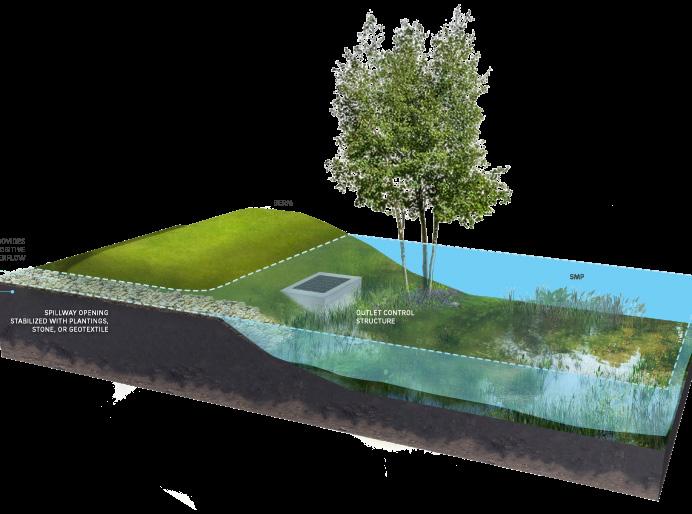
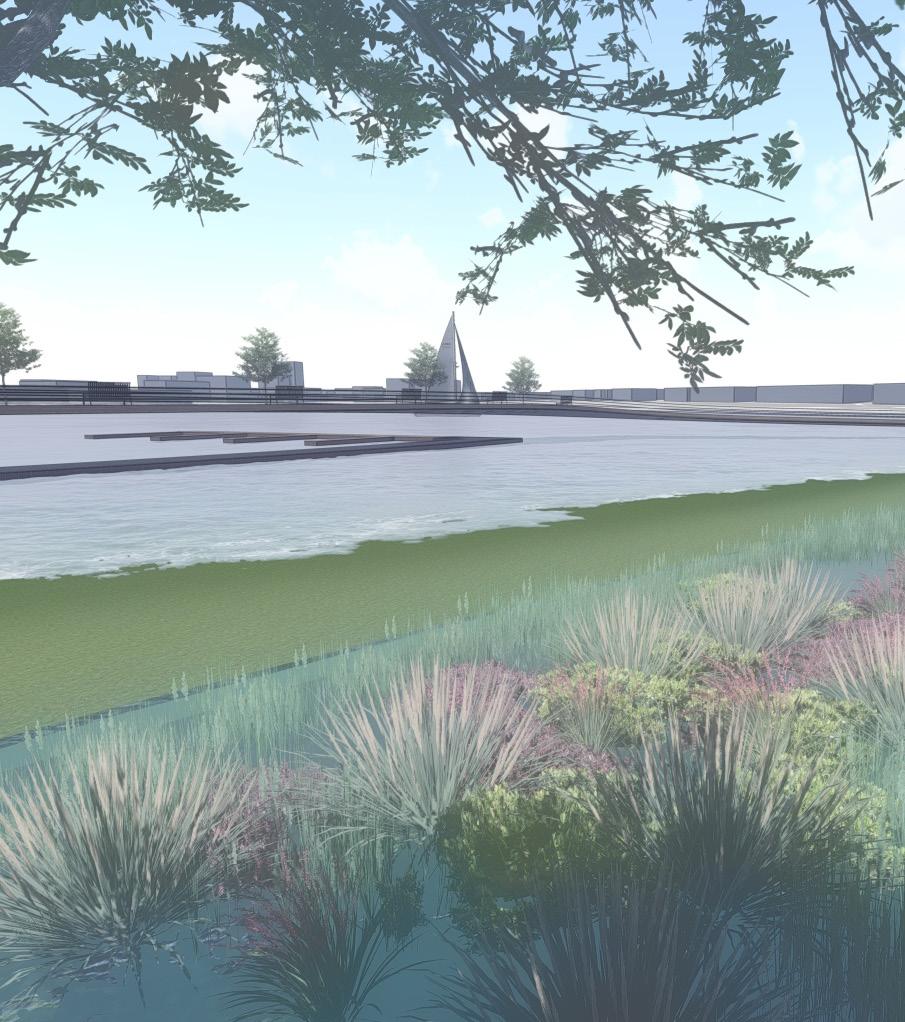
BIORETENTION POND
On the north side and in the living shoreline, there are two large bioretention ponds. Storm water on the site will mainly drain into these ponds.
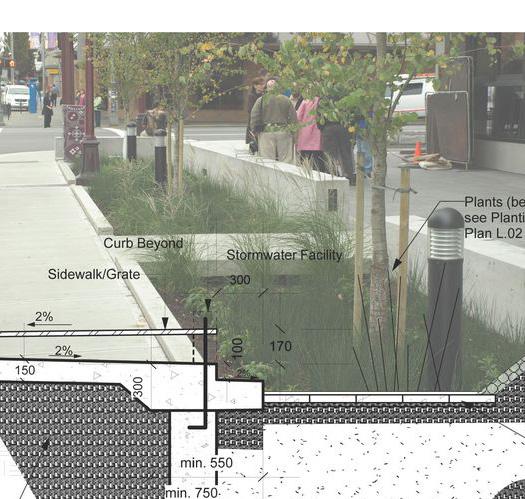
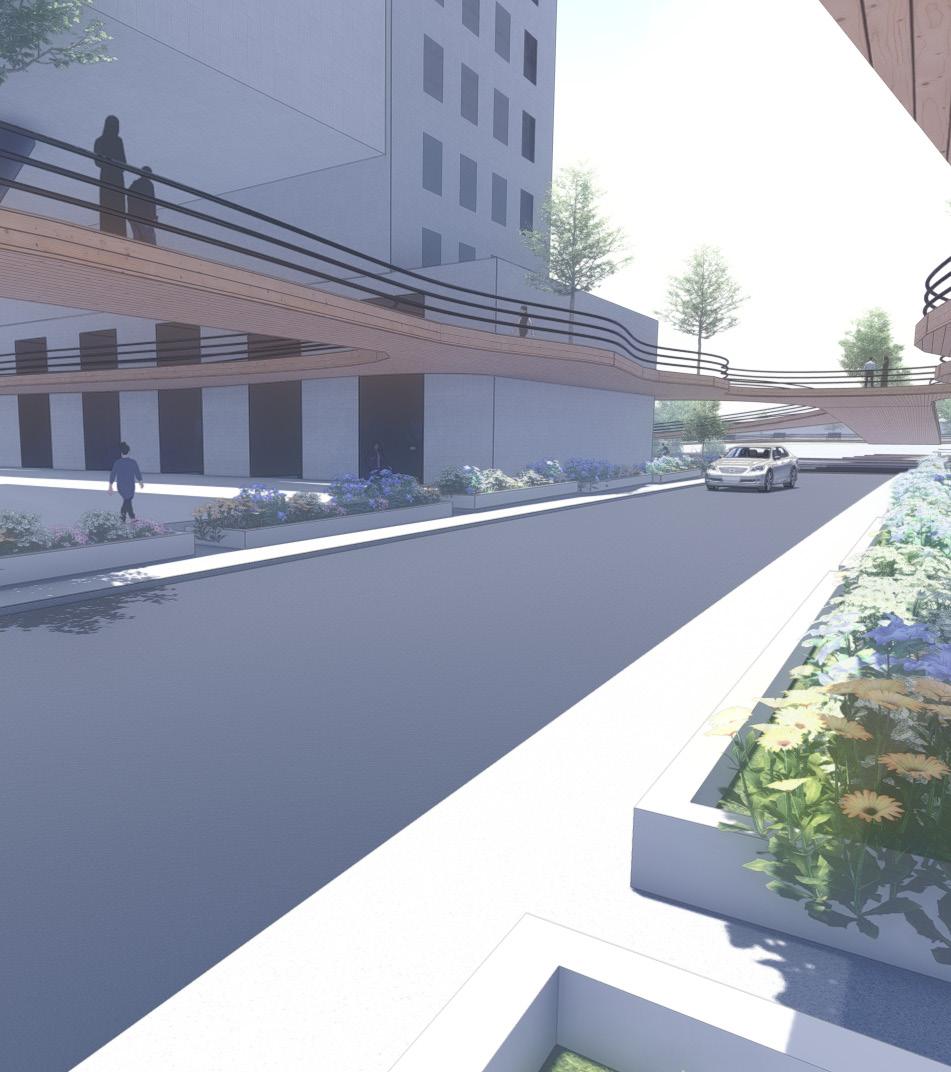
SIDEWALK BIOSWALES
Alongside all the sitewalks and medians are bioswale that help with the stormwater management. The bioswale planters hold a variety of vegetation, bringing beauty and biodiversity into the site. They can hold up to 1’ to 1.5’ feet of water.
GREEN ROOFS
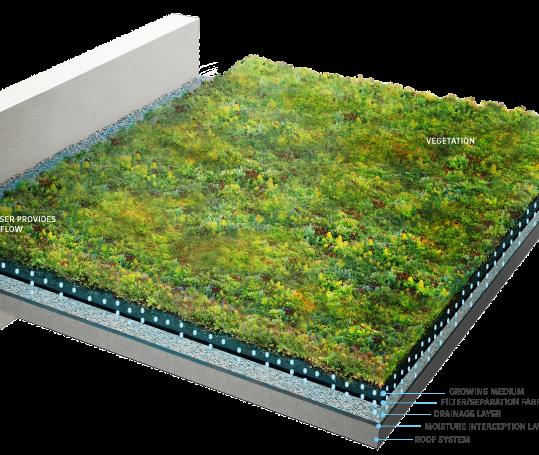
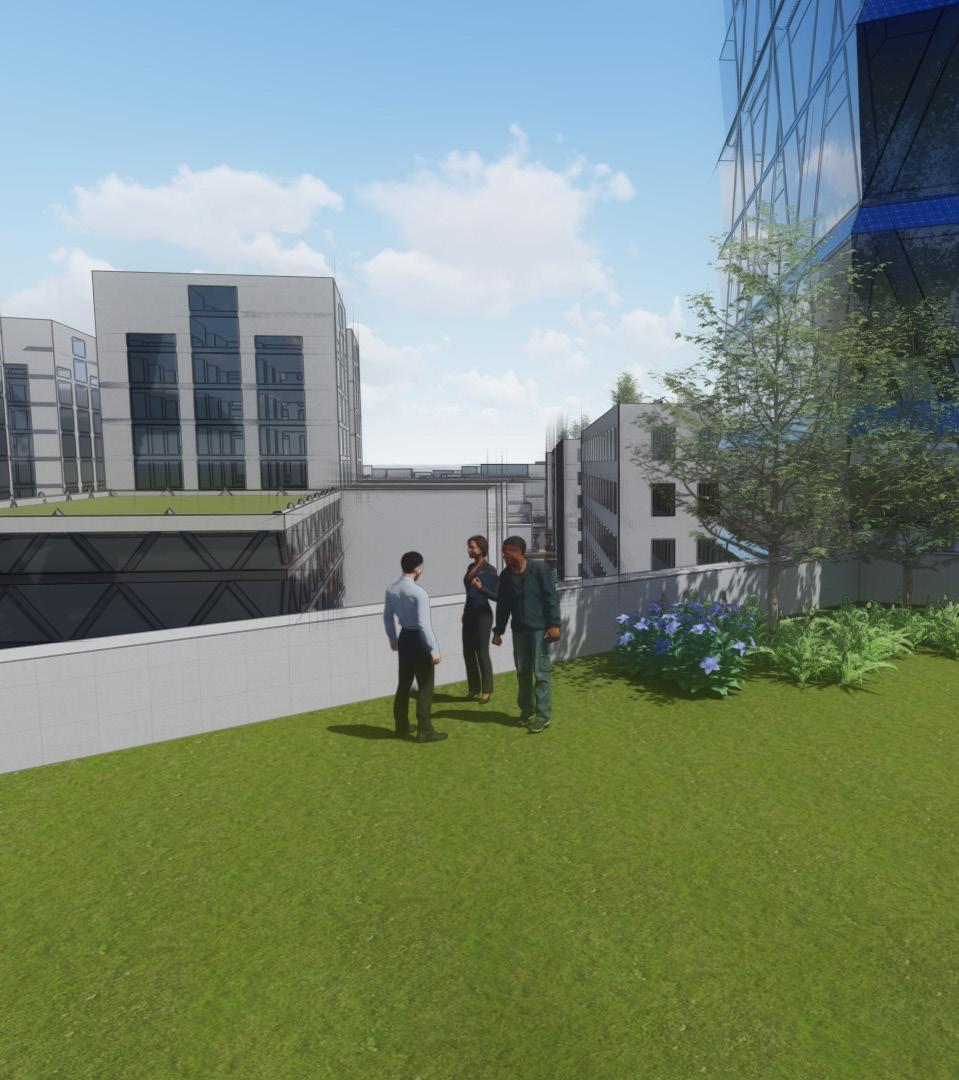
While some buildings have bisolar green roofs, other have an intensive green roof to allow for additional stormwater management in high-density living. Green roofs are a good design strategy to passively cool a building. It also adds to the asthetic of the building. Water falls on the roof and is soaked up by vegetation.
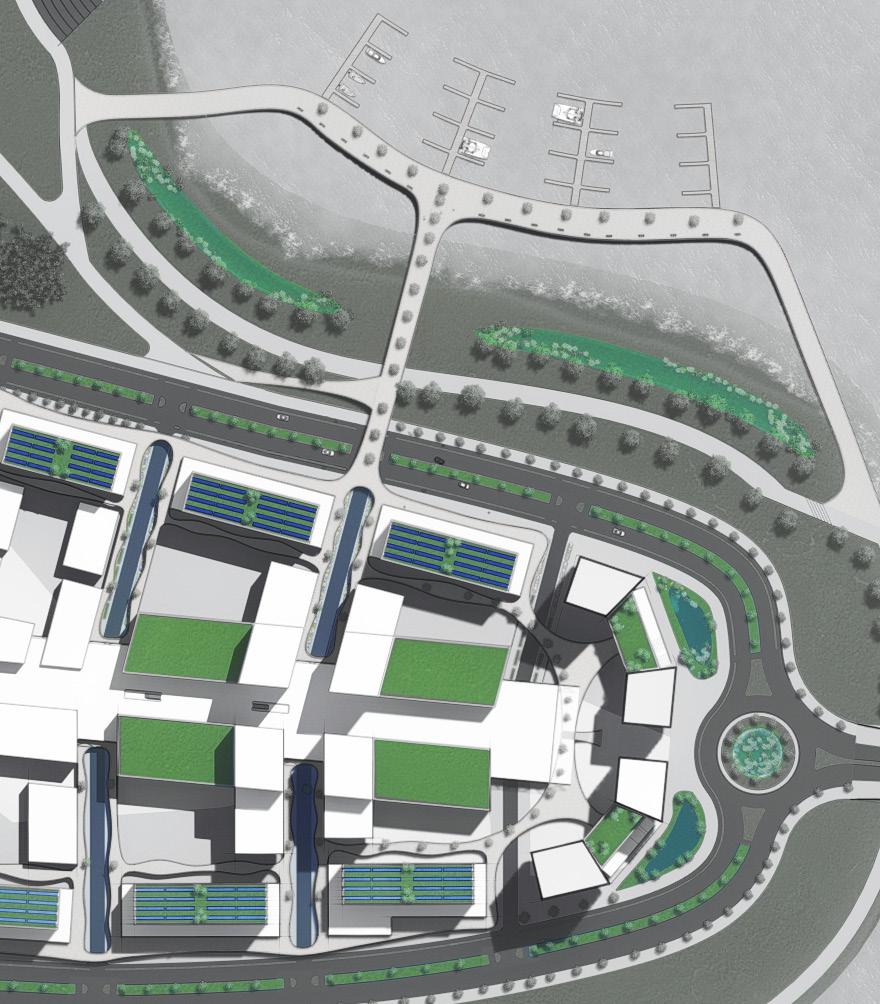
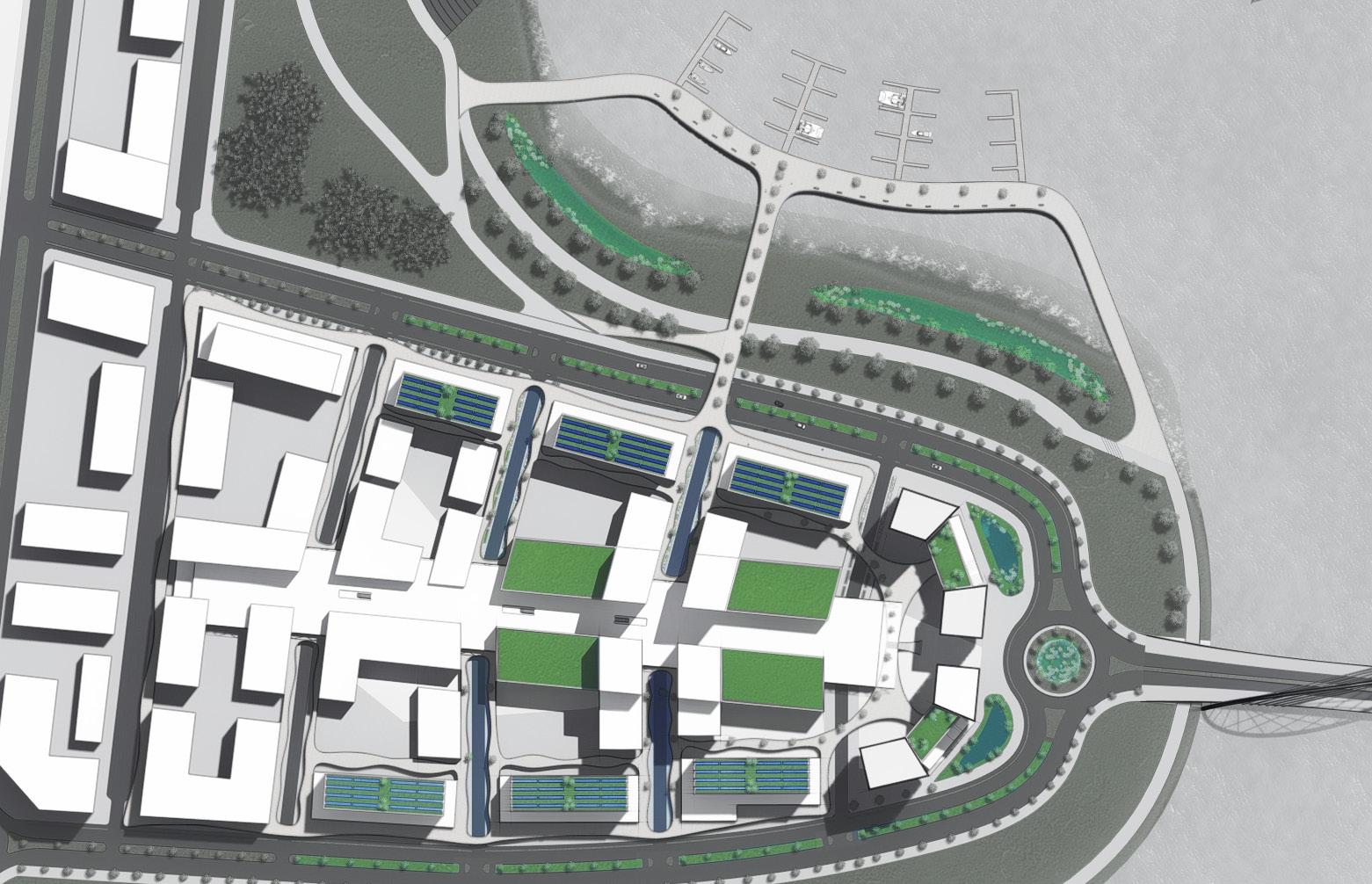
s t o r m w a t e r m a n a g e m e n t STORMWATER MANAGEMENT PLAN WITHIN 10 ACRES Imperious Area: 250,000 SQFT Bioretention Pond Area: 28,705 SQFT Sidewalk Bioswale: 1,433 SQFT Green Roof: 60,126 90,264 SQFT Total of Design Water Management 20% Stormwater Management
n i c s a n d c i r c u l a t i o n
CENTRAL ELEVATED PARK
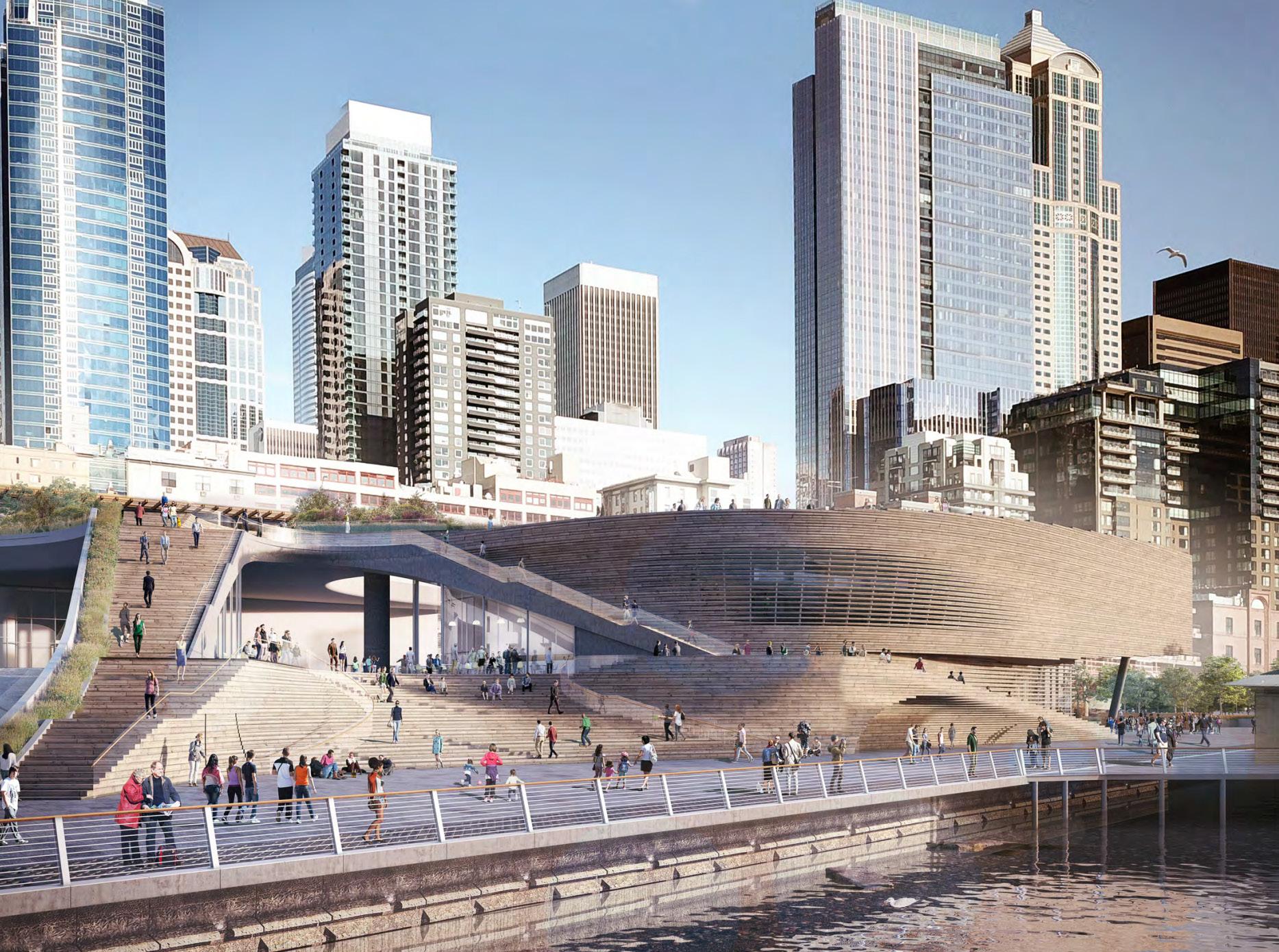
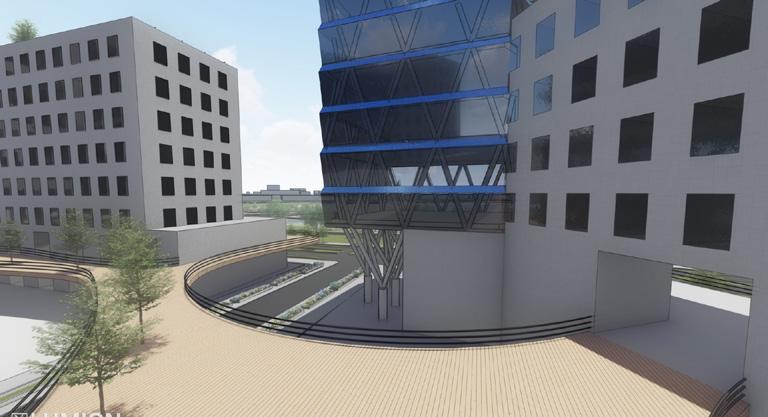
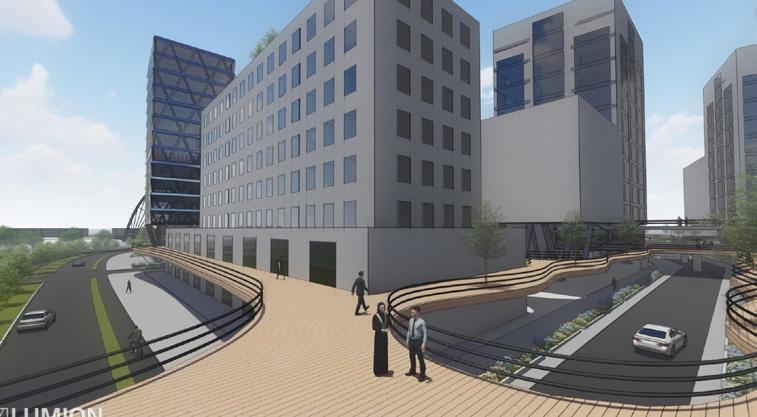
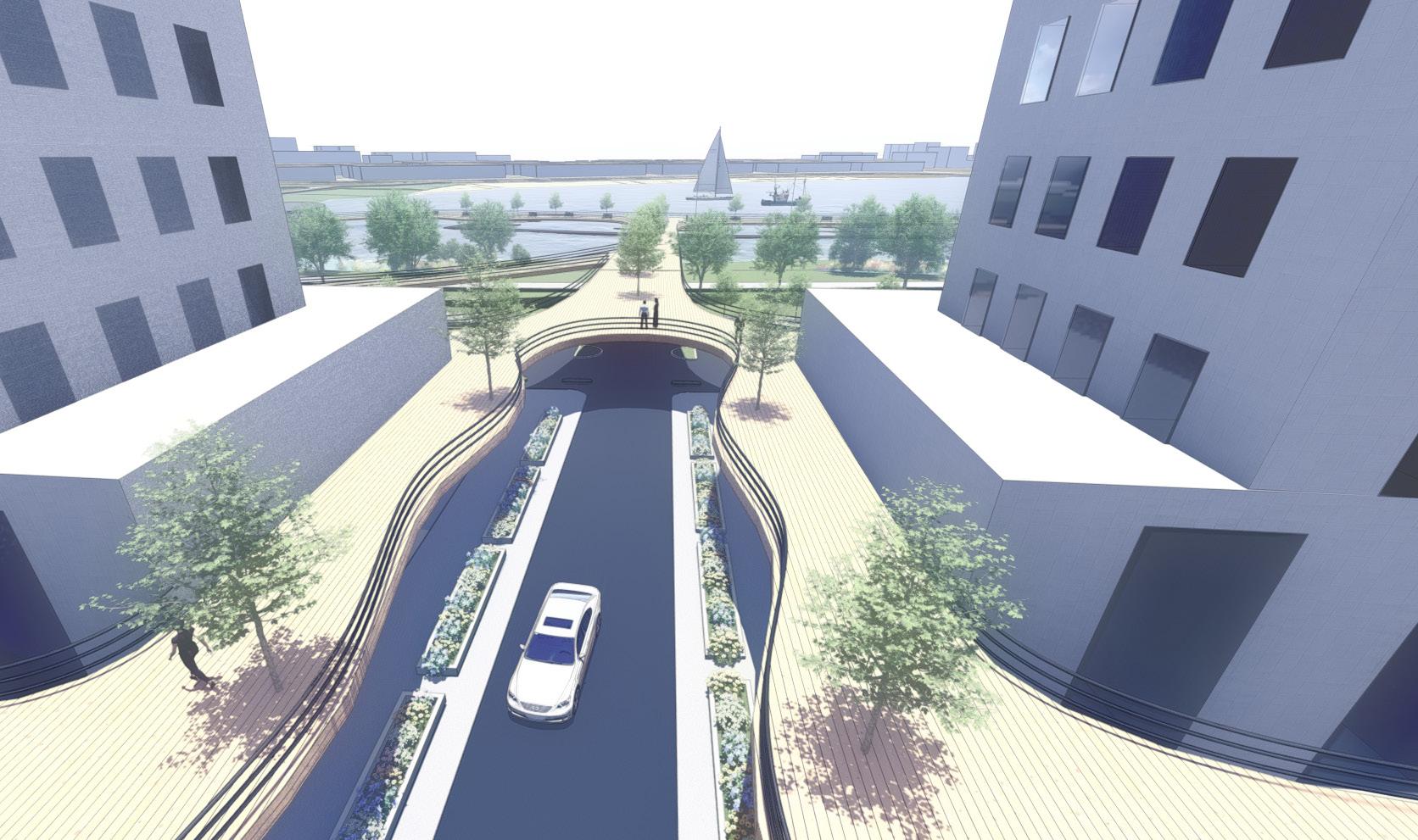
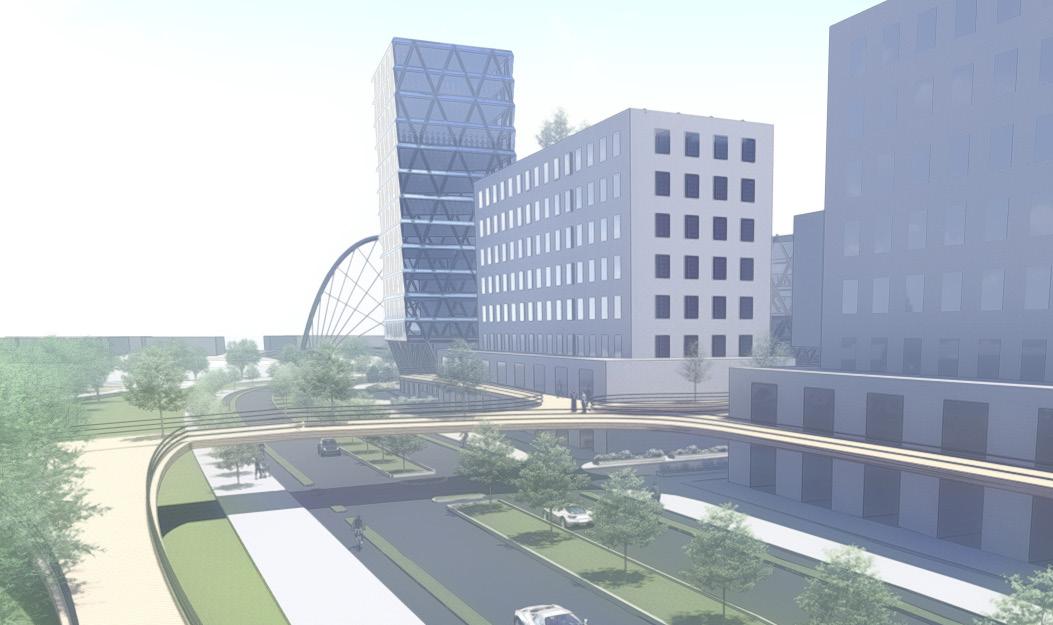
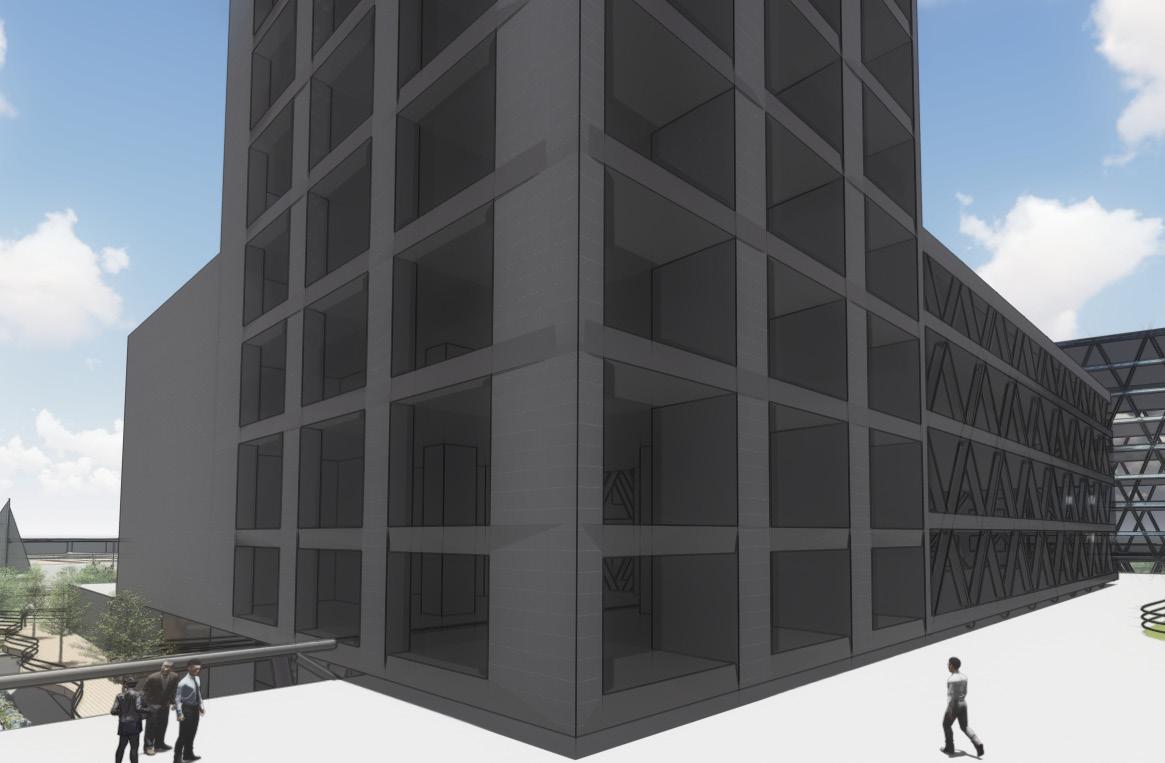
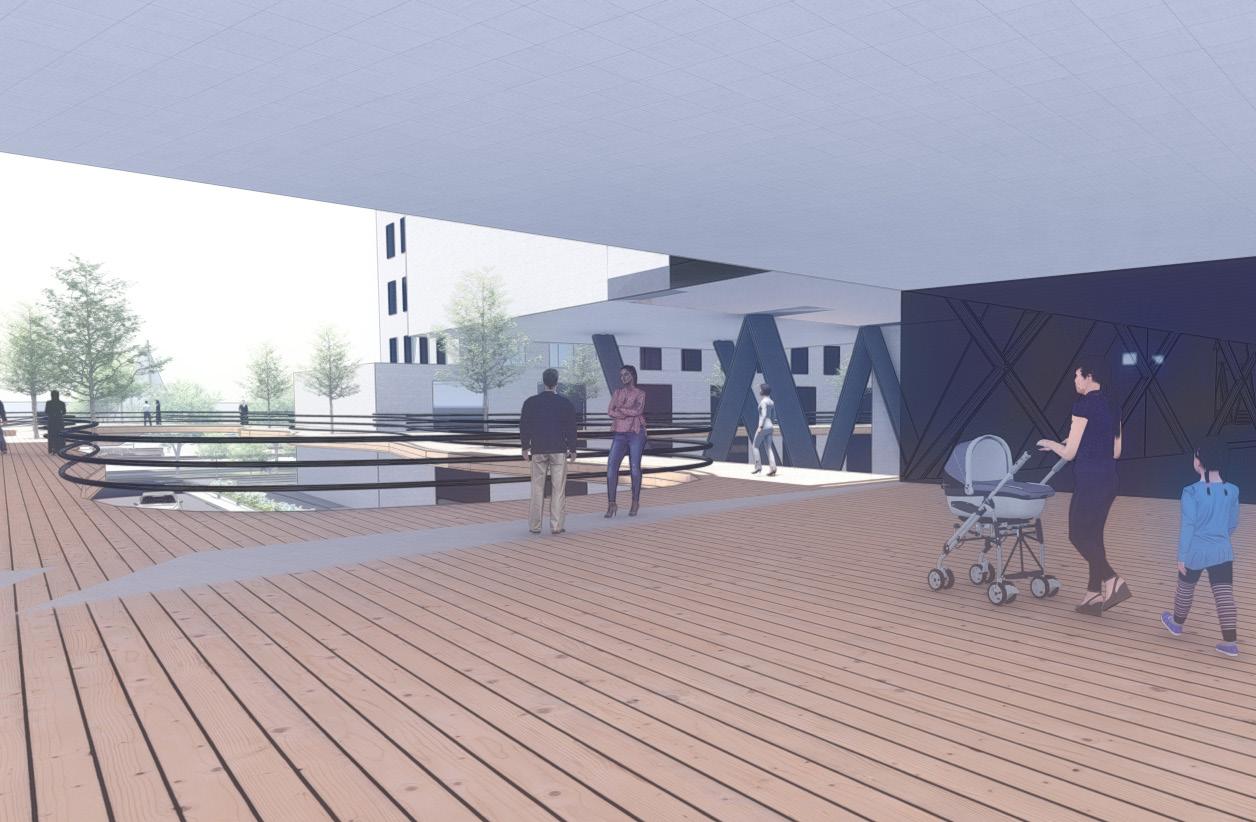
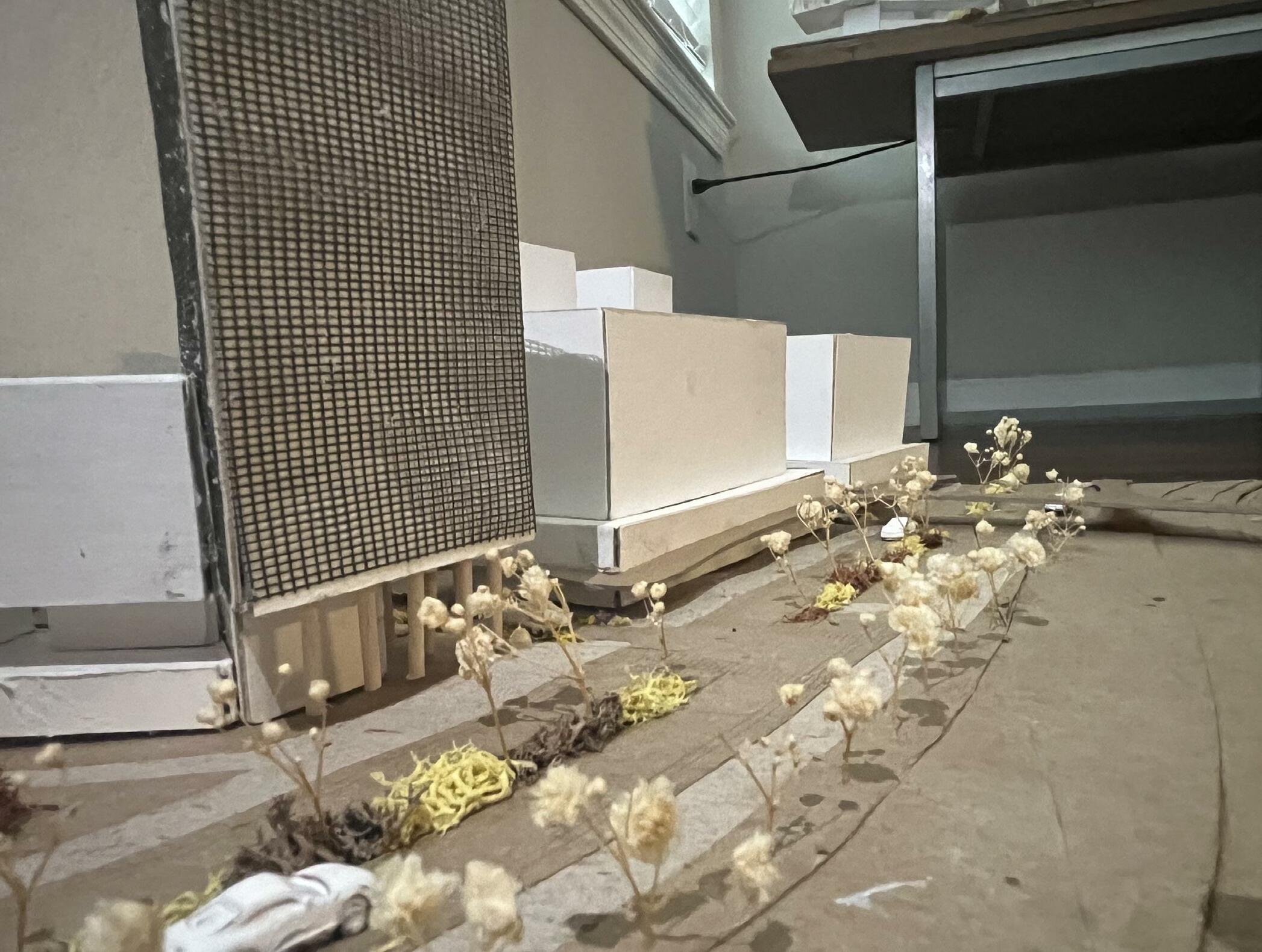
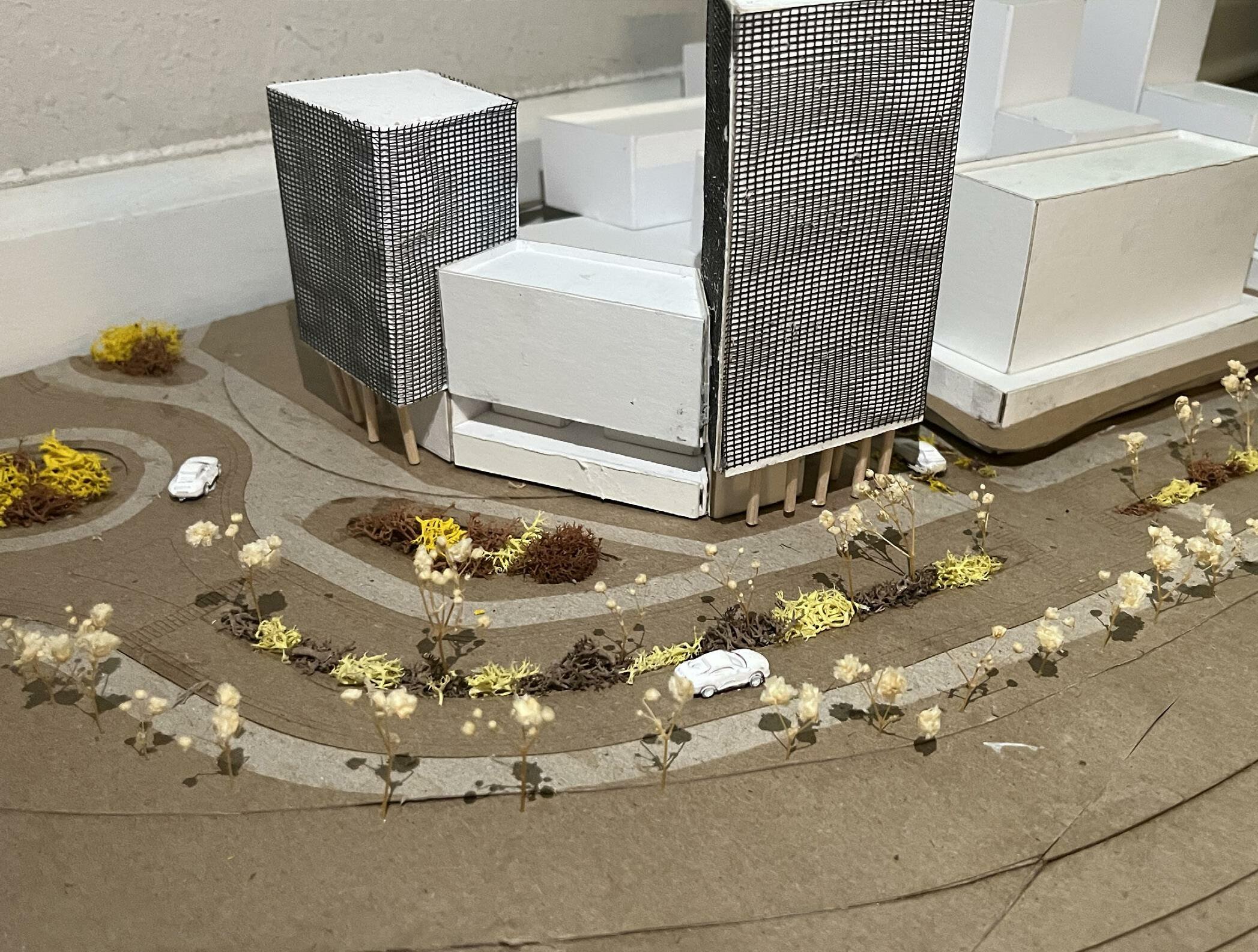
The elevated park is the central structure of the urban design. All elevated circulation connects with the structure. While it is a structure on its own, there are several buildings that are attached to the structure. The elevated park is made up of three parts: parking garage, commercial and retail spaces, and elevated park and walkway. The ground level of this urban space is made to be flooded. This center structure, along with the first two levels of the attached buildings, hold all parking spaces on this site. The second level is the height of all the elevated walkways and is where all the walkways connect to. Within the structure itself, it hold retail and commercial spaces. Finally, the third level contains the elevated park. It adds an additional level of living, and it is where pedestrians would enter the attached building from the elevated plane.
ELEVATED WALKWAYS
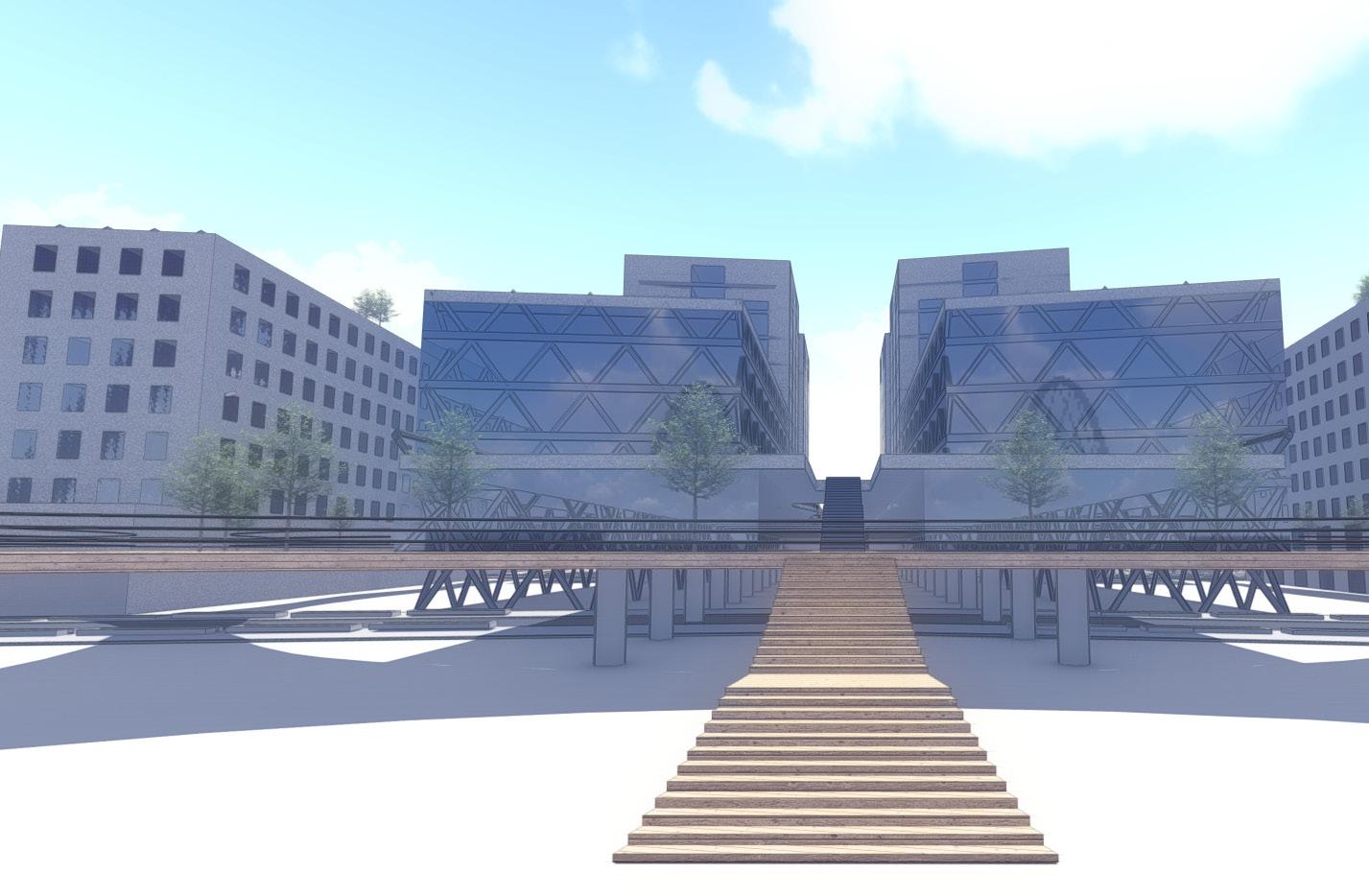
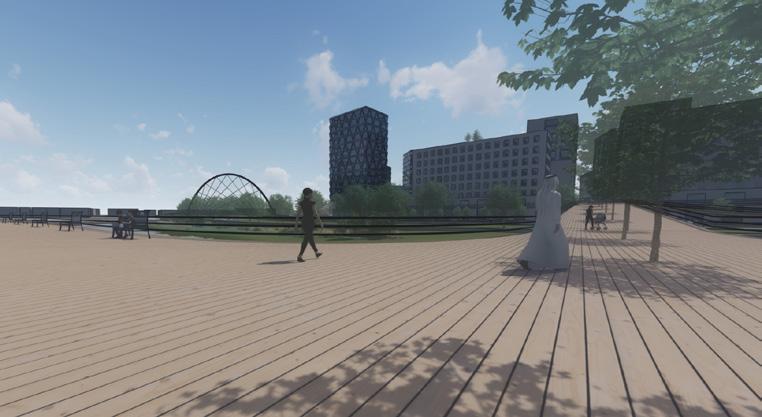
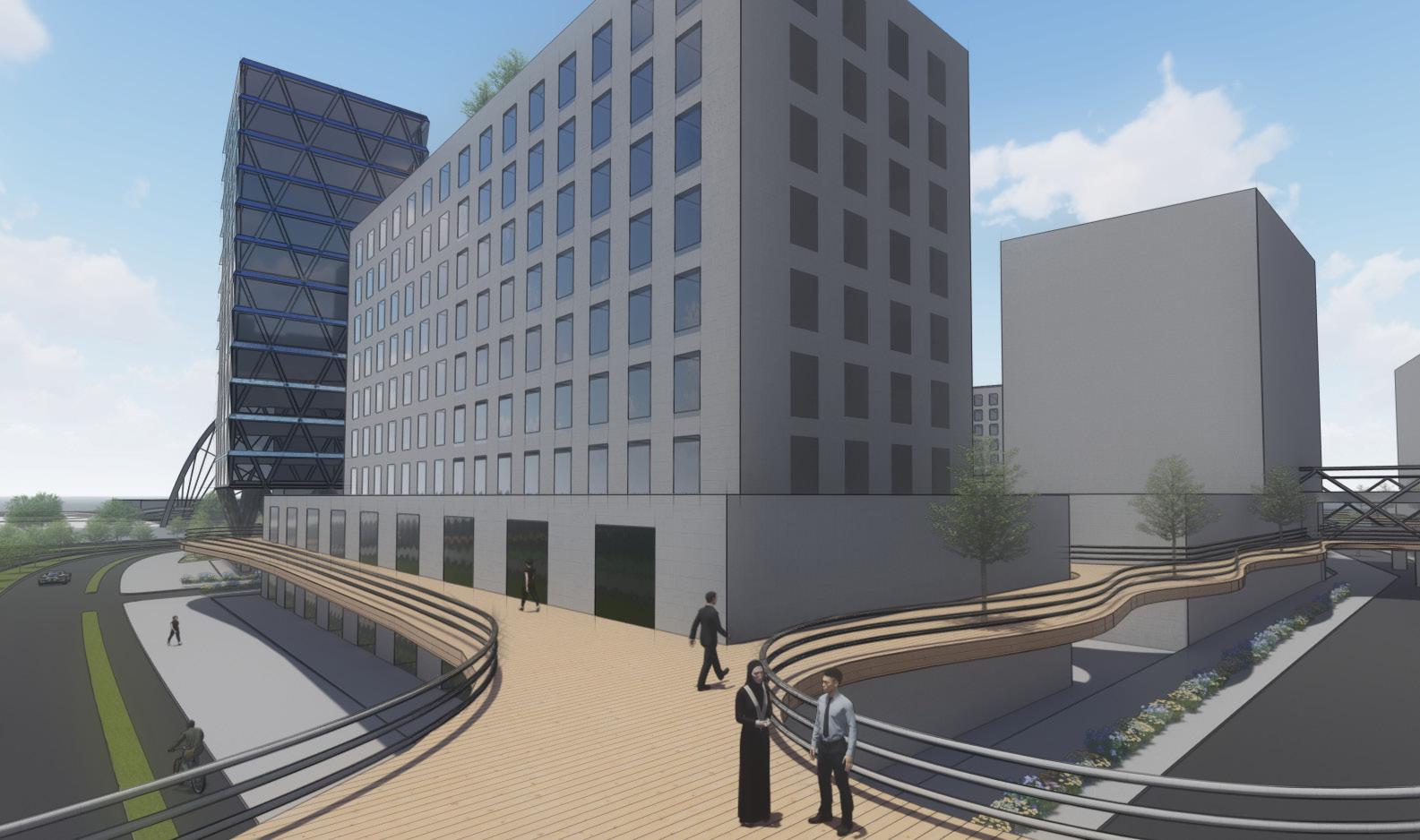
The elevated walkways are a second plane of living on the site. The site allows for two planes of living: the ground plane and the elevated plane. For the most part, the elevated walkway is at 27’ above sealevel and 15’ above the ground plane. During a flood events, residences and vistors can continue to live on the elevated plane. There are several areas around the site that connect the ground plane with the elevated plane, so there is always a sense of connection between the two planes.
T e c t o
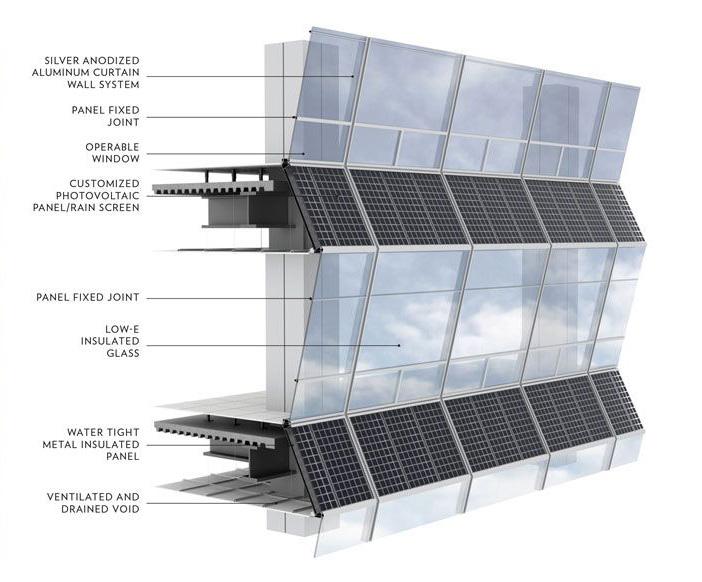
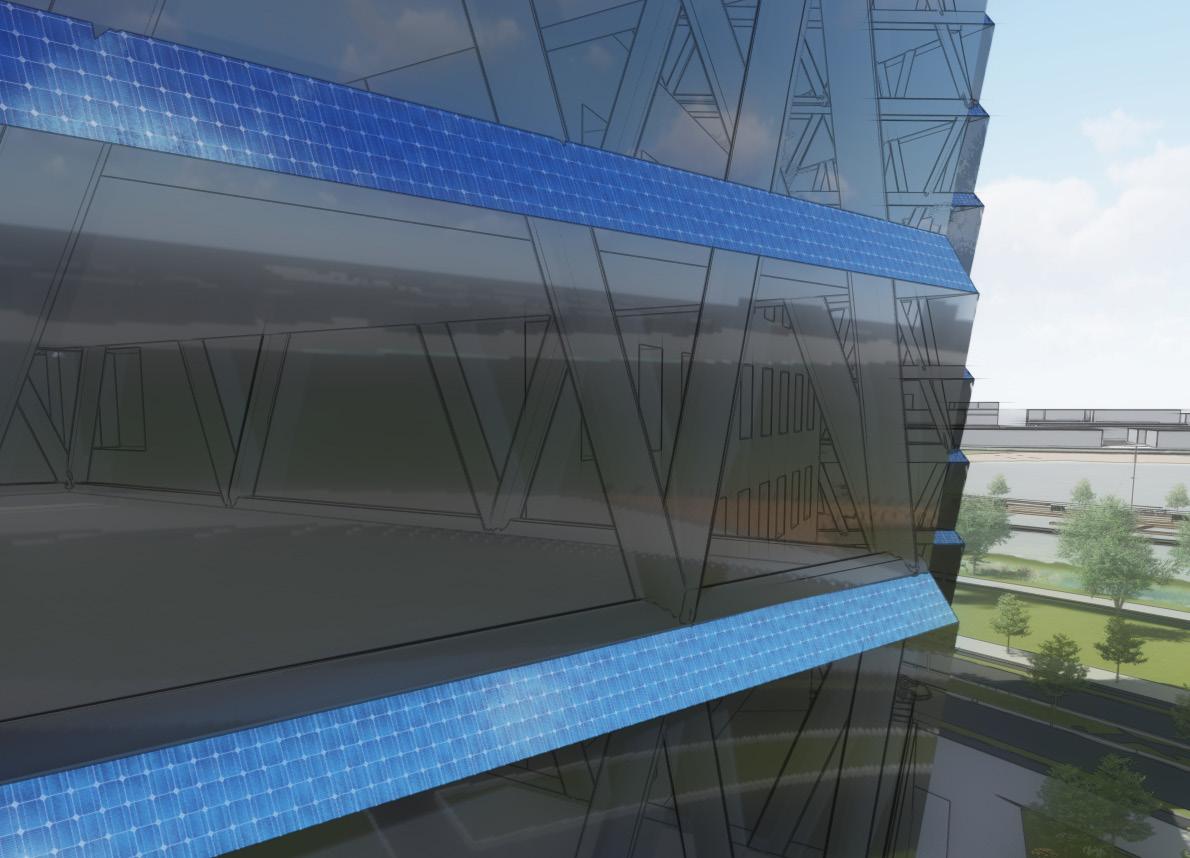
VERTICALLY ATTACHED SOLAR PANELS
On some of the buildings, solar panels will be attachedvertically on the building itself. In addition, it acts as solar shading for the building. These panels are attached all around the building, which allow it take advantage of the sun at all points of day.
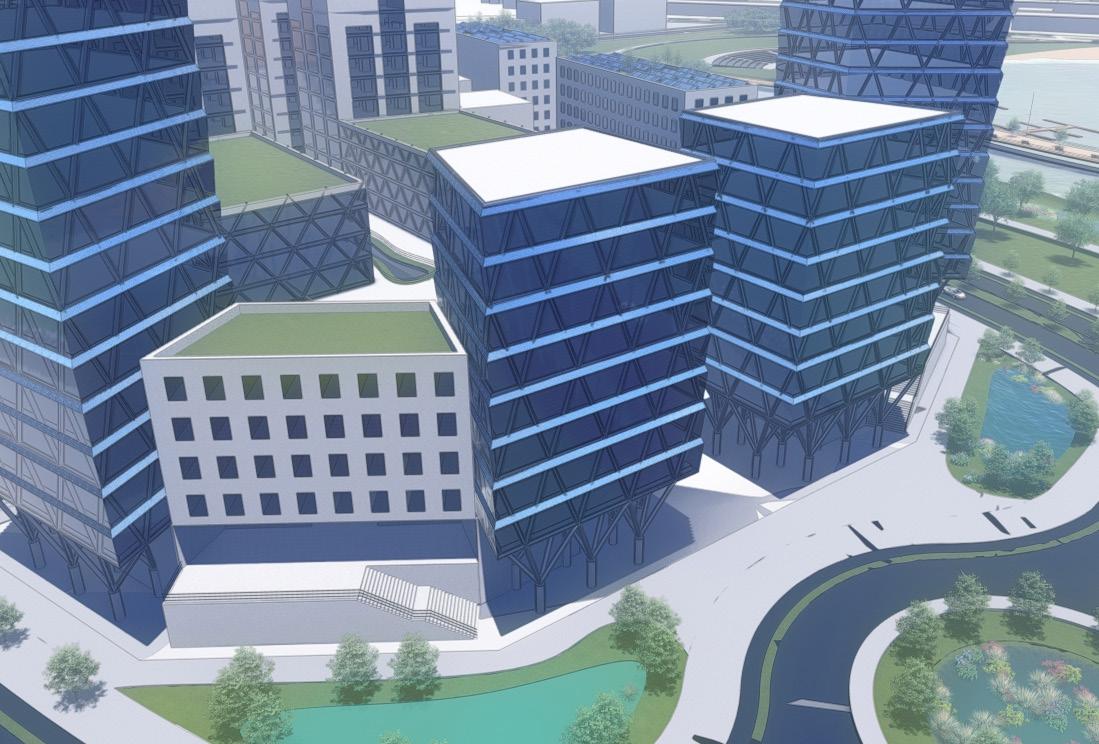
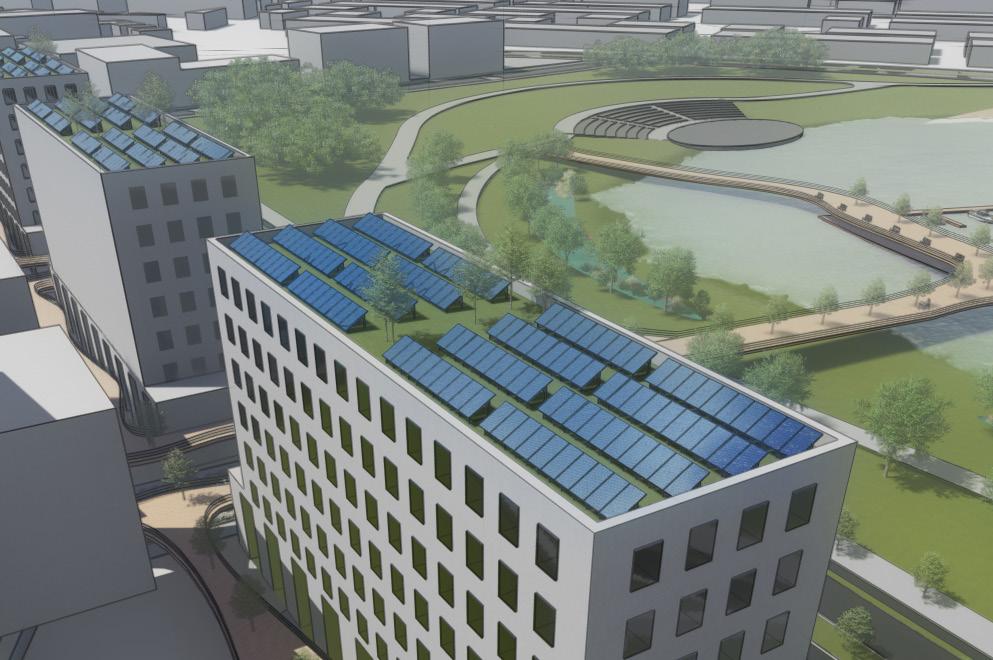
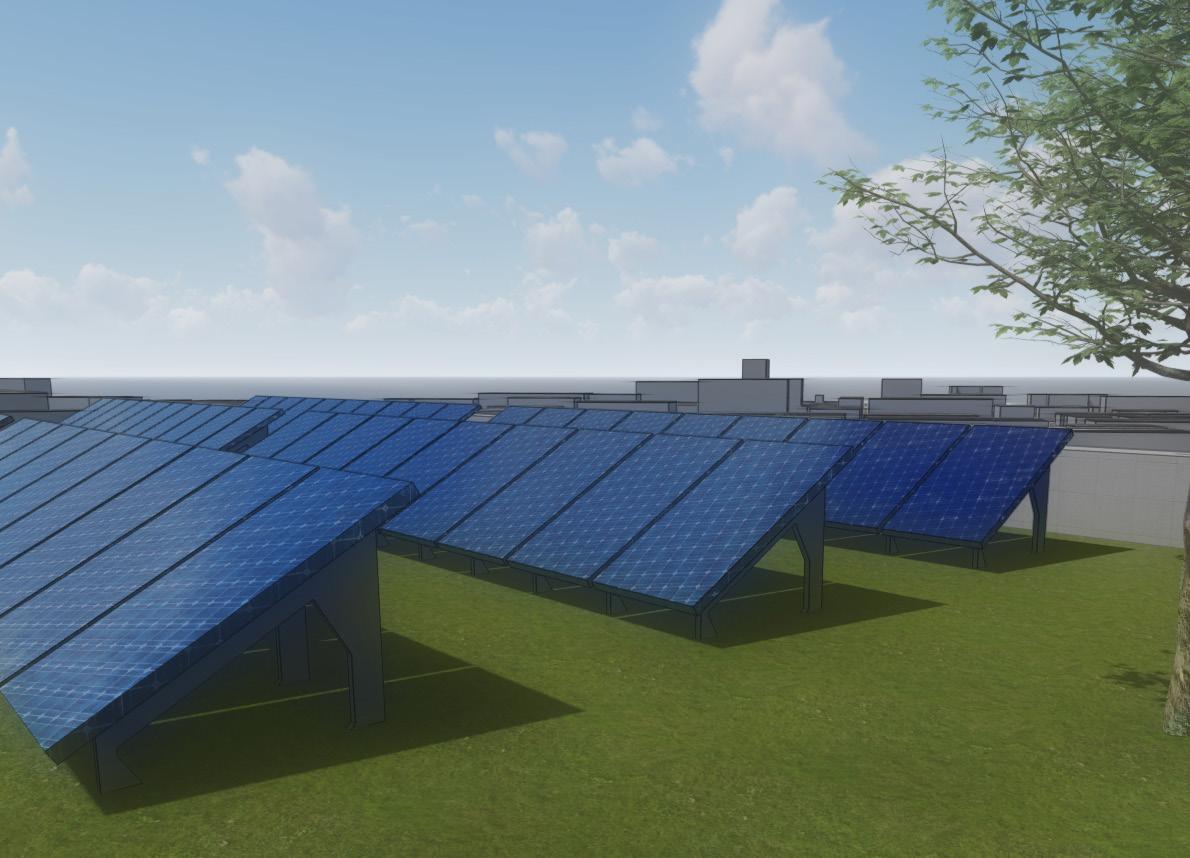
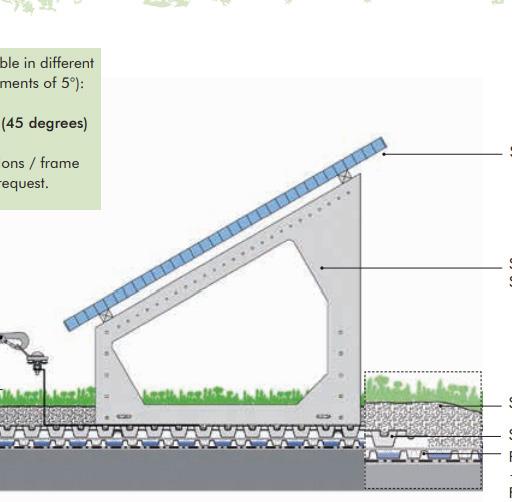
Another form of power security are the solar panels on green roofs. This system integrated both green technologiesroofwith solar technologies to maximize both. Research show that adding solar panels on a green roof system can lead to a 5% increase in solar gain. It also helps to passively cool the building. The green roof must be an extensive green roof.
S O L A R
SOLAR PANEL ON GREEN ROOF
P O W
E R
BISOLAR GREEN ROOF
d i n g p o d i a
b u i l
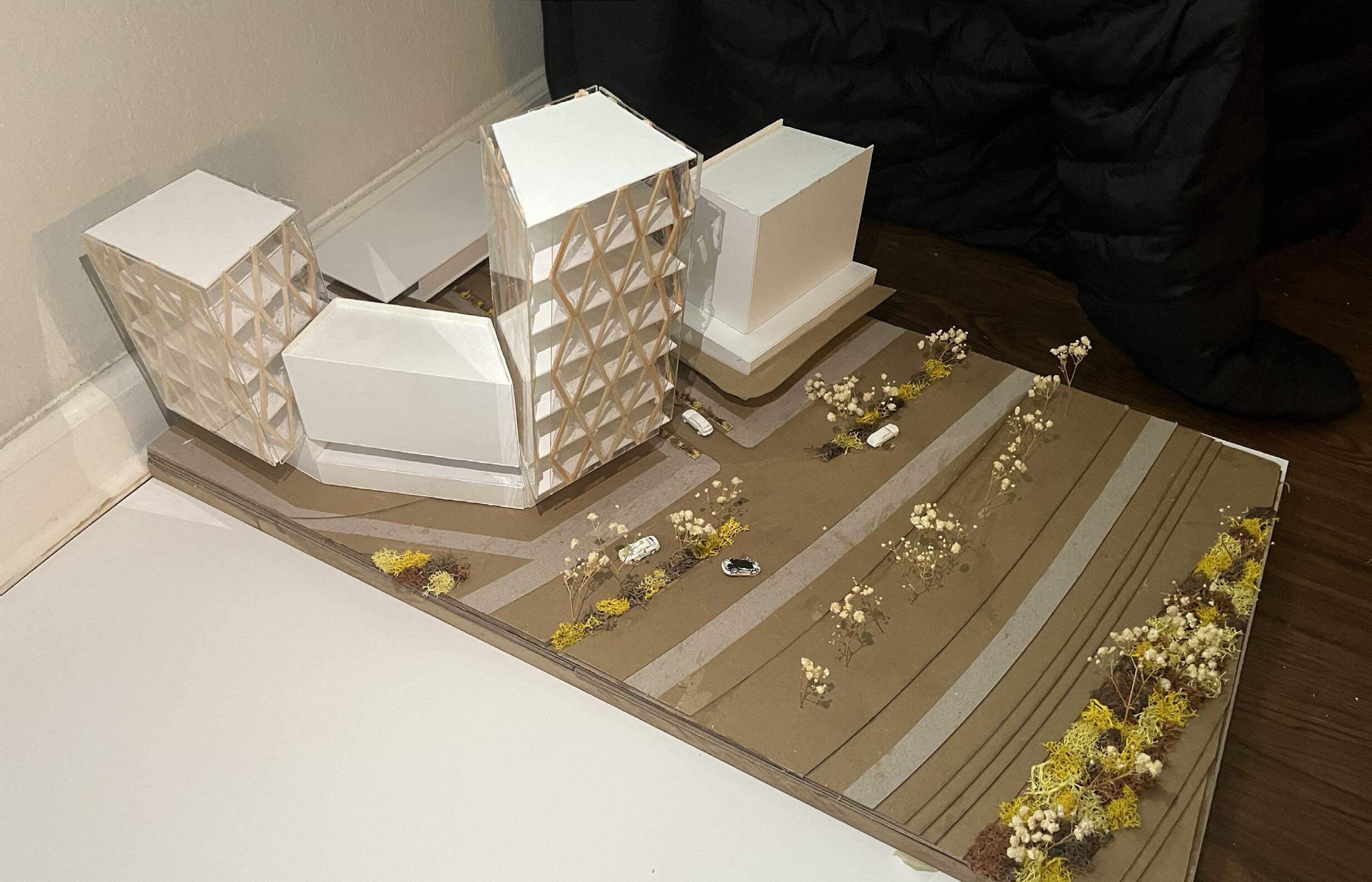
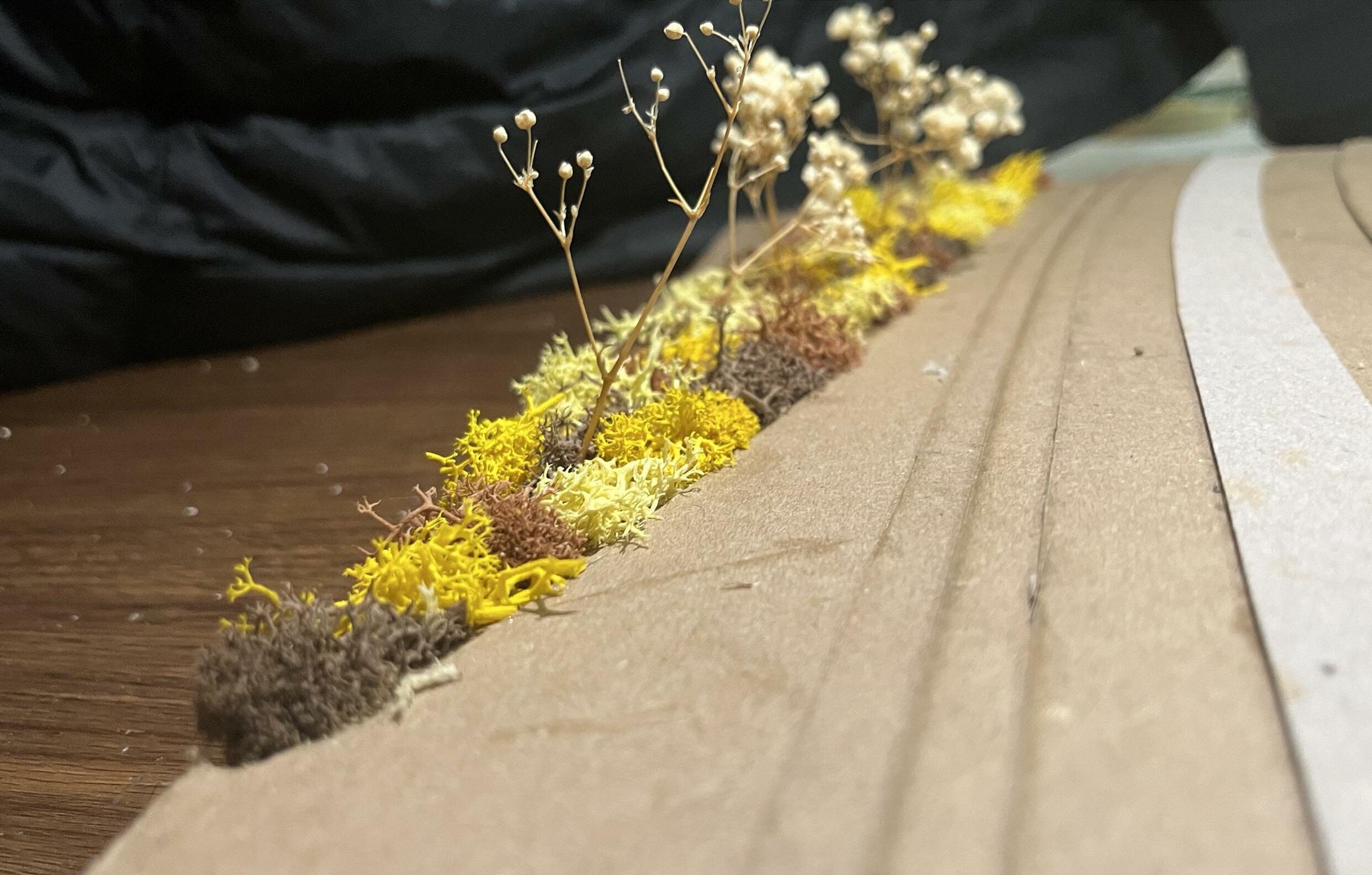
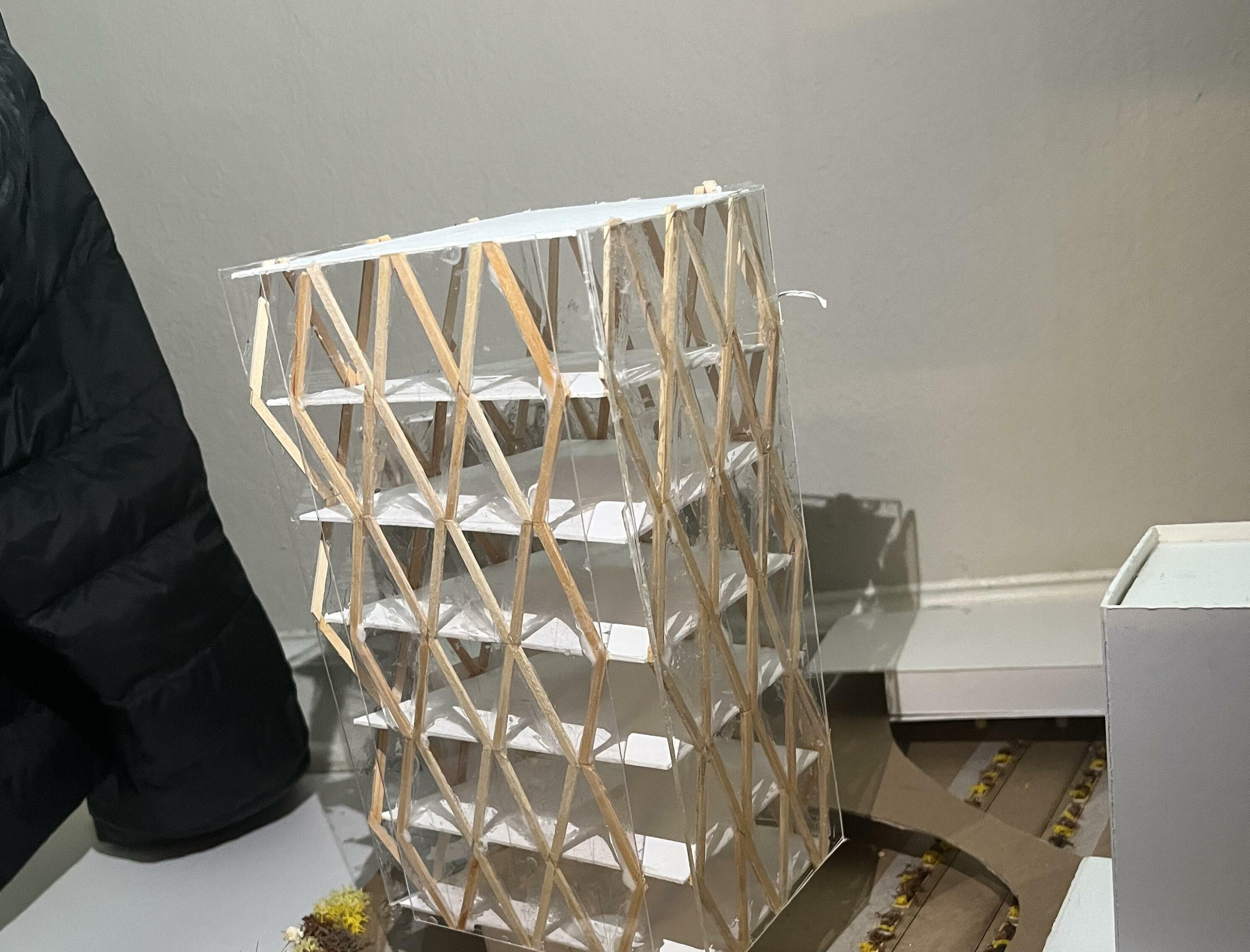
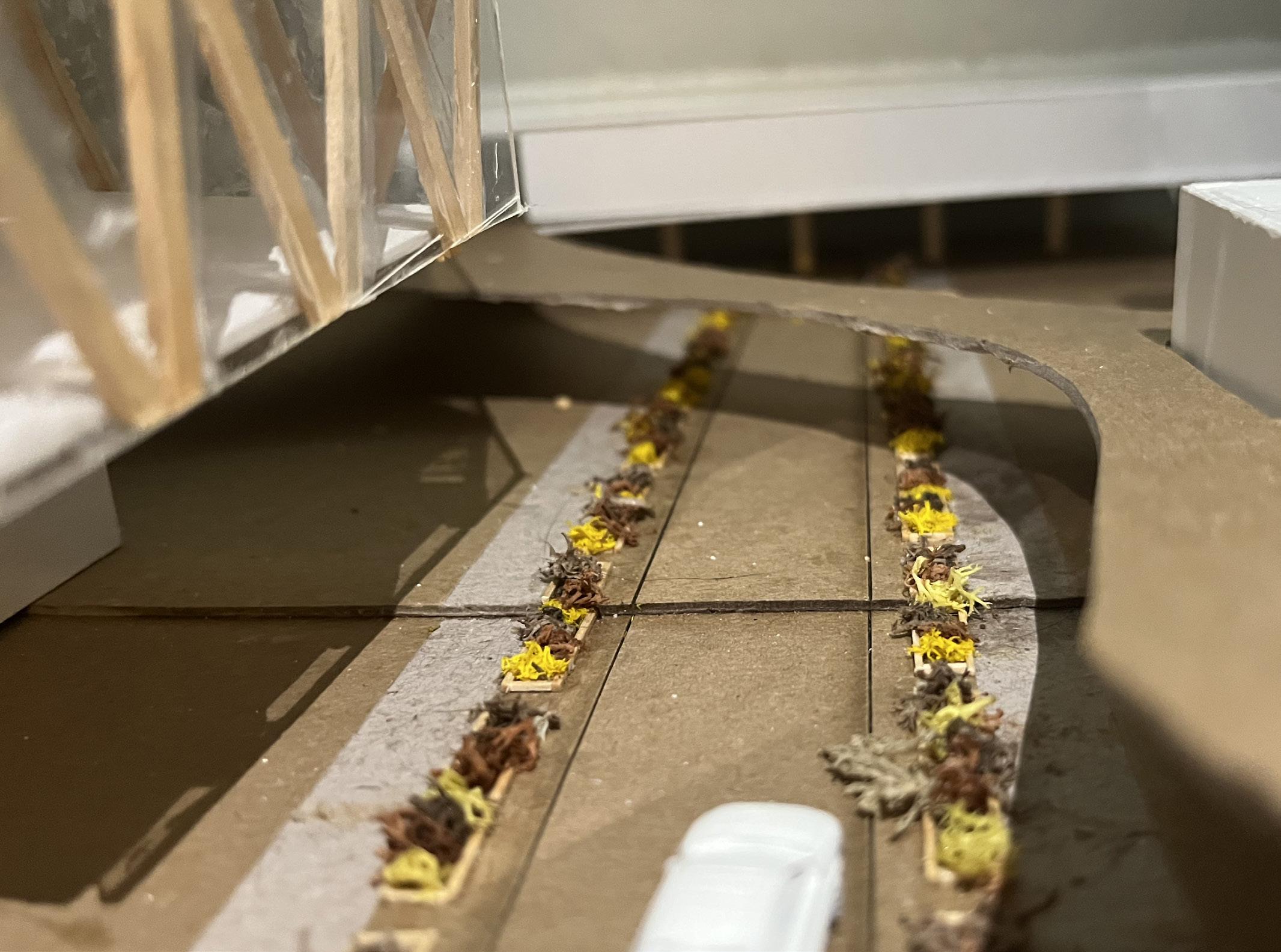
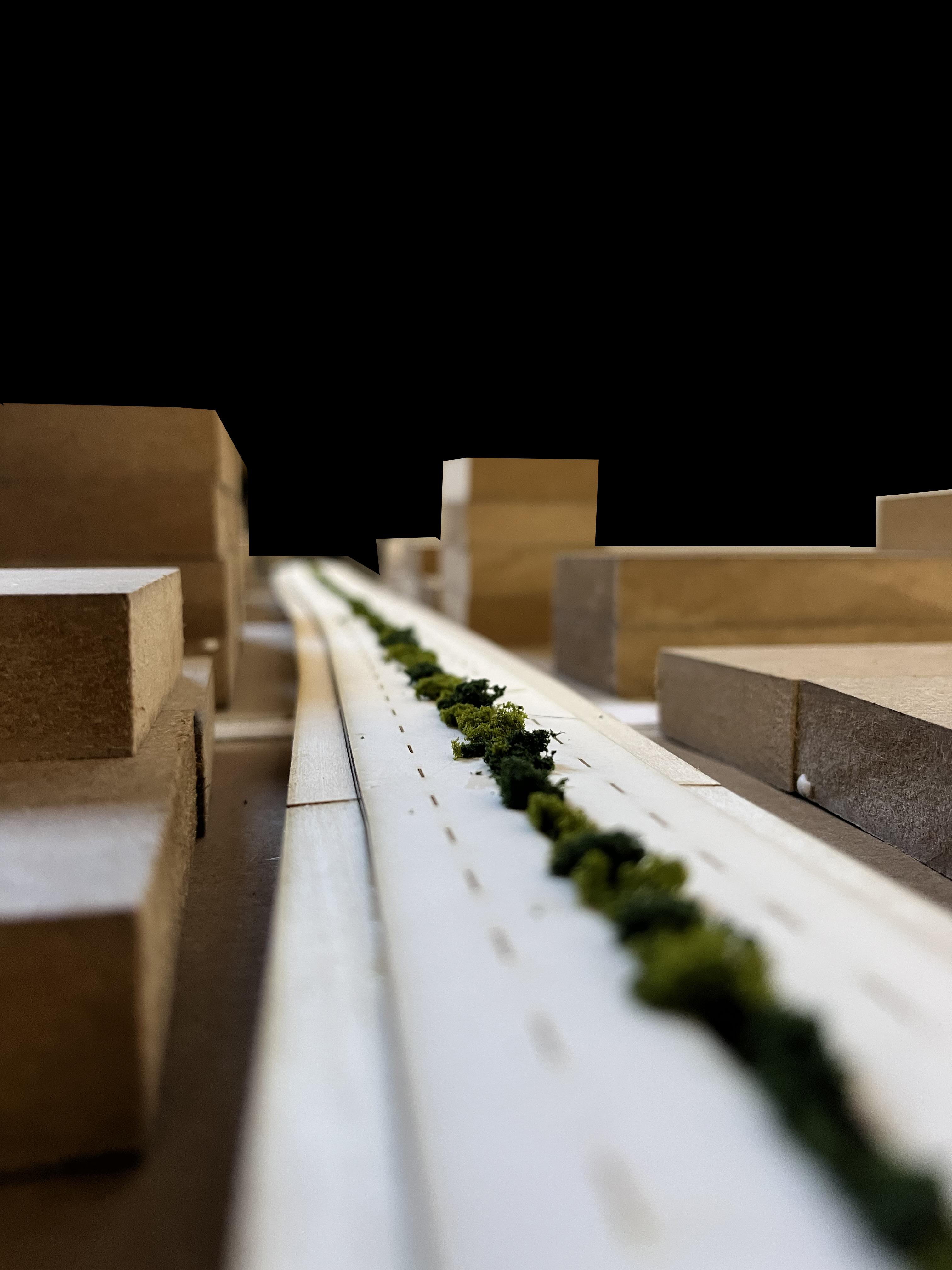
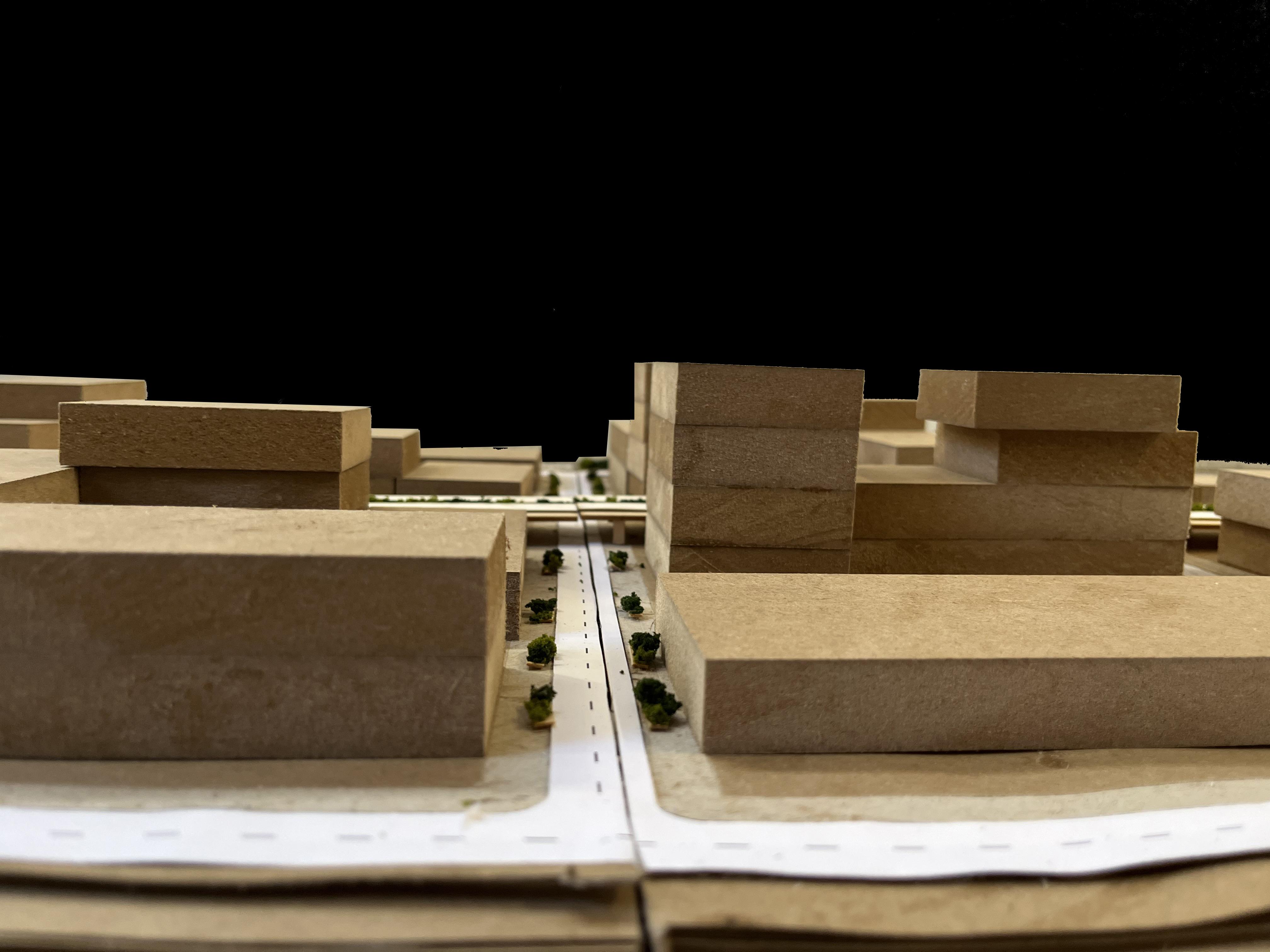
3 a c r e 1/16
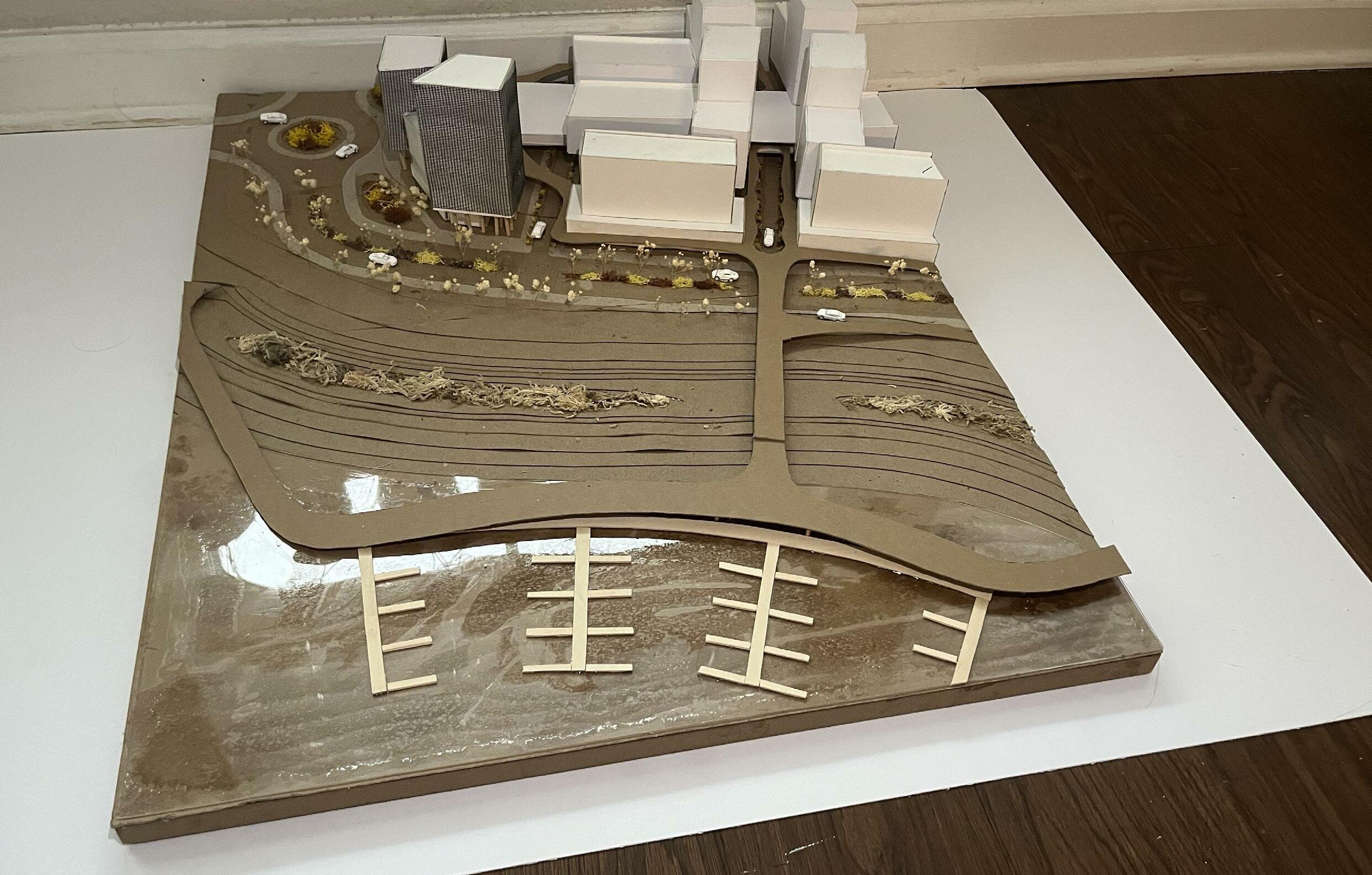
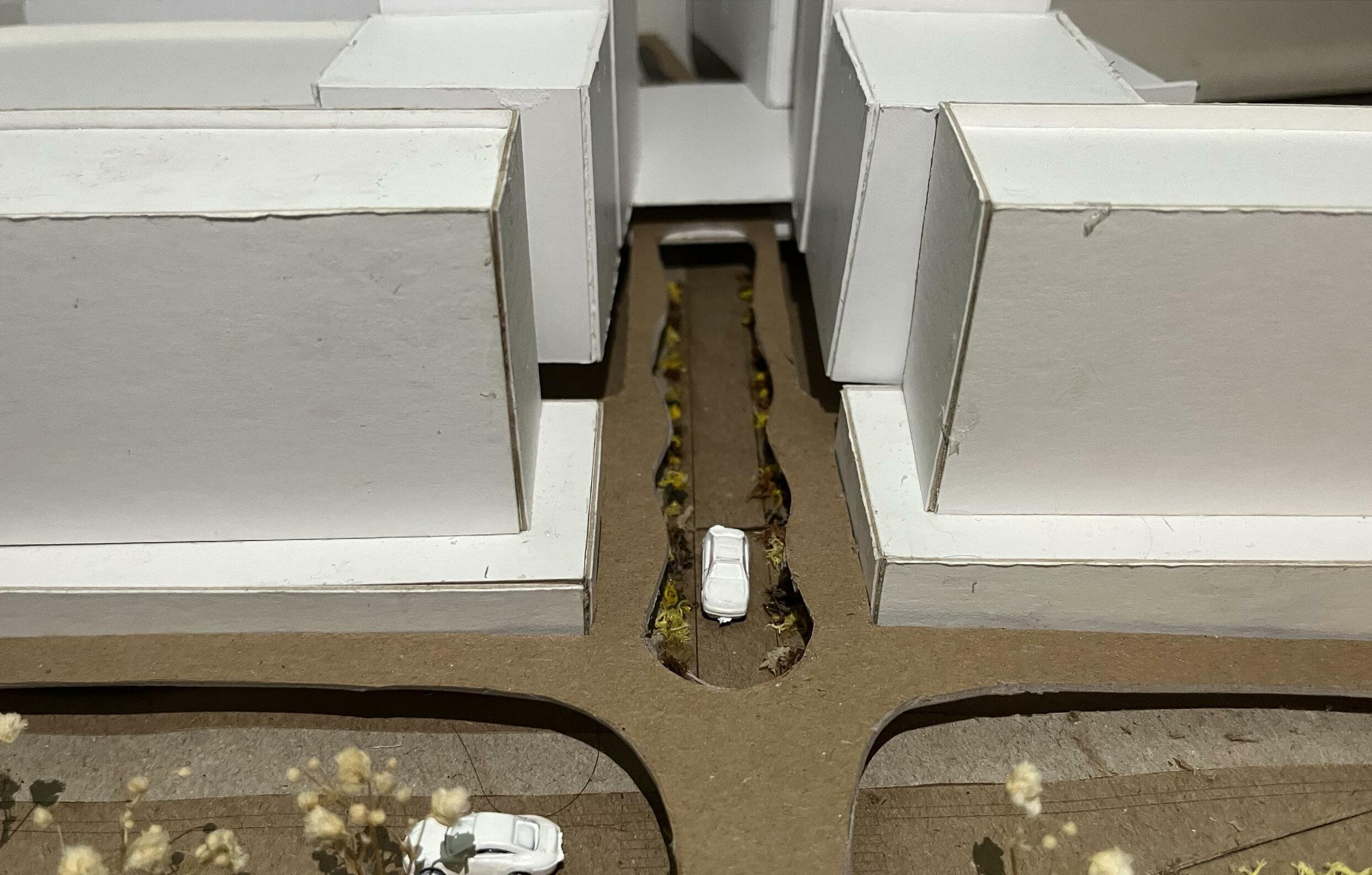
1 0 a c r e 1/32
o r i g
c r e
i n a l 3 0 a
Lita Li Fall 2022 Professor Hans Herrmann Design Studio 4A Mississippi State University