
March 2026 Issue

Page 1


Chris Tao & Vivian Kiesow-Knudsen DATA

Alonso Ramirez & Jacob Wessels

Moa Hein

Lily Osmundson

Lily Statema LEAVING

Ellie Quinn

Dena Tarrell

Kinsley Ernster

Eloise Geraets

Izzy Boeve

Bethany Jespersen

Paper

Geraets,

Jespersen,

Editors-In-Chief: Eloise
Naomi
Vivian Kiesow-Knudsen, Ellie Quinn Online Editors-In-Chief: Nadia Schneider, Chris Tao News Editors: Sam Barnett, Logan Sanborn
Feature Editors: Kinsley Ernster, Berkeley Newell
Sports Editors: John Quello, Jacob Wessels
Entertainment Editors: Ellie Boehrns, Dena Tarrell
Perspectives Editors: Will Hansen, Bethany Jespersen
Photography Editor: Mason Dean Staff Cartoonist: Charli Fickbohm
Social Media Coordinators: Lucy Hennies, Bethel Woche Staff Writers: Elsa Basel, Anna Bergan, Izzy Boeve, Christian Bootsma, Khloe Dillman, Oscar Ericsson, Alice Geraets, Isabel Gillespie, Makayla Hamm, Julia Hedrick, Moa Hein, Hannah Hilgenberg, Quinton Hollan, Hazel Hughes, Catherine Jerstad, Brielle Kolling, Sara Mathison, Harper Maziarz, Lily Osmundson, Ingrid Ready, Alonso Ramirez, Trey Raph, Sam Reilly, Mallory Schneider, Lauren Statema, Lily Statema, Ava Thompson, Oliver Van Beek, Regan Van Meeteren, Will Van Schepen Adviser: Dr. Katie Kroeze

“Youcannot create [art] in a vacuum.” At the center of the South Dakota State University campus, tucked into a quiet gallery charged with anticipation, students prepare their canvases, arrange their paintbrushes and comfortably disperse throughout five separate rooms. At precisely 12:45 p.m., the hum of a quiet chatter dies down as a judge scrawls a prompt across a whiteboard at the front of the room. This is Art Wars, and the 90 minutes start now. Over the ensuing hour-and-a-half, the nearly 100 participants from four different schools will create an original piece in one of five categories: drawing, painting, clay, digital photography or digital art. Over two 90-minute rounds, each participant will complete two original works, each through a different medium. Within this allotted time, they will also be required to compose a writing section explaining their piece and outlining its connection to the prompt. Completed works are then assessed and scored by a group of judges. Sponsored by the South Dakota High School Activities Association in 2024, Art Wars offers South Dakota high school students the opportunity to both develop and showcase their artistic vision beyond a classroom. ‘It's such a unique thing because you're actually in person making art,” said LHS junior Mulder. “You get to meet so many people, and you get to travel — in art, you usually don't get to travel.”

Mulder has been participating in Art Wars since his freshman year, which was also the first year that LHS attended the competition. His consistent participation and dedication to his craft culminated last year, placing second in the clay category at the state Art Wars competition. This year, Mulder is one of two LHS students advancing onto the state competition, placing second in

the clay category. And, while he competes in both the drawing and clay categories, his focus lies more heavily with ceramics.

“When it comes to ceramics, it’s always up to the clay,” said Mulder. “I have an idea, but I never make a concrete plan. It's always flowing, and that's how you make a good piece—allow it to flow in the way that it naturally wants to.”

Under a time limit, the students must combine creativity and the artistic process with their problem-solving skills.

“Having that limited amount of time really makes them think and be resourceful,” said LHS Photography and Drawing teacher Sarah Winterscheidt. “What is their skill set? How are they going to apply that skill set? What do they know already? And then how can they also recreate what they already know?”

A junior art education major at SDSU, Karlee Wynia participated in Art Wars as a judge this year. According to her, the judging takes a more holistic approach: technical skills are relevant, but by no means the sole determinant.

“Not everyone is at an equal level of skill, and you come here to learn as well. I take more into consideration how you interpret the prompt and what your goal was with the [art], versus just here's someone who's very technical and they can complete an objective,” said Wynia. “It's a combination of skill level and the creativity it takes to come up with something that matches the prompt.”

One of four regional competitions, the Brookings region is made up of 45 different high schools. At the regional competition,

two students from each school will be chosen to advance to state. From LHS, those students are Mulder and Kaitlyn Bjerke. State Art Wars will be on April 9-11, 2026 in Aberdeen.

“The level of dedication that they have —with the materials that they bring and the awareness that they have towards whatever they're doing — it's really impressive that you can see that they're all here with a purpose, and they all enjoy what they're doing,” said Wynia.

More than the judging, however, Art Wars offers students the unique opportunity to connect with other high school artists from across the state. During those 90 minutes, the rooms do not remain silent, with this lively chatter becoming the highlight of the competition for many students.

“I really enjoy the culture of Art Wars — seeing everyone laugh and meeting new people,” said Adyley Vanessen, a first-time competitor from Brandon Valley High School.

“It's important to do these events so we can all share our talents, tips and growth — to [show] that everyone can make things from nothing.”

Being in the presence of so many unique styles and creative minds is already motivating; however, it’s the conversations among the artists that set the foundation for unlikely friendships and profound insights that support collective improvement.

“[Networking] is such a powerful thing,” said LHS senior Aspen Trell.

“I want to learn more about other people because I can improve myself. Hopefully, others can improve from the information they learn — that means that we're all better as a team, even during competition.”

Witnessing the collaborative spirit at Art Wars every year, art teachers echo the sentiment of artistic growth being inherently social.

“You cannot create [art] in a vacuum,” said Winterscheidt. “Looking at what other people are doing and how they are problem-solving, it just gives you insight and you can't help but become a better artist.”

In competitions that bring together so much passion, it’s natural to assume that feelings of hesitancy will follow taking a risk and putting yourself in a position to be challenged. Art Wars, however, breaks away from these assumptions, fostering an environment that prioritizes self-growth and inclusivity.

“Even though Art Wars is competitive, it's not ‘this team won, and this team lost,’” said Mulder. “It's an enjoyable experience, and that's way more important.”

LHS senior Aspen Trell in the midst of a 90 minute painting round at Art Wars.
LHS junior Mulder presenting his clay sculpture that placed second at the regional competition.
SDSU student judges scoring the various pieces made in the painting category.

Sioux Falls data center construction:

Stepping stone for Sioux Falls or a roadblock?

In northeast Sioux Falls on a 160-acre parcel of land formerly owned by Xcel Energy, a 500-megawatt Gemini AI Data Center has been approved for construction; however, public scrutiny is leaving the massive project in the air for now. Despite just n=entering the public sphere, the massive undertaking has been on the minds of Gemini Data Center SD LLC for a couple of years now, with the land being acquired two years ago. Since this project was announced, it has been met with major public backlash.

Although the data center would provide many positive economic and technological benefits to Sioux Falls and the surrounding areas, many view the negative environmental impacts as outweighing the economic gain.

In several local businesses, flyers can be found that link to a petition for a public vote for rezoning instead of just being a matter of the Sioux Falls City Council. A major root of the public scrutiny is that there is very little information available about the data center and its impact, besides that of critics online. The lack of information only further creates an atmosphere of misunderstanding, misinformation and malice towards the data center by the public.

The Gemini AI Data Center is estimated to have energy usage equivalent to powering around 50,000 homes. Along with this, a

massive amount of water would have to be used to cool the data center, as generative AI, as well as many other systems that the center plans to power, create a lot of heat in the computers. It is estimated that around 5 million gallons of water would be used daily to cool the center. One of the critics’ largest grievances is that 80% of this water would be lost to evaporation, rendering it unusable and making the center’s water usage unsustainable. Along with this, many believe that the energy used by consumers and the construction of the center would raise the price of electricity and property taxes.

“Water use and energy use are the biggest concerns when we’re looking at data centers. There is more technology today to decrease the amount of water use and be able to reuse more of the water, but as they cool, they need water to cool down the data center,” said Grace Werner, the AP Environmental Science teacher

at LHS. However, most of what the public thinks about this data center is rooted in misinformation that has sprouted from those who are protesting the construction. Throughout the course of rezoning, there have been multiple city council meetings that were open to the public, which addressed the concerns of electricity prices, water usage and property taxes. The lack of attendees at these meetings has fueled the flame of misinformation on the data center’s environmental impact.

“Frankly, the petitioners have been spreading a lot of misinformation as well about noise pollution, water and electrical rates.”
- Vernon Brown, city council member

The truth is that the data center will not use normal drinking water anywhere besides in the break room, kitchen and bathrooms. To cool the data center, “gray water”

will be used. This water is deemed unconsumable and unreusable; it is wastewater, so to speak. This means that the water lost to evaporation will not be water that could have been used by the public anyway. Along with this, the city has ensured that the data center will be in its own bracket for electricity; the extra cost from the need for energy will not be passed on to citizens of Sioux Falls but will fall back on the data center. The data center will also be in its own tax bracket, separate from that of homeowners, and will not be provided special tax breaks, unlike many other light industrial facilities. This means that the property tax generated by the data center will be siphoned by the Sioux Falls public and be used to fund schools and even lower property taxes for homeowners in the area.

“The city council has limited the drinkable water that they could use and limited it just to their kitchens and restrooms. How they would cool the system that they have proposed using what’s called ‘gray water,’ which is not drinkable water… They have

to be considered completely separate, and they would have to pay a different and higher rate for their electricity, and it would not bleed over into what consumers pay,” said Brown. There are already many data centers in Sioux Falls, one of which is owned by ADP, a company that processes 20% of the nation’s payroll. This data center runs so quietly and sustainably that most citizens do not notice. It is currently located in a cranny downtown between a restaurant, a daycare and an apartment building. The proposed data center is much more sustainable than the one built two years ago, which received little to no public outcry, since there was no misinformation surrounding it.

Although widespread public perception is that the construction of the Gemini AI Data center will only bring harm, this may not be the case.

Despite many environmental concerns, founded and unfounded, the addition of this data center to the list of technological and economic operations in Sioux Falls could benefit the city greatly. The construction of the data center will most likely diversify the region’s economy and create high-paying, stable jobs in the tech field. There would also be a higher demand for local services, such as construction to build the center, and upon construction, there could also be a local economic boom from other companies

According to SiouxFalls.Business, the proposed data center, known as Gemini Data Center SD LLC, is planned for eastern Sioux Falls, specifically located south of East Rice Street and east of Veterans Parkway.

coming to use the center. All these factors might create many fiscal benefits for Sioux Falls and contribute to the size, population and economic growth of the city.

“When you have new, highpaying jobs, those people are spending more money in the economy, and it creates other service jobs in the economy,” said Brown.

As the situation stands right now, the Sioux Falls City Council has approved the rezoning that allows the construction of this data center, alongside many stipulations that protect the people of Sioux Falls, the economy and the environment. The city could use this data center as a stepping stone to grow the Sioux Falls economy and industry.

What if your required spring testing could also open doors for college opportunities? For LHS students, this is now a reality. Starting this year, LHS juniors will take the ACT for free during school on March 11 and 12, replacing traditional standardized testing. This shift brings free ACT prep leading up to the spring test for juniors and grants sophomores an opportunity to prepare for the ACT by taking the Practice-ACT (P-ACT) on March 11.

The ACT offers many opportunities for students and their futures. The score can influence which colleges accept the student and determine eligibility for merit-based scholarships. Many colleges offer automatic scholarships based on an ACT score. For example, the statewide SD Opportunity Scholarship grants students up to $7,500 for a composite score of 24 or above. Another opportunity is at SDSU and USD, which offer tiered scholarships, with awards that increase progressively as students’ composite scores rise above an ACT score of approximately 24. For juniors, who for free have the opportunity to study and qualify for thousands of dollars in scholarship money, this change is invaluable.

The P-ACT is a simulated test experience similar to the ACT. It covers English (45 questions), math (36 questions), reading (25 questions) and science, which is now optional (30 questions). Each section is scored from 1 to 35; the average of the four is your composite score. Unlike the practice SAT, the P-ACT does not qualify you for any future opportunities but rather sets students up more prepared for the ACT and which areas of study they need to work on.

The ACT is a four-section multiple-choice standardized test covering math, English, reading and optional science and writing portions. The reading section contains 36 questions for 40 minutes, science has 40 questions to complete in 40 minutes, the English portion gives you 35 minutes for 50 questions and the math has 45 questions in 50 minutes. Students who choose to take the writing section will be given 40 minutes to respond to a given prompt. Each section is scored on a scale from one to 36, and the average of the four core sections becomes your composite score.

Free study of the fundamentals of the ACT will be offered on Fridays during Adroom leading up to the test.

A $125 course for four, four-hour sessions on Saturdays leading up to the ACT, containing practice tests and help in understanding the test.

Free online ACT prep is offered from the ACT website, with different practice tests and a better understanding of the test.

“SOMETIMES YOU MISS IT WHEN YOU DON’T RUN, SO YOU TRY TO KEEP IN THE HABIT OF RUNNING. IT’S JUST MENTAL. IT’S PUTTING YOUR SHOES ON AND GETTING OUT THERE.”
-PRINCIPAL DR. LAURA RAEDER

such as Dr. Laura Raeder, see them as a warm-up for the pinnacle of all races: an ultramarathon.

100 miles and over 24 hours of gel packets, leg cramps and constant movement, all without a wink of sleep. Long before becoming the principal of LHS, Dr. Laura Raeder began her running journey and has since crossed the finish line of over 100 races, including marathons and ultramarathons, in the past 17 years.

“I ran my first marathon in the spring of 2009, the Fargo Marathon. That fall, I ran Chicago. While I was running Chicago, I was able to qualify for Boston. Then I ran Boston that spring of 2010,” said Dr. Raeder.

The Boston Marathon is notably known as the oldest marathon in the United States. The starting gun first fired in 1897, and since then, many outstanding runners have crossed the finish line: Olympians, elite runners and celebrities, including Will Ferrell, who finished with a striking 3:56:12 time. Now Dr. Raeder has begun looking forward to her next endeavor: an ultramarathon near Custer, South Dakota, in the southern Black Hills. She will be braving 100 miles, 50 out and 50 back, all located on the Mickelson Trail. The trail is mostly gravel, incorporating the extra challenge of racing on an

Currently, her running load is relatively light and does not pick up until March. She also completes strength training for injury prevention and prepares her for holding onto extra weight during her race, such as food, water and clothing. Running ultramarathon-like distances while training is unrealistic, so Dr. Raeder must adapt.

“Right now, I’m just building the base. [I do] two long runs and then around half of the long run the day after. You still get a feel within 24 hours of putting the miles on your feet. Then the rest are just shake-out runs, [to] make sure everything’s moving. Sometimes you miss it when you don’t run, so you try to keep in the habit of running. It’s just mental. It’s putting your shoes on and getting out there,” said Dr. Raeder.

Undoubtedly, one of the hardest parts of her training is balancing it with everyday life. As principal of one of South Dakota’s largest high schools, Dr. Raeder’s plate is always full.

“Sometimes [I train] before school, and sometimes it’s later in the evenings after activities. I have to balance it. Last week I missed a run. I wasn’t able to get it in, and sometimes that’s gonna happen. If I don’t get it done, I just don’t get it done. I need to be able to forgive [myself] when that happens,” said Dr. Raeder.

long enough. I know that when I’m not feeling good, I need to eat. And sometimes you just don’t feel good, and you’ve got to keep going, too,” said Dr. Raeder.

This exact mindset is what carries many runners to the finish line. While training and physical fitness can sustain these athletes to incredible lengths during a race, mental grit is what secures crossing the finish line.

A common term known to hard-core runners is the ‘pain cave.’ Personal trainer and running instructor Meghan Takacs describes it as “the place you go to right when you hit ‘the wall’ when you’re running. Your body feels incapable, everything is cemented to the ground, and mentally, almost every inch of you wants to quit.”

“That’s a real thing that happens. I experienced a little bit of that the last time I did [an ultramarathon]. I was just completely exhausted. But you’ve got to keep pushing. That’s where you also have to rely on your training, too.

When I felt this way before [while training], this is what I have done, with experience,” said Dr. Raeder. Training is so much more than logging miles, increasing endurance and breaking in running shoes. It extends mental strength, builds confidence and most importantly,

generates knowledge about what to do during rocky times. Dr. Raeder has learned from years of experience how to combat obstacles in her races.

“Maybe you eat something different, you’ve been eating a bunch of sugar, and now you switch to a bunch of salty foods. Hopefully, you’ve found someone to run with along the way, or maybe a pacer comes in to help you. Some people will brush their teeth, put on different clothes or shoes, just something to shift their mindset a little bit,” said Dr. Raeder. Yet these extreme races are so much more than a workout. Running these distances has forced Dr. Raeder to develop a completely different view of life. Just like life, circumstances in racing can change by the minute.

“You might be feeling in the depths of despair, and 15 minutes later, you’re like, oh, this is fun. That’s how quickly things can change. And even the opposite. I might be feeling amazing, then all of a sudden you twist an ankle. In another 20 minutes, you’re like, ‘oh my gosh, I’m falling apart,’” said Dr. Raeder. All of these challenges have built Dr. Raeder to be much more than a talented and resilient runner. Her perspective on life has been completely flipped due to the lessons that racing and other runners have taught her.

“There was a runner named Scott Jurrick, and he wrote some books. In one of his books, he talked about when everything is falling apart, you must think about what’s going well. It’s not raining, I’m not sliding around in the mud. What’s going well? My stomach feels pretty good right now. The sun is out. There’s always something going well when you’re in chaos. Eventually, your mindset shifts, and then things do go well. It falls over into everyday life, too. That is the perspective shift that I want to relay. That’s what ultra running is,” said Dr. Raeder.

Since being elected mayor in 2018, Paul TenHaken has used his leadership to improve Sioux Falls and inspire others.

As his role comes to an end in a few months, it is important to recognize all that TenHaken has put in place and how he has guided Sioux Falls through moments, big and small. Being mayor is no small feat, with everyone looking at you for guidance and criticizing every decision. However, TenHaken has handled this with grace. He stays grounded through faith and is a steady leader when our city faces challenges.

“When my time is up, I hope people say I helped change the culture of our community in a positive way,” said TenHaken. “I want my legacy to be one of caring for people, mentoring others and building up the next generation of leaders.” TenHaken not only wants to improve the lives of people in Sioux Falls right now but also hopes to have a long-lasting impact and be a leader who continues to inspire even out of office. Being mayor is more than just politics; it is also about being a leader the community can look towards during tough times.

“COVID was by far the hardest challenge,” said TenHaken. “There was no perfect roadmap and every decision affected people’s lives and

Mayors face pressure when crises arise in their communities because everyone looks to them to make a decision and fix all the problems. While this can be stressful, TenHaken demonstrated tenacity and empathy while trying to make the best decisions for the livelihood of the community. He looked at data to keep him informed and listened to experts for guidance.

“Any time I can help improve someone’s day, solve a problem or make Sioux Falls just a little bit better – it reminds me why this work matters,” said TenHaken.

Being mayor is a position with the power and stature to reach countless people, since the community trusts and values their opinion. TenHaken finds purpose in serving others and uses his position to do just that. He has brought the Sioux Falls community together and has assisted in infrastructure growth, while also showing consistent dedication to the city and its people.

“I love helping people grow, and I want to keep doing that in new ways,” said TenHaken.

TenHaken has learned an immense amount about leadership and teamwork as mayor and plans to apply that knowledge in the future to help businesses and organizations. His next steps include stepping away from politics and focusing on consulting for businesses, aiding them through problems and sharing his leadership knowledge. He will continue to stay involved in the community through community work and student mentoring.

“Titles come and go – character and influence last,” said TenHaken.

“Another student who has graduated from here did a project about researching what it would be like to be a Family and Consumer Sciences teacher, which is a one of our severe teaching shortage areas, ...so she had researched about college programs to be able to do that, the types of skills, did some self-reflection and then also had the opportunity where she was able to go teach a lesson about Family and Consumer Sciences projects at both Patrick Henry and at Whittier. She got some teaching hands-on experience to help her with deciding that was the right fit for her,” said Kali Sloup, the adviser of the LHS FCCLA chapter.

Lowrey started her experiences with FCCLA her freshman year after taking Child Development with Sloup. Since then, she has extended her role both at LHS and at the state level. This past year, Lowrey served on a statewide leadership team focused on promotion, and has previously served as the LHS FCCLA president. Though Lowrey thought a leadership role was out of her reach, she is impressed with how her communication skills have changed since her involvement.

“I really didn’t know what I wanted to do in FCCLA, specifically freshman year. And then I kind of found my place sophomore year. And I remember freshman year looking at the people at the region conference, presenting their speeches and thinking, ‘oh my gosh, this is something I can’t do.’ And then sophomore year, I was like, ‘I think I could do that,’” said Lowrey. Lowrey continues to push herself, reaching new levels of leadership. Recently, Lowrey was elected as the Region VI FCCLA Secretary, the first in the Sioux Falls School District (SFSD) to hold this role. As a region officer, Lowreyis responsible for the Southeast corner of South Dakota and will be in charge of planning next year’s region meeting.

“I first figured out that I wanted to apply to be a region officer last spring, so I went to nationals, and then in the fall last year, we worked on creating my resume,” said Lowery. As a young chapter, Lowrey hopes that this new accomplishment will inspire others in FCCLA at LHS and in the SFSD to get more involved in the program.

“I’m very excited, and I hope I’m an inspiration, I guess, for other people in my chapter to do things in FCCLA. We’ve only been affiliated for three years, so it’s been hard growing our membership and getting people to do more things in FCCLA,” said Lowrey.

“I’m really excited about it for her because her freshman year was the first year that we affiliated nationally, and that we were officially up and running as an organization, and so just seeing her be this representative of all the growth that our chapter’s done, like we’ve got chapter members doing great things every day, but her being able to do this says a lot for our ability to be leaders as part of our state community here. It’s just also really exciting being her teacher, having known her since she was a freshman, and seeing this progression through the three years she’s been involved in FCCLA,” said Sloup.

While Lowrey is prepared to take impactful actions at the state level, her mark already being left on the LHS FCCLA chapter is not to go unnoticed. Lowrey has created excitement for FACS at LHS, increasing participation in the program by 50% in one year. Her purposeful skills have taken charge as she has put together events with little to no guidance due to the chapter being established just three years ago.

“It’s really exciting that we’re getting our feet wet and being able to represent our district in

Traveling the world is a common dream that many people share. Various programs offer opportunities, such as exchange programs. One student at LHS is taking advantage of such a program to expand her horizons and live out her teenage dreams.

Saskia Keller, a sophomore here at LHS, flew 17 hours from a small town outside Zürich, Switzerland to Sioux Falls, SD for her exchange year. Exchange years offer students the opportunity to experience different cultures and ways of living. Back in Switzerland, Keller lives with her parents, her younger sister and her cat, Tinka. She spends most of her time golfing with friends or snowboarding. Her daily routine has been built over the years; school, spending time with friends and family, repeat. That being said, travelling to a new country has brought many challenges for Keller.

“I know most of my friends from golf, and I really enjoy golfing with them,” said Keller.

Everyone becomes comfortable with their surroundings. They become a comfort that most people do not want to stray from, as it can feel scary. In spending a year away

from home, Keller is doing something most would not. Being in a new country brings unfamiliar differences and challenges. One challenge she has faced is making new friends. In Switzerland, Keller is used to having the same people in each of her classes. Coming to the U.S. has opened her eyes to what it is like to have a larger class size, as back home her class is about 250, and at LHS it is closer to 400. It has also been difficult for Keller to meet new people as she has known most of her friends at home her whole life. Attending school together and living in a smaller town bring them closer. On top of being in a larger class, the school system in the U.S. has proven to be

begin an internship. The internship lasts three years and allows young adults to ease into the job force. Two days of the week, they attend classes and the other three, they spend at their internship. Most students do not attend a university after graduation, so having an internship proves to be more helpful for them to ease them in. Having something as structured as a school schedule change can be difficult, but trying new things leaves room for newfound joys to creep in.

“The annoying part about the internship is that you only have five weeks of vacation throughout the whole

the biggest difference Keller has faced. American football games, new sports to try and an unfamiliar schedule create a drastically different environment.

“One of my favorite parts about my exchange year has been the football games. I love the school spirit and the dress-up themes,” said Keller. Each country has its own school system, with similarities and differences between them. In the U.S., high school is typically seven hours a day, with seven to nine class periods. Every day of the week, students start and end their day at the same time. This is a drastically different structure for Keller. In Switzerland, the number of class periods and the start and end time depends on the day. Her day could start anywhere from 7:25 a.m. to 8:15 a.m. and could end as late as 4:20 p.m. The one constant for Keller was her lunch break; every day from 11:45 a.m. to 1:45 p.m., she would go home to enjoy a meal. Another noticeable difference between school systems is the breaks given to students. Keller enjoys four two-week breaks during the fall, around Christmas, in February for their “sports break” and in the spring. For the summer, she gets five weeks off before she has to return to school. Unlike the U.S., Switzerland also has fewer required years of schooling. Back home, Keller has already graduated, as only nine years of schooling are required before students

Despite the difficulties Keller has faced, there have been many positive experiences that have come with her exchange year. Not only has she travelled to Sioux Falls, but she has also had the chance to visit Ohio and Florida. On her trips, she can sightsee more and meet new people as she sees her host family’s relatives. Keller would have preferred to have stayed somewhere warm, like Florida or California, but she has had many great experiences here in South Dakota, making her time worth it. Keller attended many of the football games with her new friends last fall. She loved the themes and school spirit she felt at the

opportunity to participate in and after seeing it in movies, she is excited for the chance to try it out. In the spring, she hopes to participate in golf as well.

“Before my exchange year, I always saw cheerleaders in the high school movies, and I always dreamed about being a cheerleader one day. I am so happy that I am able to experience this now,” said Keller.

Weekafter week, members of the LHS jazz collective spend hours pouring their sweat and tears into practicing. Each member is specifically selected based on their own talents and abilities. This year, there are 19 members, 10 of whom are seniors. A handful of these seniors, with their immense talent, are going to keep pursuing their passion and continue to get even better in college.

For Levi Burkett, this is exactly the case. He has been pursuing his passion for playing the drums for eight years. Although Burkett has not always been a part of the LHS band, he has never felt like a lone wolf. He started high school in Harrisburg but decided to come to LHS to be a part of the best band in town.

“I came to Lincoln for the band program, especially jazz band. The jazz band here is so much better. It was pretty easy [transferring] because I had a lot of friends in the drumline already… so it was really easy to make friends,” said Burkett.

The jazz collective has always been a tight-knit group and worked well together. This year it feels different, though; with the impeccable talent, love for jazz and dedication, the collective has become even stronger than years past.

“It’s like a big family. We’re all good friends, and it’s just a fun community to be in,” said Burkett. “There’s a lot of talent, but we also all work very well together.”

Burkett has made many friends while being in the collective and enjoys going to practices because he gets to not only play music but also spend time with friends.

“The music’s fun, and then I just get to hang out with my friends for two hours every time we rehearse,” said Burkett.

Next year, Burkett plans on continuing his passion for music and the drums in college. He has not made a final decision on where he will be attending college but has it down to a select few.

“I don’t know [where I am going to college] yet. I have a couple of auditions coming up, and that will decide [where I go],” said Burkett. “I’m doing an audition for NIU, which is in Chicago, and then UNO, in Omaha. When I hear back from those, I will make a decision.”

Moving on will come with many new challenges and opportunities. However, it will also provide Burkett with the ability to improve and showcase his skills to other people.

“I’m honestly pretty excited [to go to college] because I’ve been playing with the same

people in Sioux Falls for the last two to three years now. So, it will be fun to meet new people and make new connections,” said Burkett.

Another senior, James McCormack, is also choosing to continue his musical career in college. McCormack has been playing the trombone for eight years. After he graduates, he plans to keep pursuing his passion for music and continue to play jazz throughout his life.

“I plan to pursue a composition career, and jazz skills come in handy. I also love the style and want to continue playing all my life,” said McCormack. “I’m planning on attending Augustana. I’ve taken lessons from [their] trombone professor who has some great stuff planned for me there.”

This year, the jazz band is an impressive group with members who have years of experience and have learned to play and work together to create incredible music. McCormack believes this year the jazz band is so impeccable due to most of the collective members having been together for four years now and have had the opportunity to grow together. They have come out of their shells and been able to better each other. Motivation has also been a big component that has contributed to their success.

“The culture of jazz has gotten exponentially better at our school in the last few years. My first year, very little people wanted to take a solo, but since then there have been cool opportunities for them to step out of their comfort zone and try it,” said McCormack. “This year we have a very motivated group that all seem to really enjoy jazz music and want to get better.”

For the last four years, McCormack has gotten the chance to spend hours with friends who all share the same love for music and live to improve and better each other. The collective has provided McCormack with a creative outlet where he can let loose and make music.

“I like trading solos with my friends. I love hearing their ideas and responding to them,” said McCormack.

Although moving on can be scary, it can also be an amazing opportunity. Not everyone is ready to move on after high school and start over, but for McCormack, it is something he is ready and excited for.

“I’m excited to see how they will play and the ideas they have. I’m ready to move on, but I’ve had a great time with the collective,” said McCormack.

The wrestling community is a tight-knit group and unfortunately, youth wrestling coach Dylan Swanson was diagnosed with testicular cancer. His brother, Parker, began brainstorming ideas on how to raise money for cancer treatments because insurance would not cover most. He decided to do a live auction for donated gifts.

“Just about everyone in the area got notified of it, and everyone was able to show support,” said Mark Ernster.

One gift in particular was a hunting trip to Africa. Ernster was accompanied by another wrestling coach at the live auction, and they decided to bid.

“And once we started bidding, we just kept going, and by the end, we won. It turned out to be a trip for six, so we turned it into a father-son vacation,” said Ernster.

Once the planning began, it took about three years to get the trip to fit in everyone’s schedule. Their travel began in the Sioux Falls, SD airport, and they took their first flight to Minneapolis. After an hour layover there, they flew to Amsterdam, which ended up being an 11-hour flight. Those two flights ended up being only half of their travel to South Africa.

“Then we flew to Johannesburg, South Africa, and that was around 14 [hours of flight]. After we landed, we had a three-hour drive to our final destination [at the Wild Wildebeest Lodge],” said Ernster.

After arriving at the Wild Wildebeest Lodge, the group of six had a warm welcome from their caretakers. During each meal, their group had private

Disclaimer: The purpose of the hunt in South Africa is used as a wilderness conservation that keeps the total populations of wild animals to a healthy number. All of the meat harvested during this trip was processed and eaten by the individuals on the trip, and the remainder was donated to a local school in the community of Dwaalboom, South Africa. This trip was the trip of a lifetime so please refrain from any backlash towards Mark Ernster.

the temperature differences.

“We went in July, which is their winter, so it was 32 in the a.m. and 70 by noon. Not as cold as it is here, but it was still an adjustment for the season,” said Ernster.

It was certainly a change for preparing proper attire for hunting throughout the day, considering that the temperature had the ability to shift to over 40 degrees midday.

The biggest part of this trip was making the most out of each day. Days one and two were used to travel from airport to airport across the world and arrive at the lodge. The next five days were hunting and safari excursions.

Days three and four began the hunting experience.

“We would get up early about 4:30 a.m. to eat breakfast and then head out for the morning. Depending on if we were successful or not, we would go back out after lunch. When the afternoon hunt concluded, we would gather back at the lodge and hang out until everyone got back from their day out,” said Ernster. “When everyone got back from their hunt, we got cleaned up, had supper and would share our stories from the day around the table and later at the campfire. We went to bed around 10 p.m.”

would

All of their meals were cultural and contained something new to try each time.

“The food was fantastic. We had wild game mixed with every meal: breakfast, lunch and supper. Anything from Ostrich to Zebra, Cape Buffalo, Gemsbuck, Eland, Impala, Kudu and Eland, and we were able to try just about anything you could think of,” said Ernster.

The options were endless for new foods to try, and Ernster’s favorite was zebra. The lodge is owned and operated by U.S. citizens but maintained by individuals who were born and raised in South Africa. Before the trip, Wild Wildebeest Lodge provides everyone with a specific packing list in order to be prepared for any excursion. It is recommended to bring a small amount of clothing because a daily laundry service is provided. The lodge also offers separate activities outside of hunting. Such as: visiting cultural cities, day trips to national parks, adventures with elephants, spa packages and more.

The Wild Wildebeest Lodge supplies three lodges in total, each containing an outdoor pool, a fully stocked bar, seven African-themed bedrooms and a library. This lodge has been determined to be a firstclass stay.

When planning this trip, they had to keep in mind

Ernster was able to harvest an Impala, Black Impala and a Wildebeest over that time. Those two days were not only filled with hunting but also with long talks over what everyone experienced from sunup to sundown. They had a large gathering with the other lodges to begin sharing local culture and the cuisine of the native people. The other individuals from other lodges were from places all over the world. A hidden meaning behind this excursion was being able to understand the differences between everyone.

After meeting everyone from different lodges, their group took a break from hunting on day five and was able to travel to an Elephant Preserve. This Elephant Preserve took notice as the number of elephants had decreased by 89% in the last 70 years, and 110,000 elephants have died in the last 10 years

due to poaching and habitat loss. The Elephant Preserves’ main goal was to save these elephants from such dangerous activities.

According to Waterberg Tourism, “We are even more thrilled to be able to connect you with Elephants through our unique interactions so that you might see them for what they are, and therefore think a little bit more about their future, and indeed many other species, in an ever-changing and modernizing Africa.”

After returning from the Elephant Preserve, their group prepared for their last two days of hunting. Days six and seven were filled with hunting Warthog, Gemsbuck and Kudu. While this wrapped up their South African experience, the group is grateful for the time spent with family. Days eight and nine were used to travel back to the United States and return to the rest of their family.

chefs who
prepare three meals a day for them.

Drawing and coloring are childhood-favorite pastimes; however, interest in these hobbies often fades as people get older.

Charli Fickbohm, a junior at LHS, has been a cartoonist for the Statesman since the 2025 November issue. Her cartoons are featured in numerous Statesman covers and stories, including “The integrity gap: The depth of the LHS cheating epidemic” and “HB1040 and the new cost of credit.”

Although Fickbohm is not technically in the class, due to German III and Choir only being second and third period, her dedication does not go unnoticed, as she now has her own comic strip on the Statesman website called “The Penny Gazette.”

“I think of myself as kind of a freelancer. I am doing something

that I love to do, and this is a great opportunity to do it,” said Fickbohm.

Fickbohm started drawing as a child, and since then, her passion has not stopped growing, with a dream of owning her own cartoon website someday.

“As a kid, I never had screens. I was homeschooled, and I was an only child, so I really just had to find ways to amuse myself: I read books, drew a lot, and that just developed [into] a love of drawing,” said Fickbohm.

Wanting to branch out into other areas of drawing, Fickbohm took Drawing I with Christine Bossman during her freshman year at LHS. She did well and enjoyed the element of realism, but nothing beat her love for cartoons and their fun, laid-back style.

“I have always been interested in developing my own drawing style, so

cartooning is a great way to do that,” said Fickbohm.

In Dr. Kroeze’s classroom, the infamous Frank Statesman, a mascot Fickbohm invented for the newspaper, is updated monthly on the whiteboard with a drawing and witty dialogue. She tries to avoid political cartoons and stay in the category of silly, believing her cartoons should be able to apply to anyone.

“You risk alienating people when you make your comic exclusively about politics…When I see something in real life that I think is funny or amusing, I make a comic about it,” said Fickbohm.

With or without a Statesman period, Fickbohm has managed to find a way to brighten the days of others and garner endless support from everyone around her through her art.

by Izzy boeve

Traveled more than 8850 miles. One of the 1.4 million displaced persons. Fluent in three languages, learning a fourth. 14 years old. Refugee. This is Adam’s story. He has never known where he would end up, but Adam Abdouramane now finds himself in the halls of LHS as a freshman student. Born in the country of Cameroon, Africa, Adam’s life began across the globe from Sioux Falls, South Dakota. This region of central Africa includes Chad, Sudan, Congo, the Central African Republic (CAR) and CAR’s ongoing crisis. Not only did this crisis spark Adam’s winding journey to the Midwest, but it also brought his problemsolving abilities to new standards while costing him relationships of a lifetime.

The unstable situation in CAR began with its independence from France in 1960. Since then, disastrous military rule has come in surges, along with five to six coups d’état. The state authority was weak from its establishment, leading to brutal political and religious division within CAR—like tension between Christian and Muslim militias. In March of 2013, a coalition

of Muslim rebels, the Séléka forces, violently seized the capital city of Bangui in opposition to then-President François Bozizé’s regime. Bozizé was overthrown, and cruelty ensued. In response, the anti-balaka, a group of Christian fighters, launched attacks against the Séléka and Muslim civilians. This conflict continued into 2014, wiping out CAR’s infrastructure, involving the United Nations, French and African Union forces and creating humanitarian tragedy.

CAR’s civil conflict pushed violence and evacuees into the other central African countries, leaving Adam’s family caught in the middle of mass insurgency. His father, a truck driver in the region, was born in Chad and eventually moved to CAR, where his mother is from. Together, they moved west to Cameroon and started their family of three daughters and one son amidst the political chaos— Aisha, Adam, Kadidja, and Halima. However, before the Séléka and anti-balaka outbreak in 2013 and near their youngest, Halima’s, time of birth, the family moved back to CAR for employment. When CAR was overthrown, the family needed to escape.

“We moved [back] to Cameroon, [but] it wasn’t safe because they were looking for us…They wanted to kill my dad…and then they did. We moved here [the United States] because it was way safer

than Cameroon and [the Central African Republic],” said Abdouramane.

journey.

“The trip was crazy. Basically, we went to the economic city [of Cameroon], which is Douala. We flew to Istanbul, Turkey. It [felt like] the biggest airport in the world. [From Istanbul], we went to Chicago, and then Sioux Falls,” said Abdouramane.

The family made it to Sioux Falls in May of 2024. But why Sioux Falls? Why come to a small city in South Dakota? The family decided to immigrate to Sioux Falls due to the

The grief and emotional repercussions of losing his father spiraled around the violent atmosphere in Central Africa, escalating the family’s need for asylum. Along with his father, Adam’s aunt and uncle were killed as victims of political and religious persecution. This left Adam, his mother, three sisters and his orphaned cousin, Fatima, to fend for their safety in Cameroon while being hunted by the CAR’s coup regime.

“My mom worked with the UN…at the base [of the CAR conflict], helping the people and kids with medicine and [resources] like that,” said Abdouramane.

His mother’s connection to the UN’s aid forces undoubtedly brought about their opportunity to move to the United States. The promise of legal protection under the UNHCR, the UN Refugee Agency, meant Adam and his family could begin their immigration

in French. His father spoke Arabic, so naturally Adam picked it up as well. Upon moving to the U.S. in the summer before his eighth-grade year, Adam had little to no experience with the English language, posing one of his greatest challenges. Knowing he would attend Whittier Middle School the coming fall, Adam took action.

“I used YouTube and Duolingo,” said Abdouramane.

existing community of Central African refugees in the area. Adam has yet to meet another Cameroonian in Sioux Falls, but knows individuals from Sudan, Chad and other countries surrounding CAR who escaped the violence.

Even though Adam successfully eluded the CAR conflict, the newness and struggles of living across the Atlantic quickly mounted and continue to come. Being born on the east side of Cameroon meant that Adam is fluent

He entered the eighth grade with a summer of self-taught, app-based English and a passion to learn. At WMS, Adam received one-onone English teaching, which was crucial to his progression in the U.S. school system. The 20242025 year provided Adam with the opportunity to adapt to the Sioux Falls School District before starting high school with the rest of his class. Every freshman begins on a level playing field of unfamiliarity, and Adam’s love for soccer has given him the determination to make the LHS boys’ soccer team during his sophomore year.

“I did not make the team this year, but I will make it next year,” said Abdouramane.

This statement of diligence and perseverance perfectly encompasses Adam’s spirit- a world away from his roots but planting new ones wherever he goes.

by bethany Jespersen
Jespersen

Oskar-Groen always wanted to be a teacher.

“I was that little kid who used to play school. My brother and sister, I used to make them play… and I used to bring home all the papers [teachers threw out] so we could have school papers and do school,” said Oskar-Groen.

Growing up in Sioux Falls, Oskar-Groen attended Patrick Henry Middle School as well as LHS, but she did not plan on teaching at her alma mater immediately. She was deeply inspired by the travels of her great aunt, who visited over 100 countries in her lifetime, to travel widely in her youth.

“I always wanted to go somewhere,” said Oskar-Groen.

want to be a PE teacher ‘cause I want to wear sweatsuits and T shirts and sweats all day.’”

Throughout the rest of her time in Germany, OskarGroen would also work at a middle school and a rec center, as well as moving to Frankfurt. However, being in a military family, she soon moved again.

time, a medium security prison that had over 2,500 inmates.

“They walked me in, and I had to go through this Sally port and check in my stuff… It’s all surrounded with all the wire and guards and everything else. And I looked around, and I remember saying, ‘Augie didn’t prepare me for this.’ It was just. ‘What am I

“It really changed how I saw things. Instead of ‘I’m going to help these kids get smart,’ it was ‘Oh my gosh, look at all these people that [have] been kind of tossed. So, it really gave me that idea that tossed people, people that other people don’t have the time for, I’m going to have the time for,” said Oskar-Groen.

After 21 years and 19 moves, Oskar-Groen returned to Sioux Falls to care for her mother.

“This has always been home, and I always knew I’d come back. My mom got real sick, and I came back to take care of her. I was never going to leave,” said Oskar-Groen.

The Oskar-Groen

Sfrequently substituting for teachers and assisting Success Coordinator Kristi Pesicka with 504 forms and setting up meetings with parents. She also teaches courses at USD and Augustana University and volunteers at the Teddy Bear Den, an educational program for underprivileged pregnant women.

“I just don’t like staying home,” said Oskar-Groen.

Oskar-Groen has been working at LHS since 2011 and, in this time, has become a staple at the school through her deep affection for her students and determination to see them succeed, doing it all with a distinct and carefree humor.

“I want you all to come out and get jobs so that you can all have great paying jobs and pay into Social Security so you can support me in my old age.”

— The O.G. to her students

But behind her one-of-a-kind personality and teaching style is a unique and captivating past that few students know about.

She made good on that dream in college when, while attending Augustana, she became a Fulbright Scholar, a prestigious merit-based grant that is meant to increase mutual understanding between the U.S. and other nations. As a part of this honor, Oskar-Groen travelled to Japan for a month to learn about the Japanese education system and how they teach both students and instructors.

Oskar-Groen’s first international trip set the stage for what would mark the first 20 years of her career: a marriage of both travelling and unique experiences with teaching.

“Experience everything you can, do the work, learn and get the knowledge. Leave doors open, leave paths open, and don’t necessarily stay on the same road. Take the adventure, wander, and see what else might be there.”
- Kristi Oskar-Groen

Once graduated from Augustana, Oskar-Groen married, and her spouse’s military duty would facilitate much of her travel. First, they moved to Cold War Berlin, where she got her first teaching job as a P.E. teacher at an elementary school, a job she had been chasing since middle school.

“...Part of the allure for [P.E.] was, at the time, women couldn’t wear pants to work and to school. We had to wear dresses,” said Oskar-Groen. “And so, the PE teachers at Patrick Henry could wear sweatsuits. I was like, ‘I

Throughout the next decade, Oskar-Groen lived in Kentucky, waiting for a confirmed list of all locations, and New Jersey, where for five years she taught at Fort Dix Federal Prison.

After undergoing a three-week training program with the FBI — learning how to use firearms of all sorts — Oscar-Groen entered Fort Dix for the first

doing? Why am I doing this?’” said Oskar-Groen. “Then, as I started to meet the inmates, and started saying…‘If they can’t read and they can’t write, what job are they going to have to be able to support a family?’”

While working at Fort Dix, Oskar-Groen experienced some of the biggest perspective shifts of her teaching career.

Once back in Sioux Falls, Oskar-Groen earned her doctorate in Special Education, taught at RHS, Whittier Middle School, and finally LHS. 35 years after she graduated, she returned full of lessons learned from around the world, but still with the same fundamental love for teaching.

“I just love seeing that light go off in kids. Like yesterday, I was doing exponents, and we were multiplying them and dividing them…and all of a sudden, the kid goes ‘Oh, yeah’ — that moment. And I don’t get that every day, but= then I joke with kids and have just as much fun,” said Oskar-Groen.

Now “retired,” OskarGroen is mainly known as a substitute teacher.

“I like to sub in rooms that make me feel comfortable — because I’m old. I want to be in a room [where] I can actually teach. Yesterday afternoon, … I was teaching exponents, and I was teaching, and I was at the board, and I was helping them and we were getting stuff done,” said Oskar Groen. “I don’t want to go in and say, ‘they’re going to read this today, or watch a video’ — how boring. I want to teach.”

Manypeople believe that JROTC is just about wearing a uniform; however, it is much more meaningful than that.

The LHS JROTC (Junior Reserve Officer Training Corps) program is housed in room E110 and taught by Master Sergeant Jason Kurkierewicz. This class offers a multitude of activities

for all involved, including sniping lessons from a Marine and a chance to compete in the U.S. Junior Olympics.

Ultimately, Master Sergeant Kurkierewicz aspires to teach the members of JROTC leadership skills and how to function in society, lessons that many other high school courses do not cover. Master Sergeant Kurkierewicz hopes that those interested in the program will give him a chance; he encourages students to try out the program even if they are skeptical.

“Give me one semester. If you don’t like it, no hard feelings; it’s not for everyone,” said Master Sergeant Kurkierewicz

Captain Trinidy Sorenson, a senior at LHS, has been part of the JROTC program for many years and has truly enjoyed her time in the class. Captain Sorenson has immersed herself in many of JROTC’s activities and recently won a drill competition in Minnesota.

“[JROTC] is like a family to me,” said Captain Sorenson.

Captain Sorenson felt welcomed in the program since she joined her freshman year, and she was immediately amazed by what the older members could do. She used the accepting environment to develop her social and leadership skills in LHS and the community.

“When I was a freshman, I was pretty introverted, so [JROTC] taught me how to get involved in my school and in my community and help others,” said Captain Sorenson.

JROTC is more than just a group; it is a community that encourages students to get involved, with multiple service opportunities offered each semester. Members gain leadership

skills that will help them in their future careers, even if they are not military-related. In addition to community service, joining JROTC also provides many scholarship opportunities. Some scholarships can even cover full tuition, making them a wonderful opportunity for those looking to gain extra money for school while also learning incredibly valuable lessons.

“Even if you don’t want a life of service, it just helps in life in general because [Master Sergeant Kurkierewicz] teaches you regular life skills,” said Captain Sorenson.

On top of learning life skills, joining JROTC opens up a multitude of opportunities. For example, the JROTC offers a physical training team, an academics team, an air rifle team and a drill team. Each team works to fulfill JROTC’s pillars and has many aspirations.

For the future of the program, Master Sergeant Kurkierewicz wants to make LHS’s JROTC team known at a national level. He aspires for the team to reach nationals and attain as much success as the LHS Marching

Band. On top of getting known nationally, Master Sergeant Kurkierewicz wants the absolute best for the cadets going forward, and he hopes to leave a lasting legacy on every cadet in the program. JROTC is a class that often has misconceptions about its course content and what the program teaches. Master Sergeant Kurkierewicz is looking positively towards the future of JROTC and is working hard to make the program exciting and fresh each year.

“[I want the cadets] to grow up to be humble, respectful and accountable. If every cadet could leave these doors and take those three things with them, that would make me be able to sleep at night.

[I want] to just make respectable people of the community that are trying to make the United States a better place,” said Master Sergeant Kurkierewicz

Hansen & Quinton Hollan
Cadet Corporal Sazonov & Cadet Sergeant Kobes
Cadet Staff Sergeant Kattenberg, Cadet Captain Sorenson, Cadet
StaffSergeant Huffer, Cadet Staff
Sergeant Kjergaard, Cadet Staff
Sergeant McComas
The LHS Competition Color Guard team competing during Como Park High School Drill Meet in St. Paul, MN.
Master Sergeant Kurkierewicz helps freshman Cadet Corporal Roth latch her neck collar with Cadet Sergeant Pennington and Cadet Staff Sergeant Puthoff.
The Armed and un-Armed Drill team posing with the championship trophy from Como Park High School in St. Paul, MN.

Volunteering is a chance for people to give back to the community without being paid for their service. Living in a city with more than 220,000 people can make finding places to volunteer overwhelming. If someone is looking for places to give their community service, here are some organizations that love volunteers.

EmBe is an organization with a mission to help people create lives of meaning and purpose and has been doing so since 1921. There are various locations in Sioux Falls, with the main location being downtown off of 11th Street. Volunteers have the opportunity to help with Girls on the Run, Dress for Success, volleyball and more. For Girls on the Run, volunteers can be coaches to support and encourage girls in 3rd-5th grade for physical activitybased meetings. Dress for Success has many different branches for volunteering, like a career coach that helps women improve their resumes and a styling coach to help pick out a professional outfit.

Friends of the Big Sioux River is an organization dedicated to cleaning up the banks of local rivers and streams. Their mission is to protect and restore the Big Sioux River by collecting trash, working to improve the water quality and working to educate the community about the Big Sioux. Volunteering here would entail helping pick up trash from the side of the Big Sioux River, helping with events and informing people about what Friends of the Big Sioux River is accomplishing.

ActiveGenerations is a nonprofit organization whose main location is located off 46th Street that provides a place for elderly individuals to improve their fitness and nutrition, provides caregiver support and offers opportunities for clubs. Volunteers can help with the choice between Meals on Wheels packing and/or delivering and educating sessions on Medicare information. For Meals on Wheels packing, a volunteer would help pack food for people who qualify for the Meals on Wheels program. Delivering Meals on Wheels would require the volunteer to hand-deliver the meal to the receiver to ensure they get the meal, and for Medicare information, the volunteer would explain to seniors what Medicare is and help answer any questions they may have.

The Washington Pavilion, originally Washington High School, is now a place for the community of Sioux Falls to enjoy performances in its theaters, engaging learning activities in its Kirby Science Discovery Center and more. At the Washington pavilion, there are several opportunities, from helping at coat check for an event to being a field trip assistant. Although some fields require their volunteers to be over 18, others do not. Some exciting perks for volunteering at the Washington Pavilion are that they have flexible scheduling, pre-sale for tickets and invitations to recognition events.

For many seniors at LHS, college is right around the corner. College tuition surprises many and can come at a hefty price. However, what many people forget to think about are the costs beyond tuition. The dorm room cost, the meal plan, textbooks and other necessities are the hidden costs of freshman year. When added together, the price can be more than what one might expect, and even comparable to tuition for some. Here’s a breakdown of what freshman year might cost aside from tuition. The prices of the meal plan, textbooks and parking pass were all modelled off of the prices at SDSU, where many LHS students will be headed next year for college. In addition, the prices of each item were averaged out from what the prices were found the prices to be at Target and Walmart.

Marly Veeder is a senior at LHS. Her painting resembles her recent trip to Switzerland.

“It was beautiful so I took some pictures, and I decided that since it was the most beautiful landscape I have ever seen I might as well paint it,” said Veeder.

Previously, learning how to paint mountains was Veeder’s favorite part of the piece.

“My favorite part of the piece has to be the mountains. I’ve never painted mountains before, and we just learned how to use perspective when painting, so I’m very proud of how they turned out,” said Vedeer.

Her overall goal for this project was to bring viewers into an immersive experience as if they were in Switzerland.

“I wanted to convey what it was like to be on the boat, looking out into the landscape. I really wanted my audience to be able to see what I saw and feel how I felt while taking in the scenery. I wanted it to feel like they took the picture,” said Veeder.

Ashlyn Doering is a sophomore at LHS. Her overall goal was to capture every detail of the model’s natural beauty in her artwork.

“She’s from ‘Euphoria.’ Although I haven’t watched ‘Euphoria,’ I think Alexa Demi is very pretty,” said Doering.

With this piece, there was no clear message, but rather a way for her to showcase her detailed portrait drawing.

“I didn’t really have a message for this drawing, but I really like drawing portraits and realism,” said Doering.

This piece took time; there were plenty of adjustments made to get the piece to look as real as possible.

“I had to constantly erase or restart because it’s hard to get it exactly right the first time,” said Doering.

McKenzey McConnell is a senior at LHS. With this piece she wanted to incorporate elements from her past artworks, but also create something new while representing herself.

“All of my previous projects were nice, but they never had any deep meaning to me, so I tried to make something that could represent myself,” said McConnell.

McConnell’s favorite part of this piece is the stars crashing on the side, but that was also the hardest part of the piece for her to make.

“Clay has a lot of rules, so trying to get it to hold up like that was challenging. Then, after all the firings, I eventually had to accept and start to appreciate all the cracks,” said McConnell.

McConnell wanted to make this piece come to life. She also wanted it to include symbolism.

“With this piece, I was hoping to convey the fluidity and ever-changing nature of life. There are days when it feels like you’re a crashing sea, then later on you’re a still pond. I used slip trailing along this piece to create the illusion of water, bringing this feeling to life,” said McConnell.

Dalaney Downham is a senior at LHS. She was inspired to do this piece when she found vintage rose decals.

“I found the vintage rose and pin-up decals and knew I had to do a piece on the aesthetic and its implications” said Downham.

The collaging detail she added is her favorite part of the piece.

“If you look for it, you’ll see that I placed occasional roses and stems in certain iconic places,” said Downham.

The most challenging part of this sculpture was creating the female form because she had to defy gravity in order to make it as curvy as possible.

Downham’s ideas did not change throughout the piece, but there was something that did change about the piece while it was being fired.

“The decals are vintage and therefore aren’t tested by the seller; when I first put on the pin-up girl decals, they had red bikinis on, but when we fired them, the clothes burned off! Some of the girls are now naked, which is perfect for the theme,” said Downham.

Why was 6 afraid of 7?

Because 7 8 9! Up there with trends like skibidi toilet and “that’s not my name quarterback,” the “67” brainrot has slowly taken over the world.

In 2024, the relatively unknown American drill rapper Skrilla released a song called “Doot Doot (6 7),” which would ultimately kick-start the trend.

“... I know he be dyin’ (oh my, oh my God) 6-7, I just bipped right on the highway (Bip, bip),” said Skrilla.

The possible origin

of this unique number combination could be due to Skrilla’s hometown of Philadelphia and 67th Street or to 67th Street in Chicago. According to CNN, linguist and African-American language specialist Taylor Jones speculates that “67” correlates to 10-67, which is a police radio code used to notify a death, which could be a case, as Skrilla admitted to selling drugs as a kid, possibly leading to environments where death could be common. Whatever the background,

the numbers had now been said, setting in motion the upcoming trend of “67.”

It only took a couple of weeks for “67” to gain traction, as it was used in basketball edits of Charlotte Hornets star Lamelo Ball, as his listed height is 6’7.” However, the man who would engrave the saying in society was another basketball player named Taylor Kinney. Playing for Overtime Elite, Kinney would simply respond with “67” when asked interview questions regarding prospective

game performance. This would launch “67” into mainstream media in early 2025. Coupled with the “67” kid, monikered as “Mason,” “67” would be at the top of the world, until it disappeared. It seemed as if over the summer of 2025, “67” was not the goto trend. Saratoga water, aura farming and even the heated 1 gorilla vs 100 men competition were taking over the spotlight. However, like the 2016 Cavs in the finals, the numbers were not done. Coming out of nowhere, “67” regained

its popularity starting in the school year, with people everywhere saying it and making the hand motions, eventually earning it the Dictionary.com 2025 Word of the Year award.

But “67” is not a new novel being written; it is the same template used over and over by Gen Z. For example, the meme

appeared out of nowhere.

As humans, almost everything that we do is a result of a reward system in our brains. For example, playing sports, engaging in hobbies and scrolling through social media all give us that hit of dopamine we love.

Surprisingly, the term “67” functions on a similar route through our brains.

The phonetic satisfaction in saying “six-seven” is

of the year in 2024 was absolutely massive and involved the popular Fortnite streamer Ninja and his low taper fade; a seemingly random origin story, but entertaining and captivating for younger generations. Seems like a coincidence? Go back to 2016, when all anybody could do was flip a bottle and hit the dab. While “67” is now at the peak of its popularity, it is already evolving and being taken over by brainrot memes, such as “41,” another number that seemingly

not made up. “Six-seven” has balanced syllables and smooth consonants that are naturally pleasing, according to the head of the Division of Psychology and Language Sciences at the University College of London.

“The human mind engages with repetition both in the form of external stimulation and as an internal psychological phenomenon,” said Ariadne Loutrari.

This quote supports the idea that repeating “67” or similar slang is not just

social; it taps into deeper repetition-driven brain loops. Teens’ brains crave new, low-stakes simulations and slang like “67” provides just that.

Stimming is something we all do, whether it is humming, tapping on the desk or repeating sounds.

The term “67” has evolved into a vocal stim for many teens today. It functions as a soothing, rhythmic sound loop that provides a microsense of control or comfort. In fact, these vocal stimuli serve to regulate emotions through self-stimulation and self-expression.

“Talking out loud to yourself … can facilitate emotional regulation and self-control. By expressing feelings and thoughts aloud, individuals gain better awareness and understanding of their emotions,” said MIBlue Daily.

This quote reinforces the idea that something as simple as saying “67” can serve as a stress-relieving, low-stakes stimulation. It can even break up the tension in a conversation or situation, similarly to saying “uh” or “um.”

The addictiveness of the saying expands itself on something larger than micro-psychology, but also on interlinked social synchronization. “67” creates almost a “shared code,” with only those who

know of it being a part of said code, creating a sense of belonging. It spreads heavily through media (TikTok, group chats, gaming lobbies), which only further amplifies its outreach. Saying it serves as a badge of participation throughout the youth and signals an alignment with current trends and vibes. The acceptance and social validation of saying it continue to reinforce its use. “67” functions less as a word and more as a social signal; a verbal handshake that says, I belong here. By echoing the language of their peers, teens reinforce connections, earn validation and draw the invisible lines that define who is “in” and who is “not”, while also indulging in the satisfaction of saying it.

“67” is a micro-addiction among youth. The phonetic satisfaction of saying it aloud and the social validation it brings create a rewarding cycle for the brain, resulting in an endless loop of “67”. While “67” may eventually fade from conversation, the impulse behind it will not. Teens will always find new words that double as emotional outlets and badges of belonging. Each viral phrase becomes a reminder that language is not just for meaning; it is for feeling, too. Who knows when “67” will fade away and what else will captivate our slowly decaying minds; however, that probably will not be for like another 6 or 7 months.

by Sam Reilly & OliveR van beek

In the heart of Sioux Falls, the State Theatre celebrates its 100th anniversary, but despite a grand re-opening in 2020, the fight to bring the theatre back to life continues.

The State Theatre opened in 1926, serving as a display of the newest silent films for the general public. Operators Moses Finkelstein and Isaac Ruben wanted an elegant space where filmgoers could not only watch a movie but share it with those around them. The following decades proved their aspirations successful as the State Theatre flourished, becoming the cinematic hub of Sioux Falls and the surrounding area throughout the ‘30s and ‘40s. It would become so esteemed that it would host the world premiere of the 1956 western “The Last Hunt,” starring Stewart Granger. Throughout the ‘60s and ‘70s, general manager Cliff Knoll, known for his passion for cinema, drew in audiences by creating magical experiences for patrons. As rival theatres opened around Sioux Falls, the State Theatre became increasingly difficult to run. A series of mechanical issues and a limited number of screens were key factors in the theatre’s end. After an extraordinary 70-year run, the State Theatre closed its doors in 1990.

For the residents around downtown Sioux Falls, this was devastating news. The once-bustling building was now barren. As people saw the empty building, their own ideas about what it could hold started to take effect. In the early ‘90s, a group of people attempted to repurpose the theatre into a concert hall and rental facility. In 2001, the Sioux Falls Film Society made the State Theatre its priority and home. A new roof was installed to prevent water damage, and after another successful series of renovations, the Sioux Falls State Theatre Company non-profit formed in 2005. Its mission was to keep the building pristine and bring it back to its splendour. A series of successful campaigns led to the renovation of the refined lobby and bathrooms in 2012. The following years were pivotal to the project’s success. After a $250,000 donation from Secretary John Swedeen, a $1.5 million donation from the City of Sioux Falls and a

$3.5 million donation from T. Denny Sanford, the theatre was finally ready. For three decades, the State Theatre’s fate remained a mystery, but on Dec. 11, 2020, its doors opened to the public for a showing of White Christmas. For the staff and audience alike, it was a night to remember.

“It was like a dream come true,” said executive director Allison Weiland. “That’s what we had been working so hard for.”

After Swedeen’s large donation, many staff members and volunteers joined the State Theatre team, including Weiland. Upon joining, she faced many challenges, including raising awareness, fundraising and event-hosting to support the building’s success.

“My attitude towards it was [that] this building is too special to just be sitting here unused,” said Weiland. “I could see the vision and how much joy this could bring to people and how unique it could be to our city.”

Despite its recent success, the State Theatre’s story is far from over. Six years after a successful second opening, the staff still have their aspirations.

“We still have a big section of the theatre to restore and open,” said Weiland. “So, I’m still selling that story and getting people excited and raising awareness and fundraising, so I’ve learned a lot, but the journey continues.”

As the board and staff work effortlessly together to bring the theatre back to its original state, there are many ways people can help out. Volunteering, donating and simply going to movies all contribute to the preservation of the theatre.

“$1.50 of [your ticket] goes into preserving the theatre,” said Weiland. “So buy tickets, come to movies [and] bring your friends.”

The State Theatre has been giving the residents of Sioux Falls a special place to share for 100 years, but as the staff and board work to open the rest of the theatre, what makes this place worth the trouble?

“There is no other building that can give off [the same] experience,” said Weiland. “It’s one-of-a-kind.”

We trust LHS teachers with our education, so why not consult them on the cringy realities of our high school relationships? Whether we realize it or not, teachers notice a lot about our relationships and social lives outside of class. They see the “situationship” group projects, the hallway crushes and even the post-breakup avoidances. Remember that time you tripped and dropped your lunch tray in front of your crush? Well, your math teacher was on lunch duty, and they have not forgotten it. So, when they partner you with the kid you have been eyeing since the first day of school, it

With plenty of personal experiences and their unique behind-the-scenes perspectives on the high school romance circle, LHS teachers definitely give sound relationship advice.

The State Theatre prepares for a showing of “Sentimental Value” on the year of its 100th anniversary.

The Burger Battle has been a major success for the city of Sioux Falls in recent years and has continued to grow substantially. This year, there are a total of 50 competitors, including 10 rookies. Last year, the Battle generated an estimated total of $3.25 million in economic impact, and nearly 85,000 burgers were sold. This year, the contest generated just about $4 dollars in economic impact with a total of over 95,000 burgers sold across all competitors.

Swamp Daddy’s Cajun Kitchen was the crowned champion of the 2026 Burger Battle; the winning burger was named Bayou Stack Burger. This burger is made up of a mixed meat patty (beef, short rib and brisket) with American and pepper jack cheese melted over top, it also has a bananas fosterinspired topping, bacon, onion and pepper chutney. This whole masterpiece is encapsulated in a jalapeno cheddar sweet potato bun. Swamp Daddy’s has announced that due to customer requests the prized burger will stay on their menu.

CH Patisserie’s burger was one of the most unique of the bunch this year, and it was one of the best for sure. This was further proved by their output this month. “It’s going to be our best month in our business history out of any month — out of 157 months or something crazy like that,” said co-owner of CH Patisserie Chris Hanmer in an interview in Sioux Falls.Buisness with Jodi Schwan. According to Jodi Schwan, the burgers would usually sell out at around 1 p.m. for the day, and it makes sense, the burger was terrific. The burger was made up of a duck fat croissant with the patty and toppings all inside, and topped with CHP sauce. Overall, it is a buttery and delicious burger.

The Crave burger, or “The Chosen Juan,” was another strong competitor. It was made up of a mildly spicy burger, with Swiss cheese, bacon aioli, fried hashbrowns and best of all, an over-easy egg. The mild spice added dimension to the burger and the egg yolk worked as a great complement and helped to tame the spice.

Their elk burger was delicious, but the cherry pepper aioli and fried leeks are what made this one truly stand out. The crinkle cut fries were also a terrific choice and a great way to stand out from the crowd of their 49 competitors.

The Downtown Burger Battle this year sold roughly 41,500 pounds of hamburger patties. That is the equivalent of about 416 cows.
John Quello

Anewtrend is slowly creeping through the halls of LHS. It comes in the form of brightly colored teas, protein shakes and the promise of natural, healthy products.

A classmate has inevitably come to school with a drink adorning one of their iconic green stickers. But just who is supplying the LHS student body with these refreshments? Fit Revolution Nutrition, better known as “FitRev,”

can also help you meet your daily requirements of essential nutrients.”

Products like Herbalife’s can provide an easy solution for people who have a hard time changing their diet to account for nutritional deficiencies. For the busy and overworked or those who do not know how to prepare healthy meals, supplements can make the difference between deficient and sufficient amounts of essential nutrients. Additionally, unlike many health products, Herbalife does not promise a quick-fix solution to health, their products and plans focus on “a combination of nourishing foods, healthy hydration, targeted nutritional supplements and regular exercise,” according to Herbalife. This philosophy of overall balance is one core reason that FitRev is so popular.

“Our biggest motive is to teach people how to live a healthy, active lifestyle,” said CJ Terry, co-owner of Supplements can be a great way

from Herbalife product consumption,” according to the National Library of Medicine. However, it should be noted that no direct link to hypertoxicity and Herbalife products has been found. Lastly, supplements are often highly processed and can contain large amounts of unnatural ingredients and or large amounts of active ingredients. According to Harvard Health, “supplements make it easy to get too much of a particular nutrient without realizing it.” In general, nutrients from whole foods are recommended over supplements, according to Sanford Medicine, which “recommend[s] getting nutrition from your food rather than a supplement as much as possible.”

“We believe what we do based on fast, easy and convenient fits the narrative based on [Americans] lifestyle,” said Terry.

While generally safe, any individual, especially teenagers, starting a new diet program or a new supplement should always consult a doctor or dietitian beforehand.

And while

Mostly known for its shakes, Herbalife has been delivering products to customers through distributors for over 40 years. Their shakes are mainly used for weight loss. They are also consumed by anyone wanting a quick, convenient meal, high in plant-based protein and low in sugar. In addition to shakes, FitRev also sells Herbalife energy teas. Consumers can add aloe to their tea of choice for an additional charge. Drinking aloe is found to be quite nutritious, according to the Cleveland Clinic, since it “contains antioxidants or substances that help reduce your chances of developing conditions such as diabetes and heart disease.”

According to the FDA, “[supplements]

for an easy nutrient boost; they are convenient and take little time, if any, to prepare. They are common, too, according to the CDC, “[of adults] 20 and over, 57.6% used any dietary supplement in the past 30 days.” While these products are often the first way people fill the gaps in nutrients in their diets, it is not the only or even the best way. Often supplements can be expensive, and Herbalife is no stranger to this, as a basic shake at FitRev will set you back $7.50 before tax. For a drink with only 200 calories, it is definitely on the pricier side. Additionally, these products can be somewhat harmful to the liver. According to Forbes, “dietary supplements account for 20% of liver toxicity in the U.S.” Herbalife itself has had suspected cases of hepatotoxicity. In a case of healthy women who began having liver issues, it was “highly suspected to originate

FitRev has professional trainers on staff, and many of their workers have taken Herbalife’s nutrition courses, it should be noted that they have no dietitians or doctors employed. Additionally, whenever consuming any product, it is important to be aware of the health guidelines for its ingredients. For example, the American Academy of Pediatrics recommends less than 100 milligrams of caffeine for teens ages 12-18. Advice like this should be noted when consuming any caffeinated products, such as Herbalife teas which contain 160-200 mg. Overall, FitRev’s products are often a convenient and healthier alternative to other open lunch food options. However, teenagers should be aware of the amount of certain ingredients when they are consuming their favorite beverages.

Welcome to The Jar, a new facility that provides an outlet to compete and connect through America’s fastestgrowing sport: pickleball.

In recent years, the sudden fame and adoration of pickleball has been rapidly expanding across the country. Pickleball is unique in that its quick pace allows for relative ease of play, making it enjoyable for all ages. The sport — which is a blend of badminton, tennis and table tennis — has attracted teenagers by the masses. Sioux Falls recently welcomed The Jar Pickleball Club so players can enjoy the sport even during the cold winter months.

Founder Travis Thie started planning The Jar two years ago when he realized the number of pickleball courts available was insufficient for Sioux Falls’ size and demand. Thus, the ideation and building process began; what was previously an old warehouse was reborn with a complete renovation.

“Every square inch of the facility was redone,” said Thie.

At first glance, it includes eight private courts separated by fencing, outnumbering all other facilities and making it

the largest in South Dakota. However, due to pickleball’s rapid growth, there is more than what meets the eye. Efforts were made at The Jar to modernize the sport, infusing the experience with technology. Live-streaming cameras on every court allow for instant replays and Save My Play, a program that will email clips and the player’s top five moments after they wrap up their game. In addition, AI technology streamed onto an athlete’s TV can provide coaching tips throughout the game. The interior is tied together with a patriotic red, white and blue theme.

Located in the heart of south-central Sioux Falls, The Jar celebrated its opening with a ribboncutting ceremony on Jan. 16, 2026.

“The initial response to the facility has been fantastic. The people that have experienced it love it and all its amenities. I think the more people that we get to experience it, the more the community will continue to embrace it,” said Thie.

When coming to The Jar, it is important to take advantage of all that the facility has to offer. Players of

all skill levels are welcome at The Jar, and to help increase competitors’ level of play, they host free Learn To Play events three times a week, as well as instructors who provide individual pickleball lessons. For high school students specifically, they are also planning to add a high school league to encourage friendly competition and connection.

“The high school community is a community that we want to attract to The Jar. We think that pickleball provides an

It is possible to rent a single court, multiple courts or the entire facility if desired for special occasions. From there, players can jump right in, as balls and paddles are provided for free. Once games begin and endorphins flow, the pickleball courts quickly transform into a comfortable scene of competition and enjoyment.

“We are super excited to have the high schoolers involved in this very inclusive, social sport that brings people together for mental wellness and social connections,” said Thie.

exceptional social outlet for all ages, especially high schoolers,” said Thie. Upon arrival, guests are welcomed by the front desk, which checks players in for either a one-time game or through their membership.

by HannaH Hilgenberg

Beam, floor, vault and bars. Gymnasts of all grades at LHS compete in all of these events and generally score relatively high. However, one freshman is doing exceptionally well.

Dori Clendenon is a varsity gymnast who is throwing the first 10.0-level vault at LHS in 25 years. Like many other gymnasts, she competes in all of the events offered, but vault is definitely her favorite.

“[I love] being about to run at something full speed,” said Clendenon. “Sometimes it’s scary… [One time] when I tried my layout at a meet, I landed like Michael Jackson when he does his lean.”

Clendenon’s vault, a Yurchenko layout, consists of a roundoff into a back handspring and concludes with a layout. It is a vault she has slowly been progressing towards for years, but she has no intention of stopping now.

“[I’m building up to] a tuck right now; it’s basically the same thing but with bent legs,” said Clendenon.

Clendenon has been on the LHS gymnastics team since seventh grade and has been involved in gymnastics itself for even longer, having started around the time she was in kindergarten and participating in club gymnastics for years. Originally, however, she had no interest in joining.

“I actually wasn’t interested in it at first,” said Clendenon. “Then I started going to open gyms, and one of the coaches was like, ‘Hey, you’re really good. Do you want to come out and try?’ And then it just kind of kept going [from there].”

Even though gymnastics is largely an individual sport, teamwork is what enables gymnasts such as Clendenon to reach their full potential.

“The team keeps you going,” said Clendenon. “We do a lot of team bonding [activities].”

Just like any other sport, however, gymnastics is not without its struggles, and one of Clendenon’s least favorite aspects is something that many athletes will share.

“[The worst part is] waking up early,” said Clendenon. Despite the challenges of gymnastics, the experience of running up to the vault table before flipping through the air is unlike any other.

“Sometimes it’s scary, [especially] if it’s a new vault,” said Clendenon. “[I try to focus on] not tripping as I’m running [up to the vault table].”

All in all, Clendenon is grateful for all that gymnastics has taught her and all the ways it has impacted her life.

“[Gymnastics has] always been a part of me,” said Clendenon. “[And I’ve gained] a lot of patience and a lot more respect for other people, [and how] people have all different skills they can do.”

are fatal, while others are more manageable. Though, to some extent, all of them affect an individual’s life. I know from personal experience how significantly a chronic illness can chip away at one’s quality of life. In fact, managing mine has become a full-time job. Type one diabetes (T1D) forces me to stay poised, alert and precise. With this kind of illness, if you miscalculate the insulin to carb ratio or have one too many grams of sugar, it can quickly become dangerous.

Just to give a summary of the essentials, a high blood sugar level (hyperglycemia) occurs when there’s excess glucose in the blood. In a healthy person, excess glucose is automatically converted into glycogen and stored in the liver and muscles for quick energy. The liver later converts any remaining glucose into fat. For a type one diabetic, however, because their pancreas no longer produces insulin, they must manually bolus themselves either through injections or a pump. This allows the transfer of excess blood glucose (BG) into cells for energy or storage, lowering high BG levels after meals or corrections. Conversely, low BG (hypoglycemia) most commonly occurs due to excessive insulin, skipped meals or intense exercise. Although given that the effects of physical activity are quite unpredictable, they may result in high BG levels as well. For example, running can trigger adrenaline, which

signals the liver to break down stored glycogen into glucose. Overall, T1D is a complex disease, where many interacting factors can influence BG levels. It requires constant attention and decision-making throughout the day.

Round-the-clock attentiveness can be incredibly taxing on one’s physical and mental health, especially when taking into account that there isn’t a perfect guide to BG management. Over time, this strain can manifest in different ways. Some experience diabetic burnout, which is when an individual neglects self-care. This often stems from the relentless demands of the disease and the difficulty of accepting that it’s an incessant burden. If left untreated, chronically high BG levels can increase the risk of limb amputation, blindness, kidney failure, nerve damage, a shortened life-span, etc. I experienced burnout for a few months, following the overwhelming anxiety I felt when initially diagnosed at twelve years old. For over two years, I felt like my disease controlled and prevented me from living my best life. After eventually overcoming this prolonged struggle, I learned a few valuable lessons—one being that although it’s responsible to approach scary situations with composure and vigilance, a balance exists between two extremes. Nonetheless, not all that’s transpired from my diagnosis has been negative. As a matter of fact, having this disease has motivated me to develop a stronger understanding

of medical terminology and the science behind its management. This comes in handy when I’m faced with ignorance, which I usually find hilarious. For instance, a common misconception is that people with T1D can’t have carbs, which is particularly misleading, as they are a primary source for quick energy. Even so, I continue to repeat my never-ending motto: moderation is key. To maintain a stable BG, I am careful not to consume more than a certain amount of complex carbs in one sitting, take the appropriate amount of insulin and monitor my BG for an hour or two after eating. Nevertheless, the method I use may differ from that of another diabetic. Beyond medical management, T1D also brings social misunderstandings. For example, some people appear confused when I tell them I have diabetes. In sixth grade, a boy asked me, “How do you have diabetes if you’re not fat?” I sighed, knowing that I’d have to provide a lecture for the one millionth time. The reality is, kids can only learn so much in school. Consequently, they aren’t taught something as simple as the difference between type one and type two diabetes. It used to bother me, but I’ve learned that I don’t need to be understood by others. Although most people mean no harm and simply possess limited knowledge of the illness, others actively disregard the precautions I take to ensure my safety and health. I often clash with people who think they know better than me

when it comes to this matter. I’m not referring to medical professionals or fellow diabetics, rather, non-professional authority figures who lack lived experience and assume expertise. For example, a coach who perceives a diabetic checking their BG levels as a threat rather than a precaution. Or parents who take away the phone of a child with T1D, prioritizing control and discipline over a tool responsible for BG monitoring that keeps them safe. So, my advice to those without firsthand experience is to take into consideration that type one diabetics already have a lot on their plate. The last thing we need is to be subjected to an ignorant person’s lack of compassion or excessive pride.

design by Catherine Jerstad
photos by Catherine Jerstad
People were so kind to have given me gifts during my recovery.
I was admitted into the hospital after falling into ketoacidosis.
After three long days, I was finally discharged.

With the use of technology rapidly increasing and developing, it is often overlooked how deeply it impacts the learning abilities of children. Across the country, an average day for kids consists of hours spent on overstimulating screens, even at school with the use of iPads and Chromebooks starting as early as kindergarten. Excessive technology use in children affects brain development, leading to long-term negative

technology at such a young age, children become dependent on it for all of their needs. Experiencing boredom has become a rare experience since kids now constantly have a screen to play on. 60.9% of LHS students said they had their own iPad growing up.

Technology has been proven to overstimulate the visual cortex at the expense of language and social skills.

“Our brains were not designed to process the overwhelming amount of visual stimuli we encounter on digital screens every day. This ‘information overload’ can put a strain on our cognitive processing system,” said The Vision Science Academy. It has also shown to impact attention spans due to digital devices often exceeding visual processing capabilities, specifically in young children, given their cognitive systems are still developing.

“Kids with less [restrictions on] screen time are growing more impatient and overall have developed some more stimulation issues,” said LHS senior Mason Nowick.

“In environments dominated by rapid, flashy stimuli from screens, children may find it increasingly challenging to engage in sustained attention or to develop deep processing capabilities, which are crucial for the understanding and integration of complex cognitive tasks,” said The National Library of Medicine. These skills, such as problem-solving and memory, are critical. When given

Exposure to technology at a young age results in children lacking in critical thinking skills and creativity, given that they are not often forced to be creative or problem-solve. Michael Rich, director of the Center on Media and Child Health at Boston Children’s Hospital, said that “boredom is the space in which creativity and imagination happen,” and with the constant stimulation of screens, children are not experiencing boredom.

“I have gotten less creative; television both numbs my brain and keeps me from getting bored. Boredom causes you to be more creative and do more in your life in general,” said LHS sophomore Eden Hitchcock.

Many LHS students have seen technology affect kids in their lives, some as young as four years old. Instead of playing with toys or going outside, children now choose to play games on an iPad or phone. Students say that they have seen technology impact their younger siblings, cousins and even kids they see out in public.

“I have noticed huge changes in the two boys I babysit every day. They both have access to multiple electronics at all times when they are at home, and more often than not, they are using them when I am not there. On numerous occasions, they have cried

and thrown fits at seven and nine years old because I asked them to turn off the electronics they were using,” said an anonymous LHS student, “If they do get a screen break where they get a few minutes to play on them during the day or afternoon, there is a noticeable change in their mood afterwards. They become less patient, grumpier, more sensitive to little things and more irritable.”

Especially with the development of AI in recent years, people of all ages are becoming reliant on technology now more than ever. No one ever has to solve a problem on their own. If a question needs to be answered, AI is often the first place to go. Although this convenience has made many aspects of life simple, dependency on AI and technology in general has harmful effects on the brain.

The effects of using screens from a young age are shown as children grow up, with many teenagers becoming addicted to their phones. LHS students say that they have found themselves becoming lazy and depending on technology too much.

“I am way too reliant on it and lazy because of it,” said freshman Elijah Vetter, “It’s bad. People spend way too much time on it and it ruins attention spans”, “I get too used to it and too dependent on it,” said more LHS students.

In recent years, educators have observed an increased number of learning difficulties and sensory processing disorders. “The constant use of technology impacts the wiring and pruning of neurons and neuroplasticity. Neurons are the cells in the brain that are responsible for receiving sensory

information and relaying signals to other parts of the brain and the body…a high cognitive load may reduce an individual’s capacity to take in new information and learn from their experiences,” said The Young Minds Network. For these reasons, excessive use of technology can lead to difficulties in constructing knowledge, poor focus and reduced social skills development.

Overuse of technology also has effects on stress levels in children. Round-the-clock stimulation causes the brain and body to feel anxious as it gets stuck in a constant state of “fight or flight.” The Schreiber Center for Pediatric Development said, “The brain is wired for a ‘fight or flight’ response. This is a normal biological response that is designed to be short-term. For example, if you are being chased by a bear, your body produces the adrenaline needed to escape danger.” Spending hours on technology is stressinducing and leads to ‘fight or flight’ stress. The more the body is stuck at this high stress level, the more it contributes to children growing up with persistent anxiety.

LHS students overwhelmingly report feeling sad over the fact that their younger siblings and the children they babysit are growing up surrounded by technology.

“It ruins their childhood development. It affects how people view the world and their quality of education. I’ve found that kids with access to technology often choose it over activities like playing outside or reading,” said an anonymous LHS student.

you ever wondered why your poor test results don’t match up with those perfect scoring assignments? Have you or a friend ever turned in homework after putting forth no effort just to receive a 100% anyway? These symptoms may be caused by extensive use of Artificial Intelligence, or, as I like to call it, our academic downfall.

AI is very appealing at first glance. An easily accessible robot with all the answers? Just what we all need. Except, there is a catch. AI may be the easy option, but what does one gain from putting in no work? Those grades don’t last for long when critical skills needed for later concepts and quizzes are lacking. AI can hurt your grade by taking away your chances to practice, and it doesn’t always produce correct answers either.

There are many reasons students might turn to AI for help. Whether it’s a last minute attempt to finish their homework or they simply don’t feel like doing it themselves, completing assignments the way they were intended to be done is crucial for student growth. The plans that teachers make are created to help students learn and thrive so that they are prepared to move up to the next level. Without repetition of concepts and continued work being put in, it becomes difficult to grasp the concepts in question. AI takes away the opportunity for students to struggle and to learn, and it won’t always give adequate answers.

In a survey sent out to the students of LHS, there were mixed answers when asked about the helpfulness of AI with schoolwork. When asked, “Does AI give accurate answers?” 63.2% answered “Sometimes,” 21.1% answered “No” and only 15.8% answered “Yes.” Those results are enough to show that even AI users know the risks of submitting false information when using AI-produced answers.

The students at LHS, as seen in the survey results, understand the possible misinformation they receive from AI sources, yet continue to use it anyway. It’s impossible to make students disregard the tool completely. But when the user is aware of possible incorrect answers, AI could be a source for guidance or advice taken with a grain of salt. The usage of AI, if done correctly, could be beneficial to students as it provides a push in the right direction, but should not be used as the only place they look for answers. Artificial Intelligence uses information found online to generate a response. This means that details taken from unreliable sources may also be included in the reply that an AI user receives. In “When AI Gets It Wrong: Addressing AI Hallucinations and Bias” provided by the MIT Management STS Teaching and Learning Technologies it is stated, “they’re designed to predict the next word or sequence based on observed patterns. Their goal is to generate plausible content, not to verify its truth.”

As shown in the graphs aside, the majority of students who replied have used AI, whether it be frequently or on some occasions. School can be stressful: There is a constant flow of work and high expectations, and it’s understandable to feel a slight urge to turn towards AI for some sweet relief. However, it’s important not to listen to that little devil on your shoulder. There are many ways to deal with assignments that don’t involve cheating or excessive aid from such an unreliable source as AI. There are real resources online, such as videos and websites with ample information displayed in different ways. Along with the countless tools available through the internet, it’s always beneficial to turn to teachers and other students for help, as well as making sure to complete work in a timely manner prior to the due date.

Putting yourself in a bad position with your knowledge and education is only one of the problems with using AI. Academic dishonesty can cause significant damage to the reputation and grades of students. When caught using answers that are not their own on assignments and papers they will be flagged with “Academic Dishonesty” in Infinite Campus. This will prevent said student from joining Student Council, NHS, and other activities as well. It is possible that one may even receive detention, ISS, SAS or another disciplinary act. Working through challenges is what makes us grow and learn. Simply generating an answer that isn’t even guaranteed to be correct will do nothing for the development and strength of your education.

Trump wants it, Denmark has it. This massive island is renowned for its resources and beauty, but what does its future actually hold? The Statesman recently obtained the “Greenland Files.” Take a peek.

Turn static files into dynamic content formats.
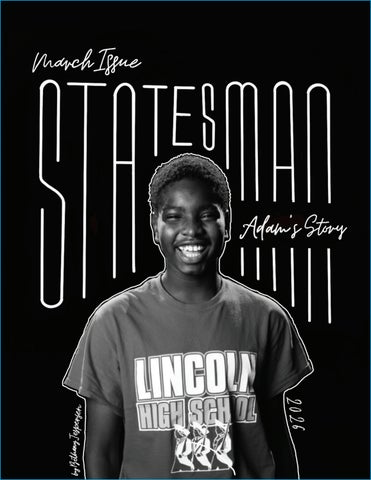
Create a flipbook