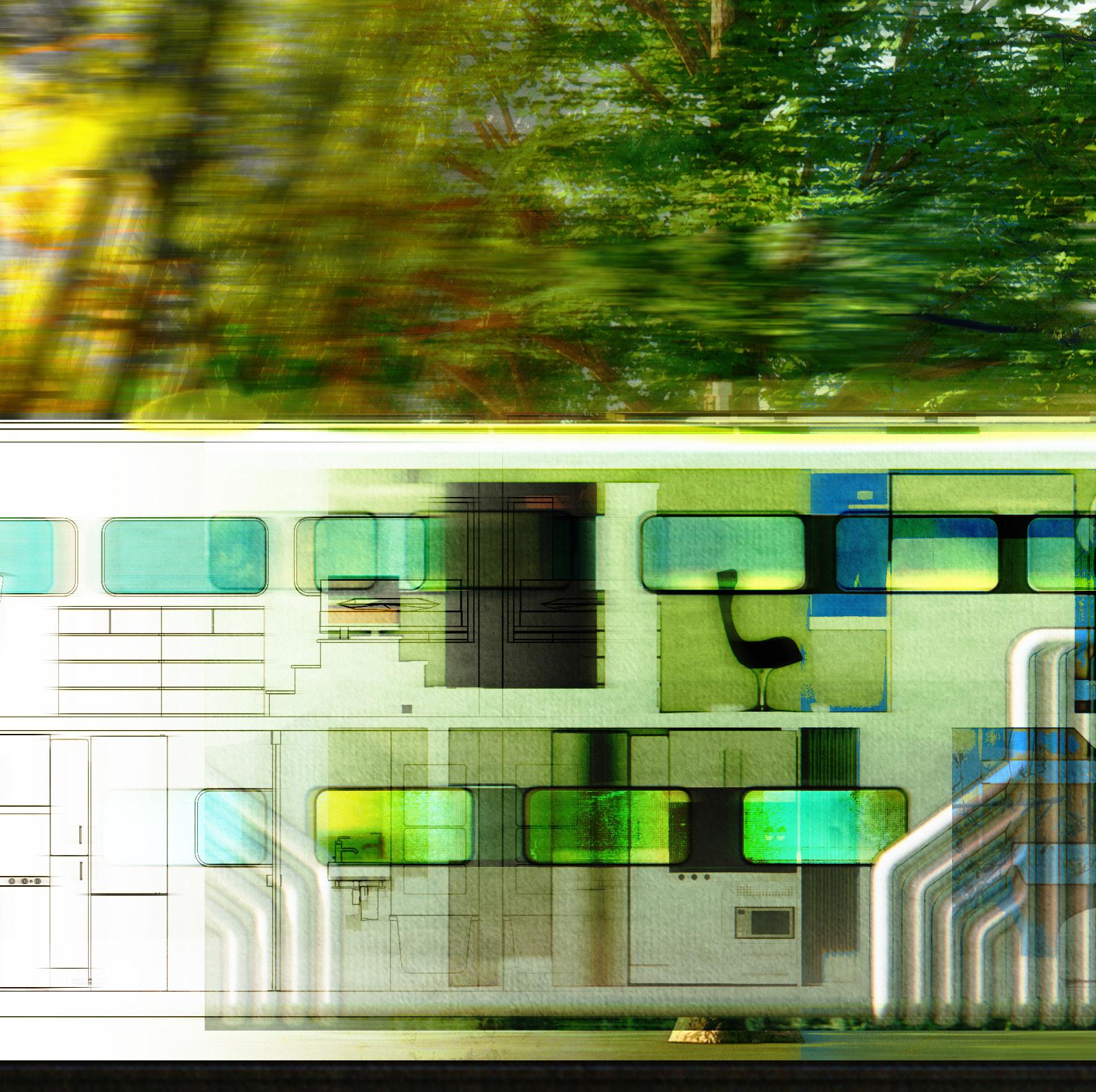
-Life Cycle Energy -Function and Equipment 38-45 Other Info
INTRODUCTION
In modern times, people often turn to specialized forms of recreation to cope with the psychological exhaustion accumulated from collective labor, rather than addressing the root causes of their stress.
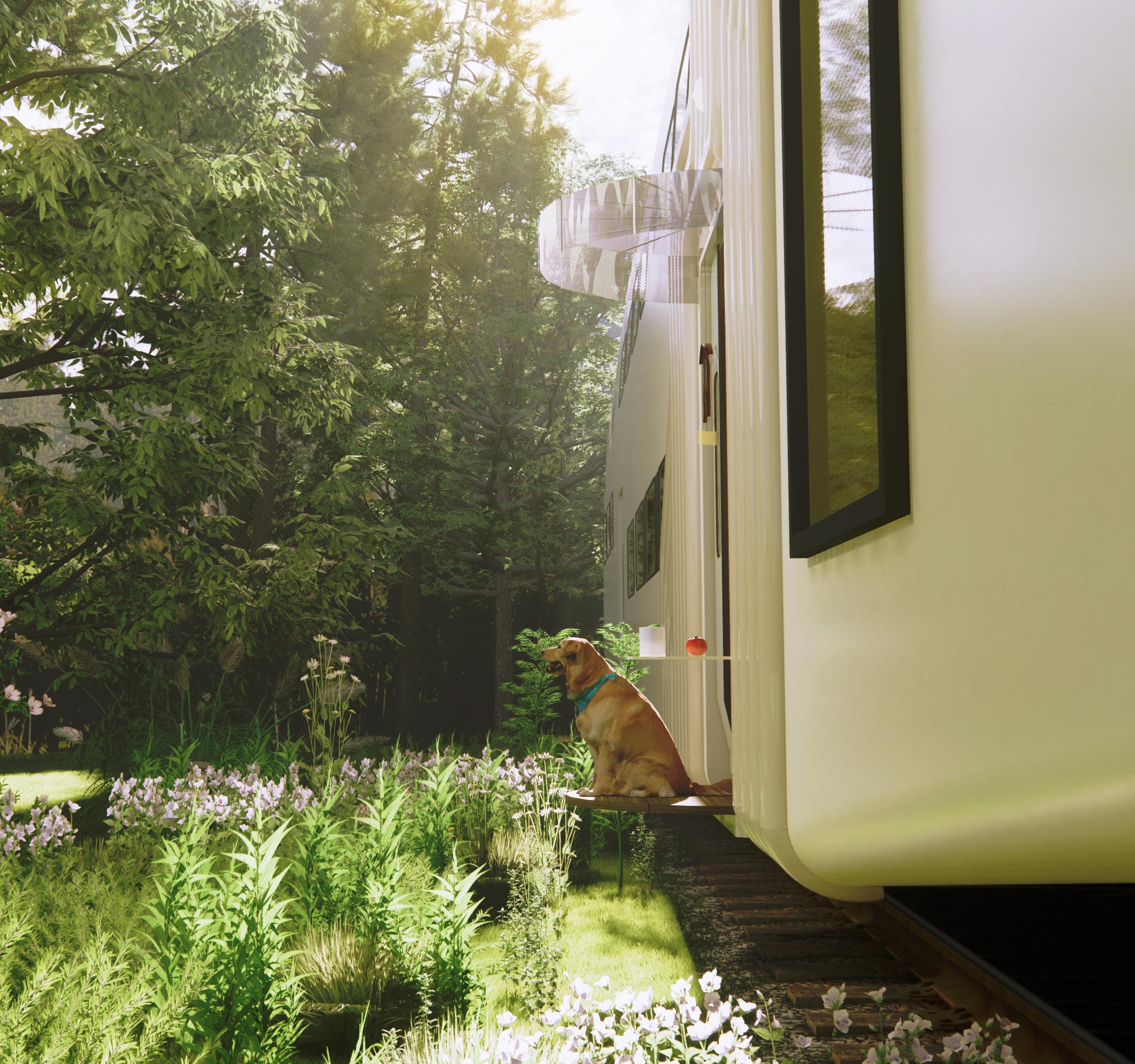
By conducting a thorough analysis of human pleasure and health needs, we can identify the missing environmental factors in contemporary urban living and envision an ideal totem for holistic living. In this project, the aim is to provide at least six months of off-grid living in fully remote areas. Providing a life option that anyone can participate in. Not only promotes ecological sustainability but also benefits our physical and mental well-being.
This project is on the Canadian context, based on the
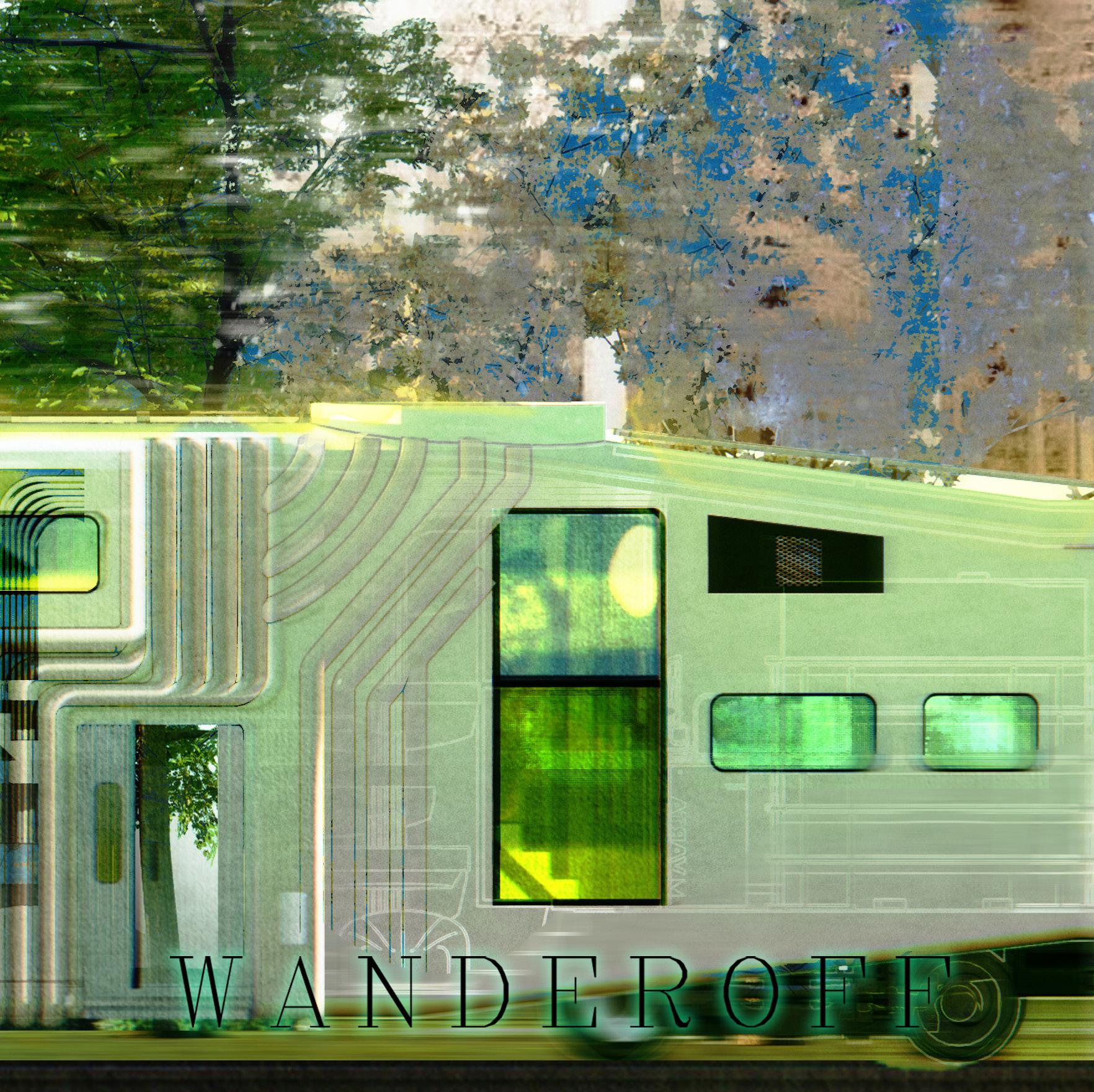
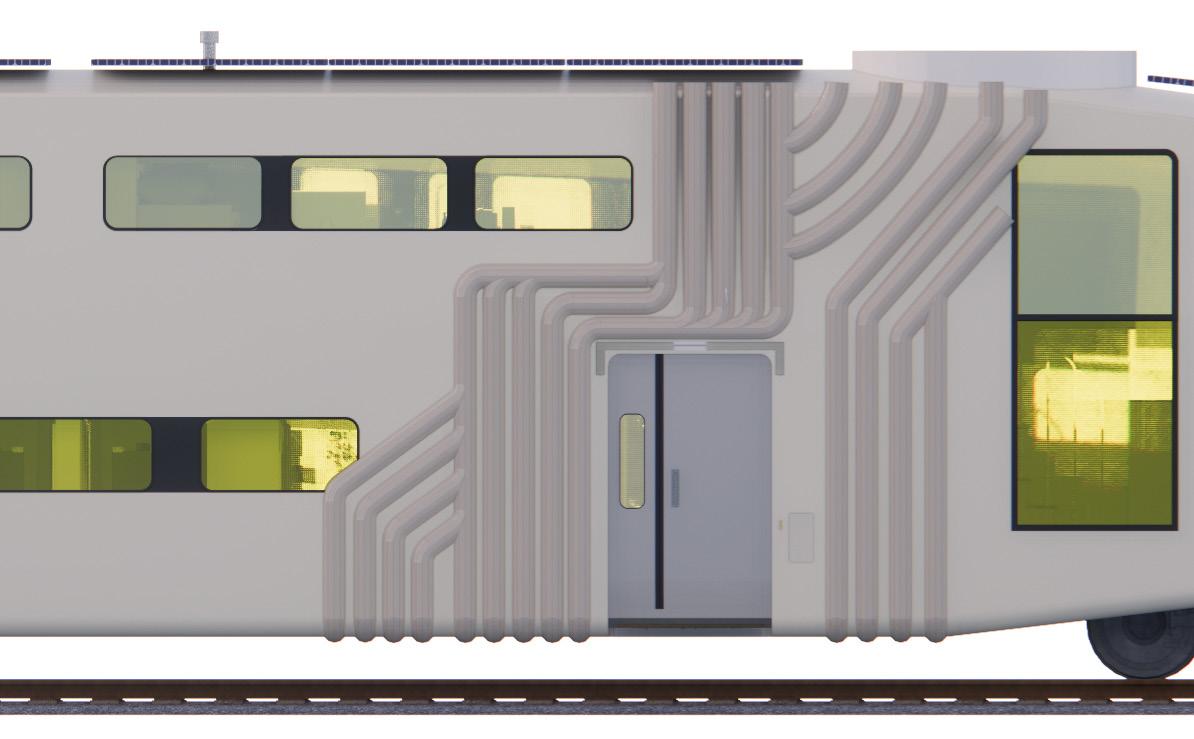
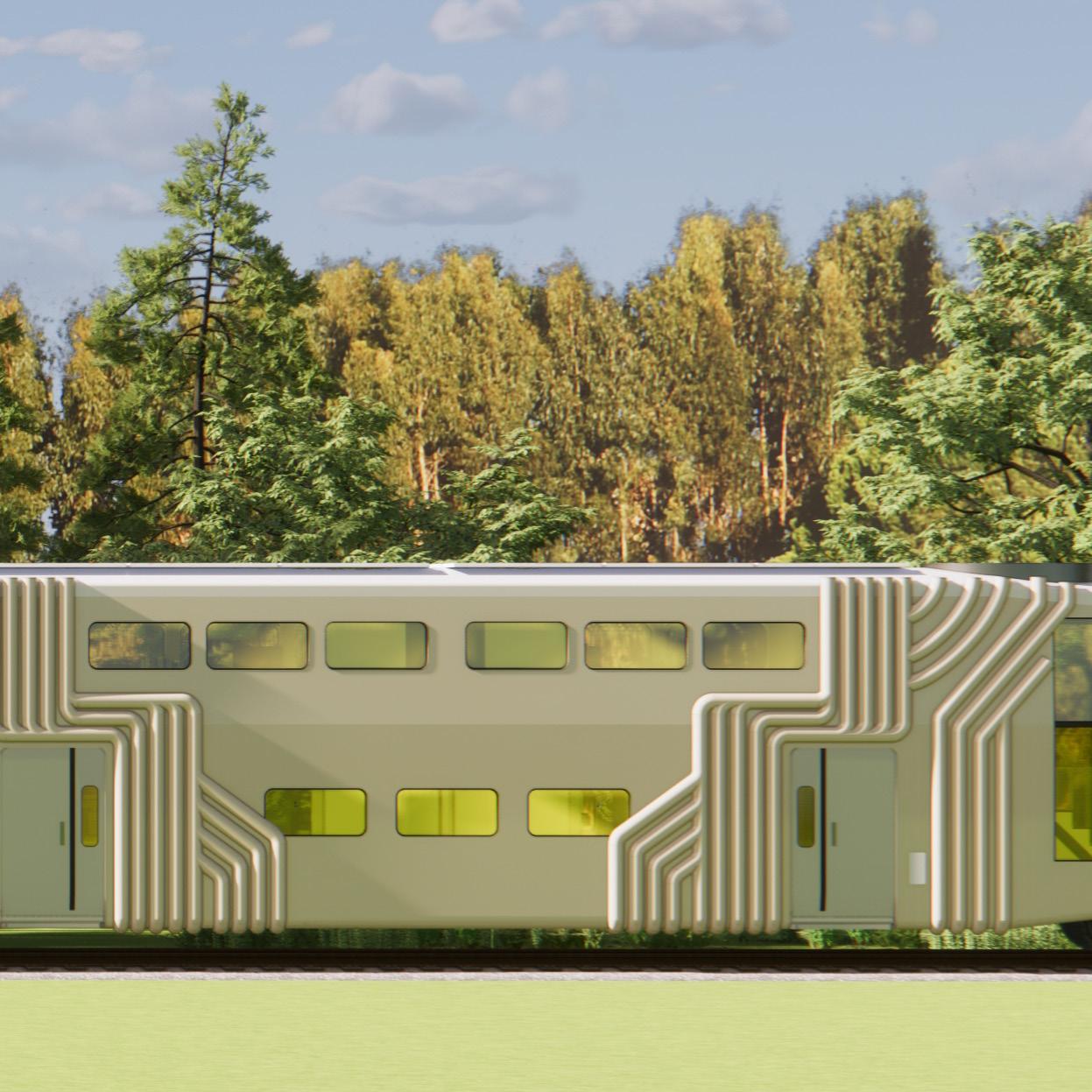
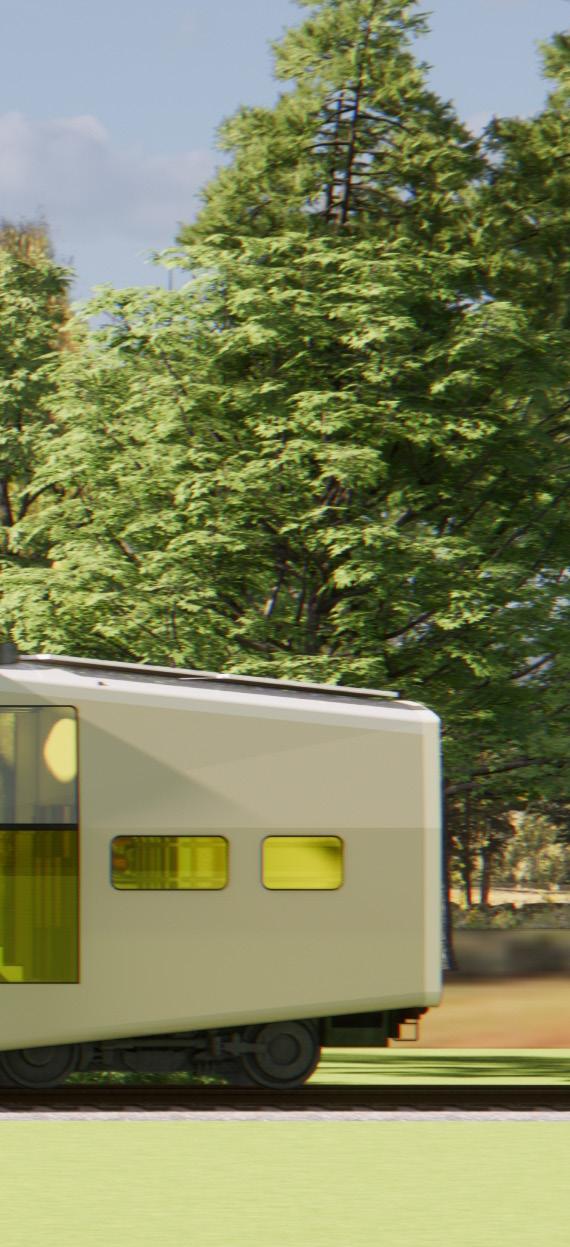
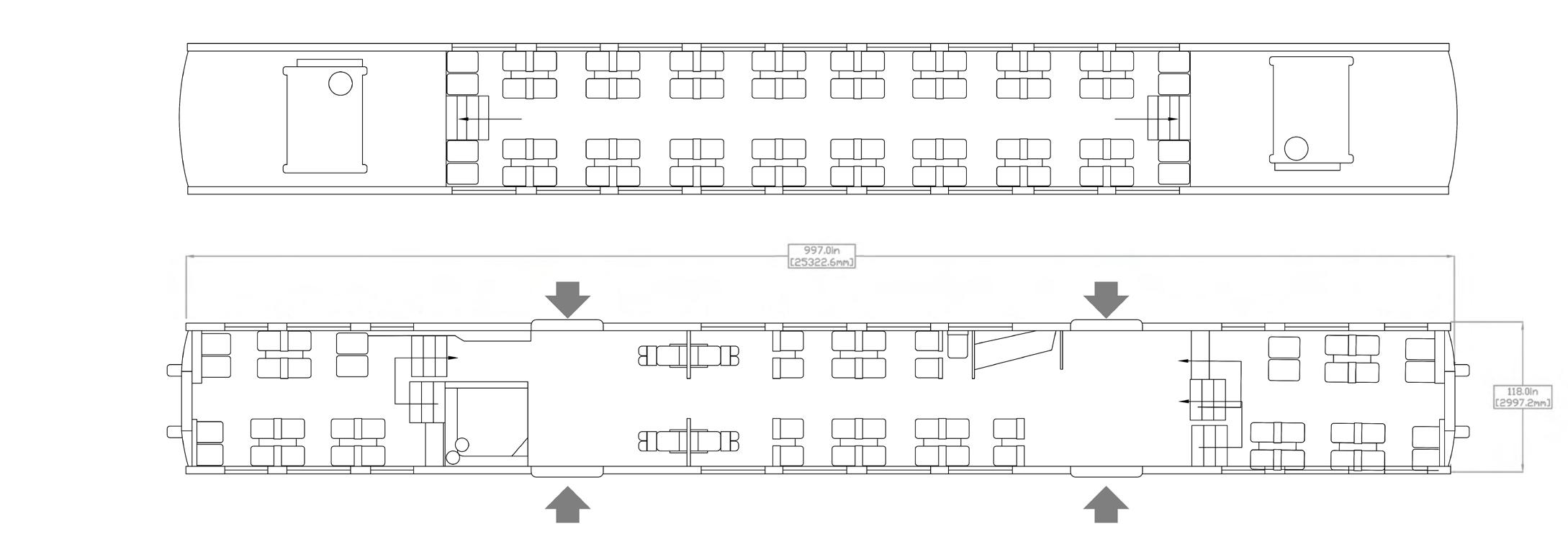
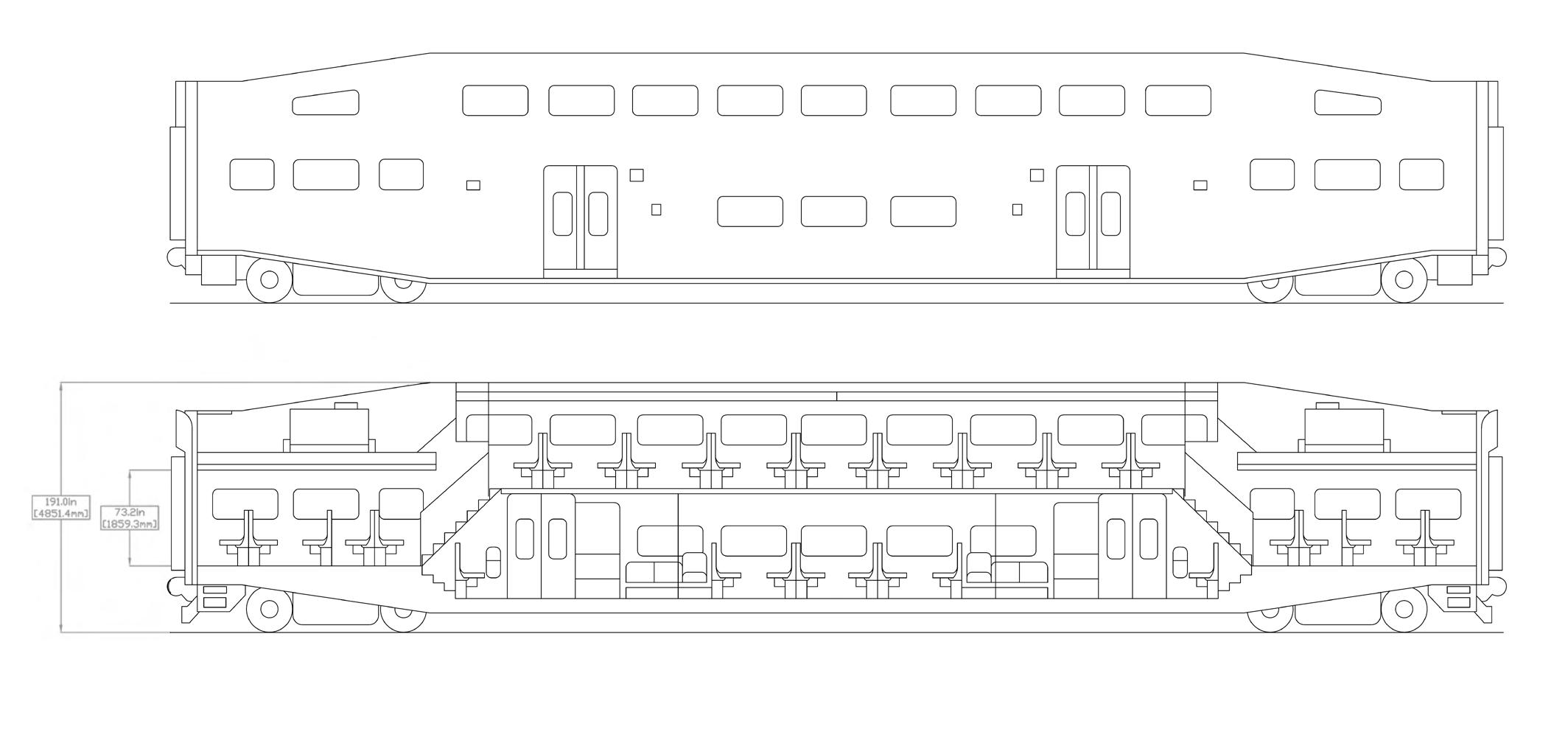
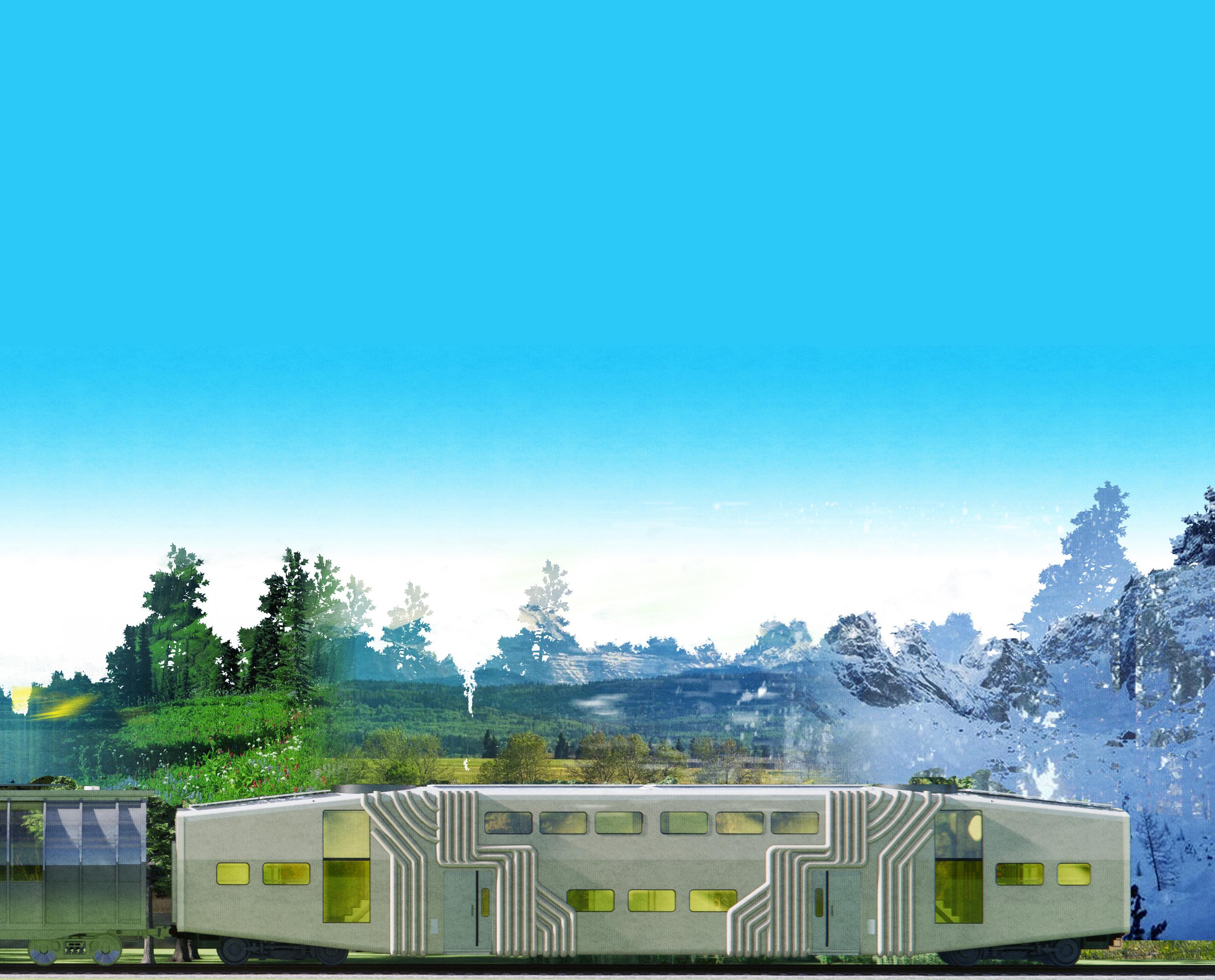
Bombardier Bi-Level Cab Car which is used in Toronto as GO Train, and transformed into a mobile living space. It utilizes data from Alberta province to calculate energy demand and production. While complete off-grid living is an ideal state, it’s a known fact that humans cannot completely isolate themselves from group. Therefore, this project also takes on the form of a small-scale eco-village, aiming to create a friendly and sustainable community with different individuals.
WanderOff
Today, we still do not have a definitive answer on which lifestyle is absolutely correct and healthy. However, we currently lack access to diverse choices, and changes always come with significant costs. Our cities are not a closed realm, but the systems they provide often exert a force that prevents people from leaving.
CRITICAL STANCE
Travel
Consumerism has resulted in excessive consumption and an uneven distribution of resources. In large cities, consumerism and resource consumption have been exaggerated and inflated. The centralized lifestyle, while offering various avenues for consumption, also disconnects people from the collection and consumption processes of resources.
The accessibility and costs of resources are often invisible, leading to a lack of intuitive understanding of the production and consumption of different resources and energy. This convenient but biased perception of resource value and sustainability has contributed to the issue at hand.
As a way of living, daily labor and participation in resource collection and consumption have significant meaning for humanity. The project does not take an anti-technology stance but rather tries to maximize the use of technology for environmental conservation. It provides self-sustaining energy production, including solar and wind power generation based on calculated data, and multiple backup energy sources to ensure the livelihood of individuals.
The decentralized lifestyle as a choice is reflected in the mobility feature of this project. “It is the movement as well as the sights going by that seems to make things happen in the mind and this is what makes walking ambiguous and endlessly fertile: it is both mean and end, travel and destination”(Adams).
In the process of evaluating feasible practical actions, a mobile living space can take people out of the city and bring them back, reducing sacrifices people mzay have to make for a lifestyle change. Ultimately, the project is not solely driven by human needs. Starting from a perspective of coexistence and striving for a balanced approach, the fundamental goal is to translate this approach into practical movements that can be adopted by people.
THEORETICAL POSITIONING
The Biophilia Hypothesis
This book provide a theortical Biophilic Design solution for the project, and “It is relevant to our thinking about nature, about the landscape, the arts, and mythopoeia, and it invites us to take a new look at environmental ethics”(Kellert 37)
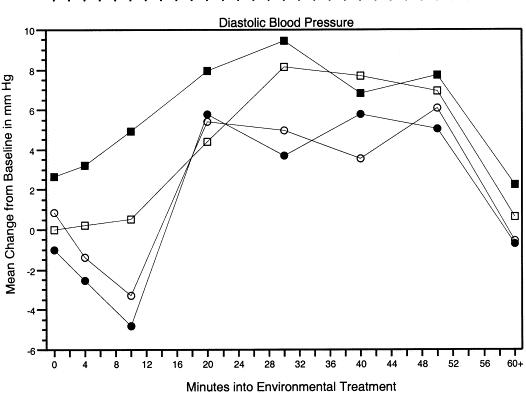
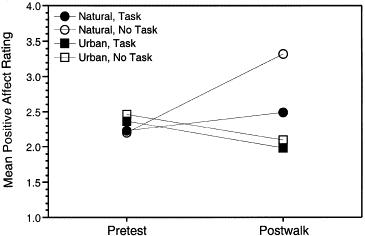
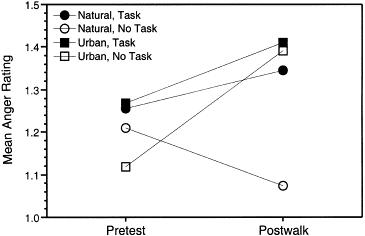
Tracking restoration in natural and Urban field settings
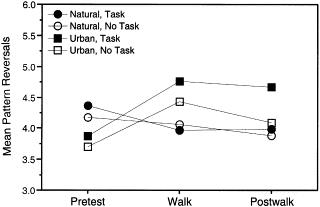
Experiment: Compared psychophysiological stress recovery and directed attention restoration in natural and urban field settings using repeated measures of ambulatory blood pressure, emotion, and attention collected from 112 randomly assigned young adults.
Art in the Anthropocene: Encounters Among Aesthetics, Politics, Environments and Epistemologies
With anthropocene as a title this book discuss our current pollution problem and human activity on Earth, what is important and how design and art interfere.
SITE ANALYSIS
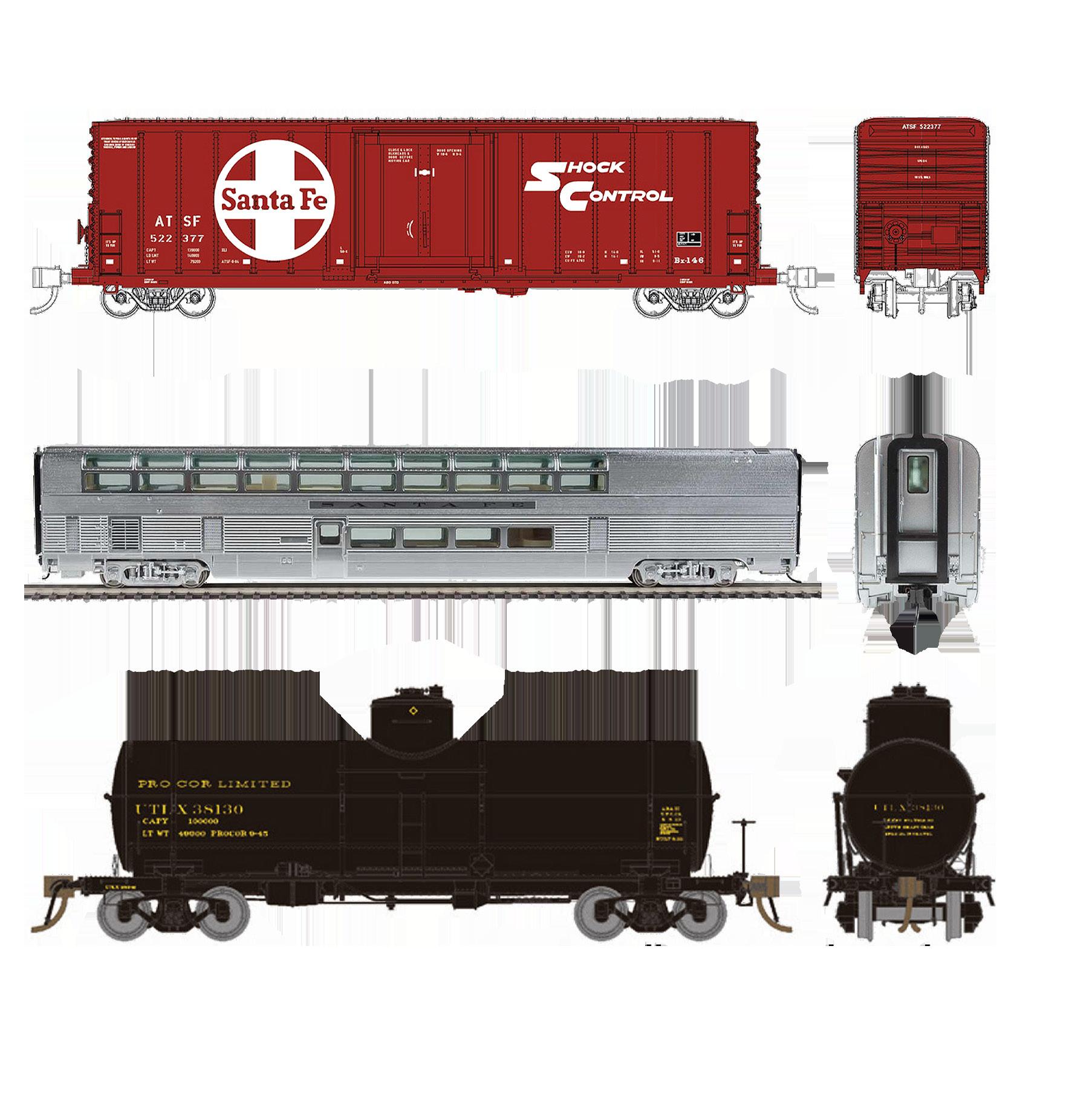
Box Cars-BNSF 50 ft
One of the most versatile since it can carry most loads.
-Carry a wide variety of crated or palletized freight.
-Fully enclosed, typically have doors on the side of the car, but can have them at the ends too.
Passenger Cars- Hi-Level
-Locomotives and rolling stock which can carry passengers in safety.
-It moves passengers who desire to travel from Point A to Point B.
Tank Car- DOT-117
-Designed to transport liquid and gaseous commodities, can be pressure or Non-Pressure/Low-Pressure
-Two sizes of tank cars are in general use; 50 and 100 ton tank cars.
AlbertaRocky Mountains
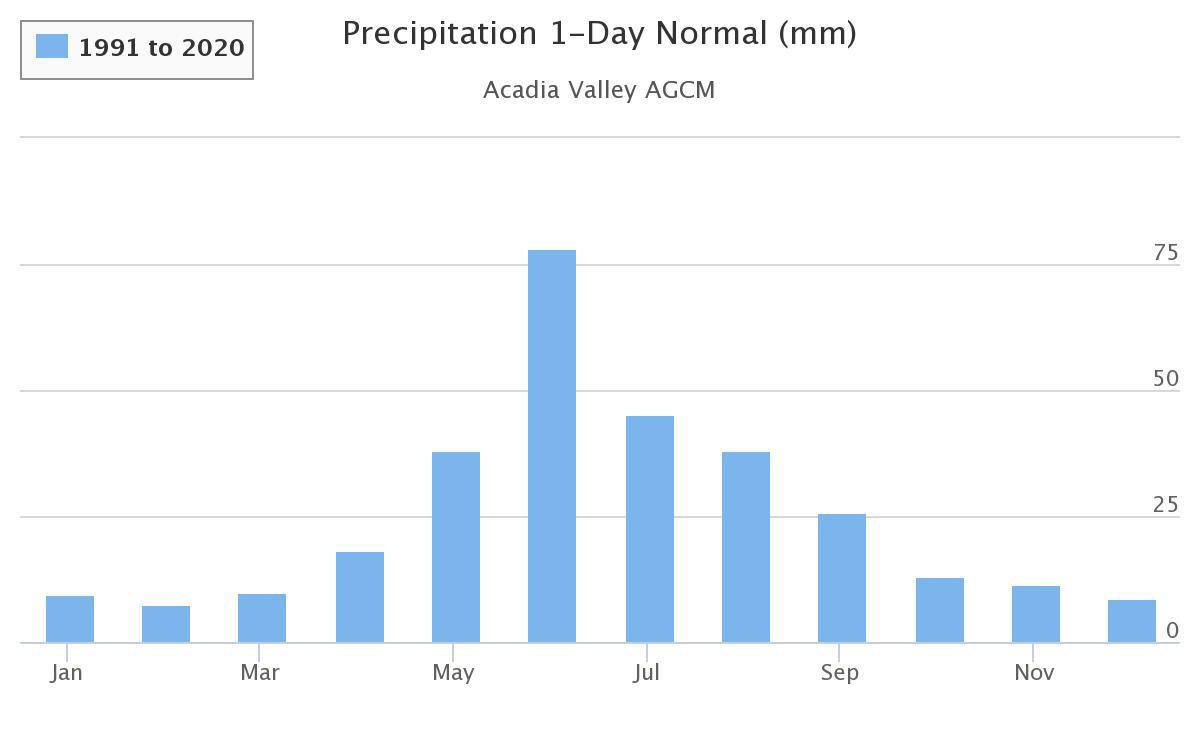
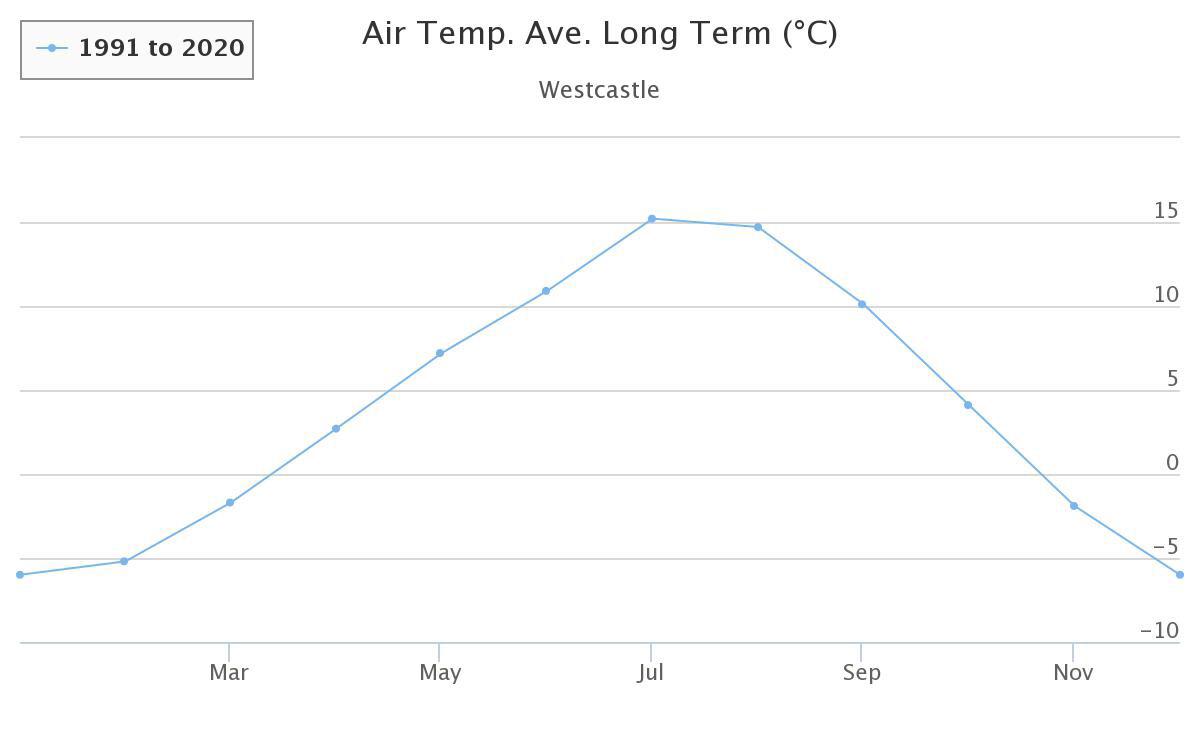
• Climate: mostly humid continental
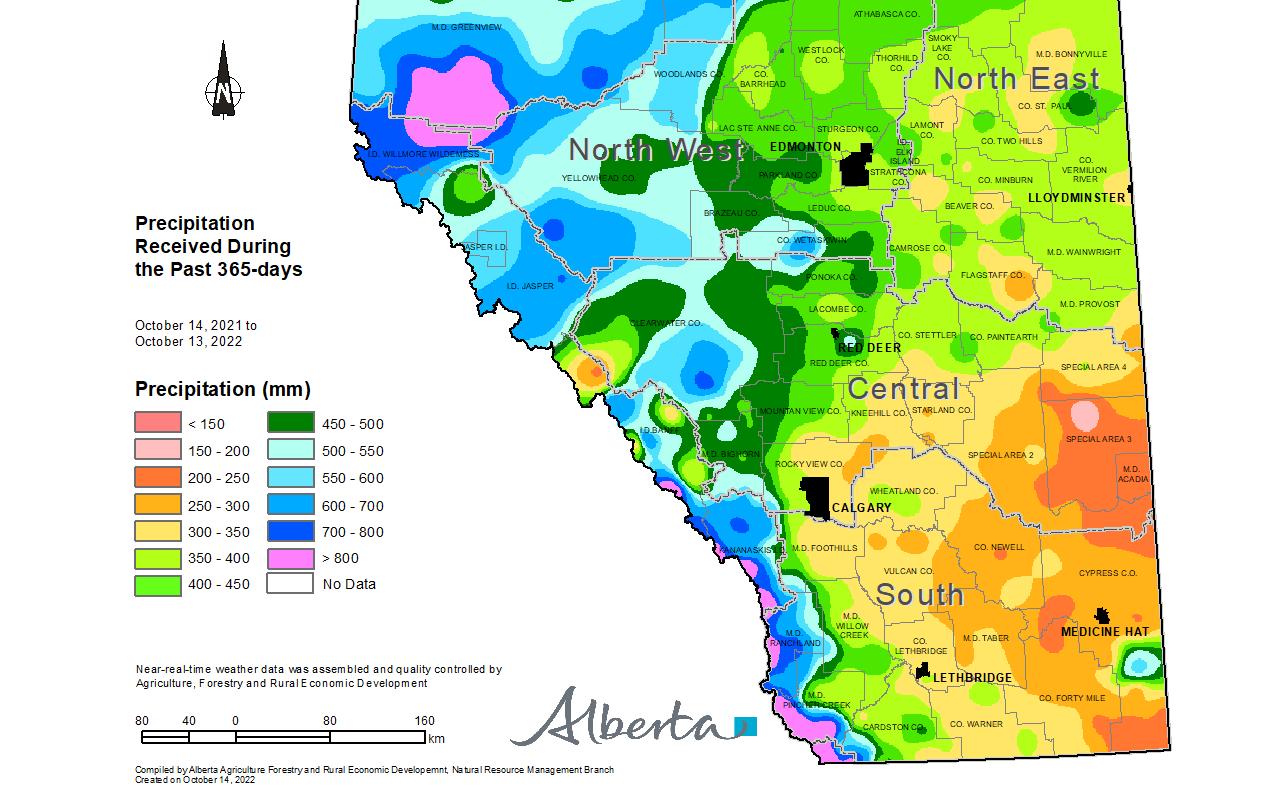
• Freshwater: Most of the province has plenty of fresh water although in some parts of the southern regions the yearly average rainfall is fairly low.
• Crops: The most common crops are canola, wheat, and barley. Several types of fruits and vegetables also can grow although a greenhouse might be needed.
• Solar power: Alberta gets the most amount of sunshine in the entire country so generating power with solar panels is fairly easy.
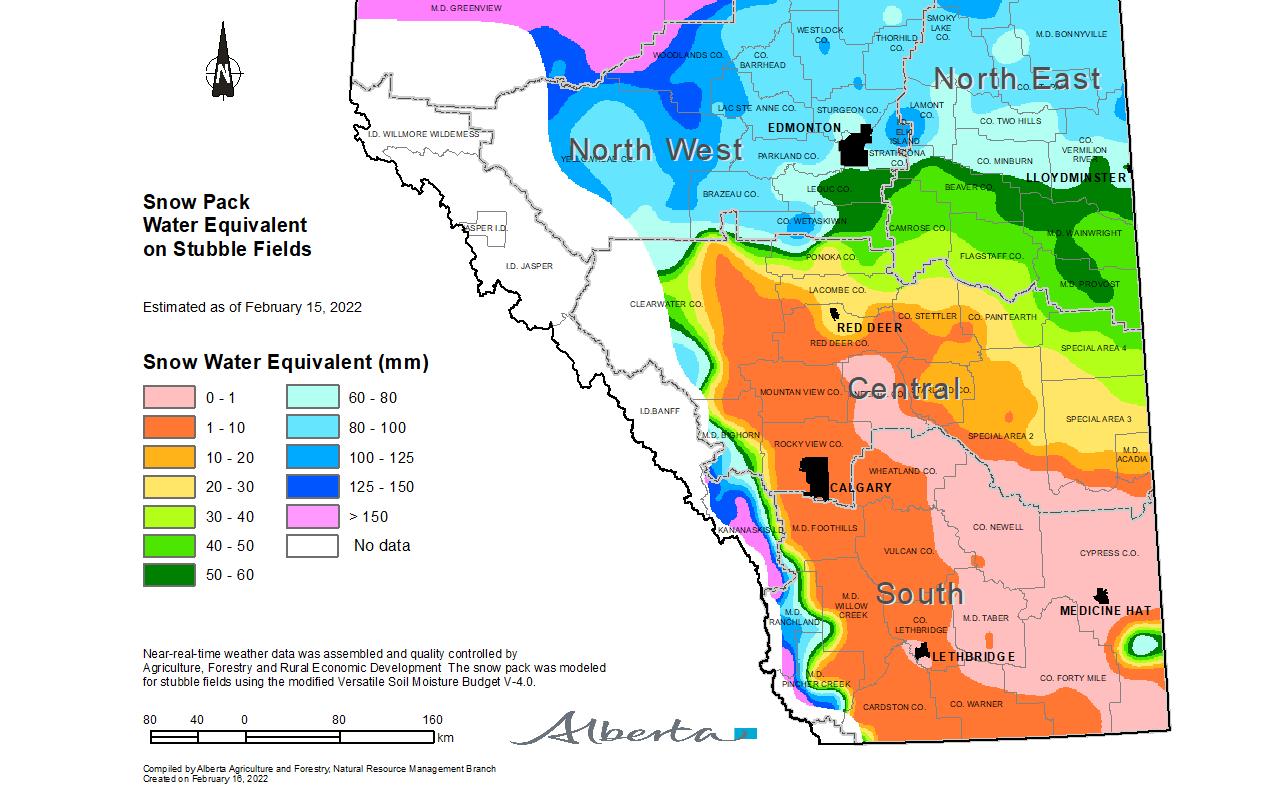
Snow Pack(Feb) Precipitaion
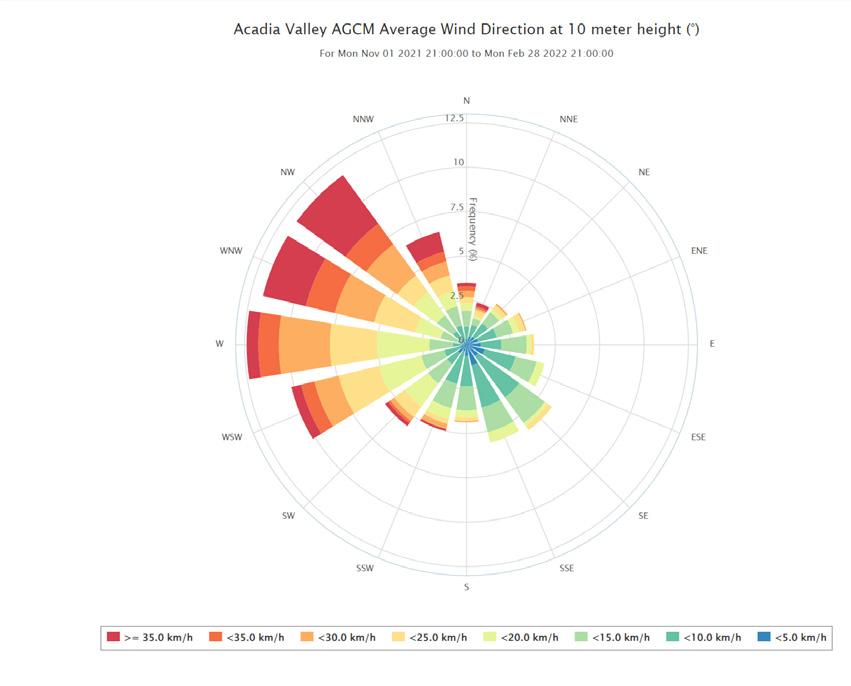
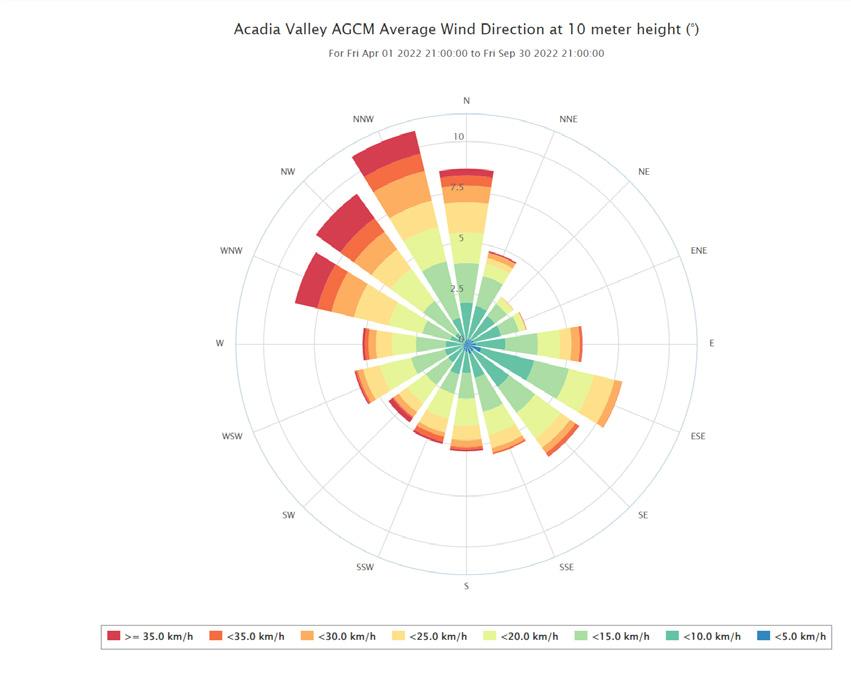
Wind Direction
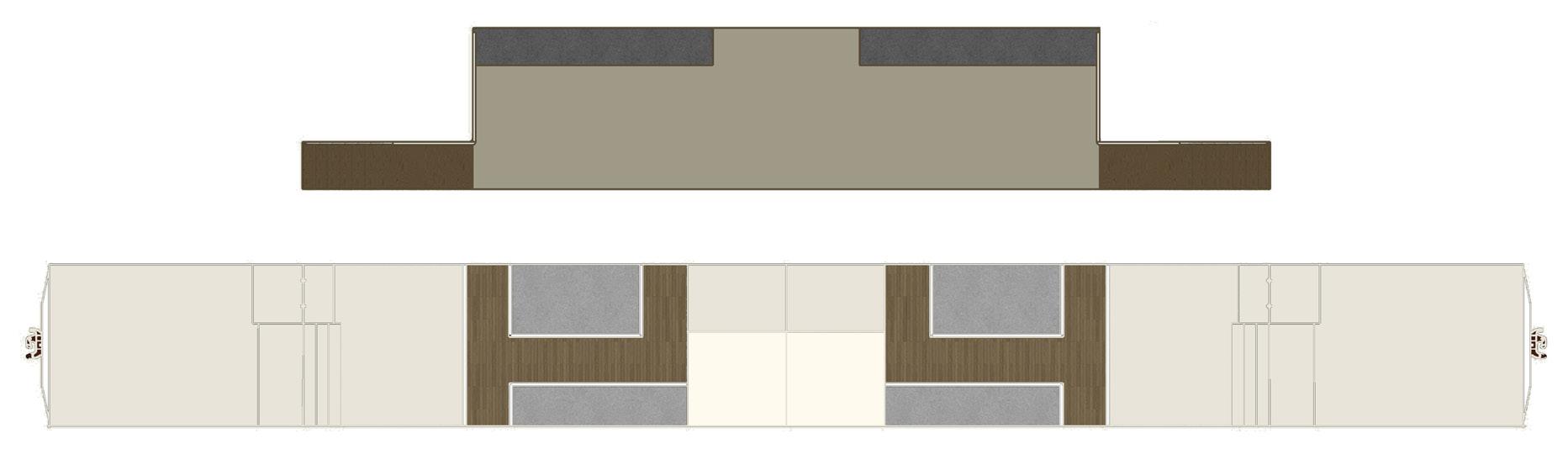
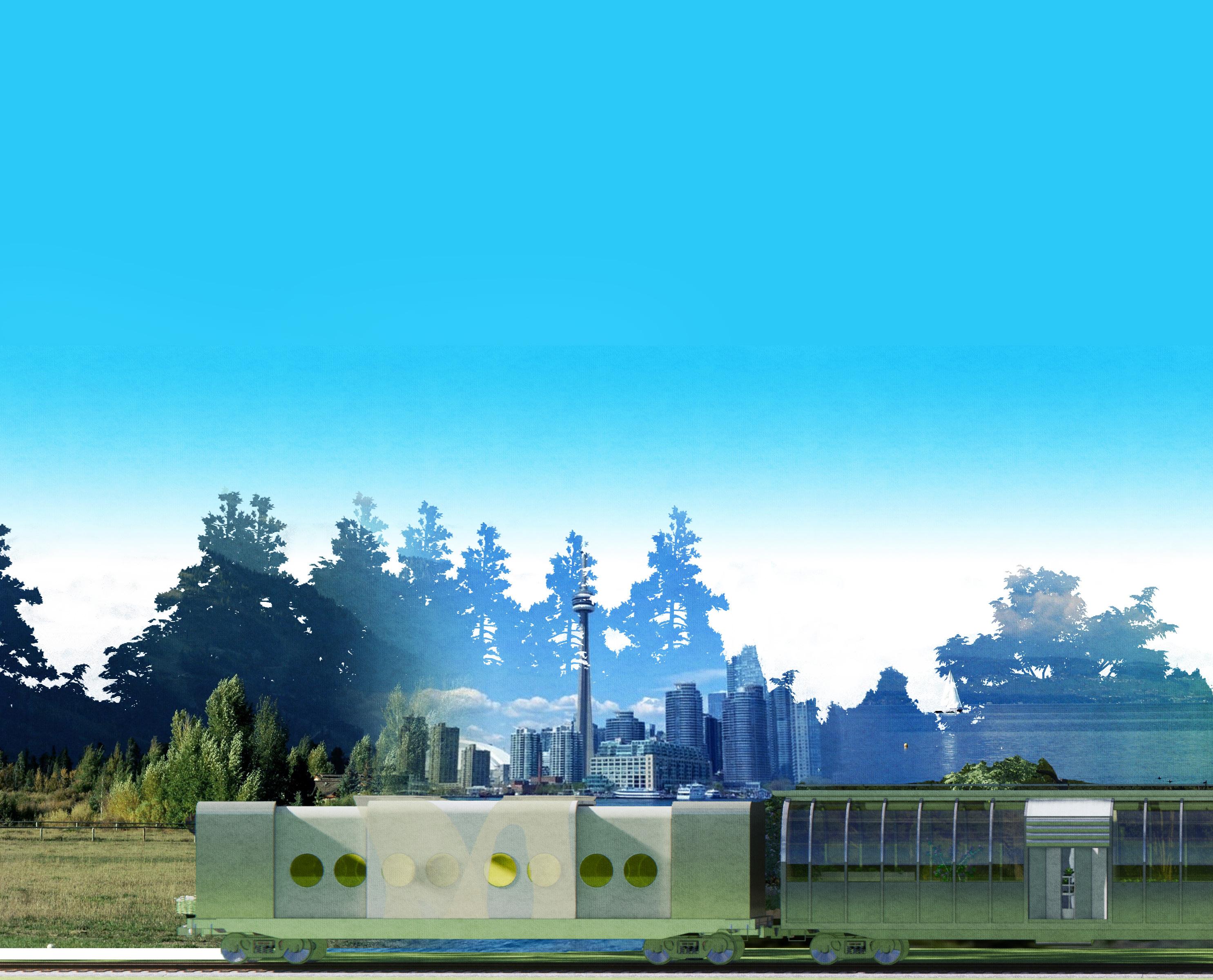
This section contains plans and renderings of living car, greenhouses and gathering car three types of car.
LIVING CAR
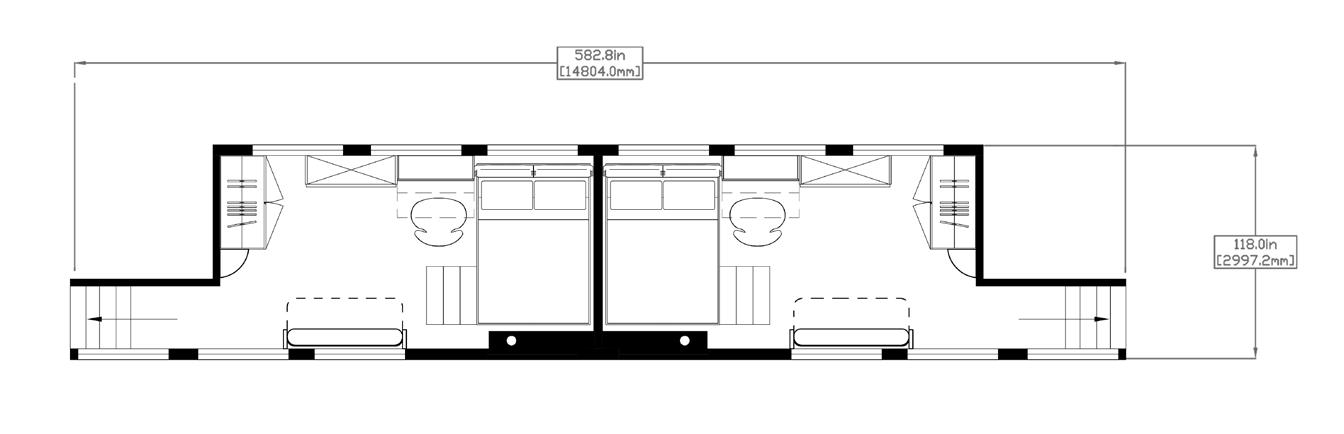
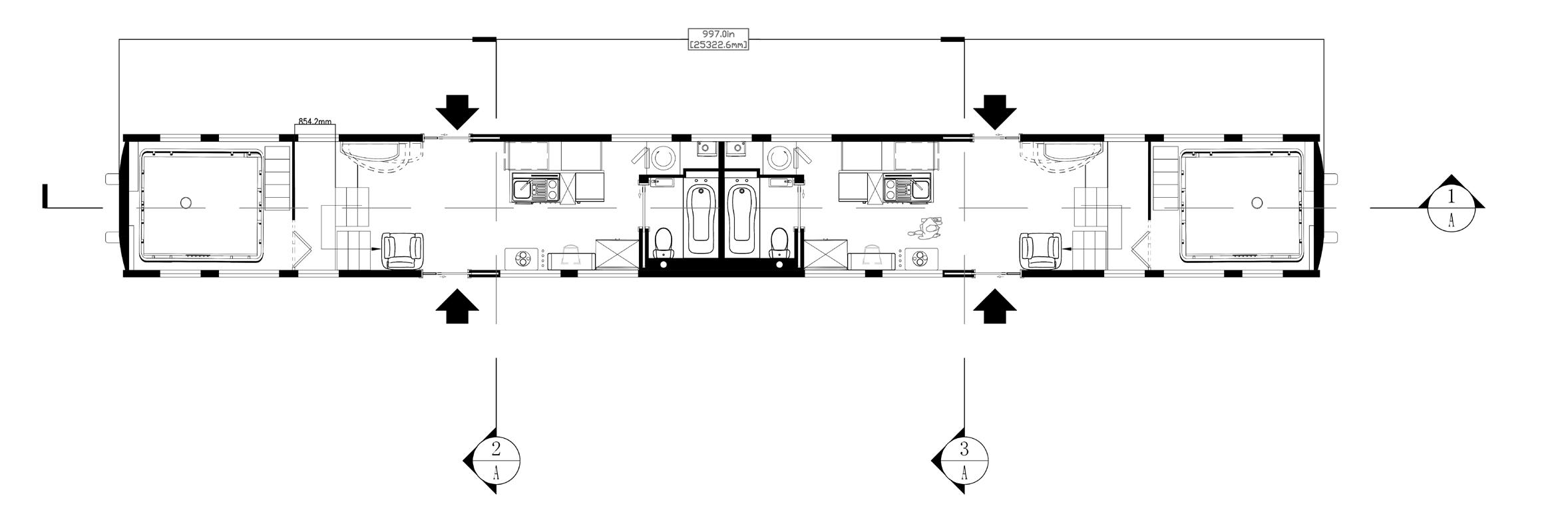
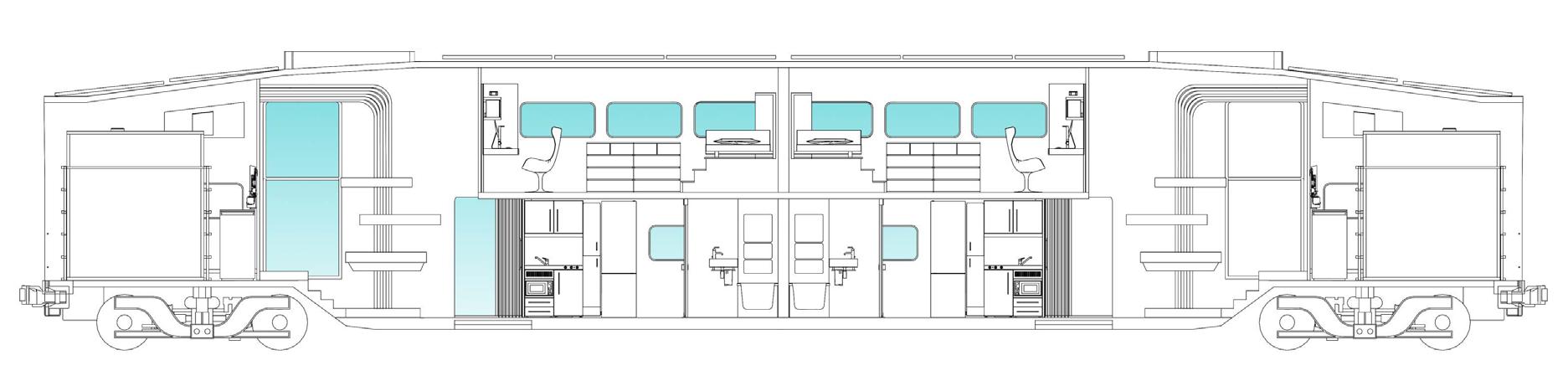
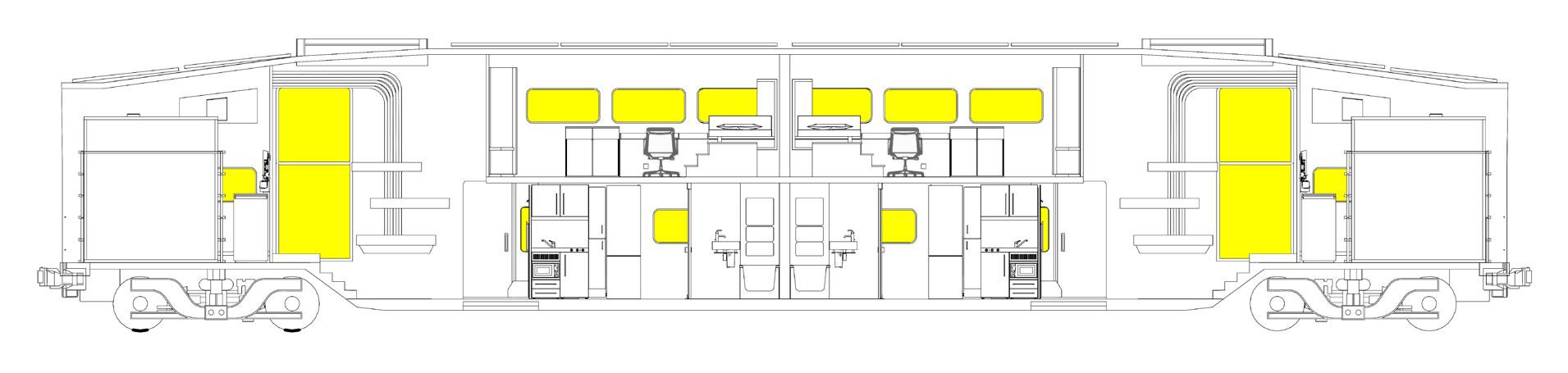
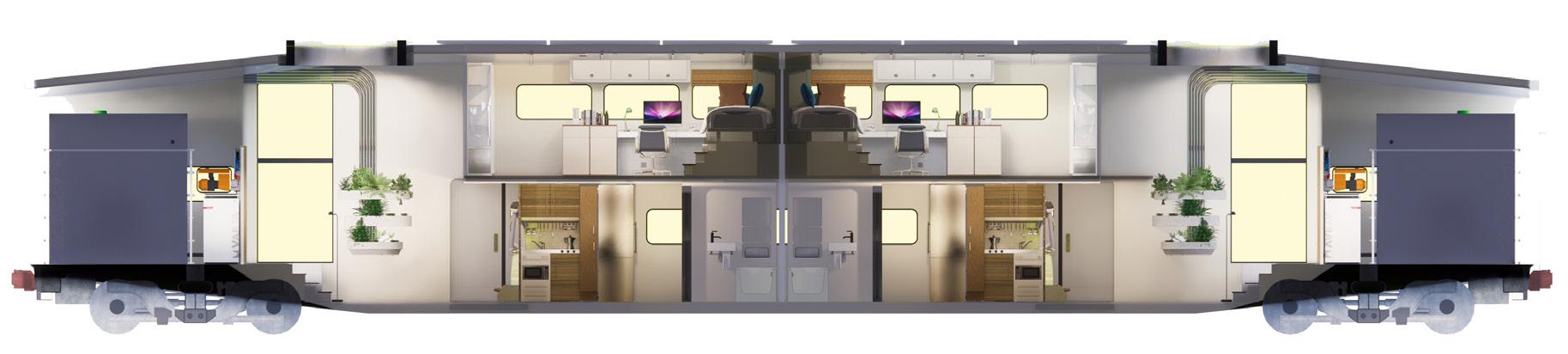
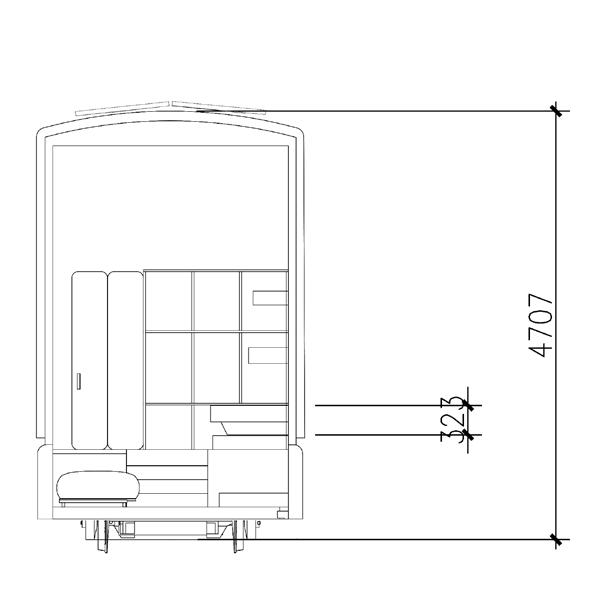
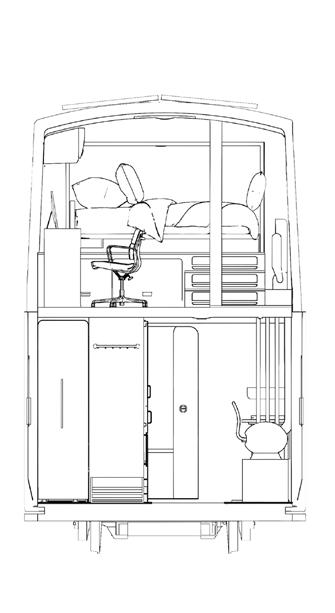
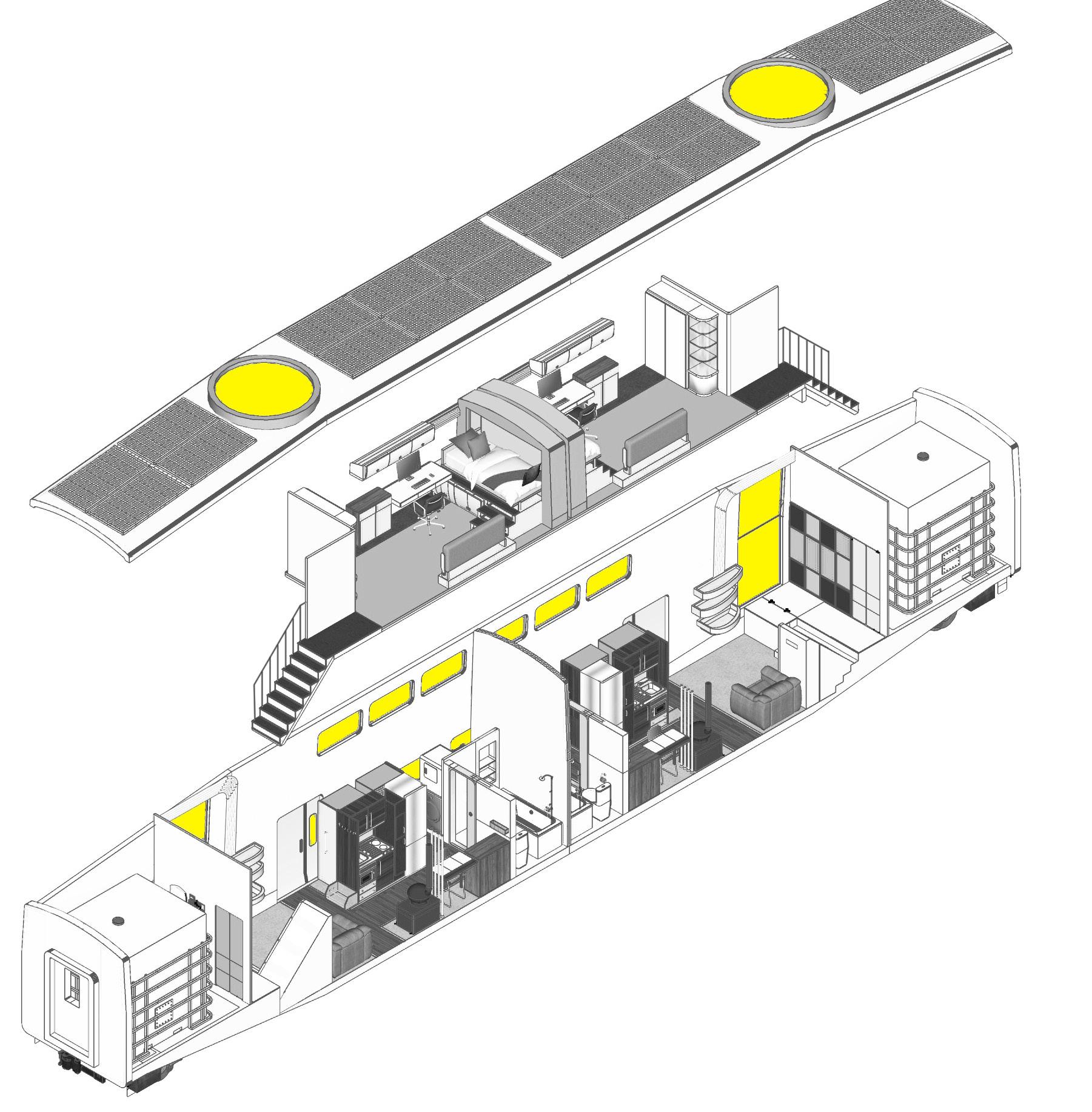
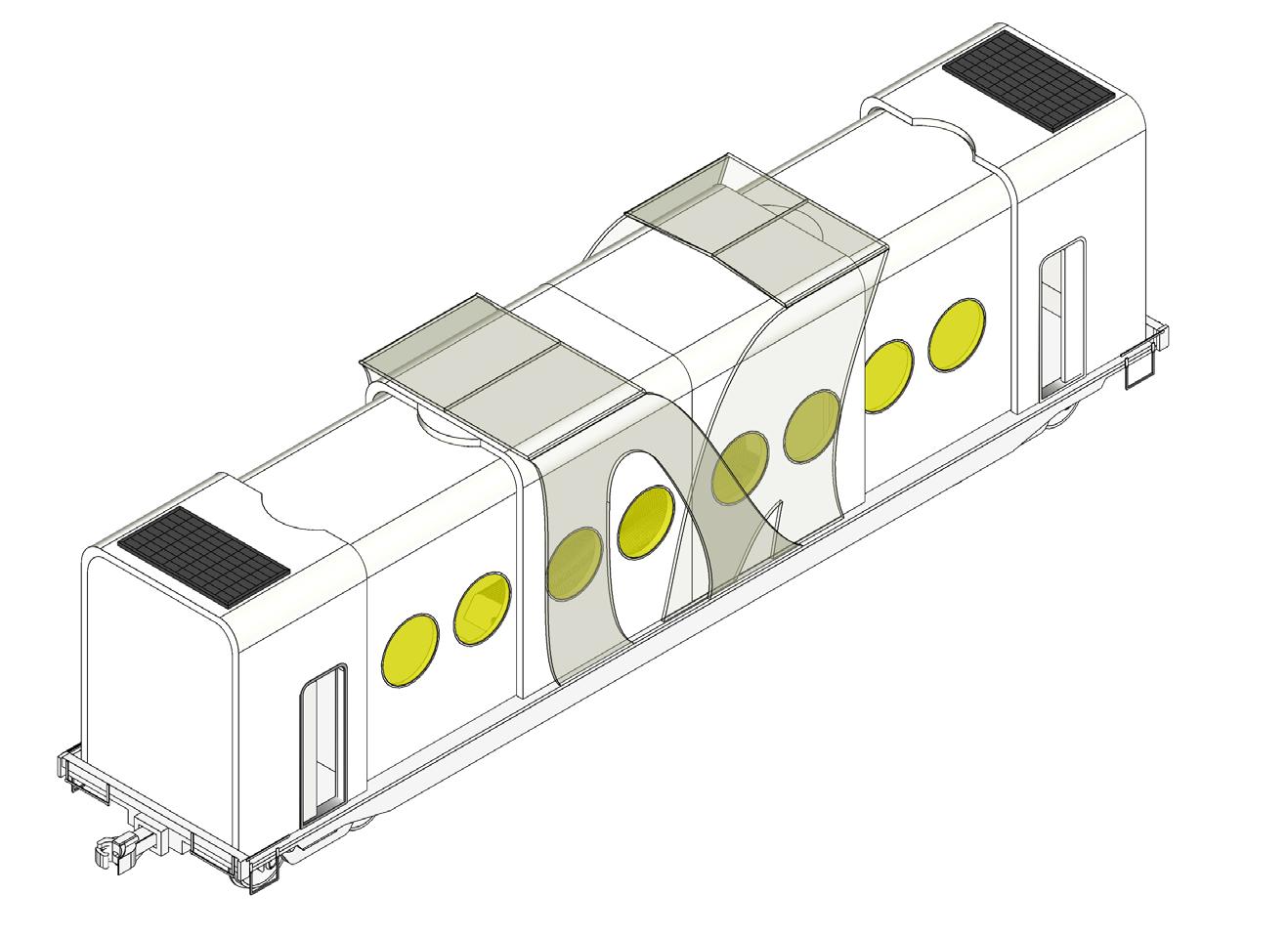
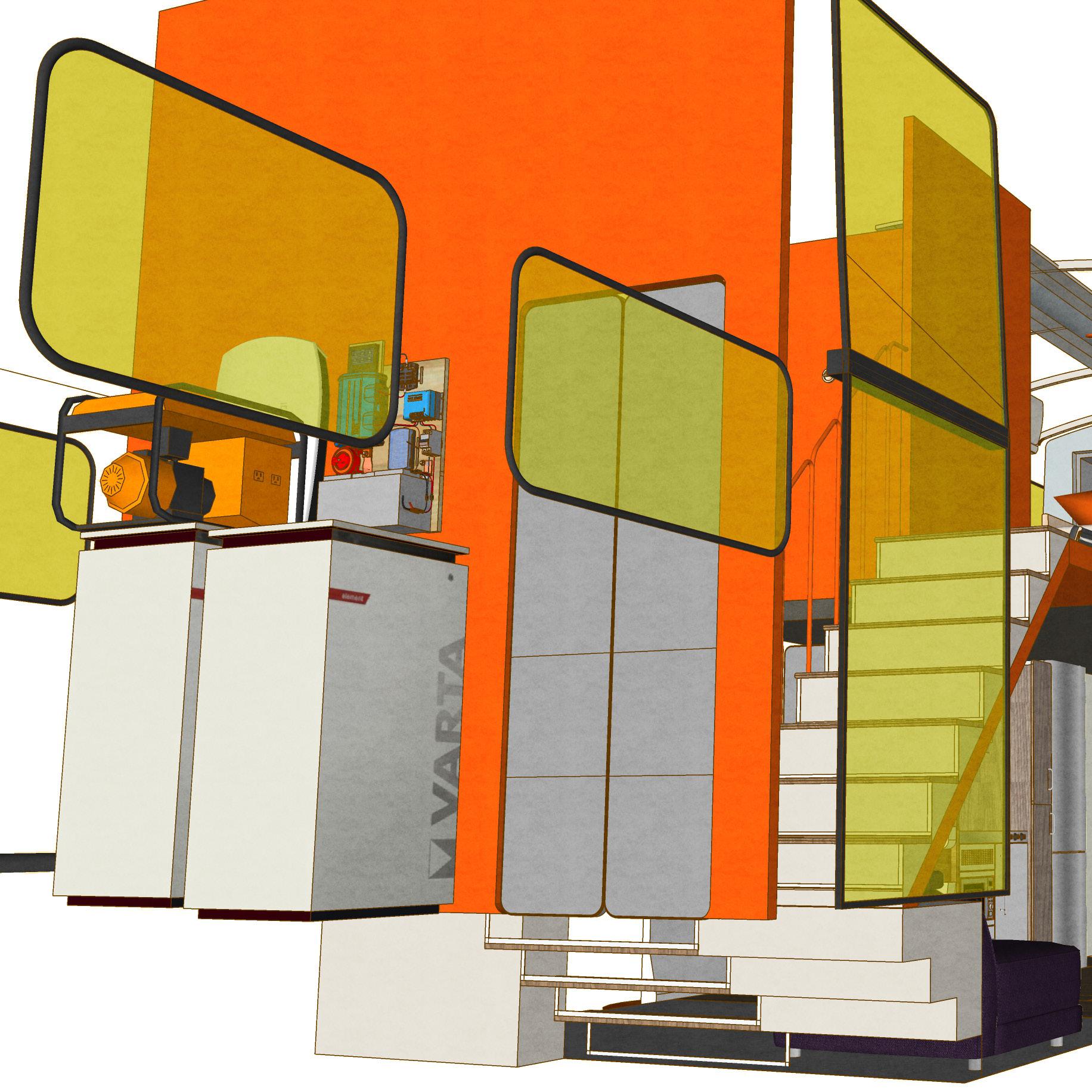
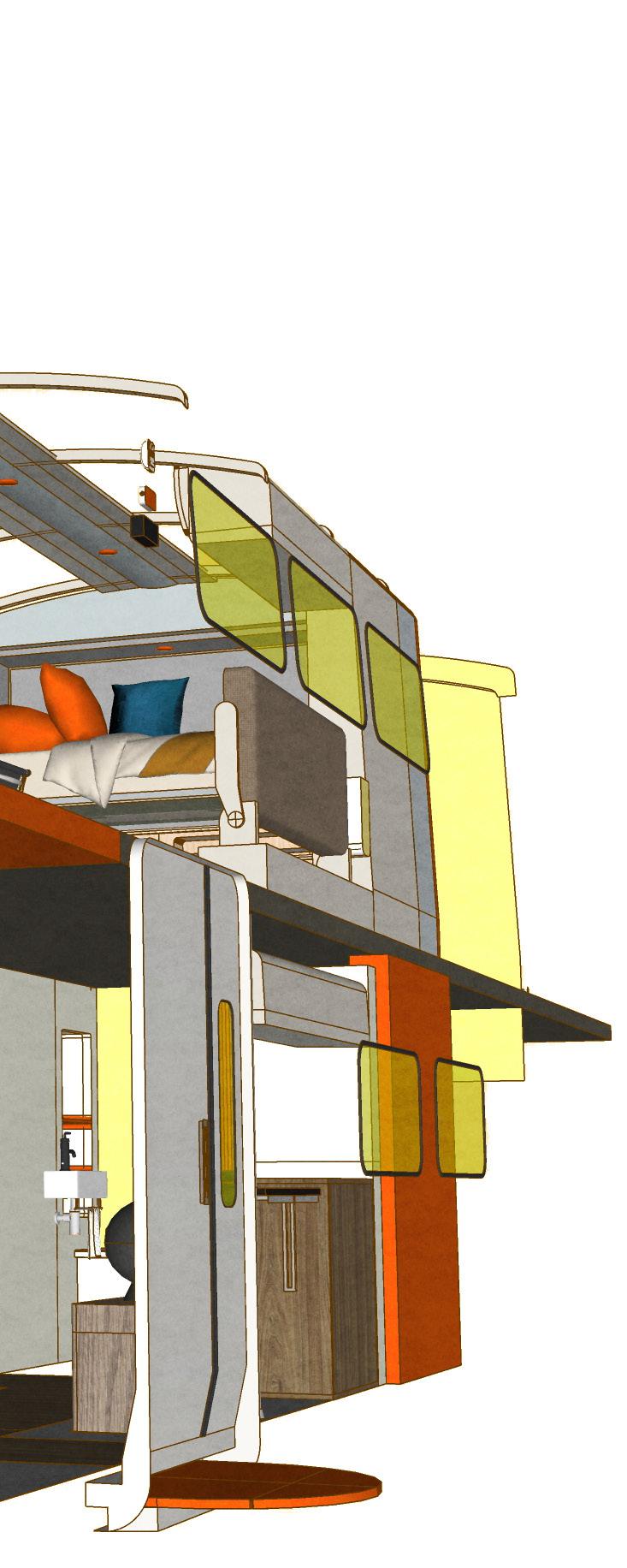
As the main living unit, this car has the functions of energy generation and storage and is very active. Provides six months of off-grid living resource equipment. Each car provides two separate living units for single person.
Indoor Plant
Section A1
Section A1 Rendering
Section A2
Section A3
Life Cycle +Program
Adjacencies
Renewable Energy Systems -Hybrid Wind and Solar Electric Systems
Solar Power -Solar Panels 400W
Rain Collection -Dry system -Multistage filtration and purification
Storage -Container -Pumps -4000Gallons water tank
Blackwater -Incineration Toilet
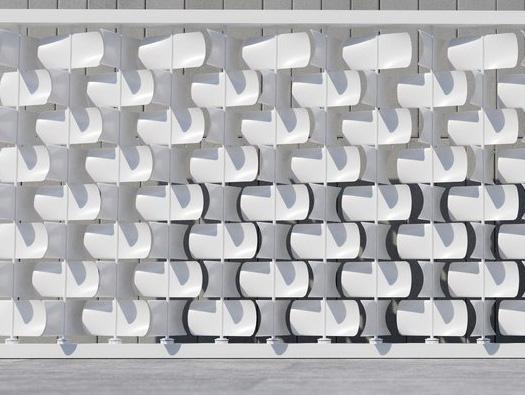
Wind Power -Independent Wind Turbines
Renewable Energy Systems Batteries -Charge controller -Power conditioning equipment -Safety equipment
Wastewater Management -Greywater Reuse System -Greywater filtration units
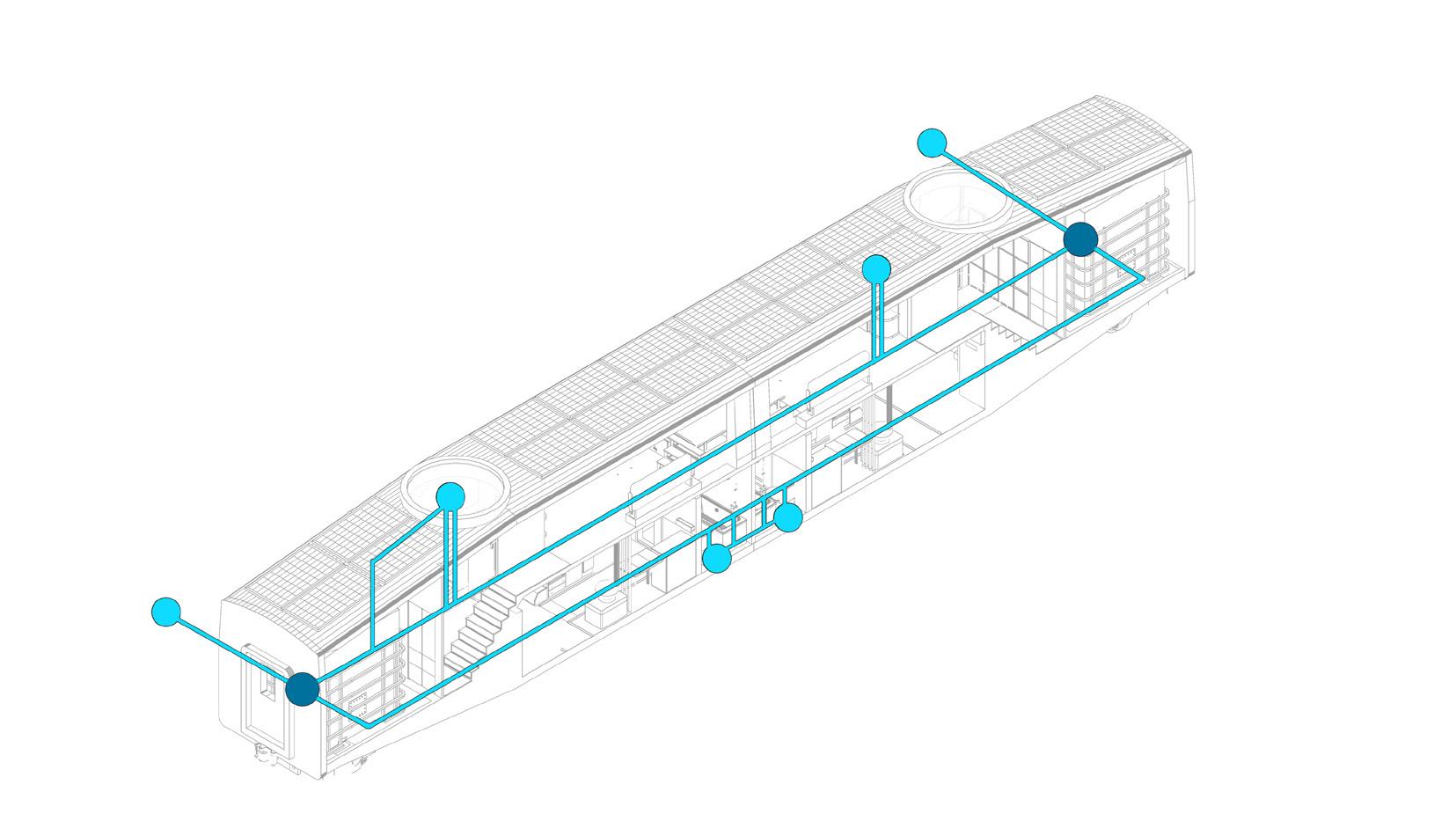
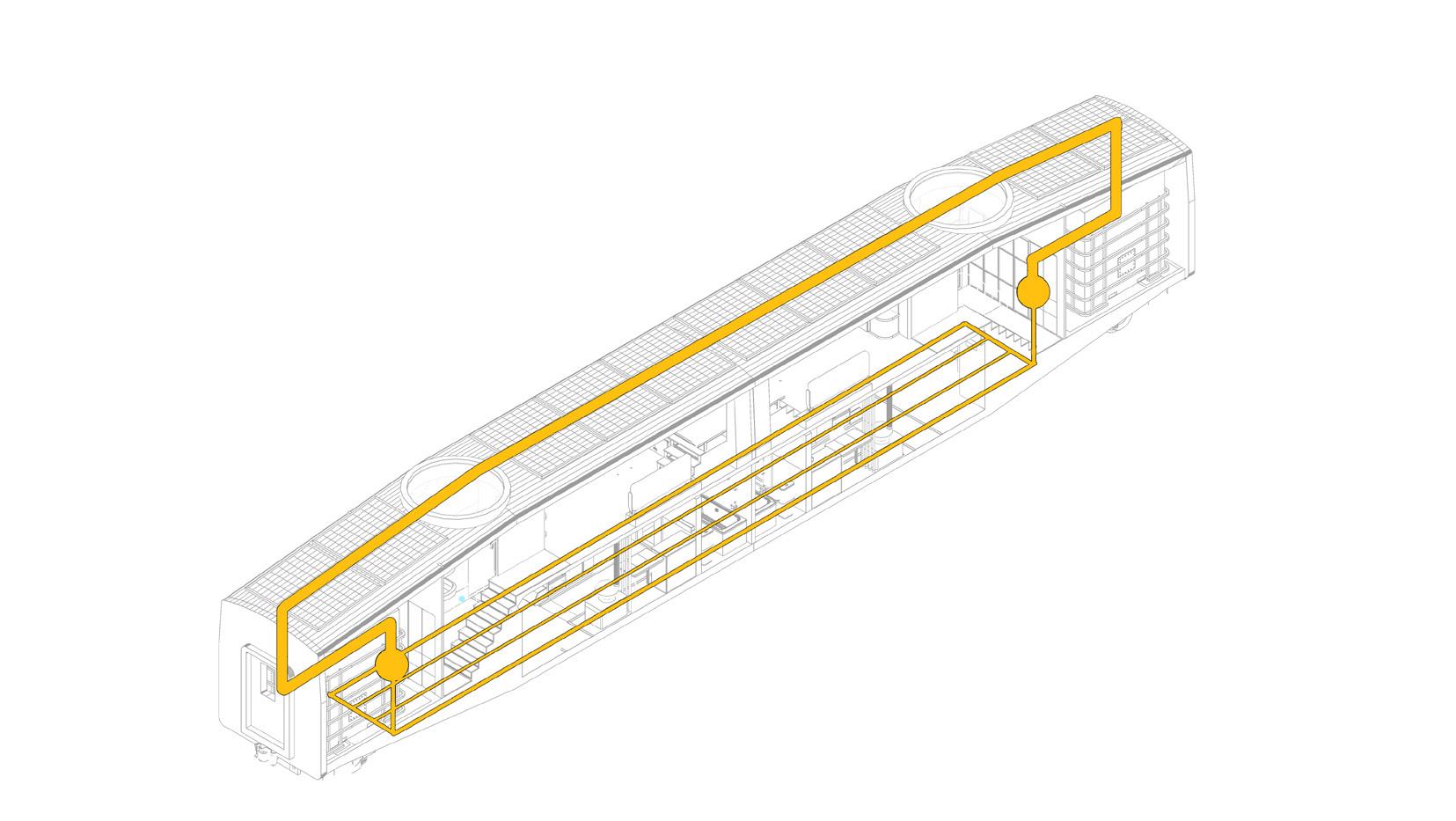
Water + Electricity Cycle Diagram
Indoor Plant Irrigation
Indoor Plant Irrigation
External Water Source
Bathroom Water Usage
Water Storage
External Water Source
Water Storage
Solar Batteries and Inverters
Solar Batteries and Inverters
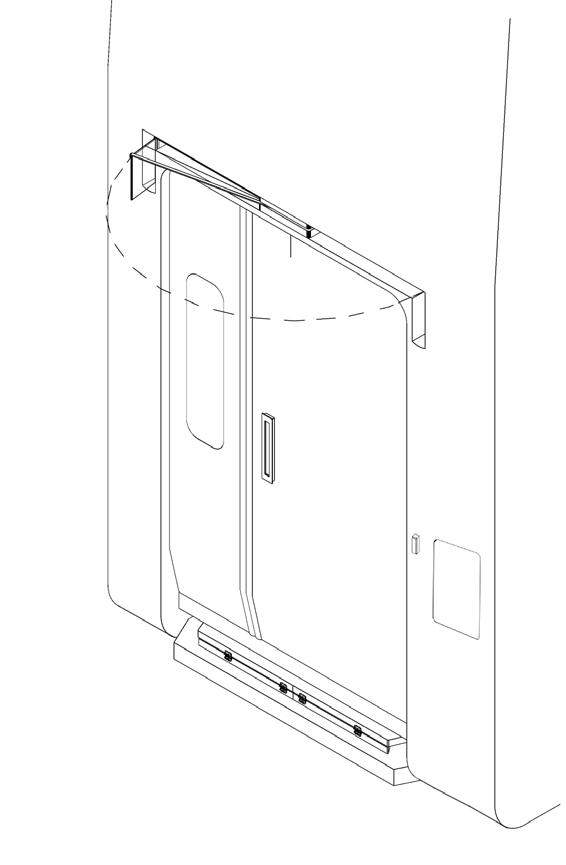
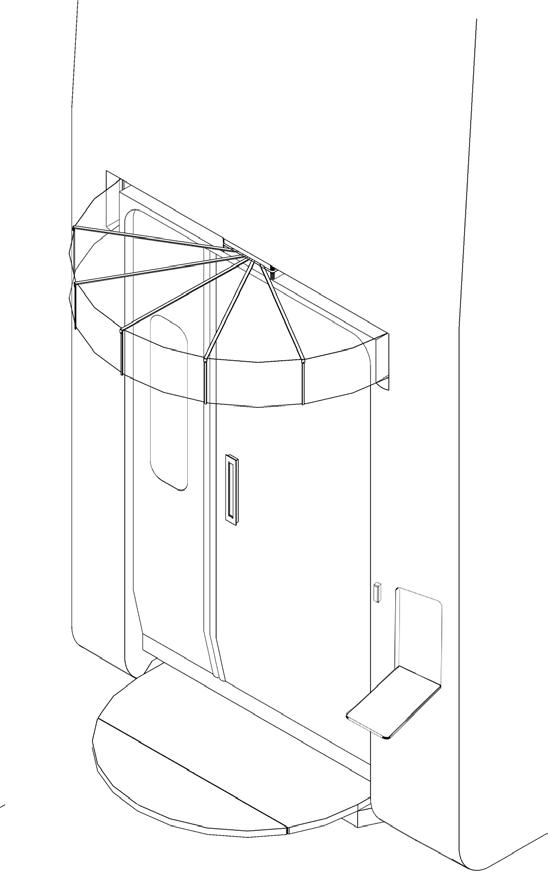
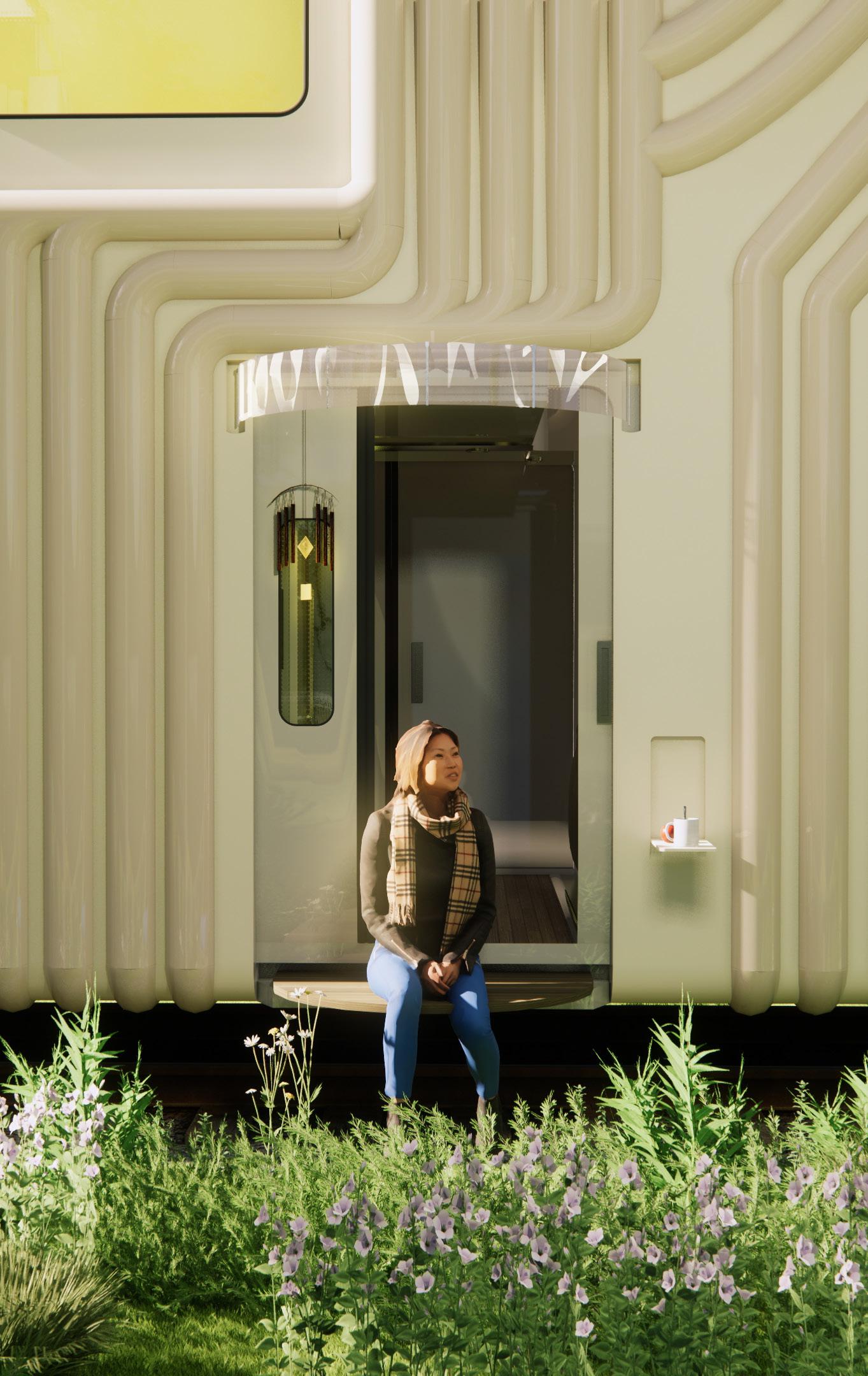
Front Door
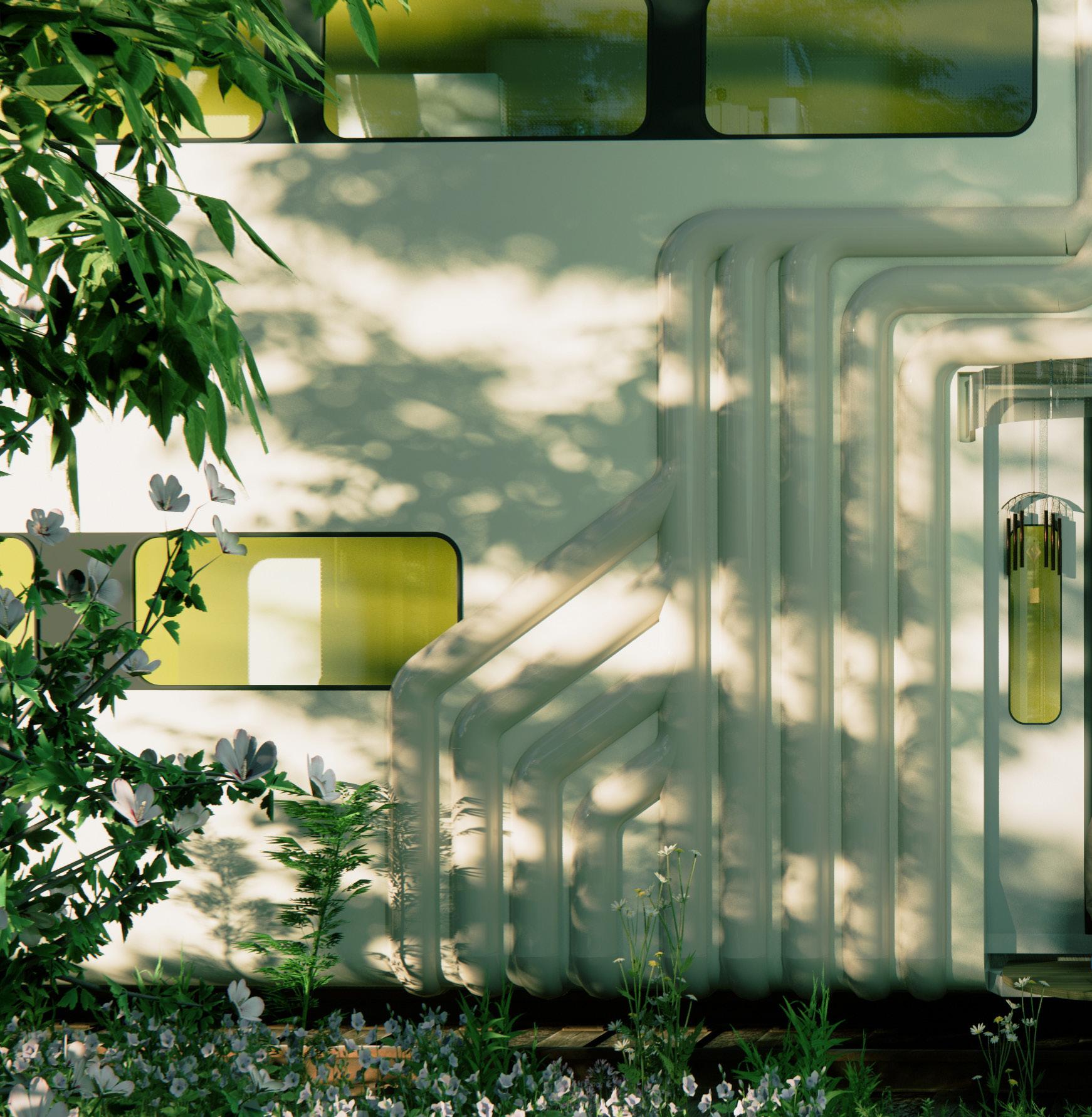
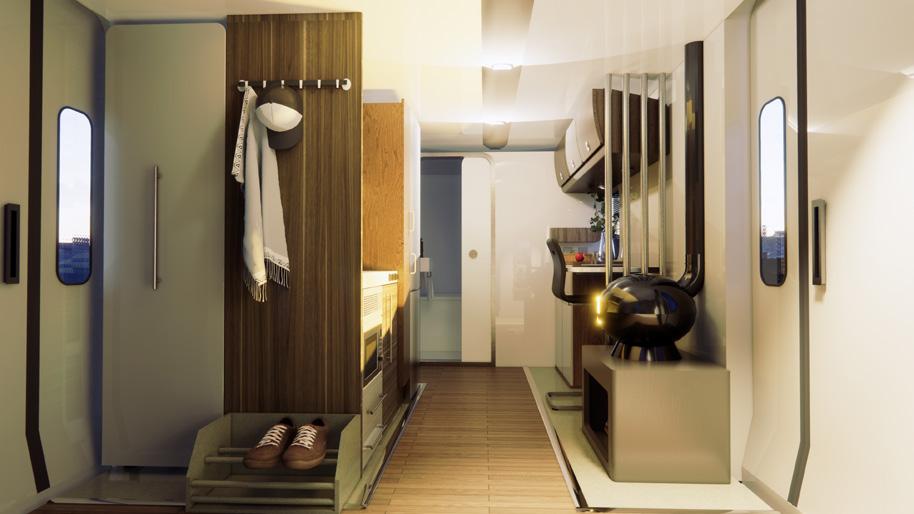
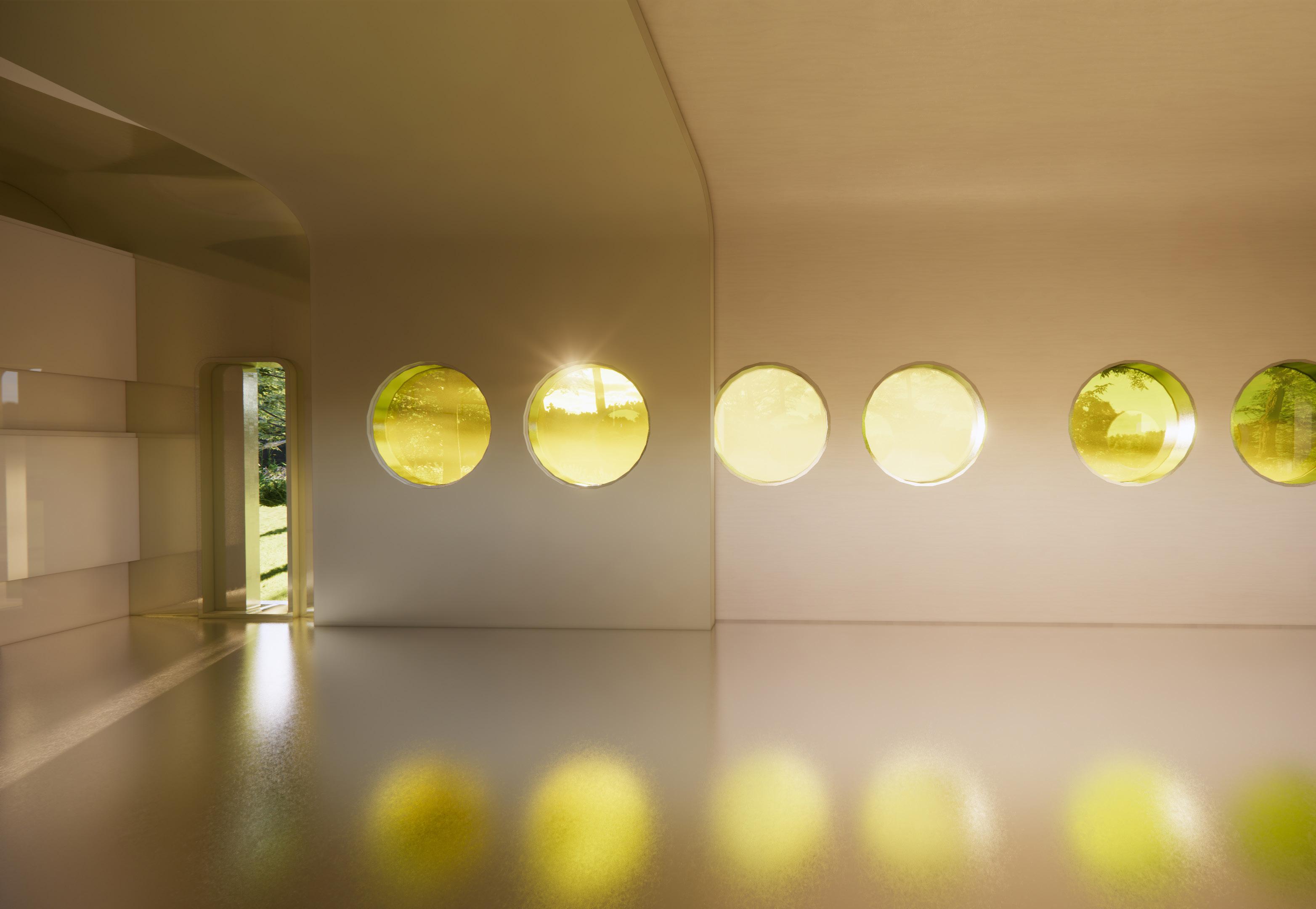
While retaining all necessary functions create a sense of Home.
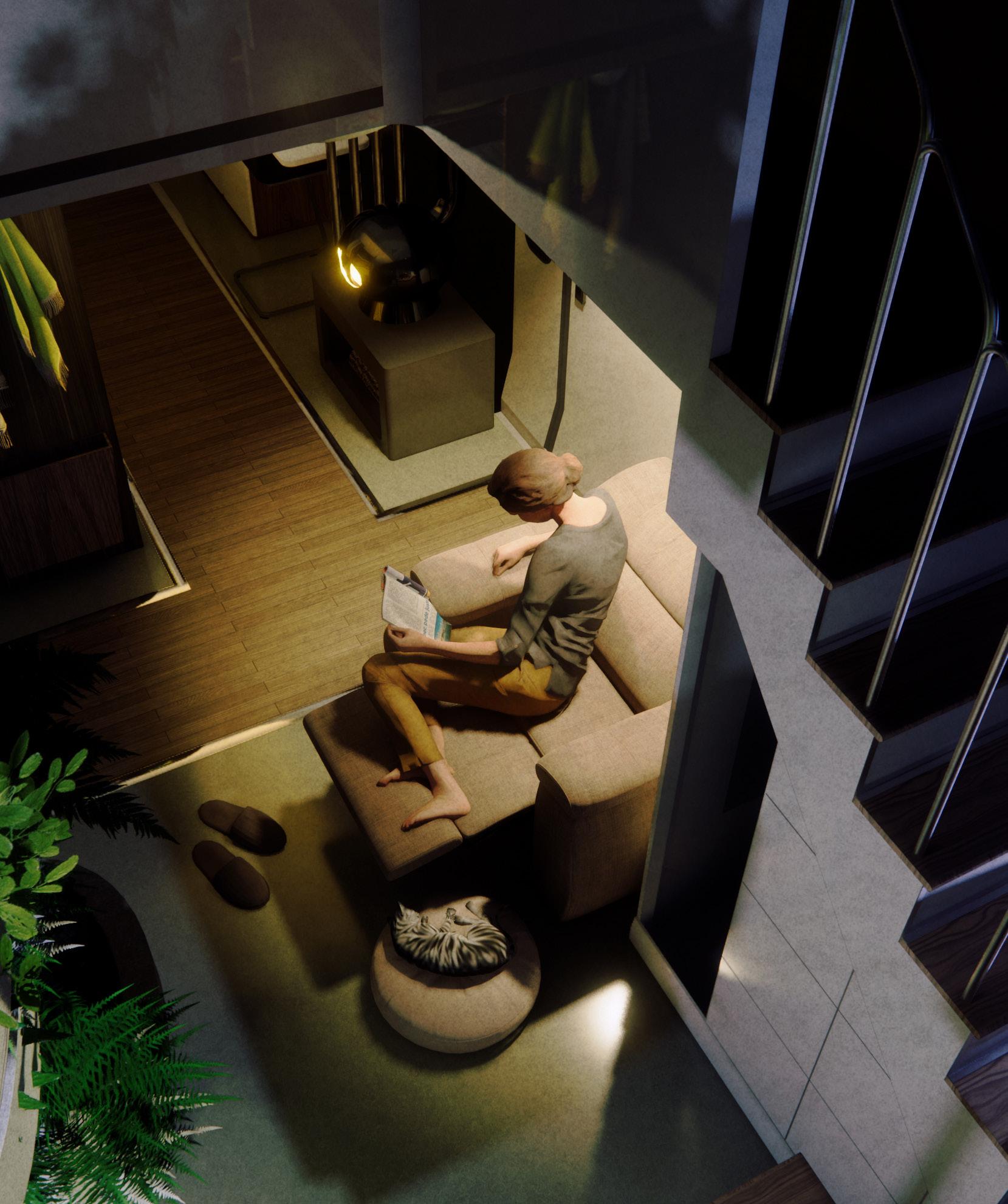
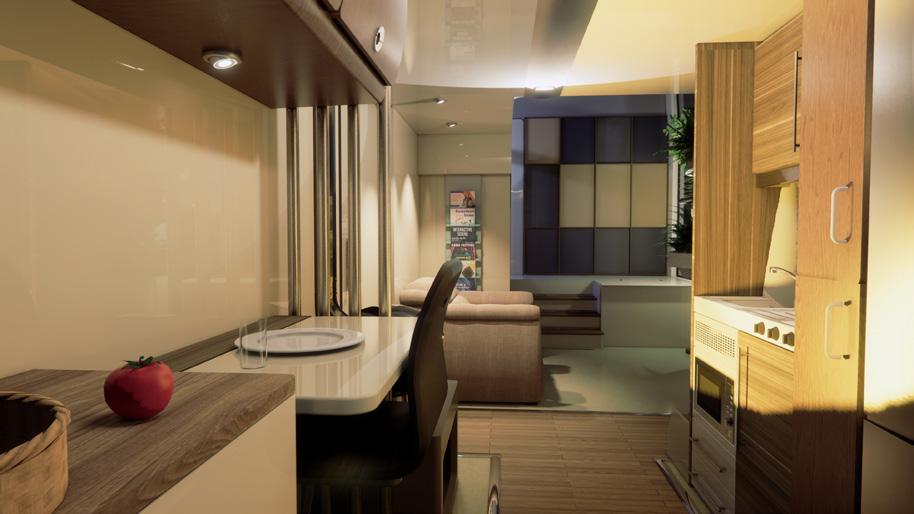
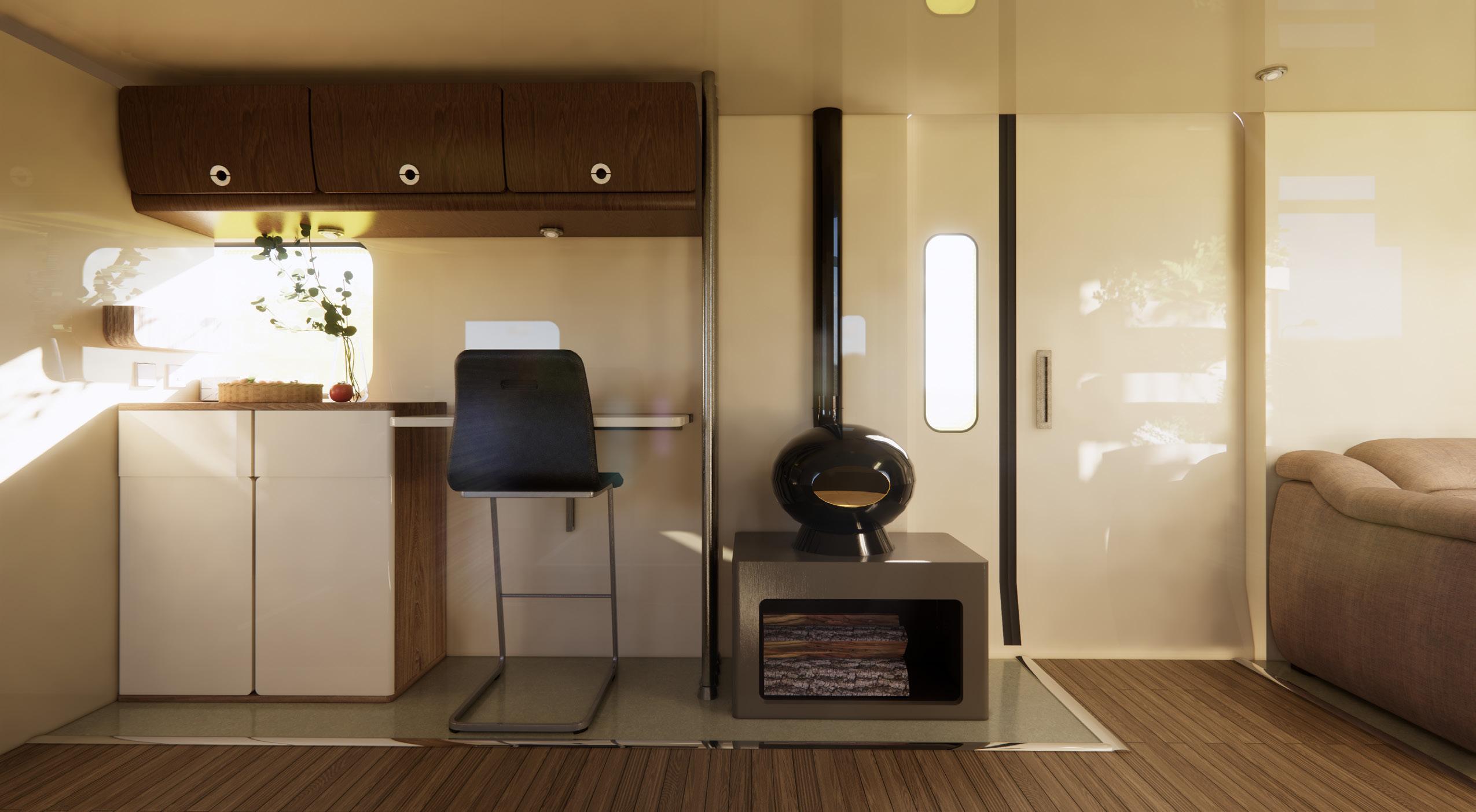
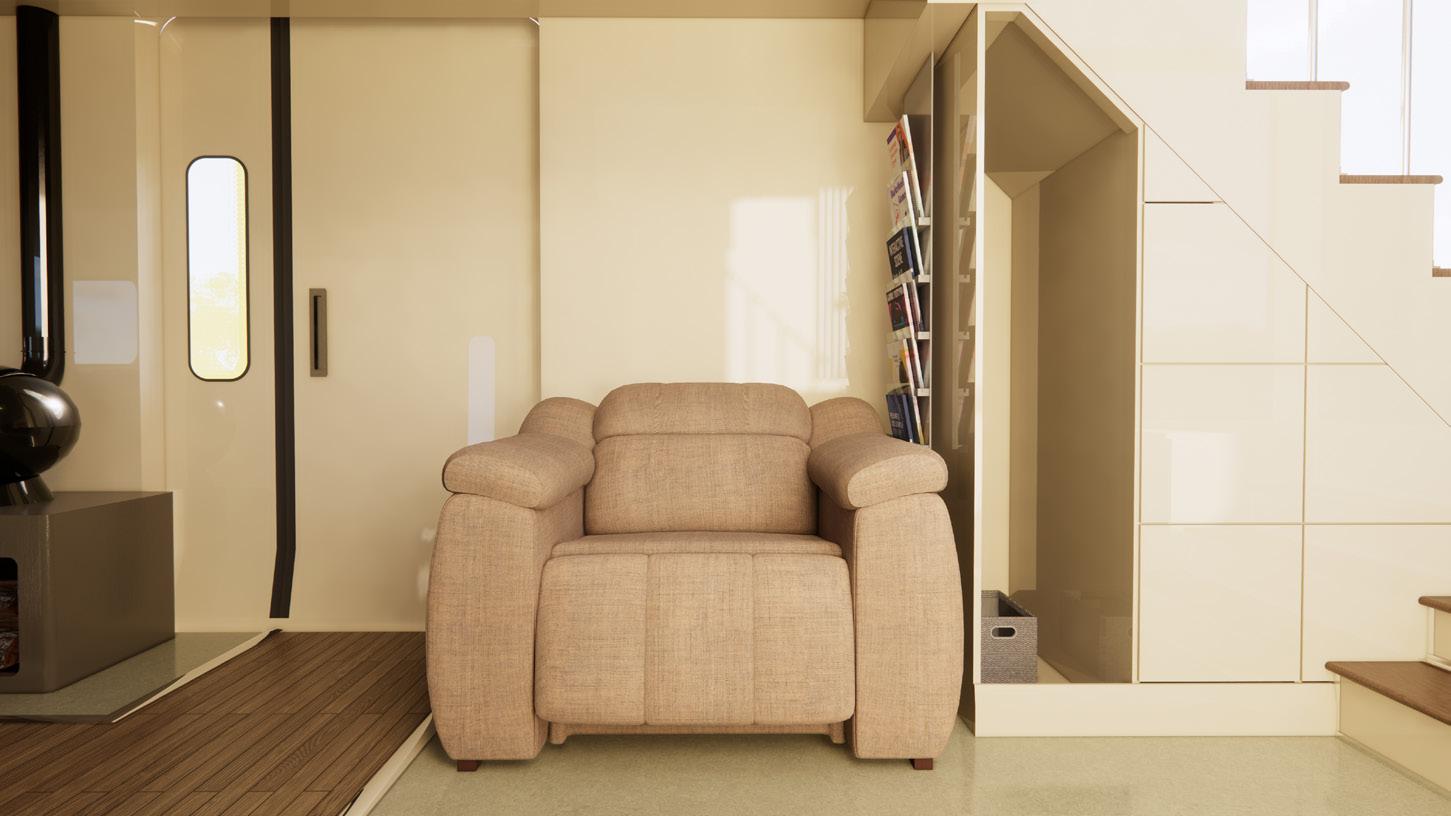
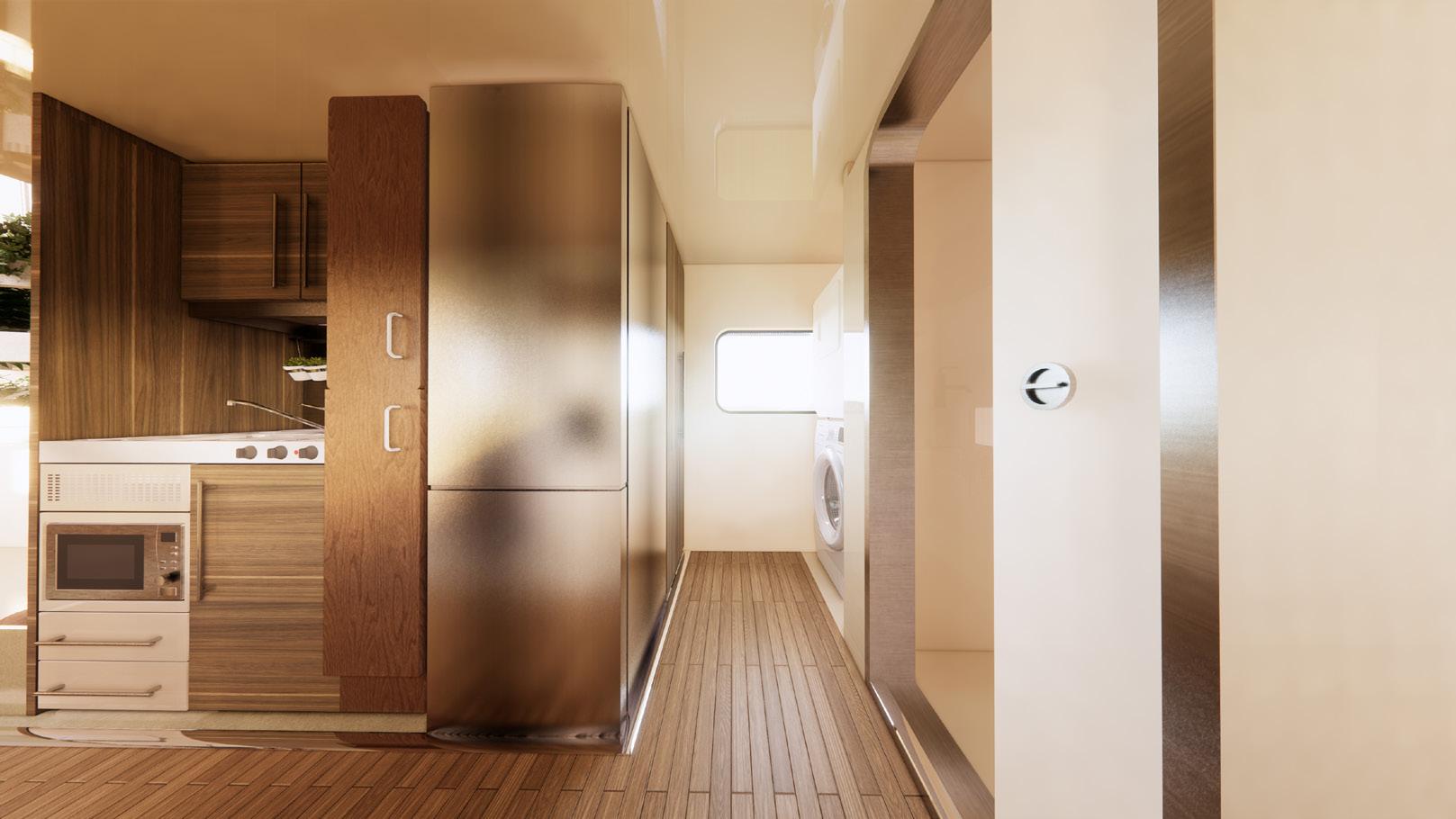
The lower level features a compact kitchen and dining table. A fireplace adds both stability and warmth to the space, serving as a source of heat energy and a symbolic decoration.
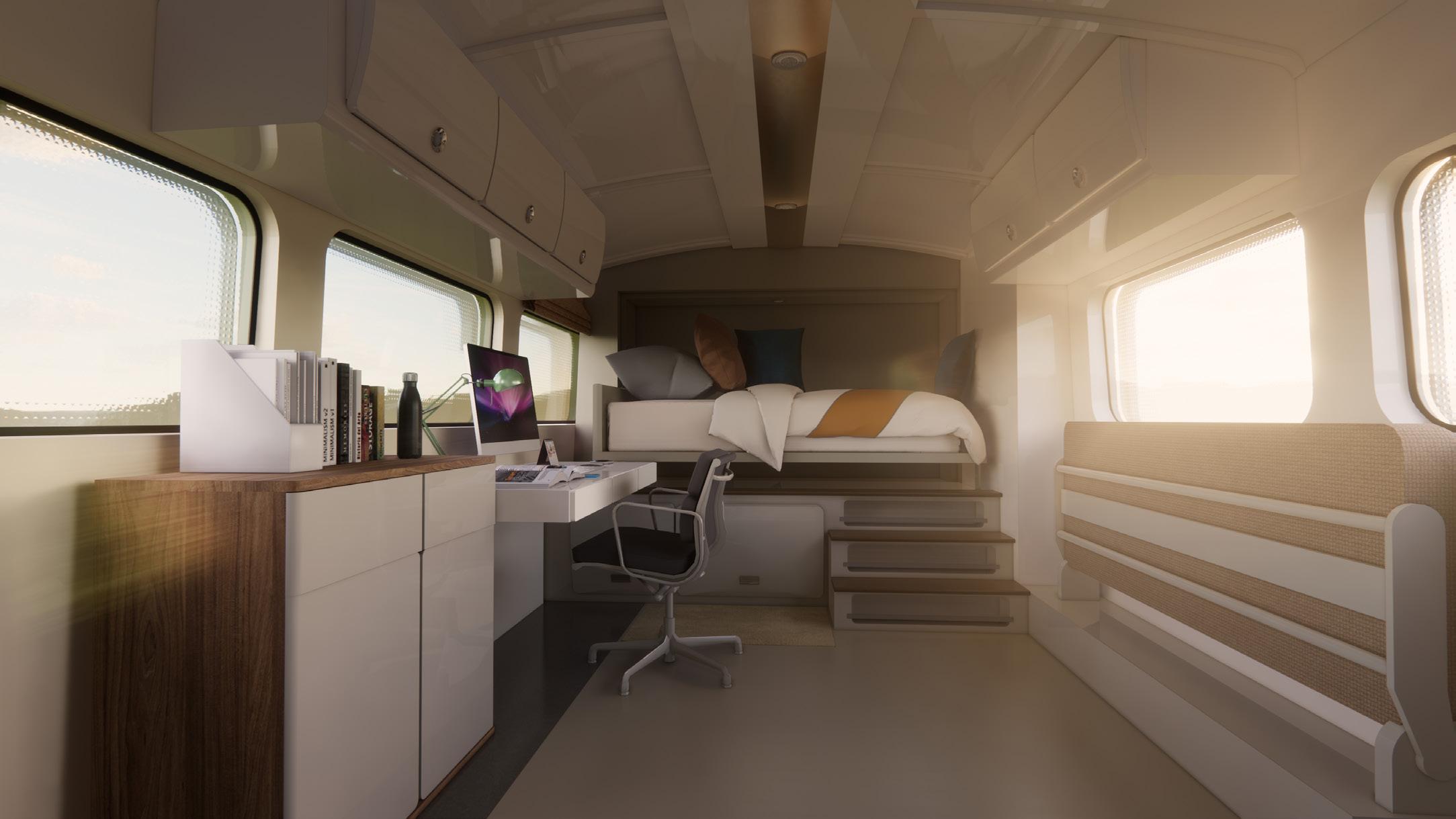
The bed, desk, and sofa in the bedroom are all foldable, offering flexibility and practicality. The upper level is designed to provide versatile use as needed.
STORAGE
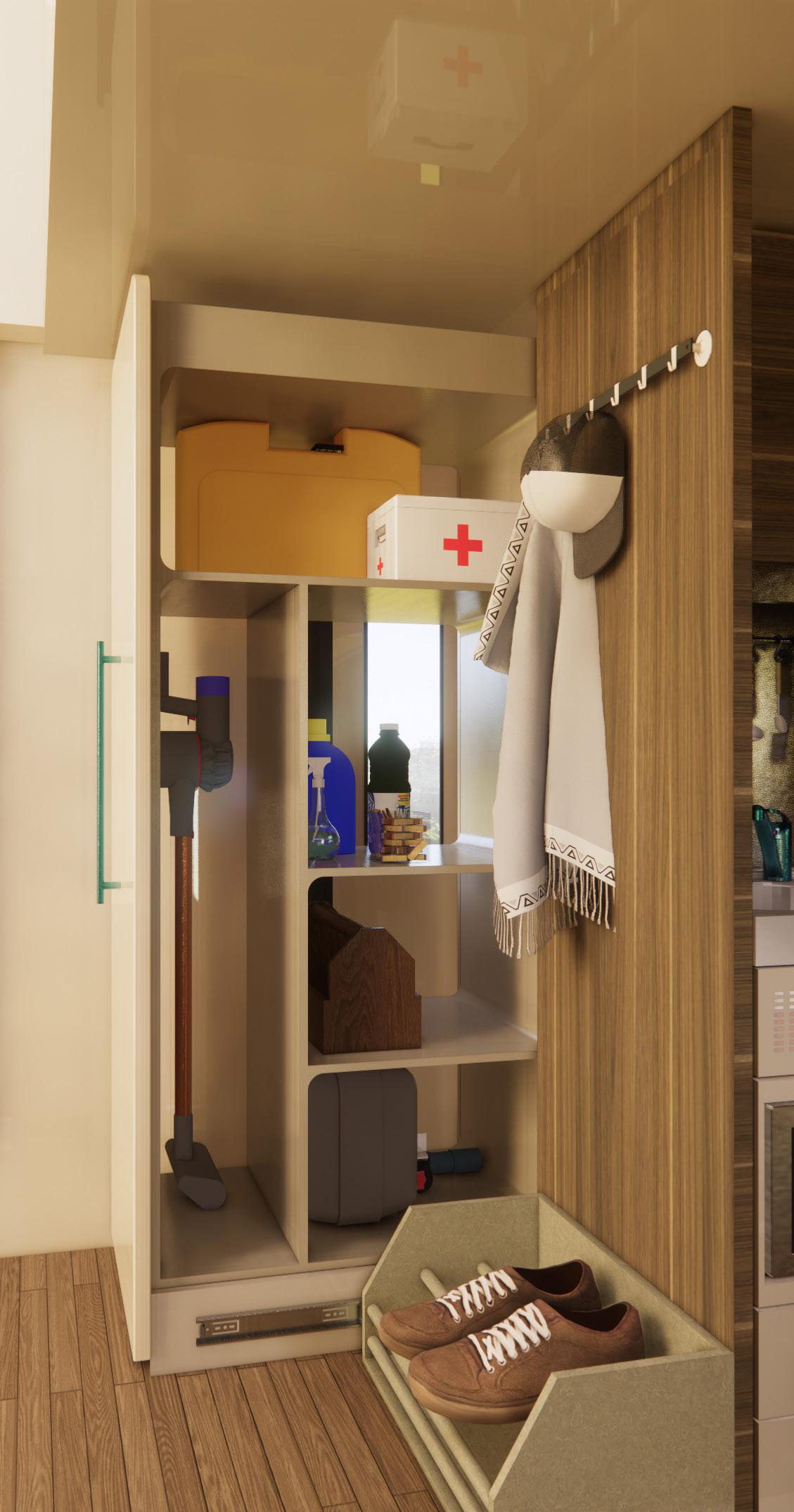
This space offers ample storage capacity, with a pull-out storage unit installed in the central area for convenient indoor and outdoor use. The area under the stairs is also designed as a storage space for cushions and other items.
OTHER FUNCTION
Low-power washer and dryer are included in the design, and the wet bath bathroom, located on the lower level, features a normal-sized bathtub. Storage space is also thoughtfully designed in these areas to provide practical solutions for organizing and storing personal items.
GREENHOUSE
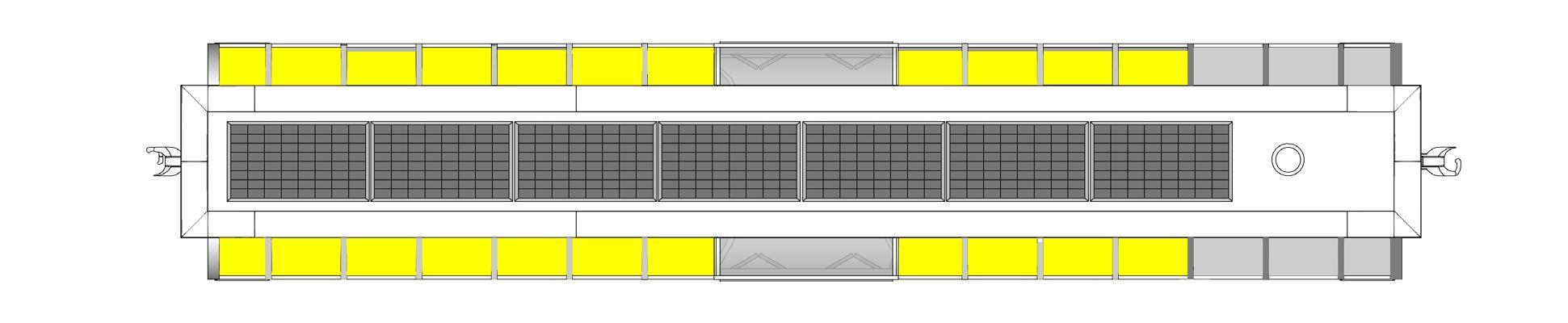
Solar Power
-Solar Panels
400W for growing light
Aquaponics farming installation
Backup Storage
-Power Generator -Water Tank -Batteries -Propane -Independent Heaters -Camping lantern
Water Recycling
-Rain water Collecter and filter
-Drip irrigation system
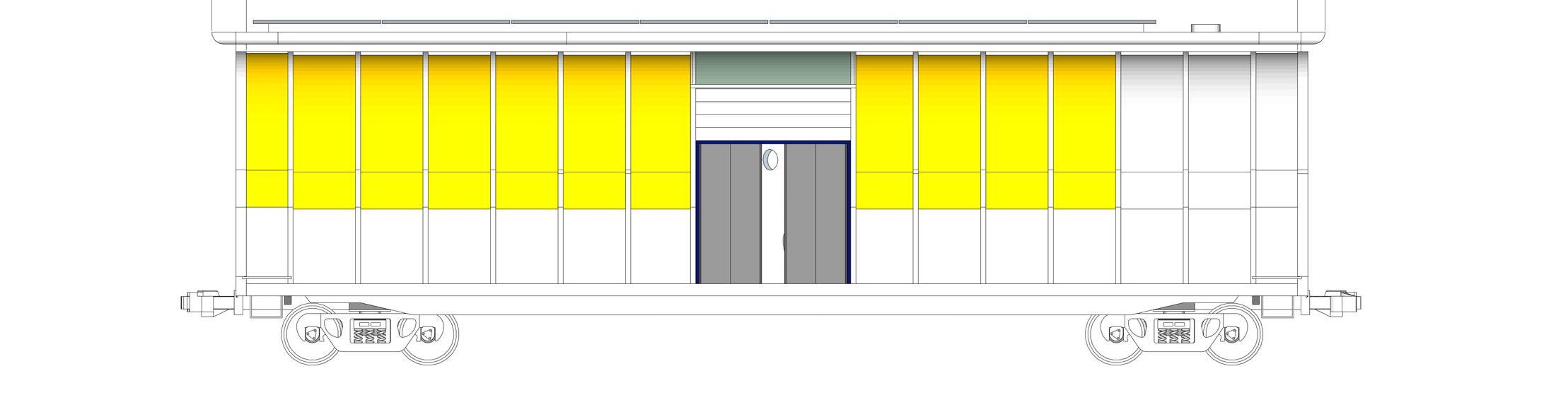
Roof Plan
Elevation
Floor Plan
Aquaponics farming installation
Storage
Garden Sink
Food Forest
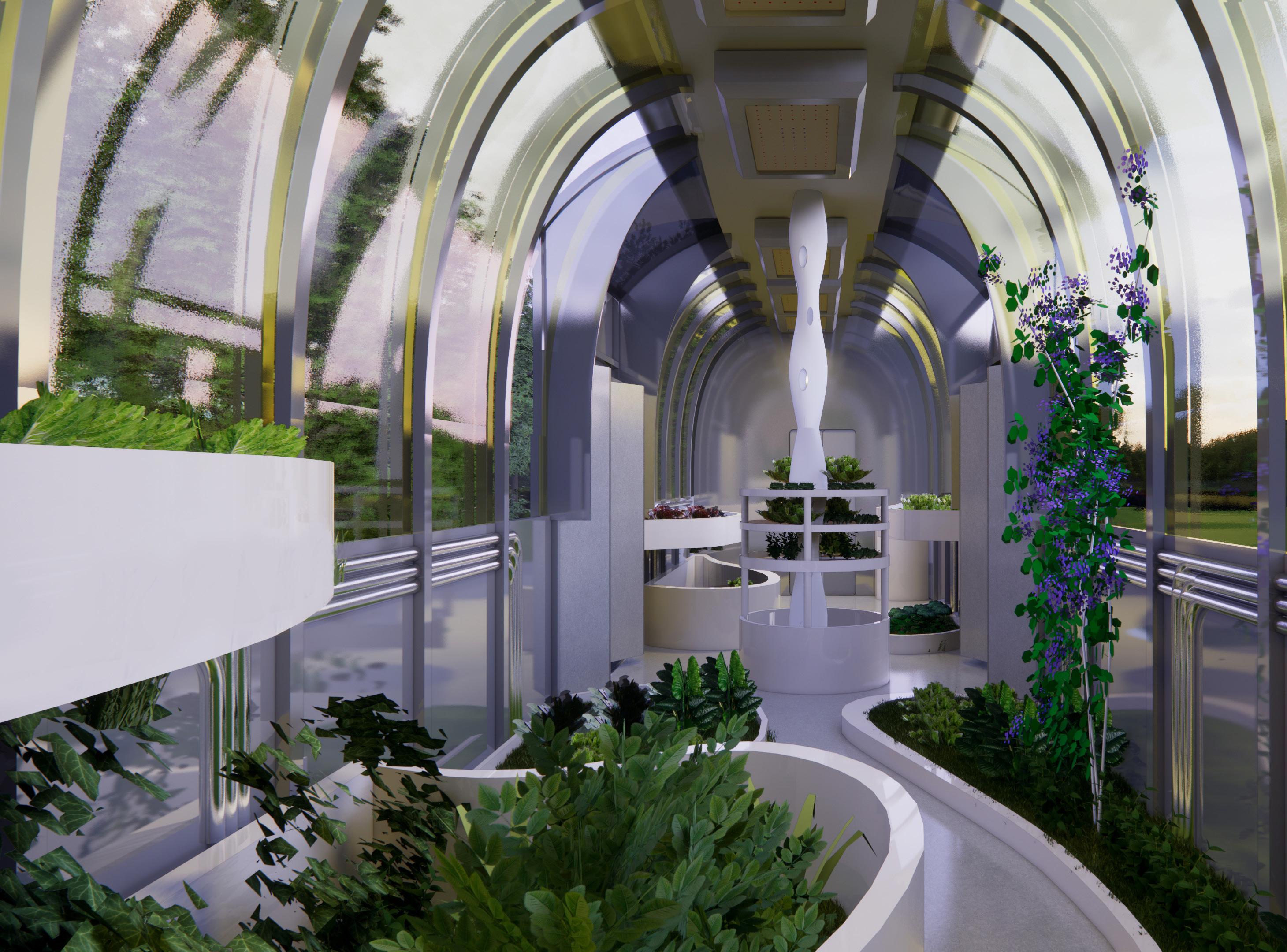
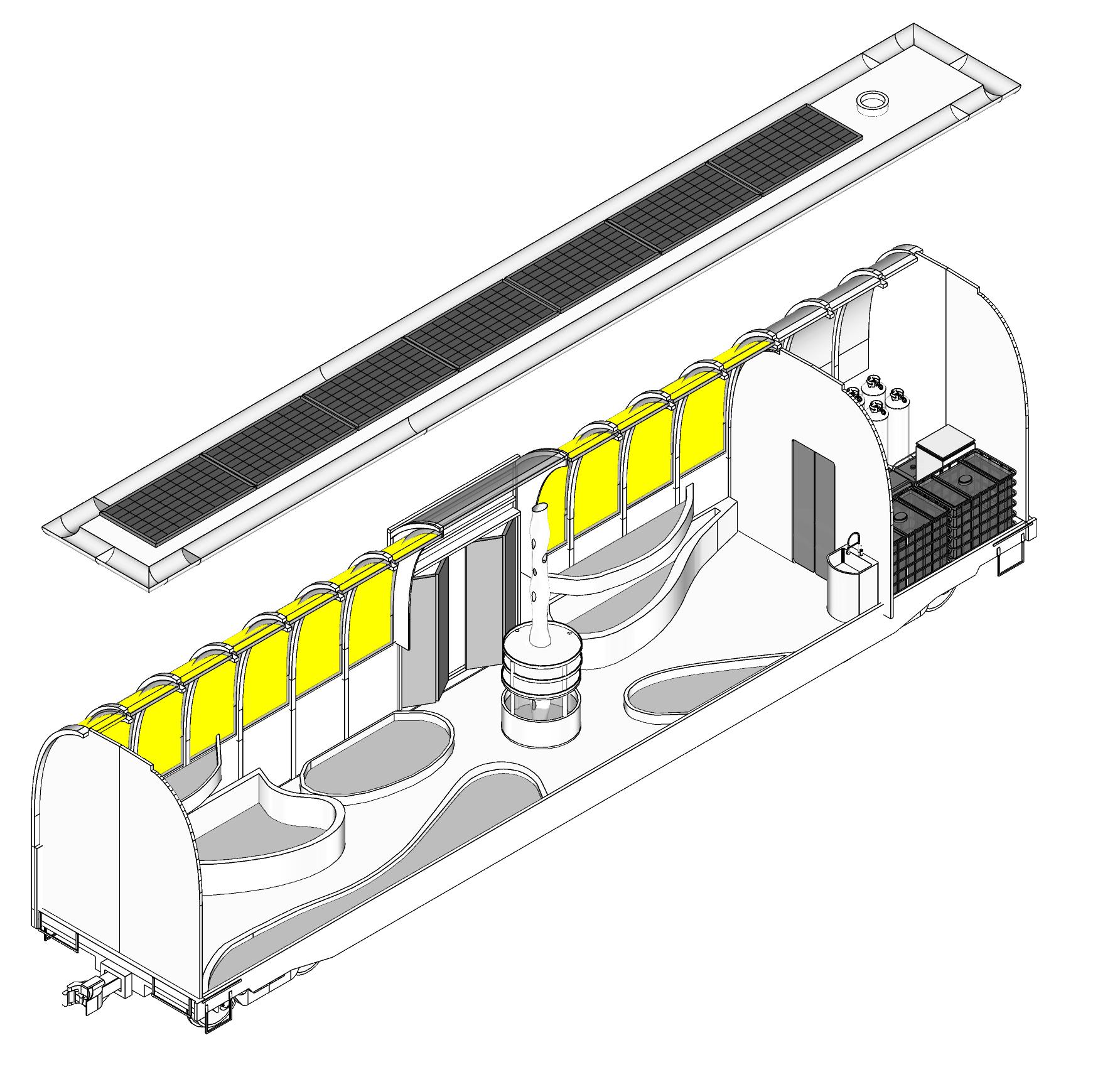
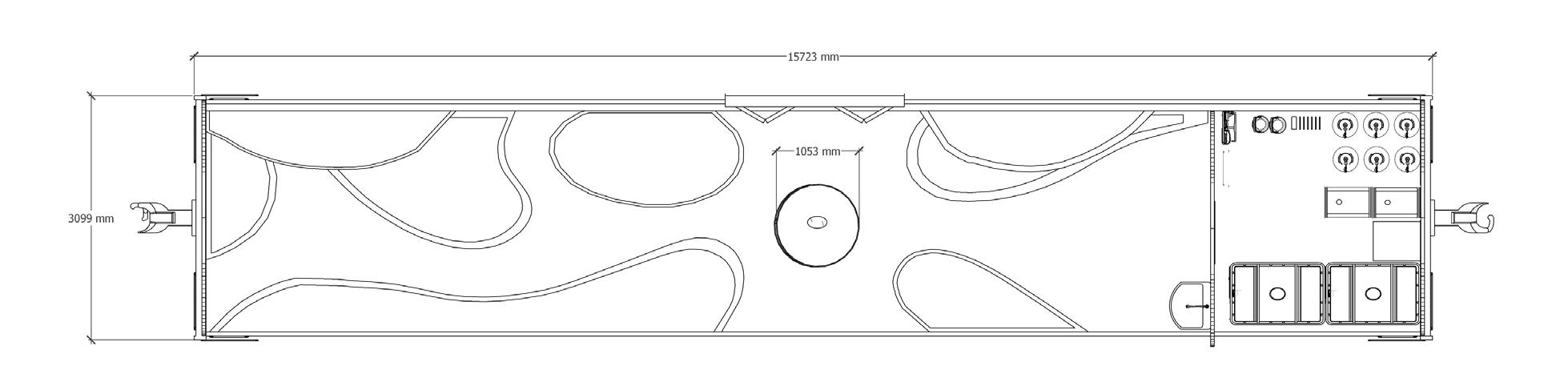
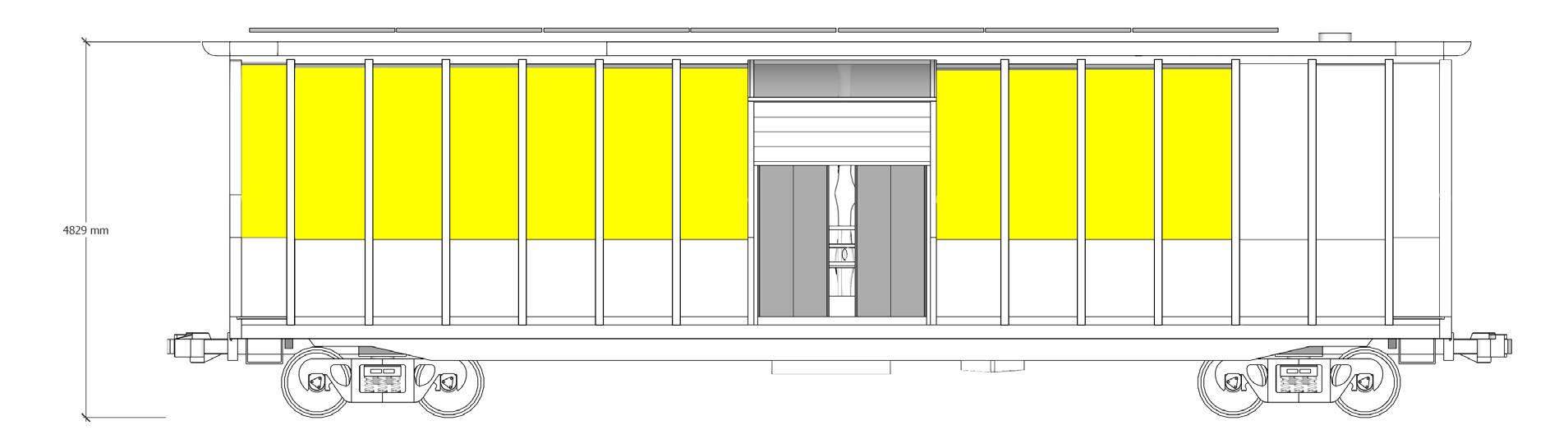
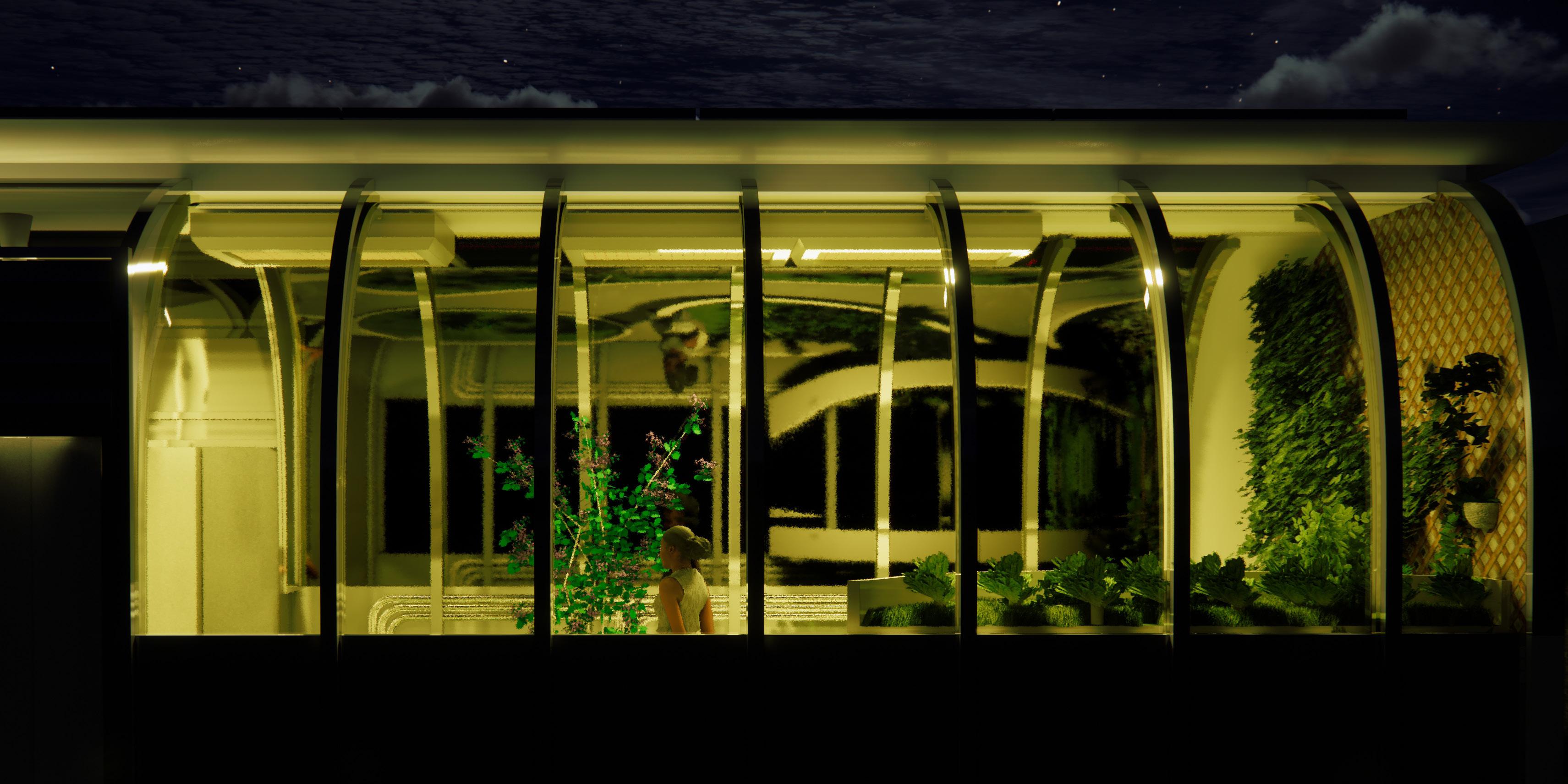
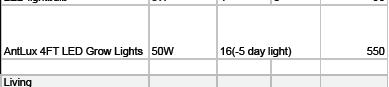
All the electricity collected in this space is used for plant growth lighting, which is provided by the grow lights installed on the car ceiling. To support plant growth, these lights may need to be used for up to fifteen hours a day.
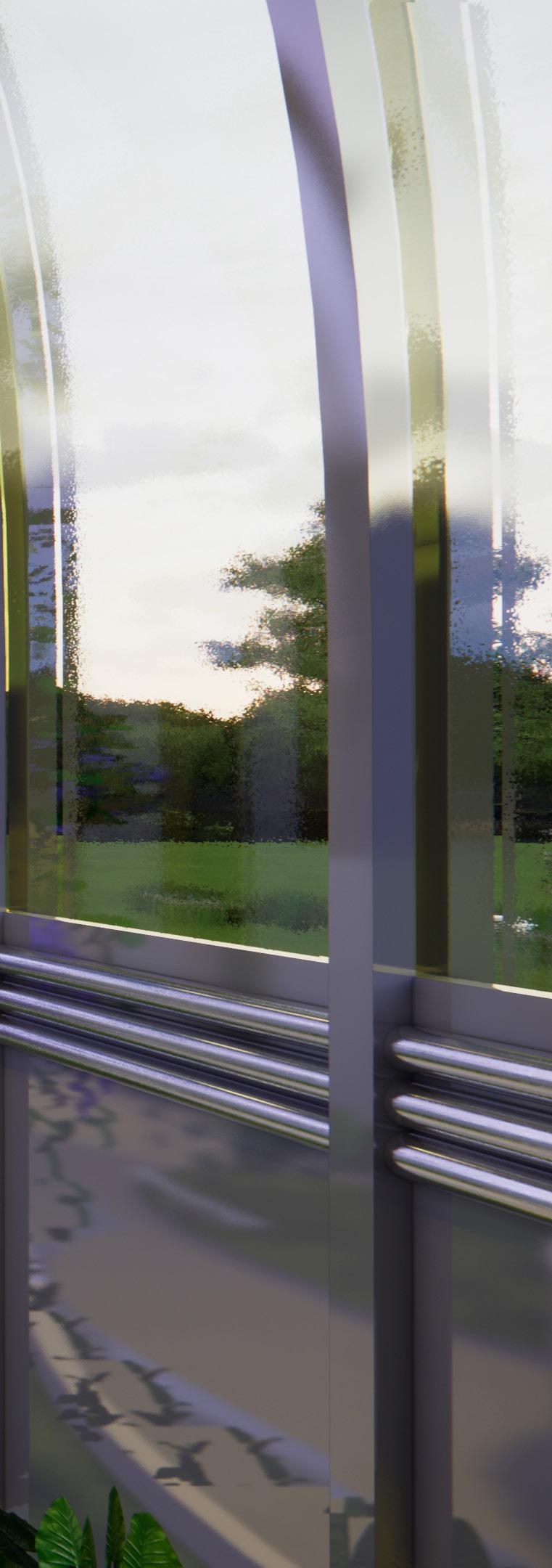
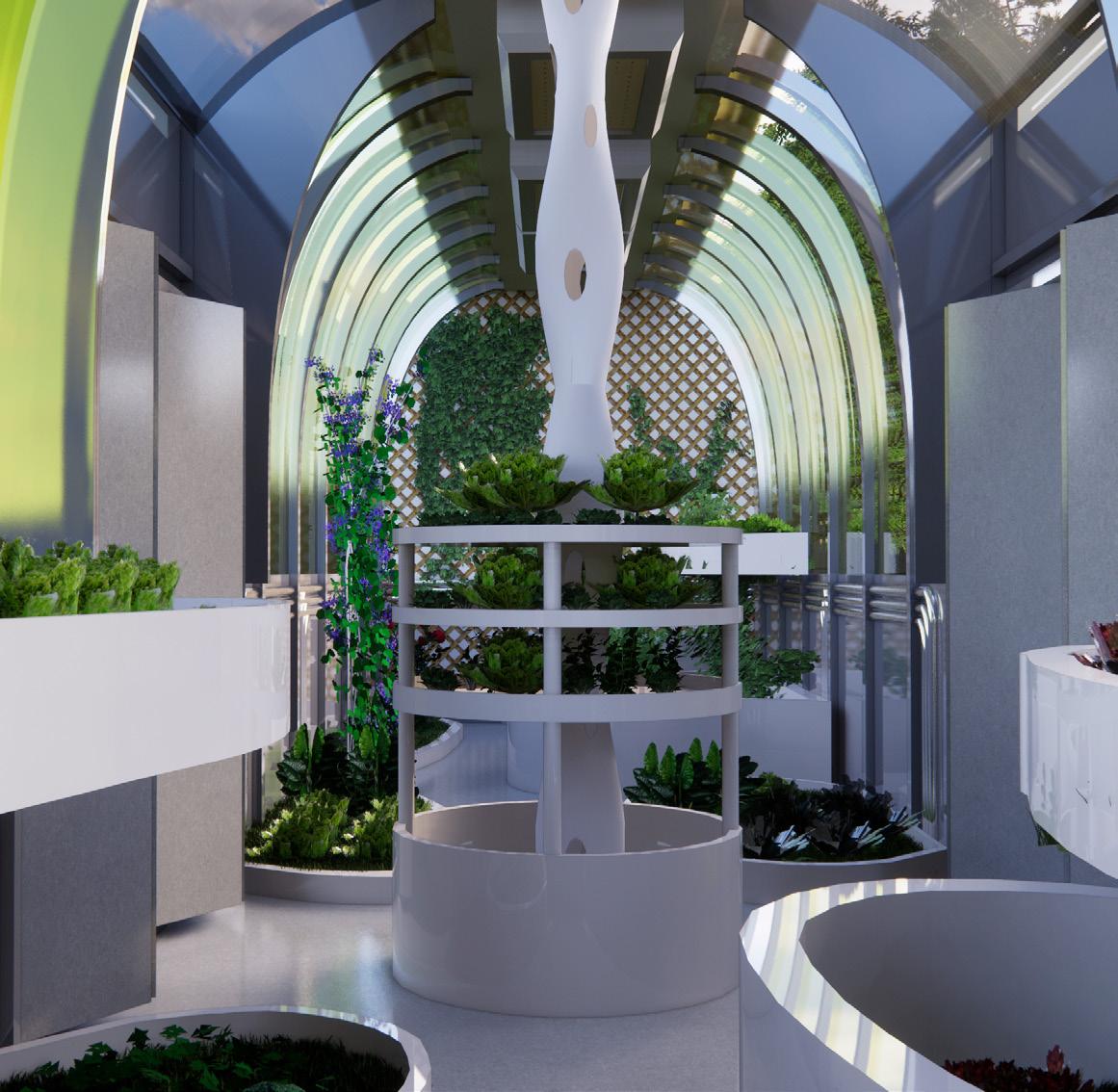
In the center of the car, there is an aquaponics device, which uses a farming technique that combines fish cultivation with vegetable growing. The fish provide rich fertilizer for the plants, while the plants clean the water from the tank, creating a symbiotic relationship between the two
GATHERING SPACE
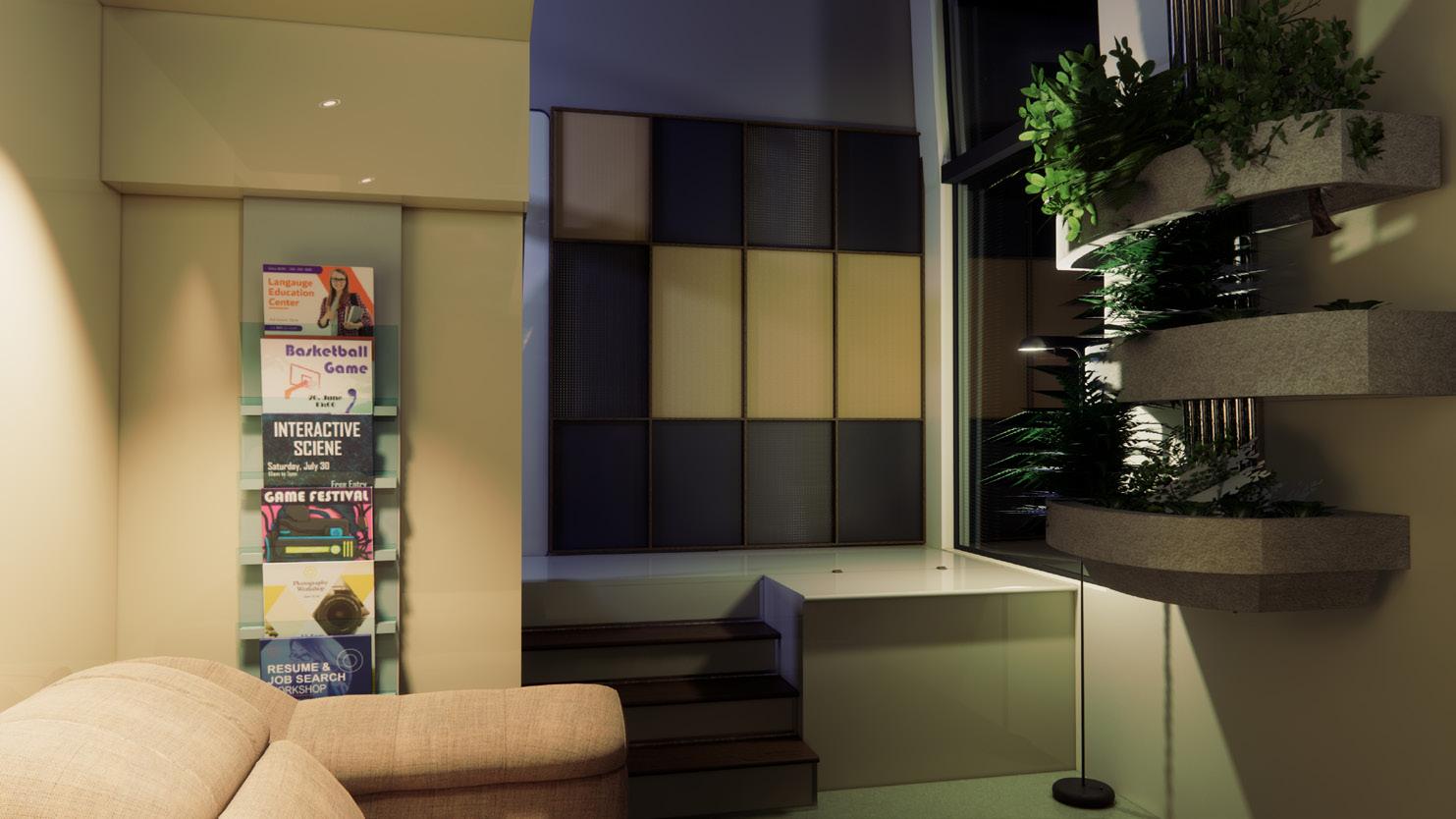
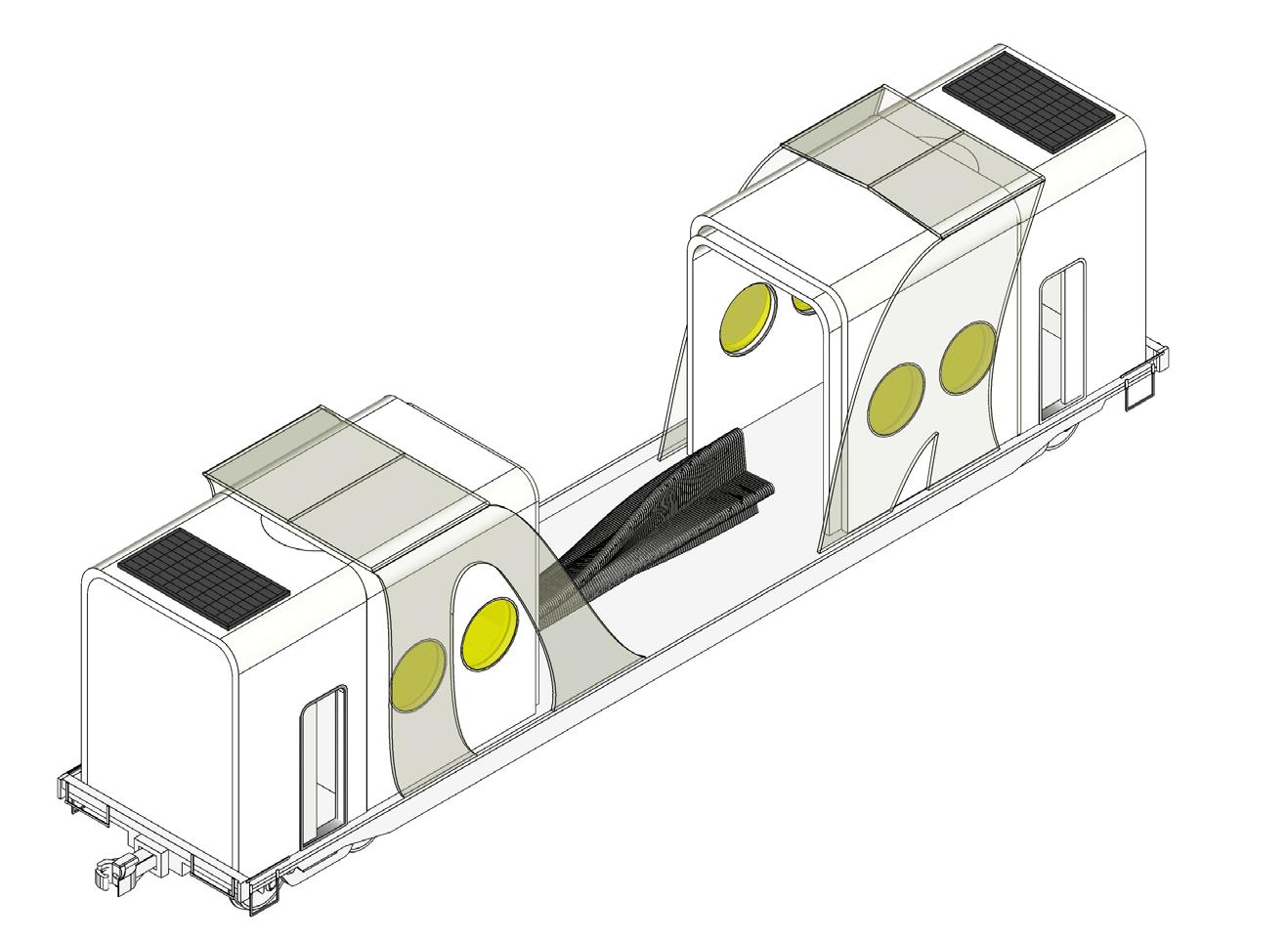
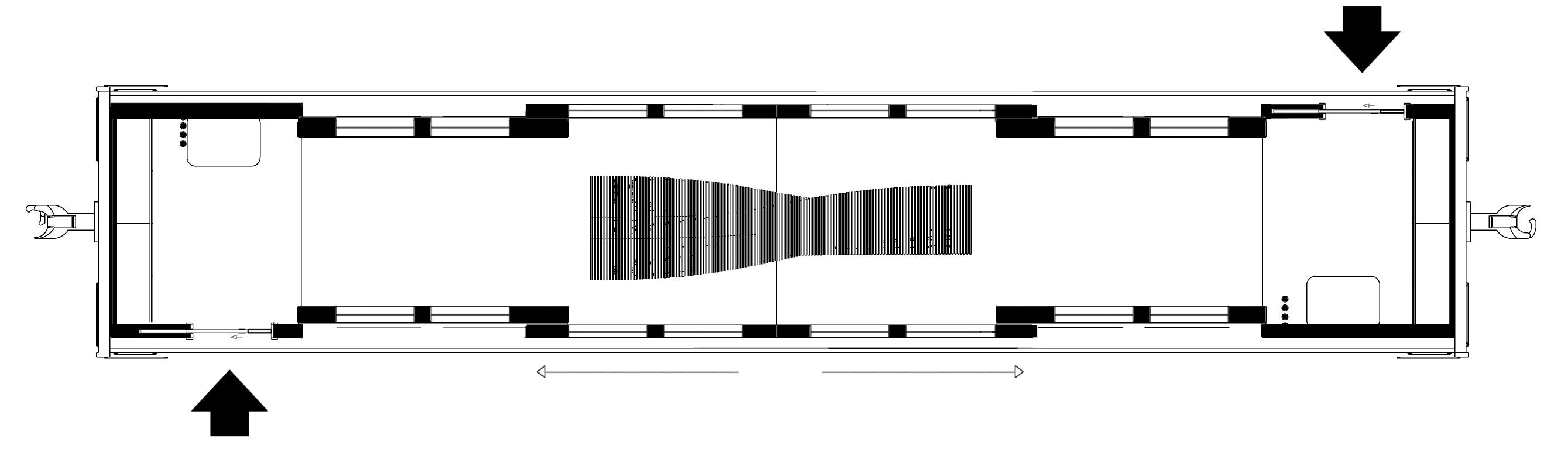
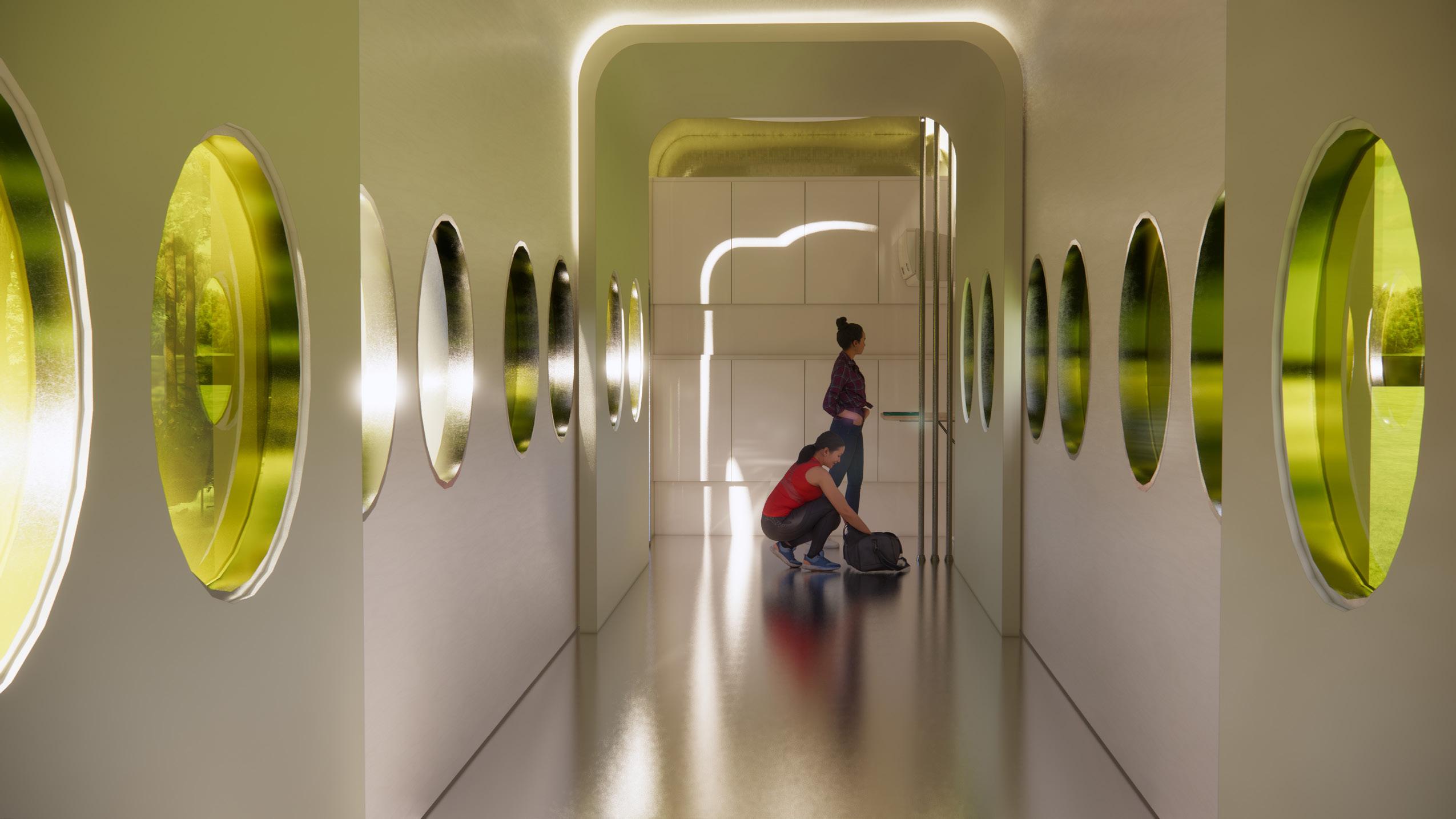
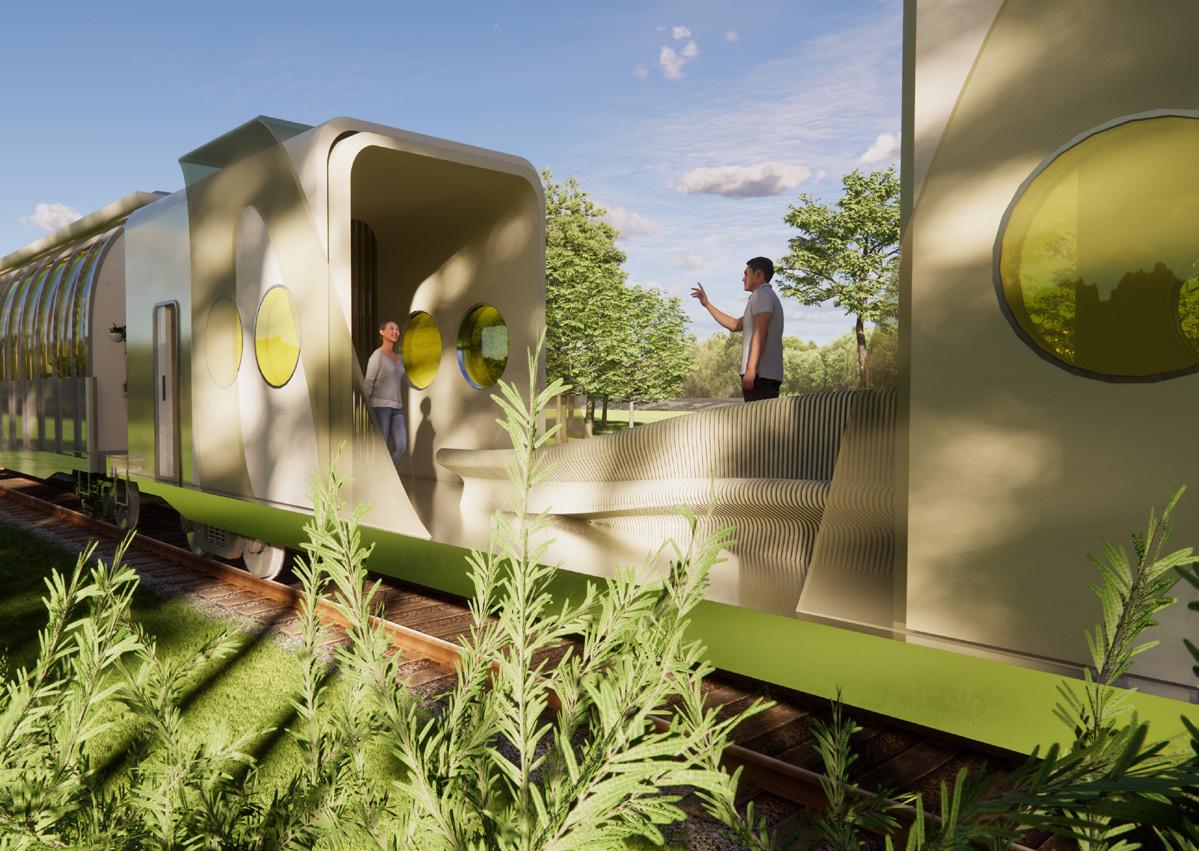
The gathering car is designed for recording information, sharing knowledge and seeking help. It can also be a place for exchange and meeting events. Compared to other car this car is running in low energy production and use, with mostly passive design.
Folding Stool
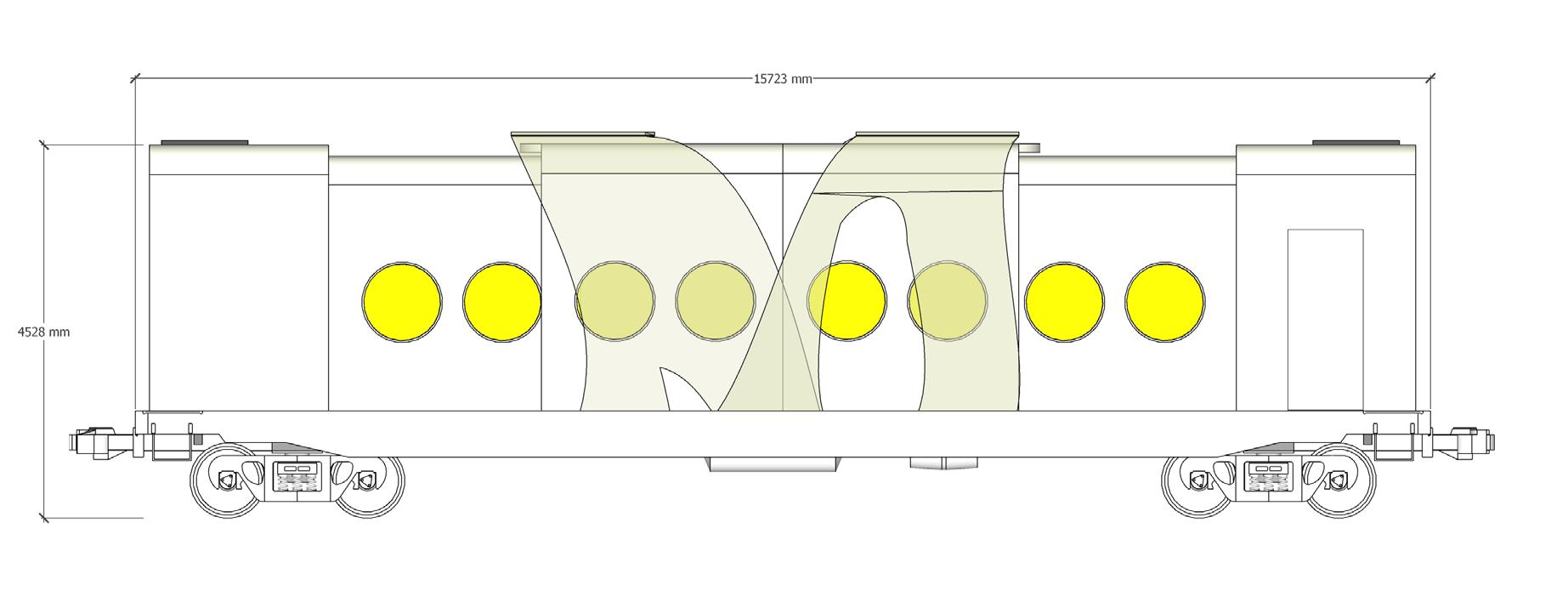
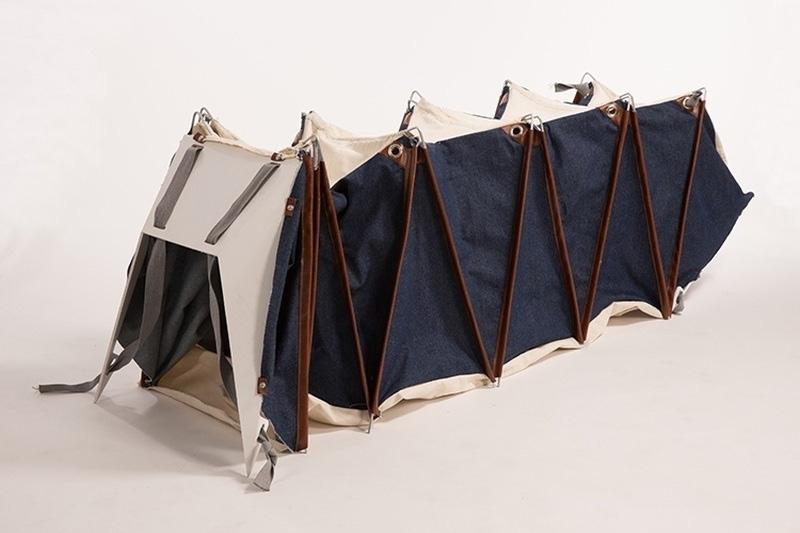
Transformable Shell
Shelf and Table
Solar Panel
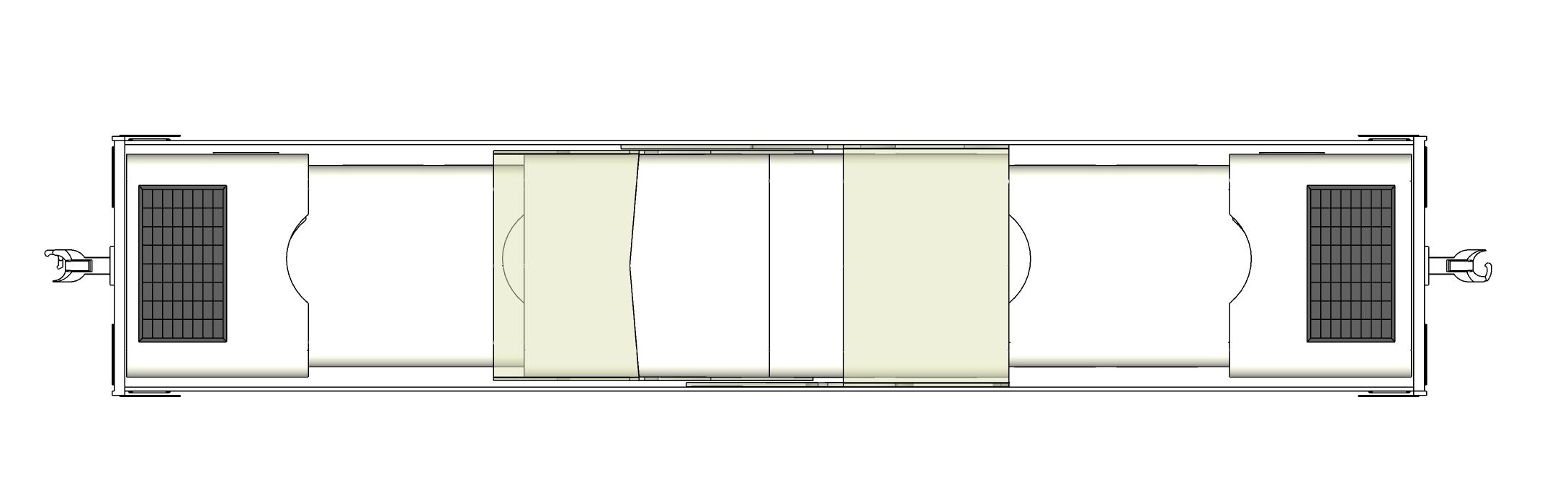
Roof Plan
Elevation
Floor Plan
Folding Table Storage Shelf
Folding Stool
Gathering car are used when more than five people enroll in the project. This space would likely be inactive most of the time. Also presented in design with simple shapes and functions.
SYSTEMS & INTEGRATION
Supporting systems that will provide a level of comfort is essential for the living experience. This section introduces the solutions that provide all or part of the living required resources. A hybrid of multiple systems will be installed to enhance the resilience of the project.
Water Supply
From the Whole Building Handbook the average requirement per person per day of water is around 215 litres (Johansson et al., 2007). According to estimates, the demand for living in this project is 47 Gallons per day.
Rainwater Collection & Filtration
Rainwater is often seen as a good supply of water for purposes that don’t require drinking. Pipes on the roof collect rainwater and filter it into tanks for storage.
However, harvesting rainwater from roofs alone does not achieve substantial usage in Alberta’s climate. The roof of the living car can only collect around 5 gallons of rainwater per day. As a mobile home, water can be obtained from supply stations, adjacent water sources and independent rainwater collectors.
Water Storage
The living unit has water storage tanks totalling 4000 Gallons. Other than wastewater storage space, the water storage when full would supply at least 40 days of water without rainfall.
WATER USAGE PER DAY (GALLONS )
-17 GallonsGardening(Living Car only)
-3 Gallons Laundry
-2 Gallons Personal Hygiene
-3 Gallons Cooking & Cleaning
-1 Gallons Drinking
-20 Gallons Shower
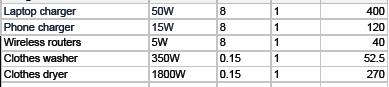
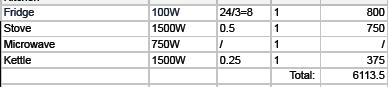
-1342w Appliances
Electrical
-1925w Cooking
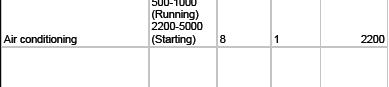
-2200w Air Conditioning
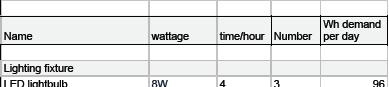
-690w Lighting
Solar Power
Living Car have multiple energy systems to provide life support. The energy generated by the solar panels is generally enough to support life and backup battery charging. However, in the event of a power shortage in extreme weather, there is also a backup energy source that can be used.
Peak Sun Hours
A peak sun hour equates to 1 hour in which the sun’s solar irradiance (sunlight) produces an average of 1000W (energy) per square meter (roughly 10.5 feet). In other words: 1 peak sun hour = 1000 W/m² of sunlight per hour. The average peak sun hours in Alberta is 3.3 hours per day. Floats according to the season.
Power Generation
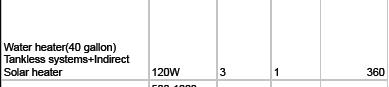
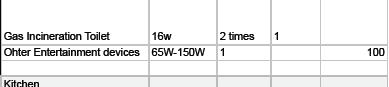
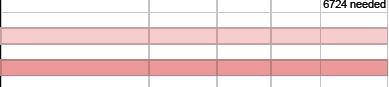
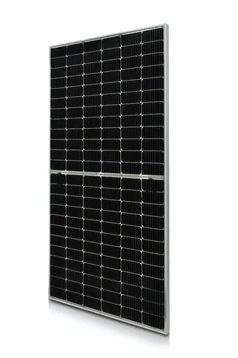
According to the calculation of single person usage, a daily energy consumption of 6724 watt-hours is required. In order to generate sufficient electricity from solar panels during peak sun hours, which are 3.3 hours per day in the local area, the average hourly energy consumption is 6724 watt-hours divided by 3.3 hours, which is 2037 watt-hours. The selected solar panels for this project have an output power of 400 watts. Therefore, the number of panels required is 1364 watt-hours divided by 400 watts, which is 5.1 panels. 10 solar panels were installed per unit in this project to ensure usage.
Product SKU: LG410N3C-V6
Brand: LG
Length: 74.01in
Width: 41.02in
Height: 1.57in
volts.ca
LG 410W NeON® H+ Solar Panel
Heating And Cooling
The project uses electric-driven air conditioners, and three options in total are provided to ensure heating in winter. Air conditioning, backup propane system and wood-burning stove. The air conditioner used too much electricity and couldn’t last for a long time in the self-generating system. Therefore participants need to be wise using the air conditioner.
In addition, geographically, there are ideal spots and difficult spots to stop the car at. Borrowing mountains and topography can have unexpected effects.
Window Air Conditioning
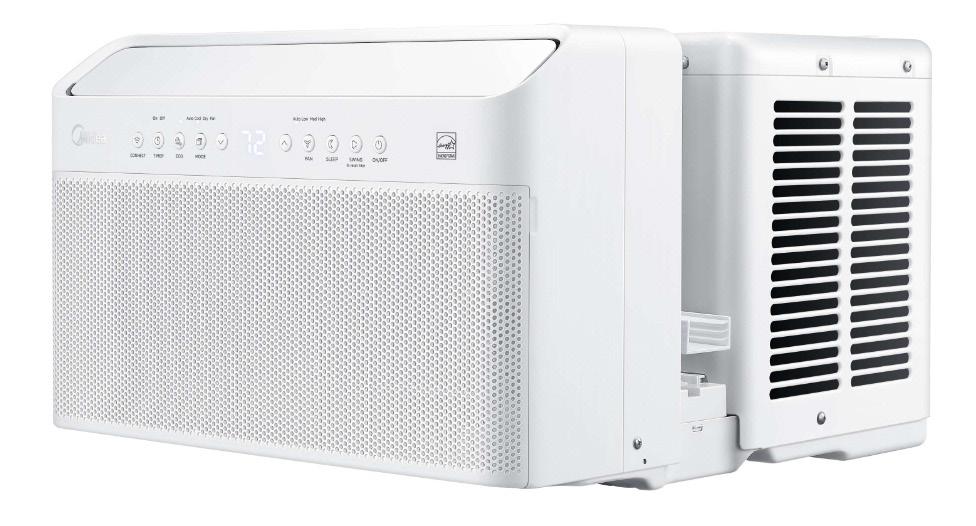
Window air conditioners are one of the least energy-consuming air conditioning systems and are safer and longer lasting than wall-mounted air conditioners. Ideal for offgrid living.
Electric Tankless Water Heaters
Tankless water heaters would heat water instantly as it flows through a network of twists and turns. Unlike a conventional water heater, there’s no standing water stored in a tank. This makes tankless water heaters more energy-efficient since the water is only heated when it’s needed. The biggest downside of tankless water heaters is their higher initial cost.
midea.com
Model Number: MW10MSWBA6RCM
Colour: White
Cooling Capacity: 10,000 BTU
Fan Speeds: Auto, High, Med, Low
Control Type: Electronic
Gardening
Drip Irrigation Systems
Most of the planting areas use a drip irrigation system to save water for precise control of water consumption. Water is sent by water pipes around the walls and branched to each planting area.
Grow Light
Plants need a certain minimum day length to grow and the days become shorter in winter. Grow lights were installed in the green house to provide the wavelength of light that plants need for photosynthesis.
Container
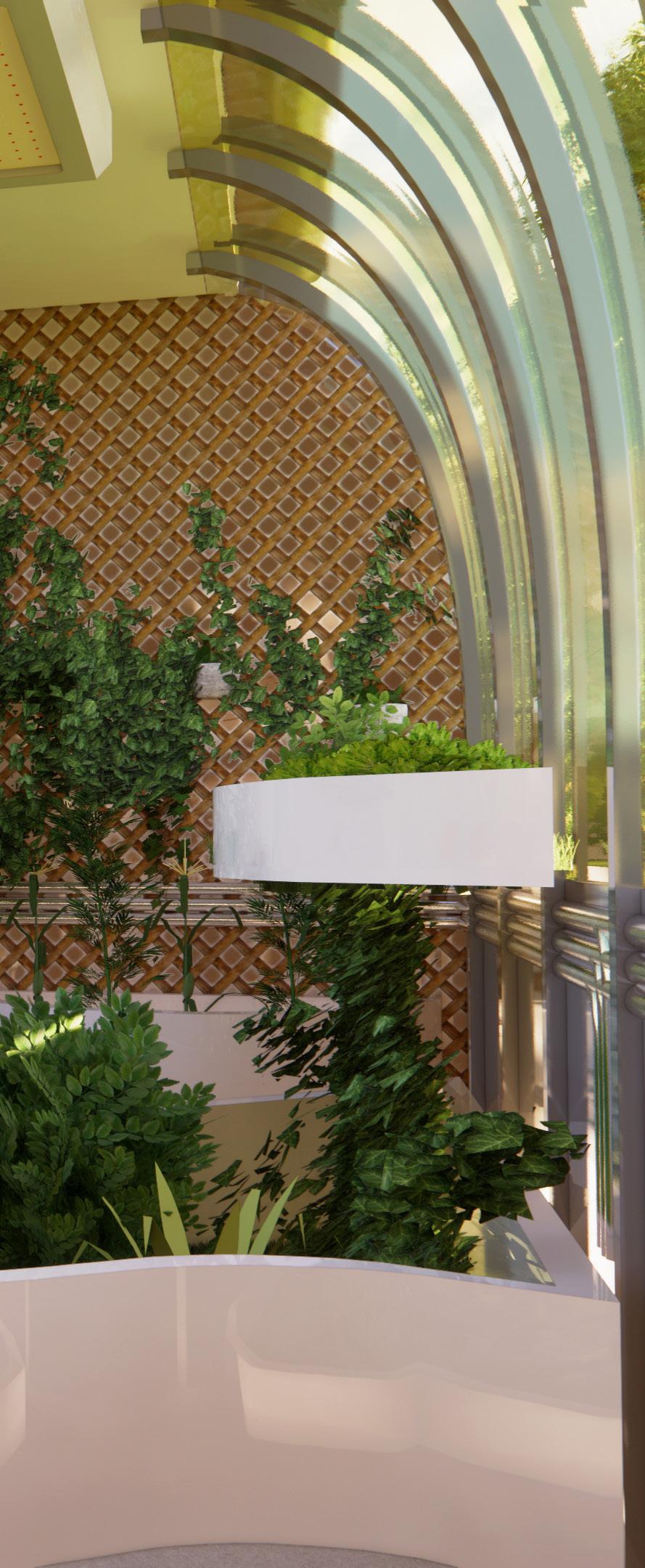
Different crops require different soil conditions with different depths. The greenhouse is equipped with planting containers ranging from 15cm to 50cm in depth, allowing for the growth of various root plants. At the back of the greenhouse a trellis was installed for climbing plants.
Aquaponics farming
Aquaponics farming is a technique that combines the cultivation of fish with the growing of vegetables. Aquaponic Devices in the greenhouse are configured with three grow beds, a media and a fish tank. This device uses very little maintenance resources as a closed-loop system.
Waste Systems
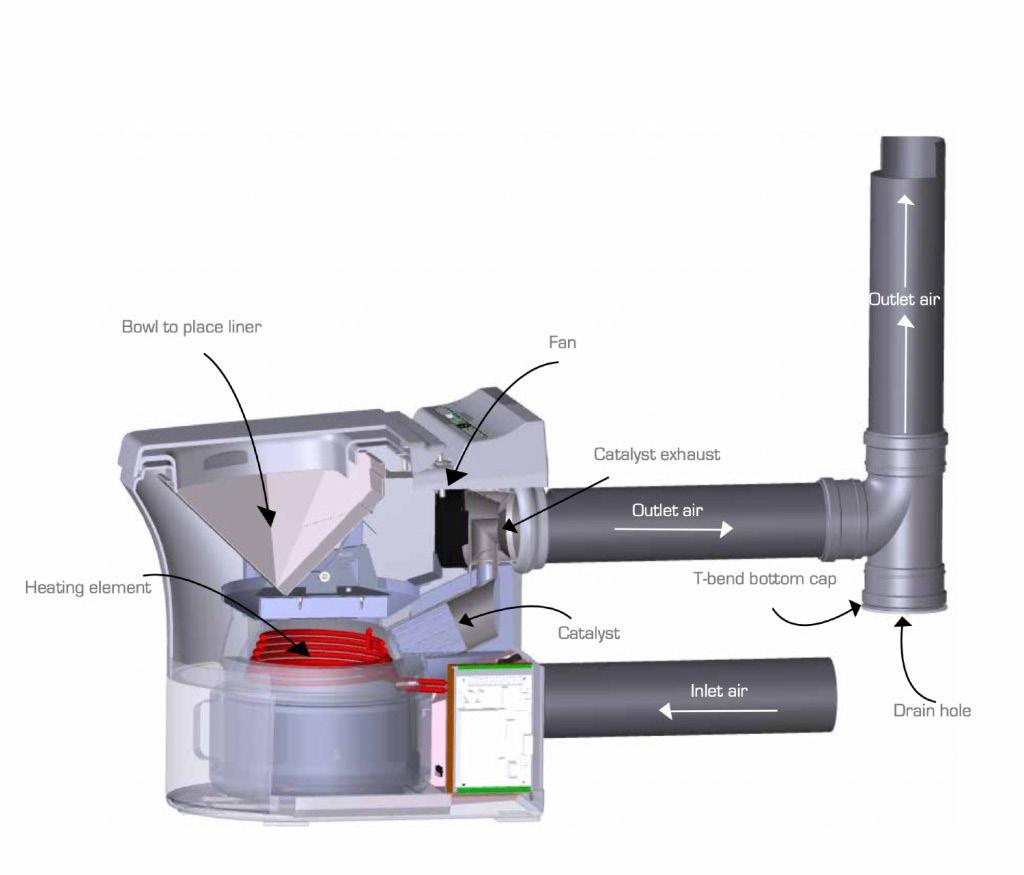
Incinerating Toilet
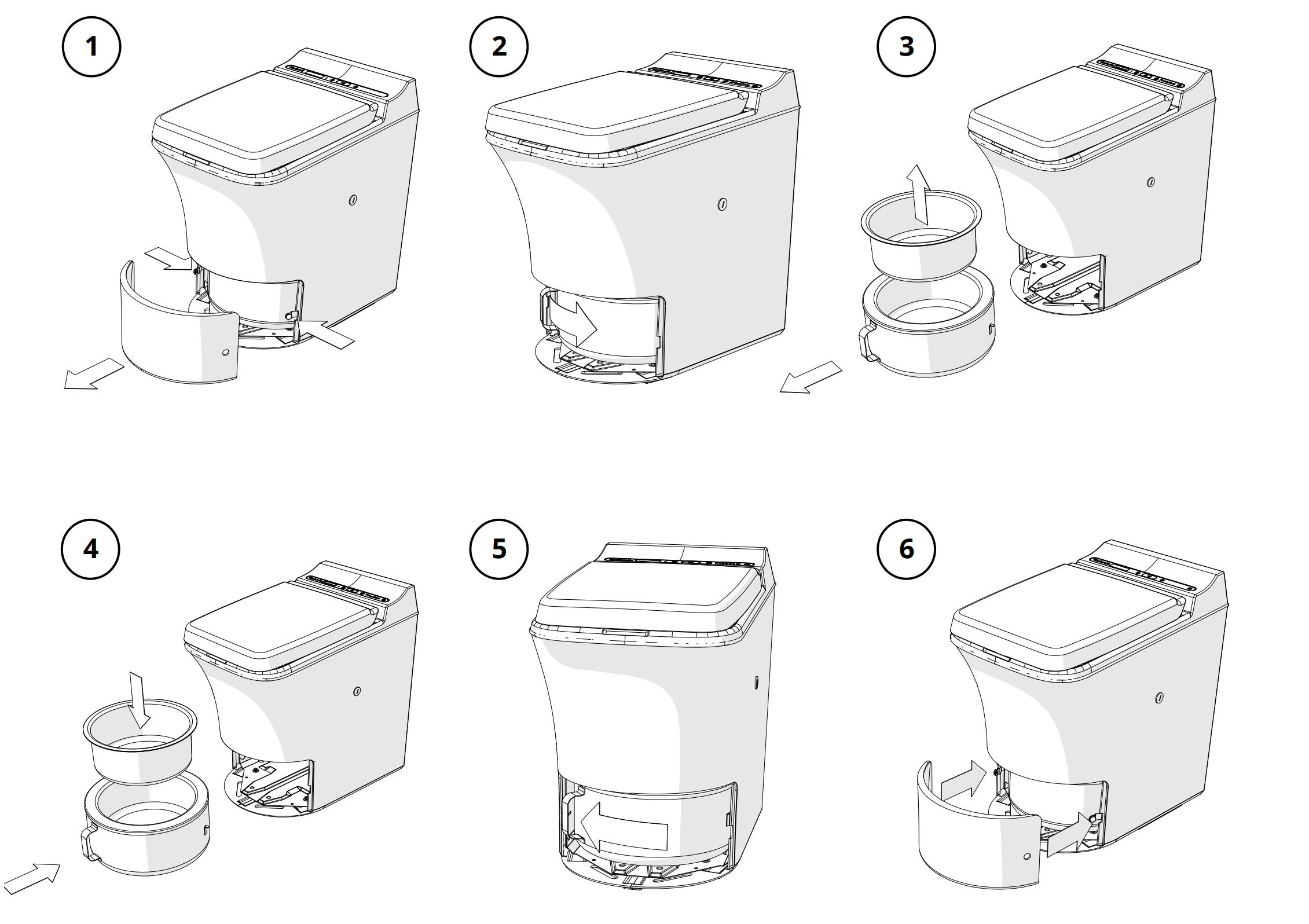
An incineration toilet burns biological waste at high temperatures, leaving only an insignificant quantity of ash amounting. Waste is burned in an enclosed incineration chamber, and combustion gases are expelled through a separate ventilation pipe. Incineration toilets are a complete waste solution, in that they get rid of ALL waste without having to be collected and transported elsewhere.
THE FRONT COVER AND ASH CONTAINER
incineratingtoilets.com/ca/
incineratingtoilets.com/ca/
OPERATING
OTHER INFO
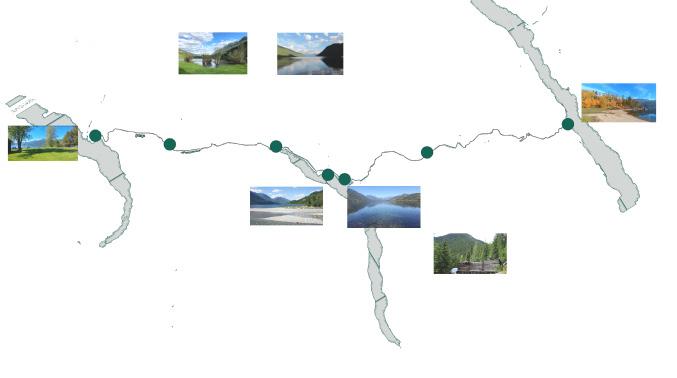
OFF GRID LIVING MOCK-UP PLAN:
NAKUSP & SLOCAN Railway+ KASLO and SLOCAN Railway
Day 1: Kaslo
Arrive in Kaslo and spend time exploring this picturesque village in the West Kootenay region of British Columbia, Canada, located on the west shore of Kootenay Lake.
Day 2: Remote
Travel from Kaslo to the first remote living spot, you will see dramatic changes in scenery and start your off grid first night.
Day 21-90: Rosebery
Heading to Rosebery will start your off grid living for more than two month, here are remote and quite, start enjoy your life sournding by mountain and wood.
Day 92-132: Remote
Enjoy the free time to relax, we will go to the second off grid living spot, with lake near and new view, finding your own activities at your leisure.
Day 132-172: Remote
Head to another spot for off-grid living for about one month. Feel free to adjust your itinerary for best experience, hope you continue to enjoy the beautiful scenery of the Rocky Mountains.
Day 3-20: New Denver
Your journey continues north to the New Denver. Surrounded by the tall peaks of the Selkirk Mountain range and in close proximity to the picturesque Valhalla Provincial Park, New Denver is located in the West Kootenay region of British Columbia. Here with supplies and town, you can relax and graduately adapt the life in train.
Day 180: Nakusp
Your 6 month journey will ends when arriving Nakusp. Nakusp surrounded by the beautiful Selkirk and Monashee mountain ranges, natural and developed hot springs and the historic Arrow Lakes. You can discouver the village or back to Kaslo in rail route.
NAKUSP & SLOCAN Railway+ KASLO and SLOCAN Railway
Day 180 Nakusp Supplies available
Day 132-172 Remote
Day 92-132 Remote
Day 1
KASLO Dumping station available
Day 21-90
Rosebery Supplies available
Day 3-20
New Denver
Supplies available
Day 2 Remote
Clusters
Where are they come from: Mainly from city and post-industrial living environment
Socio and economic status: Various
Age group: Various. However, Participation in this program requires a certain amount of labour and independence.
Household type: Single people or groups of two for one unit. Small Family is acceptable though the dependent child would be hard to take care of.
Social status: Various.
Other: Have a lust for wandering. With mindset and voyage spirit. Prepared for a certain self-sufficient life.
Some underlying commonalities:
• Pioneering spirit
• Resistant to convention
• Want to lead a simpler life, voluntary simplicity
• Desire to get out of the city
• Fed up with the constraints of modern society and government intrusion
• Enjoys solitude
• Intense desire for freedom, make their own choices
• Less materialistic, rejects consumerism
Adventure Seekers
Tree Huggers
Campers
Survivalists that fear the collapse of society
Environmentalists
Escapists
Backup Energy
The car is designed with multiple energy systems to enhance safety, including propane storage for emergency situations. Excess power is typically stored in the backup battery during normal usage, so it’s important to regularly check the battery charge.
In addition, a separate resource collection device is also stored in the car:
-Independent Wind turbine wall
-Water Seer
-Independent Rain Collector
Go Further
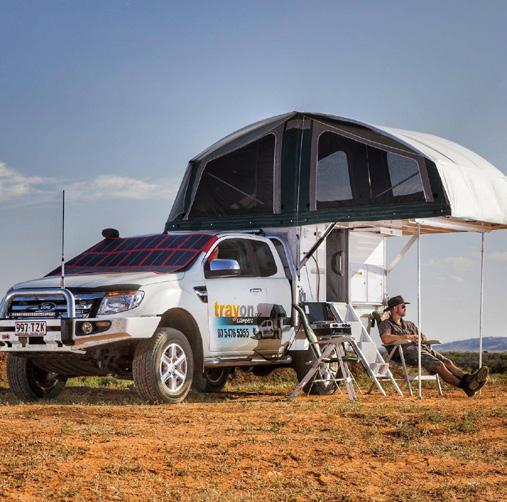
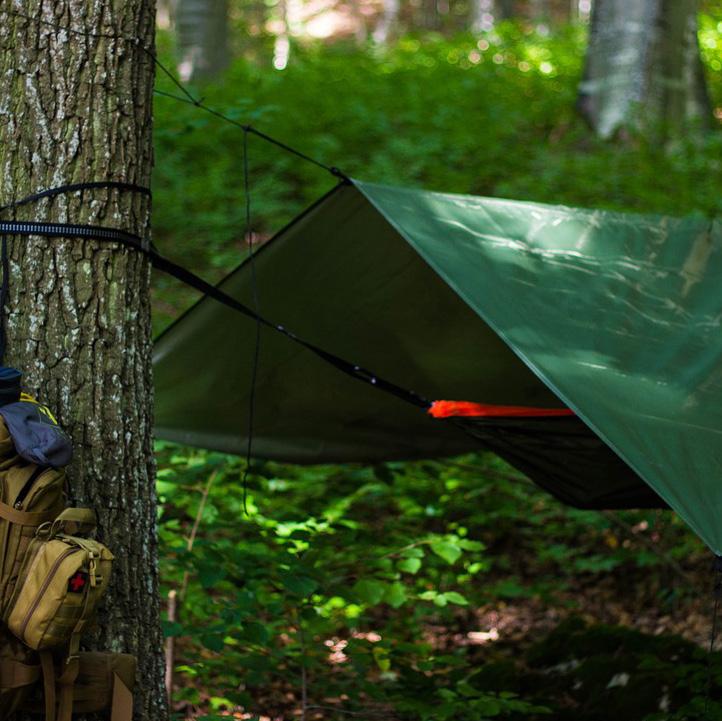
Although the project can move to any location along the railway extension, it cannot leave the railway. Some life and camping tools can help participants go further, such as sleeping bags, bicycles, and tents.
Providing living spaces in the project is not intended to limit people’s living range, but rather to ensure basic living conditions. This project promotes a flexible lifestyle and offers diverse choices
Melina, 2016, conceptual design
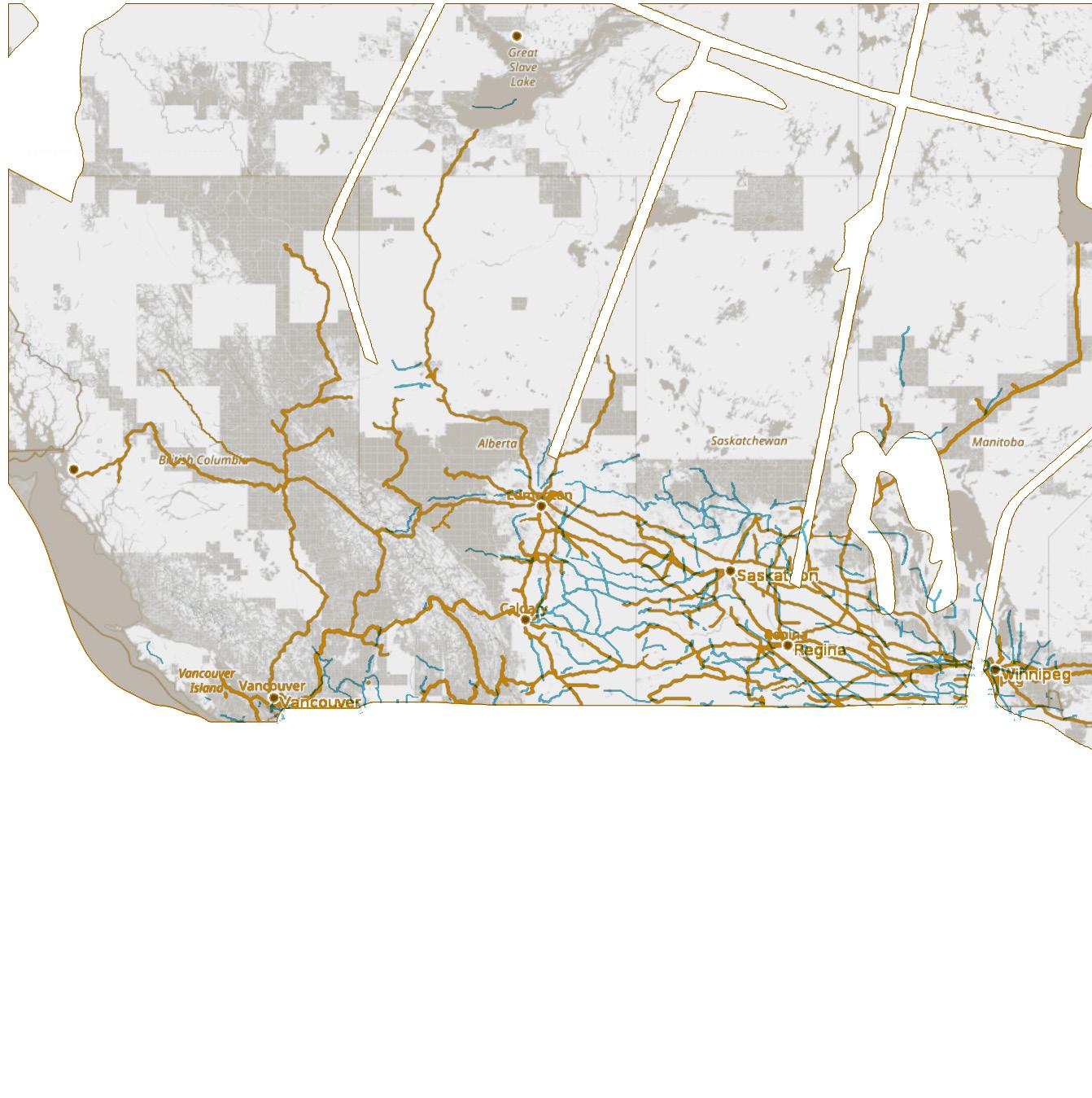
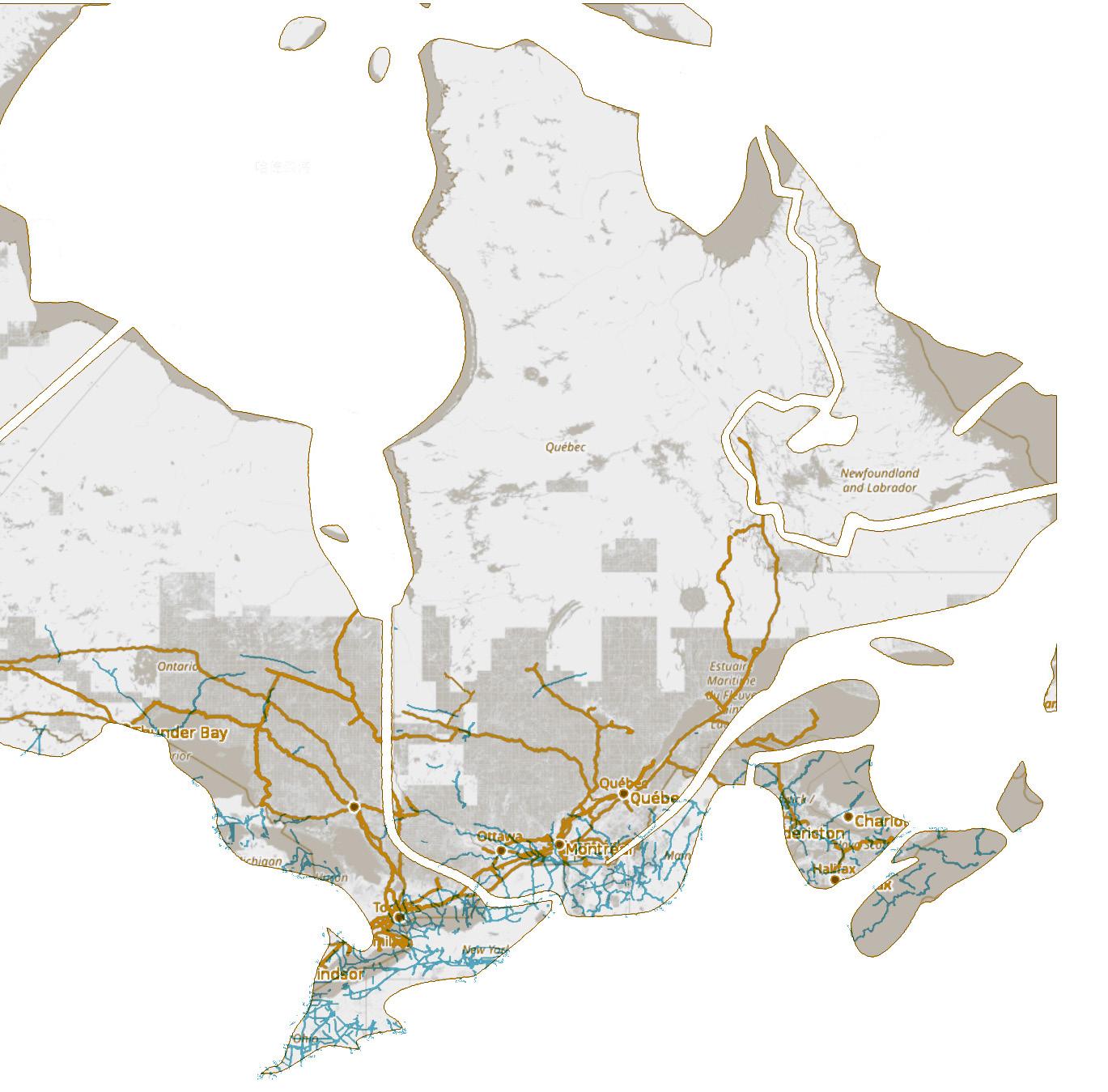
Canada Railway
Abandoned Railway
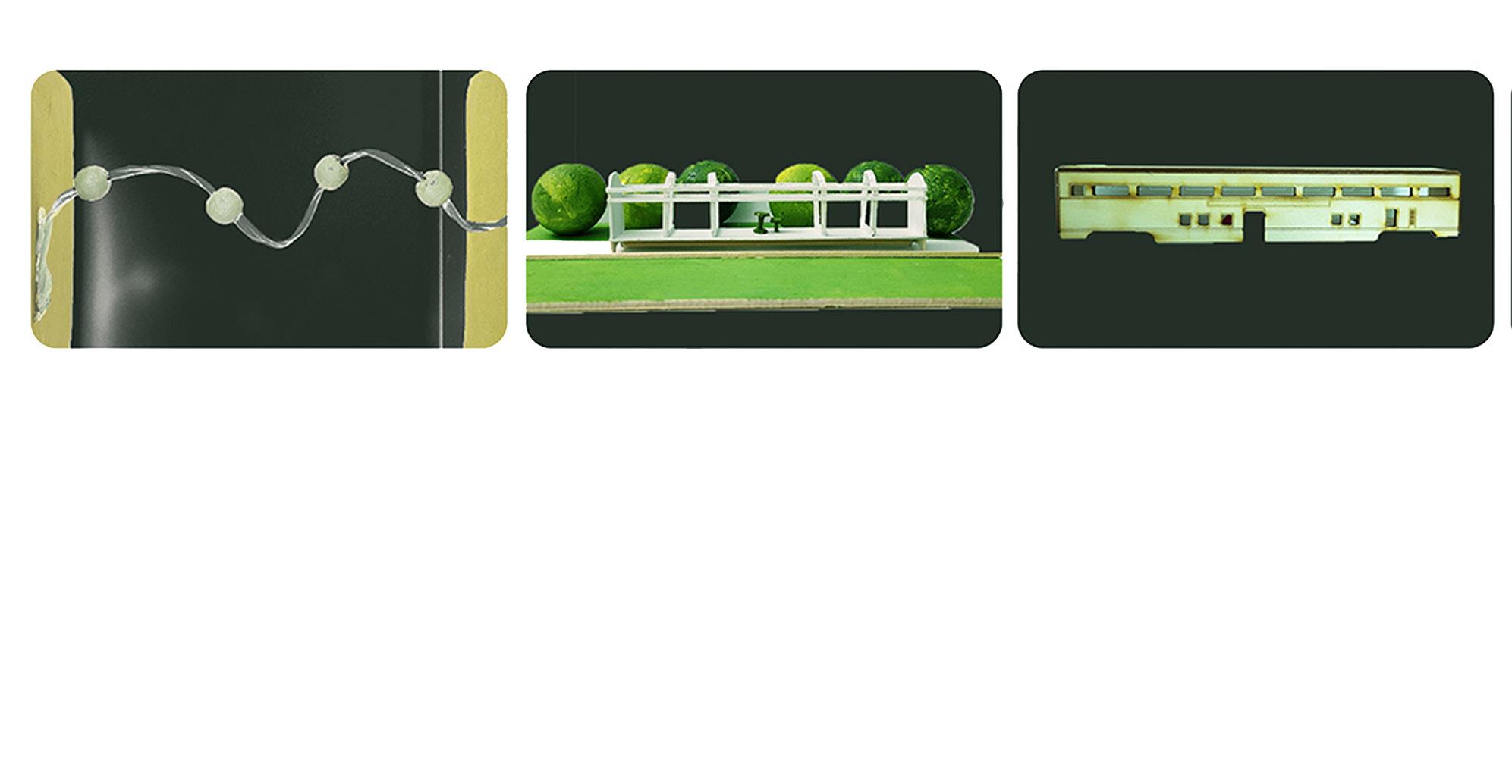
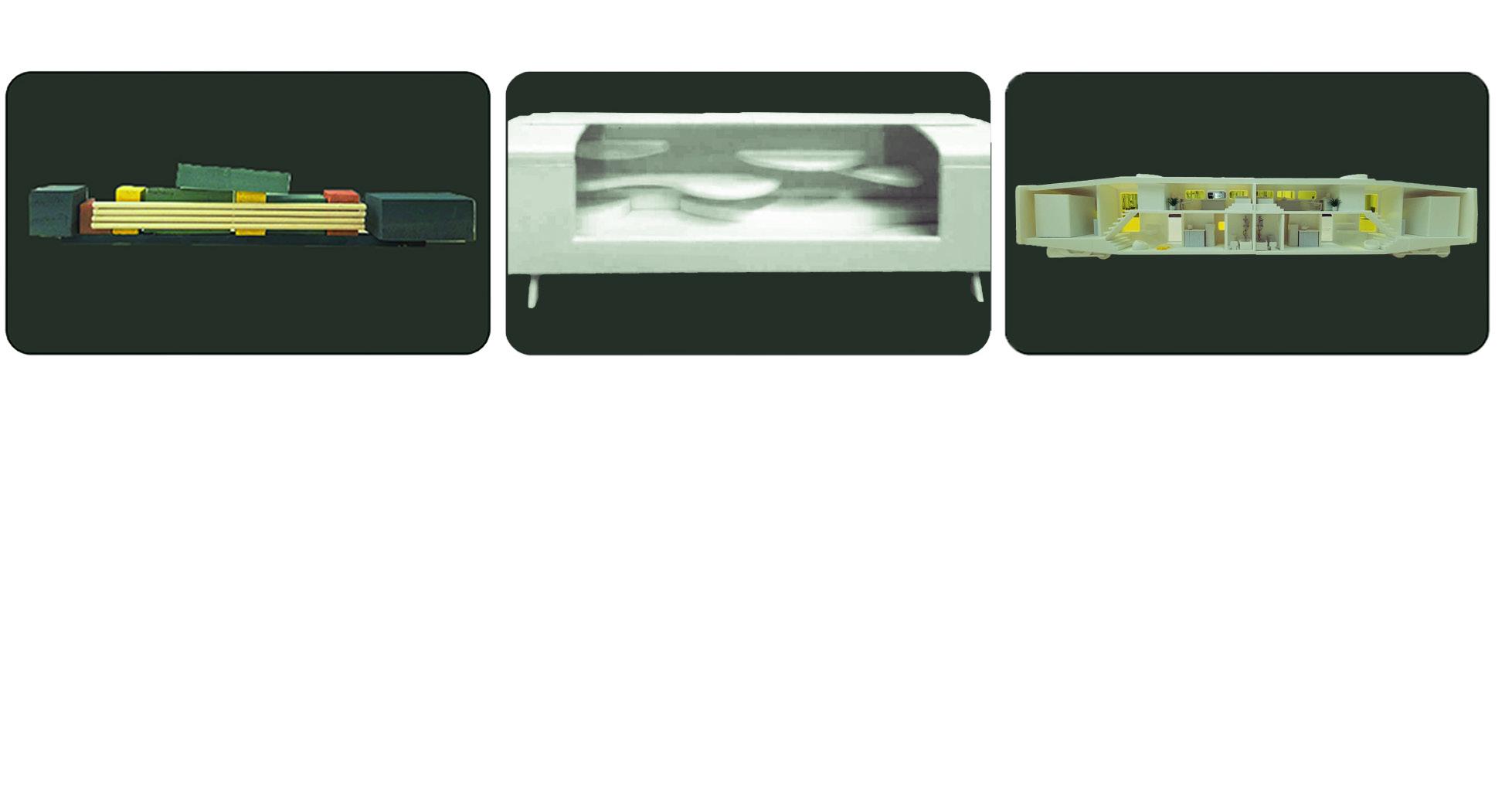
MODEL DOCUMENTATION
Site Model
Concept Model Icon
Final Model
Massing Model
Stacking Model
Happy Wandering!
Works Cited
Adams, Rachel, et al. Wanderlust : Actions, Traces, Journeys, 1967-2017. Edited by Rachel Adams, University at Buffalo Art Galleries, 2017.
“AIRIVA WIND TURBINE WALL.” JOE DOUCET x PARTNERS JDXP, https://joedoucet.com/index#/windturbinewall/. Accessed 25 April 2023.
Bacigalupi, Paolo. The Windup Girl. Night Shade Books, 2012.
Bacigalupi, Paolo. “The People of Sand and Slag.” Fantasy & Science Fiction, vol. 106, no. 2, 2004, p. 6–.
Davis, Heather, et al. Art in the Anthropocene Encounters Among Aesthetics, Politics, Environments and Epistemologies. Edited by Etienne Turpin and Heather Davis, Open Humanities Press, 2015.
Gebauer, Carolin. “Imagining Posthuman Environments in the Anthropocene: The Function of Space in Post-Apocalyptic Climate Change Fiction.” Narrating Nonhuman Spaces, 1st ed., vol. 1, Routledge, 2022, pp. 104–24, https://doi.org/10.4324/9781003181866-9.
Ghosh, Amitav. The Great Derangement : Climate Change and the Unthinkable. Paperback edition., The University of Chicago Press, 2017.
Hartig, T., Evans, G. W., Jamner, L. D., Davis, D. S., & Gärling, T. (2003). Tracking restoration in natural and urban field settings. Journal of Environmental Psychology, 23(2), 109–123. https://doi.org/10.1016/S0272-4944(02)00109-3
“MALTHUS. A Meal a Day. Aquaponic Home Device.” Conceptual Devices, https://www.conceptualdevices.com/projects-1/malthus.--a-meal-a-day.-aquaponic-ho me-device.-. Accessed 10 April 2023.
Marymattinglystudio. https://marymattingly.com/. Accessed 10 April 2023.
“Melina - David Shatz Studio.” David Shatz, https://shatzdesign.com/Melina. Accessed 25 April 2023.
RVIA. https://www.rvia.org/. Accessed 10 April 2023.
Streeby, Shelley. Imagining the Future of Climate Change: World-Making through Science Fiction and Activism. 1st ed., University of California Press, 2017, https://doi.org/10.1525/j.ctv1xxzdb.
Kellert, Stephen R, and Edward O. Wilson. The Biophilia Hypothesis. Island Press, 1993.
McCarthy, Cormac. The Road. Picador, 2010.
Rahn, Judith. “Of Bees and Women: Femininity and Climate Change in Mireille Juchau’s The World Without Us.” Gender Forum, no. 81, 2021, pp. 64–64.
Schwägerl, Christian. The Anthropocene : The Human Era and How It Shapes Our Planet, Synergetic Press, 2018. ProQuest Ebook Central, https://ebookcentral.proquest.com/lib/oculocad-ebooks/detail.action?docID=6855915.
Sullivan, Heather I. “Petro-Texts, Plants, and People in the Anthropocene: The Dark Green’.” Green Letters, vol. 23, no. 2, 2019, pp. 152–67, https://doi.org/10.1080/14688417.2019.1650663.