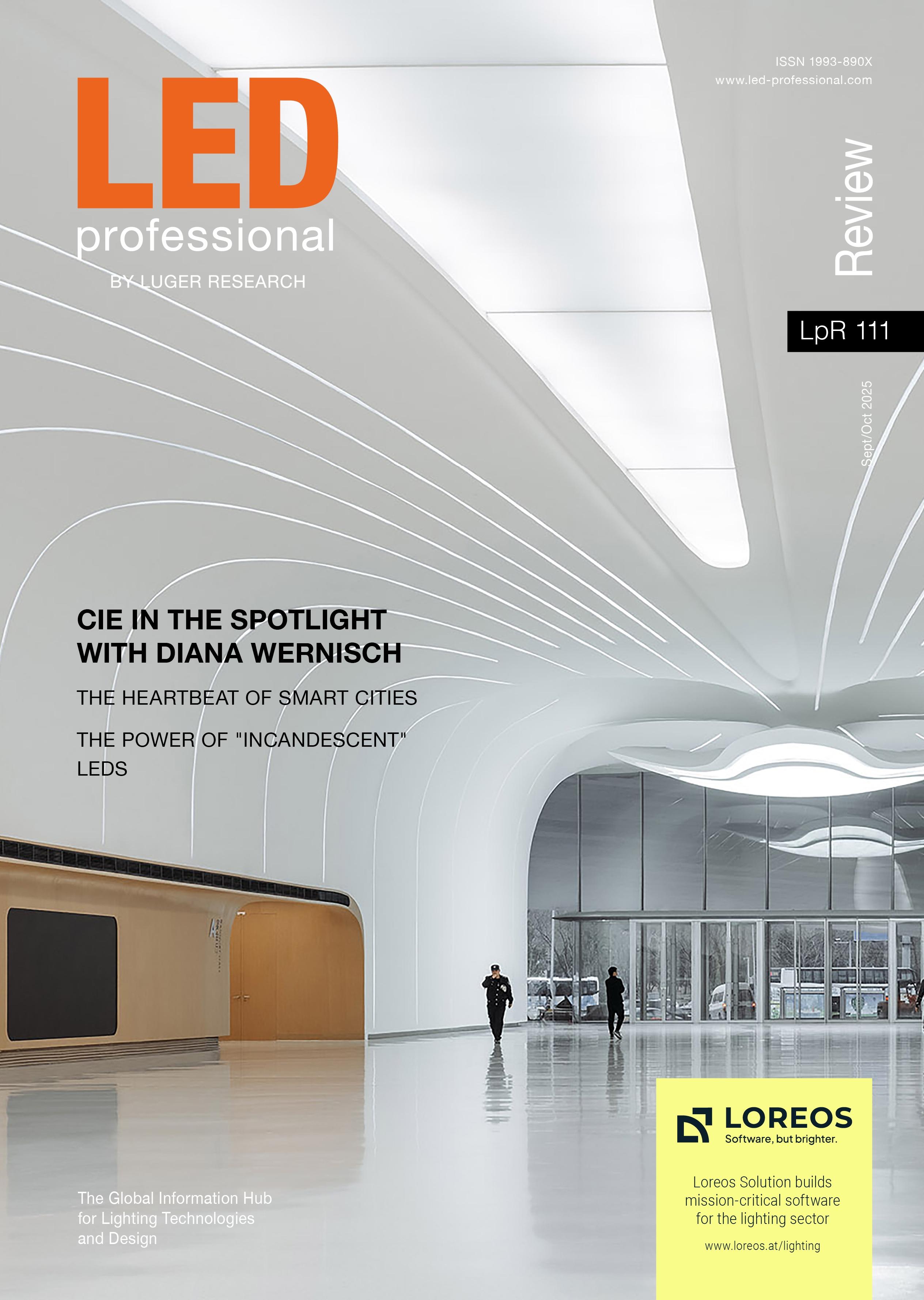

LEDprofessionalReview #111presentsarichmixtureofinsights, interviews,andreportsthatcapturethecurrentmomentumoftheglobal lightingindustry.Weopenwithacommentarythatrepositionsthevalueof lightingthroughthelensofthe“3-30-300rule.”Insteadofbeingregarded merelyasatoolforenergyefficiency,lightingisframedasakeydriverof humanperformance,health,andwell-being.Thisperspectivechallenges theindustrytobroadenitsnarrativeandseizenewopportunitieswhere theimpactoflightonpeopleyieldsfargreaterreturnsthansavingson utilitiesorrealestate.
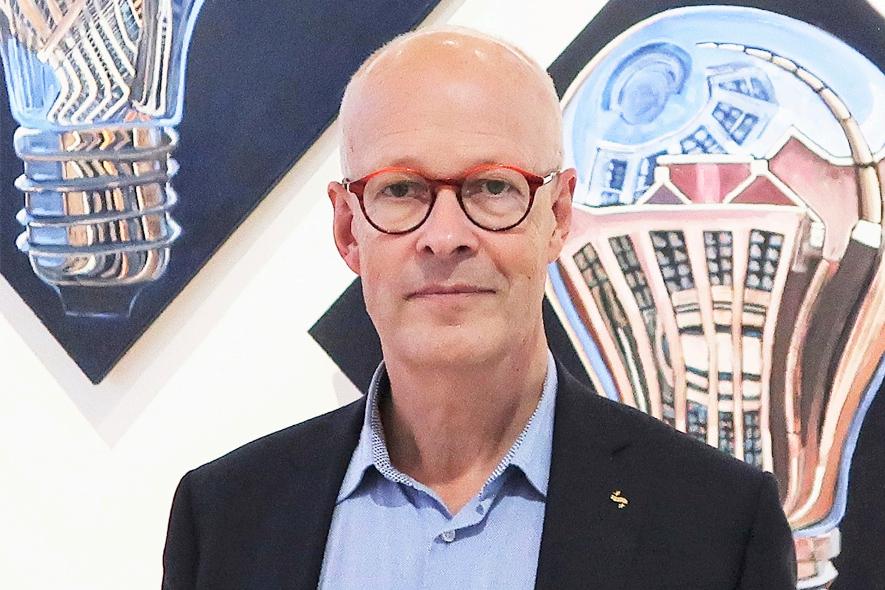
Inanexclusiveinterview,Dr.DianaWernisch,SecretaryGeneralofthe CIE,shareshervisionfortheorganization’sevolvingroleinbridging science,industry,andsociety.Withherstrongbackgroundininternational cooperation,shediscussestheimportanceofstandards,global collaboration,anddigitaltransformationinshapingthefutureoflight.This themeisexpandedbythecomprehensivereportfromtheCIEMidterm MeetinginVienna,highlightingtechnicalachievementsandfuture directionsforinternationalstandardization.
PolicyandregulationarealsointhespotlightasLightingEuropecallson theEuropeanCommissiontoadoptuniformrulesaddressingthe environmentalandsocietalimpactofArtificialLightatNight.Meanwhile, Dr.BeverlyPasianoffersfreshinsightsintolighting’sroleinthe“heartbeat” ofsmartcities,drawingondatafrommorethan6,000projectsworldwide torevealhowsafety,sustainability,andsocialwell-beingconverge.
InnovationisfurtherexploredwithGaggione’sshowcaseofoptical solutionsatGILE2025,alongsideDr.AlexanderWunsch’sprovocative articleonthepotentialhealthbenefitsof“incandescentLEDs.”Theissue concludeswithparttwoofBartenbach’sstudyonsustainablepublic lighting,outliningboththetechnologicalpotentialsandsystemiclimitations thatmustbeaddressedtomeetinternationalclimateandpolicygoals.
YoursSincerely,

SiegfriedLuger
Founder&CEOofLugerResearche.U.

20 Dr.DianaWernisch,SecretaryGeneral, Int.CommissiononIllumination(CIE) compiledbyEditors,LEDprofessional

CIEMidtermMeetingVienna2025 Report–ScientificandTechnical HighlightsofCIE2025–FutureTrends andDevelopments
LightingEuropeUrgesEURulesfor ArtificialLightatNight
30 Dr.BeverlyPasian,UniversityofApplied SciencesUtrecht(HU) compiledbyEditors,LEDprofessional

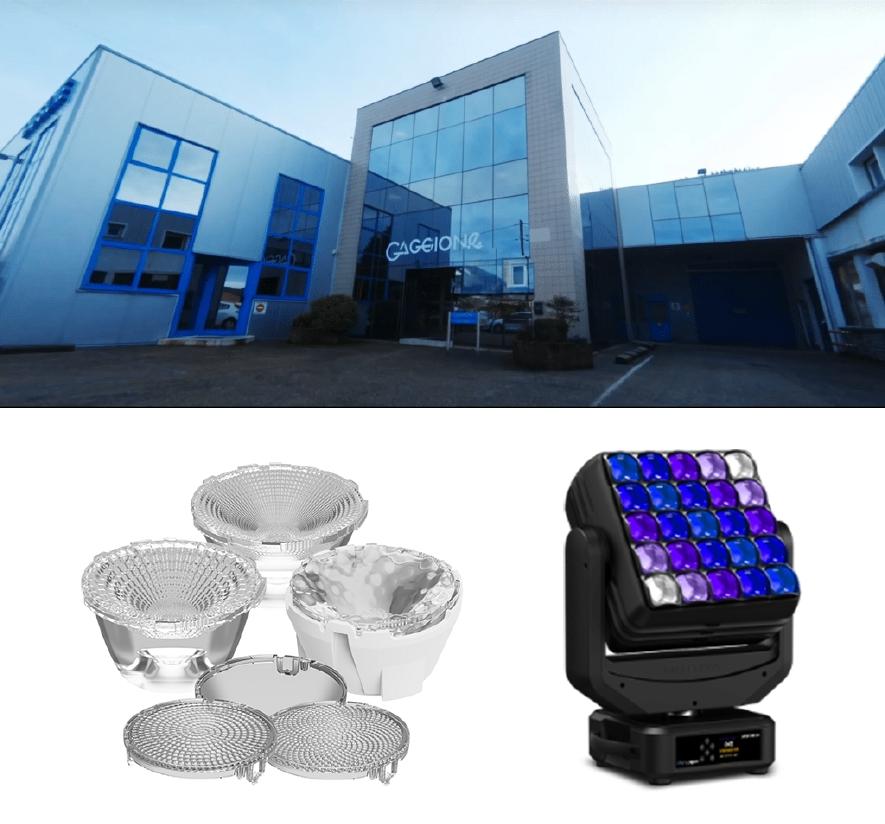
38 GaggioneDrivesInnovationForwardwith NewOpticsTailoredforUrbanandSmart Lighting byGaggione
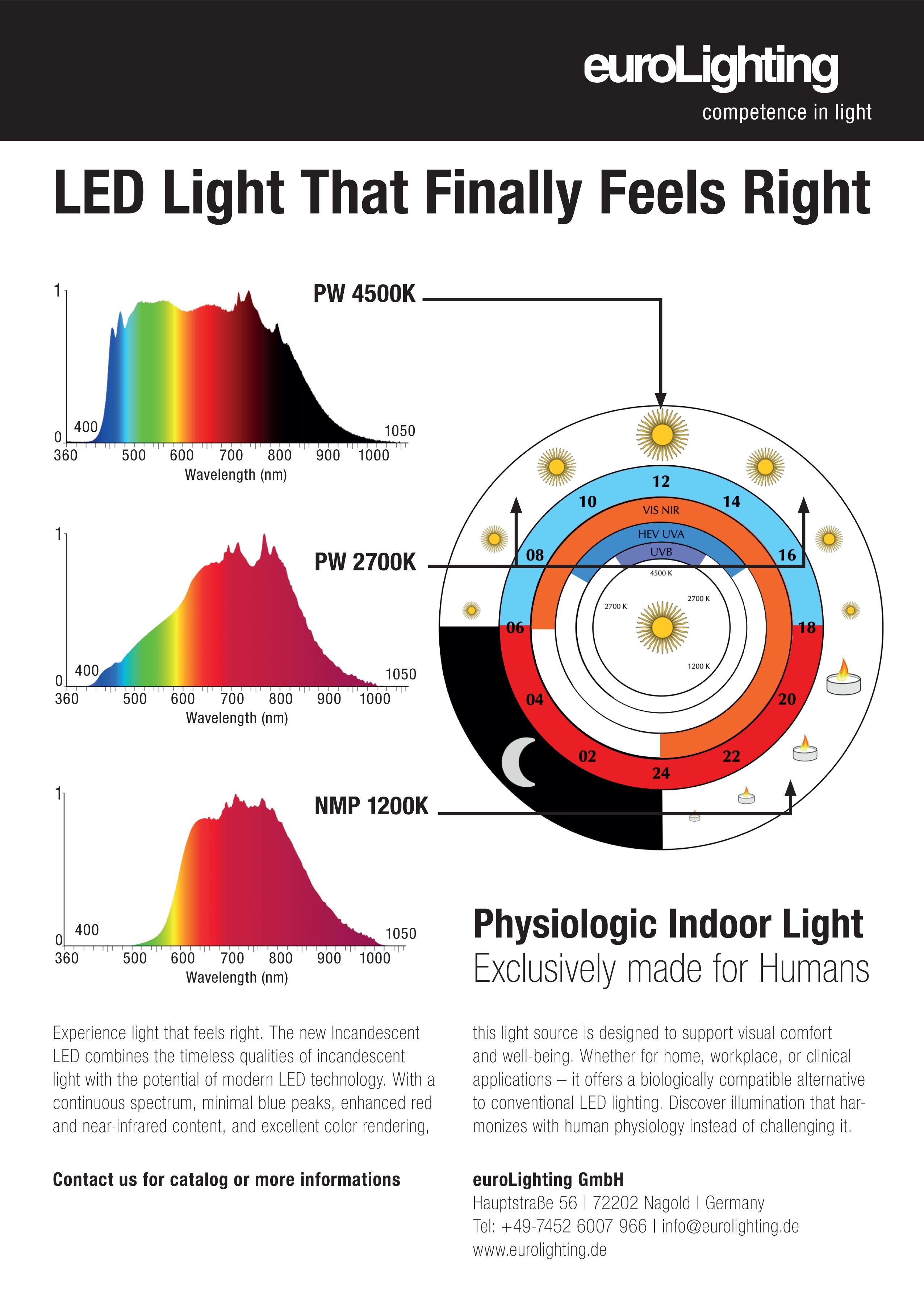
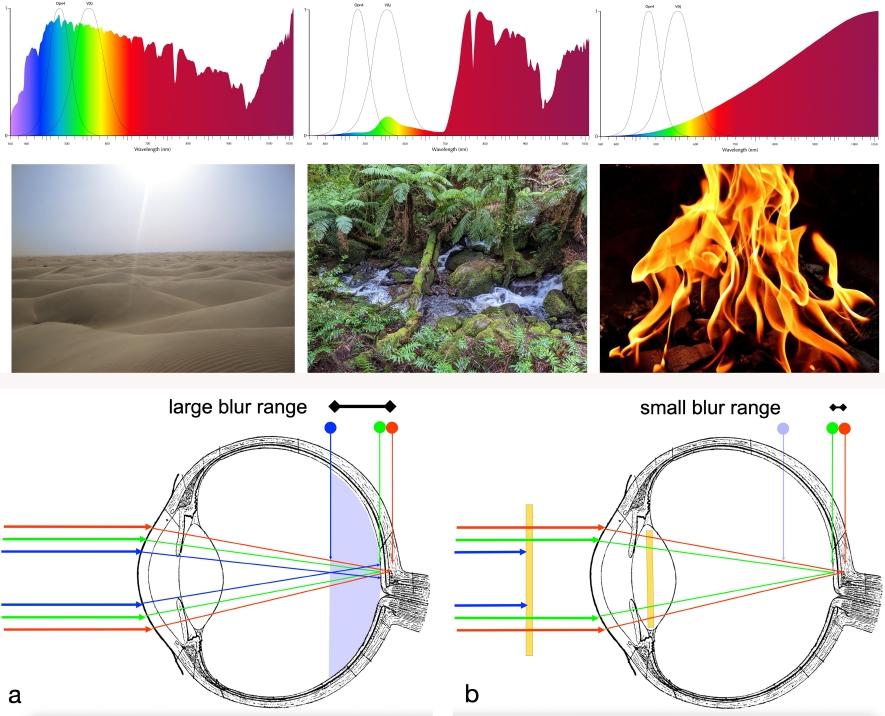
42 TheNextGenerationofHuman-Centric Lighting:“IncandescentLEDs”andTheir HiddenHealthPower byDr.AlexanderWunsch,MD,PhD
48 SustainablePublicLighting,PartII: ChallengesandPotentialsofFuture Technologies byDipl.-Ing.JohannesWeninger,MMag.Martina Ascher,MSc.MaximilianDick 58

JanDenneman
JanDennemanisthefounderand chairmanoftheGoodLightGroup andanambassadoroftheGlobal LightingAssociation.
TheGoodLightGroupisa non-profitorganizationdedicated topromotinggoodindoorlighting —eithernaturaldaylightorelectric lightthatprovidessimilarpositive effectsonhealthandwell-being. Goodlighthelpssynchronizethe biologicalclock,improvessleep quality,increasesdaytimeenergy levels,andsupportsabetter moodandlong-termhealth. Withmorethan45yearsof experienceinlighting,Janhas developeddeepexpertiseinthe impactoflightonhumanbeings. HeservedasVicePresidentat PhilipsLighting(nowSignify), whereheheldleadershiprolesin innovation,productdevelopment, marketing,andsustainability.
Janisthe(co-)founderofseveral leadinginternationallighting consortia,including:theGlobal LightingAssociation(Chairman 2007–2017),Zhaga,The ConnectedLightingAlliance, LightingEurope(Chairman 2013–2017)andGoodLight Group(Chairmansince2019).
Janshareshisexpertiseonhealthy lightingandsleepacrossmultiple socialmediaplatforms—including Instagram,TikTok,YouTube,and Facebook—underthename @JanSleepman.OnLinkedIn,he isactiveunderhisownname.
Whatiflightingwerenolongerseen primarilyasanenergyissue,butasthe keytohealth,productivityandwell-being? The3-30-300ruleshowshowanorganization’stotaloccupancycostsaretypically structuredpersquarefootperyear:around €3forutilitiessuchasenergyandwater, €30forrentorcapitalcostsofthebuilding andinstallations,and€300forpersonnel costssuchassalaries,socialchargesand training.Thesearenotfixedamounts,but aruleofthumbpopularizedbyrealestate advisorJLLandlaterpickedupby,among others,theindustryassociationNEMA.The aimisclear:toshowthatevenasmall improvementinhumanperformanceyields farmorethanmajorsavingsonenergyor realestate.Yetthisruleisscarcelyknown inthelightingindustry,letaloneusedto demonstratethevalueoflighting.
WhenIgiveguestlecturestoarchitecture studentsonlightandhealth,Ioftenask whoknowsthe3-30-300rule.Mostof thetime,thereissilence.Occasionally, someoneraisesahand,buttheyturn outtobereferringtotheother3-30-300 rulefromurbangreenpolicy,whichis abouttreesandparks.Valuable,butnot therulethatcangiveourlightingsector suchimportantinsights.Anyonewho understandswherethat€300comesfrom, andwhatitcomprises,canimmediately seetheenormousopportunityweare missing.
Thelightingindustryhasbeenfocusing almostentirelyonthe€3category— energy—andtoalesserextentonthe €30category.ThankstoefficientLED systems,theshareoflightingintheenergy billhasnowbecomenegligible.Lighting hasmadeonlyalimitedcontributionto the€30category,asLEDslastlongerand reducereplacementcosts.Thatthese twocategoriesdominateisnotsurprising: investorsandbuildingownersfocuson energyandcapitalcosts,astheyare responsibleforthem.Thelargestcategory, the€300forpersonnelcosts,sitswiththe tenantsorusersofthebuilding—andthe lightingindustryrarelyhasdirectcontact withthatgroup.Asaresult,theeffects oflightingonproductivity,healthandwellbeingoftenremaininvisibleinpurchasing
andinvestmentdecisions,eventhoughthat iswherethegreatestvaluecreationlies.
Peoplearebyfarthelargestcostin anybuilding.Therightlightattheright timecandirectlyhelpreducethosecosts andincreaseoutput.Morninglightwith therightintensityandspectrumhelps tosynchronizethebodyclock,enabling peopletofallasleepmoreeasilyandsleep moredeeplyatnight.Well-tunedlighting duringtheworkingdayenhancesalertness, concentrationandcognitiveperformance, especiallyinthemorningandafterthe post-lunchdip.Dynamiclightingcan supportenergylevelsduringlongtasks, whilecalmerlightinbreakshelpspeopleto relaxandrecover.
Theeffectsarefeltnotonlyinproductivity butalsoinhealthandwell-being.Daylight ordaylight-likeelectriclightbooststhe immunesystem,reduceswinterbluesand seasonaldepression,andlowersabsenteeism.Alightenvironmentthatsupports theday–nightcycleimprovesmoodand reducesstress.Evenaonepercent improvementinthesepeople-relatedcosts isworthmorethanthetotalenergycostsof thebuilding.
Aslongaslightingisseenonlyasawayto saveenergy,weremaintrappedinaspiral ofpricepressureanddecliningrevenues. Thewayoutisanewfocus:innovationthat improveshowpeoplefunctionandtheir well-being.Thatmeansintegratingdaylight intodesign,supplementingitwithelectric lightingthatsupportsthenaturalday–nightrhythm,andbuildingsolidbusiness casesthatshowhowlightcontributes tobetterperformance,lowerabsenteeism andgreatersatisfaction.
Buildingsarenotconstructedtosave energy,buttohelppeopleperformattheir best.Itistimeforthelightingindustry toembracethatrealityandmaketheleap from€3to€300.Withtherightlightat therighttime,wecanimprovenotjust buildings,butespeciallythepeopleinthem. Andthatisrealvalue. ■ J.D.
jan.denneman@goodlightgroup.org

light-building.messefrankfurt.com
Architectureandtechnologyareevolving worldwide–drivenbydigitalization, urbanizationandthegoalofclimateneutrality. Theseforcesareshapinghowcitiesexpand, howbuildingsareused,andhowspacesare designed.From8to13March2026,Light+ BuildinginFrankfurtamMainwillspotlightkey futureissuesforthelightingandbuilding servicestechnologysectors.Threetop themeswillsettheagendaforthefutureofthe builtenvironment:“Sustainable Transformation”,“SmartConnectivity”and “LivingLight”.
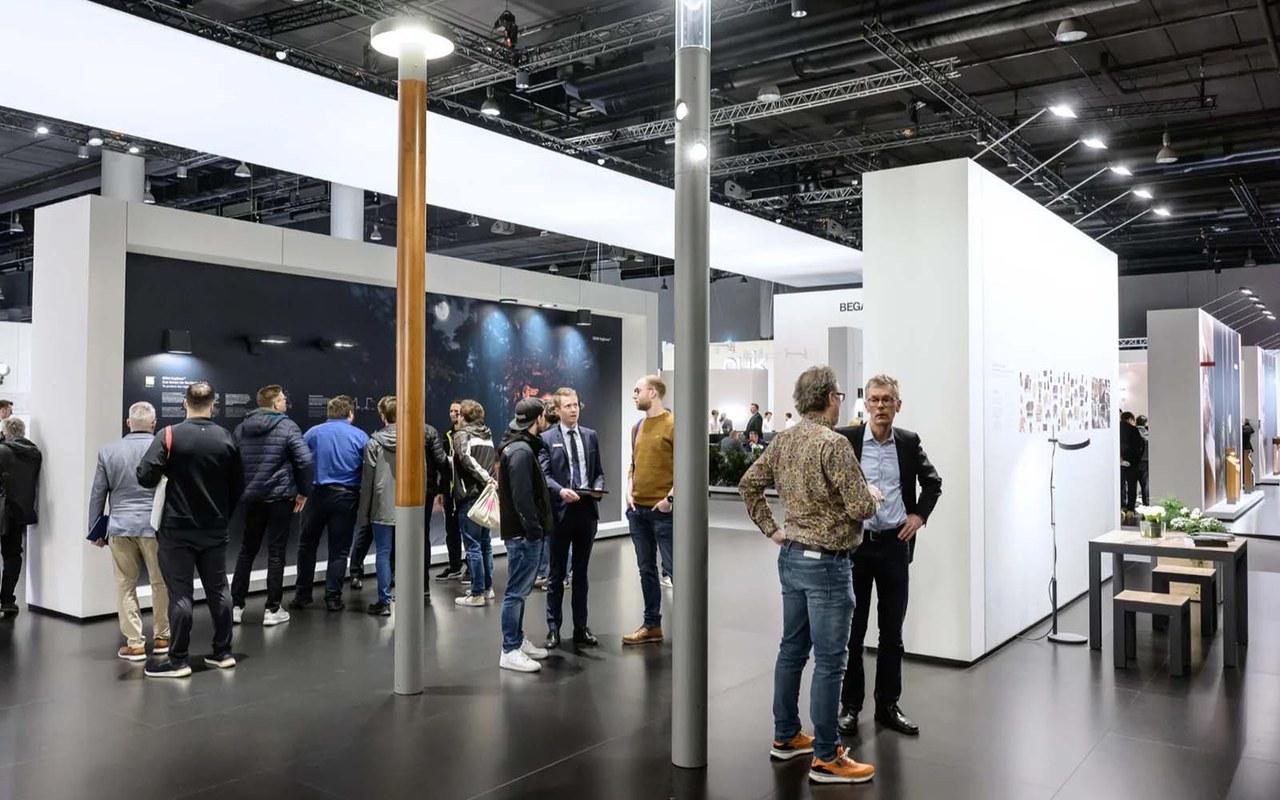
Thesethreetopthemesreflectthekey developmentscurrentlyshapingtheindustry. Theyprovideguidanceinadynamicmarket environmentandhighlightthetechnological, design-orientedandsocietalrequirements thatareshapinghowwewillbuildandlivein thefuture.”SustainableTransformation”, ”SmartConnectivity”and”LivingLight”define thecentralfieldsofactioninlightingand buildingservicestechnology–rangingfrom climate-friendlyenergysupplyanddigital connectivitytotheatmosphericqualitiesof light.Theyillustratehowtechnological innovation,architecturaldesignandsystem integrationcancometogethertocreate holisticsolutions.
Astheworld’sleadingtradefairforlighting andbuildingservicestechnology,Light+ Building2026bringstogetherallthekey stakeholders–creatingspaceforinspiration, connectionandinnovation.Inahighly dynamicmarket,itoffersorientation,practical solutionsandaninterdisciplinaryforumfor future-readyplanning,constructionandliving. SteffenLarbig,DirectorBrandManagement forLight+Building,describesthesignificance ofthetopthemesforthisinternational innovationmeetingpoint:“Weusethemto focusattentiononthedevelopmentsshaping thelightingandbuildingtechnologysectors today–andwhichwillbeessentialtomorrow. Asaninternationalplatform,weofferthe industryaspacefordialogue,directionand freshimpetus.Ouraimistoconnect professionalsfromarchitecture,planning, industry,theskilledtrades,realestateandthe
publicsector,topromoteexchangeandjointly openupnewperspectivesforthebuiltfuture.”
Acloserlookatthethreetopthemesreveals thekeycontentandprioritiesthatLight+ Building2026willfocuson:
Climategoals,resourceresponsibilityandthe energytransitioninexistingbuildingsare reshapingthedemandsplacedontomorrow’s architecture.Underthetoptheme “SustainableTransformation”,Light+Building willpresenthowarchitecture,technologyand infrastructurecanbebroughttogethertoform anenergy-efficientwhole.Thisincludes systemsandtechnologiesforintelligent energymanagementandefficiency,solutions fortheintegrationofrenewableheatsources, aswellasthepotentialofenergystorageand smartgridinteraction.Conceptsfor e-charginginfrastructureandecosystemswill alsobeexplored,withafocusonplanning, loadmanagementandlightingdesign. Integratedurbandevelopmentsolutionsthat interlinkenergy,mobilityanddesignform anotheressentialpartofthistheme.
Buildingsareincreasinglyevolvingintodigital systemswithnumerousinterfaces.Thetop theme“SmartConnectivity”demonstrates howintelligenttechnologiescanboost efficiencyinplanning,operationandusage. Thisinvolvessmartbuildinginfrastructure,IoT andAIinbuildingmanagement,aswellas softwaresolutionsanddigitalworkflowsthat simplifydailyroutines.ItalsoincludesBIMand digitaltwinsthatconnectdigitalplanningwith real-lifebuildingoperations.Cybersecurityand connectedsecuritysolutionsensurethe protectionofdigitalsystems,whilesystem integrationandpredictivemaintenancehelp enableresilient,sustainablebuildingoperation throughouttheentirelifecycle.
Lightismorethanillumination–itcreates atmosphere,supportsfunctionality,influences wellbeingandtransformsspacesinto immersiveexperiences.ThetopthemeLiving Lightunitesaesthetic,functionaland technologicalperspectives,showinghowlight canbeusedtodesignandshape environments.Itfocusesonadaptiveand human-centriclightingsystemsthatrespond totimeofday,spatialuseandindividual needs,promotingwellbeing,orientationand productivity.Thethemealsoencompasses high-qualitylightingdesignandtechnology, theuseoflighttosupporthealth,andlighting solutionsinpublicandretailenvironments–fromstreetsandfaçadestotargetedproduct displays.Outdoorlightingconceptsfor gardens,parksandpathwayscomplement this.Additionalimpulsesareprovidedby currentdesigntrends,materialsand emotionallyresponsivelighting.Lighting solutionsforflexibleworkingenvironments–
summarizedundertheconceptofNewWork –roundoffthetheme.
Thethreetopthemesreflectthetopics currentlyshapingtheindustryandthosethat willinfluenceitinthefuture.Atthesametime, theyprovidethethematicframeworkforthe extensiveeventprogramofLight+Building 2026.Specialistlectures,guidedtours, specialpresentationsandpaneldiscussions willaddresscentralissues,examinecurrent developmentsingreaterdepthandpromote interdisciplinarydialogue. ■
San’anandInaritoAcquire 100%ofLumiledsHolding B.V.’sShares
www.sanan-semiconductor.com
San’anOptoelectronicsandInariAmertron Berhadannouncedthattheyhaveentered intoadefinitiveagreementtoacquireLumileds HoldingB.V.anditsEuropeanandAsian subsidiaries(“LumiledsInternational”).

“Thistransactionisthenextstepofour ongoingtransformation.AstheLEDindustry evolvesandcontinuestomature,Iam confidentthatLumiledsInternationalwill continuetobesuccessfulandaccelerateits growthunderthenewownership,”saidSteve Barlow,CEOofLumiledsInternational.
Thetransactionisexpectedtoclosebythe firstquarterof2026,subjecttocustomary closingconditions.
AboutLumiledsInternational LumiledsInternationalisagloballeaderinLED technology,innovation,andsolutionsforthe automotive,display,illumination,mobile,and othermarketswherelightsourcesare essential.Ourapproximately3,300 employeesoperateinover15countriesto partnerwithourcustomerstodeliversolutions forlighting,safety,andwell-being.
AboutSan’anOptoelectronics
San’anOptoelectronics,isarenowned high-endlight-emittingdiode(“LED”)chip manufacturerinChina.Itislistedonthe ShanghaiStockExchange(600703.SH)with annualrevenueofRMB16.1billion (approximatelyUSD2.2billion)forthefinancial yearending31December2024andamarket capitalizationofapproximatelyRMB60billion
(oraboutUSD8.4billion)asofthedateofthis announcement.
AboutInariAmertronBerhad
InariAmertronBerhadisarenowned technologycompanyinMalaysia,providing OutsourcedSemiconductorAssemblyand Test(“OSAT”)servicestothesemiconductor industry.InariislistedontheMalaysianStock Exchange(0166.KLSE)withannualrevenueof RM1.5billion(approximatelyUSD350million) forthefinancialyearending30June2024and amarketcapitalizationofapproximately RM7.8billion(oraboutUSD1.8billion)asat thedateofthisannouncement. ■
www.ushio.co.jp
amsOSRAMsellsEntertainment&Industry LampsbusinesstoUshioInc.forEUR114m asfirstdivestmentunderitsdeleveragingplan.
“Afterthesuccessfulextensionofthe RevolvingCreditFacilityandtheplacementof additionalseniornotes,wedeliveredthefirst resultofouraccelerateddeleveragingplanin termsofexecutingdivestmentoptions.With Ushio,wehavefoundtheperfectnewhome foroursophisticated,high-endspecialty lampsniche-business.Atthesametime,we arefurtherstreamliningourportfoliotowards ourcoremarkets.”saidAldoKamper,CEOof amsOSRAM.

amsOSRAMhassignedanagreementwith UshioInc.,agloballeaderinthefieldofoptical technologies,headquarteredinTokyo,Japan, forthesaleofitsEntertainmentandIndustry Lamps(ENI)business.Thetransactionis expectedtocloseuntilbytheendofMarch 2026,subjecttotypicalclosingprocedures. ThepurchasepriceofEUR114millionisona cash-and-debt-freebasis.Netdealproceeds willbedetermineduponfinalclosingaccounts atdateofclosing.
ENI’sproductportfoliorangesfromspecialty lampsforinfrastructureandcinema applicationstoextremelysophisticatedlight sourcesforsemiconductorwaferfabrication
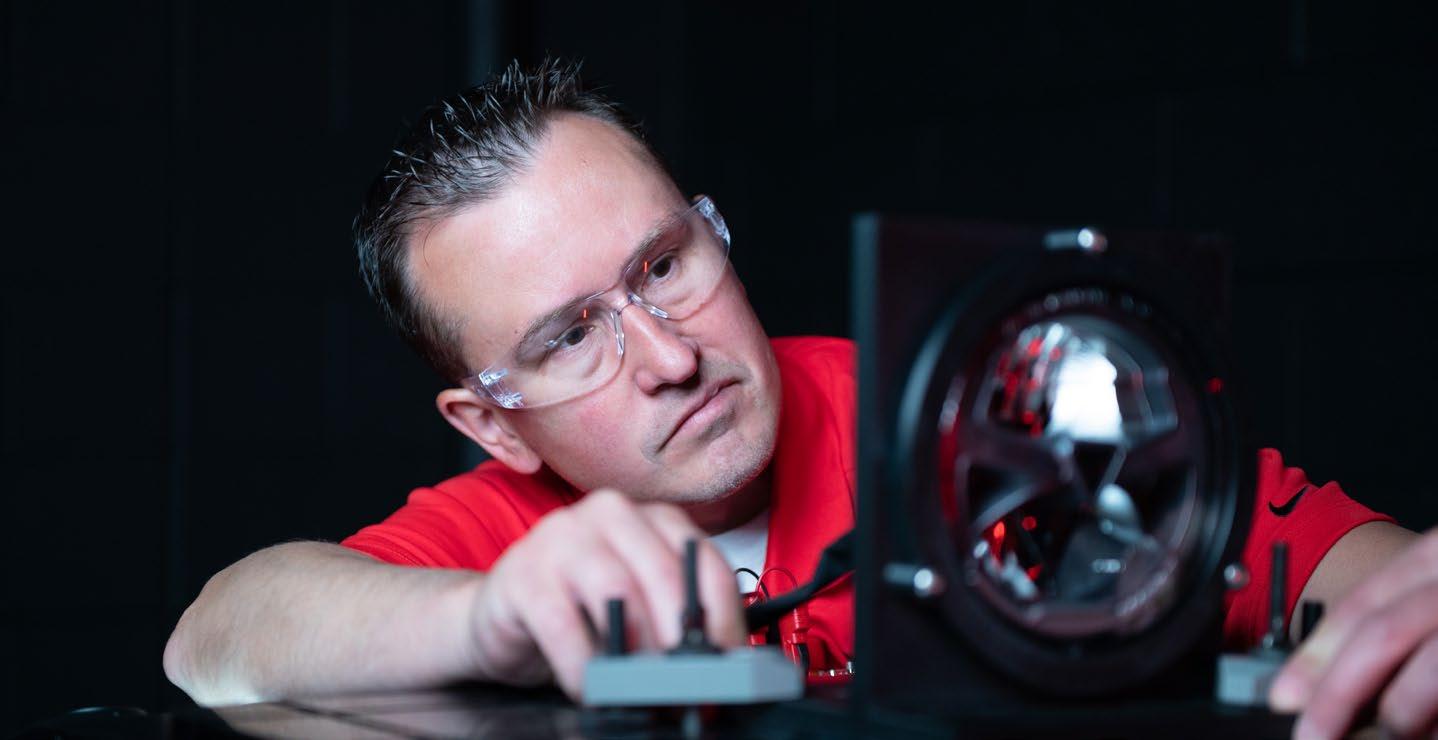
equipment(WFE).TheprofitableENIbusiness deliveredrevenuesofapprox.EUR170million in2024.
UshioInc.hasabout6,000employeesand provideslightunits,equipment,systems,and servicesthroughdevelopingnewlightsources anddevelopingandapplyingproprietary opticaltechnology,servingamultitudeof industrialsegments.
Executingitsbalancesheetimprovement plan
On30April2025,amsOSRAMannouncedits accelerated,comprehensiveplantoreachits targetleverageratioofnet-debt/adj.EBITDA below2consistingofvarious,complementary elements.Amongsttheseareanimproving free-cash-flowperformanceonthebackofa seamlessexecutionofitsstrategicefficiency program‘Re-establishtheBase’,structural growthinthecoresemiconductorbusiness, thedisposalofits8-inch-Kulimfacilitythereby eliminatingthesale&leasebackliabilityforthis factory,aswellastheconsiderationof strategicoptionsforvariousadditionalassets (e.g.divestments)withthegoaltogenerate proceedswellaboveEUR500million.
ThesaleofitsENIBusinesstoUshioInc.is thefirststepintheseconsiderations.
AboutUshioInc.(Headoffice:Tokyo, TSE:6925)
Aspartofitsongoingstrategicreview,the ZumtobelGrouphasdecidedtocease manufacturingproductionatitsHighland, NewYork,USAlocation. Connect
Establishedin1964.Thecompany manufacturesandsellslamps,lasers,light emittingdiodes,andotherlightsourcesinthe ultraviolet,visible,andinfraredbandsofthe spectrumalongwithopticalandimaging equipmentincorporatingthesedevices. NumerousUshioproductsintheindustrial processfield,whichencompassesthe manufacturingofsemiconductors,flatpanel displays,electroniccomponentsandother products,andinthevisualimagingfield, characterizedbydigitalprojectors, illumination,andotherproducts,havelarge marketshares.Inrecentyears,Ushio’s operationshaveexpandedtothelifescience field,mostnotablymedicalapplicationsand theenvironment. ■
ZumtobelGroupShapesthe FutureofItsU.S.Organization
z.lighting/group
Thisdecisionispartoftheimplementationof theupdatedFOCUSED[+]strategy,whichis intendedtoalignthecompany’sfocusonits coremarketsandalignitsglobalproduction facilitiestobestmeetchanginginternational marketconditionsanddemands.This approachwillbestenhancetheabilityto ensuretheresilienceandlong-term competitivenessoftheZumtobelGroupand itsthreestrongbrands.

Duetothecurrentstrainedeconomicsituation andtheresultinglowproductionvolumeinthe USA,themanagementofZumtobelLighting Inc.,USA,hasdecidedtoceaseproductionat theHighlandfacility,whichhasbeen structurallyunprofitableandsignificantly underutilizedforsometime.TheManagement BoardofZumtobelGroupAGsupportsthis decision.
ZumtobelGroupAGexpectsthisclosurewill resultinaone-time,non-recurringchargeof approximatelyEUR9million.Mostofthese effectswillberecordedinthe2025/26 financialyear.However,theseone-time effectsareexpectedtobemorethanoffsetin thefollowingyears.
Approximately70employeesinproduction, research&development,logistics,and administrationwillbeaffectedbytheclosure.
SalesoperationsintheAmericastobe restructureddespitethisclosure,theZumtobel Groupwillcontinuetomaintainastrongsales andmarketingpresenceintheU.S.througha newsalesanddistributionstructure.Sales operationsfortheAmericaswillbedivided intotwoindependentunits:NorthAmerica andSouthAmerica.Thegoalistocontinue providingreliablesupporttoexisting customers,architects,andplanners,while tappingintoandexpandinginnewmarkets. FuturedeliveriestotheAmericanmarketswill behandledthroughtheZumtobelGroup’s globalproductionanddistributionnetwork.
ZumtobelGroupAG
TheZumtobelGroupisaninternational lightinggroupandaleadingsupplierof innovativelightingsolutions,lighting componentsandassociatedservices.Withits Thorn,TridonicandZumtobelbrands,the Groupoffersitscustomersaroundtheworlda comprehensiveportfolioofproductsand services.TheGroup’sknow-howaboutthe effectsoflightonpeople,acquiredover decades,formsthebasisforthedevelopment ofinnovationsandforaccessingnewfieldsof
business.Inthelightingbusiness,theGroup withitsThornandZumtobelbrands,isoneof theEuropeanmarketleaders.Throughits lightingtechnologybrand,Tridonic,the ZumtobelGroupplaysaleadingrole worldwideinthemanufactureofhardwareand softwareforlightingsystems(LEDlight sourcesandLEDdrivers,sensorsandlighting management).TheZumtobelGroup’sservice offeringisoneofthemostcomprehensivein theentirelightingindustry,including consultationonsmartlightingcontrolsand emergencylightingsystems,lightcontracting, designservicesandprojectmanagementof turnkeylightingsolutions,aswellasnew, data-basedservicesfocusedondelivering connectivityforbuildingsandmunicipalitiesvia thelightinginfrastructure.TheGroupislisted ontheViennaStockExchange(ATXPrime) andcurrentlyhasaworkforceofaround5,300 employees.Inthe2024/25financialyear,the GrouppostedrevenuesofEUR1,097.2 million.TheZumtobelGroupisbasedin DornbirnintheVorarlbergregionofAustria. ■
www.acuityinc.com
AcuityBrands,Inc.(NYSE:AYI)announced thatnineAcuityBrandsLightingsolutions wereselectedforthe2025Illuminating EngineeringSociety(IES)ProgressReport, whichshowcasestheyear’smostsignificant advancementsintheartandscienceof lighting.Selectionsweremadebyanimpartial committeethatevaluatedsubmissionsbased onuniqueness,innovation,andsignificanceto thelightingindustry.
2025IESProgressReportinclusions: Aculux®5ºPrecisionSpot,Eureka®Lattice CeilingSuspendedLuminaire,IVO™Deep RegressedDownlightsandCylindersfrom Gotham®Lighting,Holobay™industrialLED HighBaybyHolophane®,Hydrel®Wander PathwayandStepLuminaireFamily,REBL LEDHighBaybyLithoniaLighting®, Embrace™OverbedMulti-functionLuminaire andObserve™Cloudtroffersby Nightingale™Lighting.
Aculux5ºPrecisionSpot providesavery narrowbeamthatisidealforhigh-ceiling spaceswhereilluminatingitemsfroma distanceisanecessity.Itdeliversapowerful punchoflight(32,000CBCP)froma3” aperture,availableinbothroundandsquare options.Itprovidessuperbcolormixingand beamcontrol,ensuringconsistentandprecise lighting.Italsoofferscolortemperature optionsavailablein2700K,3000K,3500K, and4000Kat90CRI.Awiderangeof dimmingoptions–includingnLight–allows forversatilelightingcontrol,while2-step binningensuresqualityandconsistency.The glare-freedesignfeaturesa45-degreevisual cutoffthatkeepstheceilingquietand glare-free.Itcreatesadramaticeffecton pointsofvisualinterest,elevatingthespace withamoreintimateandsophisticatedfeel, andiscompatiblewithallexistingAX3trims.
EurekaLatticefamilyofluminaires isa one-of-a-kind3Dmetalprintedfixture.Each Latticeluminaireiscraftedasasingle,robust form,builtwithmultipleintricatelayersthat highlightthecapabilitiesofadvancedmetal 3Dprinting.Designedtobebothfunctional andexpressive,Latticeservesasmorethana sourceofillumination–itbecomesafocal pointwithinaspace.
ThelayeredstructureofLatticeisnotpurely decorative;itisapurposefuldesignchoice thatallowslighttofilterthroughinasubtle, ambientmanner.Thiscreatesanatmosphere thatisbothinvitingandcomfortable, demonstratinghowlightingdesigncan influencethecharacterofanenvironment. Availableinsphere,cone,andcylinderforms, eachluminairereflectsacontemporary approachtomaterialandform.Latticeis positionedasbothalightingsolutionanda sculpturalelement,offeringamodern aestheticforthosewhovaluedetailand craftsmanship.
GothamIVODeepRegressedDownlights &Cylinders incorporateBoundingRay™ Designwithanimpressive45-degreecutoff, expertlycontrollingglaretoenhance architecturalfeatureswhilereducingstress andvisualfatigueforoccupants.Perfect Color™Technologysetsanewindustry benchmarkwitha0.5-stepMacAdamellipse, farsurpassingthestandard3-stepellipsefor superiorcolorconsistencyanduniformity acrosstheIVOfamily.Additionally,both DownlightandCylindersprovideaversatile rangeofbeamdistributionstosupportlayered lightingdesigns.Highcenterbeam distributionsfrom10to60degrees complementMedium,MediumWide,and Widebatwingdistributionsforavarietyof applicationsacrossmultiplelayersoflight. Trimsandopticsaretool-freeand field-interchangeable,ensuringeffortless last-minuteadjustmentswithout compromisingperformance.Exclusivetothe Downlightfamily,atool-free,plug-inmodule anddriverunitenablesquick-connectpower

tothelightengineforfaster,hassle-freefield service.Patent-pendingpush-inwire-form tensionspringsensureasecure,sag-free installation.ExclusivetotheCylinderfamily, choosefromavarietyofcylinderbodylengths availableinroundorsquareshapeswith pendant,surface,andwallmountingoptions. TheIVOfamilyalsofeaturesabroadselection oflumenpackagesfrom500-8,000,and trims,includingopenreflectorsandlensed wallwashtrims,availableinmultiplecolors andfinishestosuitanydesignaesthetic.
HolophaneHOLOBAY introducesthenext generationofrobustroundhighbaysforuse indemandingindustrialenvironments,aswell aslargeindoor,commercial,andeducational facilities.Thesefixturesaredesignedwith advancedelectrical,environmental,and thermalratingstowithstandchallenging conditionswhilesupportingenergyefficiency andreducedtotalcostofownership. Constructedwithdie-castaluminumand borosilicateprismaticglass,thesolution providesilluminationwithvisualcomfortand efficiency.Featuresincludeahingeddriver doorforsimplifiedinstallationand maintenance,acompactformfactor,anda fullsuiteofcontrolsoptionstoaccommodate awiderangeofapplications.HOLOBAYis availablein3sizes,5colors,and11mounting optionswithlumenpackagesrangingfrom 12,000to100,000lumens.
HydrelWanderPathwayandStep luminairefamily featureabroadfamilyof luminairesofferingmultiplemounting configurations-pedestal,semi-recessedand surfacemount-thatprovidevisualcontinuity forpathways,step,andsurfacelighting applications.Witharobustbuildand exceptionalperformance,Wanderseamlessly blendsintoitssurroundingsandminimizes environmentalimpactwithitslow-profile design.Uniquelydesignedtoprovideawide lateraldistributionthatmeetsIESegress requirementsfromupto25FTon-center fixturespacings.Itsdesign,combinedwithits proprietaryprecisionhigh-clarityacrylicoptic, preventsscatteredlightfromdisruptingthe nightskiesandstopslightfromspilling unnecessarily.Wanderoffersthreetailored distributionsforawiderangeofapplications withnostriationsorcolorseparation.Options rangefromverywidelateralspreadtolong forwardilluminationtoachievetailoredand unprecedentedfixturespacingandsuperior uniformity.WanderisnowanapprovedDark
SkyPedestrianComfortLuminairewhenthe LEDsurfaceismountedbelow1.2m(4feet) andinadownwardposition.Thismeans theseluminaireshelptoreducelightpollution andpreservethenaturaldarknessofthenight sky.
LithoniaLightingREBLLEDHighBay featurespatentpendingmicro-prismoptics thatdeliveruniformandcomfortable illuminationacrosstheentirespaceupto 186LPW.Packagedinasleek,yetrugged diecasthousingwithIP66,NEMA-Type4X, andNSF2ratings,REBL’sdesignalso integratesapatentedfliphookforquickand easyinstallationsandarangeofsensorand cordlengthoptionsthatmaintainproduct listings.REBLdeliverssimplicitywithout sacrificingperformanceandprovidesflexibility forgymnasiums,foodpackagingareas, warehouses,manufacturingfacilities,and othercommercialandindustrialapplications. ItisavailablewithUVOLTorXVOLTdrivers andnarrow,mediumorwidedistributions. Withswitchablecolortemperatureand adjustablelumenoutputupto55,000L,REBL isratedforreliableperformancein environmentsupto55°C.
NightingaleEmbraceoverbedluminaire wascreatedtorelievepatientstressdueto overheadlight.Whiletraditionaloverbed lightingbecomesadirectandever-present sourceofglareforthepatient,Embrace pusheslightoutsideofdirectpatientview, reducingglare,andcontributingtoacalmer settingforthepatient.Themultifunction patientbedluminaireoffersambient,exam, andnightobservationmodes,withanoptional dedicatedreadinglight.Applicationsinclude patientrooms,NICU,seniorliving,long-term care,andrecoveryrooms.
NightingaleObservecloudtroffers usean innovativeopticaltreatmenttocreatea realisticskyeffectthatdoesnotimpedethe examandambientmodes.Theluminaireuses auniquecombinationofopticsandcolorto createafixturethatisswitchablebetweena biophilicskymode,soothingambientmode, andexammode;thelattermodesmeetthe strictIESrecommendedlightlevel requirements(RP-29).Patientscontroltheir ownspaceeitherthroughanintuitivewall switch,orwithapillowspeakercontrol. ■
CooperLightingSolutions Recognizedfor15thYearin IESProgressReport, ShowcasingSixLighting Innovationsfor2025
cooperlighting.com
CooperLightingSolutionshasonceagain secureditsplaceamongtheindustry’s leaders,earningrecognitionintheIlluminating EngineeringSociety(IES)ProgressReportfor the15thtimein17years.Thisyear’s achievementcelebratessixinnovative products—eachoneadvancingefficiency, adaptability,anddesigninwaysthatdeliver tangiblebenefitsforlightingprofessionalsand thecommunitiestheyserve.
CooperLightingSolutionsproductsfeatured inthe2025IESProgressReportinclude:
HALOSMXEdgelessSurfaceMountLED Downlights:Withitsedgelessdesignand modernaesthetic,theSMXseriespairsvisual elegancewithperformancethatmeets CaliforniaTitle24JA8energyrequirements. Itseasyinstallationintostandardjunction boxesmakesitago-tochoiceforprojects whereefficiencyandstyleneedtowork seamlesslytogether.
HALOMLFlexCanlessLEDDownlights& Adjustables:Withamodular,canlessdesign andinterchangeabletrims,theMLFlex provideshighqualitylightfordownlight,wall washandadjustableapplications.This flexibility,combinedwithprecisionopticsand deepregression,simplifiesprojectplanning andspeedsinstallation.
Fail-SafeFLR/FLR2ArcMedFully Luminous–WetLocation,HighAbuse,
Medical/Cleanroom:Engineeredfor demandinghealthcare,highabuse,and cleanroomsettings,theArcMedFLR/FLR2 seriesoffersafullyluminouslenswithIK10 impactresistanceandIP66dustandwater protection.Theresultisafixturethatcan withstandrigorouscleaningprotocolsandis ligatureresistantwhilemaintainingconsistent, high-qualityillumination.
InvueEpic:TheEpiccombinesrefined architecturalstylingwithadvancedoptical controltocreateinviting,comfortableoutdoor environments.Itsprecision-engineeredoptics reducelightspill,improvingvisibilityfordrivers andpedestrianswhilepreservingthe surroundingnightscape.
MetaluxElevateHighBay(ComingSoon): BuiltforIndustrialandCommercialspaces, theElevateHighBaydeliversupto60,000 lumenswithmaximumefficacyof185lm/W. Superioropticalcontroldeliverstrueaisle distributionoutofaroundluminaire,while offeringvariousoptionsincludingintegrated emergencyegresslighting,activeuplight, easy-mountinstall,andmuchmore.Multiple beamoptionsensurelightisdeliveredexactly whereit’sneeded,whileitsdurableIP65 designstandsuptodemandingenvironments.
HighDensityLightEngine:The McGraw-EdisonHighDensityLightSquare deliversa40%increaseinlumensanda maximumefficacyof178lm/W,producing unmatchedcoverageandspacingwhile prioritizingefficiency.Withawiderangeof opticalandCCToptions,plusIK10andIP66 protection,it’sbuiltforperformancein challengingapplications.
“BeingrecognizedintheIESProgressReport isalwaysanhonor,andhavingsixproducts selectedthisyearisatruetestamenttoour team’sunwaveringdedicationandrelentless pursuitofexcellence,”saidEricJerger, VP/GMatCooperLightingSolutions.“These innovationsgobeyondincremental improvements—theysolvemeaningful challengesforourcustomers,from maximizingenergyefficiencyandstreamlining installationtoenhancingsustainability, improvingconnectedcontrol,anddelivering superiorlightingperformanceanddesign.”
AbouttheIESProgressReport:The IlluminatingEngineeringSociety’sProgress Reportispublishedannuallytorecognize significantadvancementsintheartand scienceoflighting.Productsareevaluatedby anexpertcommitteeforinnovation,technical merit,andmeaningfulimprovementover existingsolutions.
CooperLightingSolutionsdelivers forward-thinkinglightingsolutionsandan industry-leadingportfolioofindoorand outdoorlighting,lightingcontrolsandsmart lightingsystemsthatimprovepeople’s well-being,whilemakingbuildings,homes,
andcitiessmarterandmoresustainable. Thesesolutionsarespecificallydesignedto simplifyandpersonalizelighting,solve complexbusinesschallenges,andleverage datainsightstomeettheuniqueneedsofour customers.CooperLightingSolutionsisa businessunitofSignify,theworldleaderin lighting,andseekstounlocktheextraordinary potentialoflightforbrighterlivesandabetter world. ■
www.organiclighting.com
OrganicLighting,theUS-headquartered makerofaward-winninginnovationssuchas FortaCastingroundlightingandOrgaRail illuminatedhandrail,hassecuredmajorsales representationacrosstheUnitedKingdom. Theexpansioncomesthroughnew partnershipswithAestivoandChroma Lighting.
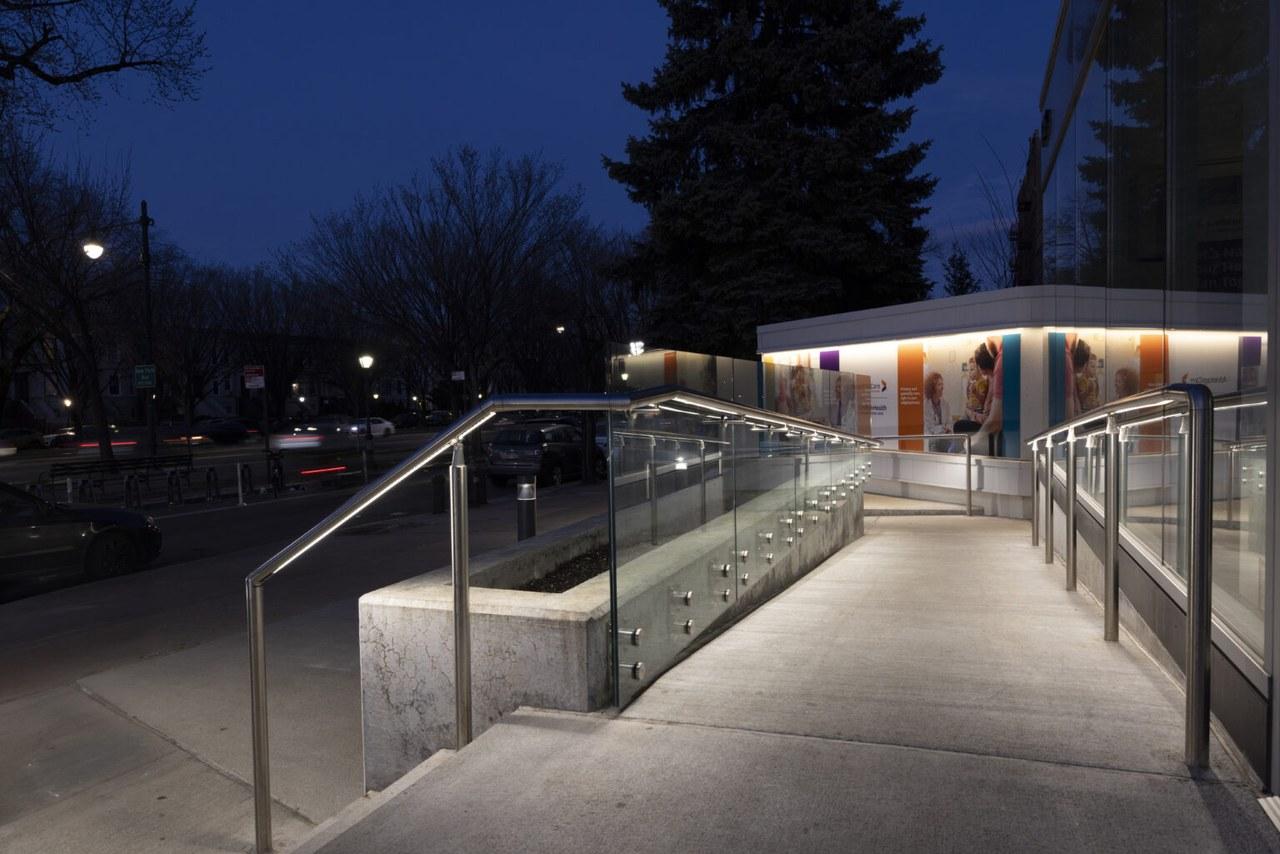
ThemovemarksasignificantstepinOrganic Lighting’sinternationalexpansionstrategyand ensurestailored,region-specificsupportfor architects,lightingdesigners,andbuilding contractorsseekingintegratedlighting solutionsthatcombinesmartlyengineered lightingsolutionsthatareeasilymaintainable withvisualelegance.
Aestivowillactastheexclusiverepresentative acrossGreatBritain(England,Scotlandand Wales).Steadilybuildingareputationfortheir design-led,consultativeapproachto architecturallighting,thecompanyworkswith lightingdesignersandarchitectsinhospitality, retailandcommercialspacesaswellas landscapearchitectsandbuildingcontractors. OrganicLighting’suniqueflood-proof, drive-overingroundlightingandilluminated handrailsystemsareakeyadditionto Aestivo’sgrowingportfolioofdesign-and performance-ledlightingsolutionsfrom brandsacrosstheworld.
“OrganicLighting’ssolutionsbringalevelof durability,customizationandingenuitythatfits perfectlywiththetypesofprojectswe support,”saidGregRussell,Directorat Aestivo.“We’realwayslookingfor manufacturerswhoshareourcommitmentto
quality,reliabilityandcreativity.Organic Lightingticksallthreeboxes.”
InNorthernIreland,OrganicLightingwillbe representedbyChromaLighting,ahighly respectedlightingsupplierandconsultancy thatpartnerswiththeregion’sleading architects,electricalengineersand contractors.BasedinBelfast,Chroma Lightinghasearnedastrongreputationfor oftenguidingtechnicallydemandinglighting projectsfromconceptthroughtodelivery.
“Fromoutdoorpublicrealmregenerationto high-speccommercialinteriors,wepride ourselvesondeliveringlightingschemesthat arebothpracticalandexpressive,”saidLloyd Crawford,DirectoratChromaLighting. “OrganicLighting’ssolutionswillslotvery neatlyintothekindofcreativedesignsand functionalprojectsdevelopedbyourclients.”
ForOrganicLighting,theagreementsmark theculminationofatargetedefforttobuilda foundationoflocalexpertisewithintheUK market.
“Havingtrustedandknowledgeablepartners onthegroundiskeytodeliveringthelevelof servicewe’reknownforinNorthAmerica,” saidJonathanCockingatOrganicLighting managinginternationalsales.“Partneringwith AestivoandChromaLightingaspartners,we cannowdelivercomprehensiveUK-wide serviceandsupporttoeverycustomer.”
AboutOrganicLighting:OrganicLighting Systems,Incwascreatedin2002asasister companytoOrgatechLightingtofocus exclusivelyoncolorchangingLEDlighting, andin2009withtheadventofwhiteLEDs becamethefirsttointroduceprofessional qualityflexiblelightingstripsintheUSA.As LEDsadvance,sodoesourmission,whichis tocreatenewsmartapplicationsin illumination.OurLEDproductscontinueour reputationforenduranceandmeaningful architecturaldesign.Enhancedwithinbuilt technologyandcontrolsdesignedtosimplify specificationandinstallation,whilemeeting superiorilluminationstandardsandworld classspecifications.FortaCastandOrgaRail aretrademarksownedbyOrganicLighting Systems,Inc. ■ PeakValue:amsOSRAM DoublesUV-CLEDEfficiency
ams-osram.com
BattlinggermswithUV-Cradiation: disinfectionwithlightisgainingglobal importance—inhospitals,offices,kitchens, andbathrooms.Eventapwatercanbe disinfectedusingUV-Cradiation.ams OSRAMhasnowachievedatechnological breakthroughinthisfieldwithinthescopeof theevaluationofanewUV-CLED.TheLED

deliversover10percentefficiencyat200 milliwattspower,awavelengthof265 nanometers,andalifespanexceeding20,000 hours.Withthesespecifications,itcan replaceconventionalmercurydischarge lampsinthefuture.TheLED’sefficiencyhas beenvalidatedbyGermany’sNational MetrologyInstitutePhysikalisch-Technische Bundesanstalt(PTB).

Eliminatingpathogensonsurfaces,inliquids, orintheairiscrucialforsafeguardinghuman healthandtheenvironment—ineverydaylife andacrossvariousindustries.Residue-free disinfectionusingenergy-richUV-Cradiation isplayinganincreasinglyimportantroleinthis context.
AlongsideUV-CLEDs,radiationsources primarilyincludelow-pressureand medium-pressuredischargelamps.Dueto theirmercurycontent,theselampspose healthandenvironmentalrisksduring production,operation,anddisposal.The demandformoresustainablealternatives, suchasUV-CLEDs,isthereforesteadily increasing.Sofar,however,theirefficiency hasnotyetmatchedtraditionaltechnologyto fullycompetewithestablishedmercuryvapor lampsacrossallapplications.
“Weareincreasinglyfocusingourresearch anddevelopmenteffortsonsustainable products.AsaleadingLEDmanufacturer,our goalistounlockandcontinuouslyenhance UV-CLEDtechnologytoenablean ever-growingnumberofapplications,” explainsDr.UlrichSteegmueller,SeniorVice PresidentResearchandDevelopmentin BusinessUnitOptoSemiconductorsatams OSRAM.Tothisend,thecompanyisworking onmultipletechnologicaladvancementsinthe areasofepitaxy,aswellaschipandpackage design.Thecompanyrecentlysucceededin optimizingtheextractionofUV-Cradiation fromtheLED,therebyincreasingtheradiation outputavailableforapplications.TheLED achievedwallplugefficiency(WPE)exceeding
10percent,whilealsodeliveringalong lifespanofmorethan20,000hours.ams OSRAMhasthusmanagedtonearlydouble thepreviousLEDs’WPEofaround5.3 percent—withallotherconditionsremaining unchanged.
Thispeakvaluehasalsobeenvalidatedbythe Physikalisch-TechnischeBundesanstalt(PTB): theinstitute’smeasurementsconfirmaWPEof 10.2percent.Inadditiontoenhancedoptical performance,amsOSRAMhassuccessfully demonstratedthatthesamplestestedexhibit alifespanaslongasthatofhigh-powerLEDs currentlyavailableonthemarket.
Peakefficiencyandexcellentlifespan validationunderscorethatthisisamajor technologicalandsustainablemilestonefor amsOSRAM’sfuturedevelopments.Thenew UV-CLEDsareexpectedtobeavailablefrom late2026andwillcomplementtheexisting productportfolioforadvancedUV-Clighting solutions.Thecompanysafeguardsits innovationsinUV-CLEDtechnologywith morethan200high-qualitypatentassets, securingastrongintellectualpropertyposition inthisarea. ■
LEDsExpectedtoGreatly EnhanceGeneralLighting
www.rutgers.edu
ARutgers-ledteamofscientistshas developedaneco-friendly,verystable, ultra-brightmaterialandusedittogenerate deep-bluelight(emissionat450nm)ina light-emittingdiode(LED),anenergy-efficient deviceattheheartofallmajorlighting systems.
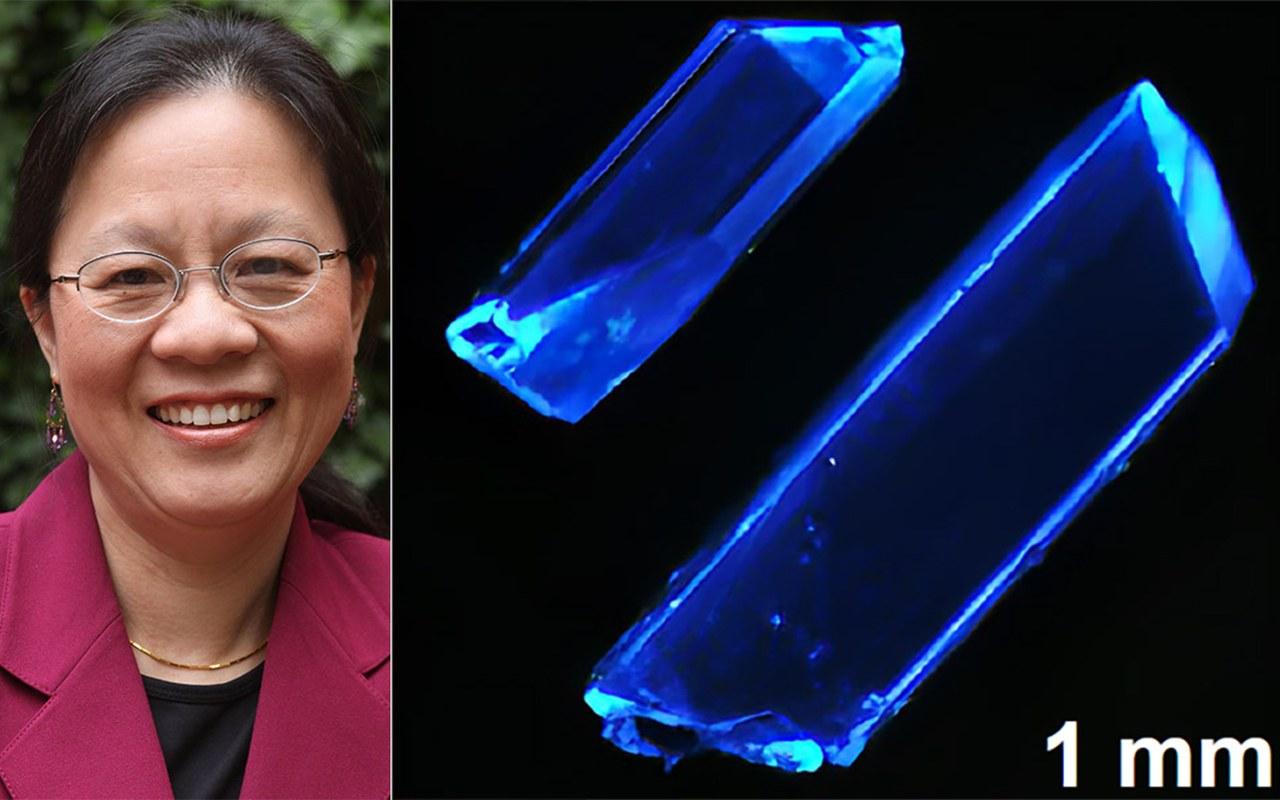
“Deep-blueLEDsareattheheartoftoday’s energy-efficientlightingtechnologies,”said
JingLi,aDistinguishedProfessorandBoard ofGovernorsProfessorofChemistryand ChemicalBiologyintheDepartmentof ChemistryandChemicalBiologyintheSchool ofArtsandScienceswholeadsthestudy. “However,existingoptionsoftenpresent issueswithstability,scalability,cost,efficiency orenvironmentalconcernsduetotheuseof toxiccomponents.Thisnewcopper-iodide hybridoffersacompellingsolution,leveraging itsnontoxicity,robustnessandhigh performance.”
LEDsarelightingdevicesthatusespecial materialscalledsemiconductorstoturn electricityintolightinanefficientanddurable way.BlueLEDSwerediscoveredintheearly 1990sandearnedtheirdiscoverersthe2014 NobelPrizeinphysics.
BlueLEDsareparticularlyimportantbecause theyareusedtocreatewhitelightandare essentialforgenerallightingapplications.
LiandhercolleaguesatRutgerscollaborated withscientistsatBrookhavenNational Laboratoryandfourotherresearchteams representingnationalandinternational institutionsintheefforttoworkonnew materialsthatwouldimproveuponexisting blueLEDs.
Theresearchersinvolvedinthestudyfounda waytomakeblueLEDsmoreefficientand sustainablebyusinganewtypeofhybrid material:acombinationofcopperiodidewith organicmolecules.
“Wewantedtocreatenewkindsofmaterials thatgiveverybrightdeep-bluelightanduse themtofabricateLEDsatlowercostthan currentblueLEDs,”Lisaid.
Thenewhybridcopper-iodidesemiconductor offersanumberofadvantagesoversome othermaterialsusedinLEDs,scientistssaid. Lead-halideperovskites,whilecosteffective, containlead,whichistoxictohumans,aswell ashavingissueswithstability,duetotheir sensitivitytomoistureandoxygen.Organic LEDs(OLEDs)areflexibleandpotentially efficientbutmaylackstructuralandspectral stability,meaningtheycandegradequickly andlosetheircolorqualityovertime.Colloidal quantumdotsperformwellmainlyingreen andlower-energyLEDsandareoften cadmium-based,whichmayraisetoxicity
concerns.Phosphorescentorganicemitters maybecostlyandcomplextosynthesize.
“Thenewmaterialprovidesaneco-friendly andstablealternativetowhatcurrentlyexists, addressingsomeoftheseissuesandmay potentiallyadvanceLEDtechnology,”Lisaid.
Thehybridcopper-iodidematerialpossesses favorablequalitiessuchasaveryhigh photoluminescencequantumyieldofabout 99.6%,meaningitconvertsnearlyallthe photoenergyitreceivesintobluelight.Blue LEDsmadefromthismaterialhavereacheda maximumexternalquantumefficiency(the ratiobetweenthenumberofemittedphotons andnumberofinjectedelectrons)of12.6%, amongthehighestachievedsofarfor solution-processeddeep-blueLEDs.
NotonlyaretheseLEDsbright,theyalsolast longercomparedwithmanyothers.Under normalconditions,theyhaveanoperational half-lifetimeofabout204hours,meaningthey cankeepshiningforagoodamountoftime beforetheirbrightnessstartstofade.In addition,thematerialworkswellinlarger-scale applications.Theresearcherssuccessfully createdalargerdevicethatmaintainshigh efficiency,showingthatthismaterialhas potentialtobeusedinreal-worldapplications.
Thesecrettothematerial’simpressive performanceliesinaninnovativetechnique developedbythescientistscalleddual interfacialhydrogen-bondpassivation.The manufacturingtechniquesignificantlyboosts theperformanceoftheLEDsfour-fold.
“Ourprocessingmethodminimizesdefects thatcanimpedethemovementofelectric chargesattheinterfaceofthesehybrid materials,”saidKunZhu,aformergraduate studentandpostdoctoralassociateatRutgers whoisnowattheMaxPlanckInstitutein Germanyandisthepaper’sfirstauthor.“This approachcouldbeaversatilestrategyfor generatinghigh-performanceLEDs.”
IftheLEDcanbeimaginedasasandwich withdifferentlayers,eachlayerhasaspecific job,suchasemittinglightortransporting electronsandholes.Sometimes,theemissive layerdoesn’tinteractperfectlywithits interfacelayers,whichcanreduceefficiency orshortenlifespan.Thetechniqueeliminates suchproblemsbyforminghydrogenbonds betweenthelayerstocreatebetter connections.
“Overall,thistypeofnewmaterialispavingthe wayforbetter,brighterandlonger-lasting LEDs,”Lisaid.
OtherRutgersscientistscontributingtothe studyincludedDeirdreO’Carroll,associate professor,andNasirJaved,doctoralstudent, oftheDepartmentofChemistryandChemical BiologyandDepartmentofMaterialsScience andEngineering;andSylvieRangan,assistant
researchprofessor,andLeilaKasaei, postdoctoralresearchassociate,ofthe DepartmentofPhysicsandAstronomy.
TheresearchwasfundedbytheU.S. DepartmentofEnergy. ■
DespiteClosedCall
ls2025monastir.com
LS2025,theIEEESustainableSmartLighting WorldConference,issetforDecember8–10, 2025,inMonastir.Whiletheofficialdeadline forthe2-pageabstractsubmissionpassedon July20,theorganizingcommitteeis announcingarare,finalopportunityfor exceptionalabstractstobereviewed— offeringlast-minutecontributorsachanceto presentatthisglobalforum.
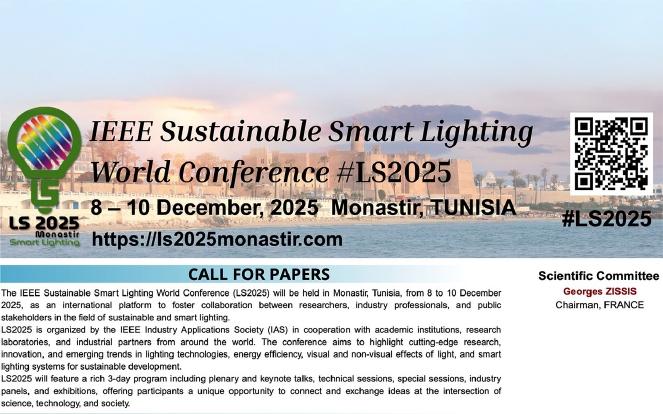
LS2025willbringtogetherleading researchers,industryexperts,innovators,and policymakersfromacrosstheglobetoexplore cutting-edgedevelopmentsinsustainableand smartlighting.Thethree-dayprogramwill featurekeynoteaddressesfrominternationally recognizedexperts,interactivetechnical sessions,andworkshopsfocusedon real-worldapplicationsthataddressenergy efficiency,environmentalsustainability,and humanwell-being.
“Ourprogramisalreadyshapinguptobetruly exceptional,”saidProf.GeorgesZissis,Chair oftheLS2025.“Butweknowthatinnovative ideasdon’talwaysarriveonschedule.That’s whywe’reallowingashortextensionfor remarkablelateabstractsthatdeservetobe sharedwiththeworld.”
Latesubmissionslotswillbeallocatedona first-come,first-servedbasis,subjectto relevanceandquality.
Event:LS2025–IEEESustainableSmart LightingWorldConference
Dates:December8–10,2025
Location:Monastir,Tunisia
Theme:SmartandSustainableLightingfora BrighterFuture ■
leotek.com
LEOTEKElectronicsUSALLC,headquartered inSiliconValleyandagloballeaderin innovativeLEDlightingtechnologyforstreet andarealighting,proudlyannouncesthe launchofKarbonCobra™,anext-generation cobraheadstreetlightengineeredtomeetthe evolvingneedsofmoderncitieswithsmarter performance,lowerenvironmentalimpact, andfuture-readyconnectedtechnology.
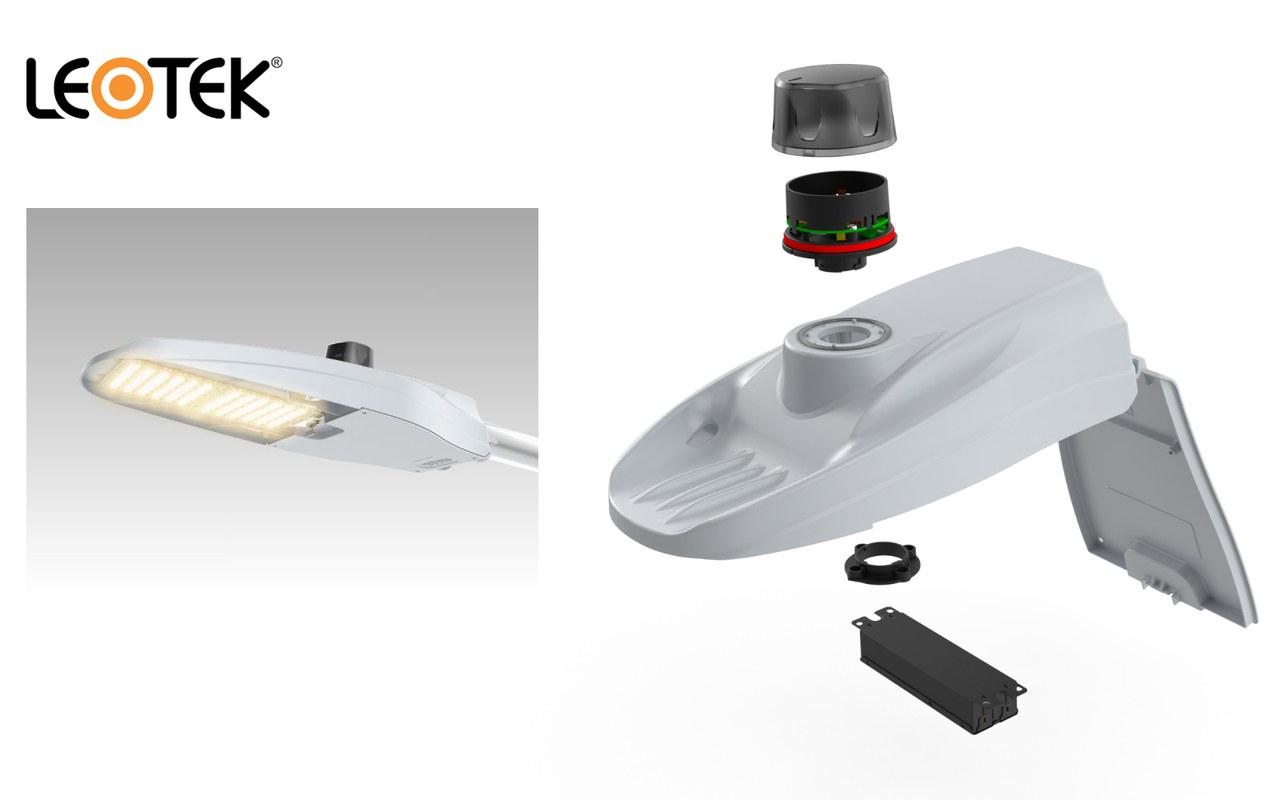
Designedforutility,municipal,andDOT applications,KarbonCobra™combineshigh performancewithacompact,lightweightform factorthatreducesinstallationand maintenancecostswhileminimizing LEOTEK’scarbonandenvironmentalimpact. Withsevenopticaldistributionsandlowglare comfortoptics,itenhancesdriversafetyand visualcomfort,addressingcommonnighttime visibilitychallengessuchaseyefatigue, distancedistortion,anddelayedreaction times.
Availableinthreesizeswithscalablelumen packages(100W–400WHIDequivalent)and deliveringupto176lm/Wefficacyandlumen outputsrangingfrom1,200to29,000lm, KarbonCobra™isengineeredwithyour lightingneedsinmind.ISO14061-1:2018 carbonverificationensuresthatboth operationalcostsandenvironmentalimpact arereduced.
Afuture-readyembeddednodeandsoftware optionsmakesmartcityintegrationseamless. Withover3millionLEDstreetlightsand35 millionLEDtrafficsignalunitsdeployed, LEOTEKistrustedforitsprovenreliability. Backedbya10-yearwarranty,IK10-rated durability,andULWetLocationcertification, KarbonCobra™performswellinextreme weatherconditions(-40°Cto+50°C)and maintainsatleast90%ofitsoutputat60,000 hours.Allthistoensuretopnotch,long-term TotalCostofOwnership(TCO).
”KarbonCobra™ismorethanastreetlight.It isareflectionofLEOTEK’sleadershipand commitmenttoshapingthefutureof intelligent,sustainablecityinfrastructure throughinnovation,performance,sustainable design,andservice,”saidEwingLiu,Chiefof StaffandVicePresidentofSalesatLEOTEK. ”Ascitiesstrivetobecomecleaner,safer,and
moreconnected,KarbonCobra™deliversthe efficiency,reliability,andfuture-readyfeatures neededtopowertheinfrastructureof tomorrow.KarbonCobra™isourboldstep forwardinourmissiontoilluminatethepathto net-zerourbanenvironmentsworldwideand AIRoadwayInfrastructureSolutions.”
AboutLEOTEKElectronicsUSALLC: Foundedin1992inCalifornia’sSiliconValley, LEOTEKElectronicsUSALLCisasubsidiary oftheLITEONTechnologyGroupand operatesfromitsheadquartersinSanJose, California.Astheleadingglobalproviderof intelligentLEDroadwaylightingproducts, LEOTEKhasservedtheroadway infrastructureofover30countries,including NorthAmerica,Europe,theMiddleEast,and theAsia-Pacificregion.
LEOTEKisdedicatedtodrivingurban transformationthroughitsintelligentlighting solutions,whichintegrateAIandIoTfor advancedroadautomationandoperational services.Withastrongfocusonsafety, ecology,andlowcarbonimpact,LEOTEK strivestocreateintelligent,clean,andnet-zero cities,settingnewstandardsforinnovation andsustainabilityinthelightingindustry.
Today,thecompanyisrecognizedasaglobal leaderinLEDlightingtechnology,specializing inthemanufactureofinnovativeLEDlighting productsforvariousapplications,including trafficandtransit,street,andarealighting. LEOTEKisrenownedforitscommitmentto developingsustainable,energy-efficient lightingsolutionsthatreduceenergy consumptionandmaintenancecosts. ■
AEC-Q102Certificationfor Automotive-GradeUVCLED Technology zsbytech.com
efficiency,makingitanidealsolutionfor improvingin-vehiclehealthandsafety.By disruptingtheDNAorRNAofbacteriaand viruses,UVCradiationpreventsmicrobial growthandreproduction,effectively neutralizingairborneandsurface-level pathogens.
Thecertifiedproductfeaturesafullinorganic airtightpackageconstructedfromaluminum nitrideceramic,metal,andhardglass, ensuringexceptionaldurabilityandreliability. Keyspecificationsinclude:
• Wavelength:270–280nm
• OpticalOutput:approx.17mW@100mA
• Voltage:5–7V
• ViewingAngle:120°
• ServiceLife:>20,000hours
• ElectrostaticProtection:≥±8,000V(HBM)
• RoHScompliant
Designedwithlowthermalresistanceanda thermo-electricseparationsubstrate,theLED achievesefficientheatdissipationandlong operatingstability.Patentprotectionfurther strengthensitscompetitiveedge.
FeaturesandBenefits
• StrictCertification:AEC-Q102approval demonstrateshighresistancetoheat, vibration,anddemandingautomotive conditions.
• HighSterilizationEfficiency:275nmUVC rapidlyneutralizesbacteriaandviruses, purifyingbothcabinairandinterior surfaces.
• SafeOperation:Anintelligentprotection mechanismeliminatesozoneleakage, ensuringsafetyforbothpassengersand vehiclesystems.
• FexibleIntegration:Optimizedfor automotiveHVACsystems,carpurifiers, andotherin-cabinapplications;available withOEM/ODMcustomization.
AboutBytech:Bytechisaleadingdeveloper ofadvancedUVCLEDtechnologies dedicatedtocreatingsafer,cleaner,andmore sustainableenvironments.Thecompany’s productportfolioincludessterilizationand disinfectionsolutionsforautomotive, consumer,andindustrialapplications. Bytech’scommitmenttoqualityand innovationensuresreliable,high-performance solutionsforpartnersworldwide. ■
andDominoPLSatISAL2025
www.nichia.com
Nichiawillpresentitsmostcomprehensive portfolioofPixelatedLightSource(PLS) solutionsforadaptivedrivingbeam(ADB) headlampsattheInternationalSymposiumon AutomotiveLighting(ISAL)heldinDarmstadt betweenSeptember22–24,2025.
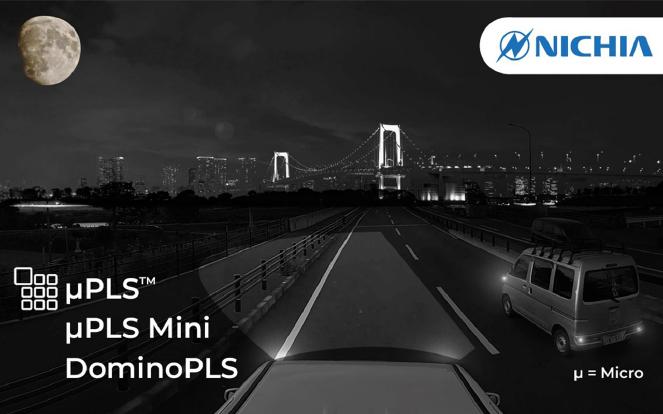
ThePixelatedLightSourcefamilyhasgrown toincludetheµPLSalongsidetwofresh additions—theµPLSMiniandDominoPLS— enablingcarmakersandsystemintegratorsto scaleglare freeheadlightingfromentry level ADBapplicationstohigh definitionprojection.
Bytechannouncedthatithasbecomethefirst domesticcompanytoachieveAEC-Q102 certificationforautomotive-gradeUVCLED products,asignificantmilestonethatplaces China’sUVLEDtechnologyintotheglobal automotivesupplychainforthefirsttime. Thenewlycertified275nmdeep-ultraviolet (UVC)LEDdelivers99.99%sterilization
Beyondtheautomotivesector,Bytech’sUVC LEDtechnologysupportsawiderangeof sterilization,disinfection,andairpurification usecases.Theseincludewaterandliquid treatment,foodpreservation,VOCreduction, andbiochemicalanalysis—makingita versatilesolutionforindustrieswherehygiene andsafetyareparamount.
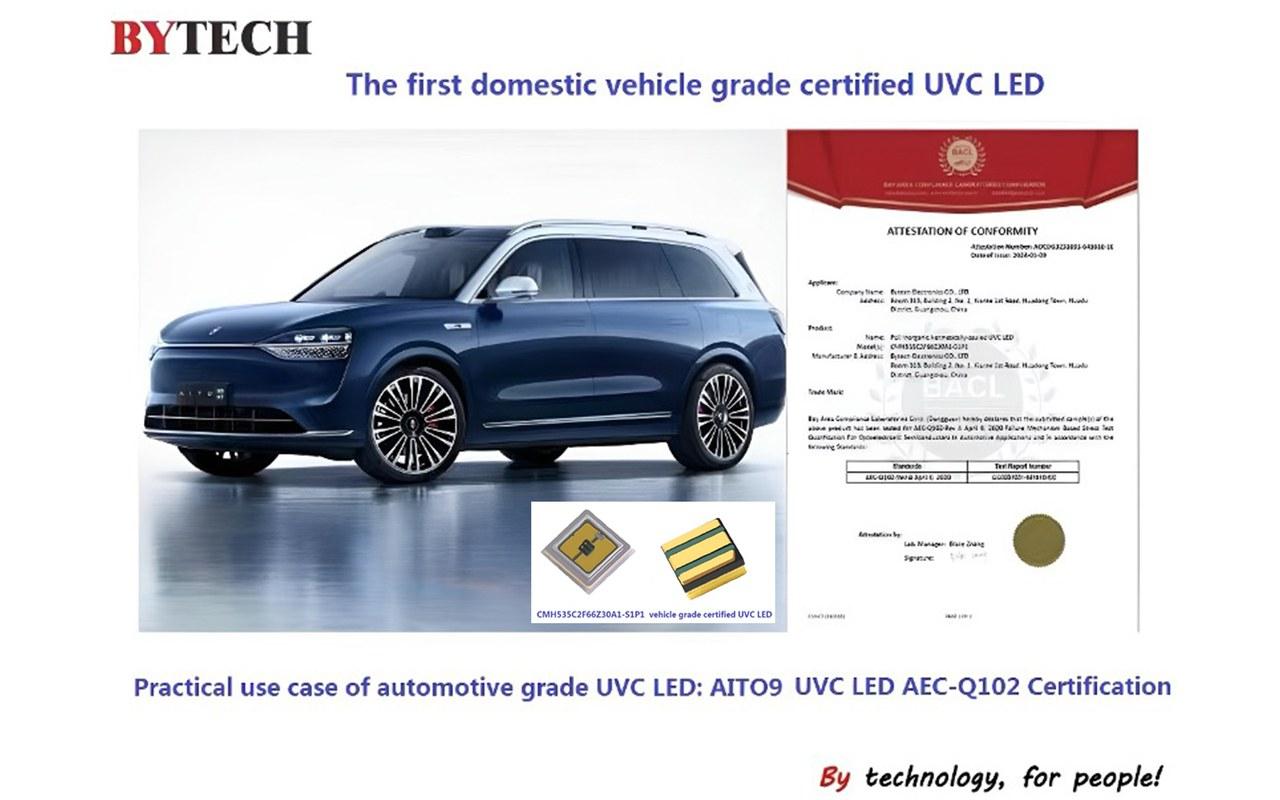
“Thisachievementnotonlyvalidatesthe qualityandreliabilityofBytech’sUVCLED products,butalsopavesthewayforwider adoptionintheautomotiveindustry,”saida companyspokesperson.“Withthis certification,weareopeningthedoortonew applicationsandsettingthefoundationfor safer,healthierdrivingexperiences worldwide.”
Bytechplanstocontinueexpandingits productlinetomeetautomotiveregulations andinternationalstandards,withastrong focusonsustainabilityandinnovation.
Nichia’sPLSlineupspansthreetiers,ensuring therightbalanceofperformanceandcostfor everyvehicleclass.DominoPLS,forinstance, isasimplifiedmodularplatformdesignedto supportpopularsmallcarstransitioningfrom halogenorconventionalLEDsystems.Its plug-in‘Domino’LEDsenablesmore advanceddynamicbeamcontrolandreduced opticalstackheight,allowingdesignersto upgradetoADBwithoutneedingtoretool entirelamphousings.Indeed,thetile-like structureofDominoPLSemitterssupports thin,customizableheadlampdesignssuchas integrationdirectlyintobumpers.
Nichia’sµPLSMini(MicroPLSMini)combines aproprietary3,000+pixel-rangemicro-LED matrixwithInfineon’sLITIX™driverASIC basedonthesametechnologyasthefirst µPLS(MicroPLS).Theproductenables individuallyaddressablepixeldimming,higher brightnessandsymbolprojectioncompared tolowandmid-LEDcountADBsolutions. Additionalelectronicinterfacesareincluded forsimplificationoftheintegrationinexisting electronicarchitectures.Therefore,MicroPLS MinibringsdigitalADBcapabilitiestoa
broadercarmarketwhilemaintaininga cost-effectivebillofmaterials.
Nichia’scompactMicroPLSisapioneering solutionalreadyusedinvehiclessuchasthe PorscheCayenne.Firstintroducedin2023, theHigh-Definition(HD)lightengineisidealfor headlampsdevelopedinpremiumand upper-mid-rangevehicles.Thedeviceis capableofsophisticatedimageprojection usingover16,000individuallyaddressable pixels.Thislevelofprecisionenablesthe headlamptocreatesharp,glare-freecut-outs aroundoncomingtrafficwhilemaintainingfull illuminationelsewhereontheroad,aswellas enablingdynamiclightprojections,including on-roadsymbolsandpersonalized‘welcome home’lightingscenarios—blendingsafety, innovation,andapremiumdrivingexperience.
“ByextendingourPLStechnologytoboth lower-endandhigherapplications,weare empoweringeveryautomakertodeliverthe safetyofglare-freelightingandthe communicationpossibilitiesofroadprojection, whethertheyarebuildingaflagshipEVora cost-sensitivecityhatchback,”saidYusuke ‘Karl’Yamazaki,VicePresidentofAutomotive atNichiaEuropeGmbH.“Withthe introductionofDominoPLSandMicroPLS Mini,wenowofferOEMsaroad-testedpath tofittheappropriateADBheadlamptomatch theirperformanceandbudgetneeds,all supportedbyaproventechnologystack.”
Nichia’sexpandedportfoliodirectlyaddresses keymarkettrendssuchasthegrowing adoptionofglare-freelighting.The technology’slowprofileandenergyefficiency alsobenefitelectricandautonomousvehicles byfreeingupfasciarealestateforsensors plussavingweightandpowertoextend drivingrangeandcontributetomeeting sustainabilitygoals.Furthermore,itsupports theindustry’sshifttowardsoftware-defined lighting,enablingover-the-airupdatesfornew projectionfunctionality.
AtISAL2025,NichiawillfeaturePixelated LightSourcesatBooth2intheDarmstadtium CongressCenter. ■
SalasO’BrienWelcomes LightingDesignAlliance
salasobrien.com
SalasO’BrienannouncedthatLightingDesign Alliancehasjoineditsgrowingteam,uniting twopowerhousesinthebuiltenvironment. Renownedforaward-winninglighting projects,LightingDesignAlliancebringsa globalportfolioofhigh-profileprojects includingJioWorldCentreinIndia,Chimelong SpaceshipMarineScienceParkinChina,and TheLondonerMacao.
”Lightingcanhavesuchapositiveand
dramaticimpactonthehumanexperience. Wecouldn’tbemoreexcitedtohavesuchan amazingteamandtalentsjoinus”,saidDarin Anderson,CharimanandCEOofSalas O’Brien.
LightingDesignAlliancehasbeenatthe forefrontofarchitecturallightingdesignfor overthreedecades,earningareputationfor groundbreakingdesignthatbalances aesthetics,functionality,sustainability,and technology. ■
SimplifiesMulti-ColorLED
ApplicationDevelopmentwith ChipScalePackagingand UniformFocalLength
lumileds.com
Lumileds’newLUXEONHL1ZColorLineisa high-power,chipscalepackage(CSP) portfolioof10directandphosphorconverted colorsthatshareacommonfocallengthand footprint.Offeredinsmallcolorbinsandwith narrowforwardvoltagebins,theseLEDs deliverbettercoloruniformity,betterefficacy andthermalmanagementandmore consistentbehavioratoperatingconditions.
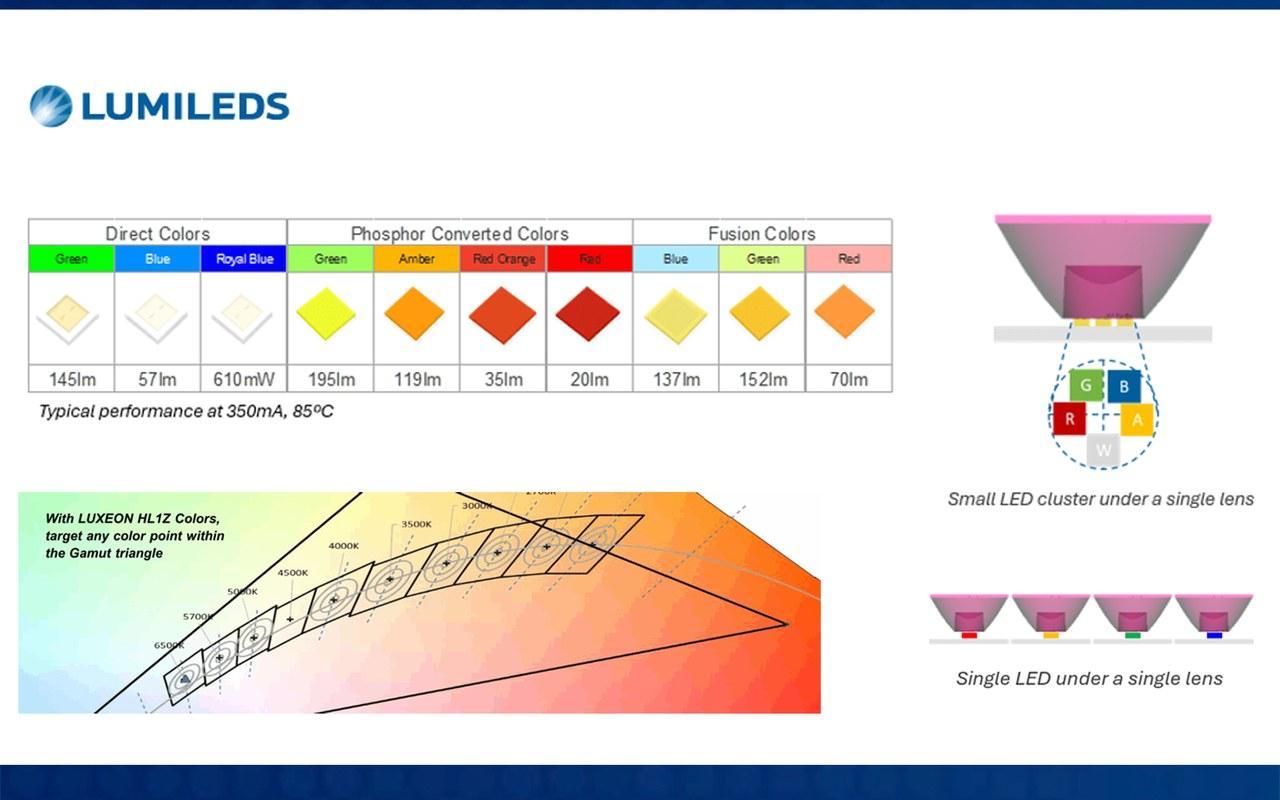
SuperiorColorMixing:Theundomed 1.4mmx1.4mmemittersfeaturetopemission ofthelight.Withorwithoutoptics,thetop emissionpreventscrossfadingorinterference betweendifferentcolorsandthereforebetter controloftheresultinglightandcolor.Their verysmallsize,highcurrentcapability,and 85ºCbinningallowforhigherdensityarraysin asmallerspacepositionedundersingleor multipleoptics.
Colors,CCTTuning,orColorTunable:
Withdirectcolors,phosphorconvertedcolors, unique,non-saturatedFusioncolors,andthe LUXEONHL1Zwhiteportfolio,it’seasierthan evertocreatesinglesolutionsthatdeliver color,high-qualitywhitelightwithCRIwell above90,anddynamiclightingthatcanbe purpose-tunedforaninteriordesignoreven humancentriclighting.Lumiledsengineers havedevelopedimplementationtablesto makeitsimpletodesignthedesired illumination.
DrivenbyApplicationRequirements: Lumiledscontinuestoaddtoitscolorportfolio notbecauseit’stechnicallypossible,but becauseeveryLUXEONColorportfolioserves differentapplicationobjectives.Forexample, thenewLUXEONHL1Zcoloremittersare one-sixththesizeofaLUXEON2835color emitteranddeliverthree-timesthepower.For entertainment,spot,andmanyotherintense colordependentapplications,LUXEONHL1Z willprovetobetheonlycostandperformance appropriatesolution.Ofcourse,formanystrip andlinearapplicationsLUXEON2835will continuetodeliverthebestcost/performance optioninthemarket.
LumiledsCSPInnovation:Engineersat LumiledspioneeredCSPtechnologyin2013 withthecompany’sLUXEONFlipChipand hascontinueddevelopmentoverthelast12 years.Lumileds’CSPLEDsdonotrequirean additionalsub-mountorsubstrate,aresmaller thancomparableLEDswiththesamesize chip,andcanbedirectlyattachedtolevel2 boards.Particularlyusefulindirectional applications,LUXEONCSPLEDsofferbetter thermalcontact,highercurrentdensities,very highreliability,superiorlong-termcolor stability,andeasysurfacemountassembly withstandardequipment.
ImmediateAvailability:LUXEONHL1Z ColorLineLEDsareimmediatelyavailable throughLumiledsdistributionnetwork. Lumiledsengineeringsupportteamsoffer resourcesanddevelopmenttoolstoassist customerswithcolor,tunablewhite,and dynamicwhitelightingsolutions.
AboutLumileds:Lumiledsisagloballeaderin LEDandmicroLEDtechnology,innovation, andsolutionsfortheautomotive,display, illumination,mobile,andothermarketswhere lightsourcesareessential.Ourapproximately 3,500employeesoperateinover15countries andpartnerwithourcustomerstodeliver neverbeforepossiblesolutionsforlighting, safety,andwell-being. ■
PhilipsHue’sPlaywallwasherofferseasy setupandcontrolthroughtheHue ecosystem.Userscanpersonalizefeatures suchasintensity,speed,brightness,and positioning.Anintuitive3Ddrag-and-drop featureintheHueappenablesprecise customizationoflightpositioningand direction.HuePlaywallwasherworks seamlesslywiththeHueHDMISyncbox,TV andPCSyncapps,allHueaccessories,and voiceassistantssuchasAmazonAlexa, GoogleAssistant,andAppleHomeKit.
”TheHuePlayWallWasherisaboldstep towardourvisionoflightingasacornerstone ofimmersiveentertainment.Itssleekdesign andpowerfullightprojectiontransform everydayspacesintodynamic,content-driven experiences.”–JohnSmith,BusinessLeader forPhilipsHueatSignify. ■
Dr.DianaWernisch,SecretaryGeneral, Int.CommissiononIllumination(CIE)

Dr.DianaWernisch
“TheCIEbringsscience,industry, andsocietytogethertoshapethe futureoflight.”
Inthisexclusiveinterview,Dr.DianaWernisch,SecretaryGeneralofthe InternationalCommissiononIllumination(CIE),sharesherperspectives ontheorganization’smission,evolution,andfuture.Withastrong backgroundininternationalresearchcooperation,academicpublishing, andscientificinfrastructure,Dr.Wernischdiscusseswhatmotivatesher workinlightandlightingstandards,howtheCIEbridgesscience, industry,andsociety,andwhyglobalcollaborationanddigital transformationareessentialtoshapingthefutureoflighting.
https://cie.co.at
LEDprofessional: Dr.Wernisch,could youbrieflytellusaboutyourprofessionalbackgroundandhowyoubecameinvolvedwiththeCIE?
Dr.DianaWernisch: Ofcourse,letme firstthankyouforthegreatopportunity ofbeinginterviewedforyourmagazine.
Regardingmyprofessionalbackground, IhaveabusinessandmanagementeducationfromWU–ViennaUniversity ofEconomicsandBusinessandIhave donesomeresearchworkandmyPhD inthefieldofhighereducationandresearchmanagement.Ihaveworked inthefieldofinternationalcooperation inresearchandeducation,aswellas inacademicpublishingandthedevelopmentofscientificinfrastructureand publicationservicesforresearchers.I havealsomanagedtransfer-orientedresearchcenters,oneofthemfocusing onincreasingyoungpeople’sinterestin STEMcareers.So,myworkasamanagerhaslongbeencharacterizedby contextsinwhichitisessentialtounderstandandbridgedifferentsectorsor fields.
ThisisalsohowIgotinvolvedintheCIE. MyroleastheSecretaryGeneraliscentrallypositionedintheglobalorganization.Fromthebeginning,Iconsidered theCIE,withallitsdifferentroles,disciplinesandfieldsthatdefine,characterize anddrivetheorganization,tobeareally interestingorganizationtoworkat.Iwas immediatelyenthusedwhenIreadthe jobopening.Inaddition,Iwaslooking tomovebacktoAustria–asIamAustrian–andbacktothewonderfulcityof Vienna.Ihavebeeninmyrolenowfor2
yearsandit’sgreattomanageandfurtherdeveloptheCIEtogetherwithour GoverningBoard.It’safascinatingorganizationandaninspiringjobthatallows diverseinteractionswithourmembers –fromnationalcommitteestoindustry leaders,withtheexpertvolunteerswho reallycarrytheworkandessenceofthe CIE,andwithallourpartnersandstakeholders.
LEDprofessional: Whatmotivatesyou personallyaboutworkinginthefield oflightandlightingstandards?
Dr.DianaWernisch: Forme,it’sthe combinationoftheimpactthatstandardscanhave–notonlyonindustry andeconomicdevelopmentbutalso, eventually,ontheeverydaylifeofpeople,oursocietyandenvironment,and ourwell-being.Andthispotentialimpact, togetherwiththeuniquecontribution thattheCIEissuccessfullydelivering inthefieldiswhatmakesitworthwhile: Goodstandardsandregulationsneed goodscience.Youneedtobeableto baseaframework,rules,procedures, etc.onactionablebodiesofknowledge, liketheCIEproduces.TheCIEknowledgeisessentialforgoodstandardsand regulations,andthusalsoforinnovation andtheprosperousdevelopmentsofour economiesandsocieties.
WhatisuniqueabouttheCIEisthatwe areaninternationalscientificorganizationandastandards-developingbody. Thisdualrolepositionsusasanessentialactorandproducerinthestandards andregulatoryecosystem.Evenmore, CIEasaglobalcommunityalsohas animportantroleinthedissemination
anddiffusionofactionableknowledge andstandardsintopractice.LearningorientedCIEeventssuchasourtutorials, workshops,andwebinarsalsoplayan importantrolehere.Nootherorganizationbridgesdifferentsectorssuchas academia,scienceandresearch,and standardization,withindustry,practice, andsocietyasseamlesslyastheCIE does.
LEDprofessional: Forreaderswho mightnotbefullyfamiliarwithit,how wouldyousummarizethemission andglobalroleoftheCIEtoday?
Dr.DianaWernisch: Let’squicklyreverttotheCIEstatutesforthis:CIEis devotedtotheworldwidecooperation andtheexchangeofinformationonall mattersrelatingtothescienceandart oflightandlighting,colorandvision, outdoorandindoorlightinganddesign, photobiology,andimagetechnology. Ourmissionistoadvancethebroad fieldoflightandlightingbyactingasthe globalbodyandplatforminthefield.
Asaninternationalscientificorganization, it’simportantforusthatwearefullyrecognizedasamemberoftheInternational ScienceCouncil.TheISCmembershipis keyforusasitlinksustoneighboringor foundationalfieldsanddisciplinessuch asphysics,optics,orchemistry,astronomy,remotesensing,younameit!
OurscientificrolealsoenablestheCIE toactasarelevantbodytoproduce consolidatedandreliableknowledge andpublishInternationalStandardsand TechnicalReportsinlightandlighting. Asastandards-developingbodywe
haveclosepartnershipswithISO,IEC, andCEN/CENELEC.Youcanperhaps judgetheroleoftheCIEbyhowitswork hasbeentakenup:Themajorityofthe publicationsofthecoreISOcommitteeinlightandlightingoriginatefrom theCIE,andwevaluethispartnership throughextensivecooperation.Another exampleisCIES009,onphotobiologicalsafetyoflampsandlampsystems, whichwithitsderivativepublicationIEC 62471isreferencedinaround60other documents.
AnimportantaspectofourmissioncontextisthattheCIEreallycoversthe broadfieldoflightandlighting:Thisis reflectedinthesixDivisionswhosework rangesfromphotometrytophotochemistrytoimagetechnology.Tohavethis scopeincludedinoneorganizationis complexbutalsoessentialtoourglobal leadershiprole:ThisisbecausetheCIE providesanumbrellaunderwhichall light-andlighting-relatedtopicscanbe discussed,linkingdifferentdisciplines andintegratingneighboringfields.
Weareinapositiontoactassucha platformexactlybecausewehavemanyfoldlinkages.Manyexpertsdonotonly workintheCIEbutalsoinotherorganizations,suchasInternationalCommissiononNon-IonizingRadiationProtection(ICNIRP),InternationalColorConsortium(ICC),LightingUrbanCommunitiesInternational(LUCI),International AstronomicalUnion(IAU),WorldHealth Organization(WHO),etc.Likewise,in theCIE,expertsfromacademiawork togetherwithexpertsfromindustryand governments.ThisiswhytheCIEisalso therightforumtoworkonanddiscuss complexandmulti-dimensionaltopics relatedtolightandlighting.
Andfinally,Iwanttosingleoutourmissionandroletobetheplaceforyoung expertsfromallovertheworldwhowill continueontoacademicorindustrycareers,tolearnfromthebest,andtobuild high-quality,diversifiednetworksalready atayoungage.Theprofessionalspiritof theCIEcommunityisabigassetinthat respect.
LEDprofessional: Howhastheorganizationevolvedinrecentyearsto respondtonewtechnologicalandenvironmentaldemandsinlighting?
Dr.DianaWernisch: That’schallenging tosummarizeinbriefbutletmepickup
afewpointsherewhichareevidentin theworkofourtechnicalcommittees andresearchforaacrossthesixCIE Divisions.
Onedevelopmentanddemandisthat lighting-relatedaspectsareandneedto increasinglybediscussedwithinmore integratedsettingsandconcepts,such aslightingaspartofindoorenvironmentalquality,lightinginsmartbuildings, or(road)lightingandenergyefficiency withinsmart-cityconcepts.Similarly, fromanintegratedperspective,atopic needstobediscussedtakingintoaccountmultipledimensions.Forexample, urbanlightingisbeingandcanbediscussedfromanenergy-efficiencyperspective,inviewofsmart-cityconcepts, urbandevelopmentconceptsatlarge, orinviewofpotentialproblemsfrom obtrusivelightonnature,animalsand humans.
ImentionedbeforethattheCIEisused tomulti-sectoralandmulti-disciplinary work.Nevertheless,thesedevelopments alsorequireourorganizationtoadapt continuously.Forexample,Ihaveobservedatendencyofmoreandmore cross-divisionaltopicsintheCIE.These developmentsalsorequiretheCIEto continuouslyandactivelyestablishlinks topossiblynewrelevantneighboring fieldsandtrytocreategoodoverlaps withsuchcommunities,forexampleby bringingmoreofthoseexpertsintothe CIEcollaborativespace.
Ialsohavetheimpressionthatinthe CIE,weincreasinglyworkontopicsand projectsthatcreateevenstrongerlinkagesbetweentheCIEdivisions.For manyofthoselinks,digitalizationisa strongdriver,andthisisasecondimportanttechnologicaldevelopmentthat theCIEisresponsivetoandwhichisvisibleindifferentareas:thematicprojects ontheonehandbutalsoonamoreabstractandstrategiclevel.
OnepracticalexampleisthattheCIE, since2023,hasreleasedmanydatasets fromCIEpublicationsasstand-alone electronicdatasets,fullyreferenced withallnecessarymetadata,readyto beusedbyindustryandresearch.This isaservicethatsupportsprogressand innovation.
Anotherfuture-orientedinitiativethatthe CIEisinvolvedinisthedevelopment, implementationandpromotionofthe
digitalizationoftheInternationalSystemofUnitsSI(theso-calledSIDigital Framework1),aspartofthewiderdigitaltransformationoftheinternational scientificandqualityinfrastructure.To emphasizethis,CIEhassignedaJoint StatementofIntent2 togetherwithother leadinginternationalorganizationssuch asBIPM,ISO,IEC,ILAC(International LaboratoryAccreditationCooperation), orISC.
In2026,CIEwilltakeoverthecoordinationofactivitiesoftheSIsignatories. Thedigitalizationofvocabulariesand termsanddefinitions,willbeatopicdiscussedinthiscontextandsothiswill alsolinktoCIE’slightandlightingterminology(ILV)anditsdigitalversion(e-ILV). Furtheractivitiesarenewandglobally harmonizeddataformatsforelectronic transferofopticalradiationdataforluminaires,lampsandLEDmodules(TC 2-99),orthenewlyestablishedTC2100 SoftwareValidationSpectra,Derived QuantitiesandMetrics whichareboth TCssupportingthedigitaltransformation oftheindustryandsociety.
LEDprofessional: Arethereanycrossdisciplinaryorsustainability-focused projectstheCIEisinvolvedinthat you’dliketohighlight?
Dr.DianaWernisch: Thereisonenew initiativeoftheCIEIwouldliketomention.It’sapubliccommunicationeffortwearemakinginaprojectentitled Understandingscience–Understandinglight3 forwhichwehavealsoreceivedfundingfromtheViennaBusiness Agency.Inthisprojectwearemaking anexplicitefforttomakethepublicmore awareoflightinganditsimportance,and wetrytoshowhowscience,research andresearch-basedregulationsinlight andlightingarerelevanttopeople’slives. Wehavechosentwotopicstofocusour eventsandcommunicationon:Lightand healthisonethemeandlightpollutionis thesecondone.Bothofthetopicsare cross-disciplinaryandalsoinherentlyrelatetosustainabilityaspects.Theyare notonlyimportantareasofworkinthe CIEbut,importantly,thesetopicsalso gettheattentionofpeople.Weusethem tobringmoreawareness,moreknowledgeandmoreunderstandingtothe generalpublic,showinghowlightand
1https://si-digital-framework.org/
2https://www.bipm.org/en/liaison/digital-transformat ion
3https://cie.co.at/news/cie-project-understanding-sci ence-understanding-light
lightingactuallyaffectstheirlives.Iam happywegotthisprojectfundedasit’s avaluablecontributiontotherecognition ofthefieldandpublicawareness aboutit.
LEDprofessional: TheCIEjustheldits mid-termconferenceinVienna.What weresomeofthehighlightsandkey outcomesoftheevent?
Dr.DianaWernisch: Itwasgreattosee thatstrategiesofthepastyears–which includedforgingeverstrongerlinksto partnerorganizationsandstakeholder communities–resultedinveryhighregistrationnumbers.430participantsattendedthescientificconferenceand240 (plusaround70online)attendedtheCIE Division&TCmeetingswherethetechnicalworkisprogressed.Ananalysisof ourregistrationdataalsoshowsthatthe CIEhasbeensuccessfulinattracting newgroupsofparticipantswhichenlargesandextendstheCIEcommunity. Thisisanindicatorthatourfocuson continuingtostrengthenournetworks withvariouspartnerorganizationsand stakeholdersispurposeful.
Anotherhighlightwasthecomposition ofouraudienceatCIEmeetings.Our datashowsthatin2025aroundone thirdwereacademicsfromuniversities, around25%comefromindustry,10% fromresearchlabsandinstitutes,10% fromarchitecture/design/engineering andanotheralmost10%fromgovernments/regulatorybodiesetc.Thismix oftheaudienceisfantasticasitspeaks totheroleoftheCIEthatIdescribed aboveinbridgingfieldsandsectors.I thinkitalsounderlinesthestronginterest fromthosevariousgroupstotakenotice ofthelatestresearchresultsinvarious fieldsoflightandlightingandtheworth oftheCIEconferencetobenefittheir owncareerandorganizationalgoals.
So,CIE2025wasamilestonetointegrateinitiativeswehaveworkedonover thepastyearsandmonths,andtoset thegroundsforcontinuedandnewcooperationsahead.
Importantly,we’vehadofficialdelegates andrepresentativesfromsomecountries andregionsinwhichwewanttoenlarge ourreachandeventuallybuildnewlight andlightingcommunities.Forexample, we’veestablishedstrongnewconnectionsforalonger-termcollaborationin
theMiddleEastandNorthernAfrican (MENA)regions.
Iwasalsodelightedtoseehowmany organizationsactivelymadeeffortsto linktheirworktotheCIEcommunity. Forexample,theICCbyintentionheld itsmeetingsinViennainoverlapwith ourconferencesothatthecommunities couldmix.Similarly,theBIPM’sConsultativeCommitteeonPhotometryand Radiometry(CCPR),whichworksvery closelywiththeCIE,metpriortothe conferenceandmanyCCPRmembers alsojoinedtheCIEMidtermMeeting. Further,we’vehadthechancetorenew ourrelationswithLUCIandwewerealso verypleasedtowelcomeDarkSkyrepresentativesatCIE2025,tomentionjust afew.Toseetheseorganizationsjoining usindiscussionsandshowinginterest inpotentialfuturecooperationishighly inspiringandwelookforwardtocontinuingourworkwithallofthem.
Oneofmypersonalhighlightswasthat oneofmystaffmembersspontaneously guidedatourwithagroupofstudentsto ourCIECentralBureau,wherewealso storesomeolddocumentsandphotographsoftheCIEpresidentssince 1913.Itwasnicetoseethatthese youngpeopleweresoenthusiasticand proudtobepartoftheCIEcommunity. Ingeneral,Ihavethefeelingthatthe strongdriveandspiritwhichcarriesthe organizationwhereyoucanlearn,contribute,makeanimpactandformreally goodnetworkshasalsobeenfeltasa sparkduringCIE2025.
LEDprofessional: Werethereanymajorobservations,trends,orresearch findingsthatparticularlystoodoutto you?
Dr.DianaWernisch: Sinceyoualso haveascientificandtechnicalreporton theCIEMidtermMeetingVienna2025 inthisissue,Iwilltaketheopportunity tofocusonsomepersonalobservations thatstoodoutforme.
Oneprevalentaspectwasthatthe2025 scientificconferenceseemedtoserveas anexchangeforumallaroundthetopic ofurbanandoutdoorlighting,itspositive butalsodetrimentaleffectsonnature andhumans.Wesawalotofnewresearchinthisfieldbeingpresentedin sessionsatthepeer-reviewedCIEconferenceprogram.TheInternationalScientificProgramCommitteehadalsose-
lectedrelatedtopicsinthecuratedsectionoftheprogram:wehadakeynote onastronomicalobservationsandlight pollutionandaDivision6workshopon theeffectsofelectriclightoninsects. Weevenhadpolicyrepresentativesfrom CzechiatravelingtotheCIEconference todiscusstheseissueswithus.
So,whilethetopicofobtrusivelightand lightpollutionisfarfromnew(CIE,for example,in1980publisheditsguidelinesforminimizingurbanskyglownear astronomicalobservatories),itshowsa reneweddriveemergingaroundthese topicsintheCIE,andwithnewgroups alsojoiningthediscussionsandwork withintheCIE.DuringtheDivision&TC Meetingsprogramthattookplaceafter theconference,theCIEheldadiscussionmeetingwherecurrent,newand futurelinesofworkwithintheCIEthatall relatetoobtrusivelightandlightpollution wasdiscussedfurtherwithexpertsfrom severaldifferentCIEDivisions.
Bytheway,theCIEhasaPositionStatementonobtrusivelightandlightpollution whichwillbecomingoutshortly.
Anotheraspectisthatlightandhealth continuestobeanimportanttopicin theCIE.We’veseenbothakeynotelecturefromaworld-famousexpertinthis field–Prof.GeorgeBrainard–coupled withmanypresentationsofpapersand postersofyoungercolleagues,allmakingupnewfrontiersbecomingvisiblein thefieldofhighpersonal,publicandindustryrelevance.
Further,thereareverydynamicdiscussionsarisingfromtheimagetechnology researchworkandindustryneeds–this isCIEDivision8–andIhaveobserved newpossibleworkitemsfortheCIEthat werediscussedduringthescientificconference,soIcanonlyrecommendto follow-upintheCIEnewsletterwherewe alwaysinformaboutCIEupcomingwork andcallsforexperts.
LEDprofessional: Howdoyousee theroleofinternationalcooperationin lightingscienceandstandardsevolvingoverthenextdecade?
Dr.DianaWernisch: Inscienceand research,knowledgeexchangeisan importantfactortoadvanceanyfield andfromthatperspective,international cooperationisakeyenablerinlighting scienceandresearch,and-inthelong-
term-forinnovativecapacitiesinthe field.
Ingeneral,Ithinkitwillbenecessaryto tryandextendinternationalcooperationandincludecountriesandregions thatareunderrepresentedtodayininternationalforaandnetworks.Itcan becomeaproblemforbothlighting scienceandforstandardization,ifwe aremissingapartoftherelevantcontexts,dimensions,perspectives,groups, countriesorregions.Inthelongrun, wemightnotonlybeoverlookingtheir expertisebutalsotheirspecificallyrelevantperspectivesthatareimportant fortheglobalapplicabilityofresearch conclusions,knowledgebodiesand alsostandardsandregulativeinformation.It’saprobleminthiscontextthat someresearchersmightsimplylack thefundstojoinourdiscussions.This canhaveaneffectontheapplicability ofourconsolidatedknowledgebody andsoIfinditimportanttothinkabout waystointegrateallworldregionswell. Theneedforgreaterattentiontodiversity,equityandinclusionisalsoa keythemeofCIE’sResearchStrategy (https://cie.co.at/research-strategy).
Further,myopinionisthatinternational cooperationinthefieldwillneedtocontinuouslyscanitsenvironmentsand makeeffortstoextendbothreachand inclusiveness.BasedonwhatIsaidbeforeonmoreintegratedconceptsbeing discussed,itmeanswealsoneedtointegratenewcommunitiesintothelight andlightingecosystem.FortheCIE, thismeans,forexample,includingresearchersfromquantumradiometry,or thoseworkingonenergyefficiency.
Finally,Iamanadvocateofaparallel andcoordinatedapproachbetweenscienceandstandards,which–intheCIE quitenaturally–comeswithastrong appreciationoftheworthandpractical usefulnessofhavingareliable,globally consolidatedbodyofknowledgeinlight andlightingthatisavailableforuseand integrationintothestandardizationwork, withinandbeyondtheCIE.
Consequentially,becausescience,research,innovationandstandardshave intricatelinks,Iamadvocatingfora closerelationofinnovation-oriented companiestotheCIE.Luckily,wealreadyseethistodaywithmanyinnovationandresearch-orientedcompaniesseekingcloselinkstofollowthenewestde-
velopmentsinresearchand(future)standardizationprojects,suchasbyjoining CIEconferencesandtheCIESupportive Membershipprogram.Thisisamember programdesignedtocloselylinkcompaniestothenewestdevelopmentswithin theCIE.
LEDprofessional: WhatareyourpersonalgoalsasSecretaryGeneralin thecomingyears—andwhatwould youliketoseeCIEachieve?
Dr.DianaWernisch: Firstofall,Iwill worktosupporttheenthusiasmand drivethatIfeelintheorganizationat themomentthathasitsroots,Ithink,in thesuccessfullycompletedgovernance reformandthestrategicdirectionswe aretaking.
Inaddition,wewillcontinueourworkon securingandenlargingthereachand membershipoftheCIE.Inalong-term perspective,itwouldofcoursebeagoal toestablishfurtherNationalCommitteesandAssociateNationalCommittees globally,especiallyinregionsthatare currentlyunder-representedinmany internationalorganizations.Itisalsoimportanttokeepinclosetouchwithour existingcommunitiesandsoIplanto continueregularvisitstoourNational CommitteesandSupportiveMembers. Aspreviouslymentioned,wealsohave aSupportiveMembershipprogramfor companiesthatIwouldliketoseeeven moreleadingcompaniesjoin.Finally,we haveanAffiliateMembershipprogram forcountrieswithdevelopingeconomies anditwouldbegreattoenlargeournetworkinthisarea.
IhavetalkedalotabouttheCIE’srole astheglobalauthorityinlightandlightingandtheimportanceofkeepingthe organizationwell-networkedtootherorganizations.Inthiscontext,we’reworkingtomakethebestuseofourexisting partnershipagreements,andwehope toenlargeournetworkevenmore,and perhapsalsoformalizerelationstoour stakeholdersthroughadditionalagreementswithrelevantinternationalorganizations.
Furthermore,weknowthatCIESymposia,CIETutorialsandCIEWorkshops aretop-qualityeventshighlyappreciated inthelightandlightingcommunity.SoI amlookingforwardtoworkingwiththe CIEDivisionstorunaseriesofthematicallyfocusedCIEeventsinthefuture.
Ourfreewebinarshavegainedpopularity,andweareplanningtocontinue offeringthemasmuchaswecan.
Andlastbutnotleast,Iwilldomybest tosupportwhatIfeelsomanypeople valuegreatlyabouttheCIE–ourculturethatcombinesprofessionalismand high-qualityworkontheonesidewitha welcomingandsupportivecommunity ontheotherside.
LEDprofessional: Thankyousomuch forthisexclusiveandextensiveinterview.Itwasapleasuretalkingwith you.
Dr.DianaWernisch: Thankyouvery much. ■
Foradditionalinformation,pleasevisit https://cie.co.at

FurtherCIEPublicationsinLpR:
• Bergen,Tony,Vice-PresidentTechnicalofCIE,“GlobalLeadershipin Lighting–CIE’sRoleinDrivingTechnology”,LpR105,Sept/Oct2024, p20-24.
• Hao,Luoxi Prof.Dr.,Vice-President EducationatCIE,“FromResearchto Impact:CIE’sRoleinGlobalLighting Education”,LpR108,Mar/Apr2025, p20-28.
• Thorns,Peter,Vice-PresidentStandardsatCIE,“TheBeaconofStandards–InsightsfromCIE’sVPon theEvolutionofLightingTechnology &Design”,LpR104,July/Aug2024, p21-25.
• Veitch,Jennifer Dr.,Presidentof CIE,“LightingtheWayForward–AComprehensiveLookattheCIE’s StrategicVisionfortheFutureofLighting”,LpR103,May/June2024,p2024.
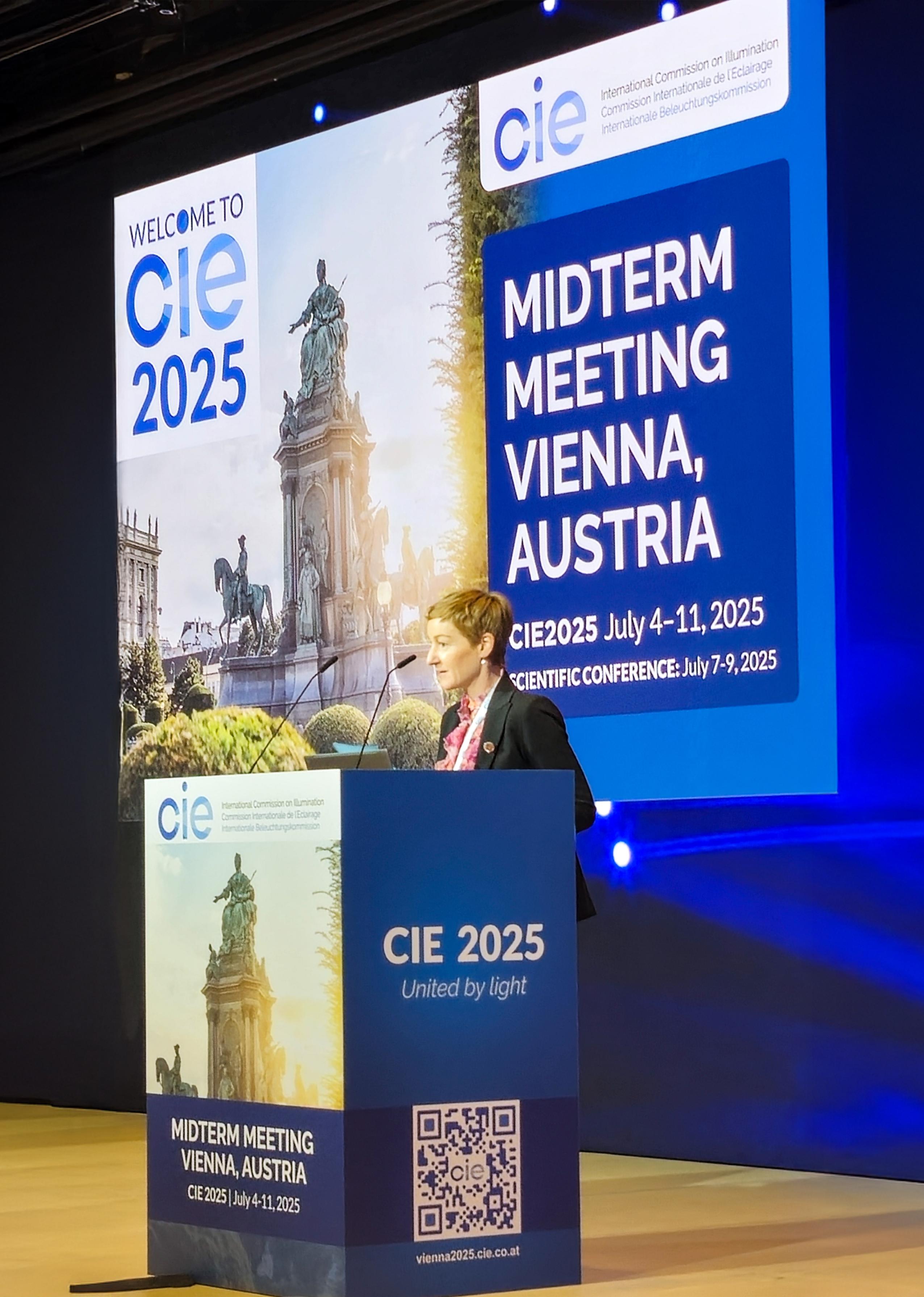
ReportedbyTonyBergen,CIEVice-PresidentTechnicalandDiana Wernisch,CIESecretaryGeneralwithsupportfromtheCIE GoverningBoardandTechnicalManagementBoardmembers.
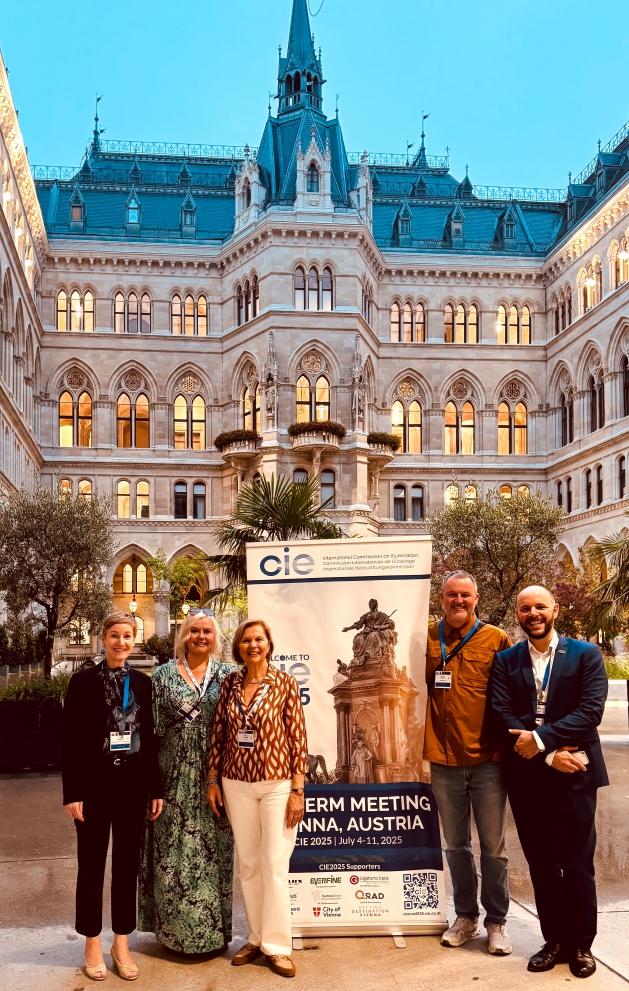
TheCIE–InternationalCommissionon Illuminationisascientificorganization andaninternationalstandardization bodyregisteredwithitsheadquarters inVienna,Austria.InJuly2025,the globalcommunitygatheredinVienna foroneoftheCIE’splenarymeetings–theCIEMidtermMeetingVienna2025 (“CIE2025”).
https://cie.co.at
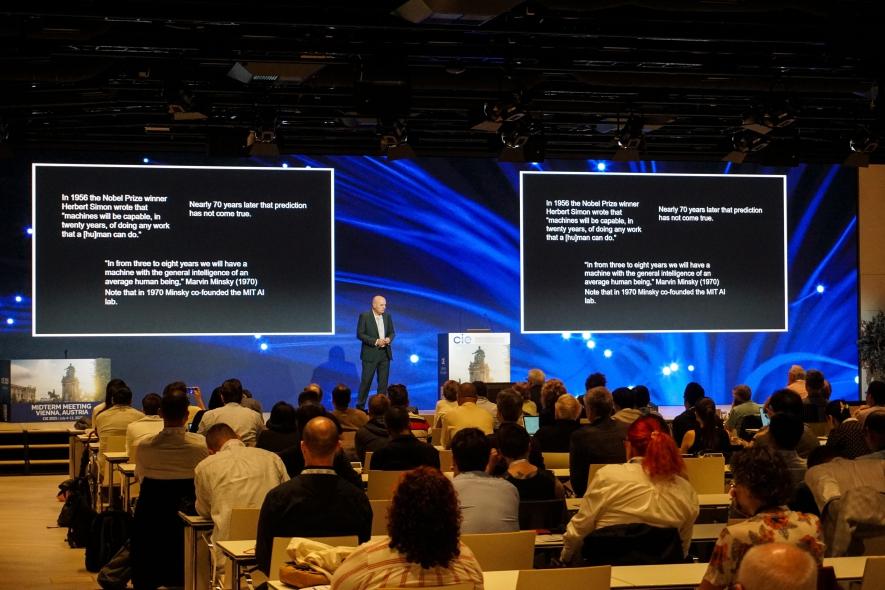
CIE2025provedtobeamilestoneforintegratingdevelopmentsofthepastyears andsettingthegroundworkforthecontinuedgloballeadershiproleoftheCIE. Theeventwasaresoundingsuccess,with 430personsfrom40countriesorterritories attendingthescientificconference(which saw87oralpresentationsand168poster presentationsthatallunderwentadoubleblindscientificreview)and310persons(of whom240wereon-site)participatingin theCIE’sDivisionandTechnicalCommittee (TC)Meetingsprogramwherethecurrent andfuturescientificworkoftheCIEwas discussed.
TheuniqueroleoftheCIEattractsavariedaudience–amixtureofexpertsfrom academia,industry,nationalmetrologyinstitutes,standardizationbodies,Masters andPhDstudentsaswellasarchitects, lightingdesigners,engineersandlighting practitioners,andgovernmentalandpolicyrepresentatives.Thisdiverseaudiencealso makesitattractiveforsponsorsandexhibitors,withawidevarietyofinnovative productsandequipmentondisplay.
CIEplenaryconferencesareheldeverytwo years,andbecauseoftheCIE’sleading roleareaplaceforourpartnerorganizationsandstakeholderstocometogether andintegratetheirworkundertheumbrella oftheCIE.Notonlywerehigh-leveldelegateswithspecialinterestfromseveral countriespresent(Oman,Algeria,Czech Republic)butalsoorganizationslikeLUCI (LightingUrbanCommunitiesInternational), ISOTC-274,theInternationalColorConsortium(ICC),DarkSky,theEuropean PatentOffice,andmanymore.
Herearesomescientificandtechnical highlightsinsightsfromthisyear’sCIE2025 ScientificConference(7-9July,2025)and theDivisionandTCMeetings(10-11July, 2025).
• Integrativelighting: Therewerealarge numberofpapersonlightandhealth. Oneofthekeynotepresentationshighlightedhowlightimpactsourphysiology, includingourcircadianrhythmsandhormonesecretion,andhowNASAhas appliedtheprincipleswehavelearntto changethelightingonboardtheInternationalSpaceStation.TheawardforBest Paperwenttoapaperstudyingtheeffectofneuropsinaswellasmelanopsin photoreceptiononhumancircadianbiologyandlight-dependentphysiology.
• Lightpollution: Theeffectsoflight pollutioncontinuestobeanimportant topic.Thefirstkeynotespeakergavean inspiringpresentationonhowthenight skyviewthatourancestorsenjoyedis becominglessaccessible.Therewasa workshopontheeffectofelectriclight atnightonwildlifeandinsects,inparticular,duringtheconference,aswell asadiscussionmeetingthatbrought togetherseverallinesofworkonlight pollutionwithintheCIEduringtheDivisionandTechnicalCommitteemeetings. Notethat(atthetimeofwriting)CIEwill soonpublishaPositionStatementon ObtrusiveLightandLightPollution,and weareintheprocessofestablishinga ResearchForumonLightPollution.
• Publiclightingforsafetyandsecurity: Thereweremultipleoralpresentationsessions,manyposters,anda workshoponaspectsofpublicarea
lightingandlightingofroadsformotor andpedestriantraffic.SpeakershighlightedtheurgentneedtoreviseCIE 115:2010Lightingofroadsformotor andpedestriantraffic,2ndEdition.
• Thedichotomyofanthropogenic lightatnight: Theneedtogetthebalancerightbetweenpublicareaandroad lightingontheonehandandtheneed toprotectourecosystemsatnighton theotherhandwashighlightedtime andagain,bothintheformalscientific programandinthemanyprivateconversationsanddiscussions.
• Daylightingandenergyefficiency: Thesmartandefficientuseofdaylight wasacommontheme,alongwitha needfornewdaylightmetrics.This needstobebalancedwiththeneed tominimizetheeffectsofglare,andto considertheimportanceoftheviewout ofwindowsfrominteriorenvironments.
• Conefundamentalsandcolormatchingofdisplays: Thereisincreasing recognitionthattheCIE1931color matchingfunctionsareproblematicfor highdynamicrange(HDR)andwide colorgamutdisplays.Therewasaworkshoponpersonalcolormanagementfor displaydevicesandconsumerproducts andtheneedforstandardizationinthis area.
• HDRimagingandglare: Highdynamic rangeimagingforassessmentofglare andobtrusivelightwasanimportant topicaswellasthethemeofaworkshop.AdvancesinHDRimagingand challengesofapplicationtoreal-world applicationswerediscussed.
• Virtualrealityandaugmentedreality: Theapplicationofvirtualrealityand simulationtotacklemoreextensiveand specificexperimentalconditionswas subjectofanoralpresentationsession aswellasanumberofpostersandisan emergingtopicthatisbecomingmore important.
• Artificialintelligenceandmachine learning: Therewasakeynotepresentationonthedevelopmentofartificialintelligenceandapplicationtocolormeasurement.Useofartificialintelligencein theevaluationofresearchresultswas alsoacommonthemeamongavarietyofresearchtopics.Measurement equipmentthatusesmachinelearning toproducesynthesizedmeasurement resultswassubjectofaDivision2discussionmeetingduringtheDivisionand TechnicalCommitteemeetings.
• Newcalibrationsources: Thereare continuingattemptstouseLEDcalibrationsourcestoreplacethetraditional quartztungstenhalogenlamp-based sources,andtoextendtherangeof suchsourcesintotheUVandNIRdomains.
• TheCIEglobalnetwork: Theconferencewasaperfectmeltingpotof peoplewith430peopleattendingfrom allaroundtheworldandcoveringahuge rangeofexpertiseinallaspectsoflight andlighting,colorandvision,photobiology,imagetechnology,andmetrology. Over90%ofsurveyrespondentsrated theconferenceas“good”or“excellent”.
• Youngresearchers: CIEcontinues tocelebrate,encourageandinclude youngandemergingresearchers.On theeveningafterthefirstdayoftheconference,astudentnetworkingeventwas heldinwhichstudentsweregrouped withleadersintheorganizationforan informalchattogetafeelforhowthe CIEworksandasameanstomakeimportantconnections.Therewasalsoan awardgivenfortheBestStudentPaper attheclosingceremony.
• Educationcommunity: Althoughthere havebeenmanyeducation-oriented initiativesinthepast,CIEnowhasa dedicatedVice-PresidentEducation.In additiontothestudentnetworkingevent mentionedearlier,therewasadedicated workshoponAcademic&Professional LightingEducationheldaspartofthe conferenceprogram.
AsChairoftheInternationalScientificProgrammingCommittee(ISPC),TonyBergen, Vice-PresidentTechnicaloftheCIE,was extremelypleasedwiththehigh-quality scientificcontentoftheconference.He hasreceivedsomanypositivecomments personallyandseenmanyLinkedInposts wherepeoplehavesaidhowmuchthey gotoutoftheconferenceandespecially thethreekeynotespeakers.Itwasahuge effortbytheISPCmembers,andhesincerelythankseachandeveryoneofthem, aswellastheadditionalpeoplewhoreviewedthepapersubmissions,alongwith theCIECentralBureaustafffortheiramazingorganizationaleffortbringingtheconferencetogether.
ThepaperssubmittedtotheCIE2025ScientificConferencewillbepublishedinthe CIE’sPublicationSeries Proceedingsofthe CIE(InternationalCommissiononIllumination),ISSNno.3061-015X(print),30610168(online).Thepublicationisexpected forautumn2025andwillbeavailableinthe CIEwebshop(67%discountforCIENationalCommitteemembers),partiallyopen access.
Registerforalertsandstaytunedforhow thelatestresearchanddevelopmentswill betakenupthefutureworkprogramsof theCIE:https://cie.co.at/about-cie/newslet ter
DidyoumissCIE2025?
Wanttohaveasayintopicsthatrequire models,consolidatedknowledgeorregulatoryandstandardizationwork?Letour Vice-PresidentTechnical TonyBergen knowandwritetociecb@cie.co.at
Areyouanexpertinaspecifictopic,not yetamemberorworkingwiththeCIEbut wanttofollowtheworkofaspecificCIE Division?YoucanbecomeaDivisionAssociate,freeofcharge–contactthe CIE CentralBureau atciecb@cie.co.at.
Pre-registrationstoreceiveupdates(call forpapers,etc.)forCIE2027,the31st QuadrennialSessionoftheCIEwhichwill takeplaceJuly9-17,2027arealready open:https://cie.co.at/news/31st-quadren nial-session-cie-nanjing-china ■
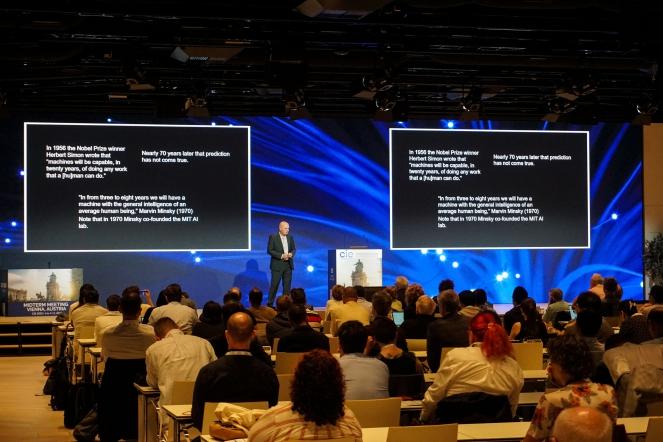
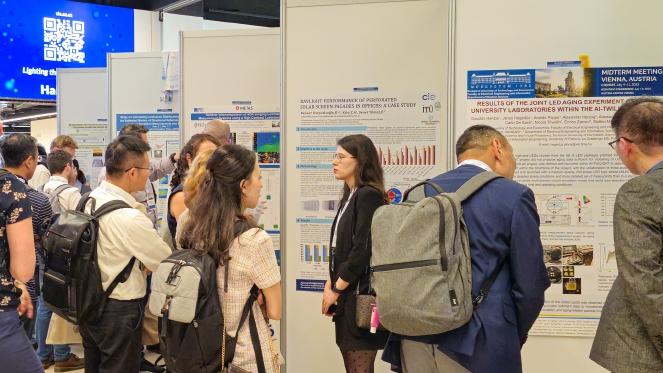
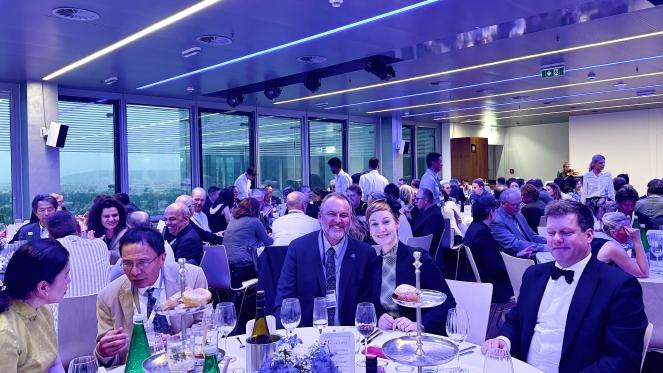
Conference,exhibition,andgalaeveningatthe CIE2025inVienna.
LightingEuropeisurgingtheEuropean CommissiontoadoptuniformrulesregardingArtificialLightatNight(ALAN) toaddressitsenvironmentalandsocietalimpact,asoutlinedinarecent positionpaperwhichisavailableon theLightingEuropewebsite.Thetopic ofALANhassparkedintensedebate overthepastyears,highlightingthe needformodernlightingsystemsthat prioritizebothvisualandsafetyneeds forhumansandenvironmentalprotection.
High-qualitylightinginstallationsandintelligentcontrolsystemsarecrucialfor creatingsafeandcomfortablenight-time environments.Whiletheprimarygoalis toservehumanneeds,theremustalso beconsiderationforeffectsonthenatural environmentincludingfaunaandfloraas wellastheeffectsofobstructivelighting, skyglowandlightnuisance.Achievingan effectivebalancebetweenuserneedsand ecologicalconcernsiskey.
Despiterapidinnovation,muchofEurope’s outdoorlightingremainsoutdatedand lackinginenergyefficiencyandecological awareness.Forinstance,manystreetlights canoperatefordecades,meaningexistinginstallationsoftendonotreflectthe latesttechnologicaladvancementsorenvironmentalstandards.Upgradingthese systemsisvital.
Standardsandregulationsforoutdoor lightinghaveevolvedtoincludeenvironmentalconsiderations,buttheregulatory situationisinconsistentacrosstheEU. Someregions,suchaspartsofSpainand Italy,usevaryingmetricsandlocallaws, resultinginadisjointedframeworkwhere citiesevenintroducetheirownspecific
rules.LightingEurope’spositionpapercalls forharmonization-sorequirementsfor ALANareclear,balanced,andeffectively implementedthroughouteveryMember StateintheEU.
LightingEuropeoutlinesfourguidingprinciplestomitigatetheadverseeffectsof ALAN:
• Alllightshouldhaveaclearpurpose.
• Lightisdirectedonlytowhereit’sneeded.
• Lightisnotbrighterthannecessary.
• Lightisadaptedtosuitthetaskactivities orturnedoffwhennotrequired.
Theseprinciplesreflectthecapabilitiesof modernlightingsystemsofmitigatingthe adverseeffectsofALANbyutilizingmodernoptics,controls,andcolortunability. Additionally,remotemanagementandcontrolsprovidemunicipalitiesandend-users withtheoptionsofadaptinglightlevels accordingtolocalcurfewsorotherpublic requirements.However,lightingsystems thatincludetherightfeaturestomitigate thenegativeALANeffects,stillmustbe installedintherightwayaccordingtothe manufacturer’sguidelinesandoperated inthecorrectway.This“separationofresponsibilities”remainsessentialalsofor state-of-the-artlightingproducts.
Renovatingoutdoorpublicandcommercial lightingshouldsupporttheEU’sinternal marketandhelptomeetenvironmental andenergygoalsthroughharmonizedlegislation.TheEuropeanCommissionhas suggestedthatpublicprocurementcould beutilizedtosteerinnovationandsustainability.Therefore,LightingEuropeproposes thattendersforpublicandcommercialoutdoorlightingshouldmandateadaptability inlightoutputdependingonfactorssuch astime,ambientlightlevel,oractivities, amongothers.Luminairesshouldhavethe technicalcapabilityofbeingdimmablebetween10%and50%outputlevelaccord-
ingtotheapplicationand,whenrelevant, totheenvironmentalzone.
Lightingshouldalsobedesignedtolight thespaceforsafety,functionandcomfort withminimaleffectonsurroundingareas andwithconsiderationoftheenvironmentalzone.LightingEuroperecommendsto particularlylimittheupwardlightratioaccordingtothelateststandardforlightingof outdoorworkplaces-EN:12464-2.
Additionally,thespectrumofthelight sourceshouldbeconsidereddependingon environmentalrequirements.Thisshould balancetheneedsofpeopleandnature basedonexistingpopulationsandactivities.Changesthroughoutthedayandyear shouldalsobeconsidered,andluminaires withadaptablespectraandbrightness shouldbeusedwherebeneficial.
Ultimately,lightinstallationsshouldbedesignedbycompetentdesignersandinstallationsshouldbecheckedagainstdesign parametersoverthelifetimeoftheinstallation.
Thelightingindustryhasthetechnology, knowledge,andvision.Whatitnowneeds isregulatorycoherenceandcollectiveambitionacrossEurope. ■
www.lightingeurope.org
6,000ProjectsRevealAboutUrbanLife Dr.BeverlyPasian,Universityof AppliedSciencesUtrecht(HU)

Dr.BeverlyPasian: “Everylightingprojectisalsoasocial project.Ittellsuswhatkindoffuturea cityimagines.”
InthisexclusiveinterviewwithDr.BeverlyPasian,aleadingvoicein projectmanagementandsmartcityresearch,weuncoverhowlighting shapesthefutureofurbanliving.Drawingoninsightsfrommorethan 6,000smartcityprojectsworldwide,sherevealstherecurring “heartbeat”ofurbanpriorities—wheresafety,sustainability,andsocial well-beingconverge.Fromoverlookedthemeslikeageingandgender equitytolighting’ssymbolicpower,Dr.Pasianshareswhyhuman-centric innovationmustguidethenextgenerationofsmartcities.
www.hu.nl/onderzoek/onderzoekers/beverly-pasian
LEDprofessional: Couldyoutellus abitaboutyourprofessionaljourney andhowitledyoutopursueadoctorateinbusinessadministration?
Dr.BeverlyPasian: Istartedmycareerasaprojectmanagerworkingin theCanadianfederalgovernment.This wasintheearlydaysoftheWeb.PublicaffairsofficersatbothEnvironment CanadaandtheDepartmentofNational Defensehadstartedusingwebsitesas toolstocommunicatewiththepublic. Itwasthiseducationalperspectivethat influencedmeenormously,leadingtomy firstmaster’s(inonline&distanceeducation)atTheOpenUniversity(UK).
Themanagementoftheseprojectsappealedtomemorethanthepedagogicalissuesbehindthem.Focusingon implementationgavemeawayintoa professionaldoctorateinprojectmanagement.AndIwasfortunatetofind anacademichomeattheUniversityof Technology,Sydney.Twentyyearsago, doctoralworkinprojectmanagement waseasilyfoundinengineeringfaculties, butcandidatesfocusingonsocialscienceissuesweren’taccepted.UTSwas apioneerinthisregardandwashappy tosupportmyresearchoneducational projects.
Examiningtheprojectmanagementcapabilitieswithinteachingandlearning centersatuniversitieswasmyfocus. Theywere(andremain)aterrificdomainforinnovative,dynamicandreliable projectmanagementactivity.Theoretically,thenotionof’reliability’wasmost associatedwiththeconceptof’project managementmaturity,’alongwithde-
finability,repeatabilityandpredictability. Applicationswereeasilyfoundinmanufacturingenvironmentsandsoftware projects,butrarelyoutsidethesedomains.Ishowedtheinherentlimitations ofthisconceptandminimizeditsapplicabilityinprojectmanagement.Thiswas helpfulasitlaidthegroundworkforother challengestowhathadbeenadominatingmanagerialprinciple.
Achievingthismilestonewassatisfying, butnotasmuchasIhadexpected.Despitecomingfrompractice,mywork tookonanespeciallystrongtheoreticalorientationanddidnotultimatelylay thefoundationofarobustresearchcareer.Afterafewyears,myacademic careerandenthusiasmsloweddown.I hadhadsomesuccesswithbooksand professionalassociationleadership,but Ineededmoreoutofmyresearchwork, soIwentbacktoschool.
In2018,IenrolledatSKEMABusiness School(France)tocompleteanMBA. Whenthetimecametodoathesis,I realizedthataseconddoctoratewould havegreatermeaningtomeandpossibleimpacttoothersthanamaster’s thesis.SoIconvertedmyenrolmenttoa doubledegree(MBA-DBA)focusingon projectmanagement.
ItwasalsoduringthistimethatIattendedaworkshopinBerlinhosted bytheInternationalProjectManagementAssociation.Ihadvolunteeredat IPMAformanyyearsandknewthey wereexpandingtheirleadershiponkey topics.Inthefallof2018,thattopicwas smartcities.AlldayIheardaboutcreative,sociallyresponsibleandinnovative
projects—allinsupportoftheUnited NationsSDGonSustainableCities& Communities—thatweremissingfrom theprofessionallandscapeIwasin.I washookedafterthatday.
LEDprofessional: Whatinspiredyou tofocusonsmartcitiesasthecoreof yourdoctoralresearch?
Dr.BeverlyPasian: Afewfactorscombinedtomakesmartcitiesanexciting topic.ThefirstbeingthecitiesthatI’d calledhome.I’vehadthegreatprivilegeoflivingincitiesthatareregularly listedhighlyinqualityrankings.Inthe10 yearsimmediatelybeforemysmartcity research,IhadlivedinVancouverand Toronto,frommyhomecountry,Sydney, Australia,andmycurrenthomecityof Utrecht,thebestCityintheNetherlands!
DuringmyMBAstudiesatSKEMA,I hadtheopportunitytoworkwithone ofthepioneersofprojectmanagement researchasmyacademicsupervisor, Dr.AaronShenhar.Ihadmethimyears beforewhenhereceivedtheIPMAResearchAchievementAwardand,funnilyenough,boughthis’Reinventing ProjectManagement’bookwhenIwas acceptedtomyfirstdoctoralprogram. Thankfully,herememberedmeandwas similarlyintriguedbyresearchingsmart cities.Wemetandagreedtoworktogether.
Thisexplanationmightbealittleboring foryourreaders.Thefactis,Iusedmy personalexperiencesandintereststo chartthispath.Iwouldrecommendthis toanyonedoingadvancedresearch. Findsomethingthatresonateswithyou
asaperson.Orasacitizen.Youwill nevergowrongandwillbemotivatedfor years.
LEDprofessional: Howhasyourinternationalexperienceshapedyour viewonurbaninnovationandproject management?
Dr.BeverlyPasian: I’vehadthegood fortunetotravelextensivelyforworkand schoolandhavelivedinsomefantasticcitiesinthelast30years–Toronto, Vancouver,Sydney,Ottawa,Florence andnowUtrecht.Myprofessionallife— workingwithIEEEandIPMA—hasalso filledmypassportwithvisitsandcollaborationsinmanyoftheworld’sgreat cities.
Beyondthat,Inowhavethisenormous projectcollectionstartedinmydoctorate.Morethan6100officialsmartcity projectsfromaroundtheworldreflectan amazingcollectionofprioritiesbyindividualcities.Theyofferspecificlenses throughwhichtoseehowcitizensinfutureversionsofthosecitieswilllive.
WhatImeanbythatisthatprojectcollectionsveryclearlyreflectgovernment priorities,and,throughthosechoices, youcanseehow’cityhall’(intheaggregate)imaginesthefutureversionofa city.Sometimesthoseviewsreflectsocialinterests,sometimesnot.Business interestsandbroadpublicutilities(e.g. expansiveWIFIinstallations)areemphasized.Butsometimestherearecities wheretheprojectsreflectnationalcharacteristicsthataretypicallyassociated withthatplace.TheCityofCalgary,for
example,emphasizessocialjustice,a priorityoftenassociatedwithCanada. ThecollectionfromAustraliaemphasizedbeautificationandleisureprojects, characteristicsoftenassociatedwiththat wonderfulcountry.
Givenmyfamiliaritywiththoseplaces, theprofilecreatedbythoseprojects ringstrueforme.Andtheconsistency ofthe’heartbeat’distributionraisesthe possibilitythatotherlocationscanbe reliablyunderstoodthroughasmartcity projectlens.ThisgiveshopeandaninternationalperspectivethatIwouldn’t haveotherwisehad.
LEDprofessional: Canyousummarize yourthesisinafewsentences?
Dr.BeverlyPasian: Istudiedtheroleof projectsincontributingtothequalityof lifeinsmartcities.Usingaclearandsimpledefinitionofasmartcity,Iapplieda modelof13themesagainst5000official smartcityprojects.Itrepeatedlyshowed thesamedistributionofprojectsfrom collectionsaroundtheworld.Itsappearanceresemblesthe’lubdub’ofahuman heartbeat...henceitsname.
Atfirst,Iwasdisappointedbytheresults.Theyseemedtoindicateverylow attentiontothoseprojectsthatcontributetothequalityoflife.ButAaron turnedmearound.Themorefoundationalprojects(housing → environment) werenecessaryforthemoreexciting projectstooccur.Itisagoodnewsstory thatshowsmuchpotentialforsmartcity planning.
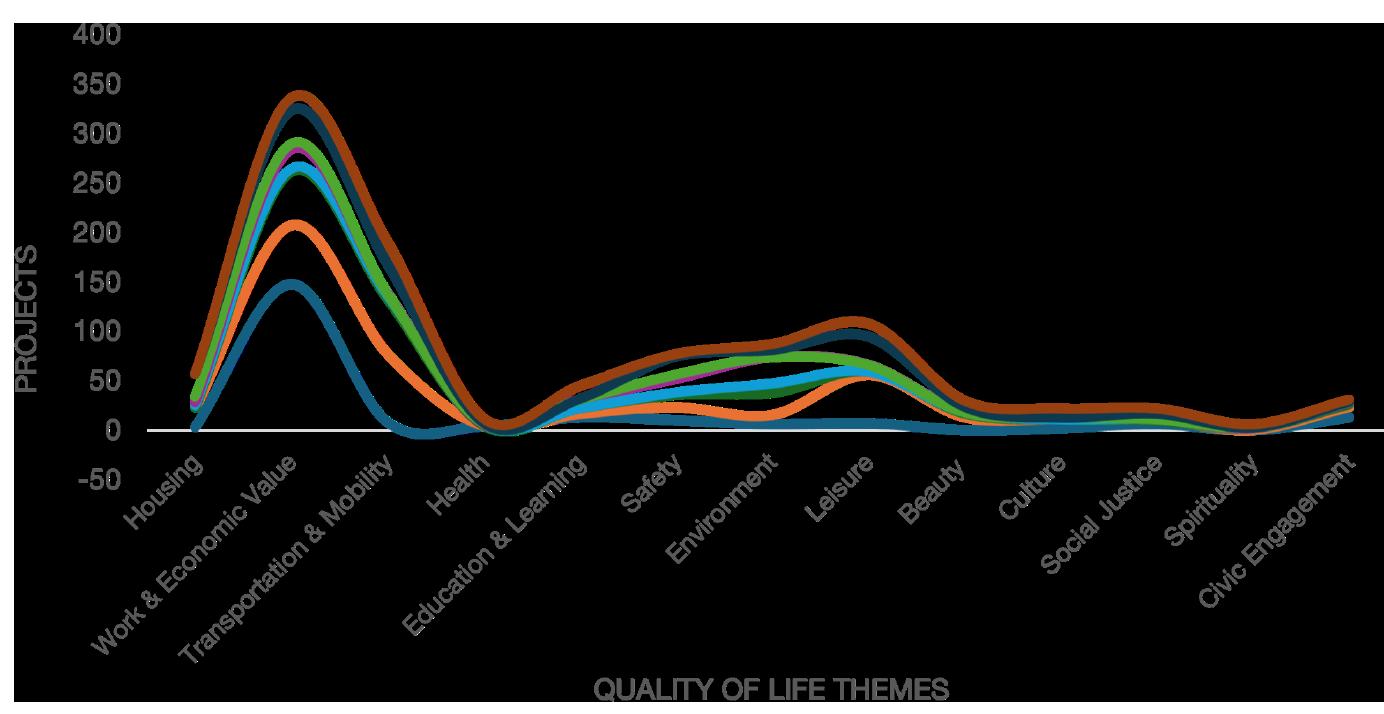
TheHeartbeat:Projectdistributioninsmartcities.Pasian,PhDthesis,SKEMA,2024.
LEDprofessional: Couldyoutellus aboutyourresearchmethods?
Dr.BeverlyPasian: Ilovetalkingabout this!Myoriginalresearchdesignwasa multiplecasestudywhereIwastoexamineindividualcitiesselectedfortheir quality-of-lifecommitment.Theplanwas formetovisitthesecities,conductinterviewsandgatherprojectdetails.Ilikely wouldhaveusedvideos,photographs, fieldnotesandofficialcitydocuments, includingarchives,butthenthepandemichappened,andmyplansneeded tobeadjusted.Imadetwosignificant changesinmyresearchdesign.
Thefirstwastotravelthedigitalhighway asmuchaspossible.Interviewswould proceedbutwouldbeconductedvirtually.Butbecauseofeveryone’sextraordinarilybusyschedulesduringthattime, Isoughtcomplementarymaterial.The peopleIspoketowerecityrepresentativeswhowereresponsibleforexplaining andpromotingtheirsmartcitystrategies.Iwastheonlyoneofmanythey wouldspeaktoduringtheirjobs.Finding conferencepresentations,articles,and otherinterviewstheyhadrecentlygiven waseasyandprovedenormouslycomplementarytotheinterviews.IfI’mbeinghonest,Idon’tknowifIwouldhave thoughttolookatalternativesources, butthepressureofthepandemichelped me.
Thesecondchangeconcernedanunplanneddatacollectioneffort.Iwas feelingalittleinsecureaboutnotvisitingmychosencities,andwhileIwas pleasedwiththequalityofmycitycontacts,Iwantedtodomore.Iwanted tobemorecreativeinusinginformationinthepublicdomain.SoIturned tothelistsofvariouscityrankings(e.g. GlobalLivabilityIndex,theSmartCity Index,MercerQuality-of-livingRanking) andreconciledtheirresults.Iendedup withalistofmorethan100citiesand startedworkingonit!Onebyone,Iwent totheofficialcitywebsitesandlooked forprojectdata.ItwasherethatIstarted seeingsomesignificantdifferences.
Theleadingcitieshadcomprehensive informationconcerningtheirstrategies, consultationeffortsandprojectinformation.Allofthiswasalwaysavailablein English.Othercitiesfurtherdownonthe listhadgoodinformation,butnotalways accessibletoabroaderaudience.Public consultations,vastprojectimplemen-
tationdetailsandschedulingwerealso posted.Thesecitiesweretakingtheir information-sharingresponsibilitiesseriously.
Lookingbackatmyresearchproposal, I’msurprisedIhadn’tconsideredusing therankinglisttoassociateitwiththeinformation.Thecasestudieswouldhave beensufficient,buttheprojectdataset completelyopenedupmyresearch.I alsouseitasanexamplewithmyresearchmethodstudents.Iencourage themtobecreativeandlookbeyond conventionaldatasources.
LEDprofessional: Whatwerethemost surprisingorunexpectedfindings?
Dr.BeverlyPasian: I’mnotsurewhere tobeginwiththisanswer!Thisresearch wasandremainsalaboroflove.I’mregularlysurprisedanddelightedbytheperspectiveithasbroughtmeperspective onurbanliving.Buttobemorespecific, beyondtheheartbeatmodel,Iwillmentionafew.
Housingandhealth-relatedprojects weregivenlittleattentioninmanyhighly rankedcities.WhenIaskedforexplanations,respondentsspokeofjurisdictional boundariesandpoliciesdeterminedby othergovernmentoffices.Healthpoliciesoftenreflectedfederalpolicy,as didhousingdecisions.Individualcities oftencouldn’tmeettheneedsoftheir residentsandvisitorsbecauseofthis.In fairness,thecityrepresentativesIspoke towerenothappy.
Anothersurpriseconcernedthelackof attentiontoverybasichumandimensions.I’llmentiontwo.Wearecurrentlylivinginthedecadedeclaredby theWorldHealthOrganizationasthe ”decadeofhealthyageing.”Oneofits keygoalsistocreateanage-friendlyenvironmentincities,communities,and theservicestheyprovide.Oneportion ofmydatasetisthe1024smartcity projectsofmyeightcasestudycities. Twelveprojectsgavespecificattention toseniororelderlycitizens.Forthisarticle,Ilookedatthebroaderdataset–morethan6100projects.Ofthose,38 mentionedelderlycitizens.(AndI’dlike togentlyaddarelatedobservation...I searchedtheled-professional.comsite usingthesameterms.With’elderly,’14 resultsweregenerated...themostrecent beingfrom2021.)
Perhapsthisisaproblemofbasiccommunication.Thepubliclyavailableproject detailsmightsimplynothaveincluded vocabularyassociatedwithseniororelderlycitizens.Atworst,thereisanenormoussegmentofoururbansocietythat isnotbeingconsideredasthecitygrows aroundthem.Thatisanightmarescenario.
Similarly,anyonewhostudiesurban planningknowsthatdifferentgenders navigatecitiesdifferently.Thereare manyreasonsforthisthatIwon’tgointo here.Butafterconductingthequality-oflifethematicanalysisformyresearch,I rememberthinking...WhatotherconclusionscanIdraw?Usingtheverybasic (andexclusionary)termsof’male’and ’female,’myinitialdatasetprovidedunsettlinginsights.Andforthispiece,Irevisitedmylargercollectionandsearched thewords:female,womenandwoman. Only63projectswerehighlighted.
And,withrespect,I’dliketosharesearch resultsfromtheled-professional.com siteusing’woman,’’female,’and’women.’ Intotal...44results.However,whenI lookedatthelatestissueofLEDProfessional(July-Aug2025),thereisaterrific articleontheresponsibilitiesofsustainablepubliclighting.Weninger,Ascher andDickspecificallyadvocatepaying attentiontotherequirementsofgenderspecificperceptionsofsafety.Thisis exactlywhatI’mtalkingabout.
Again,itispossiblethatcityofficialsdo notincorporategender-specificlanguage intotheirprojectdecisionsintheirpublic descriptions.Andperhapswithawarenessraisedthroughpublicationssuch asLEDprofessionalReview,thatcould change.But...Isitpossiblethat,atthe mostbasiclevel,projectsarebeingconceivedandimplementedinwaysthat willnotaccommodatedifferentgender needsinourfuturecities?
ThelastitemI’dliketofocusonisspirituality...It’soneofthe13themesinmy quality-of-lifemodel.Andmycomments havenothingtodowithanyparticular religion,althoughIdobringuptheRomanCatholicChurchasanexample.It concernsstakeholdermanagement.
Bywayofbackground,aquickpersonal anecdote.Iattendtwoofthenotable churchesinUtrecht...St.Catherine’s CathedralandSt.Augustine.OneMondayevening,asIclosedthecathedral,
mymindwanderedtomysmartcityresearch.Itoccurredtomethatifthepopulationgrowthandimmigrationpatterns wereinanywayaccurate,citiesshould expectgreaterattendanceatchurches, mosques,synagoguesorotherplaces ofworship.Sothatsamenight,Iquickly lookedupsomebasicfacts.According totheUniversityofNotreDame(USA), faith-basedorganizationssuchasthe RomanCatholicChurchareamongst theworld’slargestnon-governmental landowners,withsignificantinfluencein theurbanlandscape.Iadded’spirituality’tomymodelthenextday.
Ofcourse,thismeantrevisitingmyproject list.Therewereonlyafewinitialexamples,suchascemeterymanagement, whichseemedlimitedatfirstglance. Furtherresearchrevealedinspiringinitiatives,suchasthenational‘WeAre GreenChurches’projectintheNetherlands(groenekerken.nl),whichshows howfaithcommunitiescanactivelysupportsustainabilitygoals.Thatteamhas doneanamazingjobinengagingcommunitiestosensitivelyandpurposefully considerthebuiltenvironmentinwhich churchpropertiesfunctionandmake changes,asnecessary.
Fortunately,engagementwithfaithbasedcommunitieshasgrown,butthere isstillsignificantpotentialforgrowthin engineeringcommunities.Anexample foryourreadership...TheEvangelical ChurchoftheAugsburgConfession inAustriaaimstoestablishanetwork ofsolarpowersystemsonchurchbalconies,ultimatelycreatingthelargest balconypowersysteminAustria.The economicadvantagesareimmediately clear,butasasocialscientist,Iapplaud theculturalandsocialcohesionsucha projectcreates.
LEDprofessional: Inyourview,what isthemaincontributionofthiswork?
Dr.BeverlyPasian: That’sahardquestiontoanswer.IfIhadtopickonething, Iwouldpointtotherecurringheartbeat distributionoftheprojects.Theydemonstratetherelevanceandimpactofspecific,measurablequalityoflifedimensions.AsIsaidinmythesis,assessing progressagainstthosethemestomark theevolutionofacityispossible.But thatisanabstractioninmanyways.In moreconcreteterms,theprojectsassociatedwiththosethemescouldbe
valorizedwiththeresultsappliedtoall sortsofcityplanning.
LEDprofessional: Yourworkinvestigatestheintersectionofsmartcities andurbanlighting–whyislightinga powerfullensthroughwhichtoview urbantransformation?
Dr.BeverlyPasian: Inpreparingforthis interview,Ilookedthroughthevarious issuesofLEDprofessionalReview.My answersareconsistentwithmanyofthe issuesraisedbyothercontributors.Perhapscomingfromasocialscientist,they willoffersomereassurance.Perhaps evenintroduceorstrengthenopportunitiesfortransdisciplinaryresearch.
Lightingisaphysicalmanifestationof change.Installationsaretangible,visibleaspectsofurbandevelopmentand indicatorsofurbanpriorities.Changes inlightinginfrastructure—fromthereplacementofoldertechnologies(e.g., high-pressuresodiumlamps)withLEDs totheimplementationofsmart,dynamic systems—directlyreflectbroaderurban prioritiesandtransformations.Analyzing thesechangesrevealsshiftsinenergy efficiencygoals,technologicaladvancements,andapproachestopublicsafety andurbanaesthetics.
Lightinghasadirectandimmediate impactonsociallifeandsafety.Improvedlightingcanenhancevisibility, detercrime,andcreatemorewelcoming publicspaces.Incontrast,inadequate lightingcanhavetheoppositeeffect. Analyzinglightingprojects(ortheirabsence!),therefore,providesinsightsinto howurbanplanningaddressesissues ofsafety,accessibility,andsocialequity.TheEuropeanCharterforEquality ofWomenandMeninCityLife(topics) specificallymentionsstreetlightingasa factorinfluencingwomen’ssafetyand security.
Lightingchoicesarereflectionsofurbanidentityandcancontributetothe overallaestheticandidentityofacity. Thedesignandimplementationoflightingschemescanreflectacity’scultural values,history,architecturalstyle,and aspirationsforthefuture.AgreatexamplefromUtrechtis’Ilightyou’–an exhibitionthatshowcasestheworkof nationalandinternationallightartists inandaroundthecentraltrainstation (January–February,2026)(ilightu.nl).It’s beenrunningforafewyearsandissuch
afundemonstrationofhowahybridof technologyandartcanserveacommunity.Analyzingtheselightingprojects offersawindowintohowcitiesseekto presentthemselvestoresidentsandvisitorsalike.
Lightingprojectsarenotmerelyabout illuminatingstreetsandbuildings;they areintegralcomponentsofurbandevelopment,reflectingbroadersocietal values,technologicaladvancements, andaspirationsforthefuture.Analyzing theseprojectsprovidesamultifaceted perspectiveonurbantransformation,revealinginsightsintoacity’spriorities,its socialfabric,anditsevolvingidentity.
LEDprofessional: Whatisanexampleofwhereasmartlightinginitiative ledtobroaderinnovationincityplanning?
Dr.BeverlyPasian: It’snotpossible tolimitmyselftoonlyoneexample. Hereareafewfromaroundthecityof Antwerp,whichhasits’AntwerpLight Plan’toimprovethebasiclightingof streetsandneighborhoods,structured lightingandmoodlighting.Bolognahas their’enlightenme-project.eu,’amultifacetedprojecttounderstandhowindoorandoutdoorlightingaffectshealth andwell-being.Theelderlypopulation isaparticularfocusforthem.IntheUS, severalcities,includingPhiladelphia, DallasandChicago,focusedonreplacingtraditionalsodiumstreetlightsona hugescale.Chicago,forexample,had its’SmartLightingProject’tomodernizeoutdoorlightingandinstallwireless lightingmanagement.Itwasanenormousprojectthatreplacedover270,000 outdatedsodiumlightswithLEDlights. Imaginewhatthatdidtothoseneighborhoods!
Butifyouwouldindulgeme,I’dliketo brieflymentionononeareaofinnovation…howLightingcancontributeto innovationintransportationandmobility. Withsomanycitiesmovingtowarda15minutemodel,thiscombinationneeds attention.Whatcanbedone?
Letmegiveyouaconcreteexamples fromtheNetherlands.
Foryears,theDutchcyclingcommunityhasleadthewayininnovationand collaboration.ThecityofZoetermeer specificallyimproveditslightingacross thenetworkinordertoimprovesocial
safetyandnighttimecycling.Andthis wasyearsago...longbefore’smartcities’ wasapopularizedterm.Moregenerally, bicycleinnovationlabsarealloverthe countrycontinuallyworkingwithvarious domesticpartnerstopushtheenvelope. Andnthenorganizationssuchasthe DutchCyclingEmbassy(dutchcycling.nl) makeapointofsharingtheirinsights globally.
Andofcourse,lightingenhancesroad safetythroughimprovedvisibility.Smart lightingsystemscandynamicallyadjustlightinglevelsbasedonreal-time conditions,suchasweather,traffic volume,andtimeofday.Thiscanimprovevisibilityfordrivers,cyclists,and pedestrians,reducingtheriskofaccidents,especiallyinlow-lightoradverse weatherconditions.Italsoprovidesinsightintohowadaptivelightingcanbe optimizedtoimprovevisibilityforvarious usergroups.Targetedilluminationcan highlightpedestriancrossings,intersections,andotherhigh-riskareas,improvingsafetyforvulnerableroadusersand reducingaccidentsinvolvingpedestrians andcyclists.
Optimizetrafficmanagementwithadaptivelightingandintegrationwithtraffic signals.SmartLightingcanbeusedto optimizetrafficflowbyadjustinglighting levelsbasedontrafficvolumeandcongestion.Forexample,brighterlighting canbeusedincongestedareastoimprovevisibilityandreducetheriskofaccidents.Incontrast,dimmerlightingcan beusedinlesscongestedareastosave energy.Thiscanleadtosmoothertrafficflowandreducedcongestion.Smart lightingcanbeintegratedwithtraffic signalstoprovidedriverswithbetterinformationabouttrafficconditionsand optimizesignaltiming.Thiscanimprove trafficefficiencyandreducedelays.
Makeautonomousdrivingsafer.Improve localizationandnavigationbyusing smartlightingsystemsthathaveprecise informationaboutroadgeometry,lane markings,andvehicle-to-infrastructure communicationfeatures.Thiscanimprovethesafetyandefficiencyofautonomousdriving.
Youonlyaskedforoneexample…soI’ll stopthere!
LEDprofessional: Whatarethemain barrierscitiesfacewhenimplementingsmartlighting?
Dr.BeverlyPasian: Severalbarriers wereidentifiedinmyresearch,starting withhighcosts.Theimplementationof smartlightingsystemsrequiressignificantupfrontinvestmentininfrastructure,technology,andinstallation.This canbeamajorobstacle,especiallyfor citieswithlimitedbudgets.Thecityof Dortmund,forexample,addressedthe highbudgetitneededfortransportation projects,whichoftenincludelightingupgrades.
Smartlightingsystemsarevulnerableto cyberattacks,requiringrobustcybersecuritymeasurestoprotectagainstdata breachesandsystemdisruptions.My Bilbaocasestudyhighlightedtheimportanceofcybersecurityforcitizensand theneedfordefensesystems.
Publicacceptanceofsmartlightingsystemscanbeachallenge,particularly
ifthereareconcernsaboutprivacyor surveillance.Forexample,thecityofVilniuscasestudyincludeda”Happiness Project”usingfacialrecognition,highlightingpotentialprivacyconcerns.You canonlyimaginetheplanningconversations!
Smartlightingsystemscollectdata,raisingconcernsaboutdatasecurity,privacy,andpotentialmisuse.Robustsecuritymeasuresareessentialtoprotect sensitiveinformationandensurepublictrust.Theethicalimplicationsofdata collectionneedcarefulconsideration.
It’simportanttonotethatthesebarriers areinterconnectedandcanexacerbate eachother.Forexample,highcostscan limittheavailabilityofskilledpersonnel androbustdatamanagementsystems, whilealackofpublicacceptancecan hindersecuringfundingforprojects.Ad-
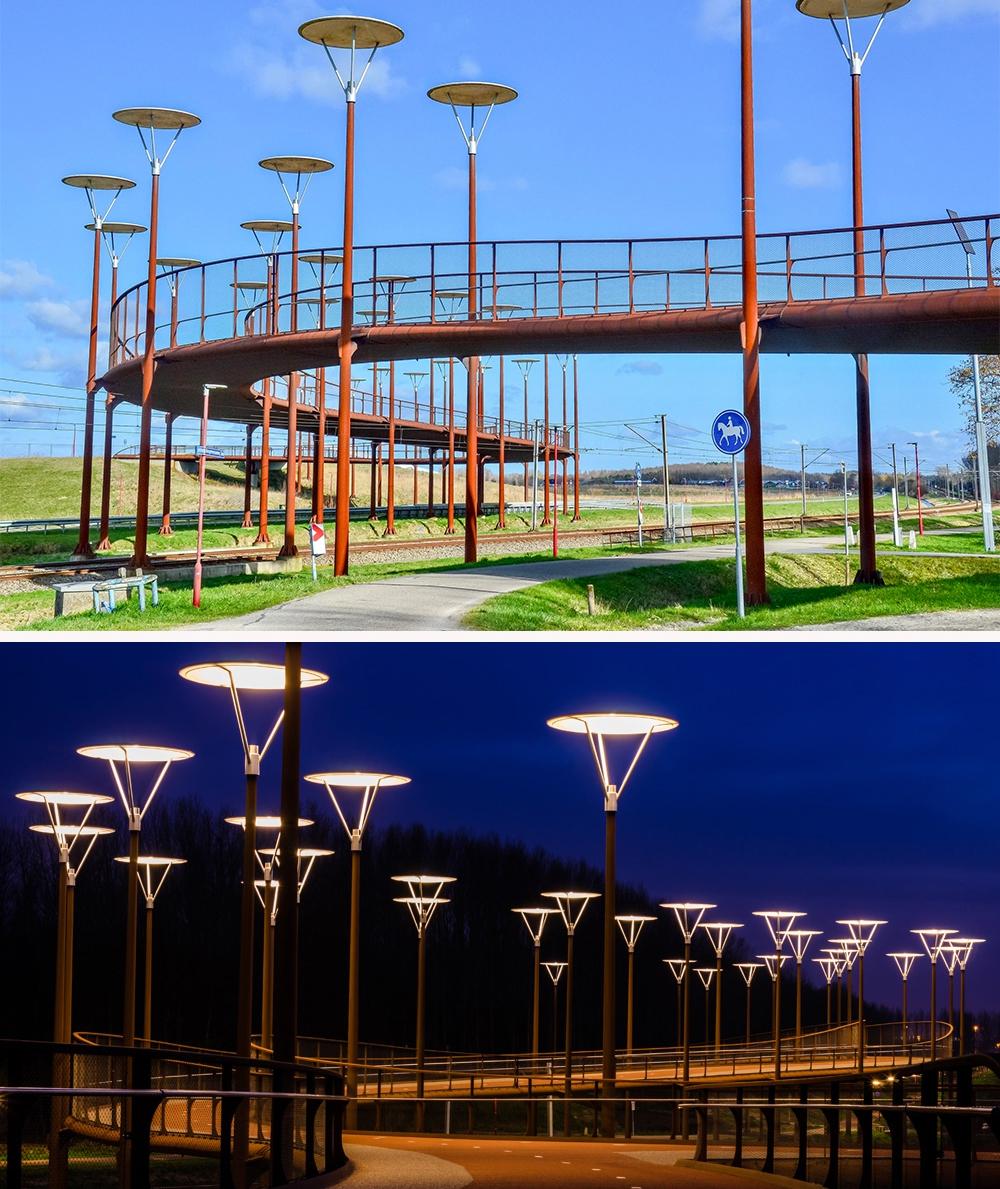
Zwolle,Hanzeboog:Builtin2010,theHanzeboogisarailandcyclebridgespanning925metresacrossthe IJsselRiverinZwolle.Itsstrikingcolorandshapemakesitnotjustphotogenicbutalsomediagenic—having becomeaniconforthecityandthesubjectofapostagestamp.CreditstotheDuchCyclingEmbassy.
dressingthesebarriersrequiresaholistic approachthatconsidersthetechnical, financial,social,andpoliticalaspectsof smartlightingimplementation.
LEDprofessional: Inyourview,how canlightingbeusednotonlyfunctionallybutalsoemotionallyorsymbolicallytoshapecitizenexperience insmartcities?Arethereanyunexpectedrolesorconsequencesof lightingsystemsbeyondsafetyand efficiency,suchascommunityengagement,identityorequity?
Dr.BeverlyPasian: Thisisahugelyimportantquestion.Toanswerit,Iwillalso addressathemefromanearlierquestion.Onethatconcernsthepotential emotionalorsymbolicnatureoflighting. AsIwasdoingmyPhD,Ibecameaware ofvariousinternationalaccordsmeant toprotecttherightsofpeoplelivingin cities.TheyincludetheEuropeanCharterforEqualityofWomenandMenin LocalLife,theGlobalCharterofHuman RightsintheCityandaFrameworkfor ReinforcingHumanRightsintheCity. Whatsomeofyourreadersmaynot knowisthatlightingisidentifiedintwo ofthemasaspecificrightworthprotecting.Onethingthatisguaranteedtobe anemotionaltriggeristheperceivedor actualthreattosomeone’srights.We certainlysawalotofthatduringthepandemic.
Butprotectionisonlyonebenefitof theseagreements.
Byarticulatingspecificsandgivingvocabularytotheabstractionsofcitylife, theseagreementscreatecommonground. Whatlifeshouldbeorwhatacitizen shouldhaveisnolongerupfordebate. Andcollectively,lightingprofessionals canmoveontothenextquestion… Whatresponsibilitiesdowehavetoprotectthoserights?Andbyansweringthis question,lightingprofessionalsbecome advocates.Theybecomeprotectorsof rightscodifiedbycivicleaders,inadditiontocontributorstosafetyandefficient cityoperations.Bypointingspecifically totheseaccords,conversationsopento greaterprojectideas.
TheEuropeanCharterforEqualityof WomenandMeninLocalLife,forexample,specificallyidentifiesstreetlightingaspartofthelocalenvironment thatcouldprotectwomen.And,despitebeingfrom2006,attentiontoward
women’sinterestsisrarelyarticulated insmartcityprojects.Thiscouldeasilychangeiflightingprofessionalsaddressitintheirprojects.Suchadvocacy wouldopenthedoortonewrelationships.WomeninLighting(womeninlighting.com)andWomenLighttheWorld (womenlighttheworld.org)aretwoexamples.Imaginehowyourreadership wouldbeinspiredbyhearingfromsuch groups!
LEDprofessional: Towhatextentdid artificialintelligenceplayaroleinthe casestudiesordataanalysis?
Dr.BeverlyPasian: Artificialintelligence playedasignificant,albeitindirect,role inthisresearch.WhenIconductedmy qualitativedataanalysis,IusedMAXQDA software.WhileMAXQDAitselfisn’tan AI,it’sasophisticatedqualitativedata analysistoolthatincorporatesvariousfeaturestoassistresearchersin managing,coding,andanalyzinglarge datasets.Thesefeaturesaidedinthe organizationandinterpretationofthe qualitativedataIgatheredfrominterviews,documents,andsocialmedia.
LEDprofessional: DoyouseeAIasa futureenablerformanagingcomplex urbanprojectslikesmartlightinginfrastructure?
Dr.BeverlyPasian: Ididn’tlookatthis particularissueduringmyresearch,butI tookasecondlookforthisquestion.My answersaremoreextrapolations.Yes, AIhassignificantpotentialtobeafuture enablerformanagingcomplexurban projectslikesmartlightinginfrastructure. Thereareseveralwaysthiscouldhappen.
Let’sstartwithoptimizeddesignand planning.AIcananalyzevastdatasets (weatherpatterns,trafficflow,energy consumption,etc.)topredicttheoptimal placementandconfigurationoflighting infrastructure,maximizingefficiencyand minimizingenergywaste.AI-powered simulationscouldthenmodeldifferent lightingscenarios,allowingplannersto testvariousdesignsandconfigurations beforeimplementation,identifyingpotentialissuesandoptimizingperformance. Thispredictivecapabilitycouldleadto moreeffectiveandcost-efficientdesigns.
Real-timemonitoring,controlandrisk managementseemobviouspossibilities.AI-poweredsystemscanmonitor
theperformanceoflightinginfrastructure inreal-time,detectingfaults,optimizingenergyconsumption,andadapting tochangingconditions.Thisallowsfor proactivemaintenanceandpreventsdisruptions.Emergencyresponseshould alsobeatthetopofthelist.AIcanassistinemergencyresponsebyautomaticallydetectingandreportingoutagesor malfunctions,enablingfasterresponse times.
Citizenengagementcouldbeenhanced. AIcouldpersonalizelightingexperiences basedonindividualpreferencesand needs,improvingusersatisfactionand supportinginteractivefeedback.This couldalsoincreasetransparencyand improvepublicacceptance.Bydirectly experiencingthebenefits,citizensmight bewillingtodiscussfurtherpossibilities.
Ofcourse,thereareassumptionsand potentialissuesinrealizingthesepossibilities.AIreliesonhigh-qualitydataand computationalresourcesthatsmallto medium-sizedcitiesmaynothave.The useofAIinurbanprojectswillalways raiseethicalconcernsaboutprivacyand surveillance.TheenormityandcomplexityofintegratingAIsystemswillbemade worsebyskillsgapsinmultipleroles.
LEDprofessional: HowcanAIsupport morehuman-centeredoutcomesin smartcitiesandimprovethequalityof life?
Dr.BeverlyPasian: Myresearchofferedcontrastingperspectivesonhow AIsupportshuman-centeredoutcomes insmartcities.Therewereseveralexamplesofprojectsthat,whilenotalwaysexplicitlymentioningAI,utilizeAI-
supportedtechnologiestoachievetheir goals.
Specifically,improvementsinsafety throughsmartlightingsystemsinAntwerp, Mons,andBerlinadaptlightinglevels basedonoccupancyandpedestrian/cyclistdetection.Theimprovedsafetyis achievedbyoptimizinglightingfordifferentsituationsandilluminatingpedestriansandcyclistsinatargetedmanner. TheCityofDortmund(Germany)has beenpilotingthisforthelastfiveyearsin aninnovativeinfrastructureprojectthat enhancescyclingcomfortandappeal. Specialsensorsattrafficlightsautomaticallydetectapproachingcyclistsand requestagreenlightabout35meters beforethestoplight.Between20202025,37systemswillberetrofitted.
Responsibleimplementationiscrucial,andAIcouldcontributeinmany ways.AdaptivelightingcouldallowAI toanalyzereal-timedatafromvarious sources(cameras,sensors,etc.)to adjustlightinglevelsdynamically.This meansbrighterilluminationinhigh-traffic areasorwhensuspiciousactivityisdetected,improvingsafetyanddeterring crime.Thiscanincludetargetedilluminationofpedestriancrossingsorareaswith highercrimerates.
Energyefficiencyandsustainabilitycan beseeninsmartdimmingandscheduling.AIcanoptimizelightingbasedon occupancy,timeofday,andweather conditions,reducingenergyconsumptionsignificantlybyreflectingindividual preferences.
Naturally,therearechallenges.AIsystemsrequiredatacollection,raising
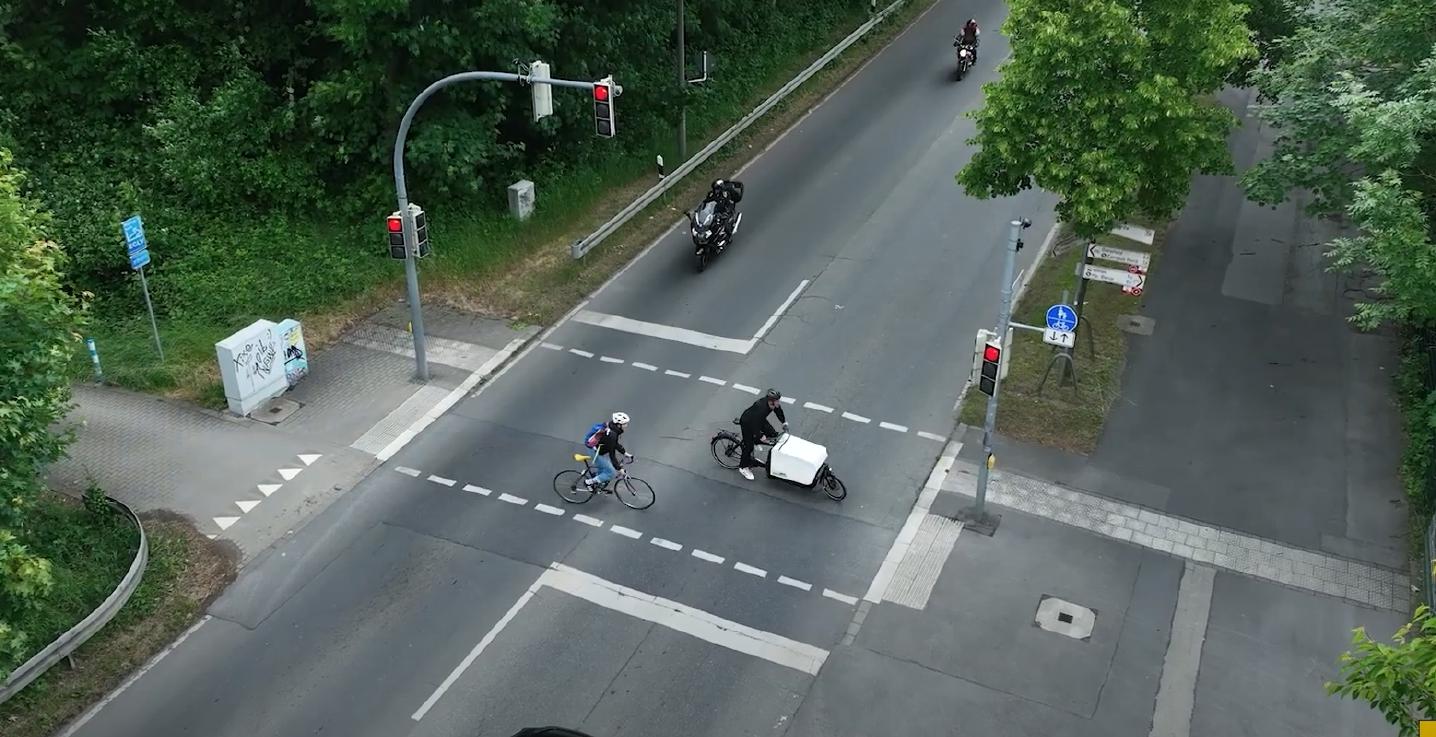
concernsaboutcitizenprivacy.Robust anonymizationanddatasecuritymeasuresareessential.AIalgorithmscanreflectandamplifyexistingsocietalbiases. Carefuldesignandtestingareneeded toensurefairnessandequity.Public acceptanceofAI-poweredsystemsis crucialforsuccessfulimplementation. Transparencyandpublicengagement areessential.
AIintegrationwithlightingprojectsholds immensepotentialforcreatingmore human-centeredsmartcities.However, carefulconsiderationofethicalimplications,dataprivacy,andpublicacceptanceisparamounttoensurethatthese technologiestrulybenefitallcitizens.
LEDprofessional: Whatarethreekey messagesforlightingprofessionals?
Dr.BeverlyPasian: I’vebeenaskeda versionofthisquestionmanytimes.And myanswerisalwaysthesame.Rememberthatyouareacitizenatthebeginningandendofeachday.Whatyoudo inbetween—asalightingprofessional, anengineerorprojectmanager—should supportthoseinterests.
Two…Thoroughlydocumentthesocial impactofaproposedlightingproject andthencommunicatecommunicate communicatetheresults.It’snotenough thatlightingprofessionalsunderstand…key stakeholdersneedtoknowwhat’shappeningandwhotheycanpartnerand progresswith.
Andthewheeldoesnotneedtobe reinvented!Asimpleexample…inDecember2022,theUnitedNationsHigh CommissionerforRefugeespublished ’Protection-SensitiveAccesstoLighting’foritspersonnelandpartners.In additiontoreinforcingtherighttolighting accessasakeysustainabledevelopmentgoal,itdetailsmanyprinciples, approachesandrecommendationsfor achievingthis.It’s40pagesfromcover tocover,andbalancesinspirationand pragmatism.It,orsomethinglikeit, shouldbeonthedeskofeverylightingprofessional.
Three…Useyourexpertisetowork withnewstakeholdersandorganizationsmostdirectlyembeddedincities. Twocometomind.Thefirst…thereare morethan450universitiesofappliedscience(UAS)inEurope(morethan20in Austria),mandatedtoinnovateforthe
greatestsocietalimpactandareeager toworkwithpartners.AvansUASinthe Netherlands)recentlyfinisheditsSmart LightConceptsprojectandpublished tremendousinsightsthatwouldallow publiclightingtosavemoney,energy, andcarbon.EindhovenTU/Ehasits LightingandIoTlab.I’malsoexcitedto saythattheUtrechtUniversityofApplied SciencesUtrecht(myuniversity!)has recentlycreatedanewteamtofocus ontransportationandmobilityinurban development.Weareeagertoexplore lighting-relatedprojectsandwouldvery muchliketohearfrompossiblecollaborators.
Thesecondis,morebroadly,thinktanks oradvocacygroupsthatspecificallylook atthequalityoflifeandcities.Afew cometomind…TheResilientCities Network(resilientcitiesnetwork.org), theRainbowCitiesNetwork(rainbowcities.com),andtheInstituteforQualityofLife(institute-ql.com).Eachoffer combinesspecificideas,policyrecommendations,and/orprojects,readyfor interpretationbylightingprofessionals.
LEDprofessional: Wheredoyousee thegreatestpotentialforinnovation insmartlightingoverthenext5to10 years?
Dr.BeverlyPasian: Moreattentionand ideasareneededonsocialinnovation. Imagineifthepausebuttonwerehittoday,amongstevenaportionoftheeducationalprogramsorengineeringcompaniesdevotedtosmartlighting.Imagineifthattimewasdedicatedtoactively workingwithuniversities,thinktanks, andanyoneelsewhocandevelopacivil societyagendaforsmartlighting.Find money–youprobablydon’tneedalot –andimplementit.Again,forthispiece, Ilookedupexamplesandfoundmany relatedtobusinessmodelsandtechnologicaladvancements.Microfinancingis verywellknown.Medicaldronedelivery isincreasinglyused.
Digitalidentitiesforrefugeeshelpaccess aid.Atalocallevel,repaircafésand cohousingareincreasing.Butwhere aretheexamplesforsmartlighting?The factthatfewcanbefoundtellsmewe haven’ttalkedaboutityet.Let’screate asmanyopportunitiesaswecantodo justthat.Perhapsinfutureissuesofthis publication?
LEDprofessional: Thankyouvery muchfortakingthetimeforthisexclusiveinterview.
Dr.BeverlyPasian: Mypleasure. ■
BeverlyPasian (MA,DPM,EMBA,PhD) isaseniorresearcherandjoinedtheProcessInnovation&InformationSystems researchgroupin2025.Sheispartof theSMARCOprojectteam,aproject whichtheHU,incollaborationwith22 otherEuropeanorganizations,addresses thequestionofwhichskillsprofessionals needtotransitiontogreenerandmore smartdigitalcommunities.Thegoalisto trainprofessionalstocreatethecityof thefuture.
Forover20years,Beverlyhasled,taught, andconductedresearchinthepublic sectorworldwide.Herworkfocuseson projectmanagement,researchmethods anddesign,andsmartcityprojects.She hasauthoreddozensofcourses,papers,books,andpresentations,aswell asmaster’sdegrees(ineducationand businessadministration),adoctoratein projectmanagement(2011),andadoctorateinbusinessadministration(2023).
Sheenjoyscollaboratingwithcityofficials,projectmanagers,andresearchers todeterminehowprojectscanachievea highqualityoflife.ShechairstheIEEE’s EuropeanTechnology&Engineering ManagementSummit(etems.digital),isa memberofIPMA’sSmarterUrbanRural specialinterestgroup,andco-hoststhe newpodcastCitiesR4living.
Dr.Pasian’srecentcollaborationsinclude:
• ‘Citiesr4living’Podcast(co-host, IPMA)
• ACity’sHeartbeat:ProjectContributionstoQuality-of-lifeinsmartcities (PhDThesis,SKEMAUniversity,2024)
• Design,Methods&PracticesforResearchofProjectManagement(Taylor &Francis,London,2023)
• HandbookofResponsibleProject Management(DeGruyter-Brill,Berlin, 2022)
beverly.pasian@hu.nl linkedin.com/in/beverlypasian hu.nl/onderzoek/onderzoekers/beverlypasian
Gaggione,aleadinginnovatorinhighperformanceopticalsolutions,recently madeastrongimpressionattheGuangzhou InternationalLightingExhibition(GILE) 2025,oneoftheworld’spremierlighting industryevents.Thisexhibitionmarked thebeginningofGaggione’s2025global tradeshowcircuit,wherethecompany demonstrateditsexpertiseincustomopticaldesignandcost-efficientstandard solutions,ensuringtheperfectbalanceof performanceandvalue.
Atitsbooth,Gaggionehighlightedits cutting-edgeopticaltechnologies,featuringbothbespokeopticalsystemsand thelatestadditionstoitsstandardoptics portfolio.KeyinnovationsincludedadvancementsinprecisionlightcontrolfeaturingpatentedRGBWcolormixingzoom optic,efficiencyoptimization,newrecycled materialsandcompactopticaldesigns— reinforcingGaggione’sroleasatrusted partnerforhigh-endlightingapplications.
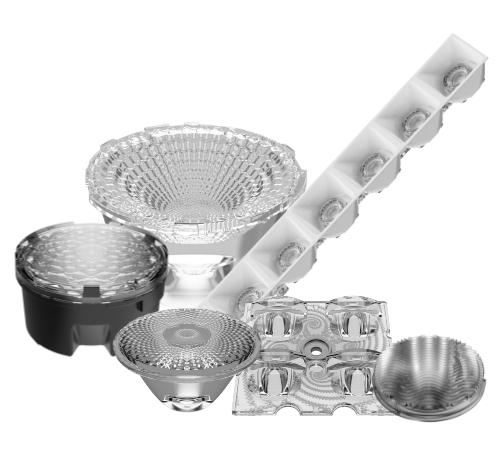

www.optic-gaggione.com
Withastrongemphasisonvisibilityand next-generationopticalsolutions,Gaggioneissettodeepenitsengagement withindustryleadersacrossmajormarkets.Thecompany’sparticipationinGILE 2025underscoresitscommitmenttopushingtheboundariesoflightingtechnology whilesupportingclientswithtailored,highperformanceoptics.
Gaggione’s2025roadshowcontinues attheStreet&AreaLightingConference (SALC),whereitwillpresentitslatestinnovationsforurban,architectural,andsmart lightingapplications.IndustryprofessionalsareinvitedtoconnectwithGaggione’s teamtoexplorenext-genopticalsolutions thatenhanceefficiency,durability,anddesignflexibility.
Gaggione(Figure 1)isaFrenchcompanylocatedbetweenLyonandGeneva (Switzerland).Foundedin1948,itfirst madeitsnameinplasticinjectionmolding,beforespecializing,forover30years now,inthedesignandmanufacturingof high-precisionopticalcomponents.Witha stronginternationalfocus,Gaggioneconductsasignificantportionofitsbusiness throughexportsandalsooperatesaproductionsiteinCanadaviaitssubsidiary, Quadratec.
Withateamofaround100employees, thecompanyhasinvestedheavilyinskills development,relyingonanexpertR&D teamandtop-tieropticalengineers.These investmentsalsoextendtoitsadvanced technologicalequipment,includinghighprecisioninjectionmoldingmachines,machiningtools,andstate-of-the-artoptical measurementsystems.
Thankstothisextensivesetofresources, Gaggionecansupportclientsatevery stageoftheirproject,regardlessofgeographicallocation—fromtheinitialoptical studytocomponentdesignandmanufacturing.Whilehistoricallyfocusedoncustomsolutions,thecompanyhasrecently expandeditsofferwithastandardrangeof efficientandcost-effectiveopticalcomponents.
Lenses,reflectors,collimators,andlight guides—Gaggionemeetsthediverse needsofthelightingmarketbycombining innovationwithindustrialexcellence.
Gaggione’sTechnical Heritage:AMarkof Trust
Fromitsearlydays,Gaggionehasdistinguisheditselfthroughitsabilitytodesign high-value-addedopticalcomponentsthat meetstringentregulatoryrequirements. Fromurbanlightingtomedicaloptics,includingspecializedapplicationssuchas lightobstruction,thecompanyhasestablisheditselfasago-to-partnercapableof tacklingthemostcomplexchallenges.
Thishistoricalknow-howhasplayeda majorroleinbuildingGaggione’sreputation andremainsakeypartofitsbrandidentity. Inthemarketandamongitsclients,the name“Gaggione”isinstantlyassociated withtechnicalcomponents—whethervery smallorverylargeinsize.
Facedwithcompetitionandtherapid transformationoftheLEDlightingindustry, Gaggioneproactivelylauncheditsstandard opticsrangeasearlyasthe2000s,markingitsentryintoanewmarketsegment.
Whileitscustomsolutionsremainedhigh performing,theynolongermetallclientdemandsorthegrowingconstraintsoftechnicalspecifications.Theneedforstandard componentsquicklybecameevident.This strategicdiversificationenabledGaggione toofferhigh-qualityopticalcomponentsfor abroaderrangeofapplications,allwhile optimizingproductionefficiencyandcost.
Bybettingonademandingtechnicalapproachandmaintainingclosemarket awareness,Gaggionehasconfirmedits
statusasaleaderintheopticsector.Refusingtorelysolelyonitshigh-endspecialistreputation,thecompanycontinuously refinesitsstrategywithoneclearobjective: deliveringtheoptimalbalanceofperformance,quality,andcost-effectiveness.A strategythatchallengesconventionalwisdomandstrengthensitslegitimacyinan increasinglyglobalmarket.
Withprovenexperienceinexecutingcomplex,high-techcustomprojects,Gaggione hasdevelopedunmatchedexpertisein colormixingandhigh-intensitybeams withultra-lowdivergence.Thisspecialized skillsethasbeenfurtherrefinedthrougha strategicpartnershipwiththerenowned stagelightingbrandAyrton(Figure 2 –AyrtonMagicPanelFX),allowingGaggione todeepenitsknowledgeincolorrendering capabilities.
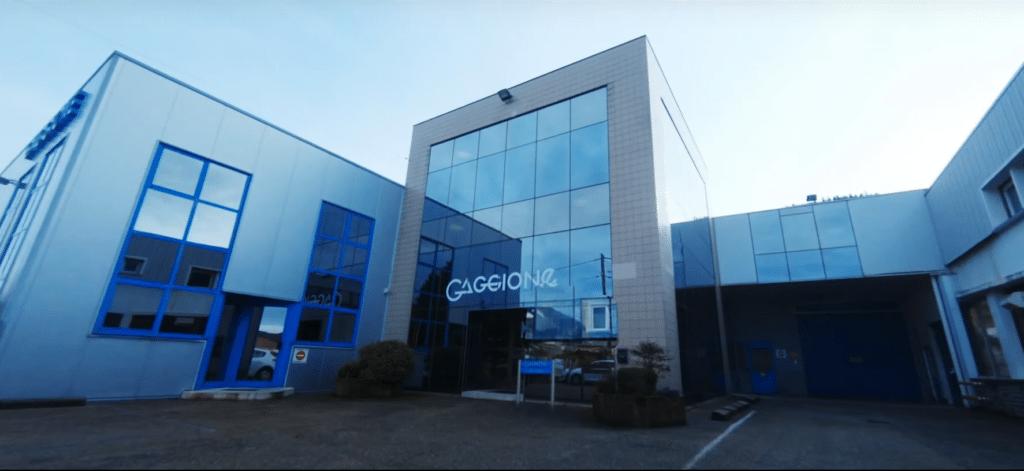
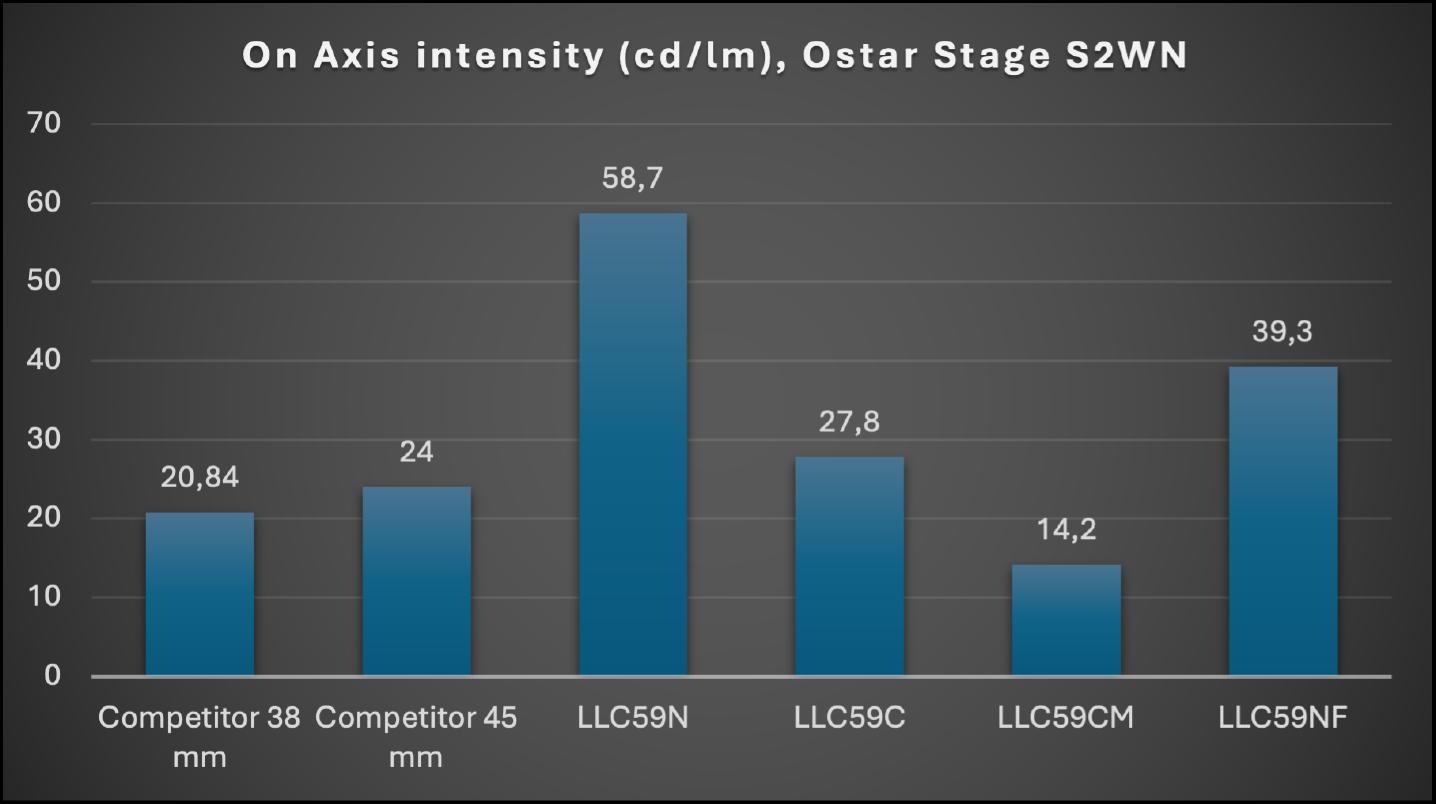
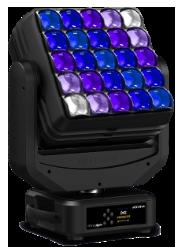
Thisstrategicpartnership—nowextended tomanytop-tiermanufacturers—isakey competitiveadvantage.Toaddressthe uniquedemandsofthismarket,Gaggione hasdesignedhigh-performancecollimators,suchastheLLC59NandLLC59C, whichdeliverexceptionalcolormixinguniformityandbringenergysavingsforthe customers. Figure 3 showstheperformanceofGaggione’snarrowbeamoptic vscompetition.
Gaggione’stechnicalmasteryshinesin thedevelopmentofhigh-intensitybeams —afieldinwhichthecompanyprovides exceptionaladdedvalue.Thankstoitsengineeringexpertiseandprecisionplastic injectioncapabilities,Gaggionecanproducethick,complexopticalcomponents thataretypicallyverychallengingtomold andmorepronetodefects.
Byconsistentlypushingtechnicalboundaries,Gaggionehasdevelopeddifferentiatedsolutionsthatclearlydistinguishit fromcompetitors.
In2024,Gaggionestrengtheneditsmarket positionbyexpandingitsportfolioofstandardopticalsolutions.Originallyfocused oncollimators,thecompanybroadenedits productlinestoaddressemergingapplications.
ThePolluxrangewasintroduced,bringinglinearopticstailoredtoindoorlighting needs—suchasoffices,retailspaces, andcommercialbuildings.
Simultaneously,theAvikarangewasdevelopedtomeetthedemandsofurbanand outdoorlighting,withlensesoptimizedfor thosespecificapplications.Morerecently, therangehasexpandedtoinclude
Amber-Orange(Figure 4)andAmberYellow(Figure 5)nightlifefriendlyroad lightingoptics.
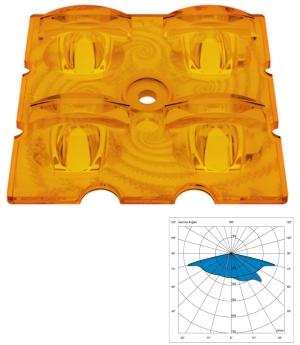
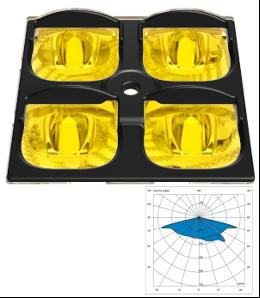
Figure5: Amber-Yellowoptic(LOR:85%,CRI 68).
Gaggione’samberopticoptionsareavailablewithmultiplephotometriesandbacklightblockingmasks.Gaggionecancustomizephotometries,opticaldesignand desiredwavelengthaccordingtocustomer requirements.
Amber-Orangecreatesconventionalsodium vaporlikecolortemperature(1995Kwith 3000KLEDs, Figure 6)withashighCRIas 59andLORof74%.Amountofbluelight (380nm-500nm0.007%).
Thecompanyalsoadvanceditsexpertiseincollimatorswiththelaunchofthe Hadar70range,speciallydesignedforCOB LEDs.Akeyinnovationaccompaniesthis launch:aclip-on”window”-typeaccessory thatclips-ondirectlytothecollimator,allowingbeamadjustmentwithouthaving toreplacetheopticalpartitself–abreakthroughinflexibilityandcost-efficiency.
Continuingthismomentuminto2025, Gaggioneisfurtherexpandingitsranges. TheHadarrangenowincludes50mm collimators(Figure 7),whilePolluxoffers
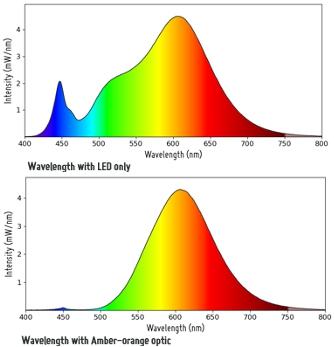
Orangeoptic.
newbeamanglesandpatterns.TheAvika rangeisabouttotakeamajorleapforward withthedevelopmentofspecializedbeam typestailoredtodemandingroadlighting applications—suchastunnelsandparkinglots.
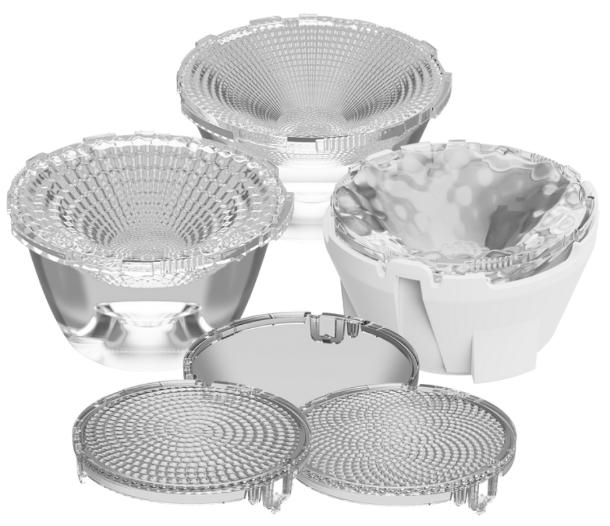
Figure7: NewHadar50range.
Thesenext-generationsolutionswillenhanceGaggione’sportfoliobydelivering:
• High-performanceillumination
• Exceptionaldurability
• Precision-optimizationforcomplexenvironments
Throughthesestrategicdevelopments, Gaggionereaffirmsitsdualcommitmentto innovationandmarketresponsiveness,ensuringever-morepowerfulanddiverseopticalsolutionstomeettheevolvingneedsof themarket.
Inamarketwherestandardopticalcomponentsarebecomingincreasinglycompetitive,Gaggionehasmadethestrategic choicetostandoutnotonlythroughthe qualityofitsopticalperformancebutalso byaligningitspricingwithcurrentmarket expectations.
Thiscarefullybalancedapproachallows thecompanytomaintainstrongcompetitivenesswithoutcompromisingonperformance.GaggionehavealsocreatedColor ConsistencyIndex4 toaccuratelymeasure andquantifythecolormixingperformance oftheoptic.
• CCI=ColorConsistencyIndex,lower valueisbetter
• CCI1-2–Notvisibletothenakedeye
• CCI2-5–Hardlyvisibletotheeye
• CCI5andmore–Clearlyvisibletothe eye
Figure 8 illustrates10-degree(FWHM) colormixingoptics,both45mmdiameter.
Gaggione,aFrenchopticsexpert,showcasedadvancedtechnologiesatGILE 2025,highlightingcustomandstandard opticalsolutions.Withinnovationsincolor mixing,recycledmaterials,andurbanlighting,Gaggioneexpandsitsglobalreach.Its standardrangenowincludesamberoptics andCOBcollimators,balancingperformance,cost-efficiency,andenvironmental responsibility. ■
4https://www.optic-gaggione.com/gaggiones-techn ology/color-consistency-index/
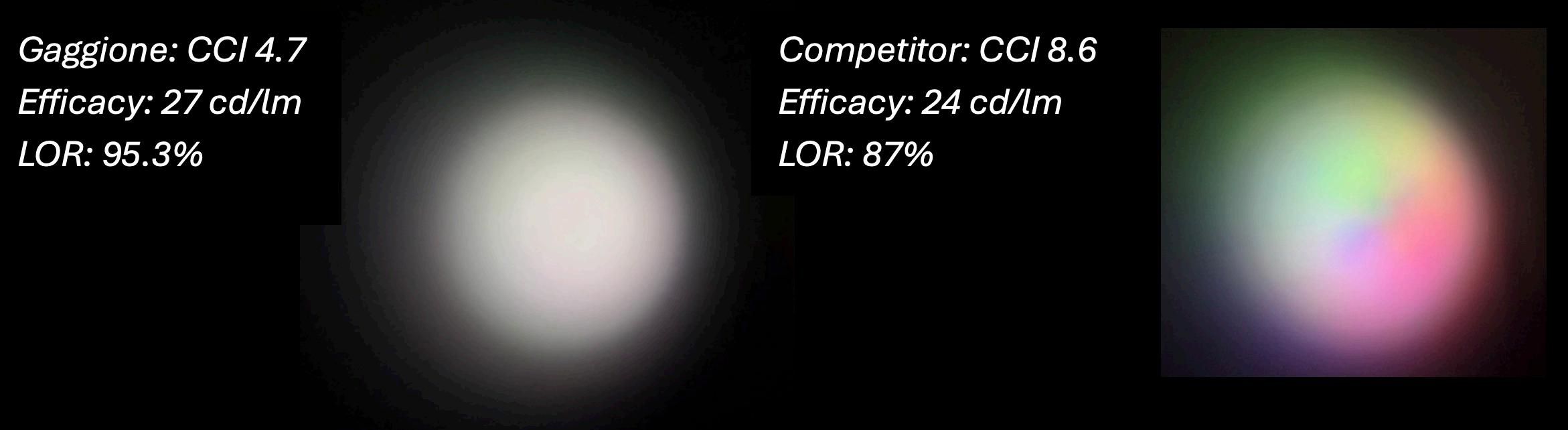
Figure8: Comparisonofcolormixingoptics.
Dr.AlexanderWunsch,MD,PhD
Introduction
Intheartificiallightingindustry,ithaslong beenfashionabletoworkwithhighcorrelatedcolortemperatures(CCT)inaneffort tomimicsunlight.Yetreproducingsunlightinallitscomplexity-intensity,timing, spectrum,modulation,colorrendering-is impossiblewithcurrenttechnology,requiringchoicesonwhichparametersmatch.
Duringthefluorescentlampera,neither high-qualitycolorrenderingnorhighintensitycouldbeachievedeconomically.This leftCCTasthepreferredmarketingmetric for“sun-like”qualities,largelybecausecool lightsourcescouldeasilyproduceabundantshortwavelengths.Itwascheaper andmoreefficienttomakefluorescent lampswithCCTsabove3,000K-often upto16,000K.Sunlight’sCTatnoonis around5,700K(arealtemperature!),which becamethesupposedbenchmarkfora “natural”photonicenvironment,aslongas oneacceptstheequationCCT=CT.
WhenLEDsreplacedfluorescentlamps innearlyallapplications,theirfirstincarnations-coldwhite,bluishlight-were harshtoeyesaccustomedtothewarm glowofincandescentlamps.Compared totheseearlyLEDs,evenmostfluorescentlampsseemedgentler.WesternLED manufacturersclungtooutdateddogmas: flickerwasn’tworthavoiding,aCRIof80 was“goodenough”,andCCTwassynonymizedwiththerealblackbodyemission atrealtemperature(=CT).Notsoinparts ofAsia.Whilesomecompaniesfollowed theoldrules,othersinnovated,eliminatingflickereveninretrofitbulbs,achieving daylight-likecolorrendering,andevenpursuingspectrathatfollowtheblackbody radiationcurveascloselyaspossible.
Somevisionarieswentevenfurther,turningtheLEDintoa”photonsynthesizer”. ContemporaryLEDscancoverspectral rangesfrom200nmintothenear-infrared (>1,000nm)andbeyond.COB(chip-onboard)technologyallowsmultipleLED speciestobecombinedonasinglesubstrate,fillingspectralgaps.Withspecializedphosphorsandpigments,theoutput spectrumcanbetunedwithremarkable precision-frommiddayskytoevening glow,ortomatchtheincandescentlamp, whichstillrepresentstheonlyelectricallight sourcewithatrulynatural,continuousthermalspectrum.
Incandescentlight-phasedoutas“energywasting”-remainsunique:lowinhighenergyvisiblelight(HEVL),richinnear infrared(NIR;>700nm),andstillused inthermotherapyandbabycare.Both sunlightandfirearethermallightsources whosespectrafallonthePlanckian(blackbody)curve,towhichlifeappearsoptimally adapted:e.g.CRIis100forfire,candlelight,unmodifiedincandescentlamps,and sunlight,regardlessoftherespectiveCT.
Thisarticlepresents12+1compelling reasonsforthehealth-promotinguse ofincandescent-likelightgeneratedby specializedCOBLEDs,referredtohere forsimplicityas“incandescentLEDs.”
Humansarecloselyrelatedtonon-human primates,particularlyOldWorldmonkeys. Manyphysiologicaltraits,includingocularspectralsensitivity,remainhighlyconserved.Thephotopicsensitivitycurve(V(
)) peaksat ∼ 555nm-virtuallyidenticalto themaximumtransmissionofleaftissue, suggestingadaptationnottounfiltered sunlightbuttothefilteredlightunderaforestcanopy.
Threearchetypallightenvironmentsshaped primateevolution:
1. Openlandscape–directsunlightwith highspectralpowernear480nm, stronglyactivatingmelanopsinpathways,drivingsympatheticresponses: elevatedcortisol,melatoninsuppression,andheightenedalertness (Figure 1 left).
2. Forestcanopy–green-dominated spectrumwithreducedblueandred; NIRinrelationtothevisibleradiationis severaltimeshigherthaninopensun (Figure 1 middle),fosteringparasympathetic,regenerativestates.
3. Night–moonlitordark-verylowirradianceandNIR(=darkness),complete absenceofmelanopsin-relevantblue, supportingrestorativeprocessesand sleep.
Forhumans,thenightenvironmentchanged inthepast ∼ 1millionyears [1]:theuse offiretransformeditintolow-illuminance conditionswithsignificantNIRexposure (Figure 1 right).
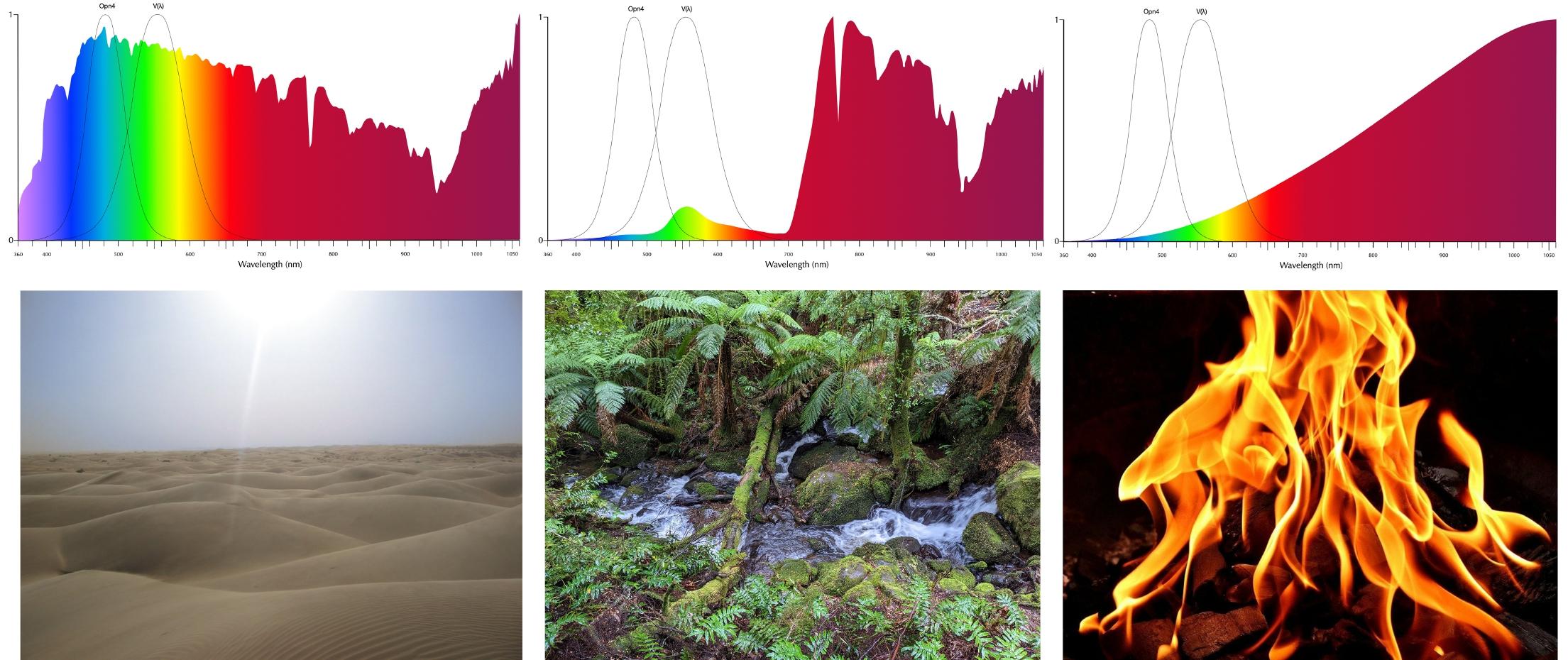
Figure1: Archetypallightenvironmentsshapingprimateevolution.Left: openlandscapewithdirectsunlight,richinbluewavelengths,activatingsympathetic pathways. Middle: forestcanopyspectrum,reducedblueandredbuthighnearinfrared,fosteringregenerativestates. Right: night/firelightwithlowilluminance, minimalblueandstrongnearinfrared,supportingrestorativeprocesses.
Duetonear-hairlessskin,phototoxicvulnerabilityisincreased:Humanshadto developdistinctprotectivemechanismsfor open-landscapeexposure [2].Transitioningfromnightorcanopytoopenterrain situationactivateslight-drivenendocrine defensepathways:adrenaline-induced vasoconstrictionlimitserythemalskinblood flow,cortisoldampensinflammation,catecholaminesstabilizecardiovascularfunction,andmineralocorticoidsregulatefluid balance.Theseresponsesoperateatboth systemicandlocallevels,”frombrainto skin” [3,45]
Giventhisbackground,modernartificial lightingshouldbere-evaluated.Optionsincludereplicatingthe“steppe/desert”profile -highblue,strongsympatheticactivation; the“oasisunderthecanopy”profile-low blue,highdaytimeNIR,neutralvegetativetone;orthepre-electric“night”profile, characterizedbythenaturalblackbody spectrumoffire,richinNIR,freeofHEVL andwithminimalbluetoallowuninterruptedmelatoninsecretion.Chronobiologically,thelattertwomodalitiesalignmore closelywithtoday´s(motoricallyreduced) indoortasksandofferlong-termhealth benefitsbyavoidingmaladaptivesystemic stressreactions.
High-energyvisiblelight(HEVL, ∼ 400–460nm, sometimesupto470nm)carriesthehighestphotonenergyinthevisiblespectrum (∼ 3.1eVat400nm)andisstronglylinked tophoto-oxidativestressineyeandskin.
Oculareffects–Intheretina,HEVLis absorbedbylipofuscinandotherchromophoresintheretinalpigmentepithelium (RPE).Blue-light-induceddamage,notsufficientlydescribedbytheBlueLightHazard (BLH)function,iscumulativeandacceleratesage-relatedmaculardegeneration (AMD).Childrenandaphakic/pseudophakic eyesfilterlessshort-wavelengthlight,increasinghazardcomparedtothestandard BLHcurve.
Skineffects–HEVLpenetratesdeeper thanUVB,reachingtheupperdermis whereitpromotesreactiveoxygenspecies (ROS)formation.Thisacceleratescollagenbreakdown,hyperpigmentation,and photoaging.Damageisprimarilyoxidative ratherthandirectDNAinjury,makingitcumulativeandhardertodetect.
Indooroverexposure–Insunlight,HEVL isbalancedbyred/NIRwavelengthsthat helpmodulateoxidativestress [6–10] StandardwhiteLEDs,especiallywithCCT >4,000K,oftenhaveintenseHEVLnm peakswithoutcompensatoryNIR,exposingindoorworkerstosignificantcumulative oxidativeloads.Reducing400–460nm outputlessensocularanddermaloxidative stress [11],especiallyfor:
• Children(clearlenses,largepupils)
• Post-cataractpatients(implantlenses havehighershort-wavelengthtransmission)
• ElderlywithAMDrisk
• Photosensitiveskinconditions
IncandescentLEDsproduceasmooth spectrumwithminimalHEVLandnosharp
450nmspike(Figure 2),closelyresemblingthenaturalfirelightspectrumshaped byevolution.Thislowerscumulativephotooxidativeriskwhilemaintainingfullvisual performance.
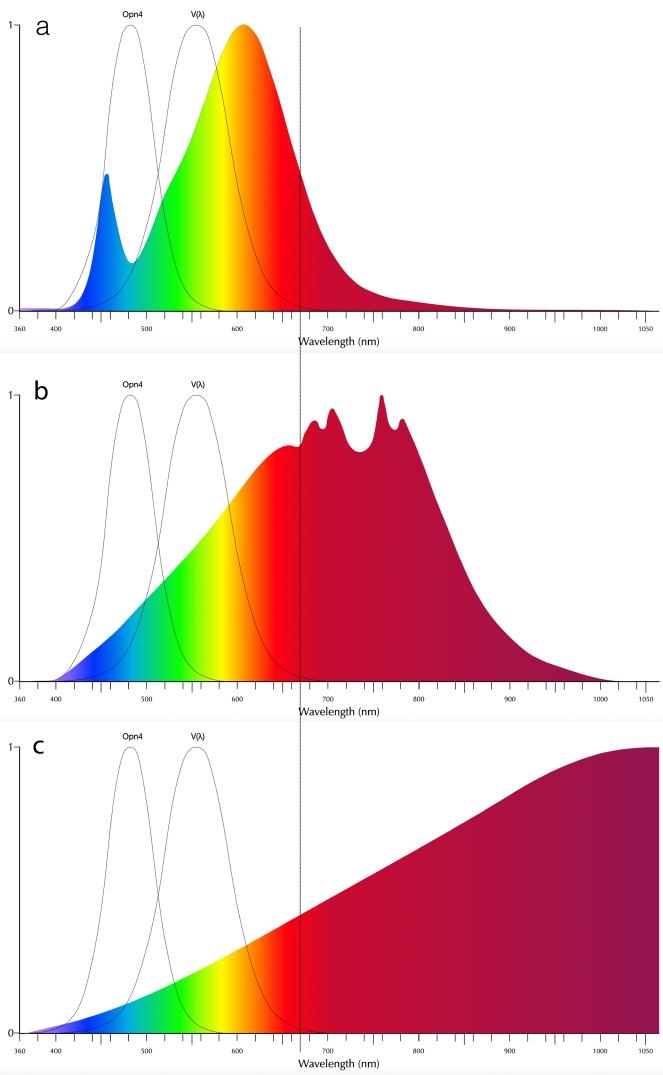
Figure2: SpectralcomparisonofstandardLED (a),NIR-enrichedincandescentLED (b) and classicincandescentlamp (c).Thespectral curvesoftheincandescentlampandLEDin thevisiblepartarealmostidenticalregarding continuityandblackbody.
IncontrasttoHEVL,bluelight,particularly near480nm,isvitalforcircadianentrainment,thereforeshortwavelengthsshould notgenerallybeeliminatedindoorsbut appliedreasonablybalancedandtimed:
sufficienttosustainnon-visualfunctions withoutchronicallyoverstimulatingthe melanopicpathwayorcausingexcessive oxidativestress.Forlong-termcircadian adaptationsupport,higherCCT(>4,000K) exposurewithspectralemphasisaround 480nmandreducedHEVLcanbeapplied intermittently,tailoredtotheindividual,and pairedwithplentyofprotectiveNIR.
Insunlightandfire,nearinfrared(NIR;> 700nm)makesupatleast40%oftotal radiantenergy [9].Thoughinvisible,itpenetratesdeeplyintotissue [12],interacting withwater,hemoglobin,andmitochondria, andplaysakeyroleincellularphysiology.
Physiologicalrelevance–NIRisabsorbed bymitochondrialchromophores,especially cytochromecoxidase,boostingATPproduction,improvingmicrocirculation,and enhancingantioxidantdefenses [6].This photobiomodulation(PBM)supportstissue repair [13],modulatesinflammation,andin theretinacancounteroxidativestressfrom high-energyvisiblelight(HEVL) [14].Low intensityexposure(8mW/cm2)todeep red/NIR(∼ 670nm)hasbeenshowntoimproveretinalsensitivityandmitochondrial efficiencyinagingeyes [15]
Modernartificiallight,especiallyphosphorconvertedLEDs,cutsoffabove ∼ 630–700nm duetov(λ)-drivenefficiencydesign,creatingachronicNIRdeficitforthosemostly sittingindoorsbehind”climate-friendly” windowsfilteringNIRforenergyefficiency’s sake.
IncandescentLEDscanprovidesignificantNIR,withoutputextendingupto ∼ 1,000nm-enoughforPBMeffectsbut withouttheintenseheatofwavelengths> 1,500nm(Figure 2).TheNIRlevelcanbe tailoredfortheintendedapplicationatthe expenseofnominalenergyefficiency.
Biologicalimplications–NIRcanmitigate HEVLdamageby“preconditioning”tissue (e.g.,630–850nm),improvingresiliencein skinandeye.IncludingNIRindailylighting reintroducesanaturalspectralelement largelyabsentinmoderninteriors.
ConventionalwhiteLEDsemitapronounced high-energyvisiblelight(HEVL)peak(∼ 400–460nm),generatingreactiveoxygenspecies(ROS)intheeyeandskin.In oculartissues,thiscontributestocumula-
tiveoxidativestressintheretinalpigment epithelium(RPE),photoreceptors,and lens.Thenegativeimpactofconventional LEDsonocularhealthhasbeenunderestimatedfromthebeginning,andgrowing evidence [16–18] hasbeensystematically ignoredbyregulatorybodiesandstandards [19,20]
IncandescentLEDshaveminimalHEVL andarerichinnearinfrared,producing amorebalancedspectrum.NIRisnonphototoxicatnormallevelsandactivates mitochondrialcytochromecoxidase,enhancingmetabolism,antioxidantdefenses, andtissuerepair.BycombininglowHEVL withampleNIR,incandescentLEDsreduce phototoxicstresswhileenablingintrinsic repair,aligningartificiallightingwithevolutionaryphotobiologicalsafety.
Lightisbothavisualandendocrinesignal.Short-wavelengthcontentstrongly influenceshormonalbalanceviaintrinsicallyphotosensitiveretinalganglioncells (ipRGCs),whichpeaknear480nm.These cellsprojecttothesuprachiasmaticnucleus(SCN),regulatingpinealmelatonin andtriggeringbroaderneuroendocrineresponses [3,21,22]
Melanopicstimulationsuppressesmelatoninbutalsoengagesthehypothalamic–pituitary–adrenal(HPA)axis,raisingcortisol,adrenaline,andnoradrenaline.Excessblue-richlightatinappropriatetimes cancausechronicsympatheticactivation,contributingtocardiovascularstrain, metabolicdisruption,andimmunesuppression [4,23,24]
Inthe1970s,FritzHollwichshowedthat alteredartificialspectraproducedbyfluorescentlampselevatedcatecholamine breakdownproducts,indicatingheightened sympathetictone-laterconfirmedbymappingtheipRGC–SCNpathway [25–27] Untilthefulldescriptionoftheneuronal pathwaysin2001 [28],thelightingindustry deniedthesevegetativeeffects,andafter 2001theeffectswerereframedas“melatoninsuppression,”downplayingpituitary axisandstresshormoneinvolvement.
Hormone-neutrallightingmeetsvisual needswhilekeepingmelanopicandnonvisualstimulationwithinphysiologicallimits -especiallyoutsidepeakdaylighthours. Incandescent-typespectra,including modernincandescentLEDs,havelow melanopic/photopicratiosandminimal HEVL,reducingmelatoninsuppressionand
HPAactivation,thussupportingendocrine individuality.
Thisisespeciallyimportantfor:
• Children/adolescentswithdeveloping endocrinesystems
• Cardiovascularpatients,whereextra sympatheticdriveisrisky
• Thosewithsleep,mood,depressionor anxietydisorders [29,30]
Light’sendocrineeffectsvarygreatlywith age,sex,genetics,chronotype,ocular status,health,andmedicationuse.This makes“onesizefitsall”lightinginherently suboptimal-andsometimesharmful-for certaingroups.
Variabilityfactors:
• Chronotype:Eveningtypesaremore sensitivetoeveningshort-wavelength light,whichdelayscircadianphase.
• Age:Children’sclearerlensestransmit moreblue/HEVL,increasingmelanopic stimulationandlifetimeincreaseinSW dose [11]
• Lensstatus:Post-cataractpatientswith clearorblue-transmittingIOLs(intraocularlensimplants)receivemoreshortwavelengthretinalirradiance;riskfor AMDincreases [31,32]
• Sexhormonesareaffectedbylight, dependingonbrightnessandtiming [33,34].
• Medications:Pharmaceuticalssuchas betablockers,corticosteroids,antidepressants,andotherscanalterphysiologicallightresponsesbyimpactingthe stresshormoneaxisoraffectingmelatoninproduction.
Risksofblue-enrichedlight–Morning exposuremayboostmoodinhealthy adultsbutcouldraisesympathetictone, bloodpressure,ordelaysleepinthose withcardiovascular,anxiety,orimmune disorders.Effectsdependonboththe melanopic/photopicratioandtheindividual’sbaselinehormonalstate.
Clinicalimplications–Alightspectrumthat stimulateshormonesinonepersonmay harmanother.Mostgenerallightinglacks suchtailoring,meaningsomeoccupants willbeexposedtospectrathatdisrupt ratherthansupporttheirhormonalbalance.
IncandescentLEDs,withlowimpacton cellularandendocrine-vegetativeintegrity, aresuitedforkindergartens,schools,hos-
pitals,eldercare,dementiacareanddiverseworkplaces.
Photobiologicalsafetystandardsarebased onhealthy(male?)adults,overlooking spectralandanatomicaldifferencesinchildren,elderlyindividuals,andpost-cataract patients [35].
Children–Theircrystallinelensishighly transparenttoshortwavelengths,including violetandnear-UVlight.Aphakicpeople (withoutanaturallensorclearIOL)sufferfromthistransparencyinadulthood. Forthesegroups,theaphakicbluelight hazard(BLH)function-showinghigher HEVL/near-UVretinalexposure-ismore accuratethanthestandardBLHcurve.
Age-relatedtransmission–Differences declineabove ∼ 500nm,whereelderly, young,andaphakiceyestransmitlightsimilarly [47].Thecommonrecommendation toincreaselightfortheelderly“fourfold” ismostlyrelevantforshortwavelengths; above500nm,onlyaboutatwofoldincreasewouldbeneeded.
Implications:
1. Energyefficiency:Warm,low-HEVL spectracanmeetelderlybrightness needswithlessthanhalftheextraenergycomparedtothe“4×rule.”
2. Spectralsafety:Reduced-HEVLlight especiallyprotectschildrenandpostcataractpatientsfromretinalphototoxicity.
Awarm,low-HEVLspectrumisthussafest andmostefficientacrossallages,deliveringgoodvisionwhileminimizingavoidable risk.
Visualacuityislimitedbyopticalquality andchromaticaberration-thewavelengthdependentfocuserrorcausedbyrefractive indexchangesinocularmedia.Longitudinalchromaticaberration(LCA)is ∼ 2 dioptersbetween400nmand700nm,with shortwavelengths(violet/blue)focusingin frontoftheretina(Figure 3 a).
ApproximateLCAvs.555nm
• 400–450nm:+1.0to+1.5D → strong defocus,fringes,glare,contrastloss
• 450–500nm:+0.5to+1.0D → moderatedefocus,blur
• 500–600nm:minimalLCA → sharpest focus
• 600–700nm:−0.3to−0.5D → slight defocus
Short-wavelengthdefocusscatterslight ontheretina,loweringcontrast-most noticeableunderhighbluecontent(cold LEDs,snow,waterreflections).Inprecisiontasks(aviation,sailing,skiing,marksmanship),yellow/amberfilterscutting< 500nmimprovecontrastandedgedefinition(Figure 3 b).Warm,low-HEVL sourceslikeincandescentLEDsreduce chromaticblurnaturally,enhancingvisual comfortandacuitywithoutfilters.
Colorrenderingdependsonhowfaithfully alightsourcerevealscolorscomparedtoa naturalreference.Humansevolvedunder continuousthermalspectra(sunlight,fire), alllyingonthePlanckianlocusandscoring aperfectCRIofalmost100.Thesespectra stimulateallthreeconetypes(S,M,L)in
balancedproportions,ensuringnatural colorperceptionandminimalmetameric mismatch.
Limitsofmodernmetrics–CRI(Ra)can misrepresentnarrow-bandor“spiky”spectralikefluorescentandstandardLEDs. Alternatives(IESTM-30’sRf/Rg,CIEmethods)capturemorenuancebutstillfavor smoothspectra.
Spectralengineeringpitfalls–Non-thermal lightsourcescanbetunedtoachievehigh CRIscoresonstandardizedtestsamples yetstillperformpoorlywithreal-worldcolors,particularlysaturatedreds(R9)and deepblues-crucialinmedicine,foodpresentation,andart.Thepursuitofmaximum colorfidelityoftenconflictswithspectral optimizationforbiologicalsafety;reducing HEVLorboostingredandNIRcontentcan lowernominalCRI,thoughvaluesabove90 andeven95remainachievable.
Followingtheblackbodycurve,incandescentLEDsreproducefull-spectrumreds anddeepreds(>600nm)withoutsimulatedpeaks.Thisdeliversaccurateskin tones,consistentobjectcolors,andreducescognitiveloadfromspectralcorrection,improvingvisualcomfortduring prolongedtasks.
IncandescentlampsonmainsACexhibit asmall100/120Hzmodulation(∼ 3–5%)fromfilamentheatingandcooling. LEDs,however,canproduceanythingfrom harsh,almoststroboscopicflickeracross multiplefrequenciestovirtuallyzeroflicker, dependingondriverdesign-anengineeringchoice.Lightflicker,whethervisibleor sub-perceptual,cantriggerheadaches, eyestrain,reducedvisualperformance,
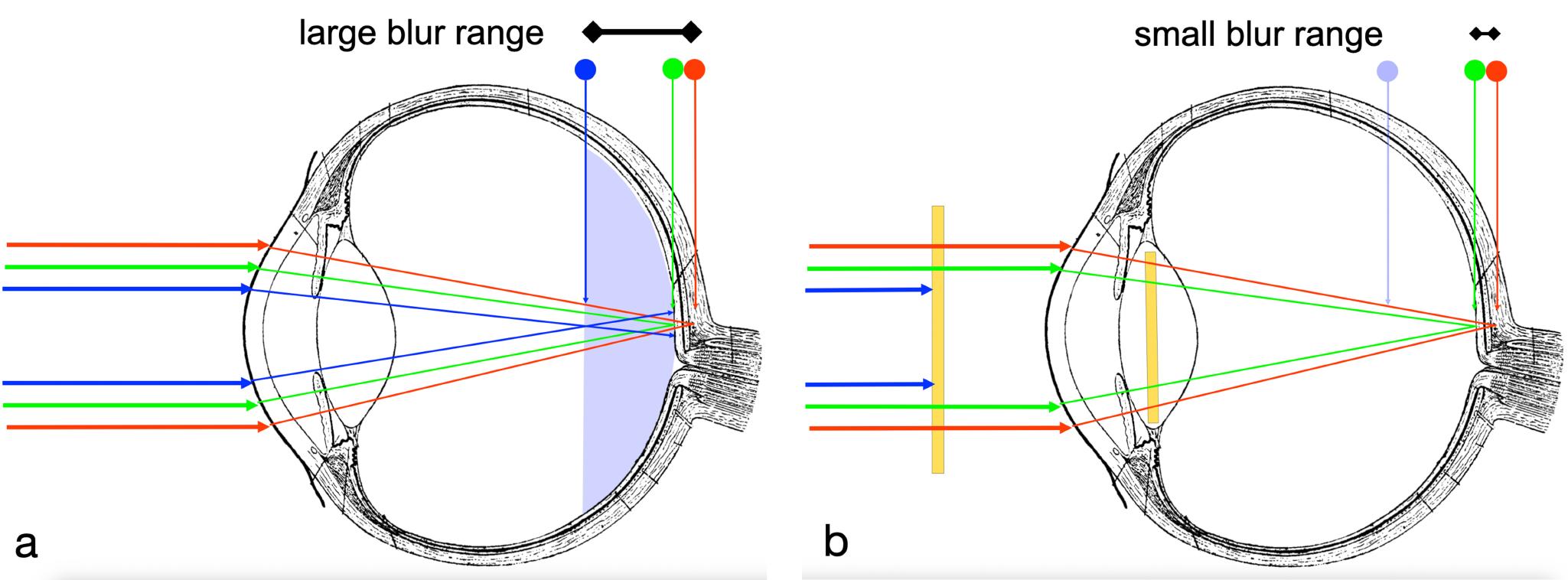
Figure3: Longitudinalchromaticaberrationandresultingdefocusforblue-rich (a) andblue-filtered (b) conditions.
andexacerbatemigraine,photosensitive epilepsy,ormooddisorders [36–39].Even beyondconsciousdetectionthresholds, itcanelicitcorticalresponsesanddisrupt eyemovementstability [38,40]
SinceLEDsoperateonlow-voltageDC, electroniccircuitryisunavoidable,butit canbedesignedformodulation-freeoperation.Thisisbothtechnicallyfeasibleand inexpensive,effectivelyeliminatingthisbiologicalstressor.
Lightshapesemotionalstate,socialperception,andself-image.Warm-spectrum light,likethatfromincandescentLEDs, feelsinviting,flattersskintones,andfosters relaxationandpositiveinteraction.
Blue-enrichedlight(∼ 470–490nm)increasesamygdalaactivation,heightening vigilanceand,withchronicexposure-especiallyatnight-potentiallyincreasing anxiety [41,42].Aesthetically,itreduces warmskinreflection,accentuatessuperficialbloodvessels,andcangiveapallidor coldappearance.Warmspectraenhance subdermalscattering,maskvessels,and produceahealthierlook. Suchpsycho-emotionalandaestheticeffectsinfluencemood,communication,and productivity.Choosingspectrathatsupportbothphysiologyandpsychologyisas importantasmeetingvisualtaskneeds.
Animportantpublicationdemonstrated thatmalilluminationisassociatedwith increasedprevalenceofcertainpsychologicaldisorders [30].Totranslatethese findingsintoeverydaylightingpractice, itisessentialtohavehormonallyneutral lightsourcesliketheincandescentLED available-particularlythosewithlowcolor temperatures-tominimizemelanopicstimulationanditspotentialimpactonneuroendocrinebalance.
Energyefficiencymetricsrarelyincludethe healthcostsofchronicexposuretobiologicallyunbalancedlight,whichmayraise risksforcardiovasculardisease(CVD), age-relatedmaculardegeneration(AMD), cancers,metabolicdisorders,andmood conditions [43–46].Thesecostscanvastly exceedthesmallelectricitysavingsfrom themostefficient-butphysiologicallysuboptimal-lightsources.
TreatingonewetAMDpatientinGermany costs ∼ €30,000/year.A100Wincandescentlamprun24/7uses876kWh/year, costing ∼ €263at€0.30/kWh.Forthe priceofoneyearofAMDtreatment, ∼ 114 suchlampscouldrun24/7forayear-or onepersonallampforoneandahalfhumanlifetimes.
CVDcostsGermany ∼ €80billion/year. ComparingtheincandescentLEDtoa slightlymoreefficientbutbiologicallyinferiorLEDmightsave€5/yearperluminaire. Across100millionluminaires,that’s€0.5 billion/year-lessthan0.7%ofCVDcosts. EvenasmallriseinCVDburdenwould eraseanysavingsmanytimesover. Conclusion–Marginalgainsinluminous efficacycannotjustifyspectrathatharm health.IncandescentLEDs-withlow HEVL,highNIR,excellentCRI,andevolutionarycompatibility-aremorecosteffectivelongtermwhenhealthcarecosts areincluded.
UnderbothEuropeanandinternational frameworks,amedicaldeviceisdefinedas anyinstrument,apparatus,orotherarticle intendedbythemanufacturertobeused forhumanbeingsforamedicalpurpose, suchasdiagnosis,prevention,monitoring, treatment,oralleviationofdisease.Inthe EU,theMedicalDeviceRegulation(MDR 2017/745)explicitlyincludesproductsthat exerttheirprincipalintendedactionby physicalmeans-suchaslight-ifthatlight ismeanttoachieveaphysiologicaleffect forhealthpurposes.
Thisdefinitioncreatesaregulatorygrey zoneformodern“biologicallyactive”lightingtechnologies.Ifalightsourceismarketedordesignedtodeliberatelyinfluence physiologicalparameters-suchasmelatoninsecretion,alertness,andcircadian phaseshift-itmay,inprinciple,fallunder medicaldeviceregulation.Thiswouldtriggerrequirementsfor:
• Clinicalevidenceofsafetyandefficacy.
• Qualitymanagementsystemsforproduction.
• CEmarkingundertheMDR,withpossibleclassificationaboveClassI.
• Ongoingpostmarketsurveillance.
Socalled“humancentric”ordynamic lightingsystemsareexplicitlyintended
toinfluencenonvisualphysiologicalfunctions-oftenmarketedwithclaimsabout boostingmood,performance,orcircadian alignment.Inastrictlegalinterpretation, suchintendedusecouldplacetheminthe medicaldevicecategory,especiallyifany therapeuticorpreventivehealthclaimsare made.However,enforcementisinconsistent,andmostsuchproductscurrently enterthemarketwithoutMDRconformity assessment.
TheincandescentLEDprovidesaspectrumcloselyresemblingtraditionalincandescentlamps.Itsprimaryfunctionisgeneralillumination,anditcanbespecified andsoldwithoutanyintendedmedicalpurpose.Assuch,itdoesnottriggermedical deviceclassification.Physiologicalcompatibilityisachievedasabyproductofits neutralspectralqualities,notthroughtargetedphotobiologicalintervention.
Fromaregulatoryriskperspective,thisis significant:
• Noadditionalconformityburden:Itremainsastandardlightingproductunder lowvoltageandEMCdirectives(and possiblyecodesignrules),notMDR.
• Lowestphysiologicalinterference:Becauseitavoidsextremespectralmanipulations,itsnegativeimpactonhormonal,retinal,andvascularparameters isminimal.
• Avoidsclaimbasedreclassification:By notmarketingitasatherapeuticorpreventivetool,themanufactureravoids crossingintoregulatedmedicalterritory.
Forspecifiersandfacilitymanagers-especiallyinhospitals,carehomes,schools, andworkplaces-theincandescentLED offersasaferegulatorypositioncombined withabiologicallyfavorablespectrum.It sidestepsthecomplianceuncertaintiesthat couldemergeforbiologicallyactivelighting infuturelegalreviews,whilestilldelivering thehealthalignedqualitiesmanyfacilities want.
COBtechnologyenablestheincandescent LED-moreefficientthantungstenyetprovidingallkeyadvantages:highCRI,natural blackbodyspectrum,NIRenrichment,and lowHEVL.Asahormonallyneutral,healthsupportivelightsourceenablingoptimal visionforallages,itmeritsacentralrolein futurehealthcare,lightingdesign,and computerdisplaytechnology. ■
[1] Berna,F.etal.Microstratigraphicevidenceofin situfireintheAcheuleanstrataofWonderwerkCave, NorthernCapeprovince,SouthAfrica.Proc.Natl. Acad.Sci.109,E1215–E1220(2012).
[2] Jablonski,N.G.Theevolutionofhumanskin pigmentationinvolvedtheinteractionsofgenetic, environmental,andculturalvariables.PigmCell MelanomaR34,707–729(2021).
[3] Robertson-Dixon,I.,Murphy,M.J.,Crewther,S.G. &Riddell,N.TheInfluenceofLightWavelengthon HumanHPAAxisRhythms:ASystematicReview. Life13,1968(2023).
[4] Petrowski,K.,Bührer,S.,Albus,C.&Schmalbach, B.Increaseincortisolconcentrationduetostandardizedbrightandbluelightexposureonsalivacortisol inthemorningfollowingsleeplaboratory.Stress24, 331–337(2021).
[5] Slominski,A.T.,Zmijewski,M.A.,Plonka,P.M., Szaflarski,J.P.&Paus,R.HowUVLightTouchesthe BrainandEndocrineSystemThroughSkin,andWhy. Endocrinology159,1992–2007(2018).
[6] Barolet,D.,Christiaens,F.&Hamblin,M.R.Infrared andskin:Friendorfoe.JPhotochemPhotobiologyB Biology155,78–85(2016).
[7] Barolet,D.&Boucher,A.LEDphotoprevention: ReducedMEDresponsefollowingmultipleLED exposures.LaserSurgMed40,106–112(2008).
[8] Barolet,A.C.,Villarreal,A.M.,Jfri,A.,Litvinov,I.V. &Barolet,D.Low-IntensityVisibleandNear-Infrared Light-InducedCellSignalingPathwaysintheSkin: AComprehensiveReview.Photobiomodulation, Photomed.,LaserSurg.41,147–166(2023).
[9] Barolet,D.Near-InfraredLightandSkin:WhyIntensityMatters.ChallengesSunProt55,374–384 (2021).
[10] Françon,A.,Jonet,L.,Behar-Cohen,F.&Torriglia, A.Repeatedexposuretolowdosesoflightinduces retinaldamageinvivoinawavelength-dependent manner.Ecotoxicol.Environ.Saf.290,117605 (2025).
[11] Behar-Cohen,F.etal.Light-emittingdiodes(LED) fordomesticlighting:Anyrisksfortheeye?Prog RetinEyeRes30,239–257(2011).
[12] Jeffery,G.etal.Longerwavelengthsinsunlight passthroughthehumanbodyandhaveasystemic impactwhichimprovesvision.Sci.Rep.15,24435 (2025).
[13] Neto,R.P.M.etal.Photobiomodulationtherapy(red/NIRLEDs)reducedthelengthofstayin intensivecareunitandimprovedmusclefunction:A randomized,triple blind,andsham controlledtrial.J. Biophotonicse202300501(2024) doi:10.1002/jbio.202300501.
[14] Jeffery,G.&Barrett,E.LEDlightingundermines visualperformance.(2025)doi:10.21203/rs.3.rs6540877/v1.
[15] Shinhmar,H.,Hogg,C.,Neveu,M.&Jeffery,G. Weeklongimprovedcolourcontrastssensitivityafter single670nmexposuresassociatedwithenhanced mitochondrialfunction.SciRep-uk11,22872(2021).
[16] Françon,A.,Behar-Cohen,F.&Torriglia,A.The bluelighthazardanditsuseontheevaluationof photochemicalriskfordomesticlighting.Aninvivo study.Environ.Int.184,108471(2024).
[17] Françon,A.etal.Phototoxicityoflowdosesof lightandinfluenceofthespectralcompositionon humanRPEcells.Sci.Rep.14,6839(2024).
[18] Hunter,J.J.etal.Thesusceptibilityoftheretinato photochemicaldamagefromvisiblelight.ProgRetin EyeRes31,28–42(2012).
[19] SCHEER.OpiniononPotentialRiskstoHuman HealthofLightEmittingDiodes(LEDs).(2018).
[20] ICNIRP.ICNIRPGUIDELINESONLIMITSOFEXPOSURETOINCOHERENTVISIBLEANDINFRARED RADIATION.(2013).
[21] Lucas,R.J.MammalianInnerRetinalPhotoreception.CurrBiol23,R125–R133(2013).
[22] Lucas,R.J.etal.Measuringandusinglightinthe melanopsinage.TrendsNeurosci37,1–9(2014).
[23] Mekschrat,L.,Göring,M.,Schmalbach,B., Rohleder,N.&Petrowski,K.Theinfluenceoflight onInterleukin-10:Apreliminarystudy.Brain,Behav., Immun.-Heal.42,100887(2024).
[24] Cheung,I.N.etal.MorningandEveningBlueEnrichedLightExposureAltersMetabolicFunction
inNormalWeightAdults.PlosOne11,e0155601 (2016).
[25] Hollwich,F.TheInfluenceofOcularLightPerceptiononMetabolisminManandAnimal.(Springer, NewYork,Heidelberg,Berlin,1979).doi:10.1007/9781-4612-6132-2.
[26] Hollwich,F.THEINFLUENCEOFLIGHTVIATHE EYESONANIMALSANDMAN.AnnNyAcadSci 117,105–128(1964).
[27] Hollwich,F.&Dieckhues,B.Augenlichtund Nebennierenrindenfunktion*1.Dtsch.Med.Wochenschr.92,2335–2341(1967).
[28] Berson,D.M.,Dunn,F.A.&Takao,M.PhototransductionbyRetinalGanglionCellsThatSetthe CircadianClock.Science295,1070–1073(2002).
[29] Liu,Y.,Chen,M.&Li,N.CorrelationofMelatonin andCortisolinBipolarDepression:APreliminary Small-SampleStudy.(2024)doi:10.21203/rs.3.rs4446297/v1.
[30] Burns,A.C.etal.Dayandnightlightexposureare associatedwithpsychiatricdisorders:anobjective lightstudyin>85,000people.Nat.Ment.Heal.1–10 (2023)doi:10.1038/s44220-023-00135-8.
[31] Algvere,P.V.,Marshall,J.&Seregard,S.Age related maculopathyandtheimpactofbluelighthazard. ActaOphthalmolScan84,4–15(2006).
[32] Nagai,H.etal.Preventionofincreasedabnormal fundusautofluorescencewithbluelight–filtering intraocularlenses.JCataractRefractSurg41,1855–1859(2015).
[33] Danilenko,K.V.&Samoilova,E.A.Stimulatory EffectofMorningBrightLightonReproductive HormonesandOvulation:ResultsofaControlled CrossoverTrial.PlosClinTrials2,e7(2007).
[34] Yang,Z.etal.Disruptionofcentralandperipheral circadianclocksandcircadiancontrolledestrogen receptorrhythmsinnightshiftnursesinworking environments.FASEBJ.38,e23719(2024).
[35] Kessel,L.,Lundeman,J.H.,Herbst,K.,Andersen,T.V.&Larsen,M.Age-relatedchangesinthe transmissionpropertiesofthehumanlensandtheir relevancetocircadianentrainment.JCataractRefractSurg36,308–312(2010).
[36] Shady,S.,MacLeod,D.I.A.&Fisher,H.S.Adaptationfrominvisibleflicker.ProcNationalAcadSci 101,5170–5173(2004).
[37] Sheppard,A.L.&Wolffsohn,J.S.Digitaleye strain:prevalence,measurementandamelioration. BmjOpenOphthalmol3,e000146(2018).
[38] Lehman,B.&Wilkins,A.J.DesigningtoMitigate theEffectsofFlickerinLEDLighting.IEEEPower Electron.Mag.1,18–26(2014).
[39] Wilkins,A.,Veitch,J.&Lehman,B.LEDlighting flickerandpotentialhealthconcerns:IEEEstandard PAR1789update.2010IEEEEnergyConvers.Congr. Expo.171–178(2010) doi:10.1109/ecce.2010.5618050.
[40] Lehman,B.,Wilkins,A.,Berman,S.,Poplawski, M.&Miller,N.J.ProposingMeasuresofFlickerinthe LowFrequenciesforLightingApplications.2011IEEE EnergyConvers.Congr.Expo.2865–2872(2011) doi:10.1109/ecce.2011.6064154.
[41] Vandewalle,G.etal.Spectralqualityoflightmodulatesemotionalbrainresponsesinhumans.Proc NationalAcadSci107,19549–19554(2010).
[42] Vandewalle,G.etal.BrainResponsestoViolet, Blue,andGreenMonochromaticLightExposures inHumans:ProminentRoleofBlueLightandthe Brainstem.PLoSONE2,e1247(2007).
[43] James,P.etal.OutdoorLightatNightandBreast CancerIncidenceintheNurses’HealthStudyII. EnvironHealthPersp125,087010(2017).
[44] Schernhammer,E.S.,Kroenke,C.H.,Laden,F. &Hankinson,S.E.NightWorkandRiskofBreast Cancer.Epidemiology17,108–111(2006).
[45] Hatori,M.etal.Globalriseofpotentialhealth hazardscausedbybluelight-inducedcircadian disruptioninmodernagingsocieties.NpjAgingMech Dis3,9(2017).
[46] Ward,E.M.etal.Carcinogenicityofnightshift work.LancetOncol20,1058–1059(2019).
[47] Artigas,J.M.,Felipe,A.,Navea,A.,Fandiño,A. &Artigas,C.SpectralTransmissionoftheHuman CrystallineLensinAdultandElderlyPersons:Color andTotalTransmissionofVisibleLight.Investig. OpthalmologyVis.Sci.53,4076(2012).

Dr.AlexanderWunsch,MD,PhD Dr.AlexanderWunsch,MD,PhD,isa physician,lighttherapist,independentresearcher,andscientificconsultant.From 2008to2019,heservedasalecturerin theMasterofArtsprograminArchitectural LightingDesignatWismarUniversityof AppliedSciences.Hisresearchisfocused onthephysiologicalandpathologicaleffectsoflightonhumans,andhehasbeen avocalcriticofthebanonincandescent lamps.Hisworkadvocatesforaparadigm shiftinthefieldofphotobiologyandcalls forahealth-centeredredefinitionoflightingstandards.Dr.Wunschemphasizes thenecessityofshiftingfromtheutilization ofenergyefficiencyasthepredominant criterionforindoorlighting,promotinginsteadtheadoptionofsalutogeniclighting conceptsgroundedinhumanbiology.This approachprioritizesthebeneficialimpact onhealthoverconsiderationsoftechnical oreconomicfeasibility.
wunschart@gmail.com
Dipl.-Ing.JohannesWeninger1,2,MMag.MartinaAscher1 , MaximilianDick1,MSc.;Bartenbach
Manyoftheexistingrequirements regardingpubliclightingcanbeaddressedbyforward-lookingtechnologies(e.g.,IoTorintelligent,selfadaptivecontrolsystems).However, thesustainableintegrationofsuch technologiesintothemarketandthe furtherutilizationoftheirpotentials stronglydependonoverarchinglimitingfactorsalongtheentirevalue chain.Ensuringthesuccessofenvironmentalandclimatepolicyefforts thereforerequiresconsiderationofthe diverserequirementsofvariousstakeholdergroups.
OnbehalfoftheAustrianMinistryfor ClimateAction,Environment,Energy, Mobility,InnovationandTechnology (BMK),Bartenbachdevelopedcomprehensiverecommendationsforaction basedonastakeholdersurvey,with theaimofsupportingthelong-term achievementofnationalandinternationalsustainabilitygoals.Following thediscussionofthematicchallenges inthefirstpartofthistwo-partarticle series,thepresentsecondpartfocusesontechnologicalpotentialsand limitations,aswellastheresultingrecommendationsforaction.
Technologicalinnovationhasalwaysplayed acentralroleinshapingpubliclightingsystems.However,today’sglobalchallenges, suchasclimatechange,increasingurbanization,andgrowingresourcescarcity,are leadingtoafundamentalrethinkingofexistingsystems.Theresultingshiftmoves publiclightingawayfromstaticinfrastructureandtowardintelligent,adaptivenetworks [1].Intheory,thistransformation unlockssubstantialecological,economic, andsocialpotential.Benefitsrangefrom reducedenergyconsumption [2] andlight pollution [3] toenhancedsafetyandan overallimprovementinurbanqualityoflife.
AttheheartofthisdevelopmentareLED systems.Comparedtotraditionallighting technologies,theyoffernotonlysuperior energyefficiencyandlongevity,butalso newopportunitiesenabledbydigitalization. Sensor-integratedlighting,AI-basedcontrolsystems,andreal-timedataprocessingallowlightingtodynamicallyrespond toenvironmentalconditions,trafficflows, andhumanpresence [4].Digitaltwins, predictivemaintenancetools,andconnectedsystemsprovidefurtheradvantages inplanning,monitoring,andoptimization [5]
Despitesignificantprogressinmanyareas ofdevelopment,marketadoptionremains uneven.Potentialbarriersincluderegulatoryinertia,limitedawarenessamong decision-makers,anduncertaintyabout long-termcostsandreturnsoninvestment. Manymunicipalitiesfacetightbudgetsor lackthenecessaryexpertiserequiredto evaluatelightingsolutionsconsideringthe complexfieldofrequirements.Therapid paceofdigitalinnovationoftenleavesstandardizationmechanismslaggingbehind, andcurrentplanningtoolsfrequentlyfail toreflectthereal-worldvariabilityofurban environments.
Tofullyleveragethepotentialofpublic lightingtechnologies,thesebarriersmust beaddressedthroughcoordinatedefforts inpolicy,research,andproductdevelopment.Establishingtherightframework conditionsisanecessaryfirststeptoward makingfuture-orientedlightingtechnologiesakeycontributortosustainableurban transformation.
1 BartenbachGmbH,6112Wattens, Austria
2 Johannes.Weninger@bartenbach.com www.bartenbach.com
Researchplaysacrucialroleinrealizing thesepotentialsbyprovidingevidencebasedinsightsintouserneeds [6],environmentalimpacts [7],andtechnicalperformance [8].Italsoservesasakeydriverof innovationininterfacedesignandsystem integration [9],formingthefoundationfor scalableandsustainablesolutions.Inaddition,interdisciplinarystudieshelpalign lightingtechnologieswithbroaderurban andecologicalobjectives,suchasbiodiversitypreservation [10] orperceivednighttimesafety [11],basedonanexpanded knowledgebase.
CommissionedbytheAustrianMinistryfor ClimateAction,Environment,Energy,Mobility,InnovationandTechnology(BMK), Bartenbachconductedacomprehensive assessmentofcurrentandemerginglightingtechnologies,evaluatingtheirecological,economic,andsocialpotential.This includedaligningtechnologicalcapabilities withcomplexthematicrequirementprofiles andidentifyingkeyimplementationbarriersthroughastakeholdersurveyspanning theentirevaluechain.Theoutcomeisa targetedactionguideforAustrianpublic authorities,designedtoensurethattechnologicaladvancementsinpubliclighting caneffectivelysupportenvironmentalgoals by2035.Theinsightsfromthestakeholder surveyarepresentedinatwo-partarticle series.Whilethefirstpartexploredresponsibilities,environmentalawareness,and thethematicchallengessurroundingpubliclighting,thissecondpartfocuseson
technologicalsolutionsandthederived strategicrecommendations.
Thekeytechnologiesexaminedinthesurveywereidentifiedthroughacomprehensivecomparisonofcurrentscientific knowledgeandmarketdevelopments.The scientificfoundations,whichreflectthethematicchallengesofoutdoorlighting,were discussedindetailinthefirstpartofthis articleseries.Existingtechnologicalapproacheswereassessedbyasystematic reviewofproductportfoliosfromabroad rangeofoutdoorlightingmanufacturers.
Theanalysisincludedbothtechnicaland architectural-decorativelightingsectors. Smallercompaniesweredeliberatelyincludedtoensurethatinnovativebutless widelycommercializedsolutionswerealso captured.Theproductreviewwasnot limitedtospecificapplicationsandencompassedstreetlighting,buildingandobject illumination,aswellaslightingforpaths, plazas,parkinglots,andpedestrianzones.
Allrelevantproductsweresubjectedto aqualitative,multidimensionalclassification(Table 1),assessingaspectssuchas opticaltechnologies,lightquality,interoperability,easeofmaintenance,connectivity, productionmethods,andenvironmental impact.Functionalitiesweredocumented andevaluatedbasedontheiravailability withineachportfolio.
Evaluationcriteriaweredefinedinadvance andencompassedbothestablishedparameters(e.g.,colortemperatureranges, glarecontrol)andforward-lookingfeatures,suchasdynamiclightdistributions. Additionalfocuswasplacedoninnovativematerials(e.g.,biogeniccomponents), energy-savingconcepts,andcompatibility
withnext-generationcontroltechnologies like5Gand6G.Thecompileddatawas thenanalyzedforfeatureprevalenceacross manufacturers.
Byaligningtheseinsightswiththescientific literature,sixkeytechnologieswereidentified,eachaddressingmultiplethematic challengesandofferingscalable,futureorientedpotentials.
Toassessboththepotentialandpossible limitationsoftheidentifiedkeytechnologies,surveyparticipants(acharacterization ofthesurveyparticipantscanbefoundin thefirstpartofthisarticleseries)evaluated theimpactofeachtechnologyonvarious factors:environmentalaspects(lightpollution,energyconsumption),user-related issues(health,privacy,acceptance),safety (subjectiveandobjective),complexity(planning,standardization,interfacedefinition), aswellasproductioncosts,maintenance needs,andtechnologicalsovereignty.Responseswererecordedona7-pointLikert scale(1=verynegativeimpact,4=noimpact,7=verypositiveimpact).
Toensurecomparabilitygivenrespondents’ diversebackgroundsandlevelsofexpertise,allquestionsincludedanchored promptsoutliningbothpotentialbenefits andchallenges.
Formanyyears,theprimarypurposeof publicoutdoorlightingwastomeetvisual requirementscenteredexclusivelyonhumanneeds.Asenvironmentalpriorities havegainedtraction,reducingtheharmful ecologicaleffectsofartificiallightinghas becomeincreasinglyimportant.Ideally, night-timelightingshouldbeminimizedto reduceenvironmentalimpact.However,
currentlightingstandardsarestillbased onbrightnessasperceivedbyhumans, althoughmanyanimalspecieshavevisual systemsthatresponddifferentlytovarious wavelengthsoflight.Assuch,theproblem liesnotonlyinbrightnessbutalsointhe spectralcompositionofthelight.
Biologistshavelongrecognizedthatdifferentwavelengthsoflightaffectspecies indistinctways.Birds,forexample,have tetrachromaticvision,whichincludessensitivitiesnotonlyintheshort-wavelength rangebutalsointhelong-wavelengthparts ofthespectrum [12].Contrarily,hatchlingseaturtlesarepredominantlydrawnto blue-richlight,whichpromptedtheintroductionofturtle-friendlylightingregulations alongFlorida’scoastlines [13]
Historically,effortstoreduceecological disruptionwerelimitedbythecapabilities ofavailablelightingtechnologies.Highpressuresodiumlamps,whichemitlonger wavelengths,werelessattractivetoinsects,whilemercuryvaporlamps,with theirultravioletcomponents,wereparticularlyalluring [14].Today,LEDtechnology allowsforflexiblespectraltuning,enabling moretargetedapproachestominimizing lightpollution [15]
Category
Subcategory
LuminaireType Functionoftheluminaire;Specialfeatures OpticalTechnology Opticalefficiency;Systemmodularity;Glarecontrol;LEDtype; Systemconcept;Availableaccessories;Powerbycluster/array LightQuality Dynamiclightdistribution;Arrayeffects;Coloreffects;Color rendering;Optimizedspectrum
Interoperability Standardization;Compatibility EaseofMaintenance Tool-freemaintenance;Retrofitcapability Connectivity Sensorintegration;Multifunctionality;Cablingeffort;Remote maintenance
ProductionMethod Resources;Materials;Sustainability;Circulareconomy EnvironmentalImpact Lightpollution;Energy-savingmethods
Table1: Categoriesandsubcategoriesusedforthequalitativeevaluationofproductportfoliosduringthe marketanalysis.
Theoverarchinggoalistoalignthespectral powerdistributionoflightingwiththespectralsensitivitiesofspecificspecies,thereby mitigatingecologicalimpact.Agrowing bodyofresearchprovidesdetailedinsights intothelightsensitivitiesofvariousanimals [16],andstudieshavealreadyshownthat theecologicaleffectsofartificiallightat nightarescientificallyreplicable [17].However,thewidevariabilityinvisualsystems amongspeciesposesasignificantchallenge.Thereisnouniversalspectrumthat canensureoptimalvisibilityforhumans atnightwhileavoidingadverseeffects onwildlife.Spectradesignedtoprotect certainspeciesmayappearunusualor inadequatefromahumanperspective,requiringpublicoutreachandeducationto buildacceptancefornonstandardlighting aesthetics.
Toovercomethischallenge,adaptivelightingsystems,whichadjustspectralcompositionbasedonthepresenceofhumans oranimals,offerapromisingpathforward. Thesekindsofadaptivespectralsystems arealreadyusedinapplicationslikeTunableWhitelighting.However,whilethe underlyingtechnologyissimilartoTunable Whiteandthescienceofspectraltuning iswellestablished,market-readyproducts arestillrare.Onlyafewpilotprojectshave beenimplemented,usuallyinurbansettings,andtypicallyaccompaniedbypublic
awarenesscampaignstoencourageacceptanceoflowerlightlevelsandaltered urbanatmospheres.
Onekeybarrieristhelackofplanning guidelinesandcomprehensivedataon speciesdistribution.Asaresult,these lightingstrategiesaregenerallyapplied onlyinareaswhereprotectingaparticular speciesisaclearlydefinedpriority.The mainlimitations,therefore,lienotinthe technologyitself,butinitspracticalimplementation.
Surveyresponsesreflectthesedynamics (Figure 1).Morethanhalfofrespondents viewtheenvironmentalandenergy-saving potentialofsuchsystemspositively.Health andsafetybenefitsarealsorecognized, sincespectraloptimizationcantakehuman sensitivitiesintoaccountwithoutcompromisingprivacy.However,acceptanceis ratedassignificantlyreduced.Thereasons areclear:thecomplexityofimplementation,thelackofnormativestandards,and limitedintegrationwithexistingcontrolinterfaces.
Moreover,thescientificfindingsonspeciesspecificlightsensitivityarenotyetgeneralizable,complicatingbroaderapplicationin regulatoryandplanningcontexts.Technical expertiserequiredforcorrectimplementationisalsooftenlacking.Highermanufacturingcostsareanticipatedduetothe needformoreLEDsandsophisticatedopticsforcolormixing.Ontheotherhand, maintenanceisseenasmanageable,since centralizedcontrolisnotalwaysessential. Ultimately,respondentsexpectsuchsystemstocontributetogreatertechnological sovereignty,especiallygiventhegrowing marketpotentialthatshouldbesecured overthelongterm.
Asignificantportionofpubliclightingis dedicatedtostreets,andduetoincreased lightingrequirementsfortrafficsafety,this segmentcontributesheavilytolightpollutionandmunicipalenergyconsumption. Optimizingstreetlightingisthereforeakey strategyforadaptingcitiestoecological transformation.
Today,LEDsalreadyplayanimportant roleinreducingenergyconsumption,especiallywhenroadsurfacereflectanceis consideredduringplanning [18].However,theopticalcharacteristicsofroad surfacesvarydependingonweatherand moisture.Whethertheroadisdry,damp, wet,orsoakedsignificantlyaffectsitsreflectivity.Thisimpactsaverageluminance andluminanceuniformity,bothessentialregulatorycriteria.Toaccountforthis,
standardsalreadyallowforreduceduniformityrequirementsinwetconditions. However,reduceduniformitydoesnot addressincreasedglarefromreflections onwetroads,whichimpairsvisibilityand driverperformance.Toeffectivelyaddress thisproblem,boththeluminousfluxandits spatialdistributionwouldneedtobead-
justedwhenbrightnessorglareconditions change.
Whiletheissueisacknowledgedinpractice,currentoutdoorlightingsystems cannotadequatelyprovidevariablelight distributions.Unlikeindoorsystemsthat usemechanicallyadjustablecomponents,
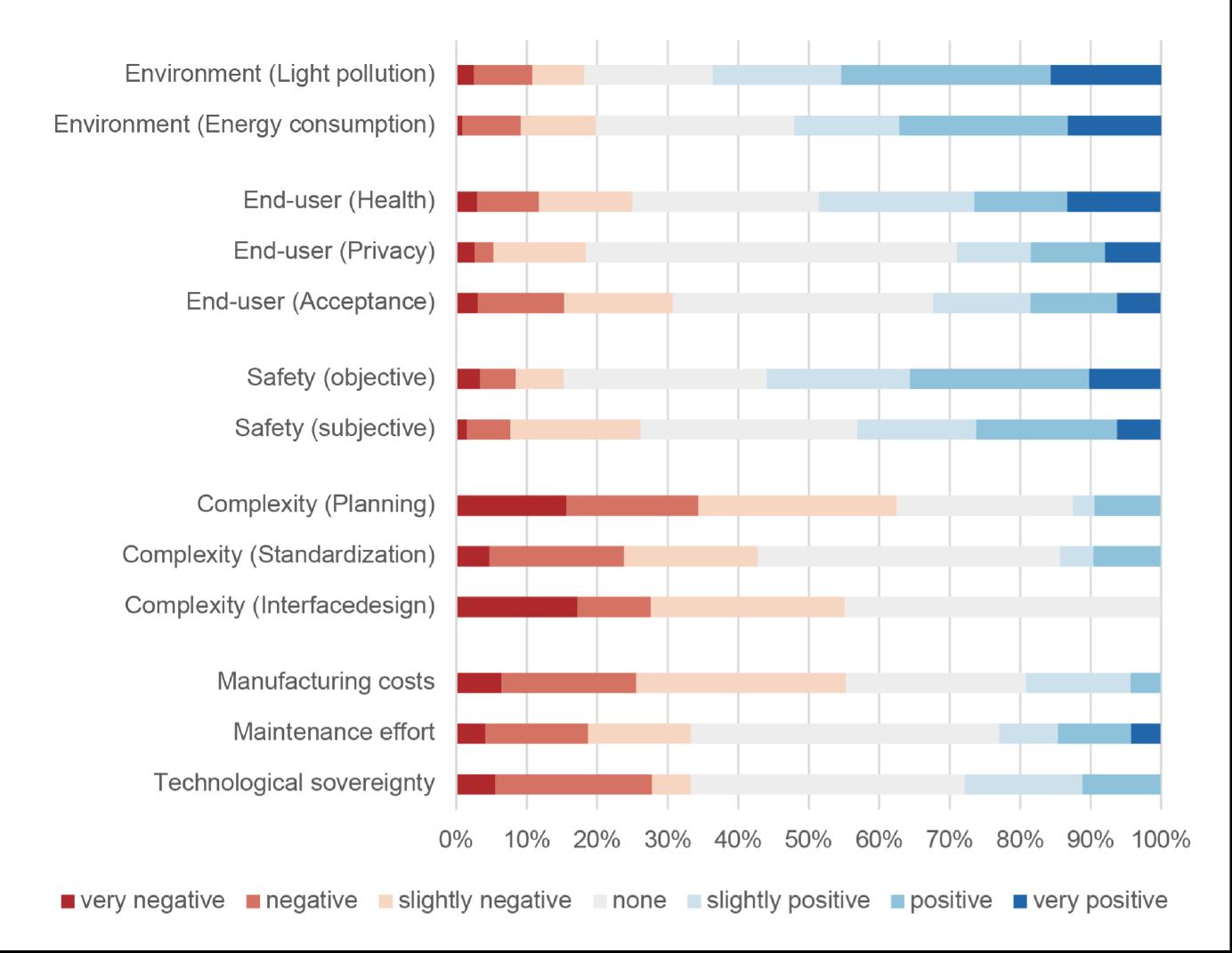
Figure1: Multidimensionalimpactassessmentofthetechnologyarea”adaptivespectralcompositions”; eachdimensionratedona7-pointLikertscale(1–verynegativeimpact,4–noimpact,7–verypositive impact).
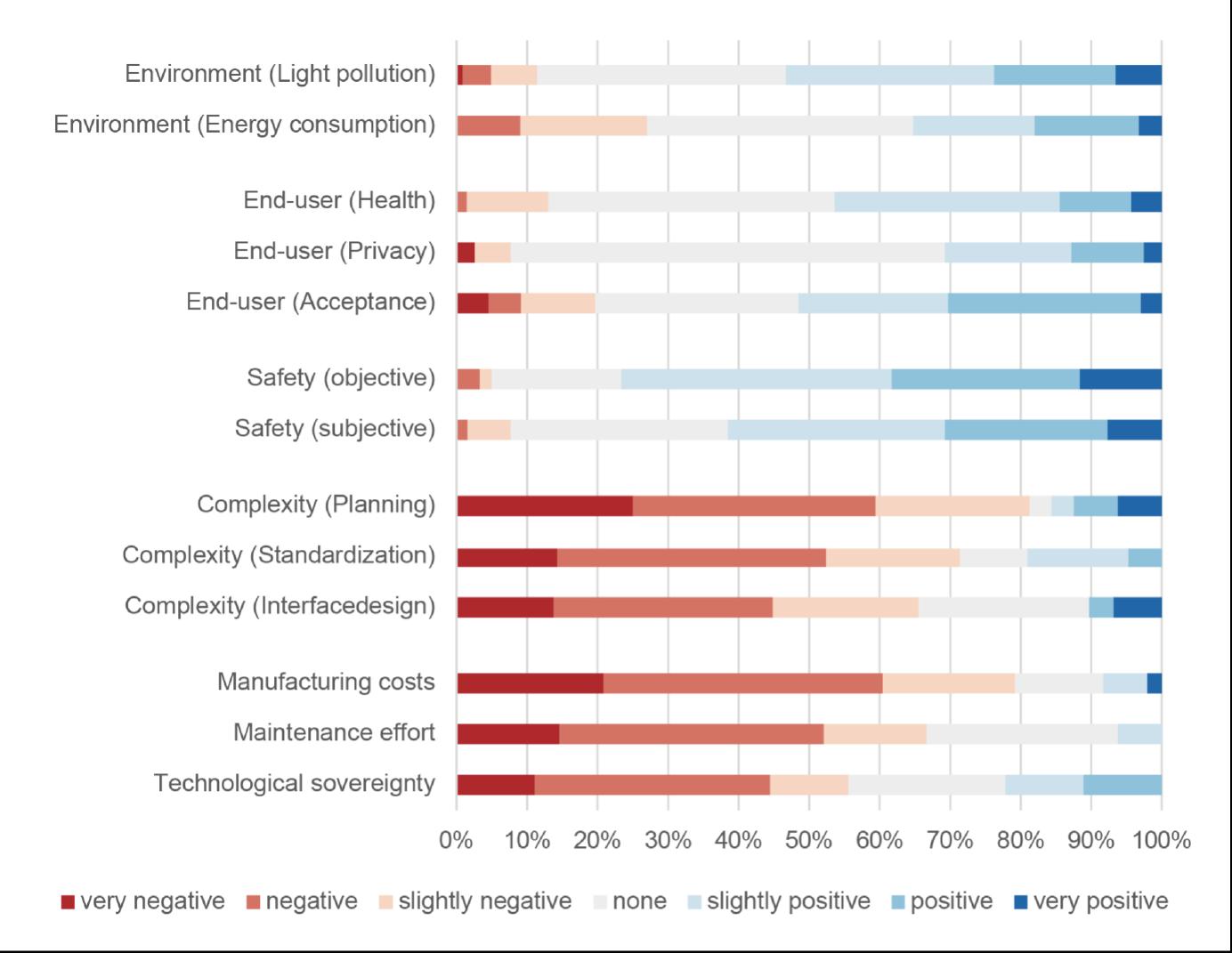
Figure2: Multidimensionalimpactassessmentofthetechnologyarea”adaptivelightdistributions”;each dimensionratedona7-pointLikertscale(1–verynegativeimpact,4–noimpact,7–verypositiveimpact).
suchsolutionswouldbetoomaintenanceintensiveforoutdooruse.Theonlyworkaround sofarhasbeendualsystemswithdifferent beamprofiles,whichproveinefficientand resourceheavy.
Yetaddressingthisissuecouldyieldsignificantbenefits,suchasimprovedtraffic safetythroughreducedglareandgreater potentialforenergysavings.Simulation studies [19] showthatsystemsdesigned accordingtonormativestandardsoftenleadtoexcessivelightingwhenroad surfacesarewet.Incontrast,weatheradaptivelightingsystemscouldsignificantly improveuniformityandreduceenergyusagebyupto22%throughadjustedluminousoutput.
Tounlockthispotential,newsystemscapableofadjustinglightdistributionmust bedeveloped.However,implementing variablelightdistributionremainsamajor challengeforthelightingindustry.Potential approacheswithoutmovingpartsremain largelyintheresearchphase.
Againstthistechnologicalbackdrop,surveyrespondents’viewsappearwelljustified(Figure 2).Around50%ratedthe impactofadaptivesystemspositively,particularlyregardingenvironmentalimpact reduction,improvedenergyefficiency,and user-relatedhealthandacceptance.No significantconcernswereraisedaboutprivacy,whichalignswiththetechnology’s neutralstanceonthatissue.
However,respondentsratedthecomplexity andlimitationsofimplementationashigh. Negativeevaluationswerereportedinareassuchasplanningfeasibility,regulatory alignment,andsystemcontrolinterfaces. Thesedifficultiesstemfrombothtechnologicalandplanning-relatedconstraints. Forinstance,itremainsuncertainhowregulatoryframeworkscouldadapttovariable lightdistributionsorwhethertechnicalimplementationinpracticeisevenfeasible.
Fromaplanningperspective,over80%of respondentsexpressedconcern.Thisis likelyduetothegrowingnumberofvariableparametersinlightingdesignandthe lackofreliabledataonsurfaceproperties,whichprovetobecriticalforaccurate modeling.Currentstandards,whichrely ontabularclassifications,failtocapturethe real-worldvariabilityrequiredforeffective planning.
Additionalconcernsincludeanticipatedincreasesinproductioncostsduetosystem complexityandoptics,alongwithhigher maintenancedemandsdrivenbycontrol requirements.Finally,alossoftechnolog-
icalsovereigntyisexpected,particularlyif marketdemandfailstojustifythelevelof investmentneededforsuchadvancedsystems.
Inmodernlightingapplications,diffusely emittingcomponentsareoftenuseddueto theirlowdevelopmentandmanufacturing costs.However,thesesystemspresent significantdrawbacksintermsoflighting performance.Unguidedlightdistribution leadstoreducedefficiency,highlevelsof scatteredlightincreaseglare,andthelack ofdirectionallightingimpairsbothdepth perceptionandtherecognitionofobject details.Asaresult,diffusesystemsare unsuitableforfunctionaloutdoorlighting andareincreasinglyavoidedindecorative applicationsduetotheirenvironmental impact [20]
Direct-emittingsystems,bycontrast,are essentialforreducinglightpollutioninoutdoorspaces.Freeformopticalsurfaces cannowbepreciselycalculated,butpracticalchallengesremain.VariationsinLED colororproductiontolerances,suchas positioninginaccuracies,canleadtovisualartifactslikecolor-over-angleeffects, edgehighlights,orunevenlightfields,all ofwhichrequirecompensationthatdiffuse systemsdon’t.
Toaddresstheseissues,micro-faceting offreeformsurfacesiscommonlyusedto increasesystemrobustness.However,as LEDcomponentshavebecomesmaller [21],facetdimensionsmustbereduced accordinglytomaintainbeamquality.This introducesnewmanufacturinghurdles andplaceslimitsonfurtherimprovements inenergyefficiencyandvisualcomfort. Nanotechnology-basedfabricationmethodsofferpromisingsolutions,allowingfor muchfinerfacetstructures,buttheyalso introducenewdemandsacrosstheproductionprocess.
Ingeneral,designandsimulationtoolsfor opticalsurfacesmustaccountformanufacturingconstraintstoproducefeasible geometries.However,littleiscurrently knownaboutthelimitsofnanofabrication, especiallyregardingthecurvature,continuity,andsmoothnessofsurfacesatsuch smallscales.Moreover,theminiaturizationoffacetsincreasesthedatavolume requiredforaccuratemodeling,whichnecessitatesnewdataformatsandhighly parallelizedsimulationmethods,suchas MonteCarloraytracing.
Ontheproductionside,significantlimitationspersist.High-precisionfabrication
techniques,liketwo-photonpolymerizationcombinedwithUVpolishing,show promise.Theycanbeusedtocreatemastertemplatesthatarethenreplicatedusing nickelelectroforming.However,manufacturingcomponentsattherequiredscale andcurvatureremainsachallenge.Forinstance,UVpolishingisonlyviableforrelativelysimplesurfaces,asitrequiresuniform energydeliveryacrossallsurfacepoints [22].Thismakesitdifficulttocombine micro-facetingwithcomplexcurvature,an essentialrequirementforadvancedoptics.
Eventhoughconventionalmanufacturing processesinEuropealreadyproducehighqualityopticalcomponents,furtherscaling downisincreasinglydifficult.Toreduceenvironmentalimpactandimprovetheenergy efficiencyoflightingsystems,theindustry mustlooktonanotechnologytopushthe boundariesofminiaturization.However, meetingperformancedemands,suchas complexgeometriesandextremelysmooth surfaces,remainsamajorchallengethat currentnanofabricationmethodshaveyet toovercome.Asaresult,muchofthis potentialremainsthesubjectofongoing research.
Surveyresponsesreflectthistechnological context(Figure 3).Participantsgenerally seemodestbutpositivepotentialinsuch systems,particularlyregardingenvironmentalimpact,energyefficiency,andusercenteredconcernslikehealth,acceptance, andsafety.Thesecautiousassessments seemappropriate,giventhelackofconcretedata,buttheyalsopointtoageneral beliefinthefuturebenefitsofthetechnology.
Bycontrast,nospecificeffectsonprivacy werenoted,whichisunderstandablegiven theindirectnatureofthetechnology.Concernsremainaboutcomplexity,maintenance,cost,andtheuncertaincontribution totechnologicalsovereignty,issuesthat werealsoreflectedintheexpectedimplementationbarriers.
SensorTechnologyandDemanddrivenLighting
Reducingnighttimelightinghasemerged asoneofthemosteffectivestrategiesfor tacklingmanyoftoday’schallengesinurbanillumination.Becauseenergyconsumptionisdirectlytiedtolightintensity, loweringlightlevelsoffersimmediatepotentialforsavingsandfromanecological standpoint,dimmingiscurrentlytheonly reliablewaytoaddressthediverseneeds ofdifferentspeciesinhabitingurbanenvironments.Completeshutdownsofoutdoorlightingduringnighttimehoursare especiallyimpactfulandhavealreadybeen
implementedinseveralEuropeanmunicipalities.However,totaldarknesscannegativelyaffectuserexperienceandpublic acceptanceplaysacrucialroleinthesuccessofmeasures.
Toreconcileenergyefficiencywithuser comfort,citiesareturningtosensor-based lightingsystems.Thesesystemstypically relyonpassiveinfraredorradarsensors todetectpresence,whilepreservinguser privacy.Thegoalistoachievea”minimalintelligence”controlsystemthatresponds toenvironmentalchanges,distinguishing itfrommorecomplexSmartCityorIoTdrivensolutions.Numerouspilotprojects havedemonstratedhowsuchsystemscan successfullybalanceenergysavingswith theneedsofusers [4]
Someadvancedsystemsgobeyondsimplepresencedetectionbyadjustinglighting levelsbasedonreal-timeinformation.For instance,streetlightingcanscaleproportionallytothenumberofvehicles,yielding upto60%energysavingsinlow-trafficareasandaround40%inbusierzones [23] Otherinnovationsinvolvesynchronizing multipleluminairestofollowusers’movement,creatingdynamiclightgradientsfor pedestrians,cyclists,andmotorists.Pilotprojectsusingthesetechniqueshave achievedenergysavingsofupto77% [24]
Nevertheless,theselectionoftechnologies andcontrolstrategiesmustbetailoredto thespecificconditionsofeachlocation. Thecomplexityofimplementation,combinedwithrelativelylowcostsavingsin small-scaleapplications,continuestopose barriers.However,evenlow-complexity, minimallyintelligentsystemscanoffer meaningfulimprovementstoexistinginfrastructure [25].Sensor-basedlightingcan retainmostoftheenergy-savingbenefitsof fullshutdownswhileofferingtheflexibility torespondtoemergenciesorunforeseen circumstances.
Fromatechnicalstandpoint,thesesystemsarenotonlyfeasiblebutareincreasinglyavailableonthemarket.PIRsensors arecommonlyusedforsimplepresence detection,whileradarsystemsarepreferredforvolume-responsiveapplications. Althoughnotyetstandardizedinregulation,demand-responsivelightingisgaining groundinlightingproducts,supportedbya growingbaseofexpertise.
Despiteclearadvantagesovertraditional time-controlledlighting,adoptionremains limited.Highupfrontcostsforinstallation andanticipatedmaintenanceremainsignificantbarriers.Importantly,currentcost-
benefitanalysesrarelyconsiderlong-term savingsatthenationalscale.Whilemunicipalitiesmayreasonablydecideagainst implementationduetoshort-termbudget constraints,thisoftenleadstohigheraggregateresourceconsumptionovertime. Inthislight,strongerpolicysupportfor
demand-responsivelightingwouldbewell justified.
SurveyrespondentsratedbothPIRand radartechnologiespositively(Figure 4), particularlyintermsofreducingenviron-
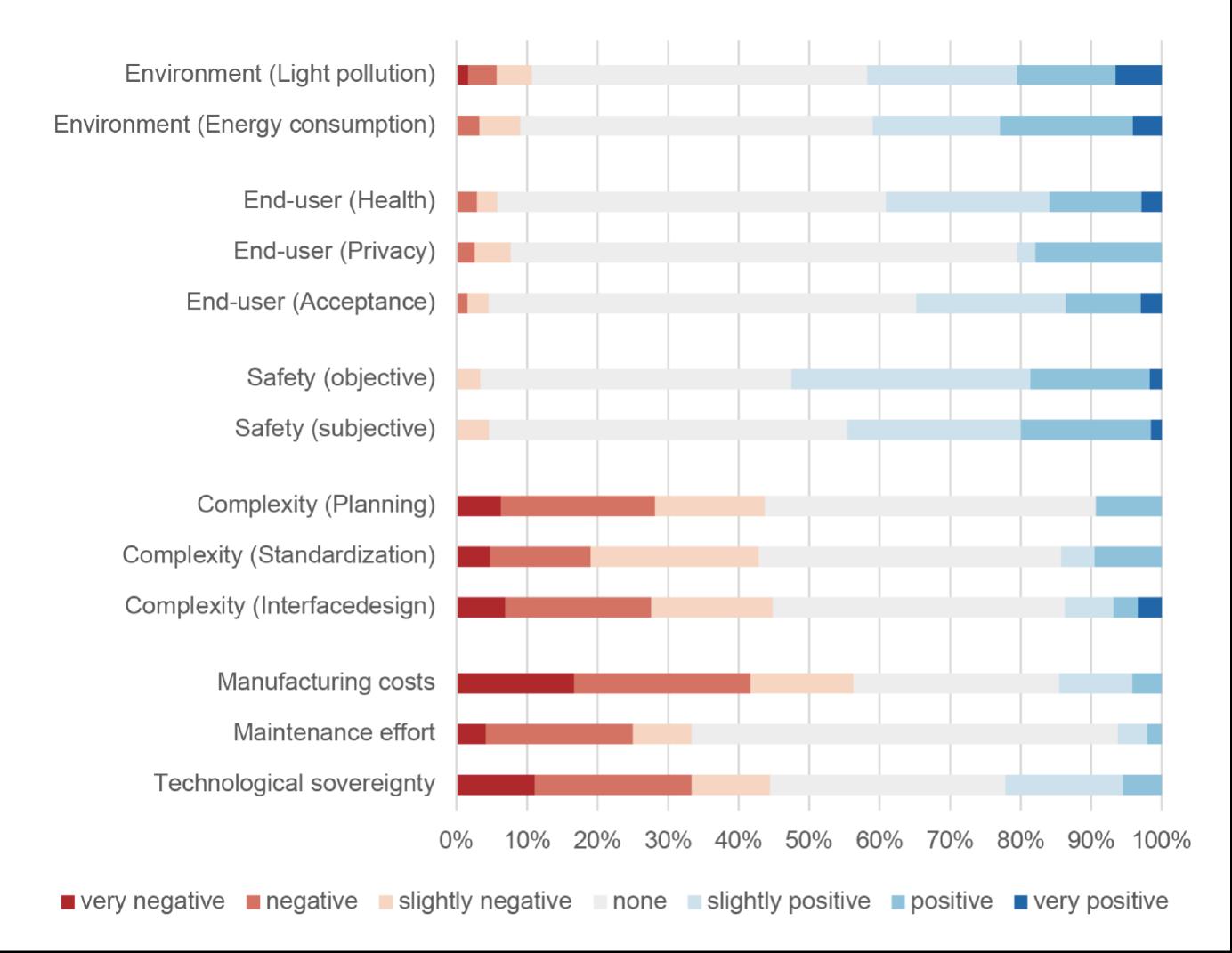
Figure3: Multidimensionalimpactassessmentofthetechnologyarea”nanotechnology-basedoptical components”;eachdimensionratedona7-pointLikertscale(1–verynegativeimpact,4–noimpact,7–verypositiveimpact).
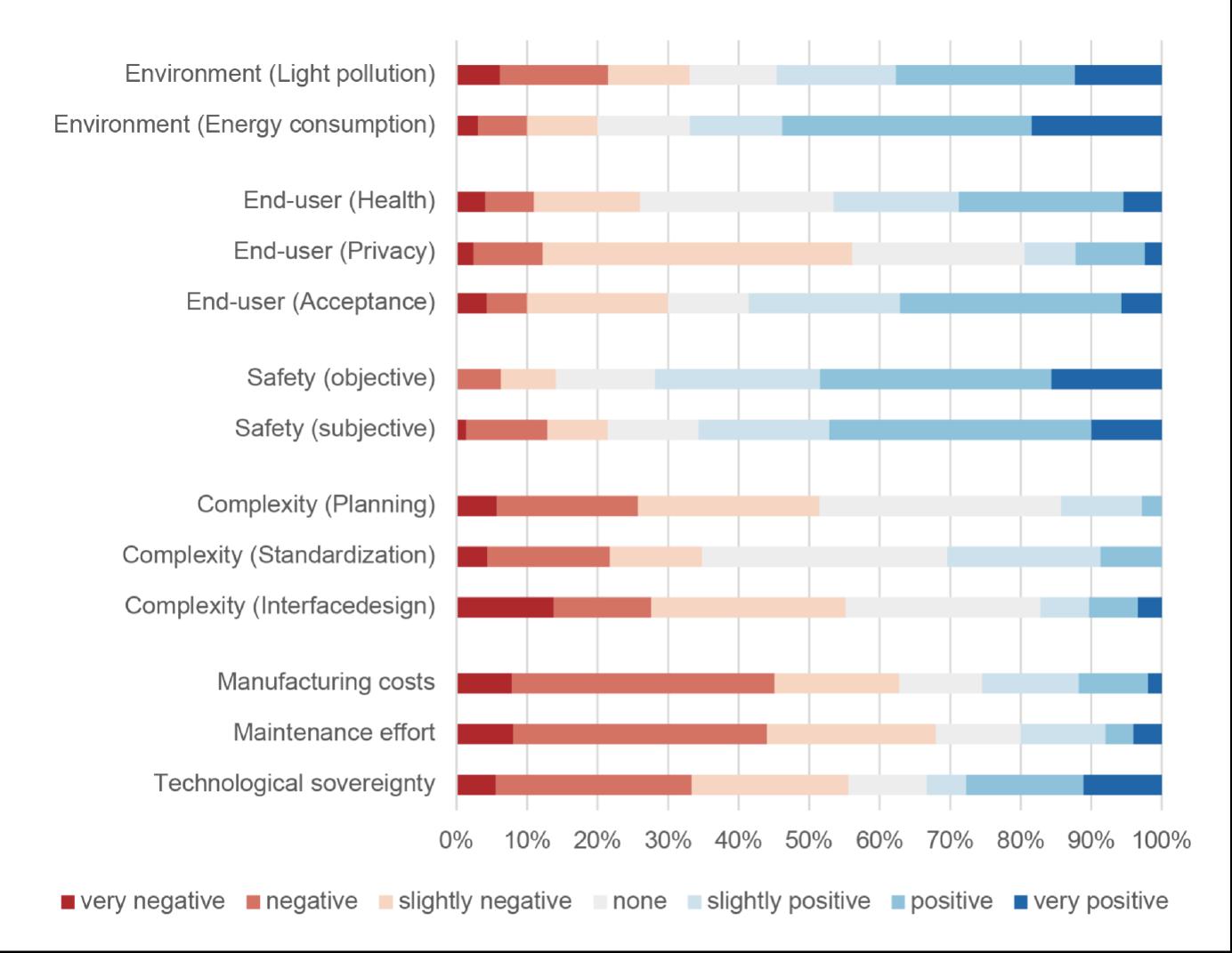
Figure4: Multidimensionalimpactassessmentofthetechnologyarea”sensortechnologyand demand-drivenlighting”;eachdimensionratedona7-pointLikertscale(1–verynegativeimpact,4–no impact,7–verypositiveimpact).
mentalimpacts,loweringenergyuse,and improvinghealth,safety,anduseracceptancewithapprovalratingsaround50–60%.Privacyconcernswerethemost commonpointofhesitation,asthesesystemsinherentlydetectpresence,raising fearsofmisuseincriminalplanning.However,thereiscurrentlynoevidencetosuggestthatsuchsystemsincreasecrime rates.
Comparedtofullswitch-offs,demandbasedlightingwasperceivedasmore complexacrossmultipledimensions,particularlyinplanningandregulatoryframeworks.Althoughstandardizedinterfaces forsensorintegration(e.g.,Zhaga)already exist,manyrespondentsstillsawinterface complexityasabarrier,likelyreflectinga gapintechnicalknowledge.Morethan 60%citedhighcostsandmaintenancedemandsasmajorobstacles.
Finally,viewsontechnologicalsovereignty weremixed.Whilethebroadmarketavailabilityofsensor-basedsystemslimitsopportunitiesforcompetitivedifferentiation, wideradoptioncouldstillsupportsustainablegrowthandinnovationinthelighting industry.
Thegrowingavailabilityofsensors,robust communicationprotocols,andintelligent controlapplicationsisacceleratingthe developmentofsmartcityconcepts.By integratingtechnologiesfordatacollection, processing,anddissemination,citiesare betterpositionedtoachievesocial,economic,andsustainabilitygoals.Acentral enablerinthistransformationistheInternet ofThings(IoT),whichfacilitatesseamless connectionsbetweendevices,sensors, andnetworks.
IoTtechnologiessupportawiderangeof applicationsacrossvarioussectors.Inthe publicsphere,theyareparticularlyattractivetocityadministrations,astheyenable thetimelycollectionofdatatoenhance servicedeliveryandincreasetransparency [26].Attheurbanlevel,IoTisusedtoprovidecost-efficientservices,improvepublic transportsystems,reducetrafficcongestion,andpromotesafetyandpublichealth. Onabroaderscale,national-levelinitiatives benefitfromIoTthroughimprovedenergy efficiency,pollutionmonitoring,infrastructuredevelopment,andenvironmentalmanagement [27]
Amongthemanyapplications,publiclightingstandsoutasakeypillarofurbaninnovation.Smartstreetlightingsystems, equippedwithsensors,wirelesscommunication,andautomatedcontrolalgo-
rithms,canoperateautonomouslywithin IoTecosystems.Thesesystemscandynamicallyadjustlightintensityinresponse totrafficfloworweatherconditions,while remoteaccessallowsformonitoring,fault detection,andenvironmentaldatacollection [28]
Beyondlighting,interconnectedIoTsystemsofferaddedvaluebysharinginformationacrossdomains,improvingservices wellbeyondtheiroriginalscope.Studies havehighlightedpotentialbenefitsinareas suchassmartparking,energyandwatermanagement,infrastructureplanning, agriculture,andhealthcare [29].Giventhe challengesposedbyurbanizationandtrafficcongestion,real-timetrafficmonitoring isespeciallypromisingforadvancingurban planningandgovernance [30].
Despitetheseopportunities,severalchallengesstillhamperimplementation.EstablishingIoTinfrastructurerequiressignificant investmentinhardware,connectivity,and datamanagement.Thereal-timecollection ofsensitivedataalsoraisesseriousprivacy concerns,necessitatingstrictcompliance withdataprotectionregulations.Inaddition,ensuringthereliabilityandsecurityof IoTsystemsremainsatechnicalhurdle.
Nonetheless,real-worldexamplesshow thatthesechallengescanbeovercome. SanDiegohasinstalledover3,000smart streetlightsthatmonitortrafficandenvi-
ronmentalconditionstoinformurbanplanning.LosAngeleshasimplementedan advancedlightingsystemcombiningLED technology,IoTsensors,andremotecontrol,leadingtoa60%reductioninenergy useandmillionsinannualsavings.
Thesecasesillustratethebroaderpotentialofconnectedlightingsystemstoenhanceurbanqualityoflife.Streetlighting offersidealconditionsforrapidrolloutdue toitswidespreadpresenceandexisting powersupply.Yet,broadermarketadoptionremainslimited.Keybarriersinclude highcosts,unclearresponsibilitiesamong stakeholders,andalackofcomprehensivedatamanagementframeworks.Most critically,thereisstilllittleincentiveforthe sectortoembracefullyintegratedsystems. Existingurbanlightingobjectivescanoften bemetusingbasicsensortechnologies, andgreatersystemcomplexitycouldintroduceadditionalcostswithoutclearadded value.
Thiscautiousstanceisreflectedinrecent surveyfindings(Figure 5).Whilerespondentsrecognizedenvironmentalandsafety benefits,morethan70%citedcostand maintenanceasmajorobstacles.Surprisingly,overhalfalsoexpressedconcerns abouttechnologicalsovereignty,despite theopportunityforEuropetotakealeadershiproleinsmartlightingthroughforwardlookingregulationanddatapolicy.
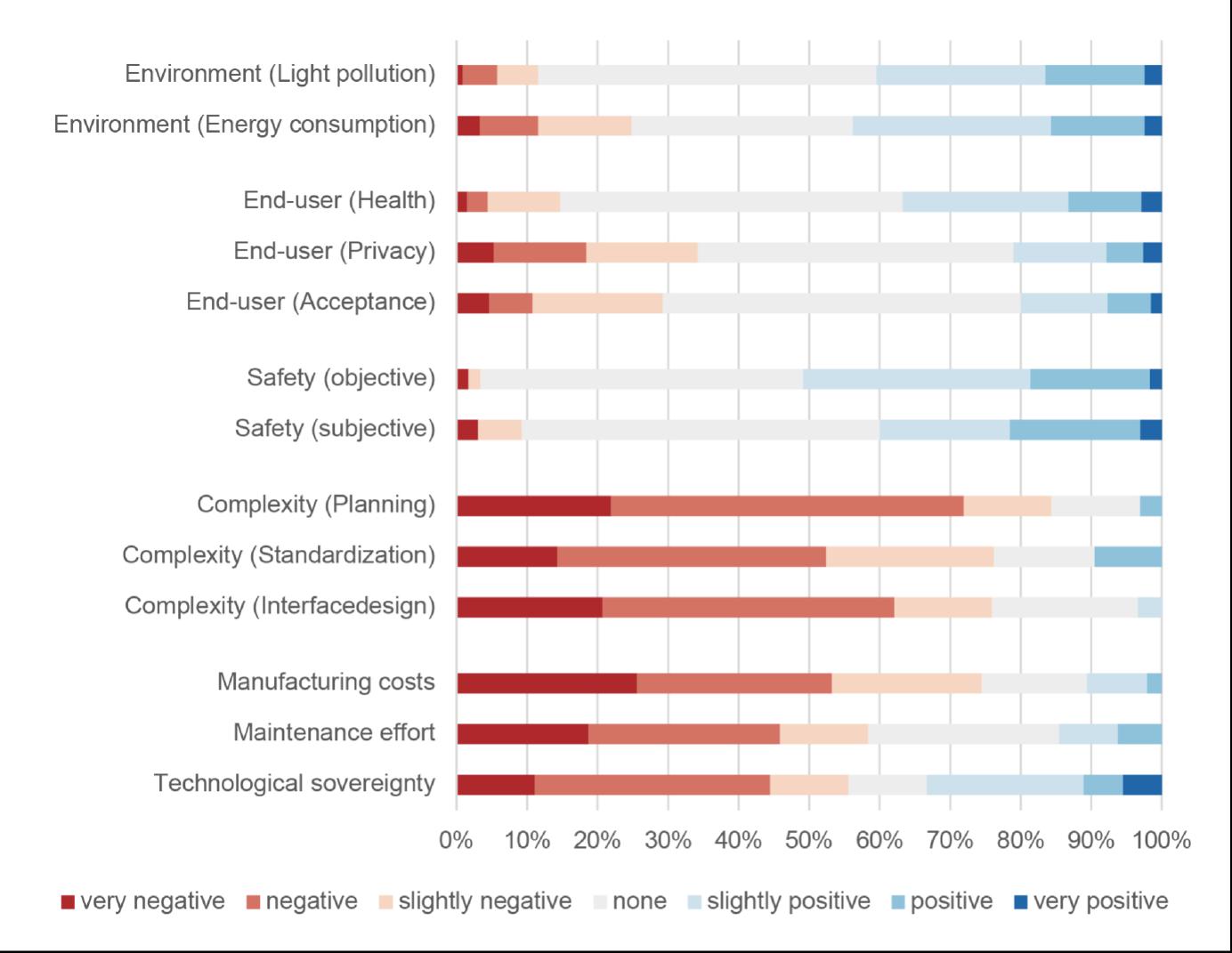
Figure5: Multidimensionalimpactassessmentofthetechnologyarea”smartandconnectedsystems”; eachdimensionratedona7-pointLikertscale(1–verynegativeimpact,4–noimpact,7–verypositive impact).
Outdoorlightingsystemsinherentlyinvolve conflictingobjectives,suchasenhancingvisualqualityorensuringsafety,while simultaneouslyaimingtoreduceenergy consumption.Duetothecomplexityof thesesystems,manyenvironmentallyorientedimprovementsaredifficulttoachieve throughconventionalcontrollogicalone. However,thegrowingavailabilityofrealtimesensordataandtheriseofmachine learningtechnologiesareopeningnew pathwaystoaddressthesechallenges moreeffectively.
Contemporaryapproachestosmartlightingcangenerallybegroupedintotwomain categories.Thefirstcentersonthedevelopmentofadvanced,intelligentstreetlightingsystems.Whiletheysharethesame foundationalgoalsassensor-basedcontrols,thesesystemsoperatewithgreater complexityandadaptability.Inaddition tobasicsensors,theyoftenincorporate camera-basedtechnologiestogather richerdatasets,enablingmorenuanced decision-making.Asaresult,lightingcan bedynamicallyadjustednotonlyinresponsetotrafficvolumebutalsototraffic flowandprevailingweatherconditions [31].Moreover,lightlevelscanbefinetunedthroughevaluationsofskyconditions,offeringmoretargeteddimming strategiesthantraditionalluminance-based methods [32]
Thesecondapproachfocusesonlargescale,system-widemanagement.Byintegratingtraffic-awarelightingwithpredictivemodeling,thesesystemscanachieve greaterenergyefficiencyacrossentire infrastructures [33].Optimizationtechniques,suchasswarmintelligence,are commonlyusedtoenhanceperformance [4].Successfulimplementationrequires robustIoTframeworks,incorporatingsensors,connecteddevices,andwireless communicationnetworks [34].Studies havenotonlydemonstratedthefeasibility ofsuchsystemsbutalsohighlightedtheir significanteconomicadvantages [35]
Beyondthescopeoflightingitself,machinelearningdeliversaddedvaluewithin broader,interconnectedsmartcityframeworks.Inthesecontexts,variousinfrastructurecomponentsinteract,andsharing dataacrosssystemsbecomeskeytodevelopingoptimized,cross-sectorsolutions. Giventheirwidespreadpresence,lighting systemscanserveasvaluabledatanodes, feedinginformationintootherurbanfunctions,likewastemanagement [36] andwaterquality [37].Integratingsuchsystems alsooffersopportunitiestoreduceenergy usebyminimizingredundancyinsensor
deployment.Researchinto“GreenIoT”initiativesfurthersupportsthisgoal,aiming tolowerdevice-levelenergyconsumption throughhybriddeeplearningapproaches [38]
Despitethesepromisingdevelopments, implementationremainsbothtechnically demandingandresourceintensive.Effectivenessdependsonaccesstohigh-quality datasets,whichareoftenlacking,particularlyforvariablefactorslikeweather. Additionally,theopaquenatureofmachine learningdecision-makingcontinuestoraise concerns,especiallyinsafety-criticalareas suchasroadvisibility.Legalresponsibility isalsoagreyarea,becauseifpoorlighting contributestoanaccident,liabilityremains uncertain.
Surveyresultsreflecttheseconcerns (Figure 6).Whileparticipantsacknowledgedenvironmentalandsafety-related benefits,manyalsohighlightedchallenges inareassuchasplanningcomplexity,standardization,andlackoftransparency.Incompleteinterfacedefinitionsandlowmarketmaturityhaveledtofragmented,costly solutionswithhighmaintenancedemands. Moreover,concernsabouttechnological sovereigntyremainsignificant.
Basedonthesurveyresults,asetofrecommendationswasdeveloped(Figure 7), structuredaroundthreeoverarchingcategories,andalignedwiththecurrentmarket maturityofthecorrespondingtechnological approach.Dependingonthecategory,the proposedmeasureseitherdirectlyaddress sustainabilitygoalsoraimtosupportfurtherdevelopmentandresearcheffortsto unlocklong-termpotential.
Acentralfocusoftherecommendations liesonenergyefficiencyandresourceconservation,withtheprimarygoalofreducinggreenhousegasemissions.Although emissionsfromproductionanddisposalof lightingproductsarenotinsignificant,the recommendationsconcentrateontheuse phase,whichisresponsibleforapproximately99%ofoverallemissions.Assuch, theproposedmeasuresareclearlydirected towardimprovingenergyefficiency.The actionplanhighlightssixmainstrategies: expandedLEDretrofitting,completenighttimeswitch-offs,theimplementationof demand-basedsystems,adaptivelight distribution,nanotechnology-basedmanufacturingmethods,andtheuseofbiogenic materials.Iffullyimplementedoverthe nextdecade,thesemeasurescouldreduce
annualCO emissionsbyanestimated 60,000tons.Thisprojectionisbasedon replacingalloutdoorlightingsystemsthat stilloperatewithconventionallightsources, assumingacompletetransitiontoLED technology.SuchashiftcouldcutAustria’s energyconsumptionforoutdoorlightingby around30%.Therequiredinvestmentis estimatedat€300to€500million,witha projectedpaybackperiodofapproximately 10years.
Beyondenergyuse,outdoorlightingalso hassignificantecologicalimpacts,particularlyinrelationtobiodiversity.Toaddress theseconcerns,asecondsetofrecommendationswasformulatedtoimprove environmentalcompatibility.Scientifically, theknowledgebaseisalreadysufficientto supportsustainablemarketimplementation.However,theabsenceofstandardizedassessmentmethodsandsupporting regulatoryframeworkscontinuestohinder progress.Thedevelopmentofthesetools andregulationsisconsideredfeasibleby 2035.Still,withoutstandardizedevaluation proceduresinplace,thepotentialpositive effectsoftheproposedmeasurescannot yetbequantified.
Athirdgroupofrecommendationsaddressestheincreasingrelevanceofdigitalization,focusingoninteroperabilityand technologicalsovereignty.Thesemeasures includeconceptssuchassystemconnectivityandmachinelearningapplications. Giventhecomplexityofsuchtechnologiesandtheircurrentlackofreal-world implementation,theseapproachesremain largelywithintherealmofresearch.Consequently,itappearsunlikelythatthefull potentialofenhancednetworkingandintelligentsystemswillberealizedbefore2035.
Outdoorlightingisundergoingafundamentaltransformationdrivenbygrowing environmentalconcerns,technological advancements,andevolvingsocietalexpectations.Asurbanareasexpandand thedemandforsustainableinfrastructure intensifies,lightingsystemsmustevolve beyondtraditionalapproaches.Acentral priorityisreducingenergyconsumption whilemaintainingorimprovinglighting quality.Outdoorlightingaccountsfora substantialportionofmunicipalenergyuse, andthetransitiontoenergy-efficienttechnologiessuchasLEDshasalreadyyielded notablegains.However,simplyswitchinglightsourcesisnolongersufficient.To meetambitioussustainabilitygoals,lighting systemsmustbecomemoreadaptiveand intelligent,capableofdynamicallyrespond-
ingtoreal-timeenvironmentalconditions anduserneeds.Sensor-based,demanddrivenlightingoffersapracticalsolution,as theycansubstantiallyreduceenergyuse andmitigatenegativeimpactsonwildlife
andecosystems.Yettheiradoptionremainslimitedduetohighupfrontcosts, maintenanceconcerns,andregulatory complexities.
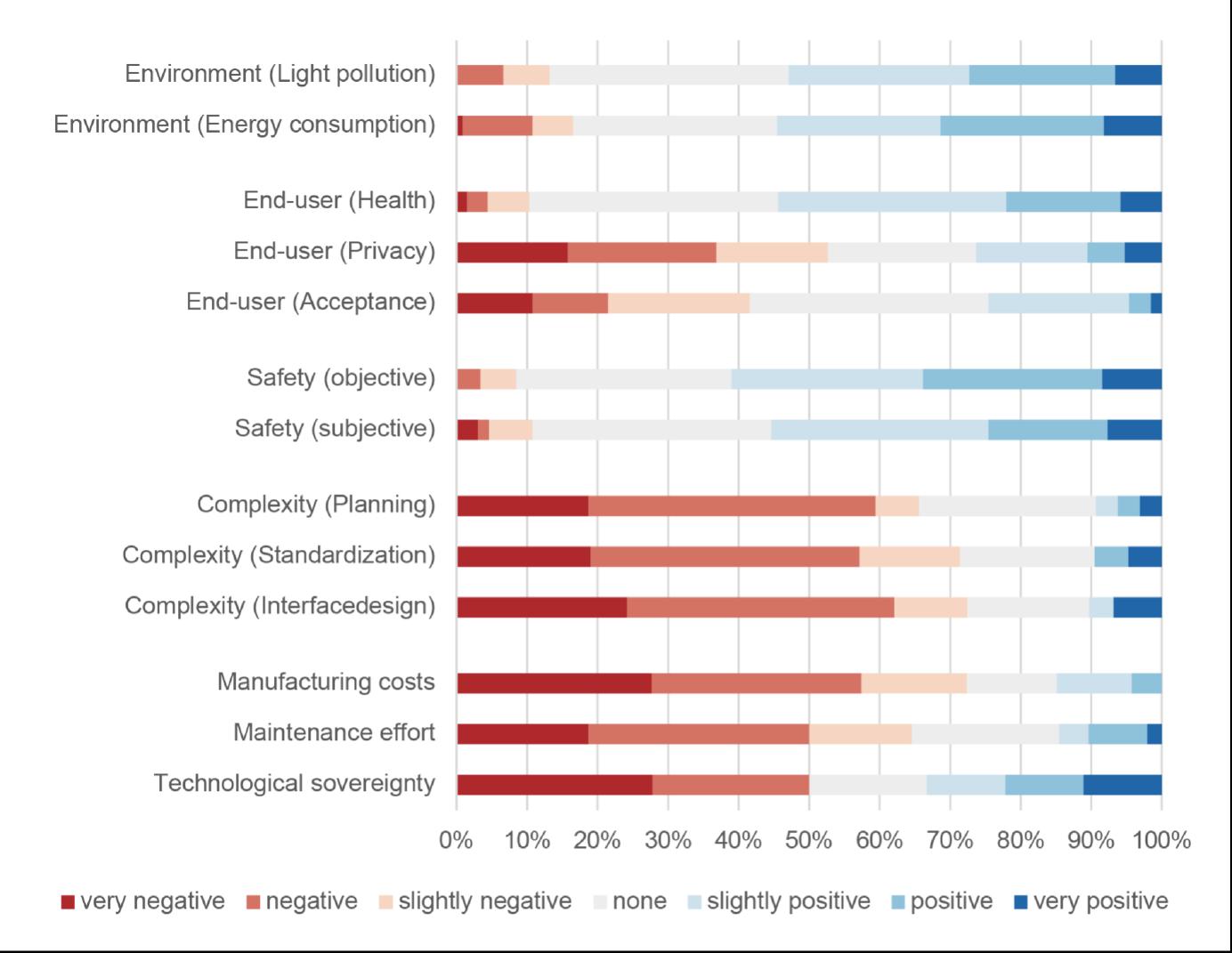
Figure6: Multidimensionalimpactassessmentofthetechnologyarea”machinelearning”;eachdimension ratedona7-pointLikertscale(1–verynegativeimpact,4–noimpact,7–verypositiveimpact).
Figure7: Overviewoftheactionguidelinederivedfromthesurveyresultsforpromotingtheexisting potentialofoutdoorlighting,groupedbyapplicationrelevanceandaddressedkeytechnology.
Atthesametime,digitalizationandconnectivityaretransformingoutdoorlighting intoacoreelementofthebroadersmart cityecosystem.TheproliferationoftheInternetofThings(IoT)enablesstreetlights andotherlightingassetstocollect,share, andanalyzedata,supportingapplications thatextendfarbeyondilluminationitself. Smartlightingsystemscanadaptnotonly totrafficandweatherbutalsocontribute tourbanplanning,environmentalmonitoring,andpublicsafety.Machinelearning enhancesthesecapabilitiesbyenabling predictiveandoptimizedcontrolstrategies, potentiallyunlockingsignificantenergysavingsandimprovedservicedeliveryatscale. Nonetheless,thecomplexityandcostof fullyintegratedsmartlightingsystems, alongwithconcernsaboutdataprivacy, technologicalsovereignty,andsysteminteroperability,haveslowedwidespread adoption.
Inrelationtothat,publicacceptanceand trustarecrucialfactorsinthesuccessful implementationofnewlightingtechnologies.Whilethesurveyrevealsoptimism aboutenvironmentalandsafetybenefits, concernspersistregardingcost,maintenance,privacy,andthetransparencyof automateddecision-makingprocesses. Addressingtheseissuesrequiresnotonly technologicalsolutionsbutalsoclearcommunication,stakeholderengagement,and inclusivepolicymaking.Withoutsuchefforts,resistancetochangemayimpede progressdespitetheclearadvantagesof smarter,moresustainablelightingsolutions.
Lookingahead,thetrajectoryofoutdoor lightingtechnologyisdefinedbyabalance betweenincrementalimprovementsand breakthroughinnovations.Strategiessuch asexpandedLEDretrofitting,demandresponsivedimming,andadaptivelight distributionrepresentmature,actionable approacheswithimmediateimpactpotential.Meanwhile,ongoingresearchinto nanotechnology,machinelearning,and fullyconnectedIoTecosystemsholdsthe promiseoftransformativegainsoverthe longerterm.Realizingthispotentialdependsonsustainedinvestmentinresearch, innovation,andcapacity-building,alongsidetheestablishmentofrobuststandards andsupportivepolicyenvironments.
Importantly,environmentalsustainability mustremainaguidingprinciplethroughout thistransition.Outdoorlightingimpacts biodiversity,humanhealth,andclimate goalsinwaysthatextendbeyondenergy consumptionalone.Thedevelopmentof standardizedassessmentmethodsand regulatoryframeworksisessentialtoen-
surethatnewlightingsystemsdelivergenuineecologicalbenefitsandavoidunintendedconsequences.Collaborationbetweenscientists,industry,regulators,and communitieswillbecriticaltodesigning lightingsolutionsthatharmonizetechnologicalcapabilitywithenvironmentalstewardship.
Inconclusion,thefutureofoutdoorlightingliesinembracingaholisticapproach thatintegratestechnologicalinnovation, environmentalresponsibility,andsocial acceptance.Byharnessingadvances inoptics,sensors,connectivity,andintelligentcontrol,citiescancreateurban nightscapesthataresafer,moreenergyefficient,andmorerespectfulofnatural ecosystems.However,achievingthisvisionrequiresovercomingcurrenttechnical andeconomichurdles,fosteringinterdisciplinarycollaboration,andcommittingto long-termstrategiesthatprioritizesustainabilityalongsideinnovation.Throughthese efforts,outdoorlightingcanplayapivotal roleinbuildingsmarter,greener,andmore livableurbanenvironmentsforgenerations tocome. ■
Acknowledgements
Theresultspresentedweredeveloped onbehalfoftheFederalMinistryforClimateAction,Environment,Energy,Mobility,InnovationandTechnology(BMK) aspartoftheR&DserviceNOBEL(FFG No.904102)withintheGreenPhotonics 2022fundingprogram.Thecomplete projectreport,whichalsoincludesthe individualsurveyresults,isavailablein Germanandcanbeaccessedathttps: //projekte.ffg.at/projekt/4832875
AboutBartenbach
Lightisapowerfulinstrument.Itdesigns spaces–andcreatesqualityoflifeforthe peopleinthem.Increasingwell-being, makingtaskseasier,enrichingtheatmosphere,promotingsocialinteraction:holisticlightingdesigndoesitall.Andmuch more.Inthisway,energy-efficientlighting solutionscanmakeadirectcontributionto yourcompany’ssustainabilitystrategyand savecosts.
Asthemarketleaderforinternationallightingdesign,Bartenbachdesignsandimplementssophisticateddaylightandartificial lightingsolutionsfromasinglesource. Whatmakesitspecialisthatallofourconceptsarescience-basedanddrawonthe in-depthlightingknow-howofourresearch anddevelopment.”TheLightingInnovators”–thisisnotonlyourclaim,butalso ourpromisetoourcustomers.
[1] Abinaya,B.,Gurupriya,S.&Pooja,M.(2017,February).Iotbasedsmartandadaptivelightinginstreet lights.In20172ndInternationalConferenceonComputingandCommunicationsTechnologies(ICCCT) (pp.195-198).IEEE.
[2] Shahzad,G.,Yang,H.,Ahmad,A.W.&Lee,C. (2016).Energy-EfficientIntelligentStreetLighting SystemUsingTraffic-AdaptiveControl.IEEESensors Journal,16(13),5397-5405.
[3] Longcore,T.&Rich,C.(2004).Ecologicallight pollution.FrontiersinEcologyandtheEnvironment, 2(4),191-198.
[4] SánchezSutil,F.&Cano-Ortega,A.(2020).Smart publiclightingcontrolandmeasurementsystemusing LoRanetwork.Electronics,9,124.
[5] Khan,A.,Aslam,S.,Aurangzeb,K.,Alhussein,M. &Javaid,N.(2022).Multiscalemodelinginsmart cities:Asurveyonapplications,currenttrends, andchallenges.Sustainablecitiesandsociety,78, 103517.
[6] Ylinen,A.-M.,Tähkämo,L.,Puolakka,M.&Halonen, L.(2013).RoadLightingQuality,EnergyEfficiency, andMesopicDesign–LEDStreetLightingCase Study.LEUKOS,8(1),9-24.
[7] Singhal,R.K.,Kumar,M.&Bose,B.(2019).Ecophysiologicalresponsesofartificialnightlightpollution inplants.RussianJournalofPlantPhysiology,66, 190-202.
[8] Penning,J.,Stober,K.,Taylor,V.&Yamada,M. (2016).EnergySavingsForecastofSolid-StateLightinginGeneralIlluminationApplications.Washington, DC:U.S.DepartmentofEnergy.
[9] Chatterjee,S.,Kar,A.K.&Gupta,M.P.(2018). SuccessofIoTinsmartcitiesofIndia:Anempirical analysis.GovernmentInformationQuarterly,35(3), 349-361.
[10] Hölker,F.,Wolter,C.,Perkin,E.K.&Tockner,K. (2010).Lightpollutionasabiodiversitythreat.Trends inEcology&Evolution,25(12),681-682.
[11] Fotios,S.,Monteiro,A.L.&Uttley,J.(2019). Evaluationofpedestrianreassurancegainedby higherilluminancesinresidentialstreetsusingthe day–darkapproach.LightingResearch&Technology, 51(4),557-575.
[12] Goldsmith,T.H.(2006).Whatbirdssee.Scientific American,295(1),68-75.
[13] Witherington,B.E.&Bjorndal,K.A.(1991).Influencesofwavelengthandintensityonhatchlingsea turtlephototaxis:implicationsforsea-findingbehavior.Copeia,1060-1069.
[14] vanGrunsven,R.H.,Donners,M.,Boekee,K., Tichelaar,I.,VanGeffen,K.G.,Groenendijk,D.,...& Veenendaal,E.M.(2014).Spectralcompositionof lightsourcesandinsectphototaxis,withanevaluation ofexistingspectralresponsemodels.Journalof insectconservation,18,225-231.
[15] Deichmann,J.L.,AmpudiaGatty,C.,Andía Navarro,J.M.,Alonso,A.,Linares Palomino,R.& Longcore,T.(2021).Reducingthebluespectrum ofartificiallightatnightminimisesinsectattraction inatropicallowlandforest.InsectConservationand Diversity,14(2),247-259.
[16] Saunders,J.E.,Jarvis,J.R.&Wathes,C.M. (2008).Calculatingluminousfluxandlightinglevels fordomesticatedmammalsandbirds.Animal,2(6), 921-932.
[17] Seymoure,B.M.,Linares,C.&White,J.(2019). Connectingspectralradiometryofanthropogeniclight sourcestothevisualecologyoforganisms.Journalof Zoology,308(2),93-110.
[18] Muzet,V.,Liandrat,S.,Bour,V.,Dehon,J.& Christory,J.P.(2023).Isitpossibletoachievequality lightingwithoutconsideringthephotometryofthe pavements?.LightingResearch&Technology,55(45),345-365.
[19] Greffier,F.,Boucher,V.,Muzet,V.&Dronneau, R.(2022).DesignofanAdaptiveRoadLighting InstallationTakingintoAccounttheEvolutionof PavementReflectionPropertiesAccordingtothe WeatherConditions.InProceedingsofthe14th EuropeanLightingConference(LuxEuropa)(pp.4653).
[20] Hänel,A.,Doulos,L.,Schroer,S.,Galatanu,C. D.&Topalis,F.(2016,March).Sustainableoutdoorlightingforreducingenergyandlightwaste.
InProceedingsofthe9thInternationalConference ImprovingEnergyEfficiencyinCommercialBuildings andSmartCommunities(IEECB&SC)(pp.16-18). Frankfurt,Germany.
[21] Liu,Z.,Liu,S.,Wang,K.&Luo,X.(2009).Statusandprospectsforphosphor-basedwhiteLED packaging.FrontiersofOptoelectronicsinChina,2, 119-140.
[22] Pong-Ryol,J.,Tae-Sok,J.,Nam-Chol,K.,Xing, F.&Kum-Hyok,J.(2016).Lasermicro-polishingfor metallicsurfaceusingUVnano-secondpulselaser andCWlaser.TheInternationalJournalofAdvanced ManufacturingTechnology,85,2367-2375.
[23] Petritoli,E.,Leccese,F.,Pizzuti,S.&Pieroni,F. (2009).Smartlightingasbasicbuildingblockofsmart city:Anenergyperformance.Measurement,136, 466–477.
[24] Juntunen,E.,Sarjanoja,E.M.,Eskeli,J.,Pihlajaniemi,H.&Österlund,T.(2018).Smartanddynamicroutelightingcontrolbasedonmovement tracking.BuildingandEnvironment,142,472-483.
[25] Carli,R.&Dotoli,M.(2020).Adynamicprogrammingapproachforthedecentralizedcontrolofenergy retrofitinlarge-scalestreetlightingsystems.IEEE TransactionsonAutomationScienceandEngineering,17(3),1140-1157.
[26] García,C.G.,Meana-Llorián,D.,G-Bustelo,B.C. P.,Lovelle,J.M.C.&Garcia-Fernandez,N.(2017). Midgar:Detectionofpeoplethroughcomputervision intheInternetofThingsscenariostoimprovethe securityinSmartCities,SmartTowns,andSmart Homes.FutureGenerationComputerSystems,76, 301-313.
[27] Janani,R.P.,Renuka,K.&Aruna,A.(2021). IoTinsmartcities:Acontemporarysurvey.Global TransitionsProceedings,2(2),187-193.
[28] Mahoor,M.,Hosseini,Z.S.,Khodaei,A.,Paaso, A.&Kushner,D.(2020).State of the artinsmart streetlightsystems:areview.IETSmartCities,2(1), 24-33.
[29] Pardini,K.,Rodrigues,J.J.,Kozlov,S.A.,Kumar, N.&Furtado,V.(2019).IoT-basedsolidwastemanagementsolutions:asurvey.JournalofSensorand ActuatorNetworks,8(1),5.
[30] Sarrab,M.,Pulparambil,S.&Awadalla,M.(2020). DevelopmentofanIoTbasedreal-timetrafficmonitoringsystemforcitygovernance.GlobalTransitions, 2,230-245.
[31] Beccali,M.,Bonomolo,M.,Brano,V.L.,Ciulla, G.,DiDio,V.,Massaro,F.&Favuzza,S.(2019).Energysavingandusersatisfactionforanewadvanced publiclightingsystem.EnergyConversionandManagement,195,943-957.
[32] Galindo,S.P.,Borge-Diez,D.&Icaza,D.(2022). Novelcontrolsystemappliedinthemodernizationof publiclightingsystemsinheritagecities:Casestudy oftheCityofCuenca.EnergyReports,8,1047810491.
[33] Zhao,J.,Feng,Y.&Yang,C.(2021).Intelligent controlandenergysavingevaluationofhighwaytunnellighting:Basedonthree-dimensionalsimulation andlongshort-termmemoryoptimizationalgorithm. Tunnellingandundergroundspacetechnology,109, 103768.
[34] Bhosale,S.,Gaware,K.,Phalke,P.,Wadekar,D.& Ahire,P.(2017).IoTbaseddynamiccontrolofstreet lightsforsmartcity.InternationalResearchJournalof EngineeringandTechnology(IRJET),4(5).
[35] Pardo-Bosch,F.,Blanco,A.,Sesé,E.,Ezcurra, F.&Pujadas,P.(2022).Sustainablestrategyfor theimplementationofenergyefficientsmartpublic lightinginurbanareas:casestudyinSanSebastian. SustainableCitiesandSociety,76,103454.
[36] Esmaeilian,B.,Wang,B.,Lewis,K.,Duarte,F., Ratti,C.&Behdad,S.(2018).Thefutureofwaste managementinsmartandsustainablecities:Areview andconceptpaper.Wastemanagement,81,177195.
[37] Wai,K.P.,Chia,M.Y.,Koo,C.H.,Huang,Y.F.& Chong,W.C.(2022).Applicationsofdeeplearningin waterqualitymanagement:Astate-of-the-artreview. JournalofHydrology,613,128332.
[38] Zhong,Y.,Qin,Z.,Alqhatani,A.,Metwally,A.S.M., Dutta,A.K.&Rodrigues,J.J.(2023).Sustainable EnvironmentalDesignUsingGreenIOTwithHybrid DeepLearningandBuildingAlgorithmforSmartCity. JournalofGridComputing,21(4),72.
AbouttheAustrianMinistryforClimate Action,Environment,Energy,Mobility, InnovationandTechnology(BMK) AkeyfieldofactionoftheBMIMI(former BMK)istransportpolicy.Thisincludes,in particular,hydraulicengineeringwithregardtowaterwaysandtransportregarding therailways,shippingandaviation.This alsocomprisestheregulationofaccess torailwayinfrastructure,shipverification, shipping-specificaffairsofhydraulicengineeringwithregardtowaterways,airtraffic control,aeronauticalmeteorologicalservices,advertisingforpassengerandfreight transport,automotiveengineeringandaffairsofthetrafficpolice,accidentresearch, roadconstructionandtheconstructionand maintenanceoffederalroads.
TheBMIMIisalsoresponsibleforthe managementoftheequityoftheFederalGovernmentintheAutobahnen-und Schnellstraßen-Finanzierungs-Aktiengesellschaft(ASFINAG),andintheAlpen StraßenAktiengesellschaftandtheÖsterreichischeAutobahnen-undSchnellstraßenAktiengesellschaft,aslongasthe FederalGovernmentisashareholderof thesecompanies.
TheBMIMIisresponsibleforhydraulicengineeringwithregardtothenavigablerivers DanubeandMoravaaswellastheThaya fromthestateborderandotherwaterways, aswellasthewatersupplyandsewerage system,insofarastheydonotfallwithin thescopeofadifferentFederalMinistry,or alsofortheadministrationoftheMarchfeld Canal.
Issuesofcommercialpassengerandfreight transportincludingthecommercialcarriageofgoodsinpipelineswiththeexceptionofwaterpipeaffairsarealsohandledbytheBMIMI.Itscompetencealso comprisesaffairsofthecarriageofpassengersandgoodsinplanttraffic,the AustrianFederalRailwaysincludingthe constructionandadministrationofstructuresandpropertiesoftheFederalGovernmentdedicatedtothepurposesofthe AustrianFederalRailways,affairsofthe managementoftheFederalGovernment’s equityinotherrailwayundertakingsand intheSchieneninfrastrukturfinanzierungsGesmbHoraffairsofcompaniesthatexist fortheinterestsoftherailinfrastructure,as longastheFederalGovernmentisashareholder.
AnotherfocalpointfortheBMIMIisresearchandtechnologydevelopment.This includeseconomicandtechnicalresearch, insofarasitdoesnotfallwithintheaffairsoftheAustrianResearchPromotion AgencyandtheAustriaWirtschaftsserviceGesmbH.TheBMIMIalsofocusesonindustrialpropertyrights,particularlythe patentandutilitymodelsystem.Lastbut notleast,outerspaceaffairsalsofallwithin thescopeoftheBMIMI.


Dipl.-Ing.JohannesWeninger studiedarchitectureattheLeopold-FranzensUniversityofInnsbruckwithfocusonarchitecturaltheoryandworkedasanexternal lecturerandresearchassociateatvarious universitiesinAustriaandGermanyinthe fieldofArtificialIntelligenceandCyberphysicalSystems.Until2018hewasaresearch associateattheKarl-Franzens-University GrazintheDepartmentofBiologicalPsychology.Since2016hehasbeenworking atBartenbachresearchonthetopicsof non-visuallighteffects,digitizationand machinelearning.Hehasbeenleading Bartenbach’sresearchteamsince2022.

MMag.MartinaAscher studiedpsychologyandeducationalscienceattheUniversityofInnsbruck.Shehasbeenworking atBartenbachresearchonthetopicsof visualperception,visualandnon-visual lighteffectsandarchitecturalpsychologyin severalnationalandinternationalresearch projectssince2008.Shecompletedthe academycourseforlightingdesignersat theBartenbachLightingAcademy(2009) andthecourseforarchitecturalandresidentialpsychologistsatIWAP(2021)and supervisedstudentprojectsandmaster’sthesesattheBartenbachLighting Academyintheuniversitycourseinlighting design(2012-2014).

MaximilianDick,MSc. studiedpsychologyattheUniversityofInnsbruck.Hehas beenworkingatBartenbachresearchon thetopicsofvisualperceptionandnonvisuallighteffectsinvariousnationaland internationalprojectssince2019.From 2020-2023,healsoworkedattheUniversityofInnsbruckasaresearchassociate intheworkinggroupClinicalPsychologyI andiscurrentlyfinishinghisPhDthere. www.bartenbach.com

TheupcomingissueofLpRbringsreadersexclusiveinsightsintotheforefrontof lightingandsemiconductorinnovation.We featureanin-depthinterviewwithaleadingfigureinthesemiconductorfieldonthe transformativeroleofnano-materialsand relatedtechnologies,alongsideaconversationaboutthelatestopportunitiesand challengesinautomotivelightingmeasurement.Wearealsopublishingastudyon lightandmobilityinurbanareas,focusingon socio-economicaspects.Inaddition,readers willalsofindacomprehensiveupdateon currenttrendsinsolid-statelighting(SSL),a thought-provokingcommentaryfromadistinguishedvoiceinthelightingcommunity,and aroundupofinternationalnewsshapingthe industry.
∗ Subjecttochangewithoutnotice.
Advertise
led-professional.com/advertise
info@lugerresearch.com
ADCLOSE
November1,2025
MATERIALDUE
November1,2025
DIGITALPUBLICATION
November15,2025
PRINTPUBLICATION
November30,2025
Subscribe
led-professional.com/misc/subscribe
info@lugerresearch.com
LpRDigitalMagazine
• eMagazine(PDFdownload)
• 6IssuesperYear(Bi-monthly)
• FullArchiveAccess (allpreviouseMagazineissues)
• BusinessIssuetoshareandusewithin organizations
• EUR78.80
LpRPrinted&DigitalMagazine
• PrintMagazineincludingshipping
• eMagazine(PDFdownload)
• 6IssuesperYear(Bi-monthly)
• FullArchiveAccess (allpreviouseMagazineissues)
• Shippingcostsincluded
• EUR97.80
LEDprofessionalReview(LpR) ISSN1993-890X
PublishingCompany
LugerResearche.U.|©2001–2025 InstituteforInnovation&Technology Moosmahdstrasse30,A-6850Dornbirn,Austria,Europe info@lugerresearch.com|www.lugerresearch.com P+435572394489|F+43557239448990
Publisher
SiegfriedLuger
TheresaKönig
+4369911335570 s.luger@lugerresearch.com
+43557239448970 editors@led-professional.com
ElioA.Farina +43557239448970 editors@led-professional.com
Art&Design
SarahRauchlechner +436802305445 hallo@moments-of-aha.com
AccountManager ChristineLuger
+4369911335520 c.luger@lugerresearch.com
China,Hong-Kong LoloYoung +85297922081 lolo@castintl.com
Germany,International ArminWezel +493052689192 armin@eurokom-media.de SouthKorea Jung-WonSuh +8227858222 sinsegi@sinsegimedia.info
Taiwan LeonChen +886225681786-10 Jeon@jkmedia.com.tw
Benelux,France,Ireland,Scandinavia,UK ZenaCoupé +441923852537 zena@expomedia.biz
USA&Canada
LesleyHarmoning +12186866438 lesley@lhmandco.com
JillThibert +12182802821 jill@lhmandco.com
Theeditorsmakeeveryreasonableefforttoverifytheinformation published,butLugerResearche.U.assumesnoresponsibilityforthe validityofanymanufacturers,nonprofitorganizationsorindividuals claimsorstatements.LugerResearche.U.doesnotassumeand herebydisclaimsanyliabilitytoanypersonforanylossordamage causedbyerrorsoromissionsinthematerialcontainedherein, regardlessofwhethersucherrorsresultfromnegligence,accident oranyothercausewhatsoever.Youmaynotcopy,reproduce, republish,download,post,broadcast,transmit,makeavailableto thepublic,orotherwiseuseLEDprofessionalReview(LpR)content withoutpriorwrittenconsentfromLugerResearche.U. ©2001–2025LugerResearche.U.–InstituteforInnovation&Technology–VATNo.ATU50928705,EORINo.ATEOS1000046213, CommercialRegisterFN316464p,RegionalCourtFeldkirch,Austria, Europe ■
CoverPage: DALILightingAwards2024/2025Winners —ShenzhenSunricherTechnologyCo.,Ltd.receivedthe “InnovationinLighting”Award.©SunricherTechnology, 2025.