The IMPACT of A RT


LETTER FROM THE PUBLISHERS
Art has always been part of Lawrence’s identity, shaping how the community sees itself and how others experience our city. From the murals and installations scattered throughout Lawrence to the live performances, galleries, festivals, and creative expressions woven through neighborhoods, art enhances Lawrence in ways that go far beyond decoration. It strengthens our sense of place, deepens our shared story, and elevates the everyday environment into something more vibrant, welcoming, and human.
Aesthetically, public art transforms the familiar into the memorable. A blank wall becomes a landmark. A crosswalk becomes an invitation to pause. Sculptures, installations, and creative streetscapes give Lawrence a visual identity that reflects the city’s spirit - curious, bold, inclusive, and rooted in history while always pushing forward. These touches not only beautify our surroundings but also help define the emotional tone. They signal that Lawrence values creativity, that we celebrate imagination, and that we’re committed to fostering an environment where art is not an afterthought but a central part of public life.
Art also strengthens community connection. Shared creative spaces give residents opportunities to gather, learn, and participate. From Final Fridays to Busker Festival, from storefront displays to student exhibitions, art invites people to engage with one another and with the city itself. It creates belonging and gives voice to diverse perspectives; an especially powerful asset in a place like Lawrence, where creativity is both a cultural hallmark and a unifying community thread.
Economically, the impact is just as important. Art draws people, visitors, students, entrepreneurs, and families who want to live in an energetic and expressive environment. Creative districts and cultural events increase foot traffic to local businesses, boost the economy, and grow tourism. Arts-focused investments often spark new development, transforming neglected spaces into attractions. Lawrence’s creative economy, including artists, makers, performers, galleries, venues, and festivals, supports jobs, generates revenue, and plays a significant role in the city’s economic resilience.
Moreover, art helps differentiate Lawrence in a competitive regional marketplace. Communities that embed arts and culture into their identity consistently see higher levels of economic activity, stronger downtown vitality, and increased community pride. For Lawrence, continuing to invest in public art, cultural spaces, and creative placemaking is not just a quality-of-life endeavor; it is an economic strategy that fuels growth, amplifies our distinctiveness, and ensures the city remains a compelling place to live, work, and visit.
Art makes Lawrence look like Lawrence. Just as importantly, it helps Lawrence thrive
Lawrence Business Magazine, LLC 3514 Clinton Parkway, Suite A-113 Lawrence, KS 66047 2021 Q3 2025 Q4
Please note that all our advertisers have a stake in the local economy. Try to shop locally and resist the temptation to order online. If you find something online, see if one of our local businesses has it.
When we Shop Local - Shop Baldwin, Eudora, Lecompton, and Lawrence (and use Local Services) - we are supporting those businesses, giving back to our community, and building a future together
Ann Frame Hertzog Editor-in-Chief/Publisher Chief Photographer/Publisher
The IMPACT of A RT
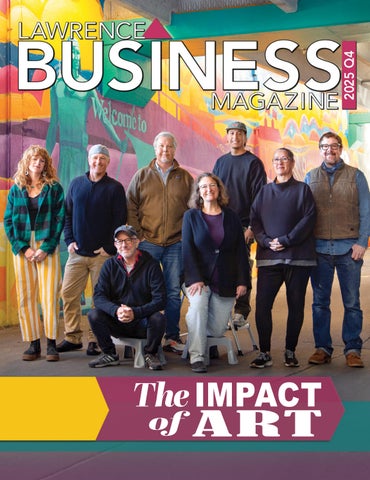
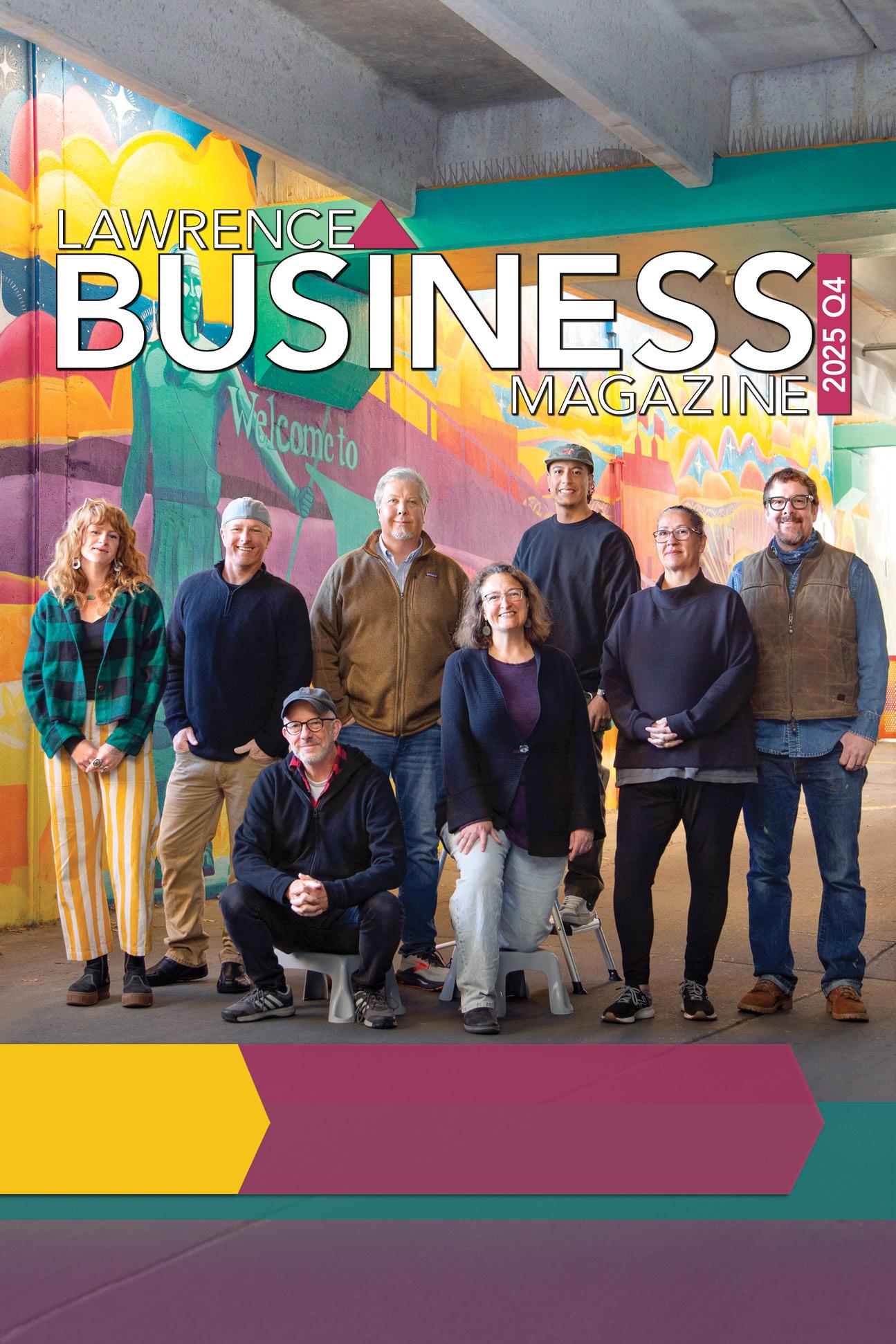
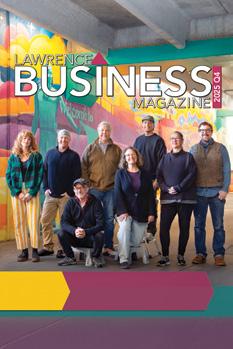
ON THE COVER
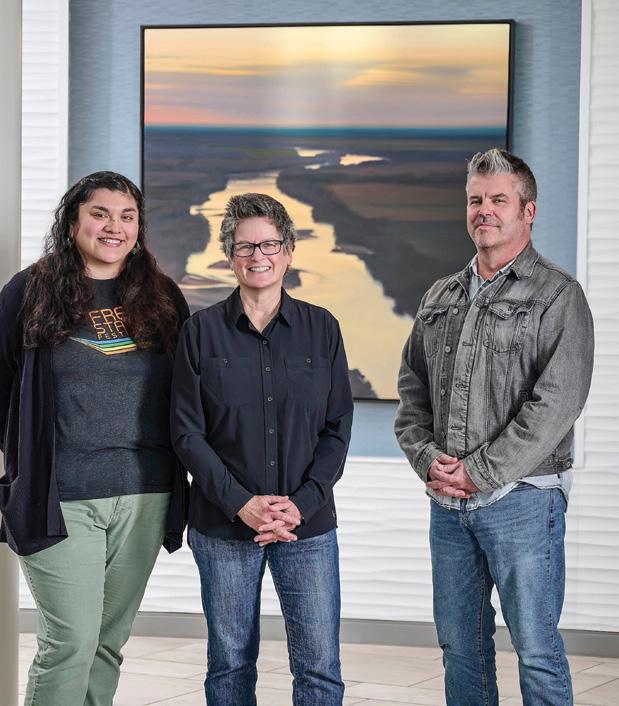
Back Row:
Alicia Kelly, Rick Wright, Stephen Johnson, Javy Ortiz, Mona Cliff, Zak Barnes
Front row: Dave Lowenstein, Roura Young
Photo by Steven Hertzog, and Thank you to Stephen Johnson for the cover photo enhancement!
Trenary
Darin White
Copy Editor: Tara Trenary
Contributing
Writers: Autumn Bishop
Contributing Photographers:
Marlo Angell
Jeff Burkhead
John Clayton
Ann Dean
Carter Gaskins
Peaty Romano
INQUIRIES & ADVERTISING INFORMATION CONTACT: editor@LawrenceBusinessMagazine.com LawrenceBusinessMagazine.com
© 2025 Lawrence Business Magazine, LLC
Lawrence Business Magazine, is published quarterly by Lawrence Business Magazine, LLC and is distributed by direct mail to businesses in the Lawrence & Douglas County Community. It is also distributed at key retail locations throughout the area and mailed to individual subscribers. All rights reserved. No part of this publication can be reprinted or reproduced without the publisher’s permission. Lawrence Business Magazine, LLC assumes no responsibility for unsolicited materials. Statements and opinions printed in the Lawrence Business Magazine are the those of the author or advertiser and are not necessarily the opinion of Lawrence Business Magazine.



LAWRENCE & DOUGLAS CO IN PERSPECTIVE [ ]
Learning HISTORY through ART
This American artist and diarist wrote about and created art depicting his experiences during the American Civil War.
by Pat Michaelis, Ph.D., Historical Research & Archival Consulting image provided
by Kansas Memory, kansassmemory.org
Samuel J. Reader moved to the Kansas Territory from La Harpe, Illinois, in 1855 with his sister and aunt. He kept a diary for most of his life and created artwork to illustrate his experiences. His folk art/primitive illustrations, supplemented by the verbal descriptions from his diaries and autobiography, document his activities in Territorial Kansas and during the American Civil War. They are a unique and amazing resource for learning about these turbulent times in Kansas history.
Reader was born in Pennsylvania in 1836, and his family later moved to La Harpe. In 1855, Reader settled near Indianola, in northern Shawnee County, Kansas, and lived there until his death in 1914. He was present at the Battle of Indianola, which occurred on Aug. 30, 1856, near Indianola. He described the day's events, in which no actual fighting occurred, as the local militia gathering to prevent theft and burning by proslavery supporters.
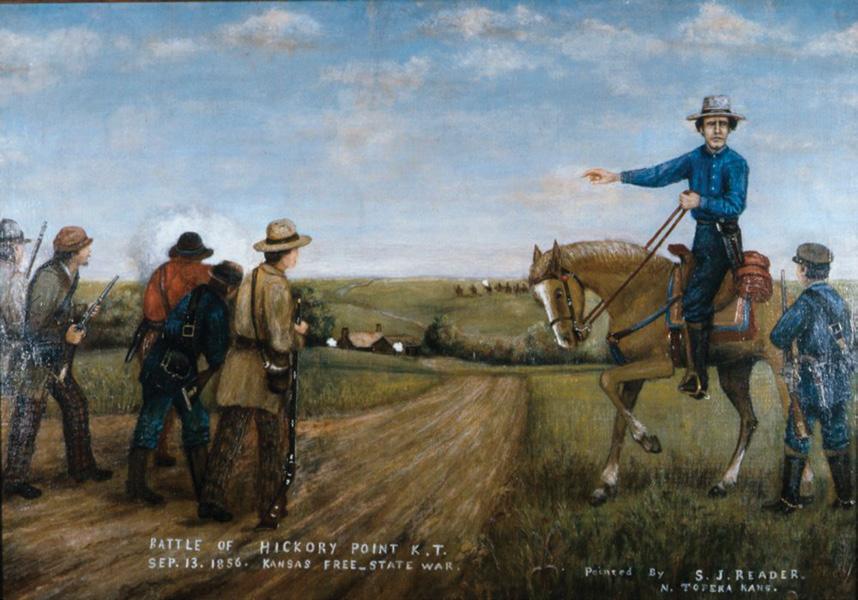
Reader's first participation in the Kansas territorial conflict occurred at the Battle of Hickory Point on Sept. 13 and 14, 1856. James Lane, one of the active leaders of free-state supporters in Kansas, attacked a group of border ruffians (Missourians opposing the efforts to settle Kansas territory as a free state) near Dunavant at Hickory Point, a proslavery settlement on the Fort Leavenworth-Fort Riley military road.[5] This followed an attack on Valley Falls, then called Grasshopper Falls, in Jefferson County. With only a small force of jayhawkers (free-state supporters), Lane’s attack was unsuccessful, so he requested reinforcements from Lawrence. On Sept. 14, 1856, the resulting skirmish ended with four proslavery men wounded, one killed and five free-state men injured. Reader’s painting of the Battle of Hickory Point showed a small volunteer force in the foreground watching fighting in the distance.
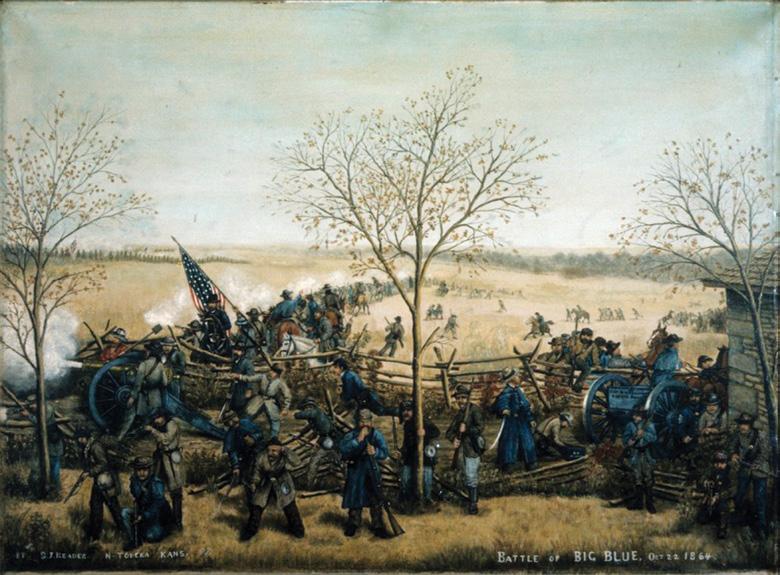
It was eight years later that Reader was involved in action during the Civil War. He fought for the Union as part of the Second Kansas State Militia, whose members were almost all from Shawnee County. Reader served as an officer in the "field and staff" of the militia, with the rank of First Lieutenant, Assistant Quartermaster. Price’s Raid, also known as Price’s Missouri Expedition, was a Confederate raid through Missouri and Kansas in the TransMississippi Theater of the Civil War in the fall of 1864. During the raid, Reader participated in the Battle of the Big Blue on Oct. 22,1864. His dramatic painting of the Battle of the Big Blue shows Union infantry forces in brown and blue coats lining wooden fences. The Confederate forces are shown in the distance on the left side of the image. On Oct. 25, 1864, Reader’s painting of the Battle of Mine Creek, titled “It Went Against Us," offers great detail of the event. The Battle of Mine Creek was one of the largest cavalry engagements of the Civil War and contributed to a Confederate retreat. It was one of the last major confrontations on the western front.
Battle of the Big Blue-Samuel J. Reader

An additional illustration titled "Price’s Raid" depicts Confederate soldiers marching Union prisoners of war to Texas. The artist was an eyewitness to the scene, having been captured with other members of the Second Kansas Militia following Confederate General Sterling Price's raid into Kansas. The Price Raid was a multiday running battle that happened on the Kansas-Missouri border in the fall of 1864. Reader was captured during the raid's Battle of the Big Blue on Oct. 22, where Union forces were routed. General Price’s soldiers were defeated the next day at the Battle of Westport.
Ultimately, the prisoners were marched to Tyler, Texas. Reader escaped by tricking his captors into believing he was a Confederate soldier. A four-day walk brought him home to Indianola.
Reader married Elizabeth (Lizzie) Smith, of La Harpe, Illinois, on Dec. 17,1867, at her home in Illinois. Their first daughter, Ruth, was born on Sept. 25, 1868. Reader and Lizzie later had two other children, Elizabeth (“Bessie”), born on Oct. 10, 1871, and Frederick Augustine, born on Jan. 19, 1873. Both Ruth and Frederick died from disease before reaching adulthood. Lizzie was bedridden for 20 months before her death on March 30, 1898, from a spinal disease. Reader's daughter, Bessie, lived with and cared for Reader before he died at his farmhouse on Sept, 15, 1914, at the age of 78. p

Battle of Hickory Point- Samuel J. Reader


Healing Through Art
Artwork peppered throughout LMH
Health campuses is intended to lift the spirits of patients, families and staff while promoting healing in those who need it.
by Autumn Bishop, LMH Health, photo courtesy LMH Health
Singer Linda Ronstadt once said: "Art is for healing ourselves, and everybody needs their own personal art to heal up their problems."
At LMH Health, art is more than decor—it is a vital part of the healing process. From calming murals to vibrant photography, the hospital’s permanent art installations are designed to comfort patients, inspire staff and connect with the community.
Hospitals around the world are integrating art into their hallways because of its healing ability and calming nature. Art can show the beauties of life and open minds to new possibilities by creating hope and optimism. It not only provides a restorative and pleasant environment, but engaging in the creation of art can also play a role in improving medical outcomes and patient satisfaction.
And it’s not just speculation, it's supported by science. Research from Drexel University in Philadelphia shows that just 45 minutes of creative activity—using collage materials, markers or clay—can significantly reduce cortisol levels, the body's primary stress hormone. Art provides other health benefits, as well, including:
y reduced stress and anxiety
y lower blood pressure
y reduced need for pain medication
y improved mood
y positive distraction for patients, visitors and staff.
Darren Moore, LMH Health digital content and brand manager, has long championed the role of art in health care.
“Art becomes a silent partner in healing, offering peace where there is fear. It brings warmth and dignity, reminding patients and caregivers that they are not alone,” he explains. “Art in our health-care settings is not just decoration, it’s medicine for the soul.”
As the organization prepared to open the West Campus in 2020, it was a priority for then-CEO Russ Johnson to feature the work of local artists. Funding was specifically included within the construction budget for that purpose.
LMH Health found the perfect partner in the Lawrence Arts Center. Interim Executive Director Ben Ahlvers and his team worked to identify local artists whose work would become part of the permanent exhibit at the West Campus. They recommended artists and helped select pieces that would complement the space.
The Lawrence Arts Center commissioned such pieces as Lisa Grossman’s painting "Kansas River—Five Miles North," depicting an aerial view of the Kansas River. Existing works were also selected to appear in public spaces throughout the building.
“Experiencing the natural world is crucial to health and well-being, and is central to my work. One of my goals with this piece was to connect viewers to their place,” Grossman says. “I can think of no better place than a health-care setting to display original fine art, and I commend LMH West for prioritizing the work of artists from this community for their collection.”
The feedback from the community was overwhelmingly positive.
“The art installation on the first and second floors led to very positive comments from the patients, staff and community members,” Moore continues. “We realized we were onto something and began to feature local artwork there and on our main campus, at 325 Maine.”
Blanca Herrada, Exhibitions Coordinator, Lawrence Arts Center; Lisa Grossman; Ben Ahlvers, Interim Executive Director, Lawrence Arts Center

Art Permeates LMH Health
Photos from employees have long adorned the walls of the hospital and its main campus. You may see pictures from Lawrence and surrounding areas, or you may be transported to the far reaches of the globe.
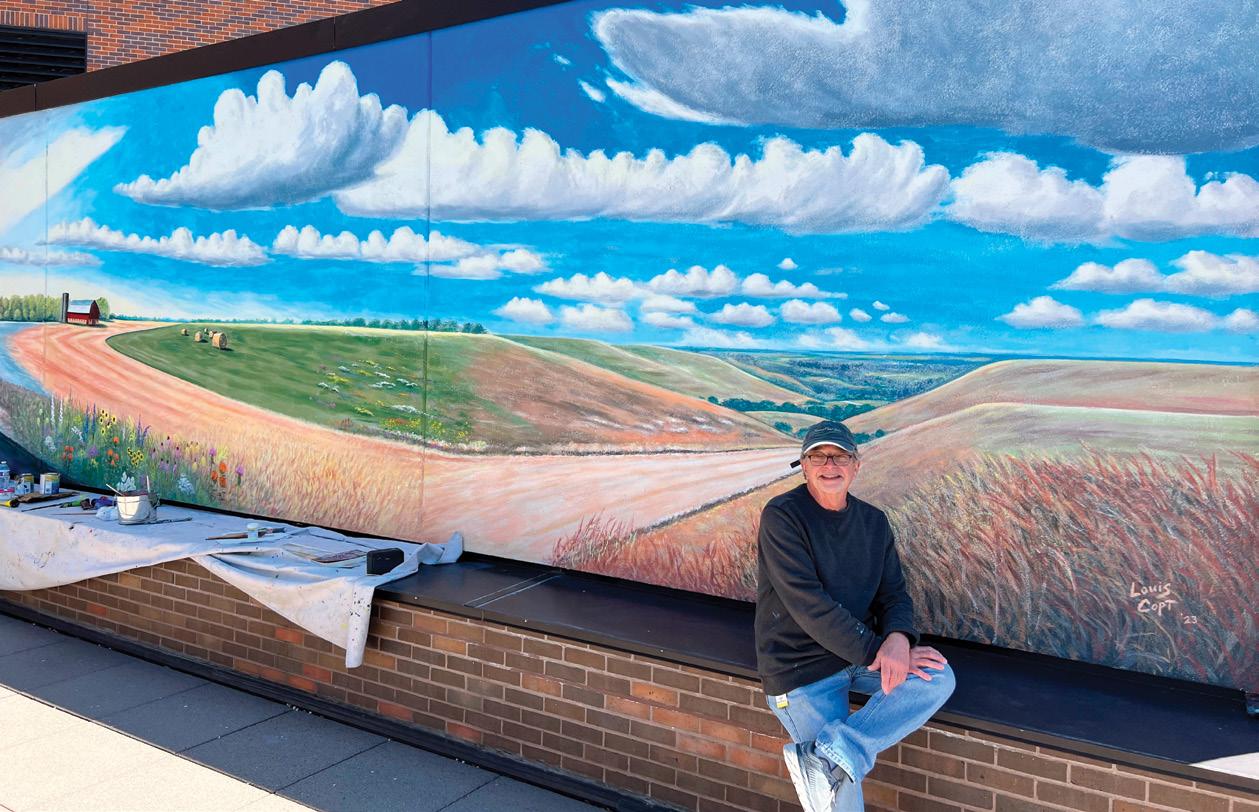
Throughout public areas of the health system, patients, visitors and staff are also able to take in pieces created by local artists. One of the most notable on the main campus is a large mural in the rooftop garden called "Kansas Symphony of Seasons," painted by the late Louis Copt.
The garden was renovated in 2023, thanks to a generous gift to the LMH Health Foundation by Bill and Marlene Penny in honor of their son, Nate. The final piece was Copt’s mural.
Copt and the Pennys were longtime friends going back to their high school years together. The Pennys personally selected Copt as the muralist for the rooftop garden project. Their only request was that the mural must be a Kansas landscape.
Copt took four of his existing paintings, all real locations around Lawrence and Kansas, and put them together to create the mural. The Kansas scene transitions from winter, spring, summer and fall.
Copt said at the time that he was touched by all the employees and patients who came out and told him what a difference the mural made.
“For patients to be able to come outside and see the work, it really lifted their spirits,” he said. “I can’t tell you how many people came up and said nice things to me—it was really heartwarming and something I didn’t expect. It’s just amazing how many people the mural touched.” p

Kansas Symphony of Seasons, by the late Louis Copt

The Van Go Perspective
Community youth learn valuable life skills through this apprentice, arts-based program.
by Rick Wright, Van Go Art Director, photos courtesy
Maybe you’ve sat down on a custom-painted bench while visiting a local establishment. Perhaps you’ve biked passed the new mural in town. Do you enjoy finding quirky handmade gifts for the holidays? If you’re a local Lawrencian or even just passing through, chances are you’ve encountered one of the many projects created by youth apprentice artists from Van Go, Lawrence’s home-grown artsbased employment program for youth ages 14 through 24. Your experience with one of Van Go’s original creations may be brief, but do you know the impact that art has had on the lives of the youth who created it?
MAKING ART DEVELOPS JOB SKILLS
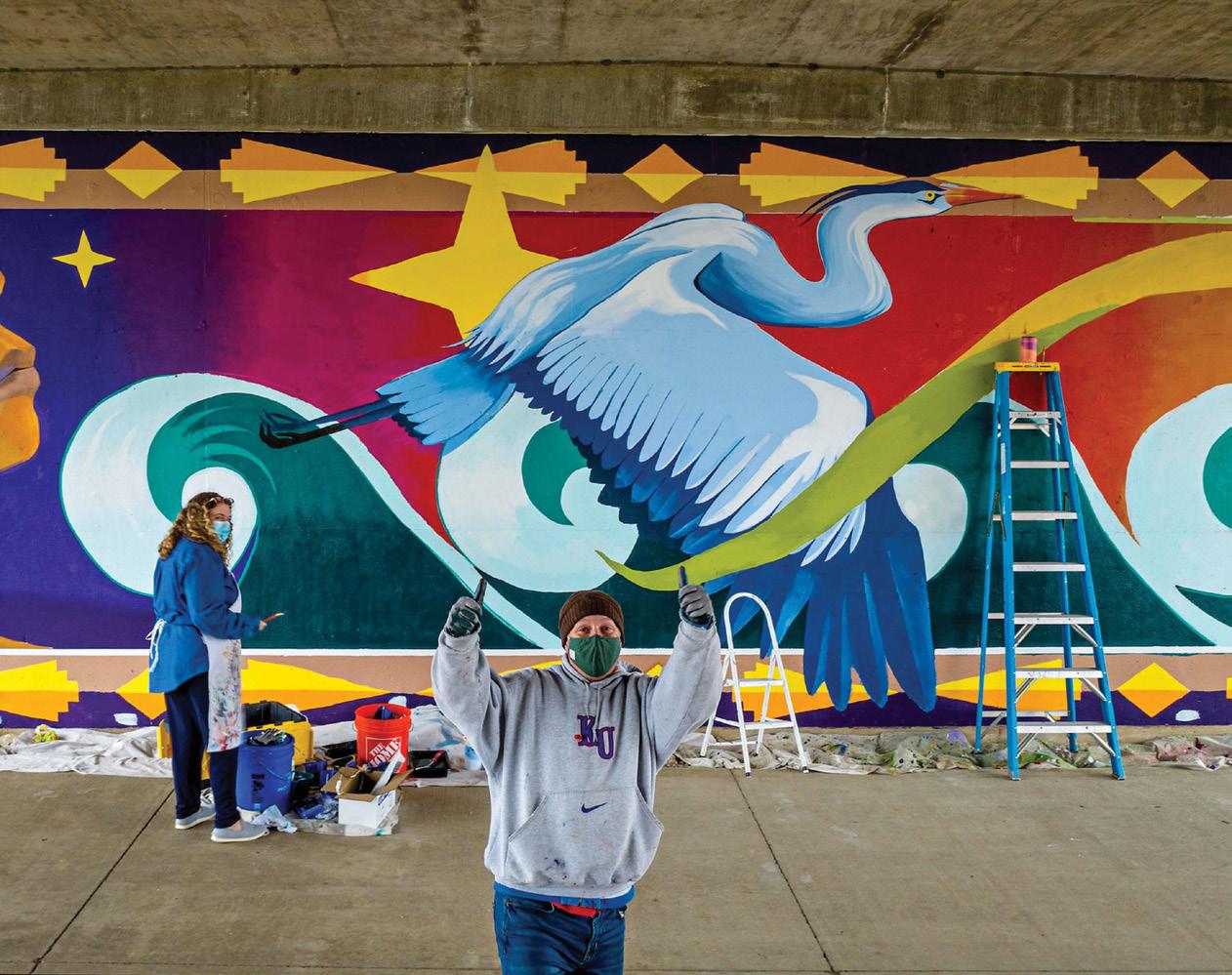
Apprentice Artists at Van Go learn job skills through the arts. They learn to show up on time, attend regularly, maintain productivity and work both independently and as part of a team. What better way to ease into the workforce than to be paid to work on creative projects that have an inherent level of enjoyment, creativity, tactility and peer connections as the arts? The mural you fell in love with by Van Go likely employed 10 to 20 young artists for several months. They learned how to interview clients and develop visual solutions based on the information they gathered. They collaborated as part of a team and worked within a given timeline before unveiling that work to the community. For many young people in our community, the arts have been instrumental in providing their first work experiences and the critical soft skills necessary for future employment.
Van Go
Rick Wright working at the Van Go mural titled “Restoration” Wetlands
MAKING ART BUILDS SELF ESTEEM
Imagine the pride of a 16-year-old who just spent eight weeks of his or her summer designing and painting a custom bench for a local business. As a novice painter, each brushstroke was a learning experience and step toward completion of a project larger than ever imagined. The sense of personal accomplishment fostered by working with a client, receiving encouragement, making revisions and seeing a vision come to life at a public unveiling is huge a milestone on the artist's journey to adulthood. Confidence develops as individuals experience success. For artists of any age, there’s something very satisfying about having an idea in their head, figuring out the best way to execute it and resolving it into a visual or tactile product. There aren’t rigid rules on how to do this in the art world, so this relatively low-risk endeavor can reap great rewards for young creatives.
MAKING ART BUILDS COMMUNITY
There’s a learning process with every creative project, but art in public spaces has a unique way of educating both the community and the artists about the value of the other. When Apprentice Artists at Van Go create work for a public setting, they listen, observe and respond to the stories, histories and aspirations of the people or businesses that inhabit those spaces. They learn about the value of these resources in their own community, thereby becoming more civically minded participants. That relationship is reciprocated as the community benefits from the transformation of dull or neglected sites into vibrant, invitational spaces where walkability, safety, cultural enrichment, personal identity and tourism can flourish. These young artists become stakeholders in their city.
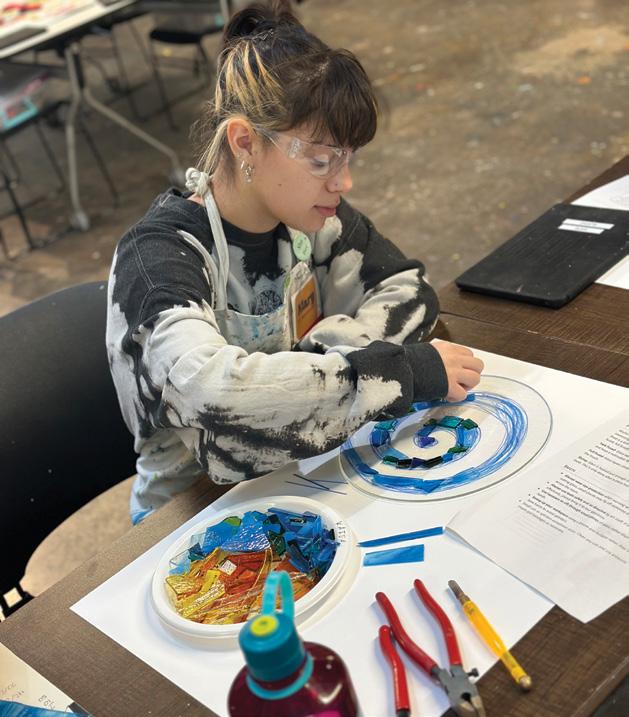
Van Go apprentice with The Arts Train program fuses glass for holiday adornments
MAKING ART IS THERAPEUTIC
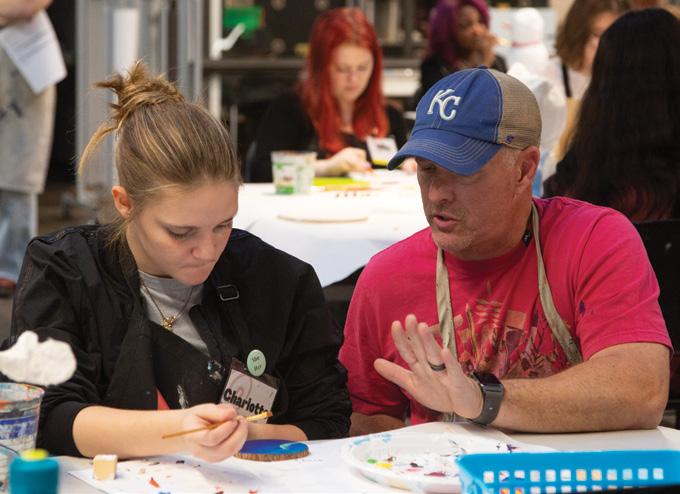
Transitioning into adulthood is messy at best, and for a lot of young people, struggles with school, relationships, mental or physical health, family, finances or housing can feel overwhelming. Sometimes, those obstacles are stacked upon each other, as well. At Van Go, youth make art that safely engages the mind and senses, while stress and anxiety take a back seat to creativity. Constructing fused glass ornaments, painting a canvas, screen-printing tea towels, sewing fabric landscapes or plastering sculptural armatures allow young artists to express themselves authentically without fear or judgement. Their voices are present in their artwork, and that voice is validated when the work is sold or auctioned off to the public. The artists discover the value in their work and in themselves.
MAKING ART IS A PATHWAY TO INDEPENDENCE
For youth at Van Go, their employment is temporary and meant to provide them with a supportive foundation from which they can continue in a direction of their own choosing. That structure is also reflected in the process of art-making in general. It’s like a “Choose Your Own Adventure” story. Apprentice Artists are given instruction in fundamentals and access to materials, but they must determine on their own how they will be applied. If a drawing doesn’t come out as intended, they can rework it in another direction. When the results are as hoped, though, a small win helps pave the path for future successful decisions. Making art develops independence through goal-setting, taking initiative, problem-solving, “stick-to-itiveness” and self-evaluation. The impact of art on Van Go participants reaches well beyond the murals, benches or handmade gifts the artists create. Each project is an incremental story of personal growth, where these young people find their place and value in their community. Much like taking a rough sketch and developing it into a polished work of art, Apprentice Artists are able to transform themselves by learning new skills, developing confidence, overcoming obstacles and making important decisions. Art can be used as a vehicle to better equip young people with the tools to forge a path uniquely for themselves. p

Art Director Rick Wright working with a Van Go apprentice artist

Collaborative Art at Home STAN HERD
Local earthwork artist, creates works that reflect beauty, politics and unity.
As an artist in your 70s, what keeps you inspired?
Inspiration is like every other human psychological attribute in that it evolves if you cultivate it—and if you can escape cynicism and self-doubt. I believe I am more inspired now than I've ever been, but I still question whether it is always a good thing.
My inspiration to become the best in the world at something—which I am still inspired to do—has not diminished and sometimes feels like it could become a burden. If you are inspired to be the best human you can be, the best father and the best at the skills you have chosen to pursue, all of that is affected by the circumstances and the times in which you live.
I have been leaning toward politics over the years, and the current climate is ripe for activism for all who cherish freedom and the law. It is a bit startling to find ourselves in the grips of antidemocratic forces. I truly never believed it possible in a nation that has been the guiding light in the world and represents freedom of speech and the right to assemble against the "powers that be," and rails against attempts to silence the media, artistic expression and the political opposition.
How do you produce an Earthwork?
My Earthworks have evolved, but the general approach has remained fairly constant: to create a workable sketch or concept, break it down into layers of light and shadow, then inform by the existing crops and the lay of the land. For the temporary works, subtracting that existing crop then adding materials that enhance the image completes the work. Current images are getting more detailed, and the China portrait from six years ago, as a permanent image with 20 different sorts of stone, marble, granite, seashells and dozens of different plants and flowers, is leading me to my final approach as I reach the last chapters in my life. My best work has yet to be realized, and if the political world settles, I hope to return to projects of a more historical nature and a visual dance with the inherent beauty in the world—and get away from politics.
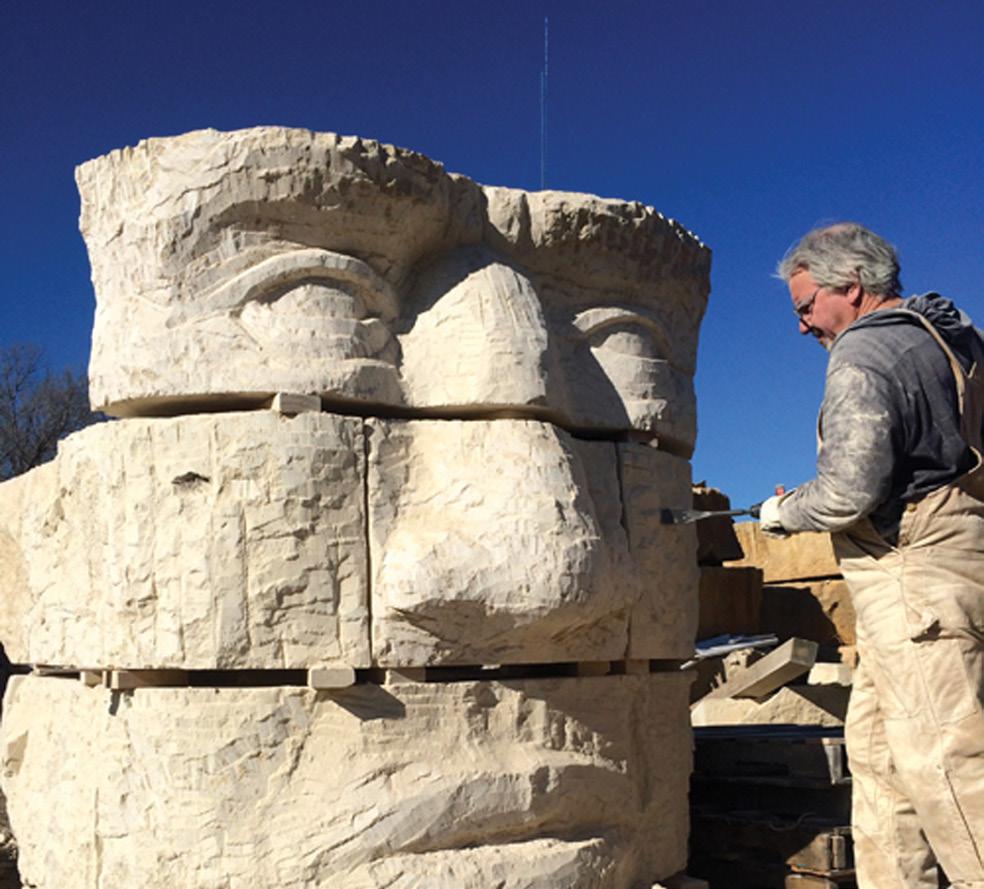
Stan Herd carving a 30 ton limestone rock sculpture in Parsons, Ks












Local Businesses and their Growth continue to be the Foundation of our Local Economy. The Lawrence Business Magazine Foundation Awards celebrate our local growing businesses adding jobs.
THE FOUNDATION AWARDS
Honor Businesses located in Douglas County a minimum of three years, and shown growth in employment by 20% or 20 employees. &

The Minority-Owned Business and The Woman-Owned Business Foundation Impact Awards
Honor Minority Owned or Woman Owned businesses located in Douglas County.









Has your business grown?
Are you adding jobs?
Are you a Minority-Owned or Woman-Owned business making a positive impact and supporting the community? You should be a part of the Celebration!! Applications for the 2026 Awards online now.
For more details, applications, and information about Sponsorships, Previous Honorees, and the 2026 Lawrence Business Magazine FOUNDATION AWARDS visit: LawrenceBusinessMagazine.com/Foundation
How do you work with and direct your team of mostly volunteers?
The most powerful element of my work is the orchestrated engagement with my crew and those with whom we end up working in each new location. The China project put us into a complicated collaboration with more than 100 people for almost two years of my life. And the ability to engage my team, "Team Herd," has been the most enjoyable and rewarding aspect of my work and my life. I teach them, and more importantly, I learn from them, my son Evan in particular.
What are the different stages of producing an Earthwork?
We start with a gridded sketch, which evolves quite similarly to those of architects—from rough sketches to the overall design/build plans, leading to more complicated and precise drawings as we approach the site.
The commercial works, which have historically supported the more artistic Earthworks, created for my own inspired thought process, have their own pricing reflecting the client. The China project cost approximately $2 million, if I had to guess, and my fee, which included 30 business-class flights, was approximately one-third of that. A friend and supporter of my portraits in Atlanta during the
past five years subsidized those works, and none of those five Earthworks brought in a profit but did expose me to the national media and new friends and fellow activists, and more importantly, kept my crew in rent money. My strong inclination to put profits from commercial endeavors back into works that seem important, such as the political works, has kept me financially unstable. That was supposed to change last year but remains to be seen. I’ve never had more large and significant projects lined up than I have right now. This year will be very interesting.
Some of the Earthworks or larger stoneworks such as the "Young Woman of China" are designed from the start as permanent images similar to a corporate garden with the logo in it that one would drive by every day. Some of the other temporary images have the capacity of permanence if the client or business wants to go to Phase 2 and establish the work with more permanency. The flower image on the riverbank in Lawrence is a good example. It was never discussed as a permeant image and, in my opinion, should be taken off the rock infrastructure or embellished with a more permanent base and kept as a more permanent design. Haskell's "Medicine Wheel" is a permanent design with the directional stones from the original Haskell buildings but has to be maintained yearly to keep it viable.
What are you working on now?
Mexican President Claudia Sheinbaum's government secretary of the exterior created a press release with the assistance of consulates here and in Texas regarding the recent portrait “Young Woman of Mexico," created on the Milleret farm north of Lawrence, in Linwood. I had established relations with both consulates during the process of creating a temporary portrait on a resaca one mile from the border in Brownsville, Texas, last year with guidance from consulate general Soileh Padilla Mayer, in Kansas City, and her contemporary in Brownsville, Judith Arietta Munguia. It was consular Munguia who suggested creating this second portrait to glean support from President Sheinbaum.
President Sheinbaum’s embrace of indigenous people was the original impetus for this overall concept. Our strategy for pursuing this scope of work is to offer permanent portraits of the four indigenous women displayed on the banner of the consulates to Sheinbaum and the Mexican people.
That is where it stands today, and we are cultivating groups, individuals and corporations to assist us in making this a gift from the United States in the same vein as the Statue of Liberty was a gift from the citizens of France to the United States. It would be in poor taste to ask Mexico to pay for the works. We shall see. Of course, the idea is to strike a tone of civility with our friends and allies to the south rather than the fist of accusation and threat that seems to dominate national discourse from our government leaders today.
As to the FIFA World Cup multinational presence in Kansas City that we are building toward, we have made numerous efforts to be of service to city leaders regarding this once-in-a-lifetime opportunity. They have not responded.
With international Earthworks in Brazil, China and Havana, and my position as the leading Earthworks artist in this region, we will establish our own presence with our FIFA guests, embracing the Midwest's top musicians, artists, film producers and writers with or without the help of our Kansas City leaders. We intend to create an Earthwork design, "Picasso’s Bull," as the platform for these efforts, possibly on a rooftop in the West Bottoms. We will be working with Bradford Hoopes, Chel Rich and Stanley Sheldon, with his new band the Rhythm Republic, to connect with all things Latin as the games approach. Kevin Willmott, Marc Havener and the awardwinning film and video teams will help lead with the vibrant Lawrence arts scene and create our own presence during this international gathering. Someone called us "The Lawrence Mafia." I like that.p
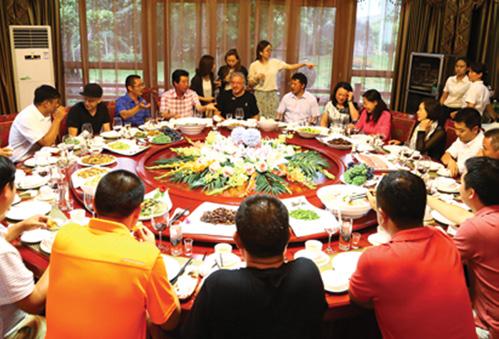
Stan as the guest of honor at a table of 40 members of JiCheng leadership and the head of Honghe tobacco and Chinese officials. “They always set me at the head of the table and I had three interpreters standing behind me”
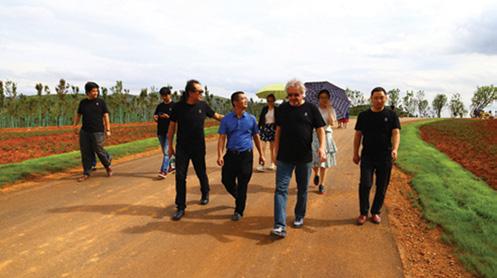
Stan walking with the head of the JiCheng family and his leadership team for work on the Young Woman of China
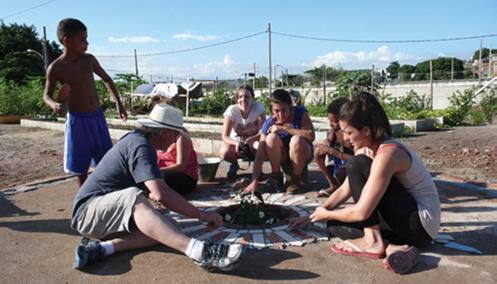
Stan with a group sitting on the ground in the Manguinhos favela in Rio de Janerio
Making a Living Through Art
Local artists in this digital era market themselves in many different ways, using online platforms, selling at fairs or posting flyers and sending out newsletters, all in order to earn money from their art.
by Tara Trenary, photos by Steven Hertzog
Creating a career as an artist is not for the faint of heart. There are challenges that go beyond just passion and creativity, including hard work, lack of business and marketing skills, uncertainty in the market and financial instability. The art world can be competitive, with many talented artists struggling to make a decent living. Success depends not only on talent but also planning, perseverance and an eye toward business. Understanding the challenges of the art world is key to making it in this business.
As musician and actor Frank Zappa once said: "Art is making something out of nothing and selling it." Zappa recognized the importance of creation but also the reality of the business side needed to support it. He also believed an artistic choice should not be based on potential profit.
The question about making money versus staying true to the art can be a challenge for many, but for a working artist, both must be present.
According to the 2024 Rolling Stone article "Art and Commerce Can Mix Well," by Zain Jaffer, artists shouldn’t feel the need to abandon their ideals in order to be successful in the industry. "There are those who are in art for art’s sake, but there are also those who want to make money (or at least a living) off their works. Each artist is probably in that spectrum, with the purists at one end, and the ‘sellouts’ on the other. There is no wrong or right place to be in; there is only what is right for that artist."
So how do artists here in Lawrence bridge the gap between artistic creation and marketing and selling their work to help them earn a decent living? The answer to that question seems to depend on whom you talk to.
One-on-One Connection
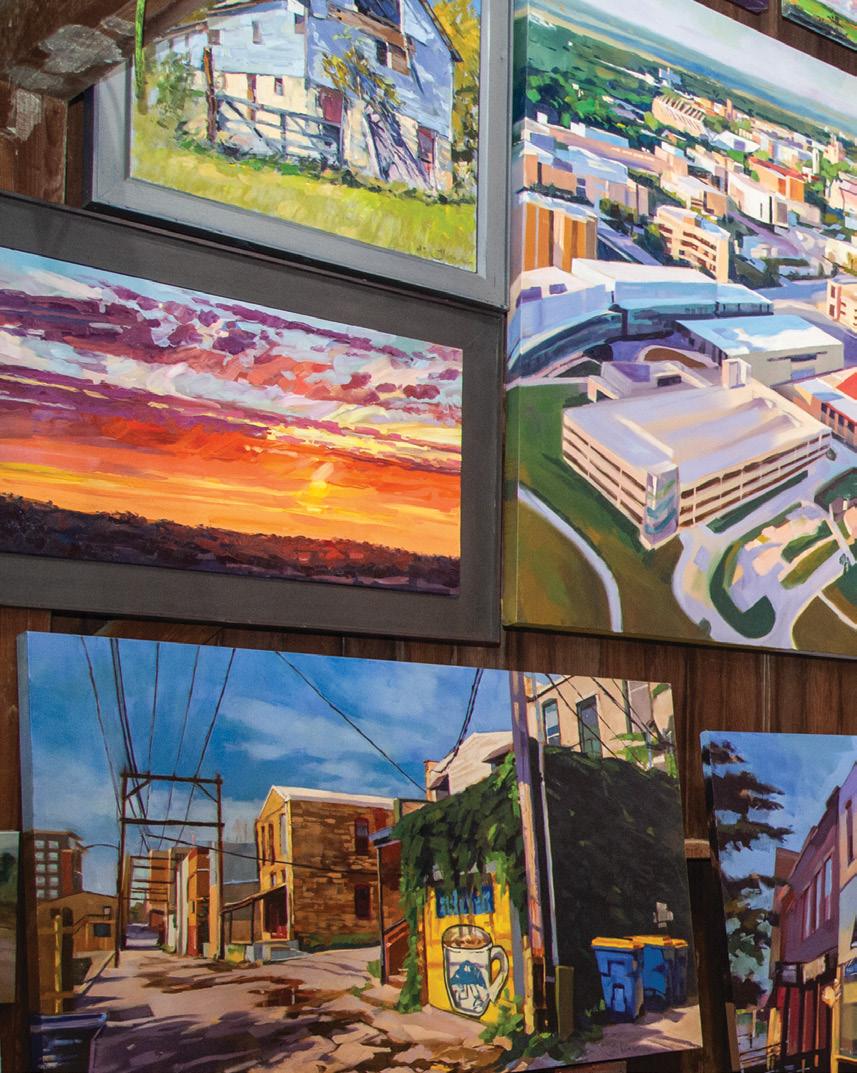
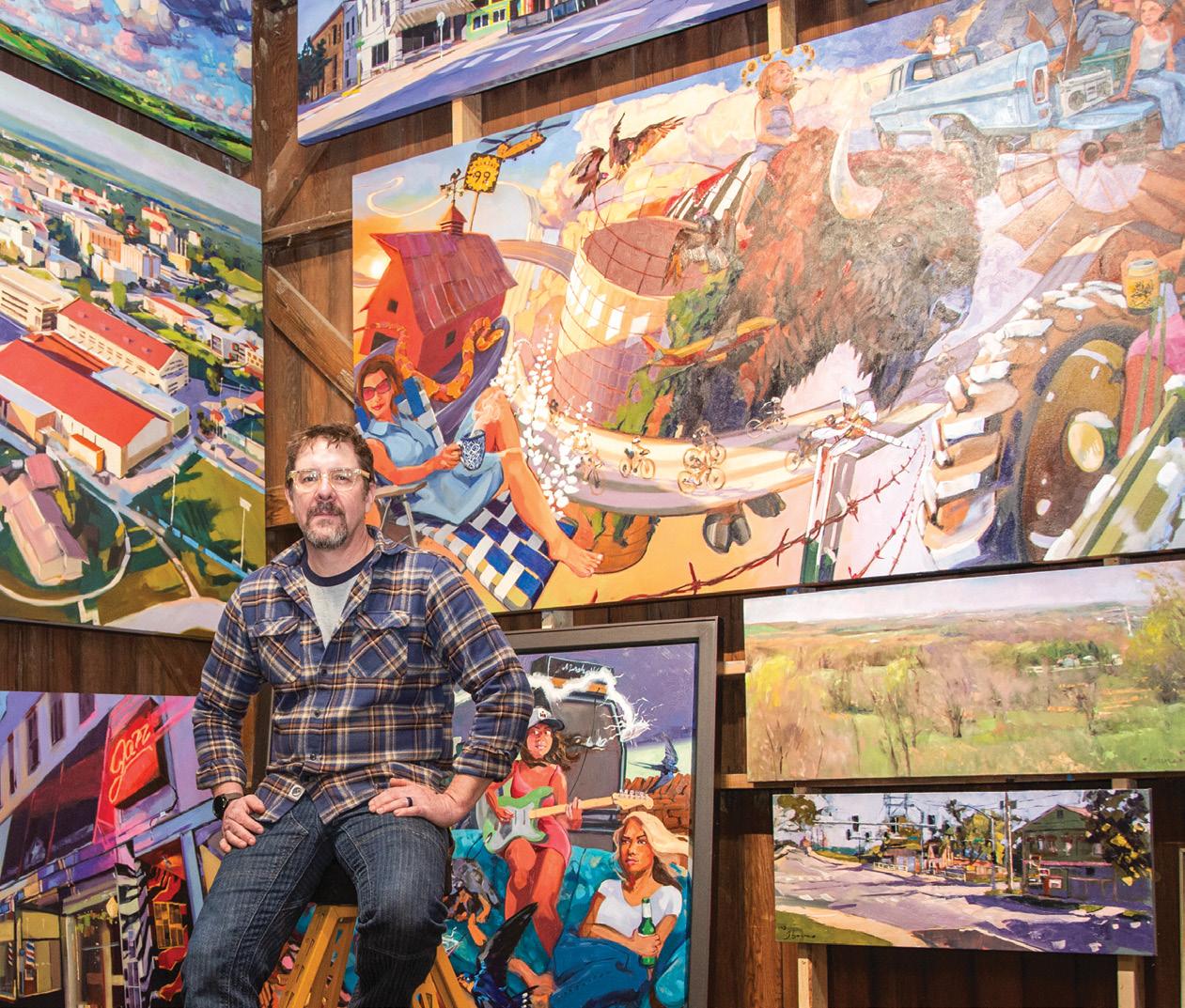
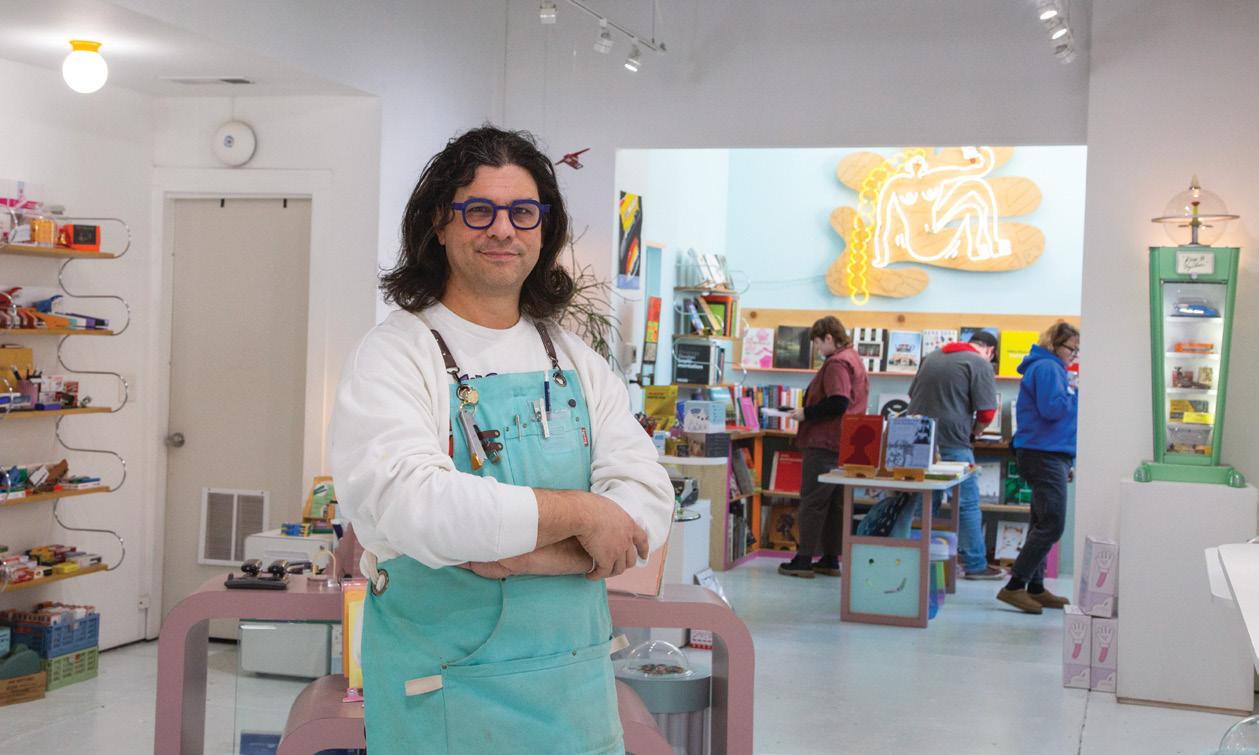
For Zak Barnes, a full-time artist for 20 years who does primarily oil paintings, what’s most important is the artwork itself. "My approach has always been to do honest work that I enjoy without following too many trends, ending up with something unique. I’ve always kept my work as true as possible to what I think is good."
Barnes prefers fine art made by real hands—traditional fine art with some contemporary thrown in. His art tends to be Kansas-based or "regional." He can be found out in the field doing "plein air" or outdoor painting onsite, along with studio work, landscapes and regional figurative work. "Mostly, I do custom work in-house—stretching, frame-making, all that stuff," he says.
He believes all communities must have an appreciation of art. "It is what humans make. It is stimulating to see. When you travel, it is one of the things you go to see. It’s one of the reasons why murals have gotten so big. It disrupts the daily flow of the parallel lines everywhere," he explains.
Being that much of his work is custom for individual collectors, Barnes
prefers to have one-on-one relationships and do work at customers’ requests. "I do a lot of correspondence and communications with people. It takes some time to work with people. A lot is one-on-one with the buyer, getting descriptions and discussing the final product details. Often people will come to the studio to discuss the project. There is some skill required to decipher what your client truly wants."
He says it does take time to get to know people and learn what they want, but once he gets a mental image of what he thinks they will like, it is fun to create the artwork. "I’ve been known to show up in a U-Haul with a huge wet painting, hammer, Ook hooks, a stepladder and a tape measure. I enjoy hanging a work of art where it will be appreciated."
Barnes was a latecomer to social media, but he does use Instagram to market and sell his art. Though he’s a low-tech guy, he prefers Instagram because it’s image-based. "Social media is wonderful because it is a good way to get feedback and [have] simple interactions with real people. They might gain a better sense of the meaning behind the art," he says. "Honestly, I do a post of a painting and just hope for the best."
Zak Barnes in his studio barn with his paintings
Hitting the Pavement
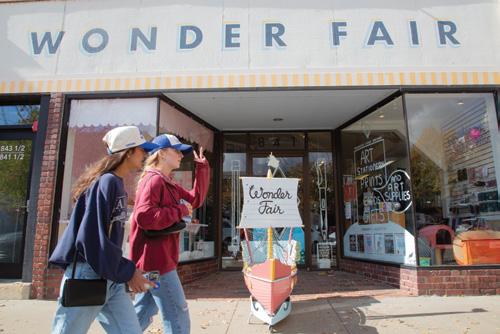
Paul DeGeorge believes that art creates community. "This is how we connect with each other and is a huge part of what defines our community in our hearts. Art also represents our community to the world at large," he explains.
However, the owner of Wonder Fair, 841 Massachusetts St., says there’s an economic impact that is wildly undervalued. "Lawrence is the cultural capital of Kansas, and artists are a huge part of our local economy. But we don’t see that reflected in public investment in the arts and in artists’ careers in the same way we see tax breaks for developers and corporations that promise to bring another 40 jobs to the city." He believes investing in artists as a community is needed just as much as investing in any other businesses.
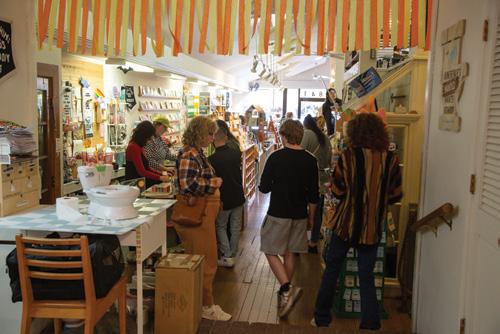
DeGeorge and his wife, Meredith, bought Wonder Fair in 2012 from its previous owners. The gallery and shop carries art made by more than 200 different independent artists, from local to international, with a special focus on prints and printmaking—and its tradition of offering affordable art for all people. Though Wonder Fair originally began as an art gallery, it no longer exhibits work in the traditional gallery sense of putting up a show from a different artist every month or two, which they found less sustainable. The artists they work with produce lots of art, not just prints, and the store also carries items such as greeting cards, stickers, pins, patches, keychains, hair clips, zines and artist books. "We favor printmaking processes where the hand of the maker is more evident, so screenprints, letterpress, lino and woodcuts. And for the last decade, we have enjoyed participating in the growth of Risograph printmaking," he explains.
When it comes to marketing products, DeGeorge says social media just isn’t for them, and they only created an online store as a COVID adaptation. "I’ll be completely honest here: Using social media feels like toiling in some
mine for human attention in service to billionaires. Even though engaging may be helpful to our business, it’s probably bad for humanity, and that’s become more apparent than ever over the last few years, as feeds have devolved into algorithmically driven echo chambers and propaganda tools. So that nags at us …"
He says he would categorize he and his wife as "extremely reluctant Instagram posters," having quit Facebook and Twitter (now known as X) many years ago. "We tend to view posting as a last resort. We’d rather make posters and put them up around the downtown. We have a snail mail list, and we send out a nice little newsletter at least once a year to almost 4,000 people. It’s expensive, but making and producing this newsletter is so much more rewarding and interesting to us than spending our time working on posts to send into the void."
DeGeorge says the marketing that works best for Wonder Fair is having "a store that is so utterly unique that people feel compelled to take their friends to visit. Our cat, Dave, does a lot of heavy lifting—he’s a charmer. But we’ve also built a ‘haunted bathroom’ (voted No. 2 restroom in Lawrence, 2019) that is essentially a free dark ride for anyone brave enough to visit."
The couple also commissioned an artist to create a store soundtrack that is unique to the space and employ many great artists who work daily to make all sorts of displays and signage, so when people visit, there’s always something new and surprising to see. "We stock our store with a highly curated selection of goods—not just art but also art supplies and specialty stationery that is frequently challenging to find, even on the internet," DeGeorge explains. "In some cases, we’re one of just a handful of shops in the United States carrying such items."
They also have a store that sells staplers, he adds. "Wherever you are in the world, Secure Attachments is probably the closest stapler store to you."
Paul DeGeorge, owner of Wonder Fair and Security Attachments


Perusing at the Fair
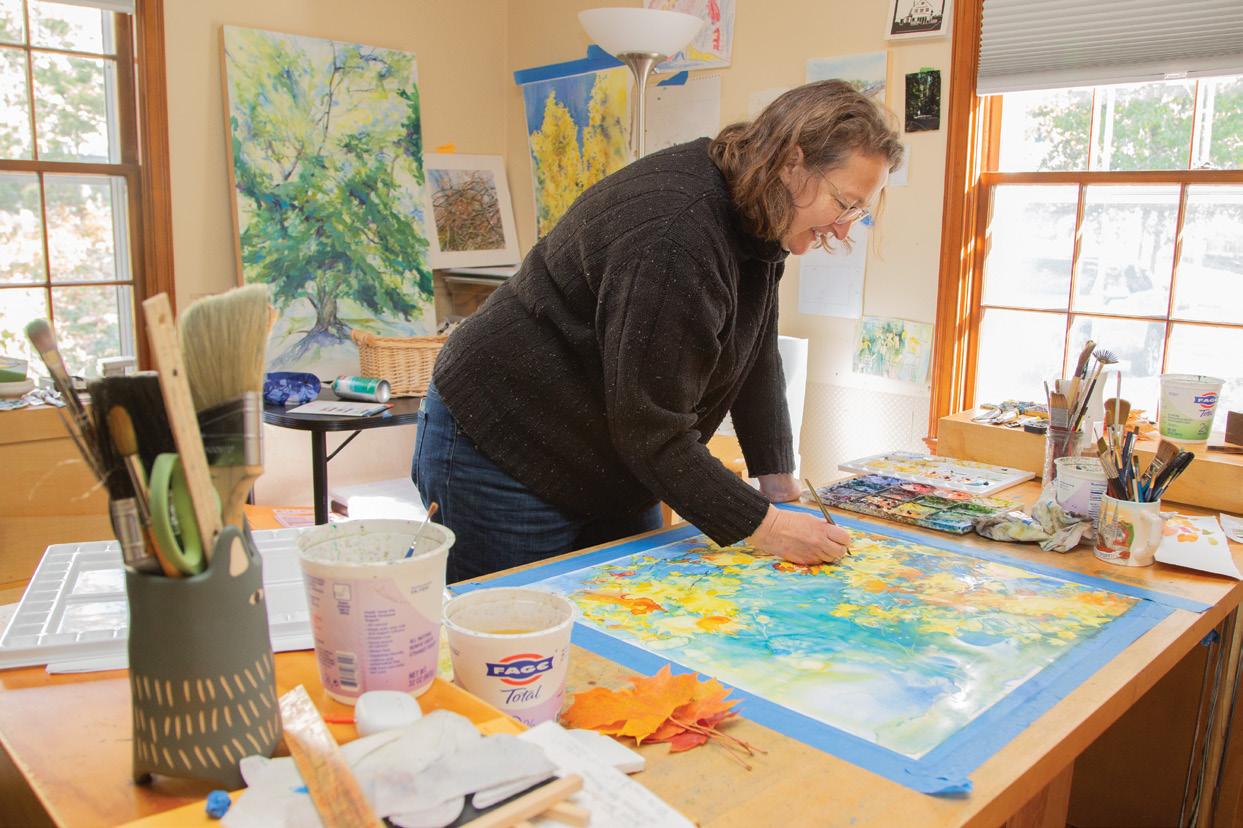
For artist Roura Young, a painter who also co-coordinates the Lawrence Art Guild’s Art in the Park, becoming a professional artist has been a onestep-at-a-time process. Young paints large-scale watercolors on both synthetic paper and traditional cotton paper. She then adheres those to cradled panels. Her focus is mostly nature, plants and landscapes. "My first couple of art fair booths were an absolute disaster. But I continually reassess my approach, whether it is focusing on where I will be displaying my work or improving my presentation. After an art fair, my husband and I discuss how we can improve the display, what went wrong, what went right."
The Lawrence Art Guild is a group of artists that works together to promote artists and the arts within Lawrence. "I’m not sure I would have ever had the know-how to move from an emerging artist to a professional artist without the guidance and support that I received from other artists within the Lawrence Art Guild," she explains.
As one of the coordinators for the Lawrence Art Guild’s Art in the Park, Young promotes the event through every avenue possible, casting a wide net to try and draw in a variety of people—those looking for a fun weekend activity to those who are looking to make a major purchase for their home. They use social media, radio and print ads, flyers and banners. Each artist is promoted on social media and on the group’s website.
She believes access to the arts should be a part of all communities, as the arts add a richness and beauty to life. "Here in Lawrence, we are lucky to have so many artists within our community, as well as organizations including the city itself, which support the arts. We have Final Fridays, open-studio events, Art in the Park, galleries, the Spencer Museum, sculpture tours and more, as well as music and theater, all of which lead to a vibrant cultural experience." She says she views each event or venue as a gift from local organizations to participating artists and to the community as a whole.
Getting your work out there is the most important part, Young adds, because people need a chance to see and relate to a piece before they purchase it. However, marketing can take more time than artists have to give, even though it’s incredibly important to a professional artist. "Paintings don’t sell if they aren’t seen," she says.
In Young’s personal business, art fairs have been the most lucrative, but she believes using a variety
of platforms is the best way to market art since not all patrons like to wander an art fair. So she also uses Instagram and a personal website, as well as a "poorly updated" Etsy page. "I should post images on Instagram more often than I do. There are two reasons why I don’t; not only does creating a post take time, but I also worry that images can be lifted for AI (artificial intelligence) use on Instagram. I try to walk a fine line between posting and protecting my work."
Because she sells the majority of her work through fairs, Young researches local and regional art fairs, and plans where and when to sell. Selling at fairs involves filling out applications, supplying three to five images of her work as well as a photo of her display. Applications can have nonrefundable fees that can run from $25 to $50. "I apply to more fairs than I plan to attend, because I never know if I’ll be accepted. The art world is competitive," she explains.
In addition to applying, art fair artists must have an attractive display. This includes a sturdy tent, weights to hold the tent in windy weather and panels on which to display work. Her display includes a bin for prints, lights and a battery to power them. A professional art fair display can cost in the thousands but is vital for getting accepted into shows and/or selling well. "Lawrence has amazing artists who might not have the resources or experience to break into the art fair world. Having the guidance of other artists and the materials provided allows these artists to gain knowledge of the art fair business," she explains.
Young believes marketing and selling compared to creating work are two completely different occupations, and she personally puts more time into painting. "Creating art takes a great deal of concentration and focus, but it’s open-ended with no right or wrong. I can create anything I want. I think of marketing as a puzzle—trying to find the right market, the right venues or creating the right social media posts."
Plus, marketing and selling can feel like checking off all the boxes on a to-do list. "Selling art is competitive. Only so much space exists in galleries. Because of the competitive nature of the art business, I’d say that marketing and selling is the more difficult of the two," she concludes.
Artist Roura Young at work in her home studio

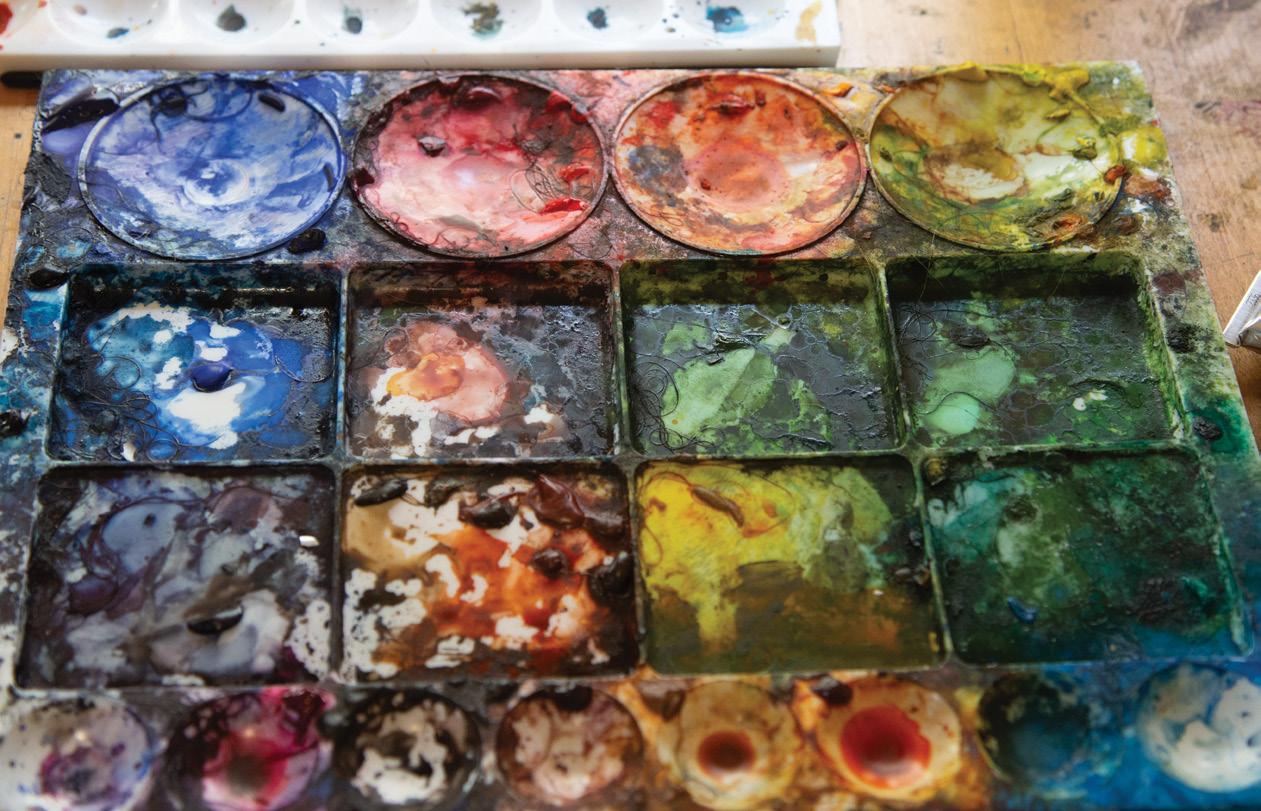
In the World of AI
One thing all these artists agree on is that AI can be dangerous.
DeGeorge believes AI is a way for people and corporations who don’t care about art to avoid employing artists. "They don’t understand art and have never tried. To them, it is annoying that they have to pay people to write copy and create visual marketing materials. It’s either a shortcut for lazy people or some costcutting garbage designed for the enrichment of the investor class. It is profoundly uninteresting to me."
He says people who care about art can and should resist this. "We don’t need AI art. You don’t have to participate in this economy. You are not missing out on the next big thing. To resist is to commit to the future that you want to see."
Young agrees. "I am bothered by AI and the fact that it takes artists’ works and passes it off as its own creation. If an individual did that, they would be accused of copying or even plagiarism. For me, personally, AI cannot create what I create or compete with my work. I think the increase of AI makes patrons appreciate hand-created work all the more."
No matter what kind of work artists produce and sell, they all put their hearts and souls into every piece created. "I still try to make every painting better than the last …" Barnes says. "Maybe I am in the middle of my career or maybe my prime. Hopefully the best is yet to come. That’s the joy and beauty of being an artist. You never know what projects will show up. I’ve been lucky enough to have some interesting ones. I’m often surprised with what I will be doing next. That keeps things interesting." p




The Business of the Arts
The arts in Lawrence provide the community with a sense of pride and vitality while also contributing to the overall economy.
by Darin White, photos by Steven Hertzog & Peaty Romano
“Art washes from the soul the dust of everyday life.” Pablo Picasso
Porter Arneill, assistant director of parks, recreation, arts and culture in Lawrence, recently provided an example of understanding the beauty of art at a grant review he attended. He said, “Rather than taking the usual 'talking heads' approach, an opera company chose to remind the grant review committee of the true, living value of their art, something that cannot be captured in charts, graphs or financial data. When it was their turn to present, one of their singers quietly stood, took a breath and simply began to sing. The response was immediate and profound. The room grew still, emotions surfaced and tears flowed. In that moment, the question of value was not just answered, it was felt.”
Arneill has been a huge advocate for art and culture in the region for many years and was hired for his current position in 2015. He believes we are at a huge turning point in our culture. He has been involved in and also a proponent of Americans for the Arts and the work they are doing to advance arts and culture. The Americans for the Arts website states: “The arts are fundamental to our humanity. They ennoble and inspire us—fostering creativity, empathy and beauty. The arts also strengthen our communities socially, educationally, economically, and improve health and well-being.” The group is using a newer three-legged stool approach from purpose-driven leadership of the triple bottom line (TBL), which includes people, planet and profit.
Americans for the Arts connects the arts to the triple bottom line by demonstrating how the arts generate economic benefits (profit), improve social well-being (people) and contribute to the health of a community (planet). This approach uses research to show that arts and culture are not just cultural amenities but vital economic drivers that foster community and improve health, and create a higher quality of life.
Kelsey Miller, in the article, “The Triple Bottom Line: What It Is & Why It’s Important,” writes, “To some, adopting a triple bottom line approach may seem idealistic in a world that emphasizes profit over purpose. Innovative companies, however, have shown time and again that it’s possible to do well by doing good.”
The brass tacks of the economics of art are substantial. Americans for the Arts share that notion: “The nation’s arts and culture sector— nonprofit, commercial, education—is a $1.2-trillion industry that supports 5.4 million jobs (2023). That is 4.2% of the nation’s economy—a
larger share of GDP than powerhouse sectors such as transportation, agriculture and utilities. Similar results are found at the state level." The arts accelerate economic recovery, it continues. A growth in arts employment has a positive and causal effect on overall employment. The nation’s nonprofit arts and culture industry alone generated $151.7 billion in economic activity in 2022—spending by arts organizations and their audiences—which supported 2.6 million jobs and generated $29.1 billion in government revenue.
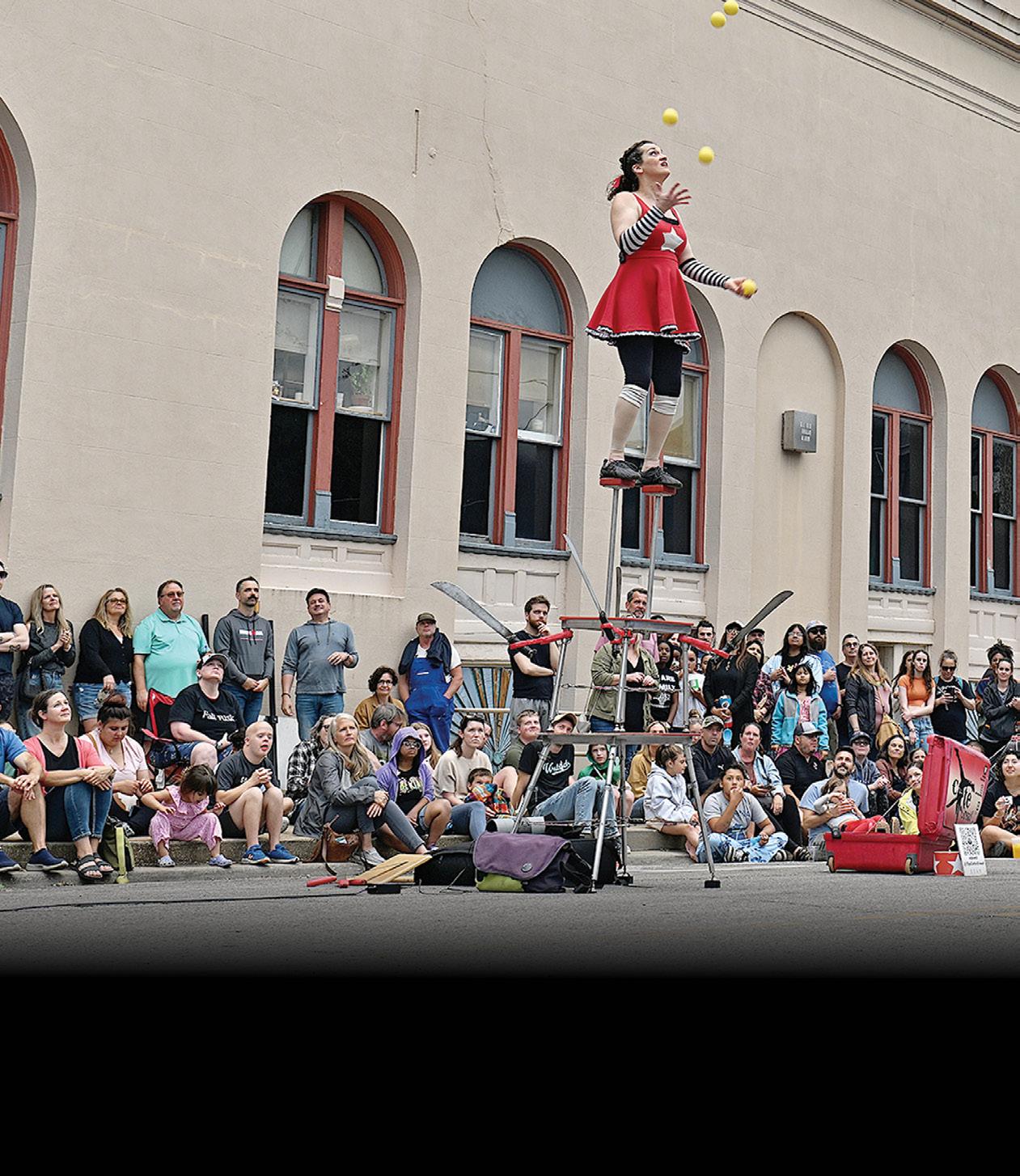
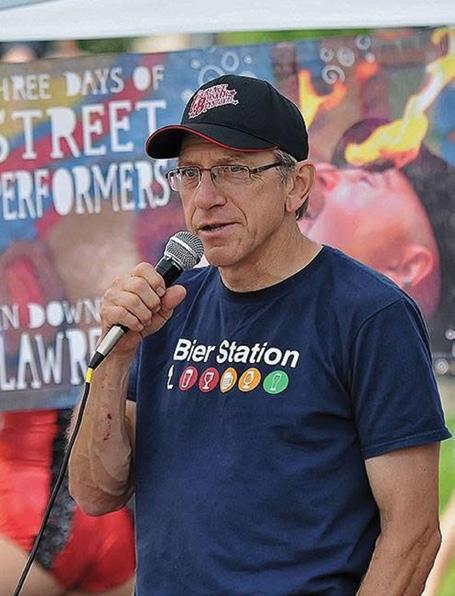
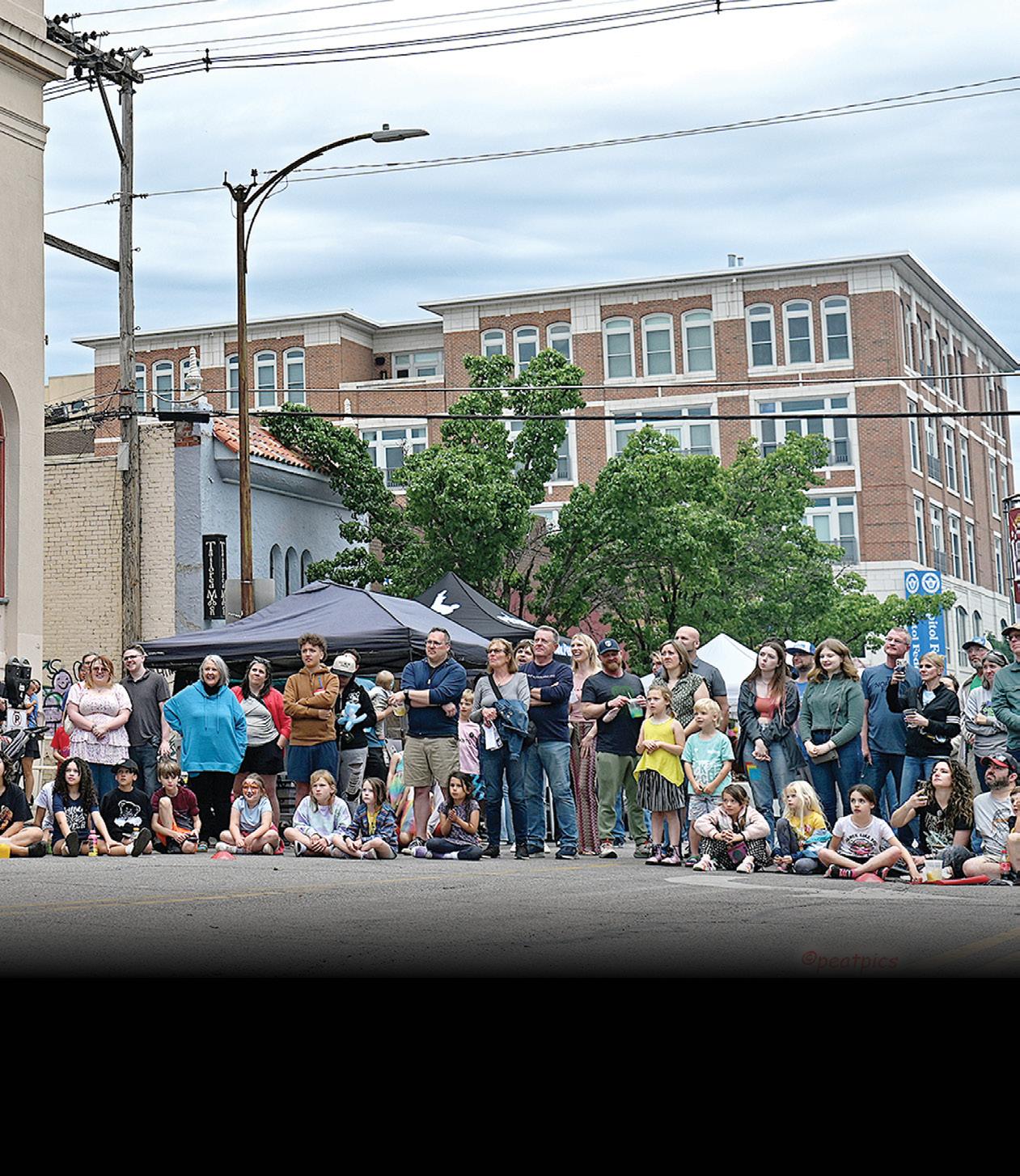
“A lot of business will want to partner with us to show the community that they support the arts," explains Derek Kwan, executive director of the Lied Center of Kansas. "This community is clearly passionate about the arts. We are very fortunate about this.” Communities come together through a united goal, whether through a local sports team such as the Jayhawks, an event such as Final Fridays, which celebrates the artists in the area, attending a film at Free State Festival, or watching a street entertainer juggle fire at the Busker Festival or a performance at the Lied Center.
Art as Life
So how does art unify, shape or enliven a community? Whether we know it or not, art is in all elements of life. Every aspect of how we live has been designed in one way or another. Creatively responsible choices affect us, directly translating into the way a city is laid out, what designs are approved, who is making the choices for investments that aren't just about the bottom line. But consider a more holistic approach, one that also addresses what people need to fully live and how our actions will affect our planet—a quality of life and longevity approach.
Quality of life has played a central role in how our city has made strategic decisions throughout its history. As Lawrence has grown over the years, the downtown area has been protected to maintain a certain look and feel, with many local businesses, restaurants, bars and shops maintained all along Massachusetts Street and the surrounding area. Outdoor public art is placed by the yearly Unmistakable Public Art Exhibition (formerly known as the Outdoor Downtown Sculpture Exhibition) throughout the downtown area. Lawrence Business Magazine chief photographer/publisher Steven Hertzog writes, “Public art and cultural programming foster civic pride, neighborhood identity and overall well-being—making Lawrence a more vibrant and attractive place to live.”
Artist Cate the Great performing at the Lawrence Busker Festival above: Richard Renner, creator and producer of the Lawrence Busker Festival
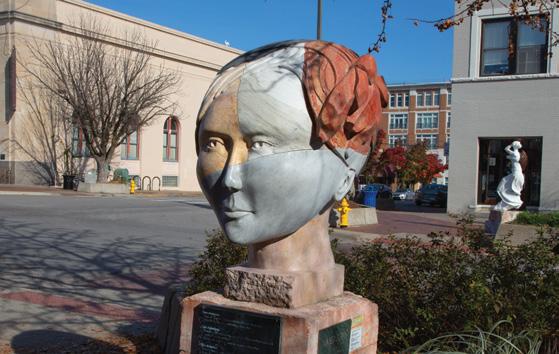
The Unmistakable Public Art program, spearheaded by Arneill, is one way of showing that we care about public art, which allows for equity and inclusion for all. He says, “My attitude with any city is, if you are going to do public art, do it on purpose.”
So what is the vision for Lawrence? What does our community want to focus on and invest in as a city? One example Arneill suggests is musician Nick Carswell, who worked with Lawrence Parks, Recreation and Culture, eXplore Lawrence, the Kansas Arts Commission and others to create the Lawrence Music Census, “a community-led initiative to gain a better understanding of the current music needs of the Lawrence, Kansas, community,” according to the census website.
“That (census) was really eye-opening," Arneill explains. "When you can give that much attention to a specific genre or field, you really learn a lot about what is and isn't working. And clearly, the music scene like the art scene is working. ... The next question is what entity can serve in a bigger leadership role, or how do we make this better for the whole community?”
Kwan believes to attract businesses and places of employment to a community, the quality of life is absolutely critical, as are opportunities for employees to participate in a wide variety of creative activities. Companies are looking for places with a lot of vibrancy from a cultural standpoint to establish their businesses. They look at a whole range of activities, not just the performing or visual arts, but the culinary arts, athletics, outdoors and more.
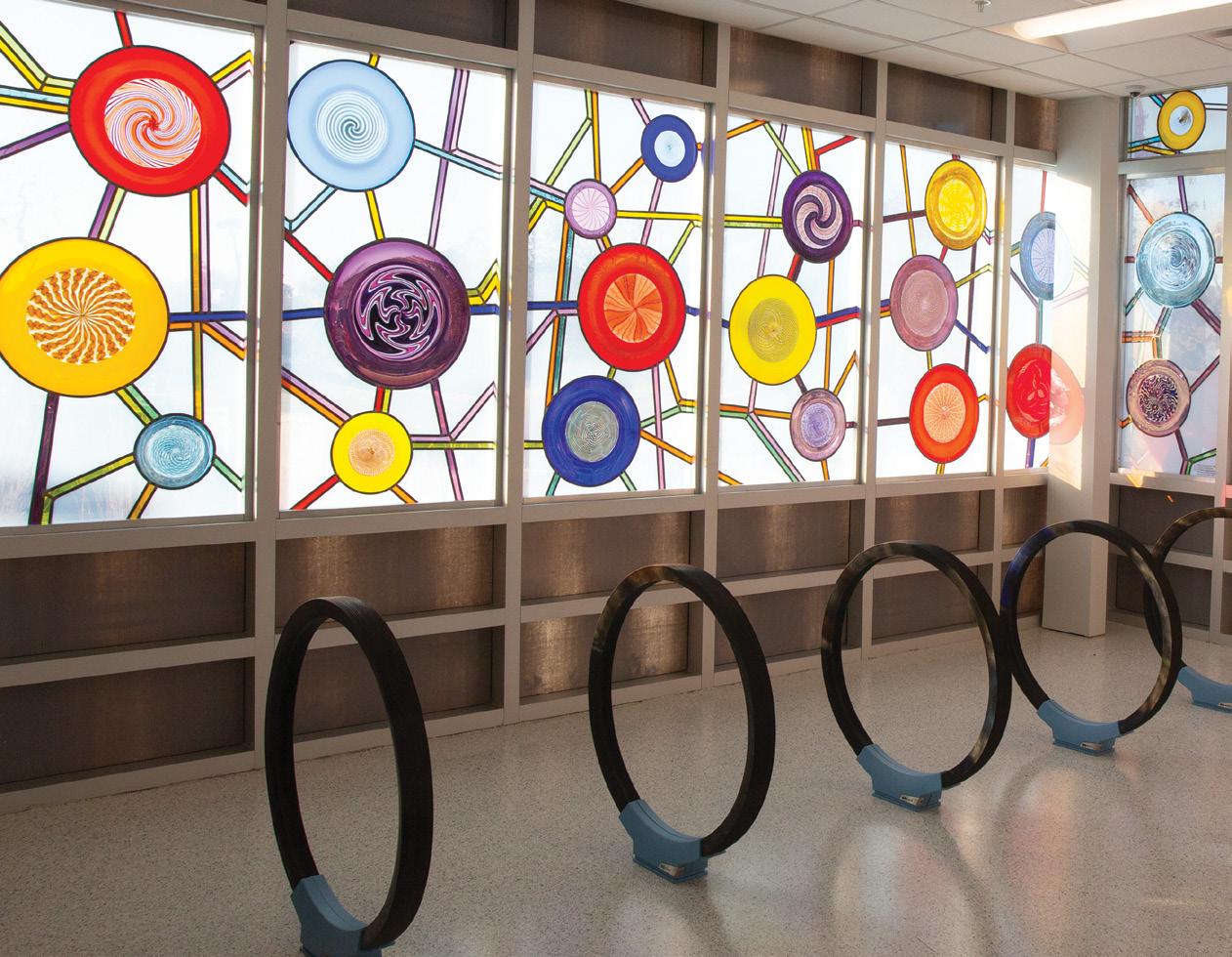
“Making Connections” an installation by Tyler Kimball at the Multi-modal Transit Facility
Top to bottom
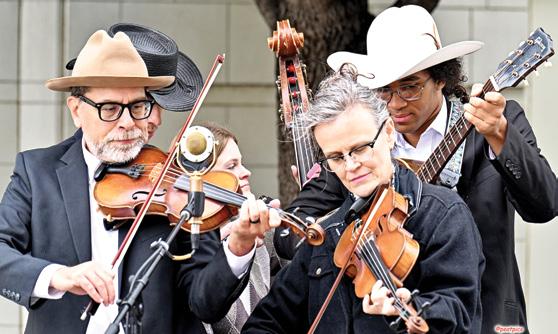
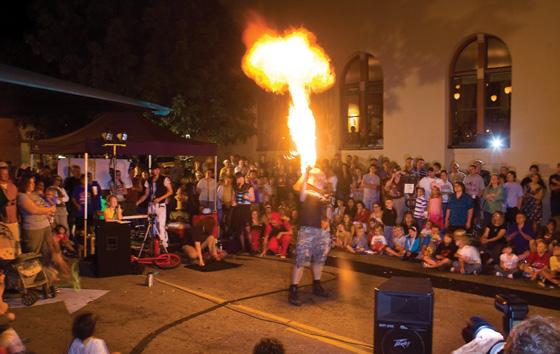
The Lost Keys performing in Lawrence at The Busker Festival 2025by Peaty Romano Busker Fest Fire Act - by Peaty Romano “American” by Myles Schachter celebrates the diverse origins of people who made the United States their home
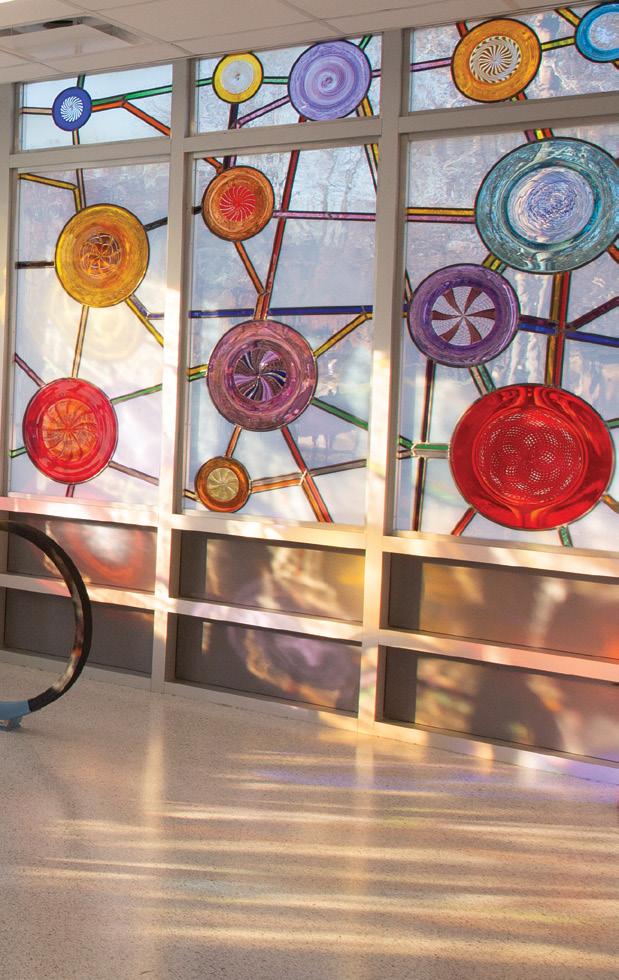
He says he has personally met individual groups that have flown into Kansas City from all over the region, including Arizona, Colorado, Iowa, Nebraska and Texas, specifically to see an Imagination Movers show at the Lied. When visitors as well as artists come to town, he always recommends they go down to Mass Street to enjoy a meal and peruse the locally owned shops.
Similarly, the Lawrence Convention and Visitors Bureau, eXplore Lawrence Executive Director Kim Anspach explains, “eXplore Lawrence has long recognized the role of arts and culture in creating a vibrant community. We promote the art, music and festival scene in our digital marketing campaigns in targeted areas to attract visitors." She says they have spent the past two years investing in tools that allow them to quantify effective campaigns that draw arts and culture fans here, gather accurate visitation trends, monitor hotel occupancy rates and assess visitor spending when they are in-market. Tourism is a boost to our local economy, she adds, by drawing in visitors from not only the region and all over the country, but occasionally—depending on the event—from around the world.
Attraction Is Key
There are many different events throughout the year that are a draw for visitors and locals alike, and provide commerce for Lawrence. Free State Festival (FSF) is one of them. Founding Director Marlo Angell serves on the Lawrence Cultural Arts Commission and is a community ambassador for eXplore Lawrence. An annual event, the Free State Festival, celebrates the free spirit of the state of Kansas with films that challenge, inspire and entertain, according to its website. This signature annual event brings independent films, live music, comedy and art to venues across the vibrant college town of Lawrence.
The event, which is held over a week during the early summer months, partners with local businesses for events such as directors’ talks, book signings at The Raven Book Store, Ladybird Diner happy hour, six short films and thematic dip pairings featuring local chef Louis Wigen-Toccalino, from the Cellar Door, as well as numerous after-parties. “We program for both [locals and tourists]," Angell says. "We program for locals to create those community-type experi -

ences ... We also cater to appeal to out-of-towners ... To me, this is the beauty of it, it is the mixing of the locals and the out-of-towners ... " He says there have been so many interesting connections made— whether an artist or fan, a community member, a local business—where someone brings something home they got at a local store or gallery. "Those are really the sparks that last beyond that one week ... we think it affects things throughout the whole year.”
Another annual signature event many people look forward to every year that draws regional, national and international tourists is The Busker Festival. Busker Fest creator Richard Renner explains, “I have heard it said recently, 'Art is the light industry of Lawrence.' It is a very productive part of our economy, and it contributes not only to culture but tourism—and people come for it. We get people who come in for the weekend. They are making it a family reunion just for the Busker Fest.” He says he has spoken to people from California, Minnesota and other locations who have driven to see specific performers. With an estimated $10,000 to $15,000 yearly grant that is financed by the bed tax, The Busker Fest generates over a quarter-million dollars in revenue tax during the weekend.
Speaking of signature local events, Final Fridays (FF), a monthly event, is an art walk that happens the last Friday of every month in galleries, retail spaces, restaurants, bars, pop-up shops, music venues and more in Downtown Lawrence, the Warehouse Arts District and a number of other places around the city. It was created and developed with overwhelming support from the creative community, artists of all types, the Lawrence Cultural Arts Commission, the Lawrence Arts Center, Downtown Lawrence Inc., galleries, art collectives and many other businesses. It was launched in August 2010. Fifteen years later, the impact of this event can be seen through support of the retail businesses in the area, musical venues, bars and restaurants.
Early impact of Lawrence Final Fridays was detailed in its Impact Analysis and Economic Development Survey conducted in November 2011. This early survey states that Final Fridays have very positive impacts in categories of souvenirs and gifts, meals and refreshments, lodging, transportation and other areas, including general business and economy. Thousands of visitors unique to Final Fridays events were identified, and the survey was randomly conducted by volunteers. Since that time, the event has received centralized management and development through City of Lawrence entities and continues to provide these benefits to the community.
Working Together
The vitality, community and economics of art are an asset to the City of Lawrence. Grants and other opportunities from the city, funding from the state through the Kansas Arts Commission, federal funding through the National Endowment for the Arts all provide support. Many private organizations, businesses and individuals have also backed places, events and groups like the Lied Center, the Lawrence Arts Center, Theatre Lawrence, The Busker Fest, Final Fridays, Free State Festival and many other amazing arts and cultural offerings in town. A major upcoming event that will be a huge economic boost is the FIFA World Cup, in 2026 in Kansas City, and there is a special call for public art through Unmistakable Public Art Exhibition.
The arts remain a vital resource that keep on giving to Lawrence. Together, we can continue to look forward and move toward ideas and actions to ensure we invest in the future of our city and grow our economy by devoting our resources to support artists, the arts and culture. In doing so, we will continue to create a vibrant culture and give back to the community.
"You can't use up creativity. The more you use, the more you have.” Maya Angelou. p
TEN reasons the arts are vital to our culture, health and prosperity. (backed by actual application and hard data):
1. Arts strengthen the economy.
2. Arts drive revenue to local businesses.
3. Arts unify communities.
4. Arts strengthen mental health and well-being.
5. Arts and culture are tourism drivers.
6. Arts improve academic performance.
7. Arts spark creativity and innovation.
8. Arts have social impact.
9. Arts improve health care.
10. Arts for the health and well-being of our military.
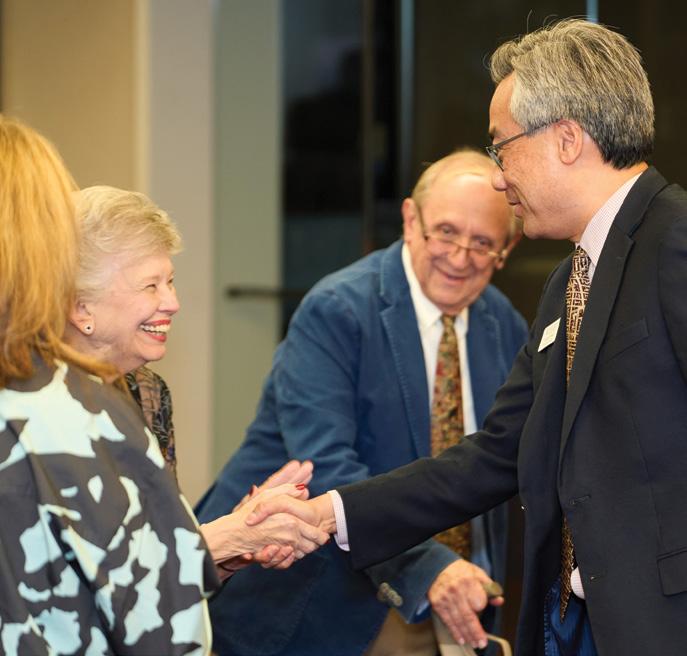
Derek Kwan greeting Martha Gage by Carter Gaskins



Empowering Kids
Critical thinking and
problem-solving are
essential lessons kids are taught in art classes that help them make important decisions and use good judgment in all aspects of life.
by Bob Luder, photos by Steven Hertzog
Andria Devlin says she has a stock answer whenever she gets a commonly asked question from one of her students.
“If a child asks me, ‘Do you like my work?’ I always ask a question back: ‘Do you like your work?’ says Devlin, director of early childhood education and teacher at the Lawrence Arts Center (LAC) preschool, which serves between 85 and 95 Lawrence-area schoolchildren every school year.
“That’s so important for them to hear, I think,” Devlin continues. “When they answer, ‘I like it,’ I respond with, ‘You should! You worked hard.’ It causes the child to think critically about their work and ask themselves what they like or might not like about it. It allows children to grow their intrinsic motivation skills.”
Art by its nature is a creative endeavor, and any type of creative process requires a substantial amount of critical thinking, whether that manifests itself
in more technical choices, such as what color palette works best for a landscape painting or the space and angles to use in a drawing, to more general thought processes like decision-making, problem-solving or teamwork.
When Devlin and her fellow early childhood educators throughout the Lawrence area conduct a class, it’s always about much more than simply brush strokes on a canvas or sculpting shapes out of clay. Teaching young people how to use their minds and make critical decisions and judgments, hopefully, will help them through life far beyond the art studio.
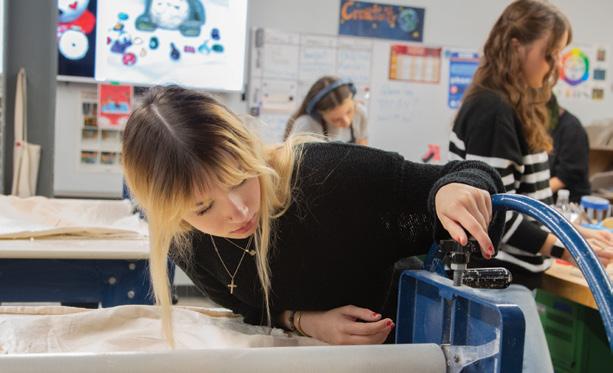
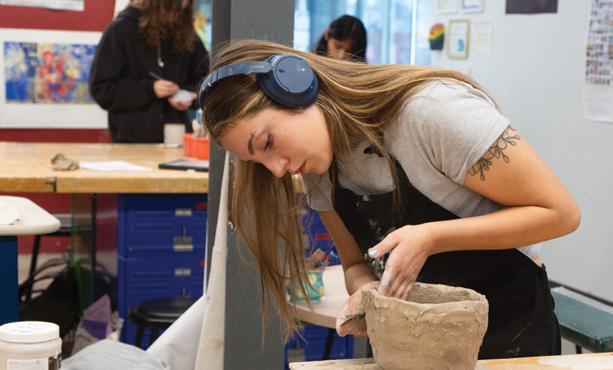
“Teaching the processes of constructing with clay or metal fabrication— my subject matter—is a very small part of what I do as an art educator,” explains Emily Markoulatos, a ceramics and jewelry teacher at Lawrence High School. “Pushing kids to think creatively, expand on their ideas and self-reflect are things that I focus my teaching on much more than the fabricating processes.
THROUGH ART
“I know that most of my students won’t grow up to be artists," she continues, "but learning to think critically, get new ideas and practice selfreflection are valuable lessons the arts teach, which are important for every student.”
This teaching philosophy resonates throughout Lawrence’s arts education system, whether it be at local high schools and Lawrence Arts Center, the city’s elementary and middle school programs, or private nonprofit organizations such as Van Go. Critical thinking is a major component of all art curricula.
Nurturing
a Sense of Wonder
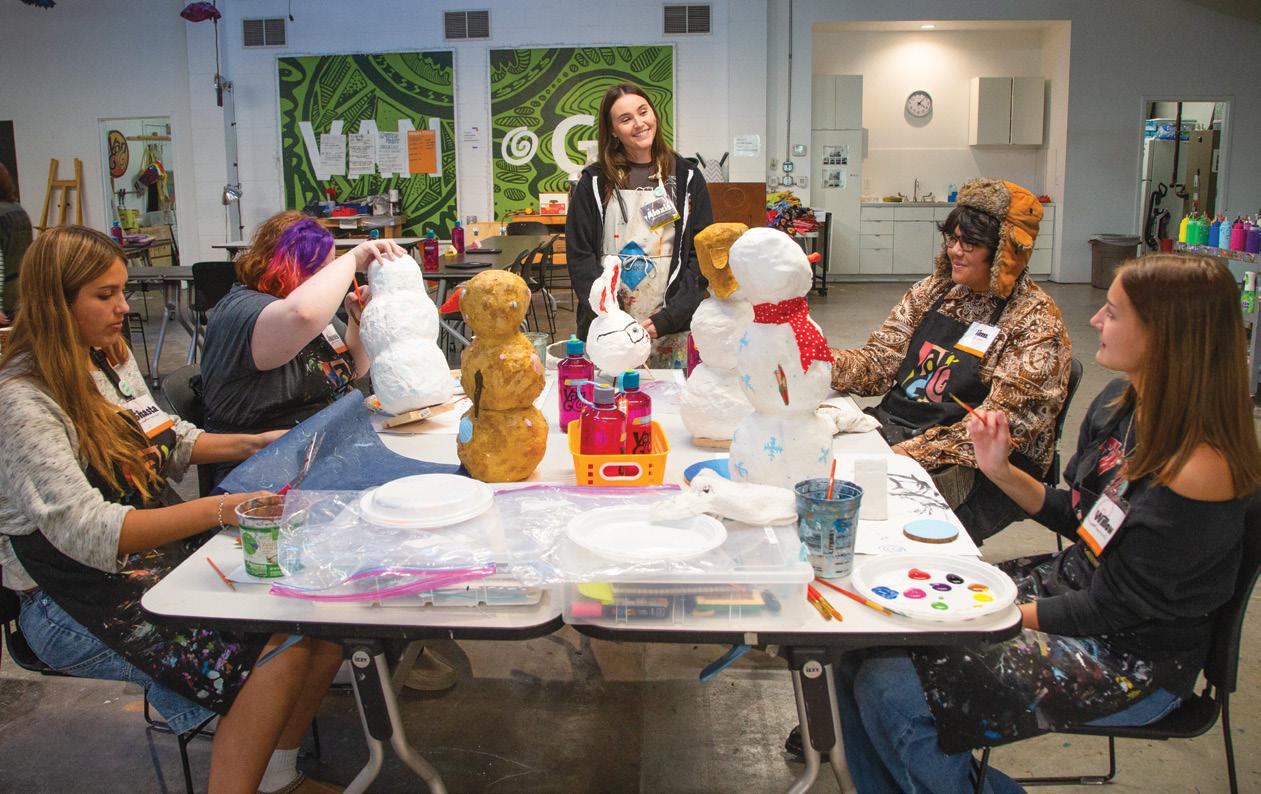
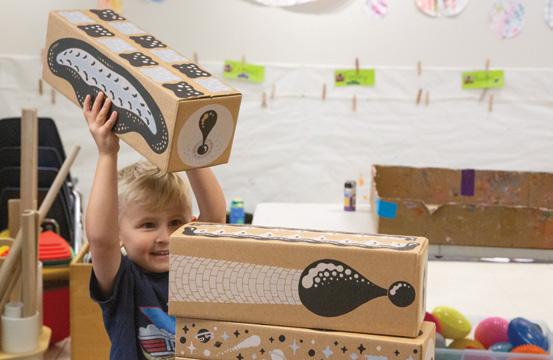
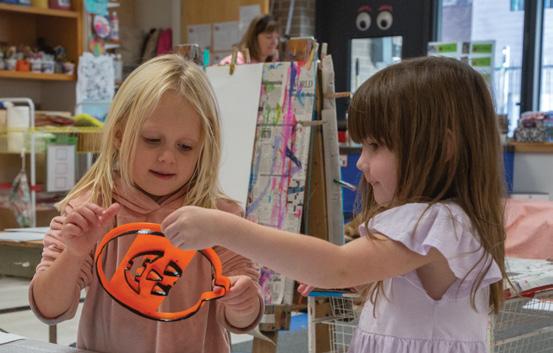
The Lawrence Arts Center has 10 teachers overseeing six preschool classes and one kindergarten class. For half a day two, three or five times per week, children work on open-ended materials that focus on the process of art over the finished product.
“Getting children to think critically is a major responsibility for us,” Devlin says. “We don’t know what adulthood will look like for these children. Teaching children things like cooperation, problem-solving, communication, building social and emotional skills … nurturing a sense of curiosity and wonder.
“It all ties into critical thinking,” she adds.
Devlin says she accomplishes this largely by asking students openended questions that typically begin with, “I wonder.”
“That allows children to organically mirror that language,” she says. “How do we help them find the answers they’re looking for themselves?
It’s all about trusting children and allowing the time and space to process the world around them.”
A lot of the time, Devlin says, all that is required during class time is taking a pause and giving a student the time and permission to figure out the solution to a challenge themselves before asking for help. Once the student crosses that threshold and comes to a solution, there is then acknowledgment that his or her efforts were noticed by the teacher that he or she accomplished a difficult task.
“A lot of children don’t get that chance,” she continues. “They follow the adult or a peer. We want to empower children to be decision-makers.”
Another important aspect of teaching critical thinking, Devlin says, involves consideration of others—experiences, feelings, thoughts, use of materials. Many young preschoolers are egocentric, so designing lessons and team projects that involve patience and consideration of classmates’ work and efforts is especially important.
Holding a preschool and kindergarten in a community arts center has some perks, she says, such as access to a stable of many of the talented artists who live here. Every year before Valentine’s Day, Devlin says a printmaker brings a printing press into the classroom to make Valentine’s cards. Ceramists visit classes to help students work with clay. Dancers and musicians also come in, and Devlin says at least once a week, children take advantage of the LAC’s dance studios to get their bodies moving.
She also stresses that Lawrence Arts Center does all it can to ensure its preschool and kindergarten programs are available to all interested. The center has a robust financial-aid program financed through the City of Lawrence and private donors. Currently, 12 percent of students access aid.
“Art is for everyone,” Devlin says. “We’re a big believer in that here.”
Hannah Hurst, art teacher at Deerfield Elementary
Drawing Them In
Van Go is a nationally recognized arts-based employment program for teens and young adults that’s been a staple of the Lawrence arts community for more than 25 years. Using art as a vehicle for self-expression, self-confidence and hope for the future, the nonprofit organization employs participants to create artwork while receiving mentorship and guidance, preparing them for future employment and careers.
Art is what draws young people into the program, but once in, they realize it’s much more. Participants are encouraged to figure out what they want to do with their lives and what it will take to get there. Whether that’s by pursuing higher education, earning through a certificate program or finding an entry-level job in the industry they want to pursue, Van Go is there to guide them.
Van Go has two programs serving two specific age groups. Jobs in the Arts Makes Sense (JAMS) program are for 14- to 18-year-olds and teach important job skills employers value and life skills needed for self-sufficiency. The Arts Train (TAT) program is a transitional employment program for young adults ages 18 to 24 that provides paid employment, employability skills training and comprehensive services aimed at addressing and overcoming barriers, setting attainable goals and preparing for successful employment.
Critical thinking is paramount for all programs.
“With JAMS, the goal is to teach employment skills,” says Lori McSorley, executive director at Van Go. “An artist has to brainstorm, plan and adjust when things don’t go according to plan. Those are critical-thinking skills that are useful in all aspects of life.
“TAT is more in depth in terms of learning life skills, working on goal-setting, employment skills," she continues. "How to fill out (a job) application, learning soft skills that help in an interview. We also have Go Healthy, which is education on all things health … not only in terms of healthy nutrition and personal habits, but healthy relationships, healthy financial habits and more.
“We’re preparing participants for life," McSorley adds. "They don’t have to have any art skills at all. But key critical-thinking skills are all what’s being taught at Van Go.”
She points to an art-related example of when critical and creative problem-solving became front and center on a recent Van Go project. A local engineering firm enlisted Van Go artists to create a mural for one side of the building. The wall was inaccessible to the artists, however, so they painted panels at Van Go and then transferred them onto the wall of the building.
“A mural isn’t just putting paint on a wall,” McSorley says. “There are presentation skills, planning skills, developing creative solutions, using multiple perspectives. This was a great example of problem-solving.”
Another story McSorley loves to tell is that of a Van Go participant who, through the TAT program, figured out he wanted to become a farmer. Through TAT’s employment program, the participant went to work as an apprentice for a local farmer, and when that farmer decided to retire, he left his farm to the participant.
“It’s an interesting mix of art and employment,” she explains. “Our goal is to remove as many barriers to employment as we can.”
Van Go has enjoyed great success in that regard over the years. In 2024, it served 105 teens and young adults, and provided 120 work opportunities. Seventy-six youth received compensation totaling $160,083 in wages and stipends.
In JAMS, attendance, punctuality, completion and evaluation improvement rates all were in the mid- to upper-90 percentile. For TAT, attendance and punctuality were in the 90s, with a completion rate of 85 percent.
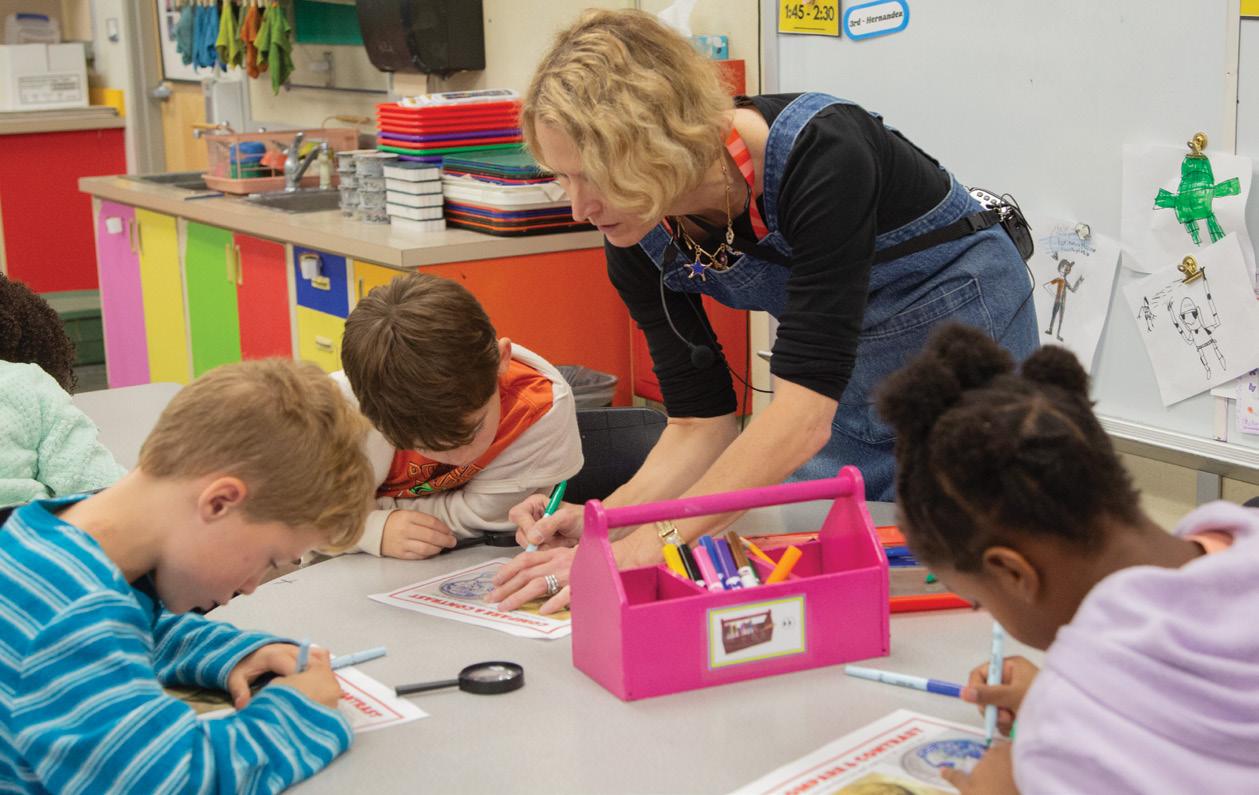
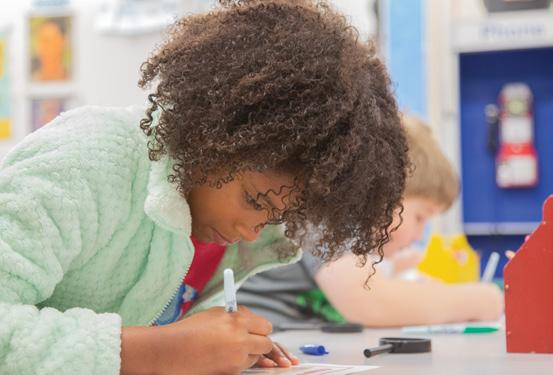
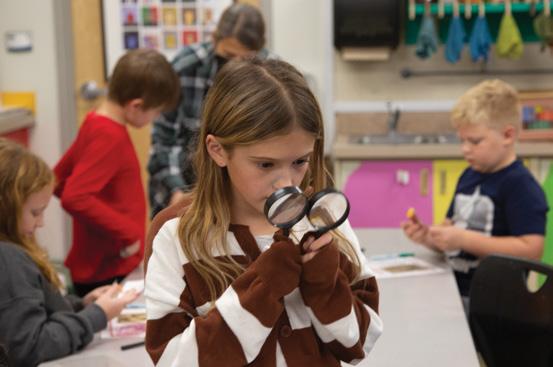
top to bottom Deerfield students focus on their assignment Lawrence Art Center students simultaneously play and create together

TIRE D? GAINING WE IGHT? LOSING LIBIDO? FOCUS AND DRIVE L ACKING? Come experience the movement we are creating to help you get back to the top of your game!

Getting Creative at Being Creative
Hannah Hurst says she’s incorporated critical thinking into just about every lesson she’s taught her students in the last 12 years as an art teacher at Deerfield Elementary School. A quick example she gives is, while teaching the ancient Japanese art of origami, she gives students two minutes to form the shape of a cat out of a piece of paper using just three folds.
“I think it’s an important piece (of the curriculum) for kids to use critical thinking,” Hurst says. “Another thing we do quite a bit is team-build. We’ll break a class into groups. And if one student in the group completes a project quickly, then they have to take the time to help someone else at the table.”
She says she’s always enthusiastic about bringing local artists into her classroom to share their knowledge, wisdom and experience with students. In the past, she’s had Stephen Johnson do illustrations for children’s collage activities, and Kristin Morland create images out of sequins.
“Kids love having people from the community come in,” Hurst explains.
“It’s fun for them to see local working artists and how they create their art.”
She says all third graders at Deerfield take a field trip around Lawrence to see and learn up close the history and unique local architecture of the town’s homes and buildings. Once they return, she leads her classes in playing a card game called “Unmistakably Lawrence” that introduces students to local architecture.
“They are literally overjoyed when they see me after the field trip … exclaiming about all the buildings and houses they got to see,” Hurst says. “This real-world experience is powerful.”
Deerfield being a public elementary school allows for a diverse student body, with children of all origins and socioeconomic groups represented.
“We take all fourth and fifth graders to the Spencer Museum of Art,” Hurst says. “That gives kids of all strata an opportunity to go to an art museum and research shows that kids who go to art museums will go back as adults.”
At the end of the day, while teaching principles might be art specific, the goal, she says, is to make her students into well-rounded human beings.
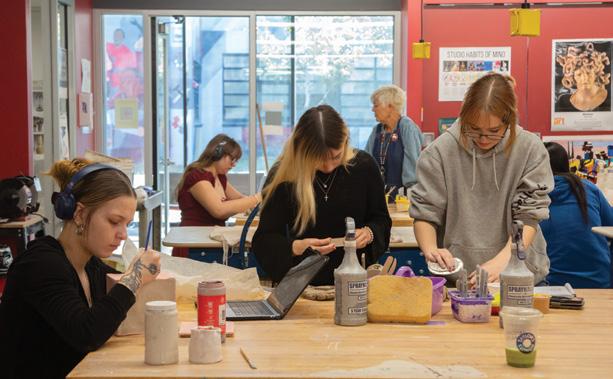
Markoulatos, in her fourth year teaching art at Lawrence High School after teaching at Billy Mills Middle School and Ottawa High School, says project-based learning, which is the essence of art education, forces students to constantly problem-solve and make critical decisions.
“From the brainstorming to design to fabricating, students evaluate, edit and reassess their artwork as they work through the art-making process,” she says.
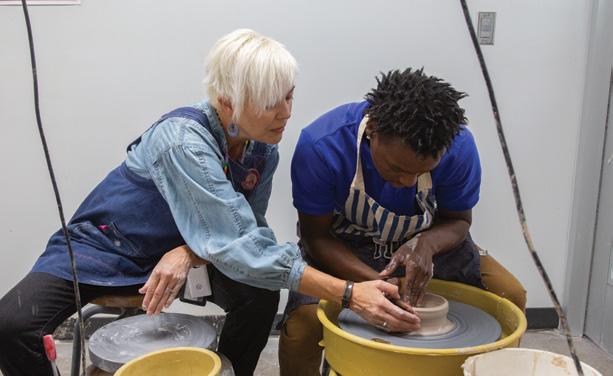
Markoulatos also loves to work with artists in the community and recently had a guest artist, Kim Brook, demonstrate to students how to throw lidded forms on a ceramics wheel for her Ceramics II class. In the spring, her advanced ceramics students collaborate with the ceramic artist-in-residence at the Lawrence Arts Center.
“The diversity of the student population is one of the big reasons I love working at Lawrence High School,” she says. “That and the support of art education from our staff and administrators. It is really great and not something you find at every school.” p
Emily Markoulatos, ceramics and jewelry teacher at Lawrence High, with her ceramics class


ART for the Masses
Public art is not only aesthetically pleasing in community spaces but many times also reveals a deeper meaning from the artist.
by Emily Mulligan, photos by Steven Hertzog
Walls are more colorful, outdoor spaces display eye candy, entrances become entrancing. What is the point of public art? Is it merely decoration? Or must it tell a story or relate a historical lesson?
The answers to those questions are as varied as the artwork itself and as the people who create and view it. Therein lies the joy and challenge of creating public art, local artists say.
Lawrence buildings and landscapes are dotted with murals, sculptures, panels and paintings. Concentrated around downtown but covering ground throughout the city, the origins of the art vary from community-based efforts to fulfilling requirements of the City’s Percent for Art program, to university- or privately owned displays. Most were intentionally placed, and they vary in age from multiple decades old to just a few months old. All are free and accessible for anyone who cares to view them.
Public Artworks’ Purpose
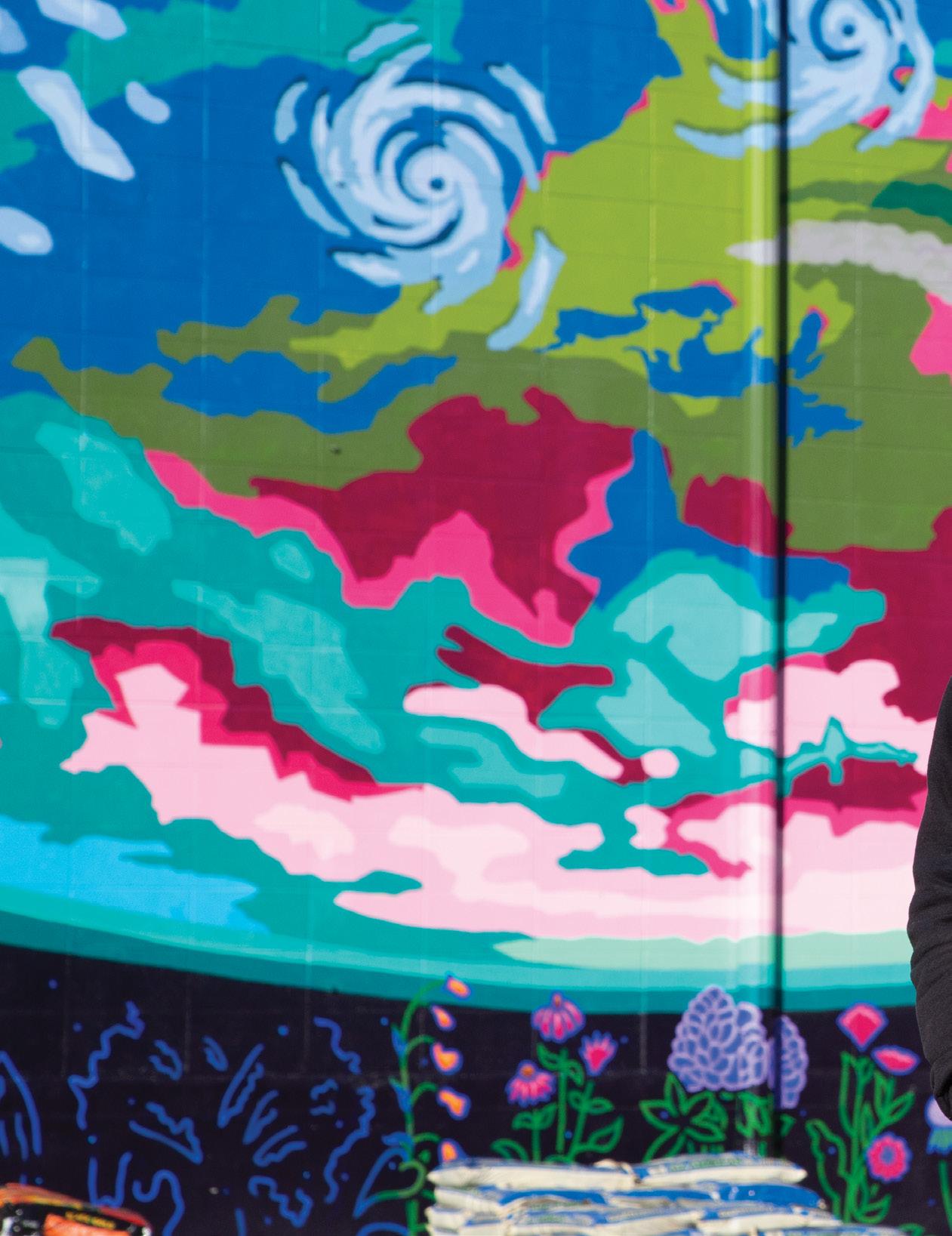
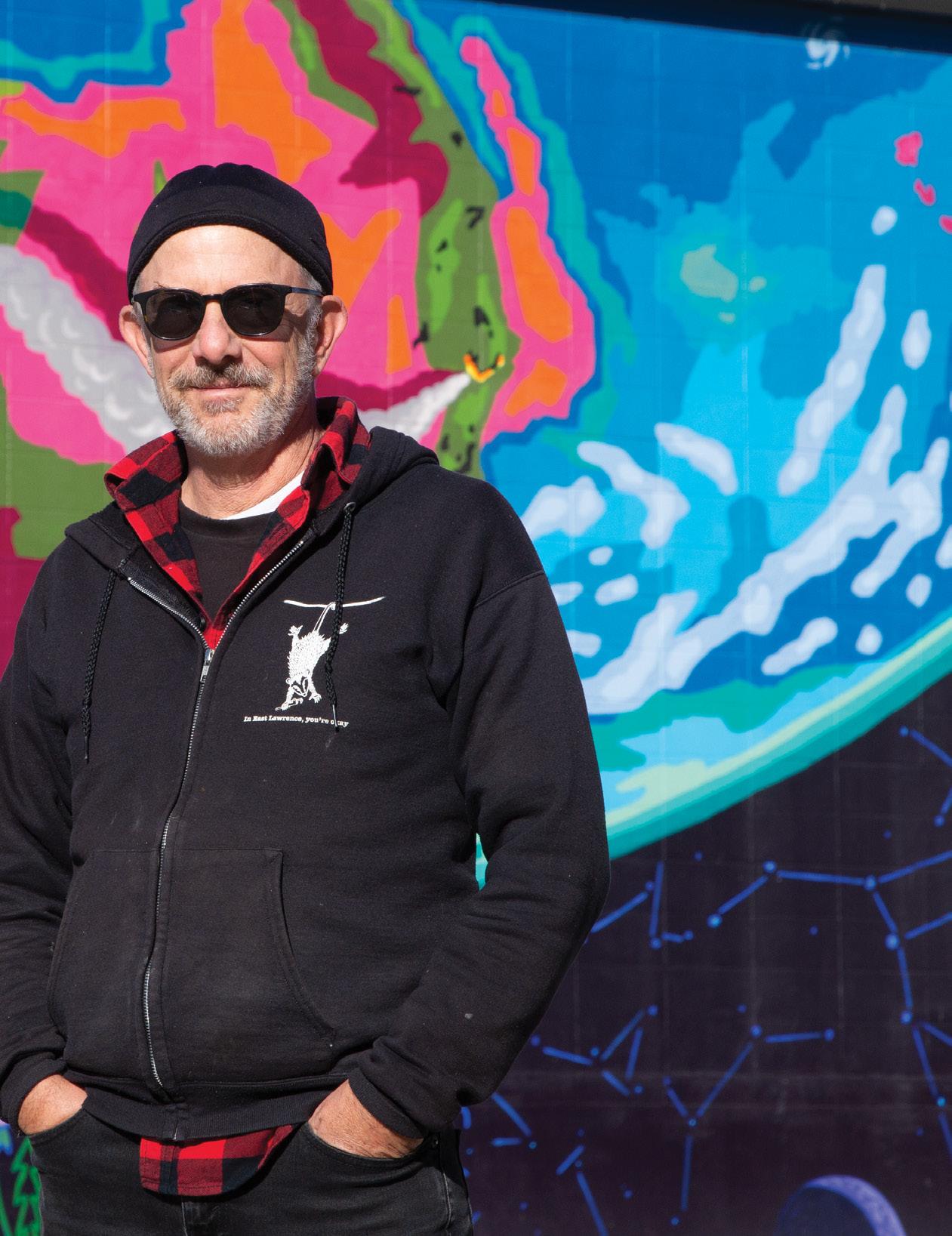
“As a community, what do we hope to get for it? Is it for visitors? For civic pride? Is it to engender our stories?” international muralist and printmaker Dave Loewenstein asks. “I don’t think most folks are thinking about those questions. In my world, we’d have all those things, and we’d have support and funding for them.”
Deciding what to depict or portray in murals or sculptures can be either a collective effort from the community; an individual’s perspective on a story or message; or some of each. The source of funding, such as a particular type of grant, may determine at least some of the direction or content of the art. Other art may solely be the artist’s or business’ decision of what to present to the broader community in a public-facing space.
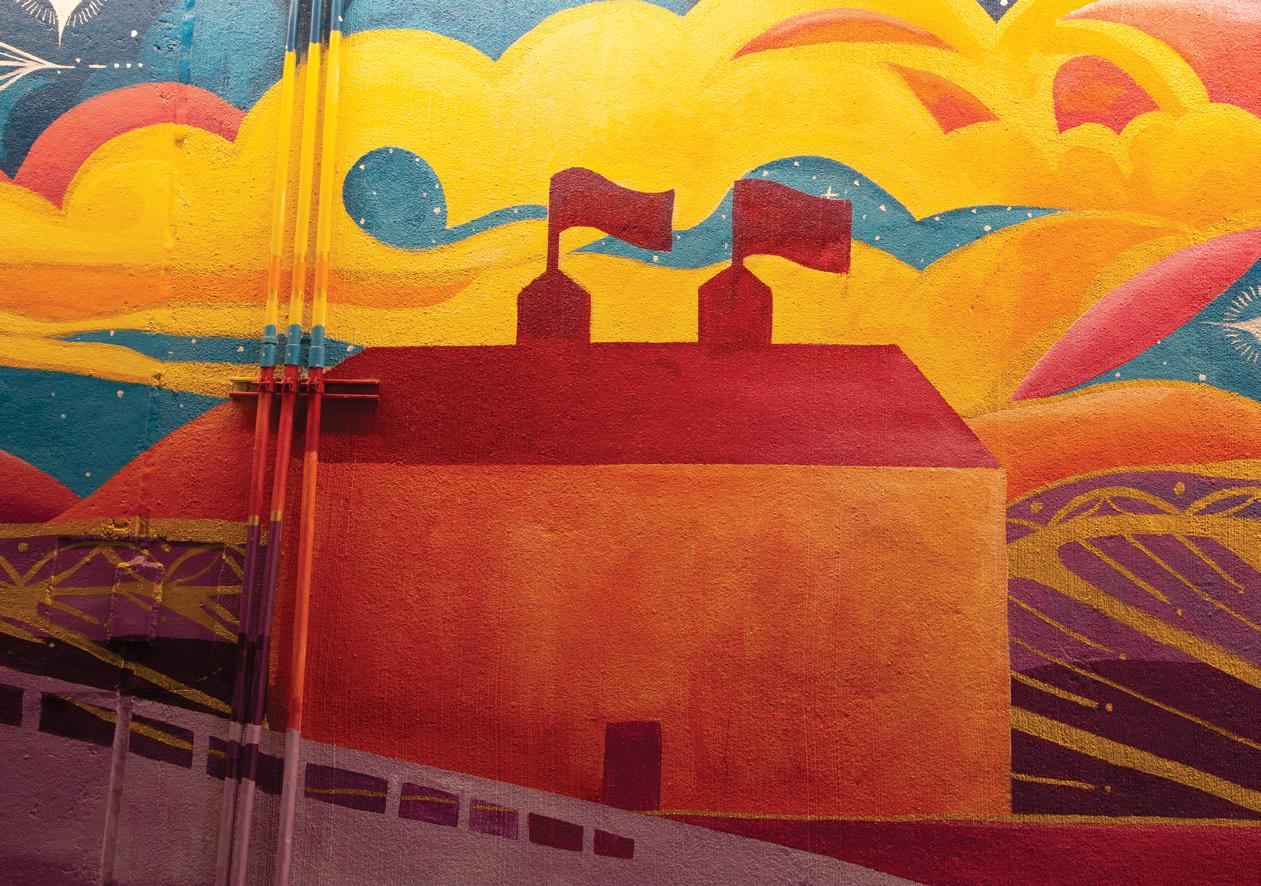
Mona Cliff is a multidisciplinary artist in painting, beadwork and fabric appliqué, whose public art also appears outside of Lawrence at Kansas City International Airport, Topeka’s NOTO Arts District and The Museum of Kansas City. Her painting on the underside of 23rd Street near Haskell University, a project called “Reclaiming Indigenous Spaces,” and her large-scale mural of Lawrence icons inside the parking garage and Ninth and New Hampshire streets, feature bright colors and clear representations of familiar symbols.
“I can only share what I’m making, and they can only experience it from their lived experience. I’m still straddling that public-art perspective,” she explains.
Cliff, who has Native American Aaniiih and Nakota heritage, likes to express universal Native American symbols and messages in all her public art, particularly as part of Lawrence’s story.
“I knew that I especially wanted to focus on making art that our Haskell people would recognize ourselves in around the city,” she says.
Alicia Kelly’s art typically is paper, cut paper and printmaking. She has done large installations in galleries before with paper, but paper won’t weather outdoors in public. So her first public art project, on the outside of the Lawrence Public Library parking garage, was as much about experimenting with a more durable material as it was about the art itself. In 2017, she worked with a sign company to print her circular design onto Tyvek pieces that she attached to the garage’s exterior for one year. Earlier this year, she installed new public art on the same garage facade.
“I wanted to know, ‘Can I do it?’ It was curiosity and a test of the material for the first one. As far as the art, I want the audience to question it, to not know what it is. It’s not one strict thing. I hope people and kids will sit and daydream while they look at it—I relate to that,” Kelly says.
Public art can reflect people back to themselves, sometimes through their ancestors in this very place—and at the same time, from a faraway land.
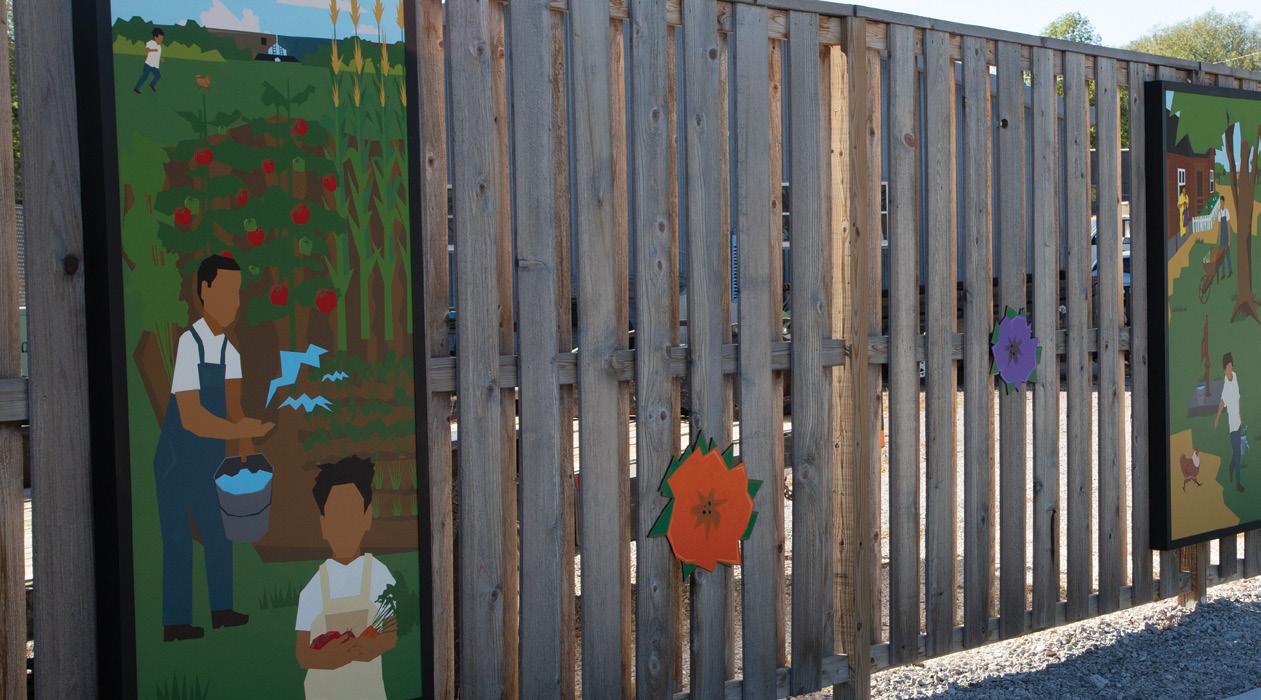
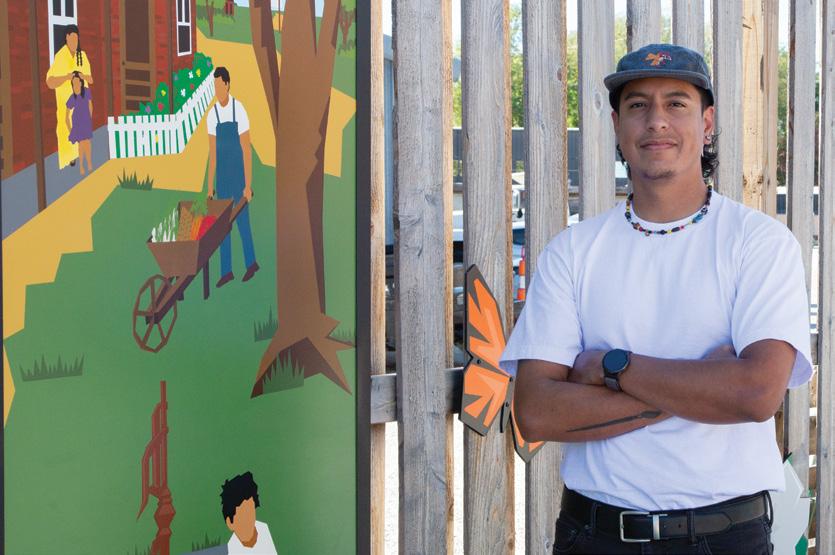
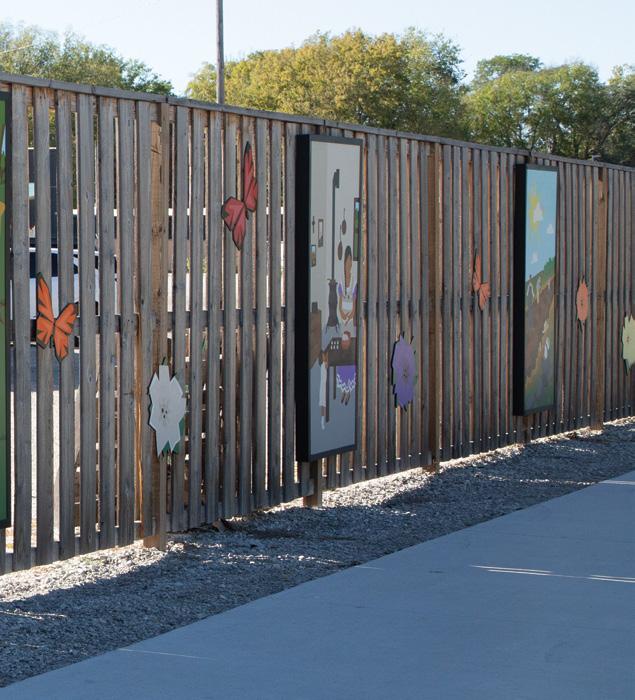
Javy Ortiz is a painter, spray-painter and muralist who cocreated an outdoor mural at the restaurant and store La Estrella. This year, he built a multipanel art installation commemorating La Yarda, the housing unit built for MexicanAmerican railroad workers in the 1920s on the Lawrence Loop at Eighth and Delaware streets.
“I do believe in beautifying spaces and making the cityscape look pretty, but it holds a lot more weight when it tells a story,” he says. “It’s less about explaining everything and more about the audience’s feelings about it.”
Dave Lowenstein, international muralist and printmaker
Personal Connections inPublic Art
Just because dozens to hundreds of people see their public art every day doesn’t mean the art is generic or meaningless. To the contrary, the artists say they have deep personal connections to the depictions, symbols and colors in the art.
Cliff endeavors to incorporate elements that bridge both her own tribal and ancestral experiences, and those of other Native Americans, regardless of tribe.
“I’ve broadened my visual language to be more accommodating to all types of Natives. I use content shaped by common imagery that Native people share across the U.S.,” she says. “[In my first solo mural] I have incorporated the orthography of the Osage tribe word for ‘people,’ making the language that used to be spoken here more common.”
With the bright colors and floral patterns, there is something accessible and approachable for all who view the artwork, but Cliff hopes that the ribbonskirt designs and particular plant choices speak directly to Native American viewers most especially.
“There are so many people that don’t have any proximity to our community, and I wanted to share that we have a beautiful, thriving culture that’s contemporary,” she explains.
Kelly’s second parking-garage design showcases her new venture into incorporating color into her typically black-and-white designs.
“I am a pattern maker and meditative in my work, because it’s good for my mental health. This is a newer pattern I was working with. I didn’t know what I wanted to say with it, but the color adds an emotion, a playfulness,” she says.
Kelly tends to stick with a particular pattern in all of her media for around three years, continually working with and through it, until she says it is “too easy.” Then she retires it and invents a new pattern.
“Even if you’re not meaning to tell a story, a story is going to come out. My abstract works aren’t deep political meaning; my work doesn’t need to be interpreted. Sometimes I don’t know why I did it,” she adds.
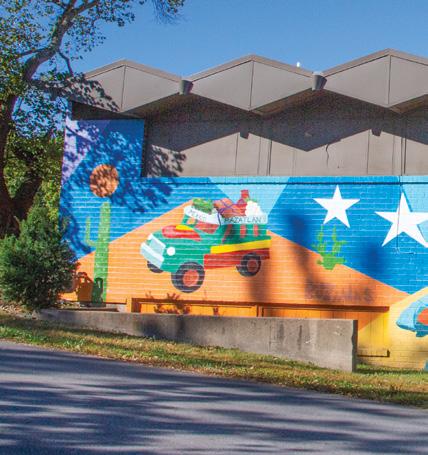
Ortiz’s works are both in locations that are connected with Mexican and Latino culture in Lawrence—Latino-Lawrencian, to coin a phrase—at La Estrella and near the former site of La Yarda. It’s no accident that those are the projects he has chosen for his public art.
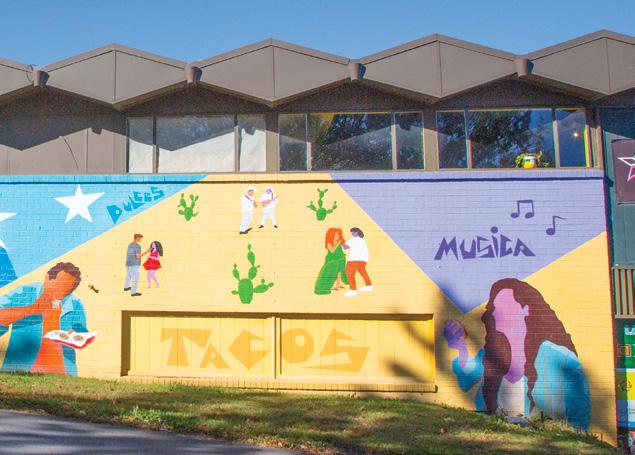
“My biggest drive with both projects is my own Mexican heritage. It’s my desire to represent my community in Lawrence and beyond, to help leave our mark as a culture,” he says.
Loewenstein’s murals are usually a culmination of an intentional community effort to depict a story or commemorate a particular event, era or person. He has made a national specialty of unifying communities or groups, researching and gathering feedback in order to generate the designs and layouts for his murals. Though the images are not directly personal to him per se, the impetus behind the mural and its message is the driving force for him to create the murals.
“I’m so niche. I come from the Civil Rights Movement as a way of making interesting art and as a way to model communities coming together to do something together. I’m both a community organizer and an artist,” he says.
left: Javy Ortiz, painter, spray painter and muralist
below: La Estrella Mexican Restaurant and Market Mural by Javy Ortiz
A Spectator Sport
When installing and/or painting public art, there is no way to avoid having an audience at any given moment in the process. All four artists agree that the on-site feedback is always overwhelmingly positive. It likely doesn’t hurt that they most likely are putting something interesting in a place that was either empty or underwhelming before. They say they enjoy hearing peoples’ responses to the art and engaging with their questions.
“You fully expect that anytime you engage in a particular project, that it’s going to spark conversation and discussions,” Loewenstein says. “People even argue about it sometimes. It’s good to see whether you’re open to new ideas, or if you’re closed. You also get to see how people work it out.”
Cliff says when she was painting underneath the 23rd Street bridge, she was surprised how busy the Burroughs Creek Trail was at all times of the day. She chose the location because she often took her children there, but she didn’t know how well-traveled it was. She became accustomed to people stopping and asking her questions while she was painting.
“There was a sense of enthusiasm from people that there was something happening in a place where nothing was happening. It was gray and bland and sad before,” she explains.
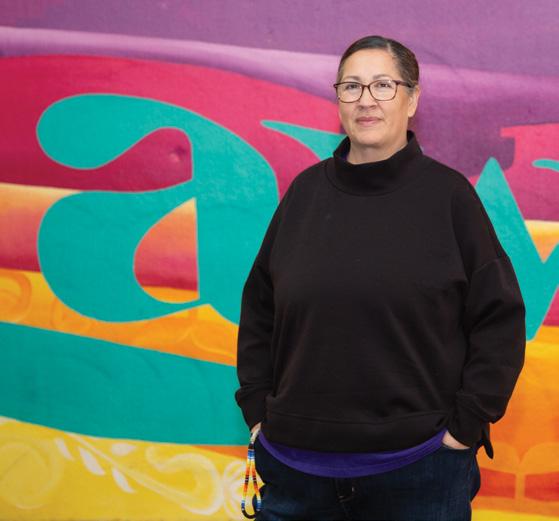
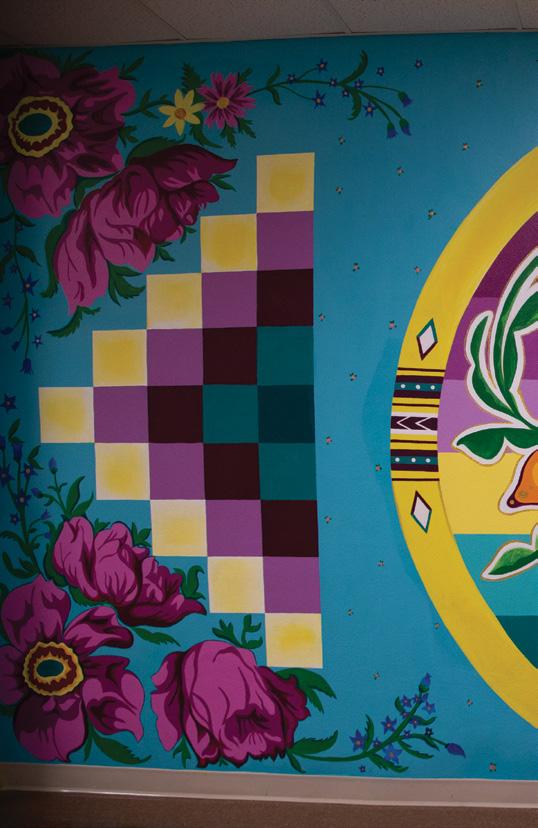
Mona Cliff, multidisciplinary artist in painting, beadwork, and fabric applique
One section of Welcome to Lawrence and Sequoyah Hall by Mona Cliff

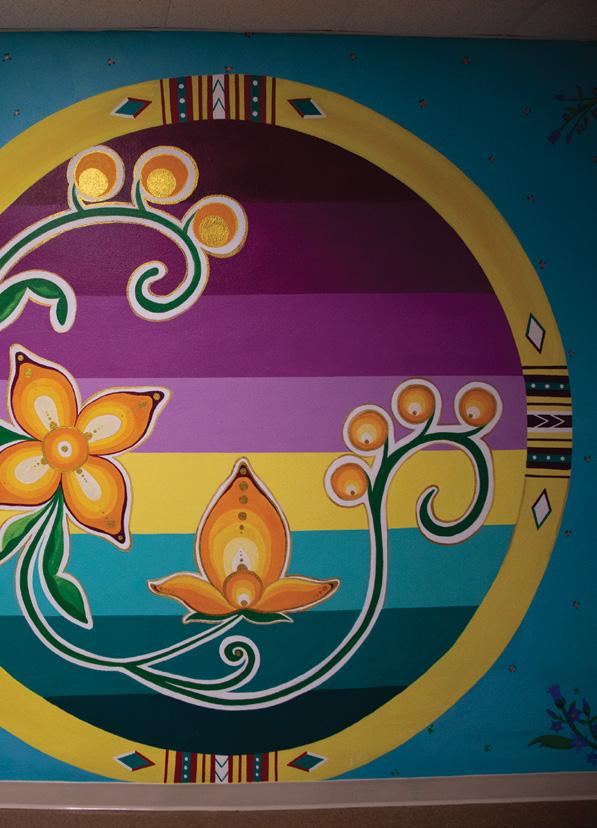

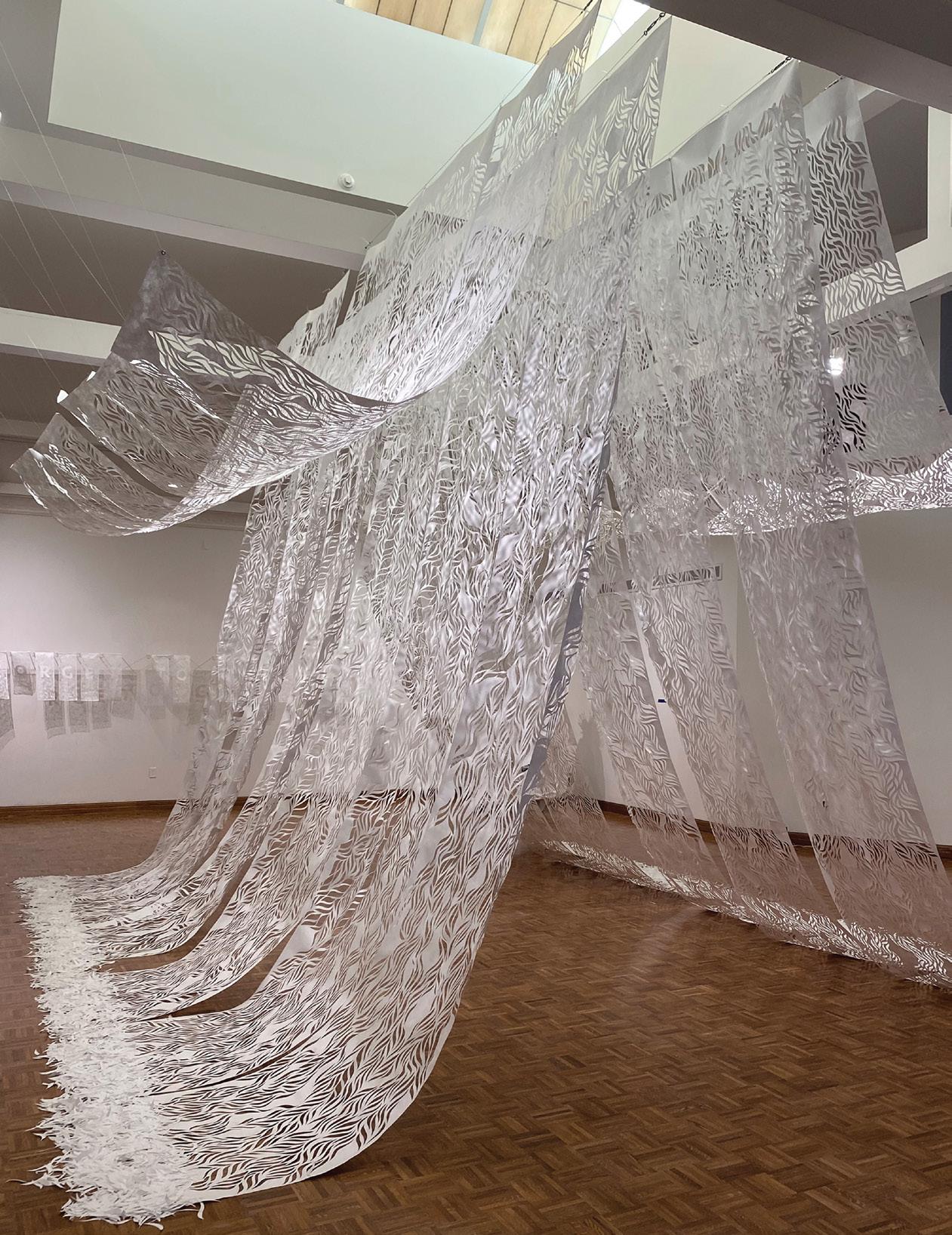
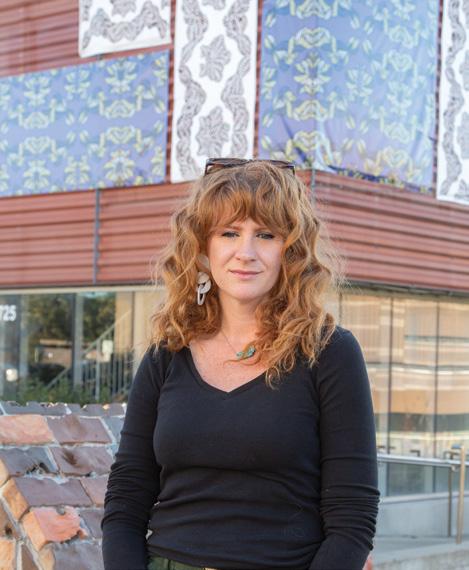
Public Art an Endangered Species?
With budget constraints in local governments and continual cuts to arts programs and grant funding for visual arts, the artists expressed concern for future additions to public art—in Lawrence, in Kansas and nationwide.
“Now, most of the funding sources are dry, and we don’t know if they’ll be back. People with experience and resources are the only ones who will continue,” Loewenstein says.
The City of Lawrence operates a program called Percent for Art that designates a percentage of a building project’s budget, either 1 or 2%, depending on the era, for public art. The Unmistakable Public Art Exhibition, which annually rotates the Downtown Lawrence collection of outdoor sculptures, is a partnership between the City and the Cultural Arts Commission, a volunteer community group. Those programs and the Lawrence Arts Center are the main sources for local public art funding, Loewenstein explains, but there isn’t established funding or staff to engage the town or create a standard of art life.
He compares Lawrence to Salina, another Kansas town with a thriving public arts scene, which boasts both the Salina Art Center, a nationally known contemporary art spot, and the Salina Arts and Humanities Council, which has a museum, staff and programming. Lawrence could benefit from something similar to Salina’s council, Loewenstein says, to formalize and establish a baseline of arts engagement. Of course, that would require a large amount of funding and momentum.
Despite a lack of such source money and unity, Lawrence has amassed a colorful—in all aspects of the word—collection of murals, sculptures and paintings that tell people’s stories for all who come here.
“As a city, we continue to put up more and more public art. With our history being so layered, the public art makes those stories visible. We need to keep telling more stories and uncovering them,” Ortiz says. p
Alicia Kelly, printmaker
Alicia Kelly’s The Passing, site specific installation at The Salina Art Center in 2023




Funding for the ARTS The arts are a revenue generator across the state and in Lawrence.
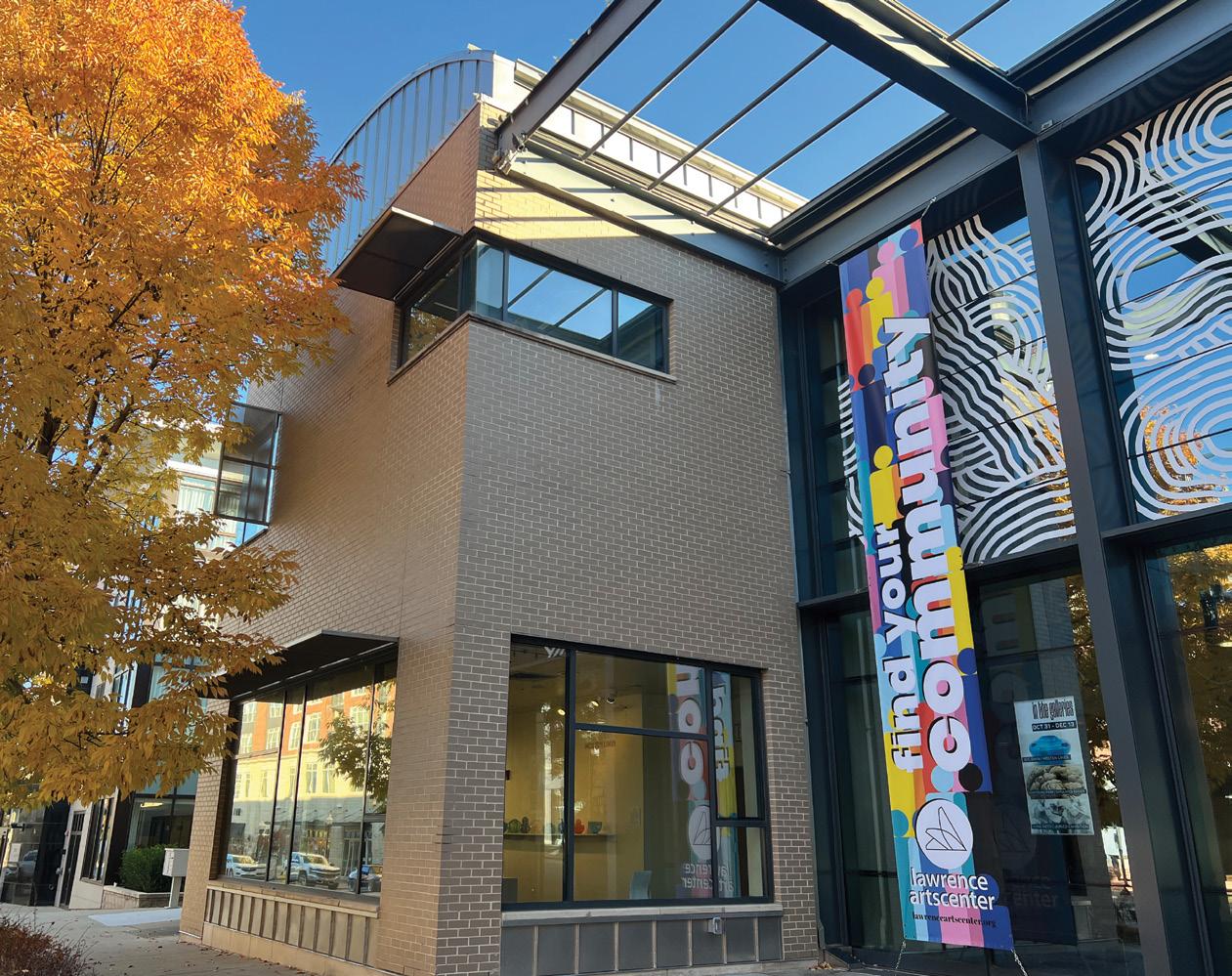
by Sara Maloney, photos courtesy Lawrence Arts Center
Funding for the arts has long been debated in school districts and the legislature, but the benefits of young people having access to the arts allow them to find commonalities among one other. Not only that, but participation in the arts has been known to help with stress, mental health and problem-solving skills, while also building community.
Public funding, such as money coming from local municipalities and federal grants, helps to keep free arts accessible and create scholarships to make sure anyone can participate no matter their background.
The Lawrence Arts Center is one of the local groups that receives funding from various grant programs. Because the arts are a revenue generator across the state, continuing to finance these programs is crucial.
Grant opportunities were at a standstill as the government shutdown stretched into November, the longest-ever lapse in federal appropriations. With the shutdown now over, conversations around federal funding will likely continue.
The Lawrence Arts Center has yet to see changes related to government spending cuts, says Interim Executive Director Ben Ahlvers, as funding for the center comes from earned income like tuition and ticket sales, and other funds from donations, corporations and granting institutions. About 60% of funding comes from earned income, he explains.
“It can always be better, but it … doesn't seem to be nearly as volatile as the federal situation right now,” he continues. Ahlvers doesn’t believe anyone has a clear picture of what could happen, especially as it relates to federal funding in the future.
It would be rare for the Arts Center to receive money from federal funding in general, he adds. Oftentimes, federal funding is delegated to regional arts organizations that then grant money to places such as the Lawrence Arts Center. Meanwhile, funding from the state has stayed steady in recent years and has provided grant opportunities in a more stable way than would be possible from the federal government right now.
The Lawrence Arts Center photo by Marlo Angell
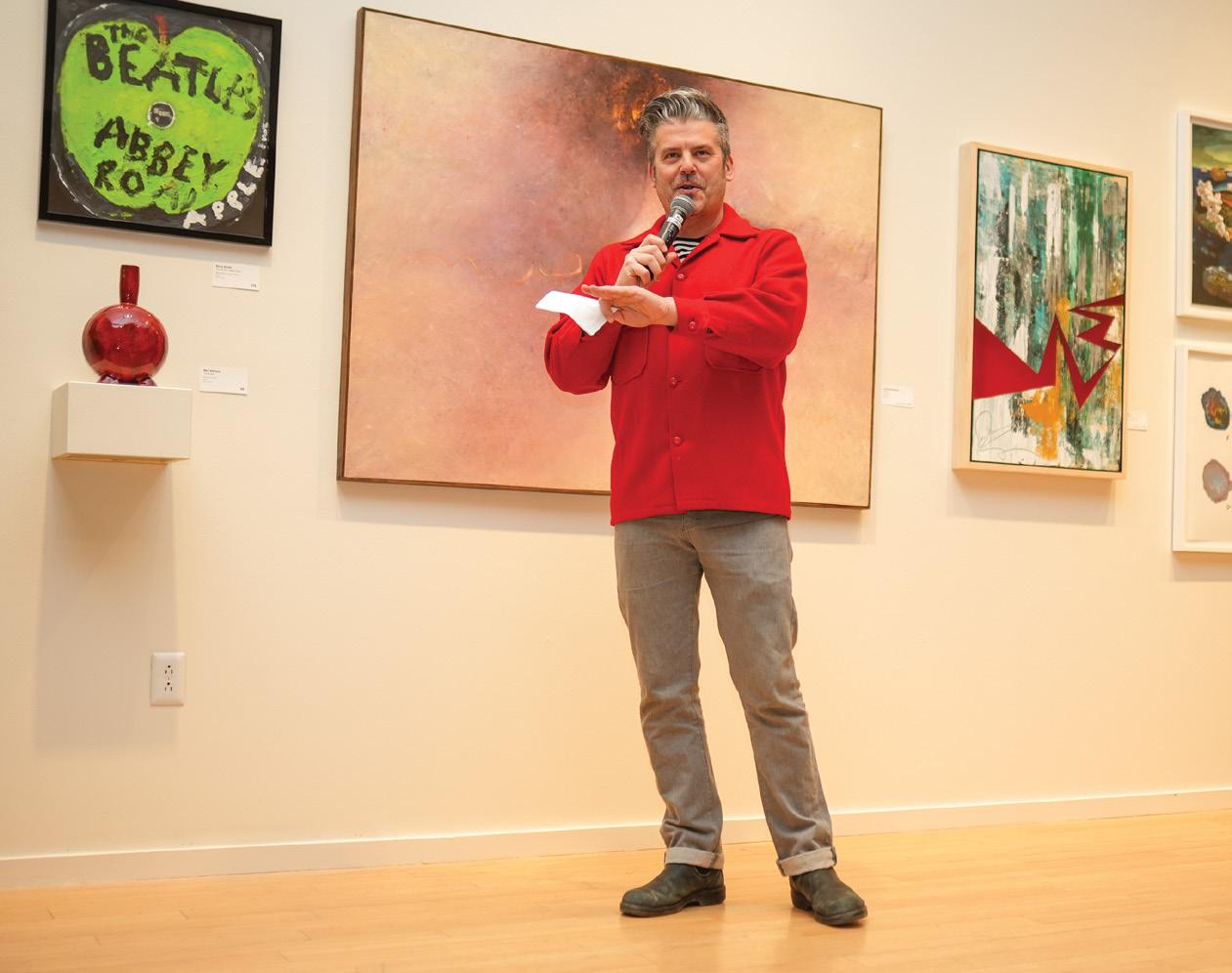
Funds at Work
Several projects at the center have received grants from Humanities Kansas, an independent nonprofit dedicated to bringing Kansans together to strengthen communities and democracy, funding that has brought in speakers or presenters related to an exhibition or performance, or an art education element, Ahlvers explains. While some of these funding avenues aren’t necessarily funding a direct project, it does serve as supplemental funding.
Marlo Angell, director of film, grants and special projects for the Lawrence Arts Center, says trying to anticipate challenges in funding is a difficult problem to face, adding that grant delegation timelines have been a new problem for the center to work through.
The Lawrence Arts Center also runs on municipal funding, state funding and federal agency National Endowment for the Arts, as well as private donors. Because of the scope of changes in grant qualifications like a change in timeline to submit applications, the Arts Center has had to reorient planning for its annual film festival, she says.
Grants from the Kansas Arts Commission help provide special programs for the center, including bringing artists and exhibits to Lawrence, Angell explains. It also helps with mural programs, youth programs and other educational opportunities.
There have been no changes in the amount of funding the center receives from the city, she adds. Arts and culture are categorized under the Lawrence Parks and Recreation department, and while Lawrence did experience some budget cuts in that area, arts were not impacted, which is something for which they are grateful. There is always a level of uncertainty, but because state arts commissions are financed by the National Endowment for the Arts, if those cuts were made, it would impact Lawrence arts and culture offerings and would have a domino effect, Angell adds.
Impact on the Community
The Lawrence Arts Center welcomes more than 200,000 visitors annually and employs more than 130 artists teaching more than 400 classes to 10,000 students each year, Angell explains, emphasizing the importance of the artsfocused center in this community.
It is more than just exposing people to the arts, classes and education—it also impacts mental and physical health, she says. Public funding is needed to set a level playing field for people of all socioeconomic backgrounds.
The Arts Center also serves as a resource for financial aid and arts program scholarships for residents, Angell continues. If the center were to experience more cuts, it would be less able to match the needs of the community’s financial aid and aid residents who experience economic stress or disruptions in their lives. If there was a decrease in public funding for the Arts Center, there could be widespread ramifications. The center is committed to making the arts accessible to everyone. However, the number of people requesting financial aid goes up each year, she adds. “So, that would be something that could be impacted if our federal and state and city funding got decreased."
Funding for arts and culture are at the center of what makes Lawrence what it is,
Ben Ahlvers, Interim Executive Director photo by Jeff Burkhead
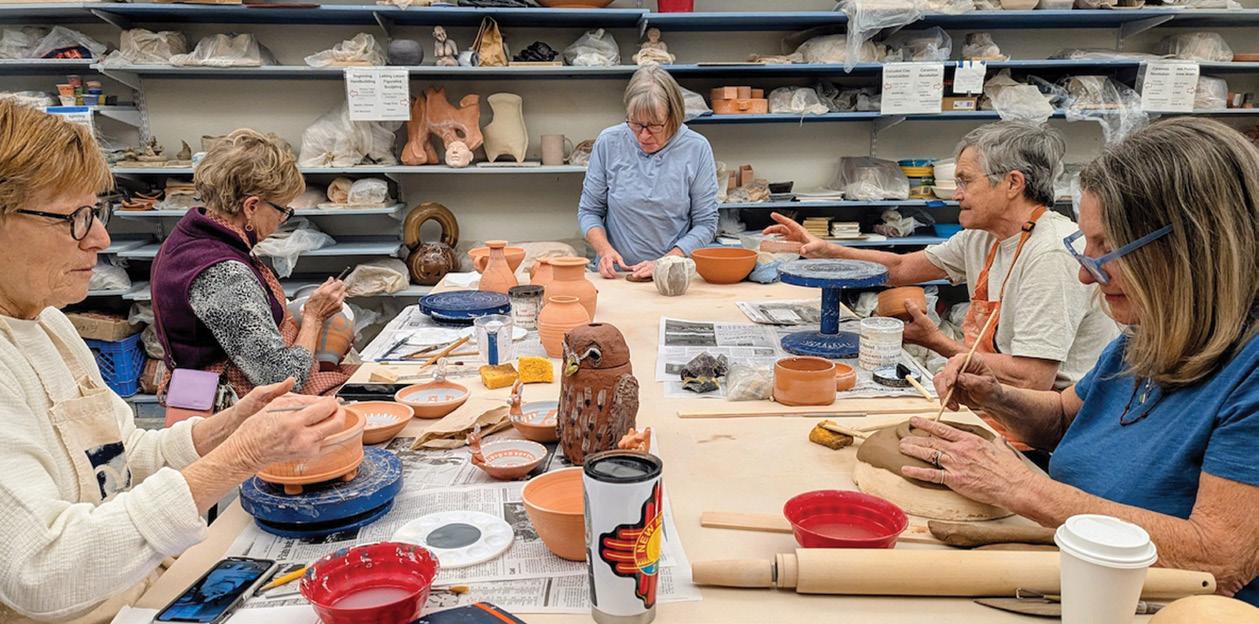
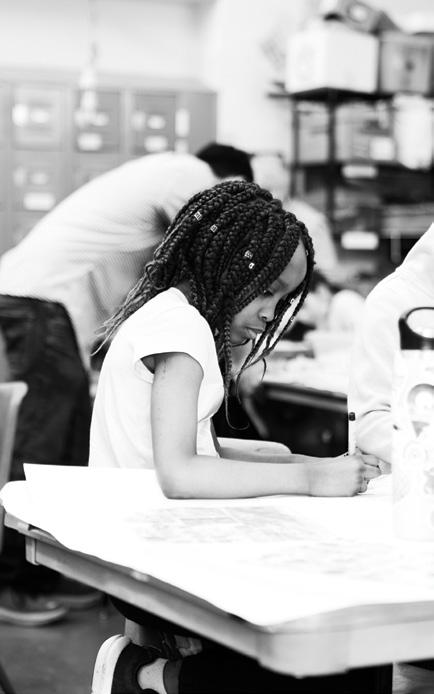
Ahlvers explains. If it is removed or decreased, the impact would be notable. Some grant opportunities have been frozen due to unknown funding circumstances.
“Having grown up in a completely different type of city where there was very little funding toward anything arts and culture, I can tell you that there is a stark difference when it's there and when it's not there,” he says. “Lawrence is a very engaged community, and I think, in part, that's what fuels the wide variety of opportunities here."
Curtis Young, the director of the Kansas Arts Commission, says although there is nothing in the legislation that forces funding the Arts Commission, luckily lawmakers have done so for years. The amount of funding has been bumped up in the last three years, he adds. The state arts commission also receives funding from the National Endowment for the Arts.
This year’s state government funding for the state arts commission was actually among the highest it has ever been. This year, it also received $926,000 from the National Endowment, which is also higher than usual, he explains. This could prove to work as a kind of security if any federal cuts to local arts programs were to eventually occur.
Follow the Money
A lot of the grant funds go toward general support and operating costs for arts programs and special events. The Lawrence Arts Center received a $10,000 grant this year to allow high school students to participate in an entrepreneurial arts program, Young says.
Although funding is secured now, there was a time in the last couple years that there was the potential for completely cutting funding to the Arts Commission. Ultimately, committees did not decide to cut funding, which would have meant no federal funds coming in and the closing of the commission, he says.
“There are arguments to be made that it's not the state's place to make that kind of investment, and people make those arguments. In my mind, I think the return on investment we get is too great to be ignored,” Young says.
Erinn Barcomb-Peterson, The University of Kansas (KU) director for news and media relations, says KU will continue to advocate for funding through the government relations team and through organizations like the Association of American Universities and the Association of Public and Land-Grant Universities.
Art classes for all ages at the Lawrence Arts Center Greek pottery class Young art student in drawing class photo by Chris Erazo


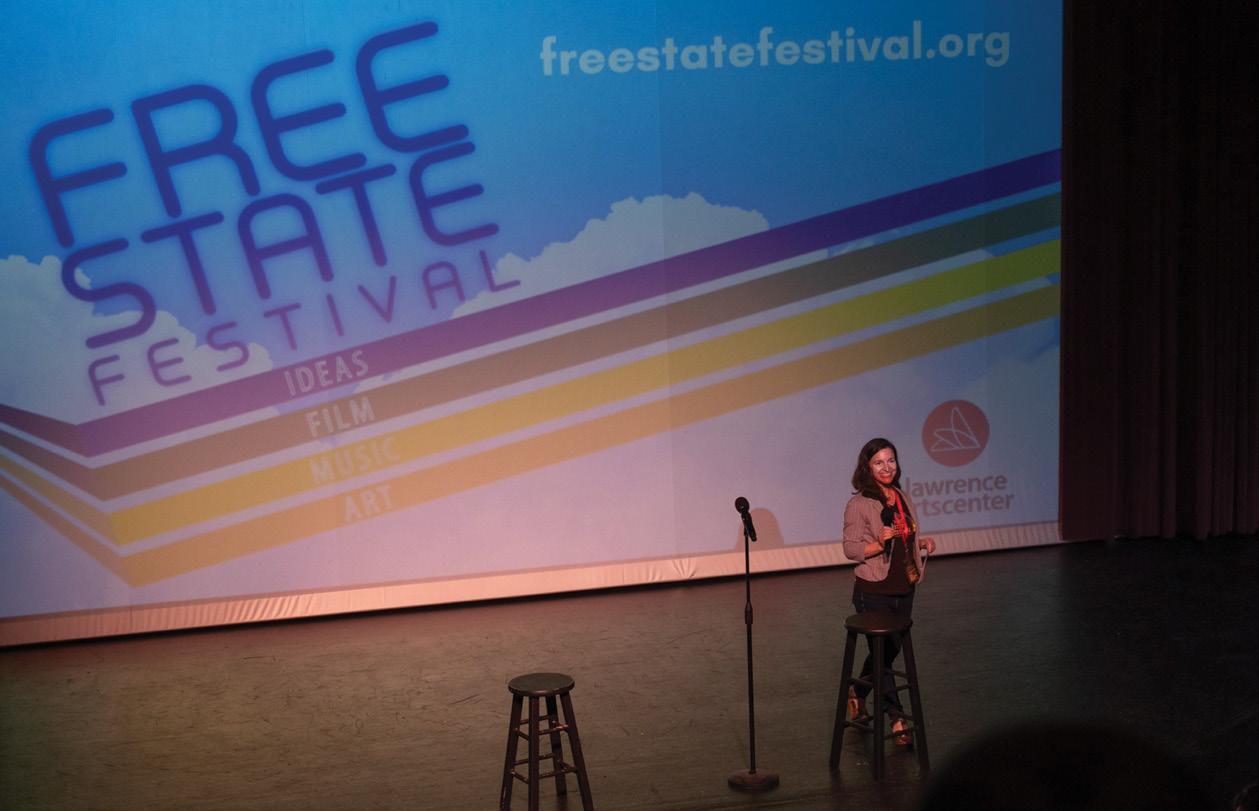
But a loss in funding would impact the number of grants the Kansas Arts Commission is able to support and give out, says Sarah VanLanduyt, chair for the Kansas Arts Network, a 501(c)(3) that serves the state of Kansas and works to strengthen public commitment and advocacy for funding for the arts. She’s also executive director for the Arts Council of Johnson County.
Last year during the budget process, the Kansas Arts Commission budget was reduced by $500,000, but it was able to keep about $1 million in the budget, she explains. “I think what we're hoping to see in the next session is an ability to restore at least that much and bring the budget back up to $1.5 (million)."
In comparison to Lawrence, VanLanduyt says the Arts Council of Johnson County has seen a decrease in its grant amount awarded for its operating budget. While the community has the potential to make up for those costs, she knows that's not the case for a lot of other Kansas towns.
The Kansas Arts Network is just over a year old and was founded out of the need for arts professionals across the state to come together and share ideas and resources. Communities from across the state are involved to make sure western and central Kansas are included, she explains.
The Network ties in with the Kansas Arts Commission but is more focused on helping the state, arts community and legislators understand and value the arts bring to the state.
Advocacy looks like everything from inviting legislators to arts events to sharing information about the reach of programs and how much of an economic generator the arts are, VanLanduyt explains. The arts are a significant economic generator for the state and serve as a talking point to get people to understand that it is also a business. p
State government funding totals from the last 10 years:
(Data courtesy of Curtis Young/Kansas Arts Commission)
The Arts Commission awarded 109 grantees across four programs in 2024–25. About 13 of those were in Douglas County. About $160,000 of the $1.3 million in grant awards statewide went to Douglas County. About 372,857 adults were served in Douglas County, as well as 23,000 children.
Marlo Angell, Film, Grants & Special Projects and Free State Festival Director


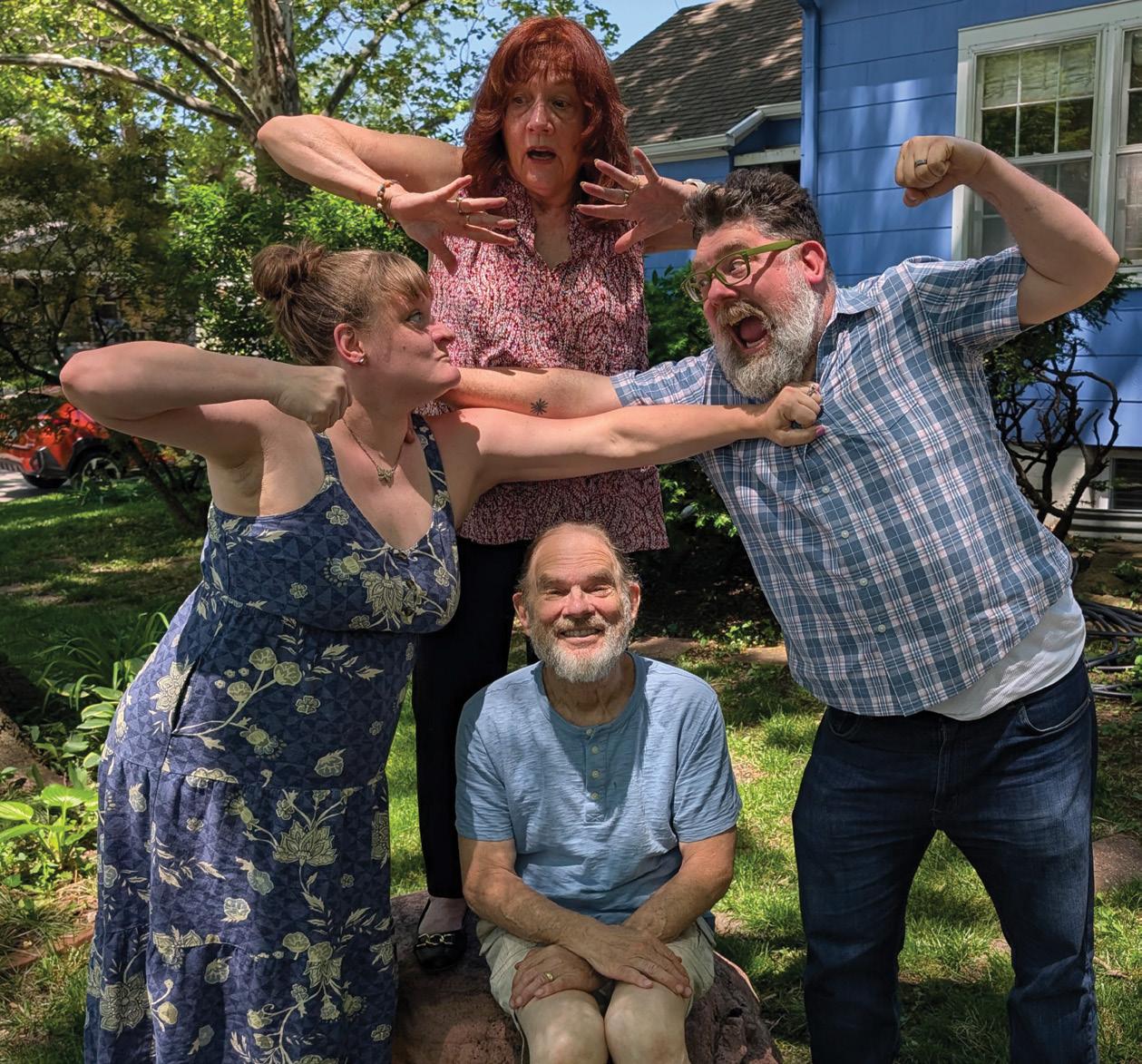
All in the Family
Whether it’s innate prowess or sticking to what they learned early on, generations of these Lawrence families are bonded by art.
by Bob Luder, photos by Steven Hertzog and courtesy Ric Averill
“In every conceivable manner, the family is the link to our past, bridge to our future.” Author Alex Haley
Will Averill and his sister, Trish Averill Neuteboom, say their parents never “purposely” pushed them toward the family occupation of theater arts. Ric and Jeanne Averill, like all good parents, supported whatever their children wanted to do. Yet growing up around theater—acting, directing, singing, dancing, all forms of performing—the two siblings agree there never really was a question about how they’d spend much of their lives. It was sort of career by osmosis for the Averill siblings.
“When whatever you’re seeing are these wild and eccentric hippies doing wild and eccentric things … ” Will says. “Everything was loud and exciting, and it seemed like everything else just didn’t measure up.”
The Averill and Neuteboom Family (clockwise) Jeanne, Will, Rick and Trishphoto courtesy Ric Averill
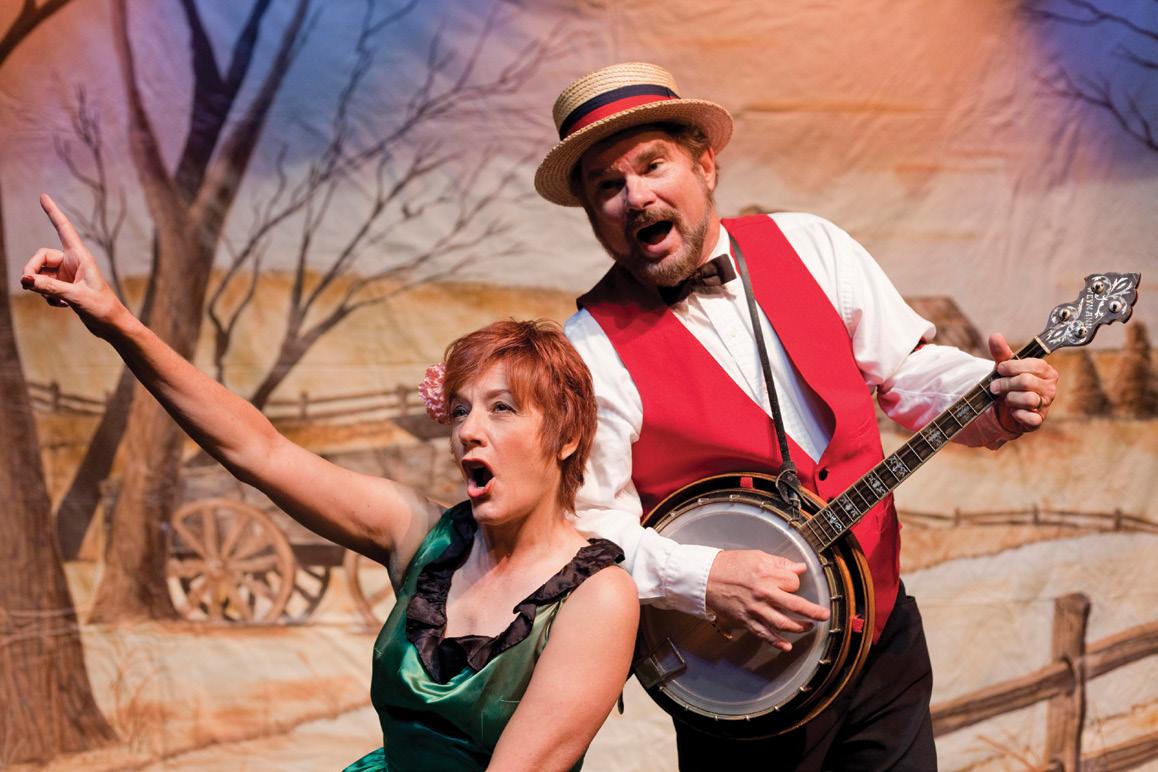
Likewise, Stephen Johnson never got the chance to meet his famous painter of a grandfather. And his father, while an accomplished drawer, leaned more into an identity as an intellectual and professor in highlevel academia, never coaxing young Stephen into the life he’d create as a renowned illustrator of children’s books and versatile artist in his own right.
As were his father and grandfather before him, Johnson was drawn, pun intended, to art and creativity.
“When people are gone, you get a little more reflective,” he explains. “Things that are important to them become important to you.”
These family bonds over art have produced a trove of treasures for the Lawrence community. The Averills are, in essence, the first family of Lawrence theater and have produced, written, directed, played music in and starred in countless productions for adults and children alike throughout Douglas County and beyond.
And three generations of Johnsons have produced works that not only have enthralled art lovers locally but also nationally and internationally.
Fortunately for Lawrence—and the Averills and Johnson will readily affirm for them, as well—the old axiom rings true that blood is thicker than water. Or paint, or charcoal, or acrylic, or acting, writing and directing.
As Johnson puts it, “Anything is possible with art. That’s fun, and a lot of people get joy out of it.”
The Ties That Bind
Ric’s father was a psychiatrist at the Menninger Clinic in Topeka. His mother was a housewife. But as the third of three sons, he says his becoming a thespian was practically preordained.
“My oldest brother knew everything,” he says. “My second brother got in trouble for everything. And I showed off. Plus, my mother would let me off chores if I practiced the piano."
Ric says he started doing theater in seventh grade in a production of "The Music Man" and was immediately bitten by the stage bug. He gravitated toward musical theater, as it allowed him to engage in multiple talents: writing, acting, playing and composing music.
“I was pretty hyper anyway,” he says. “My lifetime goal was to be a composer.”
Ric's most impactful role, at least in terms of his own life, occurred in 1970 in a production of "The Fantasticks" at Lake Pomona, in Osage County, Kansas. It was there that he met his co-star, Jeanne Rice, a talented young actress from a different Topeka high school. Cast as love interests in the play, they turned make-believe into reality when they wed two years later. The couple added Will to the family in 1974 and Trish in 1982.
“We worked with Dale Easton, a great comic, at Apple Valley (Farm Theatre),” he says. “He gave us Saturday and Sunday off so we could get married. We had to be back onstage Sunday evening.”
Over the next 40 years, the Averills became a theater arts powerhouse in the area and around the country.
Ric, Jeanne and a Banjo - photo courtesy Ric Averill
Stephen Johnson standing with copies of his children’s books at his recent Three Generation exhibition at KU Johnson is the recipient of a Caldecott Honor, two New York Times Best Illustrated book of the Year awards, three ALA Notables, two Gold and two Silver medals from the Society of Illustrators in New York City, and the 2004 Governor's Art Award for Individual Artist by former Kansas Governor, Kathleen Sebelius.
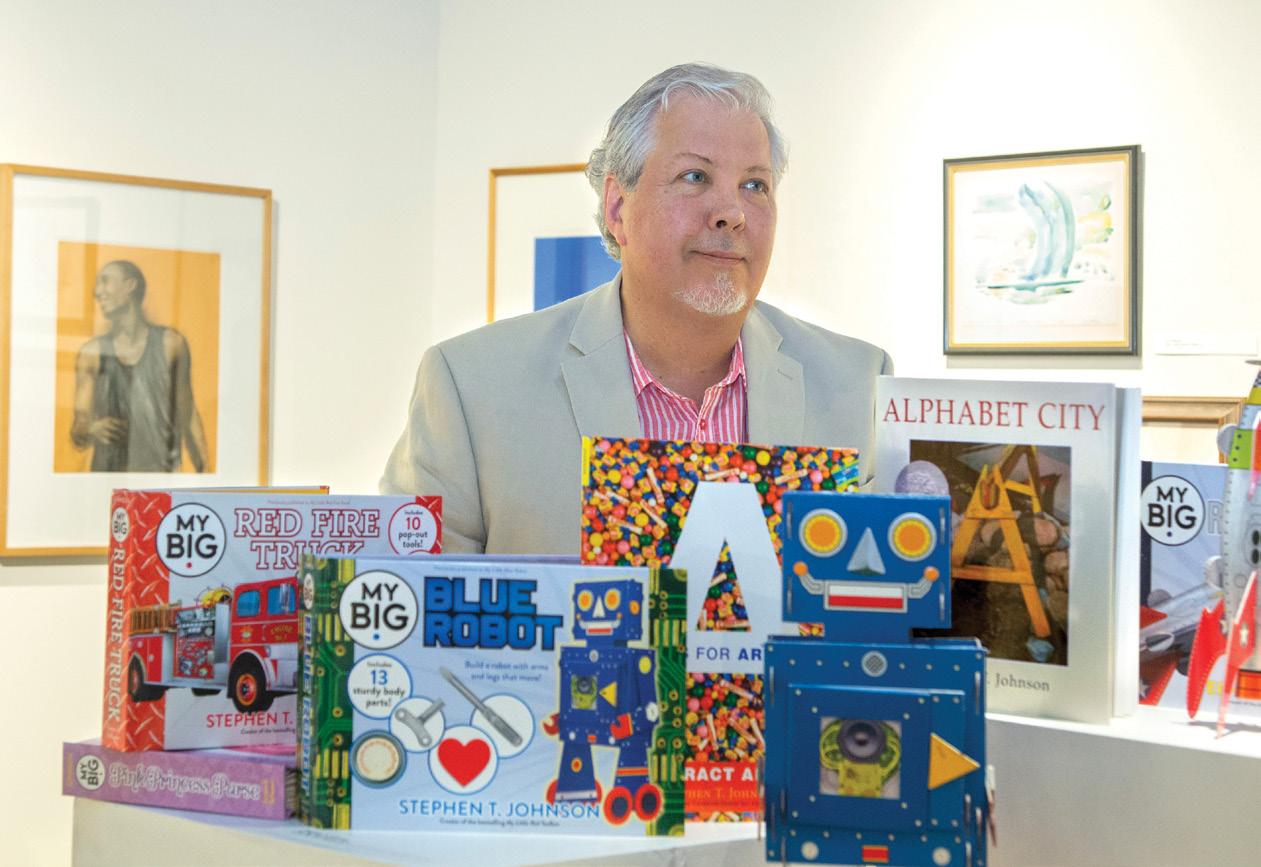
A term often used to describe Ric is “arts factotum,” meaning in his productions, he serves as director, playwright, screenwriter, composer, music director, conductor, actor and educator. Holder of a bachelor’s degree in music education and a master’s degree in children’s theater from The University of Kansas (KU), Ric has done it all in productions such as "Catch Me if You Can" (2017) and "Ring of Fire the Johnny Cash Musical" (2018), at Theatre Lawrence; "Sweeney Todd" (2013) and his own rock opera, "Midnight Visit to the Grave of Poe," at the Lawrence Arts Center (LAC); and multiple productions of "Little House on the Prairie," at the Coterie Theatre, in Kansas City.
Ric and Jeanne founded the Ric Averill Players Inc., and way back in the 20th century, he wrote, acted in and performed musical melodramas and vaudeville at the Apple Valley Farm Theatre, at Lake Perry. Ric served as artistic director, performing arts at the LAC from 1999 to 2016 and is now artistic director emeritus there.
He has won numerous local and national awards from the American Alliance for Theatre and Education (AATE) for his writing of outstanding plays for youth. He also is a member of the Kansas Music Hall of Fame. And yet he’ll tell you that Jeanne is the real superstar of the family and the most major influence on their work. She cofounded the Seem-ToBe Players, a professional theater for youth back in 1973. She began her acting career as a teen in Topeka, then at Washburn and KU, and has numerous professional film and theater acting credits locally and nationally.
In fact, Jeanne’s latest acting credit has yet to air. She has a scene in the opening episode of the upcoming season of Apple TV's megahit "Ted Lasso."
She also taught theater, first at Perry-Lecompton High School followed by a long career teaching theater, English and speech at Lawrence High School.
“I’ve retired, but I still do subbing and teach for Wright/Laird Casting agency in Kansas City,” she says. “And I’m still doing theater and video as much as I can while still teaching.”
In 2002, Jeanne received state and later national teacher-of-the-year awards from the AATE.
Will still remembers as a young child his father touring and letting him tag along with the Seem-To-Be troupe. And if he didn’t tag along, Dad always brought home hand puppets and other toys. He remembers falling in love with the laughter and applause his father received on stage.
“Being a kid of a really well-known family has its pluses and minuses,” he says.
“I wanted to delineate my own path.”
While attending KU, he got into writing, and over the years, he’s become one of the foremost playwrights of plays and programs for middle school-aged children in the country. He’s formed his own theater companies with interesting names like the Sh*tty Deal Puppet Theatre Co., which won 10 stars at one of many appearances at the Edinburgh Fringe Festival. His Card Table Theatre created the "Victor Continental" sketch comedy show, which ran from 1999 to 2013 at Liberty Hall and was one of the hottest tickets in town.
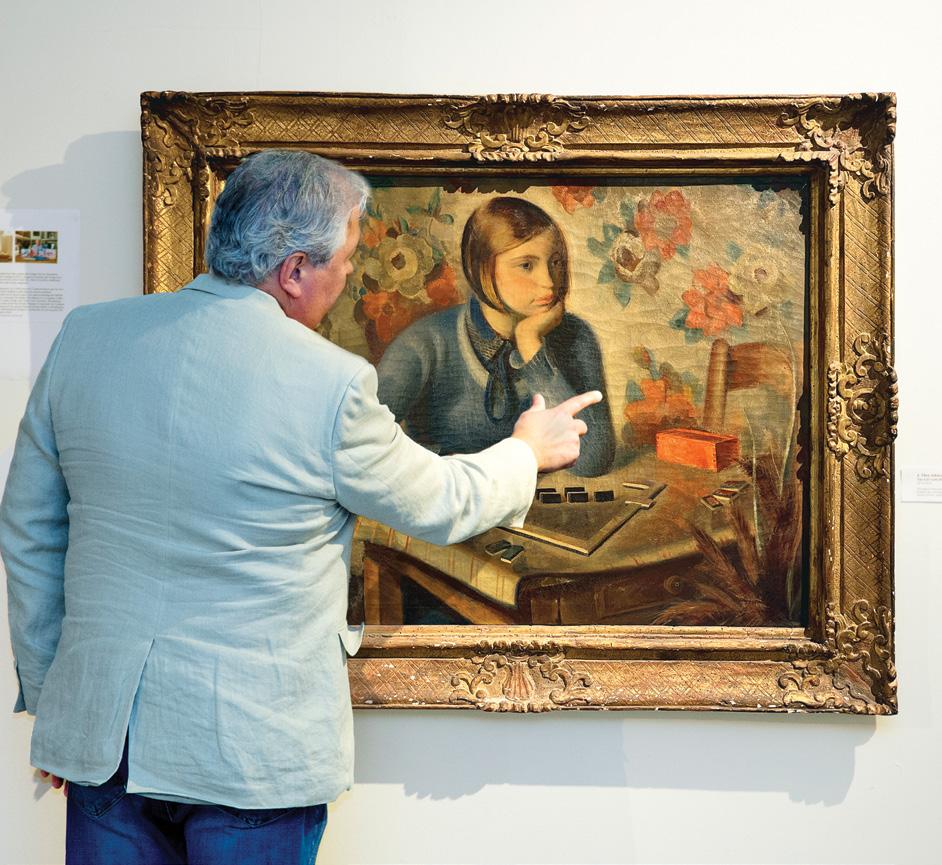
Trish started acting and singing at age 3, and it was her passion through high school and beyond. Her mother directed her in "The Unsinkable Molly Brown," a part her mother once played. She attained her bachelor’s degree in musical theater from the University of Northern Colorado and her master’s degree in teaching from Baker University. Trish is now the senior secondary theater teacher in the Lawrence school district, producing two to three productions a year at Southwest Middle School, following her mom into theater education.
Trish sits on the board of the Junior Thespians Society and was the Lied Center’s arts education advocate for 2024–2025. She has performed for countless family productions and ran the school district’s Foundation Follies for years.
“I had an incredible education growing up in Lawrence,” she says.
If that weren’t enough, Will’s son, Oliver, and Trish’s children, Bella, Quincey and Bear, also act, sing and play music in family productions.
As Jeanne puts it, “There are a lot of adjectives you can use to describe our family, but one is not boring. We’ve had a lot of fun. It’s been a real adventure.”
Ric credits living in Lawrence for providing all the resources he needed to enrich his career.
“I’ve lived in Lawrence longer than most people have been alive,” says Ric, who moved here in 1968. “Lawrence is such a fertile place. There are so many great artists, and we’ve worked with many of them in our productions.”
Art Transforms and Endures
Stephen Johnson’s grandfather passed away while Stephen still was in his mother’s womb, depriving him an opportunity to personally know one of the renown painters of the early 20th century. J. Theodore Johnson studied at the Art Institute of Chicago during the first half of the 1920s, later studied in Paris at Academie de la Grande Chaumière and finished the decade with the prestigious distinction of being named a Guggenheim Fellow for distinguished accomplishment in his field. He directed the painting department at the Minneapolis School of Arts from 1938 to 1945 and served as a professor of art at San Jose State College from 1945 to 1963, where esteemed artists like Wayne Thiebaud and Edward Navone credited him as a transformative mentor.
He completed three murals for large metropolitan post offices and produced numerous commissioned portraits, and his work is represented in permanent collections at The Art Institute of Chicago, the Minneapolis Institute of Art, San Jose State University and the Smithsonian American Art Museum.
Yet his most important work—at least to young Stephen—was a portrait of an old man drawn in charcoal that Stephen had always displayed on a wall in his bedroom. He would later print the portrait in the foreword of his book, "A is for Art: An Abstract Alphabet."
“It was a brilliant drawing of a human face,” Johnson says. “Our home was filled with my grandfather’s paintings, their quiet yet intellectual power becoming part of our family’s aesthetic.”
During a Q&A at his Three Generations Show, Stephen references “The Girl with Dominoes” a painting by his grandfather J. Theodore Johnson
Johnson’s father, John Theodore Johnson Jr., known to all as “Ted,” inherited his father’s talent and was a gifted drawer in his younger years. But witnessing the realities of an artist’s life through his father, he later embraced the roles of intellectual and academic. A Fulbright Scholar in medieval studies with a Ph.D. in French literature from the University of Wisconsin-Madison, Ted, who passed away in September 2024, taught for decades at KU, earning the HOPE Award and the Chancellor’s Award for Excellence in Teaching. He also was a member of Mensa, and his “Theodore Talks,” an online Mensa lecture series named in his honor, has been viewed in 49 states and 10 countries.
And still, his drawing never left him. In the 1980s, Ted cofounded a local life drawing group and sketched nearly every weekend for 40 years. His figure drawings and watercolors are held in private collections and in the Albrecht-Kemper Museum of Art, in St. Joseph, Missouri.
Stephen says for as long as he can remember, he’s drawn well. And yet, after graduating from high school, all he wanted to do was play in a rock band. That changed during his sophomore year at KU, when he was walking back to his dorm one afternoon with a classmate who told him about an illustration class.
“As a kid, you just want to find something you can do well,” he says. “Drawing came naturally, but I didn’t yet have a voice. Illustration changed that … each assignment gave me a spark, an idea to interpret visually. It made me think, imagine and invent.
“And honestly, it’s fun to be published,” he adds.
Spending time in France with his parents—his mother, Mary, is also a French professor—helped shape young Stephen. The family lived there periodically, and he found the culture historically rich, linguistically playful and endlessly inspiring, which deeply influenced his artistic vision.
“My dad’s greatest gift was his unwavering belief in me and my art,” Stephen says. “There was no competition, no ego, just pure support.”
Continuing his family’s legacy, Stephen graduated from KU with degrees in both painting and design, and has built a career that bridges fine art, illustration, children’s books and public art. Not only has he commissioned works for such prestigious publications as Time and Forbes magazines, but his public works can be seen in major civic spaces, including the DeKalb Avenue subway station in Brooklyn, N.Y., Universal City/Studio City Station in Los Angeles, Dallas Love Field Airport and Texas Tech University. Perhaps his best-known work is a picture book, "Alphabet City," published in 1995, which earned him a Caldecott Honor, a gold medal from the Society of Illustrators, and The New York Times Best Illustrated book award.
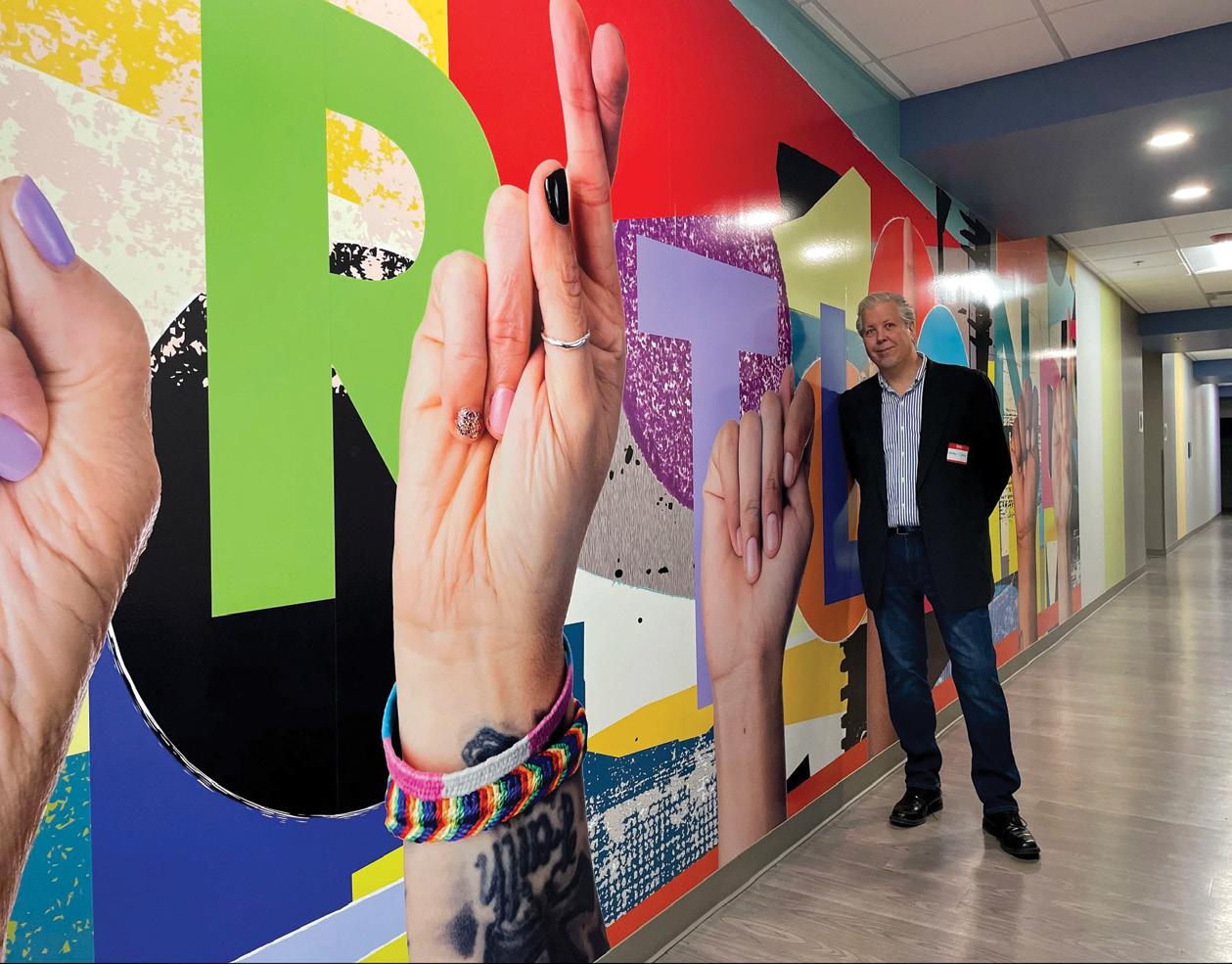
He also has followed in his parents’ footsteps in academia and teaches several illustration and drawing classes at KU. In 2024, he was honored with the KU Distinguished Alumni Award.
Stephen connected all three generations of Johnsons’ artwork together in an expansive exhibition titled “Transformations: From Art School to Art World—Stephen, Ted and J. Theo Johnson,” at KU's Edgar Heap of Birds Family Gallery, Department of Visual Art and Chalmers Hall, which ran through early November. While the name Theodore unites all three men (yes, it’s Stephen’s middle name as well), their passion and work has created a creative lineage that tells a story of enduring curiosity, craftsmanship and care for the human spirit.
“I think all parents want their children to be who they are, without parentheses,” he says. “When you’re young and discover a passion to build around, it becomes a kind of muscle memory, a rhythm of skill and drive that carries through everything you do in life.” p
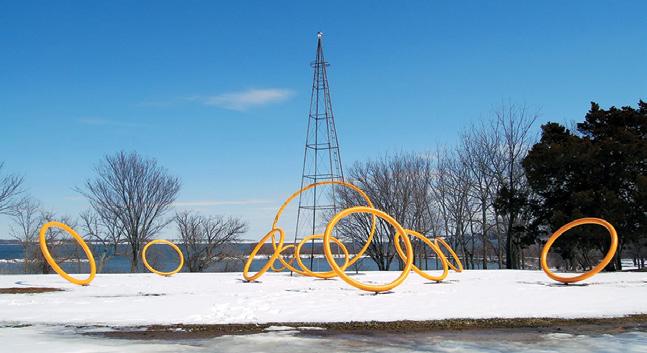
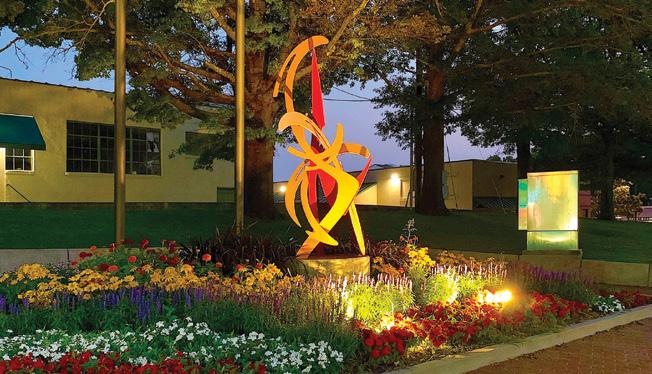
Stephen Johnson beside his mural “The Language of Care” at the Heartland Community Health Center
Freedom Rings by Stephen Johnson
Freeform by Stephen Johnson
A Vibrant Scene
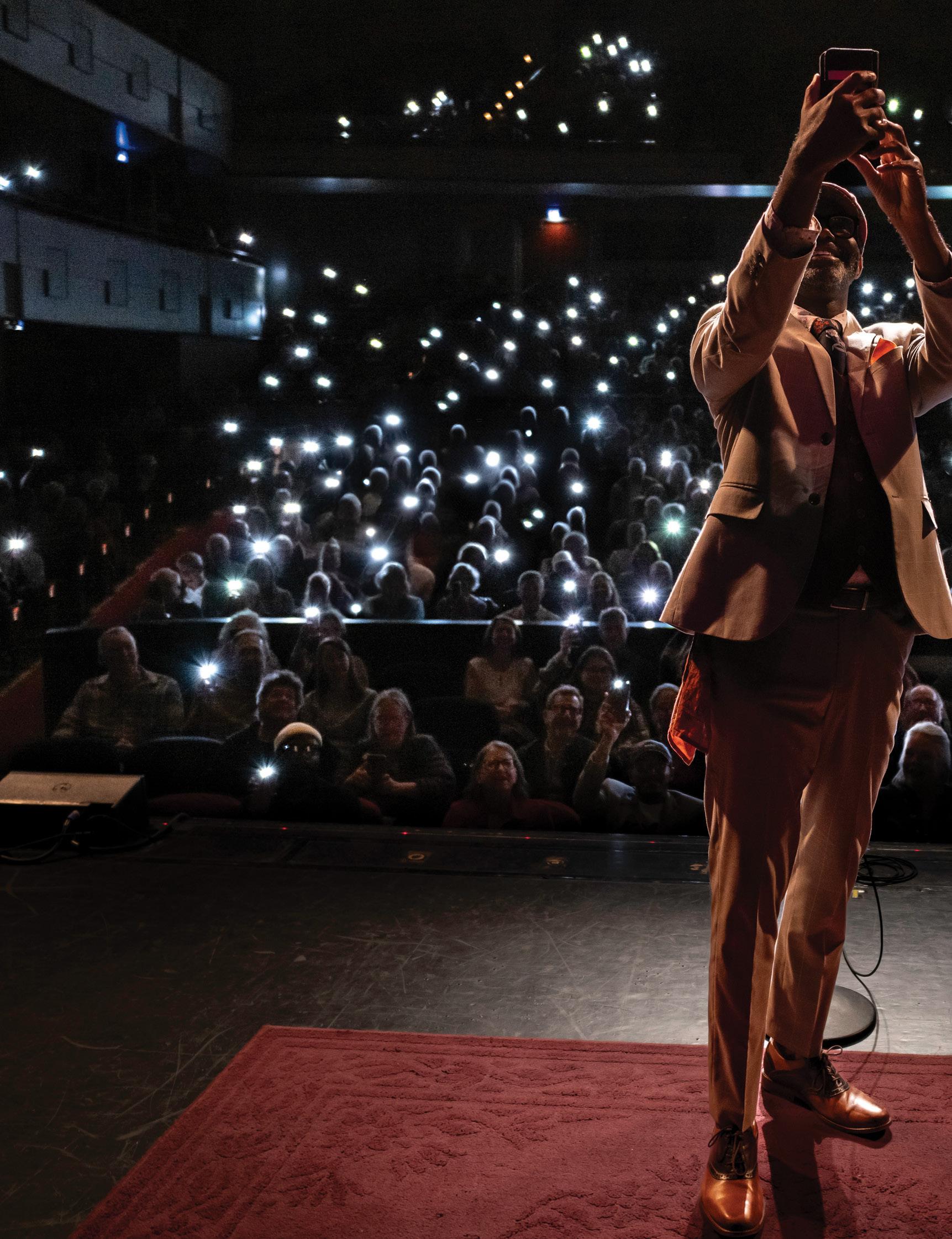
Live, community-oriented events bring people out of the woodworks and put money into the hands of our local businesses and artists.
by Nick Spacek
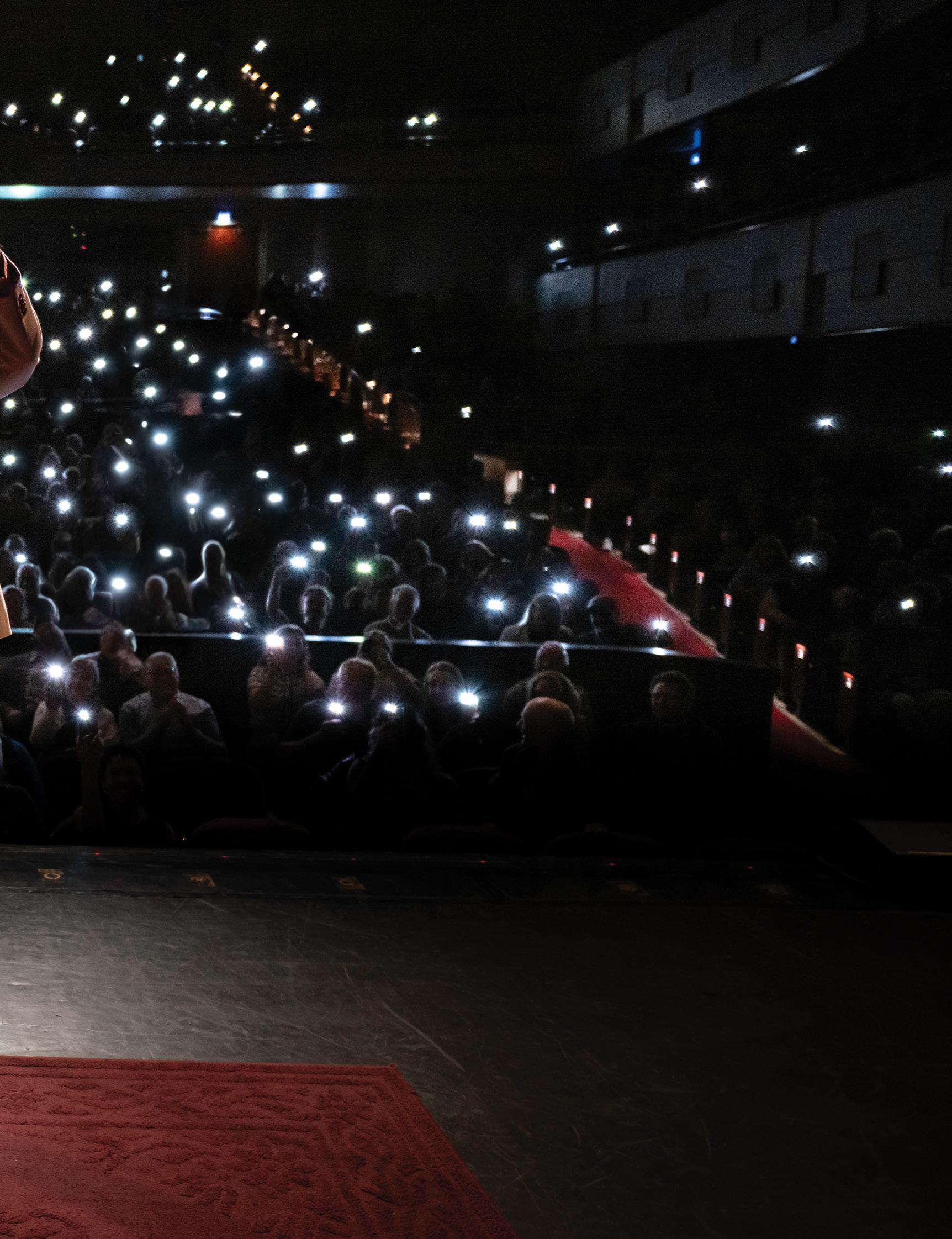
Thanks to Lawrence's location on Interstate 70 and the presence of The University of Kansas and its student population, this city has live entertainment options far outside what most other towns of approximately 100,000 residents could hope for. In any given month, it's possible to see national or international music acts, a Broadway musical, orchestral works and touring comedians, to say nothing of the robust music and arts scene of local performers.
According to the 2024 Lawrence Music Census, "a community-led initiative to gain a better understanding of the current music needs of the Lawrence, Kansas, community," Lawrence is a live music city with an astonishing 6,582 live events annually. These events generate $13 million in income for respondents who categorized themselves in the music ecosystem categories of music creatives, industry or venue/presenter.
Creating Jobs
Speaking with those who have a lengthy history in Lawrence's live entertainment scene, it's apparent the economic impact of local live music goes beyond tickets sold and drinks purchased from the bar.
Dean Edington, events manager at Liberty Hall, points to the fact the Massachusetts Street venue normally has around five or six regular employees engaged in tasks such as selling tickets, working the concessions stand and screening movies. However, when a concert or other live event takes place, that staff could swell to upwards of 40 people. That could include 15 to 20 people working directly for Liberty Hall, including Edington, as well as those in the box office, some checking IDs and taking tickets, bartenders and those working sound.
“Then you start adding in four to eight stagehands from the promoter and the promoter rep, and the runner and the dozen extra security,” he adds. “Then it's suddenly, 'Oh wow. There's 40 people emplyed at this thing.' ”
From that viewpoint, Edington continues, the local live music business does a lot economically, including bolstering income and helping bring financial stability to those who do gig work.
“And it also brings a load of tax dollars into the city,” the events manager notes. “If there's a thousand people in the Hall, they're driving here. They're buying gas. They're probably paying to park. They're eating downtown. They're probably gonna go shop in some random stores if they're coming in from out of town.”
One show results in a series of financial interactions that generate revenue for the whole city, and it doesn't go unnoticed by those businesses adjacent to Liberty Hall, Edington explains. Every show results in a call from their neighbors at Free State Brewing Co. asking what the Hall's schedule looks like—from artist arrival times to how many attendees they're expecting.
“I get those calls from businesses around us so they can prepare for an onslaught before our onslaught,” he jokes.
Bringing the Crowds
As to what draws people in for shows, it can vary. Fally Afani, editor for I Heart Local Music and communications manager for the KU School of Music, wrote her master's thesis on using data and online methods to promote music and its effects. She's quick to note that this was all pre-COVID, but at the time, the data showed the best way to pull people into town for shows was with something that was free, pointing to the Live on Mass shows presented in the 1100 block of Massachusetts Street in front of the Granada as being particularly robust draws.
However, Afani continues, what was true then that is also true now is the things that are more community-oriented are the best draws.
“Even with Pride,” she notes of the annual June event, “which is not technically a music event, but it's really the same setup. You have an event, you have performers, you have entertainers, you have an audience that you wanna market to, you have sponsors. Pride has always been free, and we've been very adamant about that.”
The Moth-The Lied Center-Photo by John Clayton
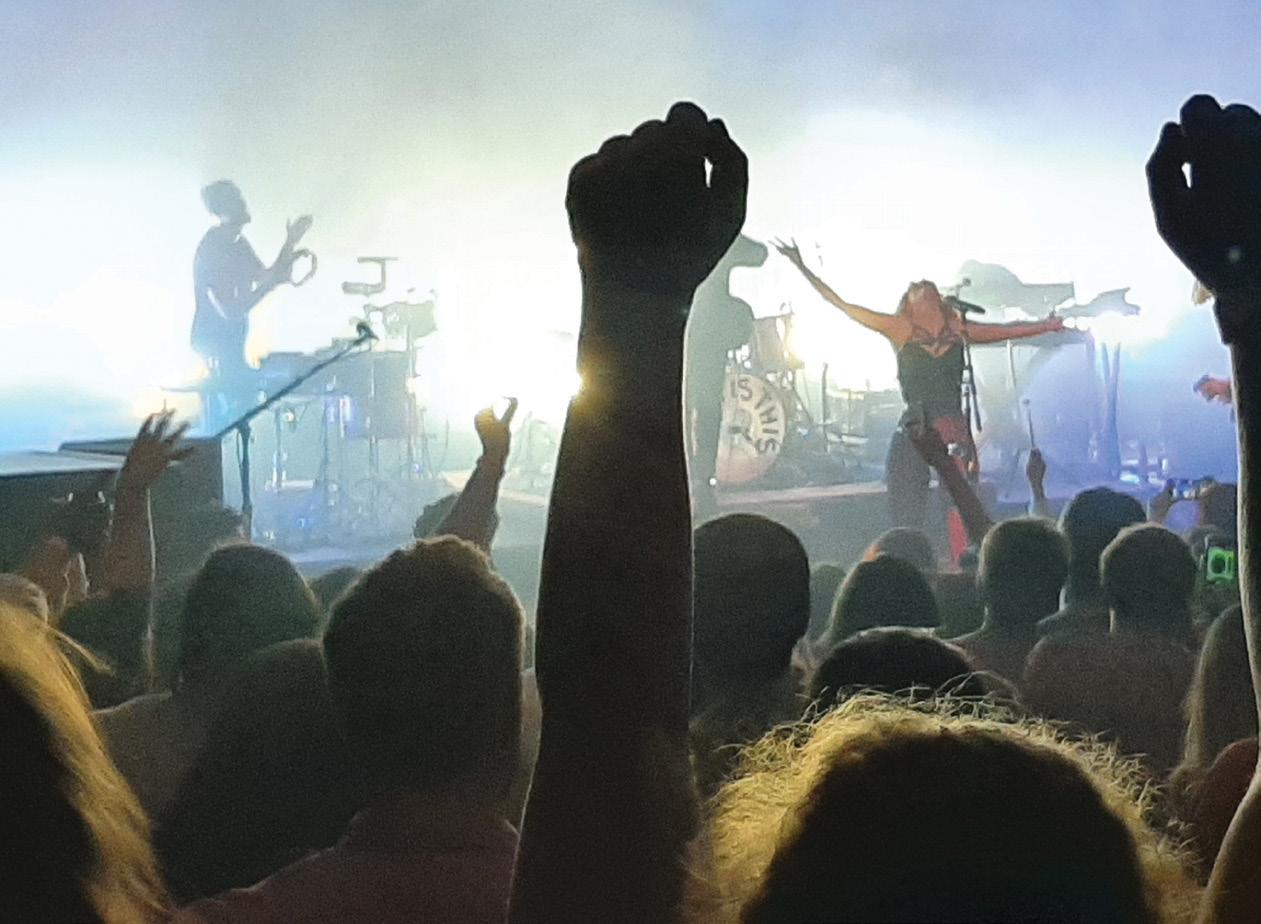
Part of the reason for keeping Pride—as well as I Heart Local Music's annual cover shows—free is that free and community-based events do really well beyond just the performance itself.
“How do you support a venue keeping the event free?” Afani asks. “Well, they make tips at the bar. The band makes good money with merch and donations. I had a drag queen on a show once, and someone loved the first number so much, they ran up and tipped her a hundred dollar bill. So there's ways to boost that economic impact beyond just the show.”
And there's not one particular genre these days that pulls people in, as Afani has learned over the course of her longtime work as a music journalist and running I Heart Local Music.
“Before the shutdown, it was metal,” she recalls. “Everyone showed up for metal concerts. Everybody showed up for country artists. But now, it's no specific genre, you know?”
The one thing Afani does point out as having remained consistent is roots music.
“Bluegrass and folk and Americana in this community have always had massive support,” she explains. “You could actually be a full-time musician in that realm. Those fans, they show up, they buy the merch, they subscribe to your Patreon, they're donating to whatever you asked them to do. Those fans are steady no matter what.”
Helping Hands
Also important to bringing dollars into the community are those who volunteer in Lawrence because of their love of live performance and the arts. Nowhere is that more visible than at the Lied Center of Kansas. Kate Lorenz, senior director of events and audience services at the Lied Center, says volunteers are a huge part of the organization.
“We have a group of about 120 registered with us, probably about 70 of whom work with us all the time,” Lorenz explains. “Really, really regularly, many events per year—sometimes many events per week—functionally, they really are a lot of times the only people that someone may interact with on the night of the show.”
If a person has bought a ticket in advance to an event at the Lied, a volunteer will scan that ticket, give them a program and help them find their seat, she explains.
“A lot of times on the actual show days, the volunteers are the most significant face at the Lied Center a lot of people may directly interact with,” Lorenz says, explaining that because Lied volunteers do a lot of the event-management work, a lot of effort is put in to not only training people, getting to really know them and where they like to work, and making sure they can work in multiple areas, but also making sure the volunteers know just how much the Lied appreciates them.


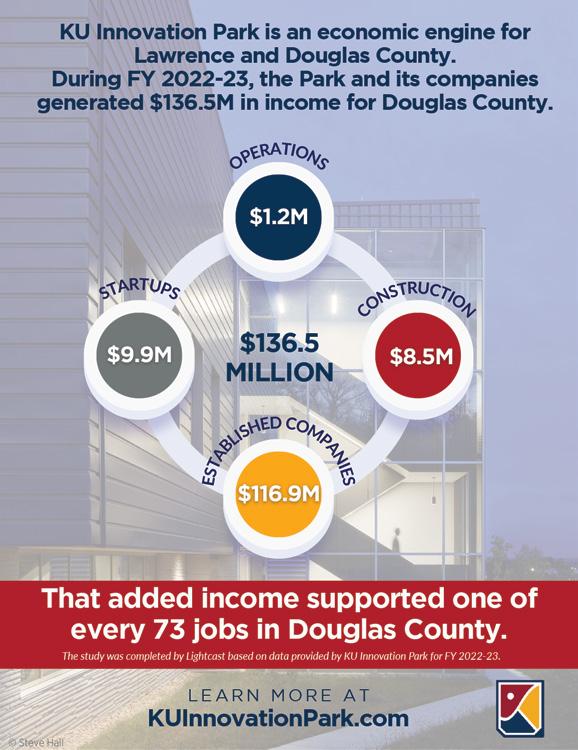
Liberty Hall-the band Grouplove by Nick Spacek
Dean Edington, Courtesy Liberty Hall
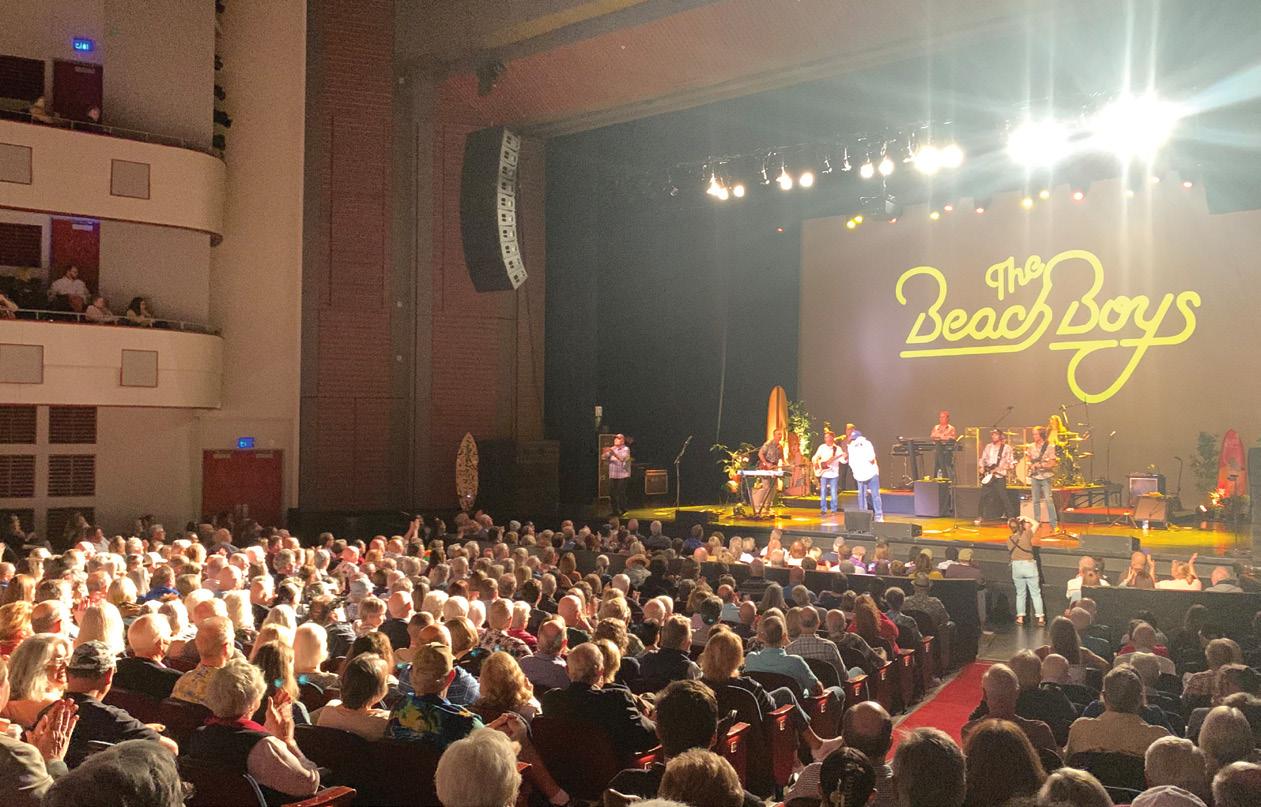
“We do an event in the fall—a smaller social—and then we do a big dinner for our volunteers in the spring,” Lorenz points out, noting that a lot of the Lied's volunteers also volunteer at LMH Health, Theatre Lawrence or other places in the community, serving both as ambassadors for people to come to shows at the Lied and also helping to recruit more volunteers.
“We want to have trained ushers who know what they're doing, but we always want to have new people who are excited,” she adds, noting that new volunteers help bring fresh energy.
Lorenz also points out that many of the Lied volunteers are also members of Friends of the Lied, an organization whose donors help make sure the Center “ensure(s) world-class performing arts are available in the KU and Lawrence communities."
It's not just those with tickets who benefit from the Lied Center's volunteers. Between roughly 60 students working as tech staff, another 20 in the front of house and ticket operations, and various interns, the Lied Center has 80 to 100 college students working with them a year.
“Between the ushers, who are, for the most part, above retirement age, and then most of our paid staff are students, it's this wonderful intergenerational work environment, which I actually think is fairly rare,” says Lorenz, explaining she feels the students grow so much more because they're not surrounded by only peers. “And it's very important and very special to have in terms of being able to support anyone who comes in, of any age, any need.”
With Liberty Hall being for-profit and the Lied Center being nonprofit and attached to The University of Kansas, both have similarities and differences in how they operate. "The community building aspect is as much a metric as the ticket sales, though finances always enable you to do what you want to do,” Lorenz says.
Intentional Work
At the opposite end of the spectrum stands LAAND, the Lawrence All-Ages Noise Destination, a nonprofit 501(c)(3) “cooperatively-run arts organization” which aims “to create an open, supportive and culturally vibrant space to foster a DIT (do-it-together) community through music concerts, experiential learning and volunteer opportunities for all ages.”
As a nonprofit run entirely by volunteers, the way LAAND operates can be a little different, board member Paul DeGeorge says.
“We can lose money on every show, and we do,” DeGeorge states. “That's the sum total of it. We get enough public funding that we can comfortably lose money on every show.”
“Because we're are a nonprofit, we can apply, and we have applied and received grants, so that's how it's possible to do what we do,” explains Jennifer Roth, fellow board member and LAAND treasurer. However, both she and DeGeorge agree because they're not aiming to book commercially, it affords the group a chance to book artists they're interested in booking, even when they know that that show might not earn out.
“We can book artists that we think are important, that we want to see staged in Lawrence,” DeGeorge continues. “Even though they might not be in a position in their career, necessarily, where they can play at one of these larger venues, in particular, we can be more adventurous for sure.”
Think of LAAND less as a promoter and more as a community organization. At the heart of it, the organization is doing what Edington, Afani and Lorenz all do but at a more direct, grassroots level.
The Beach Boys at The Lied Center
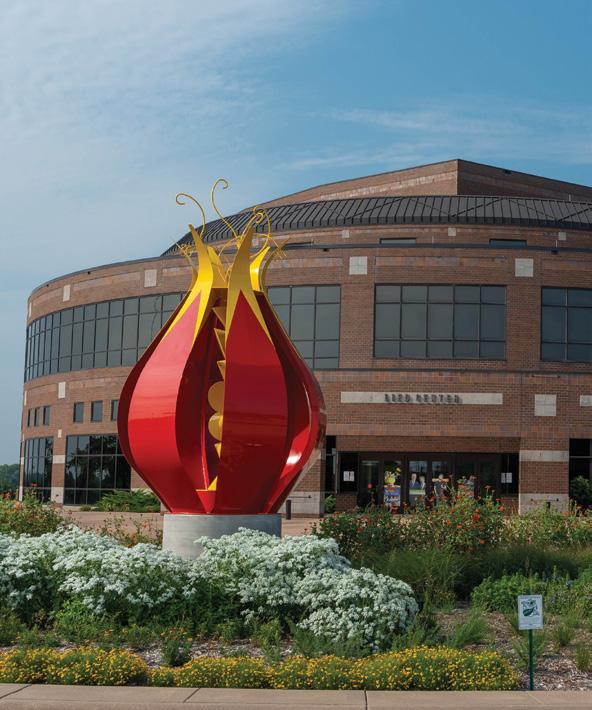


The Lied Center by John Clayton
Kate Lorenz by Carter Gaskins
“We think of ourselves as essentially community organizers,” DeGeorge explains. “We're just people in the community organizing events, and we want them to be good community events. And they are always manifestly better whenever there's more people in the community involved.”
The more vendors LAAND has at a show, the more exciting the atmosphere, he continues. Whether it's people selling cookies, drinks or tacos, that brings up the positive vibes, and everybody feels good at the end of the night.
“Like, 'Wow, we did something fun,' ” DeGeorge adds. “Every show we put on is full of intentionality.”
“I also think that we're people that put on experiences that are guided by a certain set of values or goals …" Roth says. “From the beginning, I've thought of this as a joyful sort of activism. If I have to think about the economics, we're thinking, 'How do we get more money in the hands of artists? How do we get more money in the hands of these local partners that we have?' ”
Afani wraps up by alluding to the feeling one gets watching the early 2,000's comedy drama series "Gilmore Girls."
“You don't wanna live in a New York City,” she says. “Everybody wants a Stars Hollow. They want a kooky, cute, small town that has all these fun events, so if you're gonna talk about an economic impact, it has to be accessible.” p
Kelly Cororan (owner of Love Garden Sounds) helps park cars at Sweeping Promises' album release show at the White Schoolhouse.
Photo Credit: © 2023 Paul DeGeorge for LAAND
Lawrence Band Flora From Kansas performs at The White School House
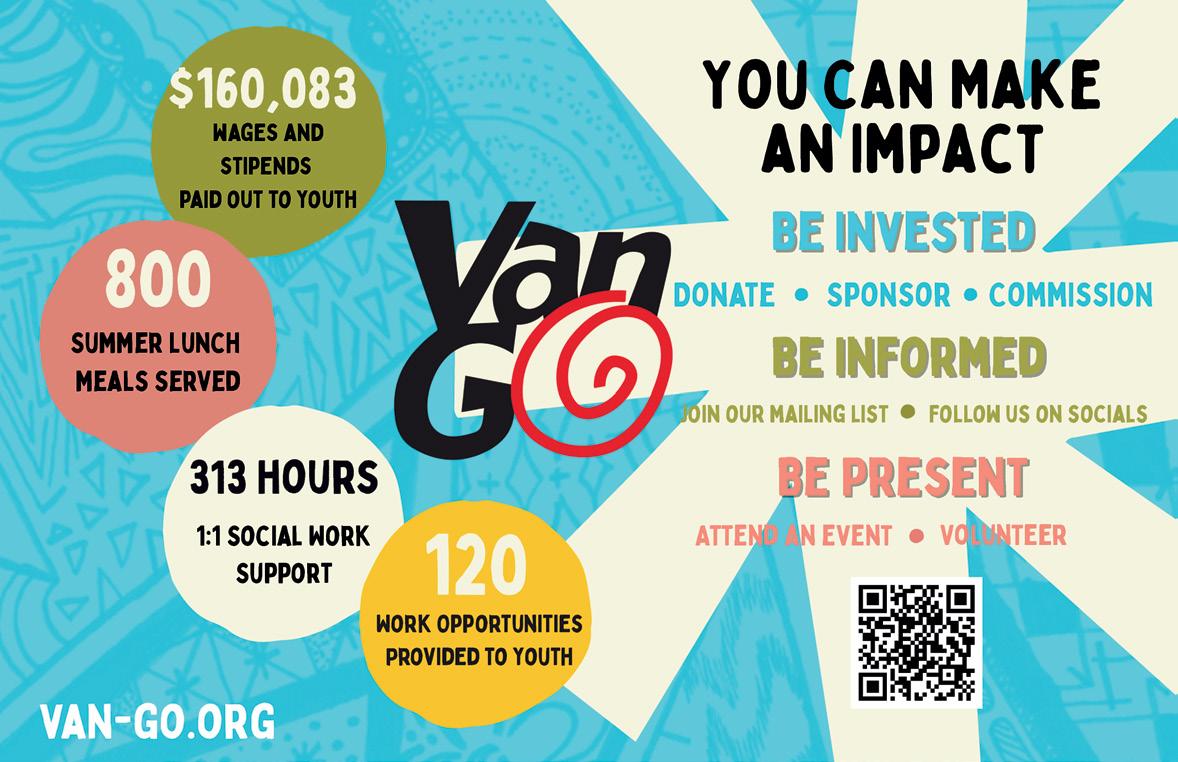
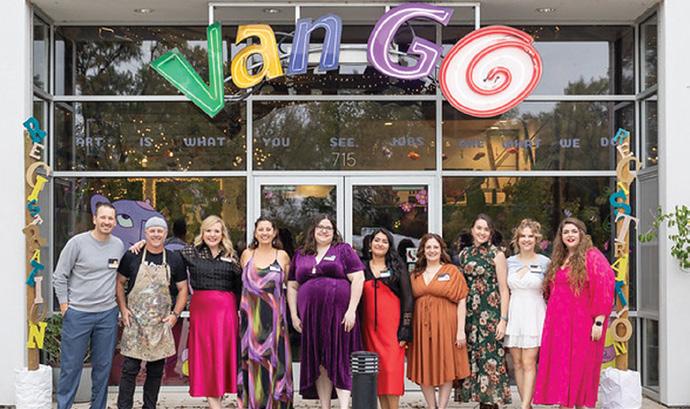
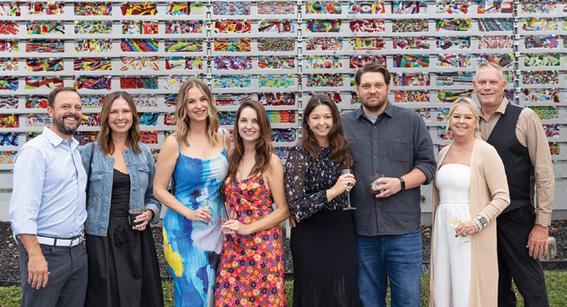

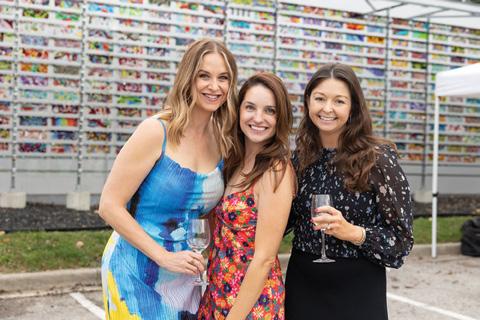
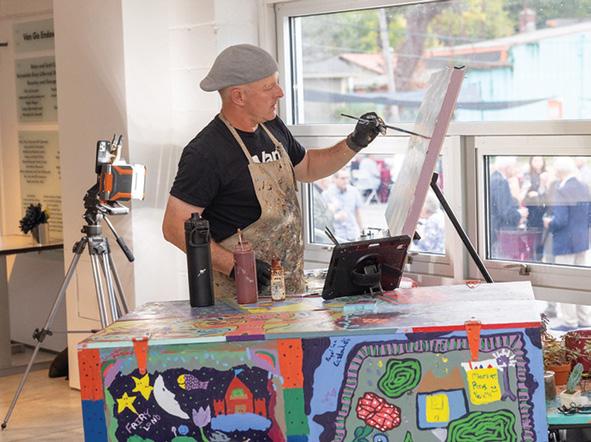
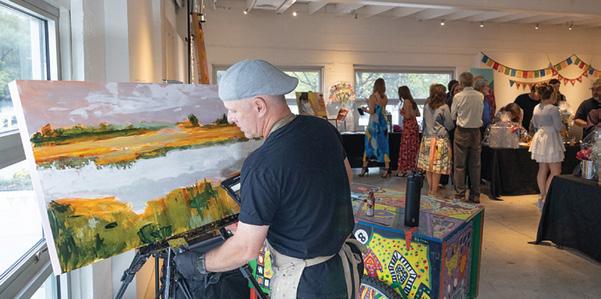
VAN GO DINNER ON THE CURVE 2025
photos by Ann Dean
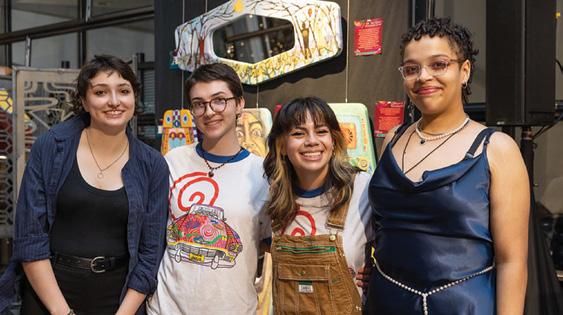
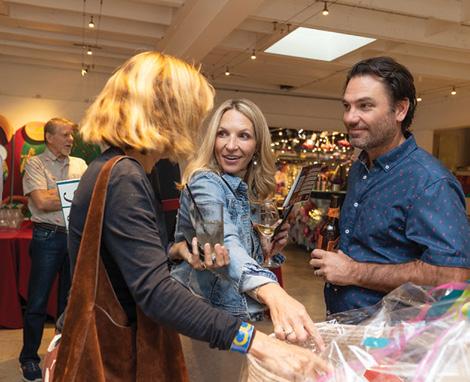
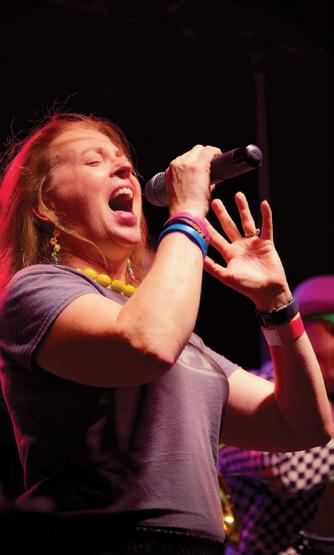
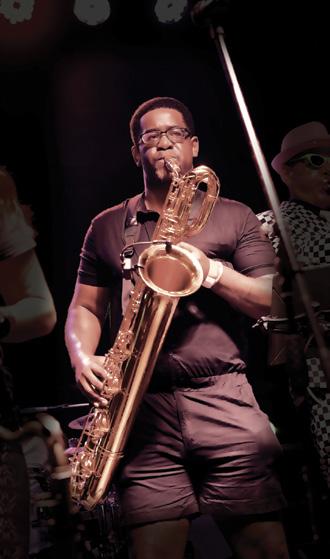
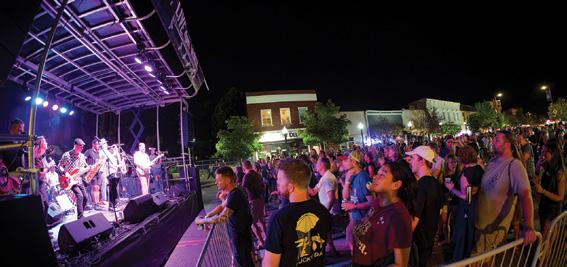
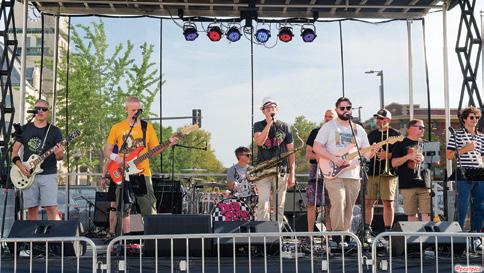
DEAD BEATTYS
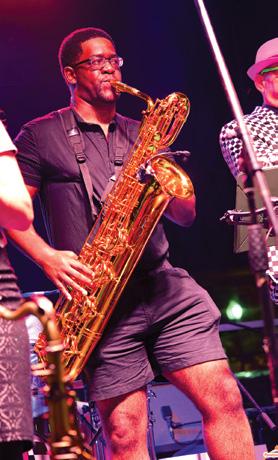
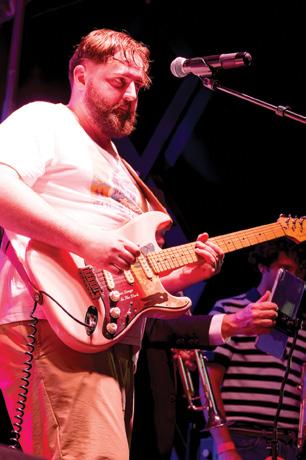
photos by Peaty Romano
FB: Peaty.Romano Insta/Threads: @smile_for_peaty
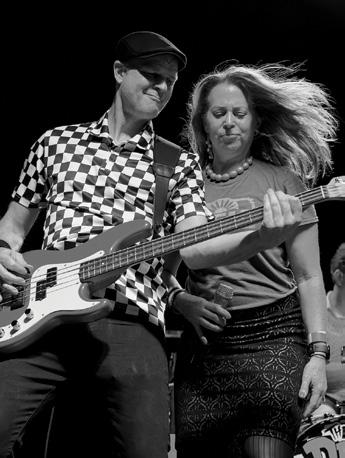
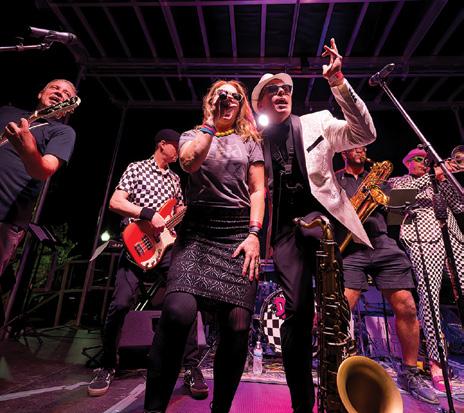
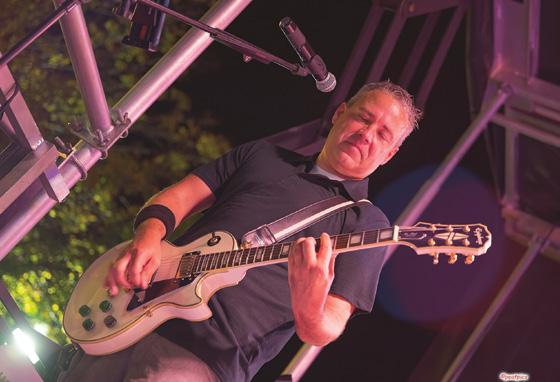
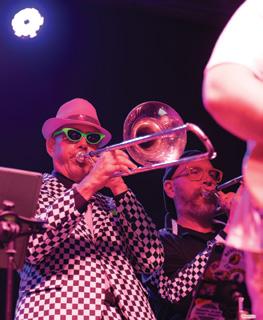
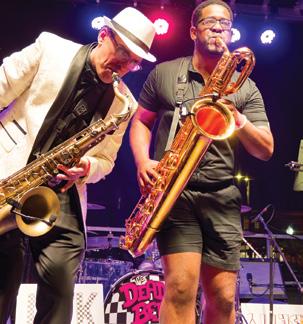
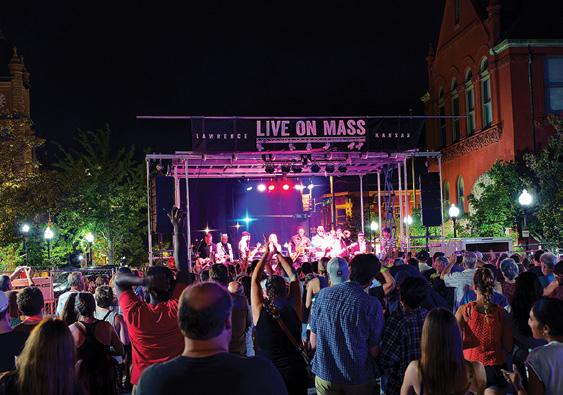
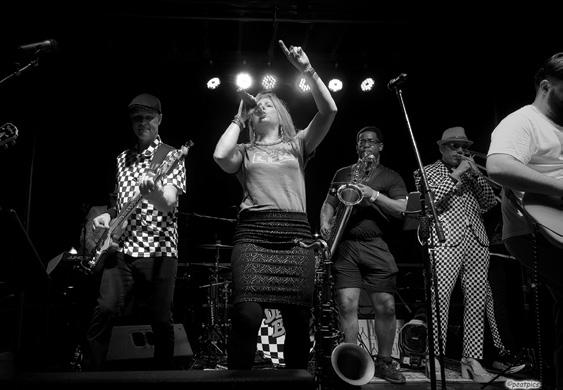
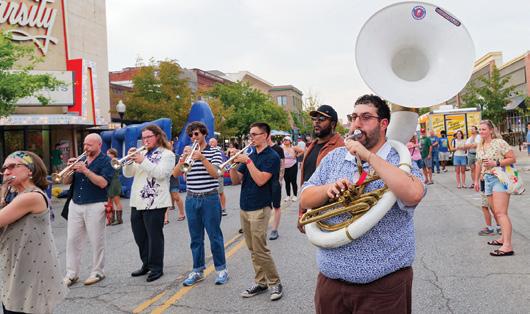
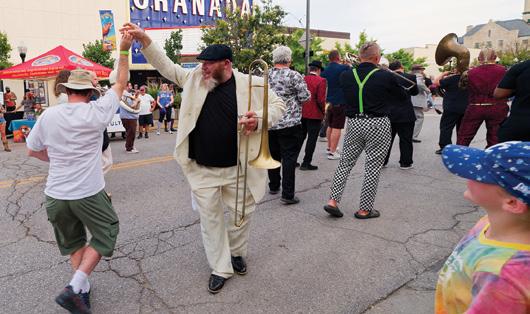
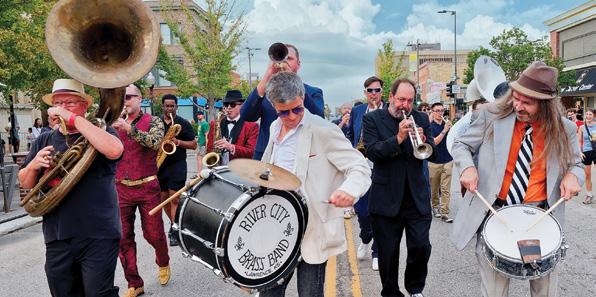
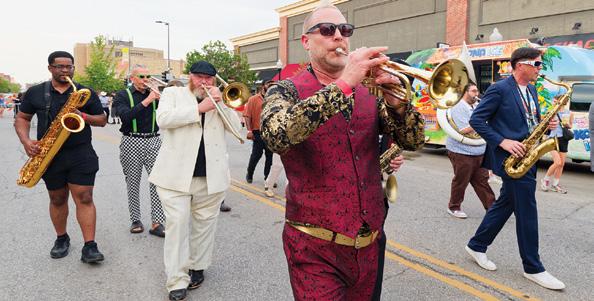
BRASS BAND
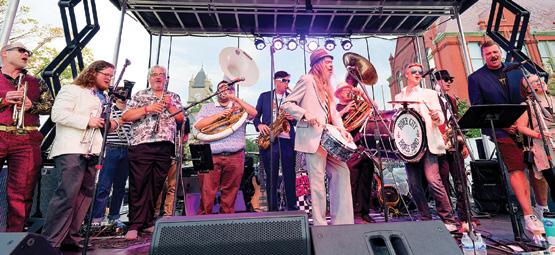
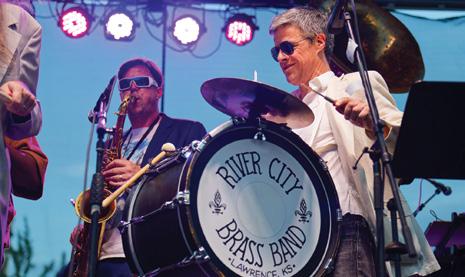
FB: Peaty.Romano Insta/Threads: @smile_for_peaty
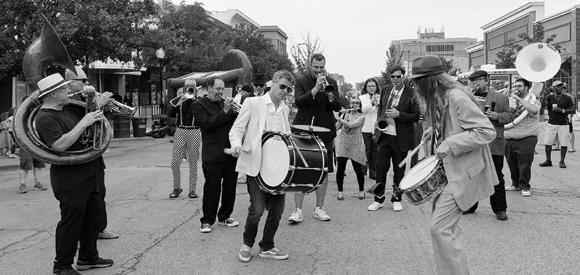
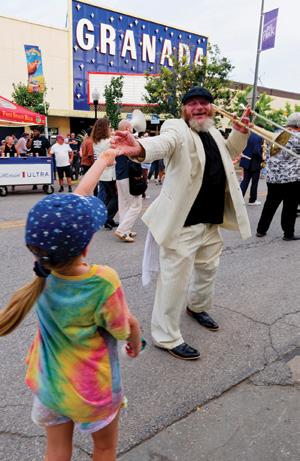
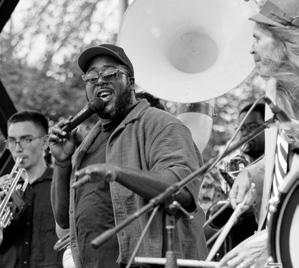
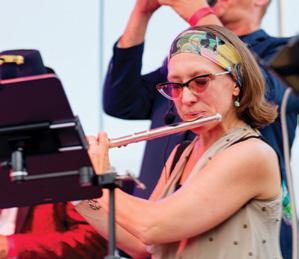
photos by Peaty Romano
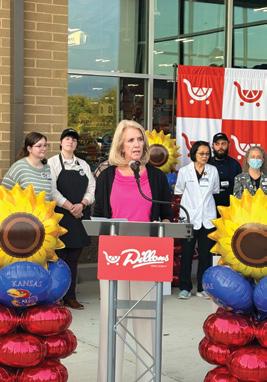
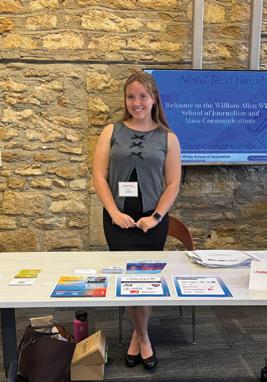
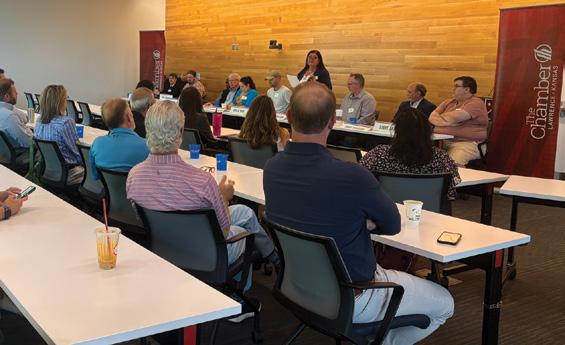
THE CHAMBER EVENTS
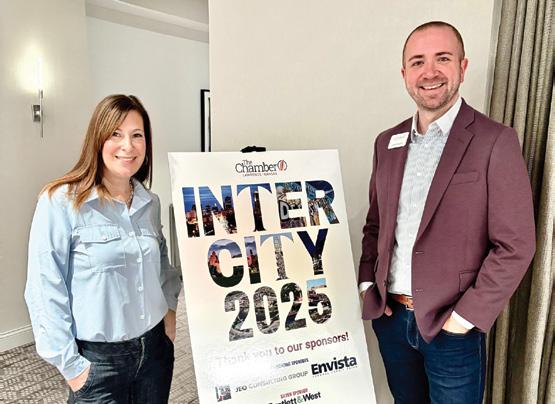
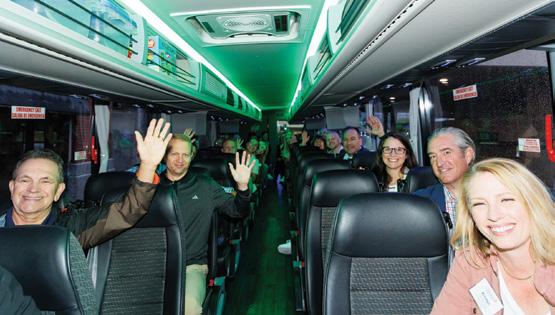
photos by xxxx
Capitol Federal® Welcomes Kim Roehr as its Newest Mortgage Loan Consultant
Capitol Federal® is proud to welcome Kim Roehr as its newest Mortgage Loan Consultant serving the Greater Douglas County area. Kim brings 30 plus years of experience in the mortgage lending industry, including 11 years as an underwriter, to her new position. With a strong passion for people and community, she’s dedicated to helping guide individuals successfully through the home loan process. “Helping people achieve their dream of homeownership is something I truly love. During the process, I get to know my clients on a personal level and become part of their journey to make homeownership a reality. It’s rewarding to see their dreams come to life and know I played a small part in helping them get there.”
Her passion extends to her volunteer work, whether through her church or community based resource organizations, and you may soon see her out and about in Lawrence helping those in need.
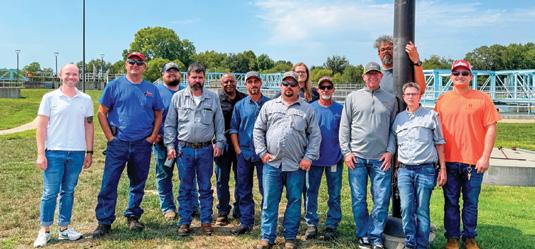
Lawrence Wins Best Tasting Tap Water in Kansas Award
The City of Lawrence is proud to announce that the Clinton Water Treatment Plant has been awarded Best Tasting Tap Water in Kansas at the Kansas Section of the American Water Works Association (KsAWWA) and the Kansas Water Environment Association’s (KWEA) annual joint conference, held in Topeka.
This award is a prestigious honor within the water industry and recognizes the extraordinary effort it takes year-round to provide safe, high-quality drinking water. To even qualify for the contest, water systems must have no state or federal drinking water violations in the previous year—making the competition both exclusive and rigorous.
Winning this award reflects not just the quality of Lawrence’s water, but also the dedication, expertise, and tireless work of the City’s water treatment team. The Clinton Plant operators and staff maintain strict compliance with state and federal regulations, working around the clock to ensure that every drop of water reaching Lawrence residents is clean, safe, and great-tasting.
By receiving this award, the Clinton Plant is now eligible to represent Kansas at the “Best of the Best” national contest at the American Water Works Association’s Annual Conference & Exposition.
The Bert Nash Community Mental Health Center is pleased to announce the appointment of Dani Edwards as Senior Director of Finance.
Dani has more than 12 years of finance and leadership experience, most recently at the Federal Reserve Bank of Kansas City, where she focused on financial reporting, stakeholder management, compliance, operational risk, and organizational leadership. With a proven record of driving financial strategy, strengthening operational systems, and leading cross-functional teams, she is well-positioned to guide Bert Nash Center’s fiscal stewardship during a pivotal time for our agency and the community we serve.
Bert Nash: Treatment and Recovery Center’s Full Crisis Intervention Center (CIC) Licensing Officially Goes into Effect, First in the State of Kansas
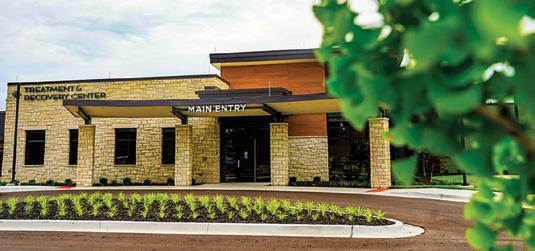
Crisis Intervention Center (CIC) License by the Kansas Department of Aging and Disability Services (KDADS) beginning October 2025 is now officially permanent.
The TRC has demonstrated a significant reduction in state hospital admissions by reducing admissions to Osawatomie State Hospital by 70% between 2018 and 2025. This represents more accessibility and local options for crisis intervention and crisis beds to support clients where they live, work, and play.


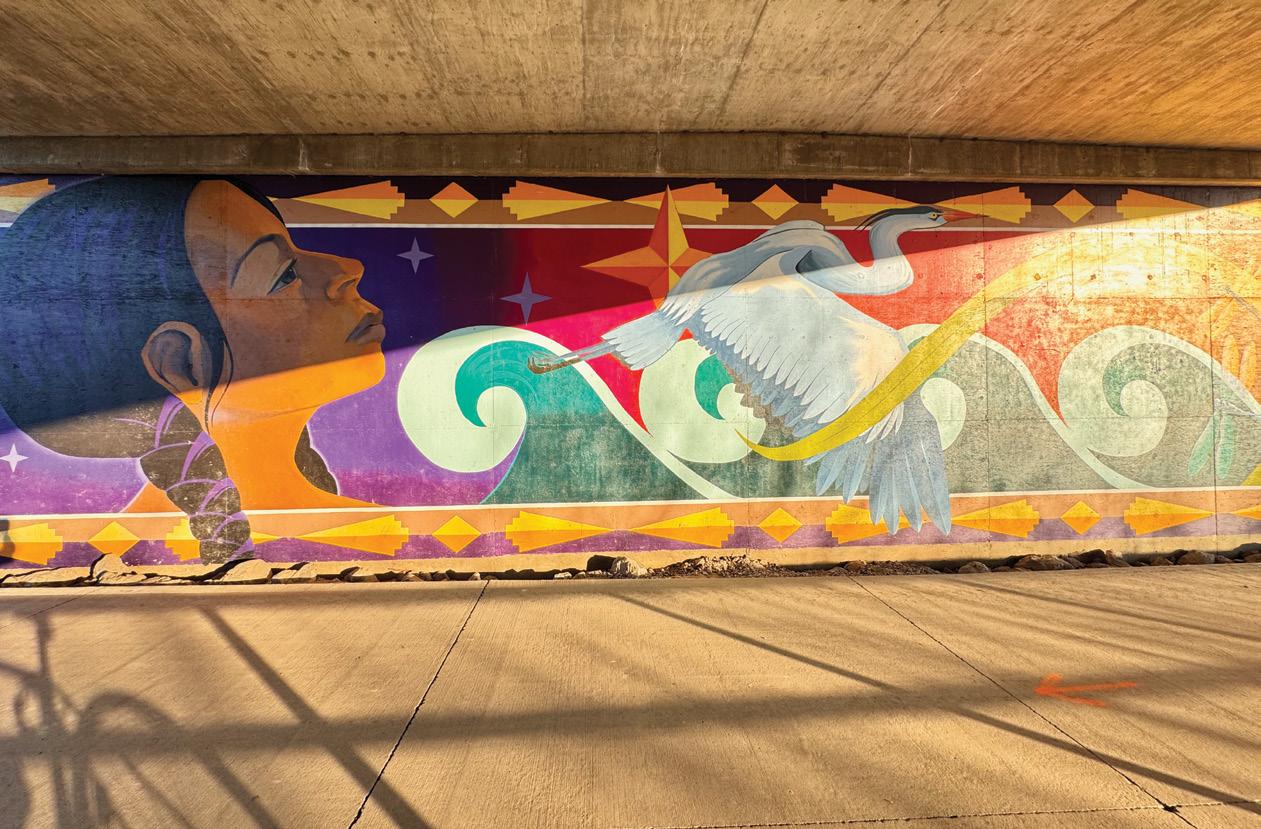

Make an Impact. Advertise in the Lawrence Business Magazine!