
Landcare Australia is proud to acknowledge Aboriginal and Torres Strait Islander Peoples as the Traditional Custodians of the Country on which we live and work. We value and respect their deep and continued spiritual and Cultural connections to the land, waters and seas, and pay our respects to their Ancestors, and Elders past, present and future.
Disclaimer:
Landcare Australia Limited (ACN 008 656 513; Corporate Authorised Representative number 1315198) is a corporate authorised representative of Australian Carbon Traders Pty Ltd (ACN 121 961 144; Australian Financial Services Licence number 425512). This material has been prepared for the purpose of providing general information for wholesale clients as defined in the Corporations Act 2001 (Cth). It does not take into account your particular investment objectives, financial situation or needs. While every care has been taken in the preparation of this material, Landcare Australia Limited makes no representation or warranty as to the accuracy or completeness of any statement in it including without limitation, any forecasts. Investors should, before making any investment decisions, consider the appropriateness of the information provided in this material. We strongly recommend you seek independent financial and legal advice before making any decision.
All Australians actively caring for the land and water that sustains us.
Our Purpose
Empowering individuals and communities
Sustainable management of natural and productive landscapes
Building resilient ecosystems and communities
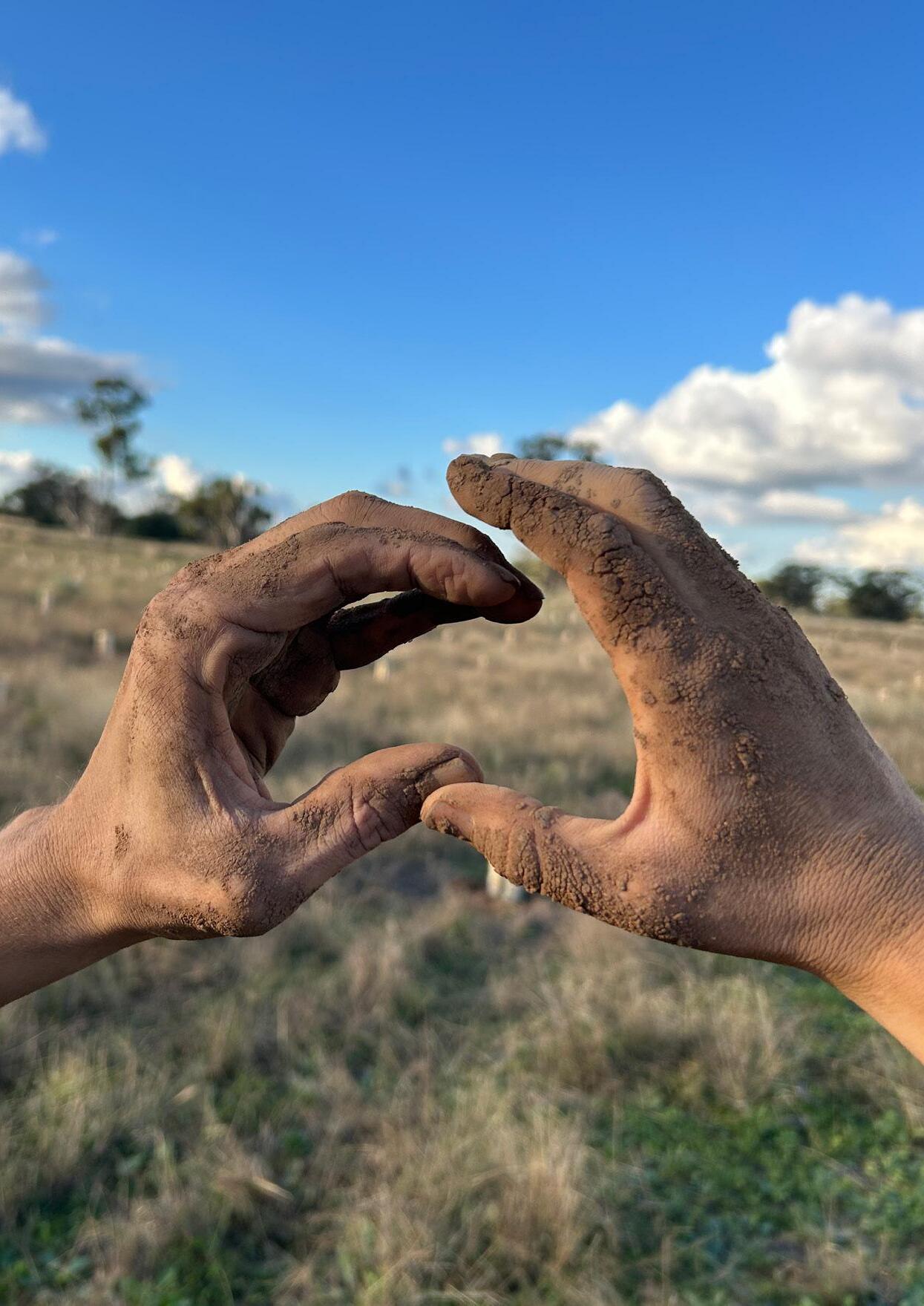
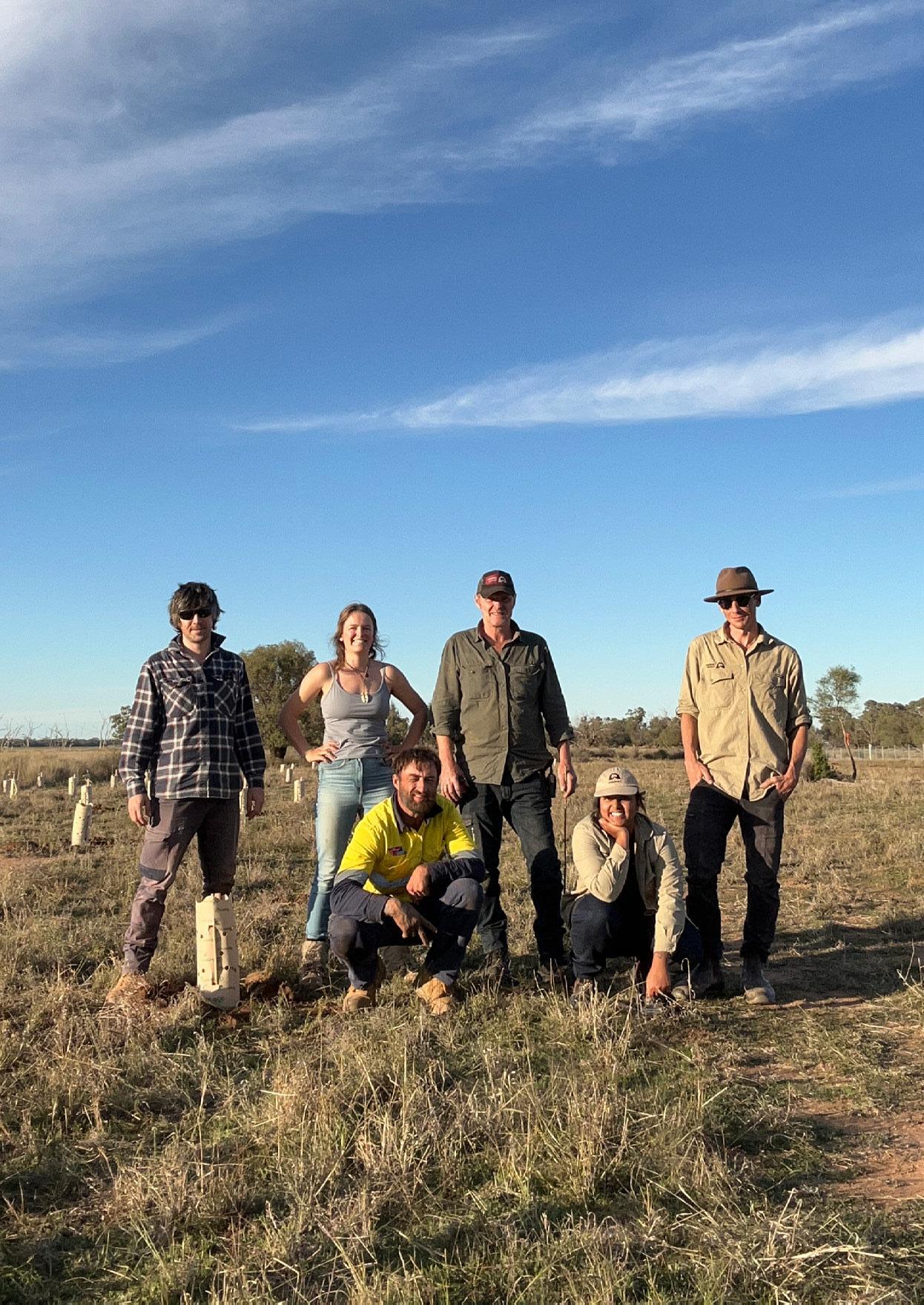
Landcare is a grassroots movement of individuals, groups and organisations across Australia with a shared vision to restore, enhance and protect our natural environment. Landcare is community action –sharing knowledge, building skills, improving biodiversity, creating healthier landscapes and resilient communities. Landcare enables people to actively care for the natural environment in their community by creating partnerships to manage environmental conservation and sustainable land management activities. Landcare connects people from all walks of life to do something good for the environment, and for themselves by being outdoors in nature.
Landcare Australia is an independent, national not-for-profit organisation established in 1989. For over 35 years, Landcare Australia has worked at the forefront of community and corporate engagement in environmental conservation and sustainable land management with activities that protect and conserve Australia’s land, water, soils, plants, animals and ecosystems.
Our work supports individuals, groups and organisations involved in landcare with funding, delivery of onground projects, capacity-building, information sharing, networking, communications and promotion of landcare achievements. We also manage large scale restoration projects including the Landcare CarbonSMART program.
Together with the landcare community and our partners, our efforts improve biodiversity, restore landscapes, build resilience in Australia’s food and farming systems, and create stronger communities. With the impact of a changing climate, biodiversity loss and natural disasters, our work has never been more important to support a mobilised network of 5,500 groups and over 100,000 volunteers.
Landcare Australia is focused on supporting the landcare community to continue their important work with partnerships, innovative programs and technology, fostering the next generation of landcare leaders including school children, and strengthening engagement with First Nations people and communities.
This is how the Landcare Australia team supports the landare movement:
Secure funding and in-kind support from government, corporate and philanthropic sources to support landcare projects and activities.
Support landcare communities to deliver good quality, hands-on projects and programs that will improve environmental and sustainable production outcomes.
Engage with Traditional Owners and First Nations Peoples.
Support the Next Generation of landcare leaders.
Deliver large-scale restoration projects.
Manage grants programs.
Develop education resources to share knowledge and grow capacity.
Share information via the extensive communications channels and networks including media relations, publications, events and digital platforms.
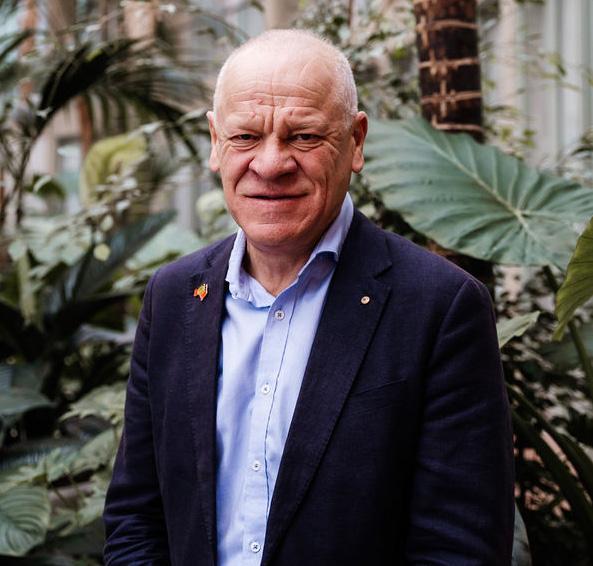
I am proud to present the Annual Report for 2024–2025, a year that once again highlights the strength of collaboration and the collective commitment that drives the landcare movement. Across the country, regional communities, individuals and organisations continue to take actions that strengthen our natural environment and build resilience in the face of biodiversity loss and climate change.
For over 35 years, Landcare Australia has helped connect people with purpose; bringing communities together to repair landscapes, restore ecosystems, and support restorative agricultural practices. The importance of local environmental action has never been more critical. Each individual and community contribution strengthens our national capacity to care for the land and water that support every aspect of life.
The Board’s role is to ensure that Landcare Australia remains strategically aligned with its vision: all Australians to actively caring for the land and water that sustain us. This year we developed our new Strategic Plan, which will guide how we broaden national participation, support innovation in environmental management, and reinforce the Landcare movement as a cornerstone of communityled action. Together, we are building the foundations for enduring change through knowledge sharing, sound partnerships, and accountable leadership.
Our partnerships remain one of our greatest strengths. Landcare Australia’s success depends on collaboration across communities, governments, industry, business, and philanthropy. The FY2425 Annual Report again highlights some of the outstanding partnerships that enable us to deliver meaningful programs; restoring biodiversity, supporting sustainable land management, and strengthening rural and regional resilience. I am deeply appreciative of the expertise, time, and commitment our partners bring to this work.
The leadership and generosity of the First Nations Landcare Working Group continue to deepen our understanding of caring for Country. Their perspectives strengthen our programs and demonstrate the continuity of connection maintained by Aboriginal and Torres Strait Islander peoples for tens of thousands of years. As we listen, learn, and work together, we reinforce an approach that is both inclusive and respectful.
It is equally inspiring to see the next generation stepping forward. Young people across Australia are embracing landcare through schools, youth committees, and digital platforms that connect
communities and ideas. Their creativity and energy show that environmental stewardship is not only our shared responsibility but also our shared opportunity. The NextGen Landcare Committee and Junior Landcare programs continue to inspire young Australians to develop practical environmental knowledge and leadership skills. Through the Junior Landcare Learning Centre, thousands of educators, parents, and students engaged with freely available tools aligned with the national curriculum, linking classroom learning to local action.
I extend my sincere thanks to the Australian Government, including Minister Collins, Minister Watt, and their respective departments, Department of Agriculture, Forestry and Fisheries (DAFF) and the Department of Climate Change, Energy, the Environment and Water (DCCEEW), as well as the Victorian Government’s Department of Energy, Environment and Climate Action (DEECA), for their continued support. I also acknowledge the support of our corporate and philanthropic partners, who continue to fund many outstanding landcare projects, such as Country Road’s The Biodiversity Project, Steadfast Itjumatj Woka Healthy Country Project and the 4Pines Revegetation Projects; all focussed on restoring degraded habitat around Australia.
Finally, I thank the Landcare Australia staff, particularly CEO Dr Shane Norrish and his leadership team, volunteers, and my fellow Directors for their commitment, leadership, and dedication to advancing our shared mission. Together, we are shaping a future defined by healthy landscapes, thriving communities, and a renewed sense of shared purpose. It is work that unites vision with action, and every contribution strengthens the legacy we are creating for generations to come.
Doug Humann AM Chair, Landcare Australia
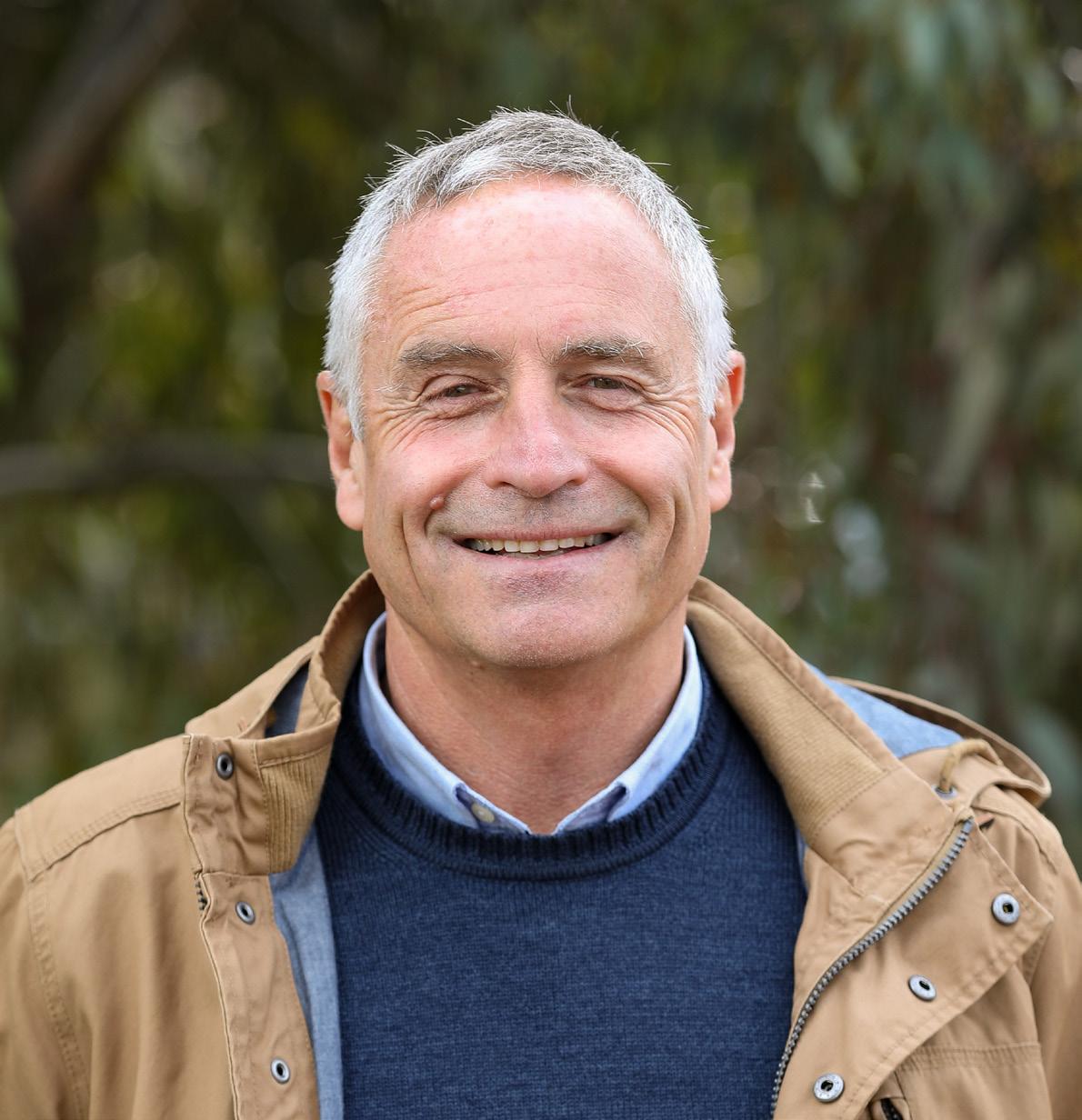
This year, Landcare Australia continued to demonstrate the extraordinary reach and effectiveness of community-based environmental action. Through collaboration, partnership, and innovation, we delivered programs that are improving biodiversity, strengthening local resilience, and supporting communities and primary producers to manage climate and sustainability challenges at the ground level.
Since our beginnings in 1989, Landcare Australia has played an important role in connecting people, knowledge, and practical tools to care for our natural areas. In FY 2024–2025, that work continued across hundreds of communities, with volunteers, landholders, primary producers, schools, and partners working together on activities that restore native habitats and natural capital across our varied landscapes.
During the year, 218 environmental projects were supported through grant funding, along with over 200 initiatives incorporating Aboriginal and Torres Strait Islander knowledge and engagement. In total, Landcare Australia invested $2.9 million in onground delivery and capacity building, contributing to measurable improvements in our invaluable natural assets.
Our partnerships with government, business, and philanthropy continue to strengthen the landcare network. This financial year, the Landcare Australia Community Grants and the Bupa Landcare Grants have been significant, providing targeted funding for environmental projects nationwide. Launched this year as part of Bupa’s Healthy Cities initiative, the Bupa partnership further demonstrates Landcare Australia’s strong track record in delivering highquality grant programs that create benefits for communities, the wellbeing of individuals, and the environment.
The Landcare Agriculture Program, supported by the Australian Government’s Natural Heritage Trust, also gained significant momentum with the roll-out of the Biodiversity in Action initiative. This three-year program connects Landcare groups, agricultural producers, and biodiversity experts to measure and manage natural capital on farms through practical activities that support productive landscapes and thriving natural areas.
Landcare Australia is also expanding its contribution to Australia’s emerging environmental markets. By establishing Landcare CarbonSMART, we are helping landholders participate in programs such as the Australian Carbon Credit Unit (ACCU) scheme
and the Nature Repair Market. Our role focusses on developing and supporting high integrity Environmental Planting projects that restore native habitat, and provides long-term benefits for biodiversity and productivity, as well as carbon sequestration.
In FY25, we committed significant effort to hosting the upcoming National Landcare Conference and Awards, which will bring together hundreds of participants in September to share insights, experiences, and advances in sustainable land management. This exceptional event will celebrate community-driven leadership and highlight innovative practices shaping the future of our landscapes.
I am deeply grateful to the Landcare Australia team, whose professionalism, dedication, and expertise are central to our success in building strong partnerships, securing funding, community engagement and delivering projects that create meaningful impact across the country. I also extend my thanks to our skills-based Board of Directors, capably led by our Chair, Doug Humann. Our Directors generously volunteer their time and contribute considerable effort, offering their experience, insight, and steadfast commitment to guide the organisation with integrity.
Together, the landcare movement continues to demonstrate that local action, shared expertise, and strong partnerships produce tangible benefits for Australia’s natural assets, productive landscapes, and the communities that care for them.
Dr Shane Norrish Chief Executive Officer, Landcare Australia
Landcare Australia is governed by a skills-based board of non-executive directors. The board oversees the strategic direction of Landcare Australia to ensure that the organisation continues to be at the forefront of community and corporate engagement in natural resource management and environmental project delivery. The board supports the Landcare Australia Executive Management Team to execute the Organisational Strategic Plan.
The directors volunteer their expertise and experience, particularly in the areas of agriculture, natural resource management, First Nations perspectives, community engagement, youth, innovative services, landcare knowledge, finance, legal and risk management, government relations, communications and business management. Landcare Australia’s Board is supported by the Partnerships, Marketing, Communications and Fundraising Committee, Finance, Risk and Audit Committee and the Governance and Remuneration Committee.
Company Secretary: The Company Secretary is responsible for the legal and statutory compliance on behalf of the Board. The Company Secretary is Janet Davison for Landcare Australia Limited.
Auditors: The auditors for Landcare Australia Limited are Ernst and Young.
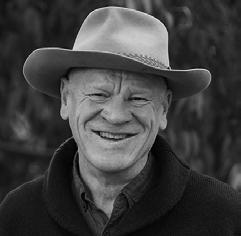
Doug Humann AM, GAICD, BA (Hons), Dip ED, was appointed chairman of Landcare Australia in 2016. With more than 40 years involvement in regional Australia, including 30 years leadership experience in the environmental sector, Doug led Bush Heritage Australia (1997–2011) to national prominence before establishing his own consultancy. Doug is primarily engaged with non-government organisations, Indigenous groups and natural resource management/ catchment management authorities. Doug provides advice and support on a range of strategic, investment, project and governance matters, and is particularly involved in building partnerships, collaborations and mentoring.
Landcare Australia Committee Memberships:
Chair of Board
Chair – Governance and Remuneration Committee
Member – First Nations Landcare Working Group
Former Member – Finance & Audit Committee
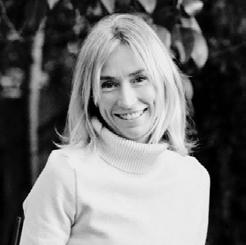
A. E. Hooper | Director since 1 January 2022
Anna Hooper, M.Ag.Bus, B.Ag.Sc, Grad. Dip. Law, GAICD, is a highly regarded agribusiness professional with extensivenational resource management, policy, finance, and governance experience. Anna has a strong practical background in the wine industry, being a winemaker and viticulturalist in Australia and overseas. Anna has held various Board roles including with the SE NRM Board and Australian Vignerons. Anna is currently Director, Economic and Environmental Policy for Australian Grape and & Wine, based in Adelaide as well as a Council Member of Native Vegetation Council of SA.
Landcare Australia Committee Memberships:
Chair – Finance, Risk & Audit Committee
Member – Governance & Remuneration Committee
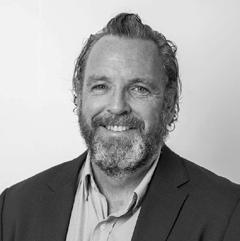
Brendan Foran, MBA, ADBM, GAICD has a wealth of expertise in natural resource management and the environment sector together with strong commercial and governance experience. Brendan led Greening Australia as CEO for 11 years, was the inaugural Chair of the Australian Land Conversation Alliance (ALCA), Founding Chair of SeedX and Canopy –Nature Based Solutions, a Founding Director of NatureCo and a Non-executive Director of North-East Water and the North East Catchment Management Authority. Brendan currently Chairs the Boards of Green Collar and AustraHort. He is also a Member of the Australian Government’s Nature Repair Committee, Chairs the Advisory Board at AirSeed Technologies, a Non-Executive Director at The Talia Institute and Founder and Executive Chair of The Hone Collective.
Landcare Australia Committee Memberships:
Member – Finance, Risk & Audit Committee
Member – Partnerships Marketing Communications Fundraising Committee as of 1 May 2025

Rebecca Underwood, BAgricSc, MAgric, GradCertComm, GAICD, has over 20 years’ experience in Australian agribusiness. Rebecca started her career as an agronomist and more recently has held various senior commercial agribusiness roles. Rebecca brings a strong background in agronomy, agribusiness management, agricultural sustainability, procurement and finance. Rebecca is currently the General Manager Nufarm Seeds Australia and is passionate about providing profitable and sustainable agricultural solutions to Australian growers.
Landcare Australia Committee Memberships:
Member – Governance & Remuneration Committee
Former member – Partnerships, Marketing, Communications and Fundraising Committee
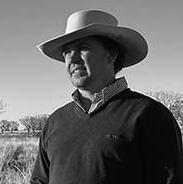
James Walker is a fifth generation grazier operating Camden Park located near Longreach, Queensland. The property is an 8,000 Ha organic, global animal partnership (GAP) accredited cattle station that hosts agritourism and a large-scale solar farm. Being a 2012 Nuffield Scholar and awarded Australian Farmer of the Year for excellence in diversification, James has built digital platforms and generated alternative businesses models to include environmental sustainability into farmer profit streams. James was a finalist for the 2020 Bob Hawke Landcare Award. James is a board member of Opera Queensland.
Landcare Australia Committee Memberships:
Member – Partnerships, Marketing, Communications and Fundraising Committee
Former member – Finance, Risk & Audit Committee
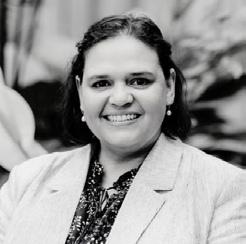
Natalie Sommerville lives and works on Ngadjuri Country in South Australia’s Mid North. She is a farmer, grazier, business owner, mother and mentor. Her connections to Wagadagam clan of Mabuyag of the Torres Strait Islands through her father’s side provides her with a cultural lens in all that she does. Natalie with her husband, Dane, and two children, manage their farming business Windjara Ag and have been farming in the mid north for almost 20 years, developing strong relationships with the local traditional owners over this time.
Driven by her passion for sustainable agriculture, the environment and social justice, Natalie’s focus is on influencing positive change in rural Australia and seeing greater innovation, inclusion of gender and age, and respect for diverse backgrounds. Passionate about sharing her farming, cultural and social knowledge and experiences to improve outcomes for both current and future generations, she creates time to mentor Aboriginal students in local schools and volunteers for community and industry boards at local, state and national levels. This includes Australian Women in Agriculture, Landcare Australia First Nations Landcare Working Group, and the local NAIDOC committee just to name a few.
Landcare Australia Committee Memberships:
Member – First Nations Landcare Working Group
Finance, Risk & Audit Committee
A. E. Hooper (Chair)
B. Foran
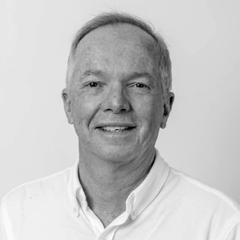
Neal Hawkins (External Appointee)
R. Purves AM | Director since 1 March 2024
Robert is both a businessman and environmentalist with an active business career in public companies. Over the last 20 years, he has dedicated his time to environmental issues. He has served as Chairman/Director for public companies within the health and industrial sectors. Currently, Robert is a board member of the Wentworth Group of Concerned Scientists and is a Trustee of Lizard Island Research Station. He has also served as President of WWF-Australia, a former board member of WWF-International as well as the Climate Council. In 2004, Robert established the Purves Environmental Fund, which funds numerous environmental initiatives. Robert also manages his farm in the Southern Tablelands of NSW, where he has consistently worked to improve degraded landscapes.
Landcare Australia Committee Memberships:
Member – Partnerships, Marketing, Communications and Fundraising Committee from 1 July 2024 to 1 May 2025
Member – Governance & Remuneration Committee as of 1 May 2025
J. Edwards | Director since 1 January 2022
Naomi Edwards is an environmental and social scientist who lives and works on the lands of the Kombumerri people on the Gold Coast. A respected grassroots leader in the Landcare movement, Naomi co-founded Intrepid Landcare to inspire authentic youth engagement and leadership for the environment. She brings extensive experience in community and stakeholder engagement and government relations. Naomi currently coordinates the delivery of the City of Gold Coast’s 10-year conservation strategy.
Landcare Australia Committee Memberships: Chair – Partnerships, Marketing, Communications and Fundraising Committee
Governance & Remuneration Committee
D. E. Humann AM (Chair)
R. J. Underwood
A. E. Hooper
R. Purves
Partnerships, Marketing, Communications and Fundraising Committee
N. J. Edwards (Chair)
J. L. Walker
B. Foran
Australia’s First Nations Peoples hold the key to healing the damage from hundreds of years of poor land and sea management practices across Australia and unlocking agricultural and environmental benefits for future generations. A pioneer in environmental conservation and restoration, Landcare Australia is committed to listening to and amplifying, the voices of First Nations Peoples.
During the 2022 National Landcare Conference in Sydney, there was overwhelming support from delegates for the First Nations presenters, rangers, land and sea managers. The event was pivotal to Landcare Australia establishing the First Nations Landcare Working Group, formally launched at Parliament House, Canberra on Monday March 27, 2023.
Landcare Australia’s Working Group provides leadership, along with both general and specific advice to the Landcare Australia Board and works practically with Landcare Australia Executives on developing targeted partnerships and achieving outcomes based on the vision and values of the Working Group’s Terms of Reference.
Landcare Australia, with its 35-year history of working with diverse stakeholders in environmental conservation, recognises the need to strengthen ties between First Nations people and landcare. The Working Group is guiding Landcare Australia in its mission to support farmers, youth, women, landcare groups, and conservation community groups in connecting with Cultural land and sea management practices.
Landcare Australia’s commitment to fostering collaboration with First Nations people and organisations through the Working Group marks a significant step towards achieving environmental sustainability in Australia. The integration of Traditional ecological knowledge and practices promises to create a brighter, more ecologically sustainable future for the nation, fostering mutual respect, understanding, and cooperation among all Australians.
This is the First Nations Landcare Working Group at 30 June, 2025.
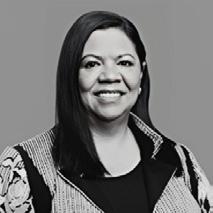
Gail Adamson-Reynolds is a descendant of the Wadjuri peoples which is on the eastern boarder of the Nyungar Nation, (Esperance) she is also a descendant of the Mirrning People (“Whale people”) her mother’s country which stretches along the southern coast of WA to the South Australian border.
Gail is the Chairperson of the Esperance Tjaltjraak Native Title Aboriginal Corporation RNTBC (ETNTAC), a position she has held since the Corporation’s establishment in 2015.
She is also the Chairperson of Southeast Aboriginal Health Service, Board member on Horizon Power board, Indigenous Land and Sea Corporation, Board member on Indigenous Land and Sea Council, member of the South-west Marine Parks Advisory Committee and recently appointed to the First Nations Landcare Working Group.
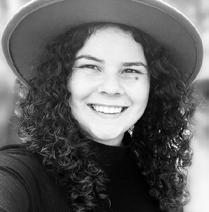
Dhani Gilbert is a proud Kalari (Lachlan River) Wiradjuri young woman who’s focused on achieving just and sustainable outcomes for First Nations Peoples, Country, community, and young people.
Dhani is currently a second-year university student studying a double degree at the Australian National University and a graduate certificate at Charles Sturt University. She is also the Co-chair of the ACT Youth Advisory Council, a community outreach educator with the Woodlands & Wetlands Trust and working with young women in ACT schools to facilitate culturally safe learning and community connection through weaving workshops.
Dhani has a solid cultural education and has grown up involved in Caring for Country practices inclusive of seed harvesting, cultural burning, weed eradication work, native vegetation restoration and student led First Nations plant use projects.
Dhani is a community driven young person passionate about doing what she can where she can to address inequality, First Nations injustice, protect our environment, empower young people, and contribute to lasting change that allows all people to thrive and flourish.
Ultimately, Dhani empowers other young people to participate widely in their community, whilst also being a part of positive social change in educational spaces, cultural education and in ecological recovery actions in the ACT.
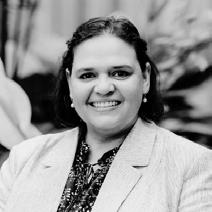
Natalie Sommerville lives and works on Ngadjuri Country in South Australia’s Mid North and is a farmer, grazier, business owner, mother and mentor. Natalie’s connections to Wagadagam clan of Mabuyag of the Torres Strait Islands through her father’s side provides her with a cultural lens in all that she does. Natalie with her husband Dane and 2 children, manage their farming business Windjara Ag and have been farming in the mid north for almost 20 years, developing strong relationships with the local Traditional Owners over this time.
Driven by her passion for sustainable agriculture, the environment and social justice, Natalie’s focus is on influencing positive change in rural Australia and seeing greater innovation, inclusion of gender and age, and respect for diverse backgrounds. Passionate about sharing her farming, cultural and social knowledge and experiences to improve outcomes for both current and future generations, she creates time to mentor Aboriginal students in local schools and volunteers for community and industry boards at local, state and national levels. This includes the Landcare Australia board, Australian Women in Agriculture, SA Ag Excellence Alliance and the local NAIDOC committee just to name a few.
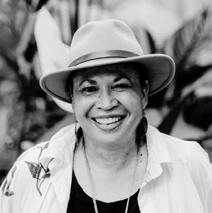
Suzanne Thompson was born and raised in Barcaldine. Her custodial connection to Country has been continuous and carries on the work of her father, the late David Thompson, and Great Grandparents David and Clara, all of whom had traditional custodial links to the lands of the Kunngeri/Iningai & Bidjera peoples. With 20 years of experience in government and community sectors, she has become a pioneer for social and economic empowerment, trade and Indigenous self-determination and is passionate about finding innovative ways to create partnerships between indigenous and non-indigenous cultures.
As the Founder and Managing Director of Yambangku Aboriginal Cultural Heritage and Tourism Development Aboriginal Corporation (YACHATDAC) – which manages a 22,000-acre Property in Outback Central Western Queensland – Suzanne is redefining the very idea of social enterprise and appropriate cultural trading methods that will ensure a safe and transparent economic future for Indigenous people. She volunteers her time as the Chair of the Australian Native Foods and Botanicals (ANFAB) National Peak body and is working directly to secure Indigenous interests and right in this rapidly expanding global marketplace.
Suzanne is currently fostering support and investment for nature-based economies, including Indigenous Land Management, Carbon Farming and First Foods and Medicines, and the recognition, protection, and renumeration of Indigenous intellectual knowledge by industry. More recently, Suzanne was appointed to the Central Western Queensland Ministerial Round Table for her invaluable insights and connections to Regional Outback Queensland.
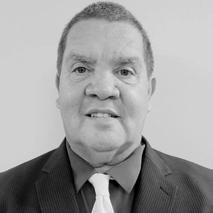
Richard Hoolihan is a Gugu Badhun man from North Queensland, residing in Greenvale on his Traditional Country. Richard has a diverse background in education, training, and emergency services. His career reflects his passion for Indigenous employment programs and First Nations community engagement. Currently, Richard is pursuing a “Masters of Indigenous Business Leadership” at Monash University. He serves on several boards, including as a Director for Gugu Badhun RNTBC and the Aboriginal and Biodiversity Company Pty Ltd. Richard is an Indigenous member on the Decarbonisation Hub Queensland Advisory Committee which acts as a reference group to ensure that Hub activities are aligned with issues that various stakeholders across Queensland are facing during transformation to a decarbonised economy. Richard has previously served as Chairperson of the North Queensland Land Council and now serves as Director for the Charters Towers, Hughenden, Richmond Ward and Chairs the Economic Development Portfolio. He is a Director at North Queensland Dry Tropics and Chairs the Traditional Owner Management Group, ensuring effective engagement with the seventeen Traditional Owner groups across the Burdekin Dry Tropics region in Natural Resources Projects.
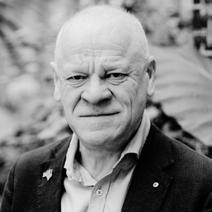
Doug Humann AM, GAICD, BA (Hons), Dip ED, was appointed chairman of Landcare Australia in 2016. With more than 40 years involvement in regional Australia, including 30 years leadership experience in the environmental sector, Doug led Bush Heritage Australia (1997–2011) to national prominence before establishing his own consultancy. Doug is primarily engaged with non-government organisations, Indigenous groups and natural resource management/catchment management authorities. Doug provides advice and support on a range of strategic, investment, project and governance matters, and is particularly involved in building partnerships, collaborations and mentoring.
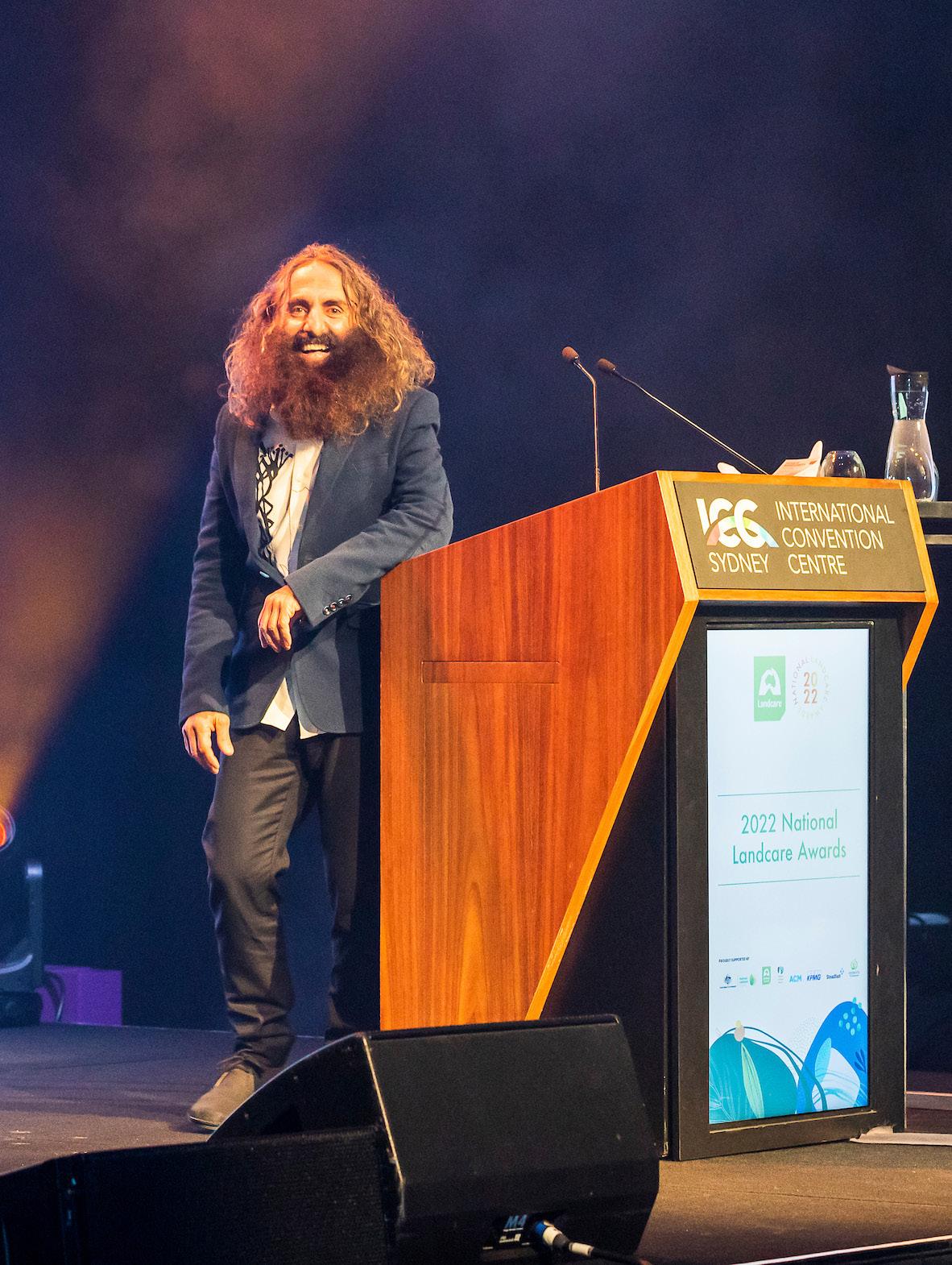
Australia’s largest landcare gathering, the 2025 National Landcare Conference, will take place from 21–24 September at the Gold Coast Convention and Exhibition Centre. Organised by Landcare Australia, the four-day event will bring together leading voices in landcare, sustainable agriculture, biodiversity, nature repair, First Nations land management and community engagement.
The conference will feature a keynote presentation, interactive stream sessions, an exhibition hall, poster presentations, the First Nations Landcare Gathering, the NextGen Landcare Summit, the Landcare Short Film Festival, a Field Trip Program, and the prestigious and the prestigious 2025 National Landcare Awards gala dinner. The winners of the 2025 Bob Hawke Landcare Award and the 2025 General Jeffery Soil Health Award will also be announced.
Landcare Australia invited abstracts from individuals, groups and organisations for the stream sessions that will be hosted on Monday 22 and Tuesday 23, September 2025.
Over the last six months the Landcare Australia team hosted a campaign to attract papers for the conference and provide delegates with an opportunity to buy an early bird registration conference ticket.
The stream sessions will focus on five key themes:
• Nature Repair and Climate Adaptation
• Technology and Innovation for Landcare
• Community-Driven Landcare
• Restoring Biodiversity Across Landscapes
• Sustainable Agriculture and Soil Health
Over 198 Abstracts were received for the stream sessions were received for the Program Committee to review. it is anticipated that there will be over 500 delegates and 100 speakers presenting at the four-day event. A report of the 2025 National Landcare Conference and Awards will be available in November 2025.
Junior Landcare grants help bring sustainability into classrooms across Australia to teach children how to care for their local environment. The Junior Landcare grants program can offer both funding and in-kind support for schools, early childhood centres, before and after school centres and youth groups.
A partnership between Landcare Australia and the Victorian Government’s Department of Energy, Environment and Climate Action delivered the seventh round of Victorian Junior Landcare and Biodiversity Grants.
Wurruk Primary is a rural school of 42 students near Sale, Victoria. As part of their STEM program they study external features of living things, lifecycles and animal adaptations across the school.
For their 2024 Victorian Junior Landcare and Biodiversity Grant the students researched and planned a ‘Frog Bog’ in an unused 7m x 5m area
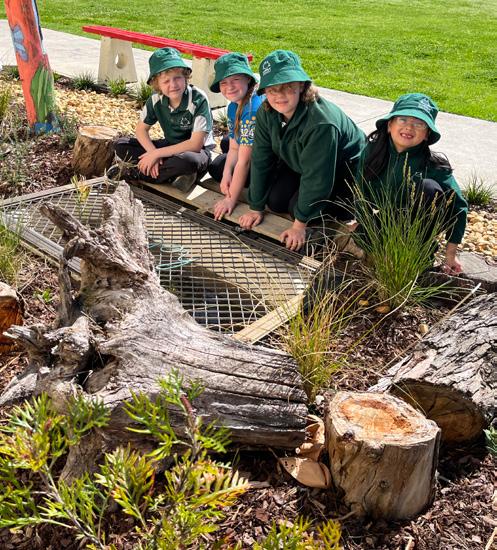
within the school. This area recently had large trees removed due to fire risk and the school wanted to re-plant with smaller grasses and shrubs within the safety guidelines. Students, staff and families spent weeks preparing the site, learning about native plants and planting these.
The school shared learning with families in the ‘Share our Learning Day’ and local media published success to the wider community in the local newspaper. The grant also funded a visit to the Healesville Sanctuary where students were engaged in real life breeding programs for the endangered species they had studied - the Corroboree. They learnt about animal features, lifecycles and adaptation run by expert keepers.
The school formed a relationship with the local landcare network facilitator who has continued to assist with future learning opportunities.
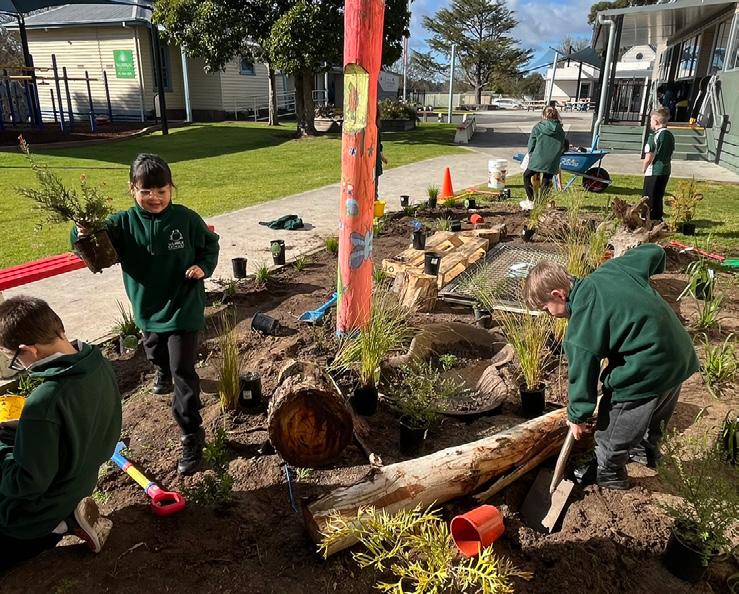
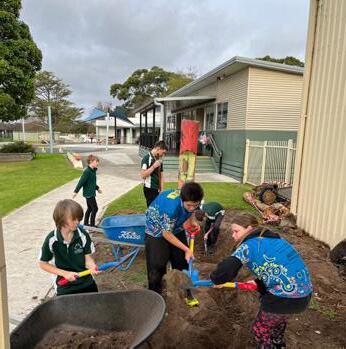
Image: Wurruk Primary Schoolstudents preparing ground
• This student-lead project allowed students to research and gain knowledge about endangered species of frogs and how environmental factors challenge their ability to survive in their environment.
• By building a frog habitat within the school, students used the knowledge gained to better protect and care for the frogs that now live there.
• Students increased their knowledge of native plants including how to care for those plants, where to best plant them, how to plant them, climate factors, compass directions and other mathematical aspects.
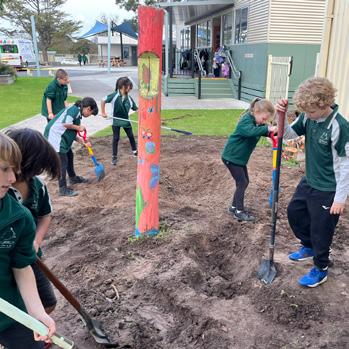
Image: Wurruk Primary Schoolpreparing the frog bog
• Studying the Corroboree Frog and helping Zoos Victoria bring awareness to this endangered species and their breeding program for its re-release into the wild.
• Through the ‘Fighting Extinction School Program’, the school is engaging students in rich and purposeful learning and extending that learning to families and local community through the creation of a Wurruk Primary Frog Bog.
• After an in-depth study of the Corroboree Frog, students were keen to understand how to care for local frog species and create a habitat within our school.
Liam Tocknell, grade 5 says, “We can’t touch frogs because they breathe through their skin and they might get sick.”
Luca Styles, grade 4 says, “I liked getting all the dirt out and making it all level and putting all the plants in and especially the frogs.”
Sarah Collins STEM teacher says, “This was such a student-centred project where all students within the school were involved in planning, designing and establishing a now thriving frog habitat within our school environment. It’s a pleasure to watch our students from kindergarten all the way through to grade six continuing to enjoy this space and watching the frogs move through each stage of their life cycle. They count the tadpoles, froglets and fully grown frogs daily. It’s very exciting!”
Wurruk Primary School received a grant of $4,475 from the 2024 Victorian Junior Landcare and Biodiversity Grants which support the objectives of the Victorian Government’s Protecting Victoria’s Environment –Biodiversity 2037 plan, which aims to stop the decline of native flora and fauna and enhance the natural environment.
Landcare Australia is committed to empowering young people to take action for the environment. As the future custodians of our land, youth play a vital role in shaping the direction of landcare in Australia.
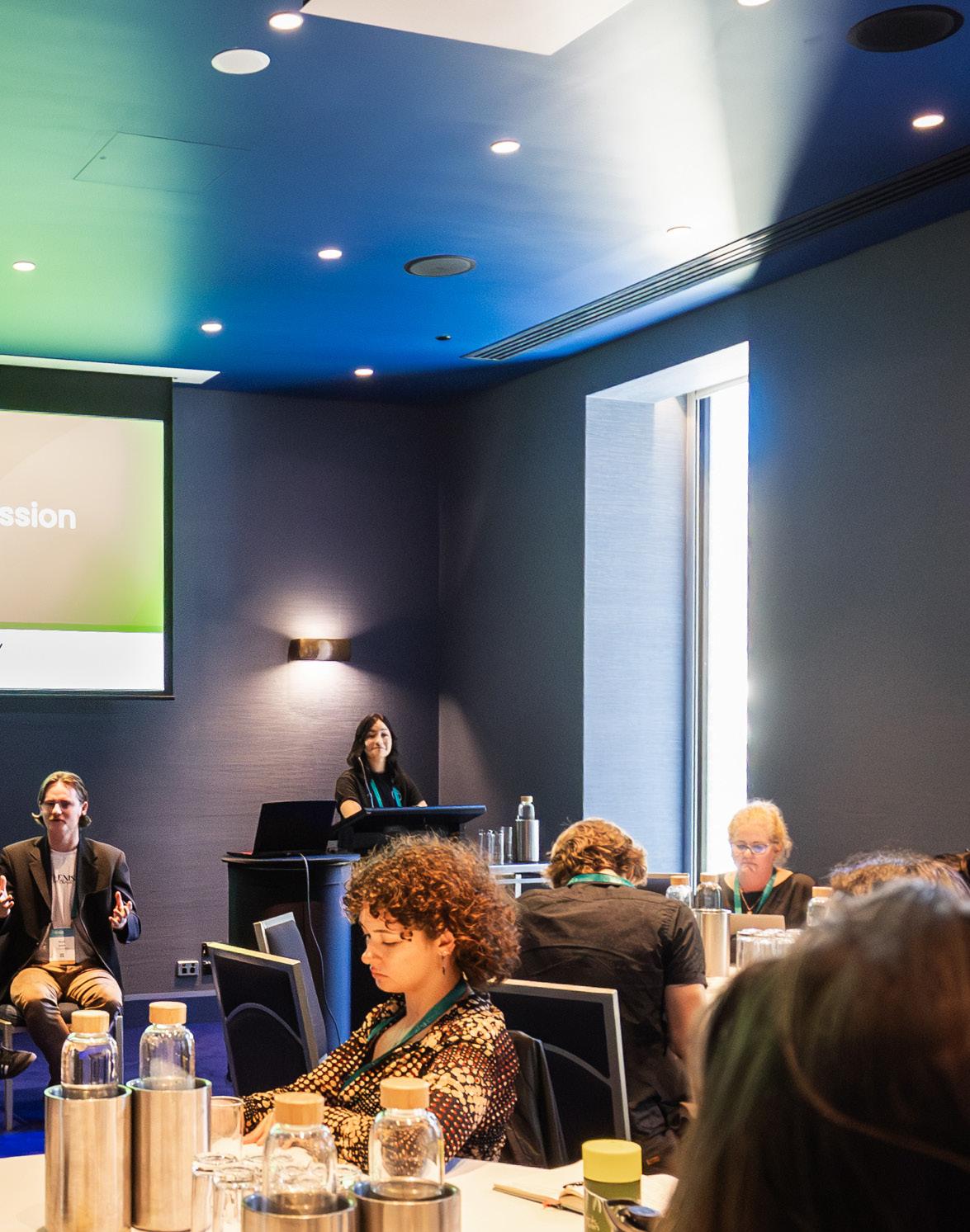
On Thursday, 10 August, 2024, one of Australia’s premier conservation events, the Private Land Conservation Conference (PLC24) was abuzz with ideas and discussions. At the heart of the event was the Future Leaders Forum, hosted by Landcare Australia, a dynamic workshop designed to inspire young leaders with real world problem-solving and leadership skills.
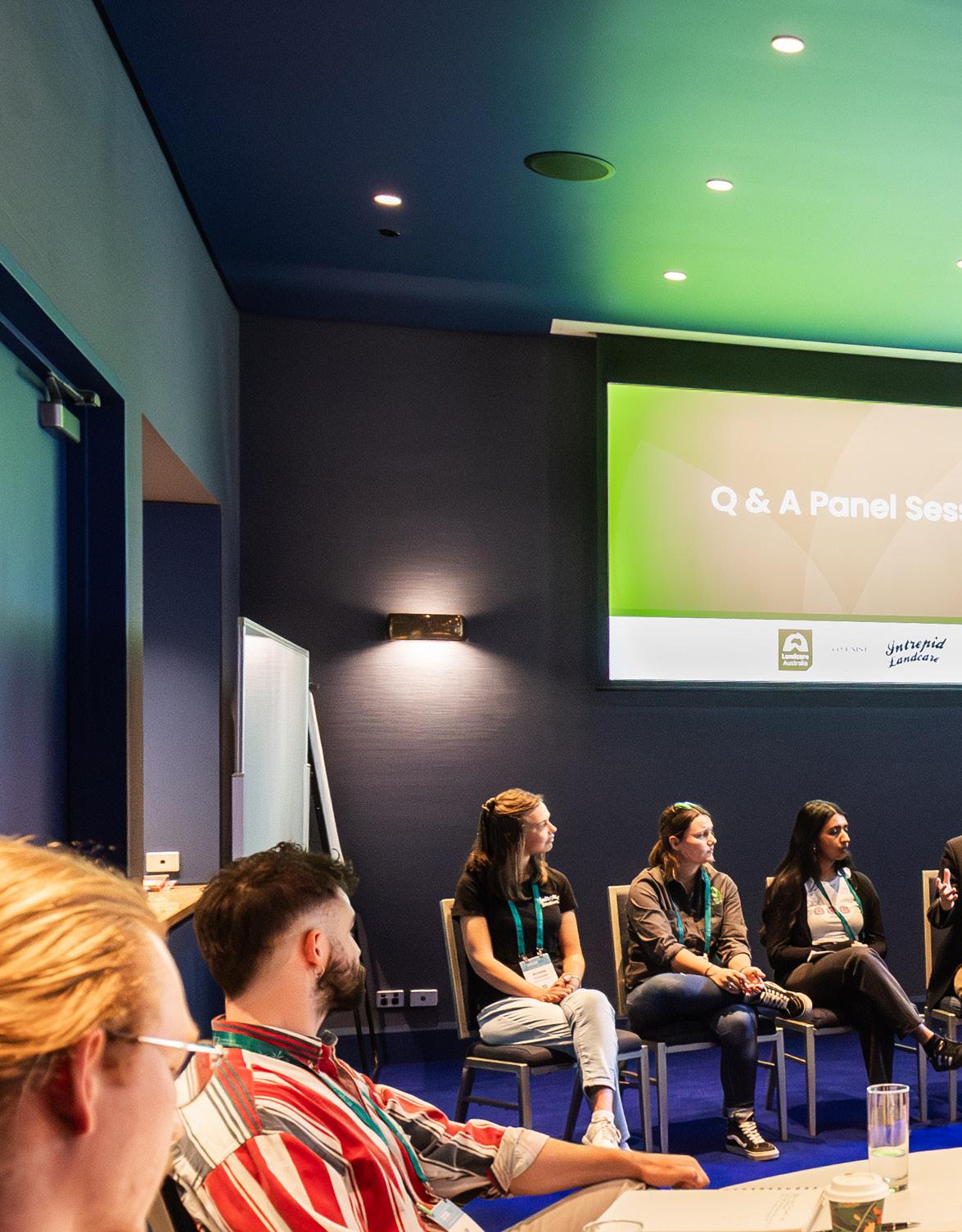
Facilitated by Gabrielle Stacey from Landcare Australia and Hunter Landcare, the forum delivered a lineup of powerhouse speakers, including:
Kurt Jones, CEO of Co-Exist Australia, shared his journey from school project to leading a national conservation organisation.
Sanaa Shah, Honours student at the University of Sydney, provided research insights into conservation volunteering.
Sophie Blair from Wildventure and Greater Sydney Landcare explored how to engage young volunteers in environmental restoration.
Annette Cavanagh, Chair of Intrepid Landcare, dived into how to design volunteering experiences to create connections, collaborations, and career pathways.
The Future Leaders Forum inspired the creation of the NextGen Landcare Summit at the 2025 National Landcare Conference on Sunday 21 September 2025.
The NextGen Landcare Summit will kick start the 2025 National Landcare Conference with the sessions planned by a diverse committee supported by Landcare Australia.
This will be an opportunity for young people to connect with like-minded changemakers, get inspired with new ideas, learn about career pathways, reimagine landcare and support First Nations youth. The NextGen Landcare Summit is supported by the NextGen Landcare Summit Committee, including:
• Annette Cavanagh (Intrepid Landcare)
• Kurt Jones (Co-Exist Australia)
• Sophie Blair (Greater Sydney Landcare/WildVenture)
• Jayden Gunn (BirdLife Australia)
• Marney Durie (President of the Wycheproof Landcare Group)
• Lindsay Davies
Patrick Brabant (Gold Coast Our Natural City Strategy Ambassador)
Landcare Australia has awarded funding through the 2024 Landcare Australia Community Grants Program to three Intrepid Landcare groups: Illawarra Intrepid Landcare, Hunter Intrepid Landcare and ANU Intrepid Landcare. These grants will support Glossy Black Cockatoo Habitat Planting projects.

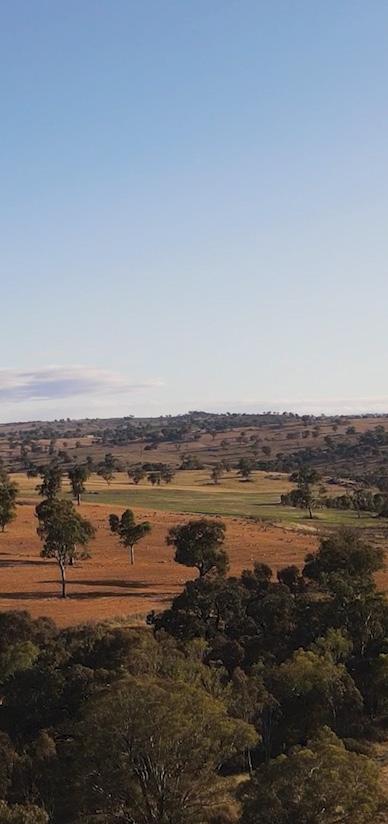

In May 2025, the Landcare Agriculture program invited grant applications for its Biodiversity in Action Grants Program, a national initiative with funds to be distributed across Australia for projects that will improve how Australian producers understand, measure, monitor and manage on-farm biodiversity.
The Biodiversity in Action program will be addressing a growing need for practical, evidence-based approaches to integrate biodiversity into mainstream agriculture business and land management practices. The program will be teaming up landcare groups, farmers, scientists and experts to work together for create new solutions for the land.
Projects will contribute to achieving both of the following aims:
• Improve knowledge, skills and confidence in biodiversity measurement, monitoring and management.
• Test and implement practical on-ground biodiversity management actions.
To achieve this, project activities must:
• Increase the capacity and capability of community, landcare groups, producer groups or First Nations agricultural businesses, to work towards the adoption of measurable best practices for sustainable agriculture.
• Directly improve biodiversity and on-farm adoption of best practice sustainable agriculture through on-farm demonstration.
Beginning in July 2025, the program will fund 11 groups across Australia, from Queensland to Tasmania, New South Wales to Western Australia. The projects will run for three years and were selected from over 60 applications, highlighting industry wide interest in biodiversity-led change.
The Landcare Australia Biodiversity in Action Grant Program is funded by the Australian Government through the Natural Heritage Trust.
The Landcare Australia Community Grants program was launched during 2024 Landcare Week, coinciding with a significant milestone for both Landcare Australia and the national landcare movement.
Thirty-five years ago in Wentworth, NSW, the late former Prime Minister Bob Hawke AC announced the ‘Decade of Landcare’, establishing Landcare Australia and supporting the formation of a national landcare movement that brought
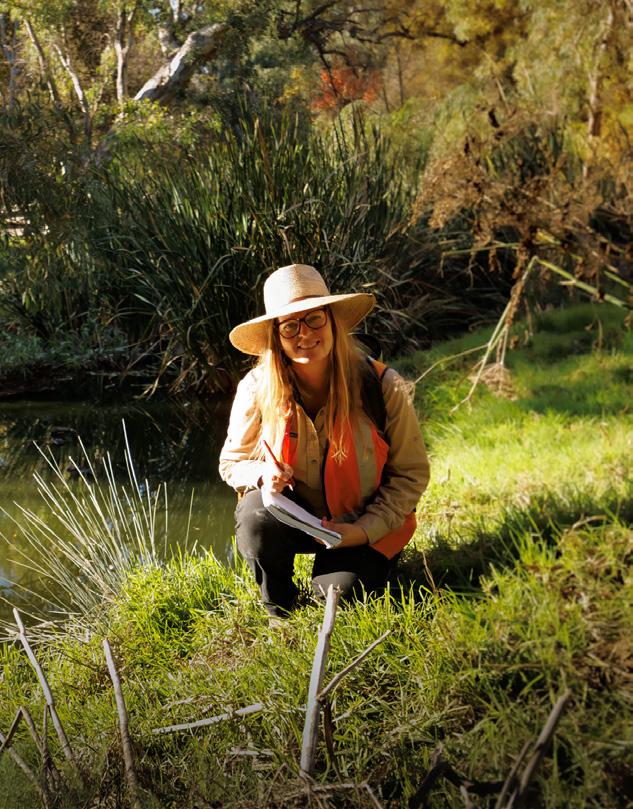
farmers and conservationists together to resolve environmental issues. Today, landcare continues to play a vital role with its mission to protect and enhance our natural environment and restore landscapes.
The $300,000 grants program invited applications from landcare groups and other community-led environmental groups across Australia including Bushcare, ‘Friends of’, Coastcare and Dunecare groups. The grants supported what matters most to landcare groups – using their local knowledge to restore, enhance and protect their natural environment, increase biodiversity and help improve community engagement in landcare activities.
The 2024 Landcare Australia Community Grants Program awarded grants of $5,000-$20,000 to 26 recipients across seven states and territories. Over the course of the 12month grants program, significant progress has been made in both biodiversity outcomes and community engagement. A total of
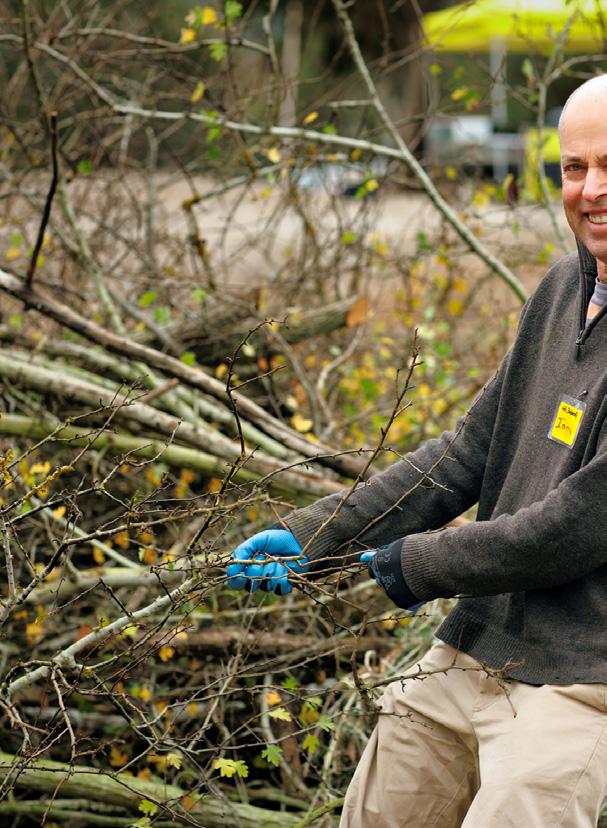
30,552 plants were established and 9,122 propagated, alongside 753,721 square metres of invasive weed control. Habitat and biodiversity improvements included the installation of 27 nest boxes and artificial shelters, supported by 11 biodiversity surveys and 685 metres of fencing installed.
Community engagement has been a cornerstone of the program’s success, with 1,172 individuals involved to date. This includes 735 volunteers, who have collectively contributed 11,215 hours, as well as 102 junior landcarers (under 18s). Engagement has been further strengthened through the delivery of 256 community days, 29 workshops, 46 field days and 9 webinars.
The Landcare Australia Community Grants program outcomes demonstrate the combined impact of on-ground landcare activities and the engagement of community in restoring and enhancing local environments.

1,172 individuals
256 community involved to date spent volunteering who have contributed days spent
11,215 hours 735 volunteers
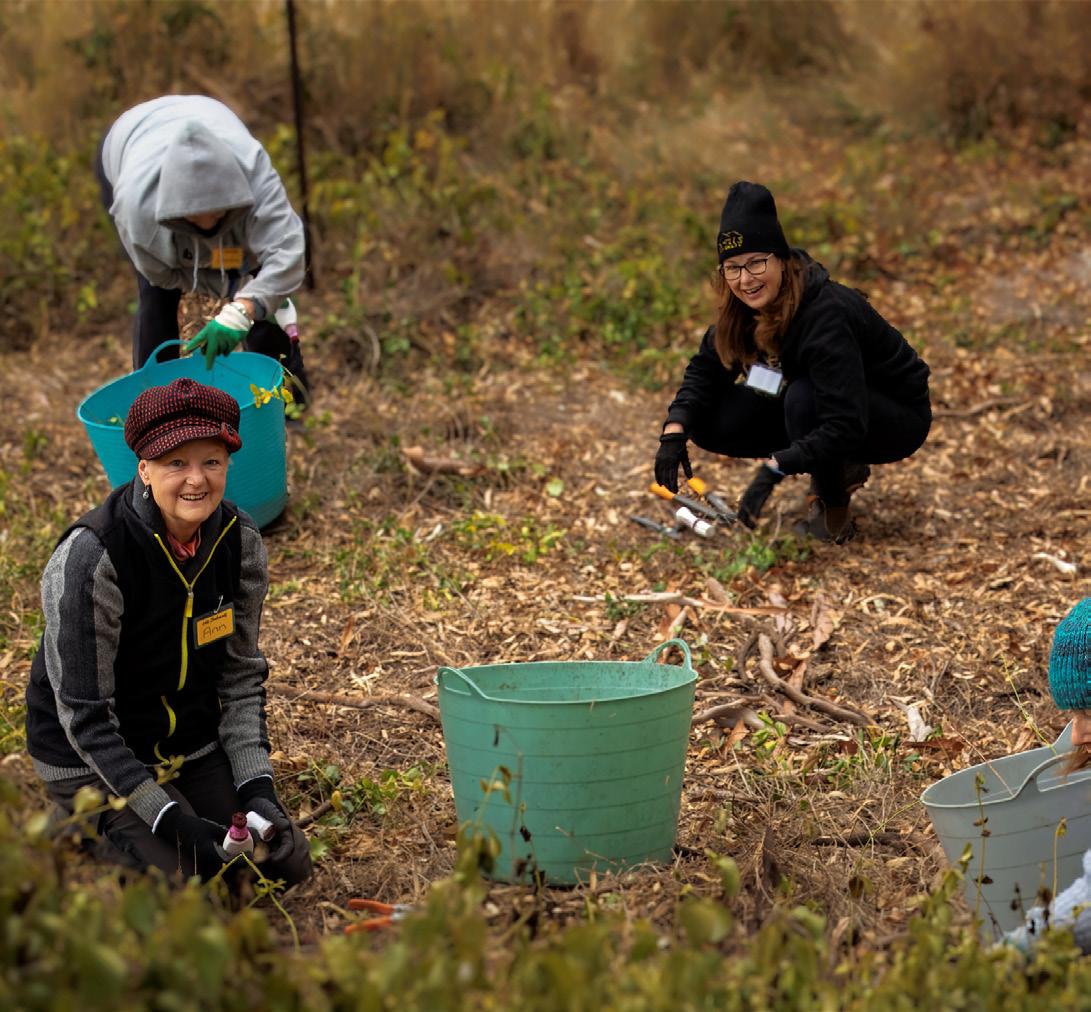
In 2025, Landcare Australia’s Landcare CarbonSMART program marked a significant milestone in our climate and biodiversity journey. During the reporting period, Landcare Australia became a Corporate Authorised Representative (AR 1315198) of Australian Carbon Traders Pty Ltd (AFSL 425512). This step enables us to deliver high-integrity Australian Carbon Credit Unit (ACCU) projects with a clear focus on ecological restoration, positive biodiversity outcomes, and community benefit.
With more than 35 years of trusted engagement with farmers, landholders, community groups, corporates and First Nations organisations, Landcare Australia is uniquely placed to connect people and projects that deliver measurable environmental outcomes. Landcare CarbonSMART extends this role by providing pathways for:
Landholders – to participate in Environmental Plantings projects that integrate carbon sequestration into farm business planning, delivering both economic and ecological value.
Corporates – to invest in credible, nature-positive carbon projects that underpin their climate and sustainability commitments.
Landcare communities and First Nations organisations – to contribute their expertise, strengthen local capacity, and share in the benefits of large-scale restoration.
Landcare CarbonSMART projects are delivered under the Australian Carbon Credit Unit (ACCU) Scheme, regulated by the Clean Energy Regulator, and currently focus on the Reforestation by Environmental and Mallee Plantings (REMP) 2024 method. This involves restoring degraded land with diverse native species, enhancing biodiversity while storing carbon.
With a number of registered projects commencing in 2025 and many more projects at various stages of development, Landcare CarbonSMART is committed to building a portfolio of high-integrity, biodiverse carbon projects that not only contribute to Australia’s climate goals, but also create enduring benefits for nature and community.

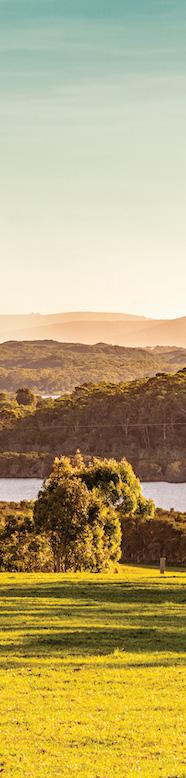
Landcare Australia, in partnership with Steadfast Group, has provided $55,000 in funding to support the Bangerang Aboriginal Corporation’s Itjumatj Woka ‘Healthy Country Project’ in partnership with landcare groups in Wangaratta, Victoria.
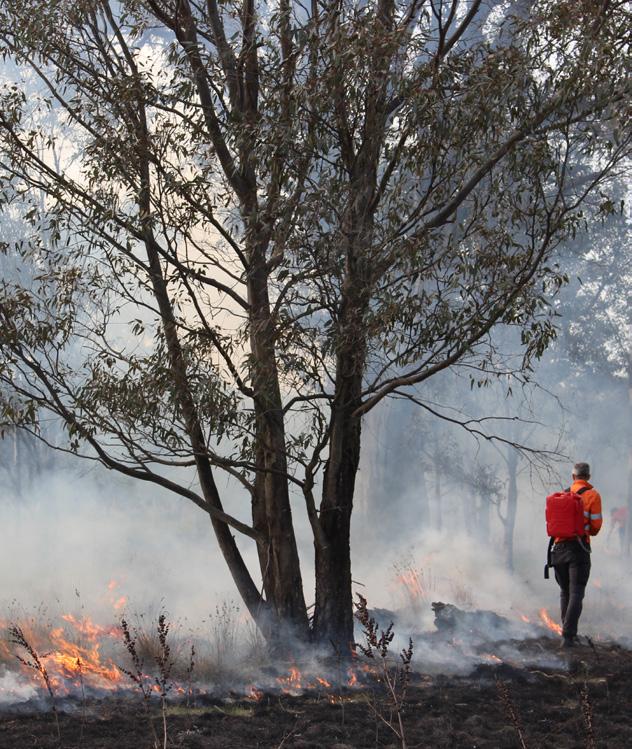
The Itjumatj Woka Project brought agricultural land managers, landcare and local First Nations people together to develop a collaborative approach to land management. The project delivered community education workshops and on-Country management through Cultural burning activities.
In November 2024, Bangerang Aboriginal Corporation delivered their first workshop under the Steadfast Group and Landcare Australia supported project. This workshop focused on a new habitat assessment app, COVRAM. The workshop was well attended, with more than 20 people from the Bangerang Ranger Team, Warby Range Landcare Group, Landcare Australia and North-East Catchment Management Authority.
The event was led by app creator, Ian Davidson, and members of the Bangerang Ranger team. The workshop taught people
how to use the COVRAM app for native vegetation assessment and monitoring and talked about its application and compatibility with other habitat assessment platforms available. COVRAM is comprised of two parts: a mobile app to collect data in the field and a web platform to review and analyse the data collected. The app allows land managers and practitioners to complete assessments of the native vegetation condition in the field and use the web platform to assist in monitoring assessment changes over time to inform and support land management decisions.
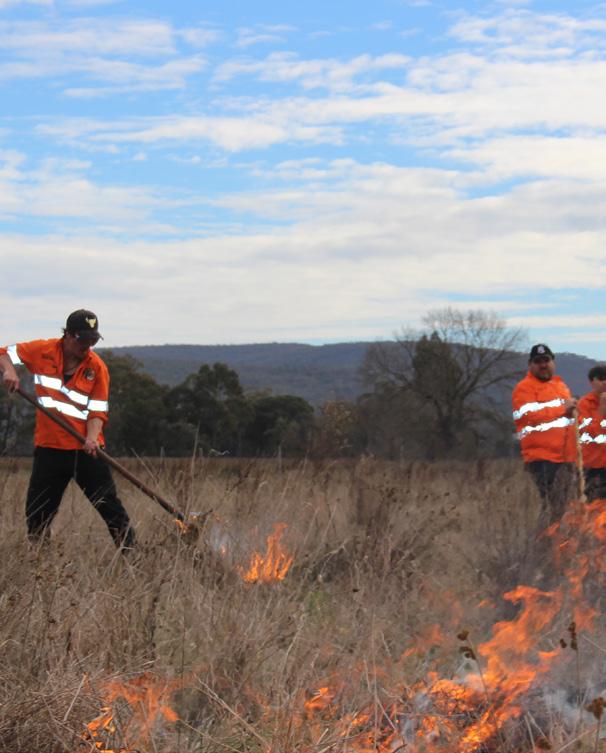
The Bangerang Aboriginal Corporation collaborated with the Warby Range Landcare Group and a local landholder, to conduct cultural burn training to engage First Nations Rangers in on-Country land management, share Traditional Knowledge and improve the conservation values of the area.
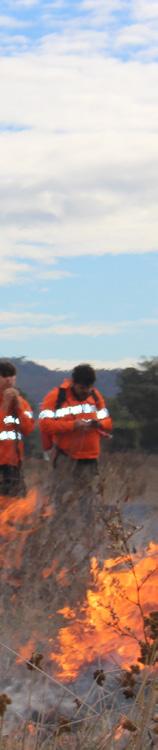
Despite the drought conditions, recent rains made the conditions perfect to conduct a low intensity burn in an ephemeral wetland. The day provided a valuable opportunity for younger Bangerang members to connect with their Culture, with several participants attending their first Cultural burning training. For the environment, the burn will provide opportunities for natural regeneration for trees and shrubs to return to the landscape.
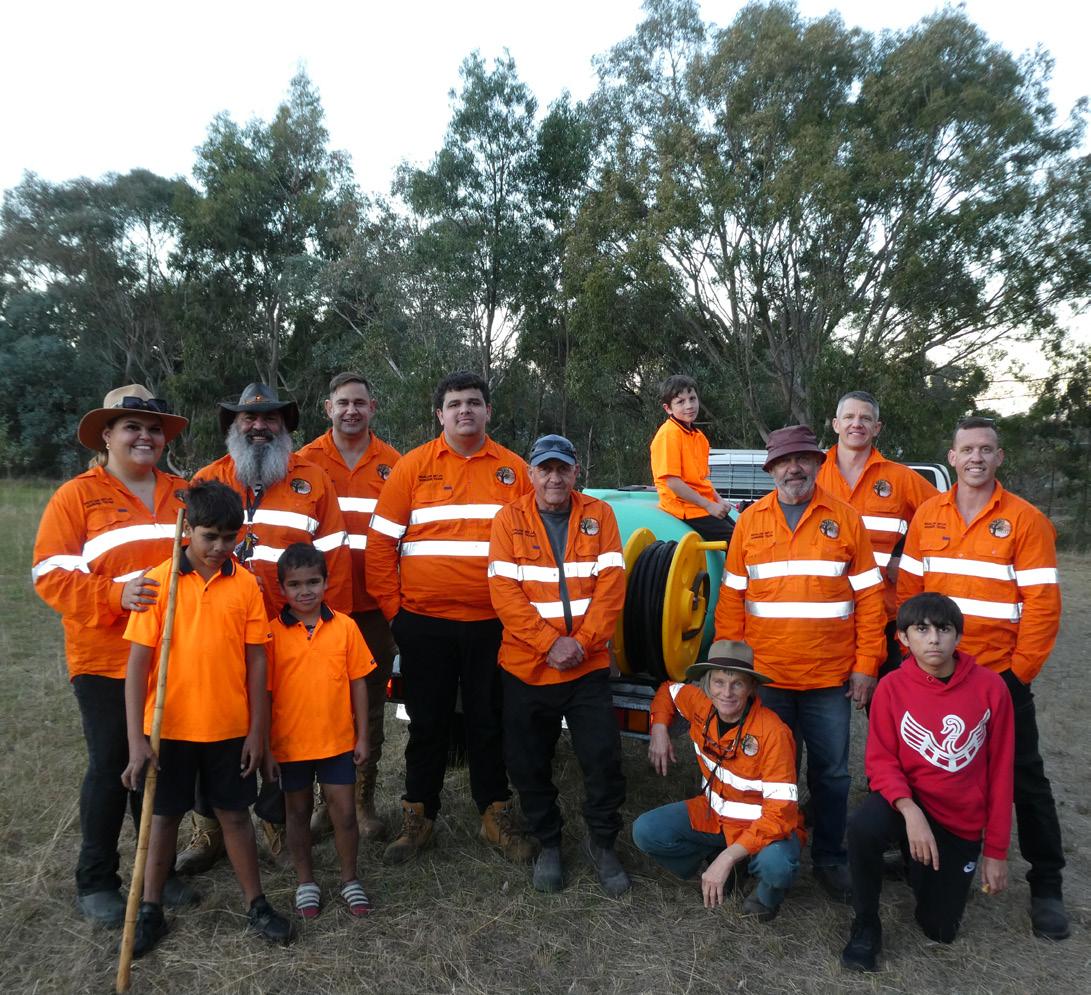
Since 2020, Landcare Australia, Wildlife Information Rescue and Education Service Ltd (WIRES), and Queensland University of Technology (QUT) have partnered to deliver the WildSeek Project.
The project is being managed by Landcare Australia through Community Hubs in various regions:
New England, NSW Tamworth Regional Landcare Association
MidCoast, NSW Mid Coast 2 Tops Landcare
South East Queensland Noosa & District Landcare Group Inc.
East Gippsland, Victoria East Gippsland Conservation Management Network
Greater Sydney Region NSW Landcare Australia
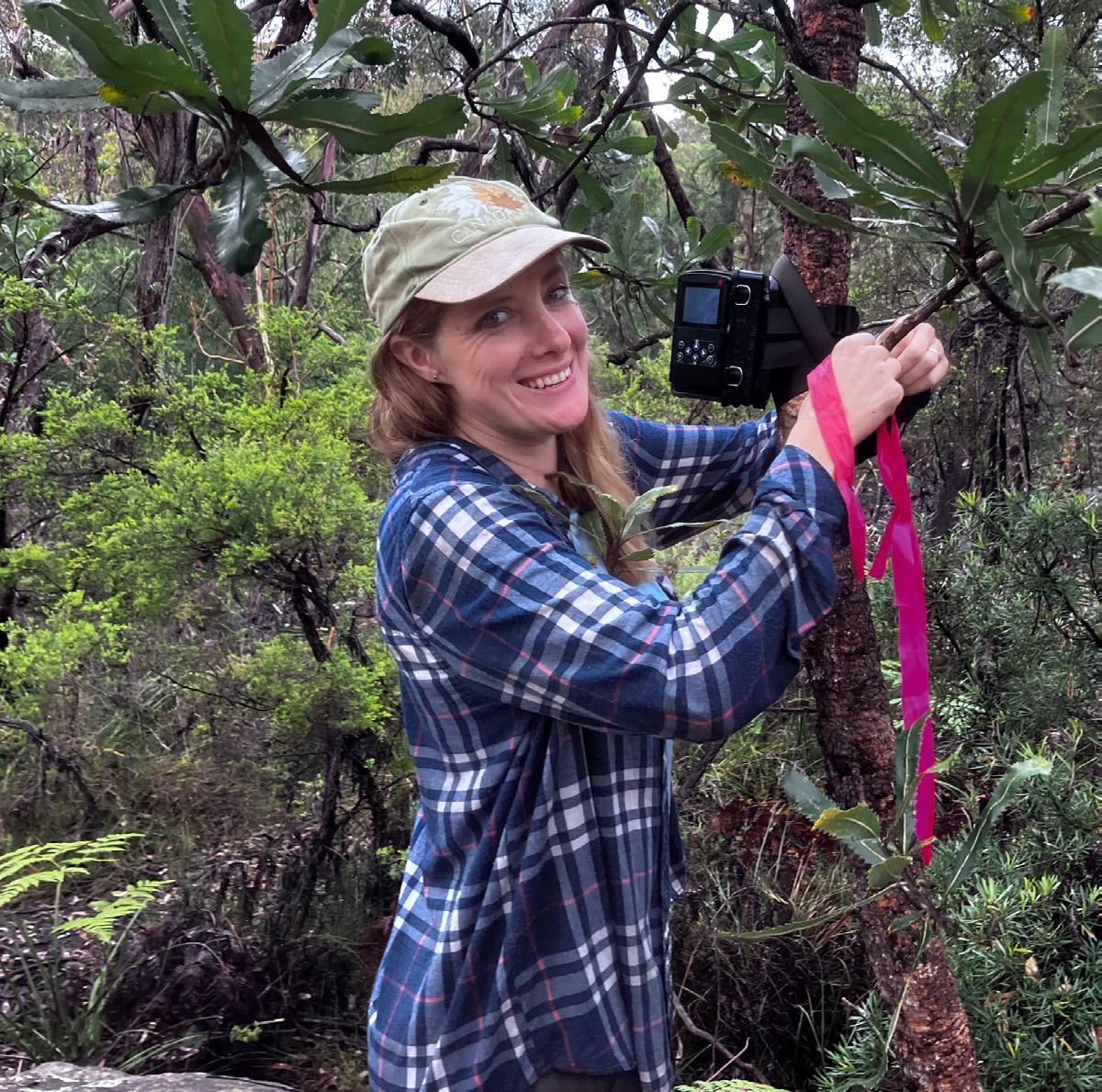
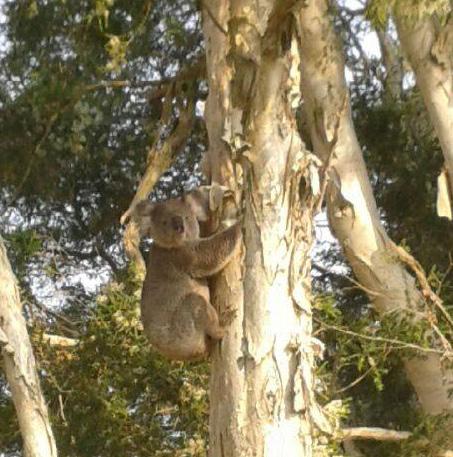
WildSeek supports community groups like the Hills-Hornsby Rural Koala Project, which focuses on mapping and protecting koala populations in Greater Sydney. Historically, koalas thrived in the Hills Shire and Hornsby areas, but the 2002 bushfires devastated their numbers.
Since 2018, the Hills-Hornsby Rural Koala Project has conducted a citizen science koala search, using cameras, sound meters, and community sightings to map the population to protect their habitat.
Now, in a major breakthrough, thermal imaging drones conducted by Landcare Australia have confirmed the presence of koalas in the region. These drones have validated existing citizen science data and provided robust evidence that koalas are living in the Hills-Hornsby region. This discovery marks a significant step in protecting them.
Using drones equipped with thermal imaging cameras, the project identified 13 koalas in a 600-hectare area on properties in Glenorie, Cattai and Maroota in The Hills District.
This latest discovery has been 20 years in the making and gained national attention after being featured in an online article published by the ABC.
The WildSeek work resulted in a major breakthrough in our project because they were able to cover hundreds of hectares in a short period of time, and significantly add to our existing data, as well as further validate this data. The WildSeek results have enabled us to say with confidence that there IS an existing koala population here in the Hills-Hornsby area.
Lilly Schwartz, Project Coordinator at Hills-Hornsby Rural Koala Project
At the 2025 Greater Sydney Regional Landcare and Bushcare Awards in May 2025, Landcare Australia’s Chief Remote Pilot, Katie Selhorst, hosted a talk about the WildSeek program and how its technology supports community groups. Lilly Schwartz joined the presentation to share how she has used WildSeek data in her region and the benefits she has gained from the program.
Since 2020, Landcare Australia and Country Road have worked together on The Biodiversity Project to support the restoration of Australian farmlands, with a focus on increasing biodiversity in cotton-growing regions.
Over the past five years, the partnership has supported six regeneration projects on cotton farmlands in New South Wales. These projects take place across the properties of farming families - The Kahls (Wee Waa), Watsons (Boggabri), Hamparsums (Piallaway), Pursehouses (Breeza), Schwagers (Narrabri), and Falkiners (Haddon Rig).
To date, Country Road has provided over $1.1 million of funding to The Biodiversity program, raised through brand contributions and sales of its famous Verified Australian Cotton Heritage Sweat.
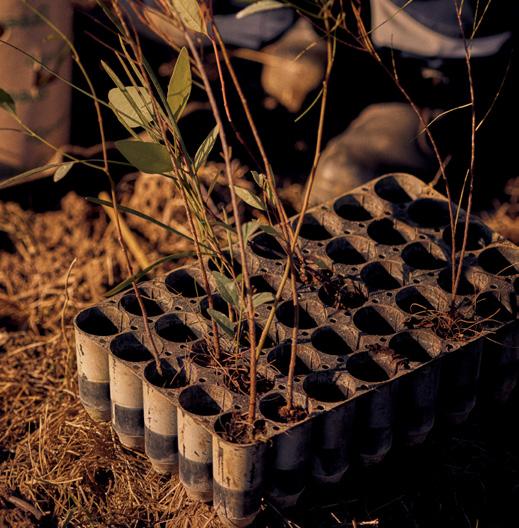
In 2025 the project expanded into the Macquarie Valley on the Falkiner Family property, Haddon Rig, with 2,000 tubestock planted.
From July 2024 to June 2025, the projects have achieved the following:
As a recipient of funding from Country Road’s Climate Fund, Landcare Australia has successfully launched an online toolkit to support wool and cotton growers to understand environmental market opportunities on the new Landcare Australia corporate website. The Climate Fund grant has enabled Landcare Australia to significantly progress work towards supporting eligible cotton and wool producers to consider participation in the Australian Carbon Credit Unit Scheme through Environmental Planting projects.
The toolkit is accessible online through Landcare Australia’s website. The resource is free, and Landcare Australia is committed to transparently sharing information with landholders. The toolkit provides information to landholders on how to get started in the carbon market, including a straightforward, stepby-step practical guide on environmental planting projects.

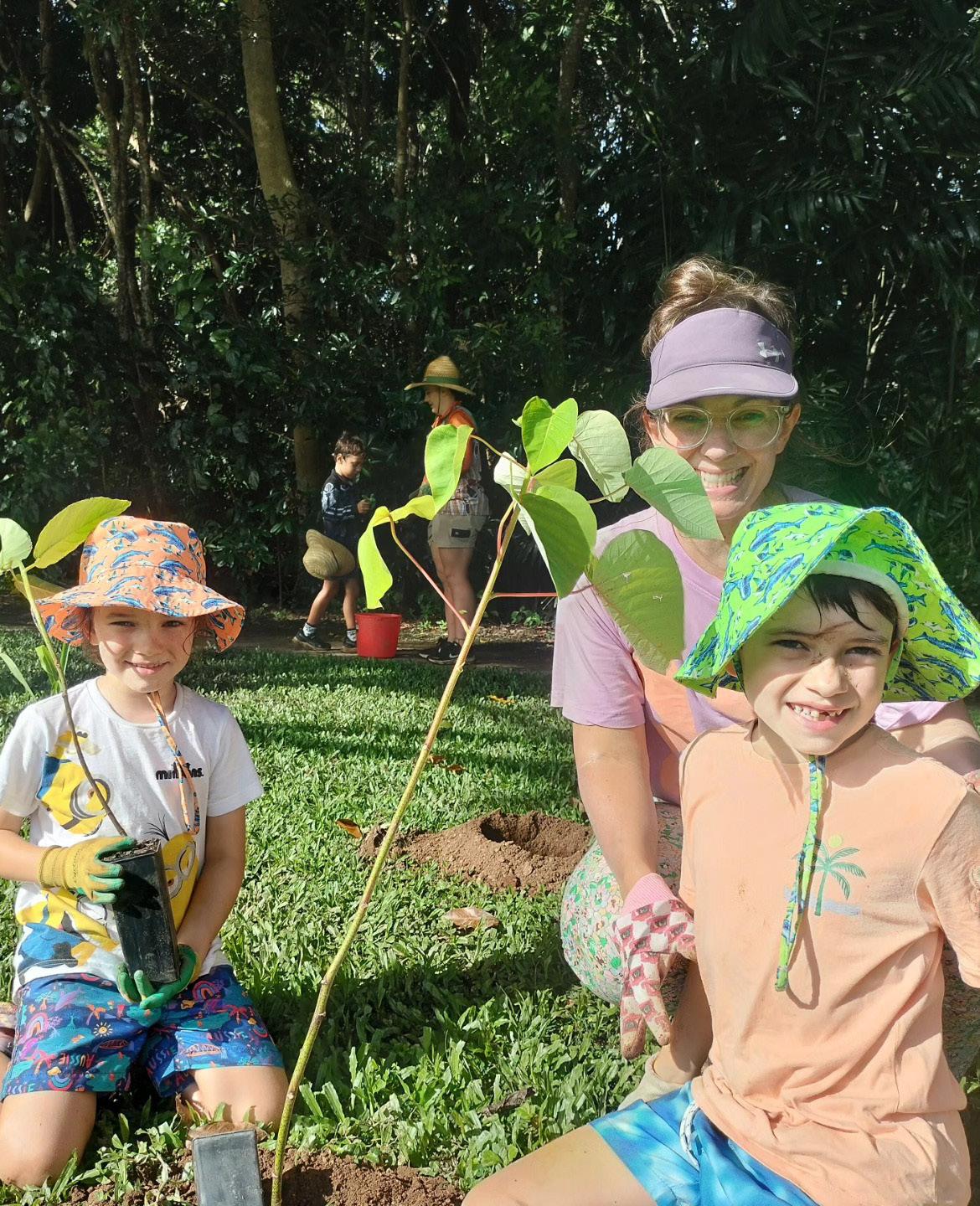

In September 2024, Landcare Australia and Bupa partnered to establish the Bupa Landcare Grants Program. With Bupa’s support, 41 community groups across Australia received funding to plant over 100,000 native trees, shrubs and ground covers across urban and peri-urban Australia.
The Bupa Landcare Grants Program supports healthier environments and healthier communities by enhancing native vegetation connectivity, improving water and air quality, and creating new green spaces in urban areas for people to enjoy and thrive.
This initiative highlights Bupa’s Healthy Cities Challenge, which promotes the link between a healthy planet and healthy people, while encouraging active lifestyles. Through these projects, locally endemic trees and shrubs are being planted to strengthen native vegetation connectivity and bring more nature into urban environments. These efforts not only restore biodiversity but also enhance community wellbeing - providing volunteers with opportunities to get active through landcare, boosting both physical and mental health, while creating healthier, greener environments which encourage people to spend more active time outdoors.
Funded groups include:
• Avoca and North Avoca Dunecare
• Bayside City Council
• Biodiversity Victor Harbor Incorporated
• Cabarita Community Inc.
• Central Coast Wetlands - Pioneer Dairy Land Manager
• City of Bunbury
• City of Salisbury
• City of Salisbury - Friends of Pledger Wetlands
• Cooks River Valley Association
• Darebin Creek Management Committee
• Earthcare Park Landcare Group
• Fingal Head Coastcare Incorporated
• Friends of Apollo Parkways
• Friends of Dandenong Valley Parklands Inc
• Friends of Kalorama Park
From September 2024 to April 2025, early impact has already been achieved, with many grant recipients still to enter their peak planting season. We look forward to seeing many more planting events and community benefits unfold in the months ahead.
16
8,186 community events native trees, shrubs, and ground covers planted people involved volunteer hours contributed
11,820
383
• Friends of Kororoit Creek
• Friends of Lake Claremont Limited
• GreenBrook Association - The Wildlife Preservation Society of Queensland Kedron Brook Catchment Branch Inc.
• Hunter Region Landcare Network
• Landcare Illawarra Inc.
• Landcare SJ Inc.
• Landcare Tasmania
• Lota Creek Bushcare Group - Bulimba Creek Catchment Coordinating Committee
• Mid Lachlan Landcare Incorporated
• North Brisbane Catchments
• Northern Bendigo Landcare Group
• Oxley Creek Catchment Association
• Pambula Wetlands and Heritage Project Inc.
• Parklands Albury Wodonga Limited Port Phillip EcoCentre Inc.
• Randwick City Council
• Sunshine Coast Regional Council
• Treeforce Association Inc.
• Trillion Trees Australia
• Wallan Environment Group Inc.
• Watergum Community Inc.
• Westgate Biodiversity: Bili Nursery and Landcare
• Wodonga Urban Landcare Network
• Woolamai Beach Surf Life Saving Club
• Yarra Ranges Shire Council

Landcare Australia has announced the three finalists for the prestigious 2025 Bob Hawke Landcare Award that recognises excellence in landcare and sustainable agriculture.
The awards finalists include:
• Garry Kadwell: Crookwell, New South Wales
• Holbrook Landcare Network: Holbrook, New South Wales
• Stuart McAlpine: Wubin, Western Australia
Dr Shane Norrish, CEO of Landcare Australia, said “Congratulations to each finalist, this prestigious award acknowledges their tremendous efforts. These leaders not only champion and adopt sustainable practices, but also inspire others to take action. They understand that building a sustainable future is a shared responsibility, and their collaborative approach is helping shape a resilient and thriving landscape for generations to come.”
The 2025 Bob Hawke Landcare Award winner will receive a $30,000 prize and be announced at the 2025 National Landcare Awards Gala Dinner, an event hosted as part of the 2025 National Landcare Conference. The prize will support the winner to further develop their knowledge and skills in sustainable land management to enable an even stronger contribution to landcare.
The award honours the legacy of the Hon. Bob Hawke, recognising his pivotal role in transforming landcare from a grassroots community initiative into a national movement, securing unique bipartisan support.
The Bob Hawke Landcare Award is funded by the Australian Government through the Natural Heritage Trust.
www.bobhawkelandcareaward.com.au


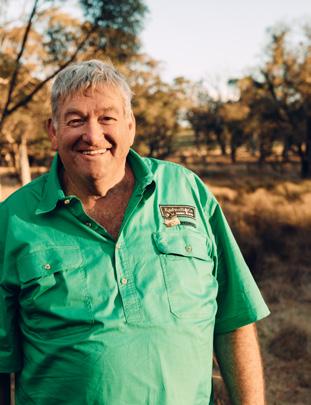
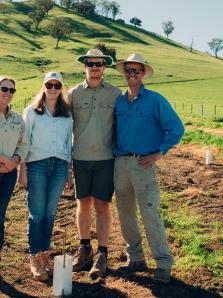
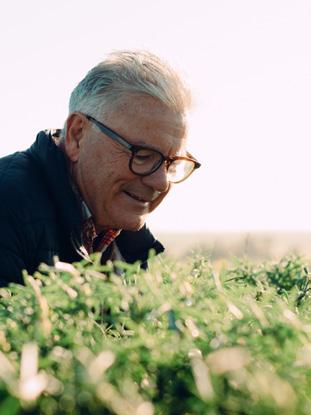
Fourth generation farmer who is committed to sustainable farming through innovative practices that enhance productivity, profitability, and the quality of natural resources. Garry has recognised the critical importance of ecological connectivity and dedicated 40% of his farm in the Southern Tablelands to conservation efforts, exceeding the 30% target set by Australia and the international community for protecting natural areas.
Holbrook Landcare Network (HLN) is a community network based in southern NSW, that started in 1947 by local farmers to care for the land. Holbrook Landcare Network exists to support the rural community to achieve positive and enduring changes in agricultural productivity, environmental sustainability and social capacity in the region.
A pioneer in sustainable farming, transforming his family farm in Buntine, Western Australia, to enhance productivity, profitability, and natural capital. In 1997, he co-founded the Liebe Group, fostering collaboration between farmers, researchers, and institutions. Early trials on his farm explored soil health and biology, laying the foundation for his regenerative journey.
The 2025 General Jeffery Soil Health Award recognises the work of people who care for soil health and who are educating or inspiring others.
Landcare Australia launched the 2025 General Jeffery Soil Health Award on World Soil Health Day, December 5, 2024.
In effort to bring soil health to the forefront of critical biodiversity and environmental conversations, Landcare Australia has for the first time opened the eligibility criteria to include individuals and groups or organisations who are actively involved in activities to protect and improve soil health, including landcare groups, farmers, farming systems groups, land managers, extension specialists and educators.
Through a successful multi-channel campaign, Landcare Australia encouraged the landcare community to nominate for the award. The incumbent General Jeffery Soil Health Award (2022) recipient, Dr. Oliver Knox, supported this campaign’s launch. He explained “It’s a great award that celebrates all things soily! People might well ask, why should we care about soil health and the answer is simple, soils are the basis of food production, food security and human health”.
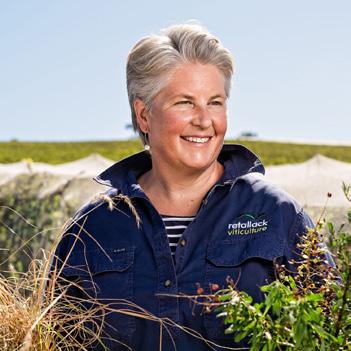
For over 30 years has helped improve Australian soil by teaching the practical skills needed to employ agroecological restoration to degraded landscapes. As an experienced agroecologist, scientist and third-generation viticulturist Mary founded and leads the awardwinning national EcoVineyards program, a science-based initiative promoting soil health and achieving a 50% agricultural carbon emissions reduction. EcoVinyards supports 6,251 wine growers and 2,361 winemakers in Australia, managing a combined 146,244 hectares of vineyards, in their shift towards ecological practices.
From Australian Capital Territory
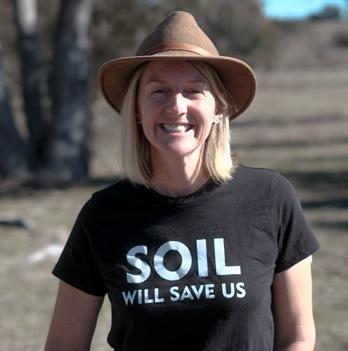
Susan is a leading applied soil scientist who champions soil science and evidencebased decision-making in land management, inspiring thousands with her passion for soil. Susan is the original “Soil Influencer” earning national recognition for her ability to communicate all things soils specifically soil carbon and its contribution to healthy soil. Susan is a worthy nominee based on her many years of promoting and raising awareness of soil health, resulting in understanding and uptake of sustainable land management practices in Australia.
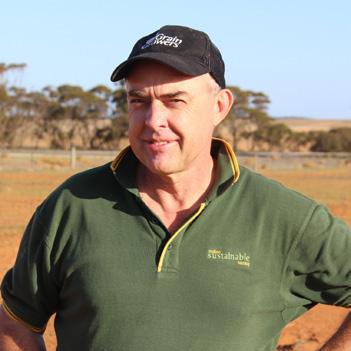
Nearly 40 years of work developing and using innovative land management practices have resulted in quantifiable improvements in soil health. He’s been a key figure in tackling Mallee seeps and dry saline land, significant soil degradation problems affecting over 50,000 hectares of farmland. Through extensive demonstration and collaboration with farmers, he had developed and implemented strategic soil amelioration techniques. His work has significantly reduced soil degradation, improved soil structure, and enhanced plant growth in affected areas. His ability to bridge research and practical application has led to widespread adoption of game-changing soil health practices, reinforcing his role as a champion of soil health.
The General Jeffery Soil Health Award is presented at the National Landcare Awards. The Award includes a trophy and a $20,000 cash prize for an agreed soil health project for recipients to continue their work.
The 2025 General Jeffery Soil Health Award is funded by the Australian Government through the Natural Heritage Trust. The General Jeffrey Soil Health Award was established in 2020 by the Office of the National Soils Advocate.
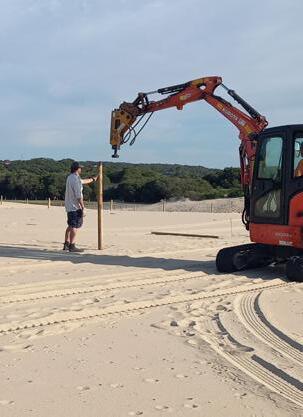
Belmont Wetlands State Park is home to a rich and diverse natural environment. While some areas have suffered degradation in the past due to sand mining and open access, ongoing efforts by dedicated volunteers and the Belmont Wetlands State Park Rangers have helped restore much of the park to a healthier state.
Thanks to support from a 2024 Landcare Australia Community Grant, significant progress has been made in stabilising the dunes, preventing erosion, and restoring native vegetation. Volunteers have planted hundreds of native coastal species, including coastal wattle and tea tree, which are well suited to the harsh coastal environment. In addition, more than 510 metres of sand fencing has been installed, significantly improving dune stability and reducing wind erosion.
These efforts have already shown strong results, with improved biodiversity being observed in the rehabilitated areas. The return of native birds is a clear indicator that the habitat is recovering and becoming more resilient.
Shane Smith, Senior Ranger & Community Engagement Officer at Belmont Wetlands State Park said “For the final stage of the project Belmont Wetlands State Park volunteers will join forces with Lake Macquarie Landcare volunteers to plant over 800 additional native coastal plants. This important work has only been made possible thanks to the ongoing support of the Landcare Australia Community Grant Program”.
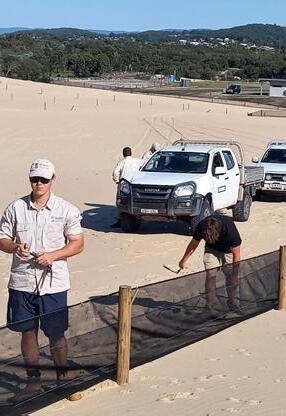
Coastcare Week is an important highlight in the landcare calendar and an opportunity to celebrate and recognise the incredible work that goes on throughout the year to protect and maintain Australia’s coastal and marine environments. The recent Coastcare Week campaign theme was Landcare is for Everyone (L.I.F.E).
Landcare Australia uses Coastcare Week to inspire people to get involved with their local Coastcare group or other community environmental group including Landcare, Bushcare, ‘Friends of group’, Dunecare or youth group. To help reach as many people as possible we created content that volunteer groups can use across websites, newsletters and social media. The following projects were highlighted in the social media campaign.
For more information, please visit: landcareaustralia.org.au/resources/ campaignscoastcare-week/
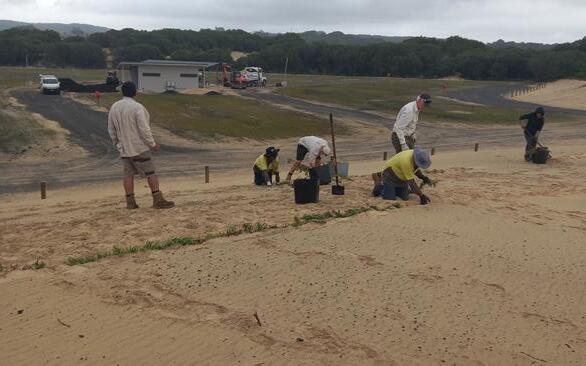
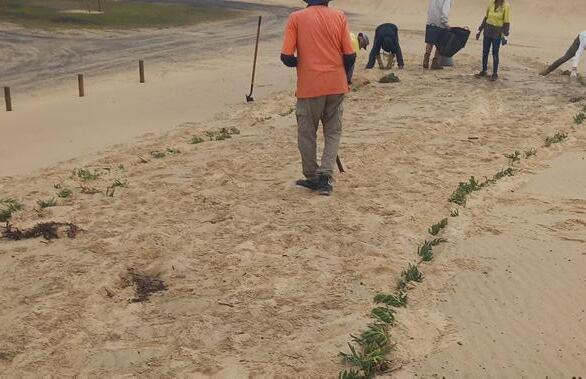
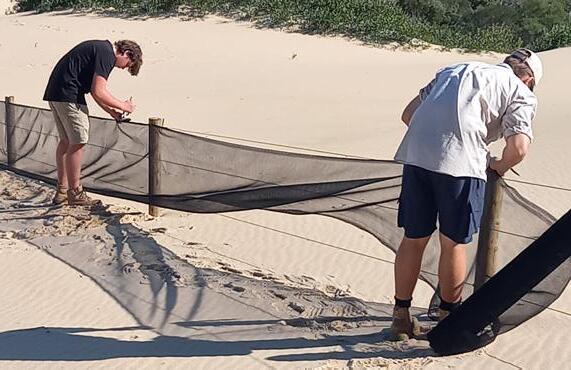
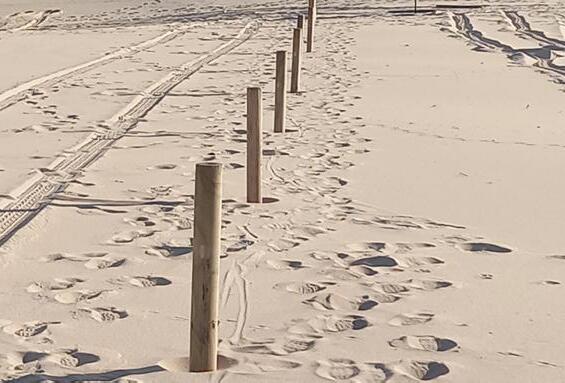
Image: Shane Smith, Senior Ranger & Community, Engagement Officer at Belmont Wetlands State
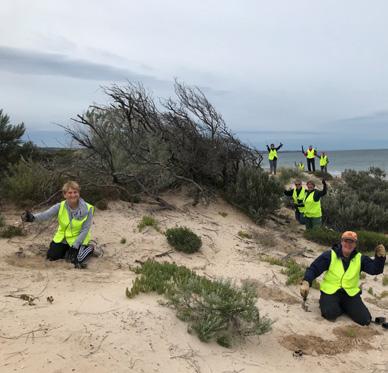
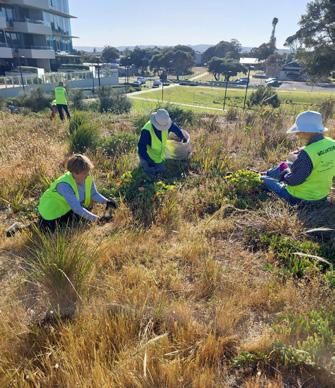
The Minda Dunes is one of only two remnant secondary dunes systems along Adelaide’s metropolitan coast. Friends of Minda Dunes, are a dedicated group of volunteers who have tirelessly given over 4000 volunteer hours to the maintenance and regeneration of three hectares at Minda Dunes for the past four years.
The group took on weeding and watering the initial 10,000 plants that were planted as part of a coastal park development which passes through the Minda Dunes. This work extended to planting a further 7,000 plants.
Endangered species Hooded Plover choose to nest in the Dunes successfully produced two juvenile birds, the first successful fledging of the Hooded Plover in Australia for the breeding season of 2023/2024.
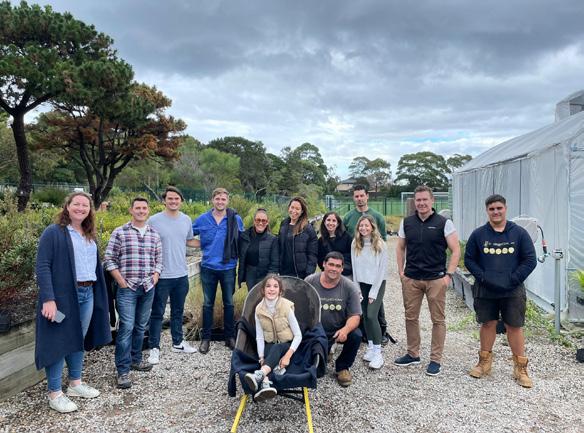
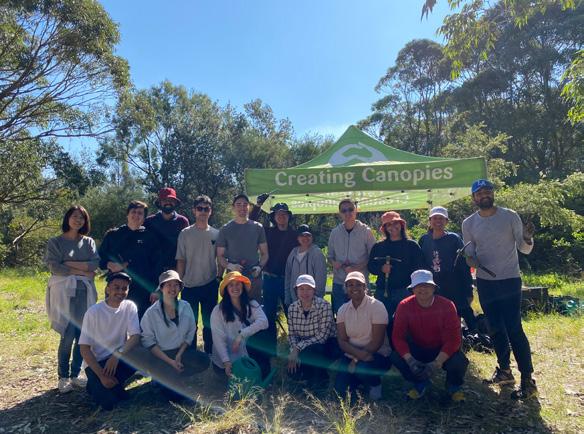
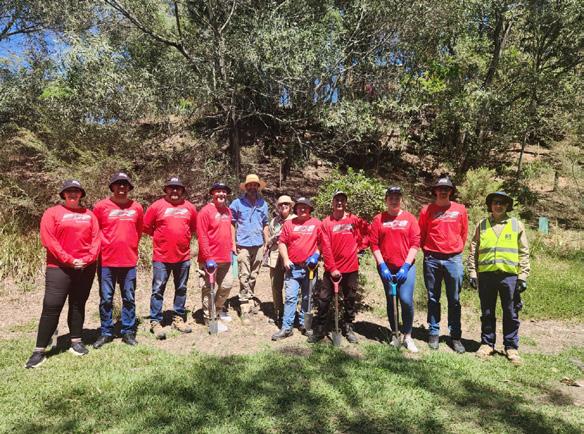
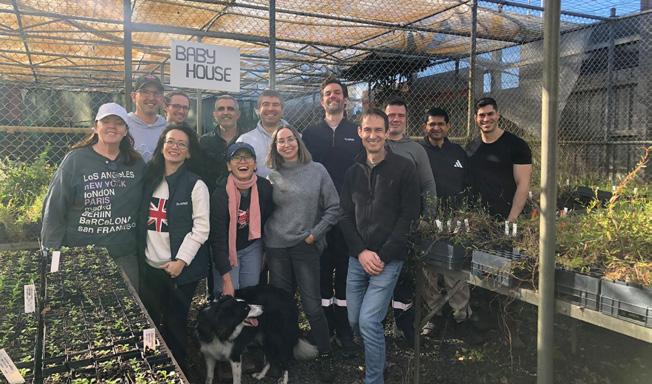
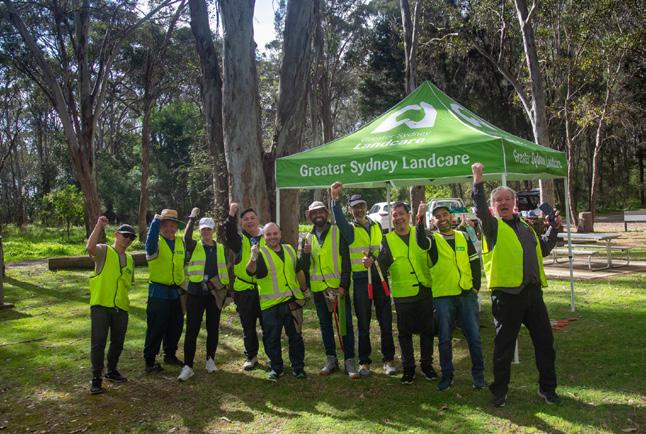
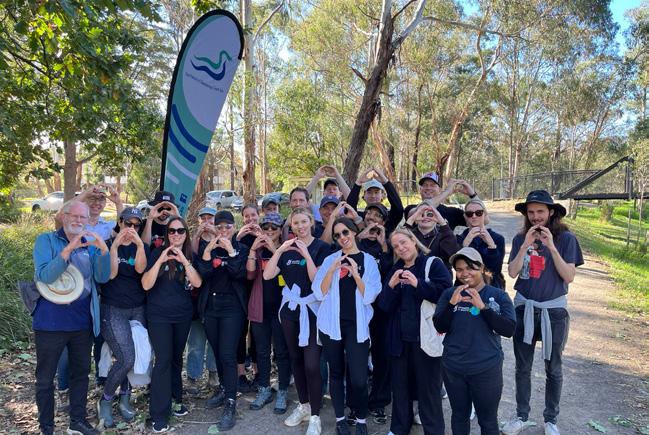
Landcare Australia’s Corporate Environmental Volunteering program offers corporate groups a meaningful landcare project for their employees to deliver positive environmental outcomes; and is also a great way to build teams and increase staff engagement within the workplace.
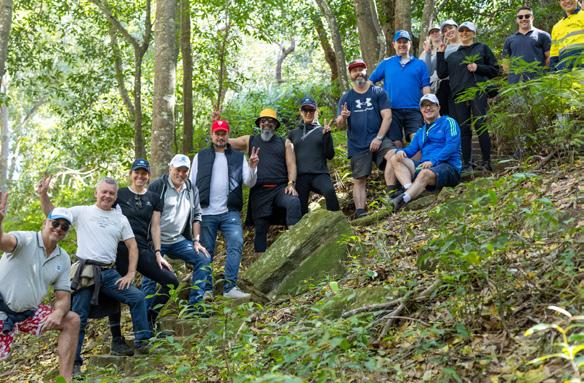
Landcare Australia engaged 488 people from 22 companies in environmental volunteering activities. 38 events were held across Victoria, New South Wales, Queensland and Western Australia.
Volunteering activities supported 13 Landcare and Community groups to support their ongoing efforts to restore and protect their local environment. Events were held in urban bushland parks, beaches and dunes, creeks and wetlands, peri-urban farmland, and in community nurseries.
Together, the corporate volunteers achieved impressive results contributing over 2,000 hours of volunteer work, planting 11,419 native trees, shrubs and grasses, propagating 23,137 native seedlings in community nurseries; and removing invasive weeds from over 1.4 hectares of land.
Other activities included engaging with First Nations people to grow bushfood from a critically endangered ecological community (Eastern Suburbs Banksia Scrub), conducting biodiversity surveys, water quality testing, installing and repairing fencing and tree guards, spreading mulch, collecting litter and auditing the litter to inform waste management campaigns.
488 volunteers 11,419 native plants 23,137 native seedlings propagated in nurseries of volunteer work
218
Projects funded by grants
72,138
Volunteer hours
226
Projects incorporated Aboriginal and Torres Strait Islander engagement and knowledge
979
Hectares of weed control
9,395
Volunteers in Landcare funded
66,102
$2.9million
74,215
Students Junior Funding environmental Plants
Volunteers involved Landcare Australia funded projects
66,102
Students involved in Junior Landcare projects
9,395 $2.9million
Funding for environmental projects
74,215
Plants in riparian zones
200,302
671
Nest boxes installed to support biodiversity Community events supported
42,678 Trees and plants established
2,463
Metres of fence installed
4,973
205,478
15,704
54,006
469,759* Overall websites page views FY25
18,906 National Landcare Directory groups and schools
48,542 Newsletter subscribers
91,650 Social media followers
4,123 Landcarer platform subscribers
20
Landcarer platform Google search results average position

In FY25, Landcare Australia continued to deliver meaningful environmental and social outcomes that align with 11 of the 17 United Nations Sustainable Development Goals (SDGs) - a global framework for achieving a better and more sustainable future for all. Through our diverse programs, partnerships and community-led initiatives, we are actively contributing to goals spanning climate life on land, quality education, sustainable agriculture, and more.
This year, 218 projects were funded across 15 grant programs, supporting landcare groups, farming communities, and conservation efforts across the country. Over $2,465,000 in funding was distributed, supporting the planting of more than 206,000 trees and plants, the restoration of 1,450 hectares of degraded land, and the sustainable management of 10,578 hectares of agricultural land.
Our commitment to engaging the next generation of landcarers remains strong, with 66,102 students participating in Junior Landcare activities. Community involvement was also a cornerstone of our impact, with 9,395 volunteers contributing their time and energy to on-ground projects.
From installing 671 artificial habitats to conducting 850 biodiversity surveys, our projects are helping regenerate ecosystems, protect native species, and build resilient landscapes. Importantly, 226 projects involved First Nations people, recognising and integrating Indigenous knowledge and cultural heritage into land management practices.
By tracking our outcomes across these key indicators, Landcare Australia continues to demonstrate how local action can drive global progress— ensuring that people and planet thrive together.


Landcare Australia continues to support sustainable agriculture and food security through projects that enhance land management practices and build climate resilience. In FY25 over 10,578 hectares of agricultural land was supported through projects that help improve soil health, water quality and biodiversity on farms.
Contributed to target 2.4*
4 – Quality education
66,102 young people took part in Junior Landcare projects, engaging in nature-based hands-on learning experiences, and building skills and knowledge about caring for our natural environment. 103 projects were funded through the Victorian Junior Landcare and Biodiversity Grants program, engaging young Victorians in learning about and caring for Victoria’s biodiversity.
Contributed to targets 4.4 and 4.7*

6 – Clean water and sanitation
• 74,215 plants were established in riparian zones, including 3,000 along the Wambuul Macquarie River in Dubbo, NSW, as part of a project funded by the Jaramas Foundation and Abergeldie Complex Infrastructure, which will increase habitat, minimise erosion and support fish habitat.
• The Gallagher Landcare Fencing Grants supported the removal of 6,450kg of litter from freshwater ecosystems, and 33km of fencing installed along waterways, reducing erosion and improving water quality.
Contributed to target 6.6*

8 – Decent work and economic growth
The a2 Farm Sustainability Fund supports projects within The a2 Milk Company’s farming supply chain that demonstrate an integrated approach to a sustainable future. Since 2017, Landcare Australia has partnered with a2MC to administer the fund. In 2025, seven projects were funded with the aim to drive positive environmental outcomes, including improved water quality, increased productivity, better soil health and enhanced energy efficiency.
Contributed to target 8.4*
10 – Reduce inequality within and among countries
• The Bangerang Aboriginal Corporate was supported by Steadfast Group through its partnership with Landcare Australia to conduct two cultural burn workshops and undertake training to support native vegetation assessment and monitoring, helping build its capacity.
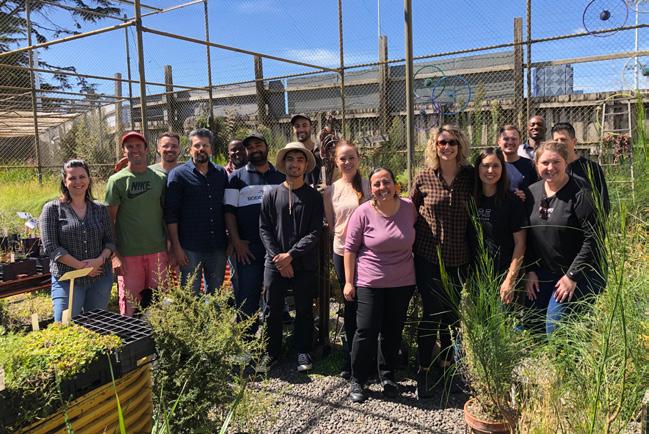
• 82 corporate volunteers over five events were hosted by Indigigrow, an Aboriginal-led social enterprise sustaining people, land and culture through the propagation and growing of native plants in Sydney’s La Perouse.
Contributed to target 10.2*

41 community groups and organisations were funded through the Bupa Landcare Grants Program, supporting the planting of locally endemic trees and shrubs, enhancing native vegetation connectivity, and creating new green spaces in urban areas. These projects support community wellbeing, benefitting both mental and physical health through on-ground landcare activities.
Contributed to target 11.7*

• 255 projects funded through grants programs included waste management activities, engaging 20,360 people in collecting 12,606 kg of litter. 13,395 kg of litter was diverted through landfill.
• 251 of these projects were funded through the Woolworths Junior Landcare and Victorian Junior Landcare and Biodiversity Grants programs, engaging young people in learning about responsible waste management, composting and recycling.
Contributed to targets 12.4, 12.5 and 12.6*

• Landcare Australia successfully launched an online toolkit to support Australian farmers in navigating the carbon market while improving biodiversity thanks to a Country Road Climate Fund grant. The free online Environmental Plantings Toolkit is aimed at supporting eligible farmers to understand their opportunities to participate in the ‘green economy’ through measures such as native tree planting.
• The Michael King Landcare Nursery Grants supported the Yass Area Network of Landcare Group’s ‘Climate Ready Revegetation’ project. Through propagating and planting ‘climate-ready’ plants, the project strengthens the resilience of local landscapes and ecosystems, producing around 12,500 tubestock annually.
Contributed to target 13.1 and 13.3*

14
• Nine Coastcare projects and Corporate Environmental Volunteering events were held, helping to collect 75kg of marine debris.
• Belmont Wetlands State Park volunteers progressed towards their goal to restore 3,972m² of degraded northern foredunes through the installation of 510m of sand fencing to prevent dune erosion and the planting of 800 native coastal plants funded by the Landcare Australia Community Grants program.
Contributed to target 14.1 and 14.2*

15
• 206,302 trees and plants were established and 997 hectares of weed control undertaken through projects delivered or supported by Landcare Australia, helping to reduce invasive species, restore degraded land, and enhance biodiversity.
• 850 community biodiversity surveys were undertaken by groups and schools to learn more about the biodiversity in their local areas. Landcare Australia flora and fauna surveys covered 2,282 hectares of land, with 53 Koalas observed through the Wildseek project. The observations improve our capacity to understand koala populations and use that information to make informed decisions about how we can protect them
Contributed to target 15.3, 15.5, 15.8 and 15.9*

17 – Partnerships for the goals
• 1,061 projects and events funded by Landcare Australia collected data contributing to the achievements of the Sustainable Development Goals. Stakeholders include more than 50 Australia businesses, Federal, state and local governments, and Landcare organisations.
• 2,218 volunteer hours were contributed to 38 community landcare events and projects by 488 volunteers from 22 companies through Landcare Australia’s Corporate Environmental Volunteering program. Together they had a significant impact, planting 11,419 and propagating 23,137 seedlings.
Contributed to target 17.16*
Landcare Australia has worked collaboratively with federal, state and local governments and their agencies for over 35 years to support the landcare community with activities that:
• support the sharing of knowledge and promote the development of community leadership and resilience
• recognise and celebrate the achievements of the landcare community
• encourage participation in landcare activities and the recruitment and retention of volunteers

• attract government, corporate and philanthropic funding and in-kind support for good quality, hands on projects and programs that will improve environmental and community wellbeing outcomes
• support the adoption of sustainable agriculture practices that will deliver a more productive and profitable agriculture industry
Landcare Australia has had a long-standing partnership with the Australian Government for over 35 years and together we have achieved so much for the landcare movement.
We are continuing our great work together by delivering on activities through the Natural Heritage Trust Grants program. This noteworthy accomplishment highlights the impactful work of Landcare Australia and underscores our proven capability since 1989. With this substantial support, we are well-equipped to further our mission to support the landcare movement.
We have been funded to deliver impactful programs such as the National Landcare Conference, the Landcare Awards, the NextGen Symposium, First Nations Landcare Working Group, Landcare Agriculture, and enhanced communications campaigns aimed at fostering nationwide engagement and environmental stewardship.
The funding will support Landcare Australia’s work to continue delivering outstanding programs on behalf of the Australian Government and achieving positive outcomes for the landcare movement, our environment, vital agricultural lands and communities nationwide.
Our project activities will deliver programs that address climate-smart, sustainable agriculture, environmental protection and natural resource management outcomes through mobilising and supporting local landcare groups, farmers, landholders, First Nations groups and communities.
The Commonwealth is represented by the Department of Agriculture, Fisheries and Forestry (DAFF) and the Department of Climate Change, Energy, the Environment and Water (DCCEEW).

Landcare Australia and the Victorian Government’s Department of Energy, Environment and Climate Action (DEECA) have continued their long-standing partnership to support the Landcare movement across Victoria.
Through this collaboration, the Victorian Junior Landcare and Biodiversity Grants, funded by DEECA, continue to empower young Victorians to connect with and care for Victoria’s biodiversity. Since 2018, more than $3.6 million has been invested in over 800 projects across the state. These projects have engaged schools and youth groups in activities such as planting native vegetation to restore habitat, participating in biodiversity-focused citizen science initiatives, and learning about the importance of protecting Victoria’s ecosystem health.
These grants directly support the Victorian Government’s Biodiversity 2037 strategy, contributing to its goals of halting biodiversity decline and connecting communities with nature. Victoria’s plan to stop the decline of native plants and animals and improve the natural environment, guided by two goals: Victorians value nature, and Victoria’s natural environment is healthy.
In 2024-2025, DEECA also provided funding to Landcare Australia to leverage corporate and other non-government partnerships to deliver funding into Landcare projects throughout Victoria.
4 Pines Brewing and Landcare Australia have partnered to restore approximately 113.7 hectares of degraded land, planting 44,444 native trees, shrubs, and groundcovers annually across sites in Cape Jervis (SA), Inverell (NSW), and soon, Lake George (NSW).
Through their partnership with the Manly-Warringah Sea Eagles, 4 Pines plants four trees for every NRL try scored each season. Since 2020, the collaboration has also supported sustainable agriculture and climate resilience at Ryefield Hops, a 4 Pines supply partner.
Improved biodiversity, soil health, landscape rehydration, and landscape connectivity are long-term ecological cobenefits of these projects. Critically, we’re restoring habitat for Australia’s most vulnerable wildlife, such as koalas, glossy black cockatoos, spotted-tail quolls, and regent honeyeaters.
The Jaramas Foundation has been a partner of Landcare Australia since 2012 and has funded more than 25 onground Landcare projects in rural New South Wales.
In 2024, the Jaramas Foundation and Abergeldie Complex Infrastructure (Abergeldie) co-funded a project to improve biodiversity in the riparian zone of the Wambuul Macquarie River in Dubbo, New South Wales.
This project was undertaken as a partnership between Landcare Australia and Dubbo Rivercare Group, with inkind support and land being provided by Taronga Western Plains Zoo. Across two sites located along the riparian zone 3,000 trees were planted, increasing habitat, minimising erosion and supporting fish habitat.
Employees from Abergeldie, working in Dubbo, supported by volunteering on site to help plant 900 native species along the riparian zone.
Launched on World Environment Day 2024 with a corporate volunteering event at Westgate Park, Melbourne, the three-year partnership between Victoria’s largest diversified energy network business, AusNet and Landcare Australia is based on a shared commitment to environmental sustainability and community engagement.
This year saw the first year of the AusNet Community Landcare Grants projects. Phillip Island Landcare Group and the Gecko CLaN were each awarded $20,000 annually for the next three years to support local conservation activities.
In the first year, Phillip Island Landcare held a community planting day, hosted 50 Bass Coast Shire Council staff for a volunteering day, held a ‘walk ‘n’ talk’ with a local botanist, and planted 1,500 native plants.
Meanwhile the Gecko CLaN is engaging Strathbogie landholders in habitat restoration activities. In the first year the group has engaged 80 volunteers, enhanced 12ha of agricultural land, and established 140 new native paddock trees in the agricultural landscape.

The a2 Milk Company (a2MC) in partnership with Landcare Australia delivered another year of the a2MC Farm Sustainability Fund, supporting on-farm projects that demonstrate an integrated approach to a sustainable future. A recent funding round provided grants of up to $30,000 AUD to seven a2MC suppliers—dairy farmers across NSW, Victoria, and Western Australia.
Aligning with a2MC’s sustainability objectives, the projects sought to drive positive environmental outcomes, including improved water quality, increased productivity, better soil health and decreased energy use. The partnership, launched in 2017, has provided over $1.3 million for on-farm sustainability initiatives, with Landcare Australia supporting a2MC’s purpose to pioneer the future of dairy for good.
Since 2021, Banrock Station has partnered with Landcare Australia to plant 100,000 native trees and shrubs each year.
Recent projects across South Australia have helped to improve soil health and increase landscape connectivity, while supporting a number of endangered or vulnerable plant and animal species, including the native Southern Bell Frog and Regent Parrot Southern.
The Banrock Station wetlands span over 1,000 hectares in South Australia and are recognised as a Ramsar Wetland site of International Importance.

In September 2024, Landcare Australia and Bupa launched the Bupa Landcare Grants Program to support community environmental projects that also boost public health. The partnership funded 41 groups across urban and peri-urban areas to plant over 100,000 native trees, shrubs, and groundcovers.
Part of Bupa’s Healthy Cities Challenge, the program highlights the link between environmental and human health. It enhances vegetation corridors, exercise amenity and green space access to build healthier communities.
Projects focus on planting local species and connecting native habitats, supporting biodiversity and encouraging community involvement through volunteering and outdoor activity, benefiting both nature and public wellbeing.
CHEP Australia entered into a partnership with Landcare Australia in 2019 to deliver strategic projects which align with its sustainability goals of delivering environmental and regional community benefits, while also creating value for CHEP’s supply chain partners.
In 2024 and 2025, the partnership saw (TBA) CHEP employees join local communities on bush regeneration activities through Landcare Australia’s Corporate Environmental Volunteering Program.
The CHEP team members that took part, finish their Landcare volunteering experience with a better understanding of the importance of biodiversity, the environment in their local area, and how their activities at home and work can impact our fragile environment.
CHEP is part of Brambles, an ASX-listed global supply chain solutions company.

The Coca-Cola Australia Foundation Farm Dam Restoration project will be completed in 2025.
This project has delivered the restoration and transformation of three degraded farm dams across South Australia and Victoria, while four locations have been sourced and prepared in New South Wales. The projects help on-farm water security, while conserving and promoting biodiversity by providing critical wetland habitats for native wildlife.
Coca-Australia Foundation’s Farm Dam Restoration Project used field days in each state share sustainable and innovative dam enhancement methods with farmers and facilitate knowledge sharing across a broad cross-section of the farming community.

Since 2020, the partnership between Country Road and Landcare Australia has supported five regeneration projects on cotton farmlands in New South Wales.
Together, we are working with the farming families to increase biodiversity through weed control, site preparation and planting of native plants in riparian areas. The Biodiversity Project’s long-term aims are to improve biodiversity and habitat connectivity, support threatened, vulnerable and iconic fauna species while also providing farming co-benefits.
As part of The Biodiversity Project, Country Road has proudly supported the partnership via a corporate contribution and funds raised through the sale of its iconic Verified Australian Cotton Heritage Sweats, providing over $1.1 million since the partnership began.
Landcare Australia also published the Landcare CarbonSMART Environmental Plantings Toolkit in FY25, funded through the Country Road Climate Fund. The toolkit is available on the Landcare Australia website and gives wool and cotton growers an overview of environmental markets, and the process to plan and implement an Environmental Planting project.

ENGIE is focused on building the low carbon energy systems of tomorrow and to reach net zero emissions by 2045.
In Australia, this is supported by flexible power generation, energy management and supply as well as a pipeline of projects, including hydrogen battery, and wind and solar.
As a new partner for Landcare Australia in 2025, ENGIE aims to support the community with grants for local projects that benefit the environment.
Throughout year one of the three-year partnership, the ENGIE Landcare Community Grants have been awarded to provide resilience for water-starved Tarcowie, S.A, and revegetation and habitat restoration at Benalla, Victoria. A third project in the Latrobe Valley will provide opportunities for community alignment via a staff tree-planting volunteering opportunity which aims to protect waterways, strengthen wildlife corridors and enhance biodiversity.
Gallagher Australia built on their commitment to support local communities and the environment by launching the Gallagher Landcare Fencing Grants in 2019.
In 2024 the Program supported 21 projects that protect waterways and farm dams to improve water quality, enhance biodiversity and support landscape restoration. The Gallagher Landcare Electric Grants program provided permanent electric fencing materials to achieve tangible environmental and sustainable agricultural outcomes, and promote knowledge-sharing through field days, site visits, and farm demonstrations.
Greyhound Australia is a leading transport organisation that advocates coach travel as the most environmentally friendly long-distance travel option. Greyhound is committed to protecting the environment and minimising impact on the areas in which they operate.
In collaboration with Landcare Australia, Greyhound contributes to the Tree Planting Pool, offering customers an opportunity to co-contribute when purchasing tickets.
Following a promotional program, Greyhound made a significant donation to our Wildseek program, locating Koalas along the M1 Gold Coast highway corridor, an extremely busy roadway where Greyhound operates.
Greyhound has been the proud sponsor of the Coastcare Award as part of the 2023/2024 State & Territory Landcare Awards.

In 2017, Landcare Australia partnered with Hawke’s Brewing Co., an independent, Australian-owned beer company, co-founded with former Australian Prime Minister the late Bob Hawke. Hawke’s raises money for and contributes a portion of proceeds to Landcare Australia, which was one of Bob’s conditions for being involved.
This year sees the continuation of a three-year project, Endangered Coastal Emu Protection Project in Clarence Valley, aimed at establishing a sustainable management program for long-term breeding and protection.
The project builds on Clarence Valley Landcare and Maclean Lions Club Environmental Groups’ previous efforts in raising community awareness and taking direct action to protect the endangered species.

In 2024, KPMG made a significant contribution to the Landcare Australia Tree Planting Project, supporting the planting of 8,000 trees, shrubs and groundcovers across suitable sites to enhance local ecosystems and biodiversity.
KPMG also hosted the Landcare Australia Corporate Partners workshop. The event, a resounding success, brought together over 40 corporate partners, Landcare Australia board members, and staff to network, share experiences, and explore the advantages of collaborative partnership activities.

Since 2019, NBN Co. has partnered with Landcare Australia for the purpose of supporting Australian producers to be more resilient in the face of a changing climate. This is achieved by showcasing innovative farming and environmental management practices which utilise the nbn® network and sharing the outcomes across national farming networks.
In 2024, a monitoring project was developed on a property near Yeppoon in central Queensland to identify endangered species and their challenges of survival. Utilising connectivity enabled by the nbn network, the project will help improve research data on behaviour patterns, ecosystem health and pest species data, all aiming to understand the scale of the issue and undertake appropriate management.


In 2024 Steadfast Group and Landcare Australia announced their second partnership, providing $55,000 to support the Bangerang Aboriginal Corporation’s Itjumatj Woka Healthy Country Project.
The funding is supporting the development, planning and conducting of two cultural burn workshops and COVRAM app training for rangers and landcare members.
More than 20 people from the Bangerang Ranger Team, Warby Range Landcare and North-East Catchment Management Authority attended a workshop in November. Participants were taught how to use the COVRAM app for native vegetation assessment and monitoring. The habitat assessment data will be used ahead of a cultural burn at the project site, Hamilton Park at the foot of the Warby Range.
This project is helping build the capacity of the Bangerang Aboriginal Corporation to create employment opportunities for the First Nations people in Caring for Country.
Transurban-Landcare Australia’s partnership has been focused on enhancing environmental and community outcomes along Transurban’s roads.
Landcare Australia maintains and monitors the M2 Macquarie Park Motorscapes site in Sydney. This major bush regeneration and water quality improvement project saw the five-hectare site cleared of invasive weeds and planted with locally indigenous plants, providing new areas of habitat for wildlife adjacent to Lane Cove River.
VicTrack’s partnership with Landcare Australia supports local Landcare organisations across Victoria to achieve significant environmental and community outcomes by providing funding to protect and enhance native vegetation areas on VicTrack land.
In 2024-25, VicTrack funded six projects, The Great Victorian Rail Trail (Upper Goulburn Landcare Network), Restoring Bellarine Railway Biodiversity (Bellarine Landcare Group), Operation Weed Control (Stanhope-Girgarre Landcare Group), War on Weeds (Mornington Environment Association Inc), A Bandicoot Biolink (Gippsland Threatened Species Action Group) and Whittlesea and Surrounds Blackberry Action Group.
Across the projects 2,300 plants were established, 189 hectares of weed control undertaken, enhancing biodiversity conservation and habitat quality.
Through 160 local community events, 432 volunteers contributed over 1,254 hours, helping to manage and preserve the natural heritage of the sites.

The WIRES and Landcare Australia partnership supports the Wildseek Project: Community Wildlife Intelligence Hubs, taking the first step toward building a national conservation AI network.
Partners are providing over $1,500,000 in funding to support the project, with a significant contribution made by WIRES.
Along with the Queensland University of Technology (QUT), the Wildseek Project is establishing and supporting an initial network of five Community Hubs for the conservation and rescue response of native species, particularly the Koala. All Hubs are now commercially licensed drone organisations and commencing surveys.
Results from East Gippsland Conservation Management Network include 42 confirmed koalas from 460 ha of surveys. Landcare Australia, working together with local Landcare and environmental groups have identified 50 koalas, covering 1080 ha, Tamworth Region found 42 koalas across 396 ha and Noosa Region has observed 20 koalas across 688 ha.
From 2022-2025, the WildSeek Project has surveyed over 3,000 hectares of land and has observed 193 koalas across 4 regions. Benefits have included baseline population survey in fragment landscapes. Identification of koala populations in previous bushfire areas and verification of new koala populations.
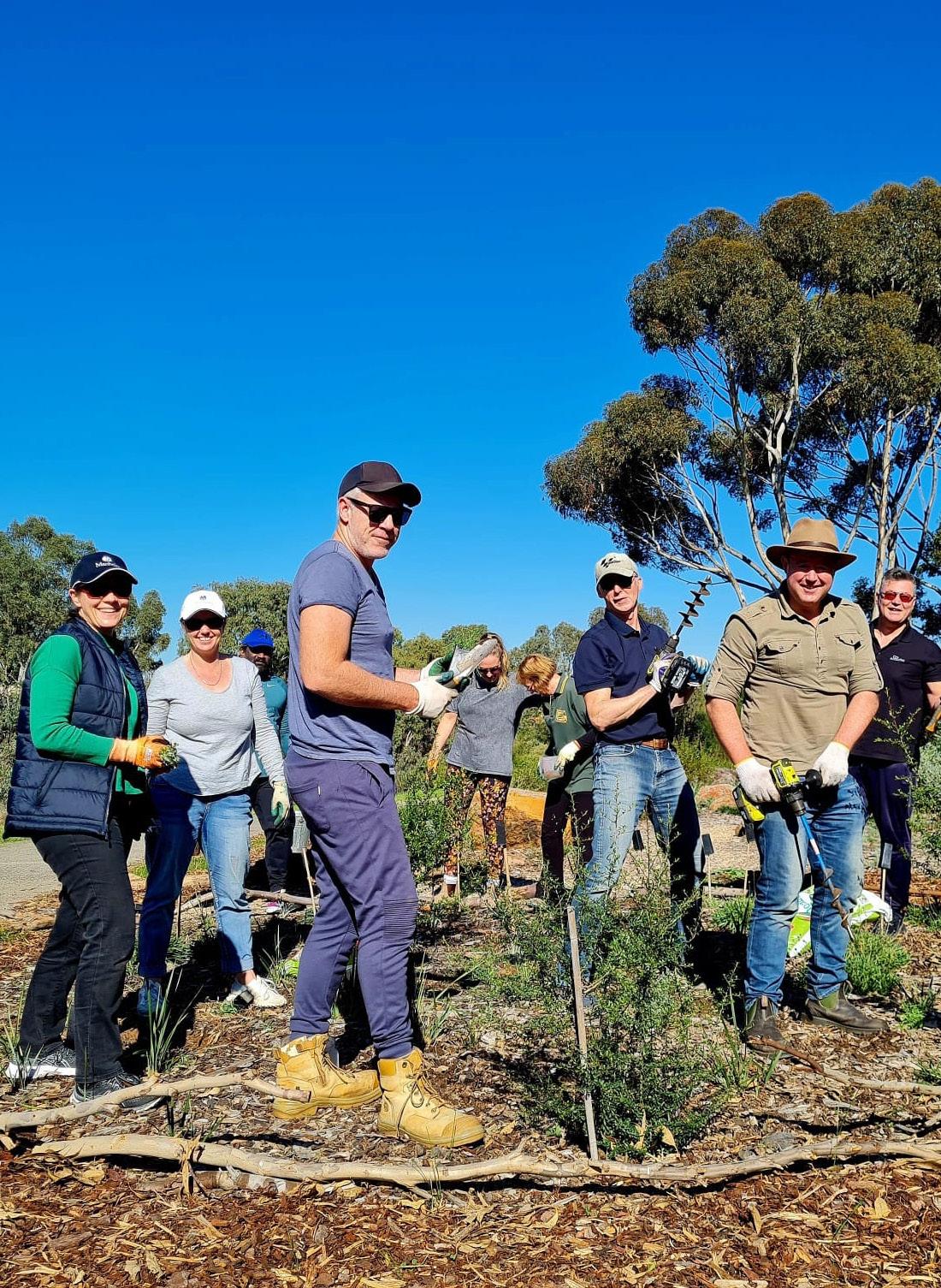
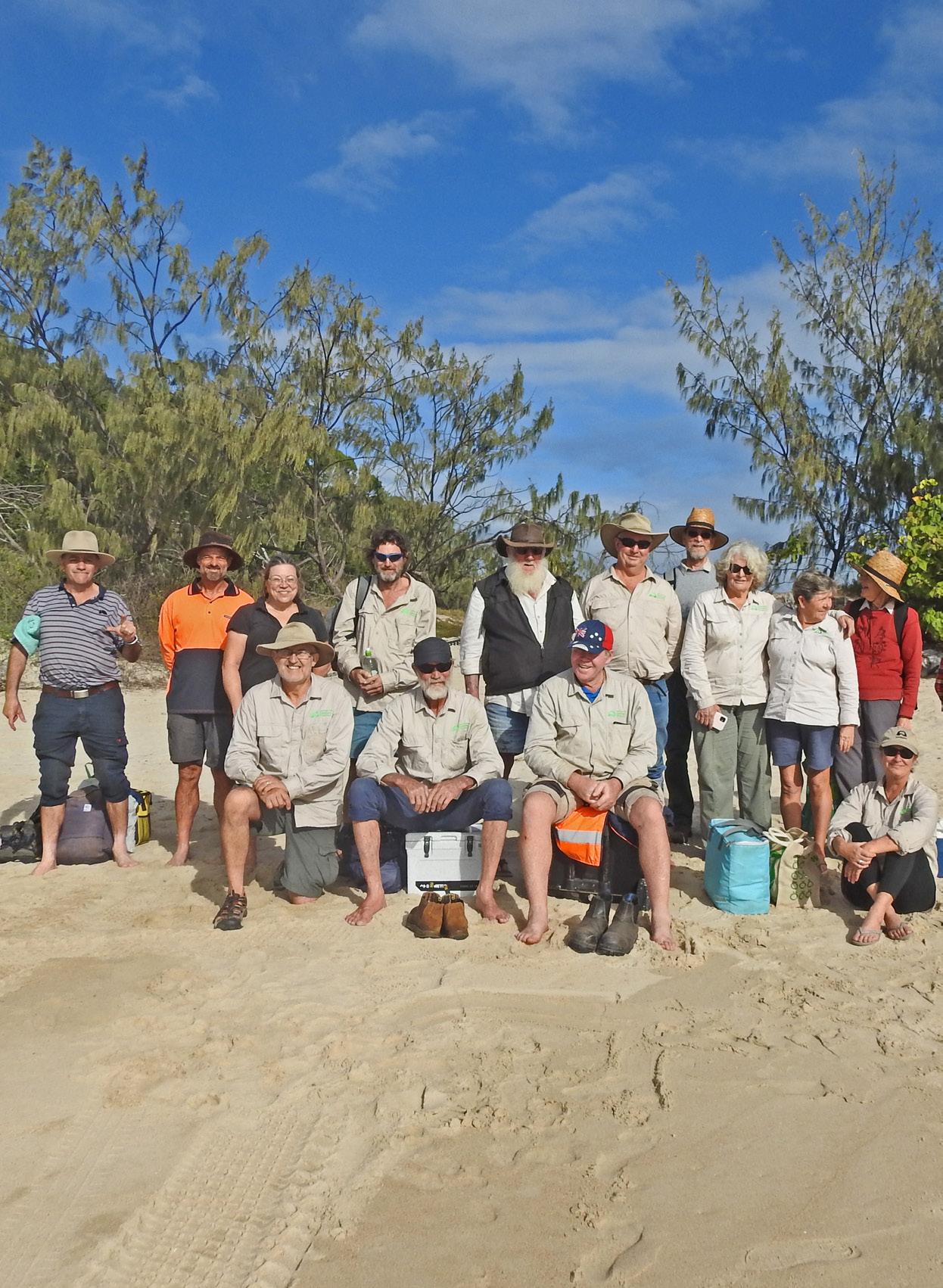
The team at Landcare Australia are very grateful for donations made by many individuals and organisations to support landcare activities. Some of these donors include:
• The Nelson Foundation
• Grander’s Trust
• Bequest from the Estate of the late Marian Letcher.
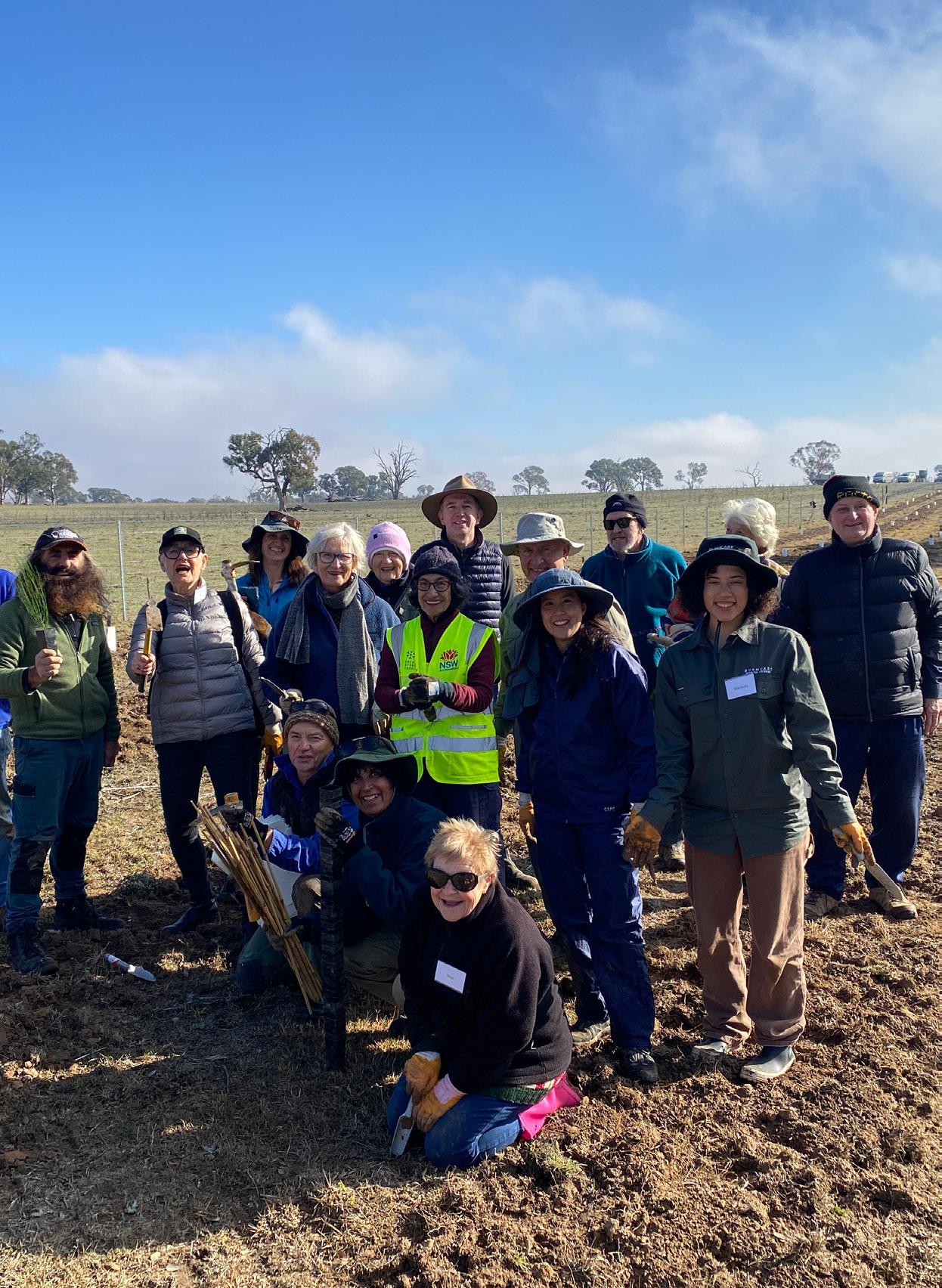
Landcare Australia is grateful for the in-kind support from professional services organisations and corporate partners who help us support the landcare movement. In the last financial year, they include:
Norton Rose Fullbright provide valued in-kind legal support.
Herbert Smith Freehills provide valued in-kind legal support.

Konica Minolta provides valued copier/scanner equipment and printing services.
Consolidated Statement of Profit & Loss
Consolitated Statement of Financial Position
Consolitated Statement of Cash Flows
Financial Overview
Doug
Brendan Foran
Natalie Sommerville (appointed 5 December 2024)
Members of Landcare Australia’s Finance, Risk and Audit Committee during the 12 months to 30 June 2025 were: Anna Hooper, Committee Chair, Brendan Foran and Neal Hawkins (external appointee)
Members of Landcare Australia’s Partnerships, Marketing, Communications and Fundraising Committee during the 12 months to 30 June 2025 were: Naomi Edwards, Committee Chair, Clare Bailey (external apointee, resigned 1 August 25), James Walker, Robert Purves AM and Brendan Foran.
Naomi Edwards 5/5
James Walker 3/5 Brendan Foran (appointed 1 May 2025) 1/5
Purves AM (resigned 1 May 2025) 4/5
Members of Landcare Australia’s Governance and Remuneration Comittee during the 12 months to 30 June 2025 were: Doug Humann AM, Committee Chair, Anna Hooper, Rebecca Underwood and Robert Purves AM.
Doug Humann AM, Chair 5/5
Anna Hooper 4/5
Rebecca Underwood 5/5
Robert Purves AM (appointed 1 May 2025) 1/5
The Company Secretary of Landcare Australia Limited is responsible for the legal and statutory compliance on behalf of the board. The company secretary as at 30 June 2025 is Janet Davison.
The auditors for Landcare Australia Limited are Ernst & Young.
Total gross revenue from corporate partnerships and license fees 64.9% Total gross revenue from donations and bequests 10.7%
Total gross revenue from government grants and fee for service 19.2%
gross revenue from other sources and finance income
Pages 64-67 are a summary extracted from the audited General purpose (SDS) financial report for Landcare Australia Limited for the year ended 30 June 2025. This summary information should be read in conjunction with the full financial report, a copy of which can be found at www.landcareaustralia.org.au