BOOKMARK
Bangalore, India
Type: Academic, Individual
Level: National, Undergraduate
Role: Complete design of project
Supervisor: Dakshayini Patil (dakshayini.rp@bmsca.org)
Softwares: AutoCAD, Revit, Rhino, 3DS Max, Photoshop
Date: June 2018 – Jan 2019
Institution: BMSCA
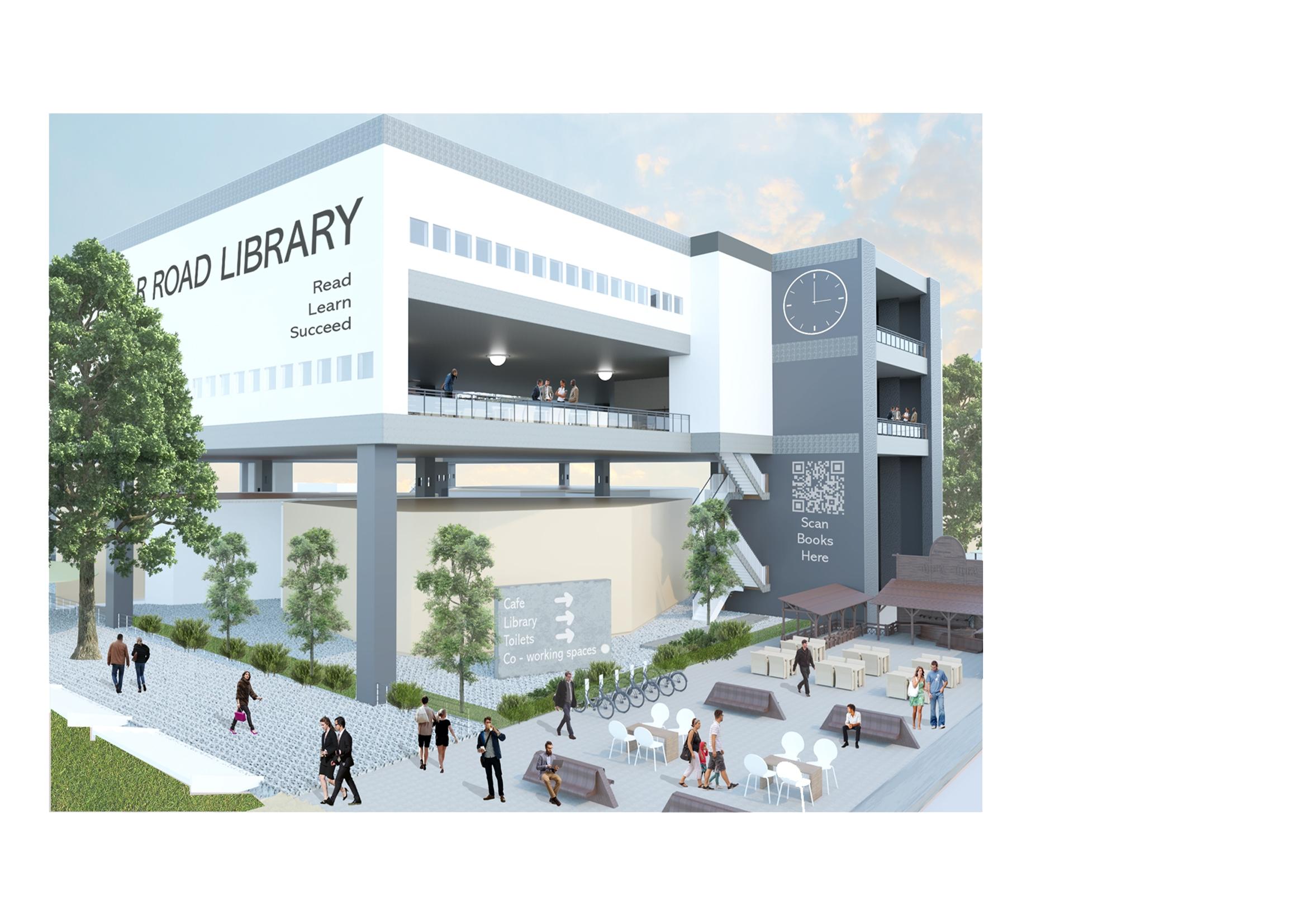
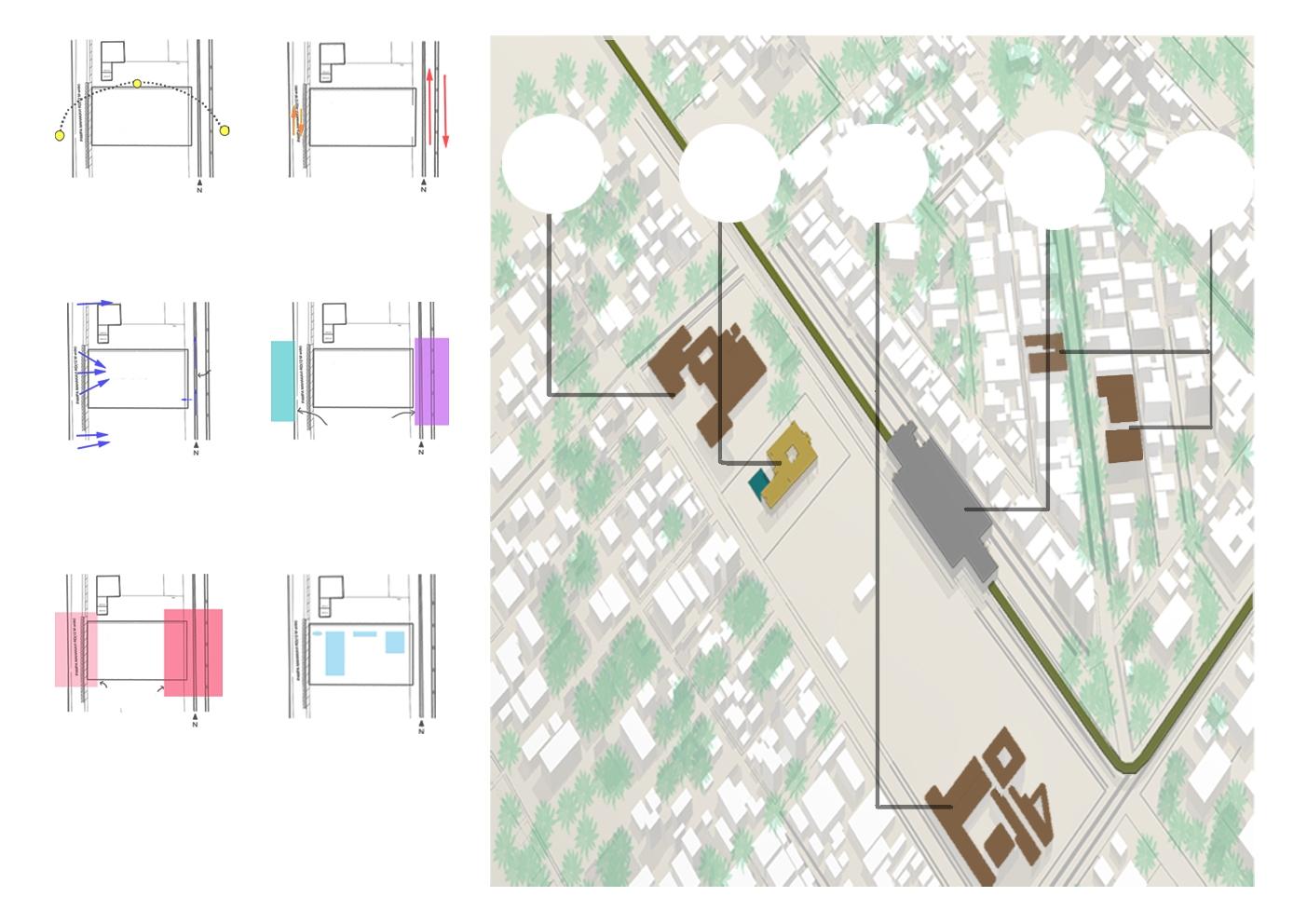
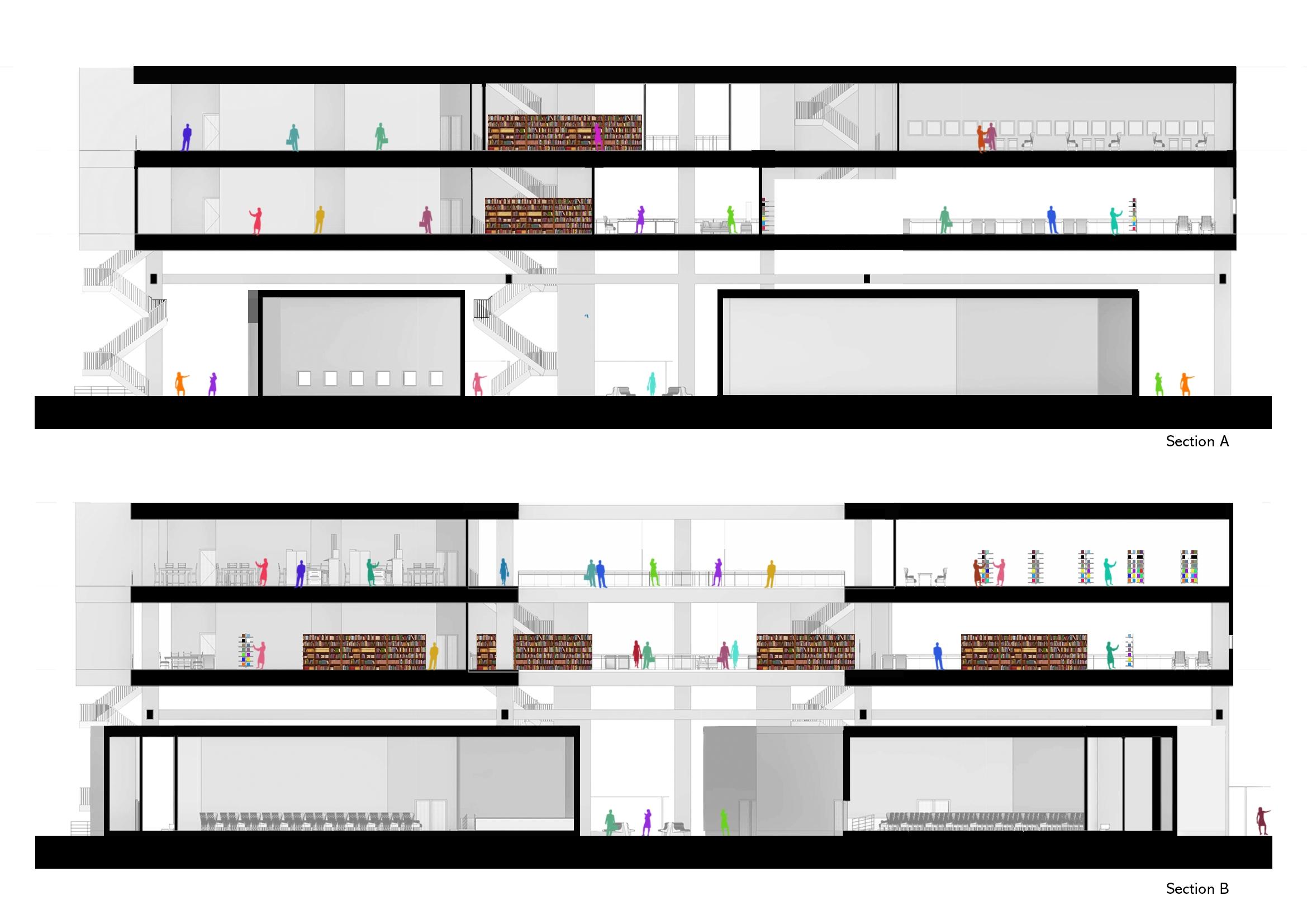
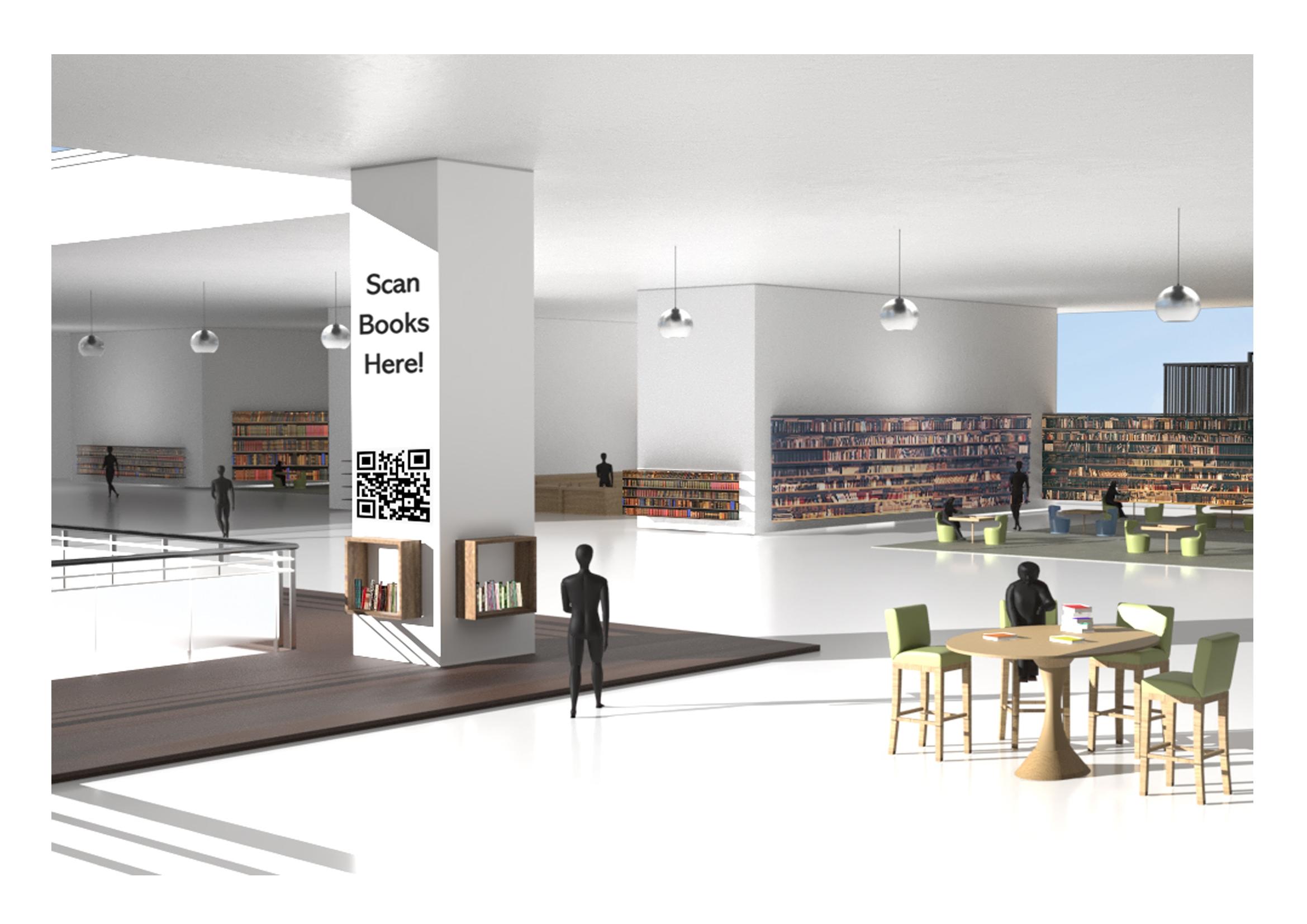
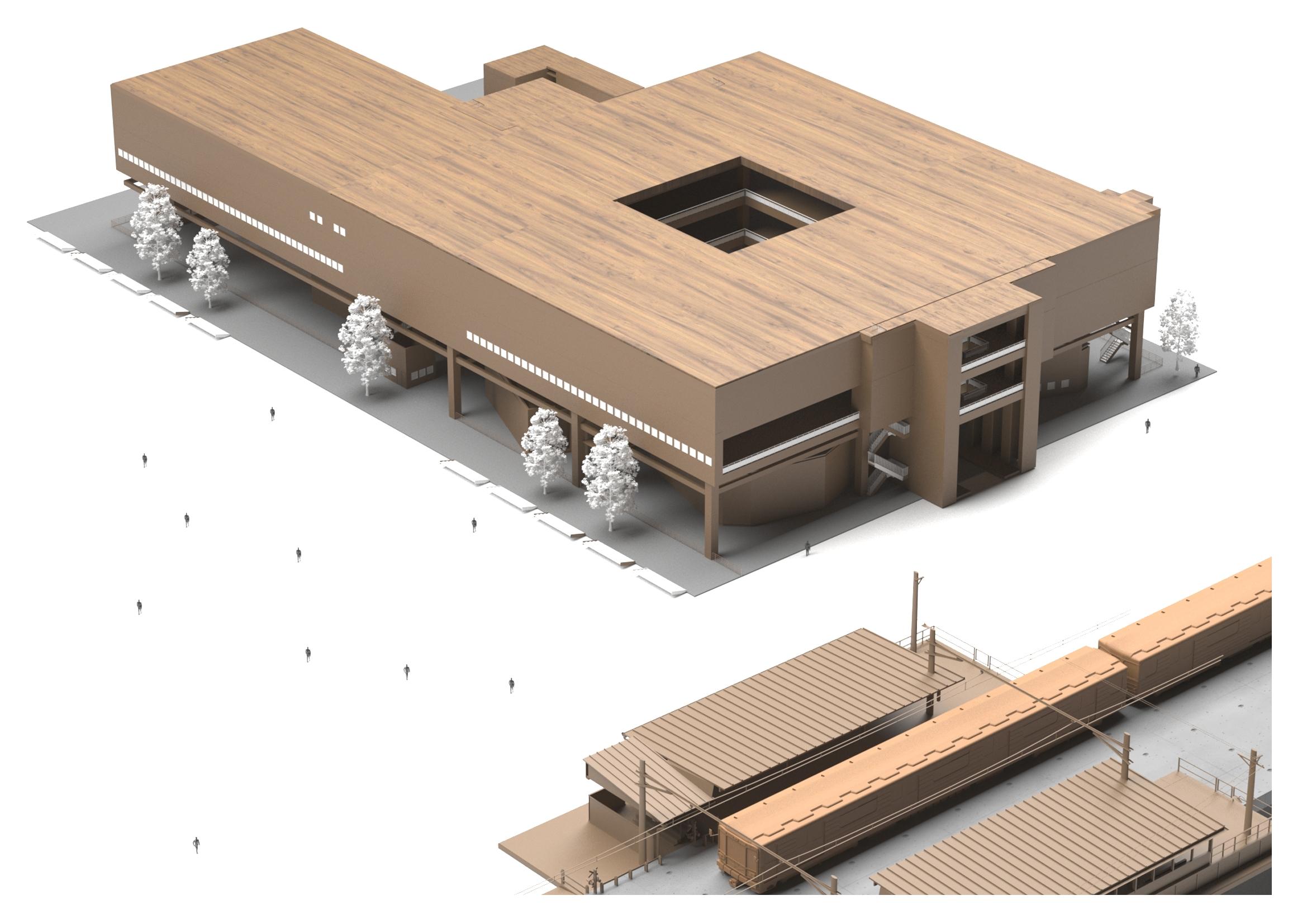
This project aims to propose a library in a dense urban fabric, to serve as a node for future development and also function as a symbol to inculcate and encourage the habit of reading amongst the people of the region. The site is strategically placed amidst multiple educational hubs and a transit node. Establishing a library in such a location provides the space with high pedestrian movement due to its existing usage and therefore the site also has the innate ability to become a nodal point in the urban context. Level 0 acts as a public space with access to the water body. It can also be used as a secondary public space for the users of the transit node.
Mahila Seva Samaaj Site with built structure National college Metro station
Sun path Vehicular movement
Pedestrian movement Human - cultural
Noise level Site conditions
SITE ANALYSIS CONTEXT
BMS Law college & Jain college
Entry High Main Residential Low High Ages
The existing site has four pools as it was a swimming centre.
Low High
18-26
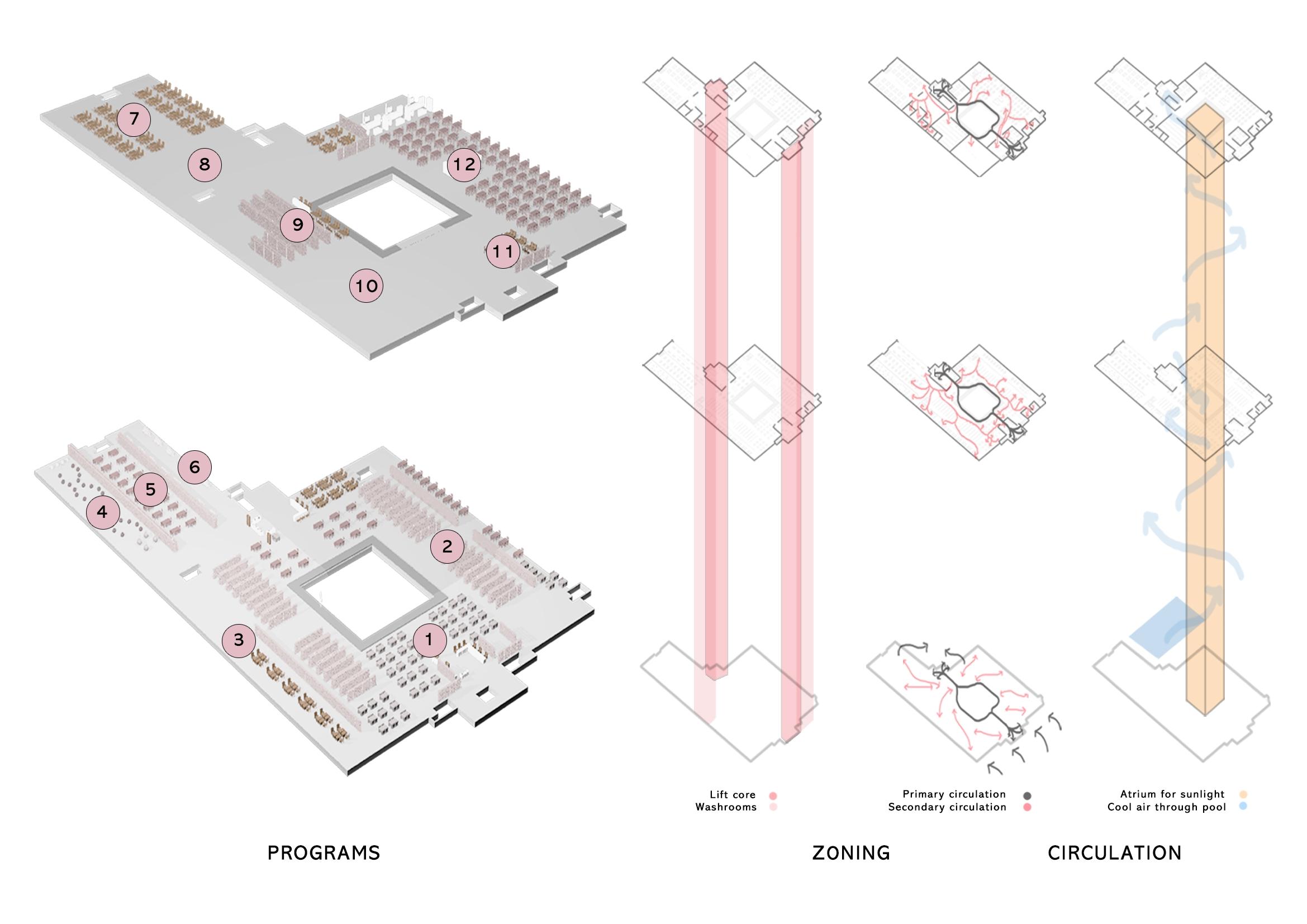
1 Reception 2 General reading 3 Computer access 4 Children's’ section 5 Regional section 6 Lounge 7 Workspace 8 Service area 9 Archive 10 Free storage 11 Admin 12 Food court Level 1 Level 2
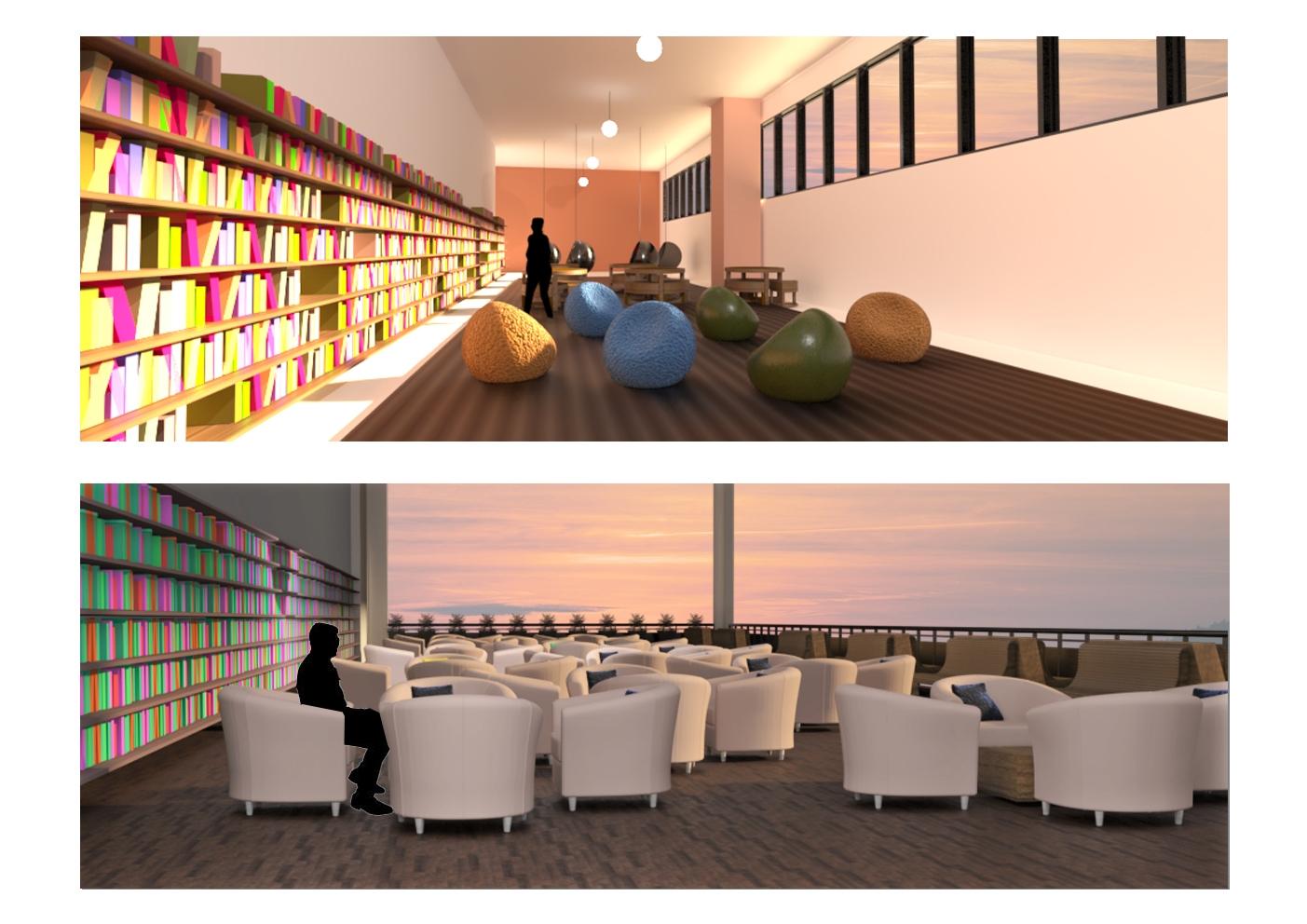
Children’s section Lounge
DELUDANCE
Bangalore, India
Type: Academic, Group
Level: National, Undergraduate
Role: Project design and analysis
Supervisor: Dakshayini Patil (dakshayini.rp@bmsca.org)
Softwares: AutoCAD, Revit, Rhino, 3DS Max, Photoshop
Date: June 2018 – Jan 2019
Institution: BMSCA
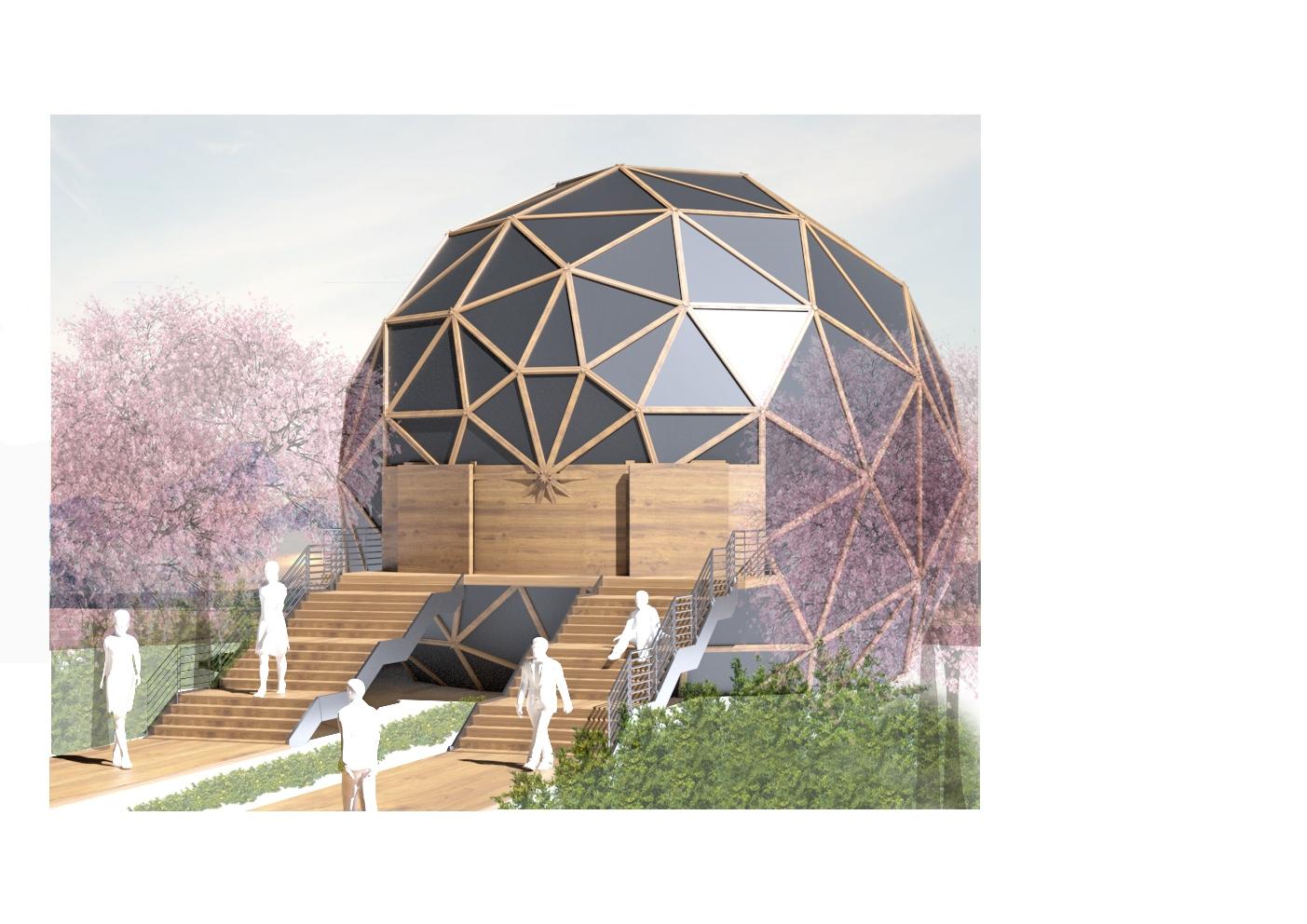
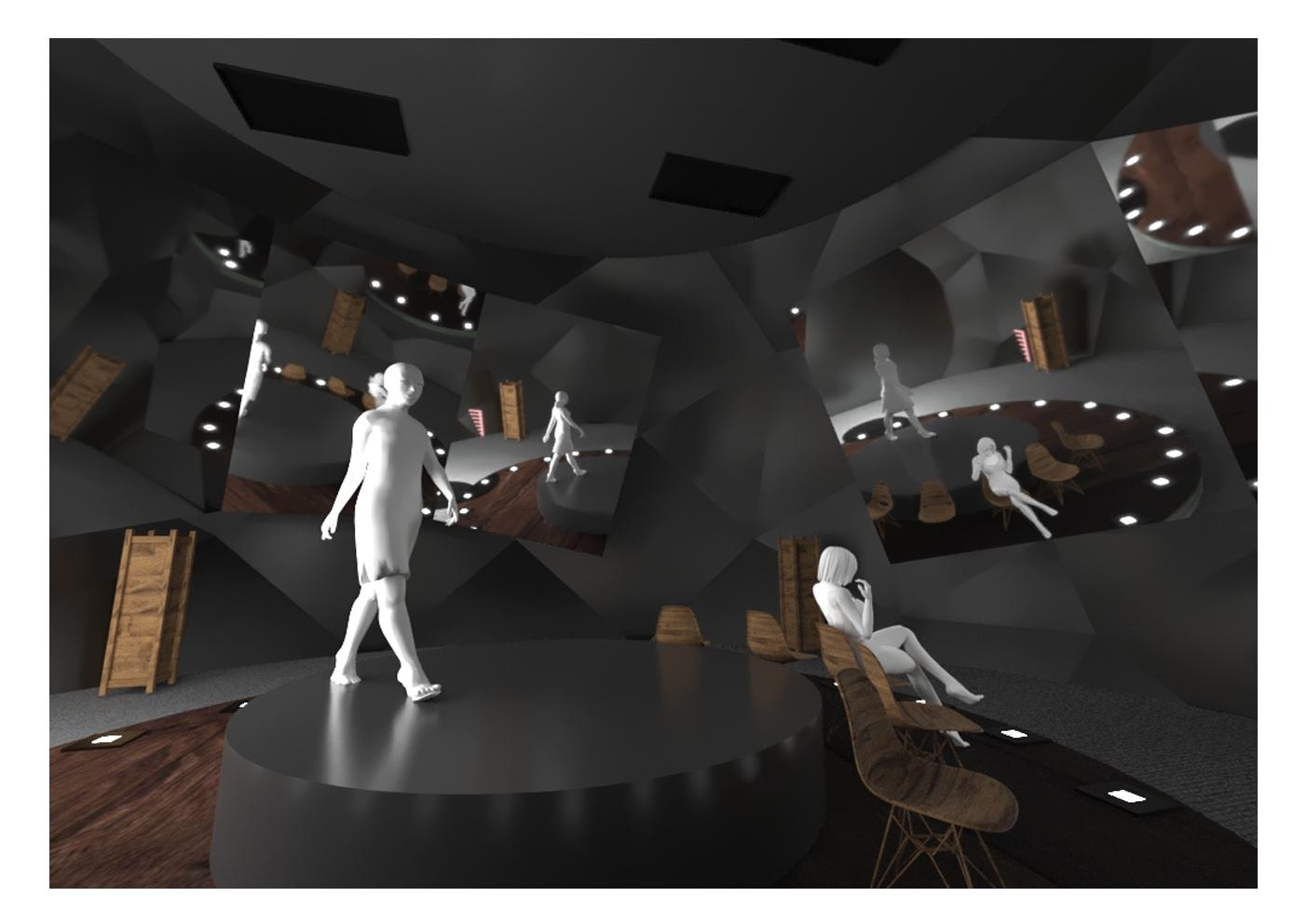
This is a project that intends to explore the artform of dance, by dissecting it in a tectonic format to create a performance space. Emotion is essential in conveying the complete essence of dance, as it is expressed through facial and focal expression, poster, gesture and body movements. Over the course of the study, body movements were classified as trunk movements, arm movements, vertical direction, sagittal direction, force, velocity and directness. The project also proposes the use of reflective surfaces to amplify the emotion expressed. The chosen emotions were joy, sorrow and confusion. Joy is expressed through expansive movements, sorrow, through contractive movements and confusion, through hyperdynamic movements. As sight is the most important of all senses, a dance disrupting the primary sense creates an inverted immersive experience as the dancer is behind the viewer.
TECTONIC DISSECTION OF DANCE STEPS
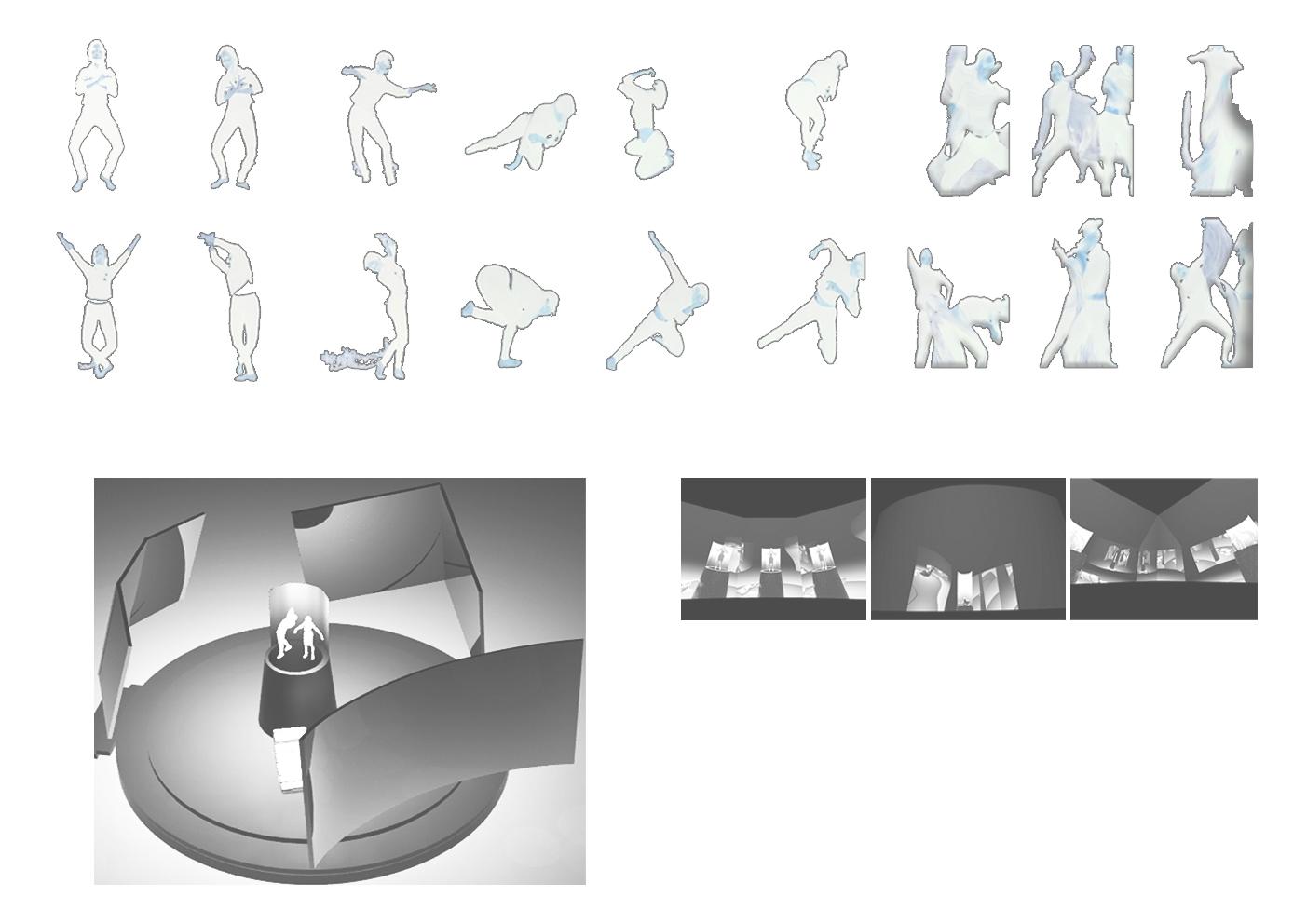
Increasing the number of flat mirrored surfaces increases the number of reflections, but what one sees depends on where one stands. Therefore the reflections of joy could be clearly explained through three plane mirrors.
SORROW
In order to perceive the ground based movements/shrinking body language of the performer, sorrow can be expressed through the reflections of a convex mirror.
CONFUSION
Placing the mirrors at an angle smaller than 90 degrees results in multiple reflections as required to depict confusion. The multiple reflections evoke a sense of misplaced perception.
USE OF MIRRORS
JOY
JOY SORROW CONFUSION
10
30x30x5
CONNECTORS USED IN THE SHELL’S FRAMEWORK
50x100mm
BASE FRAMEWORK
STRUCTURAL DETAILS
Elevated stage to provide the dancer with a realm to invoke the emotions and the sound.
“Footsteps behind, sound afar, lights beneath sounds unfurl...”
Minimal seating to provide an immersive experience.
Ground based lighting to serve only for movement apart from performance time.
SPATIAL DRAWINGS DEPICTING THE DESIGN
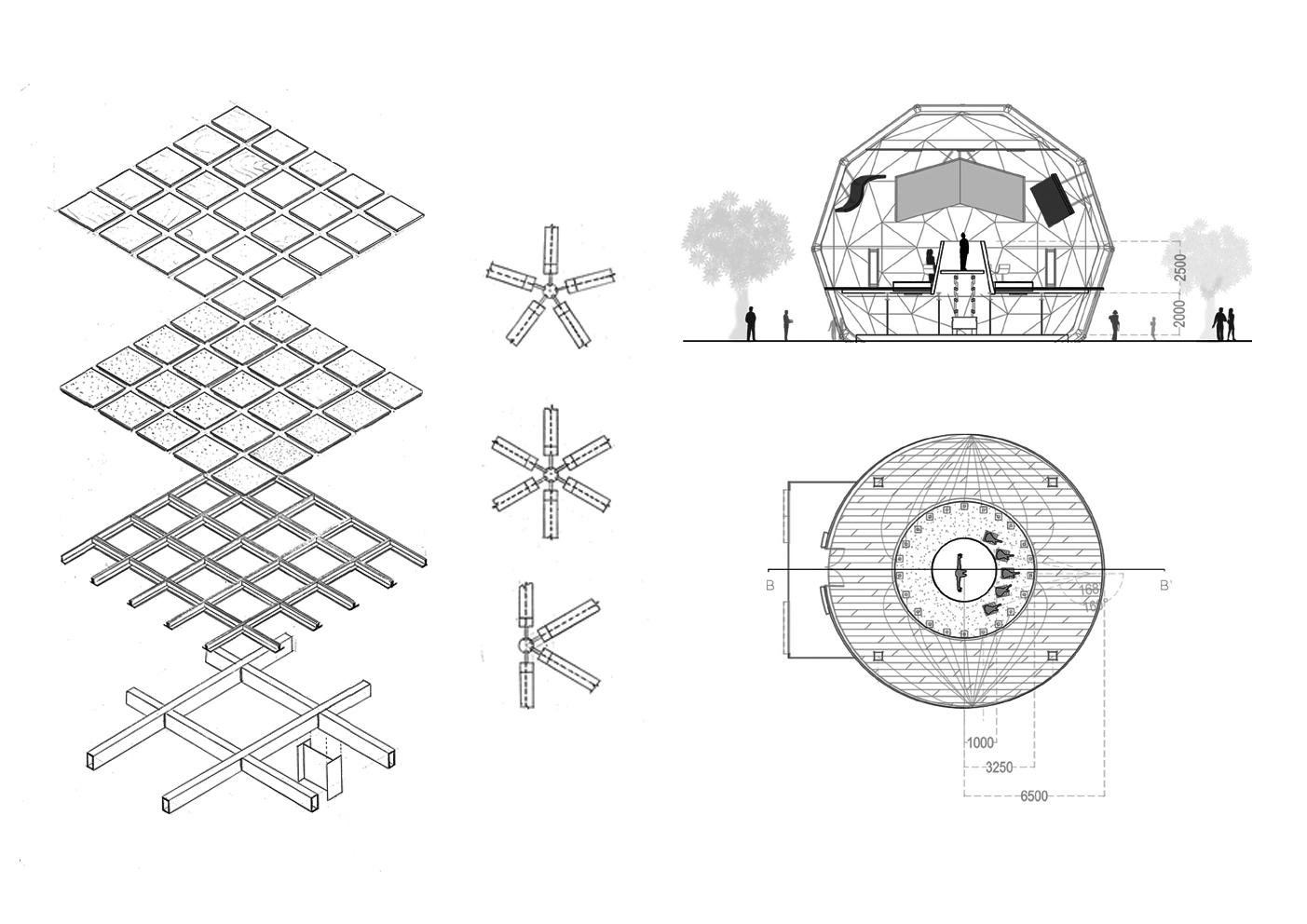 All dimensions
in
millimetres
Section BB’
5 way connector
6 way connector
4 way connector
20 mm Teak wood Tiles
mm Cork acoustic tiles
mm MS L angle
MS Box section
SEQUENT LACUNAS
San Francisco, USA
Type: Summer school, Individual
Level: International
Role: Complete design of the project
Supervisor: Keith Plymale (keithply@berkeley.edu)
Softwares: AutoCAD, Revit, Rhino, 3DS Max, Photoshop
Date: July 2020 – August 2020
Institution: UC Berkeley
This project explored the spatial derivatives that can be garnered from film and its analysis. Initially a film still from a famous movie was analyzed with respect to factors such as light, massing, geometrical and volumetric aspects, etc. and figurative diagrams were made. A threedimensional space was then developed from the linear analysis and modeled as per the site conditions. Finally a function ( film exhibition space ) was modulated into the area and the conditions were adjusted. This space intends to serve as a public hub for movie goers as well as the general public and slightly stands out in form from its context to create a point of activity.
This three-dimensional understanding of the model along with the elevations display the gradual, uniformly fluctuating spaces. The cavities present in the model can accommodate functional spaces along with providing interesting experiences for the user while modulating the light that enters the space.
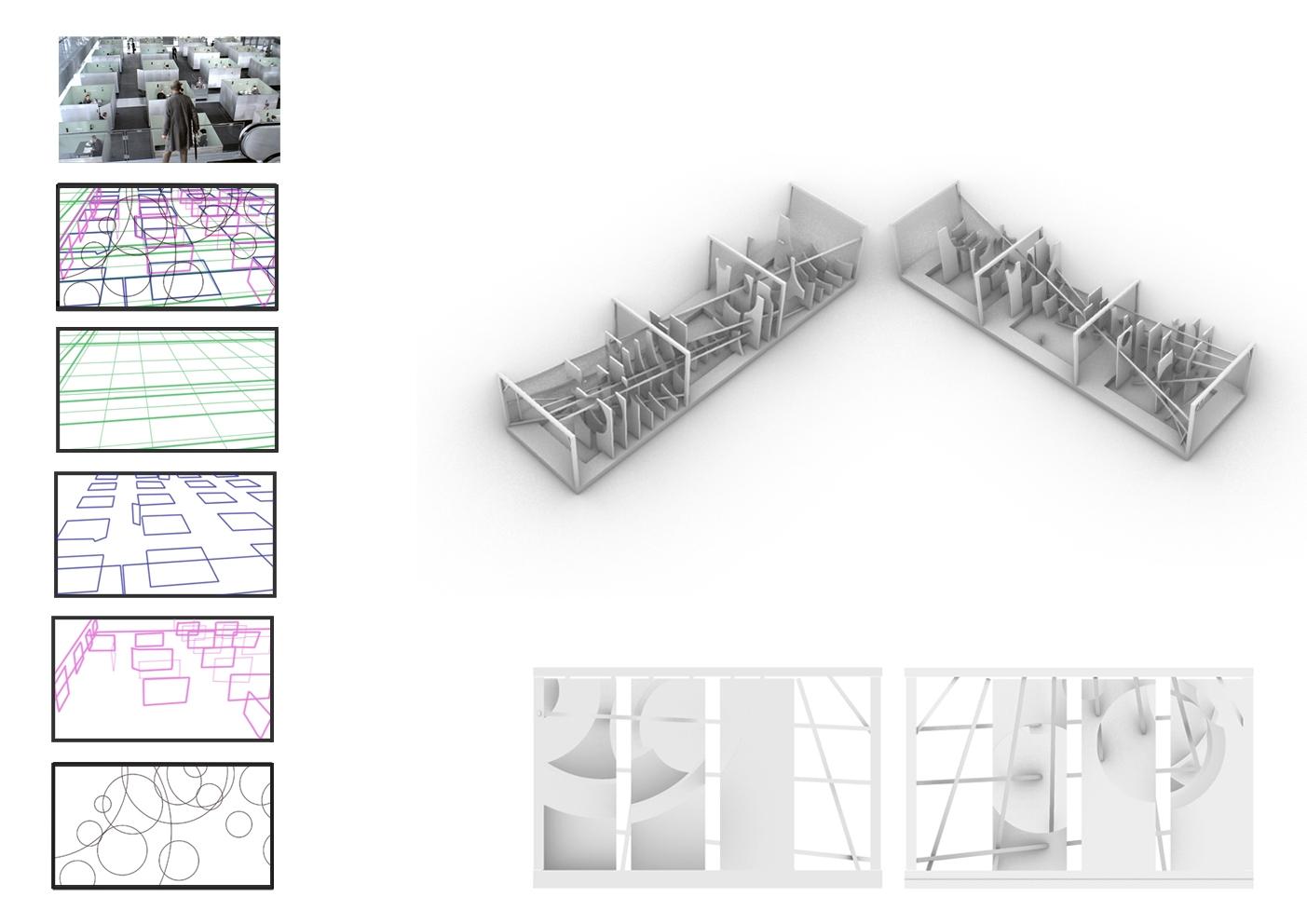
Scene from the movie Playtime Composite analysis Linear analysis Analysis of voids Analysis of light Analysis of human posture
1. Entrance lobby
2. Ticket counter
3. External seating
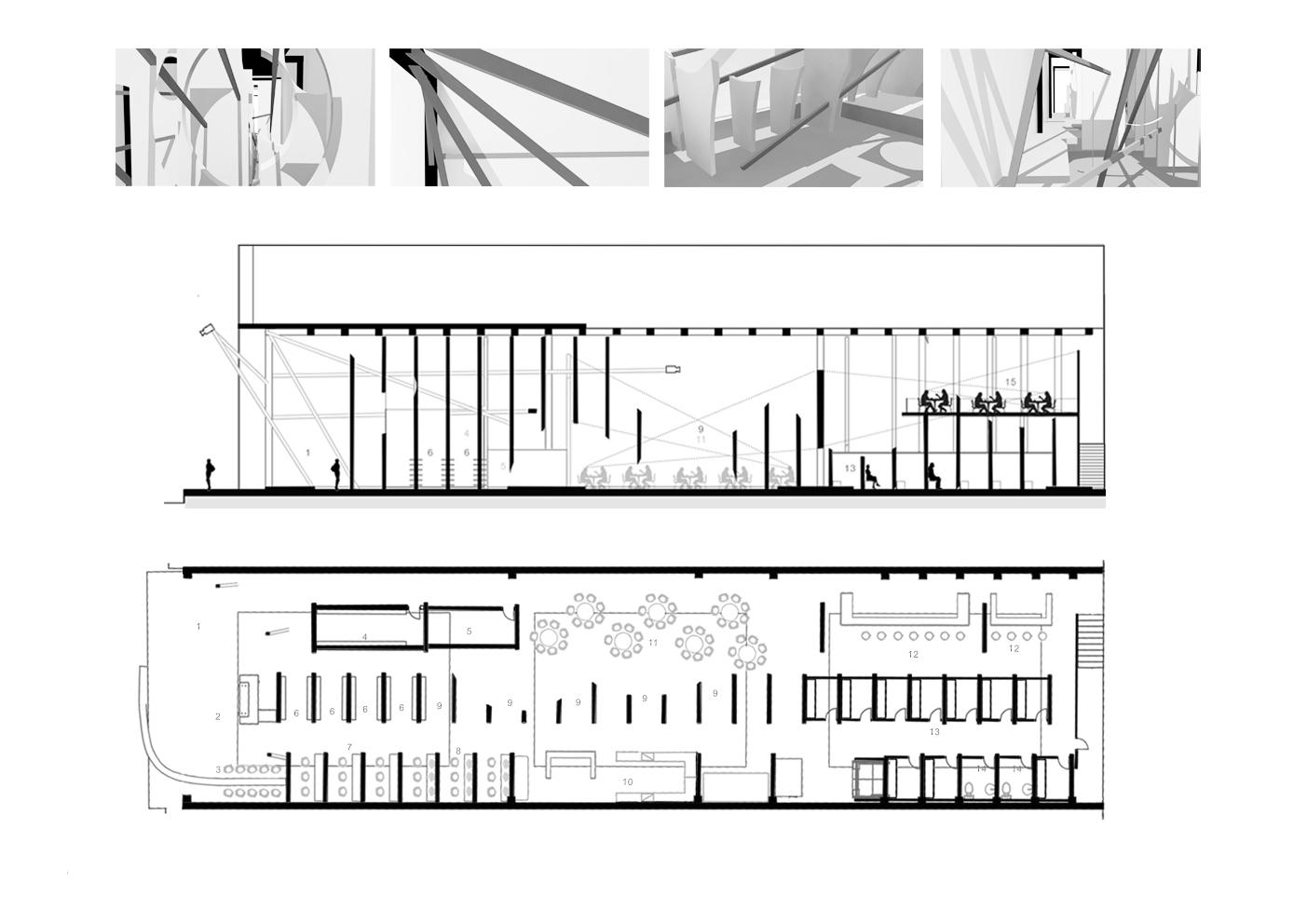
4. Film archive
5. Equipment loaning
6. Library
7. Viewing tables
8. Computer tables
9. Gallery spaces
10. Kitchen
11. Dining
12. Bar
13. Viewing booths
14. Restroom
15. External seating
Projection on street during film festival
PLAN
Projection on wall
SECTION
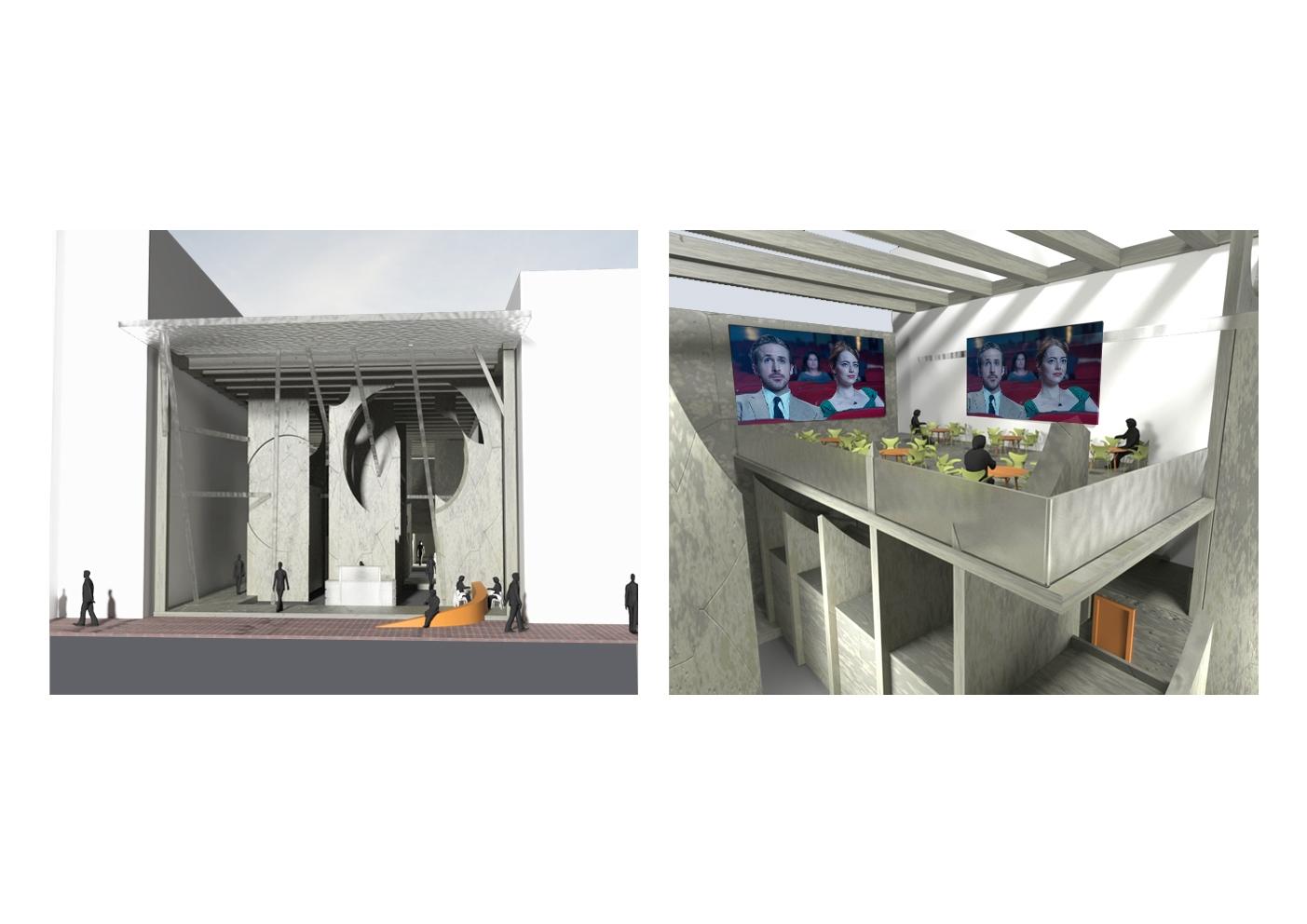 Street façade displaying the interaction of the space with its context
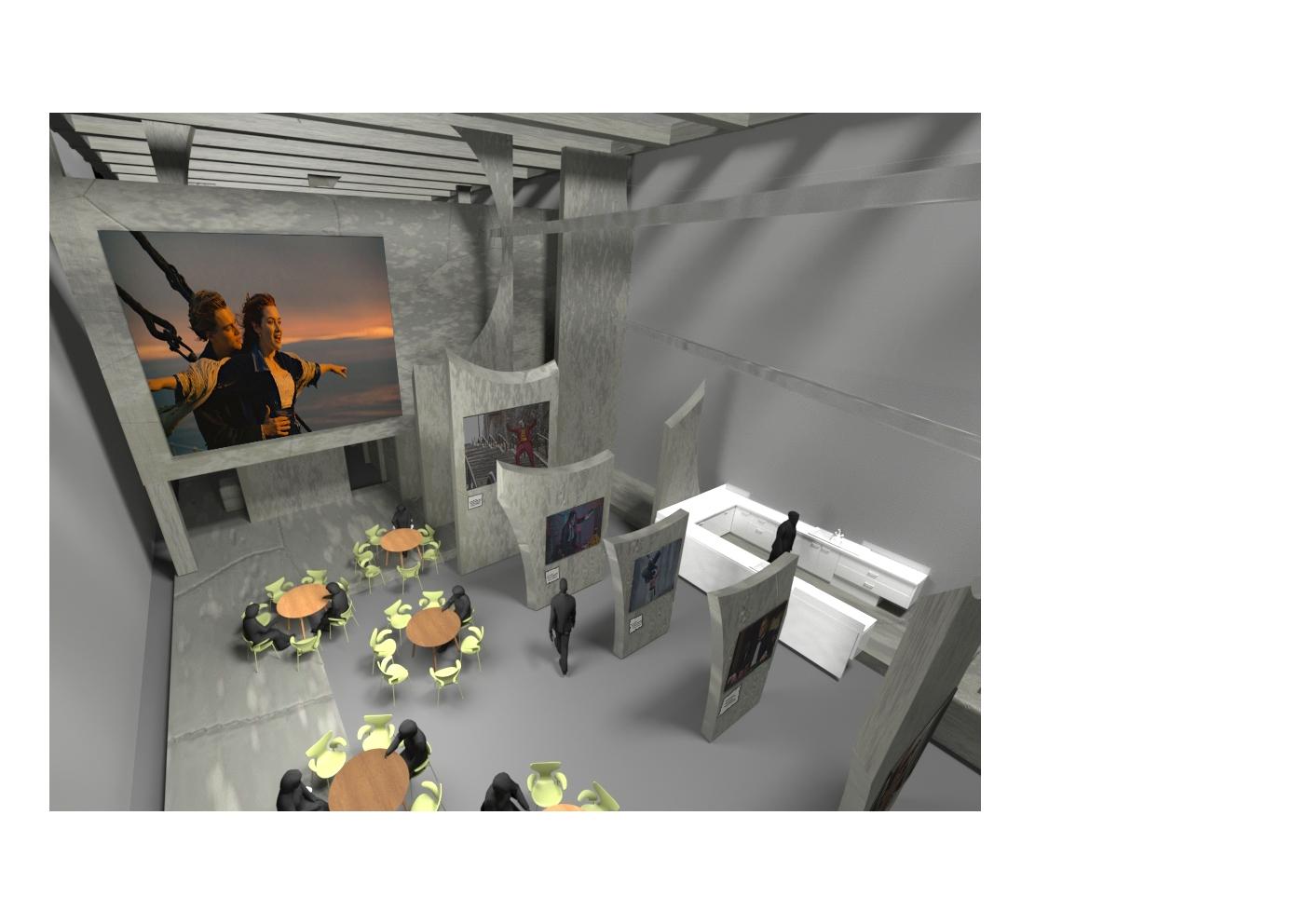
Level 2 that serves as a mini viewing space ( apart from the dining area )
Street façade displaying the interaction of the space with its context
Level 2 that serves as a mini viewing space ( apart from the dining area )
EMPHATHETIC ENUNCIATIONS
Sheffield, UK
Type: Academic, Group
Level: National,Graduate
Role: Complete design of the project
Supervisor: Iulia Statica (i.statica@sheffield.ac.uk)
Softwares: Indesign, Photoshop
Date: Sep 2021 – Dec 2021
Institution: The University of Sheffield
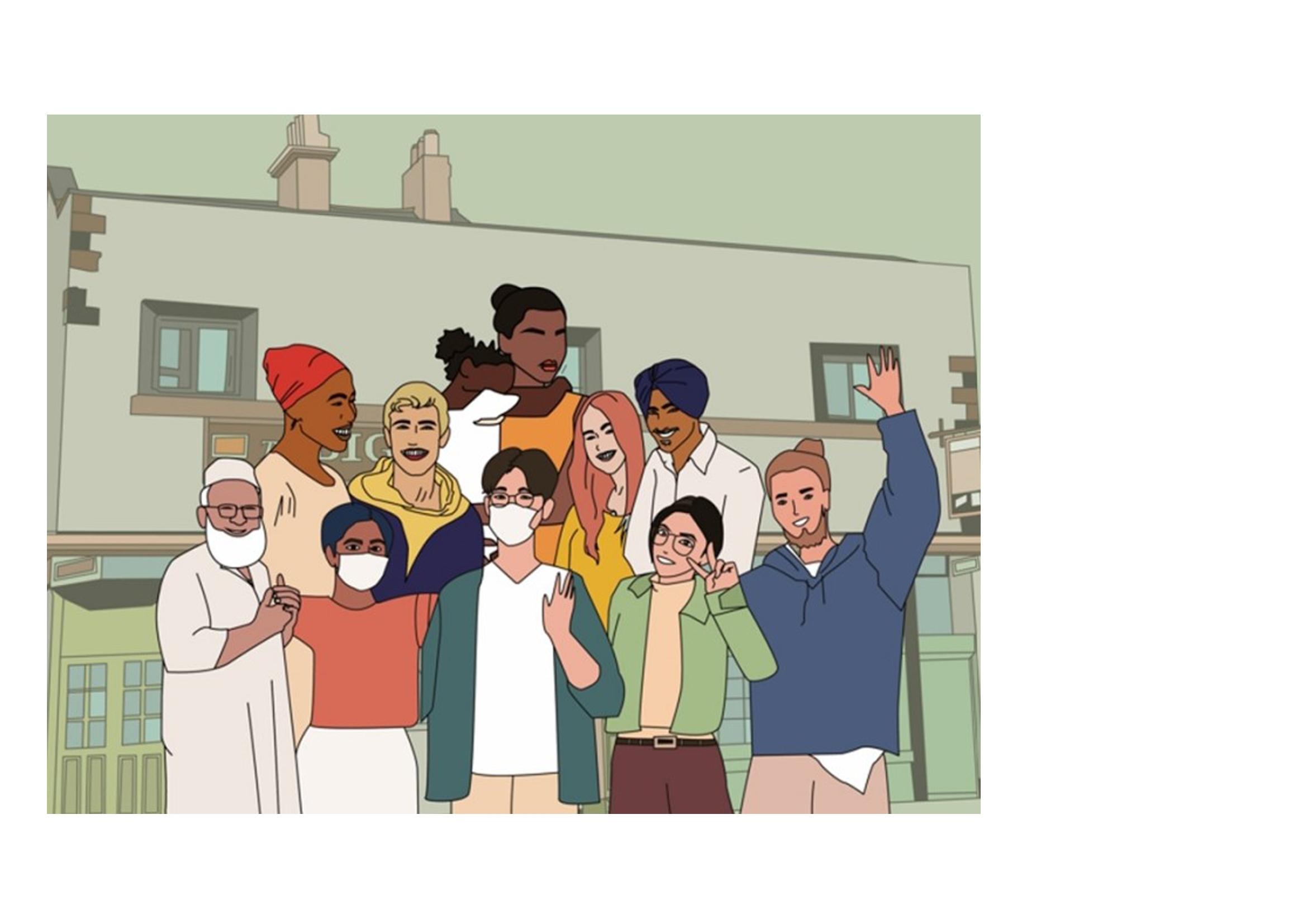
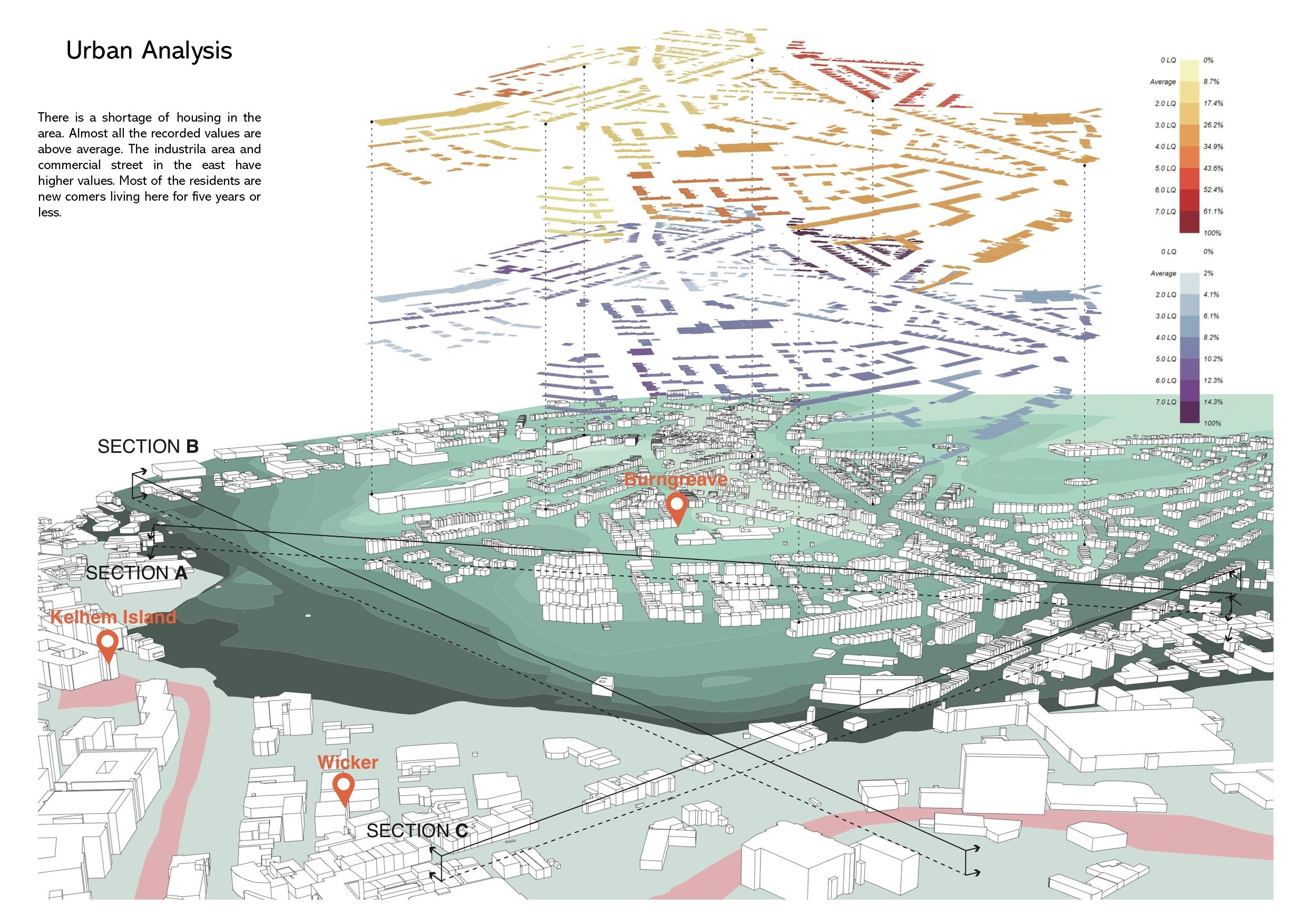
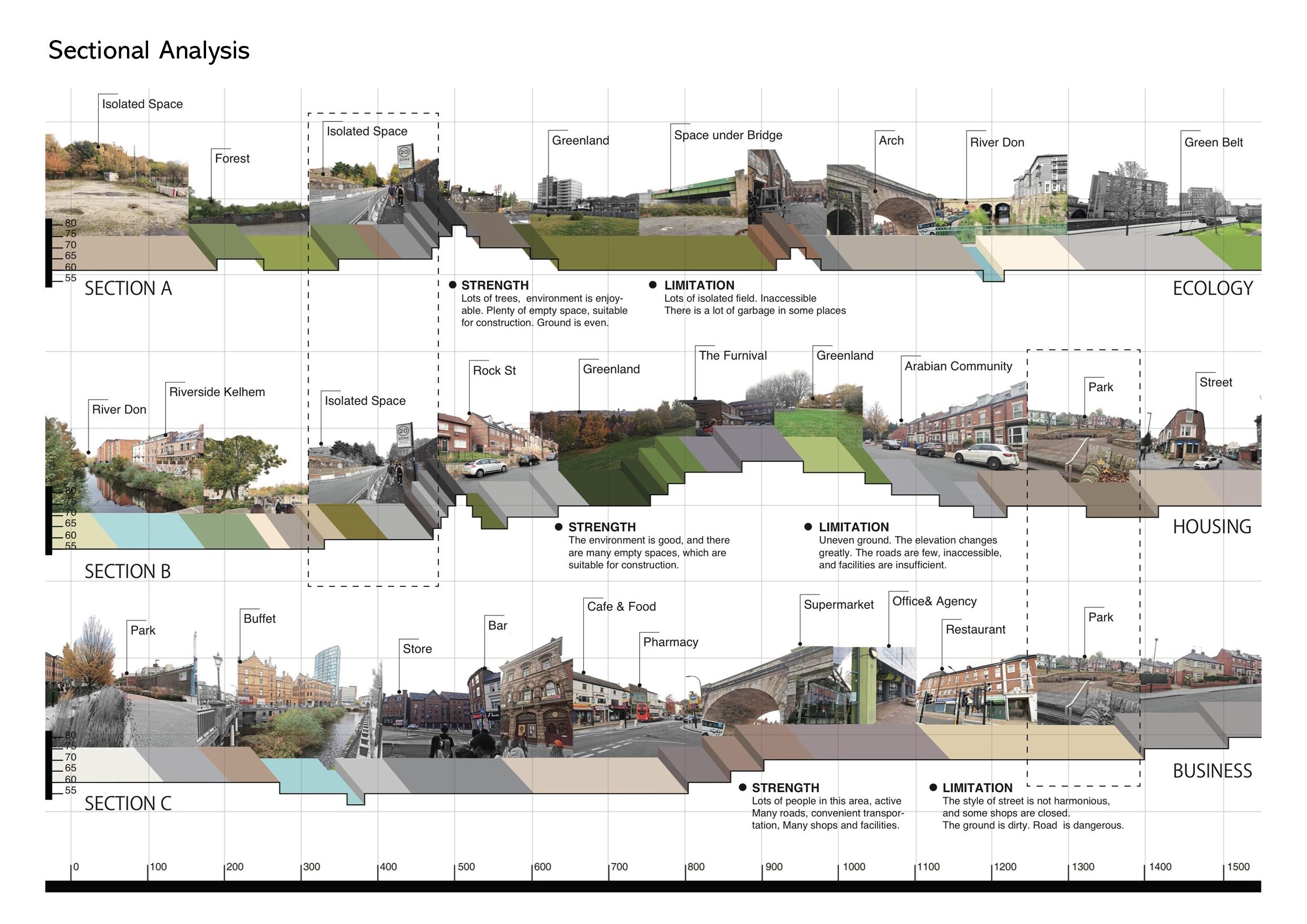
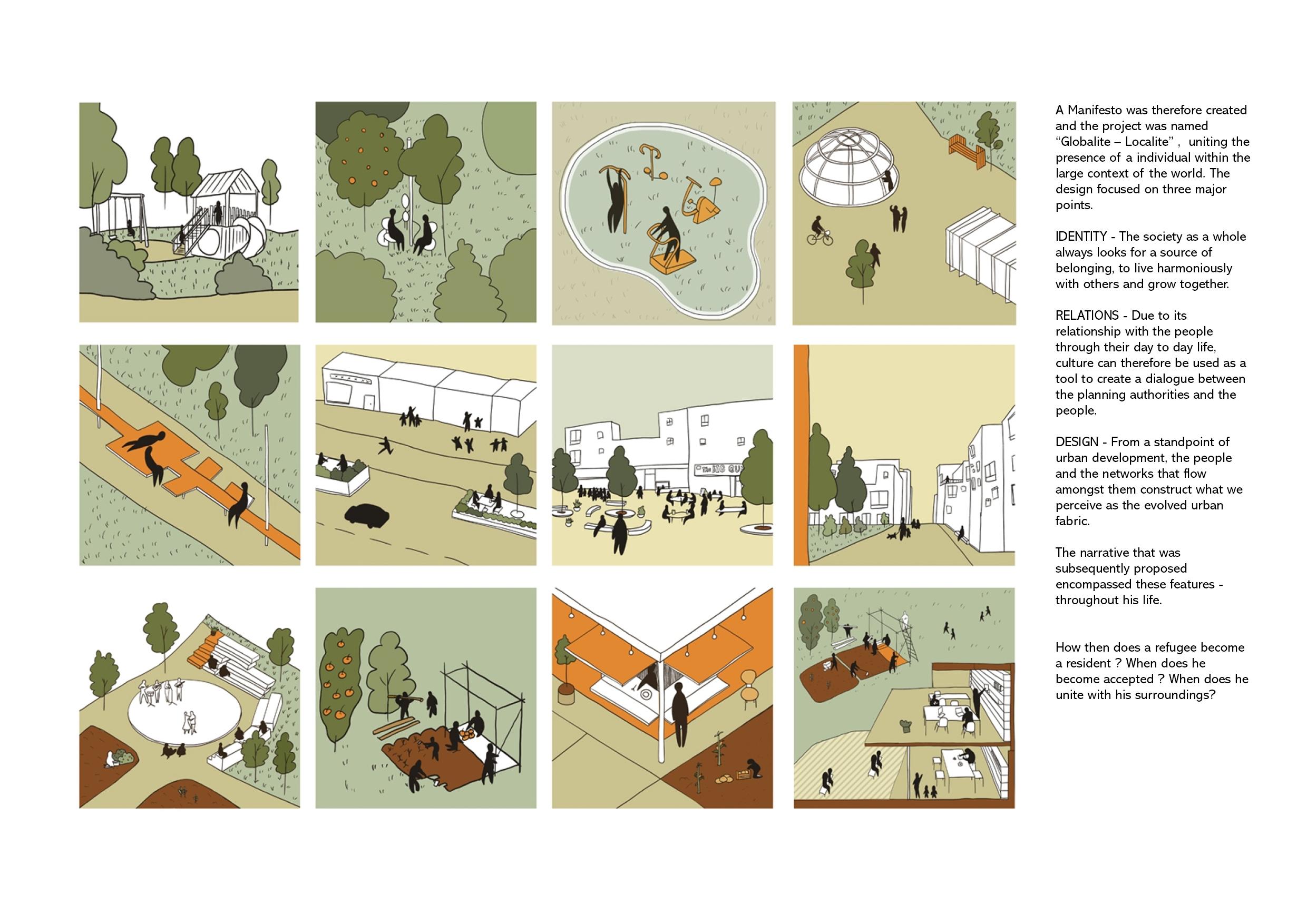
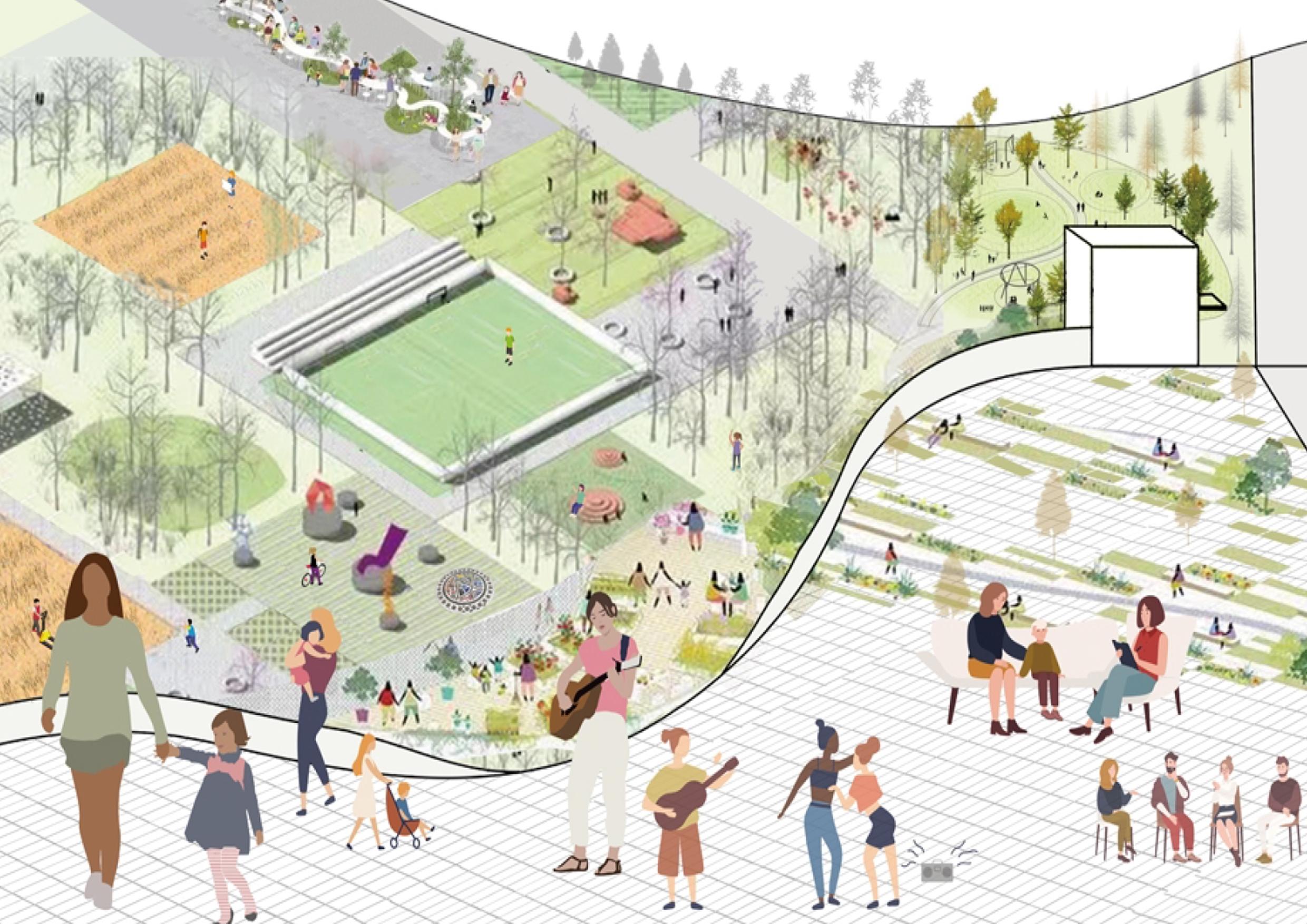
This project is curated as a series of stories articulated through time, hearing the voices of the people of a community. The current scenario of the world demands for a space where everyone feels the need to express themselves through all modes of communication. As an enabler of change, it is important for an urban designer to be a part of the creative process and execution. This seeks the need for both the designer and the users impacted by the design to collaborate in a creative process. From this aspect, the course enabled the students to encounter the real world lives of the refugees of Burngreave, hearing their stories and implementing design strategies through a humane lens. This nature of humanity is thereby encompassed in the subsequent chapters through text, visuals and analysis.
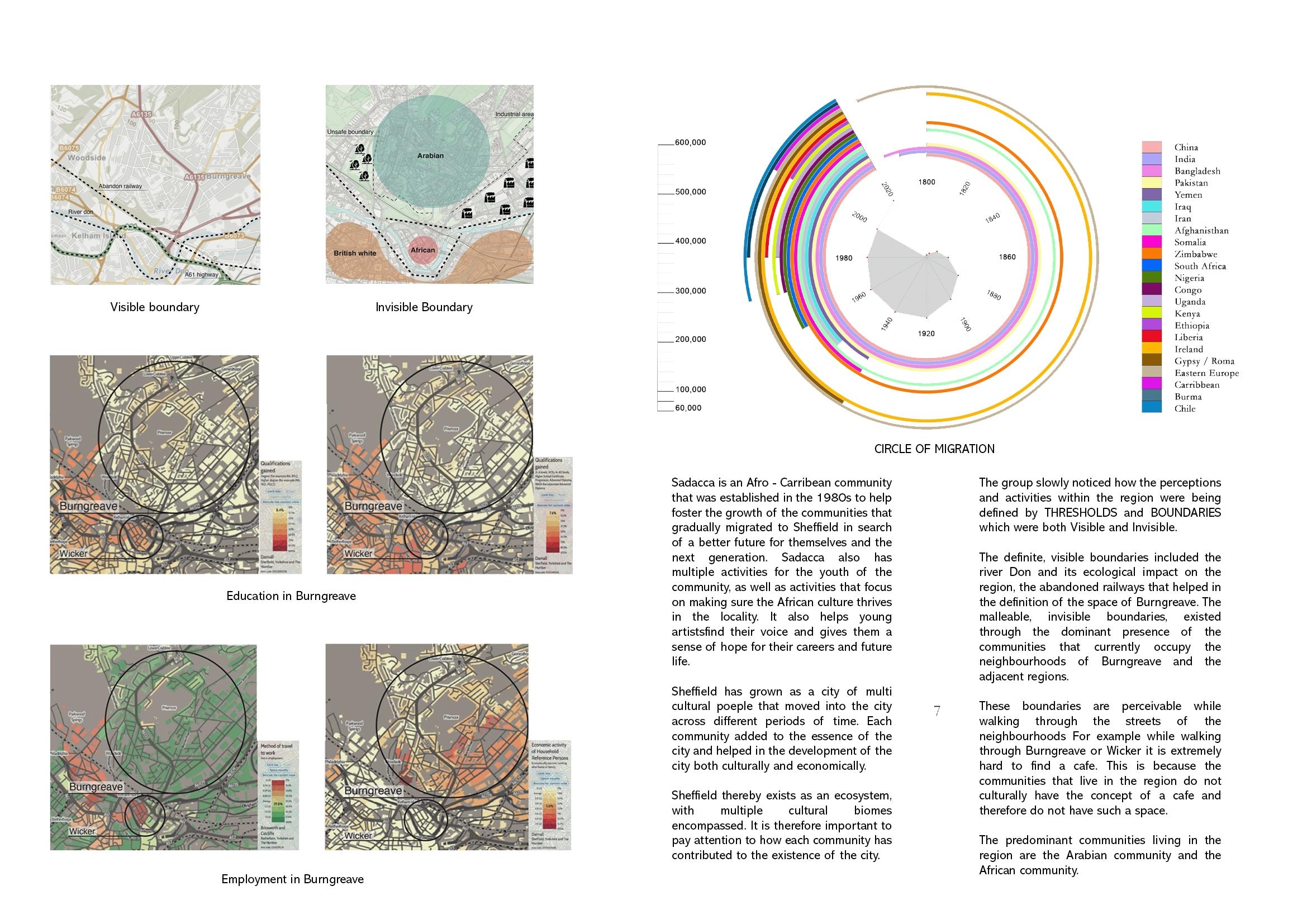
There is a shortage of housing in the area. Almost all the recorded values are above average. The industrial area and commercial street in the east have higher values. Most of the residents are new comers living here for five years or less
MANEUVERING THE MARKET
Bangalore, India
Type: Academic, Individual
Level: National,Graduate
Role: Complete design of the project Supervisor: Emre Akbil (e.akbil@sheffield.ac.uk)
Softwares: AutoCAD, Revit, Rhino, 3DS Max, Photoshop
Date: Jan 2022 – June 2022
Institution: The University of Sheffield
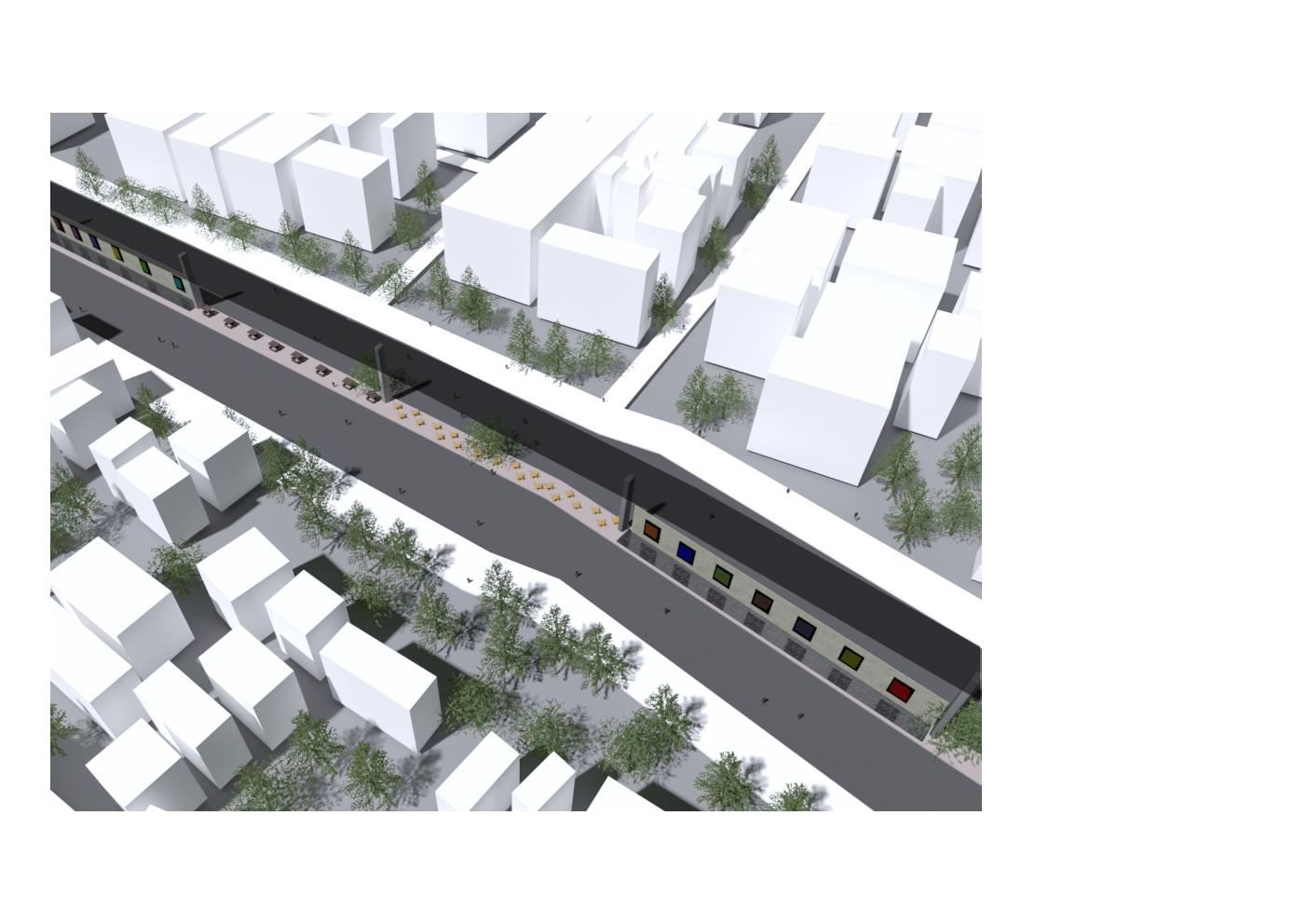
This is a thesis project focused on the Sarakki market of Bangalore, Karnataka and its redevelopment, using the concept of urban commons. The project thereby seeks to solve the problem of competition of space and commotion in the Sarakki - Banashakari market stretch, The Sarakki market is about 30 years old and has sustained since its inception due to the presence of the neighboring Kanakpura urban highway and the Banashankari Amman temple. Due to the quality of the produce sold here, the timings and the presence of the market informally on the streets, the market continues to be successful in its nature and exists in the same manner.
The city of Bangalore grew radially from the K.R Market which was the bustling hub of the region. This market still functions as the most important wholesale market of the city, around which newer markets such as the Madivala market, APMC yard and the Sarakki market have emerged. Due to the population of the city, the existing markets are spatially inadequate. Based on their immediate catering radius, it can be observed that these markets do not cater to the entire city. The existing Green metro line acts as the main spine that runs through the study region. Due to the cultural significance of the study area, the market must be redesigned on the same sites.
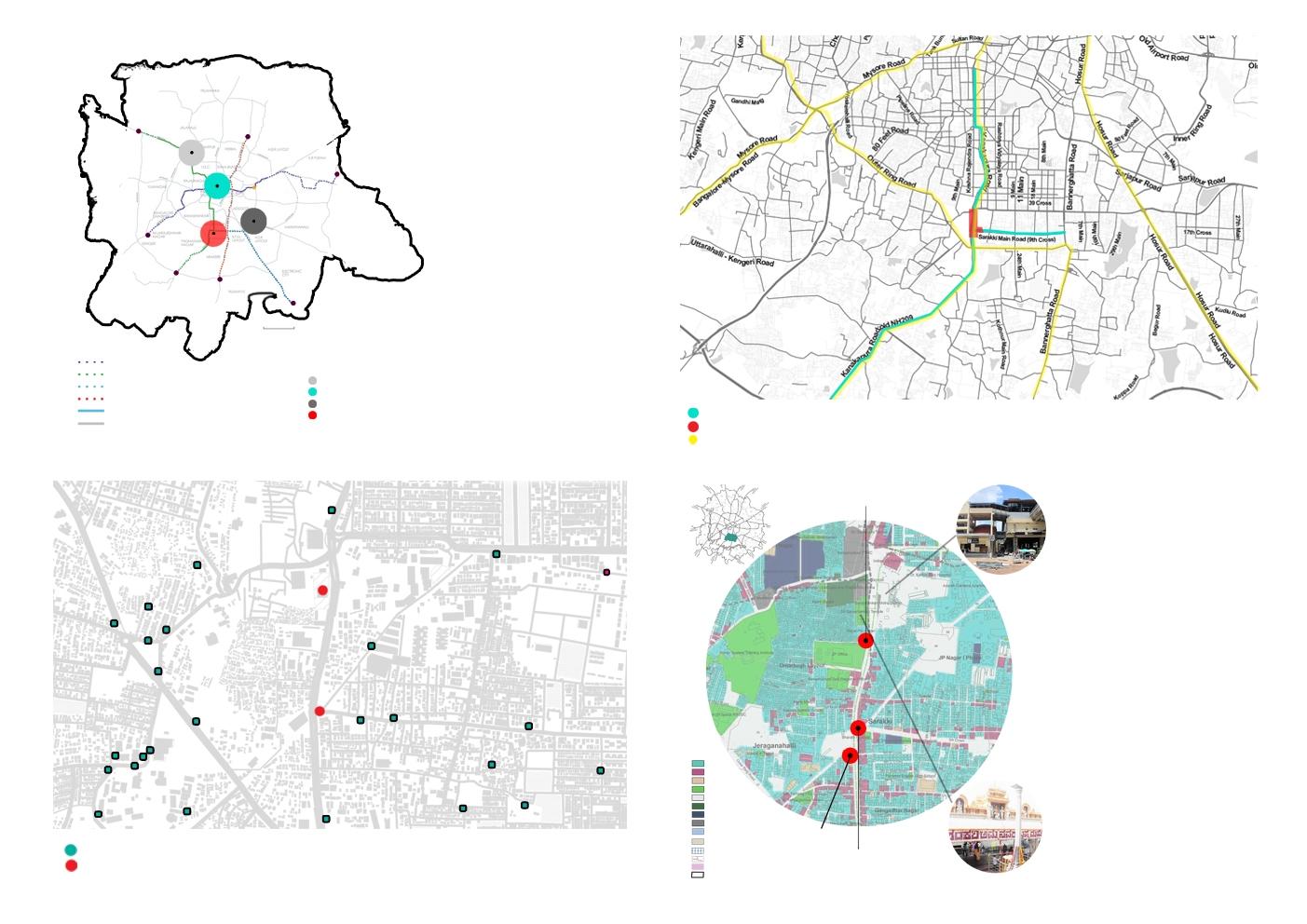
MAIN CONNECTING ROADS
The Kanakpura road accommodates the Sarakki market and the Banashankari market across a distance of 400 meters. The entire stretch functions as one market and a new built structure, serving as an extension of the existing market has been inaugurated. This continuous extension of the market stretch due to lack of space is a non-viable solution on the urban scale. The maximum no. of consumers (70-80%) are the home dwellers in the immediate vicinity. The Banashankari temple serves as the main factor for the continuous existence of the Banashankari market despite its non-suitable conditions. The market stretch is therefore more likely to expand around the existing sites.
APMC Yard K.R Market Madivala Market Sarakki Market
CONTEXT
EXISTING RETAIL STORES LANDUSE
5 km Residential Community Industrial Public & Semi public Unclassified Public utility Parks/ Open spaces Transport and Communication Agriculture Quarry/ Mining sites Forest Streams Water bodies Vacant Purple line (E-W) Green line (N-S) Blue line (under development) Red line (under development) BBMP boundaries Major roads Kanakpura road / 9th cross road Study area Major roads that bring produce to the site Retail store Sarakki and Banashankari market Banashankari market Metro station Temple Sarakki market Upcoming market
The 9th cross road has higher no. of trees creating a canopy across the entire street. The Sarakki market therefore functions as a suitable spot for an active plaza space. The metro line also acts as a source of shade through the different times of the day along the Kanakpura road.
The study region naturally slopes down towards the Sarakki junction & subsequently acts as the garbage dump point beside the metro column.
GREENERY CONTOURS
Peak hours of traffic: 6 am – 10 am ; 6 pm – 10 pm
Vehicular activity at peak hours (per min) 10 – 20 5 – 10
Road widths: Kanakpura road = 27m 9th cross road = 13m
Pedestrian activity per minute = 20 increase x10 during festivals )
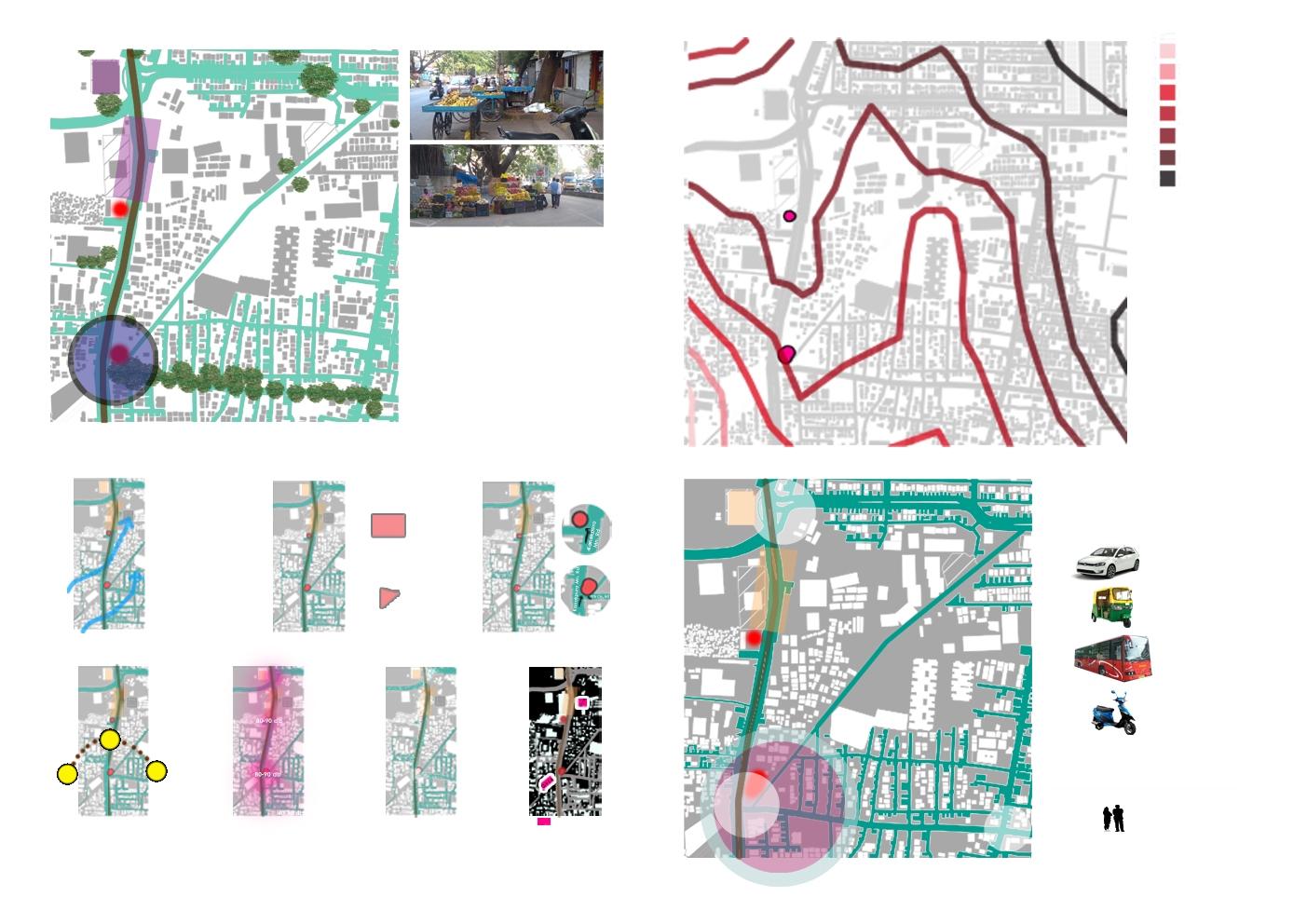
SITE ANALYSIS PEDESTRIAN AND VEHICULAR ACTIVITY Wind path Site dimensions Entries to site G + 14 Sun path Noise levels Pedestrian activity Built height Plaza Metro Station 45m 20m 17m 20m 21m Bus stop Banashankari junction Metro Station Sarakk junction Current consumer parking region Indira Gandhi Junction
1 – 2 10 - 20
Kanakpura road 9th cross road 905m 908m 912m 916m 919m 923m 927m
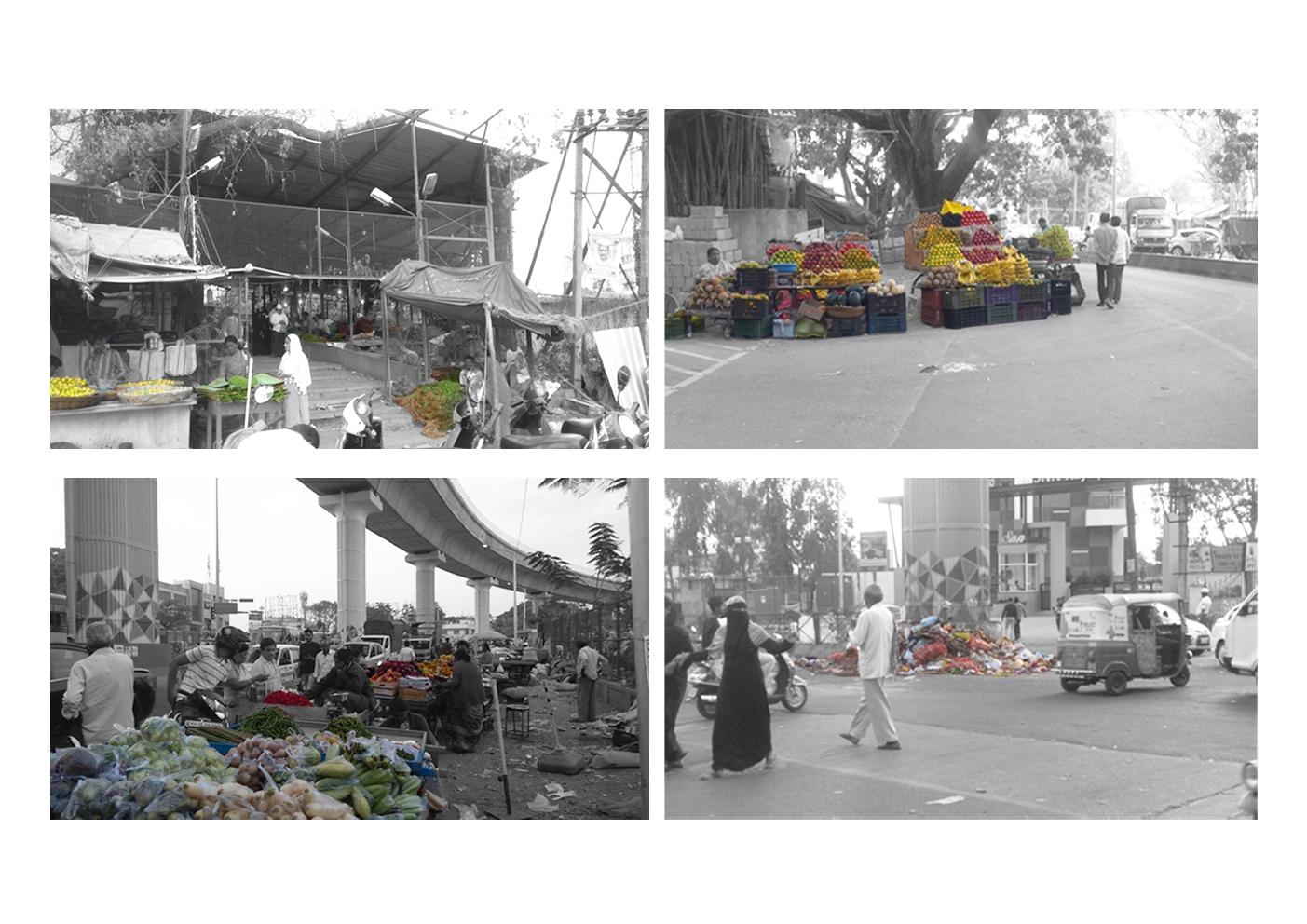
Existing condition of the study area and the market stretch that has constant influx of produce and consumers
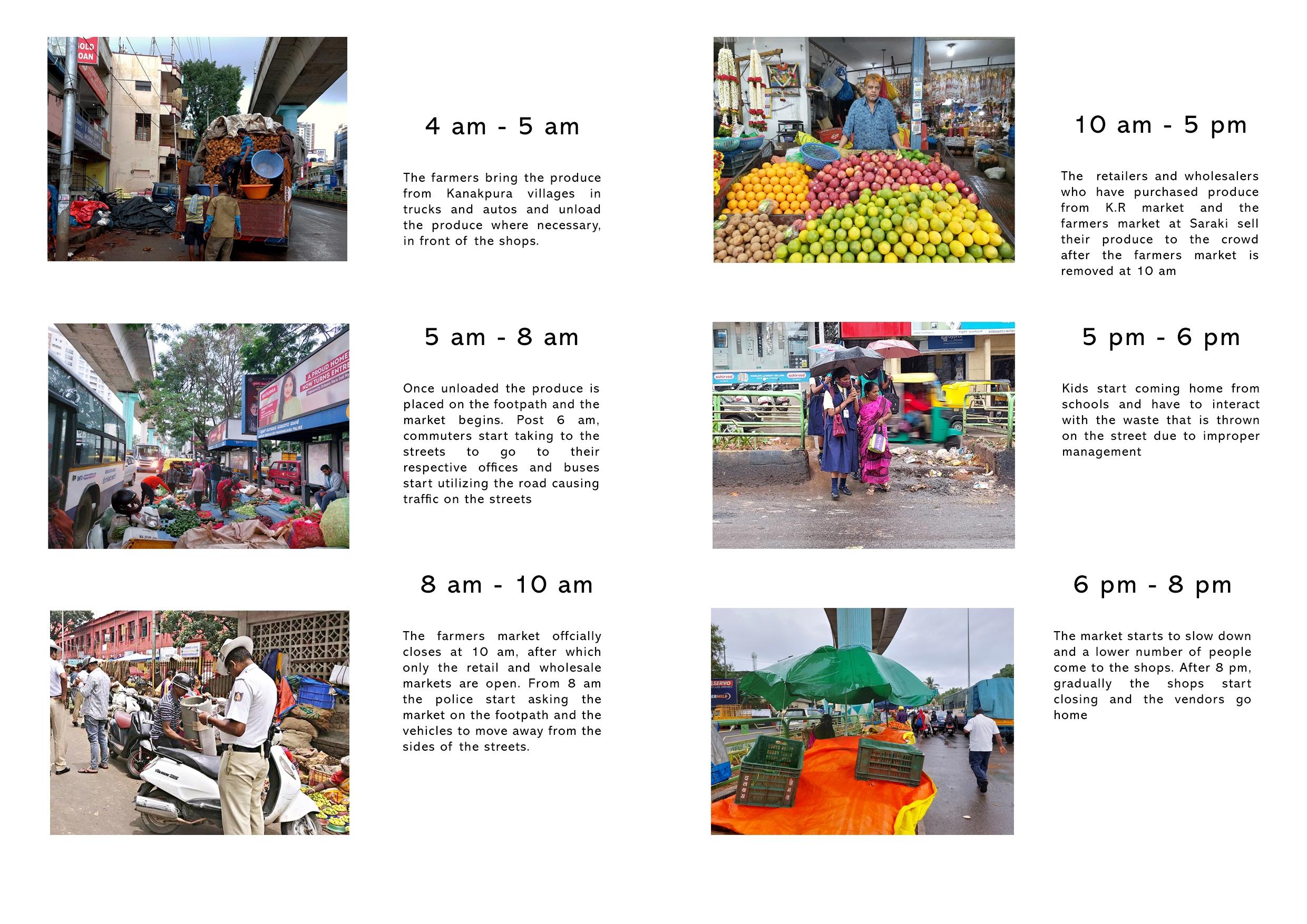
STUDY
TEMPORAL
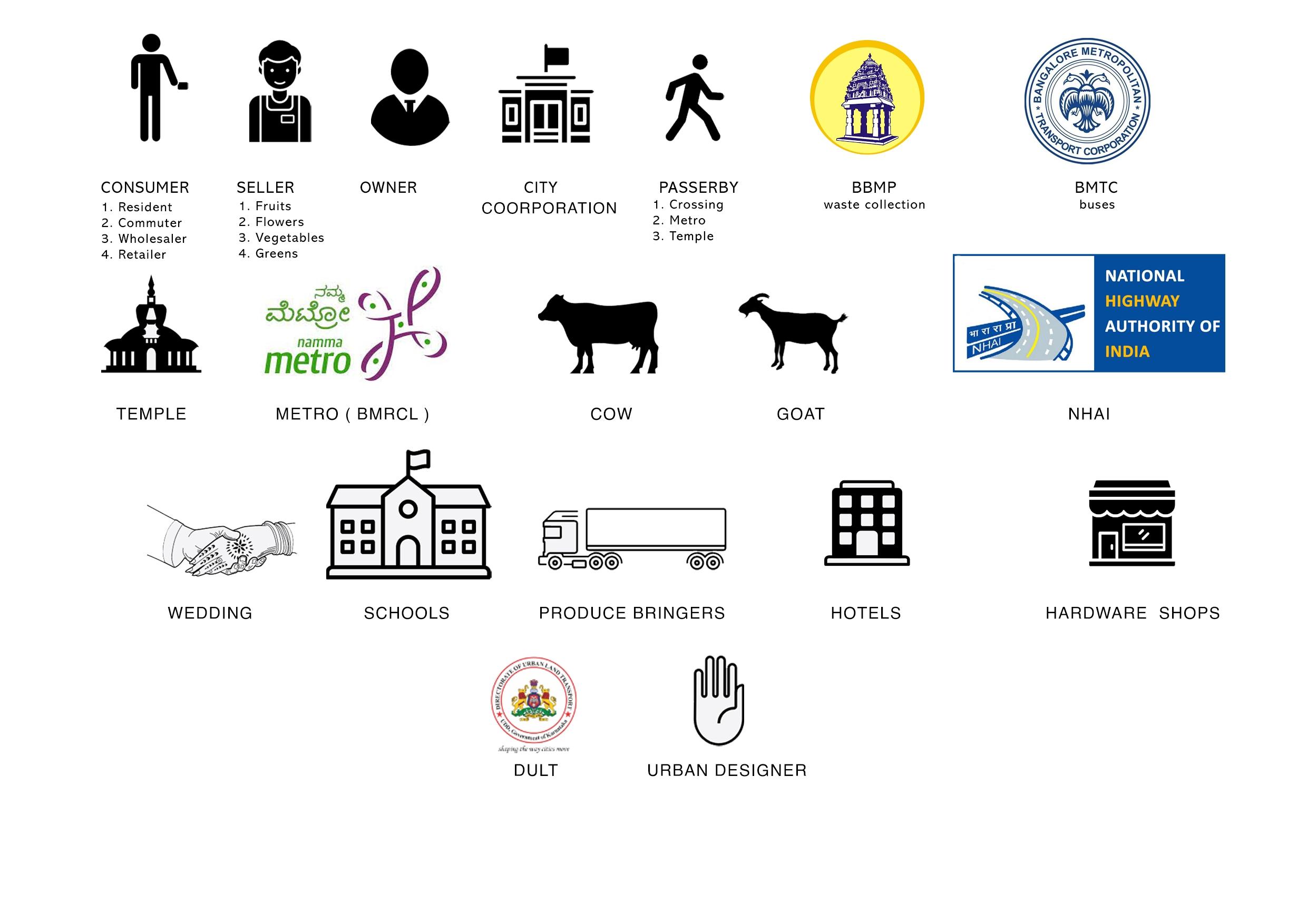
ACTORS
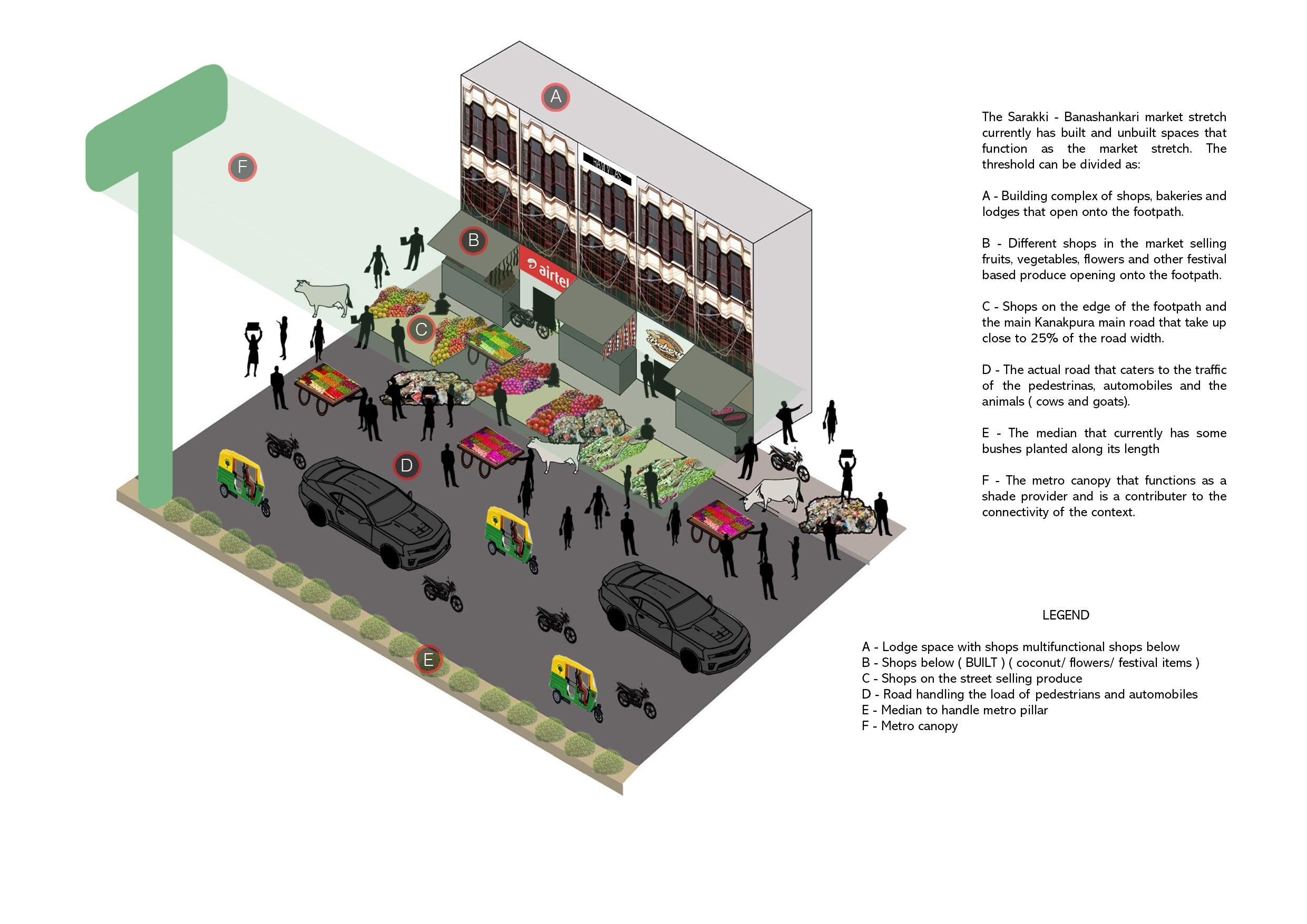
CURRENT SCENARIO
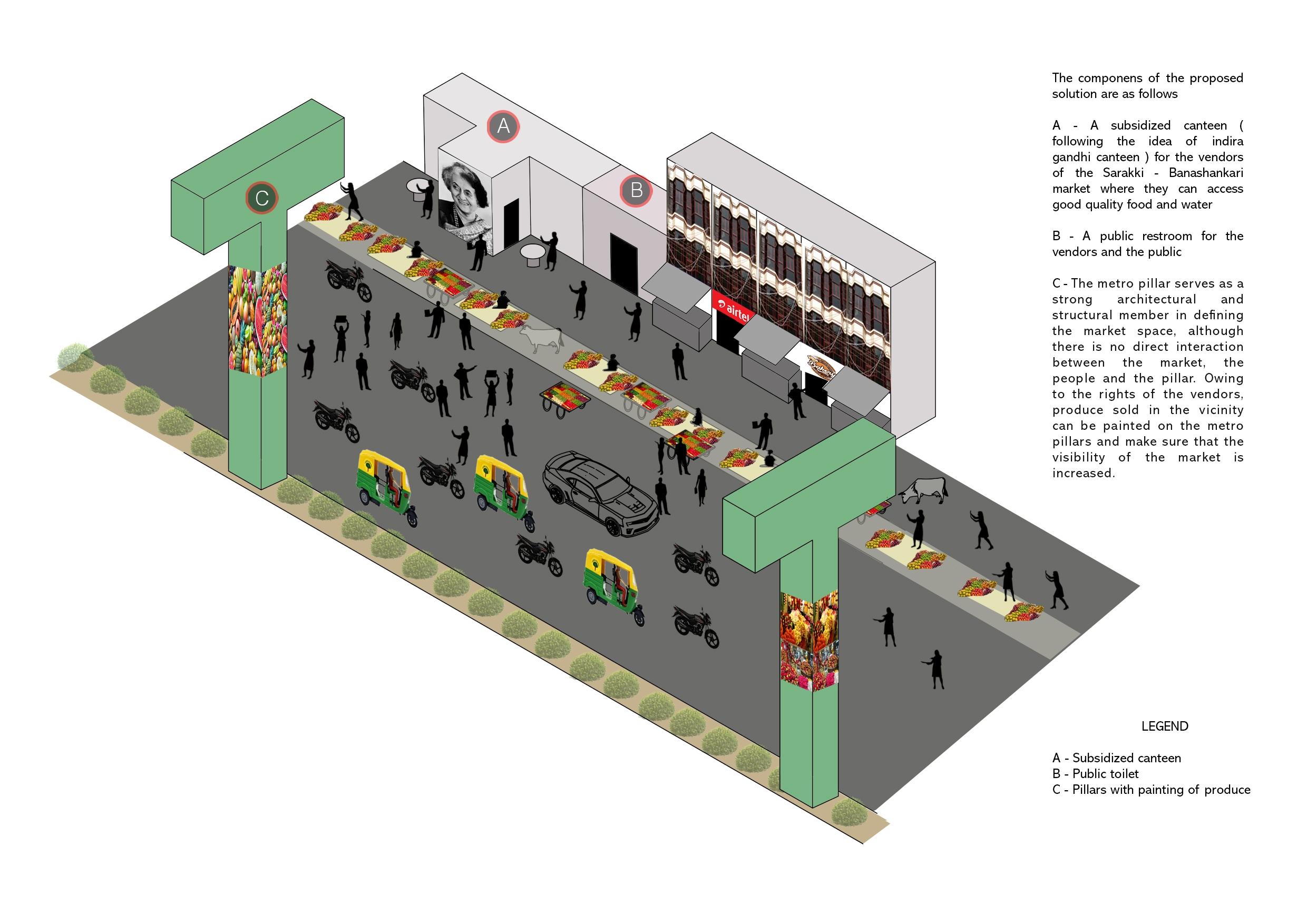
PROPOSED SCENARIO
The components of the proposed solution are as follows
SOLARIS
North Berkeley, USA
Type: Summer school, Group
Level: International
Role: Design of the project,3d modeling, render production
Supervisor: Gabriel Kaprielian (gabriel.kaprielian@berkeley.edu)
Softwares: AutoCAD, Revit, Rhino, 3DS Max, Photoshop, Indesign
Date: July 2019 – August 2019
Institution: UC Berkeley
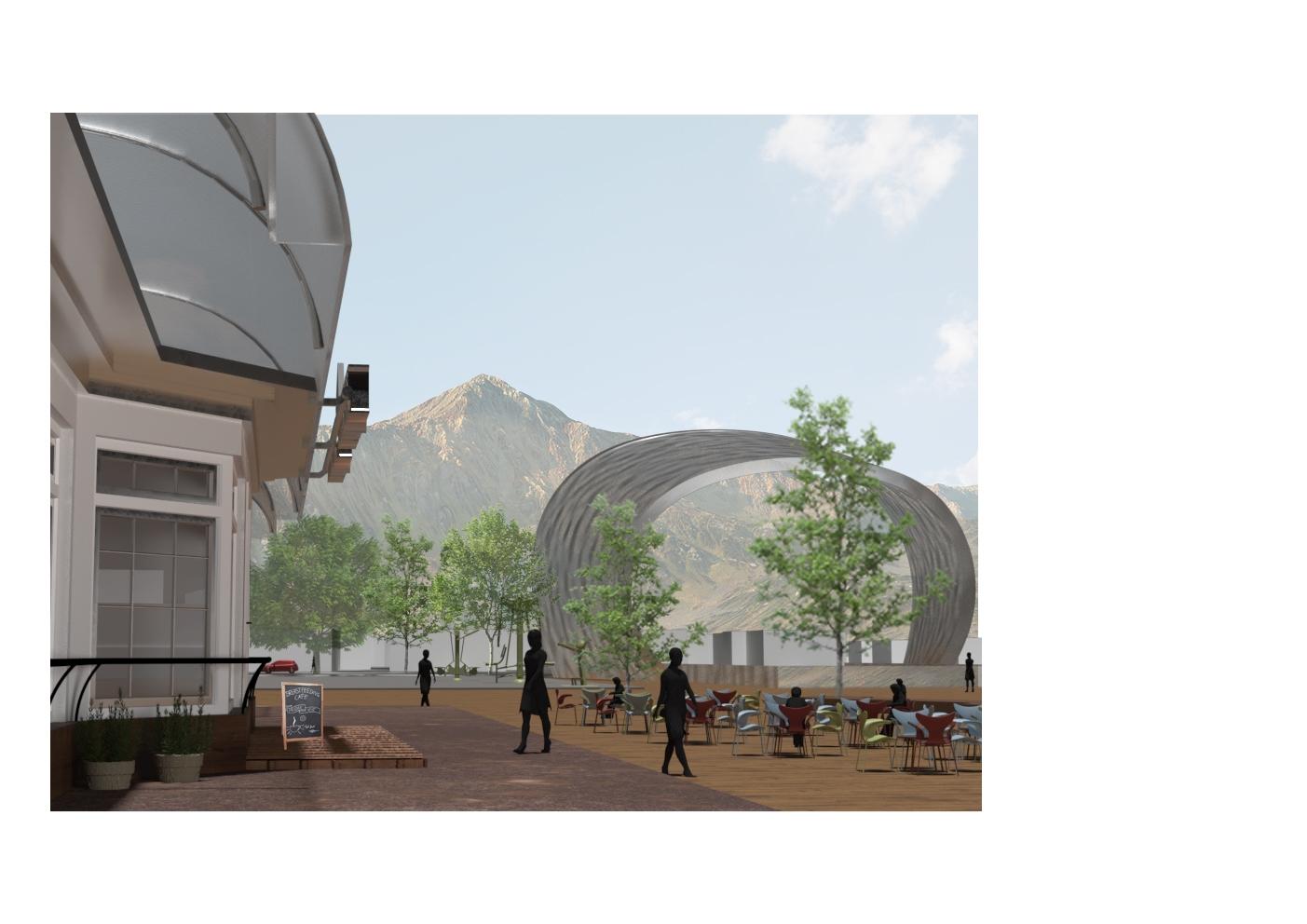
This project aims to create a transitoriented development for the BART (Bay area rapid transit ) plaza in the North Berkeley station. As most of the developable land in the Bay area has been built upon, this site represents an ideal location for future development. The North Berkeley region is an affluent neighborhood and predominantly a residential locality. It exists 15 minutes away from Downtown Berkeley. The Ohlone green way runs through the neighborhood and is used currently by the community as a park and has a community garden. At the center of the neighborhood is the BART station which is currently a cylindrical hut like structure surrounded by parking.
Fire Earthquake Drought
Job Growth
Housing market crash
Economic recession
Autonomous vehicle law
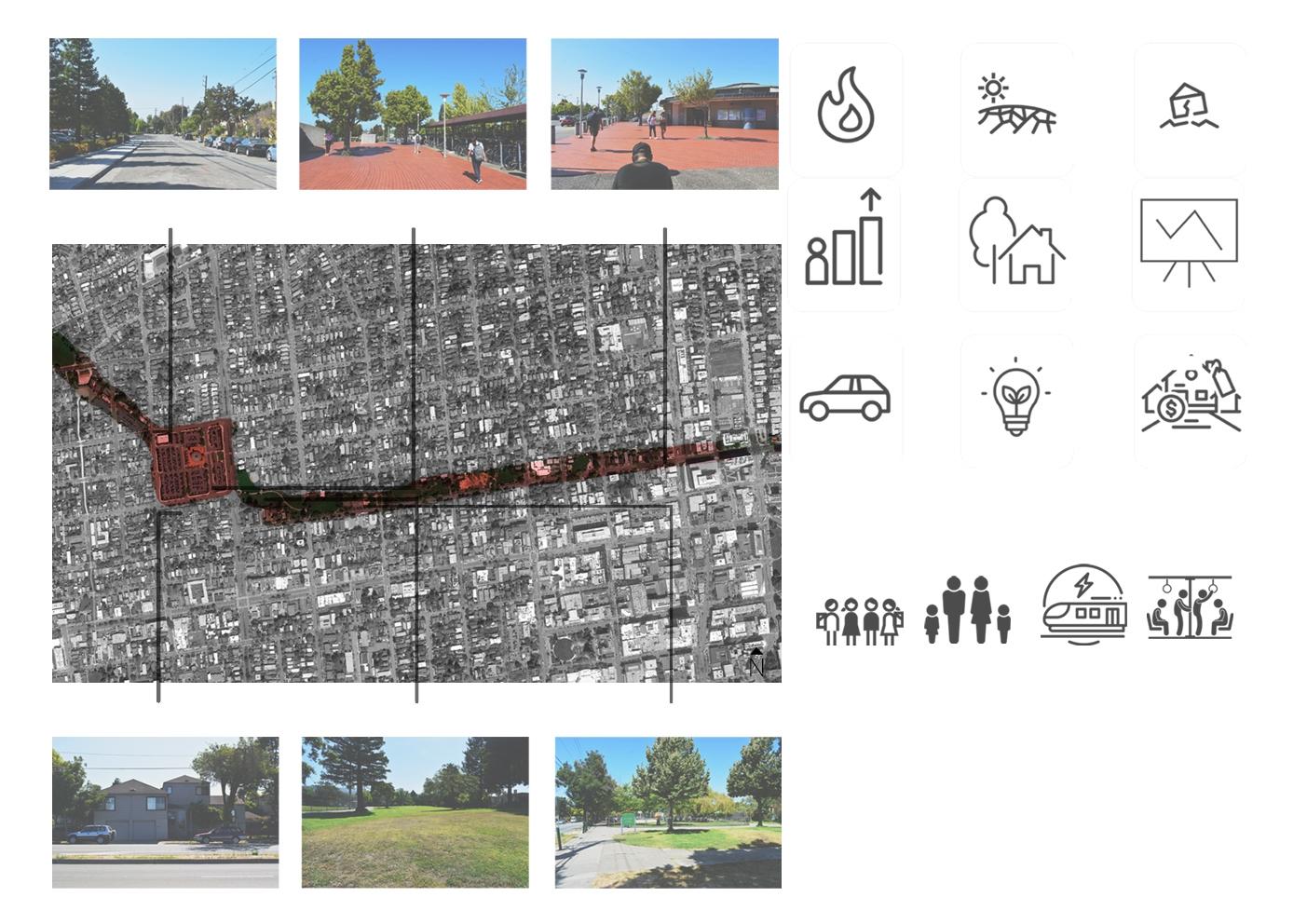
Net zero energy/water Affordable housing law
CHANCE EVENTS
Potential Residents Current Residents BART (Bay area rapid transit)
Comprised of immigrants, tech employees and college students. They want a safe convenient neighborhood that is both affordable and close to amenities.
Commuters ( BART & AC transit)
Comprised of homeowners and renters. Both want the cost of living to be low. They also want an improved quality of life.
BART’S TODs need to provide affordable housing and increase ridership. TODs should alleviate the housing crisis and provide revenue for improvement.
Commuters, living within and outside the neighborhood rely on the BART for transport. They want ease of access and improved user experience.
STAKEHOLDERS
STRENGTH WEAKNESS OPPORTUNITY THREAT
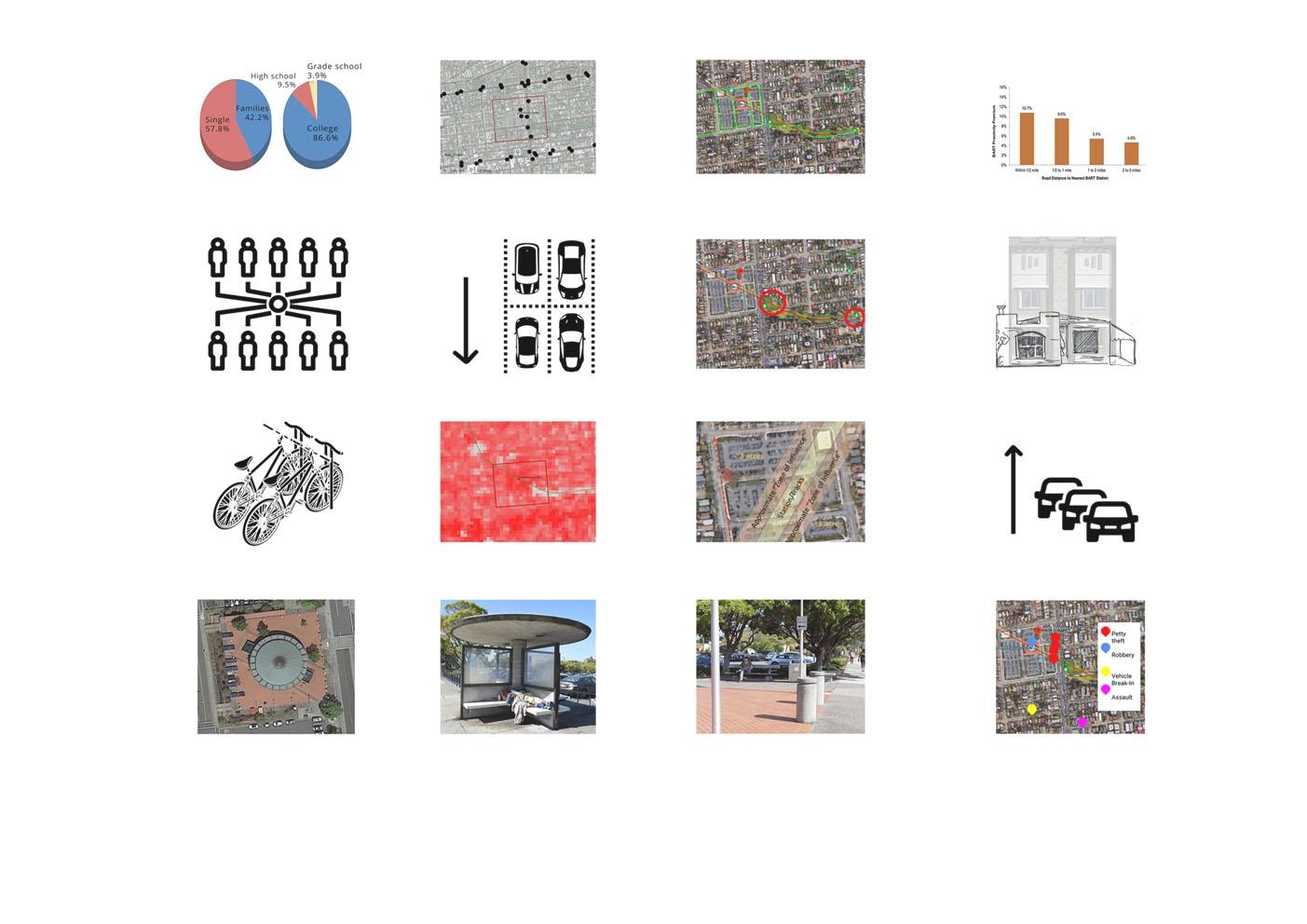
Affluent neighborhood Lack of bus stops Bike highway connection Increase in land value Community engagement Low parking Proximity to park Fear of mid/high rise Existing bike racks Impervious land Land for development Increase in traffic Simple BART design User interface Few amenities Crime
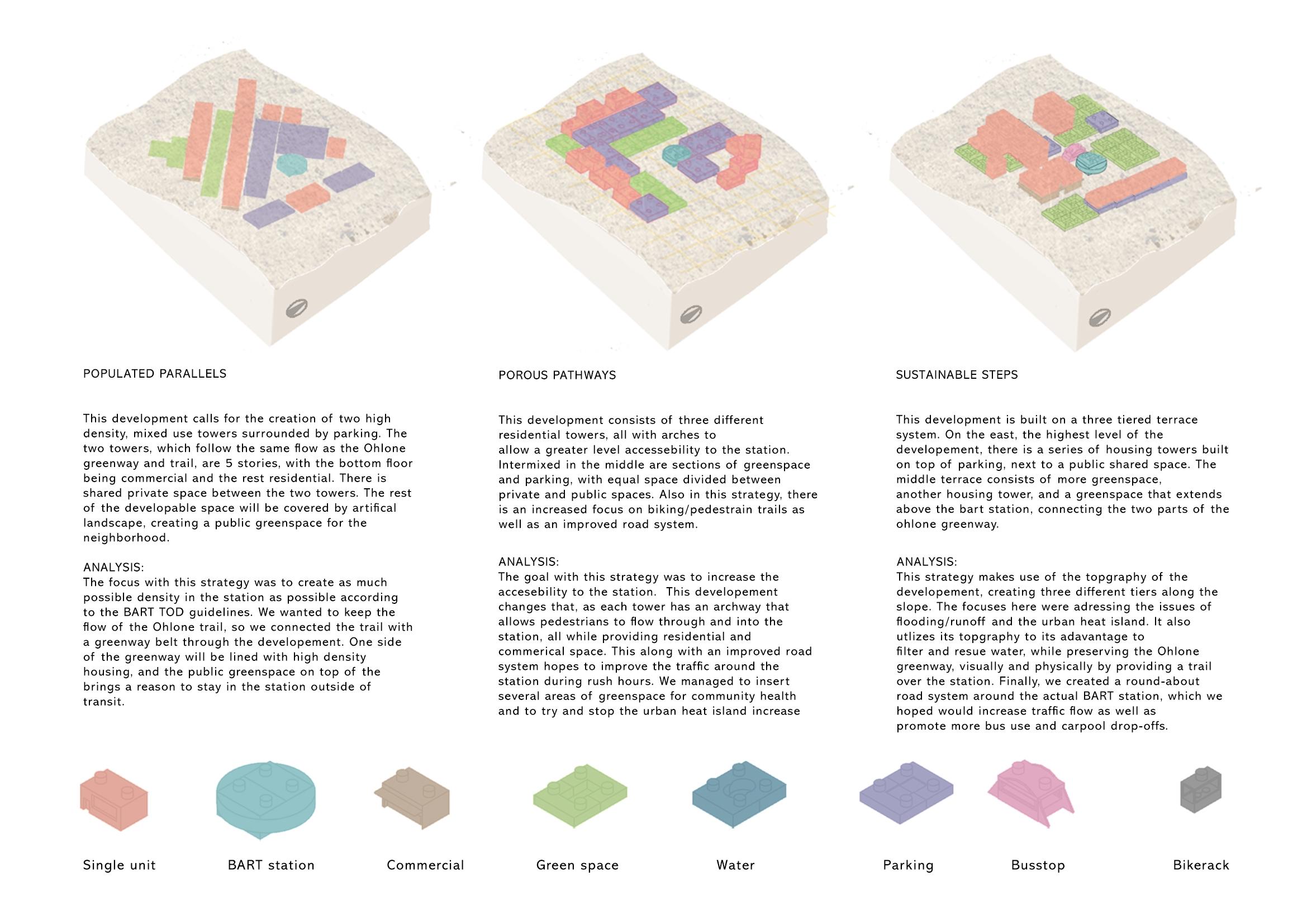
The amphitheater can be used by all for performances as well as for open movie viewing in the night.
The solar roofs provide energy for the individual units. The intermittent courtyard provides spaces for interaction for the residents.
The oak grove has a bioswale beneath it underground and the region helps in modulating the micro-climate of the region.
The open gym designed like a playground has a kinetic footpath surface used to produce energy for the public space.
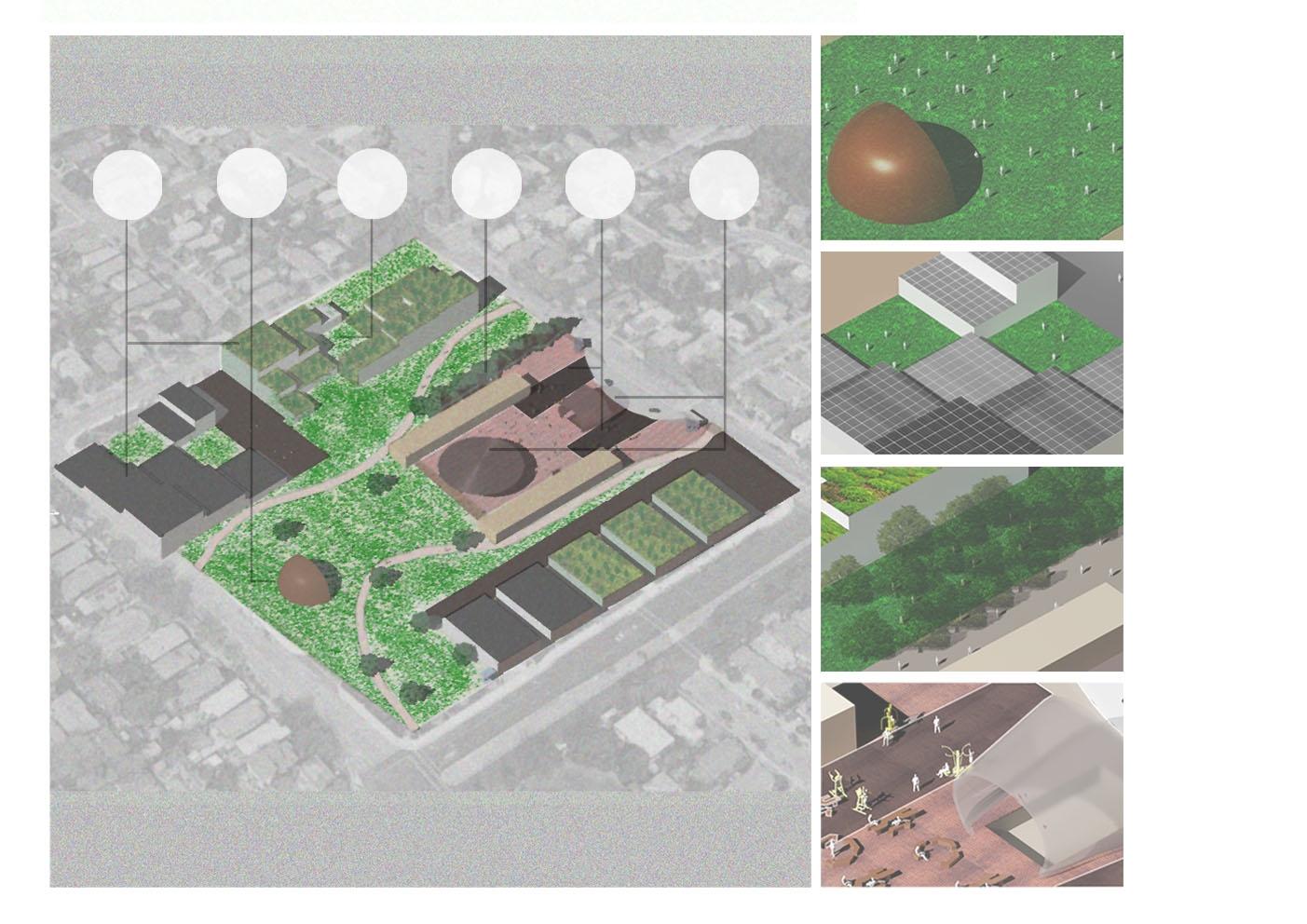 Solar/green roofs Amphitheatre Courtyards Oak grove
Gym designed like a playground
Existing BART roof used as shade provider and providing new roof
Solar/green roofs Amphitheatre Courtyards Oak grove
Gym designed like a playground
Existing BART roof used as shade provider and providing new roof
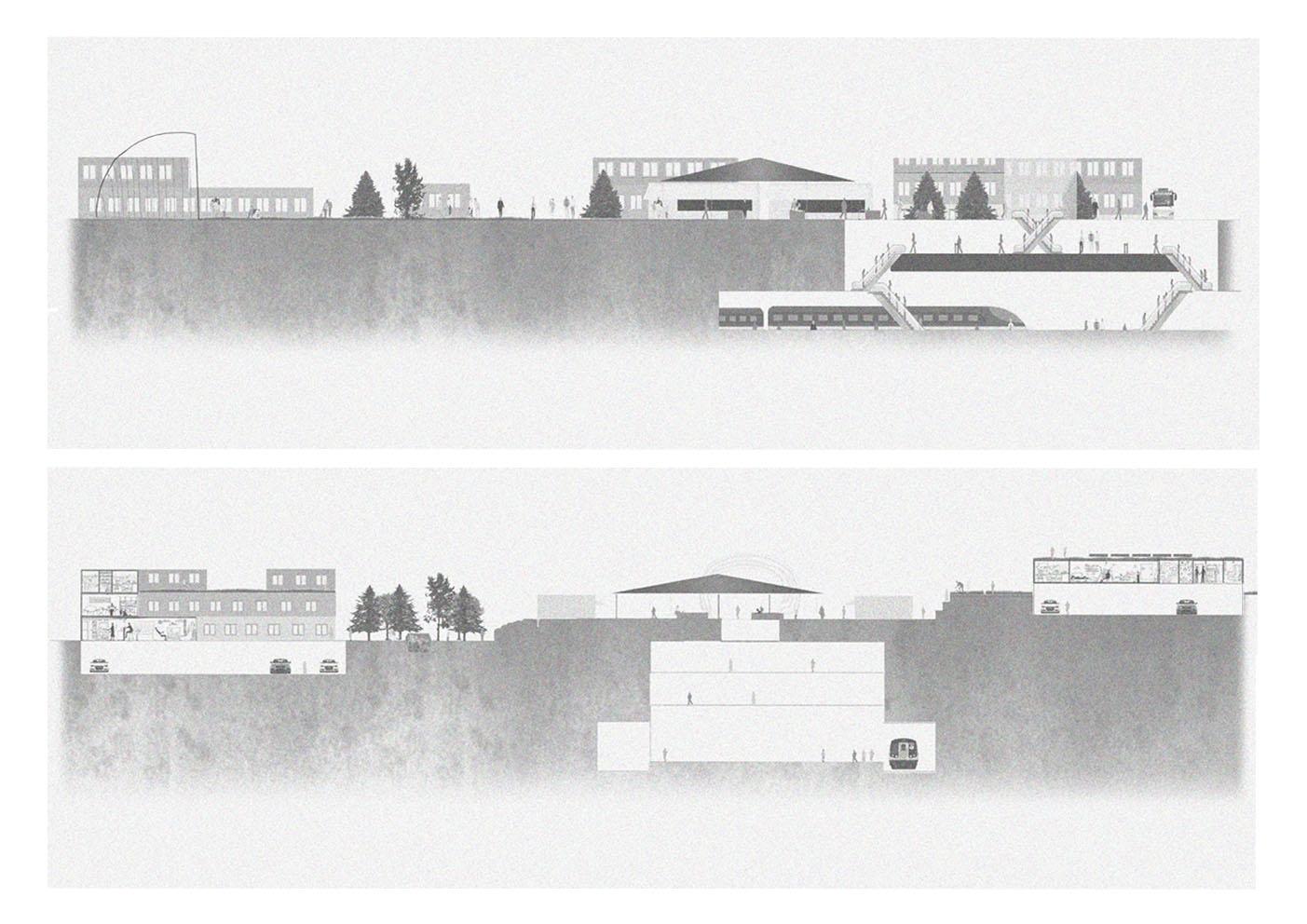 Section displaying the relationship between the public space and the people. The space has multiple components that interact with one another to increase engagement.
Site section displaying the advantageous terrain, and its creation of spatial relationships across multiple levels - vertically, as well as horizontally.
Section displaying the relationship between the public space and the people. The space has multiple components that interact with one another to increase engagement.
Site section displaying the advantageous terrain, and its creation of spatial relationships across multiple levels - vertically, as well as horizontally.
URBAN REALITIES
London, UK
Type: Summer school, Group
Level: International
Role: Concept creation, script writing and film making

Supervisor: Nathan Su (nathan.s.su@gmail.com)
Softwares: Photoshop, Indesign, Aftereffects
Date: May 2017 – June 2017
Institution: AA School of Architecture
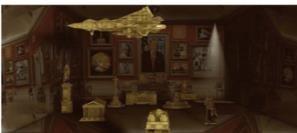
Amidst the changing times, countless notions have been touched, some erased, but very few that survived have gained the status of “the eternal”: Tribalism, Symbol, Technology, Environment, Power, Privacy, Fantasy; we as a society are constantly surrounded by the norms laid out by these complex words. A city is a fabric, woven with numerous words as ideas, and a flock people living their unsuspecting lives based on these overlapping threads. Between these detached words lie relations hidden from sight, some perceivable, some beyond. As “unlikes attract” and “unknowns combine” harmonies construct on basis divine.
Tribalism endures in the modern city, expressed through contemporary symbols and groups not bounded by the borders of race, language or ethnicity. No matter how modern our lives seem, we are still driven by primitive desires to find belonging and comfort amongst others. The tribes of today may be purchased, or found online amongst people we may never meet in person. These tribes are interconnected, manifesting in the overlapping cultures of the modern city. They co-exist, in complementary or fraught combinations, within each individual. We see the empires of today against our skylines and on our billboards. Our economies, societies and cities are shaped as tribes define themselves and compete. Our cities our hyperlinks between tribes and their contrasting symbols of cultural identity.
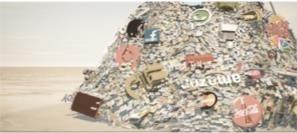
We over-consume the symbols of modern identity. We are producing and consuming symbols with increasing speed as new cultural tribes emerge and disappear. As a society, we are greedy for new ways to participate in these cultural tribes and so we produce and consume new products, services, and systems of meaning. Cities are sites of mass symbolic production and consumption. This has effects on our environment. We might be aware of these effects, but they appear so mundane that we don’t think about them. They are hidden in plain site. Environmental degradation is itself a symbol for the speed with which we produce and consume other symbols.
Manipulating our environment challenges our understanding of nature and technology. In contemporary cities we find the pressures of modern life that are pushing us to innovate. These innovations are in turn blurring the divide what is nature and what is technology. How far will we take these innovations? What will happen when we can no longer use the labels of ‘natural’ or ‘man-made’ to describe the world around us? Cities are sites of intense human activity and it is here that these questions are first being explored.
In the cities of today, we can find the symbols of democratized power. As we multiply and diversify identities and tribes, we are also multiplying the sources of power that provide legitimacy. The marketized production of symbols and the virtualized production of identity, has placed power in the hands of the consumer and the browser. The mind space of city dwellers today is packed with an eclectic collection of power systems and symbols. The power of the state is in particular being challenged by the power of media and the market.
When the cities of today make us feel gloomy, virtual worlds offer vibrant alternative realities. We often escape into these realities alone, but when we are alone, are we really ‘alone’? From watching Netflix in our bedroom to listening to music on the train; these are times of solitude. Aren’t we just in constant communication with an intangible world of alternative realities? Today’s technologies provide a platform for ideas to be shared and each episode that we access through the portal of our screens, is a door to another set of realities. In a world and time where the effects of technology are often cast in a negative light, an alternative narrative is that these lifeless devices are in fact enriching our lives and opening our minds to different schools of thought.
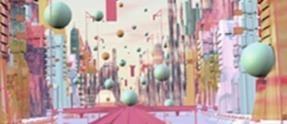
The cities of today are the product of cyclical interplay between fantasy and reality. Our cities evidence the dreams of our ancestors and produce our visions of tomorrow. Fantasy is not just a piece of imagination, but a solid place in reality. Symbols have endured the test of time because of the fantasies that surround them. A telephone was created as a result of a fantasy-“What if we could communicate to someone from far away?”. Every product was once an idea and every idea was once a fantasy. We are constantly building fantasies and bringing them into reality by creating spaces for people to live in. Without fantasy there is no reality and they play out within the constraints of time.
These stanzas are allegories: neither reflections of reality, nor propositions - they are observations, comments of life in the contemporary city. Through these metaphors we humans strive to explore the nature and effects of the real city, in a context that is unreal. In this way, we can focus on realities that might otherwise be overlooked because their context is so familiar. All of this was a result of discussions between different individuals, each stating a simple point which in turn made me question my own ideals. I was exposed to perspectives which were previously ignored, questions I was afraid to ask myself, questions that revealed answers that make me who I am today. These observations make me wonder; What’s our way of life in the city now? What’s the new way of life?
What is real? What are you?

LAKSHMI SAI PRAKASHINI RAJEASWAR The University of Sheffield, 2021 - 2022 MA Urban Design r_prakashini@yahoo.co.in +447741745182 https://www.linkedin.com/in/lakshmi-sai-prakashini-rajeaswar-436109192/