Using Laparoscopy to remove a Gallbladder Your Gallbladder is located close to your liver. This organ's main purpose is to store the extra bile that your liver produces, squeezing it into the small intestine through ducts—the bile aids in the digestion of fats. There can be several reasons for the formation of gallstones in your Gallbladder, such as diet, genetics, body weight, and more.
Types of gallstones: Cholesterol stones: These are the most common type of stones. 80% of the people suffering from gallstones have cholesterol stones. These formations have a greenish-yellow color. They develop when the cholesterol levels in the bile are abnormally high. Pigment stones: These stones are made of bilirubin. They are small and dark and are common in those suffering from blood disorders, cirrhosis of the liver, and the like. Who is at risk of developing gallstones? Hereditary factors: those with a family history are at a very high risk of developing gallstones.
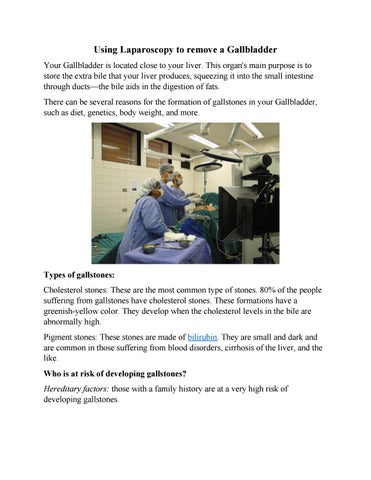
Extra weight: excess weight is also known to be one of the most significant constituents. Obesity increases cholesterol levels within the bile, making it hard for the Gallbladder to empty itself. Estrogens: increased levels of estrogens can reduce motility within the Gallbladder. Those who have undergone hormone replacement therapy or pregnant women are at a higher risk. Age and gender: older people are more susceptible to developing gallstones. Losing weight quickly: rapid loss of weight can lead to increased cholesterol levels in the bile, causing gallstones to develop. Diabetes: people with diabetes tend to have triglycerides in excess. This can lead to gallstones. How are gallstones treated: Cholecystectomy or laparoscopic surgery to remove the Gallbladder is an extremely safe procedure. The surgery involves minimal risks and has become very popular over the years. It begins with the surgeon creating four small openings in the patient’s abdomen. A laparoscope with a camera and a lighted scope is inserted inside the incision. Then with the help of a video monitoring screen and surgical instruments inserted precisely in the other three incisions, the expert removes the Gallbladder. The whole process is performed under general anesthesia. The time of recovery is pretty quick. However, the patient has to stay in the hospital for a few days. There may be some discomfort for about 10 days, and then the patient can go back to their normal activities.
Best Gastroenterology in Chennai | Best Gastroenterology in Hosur | Best Gastroenterology in Karaikudi | Best Gastroenterology in Salem | Best Gastroenterology in Trichy Tennur | Best Gastroenterology in Trichy Cantonment