
■ The last faculty meeting of fall semester schedule discussed plans to boost student success and employment for post graduation.
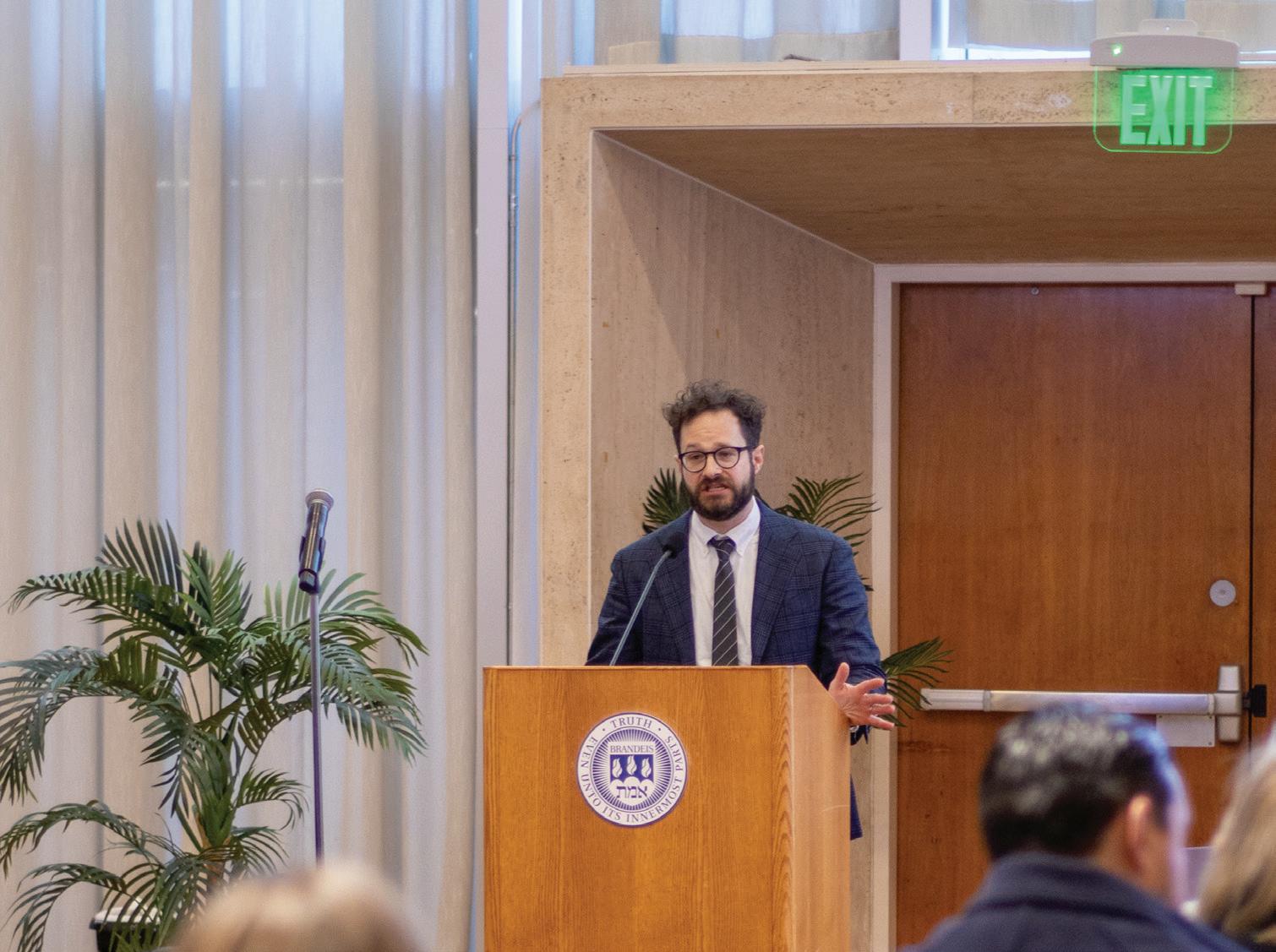
Faculty convened in the Rapaporte Treasure Hall on Friday, Dec. 5, hearing a series of presentations from the Director of Institutional Research, Haley Rosenfeld; the Dean of Undergraduate Studies, Prof. Jeffrey Shoulson (ENG) and the founding Dean of the Center for Careers and Applied Liberal Arts, Lewis Brooks ’80. These presentations covered Brandeis’ U.S. News and World Report ranking, elaborated on the University’s coming microcredential program and expanded on Brandeis’ plan to reimagine its core curriculum.
Before the presentations began, the meeting had a moment of silence for Prof. Emeritus Robert Zeitlin (ANTH), followed by remarks delivered by Prof. Javier Ucrid (ANTH). In addition, the faculty voted to close debate on all three proposed handbook amendments from the previous faculty meeting.
Rosenfeld addressed the University’s consistently dropping ranking in the U.S. News and World Report. She shared that since 2018, Brandeis has fallen by a “startling” 35 points, the highest drop taking place in 2024 when the institution lost its spot among the ranking’s top 50 universities. In U.S. News’ 2024 report, Brandeis fell from number 44 to 60, and in the 2025 rankings, fell another three spots. Rosenfeld said that for institutions that experienced a drop in rankings, the average spot decline was 22 points, whereas the average spot increase was 18.
“It’s really important to understand that our current ranking has far more to do with a changing methodology than a change in our business practice or academic quality,” Rosenfeld said. To support the claim that the rankings were the product of the most significant methodological change in their history,

she cited a U.S. News press release. In addition, the release clarifies that the rankings now prioritize social mobility and outcomes for graduating students.
Rosenfeld claimed that the U.S. News “[changed] the recipe, but not the packaging.” She explained that the first rankings report from 1983 were dependent on a fewer number of data points: admission rates and reputation, the latter determined by surveys conducted among professionals in higher education. On the other hand, such surveys still make up 20% of the rankings, among numerous other changes made to the methodology’s original iteration.
However, per Rosenfeld’s metaphor, “the ranking continues to be packaged as if there is no change.”
The methodology has added more weight to the factors that contribute to student outcomes and removed factors concerning “university metrics,” such as class size and admission selectivity, from the calculation.
According to Rosenfeld, metrics for social mobility entered the methodology in 2019 and quickly became 50% of the total calculation by 2024. Regarding the new methodology’s stress on outcomes for graduating students, Rosenfeld shared that the calculations between an institution’s projected graduation rate and its actual graduation rate differ by the graduates’ performance. Rosenfeld clarified that graduation rates are calculated by the proportion of students entering among a fall cohort who graduate Brandeis in six years — transfers in and midyear students do not contribute to this calculation.
In studying the University’s graduation rates, Institutional Advancement found that “very few” students are still enrolled after six years. The issue is not that students are taking longer to graduate than expected, it is that they do not stay at Brandeis, pointing to a retention issue. “We can’t graduate students who aren’t here,” Rosenfeld said. That being said, despite looking for “patterns of overrepresentation across a wide range of variables” among students who leave the University, there is not a clear pattern or common data. To Rosenfeld, this suggests that students leave for qualitative reasons, such as a lack of sense of belonging, concerns over the University’s ranking or the United States’ political climate, she suggested. When students transfer out of Brandeis due to a perceived lack of the institution’s prestige it hurts its
Emmy Zhou '29 explores the roots of the Brandeis University Press.
By EMMY ZHOU

■ Students rush to ensure the safety of seven Torah scrolls after smoke fills the space.
By ASHHWIKA SONI JUSTICE NEWS EDITORIAL ASSISTANT
An electrical fire in the Berlin Chapel on the afternoon of Friday, Dec. 5 sent smoke through the building and prompted a swift response from students who rushed to rescue seven Torah scrolls from the historic prayer space. The damage from the incident was limited to the basement level women's bathroom but forced the temporary closure of the chapel and relocation of Friday evening and Saturday morning Shabbat services.
The smoke was discovered by Sammy Cohen '27 when he arrived at the chapel to pray as he does during his daily prayer. “I opened the door, not paying much attention to what I was looking at,” he recalled in a Dec. 8 interview with The Justice, “I smelled something and I looked up, there’s smoke coming out … I thought it was a fire. I ran in quickly to see if there was anything.” Finding no visible flames but the smell of smoke lingering in the hall, Cohen immediately called Brandeis Police who arrived within minutes. The fire department soon followed, locating a small electrical fire in the women’s bathroom in the basement.
Cohen’s thoughts quickly turned to the chapel’s contents, mainly the seven Torahs that the religious building houses. He messaged the community, calling for help to evacuate the sacred items. “I just wanted to be safe with the Torahs and not to take them out just in case it could have been worse,” Cohen said. “The police said ‘oh you need to go in quick and come out directly,’ which is what we did.” Within minutes, a group of students assembled outside the smoke-filled building. Akiva Greenberg '28, who had just finished a midterm saw the message and rushed over from Gerstenzang Hall. Yishai Ellenbogen '27 and Noa Yolkut '27 also responded to the scene. “It was very,
very smoky,” said Ellenbogen in a Dec. 8 interview with The Justice, “The sun was shining through the big windows of the chapel, and it just really made it very clear how smoky it was in there.”
With the Brandeis Police’s approval, the students moved quickly. The five main Torahs were located upstairs in the chapel’s sanctuary, while two smaller ones were kept elsewhere in the building. Each scroll is “quite heavy,” noted Cohen and thus they required careful handling. The students worked in pairs or alone, each carrying at least one Torah. Each scroll was removed within minutes. “I was in there for 45 seconds total, probably even my eyes were watering, my chest was starting to hurt,” Ellenbogen said. The Brandeis Police officers who supervised the rescue urged speed: “You guys have to get in and get out pretty quickly, just for obvious reasons that there’s smoke filling up the entire building.” Greenberg had to cover his face with his shirt to breathe during the rescue. Despite the challenging conditions, all the Torahs were safely removed and transported to the Hillel Lounge.
Many individuals found it surprising that there were no fire alarms sounding off. Cohen said, “I don’t know if it’s just because it’s an electrical fire and it’s a different type of smoke. Or if there were [alarms] and they were malfunctioning.” This has raised concerns about the chapel’s safety systems. The fire created immediate logistical challenges for Brandeis’ Jewish community. The Berlin Chapel serves three different prayer groups throughout the week: the Brandeis Orthodox Minyan, which holds services three times daily during weekdays; Masorti, the conservative minyan, which uses the space for Shabbat services, and other Jewish communities on campus. The timing was particularly critical because Masorti’s Friday night Shabbat service was scheduled to begin at 4:45pm, just hours after the fire. Yolkut, president of Masorti, found out about the fire while preparing food. She immediately coordinated with fellow student leaders and Dr. Samantha Pickette, Hillel’s Assistant Director to relocate services to Lurias Conference Room in the back of Hassenfeld Conference Center. “We eventually settled on having everything in Lurias for the weekend,” Yolkut explained. On Saturday morning, a service leader
■ The new program contains five pilot credentials and is designed to improve student career readiness by displaying relevant skills to potential employers.
By ZOE ZACHARY JUSTICE DEPUTY EDITOR
On Dec. 3, Interim Director for The Center for Careers and Applied Liberal Arts Lewis Brooks ’80 sent an email to the Brandeis community announcing the five pilot microcredentials that will be implemented in the spring semester. A link was also provided for FAQs on the new program. This change comes as a part of “The Brandeis Plan to Reinvent the Liberal Arts” as spearheaded by University President Arthur Levine ’70. The plan largely aims to bolster career readiness, with microcredentials being an additional way for Brandeis students to display relevant skills they acquire during their time in university.
Luke Benanav '29 gives a detailed recounting of Brandeis Undergraduate Theater Collective's "Ride The Cyclone."
By LUKE BENANAV
CHAVA THIELL
Many other universities have already implemented a microcredential program, including Tufts University, the State University of New York system and Purdue University. These programs are more advanced than the pilot program Brandeis is putting forward. SUNY offers upwards of 400 microcredentials in a variety of subjects, and Tufts offers digital badges, certificates of completion and professional certifications as three distinct credentials for further specification. The FAQs page points out that these five microcredentials are pilots, and tells students to “expect more in the 2026-27 academic year.” Students are urged to complete the microcredential inquiry form with any additional questions. According to the provided information page, microcredentials will be earned by taking two classes from a pool of choices that correlate to a specific, workplace-oriented skill. Anybody who has taken the requisite courses for a certain microcredential is able to sign up for them, and upon completion, microcredentials will appear on student transcripts. Students will also receive a “digital badge” that can be shared on platforms like LinkedIn when they complete a microcredential. The first announced microcredential is called
The problem with finals
By MARK SILVA
CONTENT WARNING: Mention of suicide.
Nov. 7—There was a medical emergency for an individual experiencing an allergic reaction. The patient refused medical treatment.
Nov. 7—There was a medical emergency for a party experiencing a diabetic reaction. The patient refused medical treatment.
Nov. 7—There was a duplicate call made about a party experiencing a diabetic reaction.
Nov. 8—There was a medical emergency for a party reporting constant vomiting. The patient refused medical treatment.
Nov. 8—There was a medical emergency for a party reporting abdominal pain. The patient was transported to a local hospital.
Nov. 8—There was a medical emergency for a party reporting an injured finger. The patient refused medical treatment.
Nov. 9—There was a medical emergency for a party who fainted. The patient was transported to a local hospital.
Nov. 9—There was a walk-in medical emergency for a party who fell and hurt their arm. The patient refused medical treatment.
Nov. 10—There was a medical emergency for a party feeling faint. The patient was transported to a local hospital.
Nov. 10—There was a medical emergency for a party who fainted. The patient refused medical treatment.
Nov. 10—There was a medical emergency for a party who passed out. The patient refused medical treatment.
Nov. 11—There was a medical emergency for a party who passed out. The situation was cleared.
Nov. 12—There was a medical emergency for a party who fainted. The patient refused medical treatment.
Nov. 12—There was a medical emergency for a party who fainted. The patient was transported to a local hospital.
Nov. 13—There was a medical emergency for a party who fainted. The patient was transported to a local hospital.
Nov. 17—There was a medical emergency for a party who fell down the stairs and was reporting a bloody nose. The patient refused medical treatment.
Nov. 17—There was a medical emergency for a party who passed out. The patient refused medical treatment.
Nov. 17—There was a medical emergency for a party with a dislocated finger. The patient refused medical treatment.
Nov. 17—There was a medical emergency for an intoxicated party who was vomiting. The patient was transported to a local hospital.
Nov. 18—There was a medical emergency for a party who fainted. The patient refused medical treatment.
Nov. 18—There was a medical emergency for a party having a seizure. The patient was transported to a local hospital.
Nov. 18—There was a medical emergency for a party who fell off their bike. The patient refused medical treatment.

REUBEN GARTENBACH/The Justice.
■ A news section article was missing a dividing line above the contact information session (Nov. 18, Page 2).
■ A news article mispelled “civicly.” It should should have read “civically.” (Nov. 18, Page 2)
■ A news section article did not mention an editor’s note for Bryan Wolfe who is a member of Top Score and did not contribute to the article (Nov. 18, Page 3).
■ A sports section article had an extra space between paragraphs (Nov. 18, Page 10).
■ A sports section article mispunctuated “vs” when it should have read “vs.” (Nov. 18, Page 12)
■ A sports section article mislabeled “November” when it should have read “Nov.” and “Tufts” when it should have read “Tufts University” respectively (Nov. 18, Page 12).
The Justice welcomes submissions for errors that warrant correction or clarification. Send an email to editor@thejustice.org
The Justice is the independent student newspaper of Brandeis University. The Justice is published every Tuesday of the academic year with the exception of examination and vacation periods.
Nov. 19—There was a medical emergency for a party who fainted. The patient was transported to a local hospital.
Nov. 21—There was a medical emergency for a party with an injured knee. The patient refused medical treatment.
Nov. 26—There was a medical emergency for a party feeling lightheaded. The patient refused medical treatment.
Nov. 30—There was report that a party was making suicidal statements. The patient was transported to a local hospital.
Dec. 1—There was a medical emergency for a party who fainted. The patient refused medical treatment.
Dec. 1—There was a medical emergency for a party who took too much of their prescribed medication. The patient refused medical treatment.
Dec. 4—There was a report of a party who had taken an edible and reported their heart was racing. The patient was transported to a local hospital.
Dec. 4—A party reported developing a rash on their body. The patient refused medical treatment.
Dec. 4—There was a medical emergency for a party with a twisted ankle. The patient refused medical treatment.
Dec. 4—There was a medical emergency for a party with a rolled ankle. The patient refused medical treatment.
Nov. 8—There was a report of an unattended vehicle with an open door. The owner was contacted and the situation was cleared.
Nov. 9—There was a report of a suspicious vehicle in the area. The situation was cleared.
Nov. 12—There was a motor vehicle that had crashed into a fence. The situation was cleared.
Nov. 12—There was a car door opened into the door of another vehicle. The situation was cleared.
Nov. 14—There was a call which required assistance for a motor vehicle stop. The situation was cleared.
Nov. 17—There was a report of a dark colored SUV following a party. The party was instructed to go into a building and wait for responding units. No police action was taken.
Nov. 17—There was a call reporting a past hit and run. The situation was cleared.
Nov. 22—There was a report of a motor vehicle accident in a parking lot with no injuries. There will be an investigation to follow.
Nov. 23—There was a report of a vehicle with slashed tires and a broken windshield. There will be an investigation to follow.
Nov. 24—Waltham Police Department requested assistance with a motor vehicle incident.
Nov. 25—There was a report that a front end loader dropped cement on another vehicle. There will be an investigation to follow.
Dec. 2—There was a report of a suspicious motor vehicle with a party sleeping inside. The situation was cleared.
MISCELLANEOUS
Nov. 8—There was a report of an unauthorized rehearsal in a building. Eight parties were found and advised to leave. There will be an investigation to follow.
Nov. 9—There was a complaint of loud noise. The Department of Community Living was notified to respond.
Nov. 10—There was a report of two unknown males causing a disturbance during an event. The situation was cleared.
Nov. 10—There was a complaint of a generator keeping a party awake. Maintenance was notified to respond.
Nov. 11—There was a report of graffiti found in a bathroom. There will be an investigation to follow.
Nov. 12—There was a report of a cyber crime. There will be an investigation to follow.
Nov. 14—There was a report of a large group arguing and concerns that the altercation could become physical. The report was unfounded.
Nov. 16—There was a complaint of loud noise. The Department of Community Living was notified to respond.
Nov. 18—There was a report that a party’s significant other had stolen an article of clothing. There will be an investigation to follow.
Nov. 18—There was a report of an individual receiving suspicious emails. There will be an investigation to follow.
Nov. 21—There was a complaint of loud noise coming from an apartment. The Department of Community Living was notified to respond.
Nov. 21—There was a noise complaint of loud noise coming from an apartment. The Department of Community Living was notified to respond.
Nov. 24—There was a report of vandalism to a mirror. There will be an investigation to follow.
Dec. 2—There was a report of a suspicious party dressed in all black walking through the kitchen taking photos. The party was escorted off campus and the situation was cleared.
Dec. 3—There was a report of a past case of breaking and entering. There will be an investigation to follow.
Dec. 3—There was a report of a suspicious package. Services were rendered.
Dec. 3—There was a report of larceny. There will be an investigation to follow.
Dec. 4—A party reported feeling unsafe with another individual. There will be an investigation to follow.
Compiled by Chava Thiell
■ The Jed foundation will complete a comprehensive review of the University’s mental health support systems.
By CHAVA THIELL JUSTICE NEWS EDITORIAL ASSISTANT
Brandeis has announced a new partnership with The Jed Foundation, a mental health advocacy organization assessing the needs of and providing support for hundreds of schools across the country. The partnership aims to increase support for student mental health initiatives and address the needs of the student body amidst a growing national mental health crisis among college students and young adults. In 2023, The Jed Foundation reported servicing 5.6 million students across 444 colleges and universities. According to a campus impact report on their website, the foundation aims “to help colleges and universities ensure that they have comprehensive systems, programs, policies, and support in place to prioritize student mental health, reduce risks for suicide, and create systemic change in their campus community.”
Dr. Addie Wyman is the director of the Brandeis Counseling Center and a Licensed Independent Clinical Social Worker. In a Dec. 4 interview with The Justice, Wyman discussed trends the BCC is observing, as well as what mental health professionals nationwide are doing to address the issues of college students. Wyman shared that, at Brandeis, “anxiety is
the number one reason students come to the counseling center.” She noted that this issue is not unique to Brandeis, but is shared nationally.
However, she did share statistics indicating greater utilization of mental health services among Brandeis students. Nationally, approximately one in 10 students seek mental health support on their campuses, as opposed to one in four at Brandeis. Wyman noted that some of this may be attributed to the BCC’s high number of staff and availability. Additionally, according to data from the New England College Health Association, Brandeis students reported higher levels of depression, as well as lower senses of belonging. “Something’s going on at Brandeis that’s unique,” said Wyman, alluding to various factors as to why Brandeis students may be struggling with these issues on a larger scale.
“I’ve been asking people for money,” said Wyman, mentioning donations the BCC has received from alumni to support mental health initiatives at the University. She believes this is indicative of the community’s support for mental health initiatives and that “the buy-in is there.” For the partnership between the BCC and The Jed Foundation, Wyman specifically mentioned a generous donation from philanthropist Sabrina Gracias, founder of the Ortus Foundation, which seeks to create systems of mental health support for teens and young adults. Wyman said that in the future “we might be looking to the community for more asks.”
When asked about the University’s support of mental health initiatives, Wyman said that the school was receptive and looking to make
mental health a priority. She specifically mentioned University President Arthur Levine ’70, who she described as a “major support [who] genuinely cares about students and student wellbeing.”
At the end of its assessment phase, Jed will share recommendations with the University as to what they can do to support student needs. The collected data will be presented by staff from The Jed Foundation and reviewed by a taskforce that Wyman helped establish, consisting primarily of BCC staff as well as a faculty representative. Wyman also stressed the importance of “having students at the table, making decisions, weighing a student perspective” as part of this new initiative. She mentioned the importance of listening to students of historically marginalized identities when gathering input. While the BCC has yet to make any changes as a result of the partnership, Wyman pointed to some of the center’s recent changes after gathering student feedback. She cited the counseling center’s move to an initial consult model where students can schedule meetings with counselors who then assess the student’s primary issues. In the past, Wyman said that this process was much lengthier and more in-depth. The BCC has also moved to online scheduling for appointments, another change suggested in students’ feedback.
The Healthy Minds Survey, which was sent to students in an email on Nov. 10, is a part of this partnership, to assess Brandeis’ needs.
The BCC is encouraging student engagement with this survey, as Wyman says it is critical in helping the center make needed changes. “We
really do use student feedback to make changes and drive programs,” she said. The BCC has also invested in prizes for students who complete the survey to incentivize their participation. The prizes include MacBooks, AirPods, priority room selection appointments and gift cards.
Wyman also discussed the link between student mental health support and enrollment, and how this partnership has intersected with some of the University’s other efforts to increase enrollment, such as President Levine’s plan to reinvent the liberal arts. Wyman shared that she has discussed the partnership with mental health professionals at other schools and noted a positive correlation between schools that use The Jed Foundation as a resource and those with higher enrollment numbers. In other words, offering strong mental health services is a positive draw for prospective students. When mental health support is strong, “that’s when students excel academically,” Wyman said. Ultimately, Wyman believes that this partnership will work to serve the Brandeis community in ways that best address its specific needs. She is excited to hear what students have to say and what recommendations they will be making, and feels that “times are changing, mental health needs are shifting, so we need to be evolving too.” This new partnership, Wyman said, will hopefully push the University to create a better space of belonging for students — not only addressing mental health needs, but fostering a greater sense of community and an inclusive campus for all.
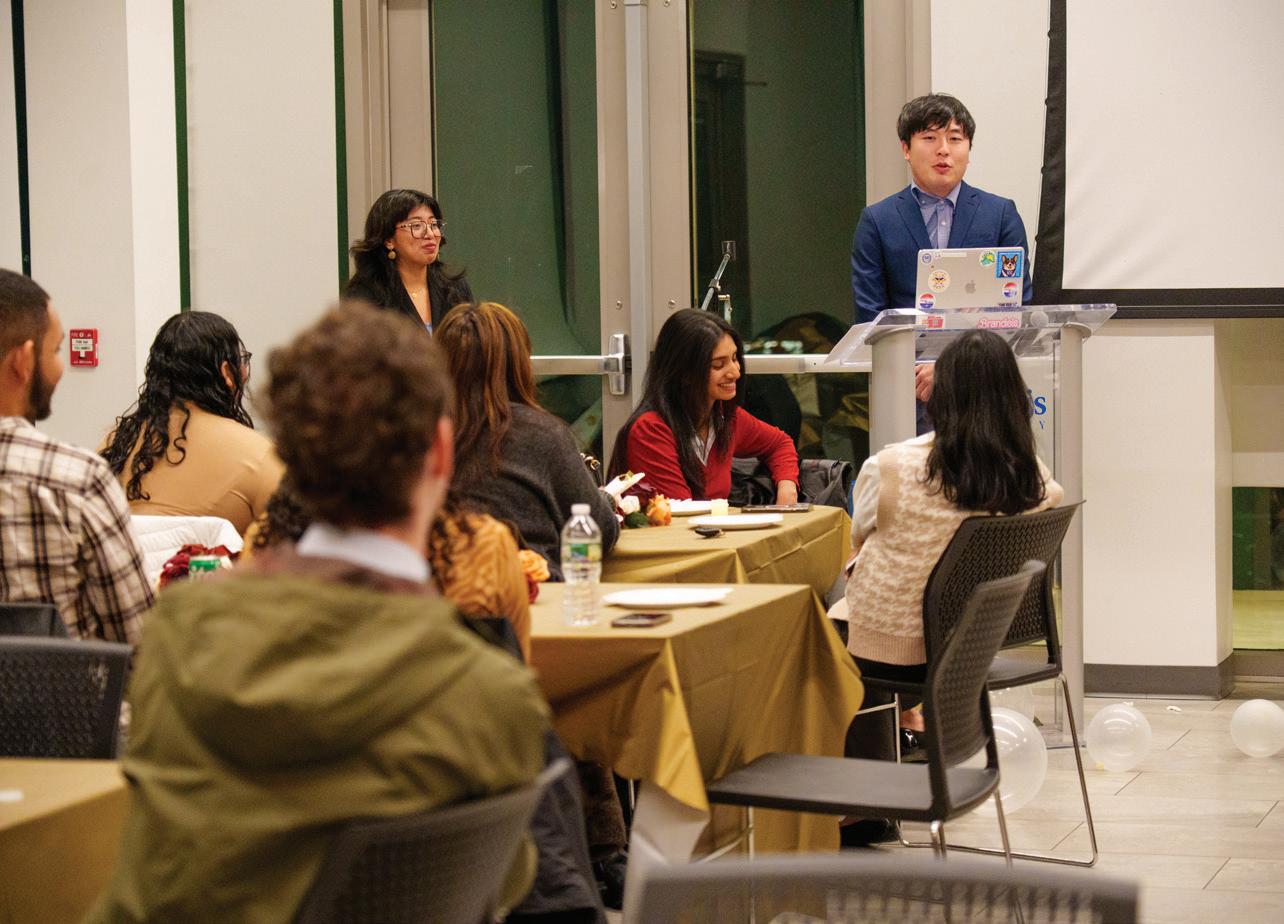
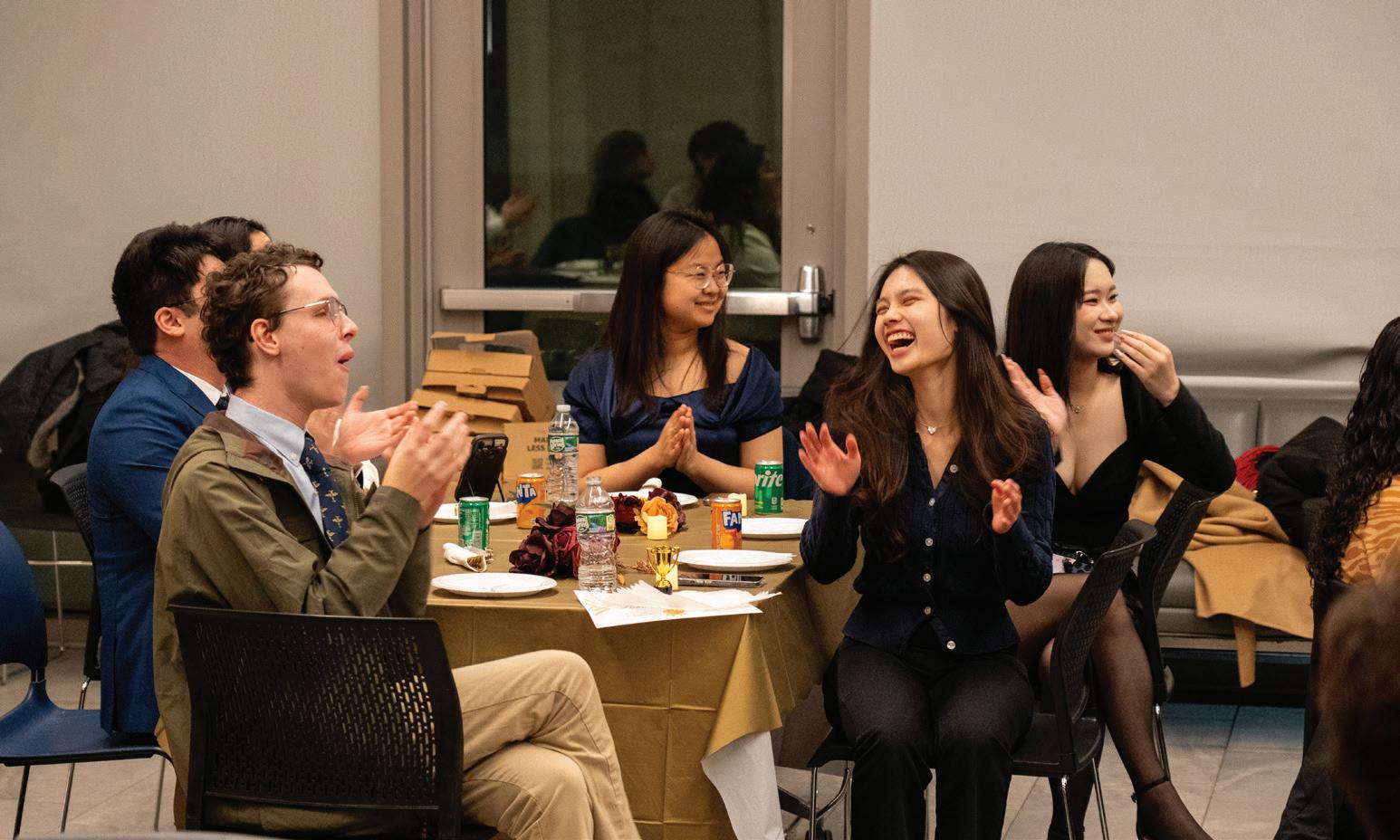
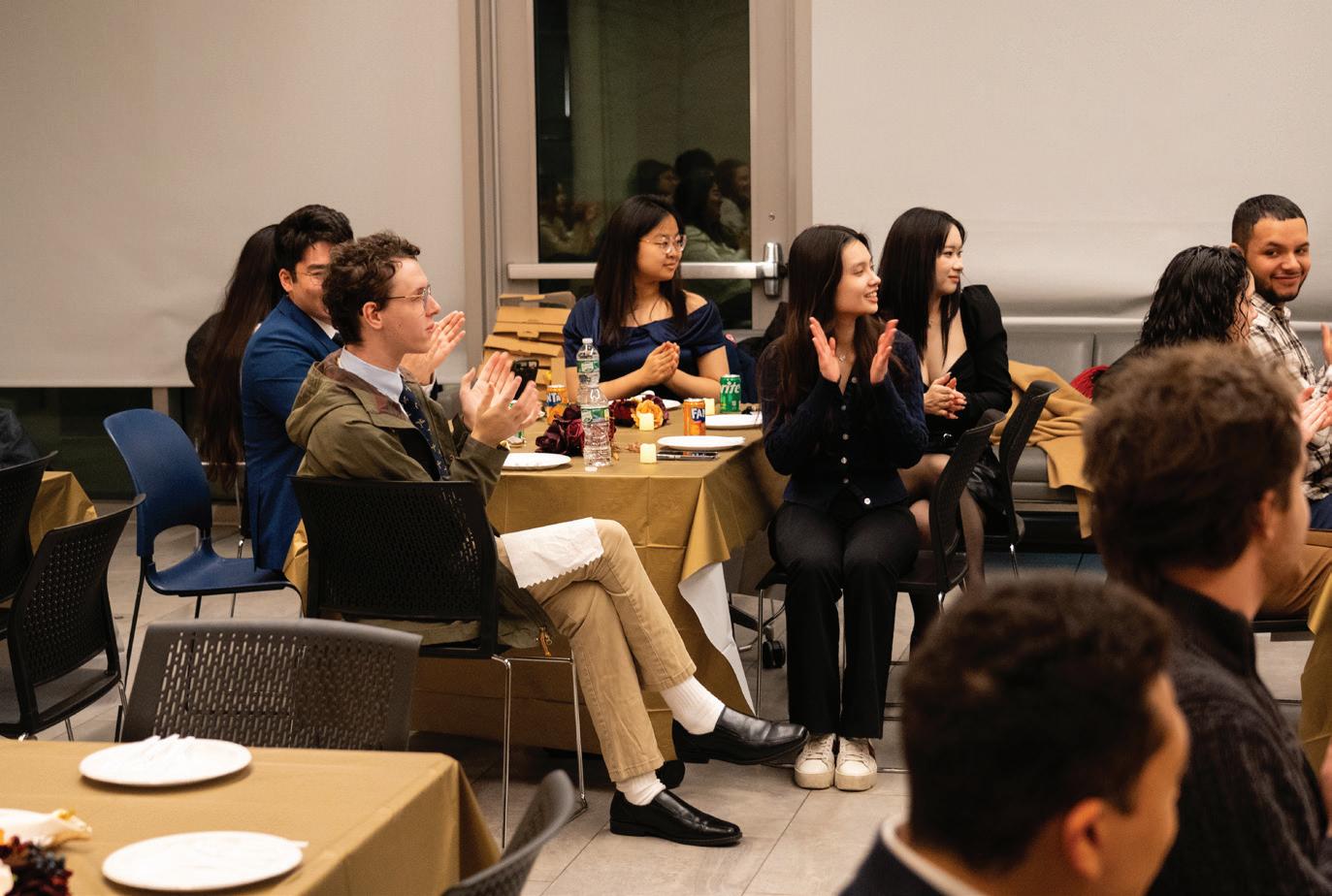
On Dec. 7, the Student Union hosted their annual Senate Gala for members of student government. The event was held in Skyline Commons and the venue was decorated with balloons and fake flowers. This event commemorates students who have worked throughout this semester and beyond in their respective student government roles. Members were praised through speeches, an award ceremony and food catering.
Student Union President, Ria Escamilla-Gil ’27, began with a speech thanking the Senate, Allocations Board, the Board of Trustees and the Student Union Treasury for their hard work. The Vice President, Daniel Shin ’27, spoke about upcoming events such as a self-care session on Dec. 15 so students can destress during finals week.
President Escamilla-Gil also discussed how the Student Union Treasury has done remarkably well considering that over half of its members are new to Brandeis student government. She specifically pointed to how quickly the deputy treasurers familiarized themselves with their jobs and were able to successfully host office hours over the last few weeks.
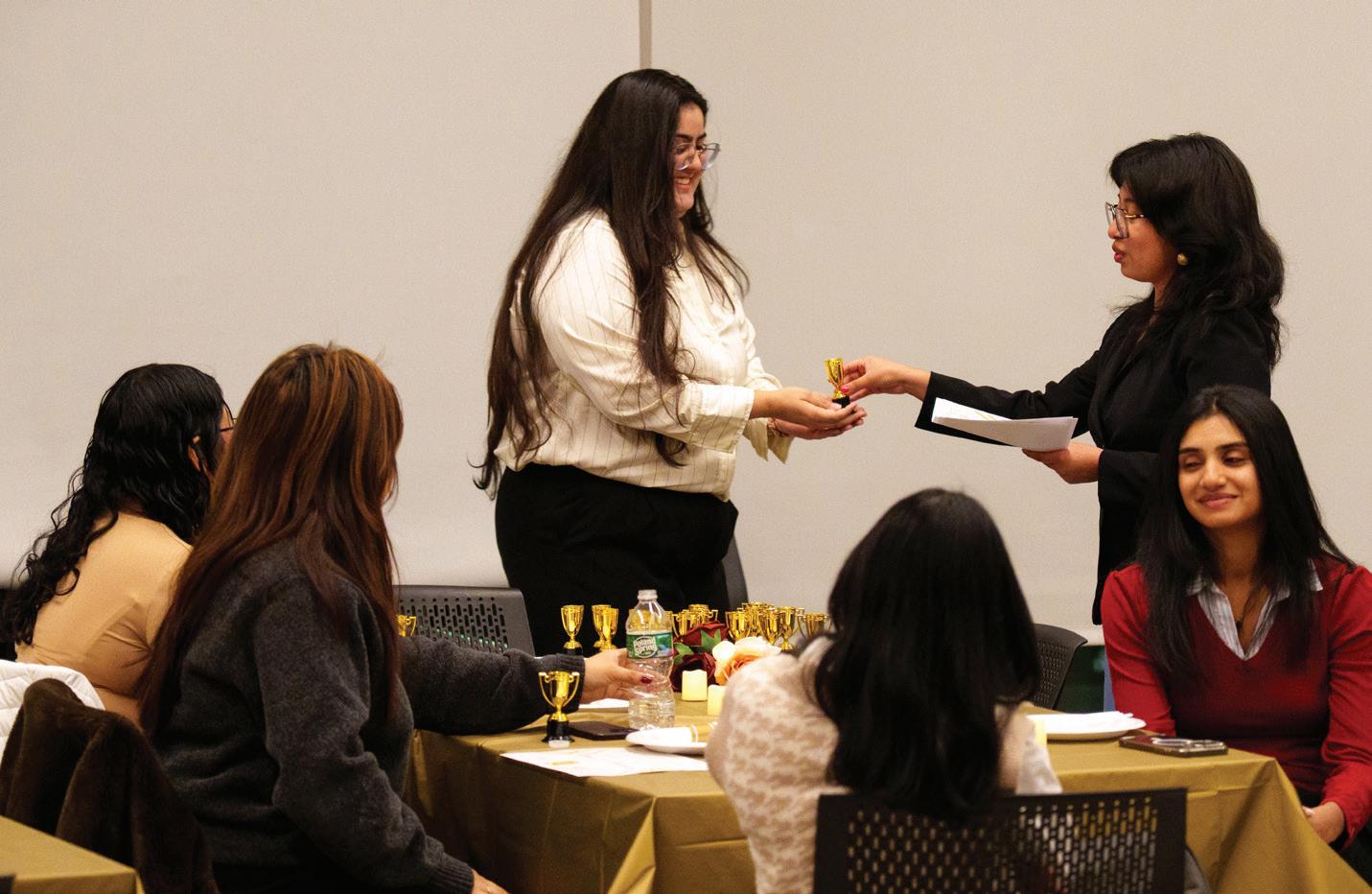
The event transitioned to granting the Student Union’s Awards. Escamilla-Gil ’27 recieved “Best Dressed.” Luke Farberman ’27, Senator at Large, received the custom “Best Advocate, I Promise This Is My Last Point” award and the “Vice President’s Choice” award. Anna Weiss ’26, Allocations Board Chair, got the “Most Inquisitive” award. Anna Zhu, Senator for the Class of 2029, received the “Underdog Award.” Daniel Shin received the “Devil’s Advocate” and “Most Organized” awards. Aamna Tirmazi ’27, Student Union Deputy Treasurer, received the “Most Accessible” award. Ashhwika Soni, Class of 2029 Senator, received the “First Year” award, marking her as the rookie of the year. Emily Cristales Guevara ’28, Multicultural Senator, received the “Most Optimistic” award. Daniel Liang ’28, A-board member, got an award for “School Spirit.” Monica Lopez Hernandez ’28, Secretary, received the “Social Butterfly” and “President’s Choice” awards. Marley Wilson ’26, A-board chair, received the “Early Bird” award. After the ceremony, everyone was invited to enjoy food catered from Brelundi.
The evening concluded with attendees playing the popular imposter game Mafia.

retrieved one of the Torahs from the Hillel Lounge and brought it to Lurias for use during services. Dr. Pickette quickly communicated the changes to the community via WhatsApp informing the students that the chapel would be closed while the smoke dissipated.
Rabbi Seth Winberg, Executive Director of Hillel at Brandeis, praised the student response in a Dec. 8 email exchange with The Justice. “What has most impressed me is the student response their quick action to protect our Torah scroll, their resilience in adapting plans, and their care for one another,” he said. Winberg confirmed that no ritual items were damaged and thanked the Waltham Fire Department, The Department of Public Safety, University Facilities and Vice President of Student Affairs Andrea Dine for their immediate response. The University is working to complete an assessment and determine a reopening timeline. The Berlin Chapel, which has served Brandeis’ Jewish community for approximately 60 years, holds deep significance for the students. “The Berlin Chapel is beloved by our community,” Winberg said. “Students pray there daily, on Shabbat, and on Jewish holy days. We’ve
gathered there to commemorate tragedies that have befallen the Jewish people. Couples have married there.”
For students, the incident highlighted both the fragility and resilience of their community. Cohen expressed concern about the chapel’s future, noting that it had previously flooded during winter storms in his first year. “I hope it gets fixed, if it needs to be fixed, and I hope it could be used again in the near future,” he stated. Yolkut emphasized that because no one was hurt and the damage was minimal, the community felt “more of a sigh of relief.” As the
semester's final week approaches, students hope to return to the Berlin Chapel for one last Shabbat service before winter break. “Everyone was kind of shocked by the whole thing,” Yolkut said. Despite the challenges and uncertainties, the Jewish community at Brandeis demonstrated remarkable adaptability and commitment to their religious practices. Within hours of discovering the fire, students had safely evacuated sacred items, Hillel staff had coordinated alternative worship spaces and community members had adjusted their plans to ensure that Shabbat services could continue un-
Applied Statistical Analysis, which “reflects students’ ability to analyze and interpret data using statistical reasoning and applied methods.” The microcredential requires one basic statistics course that can be taken from a range of departments, with the list of acceptable courses including those from the biology, math, politics, psychology, economics and sociology departments. The other required course for the microcredential can be chosen from a selection of courses pertaining to data manipulation and analysis, and includes as well as those focusing on survey design, data analysis, research methods and more. The second announced microcredential is Foundation of Data Analytics, which “certifies that students have foundational quantitative and programming skills for collecting, analyzing, and interpreting data.” The class list for the first required course for this microcredential is somewhat similar to that of Applied Statistical Analysis, containing
a slightly more restricted pool of statistics courses. The second required course is focused more clearly on data analysis, with most available options coming from the computer science or business departments.
The third announced microcredential is PersonCentered Research and Analysis, which “demonstrates students’ ability to design and conduct qualitative research focused on understanding living persons in their social contexts.” The course list options for this microcredential is shorter than the first two, requiring two classes from within the departments of anthropology, journalism and one from sociology. The two courses must be taken from different departments, and online Brandeis Human Subjects Research Training is required.
The fourth microcredential, Policy Analysis and Implementation, will focus on “the skills needed to evaluate, design, and assess policies using evidence, analytical frameworks, and social values.” With the
broadest range of relevant classes, this microcredential requires three courses rather than two. These three courses, which must be from three separate departments, can fall under the following subjects: economics, education, environment, health, law and politics and populations and disparities.
The final announced microcredential is Sound and Video Media, which “reflects the student capacity to design, produce, and edit multimedia works that integrate sound, image, and narrative.” The relevant courses come from the anthropology, journalism, fine arts, film and music departments and all pertain to the creation or editing of digital media.
It is currently unclear what impact microcredentials will have on the career readiness of Brandeis students. Sources such as the Associate to Advance Collegiate Schools of Business claim that microcredentials are transforming the landscape of higher education by allowing students to display their relevant skills, but many students remain skeptical of
the new program. Common concerns include the lack of previous information on microcredentials, whether two courses is sufficient to claim competency in a skill and whether microcredentials will be accepted by employers.
Sign ups for microcredentials will happen on Workday, and no sign up date for the program has been released as of press time.
As Brandeis begins implementing these five new microcredentials, with more to be introduced, this novel system of liberal arts education will be tested. Dissimilar to most academic standards, students will have the chance to complete the microcredentials either independent of course work or alongside it. For Brandeis students, this change in denoting academic progress means students can gain perceived career advancements through the inclusion of the microcredential transcript. However, the pilot offerings are in effect experimental and will have to prove their practicality come this spring semester.
retention rate and, by extension, the University’s ranking, Rosenfeld explained. She said a “vicious cycle” ensues where students question Brandeis’ market value and transfer out, negatively influencing its retention rate and leading to a further fall in the rankings.
To mitigate concerns about Brandeis’ retention rate, Rosenfeld shared a list of strategies that “scratches the surface” of the work that Institutional Advancement is doing. These efforts include surveying students, working to identify students who may transfer out and employing a full time Director of Student Success. Rosenfeld also expressed a sense of optimism about the University’s ability to improve retention, stressing the commitment of Brandeis’ faculty and staff as well as President Levine’s leadership. “This is an all hands on deck moment, and people are showing up,” she said.
Prof. Lenowitz introduced the presentations by Lewis Brooks and Jeffrey Scholson, stating that while the feedback regarding The Brandeis Plan’s microcredential program was positive, there was a lot of confusion in the community regarding how it will be integrated. “All of the [microcredentials] are meant to certify that students have achieved some sort of career-relevant skill, but they can be divided based on the type of skill in question,” Lenowitz clarified. These categories are “hard skills” that correspond to particular jobs, such as survey research methods for technology development companies, and “durable skills” which are needed across all fields. For example, communication can be considered a durable skill. Brooks shared the five microcredentials the administration is introducing next spring: Applied Data Science, Foundations of Data Analytics, Person-Centered Research and Analysis, Policy Analysis and Implementation and Sound and Video Media. Each of these skills were proposed by the new
schools of learning. To achieve the microcredential credit, students must register to complete it through the registrar, and the Workday interface will keep track of the student’s completed requirements. Additionally, they need to request the assessment once they complete the badge’s course load.
“The [assessment] is unique to that hard skill microcredential,” Brooks explained. “We’re going back to the authors of those microcredentials to determine how best to assess and then we will be determining how the assessment will be completed for those.” He clarified that students must send the registrar a request to access the assessment. Once a student passes the assessment, the microcredential will be delivered as a digital badge to the student’s wallet and can be affixed to their LinkedIn profiles.
Additionally, the University plans to pilot microcredentials for extracurricular activities, the first of these being Leadership and Emergency Medicine for students who serve in the Brandeis Emergency Medical Corps. Brooks highlighted that many students are involved in such activities for at least three to four years, and, in doing so, develop skills that they will carry with them into their careers.
“Brandeis should be able to acknowledge that and stand behind it and recognize it,” Brooks asserted. The assessments are still being determined and the University is working with student leadership to determine the best way to move forward — they could be as “simple” as a review of the student’s years of participation and positions accrued or there may be a more in-depth form of testing.
During the question and answer session following his presentation, Brooks clarified that the faculty will be able to propose more microcredentials this upcoming January and expressed that the University wishes to provide time to solicit industry and employer feedback in order to best direct the program.
Lastly, the meeting transitioned to Jeffrey

Shoulson’s presentation about developments to the Brandeis core curriculum as administration works to better align it with career readiness. Shoulson said that Brandeis consulted the National Association for Colleges and Employers to identify the types of hard and durable skills that employers — from “mega corporations to small mom and pop businesses” — are searching for among college graduates. In addition, Shoulson stressed that these competencies will be “portable” as graduates move between careers.
The new Brandeis core will also serve to decrease the number of courses necessary to finish it. “We’re looking for ways to make it as possible as we can for students to complete all the requirements they need for a degree in three and a half years, in seven semesters as opposed to the eight semesters,” Shoulson described. By decreasing the number of classes necessary to complete the Brandeis Core, the University hopes to encourage students to use the leftover semester to take on a “much more intensive, external learning experience, or co-curricular experience,” such as an internship. While they progress in their internship, students could choose to take a lighter course load.
“We’re trying to do this at a break neck pace,” Shoulson described. The University plans to establish the new core curriculum by the next fall semester, which makes for an eight to nine month timeline. He compared this expedited plan to that of the 2017-18 Brandeis core revision, which took around two to three years to implement.
Prof. Shoulson stressed that, at this point, the plan in its current form is far from its last iteration. The next steps are to hold more town hall meetings during the spring semester and solicit further faculty feedback before finalizing the new core proposal. The final version of the core will have to be reviewed and approved by the Undergraduate Curriculum
Committee and then voted on by faculty. Shoulson hopes to finalize the plan for voting by early February.
Shoulson also introduced the idea of including library modules in the core as well — both asynchronous and in person — that will provide students with basic skills for managing technology such as Excel. These courses would be an alternative means to fulfill the digital literacy requirement. Another proposed addition to the core will be a career direction course, a six-week module that will encourage students to “think incrementally across the four years of their experience about how to think about what their next step is when they graduate.” This course is an aspect of other revisions to the Health and Wellness requirement. According to Shoulson, it could make the requirement a year-long course that features three different six-week modules. He reiterated that this aspect of core curriculum revisions is still under consideration.
Lastly, Prof. Shoulson discussed the intended relationship between the core competencies and the microcredentials. He shared that every class a student takes to fulfill a competency is aimed to be the first step towards completing a microcredential. From there, the student would have to take another course that fulfills the microcredential, though he noted that the course must fall under a different department listing than the student’s first class for that badge. On the other hand, Shoulson said that the student may have the option to fulfill the second course requirement through their extracurricular experience.
Prof. Lenowitz closed the meeting, reminding attendees that he and Prof. Shoulson are holding town hall meetings in the spring.

Imaginationiseverything.Itisthepewviewoflife’scoming attractions.
ON THIS DAY…
TheUnitedNationsGeneral Assembly adopted the Universal Declaration of Independence in 1949.
FUN FACT
The term “Artificial Intellegince”wasfirstusedin 1955.
The Brandeis University Press, led by Director Sue Ramin and an editorial board including Prof. Jeffrey Shoulson (ENG), is a small but farreaching publishing house that turns scholarship, community stories and university values into books that matter.
By EMMY ZHOU JUSTICE STAFF WRITER
In an office lined with stacks of manuscripts, mockup covers and backlist titles, Brandeis University’s own publishing press runs a modest yet purposeful imprint under the leadership of Director Sue Ramin. Each book published by the Brandeis University Press carries the recognizable blue Brandeis “B” logo — an extension of the press’ mission outward into bookstores, classrooms and conversations well beyond campus. They reflect the University’s foundation in truth and justice, each book a representation of the University’s ideals.
For much of its 50-year history, the Brandeis University Press operated as part of the University Press of New England, a consortium that included Dartmouth University, Tufts University and others throughout the northeastern United States. When UPNE dissolved in 2018, only Brandeis and Dartmouth remained, and Brandeis chose not to let the press dissolve. Instead, they rebuilt the operation as a fully independent publisher within the university, expanding its scope and reaffirming its mission. Director Sue Ramin, who arrived in 2019 with a background in trade publishing, helped guide that rebirth.
“If we were going to have a press, it made sense to publish in the humanities and social sciences as well as Jewish studies,” she explained in a Dec. 4 interview with The Justice. The result was a press with broader intellectual reach and more space to experiment. “We’re publishing much more widely now, though we still maintain our strong foundation in Jewish studies.”
That pivot reflects the changing landscape of university publishing. As academic presses across the
country shrink or close, the Brandeis University Press has strategically taken a different route. Today, the press maintains a roughly 50-50 balance in its published content: Half are scholarly titles, while the other half are trade books which include content directed more towards a general audience. Scholarship fulfills the academic mission, while trade titles bring visibility and sustainability.
arships and a broader readership, forming a kind of stewardship. When the press acquired the full backlist of UPNE in 2021, its catalog jumped from 300 to roughly 700 titles. With that expansion came a responsibility to preserve and reissue works with lasting cultural relevance.
The Vice Provost for Un-
“Many presses have significantly condensed their publications. They’re expensive to run, and they’re often a loss leader for universities.”
Brandeis University Press, he believes, has succeeded by mixing scholarly titles with trade books that generate revenue and broaden readership.
Shoulson’s role on the edi-
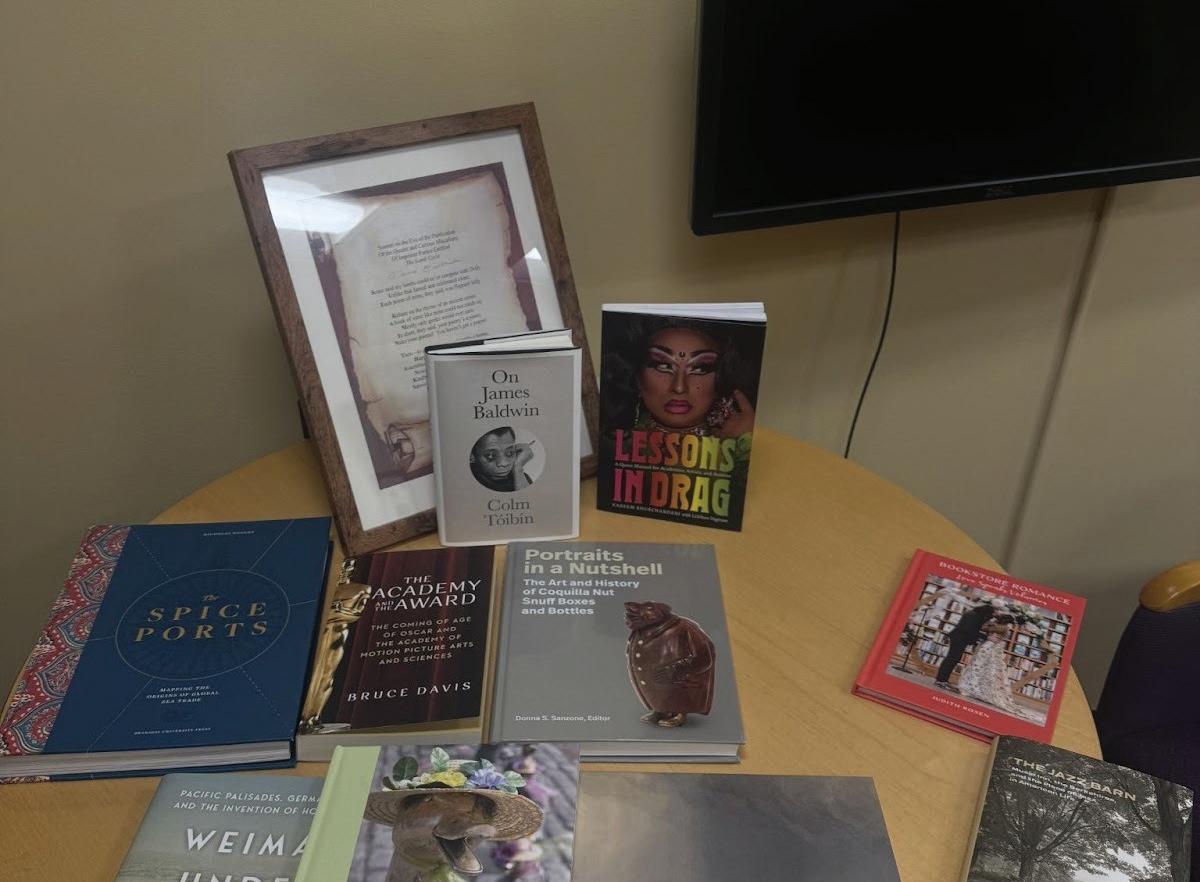
“Trade books increase the visibility of Brandeis University in the world,” Ramin noted. Each one extends the university into public discourse, offering a bridge between the specific schol-
dergraduate Affairs, and a member of the press’ editorial board, Prof. Jeffrey Shoulson (ENG) emphasizes just how precarious and purposeful such circulation is. “The business model for university presses has been challenging,” he said in a Nov. 14 interview with The Justice.
Brandeis’ name. For Ramin, that responsibility is constant. “I believe in every book we publish,” she said plainly. “Every book has merit and excellence in different ways, or I wouldn’t be publishing it.”
It’s not an exaggeration. The press’ small staff, consisting
torial board offers another glimpse into the press’s values. Twice a year, the board meets to evaluate four to eight potential titles and read manuscripts at various stages of consideration. Before each meeting, members receive proposals, sample chapters and peer reviews from experts in the field. “If it’s scholarly, we evaluate whether it’s legitimate scholarly work. If it’s for a general audience, we look at whether it can draw the audience it intends,” he said. The review process is rigorous but also meaningful, as the board isn’t just choosing books but determining which ideas to enter the world under
of three full-time and three part-time employees, manages an expansive network of freelancers including copy editors, production editors, designers, proofreaders, indexers and a marketing team connected to the University of Chicago Press. Behind every book is a vast infrastructure of care.
That care reflects a deeper ideological alignment between the press and the University. Brandeis’ founding values of intellectual honesty, social justice and public engagement are exhibited in the press’s wide-ranging but intentional list. Working with the University’s community directly, it publishes scholarly works such as those from the Tauber Institute for the Study of European Jewry, the HadassahBrandeis Institute, the Mandel Lectures and the Law and Society series. Other published works for a general audience include “Boston’s Oldest Buildings and Where to Find Them” or the adorable photo book on the “Ducks on Parade!” sculpture and its many seasonal costumes. These books, rooted in local culture, are forms of justice, community, memory and civic engagement.
The press’s work may seem quiet, but its impact is lasting. Books endure as they shape understanding, preserve memory and create dialogue long after the news cycle has moved on. At Brandeis, where justice is a core value, the press extends that mission through ideas that are carefully chosen, beautifully produced and presented to the world.
As Ramin sets down a newly printed volume on her desk, the shining “B” on its spine catches the light, a small yet steady and unmistakable imprint of the values it carries forward.
Three Brandeis professors came together to discuss how Artificial Intelligence affects misinformation, international competition and the content people see online.
By ALYSSA WU JUSTICE FEATURES EDITORIAL ASSISTANT
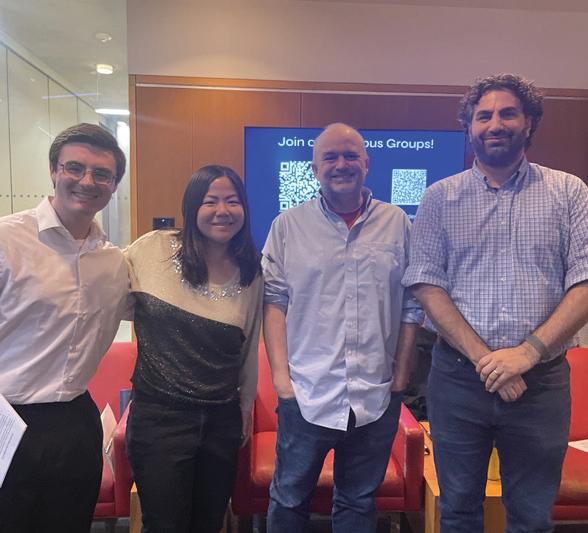
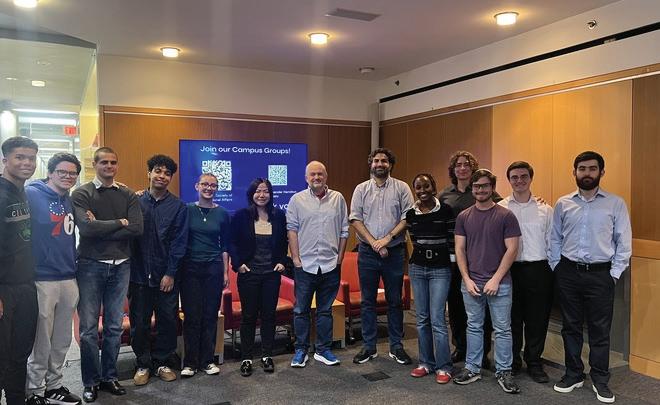
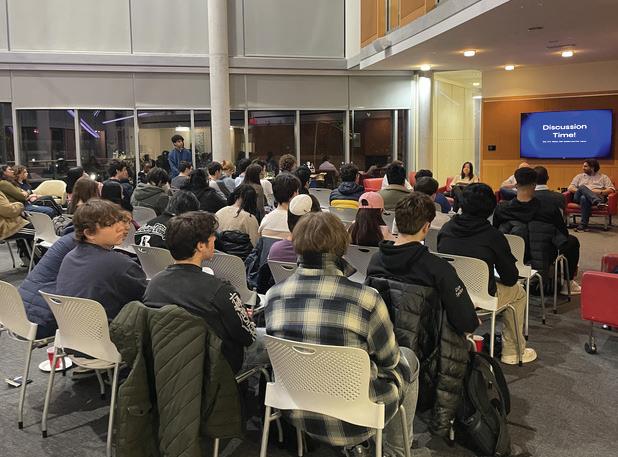
On Nov. 13, students gathered in the Mandel Atrium for a panel on Artificial Intelligence and politics, hosted by the Brandeis Society for International Affairs and the Alexander Hamilton Society. The event brought together Prof. Steven Wilson (POL), Prof. Ayumi Teraoka (IGS) and Prof. Constantine Lignos (COSI/LING) to discuss how AI is shaping political systems, global competition and everyday life.
Prof. Wilson’s area of expertise focuses on the relationship between the internet and politics. Specifically, he focuses on the intersection between internet usage and how it changes the way people communicate and interact. He explained that he participates in events such as these because part of being a professor is sharing research with the public. “If your expertise is valuable to people in such a way that they would like you to participate in something, that’s a good and constructive thing to do,” he said in a Nov. 17 interview with The Justice.
During the panel, Wilson discussed the impact of AIgenerated misinformation. He described concerns about “dead internet theory” — a theory that proposes that online spaces have become dominated by bots or mass-produced content. “Democracy doesn’t function without com-
munication,” he said. When communication channels are flooded with bad information, “it’s horrible for democracy,” Wilson commented.
Building on Wilson’s points about online misinformation, Prof. Lignos discussed how AI systems can determine what users see. Lignos, whose work centers on natural language processing, explained that recommendation algorithms on apps like TikTok or Instagram already influence what political content people see.
“Almost everything that you see is in some way affected by a recommendation system,” Lignos told The Justice in a Nov. 21 interview. He highlighted recent examples of deepfakes, like a 2024 video falsely showing former President Joe Biden telling voters not to vote, to show how easily AI-generated media can spread.
Lignos also noted that AI tools allow individuals to create large amounts of misleading information at once. “It may be that a person came up with a disinformation campaign, but they were able to be much more effective by using AI to write maybe 10 different articles,” he said. He also pointed to challenges that come with identifying AI-generated text. Lignos explained that current detection tools are unreliable, which makes it difficult to
prevent AI output from becoming part of the data that new models are trained on.
“As these models become better at hiding the [fact] that they are models, their output becomes less distinguishable from people,” Lignos said. He explained that researchers are still unsure how to keep training data from becoming “heavily contaminated,” an issue he described as an open problem for the field.
The conversation about AI development goes far beyond the borders of the United States alone. Beyond concerns about the effect of AI algorithmic technology and the importance of communication, Prof. Teraoka raised concerns about the developmental competition AI has created. She focused on the growing competition between the United States and China, including the use of cheaper models like DeepSeek in countries that cannot afford more expensive systems. She also noted that militaries are becoming more dependent on AI-driven data and that the energy demands of new data centers raise questions for national security.
Despite these concerns, Wilson believes AI can also give ordinary citizens new ways to organize and express themselves. He described cases where people use digital tools to highlight corruption
or challenge government narratives. “Being able to leverage that tool is democratizing in the sense that it puts power in the hands of anybody who’s willing to use it,” he said.
Wilson also noted that AI is reshaping research by giving scholars tools they did not have before. He said political scientists can now analyze large amounts of text or track online patterns that would have been impossible to study manually. “There’s not enough time in the universe for you to do that by hand,” he said, explaining that automated systems allow researchers to classify texts and take on projects that they could not before.
According to the panel, governments and companies also play an important role in guiding the use of AI tech-
nology. Wilson explained that progress will rely on incentives and regulations that encourage responsible use. “We have a responsibility to try to guide it in ways that it can be socially constructive,” Wilson said.
The panel highlighted how quickly AI is becoming part of political communication, global competition and everyday decision making. The professors emphasized how important it is for students to understand how these systems work and how information circulates online.
The discussion welcomed other members of the community to get involved. The moderator Stephen Gaughan ’26 said in a Nov. 17 interview with The Justice that one goal of the event was to increase student engagement across
different fields. “I think this event was a really great opportunity to think about things in different ways, to apply different perspectives and to learn about how important things can relate to each other,” Gaughan said. Gaughan believes events like this panel matter because they bring together people across campus who might not normally interact. He emphasized that meaningful conversations happen when students and faculty are able to share their perspectives. “We’ve got some very knowledgeable people who work here, and we have some very knowledgeable people who study here,” he said. “And I think it’s really great to get those people in conversation with each other.”
Sophia De Lisi, Editor in Chief
Julia Hardy, Managing Editor
Eliza Bier, Anna Martin, Senior Editors
Grace Doh, Nemma Kalra, Zoe Zachary, Deputy Editors
Maeve Coakley, Lily Chafe, Xilei Ceci Chen, Miriam Grodin, Anika Jain, Jonas Kaplin, Iyla Lichtenfeld, Diane Meyer, Sara Samuel, Bryan Wolfe, Associate Editors
Lucia Thomas, News Editors
Brianna Earle, Features Editor
Esther Balaban, Forum Editor
Luca D. Jordan, Ben Khayat, Sports Editors
Sophia Garcia, Arts & Culture Editor
Skye Entwood, Reuben Gartenbach, Photography Editors
Nawal Irfani, Rivka Resnick, Copy Editors
Joan Cogliano, Layout Editor
Keira Shear, Advertising Editor
Ellie Harris, Online Editor
We may need fewer days off in the fall
Every fall at Brandeis, students wake up on a Wednesday with a Tuesday class schedule, or on a day when there are no classes for reasons unbeknownst to them. These days off may provide opportunities for relaxation and relief, but so much time off in October always leads to a messy midterms schedule, and this semester, it meant finals end on Dec. 22. While a secular university, Brandeis follows the Jewish calendar and gives days off accordingly. A small fraction of the student body requires all of this time off for religious purposes, leaving the rest of the student body to navigate the unclear class schedule. This editorial board believes that the unequal value given to some class times and the lack of organization for midterms could be addressed by a clearer class schedule regarding time off for religious holidays in the fall.
This semester’s schedule had eight days off in addition to Thanksgiving break. Seven of these days were in October, and three were Tuesdays. A “Brandeis Tuesday” — a school day on a different weekday with a Tuesday class schedule in place — was needed to prevent the class schedule from losing too much time to days off. This editorial board proposes that Brandeis give greater emphasis to ensuring classes are able to have enough time for their planned syllabi, reasonable midterms and finals schedules so that all students get the amount of time needed for all the classes they registered for. The issue is not the schedule of religious holidays that Brandeis has accommodated for; the issue is the greater emphasis on religious holidays rather than the academic calendar. The majority of Brandeis students do not observe the holidays for which class time is given off, but all Brandeis students are affected by the disorganization of the fall class and exam schedule. Brandeis has accommodations available for students who need to miss classes for religious holidays, for which the school does not give time off. Excused absences are given to these students; this way, students who observe holidays are not affected academically for missing class. This editorial board suggests that the policy applies to religious holidays which time is given off for as well, with a coherent system of class recovery time built in. This way, students who need time off from school to observe their holidays can use universitysanctioned excused absences. Professors would still be able to cancel classes for these holidays if they choose to, but the class time is available if
needed. The fall schedule would not have to rely on “Brandeis Tuesdays” to ensure that classes have all the time needed to get through their course material.
Many schools across the country have similar accommodations for their students, including Boston University, whose religious policies are no different than the Massachusetts state law, which allows for excused absences for religious purposes and extended time given to students who miss class for said reason. Another school with a similar arrangement is Tulane University. Tulane has a religious holidays calendar that they update yearly to ensure all students and staff can view major holidays that may be coming up, and could interfere with the semester at hand. Brandeis, Boston University and Tulane University all have policies that outline how students who have religious observances during class time should contact their professors to request an excused absence.
This editorial board would like to suggest Brandeis extend the policy of religious accommodation to include holidays that time is given off for so that academics are more fairly valued, hopefully allowing for a cohesive fall schedule with a clearly defined midterm season and an earlier start to winter break. With this system in place, professors would have an easier time keeping their courses on schedule, students who do not need the time off would be able to have an easier time keeping up with their classes and students who do need the time off can have excused absences for religious observance without their grades suffering from class-specific attendance policies.
Brandeis has not given equal priority to the religious and academic needs of its students. Rather than allowing a jumbled academic schedule to penalize all students, adopting a system of university-sanctioned religious excused absences allows academics to be valued fairly on a campus with a prevalent religious culture. This past semester’s fall academic calendar led to an egregiously long, undefined midterm period and a finals schedule that ends much later than students are comfortable with. It allowed for some classes to keep all their allotted time, while others missed multiple meeting times with minimal opportunity to catch up. The days off for religious holidays are not the issue; the disorganization of our class schedule, created seemingly with religious rather than academic intentions, is.

Farewells are always challenging, but as the end of the fall semester approaches, it’s time to say goodbye to those who are graduating early. Graduating and receiving an undergraduate degree is a remarkable accomplishment that takes endless hours of hard work, dedication and focus. With this in mind, The Justice Editorial Board congratulates all who are graduating in December, and wants to take this opportunity to honor Justice Arts and Culture Editor Maeve Coakley ’25 who will be graduating in the coming weeks.
In the spring 2024 semester, Maeve started writing for The Justice’s Arts and Culture section, contributing insightful reviews and critical commentary about theater perfor-
mances, books, movies and television shows. During her term as section editor, Maeve has been an absolute joy to have in the office — she is a constant source of laughter and reassurance for our editors and staff. Her positive energy and humor always liven our late nights spent putting the paper together. Maeve is truly a remarkable editor, and her ideas, patience, kindness and talent have been invaluable assets to the arts section. At The Justice we understand that life after graduation can be ambiguous and scary. We wish the graduating seniors all the luck in the world for their time after Brandeis and we wish the same and more towards Maeve, but we know she doesn’t need our wishes to succeed.
Grad is not that bad. Brandeis isn’t typically known for its luxury housing, however, I am a firm believer that the Charles River Apartments are over hated in terms of residence halls. The typical complaints about Grad, as it is colloquially known, include that it’s too far from campus, the dated infrastructure, etc. In my opinion, Grad’s proximity to campus serves as a perfect buffer in between work and play: You don’t have to feel like you’re studying where you sleep. As someone who has lived in Village, Grad, and East I’ve tasted a wide array of the housing options that Brandeis has to offer. Grad has certainly not been the worst. It is definitely not the greatest housing option here, however, the hate it receives is unfair. Each resident gets their own room, the bathroom is private, and each apartment has a kitchen. To me, these features outweigh the communal bathrooms and tight proximity of traditional dorm-style living. This is not to say that I wouldn’t rather live in Mods or Ridge, but I think students need to stop acting as if Grad is the worst housing option on Campus.
-Brianna
Dear Sophia De Lisi, As a Brandeis alumnus, I urge students, staff, faculty, and alumni to witness how educationalsupports for students with disabilities are teetering on the edge of a half-century setback. Assomeone whose family and friends have benefited for decades from academic supports for studentswith disabilities, the recent dismantling of the Department of Education’s core functions is alarmingand demands the Brandeis community’s attention.
Fifty years ago, on November 29, 1975, President Gerald Ford signed the Individuals withDisabilities Education Act (IDEA), one of the most transformative educational laws in U.S. history.
Before IDEA, almost 200,000 people with disabilities were locked in institutions described as“snake pits” that “smelled of death.” 1.75 million students were excluded from school entirely. IDEA,paired with consistent federal oversight and support for states, required states to identify excludedchildren, removed barriers to accessing curriculum, funded teacher training and technical assistance centers, and established teams and procedures to support individual students. Because of IDEA, we have made monumental strides toward a country that better supports and represents millions of people.
And yet, fifty years later, many school districts still segregate students with disabilities, use mechanical restraints to control “problematic” students— especially Black boys who are also under-identified for services—and divert students with disabilities off diploma tracks. IDEA also does not explicitly address intersecting identities or disparities across race, geography, and socioeconomic status. Historically, those at the Department of Education who help states implement IDEA have filled that gap through cross-office and cross-agency oversight, enforcement, and technical assistance.
That infrastructure is now being gutted. On November 18, Secretary Linda McMahon buried key Department of Education offices across other agencies, including those overseeing federal K-12 programs, post -
secondary education, and Indigenous and international education. She justified the move by claiming in a USA Today op-ed that the Department is “mostly a pass-through for funds.” In reality, she bypassed Congress’s authority by redistributing appropriated funds and scattering offices that are statutorily intended to be housed in the Department of Education, as well as separating offices that oversee billions in special education funding from coordinating with each other. What the Secretary overlooked are the processes that ensure grants are responsibly managed, the avenues for legal recourse when states violate students’ civil rights, the teacher preparation programs addressing special educator workforce shortages, and the data collection projects that drive policy, research, and enforcement. She also ignored how states like Texas and New York have flouted IDEA by illegally capping special education enrollment and delaying required services for months, problems federal staff had to correct through oversight and technical assistance.
Brandeis students and faculty have long been at the forefront of disability issues, notably through the widely respected Lurie Institute for Disability Policy and its Fellowship programs. However, even at an institution with a strong history of championing causes that promote social justice and inclusivity, disability issues, as highlighted by The Justice and The Hoot, remain too often neglected. As the semester winds down, I urge students, staff, faculty, and alumni to take a moment to push back against the Administration’s actions. Contact your elected official through this Action Center or by calling the Capitol switchboard at (202) 224-3121, and tell them that the Senate HELP Committee and House Education and Workforce Committee must hold oversight hearings, bring in Secretary McMahon, and demand that the Administration stop dismantling essential protections for students with disabilities. Sincerely, Micah Rothkopf Micah.rothkopf@gmail.com (508) 308-1615
By MARK SILVA JUSTICE STAFF WRITER
Entering the Brandeis libraries at this time of year, you’re more than likely to see the building overflowing with people in all directions. Surprised that everybody had the same idea as you, you might settle for the last seat available on a couch in front of Starbucks or somberly retire to your dorm room to study in solitude. Sure, the library is a hotspot for socializing and productivity alike, but why exactly is it that there always seems to be such a surplus of people within its confines at all hours of the day, whether it be morning or even up to its closing at 2 a.m.?
As you may have guessed, the answer to this question is, unsurprisingly, finals season: a period of time where thousands of students, different in many respects, all suddenly become united in purpose and goals when late November rolls around. Though the same lively ambience and chatter can be heard throughout the library as at any other time of year, it’s clear that many have realized in this final stretch that it’s time to get their affairs in order and completely dedicate themselves to their academics from dawn to dusk.
A few days ago, watching my friend continue to fervently study and labor over schoolwork even after we had been kicked out of the library for the night, I began to wonder if the immense academic pressure that cyclically burdens each and every student through November and December is really conducive to scholastic success — or necessary at all for that matter. Undoubtedly, this high-stress, goal-oriented environment elicited by finals can be detrimental to students’ mental health. However, I’d still argue that it would be an oversimplification to call this organization of testing outright good or bad.
Focusing on the drawbacks, it’s difficult to overlook the individual costs and the mentally taxing impacts of such a seemingly high-tension time in the school year. In my experience, it can be difficult to maintain a social life, interests or extracurricular commitments when it feels like you’re doing a disservice to your future self by not spending every waking moment studying, doing homework or completing some group project;
even when doing something you enjoy, it’s no less difficult to take your mind off of the debilitating feeling of anxiety that you should be using your time “more practically.” Additionally, the concept of final exams has been criticized for putting too much weight on cumulative knowledge, putting even greater pressure on students to perform well, as these tests can be worth as much as a quarter of a class’s grade. In that respect, perhaps it would be better if courses focused grades on smaller assessments dispersed over the course of the year to decrease the weight of final exams and give students a greater peace of mind.
While the pros of said tests might be less obvious, these exams still hold value. For example, by concentrating all acquired knowledge into one test, students have the opportunity to prove their understanding of the course’s content once and for all, allowing for less studying in the long run and focusing it all into one narrow time frame. Whether or not that involves sleepless nights and existential dread, this period of stress is fairly short and offers sufficient preparation time regardless of its relatively brief duration.
In general, it’s also important to recognize that exam scores do not mean everything — there will always be other opportunities to work towards bettering your grades and your academic performance in the future, and no person should equate their value as a person and a student to their grades or GPA. That is not to say that you shouldn’t strive to perform as well as you can, regardless of personal interest in a course’s contents; however, this dedication should not come at the expense of your wellbeing or life outside of school.
Perhaps there’s room for growth in how final exams are administered and for addressing the harm they can have on the student body’s mental health and quality of life. Meanwhile, keeping in mind that change towards course structuring and exams is not coming anytime soon, make sure to prioritize your personal well-being and don’t be afraid to reach out to any on-campus resources, friends or family as we navigate these academically arduous last few weeks of the semester.


By AARON KLEIN, MAX KLEIN & NATHANIEL FRIEDMAN JUSTICE STAFF WRITERS & CONTRIBUTING WRITER
Klein: Good morning, Mr. Klein, and welcome back to “Klein: Unrelated.”
Klein : It’s nice to be back for another issue of our illustrious column.
Klein : Yes! It is. Even though we are returning from a brief hiatus, this week we are back and better than ever. Did you have a nice holiday?
Klein : Yeah, I had a great Thanksgiving! How was your break?
Klein : It was good. I didn’t celebrate Christmas.
Klein : Oh? Because you’re Jewish?
Klein : Yes, exactly.
Klein : Well, I had some great food — which was a nice reprieve from Brandeis dining.
Klein : Speaking of great food, three weeks ago we applied our reviewing talents to the mother of all cheap college eats: pizza!
Klein : And… was it great?
Klein : Not really, no.
Klein : Oh, O.K.
Klein : We went to AK’s right by campus and although the location was convenient, the food did not seem authentically Italian — unlike last issue’s visit to Olive Garden. To be fair, I will say that the service was quite speedy.
Klein : Probably because no one was there.
Klein : You would think that they’d be more popular given how often they’re mentioned by Brandeis Athletics, but when we visited we were the only customers there.
Klein : That’s because no one goes to Brandeis Athletics either.
Klein : Fair point. Disregarding the turnout, or lack thereof, what were your thoughts on the pizza at AK’s?
Klein : I thought it was alright. For the low prices and low wait times the pizza was fine enough, but the quality of ingredients and flavor profile was subpar. What did you think?
Klein : In my opinion, the pizza was much too
greasy. That was all you could taste. It was so overwhelming, you could barely recognize any other flavors at all.
Friedman : The grease is where you get the taste from.
Klein : I have to disagree here. With good pizza, you want to be able to taste the gooey cheese and rich tomato sauce. In AK’s case, the grease took away from the better parts of the pizza. I may even venture to say that Sherm’s flatbread pizza beats the pizza from AK’s.
Klein : Woah! So what would you rank it out of 100,000?
Klein : What is it with you and weird ranking scales? Besides, isn’t that just the same as rating it out of 10, but with three more sigfigs?
Klein : No. This is a completely novel ranking scale. It is undoubtedly distinct from a ranking out of 10.
Klein : Sure. Whatever you have to tell yourself. Anyways, I’d give it a 43,253. How about you?
Klein : I’d go for 38,996.
Klein : This week, in addition to our totally original ranking system, we should start a list of our favorite places to get a slice within walking distance of campus.
Klein : Yes! Great idea.
Klein : To start, Usdan pizza is number one. Klein : Next, I’d have Sherm flatbread at number two.
Klein : Third should be AK’s.
Klein : And coming in last, we have kosher Sherm pizza.
Klein: Wow. What a comprehensive list. Klein : Yep. We’re clearly professionals. Klein : We should try NY Pie next and see where they fit into our rankings.
Klein : That sounds like a good idea. Well, ‘til next time: happy holidays.
■ The controversy around the Memphis Grizzlies All-Star
By BEN KHAYAT JUSTICE SPORTS EDITOR
One of the most enduring headlines of the NBA season has been around the future of Memphis Grizzlies guard Ja Morant. On Halloween night, the Grizzlies faced the Los Angeles Lakers with the opportunity to get a win to hang their hat on, given the team’s previous struggles against the Lakers in the playoffs. Under the brightest lights of the season, the Grizzlies limped to a loss, with Morant coughing up just eight points all night. After the game, Morant seemed to pass on the blame, stating, “Go ask the coaching staff” when asked about the cause of the loss during post-game interviews. For these comments, Morant was suspended for one game by the NBA. In the wake of this news, many analysts theorized that the Grizzlies would look to trade a seemingly disgruntled Morant.
The darkest cloud over Morant’s reputation has been a pair of suspensions he was issued in March and May of 2023. On two occasions, Morant showed a firearm to the camera while livestreaming on Instagram. For his first offense, the guard was issued an eight-game suspension, voluntarily removing himself from the lineup for the first two games. For the second offense, a 25-game suspension was issued to be served at the start of the 2024-25 season. In the two years since, Morant has not been suspended by the NBA outside of the one game he was made to miss following the loss to the Lakers.
Morant is also described as having an attitude problem, both in regard to comments he makes to the media and his actions on the court. Most recently, a scuffle began during a game against the Dallas Mavericks after Grizzlies forward Santi Aldama tripped Dallas’ Cooper Flagg, at which point veteran Klay Thompson came to Flagg’s aid and talked to Aldama. The pause in the game allowed Morant and the rest of the Grizzlies bench to enter the court and back up their teammate, but no fouls were issued to anyone besides Aldama. The game ended with a missed three-point shot from Thompson, giving Memphis the win. Morant, who Thompson has a history of rivalry with following a 2022 playoff series, went up to Thompson after the game, pointed in the Mavericks guard’s face, and called him a “bum.”
On Dec. 3, ESPN’s Tim McMahon and Bobby Marks published an article about the possibility that Trae Young of the Atlanta Hawks, LaMelo Ball of the Charlotte Hornets as well as Morant could be traded
ahead of the Feb. 5 deadline. On Morant in particular, authors Bobby Marks and Tim McMahon went after the former All-NBA player for on-court inconsistency and offcourt controversies. Anonymous general managers were interviewed on his trade value, which generated resoundingly negative outlooks. “Morant is going down, down, down,” one GM from a Western Conference team said. Another GM from the Eastern Conference called Morant a “pain in the ass, injury prone, [and] not very good anymore,” before adding he would never want Morant on his team regardless of the salary.
Through it all, the Grizzlies organization and Morant have remained on good terms, which is atypical for a player with the kind of media portrayal the guard has.
That atypicality is because the portrayal is from the outside looking in; through the eyes of the fans and staff of the Memphis Grizzlies, Morant is untradeable.
The team knows that there’s more to how Morant reached his current predicament than a loss of focus or character issues. Memphis’ 2023-24 season was catastrophic, and by no fault of their own. By nearly every conceivable metric, that year’s Grizzlies team was the most injured team in the history of the NBA. Grizzlies players missed a combined 578 games to injury that season, equating to more than seven full NBA seasons worth of missed games. To avoid forfeiting due to a lack of available players, GM Zach Kleiman had to sign 33 players that season resulting in 51 unique starting lineups. No team in NBA history has ever signed that many players, used that many different starting lineups or missed that many games to injuries. That number excludes the 25 games Morant was suspended for to start the season; however, the guard suffered a seasonending labrum tear after just nine games.
The team finished the season as a 13-seed with a 27-55 record.
Although 2024-25 featured far fewer injuries, the team still had a lot of internal issues. Head coach Taylor Jenkins and Kleiman were struggling to agree on directions for the team and unbeknownst to the public, one of them would likely be leaving the team before the season was over. Kleiman saved himself with one of the most impressive draft classes in recent memory, drafting two All-Rookie team selections in the forms of Zach Edey and Jaylen Wells. As for Jenkins, his inability to strategize and win close games caused his departure with nine games left in the season, capped off with three consecutive losses to game-winning shots while Memphis was fighting for a playoff spot. Following the decision, Kleiman stated that the decision was wholly his own and the players were not consulted on the decision. Then-assistant coach Tuomas Iisalo was promoted to interim head coach before

The Justice Sports Editor Luca D. Jordan gives his thoughts on the NHL penalty shootouts and overtime rules, p. 12.
By LUCA D. JORDAN JUSTICE SPORTS EDITOR
■ The Formula 1 season comes to an electrifying end.
The last race in the Formula 1 season, the Abu Dhabi Grand Prix, took place on Dec 7. and secured Lando Norris his first ever World Drivers’ Championship. Norris appeared strong even before the race, finishing first in two of the three practice rounds and coming second in the third and qualifiers. While he only finished third in the final competitive race behind Max Verstappen and Oscar Piastri, his podium finish gave him the points required to finish first for the overall season. Norris has had a phenomenal year, with 17 podium finishes out of the 21 races in the season with
seven of those being first place finishes. While he was leading all drivers in points for much of the season including going into Abu Dhabi, there was still a possibility for Verstappen or Piastri to surpass Norris. In the end, even with his third place position, Norris only had two more points total than Verstappen.
Piastri also seemed unstoppable this year, with an equally impressive seven first place finishes and a streak of three first places in early spring, with the Bahrain, Saudi Arabia and Miami Grand Prix. Piastri and Norris both drive for McLaren which, through their athletic domination, had an impressive season finishing with over 400 more points than the team in second place.
McLaren is widely considered as having the fastest car in the league, likely due to their extremely low set composite skid block, or plank. The plank was so low that the team was disqualified earlier this year at the
Las Vegas Grand Prix for having a plank that was 0.07mm too short after wear.
Just hours after the race finished it was announced that Verstappen’s Red Bull teammate, Yuki Tsunoda, would no longer be racing for Red Bull and would instead be demoted to a position as a reserve driver. Tsunoda’s first year for Red Bull was overall disappointing, finishing 17th in the rankings and being removed from one of the most competitive teams in Formula 1. Though the result did not come as a surprise to fans.
On Sunday, Tsunoda received a five second time violation for excessive defensive maneuvers against Norris, likely in an effort to help push his teammate Verstappen to first place. While a rather silly theory has started online that Tsunoda was removed personally by Verstappen for being unable to properly stop Norris from placing third, it likely holds no water.

By BEN KHAYAT JUSTICE SPORTS EDITOR
■ Despite this being Logan’s second world title, his win was quite the upset.
Competing in anything at a high level is difficult. Scrabble, however, is in a league of its own when it comes to what it takes to reach the upper echelons of gameplay. In a casual setting, knowing more words than the opponent is a great advantage to have. At high levels, that advantage is nullified by both players likely having memorized every word up to eight letters in length. Without the vocabulary giving the edge, scoring strategically becomes the advantage, making competitive Scrabble more about math than
words. Adam Logan, the winner of the most recent World Scrabble Championship and mathematician by trade, typically also has the advantage there in his games. Logan, despite all of his skill, was still the underdog when he faced off against New Zealand’s Nigel Richards at the 2025 World Scrabble Championship in Accra, Ghana. Richards is the undisputed greatest player in Scrabble history, having won a record eight world titles — five in English, two in French and one in Spanish, despite not speaking either of the latter two languages. Beyond his resume, Richards is also known for his ability to spot and play words very few players in the world would be able to, such as playing the 10-letter “ATHLEISURE” in the championship game
of an event held in St. Louis, Missouri earlier this year. In the first game of the best of seven series the two played, Logan was able to emerge victorious 450-375 off the back of playing “HAEMATINS” and “TOILERS,” getting an extra 50 points for each for having used all seven of his tiles to make each word. Richards was only able to get the “bingo” bonus for playing “PUNCTUAL” early in the game and was unable to find another to catch up to Logan. However, Richards redeemed himself quickly in Game Two, opening the match with the 94-point “JEEPING” before running away with the lead by finding an additional three bingos in “SALTATE,” “FACTISES,” and “TUBEROID.” The words Scrabble allows to
On Dec. 7, Brandeis men’s and women’s fencing competed at the Carla-Mae Richards Invitational
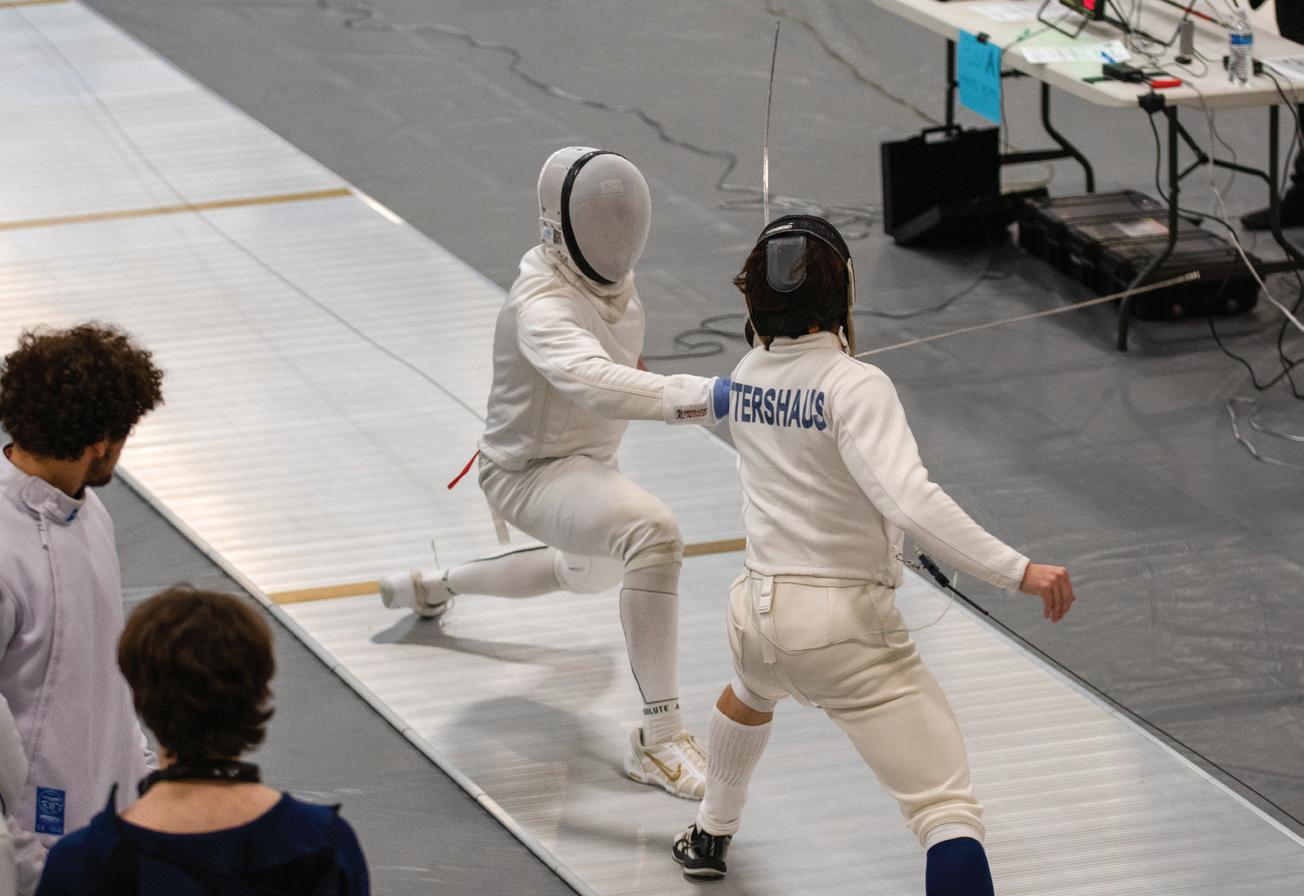
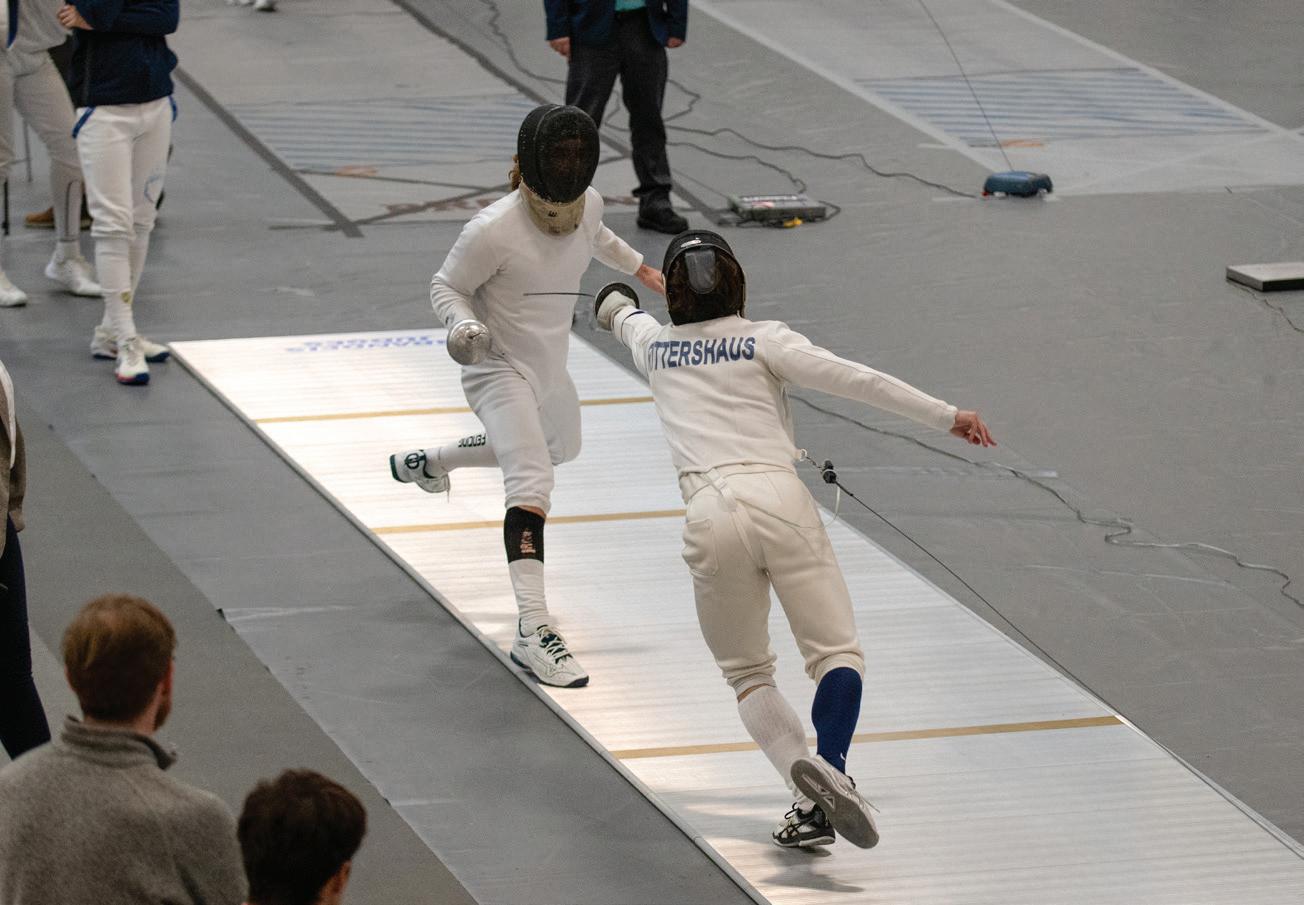








Brandeis: 5th of 9 teams, 3428 points.
STANDOUTS
50-yard breaststroke
Michelle Weissler '29 with a time of 30.75. Mile freestyle
Sasha Tsizer '29 with a time of 19:44.77.
CONTINUED FROM 10
have gone through, a lot of the critiques seem contradictory, misleading or difficult to justify. For instance, one GM commented, “Has Ja already lost his pop? … When [was] the last time he put his chin above the rim?” To be clear, Morant recorded the second highest in-game vertical leap among the 13,600 dunks since the NBA began tracking the stat two seasons ago at 43.6 inches. Since then, Morant hasn’t suffered any serious leg injuries that would interfere with his leaping ability. The article also touches on his lack of attempts at the rim this season, with another GM adding "Either you're declining at a rapidly fast rate, or you've quit on this [coach]." Regardless of the dangers of generalizing a 12-game sample into a character concern, there are more factors that have led to Morant’s change in shot patterns. For one, Coach Iisalo has brought in a whole new offense for the Grizzlies that has led to the entire team taking fewer shots at the rim. The Grizzlies take 24.3 attempts within five feet of the rim per game this season as compared to their 28.4 attempts a night from last season. Additionally, Morant’s ability to get to the rim is helped significantly by having a center to set screens for him. For the vast majority of Morant’s games, Memphis was forced to use thirdstring center Jock Landale to clear the lane rather than the 7 feet, 3 inches, 305-pound Zach Edey.
Most dangerously of all, the article concludes with comments from another GM, stating “[The Grizzlies are] going to have to move [Ja Morant]. They don't have a choice.” Including a quote in the article such as this one indicates to a reader that a trade is imminent, despite other reports indicating the opposite; that, in fact, Zach Kleiman has never responded to trade inquiries involving Morant before or since the 2025-26 season began. This information, despite its importance to the future of Morant’s career, is never mentioned alongside the interviews with GMs.
Ja Morant isn’t a saint. His actions on and off the court have to be questioned and reasoned through with the same care as any other player’s. Still, when so many problems are pinned on an individual or their character, failing to include context breeds misunderstandings about the player that have real consequences.
If you look past Morant, Memphis is in the midst of building a very enjoyable team to watch and root for. Zach Kleiman has made a point of the kind of player he wants on the Grizzlies: “dogs.” The types of players who were cast aside, but worked too hard and showed too much to be underrated any longer. Kleiman has made a career out of finding diamonds in the rough, so much so that 11 of the 18 players currently on the Grizzlies were selected after the 20th pick in their draft. Three of the most impactful players for Memphis this season have been secondround selections: Jaylen Wells at pick 39, Vince Williams Jr. at pick 47 and Cam Spencer at pick 53. Directing all of the discourse about the team to be critiques of Ja Morant has distracted from how great these late selections have been for the Grizzlies.
More youth is on the way as well. After a trade with the Orlando Magic, Zach Kleiman got five additional first round picks, choosing to deal two of them to the Portland Trailblazers for the opportunity to draft Cedric Coward. Both trades look great for Memphis; Coward is in the race for Rookie of the Year and very few teams have a history of drafting with the kind of accuracy Kleiman has.
If there is anything to be applied from this article, it’s that the Grizzlies have a very underappreciated cast of characters that have often been overshadowed. Cam Spencer has been great for the team after spending his 2024-25 season pulverizing the G-League. In one game against the Birmingham Squadron, Spencer caught fire with 51 points on 12 three-pointers. His scoring outburst was so great that the Squadron’s X account posted — then
promptly deleted — “Cam Spencer can shoot the basketball quite well.” Zach Edey has also proved himself greatly this season; despite being a two-time National Player of the Year in college, many analysts thought the Canadian big man would be too slow to keep up with other players in the NBA. After missing the beginning of the season due to ankle surgery, Edey has been dominant, exemplified by a 32-point, 17-rebound, five-block clinic against the Sacramento Kings in his third game of the season.
In essence, criticizing Morant — or any player, for that matter — is justifiable. However, the volume of criticism far exceeds what is reasonable given his actions, the time he has already served and circumstances he has been in. Beyond the volume, the criticism itself is no longer in good faith. Even when far more reasonable explanations are available, the blame is often still pinned on Morant. Morant and the Grizzlies have stayed incredibly loyal to one another. Just as Zach Kleiman was fully capable of trading Morant after early playoff exits or incidents of misconduct, Morant was fully capable of requesting a trade after head coach firings and record-breaking injury numbers. Morant has the team logo tattooed on his back. If one party wanted to get away from the other, it probably would have happened already. The narratives the NBA community creates have heroes and villains, but Morant and the Grizzlies don’t have to be the villains.
Just as Morant isn’t a saint, he also isn’t innocent. Being criticized to this kind of extent and effect is wrong, but it’s not unfounded. Although Morant is currently sidelined with a calf strain, the guard should be back soon with, ideally, more passion to play than he’s ever had. With that passion, hopefully there will be performances that could never be omitted from his story, but only time will tell if that is going to happen.
CONTINUED FROM 10
be played are generally dependent on where the game is played, with North American competitions using a smaller word list than the rest of the world. Since knowing definitions of words has no real benefit to winning games, most players who take the time to learn the dictionary have no idea what the words they play mean. As a result of not needing to know the grammar or meanings of the words they use, many players can still find success without speaking the language the game is played in.
Richards opened Game Three with
a pair of back-to-back bingos plus another two later in the game, leading the game by as many as 128 at one point. Logan retaliated by finding back-to-back scores of his own over 100 points, playing “INFAMIES” followed by “DIOPTERS” on spaces with score multipliers to surge into the lead and escape Richards’ four-bingo onslaught to win 515-499. Richards evened the series by winning Game Four despite placing his 102-point “SHERIAT” with the H and E swapped, losing his turn and causing him to have to work back to win the game 509-446.
Game Five saw the two exchange bingos in “ARMOIRE” and “RELOOKED” to open the game before Logan’s 88-point “JAMS” gave the Canadian a lead he would never lose, putting him one win away from the championship victory. Richards drew brutally unhelpful tiles for the majority of the sixth game, allowing Logan to land the finishing blow to the Scrabble giant with a simple play of “RATS” to win his second World Scrabble Championship.
Lawrence 14, Brandeis 13
Brandeis 14, Penn State 12
Brandeis 15, St. John's 12
Brandeis 16, Haverford 11
Brandeis 20, Drew 7
Brandeis 18, Drew 9
Brandeis 19, Haverford 8 Cornell 15, Brandeis 12
3-3 today, 4-14
Brandeis 17, Lawrence 10 Penn State 7, Brandeis 20
St. John's 19, Brandeis 8
Brandeis 24, Haverford 3
Brandeis 24, Drew 3 Cornell 22, Brandeis 5


Maeve Coakley '26 says - The NHL should get rid of the shootout because games should be won via team effort and not via a skills challenge. Also, if neither team scores a goal before OT nobody should win any points.
Thank you to Maeve for sending in this week's take. For those unfamiliar with the rules in the NHL, a shootout occurs at the end of game if the score is tied and the five- minute overtime period has elapsed. Each team chooses three players to take penalty shots at a set distance from the goalie. The teams alternate shots and the team with the most shots made at the end of all attempts wins the game. If you’ve ever watched soccer it’s essentially the same as penalties. Maeve’s second point is that teams shouldn’t get points at the end of a match before overtime. The NHL’s playoff bracket uses a slightly different method than a win-loss system. Instead, they use a points system, with a win counting for two points and a loss counting for zero. If both teams make it to overtime, the loser receives one point and the winner gets two. Historically, the points system is in place since tying used to be a possible outcome for a game, but since the shootout was added into the NHL rules, a tie is no longer able to occur. Therefore, the two aspects Maeve has suggested to remove are already antithetical to each other, so I will try to answer which of these should stay and which has to go. My immediate impression is that the points system is erroneous since it differs from most other sports that have a regular and post season. A huge factor in both of these systems that can’t be entirely accounted for is fan enjoyment. The simple fact is that most people don’t want to watch a hockey game that lasts for over three hours, hence why shootouts exist. The argument for points being added to a team's

There is no easy way to encapsulate the thought-provoking, fully and incredibly moving experience that was the Undergraduate Theater Collective’s fall musical, “Ride the Cyclone.” Directed and choreographed by Greg Roitbourd ’26 and assistant directed and choreographed by Kennedy Robertson ’28, the show was flashy, with monumental set pieces designed by Triona Suiter ’27, projections by Milo Giordano ’29, energetic choreography, fun music that occasionally overpowered the singers, and a massive array of costumes designed by Sam Taxman ’27, Jae Fioribello ’28 and Madelyn Zimbalist ’28. The show was laugh-outloud funny, with characters belittling each other and songs that ranged from a rap about how “awesome” a character’s life was to a glittery song about humanoid-cat aliens — more on that later. It was also incredibly dark, diving headfirst into its central theme: What makes life worth living?
“Ride the Cyclone” is a fast-paced musical about six choir children who must decide which of them should return to life after all of them died in a roller coaster crash at an amusement park. The show takes the audience through each of their life stories as they explain who they were when they lived by singing, going from comical or ridiculous stories and slowly becoming more serious, sad and dramatic by the end. Narrating the entire experience is the carnival fortune teller, The Amazing Karnak, who is portrayed spectacularly by Mark Sternberg ’28. Although Karnak spends most of the show in his fortune teller’s box, Sternberg never failed to miss a beat to make the audience laugh or remind an overstepping character where their place was. Karnak felt like a being that had a very different power level than any of the other characters, but the audience is never allowed to see his full potential, even when he does bring one of the characters back to life at the end of the show.
The performances in this show were superbly fun and captivating. Madelyn Zimbalist ’28, who played Ocean, brought the know-it-all-who-is-unwilling-to-make-a-mistake to life with fantastic precision, anxiously moving around the stage and trying to outsmart Karnak’s game so that she, the perfect student, could win. Everyone knows this type of person, and Zimbalist delivers amazingly. Watching Ocean interact with the other characters was one of the most entertaining parts of the show, as Madelyn went between pleading for votes to keep her alive and bullying the people around her. Among the characters that Ocean interacts with, Constance — portrayed by Eden Kates ’29 — had striking chemistry with her throughout the show. Constance is Ocean’s friendly-person sidekick for most of the show, but watching as Kates’ character
Her authorship of “The Thanksgiving Play,” alongside a myriad of feats of great theatrical grandeur, such as an adaptation of Peter Pan on Broadway, makes Larissa Fasthorse more than worthy of our praise and recognition through the Brandeis Creative Arts Award. The Award has been previously granted to notable figures including Leonard Bernstein, Charles Chaplin and Stephen J. Sondheim, with our newest recipient showing her might on equal footing. Fasthorse’s ceremony was held in the afternoon of November 21, 2025 and soon thereafter, she would attend the opening night for the Brandeis Theater Arts Department’s production of “The Thanksgiving Play.”
After being introduced as a member of the Sicangu Lakota nation and the first Native American Broadway playwright, she positioned this identity at the center of her writing career, with “The Thanksgiving Play” holding a certain pedestal at the ceremony as the major talking point. A dancer, choreographer and attempted actor, Fasthorse recounts her audition for the character of “PocaHottie,” a demoralizing characterization that further pushes forward the fetishization of native women. After a heated discussion with the casting directors, she realized if she wanted better native characterization in the performing arts, then she would need to be the agent of this change. Thus comes her first Broadway show, a satirical portrayal of how liberal politics address the native cause.
The narrative centers around the character of Logan, a theater teacher from Jefferson High, played on Brandeis’ stage by Samantha Landay. Our protagonist attempts to devise a Thanksgiving play, hence the title, and was awarded several identity-based grants, including one that sought to empower native stories. She uses this money to hire a Los Angelesbased actress, Alicia, who posed with a “native look” for her headshot. Jaxton, Logan’s partner, attempts to address her with his liberal logic and ultimately discovers that Alicia is not native in the slightest. She had just posed for the headshot
By LUKE BENANAV JUSTICE STAFF WRITER
grew to be a bigger person than just “Ocean’s friend” was a great arc to follow. Constance felt like the most “real” character on the stage, trying to help the other characters while also conflicted on whether she wanted to help herself. Kates’ performance in Constance’s song literally brought audience members to tears as the happy-go-lucky character breaks down about the relief of death and her appreciation of what she used to have. Jane Doe, played by Emma Sadewasser ’27, is the only character that Constance can’t seem to get comfortable with. Jane, we learn, lost her head in the accident and was never identified, meaning that she has no memory of her life before being dead, and her head is a doll’s head. Emma had an ethereal energy about her the entire show, staring at the audience with wide, uncomprehending eyes and creeping out both the other characters and the audience members. Sadewasser’s Jane Doe brought an amazing, dramatic performance to an otherwise mostly comedic show, grounding the chaos in a very quiet and eerie way.Kieran Van Hooser ’29, who played Richard “Ricky” Potts, brought forth the more outlandish and comedic energy that “Cyclone” had to offer. In his song, “Space Age Bachelor Man,” the audience gets an incredible insight into the crazy world that lives inside Ricky’s mind. This sequence was the most unusual of the show, and is practically indescribable — cast members were wearing alien masks and cat ears, and Van Hooser transformed from a choir boy into the savior of an entire planet. Van Hooser did a great job of separating the Ricky of the song from the Ricky of the rest of the production, as, besides in his one song, Ricky is a much more timid character than the confident space age bachelor that is shown in his performance. Another song that had the audience stunned was the performance by Nico Sloan ’28 as Noel in “Noel’s Lament.” Noel sings about his love of old French cinema and his desire to be one of the lead women in the cinematic dramas. Nico fully bought into his character, with an onstage quick change from schoolboy garb to a small black nightgown. Everyone in the audience gasped and cheered in amazement as Nico expertly brought Noel’s dreams to life in a beautiful fashion. Lastly, Garrett Molinari ’26 portrayed Mischa Bachinski, a Ukrainian boy who first raps about how amazing his life is before switching the tone of the entire show to a refreshingly serious angle with his traditional Ukrainian folk song about his fiancée, Talia, played by Talia Lazar ’26. Molinari did an amazing job controlling the tone of his songs, starting with hilarious and steering the audience to his vulnerability.
The most unique thing about the UTC’s production of “Ride” was how much audience interaction there was. Karnak is sitting at the entrance, handing out fortunes to
audience members after scanning their ticket, being told to “Ride the Cyclone” — the roller coaster the show is named after — as they enter the theater. As well, Karnak gave the usual warnings speech that directors give before the start of the show, mixing in telling the audience to turn off their cell phones while also bringing the audience up to speed on how the students died. It was a great use of Karnak as a narrator and immediately immersed the audience in the middle of the show. Many of the dances and staging were also set up to be as close to the audience as possible — sitting in the front row, there were several occasions where I felt as though the show was trying to literally pull me into the story, as characters reached far off stage or threw props at the people sitting in the front of the auditorium. It was a very special and fun experience.“Ride the Cyclone” was a great way to close out the UTC’s fall season. It was fun, action-packed and, as an audience member, I had no idea what was going to happen next. Although there were some sound mixing errors, my enjoyment of the show was not compromised, and Roitbourd, Robertson and the entire cast and crew should be incredibly proud of the crazy show they put on. You just had to be there to understand it.

By ROGERIO VILLACA SZUSTER JUSTICE CONTRIBUTING WRITER
with turquoise as per her manager’s instructions. The woke couple is thrown into disarray with Logan’s utmost concern surrounding being terminated from her job and the social turmoil she might face. A guest history teacher falls into the background, and when he attempts to pull the story back into reality rather than these farcical concerns, Jaxton promptly nibs that he has to “loosen up on the facts, dude.”
Through their devising process, they decided that portraying native characters wouldn’t be red-face, it would be displaying empathy. Then, when that idea got overthrown, they decided to mute the native’s part of the dialogue and let their silent absence speak for them, a sharp and symbolic criticism of the silencing of native voices. In an absurd but predictable turn of events, the he-him decoupled major-corporation-hater, Jaxton, decides that native silence was too powerful, and this unlevelness was racially based discrimination. In the end, their play was literal nothingness. They decided to have a show where nothing happens, no one acts, just total and complete nothing. In a simple rewording of the Fasthorse narrative, the point becomes blatantly clear: This self-eating liberal logic does nothing for native people.
In her ceremony, the playwright addresses that her satire was born out of the complexity of American politics for the native cause. Most of the self-righteous virtue-signaling is rendered useless in practicality but the matter is far more intricate. She states that liberals, feeling threatened by the current administration, are now playing an actually-helpful role for the cause. What’s more, she highlights that conservatives are powerful allies since they encompass the tribes into their overall “Americana” values and their America-first handling of funds. She specifically cites the National Rifle Association as having made significant donations to her fight. While she comprehends that this truth may be uncomfortable for the non-native audience, Fasthorse does not seek to change this discomfort: It is a necessary step for the betterment of our
characters to be useful supporters of the movement. Instead, to nonetheless attract the audience, she makes use of her great wit and leans into more farcical comedic writing.
To this effect, Larue Vigil and Sam Taxman, who respectively portrayed Alicia and Jaxton on the Brandeis stage, perfectly portrayed this comedy. Vigil’s acting is nothing short of phenomenal, one of the few instances in our campus where the actor was so connected and conveyed realism so well that audiences were transported into the world of the play; her acting was so precise and flawless to such an extent that we could forget that Alicia wasn’t real and that Vigil was the one gracing us with her presence. Yet, Taxman’s sharp and motivated movements made every beat worthy of meaning, of reflection. Whether he instantly and almost robotically raised his fair fist in his claims of being an “enlightened white ally” or basking in the glory of being a straight white male finally feeling oppressed, Taxman’s portrayal of Jaxon brought every literary device of the play into life; by his every move, we burst into laughter and fell deep into pondering.
Whether as literary drama or narrative performed, “The Thanksgiving Play” should be recognized as “one of the greats,” and thus it makes no less than complete that Fasthorse is our current awardee. Fasthorse’s activism, which often accounts for 100% communal involvement in her tour across the native nations, reservations of the United States, is a clear example of Brandeis’ value of justice and intent and devotion to fixing the world or Tikkun Olam, in the Jewish vernacular. As a Brandeis student, I am proud to see that our founding virtues remain strong even amidst the complexities of our modern world. We welcome Fasthorse’s voice and will enthusiastically await her return as a creative resident of our campus.
We’re halfway into the 2020s, and so far it has been a decade defined by throwbacks — Y2K fashion is coming out of exile, the 90s are making a reappearance, and — for this review — most importantly, 2010s indie sleaze is back with a vengeance. We saw The Dare suddenly emerge as a new artist to follow in 2024, followed by an onslaught of similar — yet not derivative — bands in his wake: Bassvictim, MGNA Crrrta, The Truth, 2hollis — and, most importantly, The Hellp. The Hellp have been around since 2021, making music drenched in muddy synths, angular drumming and glitchy production that creates a musical experience that, yes, harkens back to the indie sleaze artists of the 2010s (LCD Soundsystem, The Strokes and MGMT, to name a few) but is all the same fresh and intriguing. “Riviera” will be the third album the band has released, and it has a lot to live up to: at their best, the musical chaos that so defines The Hellp’s discography is elevated into something beautifully transcendent — but at their worst, the chaotic nature of The Hellp leads to something undefined and messy. “Riviera” is proving to be an album that might not be that simple to define — for better or for worse. The song that got me into The Hellp in the first place was, in fact, their most popular track to date: “Ssx.” To this day, I don’t know how to pronounce the song’s title, and, similarly, I find myself unable to articulate what this song means to me. Every aspect of the song feels meticulous and spontaneous at once — fitting for a song about youth — and the lyrics are just specific enough to be cohesive and just vague enough to be mysterious, which fits the band’s persona to a T. “Ssx” is, in my opinion, a microcosm of the band’s oeuvre and their best song to date: vivid, bright, chaotic and melancholic all at once. I mention this because “Riviera” doesn’t have any songs as strikingly affecting as “Ssx,” which might be where it loses some fans along the way. Listening to the album is more of a journey that makes more and more sense the more you listen to it, which isn’t a quality the rest of their discography shares. That being said, “Riviera” has a lot to offer: it’s precise, patient and meticulous and when it hits you, it hits you.
The album opens with “Revenge of the Mouse Diva” — a good choice, as it appropriately prepares you for the sound that will meet you for the rest of the album. Lyrically, the center of the song is fame and choice: its ephemerality and your agency related to it (“When you live on the Walk of Fame / Don’t forget, you can walk away…”). This is a fairly interesting idea, but The Hellp’s strength has always been their creative production, which does live up to the band’s reputation on this track, in my opinion. “Revenge of the Mouse Diva” begins with a guitar lick that leads into a drop on the drums –- a pattern that more or less carries the song through its two-minute run time, except for the interlude that takes place midway through the music, which again carries you into the initial drum work and guitar melody. It’s a reasonably interesting song that doesn’t get repetitive despite its fairly cyclical melody and a good introduction to the album.
By ARIEL KNUDSEN JUSTICE CONTRIBUTING WRITER
“Country Road” was one of the singles on “Riviera,” which, in the context of the album, makes a lot of sense. California has always been an important motif for the band: both band members hail from the Golden State, so its continued reappearance in their songs hits hard both as an emotional guiding light and as an opportunity to explore political themes in their music, which they’ve done before in the past. “Country Road” is a good song — it’s catchy, emotional and the production is on point here: the quiet intensity of the drums and synths allows the melody and lyrics to take the spotlight. This decision makes even more sense thematically: “Country Road” sees The Hellp revisiting California once again, looking for home, but to no avail. The themes of unfamiliarity and isolation explored in “Country Road” can be found on nearly every track on “Riviera,” but here they’re more poignant: what happens when you go home and you still feel like you’re not there yet?
“Pray to Evil” appropriately encapsulates the oxymoronic combination of acoustic and electronic sound that separates “Riviera” from the rest of The Hellp’s discography. In my opinion The plucked guitar that opens the song, paired with a glitchy drum that adds rhythm, remains a fixture throughout the track’s three-minute runtime. In a very Imogen Heap-esque manner, the base guitar and drum remain for the entire song, with the complexity of the production continually increasing until it builds into a sound more familiar to The Hellp. This mix of acoustic and electronic production can be found on the very next song, “Meridian” — which again begins with relatively simple production, escalating into the organized chaos The Hellp is so known for — this time with a repeated piano melody instead of the guitar work found on “Pray to Evil.” Both of these songs feature small interludes, which is a fairly new concept for The Hellp. In this case, the interludes do work — they function as a small break from the main musical idea, giving the song an excuse to build up the return to the chorus and go a bit wild with the production for a bit. The addition of these interludes risk stepping over the very fine line The Hellp has cultivated between organized chaos and complete mayhem, but in the context of the rest of the album, the interludes add to the emotional arc of the tracklist, making a more cohesive album overall.
The Hellp have cultivated a particular brand through their music, interviews and shows over their career and “Cortt” is an excellent example of The Hellp’s entire persona and ethos in one song: the song opens to a girl with an endearing French accent complaining about the newfound monotony of partylife — of the “Riviera sound” — and turns into a monologue-esque song punctuated by glitchy production that gets more and more intense until the song’s closing. In the same way that Lorde’s “Melodrama” was meant to depict a party from beginning to end, “Riviera” feels similar: it’s the middle of the album now, and the excitement that the beginning of a party holds has given way to exhaustion. This song marks the shift that marks the closing songs of “Riviera” — disillusioned with

city life, the band turns to the idea of a “modern man” to paint a picture of what life could be like: simple, efficient and clean, yes, but ultimately empty. Whether or not this is a hopeful song is up to anyone’s guess, but on “Riviera,” it essentially functions as an expansion of the nihilistic themes introduced in “Cortt” — themes that will follow the album till its last track.
“Here I Am” is a very interesting track on all fronts, especially lyrically. So far, “Riviera” has explored a loss of identity and the accompanying disillusionment with the familiar — even if the familiar is your home. “Here I Am” expands on these ideas, referencing a 1949 Arthur Miller play that explores many of the same themes as “Riviera”: loss of purpose, identity and the idealization of the American Dream — themes that ring especially true in our current political climate. The production feels similar to that of Tame Impala’s-esque, with synths that build atop a staccato drum beat, carrying the song through its similarly staccato vocal line. The overall effect is a more industrial sound that feels new for The Hellp but nonetheless authentic to what they’ve done so far — especially since the comparatively sterilized feel of the first two verses falls into a kickback drum beat accompanied by a whining synth in the background that ties everything together. Like I’ve mentioned before, the habit The Hellp has of combining genres could very easily lead to something disjointed and unsatisfying - but “Here I Am” manages to stand out as a track on its own while still serving as a lead-in to the last track on the album: “Live Forever.”
“Live Forever” is the longest song on “Riviera” and seems to serve as an amalgamation of everything we’ve seen on “Riviera” so far, both lyrically and productionwise. The Hellp have always been proudly young, singing about the emotional turmoil of growing into yourself and out of relationships, of finding solace in crowded parties and of finding peace in the dangerous. “Live Forever” celebrates the magic of youth, but appreciates it as a fundamentally ephemeral experience (“I wanna live forever / forever / I don’t wanna live forever) — an idea that’s always been central to the band’s ethos but one that’s also never been explored in such detail.
Overall, “Riviera” lives up to the hype of the band’s discography — that being said, The Hellp is aging, and their music is following suit. The themes of nihilism and purposelessness explored on “Riviera” are familiar to the band’s previous work, but on “Riviera,” they’re boosted by the cold, steely production — making for an album that feels as unfamiliar as the idealized California that The Hellp are trying to return to. One could argue that that’s an unavoidable feature of getting older: becoming a nomad for a while as you search for where you belong. The question is if The Hellp’s audience is growing along with them. “Riviera” suggests that this process is not only inescapable but necessary. In other words, the Riviera sound is coming — the question is if we’re ready for it.


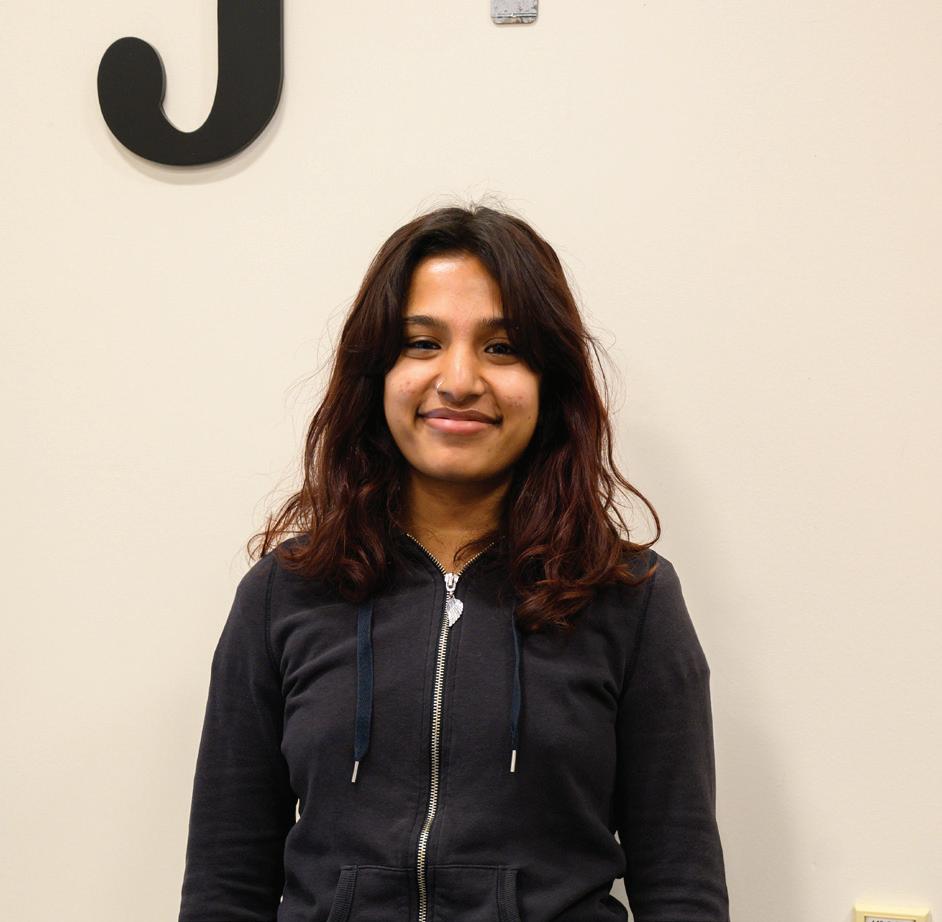
1. Five Guys
2. McDonald’s
3. Shake Shack
4. Wendy’s
5.Chick -fil -A
6. Popeyes
7. Taco Bell
8. Arby’s
9. KFC
10. Burger King

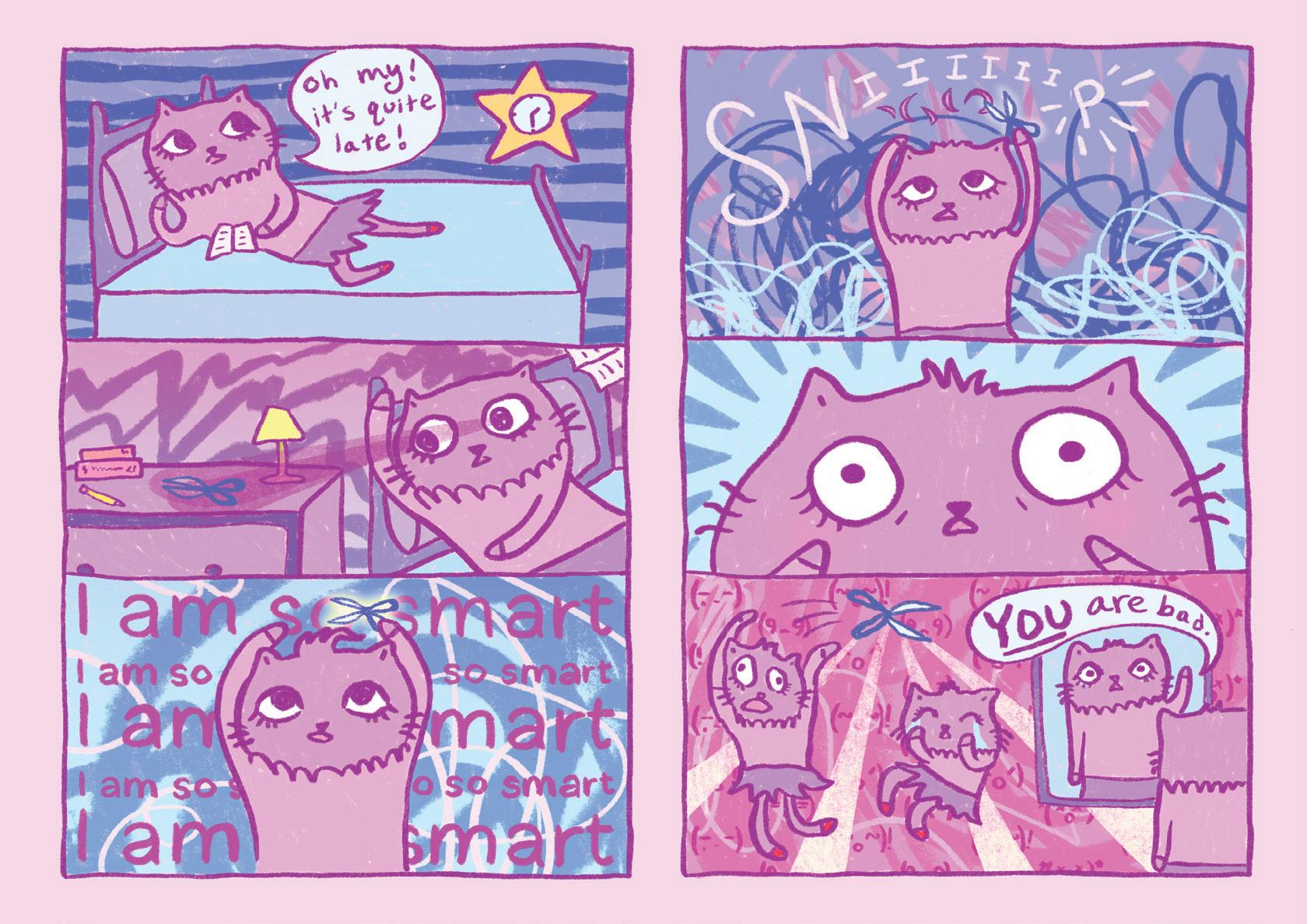
By NEMMA KALRA JUSTICE DEPUTY EDITOR