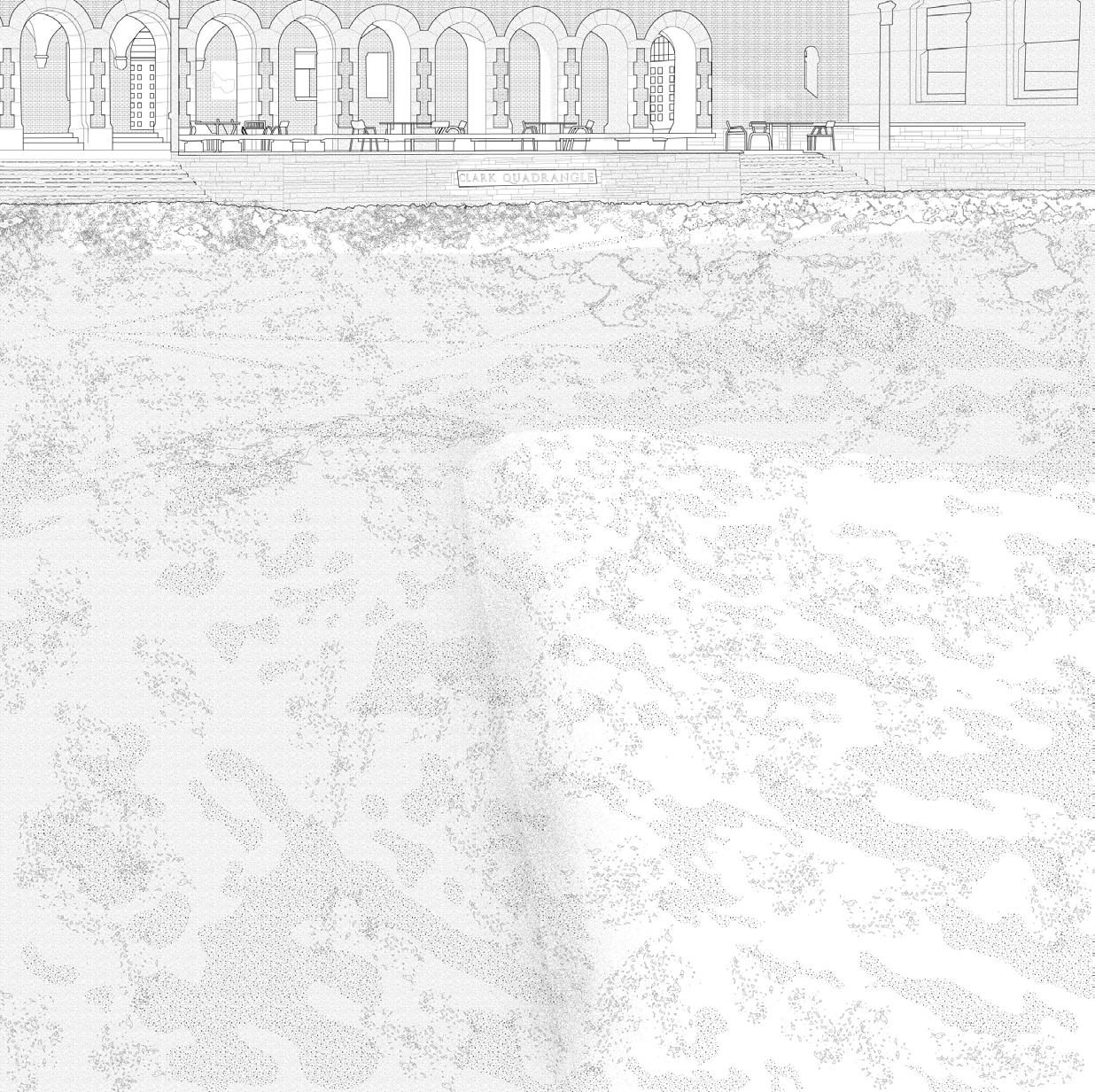
Topography and Houses near Don River
arc200: Drawing and Represenation II
Instructor: Sam Ghantous
Cousre Coordinator: Michael Piper
Completed in December 2021
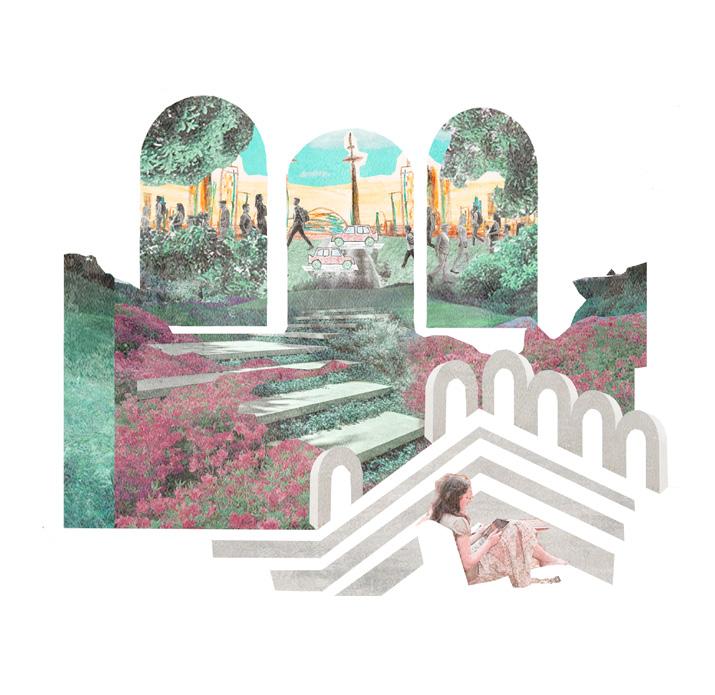
If you never touch the ground, you are incapable of caring what’s on the ground
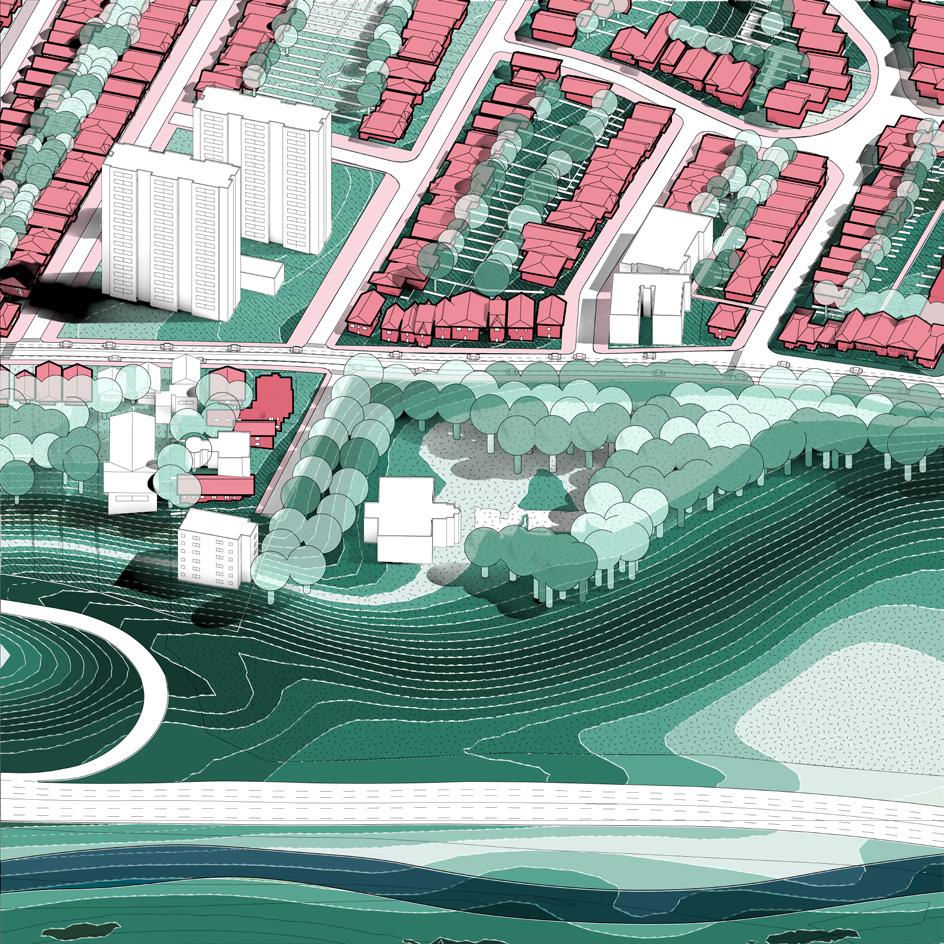
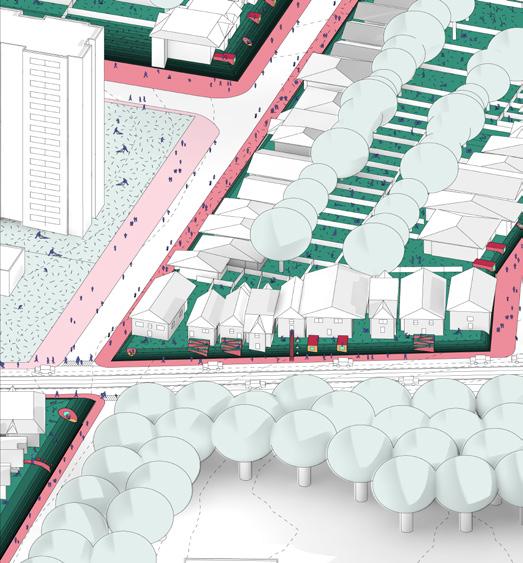
When I was exploring the site, I noticed the uneven parts of the ground and found that each house has different approach to those conditions with different types of landscapes and I got an idea that even though these landscapes are different, they sit on the same ground and therefore are connected to each other by the Topography
Types of existing Landscapes
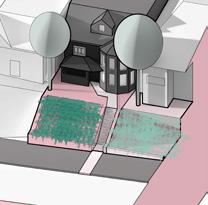
Landscapes in which most parts are untrimmed/unmanicured vegatations
Secondary
Dwelling
Units Proposals
- Based on Types of Landscapes
The units are made so that the dwellers remain connected to the world by being a part of landscapes and therefore, part of topographical network that maintains all relationships of the grounds together. Like each of the residential landscapes that was built based on the shape of the ground it’s on, the interventions are differently adjusted to each type of landscapes to engage with the connection of topography
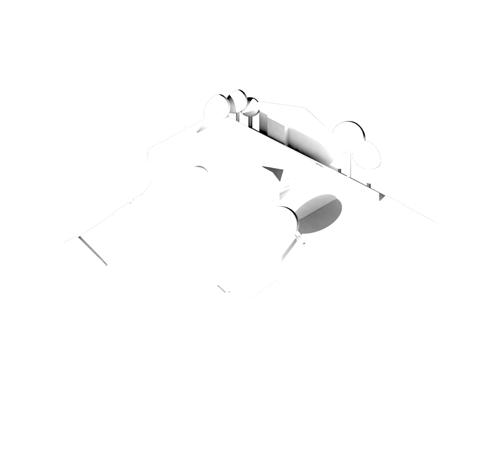
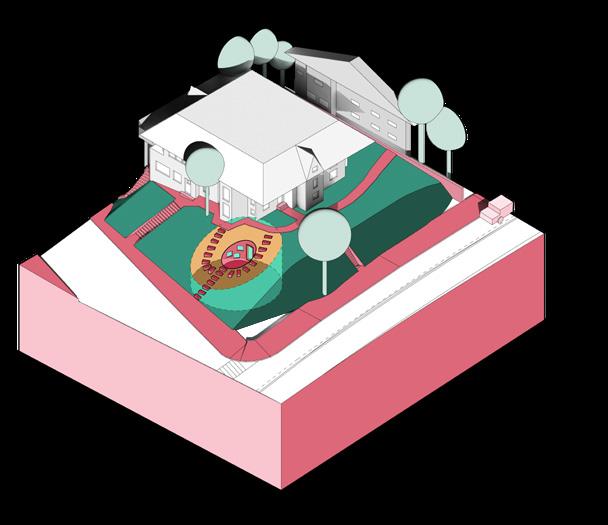
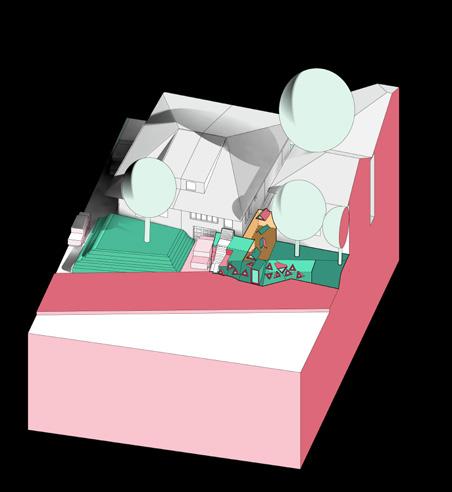
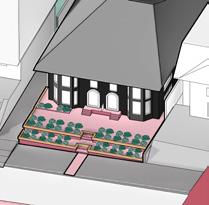
Formal Landscape: formally trimmed and defined plants/ topiary and/or formal hardscape( such as terraces)
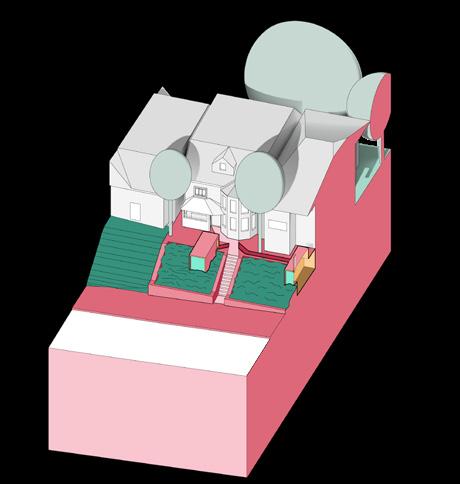
Softscape in the shape of a mound
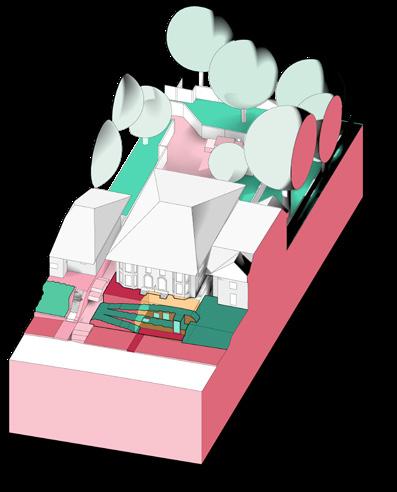
Hardscape where stair is the main element of landscape
2 Donut in a Hill
1 Stair Cave
3 Terrace Units
4 Boxes on Informal Plants
3 Formal: Terraces and Manicured Plants
Informal Plants
Hill
Stairs
Secondary Dwelling Units Proposals
- Perspectives
underground
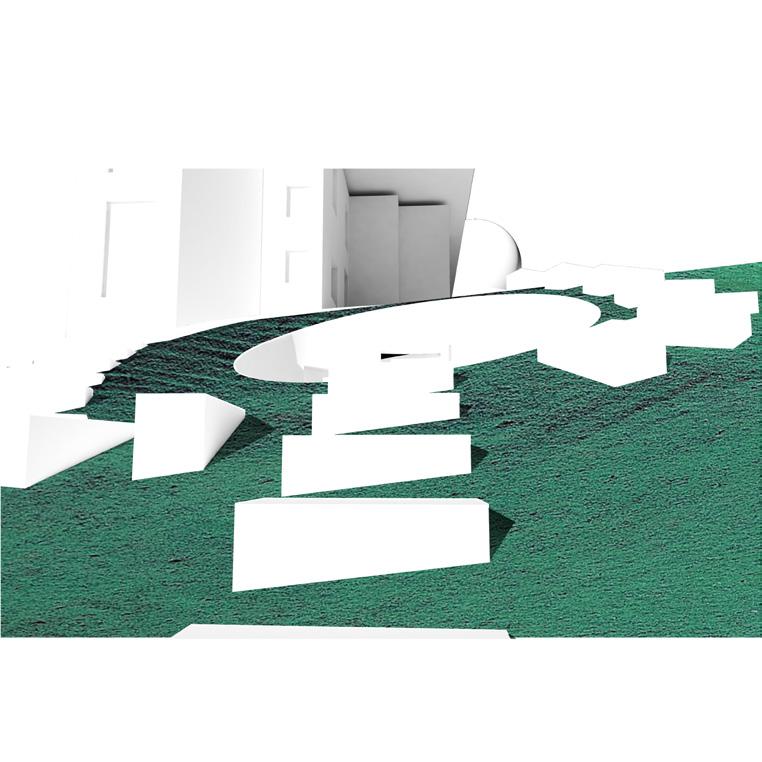
1 Stair Cave
extending the stair and make its interior volume a dwelling unit
4 Boxes on Informal Plants
occupiable volume where its bottom half is covered by the plants while the top half sits above the plants
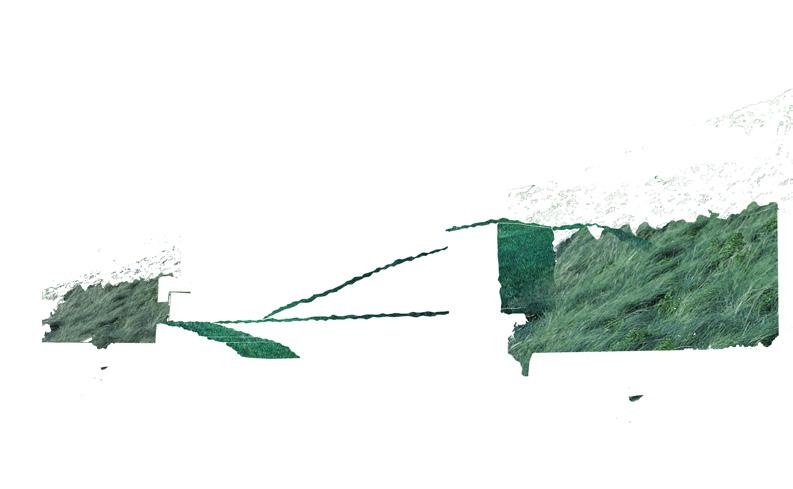
To be and live as one with landscapes, people will be conscious of the land they are on, and realize that, to maintain the systems, they have to contribute to the topographical network to breath, live and lie there toghether in harmony.
2 Donut in a Hill
volume nestled in the hill, which is excavated to make a balcony that also serves as entry
3 Terrace Units mimicking the shape of the existing terrace for interior volume occupation
Connectivity to Villa Borghese
arc363: Landscape Architecture Studio III
Instructor: Behnaz Assadi
Cousre Coordinator: Behnaz Assadi
Completed in December 2023
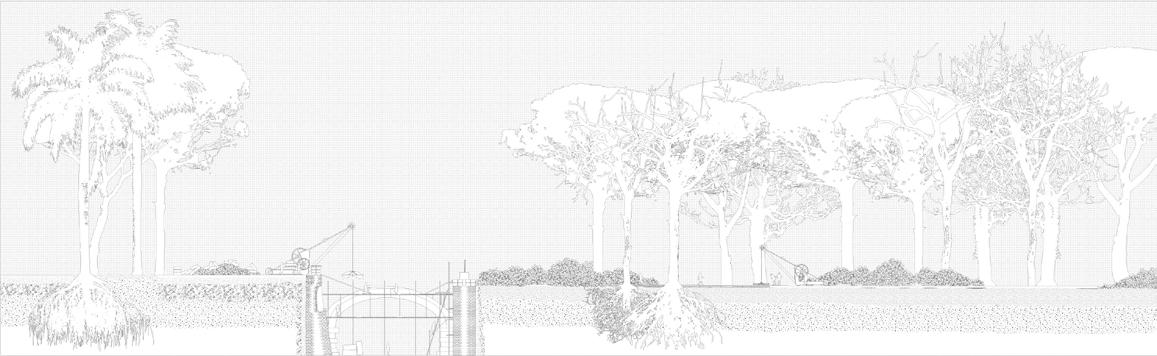
There is an innate and passionate desire in humans to be connected with nature
The Borghese Family was so obsessed with nature that they wanted to keep all of Villa Borghese park to their own:
But the connectivity to the nature isn’t something to be owned.
In 1909, the Cavalcavia Overpass that connects Villa Borghese to the public promenade, Pincio,was completed and thus the basic right for humans to connect with the nature was given to the public in Rome
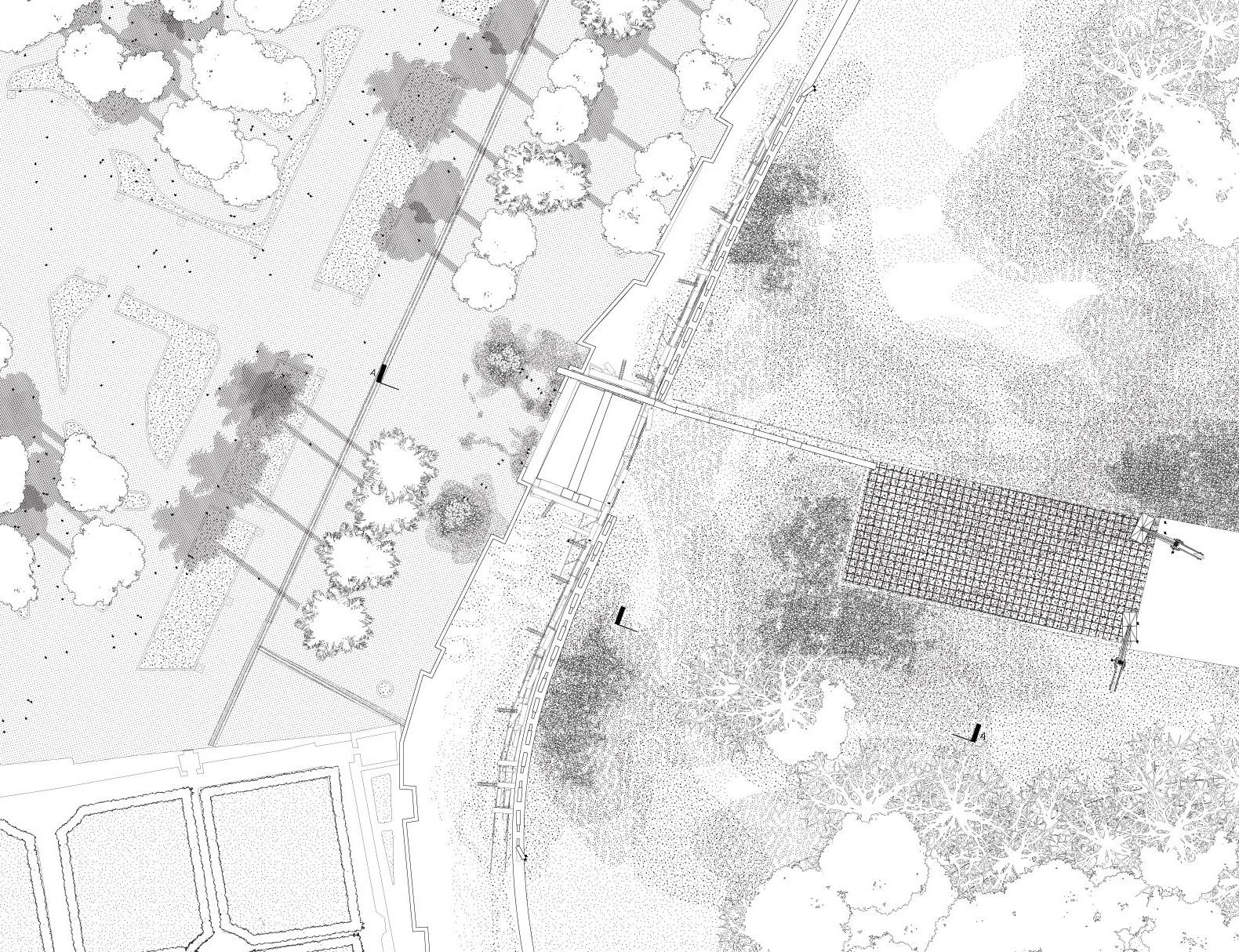
However, human-nature connectivity has evolved ever since. It is not only about being physically in the nature but also emotional connections to the park. I design posts that grow mosses to absorb the heavy metals on the site as a result of extreme accessibility like the underground garage.
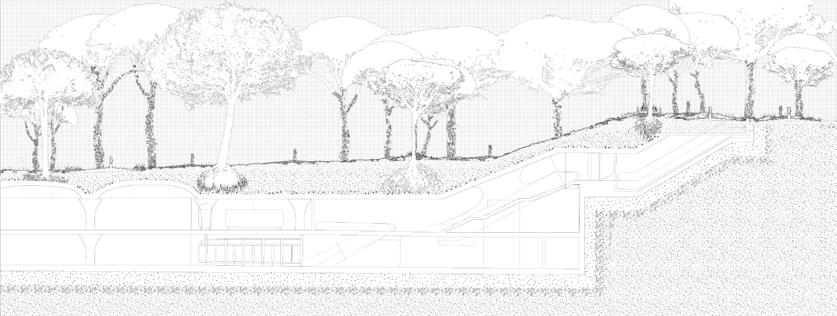
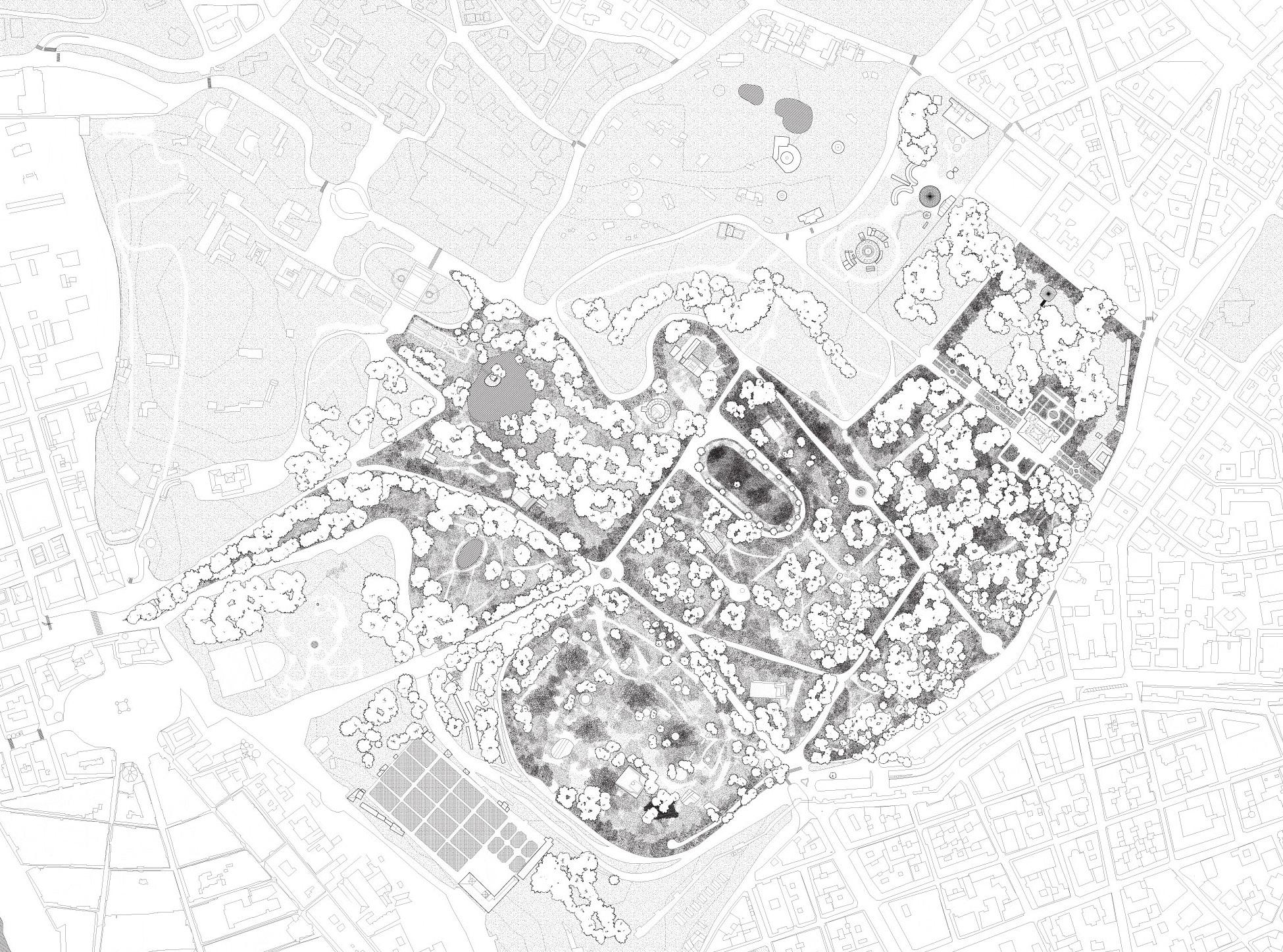
There is nothing that makes us more disconnected to nature than witnessing how selfish we are to destroy the life of nature. In the end, mosses will heal everything and wash away the disconnectivity if we let them.
to Converge: Intimacy of Spaces
arc201: How to Design Almost Nothing
Instructor: Shane Williamson
Course Coordinator: Fiona Lim Tung
Completed in April 2022
A good space will converge you with its circulation, and allow you to pause, to experience its spatial intimacy
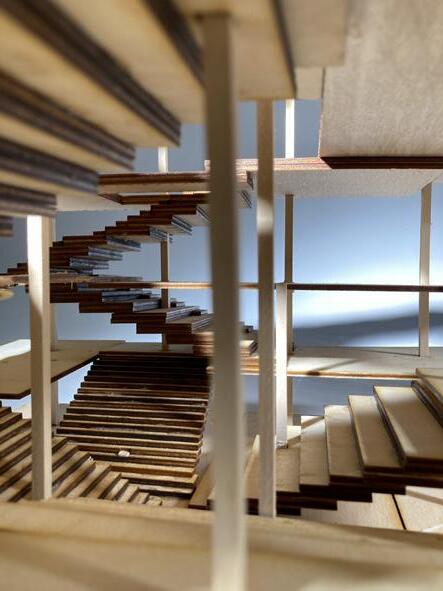
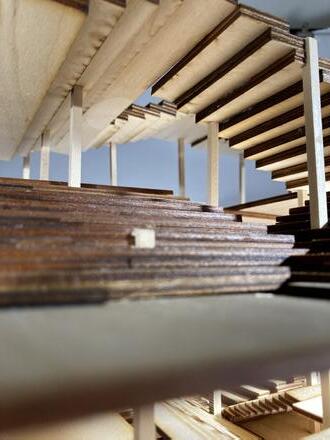
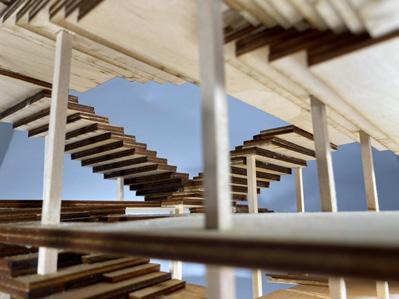
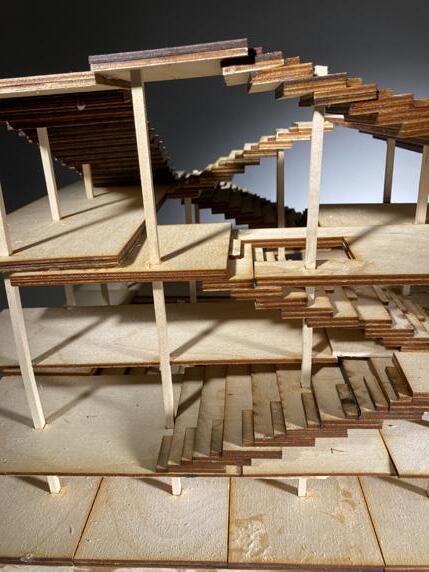
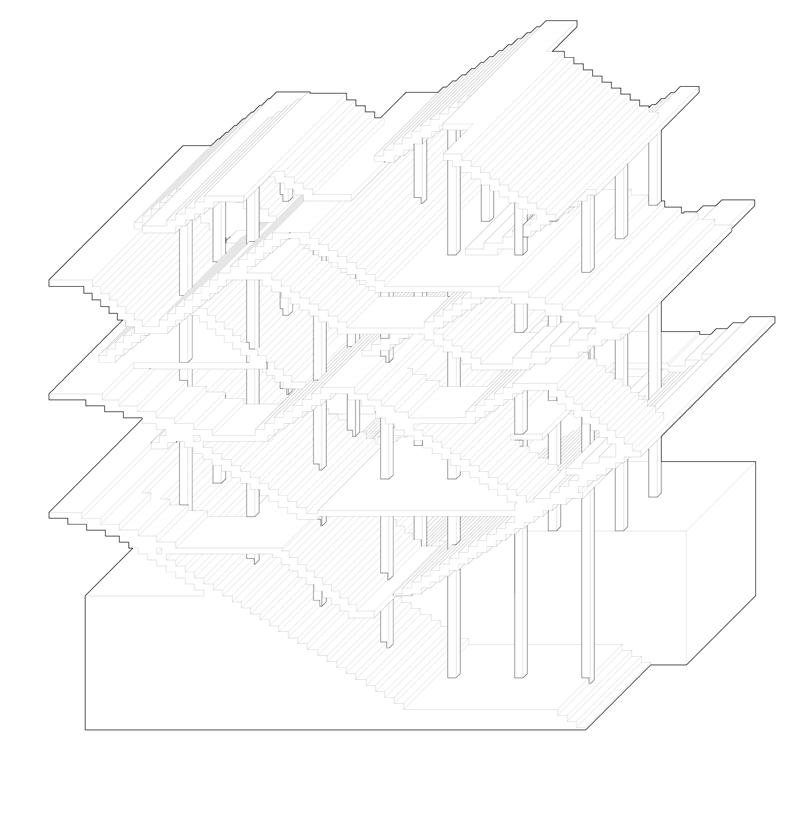
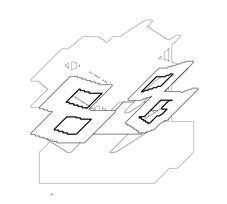
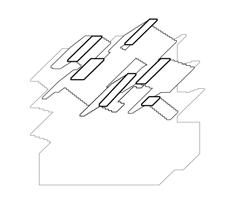
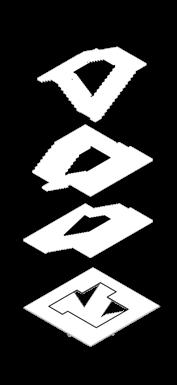
I began with the process of convergence, using stairs, by organizing them sectionally, before extuding them and add voids and activities to make the spaces accessible
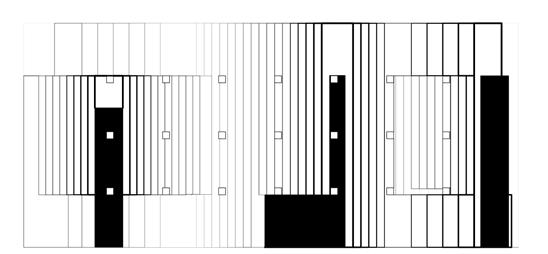
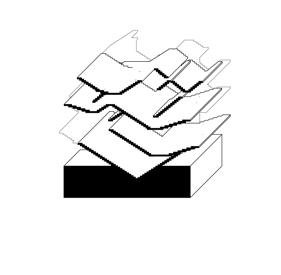
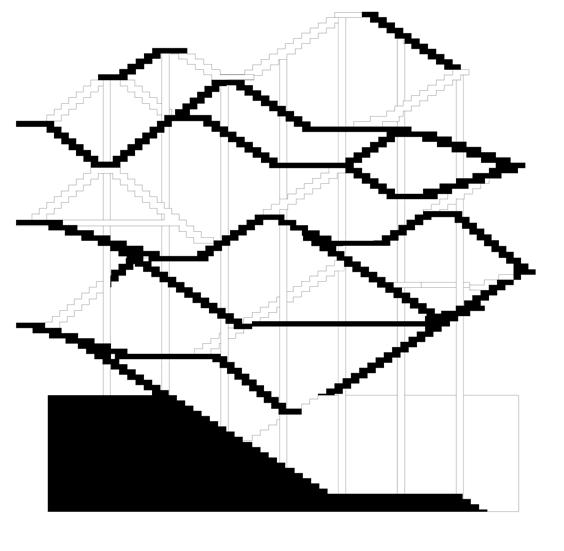
By the end of the this experimentation, I discovered that by using only stairs, I am able to create a space where people can be intimate with the spaces, circulations and each other through convergence.
Elevation Oblique 1:50 m.
2. Voids How voids can converge stairs and allow people to walk up to the next level
3. Landings of convergence How Stairs lead to gathering landings
4. Dispersion How stairs disperse people
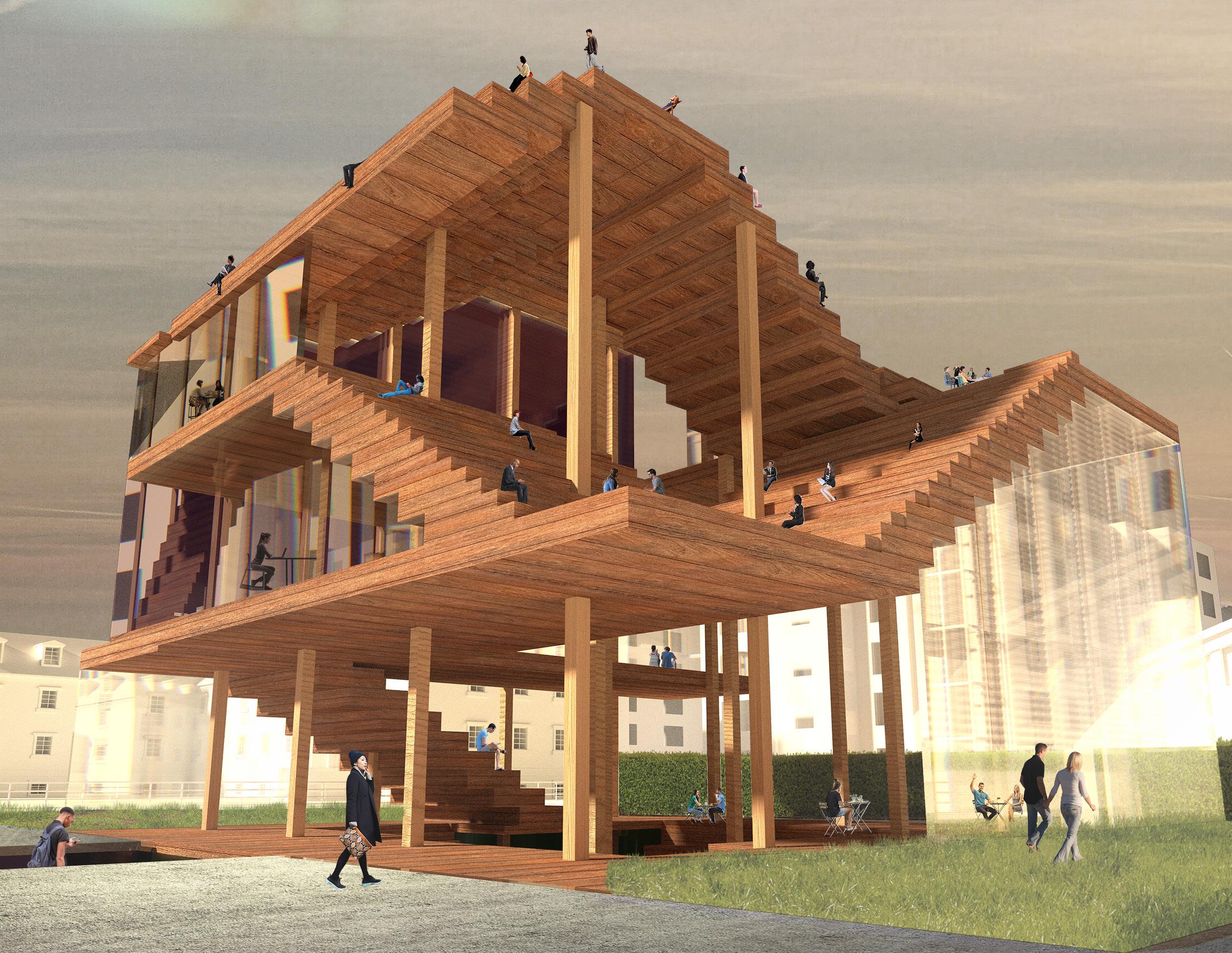
to Converge- Final Design
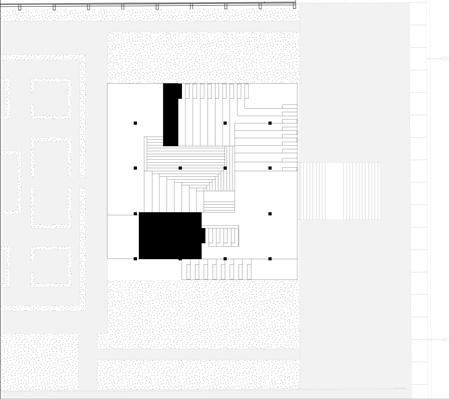
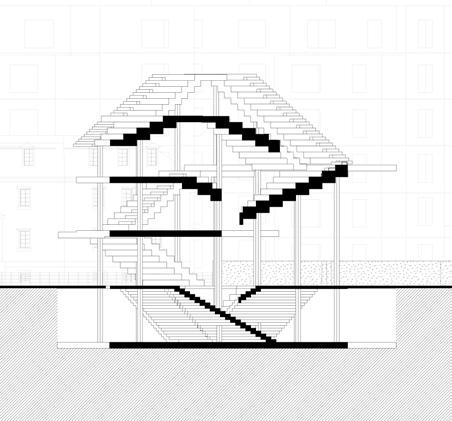
In the final look of this design, I created a building of stairs that converge everything together. As you enter the building, you’ll be intrigued by a series of stairs that invite you to be parts of their circulations, either by lingering or walking up on them.
When you circulate around the void and pause to mesmerize the views and breath the air, the stairs would remind you voids are more powerful when they aren’t enclosed by walls.
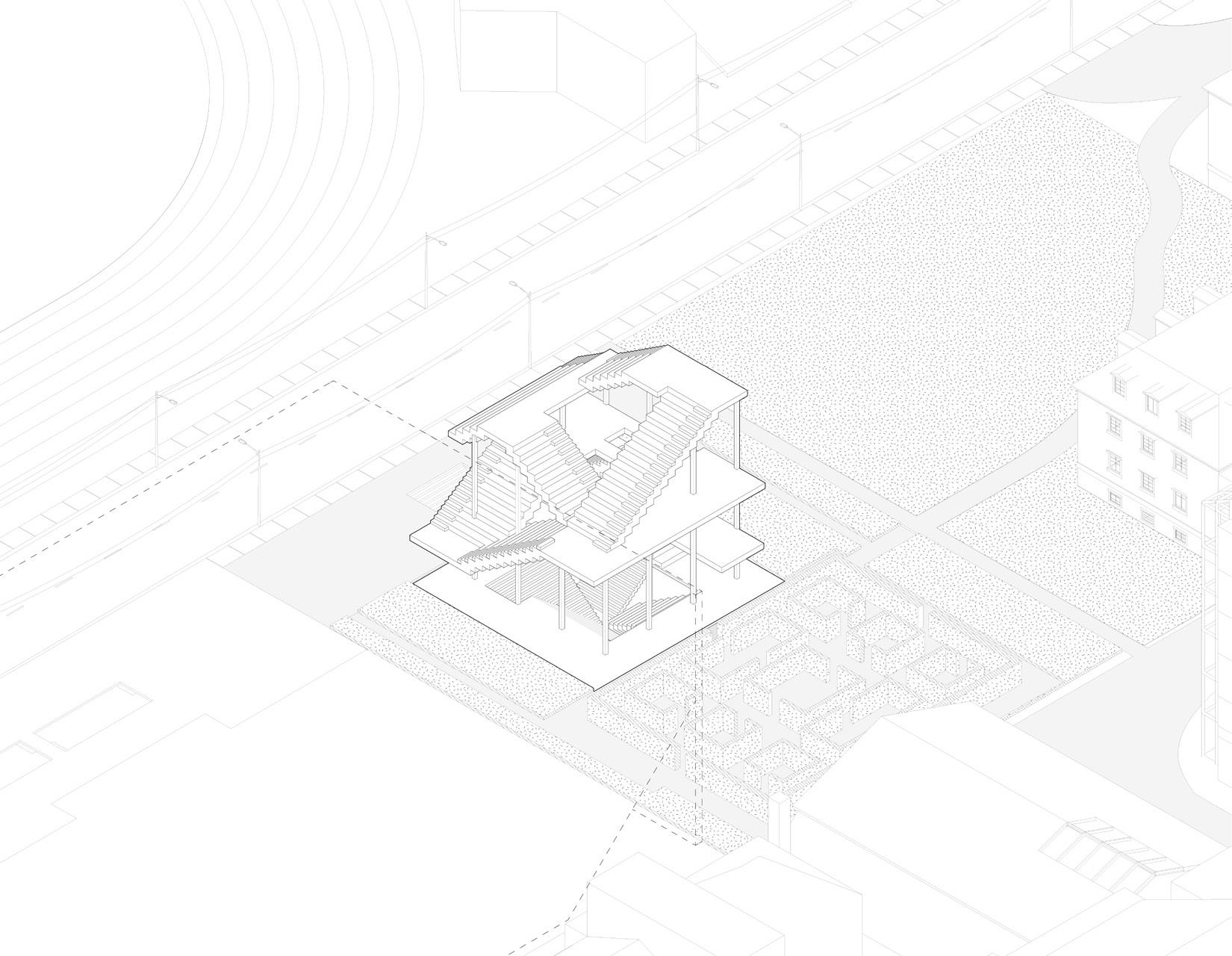
If you decide to enter from the labyrinth, you’ll be transitioned from the softscape structure to the wooden structure
Cone-Cube Student Housing
arc362: Architecture Studio IV
Instructor: Mauricio Quiros Pacheco
Cousre Coordinator: Jon Cummings
Course Completed in : April 2024
Aggregations Experimentation -Maison Du Brésil
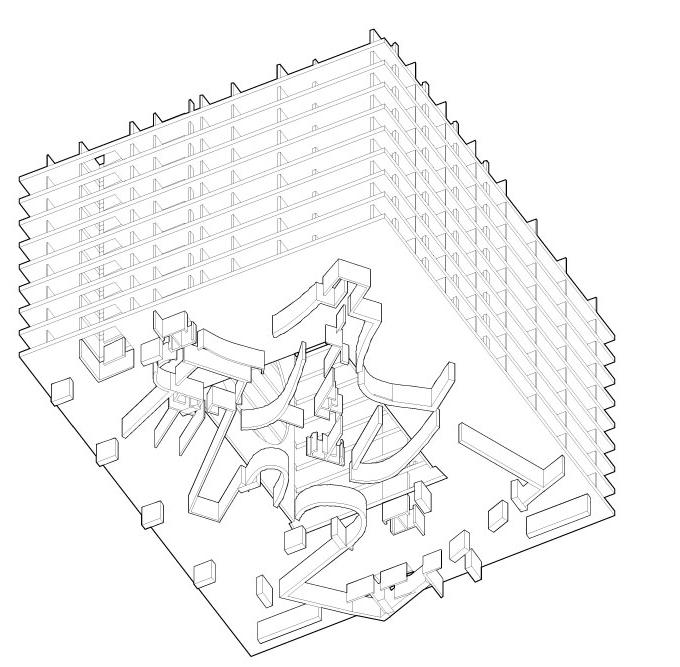
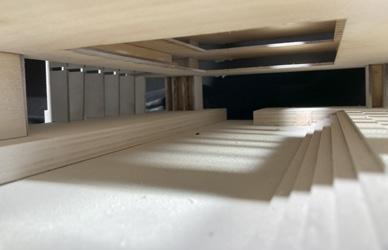
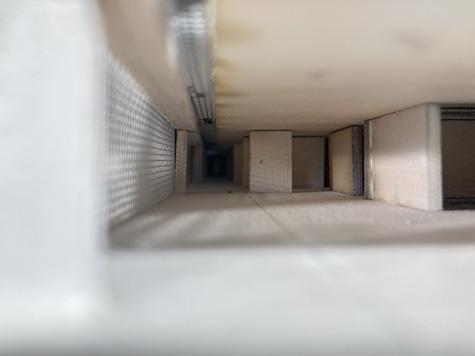
Worm’s Eye View
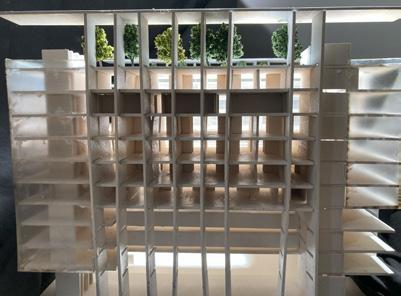
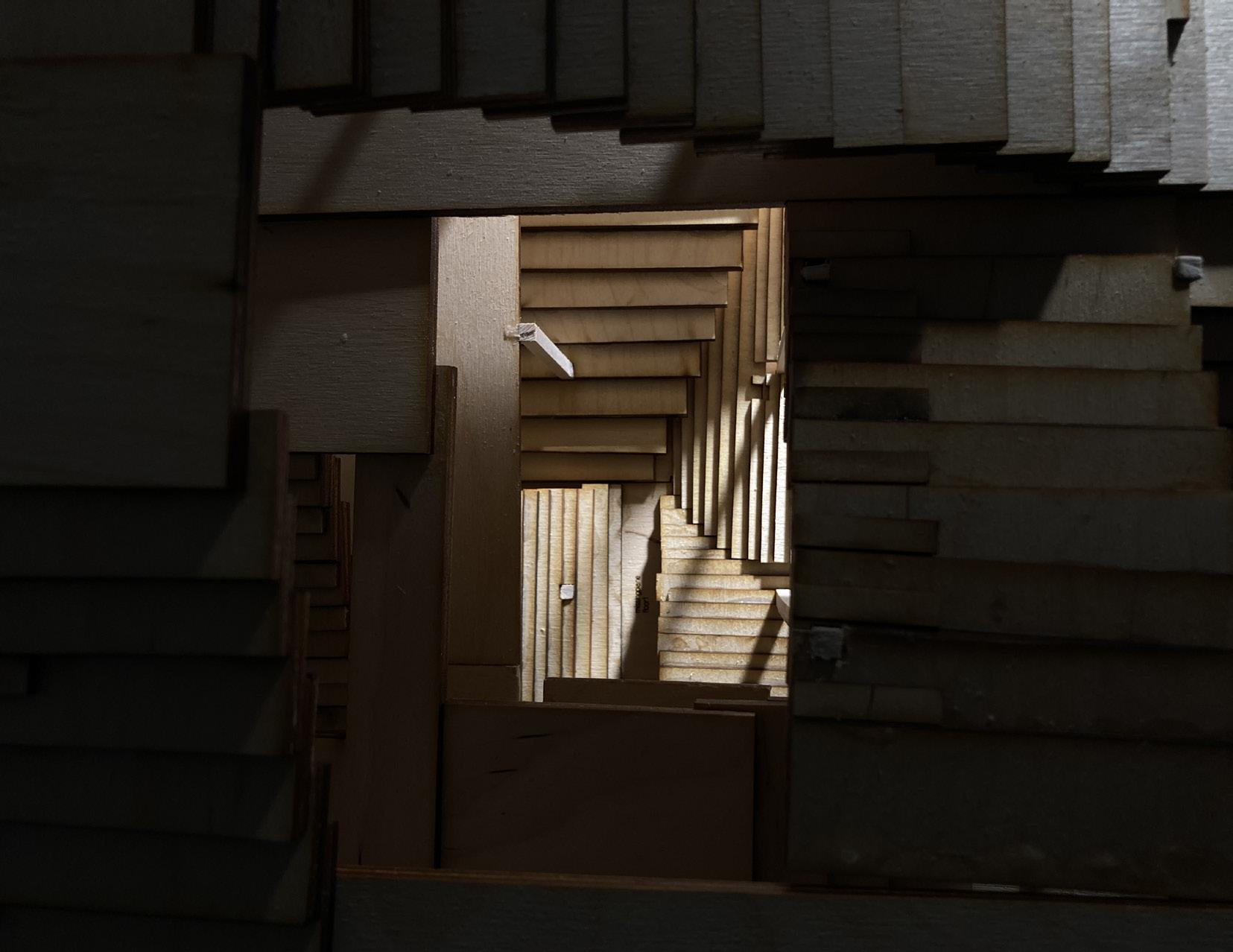
The project began by creating 3D diagrams of precedents to find barriers within the Toronto site. I am fasicated by Le Corbusier’s chassis structures and Luis Kahn’s atrium’s void that I combined them. Now we have a massively structured student residence that breathes through the centric hallways and void. The void allows students to admire to structural mess from their organized units.
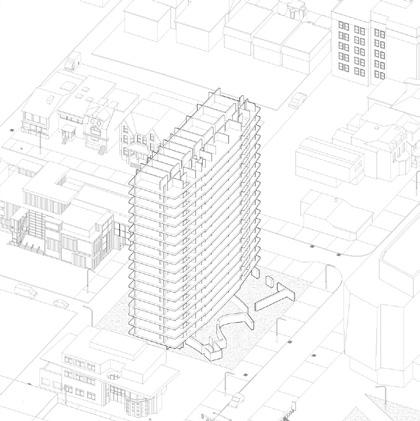
Aggregation 1
The chassis structure is treated as an open free-ground floor that’s overlapped with landscape and creates a semi-public space.The tower is tilted to align with property lines.
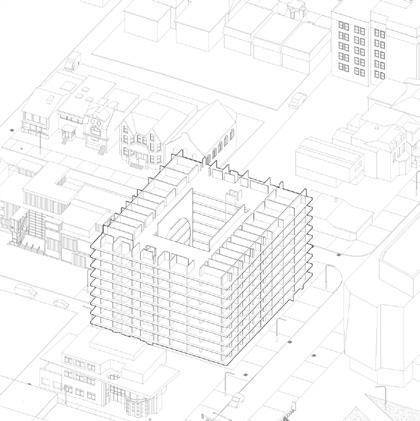
Aggregation 2
All the units and rooms are placed along the outer edge which leaves the O shape hallways along the voids.
Aggregation 1
This section cuts through elevator’s vertical circulation. The units are vertically aligned. Private units are on the right and service rooms are on the left. They are separated by the hallways
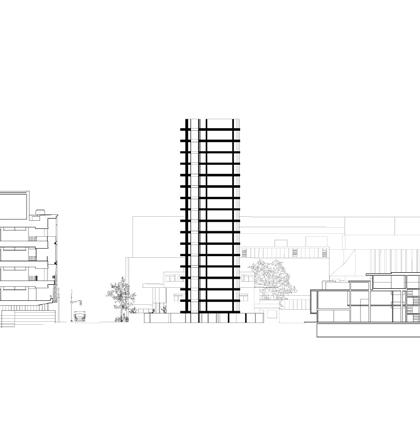
Aggregation 2
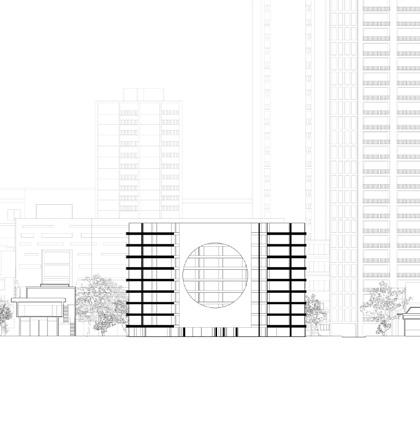
The same kinds of spaces are placed opposite to each other. The O facade that creates a threshold of light in Luis Kahn’s library atrium is now used as a threshold of privacy. This section cuts through elevator’s vertical circulation on the right.
Isometric
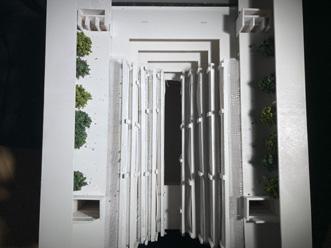
The facade is triangularly exposed to show off the cube scheme.
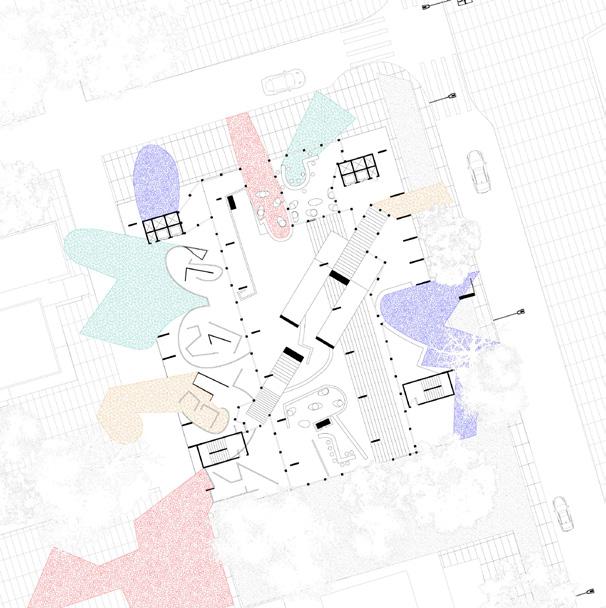
The funky-shaped pavements are designed to blur the thresholds between the ground floor and street; street walkers become parts of building just by being on the curbs.
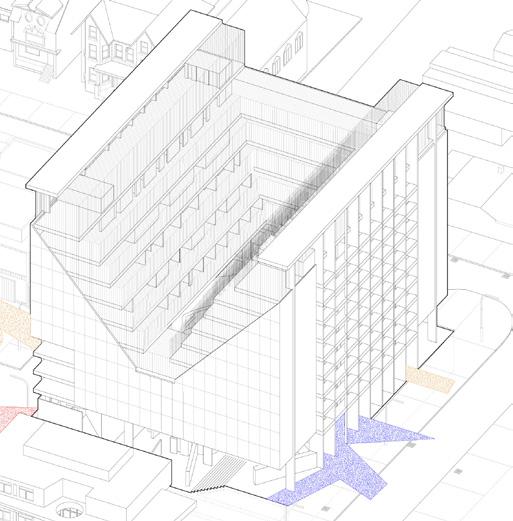
Context
Plan
Buidling on the chassis structure, the maze is designed for children from the Early learning centre while the free-plan funky-shaped walls are designed for semi-public study area for the students from Robarts.
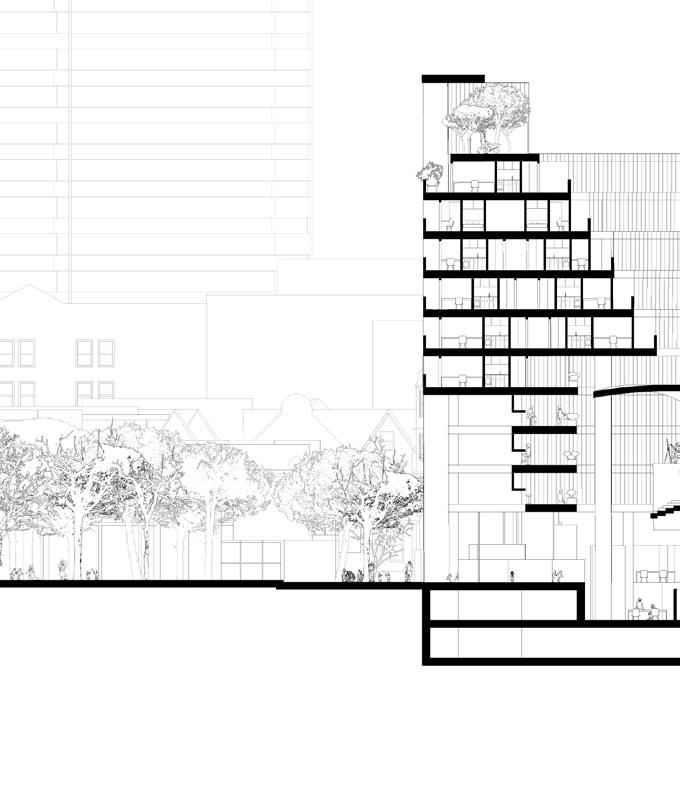
The Cone and Cube schemes are used and can be seen in the section. The cone(or triangle) is used to give the fullest amount of sunlight access possible while the cube gives the student residents on the lower floors an opportunity to appreciate the interior of the building’s atrium. The upper floors have double loaded corridors that allow the circulations to terrace.
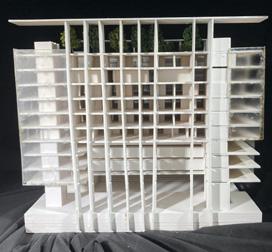
Site: University of Toronto, St. George, intersected by Huron St., and Harbod St.
The winter garden is at the top floor.
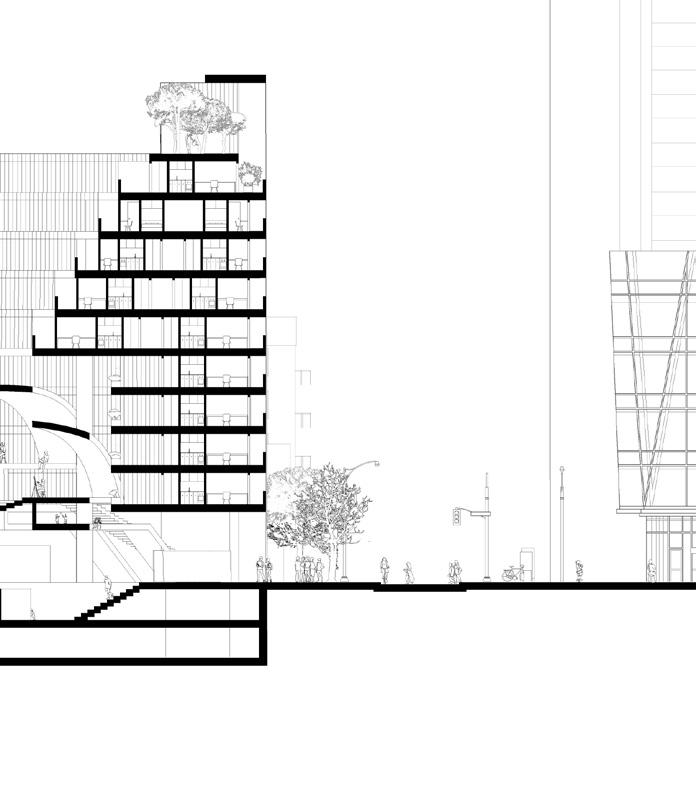
For lower floor aggregation, the units align along the atrium which also provides light access.
Section
The terracing provides a kind of socializing spaces that also works as circulations for students who prioritize socialization.
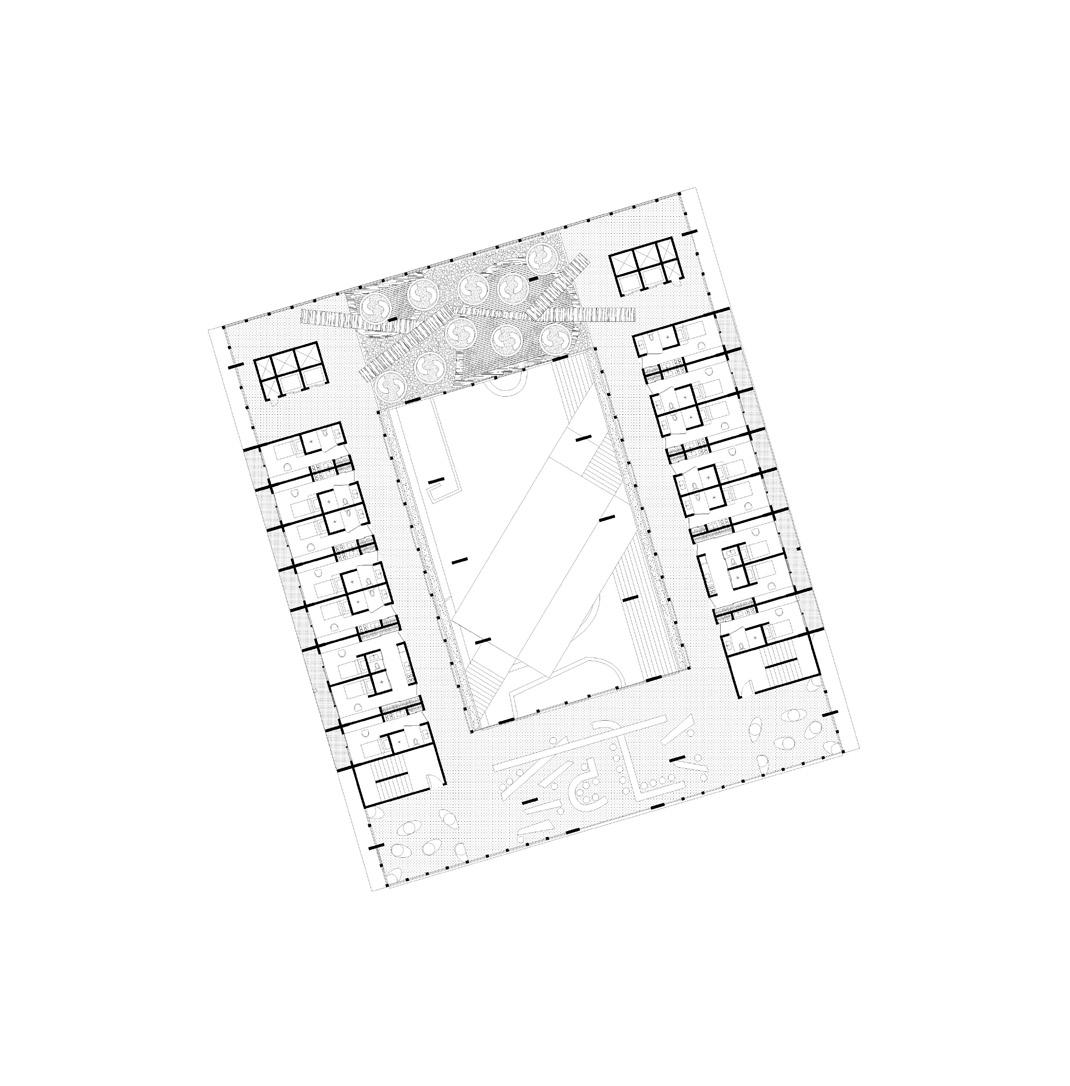
Floor Plan
Each floor has a zen garden and open kitchen/ communal eating area for semi-private communal area
The toilet and shower are separated so each occupant can use one of them while the other is occupied.
When there is one more good design, there is one more hope.