
Julianne Ramsey juliannekellyramsey@gmail.com Prepared for Issuu
RETROSPECT
THINKER-MAKER RESIDENCY
2024
1. RETROSPECT
Spring 2024
4000 Level Studio — “Collage in Three Acts”
Prof. Susan Massey
Individual Project
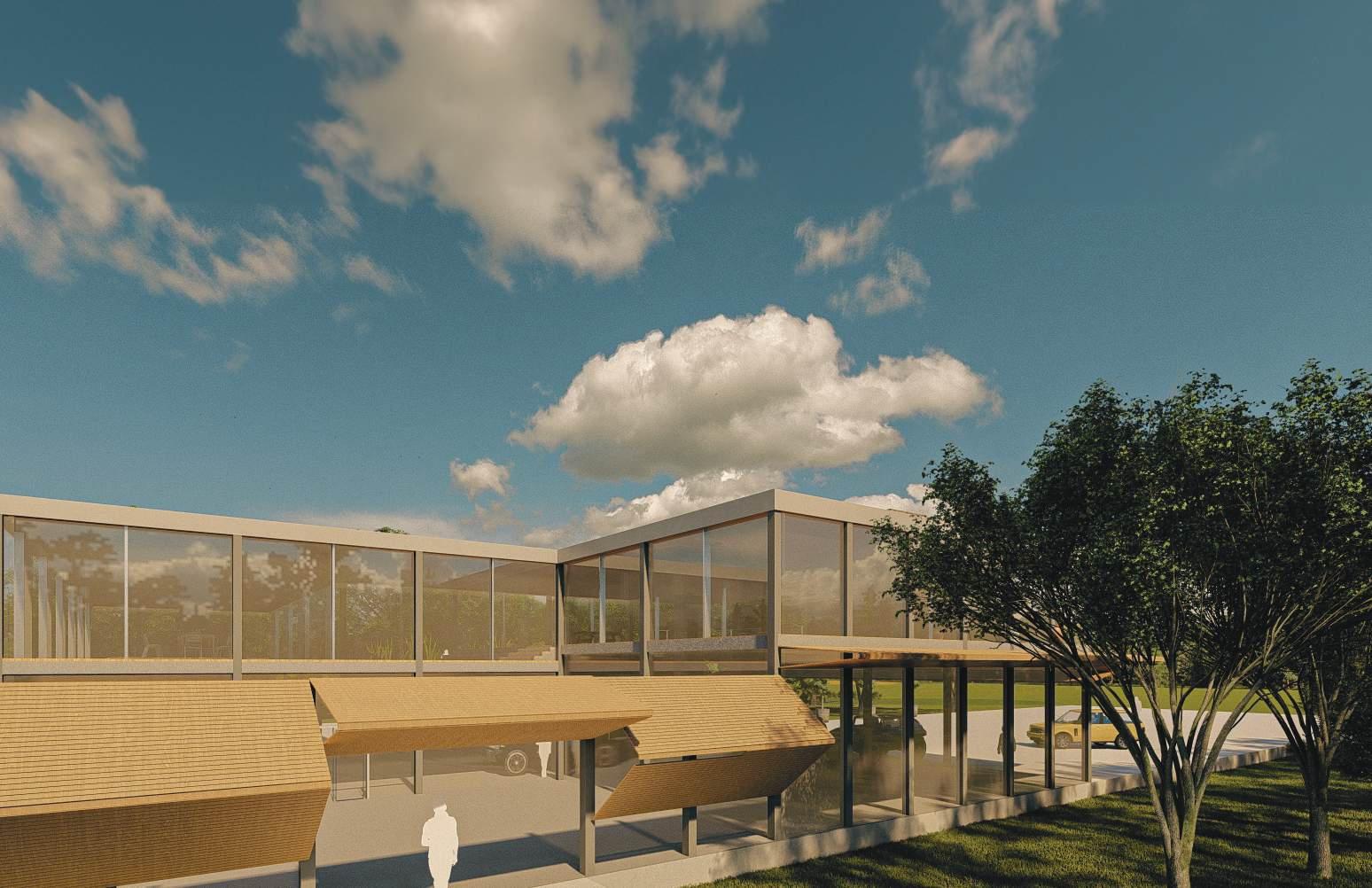
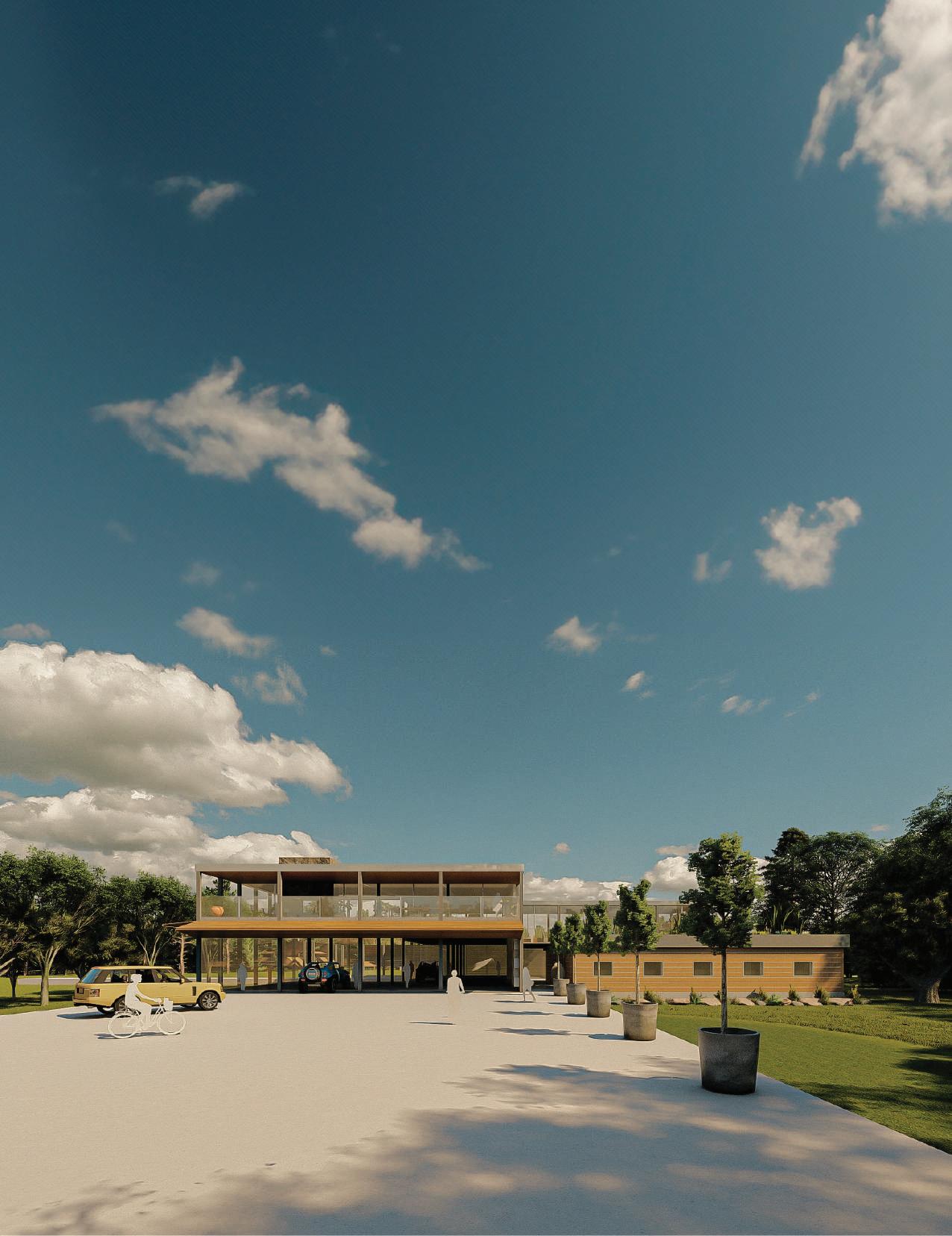
Designed for hobbyists, “Retrospect” is a residency where the worlds of hobbyist photography and vintage expedition vehicle restoration collide in a celebration of creativity, craftsmanship, and community. At the heart of the residency program lies a vibrant community where photographers and restorers come together to share their knowledge, experiences, and passion for their crafts.
STUDIO BRIEF Professor Massey’s “Collage In Three Acts” studio sequence was designed to encourage collaboration and creativity among senior capstone students through the art of collage. Students were tasked with designing a residency program and coinciding building for a pairing of two thinker-maker types as an act of “collaging” and finding common ground between seemingly unlikely artist archetypes. Students self-selected the site of their projects within Boulder city limits.

SITE SELECTION
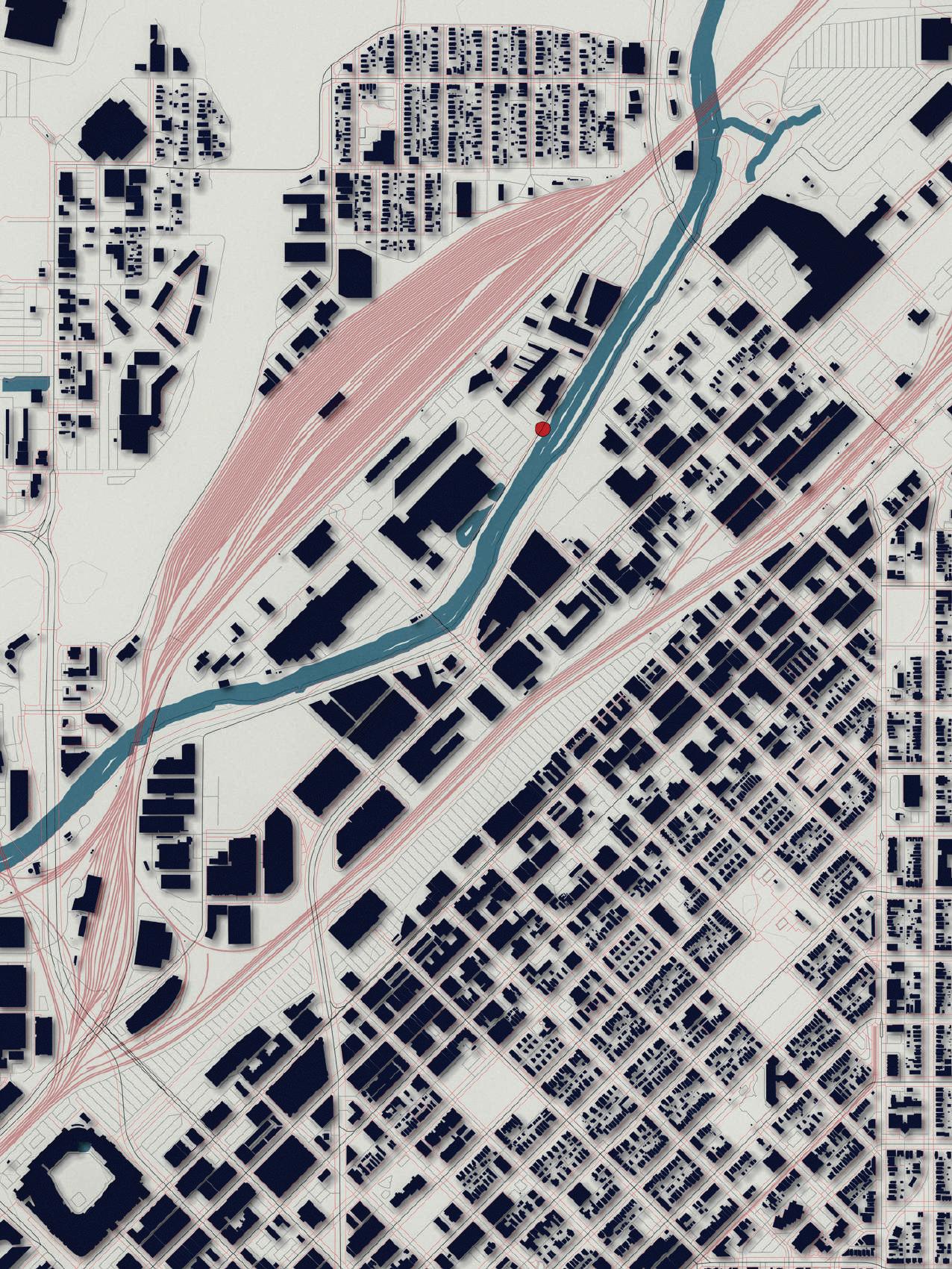
The site occupies a strategic location on a vacant parcel along the Boulder Creek Path, bridging the bustling heart of downtown Boulder with the wild expanse of Boulder Canyon This unique position at the intersection of urban and natural environments provides an ideal testing ground for expedition vehicles and Colorado nature photography, while the well-trafficked path ensures visibility and engagement with the public. The location serves as a natural gateway between city life and mountain wilderness, perfectly positioned for creative exploration of both worlds.
ARAPAHOEAVE
TRADITIONALLY:
HOME “LIVING SPACE”
GARAGE “HOBBY SPACE”
Especially for someone like a vintage expedition vehicle restorer, hobbyists in our culture tend to tuck their hobby workspaces away into quiet places outside of the home like a garage, where the rest of their abode remains a clean and livable space.
GARAGE, WORKPLACE “HOBBY SPACE”
IN RETROSPECT:
RESIDENTIAL QUARTERS “LIVING SPACE”
At the residency, the home-hobby space relationship is inverted so that participants are encouraged to pursue their hobbies fully.
Residential quarters are dedicated a small and condensed amount of square footage in a separate building, while hobby workspace is maximized for both hobbyist photographers and car restorers.
8’ Spacing For Humans
16’ Spacing For Cars
STRUCTURAL PLAN
8 SCALE: 0 16 32 N
LEVEL 1 PROGRAM
GARAGE
PHOTO SPACE
BAR/LOUNGE
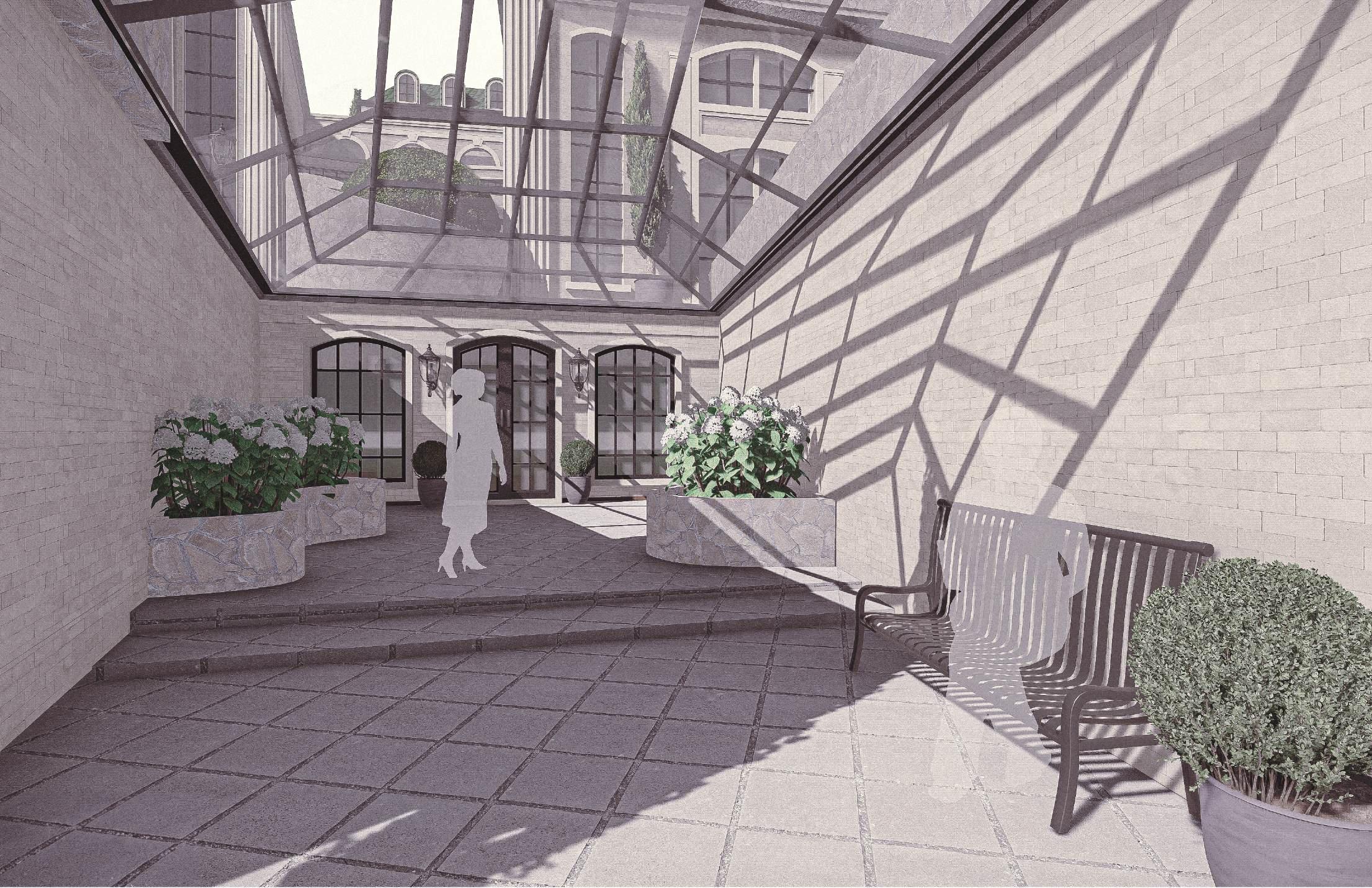
PUBLIC OUTDOOR PATIO
WALL SECTION
GARAGE-LEVEL
2” Glazing
8” Steel Tube
4” Slab On-grade
4” Aggregate Under Slab
8” Steel Tubes
Solid Gas Retarder Under Gravel
Foundation Wall
Concrete Drive Pad
Footing
CONSTRUCTION STRATEGY
The delicate steel tube framing system, composed of 8" square sections, rises gracefully from a robust concrete drive pad, creating a lightweight yet sturdy structural rhythm. Large bi-fold doors integrate seamlessly into the transparent glass facade, their industrial character softened by the slender frame proportions, allowing the building to transform effortlessly between an enclosed workspace and an open-air pavilion that welcomes both vehicles and pedestrians.
















Open and airy, the main level of the residency building is a semi-public space to welcome members of the greater Boulder community who may be curious about the creative work being done by residents. The residential quarters, designed to serve 10 residents, are separate from the main workspace to allow for privacy and quiet living, but ultimately condensed to encourage collaboration amongst residents.












The second floor houses resident-only communal spaces that mirror the
and
where








8 SCALE: 0 16 32
PUBLIC-PRIVATE HARMONY.
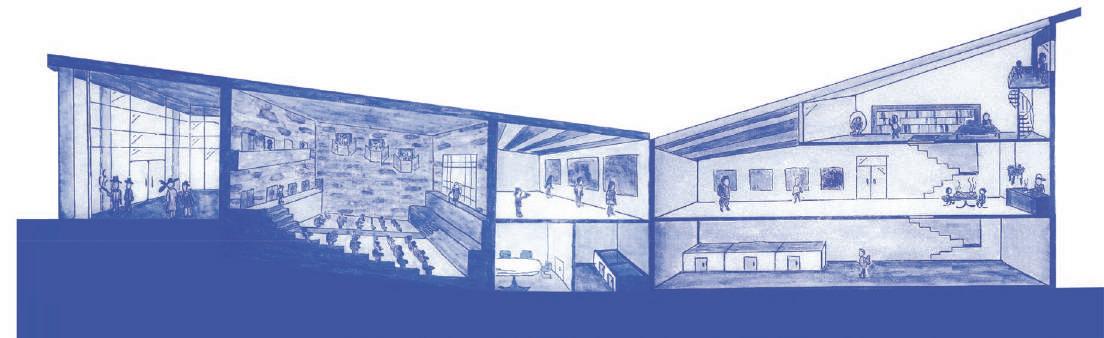
A dramatic sectional cut reveals the building's dual nature: the ground floor buzzes with creative energy and public engagement, marked by high ceilings and flowing spaces, while above, the private residential floor provides a serene retreat with intimate scaled rooms and thoughtfully sequestered living quarters for the residents.


8 SCALE: 0 16 32 N
SHARED CREATIVE LIFE.
A secondary building section reveals a communal story: the ground floor workshop space accommodates the careful restoration of expedition vehicles and vintage cars beneath tall ceilings and industrial glazing, while the second floor opens into shared living spaces where residents gather for meals, relaxation, and creative exchange amid views of the Boulder foothills.
FINAL THOUGHTS
This residency center represents more than just a building – it embodies a vision for creative exchange at the intersection of craft and community. By bringing together automotive restoration, photographic practice, and communal living in the heart of Boulder, the project creates a unique platform for cultural dialogue. The design responds thoughtfully to its context, bridging urban vitality and natural wilderness while fostering both public engagement and resident collaboration. Through its careful balance of workshop spaces, gathering areas and private, condensed residential quarters, the building serves as a catalyst for creative exploration, technical innovation, and meaningful community connection. This convergence of purpose and place demonstrates architecture's power to nurture both individual craft and collective experience through a simple and clever inversion of the typical hobby-home spatial relationship.
VANTAGE
MICROHOUSING DEVELOPMENT 2023
2. VANTAGE
Spring 2023
2000 Level Studio
Prof. Brandon Anderson
Individual Project
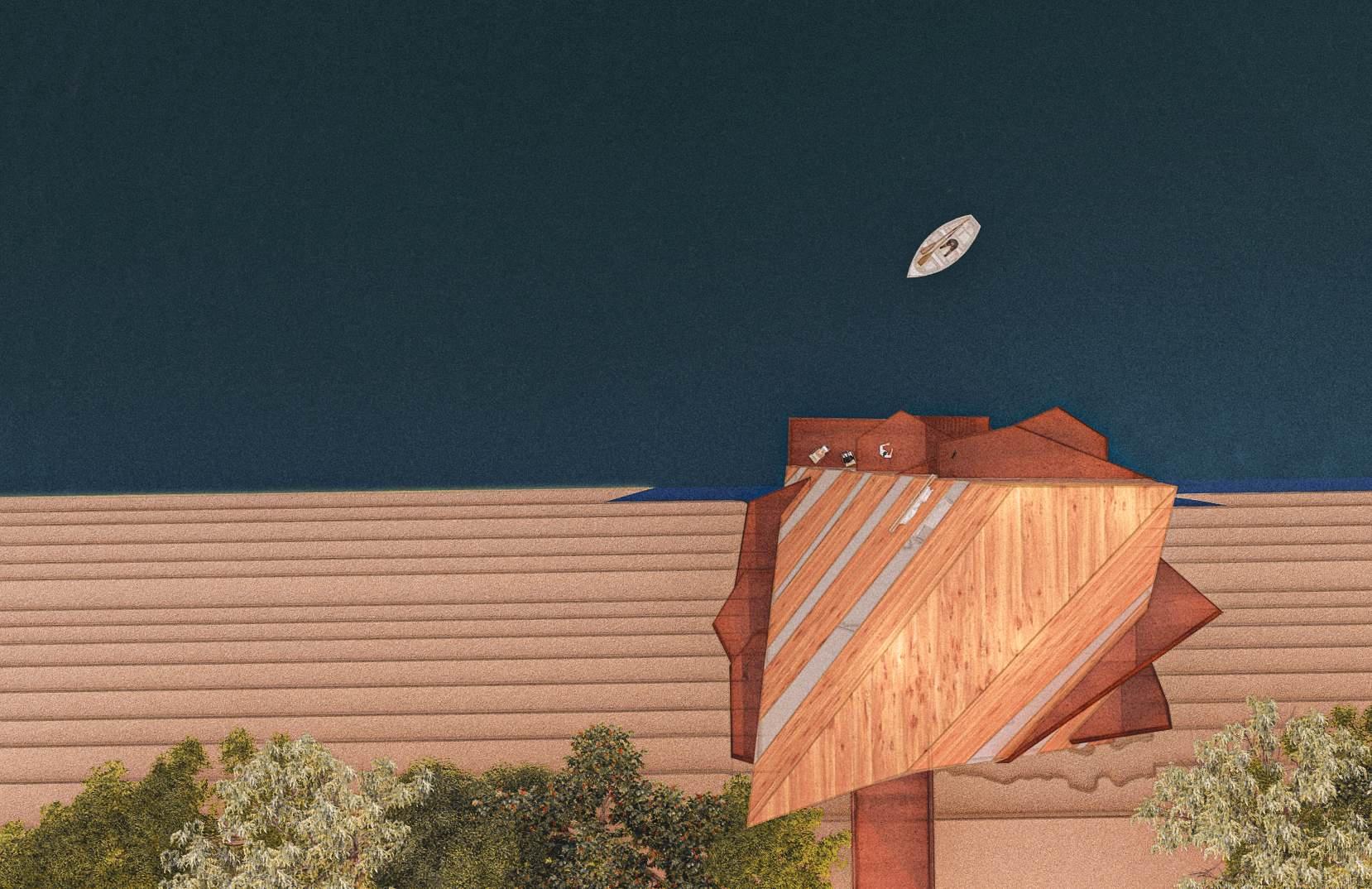
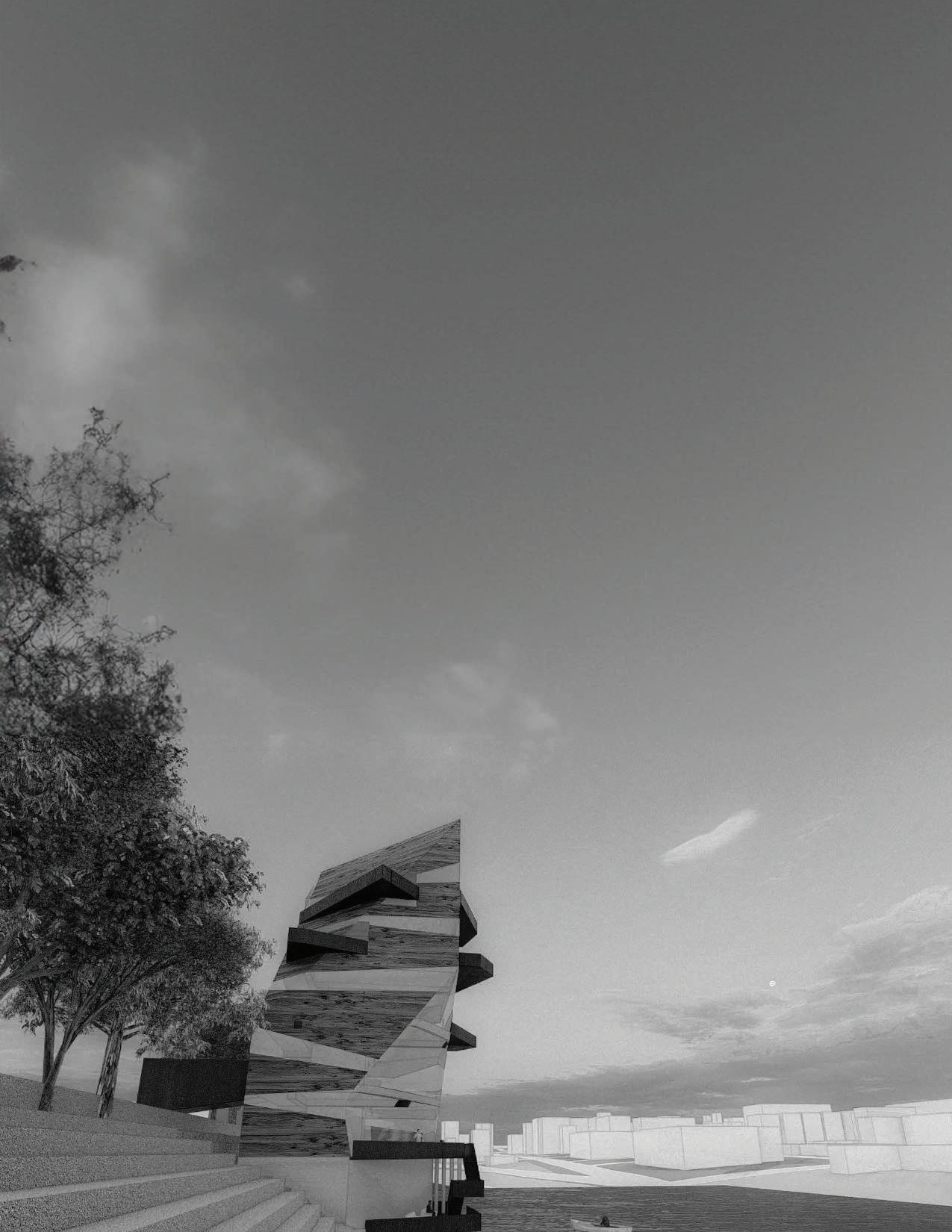
Perched along Denver's South Platte River, VANTAGE reimagines micro-housing through its boldly subtractive architectural form, offering eight meticulously crafted 350-square-foot residences. The development's sculpted geometry creates an immersive 360-degree experience, seamlessly connecting residents to the majestic Rocky Mountains, vibrant cityscape, and serene riverfront. By carving away traditional spatial constraints, the development transforms compact urban living into an expansive dialogue with its surroundings. This dynamic approach mirrors Denver's evolving identity while evoking thoughtful design that can make even the most efficient spaces feel limitless in potential.
STUDIO BRIEF The Foundations of Architecture (ARCH 2100) Studio challenges second-year students to develop a site adjacent to the South Platte River in Denver’s RiNo District, focusing on creating an 8-unit micro-housing community with access to the river. Through this project, students learn core architectural design principles by developing a singular building that facilitates community interactions and encourages efficient living standards.
SITE ANALYSIS






VANTAGE Microhousing
South Platte River
Existing City Buildings










Denver’s River North “RiNo” Arts District’s blend of ‘urban charm’ and ‘Industrial revival’ makes it a unique and desirable locale for young professionals to live and work. Situated right on the river, the site affords water access to residents, as well as a Walk Score of 70 (“very walkable”) and a Bike Score of 95 (“biker’s paradise”) -- also located in the heart of Denver, in which downtown and mountain views juxtapose. The up-and-coming RiNo neighborhood benefits greatly from the prospect of a diverse variety of housing options and creative solutions to housing-relating issues afflicting the City of Denver.
SUBTRACTIVE FORM
reveals Denver’s mountain, river, and city views.

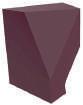
MOUNTAIN VIEWS

Form carves away at the building’s northwest corner, allows upper floor residents to enjoy mountain views from their balcony.



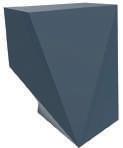
VIBRANT CITYSCAPE

Triangular cut off of the northeast corner of the building gives residents views of the developing RiNo Arts District and a dynamic perspective on denver’s urban life.


RIVERFRONT ACCESS

Curvy sculpt on the lower side of the building facing the river offers a grand welcome to the outdoors and the recreational activities the South Platte River has to offer.








1. FLOOR ONE UNIT ONE (1), UNIT TWO (2) AND UNIT THREE (3)
2. FLOOR TWO UNIT FOUR (4), UNIT FIVE (5), UNIT SIX (6)
3. FLOOR THREE UNIT SEVEN (7), UNIT EIGHT (8)
4. GROUND FLOOR MAIL ROOM (C), LAUNDRY ROOM (D), RESIDENCE LOBBY
5. BASEMENT KAYAK STORAGE (A), RIVER ACCESS (B), COMMUNITY SPACE




The design for this micro-housing development transcends its role as mere shelter, emerging as a vital experiment in fostering both density and dignity in today's challenging housing landscape. The building form is strategically carved to maximize views and connections –offering residents glimpses of mountain peaks, city lights, and river corridors that make Denver unique. By weaving together efficiently designed units that adapt to both single professionals and couples with rich communal spaces, the project demonstrates how architecture can address housing accessibility while building meaningful community. The careful attention to varied floor plans, shared amenities, and sustainable living standards points toward a future where affordable housing and quality of life are not mutually exclusive. This development serves as a testament to architecture's capacity to tackle pressing social challenges while creating places people are proud to call home, all while maintaining a deep connection to Denver's natural and urban context.
THE ATHENAEUM
CAMPUS VISUAL ARTS & DESIGN CENTER 2022

ATHENAEUM
3. THE ATHENAEUM
Fall 2022
1000 Level Studio
Prof. Susan Atkinson
Individual Project
The Athenaeum is a transformative arts and design building at CU Boulder's creative campus, designed to make creative processes visible and engaging. The building embodies the concept of "see and be seen," creating transparent, interconnected spaces that invite visual interaction between creative disciplines. By encouraging students to showcase their work and process, the design fosters a culture of curiosity and collaborative exchange, blurring the boundaries between private creation and public exhibition.
STUDIO BRIEF The Fundamentals of Architecture (ARCH 1120) Studio challenges second-year students to redesign a site adjacent to the existing academic buildings of arts and design students, focusing on creating an interdisciplinary space that bridges the disciplines. Through this project, students learn core architectural design principles by developing a singular building that facilitates collaborative interactions across creative academic programs.
VISUAL ARTS COMPLEX
UNIVERSITY MEMORIAL CENTER
THE ATHENAEUM
CU ART MUSEUM

18TH STREET
CENTER FOR ACADEMIC SUCCESS AND ENGAGEMENT
SITE PLAN
BUILDING ENTRANCES
ENVIRONMENTAL DESIGN BUILDING
IMIG MUSIC BUILDING
EUCLID AVE.
With the Arts and Design Quad as its locale, The Athenaeum is a hub that connects disparate visual arts buildings on campus with its multiple entrances, while improving the overall circulation of the site. Much like the visual and performing arts, The Athenaeum encourages seeing and being seen among students and visitors alike.
MEN’S ROOM

LADIE’S ROOM LOBBY




OUTDOOR PLAZA

DESIGN GOALS AND EXECUTION
Encourage people-watching with indoor balconies, opera box auditorium seating and use of glass in the Art & Architecture Library.

Connect existing arts & design buildings with multiple entrances to The Athenaeum.

Empower students to put themselves and their work on display with grand auditorium and gallery space.

Activate curiosity with Art & Architecture Library featuring an Archive Loft.






CAFE & STUDY SPACE
GROUND FLOOR
BASEMENT

ROOM
ROOM CONFERENCE ROOMS OFFICES
MEN’S
LADIE’S
BALCONY SEATING

OPERA BOX SEATING



BALCONY SEATING
MEN’S ROOM
SECOND FLOOR
FLOOR PLANS
LADIE’S ROOM

LIBRARY & READING ROOM











ARCHIVES LOFT


OLYMPIA
WORKING HORSE MUSEUM AND EQUESTRIAN CENTER
2023
4. OLYMPIA
Fall 2023
3000 Level Studio
Prof. Jeff Shi
Julianne Ramsey & Olivia Hayes (In Full Collaboration)
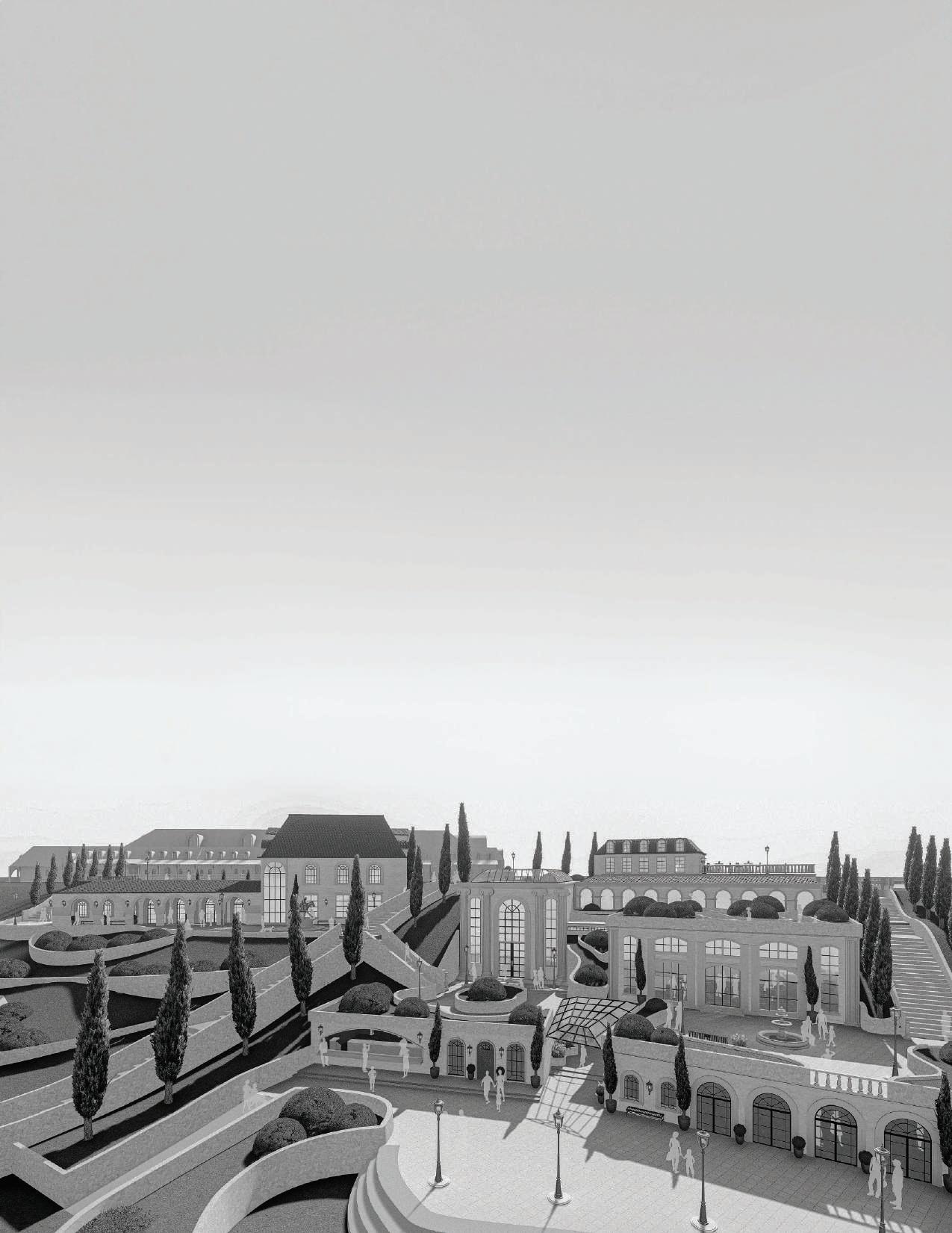
No architecture precedes this Working Horse Museum featuring a full Equestrian Center and Research Academy. “Olympia” campus seamlessly blends themes of tradition, grandeur, and polo excellence with modern ideals such as state-of-the-art research into how we might further foster the human-horse connection well into the future. Classical facades harbor modern, curious floor plans as a symbol of the deep history we share with equine and all that the future holds between humans and horses.
STUDIO BRIEF In this advanced design studio, students tackled the complex challenge of creating a hybrid facility that combines a museum focused on their chosen equine narrative with a working equestrian center for the Denver Polo Club. The program required careful integration of these curated exhibition spaces, extensive stabling facilities for over 70 horses, and a competition-grade indoor polo arena, while allowing students the creative freedom to expand the program in response to their individual interpretations. This unique studio course challenged students to weave their specific horse-related, research-based themes throughout both public and private spaces while addressing the technical demands of both museum design and elite equestrian facilities.

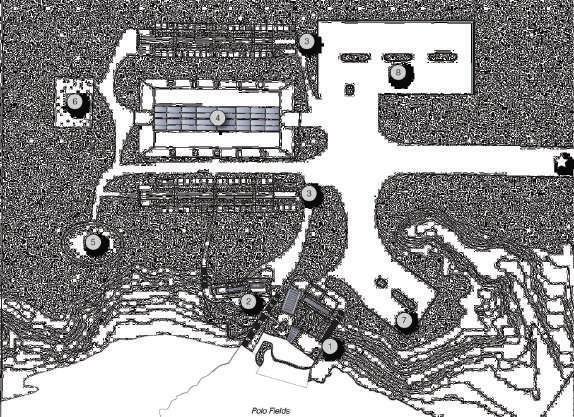
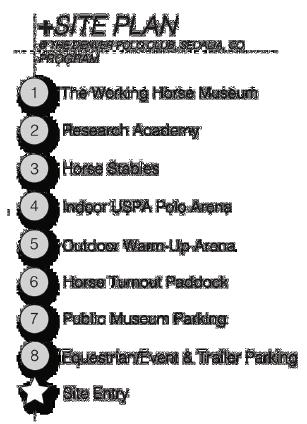
Site Analysis: A partnership with the Denver Polo Club granted students of the studio unique access to analyze their private polo grounds in Sedalia, Colorado. The sprawling campus includes competition-grade polo fields, 150 stables, and dramatic hillside terrain that would shape the proposed museum and equestrian center.
POLO’S WESTERN GATEWAY IN SEDALIA, CO
The Denver Polo Club's prestigious hillside site commands sweeping views of both mountain ranges and polo grounds , providing an ideal canvas for a museum that honors the sport's heritage and grandeur. The sloping terrain creates a natural progression from the museum at the base to the equestrian facilities crowning the hill, allowing the architecture to unfold dramatically across the landscape. This elevation positions the project to stand alongside renowned international polo clubs, while the site's proximity to both Denver and the Rockies reflects polo's unique character in the American West. The terrain's natural rise suits the project's dual program - museum visitors enjoy views of active polo matches and training below, while the equestrian facilities above maintain the privacy and serenity needed for the care of prized polo ponies.
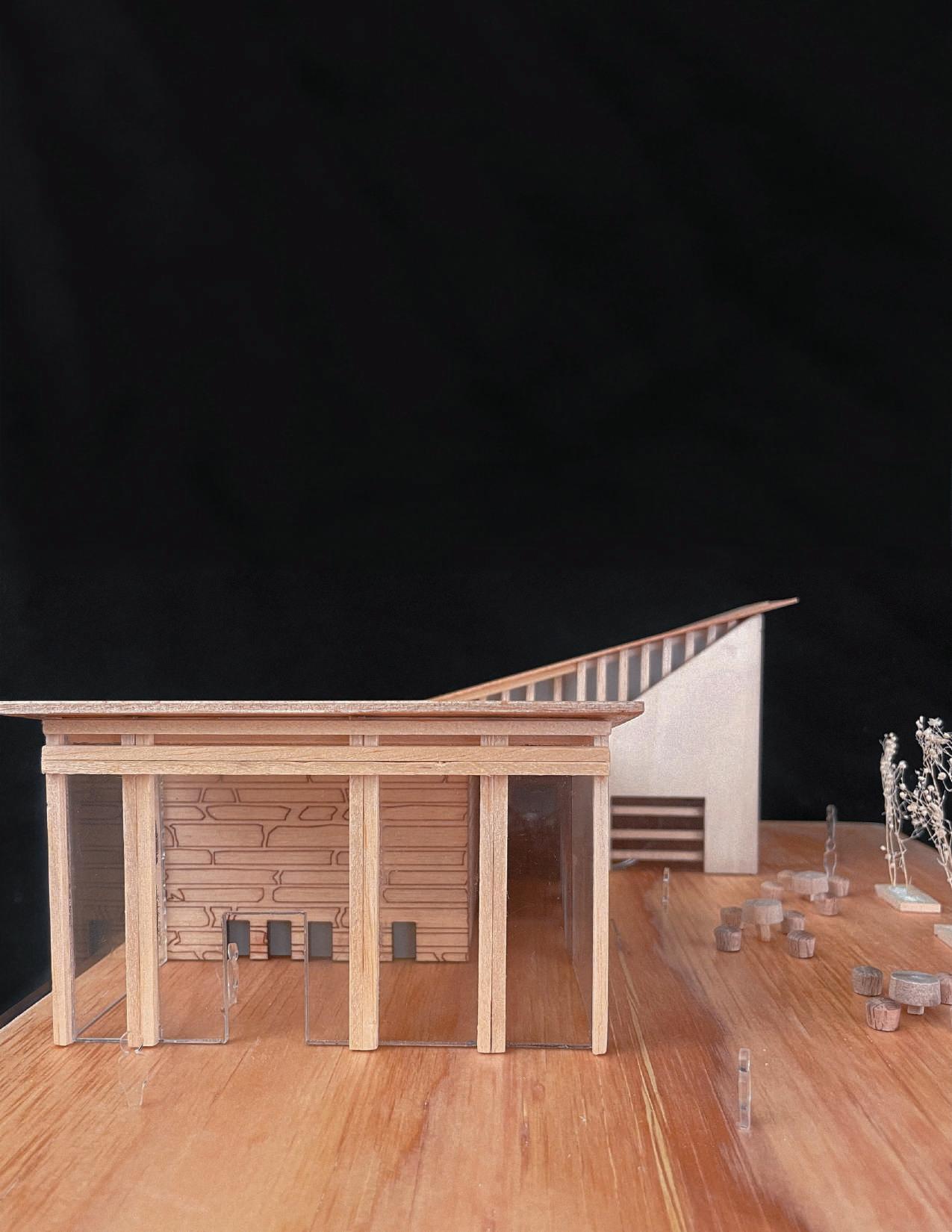
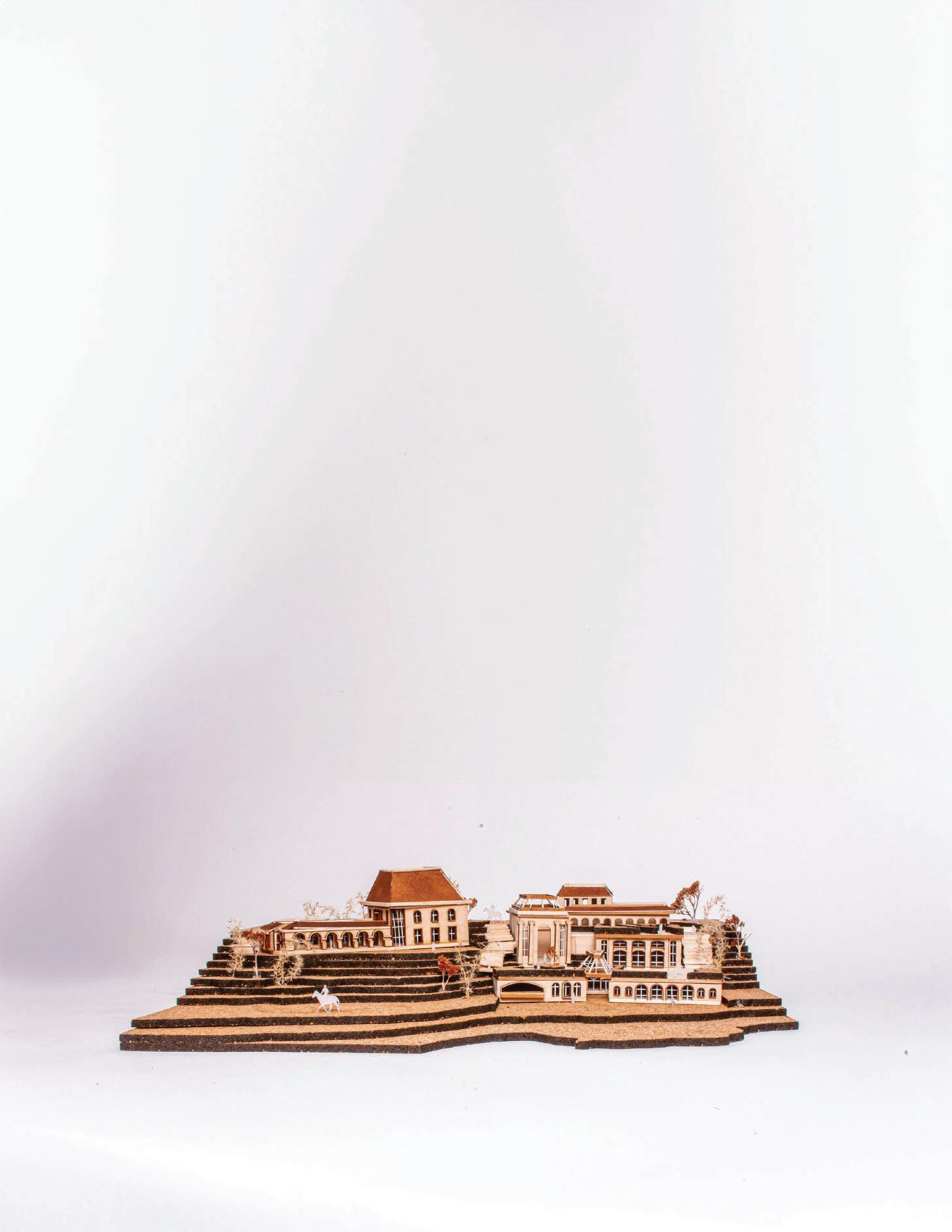
1/16” = 1’ scale model of museum and research academy on Denver Polo Club grounds. Laser-cut basswood, polystyrene detailing, and cork topography representative of hillside.
Driving Concept
Horse and Human Connection
Because humans and horses have such a rich history with one another, a classical approach was taken for the project in order to honor and embrace equines’ heritage with man. Modern museum floor plans represent all that the future holds for the horse-human connection.
DIAGRAM 1
Largely responsible for early globalization efforts and transfer of knowledge, horses are as fundamental to human history as humans themselves. All design decisions were driven by this powerful notion as a means of honoring the powerful impact horses have had on the modern world.






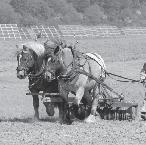
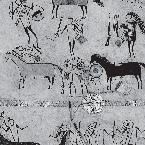


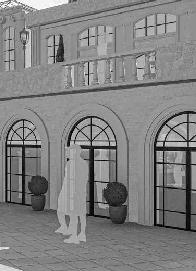




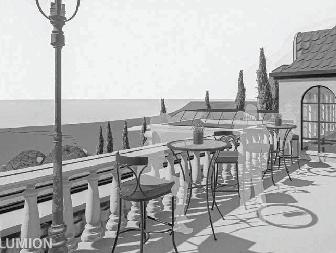
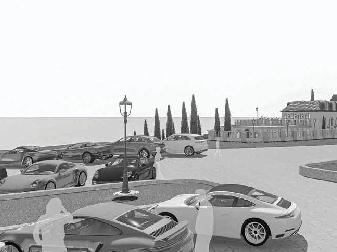
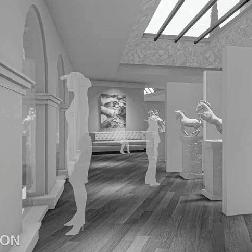



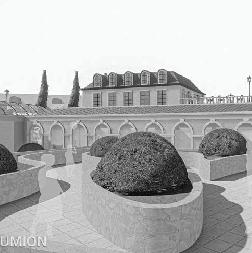


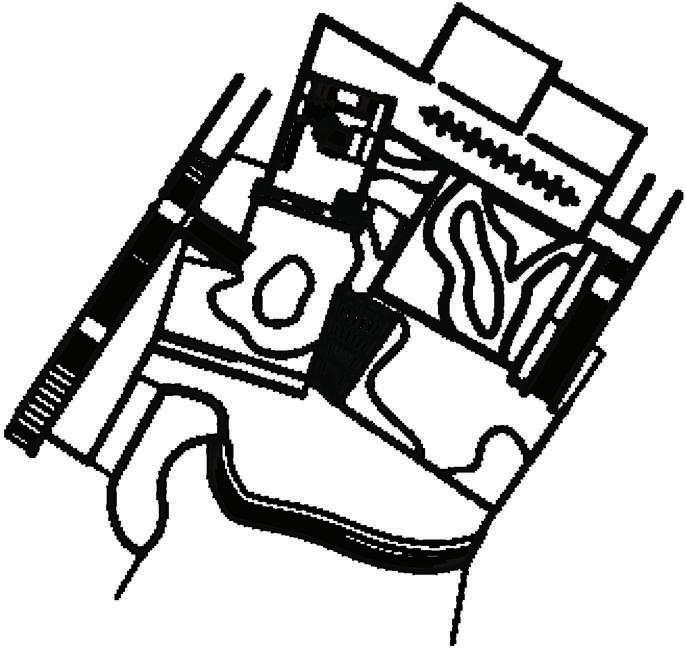


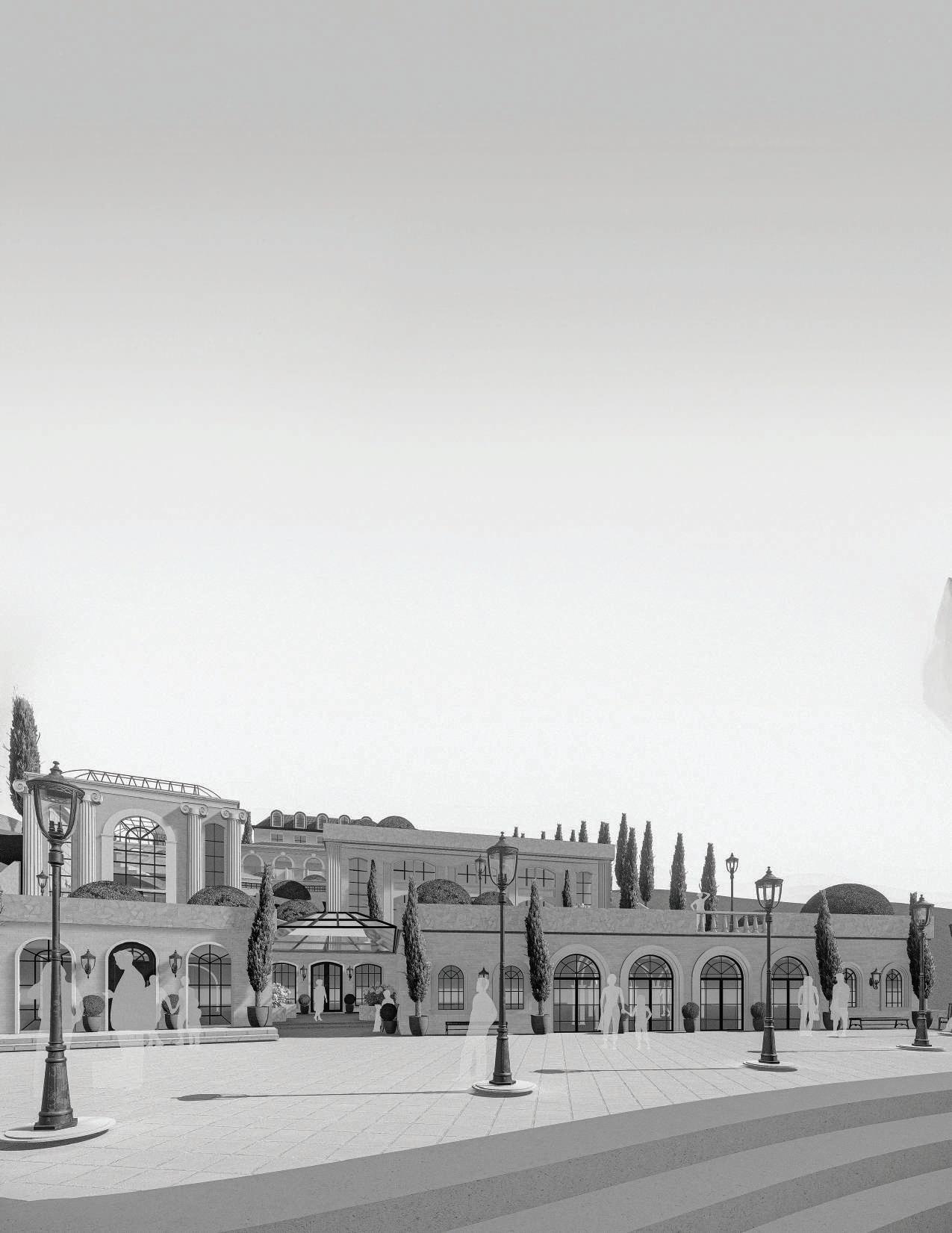





TAILS AS OLD AS TIME. The museum's interior architecture creates an unexpected spatial journey within its classical shell, where dynamic modern expanses unfold to celebrate the profound connection between horses and humans. The circulation weaves through a series of increasingly dramatic volumes , anchored by "The Forum" on the second floor, where commanding equestrian statues guide visitors toward their ultimate destination. The third floor's grand history exhibit hall crowns the experience, its soaring spaces and thoughtful sequence revealing the epic story of horse-human partnership through the ages.
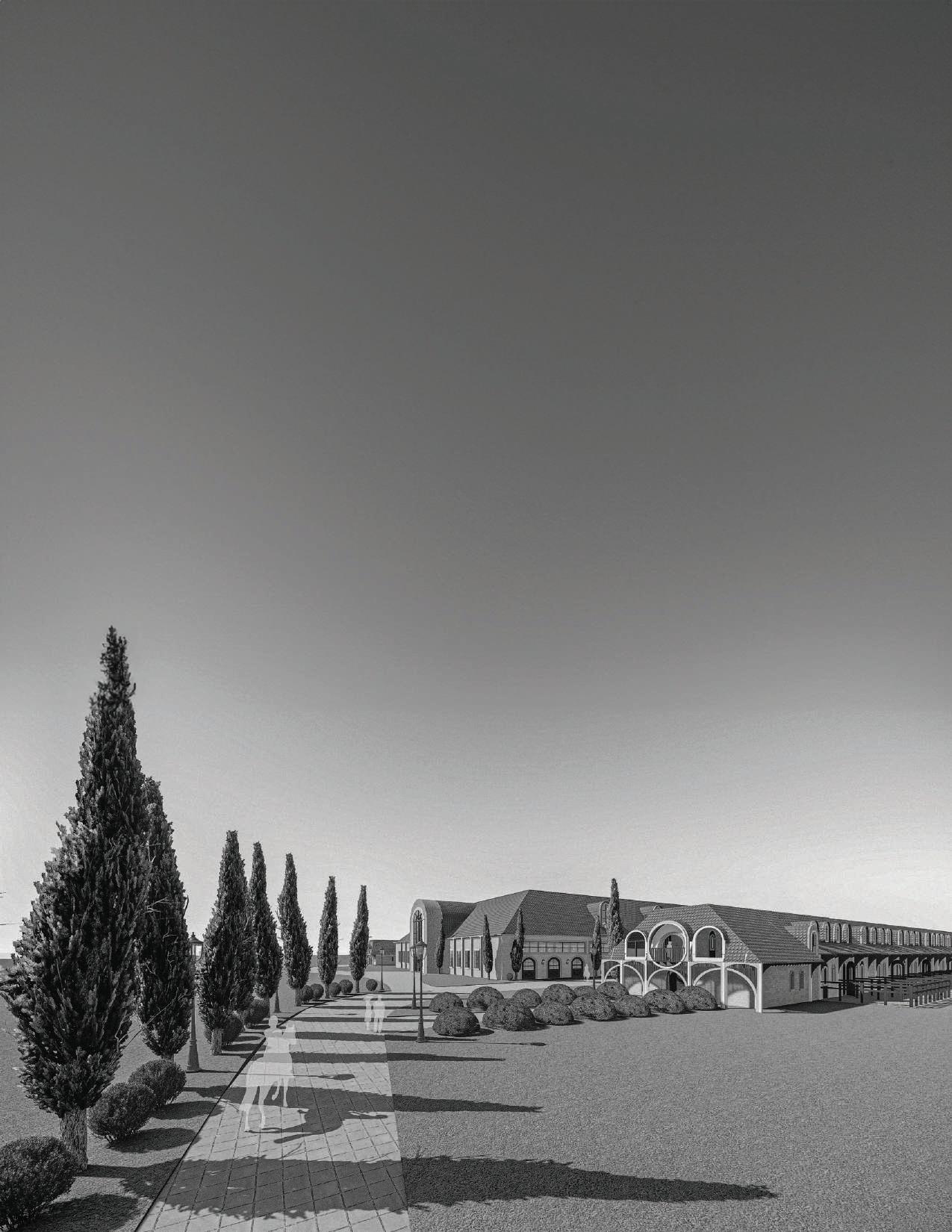
FOR THE POLO GROUNDS
The equestrian complex marries classical European design sensibilities with state-of-the-art sporting facilities, creating a world-class venue for polo in the American West. The expansive stable complex (x2), accommodating 150 polo ponies, draws inspiration from traditional European equestrian architecture while incorporating advanced equine care systems. At its heart, an Olympic-sized indoor arena provides a grand stage for the sport, its soaring roof structure and refined detailing echoing the elegant traditions of European polo facilities. This sophisticated integration of heritage and innovation ensures the facility stands alongside Europe's finest equestrian centers, offering an environment that honors the sport's distinguished history while meeting the demands of modern competition.
5. RIBBA
Spring 2024
4000 Level Elective — Digital Fabrication
Prof. Marcel de Lange
Individual Project
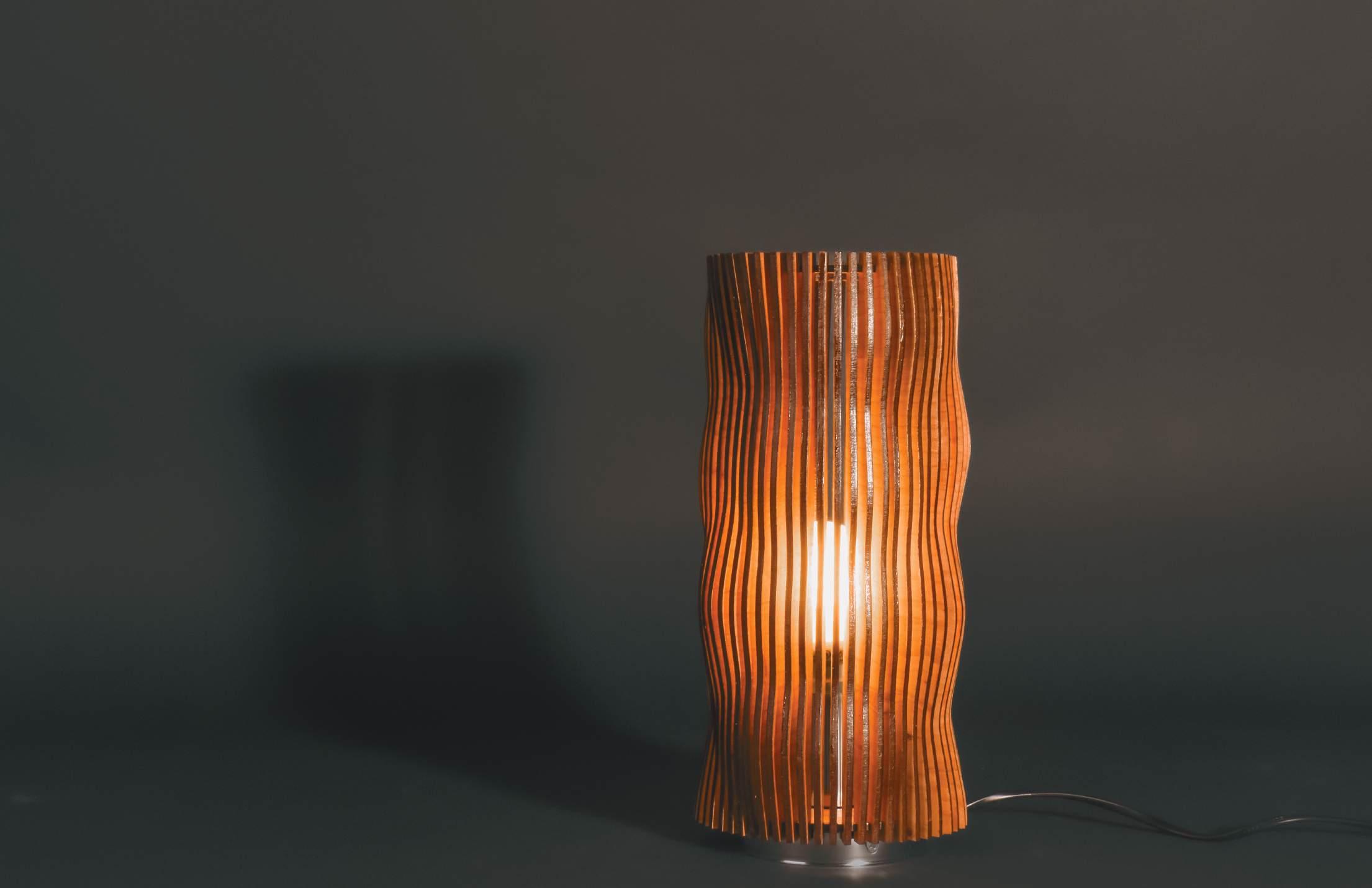
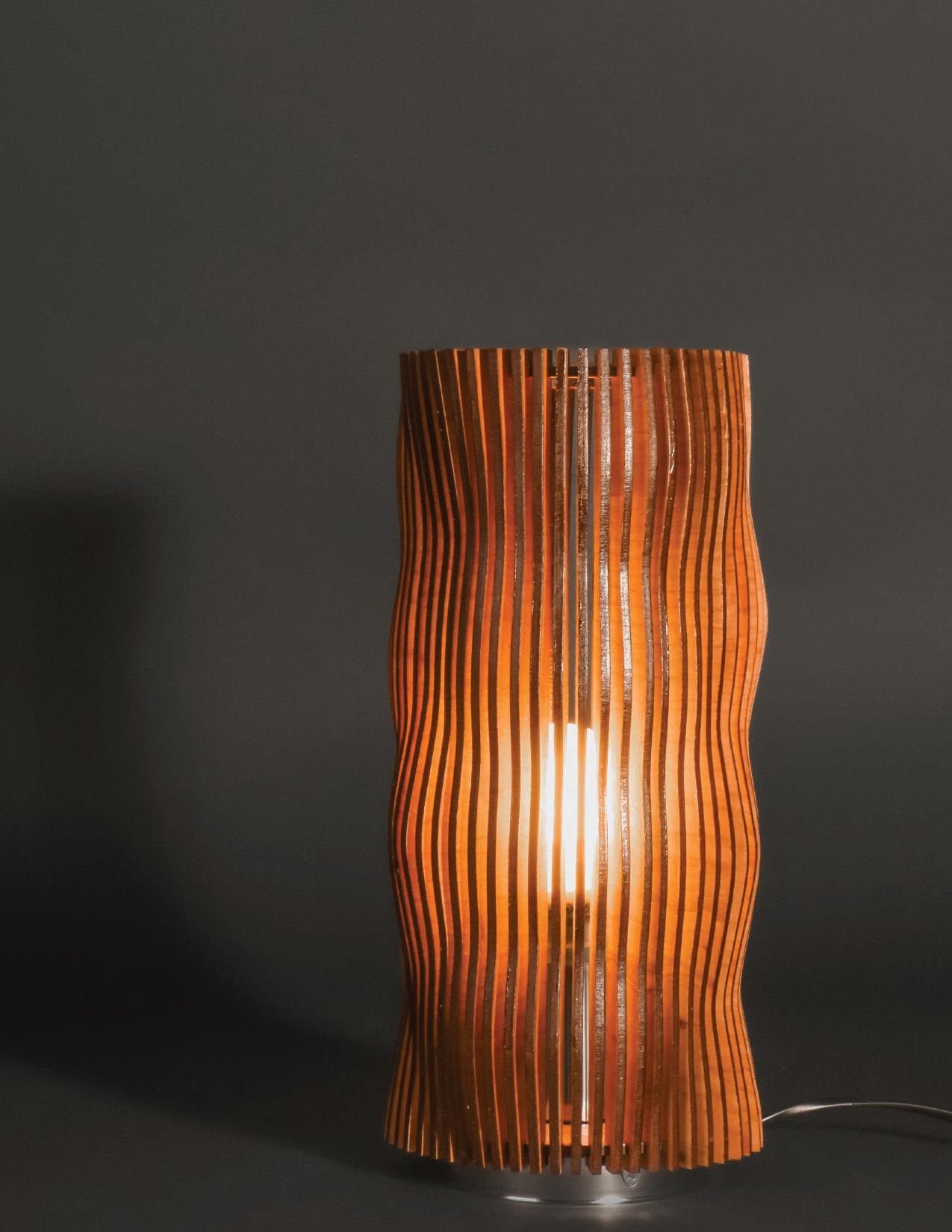
The DIY Parametric Table Lamp transforms the assembly experience into an engaging design activity, inviting users to participate in the creation of their own sculptural lighting. Engineered for efficient flat-pack shipping and minimal material waste, each kit contains precisely cut components that interlock to create an elegant, parametrically-derived form. The thoughtfully designed assembly sequence makes construction both intuitive and educational, perfect for design enthusiasts ages 12 and up. Once assembled, the lamp casts a warm, ambient glow through its geometric patterns, creating an inviting atmosphere while showcasing the maker's handiwork. This product merges the satisfaction of hands-on creation with sophisticated design, proving that beautiful lighting can be both accessible and sustainably produced.
JOINERY *EASE OF ASSEMBLY
The RIBBA lamp structure consists of 54 interlocking ribs, meticulously arranged to form a cylindrical framework. Anchored by a top and bottom piece, this intricate assembly provides stability and support, creating a visually stunning centerpiece for any space.
PARAMETRIC LUMINAIRE
54X LASER-CUT RIBS
1X JOINTED TOP PIECE 1X JOINTED

GRASSHOPPER STRATEGY
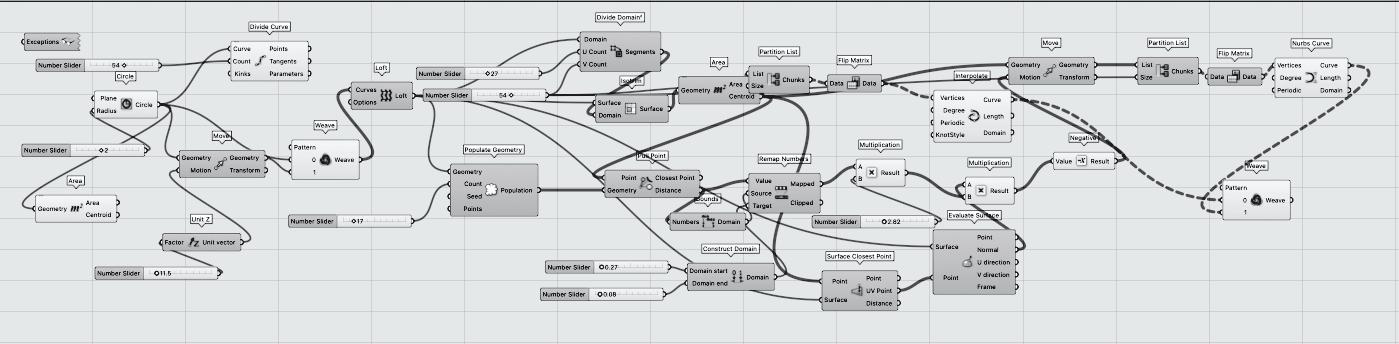
Created in Grasshopper plug-in for Rhino 8, the parametric strategy of the design simplifies the process of fabricating a flat-packed and seamlessly assembled lamp project. The script allows for adjustments to the composition of the lamp, such as in the height or amount of curves on its surface.
MATERIAL OPTIMIZATION
*MINIMAL WASTE
*LUM I NAIR E M AXI M I Z ES 3 SHEETS OF 1 2”X1 9”
L A SE R - REA DY P LY W OOD
Parametric design allows for flat-packability and minimal material usage, making the product cost-effective and giving it potential for mass-manufacturing.
PACKAGING
*FLAT-PACKED, WITH EXCEPTION OF CHROME LAMP BASE
1X CHROME LAMP BASE
*E26 BULB NOT INCLUDED
3X LASER CUT WOOD SHEETS 54 CT. RIBS, TOP AND BOTTOM PIECES




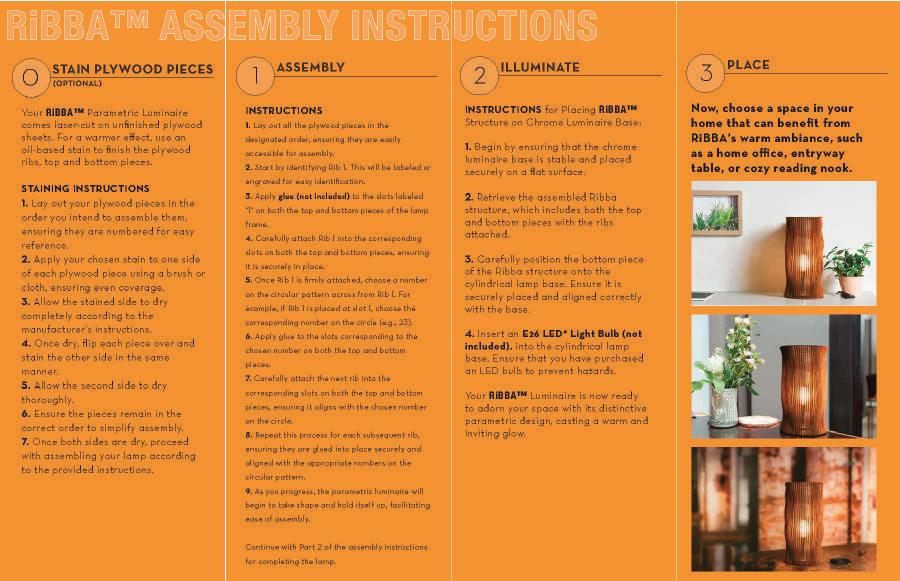
RIBBA packaging also includes a User Manual for understanding and ease of assembly for the user. Digestible instructions for ages 12+ guide the user in piecing together the product for their satisfaction and enjoyment. Directions for assembly were AI generated for the user’s clarity.
Thank You! – J.R.