spring 2024 juicy



For months I have been considering the aspects of parenthood, and specifically motherhood, that walk in tandem with the way we eat. I’ve been thinking about recipe development and, living in the age of the New York Times Cooking app and scanning a site for the “Jump to the Recipe” button, wondering about recipe origins. I found much evidence that mothers play a vital role in recipe and food tradition through time, that family, friends, and community are at the heart of foodways throughout the world.
It is the season of awakening. Flowers are blooming, the light is here, green exists again. We get to celebrate life and rebirth. We get to celebrate having people that matter to us, and food that grows to nourish our bodies.
Happy Spring! Happy Mother’s Day.

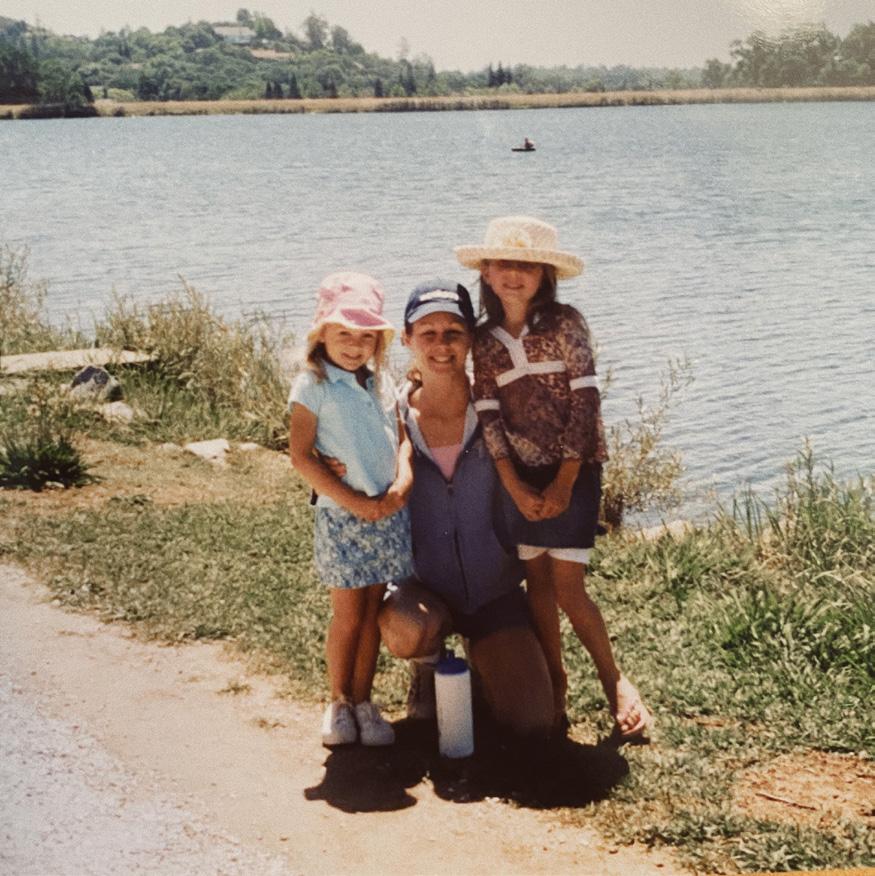
This issue is dedicated to my mom.
I have always and will always love Brussels sprouts. Brussels sprouts have come into trend in the last few years; New York Times has sheet-pan weeknight recipes that instruct you to buy them, trim them, and roast them; they are elevated by balsamic and niche cheeses in restaurant kitchens; but when I tried Brussels sprouts, they were made by my grandmother. I was probably around two years old, and I didn’t care for most vegetables yet, so it was appalling to my mom that at that time I couldn’t get enough of these that were so polarizing. I don’t believe my grandma had a specific recipe for the Brussels sprouts which she fed me, but she gave me a love of a food that is lasting. She, a woman with a love of cooking and a love of connecting with others, has exchanged and shared dozens of recipes throughout her life. So many mothers and grandmothers do this, and have done this, for generations. Food traditions and food memories created by our families stay with us, and recipes are a vital tool that help us to continue to pass them on to our children and theirs.
Our memories of learning how to cook, or the first foods we tried that we really loved, often come from our parents or our chosen families. Traditionally, though certainly an outdated premise that can be more oppressive than celebratory, mothers have been the ones to pass on the knowledge of food, whether that’s orally, physically, or through written instruction.
Oral traditions are the oldest, most important when it comes to food traditions in and between families. Massimo Montanari, a food studies scholar and
“My mother or grand- mother would have been by my side throughout the exercise, guiding my hands, talking to me about the texture of the ingredients, describing what they should feel like and look like.”
Professor of Medieval History in Italy, claims that the development of written recipes by 1. higher class individuals with the ability to write or hire someone to write and 2. Those individuals in countries which have developed written language, outlives those oral traditions which so many more cultures and individuals pass down. Certainly from the perspective of a historian, written pages are more helpful in gathering context about how people lived long before us. In reality, though, it is extremely limiting in the understanding of daily life, genuine culture, and family dynamics-- up to the current era of globalization and the spread of written language knowledge. Oral traditions are closer to home; they are the physical feeling and practice shared by previous generations. To families and communities who have traditions passed down years and years, there is almost a muscle that is strengthened, a reflex that is created when learning how to cook. In explaining the cooking traditions of the women in her family, Sian Supski says, “My mother or grandmother would have been by my side throughout the exercise, guiding my hands, talking to me about the texture of the ingredients, describing what they should feel like and
look like.” The process of talking through, of demonstrating, the object of example forms these reflexive muscles. Before it was common to be literate, all people had was the sensory feel of creating a meal. This crosses time, generational difference, language. My own grandma’s grandmother loved to can pickles, jellies-everything. As told to me, her terms of measurement have nothing to do with cups, tablespoons, or teaspoons. To her, the proper amount of water to dilute the vinegar mixture in a jar of pickles was this: it’s enough when you sniff the solution and it no longer burns your nose. A friend’s grandmother, who only spoke Turkish, helped her to understand how to make bread not by giving her exact measurements of ingredients or time spent kneading, but by tugging on her earlobe, passing on the knowledge to her young granddaughter that the dough is the proper consistency and ready to rest once it feels like your earlobe. The transcendence of language is the transcendence of time, and what I have found to be one of the most common traditions within the kitchen.
When transitioning to written recipe,
women who have only ever cooked in practice and through reflex have to find a middle ground. Fabio Parasecoli describes his own great-grandmother’s brief instructions, written only for special occasion or more elaborate dishes which were not made as routinely, which “were clearly mnemonic devices written for women who were already familiar with the techniques and methods required to make those dishes.” Similarly, Lisa Heldke, referenced by Sian Supski,
writes in “Recipes for Theory Making,” “If my mom gave me a recipe, she’s no doubt stripped the instructions to the bare minimum, even leaving out steps she knows I’ll know to do… It is assumed that such knowledge will have already been acquired.” Supski herself relies on her mother to give more “precise and instructional” variations of recipes because she is less confident in her baking abilities. These presumptions about what knowledge one may or may not have still depend highly on the connection between people, the reliance on the fact that they have been taught through practice or the care to sense they have not. Almost a separate entity from technical cookbooks, family recipes still hold their own special language and understanding. Most people these days, I think, relate to Sian Supski. We require more guidance, which can come from our own family members or from a complete stranger (i.e. the modern cookbook). Cookbooks can be whatever you want them to be: a uniform, glossy-paged published book, a spiral-bound notebook with chicken-scratch notes of measurements, or a cuneiform tablet from ancient Babylon. They can be personal, or not so personal, and they can be part of long-standing tradition or be used to create your own traditions. The evolution of cooking practices and recipes occurs through time, across cultures, and differs amongst communities. Recipes, in their nature, are so many things at once. And despite the numerous things they can be and represent, they are universal.
Motherhood through the lens of food
When I think about becoming a mother someday, I imagine what I will teach my children about food. I wonder about the first foods I will introduce to my baby. Bananas? Peas? I don’t care for peas, but maybe they will. Apparently, the first food I tried was rice cereal, and I ate it for quite some time before diving into apples, carrots, etc. Will I feed my baby rice cereal? I have the knowledge now that my mother fed it to me, with the intention of starting off basic on the journey of food discovery, so I will probably end up considering it when the time comes. Now, I am young and haven’t read all the books I am yet to read on the topics of child nutrition and care; I haven’t sought out the advice of others on how best to parent, picking and choosing what sounds right for my child and what doesn’t, eventually making a mistake or two along the way.
I have what I know from my life, my mother, my grandmother. My mom was also young when she earned her title-- the same age I am now-- and, though she had cooking skills, she had not yet reached a point in her life where she was very interested in finding recipes or exploring her palate. This, of course, impacted what I ate. I never tried eggplant until my own adulthood. She liked one kind of bean, refried beans, so I became wary of things called kidney or garbanzo. I remember macaroni ‘n’ cheese, bean burritos, and a spinach ravioli I absolutely could not bear to swallow. Peanut-butter-and-jelly, yogurt, bananas, more apples and carrots. All of these are foods that you naturally might associate with children.
None of them too adventurous, but who was trying to be? I love the dishes my mom makes. Some of those things we ate in my early years are things I still turn to for a comfort meal. I think about those people who are feeding their children raw diets, or at the very least, diets void of preservatives and “junk” food. It’s admirable. Yet it’s almost a fantasy. And could it be argued that, if I were to parent like that, it would be fighting against my own upbringing?
One thing I stand firmly in is that, when people have kids, they should be considering the child’s life and be willing to do the work to set them up for success. So is it contradictory to that belief to introduce my children to indulgence, to hot dogs or fried foods? These are things that are important to me-- I love these things! And while they are not necessarily recipes passed down through generations, valuable to my heritage, they are things that are important to my family, too. We eat them together. That togetherness, the comfort of family, the traditions of county-fair-funnel-cake and summertime hamburgers, are just as important as the success of one’s physical health. One may disagree. Okay. I just don’t see a point in living and, certainly, eating, without the connections created through food, memories, scents wafting from the kitchen, everything. My mother and her mother and her mother did not teach me that humanity is restriction. Humanity is connection, and what I’m trying to say is motherhood is connection, too.
Tools for Mothers
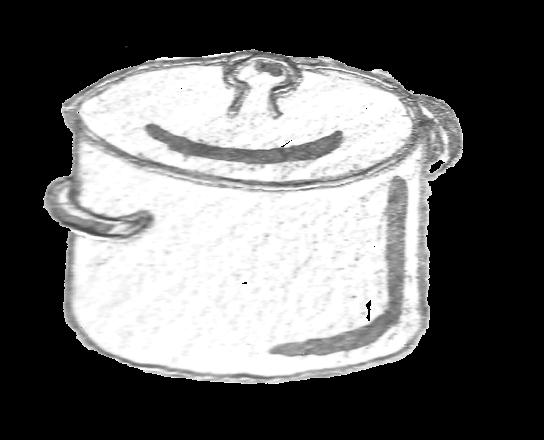
My grandmother’s grandmother owned a special tube pan for a cake made exclusively on birthdays throughout the year. This pan was passed down from her mother, and was only used for this specific cake, an apricot sauce cake. This is because, after baking the apricot sauce in a pan, it is furthermore unusable for other tube pan creations, specifically angel food cake. The cake was made for every birthday until she got too sick to make it anymore. The recipe for apricot sauce cake was shared verbally, being the same as an applesauce cake, aside from (obviously) swapping for apricots, the necessary plumping of raisins before incorporating them, and the use of the tube pan. Though the tradition didn’t continue after my great-great-grandmother passed, my grandma still remembers it fondly as an important part of her life and her family’s gatherings. These vessels, like cake pans and-- like my cousin Laura whose family recipe for Ma’mul will be found later in this issue-cookie presses, hold memories of childhood and of grandmothers who cared for their families often through feeding them. Recipes are not the only proof that mothers are a vital part of food tradition.
Altered Tradition
It is difficult to discuss food traditions, and how women and family are intertwined with them, without addressing that there are many people in the world trying to break these kinds of traditions because they are rooted in oppression and misogyny. A study of Brazilian western Amazonian women presented the reality that some of these women are refusing to invest their livelihoods into the norm of housewife duties. While their relatives, especially older generations, are strongly rooted in tradition, they are buying ready-to-eat meals (in more urban settings), or teaching their sons to cook instead of their daughters. These mothers are considering their children’s generation, hoping their daughters can have the option to focus on pursuits other than cooking and cleaning and their sons will not seek a partner who must cook his meals for him (and therefore has no time for other pursuits). Da Silva Oliveira observes that there is, at play, “a relationship between female culinary skills and the maintenance of traditional knowledge of a sociocultural group.” Because there are specific food traditions tied to the region’s community and culture, the responsibility to retain and pass on the knowledge of such falls on these women who are taught to stay focused on culinary skill in the home. As you can imagine, this places quite a bit of pressure on women to follow the ways of their relatives and not stray from what is familiar or socially acceptable.
It’s not that any of these people want their children to be incompetent in the kitchen, but they are part of a generation that is ready to break tradition and create their
“Resistance does not have to mean a dramatic rupture on the one hand and radical transformation on the other.”
own. To be clear, there is not a total loss of tradition in these instances. Some of what one may consider vital to culture or family have more negative effect than positive, and this is hard to see and especially admit to those who are deeply rooted in it.
There are more options than simply abandoning one’s family ties and way of life. The concept of “Motherlines,” stemming from African American mothering culture, places women at the center of cultural value and tradition. This concept is often witnessed through mother-daughter communication, and can be viewed as theory to dissect these connections. More generally, we can use this concept as an example to observe how patriarchal structures may keep women in a “box” through these practices. One example of the Motherline at play, in Hindu religious practices (specifically food-oriented), is the rituals such as “vratas,” which are considered “exclusively the domain of women.” Mothers teach their daughters the important tasks related to religious events and the role which women are meant to play. This places a certain responsibility and expectation on women in the family and in the wider culture. This may feel like the “box” I referred to, but it is also extremely important to Hindu women and, as mentioned, important
to mother-daughter relations within the culture. One group may push back against “tradition” that feels like it is more oppressive than beneficial. Another may continue their Motherlines in a more modern sense, passing on [secular or religious] knowledge and values to their children in a different setting. Anindita Ghosh says that resistance does not have to mean a “dramatic rupture between unchanging tradition on the one hand and radical social transformation on the other.” As is essential for anthropologists to remember, cultural mores cannot be trampled or destroyed because they do not fit one’s image of social justice or modernity. However, they may be altered or evolve to hold onto the ways of one’s people while meeting the needs of a new generation of mothers.
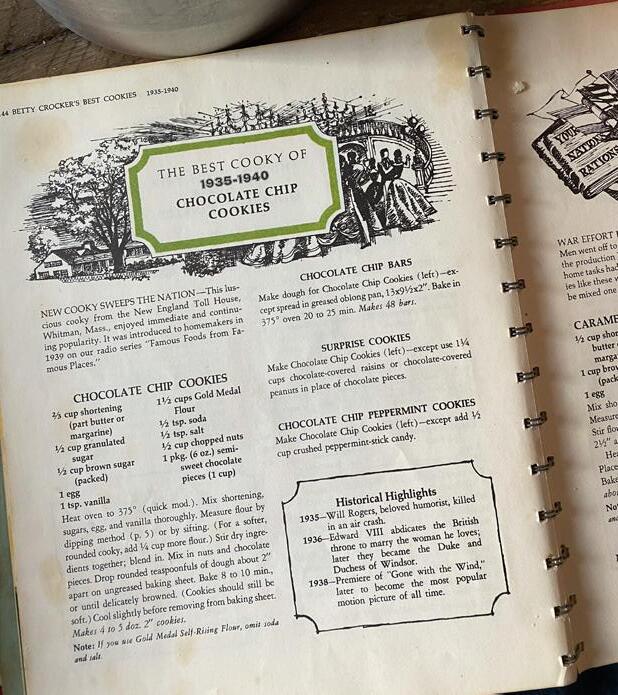
The following is a collection of recipes gathered over the last few months. They are from families who have created tradition around these dishes, from daughters who love the special thing their mothers make for them, from everyday meals to holiday treats-- they all mean something and they all have memories associated with them. I have transcribed them exactly as written, which is meant to show the differences in the way people write recipes based on familiarity with technique, language, etc. The only thing I have made uniform is the abbreviations for Tablespoon and teaspoon which is (Tbsp) and (tsp) respectively.
This is very important to me!

A dozen hard-boiled eggs, chopped or grated
5 large onions, chopped
1 lb grated cheddar cheese (Tillamook preferred)
1 can pitted black olives
1 large can Las Palmas red chili sauce
About a dozen flour tortillas
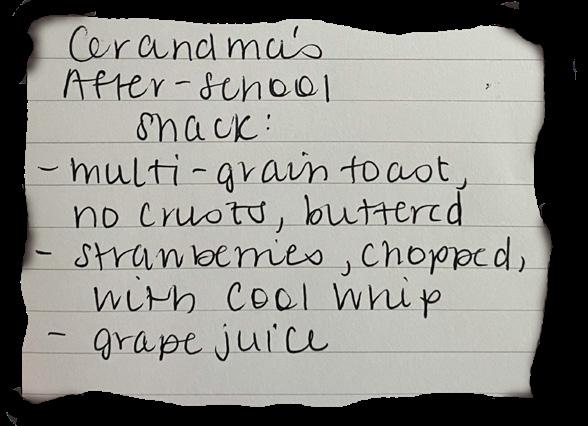
From my own grandmother and the women of the Sisquoc, CA community.
Sauté the onions for 2 to 3 minutes (Grandma’s note: I usually add a little chili sauce, but I don’t remember that this was always done)
Heat sauce slightly, dip tortillas in sauce, lay flat on a large flat pan.
Place a large spoon of onions, eggs, cheese, and sauce in center of tortilla, add two olives, fold sides over filling. Do this until all tortillas are filled.
Pour remaining sauce over the top, sprinkle with cheese.
Bake at 300 degrees for 1 hour. If they start getting too dry, sprinkle with warm water.
(Grandma: This will make about 12 enchiladas, more than will fit in a 13x9 pan, but this is a common size most of us have.)

Sift together 3 cups flour and 1 1/2 teaspoon salt.
Add 6 level Tbsp. shortening or lard.
Add 1 cup lukewarm liquid (1/4 cup milk and 3/4 cup water)
Mix flour, shortening, and liquid together as you would a pie crust.
Knead well for about 10 to 15 minutes. Shape into 9 medium size balls and let rest for 20-30 minutes or longer.
Roll out thin and cook on wood range or griddle over gas or electricity using low or medium heat.
From my great-great grandmother
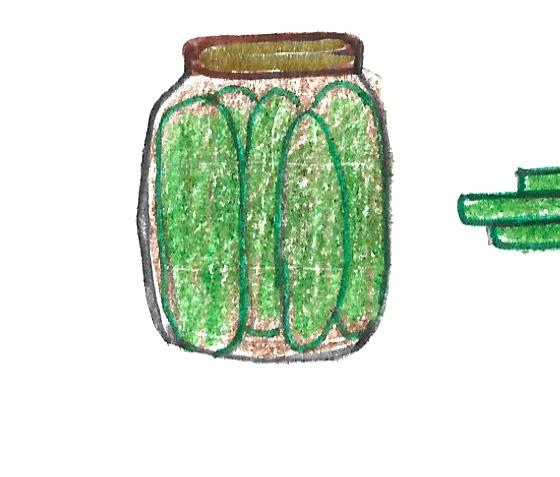
A bushel of cucumbers (4 qts)
1 qt sliced onions
1/2 cup Kosher salt
1 qt vinegar
2 cups sugar
2 tsp turmeric
2 tsp mustard seed
Slice cucumber and onions medium-thick.
Arrange in layers, sprinkling salt over each layer; let stand for 2-3 hours. Drainly thoroughly, after rinsing.
Combine vinegar, sugar, turmeric, and mustard seed, bring to a boil, add cucumber and onions, cook for 5 minutes.
Pack hot into clean, hot jars.
Can be sealed by hot open kettle or process in boiling water bath for 10 minutes.
From my mother
1tbsp salt, plus more for pasta water
1 lb large elbow macaroni (or other pasta)
6 Tbsp butter
6 Tbsp flour
3 cups milk
1 cup heavy cream
1 Tbsp freshly ground black pepper
1 lb cheddar, shredded
4 oz romano and 4 oz asiago, shredded OR
8 oz asiago/romano/parmesan mixture, shredded
2 cups bread crumbs
2 Tbsp fresh parsley, chopped, for garnish
Preheat oven to 325 degrees F.
In a large pot, cook pasta according to package directions. Drain. Set aside. In a large saucepan, melt butter, be careful not to burn. Sprinkle flour over butter and cook 2 to 3 minutes on medium heat, whisking constantly until a roux or paste forms. Add cold milk and whisk vigorously until dissolved. Cook sauce on medium-low heat until thick and bubbly. Add heavy cream, all cheeses, salt and pepper. Cook until cheeses are fully melted, stirring occasionally. Add cooked macaroni to cheese mixture and mix thoroughly. Place macaroni mixture in a 13 x 9 baking dish and top with breadcrumbs. Place in the oven and bake for 12 to 15 minutes or until golden brown. Top with fresh parsley and serve.
3/4 cup butter
2 medium size onions, chopped
2 to 3 whole garlic cloves
1 cup packed chopped parsley
2 large cans (1 lb 12 oz) whole tomatoes
2 cans (14 oz) reg. strength chicken broth
1 bay leaf
1 Tbsp basil leaves
1/2 tsp each thyme and oregano leaves
1 cup water
1 1/2 cup dry white wine
1 1/2 lb raw large shrimp
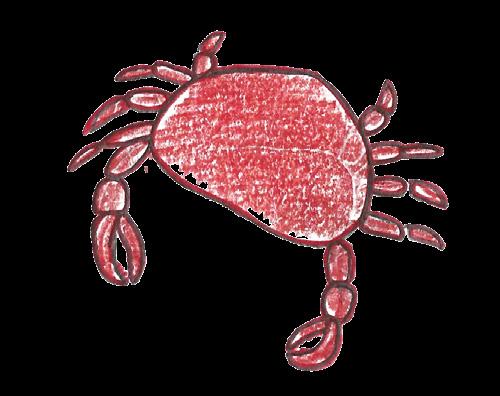
2 to 3 large Dungeness crab
1 1/2 pounds scallops
From Sarah (her grandmother’s recipe)
Melt the butter in a large kettle and add onion, garlic, and parsley; cook til onion is soft. Add tomatoes (breaking into chunks) and liquid, broth, bay leaf, basil, thyme, oregano, water, and wine. Cover and simmer for about 30 minutes,
Devein shrimp and set aside -
Add crab to the simmering sauce. Cook covered for 10 minutes. Add shrimp and scallops and return to a boil - Cover and simmer 5 to 7 minutes - til scallops are opaque.
1 pack tofu (medium)
1/3 lb beef (ground beef)
1 Cook ground beef (no oil needed)
When it’s cooked,
2 Add tofu (cut 1 tofu into 8 pieces)
From Tomoko (her family’s recipe)
Add 0.8 cup water, 2 Tbsp sugar, 3 Tbsp mirin, 3 Tbsp soy sauce
3 Cook 5 minutes -- medium heat.
4 Turn off and leave it for 30 minutes.
5 Mix 2 tsp katakuri starch powder with 2 tsp water (potato starch will do)
Reheat the tofu, add starch water and mix.
2 chicken thighs
1 onion
1 garlic, minced or grated
2/3 Tbsp butter x2

200ml water
1 can diced tomato
2 Tbsp ketchup
1 Tbsp parmesan cheese
1 tsp sugar
1 tsp buillon/consomme cube
From Sydney (her mother’s recipe)
1 Cut chicken to bite size, sprinkle salt, sautee in a pot (w/ little amount of oil...) Take the chicken out when the surface is cooked.
2 Put sliced onion, 2/3 Tbsp butter, garlic in the same pot. Cook until onion is tender.

3 Put the chicken back, together w/ . Cook 30 minutes, low heat, without lid.
4 Add 150ml milk, 2/3 Tbsp butter, and 1 piece curry roux. Simmer 10 minutes.

1 package yellow cake mix
3 eggs
2/3 cup oil
1 cup sour cream
1/2 cup milk
2 Tbsp cinnamon
1 cup brown sugar
1 1/2 cup powdered sugar
1/4 cup and 2 Tbsp milk
1 tsp vanilla
Beat together cake mix, eggs, oil, and milk. Spread 1/2 of the batter into a greased 9x13 pan. Sprinkle filling over batter and spread remaining batter over filling. Bake at 375º for 35-45 minutes. Poke holes in cake while warm and pour glaze over the top.
From Leah and her mother
From Laura (her grandmother’s recipe)
2 cup drawn butter, congealed
1/2 cup sugar
6 cup flour
lukewarm milk (about 1 cup)
3 cup ground walnuts (almonds or pistachios)
1 cup sugar
1 Tbsp rose water
Thoroughly mix the filling ingredients with a spoon and set aside. Cream butter and sugar until light. Add flour, working with hands until dough is well-blended. Gradually add milk, kneading to a soft dough. Place in palm of hand a walnut-sized chunk of dough. Using forefinger, press and expand a center hole and begin expanding the filling hole by rotating and pressing against palm of hand until shell is 1/4” thick and about 3” long. Place a teaspoonful of filling into shell. Carefully close, forming a sphere. (Other shapes may be formed or use a tabi (if tabi is used, press sphere into mold and gently tap mold to remove cookie).
Place in ungreased pan and bake at 350º for approximately 20-25 minutes... bottoms will be light brown. Sift powdered sugar over cookies while still warm. Let stand on baking pan until completely cooled. Remove. These cookies may be kept for weeks in an airtight container if placed in a cool place.
Note: Date filling may be substituted.

From Addie (her grandmother’s recipe)
Preheat oven to 350º. In ungreased 13x9 pan, stir together these:
2 cups all-purpose flour
1 1/2 cup sugar
4 Tbsp cocoa powder (unsweetened)
4 tsp baking powder
1/2 tsp salt
Use a fork to mix these into the pan until smooth:
1 cup milk
4 Tbsp salad or vegetable oil
2 tsp vanilla extract
1 cup chopped nuts (optional)
Spread evenly in the pan. Sprinklr with 2 cups brown sugar mixed with 1/2 cup cocoa powder.
Pour 3 1/2 cup hot tap water over batter Bake 45-55 minutes until cake is formed. Let stand 15 minutes.
Invert squares or spoonfuls onto plates or in bowls. Top with ice cream or frozen yogurt.
2 cup sifted flour
1 tsp soda
1/2 tsp salt
3/4 cup mayonnaise
4 Tbsp cocoa
1 cup water
1 tsp baking powder
1 cup sugar
1/2 tsp vanilla
Sift flour and measure.
Add dry ingredients and sift 3 times.
Stir in mayonnaise, water, and vanilla. Pour into prepared pans.
Bake at 350 degrees for 30 minutes. Throw out the window.
From my grandmother (written by her grandfather)