
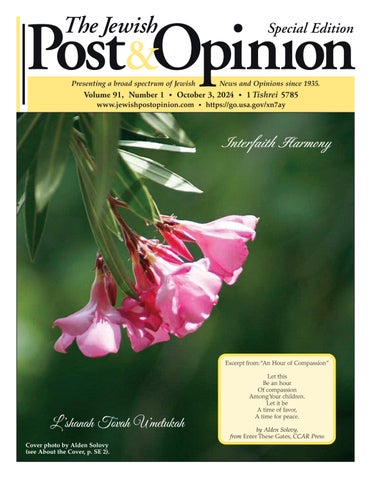
Cover photo by Alden Solovy (see About the Cover,
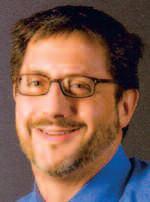
REVIEWEDBY RABBI BRETT KRICHIVER
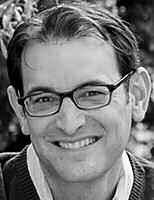
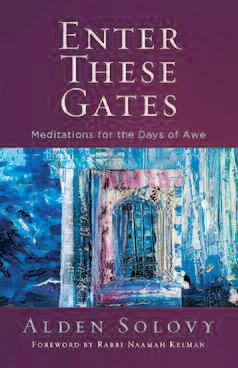
To encounter Alden Solovy’s work is to experience Judaism itself as if for the first time.His words have accompanied prayer and textual study groups; they have comforted mourners and nurtured educators. In his latest book, Enter These Gates: Meditations for the Days of Awe, Solovy layers into his poetry something sacred and intentional,wholly original and deeply personal.
In her introduction,Rabbi Naamah Kelman calls Solovy’s work,“a language for seeking after and hoping for a direct and intimate experience of God.”
Enter These Gates explores the themes and liturgy of the Jewish High Holy Days and reveals a traditional and yet thoroughly modern interpretation of the Aseret Yemei Teshuvah, the Ten Days of Repentance.
The long-standing Jewish tradition is to use the days leading up to Rosh Hashanah, the Jewish New Year,and the ten days which stand between that time and the Day of Repentance, Yom Kippur,as time to take stock of our souls,reflect on the year which has passed,and commit ourselves to living better in the coming year.The liturgy proclaims,“On Rosh Hashanah it is written, and on Yom Kippur it is sealed – how many shall come to be,how many shall pass on – who shall live,and who shall die…”
Solovy notes as well that this year is like no other,having suffered such a terrible national tragedy on October 7th of last year.With the unprecedented and inhuman attacks by the terrorist group Hamas on kibbutzim and villages surrounding the Gaza Strip and beyond, the entire country of Israel and the entire Jewish people have spent the last year trying to piece our world back together
Several hundred Jewish hostages were taken into Gaza on October 7th and have been made to suffer every form of torture and indignity.As of the writing of this review,six hostages were just murdered,
hours before their rescue.Our community enters the High Holy Days in mourning together.We also join together in prayer for the safe release of the remaining 101 hostages whose whereabouts are unknown.
Alden Solovy has written a remarkable reflection on the Jewish High Holy Days, the notes of repentance and redemption in the liturgy for those days,and a national accounting of the turmoil of our hearts post October 7th,2023.
In addition to revealing how he almost walked away from this project after the attacks last Fall,Solovy also uses this most personal of his books to reveal the struggles he and his wife Ami (may her memory be for a blessing) suffered through her several suicide attempts.He writes so delicately about the connections he has formed with the machzor,the High Holy Day prayerbook, especially knowing the love of his life was struggling so greatly at that very thin line between life and death.Readers of his many volumes of verse may recognize that struggle in several interpretations of prayers.
Solovy has blessed us with a beautiful and poignant companion to our own personal journey through Rosh Hashanah and Yom Kippur In an early poem he writes,“Let us dream / Wildly unimaginable blessings… / Blessings so unexpected,/ That their very existence / Uplifts our vision of Creation, / Our relationships to each other,/ And our yearning for life itself.”I can think of no better way to begin my own teshuvah (repentance) journey.
His final poem is entitled, Your Gate: “There is a gate / That is yours alone,/ A gate that / Only you can open, / A gate of mystery,/ A gate of longing,/ The gate to your own heart.”
May we each find our own gates open to renewal and blessing in the coming year!
Rabbi Brett Krichiver joined Indianapolis Hebrew Congregation in 2010 and has served as the Senior Rabbi there for 14 years. He is very active in the Indianapolis community, chairing the Indiana Board of Rabbis, and serving on the boards of the Greater Indianapolis Multi-faith Alliance, Planned Parenthood, Second Helpings, Christian Theological Seminary’s Faith and Action project, and many other civic groups. He is the author of two books of liturgical poetry, and two plays. He has also co-created art at the intersection of theater and Judaism with both the Indiana Repertory Theater and the Phoenix Cultural Arts Center. “Rabbi Brett” is married to Dr. Tami Krichiver, a clinical psychologist, and their daughter is currently a senior at North Central High School. ✡ ✡
By Alden Solovy
The quoted excerpt on the cover (reprinted with CCAR permission) is from Alden Solovy’s lastest book, Enter These Gates: Meditations for the Days of Awe (review left),a High Holy Day companion for our times,with more than one hundred new poems,prayers, and meditations for Rosh HaShanah and Yom Kippur.He took this photo to represent the beauty of life and the world that G-d has given us in the Land of Israel.
American-Israeli,poet-liturgist Alden Solovy draws from his unique spirit to blend today’s struggles and joys with classic themes,layering a contemporary voice into beloved motifs. Enter These Gates is a vital resource for individual prayer,study,and communal worship. Themes include confession, repentance, forgiveness,and memory,as well as frailty, seeking holiness, and what Solovy calls “the ancient journey.”A companion to the machzor, Enter These Gates offers a fresh yet deeply rooted approach to heightening our experience of the Days of Awe.
Alden Solovy spreads joy and excitement for prayer. His work has been used by people of all faiths throughout the world, in private prayer and public ceremonies. He’s written more than 600 pieces of new liturgy, offering a fresh new Jewish voice, challenging the boundaries between poetry, meditation, personal growth, and prayer. He’s a teacher, a writing coach, and an award-winning essayist and journalist. He also leads ManKind Project Israel.
Originally from Chicago, now calling Jerusalem home, Alden has led writing workshops and has been scholar in residence in the United States, Europe, and in Israel. He has authored books that include Jewish Prayers of Hope and Healing,Haggadah Companion: Meditations and Readings, This Grateful Heart: Psalms and Prayers for a New Day,This Joyous Soul: A New Voice for Ancient Yearnings, and This Precious Life: Encountering the Divine in Poetry. His latest works, These Words: Poetic Midrash on the Language of Torah and Enter These Gates: Meditations for the Days of Awe, continue his efforts in providing meaningful prayer to contemporary Jews.
He’d love to speak at your synagogue. For more information on that, Alden, and his books, see his website:www.tobendlight.com. Also join the To Bend Light Facebook page and follow To Bend Light on X to get announcements about new prayers and stories posted, as well as (almost) daily mini-prayers. ✡ ✡
forgiveness,appreciation and reconciliation.
In October 2003,for my weekly editorial, I began writing an annual column about establishing one day a year devoted to expressing appreciation.I called this Appreciation Day and chose November 2nd for it.I continued this column every October with some variation for about ten years.
I suggested that day for three reasons: (1) it is in between the Canadian and American Thanksgiving days,(2) it is during the Hebrew month of Cheshvan which has no holidays,and (3) it is the other side of the year from April 2nd.That was the day advice columnist Ann Landers, z”l,suggested as Reconciliation Day.She wrote this could be a day for close family and friends who had a falling out.They could bury the hatchet,contact each other to make amends and resume their once close relationship.
I had written that the purpose of Appreciation Day is to thank those people in our lives who had been helpful to us in one way or another, but at that time we were either too young,too preoccupied or just not being thoughtful enough to thank them.
I wrote that these people we are thanking could be anyone from a third grade teacher to almost any other profession such as a counselor,advisor,healthcare provider,fire fighter,librarian,a stewardess on an airplane flight who went out of her way to help,a next door neighbor who knocked on your door and told you that you left your car lights on. I commented that it doesn’t matter if these people were simply doing the job they were paid to do.
I gave the example of when I was 18 and visiting Israel with my father Gabriel Cohen, z”l.We were meeting my father’s cousin and his wife,Milton and Jean Rosenbaum at the King David hotel in Jerusalem.She extended her hand to me and I shook it.Then she pulled me aside and told me my handshake was like a limp fish.At the time I thought that was rude of her,but later when I started having job interviews,I became very grateful for that information.
I wrote that in Judaism we have prayers for forgiveness that we can say daily (see one example by Rabbi Michael Lerner, z”l, on page SE 8).We also have a season in the fall before and during the High Holidays to ask for and offer it.Offering forgiveness can and should be done every day, but this often challenging task seems a little easier when everyone else is doing it.
Now more than 20 years later when we find ourselves in the midst of major conflicts throughout the world, I am thinking one day a year is not enough time set aside for
I believe in the lyrics from a song sung by Joan Baez: “No man is an island,no man stands alone.Each man’s joy is joy to me,each man’s grief is my own.We need one another,so I will defend,each man as my brother,each man as my friend.”
This reminds me of the teaching in the Kabbalah about the whole world being like Scales of Justice so that every good deed one does tips the scales toward the good and makes the world a better place.I believe that each individual person can make a difference in a way similar to when a rock is thrown in a pond and it causes an ever widening circle of ripples to expand outward.
On the calendar on my cell phone,I get reminders in a green background almost every month such as: First Day of Black History Month,First Day of Women’s History Month,First Day of Hispanic Heritage Month,First Day of LGBTQ+ Pride Month.
Although it doesn’t show up on my phone,Jewish American Heritage Month (JAHM) is in May It is an annual recognition and celebration of the achievements and contributions of American Jews to the United States of America.
It is admirable to acknowledge all these different groups. Wouldn’t it be nice to also have monthly reminders on our phones to help us improve ourselves and therefore the world? For example,besides a whole month where one focuses on forgiveness,or appreciation,or reconciliation, there could be a month for kindness, one for goodness, faithfulness, trustworthiness,cleanliness,gratefulness,hope, integrity, and generosity
Besides all of the above suggestions,for this Interfaith Harmony edition we have several articles about how groups of people with such big differences from each other can learn to not only get along but to thrive.
November 2nd is coming up – I have three people to thank.After my mother, z”l, passed away 25 years ago,my father was 91. Managing the newspaper was getting difficult for him.I was apprehensive about what I could do to help considering he had done this job weekly for 70 years, I had no experience and had not taken any journalism or business classes. A friend at the time,Dr.Vicki Jones,told me about a magazine that she had published for a couple of years.She talked about all of the positive experiences she had doing that. She gave me a lot of encouragement. Then a couple of years later as I was walking out of High Holiday services at Congregation Beth-El Zedeck with my father, Janie Maurer was walking in,but was a few yards away She saw us and yelled across the parking lot that she was reading
Rabbi Brett Krichiver: (Book Review) Enter These Gates: Meditations for the Days of Awe ................................2
the Cover 2 Jennie Cohen: (Editorial) 3 Matthew J. Silver: European Refugees Shelter at Quaker Hill .......................................4 Lea Delson: Three Faiths Find Friendship and Common Ground 5
Rabbi Michael Lerner, z”l: Bedtime Prayer of Forgiveness 8 Dr. Miriam Zimmerman: (Holocaust Educator) How I Came to Jewish-
Dialogue 8 Jennie Cohen: Dr.Ruth’s 47th Book and Passing ........9 Rabbi Mira Wasserman: The Dalai Lama comes to Bloomington 10
BY MATTHEW J.SILVER
In July 1940,members of the American Friends Service Committee (AFSC) and Quakers from Richmond,Indiana,decided to make a hostel for refugees escaping the horrors of Nazism in Europe.The goal was to provide educational,religious, and social services to the “guests”to ease them into adapting to the habits,laws and customs of the United States.
Volunteers came from Earlham College, the Brethren and Mennonite congregations of Richmond,other schools,individuals and organizations from as far away as Oregon. They came to tutor and teach classes.Many of the guests were professionals,called the “speak easy”club,who were invited to speak to local churches,a Friends meeting and other local community organizations once they felt comfortable in their usage of English.
The overarching principle was that people from different backgrounds can work and live cooperatively.Each “guest”was required to work three hours daily in housekeeping, the gardens,the fields,or the shop. Afternoons guests studied English, or U.S history Evenings were spent enjoying music,games,movies and lectures; one evening each week was devoted to studying business,which produced numerous ideas for the good of the hostel.
The garden that first year supplied corn, tomatoes,lima beans,onions,potatoes, and green beans to the daily menu,as well as the canning of 175 quarts of beans and more than 300 quarts of tomatoes.The flower garden also produced a bountiful array of beautiful blossoms.
Eighteen guests could be housed at Quaker Hill at any given time,and a total of 55 came through the hostel during the 14-month run of the operation. Letters received from guests following the closure

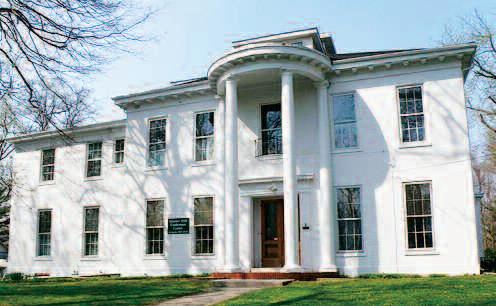
expressed the gratitude and friendship experienced.Guests stayed for as little as a few weeks to several months until a satisfactory employment and housing placement in their new home country could be secured.Business firms,schools, church groups,various committees and individuals,primarily from the Richmond area,were instrumental in this effort.
The files from the conference center document the names,ages,backgrounds, and length of stay at the hostel for most of the guests.Volunteers from the community were invited to Quaker Hill to meet the guests and witness the operation.
The following is a sampling of the refugees who passed through Quaker Hill: Walter Ellinger from Frankfort, Germany, born Nov.14,1879,was an administrator at a metal processing firm and he did handwriting analysis.He arrived at Quaker Hill October 4,1940,and departed March 3,1941.
Klaus Berger,from Berlin,was born March 24,1901.He had a doctorate in art, was a lecturer and writer.He arrived July 5, 1941,and left August 30,1941.
Henrietta and Walter Furst arrived June 11,1941,and left the Center September 1, 1941. A practical nurse, she was born November 15,1900,in Gluerkstadt,Elbe, Germany.Walter was born in Koenigsberg, East Prussia,Germany,May 15,1900,and had owned a department store.
Marie and Louis Hayn arrived at the hostel with their son,Ralph,from Germany,July 9,1941,and departed November 14, the same year.Louis,a patent attorney,was born May 8,1885,in Loebschuetz,Germany.Ralph was born July 6,1923,in Berlin.Marie attended the Quaker Hill Association meeting in April 1943,where she reported Louis’death and that Ralph had graduated from Indiana University with honors.
Owner of a lady’s hat factory in Bochum, Germany,Richard Herz arrived with his son,Richard,Jr.,on October 23,1941.His wife had died in NYC in 1940.The son was ten when they arrived.In a local newspaper he recounted: “I recall very clearly being met at the Greyhound Bus Station on South 8th Street by Stanley Hamilton (a Quaker Hill volunteer) in the old Quaker Hill wood-paneled station wagon. Stanley’s welcome was Indiana warmth at its best after the harsh,isolated life in mid-
(continued from page SE 3)
The Jewish Post from cover to cover.I appreciated hearing that,but being so new to publishing,I did not even realize what that meant.Some time later I understood that some people read only their favorite columnist and nothing else.Someone else may turn to the pages with the simchas and then recycle the rest,but reading from cover to cover is a huge compliment!
Lastly,Myrna Gray has been volunteering for several years helping with our website by posting articles,whole editions and other technical jobs.This has been a big mitzvah! We wish all of our dear readers and happy, healthy and peaceful 5785!
Jennie Cohen, October 3, 2024 ✡ ✡
Manhattan.”He later graduated from Earlham College,became a lawyer and in 1978 joined Earlham alumnus John Thorne in a law partnership in California.
Hania and Julius Husmann arrived at Quaker Hill November 26,1940.Julius was born in Proskurov,Russia,May 7,1889, and was a stationery salesman and writer His wife,born in Poland in 1889 was a homemaker.They departed Quaker Hill February 27,1941.
Born in Krakow,Poland,April 24,1908, John Laurer held a PhD in economics at the University of Florence in Italy He arrived at Quaker Hill July 10,1940,and left August 16,1940.
Claire and James Maney (formerly Mannheimer),arrived at Quaker Hill December 3,1940,departing January 25, 1941.He was born in Munich,Germany, April 24,1898,owned and operated a large department store which he was forced to sell.Claire was born March 4, 1902. in Reichenbach, Germany
Vera Mitlin was a World War I nurse who also did historical research.She was born in November 1892 in Russia but later lived in berlin.She arrived at Quaker Hill October 25, 1940,and left December 13,1940.
Norbert Silbiger was a journalism and dramatic director who became director of the Richmond,Indiana Civic Theater.A teacher, he was born July 7,1895,in Vienna. He arrived at Quaker Hill November 15, 1940,and left April 10,1941.
Marianne and Heinz Simon arrived at Quaker Hill April 26,1940,from Germany. Born September 23,1894,Heinz left Quaker Hill September 13, 1940, to teach at southern Union College in Hadley, Alabama.His wife,a dietitian and chef, joined him In July of 1941.
Emil and Elizabeth Spitzer arrived at Quaker Hill January 31, 1941.She was born in Vienna on December 3,1901,and
BY LEA DELSON
Despite the difficult and tragic war now raging in Gaza,Palestine,Israel,and Lebanon,I am very glad to be participating in a program where positive relationships among Jews,Muslims,and Christians thrive, and people of these faiths work together to assist impoverished people in Oakland,Calif. This program takes place under the auspices of Support Life Foundation,a non-profit organization founded and run by Muslims,in collaboration with another non-profit,the Islamic Cultural Center of Northern California (ICCNC).Volunteers from the“Faith Trio”(an alliance of a Jewish synagogue,a Presbyterian Church,and the ICCNC) have been assisting with this program since 2022.The synagogue is Kehilla Community Synagogue,a 500-household congregation founded in 1984 (that is part of the Jewish Renewal movement),based in Piedmont,a town adjacent to Oakland. The Church is Montclair Presbyterian Church in Oakland,a congregation of 235 households founded in 1935.
tions and understanding between people of different faiths,specifically the“Abrahamic Faiths”of Judaism,Christianity,and Islam.
I grew up in an Ashkenazi Jewish family of primarily Lithuanian descent and spent the first 10 years of my life in Washington, D.C.Our family attended a Conservative synagogue.I attended a public school and later the Solomon Schechter Hebrew Day School in Silver Springs,Md.,that taught both Jewish and general subjects.Through my family,school,and neighborhood I got to know many Jews,Christians,and people of no particular religion.
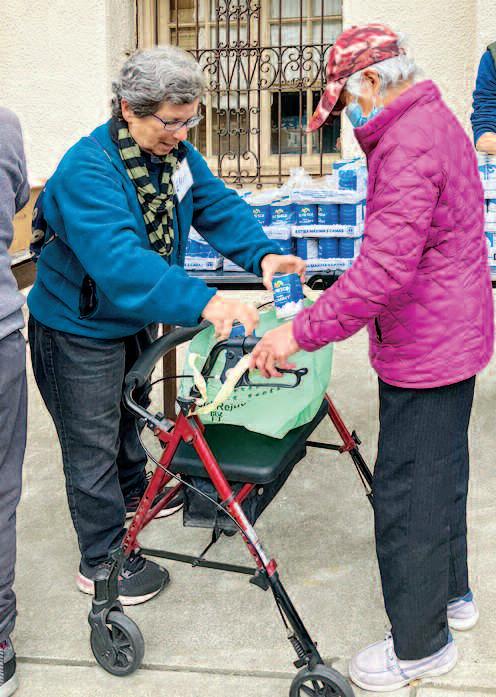
Volunteer Ellen Switkes (L) of Temple Sinai (Oakland) distributes food to people in need at the Islamic Cultural Center of Northern California in downtown Oakland. Photo credit: Lea Delson, May 15, 2024.
ICCNC,a non-profit,was founded in 1996 and restored and uses a former Scottish Rite Temple in downtown Oakland for its operations. There are 1500 families affiliated with the ICCNC,many of whom are Persian and immigrated to the U.S from Iran. Muslims from many other backgrounds are also part of this organization.
The goal of the “Faith Trio,”founded in 2001,is to create and nurture positive rela-
My parents,ardent Zionists,made aliyah to Israel in 1972 with their three children. At age 10,I was the eldest.We moved to Omer,a town near Beer Sheva in the Negev desert.I attended Israeli Jewish public schools from grades 6–11.My fellow students and my teachers were almost all Jewish and Israeli,but not strictly observant Jews.I interacted only rarely with strictly observant Jews although many live in Israel.Orthodox Jewish children attended separate schools,so I rarely met them. I learned a lot of Hebrew and learned about the Torah and other Jewish holy writings,primarily from a critical and scholarly perspective.
I especially liked learning about Biblical
(see Delson,page SE 6)

interpretation and found it fascinating.I appreciated the vibrant,rich and diverse culture of Jewish Israelis who had mostly either immigrated from many parts of the world or descended from immigrants. Other wonderful experiences were family and school trips around Israel,participating in an archeological dig at the site of ancient Beer Sheva,and participating with my family in a small Reform Jewish congregation in Beer Sheva where I had a religious Bat Mitzvah in 1973 and chanted in Hebrew from the Torah.This ritual was probably the first religious Bat Mitzvah ever held in Beer Sheva,as girls did not participate in such ceremonies in all the other local Jewish congregations.
While living in Israel in the 1970s, opportunities to get to know Muslims as people or friends were quite limited.Muslim Bedouin Arabs lived in a nearby town,Tel Sheva,set up by the Israeli government. Some of the Bedouin maintained a very traditional herding and nomadic lifestyle, and we would often see their black tents in the low rolling hills that surrounded the towns we frequented. I also caught sight of them at the bus station,at the hospital, at the Bedouin market in Beer Sheva that I went to a few times, and elsewhere. But,with a few exceptions,I interacted
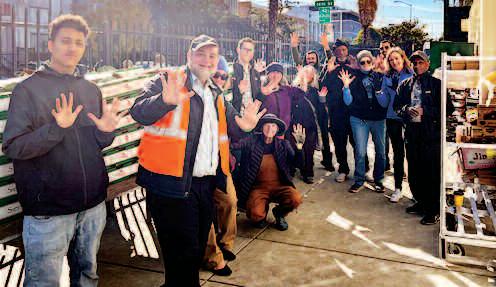
Volunteers Nov. 30, 2022, at the Islamic Cultural Center of Northern California for a food distribution project of Support Life Foundation (L-R): Abdul Aldahmi, Salah El-Bakri, founder of Support Life Foundation (in orange vest), KD Dekker of Kehilla (in blue bandana), Joshua Lehman of Temple Sinai, Carol Wood of First Unitarian Church of Oakland (kneeling), Lea Delson of Kehilla (in purple jacket), Geri Degen of Kehilla, Jebran Sekandri, Steve Perry of Support Life Foundation (black cap), Sara McAulay of First Unitarian Church of Oakland (brown cap), Kareem Badr, Maggie Harmon of Montclair Presbyterian Church (blue jacket), and Idris Hassen. Photo credit: Abolhassan Mokhtabad.
with Muslims very little during the years I lived in Israel. Muslim children attended separate schools,and we never had any common activities.
I moved back to the United States in 1978 to attend college in Chicago,and later lived in Palo Alto and Berkeley,Calif. My parents and younger siblings later

returned to live in the U.S.In college and afterwards,I made many Jewish friends as well as Christians and plenty who had little or no connection to any religion.
In the 1990s,I read about a JewishPalestinian Living Room dialogue group, bringing together Jewish and Palestinian Americans.This group was founded in San Mateo (in the Bay Area,about 30 miles from my home) by Libby and Len Traubman,along with Nahida and Adham Salem.The purpose of this group,and other similar ones that followed,was to find common ground,hear one another’s stories,envision a shared future,and promote a model for healing,creativity and cooperation for Palestinians and Jews in Israel and Palestine,and for other people’s worldwide.
I was eager to join such a group,but did not have a chance to do so until I read of an effort by the local Jewish Community Relations Council.This effort brought together Jews and Muslims to prepare meals at a homeless shelter in Richmond, a city near where I live in Berkeley.I participated several times in approximately 2010. I enjoyed meeting several Muslims, including Reza Rohani, who was then the Executive Director of ICCNC I found Reza to be warm,kind and welcoming.During a conversation with him, we began speaking about art exhibits,and the idea of holding an interfaith art exhibit at ICCNC was born. Reza brought this idea to the monthly meetings of the Faith Trio,and this group supported the idea.From this beginning, eventually large interfaith art exhibitions developed displaying work by Jewish,
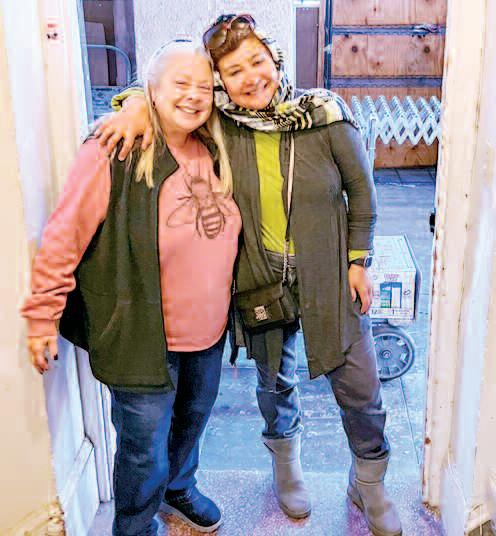
Volunteers Amy Bat Tsipora (L) of Kehilla Community Synagogue works closely with Suzaun Hirbod of the Islamic Cultural Center of Northern California to distribute clothing and other useful items and hot meals to homeless people in encampments in Oakland. They have developed a warm friendship through working together. Photo credit: Lea Delson February 21, 2024.
(see Delson, page SE 7)
(continued from page SE 6)
Muslim,and Christian artists,as well as artists of other faiths.These were held every two years from 2011 to 2017.Each exhibition had a theme,and as many as 100 artists participated in each one. Information about the exhibitions and a rtwork can be found at this link: www.interfaithart.org.
I worked together with a dedicated committee of Jewish,Muslim,and Christian artists to make these exhibitions happen.I learned that we greatly enjoyed getting to know each other through this process of collaboration.Many of the artists in these exhibitions,as well as visitors,expressed how meaningful these positive interfaith encounters were to them and how much they appreciated these exhibitions.
I joined the Faith Trio Committee and participated in and led a variety of interfaith activities.Most recently,we have been volunteering together distributing food to residents in need in downtown Oakland. This project was initiated by Support Life Foundation in 2020 under the leadership of Salah Elbakri,a Palestinian who grew up in Libya.
In partnership with Second Harvest Food Bank,United Way,Hope 4 the Heart, Islamic Relief USA, the Alameda County Community Food Bank,and with the participation of volunteers from mosques, churches,and synagogues,as well as those unaffiliated, Support Life Foundation has been distributing healthy food to people in need at 20 centers throughout the Bay Area. In May 2022, Jewish and Christian volunteers from the Faith Trio joined in to assist the Muslim volunteers in this program operating from ICCNC.Later, volunteers from the First Unitarian Church of Oakland also joined in, as did volunteers from Temple Sinai,a large Reform Jewish congregation in Oakland of about 1,000 households.
Every Wednesday morning,we spend about two hours handing out vegetables, fruit,packaged noodles,rice,and many other useful products.Many of the food recipients are elderly Chinese immigrants who live in the area.We have also joined in a project initiated by ICCNC to collect and distribute clothing,shoes,and other needed items to people living in homeless encampments in Oakland. Hot meals are prepared and distributed as well.
Unfortunately,Oakland has a homeless population of over 5,000,with many people living in tents in makeshift encampments.The total population of Oakland is around 430,000. The Homeless Action Committee of Kehilla Community Synagogue has recently gotten involved and has contributed greatly to this effort.
I have so enjoyed getting to know the M uslims volunteers for Support Life Foundation and the staff of the ICCNC. I’ve met Muslims from a wide variety of backgrounds.Almost without exception, the Muslims I’ve met are warm,kind,and gracious.We enjoy morning coffee and pastries and sometimes have lunch together, courtesy of Support Life Foundation.
Some traits of the Muslims I have met I find very familiar – a love of sharing food as a way of bringing people together in friendship,an interest in food and cooking, a desire to be of help to others,an interest in peoples’personal stories,and a wry and ironic sense of humor that felt very familiar to me.Maybe these are traits common to both Jewish and Muslim culture,or perhaps they are just common human traits?
Each week about 10 volunteers in total from the two synagogues,the Unitarian Church,and the Presbyterian Church participate in this program.Volunteers have been very eager to participate,so much so that sometimes I must turn down potential volunteers.
A volunteer from Temple Sinai,Elisa Mendel, commented “I am so grateful for the opportunity to volunteer on Wednesdays. I feel like it is a dose of Oakland and humanity at its best – people of all walks of life and with different backgrounds showing up to help.It has been good to get to know people I have seen over the months. I especially treasure meeting the wide diversity of Muslims,and I like learning about where everyone is from and the exposure to the religion.In fact, I signed up for a class about Islam this semester at the University of San Francisco.Very interesting.”
I strongly believe in the importance of people getting to know those of other faiths,in order to counter the false beliefs and stereotypes that contribute to hatred, violence,and wars.I believe that through our interfaith activities we are learning the value of all human lives and reaffirming that all humans are created in the image of G-d, as the Torah teaches (Genesis 1:27).
Lea Delson is an event and portrait photographer in the San Francisco Bay Area, an active member of several Jewish congregations in Berkeley, Calif. and surrounding areas, and a committed volunteer for interfaith bridgebuilding and other community building initiatives. Previously she worked in the Oakland Tribune newsroom as an assistant and contributed book reviews and other articles to Children’s Advocate Newsmagazine. She wrote and edited articles for several other publications and newsletters including JPO See www.delsonphoto.com. She can be reached at: info@delsonphoto.com. An article with photos of a Sabbath service with the Faith Trio is at this link: nli.org.il/en/newspapers/ indianajpost/2016/01/13/01/page/2. ✡ ✡
(continued from page SE 4)
was an opera and concert singer.Emil, a lawyer in the banking field,was born in Troppau,Czechoslovakia,on December 11,1900.They departed March 14,1941. Hans (John) Susskind arrived Quaker Hill May 6,1941,and left less than three weeks later.A lawyer,he was born in Bonn,Germany Feb.7,1907.
Born in Dombovar,Hungary,September 2,1904,Dr.Alexander Szittya was an eye surgeon who arrived at Quaker Hill January 13,1941.He married Quaker Hill staff member Ruth Outland June 20,1942.
As can be seen from this sampling,some guests stayed only a few weeks,and some stayed several months.Most were in their 30s and 40s and had likely witnessed the horrors of the Nazi regime,but all seemingly saw the writing on the wall and chose to leave.Information was not available as to how many,if any,were Jewish.In the face of the millions who died in the camps and the millions who died fighting, 55 refugees represent scarcely a drop in the bucket. But an old adage says: when one person dies,a whole universe dies with them. The other side of the coin: for each person who lives, a whole universe lives within them.
Matthew J. Silver is an Indianapolis writer, Jewish historian, folk singer and restorer of wood furniture (below). ✡ ✡
See Historical Digital Issues of The Jewish Post & Opinion since 1930 at https://go.usa.gov/xn7ay,
Read recent digital issue online at: www.jewishpostopinion.com
Follow us on Facebook at: Jewish Post & Opinion, newspaper
Follow us on Twitter at: #JewishPostOpin

BY RABBI MICHAEL LERNER, Z”L
Rabbi Lerner compiled the following prayer/ meditation based on the writings of the Jewish spiritual tradition and the wisdom of his teacher, Rabbi Zalman Schachter-Shalomi, and of many other traditions, as well.
This appeared in the July 18, 2007 JPO edition with the preface: “Every day I pray for peace,an end to the war in Iraq,reconciliation and peace between Israel and Palestine,an end to the occupation of Tibet by China,and an end to the genocide in Darfur…I invite you to try this for a week or two,and I think you’ll find that it contributes to a more restful sleep and a more tranquil soul ready to engage in the necessary struggles and opportunities to build a world of love in the coming years.”
YOU,my ETERNAL FRIEND,WITNESS now that I forgive anyone who hurt or upset me or who offended me – damaging my body, my property,my reputation or people that I love; whether by accident or purposely; with words, deeds, thoughts or attitudes. I forgive every person who has hurt or upset me.May no one be punished because of me. May no one suffer from karmic consequences for hurting or upsetting me. Help me,Eternal Friend,to keep from offending You and others.Help me to be thoughtful and not commit outrage by doing what is evil in Your eyes. Whatever sins I have committed,blot out, please, in Your abundant kindness,and spare me suffering or harmful illnesses. Help me become aware of the ways I may have unintentionally or intentionally hurt others,and please give me guidance and strength to rectify those hurts and to develop the sensitivity to not continue acting in a hurtful way.Let me forgive others,let me forgive myself,but also let me change in ways that make it easy for me to avoid paths of hurtfulness to others.
I seek peace; let me BE peace.I seek justice; let me be just.I seek a world of kindness; let me be kind.I seek a world of generosity; let me be generous with all that I have.I seek a world of sharing; let me share all that I have.I seek a world of giving; let me be giving to all around me.I seek a world of love; let me be loving beyond all reason,beyond all normal expectation, beyond all societal frameworks that tell me how much love is “normal,”beyond all fear that giving too much love will leave me with too little.And let me be open and sensitive to all the love that is already coming to me,the love of people I know, the love of people who do join and work with me in my projects to heal and transform the world,the love that is part of the human condition,the accumulated love of past generations that flows through and is embodied in the language,music,recipes, technology,literature,religions,agriculture, and family heritages that have been passed on to me and to us.Let me pass that love on to the next generations in an even fuller and more explicit way.
Source of goodness and love in the universe, let me be alive to all the goodness that surrounds me. And let that awareness of the goodness and love of the universe be my shield and protector.And with that awareness, let me be energized to more fully contribute with my heart,my full dedication of time and money and energy, and my mind and soul, to the task of tikkun,healing the world,and finding the best ways that I can personally do that.
Hear the words of my mouth and may the meditations of my heart find acceptance before You,Eternal Friend,who protects and frees me. Amen.
Rabbi Michael Lerner, z”l, (Feb. 7, 1943 – Aug. 28, 2024), was an American political activist, the editor of Tikkun , a progressive Jewish interfaith magazine based in Berkeley, Calif., and the rabbi of Beyt Tikkun Synagogue in San Francisco and Berkeley. ✡ ✡

BY MIRIAM L.ZIMMERMAN,ED.D.
When they hear I have become active in the Jewish-Palestinian Dialogue Group of San Mateo,many of my Jewish family and friends,threatened by such participation, respond,“Doesn’t Israel have the right to defend itself?”
Of course,Israel has the right to defend itself.A saying,“The best defense is a good offense,”attributed to luminaries such as Knute Rockne,Michael Jordan or George Washington,comes to mind.I find myself asking,is the IDF (Israel Defense Force) on defense or offense in the Gazan war?
My story begins with my father,Werner Leo Loewenstein. With less than $5 in his pocket,Dad fled Nazi Germany in 1937 armed only with two documents: his 1934 diploma from the University of Berlin Medical School, which became his ticket into the United States; and a letter of recommendation from the Mother Superior of a Catholic Hospital in Cologne.Her letter enabled him to obtain an internship and residency at two Catholic hospitals in Indiana.Only then could he apply for a U.S.license to practice medicine.
In Terre Haute,Indiana,he married my mother,Hazel Anderson.As a little girl,I loved going to St.Anthony’s Hospital with my Daddy on weekends.He would find a friendly nun to babysit me,while he went to the Emergency Room to see one of his patients.Can you imagine,today,going to the Emergency Room and seeing your own doctor? But that’s how it was in the bucolic Midwest of the 1950’s.
Flash forward.For 35 years,I have been a “Catholic Educator”: nine years at the Jesuit-run University of San Francisco and 26 years at Notre Dame de Namur University (NDNU) in Belmont,Calif. Being in Catholic institutions evoke comforting memories from my childhood, playing with the nuns at St. Anthony’s.
As a second-generation,German Jew, the Holocaust became my professional,as well as personal, focus. My three adult children complain I see the world through a Holocaust lens.For example,the holloweyed,starving children of Gaza look no different to me than pictures of children during the Holocaust,suffering from
(see Zimmerman, page SE 12)
BY JENNIE COHEN
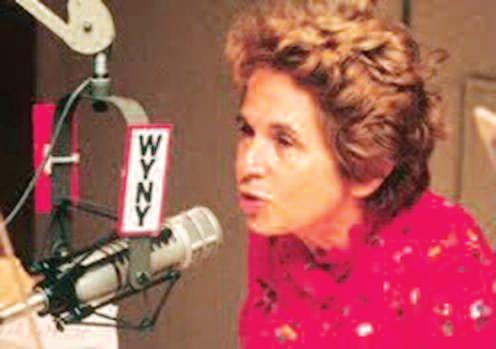
The Joy of Connections,by renowned sex therapist Dr.Ruth Westheimer, z”l,is a book with 100 tips for a less lonely,more meaningful life.It had been sent to the publisher before she passed away at home in New York City on July 12,2024.She was 96.
An orphan of the Holocaust,she was born Karola Ruth Siegel in Frankfort, Germany,on June 4,1928,to Irma and Julius Siegel.Westheimer was married three times.It was her third marriage,at age 32 to Holocaust survivor Manfred “Fred”Westheimer,that stuck.Their life together lasted 36 years,until his death in 1997.She is survived by two children and four grandchildren.
She had an idyllic life until age 10 as an only child with 13 dolls and a loving grandmother who lived with the family of three. Standing at just 4-foot-7-inches, her short height may be a reflection of her very challenging young adulthood. At age 10 she had to leave everything with which she was familiar to never see her family again. Then 10 years later she sustained a serious injury during a mortar attack fighting as a sniper in Israel’s War of Independence.
However,her diminutive stature is not a reflection of her adult life which was filled with enormous accomplishments.A good account of those can be found on the USC Shoah Foundation website at: sfi.usc.edu/ news/2024/07/36551-remembering-drruth-westheimer
The following are links to two articles with photos that JPO published about her on Dec.9,2020: nli.org.il/en/newspapers/ indianajpost/2020/12/09/01/page/2, and
(see Cohen/Dr.Ruth,page SE 11)

BY RABBI MIRA WASSERMAN
This story was orginally on the front page of the JPO’s Sept. 17, 2003 edition.
The Dalai Lama came to Bloomington to dedicate the Chamtse Ling Temple,built on the grounds of the Tibetan Cultural Center by the Dalai Lama’s brother, Professor Thubten Norbu.
The space is to serve as a center of interfaith gatherings and for other activities in pursuit of world peace,and so a diverse array of religious representatives were invited to participate in the festivities.As rabbi of the Bloomington Jewish Community,I was asked to represent the Jews.
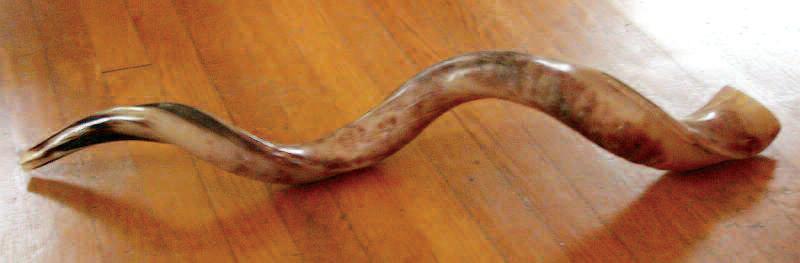
This was an honor that weighed heavily. I was asked to present a gift that would stay in the Chamtse Ling and wondered with my congregation about what object would be appropriate.As this gathering was to occur during Elul,we decided I would present a shofar and let its blast serve as a call for reconciliation,in keeping with the prayer for peace I would be reading.
After all the worry and fuss of preparation (arrive three hours early,the organizers had warned!), the Dalai Lama arrived like
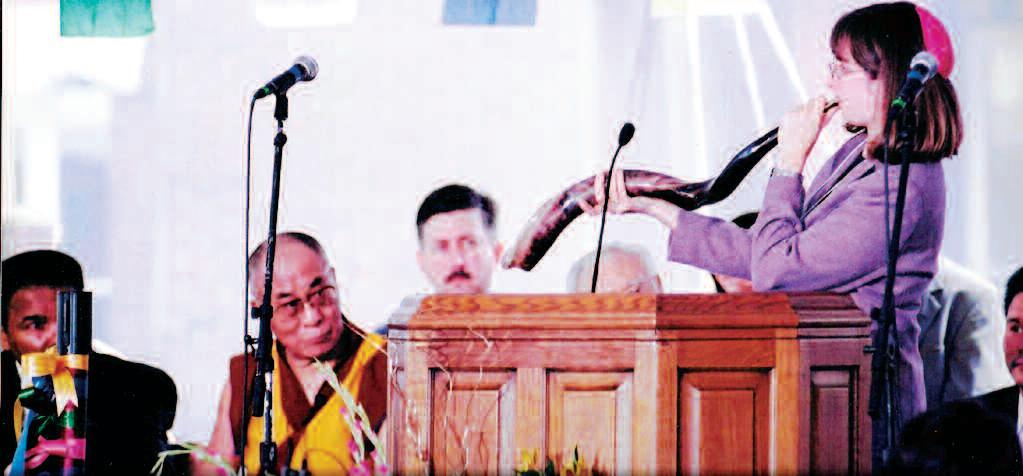
Rabbi Mira Wasserman of Congregation Beth Shalom in Bloomington, Ind. blows the shofar for the Dalai Lama (2nd from left) and other interfaith dignitaries, including former world champion boxer Muhammad Ali (L). The occasion is the dedication of the Chamtse Ling, a $1.2 million, 10,000-sq.-ft. Interdenominational International Temple on the grounds of the Tibetan Cultural Center southeast of Bloomington which took place on Sept 7, 2003. Photos by Scott Romer.
a gale of laughter.He was all smiles as he warmly took the hands of each of us guests.He was to chant with the monks in attendance and to read to them from a holy text,but periodically he would pause to kibbitz with the monks and ask questions, and soon they all were smiling,even giggling as they chanted.There was nothing irreverent about it. The monks glowed with a joy
that was reverential,seeming to delight in their leader’s nearness,ease,and kindness, and in the familiar rituals themselves.
After the spontaneity of this ritual,the interfaith service ensued before the assembled crowd with a lot of solemnity, as one by one we representatives came forward with gifts and brief prayers for peace. The Dalai Lama then suggested to the crowd that the world needs many religions because the peoples of the world are so diverse.He added that there was one thing that united all traditions,and even those who do not practice religion –the need for a warm heart.
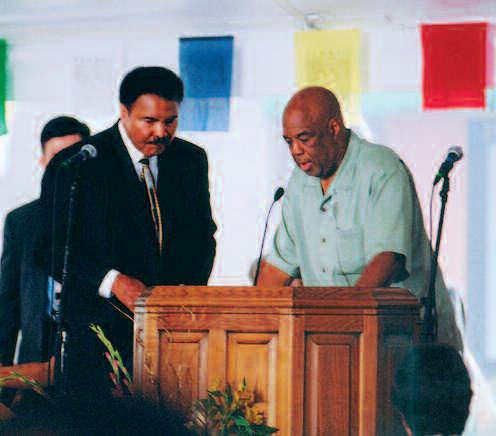
Muhammad Ali (L) prepares to address the gathering.
I had come to the ceremony prepared to share a taste of the Days of Awe with the group,but the feeling of the day was much more in keeping with Sukkot,season of our joy.The Dalai Lama showed me what the psalmist’s call, Ivdu et Hashem be’simcha, “Serve God with joy,”could mean.I don’t regret bringing the shofar though.I know it made an impression because these are the words with which His Holiness,the 14th Dalai Lama, bid me farewell: “You
BY MELINDA RIBNER
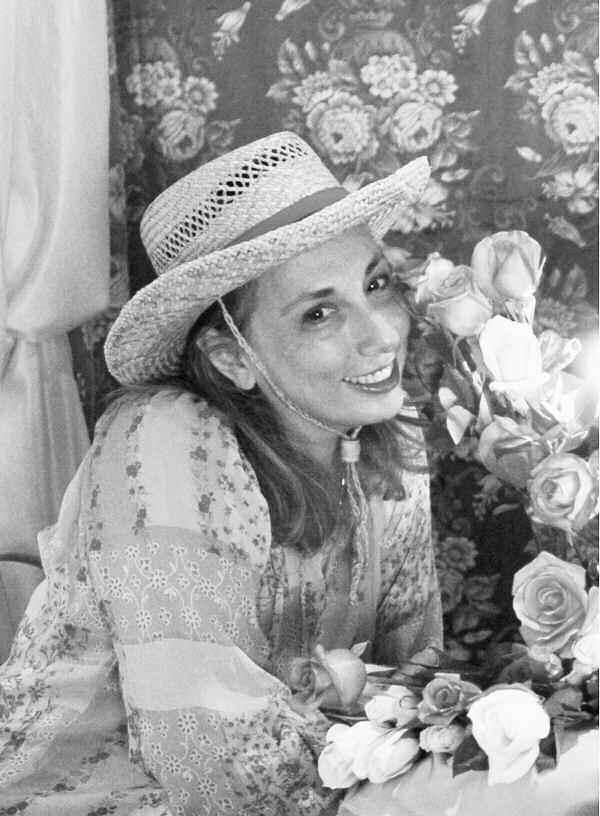
We enter the new month of Tishrei celebrating the holiday of Rosh Hashanah This upcoming year will be filled with new challenges and new blessings.Happy, Healthy and Sweet New Year.
Rosh Hashanah Teachings
The month of Tishrei is the headquarters for receiving blessings for the entire year for every human being.Learning to receive is a very important skill and even a spiritual practice to heighten this month. The energy of newness is flowing in Tishrei for those who are ready to receive. The month of Tishrei reminds us that there is always a new beginning.No matter how spiritually connected or disconnected we may be,we can always grow.We are not limited nor bound to our past.
The name of Tishrei contains most of the same letters as the word Bereshit which means in the beginning.The month of Tishrei begins with the holiday of Rosh Hashanah,commemorating the creation of the human being.
Rosh Hashanah is about expanding our consciousness to the awareness of God as King, as melech By this, we do not mean a man on the throne,but rather melech refers to the unified Divine order of life. Creation is imbued with Divine purpose and Divine order.There is an awesome God revelation unique to Rosh Hashanah The holiness and potential of our own souls is revealed to us.This vision of new possibilities empowers us to go forward in our lives.As open as we are to believing in God,on Rosh Hashanah may we experience that God also believes in us. May we be open to receive.
Affirmations for Rosh Hashanah (to be read silently and out loud)
I wrote this more than 25 years ago,but it still feels very relevant: I so much want to experience God as King because God is the source of compassion, love,ecstasy,wisdom,beauty,andall that is good.When I experience God as King, the negative limiting thoughts of the yetzer hara, the voice of doubt, fear and judgment have no domain in my consciousness and the wonderful qualities of God are active and supreme in my life.Who I am is more than enough.I do not judge myself.
I relinquish self-criticism.God is my judge.God is kind,compassionate and loving and seeks my highest good.
I am surrendered to God.I do not experience myself as a victim,but rather I experience myself as a part of God.I know that on some level,whether it is conscious or not,my soul has chosen the challenges that I have experienced in my life because these were the ways for me to grow.I accept the lessons I have learned in life with love and gratitudeeven though I may notunderstand with my mind the reasons for the choices I have made in my life.I am committed to learning,growing, and living in the coming year.
I am committed to living authentically,to give voice to my dreams,my heart and my soul for I know that these all come from God.It is God’s will that I be free,that I be loving,that I be holy,that I be joyful,that I be creative,that I be who I truly am.
I trust that through Divine grace all will be revealed.I will be all who I am and all of whom God wants me to be.The Creator of the world is the God of Israel, Yud-Hay-VavHay,the God of compassion.This God is my King,and I am God’sholy servant. I do not fear, and I do not hate,for God is my King. I know that my true and lasting happiness rests in doing God’s will. Through serving God on the inside and the outside of my being,I serve the whole of myself and the good of the universe.
This Rosh Hashanah I open to receive a new vision of my life and my service. I rejoice and trust that the power of God that flows through me will empower and guide me to do what I am to do, to meet the people who I need to meet to express more fully who I am.I have faith that God’s kingdom will be established on this earth,there will be peace,a true peace and this makes me very happy and peaceful.
(continued from page SE 9)
Dec.1,2021: nli.org.il/en/newspapers/indianajpost/2021/12/01/01/page/3
That first link is about a Zoom interview with her at age 92.I was amazed at how much energy she had and at the same time she was not anxious about the pandemic. When Rabbi Sandy Sasso asked her how best to cope with the current situation she replied,“Do not lose your hope,eventually the bad times will be over,and then we are going to rejoice.I respect how difficult it is right now.”This could also be a fitting answer today when Iran attacked Israel the day before Rosh Hashanah
That second link is my review of her autobiography, The Doctor is In: Dr. Ruth on Love, Life, and Joie de Vivre.With her typically “spot on”advice she writes, “Focus on the present.Pay attention to the people around you.Ask questions and listen for answers.Tell everyone what happened to you during the day and make it as amusing as possible. Accentuate the positive, try to bring everyone’s spirits up; by doing that, you’ll find your own elevated.And by keeping your brain occupied in the present, it will force toward the back any unpleasant emotions that your past might evoke.”
Co-written with author Allison Gilbert and Westheimer’s longtime friend and publicist Pierre Lehu,the review of The Joy of Connections by the reviewer,did not arrive in time for this edition but after reading and reviewing her autobiography, I can say with confidence that it will be filled with more good advice.
Westheimer became a pop culture icon as Dr.Ruth in the1980s with her frank advice about sex and relationships on her radio,and later,television shows.She rose to prominence as a no-nonsense advocate for healthy sexuality,removing the shame from talking about sex.She wanted to do the same thing for loneliness.
Melinda Ribner L.C.S.W. is also the author of Everyday Kabbalah, Kabbalah Month by Month, New Age Judaism, and The Secret Legacy of Biblical Women: Revealing the Divine Feminine. Internationally known for her pioneering work in kabbalistic meditation and healing, she is also a spiritual psychotherapist and for more than 30 years has used kabbalistic wisdom as part of treatment. She offers a free newsletter on meditation, healing, kabbalistic energies of the months, holidays, and more at www.kabbalahofthe heart.com.
Melinda’snew book (above), Living in the Divine Flow: Monthly Spiritual Gifts and (see Ribner,page SE 12)
“I think she had done almost everything she could do with sex,”Pierre Lehu says. “She’d answered every question.And suddenly there was this announced epidemic of loneliness,and that was something she knew about very well from her own life.”
“With her newest book, The Joy of Connections ,my friend and honorary bubbe,Dr.Ruth,has brought her particular brand of expertise and insight to address the crisis of loneliness.She is as practical, savvy,enthusiastic,and tough as ever – all her best qualities – to help us all face the challenges of loneliness and improve our well-being.”~ Nate
Berkus
✡ ✡

(continued from page SE 8)
starvation rations or no rations at all. Reports that many Gazans have no water,food,or electricity,remind me of the Warsaw Ghetto before the uprising, when the Nazis turned the water on and off at random,and there was a shortage of everything.Today,the rubble of Gaza looks to me like the rubble of the Warsaw Ghetto after the uprising.
In 1960,Dad asked if I’d heard the news: a Mengele Twin just moved to our community.I was in junior high school; I’d never heard of a Mengele Twin.His look of awe stayed with me,as he explained who Eva Kor (now of blessed memory) was and described the heinous crimes of Josef Mengele and his experiments on twins in Auschwitz.Thus,it is with horror for me to learn that there is “a dire lack of medicine or adequate equipment in the hospitals of Gaza,and that surgeries must be performed without anesthesia.” Mengele never used anesthesia in his experiments on twins.
Eva Kor and her husband, Mickey Kor (now of blessed memory),became close family friends. On TV and in schools, Eva and Dad gave presentations together about medical ethics abuse by Nazi doctors: she, from the perspective of a victim; he,from the perspective of a physician who witnessed those doctors.I inherited that legacy.“The Demise of the Medical Profession under the Nazis”became a cornerstone of my Holocaust class,which I co-introduced at NDNU in 1995, and taught for 25 years.
an English-speaking group of Jewish Holocaust educators,from all over the world.The goal was for the two groups to learn from one another’s perspectives, Judaism and Christianity,as well as from the curriculum.
Although it was my fourth visit to Israel, I had never heard of Terra Sancta , Christian Israel.My first visit to the Holy Land was with my parents at age 14.It was years before huge chutes disgorged passengers into the terminal.Instead,we walked down a portable stairway and stepped onto the tarmac.Dad cried when he first stepped foot off the stairs and onto the Land of Israel.This is another image of him that has stayed with me.The Land had special meaning for him,as a Holocaust survivor.Israel represented the fulfillment of a Divine Promise made to our People many centuries ago.Banished from his native land,Dad was like the ancient Hebrews,exiled to Babylon after the destruction of the Temple.By stepping onto the Land of Israel,Dad returned home.
Sr.Gemma took our group to Christian sites on weekends.I got whiplash on a bus tour of Jerusalem.I had no idea there were so many churches and Christian shrines, often hidden behind high walls, concealing their identity.“Over there is where King Solomon built a temple to the Egyptian gods.”What? Our King Solomon built a temple to pagan gods? The things Israeli guides do not point out to Jewish groups.Turns out,King Solomon had just married an Egyptian princess.She wanted to pray to her gods.The accommodating bridegroom had a temple built just for her
(continued from page SE 11)
Blessings is a guide designed to help you access inner peace and love,no matter the challenges you face.Drawing from the profound teachings of the Jewish tradition, each chapter offers unique insights and meditations aligned with the Hebrew months. ✡ ✡
(continued from page IN 10)
blow the horn so loud!”
Editor’s note: The Dalai Lama’s brother was a professor at Indiana University in Bloomington. He has since passed away, but the Dalai Lama visited a few times and gave lectures when his brother was still alive.
Rabbi Mira Wasserman served Congregation Beth Shalom in Bloomington, Ind., 1998-2009. ✡ ✡
miracle happened there.”After I told the story to Sister Mary Pat back at NDNU that fall, she said the salient point for her was St.Peter’s mother-in-law.When I didn’t get it,she smiled and explained, “St. Peter was married.”
In 1998, I received a scholarship from the National Catholic Center for Holocaust Education at Seton Hill University in Pennsylvania to attend their Summer Institute in Jerusalem. “You’re going to Jerusalem to study the Holocaust with Catholics?”My Jewish friends couldn’t believe it.When I applied,I did not know the Center has a partnership with Yad Vashem,the Israeli institution dedicated to the Holocaust.Most of our professors were from Hebrew University,a few from Tel Aviv University.Sister Gemma R. Del Duca,cofounder of the Institute and the nun in charge of the Seton Hill group, lectured on Vatican II and the subsequent reforms of the Catholic Church regarding Jews.
I was the only Jew in the Seton Hill group of mostly Catholic Holocaust educators. It included three seminarians (student priests) and one parish priest. We were not your typical tourist group. Yad Vashem matched our group with
We listened to a beautiful Mass at a Benedictine monastery just outside of Jerusalem,during which the monks and nuns sang a cappella throughout the service.On our Galilee tour,Father Jim delivered a sermon on the Mount of Beatitudes,where the original Sermon on the Mount took place.Someone rowed us across a corner of the Sea of Galilee in a “Jesus Boat,”after which we ate St.Peter’s fish at a nearby restaurant, overlooking the shore.I could barely gag down what to me what was a tasteless and spiny fish,but to my new Catholic friends,was a religious experience. I felt my spiritual IQ elevate to new heights,as I experienced the effects of religious rituals and shrines on devout Christians, praying in the holiest sites of their tradition.
We peered down on the home of St. Peter in Capernaum,where Jesus performed a miracle by healing St.Peter’s mother-inlaw.According to our guide,the house had been authenticated as St. Peter’s house because of graffiti on the walls.Scientists attested that the graffiti dated back to the First Century.I shared the awe of my group, gazing down on a house where “a great
Back in Jerusalem, I embarked on a spiritual seesaw while walking the last few Stations of the Cross. We retraced the steps of Jesus on the way to His Crucifixion, stopping at points,now called “Stations,” mentioned in the Christian bible. We were in the Arab Quarter,a marketplace teeming with veiled Muslim women and children playing happily,a few darting through our group.At each Station, Sr.Gemma read the relevant passage from her well-worn,post-it note studded Christian Bible, then led the group in song.I wondered what the indifferent Arab shoppers thought,seeing this devout group of pilgrims,many with tears streaming down their cheeks,praying and singing in what to them was a place to buy food and goods. My spiritual seesaw rose to great spiritual heights; I was having my own religious experience.
At each Station, our guide, Pau, a former monk turned archaeology professor at Ben-Gurion University,pointed out there was no archaeological evidence that Jesus stumbled here,or Veronica wiped His brow there.He grounded my spiritual seesaw with a thud. Asserting the scientific reality that this was all in our heads did nothing to stem the tears or erode the reverence of my companions. I expected the great Italian filmmaker,Frederico Fellini,to show up with his camera, to capture the irony. As we threaded our way through the Arab Quarter toward the Church of the
(see Zimmerman, page SE 13)
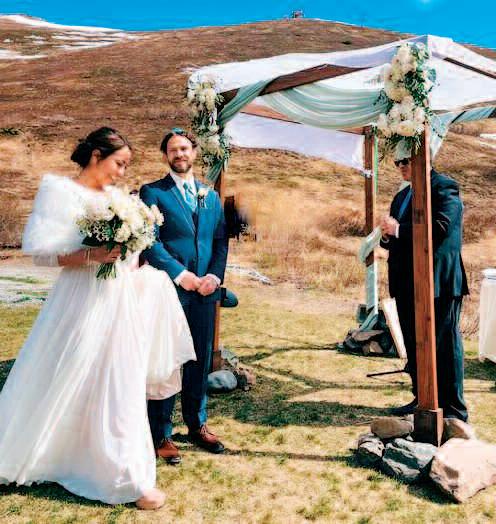
Benjamin (Benjy) Katz,son of Ronnie Katz and Leslie Kraft Katz,and Liliana (Lili) Espinosa Sanchez (below) on their marriage in June 2023.The beautiful and meaningful,bilingual ceremony,held on a picturesque mountainside outside of Anchorage,Alaska,was officiated by Rabbi Felipe Goodman,of the conservative Temple Beth Sholom in Las Vegas, who speaks both Spanish and English.
The daughters of Charlie and Stacey Bunes – granddaughters of Sol, z”l,and Jeanne Bunes,and Ken, z”l,and Rona, z”l, Hecht:
Rivkah (below) had the honor to work as a full-time intern at The White House for a senior advisor in the Office of the First Lady of the United States for the Fall Semester of 2023,as part of her Political Science major at Indiana UniversityBloomington.Living just around the corner from the U.S.Supreme Court and U.S.Capitol,this invaluable and exciting experience enabled Rivkah to contribute to Dr.Jill Biden’s (below) work for the country, partake in many key events at the White
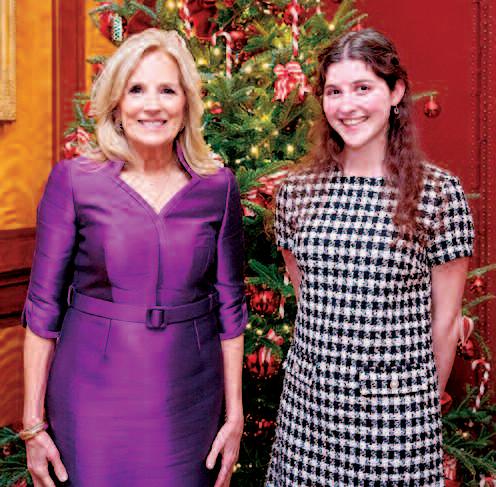
House,witness a Supreme Court case argument,and participate in several significant rallies and activities,while in D.C.
Rivkah is currently in her Senior year of studies at I.U.completing a second major in Jewish Studies and a minor in History.She has taken her LSAT as she now applies to law schools to be an advocate for civil rights. She previously interned for ACLU-Indiana, Marion County (IN) Prosecutor’s Office, and the Indianapolis Jewish Community Relations Council,while also a counselor at the Indy JCC Summer Camps.
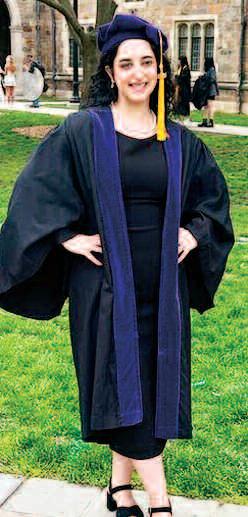
Chava (below) received her Masters of Arts degree this past June from Drexel University in Philadelphia in Art Therapy and Counseling – having received her B.A. degree from Ball State University (’21) with majors in Psychology and Studio Painting.
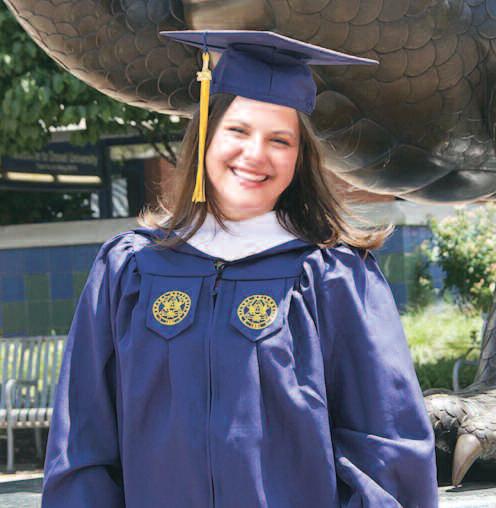
Having interned as a therapist at Jewish Family and Children’s Services of Greater Philadelphia her last year of studies, Chava has just begun her career as Outpatient Therapist,and the only Art Therapist,at Children’s Crisis Treatment Center in Philly – serving children,as she has aspired to do since 10th Grade.She also continues her creative arts business (Chava’s Creations, Inc.,on Facebook,since 2019) of mural and canvas painting – but has also been serving wedding florist clients creating floral displays and personals – while in school.
Both Bunes ladies’ foundations were set at The Hasten Hebrew Academy of Indianapolis and North Central High School.
Dr. Paul and Michele (Lyons) Lefkovitz (above right) on celebrating their Golden (50th) wedding anniversary on June 16, 2024. They met in September 1971 at the University of Cincinnati,becoming college sweethearts. They were married in 1974 at the Valley Temple in Wyoming,Ohio (outside Cincinnati).Their wedding was the first one celebrated under the chuppah at the new Valley Temple building. Rabbi Solomon T. Greenberg and Father Harry Meyer (personal friends of one another) officiated performing a beautiful ceremony. The newlyweds (top,right) moved to
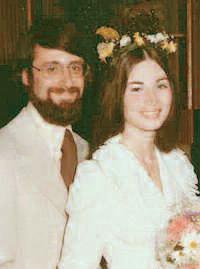
Indianapolis,Ind.a few weeks later.
Michele was a visual arts teacher for 30 years in Lawrence and Pike Township schools.Her
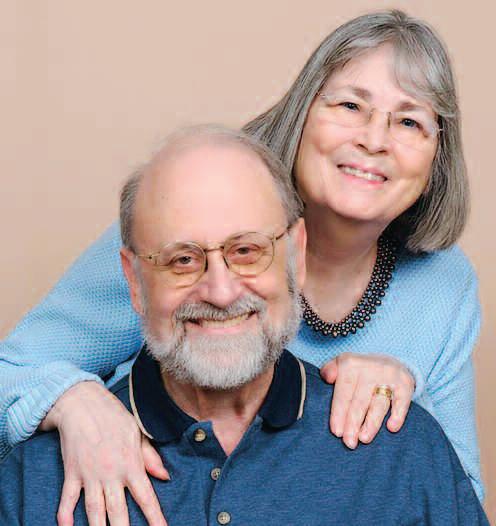
latest school was Forest Glen School of Spanish Immersion where she taught for 21 years.Paul,a licensed clinical psychologist,served in various leadership roles at Gallahue Mental Health Center/ Community Hospitals (Director,Partial Hospitalization),St.Vincent Hospital (Executive Director,Stress Center),I.U. School of Medicine (Clinical Associate Professor of Psychology) and Behavioral Pathway Systems (President).
Michele and Paul are blessed with two wonderful children and a grandson: their son Steve, and their daughter Alison (who with her spouse Stephan and their terrific son, Indy, age 7, reside in Jersey City,N.J.).Michele and Paul are very grateful for the joy and love they have shared over these past 50 years.
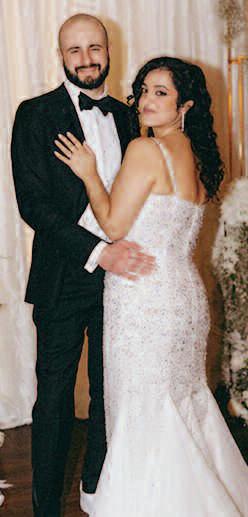
Naomi Farahan Eldar (below),daughter of David and Vika Farahan,on a very good 5784: She got married to Tom Eldar, son of Eran and Ravit Eldar; she graduated from University of Michigan Law School; and she passed the bar.Now,Naomi is
(continued from page IN 1)
moving to Washington,D.C.to clerk for a Superior Court judge.She met Tom at a Progressive Jewish Students Conference in D.C.eight years ago.
Robert Katz,a professor at Indiana UniversityI ndianapolis Robert H. McKinney School of Law, on starting a new position as Member at American Bar Association Task Force to Combat Antisemitism.
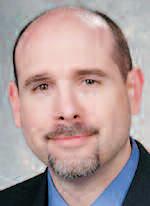
in Westchester,N.Y.,before that.He hails from Brookline,Mass.
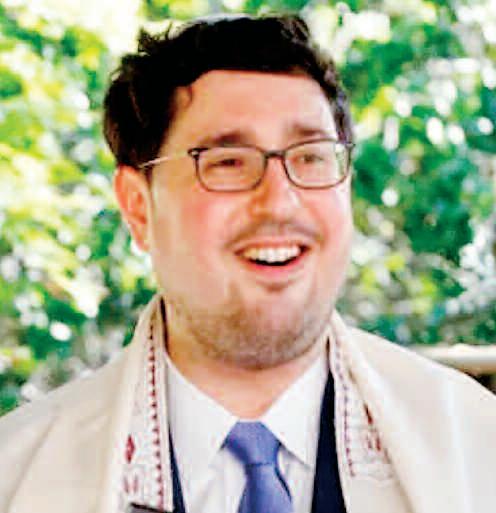
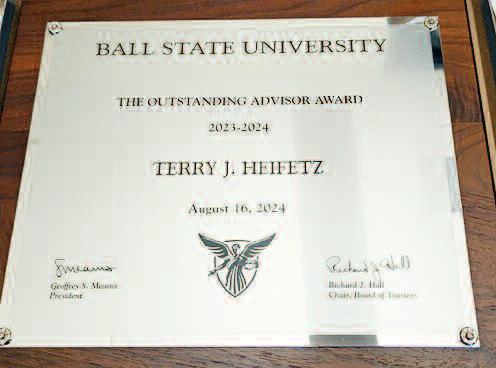
Terry Heifetz on receiving the Outstanding Advisor Award for 2023-24 from Ball State University in August.He has worked in media for 30 years and is currently News Director of Indiana Public Radio. Before joining the faculty at Ball State, Terry was Assistant News Director at WRTV,the ABC affiliate in Indianapolis. He also held producing and management positions in Ft. Wayne, Ind., Cedar Rapids,Iowa, Tampa,Fla.,and at CNBC and The Weather Channel.
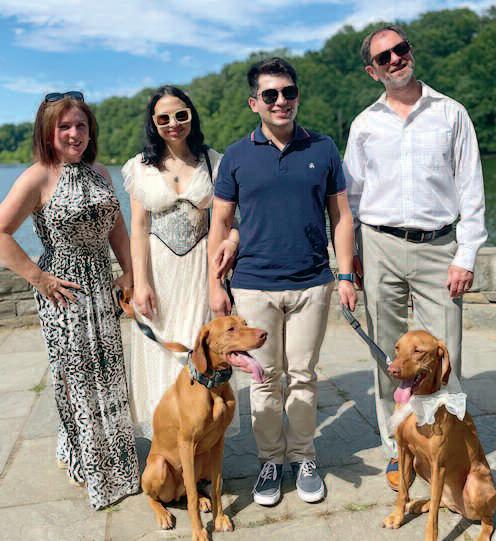
Tony Arriaza and Maryna Yankovska (below center) on their marriage on July 7, 2024.Tony’s mother Naomi (left),with her husband Lance Siegall (right),was the office manager at Congregation B’nai Torah some years ago.
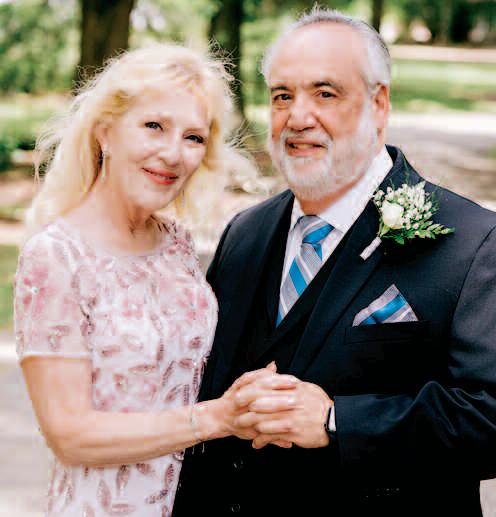
on their marriage at Congregation Shaarey Tefilla in Carmel,Ind.on August 11,2024 –surrounded by a small group of family and friends.
nal grandparents are Barbara Profeta a nd S am Profeta , and her paternal grandparents are Beth Powers and John Powers of Cincinnati,Ohio.
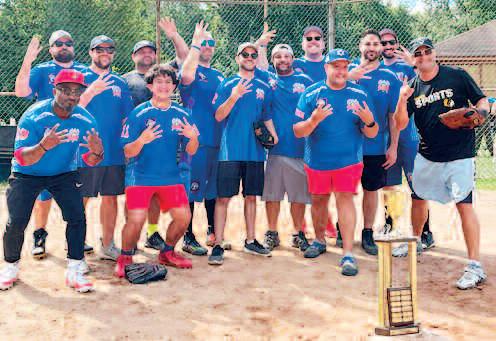
winning the 2024 Synagogue Summer Softball League in August by defeating the Indianapolis Hebrew Congregation team 28-14 in the semi-finals before knocking off the number one team,of Congregation Shaarey Tefilla, 13-9 to claim the Kiddush Cup Championship Trophy.
At Ball State,Terry helped build several immersion programs,including NewsLink Indiana,the college’s news program.He is originally from Detroit, earned his Bachelor of Journalism degree from the University of Missouri-Columbia,and his Master of Arts in Communications from Ball State.
C ongregation Beth Shalom in Bloomington,Ind.on welcoming its new spiritual leader, Rabbi Noach Lawrence (above right), July 1,2024.Rabbi Noach brings a wealth of experience,a deep commitment to community engagement, and a passion for fostering spiritual growth among members.
He and his wife, Katie Roza,are excited to make their new home in Bloomington. Previously,he was an Assistant Rabbi at Temple Isaiah in Lafayette,Calif.,and a Rabbinic Intern at Congregation Kol Ami
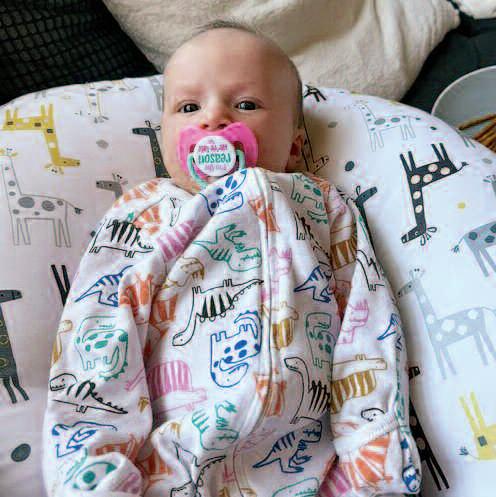
Ian and Michelle (Profeta) Powers on the birth of their daughter, Lily Elizabeth (top,right),on August 14,2024.Lily’s mater-
First row, (L-R): Ira Mallory, Musa Suriel, Jose Suriel (Jewish star hat), and Jeremy Rosenstein. Back row, (L-R): Jacob Hall, Brad Korn, David Calderon, Jared Palmer, Sammy Cohen, Aaron Senzell, Joshua D. Abrams, Jeff Kogan, Brian Hoffman. (Not pictured: Ben Schiller, Leo Grabovsky, Michael Saccucci, Robin Gonzalez, and Ido Shuqrun.)
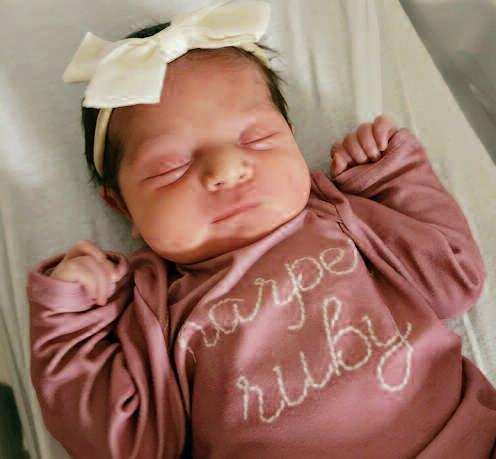
Alex Lande,son of Jerry and Beth Lande, and his wife, Rebecca, on the birth to their daughter, Harper Ruby (below), MAZEL TOV
BY JEREMY ROSENSTEIN
Sandy Schwartz and I have been teaching pickleball at Mickey camp for 8 and 10 years, respectively.Mickey’s Camp,held at Bradford Woods just north of Indiana University,is an adult networking camp for men and women with charity and camaraderie as the main community objective. The camp offers wonderful classes such as pickleball,canoeing,welding,ziplining, archery and grilling along with massage, facials and fishing.Mickey’s Camp has wonderful sponsors who provide meals, snacks,drinks,and accommodations.
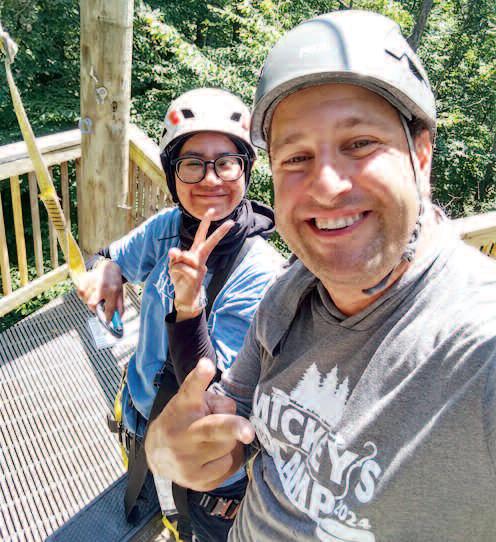
Editor’s Note: From mickeyscamp.com: Mickey’s Camp was the dream of Indianapolis businessman,Mickey Maurer.In 2001,this dream came true and to date has raised over $3 million for charities.In the past 23years, Mickey’s Camp enabled adults to leave behind daily pressures,explore new opportunities, perfect old skills and enjoy the camaraderie of fellow campers in a relaxed,informal atmosphere. Dates for 2025: Women,Aug. 18-20 and Men,Aug.20-22. ✡ ✡
Indiana native,Alison Tavel (right),is bringing her documentary feature,ten years in the making,to the Heartland Film Festival in Indianapolis. Resynator: The Girl, The Synth, The Legend (resynator.com/) follows Alison’s journey of resurrecting a revolutionary synthesizer her late father invented in the 1970s.Her father,Don Tavel (right),died suddenly in a car crash when Alison was only ten weeks old. Alison not only revives his mission to share his invention with the world,she unexpectedly forges a deep bond with the father she never got the chance to know.
(continued from page IN 3)
at Columbus,Ohio University Hospital on Labor Day 2024.She arrived at 6 lbs., 10-1/2 oz.
Etz Chaim Sephardic Congregation in Indianapolis on welcoming its new rabbi, Rabbi Daniel Askenazi He arrived from Barcelona,Spain,in time to lead High Holiday Services.
Rabbi Askenazi was the Chief Rabbi of Barcelona the past 5 years and has served in Barranquilla and Cali,Colombia in South America,as well.He was a Logistics Officer in the Israel Defense Forces (IDF) from 2002–2011.He received a Bachelor of Arts degree in Political Science in 2009 from Hebrew University in Jerusalem,and Rabbinic Ordination from Rabbi Eliahu Ben Haim,in New York in 2013.He also received a J.D.Law degree in 2018 from Universidad Del Norte De Colombia, Barranquilla España.
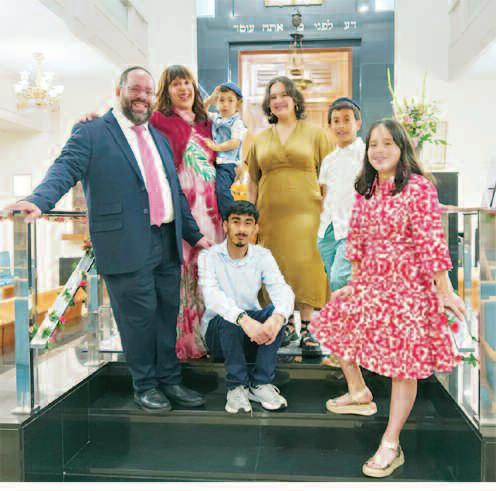
and his wife, Rubissa Rachel (Rajeli),have five children (above).The oldest will not be moving with them,as he will be serving in the IDF


Resynator will be showing on October 11th (sold out) and October 15th at 5 p.m., at Kan-Kan Cinema, in Indianapolis –tickets.heartland film festival.org. ✡ ✡
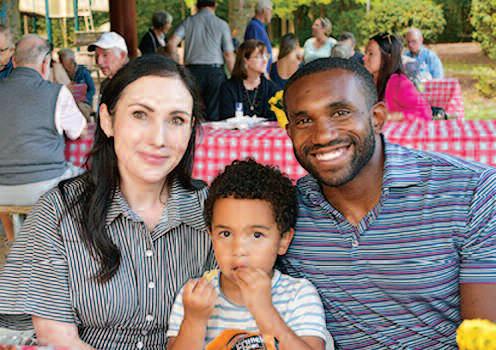
Samantha “Sam” Dubrinsky ,the new CEO of The JCC of Indianaplois –pictured above with her husband,Jamil, and their son,Max,at the Sablosky Pavillion of the JCC at the recent cookout for staff and the board of directors.Sam previously served in executive positions at the JCCs in Springfield,Mass.and Birmingham,Ala.,and as a director at the Birmingham Jewish Federation.
Members of Etz Chaim and B’nai Torah congregations on the introduction of a Kollel (see below) in Indianapolis. Kollels have been instrumental in growing
George Lorimer Walker, Jr., 81,of Bloomington,Ind.,beloved WFIU classical radio announcer,died at his home on Aug.21,2024.The longtime host of the morning classical music program inspired thousands of Hoosiers with his soothing and melodious voice during his remarkable 50-year career on air at IU’s WFIU radio.
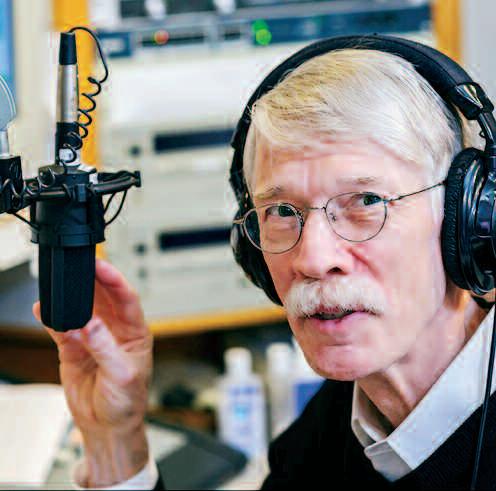
George was born on March 7,1943,in Winchester,Va.As a young child,his family moved “next door”to his aunt,uncle, and cousins in Owl’s Head,Maine.At the age of 10,George’s family moved to Westchester County, N.Y.He graduated from White Plains High School. After graduating from the University of Michigan in 1967, George moved from Ann Arbor to Bloomington to complete a master’s degree in the Teaching of English in 1969.When George first arrived at IU in the fall of 1966,his intended career path was teaching.But things changed after he heard about tryouts for news announcers at WFIU.He auditioned,and wound up being hired,not as a news announcer,but as a volunteer classical music announcer.This
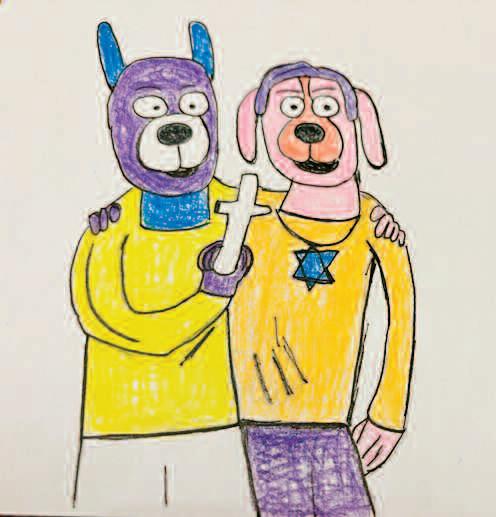
My name is Seth Cooper and I have been drawing since I was little. I also like to work with clay. I am inspired by my mom, Debra Bolotin-Cooper, a retired art teacher, Jim Davis who draws Garfield and another artist, Jon Burgerman. You can see more of my work on Facebook at Ted Cooper and on Instagram at artworkvite. Ed. Note: Seth drew this to represent cooperation between faiths.
part-time position led to his successful career there.Former executive director of IU Radio and Television Services Perry Metz wrote: “It’s rare (even in public) broadcasting to be successful for one station for a decade,much less five.”
After completing a master’s degree in teaching English,and while working part time at WFIU,George chose to complete two years of the undergraduate curriculum – studying music theory,history,and literature at the Jacobs School of Music.
Through the decades,George served in a variety roles for WFIU – as Chief Announcer,Programming Director, producer,arts reviewer,interviewer,hirer and trainer of all non-news announcers; and handling the station’s 24 hour “emergencies”.For many years,George had the longest daily on-air shift of any announcer at any NPR station – 6 a.m.to 3:30 p.m.,every weekday.
His position expanded to covering the arts in south central Indiana,including reviewing hundreds of productions, including operas,musicals,plays,and concerts,ending each review with his iconic “At the theater for you…”
George programmed and hosted thousands of days of music; produced interviews and profiles with musical, theatrical, and literary artists. He told one reporter: “I’ve been fortunate to interview so many creative and talented musicians, dancers, actors, directors, writers, and scholars – from Yo-Yo Ma to Buckminster Fuller,to Twyla Tharp,to Yefim Bronfman, the Canadian Brass,Maya Angelou,and Bill T.Jones.I take great pride in having known the remarkably warm and talented Dave Baker,Josef Gingold (who always called me ‘dear boy’) and Menahem Pressler.
A few days after his 45th anniversary as a full-time employee of WFIU,George retired on July 29, 2022. He wanted listeners to know that he had made the difficult decision to leave WFIU because he had been diagnosed with progressive frontotemporal dementia,which,ultimately and sadly, left him without words.
George founded the Shir Simcha at Bloomington’s Congregation Beth Shalom, a musical group that helped lead many erev Shabbat services. Through the years, he was a member of many Bloomington choirs and choruses.He was a member of Beth Shalom’s board as vice president and as treasurer.He delighted in teaching kindergartners and 1st graders at the religious school for many years.
He served on the boards of the Musical Arts Youth Orchestra; the Southern Indiana Youth Symphony; the Indiana University Theatre Circle; the Bloomington Area Arts Council,the Bloomington Commission on the Arts; and the Youth Symphony. He volunteered his time to emcee
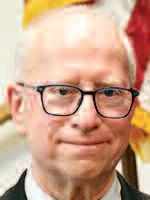
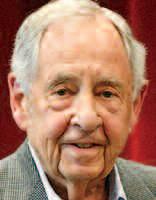
Th e Indiana Jewish Historical Society (IJHS) has honored their 2024 H oosier Legends who have made a significant and lasting impact to their profession,community,and the fabric of our cultural heritage in Indiana,in a celebration at the Jewish Community Center in Indianapolis on August 25th (top to bottom): Bruce Sklar and David Kleiman, both of Indianapolis; (L-R,below) Jerry Einstandig , z”l ,of Terre Haute,( Jo Einstandig accepted on behalf of her deceased husband); Margret Robb of West Lafayette; and Carol Abrams of Evansville.
many fundraisers and arts events in Bloomington,Terre Haute,and Columbus.
In 2017, he was honored for his efforts when he received the Cardinal Stage Leadership in the Arts Award.At the time of George’s retirement,he was presented with the IU Jacobs School of Music’s Centennial Award, the Lifetime Achievement Award by the Greater Bloomington Chamber of Commerce; and a proclamation of “George Walker Day” by the City of Bloomington.He was recognized by Congregation Beth Shalom at a special Shabbat service, and by his WFIU colleagues who renamed the radio station’s classical music library in his honor.
George’s most recent honor occurred on July 23,2024,when he was inducted into the Indiana Public Broadcasting Hall of Fame in recognition of “his astonishing career”. Most importantly,George was described by friends and co-workers as a kind and gracious gentleman.
George is survived by his beloved wife of 45 years,Carolyn Lipson-Walker; son and daughter-in-law,Ben and Elise Walker; daughter Erin Walker; and grandchildren Adam and Max Walker.George was preceded in death by his parents Alma Van Blarcom Walker and G.Lorimer Walker, and younger brother Tomm Walker.
Donations in George’s memory may be made to WFIU radio at: indianapublicmedia .org/radio/ or by calling 1-800-987-9848, or to Congregation Beth Shalom at beth shalom-bjc.org and 3750 E. Third Street, Bloomington,IN 47401. ✡ ✡
BY MIRIAM L.ZIMMERMAN,ED.D.
From Auschwitz to Indiana and International Fame
A Blessing, Not a Burden: My Parents’ Remarkable Holocaust Story and My Fight to Keep Their Legacy Alive by Dr. Alex Kor with Graham Honaker.Pediment Publishing 2024.272 pp.$24.95.
(continued from page SE 12)
Holy Sepulcher,it hit me: the Jewish claim to the Land was not the only legitimate stake in this spiritual landscape.The Arab marketplace screamed at me that there was also an Islamic Israel,like Christian Israel,that I had never witnessed.I vowed that the next time I returned to Israel,it would be with a Muslim group,to understand how Israel is holy to Islam.
imagine a tour of Palestine at this point. My Holocaust filter predicts it would be like visiting the German city of Dresden after the Holocaust,leveled by Allied bombing at the end of World War II.
I taught my Holocaust students,“For evil to triumph,all it takes is for good people to do nothing.”The great Irish statesman and philosopher,Edmund Burke,might not have originated this famous quote.However,it is applicable here.I consider myself a good person.I cannot do nothing,lest my Holocaust filter shout,“Bystander!”
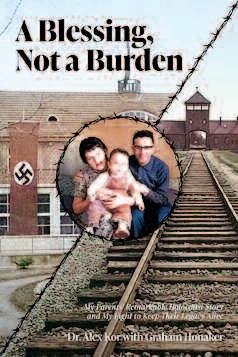
She had a message – of hope and healing – for all humanity.Despite her 2019 passing on July 4, her message continues,thanks in large part to the tireless efforts of her son,Dr.Alex Kor.He is carrying on the legacy of his mother,Eva Mozes Kor, z”l (of blessed memory), in his speeches,his writings, and thus, in perpetuity.For him,doing so is “a blessing,not a burden,”the title of his just-published memoir. Memories of his extraordinary mother are matched by his equally extraordinary father,Mickey Kor, z”l,although the two are very different. The book is also a memoir about Alex himself.
Many will be familiar with Eva’s story: the Mengele twin who founded C.A.N.D.L.E.S.,an organization of surviving twins of Josef Mengele’s toxic medical experiments.The “Children of Auschwitz Nazi Deadly Lab Experiment Survivors” evolved into the CANDLES Holocaust Museum and Education Center (candlesholocaustmuseum.org) in Terre Haute,Indiana.
Dr.Kor includes details of how his mother, through sheer grit and determination,became an international force for forgiveness and hope. Children,their teachers,and often,their families,come to the CANDLES Museum from all over Indiana and beyond.Eva’s story for some became a galvanizing source of motivation in their own lives.I felt as moved by reading her son’s words describing Eva’s effect on students, as I did while listening to Eva herself,during her lifetime.The memoir filled in some of the information gaps in Eva’s story for me.
After my return to San Mateo,I tried to find a local Muslim group with whom I could learn.Instead,the JewishPalestinian Living Room Dialogue Group of San Mateo kept populating my Google searches.I discovered that co-founders Libby and Len Traubman,he,now of blessed memory,lived just ten minutes from my home.I called and yes,there are Muslim members in the Dialogue Group. Begun in 1992,I joined the Dialogue Group in 1999 or 2000.Although I never did encounter Muslim Israel the way I experienced Christian Israel,I learned so much about the Palestinian people and their profound connection to the land.I became active,served on panels and gave presentations.
My parents taught me to be a proud Jew.Every time I encounter a report of the number of innocents killed in Gaza, especially children,I feel shame.We are creating families without children and children without families.I cannot
While Eva’s message propelled her to international fame,Mickey preferred to remain in his beloved,adopted hometown, Terre Haute,where he was a practicing pharmacist. Terre Haute is my hometown as well.Dr.Kor is “Alex”to me; the Kor family and the Loewenstein (my maiden name) family became lifelong friends.
My father was a 1937 German-Jewish refugee.To him,a “survivor”had to have been in a concentration camp,like Eva. Dad would never describe himself as such and initially, was in awe of Eva.As a 1934 graduate of the University of Berlin Medical School,he witnessed the demise of the German medical profession while a medical student.Eva experienced this decline as the subject of heinous medical experiments. She never did find out exactly what Mengele did to her.Dad and Eva appeared on Terre Haute television together, discussing their experiences during the Holocaust,often including Nazi medical abuses.
Our families were close.Eva told me that it was my mom who suggested she take a public speaking class at Indiana State Teacher’s College (later, Indiana
(see Zimmerman/book, page IN 14)
In my opinion,profit-seeking politicians who keep us polarized are the problem; we,the people,are the solution.Grassroots activism like the Jewish-Palestinian Living Room Dialogue Group gives me a vision of how Jews,Christians,and Muslims; Palestinians,Arabs,and Israeli Jews,can share the sacred space of the Holy Land. There is so much to learn from and appreciate about the other.
Dialogue is about “deep listening;”not discussion,debate,or denial.Listeners ask questions until they can repeat the story to the teller’s satisfaction.“An enemy is someone whose story you have not heard,” was a slogan often proclaimed by Len Traubman, z”l .Len’s wife,Libby Traubman,has kept the group going since Len’s 2019 passing.By listening to their stories,“the other”becomes your friend.
The late Rabbi Jonathan Sacks pointed out that listening is central to Judaism. The watchword of our faith begins, “Shema Yisroel, ” “Hear,O Israel.”Rabbi Sacks translated the High Holy Day prayer,beginning with,“Shema Koleinu”as “G-d,hear our voice….”Together,I believe that these two prayers create dialogue between G-d and the Jewish People.
Dialogue enables people to build supportive,caring relationships.People working together in grassroots activism ended the Vietnam War and created the “Me,too”and “Black Lives Matter” movements.The greater the number of people involved,the more likely peace is not just probable,but inevitable.Please join me in this endeavor.
More information about The Dialogue Group at: traubman.igc.org/dg-prog.htm
See a recent interview titled,“Healing Through Conversation: Libby Traubman’s Israel-Palestinian Living Room Dialogues” at: youtube.com/watch?v=I7c-l_FvTKE& list=PLtO3YKG_ZWcDt8-1mJCUw6Ohg VAjp3vXx&index=4&t=241s
Dr. Miriam Zimmerman is professor emerita at Notre Dame de Namur University (NDNU) in Belmont, Calif., where she taught the Holocaust course for 25 years. She can be reached at mimzim@aol.com. The daughter of a Holocaust survivor, she was born and raised in Terre Haute, Ind. ✡ ✡
BY JENNIE COHEN
For this newspaper’s 75th Anniversary Tribute Edition in June 2005,(nli.org.il/en/ newspapers/indianajpost/2005/06/08/01/ page/21),I wrote that in 1930,my father, Gabriel Cohen (z”l,1908–2007),graduated from the University of North Carolina, Chapel Hill.Prior,he had been a reporter for the Louisville Herald-Post, in his birthplace of Louisville,Ky.,returning to that position after graduation.Without a lot of options for Jewish news in those days, especially in the Midwest,at just age 22, my father saw a need and fulfilled it.
As we strive toward our 95th anniversary, a look back at the history of my father’s legacy:
Beginning on December 26,1930,and continuing for seven years,Dad began publishing The Chronicler Spokesman (nli. org.il/en/newspapers/chroniclerspokesman).
This newspaper was a consolidation of the YMHA Chronicler, a monthly magazine that was the official publication of the Louisville Young Men’s Hebrew Association, and The Spokesman, Kentucky’s only Jewish newspaper,being published monthly by the Post-graduate Sunday School Class of Adath Jeshurun Synagogue in Louisville. From May 1937 to Dec.1938,it evolved into The Kentucky Jewish Chronicle (nli.org.il/ en/newspapers/kentuckyjc),and would later become The Kentucky Jewish Post & Opinion
Also during this time period, The Jewish Post, a small, four-page monthly, was founded in Indianapolis,Ind.by two young brothers, Leonard and Arvin Rothschild in March of 1933.In October 1935,Dad acquired that paper and started publishing it from Louisville in January 1936.He hoped the two local newspapers could become the nucleus of a national, independent Jewish newspaper.
In 1937,the Ohio River flooded.Even though my father’s office was on the second floor of a downtown office building,his office went underwater.He then moved the newspaper’s main office to Indianapolis.
In 1944, Dad became the co-founding chairman of the American Jewish Press Association.And in August of 1946,his dream was fulfilled when his papers were merged becoming The National Jewish Post, still with local editions, as well.
By 1947,with four children ages 7,5,4, and 6 months,my mother,Helen Cohen (z”l,1916–1999) began writing a weekly column called “Woman’s Viewpoint.”She continued for 27 years.During that time she had four more children.I was her sixth. In the 1940s, my father began publishing other regional or state editions.From
(see Cohen/JPO,page 16)
(continued from page IN 13)
State University).As outgoing president of the Temple Sisterhood of the United Hebrew Congregation,Mother wanted Eva to take her place as president.Eva said she did not like speaking in front of groups,but she took the course anyway. As we all know,Eva put that knowledge to good use,achieving international fame as a public speaker.
Alex attests in his book that Dad was the Kor family doctor; he examined Alex while Alex was home,visiting from podiatry school.Dad made Alex promise he would get tested when he was back in Chicago.He suspected cancer in a lump which Alex thought was a hernia.Caught early and treated by specialists in Chicago and Indianapolis, Alex has not suffered a relapse of cancer since.Eva told me personally,years later,that she thought Dad saved his life,with such an early diagnosis.I know from working in Dad’s office while I was in high school, that if a patient did not have a preferred pharmacist, Dad recommended they fill their prescriptions with Mickey Kor.
Mickey survived a variety of camps, including Buchenwald.As part of a medical battalion of the U.S.Army,Dad entered Buchenwald just after its April 11, 1945,liberation.Unfortunately,Dad and his medical crew were unable to save the hundreds who died,day after day,even after the liberation of the camp.Dad felt an instant kinship with Mickey,having seen for himself the suffering endured by the inmates of the Buchenwald concentration camp.
The book abounds with notable quotes that I wish I’d had during my 25 years of teaching the Holocaust class at Notre Dame de Namur University Among the many: “At Auschwitz,dying was easy; surviving was a fulltime job (p.76),”and a phrase coined by Eva herself describing forgiveness as “the miracle of medicine.” She clarified,“It’s free,it works,has no side effects,and if you don’t like how it makes you feel,you can always take it back and be angry again (p.251).”
Alex closes the book with lifelong lessons gleaned from his parents. The second one he lists,“Have a sense of humor,”especially resonated with me.A sense of humor is a given among Loewenstein family members. Dad became famous for his practical jokes,often carried out at Terre Haute’s St.Anthony’s Hospital.Alex pointed out,“If two survivors,who’d lost hundreds of family members in the Holocaust, could find humor on a daily basis, then we all can.”
I can personally attest to Eva’s sense of humor, having accompanied her and the
CANDLES group to Auschwitz,on the 50th anniversary of its liberation in 1995. As described in the book,Eva brought with her Dr.Hans Münch,the only Nazi doctor brought to trial after the war and found innocent of any wrongdoing. The two attested to the atrocities that happened,reading respective statements in the ruins of an Auschwitz crematoria. I have an original signed copy of their declarations,a two-sided document with a statement on each side; one from a victim’s perspective,the other,from a perpetrator’s.It contained Eva’s first declaration of forgiveness of her Nazi tormentors.
Wanting to write about this momentous occasion (jewishpostopinion.com/forgivingthe-nazis),I stuck close to Eva throughout our four days in the camp.Dr.Münch was usually just behind her,so I shadowed both.At that first evening meal in our hotel’s dining room,the tables formed a long line,set to serve the 40-something people in our group.Eva wanted separate tables so participants could schmooze and laugh together in small groups, important after a long day of filming in the brutal camp.
Eva started moving the tables and chairs. Immediately,the 84-year-Dr.Münch followed suit.The rest of us could only gape. I was the only one close enough to Eva to see the grin on her face and hear her as she asked,“Did you learn your ‘organizing skills’in Auschwitz,Dr.Münch?”He smiled, knowing that “Organisierung”was camp slang for arranging things for your own benefit, a practice of both inmates and their SS captors.
Sometime during those four days in Auschwitz,I asked Eva what it was like to have given a kidney to her twin sister, Miriam.Instead of lamenting that now Miriam was gone, and she was left with just one kidney, Eva quipped, “The kidney worked better for Miriam than it did for me.”
One of my litmus tests for a Holocaust memoir is whether I would require or recommend it to my Holocaust students. The answer is a resounding “yes.”Replete with the lived experience of survivors,the author leaves the reader with clear lessons learned, perfect for any Holocaust educator.Even without my family’s connection to the Kor family and for readers who are not Holocaust educators, I recommend this book.It is informative,compelling, personal, and of historical significance.
Dr. Miriam Zimmerman’s bio is on p. SE 13. She is grateful for feedback on this article by her friend Ellen Saliman.
Editor ’s Note: Those who live in or near Indianapolis,Ind.,the authors will be speaking at the JCC on Nov.3,2024,a free Spirit & Place program. ✡ ✡
BY ELIYAHU MCLEAN
From April 18, 2024: While the world, and those of us in Israel,the Holy Land, focus on the recent Iranian missile attack and the tragic consequences of the ongoing Israel-Hamas war in Gaza,I want to share about a remarkable Israeli-Palestinian interfaith Ramadan dinner and gathering on April 9th.We were 150 people –Palestinians from East Jerusalem,Nablus and Ramallah,Israeli Jews from Jerusalem, Ariel and central Israel,hosted by the Samaritans in their village of Grizim on the sacred mountain of Har Bracha – Mount of Blessings,overlooking Nablus/Shechem. It was our first face to face gathering of Israelis and Palestinians since the Simchat Torah massacre and subsequent Gaza War (and humanitarian catastrophe).The local Samaritan community and restaurant hosted us for the meal (and we brought in mehadrin kosher meals for some of us). I was the Israeli coordinator,and the event was sponsored by Children of Abraham USA. I offered the Muslims a blessing on their Iftar meal and spoke about the upcoming
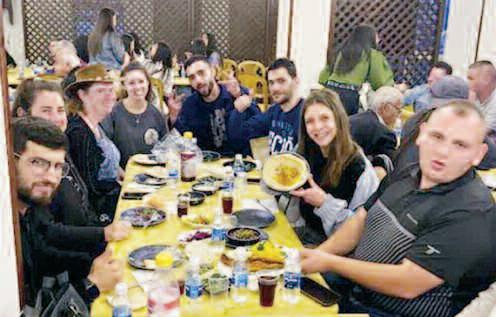
Participants at the multifaith Iftar – the fast-breaking evening meal at sunset of Muslims in Ramadam at the time of adhan (call to prayer of the Maghrib Islamic prayer, the 4th of five prayers of the day).
Rosh Hodesh (New Month) of Nissan and the Pesach holy day,about our hopes to rebuild connections severely strained by the current war.I spoke together with Mukhtar Abdel Hakim Saleem,leader of the Domari (Gypsy) Muslim community from Jerusalem’s Old City,and Yacob Jac Samri, Samaritan host and CEO of Har Bracha Tahini.As we sat together,we didn’t talk politics,but rather rejoiced just at the chance to eat,drink,and be human together. It seemed almost impossible to pull off this event especially at this location given the current situation, but we did.The Samaritan village of Grizim is one of the
few places in Samaria/the West Bank,in Area C,where Israelis and Palestinians can freely enter and leave – one side from the direction of the Har Bracha community/ settlement,the other from Nablus.The Samaritans including our hosts all have two names,one in Hebrew,one in Arabic, and they shared in Arabic and Hebrew, the history and story of their unique community and offered to continue to serve as a bridge between their cousins –their fellow Israelite family – Israeli Jews, and Abrahamic family,Palestinian Muslims. Thanks to Muhammad J.(photo below right) for organizing,and for the brave souls,my Israeli and Palestinian friends willing to show up at this difficult time, and our gracious Samaritan hosts.
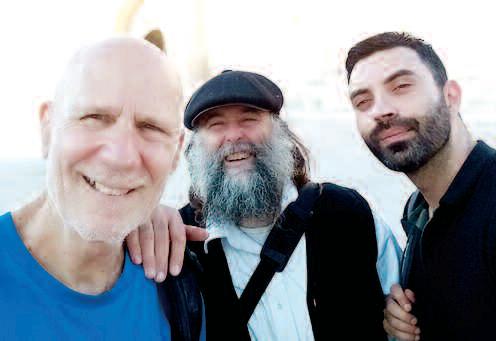
(see McLean,page SE 16)

From July 15, 2024: A momentous day for me in my personal journey to heal from traumas of post Oct.7th.Part of that has been the struggle to support a family of eight as an nearly unemployed tour guide for the last nine months.I guided t oday on our renewed weekly ‘Gaza Border Reality Tour’with Abraham Tours. Highlights today are: the Nativ HaAsara border wall,stories of the heroic battles of Kibbutz Alumim,mural at the site of the Sderot police station Oct 7th battle,the Car Graveyard,and a surprise encounter with former prime minister Naftali Bennet. He was there to highlight a national hero, one of the heroes from the Sderot police force who saved lives including two little girls from a car under heavy fire from Hamas terrorists who took over the Sderot police station that day.
Eliyahu McLean wrote an ongoing column for JPO under the banner of “Jerusalem Peacemaker ’s” for 13 years from 2002-15.
Editor ’s Note: It has been very difficult for Eliyahu to make a living for his family of eight as a tour guide in Israel since the attack on October 7th. These tours – the Hebron Dual Narrative and Gaza Border Reality Tours – provided a steady source
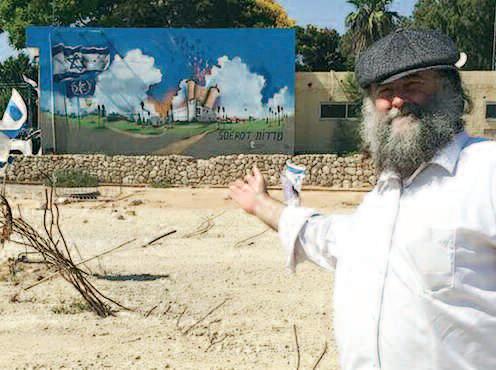
Eliyahu McLean shows a mural at the site of the police station Oct 7th battle in the Shar HaNegev Region town of Sderot on July 15, 2024.
of income,and were successful because they built on his many years of interfaith dialogue and Israeli-Palestinian peacebuilding experience.
He is grateful for his healthy,beautiful family,and he has compassion for so many in our Land of Israel who are suffering so much more.He is facing eviction because he has fallen over 6 months behind in rent, on top of the many other bills. He has set up a get funding page for anyone who would like to make a donation.
He writes,“Your support would be SO appreciated at this time.Help support my family to live a life of Torah, emunah (faith), and kedusha (holiness) in Eretz Yisrael (Land of Israel). Pray with us for the end of this

COHEN/JPO
(continued from page SE 14) (see Cohen/JPO,page SE 17)
1949–92,he published a Missouri edition, and from 1962–1981,a Chicago edition. In 1957,Rabbi Stephen B.Wise bequeathed to my father his magazine titled, Opinion, a journal of Jewish life and letters.Dad folded it into his paper,again evolving to become The National Jewish Post & Opinion In 1974,he began publishing a New York edition,but later sold in 1983 – The Jewish Post of New York is still being published. My brother,Ted,worked full time producing the Chicago edition of the newspaper from 1974–79: (https://idnc.
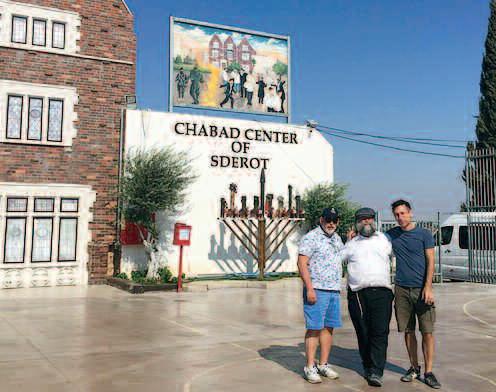
Center of Sderot on July 15, 2024.
towards peace between all of Abraham’s family in the Land of the Prophets. Link to his go get funding page: gogetfunding.com/

The 12th Annual Festival of Faiths organized by the Center for Interfaith Cooperation (CIC) was held at University Park in downtown Indianapolis on Sept. 15, 2024 – each year, Indiana’s largest one-day celebration of our diverse religious landscape. The theme was Exploring Peace. CIC is a community that pursues peace through interfaith understanding and cooperation. Since its formation in 2011, it has built a large, robust, and diverse network of trusted relationships with Central Indiana congregations, colleges and universities, and civic and community organizations. CIC provides safe environments, resources, and opportunities for service to increase religious literacy, build empathy between faiths, and facilitate interfaith encounters –founded by current Executive Director, Charlie Wiles. ✡ ✡
BY RABBI LEON OLENICK
This story was originally in the the JPO’s May 28, 2008 edition. p. NAT 9.
There was a tremendous disturbance outside one of the hospital units.I was called to assist.Upon arriving I was told that a gypsy princess whose father was king of the gypsies for that geographical region,was recently admitted into the hospital.There were gypsies pouring into the hospital from all directions.They were camping out on the hospital grounds.The hospital administrators were concerned about disturbances and instances of gypsies stealing from the gift shop.I was not asked to offer spiritual care for the patient. I was asked by administration to follow them and report to security their acts of theft.
At that moment I thought of how we are programmed to fear people and cultures with which we are not familiar. I thought of Parsha “Schlach,” in Torah. It speaks of spies, sent out by Moses per the instruction of God, to explore the land that the Hebrew people are to travel. The spies are terrified by the ways of an unfamiliar culture and come back with a false report. They say there are giants in the land that “will devour us, and we must not enter.” They speak about the land swallowing up our lives and spirit if they enter. I believe this report resembles the report the hospital administrators gave me, and knew I must investigate for myself. I saw a picture of fear that must be in the hearts of the administration as I prepared to cross the “Narrow Bridge,” that Reb Nachman speaks about in his teachings. If we celebrate our differences, we ascertain God’s universal love, and we discover the dancer inside our souls.
I knew I had to unearth the facts.There had to be more to this story,and I believed that my assignment was not to merely follow these people to assure administrators they were not pilfering.I believed our paths came together from a divine space.
I traveled to the patient’s room.I was informed that the patient,a 22-year-old woman,had cystic fibrosis.She was intubated.The disease had destroyed her lungs and she would not survive the removal of the tube (extubation). Familiarizing myself with the facts,I was able to approach the family.
I entered a waiting area where there were no less than 30 people congregating.
I introduced myself.I was greeted with ome nods,however no one spoke with e.I passed through the crowd and entered the room of the young woman. Her name was Hilda.
The room was filled with equipment. The intravenous pole was supporting many bags of medication,with tubes that led to the arm of the patient.The woman was lying motionless in bed.Her long black curls masked her face,as her engaging brown eyes peeked through the bright colored blankets.There were colored fringes coming from beneath the blanket.
Staring at these fringes reminded me of the fringes on my tallit that I wear to remind me of the commandments of life I am to follow.Over her,hanging like a mobile there was a string that contained a beer bottle,a pair of shoes,a pack of cigarettes,and some other ornaments that I later found to be traditional Gypsy healing tools.Her bed was surrounded by men.There were no women present. I introduced myself as the chaplain.I was greeted warmly by an older gentleman. He wore a flannel shirt that was tucked neatly into his khaki pants, which were supported by wide, dark blue suspenders.He wore brightly shined boots that came to a huge point at the toe.His vest was made of the finest silk and was completely hand embroidered.I wanted one exactly like it. His aura was that of a distinguished gentleman. He identified himself as the woman’s father.I knew from prior knowledge that he was also the Gypsy king.I told him it was an honor to meet him and offered my compassion for his daughter and his family.I gave him the honor I would extend to any person of high office I would meet.He called a young man over and introduced him as his son.His son was attired in a business suit.He appeared as a person who worked in an executive or white-collar office.The father said,“You will speak with him,”pointing to his son. We spoke at length of his sister’s condition and prognosis.I asked if I could offer a blessing for her. My request was granted.
“Master of our Universe, I stand with the family of Hilda, one of your precious children who will soon join you. Please give them the strength and energy to open their hearts to her that she may know how special and meaningful her life, although short, is to them and her family. Allow her to feel the love they send her, and let the energy from within your holy spaces show her not to be in fear. Let her always walk arm in arm with your angels. Make the space for this holy family and tribe to celebrate life and be free from the people-fabricated labels that cast shadows upon their life style. Amen.”
After I offered prayer,I asked if we could speak outside. He told me that he was not able to leave the bedside.He said that it is
COHEN/JPO (continued from page SE 16)
library.illinois.edu/?a=cl&cl=CL1&sp=CJP &e=-------en-20--1--txt-txIN----------).
My brother,Benzion Cohen,regularly wrote under the banner Chassidic Rabbi for nearly fifteen years,from July 2008. During our childhood,all of my siblings and I spent some time during summers and after school helping with office work like stuffing envelopes – a family business
After my mother passed away,I was called by the office staff to help out on occasion.Gradually,as my father was able to do less,I took on more roles.I have been wearing all the hats,except layout/graphic design,since 2011.
During this span of nearly 95 years,a lot of very significant Jewish history has transpired and we are proud to have recorded it on these pages for our communities. ✡ ✡
the belief of the Gypsy that when a person is facing death,they must be surrounded at all times by those close to them. He told me that “it is our belief that at the precise moment of death,the last person she breathes on will gain all of her knowledge. This is our way of passing knowledge.”
I thought of Torah, “L’dor v’dor,” from generation to generation; the importance of humanity standing on the shoulders of our ancestors transcends time and space; the teaching that we are an important link with the past and the future. We must learn from the old, live in the present, in order to create the new.
I was also told that the ornaments hanging over the bed were important in the life of a Gypsy and gave respect to the culture.I realized that this family was observing religious practice.I wanted to honor them with honesty,so I told the son about the theft concern.He assured me that there was no theft going on.He said the many people were present out of respect and they would not prostitute this respect with theft. At that moment I knew that there was no theft happening,nor was there theft about to happen.His eyes told me this was so.The theft threat was the administration’s inability to take the time and learn this people’s unique cultural values.
I thought of how many lives over the centuries have been lost because of this same mindset. They were being denied freedom of movement or “watched” because of seemingly unwarranted suspicion. I spoke with the administrators and assured them there was no theft. They told me I was responsible. It was ironic that the administrators were in greater fear of losing something material than these holy people were of death.
I immediately thought of a Reb Nachman (see Olenick, page SE 18)
(continued from page SE 17)
of Bretslov teaching. He said that when we are in fear, our hearts fill up with the fear and it intensifies. After a while it dominates our hearts and our heart drowns. This is called spiritual death. I could not help feeling deeply sorry for these administrators whose hearts were drowning in the sea of nontrust and their inability to honor the uniqueness of a nonfamiliar culture.
Time passed and I saw the family at least twice per day.The people knew me, and I knew them.I sat in the waiting room
and spoke with the people who initially snubbed me.I learned some of their prayer ritual and prayed with them.Their way of prayer was not really different than mine.They went to the same place via a different route.
The only person I was not able to connect with was the young woman’s mother. Each time I approached her,she would look down and spit on my shoes.After a while,I finally accepted this strange act without asking why it was so.
The days passed and the young woman’s father summoned me.He said it was time to extubate (remove life support from) her,
A recent research study (https://bit.ly/peak_stress) of 2000 American adults, from Talker Research for Traditional Medicinals, shows that 41% are saying they’re at peak stress.This shouldn’t be a surprise.
We face so many overloads in our lives – the news and media, toxic environments, busy days and short nights, the fast pace of change, and simply each other – that it can seem hard to keep our heads above water.Though we Americans have the most expensive health care system in the world, we also have some of the poorest health of any industrialized nation, and stress is a central cause.
Meditation is both one of the most direct methods to turn this around and one of the most ancient, especially meditation practices that settle the turbulent mind into its essential simplicity. The Transcendental Meditation (TM) technique is such a method, with over 700 research studies since 1970 and the experience of over 10 million people of all ages, religions, and walks of life who have learned it around the world since the 1950s.TM has been taught continuously to thousands in Indiana since 1969. This simple system of deep meditation enables the mind to settle into silence while remaining awake, and this engages profound healing and restorative mechanisms to activate in the body.
As a public ser vice, the David Lynch Foundation is spearheading Meditate America (https://live.meditateamerica.org) to spread the practice of TM to as many people as possible during the coming fraught months, especially first responders, with as much as 50% off the normal course fees through November 12th.Our local initiative is called Meditate Indianapolis.
In sitting still [t’shuvah, returning to the most settled state of our awareness] and rest shall ye be saved.By quietness and confidence shall be your strength.
~ Isaiah 30:15
“The level of stress today is unprecedented for adults and children alike. High stress has become a way of life for many, and it’s harmful to everyone’s baseline health and well-being,”says Indianapolis physician Barbara Davis, MD “Meditation is an important prescription I recommend to my patients as an inoculation against anxiety and stress that builds up day after day.”
If you’re in central Indiana, schedule a free one-hour online info session to learn more by visiting https://calendly.com/pwilson-tm.Outside of central Indiana, please visit https://www.tm.org/en-us/centers to find a certified instructor.
Paul Wilson, TM cer tified instructor, Indianapolis pwilson@tm.org, (317) 620-1008

and he would like me present.I walked with him near the room.There was a man I had not noticed.He came out and introduced himself.He was a short man,in simple dress.His eyes,however,were intense,and told the universe that he was holy.“My name is Yaakov.I am the priest.” Although we had not met,he was aware of each motion and prayer I had said in the previous weeks.In a commanding voice he said,“You will be by my side as they disconnect the life support.You will pray with me.”
I thanked him,the father,and the brother for including me,and said I would rather wait just outside the room,as I was not a member of their tribe.Yaakov glared at me with his huge,dark eyes.He said nothing for a few moments,and I was feeling tense.He then took my arm and said, while gently tugging me toward the room, “We walked into the gas chamber together as brothers, we will be together now.” My insides were on fire. He had pierced my soul.
We prayed together,and I was privileged to join in the traditional vidui, or end of life prayer,of the gypsies.I had entered holy space.After the young Gypsy woman died, her mother approached me. She explained that her way of mourning was not to engage in any talk.She said she had to be in complete silence in order to clear a connection and create a path to her ancestors for her daughter.She said the community knew not to approach her, however to those outside the community, she would spit on their shoe.She thanked me for my prayers and concern for her family The father said “Shalom rabbi,live in peace.”I wished him the same.
This family had taught me much about respect, acceptance, dedication and love. They authenticated their faith through living action. They opened the path for me to become closer to being able to open my heart. They broke down the barriers of eliteness dictated by the outside world, and we became partners.
It reminds me of the words of Abraham Joshua Heschel, “God’s dream is to be not alone, but to have humanity as a partner in a dream of continuous creation. By whatever we do, by whatever act we carry out, we either advance or obstruct the drama of redemption.”
I was not alone in the short time I caravanned with my gypsy family.
Leon H. Olenick is a rabbi and a board certified chaplain. He is married to Jackie Olenick, a Judaic artist. He has three children, eleven grandchildren, and one great-grandchild. This story is from a book of short stories, Anatomy of a Tear: A Chaplain's Stories of Life,Love & Loss His intention in sharing his real-life stories is to help people who are facing difficult health, caregiving and end of life issues. The stories are true, only the names have been changed. He is working on a new book. ✡ ✡
BY RABBI ELLIOT B.GERTEL
Thirteen, the Musical begins with its only synagogue scene,one of incongruity within synagogue spaces.Young Evan Goldman (Eli Golden) receives his bar mitzvah instruction in a Manhattan synagogue with a simple mid-century sanctuary but with the cathedral-like art deco exterior of 1930s Temple Emanu-El.Does this portend an incongruity between Judaism and life?
True,the depiction of the rabbi(Josh Peck) is positive and winsome.After Evan mutilates his Hebrew chanting due to lack of practice,the young spiritual leader/bar mitzvah teacher feigns receiving a phone call from God,Who wants His language back. The winsome rabbi comes up with some thoughtful wisdom: “How you do one thing is how you do everything.”

acter) in the movie.Evan is pulled to his mother’s hometown of Walkerton,Indiana, as Mom,Jessica (Debra Messing),needs the moral and financial support of her own mother after Dad (Peter Hermann) “met someone else”– a horrible depiction of a Jewish father.“My dad gets a midlife crisis,”reflects young Evan in the movie’s poignant one-liner,“and I get mid-America.”
hell bent on portraying a bar mitzvah boy relocated to a small Jewish community after receiving a Jewish education in a major metropolis,why not keep the family intact and attribute the move to Dad’s – or Mom’s – work? Here,the mother comes across for the most part as wallowing in whining self-pity,not to mention the selfish (and spiteful and cruel?) removal of her son from his friends and community before the bar mitzvah takes place,as suggested in the opening song and surrounding dialogue.
The cast is spirited and talented.The songs are lively,and have their clever and moving moments,though are often predictable.Yet they are worthwhile,and the choreography is by and large impressive, though at times inappropriate.
The script’s biggest incongruity is the mother’s decision to exacerbate a family break-up by returning home to the kind of smaller community that has historically strengthened family and Jewish ties.There is disparagement of Jewish life in smalltown America.But some of the most historic,active,dedicated and committed Jewish congregations have flourished for over 150 years in all parts of Indiana.
The Jewish grandma,Miss Ruth (Rhea Perlman),a retired beloved schoolteacher,
As it turns out,the rabbi is the only consistently likable Jewish male (or char- (see Gertel,page SE 20)
If writers Robert Horn and Dan Elish, with lyricist Jason Robert Brown,were

(continued from page SE 19)
is upbeat and uses Yiddish expressions (vulgar ones like tuches ).She does demonstrate understanding and wisdom but has nothing to say about Judaism and the significance of becoming a bar mitzvah The most she communicates about Judaism is in one of her first conversations with Evan,who asks: “Is there a temple in Walkerton?”She replies,“It is called a church.”Yes,the Jewish community uses a church because there are not enough members to support their own building. But is there nothing more that she could have said about trying to preserve Jewish life while being grateful for interfaith hospitality? And what about communicating Jewish values regarding the bar mitzvah ceremony and its celebration Grandma encourages Evan to associate with her former pupil Patrice (Gabriella Uhl),the girl next door who turns out to be Evan’s classmate.When Evan sighs about the loss of his New York bar mitzvah ceremony,“For us Jews,it’s the one day that’s supposed to be happy and perfect,” Patrice quips,“Catholics don’t have that day; it would go against everything they believe in.”A prequel to the old TV and film tropes of Jewish-Catholic romance?
Neither Evan’s mom nor grandmother tries to guide him at being a good friend and neighbor with realistic and sensible expectations regarding parties and popularity.Yes,kids can be cruel,and Evan is thrown into a sink or swim situation in a new school right before his bar mitzvah festivities. Though sideswiped, he manages
to answer the canard of cool,mean girl Lucy (Frankie McNellis),who describes bar mitzvah as “a Jewish thing where they make you talk backwards,and everyone gets circumcised.”Evan“defends”that“it’s a party with dancing and a DJ.It’ll be awesome.”
Totally caught up in the party and in the desire to be popular,Evan manipulates his classmates in order to win them to attend his bash,and even betrays friends,especially Patrice,who is at odds with the cool crowd.He arrogantly tells her,“Whatever’s going on with you all,I can help fix it,”but then cruelly suggests that he invite the cool kids to his party and have a separate party with her.Evan exploits Patrice’s wheelchair bound friend Archie (Jonathan Lengel).His deceptions even extend to classmates’parents.He concocts his plan to get his friends to be deceitful – and to deceive them – to take place on a Friday night.A new kind of Shabbat?
Evan’s plot falls apart in the most humiliating and isolating way.It is only then,when he no longer has anything to lose in terms of “popularity”and respect, that he responds to his father’s phone calls, confiding in him: “I think I’ve done some stuff that has really hurt other people.”His father wisely advises, “Sometimes we make choices that inadvertently hurt the people we love most, and sometimes those mistakes aren’t easy to fix.But that doesn’t mean we shouldn’t try.”Dad then apologizes for hurting Evan and his mother, and Evan responds:“Thank you.I miss you.”
Largely due to Dad’s example,Evan leads his friends into apology and reconciliation, into admitting hard truths about themselves.Before the bar mitzvah ceremony

in one of the town’s beautiful churches, Evan tells the rabbi,who has come in from New York to conduct services after instructing him via Zoom,that “this”(the religious event after preparation?) is more important than a party.The traditional Haftara trope is honored in this musical with creative piano accompaniment.Indeed,the bar mitzvah ceremony provides healing for the public-school class,and the party afterwards becomes a generous-spirited, even inspired sharing of local talent. Still,something doesn’t sit right in the movie’s suggestion that,in Dad’s case,the one who hurts people so wittingly can give the best advice regarding “inadvertently” hurting others.Something is missing somewhere.Perhaps a major missing piece is the failure to build on the point that is made that the bar mitzvah celebration takes place in the fall,around the High Holy Days.The rabbi,who is sympathetically depicted,might have effectively provided some thoughts about becoming a bar mitzvah in the season of mechila,pardon and selicha,forgiveness. There were a lot of opportunities lost in this film for interfaith understanding of Judaism.In fact,the only “interfaith” aspects of the show were Archie’s quip: “Welcome to Walkerton.If someone offers to pray for you,let them,”and Patrice’s offer,“I’ll show you the hill where everyone waits for the resurrection.”Both comments were crudely dismissive of Evangelical Christian faith and did nothing for understanding of Judaism.
In the end, the meaning of bar mitzvah is not explained. Early on, Patrice pushes her campaign for compostable cutlery (among other earth-friendly issues), and Evan says that he will adopt it as his “mitzvah project,”which he defines as a “charity project to help others.”So ultimately,environmentalism replaces religious teachings and concepts (like “commandment”) as a source of unity and social betterment. All in all,however,the movie tries to do justice to Jewish life and practice (including an heirloom yarmulke) while dealing with excruciating family divisions and difficult middle school tensions.If some of the qualms listed above enter into family and community discussions of it, Thirteen, the Musical could prove to be more than wellmounted entertainment.
In any case,it sung out to be mentioned and reviewed in this interfaith issue of Indiana’s historic national Jewish newspaper,the issue which inaugurates my 45th anniversary as media critic for The Jewish Post and Opinion. Rabbi Elliot Gertel has been spiritual leader of congregations in New Haven and Chicago. He is the author of two books, What Jews Know About Salvation and Over the Top Judaism: Precedents and Trends in the Depiction of Jewish Beliefs and Observances in Film and Television.
Beit Hahespedim, Kehilat Yerushalayim, Har Hamenuchot, Givat Shaul, Jerusalem.
grandsons and step-grandsons below:
Anna Ruth Hasten, 90,passed away on May 30,2024,in Hertzlia,Israel,where she had resided the last two years of her life.She was born in Richmond,Texas to Edward and Minnie Robinson who had emigrated to the United States from Czarist Russia in 1910.Her father fought in WWI in the AEF and was gassed by the Germans at the battle of Beleau Wood.
Anna Ruth spent her early childhood in Texas and eventually moved to Minneapolis. She married Dr.Mark Hasten in 1952 and had a long and blessed life with him for 68 years until his passing at age 92 on Feb.28,2020.[His obituary is on p.8 of the JPO April 1,2020,edition.]
With both starting their lives with practically nothing and eventually as adults contributing generously financially and with their time, their story is truly an example of the American Dream.
On April 6,2008,the couple received the Orthodox Union’s highest honor,the Lifetime Achievement Award at OU’s 110th Anniversary National Dinner in New York.
Anna Ruth was a very generous person and shared her husband’s passion for lifelong learning and philanthropy.
Her commitment to Judaism and the State of Israel were legion.She was a very proud Jew and Zionist and fought racism at every turn.She was an ardent supporter of Congregation Bnai Torah in Indianapolis and served on their Sisterhood for many years. She also served many years in the Chevra Kadisha (Jewish Burial Society) in Indianapolis.She was president of Amit Women for many years as well.
She co-founded the Hebrew Academy of Indianapolis along with her husband and her brother-in-law and sister-in-law, Hart and Simona Hasten. She endowed the Anna Ruth and Mark Hasten School in Manhattan, an undergraduate college which is a major part of Touro University. She is survived by two daughters,Monica Rosenfeld and Judith Kaye,and two sons, Edward and Michael Hasten and their spouses,children and grandchildren.
May her soul be bound up in the chains of eternal life with the Almighty.
Sybil Ruth Kaplan, 84, was born Oct. 23, 1938, in Kansas City, Mo., to Rae and Charles Horowitz.She passed away Sept.5,2023, in Jerusalem. In 1945 when she was 6,her father passed away in Okinawa, Japan.Sybil’s funeral was held Sept.7,2023,at
She graduated from the University of Missouri at Kansas City where she received a bachelor’s degree in English and Secondary Education.She did graduate work at New York University in English and dramatic criticism.
For eight years,she worked in the editorial departments of Doubleday Publishing in New York,then in 1970 she moved to Israel where she worked as a foreign correspondent.She also was the first public relations director of the Encyclopedia Judaica when it was first published; she taught English as a second language; lectured on Israeli foods and cooking; and was a feature writer for several Israeli magazines and press services.For four years she wrote a cooking column in The Jerusalem Post While in Israel,she wrote three cookbooks on Israeli cooking – all in English.She returned to the United States,to Chicago in 1980 where she did free-lance writing, public relations,consulting,lecturing for the speakers’bureau of the Consulate General of Israel and was public relations consultant to the Israel Government Tourist Office in Chicago.
In 1988 she moved to Kansas City,Mo., and became a feature writer for the Kansas City Jewish Chronicle. She also continued book reviewing which she had begun while in Israel by syndicating reviews to AngloJewish newspapers around the United States.
She was a librarian at Kehilath Israel Synagogue in Overland Park,Kansas, and a substitute teacher for middle and high schools.She also served as president of the Greater Kansas City Chapter of Hadassah and at their regional level as president of the Great Plains Region,and then as a national board member.
In 2008 she moved back to Israel with her husband, Barry Kaplan, who predeceased her in 2020.There she worked as a foreign correspondent for North American Jewish publications. Starting in 2009,she led walks in English in Machaneh Yehudah, the Jewish produce market in Jerusalem.
Besides writing numerous book reviews, she authored several books including, Witness to History: Ten Years as a Woman Journalist in Israel She was a contributor or author of nine cookbooks and three children’s books.
She wrote for The Jewish Post & Opinion for 52 years from 1971–2023 under three bylines: From 1971–74 it was “Sybil Kaufman”; from 1982–1991 she had the byline of Sybil Zimmerman; from 1991–2023,there are 777 places where the name “Sybil Kaplan” appears in JPO
The obituary for her husband Barry that she submitted for the May 20, 2020, edition reveals a lot about her last years including her daughters,stepchildren,
Barry Kaplan, 81, husband of Sybil Kaplan, who was also her photographer, passed away April 23, 2020. She had known him for 68 years. Even though this was a second marriage for both, it was long – a few weeks shy of 29 years. She wrote, “We cannot sit shiva normally because of the Coronavirus, so my synagogue friends are coming to an empty lot across the street from where we live and are holding services out of doors with masks and proper distancing.
“Barry and I originally met at a party when we were 13 years old. Years later after he had gotten a divorce and I was starting one, we bumped into each other. Rather, he came over a hill as I was pulling out of a drive and almost hit my car.
“That was the beginning of a renewed relationship as he supported me through my divorce and my move back to the community where we had grown up.
“We established a lovely life – he in various kinds of sales, I in writing and teaching and we were very active in our synagogue. He was stepdad to my two daughters, Elissa and Shara, and I was stepmom to his three grown children – Marc, Craig, and Julie. We enjoyed talking to his grandsons, Ben and Jordan and hearing about mine, Wilder and Miller.
“We made several trips to Israel as I climbed up the Hadassah ladder from chapter president to region president to National board member. One day we decided we really wanted to come and live in Israel. That was 11 years ago. We carved out a nice life with my old friends, our new friends, our synagogue, and his photographing for my journalism.”
Sybil’s daughter Elissa, who was working for Microsoft in Dublin in 2020,happened to be in Israel seeing her clients.Below is part of the eulogy she gave at his funeral.
“Barry had a good heart,and it was filled with love for my mom.If she wasn’t at 100% then neither was he. If she was sad,then he wanted her to feel better. Since Shara and I were my mom’s life, therefore we became his as well. And if I wasn’t calling enough,he’d make sure to
(see Obituaries,page SE 22)
(continued from page SE 21)
remind me to do so,indirectly,or directly, not so much for him,but because he knew it would make my mom happy.
“While I know he loved the life that he and my mom built together here,I also know,if he hadn’t wanted to come,he would have done so for my mom who always wanted to come back.”
The following tributes to Sybil Kaplan were offered by Rabbi Elliot Gertel, who has been writing our “Media Watch” column for the past 45 years and Dr. Miriam Zimmerman who has been writing our “Holocaust Educator” column for 39 years.
From all her Jewish Post family and friends, our deepest, heartfelt condolences to her family and friends, and all those who will miss her and miss reading her columns.
By Rabbi Elliot B. Gertel
Sybil Kaplan’s long and devoted service to the National Jewish Post and Opinion was memorable and inspiring.Particularly notable in her prolific writing (often two items per issue!) were the multifaceted interests and youthful enthusiasm that she brought to each and every column,year after year.Her journalistic professionalism
was consummate.Her curiosity and fascination with her topics resulted in extensive research and follow-up.She communicated the fruits of her explorations with clear, vivid and engaging language.
No writer was more of an advocate for the State of Israel,where she and her husband lived.She loved reviewing books about Israel and its leaders.She wrote of wines and plays,delis and restaurants,art galleries and museums,and social and medical services in Israel with the same descriptiveness and excitement found in her accounts of Israeli cities,villages and towns.No one stimulated more interest in the sites and history of Medinat Yisrael
Sybil highlighted events like the International Ice Festival and Hug Day in Jerusalem,and underscored model, continuing programs in Israel for Down Syndrome and other special needs.She awakened interest in biblical archaeology. And she built bridges in Israel by boosting Arab businesses and culture.
Her two main missions were representing the State of Israel and introducing Jewish cooking and cuisine from every clime and every era.She enhanced many a holiday table (“Soups for the Sukkah”), for all the Jewish festivals and for American Thanksgiving.She pioneered in instructing how to cook healthy foods (Chanukah latkes)
Roof Repairs to Complete Roof Projects
Chimney repairs & Tuck pointing
Interior/exterior Trim Work
Fireplace Work/Building ✔ Open Room Concepts ✔ Window & Door Rot Replacement ✔ Framing Walls to Additions/Houses

We have over 30 years of experience. See some of our previous work at these links: yelp.com/biz_photos/shadybrook-roofing-westfield cbs4indy.com/news/volunteers-come-together-to-rebuildwomans-home-after-carmel-contractor-goes-bankrupt/
and inculcated appreciation of historical connections to venerable ancient books, such as the link between Chanukah cheese dishes to the Book of Judith Sybil did yeoman service by highlighting the collected recipes of synagogues, organizations (like Hadassah),and communities all over the world.She creatively brought seasonal and other motivations to healthy eating (“Summer Fruit Desserts”) and constantly encouraged readers to cook (“Chic recipes with little prep time”).I have no doubt that her influence will endure, especially in her books and in clipped favorite columns cherished by countless collectors of recipes and by rabbis and other speakers on the State of Israel.All who knew her and who read her will perpetuate her enthusiasm and dedication.
By Miriam Zimmerman
From cooking to commentary,Sybil Kaplan was a colleague to admire and emulate.Whether she was adapting a cuisine to meet the requirements of a kosher kitchen, reviewing a cookbook,or reminding her readers of the nutritional value of various foods,her “My Kosher Kitchen” columns always informed and motivated this columnist to try to make her kitchen more kosher.Her 52 years writing for The Jewish Post & Opinion continue to inspire.Her legacy is for a blessing. ✡ ✡
(continued from page SE 24)
Preheat oven to 425°F.Place potato in a saucepan with 2 inches of water and bring to a boil. Cook until tender 20 minutes. Drain and cool and slice into 1/4-inch thick slices.Season with salt.Arrange eggplant on rimmed baking sheet and brush both sides with olive oil.Season with salt and bake in preheated oven 10 minutes until browned and tender.In a large bowl, toss cucumber,tomato,jalapeno,garlic, cilantro and parsley with lemon juice and 3 Tbsp. olive oil. Season with salt and pepper.Cut off 2 inches from the side of the warm pitas to make openings in the pockets. Gently open the pitas. Spread the hummus on the bottoms with 1 Tbsp. tahini. Layer potato slices,eggplant,egg and cucumber-tomato salad in the pitas along with some of the salad juices.Top with the pickle slices and serve.
Sybil Kaplan, z”l, was a journalist, compiler/editor of 9 kosher cookbooks and food writer for North American Jewish publications; she lived in Jerusalem where she led weekly walks of the Jewish food market, Machaneh Yehudah, and wrote restaurant features for Janglo.net, the largest website for English-speakers. (See her obituary and tributes on pp. SE 21-22.) ✡ ✡
BY SYBIL KAPLAN, Z”L
The Kitchen is Closed, but Great Food Lives On
If one is looking for a recipe for just about any dish, one could go to the following link: nli.org.il/en/newspapers/indianajpost and put the name of that dish in the search box, click on the search icon and the recipe will pop up. Sybil Kaplan had a recipe for every Jewish and Israeli dish. Since we didn’t have room for every recipe that she submitted, this one below for Sabich, sent five months before her passing, originated in Iraq and was never published by us.
I have led walks in English in Machaneh Yehudah, Jerusalem’s produce market since I created them in 2009.I go there often even when I am not leading, and I pass a vendor on Agrippas Street with eyecatching food.This led me to do a little research.In the 1940s and 1950s,large numbers of Iraqi Jews suffered antiSemitic violence and immigrated to Israel. Sabich Tzvi Halabi,an Iraqi who had immigrated to Israel at the age of 18, owned a kiosk in Ramat Gan,a suburb of Tel Aviv in the 1980s. He prepared this Iraqi breakfast dish for bus drivers at a kiosk at the end of a bus line.Comprised of fried eggplant, hard-boiled or longbaked eggs,tahini,chopped salad,pickles, and amba sauce,it is stuffed into a pita or rolled in the flat bread called laffa. In Iraq,it was eaten especially on Shabbat morning when they did not cook.Halabi’s daughter also wrote a children’s book called Saba Sabich
In 2017,Jennifer Shutek,a Ph.D.student at New York University,pursued research

on the history of Sabich,as did Ronit Vered in Haaretz in 2017.The recipe caught on and spread across Israel and even to the United States where I found this recipe, while reading over the online Food & Wine recipes.There,the following recipe for Sabich was being prepared by Michael Shemtov and chef Stuart Tracy at the Charleston,South Carolina,Butcher & Bee. [Other variations thoughout the internet.]
Sabich (4 servings)
1 large baking potato
1 eggplant in 2-inch slices
WISHING
3 Tbsp.olive oil
salt and pepper to taste
1 cucumber diced in 2-inch pieces
1 tomato diced in 2-inch pieces
1 large,minced jalapeno
2 minced garlic cloves
3 Tbsp.chopped cilantro
2 Tbsp.chopped parsley
2 Tbsp.freshly squeezed lemon juice
4 thick,warmed pita breads
1 cup hummus
1/4 cup tahini
4 large,sliced hard-cooked eggs
4 small, thinly sliced dill pickles (see Kaplan/recipe,page SE 22)