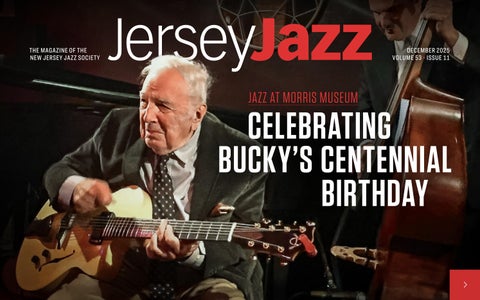
CELEBRATING BUCKY’S CENTENNIAL BIRTHDAY
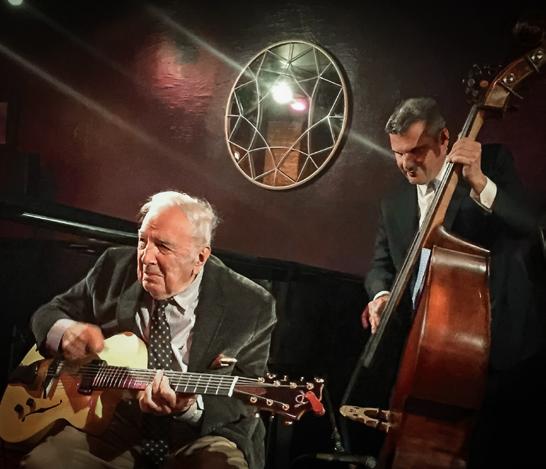
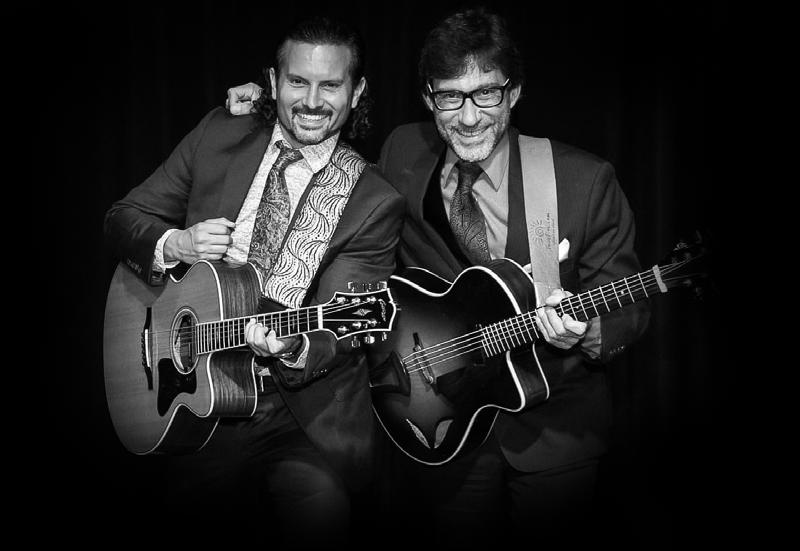
THE COVER Bucky and Martin Pizzarelli. Photo by Nancy Trigiani
ALL THAT’S JAZZ
BY CYDNEY HALPIN
It’s hard to believe that the Holiday Season is upon us and the year is fast coming to a close.
If you attended the November LIVE! concert you know that the art of jazz is alive and well and in the capable hands of the 2025 NJJS Scholarship winners: Performance—Joe Foglia (first prize, tenor sax), Nate Tota (second prize, alto sax), Vocal Performance—Kyra Cioffi (first prize), Sophia Varughese (second prize), Composition—Matt Cline (First prize, multi-instrumentalist,“Diplomat’s Dilemma”), and Aiden Woods (second prize, alto sax, “Ill”).
Thank you to musicians Don Braden (NJJS Advisor, music director, tenor sax), Mariel Bildsten (trombone), Ted Chubb (trumpet), Caili O’Doherty (piano), Mary Ann McSweeney (bass), and Alvester Garnett (drums) for your musical support, expertise,
and wisdom with the winners. Their showcase was the continuum of jazz history personified—veteran performers and rising stars highlighting jazz’s past, present, and future.
Our deepest gratitude to judges Don, Mariel, Ted, and Jason for their dedication and expertise, and for their input and advice as we continue to grow this competition.
The Board and I would like to thank Nan Hughes Poole and NJJS Board Members Cynthia Feketie, Mike Katz, and Jackie Wetcher for their generous support of this initiative. And many thanks to those of you that made donations to support this competition. We’re very grateful to all of you for your dedication to the young musicians of tomorrow.
If you’d like to make a donation to further support and expand the 2026 competition prizes, you can do so at njjs.org via the red “Do-
nate” button on the homepage, or by check payable to NJJS, 382 Springfield Ave., Suite 217, Summit, NJ 07091. Please note “Scholarship.”
This concert is available for viewing on our website at njjs.org/videos and the New Jersey Jazz Society YouTube channel.
The 2026 Competition will open in January. The competition is open to all New Jersey college students currently enrolled in a college undergraduate music program, as well as to New Jersey residents currently enrolled in an out of state college undergraduate program. Proof of residency required.
The competition awards three $1,000 prizes and two $500 prizes in three categories: Instrumental Performance, Vocal Performance, and Original Composition. If you’d like to help support this initiative, please contact me at pres@njjs.org.
I’m pleased to announce that NJJS has been selected once again to receive a $3,000 grant from Morris Arts for 2026. This funding directly supports our programming budget.
The Board and I would like to thank the staff of Morris Arts for their tireless support of the Arts, and specifically their financial support of NJJS.
Please join us Sunday, December 7, for NJJS’ last LIVE! concert of 2025, and our Annual Meeting featuring guitarists Frank Vignola and Vinny Raniolo. Put your festive foot forward and come cast your vote for the 2026 Board of Directors and enjoy an afternoon with these swingin’ cats!”.
Please see the news article on our website njjs.org/frank-vignola-andvinny-raniolo-at-december-jerseyjazz-live/ for more information.
The Rising Stars/Opening act will
showcase students from the Summit High jazz program: Bandleader Luka Milinkovic, alto sax, with pianist Nicolas Solis-Negron, Bassist Gavin Lowenberger, and drummer Jeremy Oh. Admission is $15 members/$20 non-members/$5 Student/Child. Doors open at 2:30pm, concerts begin at 3:00 p.m. Refreshments are available for purchase. Madison Community Arts Center, 10 Kings Road, Madison, NJ. Free street parking is available. Tickets: ticketleap.events/tickets/new-jerseyjazz-society/jersey-jazz-live-guitarduo-frank-vignola-vinny-raniolo
Mark your calendars and start the New Year off right with our Sunday, January 4, 2026 LIVE! concert featuring Julius Tolentino and the New Wave. This concert will be a hybrid of our usual “Featured” act and “Ris-
ing Stars” act with educator and veteran musician Tolentino on alto sax, and rising stars/former students Jacob Tolentino on trumpet, Ben Collins-Siegel on piano, and Ian Kenselaar on bass. Come enjoy this multigenerational quartet as they kick off the New Year in style!
Please see page 09 for more details. Tickets: ticketleap. events/tickets/new-jersey-jazzsociety/jersey-jazz-live-juliustolentino-and-the-new-wave
The New Jersey Jazz Society was founded in 1972 with the mission of promoting and preserving jazz. The past several years has seen a renewed commitment to these founding tenets, with the expansion of our Juried Scholarship Competition and our Rising Stars/Opening Act at our Jersey Jazz LIVE! events. We could not
have done that without your support through membership dues, event attendance, and the generosity of donors like yourself.
Please consider helping NJJS continue its performance and educational initiatives by donating to our “Setting New Standards in Tradition!” fundraising campaign either by mail, or anytime online at www.njjs.org via the red “Donate” button conveniently located at the top of our homepage.
Would you like to maximize the impact of your gift? Many of you work for employers that have a matching gift program—that will double the impact of your gift for free—by completing and submitting a simple form.
Check with your Human Resources Department for further information.
You can also make a tax-efficient gift from your IRA today! Qualified Charitable Distributions (QCDs) , also known as IRA Charitable Roll-
overs, are the savviest way for individuals 70.5 or older to use their IRAs to maximize their charitable giving. Your IRA donation is a generous way to fulfill your required minimum distribution for the year. Gifts generated directly from your IRA will save you on taxes while helping NJJS fulfill its mission to promote and preserve jazz.
Every donation—large or small— gets us closer to our $25,000 goal. If you’ve already contributed to this campaign, we thank you. If you haven’t already done so, please consider a tax-deductible gift (to the extent allowed by law) before December 31.
On behalf of my fellow Board members, we thank you for all you do to support jazz music and education. Together we’re preserving the future of this uniquely American art form.
Here’s wishing you all the merriest of the season—peace, love, and light to all.
EDITOR’S
BY SANFORD JOSEPHSON
‘Al’s Blues’, ‘Blue Mance’ and Much More on the Jazz Foundation of America’s Fundraising CD
When trombonist Al Grey released Al’s Blues on the Chiarascuro label in 1988, it featured his son, Mike Grey, on second trombone and two other father-son combinations -- tenor saxophonist Al Cohn and his son, Joe, on guitar; and keyboardist Gerald Wiggins and his son, J.J. Wiggins, on bass. Reviewing a reissue for AllMusic, Scott Janow wrote that “The two trombonists have similar sounds,” adding that, “The repertoire mixes together swing standards with lesser-known jazz tunes by Thad Jones, Sonny Stitt, Hank Mobley, Al Cohn, Johnny Griffin, Art Farmer, and Al Grey himself. The relaxed straight-ahead music flows nicely and all of the musicians have

their opportunities to be featured.”
The New York Times’ John S. Wilson reviewed a live performance of Al Grey’s Quintet at the Carlos I jazz club in July 1988 and wrote that “when the father-and-son trombone team is swinging together with open horns, they raise echoes of the trombone team of J.J. Johnson and Kai Winding 30 years ago.”
In June, Jersey Jazz celebrated Grey’s centennial birthday with an article about him written by trombonist Art Baron, who said of Grey: “He was a million stories rolled into one rollicking swingin’ Gentleman of Jazz.”
I bring up Grey now because I just listened to the title track from Al’s Blues on the All Blues CD, now
available from the Jazz Foundation of America to support its Musicians Emergency Fund. “Al’s Blues” is just the tip of the iceberg. There are 15 tracks on the CD including, among others: “Limehouse Blues” by the Dave McKenna Quartet featuring Zoot Sims, “String The Blues” by Joe Venuti and Bucky Pizzarelli, and “Blue Mance” by the Junior Mance Trio.
The JFA’s Musicians Emergency Fund helps jazz artists whose careers have been threatened by age, illness or disaster. The organization averages 30 individual musician emergency cases a day and about 9,000 assists every year, providing such
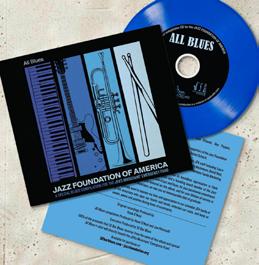
things as housing assistance, pro bono medical care and financial support.
The wonderful music on the All Blues CD is from the catalog of Chiarascuro Records, provided by former Chiarascuro owner, Hank O’Neal, a JFA board member since 1990. O’Neal founded Chiarascuro in 1970 when the major record labels had little interest in recording the early pioneers of traditional jazz. Initial albums featured such artists as pianists Earl Hines and Teddy Wilson, violinist Venuti, guitarist George Barnes, and trumpeter Ruby Braff.
I once asked O’Neal to describe the people that JFA helps, and he said, “Sometimes it’s musicians who are household names but never had any health insurance. Or those who didn’t have enough points with 802 (AFM Local 802) to get a pension.”
For more information about how to order All Blues or to help JFA in some other way, log onto jazzfoundation.org or call (212) 245-3999.
Founded in 1972, The New Jersey Jazz Society has diligently maintained its mission to promote and preserve America’s great art form—jazz. To accomplish our mission, we produce a monthly magazine, Jersey Jazz ; sponsor live jazz events; and provide scholarships to New Jersey college students studying jazz. Through our outreach program
Generations of Jazz, we provide interactive programs focused on the history of jazz. The Society is run by a board of directors who meet monthly to conduct Society business. NJJS membership is comprised of jazz devotees from all parts of the state, the country and the world.
MEMBER BENEFITS
You become an integral part of the NJJS community, and the history and future of jazz
Access to 11 Digital Issues of our Award Winning Jersey Jazz Magazine
— Featuring Articles, Interviews, Reviews, Events and More Discounts to our Jersey Jazz LIVE! Sunday Concerts
Discounts at NJJS Sponsored Concerts & Events.
MUSICIAN MEMBERS
FREE Listing on NJJS.org “Musicians List” with Individual Website Link
FREE Gig Advertising in our Monthly eBlast
THE RECORD BIN
Visit www.njjs.org or email info@njjs.org for more information on our programs and services
A collection of used CD’s & LP’s available at reduced prices at specific events and through mail order njjs.org/shop
JOIN NJJS
Family/Individual $45
(Family includes to 2 Adults and 2 children under 18 years of age)
Family/Individual 3-Year $115
Musician Member $45 / 3-Year $90 (one time only, renewal at standard basic membership level.)
Youth $15 - For people under 21 years of age. Date of Birth Required.
Give-A-Gift $25 - Members in good standing may purchase unlimited gift memberships. Applies to New Memberships only.
Fan $75 - $99
Jazzer $100 - $249
Sideman $250 - $499
Bandleader $500+
Corporate Membership $1000
Members at Bandleader level and above and Corporate Memberships receive special benefits. Please contact Membership@njjs.org for details. The New Jersey Jazz Society is qualified as a tax exempt cultural organization under section 501(c)(3) of the Internal Revenue Code, Federal ID 23-7229339. Your contribution is tax-deductible to the full extent allowed by law. For more Information or to join, visit www.njjs.org
Magazine of the New Jersey Jazz Society
VOLUME 53 • ISSUE 11
Jersey Jazz (ISSN 07405928)
is published monthly for members of The New Jersey Jazz Society
382 Springfield Ave., Suite 217, Summit, NJ 07901 973-229-0543 • info@njjs.org
Membership fee is $45/year.
All material in Jersey Jazz, except where another copyright holder is explicitly acknowledged, is copyright ©New Jersey Jazz Society 2025. All rights reserved. Use of this material is strictly prohibited without the written consent of the NJJS.
Editorial Staff
EDITOR
Sanford Josephson, editor@njjs.org
ART DIRECTOR
Michael Bessire, art@njjs.org
CONTRIBUTING EDITORS
Bill Crow, Joe Lang, Vincent Pelote, Gilda Rogers, Andrew Schinder, Jay Sweet
CONTRIBUTING PHOTOGRAPHERS
Anthony Alvarez, Hans Burkhalter, Jack Grassa, Juan Carlos Hernandez, Don Hunstein, Mary Pizzarelli, Todd Rosenberg, Nancy Trigiani
WEBMASTER
Christine Vaindirlis
WEBSITE DESIGN
Prism Digital
Advertising
DIRECTOR OF ADVERTISING
Cydney Halpin, advertising@njjs.org
ADVERTISING RATES
Full Page: $135, Half Page: $90, 1/3
Page: $60, 1/4 Page: $30
For reservations, technical information and deadlines contact advertising@njjs.org or visit njjs.org/Magazine/Advertise . Make a payment online at njjs.org/advertise via the red Submit Payment button, or via check made payable to NJJS, 382 Springfield Ave., Suite 217, Summit, NJ 07901.
New Jersey Jazz Society, Officers 2025
PRESIDENT
Cydney Halpin, pres@njjs.org
EXECUTIVE VP
Elizabeth Kavlakian, vicepresident@njjs.org
TREASURER
Mike Katz, treasurer@njjs.org
VP, MEMBERSHIP membership@njjs.org
VP, PUBLICITY
Sanford Josephson, sanford.josephson@gmail.com
VP, MUSIC PROGRAMMING music@njjs.org
RECORDING SECRETARY
Irene Miller
CO-FOUNDER
Jack Stine
IMMEDIATE PAST PRESIDENT
Mike Katz
DIRECTORS
Jay Dougherty, Cynthia Feketie, Paul Flexner, Pete Grice, Carrie Jackson, Caryl Anne McBride, Robert McGee, James Pansulla, Stew Schiffer, Elliott Tyson, Jackie Wetcher
ADVISORS
Don Braden, Mariel Bildsten, Ted Chubb, Al Kuehn, Jason Olaine
Jersey Jazz LIVE!
SUNDAY, DECEMBER 7 3:00 PM


Julius Tolentino and Friends—
Two Generations of Jazz
Bassist Ian Kenselaar, Pianist Ben Collins-Siegel, and Trumpeter Jacob Tolentino Will Perform with Their Former Teacher
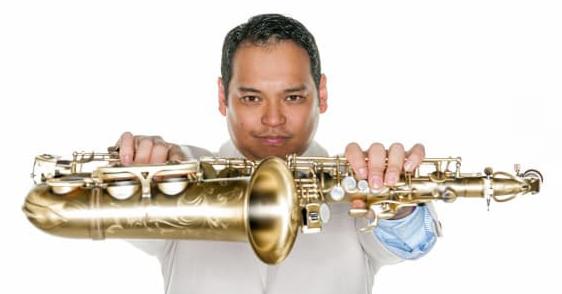
Alto saxophonist/educator Julius
Tolentino received a Lifetime Achievement Award for Jazz Education from DownBeat Magazine last year, the same year that his Newark Academy jazz band, Chameleon, won first place in Jazz at Lincoln Center’s Essentially Ellington competition. Tolentino is in his 19th year as NA’s Jazz Director, and this year he has the added responsibility of Arts Department Chair, overseeing an Arts program that also encompasses theater, dance, and visual art.
Tolentino’s former students are
sprinkled throughout the jazz landscape, and on Sunday, January 4, 2026, he will perform with three of them—bassist Ian Kensalaar, pianist
Ben Collins-Siegel, and his son, trumpeter Jacob Tolentino—at the Jersey
Jazz LIVE! concert held at the Madison (NJ) Community Arts Center,.
“I try to get all my students to become their own best teachers,” Tolentino told Jersey Jazz in a December 2024 interview. “I have a lot of strategies and little tricks of the trade to give them, to kind of analyze themselves in a positive way, to not be too hard on them-
selves.” A graduate of the University of Hartford’s Hartt School of Music, Tolentino studied with the jazz program’s founder, alto saxophonist Jackie McLean. “It was really a godsend to be around Jackie for all those years,” he recalled. “After I graduated (in 1997), he helped me get a gig with (tenor saxophonist) Illinois Jacquet. That was my first gig where I went on the road.”
While Tolentino’s primary focus is on education—he also teaches at Princeton University and Jazz at Lincoln Center—he still finds time to perform, often with one-time or cur-
rent students. On Friday and Saturday, January 2 and 3, he will be leading a quartet at Smalls in New York.
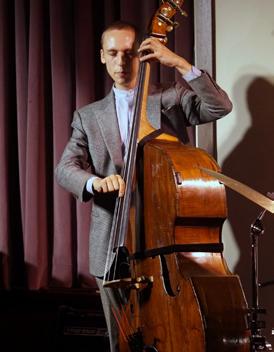
Kensalaar, who lives in Jersey City and was mentored by Tolentino at Jazz House Kids, studied at Rutgers’ Mason Gross School of the Arts with bassist Kenny Davis, drummer Victor Lewis, and alto saxophonist Mark Gross. In the early days of his post-college career, he was a regular at drummer Winard Harper’s jam sessions at Jersey City’s Moore’s Lounge. In 2017, he was selected to be one of 12 recipients of the Ravinia Steans
JERSEY JAZZ LIVE!
Music Institute Fellowship and spent a week studying composition with bassist Rufus Reid, pianist Billy Childs, and tenor saxophonist Nathan Davis. Since 2019, he has been a member of tenor saxophonist J.D. Allen’s trio.
Collins-Siegel was one of Tolentino’s students at Newark Academy and is now a freshman at the University of Miami’s Frost School of Music where he is part of the elite Stamps Scholars Program. A resident of Maplewood, NJ, Collins spent last summer as part of Carnegie Hall’s NYO Jazz Orchestra, which extends invitations to 23 students from across the country. In addition to playing with Tolentino while home on break, Collins-Siegel will also be performing with guitarist/vocalist John Pizzarelli at his “Swinging into the Holidays and More” concert on December 21 at the South Orange Performing Arts Center.
In the December 2024 article, Col-
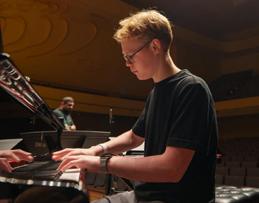
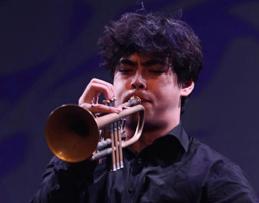
lins-Siegel said Tolentino “has played such a pivotal role in my development as a musician. He has committed his whole life to teaching jazz music, and I feel extremely grateful to have had the opportunity to study with him.”
Jacob Tolentino graduated from Newark Academy in 2024 and is now a Jazz Studies major at Michigan State University’s College of Music. As Julius Tolentino’s son, jazz has always been a part of his life. He was a Ris-
just really liked his sound, and, specifically, he recorded a song with Herbie Hancock, ‘Canteloupe Island’. I was listening to that song over and over again.”
ing Star in the November 2023 issue of Jersey Jazz and said he realized he wanted to play jazz when he was in the second grade. “I kind of wanted to play the drums at first,” he recalled, “but I had an easier time on the trumpet, so I just stuck with that. I didn’t take it that seriously at the start,” he said, “but once I started playing with smaller combos and big bands, I realized that I liked it.” Early on, his biggest influence on trumpet was Freddie Hubbard. “I
The Madison Community Arts Center is located at 10 Kings Road in Madison, NJ. The Jersey Jazz LIVE! concerts begin at 3 p.m. Admission is $15 for NJJS members and $20 for non-members. Student admission is $5 with valid ID. There will be light refreshments for purchase. To order tickets in advance, log onto ticketleap.events/tickets/new-jerseyjazz-society/jersey-jazz-live-juliustolentino-and-the-new-wave
: Funding for Jersey Jazz Live! has been made possible, in part, by funds from Morris Arts through the New Jersey State Council on the Arts/Department of State, a partner agency of The National Endowment for the Arts.
Clockwise, from bottom left: Jacob Tolentino, Ben Collins-Siegel, Ian Kenselaar
JAZZ AT THE DEER HEAD INN
Alan Broadbent: Hearing ‘Take Five’ on the Radio Introduced Him to Jazz
“I Couldn’t Believe It … I’m Playing with Paul Motian from The Village Vanguard ...”
BY JAY SWEET
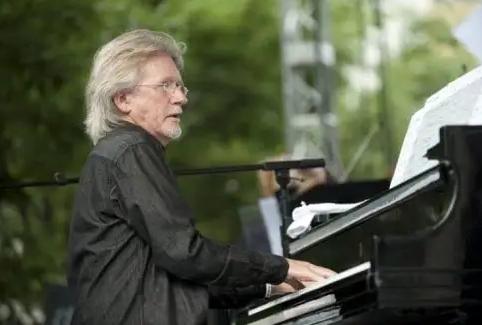
Alan Broadbent has had a long and storied career in jazz as a pianist, composer, arranger, educator, and bandleader. When the 78-yearold Broadbent performs on December 12 at the historic Deer Head Inn in Delaware Water Gap, PA, the evening will feature the same musical language he has explored for more than 50 years—material that evolves each time he sits at the piano. He’ll be joined by longtime friends and collaborators, Harvey S. on bass and Billy Mintz on drums. “Harvey and I go back to our days at the Berklee School of Music (now the Berklee College of Music), as it was known then,” Broadbent noted. “And Billy and I were friends in Los Angeles when I lived out there. It’s a really happy reunion for the three of us.” Broadbent spoke warmly about performing at the Deer Head Inn, the storied jazz room known as one of
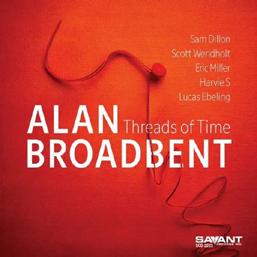
Phil Woods’ home bases and famously where a teenage Keith Jarrett first cut his teeth. “So, I’m in good company,” he joked. “It’s a wonderful place to play— great audiences who come from all over, and there is a beautiful Yamaha piano that belonged to Phil Woods and was donated to the club.” As for the repertoire, he explained that the set will include a mix of standards and a few of his own compositions. But even the most familiar tunes become new terrain each night. “I’ve been playing these standards for so long that I can’t play them the same way twice,” he said. His newest release is Threads of Time on Savant Records, which draws from a body of original compositions he has written over the last five decades. “They’re tunes I’ve had for years,” he said. “Some of them going back nearly 50 years. I’ve been in that same musical style all my life. I’m not someone who writes
in distinct periods. Everything is rooted in the standard song form.”
In a review of the recording for the UK’s Jazzwise, Alyn Shipton described it as “An album full of delights, some subtle, some more out front, but all beautifully played with a real sense of an ensemble that listens and interacts with skill and taste.” At presstime, it had spent 19 weeks on the JazzWeek charts, peaking at Number 3.
While assembling material for the album, Broadbent realized several pieces felt especially suited to a sextet. “I’ve always wanted a trumpet–tenor–trombone front line,” he remarked. “And here in New York, I’m lucky to have the players for it.” The record features Scott Wendholt on trumpet, Sam Dillon on tenor saxophone, Eric Miller on trombone, Harvie S. on bass, and Lucas Ebeling on drums.
Born and raised in New Zealand, Broadbent grew up, not in a world of jazz, but surrounded by the classical
music of Chopin. “I’ve been playing Chopin since I was a kid,” he recalled. His musical world shifted dramatically in 1964 when he happened to hear Dave Brubeck play “Take Five” on the radio. “I’m going, now wait a minute—what is that?” Also hearing saxophonist Paul Desmond for the first time, he sensed “a musical element that I could follow, even though I didn’t know what was going on.”
Around the same time, he was rummaging through his father’s old World War II era sheet music, playing through standards left behind by American soldiers. “I’d pick out the ones I liked, mostly because they had a certain harmonic thing I didn’t understand, but the melodies were beautiful.” When the Dave Brubeck Quartet later came to Auckland, he seized the chance to go. Listening to them live, he remembered thinking, “What the hell is that?” The experience opened the door to a new musical life.
Soon he met musicians who introduced him to the music of masters like Bud Powell, and he became a devoted reader of DownBeat magazine—so devoted that he waited for ships from New York to deliver each issue to New Zealand. One issue included a scholarship application to Berklee. Unable to afford recording tape, he submitted an acetate of “Speak Low.” Weeks later came a letter from administrator Bob Shearer: “You’re in.” It was
only a partial scholarship, but it was enough to get him to the United States. At 19, he left Auckland for Boston.
Reflecting on his days at the Berklee School of Music long before it became the sprawling institution it is today, Broadbent described an intimate, tight-knit environment. “It was very small back then. Everybody knew each other—students, teachers, everyone. And the level of musicianship was incredibly high.” He
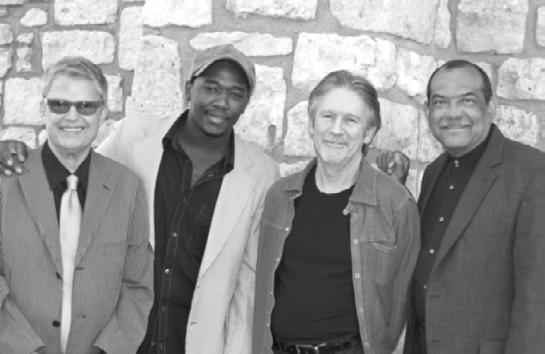
Charlie Haden Quartet at the 2008 North Sea Jazz Festival. From left, bassist Charlie Haden, drummer Rodney Green, pianist Alan Broadbent, and saxophonist Ernie Watts.
played in the school’s recording band under Herb Pomeroy, alongside fellow students who would later become influential jazz figures: Peter Donald on drums, Harvie S. on bass, guitarists John Abercrombie, Mick Goodrick, and others. “It was a real community of serious musicians.”
Studying with the famed pianist and theorist Lenny Tristano proved transformative. The lessons weren’t about technique but about unlocking
the emotional core of the music. “He didn’t care about my technique. He said, ‘You go do that on your own.’”
What mattered to Tristano was hearing what you were playing. He introduced Broadbent to a method rooted in listening and singing with the phrasing of Billie Holiday, Lester Young, and Louis Armstrong. At the end of each lesson, he would gently ask, “So, Alan? How did you feel?” It was the only question that mattered to him.
During Berklee, Broadbent also performed six nights a week at the Hotel Vendôme. His professional journey began in earnest when he joined Woody Herman’s band. Near the end of his last semester, he needed a gig to remain in the country. Drummer Jake Hanna and pianist-arranger Nat Pierce, sent by Herb Pomeroy, came to hear him; and their recommendation led directly to Herman. “So, I was elected,” Broadbent laughed. “I was cheap. We were all trying to survive on practically nothing.” Herman was nearing the end of his long career as a big band leader, and Broadbent spent three years on the road with him, learning by unlearning his Berklee lessons: “None of that was going to work with Woody.”
The realities of big band life were stark. Broadbent recalled nights stranded in the Midwest during blizzards, stuck in truck stops because the band’s manager couldn’t afford fuel. “We’d be sitting on a freezing bus at
three in the morning because there was no money for gas.” Herman treated him with warmth, though, and embraced Broadbent’s contemporary arrangements. When the band began presenting big band versions of “Light My Fire,” “MacArthur Park,” and other pop tunes, Broadbent contributed his own take. “Blood, Sweat & Tears were huge then, so I arranged ‘Smiling Phases.’” Those charts helped reinvigorate the set, and Herman’s openness to new ideas impressed him. From that point on, Broadbent continued arranging for major artists including Barbra Streisand, Rod Stewart, and Linda Ronstadt.
When discussing his arranging technique, Broadbent often cites his love of classical music—particularly Gustav Mahler. “I’ve always been in love with the symphony orchestra.
The more I studied it, the more beauty I found.” He described countless hours spent at home with orchestral scores: “I’ll be sitting there with Mahler’s
Seventh Symphony… open any page at random and think, ‘Oh my God, that’s how that works.’” For Broadbent, orchestration became a lifelong study in color and architecture.
One of the defining moments of his career came when he became an arranger and pianist for Natalie Cole. The connection began quietly on a nearly empty night at Dante’s, a small club in North Hollywood. A couple of musicians who had just come from a Cole session approached him, unhappy with her current pianist, and urged him to come to the studio the next day. When he saw the chart for “Route 66,” he immediately understood the musical world—and the family legacy—he was being invited into. The fit was immediate. Before long, he found himself deeply involved in what would become the Unforgettable album project. He didn’t grasp the magnitude of its success until he returned home to New Zealand for a visit. Reporters met
him at the airport asking about the album, a level of international attention he had never experienced before.
During this period, bassist Charlie Haden reached out after hearing Broadbent’s first trio record on the radio. Haden wanted to form a group— what became Quartet West with saxophonist Ernie Watts and the legendary drummer, Paul Motian. “I couldn’t believe it… I’m playing with Paul Motian from The Village Vanguard, with Bill Evans.” Broadbent ultimately chose the artistic adventure with Haden over touring with Cole. His time with Haden, including tours of Europe and deep musical conversations, left an enduring impact. “Charlie and I got to be kind of close… you can’t play with a guy like that without being close.” Broadbent began writing for him, and the collaboration proved both intimate and revelatory.
Another celebrated connection was his longstanding work with vo-
calist/pianist Diana Krall. Their relationship began when she arrived in Los Angeles at 19 with a grant from the Canadian government to study with Jimmy Rowles. After Rowles, she was sent to Broadbent. He remembers her first lesson clearly. She played authentic stride piano. “You want to play like that?” he asked, nudging her toward a deeper musical truth. He had
her sing Lester Young solos, and years later onstage she would sometimes quote Lester Young and give him a wink. When Krall began making major-label records, she brought Broadbent in again—this time as pianist on When I Look in Your Eyes. “She just wanted to sing,” he explained.
A more recent association that excites him is his mentorship of Stella Cole, the rising American singer known for her interpretations of the Great American Songbook and now a prominent figure in the New York jazz scene. Broadbent’s brilliant arrangements and playing can be heard on her new Decca Records release It’s Magic. Joe Lang, in a review for Jersey Jazz, wrote that, “Broadbent is his usual magnificent self as both accompanist and arranger.”
Even after decades in music, he still thrives on new challenges. “Oh, yeah, yeah. Absolutely,” he says. “It keeps me alive.”
Alyn Shipton of the UK’s Jazzwise called Threads of Time “an album full of delights.

After Nearly Four Decades, New York Voices Celebrate One More Year Together
Through the End of 2026, the Group Plans to Release as Many as Three New Recording Projects
BY ANDREW SCHINDER
Vocal groups hold an underappreciated place in the jazz idiom. ‘Jazzheads’ (read: snobs) often dismiss them as trite or pop-oriented, perhaps likening them to a college a cappella troupe or disdaining them as antiquated. The New York Voices are far from that. They are serious musicians, advancing jazz music while honoring its past. The group is part of a lineage of jazz vocal groups that have celebrated the music as far back as its creation. For the past several decades, they have been the gold standard for the sub-genre.
This past year, the New York Voices announced that, at the end of 2026, they will be retiring. This will leave a void in the scene, one that initially widened when their peers, the Manhattan Transfer, called it quits in 2023. The Voices won’t leave quietly, however. They have a packed schedule for the remainder of this year and through 2026, starting with “A Swingin’ Christmas” concert at
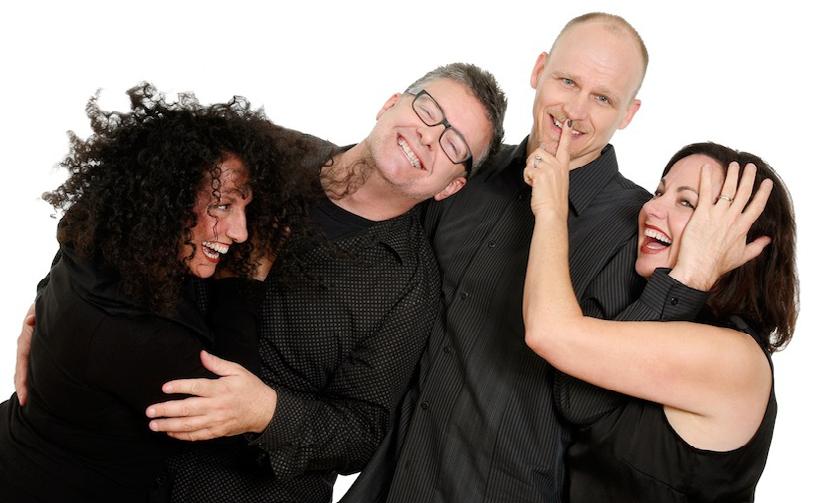
From left, Kim Nazarian, Peter Eldridge, Darmon Meader, Lauren Kinhan.
Ramapo College’s Berrie Center on December 13, followed by holiday performances at New York’s Birdland December 19-21. This past October, the New York Voices found themselves in the midst of a short tour and recording session in Taiwan – the Voices may have originated in New York, but the music is certainly global. (The group was interviewed via Zoom while on location in Taiwan).
The New York Voices consist of Darmon Meader (tenor), Kim Nazarian (soprano), Lauren Kinhan (soprano), and Peter Eldridge (baritone), with Meader serving as nominal group-leader and key arranger. Original members—Meader, Nazarian, and Eldridge—met as students at Ithaca College in the 1980s, with other original member and fellow Ithaca student, Caprice Fox. As members of the Ithaca College Jazz Vocal Ensemble (IC JVE), under the tutelage
of the late, renowned Ithaca vocal professor Dave Riley (who coined the group’s name), in 1986, they embarked on a European tour, stopping at the Montreux and North Sea Jazz Festivals as they transitioned from students to professional musicians.
“(Playing at the festivals) was kind of the bridge between postschool and pre-professional,” Nazarian said. “We weren’t in school any longer but we weren’t pros yet. But we did this gig and it was received so well that we decided to continue the group back in New York.”
The group moved to New York in 1987, with Sara Krieger joining as a second soprano. They continued as a quintet (the Voices on the European trip consisted of six singers) in order, according to Nazarian, to differentiate the Voices from the Manhattan Transfer.
In February 1988, after about a year of navigating the treachery
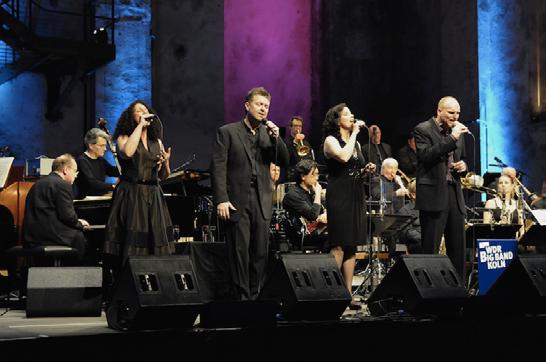
With the WDR Big Band
of the New York music scene, the Voices landed their first gig, at historic Town Hall, a concert hosted by the IC JVE. The concert was, according to the group, a roaring success. “The response was wonderful,” Nazarian added. The group met its agent that night, and, astonishingly, within a year the Voices landed their first record contract. GRP Records released a self-titled album in 1989. The Voices distinguished themselves, according to Meader, by writing their own music, which was
unique for vocal groups at the time. Somewhat established by the turn of the next decade, the next few years nevertheless marked a period of constant hustle, living gig to gig, with members also playing the wedding and Bar Mitzvah circuit in order to make ends meet. “We were just doing the New York scene,” Meader recalled. “Playing the clubs and trying to make some noise, making no money. Whatever money came at the door we paid our rhythm section, just grinding it out. Grinding away
because we loved the music. It was a labor of love. So, it started that way, but it just kind of continued to grow.”
Eldridge’s favorite story: “Our [debut] album came out, and so did (a cappella gospel group) Take 6’s debut album around the same time. And, we did a double bill with Take 6 at Car-
negie Hall. So, we had this glorious, exciting Carnegie Hall debut, and the next afternoon Darmon is playing a Bar Mitzvah out on Long Island.”
And, added Meader, gleefully, “I made more money at the Bar Mitzvah!”
The constant grinding and hustling eventually paid off, however,

as the Voices ultimately released a string of successful albums over the ensuing decades and developed a robust following through constant touring. Krieger left the group in 1992 and was ultimately replaced by Kinhan. Fox left the group in 1994, and the makeup has been constant ever since.
The uniqueness of the Voices can be attributed to the group’s successful blend of original material, covers of beloved pop hits, and faithful but distinctive renditions of jazz standards, including many that may not necessarily be familiar to mere casual fans. The Voices are true students of the genre. The group has successfully adapted such jazz standards as “Autumn Leaves,” “Darn That Dream”, and “Giant Steps,” but at the same time has also dedicated an entire album to Paul Simon arrangements, Sing the Songs of Paul Simon (RCA, 1997).
“From a repertoire standpoint,
each song has its own story,” said Meader. “Sometimes I might write an arrangement that I think is kind of fun, and present it to the group. But then sometimes Kim might say, for example, that ‘I’d love to do this Duke Ellington tune’ or Peter has written a song, or Lauren has written a song, and they’ll present it to the group. Or maybe one of them has written a tune, and they’re doing it on a solo gig, and the rest of us go, ‘Hey, we want to sing that!’ and then we’ll move it over to our book.”
Meader described himself as, “sort of the nuts-and-bolts arranger in the group. The ideas germinate in many different ways. I’m the one that, at the end of the day, gets it all into the computer and makes it something that we can all work with. Peter also generates a lot of the initial harmonic ideas and conceptual ideas of songs.”
Added Kinhan, “We are also really proud of how much thought we put
Recording session with Paquito D’Rivera
into trying to sound like a four-headed solo artist. We really work at trying to carve into how to make the lyrics and how to make the four of us sound like one solo artist, so you get that emotional context that comes when it’s just a solo singer who gets to make a solo statement. We really try to have that hit you that way with four of us.”
Nazarian feels, “It’s also a comment on the writing, too, because the writing is so very good, and the voice leading is so very good that it makes what we do, which is pretty difficult, seem easy. One of the things that sets us apart from other groups,” she added, “is that there is so much instrumental influence in what we do, whether it’s singing four-part chords, whether it’s melodic embellishment with leads, whether it’s improvising.”
Indeed, the Voices often collaborate with instrumentalists or big bands that are at the highest level of the
genre. The group co-released an album with legendary woodwindist and NEA Jazz Master Paquito D’Rivera, Brazilian Dreams (MCG Jazz, 2002), to wide acclaim, and has performed or released music with Bobby McFerrin, the Count Basie Orchestra, and the Dizzy Gillespie, WDR and Bob Mintzer Big Bands, among many others.
Referring to the collaboration with D’Rivera, Meader said, “It was a wonderful marriage, that we got to perform that music together.” Added Kinhan: “Those were some of our most joyful concerts because it allowed us to live outside of our framework a little bit, not only because Paquito is amazing, but so is his band.”
Nazarian said, “When you work with the likes of Paquito D’Rivera and Bobby McFerrin, you are elevated to a place that you can’t get to on your own. You kind of feel weightless, and anything and everything is pos-

sible. When you are cradled by the artistry of a Paquito D’Rivera, his band, the audience, the repertoire, it just becomes a different world.”
Through the end of 2026, the Voices are impressively busy. The group plans to release as many as three new recording projects (including the Taiwan sessions) and tour throughout the period, including fi-
nal shows with D’Rivera, the Count Basie Orchestra, and Ivan Lins with the Danish Radio Big Band, as well as a big farewell concert in New York. Next summer the group will also hold its final vocal jazz camps for professional and aspiring singers at Western Michigan University and in Germany. “It’s going to be a cacophony, and it’s going to be thrilling!” said Kinhan.
On recent tour in Taiwan.
Post-retirement, the four Voices plan to continue their various musical and educational endeavors. Each member has a robust solo career, as well as teaching positions with prestigious collegiate music programs (Nazarian will also be releasing a book on vocal technique, and Meader’s has already been published). But their artistry stems from the Voices, and while the decision to end the group is most certainly bittersweet, the members are ultimately at peace with it.
“One of the things that’s really nice about our decision is that I think we’ve collectively come to the same place,” said Meader. “The nature of what we do, it’s an athletic kind of singing. I feel kind of like we’re the 40-year-old quarterback. We know how to do it, and we’ve got a lot of experience. But at a certain point, you have to say, okay, it’s time to hang up the cleats, or in our case, hang up the microphones.”
Added Kinhan, “We’ve been around so long, and a lot of the people that we educated are full-blown artists, or teachers. Bumping into all these people along the way that are telling us that we’ve changed their lives—we are very touched and moved. It’s very humbling to know that our work has meant something to people. So, this is going to be an interesting long walk into the sunset for us.”
Music enthusiasts are encouraged to join the Voices for that long walk into the sunset.
: The Berrie Center for the Arts is located at 505 Ramapo Valley Road on the campus of Ramapo College in Mahwah, NJ. The “A Swingin’ Christmas with New York Voices” concert will begin at 8 p.m. on Saturday, December 13. For more information or to order tickets, log onto ramapo.edu/ berriecenter or call (201) 684-7844.
join us








Bassist Martin Pizzarelli Celebrates His
Father’s 100th
Birthday
with a ‘Family Style Concert’
“It Will be Loose
and, Hopefully, Very
Entertaining ... I’ll Let the Guitar Players Pick the Songs They Want to Honor Bucky With”
BY SANFORD JOSEPHSON
When bassist Martin Pizzarelli celebrates the centennial birthday of his father, guitarist Bucky Pizzarelli, on Sunday, January 11, at Morristown’s Morris Museum, he’ll begin with Duke Ellington’s “Do Nothing Til You Hear From Me” because “it’s the song he liked to open with.”
That will be followed by music from Bucky’s Benny Goodman years and Zoot Sims years, “and I’ll let the guitar players pick the songs they
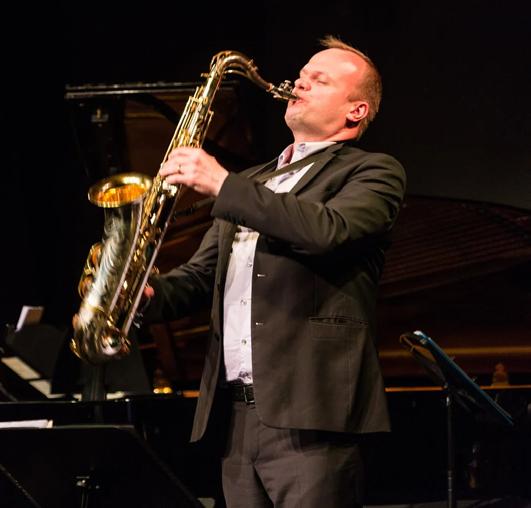
want to honor Bucky with.” The two guitarists are David O’Rourke and Walt Bibinger, and they will be joined by saxophonist/clarinetist Linus Wyrsch and pianist Kyuna Park.
Bucky Pizzarelli, who died April 1, 2020, at the age of 94, would have celebrated his 100th birthday on January 9, 2026. “This is going to be a family style concert,” Martin Pizzarelli said. “It will be very loose and, hopefully, very entertaining. I may
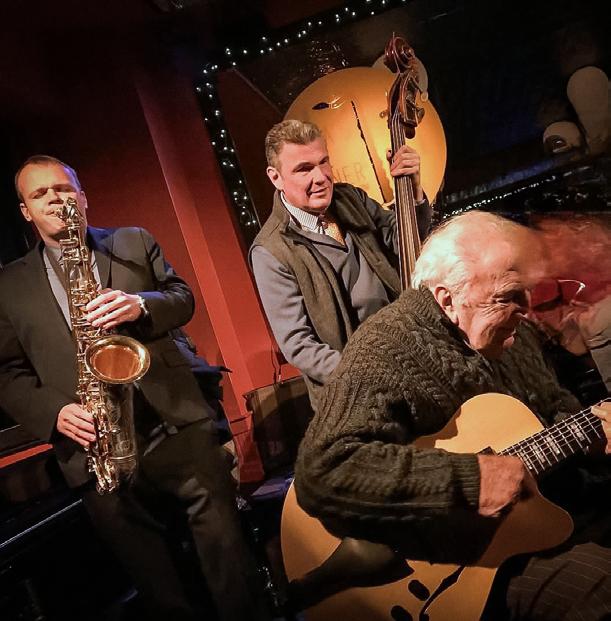
From left, Linus Wyrsch, Martin and Bucky Pizzarelli
even have people ask questions, and I may bring some of Bucky’s artwork to put in the lobby. He loved Paterson (where he grew up), and some of his paintings depict the Paterson Falls.”
Martin’s childhood is filled with memories of jazz musicians and other celebrities who visited the Pizzarelli home in Saddle River, NJ. “When I was in seventh grade,” he said, “my mother got me out of class. ‘You’re going on a road trip to Valley Forge with your dad,” she said. “We picked up Benny Goodman along the way.” There were also visits from pianist Teddy Wilson, tenor saxophonist Sims, and many others.
Pizzarelli’s bass playing began when he was 14 or 15, and, he recalled that, “It wasn’t jazz yet. My brother, John, had a rock band, and he didn’t get along with his bass player. So, he said, ‘Learn these songs.’ Then, after that, I started to play on
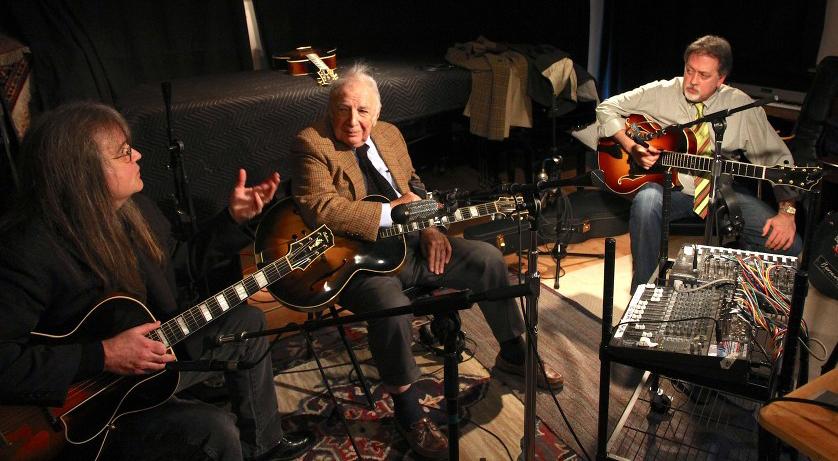
In 2014, Walt Bibinger, left, recorded Guitar Trio: Live at the Deer Head Inn with Bucky Pizzarelli, center, and Ed Laub
a mini bass my dad had gotten from his father.” Martin’s jazz prowess was helped by visits to his home by such veteran bassists as Milt Hinton, George Duvivier, and Jerry Bruno.
Bass advice from Bucky? “He always said, ‘Just support the beat.’ I was never a big soloist. My dad said, ‘Just play the roots of the notes, and everybody else will do the rest.’ It’s only in the last five to seven years that I’ve been soloing more with a trio. I played in my brother’s trio for 25 years.”
O’Rourke first visited New York from his native Ireland 43 years ago.”As a 22-year-old,” he recalled, “I had the great fortune to be put in contact with Bucky Pizzarelli by (guitarist) Louis Stewart, Ireland’s most accomplished jazz musician—he toured with Benny Goodman’s band alongside Bucky.
“Bucky invited me to bring my guitar to the Pierre Hotel where he played every night, and to sit
in. I called ‘Days of Wine and Roses’ and took just one chorus in my solo. Bucky emphatically told me to ‘go on!’, and, despite how long ago it was, I still remember him calling ‘In a Mellow Tone’ and how amazing it felt to play with his trio.”
Although Bucky tried to get O’Rourke some gigs, the Irish guitarist didn’t have a green card. When O’Rourke moved permanently to the United States, Bucky told him: “I have every guitar you need, so if you get a call and need something specific, call me.’ I just cannot ever forget how welcome Bucky made me in my earliest days. Without that, my whole life might have taken a completely different direction. He encouraged me to follow my dreams, and nowadays I do the same for young musicians. Paying forward the kindness Bucky showed a wide eyed 22-year-old back them.”
O’Rourke has his own big band, The O’Rourkestra, and, for sever-
Linus Wyrsch: “Bucky’s infectious smile, joy, and playfulness on the bandstand stayed with me.”
al years, he directed the Jazz Standard Youth Program at the Jazz Standard jazz club. He has played with such legends as pianists Cedar Walton and Tommy Flanagan and alto saxophonist Jackie McLean.
Bibinger’s first gig with Bucky happened in 2006 at the Deer Head Inn in Delaware Water Gap, PA. “When the club formed a record label with VectorDisc records,” Bibinger said, “the first release, in 2014, was Guitar Trio: Live at the Deer Head Inn, Bucky Pizzarelli Ed Laub and Walt Bibinger.
“Bucky,” Bibinger continued, “was so kind and encouraging on stage and off. I met him 35 years before we ever played together when my parents took me to see him in a duo with (bassist) Slam Stewart. I never would have thought I’d get to perform and release a CD with Bucky and (guitarist) Ed Laub all those years later.” Playing with Bucky, he added, “was like a year of lessons. It was truly an honor to
have played the last decade with Bucky and now, for a few years, with Martin.”
In addition to performing with Bucky, Bibinger has played with guitarist Howard Alden, organist Jimmy McGriff, and alto saxophonist Phil Woods, among many others. He studied for 15 years with the late guitarist Harry Leahey.
Wyrsch, originally from Switzerland, was about 15 years old when he saw Bucky play at Lucerne’s Jazz Club Luzern with trombonist
George Masso, vibraphonist Peter Appleyard, and drummer Jake Hanna. “Later, around 2011,” he said, “I saw Bucky and Martin at the Blue Note with (pianist) Monty Alexander. When I met Martin again around 2016, I met guitarist Ed Laub; and Ed and Martin made it happen that I would play at Bucky’s birthday and a number of other concerts, a dream come true. Bucky’s infectious smile, joy, and playfulness on the
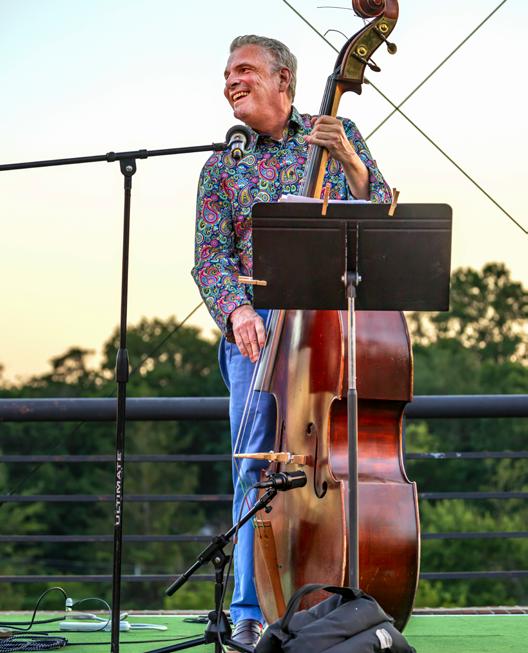
Martin Pizzarelli at Morris Museum’s Jazz on the Back Deck.
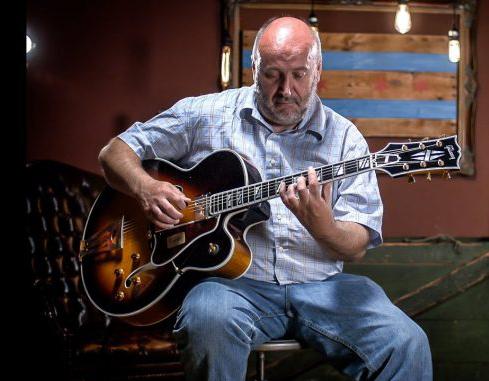
David O’Rourke: “I just cannot ever forget how welcome Bucky made me in my earliest days.”
bandstand stayed with me—and I’ve tried to live up to them ever since.”
Bucky Pizzarelli was one of the few musicians able to maintain a positive rapport with Benny Goodman over several years. Asked about that by Jersey Jazz’s Schaen Fox in January 2008, Bucky said, “Benny could pick a wise guy out before he even walked into the room ... If you tried to outsmart him, you couldn’t do it ... I knew what he wanted: With Benny, you had to know what tempo he was doing. That’s all. When he played by himself, there was the tempo before you started playing. If you interpreted it the wrong way, you were out.”
Martin Pizzarelli remembered his father telling him about “the Benny Goodman glare. My father said that when he did that, ‘He’s thinking about the next song, he’s thinking about the gig, which I understand.’
My dad said the same guys who com-
plained about how nasty Goodman was would list him first on their resume as people they had played with.”
Zoot Sims was a Bucky Pizzarelli favorite. “To me,” he told Fox, “There was nobody like Zoot. He was the happiest guy whenever he had that saxophone... Nobody could beat him.” In 1998, Bucky and tenor saxophonist Scott Hamilton released a duo album on the Concord Jazz label called Red Door, a tribute to Sims. AllMusic’s Scott Yanow wrote that, “Pizzarelli’s mastery of the seven-string guitar allows him to play bass lines behind solos, so one never misses the other instruments ... Both Hamilton and Pizzarelli sound inspired in this format, stretching themselves while always swinging.”
Another Bucky favorite was pianist John Bunch. Shortly after Bunch died in March 2010, Bucky told me Bunch was Goodman’s favorite piano player, adding that the pianist
“ YOU DON’T GO FOR ‘CHEROKEE’ IN THE BEGINNING. YOU BUILD UP TO IT. ”


An Intimate Jazz Club Experience at Sea March 12 – 22, 2026
always, “had everything planned. You could never play two ballads in a row or two songs in the same key. He was adamant about that.” They were scheduled to play together at Smalls the week that Bunch passed away.
At the Morristown Jazz & Blues Festival in 2019, guitarist Frank Vignola described a typical Bucky Pizzarelli set. “Bucky,” he said, “always had a great way of starting a show, usually with a medium tempo song that everyone knew. This would draw the audience in and give the band a chance to get comfortable
on stage. Then, the second song, he would swing it a little, and the third one, bingo! Knock it out of the park.”
That resonates with Martin. “You don’t go for ‘Cherokee’ in the beginning,” he said. “You build up to it. Bucky always taught us to do that.”
: The Morris Museum is located at 6 Normandy Heights Road in Morristown, NJ. The Celebrating Bucky Pizzarelli concert begins at 3 p.m. For more information or to order tickets, log onto morrismuseum. org or call (973) 971-3700.
Our cruise for 20 26 features some of the great lege nds of jazz!
• Allan Vaché – Clarinet
• Ken Peplowski – Tenor Sax
• Terry Myers – Tenor Sax
• Davy Jones – Cornet
• John Allred – Trombone
• Warren Vaché – Trumpet
• Dave Bennett – Clarinet
• James Chirillo – Guitar
• Ted Rosenthal – Piano
• Chris Rottmayer – Piano
• Mark Shane – Piano
• Danny Coots – Drums
• Yve Evans – Vocals
• Banu Gibson – Vocals
• Phil Flanigan – Bass
• Eddie Metz – Drums
• Charlie Silva – Bass
Jazz. Ocean. One Unforgettable Journey. Step aboard JazzFest at Sea for a 10-night Caribbean escape aboard the luxurious MSC Divina. Experience Traditional, Classic, Chicago and Swing Jazz performed by worldclass artists nighttime and afternoons in a private intimate jazz club setting for just 250 guests. This rare setting offers moments of totally unrehearsed magic you won’t find anywhere else. This is also an opportunity for our guests who are amateur musicians to bring your instrument and jam in your own JazzFest Jammer sessions. Cabins are limited and going fast reserve your spot now for the ultimate jazz experience at sea. Check us out online at
Holiday Concerts by Jon Faddis and David Benoit
It’s The Most Wonderful Time of the Year
BY GILDA ROGERS
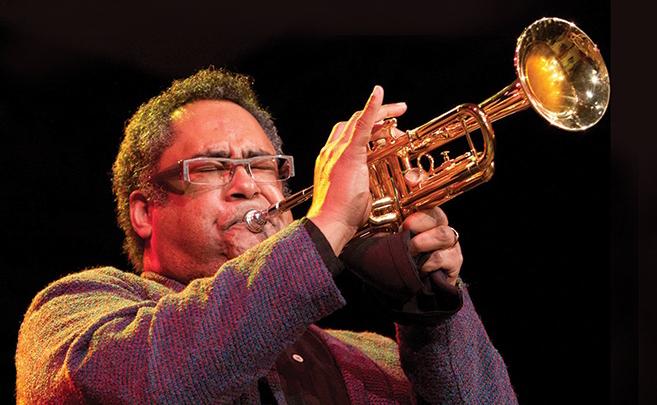
The “Joys of Jazz”, a holiday classic that captures the spirit of the season, will be presented by the Jazz Arts Project, at 5 p.m. at the Two River Theater on Sunday, December 14. It’s a musical showcase headlined by trumpeter Jon Faddis and The Next Generation Quartet.
Billed as the ‘Legends & Lions of Jazz,’ the occasion is amplified by Faddis, an iconic figure who recently returned from China, where he made stops in Shanghai, Beijing, and Hong Kong, with his “Next Gen” band. However, this concert is also certain to be a musical feast for the young lions of the Jazz Arts Academy, allowed to play in this legend’s orbit.
Born in 1953, Faddis got a real good look at Louis “Pops” Armstrong - a Black man blowing his horn on national television on The Ed Sullivan Show, which aired every Sunday night on CBS. After seeing
Jon Faddis
JAZZ IN RED BANK
Armstong’s performance, Faddis picked up the trumpet at the tender age of seven and never looked back.
However, before his 18th birthday, Faddis made the quantum leap from Oakland, CA, to New York City, where he joined the Lionel Hampton band as a soloist. But it was his encounter and relationship with John Birks Gillespie, more affectionately known as Dizzy, that had a profound impact on his life and his commitment to mentoring young artists.
“I’m very proud to be able to present Jon Faddis at this year’s Joys of Jazz - Legends & Lions concert event,” said Joe Muccioli, Executive Director of The Jazz Arts Project.
“With Jon Faddis headlining—an artist who came up through that same kind of mentorship under the great Dizzy Gillespie—and being on stage with these students, that’s the whole jazz tradition right there. Passing the torch literally in real time.
You will see history, mastery, the present, and the future, all converging into one astonishing concert.”
Faddis has composed an acclaimed Jazz opera titled: Lulu Noire and several albums, highlighted by the Grammy-nominated 1998 Chesky Records release, Remembrances, a tribute to jazz giants, and Into Faddisphere (Epic Records: 1989), all original compositions. He has also written music for film soundtracks and created the Louis Armstrong Legacy Program.
In a career that has spanned more than 50 years, Faddis has played with everyone from Eubie Blake to the soulful R&B crooner, Luther Vandross. “The whole concept of ‘Legends & Lions’ in this context is to pair a jazz master with student musicians just learning about the music,” said Muccioli, who has conducted for Faddis and someone he calls a “Dear Friend.”
Faddis was the first jazz musician to be presented with an Honorary Doc-
torate Degree from The Manhattan School of Music, and he’s a five-time winner of the MVP/Trumpeter Award from the New York chapter of the National Academy of Arts and Sciences.
: For more information or to order tickets, log onto jazzartsproject.org/joys.
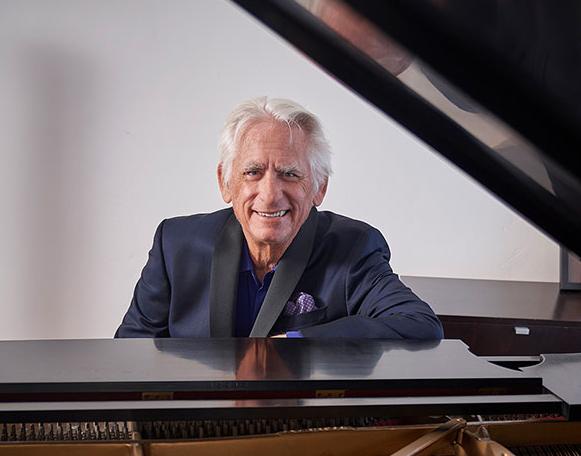
Also in Red Bank, pianist David Benoit strikes a chord with a jazzy holiday classic called, “Christmas Tribute to Charlie Brown,” at 7:30 p.m. on Tuesday, December 16, at The Count Basie Center for the Arts’ Vogel venue. The show will also fea-
David Benoit
ture vocalist Courtney Fortune, whose smoky voice is reminiscent of ‘70s angel, Karen Carpenter.
Charlie Brown is a part of Americana and, in essence, so is Benoit, who created soundtracks for Peanuts films and an entire album devoted to music associated with Charlie Brown. It’s been 60 years since America got its first glimpse of Peanuts in 1965, as did Benoit when he was 12 years old. He was not only attracted to the show, but to the music of the Vince Guaraldi Jazz Trio, a sound he wanted to emulate.
A California native, Benoit is a three-time Grammy-nominated musician, whose musical repertoire is cavernous and springs from his love of musical theater, with influences like Stephen Sondheim, and Burt Bacharach. He has recorded with
the contemporary jazz group ,The Rippingtons and has collaborated with Dav Koz, CeCe Winans, and the late great alto saxophonist, David Sanborn. In other words, Benoit is entwined in all aspects of music.
An elder statesman in the world of contemporary jazz, Benoit played an influential role in shaping this new genre of jazz that hit the airwaves in the ‘80s into the 2000s, ever evolving with the albums Freedom at Midnight (GRP:1987), Waiting for Spring (GRP: 1989), Letter to Evan, a tribute album to fellow pianist Bill Evans (GRP: 1992), and, into the new millennium, with Here’s to You Charlie Brown (GRP: 2000).
Peace on Earth.
: For more information or to order tickets log on to www.thebasie.org.
FESTIVAL
Jazz
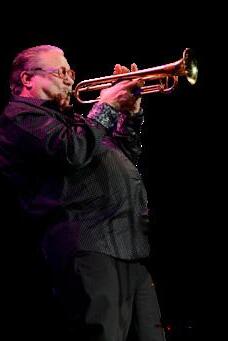
John Pizzarelli, Arturo Sandoval, Terell Stafford, Sammy Figueroa, Danny Sinoff, Allison Nash, Plus much more!
For tickets and information scan or click www.sarasotajazzfestival.com

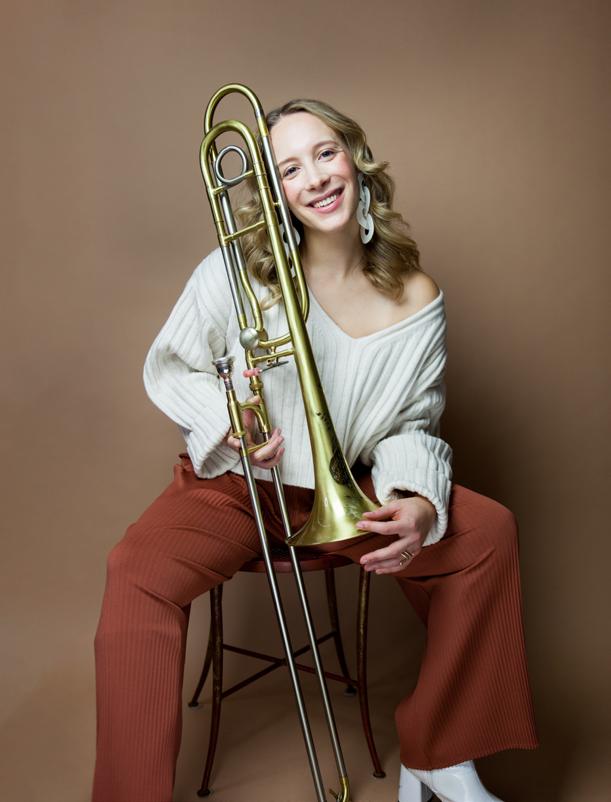
AHailey Brinnel: Stan Kenton’s Trombone Section Inspired Her Passion for Big Bands
“She Has Really Found Her Own Sound and Continues to Perform on a Very High Level”
BY SANFORD JOSEPHSON
fter being discharged from the Army in 1945, Pete Rugolo became the primary arranger for the Stan Kenton Band and is credited with keeping that band alive in an era when big band music was beginning to fade.
In 1955, Rugolo created an album combining the vocal group, The Four Freshmen, with an all-star trombone quintet selected from various Kenton ensembles. Four Freshmen and Five Trombones (Capitol Records)
was “the first trombone record I remember really loving,” said trombonist/vocalist Hailey Brinnel. “Frank Rosalino was the lead on that album. Big band is really where my heart lies, and I think a lot of it comes from that record—that section sound with Frank’s cutting sound on top.” (The other trombonists on the album are Harry Betts, Milt Bernhart, Tommy Pederson, and George Roberts).
The 30-year-old Brinnel grew up
RISING STAR
in a musical family in Longmeadow, MA, a town right outside of Springfield. Her father, Dave Brinnel, is a pianist and vocalist, and she began playing drums with him when she was 12 years old. During her middle and high school years she was sometimes taking three lessons a week— drums, trombone, and vocal. But by the time she was ready for college, Brinnel had decided to concentrate on playing the trombone and singing.
“I’m really passionate about music education,” she said, “so I wanted to go to a school where I could study music education and also jazz.” She decided on the Boyer School of Music at Philadelphia’s Temple University. “They have a Jazz Education major there, and when I applied and got in, I got a phone call from Terell Stafford (trumpeter and Director of Jazz Studies), and he ensured me that I could participate on trombone and vocals in
addition to Education Studies. I actually just started teaching in the Music Education department at Temple.”
Brinnel was in Stafford’s big band throughout her time at Temple, and two other important mentors were trombonist Mark Patterson and Greg Kettinger, a guitarist and jazz theory professor. Stafford, she said, “pushed me as a musician, especially in a big band setting.” Brinnel’s trombone lessons while in high school had been classical, so Patterson was “the first teacher that really encouraged creativity with specific parameters such as improvising in unconventional ways. Not having played much jazz trombone, I hadn’t done much improvising.” Even though he was a guitarist, Kettinger helped Brinnel with her vocalizing. “I was the singer in Greg’s big band at Temple, so, strangely enough, he was my first vocal jazz instructor.”
Stafford remembered Brinnel as
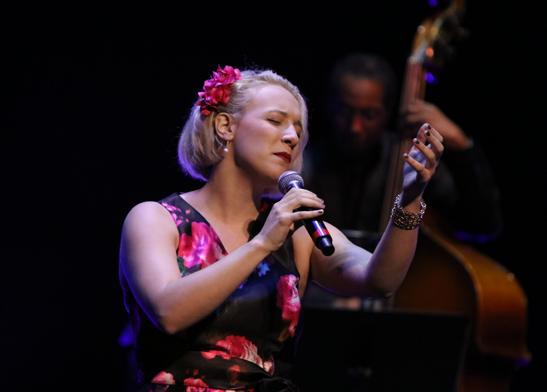
“a really hard worker! She has really found her own sound and continues to perform on a very high level. She is a true inspiration to us all.” While Brinnel was at Temple, Stafford introduced her to drummer Sherrie Maricle, Director of the DIVA Jazz Orchestra. “Sherrie gave me a gig pretty much right away,” Brinnel recalled. “The first one was at the Deer Head Inn (in Delaware Water Gap, PA). It’s become one of my favorite jazz clubs. I’ve also
played there with my own groups.”
Maricle said she immediately recognized Brinnel’s “great talent and endless potential in ‘all things jazz.’ Over the years, she has become a treasured colleague and an artist to be admired for her creativity and contributions to our field. She’s a brilliant vocalist, trombonist, bandleader, arranger, and human being.” When DIVA performed in September at the Middlesex County Jazz Festival
in Metuchen, Brinnel gave a stirring performance of “Every Day I Have the Blues”, a tune featured in Tappin’ Thru Life, DIVA’s musical revue honoring the late dancer/singer Maurice Hines.
In addition to her early exposure to Frank Rosalino, Brinnel is “really into the J.J Johnson and Kai Winding recordings, and I’ve studied and played a lot of the early New Orleans jazz—Jack Teagarden and people in that era.”
As for vocalists, she discovered Ella Fitzgerald in middle school. “She was the first person that got me
excited. And, Sinatra. There are a ton of tunes that I’ve really enjoyed from Sinatra albums that aren’t as widely played. That’s why I used to sing way too low in my range, from singing along with Sinatra.” Later in high school, she discovered Betty Carter and Cecile McLorin Salvant.
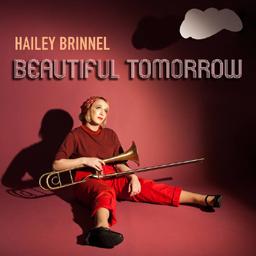
Beautiful Tomorrow, Brinnel’s latest album, was released in March 2023 on the Outside in Music label and received four stars from DownBeat Magazine. When Jersey Jazz’s Joe Lang reviewed it in April 2023, he mentioned
“
BRINNEL IS A JAZZ-INSPIRED VOCALIST WHO ALSO IS A SUPERB TROMBONIST. ”
“the emergence of an increasing number of female instrumentalist/vocalists.
One of the best has emerged from Philadelphia, trombonist/vocalist Hailey Brinnel. Her latest release is a 10-song gem ... Brinnel is a jazz-inspired vocalist who also is a superb trombonist.”
Brinnel just finished recording a brand-new album, as yet unnamed. “It includes original arrangements from myself and band members of Broadway tunes,” she said. “I’m getting away from Great American Songbook and Tin Pan Alley songs and more toward Stephen Sondheim and Andrew Lloyd Webber—a lot of stuff that might not be considered in the jazz canon. I’m working with a record label to see a timeline that makes sense, but we’re probably looking at a summer or fall release.” The makeup of the band? “Everything from trio to septet.” Guests will include alto saxophonist Grace Kelly and trumpeter
Summer Camargo. Her drummer is Steve Fidyk, who spent more than 21 years with the Army Blues Big Band.
As for current gigs, Brinnel will be at Philadelphia’s Cellar Dog on December 19, and she’s going to be playing on the main stage at the Jazz Education Network conference in New Orleans in January.
Jersey Jazz’s Joe Lang described Beautiful Tomorrow as a “10-song gem.”
Jersey Jazz LIVE! JULIUS TOLENTINO
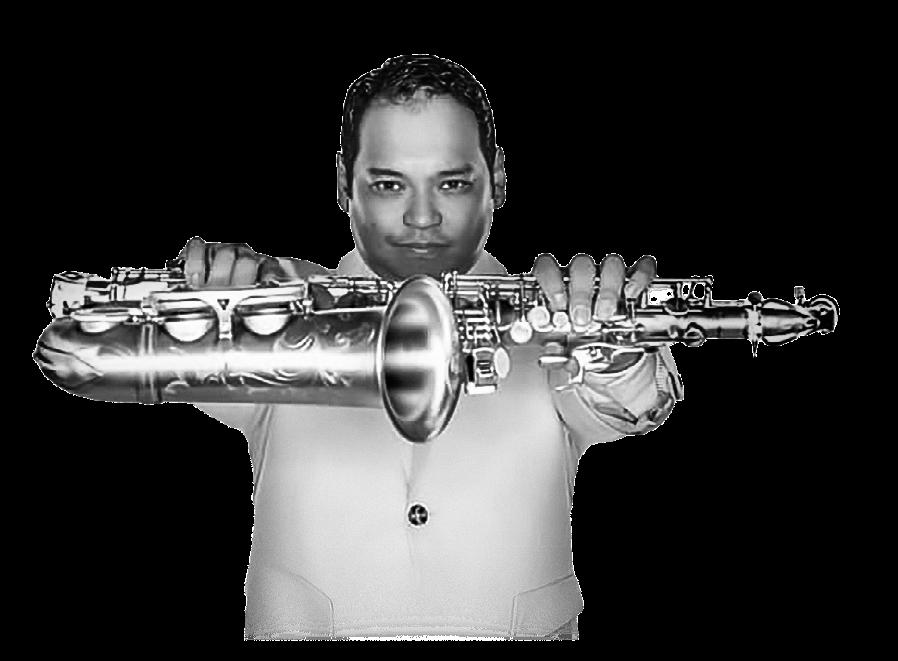
SUNDAY, JANUARY 4 3:00 PM
BY VINCENT PELOTE
It’s December! That means the holiday season is here. It also means more Christmas and holiday themed albums will be issued to join the plethora of such albums that already exist. So, I thought I would dedicate this column to a few of my favorites.
Future Christmas (Sinistral Records SRCD 0050) by bassist/vocalist Jennifer Leitham and her trio mates, Andy Langham on piano and Randy Drake on drums, is one of my favorite holiday CDs. It features arrangements of Christmas chestnuts such as “Angels We Have Heard on High,” “Have Yourself a Merry Little Christmas,” “Winter Wonderland”, and others in clever arrangements by Leitham. Two of the best tracks are Leitham’s original “Future Jazz (The Global Warming Winter Holiday Blues)” and Bob Dourough’s “Blue Xmas (To Whom It May Con-
cern).” “Future Jazz” is Leitham’s warning about the very real dangers of global warming in which Frosty becomes a puddle, and “Blue Xmas” is the only reading of this wonderfully cynical Christmas ditty by someone other than Dorough himself.
The album features plenty of Leitham’s vocals and her excellent bass playing. In my opinion she is
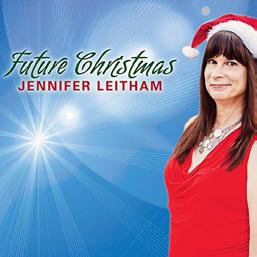
truly one of the best bass players on the scene today and has been for a while. She has performed and recorded with Mel Torme, Doc Severinsen, Benny Carter, and a host of others. Another piece of information that makes this performance by Leitham all the more remarkable is the fact that she recorded this album after a softball injury that resulted in a fracture of the fifth metacarpal bone of her right hand. Impressive indeed! Another favorite CD that gets a lot of play during the holiday season is Ella Fitzgerald’s Ella Wishes You a Swinging Christmas (Verve 440 065 086-2). It features Fitzgerald in marvelous voice backed by the orchestras of Frank De Vol and Russ Garcia. Originally issued as an LP, this particular CD reissue has the original 12 LP titles but includes six bonus tracks, three previously unis-
sued. They include a delightful alternative take of “Frosty, the Snowman” that features Ella singing it in her “A-Tisket, A-Tasket” little girl voice! Even if you have the original LP this CD reissue is worth a purchase.
I have been a fan of Diana Krall’s since she arrived on the jazz scene many years ago so when I saw she had recorded her album Christmas Songs (Verve 80004717-02) I had to get it. I play it every holiday season to hear her lovely voice backed by the Clayton/Hamilton Jazz Orchestra on most tracks. Other tracks feature such wonderful artists as the late guitarist Russell Malone, guitarist Anthony Wilson, vibraphonist Stefon Harris, trombonist Ira Nepus, and others. The album contains all of the usual Christmas standards, but the one surprise entry is Irving Berlin’s “Count Your
Blessings Instead of Sheep.” This is a must have for any Diana Krall fan.
An album that surprised me with how good it is—and I now consider a favorite—is What Would Santa Claus Say? by Mark Shane’s X-Mas All Stars (Nagel Heyer CD055). Pianist Mark Shane was a frequent visitor to the Institute of Jazz Studies back
in the 1980s when he would come in and listen to scads of Teddy Wilson recordings as he was changing his style to a more two-fisted approach. His session mates are all topnotch and include Harry Allen (tenor sax), Jon-Erik Kellso (trumpet), James Chirillo (guitar and banjo), Pat O’Leary (bass), and Dave Ratajczak (drums). Besides excellent solos and creative arrangements of Christmas chestnuts by Shane and Chirillo, We get a couple of cute vocals by Shane, which surprised me as I never thought of him as a singer. He does the vocal honors on the title song, “Santa Claus Came in the Spring,” “‘Zat You Santa Claus,” and “Merry Christmas Baby.” He’s no Bing Crosby but he doesn’t embarrass himself at all, and besides it’s all in fun!
Being a guitarist myself I am naturally attracted to any album of
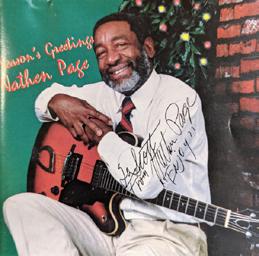
Christmas songs by guitarists. Two of my favorites are Joe Pass’ Six String Santa (Laserlight 15470) and the underrated Nathen Page’s Season’s Greetings (Hugo’s Music HMS113,1997). Pass delivers 11 masterful renditions of Christmas goodies with “O Christmas Tree”(aka. “O Tannenbaum”) being my personal favorite! Page does the same tune on his album but takes a much different approach, delivering it in three-quarter time, unlike Pass who swings it in 4/4. Both albums are killer dillers even if you’re not a guitar aficionado.
I know most readers will seek these out on a music platform like Spotify but call me old fashioned. I like CDs (and LPs) and these are just a few of my Christmas/holiday favorites.
Jazz in the Hill
BY COLTER HARPER, UNIVERSITY OF MISSISSIPPI PRESS 2025
BY JOE LANG
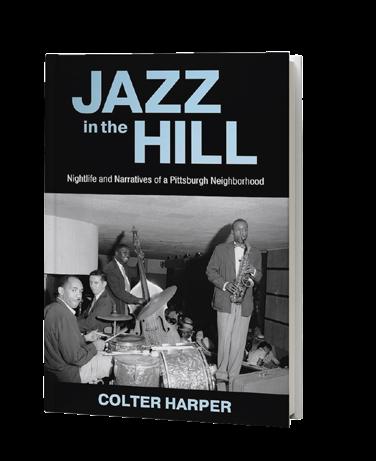
To the general public, the mention of the Hill District in Pittsburgh probably would not mean much. Those of a certain age, though, remember it as the site of riots affecting many African-American communities in 1968 following the assassination of Dr. Martin Luther King. In Jazz in the Hill, Colton Harper presents a detailed examination of the cultural history of this neighborhood with an emphasis on the jazz scene that was an important part of that culture. Harper has addressed the history that he relates by examining the early 20th Century when the Hill was a neighborhood with a mix of ethnicities from the immigrant population
that provided much of the labor in Pittsburgh’s growing industrial base.
Eventually, the arrival of many African-Americans who moved from the South to Pittsburgh seeking employment opportunities resulted in the Hill’s population changing to a point where these new arrivals became the prominent population in the area.
illicit sex. This period is covered in the initial chapters of Harper’s book.
After Prohibition, the primary club was the first Crawford’s Grill. Its owner, William “Gus” Greenlee, was one of the most influential Black businessmen in the Hill, having been a bootlegger and club owner during Prohibition. Initially, the room was primarily a restaurant with some cabaret type shows and occasional musical acts. By the early ‘40s jazz, initially booked as background music, became a staple of Crawford’s Grill.
As this evolution took place, jazz music played predominantly by Black musicians became a cultural staple of the Hill. There were many clubs and cabarets in the Hill, known as Black and Tan clubs, that often had racially mixed audiences. This was a matter of concern to many in both sectors. Many in the white community
looked at jazz venues and the Hill, in particular, as sites of vice and social racial interfacing they considered immoral threats. Many African-Americans also looked askance at the social mixing of races. Add in the fact that during the period of Prohibition, many of the venues were illegally serving alcohol, with some also offering gambling. This led to countless raids addressing alcohol, gambling, and/or
In 1950, The Lower Hill Redevelopment Project had a profound effect on the Hill. It displaced many families, some of whom moved further up in the Hill. Others moved elsewhere in greater Pittsburgh. Two other clubs became the focus of jazz in the Hill, the second Crawford’s Grill and the Hurricane Bar.
The second Crawford’s, opening in 1943, really became a center of jazz
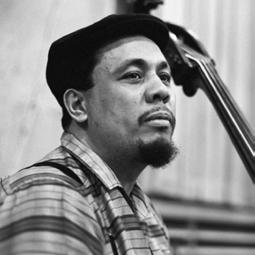
in 1952 when they had Pittsburgh mainstays like alto saxophonist Leroy Brown and pianist Walt Harper and their groups as the musical features. By the mid-‘50s, a steady stream of major jazz stars such as Charles Mingus, Art Blakey, Chico Hamilton, and Horace Silver were playing at Crawford’s. This level of talent was booked continuously until the assassination of Dr. Martin Luther King in April 1968. The ensuing riots changed the mix of attendees at Crawford’s, with white audiences severely declining and the flow of talent becoming more intermittent. The club continued to operate into 2003, but never at the level of success it enjoyed prior to the riots.
The Hurricane Bar existed from 1953 until 1970. While Crawford’s emphasis was on booking modern jazz groups, the Hurricane’s emphasis was on organ jazz, soul jazz and rhythm and blues, initially with lo-
cal players, but eventually bringing in bigger names like Jimmy Smith, Willis “Gator Tail” Jackson, and Eddie “Lockjaw” Davis. Owner “Birdie” Dunlap emphasized a club with a friendly atmosphere. No matter how crowded the Hurricane was, she always was open to squeezing in any newcomers. The Hurricane,
like Crawford’s, was affected by the aftershock from the King assassination, and its end came with a fire that destroyed the premises in 970.
As a personal aside, I must state that as a student at Carnegie Tech from 1958-1962, I visited both of these clubs, mostly Crawford’s, to hear the jazz that had become the center of my musical interests. Walt Harper and trombonist Harold Betters were occasional entertainers at some of our fraternity parties.
Colter Harper (no relation) includes an extensive discussion of the relationship between the White Musicians’ Unions and the Black Musicians’ Unions, in Pittsburgh and nationally. There was great reluctance to mergers between the locals, particularly by the Black unions due to a fear that they would lose power and influence to the larger White unions.
Throughout the book, and partic-
ularly in the material relating to the Prohibition Era, the Lower Hill Redevelopment Project and the union difficulties, Harper makes many observations about the relationship between the races, often a difficult one.
A good picture of this aspect of life in Pittsburgh can be garnered through the 10-cycle series of plays written by August Wilson, a Pittsburgh native, who has written each play about one of the 10 decades of the 20th Century.
Jazz in the Hill is not a book for the casual reader. It is centered on jazz, but covers much sociological material that puts the story of Pittsburgh’s jazz scene into a context far beyond the music. Those who are interested in jazz history will find much in the book to be revelatory. For anyone familiar with Pittsburgh, it will combine nostalgia with a deeper understanding of the broader context of the material covered by Harper.
Charles Mingus was one of the major jazz stars who played at the second Crawford’s.
Classic Decca Recordings of Bob Crosby and His Orchestra and Bob Cats (1936-1942)
BY JOE LANG
When looking back on the great bands of the Big Band Era, one that is too often overlooked is the band led by Bob Crosby. Listen to the six CDs from the Classic Decca Recordings of Bob Crosby and His Orchestra and Bob Cats (1936-1942) (Mosaic - MD6-283), and you will be impressed by the swing and superb musicality of these aggregations.
As you will find with all of the Mosaic Records sets, the discs are accompanied by a detailed book of liner notes that give the background of the subject and detailed anal-
ysis of each recording session. In this case, those notes are provided by Michael Steinman, who is responsible for the blog, Jazz Lives, that concentrates primarily on the music of early jazz and swing.
Steinman relates how a group of musicians—trumpeters Charlie Spivak and Yank Lawson, clarinetist/alto saxophonists Matty Matlock and Gil Rodin, tenor saxophonist Eddie Miller; and drummer Ray Baduc—became disenchanted with their bandleader, Ben Pollack, and left Pollack’s band with the aim of forming a coopera-

tive group they called The Orphans. None of these players wanted to front the band so they searched for a frontman and settled on Bob Crosby, the younger brother of Bing Crosby, then vocalist with the bands of Anson Weeks and the Dorsey Brothers.
Despite being an untrained vocalist, Bob Crosby used his limited vocal talents to get a start in the business.
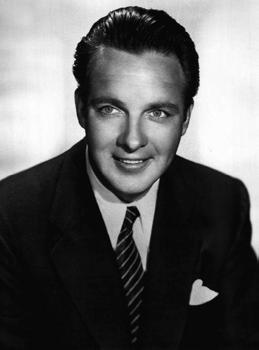
He was handsome, had a good personality, and was well-received by the members of the band, qualities that were ideal for the kind of frontman who fit their needs. His main function was to be the link between the band and the audiences with opportunities to add an occasional vocal interlude. When the Crosby band is mentioned, many associate it with Dixieland, a form of jazz that had become looked down upon by the Swing Era audiences. But the reality was that, while the band did play many arrangements with a Dixieland feeling, it was a far more versatile and sophisticated aggregation than its reputation suggested. Like many of the big bands, the Crosby band had a small group within the big band known as the Bob Cats. The instruments in the Bob Cats were trumpet, trombone, clarinet, tenor sax, piano, guitar, bass, and drums.
CLASSIC RECORDINGS
With the exception of of Spivak, the initial recording session in this set was on March 19, 1936, and included the group of players mentioned above plus trumpeter Phil Hart, trombonists Ward Sillway and Artie Foster, tenor saxophonist Dean Kincade, pianist Gil Bowers, guitarist Nappy Lamaire, and bassist Bob Haggart. Matlock, Kincade and Haggart became the primary arrangers for the band.
While the band had many changes in personnel between those on the first session and the final session on July 20, 1942, Lawson, Matlock, Miller, Lamaire, Haggart, and Baduc remained the band members throughout this period. Other noted musicians among those who played on the band were trumpeters Billy Butterfield and Muggsy Spanier, pianists Bob Zurke, Joe Sullivan, and Jess Stacy, clarinetist Irving Fazola, and trombonist Warren Smith.
livan, “March of the Bob Cats,” and “The Big Noise From Winnetka,” a unique duo by Haggart and Baduc where Haggart whistles the melody and Baduc plays his drumsticks on Haggart’s bass. These are but a few of the gems that are included in this set.
The set has 144 tracks, including about a dozen alternate takes. During the period covered by this compilation, the band had 13 Top 10 records, including two, “Whispers in the Dark” and “Day In, Day Out’” that reached Number One, and three, “Over the Rainbow,” “With the Wind and the Rain in Your Hair” and “Down Argentina Way,” that charted at Number Two. Other recordings of note were “Little Rock Getaway,” featuring pianist Joe Sul-

Two things are consistent throughout the music. It never ceases to swing and always has a jazz ele ment. There are many sparkling solo interludes, although terse due to the time limits of the 78 rpm recordings of the time, but strong enough to grab your attention. Another notable aspect of the music is the strong rhythmic base laid down by Haggart and Baduc.
The Crosby band stood out as a purveyor of highly accessible music that keeps your toe tapping and your lips inescapably formed into a smile.. Adding this collection to your library will assure you of many hours of happy listening. mosaicrecords.com

Bob Crosby was the ideal frontman for the band.
OTHER VIEWS
BY JOE LANG
It is that time of year when new releases of Christmas albums come in for review. Eight are included here.
There have been several jazz interpretations of The Nutcracker Suite, the most famous being the 1960 recording by the Duke Ellington Orchestra. For The Nutcracker Remix (self-produced), the Cincinnati Contemporary Jazz Orchestra, current CCJO leader, Eric Lechliter and trombonist Dominic Marino create updated takes on music from the Nutcracker. The results are well worth the efforts. This cohesive ensemble digs into the nine tracks with enthusiasm and precision. There is witty renaming of individual selections such as “Sugar Rush” (“Dance of the Sugar-Plum Fairy”), “Everybody Digs Flowers” (“Waltz of the Flowers”) and “General Tso’s Gumbo” (“Chinese Dance”). To fill out the album,
there are three traditional Christmas songs, “Christmas Time Is Here,” “Merry Christmas Baby” and “Christmas This Year” with robust vocals by Mandy Gaines. cincinnattijazz.org
Guitarist Wayne Wilkinson, inspired by Joe Pass’ Six String Santa, decided to offer his visions of 11 Christmas carols and songs on Holly Tunes (self-produced) with support from
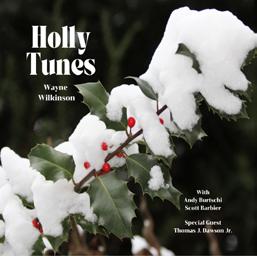
bassist Andy Burtschi and drummer Scott Barbier, plus Thomas J Dawson Jr. who adds piano, synthesized strings and organ on eight of the tracks. Wilkinson’s vision is one that should find an enthusiastic reception from those with a fondness for these tunes and an appreciation for the magic that creative jazz musicians can infuse into the selections. Included are “God Rest Ye Merry Gentlemen,” “Deck the Halls,and ” Silent Night,” among others. waynewilkinson.bandcamp.com
For the initial release, Swinging in the Holidays on producer Suzanne Waldowski’s Songbook Ink label, Waldowski, who presents the Jazz at the Ballroom concerts, has opted to create a festive Christmas album featuring Various Artists. There are eight different vocalists—Vanessa Perea, Rob Edwards, Champian Fulton, Wyatt
Michael, Olivia Chindamo, Anaïs Reno, Benny Benack, and Angela Grey. On most of the tracks, the singers are backed by the Konrad Paszkudzki Trio, the exceptions being those by Perea who has Roberts on vocals and trombone with Paszkudzki’s trio, Fulton who is self-accompanied on piano with bass and drums, and Grey who is accompanied by the quartet of clarinetist Felix Pekili with the Norwegian Jazz Orchestra strings. songbook-ink.com
For her first Christmas album, When Winter Comes (self-produced) vocalist Maud Hixson follows her usual path of finding many wonderful songs that have flown under the radar and deserve the loving attention that she brings to them. Accompanied by her husband and long- time musical partner, Rick Carlson, on piano, saxophonist Sue Orfield, bassist Chris Bates, and drummer Dave
OTHER VIEWS
Schmalenberger, Hixson presents an 11-track program bookended by two Irving Berlin rarities, “When Winter Comes” and “Let’s Start the New Year Right.” Along the way she visits “December” by Floyd Huddleston and Al Rinker, “That Christmas Feeling” by Mel Torme, “I Like Snow” by Tom Talbert and Patty McGovern; and some more familiar tunes such as“Christmas Time Is Here,” “Sleigh Ride,” and“A Christmas Love Song.” and “Have Yourself a Merry Little Christmas” done in medley with “Merry Christmas.” maudhixson.com
Normally, reviews of EPs are not included in this column, but Almost Christmas by Vicki Burns is so solidly engaging that it deserves mention among the Holiday releases. Pianist Art Hirahara, bassist Steve Wood ,and drummer Jay Sawyer lend perfect support for Burns on this five-track
program. Among the familiar tunes:
“I’ve Got My Love to Keep Me Warm,” “I’ll Be Home for Christmas,” and “The Christmas Waltz.” Burns has a strong. pleasant voice and reads each lyric sincerely and convincingly, making Almost Christmas a joyful listening experience. vickiburnsjazz.com
Among the young vocalists making sure the Great American Songbook is with us for a long time to come, a particularly outstanding participant is April Varner. Following last year’s EP, Winter Songs Vol.1, Varner now has released Winter Songs Vol 2 (Cellar Music - 062265) with backing by pianist Luther Allison, bassist Yasushi Nakamura and drummer Ulysses Owens Jr., who also produced the album. The Sunshine Singers provide backup vocals on four tracks. Varner’s jazz influence constantly comes through,
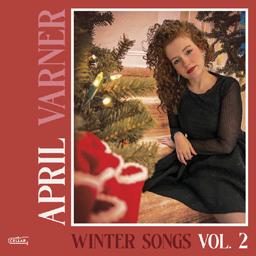
notably on an extended scat chorus on “Rockin’ Around the Christmas Tree.” Her haunting take on Leonard Cohen’s “Hallelujah” is impressive and the acoustic guitar of Leandro Pellegrino sets “The Christmas Waltz” in a bossa frame. The eclectic 11-tune program provides Varner ample space to demonstrate her vocal prowess at a variety of tempos. Varner was a Jersey Jazz Rising
Star in June 2023,shortly after she won Blues Alley’s Ella Fitzgerald Vocal Competition. cellarlive.com
Vocalist Judy Whitmore has pulled out all of the stops for Christmas (Arden House Music - 202521). She has the support of an 18-piece big band led by arranger Chris Walden, who also adds keyboards and synths, horn, harp, a 23-piece string section and a nine-person chorus. Her spoton vocalizing takes full advantage of Walden’s creative charts and the musicians, some top drawer Los Angeles area players. The dozen tracks are well chosen and touch many bases. The opener, “Kay Thompson’s Jingle Bells,” sets the stage for the imaginative program that includes “Christmas Time Is Here,” “Merry Christmas Darling,” and “Happy Holiday.” Put it all together and you have a package that nicely captures the
OTHER VIEWS
spirit of the Christmas Season. Available for download at amazon.com
Christmas Ain’t Like It Used to Be (Night Is Alive) is a well named collaboration among vocalist Andromeda Turre, saxophonist Wayne Escoffery, pianist/ keyboardist/arranger John di Martino, bassist Lonnie Plaxico, and drummer Willie Jones III. This nine-song collection has only two selections that will likely be familiar to most listeners, “A Christmas Love Song,” and “Blue Christmas.” The others are interesting and demand more than one listen. Di Martino has created fine charts. Turre, daughter of trombonist Steve Turre, fits nicely into the narrow category of true jazz singers. She is front and center on six selections with the other three being instrumental. This is not your usual Christmas album, but for those who dig seasonal music with a jazz bent, Christmas Ain’t What It Used to Be should
find a welcome place in your holiday listening library. nightisalive.com
The big band of vibraphonist Red Norvo was unique in the Swing Era. It was a jazz infused band that featured Norvo’s then wife, vocalist Mildred Bailey. So Many Memories (TurtleBay25003) is a 16-tune program of charts written for the Norvo band by the great arranger Eddie Sauter, but never recorded. This recording is by Loren Schoenberg and His Jazz Orchestra featuring Warren Wolf on vibes and Kate Kortum on vocals. Schoenberg’s band includes 13 pieces plus Wolf and Kortum. They execute Sauter’s charts with precision and incessant swing. Kortum sings on 11 of the sixteen tracks. She does not try to channel Bailey’s sound, but her phrasing, while her own, captures the way that Bailey paid attention to the lyrics that she sang. The program is replete with
“ ‘SO MANY MEMORIES’ RECEIVES A WELL-DESERVED REVIVAL WITH (KATE) KORTUM AT HER BEST. ”
classics from the Great American Songbook like “You Go to My Head,” “Music, Maestro, Please,” “Two Sleepy People” and “Exactly Like You.” The pretty much forgotten title song, “So Many Memories,” receives a well-deserved revival with Kortum at her best. Schoenberg has given big band lovers an unexpected treasury of music that is finally receiving wide exposure. turtlebayrecords.com
Give a listen to Double or Nothing (Vegas Records - 1031) by the UNLV Jazz Ensemble 1, a college band that
sounds like a highly-polished professional aggregation. The 10-song program includes four original pieces by band members. Among the other selections are Dizzy Gillespie’s “Things to Come,” Bronislaw Kaper’s “Invitation,” and Ben Patterson’s “Vital Frequencies.” The band is a monster, tight in its ensemble playing and blessed with much solo talent. Double or Nothing will double your pleasure with repeated visits. vegasrecords.org
During the pandemic shutdown, many musicians were out of work. There
were simply few opportunities for a paying gig. Guitarist/vocalist Glenn Crytzer is a resourceful musician who figured out a way to keep busy. He turned his living room into a recording and live streaming studio and formed Glenn Crytzer and His Quartet. They undertook a fan-funded project where they live streamed 10 songs a week, each week devoted to tunes from a specific year starting with 1920. They did this for 25 weeks ending with 1944. These tracks have been released for download one track at a time on each Friday starting on October 3 of 2025. At the conclusion of each year’s downloads, an album will be made available as a download or on vinyl. The Songbook Series Vol. 1 1920 (self-produced) is now available. The quartet of Crytzer on guitar, Mike Davis on trumpet, Ricky Alexander on reeds, and Ian Hutchison on bass plays a program that includes “Whispering,” “Lena
From Palesteena,” and “Aunt Hagar’s Blues,” among others. Crytzer and Davis provide occasional vocals. It is an impressive undertaking and the results capture the period of origin with an approach to the material that is distinctly theirs and full of fun glenncrytzer.com
2025 is the Centennial year for the late, great jazz pianist Oscar Peterson. In celebration of this milestone,
Two Lions Records, through the Mack Avenue Music Group, is releasing Around the World, a program of seven selections taken from live performances in various locations around the world between 1969 and 1981. Peterson is presented in a variety of settings, in a trio format with bass and drums, in duo with guitarist Joe Pass, and as a solo pianist. The opening two tracks, “The Lamp Is Low” and Peterson’s “L’Impossible,” find Peterson in the company of bassist Sam Jones and drummer Bobby Durham. There are solo performances of Milt Jackson’s “Reunion Blues” and Peterson’s “Place St. Henri,” followed by a duo with Pass on “Stella By Starlight, and a solo medley of “A Child Is Born” and “Here’s That Rainy Day.”
The conclusion of the program is an uptempo take on “Cute” with bassist Michael Donato and drummer Louis Hayes, who takes an explosive drum
solo. Peterson was renowned for his incredible technique and limitless imagination, both of which are on display throughout these tracks. A Jazz History feature on Peterson appeared in the July/August 2025 issue of Jersey Jazz. mackavenue.com
Finally, some words about two Chicago-based vocalists.
Josie Falbo is a legend in Chicago. She started out sitting in with various jazz groups, eventually forming her own band. Her remarkable power and range led to her becoming one of the most in-demand jingle singers in her hometown. Eventually, she felt comfortable enough to undertake a solo vocal album in 2011. It was very well received, but it took another dozen years before she went back into the studio for her second album, another critical success. Now her lat-
OTHER VIEWS
est effort, Kickin’ It (self-produced) has arrived, and it is another winner. The 11 tracks find her in various settings from a sextet to a small big band to a full big band with some of the selections having a large string section added. No matter the backing or the tempo, Falbo is right there with vocal power to spare. Among the songs are “I Get a Kick Out of You,” “Love Dance,” and “I Just Found Out About Love.’’ josiefalbo.net
Mood Ellington (Origin - 82937) is a 25-tune collection spread over two CDs, sung by Paul Marinaro, simply one of the best male vocalists on the scene today. He has a warm baritone, an unyielding jazz sensitivity, and makes each lyric his own. Marinaro’s instrumental support comes from a nine-piece band, five horns and a four-piece rhythm section with strings added on some selections.
The arranging chores were spread among 13 individuals who have created charts that work seamlessly with each other. Marinaro has divided the material into three sets, the First Set celebrating love and beauty, the Second Set is darker and introspective, and the third takes a look at reality, avoiding extreme highs and lows. Among the selections on the First Set are “I’m Beginning to See the Light,” “I’m Just a Lucky So and So,” and “Sophisticated Lady.” Set Two sets the tone with “Mood Indigo.”
Among the other tunes on this set are “Don’t You Know I Care (or Don’t You Care to Know),” “All Too Soon,” and “Lush Life.” In Set Three you will find “Take Love Easy,” “I Ain’t Got Nothin’ But the Blues,” and “I Didn’t Know About You.” It is a well-conceived and constructed program, giving Marinaro plenty of room to display his interpretive powers originarts.com
BIG BAND IN THE SKY
‘Bulldog’ Ray
Drummond:
A Bassist with a ‘Wide and Deep-Swinging Beat’
“One of the Bass Players Who Was Playing with Everybody”
Bassist Ray Drummond, who passed away November 1, 2025, at the age of 78, was nicknamed “Bulldog” after the popular movie detective, first portrayed by Ronald Colman in 1929. “Bulldog has left us,” posted keyboardist Mike LeDonne on Facebook. “Ray Drummond,” LeDonne wrote, “was one of the bass players who was playing with everybody when I came to town—Barry Harris, Hank Jones, Kenny Barron, George Coleman, and many more. He was about 10 years older than me, so he was someone I looked up to. He was nice enough to play some gigs with me back then and share his wisdom.”
An in-demand sideman, Drum-
mond also led his own groups which included Excursion, a quintet with, among others, tenor saxophonist Joe Lovano, pianist Danilo Perez, and drummer Billy Hart; One To One with pianist Bill Mays; and The Drummonds, with drummer Billy Drummond (not related), and pianist Renee Rosnes.
Mays, on Facebook, recalled moving to New York from California in 1984. “Ray was one of the first people I called to work with me for one-week stints at Bradley’s and the Knickerbocker. That led to our duo projects for DMP Records and forming our band, which we called One To One. One of the hallmarks of Ray’s playing was a wide and deep-swinging beat,
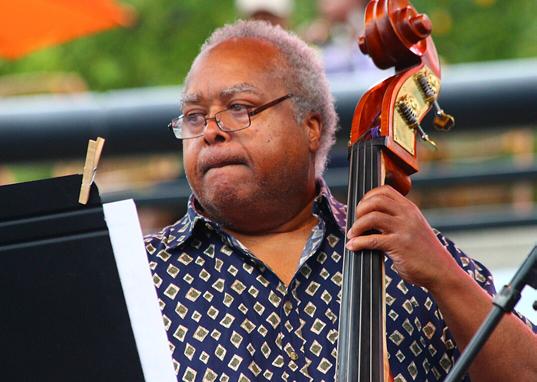
tremendous use of dynamics, really big ears that allowed him to be completely in-the-moment-responsive, an ego-less willingness to engage, and a huge imagination.”
Bradley’s was the place where bassist Neil Miner usually heard Drummond play. Miner, on Facebook, said the Greenwich Village venue “was one of the most intimate environments to hear a bass player. His ability to not only swing the band but also create dynamics, drama, coun-
terpoint, and solo, as fluently as any horn player or piano player that he was accompanying, was astounding!”
Born on November 23, 1946 in Brookline, MA, Drummond began playing bass at age 14. The son of an Army colonel, he attended 14 different schools around the world. His family finally settled in California, but he moved to New York in 1977 and was a long-time resident of Teaneck, NJ. He is survived by his wife, Susan, and daughter, Maya.
THANK YOU and welcome to all who have recently joined or renewed their memberships. We can’t do what we do without you!
NOT WITHOUT YOU!
NEW MEMBERS
Your membership is vital to NJJS’s mission to promote and preserve America’s great art form— JAZZ!
Kristi Abbey
Heather Bennett BERGENFIELD, NJ
Chip Deffaa PATERSON, NJ
Sheryl Manfreda BERKELEY HEIGHTS, NJ
John Stephenson
RENEWAL MEMBERS
Charles Burton RIDGEFIELD, CT
Patricia Curry VAUXHALL, NJ
Dave Dilzell WESTFIELD, NJ
Carrie Jackson EAST ORANGE, NJ
Theodore Jones MORRISTOWN, NJ
Lawrence Lipkin MAPLEWOOD, NJ
Ginny Llobell MAPLEWOOD, NJ
Ilene Dorf Monahan MORRISTOWN, NJ
Patrick Mercuri MOORESTOWN, NJ
Kim Peralta WARWICK, NJ
Nick Palmieri MORRISTOWN, NJ
Pat Pratico TRENTON, NJ
Barbara Thoen TEANECK, NJ
Georgeann Ventola MONTVILLE, NJ
Gary Walker BLOOMFIELD, NJ
Lawrence White REGENERATION GREEN