
BOSTON CONDO MARKET REPORT
DEAR FRIENDS AND COLLEAGUES,
The Boston condominium market experienced a slight uptick in sales in Q1 2025 compared to Q1 2024, although activity remains below Q1 2023 levels. While this signals gradual improvement, several challenges continue to shape the market’s trajectory.
One of the most pressing concerns for developers this quarter was uncertainty around construction costs, largely driven by geopolitical developments. Following President Trump’s inauguration in January, tariff threats emerged targeting countries such as Mexico, Canada, and China. While many of these threats were delayed until mid-March, a significant shift occurred in mid-February with the announcement of a 25% tariff on steel, followed by a lumber tariff in early March. These economic developments injected uncertainty into the construction sector and contributed to heightened volatility in the stock market throughout the quarter.
Interest rates also played a key role in shaping market sentiment. The Federal Reserve opted not to adjust rates during their Q1 meetings, leaving both buyers and developers grappling with fluctuating borrowing costs. Rates experienced some volatility through the quarter and ended slightly higher than at the close of 2024. As a result, anticipation is building ahead of the Fed’s next policy meeting.

Inventory constraints remain a major hurdle. Low housing stock has intensified competition, pushed prices higher in several neighborhoods, and made it more difficult for prospective buyers to enter the market. This persistent supply-demand imbalance continues to affect both affordability and market momentum.
Looking ahead, we anticipate slow but steady progress in the market throughout 2025. Should interest rates stabilize—or ideally, decrease—conditions could improve for both buyers and developers. Lower financing costs would encourage the release of shadow inventory and the development of new units, helping to alleviate some of the inventory pressure.
Our full report provides a quarter-over-quarter comparison of Q1 2025 with prior years, illustrating a more balanced market than 2024, though not yet back to the strength seen in early 2023.
Navigating an ever-changing landscape together,
Janice
Q1 SALES RECAP
Number of Sales by Quarter
When comparing Q1 2024 to Q1 2025, 2025 had a higher number of sales by approximately 13%. Q1 2023 had the highest number of sales in a large part due to the delivery of Stratus (Brighton) in January 2023. Stratus accounted for 92 of the 529 total sales.
HISTORICAL INTEREST RATES
Historical Mortgage Rates By Quarter (Freddie Mac)
Highlights:
When comparing end of March year-over-year, 30-year interest rates are slightly down from 2024 (6.79%) to 2025 (6.65%). The highest 30-year rate was in Q4 2023 with an average of 7.3%, while the Q1 2025 average was down to 6.8% for buyers with great credit scores and borrowing history.
INTEREST RATES AND SALES COMPARISON
Interest Rates vs. Number of Sales by Quarter
Highlights:
As shown in this graph, there is a direct correlation between interest rates, sales/market demand, and supply. Interest rates continue to impact developers construction loans and associated costs giving developers trepidation on timing market entry. The 30-year fixed interest rate at the end of Q1 2025 held at 6.65%, down slightly from Q1 2024.
NEIGHBORHOOD STATS
Q1 2024 vs. Q1 2025
BACK BAY
BAY VILLAGE
BEACON HILL
BRIGHTON
CHINATOWN
EAST BOSTON
CHARLESTOWN
FENWAY
Although included in the overall numbers throughout the Q1 2025 report, the following neighborhoods had zero data points in 2024 or 2025 and are not included in the above: Financial District, Fort Point, South Station, Theatre District.
Highlights:
13 of the 18 neighborhoods showed an increase in average price when comparing Q1 2024 and Q1 2025. The largest increases in average price were seen in Beacon Hill and Fenway:
- Beacon Hill had only 2 sales over $2M in Q1 2024 compared to 12 sales over $2M in Q1 2025.
- The Pierce in Fenway had a $6.275M sale in Q1 2025 which increased the neighborhood’s average price from Q1 2024. When looking at quarter over quarter comparisons, we also see the number of sales in Brighton climbing in 2025. This is in part due to the delivery of 1515 Comm Ave. in January.
NEIGHBORHOOD STATS
Q1 2024 vs. Q1 2025
JAMAICA PLAIN
LEATHER DISTRICT
MIDTOWN
NORTH END
SEAPORT DISTRICT
SOUTH END
WATERFRONT
SOUTH BOSTON
WEST END
In Q1 2025, the North End shows a decrease in # of sales due to a boutique building which delivered in 2024. The Waterfront shows an increase in sales but a decrease in average price. In Q1 2025, there was 20% more inventory which led to more sales. When looking at the average price on the Waterfront in 2024, there was a $9.25M sale and only two homes that sold for under $1M. In 2025, there were twelve homes that sold for under $1M, five homes that sold between $1M-$1.99M, two homes that sold between $2M-2.99M, and four homes that sold over $3M, which brought the average price down when comparing to Q1 2024.
TOP 12 BUILDING SALES
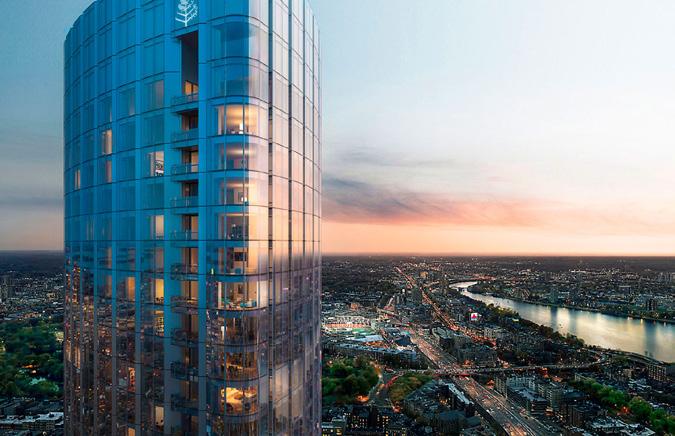
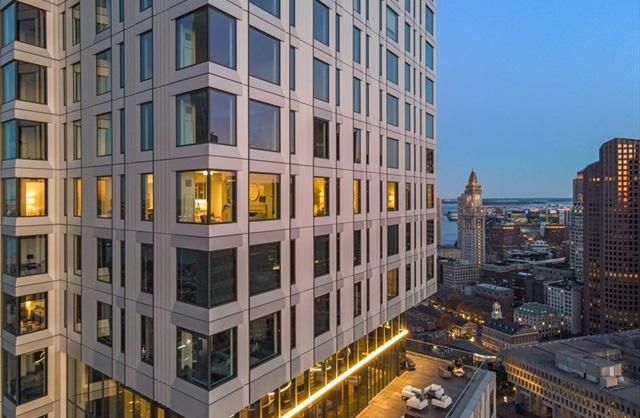
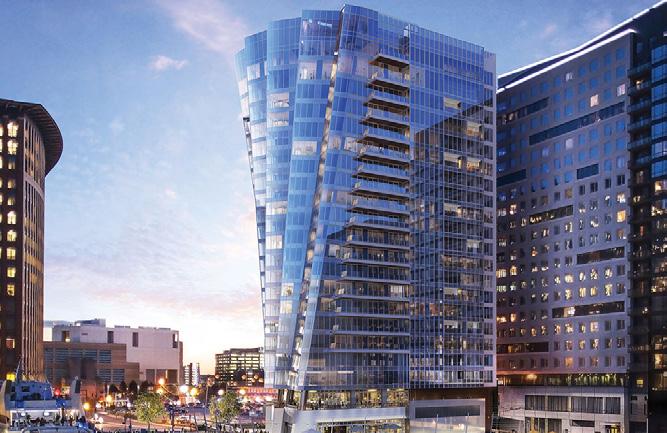
New Construction Condo Buildings Actively Selling in 2025
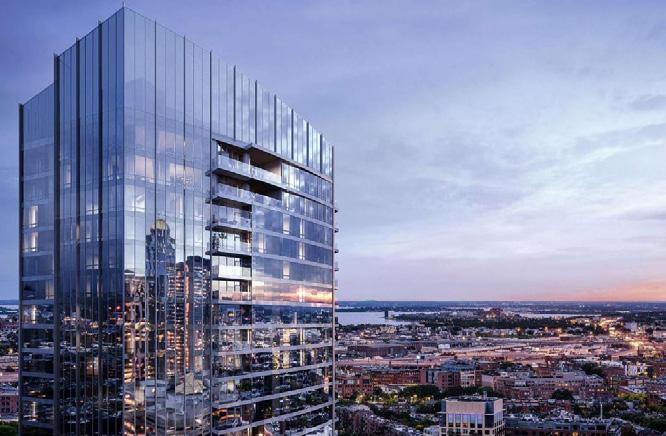
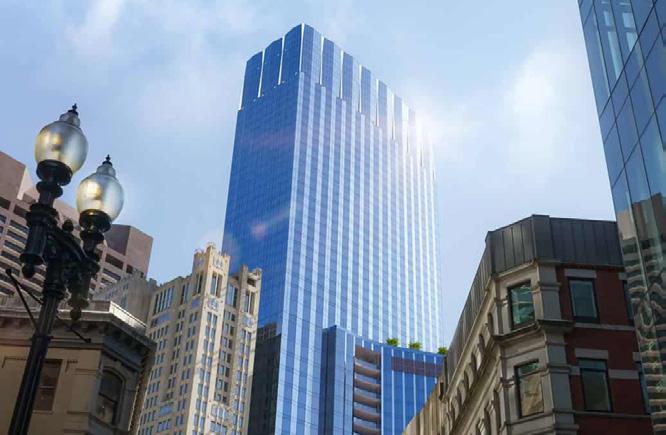
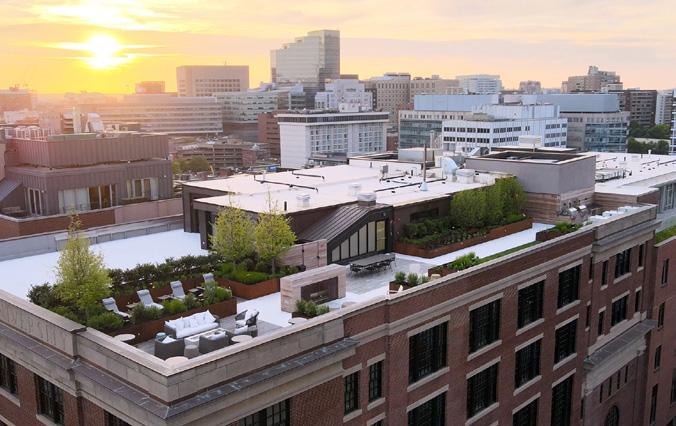
Highlights:
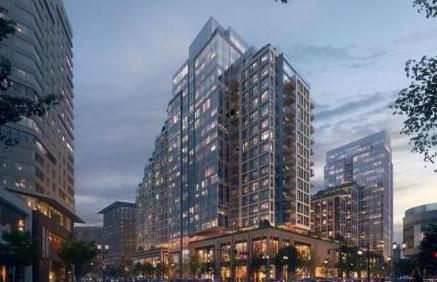
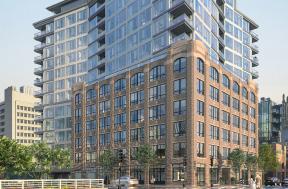
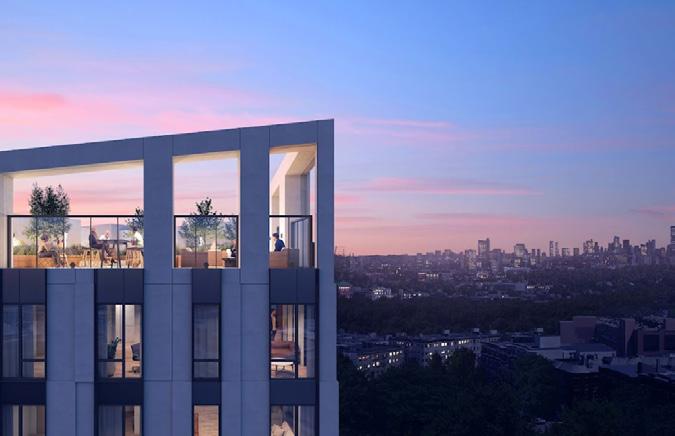
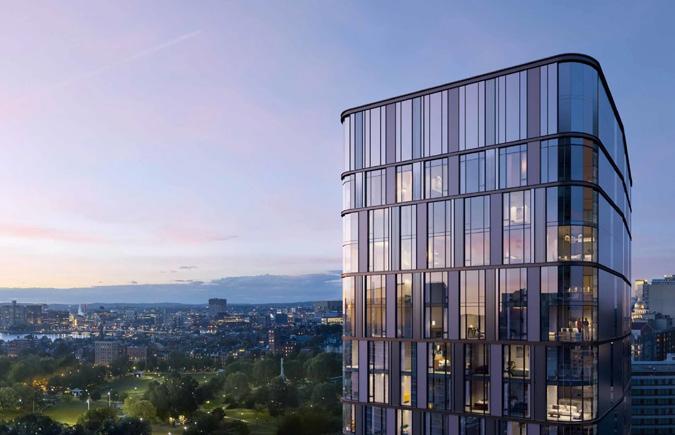
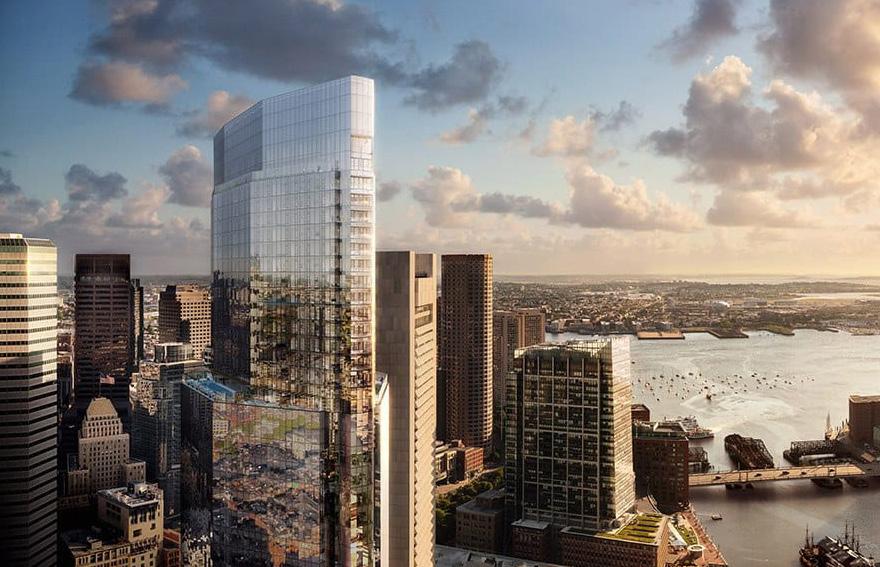
As shared in our annual report, 100 Shawmut in the South End sold out in January 2025. It is anticipated that many of the other large buildings which have 80%+ of sales will also sell out in 2025/early 2026. In Q1 2025, Echelon closed on 3 homes and has 17 remaining while 1 Dalton closed on 2 homes and has 12 remaning. Winthrop Center had the highest number of sales in Q1 2025 with 6. South Station Tower is an outlier because many homes went under agreement off-market, and as a result, a true understanding of sales velocity will only become clear once the building is delivered. As of Q1, South Station Tower has 7 sales under agreement in MLS.
TOP 12 BUILDING SALES
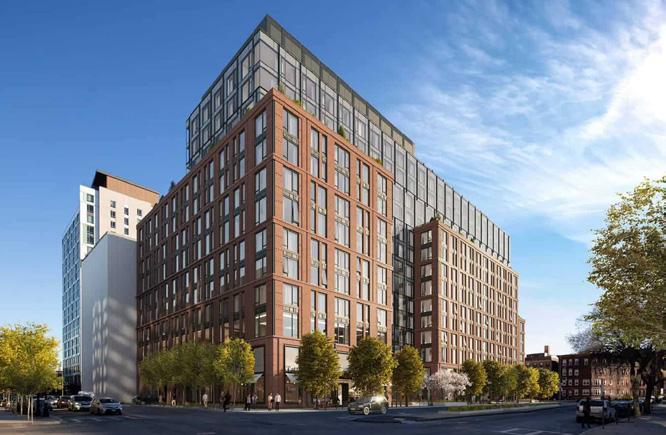
New Construction Condominium Buildings Actively Selling in 2025
SALES BY UNIT TYPE
Highlights:
Q1 2025 saw a decrease in average price for Studio, 2 Bedroom, and 5 Bedroom homes.
The primary factor behind the decline in studio prices was a $950K studio sale in the South End in 2024, which skewed the average upward. In contrast, 2025 saw numerous studio sales priced below $400K, bringing the average down.
The most dramatic decline was seen in the 5-Bedroom segment, where the average price fell by 79% year-over-year. This decrease becomes more understandable when comparing property characteristics. The three 5-Bedroom homes sold in Q1 2024 were located in high-end neighborhoods—Midtown, Back Bay, and the Waterfront—ranged from 4,000 to 5,000 square feet, and sold between $3.9M and $9.25M. In Q1 2025, the 5-Bedroom sales occurred in Fenway and South Boston, were 50–60% smaller (1,500–2,500 square feet), and traded between $1.29M and $1.55M.
Sales in the 3-bedroom market saw a notable uptick, increasing from 69 in Q1 2024 to 93 in Q1 2025. The most substantial growth occurred in two price segments: homes priced between $2M and $2.99M, which doubled in sales, and those under $1M, which rose by 64%. Most of the sub-$1M sales were concentrated in East Boston and Jamaica Plain, with an average home size of approximately 1,300 square feet.
There was a large increase in both the # of sales and average price for 4 Bedroom homes from Q1 2024 to Q1 2025 as Q1 2025 included a $14M, $14.5M, and a $17M sale.
SALES BY PRICE RANGE
Highlights: The number of overall sales in Q1 2025 has gone up approximately 13%.
The largest increase in number of homes sold was in the $1M-$1.49M price range with 26 additional sales. The largest increase on a percentage basis were homes between $2M-$2.99M at 58%.
MILLION DOLLAR MARKET
Q1 2023
Highlights:
Sales of homes under $2M decreased between 23-26% from Q1 2023 to Q1 2024 and then went up slightly from Q1 2024 to Q1 2025.
When looking at the percentage of sales compared to the total sales in the under $1M market, sales continue to go down QOQ. Conversely, the percentage of sales compared to the total sales in the over $1M market are increasing QOQ.
As shown above, homes at an even higher price point, between $2M-$2.99M and homes over $3M, are rising in sales QOQ. This is likely attributed to the supply/ inventory of homes over $2M in the market.
END OF QUARTER INVENTORY
By Price Range ($500K+)
Highlights:
Inventory is up (by 21%) while average days on market is down (by 7%) when comparing 3/31/2024 to 3/31/2025. The listing data, along with the median prices and average prices, tells us that either more people with less expensive homes are coming to the market or Sellers are becoming more realistic about home price values. Additionally, the number of months inventory (per MLS) is just shy of 3 months (not including shadow inventory in luxury buildings). If shadow inventory was included in the supply numbers, the market would be closer to equilibrium or 6 months.
THINGS TO WATCH IN 2025 – BOSTON CONDO MARKET OUTLOOK
The Boston real estate market showed some encouraging momentum in Q1 2025, with sales rising modestly compared to Q1 2024. However, several key indicators and trends will shape how the remainder of the year unfolds.
1. Market Resilience
Boston’s condo market remains buoyed by a robust local job market and a diverse, stable population. However, the introduction of tariffs—particularly on steel and lumber—raises questions about construction costs. As these costs shift, the key question becomes: Will pricing align with buyer expectations, or will affordability constraints slow momentum?
2. Interest Rates
Interest rates fluctuated slightly in Q1 2025 compared to late 2024, adding uncertainty for both buyers and developers. With the Federal Reserve opting not to lower rates Q1, attention now turns to their upcoming meeting. Lower rates historically draw buyers back into the market and enable developers to initiate new projects. Will the Fed offer relief to fuel the next leg of growth?
3. Inventory Levels
The Boston market continues to grapple with low inventory—currently holding less than 6 months of supply. Encouragingly, inventory levels have increased by over 20% quarter-over-quarter, suggesting more sellers are entering the market. Will this influx be enough to drive an increase in sales and closings in Q2 2025 or will you start to see pricing adjustments in the market?
4. Buyer Engagement
Sales climbed 13% in Q1 2025 compared to the same period last year. But the question remains: Are buyers re-entering the market out of necessity, or are they making lifestyle-driven decisions that prioritize community, location, and long-term value over short-term economic concerns?
5. Upcoming Developments
Previously approved developments that were placed on hold due to market volatility may re-emerge. A key project to watch is 1515 Commonwealth, which delivered in January. Its performance in Q2 2025 may serve as a bellwether for buyer appetite and closing velocity in peripheral neighborhoods. Will sidelined developments start delivering real opportunities for buyers again?
6. Under Agreement Volume
At the close of Q1, there were 130 homes listed as Under Agreement (UAG) in select neighborhoods—roughly consistent with Q1 2024 figures. Most of these are expected to close in Q2 or beyond, especially for new construction. However, shadow sales—those that never hit the MLS—remain unaccounted for, and may signal stronger demand than public data suggests.
Final Thought:
2025 may continue to deliver cautious progress, but much depends on interest rate decisions, developer confidence, and whether buyers view the current market as a window of opportunity or a moment to wait and see.
WORKS CITED
This report’s Urban Data Neighborhoods include: Allston, Back Bay, Bay Village, Beacon Hill, Brighton, Charlestown, Chinatown, East Boston, Financial District, Fort Point, Jamaica
Plain, Leather District, Midtown, North End, Seaport District, South Boston, South End, South Station, The Fenway, Theatre District, Waterfront, and West End.
Data includes publicly available sales and listings from MLS and Registry of Deeds.