























OUR MISSION Inspired by the love of Jesus, we are building the kingdom of heaven, where differing people live in community, serving God and each other.

Many years ago, I walked up a hill that looks out over the Sea of Galilee. The breeze was blowing as I stood in the vicinity of the place where Jesus gave us the beatitudes, those words that he spoke thousands of years ago and that we have never completely understood:
Blessed are the poor, for theirs is the kingdom of heaven.
How can poverty be a blessing? Jesus goes on to say that those who mourn are blessed, as well as those who are hungry and those who thirst for righteousness. He also includes the pure of heart and the merciful, and I can easily agree with those latter two! But what exactly is blessed about the painful ones? Poverty hurts. Grief hurts. Hunger hurts. How could these conditions be a sign of God’s favor, of holiness or happiness?
Most of us have had times in our lives when we struggled. Maybe we suffered a financial loss or someone whom we loved died. These are the moments when life as we know it shifts out from under us: our investments crash, our spouse requests a divorce, our job ends. I hate these times, but years later, I often look back and realize that, in my desperation and struggle, I leaned on God. It is unfortunate, but I pray with a special kind of focus when I am struggling. St. Francis chose to become poor and hungry in order to find God, for when our comforts are stripped away, we can see the movement of the Holy Spirit with much greater clarity.
Jesus asked his disciples to travel with nothing but the coat on their backs. He wanted them to be totally dependent on God, for that dependence is holy. Whenever we have our comforts stripped away from us, when our health fails or our loved ones pass away or our livelihoods are threatened, it feels like God is punishing us. But Jesus was saying the exact opposite! All the things that we look to for comfort, all of them are temporary. All these things will turn to dust. Instead, God says, “Turn to me, rely on me, put your trust in me.” And if poverty and grief help you get to this place of trust in God, then you are blessed. For whatever draws you into the arms of the One who has loved you from the beginning, that thing is a blessing. It is a gift from God.
As we wait for the birth of that small baby who was God, that baby who was born in poverty, let us give thanks for the tremendous and mysterious blessings of God.
In Christ’s Love,
by Nadia Bolz-Webber
I imagine Jesus standing among us offering some new beatitudes:
Blessed are the agnostics.
Blessed are they who doubt. Those who aren’t sure, who can still be surprised.
Blessed are they who are spiritually impoverished and therefore not so certain about everything that they no longer take in new information.
Blessed are those who have nothing to offer.
Blessed are the preschoolers who cut in line at communion. Blessed are the poor in spirit.
You are of heaven and Jesus blesses you.
Blessed are they for whom death is not an abstraction.
Blessed are they who have buried their loved ones, for whom tears could fill an ocean.
Blessed are they who have loved enough to know what loss feels like.
Blessed are the mothers of the miscarried.
Blessed are they who don’t have the luxury of taking things for granted anymore.
Blessed are they who can’t fall apart because they have to keep it together for everyone else.
Blessed are those who “still aren’t over it yet.”
Blessed are those who mourn.
You are of heaven and Jesus blesses you.
Blessed are those who no one else notices. The kids who sit alone at middle-school lunch tables. The laundry guys at the hospital. The sex workers and the night-shift street sweepers.
Blessed are the forgotten. Blessed are the closeted.
Blessed are the unemployed, the unimpressive, the underrepresented.
Blessed are the teens who have to figure out ways to hide the new cuts on their arms.
Blessed are the meek.
You are of heaven and Jesus blesses you.
Blessed are the wrongly accused, the ones who never catch a break, the ones for whom life is hard, for Jesus chose to surround himself with people like them.
Blessed are those without documentation. Blessed are the ones without lobbyists.
Blessed are foster kids and special ed kids and every other kid who just wants to feel safe and loved.
Blessed are those who make terrible business decisions for the sake of people.
Blessed are the burned-out social workers and the overworked teachers and the pro bono case takers.
Blessed are the kindhearted football players and the fundraising trophy wives.
Blessed are the kids who step between the bullies and the weak. Blessed are they who hear that they are forgiven.
Blessed is everyone who has ever forgiven me when I didn’t deserve it.
Blessed are the merciful, for they totally get it.
I imagine Jesus standing here blessing us all because I believe that is our Lord’s nature. Because, after all, it was Jesus who had all the powers of the universe at his disposal but did not consider his equality with God something to be exploited. Instead, he came to us in the most vulnerable of ways, as a powerless, flesh-andblood newborn. As if to say, “You may hate your bodies, but I am blessing all human flesh. You may admire strength and might, but I am blessing all human weakness. You may seek power, but I am blessing all human vulnerability.” This Jesus whom we follow cried at the tomb of his friend and turned the other cheek and forgave those who hung him on a cross.
He was God’s Beatitude—God’s blessing to the weak in a world that admires only the strong.
by Samantha Wright
I follow green rivers, flooded rivers, wild rivers. Rivers that swirl around my swollen ankles. I wade through swirling eddies, I make my way through deep water.
So many miracles, yet I am constantly greedy. Prove yourself to me one more time, (And again. And again). Give me some more miracles.
I believe. I will deny it three times. Three times three, (And again. And again).
I am nothing but ego and apology.
You allow swiftly flowing rivers To wash my feet with blessings anyway. You give me the scent of roses in the evening. You give me the soft grace of a new day.

PHOTO BY MELISSA ASKEW | Unsplash
by Daniel Esparza
In the opening theme of Fiddler On The Roof, titled Tradition, a young man queries a Rabbi about an appropriate blessing for the Tsar. The Rabbi amusingly responds, “A blessing for the Tsar? Of course! May God bless and keep the Tsar ... far away from us!”
Similarly, within Catholic tradition, blessings encompass a wide array of requests and items. Indeed, the Rituale Romanum includes blessings for virtually everything and anything, from beer to lard (or bacon), from cheese to wine.
The etymology of the word blessing is as interesting as it is revealing. The modern English word “bless” derives from the Old English term blaedsian. The term, scholars agree, referred to the act of making something “sacred” (that is, set apart) through sacrificial customs, often involving the marking with blood. The practice is linked etymologically to the Anglo Saxon blōd –that is, blood.
The evolution of the term took a transformative turn during the Christianization of Old English, where the Latin term benedicere, meaning “to speak well of” bene (well) with decire (to speak) — was “translated” into blessen. This linguistic shift influenced the modern meaning of bless and changed the “sacralizing” connotations of the pagan blaedsian into the more nuanced “speaking well of” and, by extension, “wishing well.” Obviously, Christian preaching played a pivotal role in shaping these linguistic nuances.
In the Bible
Blessings are more than linguistic matters, but words matter. In Rabbinic Judaism, berakhot (blessings) are recited during specific moments — especially before and after consuming food. These blessings serve
to acknowledge God as the ultimate source of all blessings. The recitation typically begins with the words, Blessed are You, Lord our God, King of the universe. Expressing gratitude to God is seen as the most essential aspect of acknowledging the divine provider.
The rabbinic concept of berakhot is also integral to the teachings found in the Gospels. In Christian Scripture, blessings also point at the recognition of God’s presence in everyday life and, as importantly, in human action. But the Gospels use two different words for “blessings” and “blessed.”
One of the most renowned passages where blessings are prominently featured is the Sermon on the Mount, as recounted in the Gospel of Matthew (Matthew 5:1-12). In this sermon, Jesus presents a series of blessings known as the Beatitudes. The word used in these passages is makarios — the closest word in Greek to the English happy. These blessings describe the qualities and attitudes that are not only pleasing to God, but that directly proceed from Him — thus bringing joy to the world. The Beatitudes highlight a counter-cultural perspective, emphasizing spiritual values over worldly success as the source of all joy.
Throughout the Gospels, Jesus is often portrayed as bestowing blessings upon individuals, announcing God’s grace. In these situations, a different word is used. His interactions with the marginalized, the sick, and the outcasts reflect a compassionate disposition, and through his words (blessings) and actions (performative blessings, if you will), God’s presence is revealed — or, even better, recognized.
This recognition of the divine presence naturally leads the believer to praise God. If the Hebrew berakhot derives from the word barak (meaning to kneel and, by extension, “to praise”), the Greek eulogos literally means “to speak well of.” The Latin benedicere is a direct translation of this original Greek. In more ways than one, preaching is equivalent to blessing: Those who have seen God’s presence (those who are witnesses) cannot but speak well of what they have seen.
by Bishop Mariann Budde
To bless is one of seven spiritual practices in The Way of Love, the Episcopal Church’s invitation to us all to live a Jesus-centered life. It’s my favorite of the practices, because it’s so affirming and life-giving, the exact opposite of the callous speech that bombards us daily, and our own tendencies to focus on each others’ shortcomings rather than our gifts.
God has entrusted us with the power to bless, yet we rarely consider the power of our blessing and how devastating it can be whenever we withhold blessing. Have you ever witnessed someone being slighted by another, by a gesture or tone of voice? It can be as painful to watch as it is to experience, our capacity for casual, mindless cruelty. Conversely, we’re moved to tears when we see someone blessing another — a teacher affirming a student; a passerby helping someone who is hurt; a child offering a drawing or poem.
From the Latin benedicere, blessing simply means “to speak well of someone.” It is, as Nouwen writes, “to affirm a person’s belovedness, touching his or her original goodness, and calling forth the reality of which it speaks.” The late Celtic poet John O’Donohue dedicated his life to retrieving the lost art form of blessing, which he described as “words that create a circle of light drawn around a person to protect and strengthen.”
The Benedictine nun Joan Chittister describes what it’s like to be in the presence of those practiced in blessing: “They never talk destructively about another person — in anger, in spite, for the sake of a laugh. They can be counted on to bring an open heart to a closed and clawing world. . . they live well with those around them. They are just, upright, and kind. The ecology of humankind is safe with them.”
Who among us doesn’t want to be that kind of person?
by Ruelaine Stokes
We stand under a cathedral sky fashioning a blessing for one another, a blessing of clouds pierced by shafts of light. The light infuses our words and opens our hearts.
Now, we too, are light.
The sky will not fall on our heads. The sky will remain the sky, will send gifts of rain and snow to soften the fields, feed the flowers, give us drink.
Breathe in. That is a blessing. Breathe out. That too is a blessing. Keep breathing and listen to the sound of your breath greeting the air.
by the Rev. Diana Wilcox, Christ Church Bloomfield & Glen Ridge
That is what we are hearing in the Genesis narrative of Abram and Sarai, later Abraham and Sarah. God tells Abram to leave his homeland and family and head to an unknown place. But…why? Why would God ask that of Abram, or anyone for that matter? Well, God explains it, telling Abram, “So, that you will be a blessing.” Setting the blessing bit aside for a moment, why does God ask Abram to leave the familiar to venture out to the unknown?
You know, in the ordination process, seminarians are asked to leave their home parish as they continue along their discernment as postulants and candidates in the ordination process…We do this in the church so that those in the process can serve in a place that has no prior framing for who they are and what they can or should do. They are given a blank slate to better discern, and those with whom they serve have no box into which they have already – consciously or not – placed that person. Perhaps that is a part of why God did this with Abram.
It is also true that while there is a destination of a promised land and descendants in this Genesis story, it is really the journey itself that is the largest part of God’s calling – for Abram and for us.
But all of this call talk can sometimes have us thinking it is as obvious as getting a text or something – and that we just willingly always jump up and say – “Sure, put me in coach!” While God could communicate in whatever why God chooses, the response is likely to be more like this based on the long history of God and humanity: God sends a text “Hey – wanna be a blessing?” You text back “Sounds cool. Wad ya have in mind?” God replies “TPTB…which is of course – Moi –needs you to drop everything and go where I tell you, k?” “Ummm, u mean like right now? I kinda had plans.” God: “SMH”
Now, for some of our saints, the call of God was actually very clear – at least at first – and they did indeed accept it immediately. Mother Teresa heard the voice of Jesus lamenting the neglected poor while traveling on a train, and she began her call within a call to create a new order of monastics that would serve the poorest of the poor. Then there was Mary, the mother of Jesus – who got a visit from Gabriel that always reminds me of that opening scene of Dogma where Alan Rickman appears as a pillar of fire in the bedroom of Bethany.
I mean – you have to imagine that was a bit of a frightening thing to have this messenger of God show up when you are just a young teen (which is, what virgin actually meant – just that she was young). And as I heard another priest once add “I wonder how many other girls turned Gabriel down before Mary had the courage to say yes!”
Of course, Abram didn’t get a fiery messenger, he got it right from the Source – the Source with a capital S mind you. Hard to miss that I would think.
Yet for most others, call is more subtle – like signs on the road that guide you. Or, like the wind Jesus talks about in his back and forth with Nicodemus. “The wind blows where it chooses, and you hear the sound of it, but you do not know where it comes from or where it goes.” We can get that imagery, right? Watch a tree on any windy day – we don’t see the wind, but we hear it, feel it on our cheeks, and see the leaves and branches move.
Call is like that for many – really most. You see a sign of some kind (or several) that seem to float by you, and you begin to piece a direction for your steps – even if you aren’t sure why it is you feel drawn toward whatever or wherever you end up heading.
To be clear, call is not about wearing a collar. You can feel called to be a parent, to go to a particular place at a particular time where you end up meeting your future wife or husband, or perhaps a sense of what you want to do next in your work or personal life – a career move, a new hobby, a returning to something that drew you when you were younger, and yes – even a pastoral call to ordained or monastic life.
But all this still leaves us with a lot of questions. What does it mean to follow a call, or for that matter, what does it mean to be a blessing? This is where our patriarchs and matriarchs of scripture, where the saints that have gone before us, can really help a great deal. Because we often can think that all those folk had their act together all the time…Abram trusted God, but he doubted a lot, too. And you know what, the same is true for the rest of the patriarchs, matriarchs, apostles, and saints through the centuries. As I have said many times, faith without doubt isn’t faith at all – it’s certainty. For some, these moments where we are unsure of God’s presence in our lives, much less that we truly are following God’s call for us, can feel as St. John of the Cross described it like “a dark night of the soul.”
It was something Mother Theresa knew well, for she endured this spiritual dryness in which she could not feel the presence of God for most of her life after those
initial revelations of her call within a call to serve the poorest of God’s children. Yet only upon her death was anyone aware of it. “In my soul I feel just that terrible pain of loss—of God not wanting me—of God not being God—of God not really existing,” Mother Teresa wrote in one of her letters discovered after she died.
The thing about this dark night period into which so many of us fall is that for people of faith, there is always something else there with us. While faith always has doubt in its shadow…the reverse is also true. In those periods of spiritual dryness, when we are unable to sense God’s presence, we have the power of hope to see us through – a trust that is enduring…And so our lives as a people of faith, of one with a call, is not about the absolute or the easy. It is about trust – trust that God does indeed watch over us, trust that help will come by way of the one who created all things, trust that even when we are in that dark night of the soul, the dawn will come. And for those who follow Jesus – we know this to be integral to our faith – this hope amidst despair, and life in the shadow of death – for even while we stand at the foot of the cross, the empty tomb awaits. Even while celebrating the resurrection, the shadow of the cross is ever present.
Even knowing that, we are still left with this question about the story of Abram – what is this blessing business? What is that about? What does it mean to be a blessing?
The thing is, God was sending him on this journey for the sake of all those they will impact – which in their case, was for the whole world. Abram couldn’t yet see it, but his story, his call, became a part of a much, much, larger story of God’s ongoing relationship with all of humanity through the ages.
What about us?
The same is true.
Think of it this way. We know that when we are living a life that is authentic –where we are passionate about what we are doing, where we have a sense of purpose – what we of faith would name a call – then even amidst the difficult days of our lives, there is something palatable about us – something others sense deep within us. And whether we are intentional about it or not, it is a blessing of sorts to others as much as to ourselves. By our very lives, we make an impact. Because blessing is about more than stuff – more than financial or power gains…it is about being the person fully alive that God created us to be and sharing that with the world.
Our call is simple in what is asked, but not always in how to live it. We are called to love one another as Jesus loved us, and to share that transformational experience
of unconditional love and grace far and wide. For the parish, it means we have to know the community in which we live, because to really love someone, we need to see them, to go to them, to know them. It is a call to go out from these doors and be the people God calls us to be every single day.
We are called to be a blessing in a world in which so many are just looking for someone to love them unconditionally – looking, without really knowing it, for God. Amen.
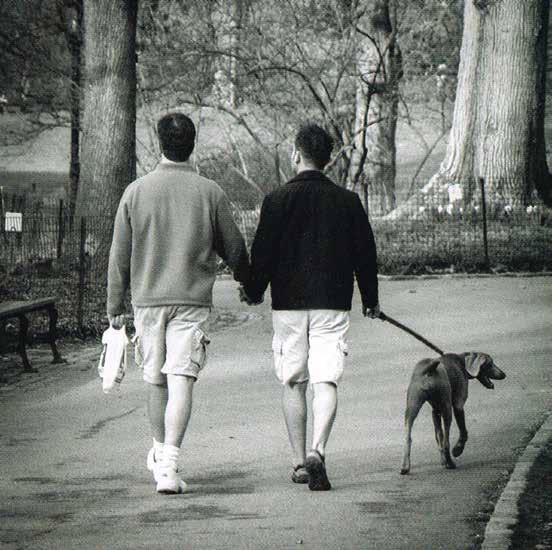
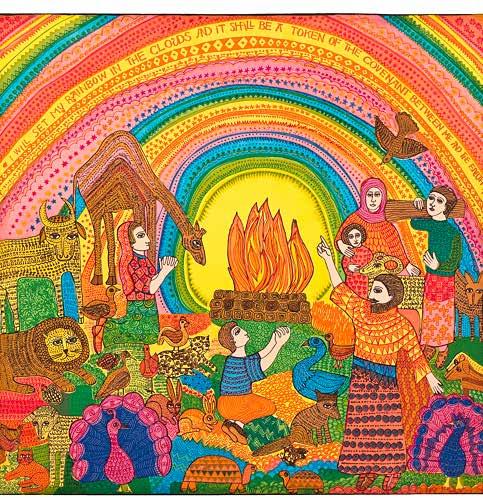
The thing to do, it seems to me, is to prepare yourself so you can be a rainbow in somebody else’s cloud. Somebody who may not look like you. May not call God the same name you call God – if they call God at all. I may not dance your dances or speak your language. But be a blessing to somebody. That’s what I think.
~ MAYA ANGELOU
by Kate Bowler
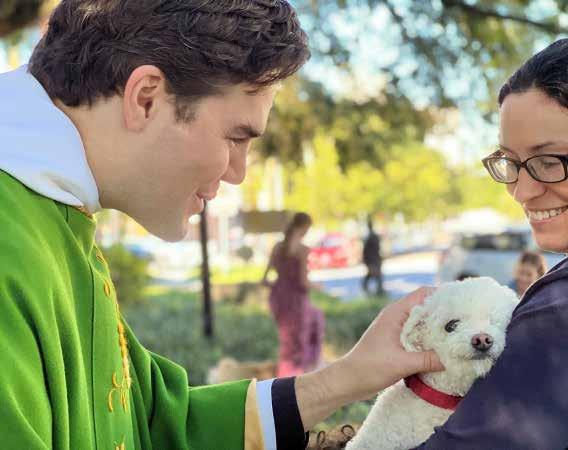
Blessed are you who see it all now. The terrible, beautiful truth that our world, our lives seem irreparably broken. And you can’t unsee it. The hungry kid. The exhausted mom. The woman who wonders if any of this is worth it. The loneliness and despair.
Blessed are you who glimpse reality and don’t turn away. This kind of seeing comes at a steep cost, and it is a cost you may not have paid intentionally, but here you are. Seeing things clearly.
Blessed are you who have worked hard to keep your heart soft. You who live with courage, fixing what is in your reach, praying about what is not, and loving, still.
May you experience deeper capacity and glimpses of hope, as you continue to see the world as it is. Terrible. Beautiful. Fragile.
by Ricardo Alberto Maldonado
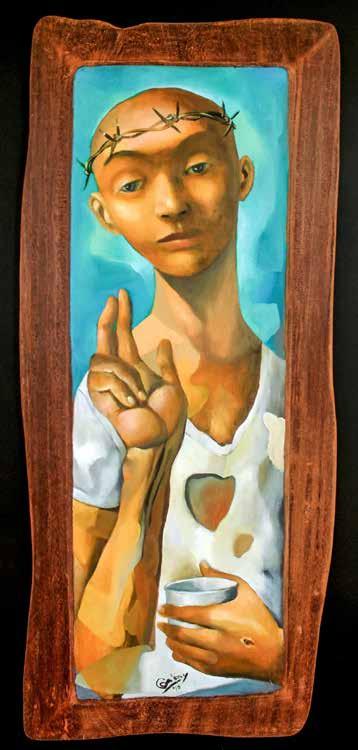
I started at the surface, feeling about my face, the low jawbone my mother had given me as weapon against austerity. Two decades before, my father had died. I was desperate under summer’s isosceles. A fragile machine descended with a yellowing haze on the city. Whom had I been then, but the sediment inside that thing I named Ricardo Alberto? Blessed is he, blessed in the reddening of medical pins, blessed under fluorine yolks. I venerated my mother at Centro Médico, her prayer cards at midnight, the saffron of her blood tearing as it coursed, a thick mass on concrete inside coral. Mother, today it snows in another city besieged by comet tails. You breathed that day, the sharp instrument of men on your heart—waded, they waded, I remember the wings of your lungs. It was midnight when I went in search of angels in the shoes of the sick near the gates of heaven. On the seventh day, we all take repose in the Kingdom of the Sick. Blessed are they, blessed the cold comfort of a wind rushing over teeth, blessed the long corridors of heaven, blessed the gelatin in refrigerators, the instant coffee, blessed our sentence of silver, of flowers. Blessed may they be, blessed.
by Fr. Brian Winter, Christ Episcopal Church, Castle Rock CO
One of the questions most often asked of me is about the final blessing or benediction I share at the close of the service. Many people have asked me to share it with them, and of course, have asked where I got it or whether I made it up myself. Well, I didn’t make it up myself. So I’d like to share the story about how I received the wonderful gift of this blessing.
Like many great prayers of the church, this one was handed down to me by a very close friend and mentor, in this instance, the Rev. Huey Sevier, my field education supervisor at Virginia Theological Seminary and rector at St. James Episcopal Church in Mount Vernon, Virginia. The prayer had been handed down to Fr. Huey by the Rev. Tom Mustard of the Diocese of Southwest Virginia, but that’s as far as I can trace the blessing. During my two years as a seminarian at St. James, this benediction really spoke to me.
The wonderful thing about this prayer is that it is an oral tradition, passed on by a few to many. Like so much of our faith, it is a prayer to God, which speaks to many and is shared through the years.
What is a benediction or blessing, and what purpose does it serve at the end of our service?
Dom Gregory Dix, a theologian and scholar on the liturgy of the church, puts it this way in his book The Shape of the Liturgy, “It is a departure-blessing or dismissal of the faithful there present, a prayer for not with those who have been interceding.… After the post-communion prayer, the priest is to ‘let the people depart’ with ‘The Peace of God …’”
So the benediction is sending us out into the world with God’s blessing, so that we might see, serve, and share God in our daily lives. With that in mind, I share words of this prayer, which have been shared with me, hoping they speak as strongly to you as they have to me.
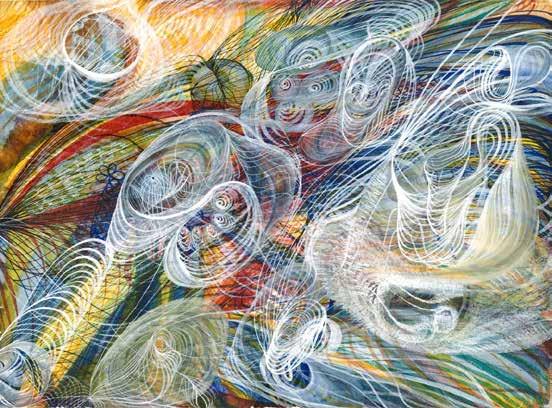
Be careful as you go out into God’s creation, for it does not belong to you.
Be gentle with yourself and with one another, for you are the dwelling place of the Most High God.
Be alert and hesitant, for sometimes God is but a whisper.
And the blessing of God Almighty, the Father, the Son and the Holy Spirit, be among you and remain with you always. Amen.
Owene Courtney
Ellen Magevney
Laura Jane Pittman
The Rev. Dr. Linda Privitera
The Very Reverend Kate Moorehead Carroll
jaxcathedral.org