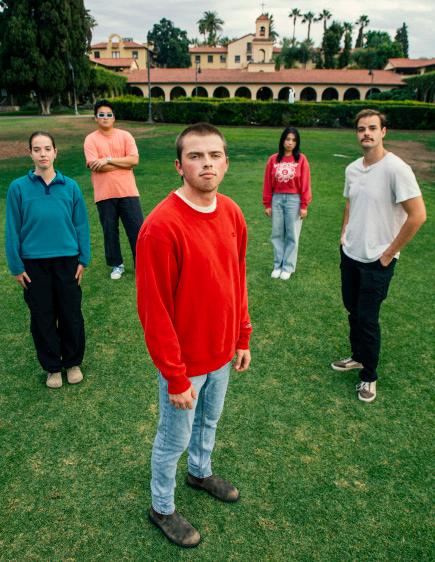

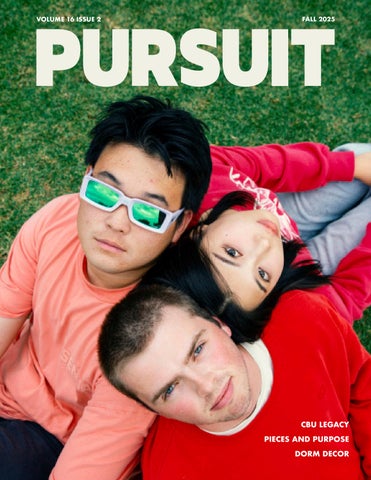
“ ...To produce publications that glorify God, tell compelling stories and report the truth.
Lancer Media Group consists of five student-led publications that serve the California Baptist University community — Angelos yearbook, The Banner newspaper and The Banner Online, CBU Broadcast and Pursuit magazine — as well as Lancer PR and a chapter of the nationally affiliated Public Relations Student Society of America. Students have the opportunity to write, edit, design, shoot and produce stories, photos and videos for publications.
In LMG, there are many opportunities to grow in leadership skills and build a portfolio of works, as well as many opportunities to expand your education, be inspired by prominent keynote speakers and see the work of fellow student-journalists and future PR professionals by attending national college media and public relations conferences with us throughout the year.
Lancer Media Group is committed to equipping Christian students journalists with the skills, values, and mentorship to tell impactful stories and engage audiences. We empower them to lead with integrity and faith-driven excellence, transforming the media landscape to reflect God’s truth and love.
Pursuit magazine, established in 2010, expresses CBU campus culture and trends. The magazine features in-depth stories about prominent campus personalities, relevant topics, compelling perspectives, appealing design and engaging photography.
The pursuit of purpose: To show students who we are becoming.
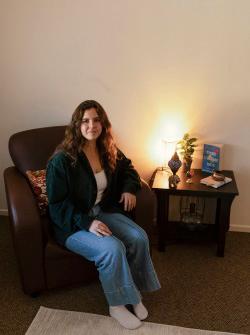
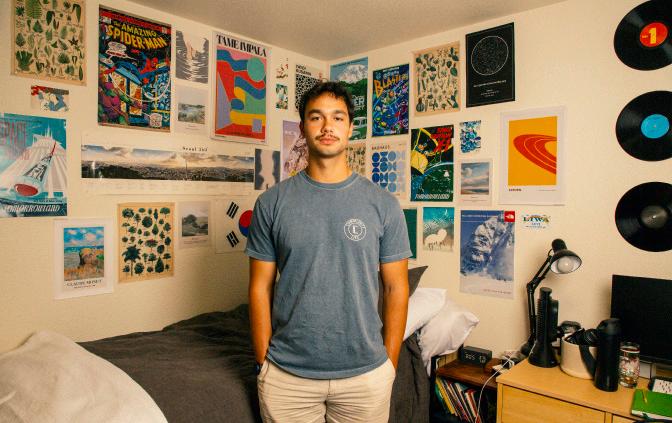
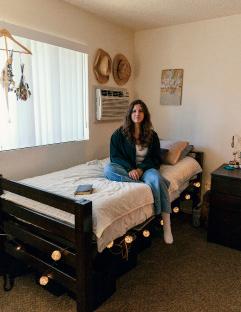
Anna Zeni shows how dorm decor turns a simple room into a reflection of personality and home. To read more, turn to page 35.
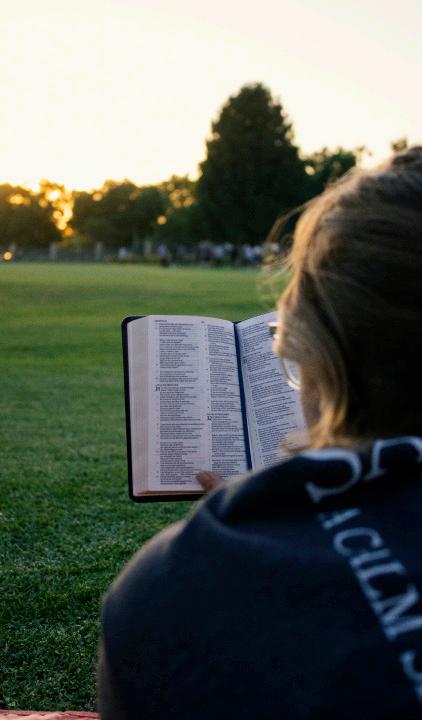

What began on Sept. 18, 1950, with a class of just 42 students at First Southern Baptist Church in El Monte, Calif., grows into a thriving student body with more than 12,000 students. This year marks the 75th anniversary of California Baptist University, a faith-based institution dedicated to building students who are academically prepared, biblically rooted, globally minded and equipped to serve, fulfilling the ultimate goal of living their purpose. This anniversary represents a significant milestone and reflects the remarkable growth and enduring commitment to excellence that CBU strives to uphold. With such an increase in the student body, not only does the size of the campus increase, but so does the number of staff and faculty called to teach and support them.
One reason the campus continues to grow the way it has is because of its welcoming atmosphere, which fosters a sense of family and community. In such a caring environment, it is only natural for the children and families of professors to study at the university. The nephew of anthropology professor Julie Goodman-Bowling, Gerritt Goodman, sophomore mechanical engineering major, explains that he chose CBU for the amazing engineering program, but he wasn’t fully convinced until one small moment. “During a visit I had, we
were visiting the dorms and my grandma couldn’t find her way to the car so we had this guy, this random student just came in and assisted her and helped her out with that so it made me realize that they care a lot about family here.”
When asked what it’s like having her nephew on campus, GoodmanBowling says, “I love it. I wish I saw him every day all the time.”
Similarly, Grace van Haaster, sophomore mechanical engineering major, says she was drawn to CBU because of the faith-based environment. “I really felt that this was the place that would develop my talents as well as my relationship with God the best, and it’s always best to develop your talents on God’s side.”
When asked what it’s like having his daughter on campus, Dr. Phil van Haaster, dean of the Gordon and Jill Bourns College of Engineering and assistant professor of mechanical engineering, says, “It’s fantastic.” Speaking very highly of his daughter, he adds, “She’s such a great young lady and a fun communicator. She wants to share the experiences so it’s really nice having somebody who will share an experience and I know exactly what they’re talking about.” As he summarizes the experience, he says, “It’s almost like we’re together even though we’re not and it really is nice.”

“I REALLY FELT THAT THIS WAS THE PLACE THAT WOULD DEVELOP MY TALENTS AS WELL AS MY RELATIONSHIP WITH GOD
THE BEST, AND IT’S ALWAYS BEST TO DEVELOP YOUR TALENTS ON GOD’S SIDE.”
--
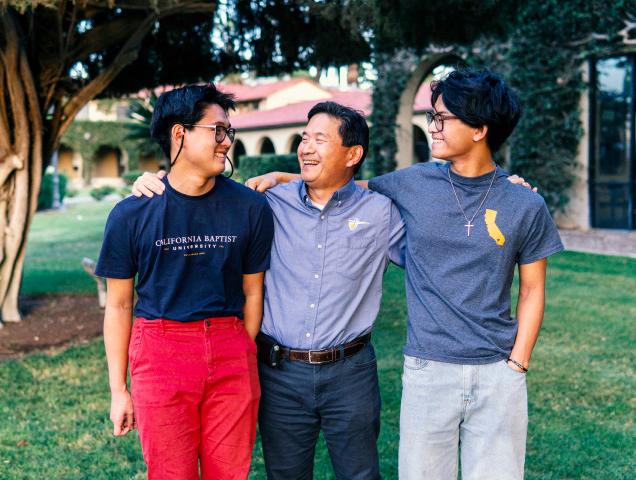

Dr. Adamson Co, professor of theology, has two sons currently attending CBU, Aiden Co, sophomore pre-nursing major, and Aldridge Co, freshman illustration and entertainment design major. Adamson Co shares his joy of having his sons at CBU: “It’s good to not only drive my kids to school, but to walk with them on the same campus, to see them frequently, to have lunch with them, and, in many ways, to be familiar with the surrounding that they’re in. To know that they’re safe in more ways than one; especially in the confines of a good Christian institution.”
This sentiment is echoed by his elder son, Aiden, who shares how having his father on campus impacts his own experience. “It’s allowed me, even as a commuter, to stay late and attend so many more events and [have] opportunities to meet people that I wouldn’t have had otherwise if I wasn’t already so plugged in because of his influence on campus.”
Aiden explains that having his dad on campus also helped him connect with his friends. “I’ll just be walking and talking with them and all of a sudden he’ll just come up on campus and I’ll just be like ‘Oh hi dad,’ and then my friends are like ‘Huh?’ or they’ll get confused and it’s just a really fun way to just kind of talk more to them or open up my life to them.” In many ways, Adamson Co serves as a bridge, allowing his sons to grow closer to others and build new relationships.
Likewise, Aldridge shares his passion for attending CBU, saying, “It was just a part of my childhood, and I’ve been here a lot, whether it was eating at CBU or doing the provided activities.”
These are just a few of the many stories of families connected through CBU’s community, a reflection of the university’s growth not only in numbers but in legacy. Many students have attended class in the W.E. James building, but few know why it’s called The Old James Building. Originally, the James building was the main structure on
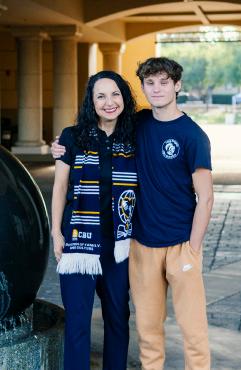

campus where most classes were held. As the university grew, so did its need for space, expanding into the campus we know today, which looks significantly different from just 20 years ago.
Adamson Co reflects on this transformation, saying, “It really showed that God is blessing the work here at CBU, certainly because of the growth in the structures.”
Goodman-Bowling, who has worked at CBU for 17 years, says one of the most significant changes she’s seen is the quality of the faculty, as “The kind of faculty we have working at CBU has just changed the game; the bar academically has been raised a lot.”
Phil van Haaster adds that one of his favorite things about CBU is what hasn’t changed. “The school stayed with their mission. They grew from 800 to 12,000, and they stayed with that ‘what is our great commission mission’ and they stuck it out, and there are so many universities in history that have had this kind of growth, and when that
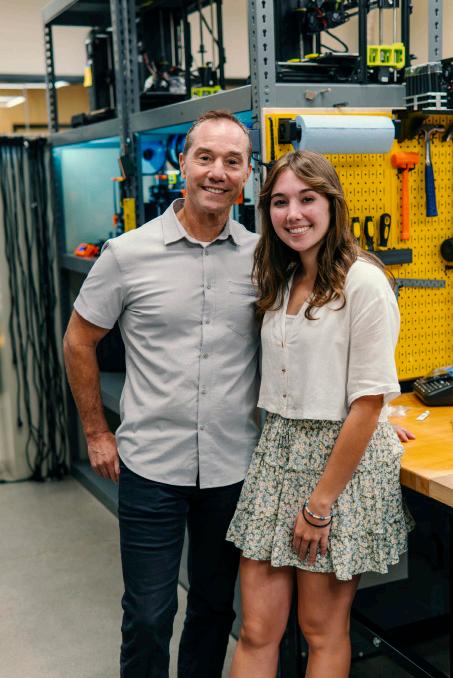

happens, they abandon their core mission. I’ve seen it, I’ve witnessed it, and I’m really grateful for it.”
As the University evolves, so too do the stories woven into its history. Elijah Borno, junior art education major, whose mother graduated from CBU, recalls a fond memory from his childhood: “Once or twice a month, we used to eat in the cafeteria growing up so I’ve been here since I was like 8.” Funnily enough, “Since I was so young, I never actually knew where I was and I remember my freshman year here when I walked into the Caf for the first time in over 10 years I realized where I was; it kinda blew my mind.”
These memories exemplify the interconnectedness of CBU, not just as a university campus, but as a family that continues to grow through generations.
Another tribute to CBU’s legacy is the A.J. Staples Room located in the Old James building. Though it may appear to be a large classroom with space for up to 200 students, it is actually a memorial to Albert James Staples, the late son of CBU’s third president, Dr. James R. Staples. Albert was a passionate supporter of the university’s mission and his parents’ vision for Christian education. The memorial plaque outside the room reads, “My vision is to help make California Baptist College a strong institution of Christian growth and beauty,” exemplifying the lasting legacy that families leave on this campus.
CBU is not only a place of learning but also one of family, worship and community. It is a place where everyone is welcome to grow their talents under God. Regardless of our last name or who we may be related to, we are all part of a family that is larger than ourselves, united by our commitment to live our purpose.
Written by Ethan Werk
Photography by
Josiah Alvarado & Elissa Garcia
Design by Jaclyn Adams
Illustrations by Javid Becerra
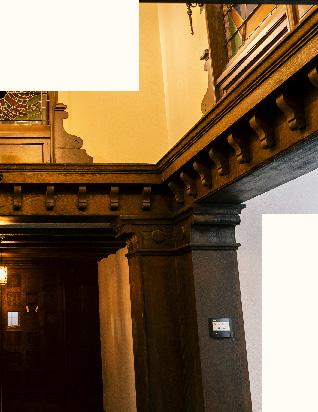
“MY VISION IS TO HELP MAKE
A STRONG INSTITUTION OF CHRISTIAN GROWTH AND BEAUTY.”
-- DR. JAMES R. STAPLES


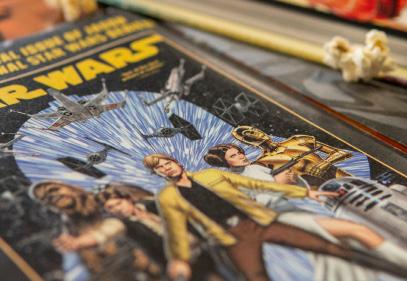
We all know it. We are all shaped by it. What is this tremendous source of joy, fun and excitement that allows us to connect with the people around us?
That’s right, it’s pop culture.
Pop culture is more than any single concept. It’s difficult to describe because it captures a collective experience. From the technology we use to the music we enjoy and the literature we consume, pop culture has a way of shifting and growing with the times. Gen Z has reached a point where the content they consumed as kids is now as old as they are. In a sense, the media has grown up alongside them.
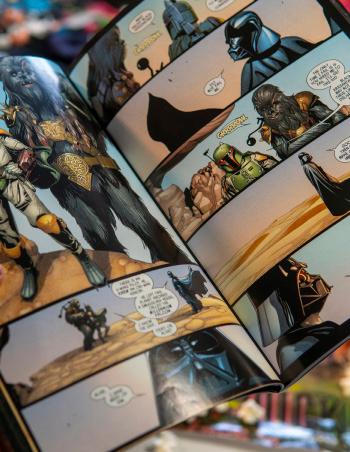
In 2025, DreamWorks Animation released the live-action “How to Train Your Dragon” remake to critical acclaim. In the same year, other iconic films like “Harry Potter and the Goblet of Fire” and “Star Wars: Revenge of the Sith” celebrated their 20th anniversaries. Disney recognized “Revenge of the Sith’s” anniversary by re-releasing the film in theaters and giving away exclusive merchandise to the fans. Similarly, “Hamilton” by Lin-Manuel Miranda celebrated its 10th anniversary with a special Broadway performance. The reason we celebrate pop culture anniversaries, specifically in film and theater, is because these stories connect us. They speak to a universal human experience.
In 2024, audiences worldwide were captivated by the theatrical release of “Wicked.” The film is an adaptation of
the 2003 Broadway show of the same name, which is derived from the original Frank L. Baum novel, “The Wonderful Wizard of Oz”, published in 1900. Despite the franchise being more than 100 years old, audiences still resonate with the land of Oz and its inhabitants.
Zachary Bortot, professor and division director of theatre arts, discusses the surge of popularity surrounding the film adaptation of the 2003 show. “To view theatre as becoming pop culture is an accurate reflection of its evolving role in society,” Bortot says. “It speaks to the art form’s adaptability, its capacity to engage with current modes of storytelling and distribution, and its enduring power to resonate with new generations.”
In this sense, there is an interesting criterion for a piece of media becoming pop culture: its ability to grow and shift with the times. Theater is an ancient art form, spanning back millennia, long before pop culture was even a recognized concept, yet it persists today because it evolves with its audience. Bortot says, “‘Wicked’s’ film adaptation, both parts, were anticipated not only by theatre fans but by a broader demographic familiar with its score through social media, karaoke, or reality competitions. In essence, the show has become part of a collective cultural memory, even for those who’ve never seen it on stage.”
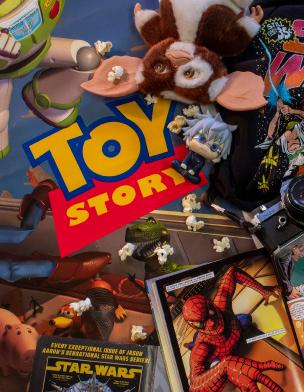
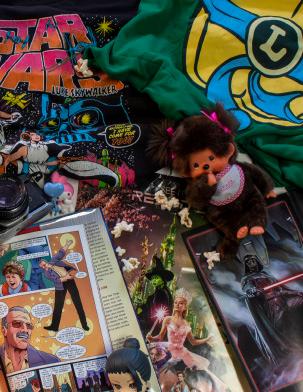
We celebrate pop culture because it’s neither stagnant nor fixed. It constantly grows, allowing us to connect and possibly understand one another.
Melanie Bucio, sophomore film major, discusses her experience sharing mainstream Hollywood films like “The Maze Runner” with her family. “Obviously in Mexico the genres and films are completely different. Pop culture is completely different,” Bucio says. “Once [my parents] came here to the United States is when they started getting introduced to everything. Growing up I knew of films, but I didn’t really watch them until later.”
Bucio continues, “If I were to show my family a film, most of the time [their reaction] is pretty positive especially if it’s a family-oriented storyline or that kind of genre. We talk about them and how they relate to us as a family.” The impact of pop culture runs deep, bridging cultural and generational differences. Art can be as applicable or specific as it needs to be, but people are always drawn to qualities they can personally take from it. When we consider the iconic Disney movies of our childhood or big-name franchises still enjoyed today, odds are people are discussing the same key concepts and themes. However, the ways people consume media may differ, which is the beauty of diverse experiences.
Dr. Melissa Croteau, professor of film studies, examines the relationship between popular films and the audience. Croteau says, “Right now is a very specific moment technologically, which means that the feedback effect is almost immediate.” The Internet, according to Croteau, plays a tremendous role in perpetuating media and gathering fan reactions. This is why pop culture anniversaries are such a big deal because media outlets pick up on the desires of long-term fans.
Croteau highlights this reciprocal relationship between studios and fans, noting how big-budget films are created to appeal to the largest possible global audience. Regardless of how one feels about the implications of blockbuster movies, the reality is that these films are made for people. They are written, produced and filmed with the fans in mind. It’s no surprise that we celebrate when a beloved game franchise like “Pokémon” turns 30 in 2026. It was made to be enjoyed and has entertained countless people for three decades.
Sofia Sheckler, senior Christian behavioral science and intercultural studies double major, discusses the community-building aspect of pop culture. Sheckler says, “I love entertainment and I especially loved it during COVID times because there wasn’t much to do. I was able to find connection through it, and especially connection through the fans of certain TV shows or movies.” Sheckler explains the role of fanbases, which are communities of fans who interact with and appreciate the same media. She says, “I think right now people are very nostalgic, and love living in nostalgia.”
Nostalgia is a powerful emotion closely tied to our collective response to pop culture. We are emotional beings, which is why we were given the ability to express ourselves, have fun and live in the moment. Whether your friends went to throw popcorn during “A Minecraft Movie” when Jack Black delivers an infamous line, or “Inside Out 2” got you in the feels, pop culture exists, and it deserves to be celebrated by the people who shape it.

“If I were to show my family a film, most of the time [their reaction] is pretty positive especially if it’s a family-oriented storyline or that kind of genre. We talk about them and how they relate to us as a family.”
-Melanie Bucio



PIECES AND PURPOSE
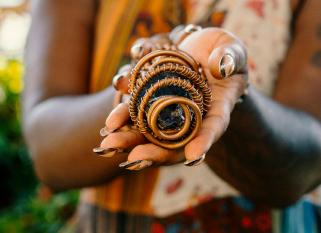
Choosing what to wear and what pieces of yourself you put on every day makes a statement before any words ever do. Unique pieces, vintage clothing, jewelry and keychains all play a part in creating the image one wants to portray to the public. Each outfit and piece brings a portion of who an individual is to the stage of life that plays out here at California Baptist University.

Wearing jewelry, clothing, shoes or something that screams “you” brings an individual’s history and purpose into the conversation. They become a living story, showcasing a canvas that’s theirs alone to create. These pieces hold each student’s memories, stories, heartbreaks, dreams and aspirations, displaying a portion of themselves through fashion and choice.
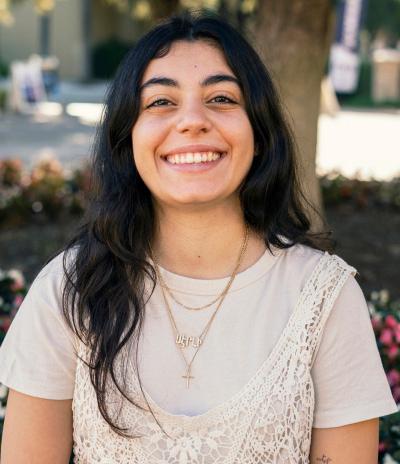
Serly Boyadjian, an international student from Armenia and junior biomedical engineering major, explains why one of her pieces of jewelry, a beautiful gold necklace, is so important to her. She says: “The one specific piece is my name in Armenian... My name means full of love… my grandpa made this for me, and he wanted it to be in Armenian because it just represents who I am, my culture and the language. It’s something that I always wear and something that I always carry, and it reminds me of who I am.”
Every day, students carry a portion of their loved ones, friends, family and their history in what they wear. By wearing their culture and uniqueness on campus, students across CBU shine and share who they are with pieces that reflect their hearts, minds and souls.
“ It’s something that I always wear and something that I always carry, and it reminds me of who I am.
Phinehas Maina, an international student from Kenya and senior computer science major, explains how his past and a special t-shirt help him remember who he is. He says, “There’s this red t-shirt I have, but it’s back home. It’s a t-shirt that I outgrew… the shirt reminds me of the last few days before I left the country to come here to study. I used to play almost every day with my friends outside in that same t-shirt. It’s a reminder that there are some seasons I will outgrow and there’s, of course, new things to come, but it’s also a reminder that little Phinehas that was playing a while ago, still exists.”
Parts of who we are are evident on the outside, waiting for others to ask questions and build connections that can last for years. Jewelry catches attention and starts conversations. T-shirts connect classmates over TV shows and movies. Sports jerseys bring competitiveness.
Explaining how her personal pieces, her history and her journey to find her purpose align perfectly, Boyadjian says, “I collect different pieces from all my past and then my CBU pieces and then connect that somehow to my future pieces to make into a story.” Each student’s personal items, clothing and jewelry is simply that: the story of themselves. The story of a journey, identity and individuality. The parts students carry hold memories, history and opportunities to connect with others.

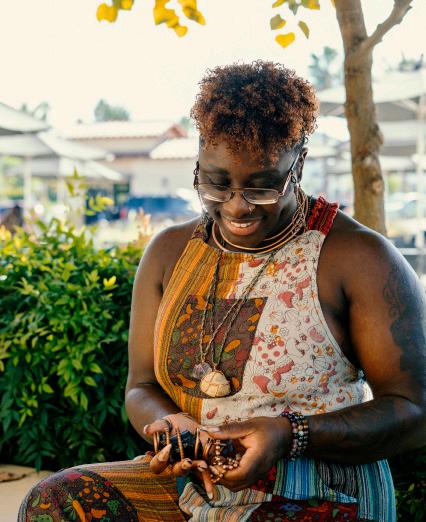
Genesis Castillo, senior criminal justice major, shares a personal story about her pendant necklace. She says, “A piece of jewelry that is held close to my heart is my pendant necklace, which has a stone my boyfriend and I collected on our first hike to the hot springs in Santa Barbara. We made the pendants and necklaces on our first camping trip together. We took a road trip to Redding, California, and camped at Madrone Campground; it was a beautiful experience.”
Not only do we carry stories and history as we walk through life, but our pieces carry our purpose. As an artist paints their canvas with a brush, we paint ourselves with unique choices of adornments, clothing and hairstyles that encompass who we are and how we live our lives and callings.
Every day, we pick and choose the identity we want to wear and the appearance we want to give to the public eye. Our journeys and identities are handcrafted as we go through our closets, pick our clothing and define our purpose. Many of us want to feel connected and part of something, but the most amazing part of being human is that we were all made uniquely. Here at CBU, there isn’t one journey, major or student who is the same. The pieces we wear not only make us stand out, they also bring us closer to one another and to the Lord. Whatever you wear and bring to CBU makes you the person you were made to be. The person God created you to be. By wearing your pieces, your voice is heard, your heart is shared and your purpose is bold.
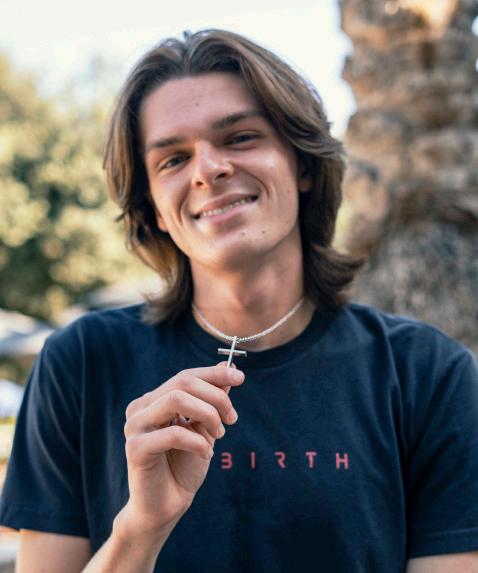
Cody Stevens, junior business administration and Christian studies double major, shares how he expresses his faith through his cross necklace. He says, “I really wanted to visually represent the Lord in some way. And if someone didn’t know what the cross meant, then maybe it would be an opportunity for me to explain it… And honestly, it brings joy to my day because I get to bring the Lord with me.”
Wearing clothing and jewelry that symbolize being a Christian is often a normal choice for many, but for some, it’s a bold declaration and a powerful statement that shows the world where their heart lies.
Sirui Wang, an international student from China and biochemistry and molecular biology major, shares what her cross necklace means to her. “My parents are not Christians, but they have been supporting me in my faith. So for them to buy a piece like this is very special to me. And it also reminds me of who should be the center of my life in all situations.”
Just as we are to adorn our hearts with Scripture, we can also choose to wear an outward expression of our faith and hope by representing Christ through our fashion and appearance. After talking to Stevens about his fashion sense and what he likes to wear, he says, “I didn’t want it to be something meaningless in terms of fashion, just for my style, how I like to dress… I wanted to use that to my advantage. If I’m going to be doing something for me, I want to put the Lord first and foremost in it, even if it is something as simple as the cross.”
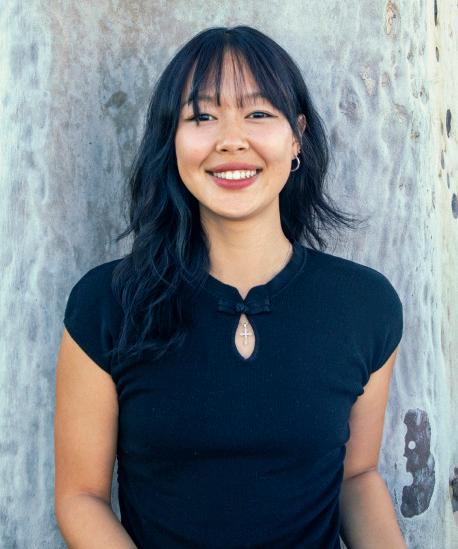
By following God’s commandments, students are witnesseses to their faith, following the Lord’s teachings in all things. Their adornments and jewelry can be helpful reminders of this. Wang says, “It is also a way of telling other people that my identity as a Christian keeps reminding me and pushing me to be more like Christ through the way I talk, act and think.”
As we represent our university by wearing merch, lanyards and sports attire, we should represent Christ with our words, actions and thoughts toward others. Maina explains how his jewelry and his faith combine. He says, “I’m just going to remind every student that whatever makes you ‘you’, don’t take it off. Have it somewhere that’s really close to you, so that it’s a reminder through the tough periods that you can overcome, by the grace of God. And He will be with you.”
With perseverance, fashion choices, faith and beautiful history, CBU has a growing and unique community full of individuals who choose to express themselves in many different forms, each displaying the masterpiece that God created (Psalm 139:14).
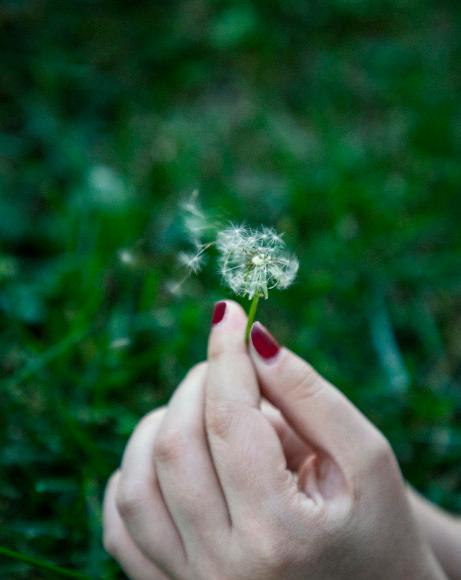
Natalie Tanaka
Dandelion, dandelion
Blowing in the wind
Fall apart, dissipate Become stretched and thinned
Fly away, spread your wings Across an unknown land
Meander down into the ground Till your roots are all around
Then spring forth, grow to the sun Until all must again be done
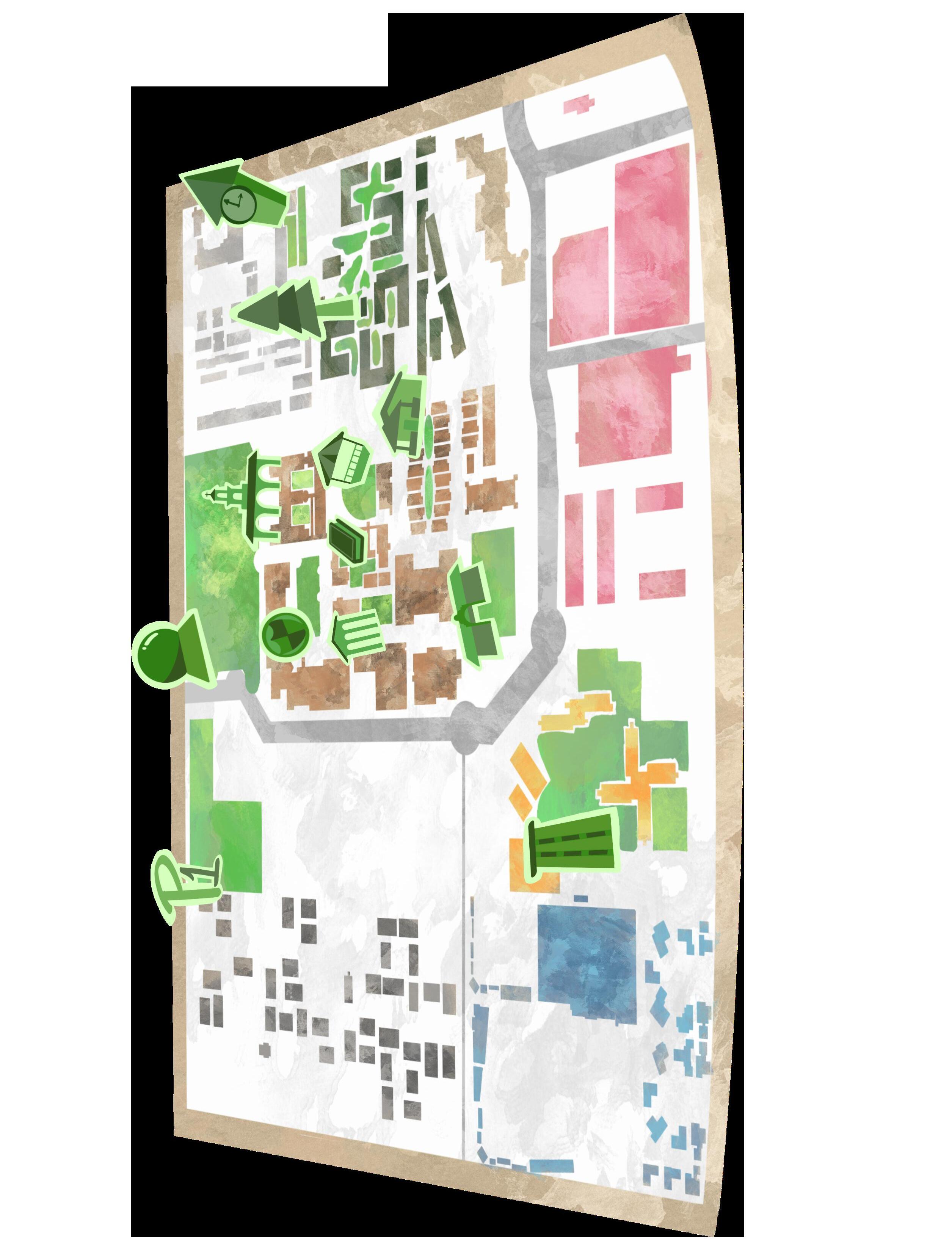
Annie Gabriel Library Yeager Center James Building Health Science Engineering
Written by Pursuit Staff
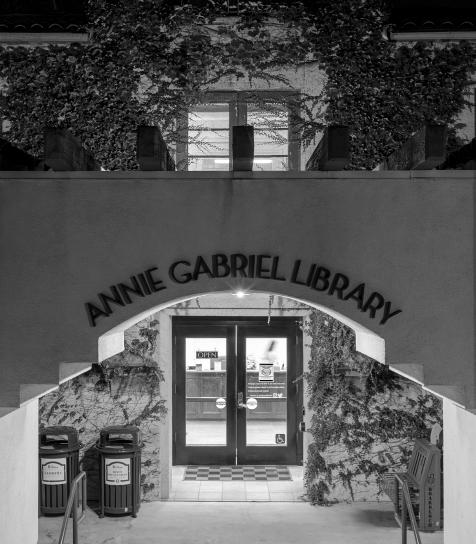
The Annie Gabriel Library is named in honor of Miss Annie Gabriel, whose generous gift allows for the initial significant development of the collection. The library building was constructed in 1921, originally serving as a retirement home and hospital for the fraternal organization Woodmen of the World. After California Baptist College purchased the property in 1954, the institution moved from El Monte to Riverside the following year. On Oct. 20, 1958, the college celebrated the dedication of the library’s new home in the former hospital building. Today, the library holds more than 130,000 print books, over 1,500 CDs and a growing collection of more than 2,400 DVDs, continuing Miss Gabriel’s legacy of learning and generosity.
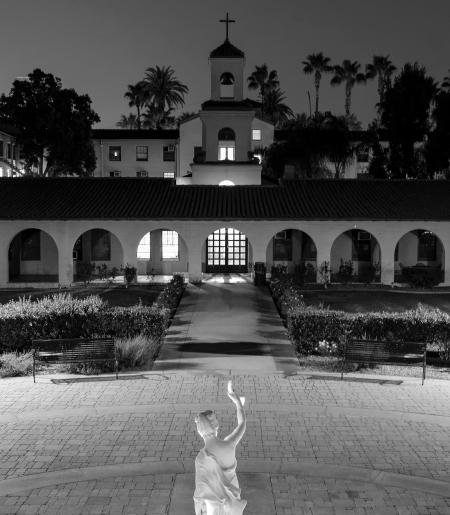
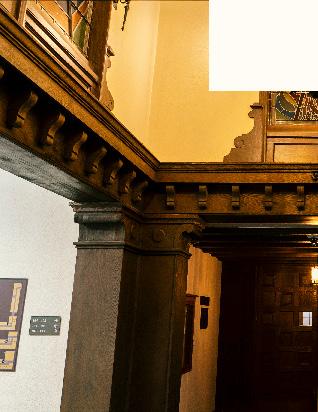
Dr. Whitley James is remembered as an educator, businessman and pastor who was the first elected chairman of the Board of Trustees of California Baptist College. In his honor, the W. E. James Building was named after him and constructed in 1934. As one of the oldest buildings on campus, the James Building stands as a landmark of California Baptist University. Once a retirement home, the space has served many purposes over the years, including student housing, the campus post office and Wanda’s Cafe. Today, the building houses the College of Arts and Sciences, offering more than 60 programs throughout its four floors and basement. More than 85 full-time faculty and staff members serve its students, continuing the legacy of dedication.
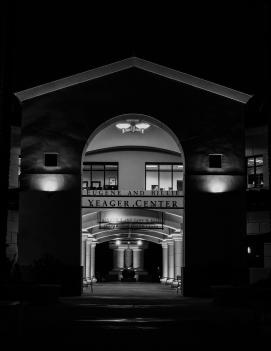
Formally known as the Eugene and Billie Yeager Center, the building was completed in 2003. Designed to accommodate a growing student population, the space provides classrooms as well as offices for faculty and staff. It is the home of the Admissions Office, Office of the Provost and more, making it a central hub of campus life. One of its most recognizable features, aside from the popular Chick-fil-A and Wanda’s Cafe, is the marble globe that greets visitors at the entrance. Known as the Kugel, the globe symbolizes CBU’s mission to fulfill the Great Commission, serving as a daily reminder of purpose and faith for all who pass through its doors.
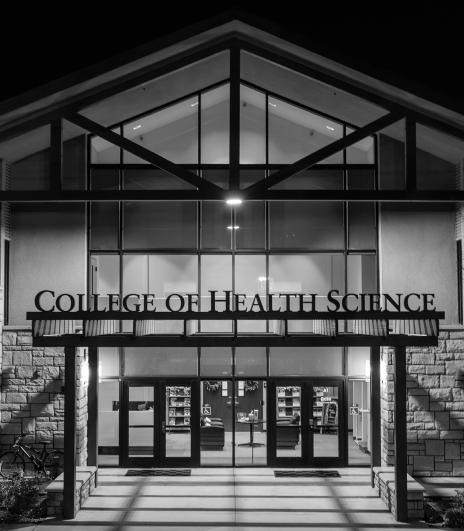
its exclusive meals that fuel students between classes. The campus features 21 buildings, each marked with its own letter, forming a small community dedicated to health, service and innovation.
PHOTO SERIES
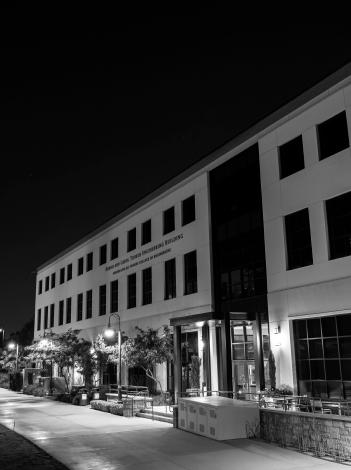
The Dennis and Carol Troesh Engineering Building, one of the newer buildings on campus, was completed and opened in the summer of 2018. Located between the Hawkins Music Building and Cottages, the space marks a new era of innovation and collaboration at California Baptist University. The opening of the building fosters growth within the Gordon and Jill Bourns College of Engineering, now home to more than 25 major and minor programs and seven concentrations under General Engineering. Student organizations such as the Society of Automotive Engineers (SAE), the Society of Women Engineers (SWE), the CBU Cardiac Engineering Team, the CBU Robotics Team and the Institute of Electrical and Electronics Engineers (IEEE) meet regularly within its walls. With three floors of classrooms, a large project display room and plenty of whiteboards, the Engineering Building serves as a place where students study, create and collaborate in a space built for discovery.




Tirza Bustrum
O mar deste lado
Não cheira igual
Não veste o mesmo significado
Que o mar de Portugal
Mar que consola
Mar que acolhe
Mar que é a porta
Entre o corpo e a alma
Um mar que me separa
Do sítio que já foi casa
Onde eu pertencia
Onde eu tinha asas
Mar, podes vir até mim?
Mar em que vivi e renasci,
Existirás no novo jardim,
Na terra que o meu Pai prepara?
Ou será que aquele dia na praia
Pés na areia, sol na face
Ar quente a derreter a tristeza,
Seria diferente se ficasse?
Teria amado tanto esse mar
Se não saboreasse a saudade?
Teria saído a lamentar,
Se soubesse o que me esperava?
Se a palava saudade
Não fosse tão vivida,
Teria o mesmo peso
Na minha poesia?
Editor’s Note: Saudade does not have a direct translation in English. It is a Portuguese word which describes a sense of deep longing for something or someone.
The sea on this side
Doesn’t smell the same
Doesn’t carry the same meaning
As the sea of Portugal
Sea that consoles
Sea that welcomes
Sea that is the door
Between body and soul
A sea that separates me
From the place that was once home
Where I belonged
Where I had wings
Sea, can you come to me?
Sea where I lived and was reborn, Will you exist in the new garden, In the land my Father prepares?
Or could it be that day at the beach
Feet in the sand, sun on my face
Warm air melting away the sadness, Would it be different if I stayed?
Would I have loved that sea so much
If I hadn’t savored longing?
Would I have left lamenting, If I had known what awaited me?
If the word saudade (longing) Wasn’t so lived, Would it have the same weight
In my poetry?
Home. Such a small word, yet it carries so much weight. For some, it’s the house where they took their first steps, the sound of laughter, the smell of their favorite food and the place where traditions are formed. For others, it’s not tied to a place but to the people who make them feel seen, safe and loved.
Written by Anna Zeni
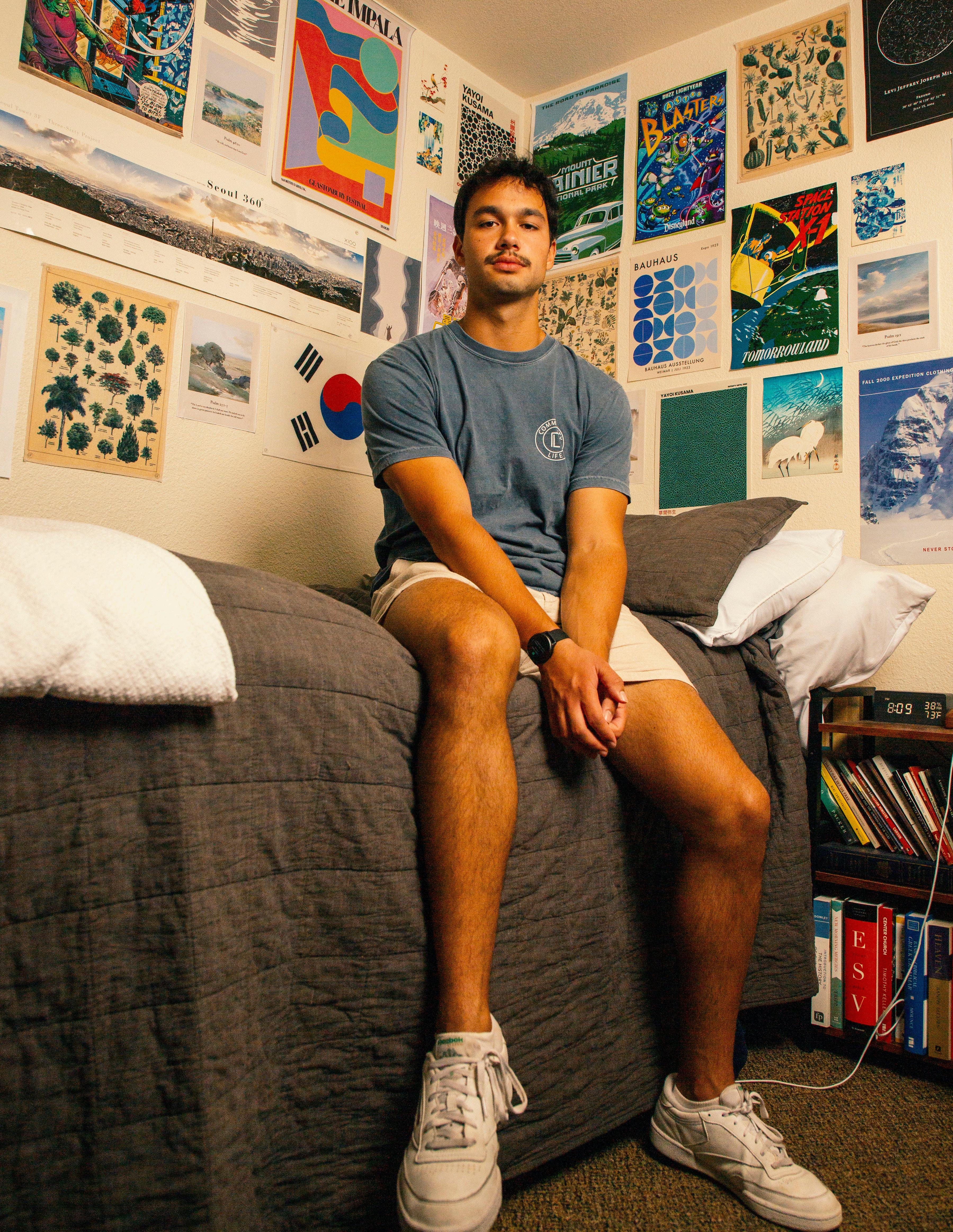
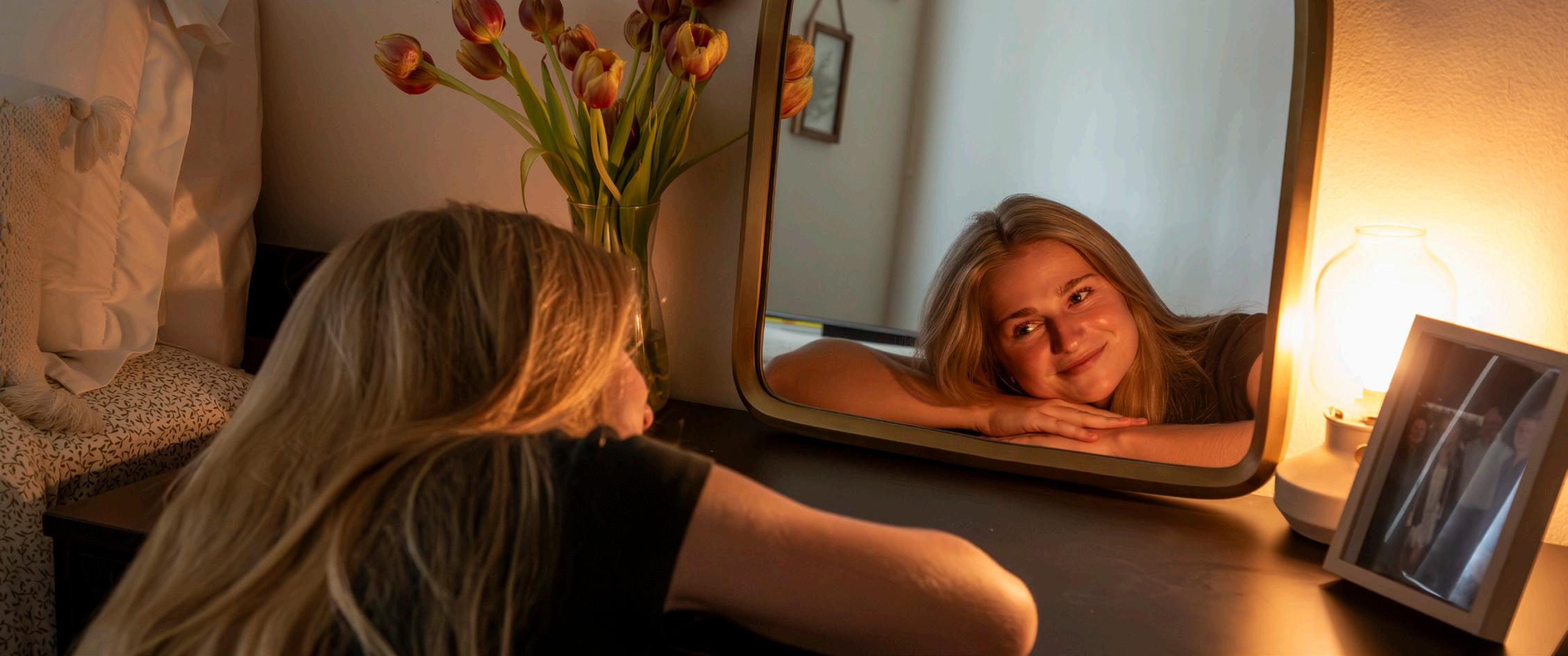
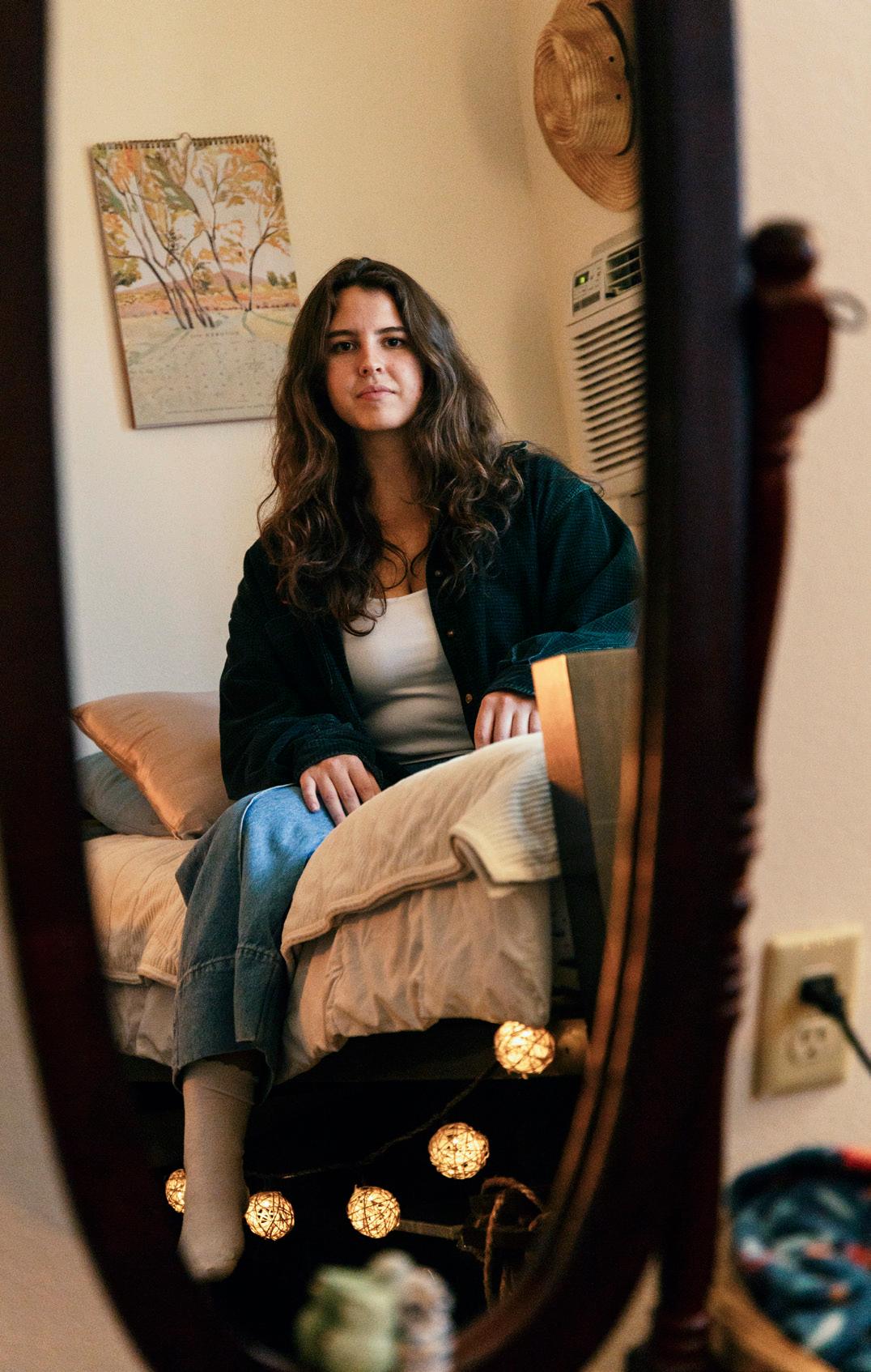
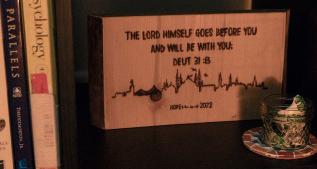
Hope Harris, senior Christian studies and psychology double major, who grew up overseas, says, “I never had a perception of home just because I grew up moving around so much.” She adds, “There is this running joke in my whole life that the closest thing to home for me is an airport, which is kind of true.”
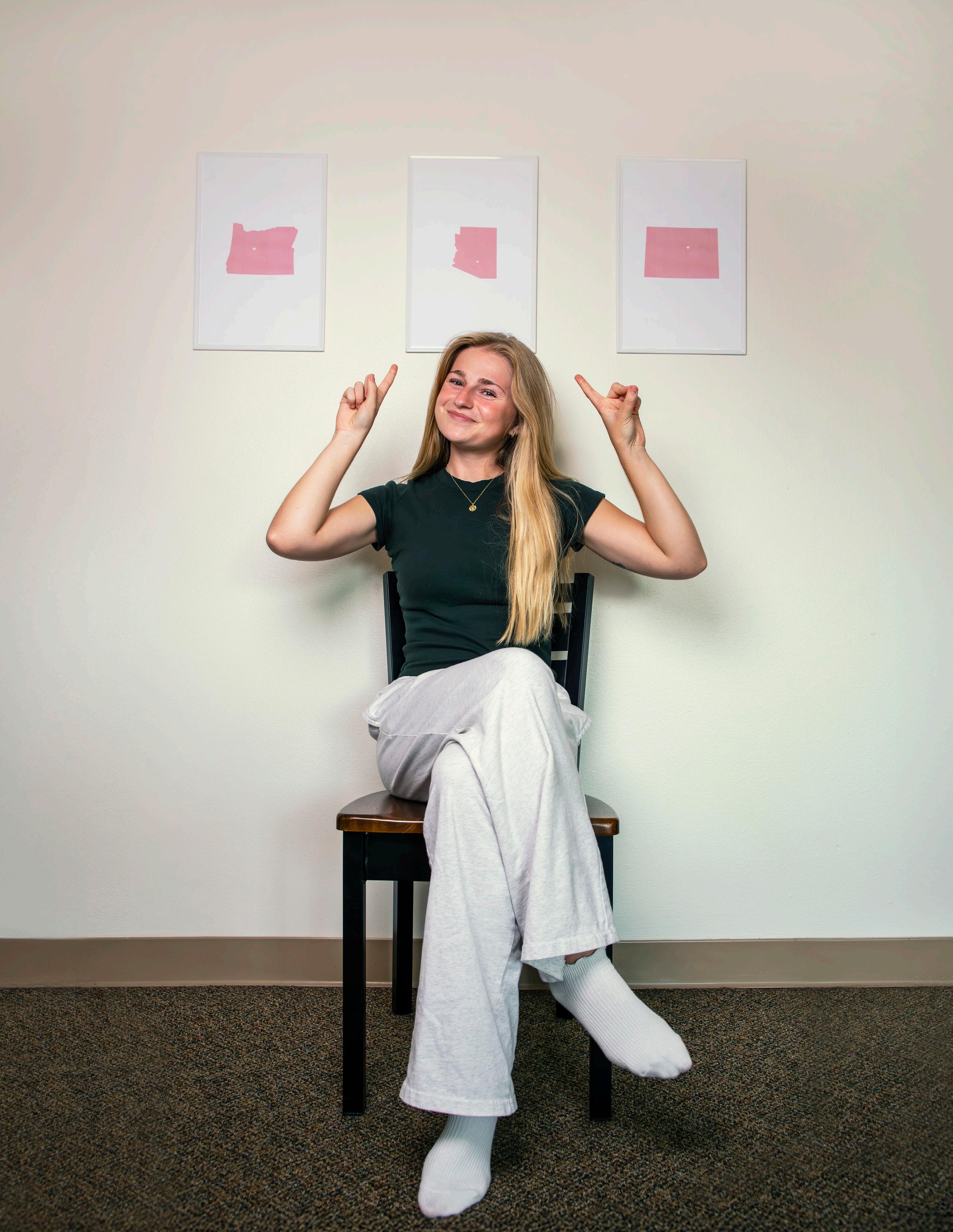
For Lauren Spencer, senior public relations major from Gilbert, Ariz., home is not tied to geography. “Home is definitely people,” she says. “I might not miss Arizona, but I miss the people that are there.”
Levi Millar, senior environmental science and Christian studies double major, says home is still tied to a place. “Home for me is a place where I’m there for a long time, and the dorm decor, it definitely helps, and good friends.”
These three perspectives show there’s no single definition of home. It’s personal, shaped by where we come from and what we value. In college, those lines often blur. We’re thrown into a shared space where our different backgrounds take a back seat to late-night conversations, communal meals and figuring things out together. As Spencer puts it, “I think it just means an experience. It’s trying to figure out a new way of living away from home. As someone who is normally a homebody, it has been an experience of growth, figuring out how to be independent.”
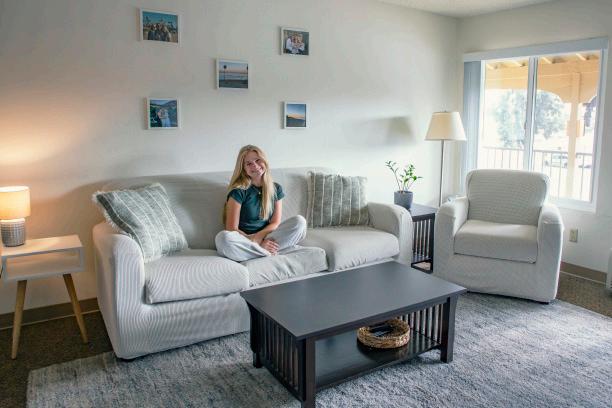
At first, a college dorm may feel like just a place to sleep and eat. But over time, it begins to reflect the stories of the people who live there. For some students, a dorm is only where they spend the week before going home on weekends. For others, visits home happen once a month, every other month or only during the holidays. Or, for students that live far away, their dorms become the place they call home for the next few years. So how do you create that feeling of home when you’re miles away from everything you’ve ever known?
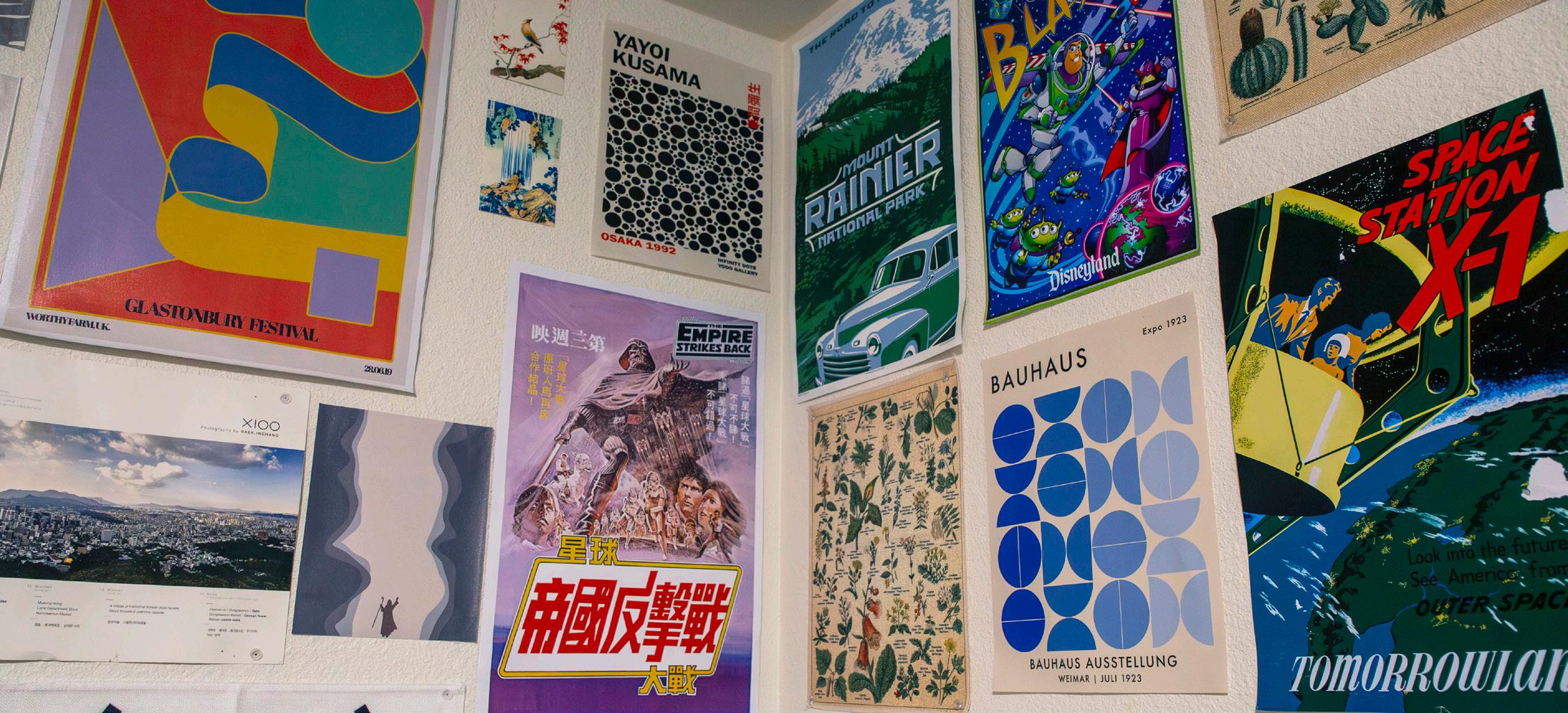
Rebecca Bernard, resident director of University Place Women, says, “I think everyone engages with the space differently. Some just use it for functional purposes and are in and out. Even that could be an indicator of their identity of being practical, and that CBU is just a temporary home, and they don’t invest very much time in decorating.” Millar echoes that idea, noting that his own investment in decorating has grown over time. “In my sophomore year, I just had a poster collage. Now, I put much more effort into making a good space.”
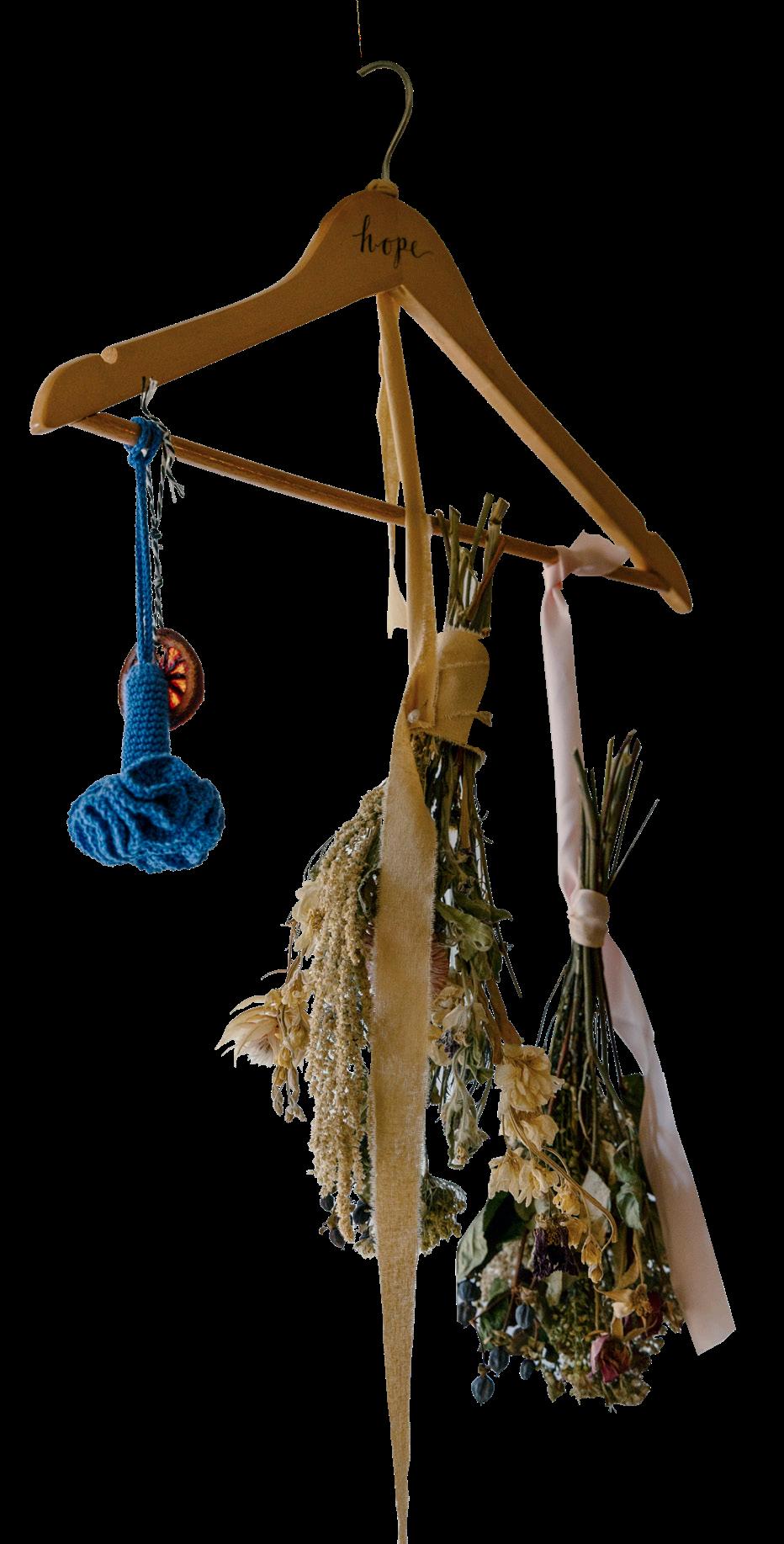
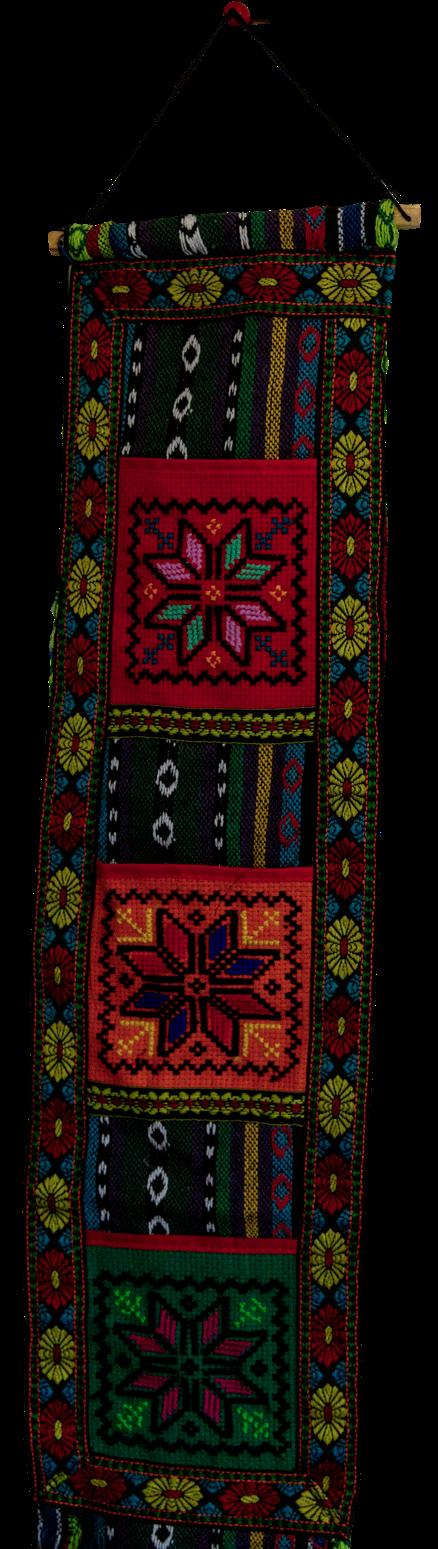
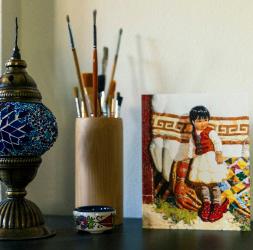
Decorating a dorm isn’t just about filling space. It’s about building identity. A wall of posters, a single cushion or even a bare room can all say something about who you are. Harris was born in Columbia, S.C., and grew up in Kazakhstan. When it comes to her dorm decoration, she approaches it as “Anything from Kazakhstan and anything related to my personality that just helps me feel that I have rest in this place, where I’m able to be myself.” Some of those things include the Turkish lamp her roommate’s parents brought from Turkey, which she says, “is like this beautiful old glass intricate art piece, which is a big deal to me. I have also saved some flowers from one of my best friend’s weddings from when I was a bridesmaid.”
Bringing a piece of home to your home away from home in college is a big part of how to cheat the system and feel more at ease. Spencer says, “The bedding I have here is exactly the same one I have back home which creates some similarity.” For Harris, it’s about remembering where she grew up: “I have some tea cups that I got recently from Kazakhstan that will be in every household in Kazakhstan, so that’s a lot about my history.”
These familiar items do more than comfort; they reflect how culture shapes our understanding of ourselves. College offers the freedom to explore that identity more deeply. The pieces we bring into our spaces echo where we come from, reminding us of our history while pointing toward who we are becoming. In sharing those expressions, we create connections in an environment where people of similar age but diverse backgrounds all search for a sense of belonging.
Another essential part of feeling a sense of belonging in a new home is the surrounding community. In college, that is your residential community, not just neighbors but the ones who are there for you. Bernard explains the role of a resident director, “Full-time staff member who lives on campus, to ensure the safety and growth of residents and other responsibilities that come along the way.” They also support the resident advisors in their responsibilities. “We really want RAs to be equipped to be able to meet residents where they are at, by leaning in with curiosity and legitimate care for them.”
While the residential environment plays a key role in creating a sense of belonging, community at CBU is not limited to the walls of a dorm. It also grows through classmates, coworkers, mentors and friends who walk the college journey together. Millar says, “CBU is like that usually; if you put in the effort, you will see the reward. Because the community is so good, I definitely see that in action.” Spencer believes that “Community has been the biggest testament of God’s goodness into my life by coming to CBU.”
Whether it’s a bare space with a practical purpose or a room filled with memories from across the world, dorms become more than four
walls. They become mirrors of identity, temporary homes that tell lasting stories. They transform into reflections of who we are and who we are becoming, quiet witnesses to our growth, struggles and small triumphs. We learn to adapt, belong and find comfort in these unpredictable spaces in the unfamiliar.
What a joy it is to call many places, and even more meaningfully, many people, home. We must carry fragments of each experience and let them shape who we are. We are privileged to live lives where change brings connection and difference does not divide but enriches.
Written

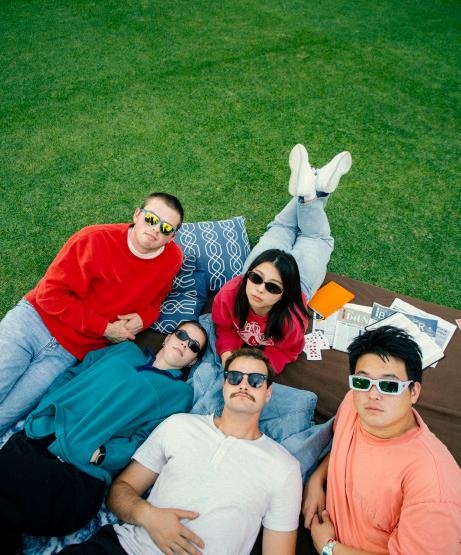
The Lawn. A piece of many cultures, from the white picket fence to running around with friends every day of that summer. From picnics on a Saturday at the park to the Super Bowl football field, a lawn is part of the essence of each of these. But what role does it play in the lives of students at California Baptist University?
Though it may seem a silly question, there are many lawns on the CBU campus, each with its own unique twist. For example, the Front Lawn is the location of major events like Clash N’ Roll, Festival of Color and Merry and Bright. Meanwhile, there are also smaller lawn patches outside dorms, like Village and Cottages, perfect for a touch of greenery or a picnic. These spaces are often overlooked by students who walk past them without a second glance.
Lexxie Rodriguez, sophomore health science major, and Mckenzie Espinoza, junior exercise science major, go to the Front Lawn to study, but they also enjoy it for other activities. “So far I really like studying and hanging out with my friends,” Rodriguez says. Additionally, Espinoza shares, “I also like watching the sunset [and] playing any type of sport on the lawn,” showing the variety of activities available to students.
When asked how often they spend time on the lawn, Belle Van Dyke, junior communication sciences and disorders and Christian studies double major, says, “Not enough.” On the same note, Gio Ramirez, sophomore biology and philosophy double major, shares, “I think I should study more out here on a blanket or something.”
Though the plots of grass may be natural, it takes a lot of effort to keep the lawns in pristine condition.
Ed Schmachtenberger, athletics grounds and outdoor facilities manager, explains, “The Front Lawn out there we mow three times a week. We’re also fertilizing almost monthly. My athletic fields, I’m out there mowing every day almost, and we’re putting fertilizer down and some kind of treatment out there almost on a weekly basis, could be a daily basis.”
Although most people pass by at least one of the lawns on campus every day, not much thought is given to the time and effort it takes to maintain them. They are cared for not only in their visual appeal and vibrant green contrast against the buildings but also for their practical use.


“
“
- ED SCHMACHTENBERGER
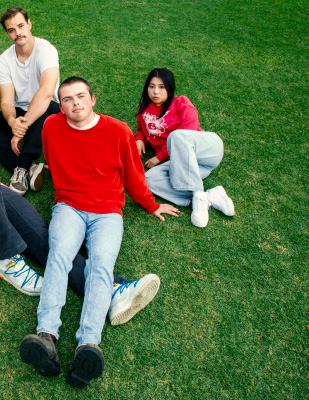
“The grass areas on campus, we like to keep it aesthetically pleasing, but we also like to provide functionality, so it’s not there just to look at, but we like to have the students use it,” adds Schmachtenberger. “So if you look out on the Front Lawn and everything and you see all the students laying out there just enjoying it, that’s my job.”
While most of the lawns on campus are well known, some more secluded and hidden ones aren’t discussed as often, like the lawn outside of the A.J. Staples room. The Smith Courtyard, named in honor of Dr. S.E. Smith, a founding faculty member, professor and composer of the CBU Alma Mater in 1954, is a quiet gem. It offers a cozy spot to enjoy the fresh air while avoiding the crowds, perfect for those who prefer a calm and quiet outdoor study space.
Everyone knows the library is a great place to study thanks to the guaranteed peace and quiet, but few realize that just behind it is not only a patch of grass, but a fountain and benches. While this location may not be ideal for a football game, it is a serene place to study if the library feels too cramped. It also provides a refreshing change
of scenery, a perfect escape from the stresses of college life that can make you feel as though you’ve stepped into another world.
Adding to the campus experience, the lawns provide wonderful spaces to enjoy the social aspects of CBU, work on projects and get out of a stuffy classroom. Bringing together the best of both worlds, Kennedy Wyatt and Lyla Hinton, two freshmen pre-nursing majors, say they come out to the Front Lawn because it’s “a quiet place to study and the weather was super nice and there’s not a lot of people out.” They add, “it’s nicer to study out here than inside, at least. A change of scenery.”
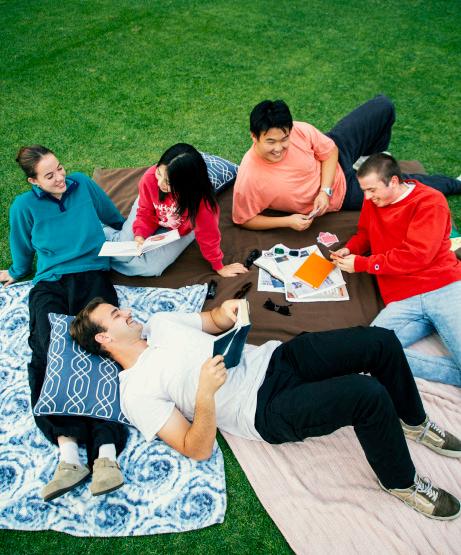
The Front Lawn is often packed with people around sunset. As the temperature drops, the lawn comes alive with students playing recreational sports like football or spikeball, hosting study groups and picnics or simply joggers passing by. Though we may not always realize it, the lawn plays a massive role in the culture at CBU. It provides a perfect backdrop for students to socialize, make memories, gain new experiences, capture the moment and, every once in a while, just goof around.














by Javid Becerra
Written by Skylar Fernandez
Photography by Elissa Garcia & Sydney Holloway
Design by Jaclyn Adams
Illustrations by Javid Beccera


For some people, finding their purpose is a long struggle. For others, it’s as simple as picking up a box of building blocks or caring for baby dolls, realizing those childhood normalities unlock the part of us that God tucked away long ago.
For Kaia Jones, sophomore interior design major, her Legos influenced her passions at an early age. She says, “My brothers would always like to build the sets, where I loved taking them apart and building houses and little furniture. Very much from an early age, clearly that was what I liked… I wanted to build a cute little house, make it, and decorate it and all that fun stuff.”
For the rare few, finding their purpose and passion is cultivated throughout life. For others, it takes more time and guidance to find that missing piece.
Oftentimes, it’s something small that guides us in the right direction. Childhood and family shape how we grow and who we become. Jones mentions how her family influenced her love for interior design. “My grandparents and parents helped restore old houses. I was around it since I was two years old. I think that’s part of why I love doing the Legos. I see my parents and grandparents doing this. I want to do that too and make it my own.”

For many of us, deep in childhood memories and maybe even now, a specific treasured toy or beloved stuffed animal sparks our first inklings of passion and purpose. Can it really be that simple? Can something so mundane and seemingly trivial, like building blocks, stuffed animals or even a piece of coal, unleash a lifelong passion or help us define who we are?
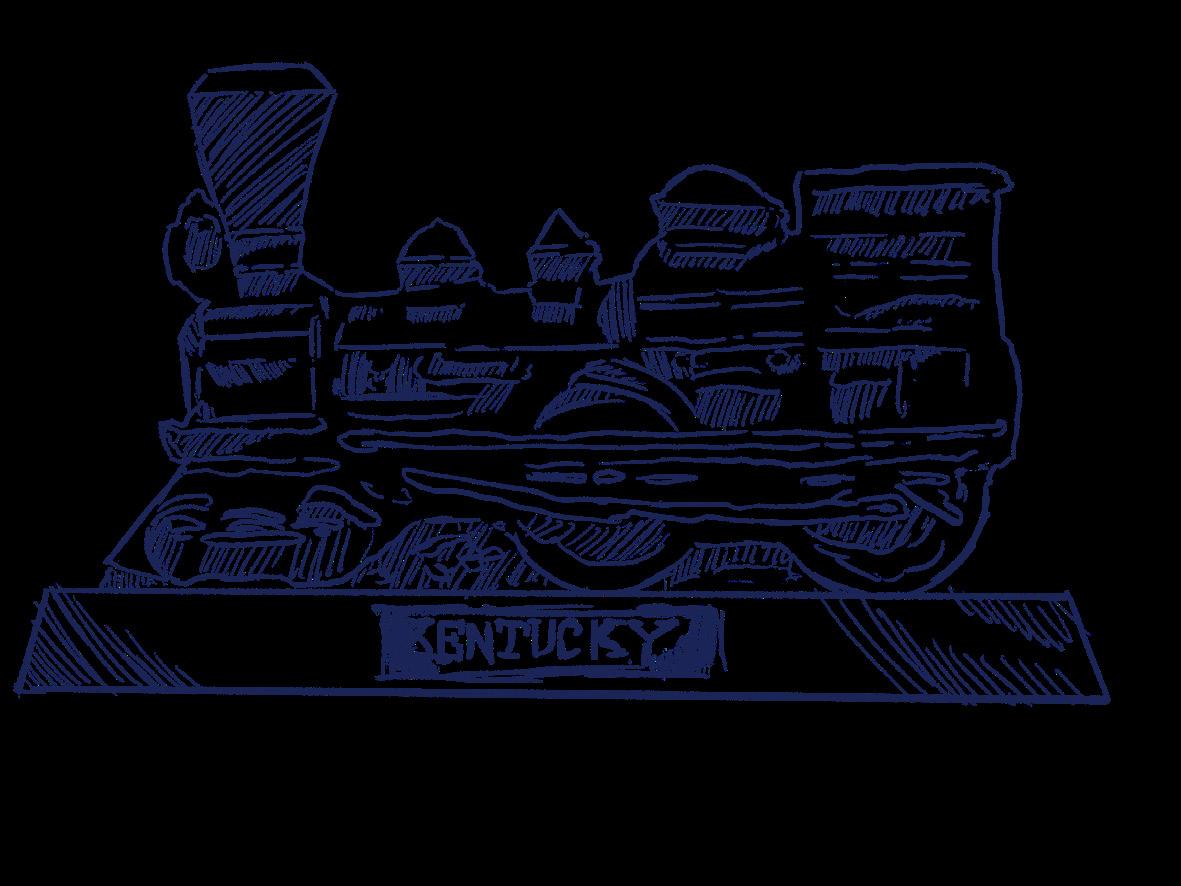
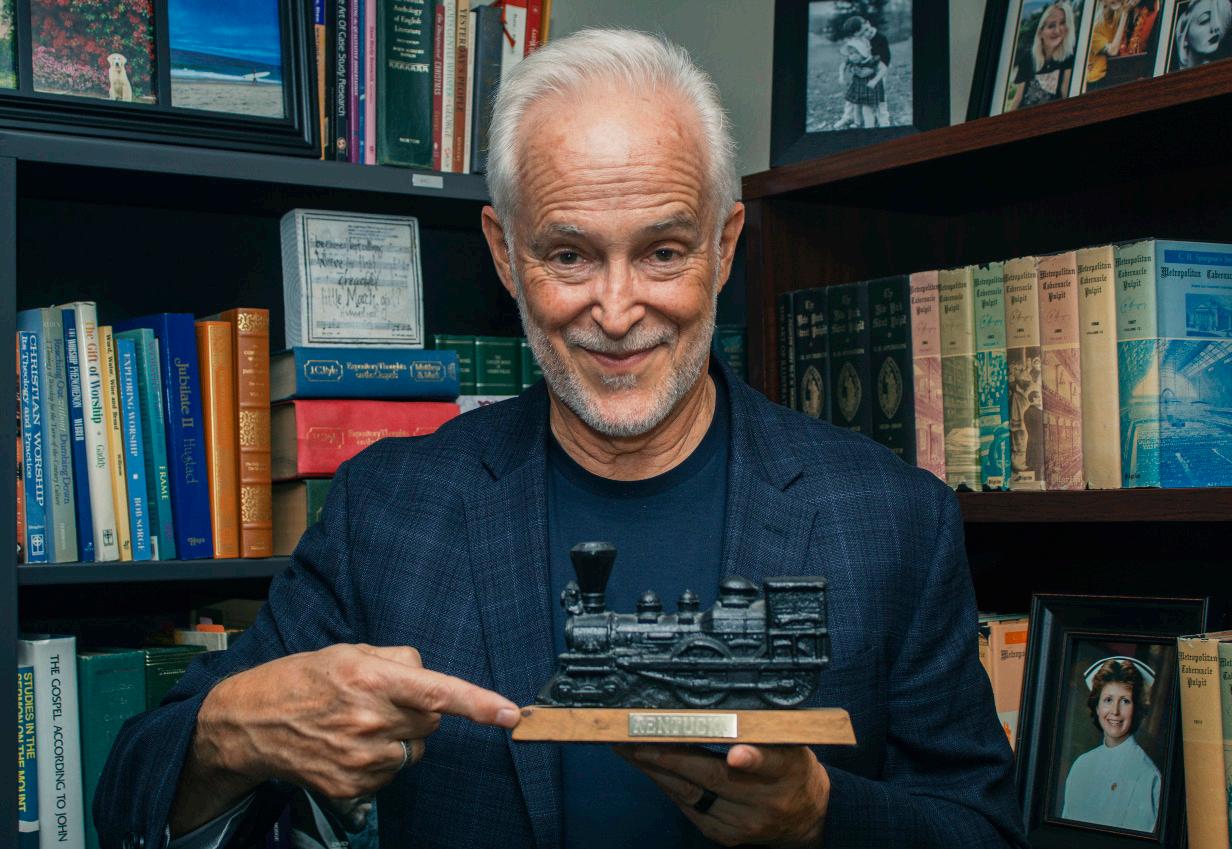
Dr. Daniel Blair, professor of Deaf studies and director of the center for Deaf studies, reflects on his childhood in Eastern Kentucky and his beloved train made from Kentucky coal. He says, “Absolutely. We just need to be looking for purpose in the right place. And that’s not in ourselves. Purpose, calling, if you will… it is objective. It comes from without. If we’re talking about calling and purpose, whose purpose? My purpose, or is it a purpose from without? And of course, for Christians, for believers, that is from God. His objective calling. We have to look to God… And then turn right back around and look at ourselves. That my purpose is His purpose.”

Childhood is when we grow, learn to express ourselves and play like bedtime didn’t exist. Our toys, big or small, were a part of the journey.
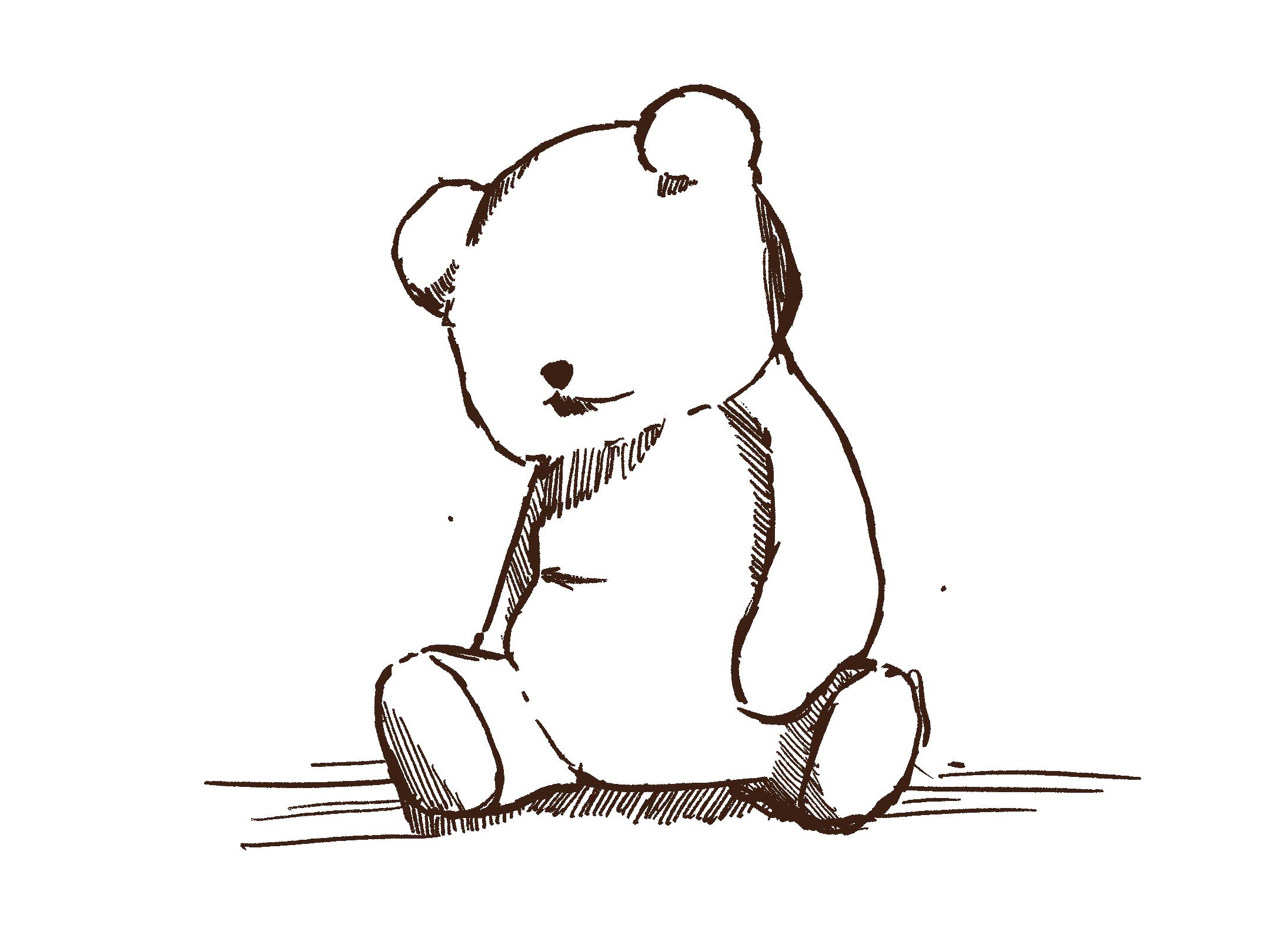
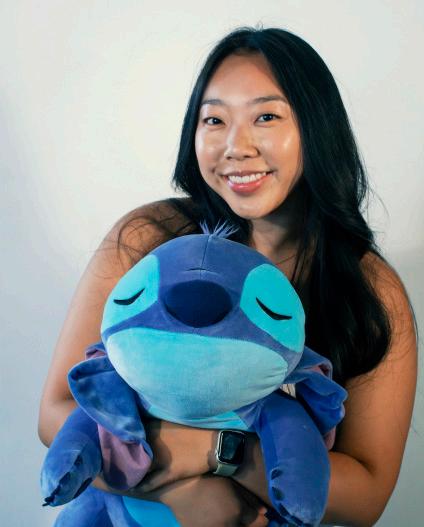
Lani Lee, senior nursing major, shares how her stuffed animals help her on her journey at California Baptist University. She says, “I get that a lot when I use my stuffed animals… just something comfortable and comforting from the past. At least for me, I think it shaped my journey in terms of grounding me and helping me in times when I need it. A sense of comfort.”
The adventures we imagine and the stories we create build on the foundations of who we are and shape our personalities as our dreams play out. Almost everyone has a special stuffed animal or childhood toy that still brings a smile to our face, reliving memories and playdates each time we see it. Some of us still have those toys, while others have passed them down or no longer have them, but we still hold the memories and lessons they taught us.
Joey Jagich, sophomore mechanical engineering major, recalls his first toy and what he’s learned from it. He says, “The first toy because I had it so much and because it was such a big part of me… it probably built a sense of sticking to something. I don’t let things go easily, whether it’s material stuff or, more specifically, with work. I get work done. I don’t let it go unfinished. And that is absolutely a big part of engineering. You don’t just stop halfway… they spark certain elements of my life like organization or determination.”
Dr. Daniel Blair, professor of Deaf studies, with his train from Kentucky.


Kaia Jones, sophomore interior design major, explains how Legos influenced her career choice.
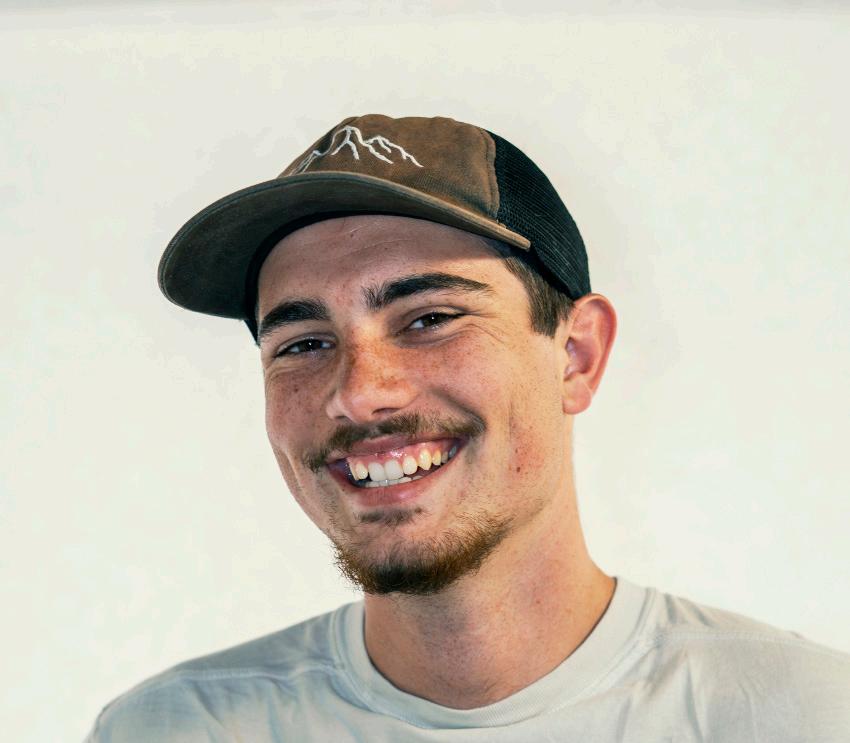
Joey Jagich, sophomore mechanical engineering major, recalls how his first toy shaped his character.



How we played as children and how we express ourselves can often be traced back to those early moments when we didn’t even realize we were forming our future. Our imaginations and personalities are already set in motion from birth, portions of our character that God placed in us with intention and purpose.
Lee reflects on how her childhood play connects to her nursing major: “I grew up playing with a lot of different, smaller toys, like Littlest Pet Shop or Barbie. And I always used to play with them being nurses or doctors or something like that. I was always trying to fix somebody, or even with my stuffed animals, I would pretend that they were bandaged up. Little did I know I wanted to go into nursing at the time.”
Fawzi Gramajo, senior Christian behavioral science and intercultural studies double major, shares how the Indiana Jones movies inspire his career path. He says, “I grew up watching the Indian Jones films. As a behavioral scientist, I get to learn about different cultures and different lifestyles. For me, I try to learn from different people, different cultures, and apply some of their techniques into my own life as long as it doesn’t contradict biblical teaching or the word of God.”


Fawzi Gramajo, senior Christian behavioral science and intercultural studies double major, shares how movies inspired his career path.


God shapes our plans and purposes through ordinary objects in our lives, from a train made of coal to movies and stuffed animals named Sara and Coconut. They become part of us, part of our past, and part of our future. Blair touches on this again; he says, “Here’s the deal. Can you find your purpose from something like a lump of coal? If you realize that everything in life is the result of God’s purpose, then yeah. Let’s see how it all connects because there are no accidents.”
As we search for our purpose, we reflect on our past, the toys we played with, the lessons we learned and the direction God leads us. While we reflect, we must remember not to let our past define us. God isn’t finished writing our stories, nor are we.
Gramajo adds, “One thing I would like to add is not to let your past determine who you are, to not let it determine your future. What’s in the past is in the past; you can’t change your past, but you can change your future. How you look at life, how you choose to fight another day, how you choose to smile and be kind to people even if they’re not kind to you… I think we have to keep focusing back on the mission that God has for each and every one of us and, of course, to live our purpose.”
We continue to understand the purpose, passions and plans God calls us to live out. Our toys, stuffed animals, mementos and objects shape us day by day into who we’re meant to be. Every piece of who you are as a student, friend, family member and individual adds to God’s marvelous plan for your life. We slowly move from playing to finding our purpose and living it out.

Lani Lee, senior nursing major, with one of her stuffed animals.
Natalie Tanaka
For a moment, our paths mingle For a moment, they are one
Like the rays of a sunset We burn brightly, but then are done
I’ll miss the way our colors conjoined, Our shared laughs, our secret jokes,
Your kindness that continued to flow From the day you first said “hello”
But I know one day we’ll both rise again
Maybe looking different, even with someone new
Yet we’ll burn brightly all the same Just me and you
CASEY MALDONADO Director of Student Publications, Print & Online
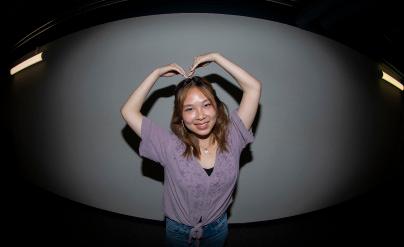

ELISSA GARCIA Assistant Photo Editor

JAVID BECERRA Illustrator
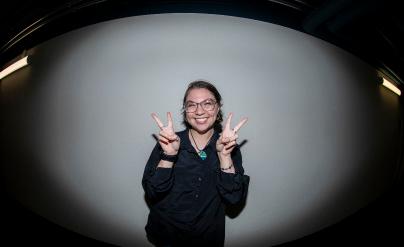
SKYLAR FERNANDEZ Staff Writer
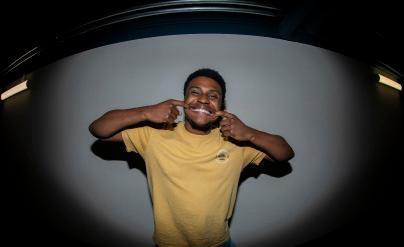
ZACHARY CONQUEST Staff Writer
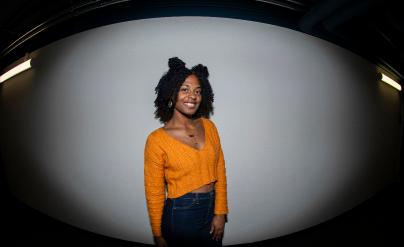
SHARENA STEEPLE Staff Designer
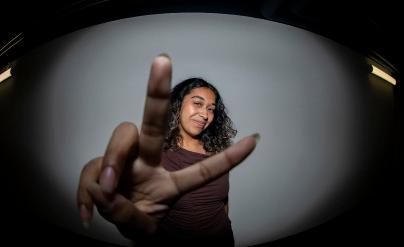
MICHELLE VAZQUEZ Staff Designer
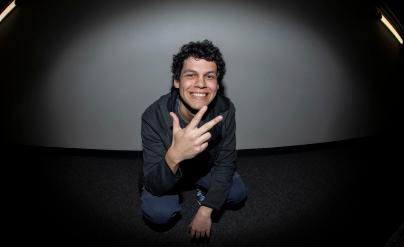
ETHAN WERK Staff Writer
CONTRIBUTORS
Josiah Alvarado
Tirza Bustrum
Mackenzie Head
Sydney Holloway
Jack Lonac
Briaira Townsend


Hi, I’m glad you’re here.
From history, to building legacies that will last forever, to how your dorm decorations bring you a piece of home and how the pieces you carry show who you are, the stories we live everyday in college are a chapter of the journey we call life.
I hope this issue of Pursuit has made you feel a sense of belonging and allowed you to reminisce about the past, where you can feel gratitude for your journey as a student at California Baptist University and excitement for what the future holds.
I’ve called CBU my home away from home, and even before I officially arrived in California a few years ago, Lancer Media Group had already given me an opportunity far greater than I could have ever imagined possible, even when the life I knew best was about 6,015 miles away.
LMG has been the place of discovery and growth, I’ve had the chance to do a little of everything. It was one of the first places on campus I felt like I truly belonged. Getting the call to be asked to serve as Pursuit editor-in-chief was truly an unexpected door that God opened.
I’ve been privileged to have so many wonderful people by my side throughout these years. To all my professors, friends, roommates and supervisors, you’ve all changed my life for the better.
To the Pursuit team, you’re all incredible storytellers and creatives. Thank you for your support; I couldn’t have done it without you.
A special thank you to Natalie Tanaka. It was an absolute privilege and honor working with you on this issue, I’m grateful for your encouragement and support. You’re so talented and will be greatly missed.
Obrigado por tudo Sarita e Marcelo,
Until the next issue… Editor-in-Chief