


August Saturday 3 Hopping practise
September Saturday 7 Spring Show – RCNZ & Support Show
October Saturday 19 CDRA Campionship Show – RCNZ South Island Nationals
December Saturday 7 Christmas Show
All shows held at Burwood Scout Den Hall, 16 Travis Road Christchurch.
If there are changes to the venue or date you will be notified via the schedule and Facebook page.
Contact us: c.d.r.a.inc@gmail.com Club magazine – Canterbury Tails Editors: cdra.tails@gmail.com
Catherine Hannagan – President
Trophy Steward • Show Secretary • Chief Steward
Lynette Peebles – Secretary
Wayne Edmond – Vice-President First Aid • Raffle Organiser • Assistant Show Manager
Sitereh Schouten – Treasurer Show Manager Committee
Janine Hutton Editor
Kathleen Brinsdon
Danielle Thomson Committee meetings are held in February, June and September each year. All members are welcome.
Disclaimer: The views and opinions expressed in this magazine are not necessarily those of the Canterbury Domestic Rabbit Association Inc. Which disclaims any responsibility or liability for the contents of this magazine.
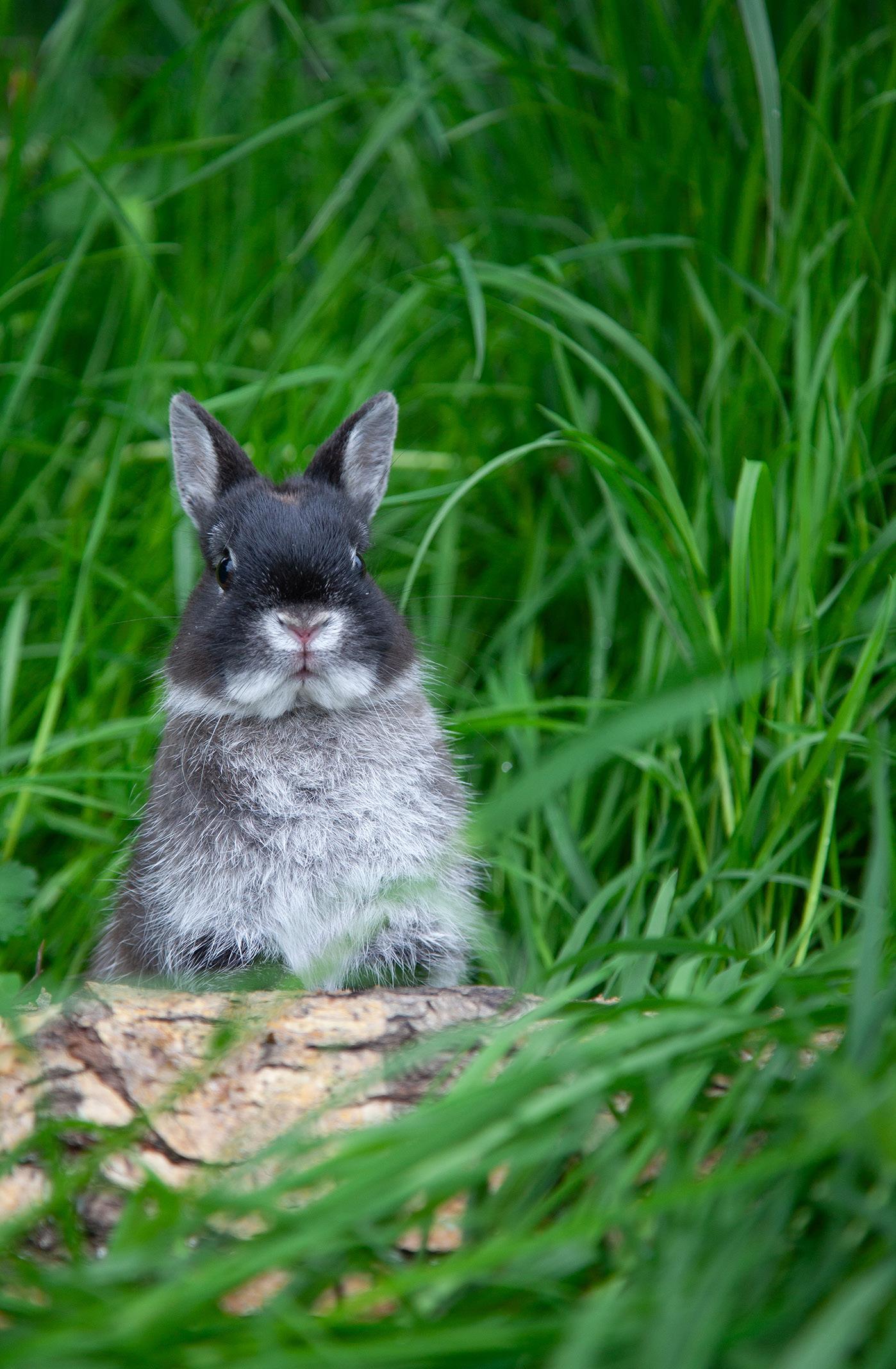
When they said the time to hide was mine, I hid behind a thick grapevine. And while I was still for the time to pass, A little gray thing came out of the grass. He hopped his way through the melon bed And sat down close by a cabbage head. He sat down close where I could see, And his big still eyes looked hard at me, His big eyes bursting out of the rim, And I looked back very hard at him.
Elizabeth Madox Roberts
How old were you when you got your first rabbit?
My very first rabbit was around 11 as my cat was very good at catching them. I tried to care for the little babies, they must have been about 6 weeks old. I didn’t really understand how scared they were when caught. They would die very quickly. Mum and Dad never encouraged rabbits keeping, they saw them as stew in those days.
What rabbit breed is your favourite and why?
I have a few special breeds I like. The Enderby Island Rabbit and the Flemish Giant. You can’t beat a good story, and giant sized rabbits never fail to impress. So Enderby Island and Flemish Giant I am drawn to the most.
How many rabbits do you own?
I wont say how many. But I do have a few breeds now. Enderby Island, Flemish Giant, Silver Fox and Standard Chinchilla.
What is the best and naughtiest thing your rabbit can do?
I can’t think of a best trick or anything different, but I am very impressed how some of the food bowls get used as frisbees and thrown around their cage between mealtimes.
The naughtiest annoying thing I can think of is by a silver fox. Every day I do the same thing, I scoop out his food and before I put it into his bowl, he knocks my hand and it goes everywhere, and not where it should. When it happens, I jump, then I remember from the day before, that’s right he does that. Tomorrow I will be quicker. But I’m not.
Do you have any plans or projects for yourself, or your rabbits?
My future project is for my husband to build an amazing rabbitry, where I can get into the cages, making it easier than what I have now, so I can do more patting, grooming and just


enjoy them. I do love watching the babies grow. There is always room to improve ,no matter what you have, but making it fun is the best.
How long have you been a member of CDRA?
I think I have been a member of CDRA since 1999.
I remember our shows were over in Mount Pleasant Community Centre until the earthquake in
September 2010. We had a show that day and had to cancel it. There were shows every month and I went to most of them.
I enjoyed learning and seeing all the different breeds, meeting interesting people. Many juniors would come to the monthly shows.
All the interest I have now to do with rabbits started with going to CDRA shows.
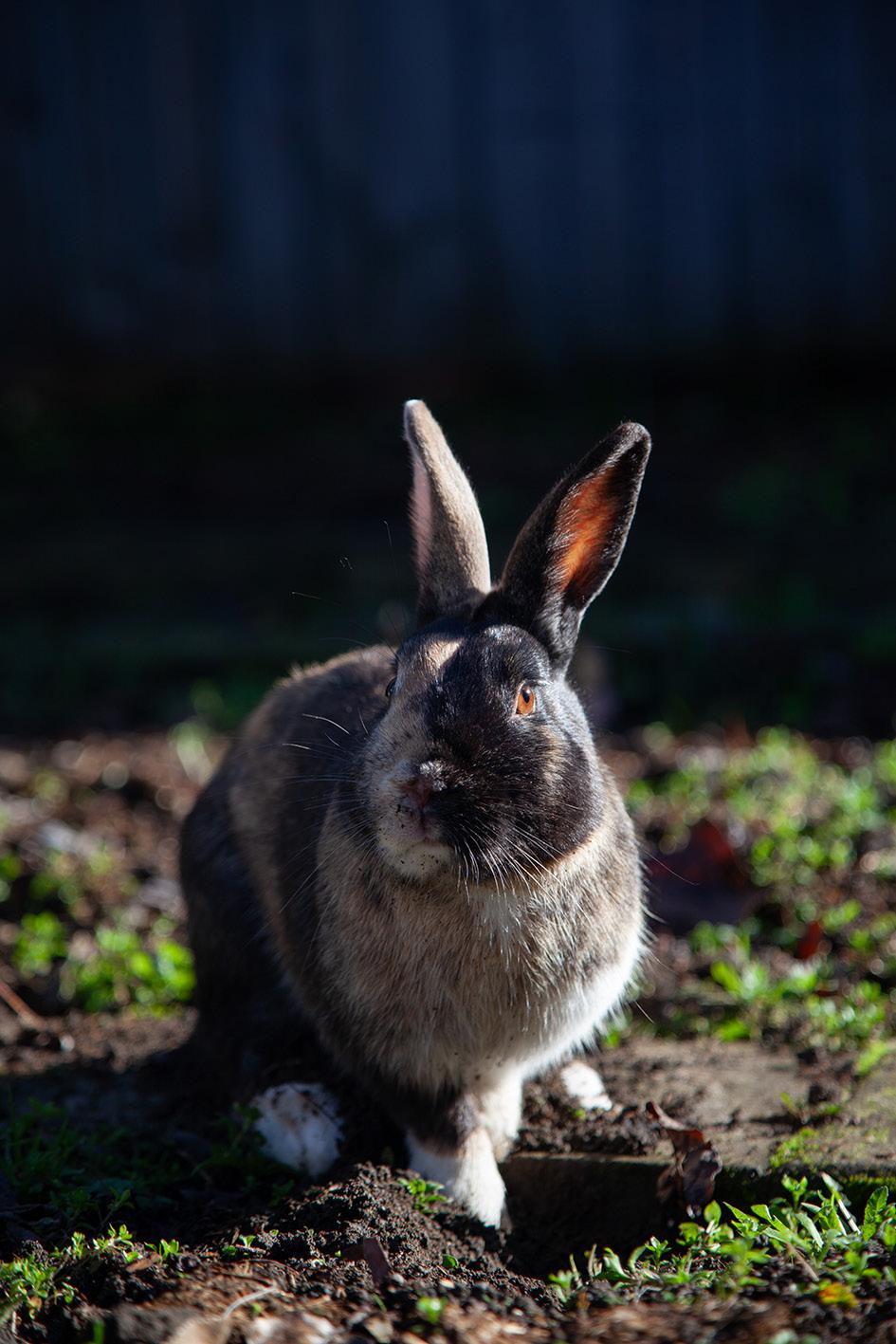
The Harliquin rabbit is striking to look at Harlequins being most recognizable for their unique coloration.
Viewed from the front, its face is divided evenly from top to bottom into two colors; each side of the body then features five to seven bands of alternating colors. Furthermore, its legs and ears will also exhibit this alternating color pattern. They come in a variety of colours such as Black, Blue, Brown, Lilac, Black Magpie, Blue Magpie, Brown Magpie and Lilac Magpie. The earliest records of what is now known as the Harlequin rabbit come from 1872 in Tokyo, Japan. In fact, the original name for this intriguingly coloured breed bears witness to its origin: It was called the “Japanese” across the U.S. and England until the Second World War, when it received its current name.
original name of “Japanese”. As early as 1890, an enterprising French rabbit fancier traveled to Japan to purchase a breeding pair. Upon returning to Europe, breeding commenced immediately and spread quickly. Reaching Chicago by 1917, they sold for an astonishing $40 each – the equivalent of nearly $900 today!
Inducted into the American Rabbit Breeders Association registry in 1914, they have been a fixture in rabbit competitions ever since.
Elsewhere in the world, this breed of rabbit is still known by its
Its an excellent pet rabbit as the are friendly and curious. They are

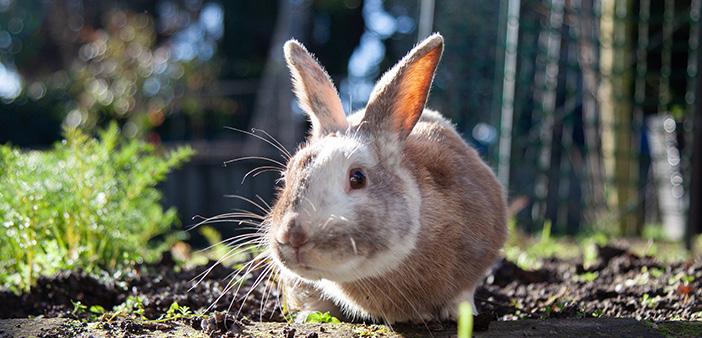
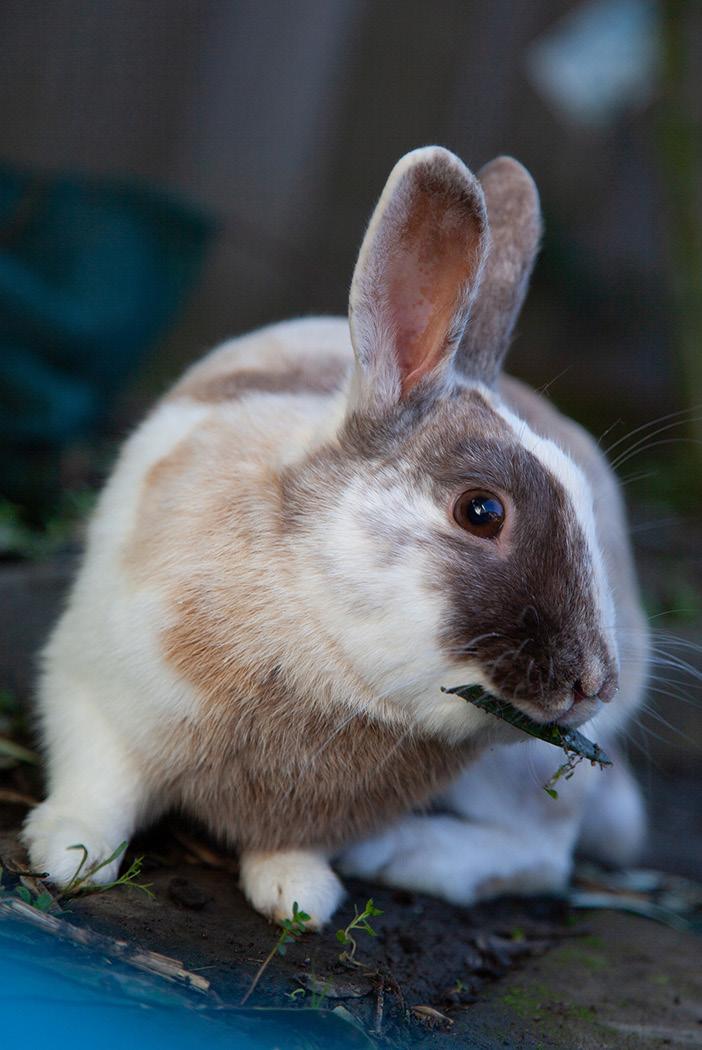
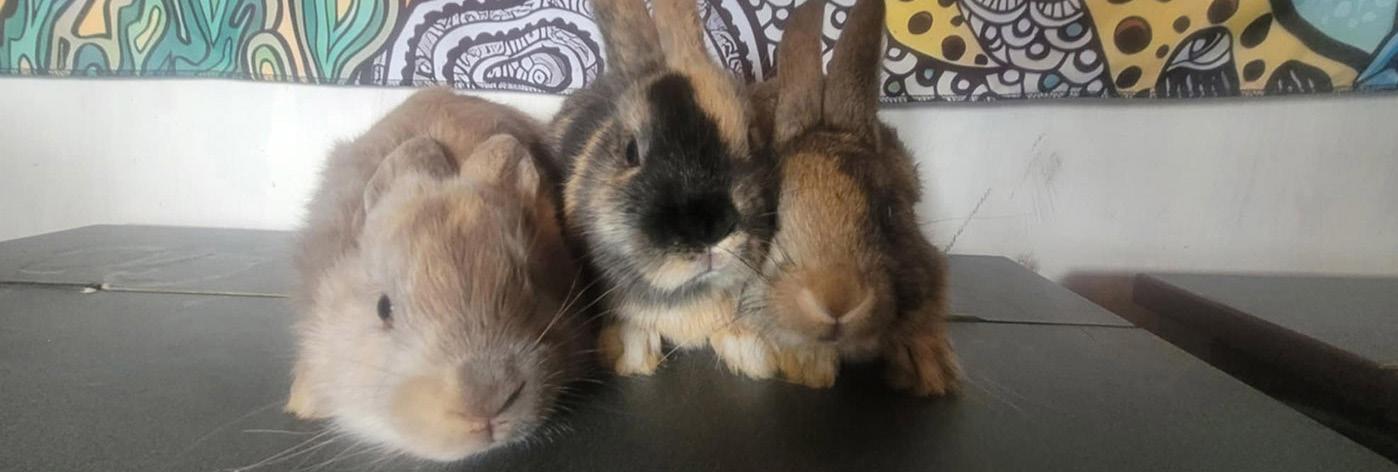
a medium breed rabbit and are very trainable enjoying being on a harness and engaging with their two legged family members They also seem to get on quite well with other pets such as cats and dogs.
Harlequins are a very social bred of rabbit and do well living in family groups. To keep their fur in prime condition is relatively low
maintenance, a weekly brushing will suffice for most of the year.
With a well-muscled commercial body type, the Harlequin weighs in on the heavier size of medium rabbits, reaching up to 10 pounds fully grown. Though they once enjoyed great popularity in the United States, they are considered a rare breed to find today.
Dave Gallagher, whose rabbit won Best in Show at 2017’s prestigious London Championship Show shares his tips for success.
Condition your rabbit in the months leading up to a show
A relaxed rabbit makes it easier for a judge to evaluate and see its best qualities. I handle my rabbits at least three or four times a day in the weeks leading up to a show, and I find that it’s always been a good way to build up trust. It also allows me to find out more about my rabbit, and the noises he makes when he’s happy or not.
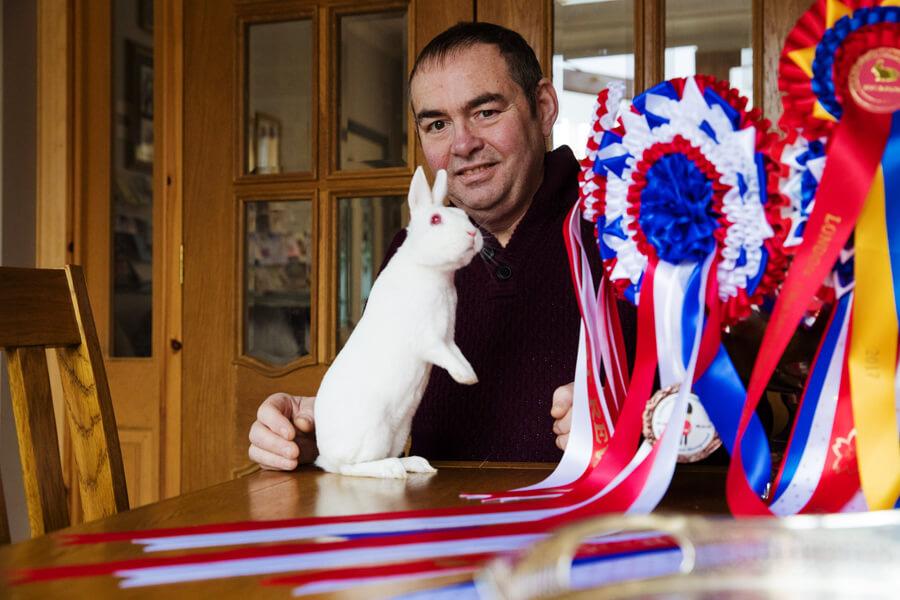
My tip for cleaning a rabbit is just to run your hands under a tap, shake off the excess water, then run them through your pet’s coat, getting rid of any dead hairs. If your rabbit has a moult in the weeks leading up to a show, try not to groom that area as it could fall out and leave a patch.
Get your rabbit used to sights and sounds
As long as your rabbit is introduced gently, say two to three shows a year, he’ll get used to the environment. However, shows are noisy places and a nervous or aggressive rabbit won’t perform well. I train my rabbits by having a radio on in my shed night and day, to get them accustomed to different sounds. I’ll practice posing
them too, as some breeds are posed in a specific way. The Polish ones sit up, so I’ll put one hand under their chins, and the other on their backs to allow their legs to go nice and straight. But don’t attempt this with rabbits less than four months old, as their bones are still soft and you may hurt them. I’ll let my rabbits see their reflection in a mirror too, so they’re used to the sight of other animals.
On the day of the show, I’m up early making sure my cages and rabbits are spotless. I’ll thoroughly groom my bunnies and make sure to get into all the awkward places, such as under the chin, the inside of the legs, and around the bottom. If I notice a white rabbit has a mark on its coat or ear, I’ll dab on some cornflour using my thumb.