YORK SILVER
The Richard Sykes Collection

York is where I was born and grew up, and the city has always had a central place in my affections. When in 1988 I saw advertised in a copy of Country Life magazine the photograph of a silver tankard (no. 31) made in York in the 17th century and engraved with the arms of the Earl of Strafford, one of the paramount names of 17th century England, I had to have it. My collection started there.
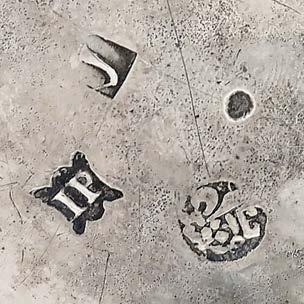
York is one of just a handful of provincial cities that was authorised by law to have its own town mark and assay office for the testing, or ‘hallmarking’, of silver. York was granted this statutory privilege in the early 15th century, when it was the most important provincial city in England – which of course in the mind of many right-thinking people it still is! Without hallmarks one could not distinguish York silver from any other silver. Hallmarks are an early form of consumer protection: by stamping on a piece of silver a mark, the town mark, to show where it came from and that it had been tested for purity, or assayed, by the town’s assay office, and by adding (as was later required) two further marks, the maker’s mark, identifying who made it, and a date letter it was hoped that the sale of sub-standard silver would be prevented.
Representations of the York town mark used over the years are set out below. The town mark was originally, as can be seen below on the left, half a fleur de lys and half a leopard’s head conjoined. During the 17 th century the half leopard’s head was replaced by half a seeded rose, though it is not always easy to distinguish between the two. The punches were really too small for the amount of detail and they were often not applied very crisply or have become worn with time.
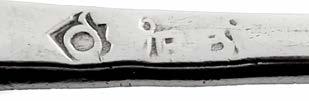
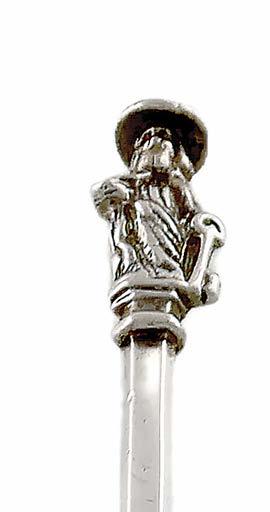
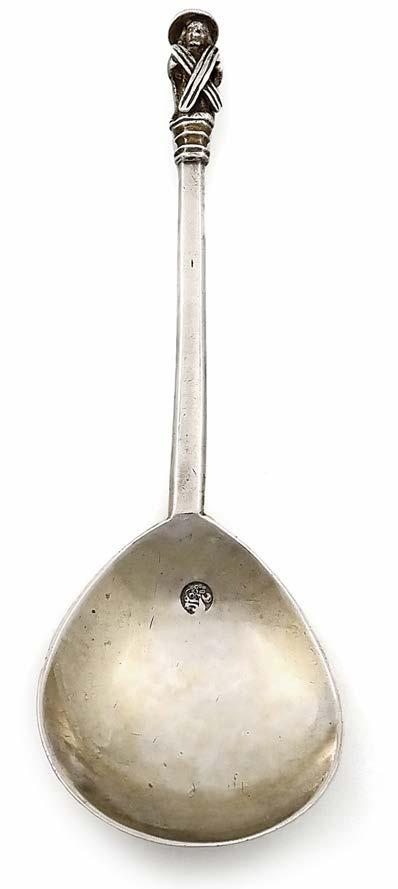
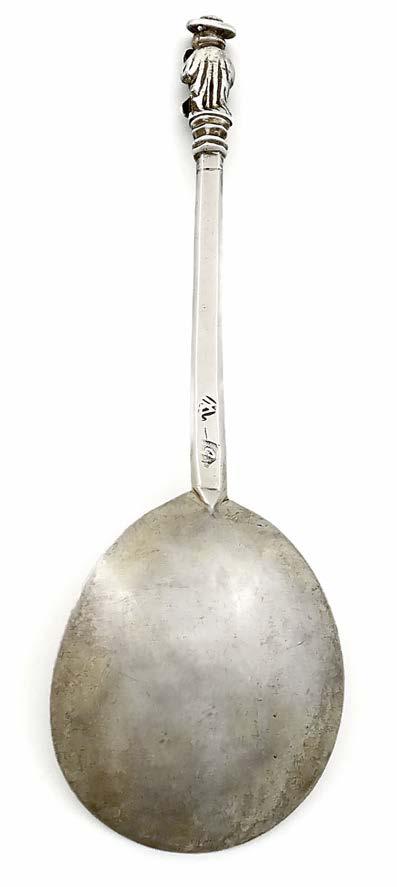
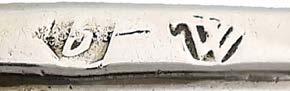
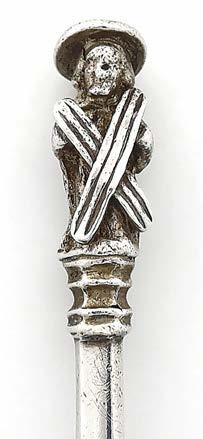
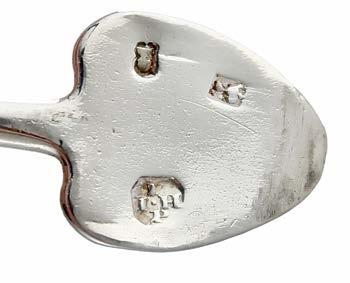
At the beginning of the 18th century the town mark was changed again to Five Lions Passant on a Cross, and the three images below on the right are variants of that mark. In addition to the town mark and the maker’s mark, a third mark to appear on silver from early times was the date letter. This was a letter of the alphabet with each cycle of the 26 letters of the alphabet being distinguishable in one way or another from the cycles that went before. Figure 1 shows a spoon with the date letter ‘G’ for 1565 and the maker’s mark ‘RG’ for Robert Gylmyn. This is my earliest piece of York silver. Figure 3 is an apostle spoon of ten years later, appropriately for York showing St Peter who is the patron saint of the city. We know it is St Peter because of his rather outsized key.
It is remarkable that through the hallmarking system we are able to know the names of the craftsmen who made these articles and where they made them and when. There are not many objects of everyday use about which one has such information 450 years after they were made. As to who in York bought these spoons when they were new and first used, we can only speculate, but we know it was in the reign of Elizabeth I and before Shakespeare had written any of his plays.
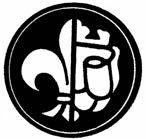
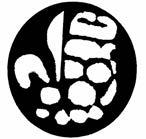
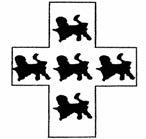
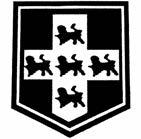
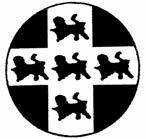
1559 - 1631 1632 - 1700 1701 - 1716 used periodically 1798 - 1839 c.1776 - 1790 used periodically 1813 - 1827 1790 - 1858
All dates of pieces in this catalogue are taken from Bradbury’s Book of Hallmarks , 2023 edition, which incorporates Nicholas Shaw’s research, presented to The Silver Society on 24 June 2002, showing that York dates to 1714 were, in many cases, different from those previously recorded.
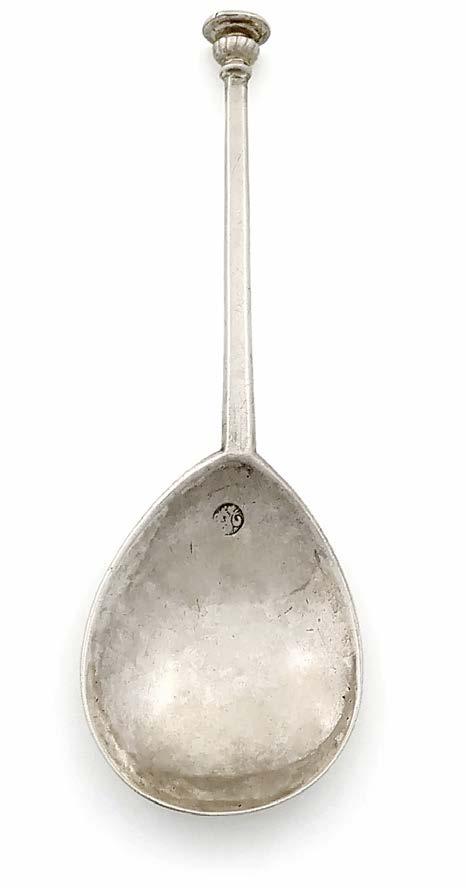
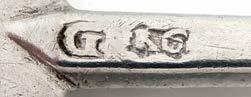

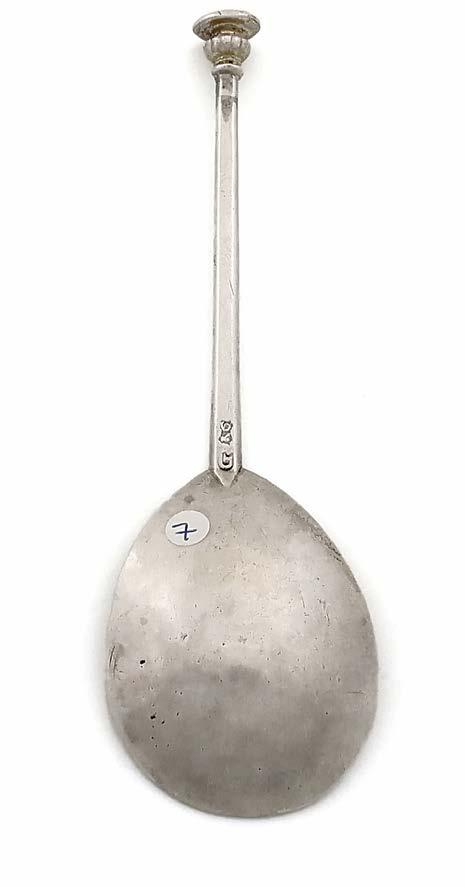
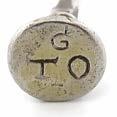
An Elizabeth I silver Seal-top spoon, by Robert Gylmyn, York 1565, fig-shaped bowl, faceted tapering stem, seal-top finial with traces of gilding and initialled G over T O, length 15.4cm, approx. weight 1.06oz.
One of the earliest York spoons to have such a clear date letter.
Exhibited:
Merchant Adventurers’ Hall, Fossgate, York, ‘Three Centuries of York Silver 1550-1858’, 14-28 July 2000, exhibit no. 7.
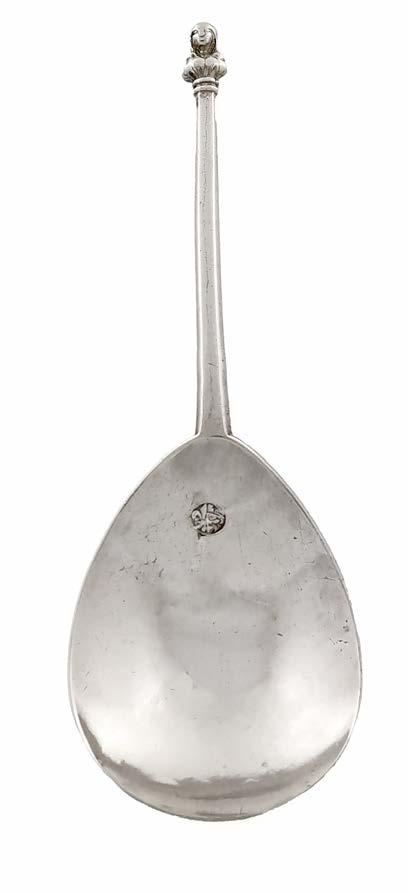
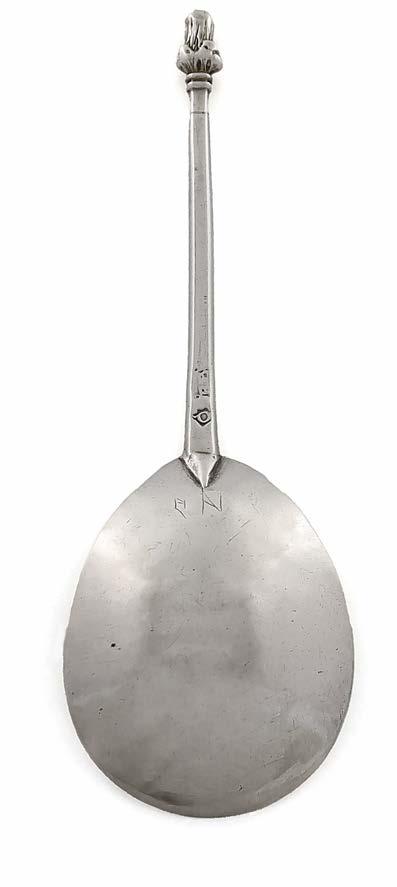

An Elizabeth I silver Maidenhead spoon, by Robert Beckwith, York 1574, fig-shaped bowl, faceted tapering stem, the terminal depicting the Virgin Mary, length 16cm, approx. weight 1.5oz.
Exhibited:
On display at Merchant Adventurers’ Hall, Fossgate, York, since 1999. Merchant Adventurers’ Hall, ‘Three Centuries of York Silver 1550-1858’, 14-28 July 2000, exhibit no 12.
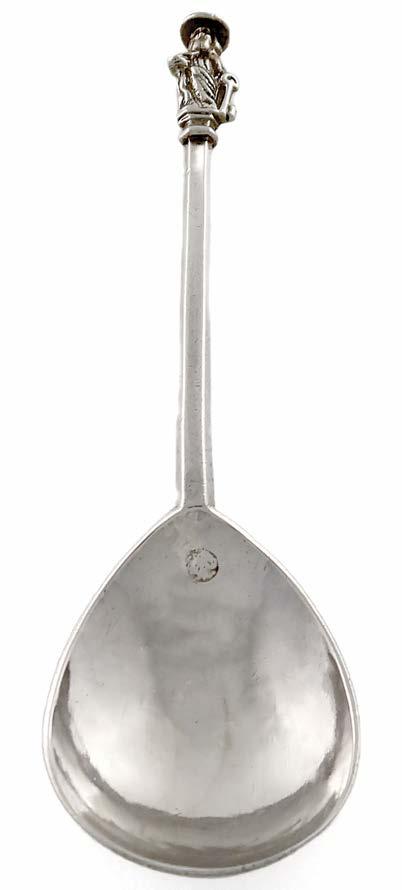
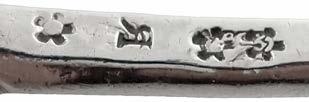
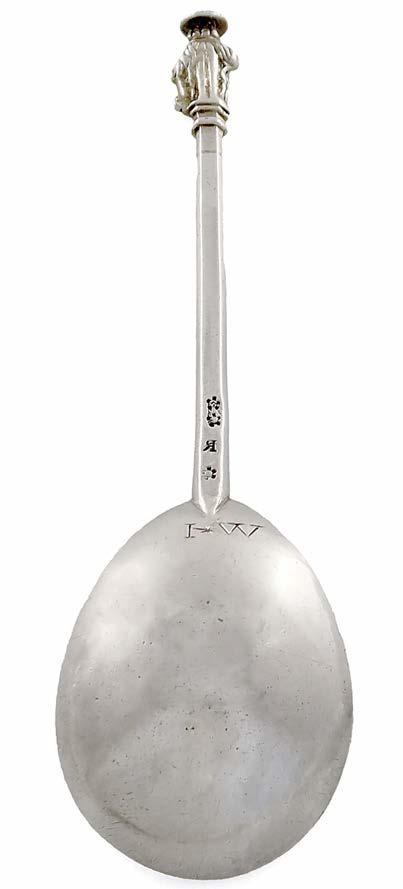

An Elizabeth I silver Apostle spoon, St Peter, unidentified maker, York circa 1575, fig-shaped bowl, faceted tapering stem, the reverse of the bowl initialled I*W, length 18.4cm, approx. weight 2oz.
St Peter is the patron saint of York.
Exhibited:
On display at Merchant Adventurers’ Hall, Fossgate, York, since 1999. Merchant Adventurers’ Hall, ‘Three Centuries of York Silver 1550-1858’, 14-28 July 2000, exhibit no. 13.
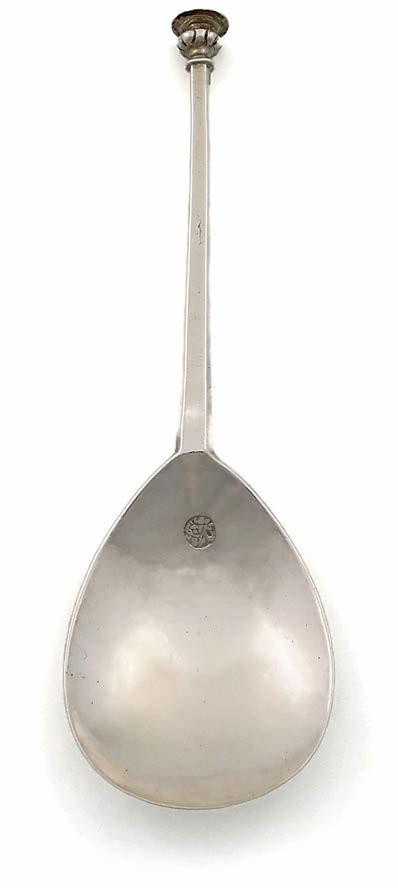
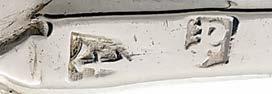

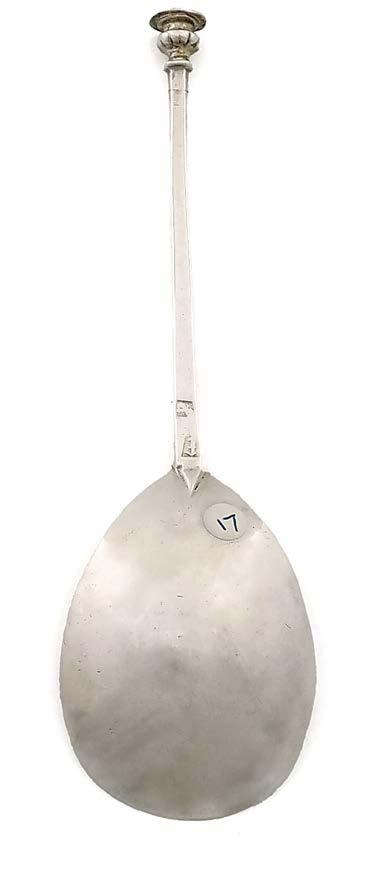
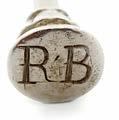
An Elizabeth I silver Seal-top spoon, probably by Thomas Pindar, York 1588, fig-shaped bowl, faceted tapering stem, seal-top finial with traces of gilding and initialled R.B, length 15.4cm, approx. weight 1.02oz.
Exhibited: Merchant Adventurers’ Hall, Fossgate, York, ‘Three Centuries of York Silver 1550-1858’, 14-28 July 2000, exhibit no. 17.
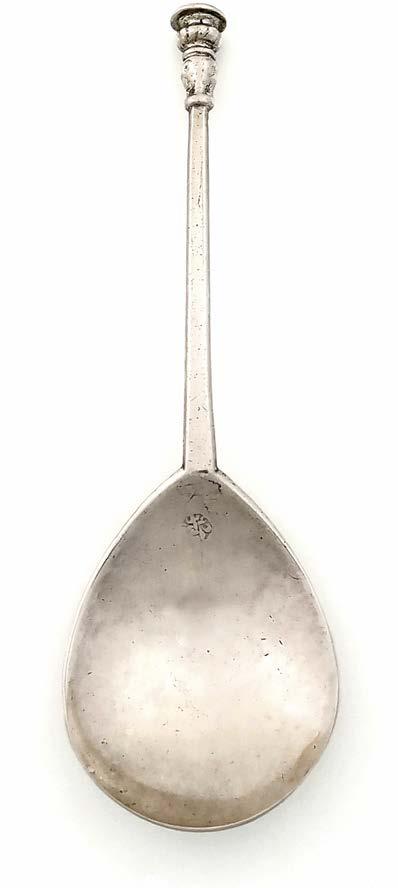
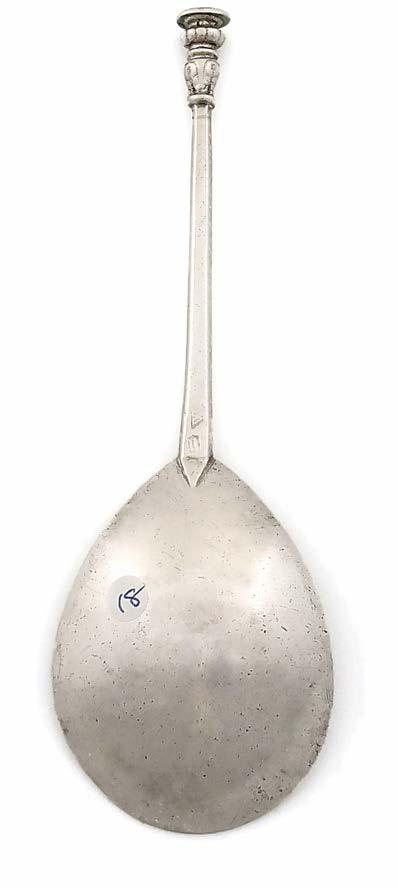
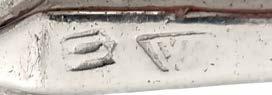

5 An Elizabeth I silver Seal-top spoon, by William Rawnson, York 1595, fig-shaped bowl, faceted tapering stem with a seal-top finial, length 16cm, approx. weight 1.33oz.
Exhibited: Merchant Adventurers’ Hall, Fossgate, York, ‘Three Centuries of York Silver 1550-1858’, 14-28 July 2000, exhibit no. 18.
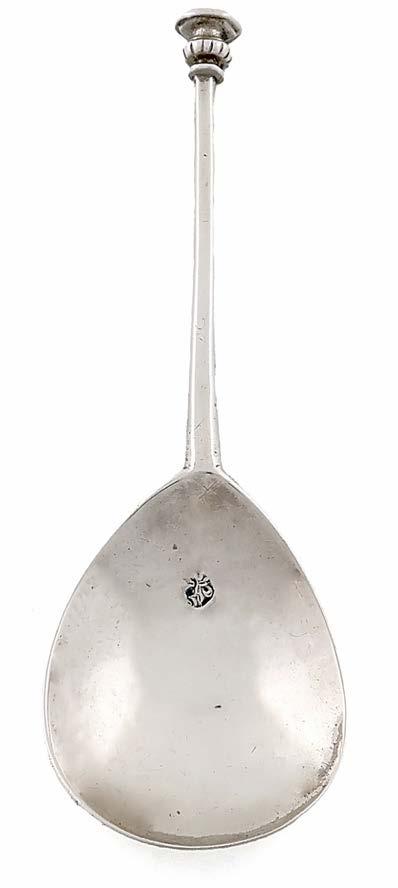
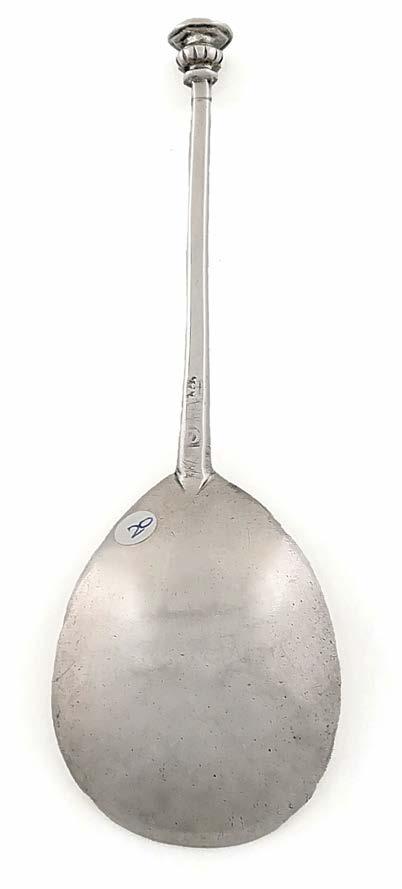
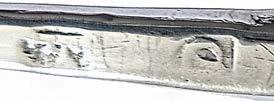

A James I silver Seal-top spoon, by Francis Tempest, York 1609, fig-shaped bowl, faceted tapering stem with a seal-top finial, length 15.6cm, approx. weight 1.27oz.
Exhibited: Merchant Adventurers’ Hall, Fossgate, York, ‘Three Centuries of York Silver 1550-1858’, 14-28 July 2000, exhibit no. 20.
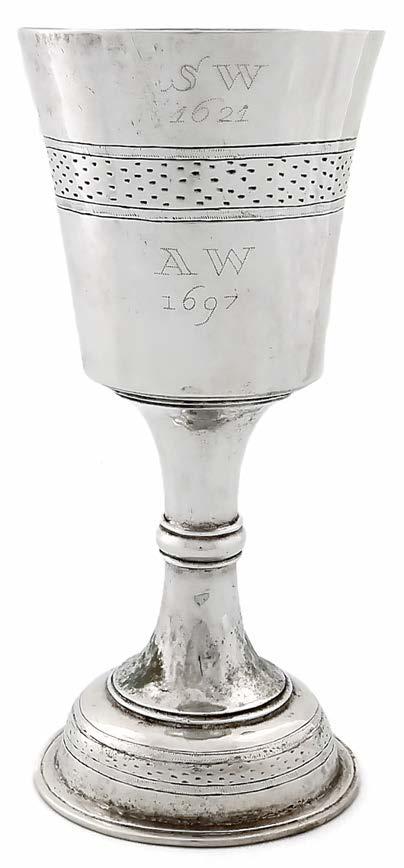
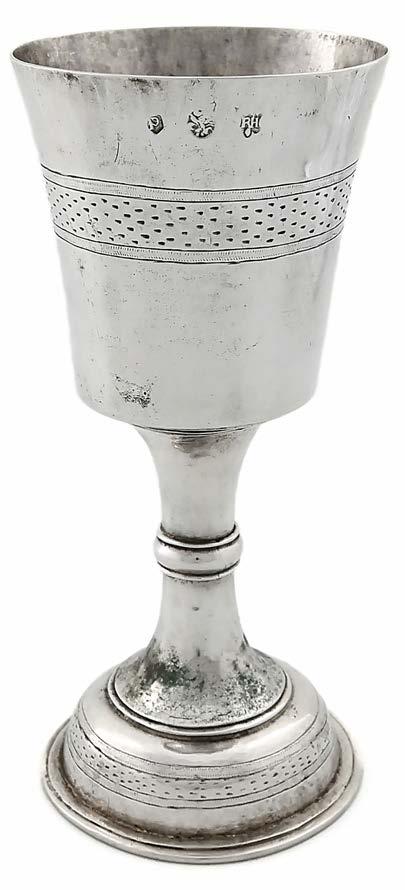
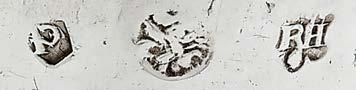
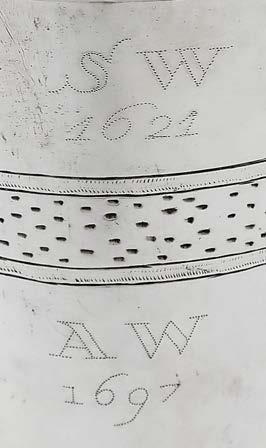
A James I silver Communion cup, by Robert Harrington, York 1621, tapering circular bowl, prick-dot initials S W and 1621 above an engraved band of dotted decoration, and prick-dot initials A W over 1697, tapering knopped stem on a raised circular foot, with a similar band of engraved dotted decoration, height 19.1cm, approx. weight 9.5oz.
Exhibited:
Merchant Adventurers’ Hall, Fossgate, York, ‘Three Centuries of York Silver 1550-1858’, 14-28 July 2000, exhibit no. 22.

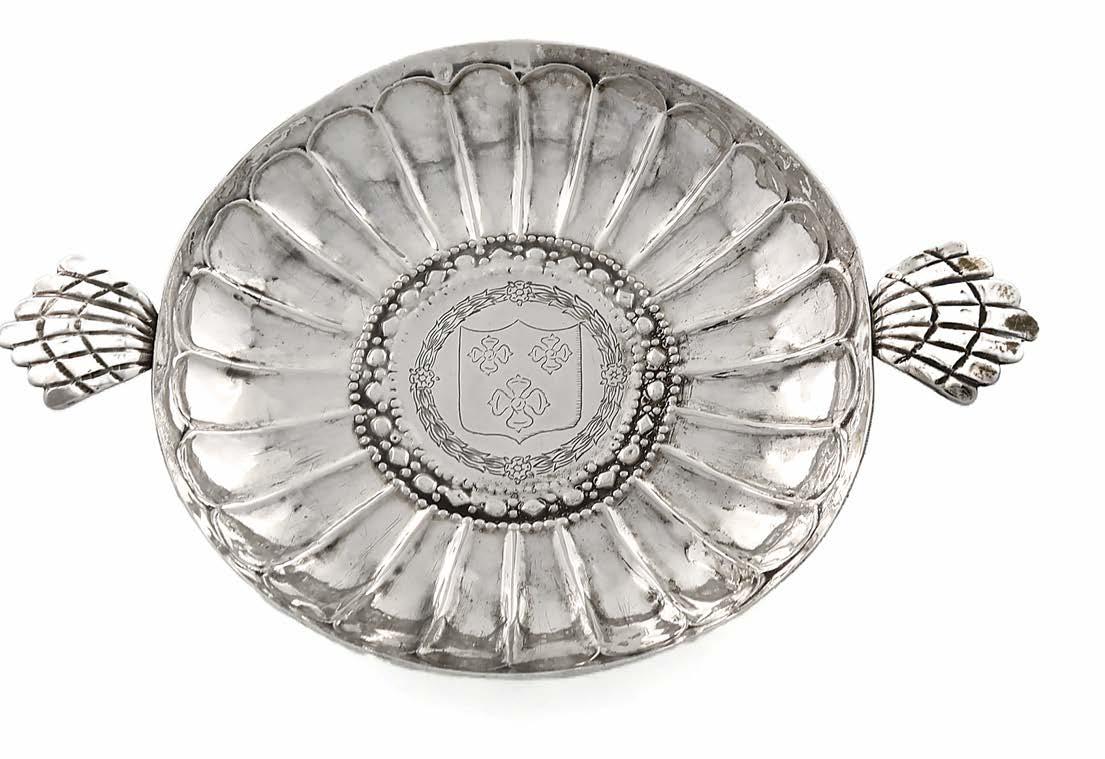

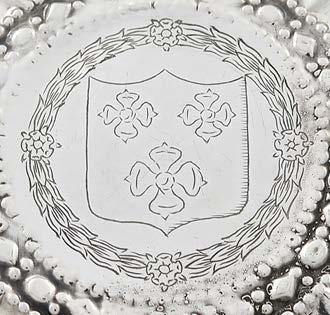
A Charles I silver sweetmeat dish, by James Plummer, York 1636, circular scalloped form, the centre of the bowl with chased punch-bead decoration and engraved with a coat-of-arms, with two scallop shell side handles, length handle to handle 19.5cm, approx. weight 2.6oz.
James Plummer was apprenticed to Christopher Harrington on 20th October 1613, and was free in 1619. He died on 3rd June 1663, and was buried at St Martin’s Church, Coney Street.
Exhibited: On display at Merchant Adventurers’ Hall, Fossgate, York, since 1999. Merchant Adventurers’ Hall, ‘Three Centuries of York Silver 1550-1858’, 14-28 July 2000, exhibit no 31.
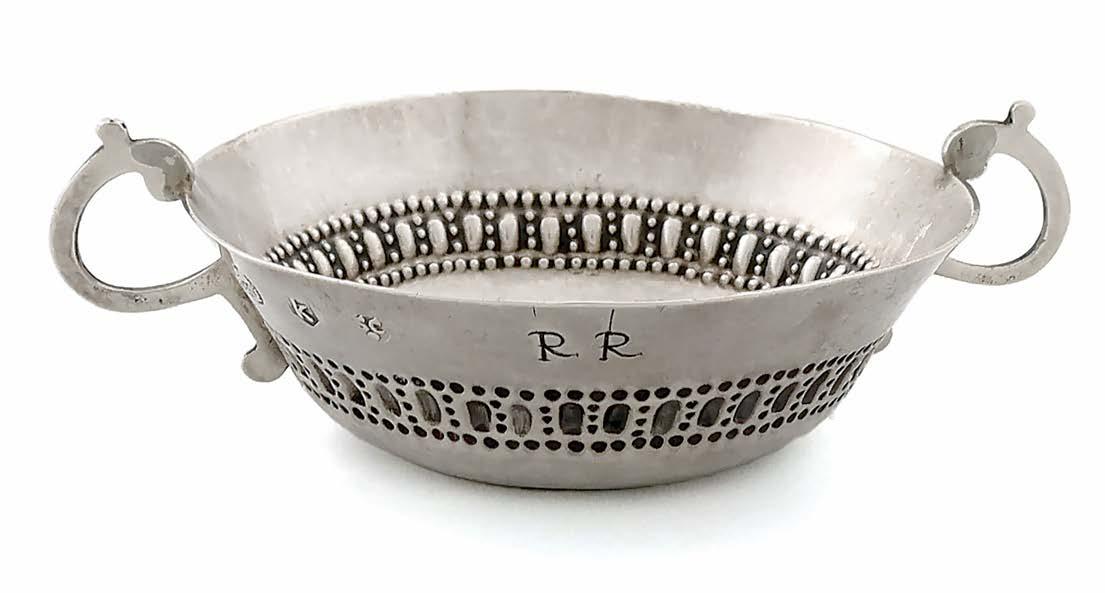
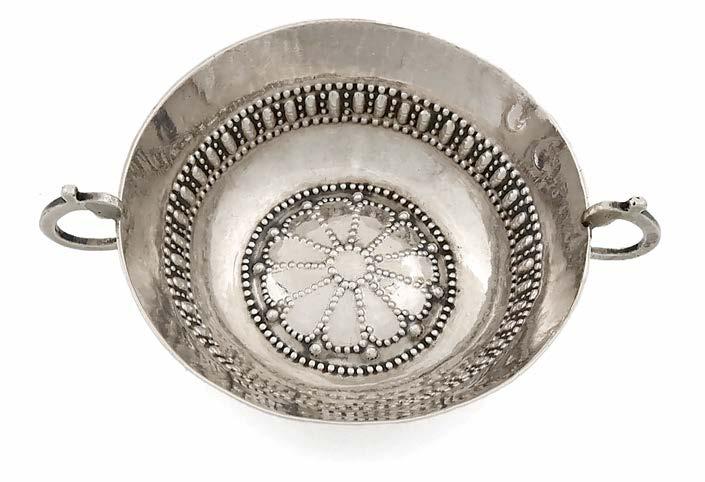
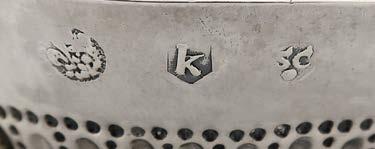
A Charles I silver wine taster, by Sem Casson, York 1640, tapering circular form, initialled R R, with a punched egg and bead band around the body, lobed and punch-dot decoration in the base, two scrolling side handles, length handle to handle 11.4cm, approx. weight 1.4oz.
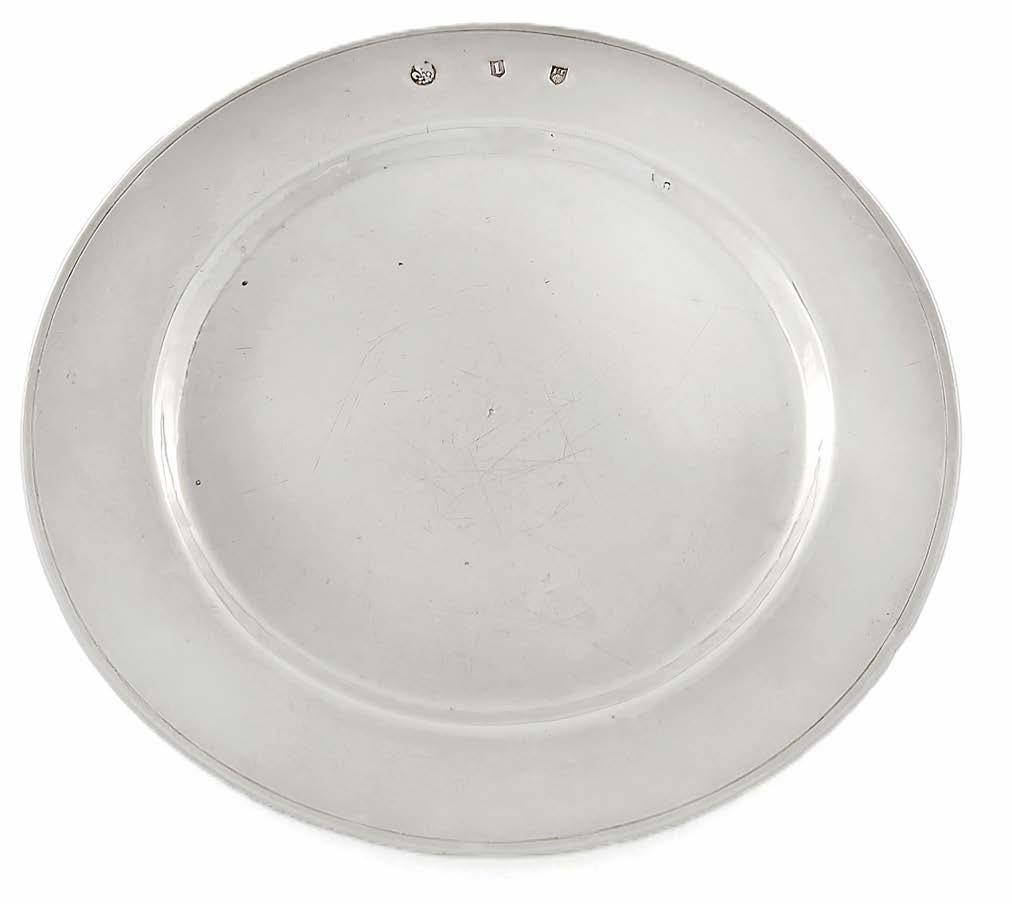
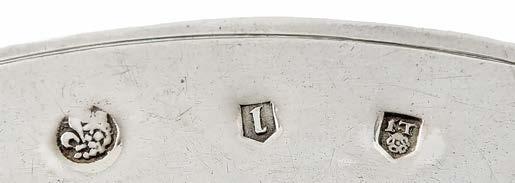
A Charles I silver spice/side dish, by John Thompson, York 1641, plain circular form, diameter 18.8cm, approx. weight 6.5oz.
Exhibited:
On display at Merchant Adventurers’ Hall, Fossgate, York, since 1999. Merchant Adventurers’ Hall, ‘Three Centuries of York Silver 1550-1858’, 14-28 July 2000, exhibit no. 35.
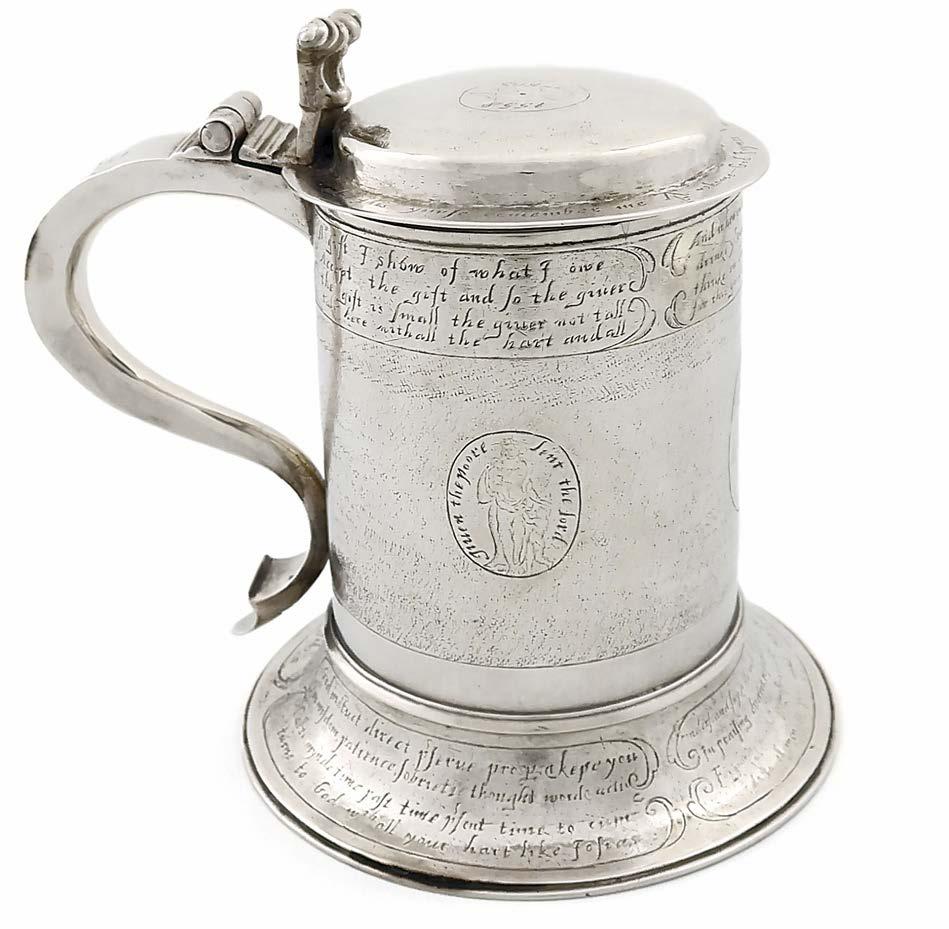
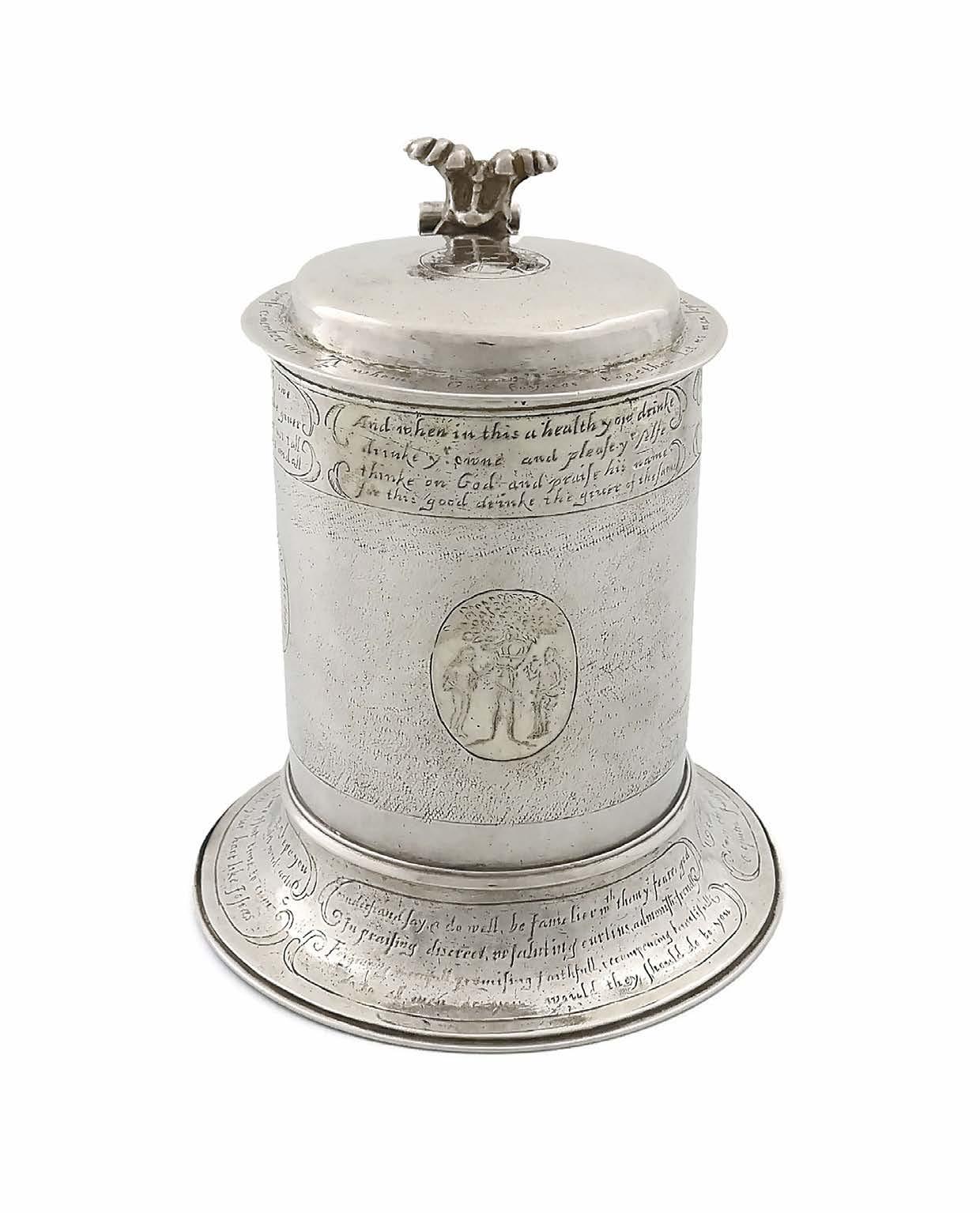
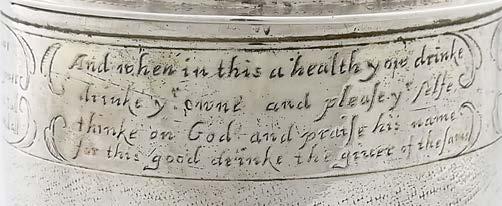
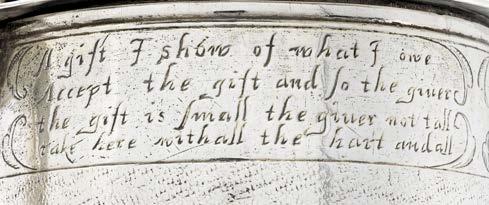
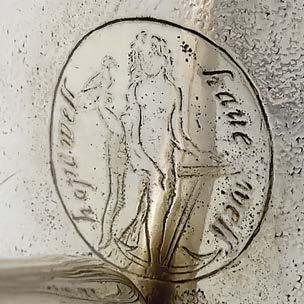
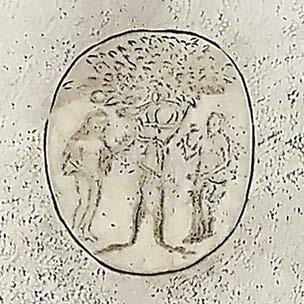
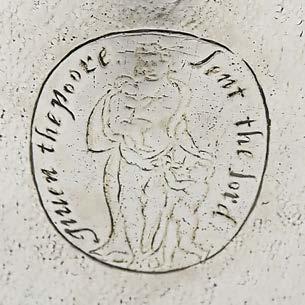
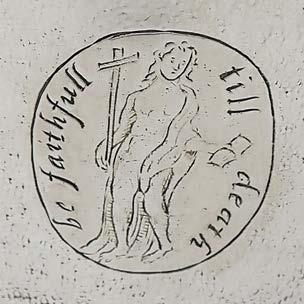
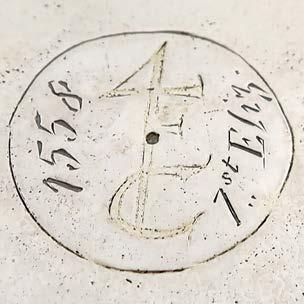
A Commonwealth silver tankard, by James Plummer, York 1650, tapering cylindrical form, the matted body engraved with a border of inscriptions above four gilded oval medallions, one depicting the temptation of Eve, the others with the cardinals and inscribed virtues: ‘Be faithful till death’, ‘Hope well have well’ and ‘Given the poore Sent the Lord’, scroll handle initialled F over IM, hinged domed cover with a matted ground, the rim engraved with a merchant’s mark and inscription terminating in a heart and clasped hands, the centre with a similar merchant’s mark and later added date ‘1558’ and ‘1st Eliz’ within a roundel, with a bifurcated thumbpiece, on a spreading foot engraved with panels of inscription within scrolling borders, traces of gilding, height 15.2cm, approx. weight 16.15oz.
The initials on the handle are for John Frank (1633-1697) of Pontefract, Yorkshire and his wife Mary, the daughter and co-heir of William Harbred of Wistow, whom he married at Featherstone, near Pontefract on 5th April 1659. The inscriptions suggest a marriage gift.
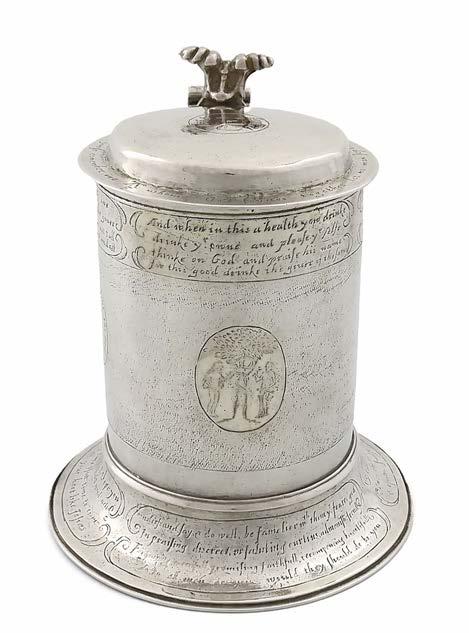
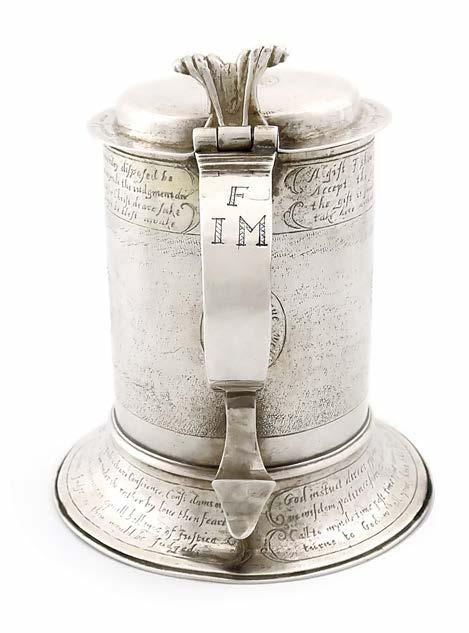
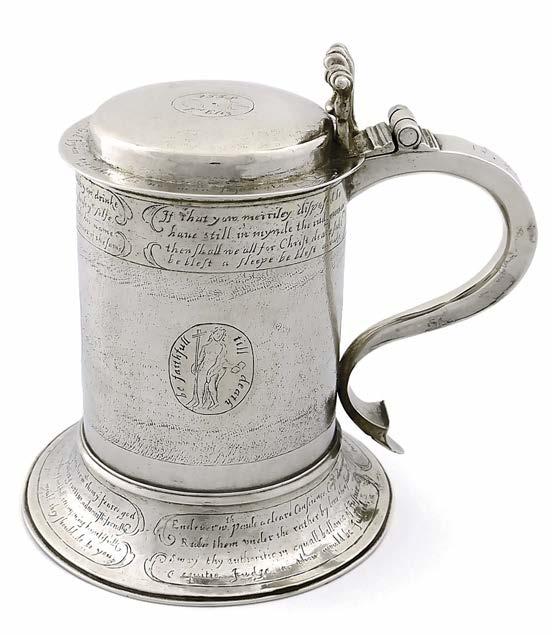
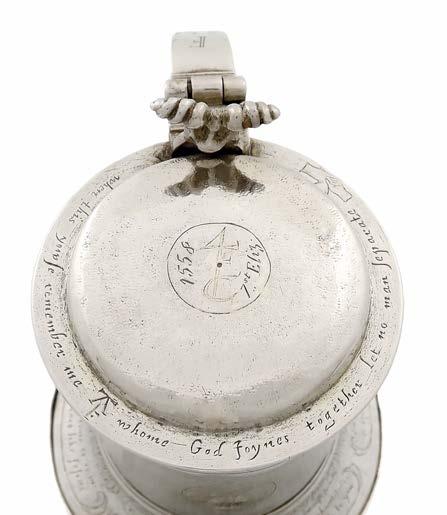
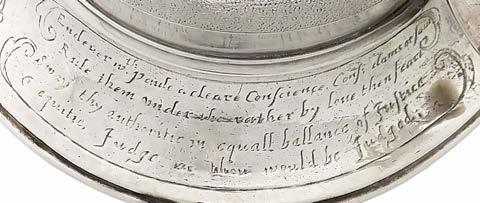
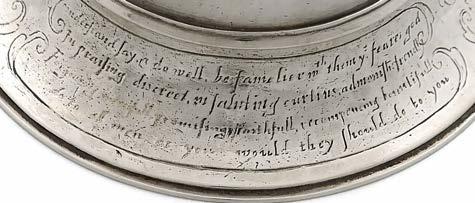
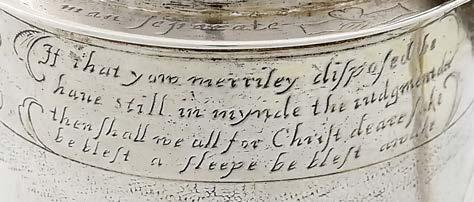
The inscriptions read:
Around the cover:
‘When this yow se remember me whome God Joynes together let no man separate’
Around the border:
‘A gift I show of what I owe Accept the gift and so the giver the gift is small the giver not tall take here with all the hart and all
And when in this a health yow drinke drinke yr. owne and please yr. selfe thinke on God and praise his name for the good drinke the giver of the same
If that yow merriley disposed be have still in mynde the judgement day then shall we all for Christ deare sake be blest a sleepe be blest awake’
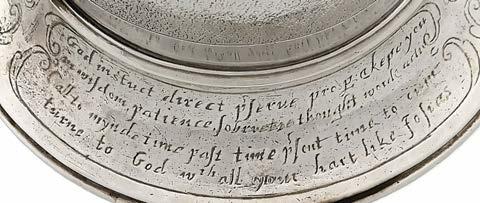
Around the foot of the tankard:
‘God instruct direct p’serve prosp: & kepe you in wisdom, patience, sobrietie thought worde action
Call to mynde time past time p’sent time to cum turne to God with all your hart like Josias.
Understand, say & do well, be famelier with them yt feares god
In praising discreet, in saluting curtius, admonish frendly
Forgiving, mercifull, promising, faithfull, recompencing bountifull do to all men as you would they should do to you
Endever with Paule a cleare Conscience, cont: dams or save
Rule them under the rather by Love then feare Sway thy authoritie in equall balance of Justice & equitie. Judge as thou would be Judged.’
Provenance:
John Frank (1633-1697) of Pontefract, Yorkshire.
Robert Frank (1660-1738).Robert Spence, 133 Fellowes Road, South Hampstead.
Anonymous sale [Robert Spence]; Christie’s London, 11 December 1902, lot 77 (£390 to Letts).
Sydney Loder (1867-1944), Greenfield Lodge, Market Harborough.
Sydney Loder: Sotheby’s London, 23 June 1931, lot 152.
With Walter H Wilson, London 1932.
Ernest Samuel Makower F.S.A. (1867-1946), collector and philanthropist, then by descent to his widow, Rachel Makower (d.1960), of Holmwood, Birchfield Heath, Henley.
The Makower Collection; Sotheby’s London, 16 March 1961, lot 142.
With How of Edinburgh, 1961.
Gerald Sydney Sanders (1911-1982), collector and chairman of Sanders and Co., Jewellers.
G.S. Sanders Esq., Christie’s London, 21 May 1975, lot 190.
An Irish Pension Fund; Christie’s New York, 30 October 1991, lot 305.
Classical Art Evening Sale: Antiquity to 20th Century, Christie’s London, 29 July 2020, lot 27.
Exhibited:
London, Christie’s, The B.A.D.A. Art Treasures Exhibition, 1932, no. 465 (lent by Walter H. Wilson).
Merchant Adventurers’ Hall, Fossgate, York, ‘Three Centuries of York Silver 1550-1858’, 14-28 July 2000, exhibit no 37.
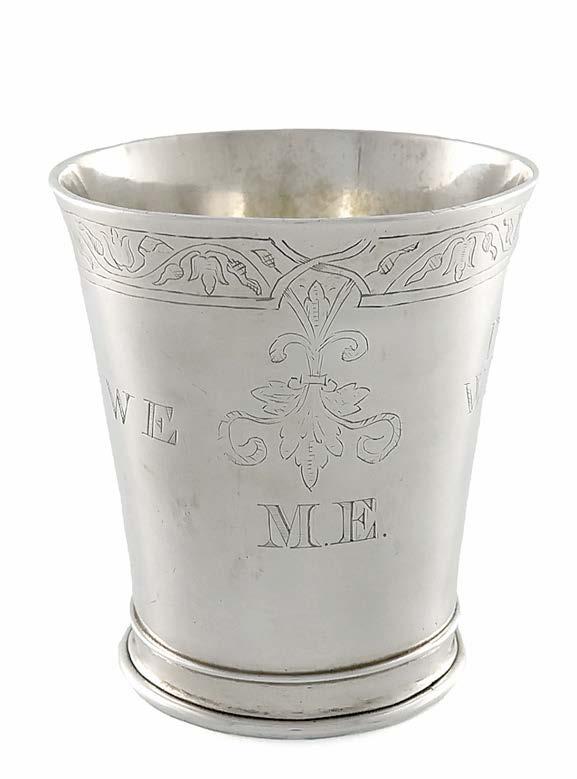
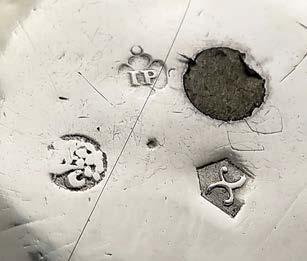
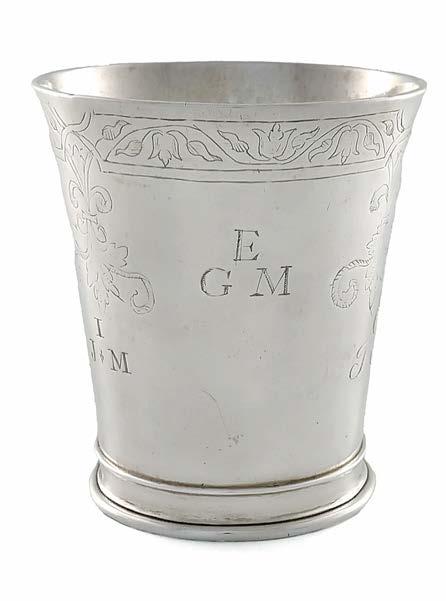
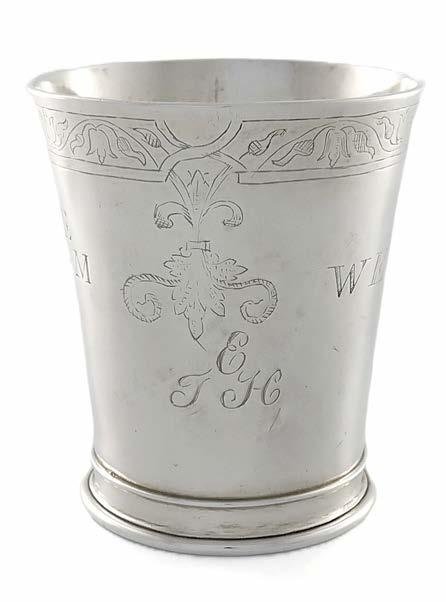
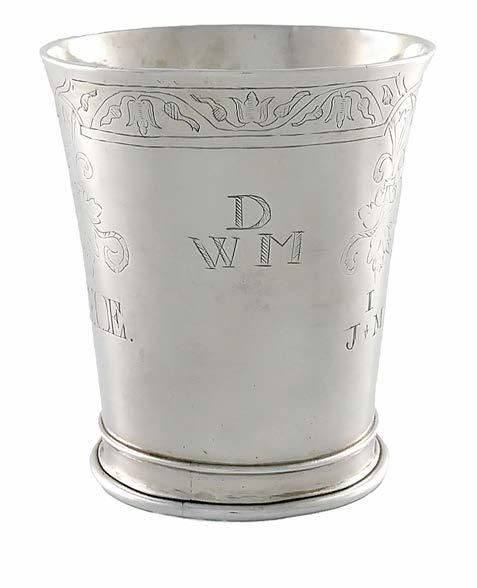
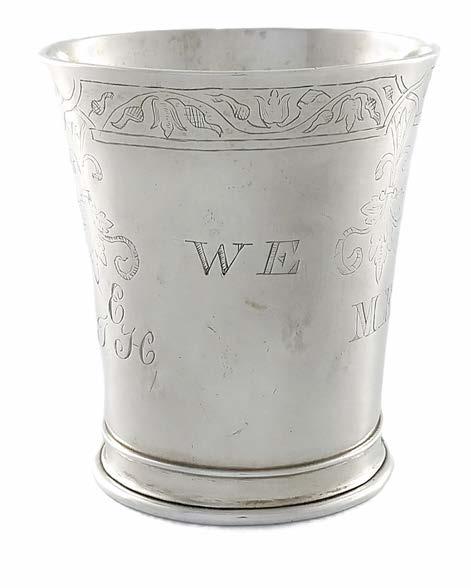
A Commonwealth silver beaker, by John Plummer, York 1655, tapering circular form, engraved with a border of scrolling leaf and tendril decoration, engraved around the body with sets of initials, some later: W E, M.E., D over W M, I over J M, E over G M and E over J H, height 9.8cm, approx. weight 6oz.
Few pieces of York silver survive from the Commonwealth period. During the Civil War the city was a Royalist stronghold. In 1644, it withstood a siege by the Parliamentary Army for three months before finally surrendering following the Royalist defeat at the Battle of Marston Moor six miles from the city. Amidst these upheavals much existing silver within the city was melted down and little new silver was made.
John Plummer, son of the silversmith James Plummer, was baptised on 5th March 1626 at St Martin’s Church, Coney Street, York. He was buried on 4th November 1680 at St Michael le Belfry, York.
Exhibited:
On display at Merchant Adventurers’ Hall, Fossgate, York, since 1999. Merchant Adventurers’ Hall, ‘Three Centuries of York Silver 1550-1858’, 14-28 July 2000, exhibit no. 40.
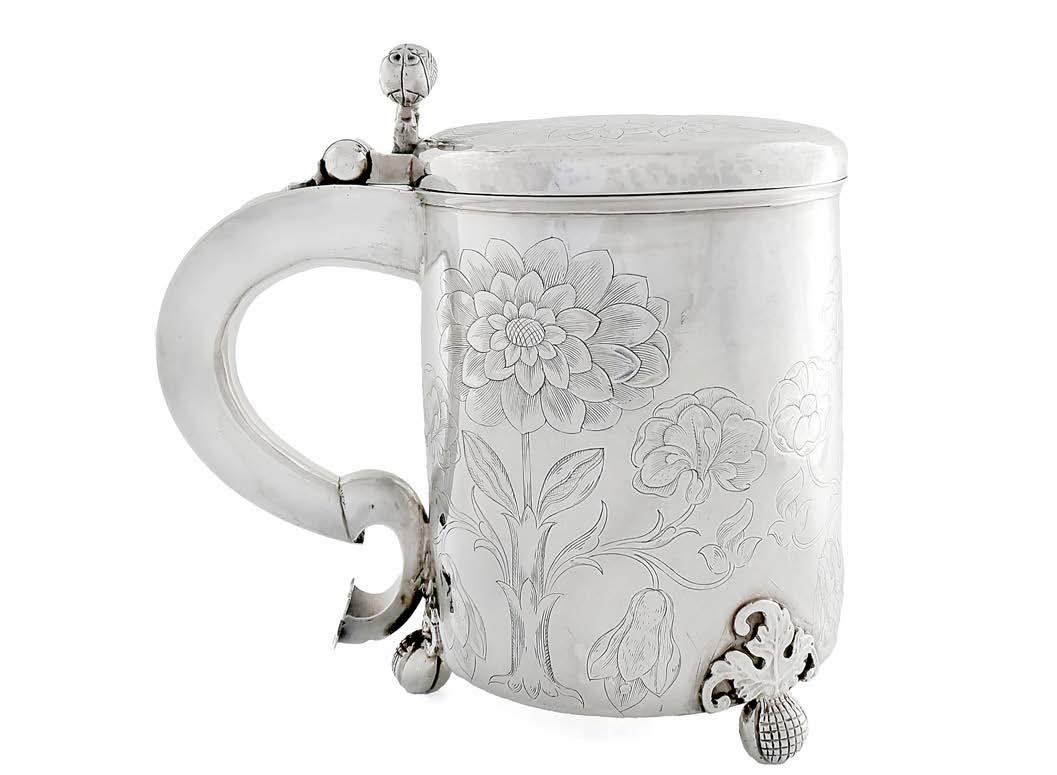
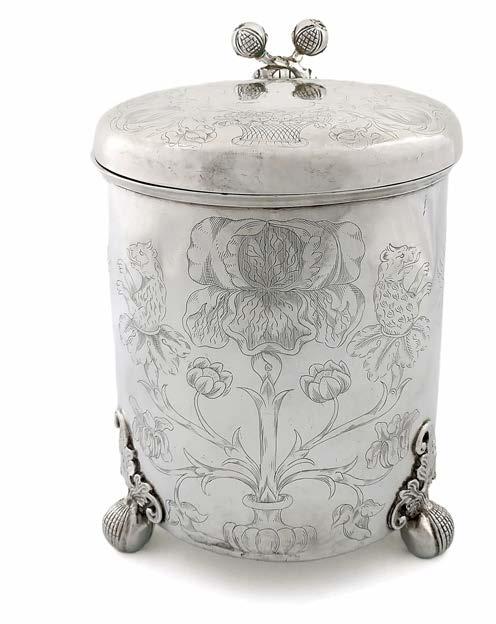
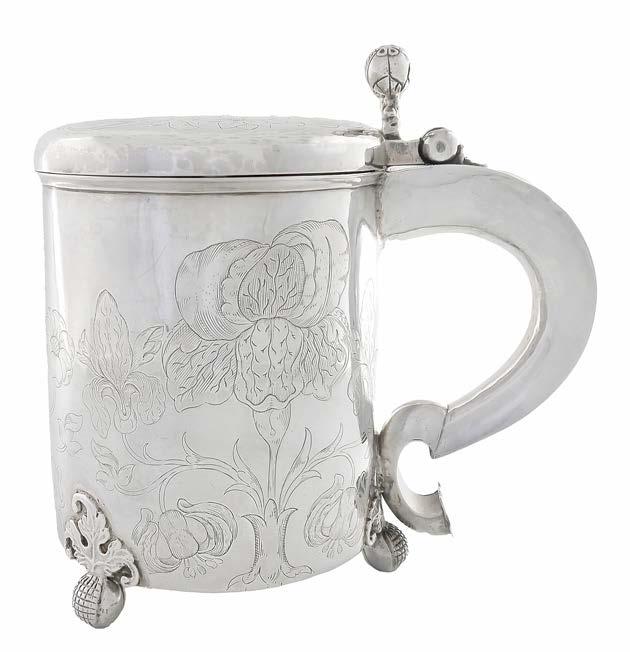
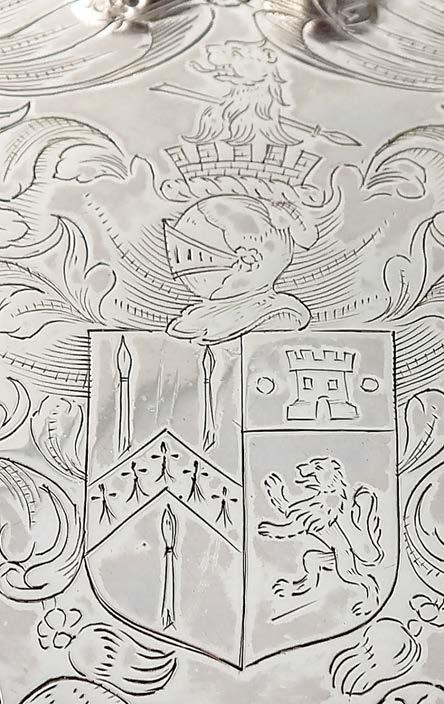
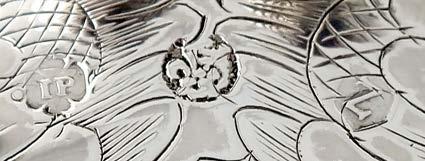
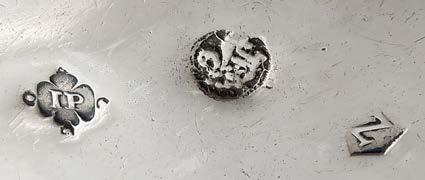
A Commonwealth silver peg tankard, by John Plummer, York 1657, cylindrical form, engraved around the body with trailing chrysanthemums and poppies, the hinged cover similarly engraved and with an armorial within a shield surmounted by a crest, with a bifurcated double pomegranate thumbpiece, on three leaf-capped pomegranate feet, the interior with six pegs, height to top of handle 19.7cm, approx. weight 28oz.
Exhibited:
On display at Merchant Adventurers’ Hall, Fossgate, York, since 1999. Merchant Adventurers’ Hall, ‘Three Centuries of York Silver 1550-1858’, 14-28 July 2000, exhibit no. 45.
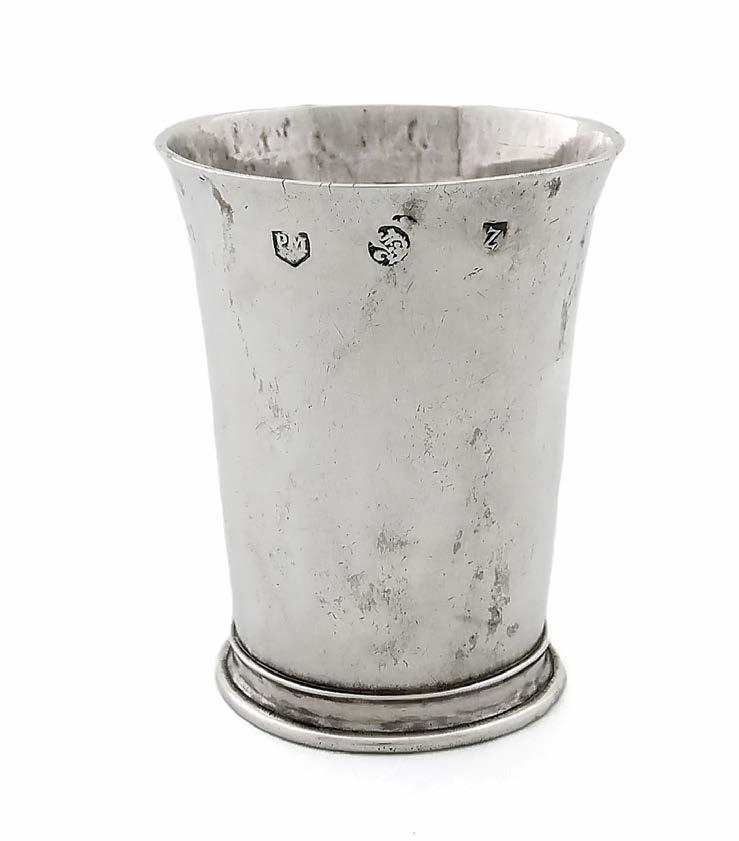
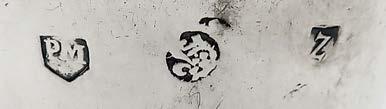
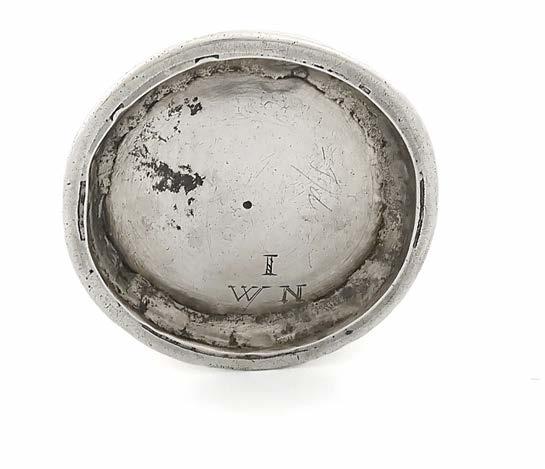
A Commonwealth silver beaker, by Philemon Marsh, York 1657, flared circular form, on a spreading circular foot, the underside initialled I over W N, height 8.8cm, approx. weight 3.48oz.
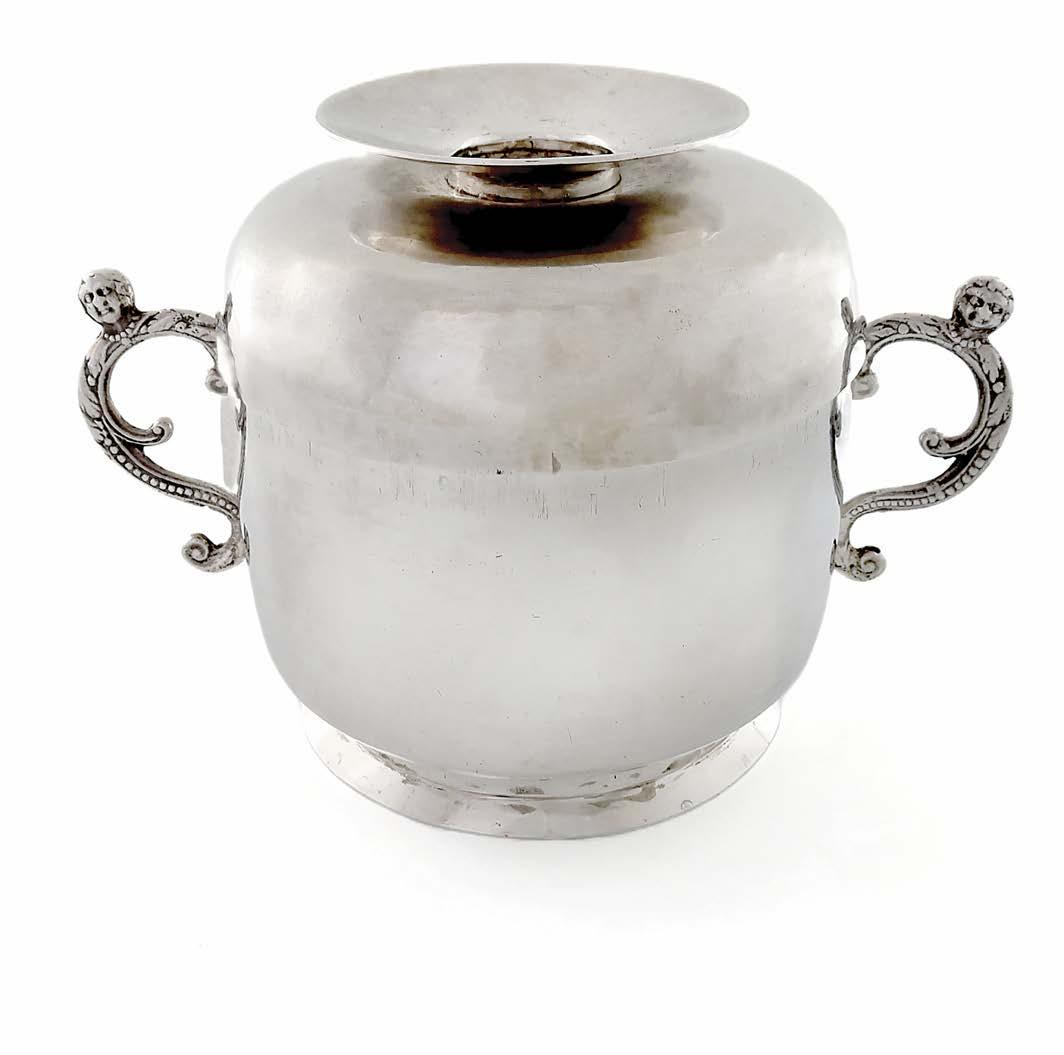
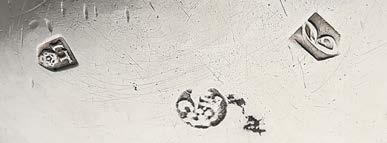
A Charles II silver porringer and cover, by John Thompson, York 1660, plain circular form, on a raised spreading foot, with two scrolling stylised cherub handles, the underside initialled F over TI, the pull-off domed cover with a waisted spreading finial, also initialled F over TI, height including cover 13.5cm, diameter handle to handle 19.7cm, approx. total weight 27.5oz.
Exhibited:
On display at Merchant Adventurers’ Hall, Fossgate, York, since 1999. Merchant Adventurers’ Hall, ‘Three Centuries of York Silver 1550-1858’, 14-28 July 2000, exhibit no. 48.
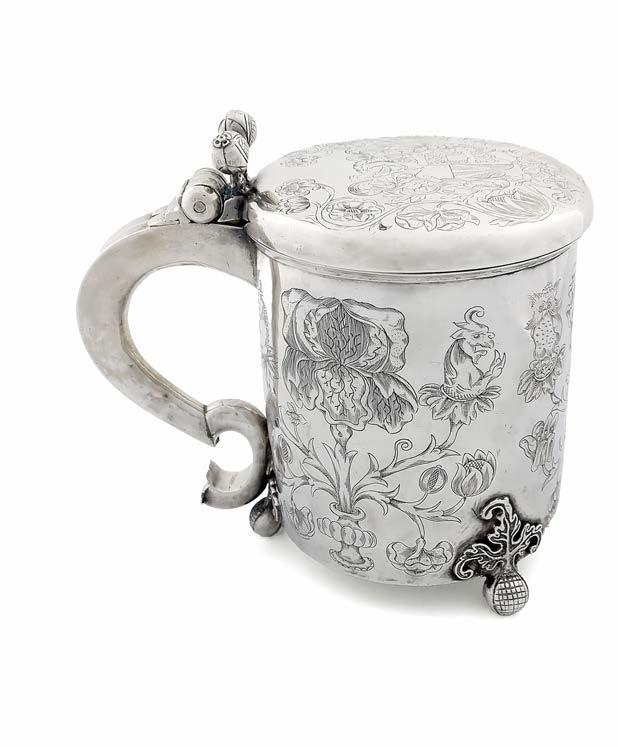
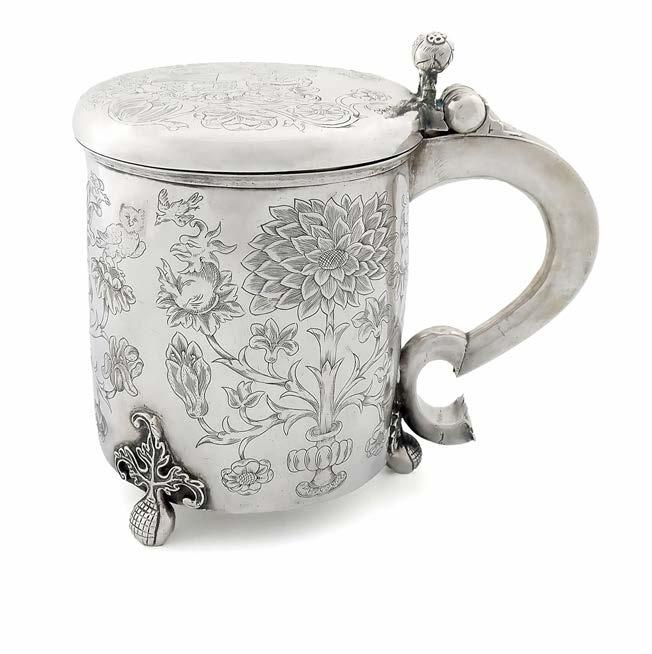
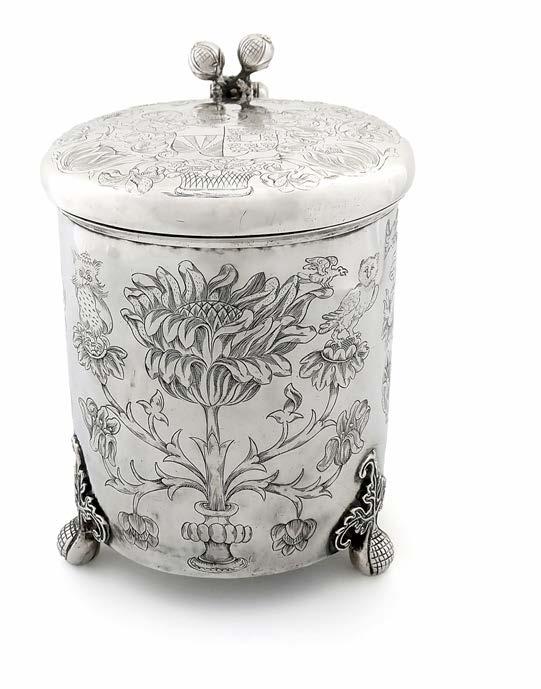
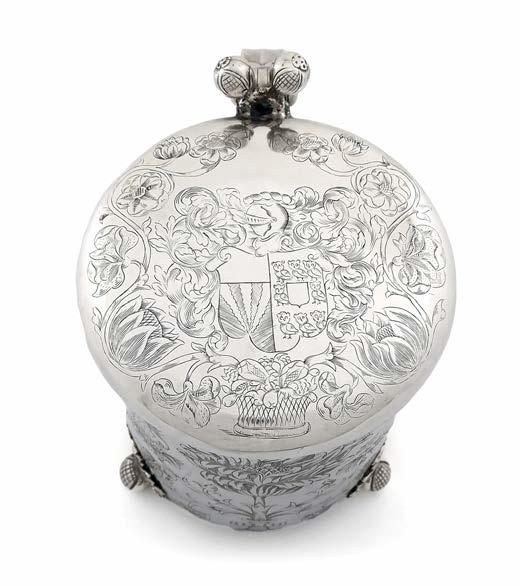
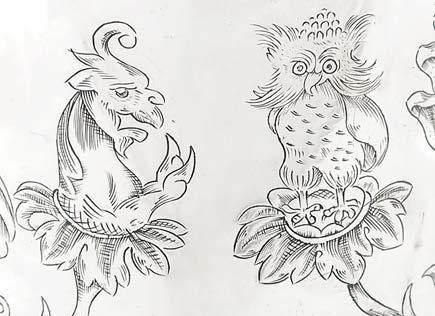
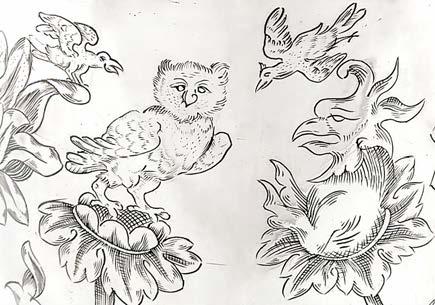
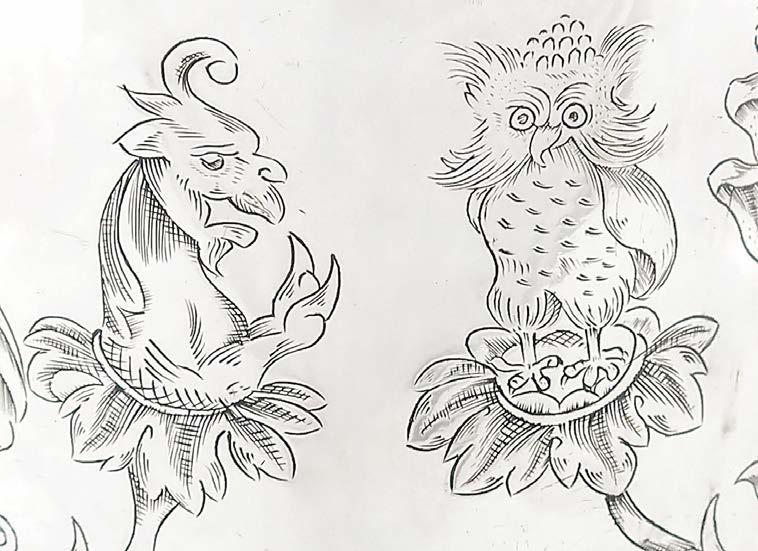
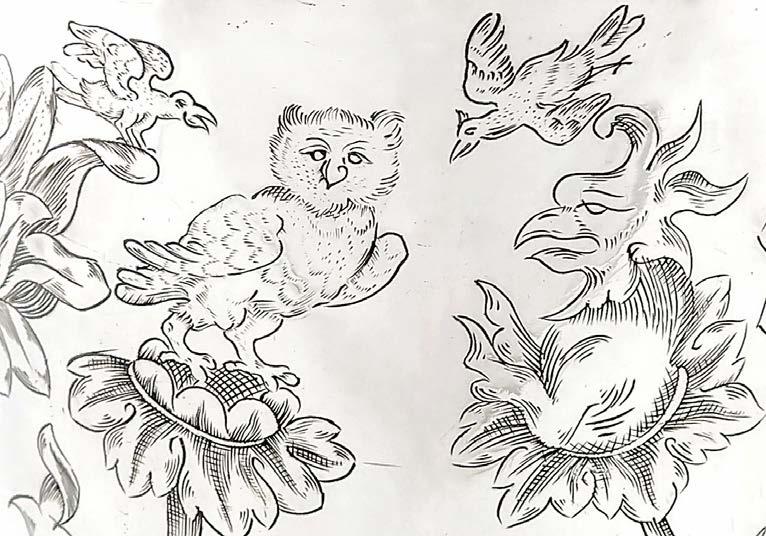
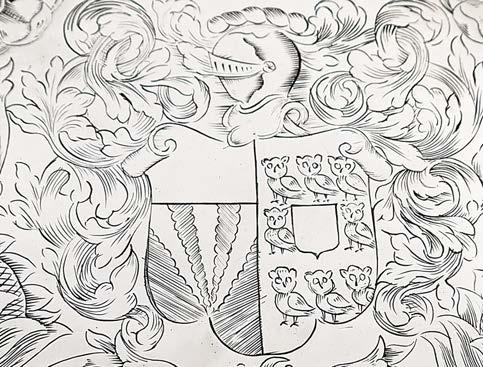
A Charles II silver peg tankard, maker’s mark only, by John Plummer, York circa 1660, cylindrical form, engraved overall with flowers, trailing foliage, mythical beasts and birds and owls, the hinged cover engraved with an armorial, with a bifurcated double pomegranate thumbpiece, on three foliate-capped pomegranate feet, the inside with six pegs, height to top of handle finial 19cm, approx. weight 28.6oz.
As with many York tankards of this period, the shape of this tankard is Scandinavian in origin. They are often called peg tankards because the inside is set with between four and eight pegs. The pegs were used for measuring quantities of liquid which, generally speaking, equalled half a pint between one peg and the next. They were intended to ensure that in communal drinking no one drank more than his or her fair share. The expression ‘taking one down a peg’ probably derives from this.
The arms are those of Prince impaling Calverley for Philip Prince of York, a goldsmith, who married Anne (1635-1667), daughter of John Calverley of Eryholme, Co. Durham. They were married at Eryholme on 27 August 1663. Anne was buried in York Minster in 1667.
Provenance:
Possibly Thomas Wentworth Beaumont (1792-1848) and then by descent to Wentworth Beaumont, 3rd Viscount Allendale (1922-2002).
Important Silver, Christie’s London, 29 November 2007, lot 603.
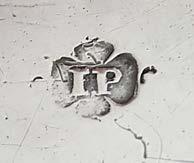
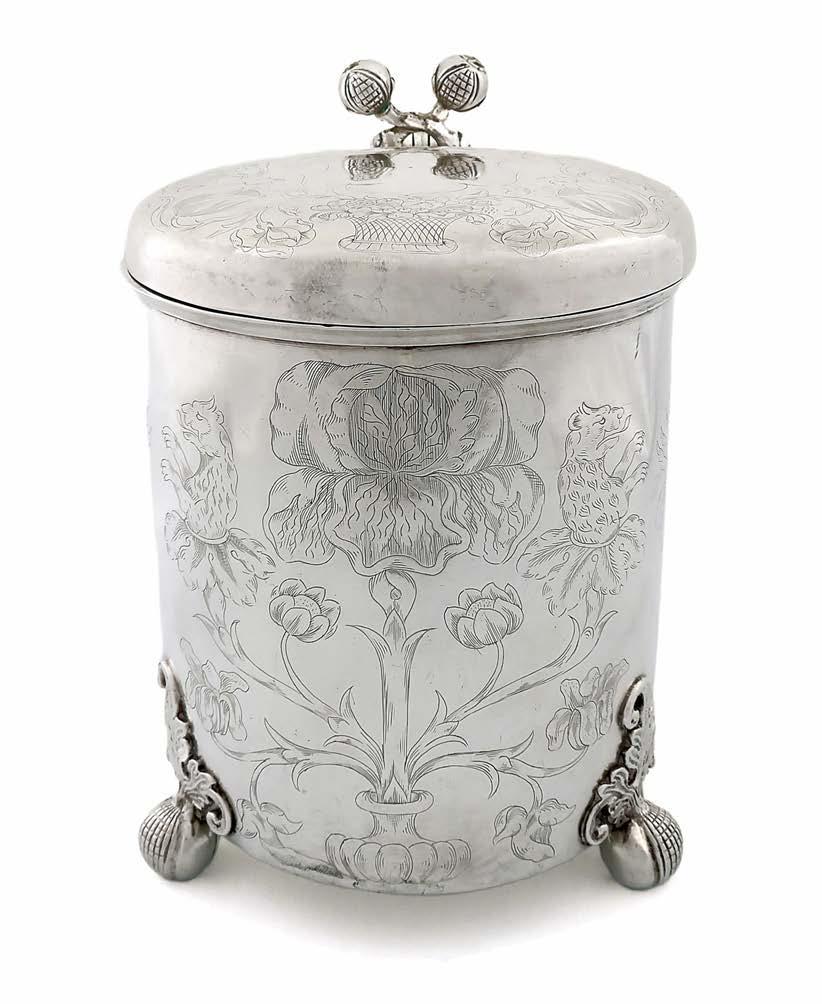
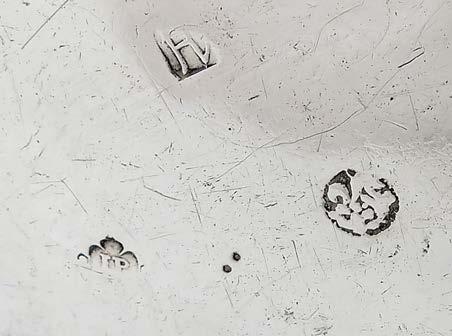
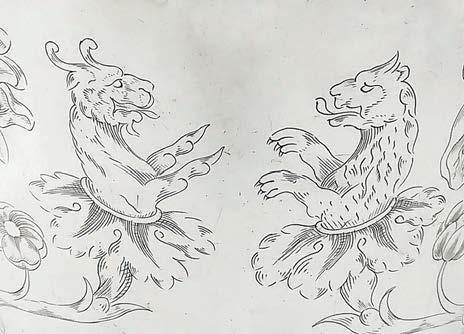
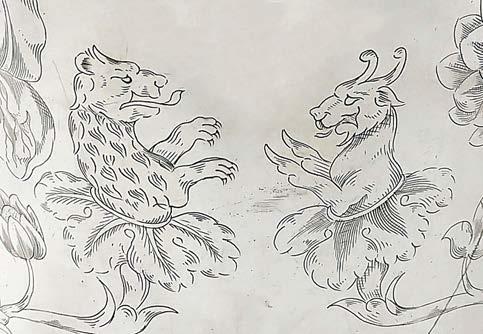
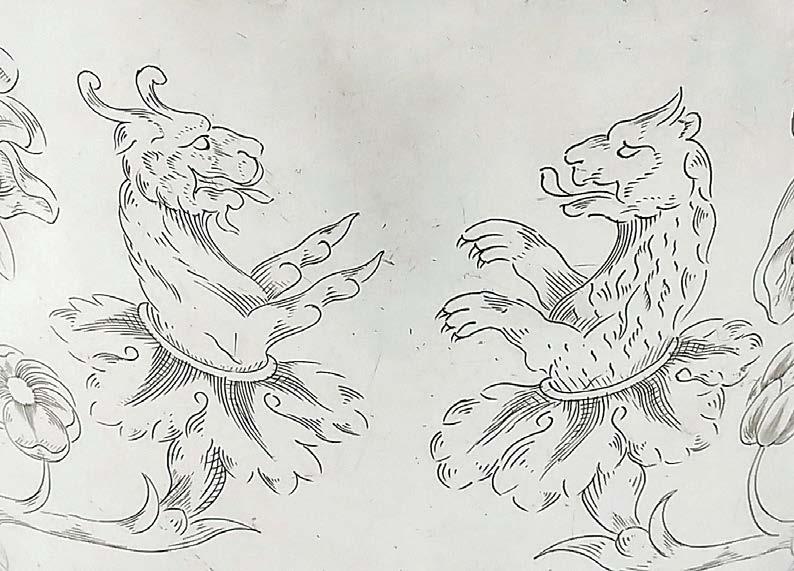
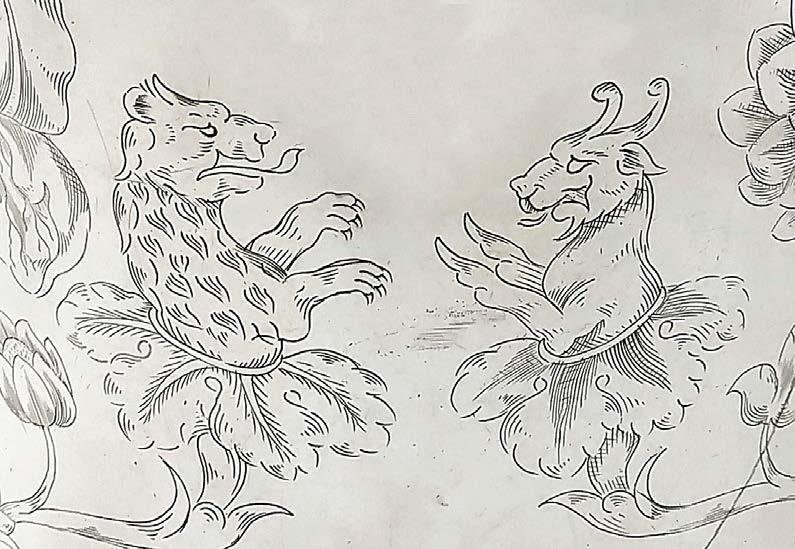
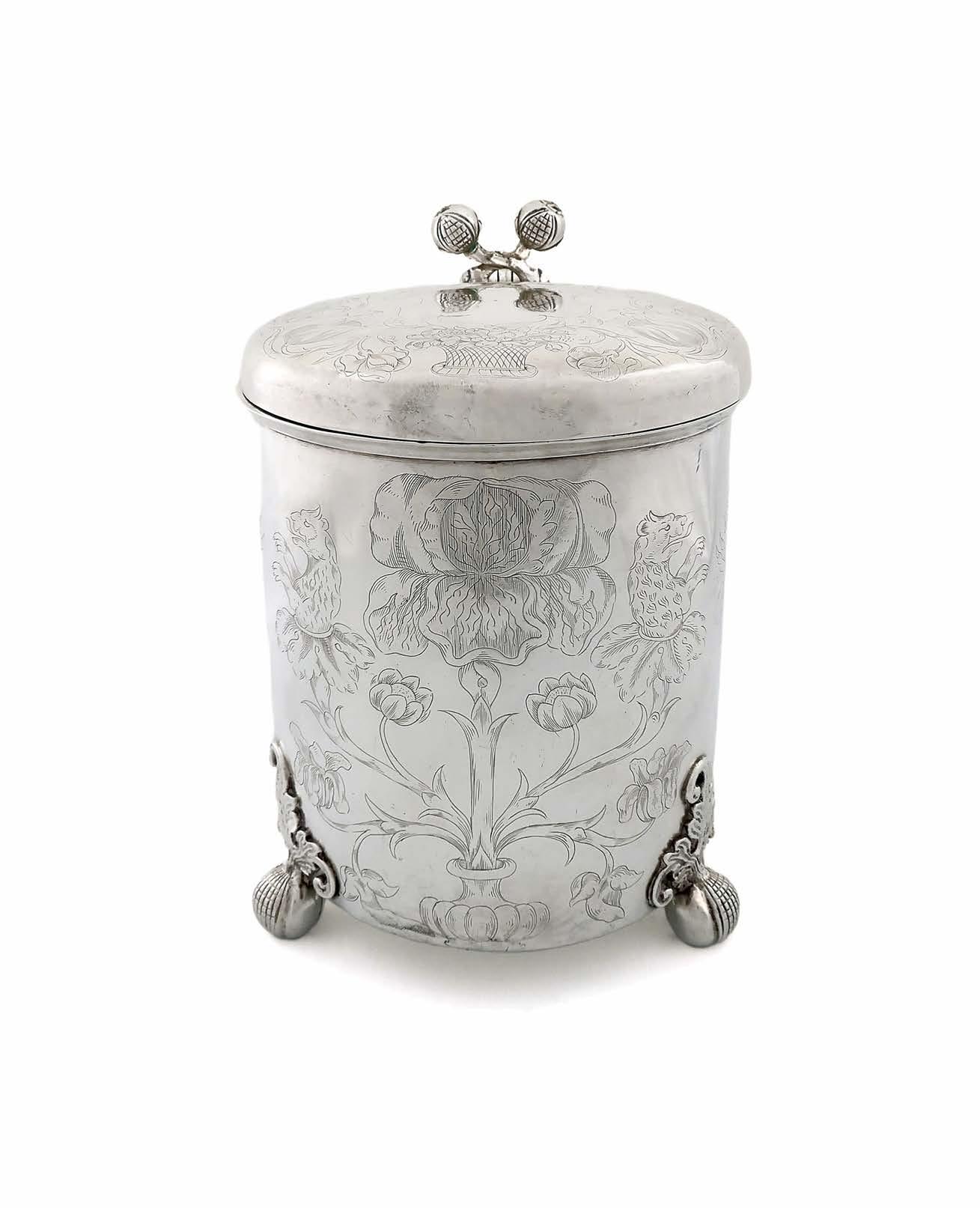
A Charles II silver peg tankard, by John Plummer, York 1665, cylindrical form, engraved with trailing chrysanthemums rising from urns, fighting mythical beasts and demi-figures of young men emerging from flower heads, the hinged cover engraved with a rim of scrolling foliate decoration, with a double pomegranate thumbpiece, on three foliate-capped pomegranate feet, the inside with seven pegs, height 21.3cm, approx. weight 42.8oz.
This tankard is believed to be the largest and the heaviest of a group of York tankards by John Plummer engraved with a range of botanical and animal motifs. Sir Charles Oman, the great silver authority, states that John Plummer was the most important provincial goldsmith during the third quarter of the 17th century.
Exhibited:
Merchant Adventurers’ Hall, Fossgate, York, ‘Three Centuries of York Silver 1550-1858’, 14-28 July 2000, no. 54.
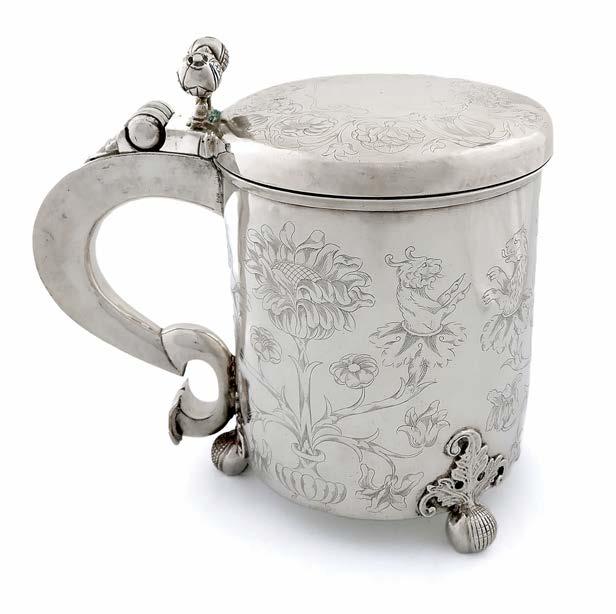
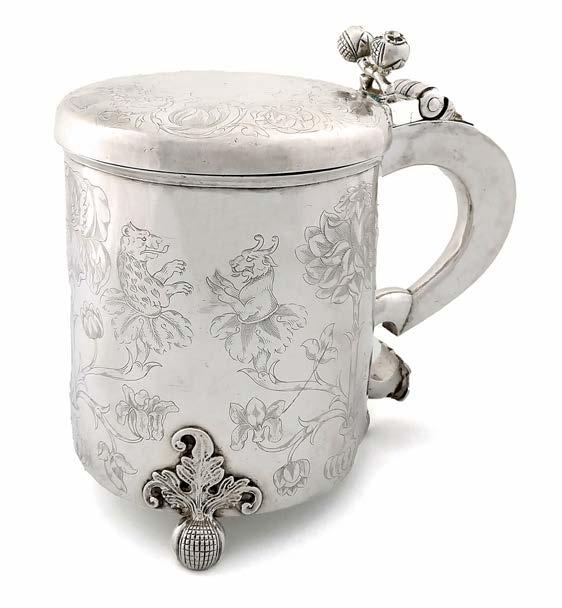
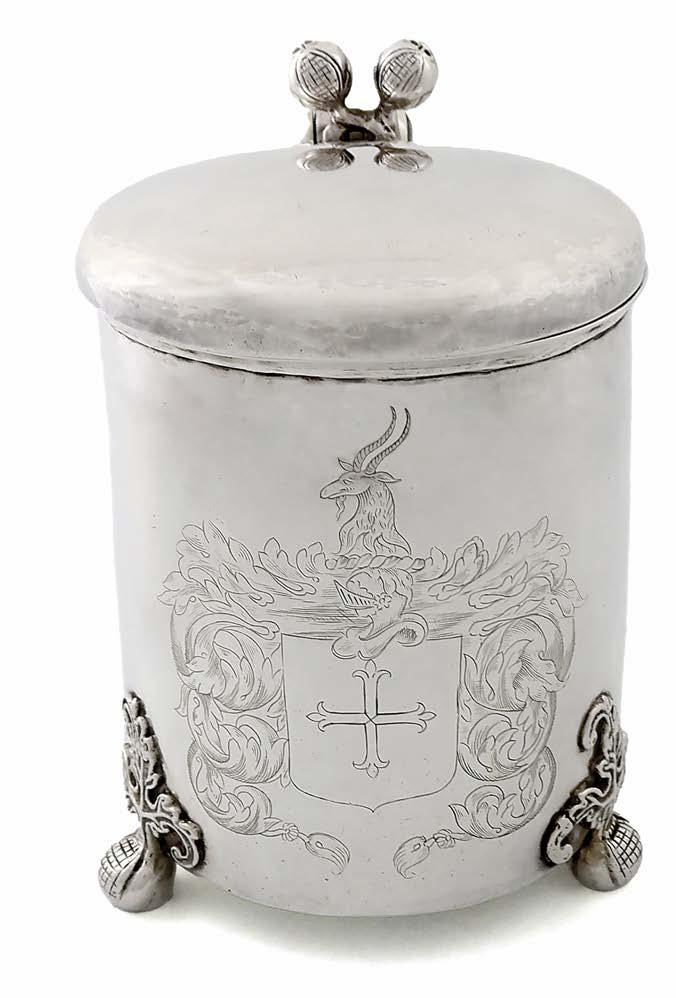
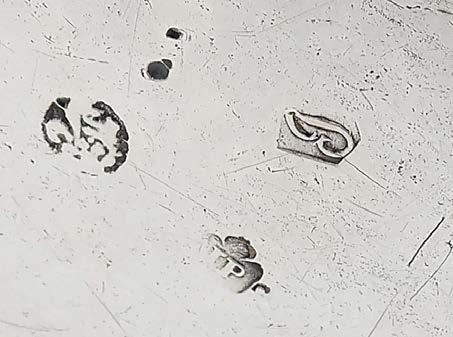
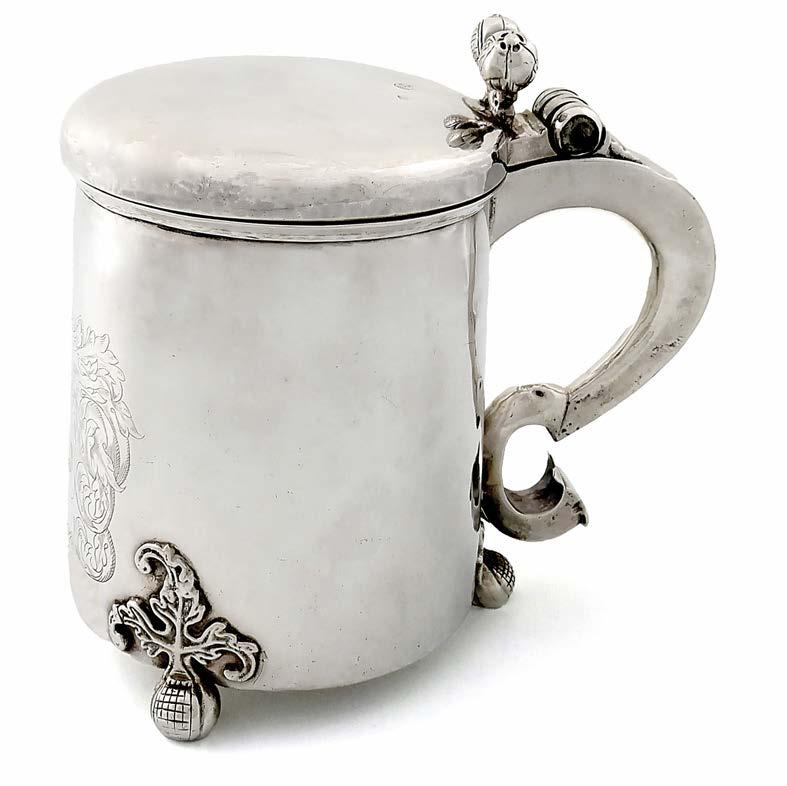
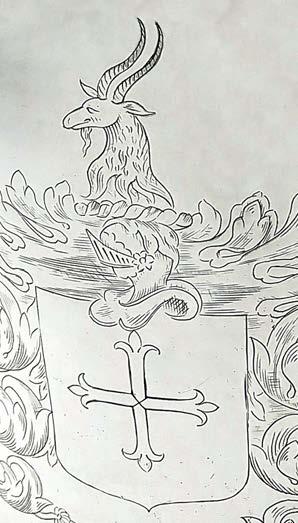
A Charles II silver peg tankard, by John Plummer, York 1666, plain cylindrical form, the front engraved with a coat-of-arms surmounted with a crest, plain hinged cover, with a bifurcated double pomegranate thumbpiece, scroll handle, on three leafcapped pomegranate feet, with six pegs, height 17.7cm, approx. weight 24.8oz
Exhibited: Merchant Adventurers’ Hall, Fossgate, York, ‘Three Centuries of York Silver 1550-1858’, 14-28 July 2000, exhibit no. 57.
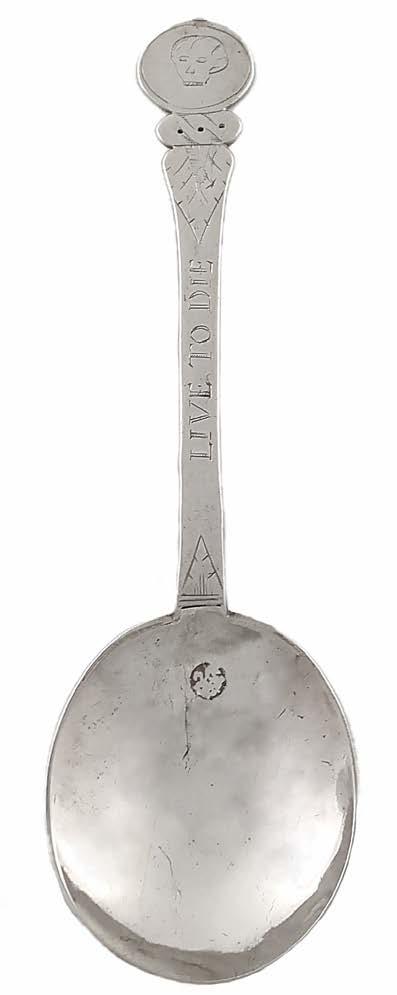
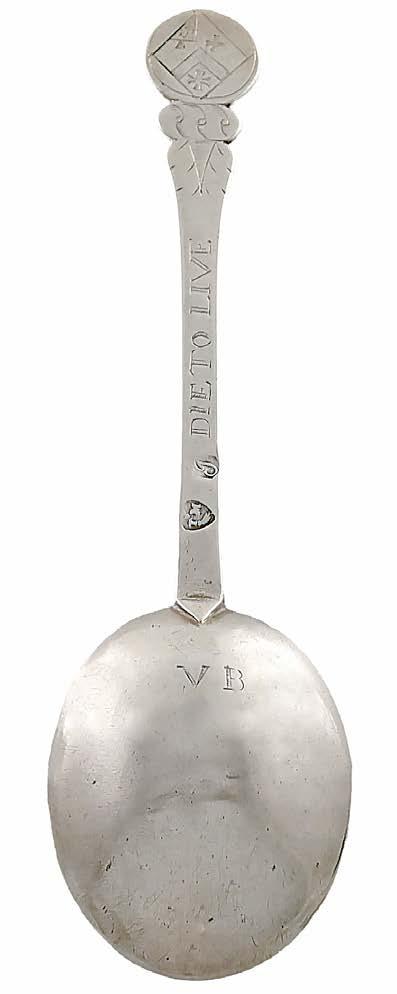

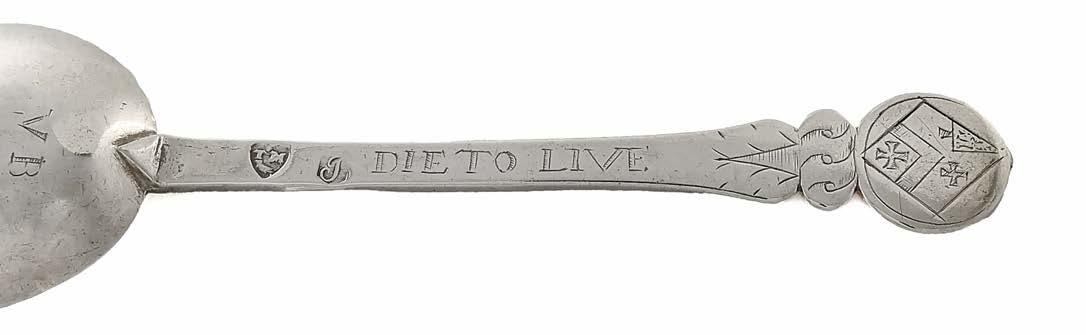
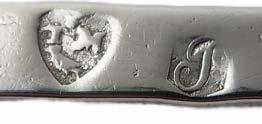
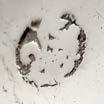
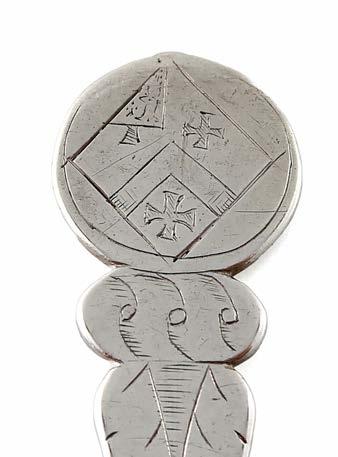
20A Charles II silver Death’s Head spoon, by Thomas Mangy, York 1666, oval bowl, slightly tapering stem inscribed ‘LIVE TO DIE’ and engraved decoration, the disc terminal engraved with a skull (death’s head), the reverse of the stem inscribed ‘DIE TO LIVE’ and engraved decoration, the disc terminal engraved with the coat-of-arms of Strickland of Boynton, Yorkshire, the reverse of the bowl initialled V B, traces of gilding, length 19.2cm long, 1.5oz.
Exhibited:
On display at Merchant Adventurers’ Hall, Fossgate, York, since 1999.
Merchant Adventurers’ Hall, ‘Three Centuries of York Silver 1550-1858’, 14-28 July 2000, exhibit no. 59.
For similar examples see: How, Commander G., Silver Spoons and Pre-Elizabethan Hallmarks on English Plate, vol.I, chap.II, sec.XII, plate 5, p.308.
Constable, D., Silver Spoons of Britain: 1200-1720, vol 2. p.534.
During his research into similar Death’s Head spoons, David Constable compared the year of each spoon’s creation with the Strickland family birth records. The spoon dates closely matched the birth years of Strickland children. He concluded that the silver artifacts were originally commissioned by Lady Frances Strickland as christening gifts for her grandchildren. However, known spoons range in date over a period of more than 20 years, so deaths and marriages could also have subsequently been the occasion of the spoons being given.
See number 35 for another example.
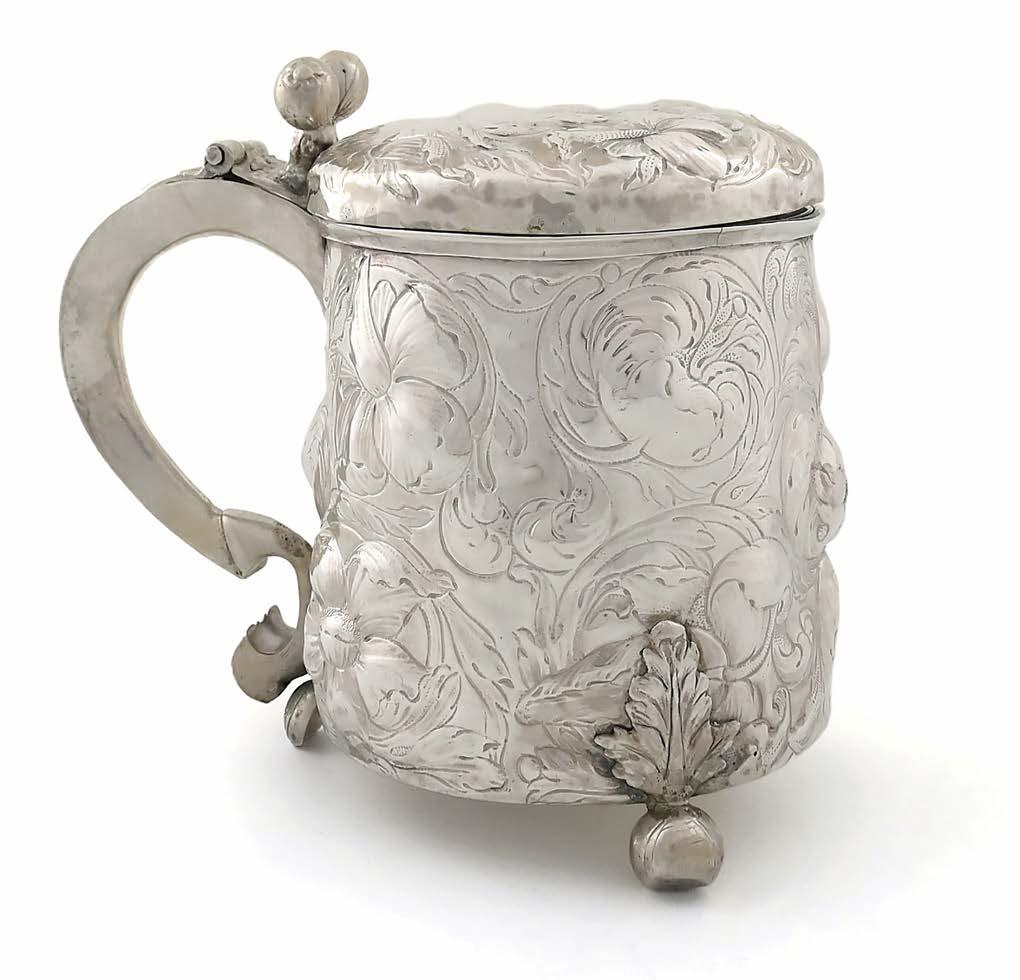
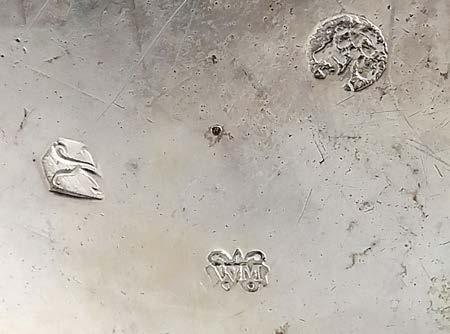
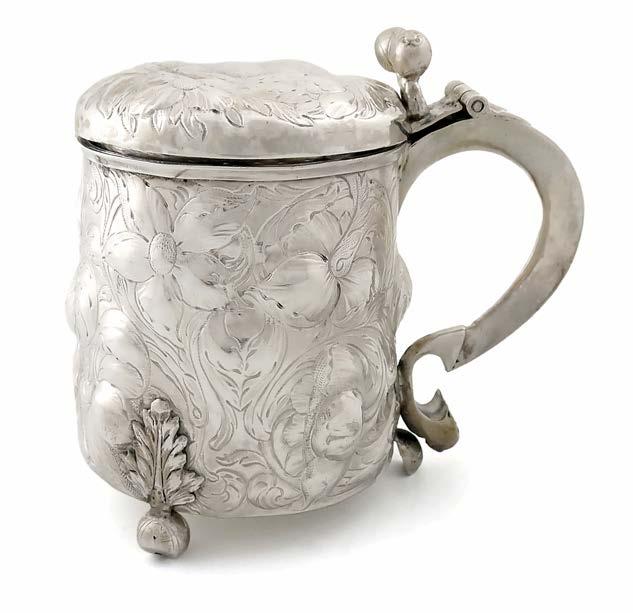
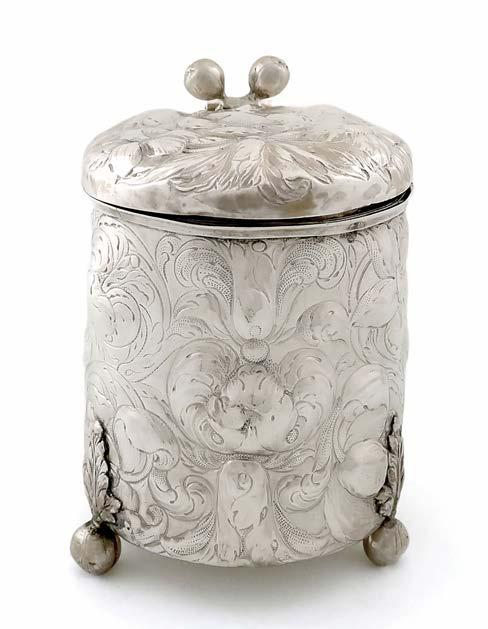
A Charles II silver tankard, by William Mascall, York 1667, cylindrical form, the body embossed and chased with foliate decoration, raised hinged cover similarly decorated, with a bifurcated double pomegranate thumbpiece, scroll handle, on three leaf-capped pomegranate feet, height 16.4cm, approx. weight 22.1oz.
Brought in 1993 to the Antiques Roadshow with other silver objects by (according to the London Evening Standard) an ‘unassuming, bearded and dreadlocked forester’ whose late father had collected the objects. The silver objects were described at the time by the programme’s silver expert, Ian Pickford, as ‘the greatest things from a collection ever to come on the Roadshow’.
Exhibited:
On display at Merchant Adventurers’ Hall, Fossgate, York, since 1999. Merchant Adventurers’ Hall, ‘Three Centuries of York Silver 1550-1858’, 14-28 July 2000, exhibit no. 62.
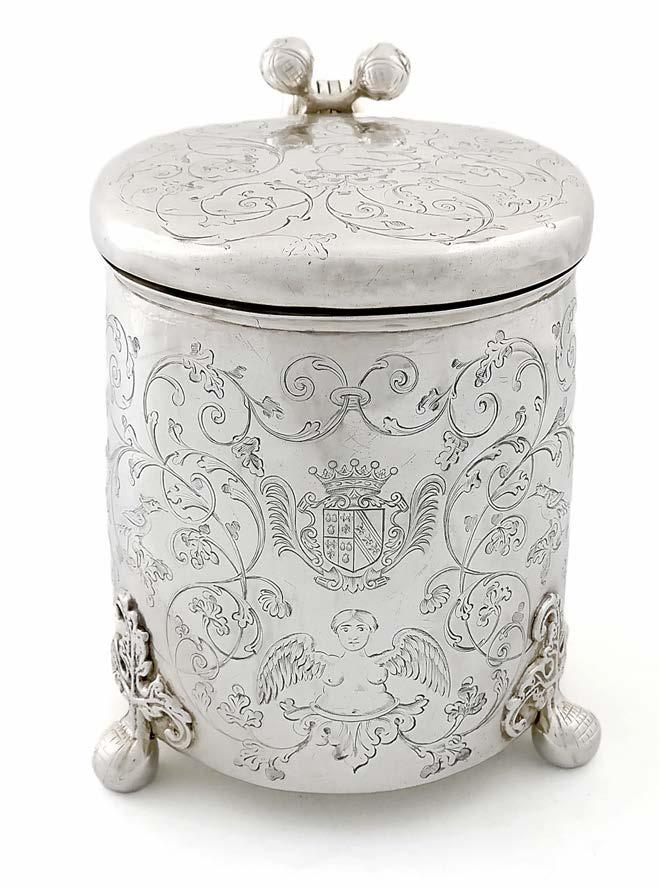
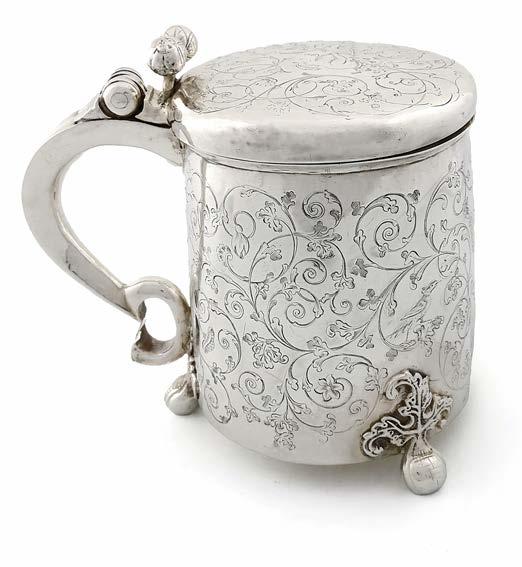
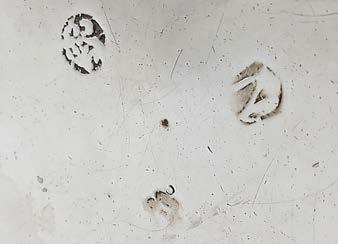
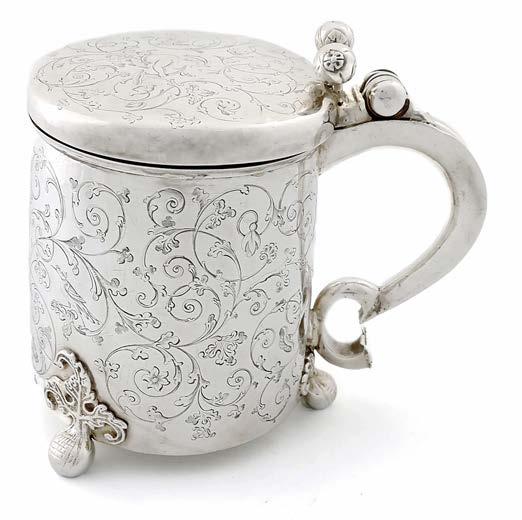
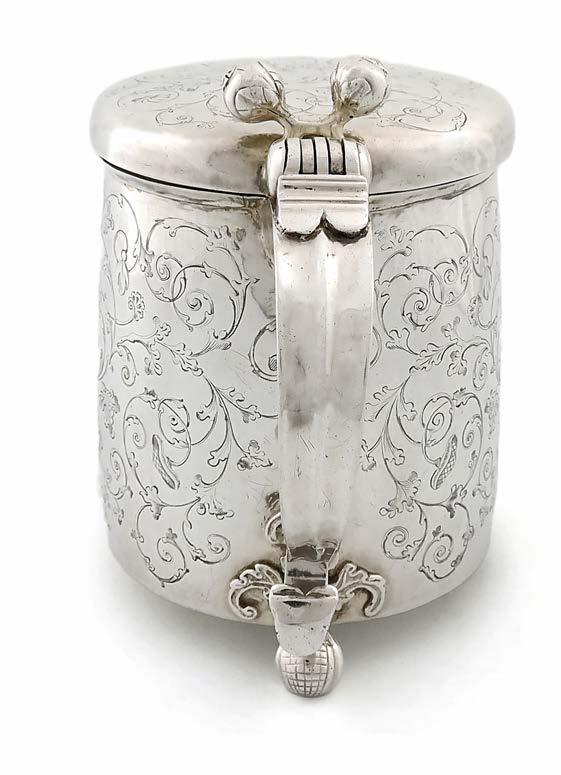
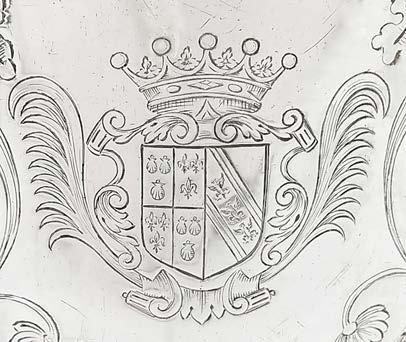
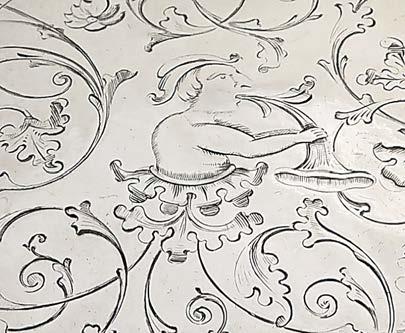
A Charles II silver peg tankard, by John Plummer, York 1670, slight barrel form, engraved around the body with foliate scrolls flanked by two birds, and engraved with an Earl’s armorial, above a winged demi-figure, the hinged cushion domed cover engraved with scrolling foliate decoration and a central demi-figure of a young man blowing a floral horn, with a bifurcated double pomegranate thumbpiece, scroll ribbed handle, on three leaf-capped pomegranate feet, the underside initialled S, the interior with six pegs, height to top of handle finial 17.4cm, approx. weight 20.4oz.
The armorials are those of Montgomerie impaling Popeley, for Alexander 8th Earl of Eglinton, who married secondly in 1679, Grace, widow of Sir Thomas Wentworth 1st Bart, and daughter and heiress of Francis Popeley of Wooley Moorhouse. The Earl died in 1701.
Provenance:
Phillip’s London, Fine Silver, 25 January 1991, lot 133.
Exhibited:
Merchant Adventurers’ Hall, Fossgate, York, ‘Three Centuries of York Silver 1550-1858’, 14-28 July 2000, exhibit no. 67.
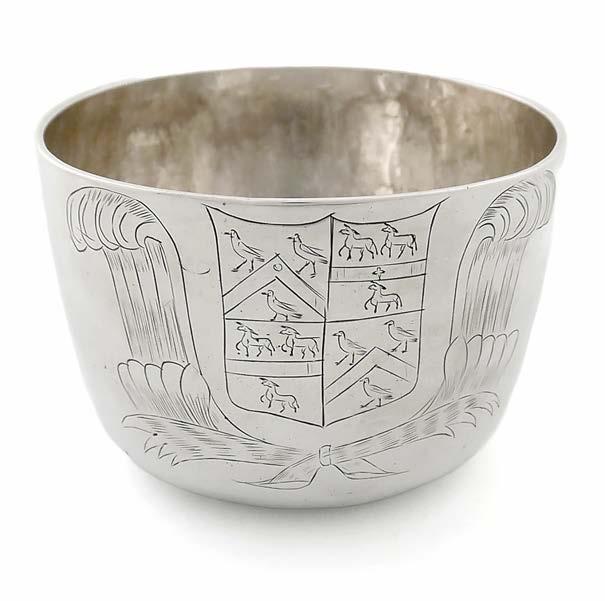
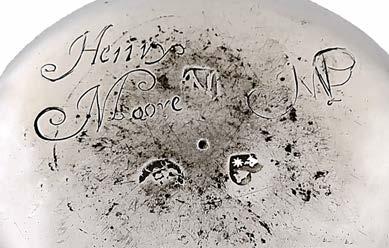
A Charles II silver tumbler cup by Robert Williamson, York 1670, tapering circular form, engraved with an armorial within a shield cartouche and scrolling feather supports, the underside engraved Henry Moore and with initials, height 5.7cm, approx. weight 3.7oz.
A tumbler cup is so called because if put down unevenly it is supposed to tumble back into an upright position.
The supports for the armorial are similar to those for nos. 24 and 31.
Exhibited:
Merchant Adventurers’ Hall, Fossgate, York, ‘Three Centuries of York Silver 1550-1858’, 14-28 July 2000, exhibit no. 68.
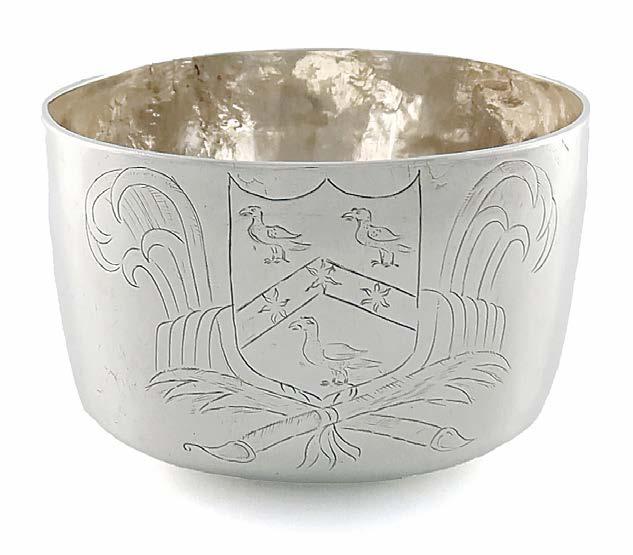
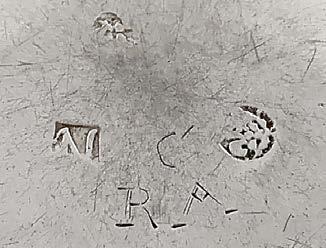
A Charles II silver tumbler cup, by Thomas Mangy, York 1670, tapering circular form, engraved with a coat-of-arms within a shield cartouche and scrolling feather supports, the underside engraved C over R A, height 5.8cm, diameter 9.6cm, approx. weight 2.5oz.
Exhibited:
On display at Merchant Adventurers’ Hall, Fossgate, York, since 1999. Merchant Adventurers’ Hall, ‘Three Centuries of York Silver 1550-1858’, 14-28 July 2000, exhibit no. 69.
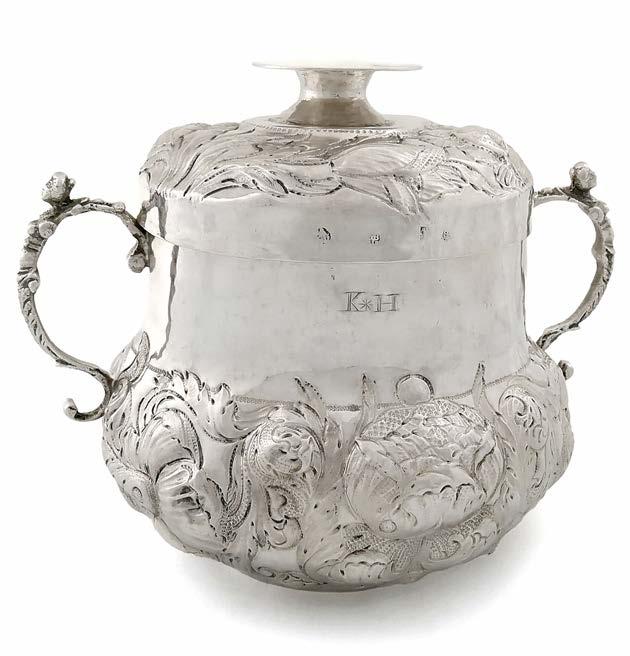
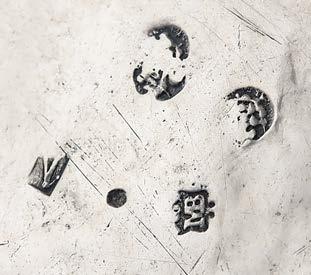
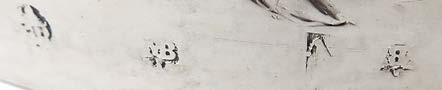
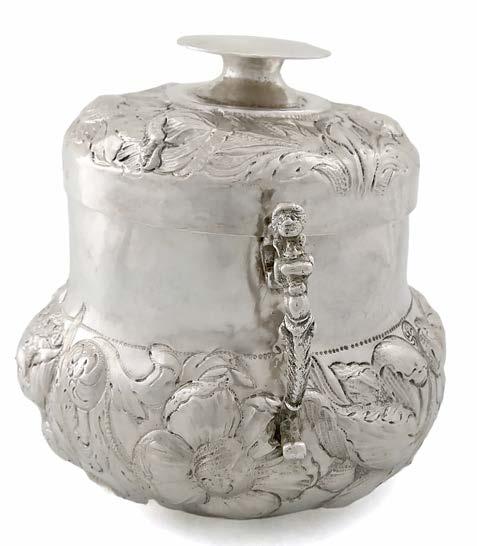
A Charles II silver porringer and cover, by Marmaduke Best, York 1670, the lower body embossed and chased with flowerheads and foliage, engraved initials K H, two caryatid scroll handles, the pull-off cover similarly decorated, with a plain waisted finial, height including cover 17.6cm, approx. total weight 20.4oz.
Exhibited:
Merchant Adventurers’ Hall, Fossgate, York, ‘Three Centuries of York Silver 1550-1858’, 14-28 July 2000, exhibit no. 71.
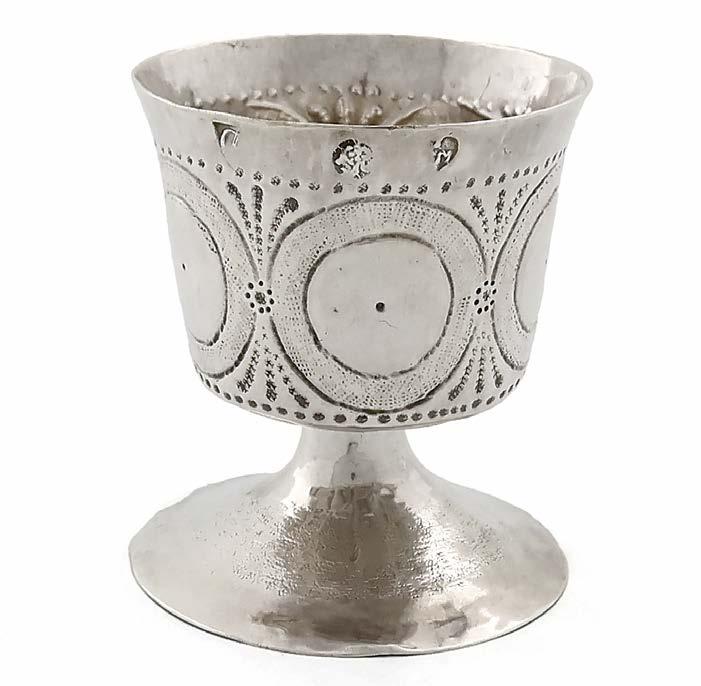
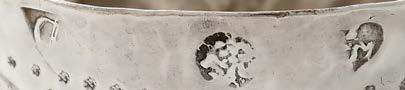
A Charles II silver wine cup, by Thomas Mangy, York 1671, tapering circular form, the body chased with roundels and punch-bead decoration, on a raised circular base, height 8.1cm, approx. weight 2.7oz.
Exhibited:
Merchant Adventurers’ Hall, Fossgate, York, ‘Three Centuries of York Silver 1550-1858’, 14-28 July 2000, exhibit no. 74.
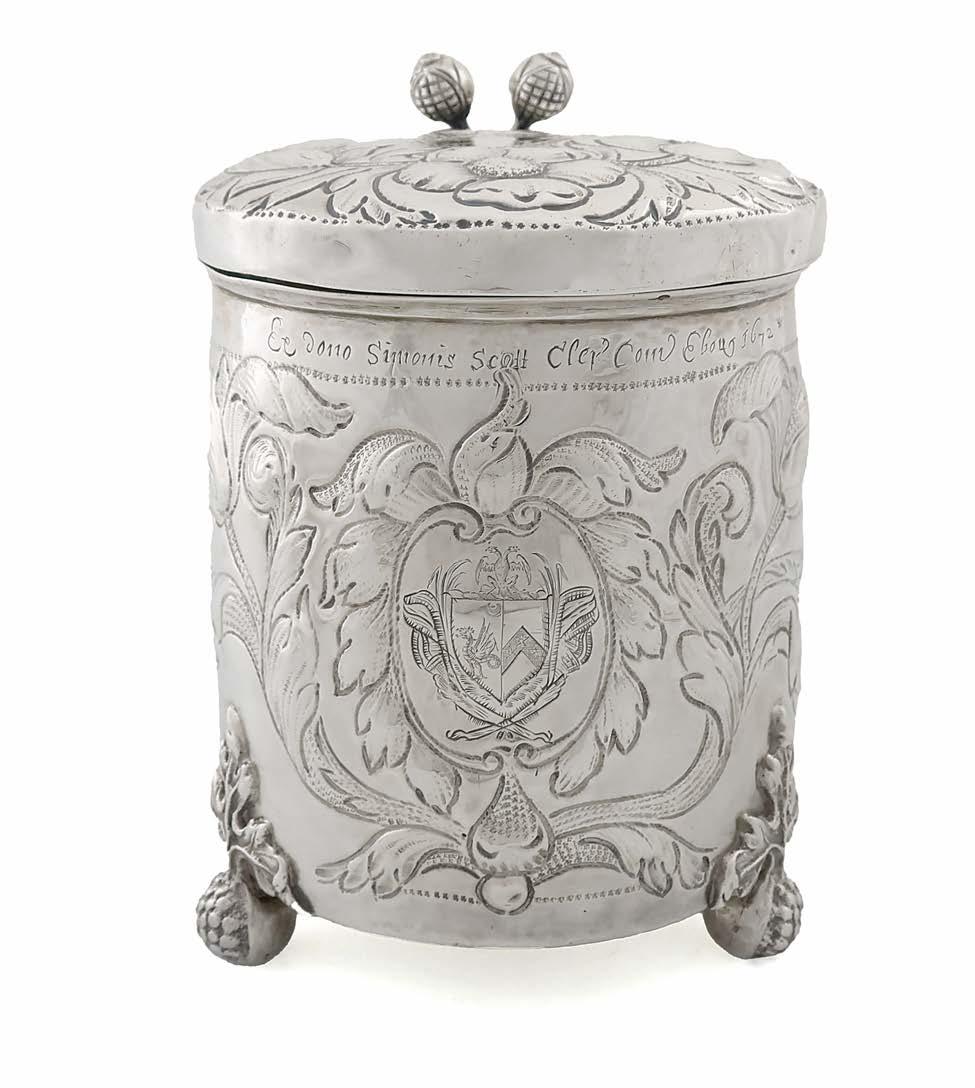
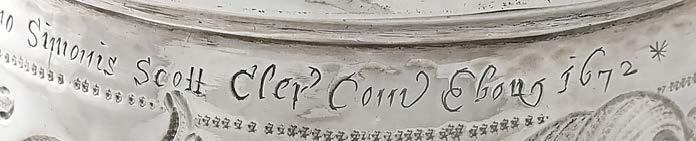

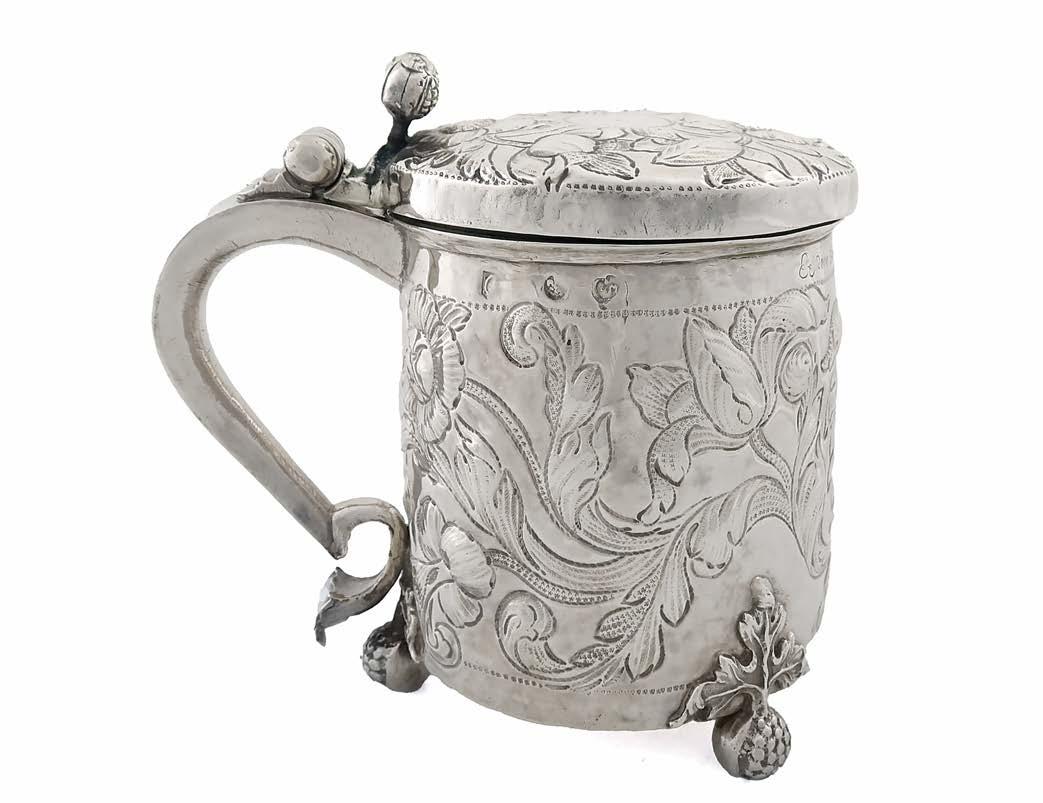
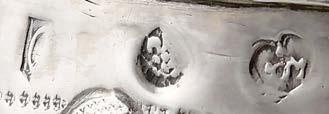
A Charles II silver peg tankard, by Thomas Mangy, York 1671, cylindrical form, chased with scrolling foliage and flower buds, the centre engraved with an armorial and with a border engraved ‘Ex dono Simonis Scott Cler Com Ebor 1672’, the cushion domed cover similarly chased, bifurcated pomegranate thumbpiece, scroll handle, on three leafcapped pomegranate feet, the interior with four pegs, height 19.3cm, approx. weight 25.7oz.
Though drinking vessels represented a large part of the production of York silversmiths in the second half of the 17th century, there was still plenty of variety in terms of both decoration and size. The embossed decoration here has a very different feel from the engraved tankards of John Plummer, quite apart from the beakers, tumbler cups and wine cups of the period.
Provenance:
Christie’s London, Silver, Objects & Miniatures, 10 November 1993, lot 247.
Exhibited:
Merchant Adventurers’ Hall, Fossgate, York, ‘Three Centuries of York Silver 1550-1858’, 14-28 July 2000, exhibit no. 75.
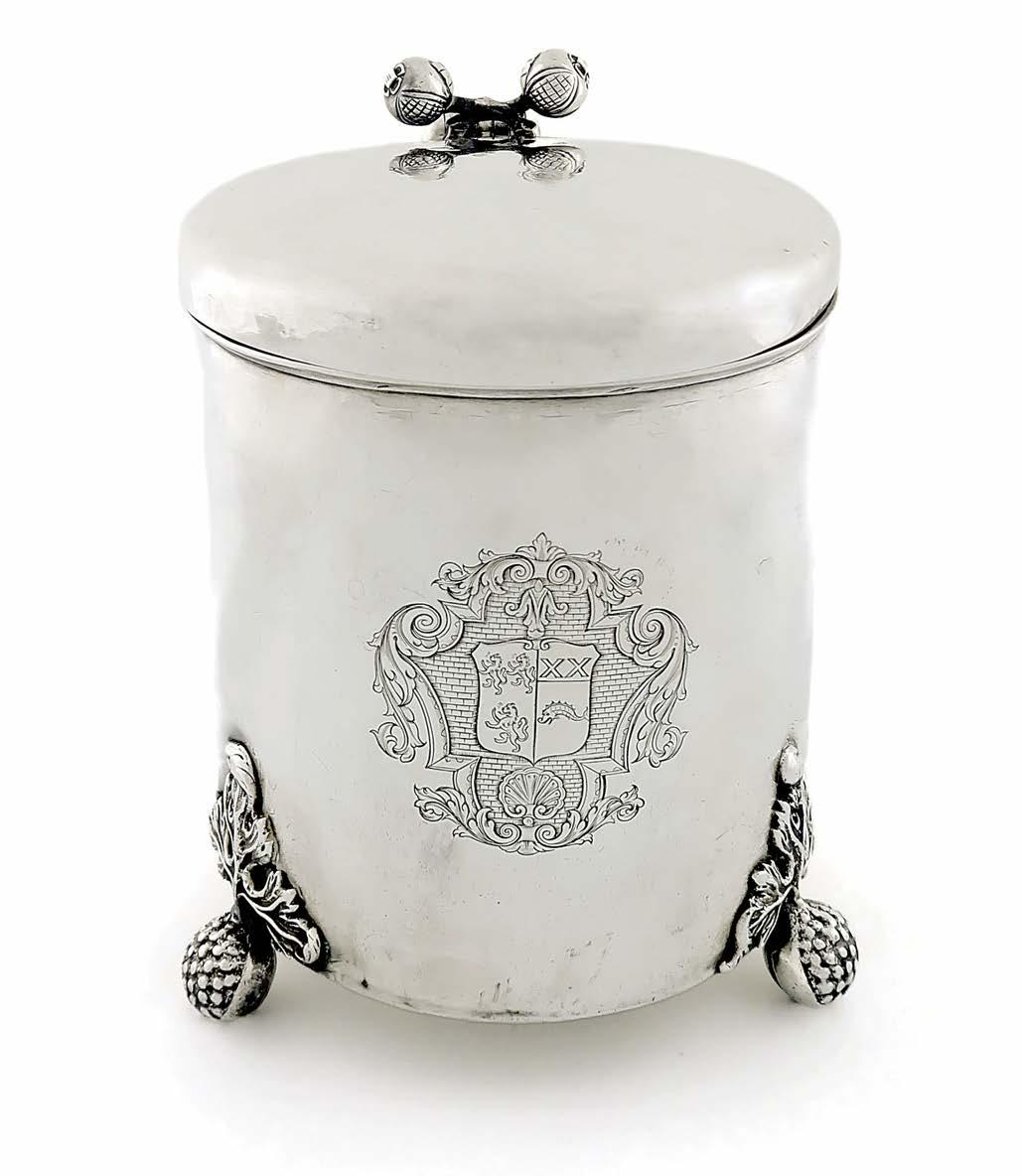
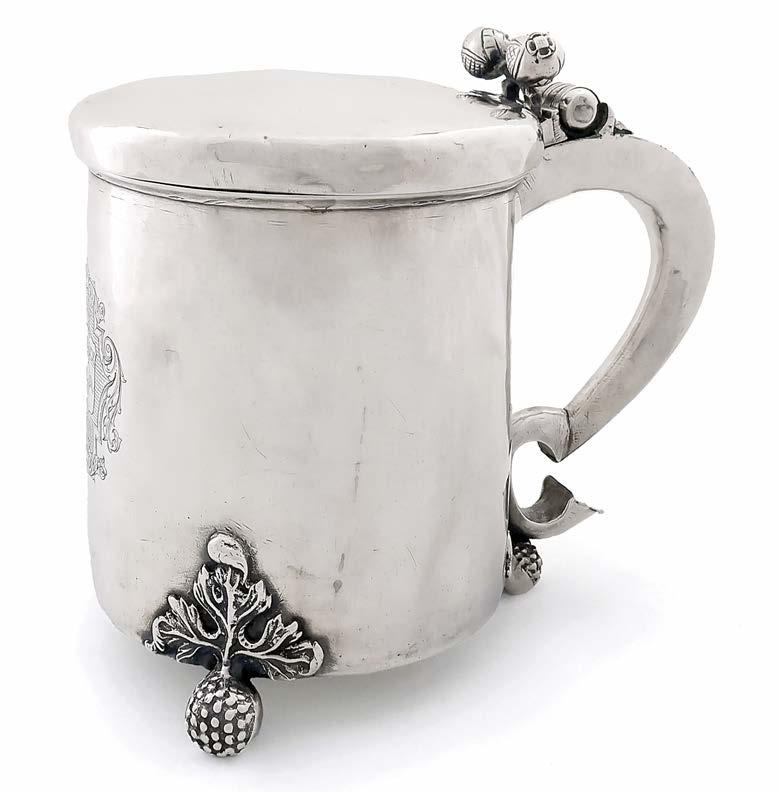
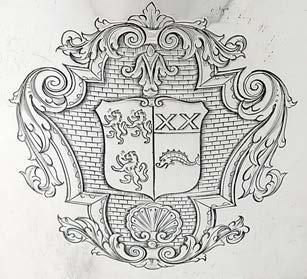
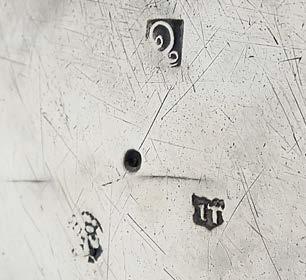
A Charles II silver peg tankard, by John Thompson, York 1673, plain cylindrical form, engraved with an armorial within foliate mantling, cushion domed hinged cover, bifurcated double pomegranate thumbpiece, scroll handle, on three vine leafcapped pomegranate feet, height 19.8cm, approx. weight 31.6oz.
The arms are those of Talbot impaling Frankland, for Roger Talbot Esq. and Frances, daughter of Sir Thomas Frankland 2nd Bt (d. 1726) and his wife Elizabeth (d. 1733), daughter of Sir John Russell 4th Bt and his wife Elizabeth, youngest daughter of Oliver Cromwell (1599-1659). Roger Talbot was the son of Roger Talbot Esq. (d. 1680), an uncompromising loyalist and a captain in the army of Charles I. He was elected MP for Northallerton and was for many years a Justice of the Peace.
Provenance: Christie’s, London, 12 June 2006, lot 163.
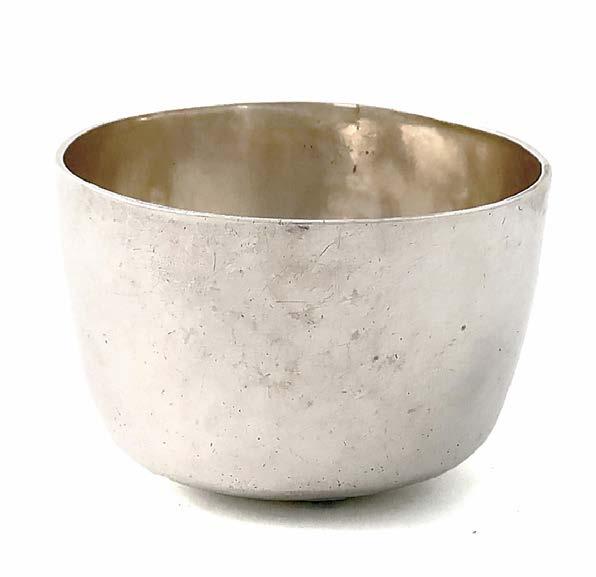
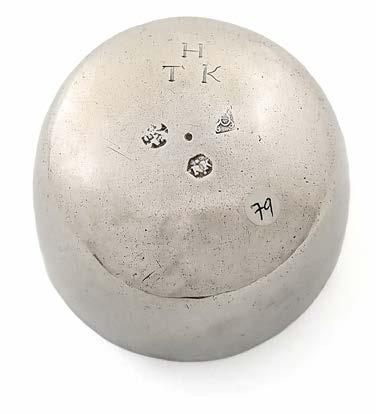
A Charles II silver tumbler cup, by Rowland Kirby, York 1674, plain tapering circular form, the underside initialled H over T K, height 5.5cm, approx. weight 2.5oz.
Exhibited: Merchant Adventurers’ Hall, Fossgate, York, ‘Three Centuries of York Silver 1550-1858’, 14-28 July 2000, exhibit no. 79.
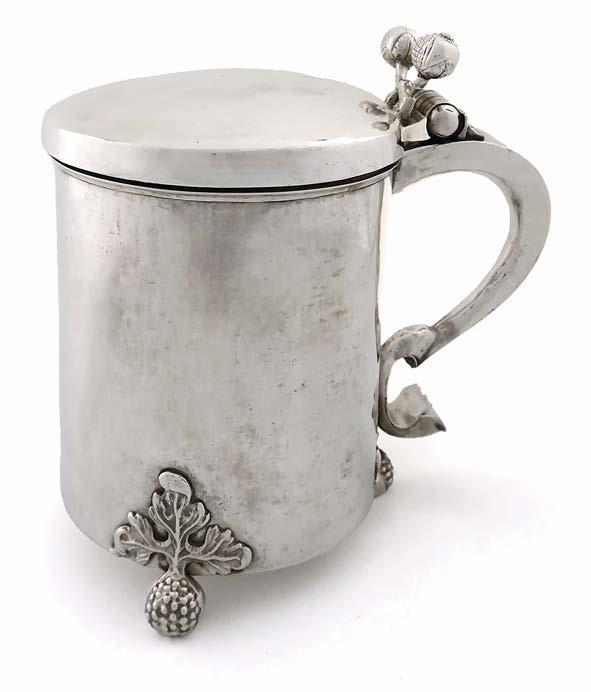
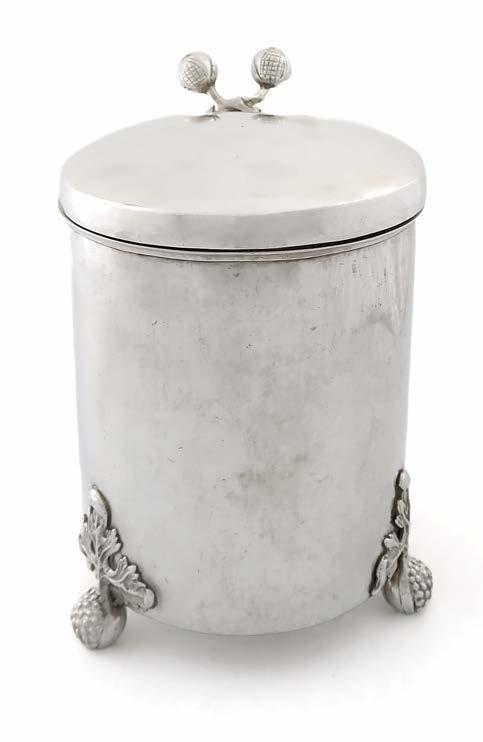
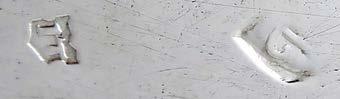
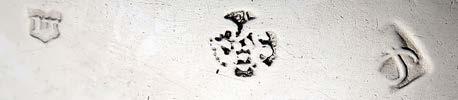
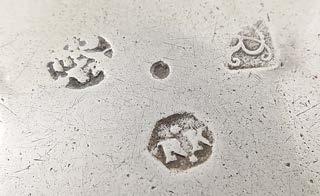
A Charles II silver peg tankard, by John Thompson, York 1674, plain cylindrical form, cushion domed hinged cover with a double bifurcated pomegranate thumbpiece, scroll handle, on three leaf-mounted pomegranate feet, the interior with eight pegs, height 21.2cm, approx. weight 30.4oz.
Exhibited: Merchant Adventurers’ Hall, Fossgate, York, ‘Three Centuries of York Silver 1550-1858’, 14-28 July 2000, exhibit no. 80.
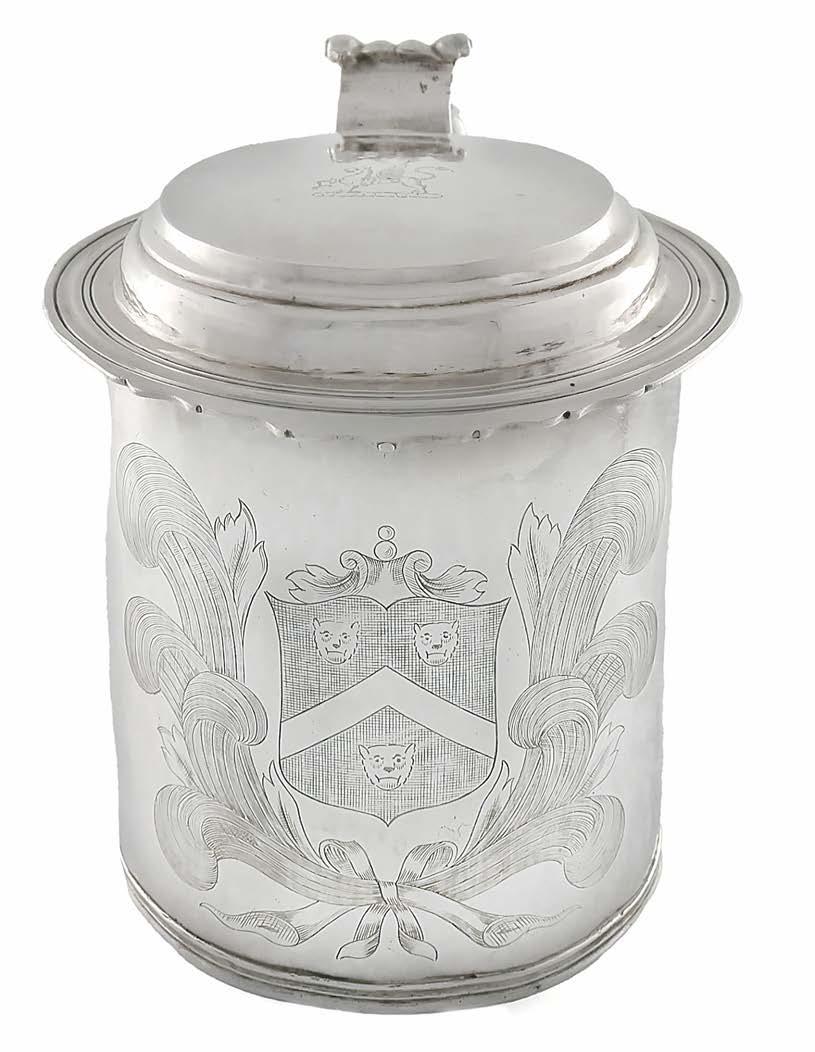
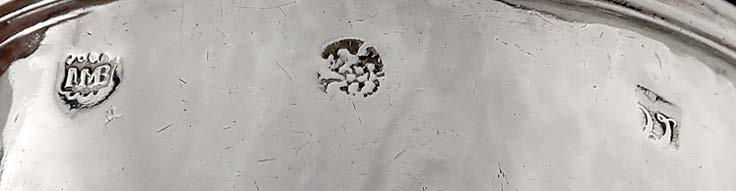
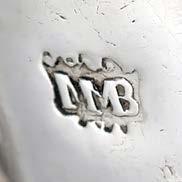
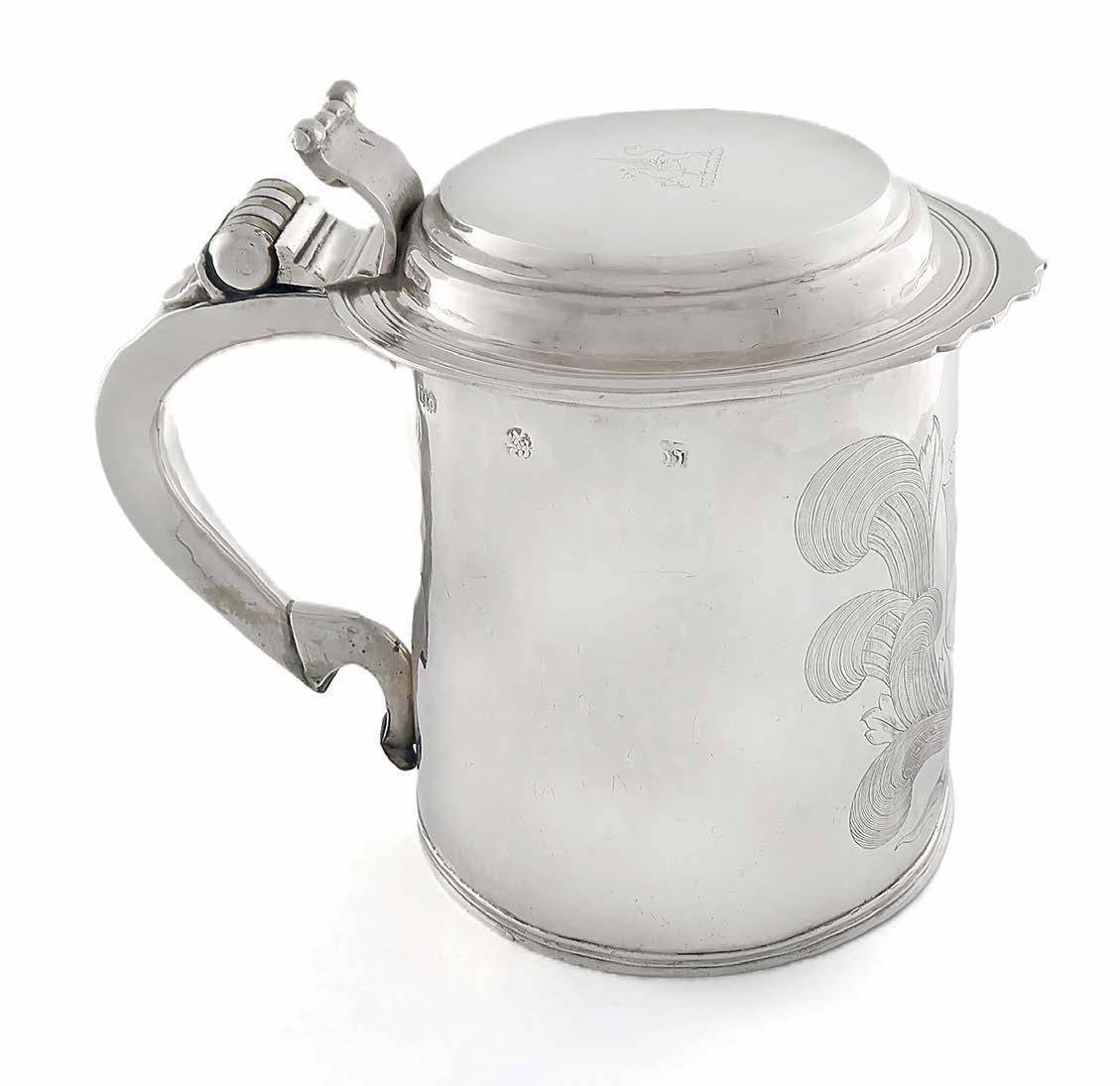
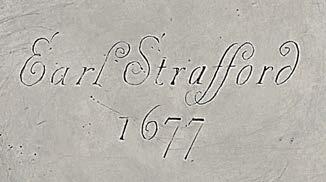
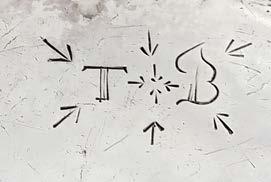
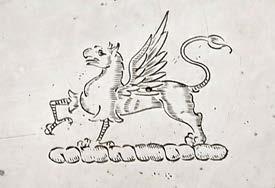
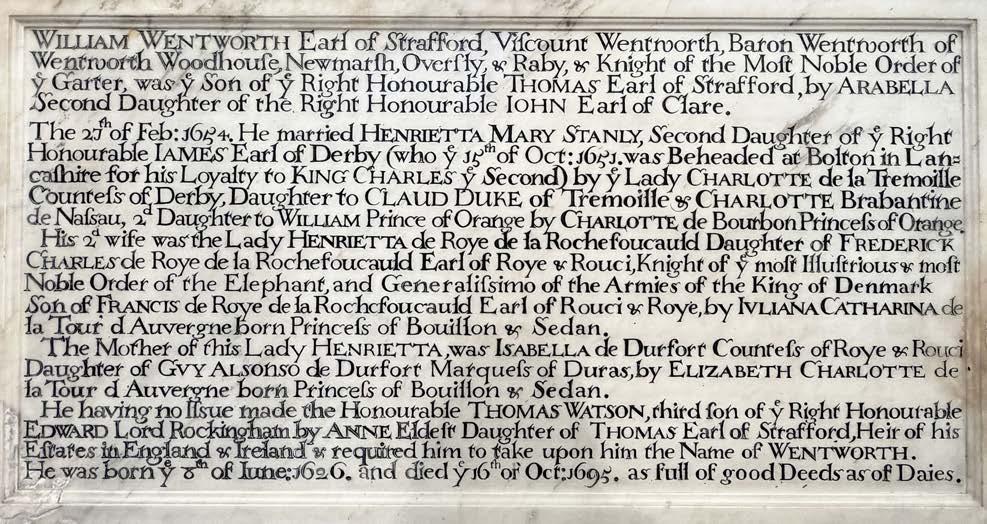
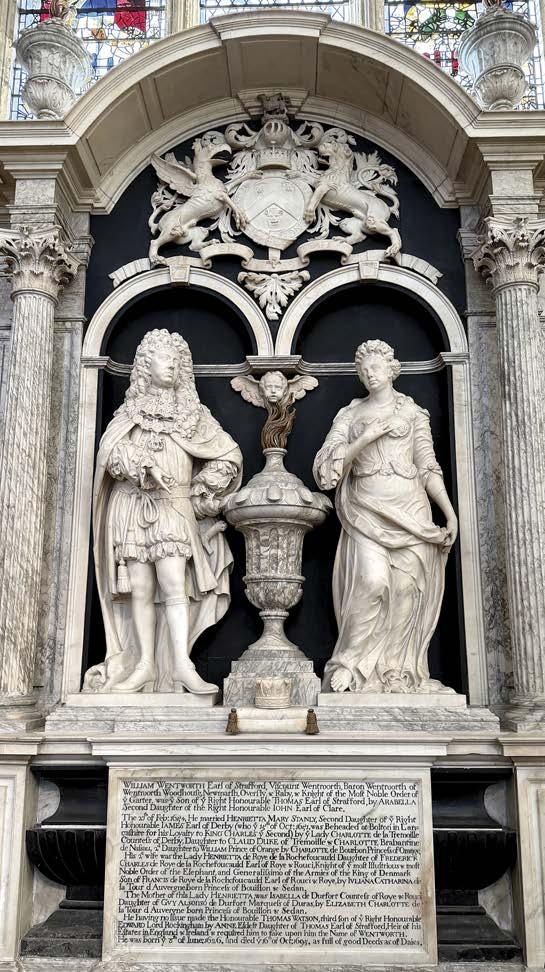
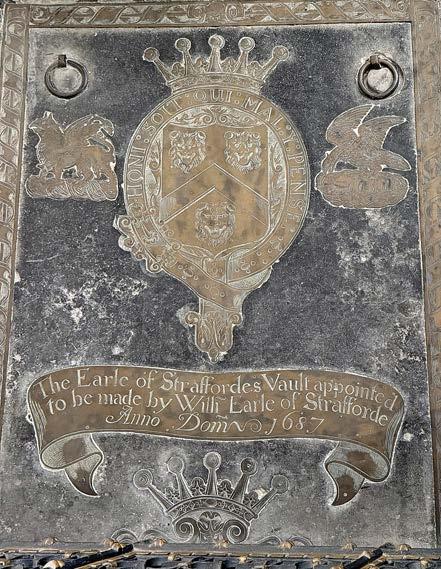
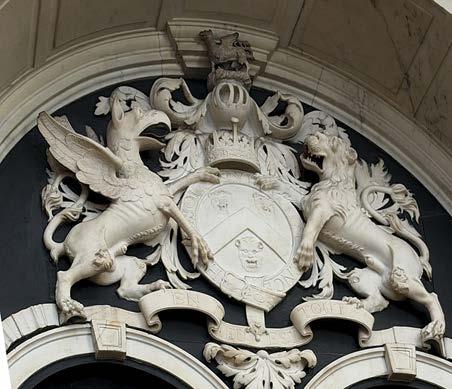
31A Charles II silver tankard, by Marmaduke Best, York 1677, plain tapering cylindrical form, the centre engraved with the arms of William Wentworth, Earl of Strafford, within scrolling feather mantling, the underside scratch initialled T*B, hinged raised cover engraved with a crest and inscribed on the inside ‘Earl Strafford 1677’, scroll thumbpiece and handle, height 15.5cm, approx. weight. 27.95oz.
This was the first piece of York silver that I acquired. William Wentworth (8 June 1626 - 16 October 1695), 2nd Earl of Strafford, was the son of the celebrated Thomas Wentworth, the 1st Earl who rose to great power and wealth under Charles I. He was impeached by Parliament, but when he was winning the argument at his trial, Parliament abandoned the impeachment and instead passed a Bill of Attainder against him, a procedure that required Parliament merely to declare, rather than prove, that he was guilty of treason. He was executed in 1641.
William, the 2nd Earl and the tankard’s owner, had his father’s title and estates returned to him by Charles II at the Restoration. The family seat was at Wentworth Woodhouse, near Rotherham, though the present enormous mansion, with more than 300 rooms, was actually built by a descendant. William was buried in York Minster and his splendid memorial, surmounted by the same coat of arms as is on the tankard, is at the east end of the Minster’s south quire aisle.
Exhibited:
On display at Merchant Adventurers’ Hall, Fossgate, York, since 1999.
Merchant Adventurers’ Hall, ‘Three Centuries of York Silver 1550-1858’, 14-28 July 2000, exhibit no. 87.
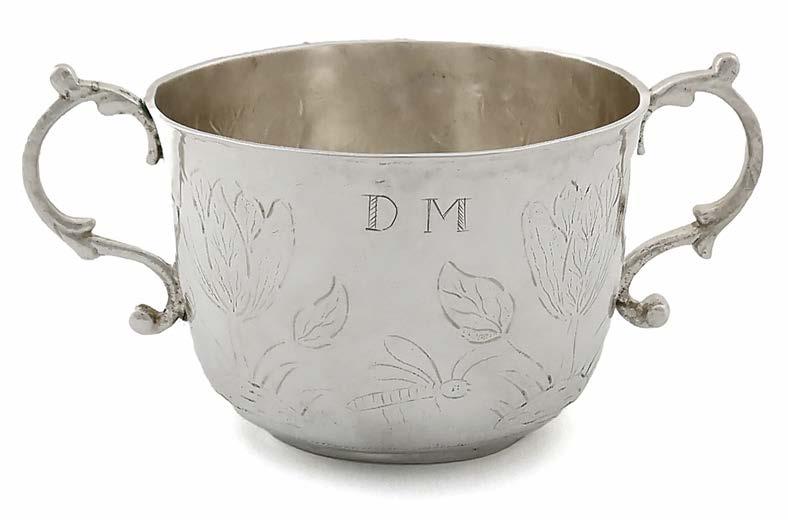
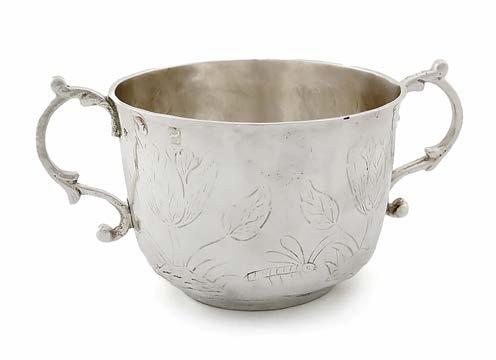
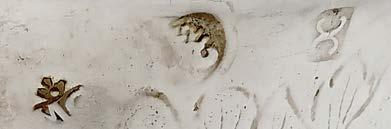
A Charles II silver two-handled porringer, by Mark Gill, York 1679, slightly tapering circular form, chased with dragonflies and flowers and initialled D M, two scroll handles, diameter handle to handle 13.2cm, approx. weight 3.6oz.
Mark Gill was elected Lord Mayor of York in 1697.
Exhibited:
Merchant Adventurers’ Hall, Fossgate, York, ‘Three Centuries of York Silver 1550-1858’, 14-28 July 2000, exhibit no. 99.
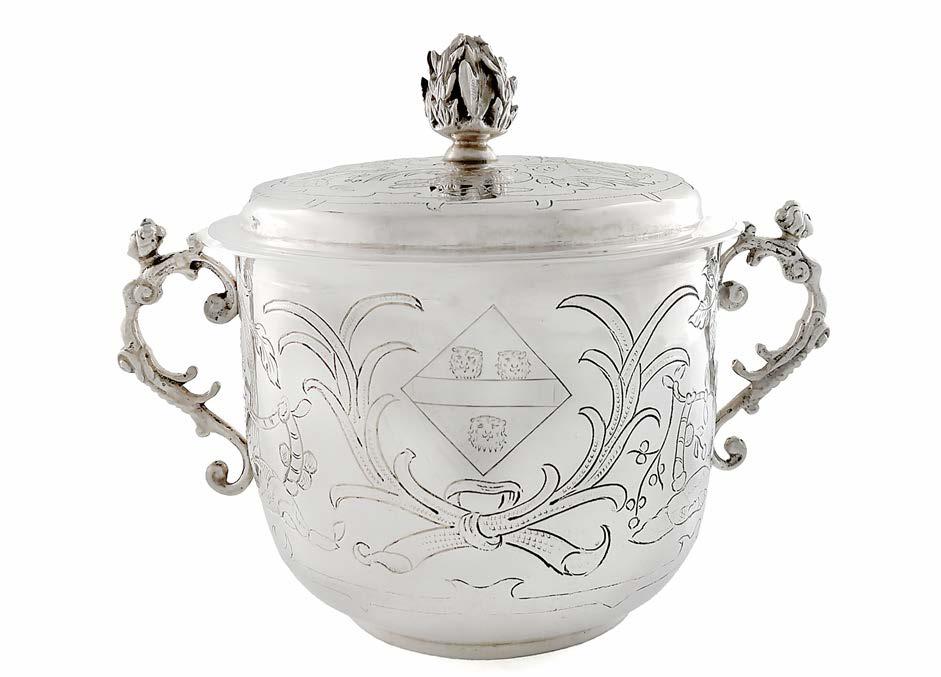
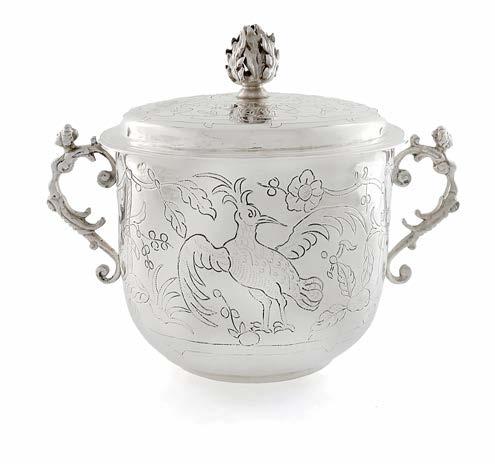
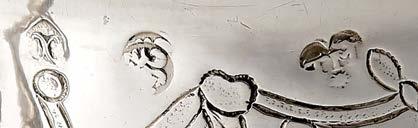
A Charles II silver two-handled porringer and cover, by Thomas Mangy, York 1679, the town mark over-striking another, circular form, the matted body chased with scrolling flowers and exotic birds, and engraved with a coat-of-arms within a lozenge, with two scroll caryatid handles, the underside initialled SA, raised pull-off cover similarly engraved with scrolling flowers and birds, foliate bud finial, height including cover 16.5cm, approx. total weight 20oz.
Exhibited:
On display at Merchant Adventurers’ Hall, Fossgate, York, since 1999. Merchant Adventurers’ Hall, ‘Three Centuries of York Silver 1550-1858’, 14-28 July 2000, exhibit no. 100.
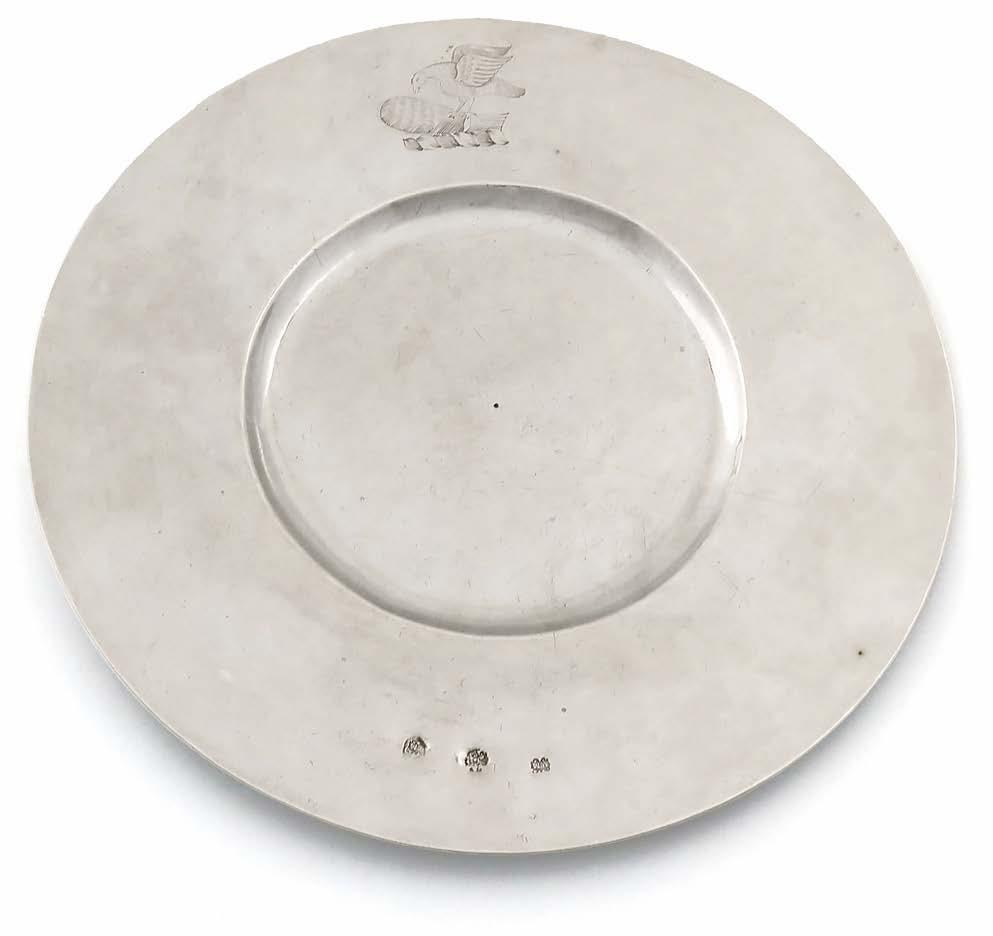
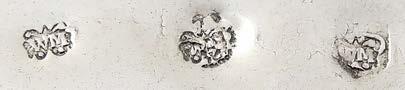
A Charles II silver dinner plate by William Mascall, York circa 1680, plain circular form, the border engraved with a crest, diameter 27.2cm, approx. weight 15oz.
Exhibited:
Merchant Adventurers’ Hall, Fossgate, York, ‘Three Centuries of York Silver 1550-1858’, 14-28 July 2000, exhibit no. 101.
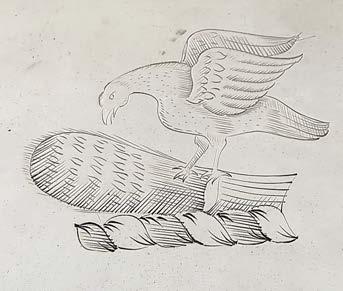
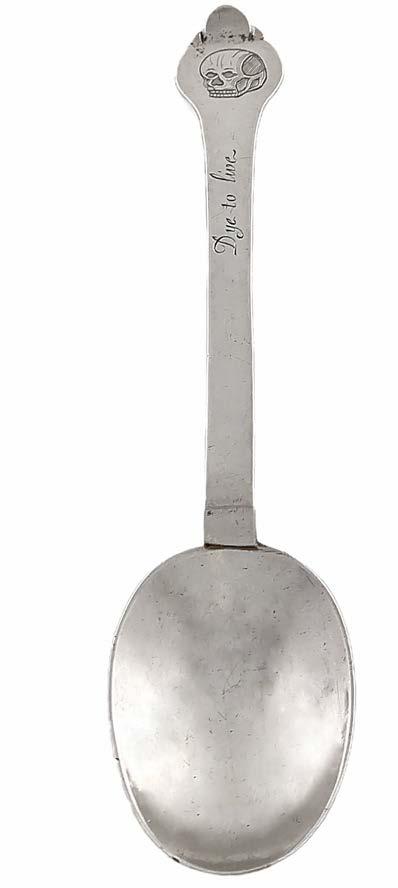
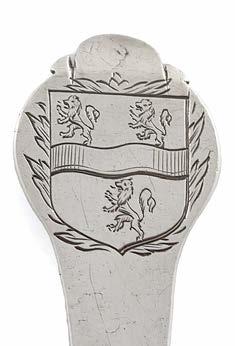
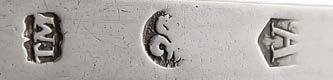
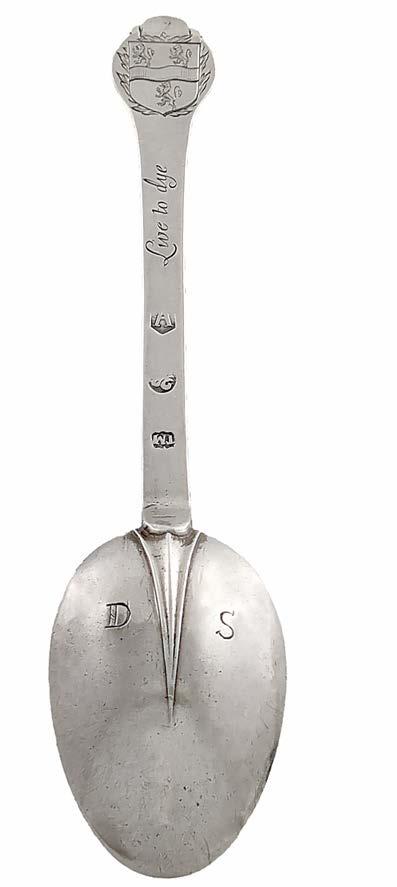
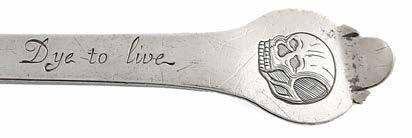
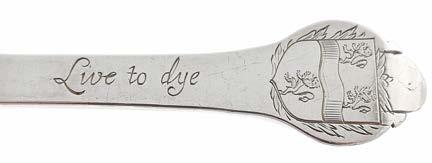
A Charles II silver Death’s Head Trefid spoon, by Thomas Mangy, York 1682, oval bowl, the stem inscribed ‘Dye to Live’, the terminal engraved with a skull (death’s head), the reverse of the stem inscribed ‘Live to Dye’, and the terminal engraved with the coat-of-arms of Crompton of Driffield within a cartouche, the reverse of the bowl with a plain raised rat-tail, initialled to either side D S, length 18.7cm, approx. weight 1.6oz.
Exhibited:
On display at Merchant Adventurers’ Hall, Fossgate, York, since 1999. Merchant Adventurers’ Hall, ‘Three Centuries of York Silver 1550-1858’, 14-28 July 2000, exhibit no. 108.
See number 20 for another Death’s Head spoon.
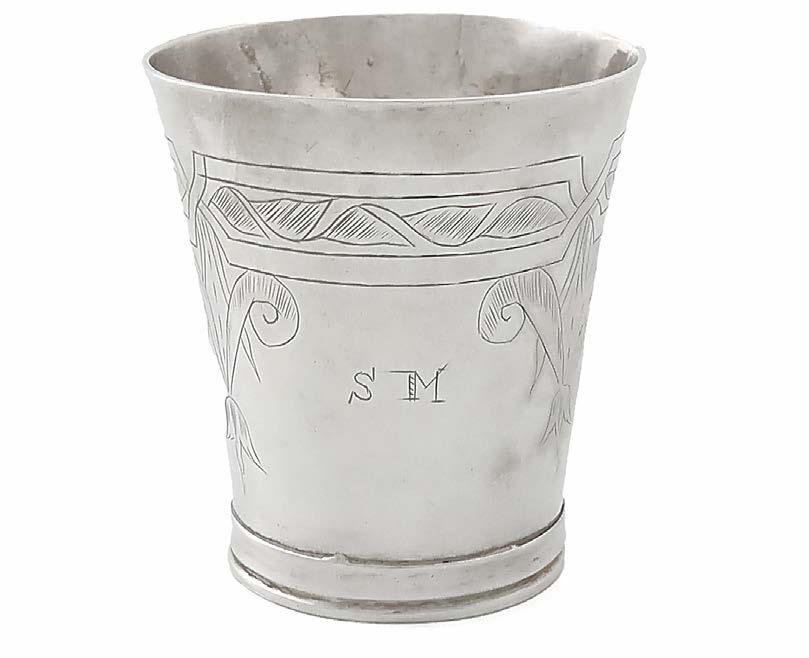
A Charles II silver beaker, by John Smith, York 1682, tapering circular form, engraved with scroll and banner decoration, initialled S M, two bands of stringing around the base, height 8cm, approx. weight 2.25oz.
Exhibited: Merchant Adventurers’ Hall, Fossgate, York, ‘Three Centuries of York Silver 1550-1858’, 14-28 July 2000, exhibit no. 110.
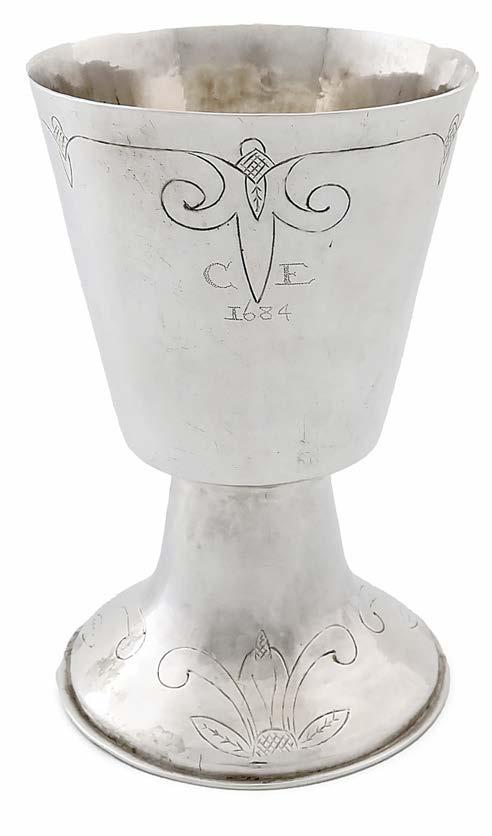
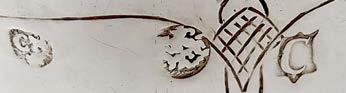
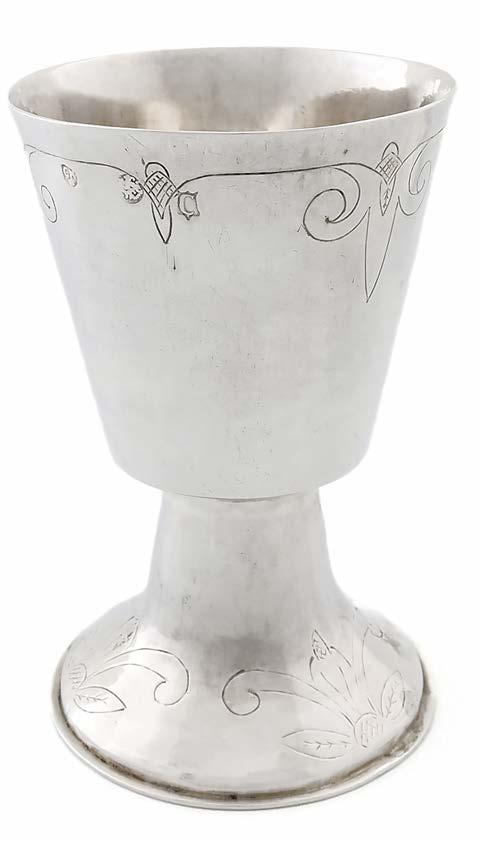
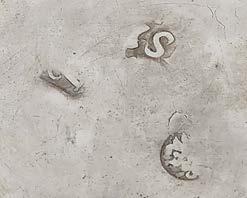
A Charles II silver Communion cup, by George Mangy, York 1684, tapering circular bowl, stylised engraved border and initialled C E over 1684, on a raised circular foot engraved with flowers, height 15.8cm, approx. weight 6.9oz.
Exhibited:
Merchant Adventurers’ Hall, Fossgate, York, ‘Three Centuries of York Silver 1550-1858’, 14-28 July 2000, exhibit no. 117.
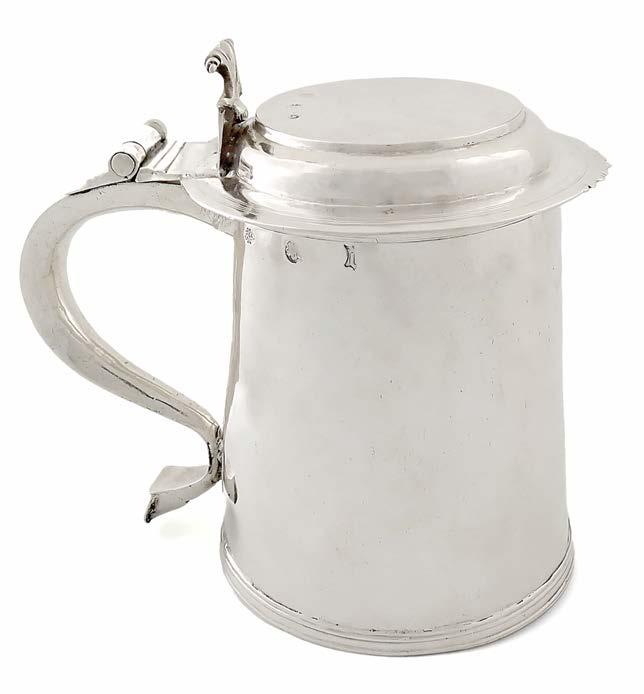
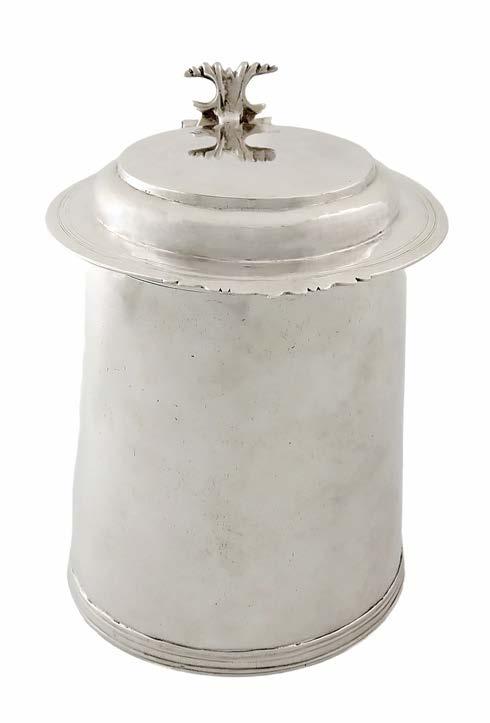
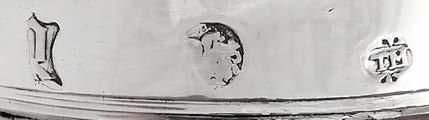
38 A James II silver tankard, by Thomas Mangy, York 1685, plain tapering cylindrical form, raised hinged cover with a scroll thumbpiece, scroll handle, height 16cm, approx. weight 18.5oz.
Exhibited: Merchant Adventurers’ Hall, Fossgate, York, ‘Three Centuries of York Silver 1550-1858’, 14-28 July 2000, exhibit no. 123.
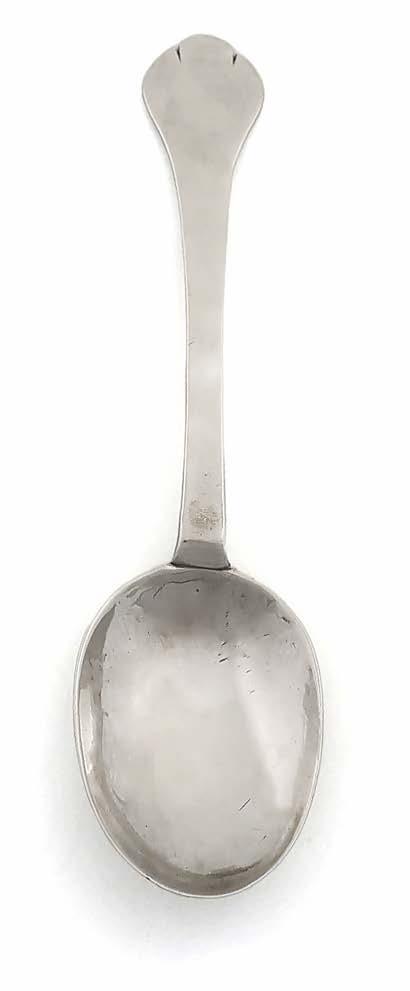
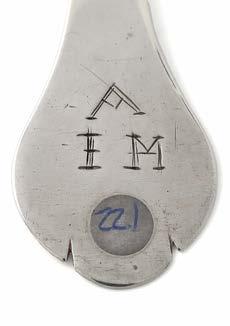
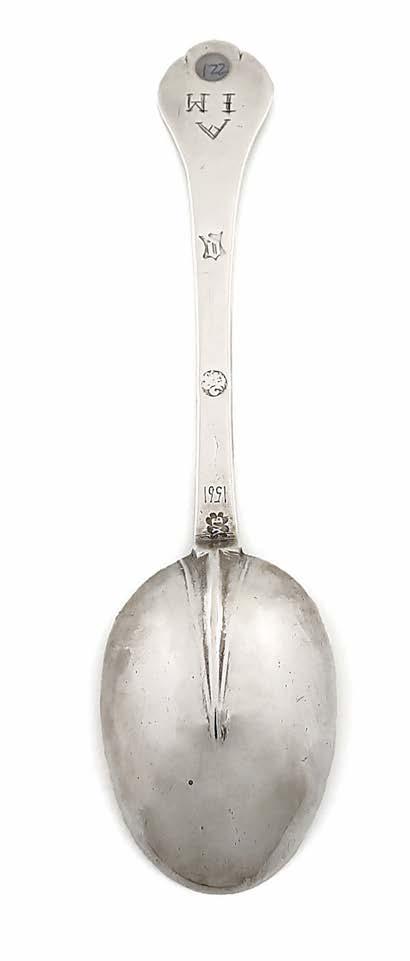

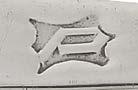
A James II silver Trefid spoon, by William Busfield, York 1685, oval bowl with a plain raised rat-tail, the reverse of the terminal with scratch initials A over I M, and later 1561 on the stem, length 19.5cm, approx. weight 1.6oz.
Exhibited:
Merchant Adventurers’ Hall, Fossgate, York, ‘Three Centuries of York Silver 1550-1858’, 14-28 July 2000, exhibit no. 122.
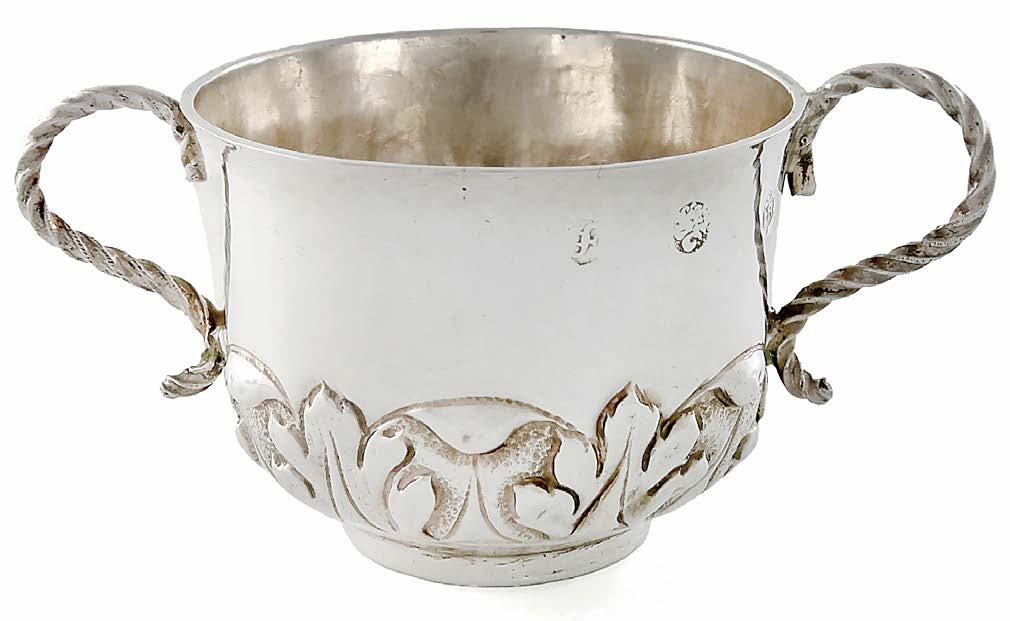
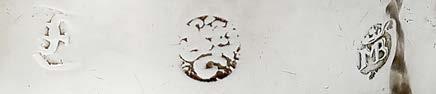
A James II silver two-handled porringer bowl, by Marmaduke Best, York 1687, circular form, the lower body chased with leaf decoration, the underside initialled M.V, scroll twist side handles, diameter handle to handle 12.5cm, height 6cm, approx. weight 3oz.
Exhibited:
On display at Merchant Adventurers’ Hall, Fossgate, York, since 1999. Merchant Adventurers’ Hall, ‘Three Centuries of York Silver 1550-1858’, 14-28 July 2000, exhibit no. 128.
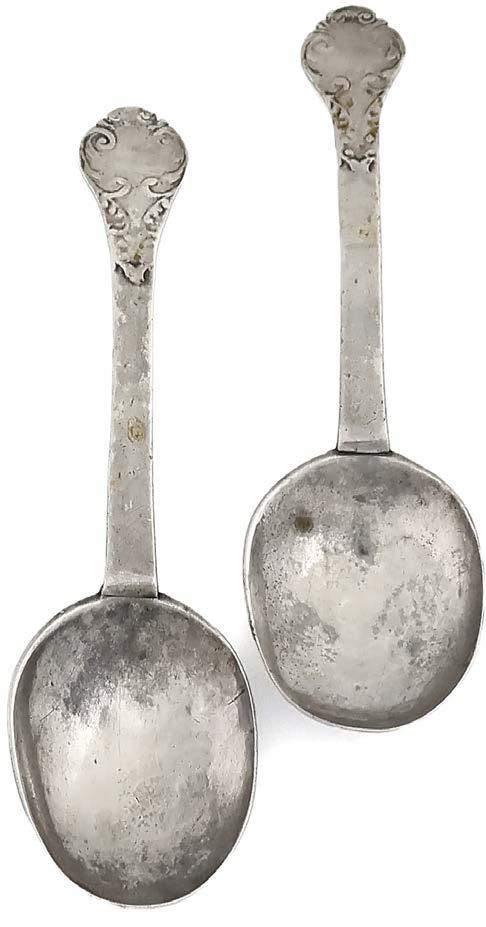
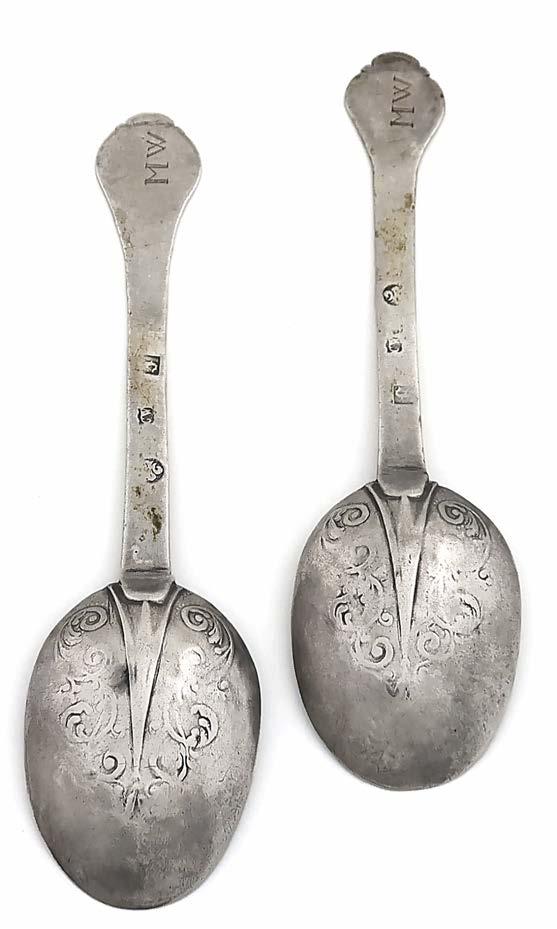
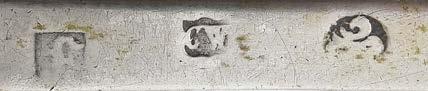
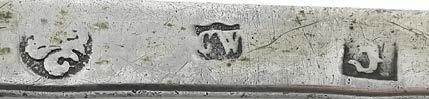
A pair of James II lace-back Trefid spoons, by Christopher Whitehill, York 1687, the reverse of the oval bowls with a plain raised rat-tail and scroll decoration, the front of the terminals with similar decoration, the reverse of the terminals with initials M W, lengths 18.4cm and 18.9cm, approx. total weight 2.8oz (2)
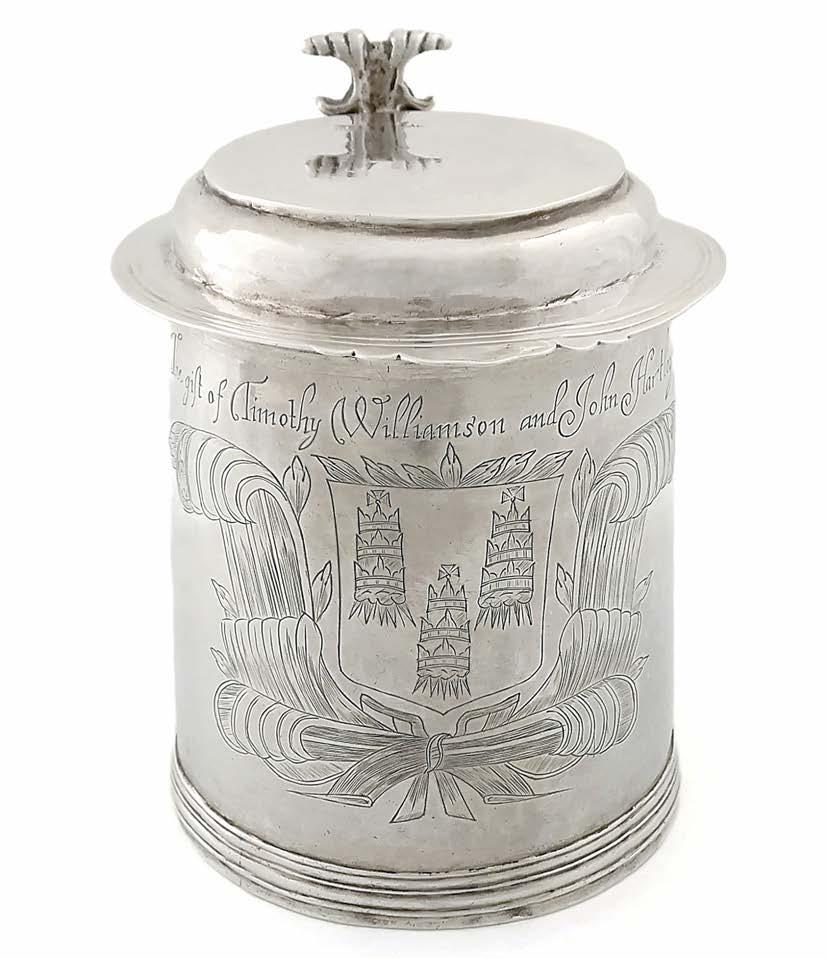
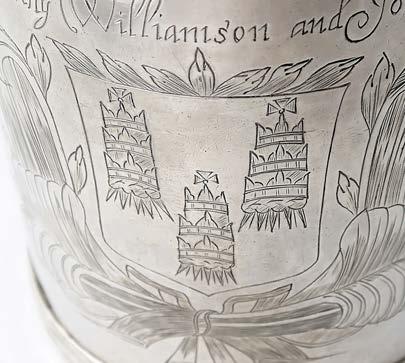
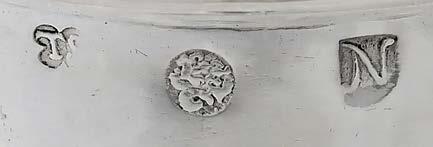
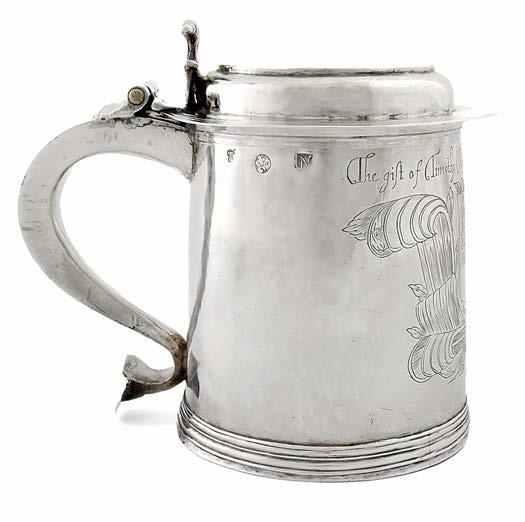
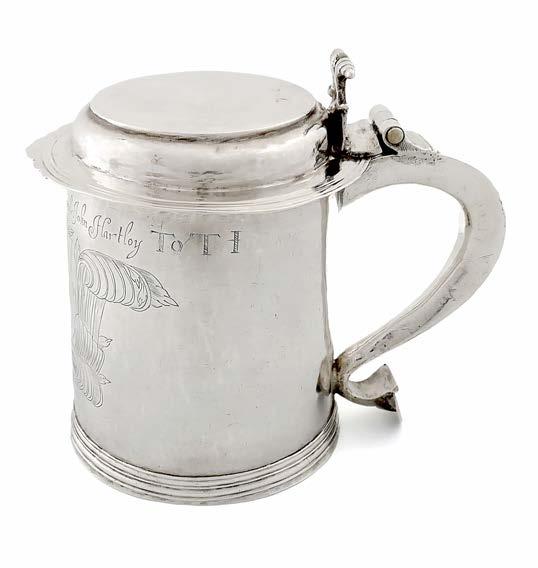
A William and Mary silver tankard, by Timothy or John Smith, York 1694, tapering circular form, flat hinged cover, scroll handle and thumbpiece, the front engraved with the arms of The Worshipful Company of Drapers with scrolling plume mantling, and inscribed ‘The Gift of Timothy Williamson and John Hartloy’ and by different hand ‘To T I(ackson)’, height 15cm, approx. weight 18.3oz.
Thomas Lumley wrote: ‘Thomas Jackson was a Merchant Taylor made Free in 1655 and was chamberlain of York in 1665. From research done by York Castle Museum he spent much of his time in London but managed to be Free of the York Company in order to trade in the City. He died in London on 11 January 1692.’
Founded in 1361, the Drapers Company is third in order of precedence of the London livery companies. The site of the Drapers Hall in London was bought from Henry VIII in 1543. It had previously been the London home of Thomas Cromwell who was executed in 1540. The Drapers Company was probably the first corporate body in England to be granted a coat of arms. The grant was made in 1439 by Sir William Bruges, Garter King of Arms.
Provenance:
A Private Collection.
Alastair Dickenson Ltd.
A Private Collection.
Christie’s London, Fine Silver 13 June 2000, lot 254.
Thomas Lumley.
Woolley & Wallis, Silver & Objects of Vertu 28 April 2021, lot 2016.
Exhibited:
An Exhibition of Silver and other Works of Art, Thomas Lumley Ltd, 2 Old Bond Street, London, 28 November-8 December 1973, exhibit no. 18.
Merchant Adventurers’ Hall, Fossgate, York, ‘Three Centuries of York Silver 1550-1858’, 14-28 July 2000, exhibit no. 137.
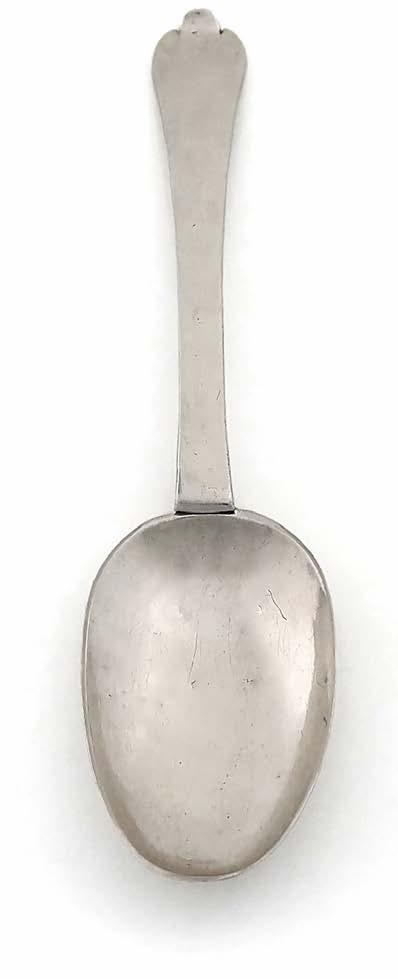
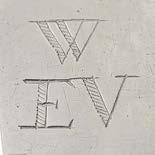
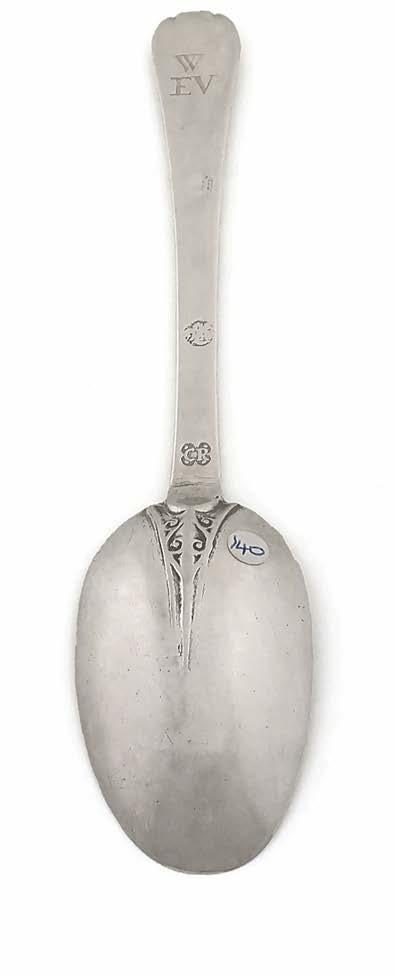
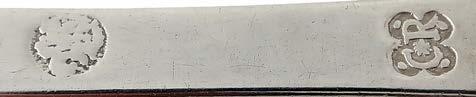
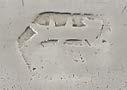
A William III silver Trefid spoon, by Clement Reed, York 1696, oval bowl with a raised rat-tail, the reverse of the terminal with scratch initials W over E V, length 19cm, approx. weight 1.5oz.
Exhibited:
Merchant Adventurers’ Hall, Fossgate, York, ‘Three Centuries of York Silver 1550-1858’, 14-28 July 2000, exhibit no. 140.
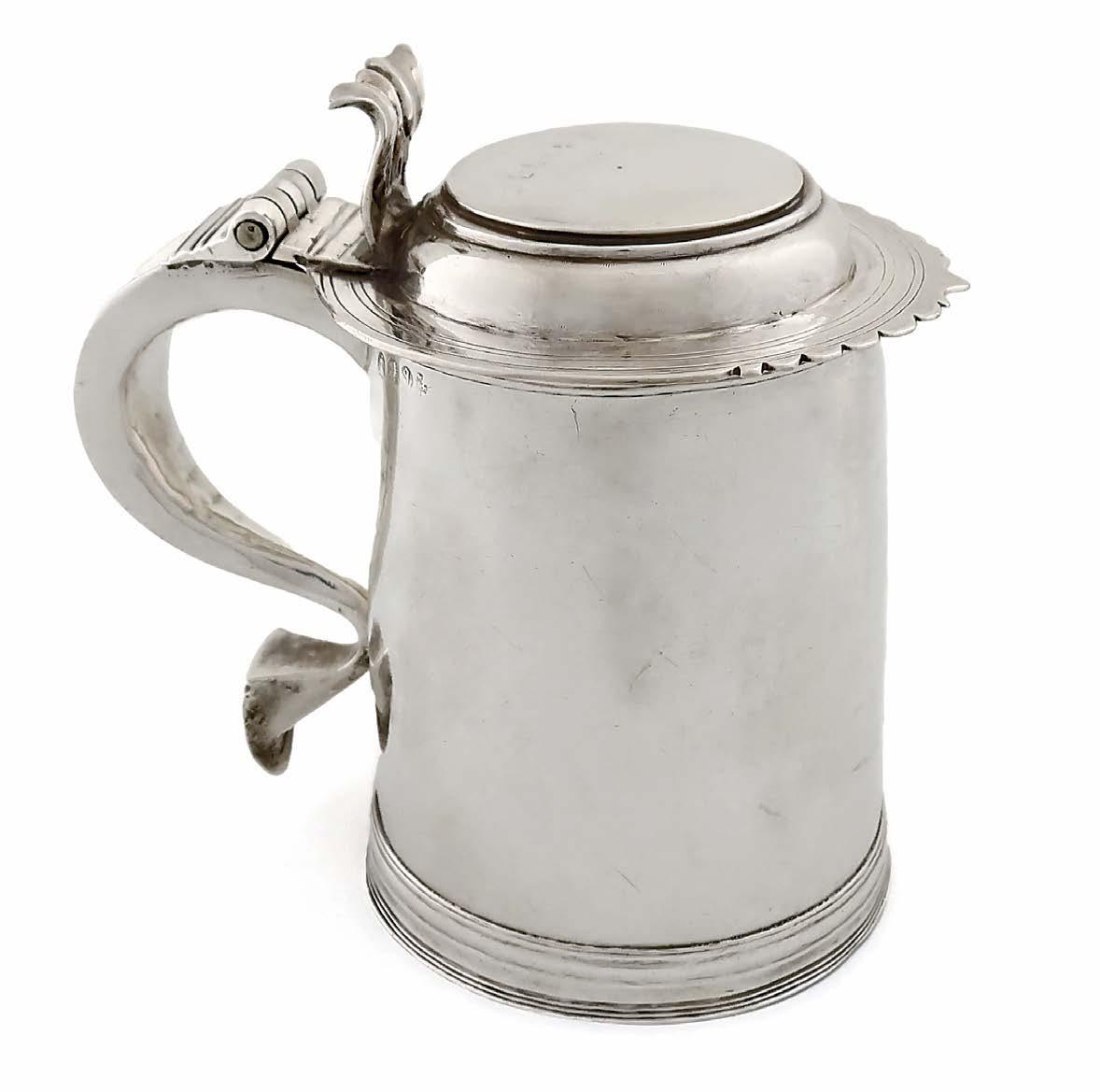
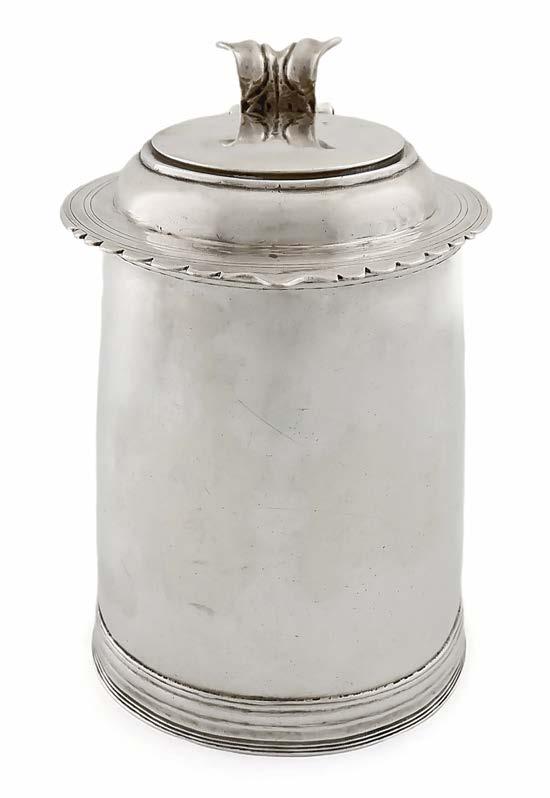
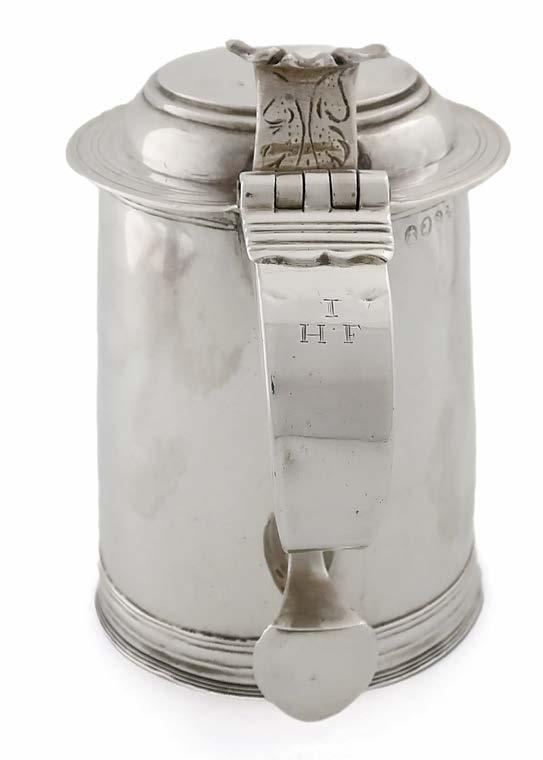
44 A Queen Anne Britannia standard silver tankard, maker’s mark MA, York 1709, slightly barrelled plain form, raised hinged cover with a scroll thumbpiece, plain scroll handle initialled I over H F, height 16.7cm, approx. weight 18.6oz.
Exhibited:
Merchant Adventurers’ Hall, Fossgate, York, ‘Three Centuries of York Silver 1550-1858’, 14-28 July 2000, exhibit no. 142.
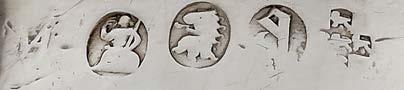
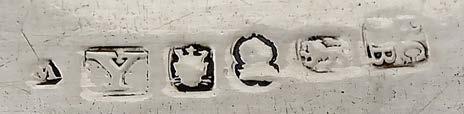
The above tankard (no. 44) dates from 1709 and the reign of Queen Anne. By now there was a requirement for five hallmarks. The maker’s initials MA are just visible on the left of the above hallmarks. On the right of the hallmarks is the new town mark introduced in 1701 (five lions passant on a cross), next to it the date letter, and then two other brand-new marks, Britannia and the lion’s head erased (‘erased’ in heraldic terms means ‘with ragged edge’ rather than the normal meaning of ‘rubbed out’).
At the end of the 17th century the demand for articles made of silver was such that people started melting down the coinage for their silver content. The resulting shortage of coins was having an impact on commerce generally. To counteract this an Act of Parliament was passed in 1697 requiring the normal sterling silver standard (which is 92.5% of fine silver) to be replaced by the purer Britannia silver standard (which is 95.84% of fine silver) as the mandatory standard for making silverware. The Britannia mark on the above tankard denotes the Britannia standard.
The requirement for the ‘lion’s head erased’ mark appearing on this tankard actually applied only to London-made objects, but strangely York added it too, even though it had no reason to do so.
Britannia standard silver, being purer than sterling silver, was both more expensive and softer, and it ceased to be mandatory in 1720 (so after only 23 years), and almost all silver after that date went back to being sterling-standard silver.
There are only a few surviving items of York silver bearing the Britannia mark. It would seem that the silver trade in York at the beginning of the 18th century was not in good shape, and in 1716 the York Assay Office closed and did not reopen for another 60 years.
Silversmithing in York was not dead during that time, but because there was no assay office any article of silver made in York should have gone elsewhere, in practice to Newcastle, to be assayed and hallmarked. The following cream jug of about 1745 (no. 45) is very unusual, having been made during the 60-year closure of the assay office by a known York silversmith, Stephen Buckle. His maker’s mark alone appears on the cream jug, but no mark to indicate where or when it might have been assayed. See also no. 46 below.
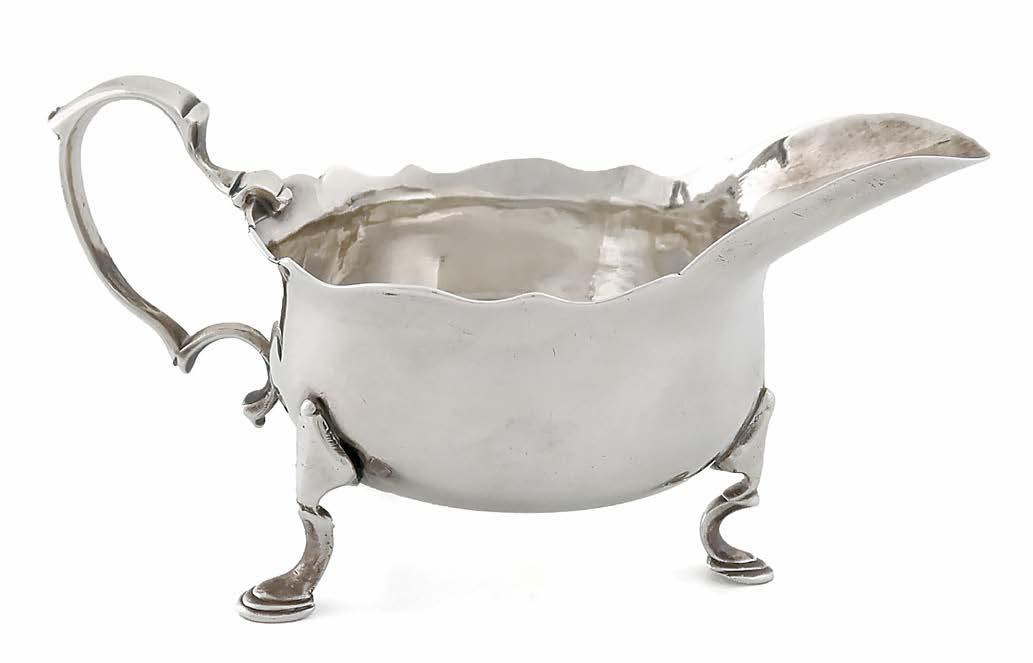
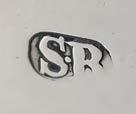
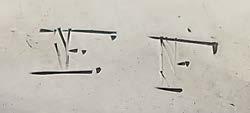
A George II cream jug, maker’s mark only for Stephen Buckle, York circa 1745, engraved with the initials AF and EF, wavy border, on three feet, scroll handle, length 13.6cm, approx. weight 3.2oz.
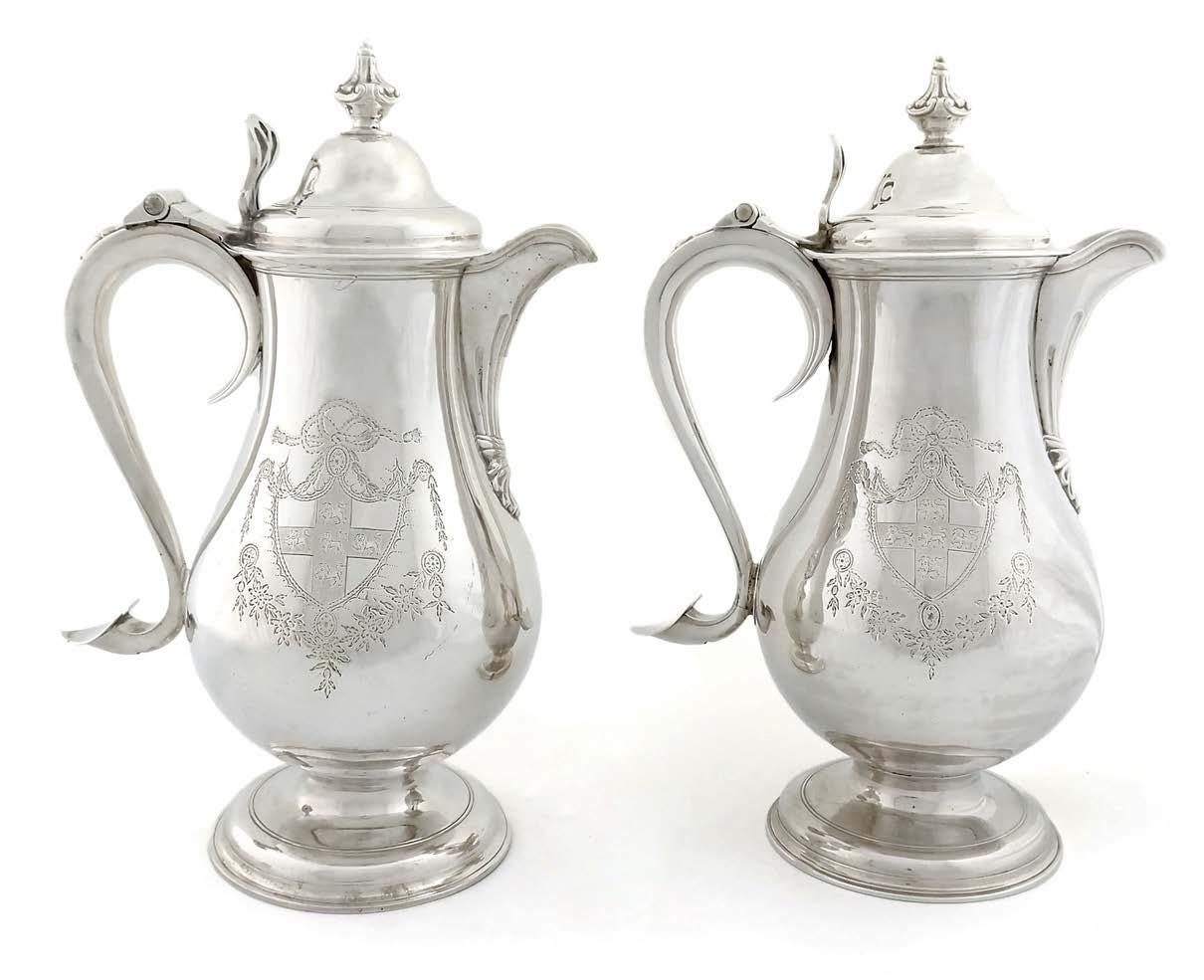
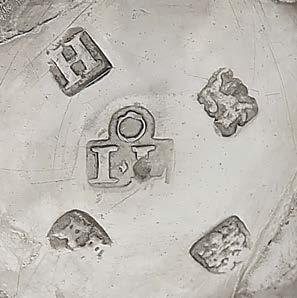
A pair of George III silver decanters, by John Langlands, Newcastle 1774, plain baluster form, engraved with an armorial on either side within foliate swags, hinged, domed covers with a scroll finials and open-work thumbpieces, scroll handles, on a raised and spread circular foot, height 28.4cm, approx. weight 32oz and 32.7oz. (2)
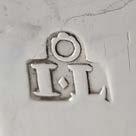
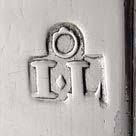
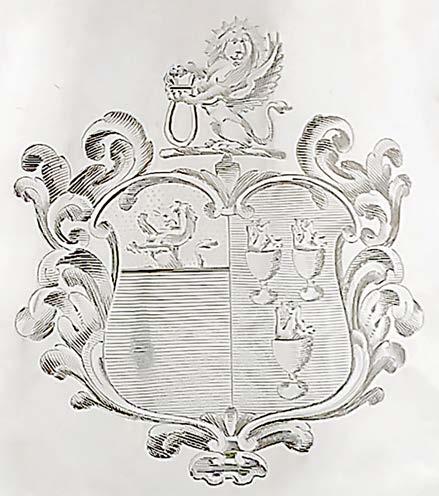
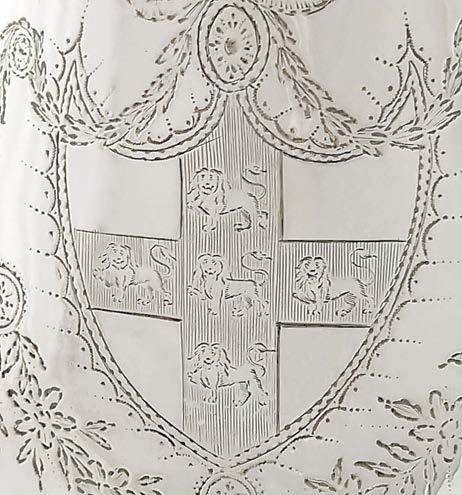
These decanters are not York pieces – they were made in Newcastle – but they are included as they are engraved with the arms of the City of York. There seems to have been a custom during the 18th century that an incoming Archbishop of York was presented by the City with a pair of silver decanters. An earlier pair was presented to Archbishop Gilbert in 1758. That pair was acquired by Fairfax House in York in 1992 amidst publicity that included an article in Country Life magazine.
The decanters shown on the previous page were presented by the Lord Mayor to Archbishop Markham when he became Archbishop of York in 1776. It was known from entries in the Chamberlain’s Accounts still preserved in the York City Archives that there was originally a pair of decanters, but over the years the two decanters had become separated. I acquired one in 1989 and by great good fortune was then able to buy its twin when it came up at auction more than 20 years later.
Markham was a school friend at Westminster School of Warren Hastings who took Markham’s son, also William (1760-1815), into his personal service when Governor General of Bengal. The son subsequently became Resident of Benares before later returning to his family seat, Becca Hall in Yorkshire. The marital armorials on the decanters are for Markham’s son William and Elizabeth Bowles of North Aston whom he married in August 1795.
Provenance:
One purchased from the London dealer Donohoe in 1989, and the other from Bonham’s London, Fine Silver & Objects of Vertu, 25 November 2009, lot 206.
One exhibited:
Merchant Adventurers’ Hall, Fossgate, York, ‘Three Centuries of York Silver 1550-1858’, 14-28 July 2000, exhibit no. 150.
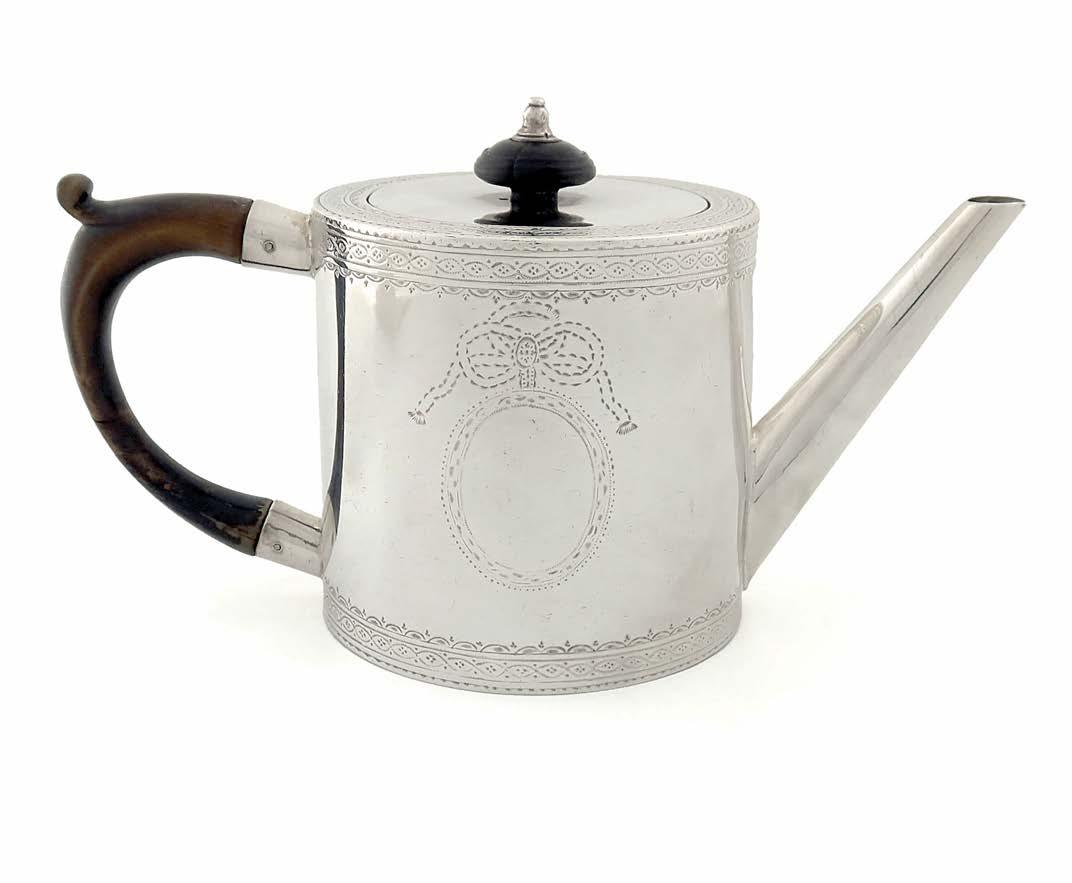
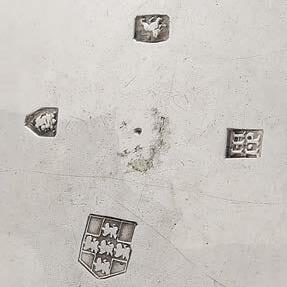
A George III silver drum tea pot, by John Hampston & John Prince, York circa 1776, oval form, engraved with a vacant cartouche surmounted with a tied ribbon, pull-off flush fitting cover, knopped wood finial, scroll wood handle, length handle to spout 22.4cm, approx. weight 14.4oz.
Exhibited: Merchant Adventurers’ Hall, Fossgate, York, ‘Three Centuries of York Silver 1550-1858’, 14-28 July 2000, exhibit no. 153.
After the re-opening of the York Assay Office in 1776 there was a real flowering of York hall-marked silver. The dominant firm was called Hampston & Prince, and their work was characterised by elegance and refinement. Their premises were in Coney Street in York.
Tea and coffee seem to have replaced stronger drink, or at least their paraphernalia seem to have done, as the medium for showing your neighbours that you are doing well in the world, as one can see from the teapots, coffee pots, tea caddies, teapot stand, sugar caddies and sugar tongs shown here – swags everywhere, and all made in York in the last quarter of the 18th century.
When the Assay Office re-opened the Britannia mark had gone, and in its place came a Lion Passant to denote a return to the sterling standard. This mark continued until the Assay Office finally closed in 1858. It was a York oddity that the Lion Passant usually followed the normal practice of facing to the left, but occasionally, as with no. 76, faced to the right.
The oddities of York’s hallmarks are a characteristic of York silver. Like the needless addition of the Lion’s Head Erased that came and went at the beginning of the 18th century with the Britannia mark, another hallmark, the Leopard’s Head Crowned, was needlessly added when the Assay Office re-opened in 1776. The addition of the Leopard’s Head Crowned is particularly surprising because it was also the town mark for London-made silver, and as the York town mark was often omitted from smaller York-made articles, such articles could be mistaken for London-made articles.
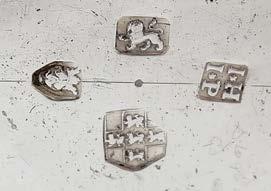
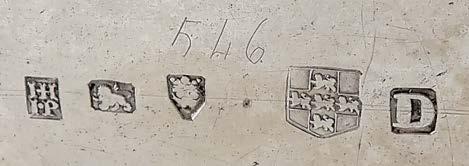
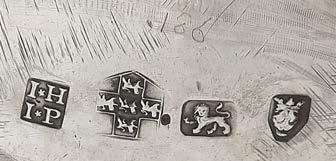
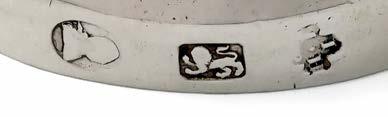
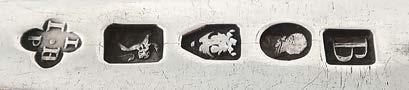
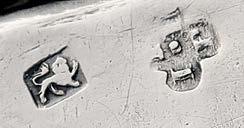
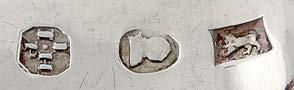
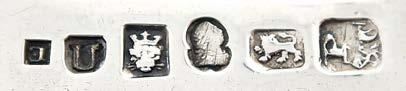
The marks on no. 47 show the Lion Passant at the top for sterling silver, at the bottom the York mark, the maker’s mark on its side on the right – IH IP for John Hampston and John Prince, and on the left the supererogatory Leopard’s Head Crowned. There is no date letter, but we know it must be pre-1784 because that is when duty was introduced and the duty mark of the Sovereign’s Head would have had to be added.
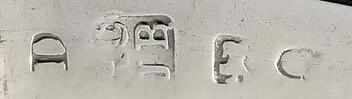
The later salver, no. 117, shows a full set of marks. On the left is the maker’s mark of James Barber, then the Lion Passant, duty mark, Leopard’s Head Crowned, date letter b for 1813 and town mark.
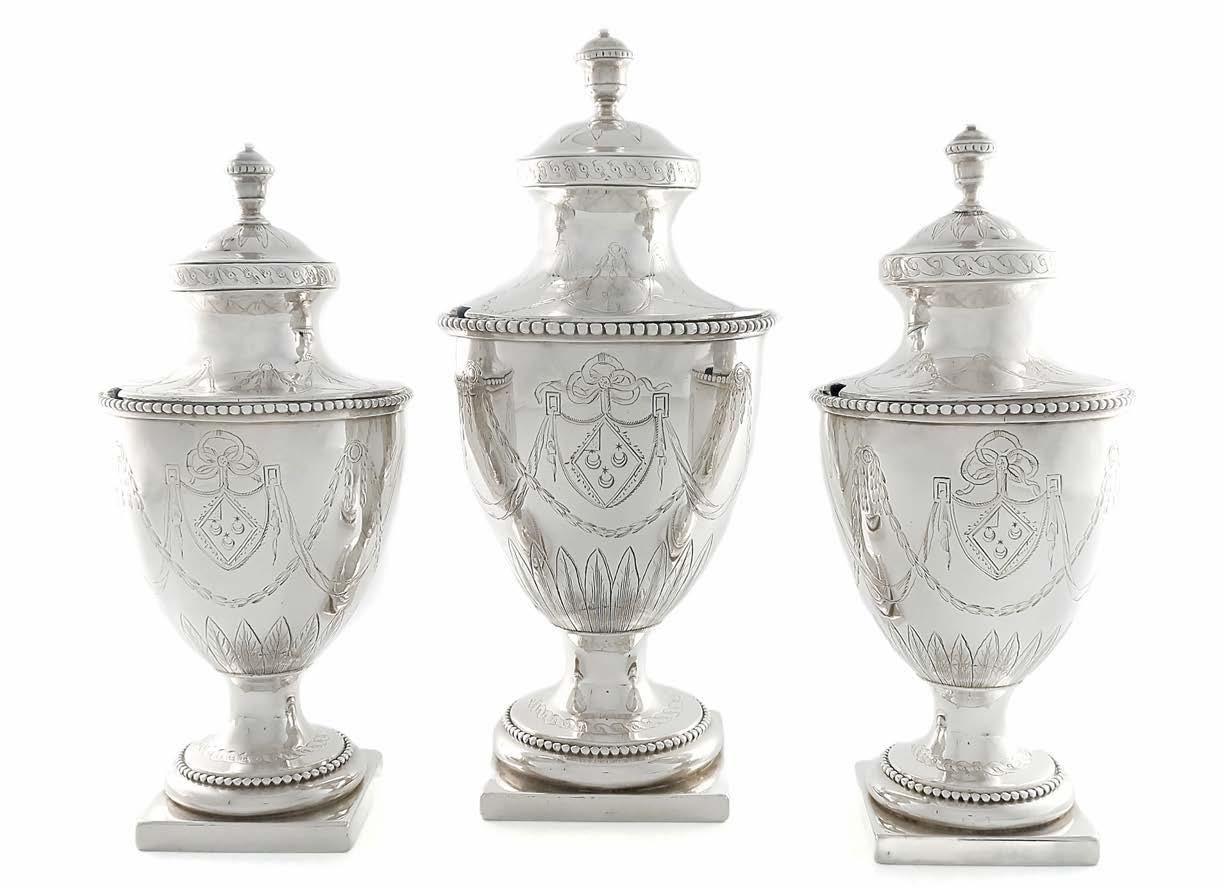


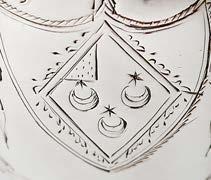
A suite of three George III silver tea/sugar caddies, by John Hampston & John Prince, York 1777, vase form, engraved with foliate and ribbon swags, shield cartouches engraved with a coat-of-arms, beaded borders, pull-off raised urn-shaped covers, engraved with swags, and with urn finials, on raised circular bases, bead borders and square foot, height of largest 20cm, approx. total weight 34oz.
Advertised in Country Life magazine 6 September 1990.
Exhibited:
On display at Merchant Adventurers’ Hall, Fossgate, York, since 1999. Merchant Adventurers’ Hall, ‘Three Centuries of York Silver 1550-1858’, 14-28 July 2000, exhibit no. 156.
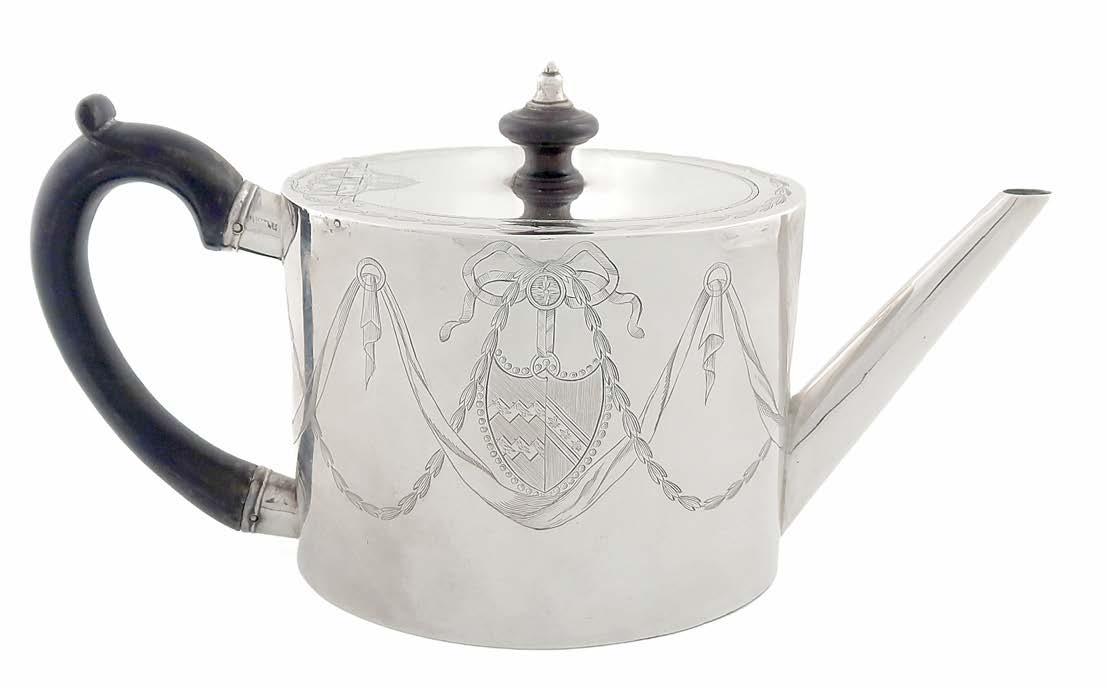
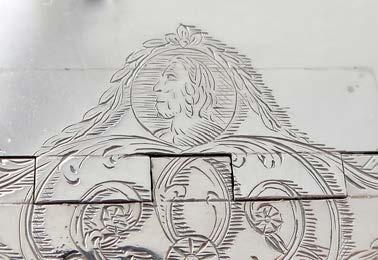
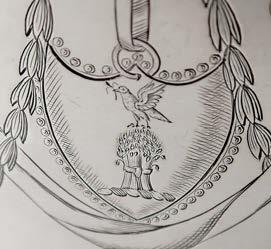
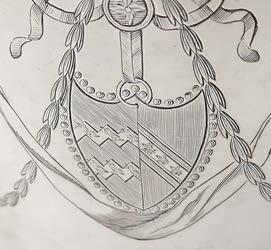
A George III silver tea pot, by John Hampston & John Prince, York circa 1776-84, oval form, engraved with foliate and ribbon swags and shield cartouches, one with an armorial, the other with two crests, flush hinged cover also engraved with a crest, knop finial and scroll handle, length handle to spout 22.6cm, approx. weight 13.4oz.
Exhibited: Merchant Adventurers’ Hall, Fossgate, York, ‘Three Centuries of York Silver 1550-1858’, 14-28 July 2000, exhibit no. 159.
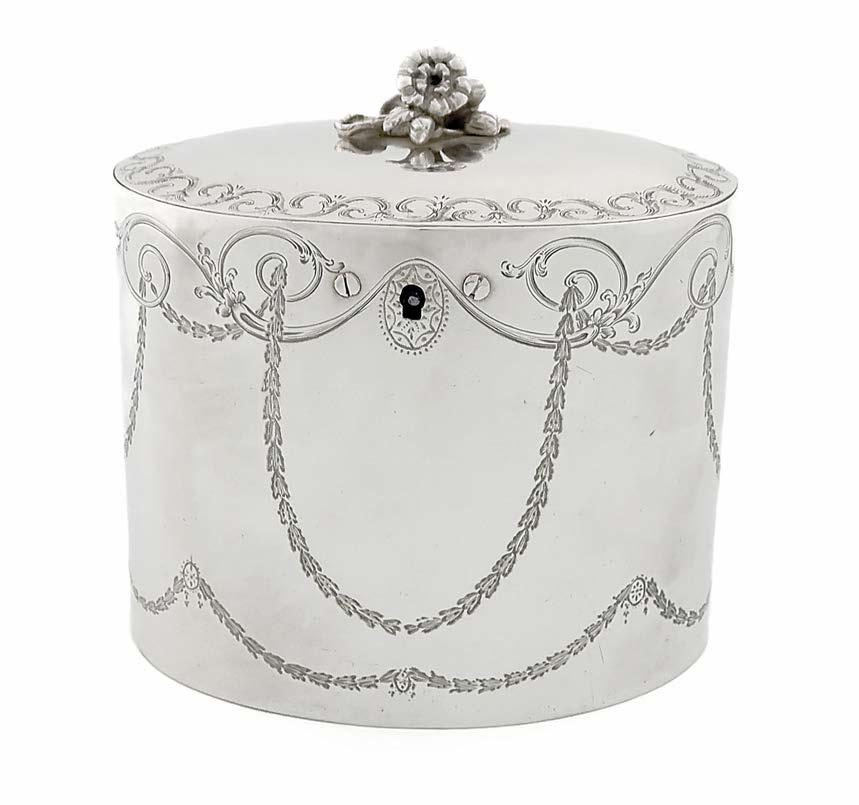
A George III silver tea caddy, by John Hampston & John Prince, York 1779, oval form, engraved with scrolling swags, slightly domed flush hinged cover with a flower-head finial, with a lock, height to finial, 12cm, approx. weight 12oz.
Exhibited:
Merchant Adventurers’ Hall, Fossgate, York, ‘Three Centuries of York Silver 1550-1858’, 14-28 July 2000, exhibit no. 161.
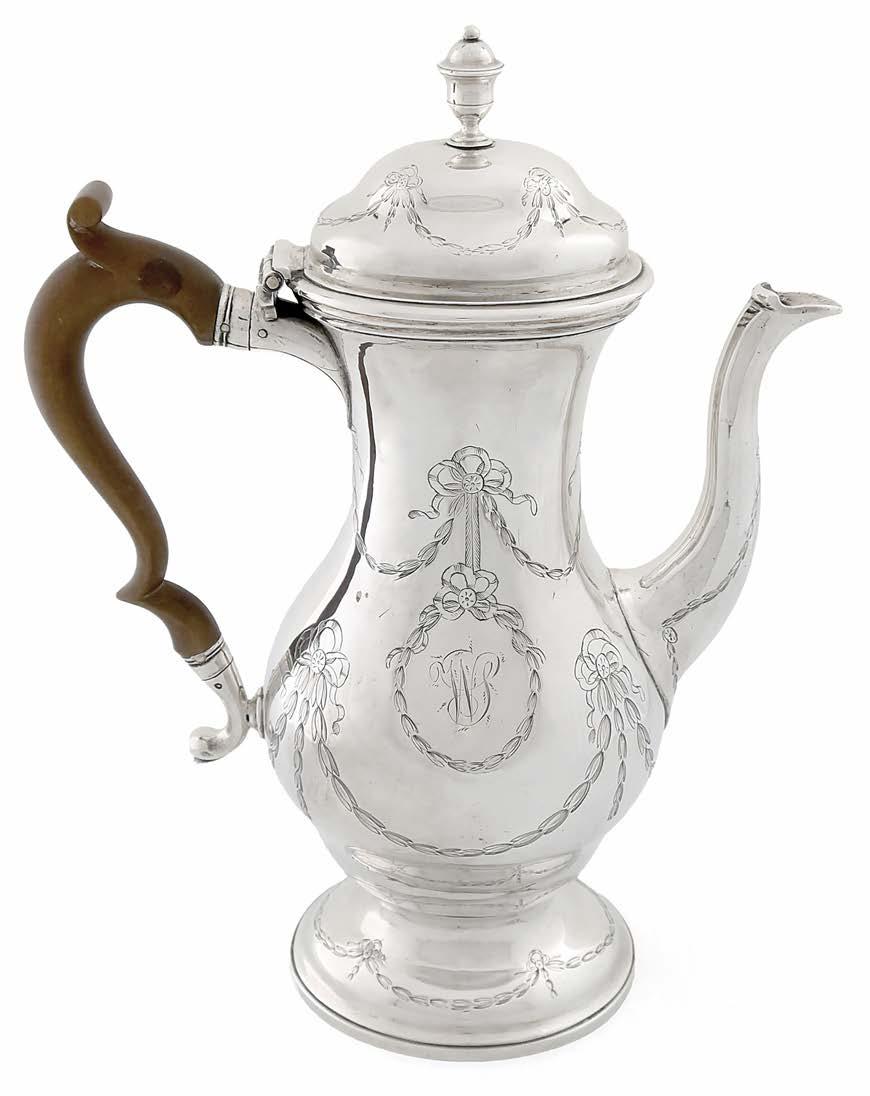
51 A George III silver coffee pot, by John Hampston & John Prince, York circa 1779, baluster form, engraved with foliate and swag decoration, and oval cartouches tied with a bow, one cartouche initialled W S, the other vacant, with a hinged raised cover, engraved with swags, urn finial, on a spread circular foot engraved with swags, height 29cm, approx. weight 30oz.
Provenance: Henry Hardcastle Ltd, York 1962.


52
53
54
55
56
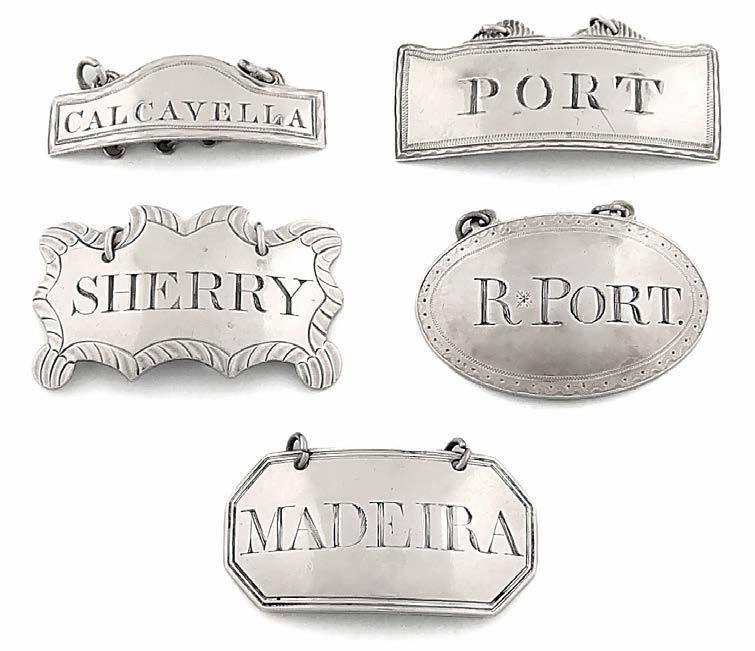
Arched rectangular form, incised Calcavella, with a chain, length 4.5cm, approx. weight 0.2oz.
Shaped rectangular form, incised Port, with a chain, length 5.3cm, approx. weight 0.3oz.
Shaped rectangular form, engraved decoration, incised Sherry, with a chain, length 4.8cm, approx. weight 0.3oz.
Navette shaped, bright-cut decoration, incised R. Port, with a chain, length 4.5cm, approx. weight 0.2oz.
Rectangular with canted corners, incised Madeira, with a chain, length 4.7cm, approx. weight 0.3oz.
Exhibited:
Merchant Adventurers’ Hall, Fossgate, York, ‘Three Centuries of York Silver 1550-1858’, 14-28 July 2000, exhibit nos. 181, 179, 213, 199 and 223.

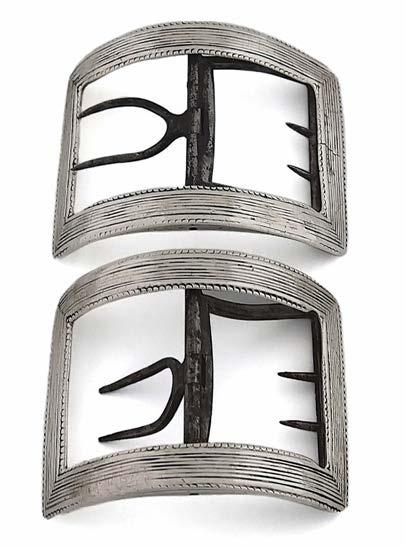
57 A pair of George III silver shoe buckles, maker’s mark and lion passant only, by John Hampston & John Prince, York circa 1780, reeded decoration, steel buckle, length 4.8cm, approx. weight 0.3oz. (2)
Provenance: Martin Gubbins Collection.
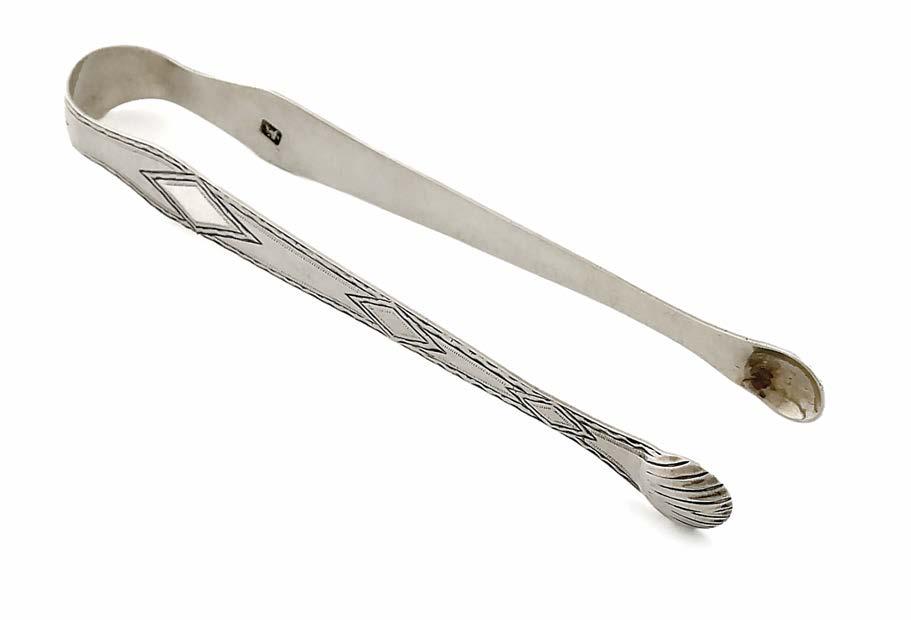
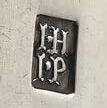
58 A pair of George III silver sugar tongs, by John Hampston & John Prince, York circa 1780, conventional form, engraved decoration and shell bowls, length 14cm, approx. weight 0.9oz.
Exhibited: Merchant Adventurers’ Hall, Fossgate, York, ‘Three Centuries of York Silver 1550-1858’, 14-28 July 2000, exhibit no. 165.
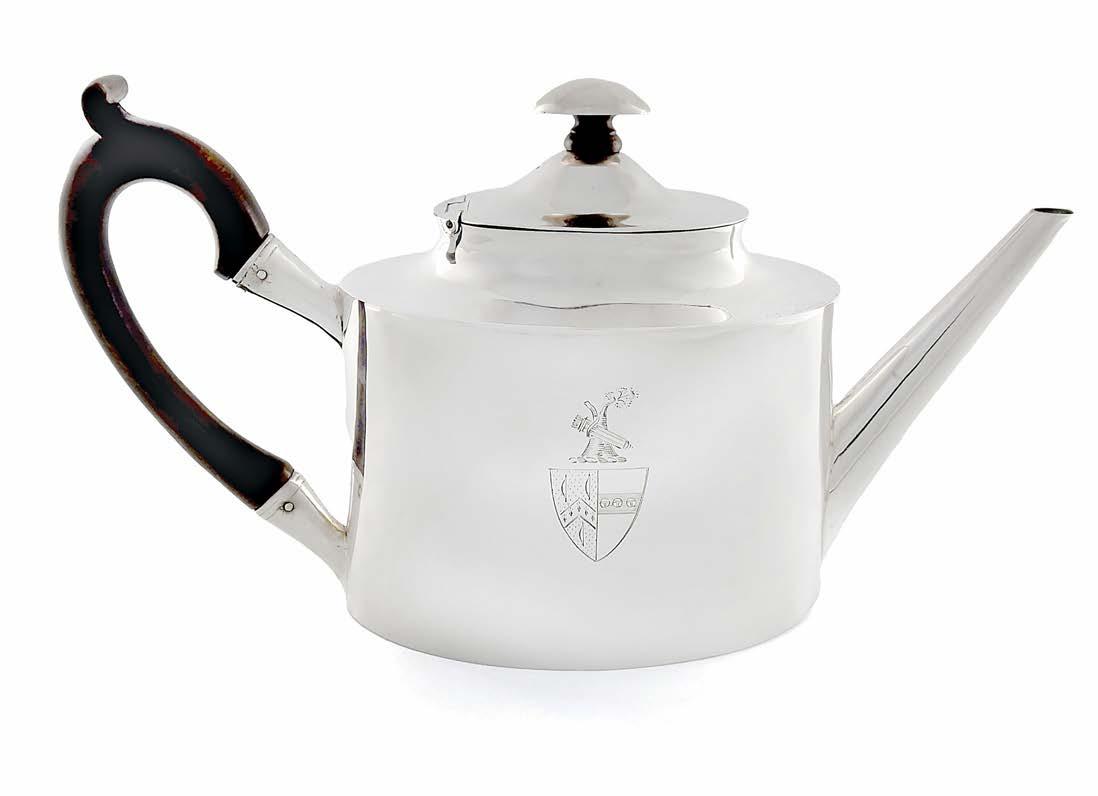

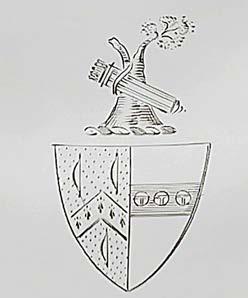
59 A George III silver teapot, by John Hampston & John Prince, York 1784, plain oval form with a waisted neck, engraved with an armorial and crest for Bowman, hinged raised cover with a plain domed finial, scroll wood handle, height 15cm, approx. weight 13oz.
Exhibited:
On display at Merchant Adventurers’ Hall, Fossgate, York, since 1999. Merchant Adventurers’ Hall, ‘Three Centuries of York Silver 1550-1858’, 14-28 July 2000, exhibit no. 192.
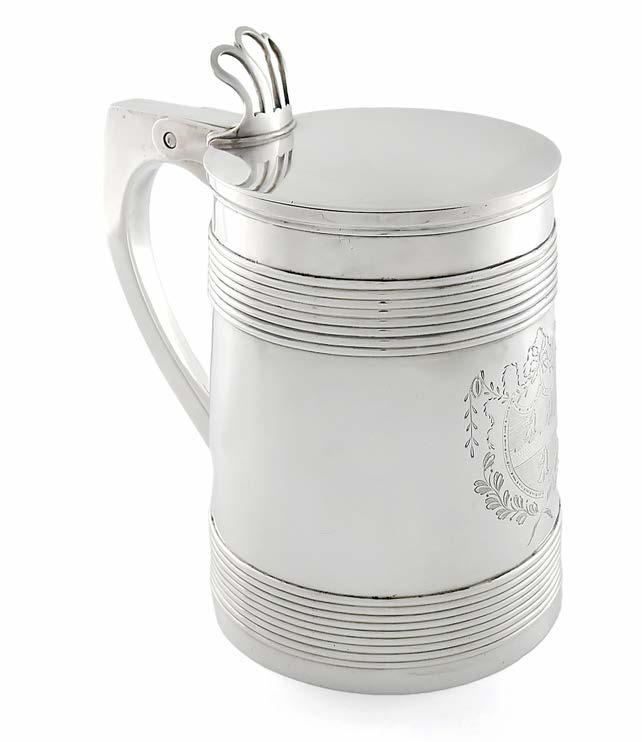
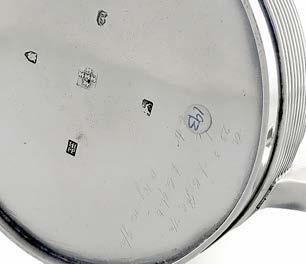
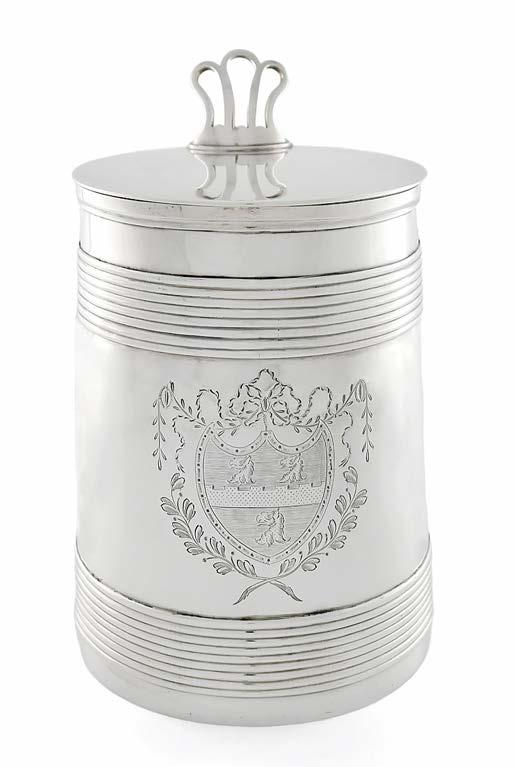

60 A George III silver tankard, by John Hampston & John Prince, York circa 1784-86, plain tapering circular form, with an upper and lower band of reeded decoration, the centre engraved with a coat-of-arms within a shield cartouche, hinged flush cover with a pierced thumbpiece and scroll handle, height 17.9cm, approx. weight 23.5oz.
The arms are those of Maister of Wood Hall, Holderness, Yorkshire, probably for Arthur Maister Esq., born 1738, who married in 1772 Esther Thompson, daughter of John Rickaby of Bridlington Quay. The family motto, not engraved, was Vix ea nostra voco (‘I scarce call these things my own’ from Ovid’s Metamorphoses, Book XIII, 140)
Exhibited: On display at Merchant Adventurers’ Hall, Fossgate, York, since 1999. Merchant Adventurers’ Hall, ‘Three Centuries of York Silver 1550-1858’, 14-28 July 2000, exhibit no. 193.
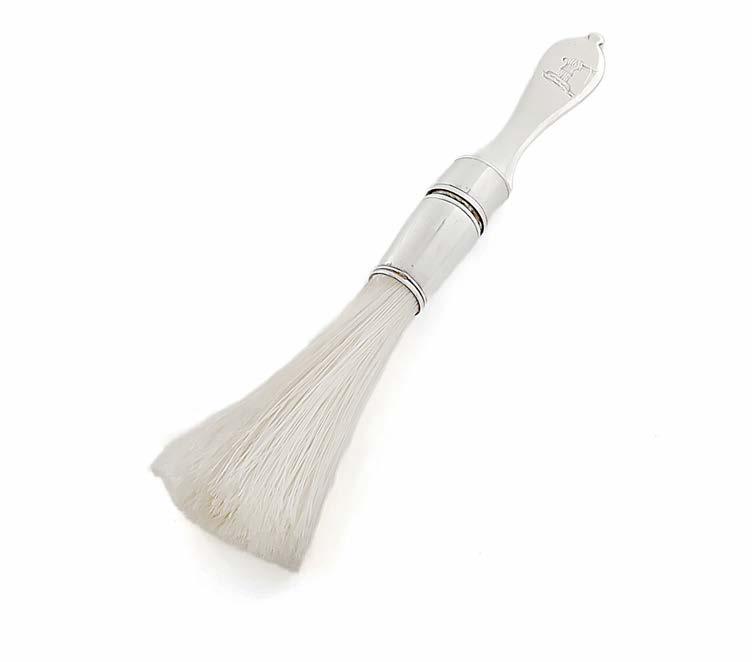
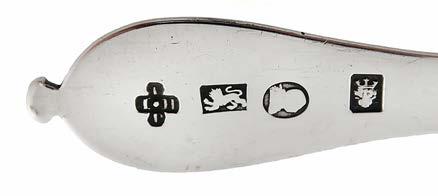
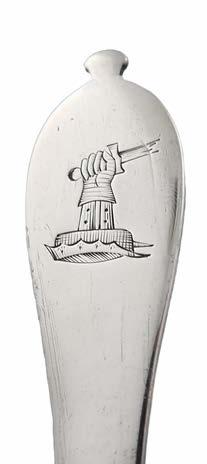
plain barrel-shaped mount, with a waisted handle, engraved with a crest, horsehair bristles,
Exhibited:
On display at Merchant Adventurers’ Hall, Fossgate, York, since 1999.
Merchant Adventurers’ Hall, ‘Three Centuries of York Silver 1550-1858’, 14-28 July 2000, exhibit no. 200.
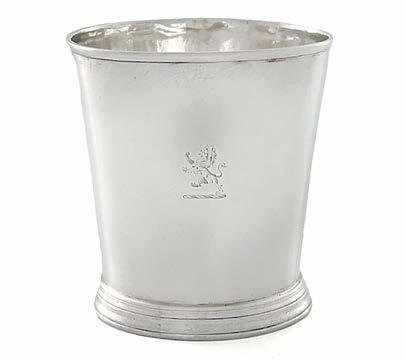
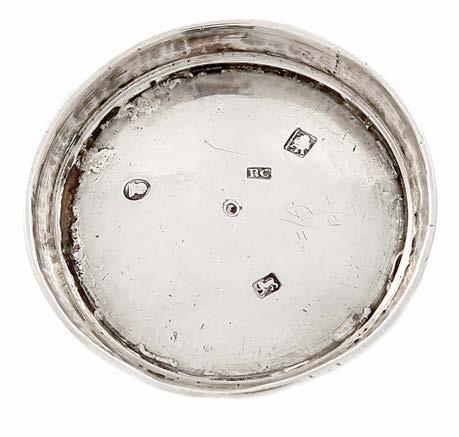
62 A George III silver tot beaker, by Richard Clark, York circa 1786, plain tapering circular form, engraved with a crest, on a raised base, height 5.8cm, approx. weight 1.3oz.
Exhibited:
On display at Merchant Adventurers’ Hall, Fossgate, York, since 1999.
Merchant Adventurers’ Hall, ‘Three Centuries of York Silver 1550-1858’, 14-28 July 2000, exhibit no. 204.
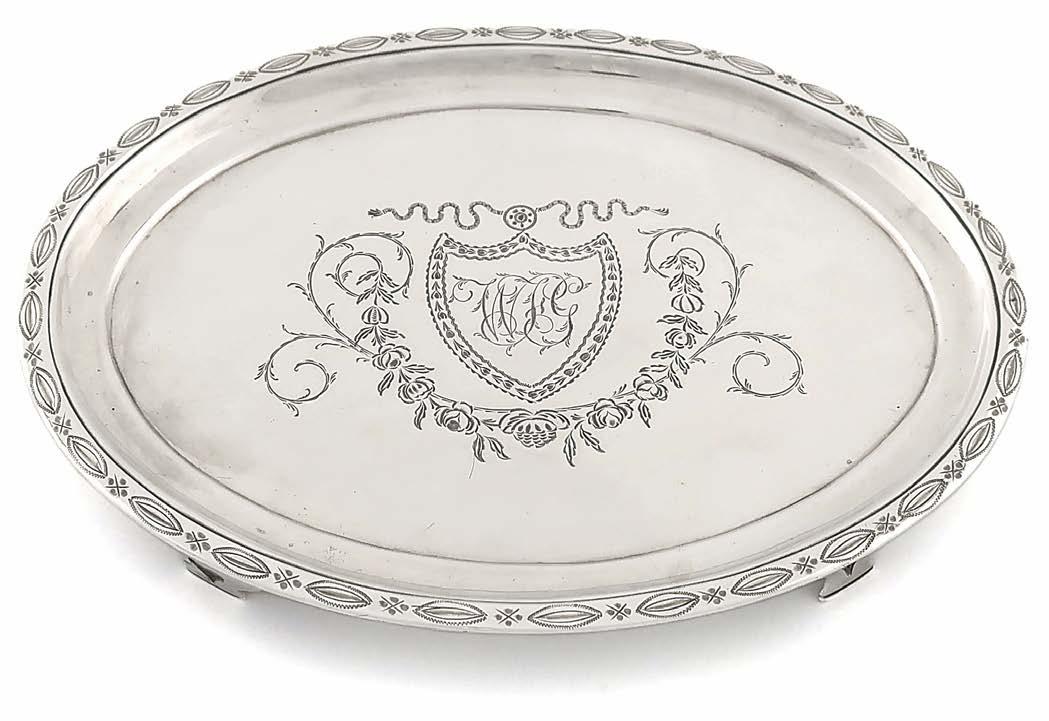
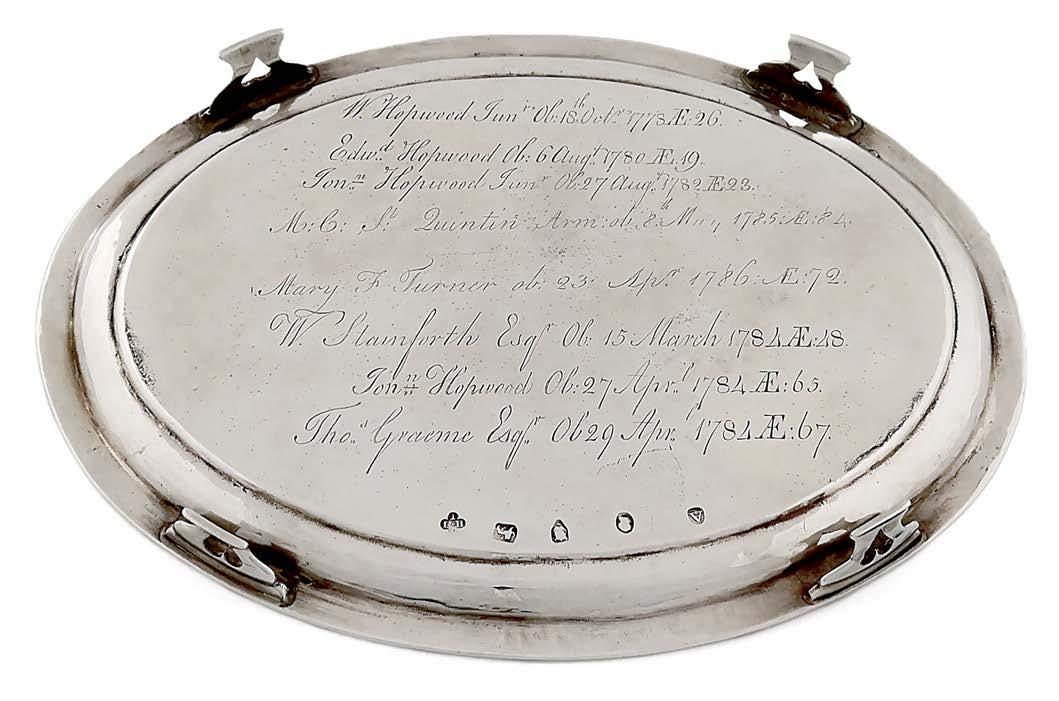

A George III silver tontine tea pot stand, by John Hampston & John Prince, York 1787, oval form, the centre engraved with foliate scrolls and a shield cartouche initialled WFG, the underside inscribed with names and dates, on four bracket feet, length 20.2cm, approx. weight 6.6oz.
The inscription on the underside may have been used rather touchingly like a family Bible recording the deaths of family members and their ages when they died, or the names inscribed may have been subscribers in a tontine.
Inscription reads:
W. Hopwood Junr ob: 18th Oct 1778 Æ: 26
Edwd Hopwood ob: 6 Aug 1780 Æ: 19
Jon Hopwood Junr ob: 27 Aug 1782 Æ: 23
M G St Quintin Arm ob: 8th Mar 1785 Æ: 84
Mary F Turner ob: 23 Apr 1786: Æ 72
W. Stainforth Esq ob: 15 March 1784 Æ 65
Jon Hopwood ob: 27 April 1784 Æ: 65Thos Graeme Esq ob: 29 April 1784 Æ: 67
The initials WFG in the cartouche are those of William Gray (1751-1845) who married Faith Hopwood (1751-1826) in October 1777. He was a successful solicitor in the City of York and became a member of the Clapham Sect working with William Wilberforce in the setting up of a number of charities. He was appointed Under Sheriff of Yorkshire in 1790 and also became ‘Distributor of Stamps for the West Riding of Yorkshire’. In 1816 he was co-founder of the York Savings Bank. His wife Faith (nee Hopwood) worked for the education and welfare of poor girls in York.
The engraved list of names on the underside includes four members of the Hopwood family and may well represent a tontine. This term originated in France in the 1650s and was named after a Neapolitan banker, Lorenzo Tonti. The term was used to describe an arrangement when a fund of money or a valuable object was held in common for a group of people, the last survivor of whom became the absolute owner.
See also no. 81 below.
Exhibited:
Merchant Adventurers’ Hall, Fossgate, York, ‘Three Centuries of York Silver 1550-1858’, 14-28 July 2000, exhibit no. 205.
64
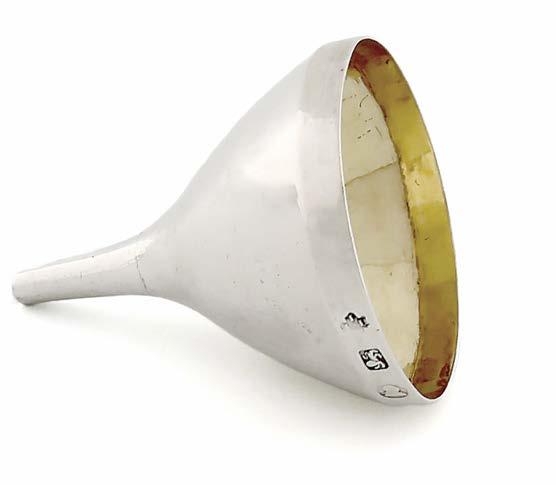
A George III silver spirit funnel, by John Hampston & John Prince, York circa 1787-1790, conventional form, tapering circular bowl, gilt interior, length 6.9cm, approx. weight. 0.8oz.
Exhibited:
Merchant Adventurers’ Hall, Fossgate, York, ‘Three Centuries of York Silver 1550-1858’, 14-28 July 2000, exhibit no. 206.
65
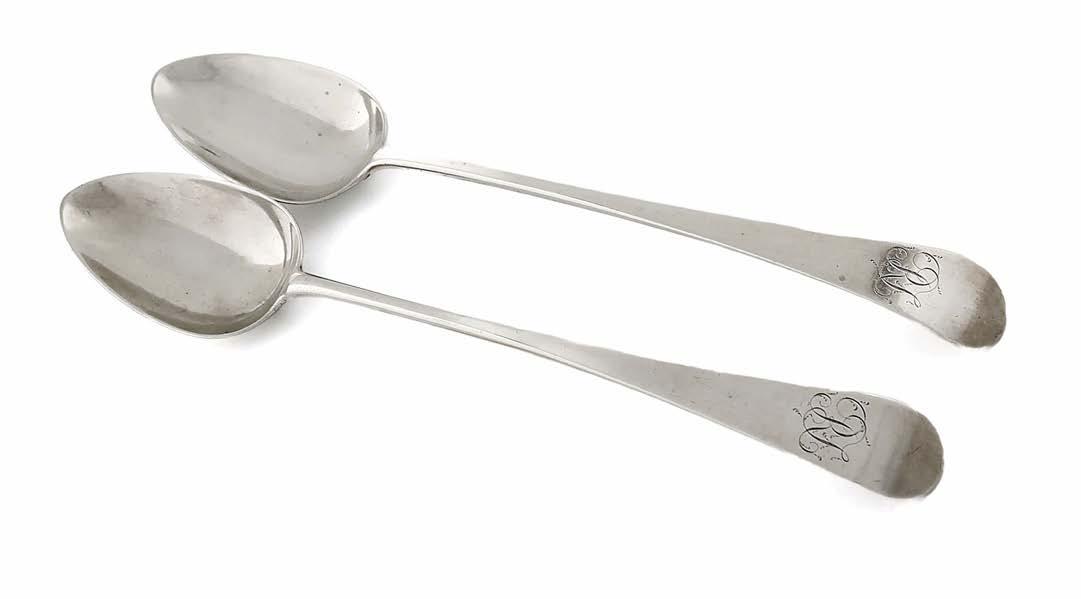
A pair of George III silver Old English pattern basting spoons, by John Hampston & John Prince, York 1788, terminals initialled RL, length 29.5cm, approx. total weight 6.5oz. (2)
Exhibited:
Merchant Adventurers’ Hall, Fossgate, York, ‘Three Centuries of York Silver 1550-1858’, 14-28 July 2000, exhibit no. 209.
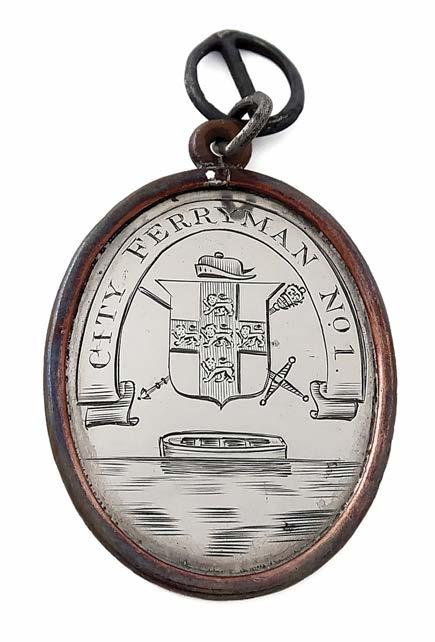
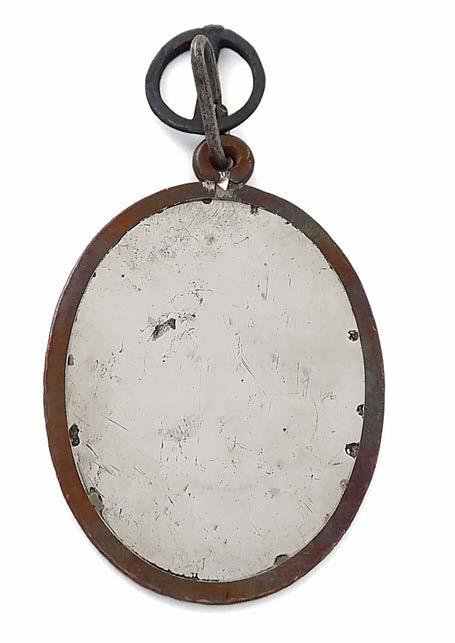
A George III silver Ferryman’s badge, unmarked, circa 1789, oval form, engraved in a banner ‘City Ferryman No. 1’ above the City of York shield and a boat on a river, in a copper frame, with a suspension loop, length 6.5cm.
Provenance: Michael Baggott Collection. Woolley & Wallis, Silver & Objects of Vertu, 16 July 2025, lot 775.
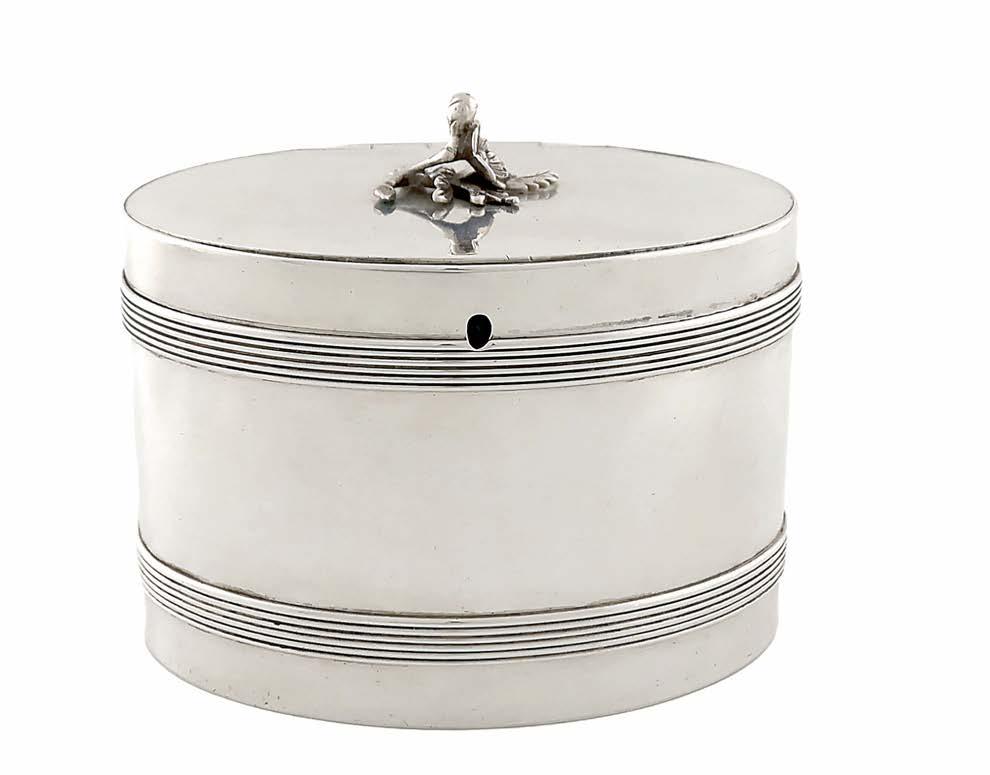

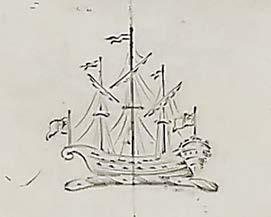
A George III silver tea caddy, by John Hampston & John Prince, York 1789, plain oval form with reeded decoration, the reverse engraved with the crest of a ship in sail, flush-hinged cover with a foliate finial, with a lock, length 12.4cm, height to top of finial 11cm, approx. weight 13.5oz.
Exhibited: Merchant Adventurers’ Hall, Fossgate, York, ‘Three Centuries of York Silver 1550-1858’, 14-28 July 2000, exhibit no. 210.
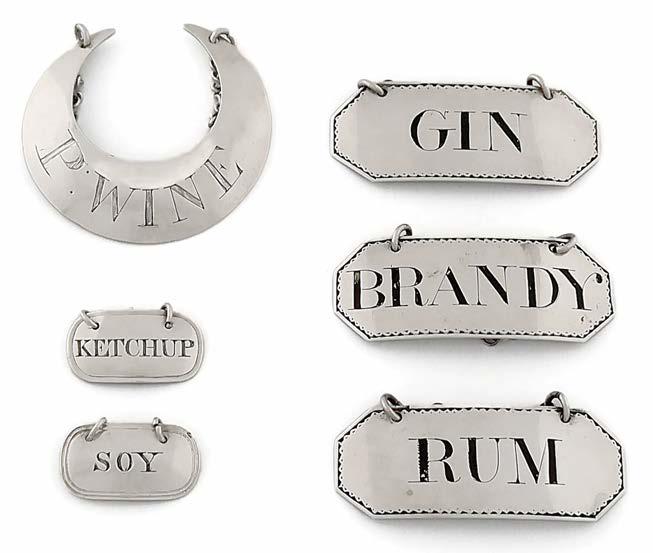
Six York-made George III silver wine/sauce labels.
68
69
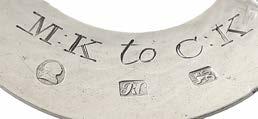
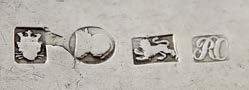

Four by Richard Clark, circa 1790, comprising: a set of three, rectangular form with canted corners, incised and blackened Brandy, Rum and Gin, and a crescent shaped wine label incised P. Wine and initialled to the reverse M:K to C:K, approx. total weight 1.3oz.
A pair of sauce labels, by Robert Cattle & James Barber, circa 1810, rounded rectangular form, incised and blackened Ketchup and Soy, length 2.5cm, approx. total weight 0.1oz.
Dating from about 1810, the Ketchup and Soy labels give the lie to the commonly held belief that these sauces were only introduced in modern times.
Four exhibited:
Merchant Adventurers’ Hall, Fossgate, York, ‘Three Centuries of York Silver 1550-1858’, 14-28 July 2000, exhibit nos. 217, 218, 220 and 221.
70


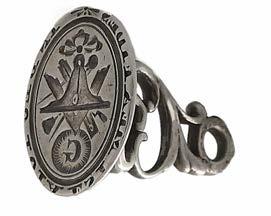
A George III silver Masonic seal, by William Astley, York circa 1790, oval form, scroll handle, length of matrix 2.5cm, approx. weight 0.4oz.
Exhibited:
Merchant Adventurers’ Hall, Fossgate, York, ‘Three Centuries of York Silver 1550-1858’, 14-28 July 2000, exhibit no. 224.
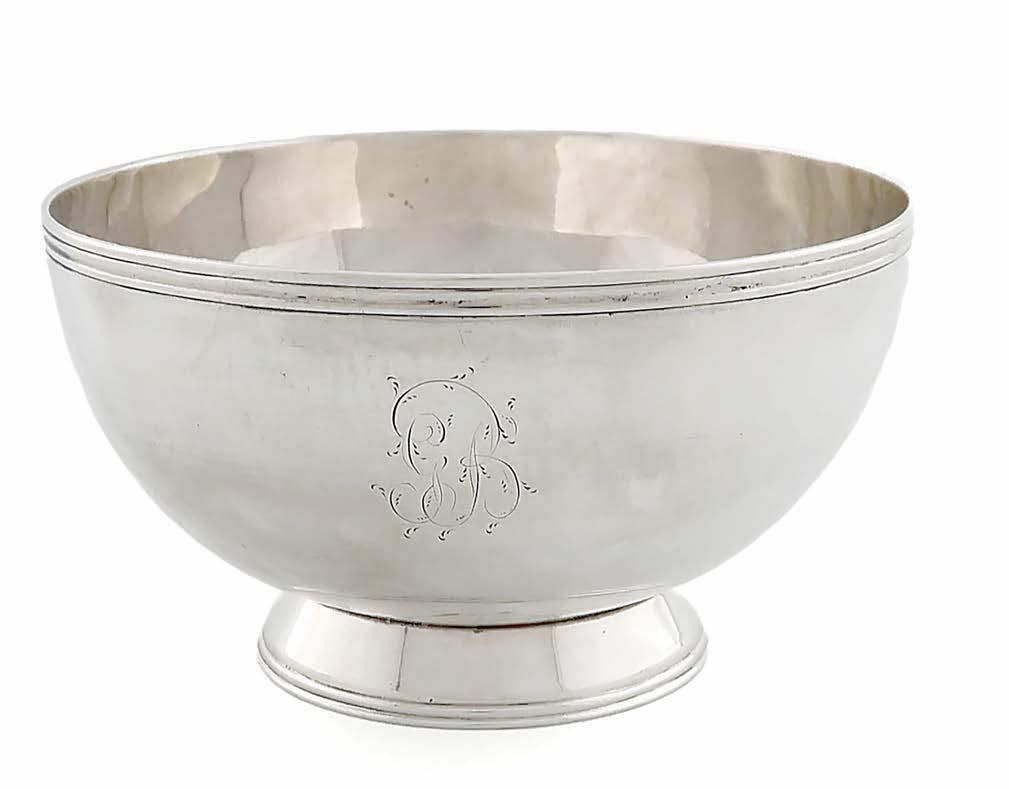
A George III silver bowl, by John Hampston & John Prince, York 1791, tapering circular form, initialled B, reeded rim, on a spreading circular foot, diameter 12cm, height 6.2cm, approx. weight 4.7oz.
Exhibited:
Merchant Adventurers’ Hall, Fossgate, York, ‘Three Centuries of York Silver 1550-1858’, 14-28 July 2000, exhibit no. 234.
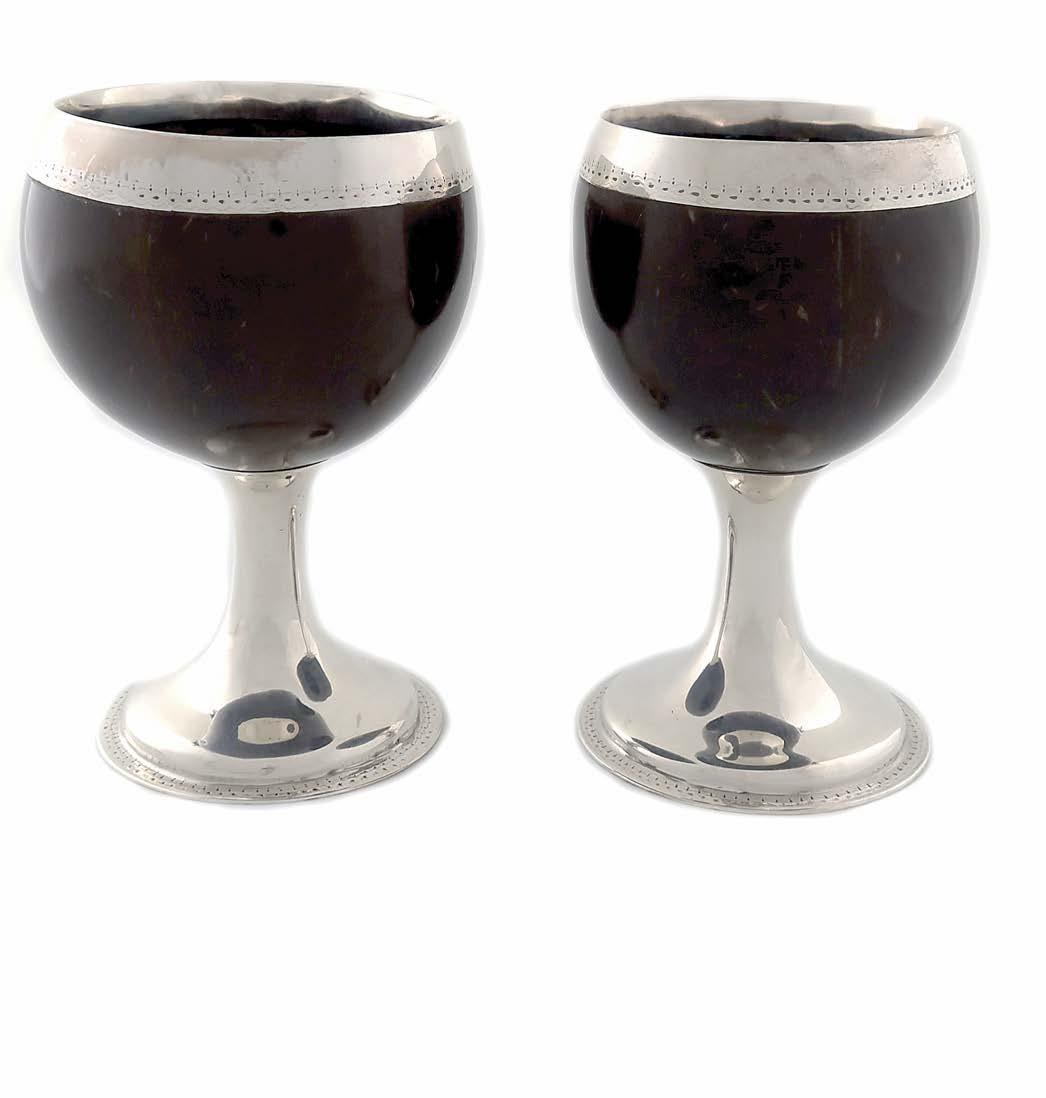
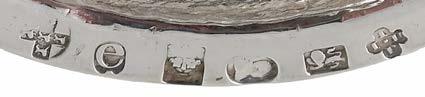
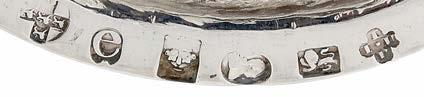
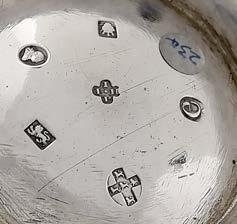
A pair of George III silver-mounted coconut cups, by John Hampston & John Prince, York 1791, with a prick-dot band of decoration on the rim, on raised circular bases, heights 15cm and 14.7cm, diameters of bowls 9.1cm and 8.1cm. (2)
Exhibited:
Merchant Adventurers’ Hall, Fossgate, York, ‘Three Centuries of York Silver 1550-1858’, 14-28 July 2000, exhibit no. 235.
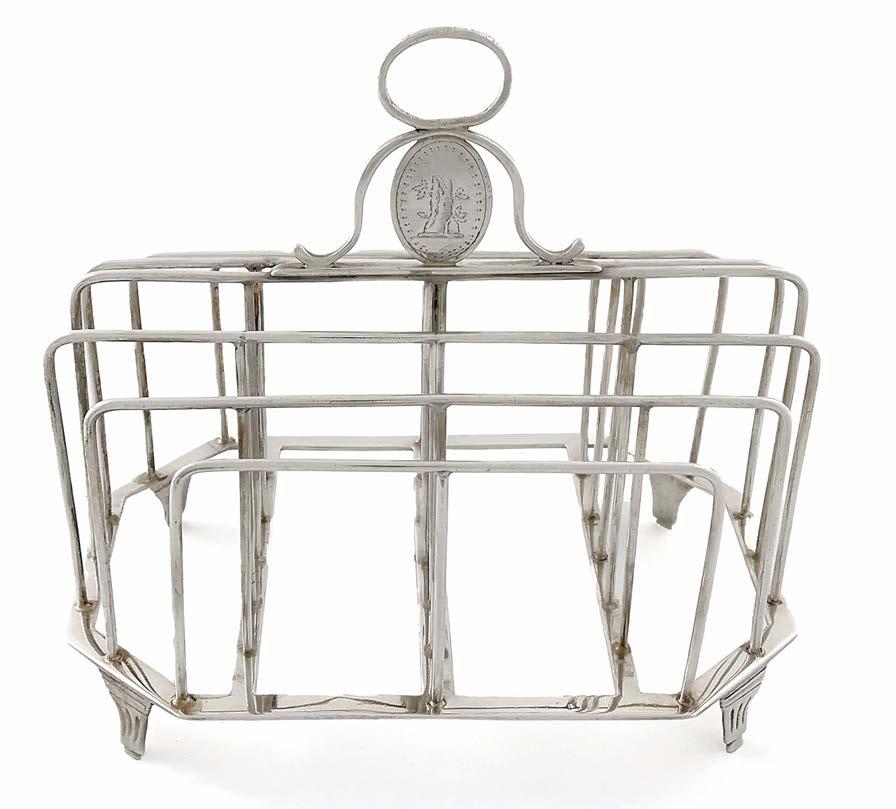

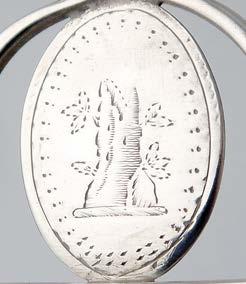
A George III silver seven-bar letter rack, by John Hampston & John Prince, York 1791, straight, graduated bars, on an hexagonal base, the handle formed of an oval cartouche engraved with a crest surmounted by an oval loop, height to top of handle 13.8cm, approx. weight 8oz.
Exhibited:
Merchant Adventurers’ Hall, Fossgate, York, ‘Three Centuries of York Silver 1550-1858’, 14-28 July 2000, exhibit no. 236.
74
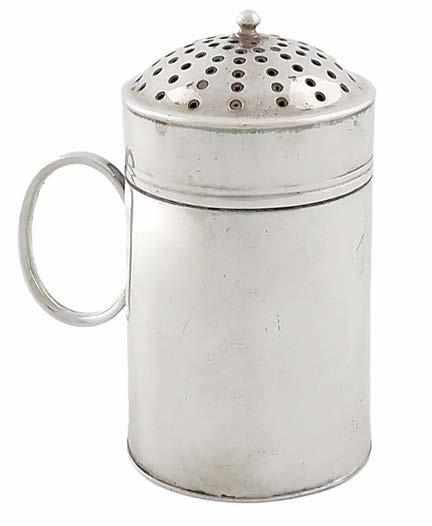
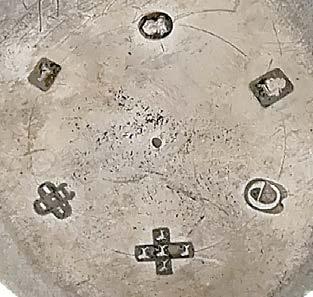
A George III silver kitchen pepper, by John Hampston & John Prince, York 1791, plain cylindrical form, with a pull-off domed cover with radiating pierced holes, oval ring handle, height 7.8cm, approx. weight 2oz.
75
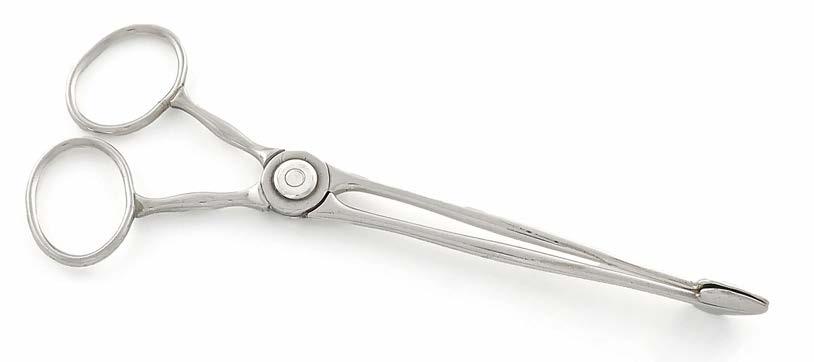
A pair of George III silver sugar nips/douser, by John Hampston & John Prince, York circa 1793, scissor form, flat tapering bowls with a rattail, oval ring handles, length 15.7cm, approx. weight 1.7oz.
Exhibited:
On display at Merchant Adventurers’ Hall, Fossgate, York, since 1999. Merchant Adventurers’ Hall, ‘Three Centuries of York Silver 1550-1858’, 14-28 July 2000, exhibit no. 240.
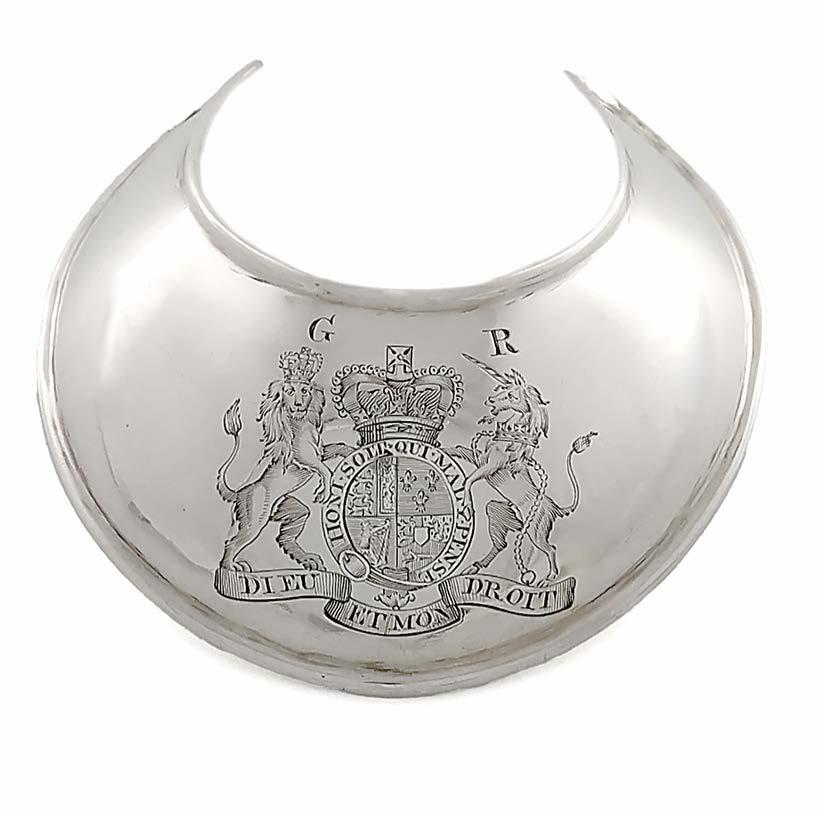
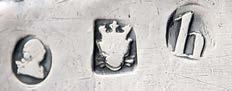
A George III silver gorget, by John Hampston & John Prince, York 1794, plain conventional form, engraved with the Royal Arms of George III, length 10.4cm, approx. weight 1.3oz.
Advertised in Country Life magazine 16 May 1991.
Exhibited:
On display at Merchant Adventurers’ Hall, Fossgate, York, since 1999. Merchant Adventurers’ Hall, ‘Three Centuries of York Silver 1550-1858’, 14-28 July 2000, exhibit no. 248.
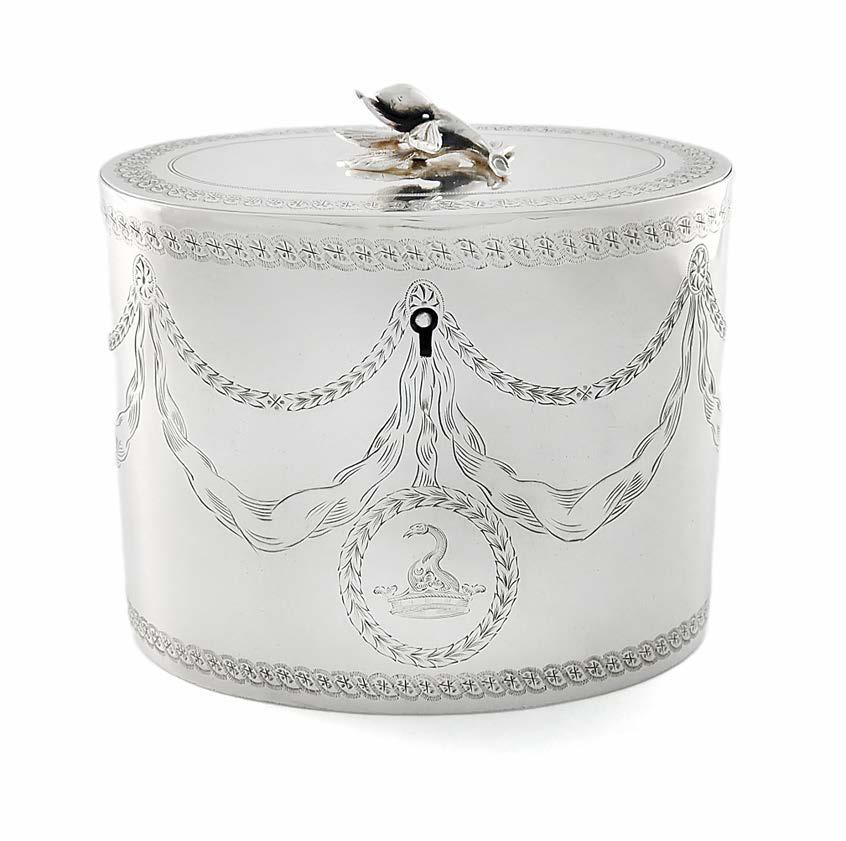
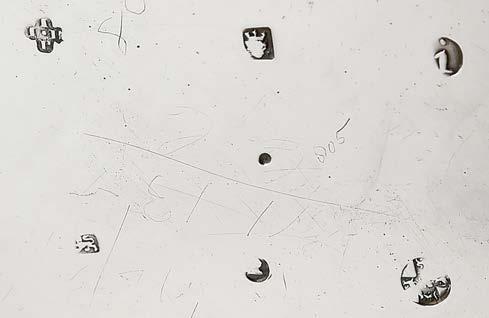
A George III silver tea caddy, by John Hampston & John Prince, York 1795, oval form, engraved with swags and a laurel leaf roundel with a crest, flush hinged cover, bud and leaf finial, height 10cm, approx. weight 22oz.
Exhibited:
On display at Merchant Adventurers’ Hall, Fossgate, York, since 1999. Merchant Adventurers’ Hall, ‘Three Centuries of York Silver 1550-1858’, 14-28 July 2000, exhibit no. 250.
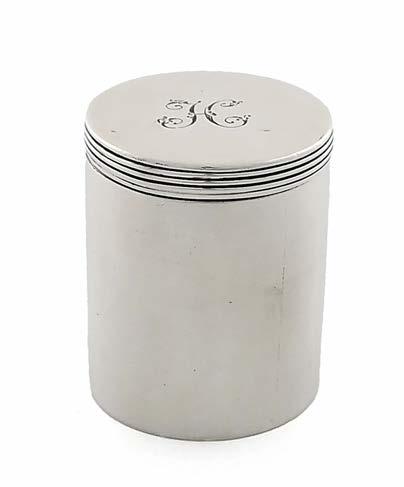
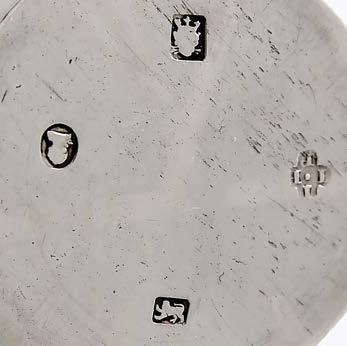
78 A George III silver box, by John Hampston and John Prince, York circa 1795, plain cylindrical form, pull-off cover with a reeded border, the cover initialled ‘H’, height 4.2cm, approx. weight 1.2oz.
Provenance: Michael Baggott Collection.
Woolley & Wallis, Silver, Gold & Objects of Vertu, 21 October 2025, lot 261.
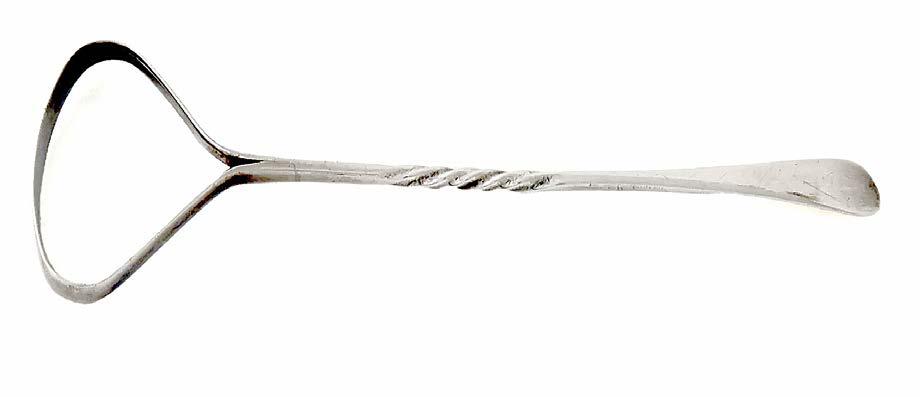
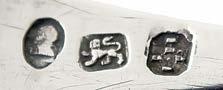
79 A George III silver tongue scraper, by John Hampston & John Prince, York circa 1795, Old English pattern handle, with a twist stem, length 11cm, approx. weight 0.2cm.
Provenance: Michael Baggott Collection.
Woolley & Wallis, Silver & Objects of Vertu, 16 July 2025, lot 707.
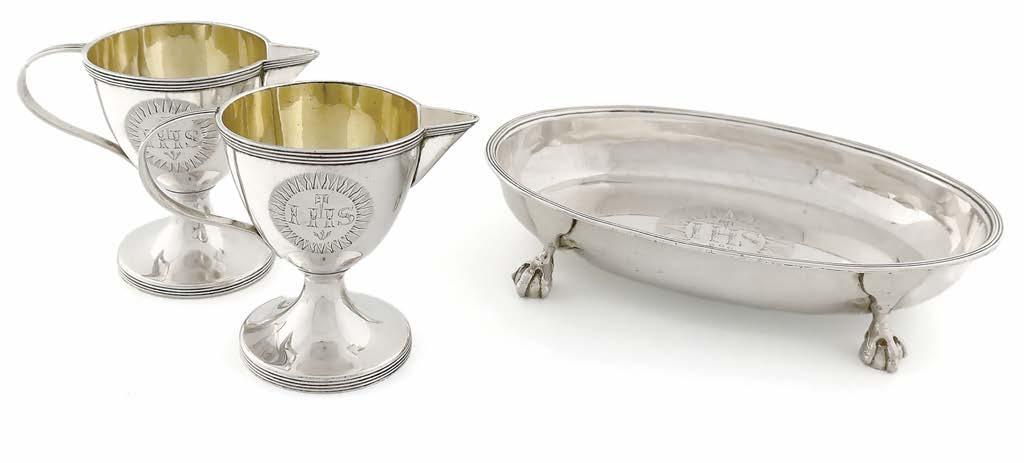
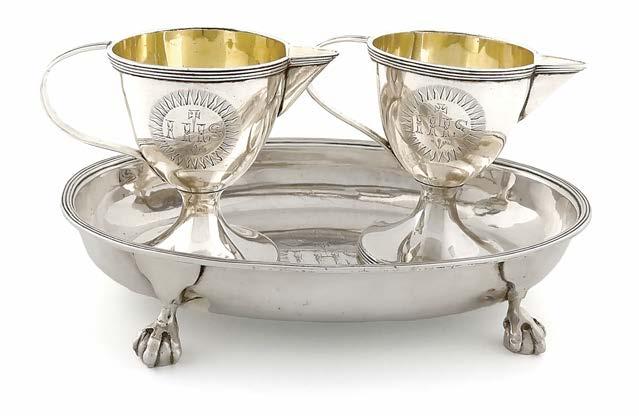
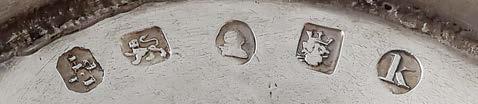
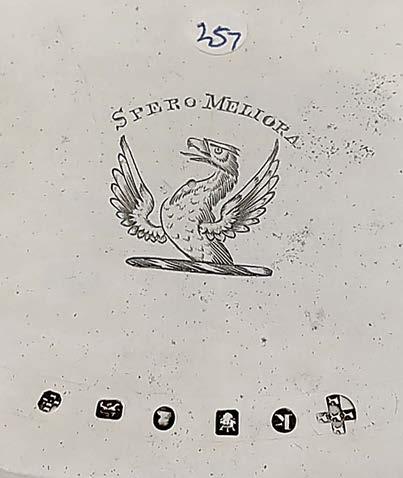
A George III silver three-piece Communion cruet, by John Hampston & John Prince, York 1796, comprising two jugs engraved with IHS, gilt interiors, and an oval wafer dish, the centre engraved IHS, on four claw and ball feet, the underside engraved with a crest and motto, height 17cm, approx. total weight 12oz. (3)
The crest engraved on the underside is of the Maxwell family of Kirkconnell House, New Abbey, Kirkcudbrightshire (which had a private chapel) who had married into the Witham family with seats at Cliffe Hall and Lastingham Hall in North Yorkshire.
Exhibited:
Merchant Adventurers’ Hall, Fossgate, York, ‘Three Centuries of York Silver 1550-1858’, 14-28 July 2000, exhibit no. 257.
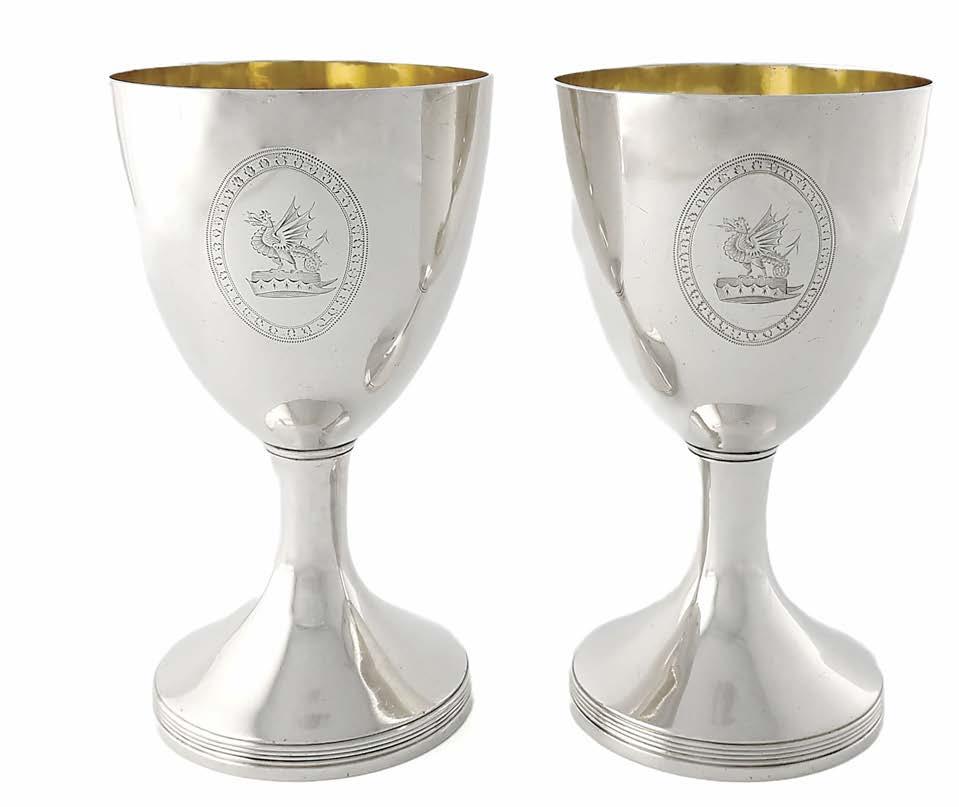
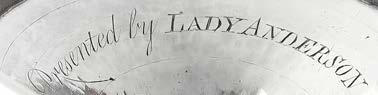
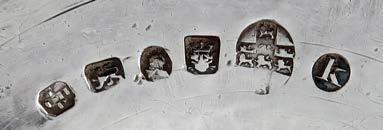
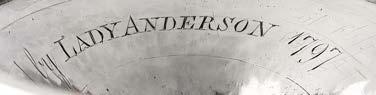
A pair of George III silver goblets, by John Hampston & John Prince, York 1796, tapering circular form, engraved with a roundel and the crest of the Gray family of Gray’s Court, York, gilt interiors, on raised, reeded, circular bases, the underside engraved ‘Presented by Lady Anderson 1797’, height 17cm, approx. total weight 22oz. (2)
See also no. 63 for further information about the Gray family.
Exhibited:
On display at Merchant Adventurers’ Hall, Fossgate, York, since 1999. Merchant Adventurers’ Hall, ‘Three Centuries of York Silver 1550-1858’, 14-28 July 2000, exhibit no. 258.
82
83
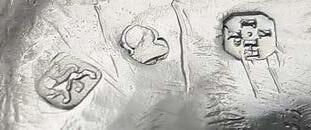
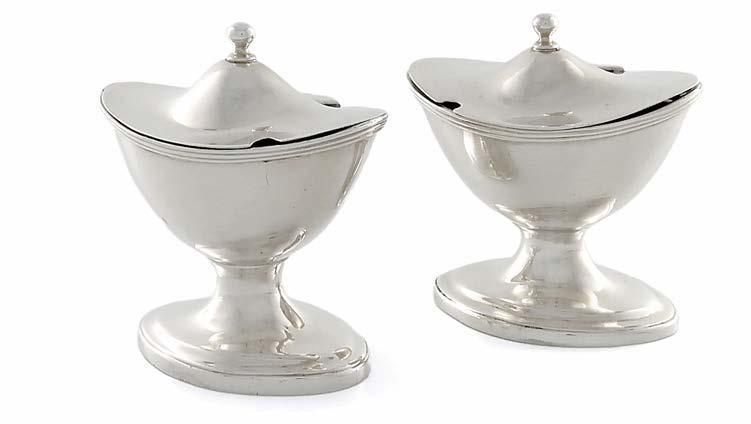
A pair of George III silver mustard pots, by John Hampston & John Prince, York 1797, plain navette urn form, raised hinged cover with ball finials, blue glass liners, on raised oval bases, height 6.7cm, approx. total weight 3.5oz. (2)
Exhibited:
On display at Merchant Adventurers’ Hall, Fossgate, York, since 1999.
Merchant Adventurers’ Hall, ‘Three Centuries of York Silver 1550-1858’, 14-28 July 2000, exhibit no. 261.
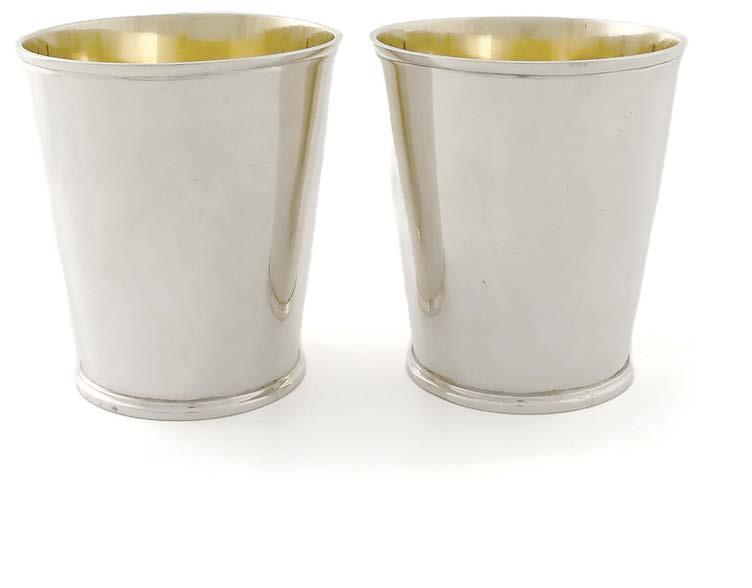
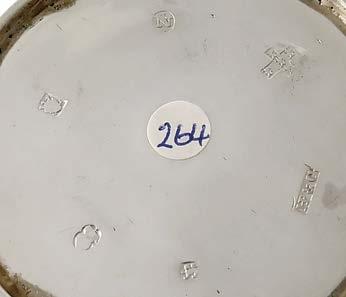
A pair of George III silver beakers, by Hampston, Prince & Cattles, York 1799, plain tapering circular form, gilt interiors, height 8.8cm, approx. total weight 9.4oz. (2)
The partnership of John Hampston, John Prince and George and Robert Cattles was formed around 1796. (Gubbins, M., York Assay Office & Silversmiths 1776-1858, p.37).
Exhibited:
Merchant Adventurers’ Hall, Fossgate, York, ‘Three Centuries of York Silver 1550-1858’, 14-28 July 2000, exhibit no. 264.
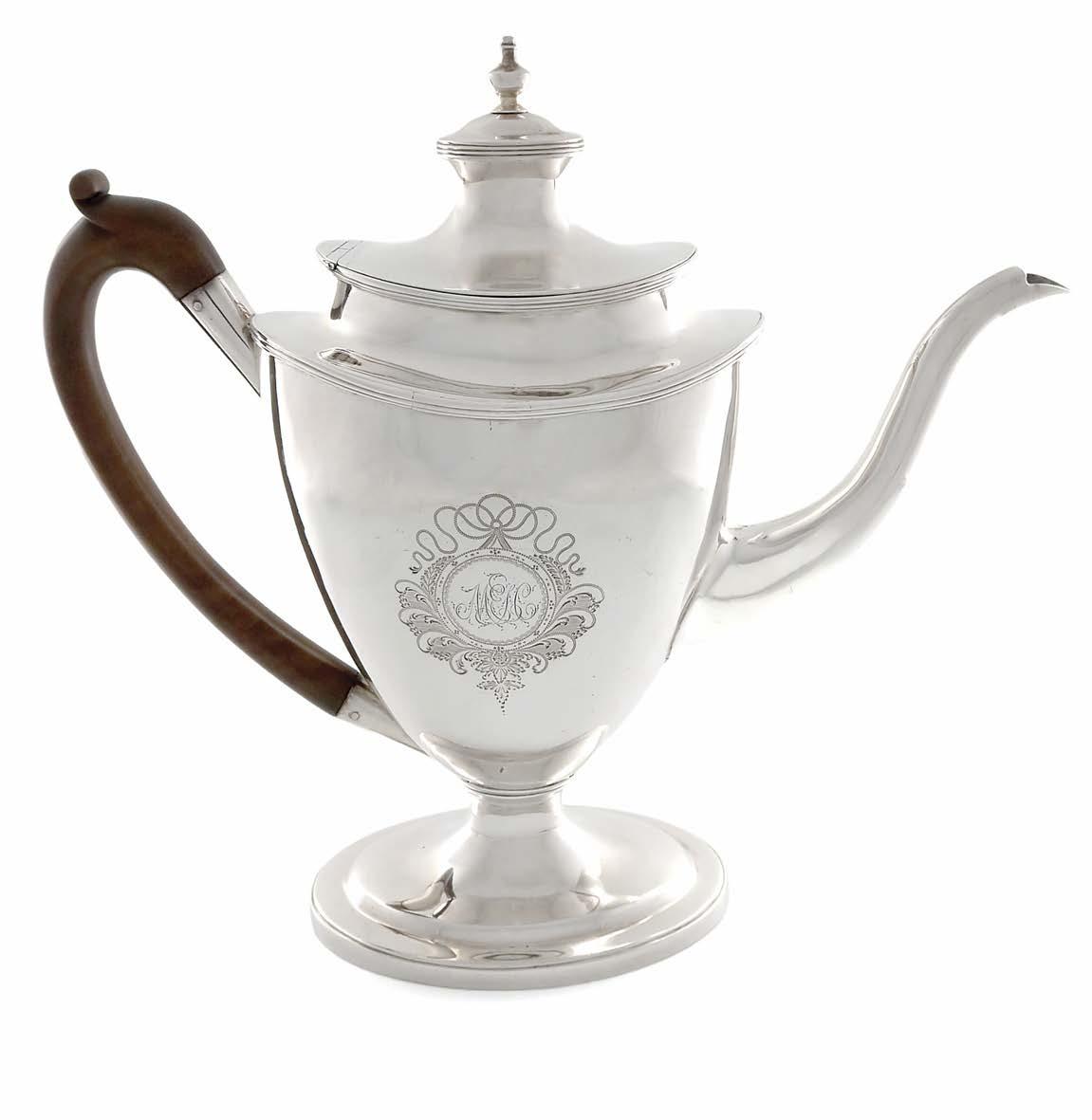
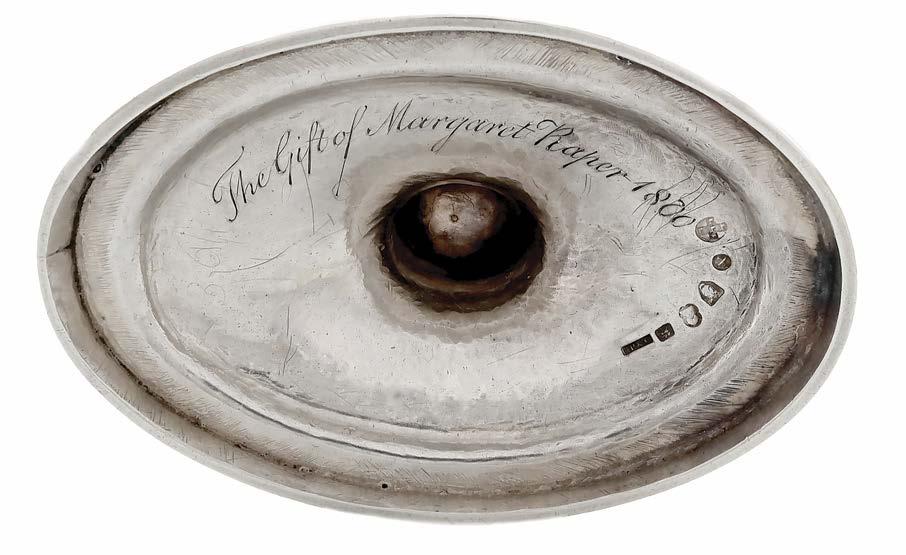
A George III silver coffee pot, by Hampston, Prince & Cattles, York 1799, vase form, reeded borders, engraved with foliate decoration and an initialled cartouche, hinged raised cover with a knop finial, on an oval foot, the underside inscribed ‘The Gift of Margaret Raper 1800’, height 28cm, approx. weight 37oz.
Exhibited:
On display at Merchant Adventurers’ Hall, Fossgate, York, since 1999. Merchant Adventurers’ Hall, ‘Three Centuries of York Silver 1550-1858’, 14-28 July 2000, exhibit no. 265.
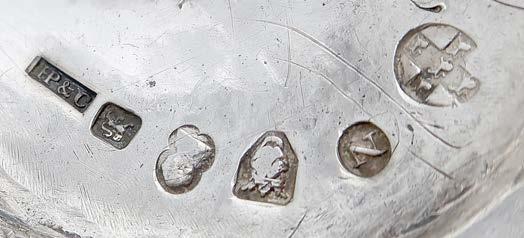
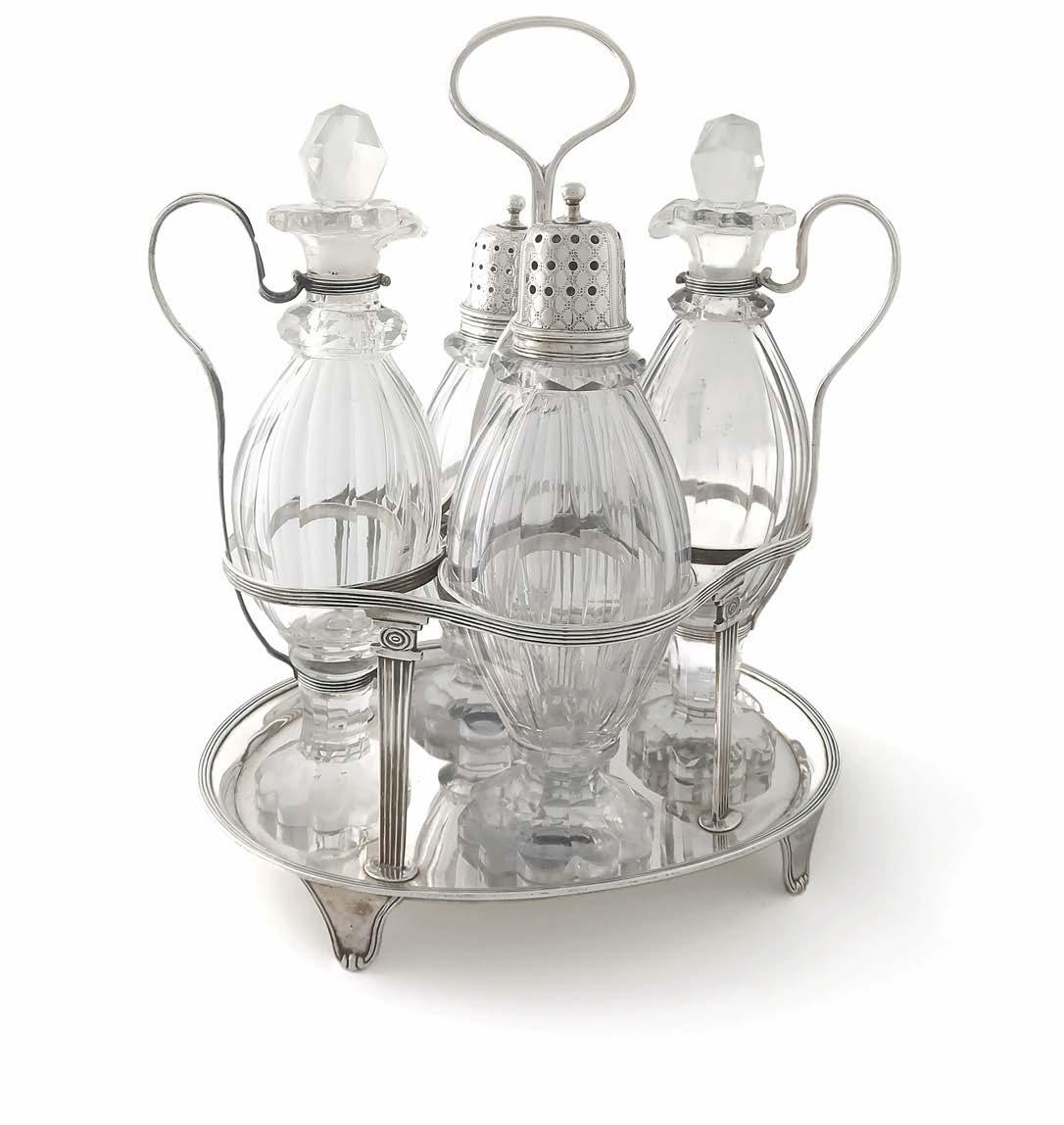
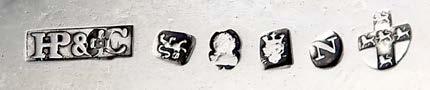
A George III silver four-bottle cruet frame and stand, by Hampston, Prince & Cattles, over-stamped by John Hampston & John Prince, York 1799, oval form, reeded wirework frame, on an oval base with reeded border and four scroll feet, central carrying handle, with four silver-mounted glass bottles, two with pull-off pierced covers, two with glass stoppers, height 28cm, approx. weight 23.5oz.
Provenance: Woolley & Wallis, Silver & Objects of Vertu, 18 April 2023, lot 260.
86
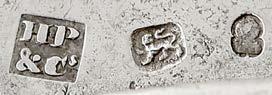
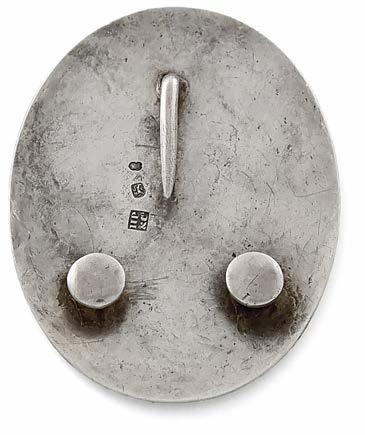
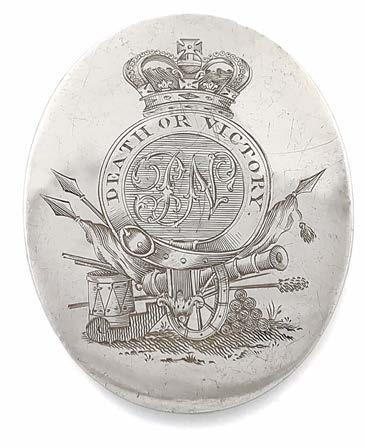
A George III silver shoulder belt plate, by Hampston, Prince & Cattles, York circa 1799, oval form, engraved with militia arms, and motto ‘Death or Victory’, the centre initialled JN, height 8.5cm, approx. weight 1.2oz.
Exhibited:
On display at Merchant Adventurers’ Hall, Fossgate, York, since 1999. Merchant Adventurers’ Hall, ‘Three Centuries of York Silver 1550-1858’, 14-28 July 2000, exhibit no. 266.
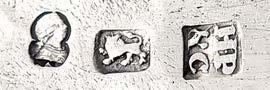
87
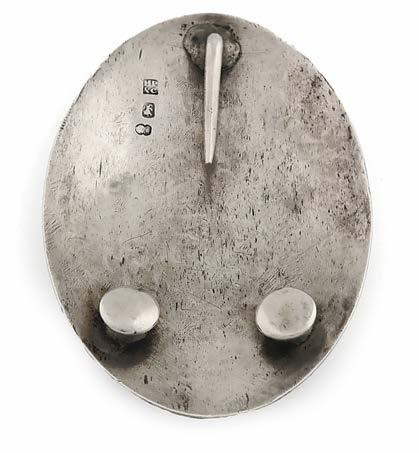
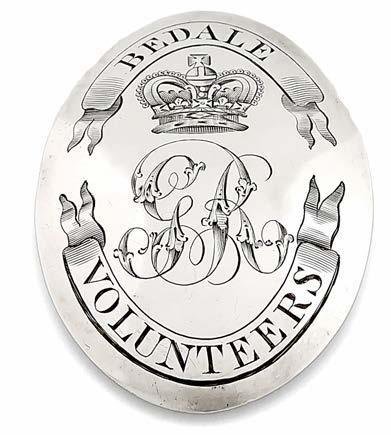
A George III silver shoulder belt plate, by Hampston, Prince & Cattles, York circa 1799, oval form, engraved scrolling banners inscribed ‘Bedale Volunteers’, the centre with the Royal monogram for George III, height 9cm, approx. weight 1.5oz.
The most striking thing for me about York silver from the end of the 18th century until the closure of the York Assay Office in 1858 is the enormous range of silver objects produced. A few of the more domestic items in this collection include shaving brush, whistle, shoe buckles, tongue scraper, meat skewer, marrow scoop, apple corer, breadbasket, letter rack, toast rack, serving slice, wine and spirits funnels and wine/sauce labels.
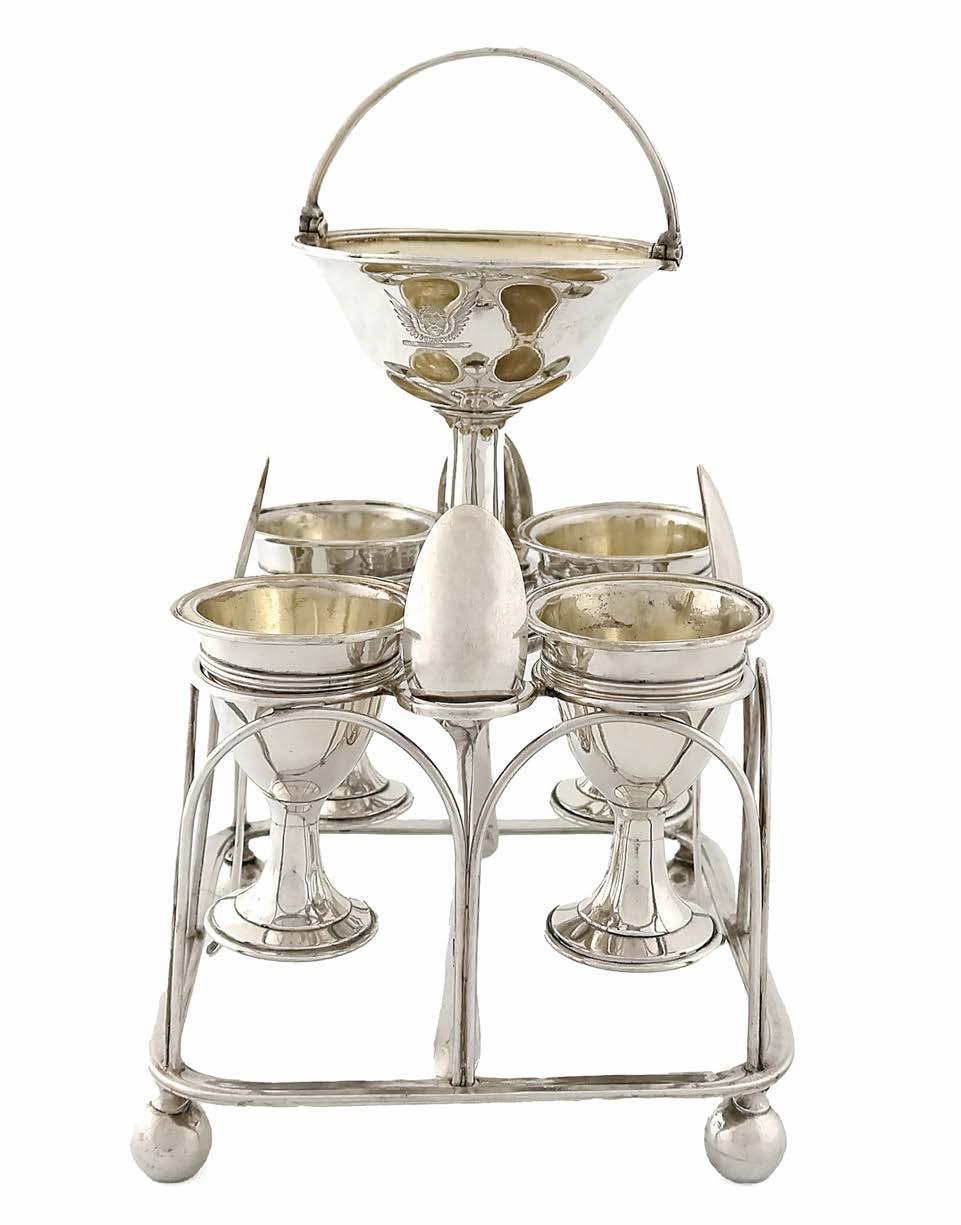
I think silver was put to a greater variety of uses in the 19th century than at any time either before or since. In the centuries before there was not the wealth, and in the 20th century newly available metals could be used instead. Stainless steel in particular was not only cheaper, but also more convenient because it did not tarnish and was more suitable for use in the kitchen because it is tougher than silver, and even at the table because stainless steel has no taste. Who today would think of having a saucepan (no. 140) made of solid silver? Or an egg cup cruet (no. 91), assuming you wanted one in the first place?
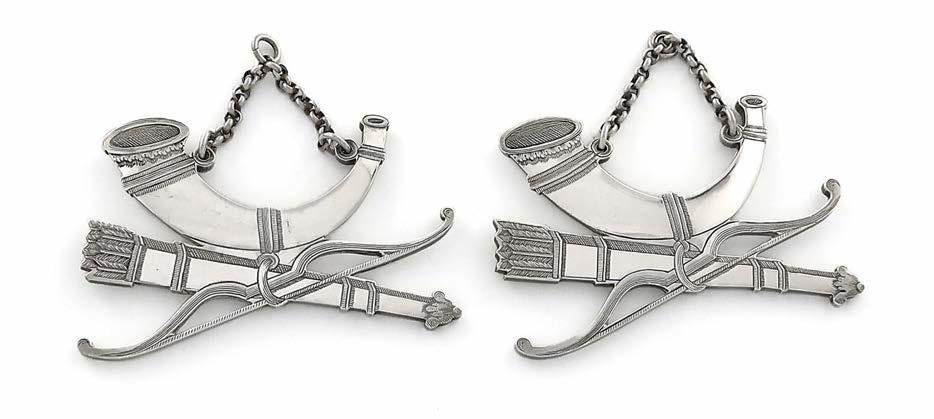
But York silver in the 19th century was not confined to domestic household items. It was used in ceremonial dress such as the local militia shoulder belt plates in numbers 86 and 87, or the archery badges (no. 130) or the gorget (no. 76) with the finely engraved arms of George III, originally a throat guard against sword attacks, but by the 19th century only used ceremonially.
York-made silver was also used to mount exotic objects brought back perhaps by the Sons of Empire, such as the mounted ostrich egg (no. 109) or the cowrie shell snuff box (no. 90), or the coconut goblets (no. 72).
York silver in the 19th century was also used for the marking of occasions, sporting and otherwise. The silver-gilt race cup and cover (no. 126) marked the win by St Patrick at the York Spring Meeting 1821, while a silver medal (no. 147) commemorated Frederick J. Walker’s prize ‘for the best Fancy Swimming’ at the York Swimming Bath Fete in 1844.
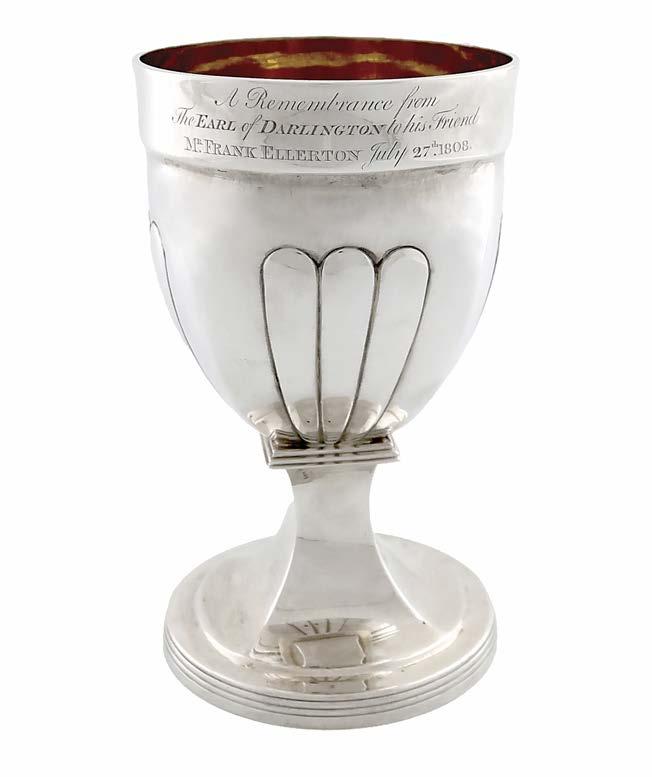
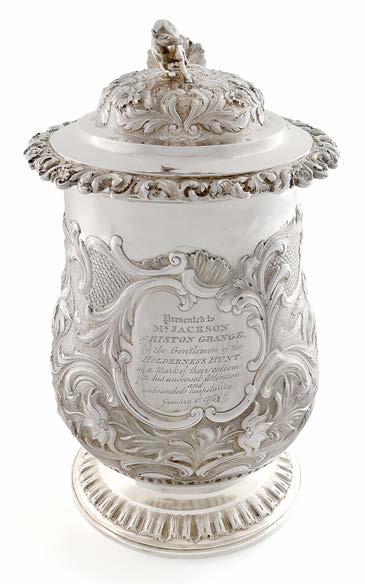
The Regimental cup & cover (no. 104) was presented, as the inscription reads, to a Captain Horne ‘for his Meritorious Zeal and Indefatigable Exertions in promoting the Discipline of the Regiment.’ One can’t help wondering whether, at least by today’s standards, this is how Captain Horne would really have wished to be remembered. More understandably, the tankard in no. 133 was presented by the gentlemen of the Holderness Hunt to a Mr Jackson of Riston Grange ‘for his universal attention and unbounded hospitality.’ More simply, the goblet in no. 99 was given as ‘A Remembrance from the Earl of Darlington to his Friend Mr Frank Ellerton’. This was the remembrance of a friend rather than of an occasion, not unlike the silver-mounted horse hoof of Verité, converted into a snuff box (no. 154). Tell it not in Gath, but during the 1820s there were apparently a few elaborate pieces of silver which the York silversmith James Barber bought unmarked from a big London firm of silversmiths called Emes and Barnard, and he then had them marked with his own York marks up in York. I hope the race cup was not such a piece.

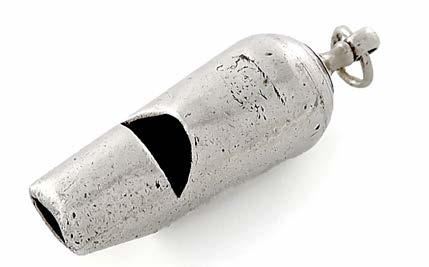
88 A George III silver whistle, by Hampston, Prince & Cattles, York circa 1799, plain conventional form, suspension loop, stamped with a motif above the hole, length 5cm, approx. weight 0.8oz.
Exhibited: On display at Merchant Adventurers’ Hall, Fossgate, York, since 1999. Merchant Adventurers’ Hall, ‘Three Centuries of York Silver 1550-1858’, 14-28 July 2000, exhibit no. 270.
89
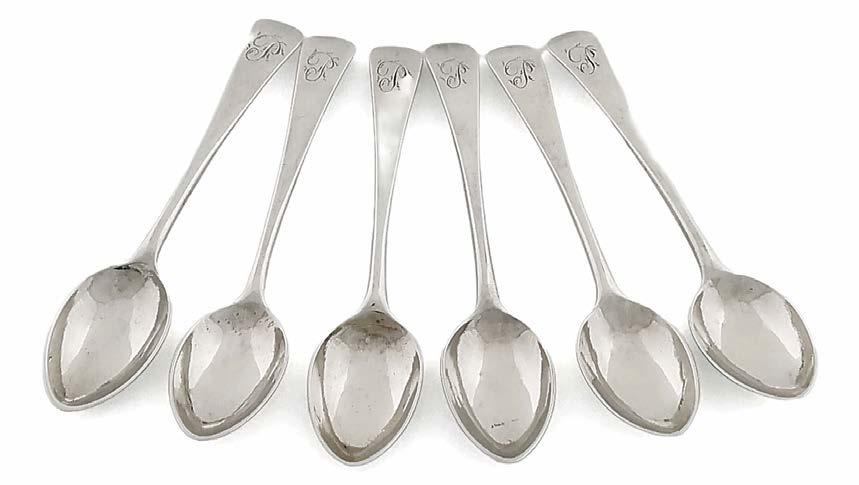
A set of six George III Old English pattern silver toy spoons, by John Hampston & John Prince, York circa 1799, the terminals initialled P, approx. length 8cm, approx. total weight 1oz. (6)
Exhibited:
Merchant Adventurers’ Hall, Fossgate, York, ‘Three Centuries of York Silver 1550-1858’, 14-28 July 2000, exhibit no. 272.
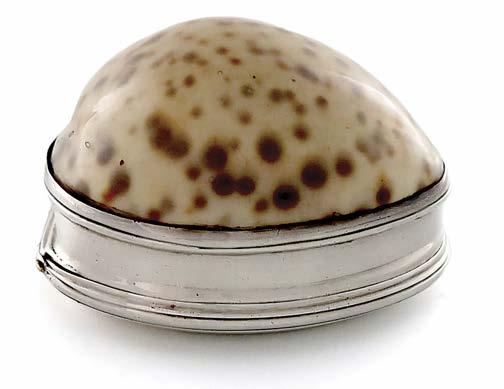
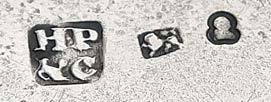
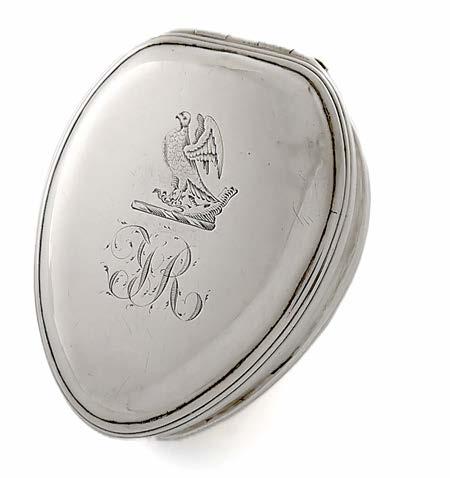
90 A George III silver-mounted cowrie shell snuff box, by Hampston, Prince & Cattles, York circa 1800, plain mount, slightly cushion-domed hinged cover engraved with a crest and initials J R, length 7cm.
A similar mounted conch shell is in the Lee Collection (no. 34).
Exhibited:
On display at Merchant Adventurers’ Hall, Fossgate, York, since 1999.
Merchant Adventurers’ Hall, ‘Three Centuries of York Silver 1550-1858’, 14-28 July 2000, exhibit no. 269.
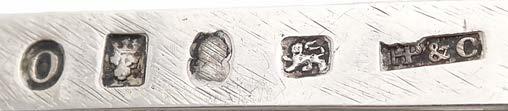
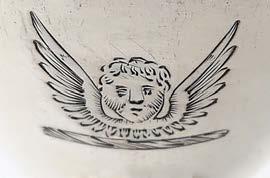
91 A George III silver egg cruet, by Hampston, Prince & Cattles, York 1800, square wirework frame, fitted with four egg cups with gilt interiors, engraved with a crest, and four Old English pattern egg spoons, the frame mounted with a salt cellar with a ring handle, height to top of handle 18cm, approx. weight 21oz.
Exhibited:
Merchant Adventurers’ Hall, Fossgate, York, ‘Three Centuries of York Silver 1550-1858’, 14-28 July 2000, exhibit no. 273.
92
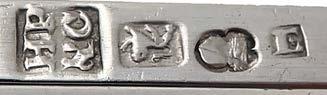
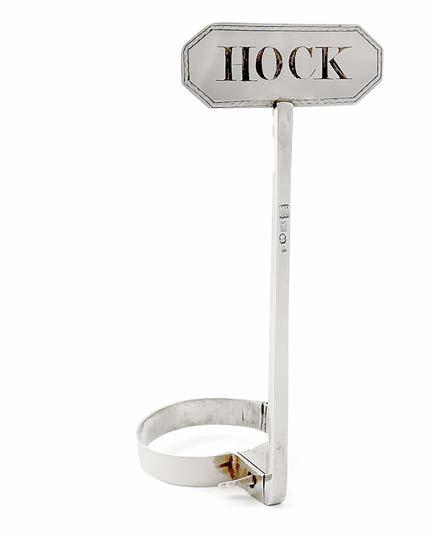
A George III silver decanter clamp, by Hampton, Prince & Cattles, York, circa 1801-1804, mounted with rectangular wine label with canted corners, incised and blackened Hock, eight 12.7cm, approx. weight 1.6oz.
Apart from the two earlier but in form very similar bottle/decanter clamps in the Lee Collection, on which this clamp is probably based, no other examples are thought to exist, whether made in York or elsewhere.
Mary Cooke, from whom the clamp was purchased, suggested the letter E was also used during this period.
93
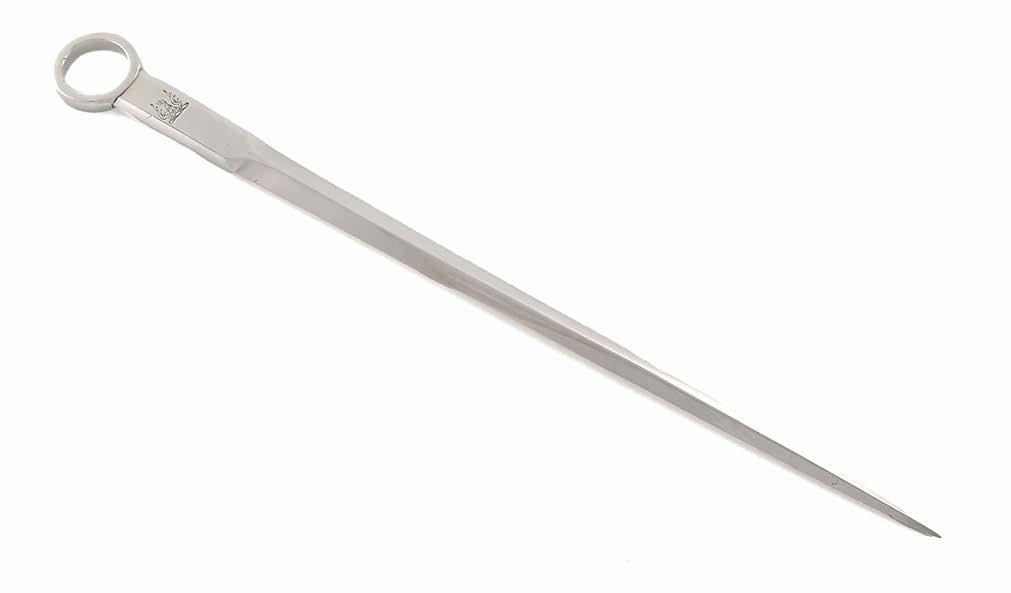
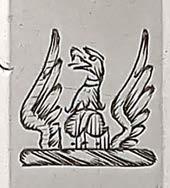
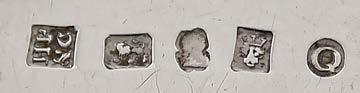
A George III silver meat skewer, by Hampston, Prince & Cattles, York 1802, plain tapering form, ring handle, engraved with a crest, length, 33cm, approx. weight 3.9oz.
Exhibited:
On display at Merchant Adventurers’ Hall, Fossgate, York, since 1999. Merchant Adventurers’ Hall, ‘Three Centuries of York Silver 1550-1858’, 14-28 July 2000, exhibit no. 290.
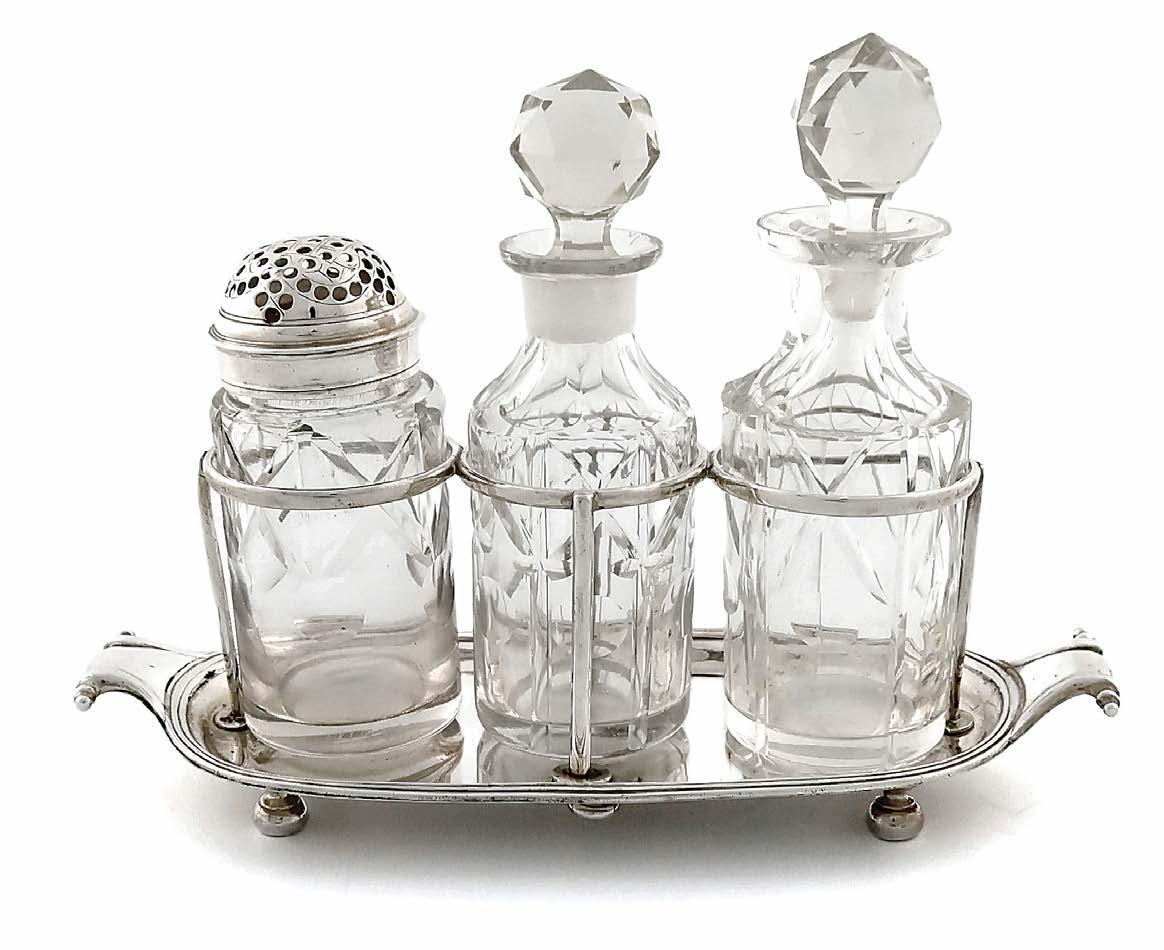
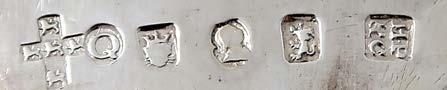
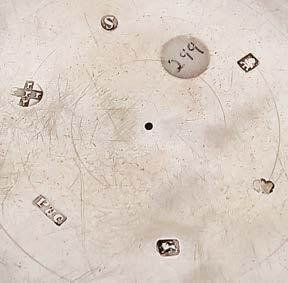
A George III silver three-bottle cruet frame and stand, by Hampston, Prince & Cattles, York 1802, wirework frame, containing two oil and vinegar bottles with stoppers, and a pepper pot with domed, pull-off pierced cover, on an oval base with twin scroll handles, on four ball feet, length handle to handle 25.4cm, approx. weight excluding bottles 4.5oz.
Exhibited: Merchant Adventurers’ Hall, Fossgate, York, ‘Three Centuries of York Silver 1550-1858’, 14-28 July 2000, exhibit no. 289.
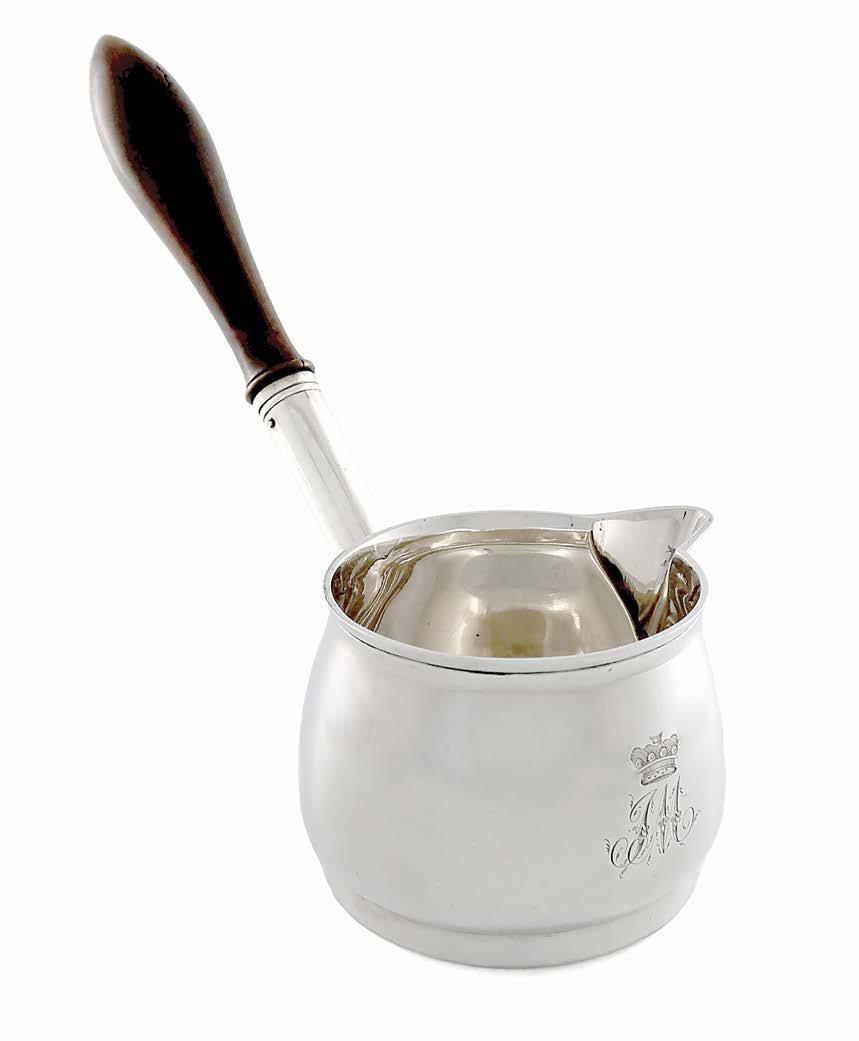
A George III silver brandy/saucepan, by Prince & Cattles, York 1804, conventional plain bellied form, engraved with an earl’s coronet and initialled J H, with a turned wood handle, length including handle 16cm, approx. weight 7.6oz.
Exhibited:
On display at Merchant Adventurers’ Hall, Fossgate, York, since 1999. Merchant Adventurers’ Hall, ‘Three Centuries of York Silver 1550-1858’, 14-28 July 2000, exhibit no. 299.
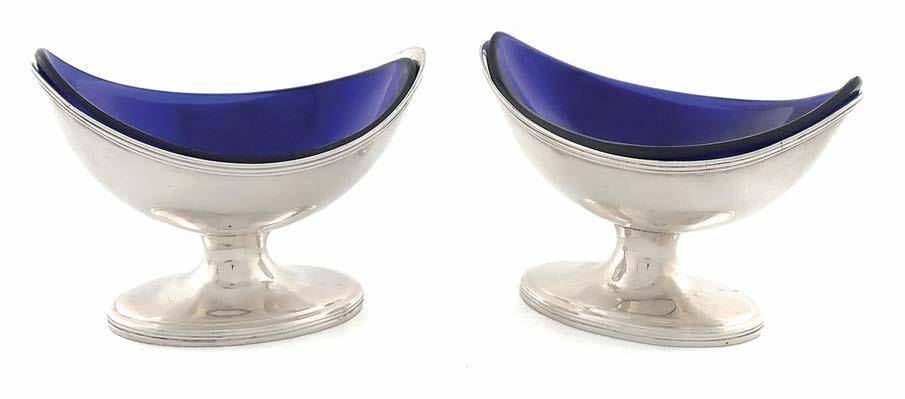
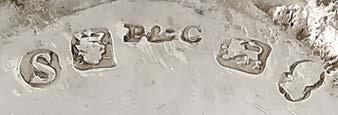
96 A pair of George III silver salt cellars,
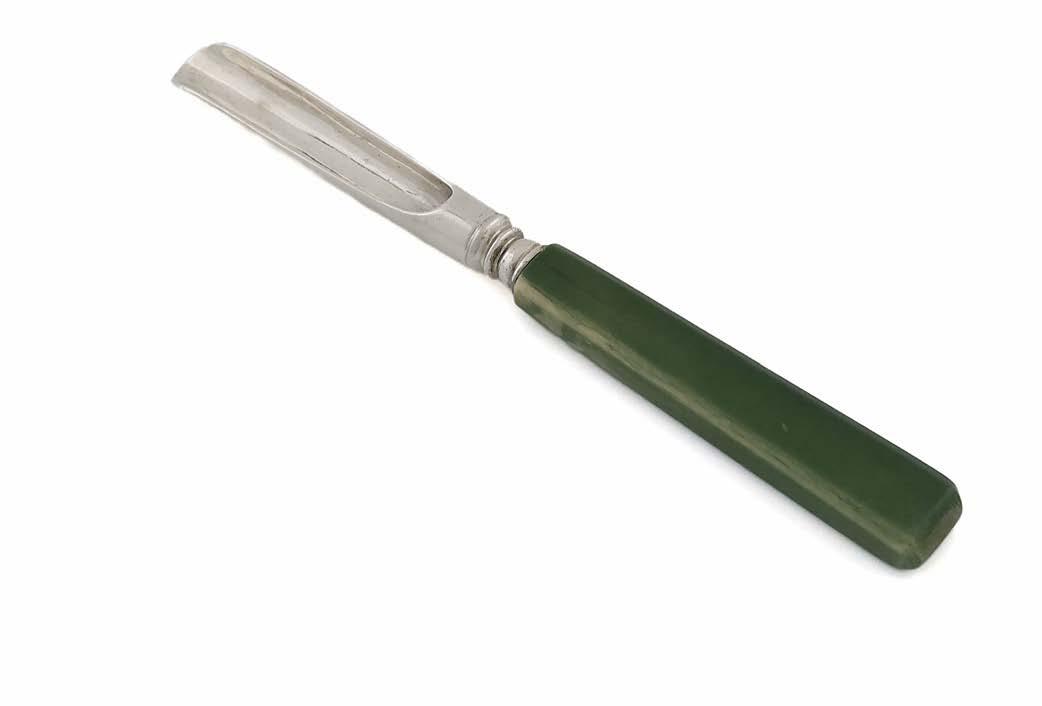
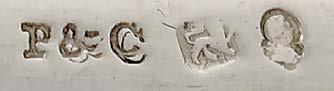
97 A George III silver apple corer, by Prince & Cattles, York circa 1804, conventional form, with a green stained ivory handle, length 16.5cm.
Exhibited: Merchant Adventurers’ Hall, Fossgate, York, ‘Three Centuries of York Silver 1550-1858’, 14-28 July 2000, exhibit no. 301.
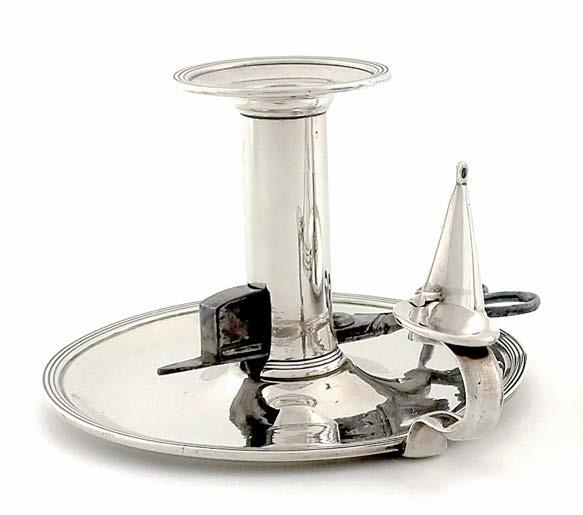
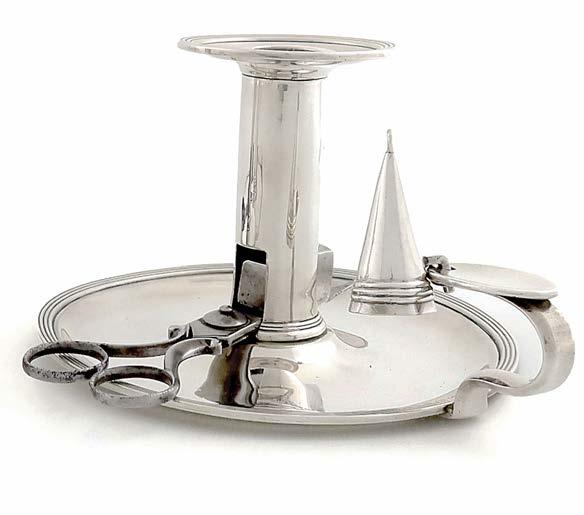
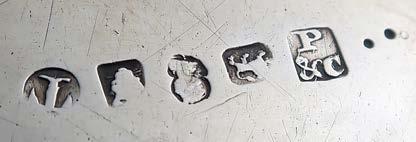
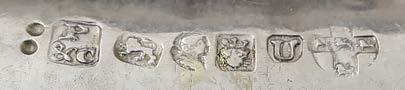
98 A pair of George III silver chambersticks, by Prince & Cattles, York 1805, circular form, reeded border, scroll handle, with a conical snuffer and a pair of snuffer scissors, pull-out drip pans, height approx. 9.5cm, weights 20oz. (2)
Exhibited: Merchant Adventurers’ Hall, Fossgate, York, ‘Three Centuries of York Silver 1550-1858’, 14-28 July 2000, exhibit no. 302.
100
A George III silver panelled goblet, by Prince & Cattles, York 1806, circular bowl with four lobed panels, the rim inscribed ‘A Remembrance from The Earl of Darlington to his Friend Mr Frank Ellerton July 27th 1808’, gilt interior, on a circular reeded foot with square section raised stem, height 16.5cm, approx. weight 12oz.
Exhibited:
Merchant Adventurers’ Hall, Fossgate, York, ‘Three Centuries of York Silver 1550-1858’, 14-28 July 2000, exhibit no. 303.
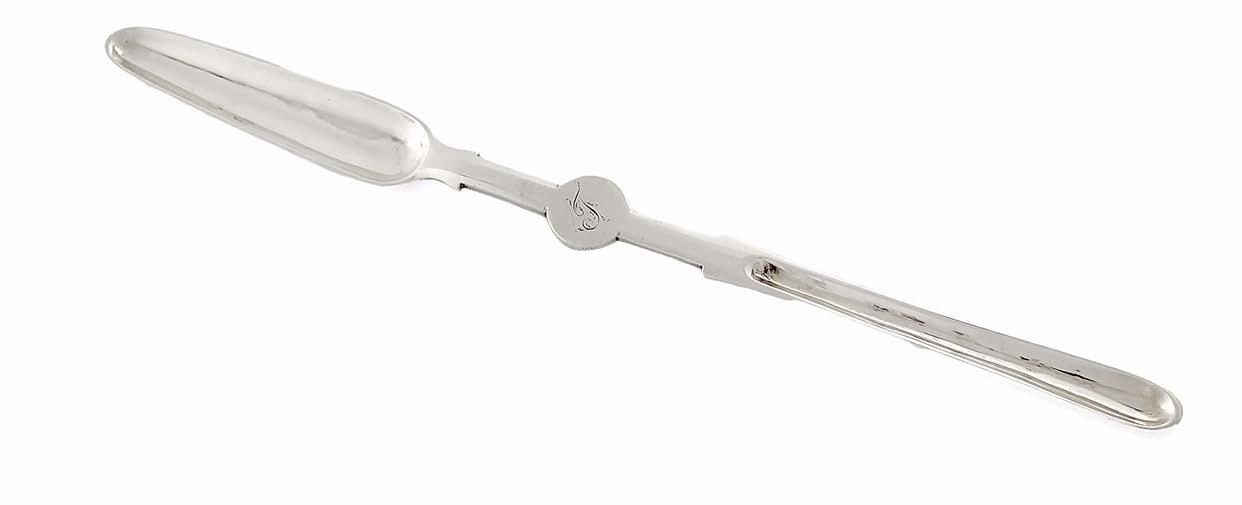
A George III silver marrow scoop, by Prince & Cattles, York 1806, plain conventional form, the central stem with a roundel initialled T, length 26cm, approx. weight 1.8oz.
Exhibited:
On display at Merchant Adventurers’ Hall, Fossgate, York, since 1999. Merchant Adventurers’ Hall, ‘Three Centuries of York Silver 1550-1858’, 14-28 July 2000, exhibit no. 304. 99
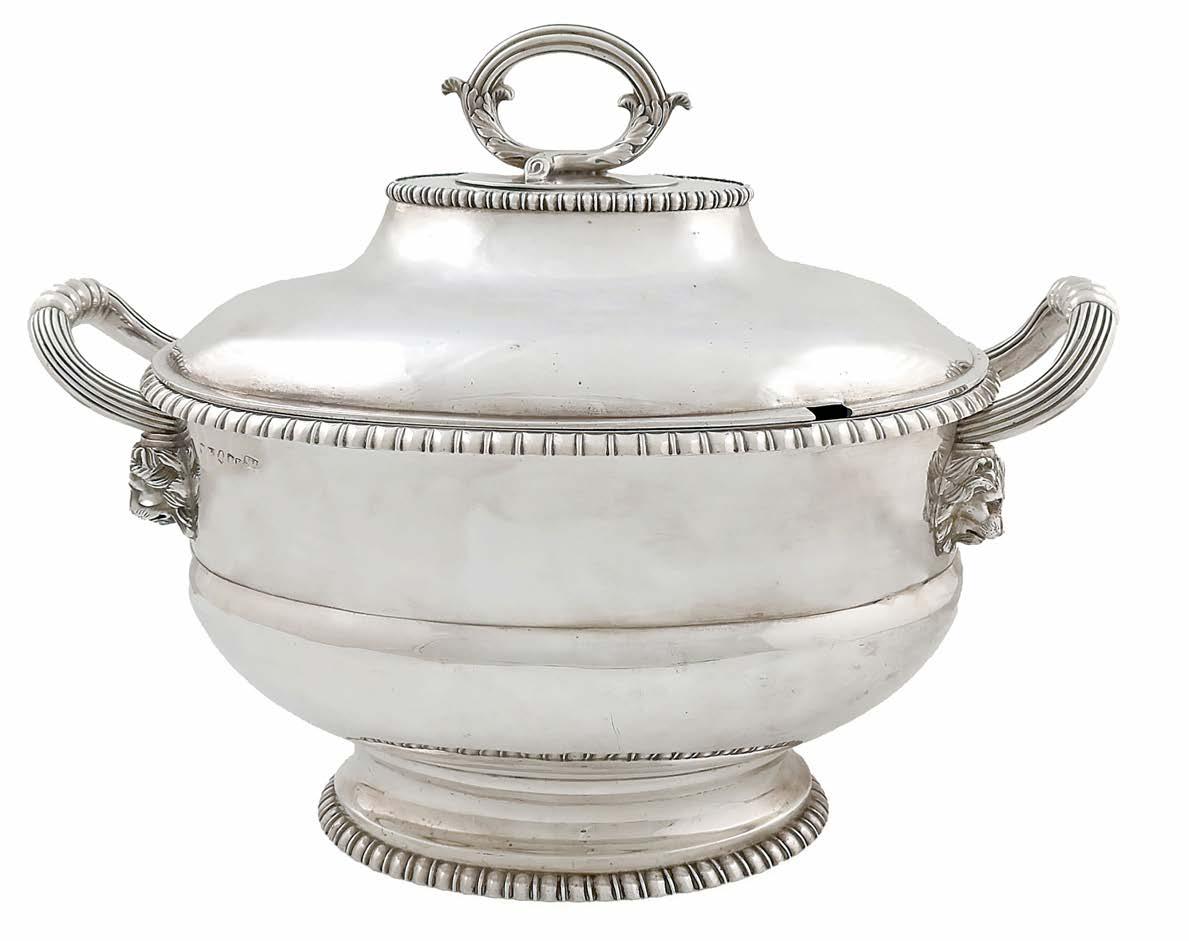
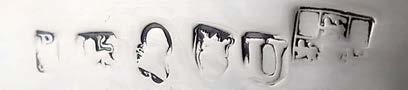
A George III silver two-handled soup tureen, by Prince & Cattles, York 1806, oval form, gadroon border, twin lion mask mounted reeded handles, domed pull-off cover with a gadroon border and central fluted handle, on a raised oval and gadroon base, length handle to handle 42.5cm, height to top of handle 32cm, approx. total weight 102oz.
Exhibited: Merchant Adventurers’ Hall, Fossgate, York, ‘Three Centuries of York Silver 1550-1858’, 14-28 July 2000, part of exhibit no. 305.
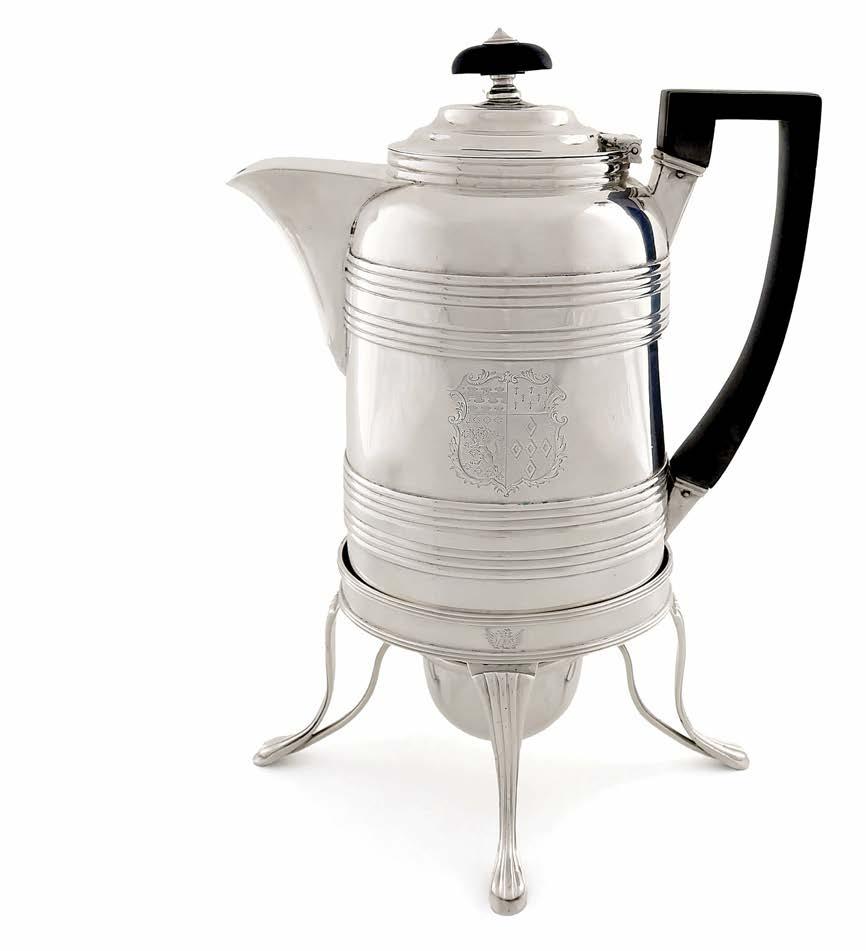
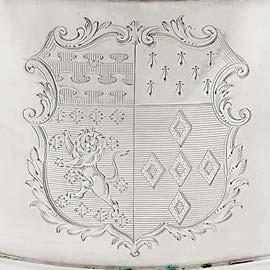
A George III silver coffee biggin and stand, by Prince & Cattles, York 1806, slight tapering cylindrical form, with four reeded bands, the centre engraved with an armorial, raised hinged cover, knop finial, with an angular handle, on a wirework frame and four reeded wirework legs, detachable burner, height of biggin 20.1cm, approx. total weight 48oz.
Exhibited: Merchant Adventurers’ Hall, Fossgate, York, ‘Three Centuries of York Silver 1550-1858’, 14-28 July 2000, exhibit no. 306.
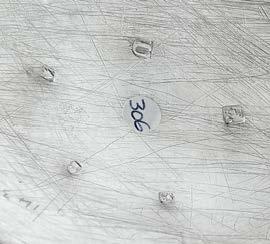
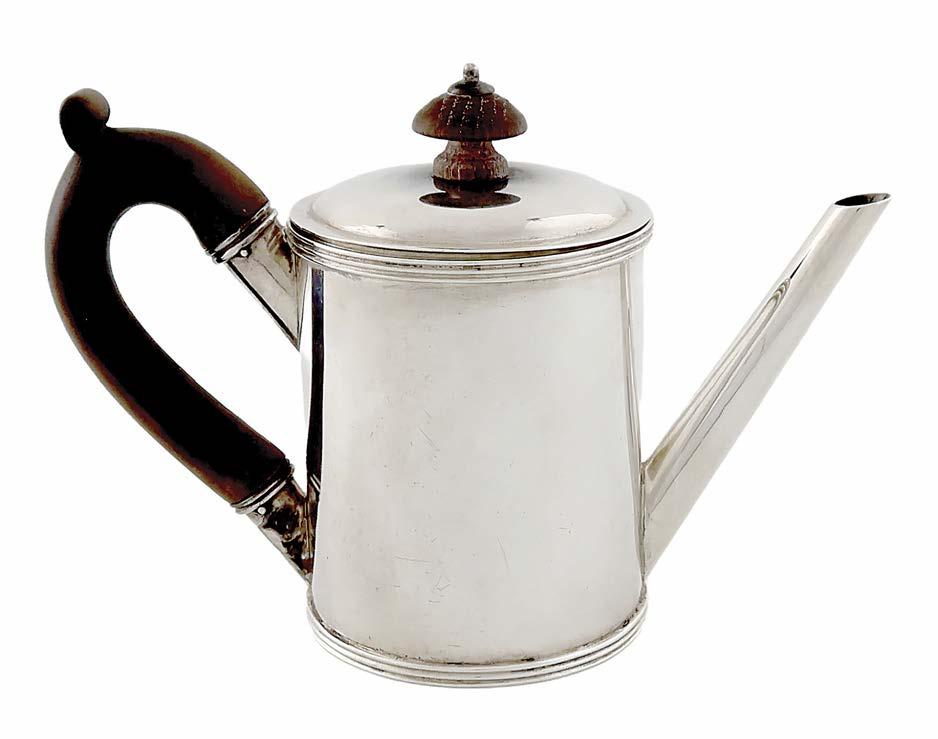
A George III silver saffron pot, by Robert Cattle, York 1807, plain cylindrical form, domed pull-off cover, wooden knop finial, scroll wooden handle, height 10.8cm, approx. weight 7.3oz.
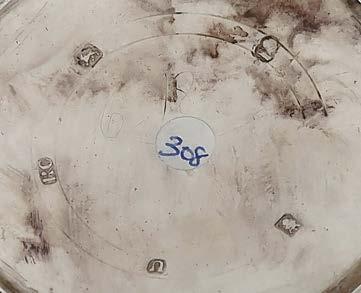
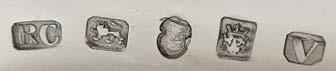
The hallmark of Robert Cattle by himself is rare. There is only one entry, on 4 December 1807, for Robert Cattle in the York assay books, for a parcel of goods weighing in total 142oz, between the dissolution of his partnership in Prince and Cattles on 1 November 1807 and the start of his partnership in Cattle & Barber on 1 January 1808.
Saffron tea was used for medicinal purposes.
Exhibited:
Merchant Adventurers’ Hall, Fossgate, York, ‘Three Centuries of York Silver 1550-1858’, 14-28 July 2000, exhibit no. 308.
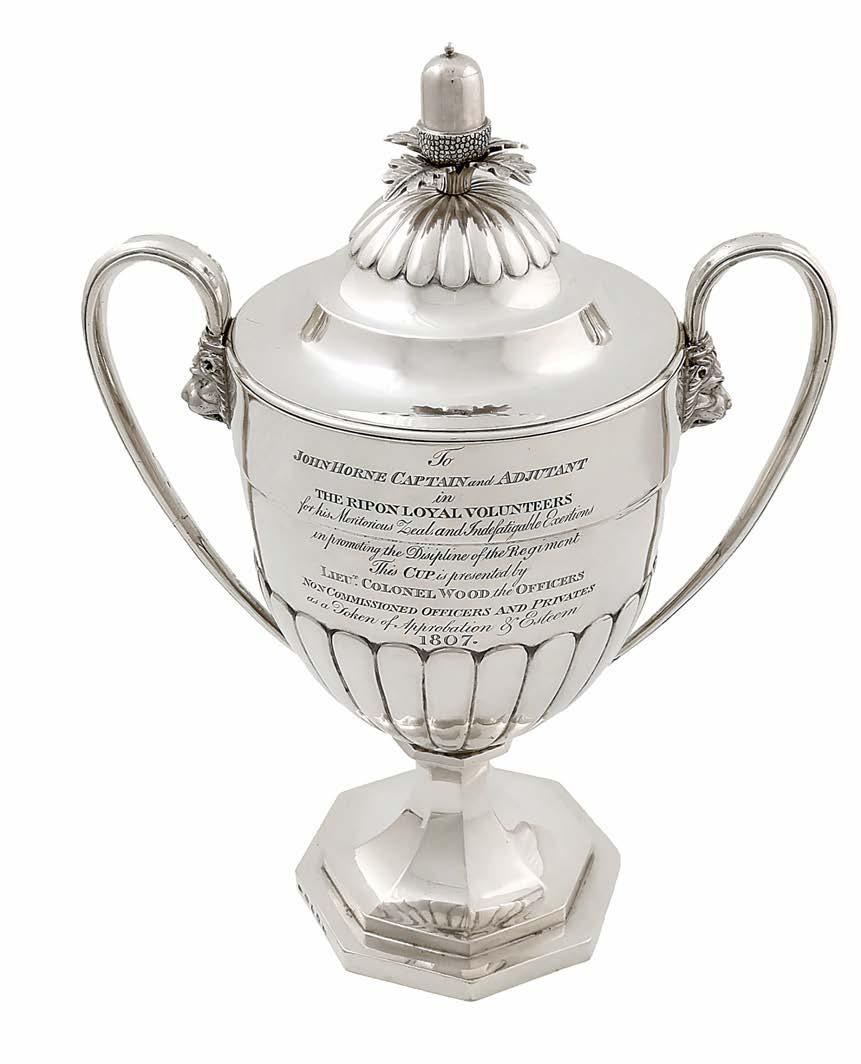
A George III silver two-handled Regimental cup and cover, by Robert Cattle, York 1807, vase form, part-fluted decoration and inscribed ‘To John Horne Captain and Adjutant in The Ripon Loyal Volunteers for his Meritorious Zeal and Indefatigable Exertions in promoting the Discipline of the Regiment. This Cup is presented by Lieut. Colonel Wood the Officers, Non Commissioned Officers and Privates as a token of Approbation & Esteem 1807’, pull-off raised part-fluted cover with an acorn finial, lion mask mounted scroll handles, on a raised octagonal base, height including cover 31cm, approx. total weight 39.3oz.
Exhibited: Merchant Adventurers’ Hall, Fossgate, York, ‘Three Centuries of York Silver 1550-1858’, 14-28 July 2000, exhibit no. 309.
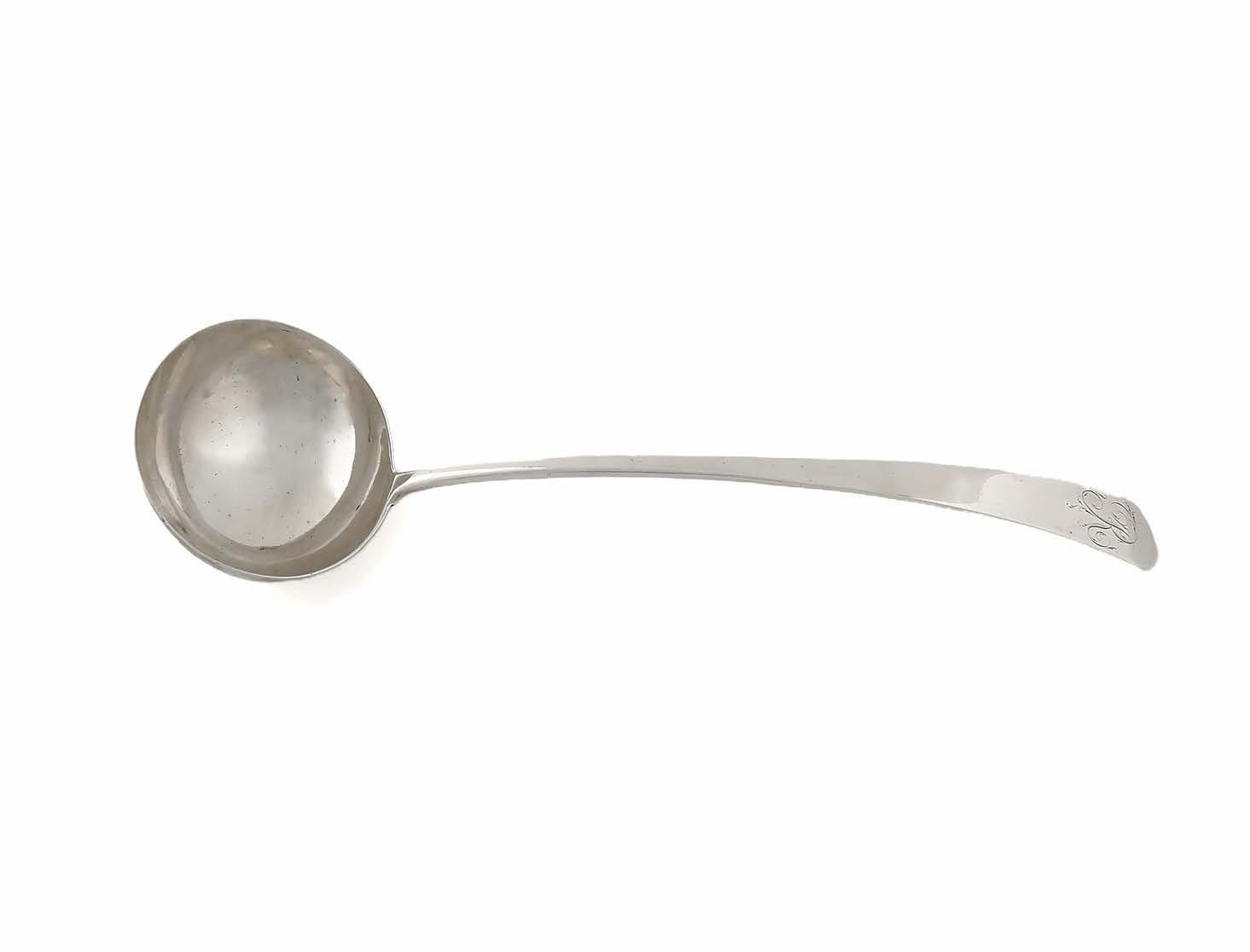
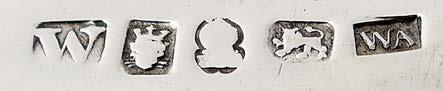
106
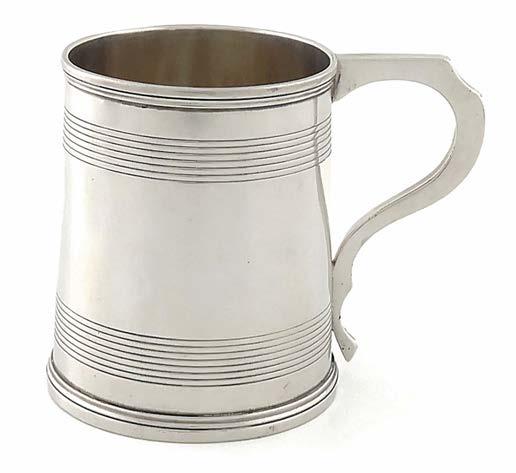
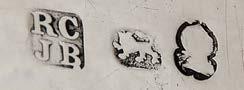
A George III small silver mug, by Robert Cattle & James Barber, York 1808, plain tapering cylindrical form, with two reeded bands, gilt interior, scroll handle, height 7.8cm, approx. weight 5oz.
Exhibited:
Merchant Adventurers’ Hall, Fossgate, York, ‘Three Centuries of York Silver 1550-1858’, 14-28 July 2000, exhibit no. 314.
107
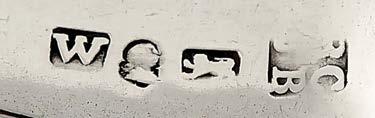
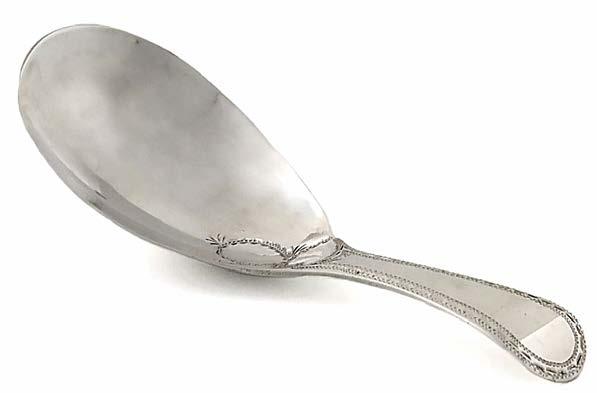
A George III silver caddy spoon, by Robert Cattle & James Barber, York 1808, bright-cut decoration on the stem and bowl, length 9.2cm, approx. weight 0.4oz.
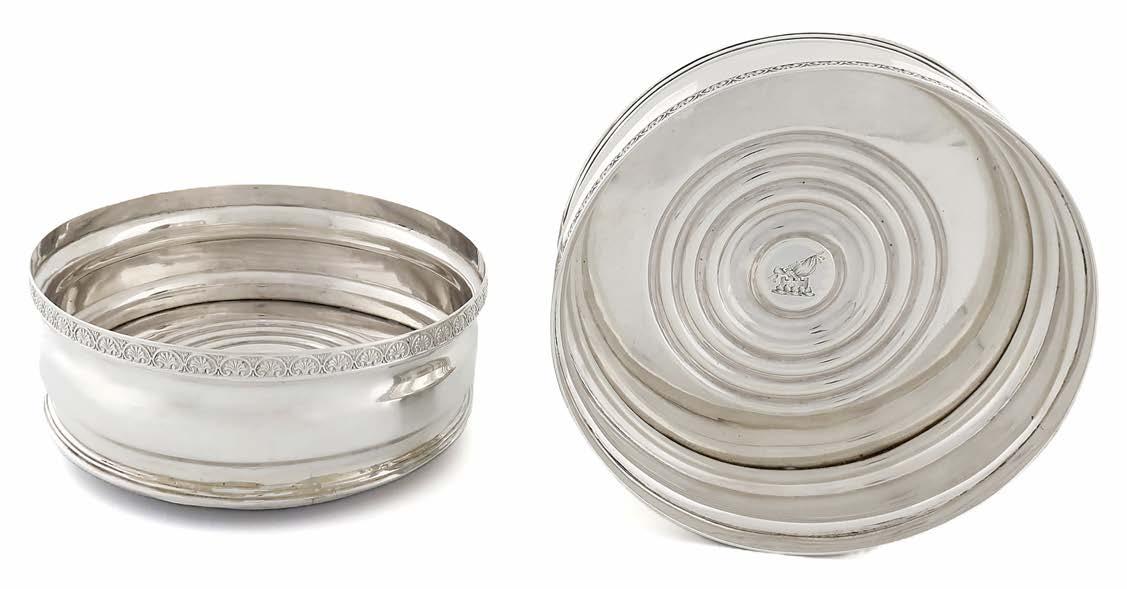
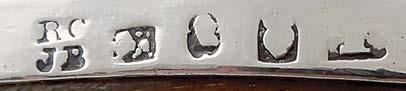
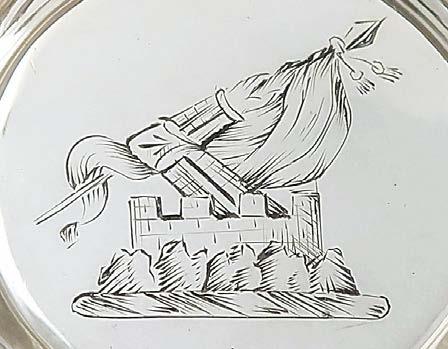
A pair of George III silver wine coasters, by Robert Cattle & James Barber, York, date letter partially worn, possibly 1810, circular form, with shell and scroll borders, silver bases, the central buttons engraved with a crest, wooden undersides, diameter 14.8cm. (2)
Exhibited:
Merchant Adventurers’ Hall, Fossgate, York, ‘Three Centuries of York Silver 1550-1858’, 14-28 July 2000, exhibit no 326.
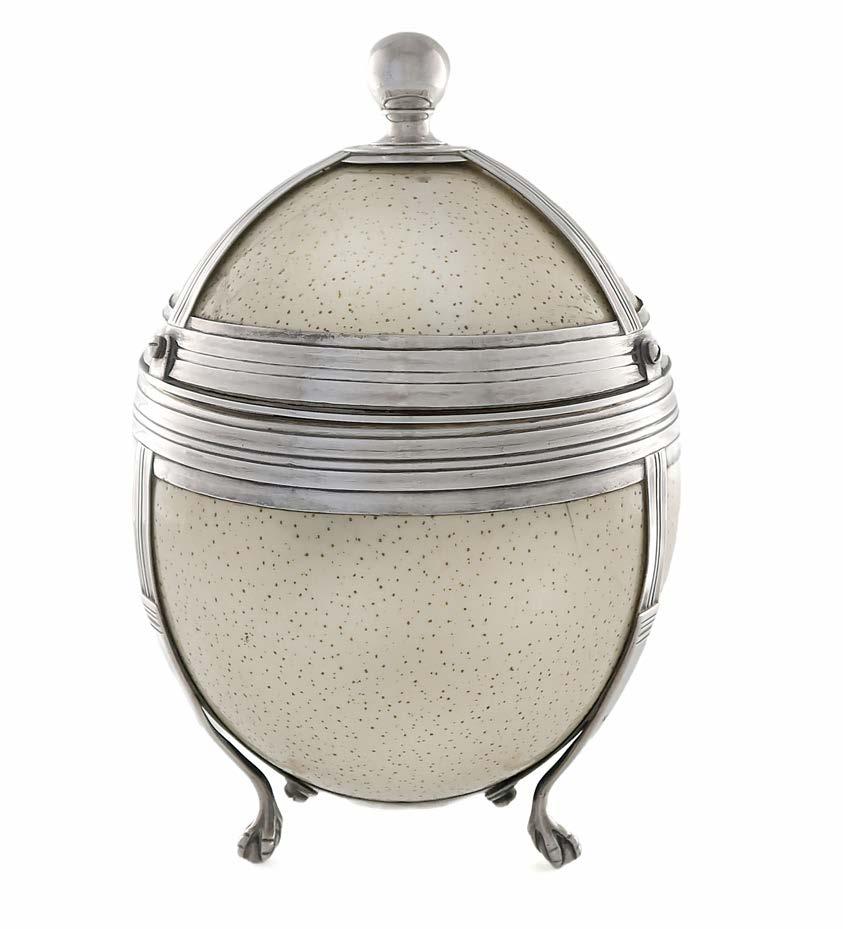

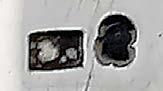
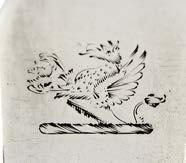
A George III silver-mounted ostrich egg, by Robert Cattle & James Barber, York circa 1810, the egg cut to form a cup and cover, banded strapwork riveted mounts, on four claw and ball feet, the pull-off cover with a ball finial, height 17.8cm.
Exhibited:
On display at Merchant Adventurers’ Hall, Fossgate, York, since 1999. Merchant Adventurers’ Hall, ‘Three Centuries of York Silver 1550-1858’, 14-28 July 2000, exhibit no. 323.
112
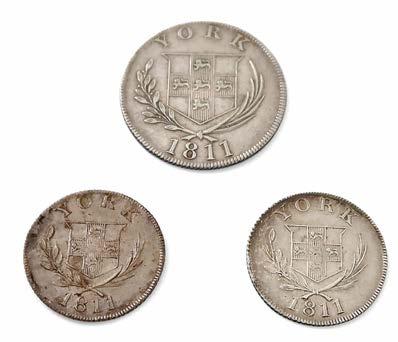
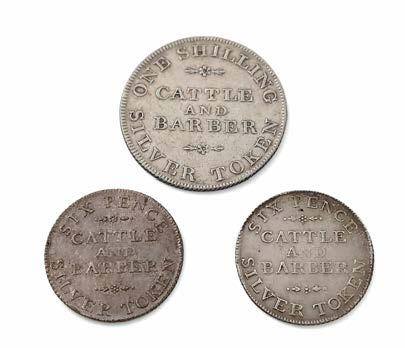
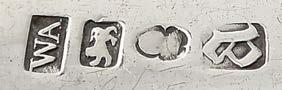
Three George III tokens, one of one shilling and two of sixpence, by Robert Cattle & James Barber, York 1811, the reverse with York, the York City crest, and date 1811, diameters 2.4cm, and two 1.9cm, approx. total weight 0.2oz. (3)
113
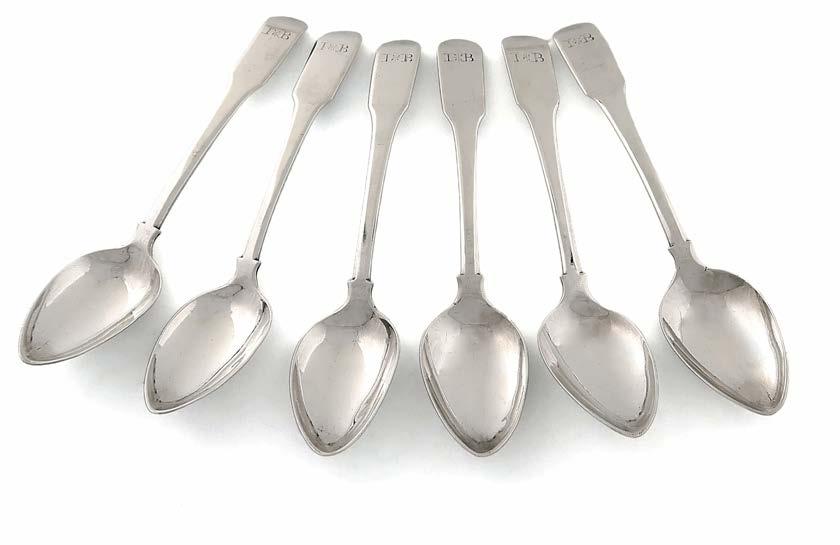
A set of six George III silver Fiddle pattern teaspoons, by William Astley, York 1812, the terminals initialled, approx. length 13.8cm, approx. total weight 3.8oz. (6)
Exhibited: Merchant Adventurers’ Hall, Fossgate, York, ‘Three Centuries of York Silver 1550-1858’, 14-28 July 2000, exhibit no. 333.
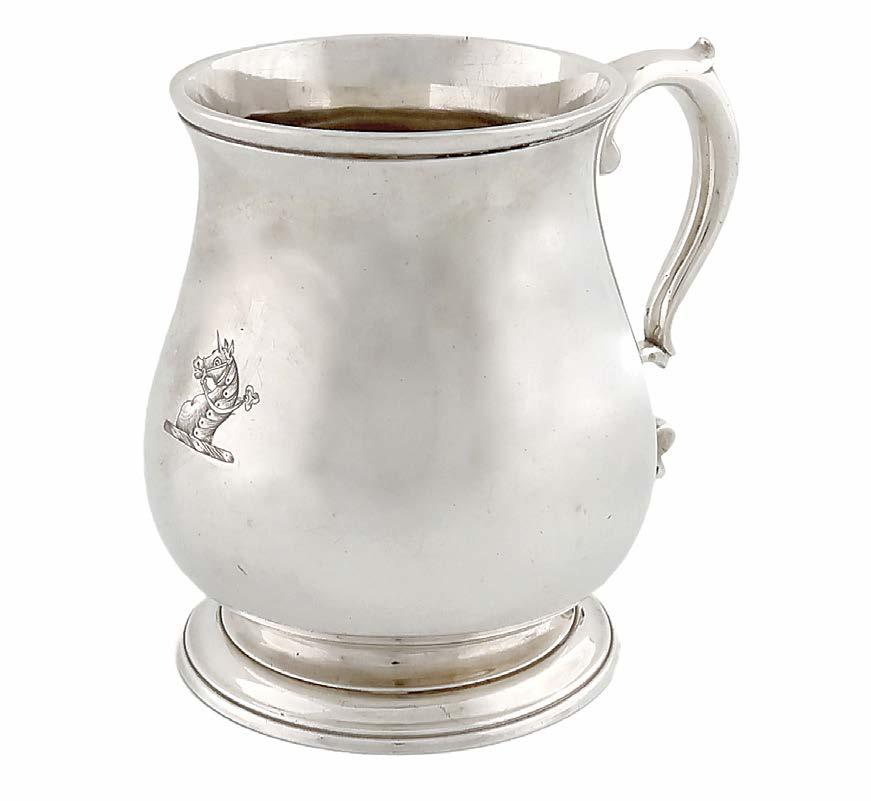
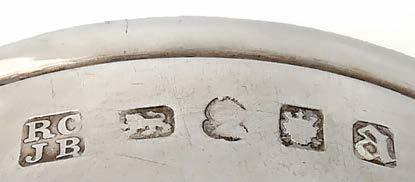
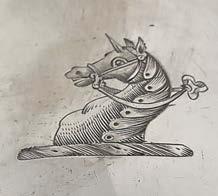
A George III silver half pint mug, by Robert Cattle & James Barber, York 1812, circular bellied form, engraved with a crest, scroll handle, on a raised base, height 9.5cm, approx. weight 10oz.
Exhibited:
Merchant Adventurers’ Hall, Fossgate, York, ‘Three Centuries of York Silver 1550-1858’, 14-28 July 2000, exhibit no. 334.
115
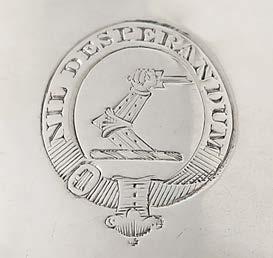
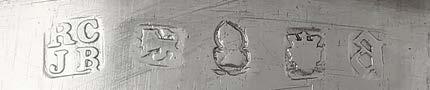
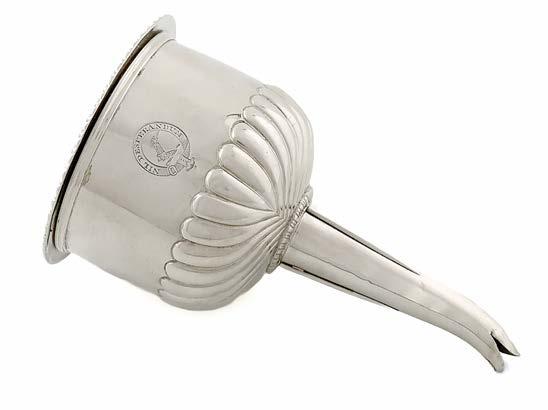
A George III silver wine funnel, by Robert Cattle & James Barber, York 1812, part-fluted circular form, engraved with a crest and motto in a strap-work cartouche, pull-out strainer section, length 15cm, approx. weight 7oz.
Exhibited:
Merchant Adventurers’ Hall, Fossgate, York, ‘Three Centuries of York Silver 1550-1858’, 14-28 July 2000, exhibit no. 335.
116
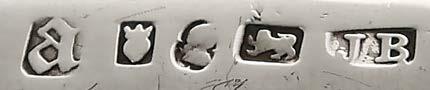
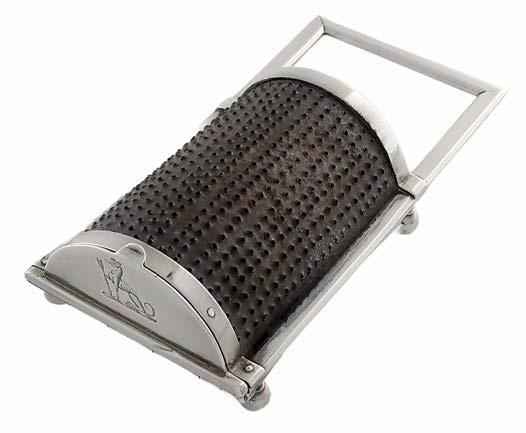
A George III silver kitchen nutmeg grater, by James Barber, York, 1812, rectangular and semi-circular form, with a square handle, on four ball feet, hinged base engraved with a crest, length 13.4cm.
The crest is that of E.R.B. Hall-Watt of Bishop Burton Hall, Beverley (who was also the owner of the chafing dish in the Lee Collection - no. 37).
Exhibited:
On display at Merchant Adventurers’ Hall, Fossgate, York, since 1999. Merchant Adventurers’ Hall, ‘Three Centuries of York Silver 1550-1858’, 14-28 July 2000, exhibit no. 337.
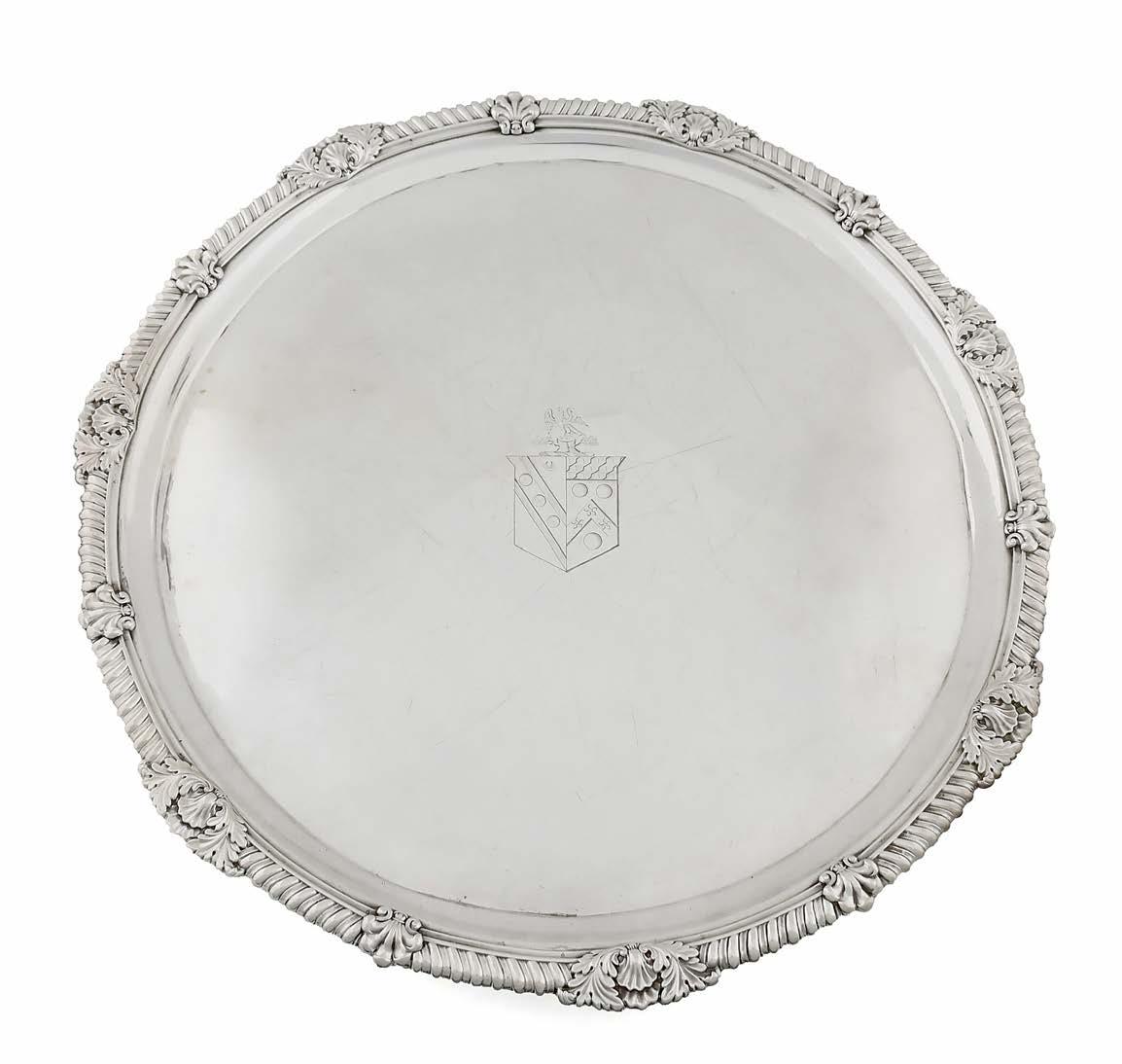
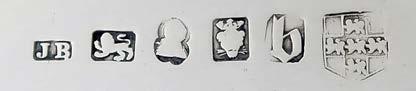
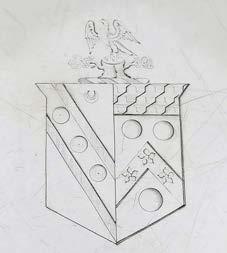
A George III large silver salver, by James Barber, York 1813, circular form, with a foliate shell and gadroon border, the centre engraved with an armorial, on four fruiting vine and lion mask feet, diameter 51.2cm, approx. weight 87oz.
Exhibited: Merchant Adventurers’ Hall, Fossgate, York, ‘Three Centuries of York Silver 1550-1858’, 14-28 July 2000, exhibit no. 340.
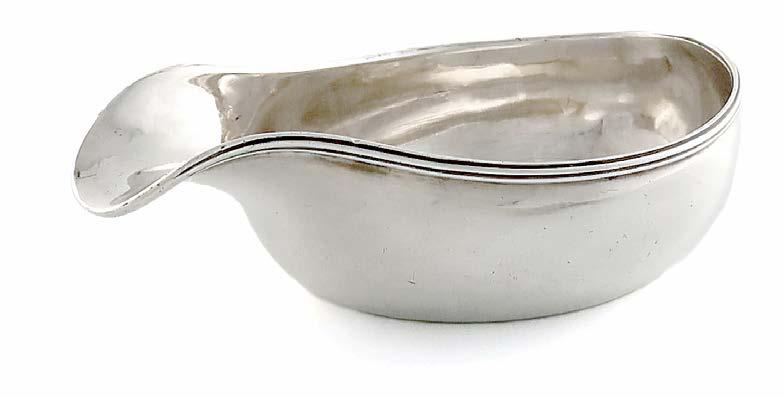
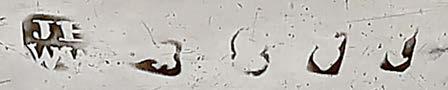
118 A George III silver pap boat, by James Barber & William Whitwell, York 1814, plain form, length 11.7cm, approx. weight 2.4oz.
Exhibited: On display at Merchant Adventurers’ Hall, Fossgate, York, since 1999. Merchant Adventurers’ Hall, ‘Three Centuries of York Silver 1550-1858’, 14-28 July 2000, exhibit no. 344.
119
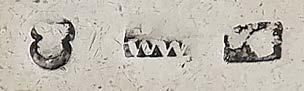
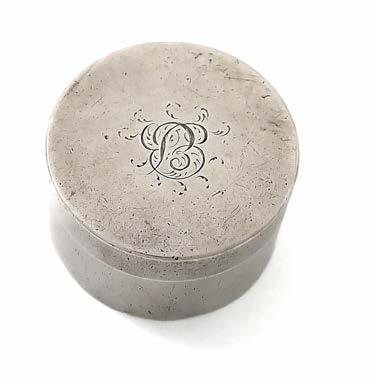
A George III silver pill box, by James Barber & William Whitwell, York circa 1815, circular form, pull-off cover initialled B, diameter 2.5cm, approx. weight 0.5oz.
Provenance: Martin Gubbins Collection.
120
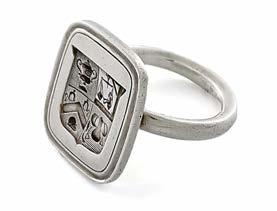
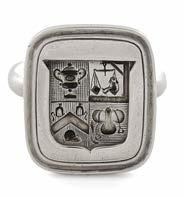
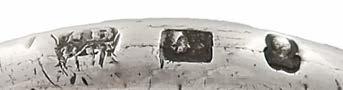
A George IV silver ring seal, by James Barber & William Whitwell, York circa 1815-20, the matrix with an impression of an armorial shield, diameter 2.8cm, approx. weight 0.5oz.
Exhibited:
On display at Merchant Adventurers’ Hall, Fossgate, York, since 1999.
Merchant Adventurers’ Hall, ‘Three Centuries of York Silver 1550-1858’, 14-28 July 2000, exhibit no. 353.
121
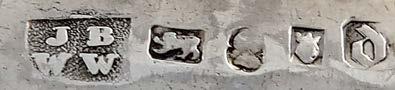
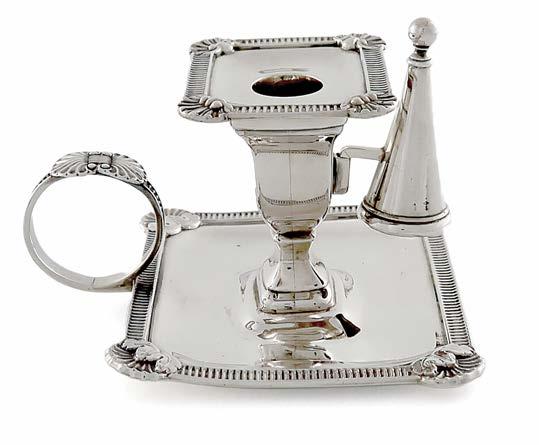
A George III silver chamberstick, by James Barber & William Whitwell, York 1815, cast rectangular base with a gadroon border and shell corners, ring handle with a double-shell thumbpiece, baluster stem, detachable rectangular drip pan with gadroon and shell border, detachable conical snuffer, height 6.5cm, approx. weight 4.8oz.
Exhibited:
On display at Merchant Adventurers’ Hall, Fossgate, York, since 1999.
Merchant Adventurers’ Hall, ‘Three Centuries of York Silver 1550-1858’, 14-28 July 2000, exhibit no. 355.
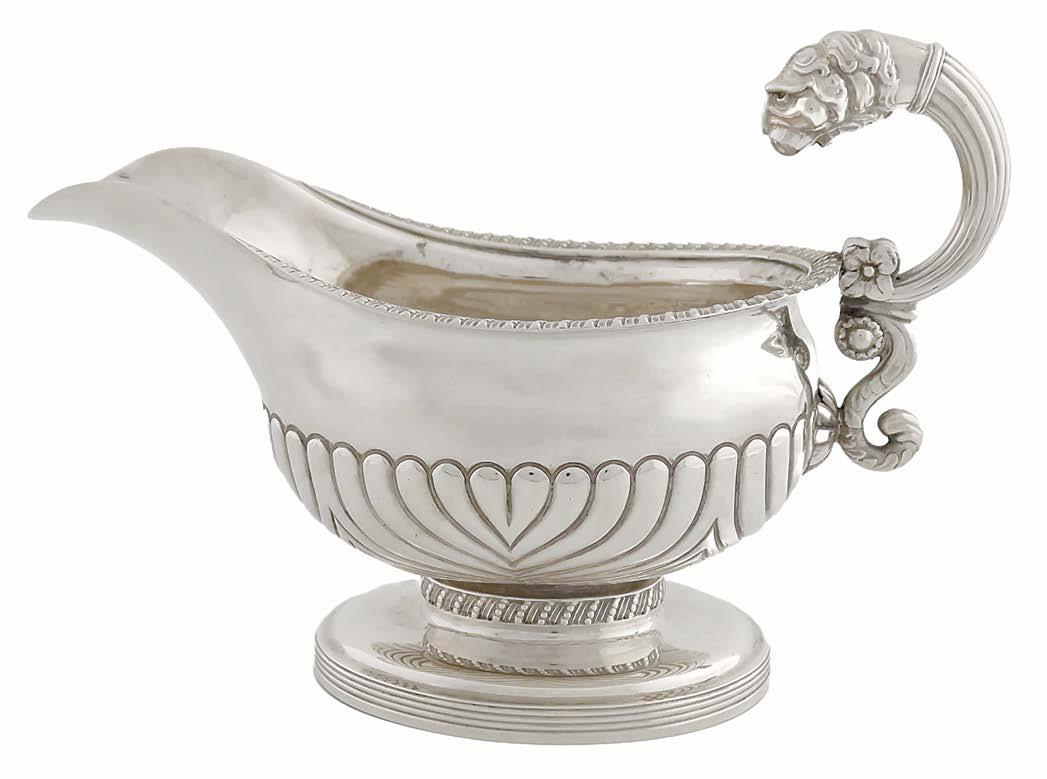
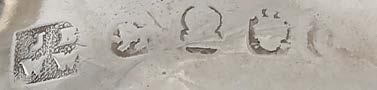
A George III silver sauceboat, by James Barber & William Whitwell, York 1815, oval form, part-fluted body, scroll reeded handle mounted by a lion mask, on a raised, reeded oval foot, length handle to spout 20.2cm, approx. weight 10.4oz.
Exhibited:
Merchant Adventurers’ Hall, Fossgate, York, ‘Three Centuries of York Silver 1550-1858’, 14-28 July 2000, exhibit no. 356.
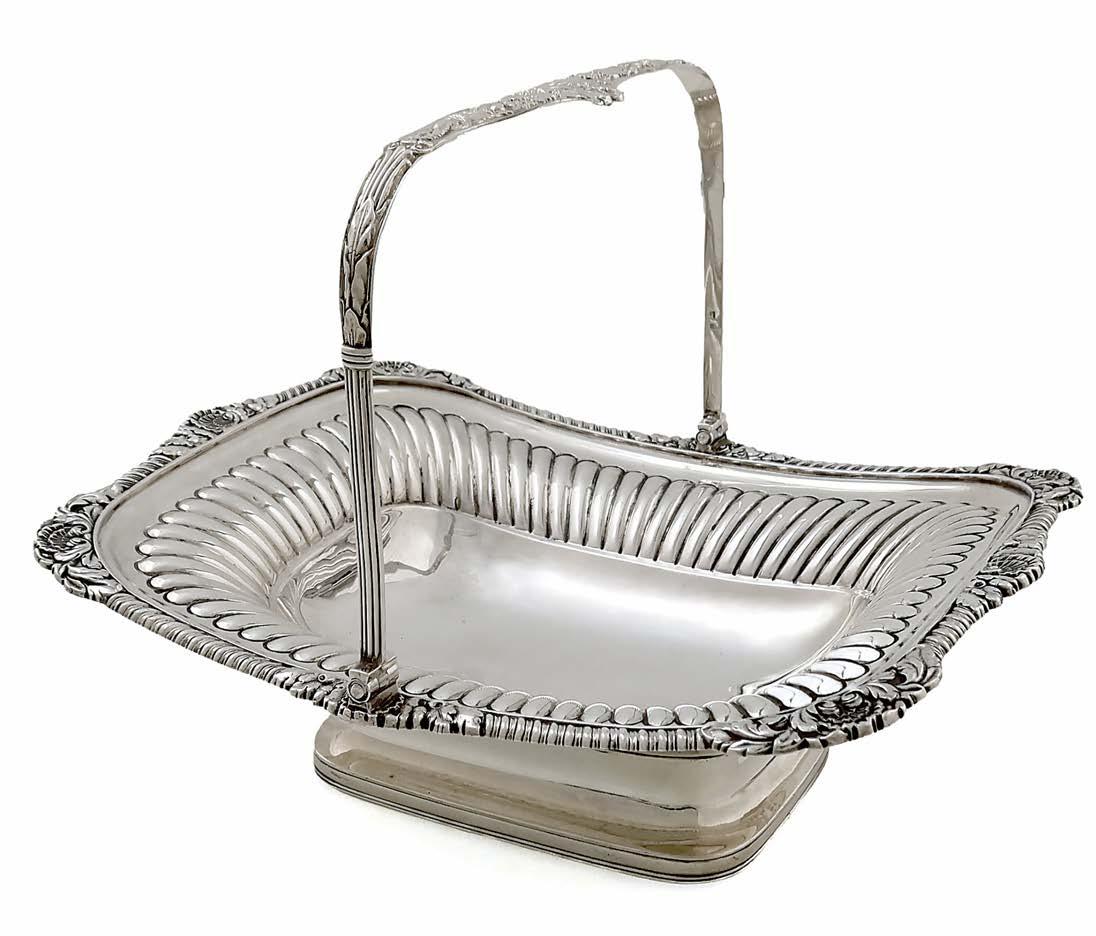
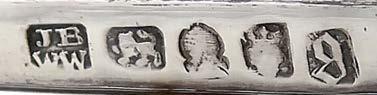
A George III silver swing-handled breadbasket, by James Barber & William Whitwell, York 1818, shaped rectangular form, part-fluted decoration, gadroon and foliate borders, reeded and foliate swing handle, on a raised rectangular foot, length 31cm, height to top of handle 19.5cm, approx. weight 43oz.
Provenance: Christie’s London, 10 July 1991.
Exhibited: Merchant Adventurers’ Hall, Fossgate, York, ‘Three Centuries of York Silver 1550-1858’, 14-28 July 2000, exhibit no. 368.
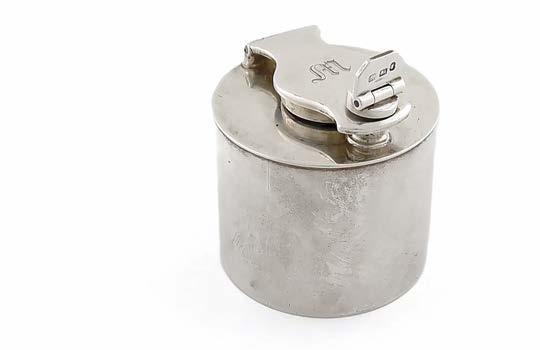
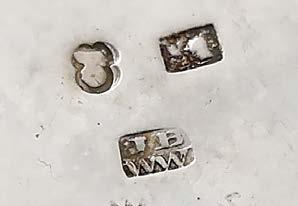
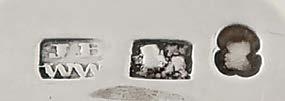
A George IV silver travelling inkwell, by James Barber and William Whitwell, York circa 1820, plain cylindrical form, screw-down hinged cover, initialled, height 5cm, approx. weight 3oz.
Provenance:
Michael Baggott Collection.
Woolley & Wallis, Silver, Gold & Objects of Vertu, 21 October 2025, lot 279.
125
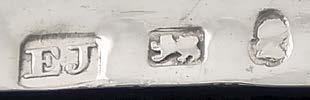
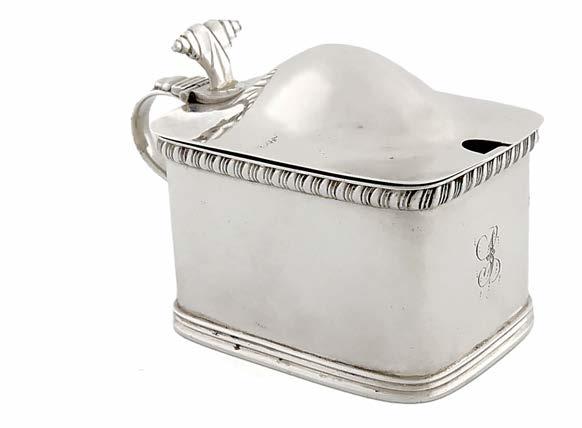
A George IV silver mustard pot, by Edward Jackson, York, circa 1820, rounded rectangular form, engraved with an initial, gadroon border, domed hinged cover, scroll thumbpiece and handle, blue glass liner, reeded border around the base, height to top of thumbpiece 6.5cm, approx. weight without liner 5.4oz.
Silver made by Edward Jackson is rarely found.
Exhibited:
Merchant Adventurers’ Hall, Fossgate, York, ‘Three Centuries of York Silver 1550-1858’, 14-28 July 2000, exhibit no. 365.
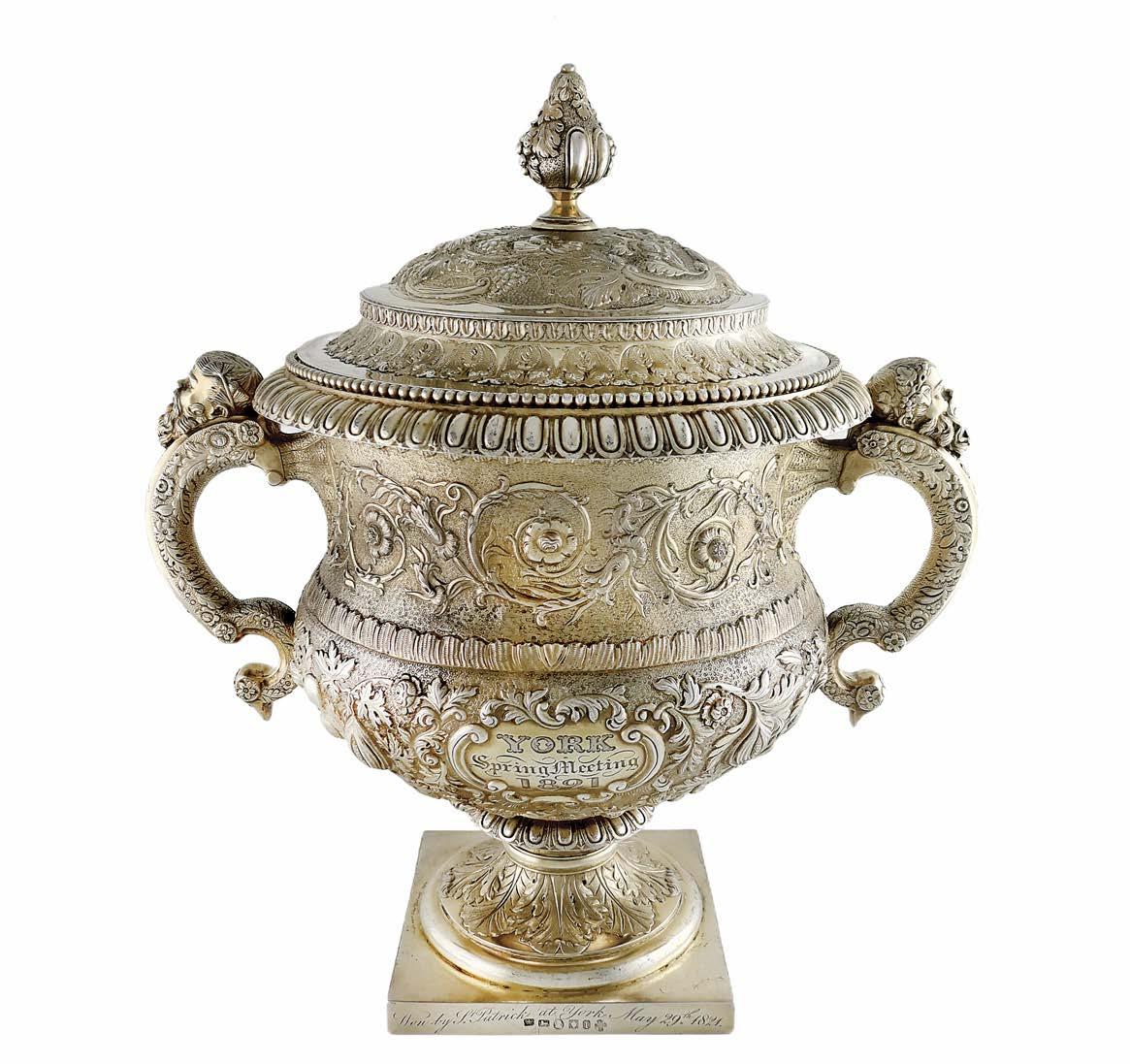
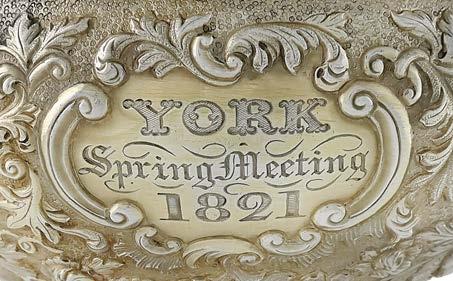
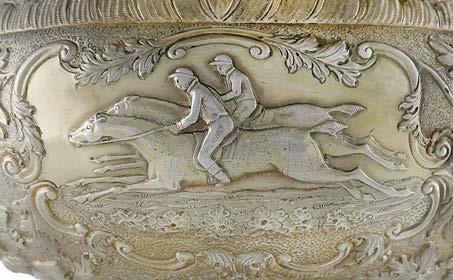
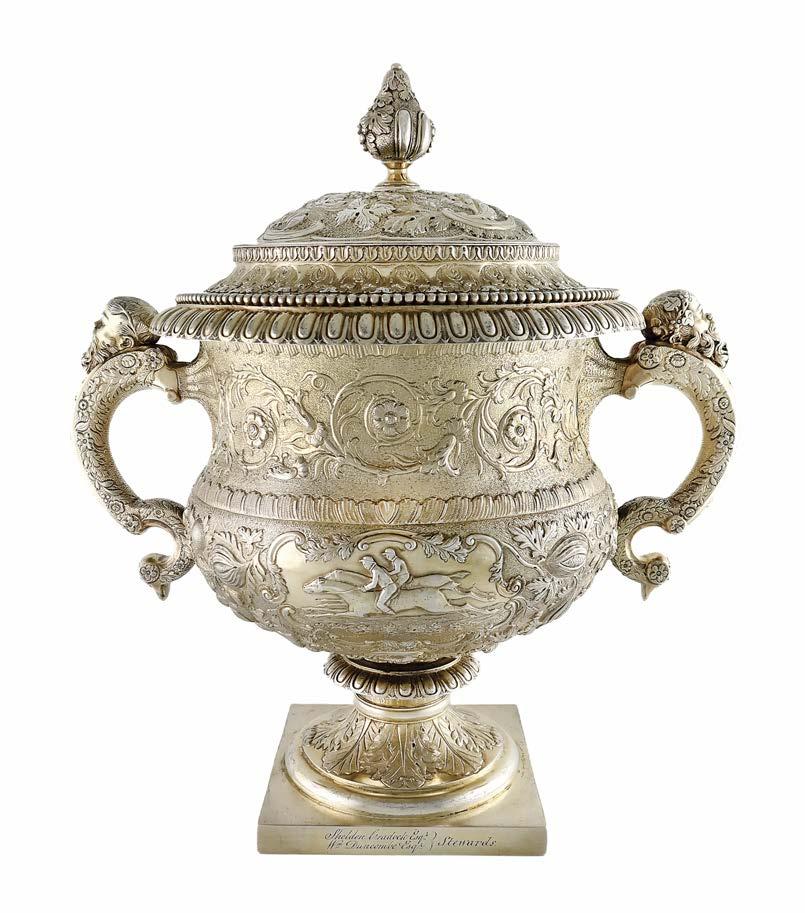
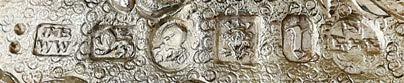
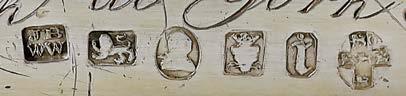
A George IV silver-gilt Racing trophy cup and cover, by James Barber & William Whitwell, York 1820, campana vase form, embossed scrolling foliate and vine decoration on a matted ground, the lower body with two shaped cartouches, one displaying a racing scene, the other inscribed ‘York Spring Meeting 1821’, Bacchus mask mounted fruiting vine side handles, the pull-off raised cover with an egg-and-dart rim, and embossed decoration, with a foliate finial, on a short raised circular foot chased with acanthus leaves, and square plinth inscribed ‘Won by St Patrick at York May 29th 1821’ and ‘Sheldon Cradock Esq, Wm Duncombe Esq. Stewards’, height including cover 37cm, approx. total weight 113oz.
Provenance: Sotheby’s, July 1990.
Exhibited:
Victoria and Albert Museum, London, Sporting Glory Exhibition, 9 November 1992 - 14 February 1993. On display at Merchant Adventurers’ Hall, Fossgate, York, since 1999.
Merchant Adventurers’ Hall, ‘Three Centuries of York Silver 1550-1858’, 14-28 July 2000, exhibit no. 377.
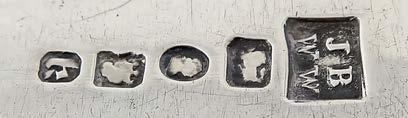
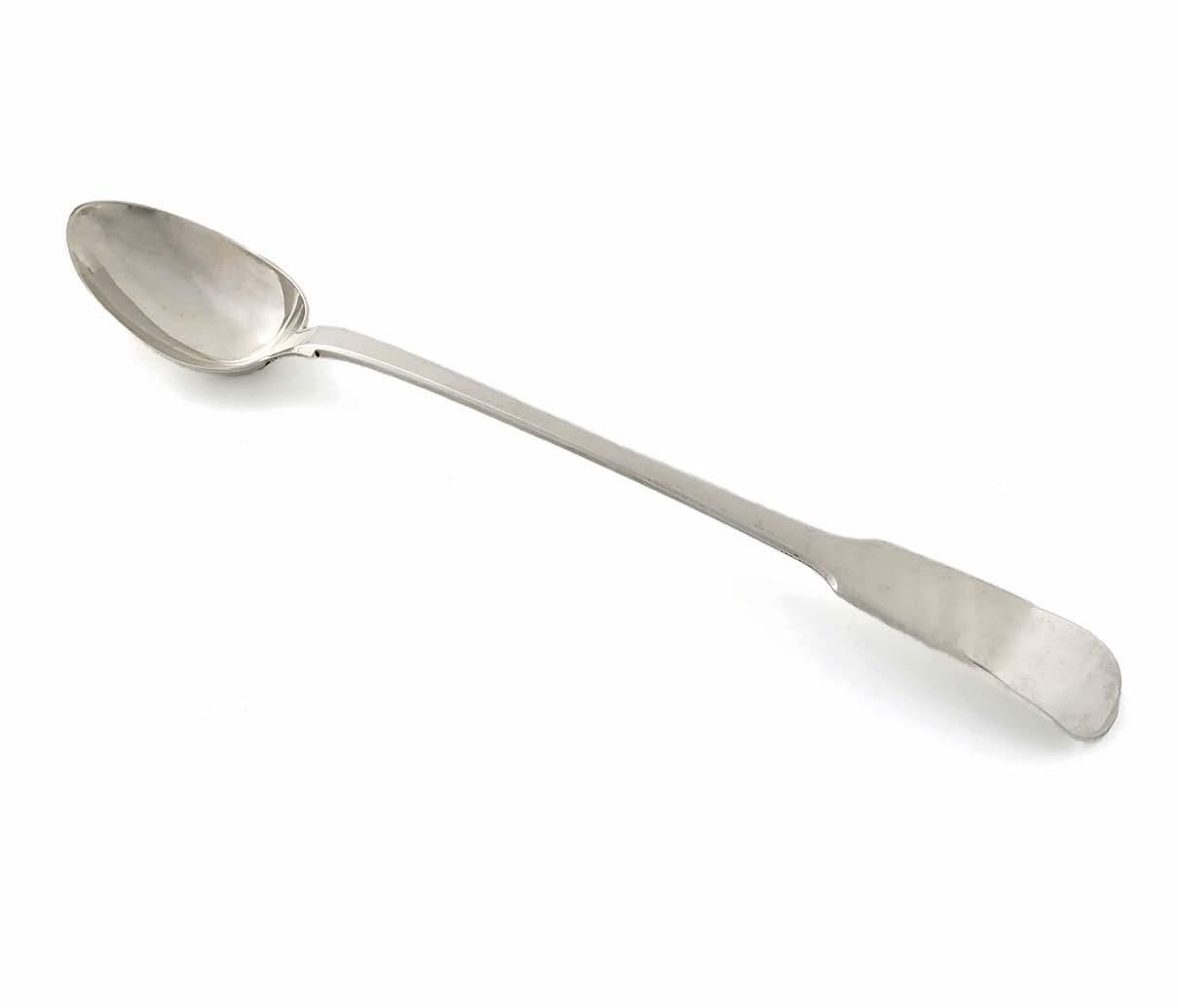
Exhibited: Merchant Adventurers’ Hall, Fossgate, York, ‘Three Centuries of York Silver 1550-1858’, 14-28 July 2000, exhibit no. 385.
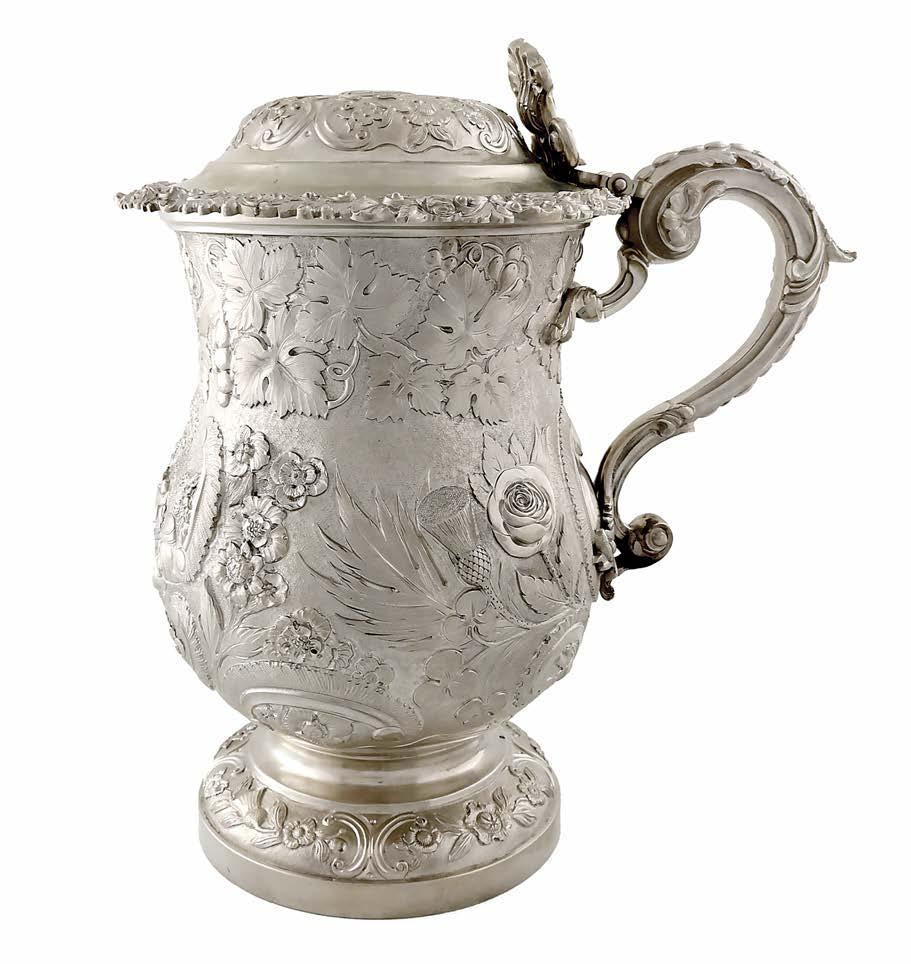
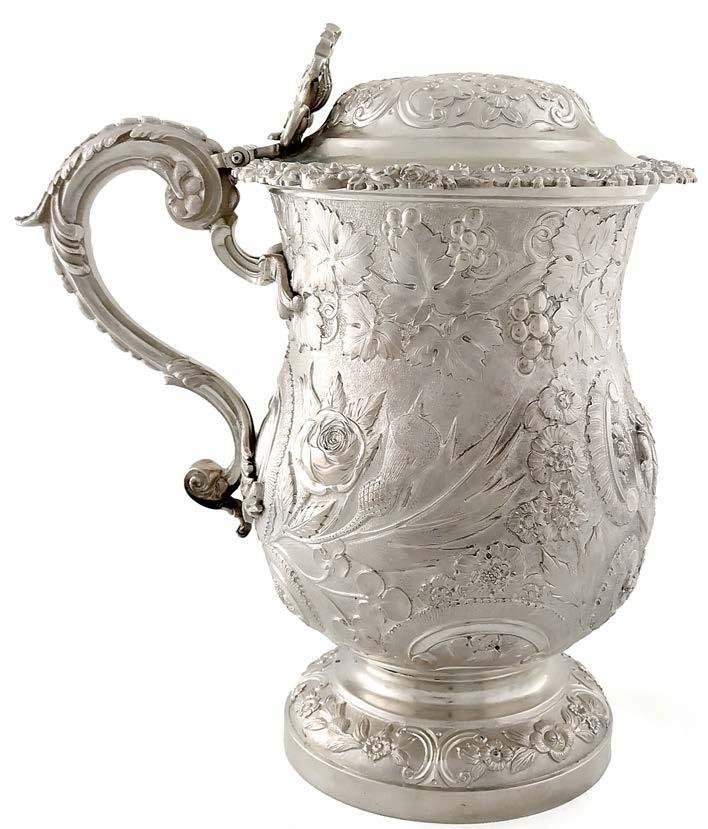
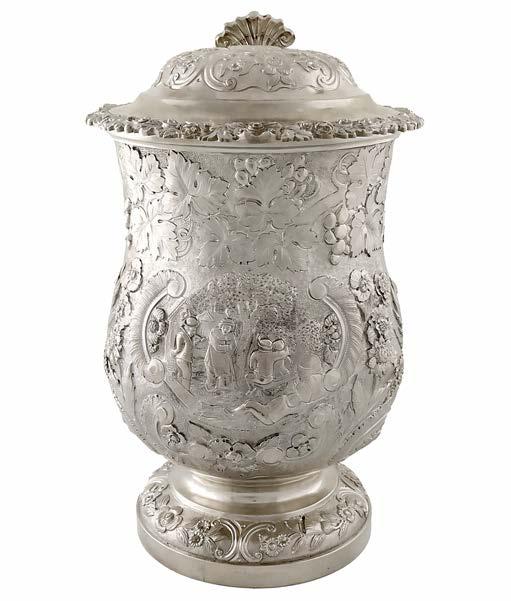
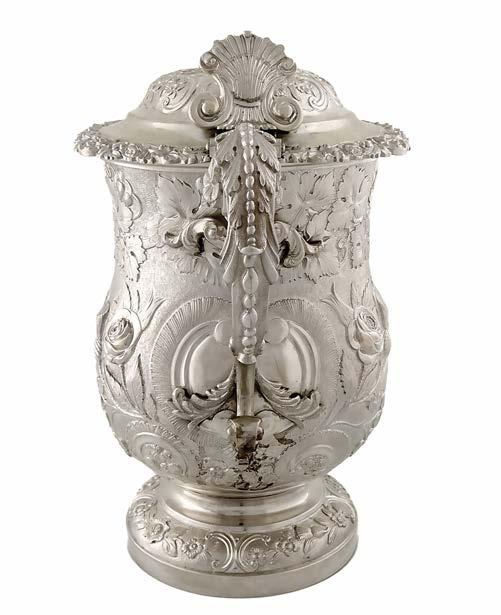
A George IV silver Coronation tankard, by James Barber & William Whitwell, York 1821, baluster form, embossed around the body with scrolling fruiting vines and flowers, together with a rose, thistle and shamrock to represent England, Scotland and Ireland, the centre embossed with a scene of revellers at a tavern, with a hinged, raised and embossed cover, shell thumbpiece, leaf-capped and beaded scroll handle, on a raised base with a border embossed with roses, thistles and shamrock, height to top of thumbpiece 26.5cm, approx. weight 63oz.
William Whitwell died in 1823.
Exhibited:
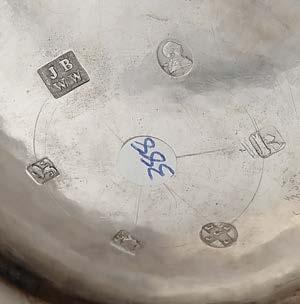
Merchant Adventurers’ Hall, Fossgate, York, ‘Three Centuries of York Silver 1550-1858’, 14-28 July 2000, exhibit no. 388.
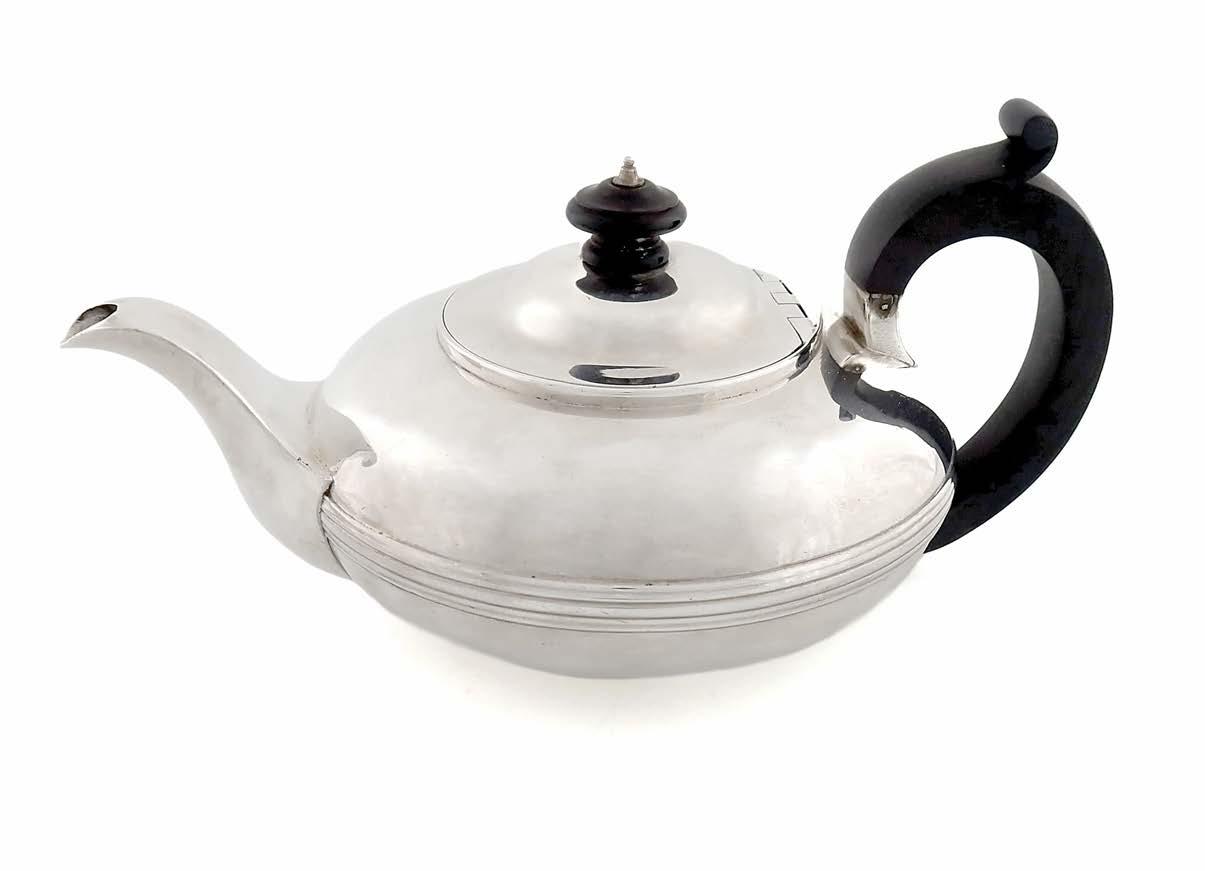
A George IV silver teapot, by James Barber & Co, York 1823, circular bellied form, with a reeded girdle, with a domed hinged cover, wooden knop finial, scroll wood handle, length handle to spout 24cm, approx. weight 19oz.
Exhibited:
Merchant Adventurers’ Hall, Fossgate, York, ‘Three Centuries of York Silver 1550-1858’, 14-28 July 2000, exhibit no. 391.
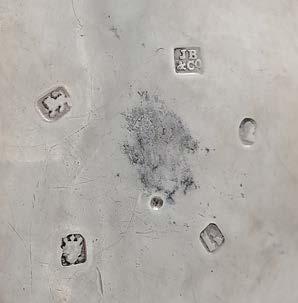
130
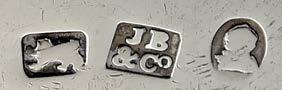
A pair of George IV archery badges, by James Barber & Co, York 1823, formed as a hunting horn, quiver of arrows and bow, with a suspension chain, length 7.4cm, approx. weight 2.1oz. (2)
Exhibited:
On display at Merchant Adventurers’ Hall, Fossgate, York, since 1999. Merchant Adventurers’ Hall, ‘Three Centuries of York Silver 1550-1858’, 14-28 July 2000, exhibit no. 393.
131
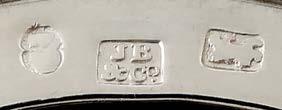
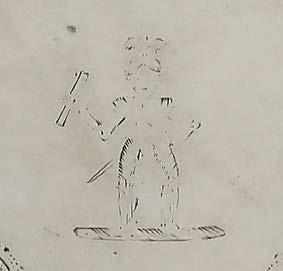
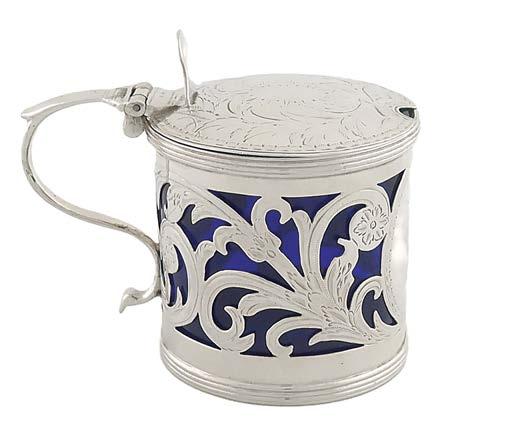
A George IV silver mustard pot, by James Barber & Co, York circa 1823, circular form, pierced and bright-cut engraved foliate decoration, central cartouche engraved with a crest, slight domed hinged cover, engraved with foliate decoration, plain thumbpiece and scroll handle, blue glass liner, height 7.2cm, approx. weight 3oz.
Exhibited:
Merchant Adventurers’ Hall, Fossgate, York, ‘Three Centuries of York Silver 1550-1858’, 14-28 July 2000, exhibit no. 395.
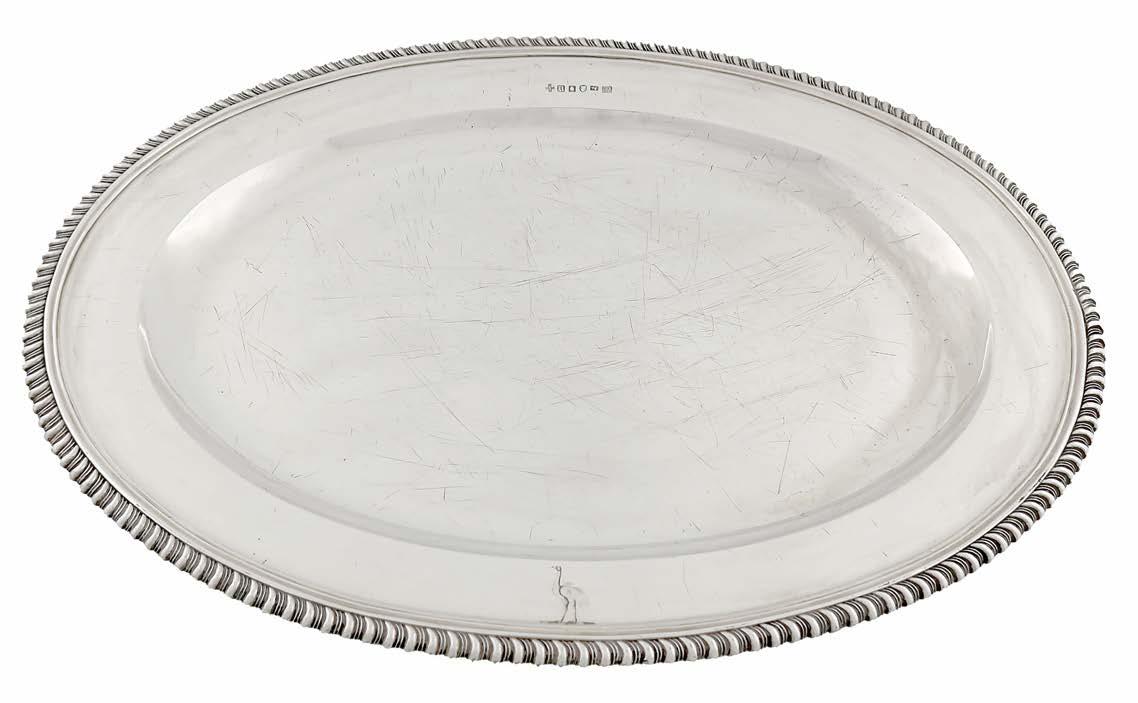

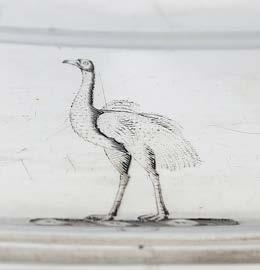
A George IV large silver meat dish, by James Barber & Co, York 1824, oval form, the border engraved with a crest, gadroon rim, length 49cm, approx. weight 77oz.
Exhibited:
Merchant Adventurers’ Hall, Fossgate, York, ‘Three Centuries of York Silver 1550-1858’, 14-28 July 2000, exhibit no. 397.
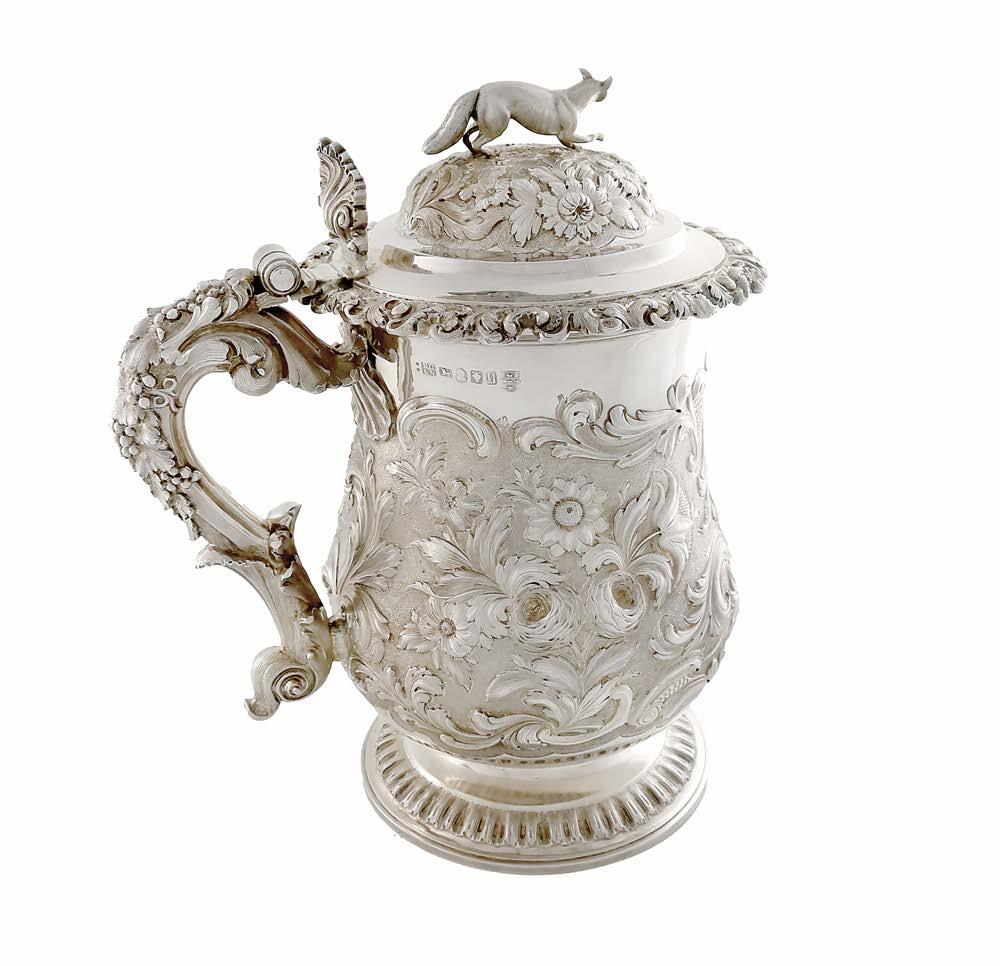

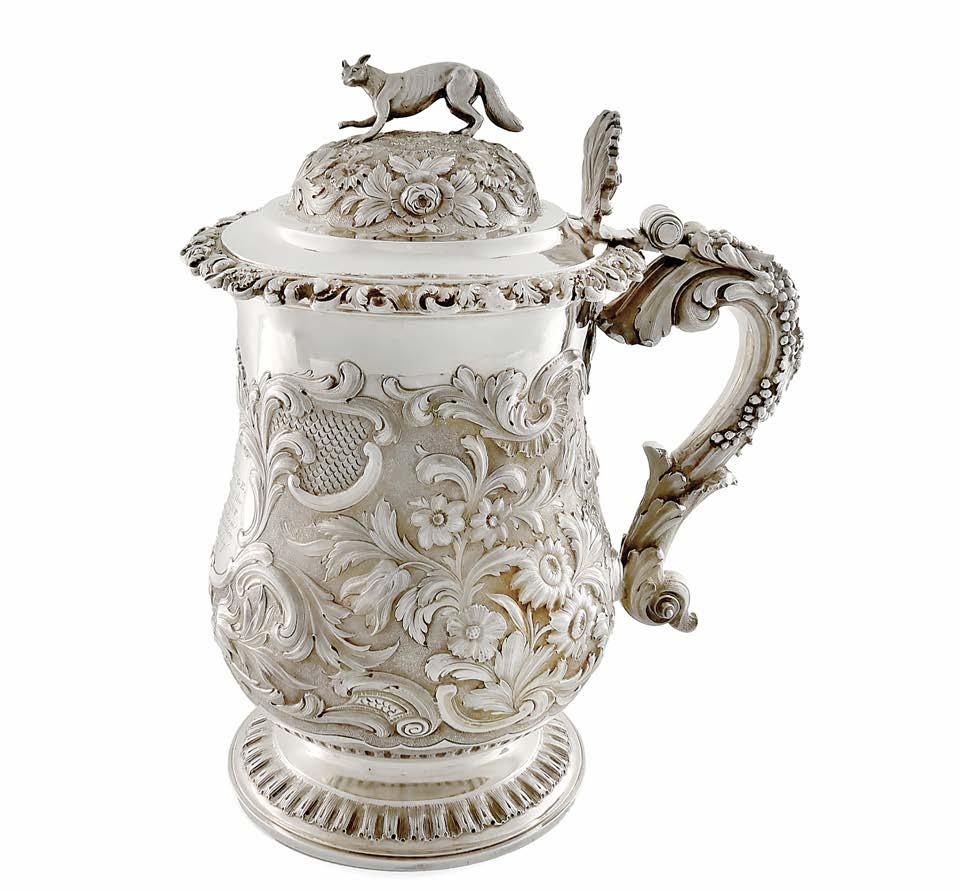
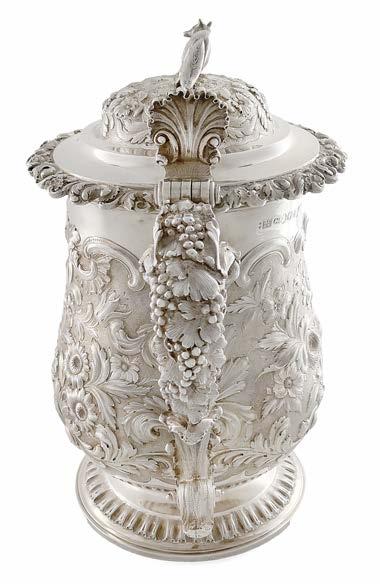
A George IV silver Hunting presentation tankard, by James Barber, George Cattle & William North, York 1827, baluster form, embossed with scrolling foliate and flower decoration on a matted ground, the centre with a scroll cartouche inscribed ‘Presented to Mr Jackson of Riston Grange by the gentlemen of the Holderness Hunt as a mark of their esteem for his universal attention and unbounded hospitality. January 1st 1827.’, hinged raised cover with chased foliate decoration and rim, crouching fox finial, shell thumbpiece, scrolling vine handle, on a raised part-fluted circular base, height 26.5cm, approx. weight 45oz.
Exhibited:
On display at Merchant Adventurers’ Hall, Fossgate, York, since 1999.
Merchant Adventurers’ Hall, ‘Three Centuries of York Silver 1550-1858’, 14-28 July 2000, exhibit no. 408.
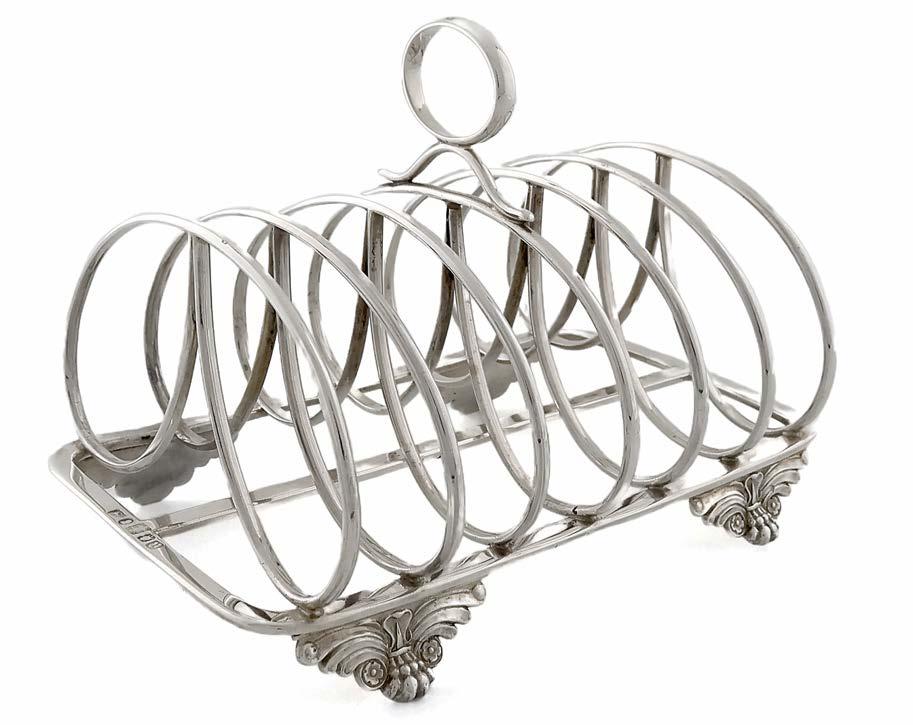
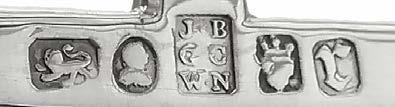
A George IV silver seven-bar toast rack, by James Barber, George Cattle & William North, York 1828, with plain scroll bars, ring handle, on a rectangular wirework base, on four foliate feet, length 16.2cm, height to top of handle 12cm, approx. weight 10.8oz.
Exhibited:
Merchant Adventurers’ Hall, Fossgate, York, ‘Three Centuries of York Silver 1550-1858’, 14-28 July 2000, exhibit no. 409.
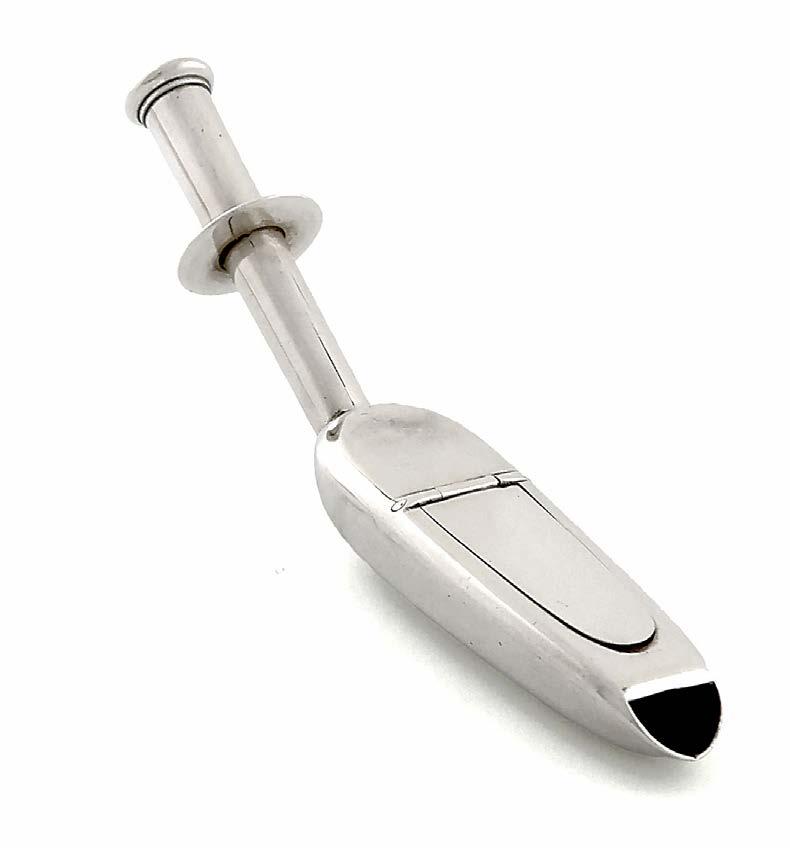
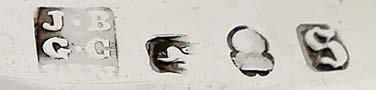
A George IV silver Gibson-type medicine spoon, by James Barber, George Cattle & William North, York 1829, plain form, hinged cover, length 13.1cm, approx. weight 1.5oz.
The Gibson medicine spoon was invented by Charles Gibson in 1827. It has a hollow handle to allow the user to control the quantity of medicine given by placing a finger over the aperture. The lid over the bowl enabled medicine to be administered without spillage to people who had difficulty swallowing or who were unable to remain still, such as children or the mentally ill.
Provenance: Michael Baggott Collection.
Woolley & Wallis, Silver & Objects of Vertu, 16 July 2025, lot 746.
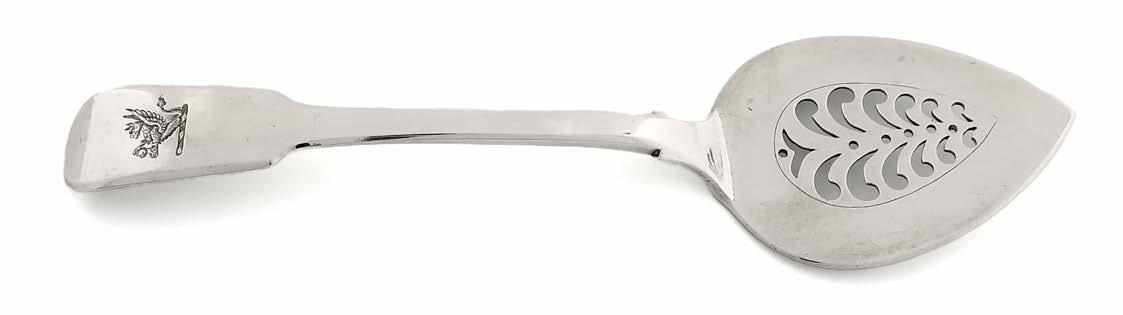
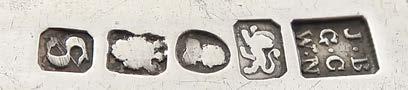
136
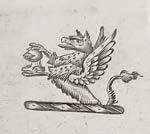
A George IV silver Fiddle pattern serving slice, by James Barber, George Cattle & William North, York 1829, the blade with palm pattern piercing, terminal engraved with a crest, length 21.8cm, approx. weight 3oz.
Exhibited:
Merchant Adventurers’ Hall, Fossgate, York, ‘Three Centuries of York Silver 1550-1858’, 14-28 July 2000, exhibit no. 413.
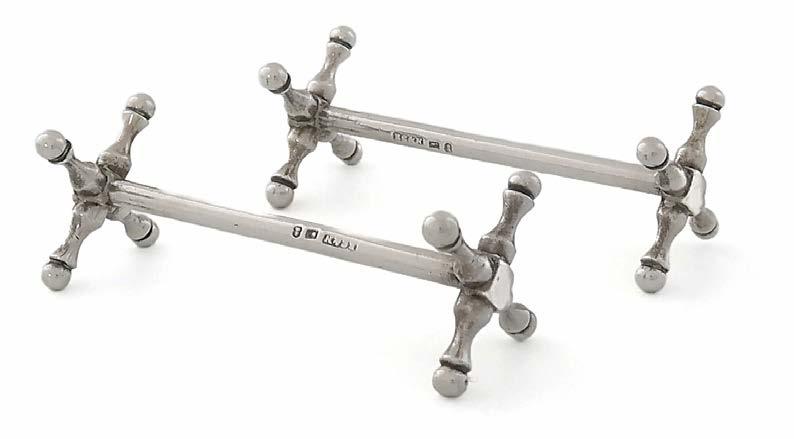
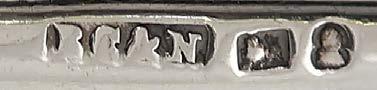
137
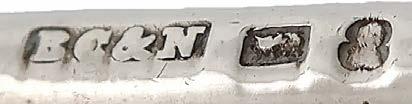
A pair of William IV silver knife rests, by James Barber, George Cattle & William North, York circa 1830, plain form, on baluster supports, length 7.6cm, approx. weight 1.8oz. (2)
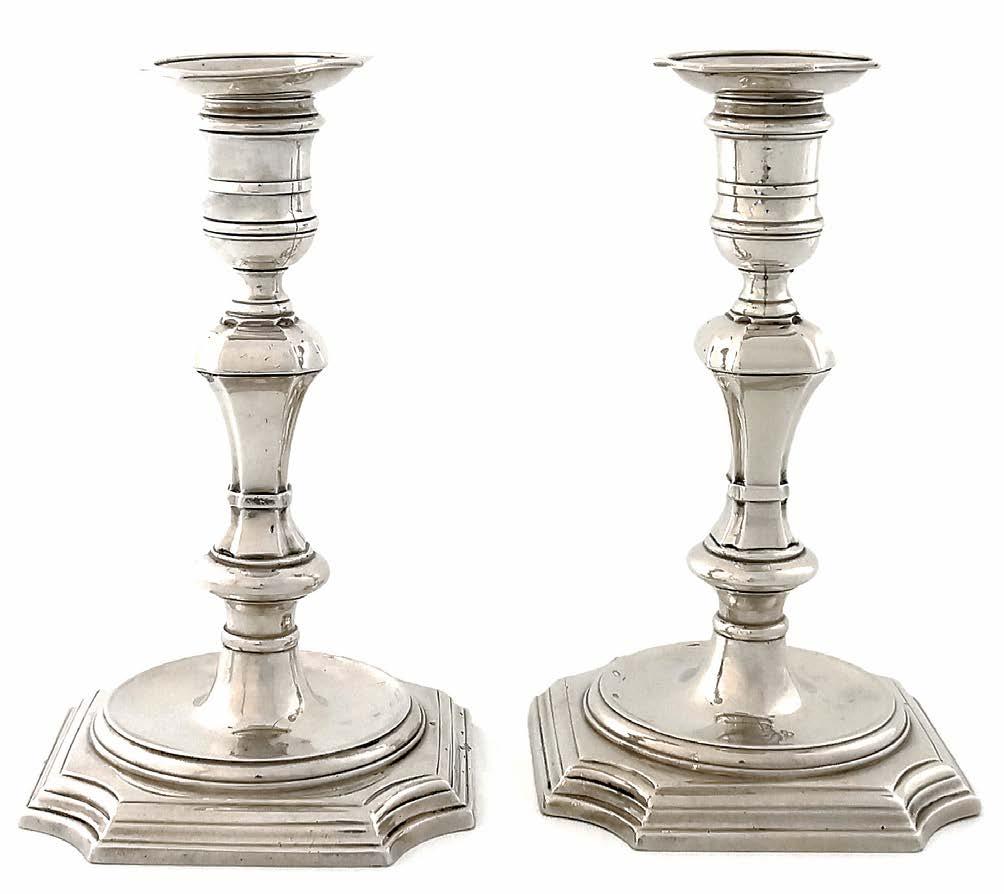
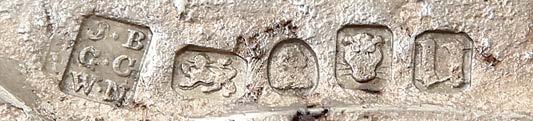
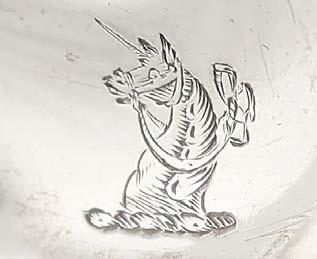
A pair of William IV silver candlesticks, by James Barber, George Cattle & William North, York 1831, in the George II manner, knopped baluster form, spool shaped capitals with removable drip pans engraved with a crest, on square bases with concave canted corners, height 17.1cm, approx. total weight 28oz. (2)
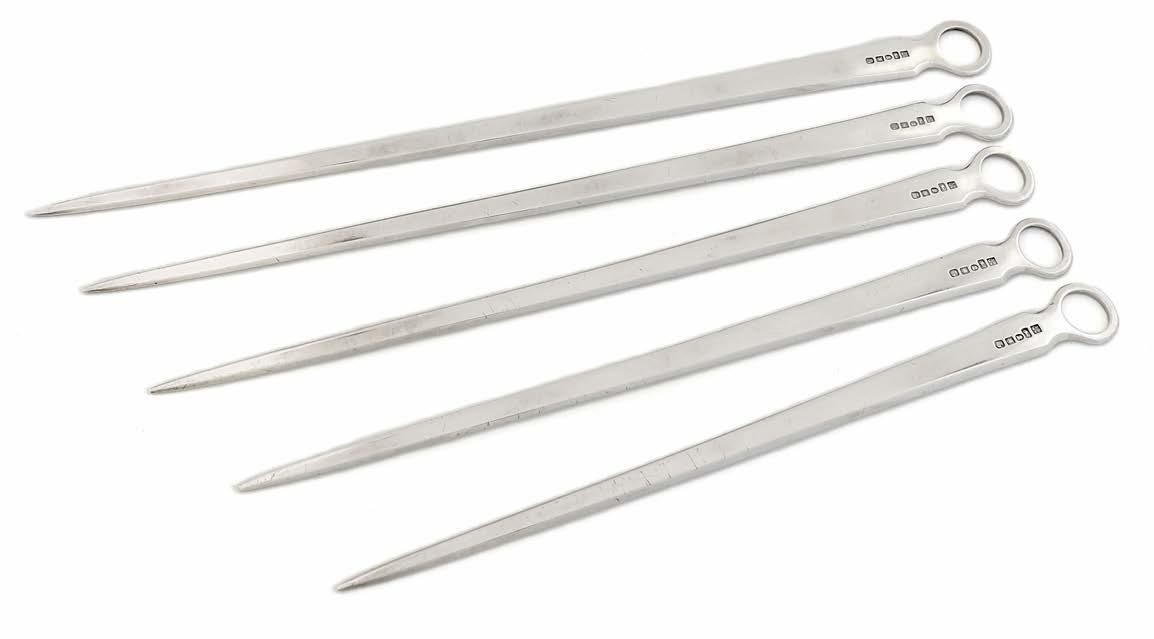
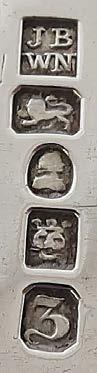
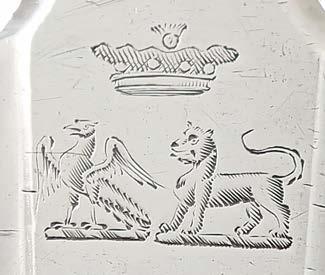
A set of five William IV silver graduating meat skewers, by James Barber & William North, York 1835, plain tapering form, engraved with an earl’s coronet and two crests, ring handle, lengths 38cm–28cm, approx. total weight 19oz. (5)
Exhibited:
Merchant Adventurers’ Hall, Fossgate, York, ‘Three Centuries of York Silver 1550-1858’, 14-28 July 2000, exhibit no. 429.
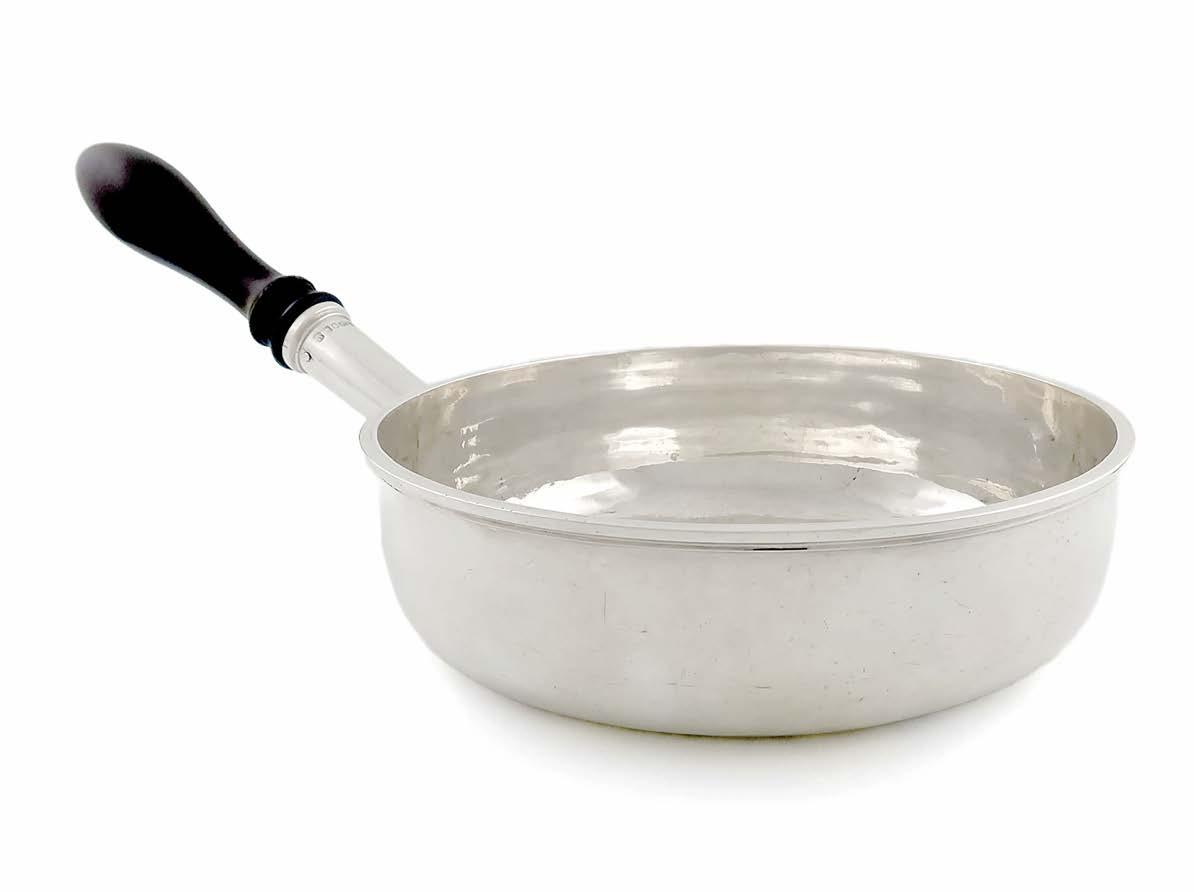
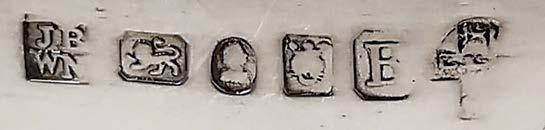
A Victorian silver chafing dish/saucepan, by James Barber & William North, York 1837, plain circular form, with a silver-mounted baluster wooden handle, length including handle 43.5cm, approx. weight 38.8oz.
Exhibited:
Merchant Adventurers’ Hall, Fossgate, York, ‘Three Centuries of York Silver 1550-1858’, 14-28 July 2000, exhibit no. 435.
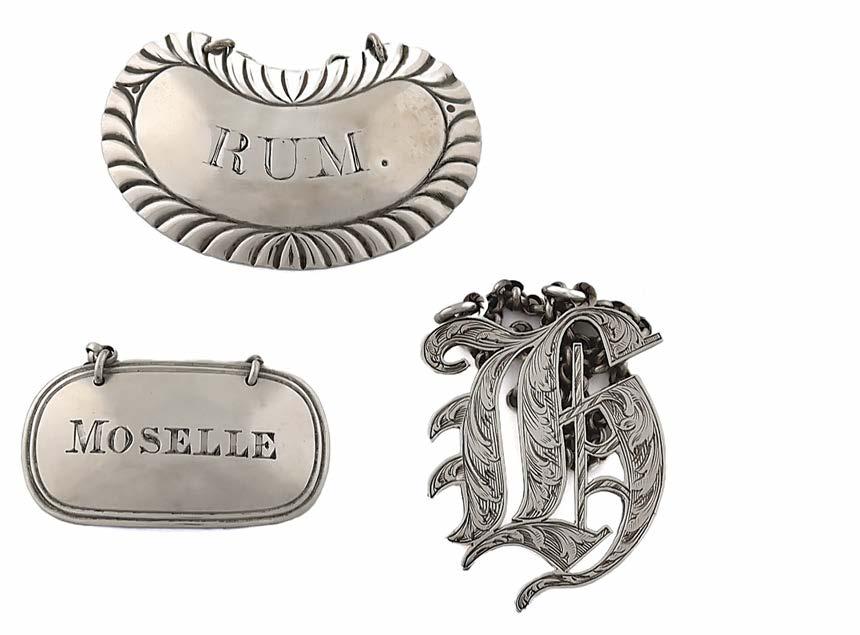
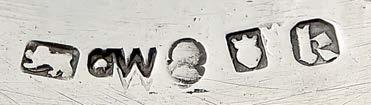
141
142
143
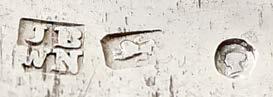
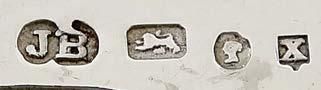
A George IV silver wine label, by Christopher Watson, York 1821, kidney form with a fluted border, incised Rum, length 5.5oz, approx. weight 0.6oz.
Provenance: Martin Gubbins Collection.
Silver made by Christopher Watson, either alone or in partnership with John Bell (no. 145), is very rarely found. Watson was an ex-employee of Cattle & Barber who set up on his own in 1814 before going subsequently into partnership with John Bell.
A Victorian silver wine label, by James Barber & William North, York 1839, incised and blackened Moselle, length 4.2cm, approx. weight 0.3oz.
A Victorian silver cut-out letter wine label, by John Bell, York 1858, H for Hock, with engraved foliate decoration, length 4.5cm, approx. weight 0.5oz. From the collection of Sir Thomas Barlow. 1858 was the year in which the York Assay Office is generally considered to have ceased operations.
Exhibited: Merchant Adventurers’ Hall, Fossgate, York, ‘Three Centuries of York Silver 1550-1858’, 14-28 July 2000, exhibit nos. 390, 439 and 465.
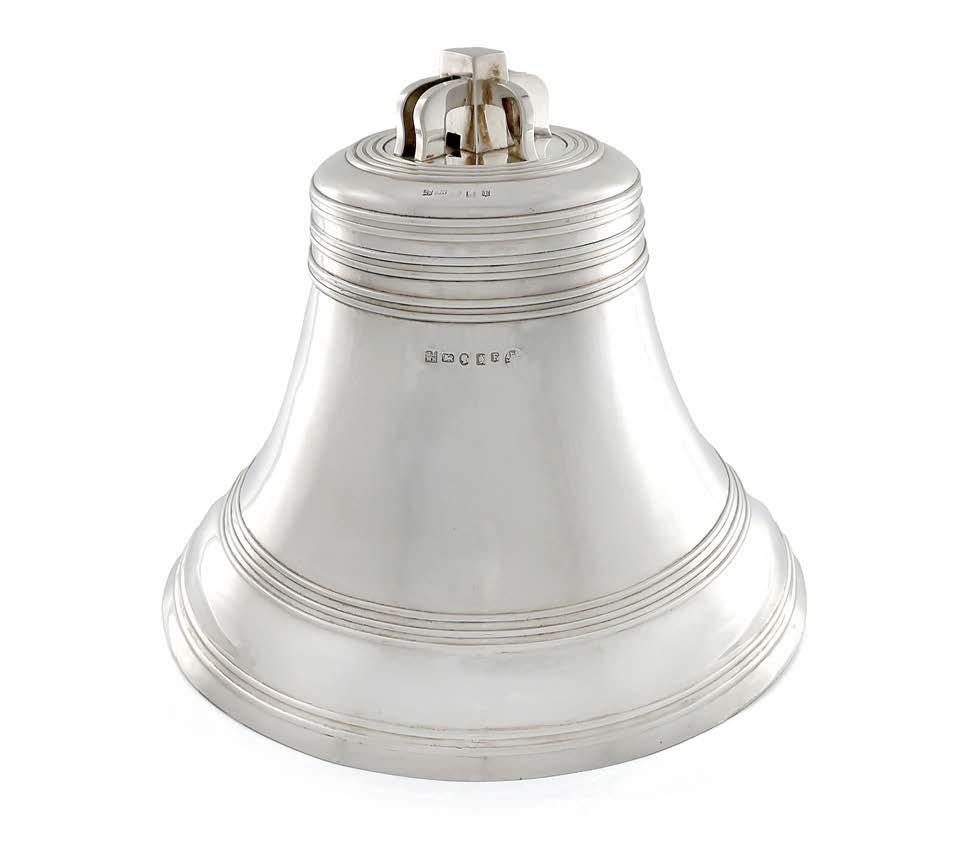

A Victorian large silver bell-shaped biscuit box, by James Barber & William North, York 1841, plain form, with reeded bands around the body, pull-off cover, the handle in the form of a crown, height 23cm, approx. weight 26oz.
This bell, having been made in 1841, is very likely to have a connection with the great fire in York Minster the year before (caused by a candle accidentally left by a clockmaker from Leeds) which destroyed the belfry in the South West Tower and the nave roof. Following the fire new bells, made by the Whitechapel Bell Foundry in London, were installed, including the 10-ton Great Peter bell, the third heaviest in Britain. The silver bell in the photograph is not so chunky, though with a 23cm diameter it is quite big for a piece of silver. The top unscrews and it was probably intended for use as a biscuit barrel.
Exhibited:
On display at Merchant Adventurers’ Hall, Fossgate, York, since 1999.
Merchant Adventurers’ Hall, ‘Three Centuries of York Silver 1550-1858’, 14-28 July 2000, exhibit no. 444.
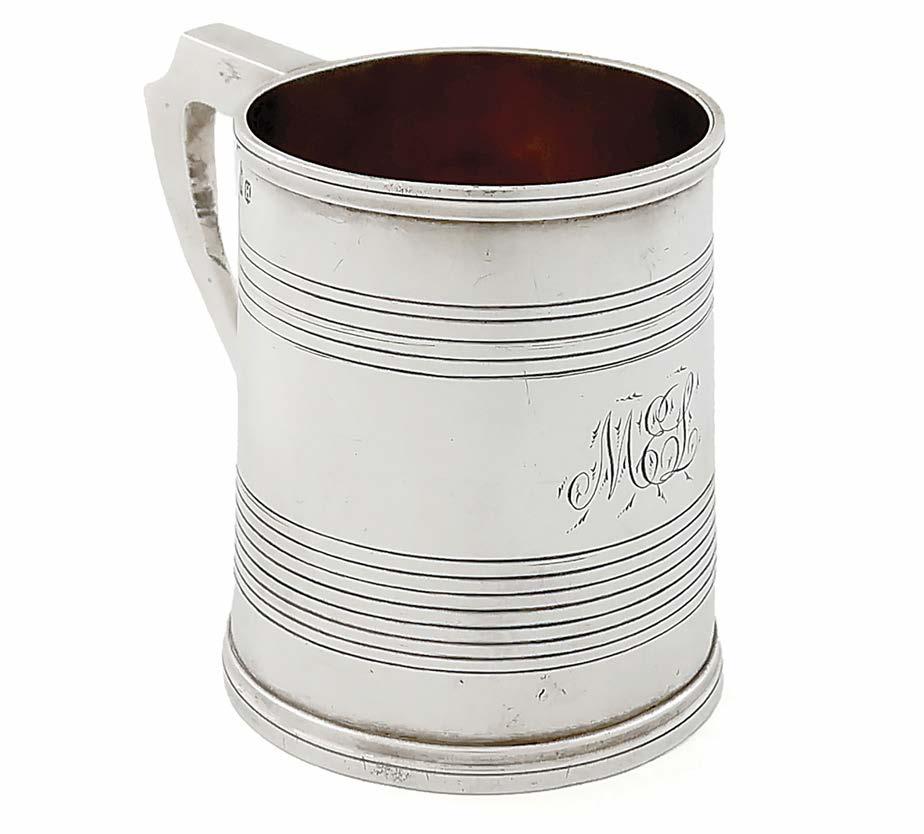
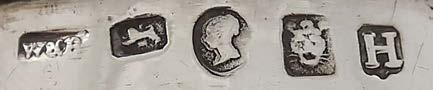
A George IV silver Christening mug, by Christopher Watson & John Bell, York 1843, tapering cylindrical form, with two engraved reeded bands, engraved with initials, gilt interior, scroll handle, height 7.9cm, approx. weight 4.2oz.
Provenance: Martin Gubbins Collection.
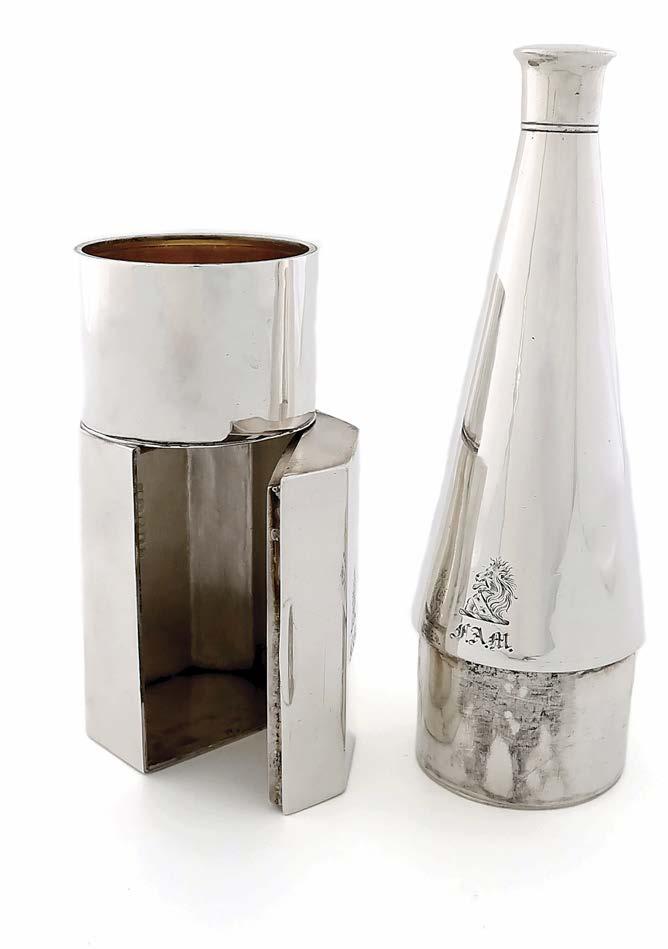
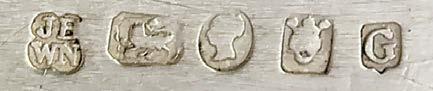
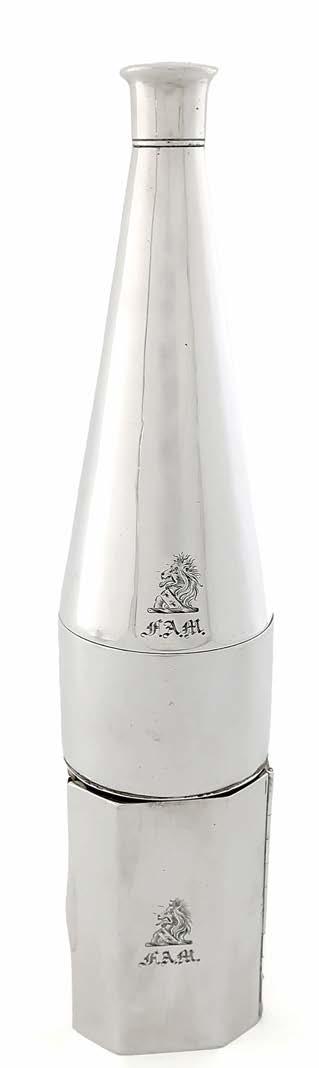
A Victorian silver travelling flask, cup and biscuit box, by James Barber & William North, York 1843, plain tapering form, hexagonal biscuit box base with hinged cover, mounted with a circular cup with gilt interior, pull-off fitted cover formed as a conical flask, engraved with a crest and initials, screw-off cap, height stacked 25cm, approx. total weight 12.3oz.
Exhibited:
Merchant Adventurers’ Hall, Fossgate, York, ‘Three Centuries of York Silver 1550-1858’, 14-28 July 2000, exhibit no. 445.
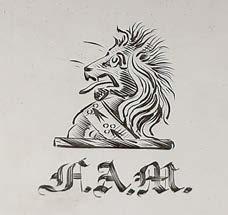
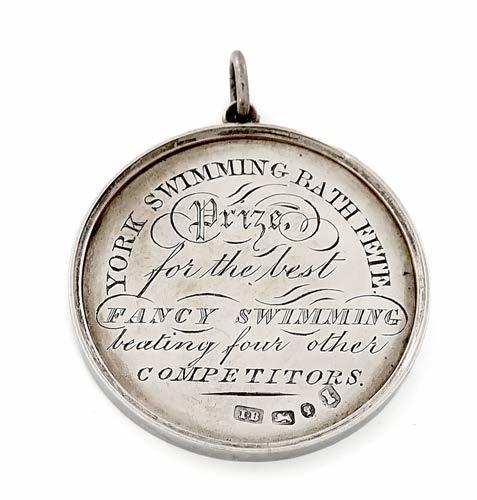
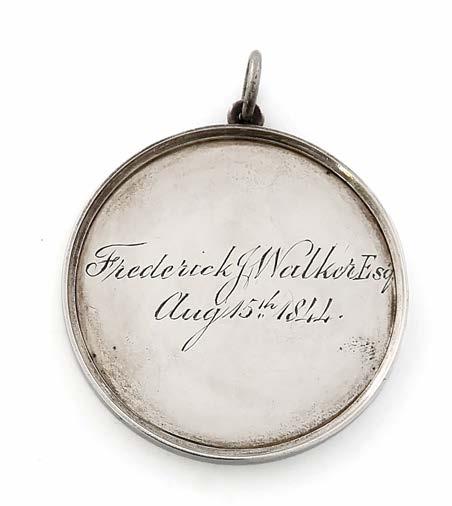
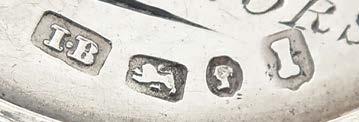
A George IV silver York swimming medal, by John Bell, York 1844, circular form, the obverse engraved ‘York Swimming Bath Fete. Prize for the best Fancy Swimming beating four other competitors’, the reverse engraved to the recipient ‘Frederick J Walker Esq Aug 15th 1844’, diameter 4.5cm, approx. weight 0.6oz.
Provenance: Martin Gubbins Collection.
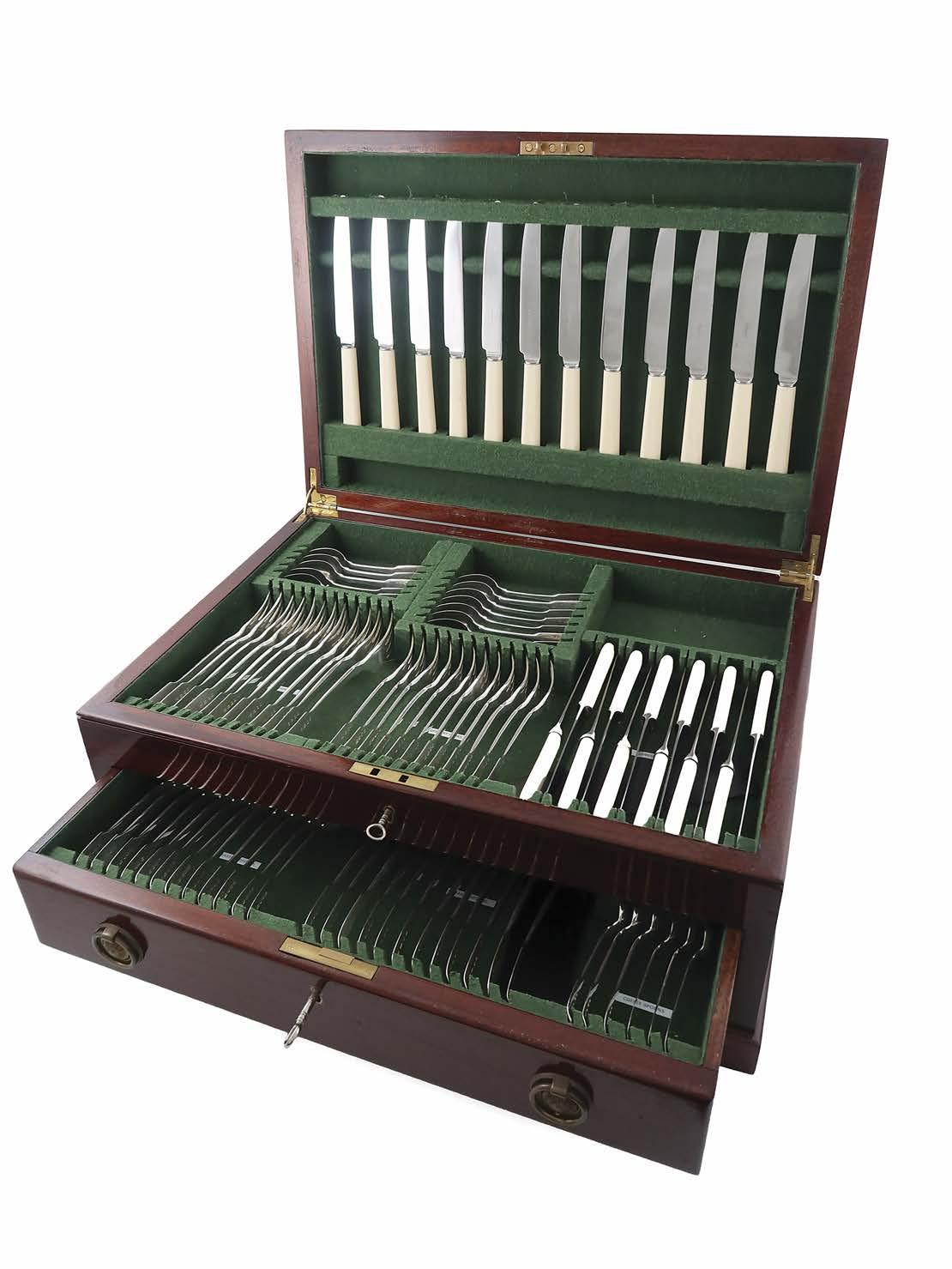
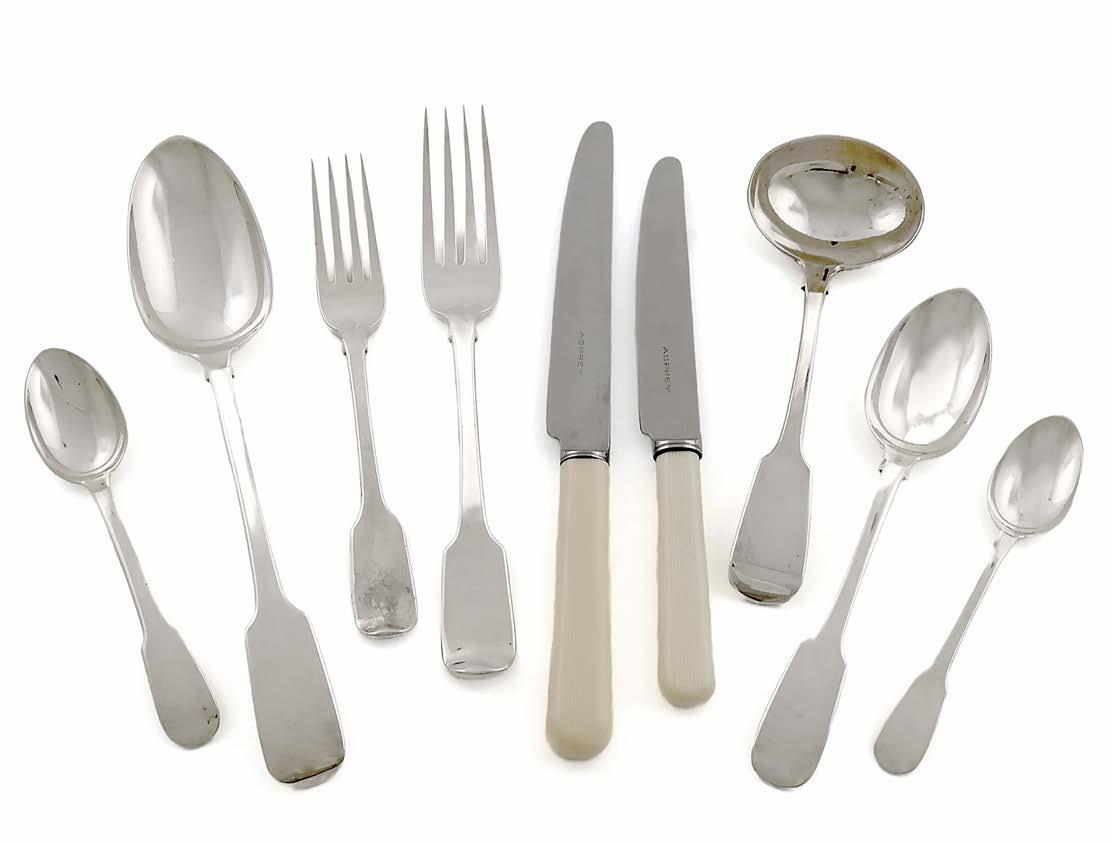
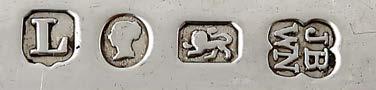
A Victorian matched silver Fiddle pattern canteen for twelve, by James Barber & William North, York various dates 1838-1847, comprising:
12 dinner knives with composite handles, the stainless-steel blades by Asprey,
12 table forks
12 dessert forks
12 teaspoons
12 cheese knives with composite handles, the stainless-steel blades by Asprey,
12 tablespoons
12 dessert spoons
12 coffee spoons
2 sauce ladles
in a fitted wooden case, with a key, approx. total weighable 115oz.
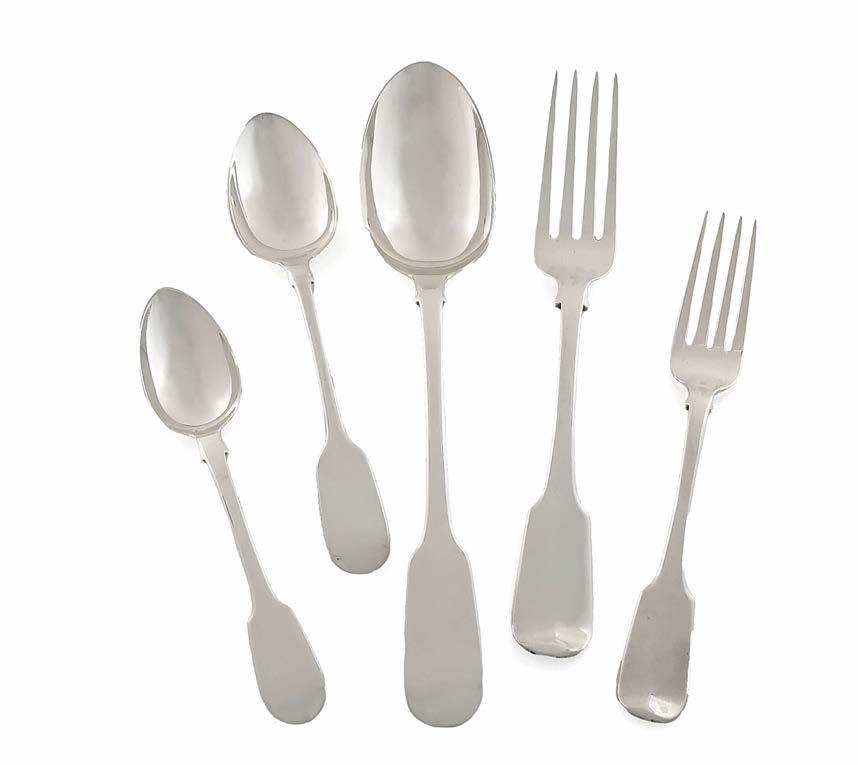
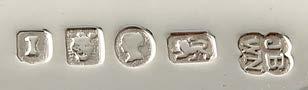
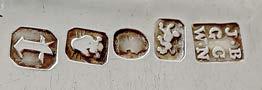
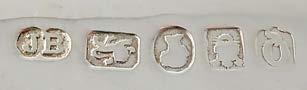
A Victorian matched silver part-canteen for twelve, by James Barber, George Cattle & William North, James Barber & William North, and James Barber, York various dates 1828-1852, approx. weight 95oz.
comprising:
12 tablespoons
12 table forks
12 dessert spoons
12 dessert forks
12 teaspoons approx. total weight 95oz.
Exhibited:
On display at Merchant Adventurers’ Hall, Fossgate, York since 1999.
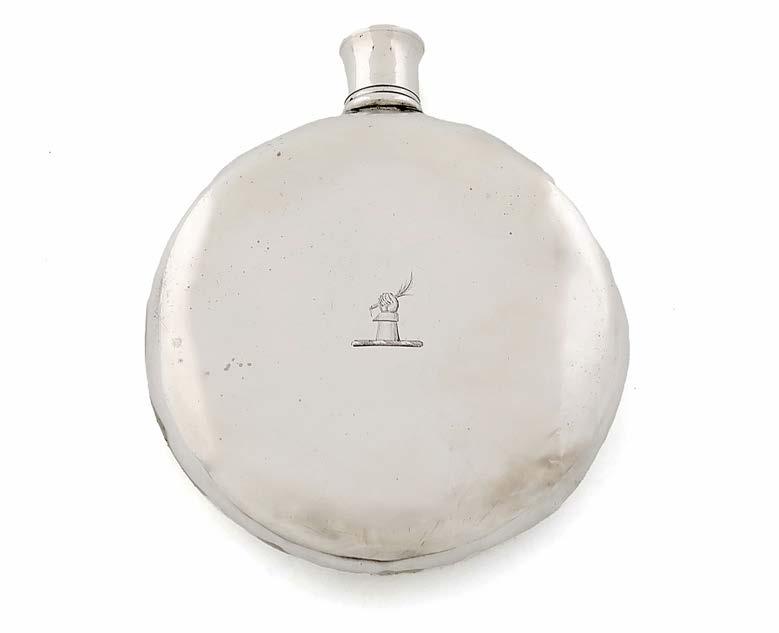
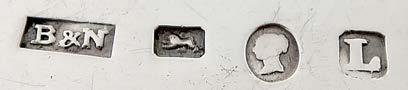
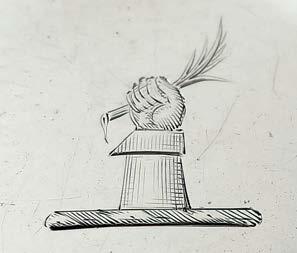
A Victorian silver hip flask, by James Barber & William North, York 1846, plain circular form, the centre engraved with a crest, screw-off cap, diameter 9cm, approx. weight 4.6oz.
Exhibited:
Merchant Adventurers’ Hall, Fossgate, York, ‘Three Centuries of York Silver 1550-1858’, 14-28 July 2000, exhibit no. 450.
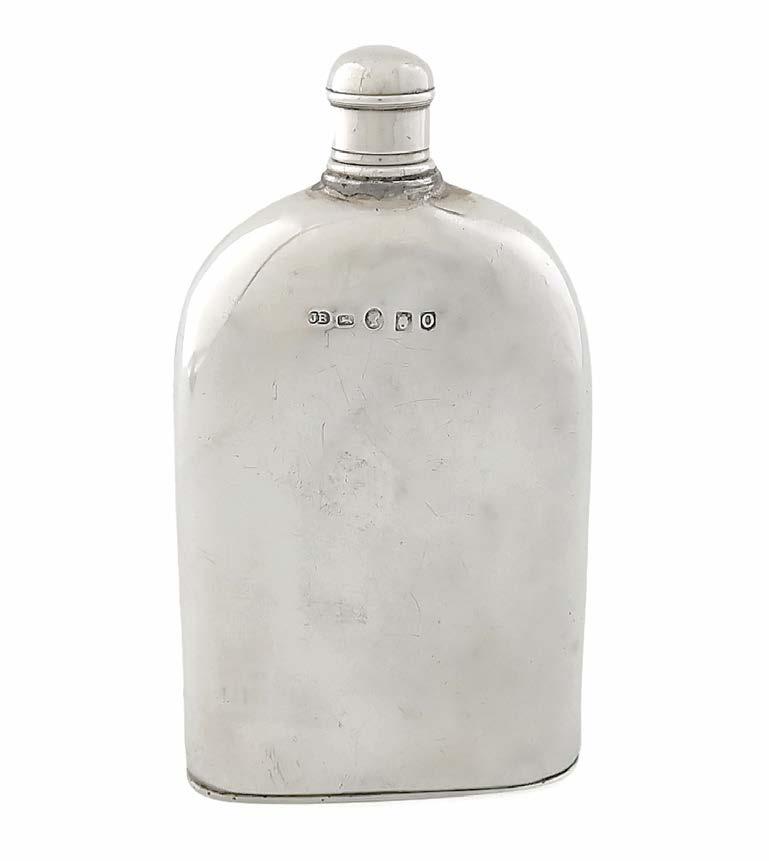
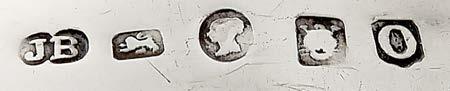
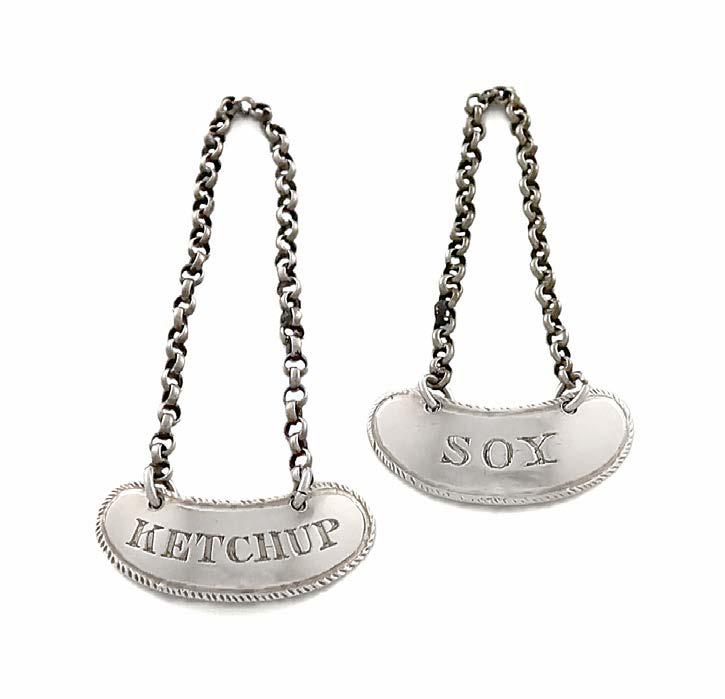
152
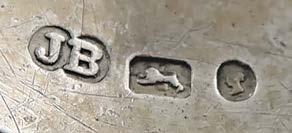
Two Victorian silver sauce labels, by James Barber, York, circa 1850, kidney-shaped, incised Ketchup and Soy, hatched border, with a suspension chain, approx. total weight 0.9oz. (2)
Exhibited:
On display at Merchant Adventurers’ Hall, Fossgate, York, since 1999. Merchant Adventurers’ Hall, ‘Three Centuries of York Silver 1550-1858’, 14-28 July 2000, exhibit no. 452.
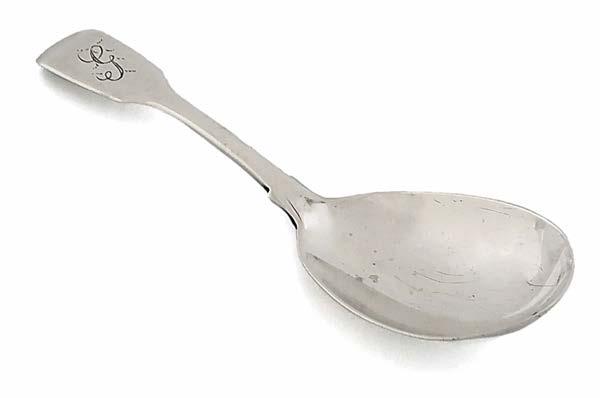
153
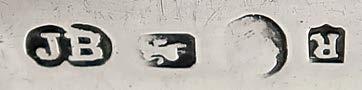
Victorian silver Fiddle pattern caddy spoon, by James Barber, York 1852, the terminal engraved with an initial, length 10.8cm, approx. weight 0.5oz.
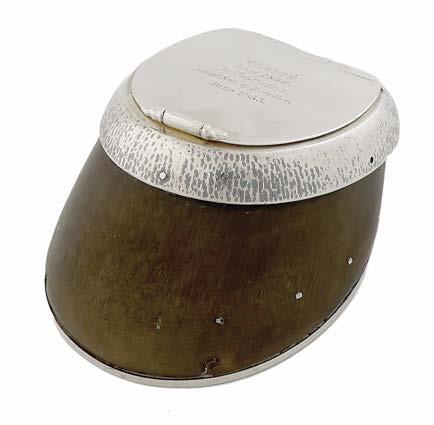
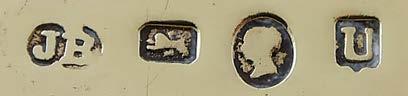
154
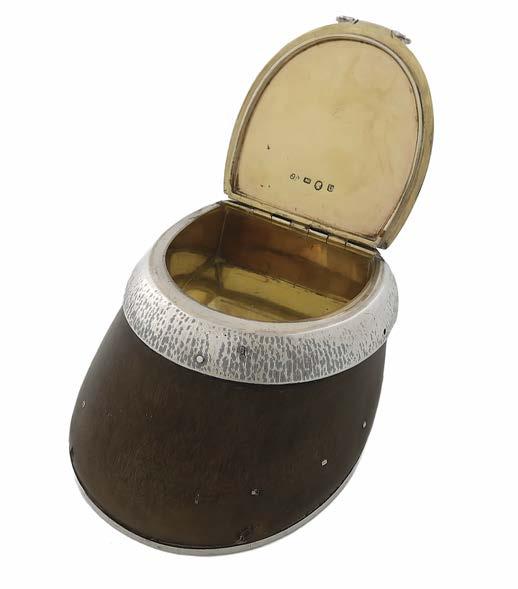
A Victorian silver-mounted horse hoof snuff box, by James Barber, York 1855, the hinged cover engraved ‘Verité born 1836; by Voltaire, out of Sal, by Reveller, Died 1855’, length from heel to toe 12.5cm, height 6.5cm.
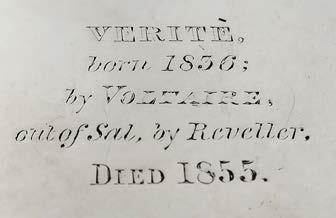
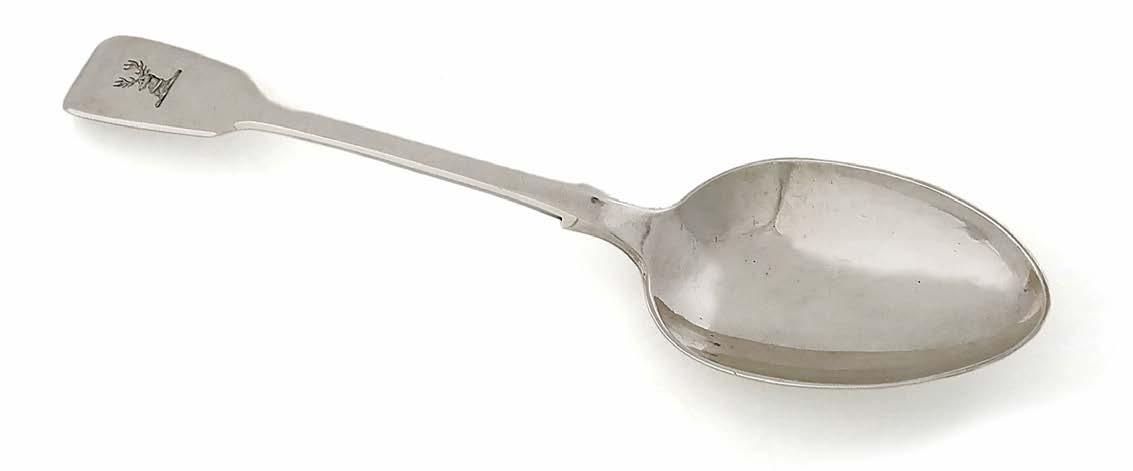
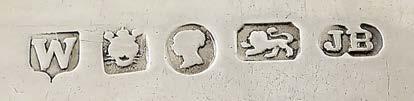
155 A Victorian silver Fiddle pattern tablespoon, by James Barber, York 1857, the terminal engraved with a crest, length 22.5cm, approx. weight. 2.5oz.
Exhibited: Merchant Adventurers’ Hall, Fossgate, York, ‘Three Centuries of York Silver 1550-1858’, 14-28 July 2000, exhibit no. 462.
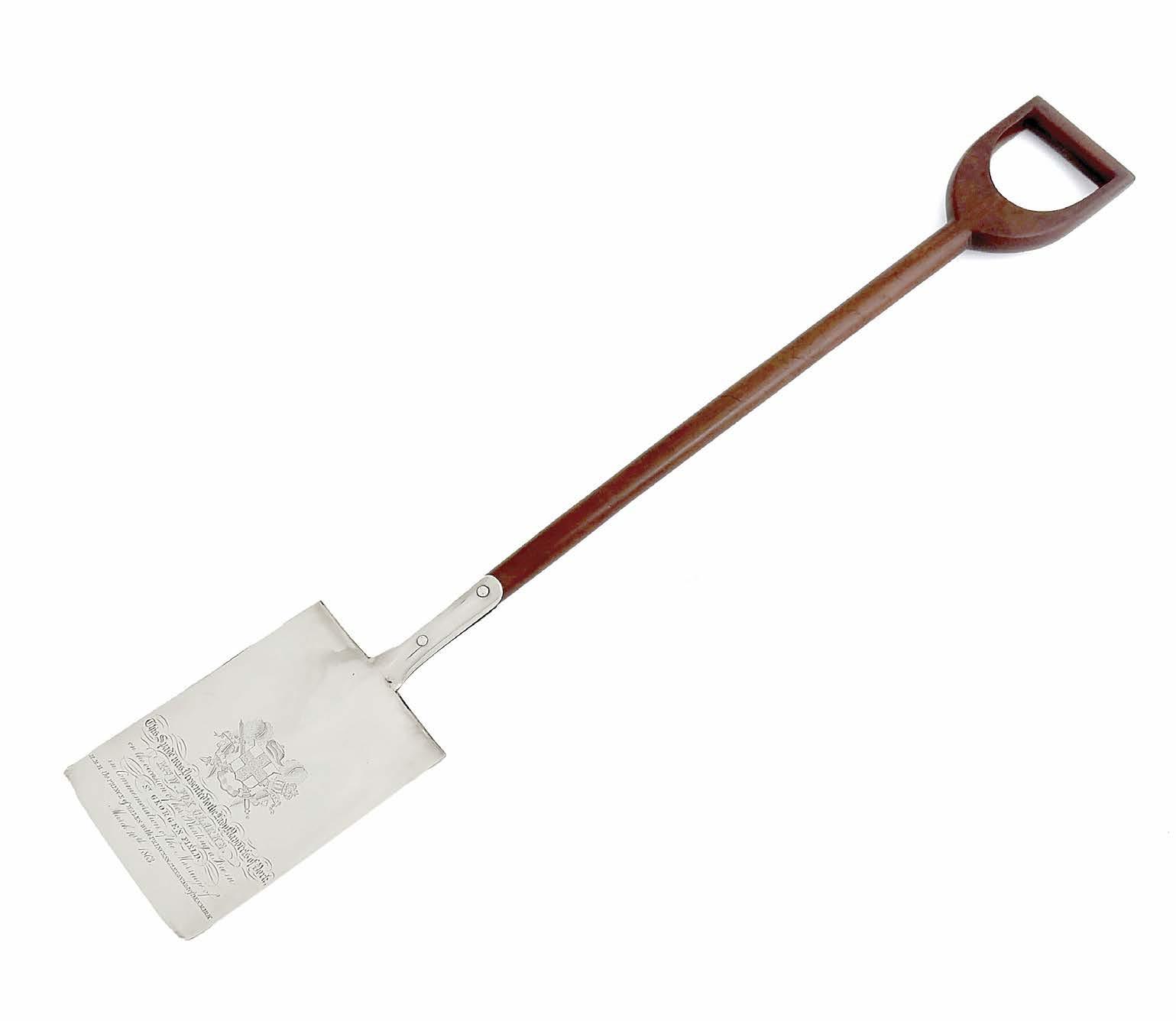
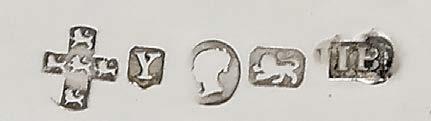
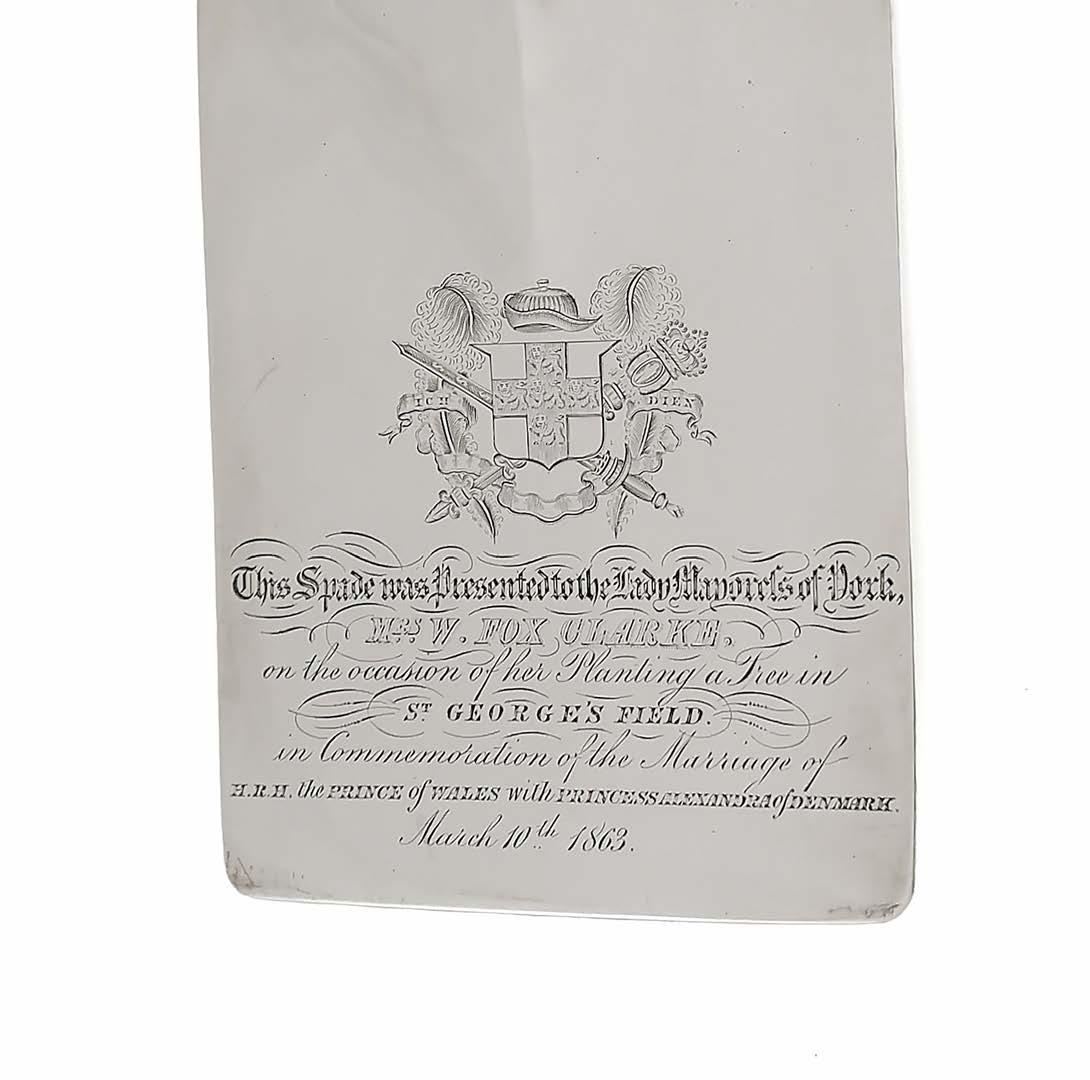
A rare Victorian silver ceremonial spade, maker’s mark of John Bell, overstriking another, York circa 1859-63, conventional form, rectangular blade engraved with the coat-of-arms of the City of York and inscribed ‘This Spade was presented to the Lady Mayoress of York, Mrs W. Fox Clarke, on the occasion of her planting a tree in St. George’s Field in commemoration of the marriage of H.R.H the Prince of Wales with Princess Alexandra of Denmark, March 10th 1863’, with a wooden handle, length 79.4cm.
The York Assay Office ceased operations in 1858, with its final date letter being X. However, the spade bears the date letter Y. Michael Baggott noted that this is a previously unrecorded letter, making the spade one of the rarest pieces of York silver.
Provenance:
Michael Baggott Collection.
Woolley & Wallis, Silver & Objects of Vertu, 16 July 2025, lot 713.
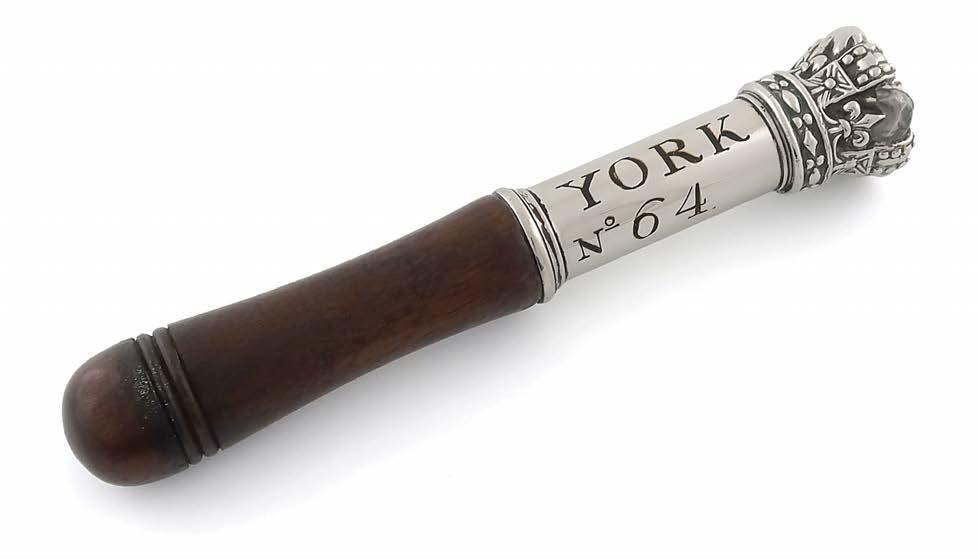
157
A 19th century Old Sheffield plate tipstaff, cylindrical body, engraved and blackened ‘YORK No. 64’, with a crown finial and turned wooden handle, length 17.5cm.
Provenance: Michael Baggott Collection.
Woolley & Wallis, Silver & Objects of Vertu, 16 July 2025, lot 744.
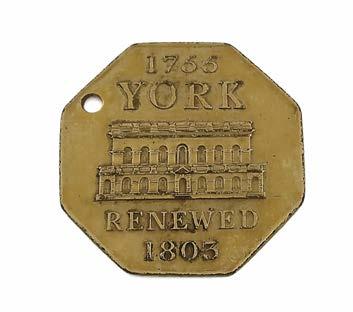
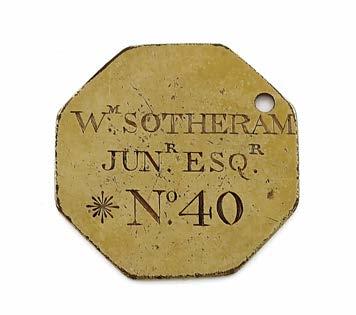
158 A gilt-bronze Ticket of Admission for York Races 1755, Renewed 1805, octagonal form, the obverse showing the Knavesmire stand, the reverse inscribed ‘Wm. Sotheram Junr. Esqr. No. 40’, pierced with a suspension hole, diameter 4.2cm.
The grandstand on the Knavesmire at York was designed by John Carr of York and built under the patronage of the 2nd Marquis of Rockingham in 1754-57 (he twice later became Prime Minister). Carr’s grandstand, long since demolished, was in its heyday much frequented by Yorkshire society and is believed to have been the first grandstand built for a racecourse.
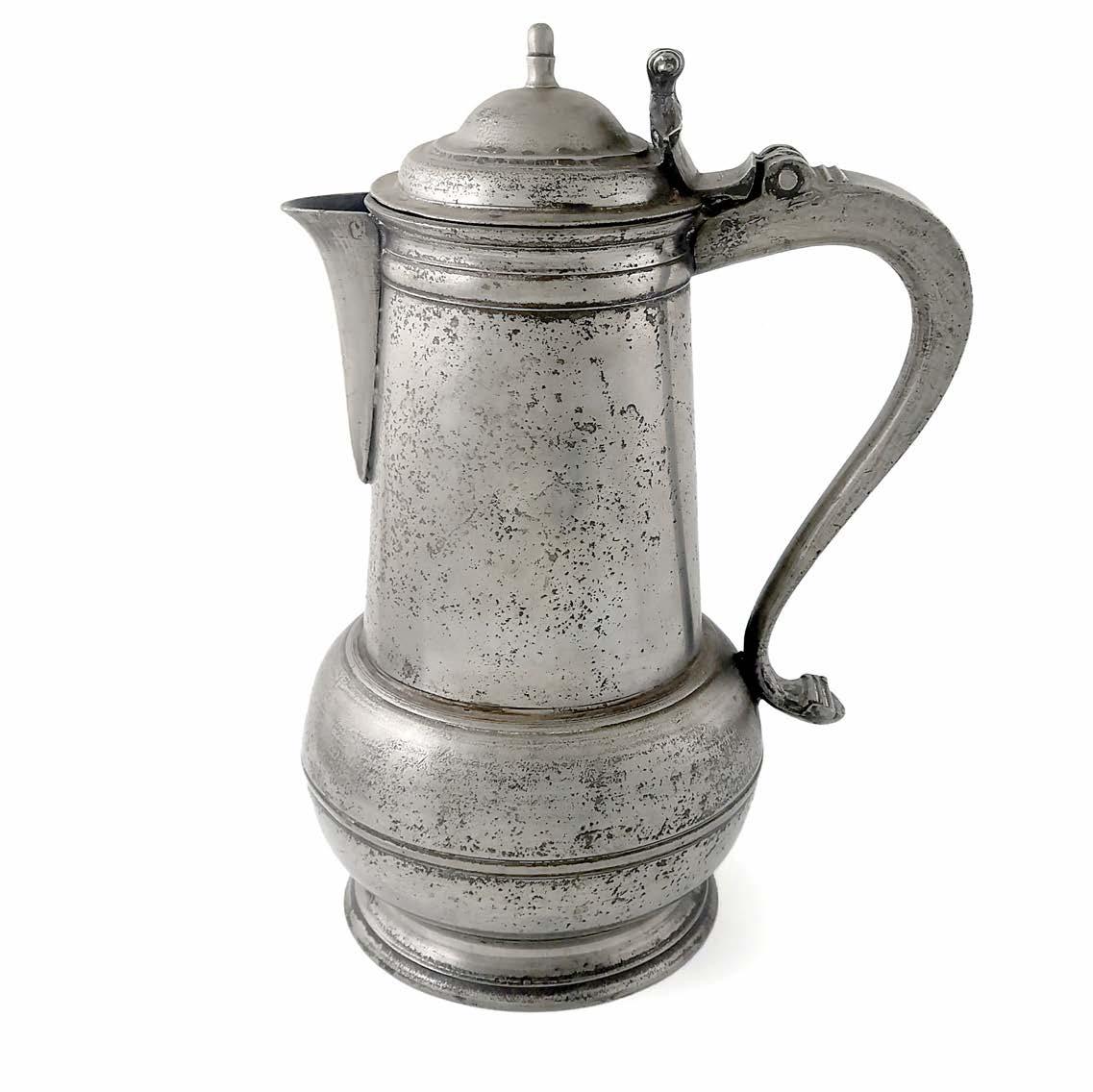
A George II pewter flagon, touchmark inside the base of John Harrison, York circa 1750, plain acorn-shaped body, hinged cover with a stylised acorn finial, scroll thumbpiece and handle, on a spreading circular base, Old English Wine Standard gallon, height 33.5cm.
Provenance: Robert M. Holland Collection [1872-1944].
Sotheby’s Billingshurst, 22 June 1993, lot 606. Bonhams London, 28 March 2018, lot 97.
For his part in putting together my collection of York silver I would like to thank above all others Nicholas Shaw from whom I acquired more pieces than from any other dealer. I admired and am grateful for his ability to find so many interesting and unusual pieces and pieces by makers whose work seldom appears on the market. It was Nicholas who assembled the amazing Millennium exhibition of York silver in July 2000 at the Merchant Adventurers’ Hall in York. That exhibition was on a scale not previously seen for an exhibition dedicated to York silver and displayed over 460 pieces loaned by York Minster, numerous museums and public bodies, together with dealers and individuals whom Nicholas knew to own York silver and whom he persuaded to take part.
Other dealers I would like to acknowledge who, having become aware of my interest in York silver, kindly offered York pieces to me over the years were Mary Cooke, the Bourdon-Smith family and Christopher Warner.
For the production of this catalogue I owe everything to two people: Lucy Chalmers who took all the photographs, improved the descriptions and checked the information provided by the hallmarks against the latest editions of recognised reference works, correcting such information where necessary; and secondly, Jacki Freeman of Jamm Design Ltd for the design and printing of the catalogue.
I would also like to thank successive Governors, Clerks and other officials of the Company of Merchant Adventurers of the City of York to whom approximately 40 items of my York silver plus 60 pieces of flatware have been on loan since 1999 and in whose Hall, except for the flatware, the items are on display. In particular I would like to mention Lauren Marshall, the current Museum Director who has herself produced a catalogue of the pieces on loan to the Merchant Adventurers, Jim Richardson, the current Clerk and Christopher Hall, the Governor at the time when the loan was originally discussed, whose enthusiasm enabled the loan to come about.
In his foreword to the booklet on the Lee Collection of York silver in York Minster the then Dean, Alan Richardson, wrote that ‘as we look at these tokens of York’s domestic history, we are made aware that the craftsmen who made the York silverware and the men, women and children who enjoyed its use day by day were once just as real and just as alive as we are today. These products of the craftsman’s art speak to us of the domestic virtues and of family loyalty and civic pride, without which no city can reflect on earth the radiance of the citizenship which is above.’ I say Amen to that!
Richard Sykes January 2026