Redefining Progress: Seeing Success Beyond the Numbers in
Holistic Planning by James Burleson

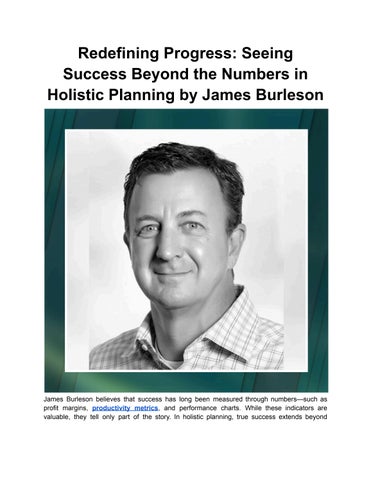
James Burleson believes that success has long been measured through numbers such as profit margins, productivity metrics, and performance charts While these indicators are valuable, they tell only part of the story In holistic planning, true success extends beyond
numerical results and reflects the overall health and resilience of a system This broader perspective helps organizations grow with intention, balance, and long-term stability.
Holistic planning acknowledges that every decision has a ripple effect on people, processes, and the environment. As a result, success cannot be accurately captured solely through data. It must also consider intangible factors such as culture, collaboration, sustainability, and stakeholder well-being. These qualitative elements shape the foundation of an organization’s ability to adapt and thrive often far more than numbers on a spreadsheet
One key marker of success in holistic planning is the strength of relationships. An organization that values communication, trust, and teamwork creates an environment where ideas flow freely and employees feel respected This emotional climate is essential for innovation and resilience, even though it cannot be quantified in simple metrics. A team that is aligned, engaged, and motivated naturally produces better outcomes over time
Another vital measure lies in sustainability and long-term impact Holistic planning encourages decisions that consider environmental stewardship, resource preservation, and social responsibility. Organizations that embed these values into their planning are not just successful in the moment they are building a future that can endure change This forward-looking approach often reveals success in reduced waste, improved community relations, and enhanced brand reputation, all of which contribute to lasting growth.
Adaptability is also a critical indicator of holistic success When an organization can quickly adjust to market shifts, technological advancements, or external challenges, it demonstrates strength that no single metric can capture Flexibility, agility, and readiness for change reflect a deeply rooted sense of purpose and alignment.
Ultimately, measuring success in holistic planning requires looking beyond what can be counted and focusing on what truly counts. It means valuing human experience, environmental impact, and strategic foresight as much as financial returns When organizations embrace this broader definition, they unlock a richer, more meaningful path to progress one that supports both current achievements and future possibilities.