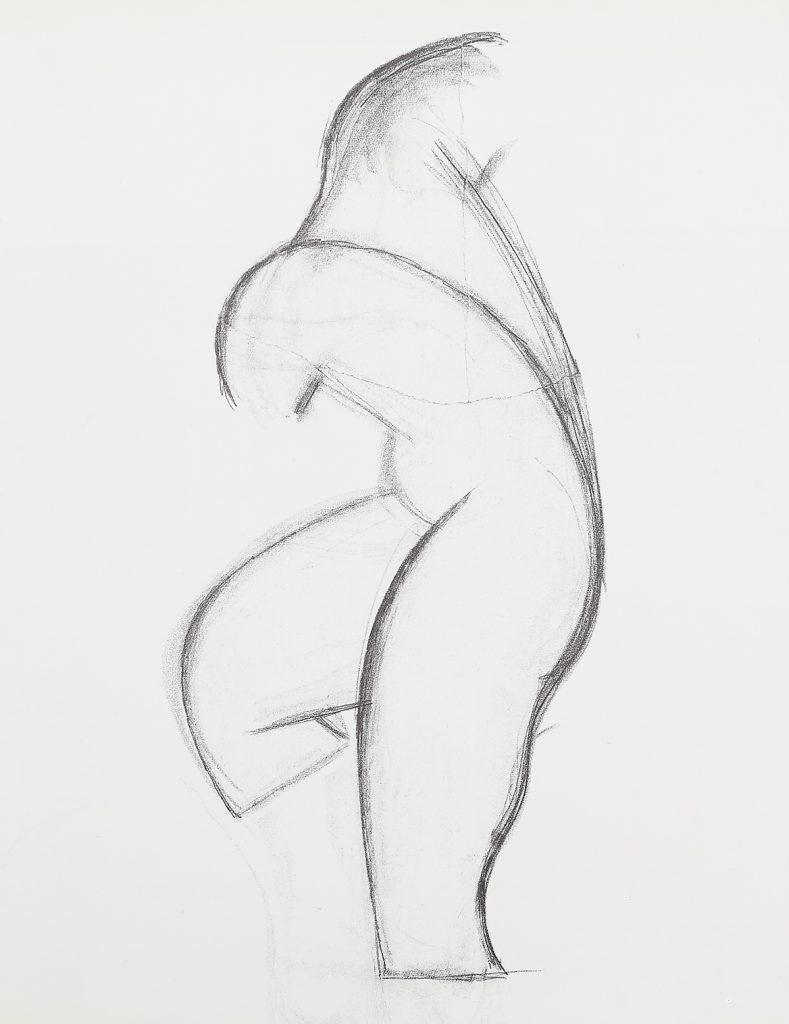
Christian Berg
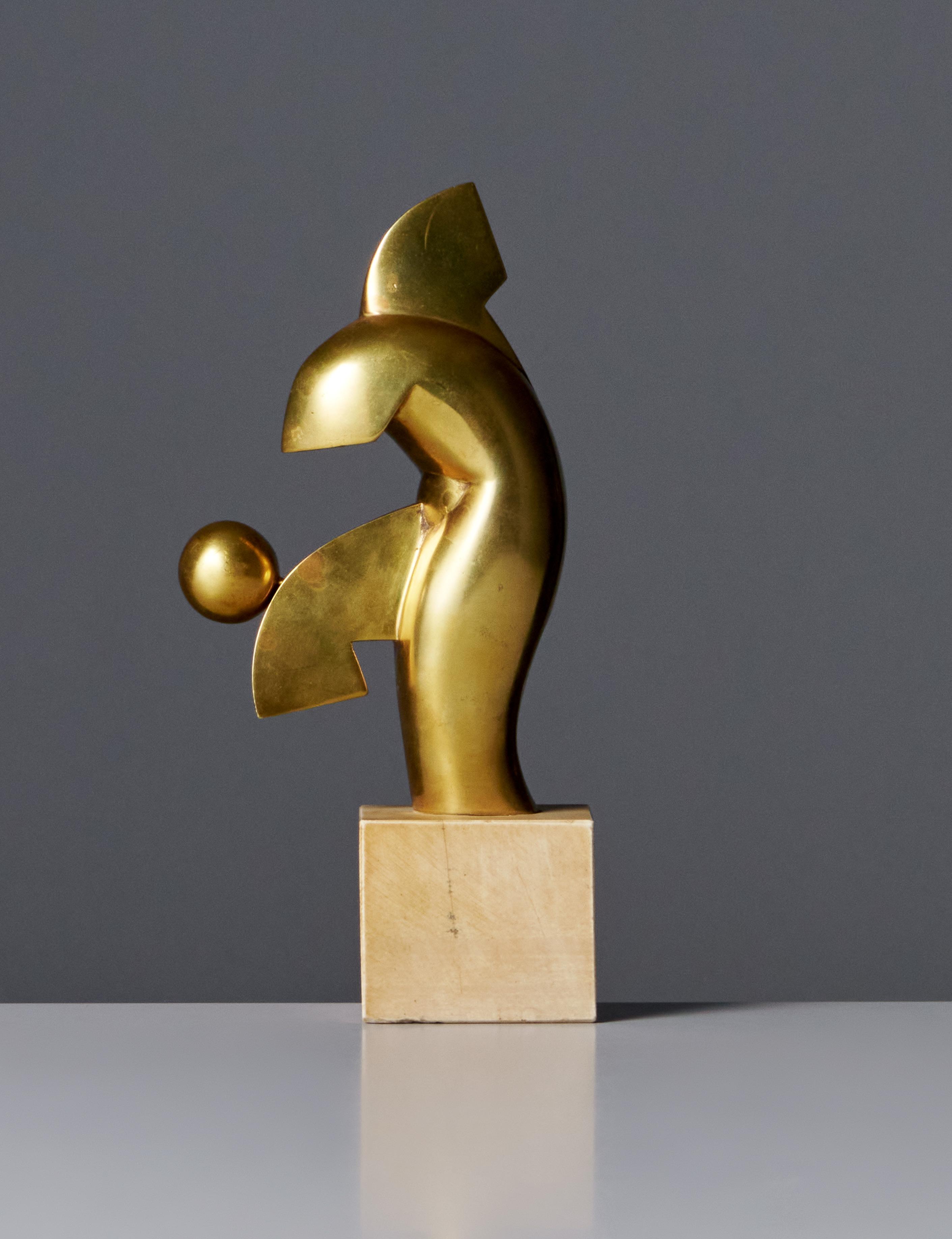
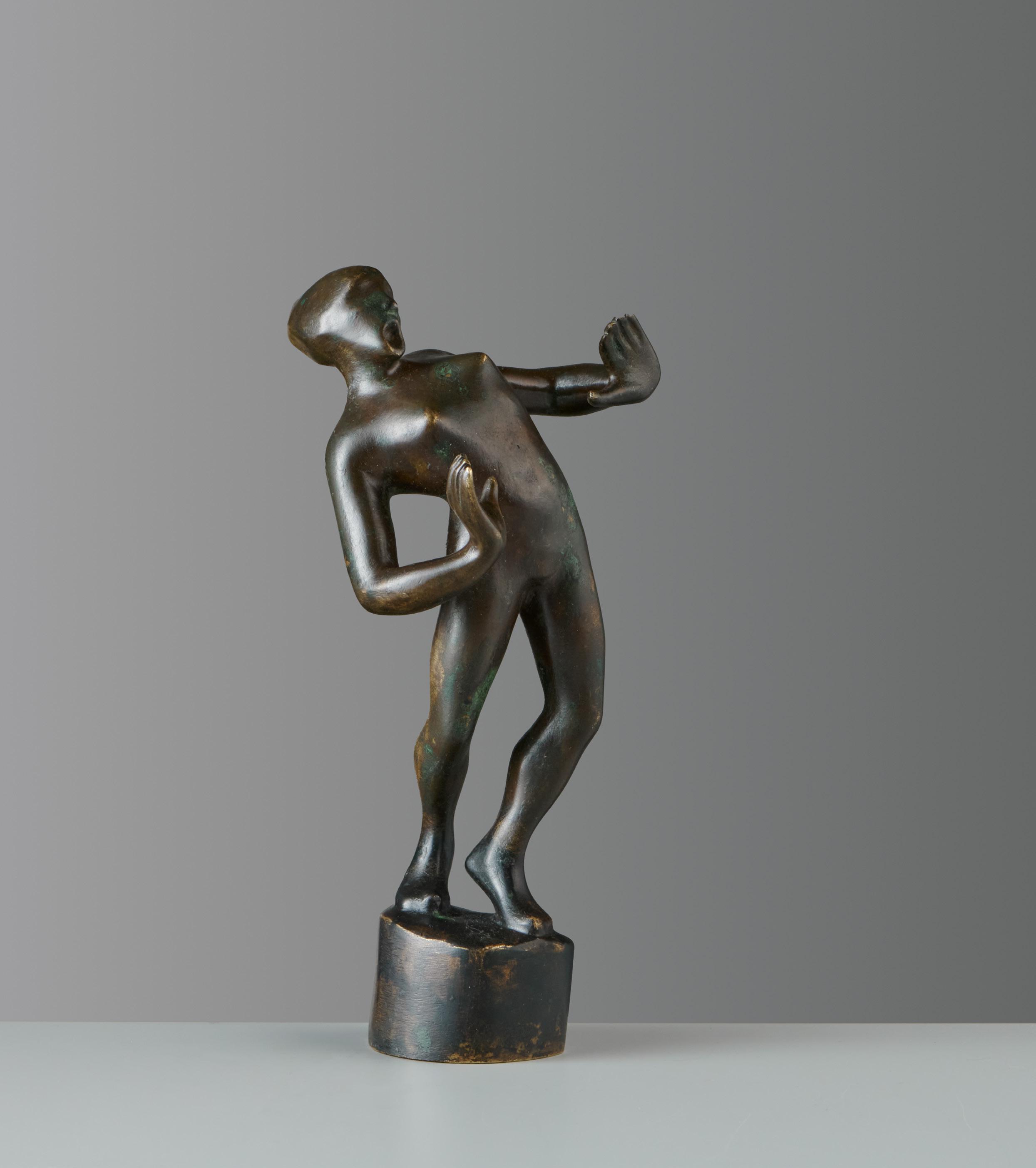
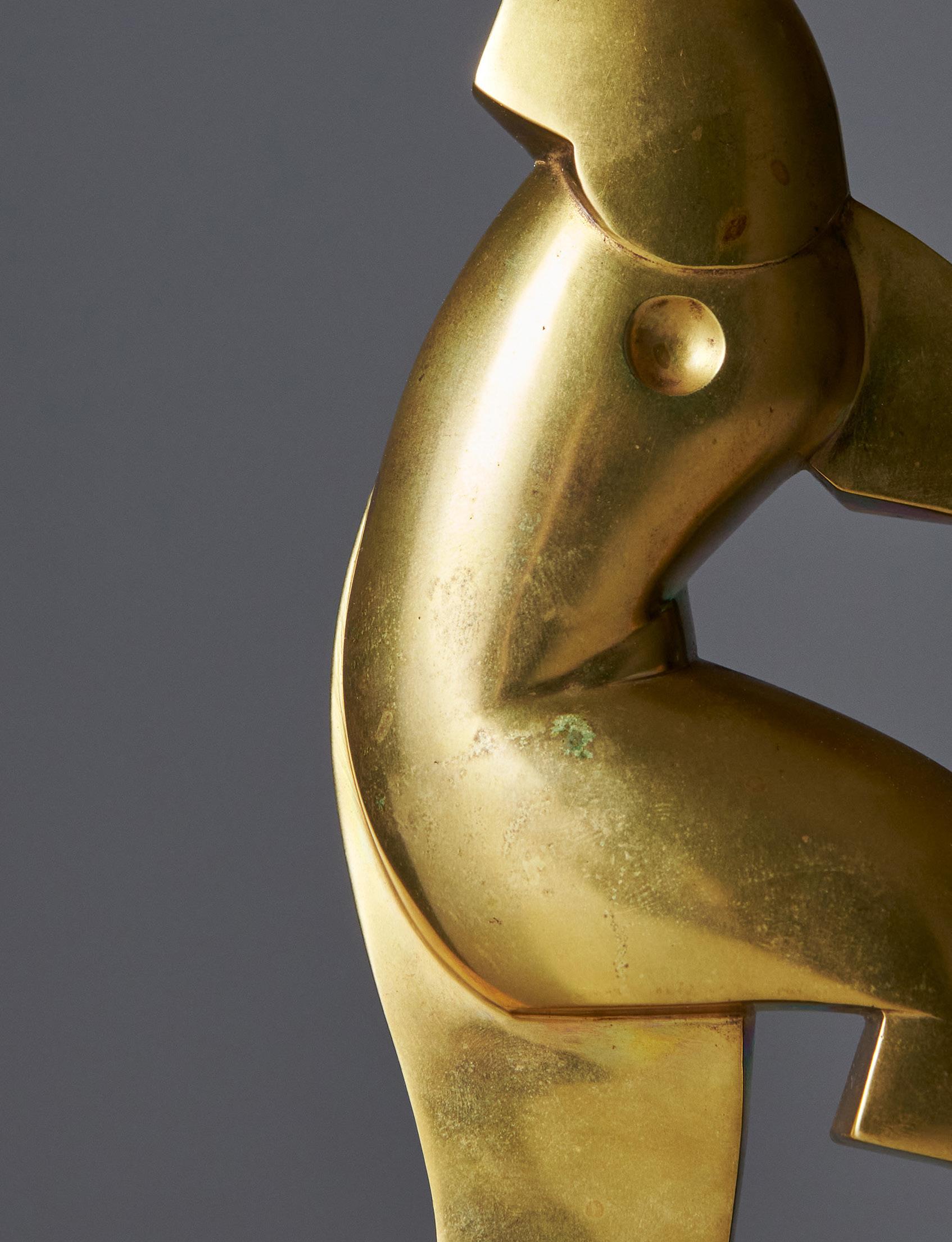
‘Lekande Torso I’ (Playful Torso I) Sculpture Produced by E. Pettersson Foundry Designed in 1972, executed in 1970s
Polished bronze, stone
Signed ‘C.B.’, foundry mark to the underside of sculpture
Christian Berg settled in Paris in 1925, following academic training in Stockholm and studies in Egypt. At the academies Colarossi and La Grande Chaumière he intensified his croquis practice, seeking to distill the human form into a few essential, dynamic lines—a principle that became central to his sculptural language. Lekande torso I originates from a 1928 Paris drawing and relates to earlier experiments such as Dansande figur (1926). Berg frequently revisited and refined early motifs, and the torso became a recurring and foundational form in his oeuvre. The work was first cast in bronze in 1972 and later executed in red-grey granite in 1974, marking his final sculpture.
Deeply influenced by cubism during his Paris years, Berg shifted from naturalistic anatomy to an exploration of bodies in motion and geometric abstraction. Lekande torso I is widely regarded as one of his major works, synthesizing his long engagement with movement, reduction, and post-cubist form.
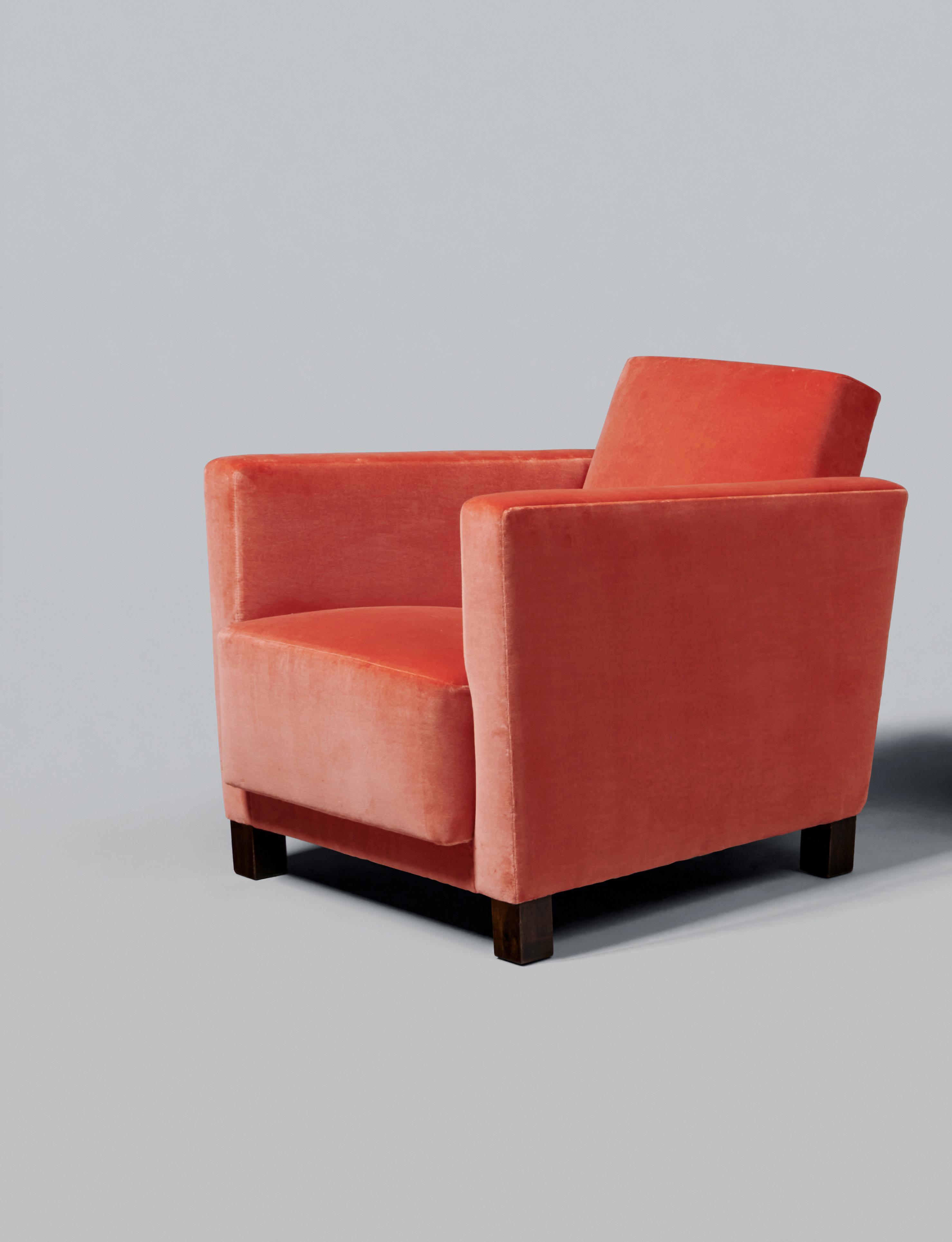
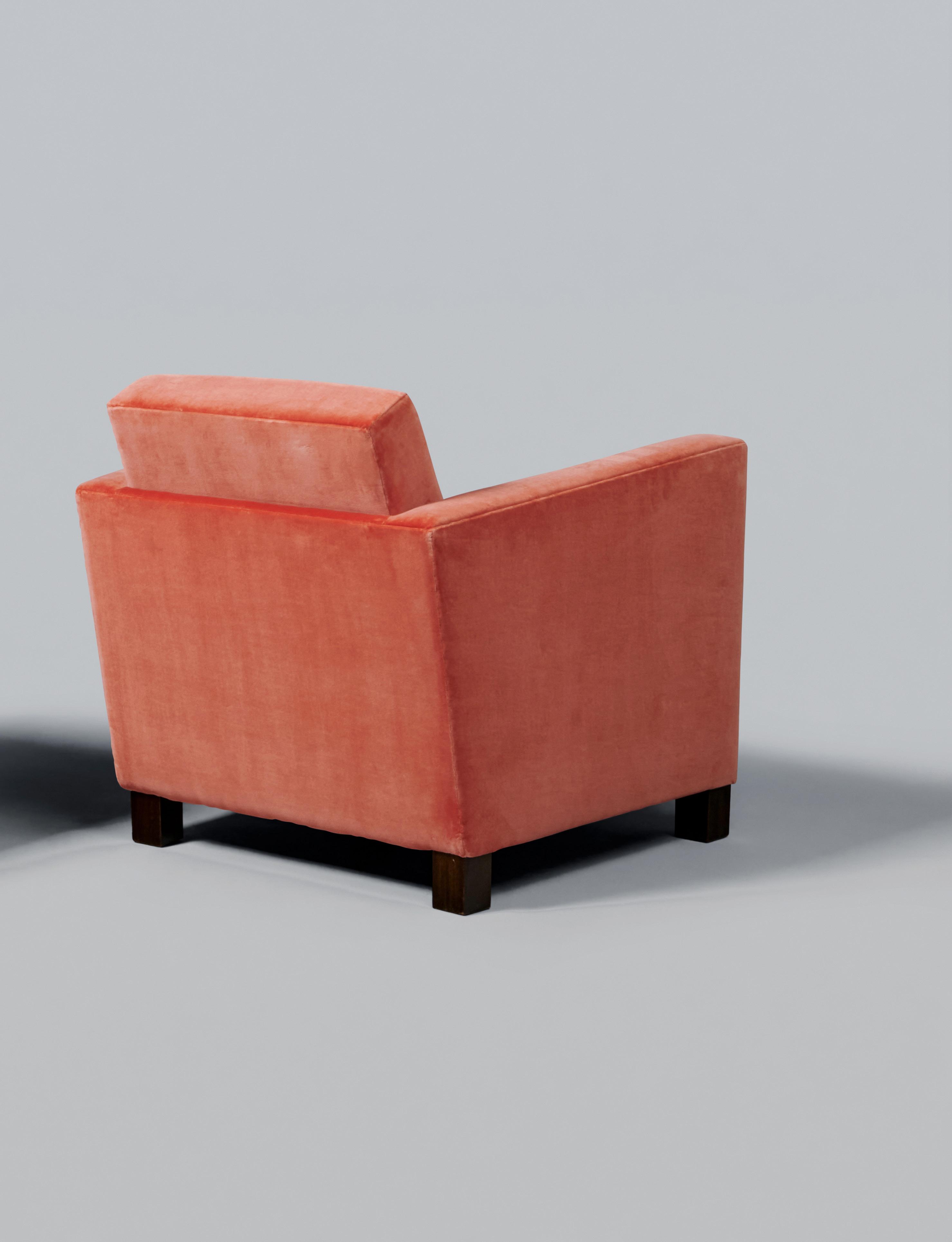
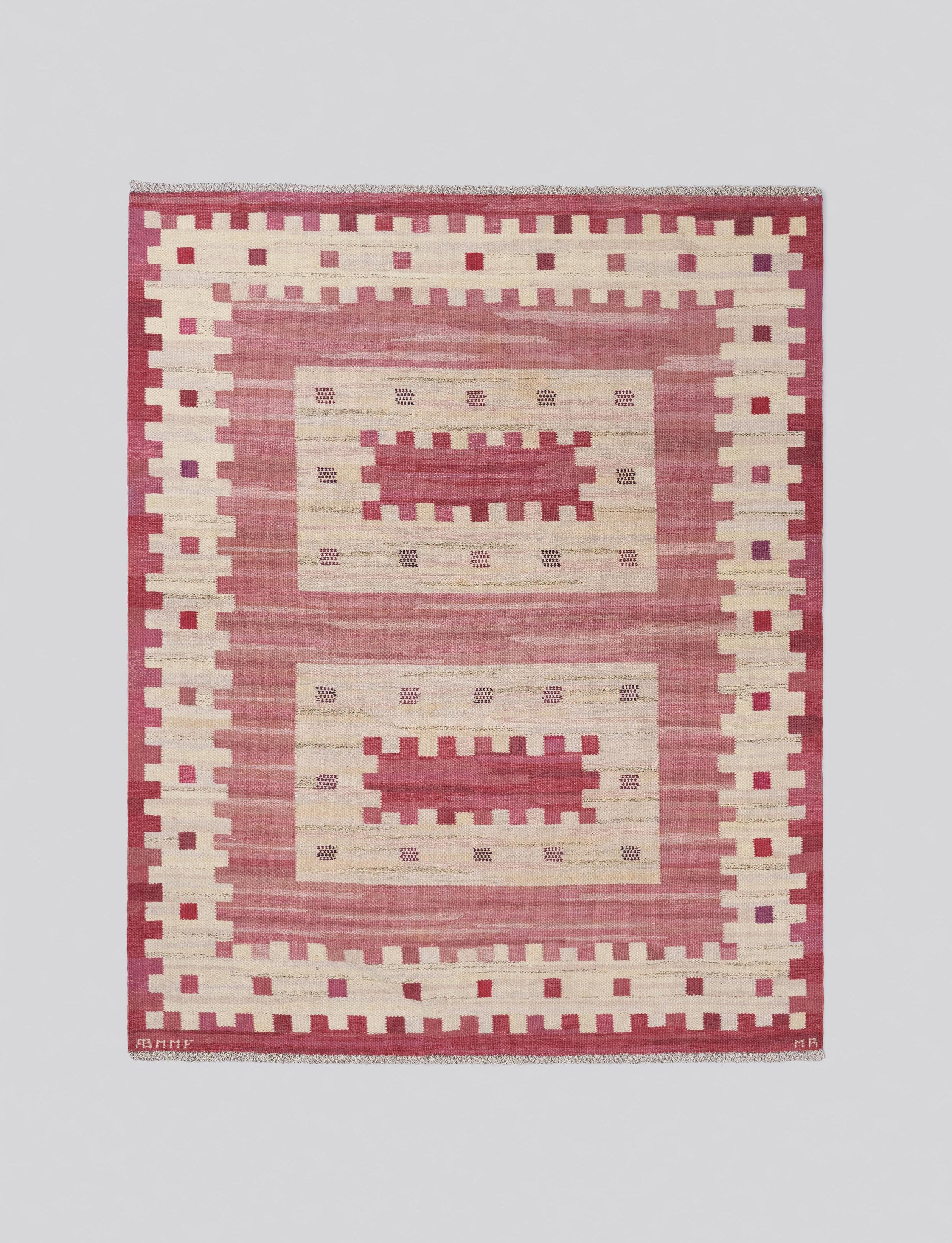
Produced by Märta Måås-Fjetterström AB
circa 1940
Hand flat woven wool on a linen warp
Woven signature ‘MMF AB’, ‘MR’ and weaver’s marks
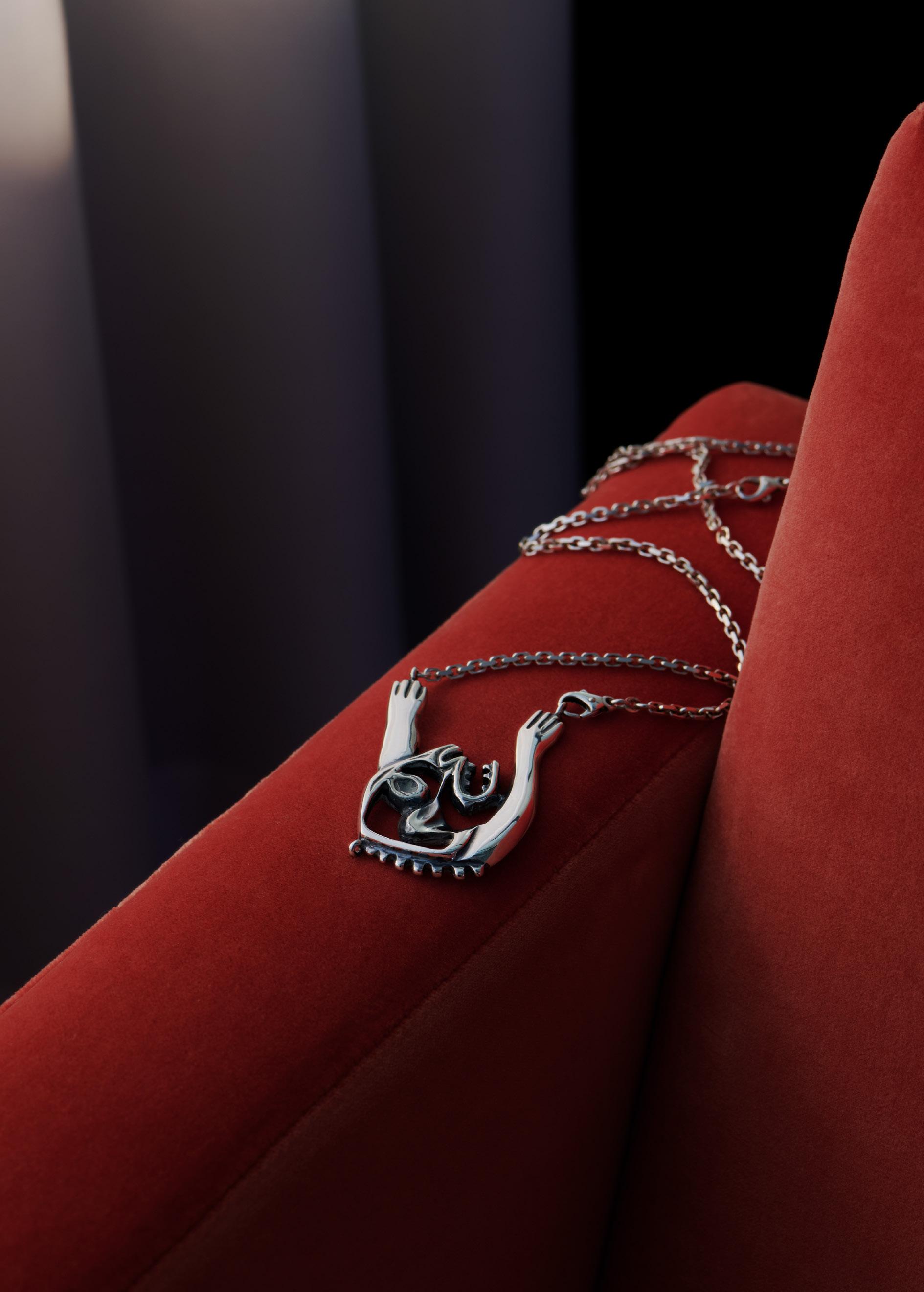
Produced by Guld Carlsen 1984
silver Signed, dated and number ‘151/999’ to the reverse
Bronze with patinated interior Impressed with producer’s marks to the base
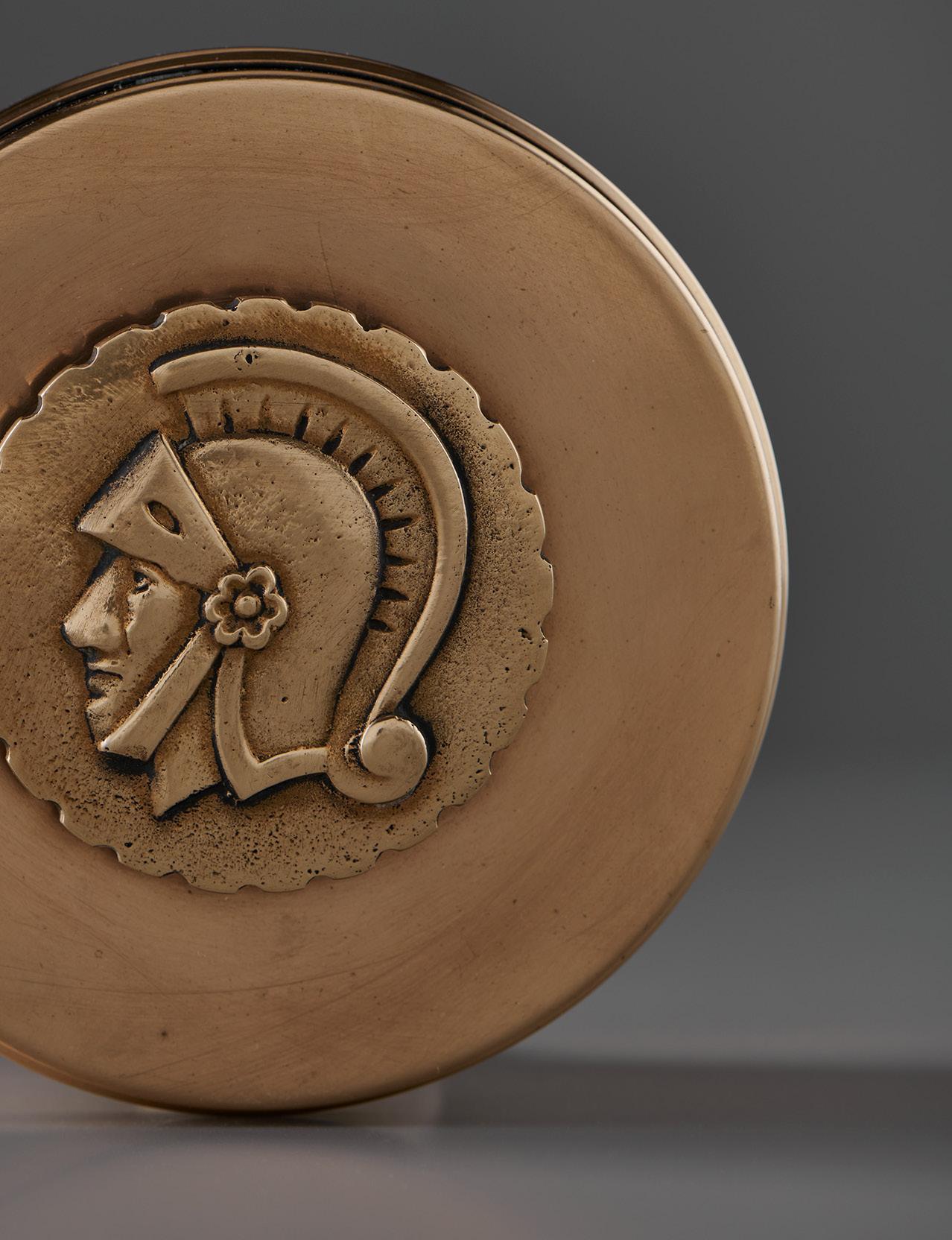
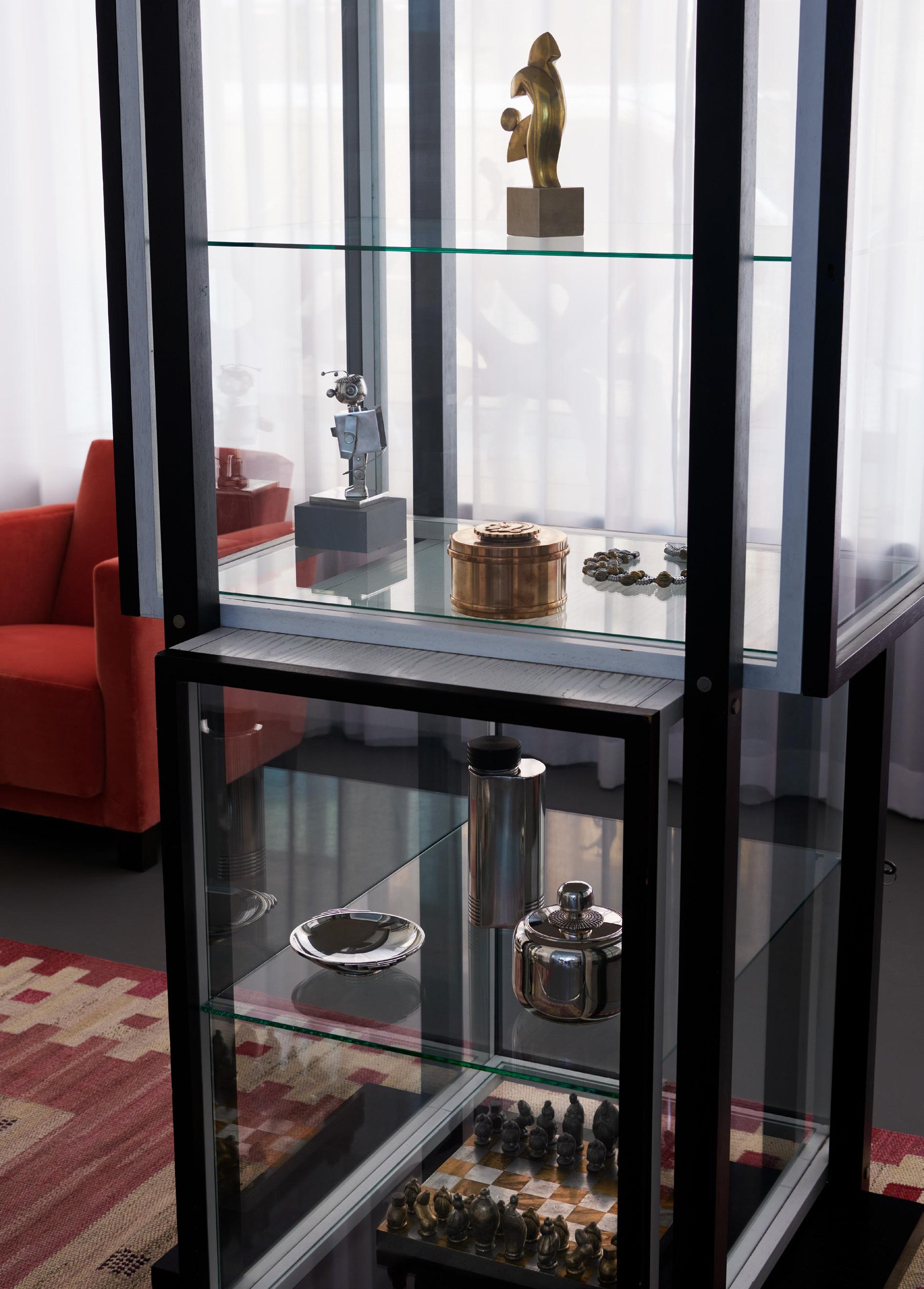
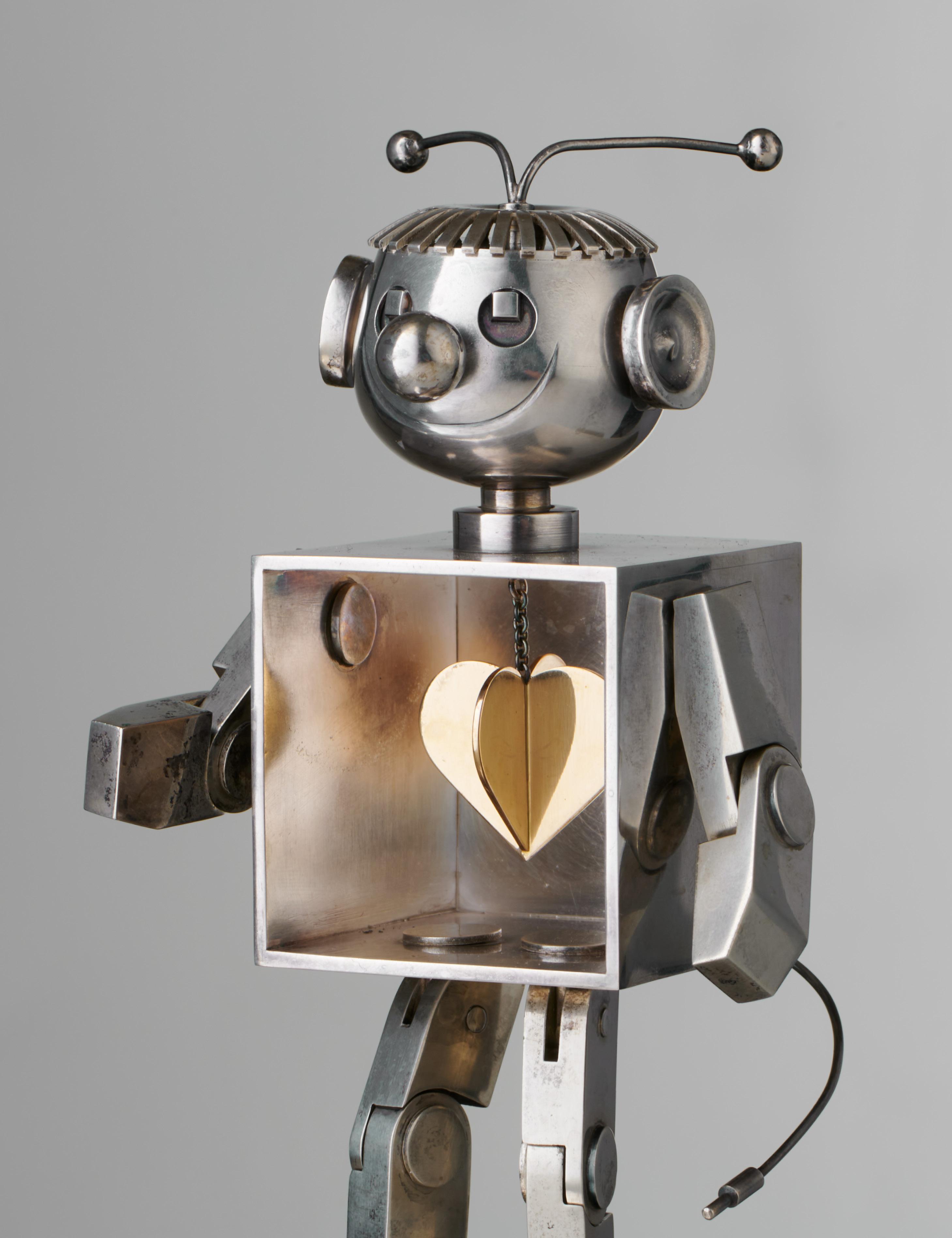
circa 1970
Movable parts, with original leather box




Marie Louise Idestam-Blomberg
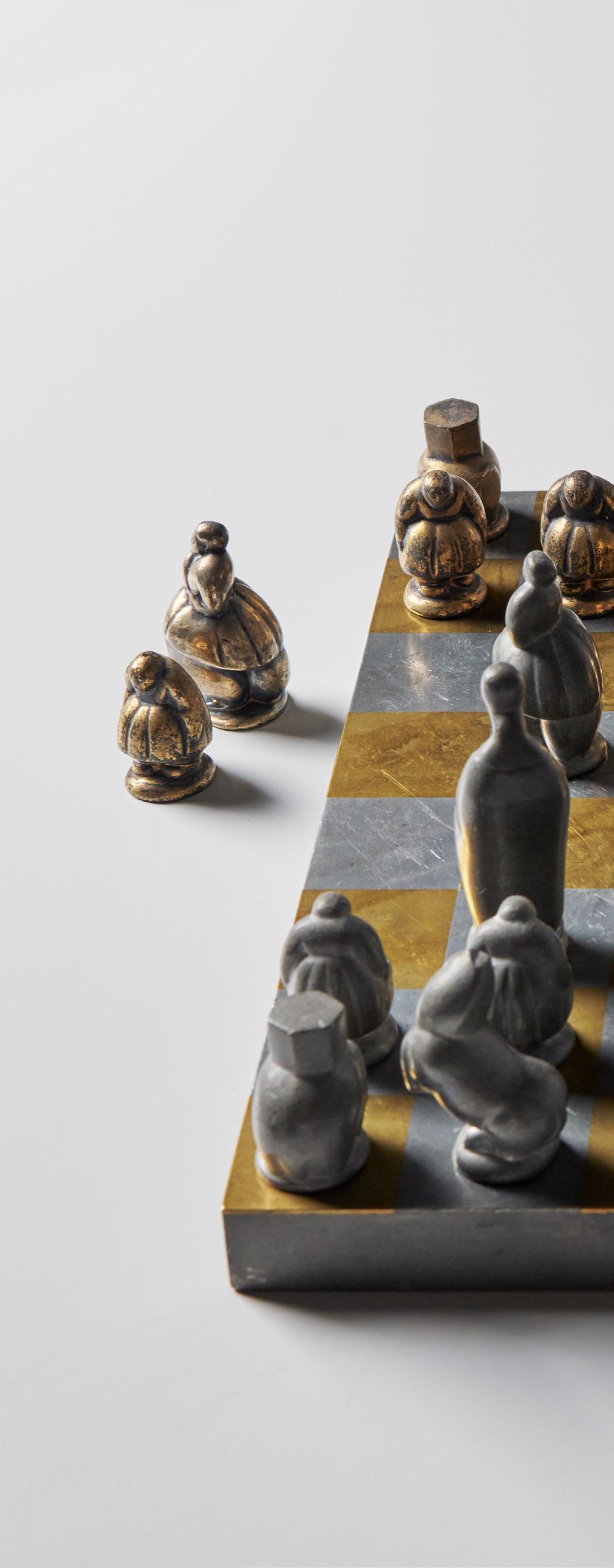
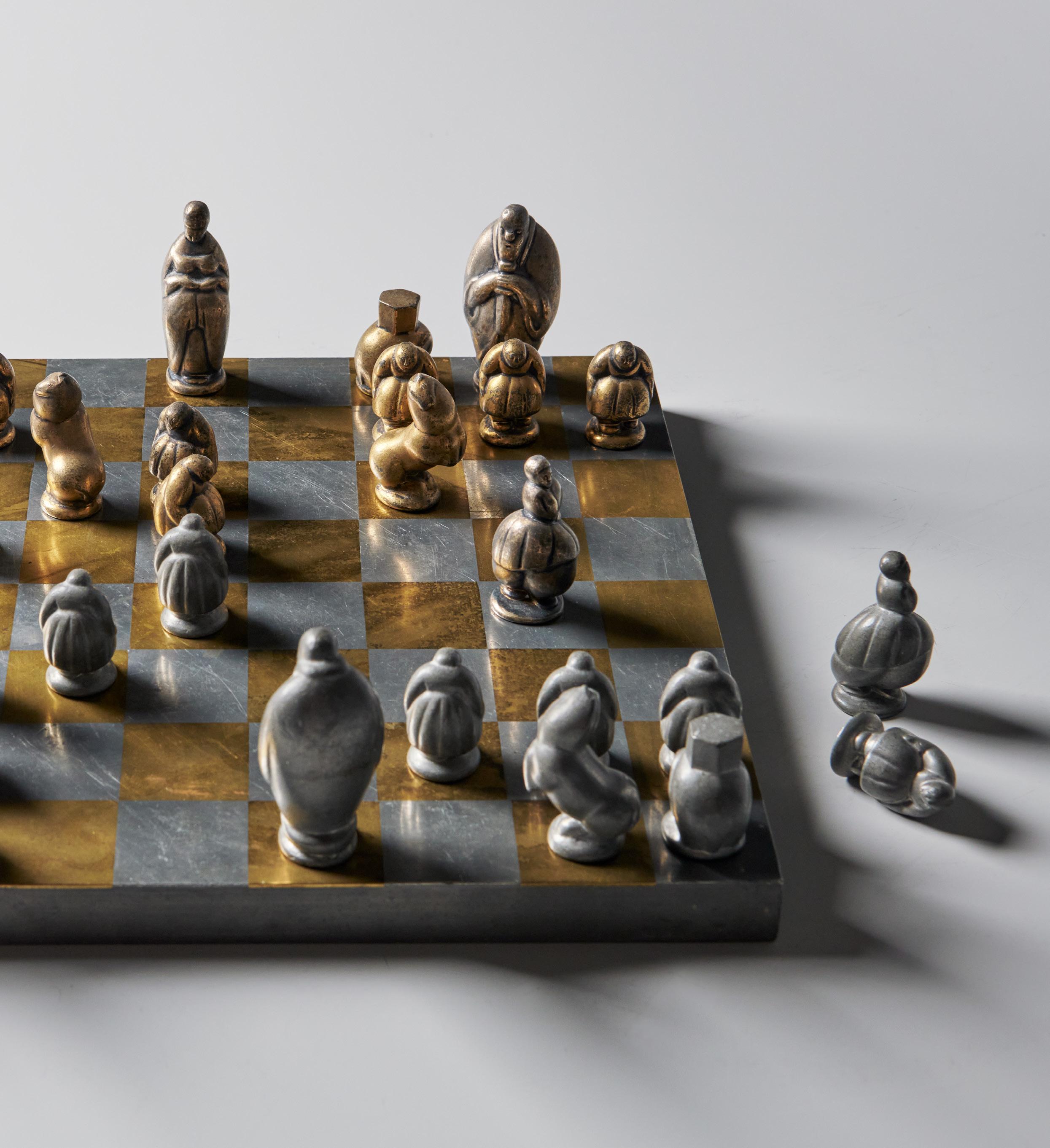
Chess Set
Produced by Svenskt Tenn 1935
Model no. 455, designed in the 1920s
Natural patinated pewter, gilt pewter
Stamped with manufacturer’s marks and dated ‘I8’ (=1935)
This chess game was designed by Marie-Lousie IdestamBlomberg in the 1920s. It was displayed during the Paris Exhibition 1925; after which Svenskt Tenn took over the production rights. The set shown at the Paris exhibition was made in ebony and ivory.
Exhibited:
Paris, ‘Exposition Internationale des Arts Décoratifs et Industriels Modernes’, 1925, Executed in ebony and ivory
Stockholm, ‘Stockholm Exhibition’, 1930, Executed in pewter and partially gilded


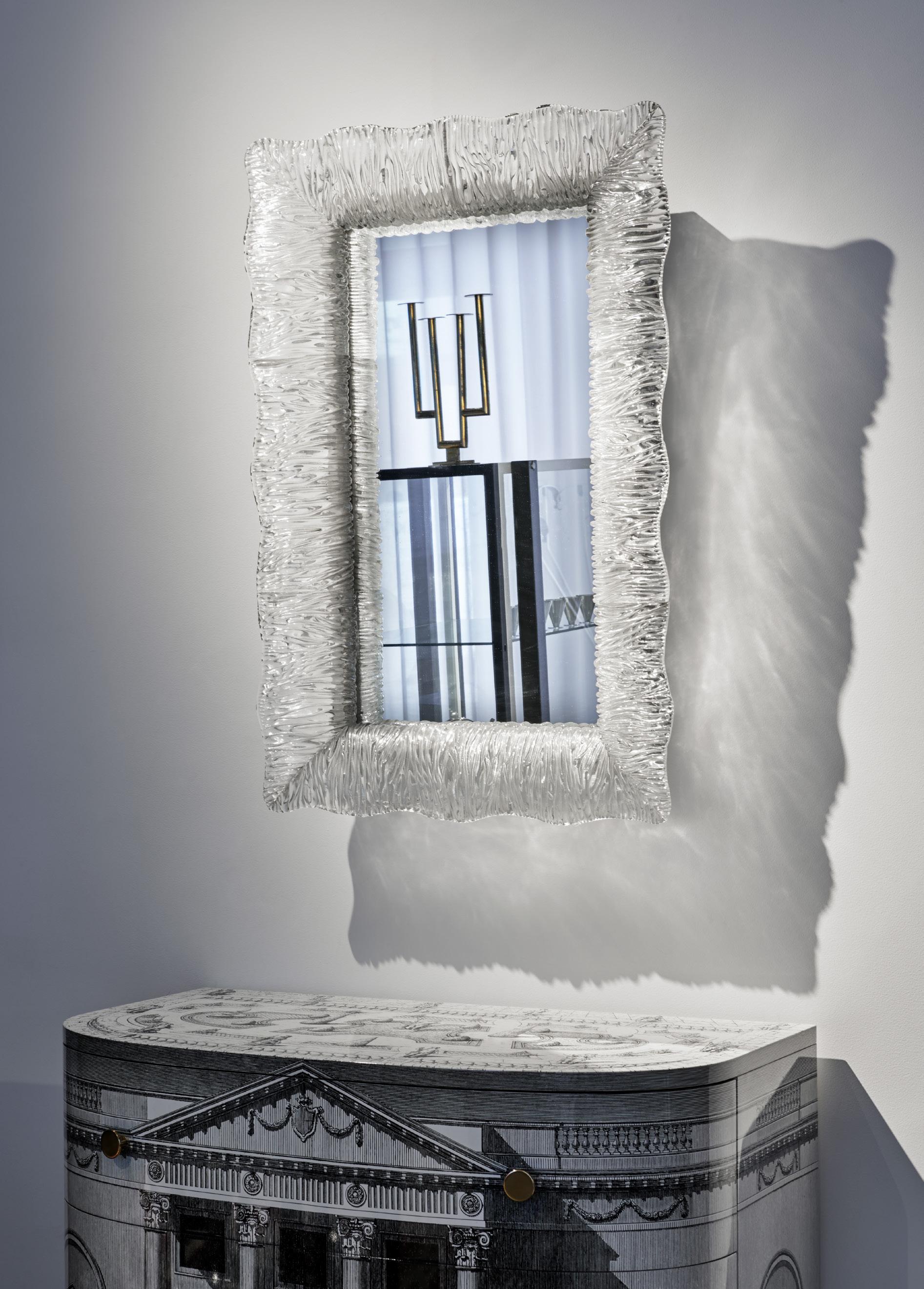

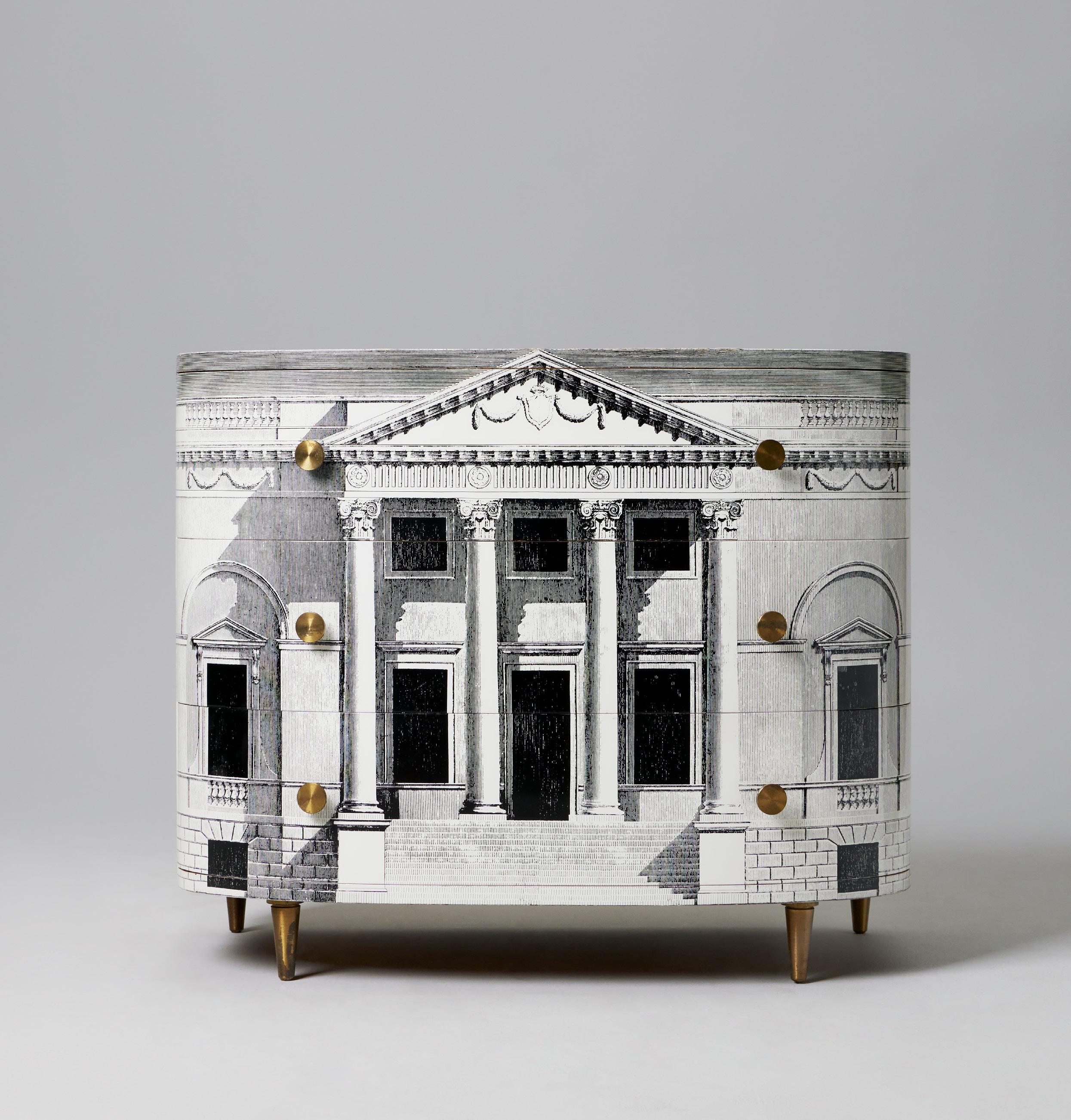

Piero Fornasetti
‘Palladiana’ Chess of Drawers
Produced by Fornasetti
Designed in 1952, this example executed circa 1955
Hand-painted and lithographic transfer-printed wood, brass hardware. With Fornasetti roundel inset in top drawer

circa 1970
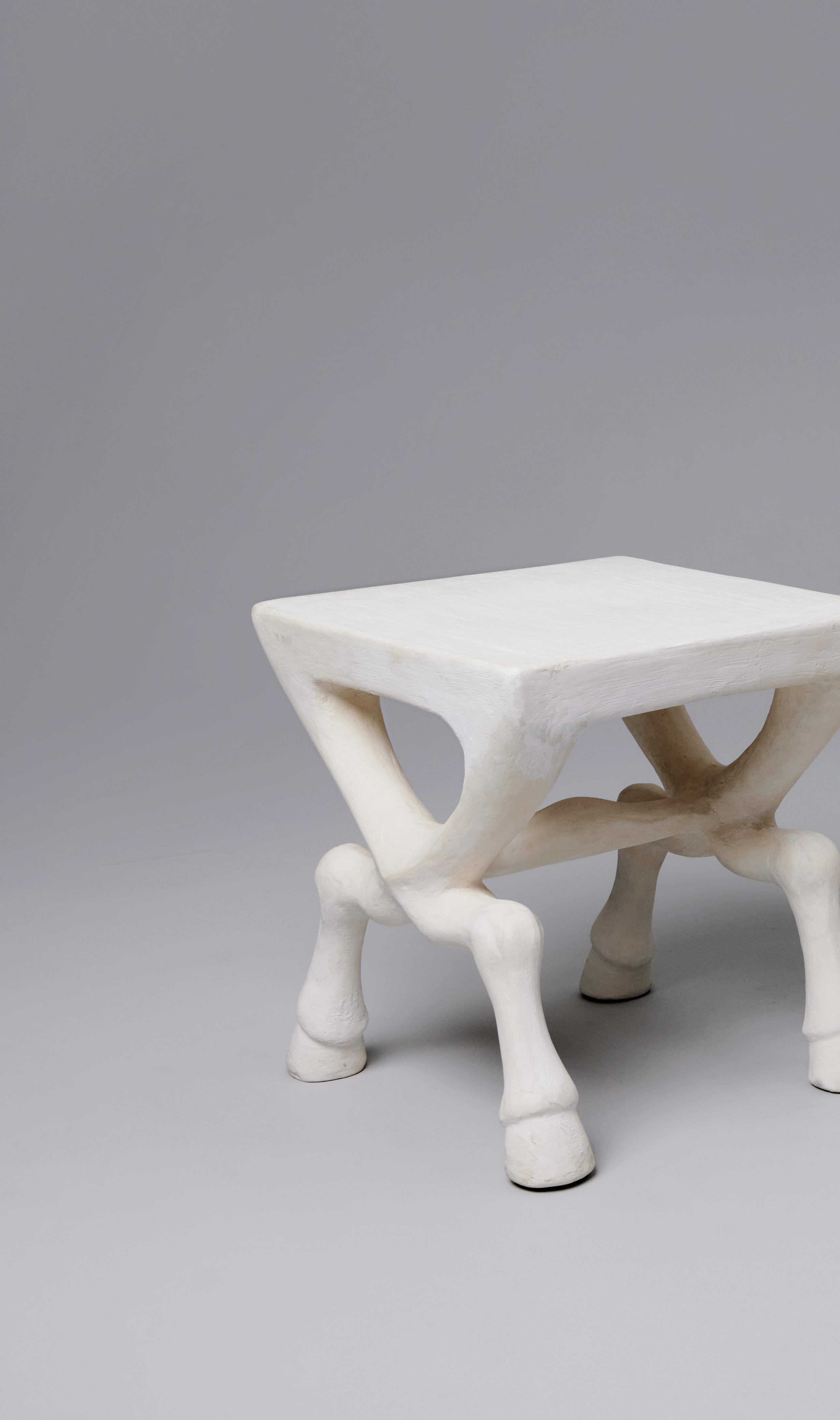
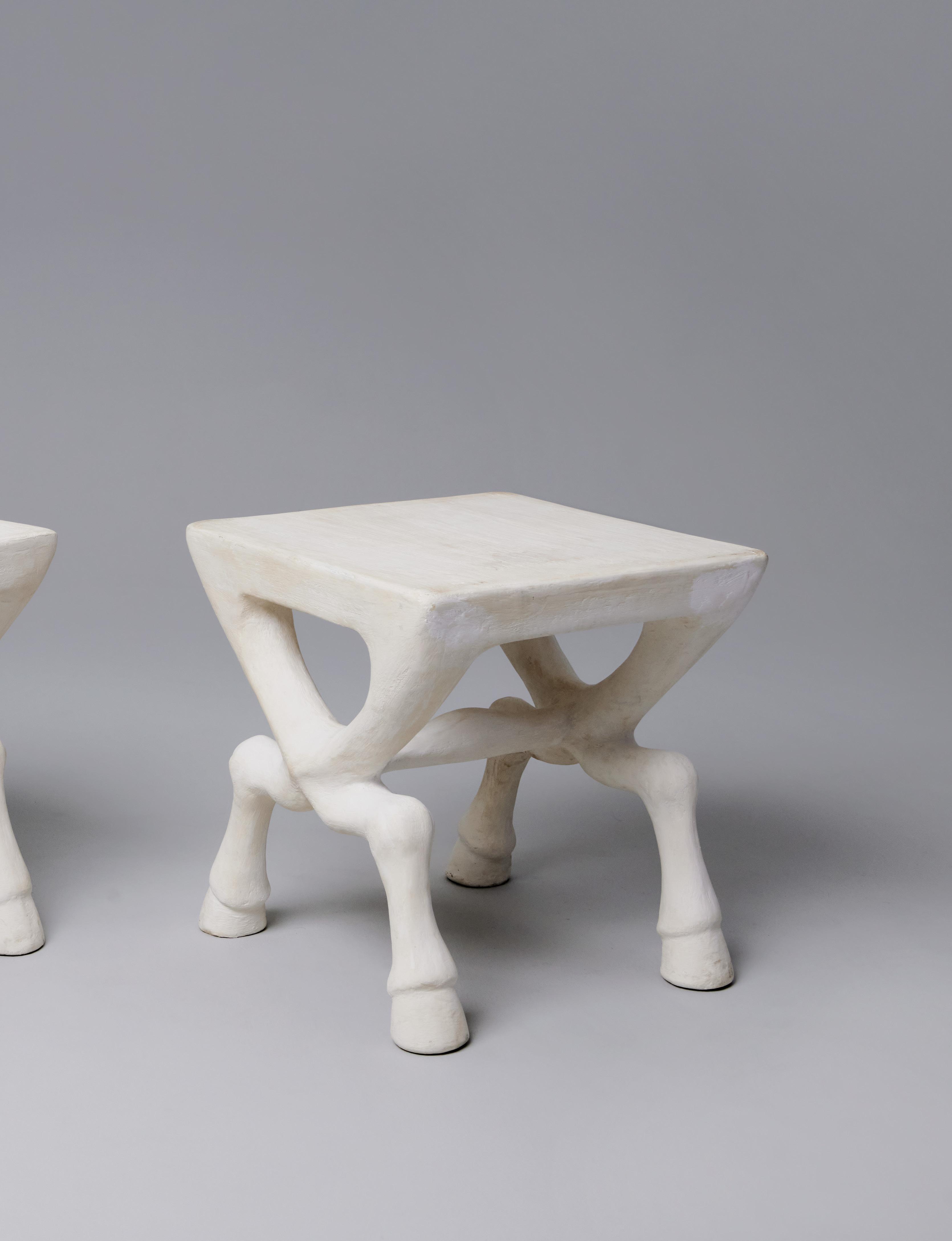
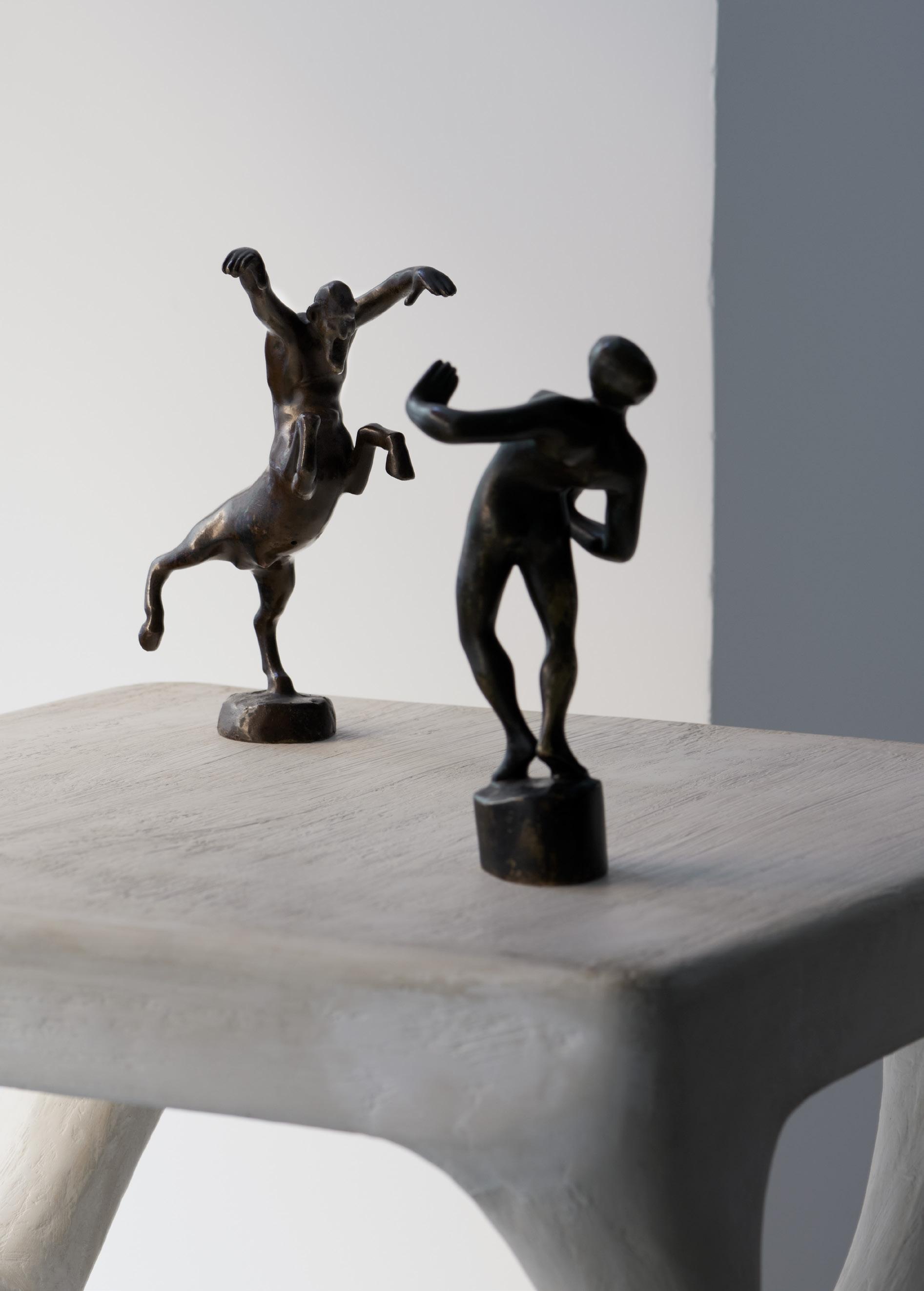
This example executed between 1914-1919 Cast patinated bronze

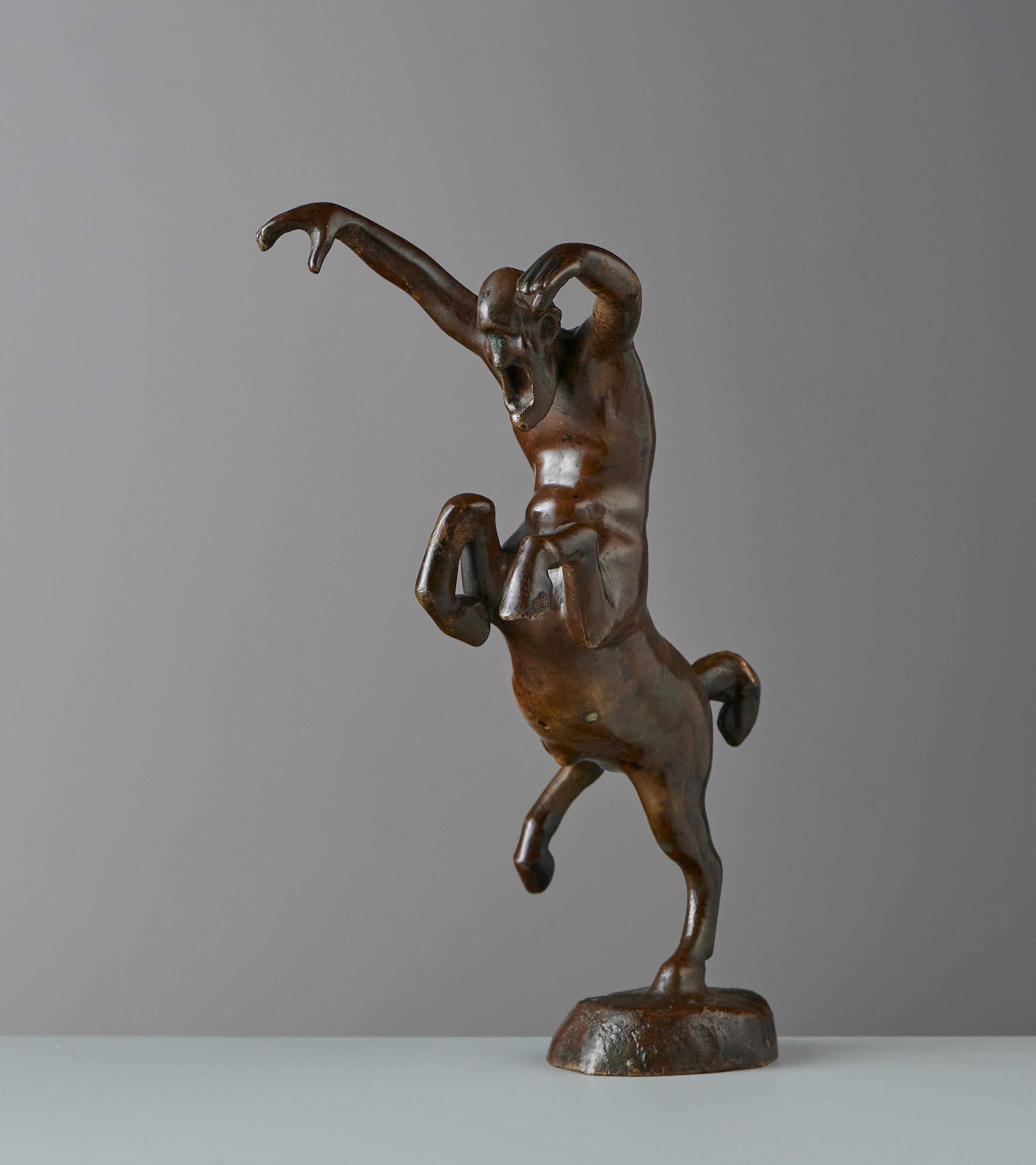

This example executed between 1914-1919
Cast patinated bronze Stamped monogram and ‘DK 2’ to the base
Nani Prina & Vittorio Parigi
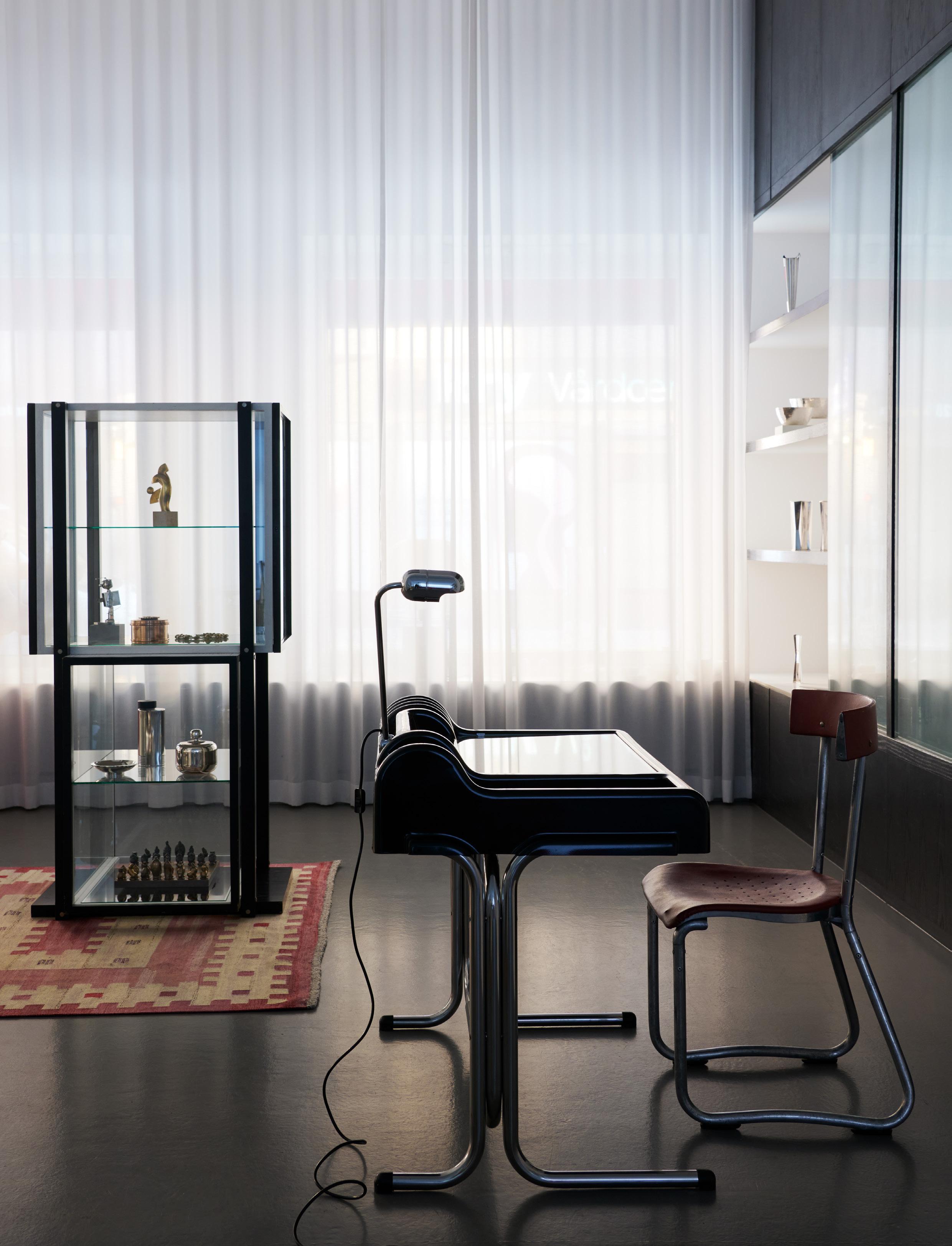
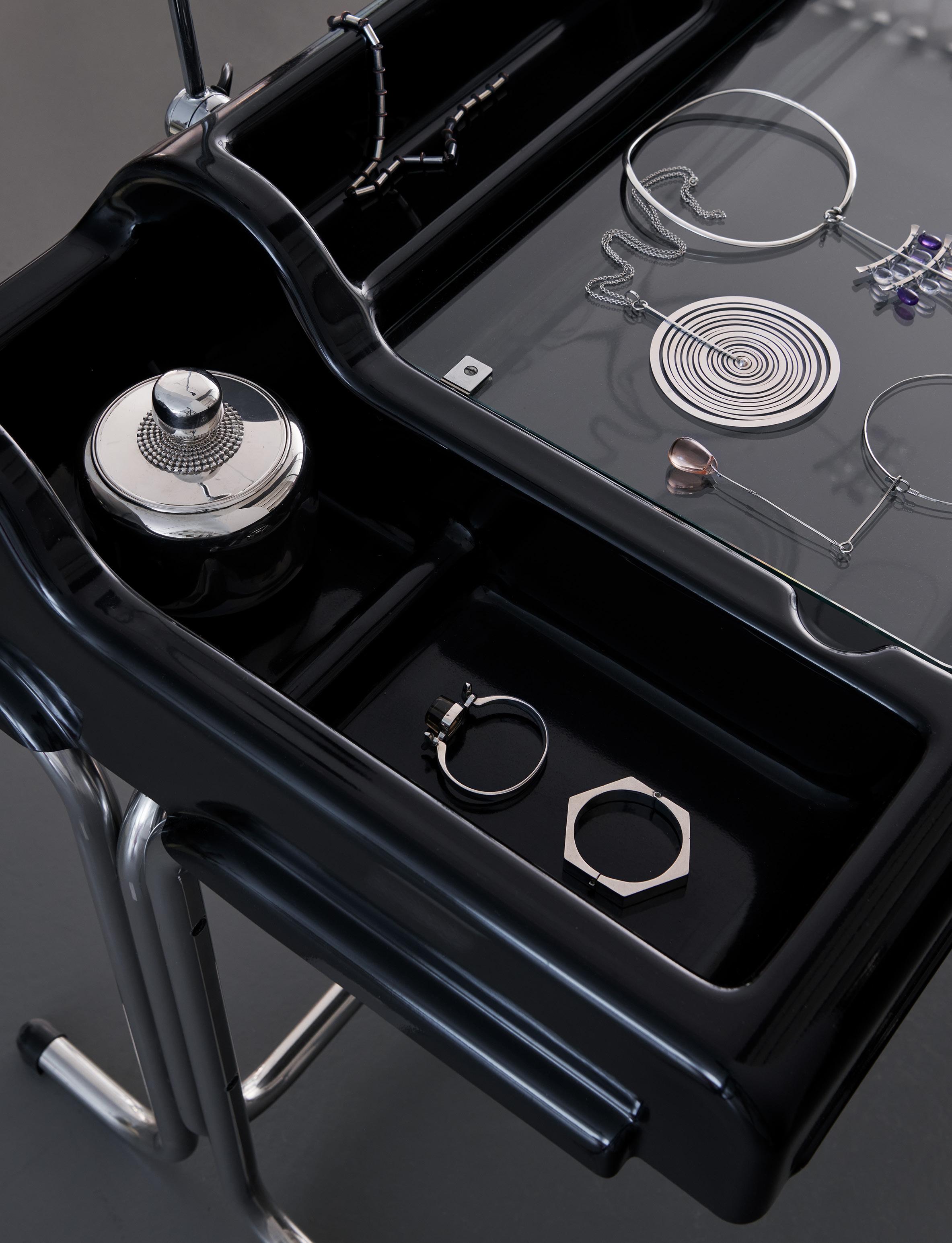
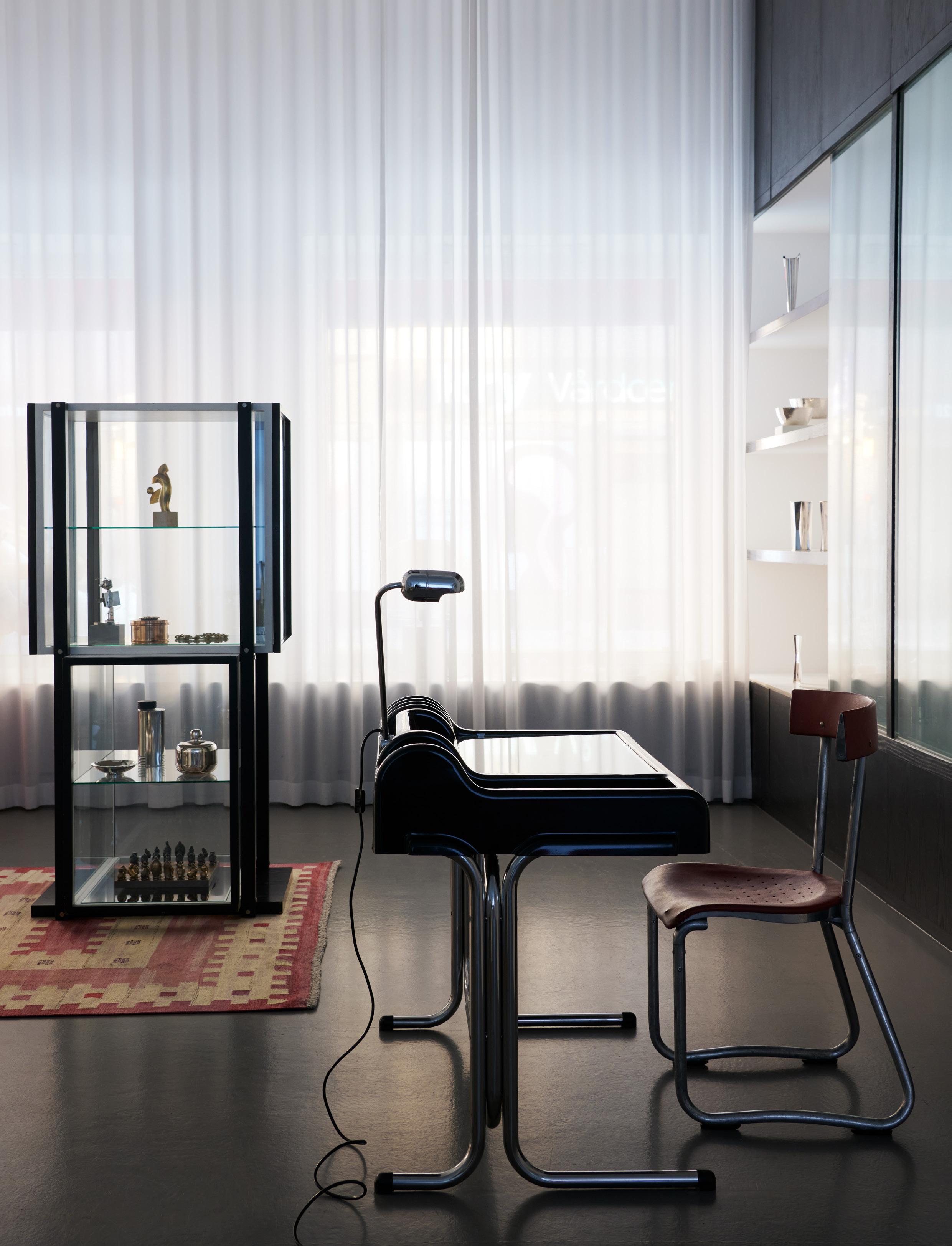
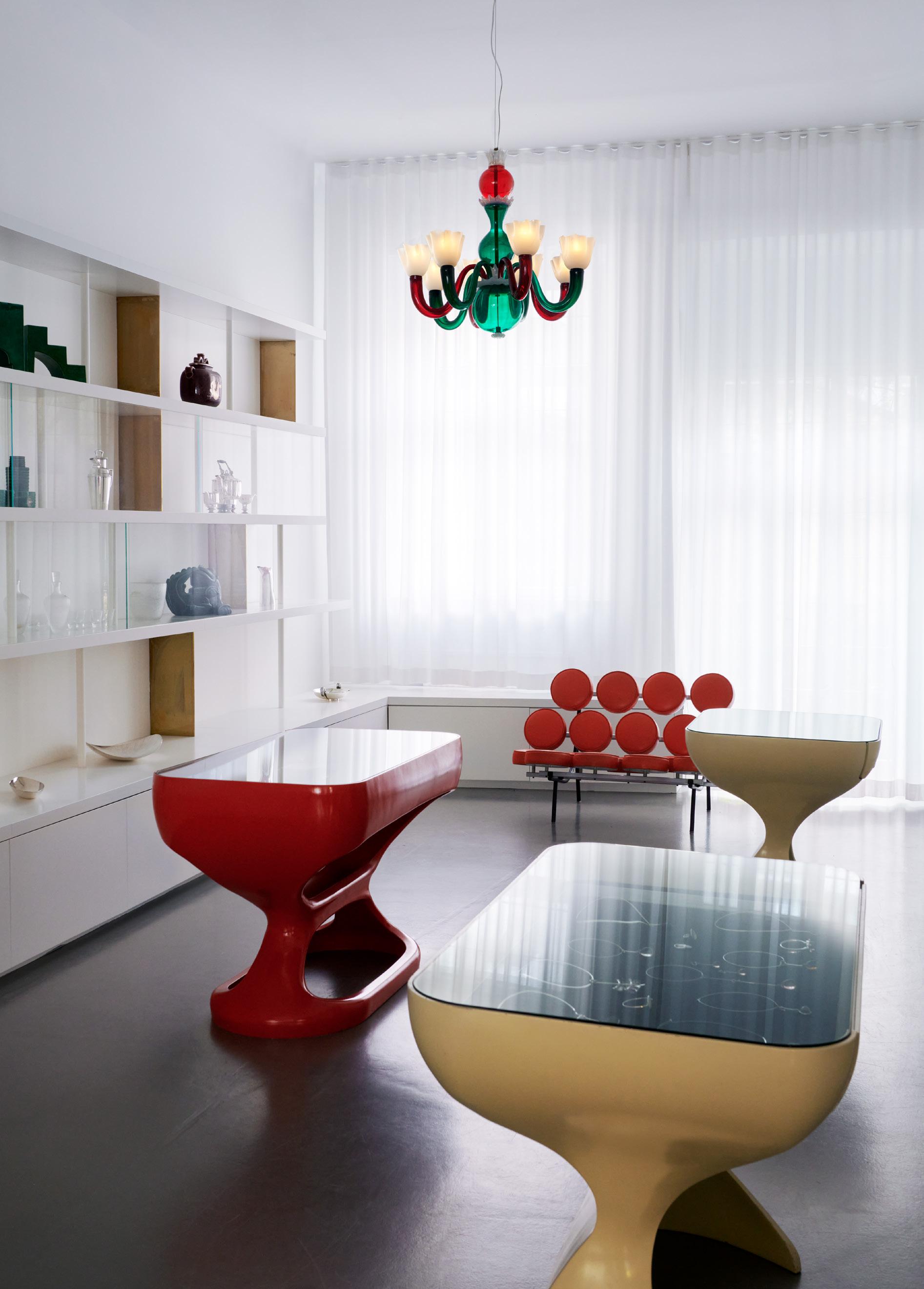
Pair of ‘Orix’ Desks circa 1970
Moulded plastic, glass, chromium plated metal, lamp
Moulded manufacturers marks to underside of each
Gio Ponti
‘Montecatini’ Chair
Produced by Parma Antonio & Figli 1938
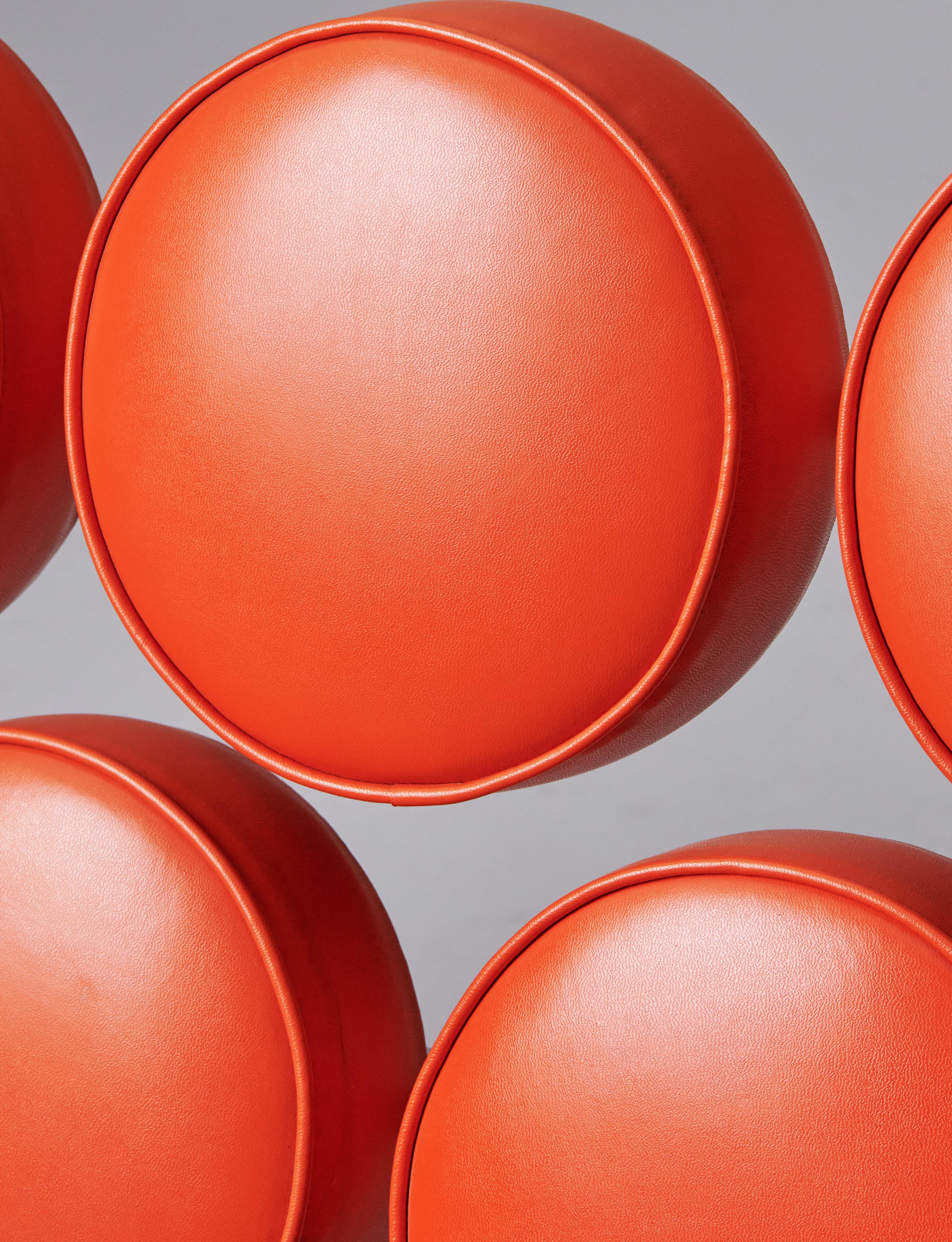
Aluminum frame, red vinyl upholstery, bakelite
Marked and dated to the frame
Designed in 1938 for the Montecatini office building, Milan.
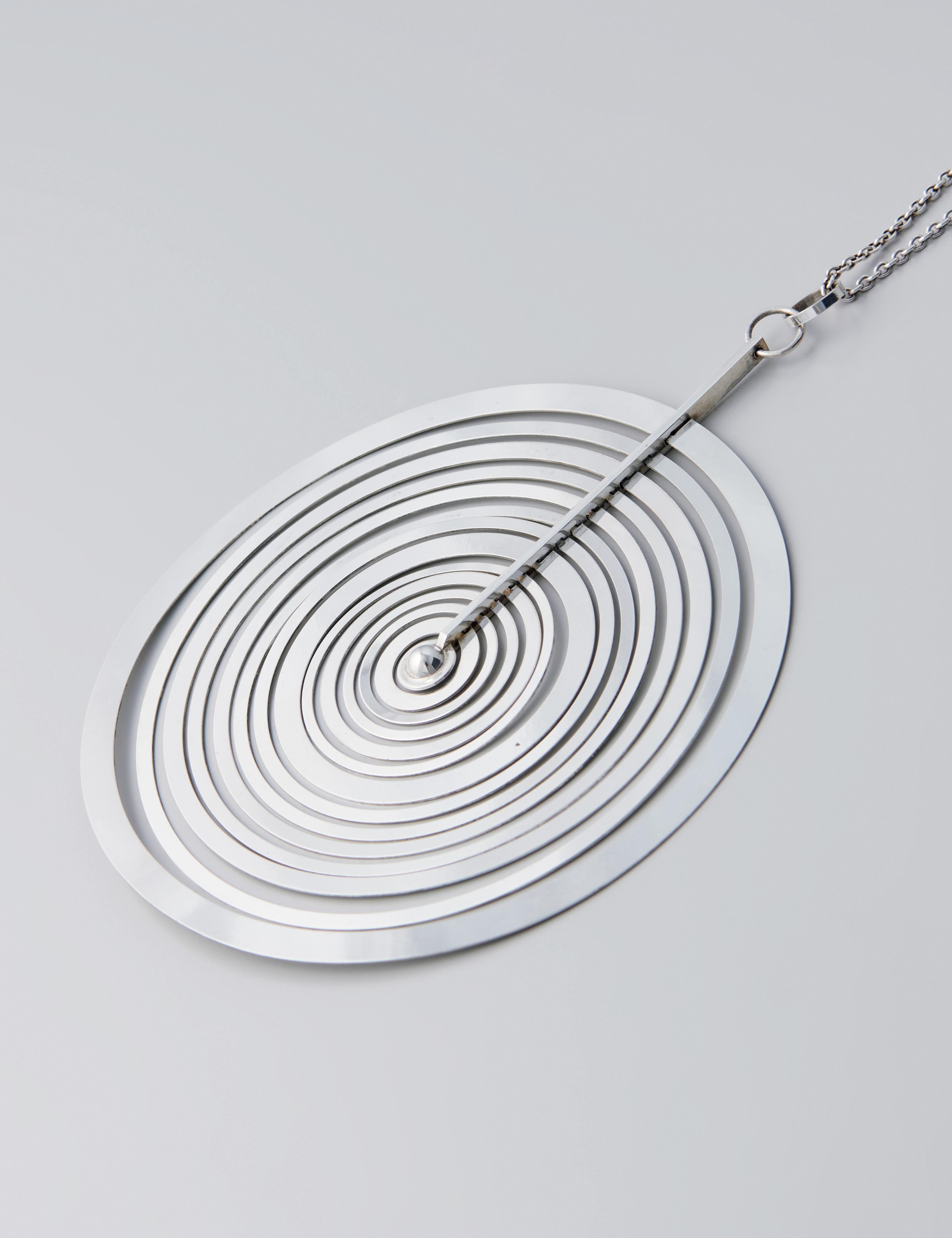
Produced by N. Westerback
1971
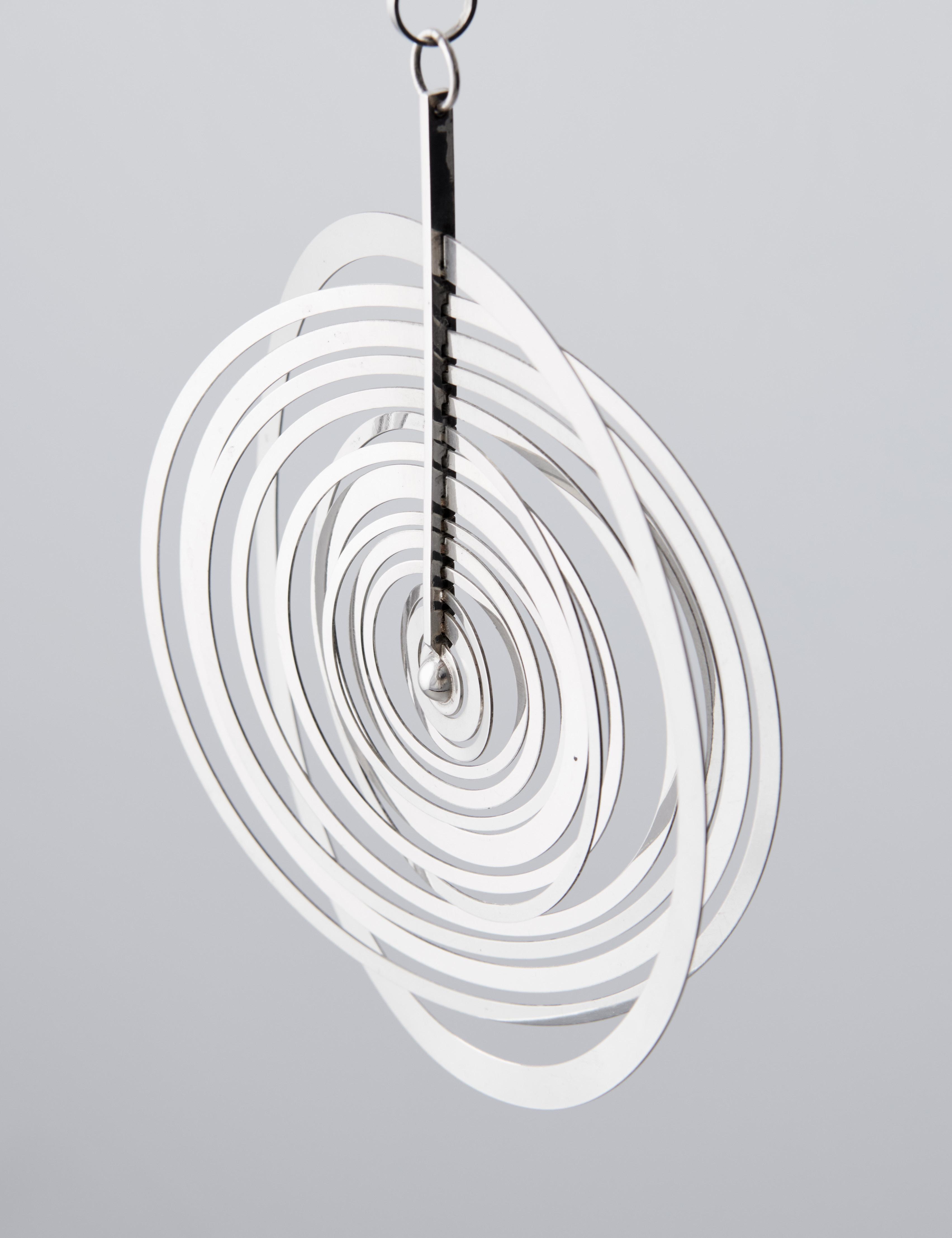
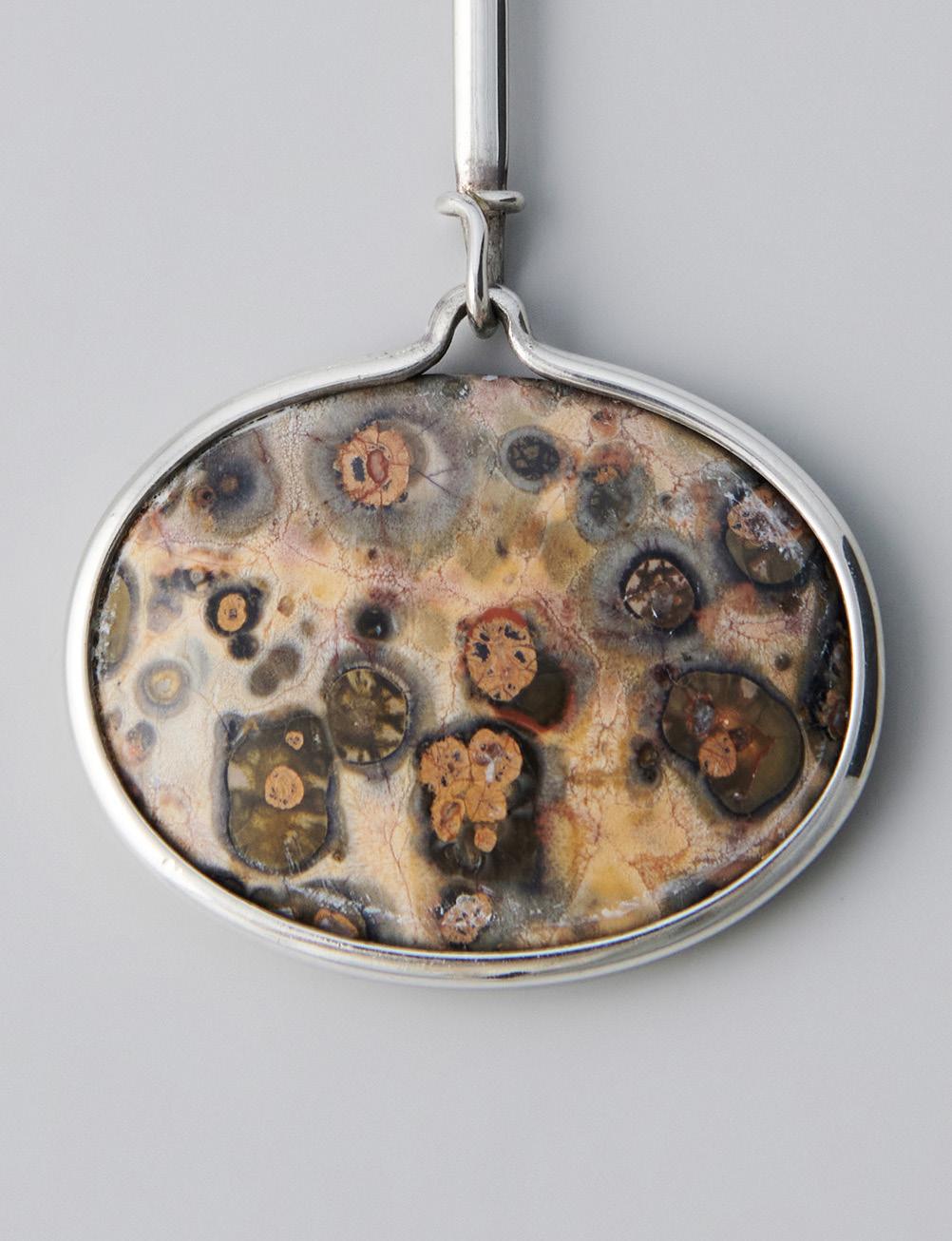
silver Stamped and dated to the pendant

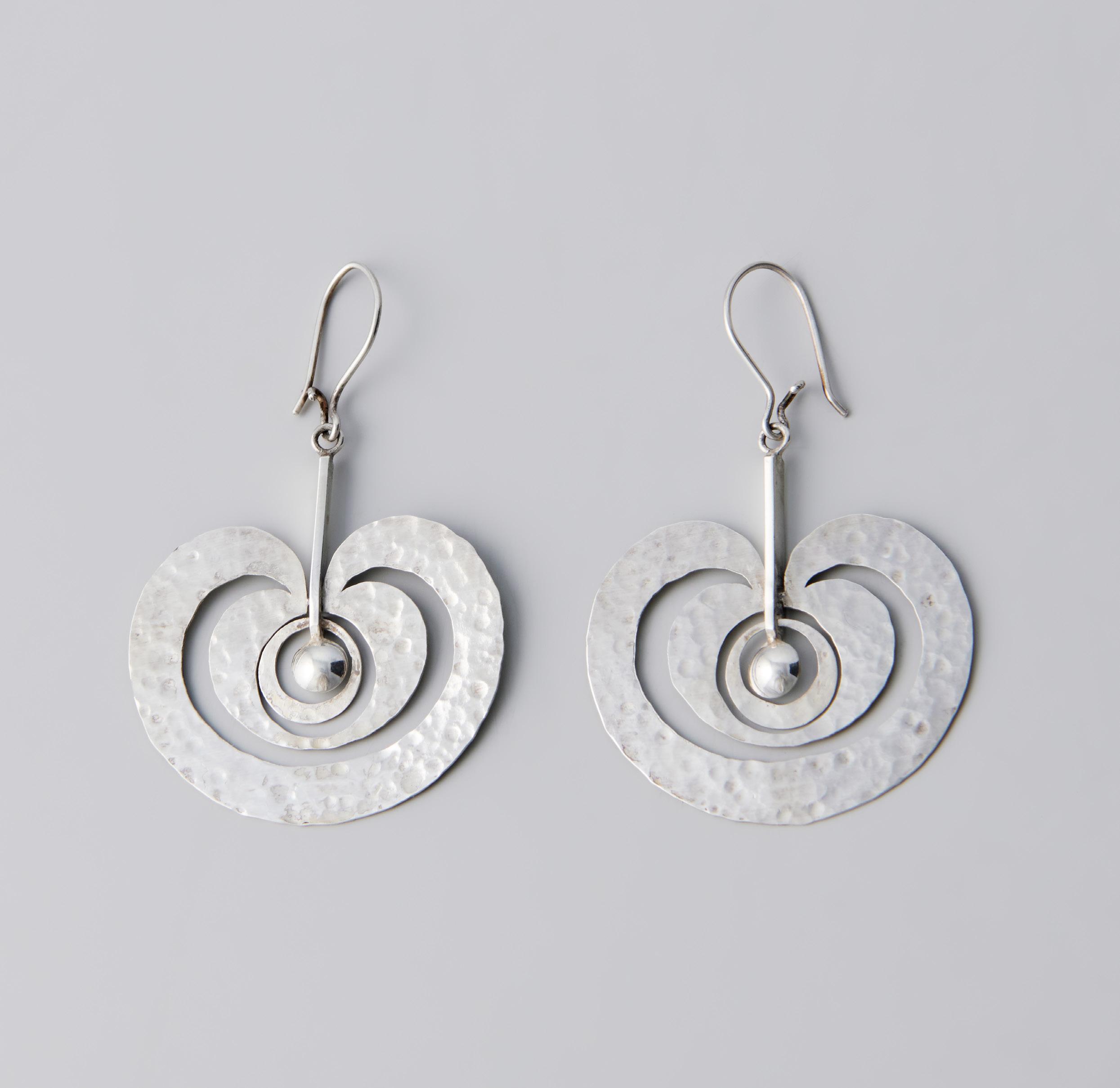

Produced by Kultakeskus 1957
Model no. TW77, handmade-to-order model
Sterling
Signed to the underside
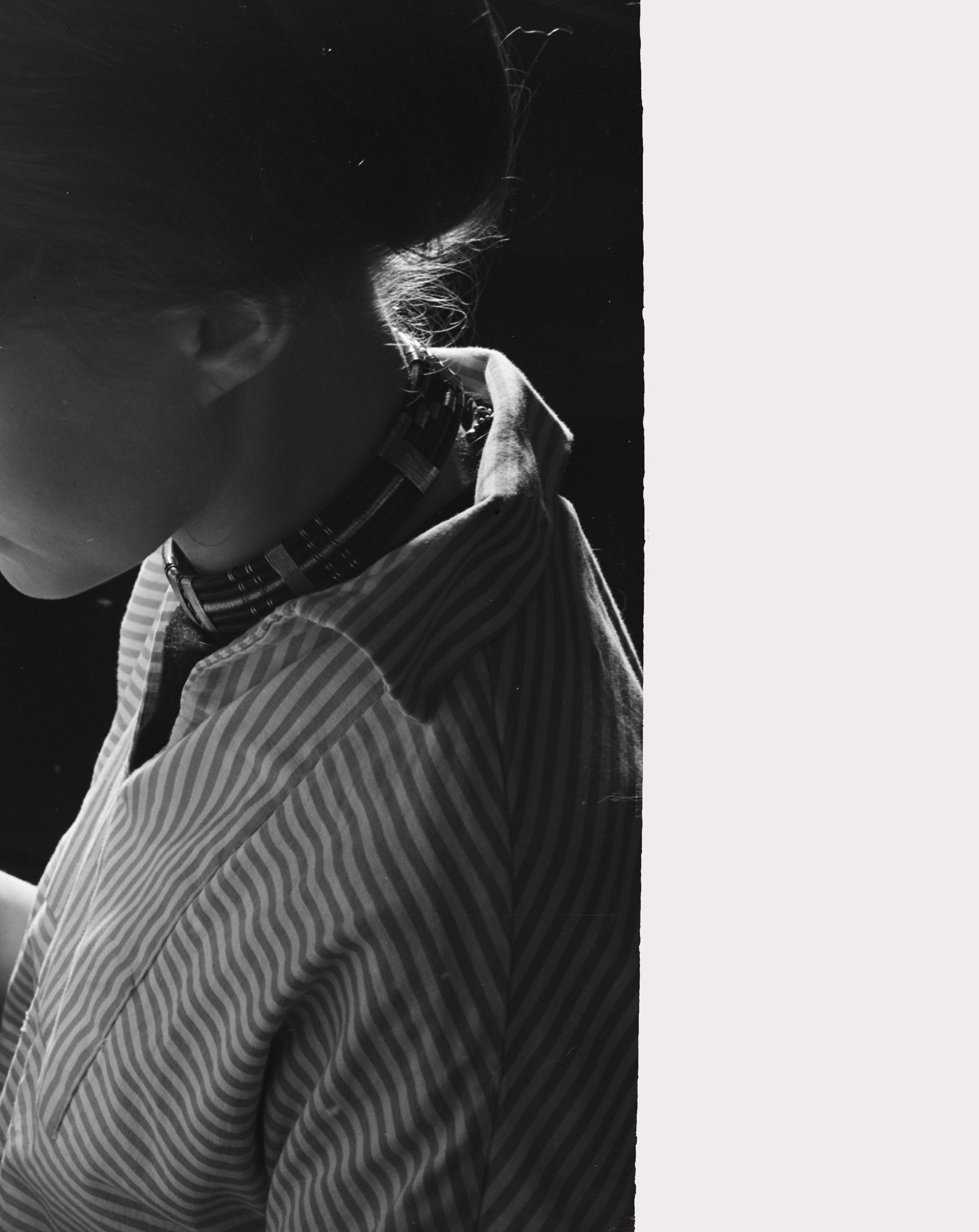
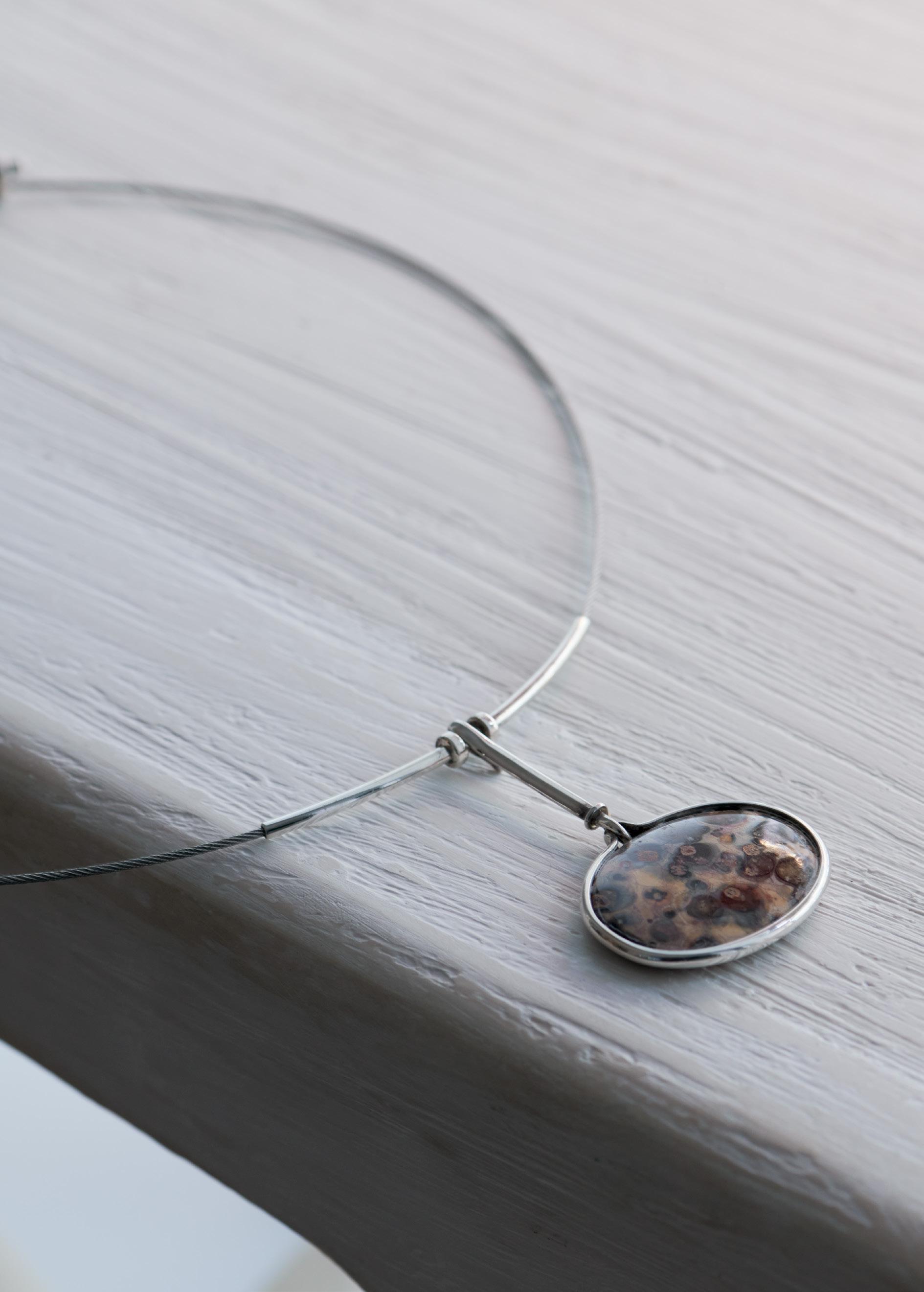
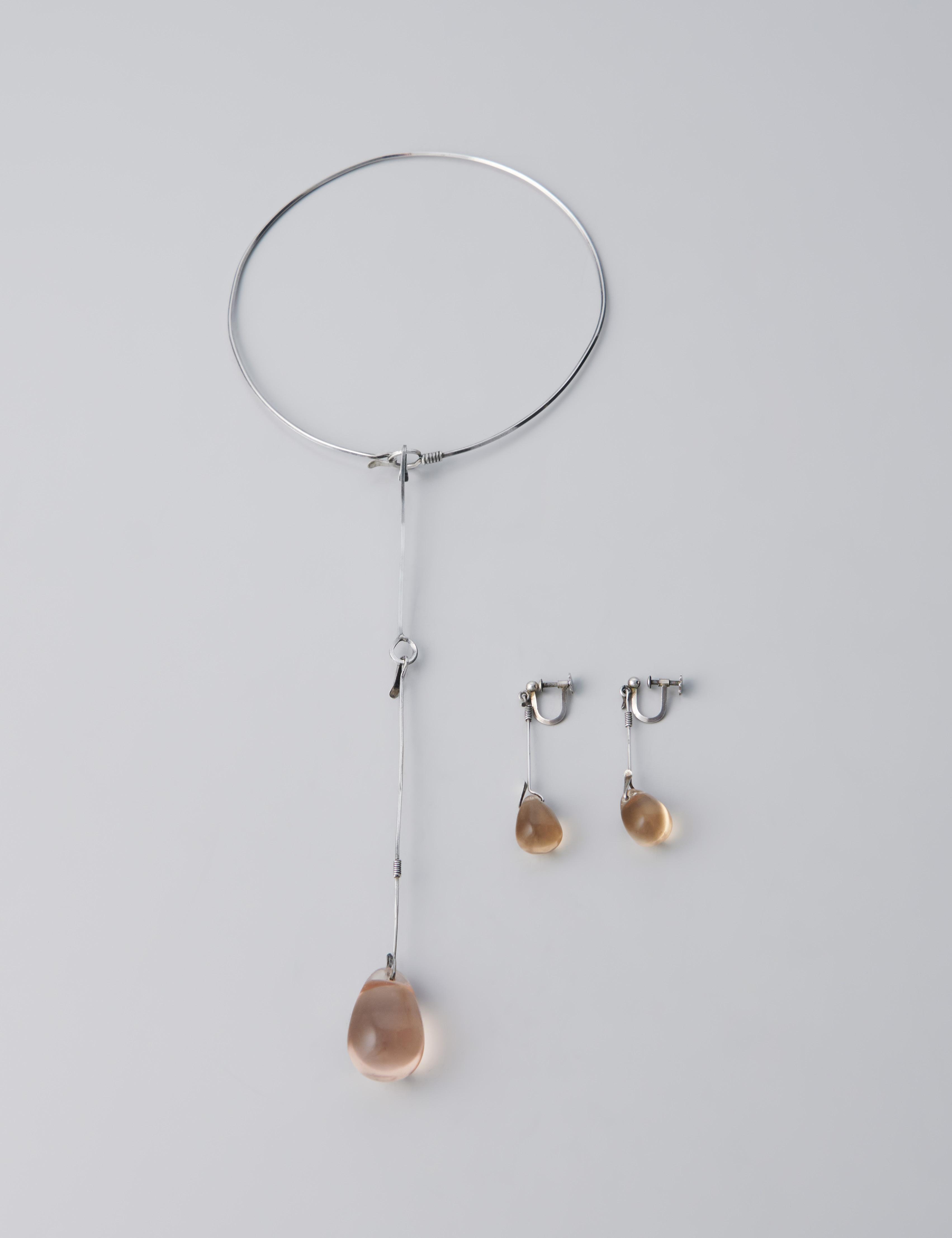
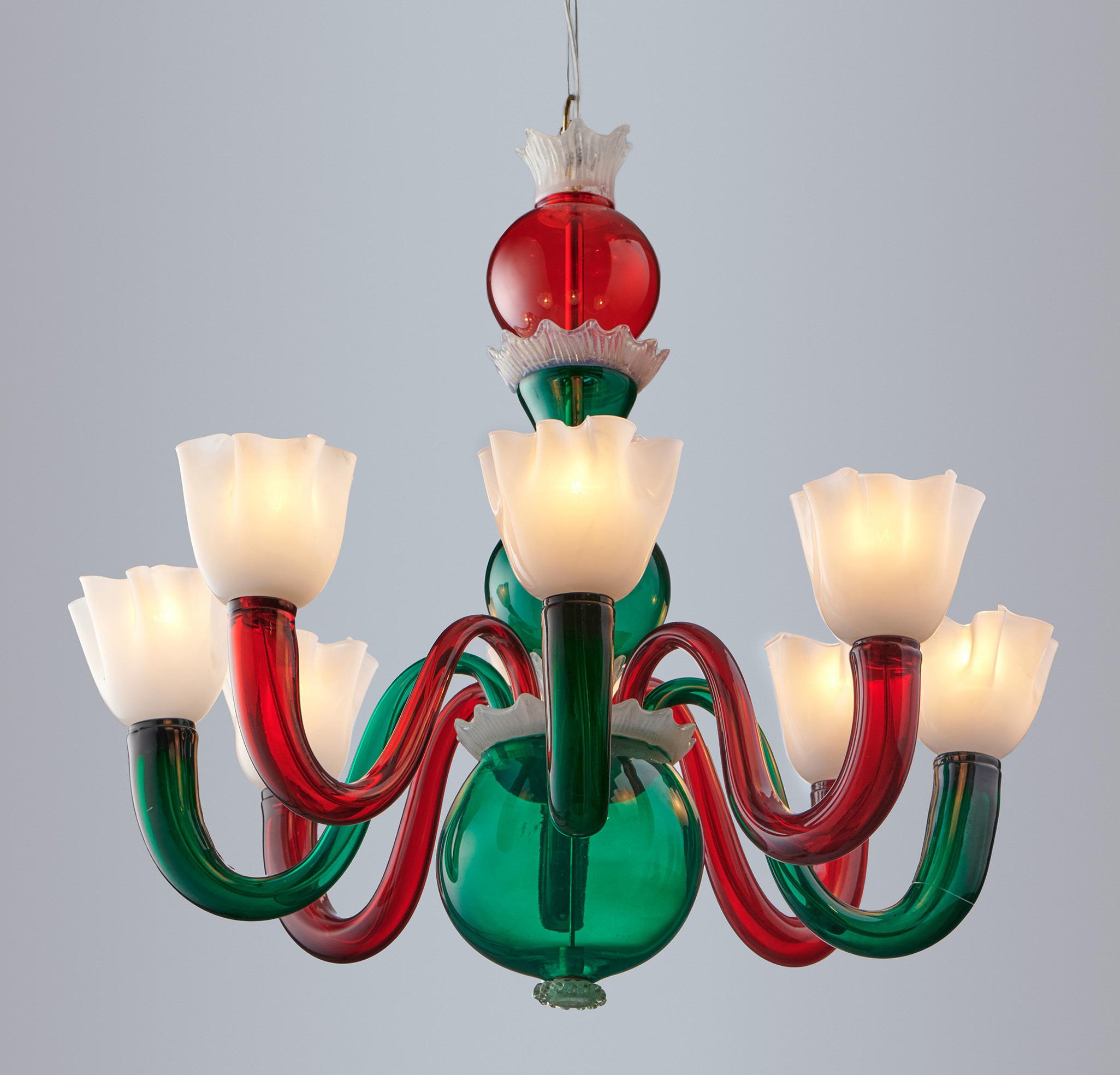
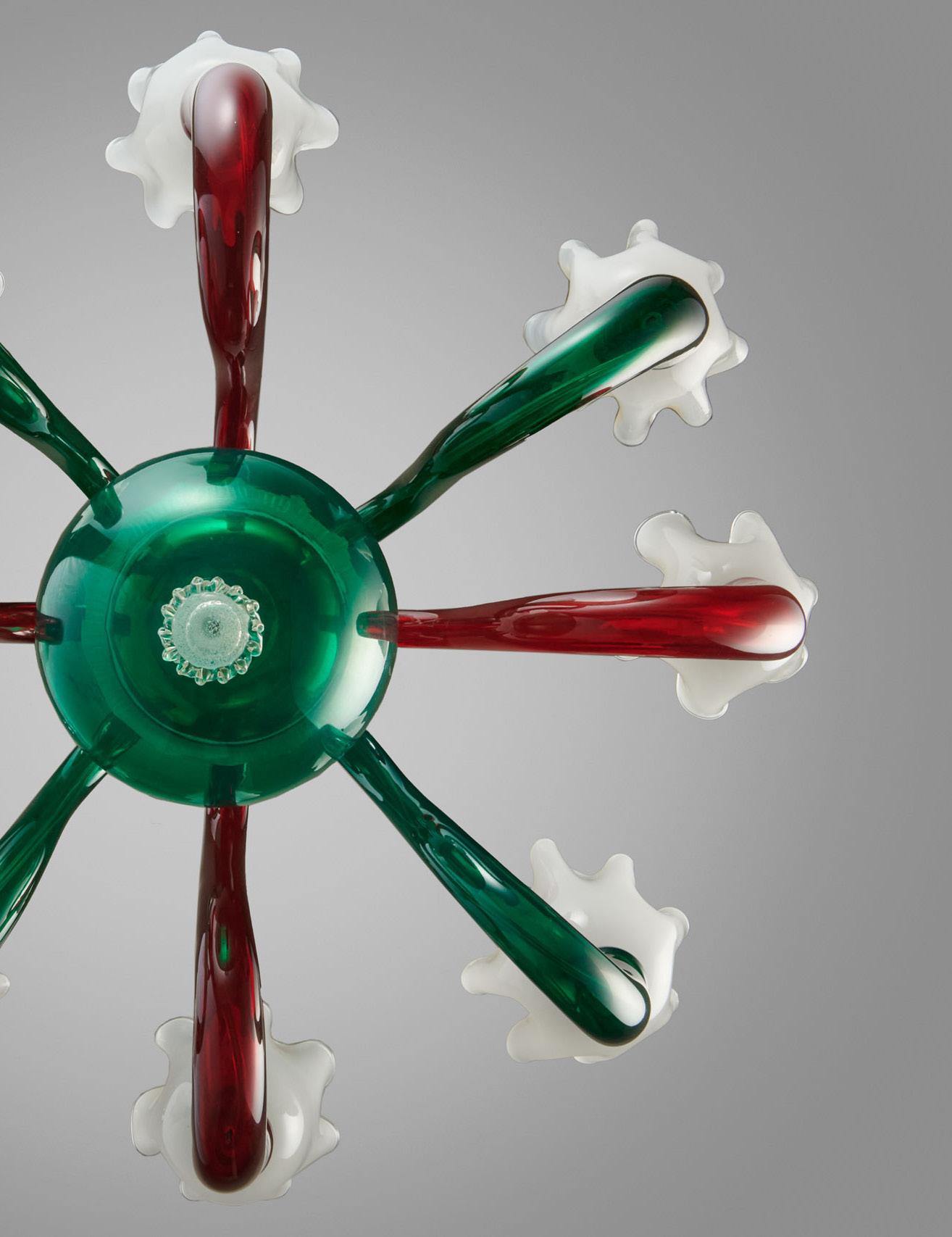
Model no. 5557, eight arms
Tinted glass, clear glass, brass
Model number impressed to base

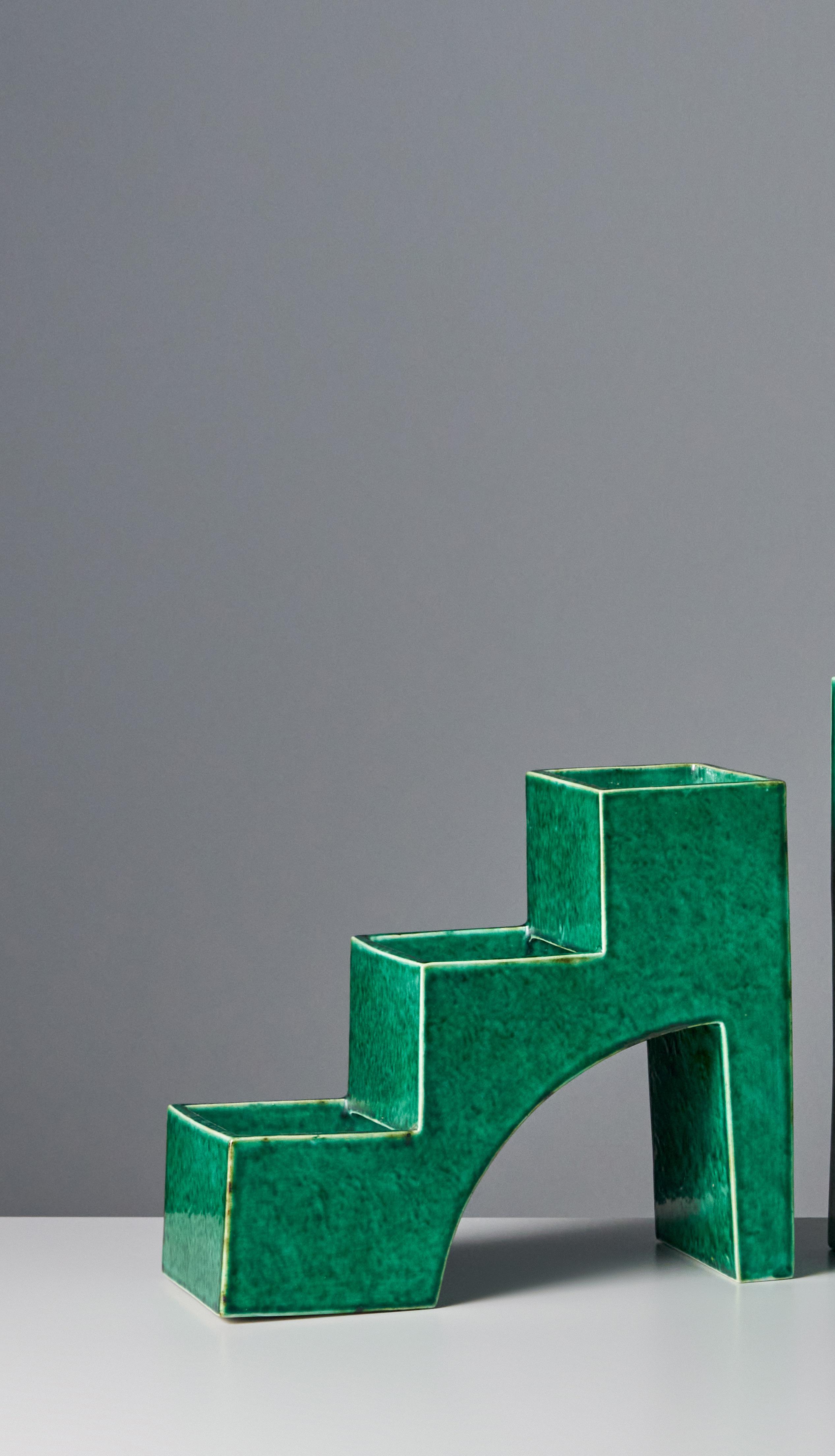
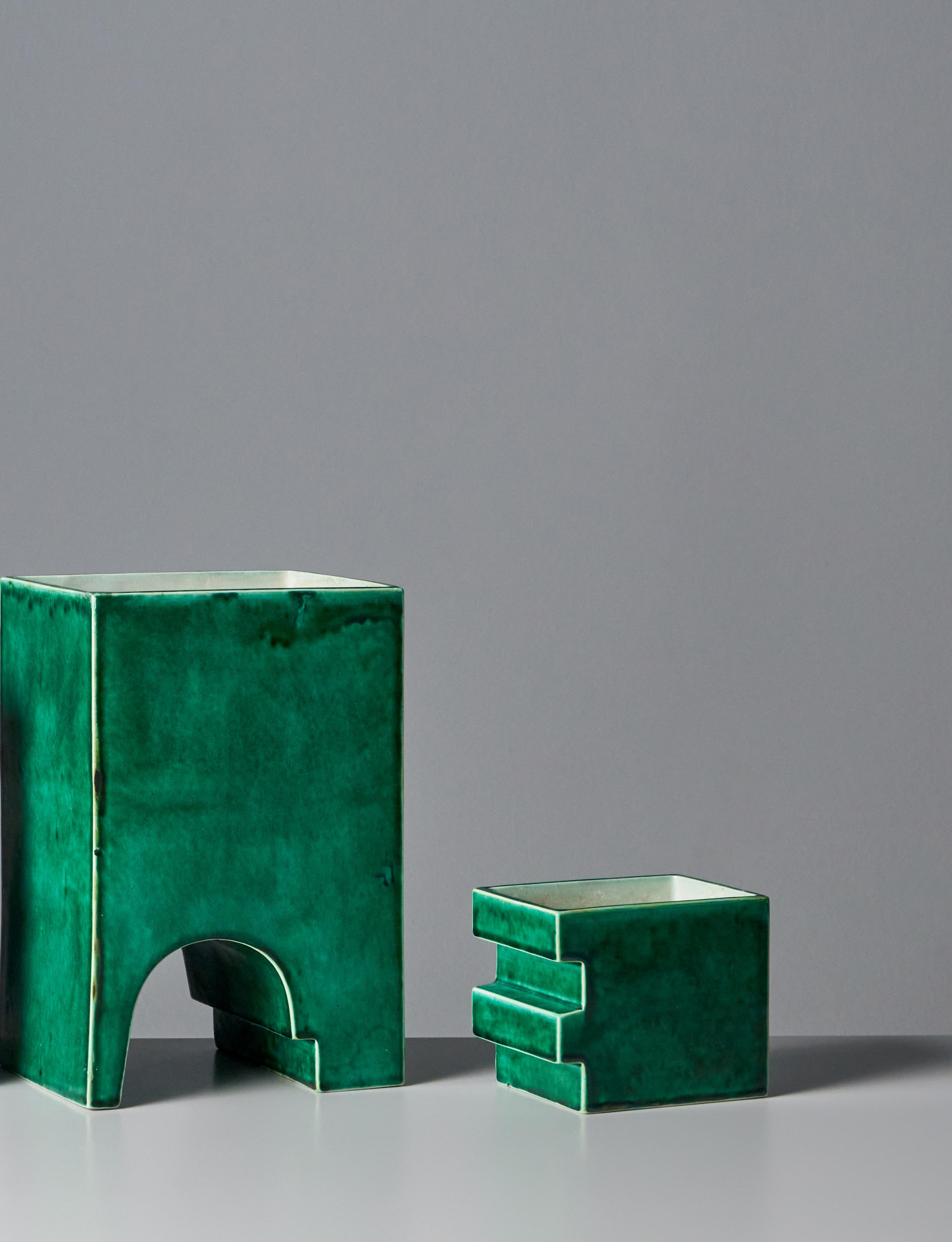
Wilhelm Kåge ‘Puzzle’ Planters
Produced by Gustavsberg Circa 1930
Model 975/9, 975/4, 975/8
Glazed stoneware, separate unglazed pots for inside
Signed to the underside with manufacturer, artist and model number
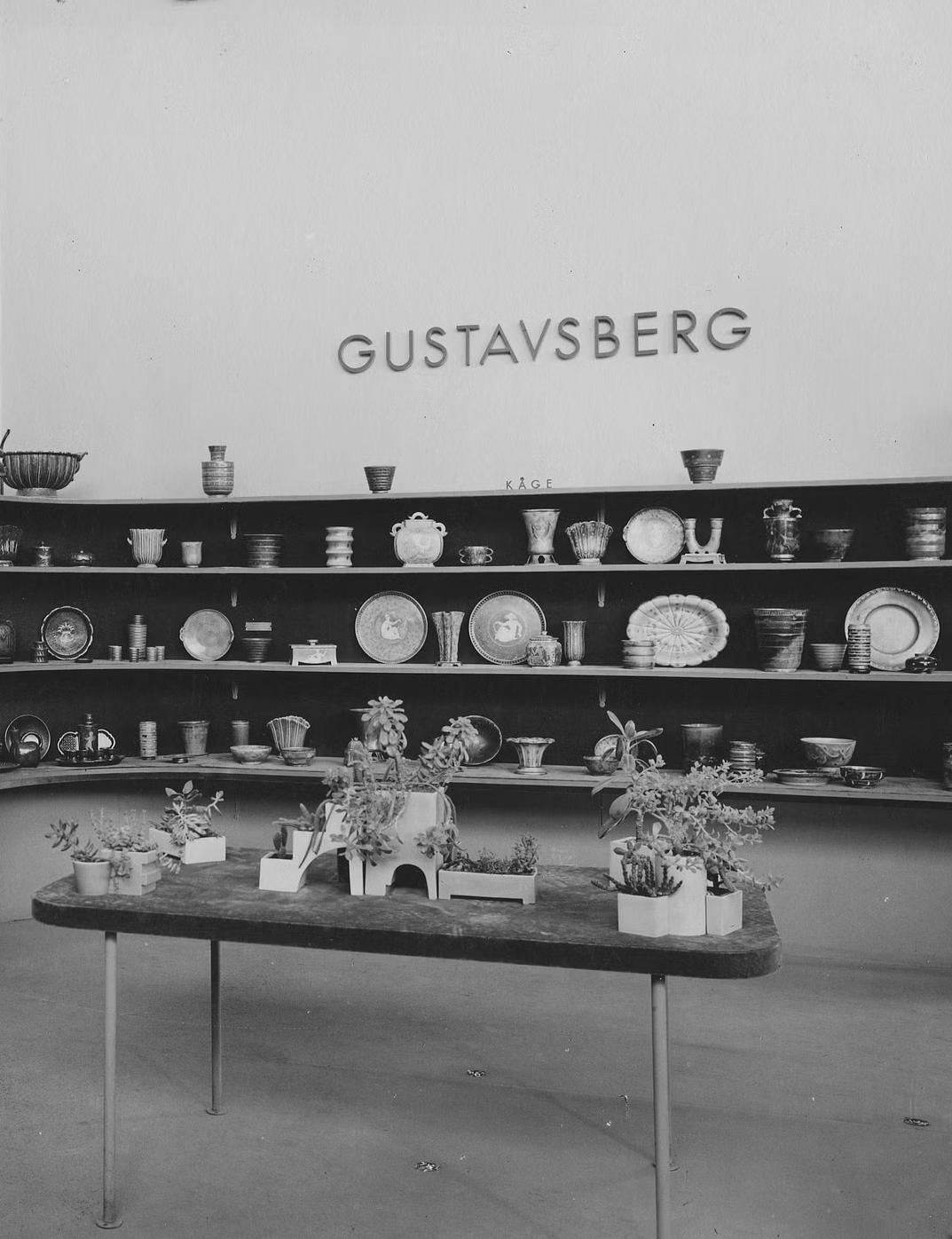
Exhibited:
Model was introduced at the Stockholm Exhibition in 1930
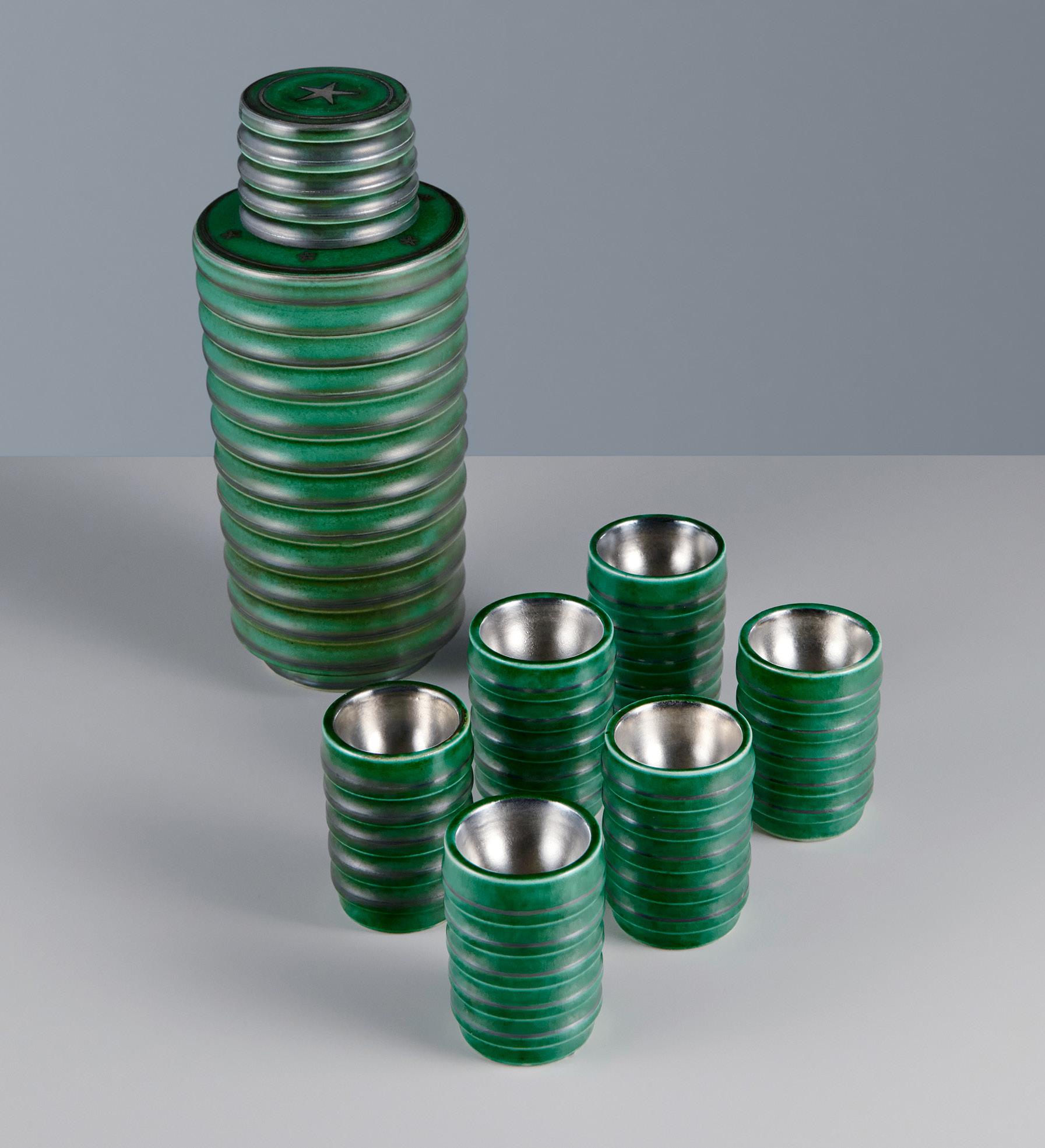
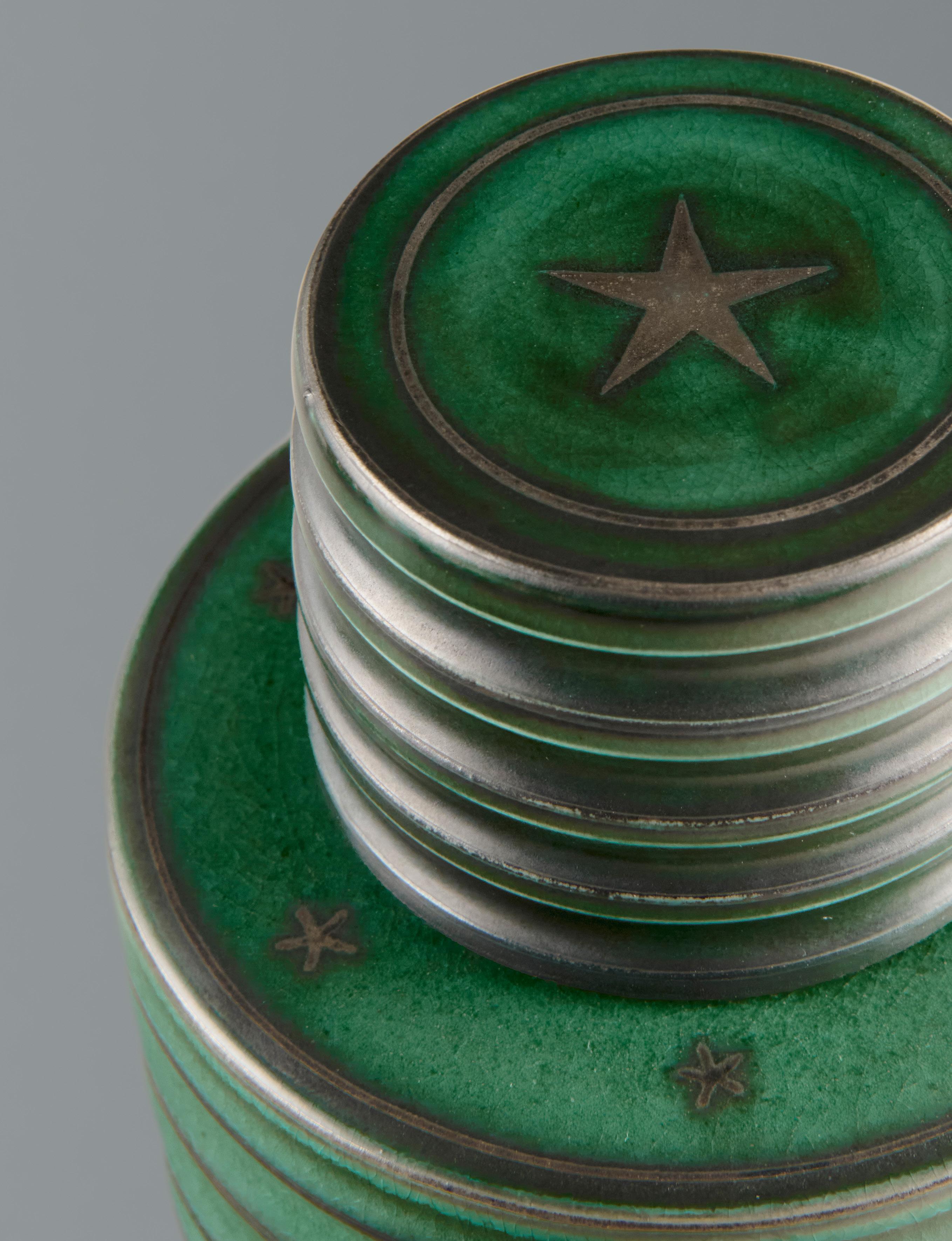
Wilhelm Kåge ‘Argenta’ Snaps Set Produced by Gustavsberg 1930
Glazed stoneware with inlaid applied silver decoration Bottle signed ‘Gustavsberg Kåge 1930’, with manufacturers mark to the base
Provenance: Doctor Nils Stenram (1890-1966), Malmö. Thence by decent.
Exhibited:
This model was shown at the Stockholm exhibition in 1930s, as part of the Gustavsbergs stand and possibly this set.
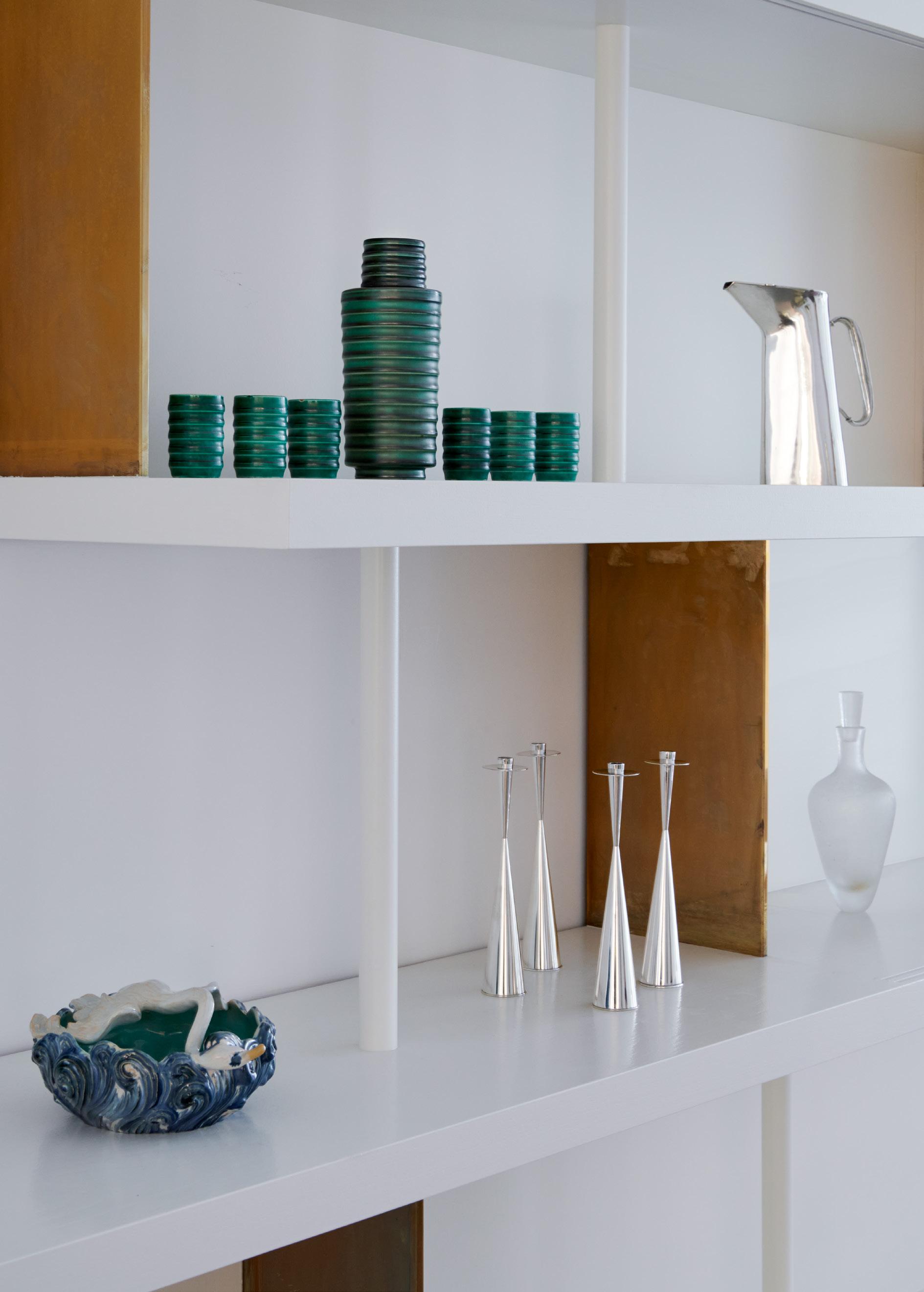
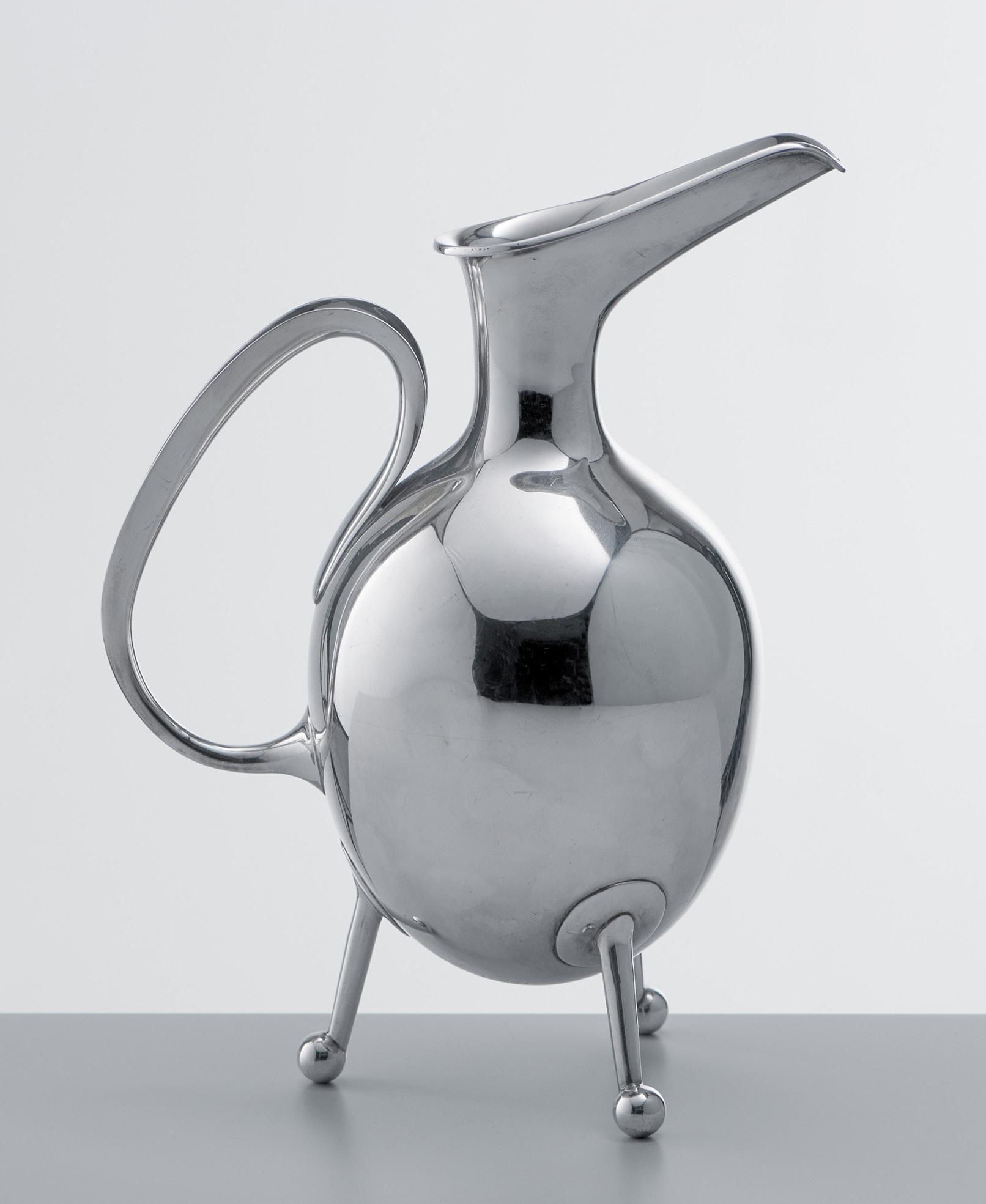
Jug Made in Sweden circa 1960
silver Manufacturers and date stamp
Set of Eight Candlesticks, model no. TW 189
Produced by Kultakeskus 1963
Silver
Signed to the underside, impressed with manufactures and date (K7) marks
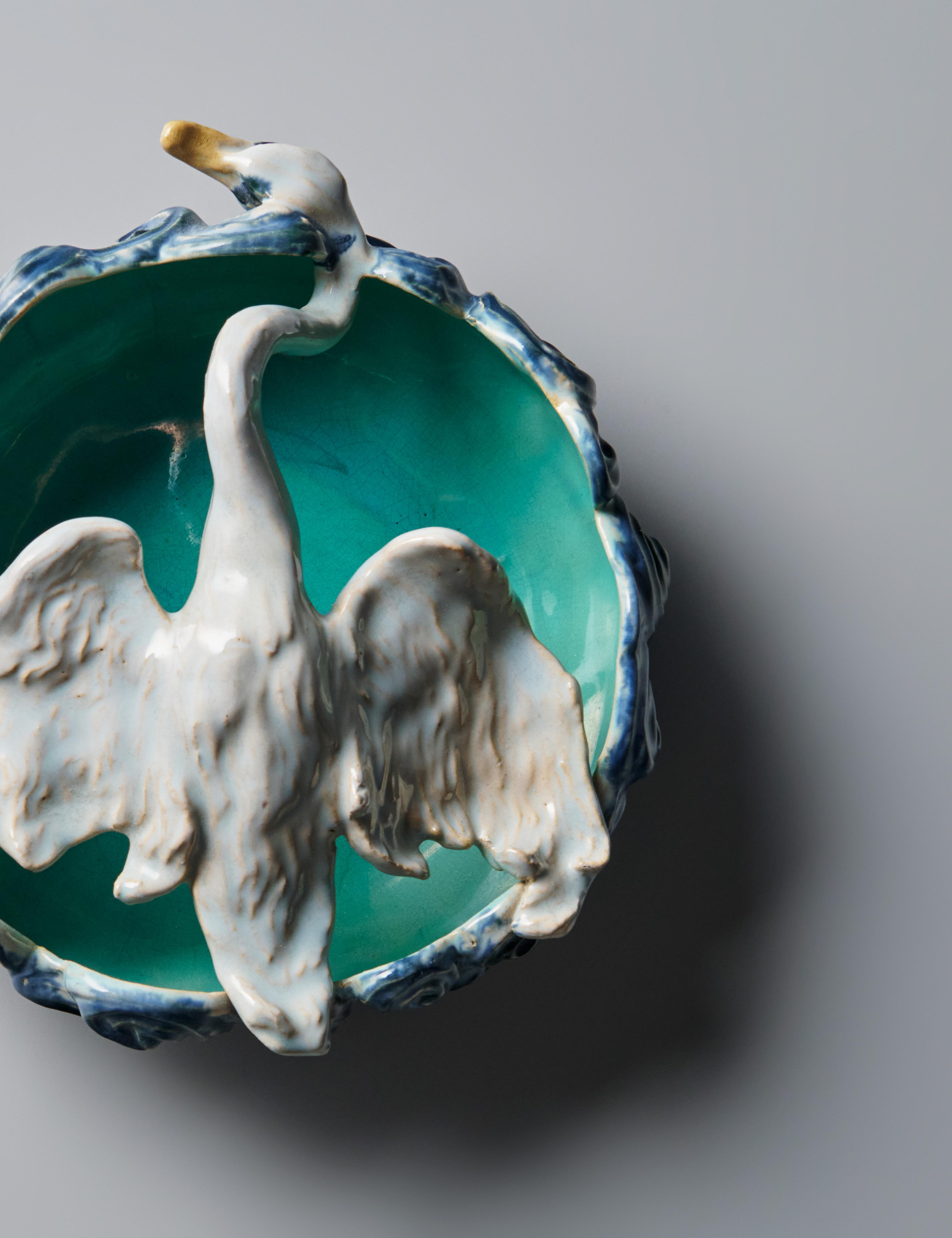
Produced by Höganäs circa 1890
Model no. 836
Glazed earthenware, decoration in relief Impressed to the underside with manufacturer’s marks and model number
An example of this model is in the collection of Kulturen in Lund, inv. no. KM 41000.506
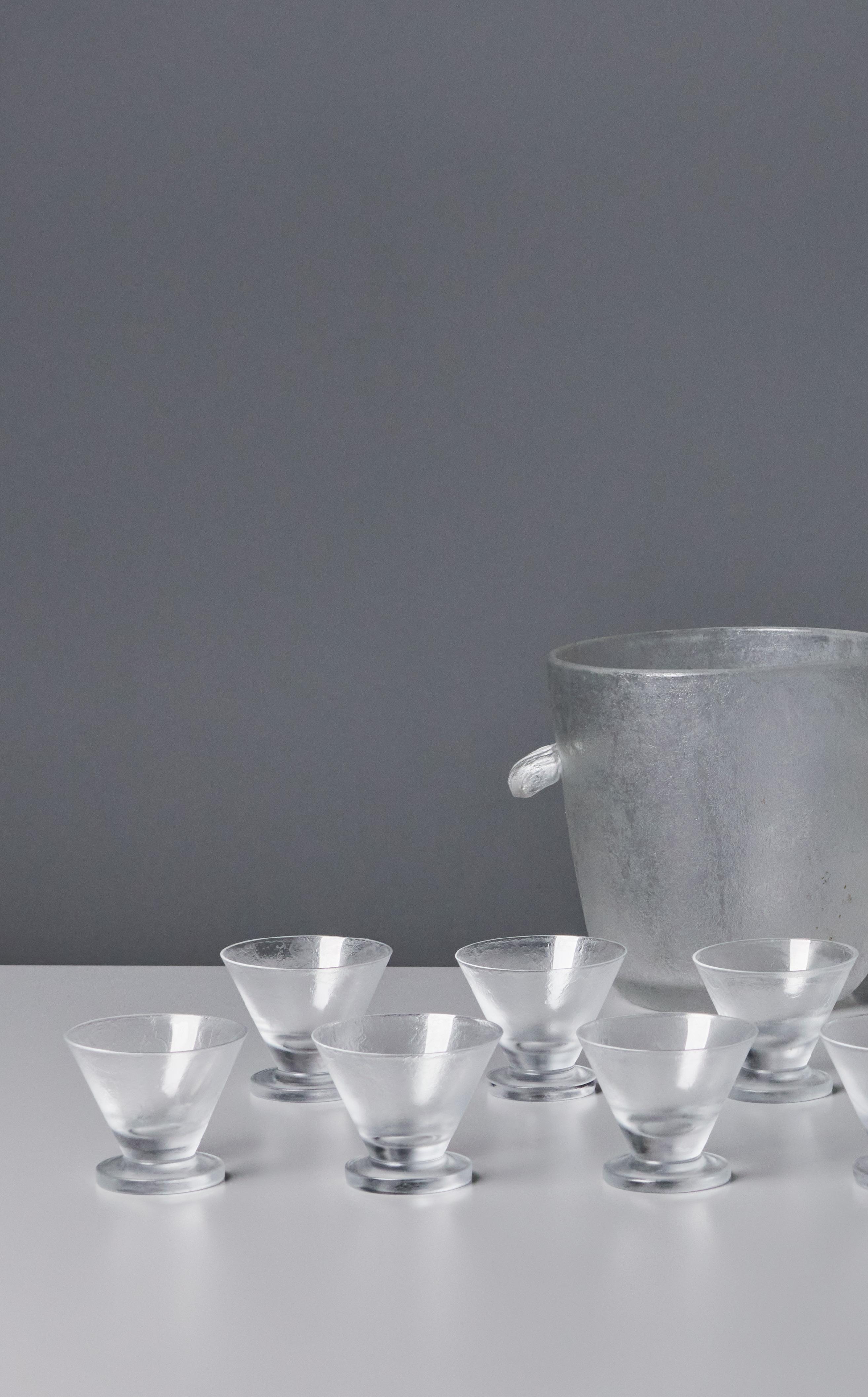
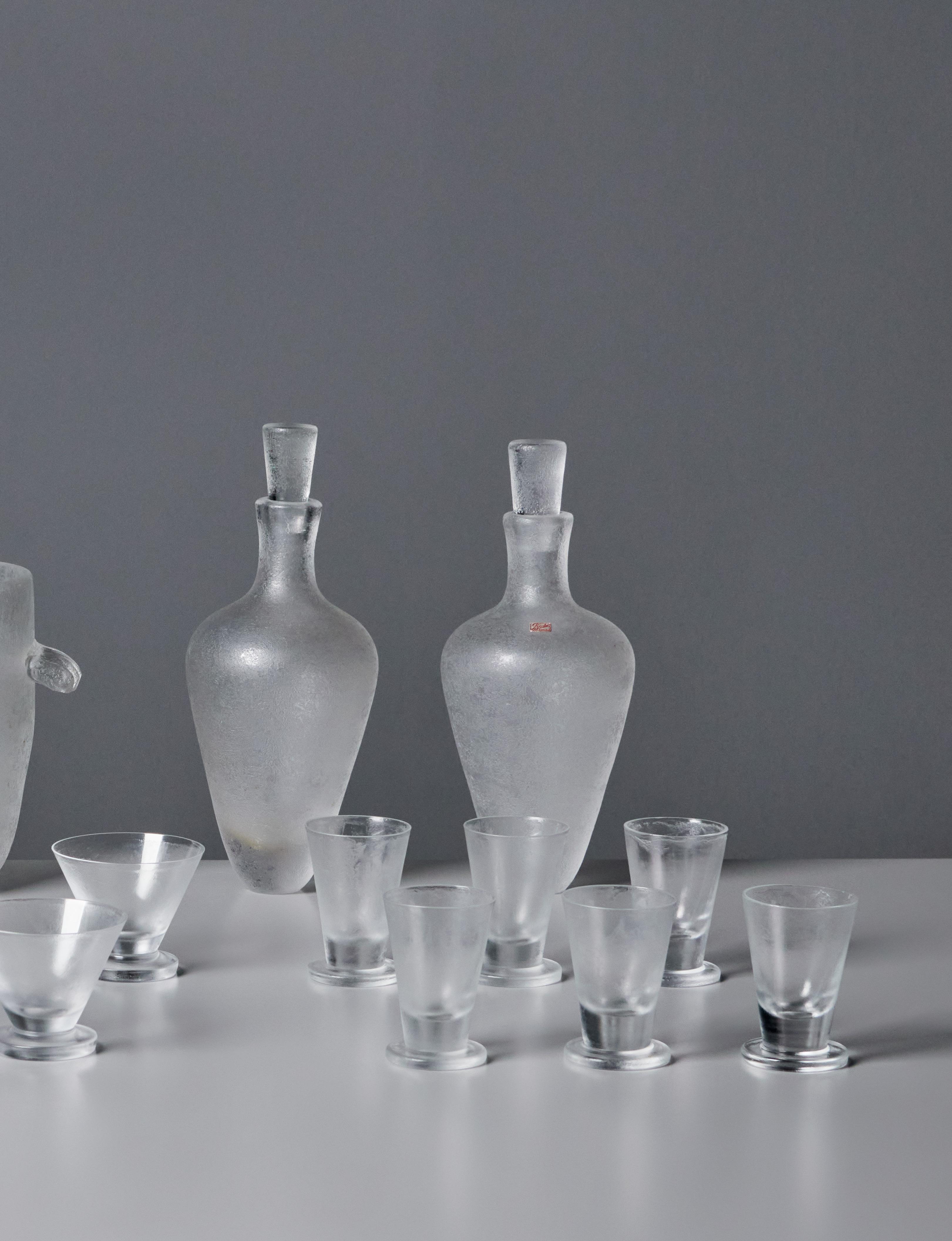
Vicke Lindstrand
Cocktail Service
Produced by Boda circa 1989
From the ‘Iced’ series, designed in 1936
Hand blown glass Manufacturer’s acid paper sticker
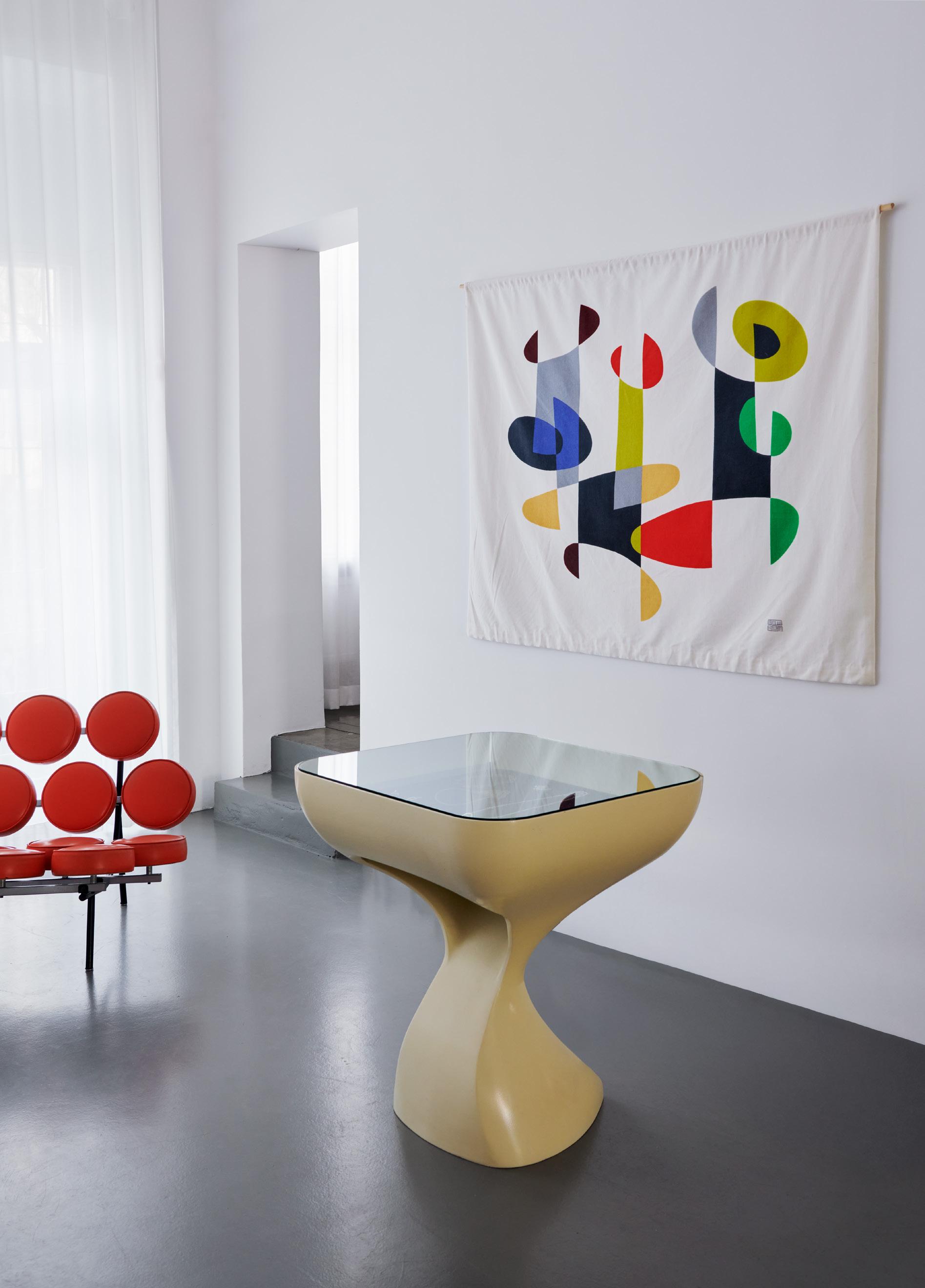

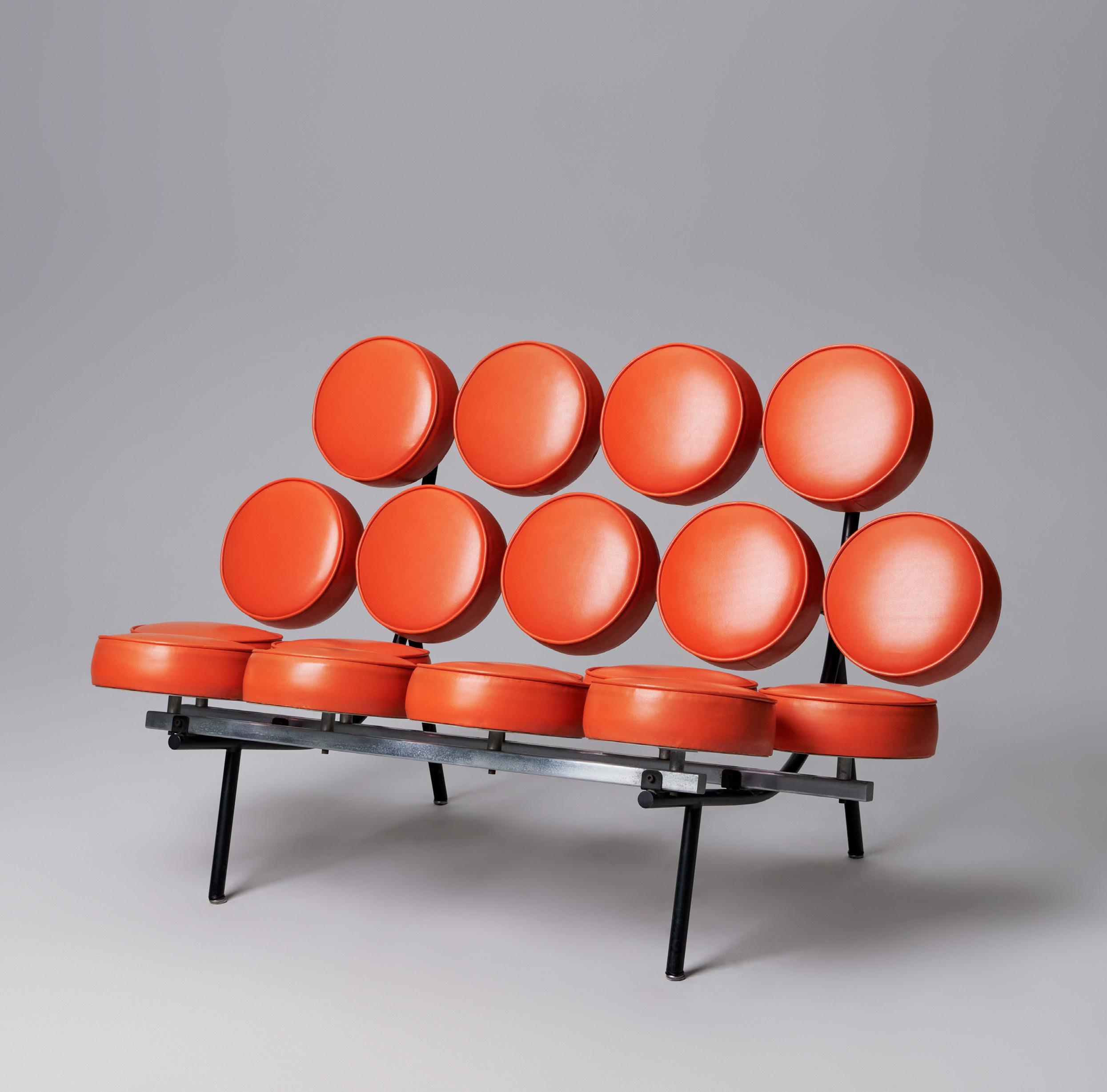

Nelson
Produced by Herman Miller
Designed 1956, executed circa 1970s
Model no. 5670
Painted steel, brushed steel, original Naugahyde vinyl
Manufacturer’s metal plaque to the frame

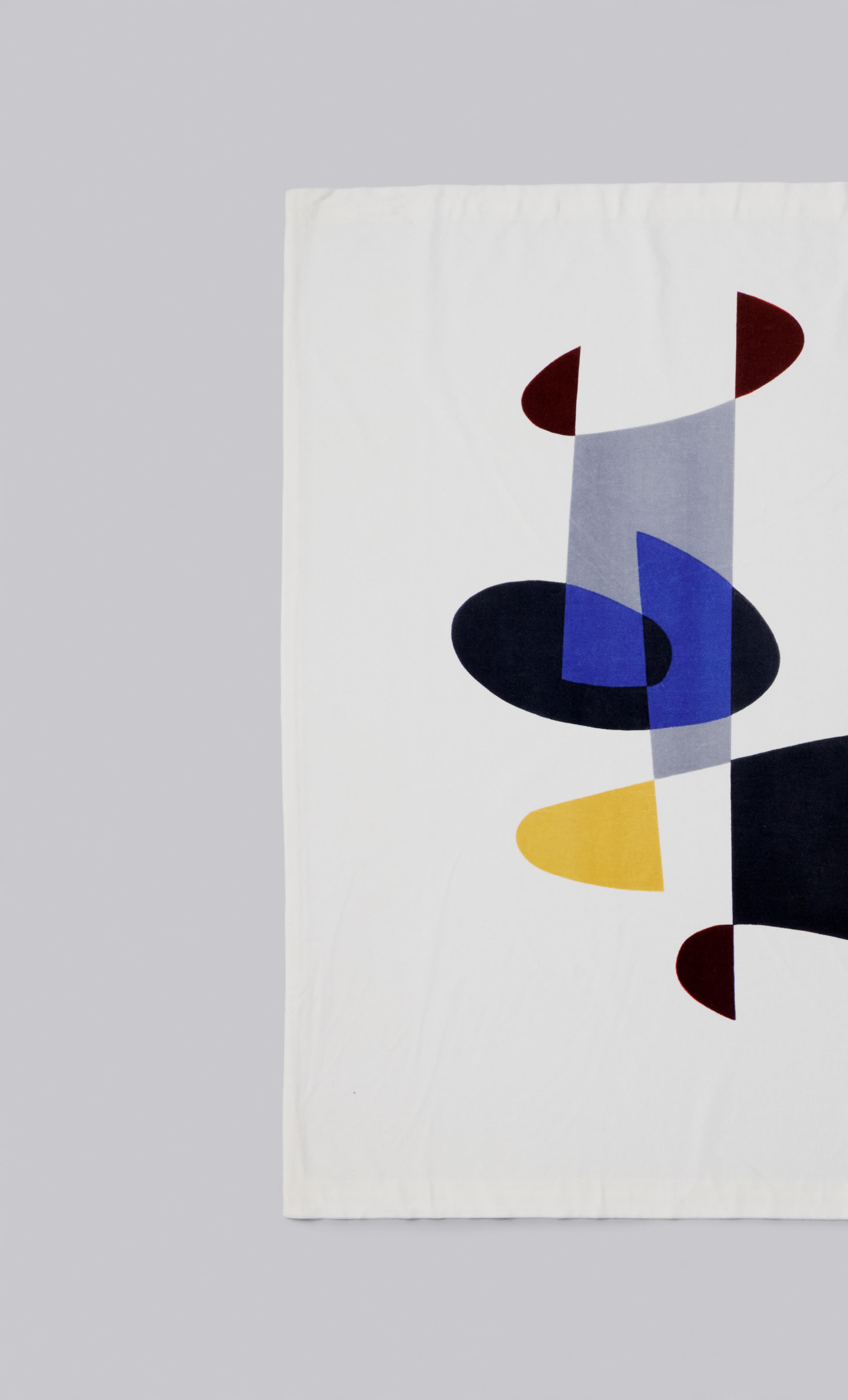
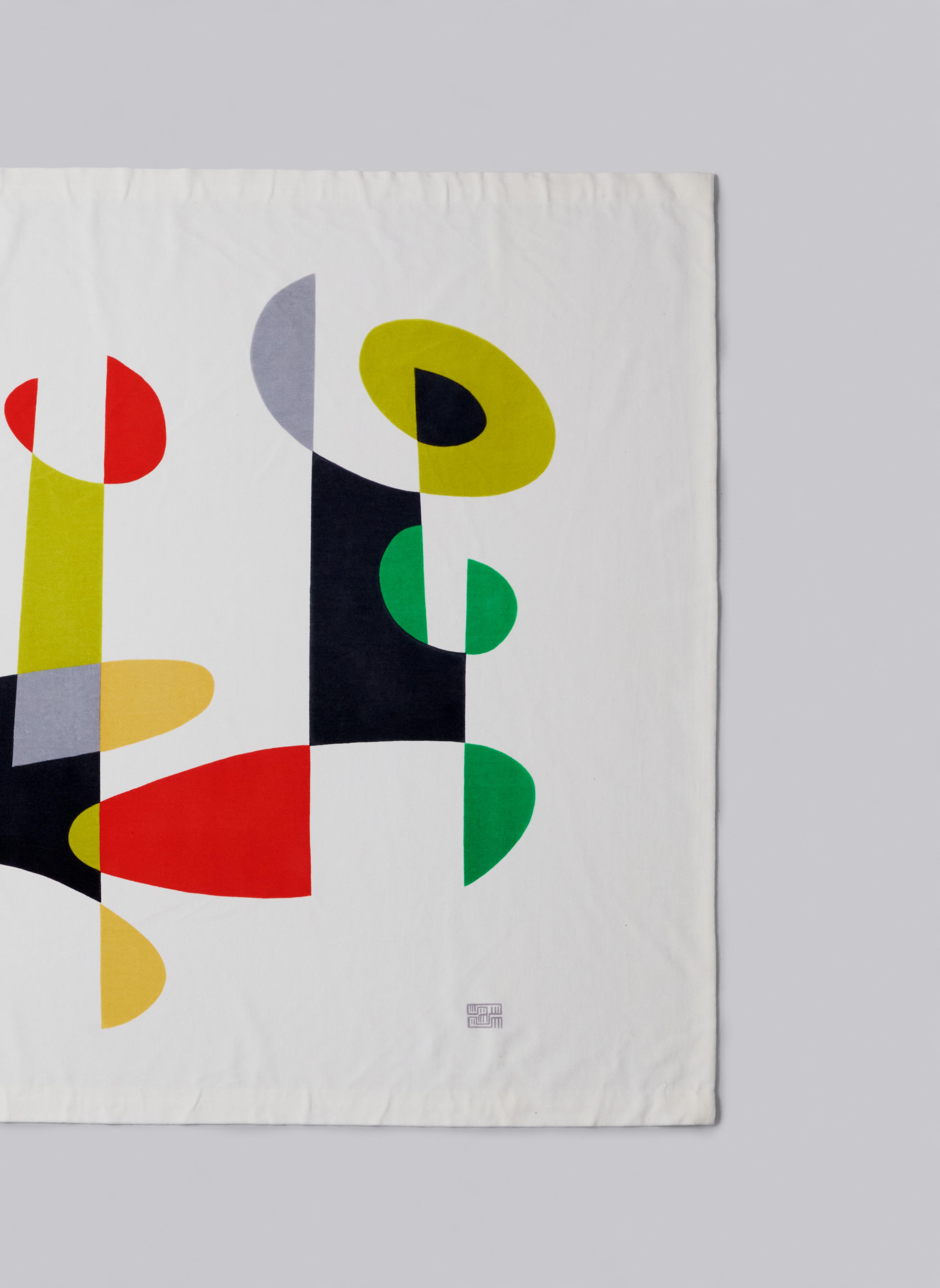
Pierre Olofsson
‘Trio’ Tapestry Produced by Nordiska Kompaniet circa 1960
Velvet with poloychrome motif Signed ‘47.100 Olofsson’
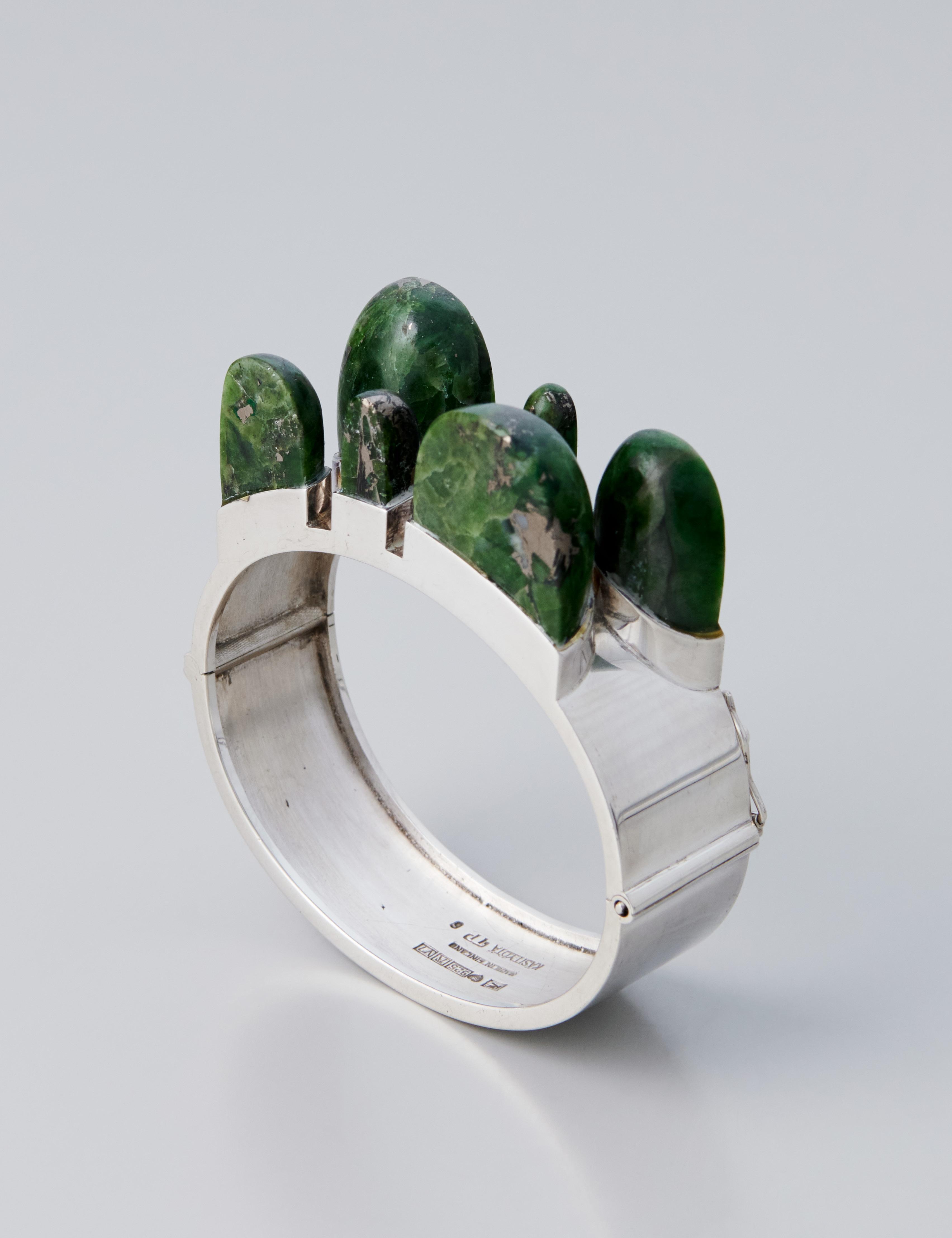
Bracelet
Produced by Käsitötä 1974
Sterling silver with Aventurine cabochons Impressed with Finnish crown control, assay marks, and dated ‘V7’
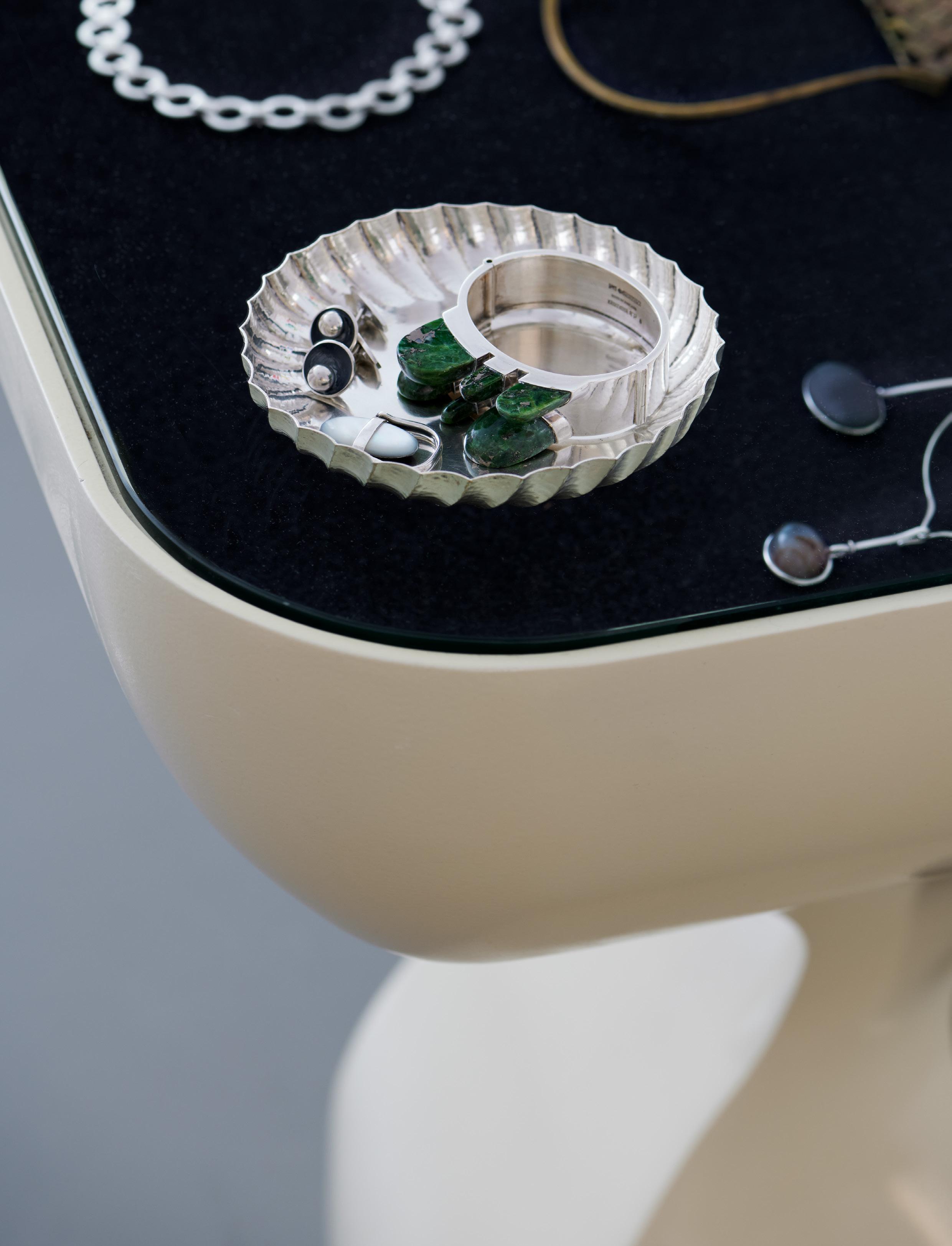
Josef Hoffman Bowl
Produced by Wiener Werkstätte circa 1910
Sterling silver Stamped to the underside
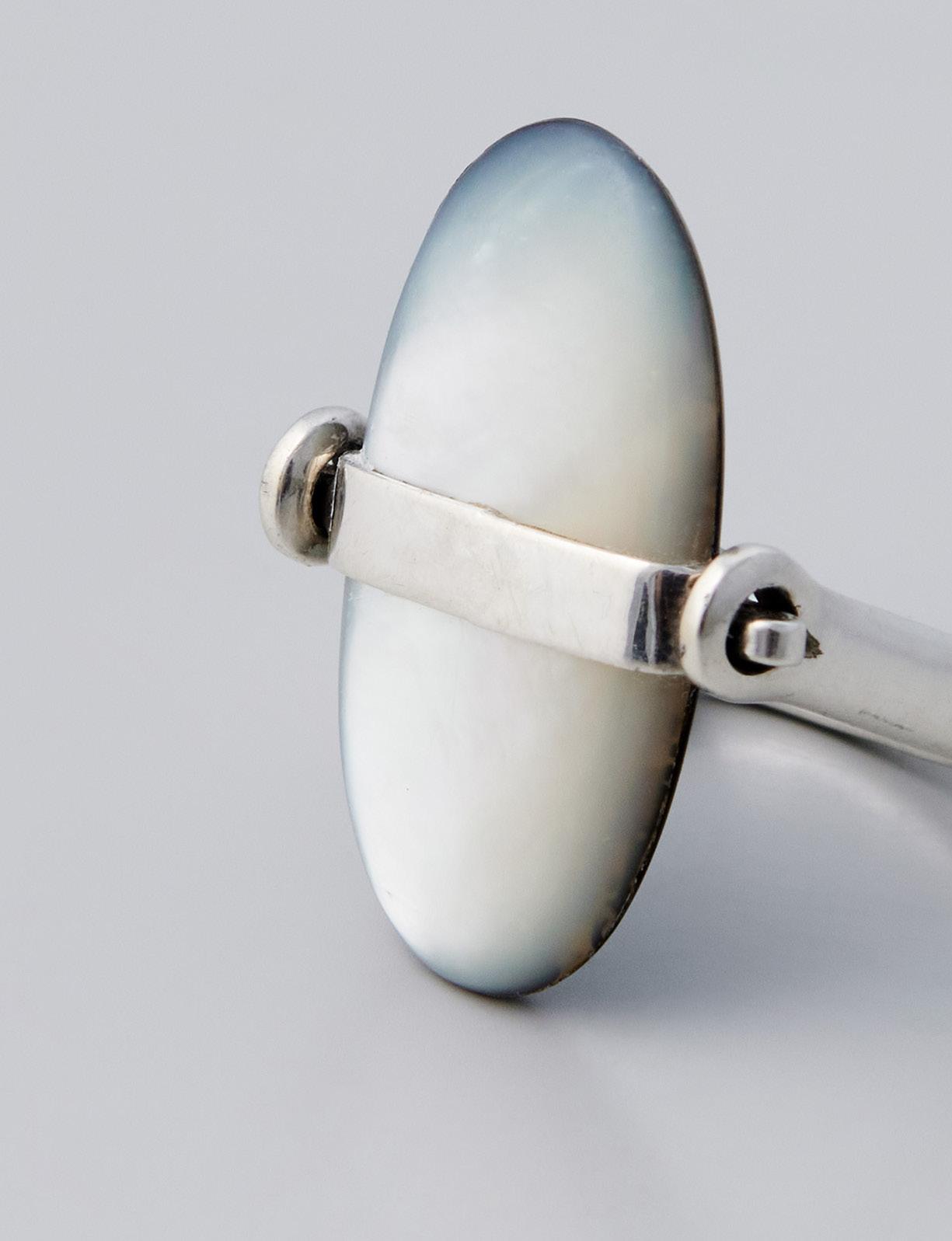
Cufflinks circa 1970
Sterling silver Stamped to the base
Vivianna Torun Bülow-Hübe
‘Day & Night’ Ring
Produced by Torun circa 1980
Sterling silver, reversible surface of motherof-pearl and black obsidian to the reverse Stamped to the inside
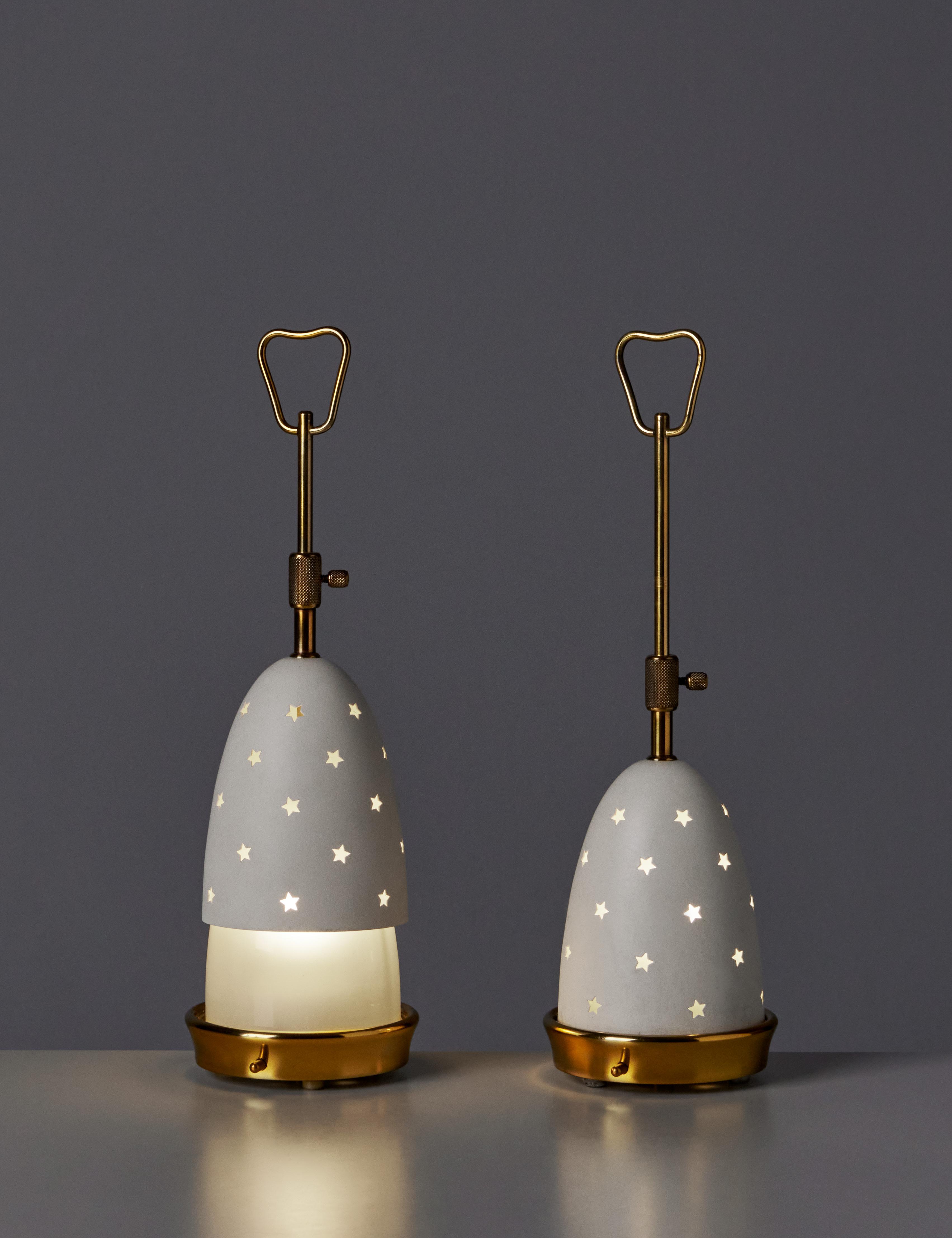
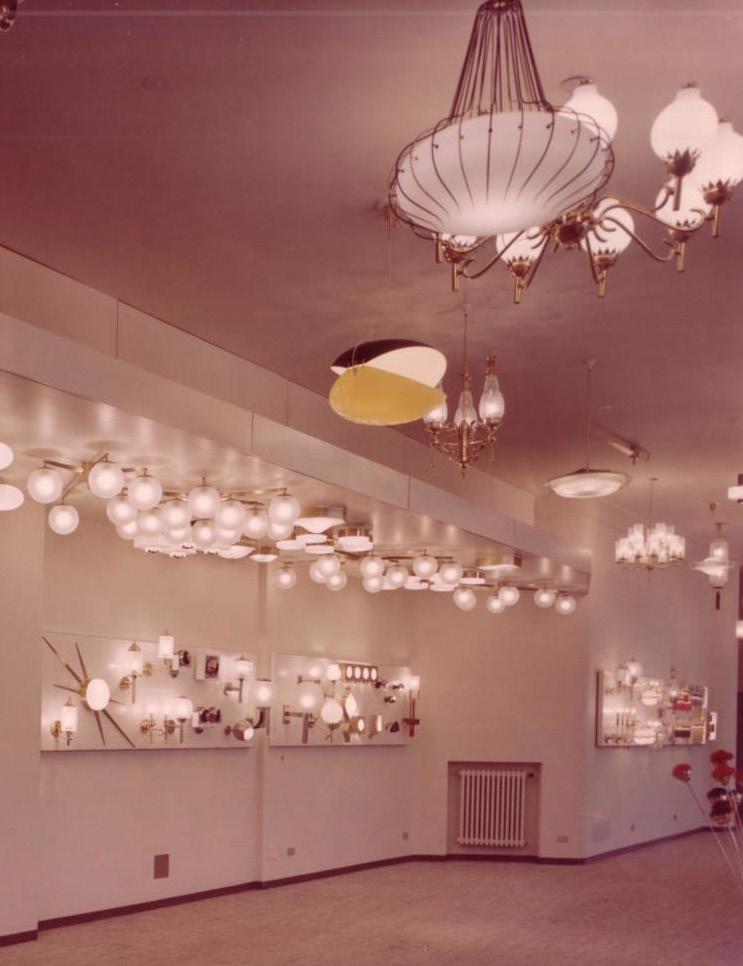
Produced by Arredoluce
circa 1950
Model no. 12291
Painted metal, brass, frosted glass
Shades adjust to reveal frosted glass shade beneath
Manufacturer’s label to the underside

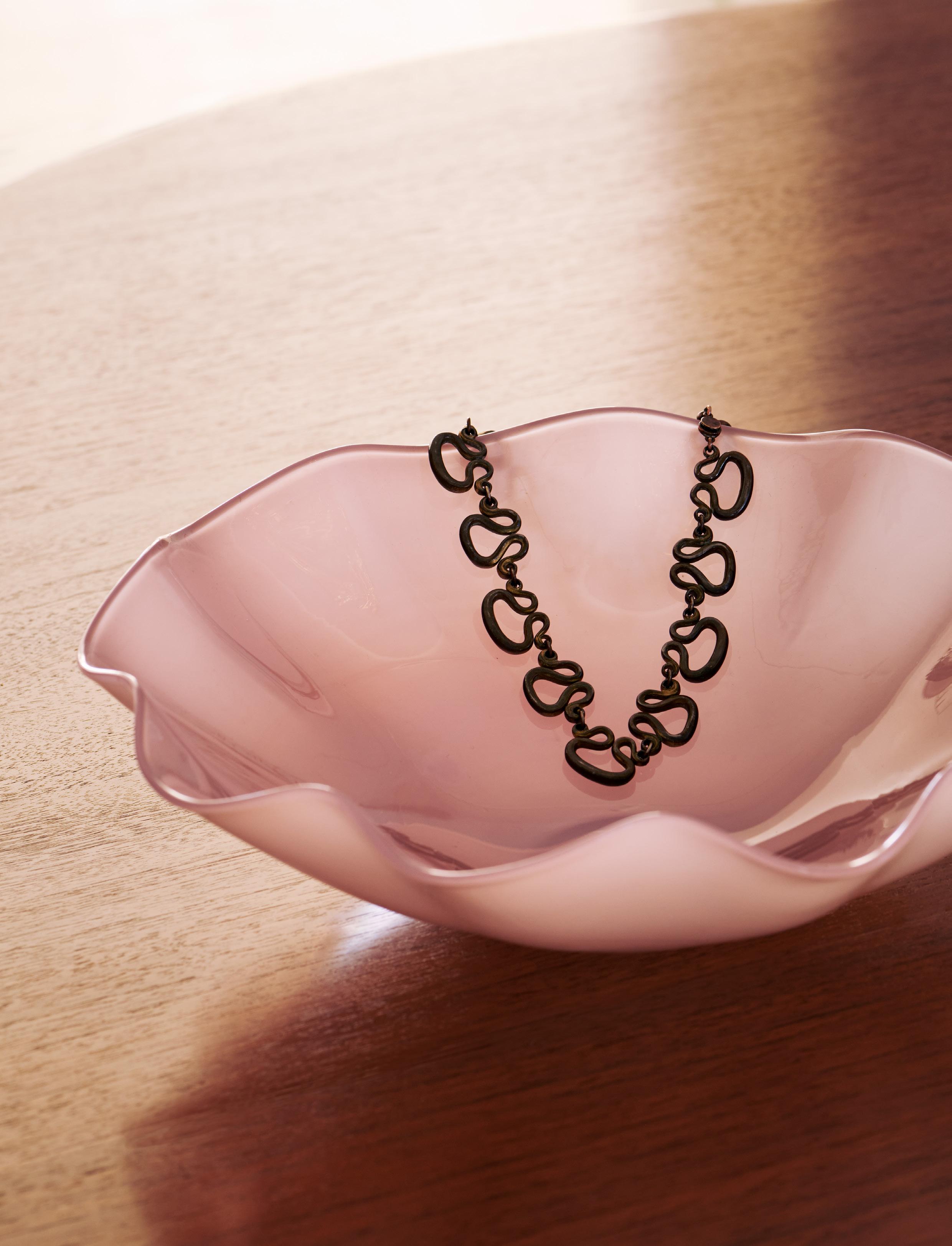
Sven Palqvist ‘Kantara’ Bowl
Produced by Orrefors circa 1950
Free blown coloured glass
Signed to the underside
Estrid Ericson
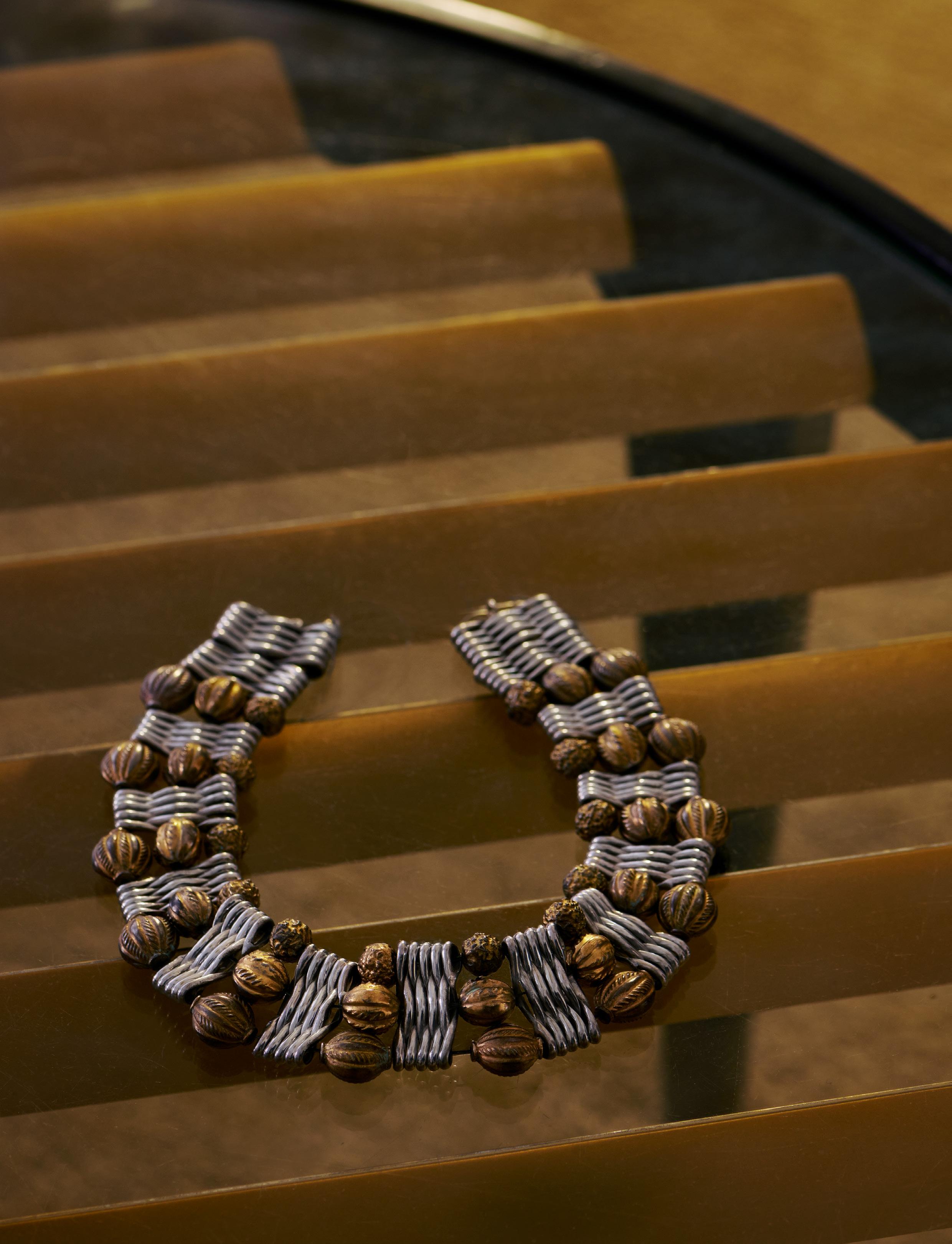
Necklace
Produced by Svenskt Tenn circa 1940
Pewter, partly gilded pewter
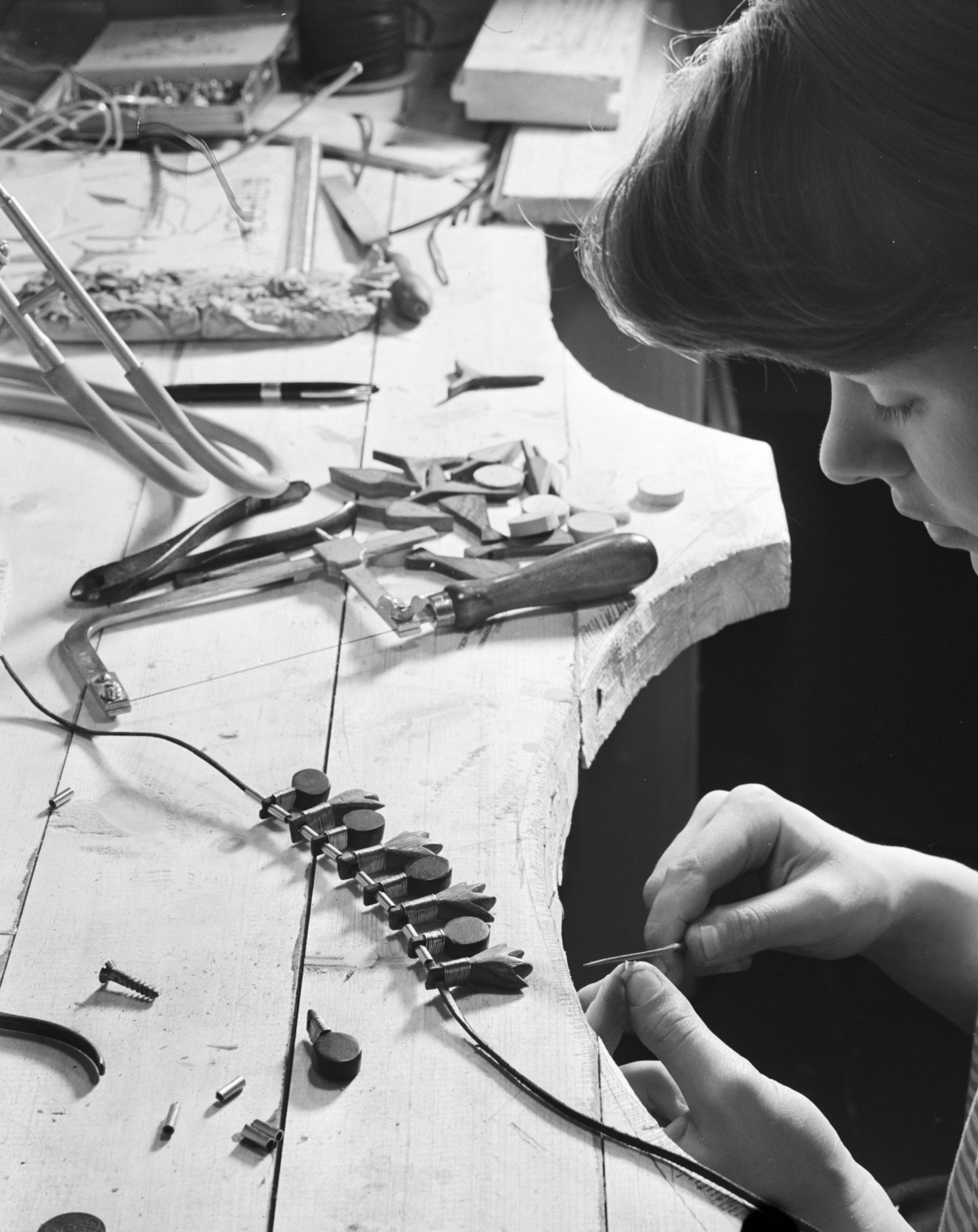
During the Second World War, when there was a shortage of materials, Estrid Ericson began to make jewellery in pewter. She often drew inspiration from her travels and created casts of flowers, ropes, buttons, buttons or, as here, seeds. The idea was perfectly timed, as “costume jewellery” was all the rage, even internationally.
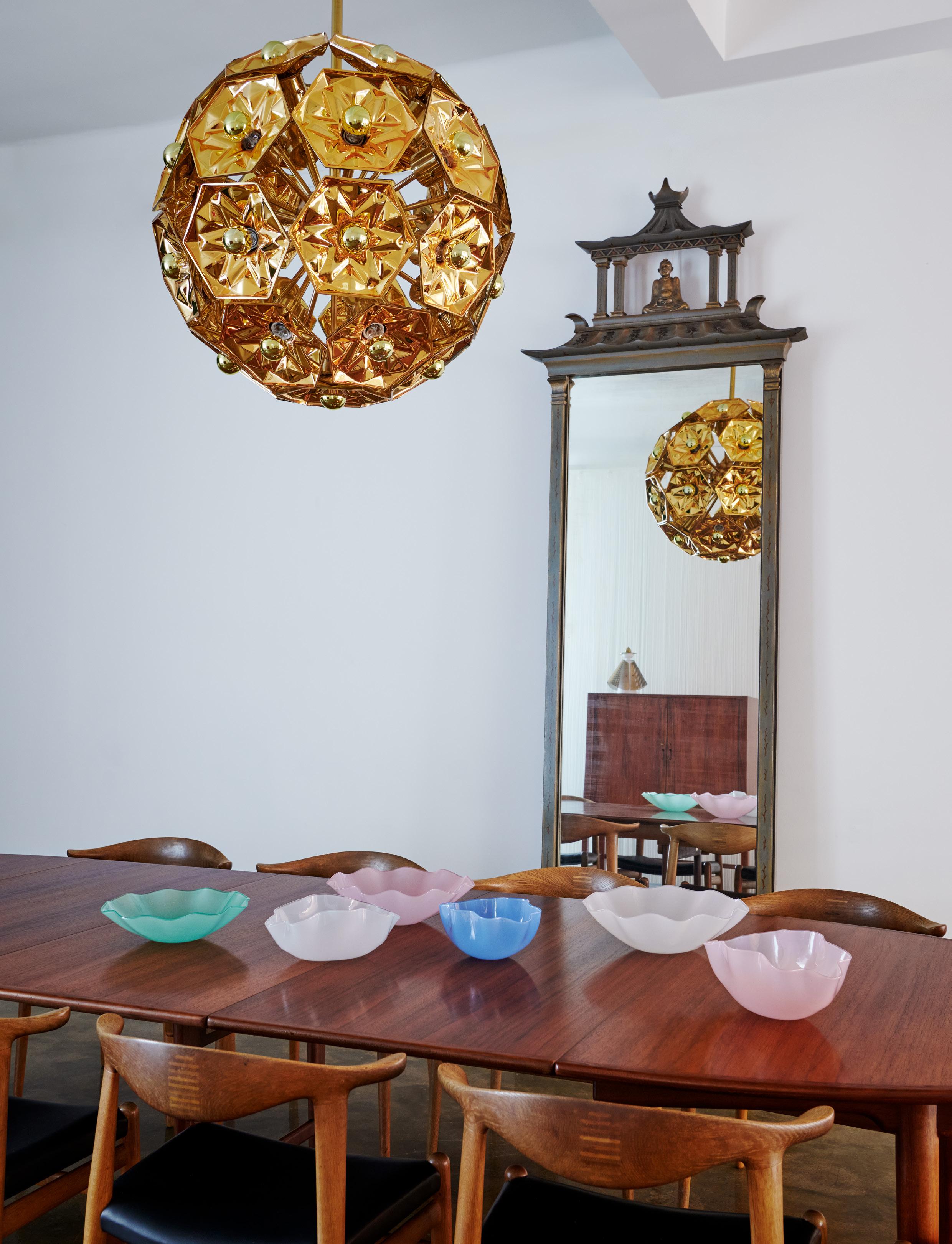
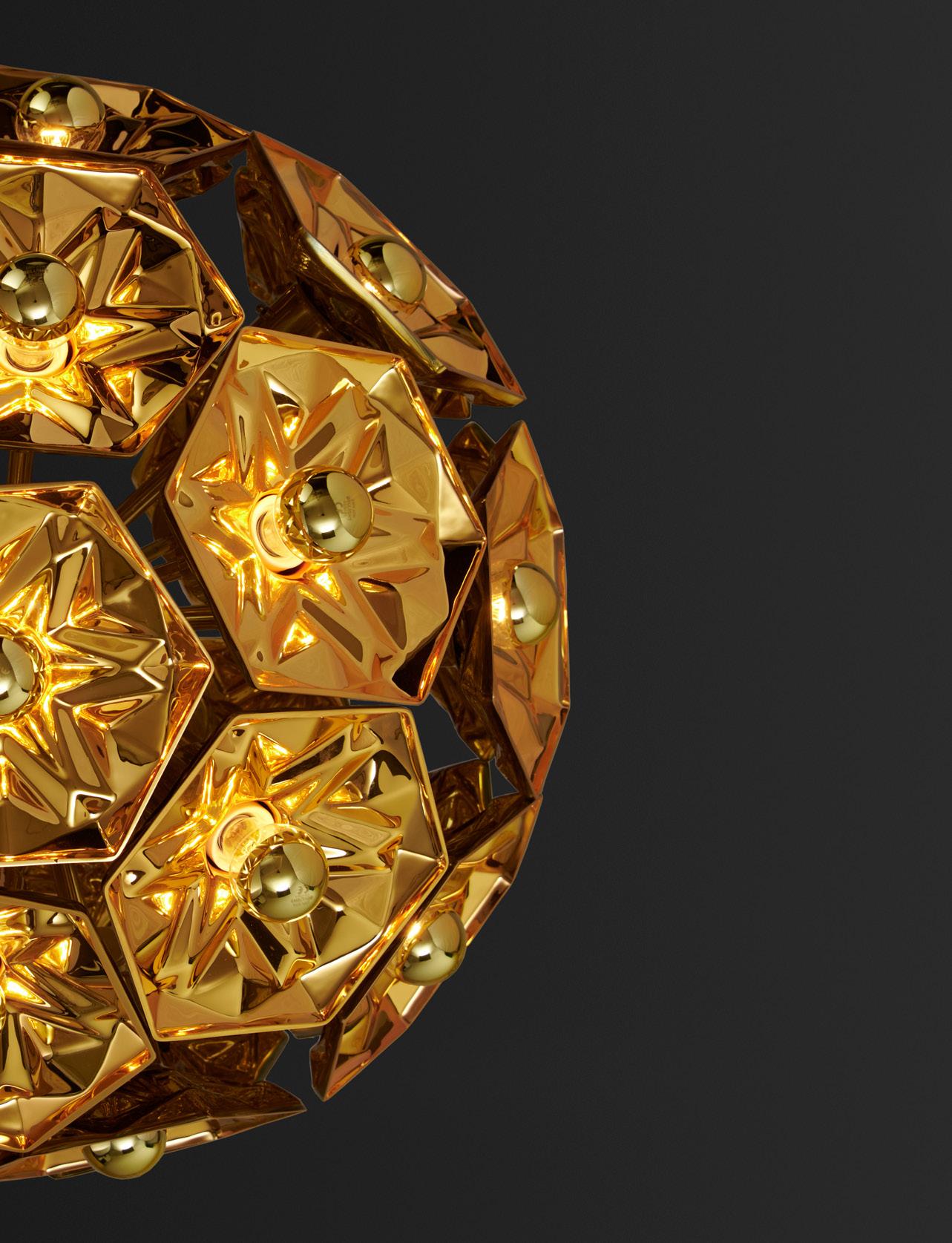
Ilmari Tapiovaara Chandelier 1971
Cast brass, turned brass, cast gilded glass shades
Designed 1971 for the Inter-Continental Hotel Helsinki Finland.
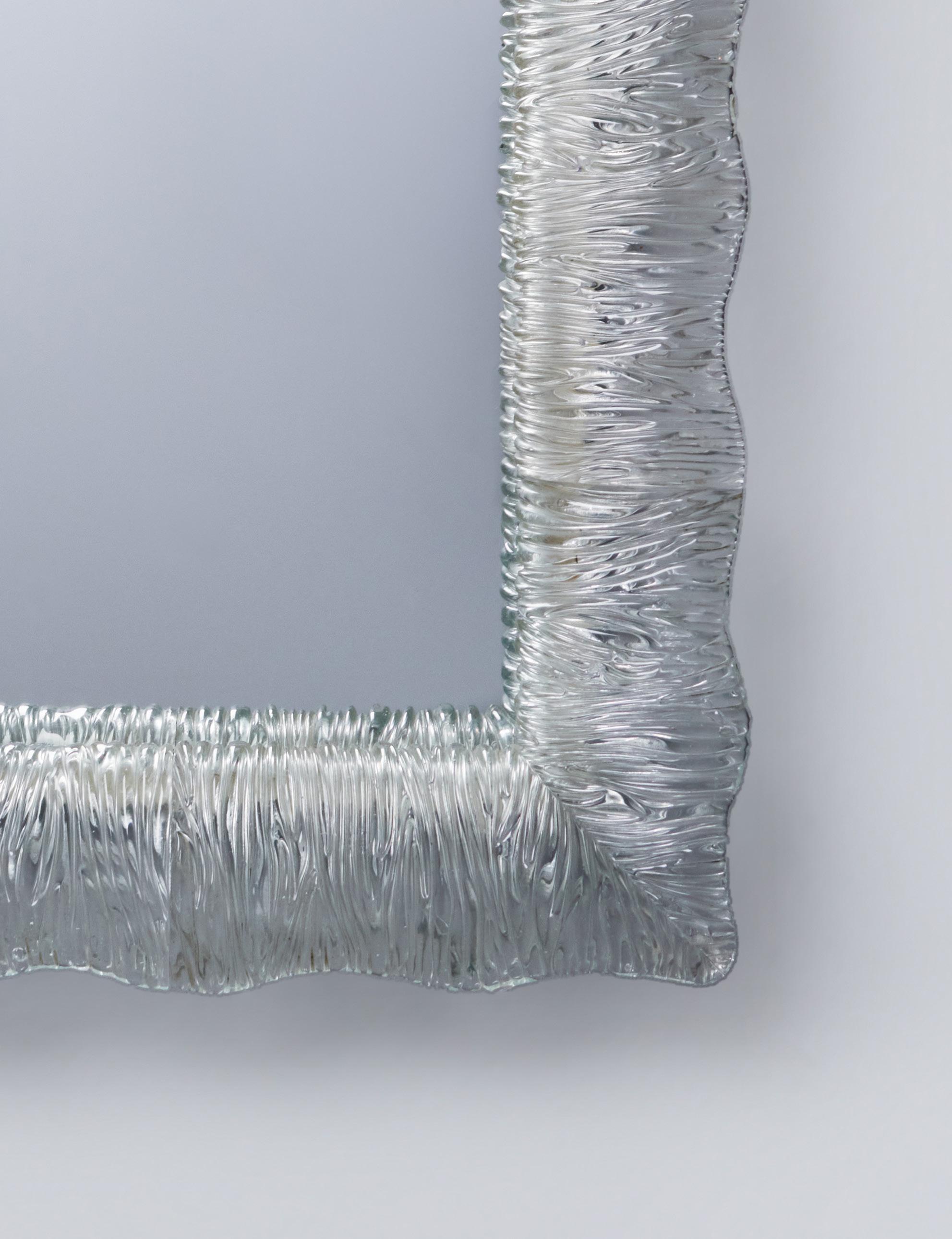
Large Mirror Made in Sweden circa 1920
Lacquered and carved wood, original mirror
Hans J. Wegner
Extendable Dining Table
Produced by Johannes Hansen circa 1960
Model no. JH 567
Solid teak, frame, fold-down support leg Stamped with manufacturers marks to frame
Hans J. Wegner
Set of Twelve ‘Cownhorn’ Chairs
Produced by Johannes Hansen circa 1960
Model no. JH 505
Solid oak, leather upholstery Metal manufacturers plaque to frame

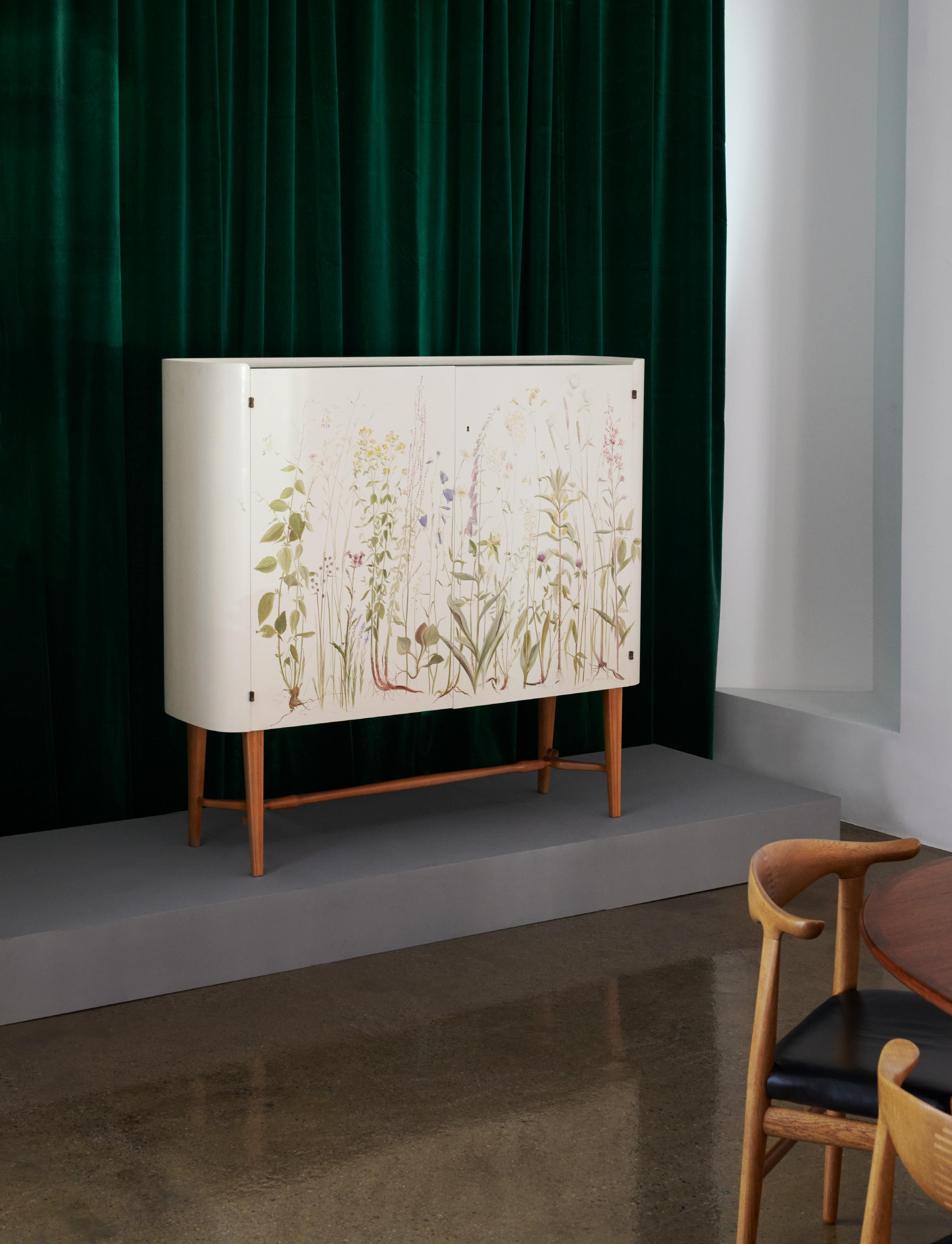
Erik Chambert
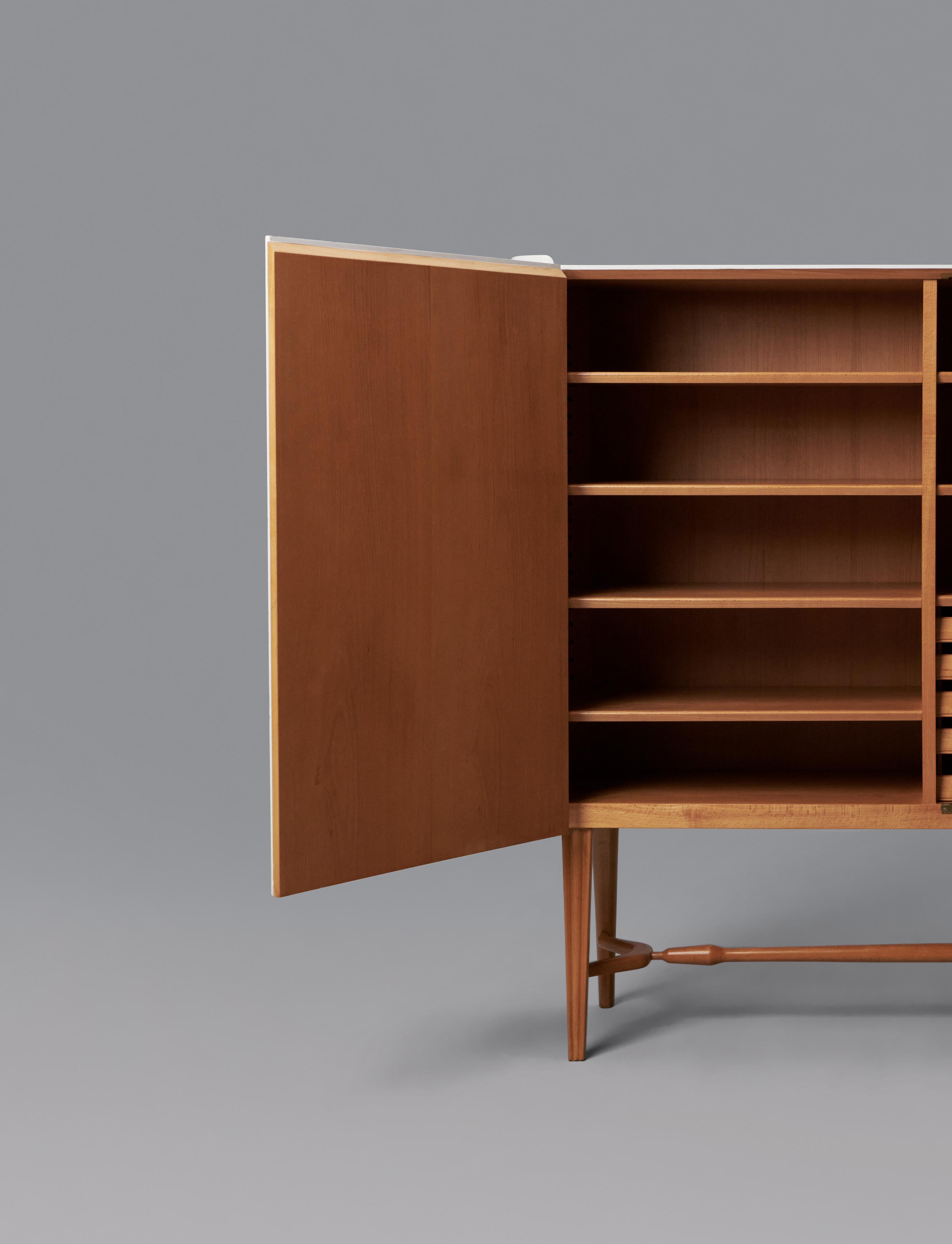
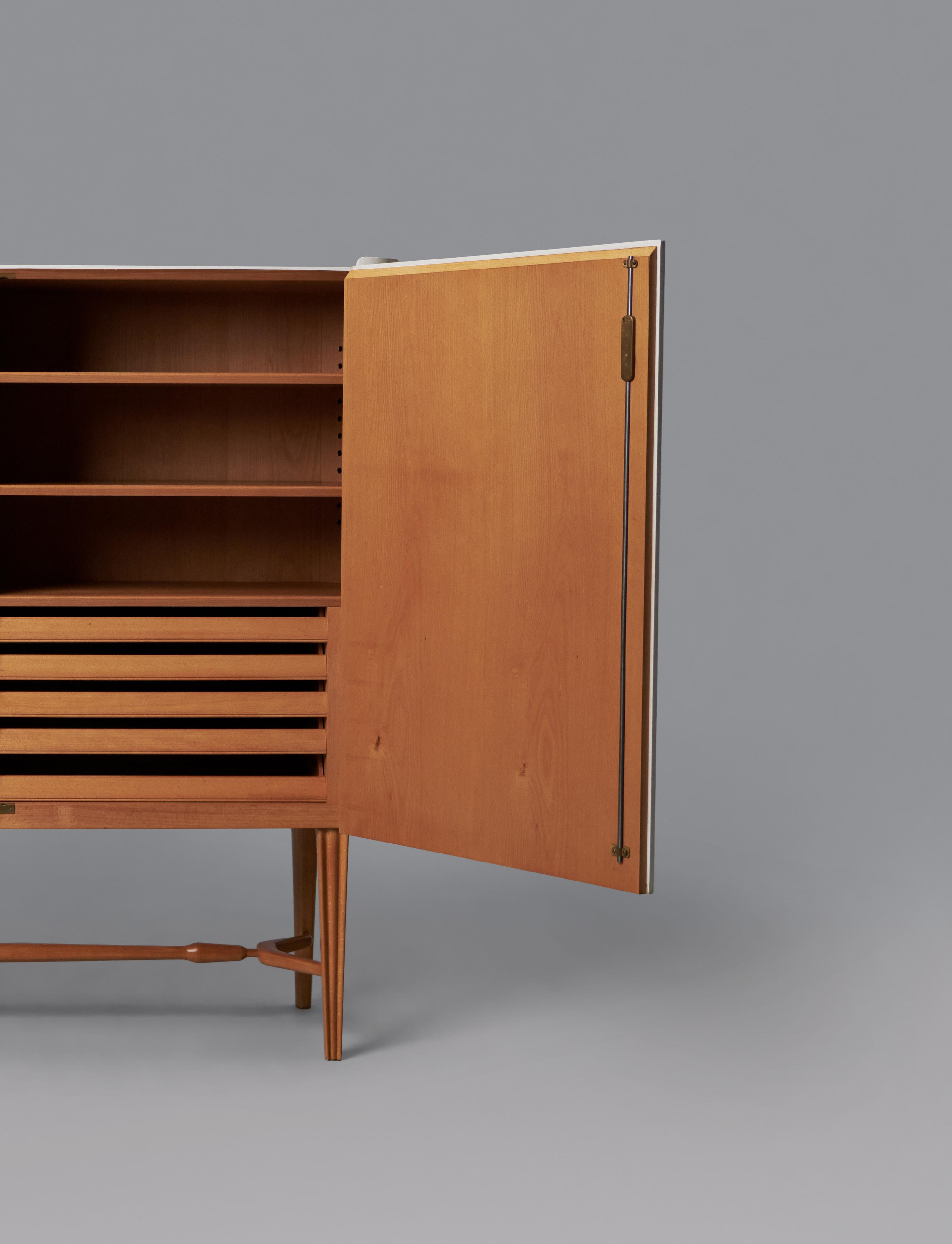
Unique Cabinet Produced by Chamberts 1945
Red beech, brass hinges. Hand painted decoration of Swedish summer flowers by Erik Chambert. Inside with drawers and adjustable shelves. Signed and dated 1945 by the artist at the bottom edge of the right door and drawer
Provenance:
Erik Chambert, family of Erik Chambert.
Exhibited:
‘Exhibition of Arts and Crafts’, Nermans Konsthall, Norrköping, 1945. At the same exhibition, Chambert also showed the wallpaper Fridhemsbacken, with a very similar floral motif.
Erik Chambert was a Swedish designer known for blending craftsmanship with modern ideals. Trained as a cabinetmaker, he studied at Konstfack and worked with Otto Schulz before gaining recognition at the 1930 Stockholm Exhibition. Chambert resisted mass production, instead favoring handmade furniture of high quality. In the 1930s, he began incorporating floral intarsia into his cabinets, later painting them with lush botanical scenes. These pieces, often compared to Josef Frank’s Flora cabinet, reflect his shift from strict functionalism to a more expressive, nature-inspired modernism — turning furniture into both functional objects and artistic statements.
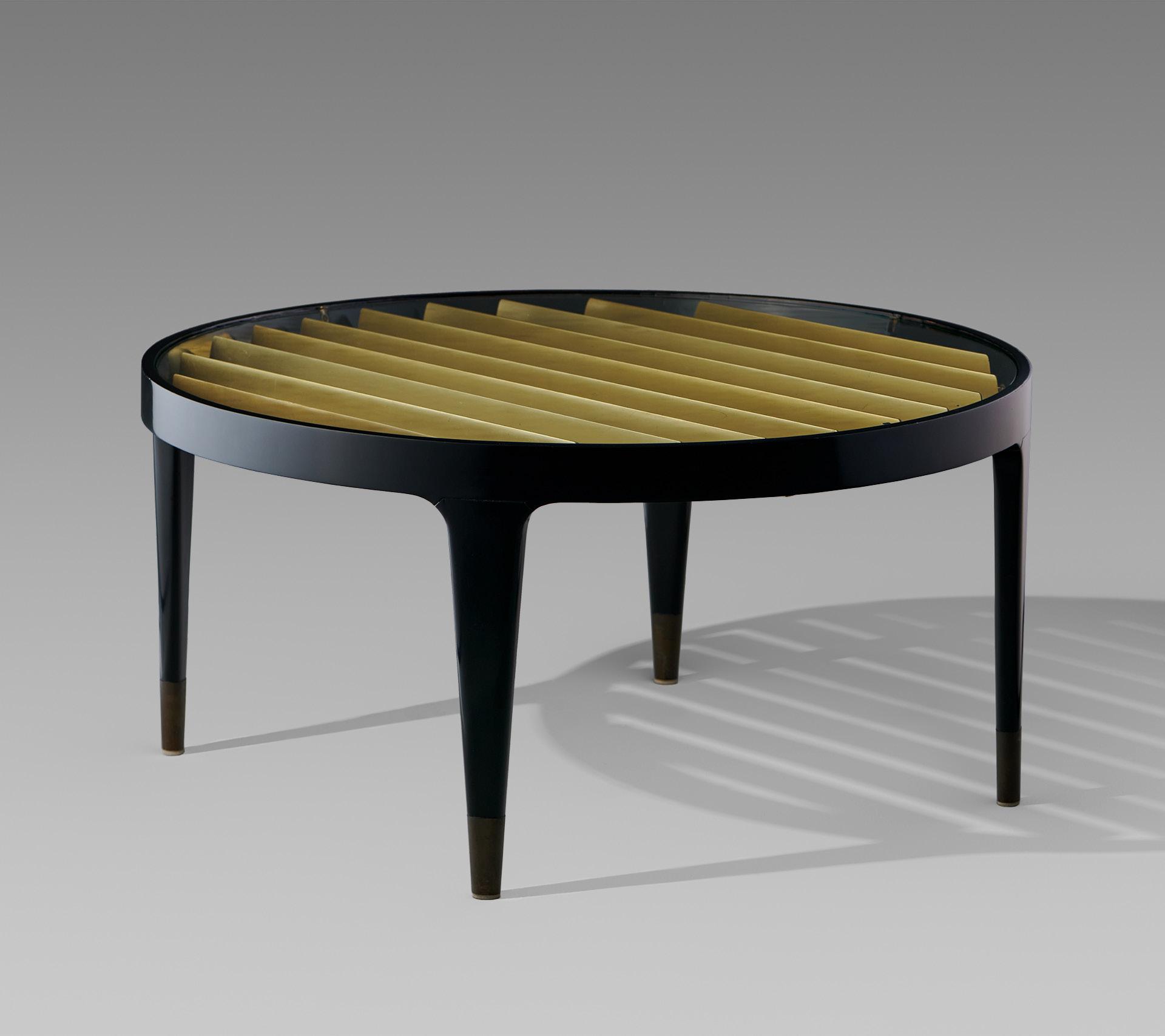

Gio Ponti
Coffee Table 1952
Lacquered wood, anodised aluminium, brass, original glass
Glass acid etched ‘Temperato Ragazzi’
A certificate of expertise from the Gio Ponti Archives is included.
Designed for the Giulio Cesare cruise ship, for which Gio Ponti decorated the interiors.
Provenance:
Cruise Ship Giulio Cesare, Gênes, circa 1952; Private Collection, La Spezia, Italy; Private Collection, Acquired from the above.
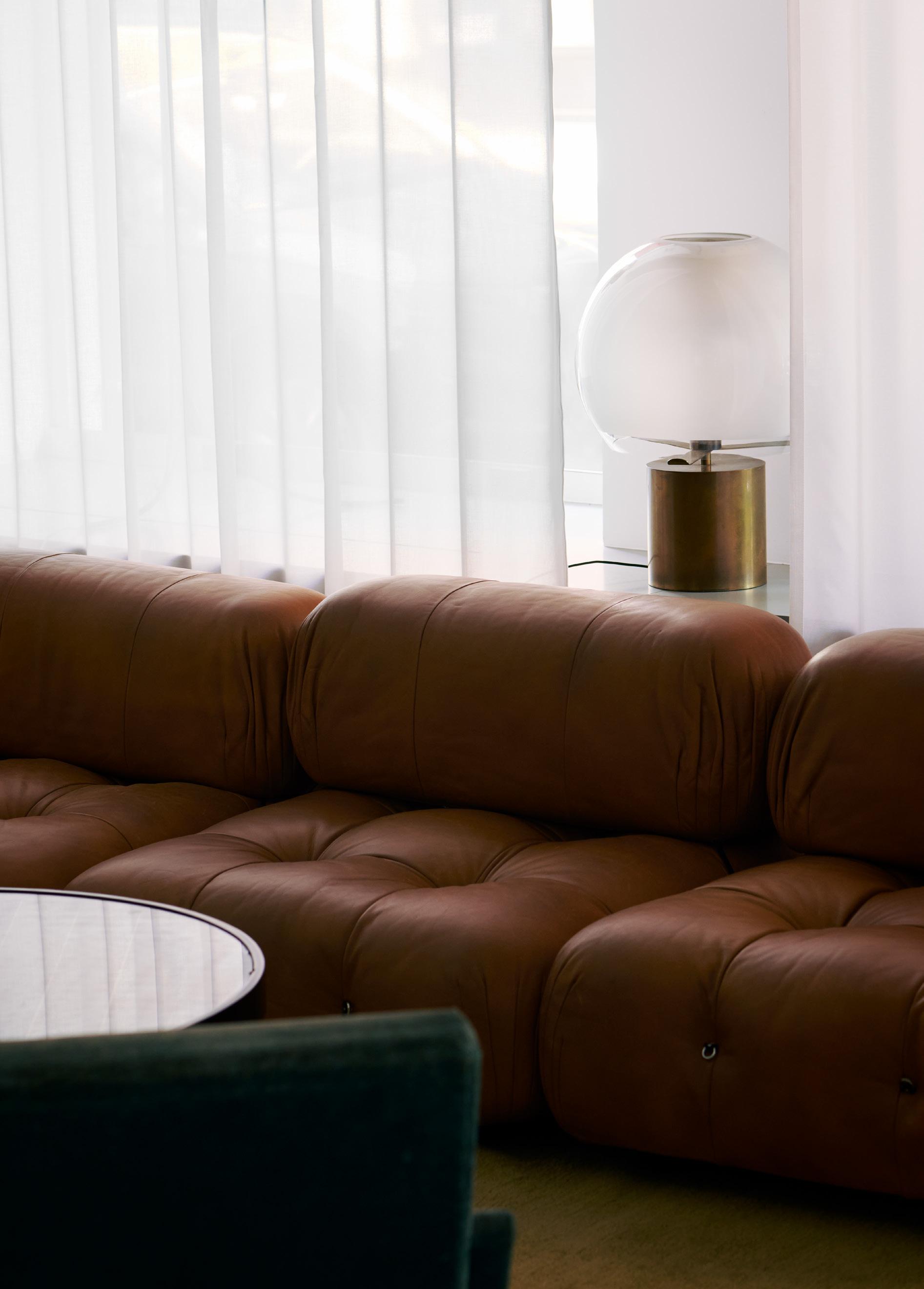
‘Camaleonda’ Modular Sofa
Produced by C&B Italia
Designed 1970, these examples executed 1974
Leather, chrome hardware
With producer’s paper label to undersides of cushions



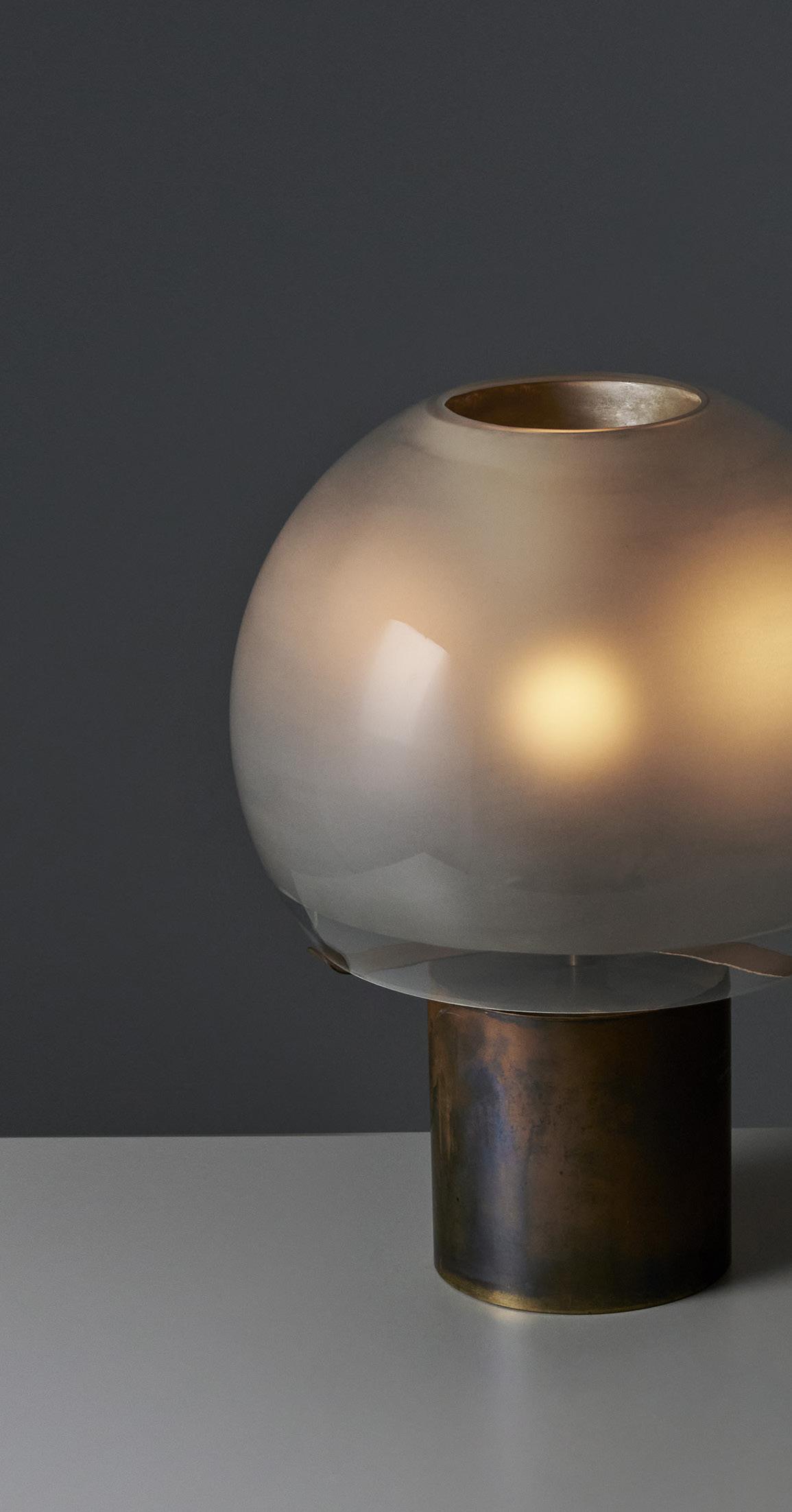
Luigi Caccia Dominioni
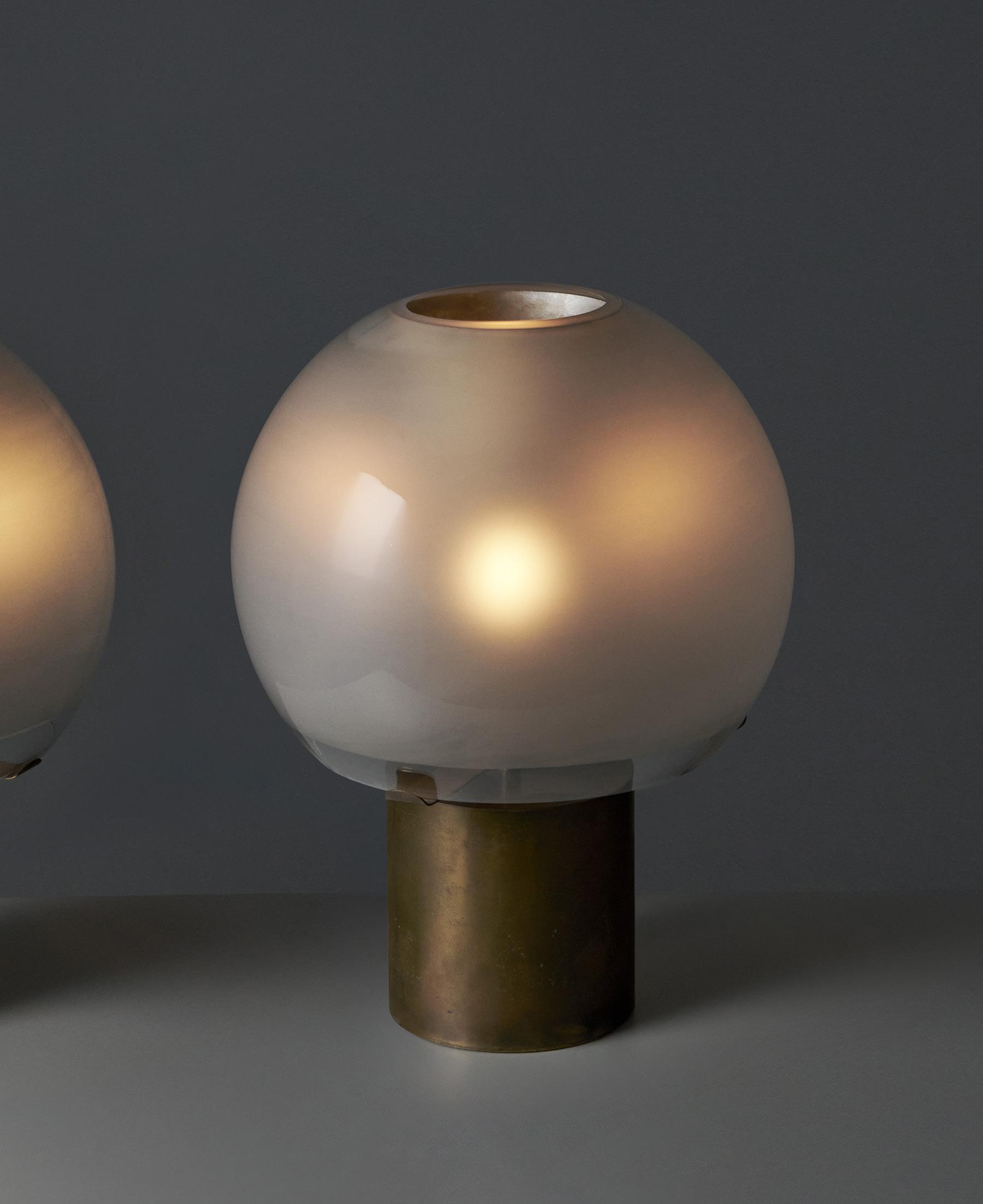
‘Porcino’ Table Lamps
Produced by Azucena
Designed in 1966, executed in 1960s
Model no. LTA6
Brass, partially frosted glass shades
Ettore Sottsass
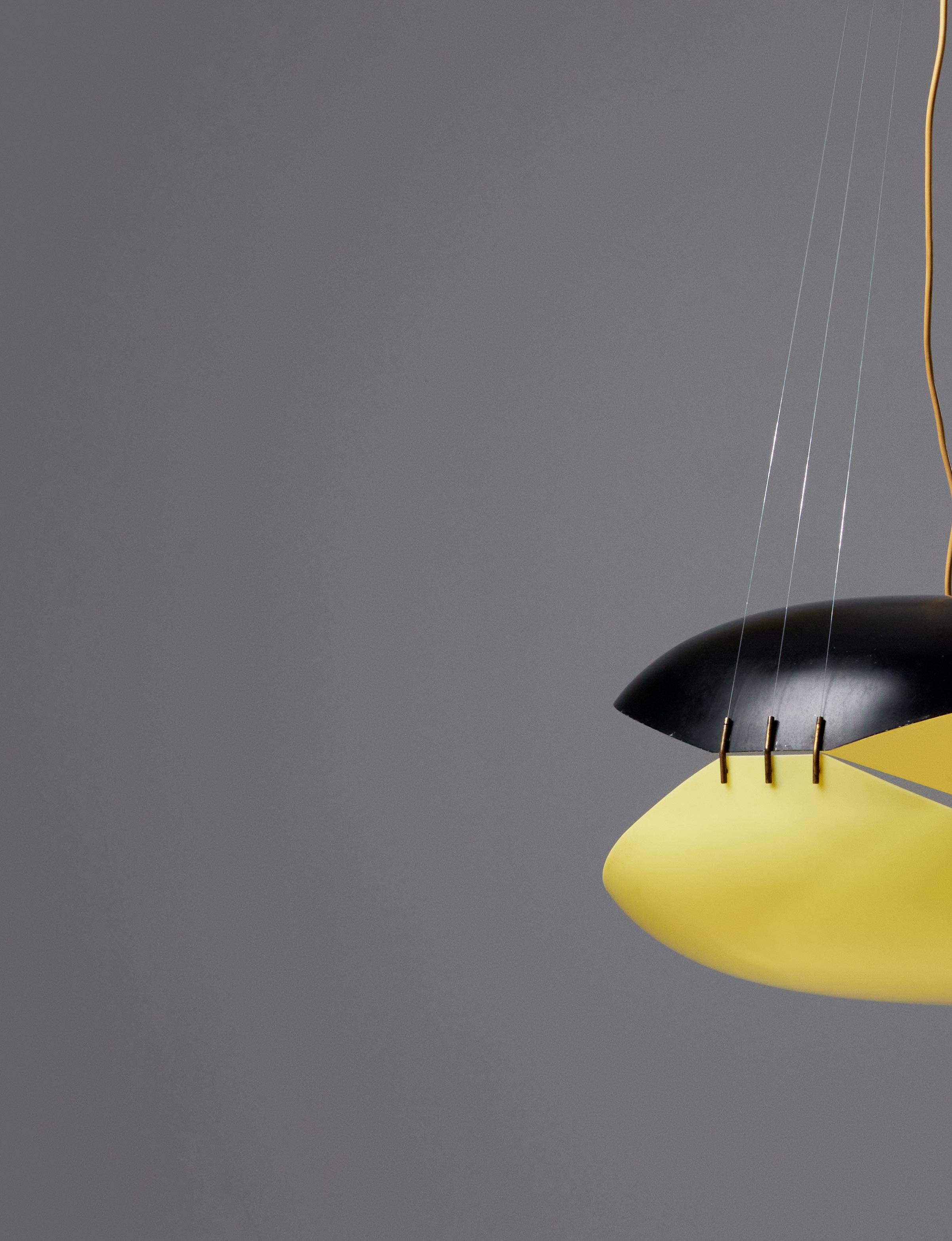
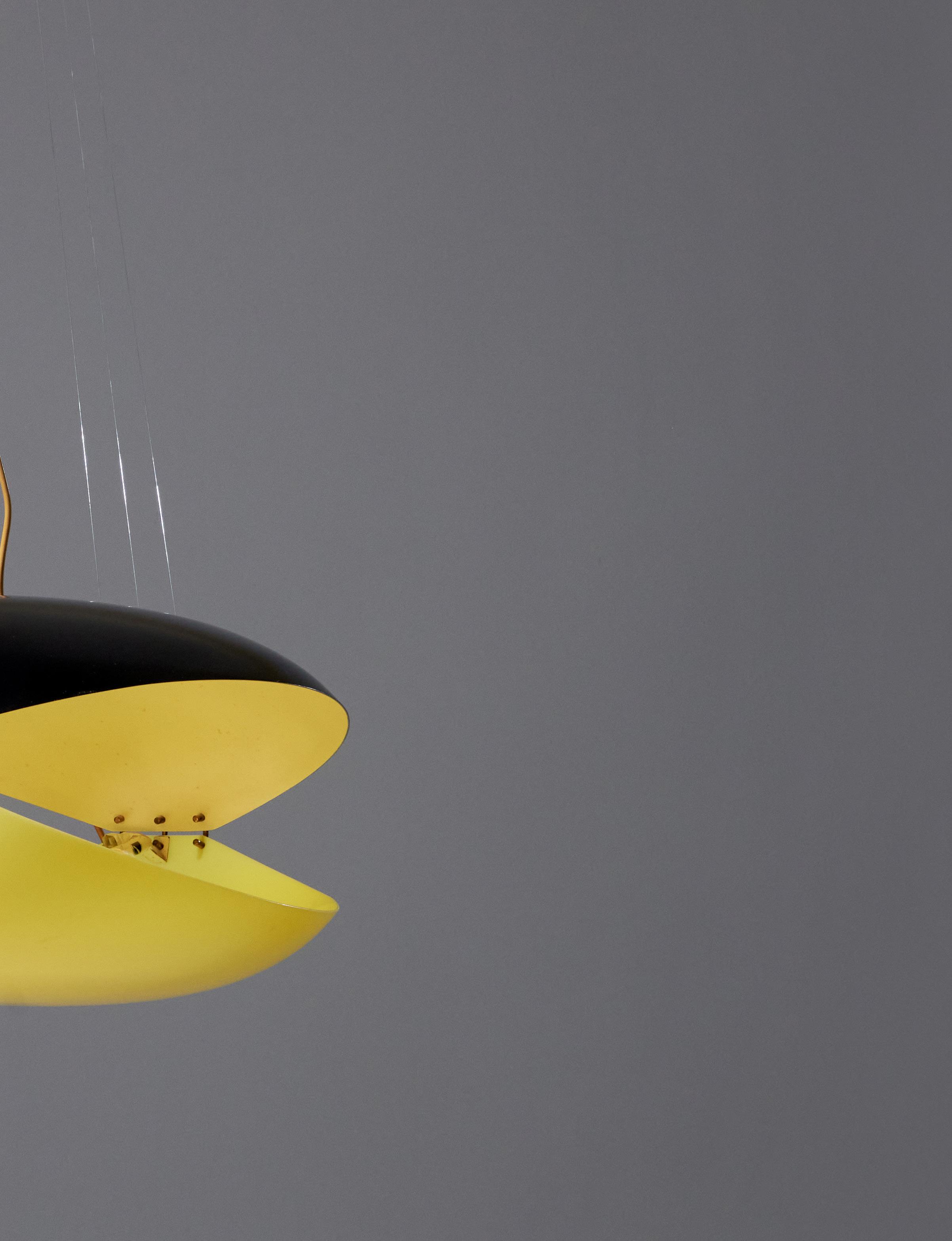
‘Balena’ Ceiling Lamp Produced by Arredoluce circa 1950
Model no. 12600
Upper shade in lacquered aluminium, lower shade in acrylic, likely produced by Riboli, Italy. Brass mounts and ceiling cap with nylon suspension cables. Manufacturer’s mark to the frame
This work is recorded in the Arredoluce archives under archive number 2502884.
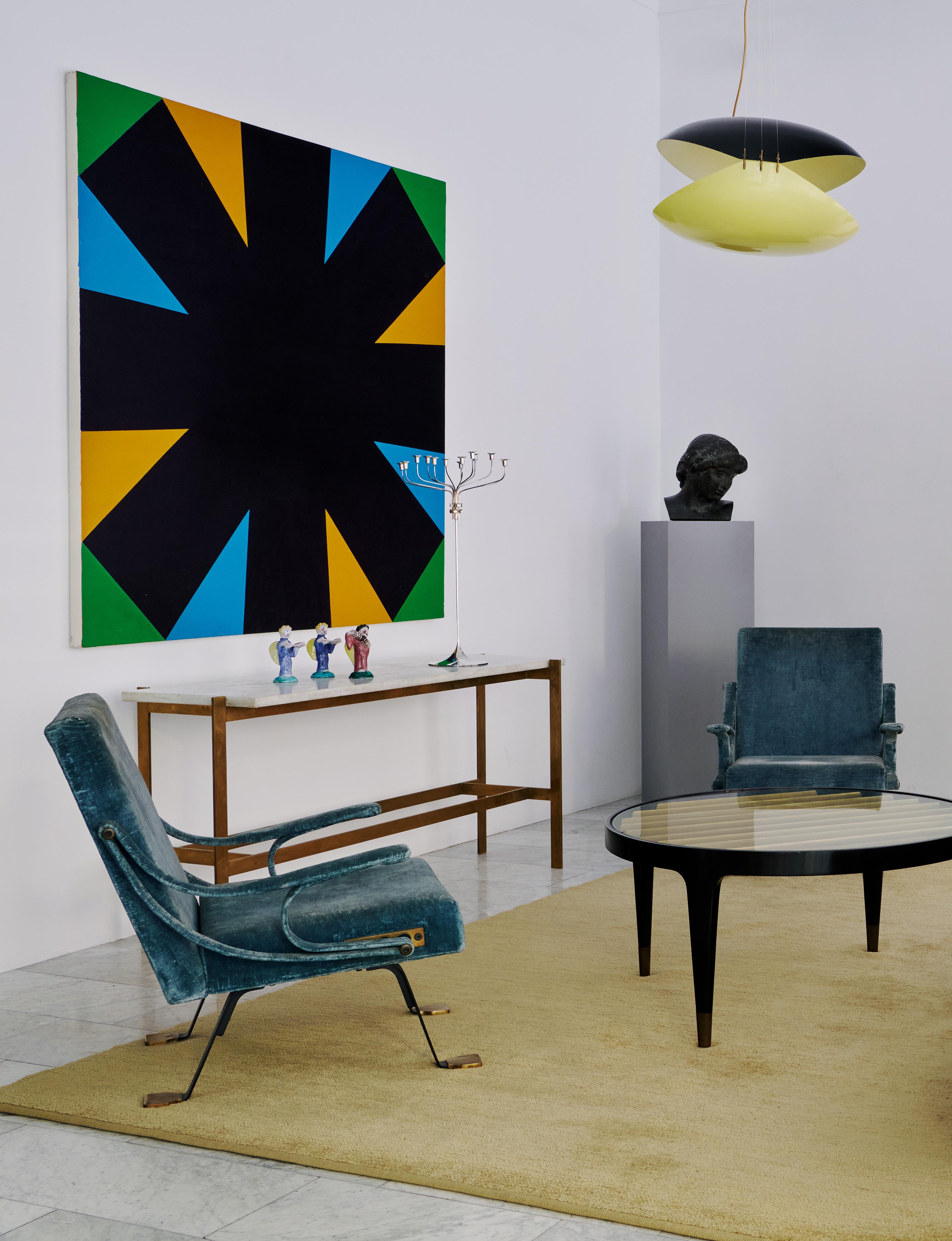
Romeo Rega Console circa 1950
Brass, flint rolled marble
Paul Osipow Painting 1989
Oil on canvas
Signed and dated to the reverse
Ignazio Gardella
Pair of Adjustable ‘Digamma’ Armchairs
Produced by Dino Gavina 1957
Painted steel, brass, original fabric upholstery Three adjustable positions

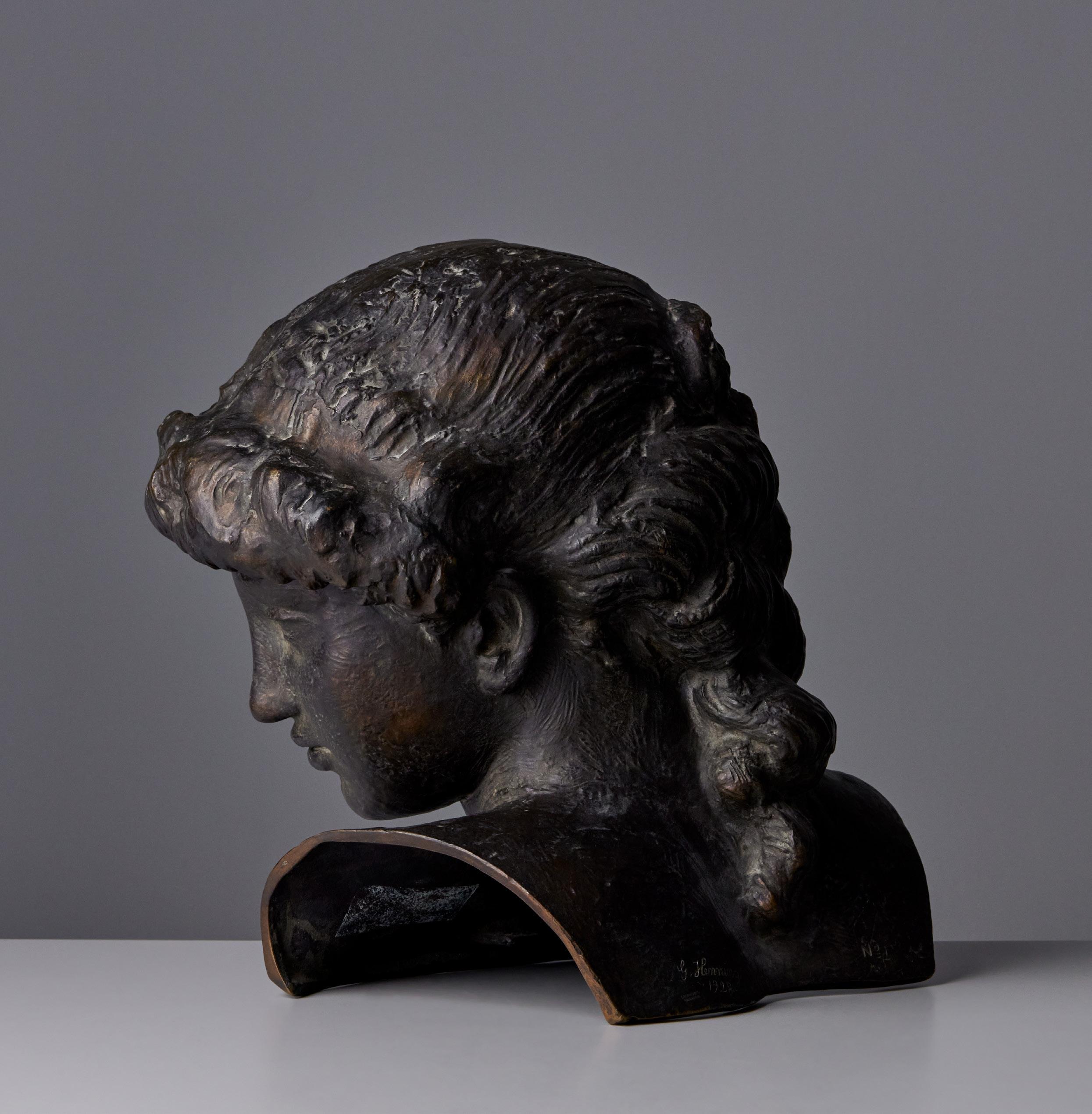
Produced by Lauritz Rasmussen 1928
Patinated bronze
With facsimile signature ‘G. Henning’ dated 1928, numbered ‘No1’. and with foundry mark
Jacksons Design
Gallery
Sibyllegatan 53 114 43, Stockholm, Sweden
Showroom
Frihamnsgatan 50, Magasin 6 115 56, Stockholm, Sweden
www.jacksons.se info@jacksons.se