
Tēnā koutou e te whānau whānui o Ngā Tīmoti.
Tēnei te mihi kau ake a Ngāti Tama ki ngā tamariki me te whānau o te kura me te hapori whānui o Ngā Tīmoti i te āhuatanga ki te pouwhenua e tū ake nei. Kia kaha, kia manawa tītī.
Tēnā koutou, tēnā tātou katoa.
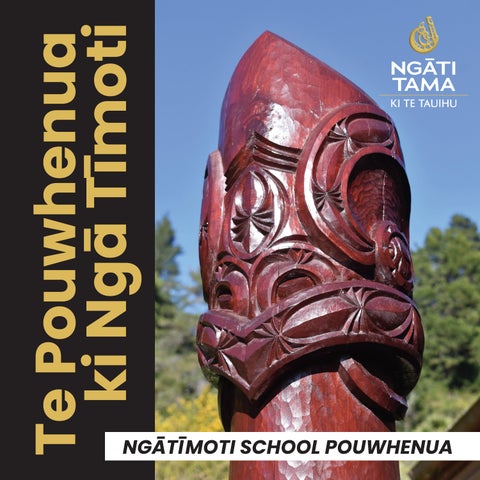
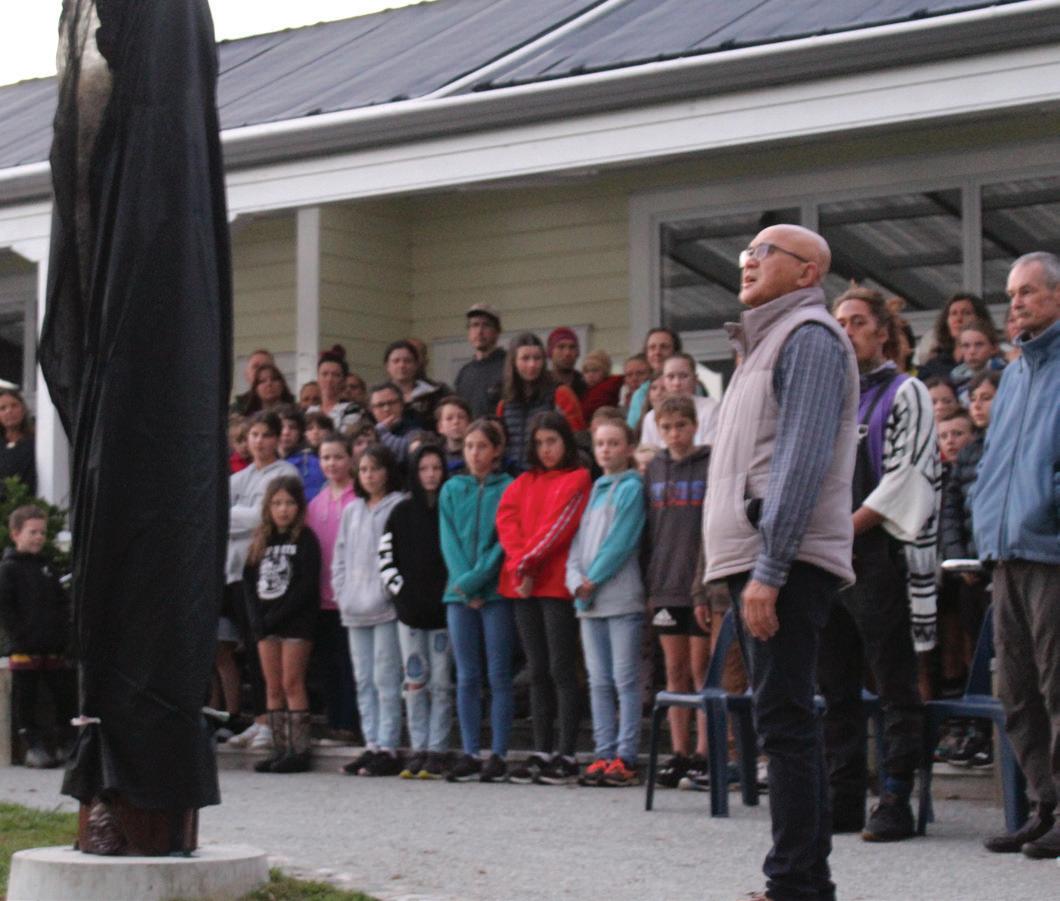
Greetings to the community of Ngā Tīmoti. Ngāti Tama would like to acknowledge the children, their families and the wider community of Ngā Tīmoti on the auspicious occasion of the unveiling of the pouwhenua at the school on December 11th, 2020. We look forward to working closer together to develop an enduring relationship.
‘Tērā a Matariki ka rewa i te pae’ BEHOLD MATARIKI ON THE HORIZON, A SIGN OF NEW BEGINNINGS
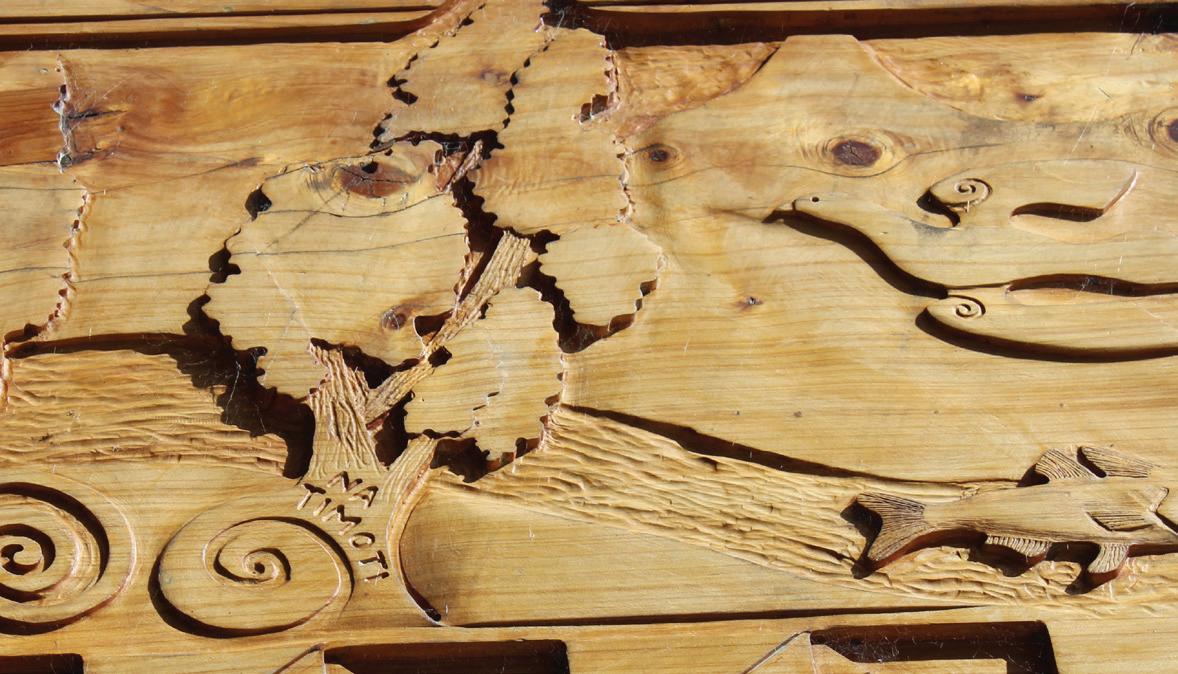
There are several versions as to how the name of Ngā Tīmoti came about. One popular version follows the story of a man by the name of Tīmoti (Timothy) - an avid eeler in the local area who carved, ‘Nā Tīmoti’ (belonging to Tīmoti), into a tree to mark his fishing spot.
It appears that over the years, the name has gone through some changes and is now more commonly spelt as one word ‘Ngātīmoti’ which may be interpreted as ‘Ngā Tīmoti (the descendants of Tīmoti).
PICTURED: The name,“Na Timoti” remembered on the entrance way of Ngā Tīmoti School.
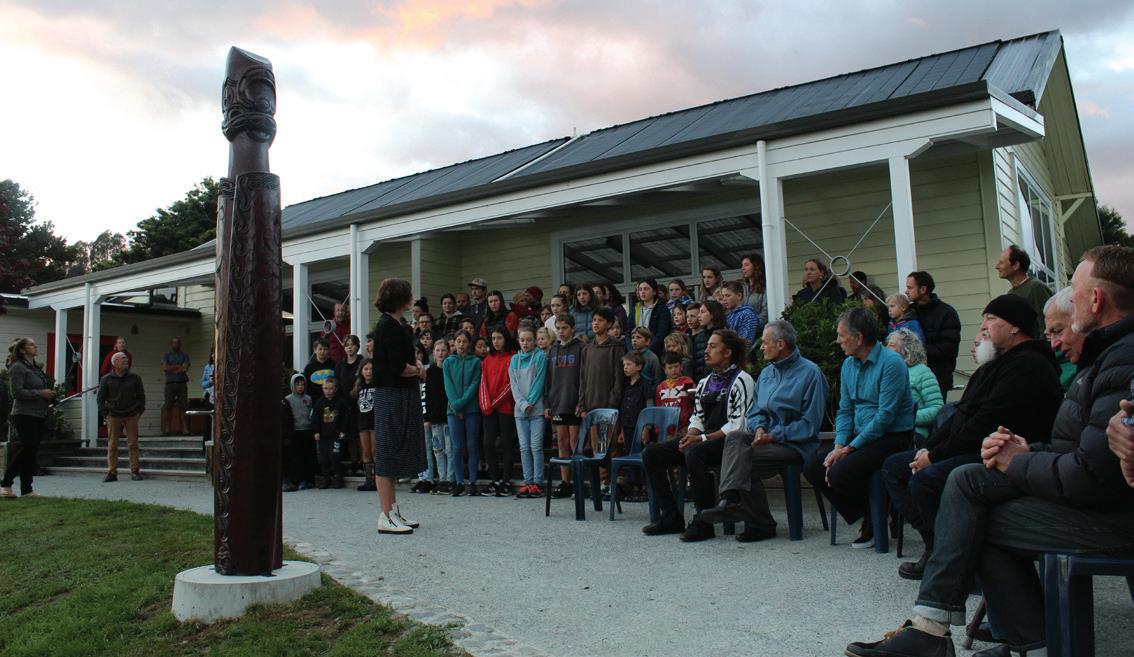


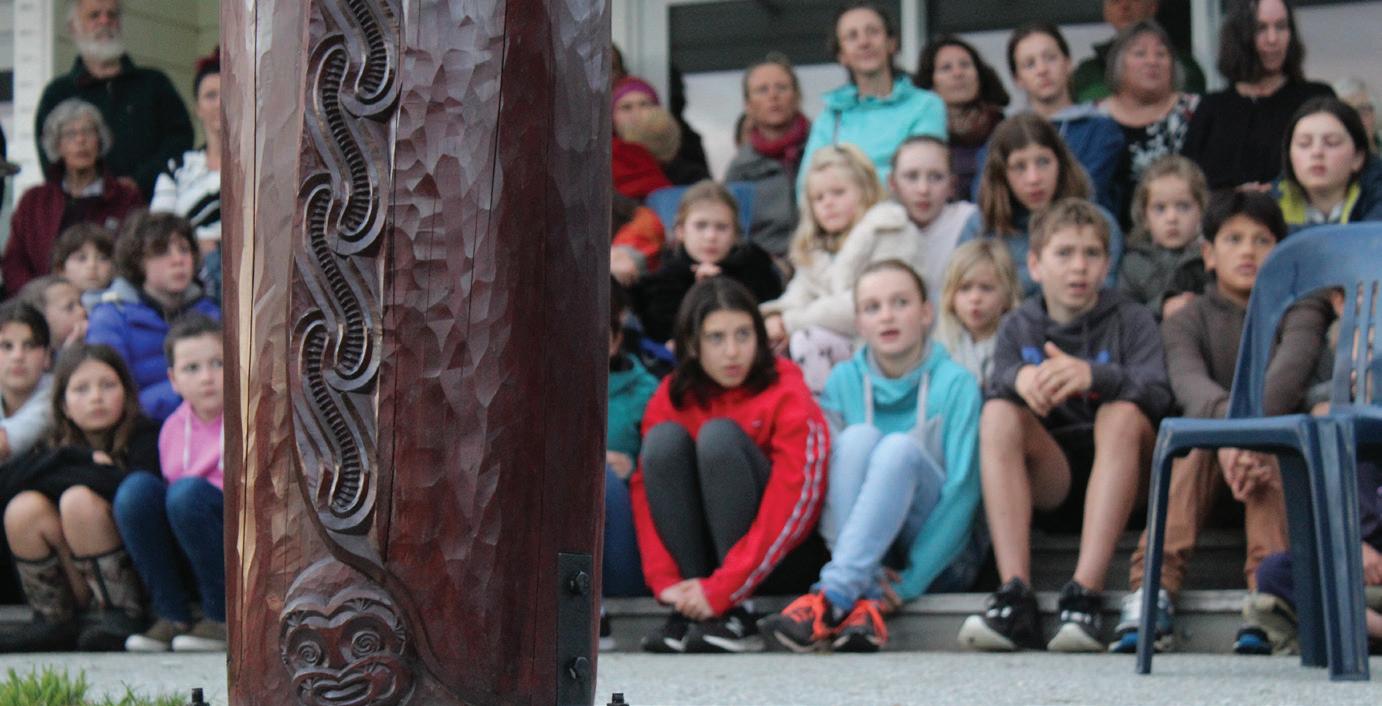
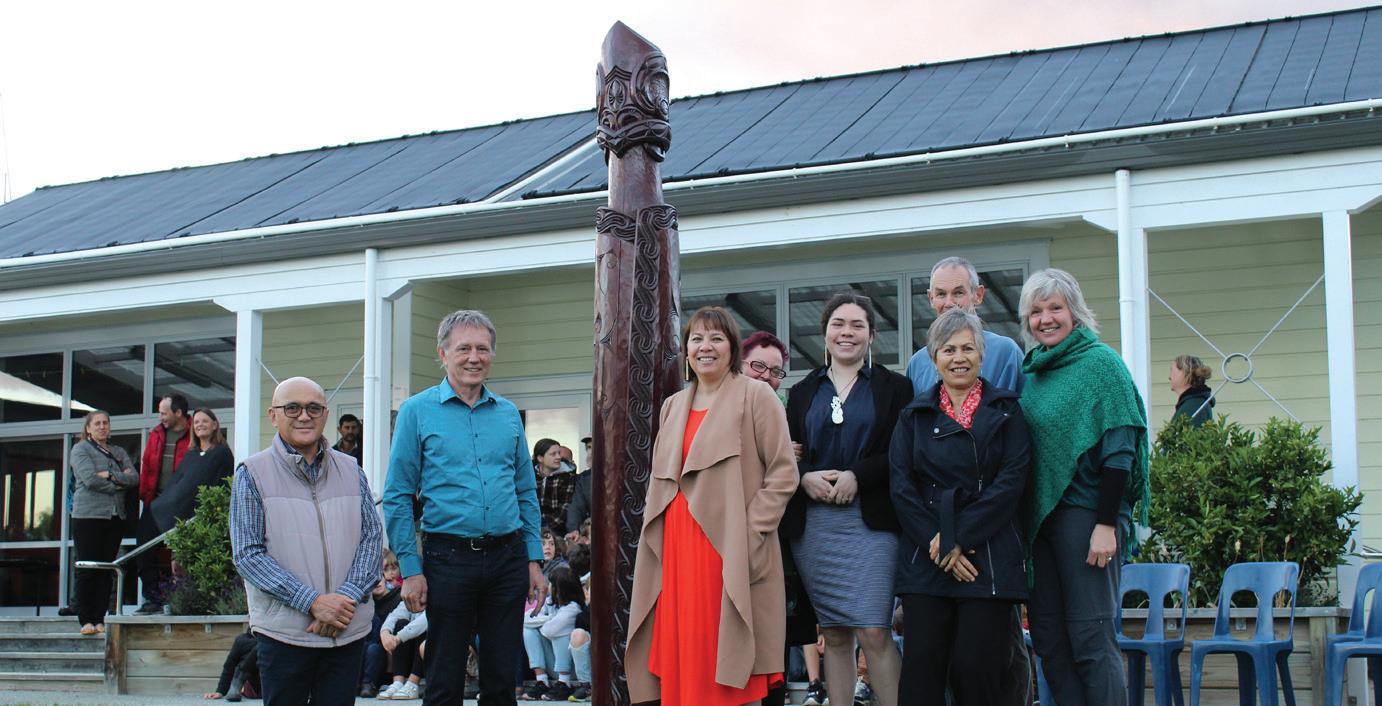
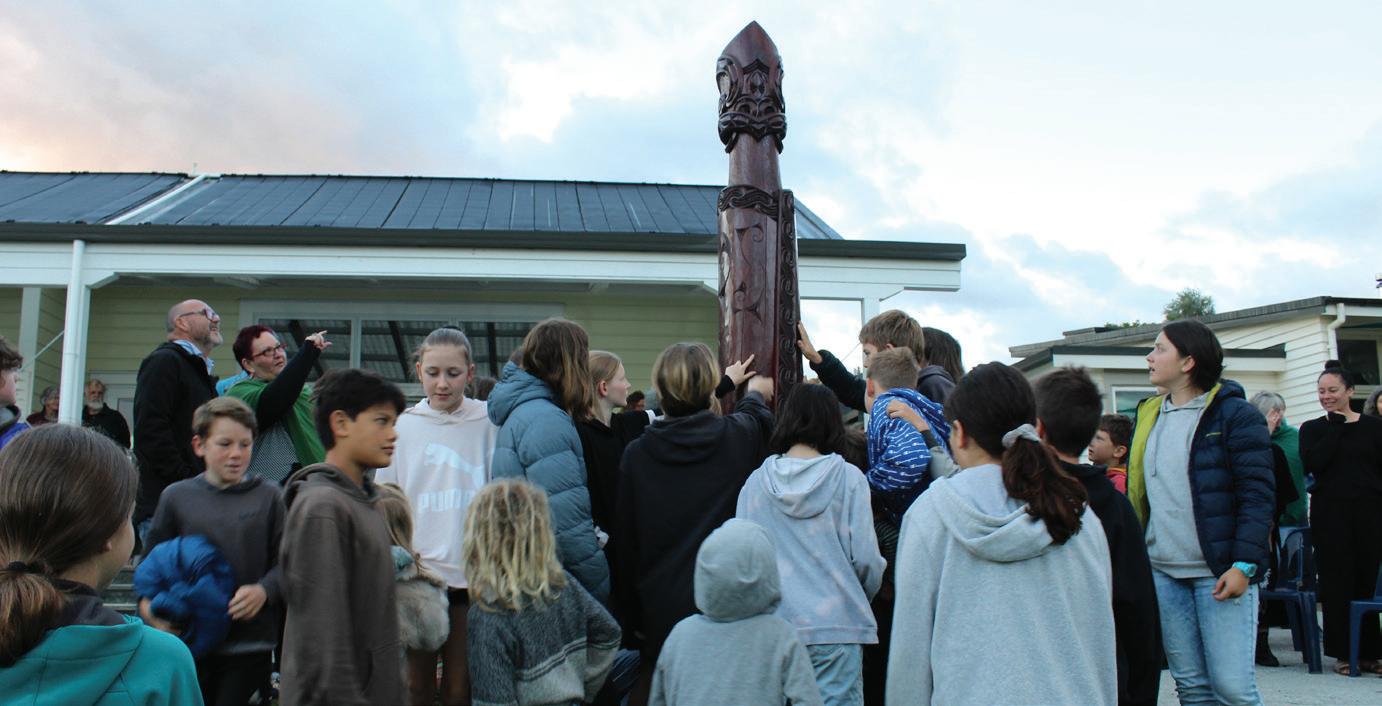
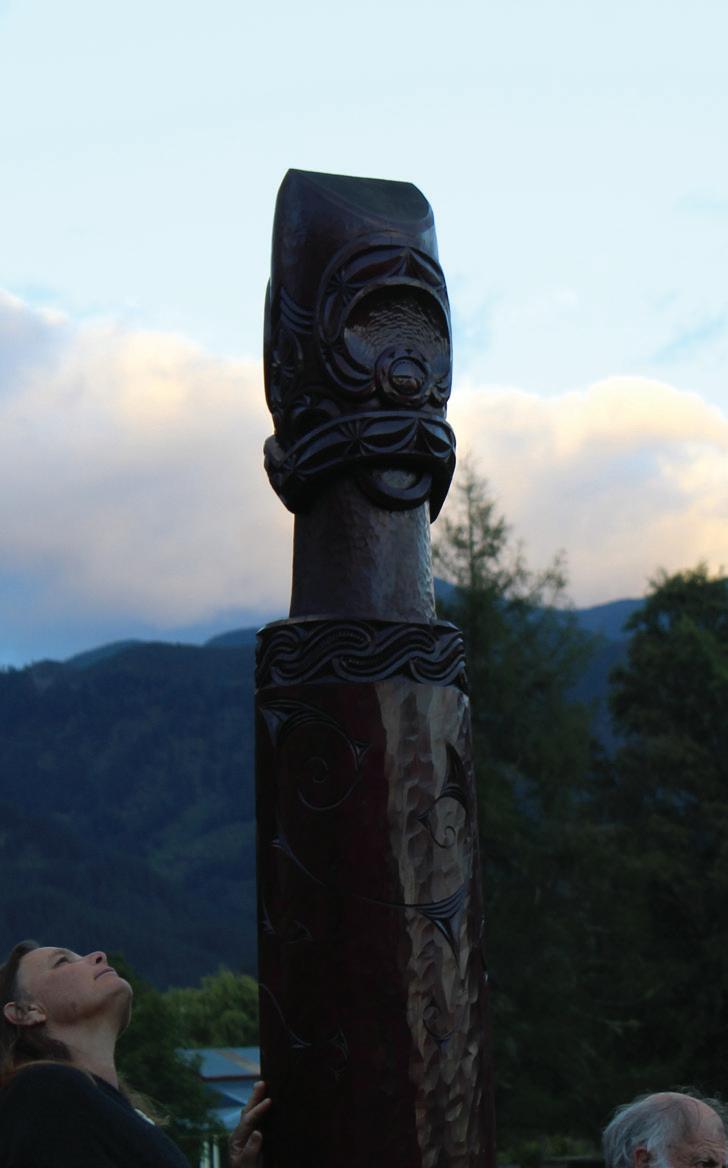


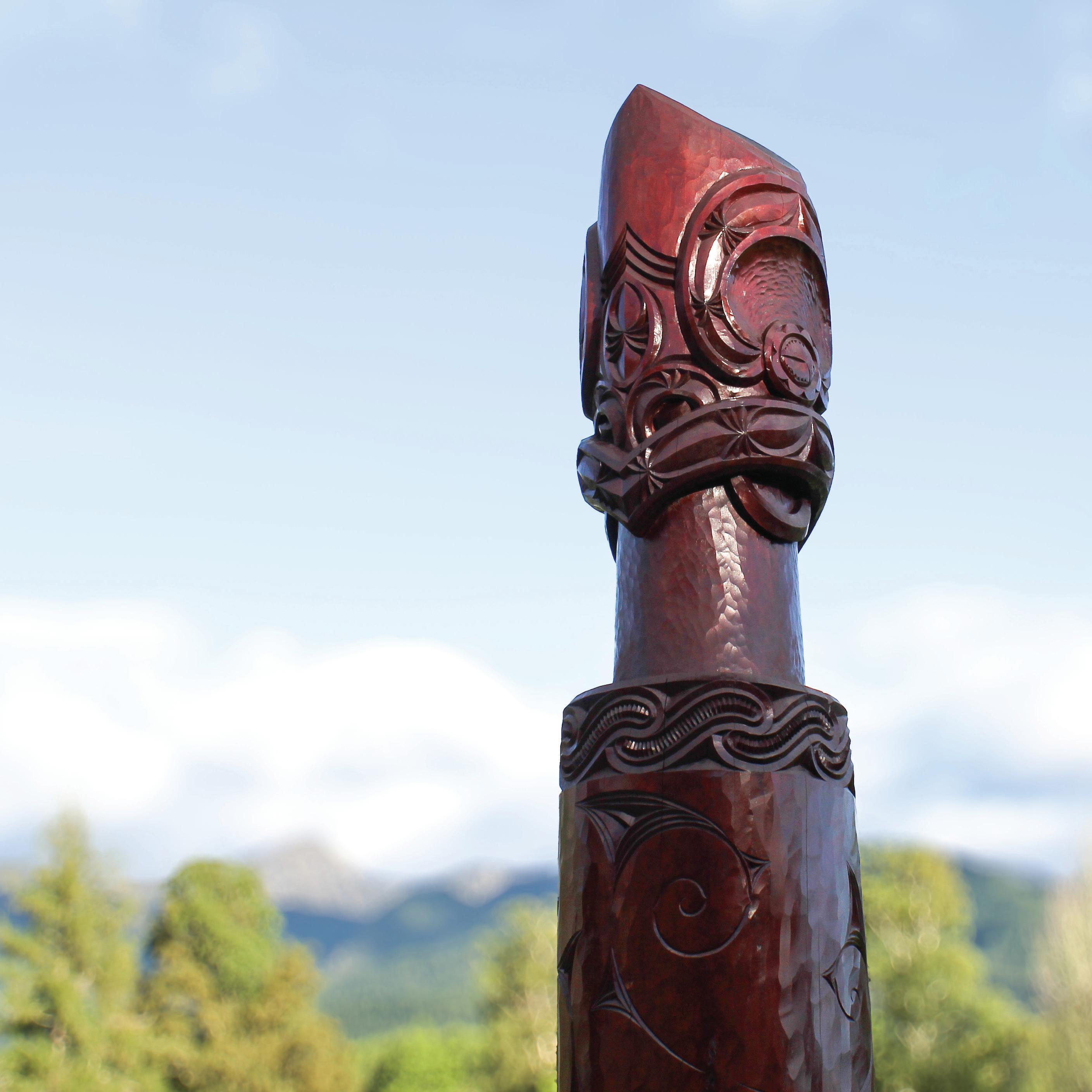
The basic indicative design of the pouwhenua at Ngā Tīmoti School is a simple natural body taking the form of a stylised kaitaka with sparsely placed kōwhaiwhai patterns.
These patterns reflect aspects of kaitiakitanga of the natural environment that the children and school community are involved with.
TŌNA ĀHUA
Design
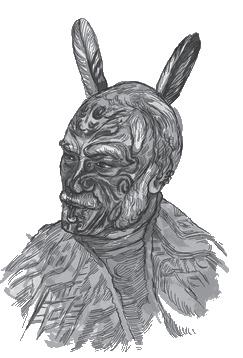
The top is the head of a Ngāti Tama tupuna carved in the same way as the head at the top of a tokotoko with the conical peak representing Taranaki mounga.
This has the face looking forward to the future and back to remember the past.
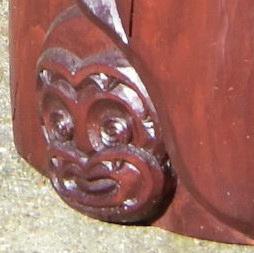
At the base is the face of a tamaiti peering out from beneath the protective cloak representing the children at the school.
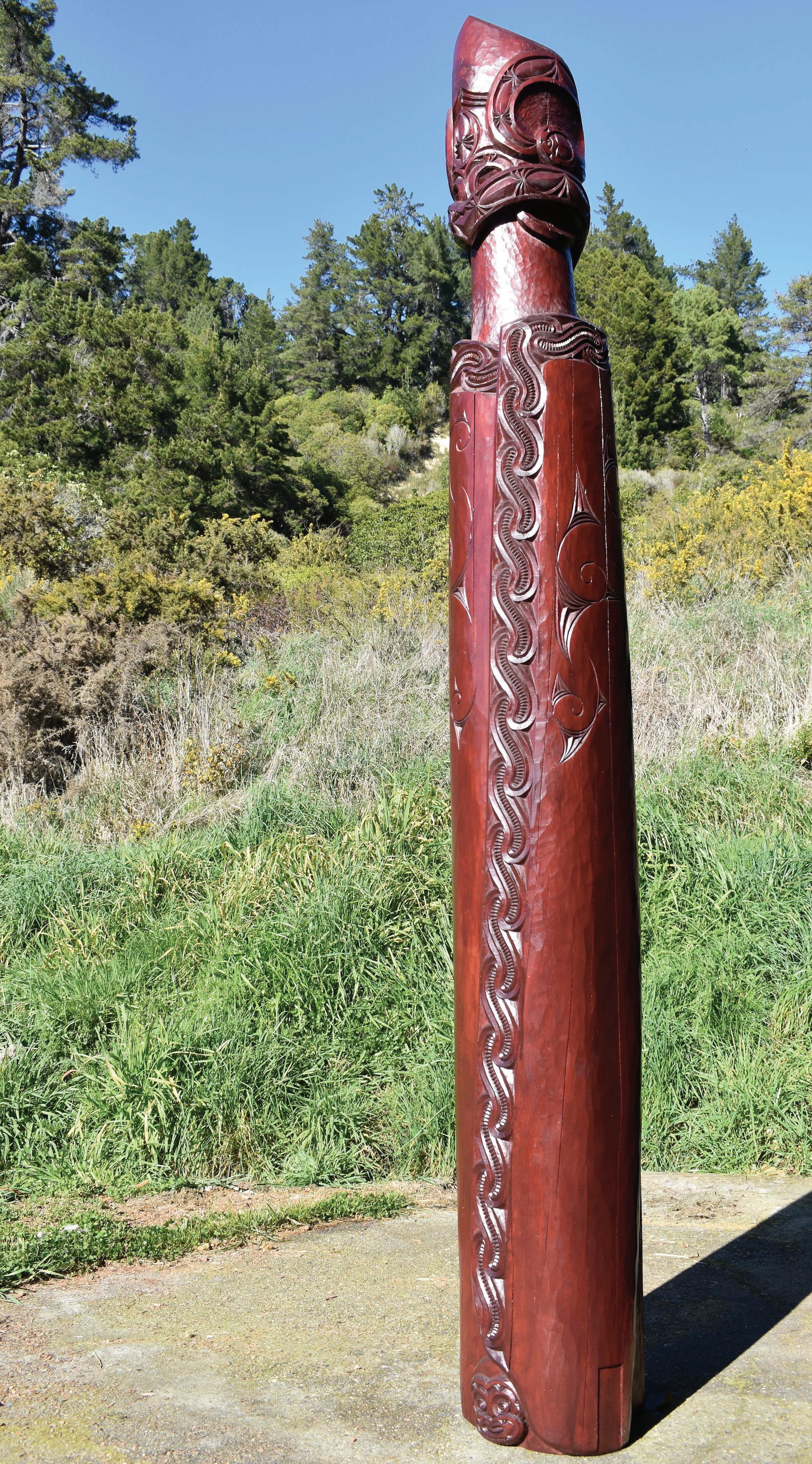
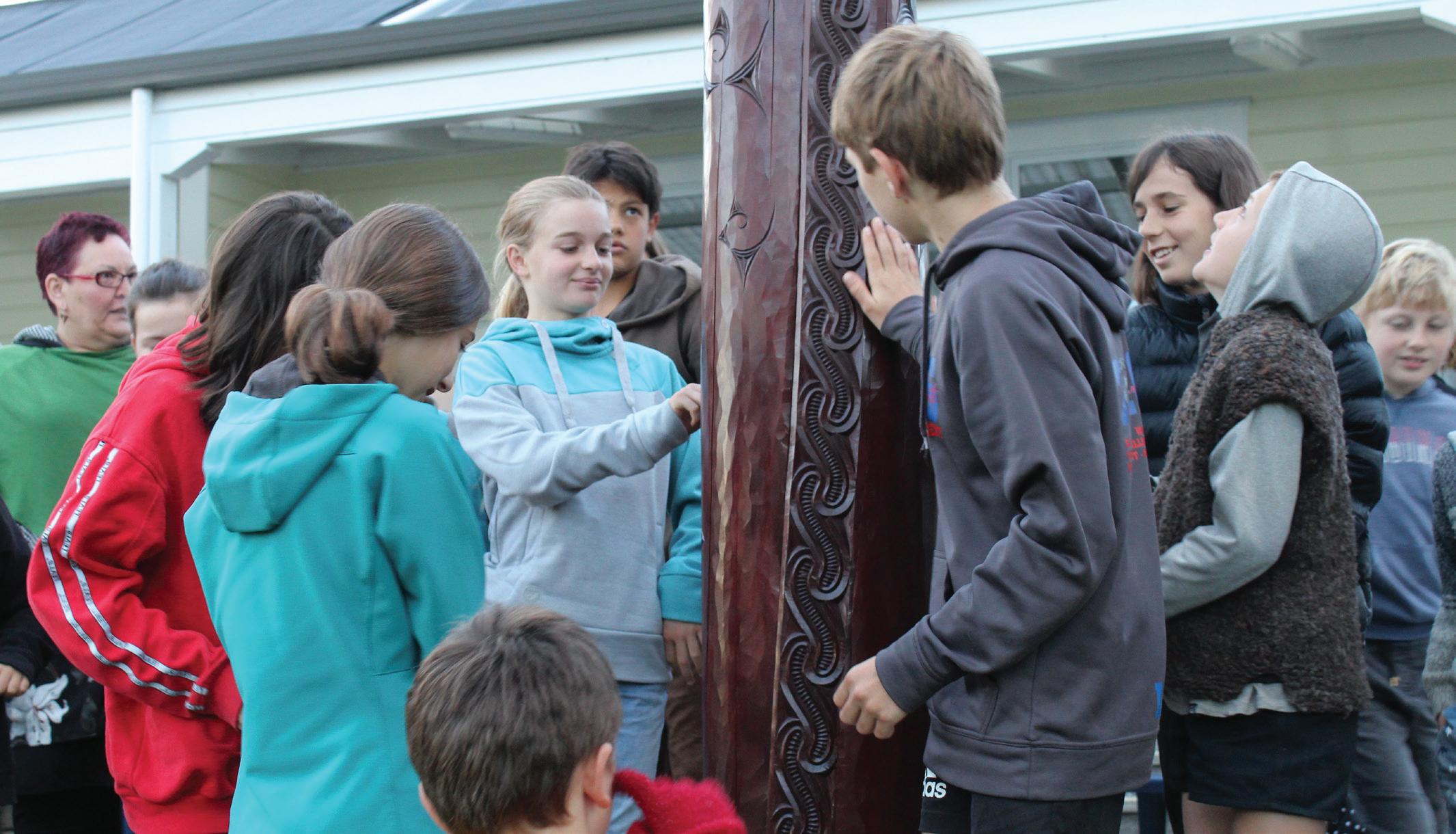
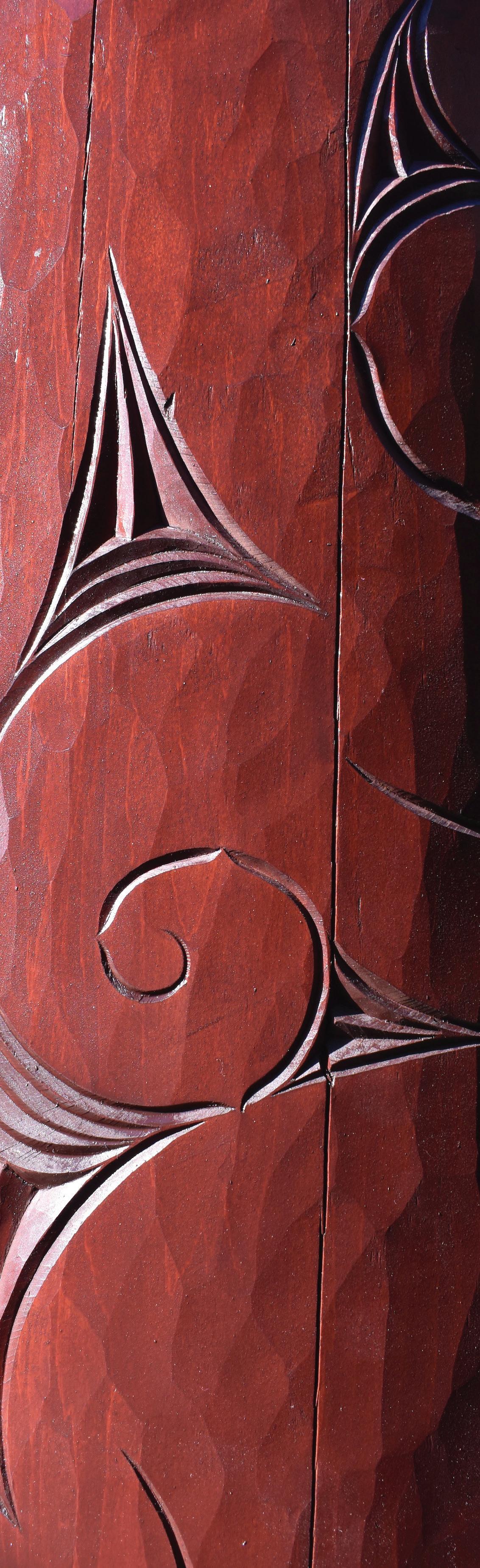
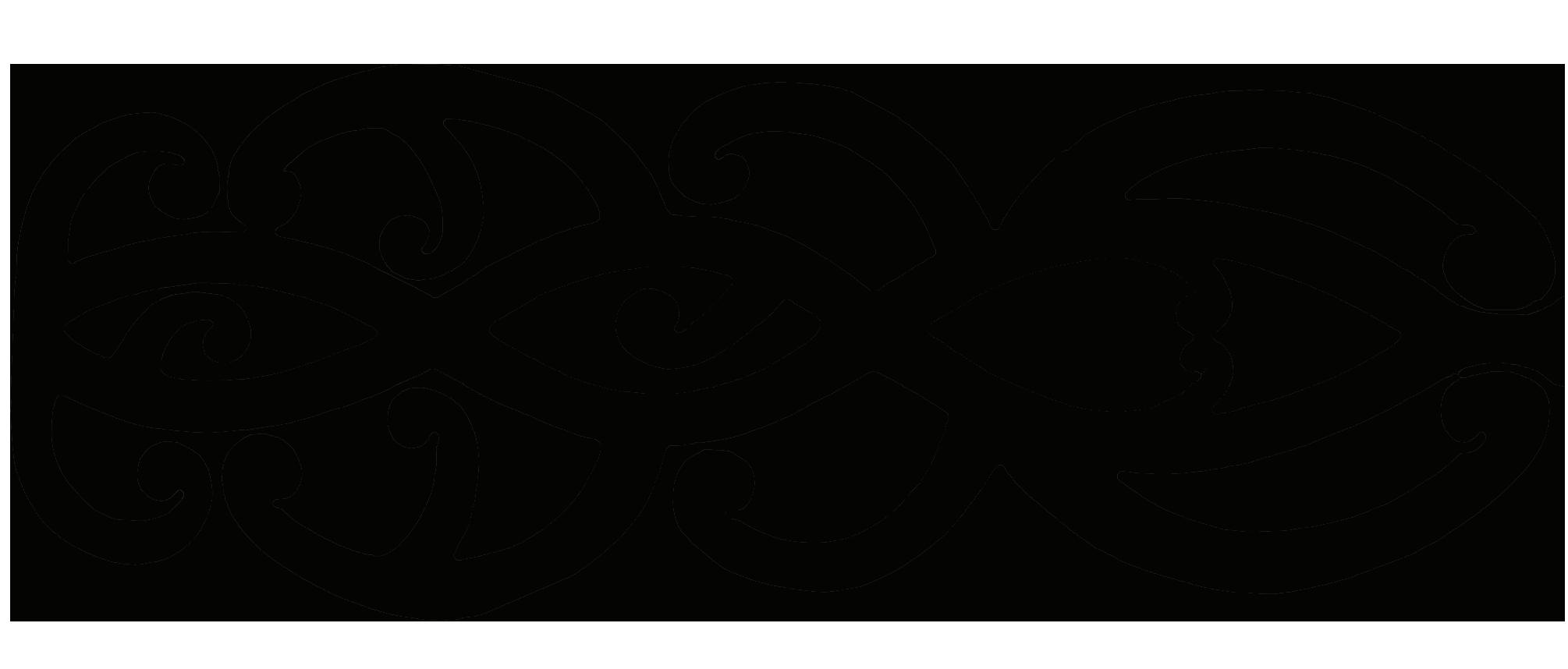
The main surface pattern on the ūpoko and kaitaka border is the ‘ritorito’ pattern from the Taranaki carving tradition representing the flax family. This border pattern is based on the work of John H. Menzies, an ancestor of the carver and represents ‘ngā tuna o te awa o Motueka’.
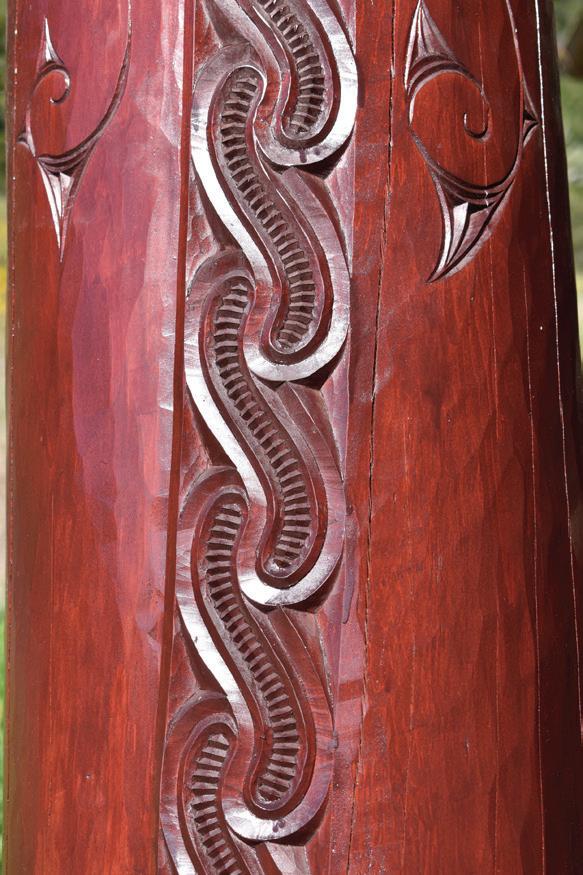
Panel One
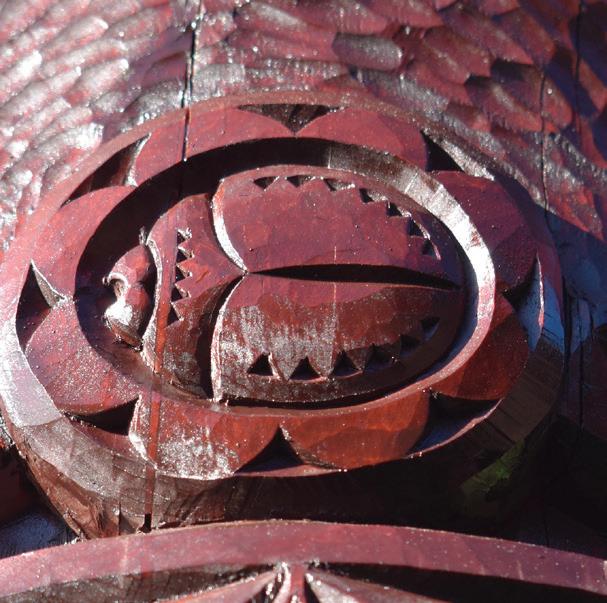
Panel Two
The main surface pattern on the ūpoko and kaitaka border is the ‘ritorito’ pattern from the Taranaki carving tradition representing the flax family. This border pattern is based on the work of John H. Menzies, an ancestor of the carverand represents ‘ngā tuna o te awa o Motueka’. and represents ‘ngā tuna o te awa o Motueka’.
The spiral pattern on the kaitaka refers to the birds around Ngā Tīmoti, and their flight paths above and across the valley, especially the kererū which at certain times of the year makes great swooping dives in the air.
Ngāti Tama acknowledges the carver Tim Wraight (resident at Ōtūwhero) for his creative interpretation and in particular for incorporating specific aspects pertaining to Ngāti Tama and their Taranaki origins and the local Ngā Tīmoti area. Tēnā rā koe kei te rangatira e Tim.
kōhatu – rocks
korowai – prized cloak
kaitiakitanga - guardianship
kererū - wood pigeon
koru – spiral pattern
kowhaiwhai - decorative ornamental pattern
Mohua - Golden Bay
mana - influence, status
mounga - mountain
ngā tuna o te awa o Motuekathe eels of the Motueka river
pou/pouwhenua – identity marker, symbol
ritorito – flax pattern
tamaiti – child
tokotoko – walking stick
tupuna – ancestor
ūpoko – head
Ngāti Tama ki Te Waipounamu Trust was formed to represent ngā uri o Ngāti Tama who whakapapa to Te Tauihu o Te Waka-ā-Maui (top of the South Island). The Trust was established in April 2013 to receive, hold, manage and administer the Trust Fund for the benefit of Ngāti Tama ki Te Tauihu. For more information about Ngāti Tama ki Te Waipounamu Trust, GO TO: www.ngati-tama.iwi.nz