‘2025 promises to be a special year of anniversaries’, says Chief Executive Marc Morgan Huws
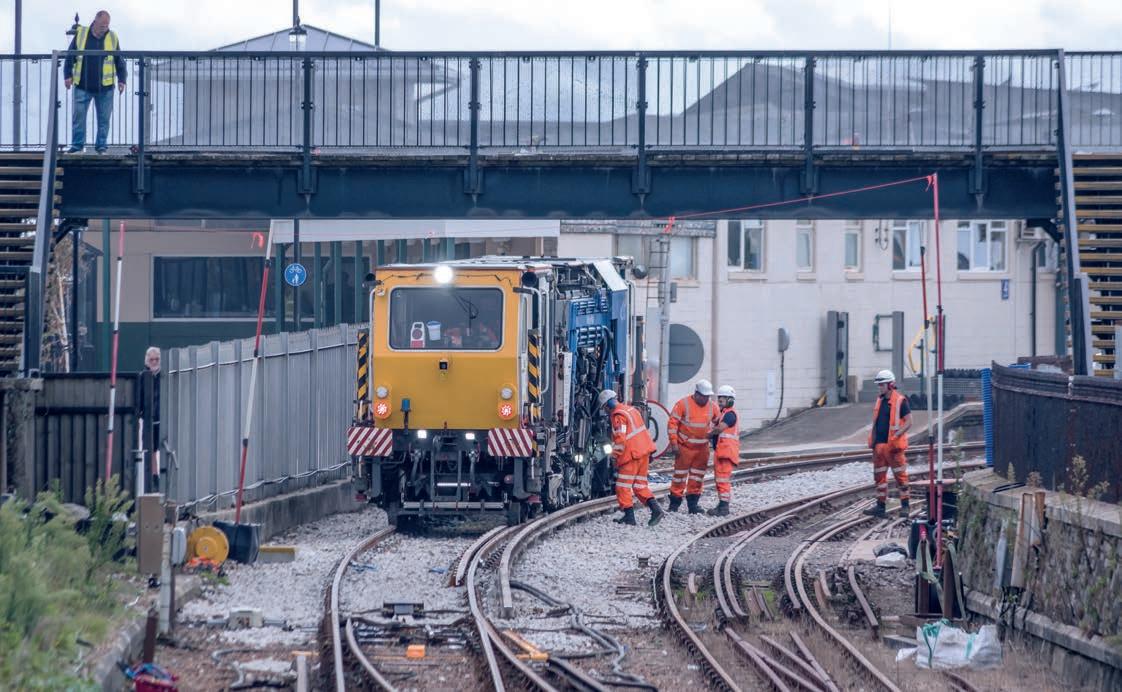
THE STOCKTON AND DARLINGTON Railway opened on 27 September, 1825, connecting places, people, communities and ideas, and ultimately transforming the world. Railway 200 will be a year-long, nationwide, partnership-led campaign to celebrate 200 years of the modern railway and inspire a new generation of young, pioneering talent to choose a career in rail. It invites community, rail and other groups to get involved.
The start of Railway 200 will be marked by a midday ‘Whistle off’ across the UK’s heritage railways in which we will, of course, be participating. I hope you will be able to join us for this on New Year’s Day at Havenstreet.
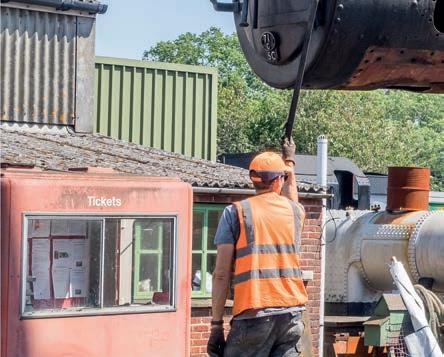
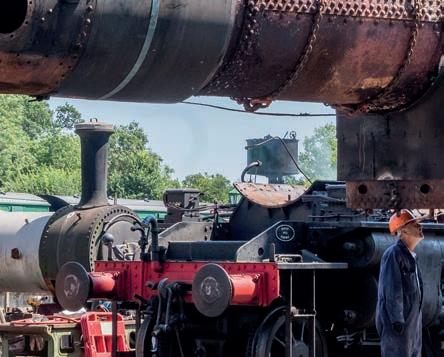
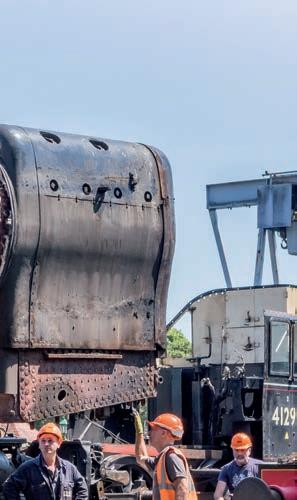
2025 is also the 150th anniversary of the opening of the Ryde & Newport Railway and thus our own stretch of the Island’s once-extensive railway system. What’s more, it will be 100 years since Calbourne first arrived on the Island and we will be holding our 50th anniversary Island Steam Show in August.
These milestones will be marked during the 2025 season by a number of celebratory events still in the planning stages at present, but the first will be a four-day winter gala from 20 - 23 February, the last four days of the February half term holiday. Among other ideas, we hope to use the gala to launch the completed two-car Ryde Pier Tram and A1/x Class W8 Freshwater back into service. The gala will include a Dark Ales Festival in the Barn Café. This event will be free to members, meaning that there will be no need to use any of the three free day passes.
Continued overleaf.
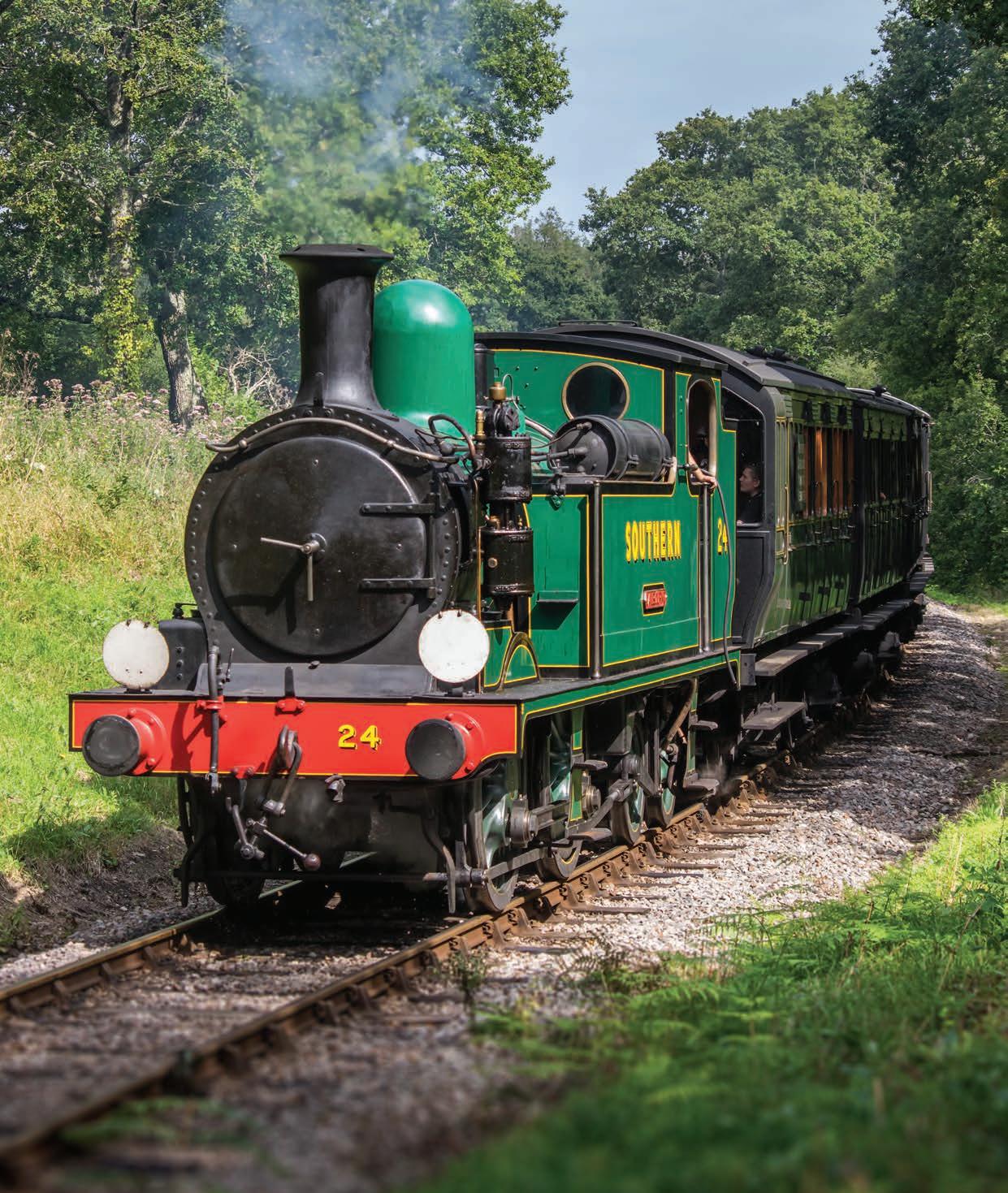
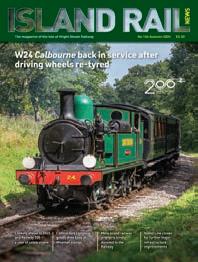
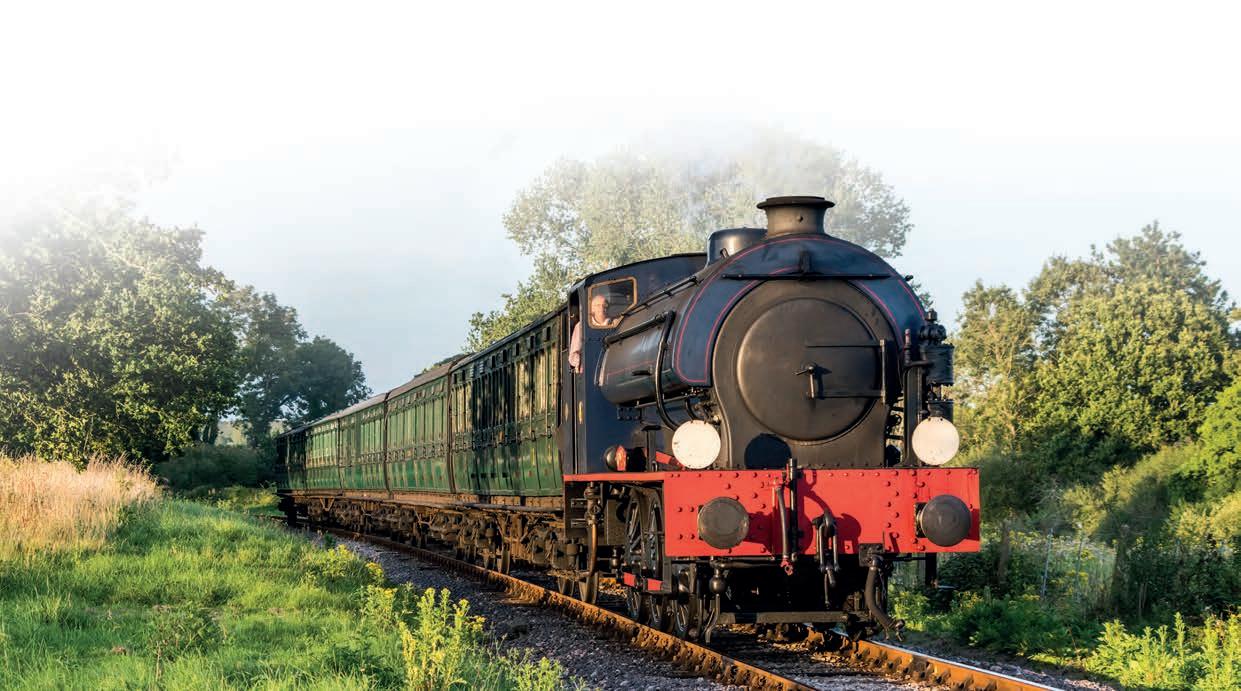
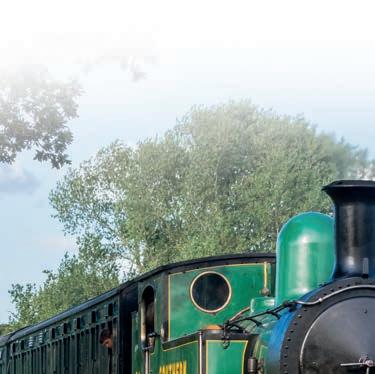
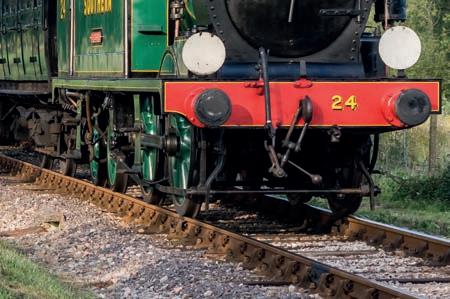
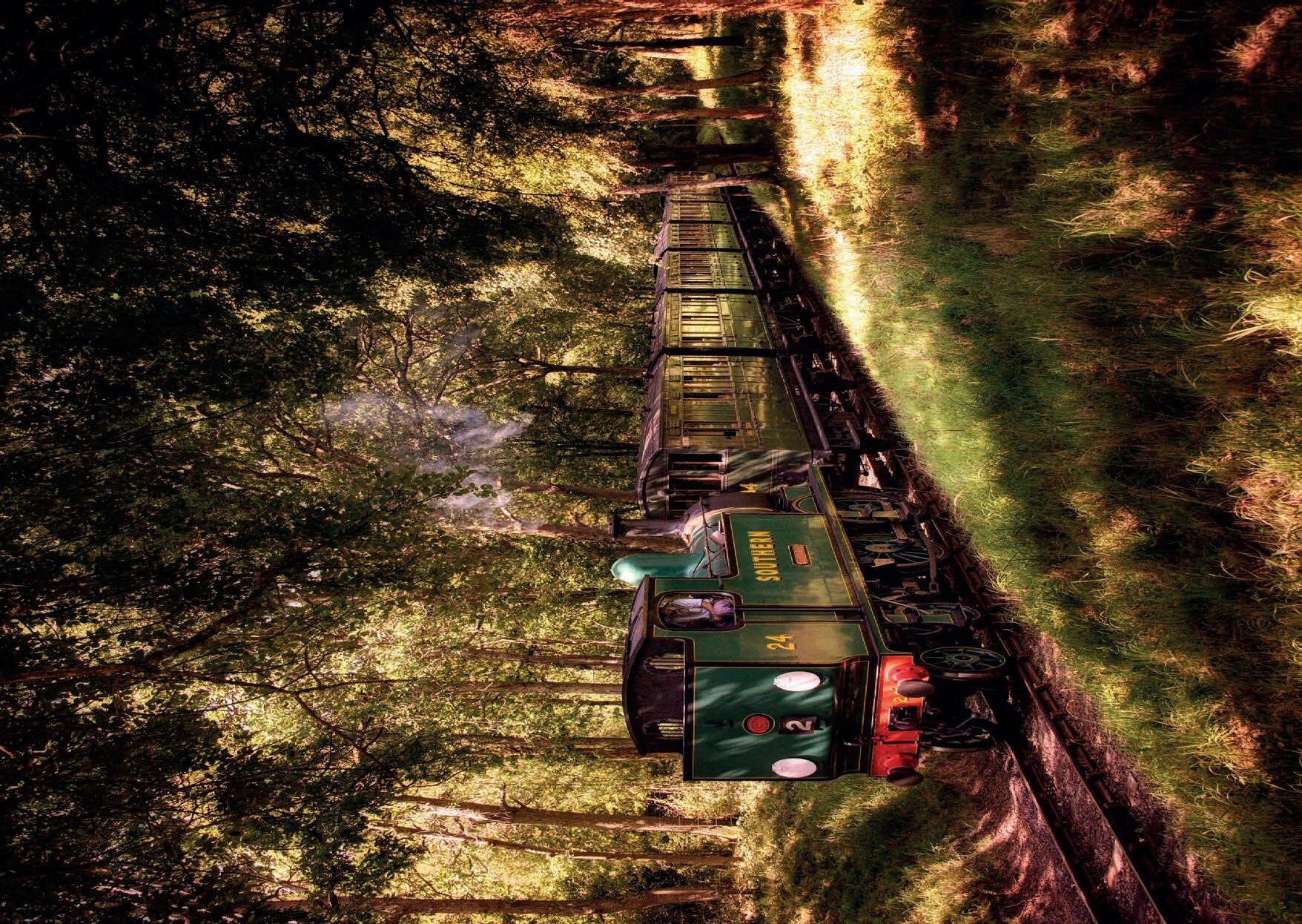
Front Cover: W24 Calbourne back in service and rounding Smallbrook curve on 26 August.
Cover:
Calbourne heading towards Rowlands Lane bridge on 29 August. Roger Millward
Continued from page 3.
As this edition of IRN lands on your doormat, Christmas will be approaching rapidly. Our ‘Team Scrooge’ of station dressers will already be working their magic to turn our stations into captivating stages for our 2024 Santa Specials, aiming to create a much-enhanced Christmas feel as our visitors enter the station yard at Havenstreet in particular. If you can help with meeting and greeting, as a Father Christmas or assisting our team of elves, please drop us an email to: havenstreet@iwsteamrailway.co.uk. It’s not too late to volunteer!
Christmas is, of course, the last big element of the year. The 2024 season failed to live up to budgeted expectations. The Island visitor market has been depressed this year and our incremental increases in visitor numbers fell back by 11.6% in respect of the first nine months of 2024 compared with the same period in 2023. While this is disappointing and gives us cause to reassess our business plans, it should be noted that revenue during this period actually increased by almost 6% overall. Within these numbers the standout performance was catering, where revenue increased by almost 12%, driven by the success of the newly-opened Barn Café. Our investment in a high-quality facility, offering a broader range of food and drink, demonstrated that we have the opportunity (and indeed need) to keep up with customer trends. We will be developing a new three-year business plan that will address the need to expand our revenue streams and to focus more on the Island home market to reduce our reliance on the summer school holidays and visitors to the Island.
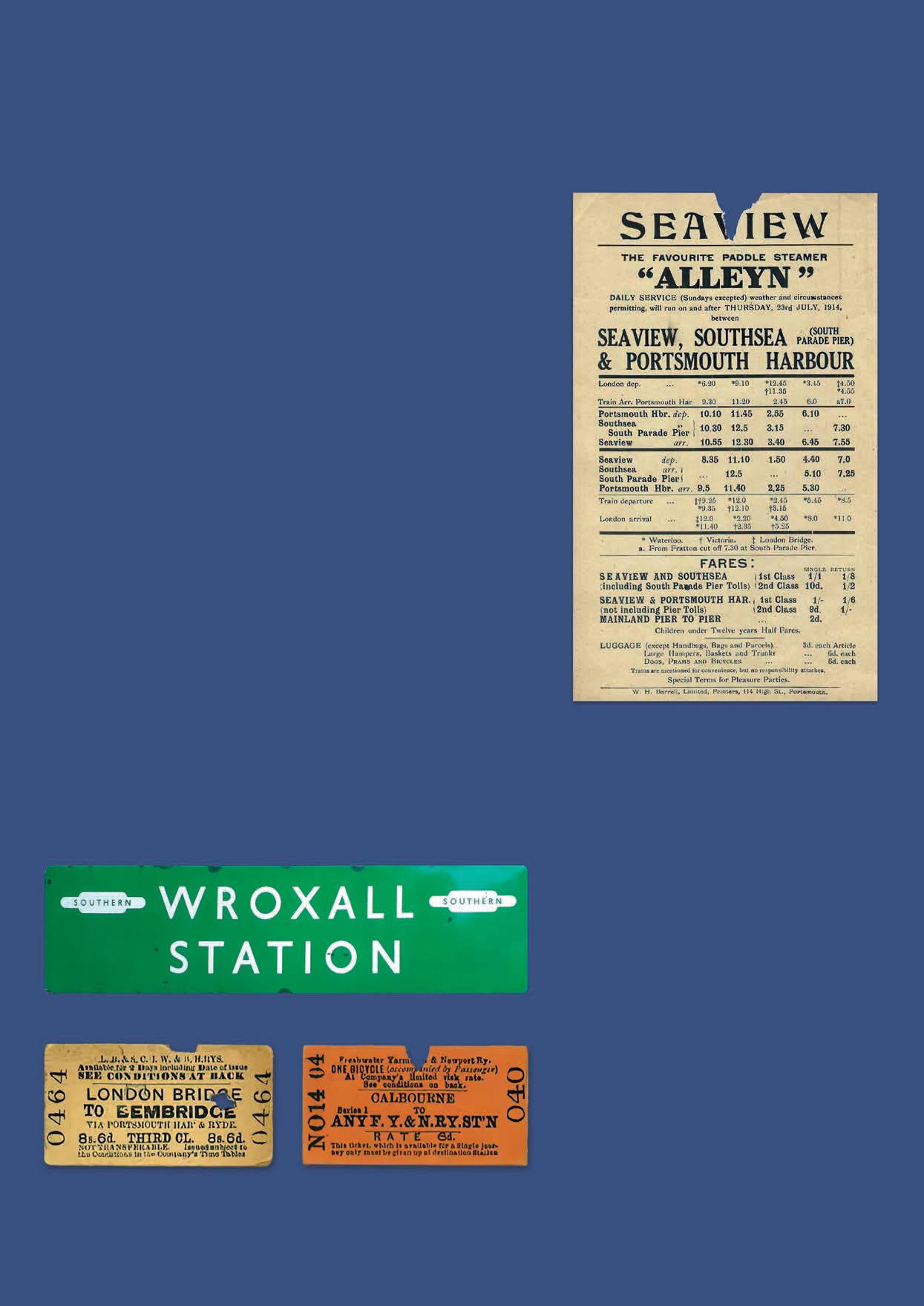
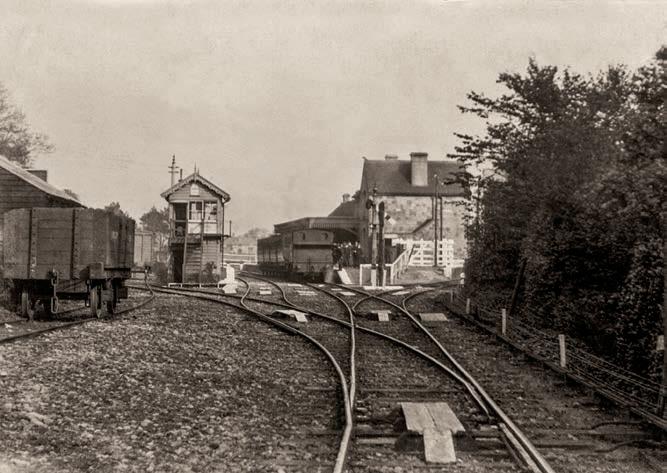
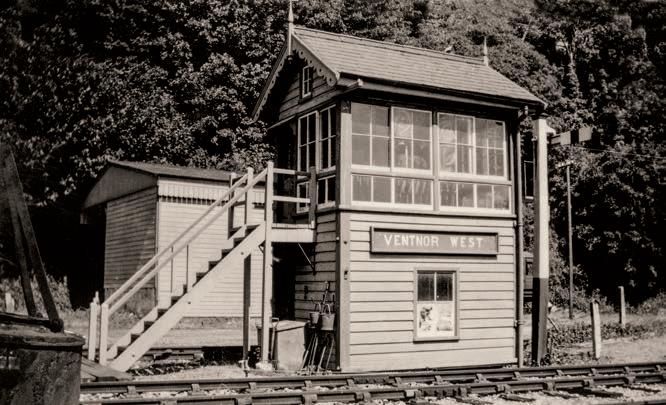
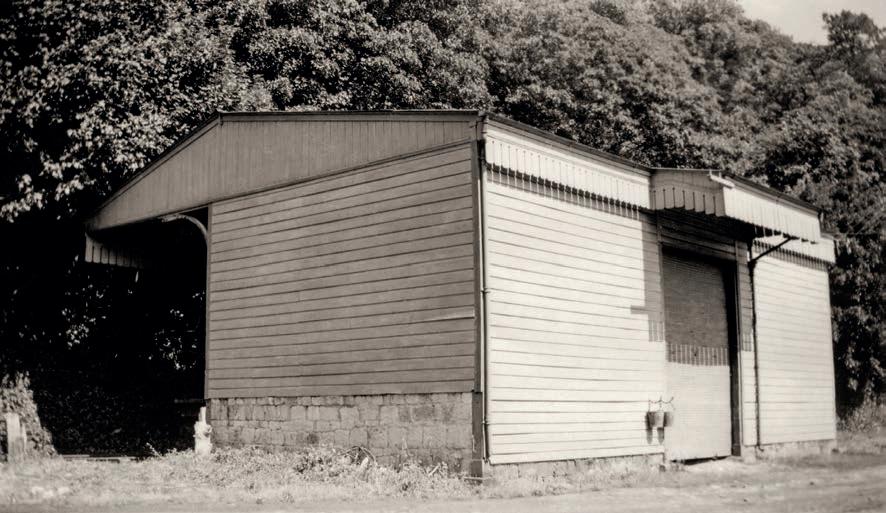
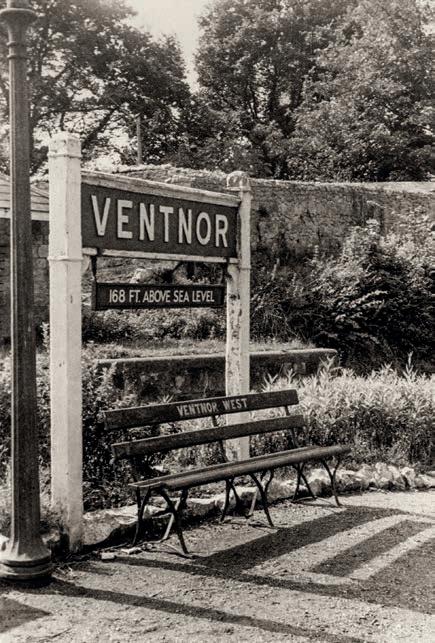
Hot on the heels of the donation of the amazing Ventnor station sign that is now displayed with many others in the Barn Café, out of the blue in September we were approached by Nigel Weatherley from Shenfield in Essex. As a teenage schoolboy in 1971, Nigel had acquired the large external station sign from Wroxall. This cost him the princely sum of £2 when purchased from Collectors’ Corner in Euston. Nigel has very kindly passed this 8 x 2 ft sign to the Railway, together with a number of other smaller items. We are hugely grateful to Nigel for this generous donation. If anyone has any similar artefacts we will, of course, be delighted to give them a home, with a determination to find spaces to display them as we have done in the Barn Café.
On the subject of donations, we are still seeking period suitcases, trunks and umbrellas to help dress our compartments. Additionally, we are keen to secure any available road frontage where we can display event poster boards and banners. If you can help with either, please drop us an email to: havenstreet@iwsteamrailway.co.uk
On the people front, Marc Phillips has left the position of Marketing Manager. Zoe Stroud, who had been looking after our digital and social media activity for Marc, has stepped in on an interim basis and is reviewing all our marketing activity. Thanks go to Marc for bringing our marketing functions back in house. Also stepping down, but not out, was John Yunnie, relinquishing his position as Senior Booking Clerk to Mark Wilson but carrying on his regular volunteering in the booking offices – thank you John.
News from the Boardroom
compiled by Iain Whitlam, Company Secretary
AS IS CUSTOMARY, the first board meeting after the Annual General Meeting elects its chairman. For the first time in the Railway’s history there was a challenge to the incumbent when Isaac Farnbank sought election. In the ensuing vote, however, Peter Taylor was re-elected.
The board received a report from Victa Railfreight reviewing our Rolling Stock Department. This included an accompanying action plan highlighting opportunities to improve the way in which we work.
Haven Falconry has decided to leave Havenstreet at the end of the season. Thoughts about providing an alternative attraction and enhancing facilities on the north side of the line at the station are under consideration.
With income falling below what was an ambitious budget this season, the September meeting spent a considerable time considering finances, not least challenging whether there are smarter ways of securing the best value for money out of our expenditure. We reflected that though our railway operation covers its costs – unlike many heritage railways – we are behind the curve when it comes to fundraising and philanthropic support.
The Strategic Goals were reviewed. A detailed update is included in this edition of Island Rail News
IWSR mentioned in MP’s maiden speech
Joe Robertson, MP for the newly-created constituency of Isle of Wight East in which in the IWSR is located, mentioned the Railway during his maiden speech to the House of Commons on Tuesday 8 October. The closing sentence of a paragraph which referenced several attractions within the constituency, read ‘Brading Roman Villa is a popular visitor destination today, as is Havenstreet steam railway’.
The full speech, which lasted around six minutes, can be found online in Hansard: www.shorturl.at/ii24P
192 Waggoner with a Fish and Chip special just after passing Deacons Lane bridge on the evening of 6 August. John Faulkner
STRATEGIC GOALS Progress Update
by Chief Executive, Marc Morgan Huws
THE STRATEGIC GOALS were set in 2021. Their current status is as follows: -
Goal 1: We will restore the E1 Class locomotive W2 Yarmouth to working order.
The locomotive has now been stripped down to the frames with descaling and painting progressing as volunteer time permits. New castings are being procured and machined as necessary. The new boiler is being manufactured, with completion expected during the second quarter of 2025. Nick Felton visited boilermaker Israel Newton & Sons on 30 August to view and discuss progress. Work is expected to be complete for the E1’s sesquicentenary in 2027.
Goal 2: We will complete the restoration of Oldbury First 21, LCDR Brake Third 4115 and the Midland Railway crane.
The restoration of Midland Railway 5T 6-wheel Crane 429S has been completed.
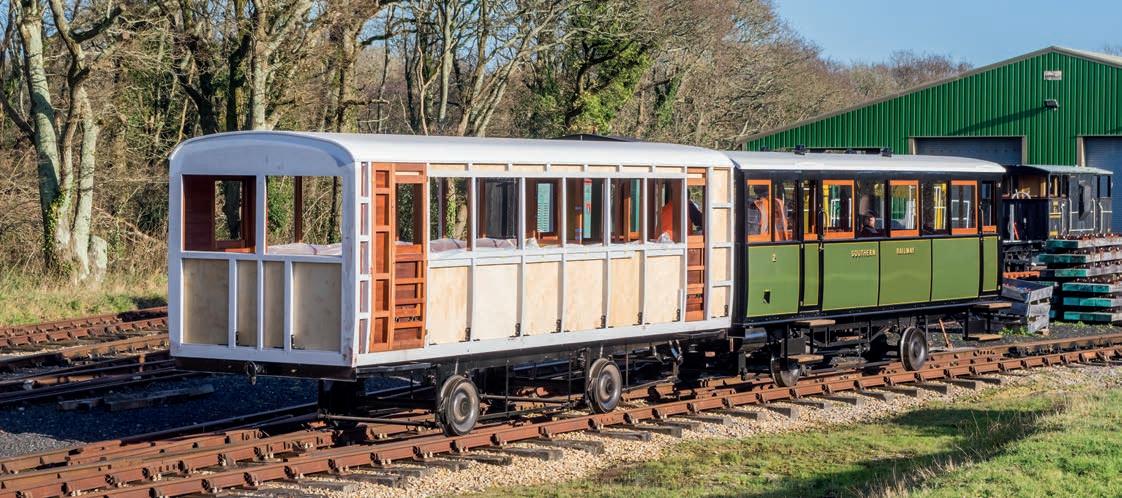
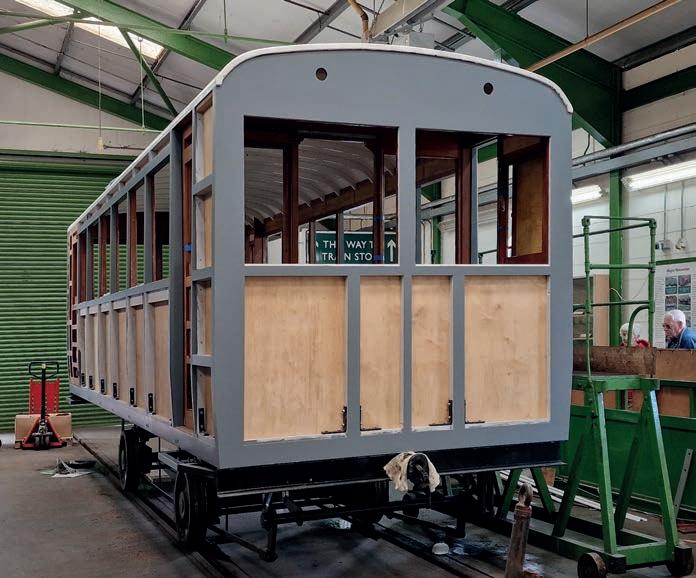
The body of Oldbury-built IWR First 21 is nearing completion. The gluelaminate components for the underframe are in stock and the underframe steelwork is now on order. The expectation is that the vehicle’s entry into service will occur during 2026.
LCDR Brake Third 4115 is progressing well and is also expected to enter service during 2026.
Goal 3: We will complete the Ryde Pier Tram and trailer and use it to enhance our visitor experience.
Drewry Railcar 2 has been completed and is in regular service. Ryde Pier Tram Trailer Car 10 is nearing completion. Work includes the exchange of the driving controls from the Ryde end of the driving car to the trailer car, and the two-car unit is expected to enter service in February 2025.
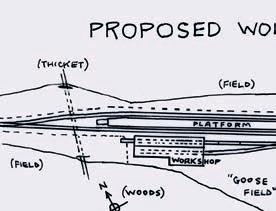
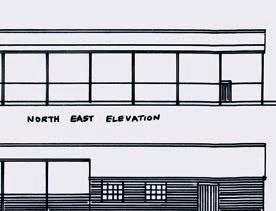
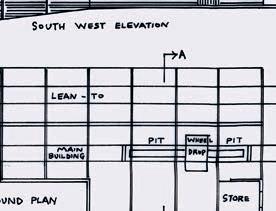
Goal 4: At Wootton we will build a replica goods shed and install pre-Grouping signalling, enabling block working.
Progress on the goods shed was regrettably hampered by the need to review the construction aspect of the project, ground conditions and delays on land acquisition.
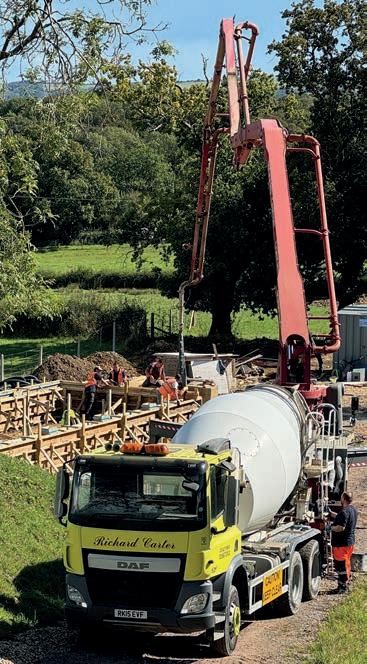
The project is now well underway with casting of the concrete lower walls and flooring having now been completed by contractors. The oak timber frame will be ready for assembly in spring 2025 with cladding to the roof and walls and track installation to follow during the summer/autumn. It is expected that the building will be handed over to the Heritage & Learning Department in spring 2026.
The addition of interpretation work and the coaling stage is also expected to be undertaken during 2026.
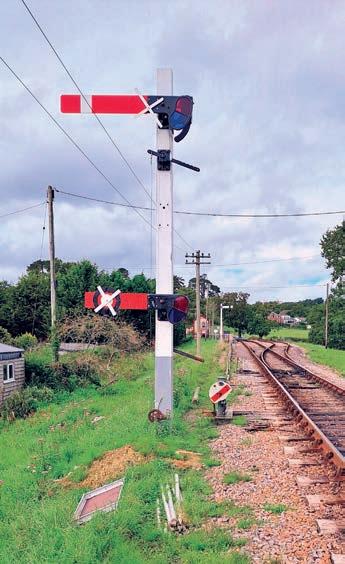
Turning to the signalling, construction of the complex, tapered timber, replica signal posts was twice delayed by higher priorities at Smallbrook stationnotably the annual platform timber renewals but, specifically, last winter's 'Connections' project. Stage 1 of the signalling project is now approximately 95% complete but requires further S&T input to reach the commissioning stage. Whilst completion of all aspects is likely to occur later in 2024, the target for the commissioning of Stage 1 is now spring 2025.
Considerable research and design has been undertaken for the further stages of the signalling project (including the unusual IWCR rotating shunt signals) and preparation for Stages 2 and 3 has already commenced.
Goal 5: We will increase the number of active volunteers by 20% and improve retention and recognition.
Whilst specific volunteer figures are difficult to quantify with complete accuracy, from a given baseline figure of 400-450 volunteers at April 2022 (Volunteer Development Manager post start date), 182 new recruits have gone through the induction process to date. The indication from checkbacks with new recruits is that the overwhelming majority have remained in a voluntary role with us. This would equate to an increase of around 40%.
Some caution is advised on this figure, however, owing to our lack of ability to accurately quantify volunteer losses. Overall numbers of active volunteers have, nevertheless, grown at least by the 20% goal.
As we develop our use of HOPS and associated systems we plan to better capture volunteering hours, and future benchmarking will be against hours rather than numbers of volunteers.
Goal 6: We will improve the diversity of our board, paid staff and volunteers.
Our board is now more diverse in terms of age and gender. The board will develop a strategy to further review its own constitution.
Paid staff are also more diverse in terms of gender and age through the decision to employ apprentices, with three currently on the payroll. Our appointment of an HR Business Partner will allow us to develop a strategy as time progresses.
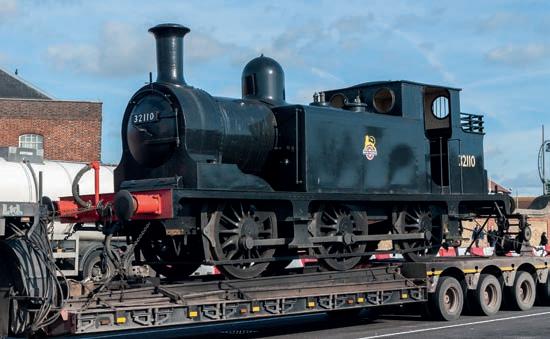
The sole surviving E1 Class locomotive, then numbered 32110, en route to the Isle of Wight at Portsmouth’s Gunwharf ferry terminal on 30 October 2012. John Faulkner
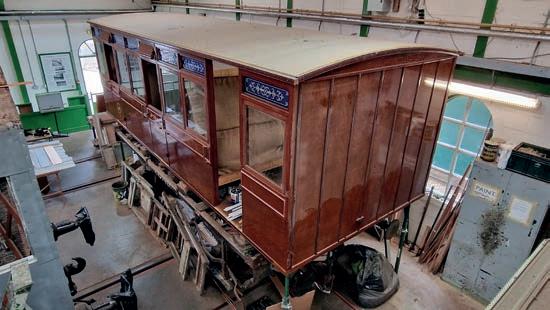
Oldbury First IWR 21 on 3 July 2024. John Faulkner
Having employed a Volunteer Manager we have, to date, improved our induction and training processes and some recruitment procedures and opportunities.
We are now working on a new strategy to maximise the quantity and quality of volunteer recruitment, addressing both the Railway’s needs and those of existing and potential volunteers. This will mark a step change in our drive to recruit, develop and retain volunteers across the diverse roles we need to operate and develop the Railway successfully into the future.
Goal 7: We will grow our membership by 20%.
Membership stood at 2,729 at the close of 2022 and 3,328 at the close of 2023, an increase of 22%. We will develop new mechanisms for improving the method and speed of communication with our members as we overhaul our website and utilisation of HOPS in 2024/25.
Goal 8: We will modernise our ways of working, including better use of IT, improved project management and better HR.
In 2024 we appointed an HR Business Partner.
We are currently seeking to secure the appropriate resources to review all our IT and systems requirements.
We will utilise staffing vacancies to deliver a restructuring that embeds project management proficiency.
Goal 9: We will extend Train Story, to include a museum gallery and additional rolling stock storage.
After an extensive scoping exercise involving a working party through 2023, including discussion with a major funding body, our approach has been modified along the following lines:
1) To investigate the replacement of our current offsite storage facility, including the provision of additional rolling stock storage, probably also offsite. We are in active discussions with a developer in relation to this.
2) The construction on-site of a simple structure to provide covered sidings for operational stock.
3) The above would enable our current Train Story to become a more dedicated and permanent display and interpretation facility.
Goal 10: We will improve interpretation, education and engagement across the Railway.
INTERPRETATION:
• Interpretation at Smallbrook Junction has improved during 2024, with interpretation and photographic panels installed in the waiting shelter and within the signal box. Further interpretation is planned for Smallbrook box in 2026. At Wootton, the H&L Department has engaged with the Wootton goods shed project committee to further develop a plan for the interpretation. Plans to improve interpretation of rolling stock in Train Story are ongoing and are expected to be undertaken by the end of 2024. Further development of Train Story will link into point 3 of Goal 9. More
widely, the H&L Manager has also been analysing interpretation across all sites, and a site-wide interpretation strategy is being developed currently.
EDUCATION:
• A new formal educational workshop focusing on the evacuee journey during World War II has been developed during 2024 and improvements to existing workshop materials are currently being undertaken. Plans are also ongoing for developing the Railway’s provision to support homeeducated children. Increasing informal education for visitors is also a focus for the H&L team, which links into the interpretation strategy noted above, by looking at ways of making additional information about exhibits available online via QR codes.
• The number of school visits during 2024 increased significantly compared with 2023. Between April and July 2024 (inclusive), we welcomed 35 schools, totalling 1,544 students; this compares to 20 schools and 822 students in 2023.
ENGAGEMENT:
• IWSR took part in the Arts Council England-funded ‘In Your Museum’ project during the first half of 2024, along with four other Isle of Wight museums, which focused on developing community engagement projects. The IWSR project developed reminiscence sessions using museum objects for members of the community who have dementia. During this project, IWSR engaged with residents from Northbrooke House in Havenstreet and the Dementia Adventure organisation, as well as undertaking training at the Alzheimer Café at Parklands, Cowes.
Plans to continue developing our education offering, complete and implement a site-wide interpretation strategy, increase accessibility to IWSR interpretation content, and develop further engagement projects during 2025 are ongoing.
Goal 11: We will improve the quality and capacity of our catering facilities.
Ongoing. The opening of the Barn Café this year has improved the quality and capacity of our catering offer. Work on the main refreshment rooms building is being considered for 2025.
Goal 12: We will improve our visitors’ average spend per head by 25% and increase our turnover to £2.5M.
In a market where the number of visitors travelling to the Island is not wholly within our influence, we have identified that one critical element of future growth and financial stability is to continue to increase spend per head.
Having successfully developed the Barn Café, we are in the process of bringing forward an investment plan for the north side of the station site at Havenstreet, adding to the range of facilities and activities within, to increase dwell time and secondary spend among customers.
We are also developing plans to redefine the format and offer within the original refreshment rooms to better meet current customer demands and to increase spend.
Drewry Railcar 2 and partly-constructed Tram Trailer Car 10 in Griffin’s Sidings on 10 January this year. John Faulkner
A further project will be launched in 2026 to drive online expenditure through an expanded and improved retail ‘shop’.
these is monitored regularly.
We have invested in additional machinery and continue to invest in new rail and sleepers to enhance the condition of the rail infrastructure.
Goal 14: Our marketing activity will become more engaging and generate a higher return.
In 2023 we employed a dedicated Marketing Manager and the Railway’s marketing became more engaging and successful. Since then, that role has been replaced with an interim contractor who is currently reviewing our marketing strategy ahead of a reorganisation of our Commercial functions in early 2025.
Goal 15: We will increase our income from grants, legacies and donations.
Goal 13: We will implement a long-term investment plan for our rail infrastructure and resolve the stability of the Chillingwood Brook embankment east of Havenstreet.
A formal long-term plan for the Rail Infrastructure Department has been drafted and is substantially complete, but has yet to be finalised and published.
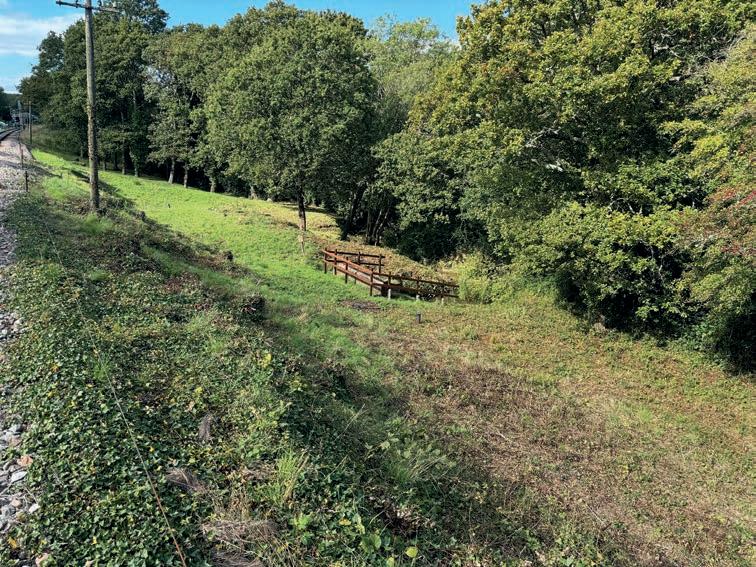
Measures to improve the stability at Chillingwood Brook to date have included ballast containment using corrugated steel barriers and improved drainage on the Down (south) side of the embankment. The effectiveness of
Appeal
News
In 2024 we employed our first Partnerships and Fundraising Officer. This role is directed at fundraising from donations (including legacies), sponsorship and grants. It also encompasses the development of broader and deeper stakeholder relationships to support the activities.
Goal 16: We will take tangible steps to reduce our impact on the environment.
Our recycling and reuse strategies have successfully led to increased recycling and reuse.
We are actively pursuing solar power options and upgrading of our waste treatment plant as part of our plans for the north side at Havenstreet. These plans also include a partnership with the Wight Squirrel Project to convert the redundant woodland stage into a red squirrel hide.
ANNUAL DRAW – OLDBURY CARRIAGE RESTORATION
Money for the 2024 Annual Draw continues to arrive, the proceeds of which are going towards the restoration of our Oldbury carriages. Please make every effort to sell the raffle tickets enclosed with the last edition of IRN. Please see the enclosed letter from our Chairman and remember that the completed counterfoils need to be back with us by Thursday 12 December. Alternatively, you can make a donation to this or any other of our appeals via the Railway’s website at https://iwsteamrailway.co.uk/get-involved/make-a-donation/. Thank you.
200 Club News
The 200 Club’s autumn draw took place on 18 September 2024. Many thanks to Liz King and other members of the Havenstreet office staff who help in making the draw. The winners were as follows:
1st Prize £350 Peter Mabey, Cardiff (No 157)
2nd Prize £150 Francis Spence, Thorpe Bay, Essex (No 302)
3rd Prize £75 Roger Anderton, Stockbridge, Hampshire (No 130)
We offer our congratulations to the three winners and, as always, our thanks go to everyone who continues to support the Railway through the 200 Club.
Ros Everett, 200 Club Co-ordinator
Our Grateful Thanks
We thank the following members who have made donations in the past few months: M Baldery, Neil Berry, Alan Cluett, G L Donne, H Hawker and Stephen Plowman.
We also thank those who have made online donations when renewing their annual subscription and those who have made donation towards Calbourne’s new tyres. We also thank those who continue to support the LCDR 4115, SECR and Oldbury carriage appeals, the Wootton signalling project and those who make donations when returning their Grand Draw ticket counterfoils.
Linda
Walker, Deputy Finance Manager.
DONATIONS BY CHEQUE
The easiest means by which to make a donation to the Railway is via the donations page on our website: https://iwsteamrailway.co.uk/get-involved/make-a-donation/
We know that some people prefer to send their donation or, for example, their raffle ticket remittance, by cheque. Banking rules mean that the payee name on cheques must mirror exactly the name in which the account is held. Therefore, to avoid being rejected, we respectfully request that cheques are made payable to the incorporated entity: ‘The Isle of Wight Railway Co. Ltd.’ (and not the Isle of Wight Steam Railway).
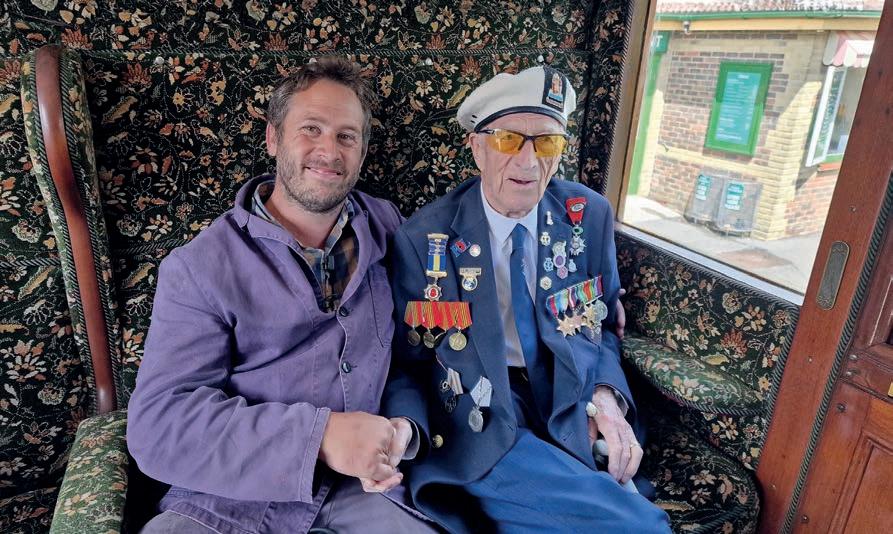
Centenarian and D-Day veteran Alec Penstone visited the IWSR during the 1940s Experience and took a journey along the line accompanied Railway volunteer Dave Smart. First Class compartments are declassified during the 1940s event, hence the absence of antimacassars.
SPECIAL EVENTS REPORT
by Events Officer Liz Tagart
1940s Experience
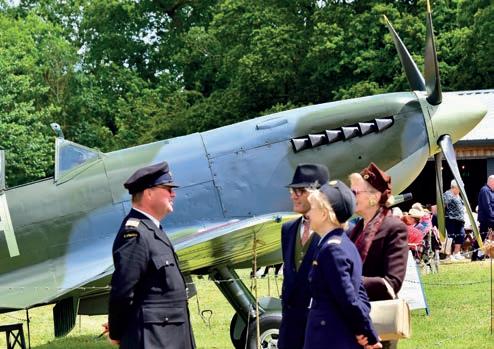
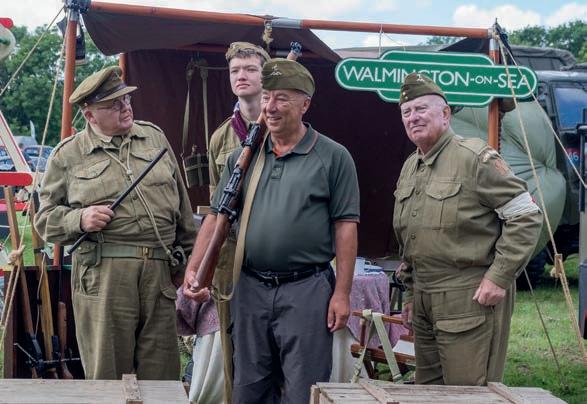
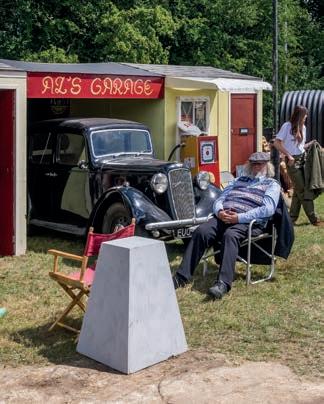
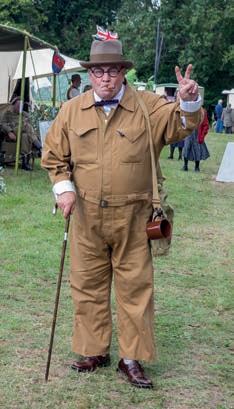
The first weekend of July continues to be the slot for our 1940s Experience. We created another new layout for the field and welcomed exhibitors old and new, the former including a firm favourite – the replica Spitfire. Other exhibits included a steam-powered stone crusher and the return of the Blackout Buddies, who portray characters from the popular television comedy Dad’s Army New entertainment this year included George Formby (Andy Eastwood) who played Rossini’s William Tell Overture on his ukelele - you had to hear it to believe it! We also welcomed vocalist Hannah Evans and the return of Now That’s Jive, our dance troop.
Real Ale Train
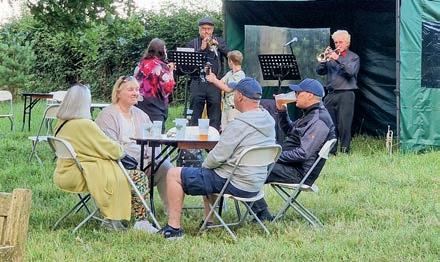
The Real Ale Train operated on Saturday 13 July, when the weather was much kinder than last year, meaning that the bar at Ashey could return. I think this is the favourite location as it is such a lovely place to sit and while away a few hours. This year we welcomed the band Brass Monkeys. Their easy-listening music gave drinkers another reason to stay at Ashey to have a pint or two and perhaps a burger from Nicky’s Lunchbox. This year’s train service was enhanced with the addition of the Drewry railcar.
The Island Highland Gathering
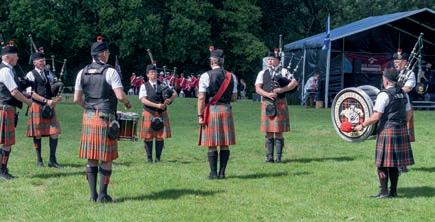
The Island Highland Gathering returned on Sunday 21 July, with performances by pipe bands from the south of England as well as the Island. Additional entertainment was provided by Wight Hot Pipes and The Crew on the music stage. This event was organised by Aspire Ryde to assist with its fundraising. We welcome the opportunity to support local community events.
Photographs by John Faulkner unless otherwise credited
Above: The Brass Monkeys performing at Ashey station during the Real Ale Train event.
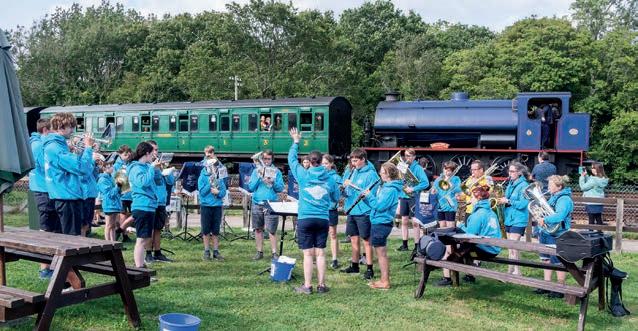
Right: Tonbridge Scout and Guide Band playing outside Train Story during the Steam Fair as 192 Waggoner passes by with a train.
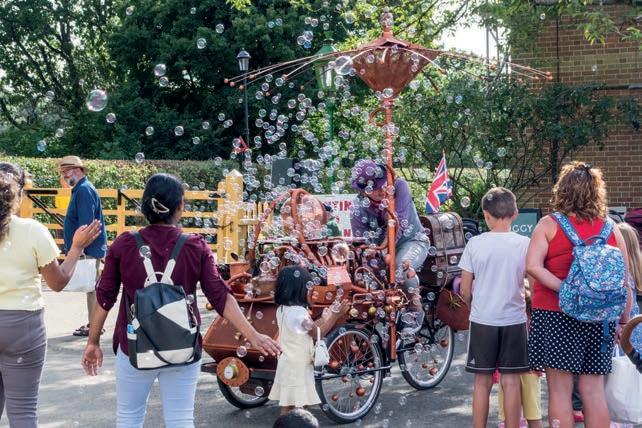
Below right: Steve the Bubble Man was a great hit with the kids during the Steam Fair.
Steam Railway Proms
The Isle of Wight Symphony Orchestra joined us again for an afternoon of music on 27 July. The day before, however, I received a call to advise that, unfortunately, the transport used to convey their percussion instruments from their store had broken down; did we know anyone with a van who could help? Well, of course, we did, so off I went to the middle of nowhere via narrow lanes to collect the instruments. There were a variety of scores and the afternoon drew to its usual conclusion with a rousing Last Night of the Proms-style finale.
Island Steam Fair
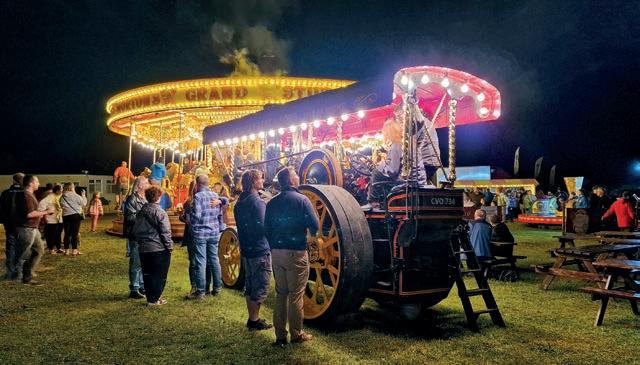
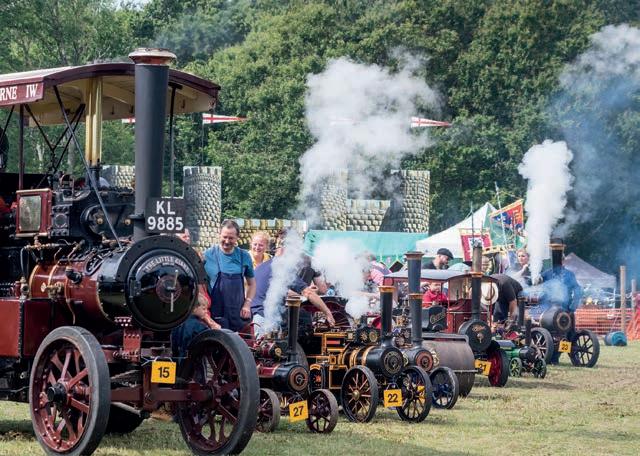
The 49th Island Steam Fair, our flagship four-day event, took place across the August bank holiday weekend. An improved music stage this year hosted bigger bands such as Knucklehead and Wham 69. In the adjacent tea tent, in addition to the usual fare, we trialled beer and cider sales, which seemed to work well. We made some changes to the outside seating area, with a large canopy spanning the paved area directly outside the Barn Café. This was invaluable, especially during the heavy downpours experienced on the Saturday.
The main arena saw the return of The Spectacular Knights of the Crusades and On the Edge, a motorcycle stunt team. It is becoming increasingly challenging to find new acts, especially given the limited size of our arena. Additional entertainment around the site was provided by our old friend Professor Crump and Steve the Bubble Man with his amazing bubble machine. There was the usual display of vehicles around the arena, the wider field and also in the car park where there was a miniature railway offering rides to our younger visitors.
In 2025, we will be celebrating the 50th anniversary Island Steam Show. Ever since those modest beginnings in 1975, which marked the centenary of the Ryde and Newport Railway, the event has evolved and grown. In planning next year’s event we are seeking photographs from shows spanning the last 49 years. If you have any interesting photos from previous years please email them to me – liz.tagart@ iwsteamrailway.co.uk. It is planned to feature a montage of photos and play them on a loop via the large screen in the Barn Café. Interesting and/or humorous stories would also be most welcome.
Morris Minor Rally
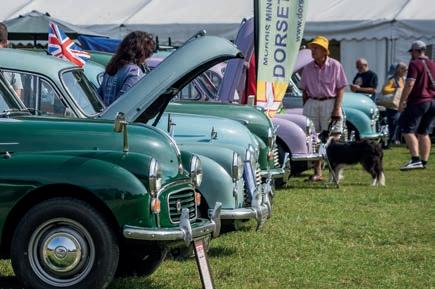
On Sunday 1 September we were joined by the Isle of Wight Morris Minor Owners Club for its annual rally. This operates to a well-rehearsed format which works well both for them and us.
Cider and Cheese Festival
Our popular Cider and Cheese Festival took place over the weekend of 7 and 8 September. We offered a platter with a choice of three cheeses which worked well and the queue kept moving. We welcomed plenty of visitors on the Saturday, music being provided by Tapestry. The Sunday started well until the heavens opened which was followed by a few loud cracks of thunder, at which point we were plunged into darkness as the power supply failed. I am very much a believer in the wartime ‘Keep Calm and Carry On’ mentality. Fortunately, the barn has emergency lighting which enabled us to operate, albeit for cash sales only, until the power was restored later in the day.
Murder Mystery Evening
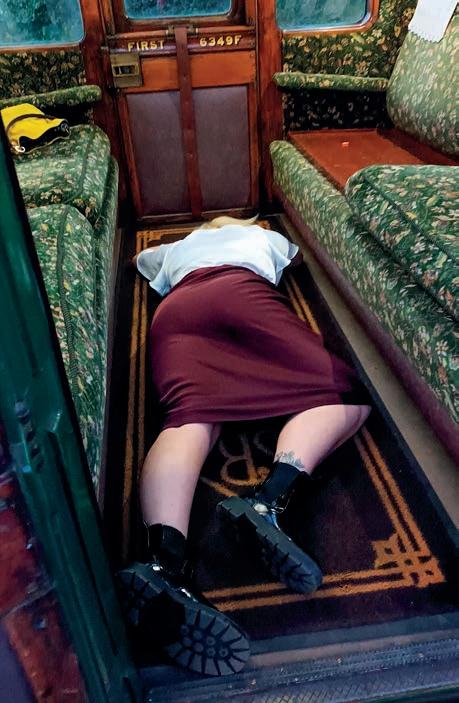
The first event of this kind at Havenstreet was a joint venture with Caught Red Handed Productions. On arrival at Havenstreet the 80 or so guests headed to their allocated dinner table in the Barn Café where they were appraised of the evening’s scenario. They were introduced to a controversial plan to build a senior citizens’ residential apartment block on land at Wootton station [that’ll give the board an idea, Ed.]. A lady then entered the Barn Café in a terrible state. She had a discovered a body in a First Class compartment of one of the carriages berthed alongside the platform. The host then took our guests out to view the body and seek clues as to the identity of the deceased and to consider the motive. Guests then returned to the barn for their main course and to discuss what might have happened. The rest of the evening, including during the ice cream dessert, was spent discussing the evidence and considering what might have happened. By the end of the evening the mystery was solved. The deceased was the planning officer responsible for the proposed building and the murderer was the wife of the project manager.
It was a fascinating evening, seeing how people reacted to the scenario. Whilst it was not a big money-making evening I feel that events are not solely about income generation (although that certainly helps). Offering visitors and staff enjoyment, and bringing new people together to the Railway, especially if they have had a good time and are likely to return, are equally important.
A body found on the train during the Murder Mystery Evening. Liz Tagart
Operating Department News
AFTER A BREAK of many years, a series of Fish and Chip specials returned in 2024. Two round trips operated every Tuesday evening throughout July and August, scheduled to depart Havenstreet for Smallbrook at 18.00 and 19.15. On 2 July, a few hours before the first of these specials, Hunslet ‘Austerity’ 198 Royal Engineer failed at Smallbrook Junction with a Westinghouse pump problem. D2059 was dispatched to recover the train and return it to Havenstreet where 198 was detached before the diesel hauled the four-wheeled set to Wootton and back. The resulting delay led to the cancellation of two round trips.
As usual, the 1940s Experience took place during the first weekend in July. An intensive two-train timetable operated on both days, with 2,238 passenger journeys recorded, 22% down compared with last year’s event.
Sometimes, our operating challenges can be quite unusual. This was illustrated by the discovery of a hornets’ nest inside a lineside telephone cabinet on 13 July. The Duty Manager’s Daily Log records the fact that it was ‘… a very active hornets' nest’ and that those investigating ‘… beat a hasty retreat’. A local firm removed the nest a few days later.
A crew shortage on Saturday 13 July, the day of the Real Ale Train, meant that published railcar services did not commence until mid-afternoon. Steam-hauled and railcar
from Tim Spencer-Peet, Acting Operating Manager
services ran through into the evening, with all trains calling at Ashey where a real ale bar had been set up.
Despite the summer of 2024 not being especially hot, there were several lineside fires during the period under review. Our train crews are very adept at extinguishing such fires, using beaters and other equipment carried on all trains. Sometimes, however, well-meaning members of the public summon the fire service before we have had the opportunity to extinguish the flames ourselves, and this invariably leads to service delays while fire-fighters are on or about the line, possibly seeking a fire that has already been extinguished. During high-risk periods we operate a fire patrol after the final steam service of the day, using the Wickham motor trolley. Hot weather can also affect the operation of points and signals, with signalmen often having to tighten signal wires to take up the slack as the sun rises higher into the summer sky and temperatures rise. They must also remember to slacken them off at the end of the day too!
An additional steam-hauled service operated on Saturday 27 July, the day of the Steam Railway Prom concert.
On Monday 5 August Ivatt 2MT Class 41313 failed at Havenstreet with a fractured steam pipe before taking up the Duty 2 afternoon services. BR 03 Class D2059 was flashed up and hauled the four-wheeled set for the remainder of the day. The Ivatt was soon repaired and was ready for service the following morning.
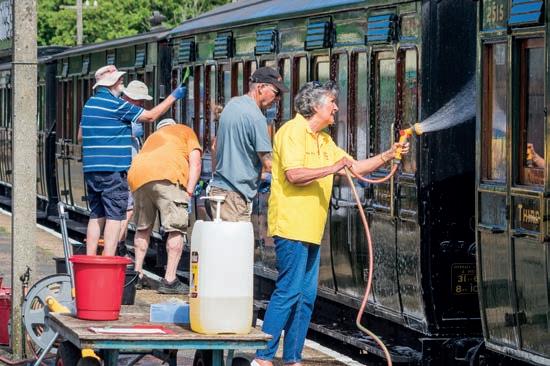
Below left: Carriage cleaning of the 4-wheeled set on 19 July. John Faulkner
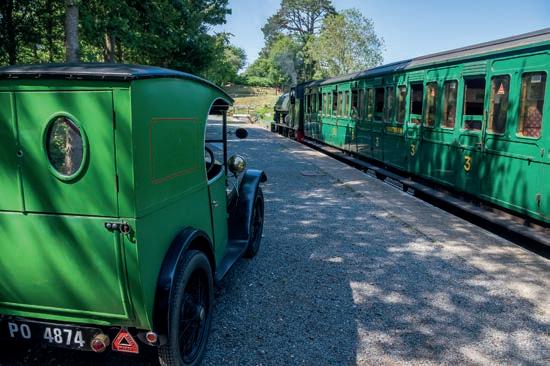
Below right: The booking clerk’s 1931 Austin van is joined by a much younger 198 Royal Engineer at Wootton station on 29 July. John Faulkner
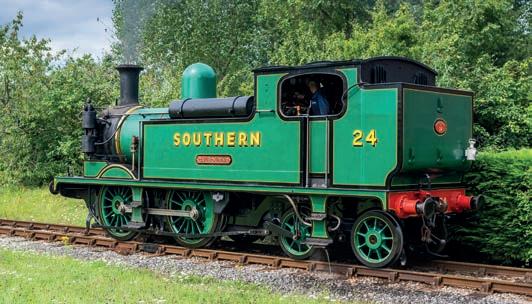
Bottom: W24 Calbourne on her first service run since wheel re-tyring, running the Fish and Chip special on 20 August at the same location as 192 Waggoner is seen on page 4. John Faulkner
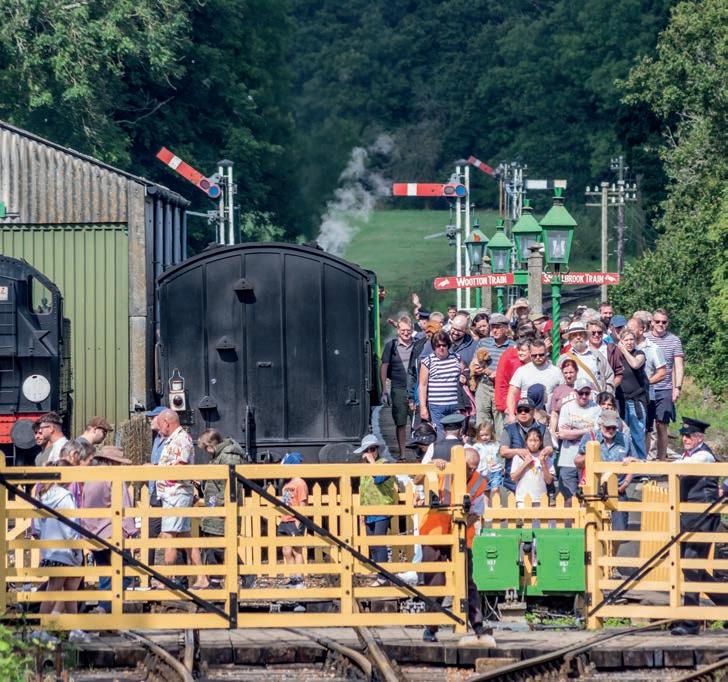
Below left: Photographed from a departing Up train, passengers are seen alighting at Havenstreet from the first train from Smallbrook during the Steam Fair on 26 August. John Faulkner
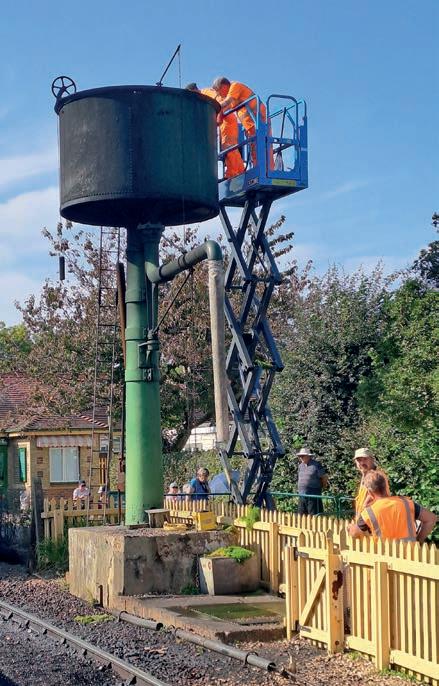
Below right: A hastilyhired scissor-lift being used on 27 August to gain access to the water tower so that weed that was stopping the outlet valve from closing could be cleared. Stuart Duddy
Just over a week later, on 13 August, IW Fire & Rescue was summoned again by a member of the public to what transpired to be a very minor lineside fire in Briddlesford Copse. The B set train was held at Wootton for around 1 hour 20 minutes before the line was reopened. Upon its arrival back at Havenstreet the B set service was terminated and the stock shunted back into Train Story. Two round trips were cancelled as a result.
W24 Calbourne, having been reunited with her newlyre-tyred driving wheels and undergone a successful boiler test during the morning of Friday 16 August, operated along both sections of the running line for some trial runs later that afternoon, running in the spare path. Four days later, on 20 August, she hauled an empty coaching stock working to Wootton and back as a final trial run prior to working the advertised Fish & Chips trains that same evening.
The annual Island Steam Fair started on Friday 23 August. Operationally, the weekend went well, despite the particularly unpleasant weather on the Saturday. Hunslet ‘Austerity’ 192 Waggoner hauled the bogie rake throughout the weekend whilst W24 Calbourne was in charge of the four-wheeled carriages. The number of passenger journeys recorded across the four-day event was 6,603, marginally down compared with the same event in 2023. By way of a change, the traditional ‘Twilight Train’ for staff and exhibitors on the Saturday evening of the event operated to Wootton first before running to Smallbrook Junction. The usual non-stop run through Havenstreet did not occur, however, because the locomotive required water.
Several published services on Tuesday 27 August were cancelled owing to the failure of a flap valve within the water tower at Havenstreet. A build-up of aquatic weed meant that water was leaking through the outflow valve faster than it could enter the tank via the intake. Although advertised as a two-train service day, the four-wheeled rake was returned
to Train Story having operated just one round trip of the line. Both locomotives were kept in steam, however, and alternated, with one taking water in the Down Sidings while the other hauled the remaining service train. A scissor-lift was hastily hired and arrived later the same day and, with the weed having been fished out from the water tank, the immediate problem was resolved.
An unavoidable staffing issue led to the cancellation of the penultimate round trip on Thursday 5 September.
After 48 consecutive running days, from 20 July until 5 September, a day without trains on Friday 6 September gave our events’ colleagues a window in which to complete their set up for the annual Cider and Cheese Festival. This took place over the ensuing weekend when a two-train service was in operation. Regrettably, we suffered a significant power failure just as we were welcoming visitors on the Sunday of the event, the result of a lightning strike on the main power infrastructure for the area. This cut all our power for two hours, affecting ticketing and sales across our catering and retail outlets. Train operation was impacted only to a limited extent because all track circuits, signal repeaters and most motorised signals can be powered by the emergency battery and generator. The Up Advanced Starting Signal, however, draws its power from a different source. Consequently, the driver had to be given verbal authority on each occasion that a train entered the Smallbrook single line section. Thanks go to all our staff for pulling together and getting the day back on track very swiftly once power was restored.
The loco release at Smallbrook was reduced in length by several yards from Thursday 19 September, marked by a temporary ‘Stop’ board and a sleeper secured to the line. This was to facilitate the transfer of reusable materials made redundant during the latest blockade of the Ryde –Shanklin line.
TRAINING
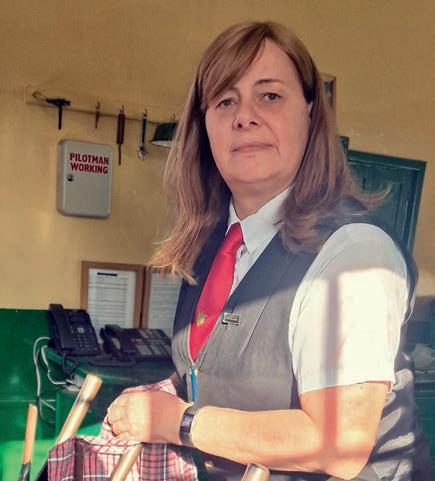
The intensive nature of our high season operation provides an ideal opportunity to train and assess colleagues into new grades. This summer we welcomed Jessica Garbett to the signalman’s roster. Jessica was already a qualified foreman and guard. Congratulations also go to James Masterson, Rob Robertson and Tony Lawley who passed their pointsman assessments recently and also to Sophie Brockman and Frank Tompkins who qualified as pointsmen earlier this year. Frank has now embarked upon his training to become a signalman.
TRAFFIC FIGURES
Operating data refer only to published service days and trains available to fare-paying passengers. The one exception to this is the ‘Twilight Special’ which operates on the Saturday evening of the August bank holiday weekend and is run primarily for staff and exhibitors involved in the Island Steam Fair. Figures exclude passenger journeys recorded on the Drewry railcar on days when the vehicle is operating alongside published steam-hauled services. Quarter
Sophie Brockman
Rob Robertson
Tony Lawley
Frank Tompkins
Jessica Garbett
Compiled
by
Photography
by
LOCOMOTIVE | CARRIAGE & WAGON
Andrew Summers, Rolling Stock Manager and Neil Rees, Deputy Rolling Stock Manager
John Faulkner
This report covers the busiest time of the year, with trains operating almost daily and an increase of two-train running days. This year has also seen extra evening running, stretching the department to its limits.
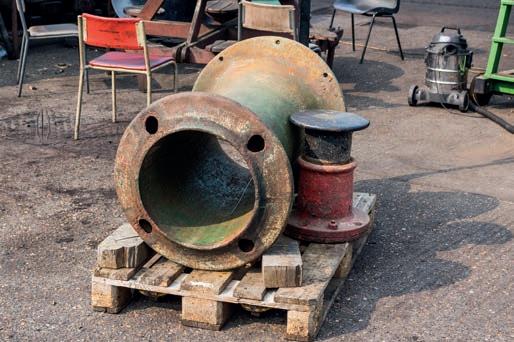
Donations are often made to the department; in mid-August we were kindly given an Adams’ O2 Class chimney and buffer that have spent many decades as garden ornaments in sight of the former Newport station site. Old tools are also frequently donated. Such items that were surplus to our requirements were sold at a stall at this year’s Island Steam Fair and raised over £1,500.
STEAM LOCOMOTIVES
Historic Island Locomotives
Adams O2 Class W24 Calbourne returned to revenue-earning service on Tuesday 24 August and remained in service until 17 September when she was stood down for dry winter storage and public display in Train Story.
Before her return to service, boiler repairs continued, replacing corroded firebox rivets with collar bolts, followed by fullering of the seam – a tooling process to make the seam watertight. Towards the end
Coal of good quality continues to be a problem. Following some recent deliveries, we arranged for a visit by a representative from our supplier so that he could view our dusty coal. One solution was to trial coal from Ghent, Belgium. This started in early September and is ongoing.
The Rolling Stock Department often undertakes jobs for other areas within the Railway, recent examples being an IWR waiting room bench which has received some attention in the woodwork shop and, in the machine shop, metal components have been produced for the Wootton signalling project.
of July, replacement boiler tubes were fitted, expanded and beaded. With boiler work complete, a new brick arch was cast in the firebox on 1 August.
Mechanical repairs also continued, with the bogie table wear plates being replaced. These were attached with rivets in mid-July.
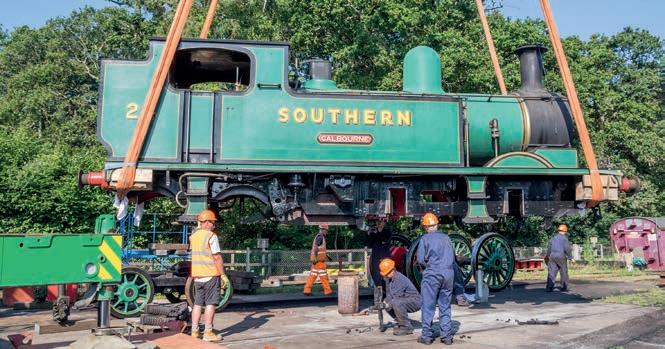
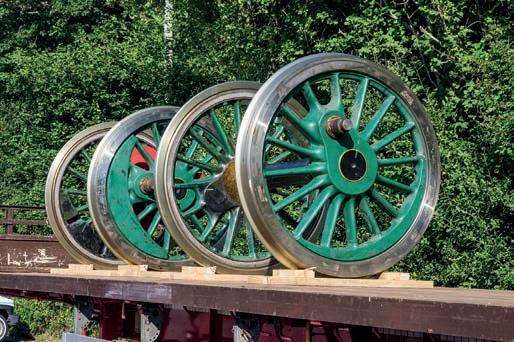
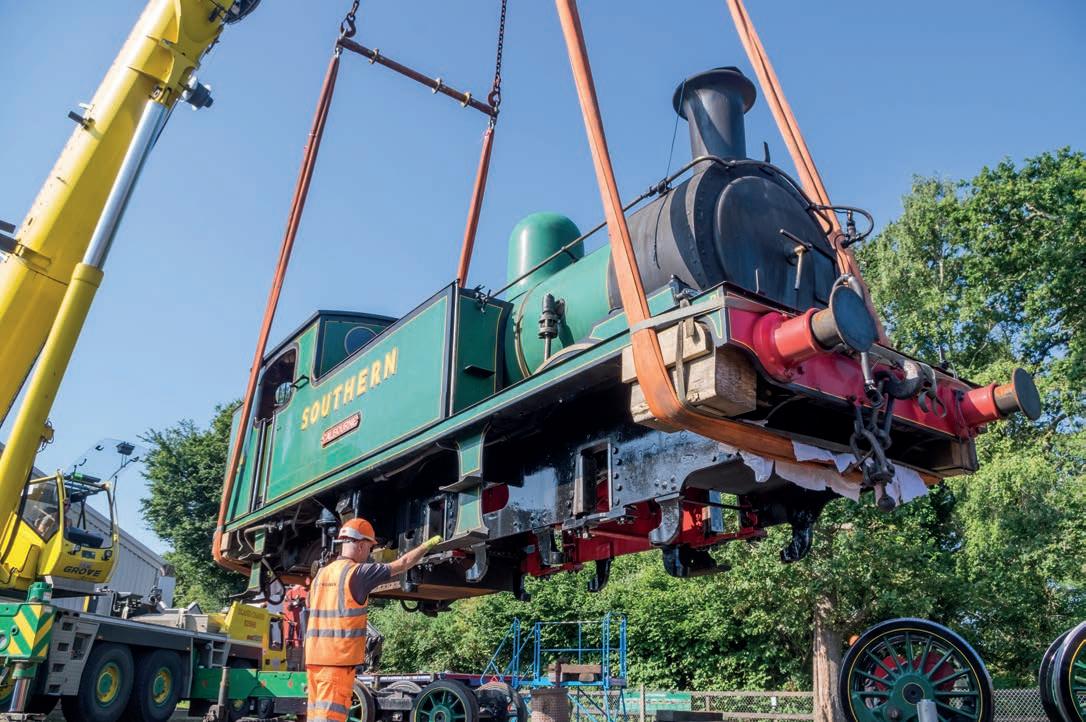
At the beginning of July, during the tyre-fitting process at South Devon Railway Engineering, one eccentric was identified as being loose. Calbourne’s return to service took a big leap forward with the wheel sets returning to Havenstreet on 17 July. During the following weeks the wheels were prepared for fitting. This included painting, axlebox scraping and refitting the loose eccentric. The latter required manufacture of a special square spanner to remove the eccentric. Friday 2 August was another milestone date when the wheels were reunited with the locomotive. This was completed with a crane hire lasting just five hours.
The following day saw the side rods fitted and the motion was completed a couple of days later. The brake blocks then required reprofiling and rods tweaking to suit the new tyre profiles. Injector pipe fitting required some adjustments, with the larger diameter tyres fouling the delivery pipes.
Left: A Drummond chimney and a buffer donated by the family of the late Stanley Fredrick Wearn of Fairlee, likely from W22 Brading, which was Mr Wearn’s favourite locomotive.
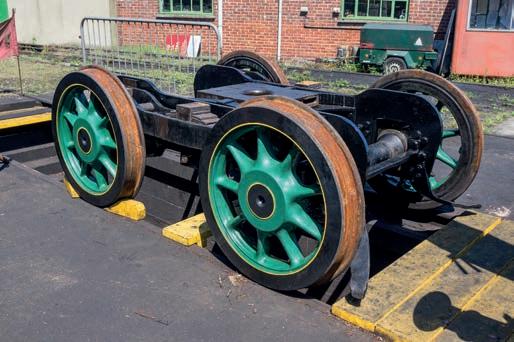
Below left: The repaired and reassembled bogie from W24 Calbourne
Below right: The re-tyred driving wheels from W24 Calbourne, fresh back from South Devon Railway Engineering
WORKSHOP FILES
Following safety checks and inspections, W24 was steam tested on Friday 16 August when light engine moves were made.
With very few miles covered since her return to service and being our flagship locomotive, Calbourne was rostered for the Island Steam Fair; to be on the safe side a second loco was kept in light steam but, fortunately, was not required. Other than the humming wheel noise as the tyres bed in, few faults have been noted since the locomotive returned to service, the most notable being some attention to the fireman’s injector to improve operation.
Service ‘Workhorse’ Locomotives
Hunslet ‘Austerity’ 192 Waggoner remains in regular use.
Hunslet ‘Austerity’ 198 Royal Engineer remains in active service although there have been a couple of notable events. Her Westinghouse pump failed on 2 July. A broken reversing rod was soon identified as the
problem but, after an early start, a replacement rod was fitted, meaning that 198 could return to service the following day.
One of the problems with the poorer-quality coal is distortion of ashpans - a warped front ashpan door was replaced on 13 July.
Ivatt 2MT Class 41313 continued in regular service until 12 September when she was stood down for annual maintenance and boiler inspections. The only item to report occurred towards the end of August, when an injector steam pipe required some attention to one of the brazed fittings.
Above: W24 Calbourne lifted in the air again by Island Cranes’ 220-ton capacity unit during the re-wheeling process on 2 August.
Below left: W24 Calbourne on light engine trials at Ashey on 16 August.
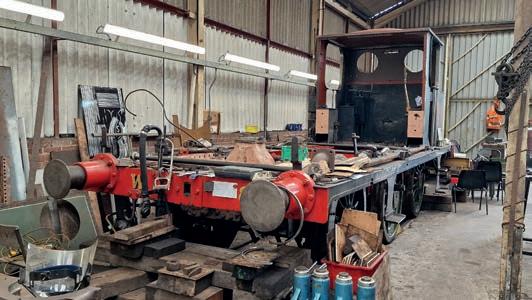
Below right: W8 Freshwater back on her wheels on 26 September.
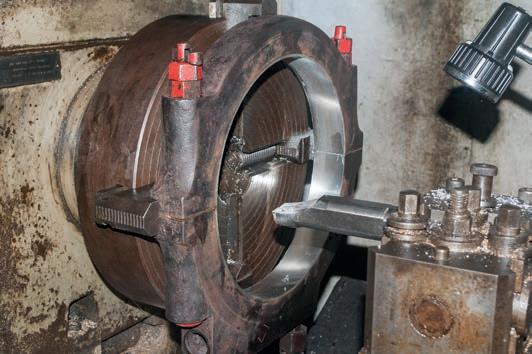
Above left: One of the re-metalled eccentric straps from W8 Freshwater in a lathe and partly turned.
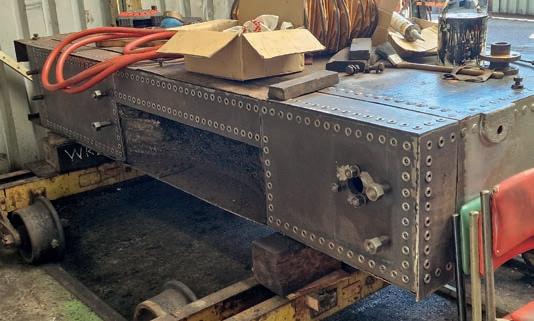
Left: The right-hand tank from W8 Freshwater with replating complete, bar some welding, on 29 July. Unfortunately, any flat and level surface in a small workshop soon becomes a makeshift table!
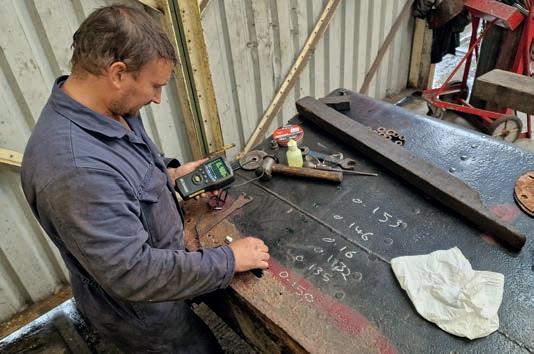
Above right: Simon Creedy measuring the thickness of W8’s left tank, freshly in the shops on 26 September. Several holes are visible in this photo, so the writing is on the wall already – it requires the same treatment as its partner.
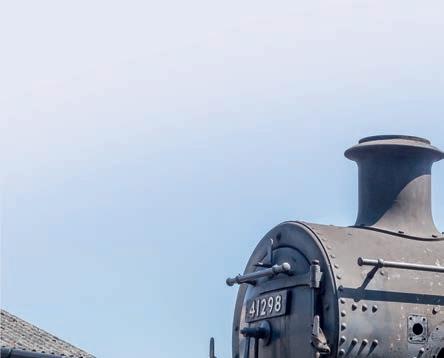
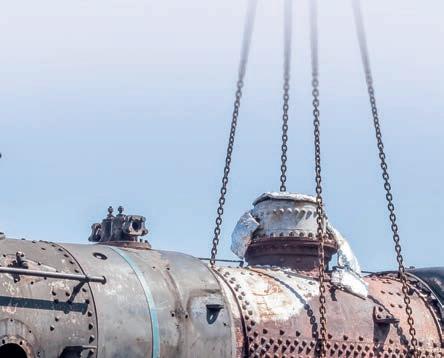
Below: With a crane on site for the Calbourne lift, the opportunity was taken to remove the boiler from Ivatt 41298 from the frames.
WORKSHOP FILES
Locomotive Projects
Restoration of A1/x Class ‘Terrier’ W8 Freshwater continues to progress. In mid-July the axleboxes were fitted to the recently-re-profiled wheelsets and initial lowering of the frames was completed on 8 September. A further lift was required, however, to refit a box that wasn’t sitting correctly. Once rectified, the locomotive was finally taken off the wooden packing to sit on the wheelsets after fitting of the springs at the end of the month. With all the eccentric straps having been removed for tyre turning the opportunity is being taken to re-white metal the bearing surfaces.
Repairs to the right-hand side tank progressed at the start of July. Apexior paint was applied to most of the inside of the water tank while access was easy. The plates were bolted to the internal angles and welding completed. In mid-September, with work complete, the tank left the works only for its place to be taken by the left-hand tank.
Towards the end of August, boiler work included cutting new threads in the plug holes and replacing washout plugs where required.
Project W37 Invincible work is still ongoing, focusing on forming the front outer firebox boiler repair plate when staff are available.
The Stroudley E1 Class restoration continues. A visit to the contractor, Israel Newton & Sons, on 30 August confirmed that progress on the new boiler was being made. Meanwhile, at Havenstreet, work continues on the locomotive frames. Following shotblasting and painting the rear buffer beam was temporarily refitted towards the end of July. This identified that more framework required removal to ensure the correct fit. Steel angle required to replace incorrectly-sized angle iron on the frames has also been sourced and delivered, the order arriving from Germany at the start of September. The correct size is no longer available from the UK.
Ivatt 2MT Class 41298. To allow extraction of the boiler for the 10-year boiler inspections, work continued with removal of corroded bolts and plates in the smokebox, caused by the acidic nature of the ash. With a crane on site on 2 August the boiler was removed within an hour and placed on the ex-Ivatt Trust 21T Flatrol AEB B900103. Since this date the remainder of the cladding and lagging has been removed and, at the smokebox end, the chimney, chimney petticoat and superheater elements have also been removed.
DIESEL LOCOMOTIVES
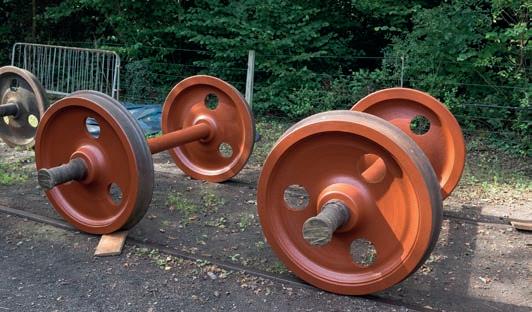
Above: Wheelsets for Oldbury IWR 21, painted in primer.
Below: Amongst a number of components donated to the IWSR from a recently-broken-up 1864 Oldbury composite in Swains Lane, Bembridge was this ventilator cowl.
Our three diesel locomotives, D235, D2059 and D2554, all remain in working order, with D235 and D2059 both in regular use and receiving frequent inspections and maintenance.
D2554 emerged from under-cover storage in Train Story to allow maintenance and inspections to be undertaken in preparation for a specially-requested footplate experience on Monday 22 July. The BR Class 05 did not venture onto the running line.
CARRIAGES
Service Carriages
During the period under review the bogie carriages were in service almost every day. During the last few months only 28 defects have been logged, of which 12 were droplight strap problems. A quantity of leather was obtained to allow a new batch of straps to be produced in readiness for future failures.
The B set, our 4-wheeled carriages, were also in regular service throughout the summer although, with lighter use, only seven defects were noted.
Inside the carriage the ceiling mouldings have now all been fitted. Progress continues with the upholstery, with the third seatback now completed in royal blue moquette.
In mid-September two wheelsets were moved from storage into the works yard to be cleaned and painted in preparation for when they are required for the Oldbury carriage underframe. These wheelsets have previously been ultrasonically tested for defects and given the all clear.
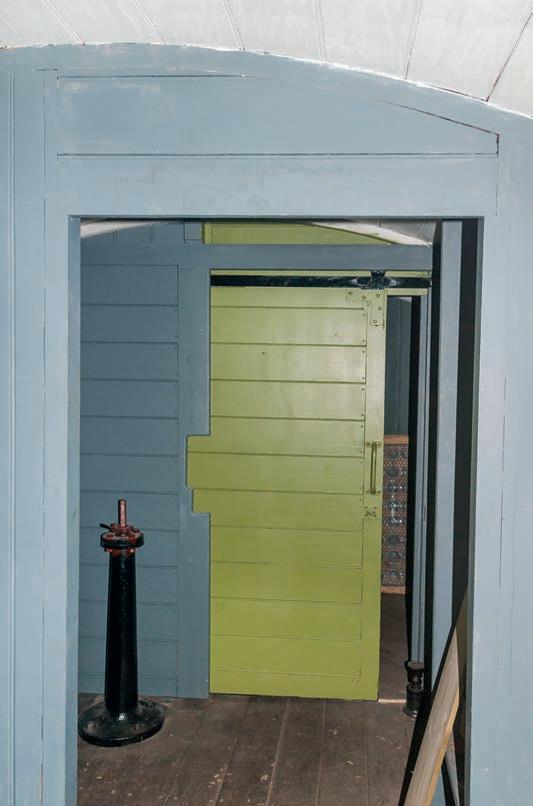
Work to restore LCDR 4115 Brake Third has continued at a steady pace. Early August saw the fitting of restored door A (north) to the carriage and door C by the end of the month. Work is now underway on door D.
The roof has continued to receive attention. By mid-July refitting of the long roof boards on the south side was complete. Working from the middle outwards the north side is progressing towards completion soon.
During July the folding seat bases were being constructed and, by the start of August, these were complete. July also saw the construction of the first full-width bench seat framework since when all have been done.
Both sets of carriages received regular inspections and maintenance during this review period.
Carriage Projects
Restoration of Oldbury carriage IWR 21 First progresses with the fitting of the fourth door at the start of July. Overhaul of the fifth door is now underway in the carpentry shop.
WAGONS
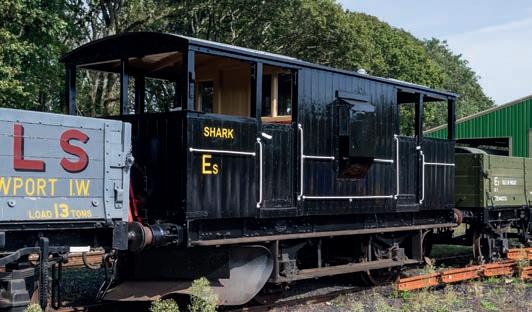
Since our last report, repairs to BR 20T Ballast Plough Brake Van ‘Shark’ DB993853 have been completed. By early July the kit-built veranda end frames had been assembled on the vehicle, followed by the attachment of the external boards. Towards the end of July, the black paint topcoat was applied followed by the refitting of prepared external steelwork. A full internal re-paint was also undertaken and new safety glass fitted, replacing the opaque Perspex. The van departed the workshop on 14 August. Signwriting and A exams were completed in the open and the vehicle was signed fit for use during the first week in September.
Turning to PMV 1566, maintenance work progressed and at the start of July the buffers were refitted. Following preparation work in the yard the van entered the workshop in mid-August, leaving again in early September. During this time many of the external surfaces received fresh coats of paint to protect the vehicle which is berthed outside 365 days a year. Door repairs were completed after leaving the works, allowing the vehicle to continue its use as a valuable storage space.
Other wagons to receive attention were SR 20T Well B 61056, which received a new decking board in July, and SR CCT 2373 which returned to the yard in mid-September for fitting of door furniture.
Ryde Pier Railcar and Tram
Trailer Car 10
Drewry Railcar 2 remains in service, providing extra capacity on days that don’t warrant a full twotrain service.
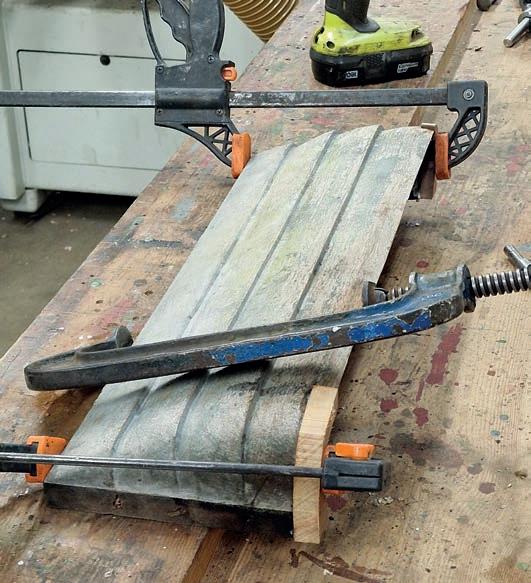
Ryde Pier Tram Trailer Car 10 entered the C&W works on 3 September to progress the project to create a two-car unit. Unlike the railcar, the trailer car is steel sheet clad and, following the guillotining of the panels to size which saved time and ensured a straight cut, a start has been made on fitting this outer layer. Behind the scenes a lot of work has been undertaken over the last few stages to finalise the design for the wiring and control systems.
Top left: BR 20T Ballast Plough Brake Van ‘Shark’ DB993853 in Griffin’s Sidings after repair and painting.
Above: The sliding door between the guard’s and disabled compartments is now fitted in LCDR Brake Third 4115.
Left: Ryde Pier Tram Trailer Car 10 in the shops for finishing work.
Rail Infrastructure News
by Ian Hodson, Infrastructure Manager and Pete Corby, Rail Infrastructure Supervisor
Above left: Vegetation clearance on the north side of Chillingwood Brook embankment and edge protection around the north portal of Bridge 8. Ian Hodson
Above right: Regrettably, Stage 1 of the Wootton signalling project could not be delivered before the start of the peak summer season. It is anticipated that Stage 1 will be commissioned before the start of the 2025 season. Shown here is the Down Home signal, the white crosses indicating that the signal arms are not in use.
Stuart Duddy
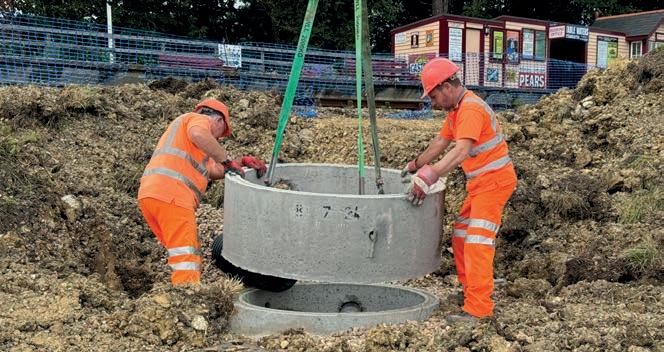
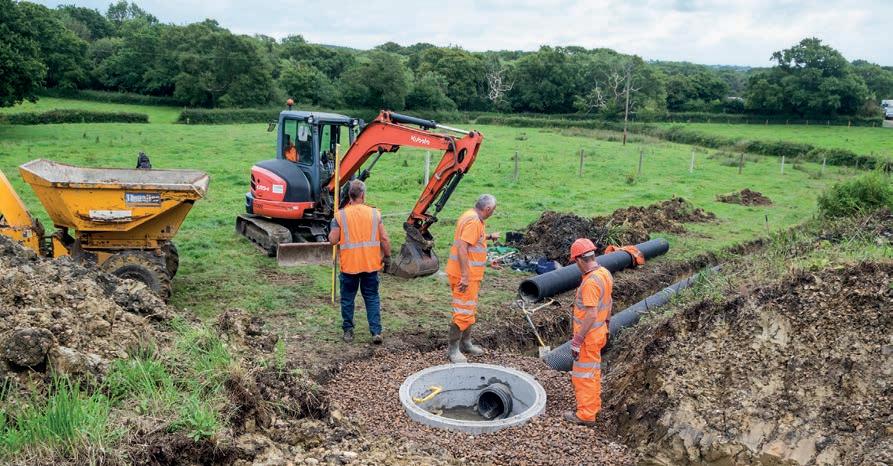
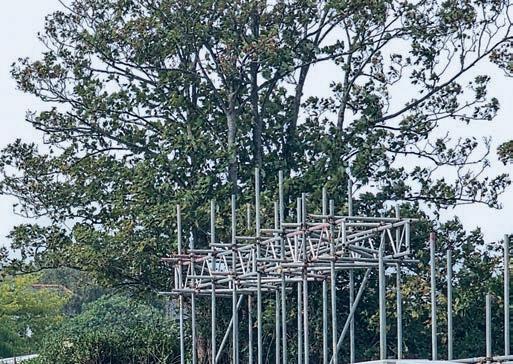
Right: The manhole described in the text being installed at Wootton on 16 July. Its location can be more easily gauged from the photo on page 2, which is looking in the opposite direction. The new drainage pipe runs to a ditch along the hedge line on the right, thence the flow is towards the centre of the photo. John Faulkner
DURING THE SUMMER work continued on the edge protection fencing to the wing walls of our bridges and culverts, both by the weekend working party group and by our regular team of staff and volunteers. Most of this work has now been completed, other than those structures where access equipment is needed to undertake the work.
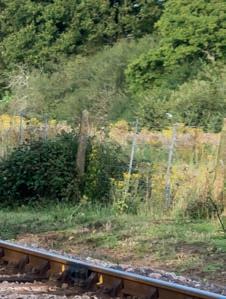
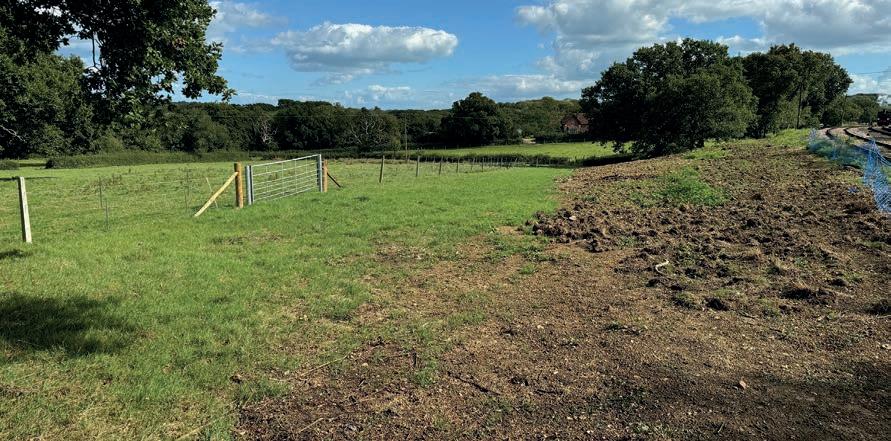
In July the fence line on the north side at Wootton station was moved back into the adjacent field by 15 metres (about 50 feet) to allow us to carry out track drainage improvements. A new manhole chamber and pipework was then installed, connecting the outlet pipe (which runs beneath the run-round loop) and the nearby stream. This drain previously leaked into the embankment which was not helping with the stability of the clay soil slope. Once the
drainage works were complete, the embankment slope was regraded. Hopefully this will make the area more stable and reduce the loop trackwork’s tendency to require regular slewing, lifting and packing. The original ground frame base, which dated from the 1980s, was finally removed as part of this work.
During the busiest part of the season some lifting and packing of the line was needed, particularly on each side of Bridge 15, work taking place between train movements. This was done by hand using Robel tampers. Further lifting and packing was also needed at the Griffin’s headshunt and point.
We have been fortunate to have received a donation of some track materials from the recent Island Line works at
Ryde Esplanade. So far, we have collected sixteen track panels that will hopefully be used to provide serviceable sleepers, chair screws and chairs, including some check rail chairs.
More recently, our trusty Wickham trolley developed a misfire, running on three or even two cylinders when cold, which was diagnosed as a failed head gasket. Although normally a fairly simple job, the cylinder head and block on
Estates Update
by Ian Hodson, Infrastructure Manager
AFTER THE SMALLBROOK Junction work took priority earlier in the year, members of the Estates Department team were able to start work on their backlog of general repairs and cleaning work during the busy summer season. The new overflow car park footbridge, which was in use for the 1940s Experience, was completed in July. Other work to the overflow car park included the installation of new traffic direction signage and some additional access roadways to help traffic flow.
A new ‘Topper 9’ mower attachment was bought, which was immediately put to use by
the little 1950s Ford 10HP side-valve engine had clearly not been separated for many years and corrosion of the studs meant that the head would not budge. After four days of using every method we knew bar a chisel, the head finally came free and at the time of writing this report (in late September) it is now being reassembled. Our thanks go to John Thorne in the locomotive workshop for skimming the head at short notice.
Martyn Budd with his Ford 7810 tractor before the Island Steam Fair. Having our own grass cutter will save costs in the long term by avoiding the need to hire outside contractors as previously. The Estates team have also been busy cutting back overhanging branches around the perimeter of the events field.
The clearance and general tidying of Griffin’s Sidings behind Train Story continued over the summer, with some damaged or redundant materials disposed of whilst other items such as metal gates were removed from the undergrowth and stacked together.
The more gently regraded embankment at Wootton station. The track, with Calbourne approaching from Havenstreet, can be seen on the right. The relocated fence and new gate, on the left, is clear. Previously, the fence ran from where the photographer was standing to the nearer of the distant oak trees. Although not visible in this view, the new manhole chamber is located just over a third of the way towards the oak trees and on the former fence line. Ian Hodson
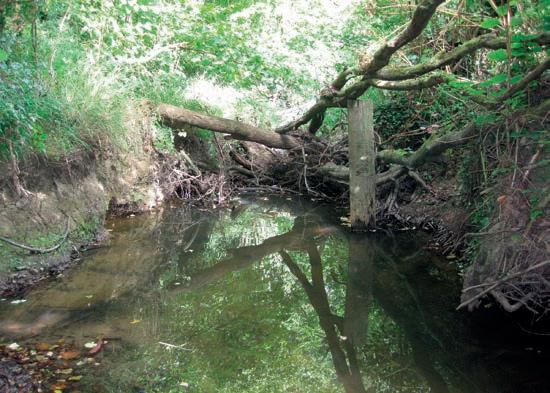
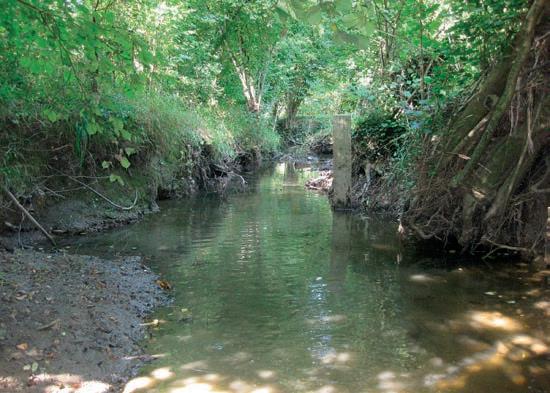
before and after clearance of fallen
Following a letter received from the Environment Agency (EA), we have been working with one of our neighbours to clear the stream that runs between our properties, downstream of Blackbridge. This stream runs at the bottom of the embankment behind Haven Falconry and several fallen trees were blocking the flow. In a joint exercise between our neighbours, Estates and Rail Infrastructure, the trees were cleared using an excavator with a grab attachment and chain saws then used to cut the trunks into manageable pieces. ‘Before and after’ photos were sent to the EA, which was very pleased with the results.
Blackbridge Brook
trees, as referenced in the text. The photos are looking downstream from close to the road bridge on the village side of the railway at Havenstreet. Ian Hodson.
Wootton Goods Shed Progress
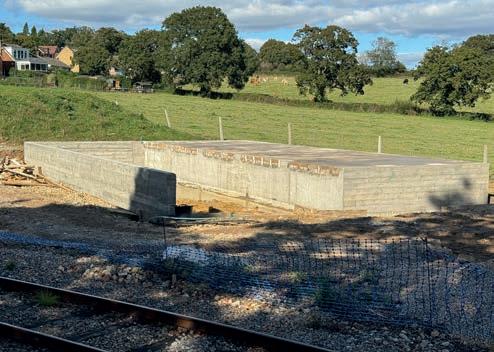
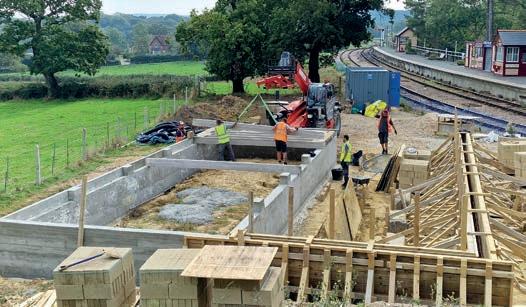
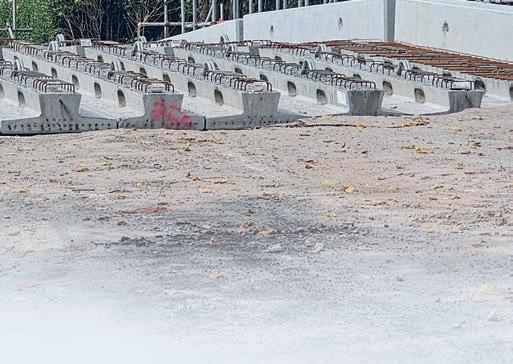
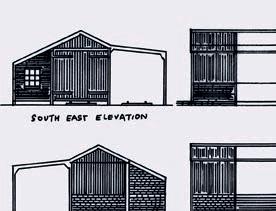
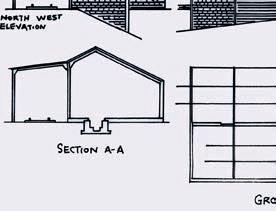
SIGNIFICANT PROGRESS was made in August and September after local contractor Stoneham Construction was employed to construct the reinforced concrete lower walls and platform. Following on from the foundations that were put in last year, the new walls were cast using formwork with open-grained timber planks to the exposed faces. These will weather to give the appearance of the timber planks rather than the smooth finish of more modern concrete structures. Once the concrete walls had cured sufficiently, precast floor beams and blocks were used to form the structure of the main platform area. When finished, this will be clad with wooden planking, to give the appearance of a timber deck but with the benefit of reduced ongoing maintenance. The platform extension up to the track will be of timber construction, as it will be visible from the entrance door.
by Ian Hodson, Infrastructure Manager
Looking ahead, the current programme for the goods shed is as follows:
• Early 2025 – Complete the land drainage around the building, to connect with the drainage already installed for the access road and around the locomotive release spur;
• April/May 2025 – Erect the oak timber framework;
• Summer 2025 – Install the roof and outer-wall cladding, doors, etc;
• Autumn/Winter 2025 – Track panel installation inside the building and to the coal yard and install the timber platform extension.
• Spring 2026 – Install electrical equipment and hand over building to the Heritage & Learning Department.
Far right: Concrete pour taking place on the goods shed lower walls on 12 September.
Ian Hodson
Right: Precast concrete floor beams being installed to the platform area on 20 September. The area beneath the floor is now an inaccessible void. The right-hand side is shuttered, ready for a concrete pour on 24 September. A photo of the completed base can be seen on page 2. John Faulkner
HERITAGE & LEARNING REPORT
By Cara Trevor, Heritage & Learning Manager
FOLLOWING A BUSY period welcoming schools to the Railway in May, June and July, the school summer holidays provided a useful break to allow us to look ahead to supporting our education offering in 2025. Currently, we are working with the Marketing Manager to develop a brochure to promote our education workshops, including our new World War Two workshop, to local schools.
The H&L Department has also been developing some new educational materials for our workshops, including a new map worksheet for our Local Study: History of Isle of Wight Railways workshop. This is part of the Museums and Schools programme which is supported by Arts Council England and funded by the Department for Education.
The Department has also spent time planning new exhibitions for 2025. With some key anniversaries approaching, we are working on developing exhibitions which will be displayed both on and off site. We have also been developing interpretation plans for future displays for Wootton goods shed and Smallbrook signal box.
In addition, the In Your Museum project, in which the Isle of Wight Steam Railway took part, has now been completed. This project, funded by Arts Council England and Isle of Wight National Landscape, involved five Island-accredited museums collaborating with Creative Island to strengthen their local community engagement. Each museum worked with Lisa Kerley, project manager, to create a different engagement project, with the IWSR focusing on developing reminiscence sessions using museum objects to support people with dementia.
On 21 September the Transport Ticket Society held a meeting at the Railway at which Peter Mallory gave his presidential address. Those attending were given a guided tour of the Havenstreet site, including Train Story, and Roger Macdonald delivered a presentation showcasing some of the items in our ticket archive.
One week later, on Saturday 28 September, 30 delegates from the Railway Correspondence and Travel Society (RCTS), which was holding its Members Weekend and Officers' Conference in Portsmouth, paid a visit to the Railway. Roger Silsbury, a life member of the RCTS, and Richard Flux entertained the visitors and gave them guided tours of various areas not normally open to the public; grateful thanks are expressed to the Engineering and Operating Departments for facilitating these tours. The delegates all expressed their gratitude to the IWSR for making their visit extra special. The Railway has on extended loan from the RCTS a nameplate from Ryde, one of the Isle of Wight Railway's Beyer Peacock 2-4-0 tanks, which may be viewed in the small artefacts gallery in the gas house.
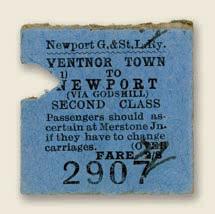
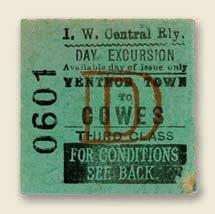
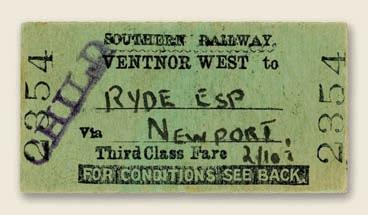
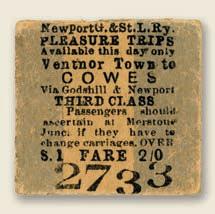
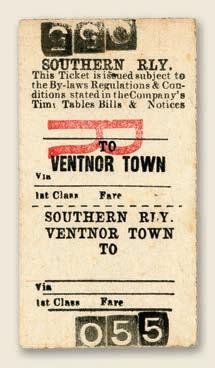
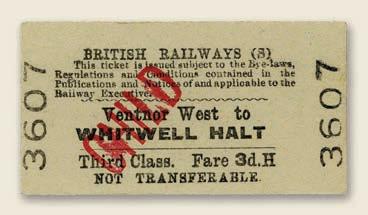
In heritage collection news, we have been delighted to receive a number of new items including a Wroxall station sign, a handbill for the Paddle Steamer Alleyn, and several new examples of Isle of Wight railway tickets.
MEMBERSHIP MATTERS
by Tim Isard
As at the end of September the total number of members was 3,082.
We are aware of the problems regarding the processing of membership subscriptions by direct debit, which have been caused by the electronic transfer of information between the Railway’s Merac system and our bankers. Please accept our apologies if you have been impacted by this. Hopefully, by the time this edition of IRN arrives, the problem will have been resolved.
PS Alleyn handbill
Wroxall Station sign
Examples of Isle of Wight railway tickets
The Wootton Coal Lorry by
John Woodhams
THE TRANSPORT OF COAL was a very significant source of traffic to the railway industry throughout the steam era, and the Isle of Wight was no exception. Arriving by sea at Medina Wharf, the commercial carriage of coal continued into 1966, and locomotive coal was, of course, required until the end of steam operation.
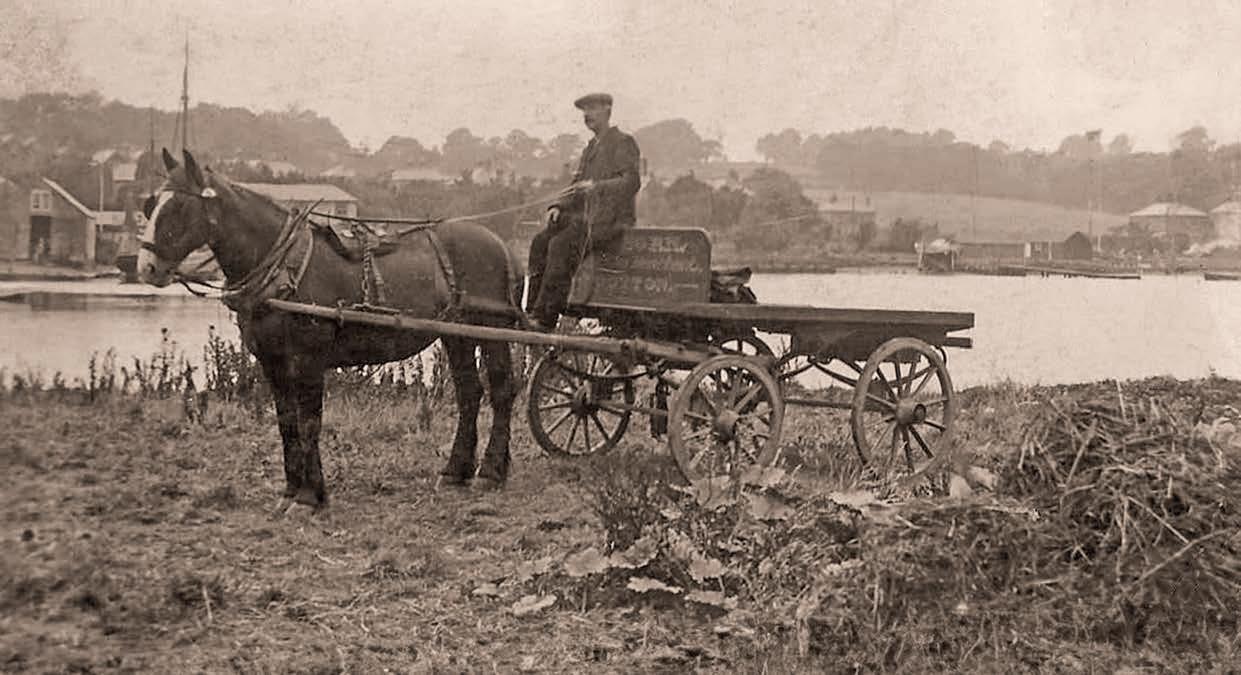
Many station goods yards were also the operating base for local coal merchants and, again, the Island was no exception. Coal would arrive by rail and then be bagged for local delivery, originally by horse-drawn wagon and subsequently by motor lorry. Working out of Wootton station yard, the wagon of George Osborn was a familiar sight around the village until superseded by a Model TT Ford truck in the 1920s.
working life on a farm at Niton, but was subsequently kept in dry storage. Although originally acquired for restoration as long ago as 1977, it has only ever made one brief public appearance since. Some readers may remember the late Ron Sibley who regularly attended the Island Steam Show during the 1970s with a very similar lorry, loaded with sacks of coal. This was still his everyday workhorse and was a daily sight earning its living on the streets of Romsey.
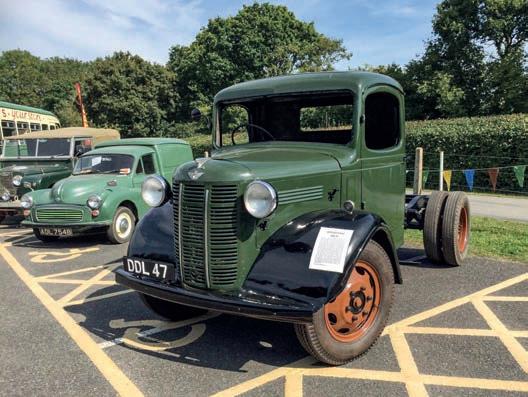
With the Wootton goods shed and Osborn’s coal yard project underway, we now have the opportunity to enhance the story with an authentic lorry, conveniently fully restored and ready for display in the green livery used by both Charlie Osborn and Thomas Gange & Sons.
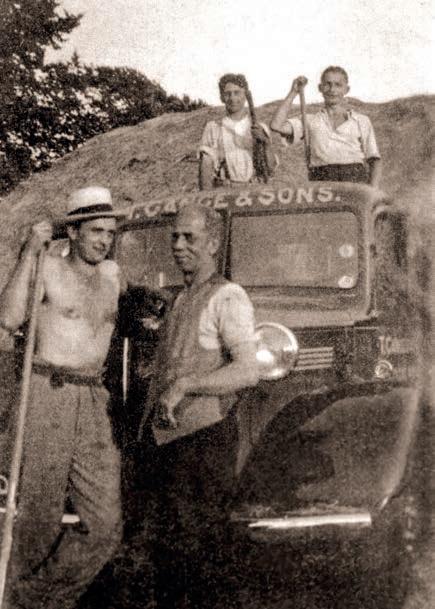
Right: The lorry in its working days with Gange, apparently engaged in haymaking duties rather than coal delivery. Courtesy Edward Day
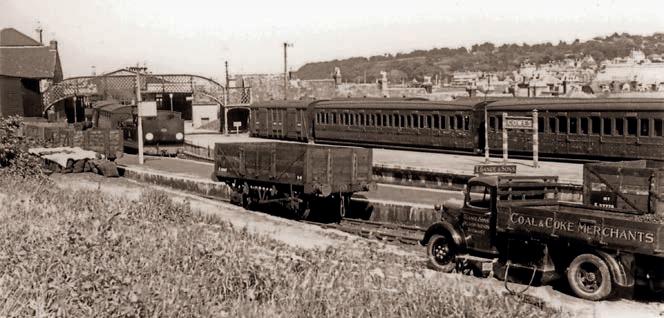
Below: A view of Gange’s coal yard at Cowes station. The lorry is almost certainly DDL 47.
IWSR Archive
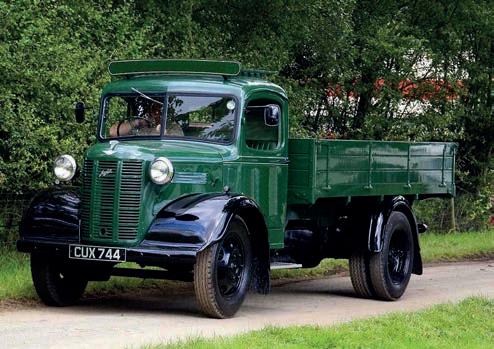
In 1939 Austin announced a new range of lorries. Fowlers, the local Newport dealership, lost no time in promoting the new models to Island coal merchants. Within months, sales were concluded with Gange of Cowes, Millmore at Ventnor and Osborn of Wootton. By this time George Osborn had retired and passed the business on to son Charlie, whose new lorry was allocated the registration DDL 14. Thomas Gange & Sons of Terminus, Road Cowes purchased DDL 47 and, fortunately, this example has survived and the IWSR now has the opportunity to acquire it.
The lorry is the oldest known survivor of the K2 model, 2-ton range and, following disposal by Gange, ended its
Above: George Osborn with his horse-drawn delivery wagon on the east side of Wootton Creek.
J Woodhams collection
The cost to the Railway will be £9,000 for the finished vehicle and we are asking members and friends for support with funds for the purchase and also practical help with the vehicle’s ongoing care and maintenance.
All donations, of any size, are, of course, very welcome and greatly appreciated, but with a two-ton payload our lorry would normally have been loaded with 40 one-hundredweight sacks of coal, and we therefore invite you to sponsor one or more sacks at £225 each.
If you are able and would like to support this project, you can make a donation in one of the following ways:
• By phone to 01983 882204 and making a credit or debit card payment
• Via the Railway’s website, iwsteamrailway.co.uk, then follow ‘Support us’ and ‘Donate’ links
• Just Giving – www.justgiving.com/iwsteamrailway
• By cheque – made payable to The Isle of Wight Railway Co. Ltd. and sent to The Isle of Wight Steam Railway, The Railway Station, Havenstreet, Ryde, Isle of Wight, PO33 4DS.
If you can increase your donation with Gift Aid, please consider doing so. The website and JustGiving links offer this option, but if you require a current Gift Aid form, please contact the Railway.
If you have any questions as to how to donate, please email at: info@iwsteamrailway.co.uk or call 01983 882204 Thank you
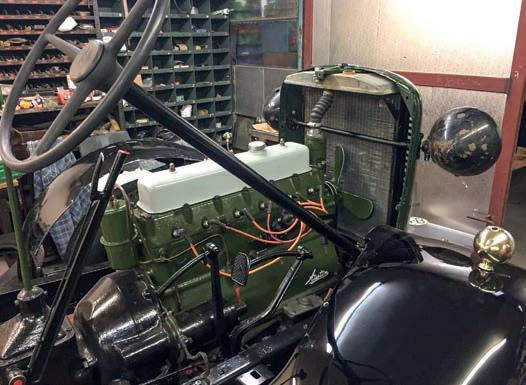
Top right: DDL 47 undergoing restoration, with new engine fitted. Courtesy Edward Day
Right: The part-restored lorry at the 2017 Island Steam Show – its only public appearance in preservation. A similar lorry in fully-restored condition can be seen inside the front cover. Courtesy Edward Day
VOLUNTEERING NEWS
from Doug Alldred Volunteer Development Manager
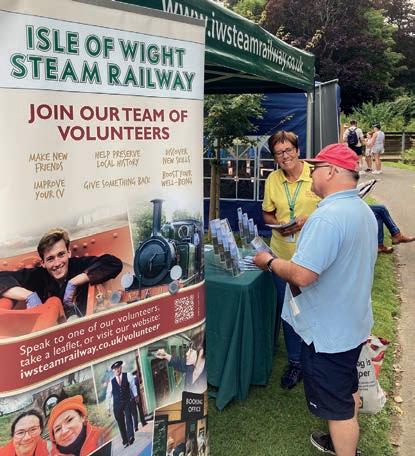
WE ATTENDED SEVERAL events across the Island during the summer, promoting the Railway and its wide range of volunteering opportunities. This has really paid dividends in terms of new faces on the team. We’ve welcomed a good number of new volunteers into all departments, which is a very positive sign for the future of the Railway.
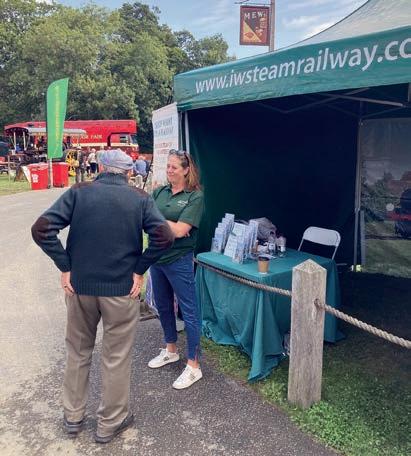
We attended the Royal Isle of Wight County Show, taking part in the High Sheriff’s Volunteering Showcase, as well as running volunteering information stalls at Ventnor Day and at our own Island Steam Fair in August. We have a very enthusiastic group of volunteers who attend these events, helping to spread the word about the benefits of volunteering at the Railway, and I offer my thanks to them all for donating their time and energy to bring more people to the team.
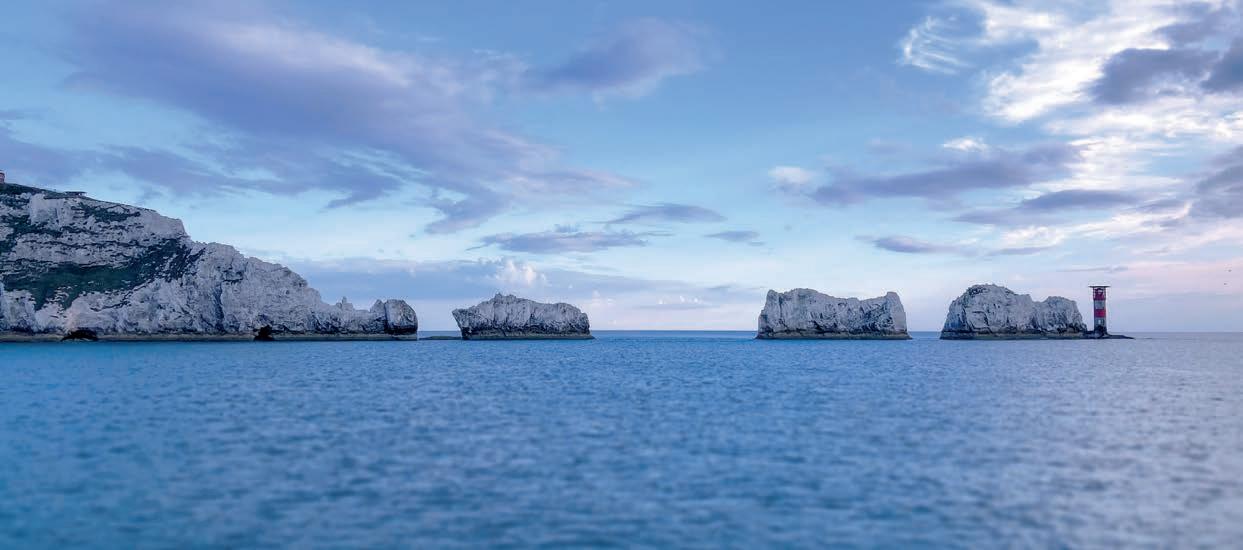
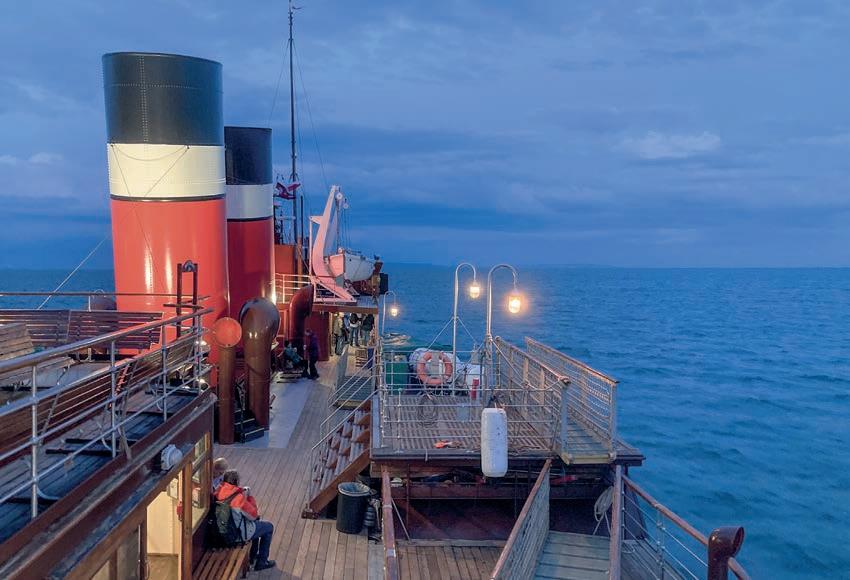
In September, we were very pleased to be able to offer our volunteers a discounted cruise on PS Waverley when she made her annual visit to the south coast. A large group of volunteers and their families and friends steamed from Yarmouth past the Needles and Old Harry Rocks, to Swanage and back on a beautiful latesummer evening.
Want to get involved?
If you have some time to offer as a volunteer at IWSR, please visit our website, take a look at the many roles available, and complete the online form to register your interest.
Above: The Needles viewed from PS Waverley
This photo: On board PS Waverley
Below left: Volunteering information stalls at Ventnor Day
Below right: The volunteering information stand at the Island Steam Fair.
SOON AFTER THE copy date for IRN 103 we learned of the passing of Hugh Boynton, our first Business Consultant/Chief Executive and a patron of our Railway. His role in guiding the Railway through a financial crisis in the mid-to-late 1990s cannot be understated. Hugh’s final visit to Havenstreet occurred just five weeks before his death, when he attended the official opening of the Smallbrook Connections project.
We feel that the best way to celebrate Hugh’s contribution to the Railway was to invite comments from those who worked closely with him. We thank Peter Conway and Peter Vail for their words.
Peter Conway writes:
I first met Hugh in the Spring of 1993. I had been appointed Senior Manager, Lloyds Bank, Newport Group of branches and we were house-hunting. At the time Hugh was living in Shorwell and his house there was one we viewed although didn’t buy!
During the handover from my predecessor at Lloyds, Hugh’s name came up in conversation and specifically how he had been drafted into Isle of Wight Radio to manage that business out of a difficult financial situation. That piece of useful information I stored away.
On a completely unrelated matter, I visited a solicitor in Freshwater in 1995. I noticed on John Suggett’s office walls various pictures relating to the IWSR and the conversation turned to the Railway where, he advised me, he was Chairman. My own interest in railways was long standing, particularly as my then retired father had been a Havant-based Cable and Track Inspector and his area included the electrified Island Line.
In early 1996 I received a call from John asking if he and Hugh could see me. The IWSR was in a difficult financial position following the completion of the Smallbrook extension. The overdraft of £100,000 which the Railway required had been declined by Barclays, the Railway’s bankers.
I was advised that Hugh had been appointed as the Railway’s Business Consultant and he produced detailed and realistic financial forecasts for the year ahead. These I was able to consider and, bearing in mind his reputation, I was confident that the Railway, with Hugh on board, would recover to a stable financial position.
I was able to put the required financial package together, covered by the Railway providing suitable security to the Bank. The Railway’s accounts were tightly controlled by Hugh, with all spending necessarily justified prior to his approval. This control allowed the start of the cash build which enabled the financing of the wide variety of projects which have taken place over the last 28 years.
At the end of 1996 I received a call from Hugh: ‘had I been monitoring the Railway’s accounts closely during the year?’ He was quite put out when I said ‘no’, as the accounts had been run in accordance with the arrangements made. Overdraft arrangements were renewed for a further two years and then no longer needed.
Following retirement from the Bank, I was coopted onto the Railway’s board in 2000. By this time, the Railway was in a good financial state and
Hugh Boynton 1938 - 2024
there was the need to improve the café kitchen and increase the seating capacity. Plans were drawn up and approved by the Council to achieve both. I offered to manage the project which went fairly smoothly but I had at least a couple of irate calls from Hugh when something went slightly awry, demanding that ‘I attend the Railway immediately’. I had to remind him that I was a volunteer and not immediately at his beck and call! That said, the Calbourne Room project was successful and gave the Railway a further opportunity to expand its catering capacity with the resultant financial benefits.
Hugh did a fantastic job for the Railway and we should forever be grateful that we had him on board as our first Business Consultant/Chief Executive. We are now a much larger business but financial prudence must be the ongoing watchword if we are to remain the envy of other heritage railways and, indeed, ensure our future.
Peter Vail writes:
Whilst living in Nottingham my wife, Sandra, and I were fortunate to own a holiday home overlooking Whitecliff Bay. Late summer in 2004 we enjoyed an extended break on the Island and the impending return to my work as a bank branch manager in the Midlands wasn’t particularly appealing. I picked up a copy of the IW County Press and a job vacancy caught my attention. The post was that of an Administrator with the Isle of Wight Steam Railway and, on making an enquiry, I established there was a future opportunity to step up to the position of General Manager.
For some 30 years I had been employed by the Midland Bank which we now know as HSBC. My career path included a wide range of managerial positions including branch and commercial manager posts. Possibly more out of interest than hope, I submitted my application which focused on my background in financial control, budgeting, business promotion and people management. Rather than being invited to an interview I was asked to come over for a ‘chat’ with the Railway’s Chief Executive, Hugh Boynton. At the time I didn’t appreciate that Hugh was merely vetting my suitability to progress to the interview stage. I did confess to Hugh I knew nothing about railways and was not a railway enthusiast. I now know that was music to his ears because Hugh was seeking a person with a business background to continue his successful work in securing the Railway’s finances. Hugh often said that railway people want to spend all of the money!
Two interviews with the Railway’s Chairman
and other directors followed. On being offered the position I again came over to the Island to spend a day with Hugh. My early impression was that he was an imposing character, very business-like with extremely high standards. It was clear that Hugh was very respected, but not widely liked because of the disciplines imposed, particularly on the finances. Fortunately, I spoke his language and immediately connected with the controls he had established.
Until a house move was completed Sandra and I initially rented a property in Bembridge, not far from Hugh’s home. Hugh and Jill couldn’t have been more welcoming. Sandra and I often visited their home and went out for meals with them. It was this welcome that helped us settle on the Island and, almost 20 years later, we remain extremely grateful to them both.
For six months I worked alongside Hugh at Havenstreet. Slowly, Hugh reduced his hours of work until the time came for me to step up. The Railway took the decision to discontinue the post of Chief Executive and I was appointed General Manager, which fitted perfectly the task of working under a board of 15 directors.
In my 14 years of employment with the Railway I always saw Hugh as my mentor. Even after his retirement he and I would meet in his conservatory up to four times each year to review the figures, both performance to date and projections. It was always pleasing to walk away with Hugh’s seal of approval. Despite the introduction of a SAGE accounting system the Railway still uses cash-flow spread sheets based on Hugh’s original design, because they work!
The final time I saw Hugh was at the opening of the Smallbrook Connections project on 7 June and was fortunate to travel in a compartment with him. Mindful I retain an interest as the Railway’s Finance Director his final words to me were along the lines of ‘control the finances, watch the spending!’
Hugh – my boss, my mentor, my friend. Rest in peace.
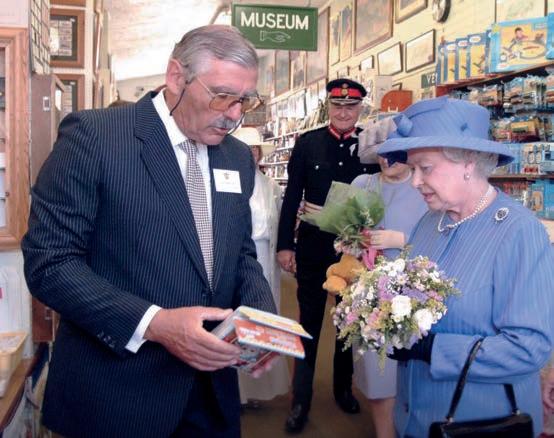
Hugh's proudest moment was escorting Queen Elizabeth II during her visit to the Railway on 19 May 2004. Thearle Photography
Railway welcomes new apprentice
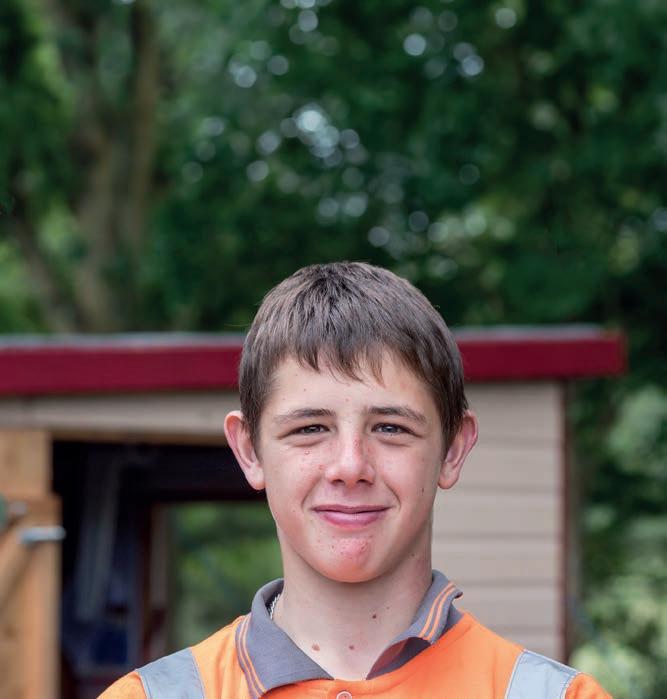
A NEW APPRENTICE joined the Railway’s Infrastructure Department on 1 July. Charlie Wilson, 16, was born and raised in Cowes and attended Gurnard Primary before moving up to Cowes Enterprise College where he gained his GCSEs.
The apprenticeship includes a weekly day release to the CECAMM Centre in Whippingham – part of the IW College – where Charlie is taking a civil and mechanical engineering course.
An enthusiastic learner, Charlie is enjoying the practical aspects of his new role, especially in respect of the Permanent Way and signalling installations. He also volunteers in the Operating Department and can often be found working with the Havenstreet station team as a porter.
Charlie has always had an interest in railways and is a member of the Northwood-based IW Model Engineering Society. Other interests include playing the drums with a brass band, for which he travels across to the New Forest two or three evenings each month. Charlie is also an accomplished trampolinist and will be competing in an international event in Kent later this year.
We offer our best wishes to Charlie as he starts a new chapter in his life.
Calbourne Club News
Reported and photographed by Harriet Townsend
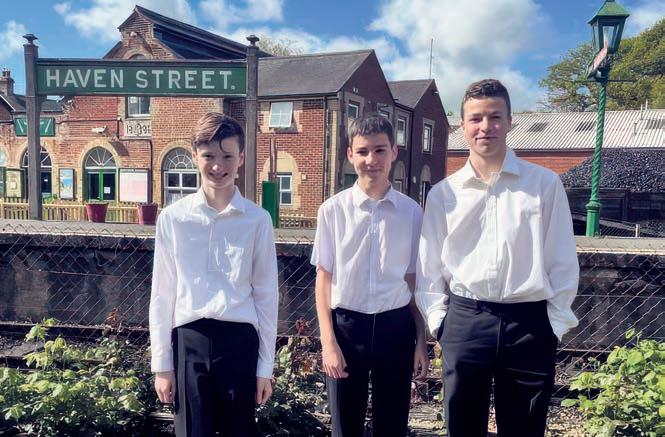
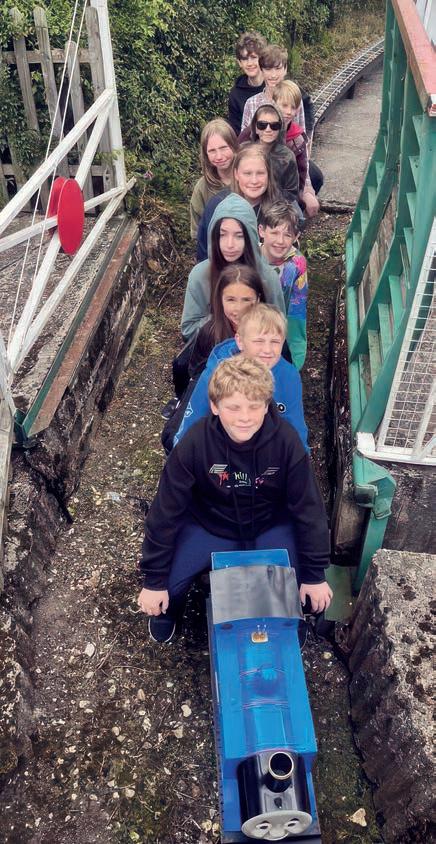
in Northwood. Below right: Club members Laurence, Robbie and Jonathan who are moving onto greater things.
UNSURPRISINGLY, CALBOURNE CLUB members have been busy throughout the peak operating season, undertaking a wide variety of tasks with various departments. They even found time to visit the Isle of Wight Model Engineering Society at its base in Northwood, near Cowes.
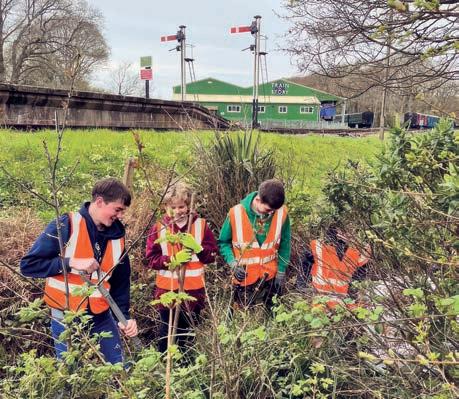
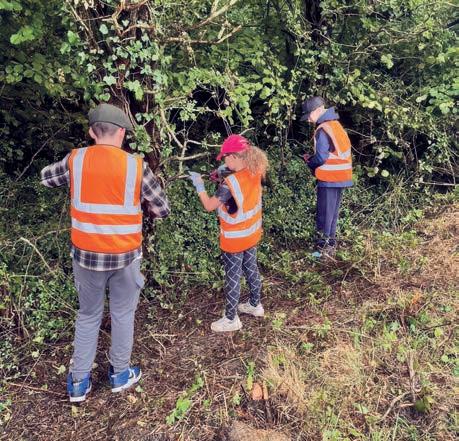
For the April and September meetings, the team worked with our Estates Department colleagues, clearing out and cutting back overgrown ditches both in the woodland walk and the events field. It’s safe to say there were plenty of brambles but, as a team, they worked hard and did an amazing job, filling several waste sacks and the flatbed truck. As always, Nick Mills and his team were both grateful and impressed.
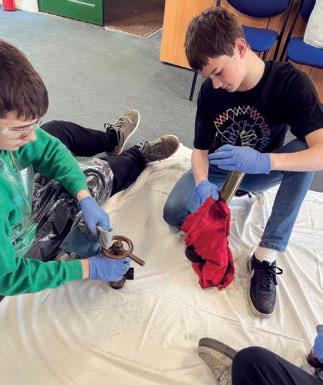
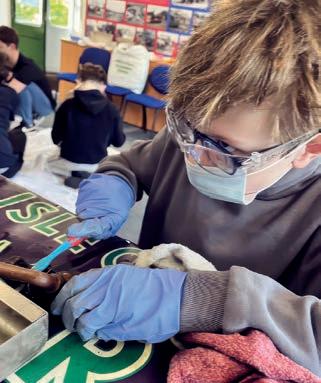
During May's gathering Calbourne Club members were busy cleaning various locomotive components, an important job which helps protect items before they are refitted. The team worked on W37 Invincible's steam valves, gauge glass covers, steam brake lubricator and pipework.
A highlight was when we collaborated with the Isle of Wight Model Engineering Society in June. Kindly organised by Dan Callcut, we were able to welcome all Calbourne Club members and their families, as well as those youngsters who are on our waiting list. The day included highly popular driving lessons and a tour of the Northwood site. There was also an educational talk about miniature steam engines and how they compare with full-size ones. It was great to see everyone interact and to meet some new faces who, hopefully, will be joining the Railway as volunteers.
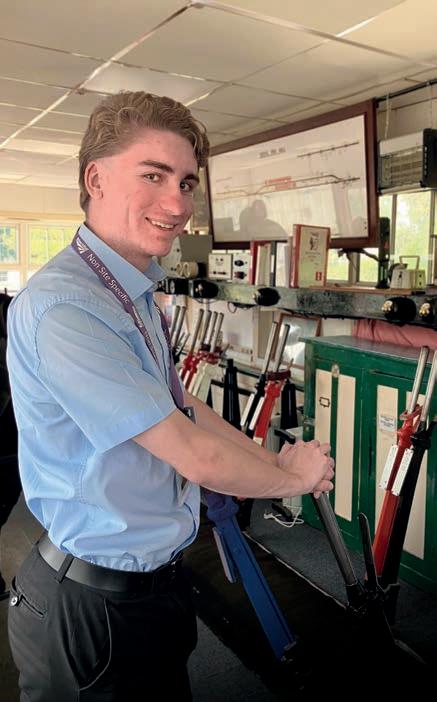
The Calbourne Club remains popular but as our members mature the time inevitably arrives when we have to say goodbye, as is the case with Jonathan, Robbie and Laurence. All three have been fully inducted as volunteers with Doug Alldred and will be joining the Operating Department shortly. We wish them well and look forward to seeing them progress and, hopefully, become guards, signalmen and duty managers.
Left: Calbourne Club members pruning vegetation in the Havenstreet station and show field area.
Right: Cleaning Invincible’s copper and brass in the Freshwater Room.
Far right: A day out at the Isle of Wight Model Engineering Society’s base
Network Rail career beckons for IWSR volunteer
PREVIOUS EDITIONS of IRN have reported on volunteers who, having gained experience at the Railway, have secured employment on the national network. This time it’s the turn of Isaac Farnbank who has recently joined Network Rail’s Operations Graduate Scheme.
Isaac started volunteering within the Railway’s Operating Department in 2017, aged 14. His progression followed a well-worn path, starting as a porter before graduating to guard assist. His thirst for knowledge and ability to learn quickly and understand the principles of safe railway operation meant that he qualified as a guard on his 18th birthday. Less than two months later he passed his signalman’s exams and the following year saw Isaac progress to become the Railway’s youngest-ever duty manager.
In 2022 Isaac was elected as a director/trustee of the Company and, earlier this year, was only narrowly defeated when he contested the chairmanship.
Isaac was born and raised on the Island and educated at Christ the King College in Newport before going on to King’s College, London where he graduated with a degree in Politics. A successful 11-week placement with Network Rail during the summer of 2023 resulted in a the offer of a permanent, full-time position through the company’s graduate scheme based in the Southern Region's Wessex route. He will conduct a range of placements throughout the rail industry to equip him for future management appointments.
Our best wishes go to Isaac as he embarks upon his career.
Isaac is pictured in Yeovil Pen Mill signal box on 10 October 2024 during a familiarisation visit.
Top right: Unit 484 001 out on trials after a break of 16 months, caused by wheel wear issues and flood damage. It is seen at Ryde Esplanade on 21 August and is passing a Road Rail Vehicle (RRV) parked in the former Down road, accessible again owing to a break in the line being reinstated to facilitate forthcoming engineering work. A timber chained across the track prevents heavy plant from venturing onto the weakened pier structure on that line.
John Mitchell
Middle right: The condemned western span of Sandown Girder bridge being crossed by a train for the final time on 29 October 1988 during singling on the line between Brading and Sandown. The materials train is being propelled towards Sandown by 03 079, driven by Ken West.
John Faulkner
Bottom right: Viewed from Avenue Road, the original eastern span of Sandown Girder bridge was completely enclosed for renovation work, as seen on 19 September. Grit blasting was due to take place the following day. John Faulkner
Opposite page:
Top: The redundant western span of Sandown Girder bridge, which dated from 1927 when the Southern Railway doubled the line between Brading and Sandown, being craned off the abutments at about 04.00 on 28 September.
John Faulkner
Bottom left: Another view of the condemned span during its removal. The crossmembers at the near end were cut off in advance of the main lift. Once on the ground, the bridge was very quickly cut up and removed from the site. John Faulkner
Bottom right: The unusual sight of Brading station without a footbridge, seen on 14 September after the temporary structure had been removed.
John Mitchell
Island Line News
by John Mitchell with additional information from John Faulkner and Andy Merritt
THE PERIOD UNDER review was punctuated by a scheduled one-month line closure for essential work along the line between Sandown and Ryde. Ryde Pier will then remain closed to trains until May 2025 for repair work along the shank of the pier. The repeated pier closures may be questioned or criticised by some, but it has happened before, during the 1960s when train travel along the pier was disrupted over four consecutive winters. The structure then replaced is now 60 years old, so…
The 40-minute headway timetable introduced in June does appear to have been a success. Whilst catamaran connections at Ryde Pier Head are not ideal, reliability has improved vastly, with around 97% of services running to time. Train failures have been few and traffic levels had been approaching pre-Covid levels by mid-August. All five Class 484 units have been in service.
For the Big Beach Weekender event at Ryde between 11 and 13 July and again for the Ryde Illuminated Carnival on 31 August the last train from Ryde Pier ran to all stations (except Smallbrook Junction) instead of terminating at St John’s Road.
During July the conductor rail on the Down platform siding (Platform 3) at Ryde St John’s Road was cut back to a position just south of the road bridge.
A signalling system failure on 4 July caused disruption until mid-afternoon. A track problem on 20 July saw the 09.26 departure from Ryde Pier Head (004) terminate short at St John's Road. The service resumed at 10.54. Unit 002 was held at Shanklin during this
period. A track circuit failure on 30 July saw unit 002 stopped at Ryde Pier Head for over an hour during the afternoon. Two days later, on 1 August, a power supply problem resulted in the failure of all signals south of Smallbrook Junction. Unit 003 was stranded at Shanklin whilst 004 operated a Ryde Pier Head to Ryde St John’s Road shuttle between 13.30 and 16.00. Overrunning engineering work saw a late start to services commencing on 6 August.
After a gap of 16 months 484 001 headed out onto the main line for the first time on 19 August. Trials were undertaken between Ryde Pier Head and Brading in between service trains. Thus, three sets were running on the northern half of the line. The unit reversed in the Up platform at Brading, a movement permitted by the signalling. Crossing service trains occurred in the vicinity of St John’s Road as far north as Park Road Bridge and to the south at Pig Leg Lane crossing. These days it is extremely unusual to see trains cross to the north of St John’s Road. Testing of 001 continued into the following day and 002 was observed doing a test run through the Esplanade. It was expected that a four-car trial would take place; it did not! Refurbished bogies for the Class 484 fleet have been observed in the depot yard at Ryde.
Unit 001 re-entered service during the afternoon of 21 August, replacing 004 and then running alongside 003. All went well until the next morning
when a defect saw 001 leave Shanklin eight minutes late with the 08.07 departure from Shanklin. Unit 002 on the following service was crossed at Sandown. Unit 001 was terminated at Ryde St John’s Road to be replaced by 005 which headed south to Shanklin at 09.09, some 15 minutes late, and crossing with the Up train as it set off. The late running was quickly recovered. Over a 48-hour period all five 484s had been in service.
Unit 001 was soon back in traffic and ran most days until 5 September. 004 was the final unit in service that day before the scheduled one-month shutdown of the entire line, when it formed the 23.17 departure from Ryde Pier Head to St John’s Road.
Upgrade Works from 6 September until 6 October 2024
Work commenced immediately after the cessation of trains late on Thursday 5 September. For simplicity, the overall project has been broken down into the strategic areas where work has been taking place.
Sandown Girder Bridge
This double-bridge structure crosses Avenue Road, an arterial road, immediately to the south-east of that road’s traffic-controlled junction
with Morton Common and Perowne Way. Here, the active bridge span was refurbished, including repainting. The former Up-line span, which had been out of use since October 1988 when the double line between Brading and Sandown was singled, was craned off and broken up for scrap.
Work started immediately after closure of the line with scaffolding in place beneath the active span and a pedestrian tunnel being constructed on the north side pavement, Avenue Road being closed to all other traffic. By 14 September the scaffolding surrounding the active span had risen to a high level and the bridge was encased with sheeting prior to grit blasting and painting.
A full junction closure was put in place during the weekend of removal of the redundant bridge span. Island Cranes’ 220-ton capacity Grove crane, used earlier in the year for lifting W24 Calbourne, performed the lift and it was set up at the extreme end of Perowne Way. Four bridge crossbeams that at one end were supported only by the angled north abutment were cut off ahead of the main lift, which took place at about 04.00 on Saturday 28 September. Timbers had been placed on the Morton Common side of the junction, providing a temporary support structure for the removed bridge and protection for the road surface while the bridge was being cut up, this being achieved by daybreak. Road traffic was flowing again between Morton Common and Perowne Way from 15.24 the same day.
Brading Station
Surprisingly, the station was accessible to the public throughout the works. The temporary footbridge had been removed in its entirety by 14 September and the repaired original structure was craned into place on 17 September. Decking and steps were then installed. The signalling power supply was cut a few days into the programme but restored roughly halfway through the work.
Smallbrook Junction
The pointwork just north of the station saw new point switches, ballast and timbers installed over the late September/early October period.
Ryde St John’s Road Up Distant and Home signals
These two semaphore signals, situated on a curve, have been replaced by LED signals. The new Home signal is sited slightly closer to Ryde St John’s. A 20-mph restriction has been in place here for some time owing to siting issues with the Home signal. A yellow/green signal replaces the Up Distant and is sited slightly closer to Pig Leg Lane crossing and thus gives advanced warning of the Home signal aspect, meaning the speed restriction can be lifted. There remain just three semaphore running signals on Island Line, these being Ryde St John’s Down Distant, which is fixed at caution, and the associated Down Home and Down Starting signals
Ryde’s Park Road and Rink Road bridges
These iron, road-over bridges were subject to a 3-tonne weight restriction and needed replacing. Both have seen similar work taking place. They were closed to road traffic from 19 August. After the line closure little appeared to happen for around a week other than JCBs being evident, removing the road surface and gunning into the concrete atop the iron bridge structures. By Friday 13 September a 350-ton lift crane had arrived from the mainland and the centre spans were removed from Park Road bridge. A working area was established between both bridges on the former gas works site and it was from here the crane operated. During the course of the week that followed not only had the old iron bridge spans been removed from both bridges but
Top left: The repaired and renovated footbridge back in place at Brading station on 21 September, with treads yet to be
Top right: The new yellow/green aspect Ryde St John’s Up Distant signal, viewed from Pig Leg Lane crossing. The post from the old semaphore Distant signal can be see leaning at an angle near the 20 mph TSR board.
John
Middle: A 350-ton capacity mobile crane dominated the Ryde skyline for a few days as it worked on the replacement of Park Road and Rink Road bridge spans. It is seen from the eastern end of Park Road on 14 September.
John Mitchell
Left: The remains of the old Rink Road bridge span on 17 September. The iron jack-arch structure was similar to the section of the Ryde tunnel roof that was replaced in 2006 (see IRN 30). John Faulkner
fitted. John Mitchell
Mitchell
Rink Road bridge on 20 September with the new
Right: Park Road bridge on 29 September with rebar being installed.
Below right: The main concrete pour taking place on Park Road bridge on 3 October.
Below left: A major aspect of the work at Ryde Esplanade station was replacement of the rail bearers in the first 11 bays of the pier. This is the assembly for Bay 11. The twin I-beams beneath each rail is typical for the entire pier except for the active line into the Pier Head station. The channel sections across the top are for handling purposes only. In the background on the left are four welfare units for the various contractors. John Faulkner
new precast reinforced base sections had been lowered into place. Following installation of rebar, concrete was poured on 2 and 3 October, Rink Road bridge being dealt with first. Both roads were scheduled to reopen to traffic in November, after concrete curing and finishing work had been completed.
Ryde Esplanade and Pier, first phase
The principal work here was replacement of the life-expired rail bearers (longitudinal beams) beneath the running line in the first 11 bays of the pier, replacement of the bullhead rail with flatbottomed rail between No 24 points at the south end of the station to the end of Bay 11, installation of fibrereinforced foamed urethane (FFU) synthetic wood sleepers on the pier and recycled plastic sleepers on new ballast on the onshore section. Completion of this phase allows trains to run as far as the Esplanade station once again.
To facilitate the work, a break in the disused Down line, beyond the Down end of the platform, was reconnected on the night of 31 July and 1 August, allowing RRV plant to operate as far as the seawall. Unfortunately, it could go no further than that because the structure beneath the disused line on the pier is in too poor a condition to support it.
Work began promptly at the beginning of the closure. Starting at Bay 1, track and rail bearers were removed by a RRV based on the pier and moved to temporary staging on the disused line near the pier head to await removal by sea. A second RRV started installing new rail bearer assemblies while the old ones were still being removed by the pier-based unit. Owing to the disused line being unusable, new rail bearer assemblies had to be laid from the section previously installed, using short slave rails clipped to the sleepers. The slave rails were replaced by 60 ft lengths once work had progressed far enough for that to be done. The final set of rail bearers was installed in Bay 11 on 20 September, with work running two days ahead of schedule, thanks to a spell of good weather.
Above:
reinforced concrete base sections installed. John Mitchell
John Faulkner
John Faulkner
Piles of composite sleepers occupy the former
Above right: Sleepers being laid on new ballast on 21 September. The former Down track was a useful asset during this project.
John Faulkner
Below: The unusual, possibly unique sight of a tamper to the north of Ryde Tunnel on 2 October. John Faulkner
A third RRV operated mainly on the Down line, transferring materials and equipment to and from the station area. New sleepers and other materials were stored on the Down line near the tunnel entrance and in the sixfoot. The new rail bearer sections were stored in a temporary compound, occupying the coach park adjacent to the north entrance to Ryde tunnel, and each section was moved to a temporary gated opening onto the railway, where the RRV took over.
Removal and replacement of track and ballast on the section on land was more sporadic, but by 3 October all had been relaid and tamped. Old and new ballast was mostly transported by road to and from the yard at St John’s Road.
Less conspicuous work taking place during the one-month closure was repair of the footbridge at Ryde Esplanade, inspection of the tunnel and of the footbridge at Ryde St John’s Road station and tamping of sections of the line, Rowborough being an area where the latter was most required.
A more thorough review of the Pier works will appear in IRN issue 105. It is to be hoped that when the pier works are completed that Island Line can then go on to prosper from next spring.
Above left: Ryde Esplanade station on 13 September with all 11 of the old rail bearer sections removed, revealing the crossheads, which did not need replacing. In the bottom right corner, new rail bearers and track have already been installed.
Down line. John Mitchell
From the archives Ventnor West
INTRODUCTION
by Roger Silsbury and Roger Macdonald
WITH THE RECREATION of signalling and a replica goods shed at Wootton, both of which draw heavily on those features which were part of Ventnor Town/West station, in this issue we feature this terminal station.
With the exception of those built as part of the preserved Isle of Wight Steam Railway, Ventnor Town was the last terminal station to open on the Island and also the first to close. When built by the Newport, Godshill & St Lawrence Railway (NGStLR) and opened on 1 June 1900, it was named Ventnor Town, even though it was some half a mile west of the main town centre, albeit on the same level. Following the formation of the Southern Railway the station was renamed Ventnor West on 1 June 1923, to differentiate it from the former Isle of Wight Railway’s station. Although all the wooden nameboards were renamed, when the Southern provided a concrete running-in board on the main platform
it was lettered as plain Ventnor, but with a supplementary board beneath giving the height above sea level, in a similar manner to one at the Ventnor Isle of Wight Railway (IWR) station. Originally, the direction of travel was designated as ‘Down’ to Ventnor, but at some stage - possibly in 1913 when the Isle of Wight Central Railway (IWCR) purchased the line – the designation was reversed to ‘Up’ to Ventnor, which the SR continued.
Above: Taken from behind the buffer stops for Platform No 1, this view is undated but probably around 1912. Note the point indicator signal worked in conjunction with the crossover; the goods shed with the Anglo-American oil depot and hut immediately to its right, and the corner of Pickfords’ store just visible to the left of the station building. Of especial interest is what appears to be the bracket Home signal which can just be made out above the fence between the goods shed and the telegraph pole to its left. This is the only image in the archive which shows the Home signal in this form.
IWSR Archive
Below: Taken in September 1920 and looking up the approach road, note that the station forecourt is unsurfaced. The large Pickfords store at the far end proclaims its identity prominently on the roof; note the ramped access to the end loading dock.
IWSR Archive
Right: The unusual Home signal, with three arms on a single post; reading from the top they controlled entry to No 1 Road, No. 2 Road and a ringed arm for the goods yard. That the signal box is switched 'out' is indicated by both the Home and No 2 Down Starting signals being in the 'off' position. Just beyond the signal are the railings protecting Ventnor Bridge (an occupation underbridge) which maintained access between the halves of the Steephill Castle estate severed by the construction of the railway. Also just visible is the trap point protecting egress from the goods yard.
P M Alexander Collection / IWSR Archive
Because an agreement with the IWCR was included as a schedule to the NGStLR Act, the IWCR insisted that stations and structures were completed on a lavish scale, even though they didn’t have to pay for them. As far as Ventnor Town was concerned, this included provision of a goods shed because the IWR station had one; two platforms each 350ft long and capable of accommodating 20 four-wheeled carriages and connected by a walkway behind the buffer stops; a 113ft siding on the south side with side, end and cattle docks, and two long sidings and associated goods yard on the north side. The back siding, known as Cliff Road, was 350ft long and equipped with a goods shed fitted with a 30cwt hand crane, whilst the other siding, known as Coal Road, was 480ft long and ran behind the northern platform and included a crossover about halfway along its length connecting to the No 1 platform road. Various coal stacking grounds and associated sheds were also sited next to the western section of this siding. There was a short headshunt at the western end protecting both sidings, later replaced by a trap point.
The Railway Signal Company provided a 10ft square signal box equipped with 13 levers and associated signalling. One slight mystery concerns the Home signal. Early signalling diagrams show it to have been a bracket signal, exact configuration unknown, with two dolls, one for each platform road, plus an arm fitted to the main post to control movements into the sidings. Later, this was amended to the single post with three arms as depicted in the photograph on the right; the siding arm still had a pre-Grouping spectacle plate, but the two Home arms above have standard LSWR/ SR-pattern spectacle plates, presumably dating from when the signal was altered. When C N Anderson, the Assistant Divisional Operating Superintendent between 1923-1925, drew his plan of the Island’s lines, he shows the bracket signal but with a later, undated, amendment to a single post. Another possibly more official but undated drawing (but believed to be c.1923) shows a different style of bracket signal. No clear image of the bracket signal has been located but refer to the photograph at the top of page 35.
Below: Based on the Ordnance Survey 25” map of 1907, this shows Ventnor Town station at its fullest extent.
The station buildings on the southern platform were constructed of local stone by J Ball & Sons, Cowes, and comprised a two-storey stationmaster’s house at the west end, with station facilities and a refreshment room to the
Lens of Sutton Association
IWSR Archive
east and with a platform canopy extending along the majority of the length. Although the platforms were officially designated as No 1 for the northern one and No 2 for the southern one, there is no evidence of number boards ever being provided.
A 2,000-gallon water tank was sited next to Pickfords’ store and supplied a water crane situated between No 2 platform road and the Dock Siding. There was also a loco inspection pit in the Dock Siding. Entry to the station was from a road leading up from Castle Road plus a flight of steps leading down to the main road; the goods yard was accessed from part way up the approach road. The refreshment rooms were not complete when the station opened. The first lessee was a Mr Moss but in November 1903 he relinquished his tenancy in favour of Portsmouth Brewery Ltd. which, in turn, ceased in 1913 when the IWCR purchased the railway. Thereafter the IWCR and its successors ran the facility until it closed.
Messrs. Pickfords arranged for a goods shed to be built for their exclusive use, replacing the temporary facilities they
Top: A view of the station, probably in the 1900s. The locomotive is 4-4-0T No 6 with a train of LSWR carriages and there is a goodly crowd on the platform, but the occasion is unknown. On the left a dumb-buffered wagon with grease axleboxes partly obscures the coal shed used by Wood & Co. The crossover between No 1 Road and the Coal siding was removed in SR days. The timber protection covering the economical point locks and other rodding and wires where they cross the four-foot are very prominent. They were later removed before the Grouping.
IWSR Archive
Middle: A detail study of the signal box and the No 1 Road Starting signal with the goods shed behind. Part of the fire devil for the water column can be seen on the extreme left.
IWSR Archive
Below: Taken on 9 April 1949, the track is bullhead dating from about 1930. The inspection pit can be seen in the Dock siding with a pile of ash from locomotive cleaning. Of interest are the fourwheeled passenger carriages, the last on the Island: there were three: 4124, 4133, and 4150, with 4124 and part of 4133 visible and 4150 known to be hiding behind the signal box. Note that the platform roads are slightly curved. Lens of Sutton Association P M Alexander Collection / IWSR Archive
had at St Lawrence; it was built at the west end of the approach road, beyond the station buildings and close to the Dock Siding. In September 1901 extension platforms measuring 12ft x 6ft were added to the goods shed on the Cliff Road. In 1904 agreement was made with the AngloAmerican Oil Company to site an oil and paraffin depot at the eastern end of the goods yard. This was supplemented in 1912 by the addition of a motor spirit store. It is not known when this facility ceased to be used, but probably in the 1930s.
Situated 27 chains from Ventnor, in September 1907 a 241ft-long siding was installed to serve Ventnor quarry, with the points facing Ventnor and locked by an Annett’s key on the train staff. Because of the downward gradient towards Ventnor, it had to be shunted with a locomotive at the Ventnor end. The quarry was the property of NGStLR and IWCR chairman, Percy Mortimer, and contained a narrowgauge ‘tramway’. In August 1916 the IWCR purchased the undertaking. The quarry closed in 1926 and the siding was removed.
In 1908 a fixed, 5-ton capacity crane was purchased from F Bradley and installed in the goods yard serving the Coal Road. It was taken out of use during the Second World War and stripped of parts to keep other, similar cranes on the Island serviceable.
Operationally, for opening in 1900 the Board of Trade required all Down (arriving) trains to come to a halt at the Home signal before entering the station as the approach was on a falling gradient of 1 in 58, easing to 1 in 215 thence to the buffer stops. This was later relaxed to passing the Home signal at not more than 5 mph.
Alterations to allow the No 2 Road Home and Starting signals to be ‘off’ simultaneously probably took place about 1926 when push-pull working was introduced and at the same time as the SR enabled Whitwell box
to be ‘switched out’ when not required. Train Staff & Ticket working was maintained on two short sections, Merstone – Whitwell and Whitwell – Ventnor West, when Whitwell was open. Otherwise one long section staff was used, with One Engine in Steam working throughout from Merstone to Ventnor West when Whitwell was closed. To enable Ventnor West signal box to be closed there was an ingenious arrangement whereby the spare lever No 12 (formerly for the Up Distant signal, which was fixed by that time) was used to work the No 2 Road Starting signal when the box was closed. With the box open, that signal was worked by No 6 lever, which was interlocked with the No 2 Road Home signal (No 11) in the normal way. To close the box, No 11 was pulled to lower the Home signal, thereby locking all the points and signals against conflicting movements. The Annett’s key on the long section train staff (the only staff once Whitwell had been abolished) was used to release a lock on No 12, which was then pulled lowering the Starting signal and locking No 11 reversed. The key on the staff was also used to release a backlock on No 12 to enable it to be replaced, therefore the box could be opened or closed only if the staff was at Ventnor West. The signal box could now be closed unless it was necessary to undertake shunting or if the locomotive required to run round; in such cases the guard would work the box. The crossover between the Coal Road siding and No 1 Road was removed at an unknown date, but probably when the branch was relaid with bullhead track between 1928 and 1930.
During World War 2 Ventnor West station had to be closed on several occasions owing to unexploded bombs in
the near vicinity. Superficial damage to the station building was caused by enemy action in both 1943 and 1944. During the war surplus rolling stock was often stored in the sidings, a practice which continued when peace returned as the site offered a sheltered environment.
The only ‘modernisations’ of note were the provision of a concrete running-in board at the west end of Platform 2 and the replacement of the fixed Up Distant signal by a standard LSWR/SR lower quadrant arm on a lattice iron post, both by the Southern Railway, and the replacement of No 2 Road Starting signal with an upper quadrant arm on a rail-built post in 1951 by BR. Following closure on 15 September 1952, the track was lifted in November 1953. When the site was sold in October 1959, the developers retained the main station buildings as a residence for themselves.
Opposite page:
Top: The stationmaster’s house and the parcels office. 14 August 1950. B Heaven / IWSR Archive
Middle: The eastern end of the station buildings which contained the refreshment rooms, as advertised on the windows.
14 August 1950.
B Heaven / IWSR Archive
Bottom: The goods shed. Mentioned in the text, by now the external extensions next to the siding had been long removed and the building is out of use. 14 August 1950.
B Heaven / IWSR Archive
Above: The concrete running-in board was lettered only ‘Ventnor’ but with its elevation displayed on a supplementary board underneath. The bench includes the ‘West’ suffix. IWSR Archive
Left: The station approaches looking towards St Lawrence in 1950. The Coal siding has lost all facilities apart from the hand crane, itself disused. A set of carriages is stored in Cliff Road. The signal box steps are just visible on the right.
J Moss / IWSR Archive
Below: The portion of Coal siding that ran behind the platform; the former crossover which connected it to No 1 Road lay this side of the signal box. Note the disused hand crane and the road which led down to the station approach road. IWSR Archive
Although taken some seven years after closure, this view shows the approach road to the station from Castle Road. The entrance to the goods yard runs off to the right, where the light-coloured vehicle is parked. Beyond that vehicle is the embankment on which the very end of the branch line stood. Vegetation on the embankment has blocked all sight of the station building, but the roof of the Pickfords building is visible, with an olderstyle car in front of it. The pedestrian steps, long disused and overgrown, ran down the bank where the larger shadow lies.
IWSR Archive
Tickets to and from Ventnor Town/West
The Archive contains some tickets from the original Newport, Godshill & St Lawrence Railway
2907 is the outward portion of a Second Class Return from Ventnor Town to Newport; the date is only partially legible. The fare was 2/8 but it looks as if it has been amended by the Booking Clerk, although to what is not clear. Note the advice to passengers to ascertain whether they have to change carriages at Merstone Junction. TI/2019/0138
When the Isle of Wight Central Railway took over the NGStLR title changed on the tickets, with 0601 showing I. W. Central Rly. It is the return portion of a Third Class Day Excursion from Cowes to Ventnor Town and was issued at a reduced fare. No date of issue is shown on the rear. TI/2024/0768
If pre-printed tickets were not to hand then the booking clerk issued blank stock, filling in the details by hand. An example is 2354 on early Southern Railway stock for a Child’s journey to Ryde Esplanade, routed via Newport at a fare of 2/10½. Dated 29 AG 49. TI/2016/0304
Always keen to encourage travel, the railway had various promotional offers, including ‘Pleasure Trips’. 2733 is the outward portion of a Third Class trip to Cowes at a fare of 2/0, dated AP 28 05. TI/2024/0728
Blank stock was also held for First Class travel. 055 is such an example and is from tickets printed ready for the 1923 Grouping. The name Ventnor Town was changed by the Southern Railway to Ventnor West in mid-1923. The ticket was never issued and is from withdrawn stock.
TI/2017/0372
Many people took the opportunity to ride on the trains on the last day and 3607 is a Third Class Child Single from Ventnor West to Whitwell at a fare of 3d. The ticket is dated (Saturday) 13 SE 52. There was no train service on Sundays and the branch closed on Monday 15 September 1952. TI/2013/0037
Documents
Towards the end of 1947 a proposal was made to remove the lamp room from Whitwell and transfer it to Ventnor West. Illustrated is Inspector Fidler’s note describing the lamp room, the copy of his note being typed onto the back of a Southern Railway Stores Requisition Form, dated 16 July 1942, for 14 pounds of putty for cranage facilities at Medina Wharf.
Also illustrated is Mr Restall’s reply sanctioning the transfer. Note that the letterhead has been amended with the newlynationalised railway’s title; in those days paper was still a precious commodity and not to be wasted.
The authors gratefully acknowledge the assistance of George Wheeler and John Faulkner in the preparation of this article and would also like to thank the Lens of Sutton Association for permission to include two images from its collection without payment of reproduction fees.
Top: A drawing of No 3
No 3 Mill Hill’s surviving Black, Hawthorn cousins by John Woodhams
TUCKED AWAY in a corner of the National Railway Museum in York you may discover an apparently unremarkable four-coupled industrial saddle tank in a faded black livery. Dating from 1874, this little engine, Bauxite No 2, is actually a surviving close relative of the Isle of Wight Central Railway’s now long-deceased No 3, Mill Hill, bought new from the manufacturer Black, Hawthorn & Company in 1870.
Gateshead on the retirement of the previous owner Ralph Coulthard. Over the previous 30 years that firm, originally known as John Coulthard & Son, had built about 20 locomotives and rebuilt many others, but the new owners now concentrated on the construction of locomotives for mining and other heavy industries, with several standard designs. Other contracts included the manufacture of fans for the local mining industry.
Below: No 3 in IWCR days.
Black, Hawthorn & Company was formed in 1865 when the partnership of William Black (1823 – 1905) and Thomas Hawthorn (1838 – 1880) took over the Quarry Field Works at
By 1869, the two original locomotives of the Cowes & Newport Railway required repair, and Henry Martin, as the contractor operating the line, sought additional motive power. Black,
Hawthorn agreed to supply a saddle tank locomotive, to a standard fourcoupled design but with an extended rear frame and trailing axle supporting an additional coal bunker space. At a cost of £1,385, works number 116 arrived on the Island in March 1870 in a rather undignified manner, as it turned over onto its side in the River Medina mud whilst being unloaded onto the shore at Medham. A brandnew engine, there it lay for several days before it was successfully righted and brought ashore. Only one other engine was built to the same modified design as an 0-4-2ST, and the order for that, works number 118, was placed on 17
Mill Hill, as originally built by Black, Hawthorn in
1870.
August 1869, for the Garstang and Knott End Railway just one week after Henry Martin had committed to his purchase. Although the Island engine started life rather ignominiously, it was rather more successful than its counterpart, which suffered a major boiler failure after only two years and was repossessed. The Garstang and Knott End concern was in such a parlous financial state that, having lost its only available motive power, it was forced to close for two years! The subsequent history of No 3 Mill Hill has been well documented elsewhere, and in particular the reader is referred to Locomotives of the Isle of Wight Railways, by Messrs Cooper, Faulkner, Maycock and Silsbury.
Although with slightly different cylinder and wheel dimensions, Bauxite No 2 was built to the same basic design, as a standard 0-4-0ST, delivered as works number 305 in March 1874 to C Tennant & Co of Hebburn. It spent its working life in the aluminium industry, normally being used to push wagonloads of bauxite ore into the smelters, until final withdrawal came in 1947. The scrap merchant George Cohen was then contracted to dismantle the entire plant but, on discovering the locomotive still inside, Bauxite No 2 was presented to the North Eastern Engineering and Historical Society rather than it being cut up. Following this remarkable gesture – at a time when steam locomotives were still working in industry in large numbers – it has been conserved in its as-withdrawn condition, and is now, quite justifiably, part of the national collection.
Bauxite No 2 is not, however, the only survivor. Another locomotive, works number 266, built a year earlier in 1873, remained in use for a century, and was still active as late as 1973. The engine was originally supplied to the contractor Walter Scott and named Wellington, but by the mid-1890s had
Below: Although deputising for a failed diesel, the centenarian Holwell No 3 was still earning her living with a train of empties for the Wirkswoth quarry in December 1973. No 3 Mill Hill had been scrapped over 40 years earlier.
been sold to the Melton Mowbraybased Holwell Iron Company, which renamed it Holwell No 3. It was sent to work at the firm’s South Witham lime works in the adjacent county of Lincolnshire, where it remained until about 1918 when Stanton Ironworks was taken over, and it was transferred to the newly-acquired undertaking.
In 1946 it was sold to Bowne & Shaw, owners of Wirksworth Ironstone Quarries in Derbyshire. Here it remained until the early 1970s by which time the quarries had become part of Tarmac Roadstone, and, unsurprisingly, it could be declared the oldest steam locomotive in the country still at work.
The engine was rebuilt several times during its long career, its appearance altered by a rather odd-looking asymmetric cab extension. It also has spoked wheels, rather than the double–boss solid wheels fitted to both Mill Hill and Bauxite No 2
By now a centenarian, the engine was certainly worthy of preservation and began an honourable retirement at the Tanfield Railway in 1977. Having regained its original name, Wellington, it was returned to steam at Marley
Courtesy
Phil Waterfield
Top: Works number 305, Bauxite No 2, dating from 1874 on display at the National Railway Museum, York.
Above: Cross section of a standard 0-4-0 saddle tank, from The Engineer, 1869.
Newburn steelworks
REFERENCES
Locomotives of the Isle of Wight Railways, T P Cooper, J C H Faulkner, R J Maycock, R A Silsbury; Crécy, 2021.
The Isle of Wight Central Railway, R J Maycock, R A Silsbury; Oakwood, 2001.
Black, Hawthorn Works List and Locomotive Histories, Richard West; unpublished
ACKNOWLEDGEMENTS
I would particularly like to thank Richard West for allowing access to his unpublished research.
Hill, but in 1998 was sent to the nearby Beamish Museum for static display for several years. It has now returned to Tanfield, although is not operational currently.
Two other slightly later standard gauge Black, Hawthorn 0-4-0ST locomotives also survive. Works number 912 of 1887 served with the Corporation of Aberdeen Gas Department, and was fitted with skirts for street running, whilst three years its junior, 966 spent its working life at a Swedish steelworks, but now finds retirement as a static exhibit in a park. Kettering Furnaces No 3 spent many years in the Penrhyn Castle collection (along with our own Haydock), and although built to 3 foot gauge in 1885, shares many of Mill Hill’s characteristics.
The two 0-4-2STs were not the only variations to the standard four-coupled design, as in 1876 a crane locomotive was built with an extended rear frame supported by an outside-framed bogie. The resulting 0-4-4ST, which was supplied to John Spencer & Sons of Newburn steelworks, could lift four tons at a radius of nine feet. A similar metre gauge crane tank was built in 1895 for the Wallsend on Tyne shipyard of Swan Hunter.
No 3 was not the only Black, Hawthorn product to work on the Island, as the Isle of Wight Central Railway awarded the Gateshead firm the contract to build its impressive 4-4-0T delivered in 1890. By 1896, when Black, Hawthorn was taken over by Chapman Furneaux, the company had built over 700
locomotives. One or two sources claim that over 1,000 were built, a figure based on works numbers which actually included marine and stationary engines. Chapman Furneaux built a further 70 locomotives but gave up marine engineering, and closed completely in 1902, with drawings, patterns and goodwill acquired by R & W Hawthorn Leslie. The Quarry Field Works were then acquired by electrical and colliery engineers Ernest Scott & Mountain.
Mill Hill remained on the Island until January 1918, when sold to contractor Holloway Bros for use at a Teesside shipyard. On completion of that contract it was sold on for further industrial use at Plenmeller Colliery near Haltwhistle. It is believed to have been scrapped along with another Black Hawthorn 0-4-0ST, works number 848, when the mine closed in 1932.
Our past recalled
by John Hulse
50 years ago Wight Report 25 – Autumn 1974
On 21 June 1974, as part of her first overhaul, Adams’ O2 Class W24 Calbourne had taken to the air, her frames being turned to face ‘bunker to Ryde’. Her boiler was returned to the frames on the same day.
Television presenter Valerie Singleton and a film crew from the BBC’s flagship children’s programme Blue Peter visited Havenstreet on 6 August 1974, filming for a piece featuring the Island.
Plans were unveiled for a proposed workshop at Havenstreet, with a single road shed and a lean-to road adjacent to the Down Loop. The wish list included a wheel drop, something that did eventually happen many years later thanks to the Ivatt Locomotive Trust. Ultimately, the structure became fully enclosed, with what is shown as the lean-to road being used for carriage and wagon maintenance.
Right: A Black, Hawthorn advertisement of 1882
Below: The 0-4-4 crane locomotive built in 1876 for
The Blue Peter team filming at Havenstreet on 6 August 1974
John Mackett
30 years ago Wight Report 105 – Autumn 1994
John East (Chief Executive, English Tourist Board) and Michael Green (Chairman, Southern Tourist Board) visited the Railway on 29 April, presenting a certificate for conducting Welcome Host courses.
Roger Freeman MP, Minister for Public Transport at the time, and his entourage visited on 2 July in conjunction with meetings on the Island regarding the proposed franchising of the Ryde – Shanklin line.
In July, Kim Chalkley was repairing the bodywork of SR 15T Goods Brake Van 55710. When sister van 55724 was acquired subsequently, corrosion of 55710's frames led to its withdrawal from service.
W24 Calbourne featured again 30 years ago, with boiler lagging in process after her overhaul.
If you would like to discover more about the Isle of Wight Steam Railway, the Island’s electric railway, closed lines and shipping during the period from 1967 until 1998, why not request back numbers of Wight Report, the predecessor to Island Rail News? Originals of the first 21 issues (Preliminary, October 1967 – 20) are now scarce but John Hulse has a very limited supply of issues 1, 3, 6, 8 – 20, priced at £5.00 each including P&P. A CD with all 21 issues as high-quality PDFs, priced at £13.00 including P&P, is also available. He has originals of all subsequent issues (21 – 117, July 1998) at £3.00 each including P&P. Please make cheques payable to JOHN HULSE and send to him at ‘Whitwell’ 26 Dennison Road, Cheadle Hulme, Cheshire, SK8 6LW and allow a few weeks for delivery. Please remember, all proceeds will go to the Railway appeal of your choice. Wight Report
Drawing of the originally-proposed works building Alan Blackburn / Iain Whitlam
The ministerial visit seen lined up with IWSR staff at Wootton, 2 July 1994
Brian Deegan
Kim Chalkley repairing the bodywork of SR 15T Goods Brake Van 55710, 1 July 1994. Brian Deegan
James Watts is seen lagging Calbourne’s boiler, 8 July 1994
Brian Deegan
POSTBAG
Future Carriage Restorations
From: Dave Martin Member 2670
I note in Island Rail News 103, p8, that it is planned to overhaul the existing bogie carriage fleet. Obviously, I support the need to keep the carriages in the best possible condition. I also support the principle of one single restoration being undertaken in the C&W workshop after the completion of LCDR Brake Third 4115 and IWR First 21.
I would like to see SECR 1106 become the next candidate for full restoration. Conversion of this carriage to an 8½ compartment Third would fill a gap that many senior members would like to be able to experience again before it is too late.
I trust the board will take this into account when determining the order of future restorations later this year.
So who did crew the last train from
Newport?
In IRN 101, p22, in the tribute to Terry Hastings, it was stated that the final Drewry railcar departure from Newport on 24 January 1971, and thus the very final rail movement from the Island’s capital, was driven by Martyn Mullins. It seems, however, that the passage of time can play tricks. We are pleased to publish the following letter from a longstanding member Richard Newman, member 19.
A recent IRN made mention of the last movement of a rail vehicle from Newport – the tram – on that memorable day, 24 January 1971 but incorrectly named the tram driver. As outlined in the first Wight Report magazine after the move [Wight Report 13 – Ed] the last train out of Newport was crewed by John Wenyon and Steve Day. Calbourne departed hauling several coal wagons (containing mostly dust rather than coal!), the match wagon, Midland Railway 5T 6-wheel crane 429S and, at the rear, LSWR ‘Road’ Van 56046 with George Wheeler as guard, this being the last of the four steam trains. The Ryde Pier Tram, which had performed sterling service through the day clearing the road and conveying essentials for Calbourne, was to follow the goods train on a time interval basis later. A heavy shower of rain just as the goods left Newport caused W24 to come to a stand on greasy rails on Fairlee bank, so George carried out protection with a red aspect handlamp until the goods was able to proceed (as the tram would be following under caution). Calbourne managed to proceed but John and Steve had their own problems as the tram’s fuel pipe fractured and had to be held together by hand to maintain progress. Their arrival at Havenstreet was achieved about 20 minutes after the goods, which had to creep across Wootton slip with only the light of a Tilley lamp for visibility. Tim Cooper, riding in the Road Van with a number of others, described how the crane was actually raised off the rails but luckily dropped back down onto the distorted track without mishap.
Looking back, it is still amazing that the Newport –Havenstreet move was ever achieved in the nick of time before the scrapmen removed the track. Without the success of that day it is highly unlikely there would be a railway at Havenstreet today.
Editor’s reply
Thank you for your letter.
SECR ‘Birdcage’ Composite Brake 1106 arrived on the Island from the Kent & East Sussex Railway in the autumn of 2021. The purpose and intention for seeking to secure this vehicle was to offer scope to create ‘the one that got away’, a SECR 8½-compartment Third, the sixth carriage the nascent WLS would have purchased in 1966 had there been sufficient funds. At its meeting on 14 November 2021 the board agreed that the carriage should be restored as an 8½-compartment Third, subject to conservation records being taken before starting adaptation. That it should be converted to a 8½-compartment Third has already, therefore, been determined (as reported in IRN 93).
I suspect many members will share your view that 1106 should be the next bogie carriage to be restored. This, however, has yet to be agreed by the board.
Memories of those early years
From: Nigel Spencer, MBE DL Member 760
I was saddened to read of the passing of Mike Smith, an early stalwart of the Wight Locomotive Society, as reported in the tribute by Iain Whitlam and Derek Bishop published in IRN 103.
I was one of Mike's London Area Gang who, in 1971, journeyed to the Island to work on the nascent IWSR. It was my first teenage solo adventure, with strangers, to 'the Railway,' and I was a bit apprehensive, to put it mildly! Big Mike was great. 'You'll be alright with us, mate.' and I was.
I met Iain, Terry Hastings, Tom ‘Jacko’ Jackman et al and had a fabulous weekend. The Fray Bentos stew was as described, absolutely delicious. Terry’s Lessland B&B was unique - late night quizzes, banter and large breakfasts. Above all else, the chance to work collectively on 'our' Railway was so rewarding.
Owing to Mike's influence, I subsequently brought my own gangs to volunteer as Permanent Way helpers at Havenstreet and Wootton. Under the guidance of Jim Loe we continued with vegetation control, fence construction and fishplate oiling.
Back in 1971 we wore any old clothing item, polo necks were de rigueur, as were anoraks, and duffle bags held 'sarnies and fizz!' The freedom we had was intoxicating, and to physically contribute towards conserving a fragment of IW railway heritage then, was so motivational.
Today, health and safety requirements rightly mean that volunteers are appropriately dressed, and follow procedures which are strictly enforced. There is still that feeling of camaraderie and knowledge that one is 'doing one's bit' for the Railway, however, and volunteers in 2024 can be assured of being cared for just as I was over 50 years ago.
God bless Mike and all the stalwarts of our Railway who have handed us today's magnificent legacyand massive thanks to current management, paid staff and volunteers for all that they do to keep the IW heritage steam dream alive.
Paul Hitchcock –A personal tribute
From: Mike Willis Member 6196
I first met Paul when he came for his annual summer fortnight at the Welshpool & Llanfair Railway back in the 1970s. We were often at opposite ends of the train where he took great pride in his appearance as the guard. He sported a fresh rose from the station garden in his lapel. My wife Roz, the station gardener, was not impressed when she found where her precious blooms were disappearing to! He, however, scored a point in telling me off for (allegedly) driving The Earl too fast up the 1 in 29 of Golfa Bank.
When Paul was in London, he appeared at several W&LR London Area meetings at the Model Railway Club, rushing away to catch the last train to Portsmouth. When we conducted fund-raising sales at a Kew Bridge Museum event, I did not envy Paul outside driving one of the Hampshire Narrow Gauge locomotives in the cold and murk of a November weekend. When we moved to the Island in 2015, I was delighted to renew acquaintance with Paul in the Museum Team of the Heritage & Learning Department.
I will miss both his smile and friendly greeting as well as his forthright views around railwayana and the care to avoid fakes! It has been a pleasure knowing you, Paul. You will be sadly missed.
ADVERTISEIN ISLAND RAIL NEWS
If you would like to place an advertisement in the magazine please contact the Railway on 01983 882204 oremail irn@iwsteamrailway.co.uk Page Rates: Eighth: £25 Quarter: £45 Third: £55 Half: £80 Full: £150
WRITE TO IRN NOW!
Letters should be addressed to: The News Editor, IRN, The Railway Station, Havenstreet, Isle of Wight, PO33 4DS or emailed to: irn@iwsteamrailway.co.uk
The Editor reserves the right to edit letters and stresses that the opinions expressed are not necessarily those of the magazine or The Isle of Wight Railway Co Ltd.
Articles and letters relating to the Isle of Wight Steam Railway, Island Rail News and any other topics regarding railways on the Isle of Wight are welcomed. Deadline for articles and /or photographs for the next issue of Island Rail News is 31 December 2024
It would really help the magazine production team if articles, letters and photographs are submitted in electronic format. They can be supplied on disc or can be emailed to the editor at: irn@iwsteamrailway.co.uk
Photographs should preferably be supplied electronically in high resolution and with the photographer’s name added to the filenames (if not added automatically to the metadata). If captions are brief, they may also be added to the filenames, otherwise they should be supplied in a separate file.
If prints or slides are supplied, captions and credits should also be given and please enclose a SAE if you would like the photographs returned. If possible, please restrict letters to no more than 200 words.