
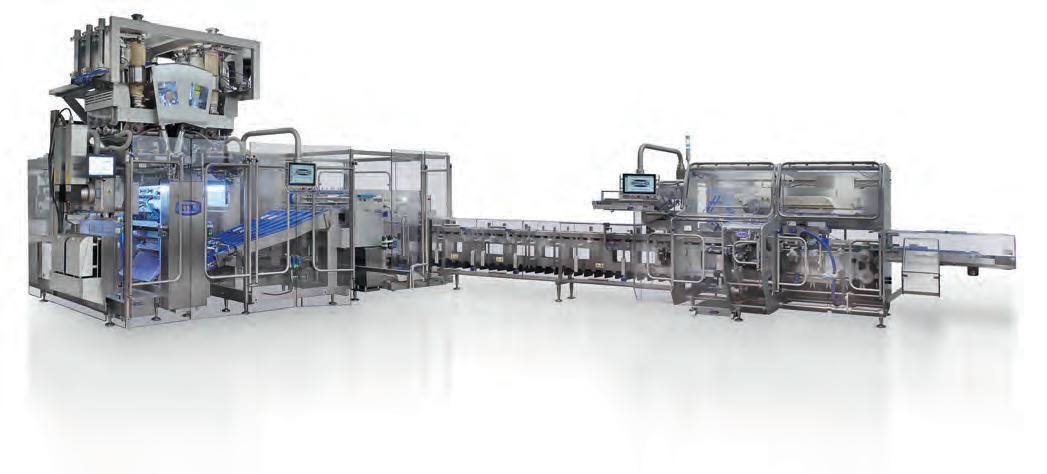



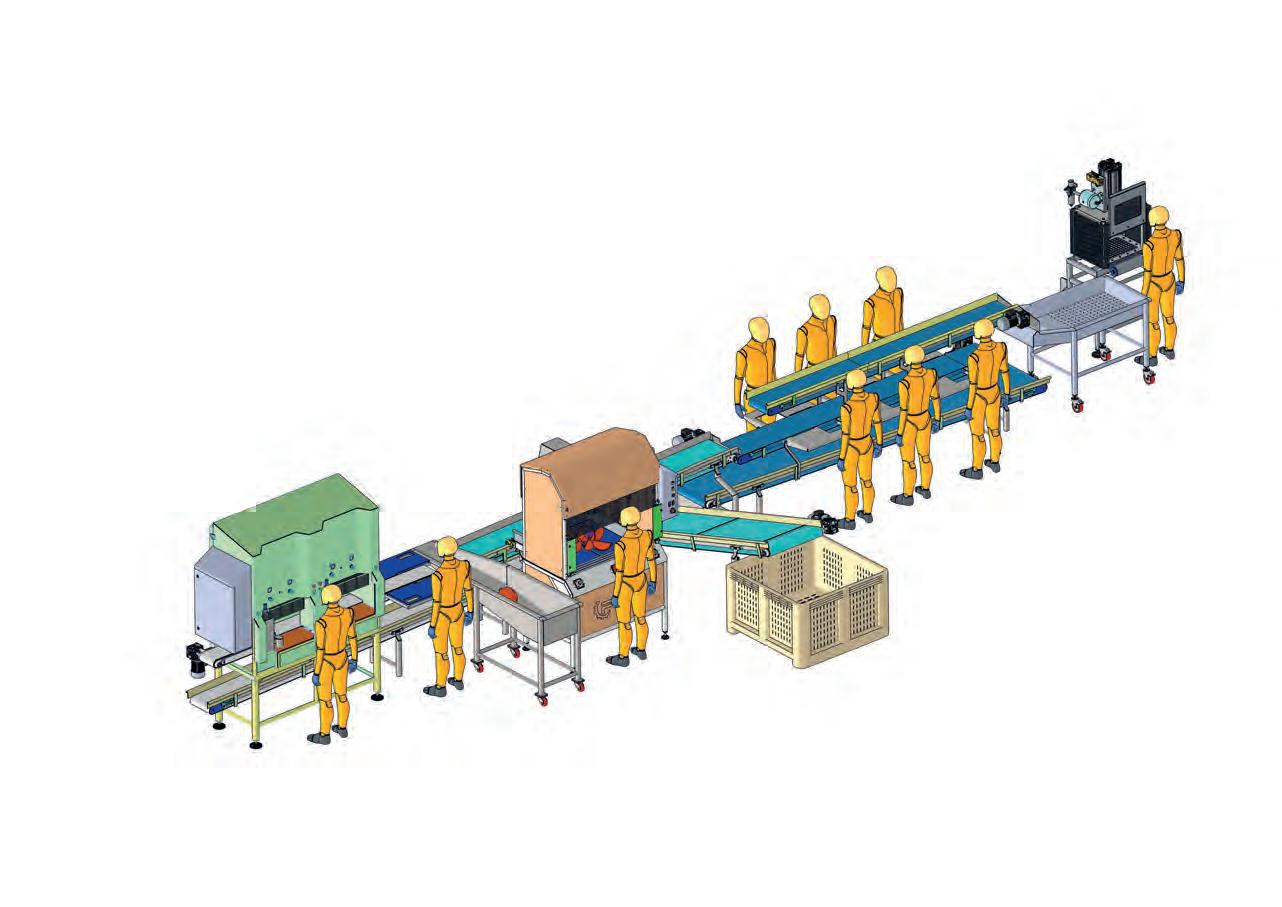
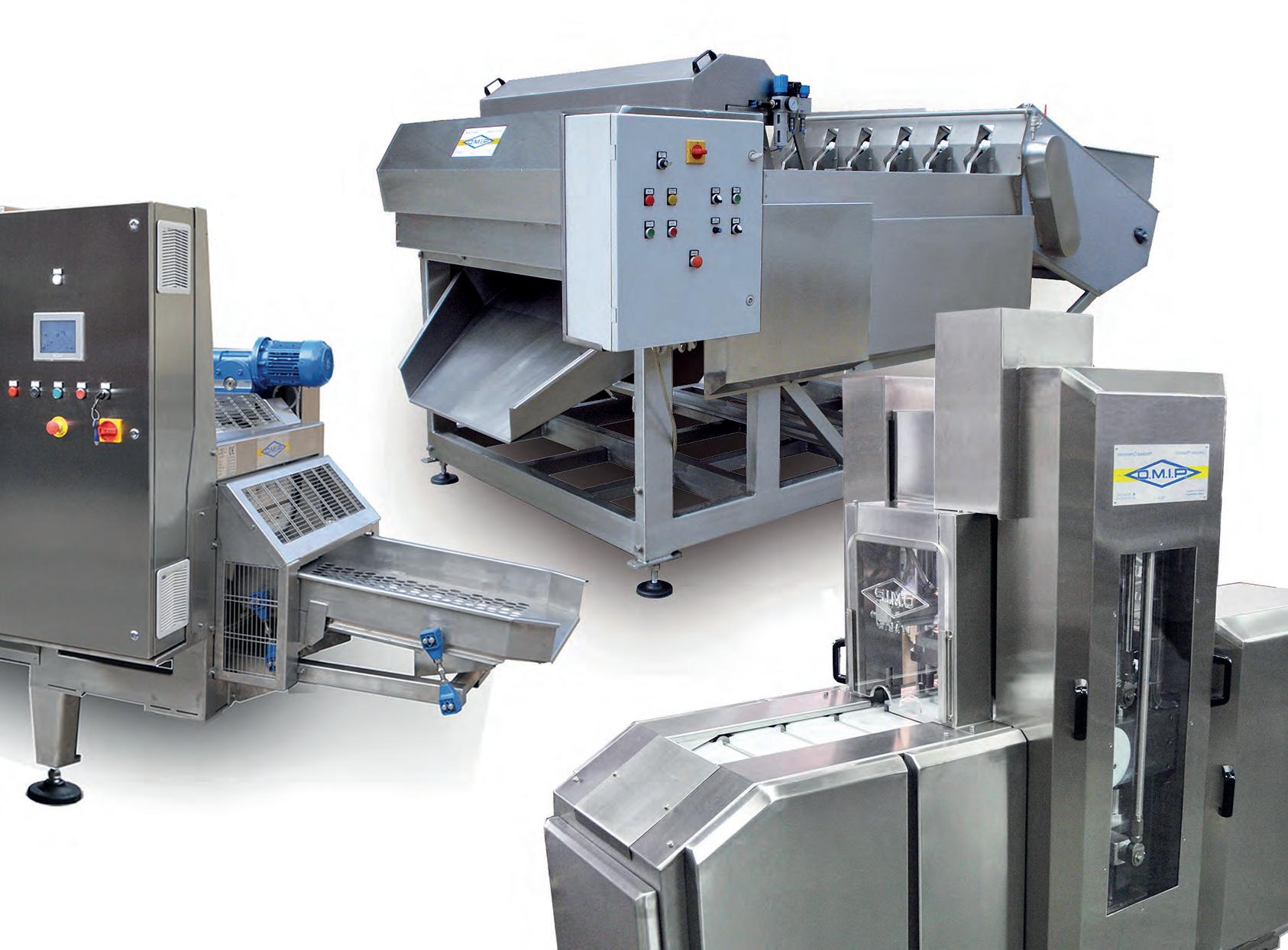
for peeling and chunking Mod.PLDZ + PWS + AIRCUBE
Chunking
Mod.PWS
Mod.PL2DZ Wedging
Peeling
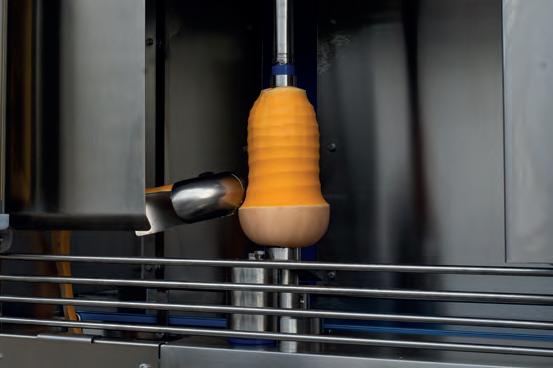
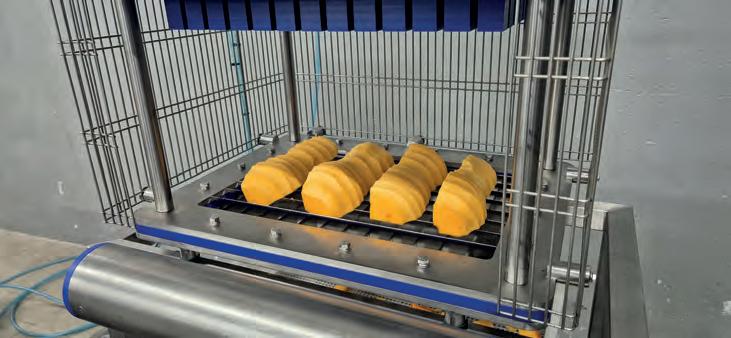
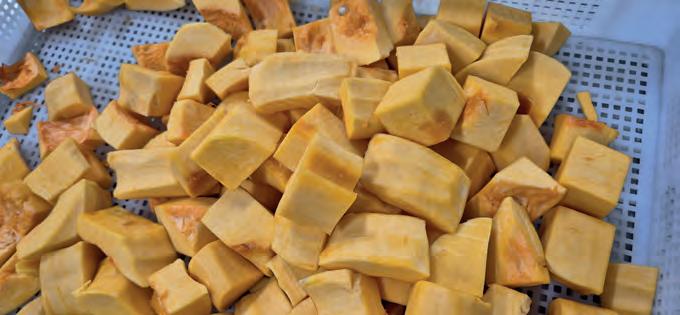


for peeling and chunking Mod.PLDZ + PWS + AIRCUBE
Chunking
Mod.PWS
Mod.PL2DZ Wedging
Peeling
01-58
MACHINERY - PACKAGING LINES - LOGISTICS
61-77 PACKAGING
94-108 AUTOMATION 78-93 NEWS
109-120 EXHIBITIONS

SONIA V. MAFFIZZONI Editorial Manager
ASTRA INC.
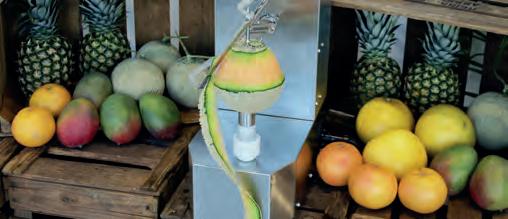
EXPERIENCE ASTRA’S PEELER & CORER TECHNOLOGY LIVE AT FRUIT LOGISTICA BOOTH C-35 | HALL 2.1. PG. 34/36
TECNO PACK SPA
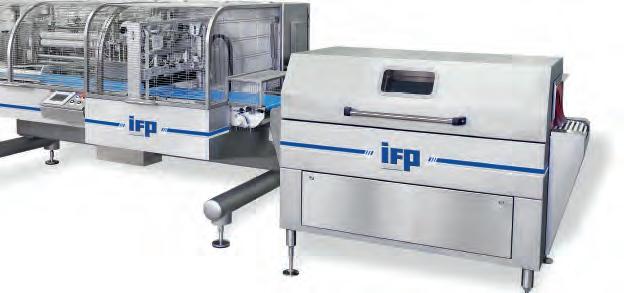
TRADITION, INNOVATION AND QUALITY. PG. 62/65
CHIARAVALLI GROUP SPA
RASSPE BLADES BY CHIARAVALLI: HERITAGE MEETS HIGH-PRECISION TECHNOLOGY. PG. 80-81
The fruit and vegetable industry is under growing pressure. Demand for fresh, safe and consistent products is rising, while climate uncertainty, resource constraints and cost volatility are reshaping supply chains. In this scenario, processing and handling technologies play a central role.

Sustainability has become an operational requirement. Reducing waste, improving energy and water efficiency, and extending shelf life are now key factors for competitiveness, especially in international markets. At the same time, artificial intelligence is moving from theory to practice. From optical sorting and quality control to predictive maintenance and process optimization, AI supports more reliable operations and better use of raw materials. For the fresh produce sector, innovation is no longer about experimentation but about efficiency and control. The ability to combine technology, data and industrial know-how will define performance, resilience and long-term market positioning.
MINI MOTOR SPA


editorial management and registered office: Editrice Zeus Srl: Via Cesare Cantù, 16 20831 Seregno (MB) - Italy
Tel. +39 0362 244182 / +39 0362 244186 web site: www.editricezeus.com e-mail: redazione@editricezeus.com portal: www.itfoodonline.com skypeTM: editricezeus
Editrice Zeus: +39 379 2421278
Machineries, plants and equipment for food and beverage industry year XXXVII - issue n. 1 - February 2026
editorial manager
S.V. Maffizzoni redazione@editricezeus.com
editorial production Sonia Bennati bennati@editricezeus.com
account dep. manager Elena Costanzo amministrazione@editricezeus.com
project and layout design ZEUS Agency grafica@editricezeus.com creative dep ZEUS Agency grafica@editricezeus.com translations ZEUS Agency in partnership with: Thai-Italian Chamber of Commerce info@thaitch.org printing ZEUS Agency
Italian Magazine Food Processing
Europe: single issue: Euro 25 Annual (six issues): Euro 120
Outside Europe: single issue: US$ 30 Annual (six issues): US$ 170
Subscription payment can be made in the name of Editrice Zeus srl, by bank money transfer or cheque.
Italian Magazine Food Processing
An outline of the suppliers of machines, plants, products and equipment for the food industry. Published: monthly. Registration: Court of Monza no.10 of 05.09.2018. Shipment by air mail art.2 comma 20/b law 662/96 Milan. Panorama dei fornitori di macchine, impianti, prodotti e attrezzature per l’industria alimentare Periodicità: mensile. Autorizzazione del Tribunale di Monza, n.10 del 05.09.2018
Spedizione in a. p. 45% art. 2 comma 20/b legge 662/96 Filiale di Milano
The packaging of fruits, vegetables, and ready-to-eat fresh produce (fourth range) is undergoing an unprecedented revolution, driven by the need to balance environmental sustainability, product protection, and consumer convenience.

by the editorial staff
In a market increasingly focused on reducing environmental impact, producers and distributors are investing in innovative solutions that enhance customer experience without compromising freshness and quality.
One of the most exciting developments is the adoption of compostable and biodegradable materials. Packaging made from plant fibers, cornstarch, or bioplastics offers a tangible alternative to traditional materials. These options not only reduce environmental impact but also convey a positive message to
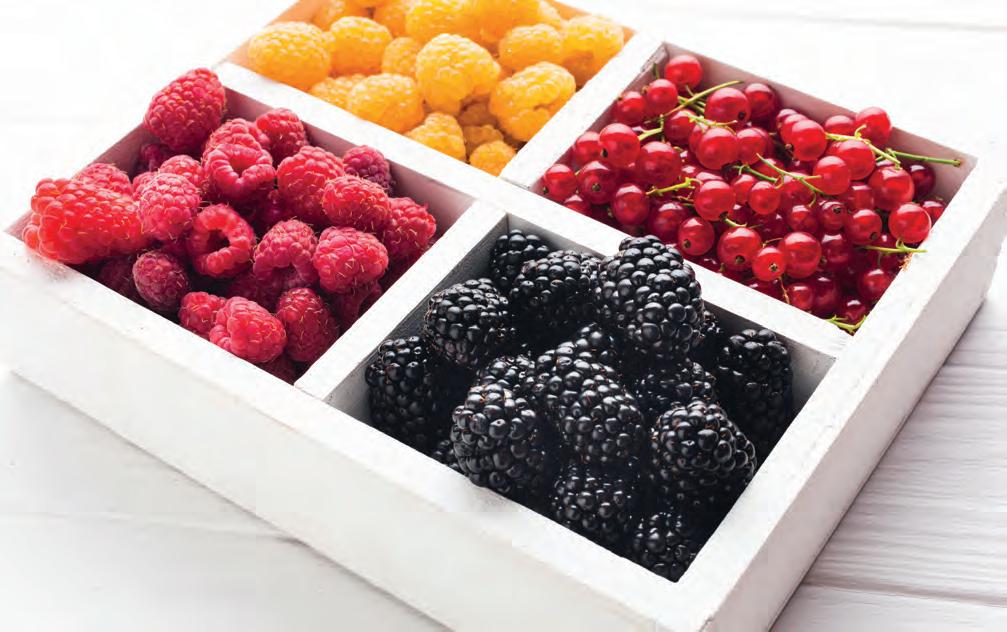
consumers who are increasingly sensitive to eco-friendly choices. However, maintaining the same performance in terms of preservation and protection is crucial to the success of these solutions.
Technology is playing a key role in this transition. Smart packaging, equipped with integrated sensors, is becoming a reality in the fruit and vegetable sector.
These sensors can monitor parameters such as temperature, humidity, and gas levels within the packaging, providing valuable information to distributors and consumers. This makes it possible to detect potential issues before the product deteriorates, reducing waste and improving customer satisfaction.
Packaging design is also evolving to meet the needs of modern consumers. Reclosable, easy-to-carry, and durable packaging is becoming standard for fourth-range products. Additionally, design plays a fundamental role in attracting customers and communicating product quality. The use of transparent materials and appealing graphics
can make a significant difference in purchasing decisions, especially in such a competitive market.
Another crucial aspect is sustainability in logistics. Lightweight and durable packaging helps reduce transportation costs and environmental impact while improving supply chain efficiency.
Furthermore, many companies are experimenting with modular packaging systems that optimize space utilization during transport, reducing CO2 emissions.
The challenge for the sector is balancing innovation with costs. While many advanced technologies require significant initial investments, the long-term benefits in terms of waste reduction, quality improvement, and customer loyalty make these solutions highly advantageous. In an era when consumers demand healthy and sustainable products, fruit and vegetable packaging represents not only an opportunity for differentiation but also a responsibility toward the environment and future generations.
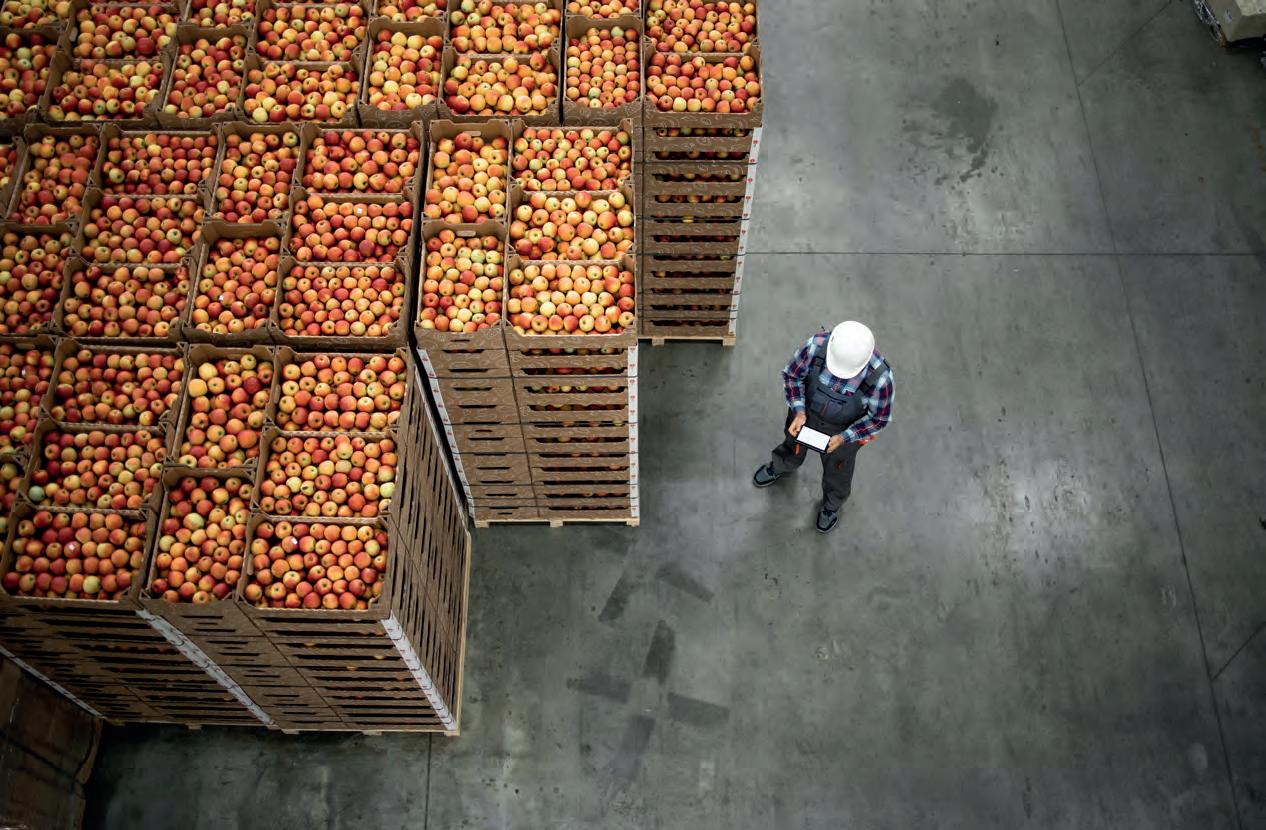
Every February, something special happens in Berlin. The city fills with the colours, flavours and stories of people who nourish the world. For three days, from 4 to 6 February, they will all converge in one place where the heartbeat of the global fresh produce industry will become unmistakably loud: FRUIT LOGISTICA. Growers, traders, engineers, scientists and pioneers arrive from all continents, carrying ideas, ambitions and a shared belief in progress. Over 2,500 exhibitors from around 90 countries are due to take part, making it the world’s largest and most international gathering of companies in the fruit and vegetable sector.
In 2025, FRUIT LOGISTICA brought together 91,000 industry professionals from 151 countries, and more than 95 percent said they would recommend the event. From the moment the venue is entered, it becomes clear why: this is where the global fruit and vegetable sector moves forward. Beyond its scale, the event is defined by real industry momentum – conversations in busy aisles, meetings between long-standing partners, and spontaneous exchanges that lead to new ideas.
This year’s guiding theme, Let’s grow!, captures that spirit. “Let’s grow is much
more than a slogan,” says Director Alexander Stein. “It reflects our determination to push ahead, to embrace innovation, and to grow not only technologically and economically but also as a global community. FRUIT LOGISTICA is where that future begins.” Italy, the Netherlands, Spain, Germany, and France remain the top five countries represented by exhibitors, and participation from Asia, the Middle East and North Africa, and Africa continues to increase.
The story unfolds across three seamlessly connected segments that cover
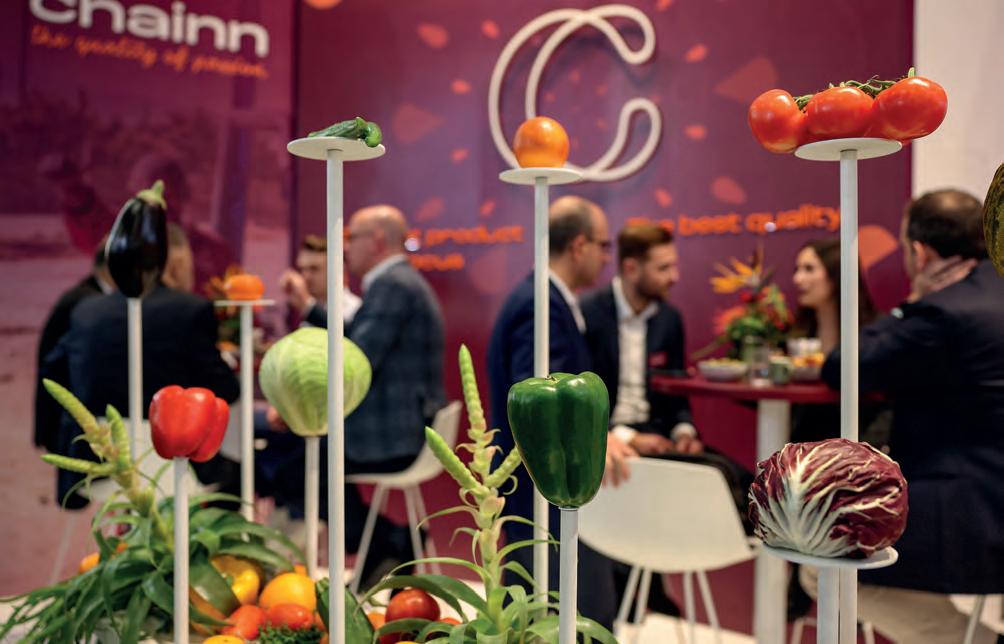
From 4 to 6 February 2026,
Berlin transforms into the
global home
of fresh produce as FRUIT LOGISTICA ignites the industry with groundbreaking innovation, energising connections, and bold ideas shaping its future.
the entire value chain: Fresh Produce, Machinery & Technology and Logistics. In Fresh Produce, trade visitors can explore the global marketplace for fruit and vegetables, discover emerging varieties, gain insights into shifting supply landscapes and meet buyers and retailers from around the world.
In the Machinery & Technology segment, they enter a world where technology becomes tangible, with AIdriven cultivation systems, precision irrigation, advanced grading lines and autonomous harvesting robots demonstrating how efficiency and sustainability can grow hand in hand. In the Logistics segment, trade visitors experience the delicate art of moving
freshness across the globe, discovering next-generation cold chain systems, robotics, drones, port solutions and digital supply-chain platforms that combine speed, safety and sustainability.
The Startup World forms a vibrant ecosystem of ideas and ambition, where young companies introduce bold technologies for agriculture, logistics, vertical farming and datadriven production. Industry veterans stop by, ask questions, challenge and inspire. In this environment, the future often begins with a single meaningful conversation.
On the Insights Stage, exhibitors explain the stories behind their technologies, highlight the problems they solve and give trade visitors a direct look at how ideas turn into practical solutions. Across the Expert Forums, a landscape of knowledge unfolds through six stages: the Fresh Produce Forum, Farming Forward, the Logistics Hub, the Future Lab, the Insights Stage and the Podcast Studio. More than 200 experts present over 100 sessions covering breeding innovations, retail marketing, greenhouse automation, artificial intelligence, vertical farming, climate resilience and the logistics of the future. Each talk opens up a new perspective.
Along the Organic Route, a clearly marked virtual path guides trade visitors to more than 200 exhibitors with certified organic products. It tells a story of responsibility, transparency and the growing global movement toward sustainable value chains.
In the New Product Showcase, trade visitors encounter a gallery of what comes next. Whether it is a new variety, a packaging concept or a technological solution, each exhibit represents a step forward and an idea made tangible.
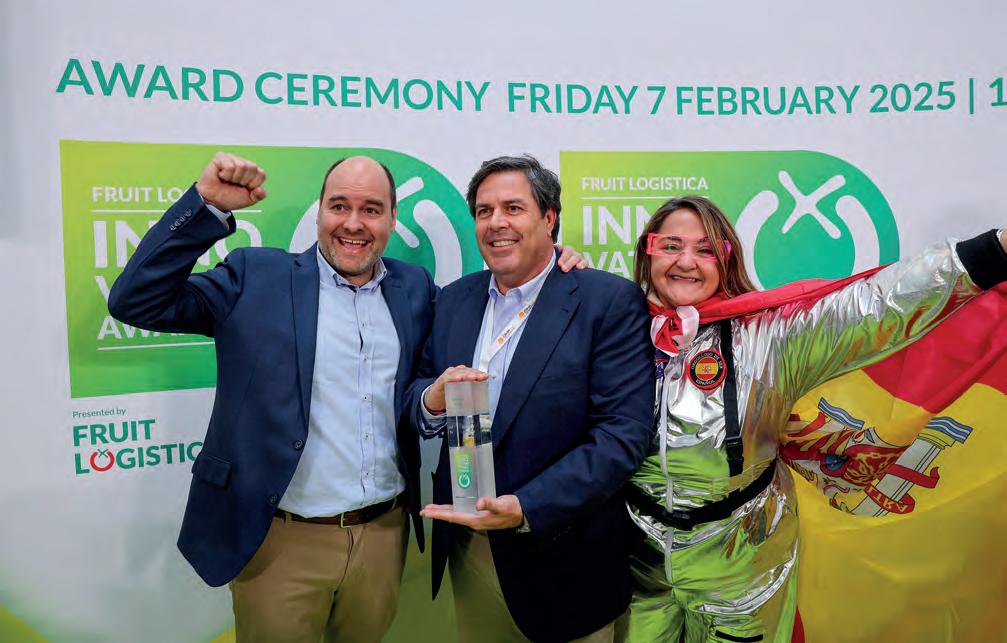
The 20th FRUIT LOGISTICA Innovation Award marks a milestone moment. In 2026, the industry’s most prestigious award celebrates its twentieth anniversary. Throughout the halls, dedicated displays present the finalists, and on 6 February the award ceremony becomes an emotional highlight as visionary teams step into the spotlight and their achievements are celebrated across the global industry.
Friday, 6 February 2026, isn’t just the last day of the trade show – it’s Fruitful
Friday, a vibrant celebration packed with business, science, and entertainment. From the Mascot Race at the South Entrance to the inspiring FLIA Award Ceremony and the forwardlooking FRUTIC Science Symposium organized in cooperation with the Leibniz Institute for Agricultural Engineering and Bioeconomy (ATB), the day brings together innovation, industry expertise, and fresh energy.
FRUIT LOGISTICA delivers value to the industry not only during the three days of the trade show, but also throughout the year with its recently published Trend Report and the European Statistics Handbook, which will be published shortly before FRUIT LOGISTICA 2026, providing essential guidance for the global fresh produce sector.
The FRUIT LOGISTICA Trend Report 2026 reveals how artificial intelligence and automation are fundamentally reshaping global fruit and vegetable supply chains. Today, AI technologies already enhance key areas such as production efficiency, quality control, logistics, and retail forecasting. Industry experts surveyed for the report highlight the rapid adoption of AI-driven quality grading, predictive crop modelling, and logistics optimisation. They also identify significant future potential in fully autonomous harvesting, non-destructive quality assessment, and intelligent cold-chain management – advancements that are set to redefine efficiency, resilience, and sustainability across the global fresh produce sector.
www.fruitlogistica.com








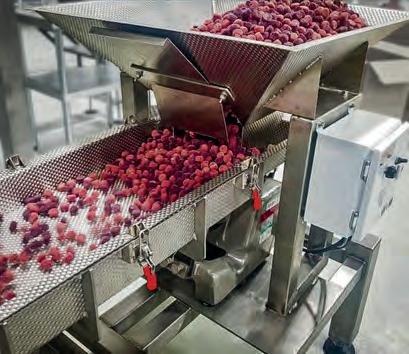
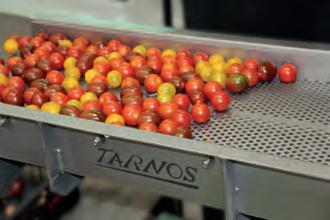
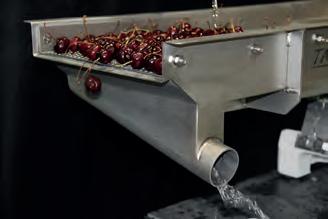
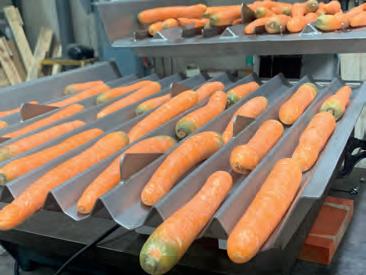
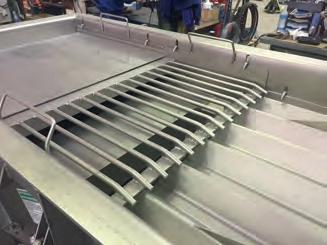
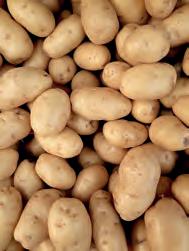
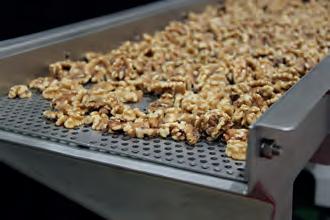
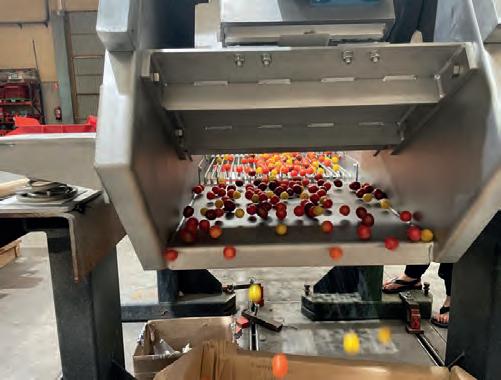
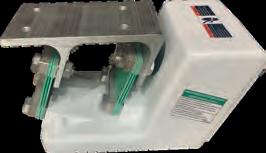
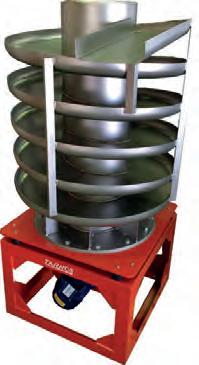
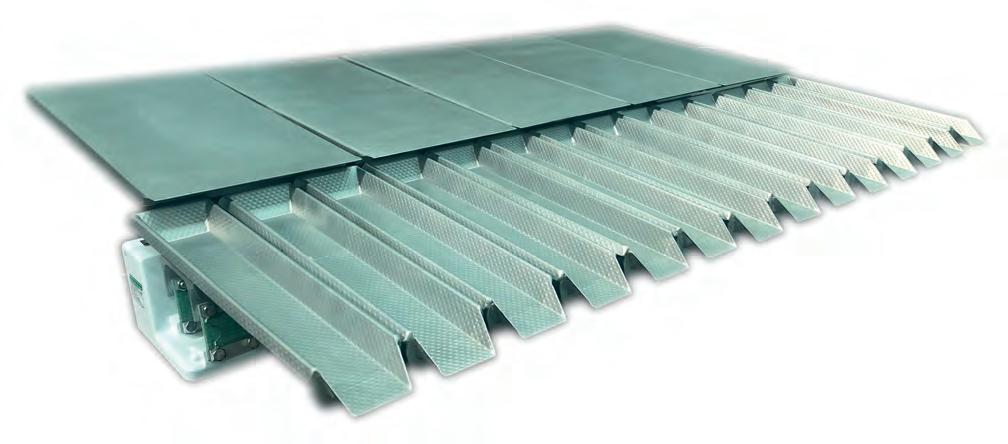
In an increasingly demanding fresh produce market, operational efficiency and product care make the difference. Tarnos electromagnetic feeders have become a key solution for companies looking to optimize their production lines, reduce losses, and ensure a continuous and uniform product flow.
Technical Features
• Gentle product handling
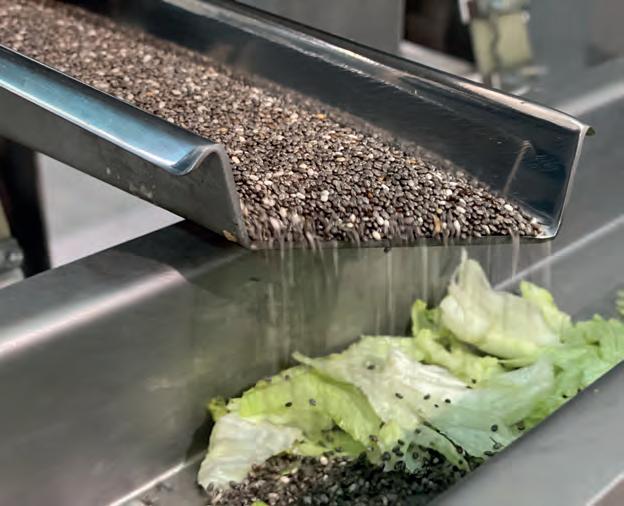
Controlled vibration allows fruits and vegetables to be conveyed without impacts or aggressive friction, significantly reducing damage, bruising, and waste. Ideal for delicate, high-value products.
• Precise and consistent flow
They ensure uniform feeding to weighers, graders, or packaging

machines, improving process stability and preventing blockages or interruptions.
• Increased line performance
By maintaining a steady product flow, overall line productivity is increased, maximizing the efficiency of downstream equipment.
• High versatility
A single feeder can handle different types and sizes of fruits and vegetables, enabling quick changeovers between products and seasons.
• Reduced operating costs
•Minimal maintenance requirements
•Low energy consumption
•Less product rejection
• Easy integration
Electromagnetic feeders can be easily integrated into existing lines and connected to vision systems, automatic weighers, and packaging machines.
Practical Applications in Fresh Produce Facilities
• Feeding grading and sorting systems
Ensure orderly and continuous prod-
uct input to grading machines by weight, size, or colour, improving sorting accuracy.
• Controlled feeding to automatic weighers
Provide a stable and regulated product flow, improving weighing accuracy and reducing rework.
• Packaging and packing lines
Deliver a consistent supply of product to packaging machines, flow-pack systems, and automated packing lines.
• Hygienic and Sanitary Design
Stainless steel channels and opentrough designs ensure easy cleaning and inspection, fully complying with the strict food safety and hygiene standards.
• Handling delicate produce
Especially suitable for: tomatoes, grapes, cherries, strawberries, fruits of the forest, dried fruits, nuts, etc., where appearance and quality are critical for market value.
• Automation of existing lines
Ideal for upgrading current facilities without the need for major layout modifications.
Tarnos electromagnetic feeders are not just a technical component, but a commercial asset that helps companies:
• Improve final product quality
• Meet the standards of large retailers and export markets
• Reduce hidden costs caused by damage and downtime
• Increase overall competitiveness
Tarnos Equipment offers reliable, high-performance solutions designed
to meet the demanding needs of the fruit and vegetable sector and the food industry as a whole. Backed by more than 70 years of experience in designing and manufacturing vibrating material handling equipment, and supported by the pioneering expertise of Syntron®, Tarnos brings proven know-how from a wide range of projects and industries, ensuring efficient, dependable solutions for even the most critical handling processes. Visit: www.tarnos.com
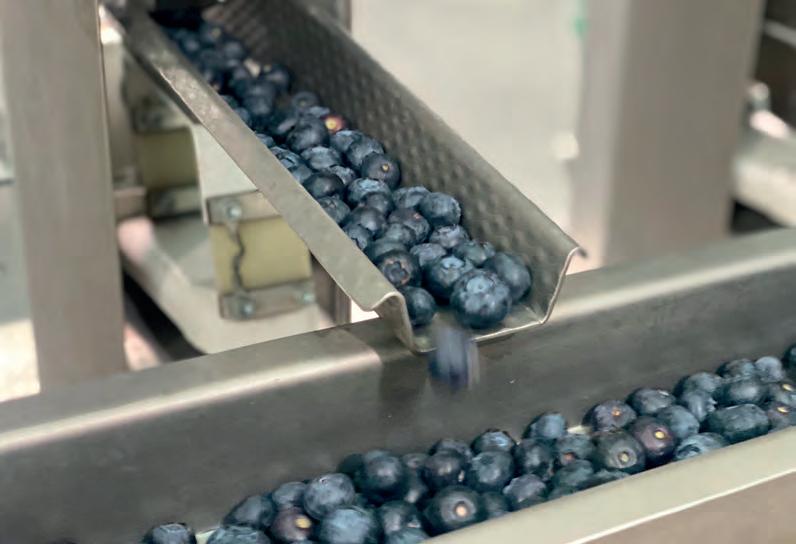
With the ever growing demand for ready-to-cook fruit and vegetables, businesses have started to review their processes for achieving greater efficiency and higher quality standards. PND, a leading manufacturer of fruit processing machinery, has invested in innovation and quality to develop new high-performance operating systems.
The company has developed a machine used exclusively for pumpkins, the vegetable most synonymous with
autumn, but not just in autumn. The AIRCUBE dicer, which processes 6 units per minute, is designed for semi-automatic cutting into cubes of various sizes, offering a robust and
precise solution. With its reinforced structure and cross-blade system, the machine guarantees a clean uniform cut, even on irregularly sized fruit.
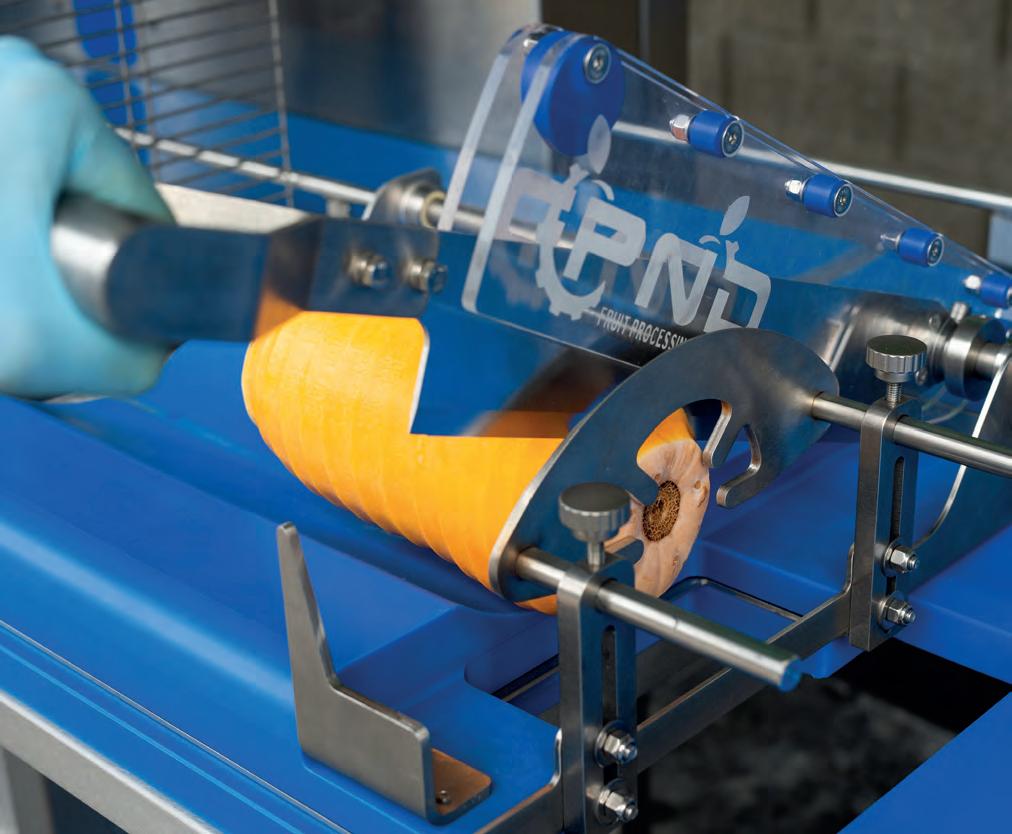
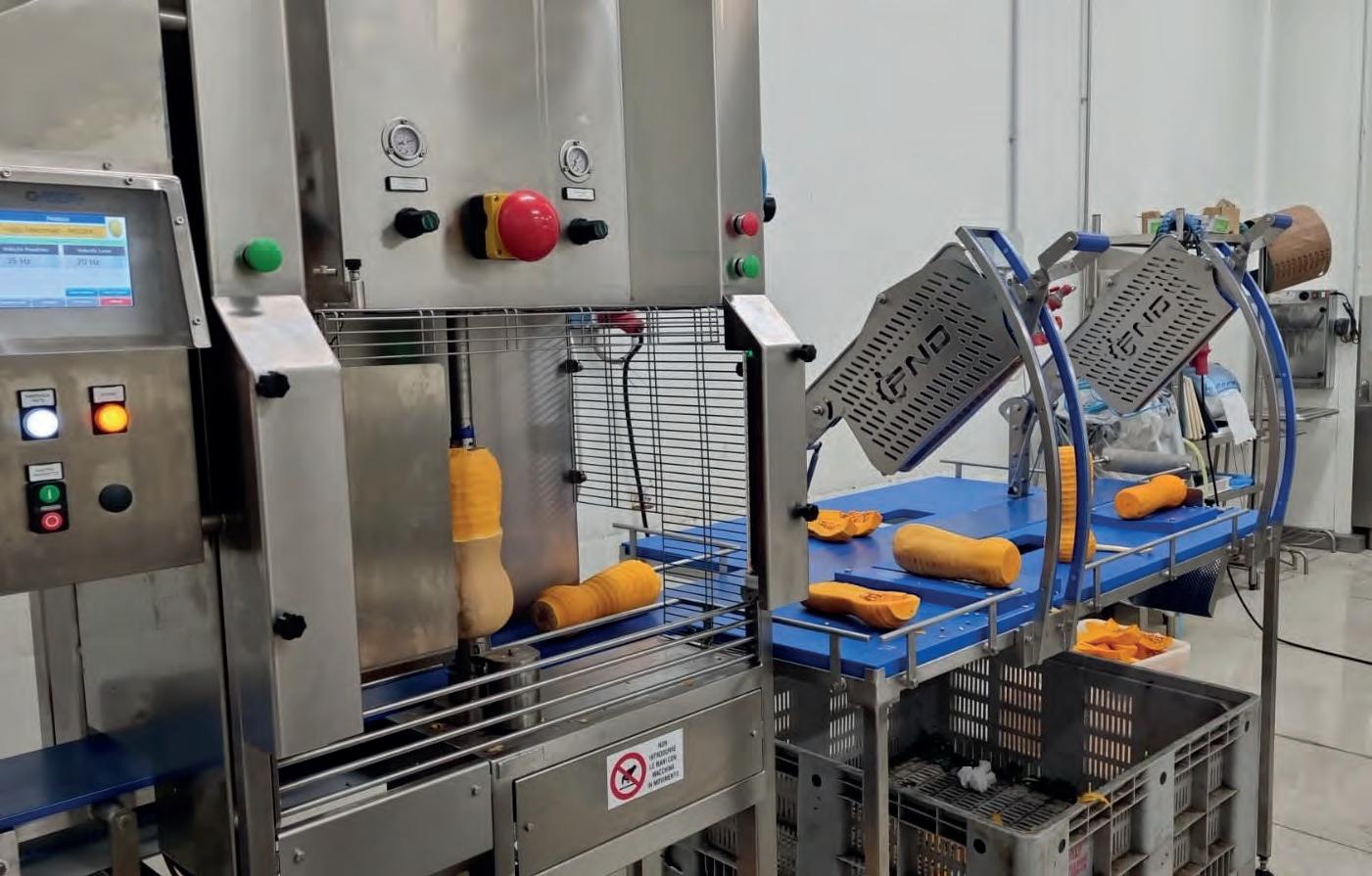
The operator manually loads the pumpkin into the dedicated housing, where the push mechanism guides the product through the cutting grid and turns it into chunks.
The machine is equipped with interchangeable blades, allowing the cube size to be changed according to production requirements, ready to be packaged or further processed.
This pumpkin chunker tackles one of the most complex problems in the industry: how to ensure uniform cutting of a vegetable with a hard skin, compact and fibrous flesh and often irregular and elongated dimensions.
The easy-to-clean and extremely compact machine measures less than one metre and is made entirely of AISI 304 stainless steel. All parts in contact with the product are certified for food use, ensuring proper safety and hygiene at every stage of the process.
In a sector that is increasingly concerned with optimising the use of
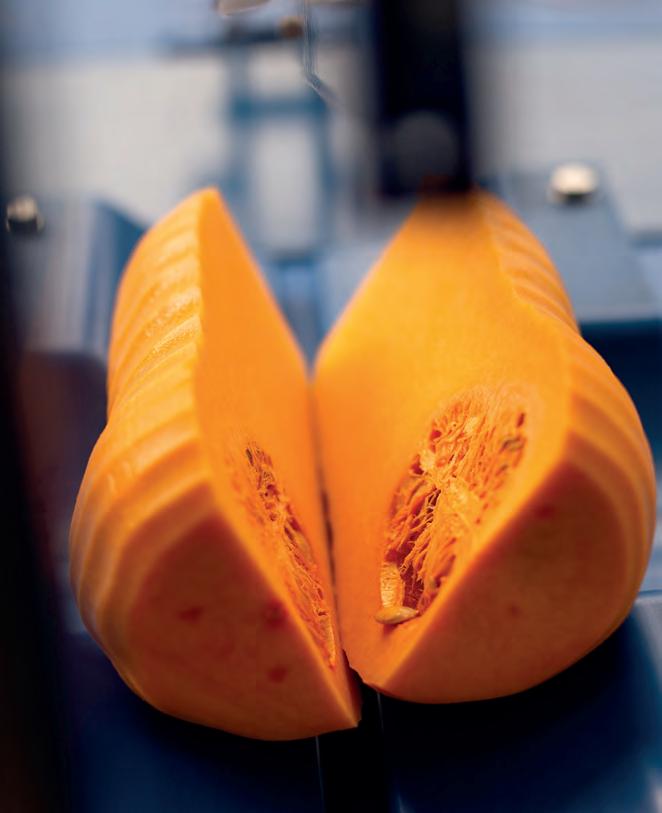
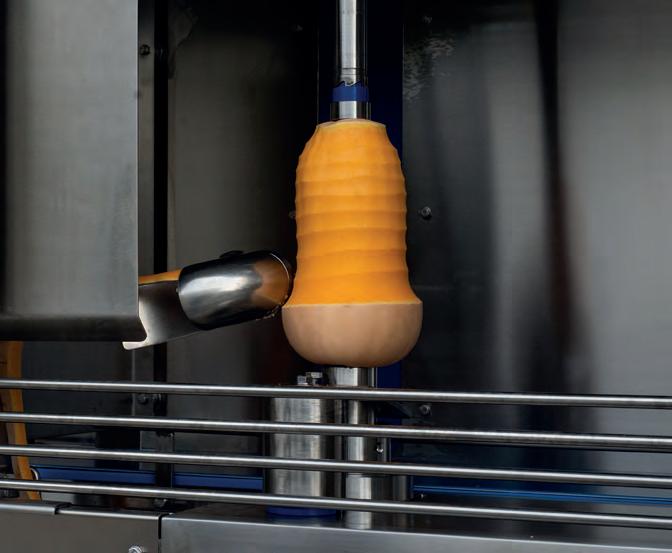
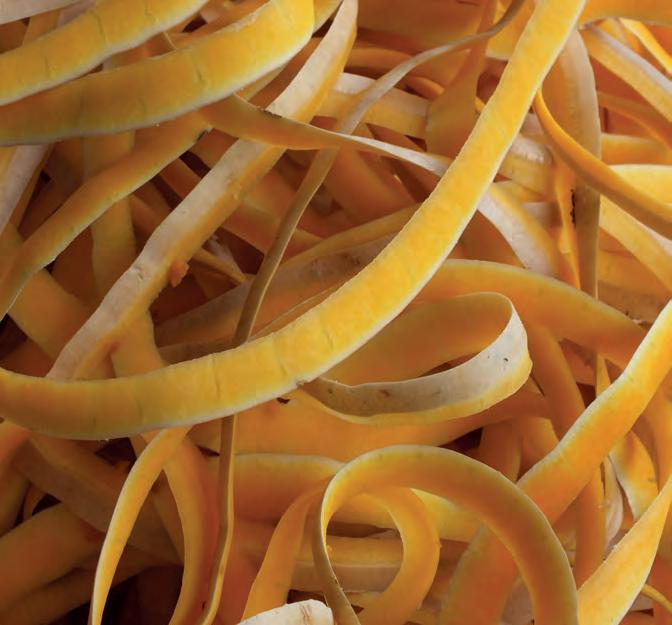
raw materials and reducing waste, the AIRCUBE chunker is an essential tool in improving productivity and increasing the level of line automation. It can be combined with the manually fed PL1DZ peeling machine, which carries out external peeling and processes 4 to 6 fruits per minute.
It has achieved strong sales in Europe, especially in Italy, France, Spain, Austria and Switzerland, as well as in the United States.
PND has built its reputation on a rare blend of technological expertise and genuine human attention—an ap-
proach that has made the company a reference point in the fruit-processing machinery sector. For more than 25 years, its growth has been guided by an unwavering commitment to listening.
Customer feedback is not treated as a formality but as a strategic asset: every insight, every suggestion, every challenge shared by clients becomes an opportunity to refine performance and design machines that respond precisely to real production needs.
This culture of attentive dialogue is embodied daily by PND’s team.
Their professionalism goes far beyond technical competence. It is expressed in the ability to understand the nuances of each customer’s workflow, to translate expectations into concrete solutions, and to accompany clients with clarity and reliability throughout the entire process.
Flexibility is another hallmark of the company: whether adapting a machine to a specific processing line or developing tailor‑made configurations, PND’s staff consistently demonstrate a pragmatic mindset that turns complexity into efficiency.
The result is a range of machines recognized worldwide as indispensable partners in supermarkets, restaurants, catering facilities, and industrial processing plants.
Technicians and operators appreciate not only the robustness and precision of PND’s technology, but also the company’s capacity to stand beside them with competence, responsiveness, and long-term vision. Choosing PND means relying on a partner that listens, understands, and delivers.
Explore the full range of solutions and discover upcoming trade shows at www.pndsrl.it. . For further information: info@pndsrl.it
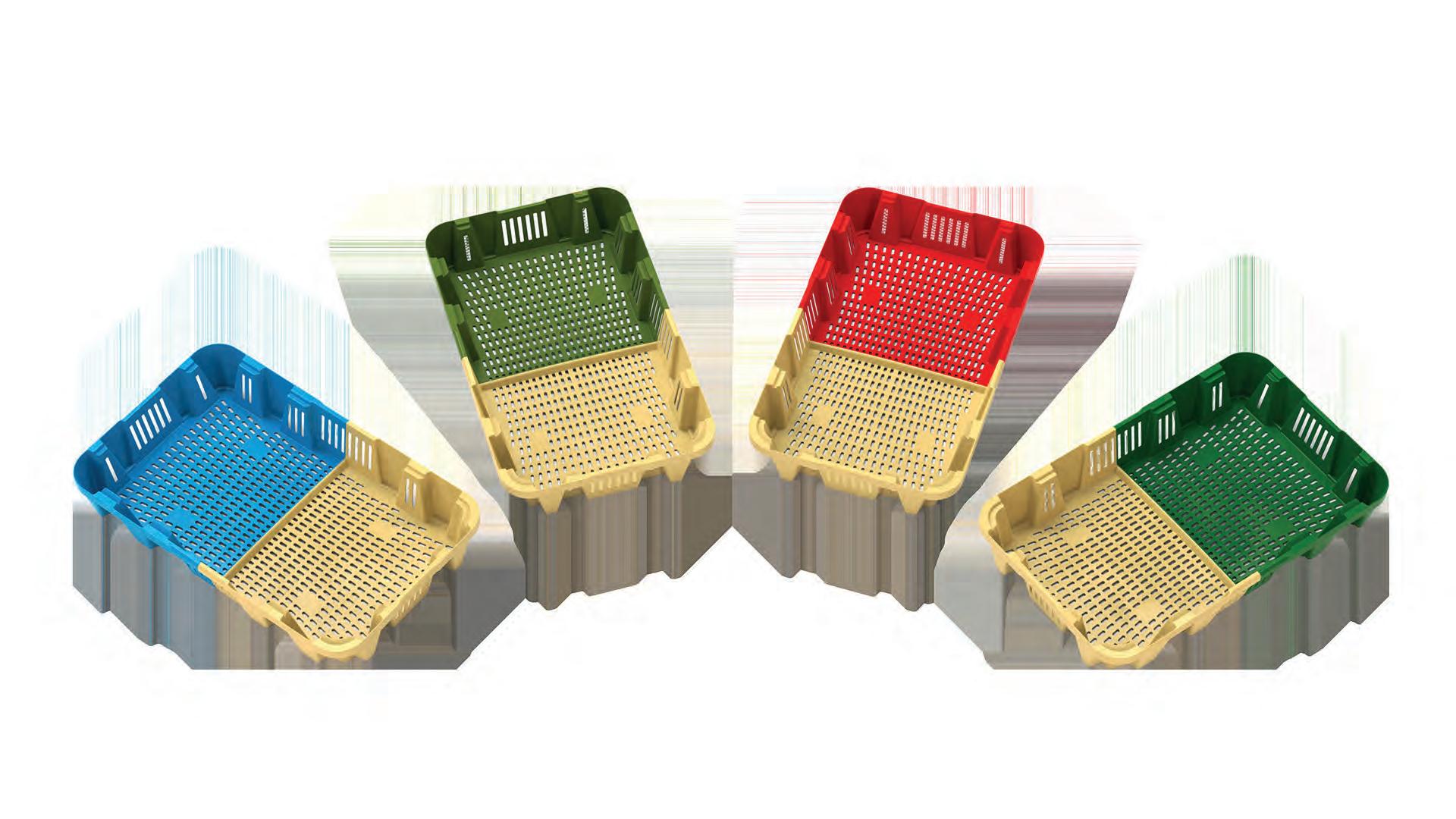

From the first idea to a fully engineered product in just nine months. Our Soft Fruit Tray is a true example of speed, focus and innovation. Designed to protect delicate fruit while optimizing handling and logistics, this tray combines smart ventilation, stackability and durability. A solution built in close collaboration with the market, ready for high performance.
Flowers are extremely delicate and require careful handling to preserve their freshness and quality. Transport conditions, especially temperature and protection, play a crucial role in extending their lifespan. Back in the 1980s, plastic flower crates were already in use, but over time that design became
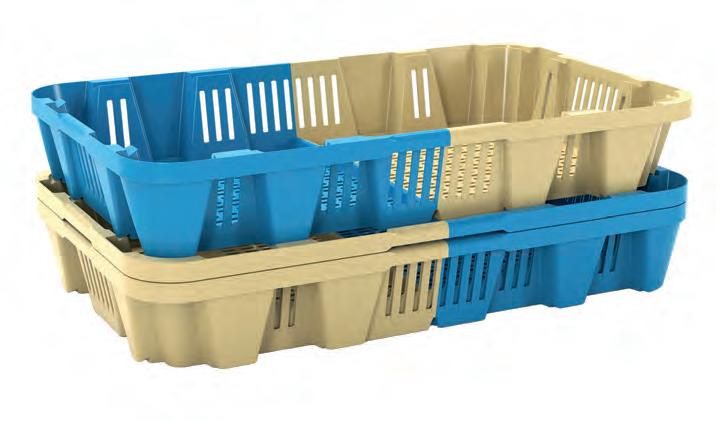
outdated and unsuitable for modern logistics. The sector then shifted back to cardboard boxes, creating large amounts of waste and inefficiency. It was clear that the plastic concept needed to be rethought. Together with Argos Packaging & Protection, we re-
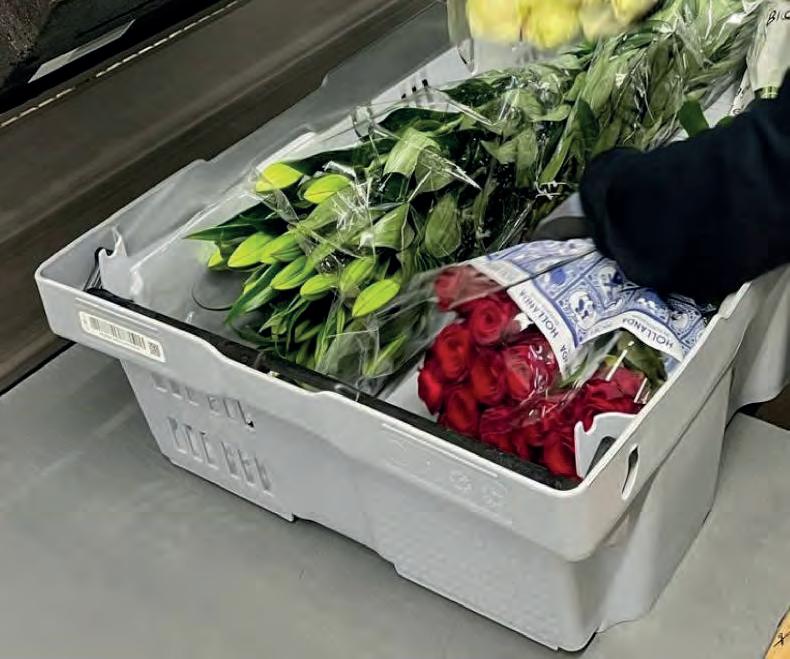
designed the Flower Crate. The result is a durable, efficient and sustainable solution tailored to today’s flower logistics. This innovation was recently crowned winner of the Rethink Award 2025, confirming its impact on both the industry and the environment.
Our reusable plastic containers are specially designed for the transport and storage of fruit and vegetables.
They comply with Euro standards for maximum pallet and truck compatibility and offer maximum hygiene, optimum cleanability, space-saving transport and storage solutions and perfect traceability (RFID & barcode).
Our top product for the fruit & vegetables industry. The Foldaway crate is engineered to meet the highest standards of strength and safety. With an incredibly low stacking height of just 30mm, it’s designed to be inter-stackable for easy storage.
Moreover it’s one of the lightest folding crates on the market, offering the best
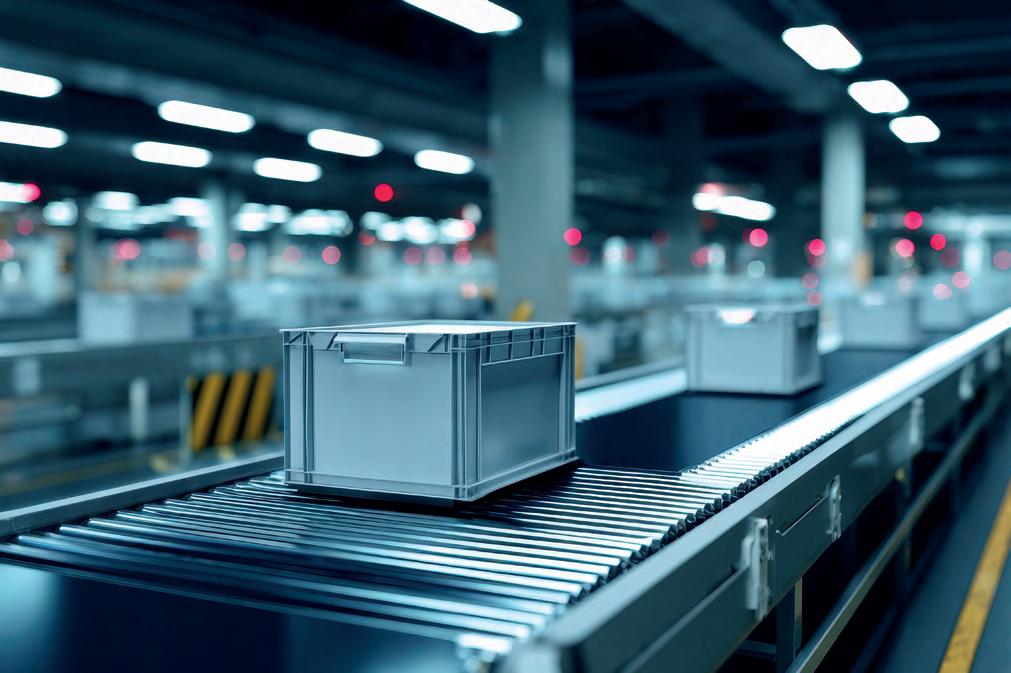
weight-to-internal volume ratio. Perfect for efficient handling and space-saving solutions, without compromising on strength or performance.
Warehouse automation & intralogistics
Efficient warehouse operations are critical in today’s fast-paced, demanddriven market.
From warehouse automation and material handling to intralogistics, Didak Injection delivers solutions that drive efficiency, reduce costs, and enhance accuracy.
Ready to transform your operations within fruit and vegetables? As supply chain demands evolve, the need for efficient, flexible, and sustainable warehouses will only grow.
Whether you’re looking to automate, optimize, or completely transform your warehouse operations, Didak Injection is here to help.
· Efficient production & liability: No surprises, just consistent quality and on-time delivery.
· Innovation in plastics: We continue to invest in new techniques.
· Customer-focused (custom) solutions: Targeted solutions that match your needs.
· Sustainability: Materials & processes are designed for long lifespan and minimal impact.
· Long-term partnership: We think together with you.
What we do, we do for you. Made to last.
Would you like more information?
Curious how our smart plastic solutions can improve your logistics, sustainability and efficiency? From fruit and vegetables to flowers and warehouse automation, we’re happy to think along with you. Let’s explore the right solution together.
Feel free to contact us at sales@didak.eu or visit us at Fruit Logistica: Hall 27, C-40 www.didak.eu

Miruku has developed a system allowing plants to produce dairy proteins and fats, a concept that might sound like science fiction but is rapidly becoming a reality. This innovative technology, known as the dairy seed system™, positions miruku an impressive three to four years ahead of its competitors in the food tech sector.
In an era where sustainability is more than a buzzword, New Zealandbased food tech company, Miruku, is literally turning a seed into a cows udder using molecular technology . Miruku has developed a system allowing plants to produce dairy proteins and fats, a concept that might sound like science fiction but is rapidly becoming a reality. This innovative
technology, known as the Dairy Seed System™, positions Miruku an impressive three to four years ahead of its competitors in the food tech sector.
Traditionally, dairy products come from animals, but Miruku’s approach turns plants into mini factories for dairy production. By programming plant cells, these “dairy seeds” can grow

into crops yielding essential dairy ingredients like proteins, fats, and sugars. This method not only promises a more sustainable and climate-resilient alternative to conventional dairy farming but also addresses pressing issues of food security and nutrition.
Miruku’s CEO, Amos Palfreyman, has been quoted as saying the company’s committed to navigating the challenges of climate change and its impact on traditional dairy farming. By focusing on both proteins and fats within the same plant, and selecting the climate-resilient safflower as its primary crop, Miruku is leading the charge in creating a sustainable future for dairy production.
proteins. This breakthrough allows for a more efficient use of the seed, producing a variety of ingredients for the food and beverage industry.
Miruku’s recent achievements include key proof-of-concept milestones demonstrating the viability of the Dairy Seed System™. With a tripled workforce and partnerships for co-development opportunities, Miruku is rapidly advancing towards market readiness. The company’s expansion includes entering markets in Israel and Australia, with Australia serving as the initial launchpad for its innovative products.
As Miruku continues to grow, its focus remains on bringing its dairyproducing plants to market, offering a sustainable, eco-friendly alternative to traditional dairy production that could change the way we think about dairy forever.
For more information: www.miruku.com
The company’s research has expanded to enhance the interaction between dairy casein and native plant
A recent new round of funding will further enable Miruku to advance its crop development efforts, including field trials in Australia in partnership with CSIRO.

farming. By focusing on both proteins and fats within the same plant, and selecting the climate-resilient safflower as its primary crop, Miruku is leading the charge in creating a sustainable future for dairy production.
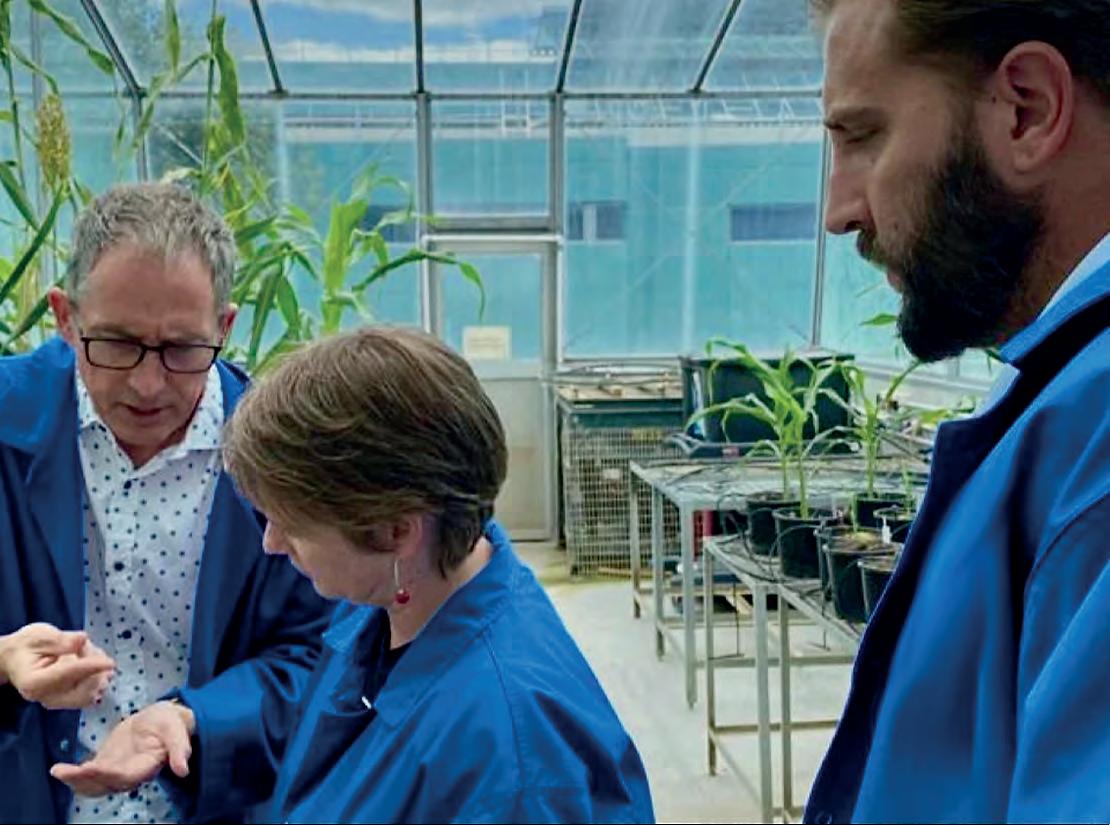
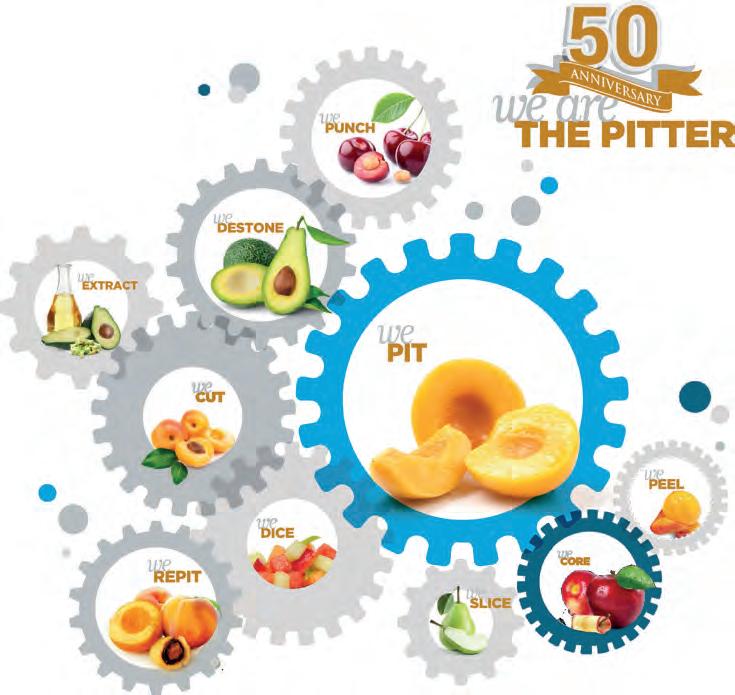
OMIP SRL, founded in 1971, is targeted at all the canning companies which need to have a more reliable equipment, built with quality materials and great robustness, where the cost of production, as well as that of the workforce, is minimized.
For this reason, it is focused on the design and construction of machinery characterized by simplicity of operation, versatility and reduction of costs.
“Thanks to research, development and innovation, we have been able to introduce, on the world market, the most modern technologies in the field of pitting and hence becoming a global reference for fruit processing” said the company managers Francesco Pannullo and Alfonso Califano.
“In addition to continuously improving the products already on the market, our objective of expanding our manufacturing horizons through the design of machinery capable of transforming fruits and vegetables other than those that it is already able to process – added sales manager Timothy Ahiagba - Examples of such achievement include the apricot pitters mod. KA3 and KA6, the peach Repitter and the Avocado Pitter mod. KAV2.”
Avocado Pitter mod. KAV2
“The KAV2 pre-cuts the Avocado separating it into two halves and thereby facilitating its pitting – continued the
managers - The machine, available on the market over 8 years, is suitable to pit the avocado fruit even if it is not perfectly graded.”
All parts having contact with the fruit are for alimentary and hygienic purposes and the structure is completely made of stainless steel.
The avocados, appropriately unloaded into the Feeder, are discharged into the channels of the Orientation station that orientates the
fruits and positions them at the ideal cut through suitable and particular devices.
The flexibility of the orientation elements allow the machine to automatically compensate for the differences in the fruits that are not perfectly graded.

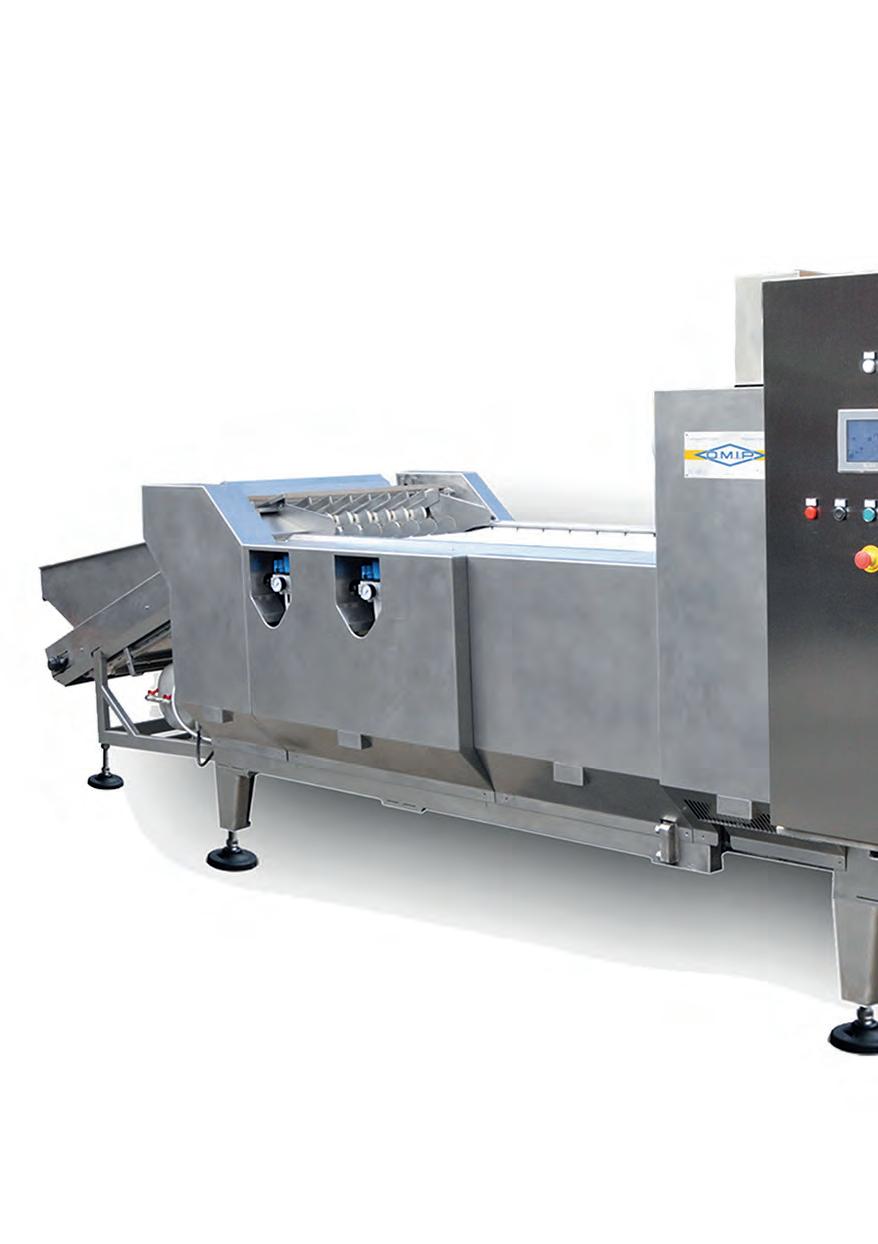

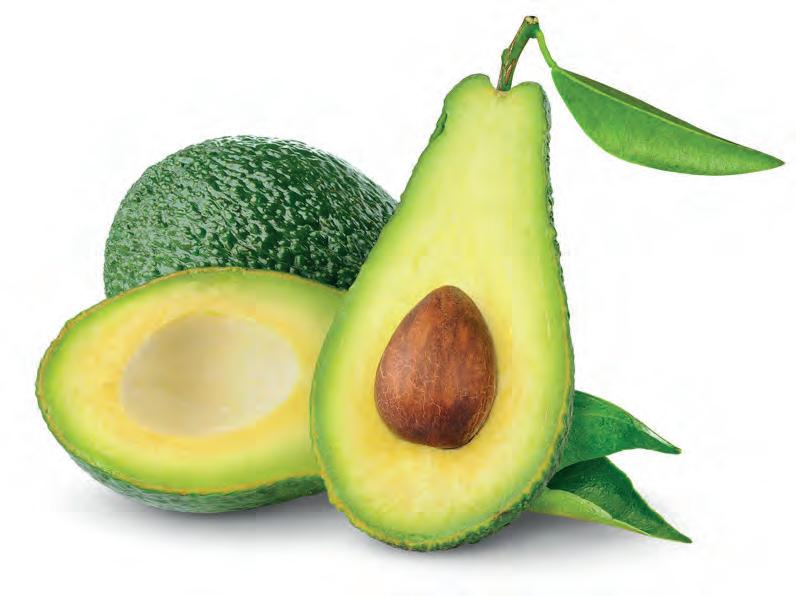
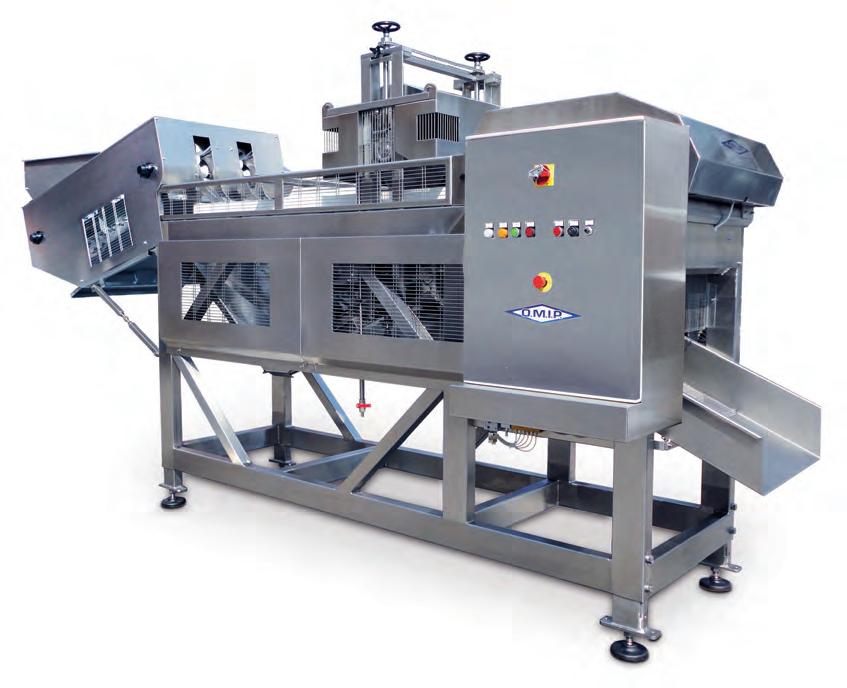
The Cutting Station is made up of three particular circular blades. “The innovated mechanisms have, almost all, eliminated the machine lubrication and have hence reduced operation costs to their minimum.”
OMIP’s organizational skills and the quality of their products have enabled them to establish themselves on all markets: from the Italian to European, from the South American and Californian ones to those of South Africa and Australia up to the Asian and New Zealand markets.
Today, the use of the latest mechatronic applications, places OMIP a step ahead, hence revolutionizing once again, the sector of fruit pitting.
www.omip.net
The West Frisian cauliflower cultivation and trading company P.N. Slagter, based in Andijk, has been working with a fully automatic Sorma strapping machine since this season.
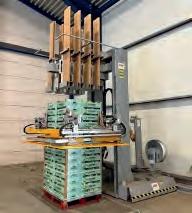
The Sorma RM8 strapping machine was custom-built in collaboration with machine manufacturer Sorma Benelux to facilitate the preparation of pallets for shipment in the warehouse and to make the process more efficient. During the season, large volumes of packaged cauliflowers arrive in boxes or crates at the warehouse. Previously, most pallets had to be strapped manually. The pallets that required corner slats were particularly time-consuming. Now, the pallets coming in
from the fields can be placed directly into the mobile strapping machine.
The five pallet spaces and corner slat storage areas are ideal for this way of working. The machine neatly finishes all pallets, using the desired programme that can be specified for each pallet. After that, it is simply a matter of neatly placing the pallets, ready for shipment, in the cold store.
‘We should have had this automation in place years ago,’ says Koos Slagter, one of the owners of the family business of the same name. Together with two brothers and two cousins, the third generation has now taken over the reins. ‘In recent years, we have seen an increasing demand for well-strapped, sturdy pallets. With the strapping tool we used before,
strapping simply took too long. We are very pleased with the enormous time savings we have achieved by installing the Sorma automatic strapping machine.’
Slagter found the contact with Sorma Benelux to be very pleasant. They thought along with us about all our wishes and the intended way of working. This resulted in a solution that really adds value.
‘Of course, we needed some help when we started using the machine. Fortunately, we were able to ask technical questions to the service helpdesk. This way, we found that we could solve many issues ourselves and really get to know the machine well. And when we did need a technician, he was on site quickly,’ says Koos. All in all, P.N. Slagter looks back with satisfaction on the Dutch cauliflower season, which is now almost over. The quality of the product was good. However, the high availability in Europe pushed down the price of the product. Slagter will soon switch back to Spanish cauliflowers. This will be done in collaboration with their regular partners, so that they can supply their joint customers all year round. In addition, to make good use of the cold stores during the winter months, Slagter stores Lelybollen for third parties. These will all be removed in good time, just before the new Dutch cauliflower season starts again and the cold stores are needed for that.
www.sormagroup.com
Lund-based Saveggy’s latest funding round of €1.76M was led by Unconventional Ventures, with additional participation from LRF Ventures, Almi Invest GreenTech, and angel investors.
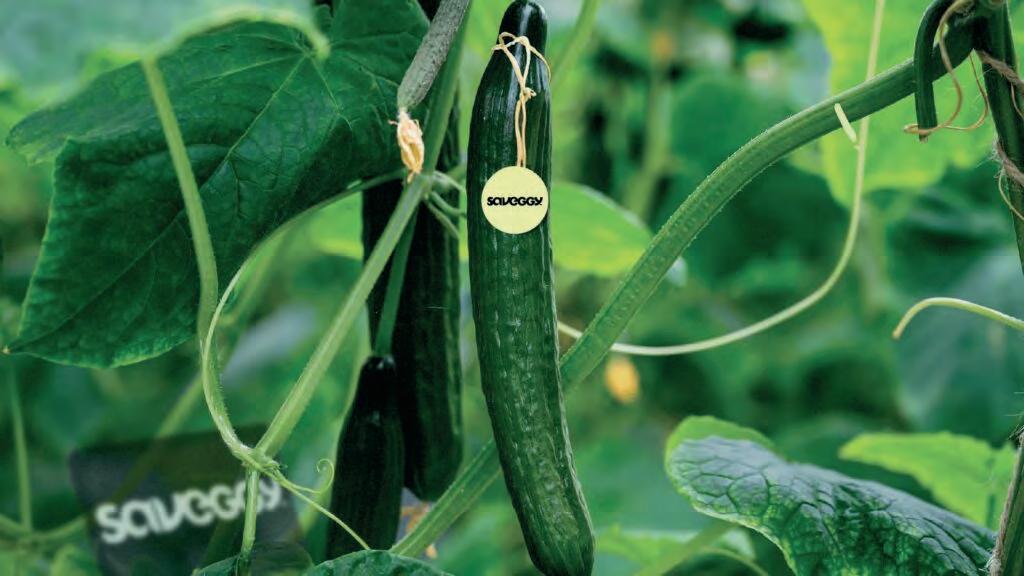
With the twin goal of reducing plastic pollution and food waste, Saveggy will use the funds to produce its edible plant-based coating for fruits and vegetables at an industrial scale. Its first product is called SaveCucumber, which features a thin, invisible layer made from oats and rapeseed oil.
“We believe that freshness, the health of our planet, and the well-being of people should always remain uncompromised,” said co-founder and CEO Arash Fayyazi. “With this financing round, we will launch at industrial scale our first product.”

founder Vahid Sohrabpour (who is the chief innovation officer) was a major attraction for its lead investor, with Unconventional Ventures general partner Thea Messel saying: “Our investment in Saveggy was driven by the impressive credentials and substantial expertise of its founders. Their innovative technology tackles the significant challenges our food systems face.”
RAISES €1.76M FOR
The pedigree of Fayyazi and his co-
Fayyazi and Sohrabpour launched Saveggy in 2020, describing it as a modular, customisable protection technology that can meet the requirements of different fruits and vegetables. Ac-
cording to the UN FAO, 45% of the world’s fruits and vegetables end up going to waste. Globally, we bin a billion household meals every single day, despite 780 million people (just under 10% of the population) facing hunger. According to the UNEP, food waste contributes to 8-10% of global emissions. Making significant reductions in the amount of food we throw away is crucial to achieving climate and sustainable development goals relating to global heating, food security and biodiversity protection.
Meanwhile, plastic pollution – which relies on petroleum-based products –contributes to 3% of all greenhouse SAVEGGY RAISES €1.76m
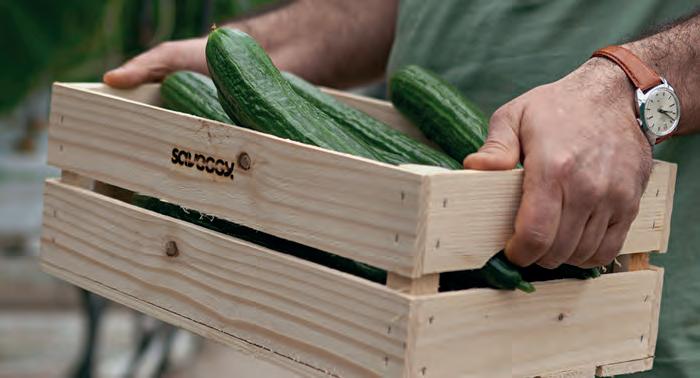
Swedish packaging solutions startup saveggy has raised sek 20m (€1.76m) to scale up its plastic-free, plant-based coating for fruits and vegetables, starting with cucumbers.
gas emissions (which is higher than the emissions impact of the aviation industry). Single-use plastics like those used in food packaging are devastating to the planet, especially marine life and aquatic systems, which end up back in our food system and present health threats to humans as well.
Plastic packaging is a massive problem for the food industry’s emissions (which account for a third of all emissions). In the US, for example, 63% of all municipal solid waste generated in 2014 comprised packaging materials for food and other purposes – only 35% was recycled or composted. But plastics offer a few key advantages for companies: they’re cheap to produce, they prevent water loss, they keep bacteria out, and they prolong the shelf life of produce. Clearly, though, better solutions are needed.
Saveggy’s offering isn’t a like-for-like substitute for plastic – it’s an altogether packaging-free alternative. It will benefit fruits or vegetables that have edible peels, adding a thin layer of its zero-additive plant-based coating that preserves freshness and shelf life.
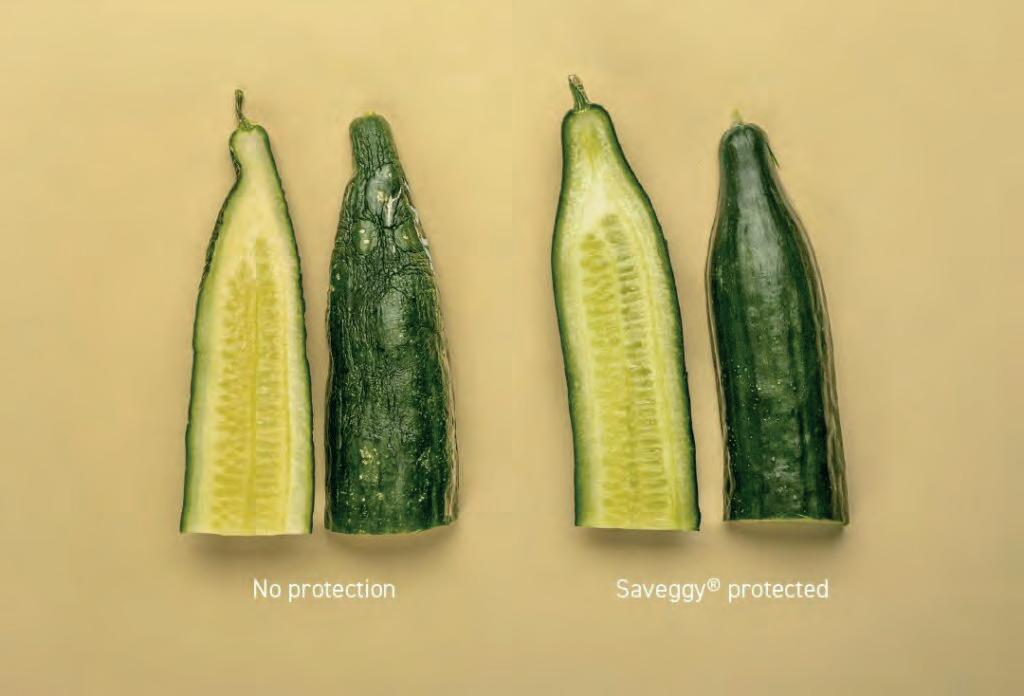
Cucumbers, for example, which are 95% water and where moisture retention is crucial for freshness – after all, nobody likes a limp, shrivelled cucumber. Saveggy’s SaveCucumber innovation acts as a protective shield, preserves the water content, and slows down oxidation, extending the shelf life of an uncoated, unpackaged cucumber by three to four times.
Impressing legislators and investors alike
“We are excited and proud to support the team at Saveggy and their in-
novation in reducing food waste, advancing sustainable agriculture, and proactively complying with upcoming plastic waste regulations,” said LRF Ventures investment director Martin Alexandersson.
In March, the EU agreed to ban single-use plastics for fresh fruit and vegetable packaging (among other applications), in response to the rise in packaging waste in the region. This means all packaging in the bloc must be recyclable by the end of the decade, and starting next year, recyclable packaging will need to be recycled at scale – in 2020, only 38% of plastic packaging waste in the EU ended up being recycled.
Such regulations will raise the stock of startups like Saveggy, which claims to be the only plastic packaging alterna-
tive offering the same shelf life extension, and the only company to be given the all-clear from the EU for edible fruit and produce coatings. And the bloc has recognised its potential too, with the European Research Agency and the European Commission providing it with a €440,000 grant under the Eurostars programme last year.
to meet the highest standards,” said Messel. “This unwavering commitment to innovation and sustainability aligns perfectly with our mission as impact investors and made our decision to partner with them clear.”
Saveggy is testing its products with partners, and will enter a market populated by the likes of industr y leader
Apeel (US), Sufresca (Israel), PolyNatural’s Shel-Life (Chile) and Liquidseal (Netherlands), all of which are making plant-based coatings for fruits and vegetables. Boston-based Foodberry (formerly Incredible Foods), meanwhile, is reverse-engineering fruit skins to make edible packaging for snacks.
www.saveggy.com
For its SaveCucumber product, cucumbers are harvested, washed and dried, before being coated with the invisible layer. The company is also working on similar coatings for other produce like bananas, bell peppers and aubergines. Its investors will now look to leverage their supply chain networks to extend Saveggy’s presence to more distributors.
Killing two birds with one coat
“We were particularly impressed by the founders’ perseverance, having refined their formula multiple times
Ventures general partner Thea Messel saying: “Our investment in Saveggy was driven by the impressive credentials and substantial expertise of its founders. Their innovative technology tackles the significant challenges our food systems
In today’s production world, being efficient is just as important as having a great product. Whether you’re running a juice business or any fruit-related operation, staying competitive means finding smarter, faster ways to get things done.
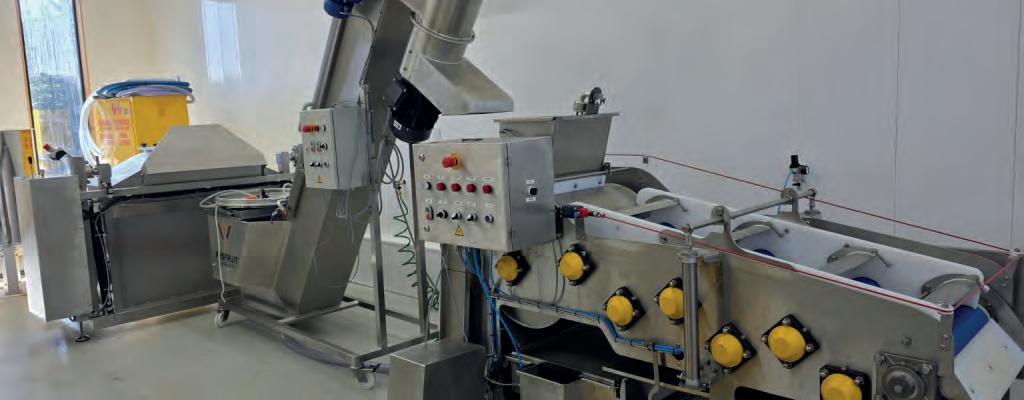
At ProFruit, we’ve seen that even small improvements can lead to big results. Often, it’s not about changing everything – it’s about spotting where time or resources are being wasted and making simple tweaks. If something’s done over and over again, chances are it can be streamlined or automated.

Don’t forget your team. A well-trained, motivated crew often sees problems (and solutions) before anyone else. When they understand the process, they help make it better.
Improving efficiency doesn’t happen all at once. It’s about small steps that build over time – and that’s what ProFruit Boost is all about: real tips that make a real difference.
Reliable, modern equipment also plays a huge role. Old or inefficient machines often lead to downtime and inconsistent results. Investing in the right tools pays off quickly – not just in output, but in peace of mind.
Even tracking a few basic numbers – like machine use, waste, or batch times – can reveal where things could run more smoothly. You don’t need complex systems to make smarter decisions.
And when things slow down? That’s the perfect time to train, test, clean, or improve.
www.pro-fruit.com
In the food industry, consistency is not just a matter of quality— it’s a matter of trust. Whether producing beverages, sauces, desserts, or fruit-based ingredients for industrial use, manufacturers must deliver the same product experience every time. However, when working with fruits, this task becomes particularly complex. Unlike synthetic additives or standardized raw materials, fruits are living ingredients, deeply influenced by nature. Their color, flavor, sugar content, and texture vary depending on the season, the soil, and the weather conditions during harvest. This natural variability is precisely what makes fruits so appealing to consumers—but it’s also what makes them challenging to manage on an industrial scale.
Consistency at Scale: How to Guarantee Stable
with nature, and nature doesn’t always behave predictably. A hot summer, a rainy harvest, or a variation in soil nutrients can all affect the composition of a fruit, altering its Brix level, acidity, or flavor intensity. For artisanal producers, these differences can be part of the charm. But for largescale manufacturers, where millions of units are produced each month, consistency becomes non-negotiable. Consumers expect the same taste, texture, and appearance in every product, regardless of the time of year or where the fruit was sourced. In short, you cannot control the fruit, but you must control the outcome.
ingredients can create noticeable changes in the final product. A slightly lower sugar content might alter sweetness perception in a juice; a thicker purée could affect the texture of a sauce; and a shift in natural pigments may lead to visible color variations in a finished product. Beyond consumer perception, such inconsistencies can disrupt production lines, affect packaging flow, or require unplanned adjustments during processing. The challenge, therefore, is to find the balance between nature’s variability and the industry’s need for precision.
Working with fruits means working
For global food manufacturers, delivering consistent quality is essential to building brand loyalty and maintaining production efficiency. Even small fluctuations in the composition of fruit
Since fruit quality cannot be standardized at the source, the key lies in adapting processes rather than fighting nature. At Solufruit, we understand that process control is the cornerstone of consistency. Our approach be-
In the food industry, consistency is not just amatter of quality it’sa matteroftrust.Whetherproducing beverages,sauces,desserts,or fruit-based ingredients for industrial use, manufacturers must deliver the same productexperience every time.However,when working with fruits,this task becomes particularly complex.Unlike synthetic additives orstandardized rawmaterials, fruits are living ingredients, deeply influenced bynature.Theircolor,flavor,sugarcontent,and texture varydepending on th e season,the soil,and the weatherconditions during harvest.This naturalvariability is precisely whatmakes fruits so appealing to consumers butit’s also whatmakes themchallenging to manage on an industrialscale.
gins with recipe flexibility: each formulation is designed with tolerance ranges for sugar and acidity, allowing natural variations in fruit inputs to be absorbed without compromising the end product. When raw materials differ, we make precise process adjustments—modifying temperature, blending ratios, or concentration parameters—to maintain stability across batches. Our sensory calibration team plays an essential role as well, tasting and measuring every lot before it reaches the market to ensure that the flavor, color, and texture align perfectly with specifications. This hands-on, data-driven process is how we transform nature’s variability into reliable, high-quality ingredients.
Achieving consistency at scale requires much more than machinery—it demands technical know-how and deep understanding of fruit behavior. Our R&D and production teams have developed specialized expertise in monitoring and adjusting for natural variability. We use analytical tools to track parameters such as Brix, pH, and viscosity, ensuring that every batch of fruit purée or juice concentrate meets the same sensory and functional standards. Long-term
relationships with trusted growers and suppliers also play a critical role. By maintaining strong partnerships across multiple sourcing regions, we reduce exposure to localized crop fluctuations and secure a steady supply of high-quality fruit year-round. This collaborative ecosystem allows us to deliver not only stable ingredients, but also the authentic taste of fruit that consumers value so deeply.
Ultimately, the secret to consistency in fruit processing is not to control the fruit itself, but to control the process around it. Each step—from raw material selection to processing and sensory evaluation—must be designed to anticipate and adapt to the natural variations inherent to fruit. At Solufruit, this philosophy guides our daily operations. By combining technical precision with flexibility and experience,
we help manufacturers guarantee stable quality, even when working with nature’s most unpredictable raw material. Fruits cannot be controlled—but product quality can.
For food manufacturers, guaranteeing consistency year-round is both a technical and strategic challenge. It requires flexibility, expertise, and close collaboration with suppliers and partners. At Solufruit, we are proud to support our clients by managing this natural complexity, ensuring that every batch of fruit ingredient delivers both stability and authenticity at scale. In doing so, we bridge the gap between nature and industry, allowing brands to deliver products that are reliable, natural, and true to their promise—from the first bite to the last.
www.solufruit.be
Provisur, the leading industrial food processing equipment manufacturer will present a range of unique machines at Fruit Logistica, the global fresh fruit trade show taking place from 4-6 February 2026, in Berlin, Germany. The Provisur booth will highlight the company’s modular production systems for fruit compote, mash and juice, showcasing cutting-edge refiners such as the, the STS®, Barracuda® and the Hoegger®
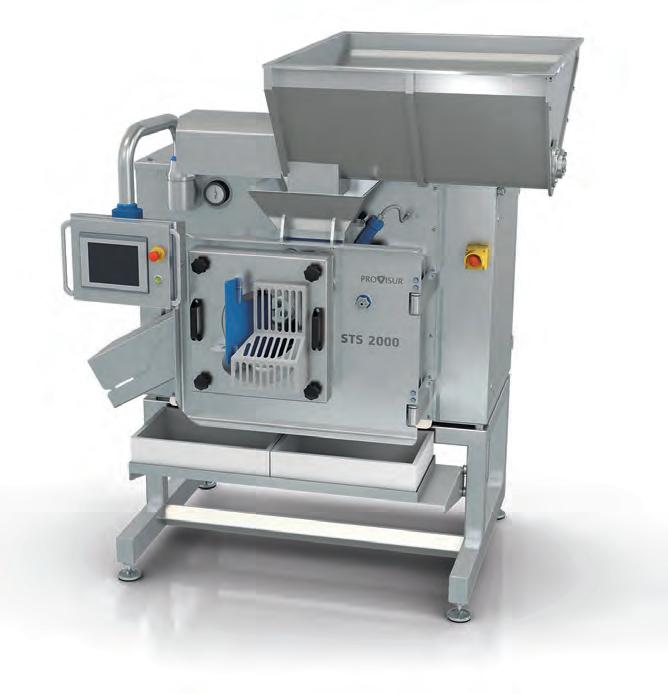
STS 800 / STS 2000 / STS 3000 – high throughput, easy maintenance
STS technologies are ideal for the creation of a wide range of jams, compotes and different types of fruit

and vegetable sauces and purees. The STS 2000 is a new refiner that enables higher throughput and quality control for many end products. After the operator introduces the product into the refiner, a flexible pressing belt pulls the product through and presses it against a perforated drum.
The soft parts then move through the holes of the drum as any hard components such as stones or skin are removed from the outside of the drum by a scraping knife and discarded into a waste chute.
The robust design and simple configuration of the equipment make maintenance and cleaning smooth and easy, ensuring hygienic operations.
The flexibility and modularity of Provisur systems ensures that all types of production can be catered for - from artisanal to industrial. For batches, Provisur has the Barracuda and STS systems which offer lower capacities at a lower machine price.
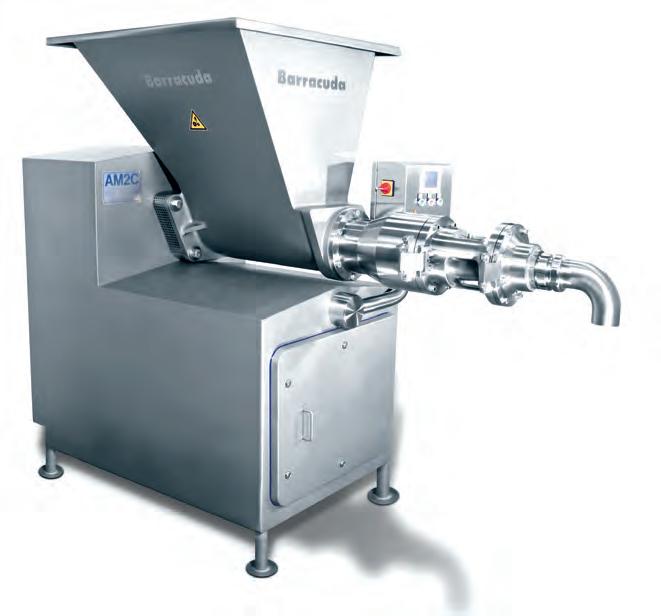
The Barracuda incorporates advanced refiner technology with a low RPM and a single screw feed system which gently handles raw material. It features a two-pallet vane pump and delivers high yield.
The machine has a capacity of 100 kg - 30 t per hour, refining from 360 microns to 10 mm. It processes fresh and cooked products from 0 to 90 °C, including products with a lot of fibers.
Pumping solutions are also offered. Provisur’s renowned customer service includes tests and demonstrations in the Provisur Innovation Center in Plailly, France, or at the customer’s facility.
Hoegger® PS2000 and PS4000: controlled pressure for delicate products Hoegger refiners deliver maximum yield and lower operating costs to create compote, mash out of soft and cooked products.
Already highly regarded worldwide in potato processing, Hoegger machines are also ideal for separating the hard and soft particles of fruit. They are able to remove pits, stones, skins, stems, black spots, and fibers, to generate superior fruit products.
What makes Hoegger technology so unique is the delta pressure system of sensors.
This enables very low pressure which is maintained at a constant level. In combination with complete control of the knife head rotation speed, this results in outstanding product quality. The automatic, recipe-controlled regulation of the machine leads to excellent consistency.
Furthermore, the machine is operator friendly, easy to clean and boasts very low operating costs to guarantee a fast return on investment.
For more information, visit Provisur or contact us at info@provisur.com. www.provisur.com
For over 30 years, ASTRA Inc. has been helping fruit processors work more efficiently through practical automation. Founded in Japan in 1991, ASTRA has grown into a global manufacturer of professional fruit peeling equipment, now supporting customers in more than 65 countries.
Today, ASTRA machines are used by fresh-cut fruit processors, food manufacturers producing dried fruits, jams, and desserts, as well as breweries and distilleries handling lemons. Regardless of scale or application, AS-

TRA focuses on the same priorities: reducing labor, improving yield, and delivering stable, consistent quality in daily production.
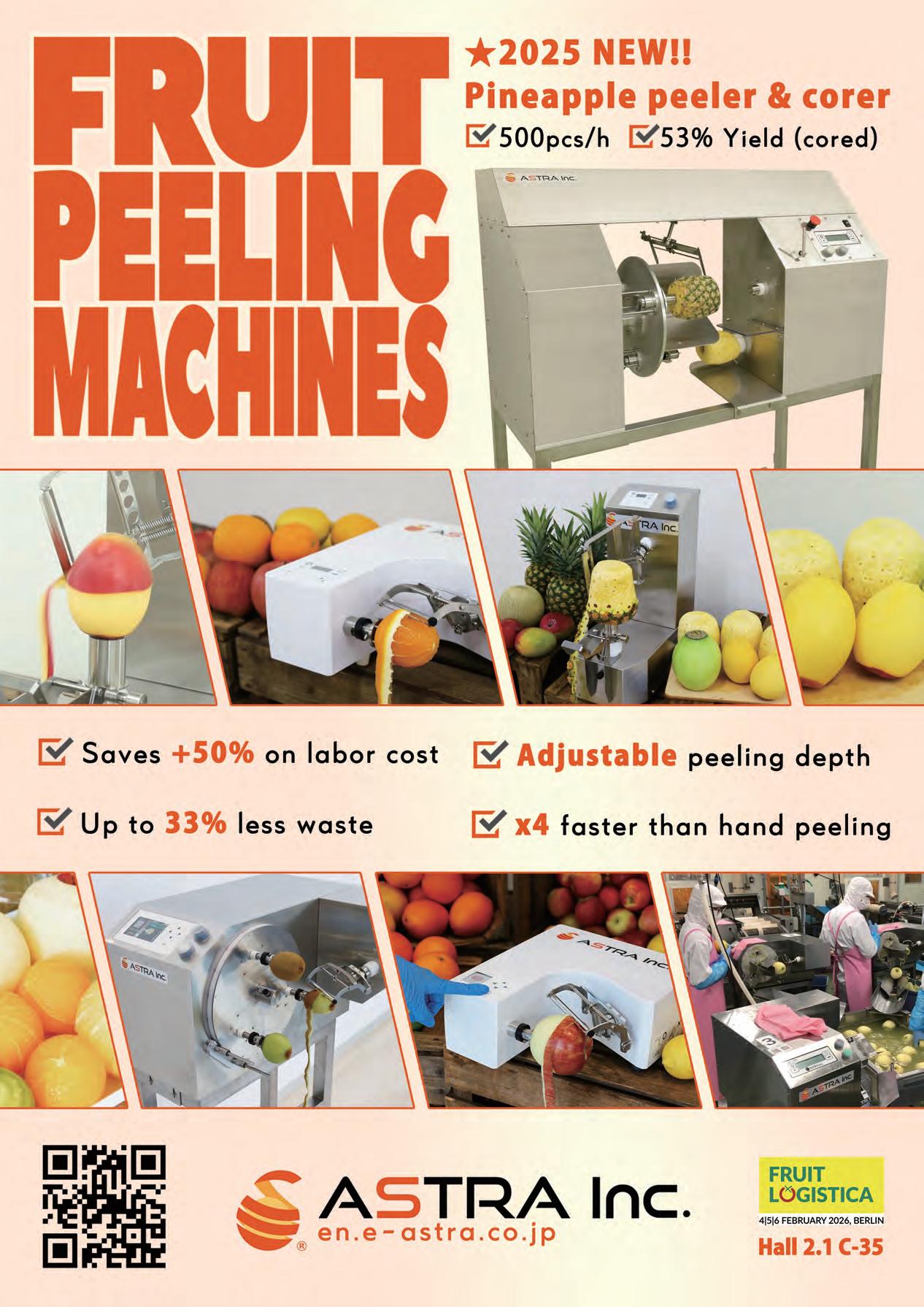
At FRUIT LOGISTICA 2026, ASTRA will present its lineup of industrial peelers, with particular focus on the
FAP-3000, a high-capacity Pineapple Peeler & Corer launched at the end of 2025.
Throughout the exhibition, visitors can see live demonstrations using real fruit, making it easy to understand how the machines perform in real processing environments.
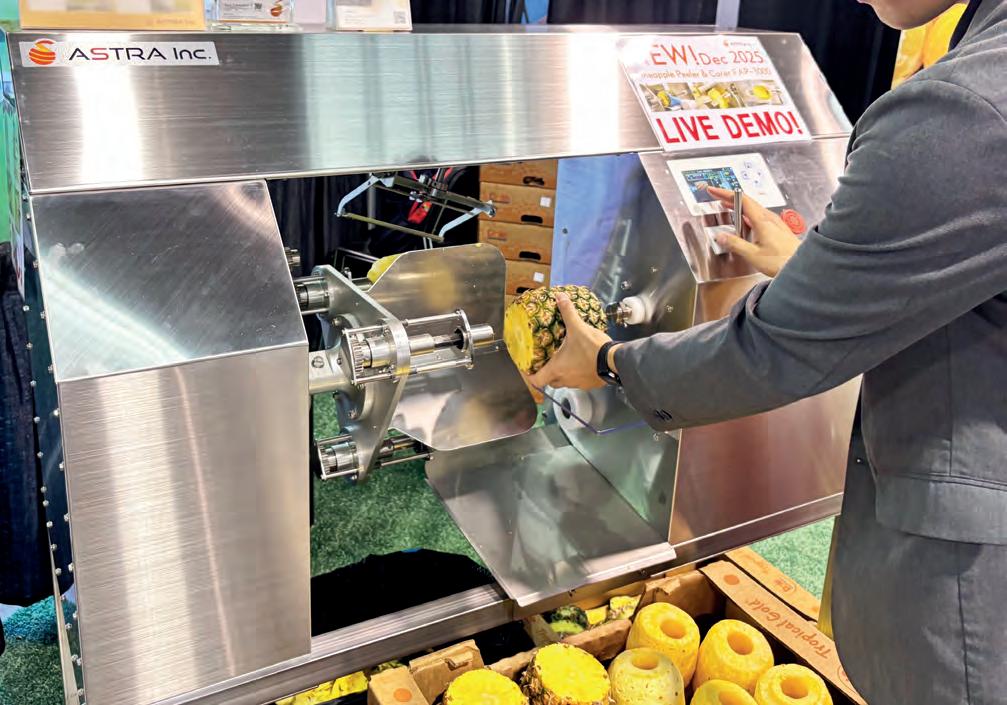
The FAP-3000 was developed specifically for high-volume pineapple processing. By combining peeling and coring in one automated process, it simplifies production while delivering reliable, repeatable results.
The FAP-3000 operates in a continuous automated flow, processing one pineapple in 8 seconds, or up to 450 fruits per hour. This level of throughput allows processors to handle large volumes with significantly fewer operators, easing the impact of labor shortages.
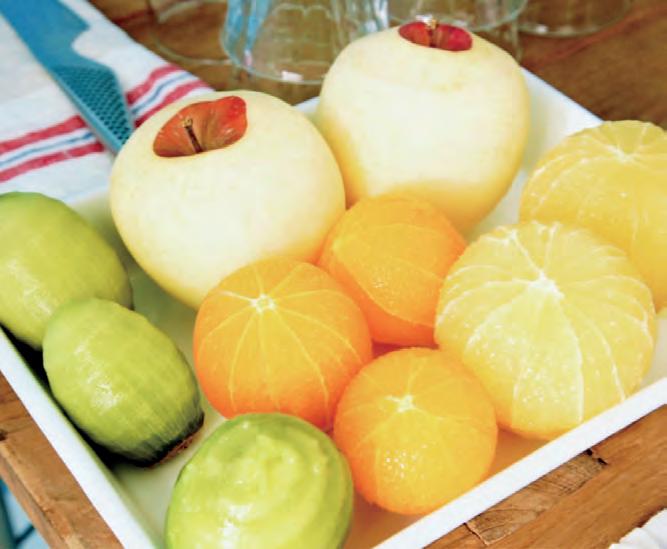
ASTRA’s proprietary peeling technology reduces unnecessary flesh loss and minimizes juice leakage. The result is a clean, attractive finish suitable for
fresh-cut products and further processing. Higher usable yield translates directly into lower raw material costs over time.
Designed for intuitive operation, the FAP-3000 delivers consistent output regardless of operator experience. Automation helps reduce training time and keeps product quality stable across shifts and production lines.
The FAP-3000 is already in use at several major fresh-cut fruit processors in Japan, where it has delivered clear operational and financial benefits. After installation, staffing for pineapple peeling was reduced from five operators to just one, while maintaining stable throughput. Yield performance also improved significantly: while
conventional pineapple cutters typically achieved yields of around 40%, the FAP-3000 consistently delivered 53% usable yield after coring.
Thanks to the combined impact of labor savings and higher yield, the customer was able to recover the initial investment cost in under three months.
This rapid payback highlights how the FAP-3000 can move beyond efficiency improvement and directly support profitability in high-volume pineapple processing.
In addition to the FAP-3000, ASTRA will showcase its proven peeler lineup, trusted by processors worldwide:
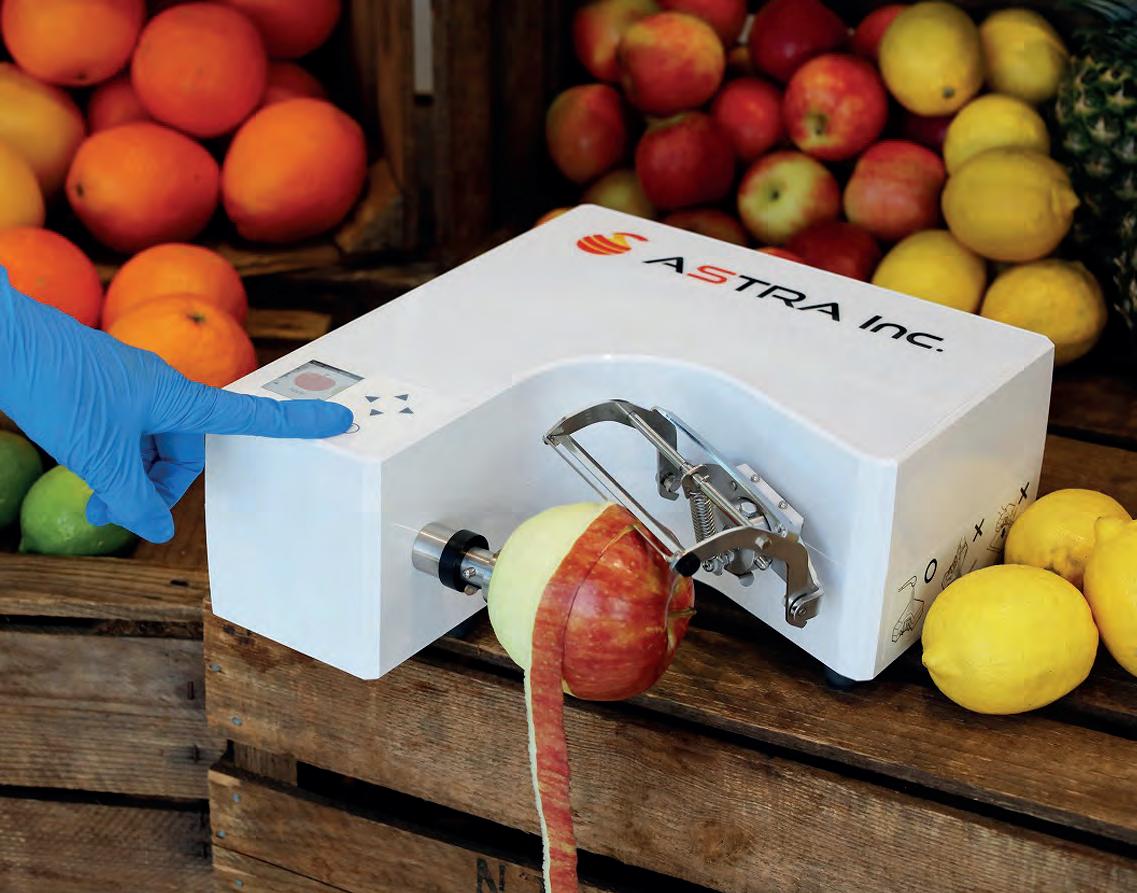
• KA-700H – A compact and versatile peeler for apples, oranges, kiwis, lemons, and more, processing up to 400 fruits per hour.
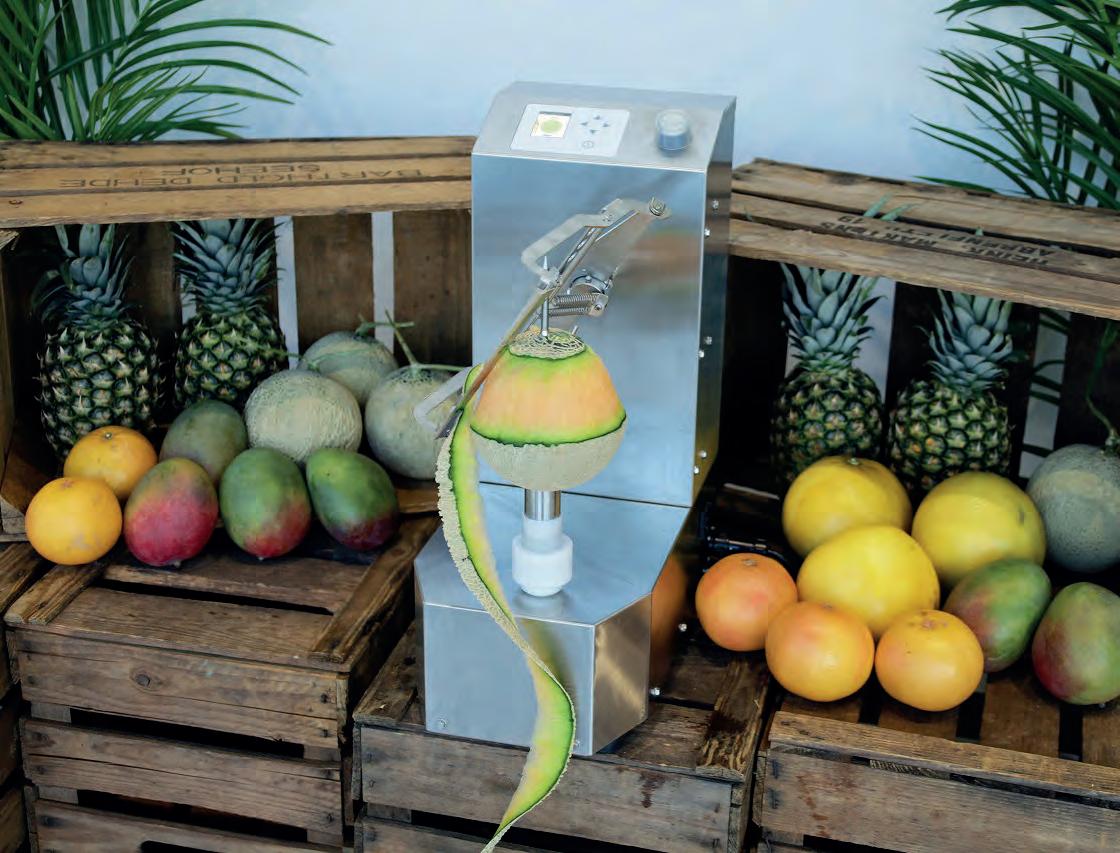
• FAP-1001 – An industrial model designed for continuous operation, capable of processing up to 1,200 fruits per hour.
• KA-750PM – Ideal for large or thick-skinned fruits such as pineapple, mango, melon, and grapefruit, with stable processing at around 250 fruits per hour.
See the Difference at Booth C-35 ASTRA believes performance should be experienced, not just described. At FRUIT LOGISTICA, visitors are invited to watch live demonstrations, speak directly with ASTRA specialists, and even bring their own fruit samples for discussion and testing.
If you are exploring ways to reduce labor, improve yield, or achieve faster returns on investment, visit Booth C-35
in Hall 2.1 and see how peeling and coring automation can fit into your operation. Visit: en.e-astra.co.jp
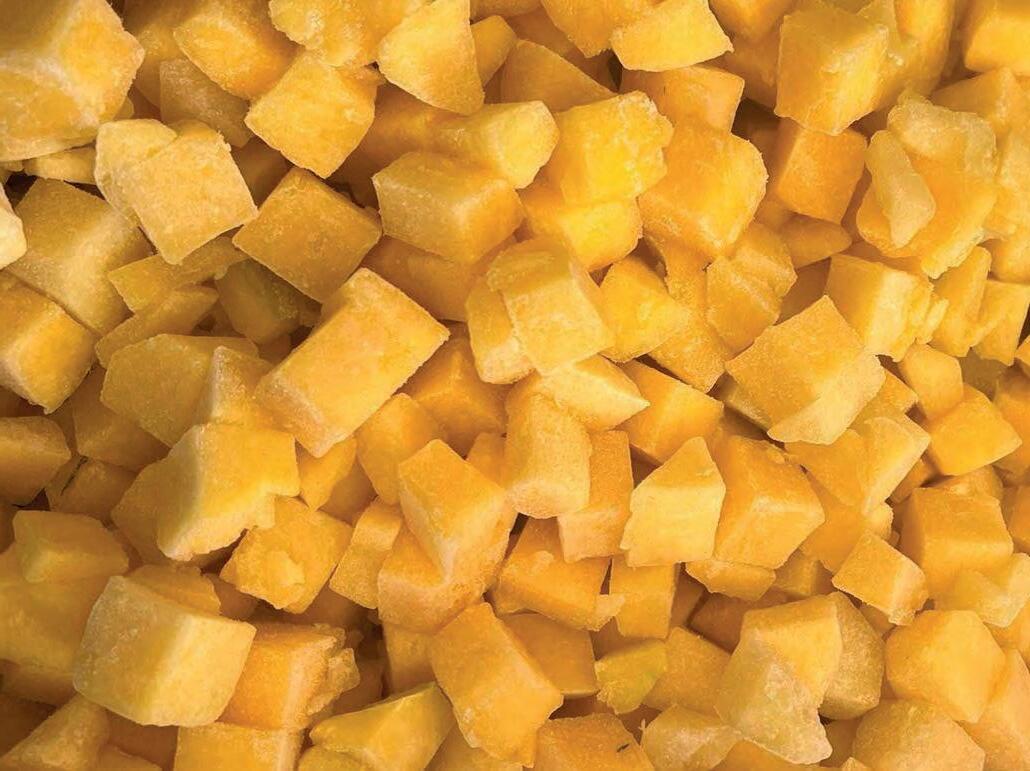
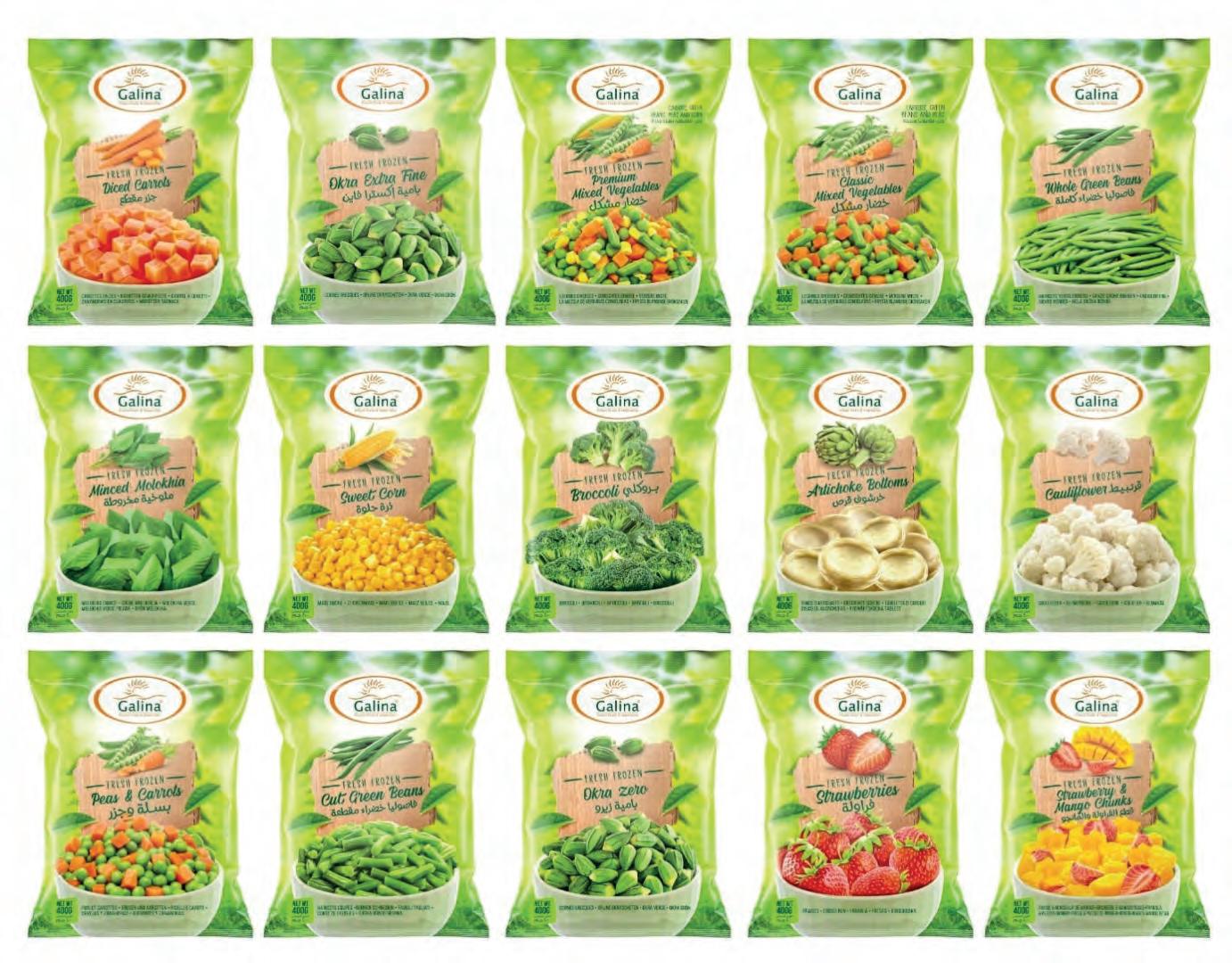
Dutch Food Solutions B.V. offers wide range of IQF Fruits & vegetables products with bulk & retails packs, it is committed to growth and continuous development to deliver its customers with the highest products quality and service they are looking for, to share in our customer’s success and build a lifelong business partner.
It is following the highest quality systems & standards in the plantation, production & packing to deliver the highest quality products to our clients with convenient prices.
We have a full control on our contracted farms, furthermore we continuously monitor & manage the pesticide standards to meet the FDA and EU pesticides limits, in addition to moni-
toring 100% traceability system, production & hygiene.
Dutch Food Solutions B.V has earned multiple certificates such as BRC, FDA, ISO22000, and Kosher. We are keen to provide our clients with the desired products at the requested time to meet our client’s expectations.
Packing and packaging can be customized according to client’s request.
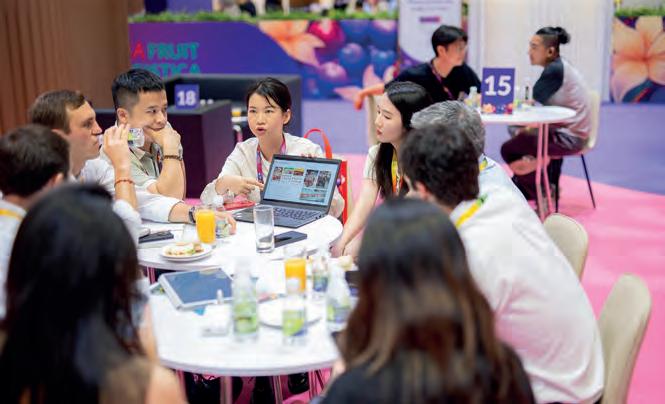
ASIA FRUIT LOGISTICA
2026 opened exhibitor registration early due to high demand, and the response has been robust, with companies quickly securing their spots at Asia’s leading fresh produce trade event.
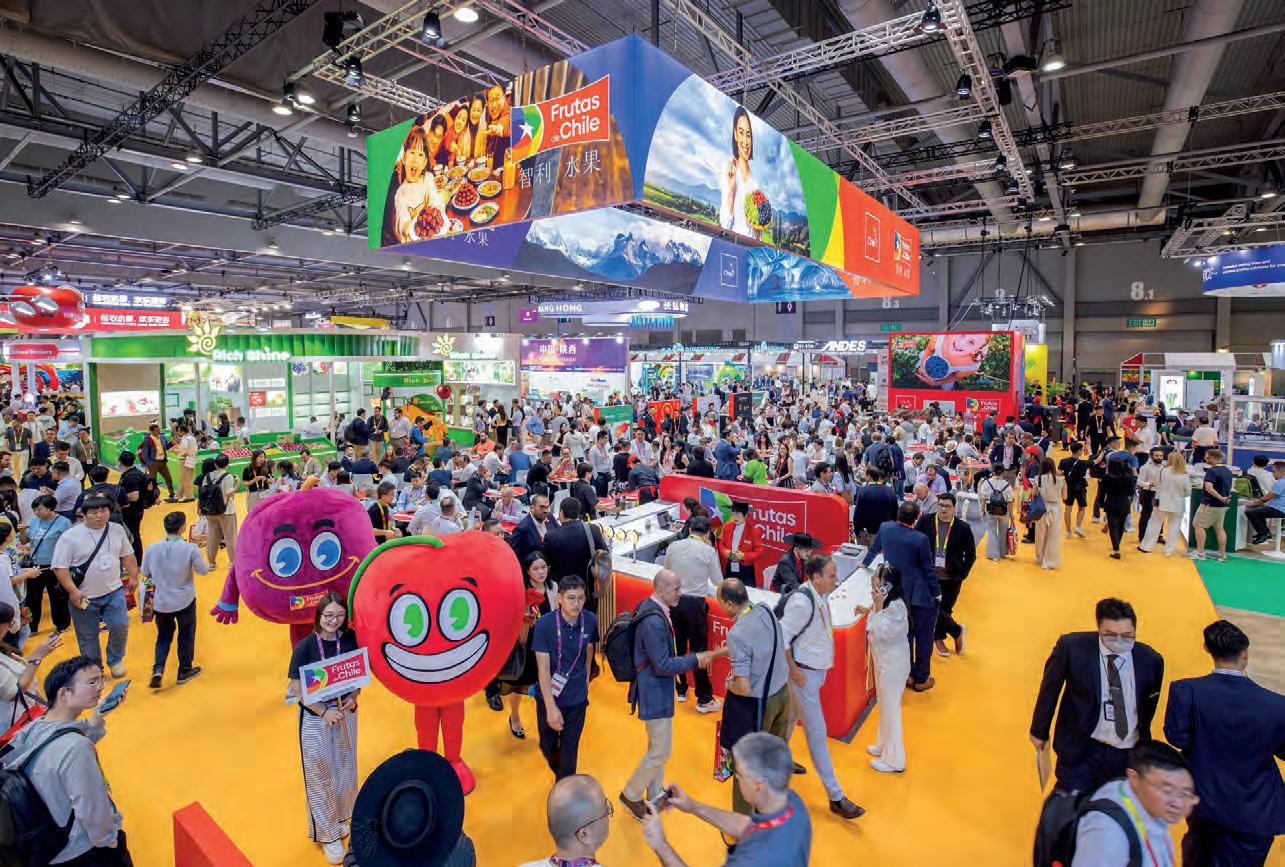
Scheduled to take place at the AsiaWorld-Expo (AWE) in Hong Kong from 2-4 September 2026, the show is already gathering exceptional global attention, cementing its positioning as the indispensable platform for industry leaders worldwide.
Building on the record-breaking success of ASIA FRUIT LOGISTICA 2025, which united over 14,000 professionals from 80 countries, the 2026 edition is set to reach new
heights as the definitive global hub for the fresh produce sector.
This unparalleled buyer network is driven by top-tier participation, with leading importers, wholesalers, and retailers attending from across AsiaPacific (including Greater China, India, Southeast Asia, Japan, South Korea, and Australasia), the Americas (USA, Canada, Chile), and the Middle East & Africa (UAE, South Africa, Bangladesh). With momentum from
this global foundation, we anticipate welcoming over 5,000 international buyers to the next edition. Strategically situated in Asia’s core, the event serves as the essential gateway for high-impact, cross-continental business expansion.
Exhibitor registrations for ASIA FRUIT LOGISTICA 2026 have already surged by 26% compared to the
same period last year, with participation confirmed from over 30 countries.
This remarkable growth underscores the booming demand for access to Asia’s dynamic fresh produce market, a pivotal hub for global trade expansion.
The First Timer Pavilion is also generating significant buzz, with companies worldwide eager to make their debut at the event.
It is expected to double the number of first-time exhibitors compared to last year -- demonstrating the show’s growing reputation as the must-attend platform for businesses seeking to expand their global footprint.
Beyond Asia, the event connects participants with international buyers from the worldwide. For industry professionals, ASIA FRUIT LOGISTICA 2026 represents the ultimate opportunity to build strategic alliances, explore emerging markets, and accelerate business growth on a global scale.
ASIA FRUIT LOGISTICA 2026 will once again fill the AWE with the world’s freshest produce, innovative technologies, and the industry’s most influential leaders.
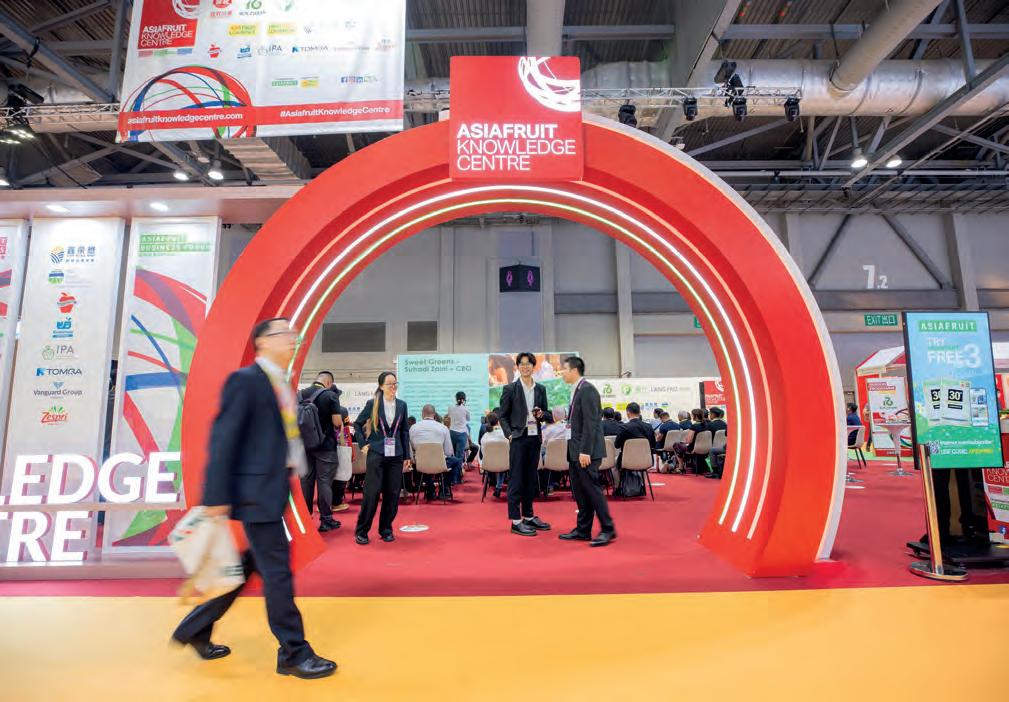
The upcoming edition is set to feature an even larger exhibition, a high-
level conference program at the ASIA FRUIT KNOWLEDGE CENTER stage which will host high-level speakers — including leading CEOs, innovators and market analysts — who will share critical insights on trends, trade and technology. The event will further feature specialist forums and signature highlights such as the prestigious ASIAFRUIT Awards.
Riding on the success of last yearthat brought high quality speakers, the Nuts and Dried Fruit Forum and Frozen Fruit and Vegetables Forum are meant to increase in 2026.
A key focus for 2026 will be AgriTech Showcase, showcasing the latest advancements that are driving ef-
ficiency and sustainability across the supply chain.
For more information and to secure a booth, visit www.asiafruitlogistica.com
The 2026 Meet Ups programme will further deepen engagement with highpotential markets. Fresh Produce India will kickstart the 2026 Meet Up series in Mumbai on 16-17 April. Tailored to address the unique dynamics of one of the world’s fastest-expanding consumer markets, this focused event will deliver actionable insights into India’s booming fresh produce sector, highlighting key growth opportunities for local and international players alike.
Following this, the flagship Southeast Asia Meet Up will take place in Bang-
kok, Thailand, on 18-19 May 2026 -- standing as a cornerstone event for engaging key markets across the region, including Thailand, Malaysia, Vietnam, Indonesia, the Philippines, Myanmar, Cambodia, Laos and beyond.
As one of the world’s most dynamic fresh produce landscapes, Southeast
Asia’s potential is undeniable -- and Thailand’s strategic location and robust infrastructure make it the ideal hub for connecting international participants to tap into regional growth opportunities.
The event is expected to welcome attendees from over 20 countries globally.

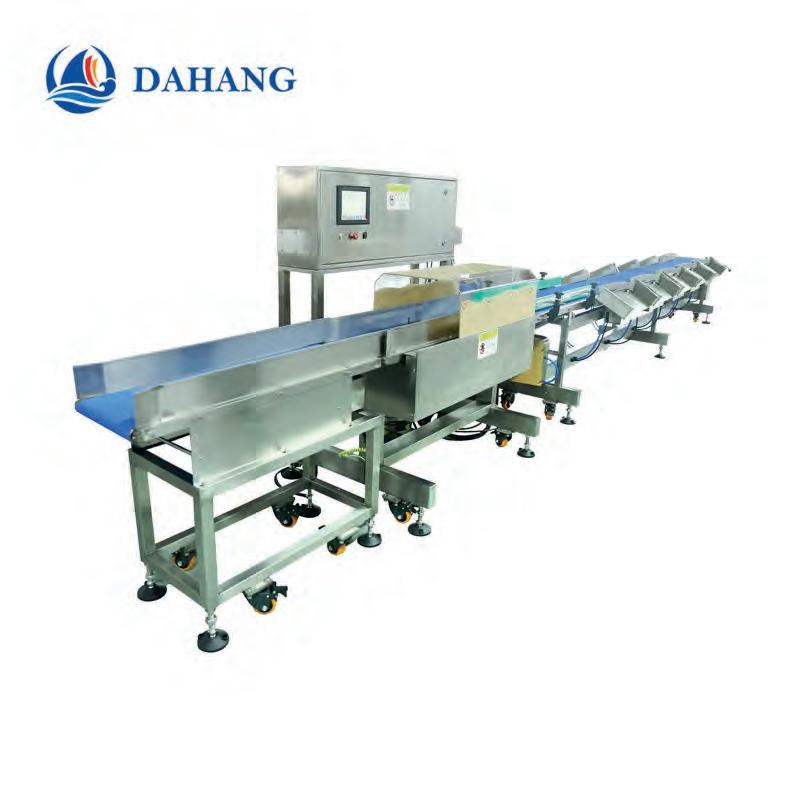
The pineapple weight sorting machine, with its precise weight sorting function, high production efficiency, and advantages in enhancing product quality, has become an important boost for the development of the pineapple industry. In the future, DaHang will continue to focus on technological innovation and provide advanced and efficient weight sorting solutions for more industries.
Pineapples are popular fruits with a growing demand in the market. For pineapple growers and processing enterprises, how to efficiently and accurately sort pineapples by weight has become the key to enhancing product competitiveness. The pineapple weight sorting machine launched by DaHang
https://www.checkscales.com/
is equipped with advanced highprecision weighing sensors that can quickly and accurately measure the weight of each pineapple. Whether it is a small pineapple seedling or a mature large fruit, it can be weighed precisely, providing a reliable data basis for subsequent sorting.
(B) Intelligent Sorting Algorithm
ferent grades such as small fruits, medium fruits, and large fruits, ensuring that the weights of pineapples in each grade are uniform.
Improve production efficiency
(A) Automated Operation
Traditional manual sorting of pineapple weights is not only inefficient but
(B) Seamless Docking with the Production Line
This sorting machine can be seamlessly docked with the production line links of pineapple picking, cleaning, packaging, etc., realizing the automation and intelligence of the entire production process, further improving production efficiency and reducing labor costs.
(A) Ensure Weight Consistency
Precise weight sorting can ensure that the weight error of pineapples in the same grade is extremely small, improving the quality consistency of products. This helps to enhance consumers’ satisfaction with products and strengthen the brand image.
The pineapple weight sorting machine, with its precise weight s production efficiency, and advantages in enhancing product qual important boost for the development of the pineapple industry. continue to focus on technological innovation and provide advanced and efficient weight sorting solutions for more industries.
By promptly screening out pineapples that do not meet the weight standards, the product losses caused by unqualified weights are reduced, the resource utilization rate is improved, and the production costs are reduced.
The pineapple weight sorting machine, with its precise weight sorting
function, high production efficiency, and advantages in enhancing product quality, has become an important boost for the development of the pineapple industry. In the future, DaHang will continue to focus on technological innovation and provide advanced and efficient weight sorting solutions for more industries.
https://www.checkscales.com/
www.checkscales.com
By Fred Meintjes
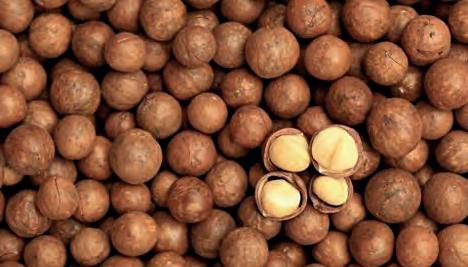
Sources in the South African macadamia nut industry have said they are concerned that China will soon be able to meet its own production demands and that this may affect its exports to the country.
Shane Hartman, chief executive of Global Macadamias, warned recently that the South African industry is too reliant on China.
He noted that it was important for South Africans to invest more in nut cracking facilities on its own soil to keep prices stable in future.
“Chinese traders are aware of the fact that South African companies do not have enough of these facilities which means that certain sectors of the South African industry are reliant on nut in the shell exports,” he said.
This, combined with the rise in local production, puts Chinese importers in a strong position when it comes to trade and price negotiations.
South Africa is the biggest macadamia producer in the world, with 95,500 tonnes of in-shell production and only 30,600 tonnes of out of shell production.
China is now the second biggest producer with 75,000 tonnes in-shell and 21,500 tonnes of out of shell production.
Until 2023 China was the biggest im-
porter from South Africa, with nearly 60 per cent of all exports. Vietnam was second with 22 per cent and Hong Kong third with 14 per cent.
Hartman said China has been aggressively investing in its own facilities to crack nuts, so it can also crack the South African in-shell nuts.
“They are therefore also competing directly against us in other markets of the world,” he pointed out. ”This may cause downward pressures on prices worldwide.”
On the other hand, there is rising demand for macadamias which are cracked in half.
Meanwhile, the TopFruit affiliated company TopNut said it has been enjoying ”remarkable momentum” in the industry.
Tree sales from its nursery, Future Tree Nurseries, surpassed expectations,
with most of the 2025/26 forecasted inventory sold early in the year.
Expanding its distribution network by licensing to third-party nurseries has broadened access to TopNuts’ flagship macadamia variety, MCT1. Strong demand and sales of MCT1 reflect growing market confidence in this variety, it said.
To better serve the South African Macadamia industry, TopNut explained that it will soon be introducing five additional macadamia varieties. Furthermore, the company has obtained the global testing licence for the Turkish-bred walnut variety Potamia Erdin; and has imported tissue culture material of the almond variety Earlybird, and the stonefruit rootstock Magnus, both developed by Sierra Gold Nurseries in California.
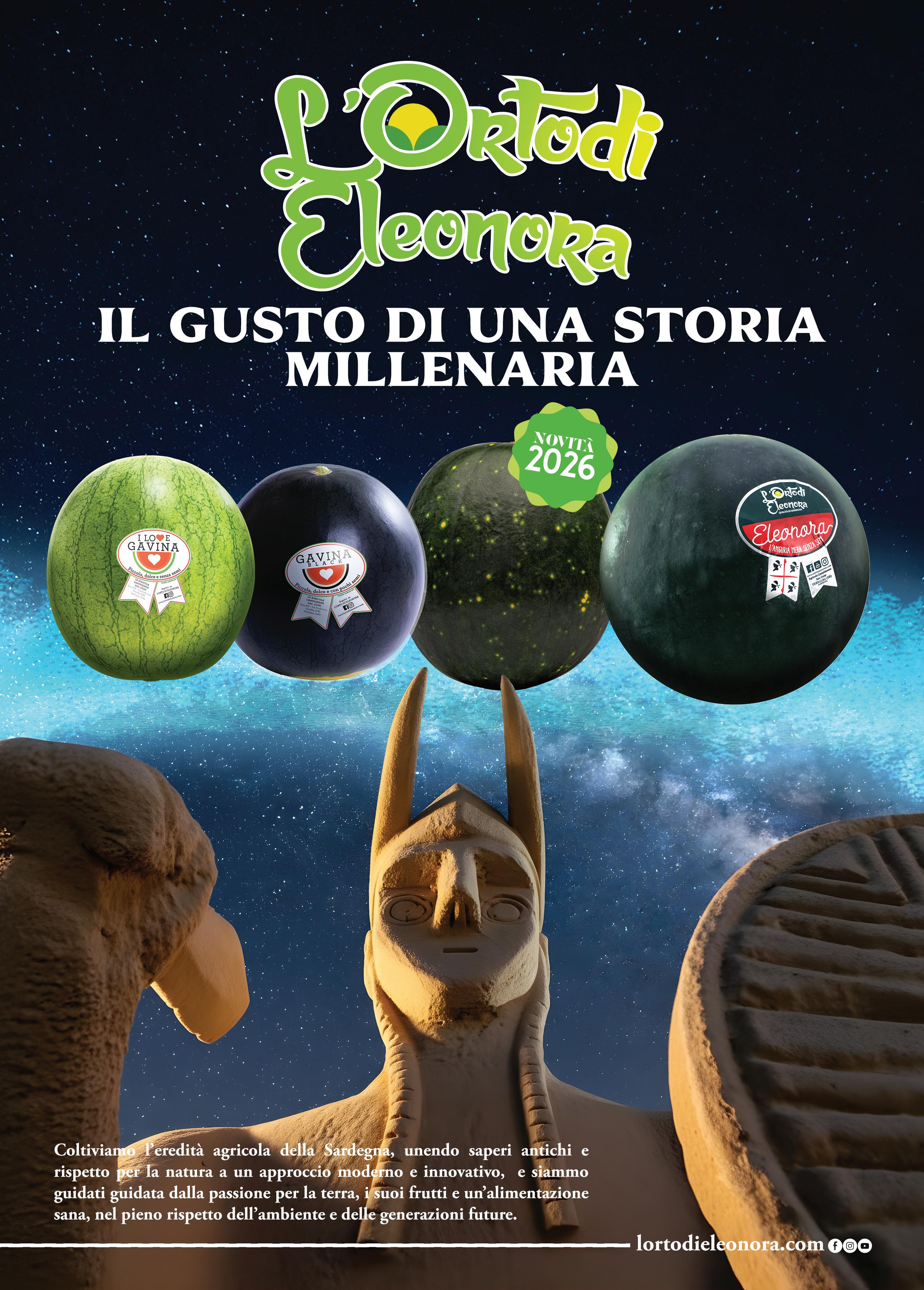
The Consortium took part in the Italy–Saudi Arabia Business Forum in Riyadh, attended by companies and Minister Tajani. President Seppi stated: “We are working to grow our exports. We are receiving excellent feedback from new markets for the products of our territory.”
An important opportunity to strengthen and expand commercial channels in a rapidly growing market, as well as a chance for institutional dialogue during an event of significant strategic value for a Consortium that has long contributed to the
international expansion of Italian agri-food products among foreign consumers.
This captures the meaning of Melinda’s participation in the Italy–Saudi Arabia Business Forum, held in Riyadh. The initiative was organized by the Italian Ministry of Foreign Affairs and International Cooperation, represented by Deputy Prime Minister Antonio Tajani, together with ICE – Italian Trade & Investment Agency, led by President Matteo Zoppas, and featured numerous and prominent business delegations.
Characterized by a packed schedule of meetings, the mission in the Gulf engaged Melinda in concrete discussions with institutional representatives, as well as with experts and business leaders from both countries.
It was a productive participation, focused on exploring the many opportunities for growth and collaboration in a scenario of strong interest for producers, where the economic partnership between Rome and Riyadh plays a crucial role in the development of trade relations.
A promising context, therefore, also for Trentino and its fruit and vegetable

sector, called to seize new opportunities for expansion.
“We are here because we must never stop. Our export performance is positive, but it is not enough and it does not consolidate on its own. It requires daily commitment, presence in the markets, relationships built over time, and teamwork, because every mission abroad exists to add value to what we produce,” said Melinda President Ernesto Seppi, who led the Consortium’s delegation.
“Internationalization is a priority: it does not only mean selling apples in new countries, but establishing a presence in distant markets, listening to partners, respecting different cultures and building trust.
Saudi Arabia and the Middle East are a concrete example of the results this work can bring. In recent years, sales
in the area have grown significantly, demonstrating that the effort invested in missions, dialogue and investment benefits our entire agricultural community in Trentino.”
“The Saudi fruit and vegetable market is expanding rapidly and shows growing appreciation for premiumquality produce such as Italian fruits and vegetables.
This is why we look with great interest to these regions, where the value of our apples and the reliability of Trentino’s cooperative system are recognized,” added Nicola Magnani, Commercial Director of the Melinda Consortium.
“To build solid and competitive supply chains in these markets, it is essential to integrate fresh and processed products, creating a complete and coherent offering that enhances origin and quality.
The synergy between Melinda’s activities and those of MelindaLab moves in this direction and is becoming increasingly strategic,” added Paolo Gerevini, General Manager of MelindaLab.
Driven by the Vision 2030 plan, adopted in the previous decade, Saudi Arabia is experiencing a period of major cultural and economic transformation, marked by reforms, innovation and ambitious projects supported by the local sovereign wealth fund.A highly dynamic context, reflected in the acceleration of GDP and one in which Italian products, data clearly show, are achieving increasing success.
Italy’s total exports to Riyadh have exceeded €6.2 billion, marking a growth of around 28% compared to the previous year. According to ICE estimates, the upward trend continues.
The food processing industry is rapidly evolving through the integration of automation and robotics, transforming everything from production lines to packaging systems. These innovations not only improve productivity and consistency but also help address workforce shortages and enhance food safety. At the heart of these high-tech systems are the oftenoverlooked components—standard machine elements—that keep everything running smoothly. This is where companies like Elesa+Ganter play a pivotal role.
Automation enables food processing operations to run with minimal downtime and maximum consistency. Robotic arms, conveyor systems, and sorting machines can work around the clock, maintaining high throughput and precise control. Elesa+Ganter supports this shift by offering a wide selection of ergonomic knobs, clamping levers, hinges, and indexing plungers that are essential for adjusting and securing machine parts with accuracy and reliability.
In food production, hygiene is paramount. Elesa+Ganter provides a specialized range of Hygienic Design components made from stainless steel and high-grade plastics that are resistant to cleaning agents, corrosion, and bacterial growth. These components comply with international food safety standards and are designed for easy cleaning, reducing contamination risks in automated environments.
Robotic systems are not replacing workers but are helping fill gaps where labor is scarce or where tasks are too dangerous or repetitive. Elesa+Ganter’s durable and userfriendly machine elements enable quick manual adjustments during machine setup or maintenance, ensuring seamless collaboration between humans and machines on the production floor.
Automated packaging lines rely on dependable mechanical components to perform consistently. Elesa+Ganter
supplies position indicators, adjustable feet, rotary controls, and safety elements that enhance machine stability and operational safety—key in maintaining uptime and ensuring product integrity during packaging and transport.
Elesa+Ganter:
Elesa+Ganter combines German precision and Italian design, offering over 100,000 product codes that meet the rigorous demands of the food industry. From robust handles to precision alignment systems, their products are critical for machine builders developing next-gen food processing and packaging lines.
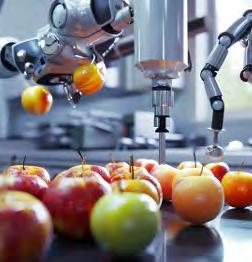
FAM STUMABO’s Yuran Capcitec™, is a high-capacity belt dicer designed for dicing and strip-cutting a variety of peppers and leafy vegetables. The cutting machine was officially presented at Fruit Logistica 2024.
Frozen vegetable processors, depending on seasonal products, only have a limited window of processing time. This makes the reliability and durability of cutting equipment even more crucial to minimize any risk of downtime.
The new Yuran Capcitec assures peak production with top quality products and with the highest level of efficiency at the highest capacity.
Wider feed belt and optimized feeding method significantly enhance the capacity
The 300 mm wide and 2 meter long high grip profiled feeding belt delivers at least 30% extra feeding capacity compared to previous models.
The newly designed driven top belt guarantees a positive transfer and
optimum guidance of the products such as capsicum and leafy greens towards the cutting tools, greatly improving the quality of the cuts including a significant reduction in fracturing of the product.
The machine’s design minimizes ownership costs with durable components, cutting back on labor and downtime. In addition, the splined shaft system ensures a swift and uncomplicated conversion of the cutting tools allowing easy inspection and cleaning.
The Yuran Capcitec is suitable for peppers and leafy-type green vegetables, like bell peppers or capsicum, capia, jalapeño and chili peppers, as well as raw or blanched greens such as spinach, radish, kale, cabbage, and mustard leaves. Other popular products are raw or brined citrus peel and a variety of herbs such
www.fam-stumabo.com
“
Ready-to-eat fresh produce, known as the fourth range, is synonymous with convenience and freshness and represents one of the most dynamic and growing sectors in the food industry
Behind the apparent simplicity of a bag of salad or a mix of washed vegetables lies a highly sophisticated production process where quality control is central to ensuring consumer safety and satisfaction.
In recent years, technologies for quality control have made significant advancements, transforming how fourth-range products are selected and processed. State-of-the-art optical scanners are now capable of identifying imperfections or contamination in products with

by Walter Konrad

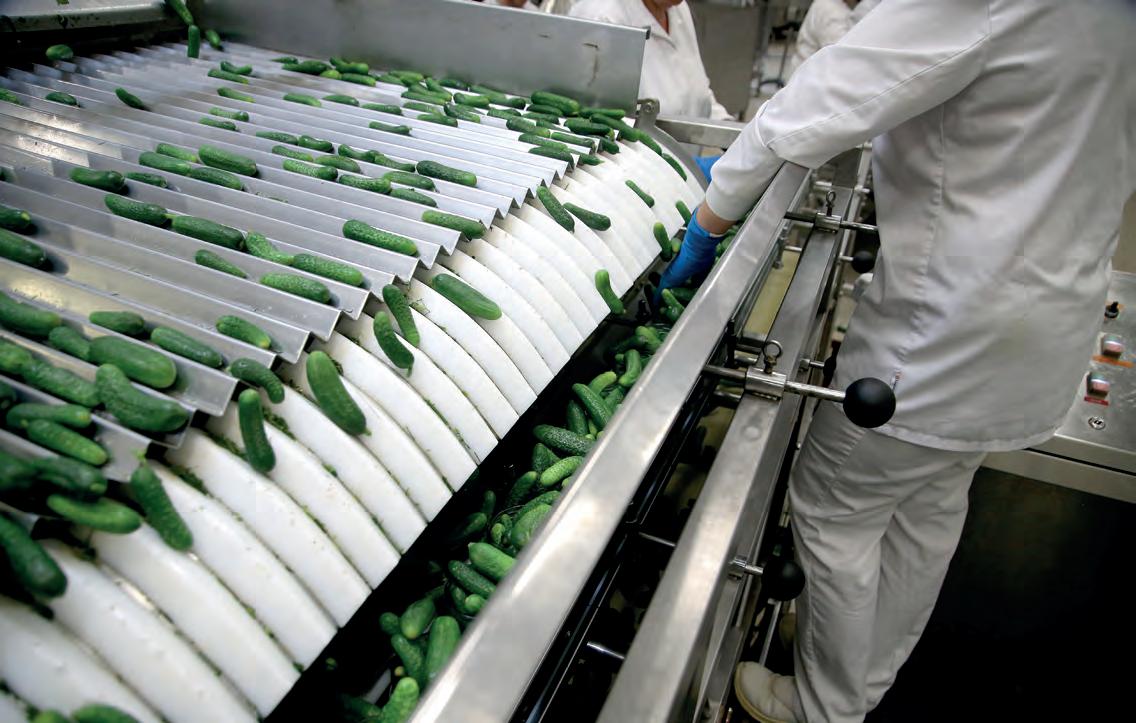
extraordinary precision. Using multispectral lighting and artificial intelligence, these machines can detect anomalies invisible to the naked eye, such as traces of bacteria or chemical residues, thereby elevating food safety standards.
Another area of innovation is non-invasive analysis techniques.
Advanced sensors can monitor parameters such as humidity, temperature, and product ripeness without damaging it, providing real-time information that helps optimize the production process.
These tools are particularly useful in reducing waste, ensuring that only perfectly compliant products reach the end consumer.
Automation is also revolutionizing the processing phase. Robotic production lines equipped with artificial vision systems can handle large volumes of products with previously unimaginable precision and speed.
This not only improves operational efficiency but also reduces the risk of human error, ensuring consistent and reliable quality.
Traceability is another central theme.
Digital systems based on blockchain technology are also finding applications in the fourth-range sector, enabling monitoring of every stage of the process, from harvesting to distribution.
This transparency not only increases consumer trust but also provides a valuable tool for quickly addressing issues or product recalls.
The impact of these technologies on overall sector efficiency is significant. By reducing machine downtime and optimizing resource use, innovations in quality control help make the fourth-range sector more competitive and sustainable. At the same time, automation allows companies to respond more quickly and flexibly to market demands, which increasingly require fresher and more personalized products.
In a sector where quality is everything, investing in advanced technologies is not just a strategic choice but a necessity to keep pace with consumer expectations and ever-stricter regulations.
The fourth range, a symbol of convenience and innovation, continues to demonstrate how technology can be an essential ally in ensuring freshness, safety, and sustainability.
We are world leaders in the design and manufacture of dryers for the agri-food, pharmaceutical, tobacco and pet food industries.
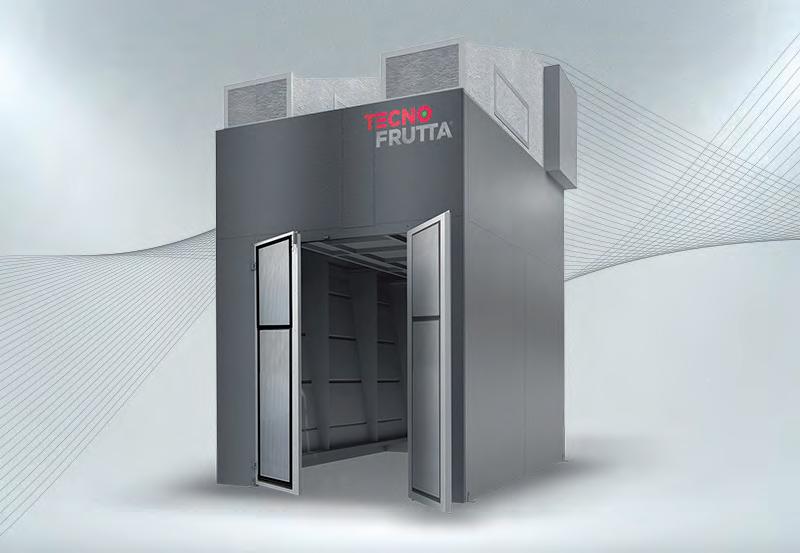
Founded in the most agriculturally productive part of the Puglia region (Italy), Tecnofruttais now one of the most avant-garde companies when it comes to designing and building machinery and equipment for the fruit and vegetable processing and preservation industry. With 30 years’ experience, Tecnofrutta stands out thanks to its constant search for solutions that can allow food producers to process their products in the best possible way. During the last years TecnoFrutta has developed an important know how in the field of drying.
The dryers designed and built by TecnoFrutta are ideal to dry large quantities of vegetables (tomatoes, peppers, zucchini, onions, mushrooms, herbs etc.), fruits (plums, pineapples, peaches, strawberry, persimmons, apricots, apples, pears, coconut, mangoes, kiwi, etc..) and other food products.
Removing water from a fruit or vegetable, you get a product preserved, which maintains the food properties and organoleptic features (color, smell and taste) unchanged, it can be used alone or in other preparations (both sweet and savory).
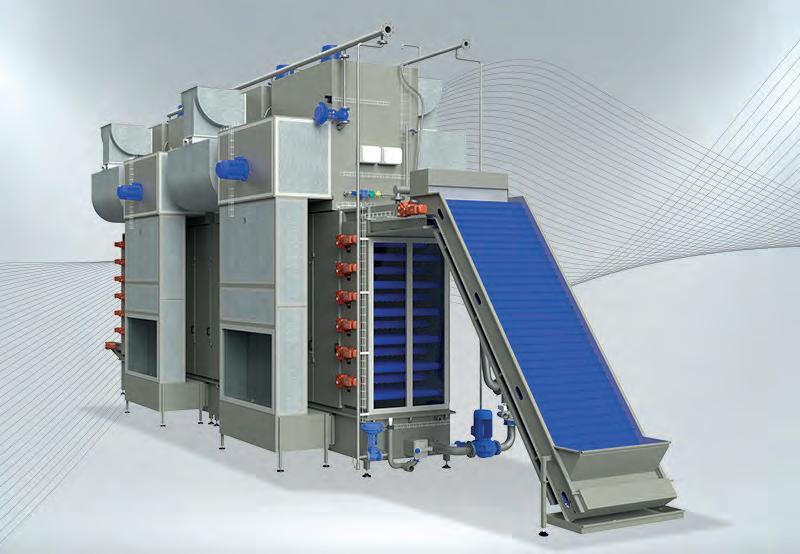
The operating principle is based on the removal of moisture from the products through the forced circulation of hot air which is appropriately channeled to hit the product.
www.tecnofrutta.it
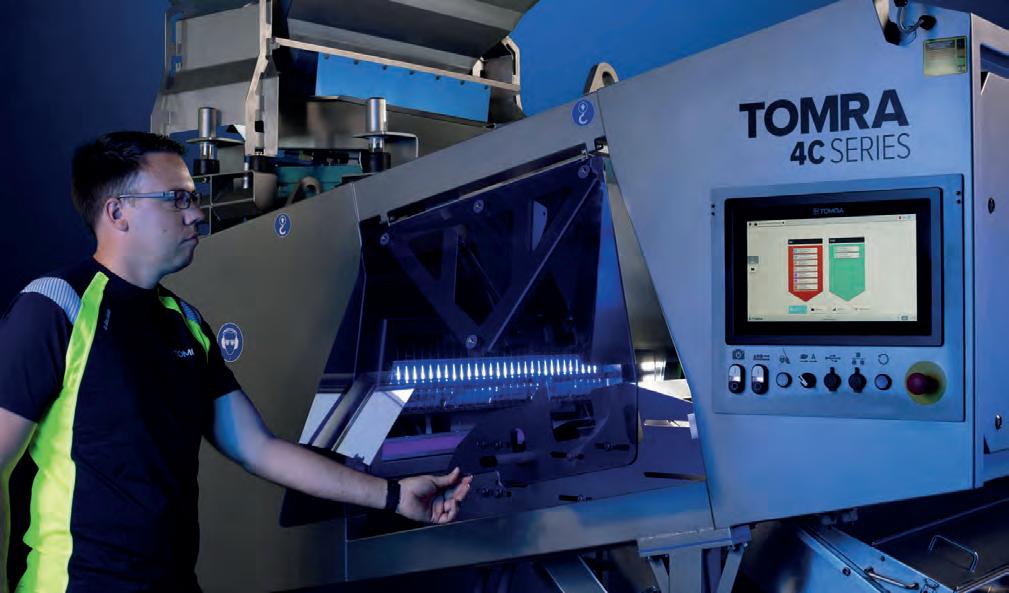
Hello everyone! It’s Kristof Franckx, and I am the Product Manager for TOMRA’s Chute portfolio. Today, I am excited to formally announce the TOMRA 4C, our most advanced optical sorting machine yet, optimized for both the nuts and IQF industries.
As Product Manager at TOMRA Food, I’ve spent years working closely with nut and IQF processors, listening to their challenges and understanding what really matters on the sorting line. From the beginning, our goal for the TOMRA 4C was clear: save operators time and simplify their daily tasks. To that end, the TOMRA 4C arrives pre-set and ready to integrate into any nut sorting line, eliminating the need for complex setup or constant adjustments. Whether it’s switching between machines or cleaning, every detail has been engineered to streamline operations and reduce downtime.
What sets the TOMRA 4C apart is its ability to achieve a false reject rate of less than 1%, while still detecting a wide range of defects and environmental foreign materials. This level of precision means processors can maintain high product quality without sacrificing yield.
Of course, none of this would be possible without TOMRA’s legacy of engineering excellence.
In the TOMRA 4C, we’ve combined the latest generation of Pulsed LED sensors and artificial intelligence to deliver a machine that is not only powerful but also incredibly easy to use.
And here is something I’m especially excited about: the TOMRA 4C will be the first bulk sorter to run the entire spectrum of artificial intelligence in tandem.
Soon, LUCAi will be available for Almonds. LUCAi arrives pre-trained on
common defects, so operators can rely on consistent performance across batches and shifts, regardless of who is running the line. This marks a major milestone in bringing deep learning to the nut industry, building on the success LUCAi has already seen with apples, blueberries, cherries, and citrus fruits.
The TOMRA 4C is not just a machine. It’s a smarter way to sort. And it’s built to help processors save time, reduce costs, and raise the bar for quality.
If you’d like to see the TOMRA 4C in action or learn more, we have demo halls available in Leuven, Belgium; Sacramento, CA, USA; Bangalore, India; and Xiamen, China.
www.tomra.com/food

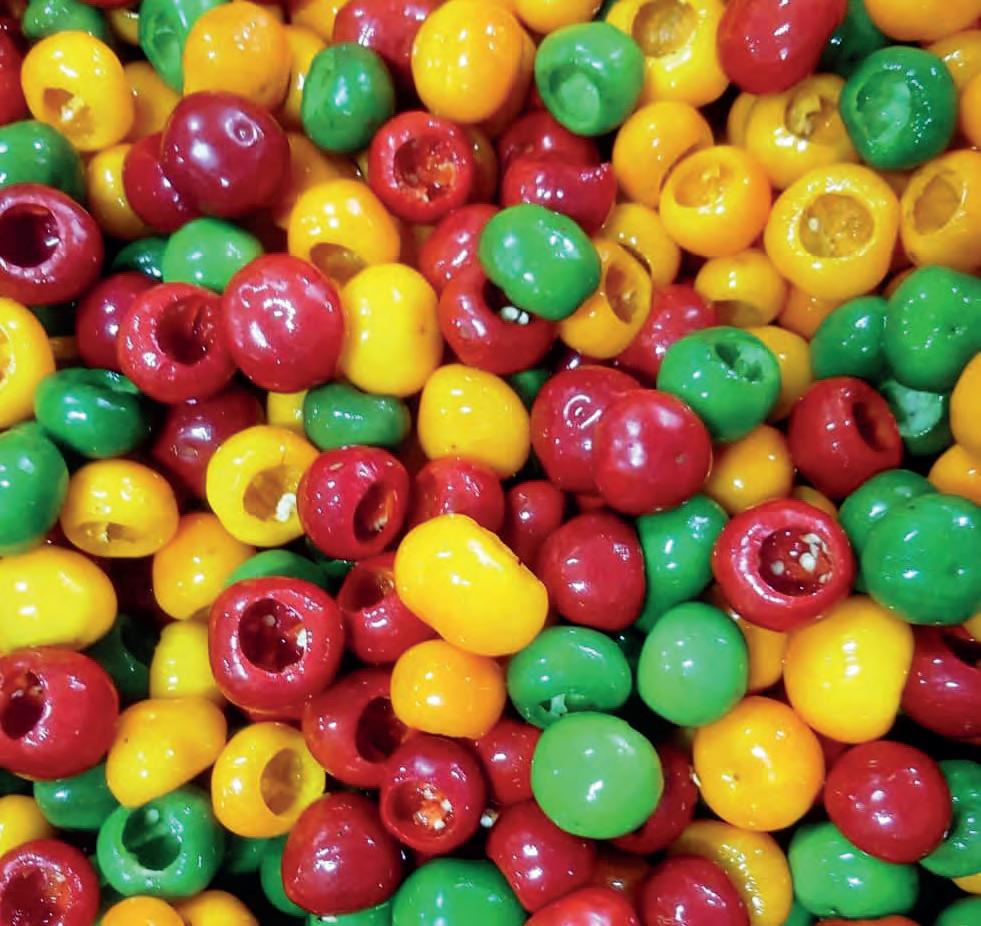
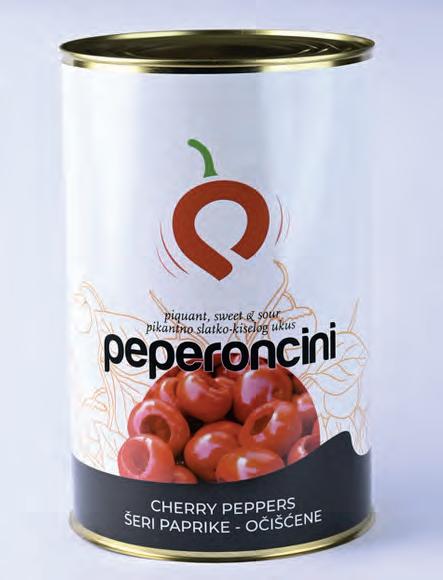
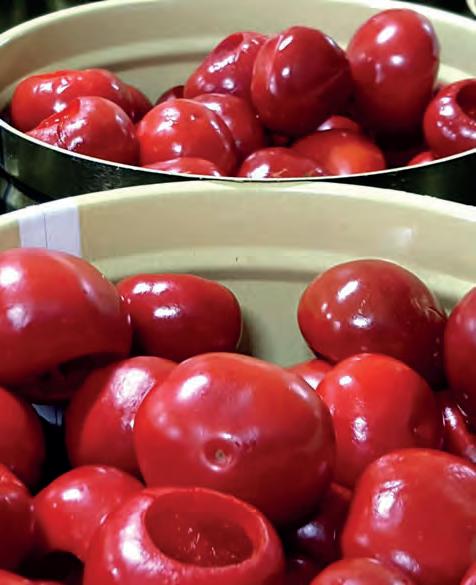
Cherry peppers (red, green and yellow) in A12 tins, sweet & sour, ready for stuffing. Honey peppers (snack peppers) in A12 tins, sweet & sour, ready for stuffing.
Sweet, piquant and pleasantly sourish, our cherry peppers are ideal for stuffing of choice, antipasti side dishes, or as an ingredient for innovative recipes as toppers. Preserved in the original AGRAR Ko recipe, our cherry peppers come in various colors and sizes ready to be stuffed straight from the tin and served as antipasti or repacked in trays or jars.
www.agrarko.com/

The new potato washer sorter system is designed as a complete solution. It begins with a thorough cleaning stage in the potato washing machine, effectively removing soil and debris. This is immediately followed by a gentle yet rapid drying process in the integrated potato washing dryer unit, which prepares the tubers for the final grading stage with optimal surface condition.
The core of the line is the sophisticated potato grader. This potato classifier utilizes uniquely designed adjustable rollers to perform highly accurate potato sorting by size. The automatic potato grader ensures gentle handling to minimize bruising and dam age, a critical factor for preserving crop value and extending shelf life for both domestic sale and export.
The introduction of this machinery is timely for Pakistan, where potato culti
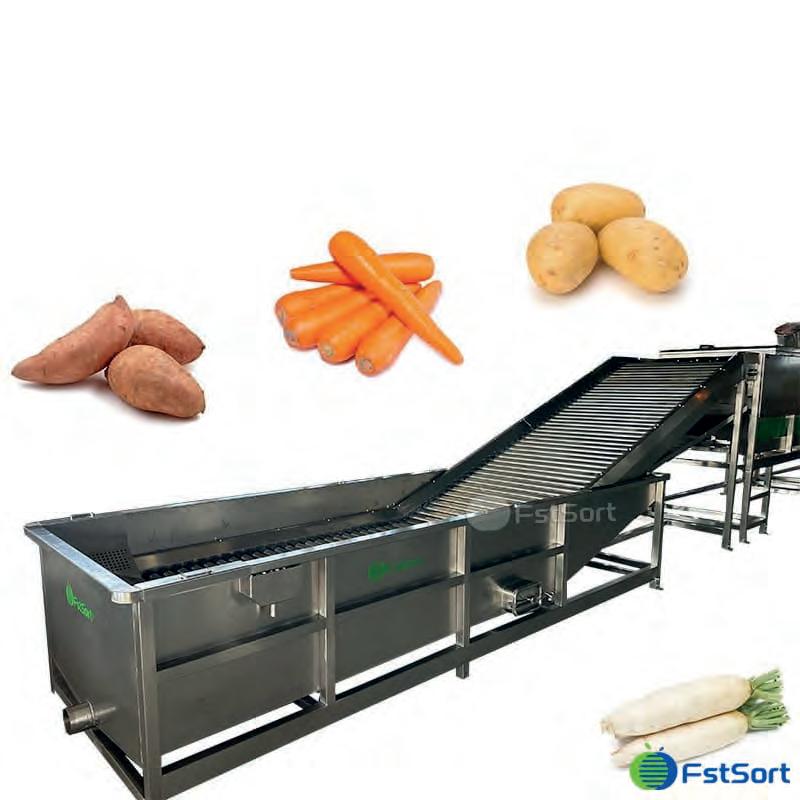
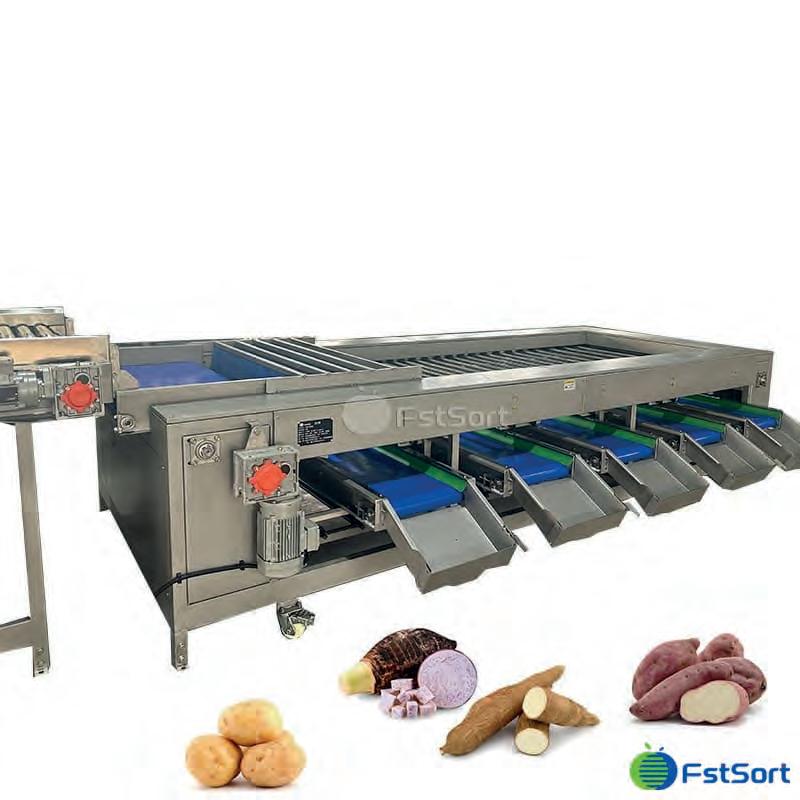
vation is expanding. The Fstsort solution and processing equipment for fruits and vegetables. Its solutions are deployed worldwide, helping producers enhance efficiency, reduce waste, and increase profitability through automation and precision technology.
The introduction ofthismachinery istimely forPakistan,where potato cultivation isexpanding.The Fstsortsolution directly targetsindustry for higher efficiencyandbetter product standardization,enablinglocal businessesto improve theircompetitiveness.
www.fruitprocess.com
Unlock the power of innovation with JBT Marel’s freezing solutions, which we proudly craft in the heart of India at our Global Production Center (GPC) in Pune. We are thrilled to introduce our cutting-edge lineup: the FLoFREEZE® IQF freezer, the ADVANTEC™ impingement freezer, and the alco spiral freezer. These solutions elevate your food processing operations with unmatched efficiency and reliability.
We embody our commitment to excellence in our “made in India” promise. By producing these advanced freezers locally, we ensure faster delivery times, allowing you to streamline your operations and meet market demands with agility. Our stra-
tegic location in Pune enhances our production capabilities and strengthens our ability to provide you with improved technical support and more efficient service.
We engineer the FLoFREEZE® IQF freezer for precision and performance, making it an ideal solution for your individual quick freezing (IQF) needs, whether it be fruits, vegetables, seafood, and more. Its innovative design ensures uniform freezing, preserving the quality and freshness of your products.
Experience the next level of freezing
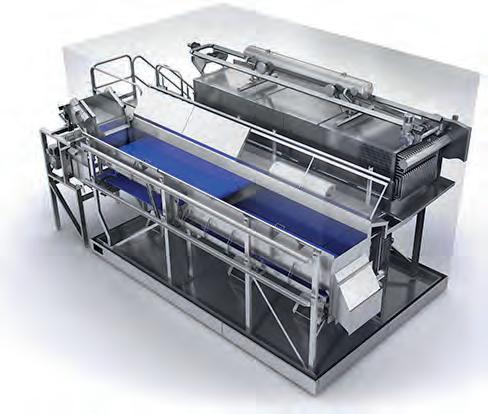
with the ADVANTEC™ impingement freezer. It utilizes high-velocity air jets to rapidly freeze your products, reducing energy consumption and operational costs, and offering you a highly efficient solution for your processing needs.
The alco spiral freezer epitomizes versatility and reliability, suitable for a wide range of products from bakery to poultry. Its compact design maximizes space utilization while maintaining high throughput, providing you with a robust solution for diverse processing requirements.
At JBT Marel, we dedicate ourselves to empowering your success. Our locally produced freezing solutions promise superior quality and offer you the advantage of faster delivery and improved service. Partner with us to experience the benefits of cuttingedge technology, tailored to meet the dynamic needs of your food processing industry.
www.jbtc.com/
At Jamar, we believe great food starts in the field. Each of our products re flects the work of experienced farm ers, technologists, quality controllers, and production operators. Their dedi cation builds the trust our brand and private label clients rely on.
From seed to shelf
We begin with soil analysis and choosing the best vegetable varie ties. Our agromanager team supports growers throughout the season, and harvests go directly to our plant—en suring freshness and lower environ mental impact.
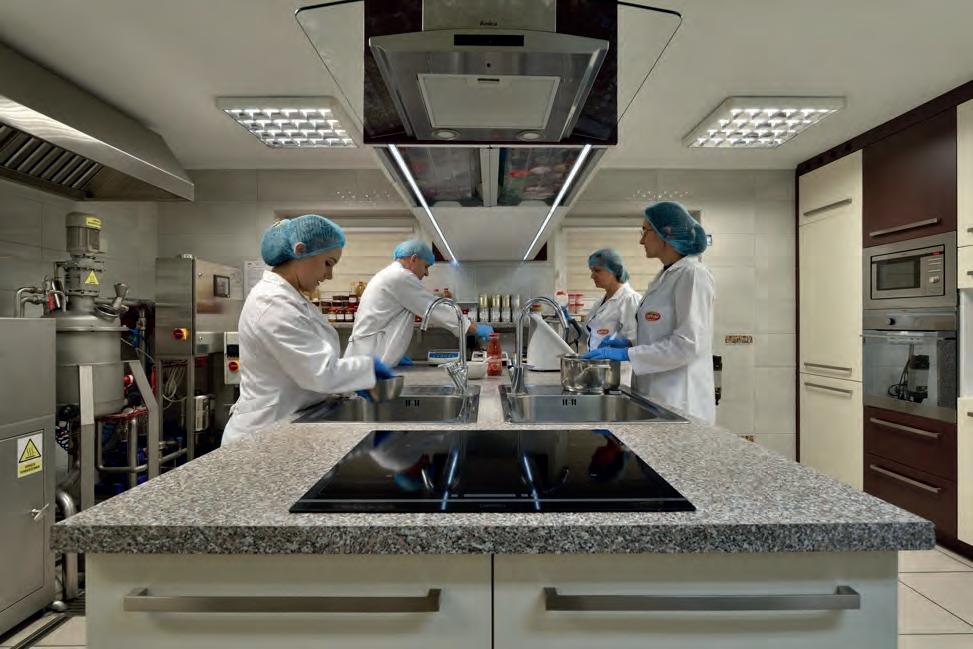
Innovative production, traditional values
Our facility features automated lines for tomatoes, fruit and canned vegetables. Yet we preserve traditional techniques—like fermenting vinegar in larch barrels—to keep the soul of our recipes.
People make the difference
Our team is our strength. With an average tenure over 9 years, our staff ensures stable quality. Technologists
constantly refine recipes, and our labs conduct detailed sensory and physicochemical testing.
We produce in flexible formats:
· PET and glass bottles
· Jars and cans
· Cartons (e.g., for passata)
· Bulk and HoReCa packaging
Jamar is your food partner with market insight and production flexibility.
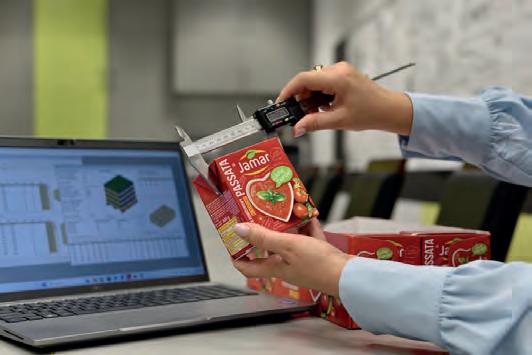
Whether you need a branded line or private label support, we act fast and deliver with care.
Welcome to Jamar – where nature meets technology, and quality meets partnership.
www.jamar.pl
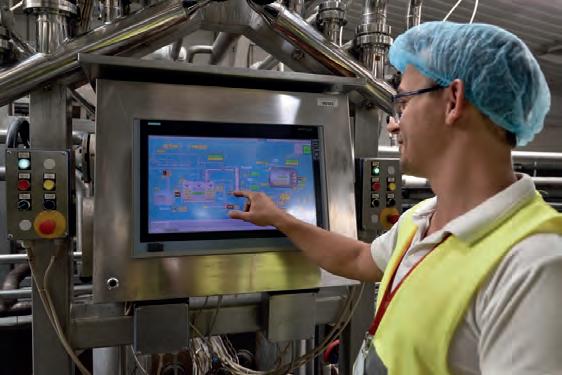
GGNT expands certified organic EXBERRY® color range with new vibrant pink
NT has extended its plantbased EXBERRY® Organics portfolio with the launch of a new pink color that delivers bright shades in a wide range of food and beverage applications.
GNT has extended its plant-based EXBERRY®

new pinkcolor thatdeliversbrightshadesin applications.
EXBERRY® Organics Brilliant Pink is a liquid-based concentrate made from purple sweet potatoes grown in compliance with both EU and US organic standards. It is created using physical processing methods and supports simple label declarations, such as “concentrate (sweet potato*)” (*from certified organic agriculture) in the EU and “organic vegetable juice for color” in the US.
The new shade provides a vibrant pink color and is designed to perform well in formulations that require high heat processing. It is well-suited to low-pH applications including beverages, gummies, chewy toffees, frozen desserts, yogurt, and fruit preparations.
Anne van der Meijde, Product Manager at GNT Group, said: “The organic sector is seeing renewed interest as consumers look for more natural and sustainable food and drink, but there can be a perception that these products are less indulgent. EXBERRY® Organics Brilliant Pink helps manufacturers create attractive, appetizing organic products without having to compromise on the ingredient list.”
the organic EXBERRY® range
The EXBERRY® Organics range features a broad spectrum of shades,
including pink, red, purple, blue, green, orange and yellow. This gives manufacturers the tools they need to match both visual and technical requirements across product categories. Anne van der Meijde said: “At GNT, we pride ourselves on offering a wide range of plant-based coloring
solutions to meet different application requirements. Our experts will work with manufacturers to select the best coloring solution for their project needs and help them achieve the results they need.”
EXBERRY® Organics Brilliant Pink is a liquid- ba potatoes grown in compliancewith both EU physicalprocessing methods and supports simplelabeldeclarations,such
www.exberry.com

Annevan
derMeijde,ProductManageratGNTGroup,said:
D.C.M. is the Italian company that has been operating for over 50 years in the trade and installation of automation machinery and is the exclusive representative of Autonox Robotics.
Alongside the established parallel kinematics (Duopods and Deltas), adopted by an ever-increasing number of leading automatic machine manufacturers in their respective sectors, the product portfolio is now enriched with serial kinematics, designed to tackle a variety of tasks with maximum versatility.
Duopod, Delta robots from 3 to 5 axis, articulated robots from 3 to 6 axis, and SCARA make up a broad
range of more than 350 different mechanical designs, all characterized by their independence from the controller and visible on the online catalogue “autonoxfinder”
Thanks to robotic mechanics that are independent from the control system, users can configure application-specific systems for any industry: food
and beverage, pharmaceutical, logistics, cosmetics, end-of-line, and more.
With its “Best Robotics in Components” concept, the company offers robotic mechanics that adapt to the production environment—rather than the other way around.
Thanks to this, robots and machines within production lines merge into a
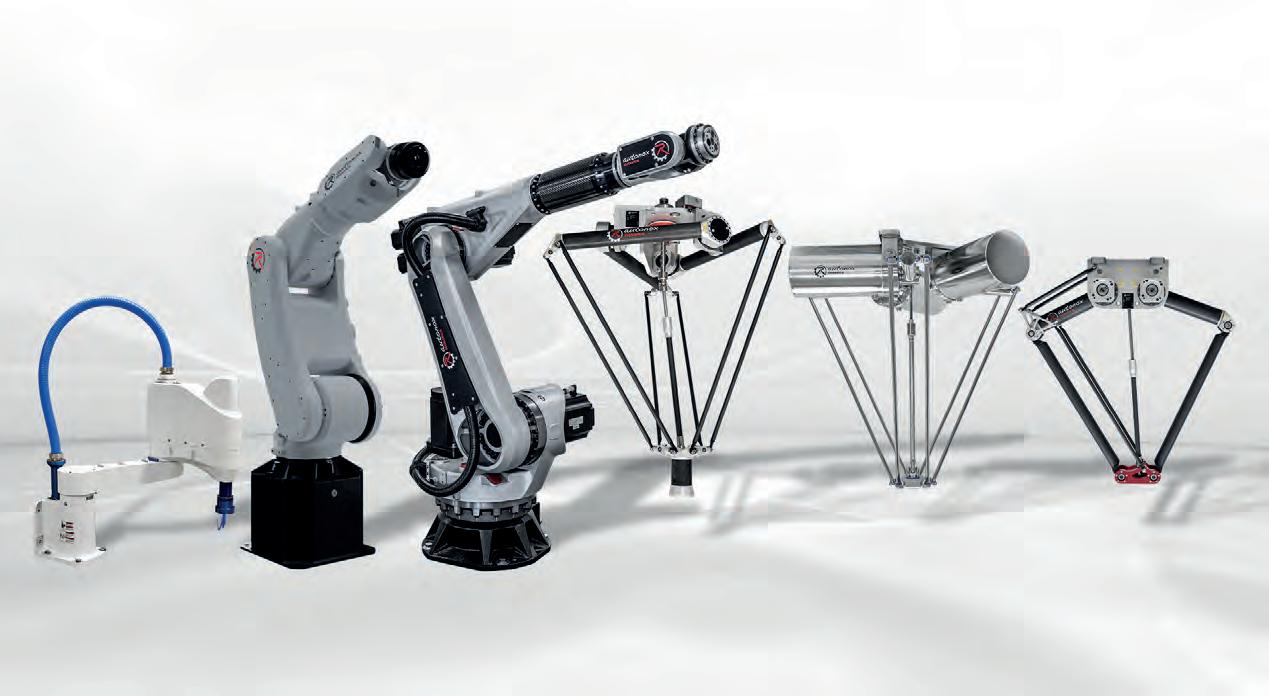
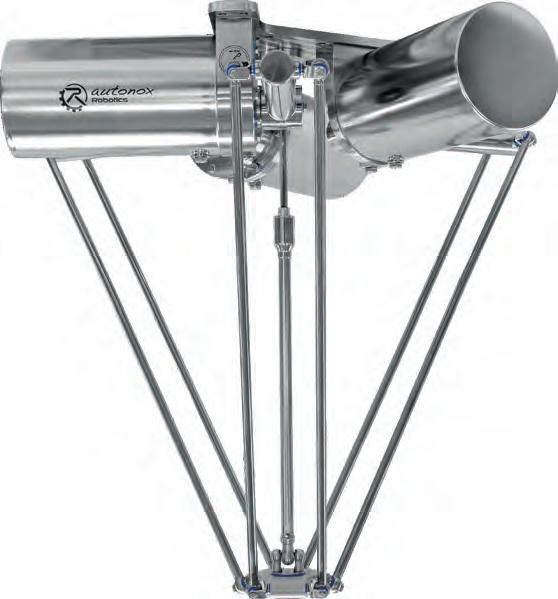
single unit. Since control interfaces are no longer required, users benefit from a highly integrated and autonomous system with a unified control platform.
The hardware-level advantages of this model are numerous: elimination of hardware duplication, freedom to change the controller according to customer specifications, reduced footprint, and centralized remote control. There are also significant software-level benefits: leveraging existing programming language expertise, full ownership of the entire automation solution (including the robot), and opportunities to develop unique, high–value-added solutions.
In addition, to help customers choose the right mechanical solution more easily and quickly, Autonox provides autonoxFinder.
In the Food & Beverage sector, food safety is a top priority.
The hygienic design of machines and plants, especially for primary packaging, plays a crucial role in protecting food products. Alessandro Casiraghi, President of D.C.M., emphasizes
how the proper design of machinery is essential to avoid the accumulation of product residues and detergents. “Our customers, ranging from coffee to chocolate to bakery products, require high hygienic standards. For this reason, the ease of cleaning materials and surfaces is essential.”
The Hygienic Design robotic solutions offered by D.C.M., are designed to comply with the strictest safety and hygiene protocols, thanks to the use of food-compliant materials and protection up to IP69K. These robots feature an advanced cleaning system with pressure washers capable of reaching 28 bar, ensuring rapid and efficient cleaning even under the most challenging conditions.
D.C.M.’s offering is not limited to primary packaging. The range of industrial robots under the autonox Robotics brand includes highly performing models such as Duopods, Delta robots, Articulated and Scara robots.
Visit: www.dcm-italia.it
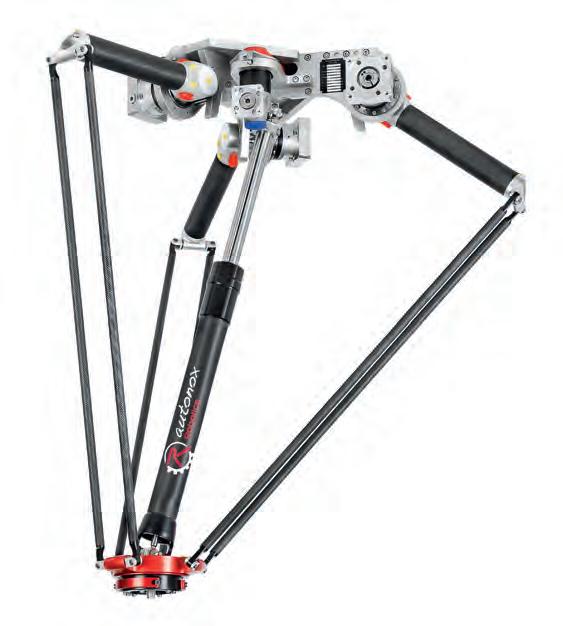
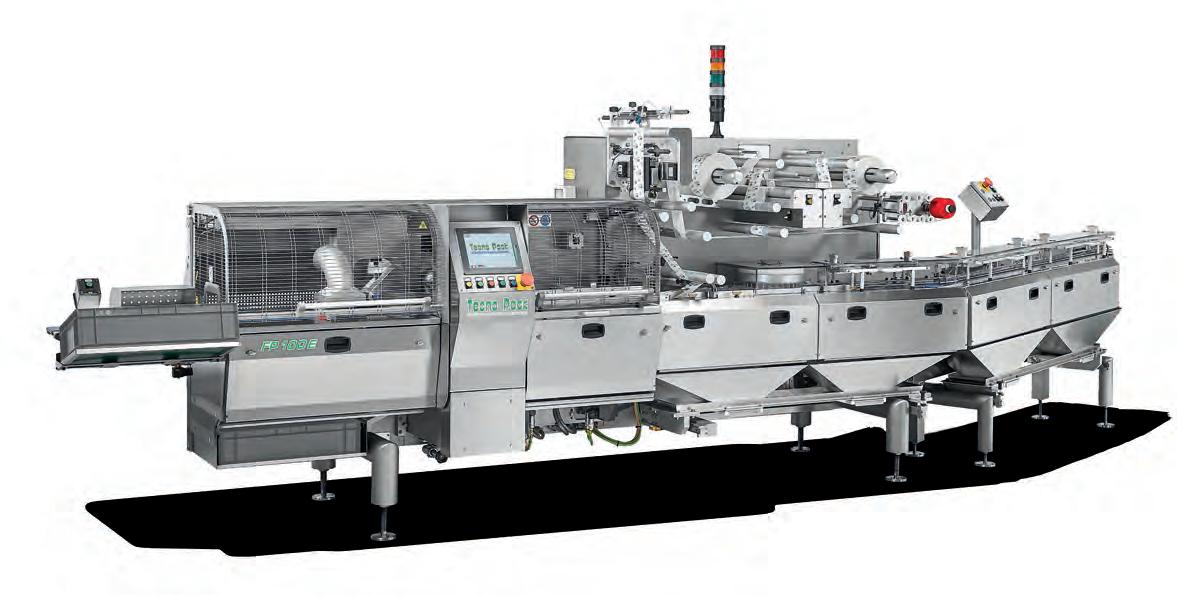

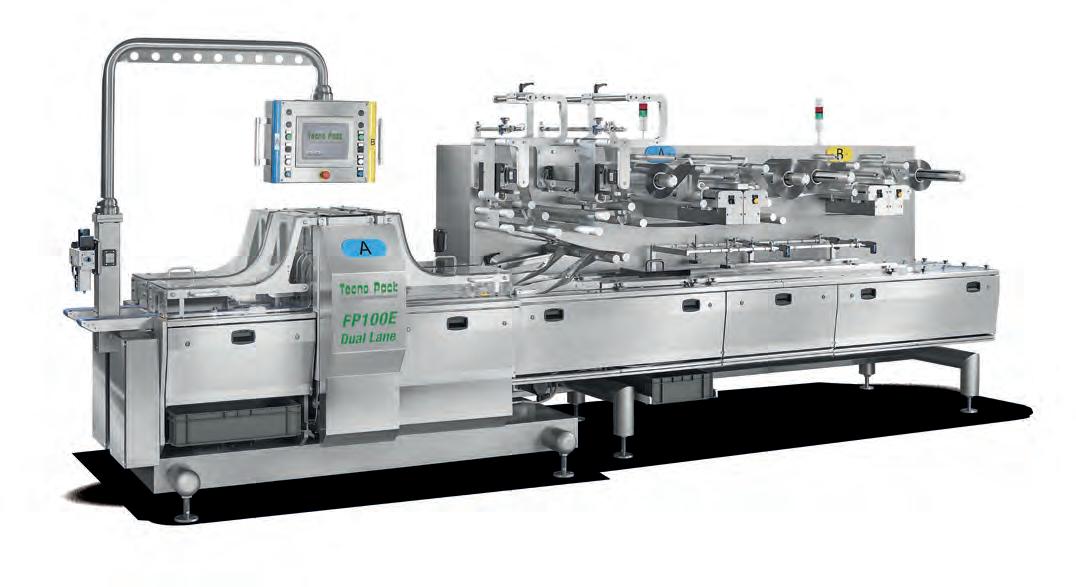

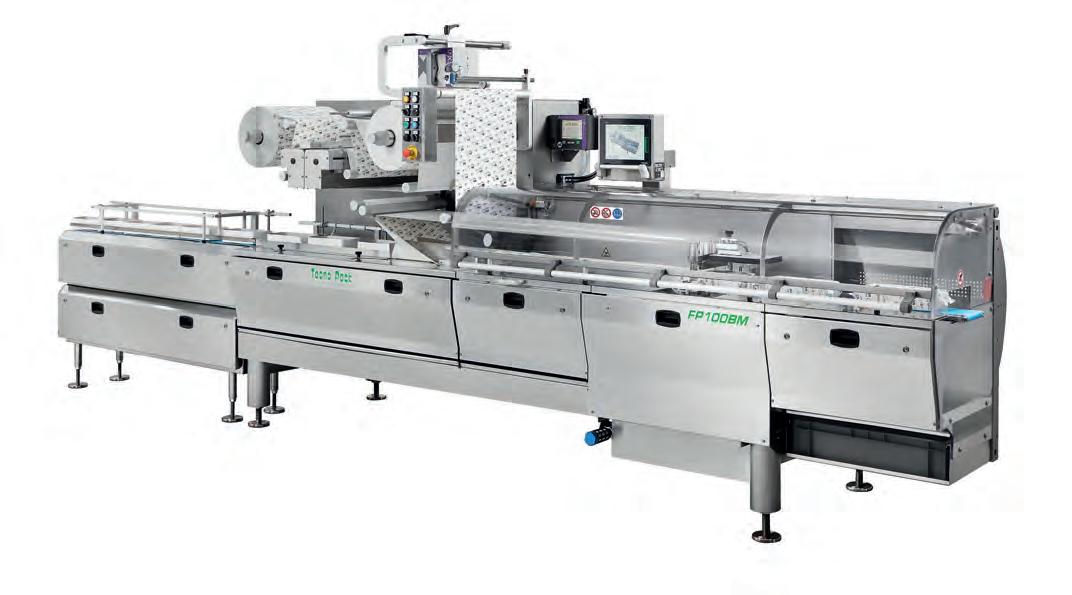
by SONIA V. MAFFIZZONI BENNATI Editorial Manager

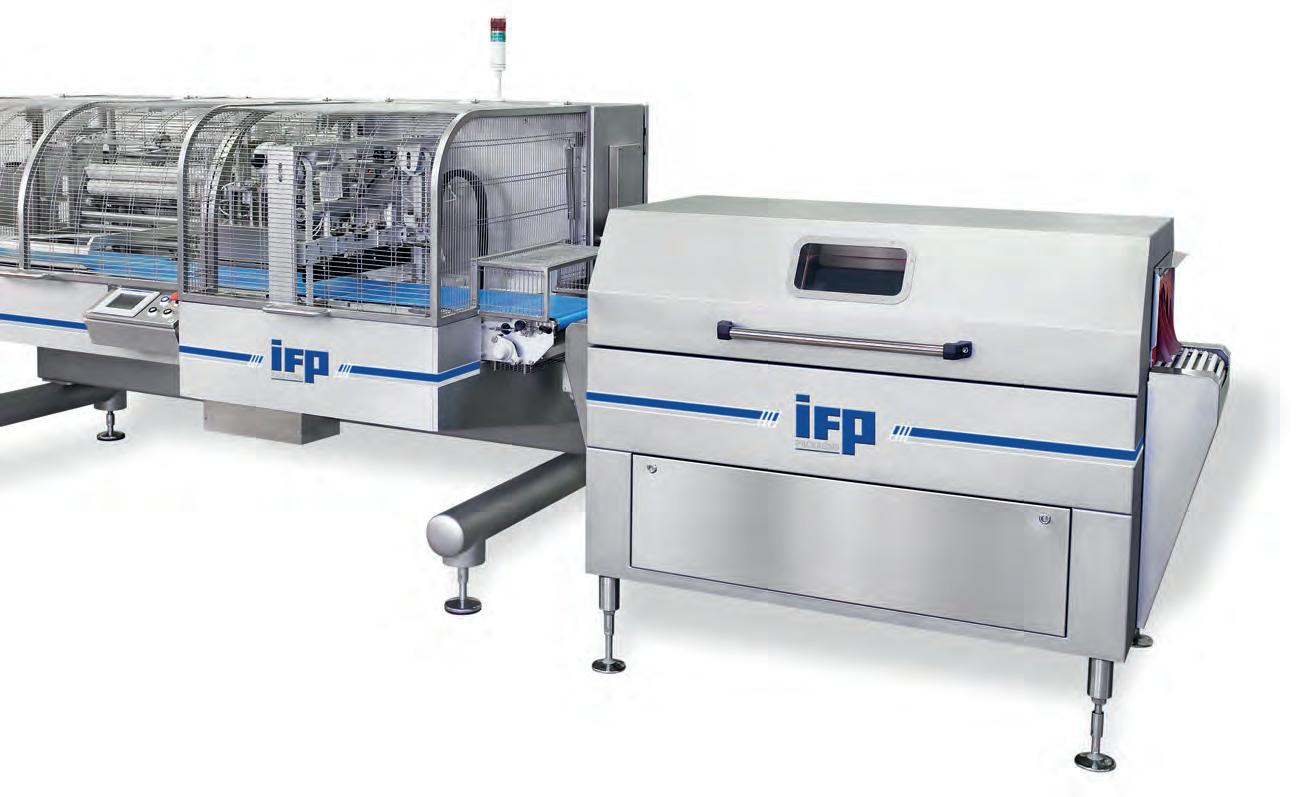
In the context of Calabria’s exceptional culinary landscape, Panificio Colacchio stands out as a unique reference point, where tradition, innovation, and quality merge in an extraordinary combination. This company is much more than just a producer of gastronomic delicacies; it’s a perfect example of how traditional art can be improved and amplified by modern technology
The Calabrese Tradition: A Heritage to Preserve
Panificio Colacchio is deeply rooted in Calabrese tradition, and this heritage is a treasure that the company commits to preserve and enhance.
The artisan techniques, handed down from generation to generation, are the very essence of this company, a continuous homage to the authentic gastronomic culture of this region.

The company embraces modern technology to elevate Calabrese delicacies to new heights of quality and taste.
A striking example of this synergy between old and new is the use of packaging machines from the TECNO PACK group of Schio.
These packaging machines represent a step forward in quality and safety of packaging.
The provision of more than one horizontal packaging machine, including a special H4S machine for creating a bauletto bag with four perimeter welds and a double bottom with folded fins in paper film for Diamond line long pasta with a Shrink Tunnel, is an example of Colacchio’s dedication to quality and innovation.
The shrink film packaging machine for trays & Traditional Friselle with horizontal single fold offers significant advantages.
Its cantilevered structure facilitates sanitation and accessibility to main components, ensuring both hygiene and safe maintenance.
The combination of tradition and high-quality technology results in an exceptional outcome for Colacchio
Here, the past is respected and honored, ensuring that the historical roots never fade away.
But what makes Panificio Colacchio truly special is its ability to combine tradition and innovation harmoniously.
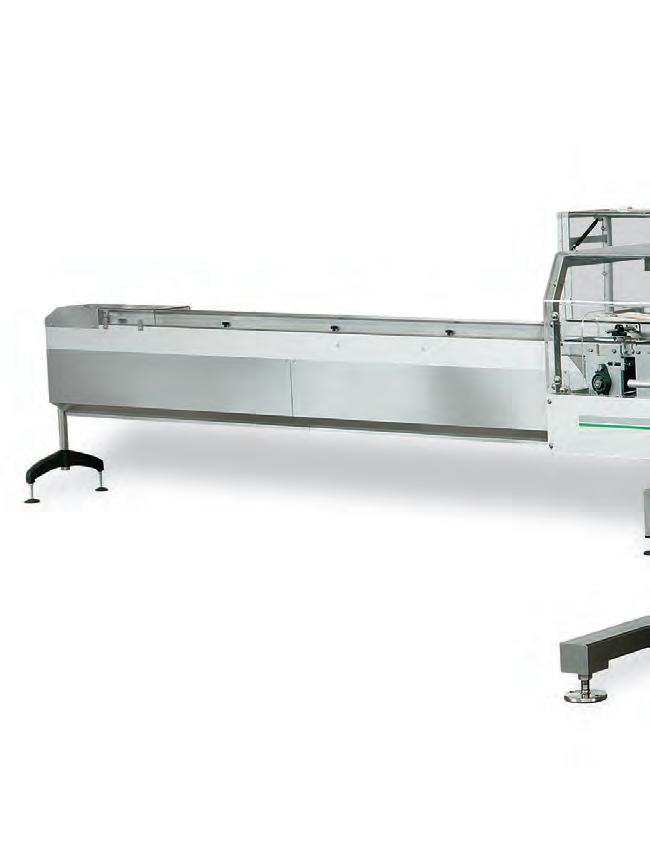
products. Each delicacy, carefully packaged, is a celebration of Calabria, where tradition meets culinary perfection.
Quality is the watchword, and every step of the production process is aimed at ensuring that each bite meets the highest expectations of customers. In conclusion, Panificio Colacchio is an example

of how tradition can thrive and grow through innovation and high-quality technology. Here, every product is a testament to the love for Calabria, the passion for culinary perfection, and the dedication to uncompromised quality. Each bite is a journey through the history and future of gastronomy.






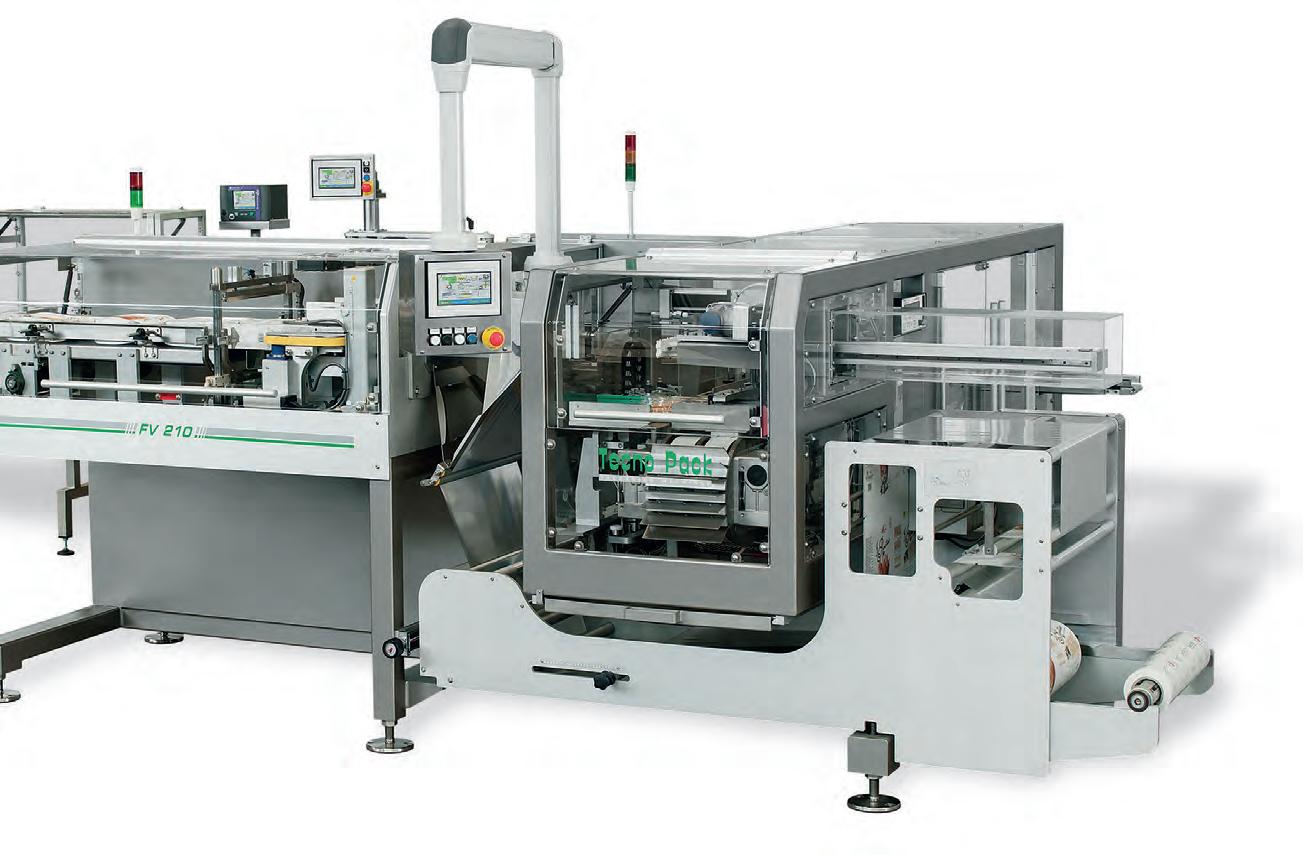
Sonia Bennati INTERVIEWS and STORIES that tell INNOVATION

Edited by SONIA V. MAFFIZZONI BENNATI
Labelling machines today are a strategic element in production lines: they must be precise, fast, versatile, and able to adapt to different sectors, from food to pharmaceuticals.
In this scenario, Altech has established itself as one of the key players, offering solutions recognized for their reliability and ability to meet market needs. Among them, a prominent role is played by ALritma, a model that has marked the company’s history and that, now in its fourth generation, comes with new features designed to meet the demands of an ever-evolving industry.
Paolo, let’s start from the beginning. What is ALritma and why is it so important in your range?
ALritma is an iconic model for us. We have been producing it since the early 2000s and today around 20,000 units are operating worldwide at our customers’ sites.
It’s a machine that has truly marked Altech’s history. While the name has never changed, the content has evolved.
We are now at the fourth generation, which we presented at Ipack-Ima in a renewed version.
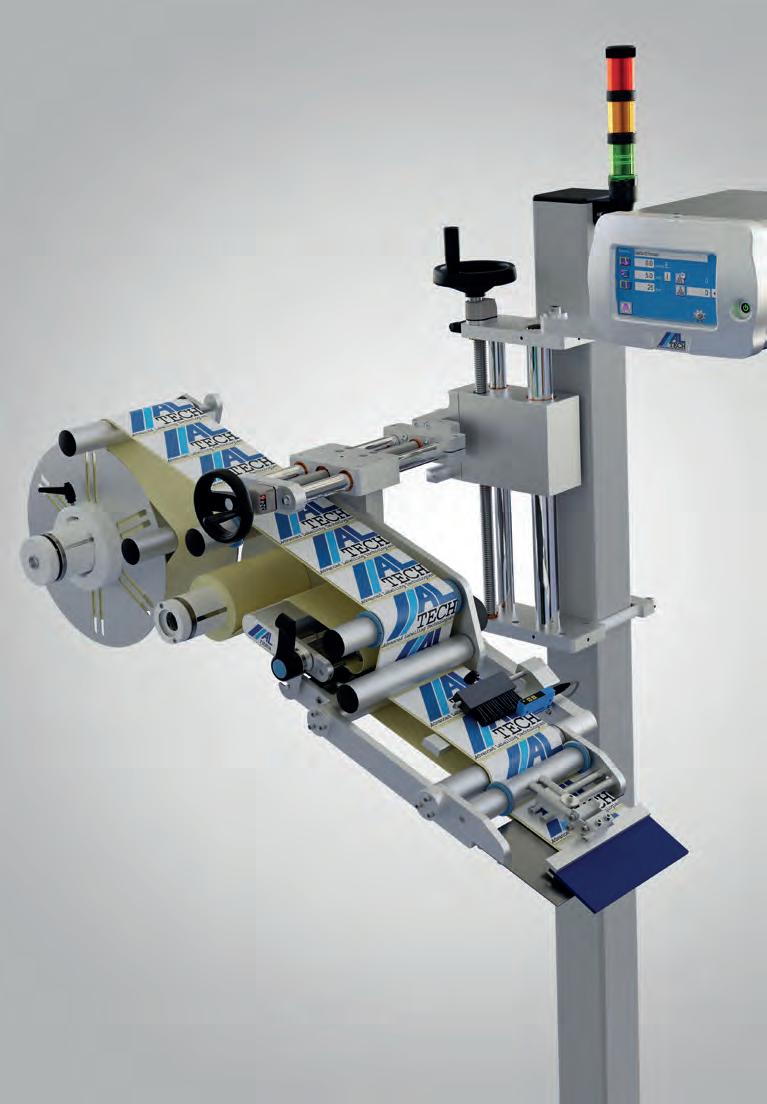


What are the main features of this labelling machine?
It’s a rather unique labeller, with universal characteristics. It can apply labels to virtually any type of product and is used across many sectors, from cosmetics, pharmaceuticals, until food, perhaps the leading one, as well as other consumer goods industries.
How important is modularity in a machine like this?
It is crucial. Since ALritma is a universal device, it must adapt to customer needs that can differ and evolve over time.
The new model, for example, allows additional devices to be integrated even after installation, such as printing units. It’s designed to provide maximum flexibility.

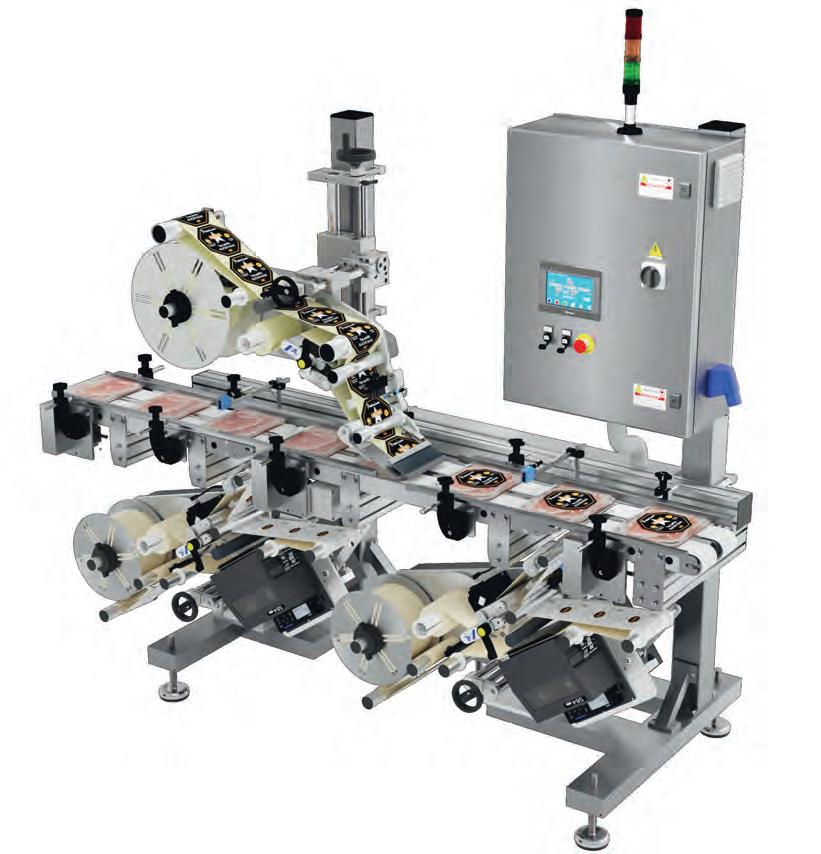
Sonia Bennati INTERVIEWS and STORIES that tell INNOVATION
So it’s a solution that follows market evolution closely.
Exactly Sonia.
One of the key features we introduced is the ability to reconfigure the machine easily.
We mounted the different components on adjustable supports, so the system can virtually change shape and adapt to each customer’s specific requirements.
With ALritma, Altech once again demonstrates its ability to combine technological innovation with long-term vision.
A product born twenty-five years ago, now renewed to continue ensuring efficiency, versatility, and reliability in today’s dynamic industrial environments.
www.altech.it
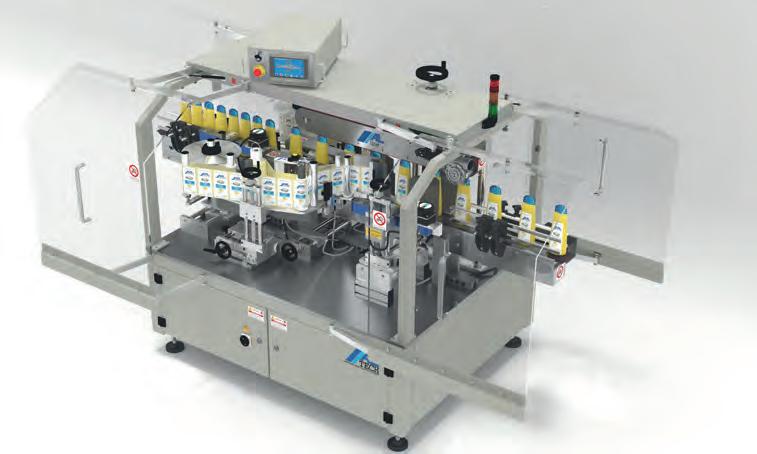
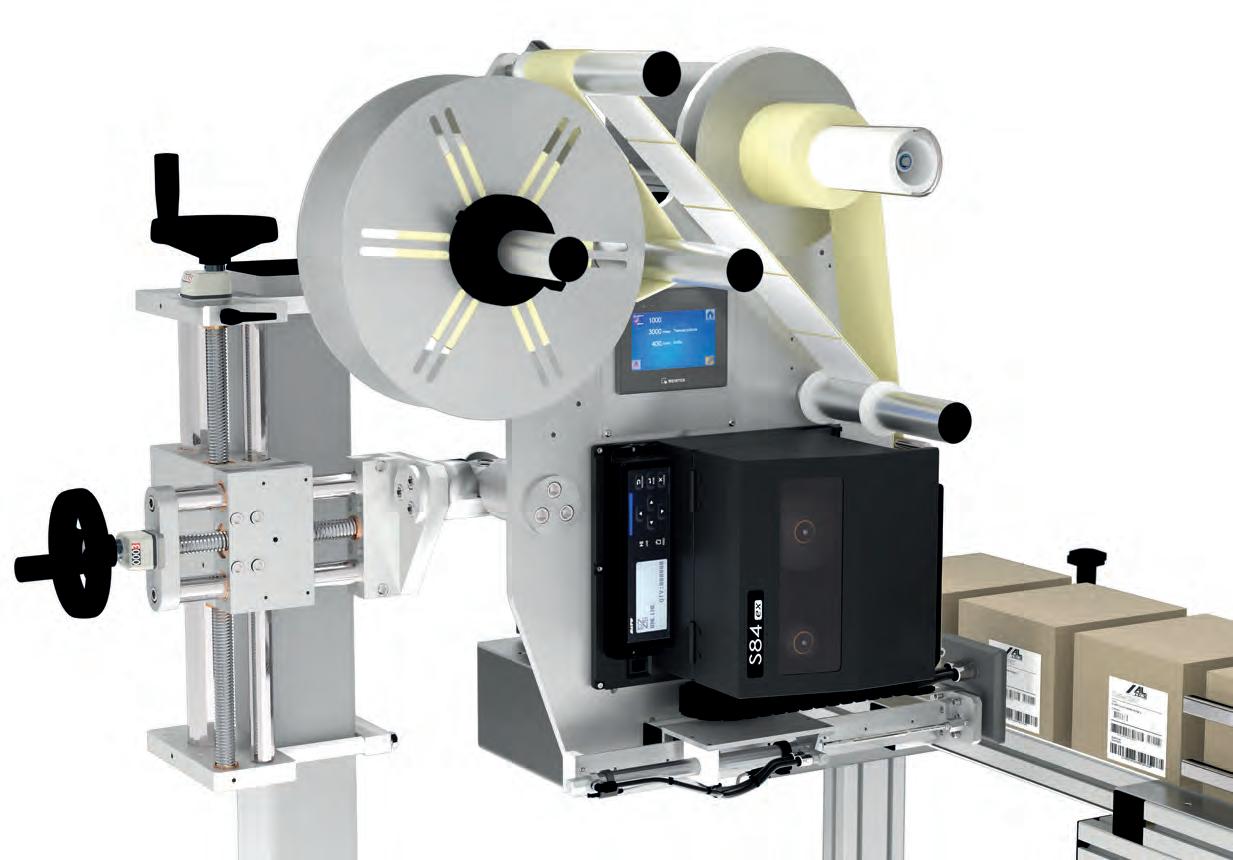
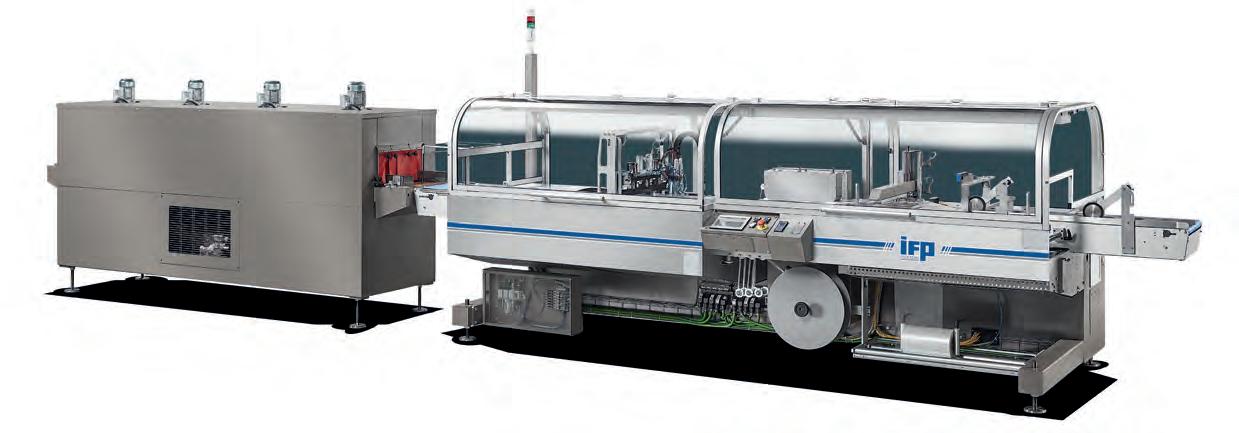
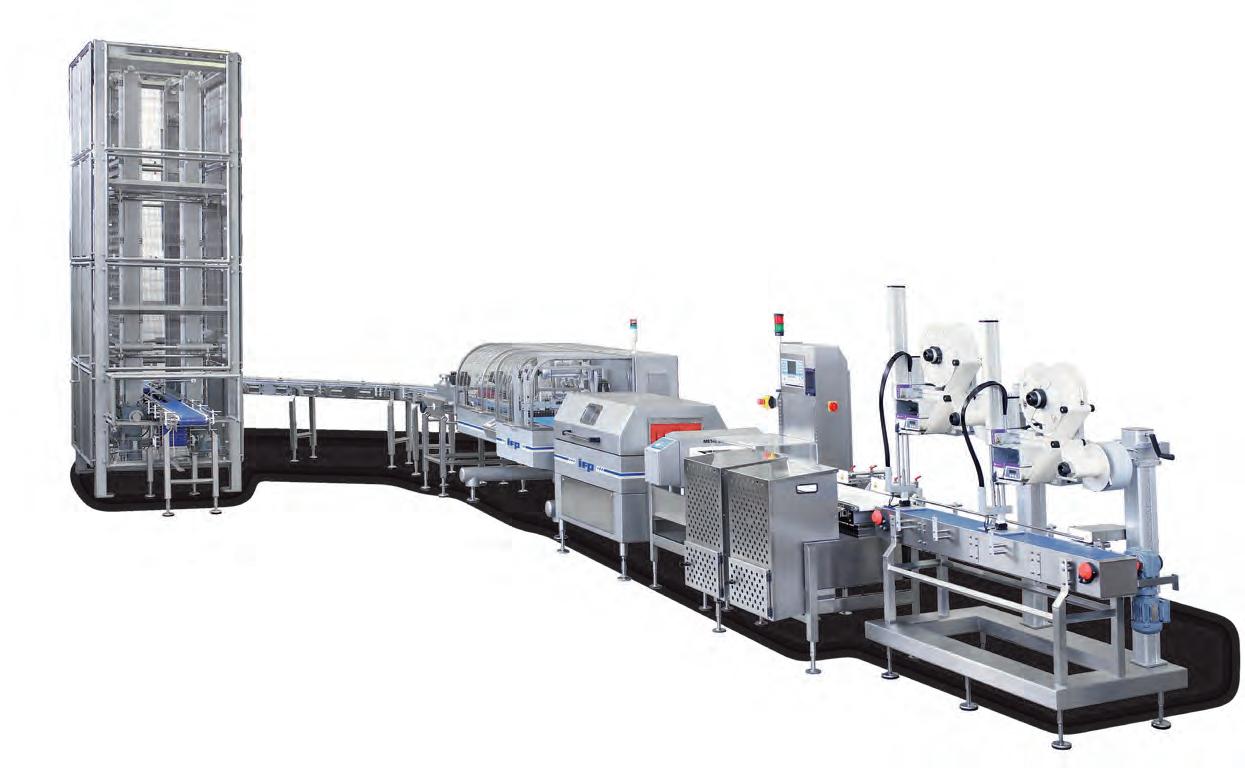

Every day, distributors, branded companies, industrial enterprises, and the packaging sector worktirelessly to achieve their packaging goals.
Among these, climate targets are particularly ambitious and need to be met in a very short time. The challenge is considerable, but the industry is determined to turn this necessity into an opportunity to innovate and improve.
In recent years, awareness of the environmental impact of packaging has grown exponentially. Consumers are increasingly attentive to sustainable choices, and companies must respond to these new needs with innova-

by the editorial staff
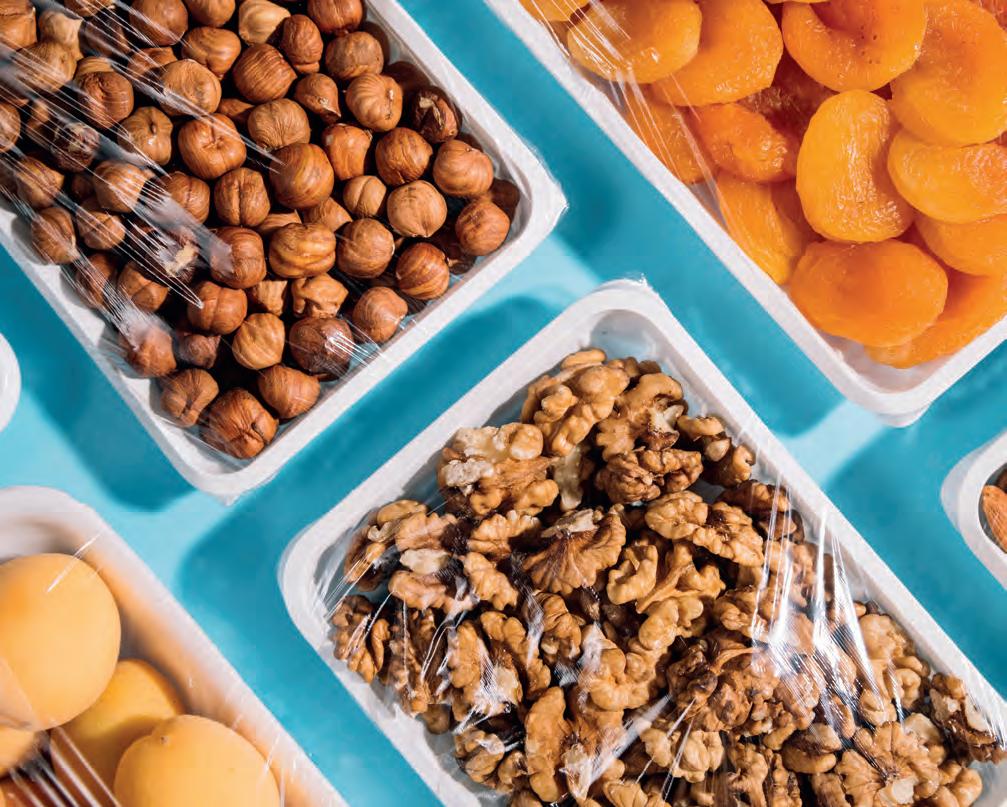
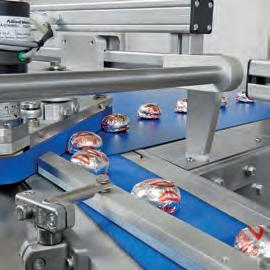

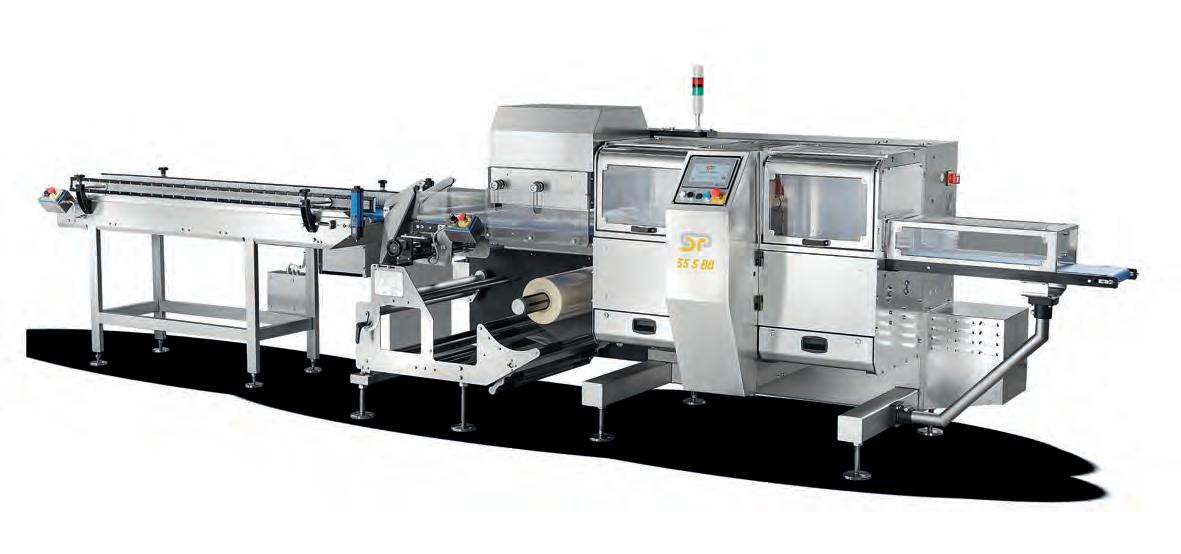
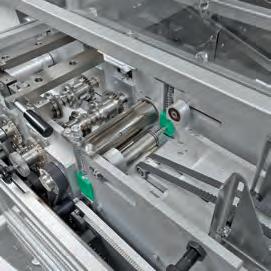
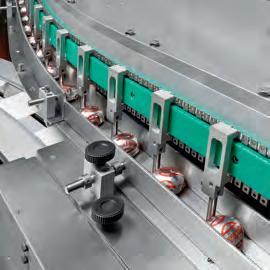
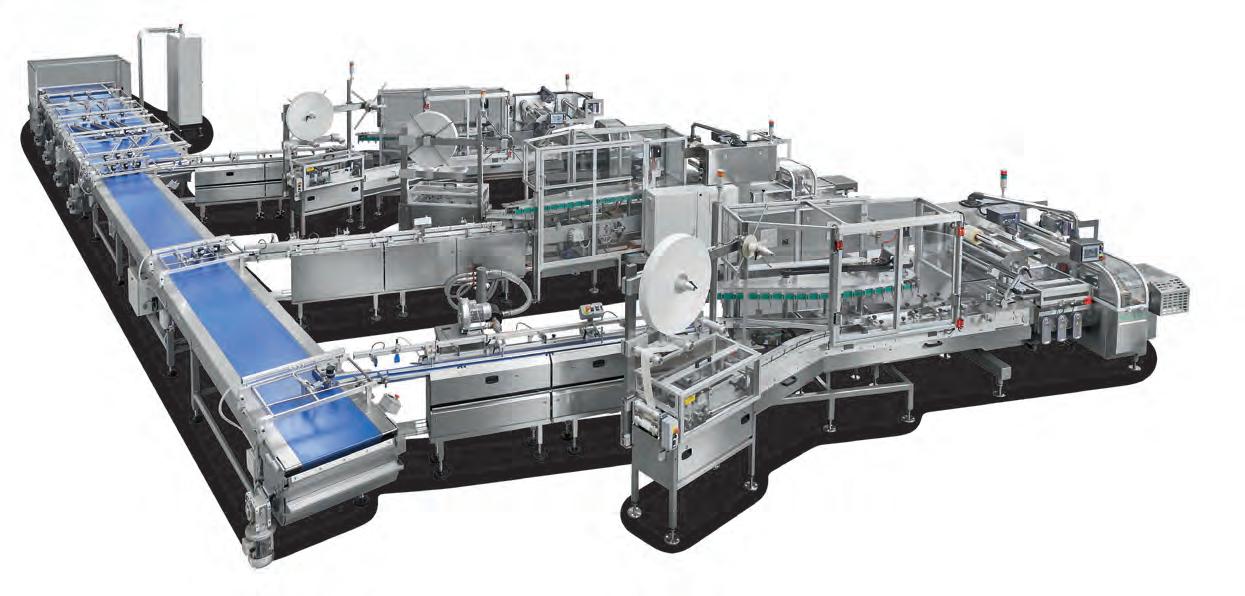
tive solutions. The European Union, for example, has established that by 2030 all packaging must be reusable or recyclable in an economically sustainable way. This directive has pushed many companies to review their production processes and invest in research and development.
One of the most promising approaches is the use of biodegradable and compostable materials.
These materials, derived from renewable sources, can naturally degrade without leaving harmful residues in the environment. However, their large-scale production still presents several challenges, including high costs and the need for adequate infrastructure for composting management. Despite this, many companies are successfully experimenting with new materials, demonstra-
ting that a transition to more eco-friendly packaging is possible.
Another crucial aspect is the reduction of plastic use. Plastic, although a versatile and convenient material, is one of the main contributors to environmental pollution. Microplastics, in particular, pose a significant threat to marine ecosystems and human health.
To address this issue, many companies are reducing the weight of plastic packaging and seeking more sustainable alternatives such as glass, metal, and paper.
Technological innovation plays a fundamental role in this process. For example, the adoption of advanced printing technologies allows for waste reduction and improved production efficiency. Additionally, the use of

smart sensors in packaging can help monitor the quality and freshness of products, thereby reducing food waste.
Collaboration among various stakeholders is essential to achieve climate goals. Companies must work closely with material suppliers, governments, and non-governmental organizations to develop sustainable solutions that are economically advantageous and accepted by consumers. Circular economy initiatives, which promote the reuse and recycling of materials, provide a concrete example of how collaboration can lead to positive results.
Furthermore, consumer education and awareness are crucial. Companies need to transparently communicate their sustainability efforts and engage consumers in the process. Awareness campaigns and incentivized recycling programs can help create a culture of sustainability that goes beyond the mere act of purchasing.
The packaging sector is facing a historic challenge. Climate goals are ambitious, but they also represent a unique opportunity to innovate and transform the industry.
With the commitment and collaboration of all stakeholders involved, it is possible to create a future where packaging is sustainable, safe, and convenient for all.
The packaging industry can not only significantly contribute to the fight against climate change but also become a model of sustainability for other industrial sectors.



by Nicolò Giovannini
Key Account & Sales Area Manager of Universal Pack
Sustainability in food packaging is no longer driven by materials alone. Performance, process efficiency and digital integration are becoming equally decisive, pushing technology suppliers to support producers with integrated, long-term solutions.
Large food producers are increasingly adopting solutions that combine recyclable materials, reduced carbon footprint and smart manufacturing, while maintaining high standards in performance and food safety. In this context, packaging technology suppliers are expected to support customers with a systemic, long-term approach.
How does Universal Pack support food producers in selecting recyclable materials while ensuring performance and food safety?
At Universal Pack, the value of a packaging machine supplier goes beyond the machine itself and lies in the integration of sustainability, industrial performance and strategic vision.
The company acts as a long-term technological partner, supporting customers in their transition toward more sustainable and efficient
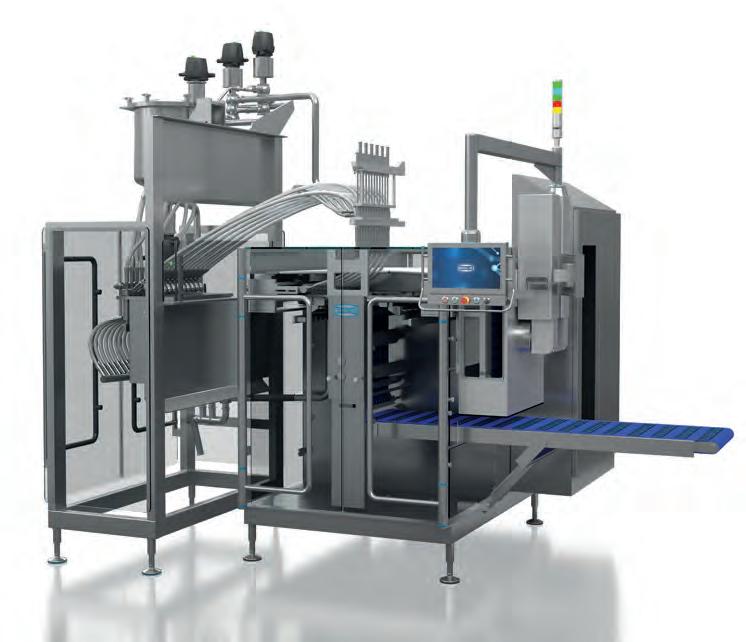
packaging solutions. The introduction of recyclable, paperbased and compostable materials represents a major industry shift, but also a technical challenge due to their heat sensitivity and complex processability.
Universal Pack focuses on making these materials fully compatible with its machines while maintaining, and in some cases improving, efficiency and packaging quality.
Extensive testing validates material performance, while final responsibility for barrier properties and food safety remains with customers and material suppliers, ensuring measurable sustainability benefits without compromising shelf life or product protection.
When addressing carbon footprint reduction, how important is an end-to-end approach combining material choices with machine and process efficiency?
An end-to-end approach is essential. Reducing carbon footprint is not limited to material selection, but requires optimization of the entire packaging system, from material to machine and process. This includes material downgauging to reduce weight without affecting integrity, alongside machine designs that minimize energy consumption and process solutions that reduce waste, start-up scrap and unplanned downtime.
This holistic approach enables tangible CO₂ reductions across production and logistics and supports the generation of reliable Life Cycle Assessment data, increasingly required by multinational food companies.
How do digitalization and smart manufacturing solutions contribute to more efficient and sustainable operations?
Digitalization is a key enabler for both efficiency and sustainability. Packaging machines are evolving into connected
assets within smart factory ecosystems, enabling monitoring of OEE, waste and energy consumption.
This data-driven approach helps identify inefficiencies, reduce unnecessary resource use and prevent unplanned stops through predictive maintenance.
At the same time, traceability and IT/OT integration with MES and ERP systems improve quality control and regulatory compliance.
With growing product complexity and shorter production runs, how does flexibility support competitiveness?
With more SKUs, private labels and shorter production runs, flexibility becomes a decisive competitive factor. Universal Pack solutions are designed for fast format changeovers, reduced downtime and the ability to handle different materials on the same line, including recyclable and paper-based solutions.
This flexibility allows manufacturers to move quickly from pilot tests to full-scale production, adapt to evolving sustainability requirements and protect their investments, while accelerating innovation and time-to-market.
As sustainability targets tighten and market complexity increases, food packaging is evolving into a strategic component of industrial competitiveness.
An integrated approach that combines materials, machine efficiency, digitalization and flexibility is increasingly shaping the future of the sector.
Visit: www.universalpack.it

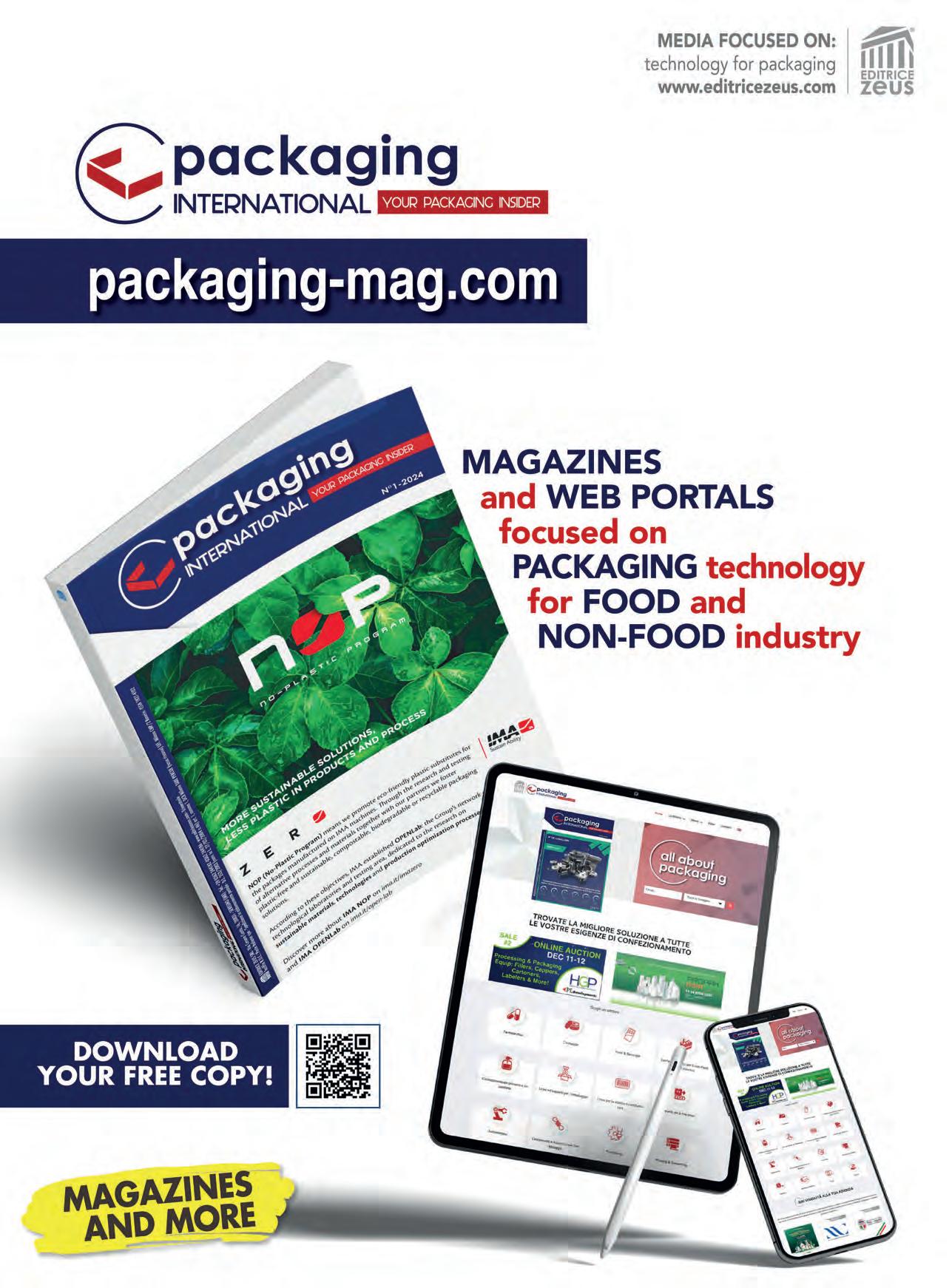
In the context of industrial automation and digitalization, cyber security is no longer a secondary issue, nor an exclusive of corporate IT systems.
Protecting production infrastructure has become an integral part of plant design, operational management and regulatory compliance.
This represents a cultural and technical shift affecting every manufacturing sector.
Digital transformation has expanded the attack surface, exposing industrial systems to new threats.
In the past, cyber security was mainly associated with protecting corporate networks and data.
Today, vulnerabilities directly affect machines, sensors, programmable logic controllers (PLCs) and entire production lines.
The consequences of a cyberattack can include system shutdowns, disrupted processes and significant economic losses. Adding urgency to the adoption of industrial security solu-
tions is the evolving European regulatory framework.
The NIS2 directive, approved in October 2024 and set to be implemented in national regulations within two years, imposes stricter security standards for all organizations deemed essential.
Alongside this, the new Machinery Regulation and the Cyber Resilience Act extend responsibilities both to equipment manufacturers and end users.
In this scenario, risk can no longer be underestimated. It must be assessed and managed using appropriate tools, specific expertise, and shared governance.
Security must be integrated into plant architecture with solutions that can protect operational systems without compromising productivity.
This includes identifying vulnerabilities, segmenting networks, isolating critical devices and enforcing effective control policies.
Industrial cyber security has become
a discipline in its own right, requiring dedicated technical approaches and continuous updates in response to evolving threats.
It is not a matter of installing a simple antivirus or generic firewall, but of deploying tailored solutions for operational environments, solutions compatible with the continuity and reliability demands of machinery.
Major industry trade shows and technical events are also dedicating growing space to this topic, promoting discussion and knowledge-sharing among experts, companies, and stakeholders.
This confirms that security today is no longer a reactive measure, but a structural prerequisite for modern industry. In an increasingly connected manufacturing ecosystem, where every machine is a potential entry point, investing in cyber security means protecting the present and preparing for the future, with one clear goal: making automation not only efficient, but also resilient.
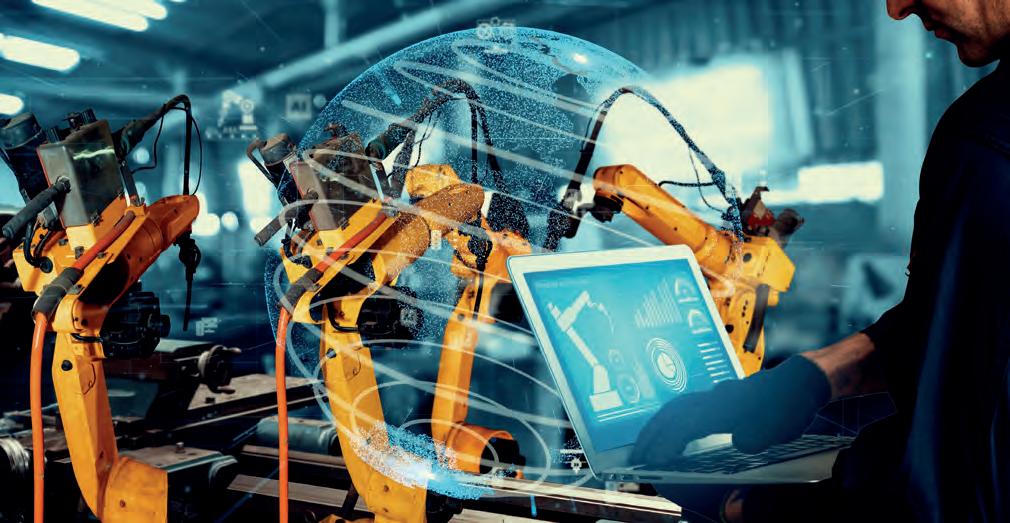

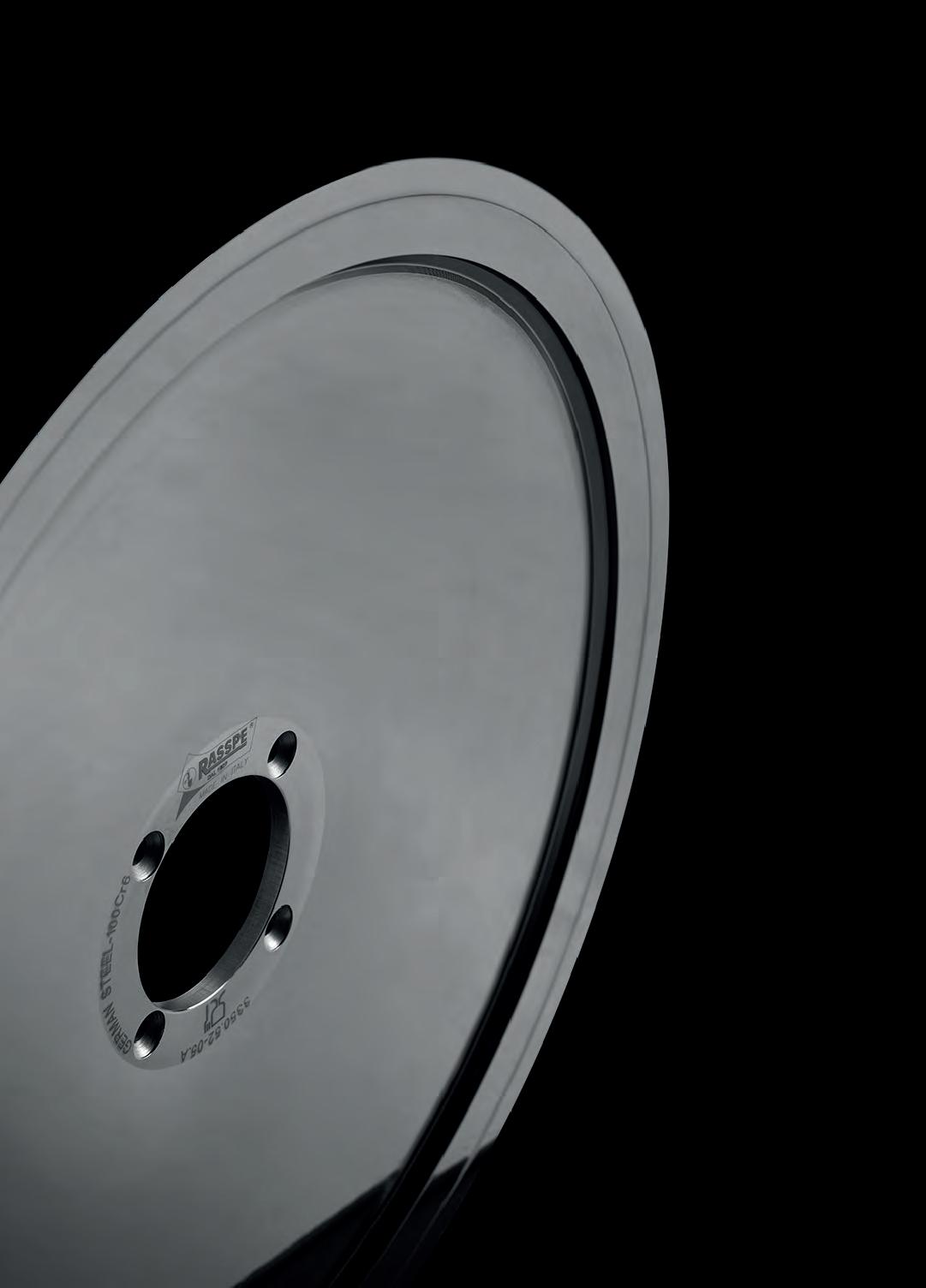

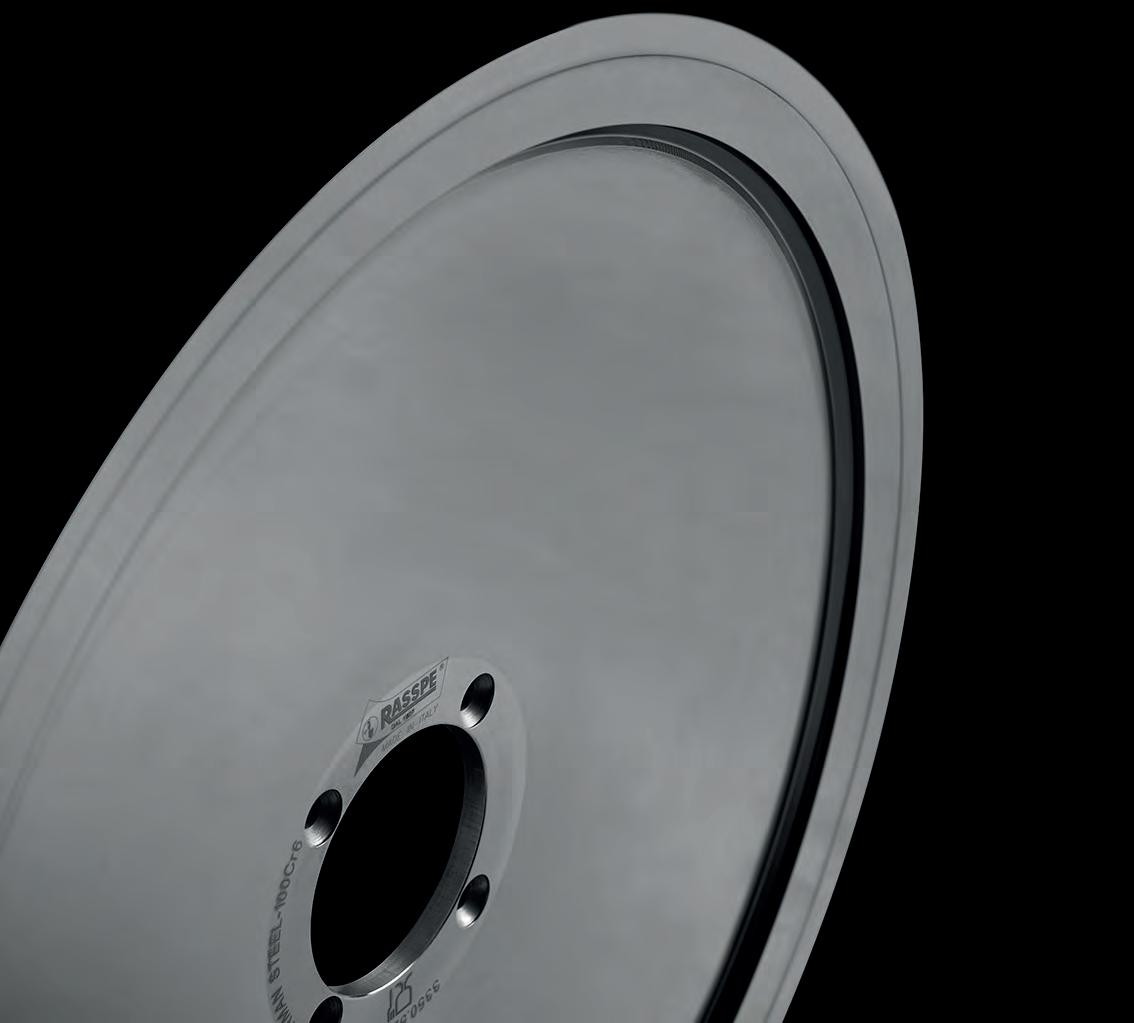
With origins dating back to 1827, RASSPE is the oldest and most iconic brand of slicer blades in the world. Today, this historic name lives inside the innovative ecosystem of Chiaravalli Group, where tradition and advanced industrial engineering meet to create one of the market’s most reliable slicing solutions. Entirely Made in Italy, RASSPE Blades combine decades of craftsmanship
with the production power of a multisectoral group. Every stage — from design to machining, induction hardening, grinding, polishing and chrome finishing — is carried out in-house using state-of-the-art CNC technologies. This fully integrated workflow ensures maximum quality, consistency and performance, with over 30,000 blades produced monthly and a vast warehouse ready to serve global OEMs.
RASSPE’s product offering includes more than 150 blade models, engineered to meet the needs of professional slicer manufacturers and distributors.
Key technological solutions include:
• Third Generation (3G) Blades

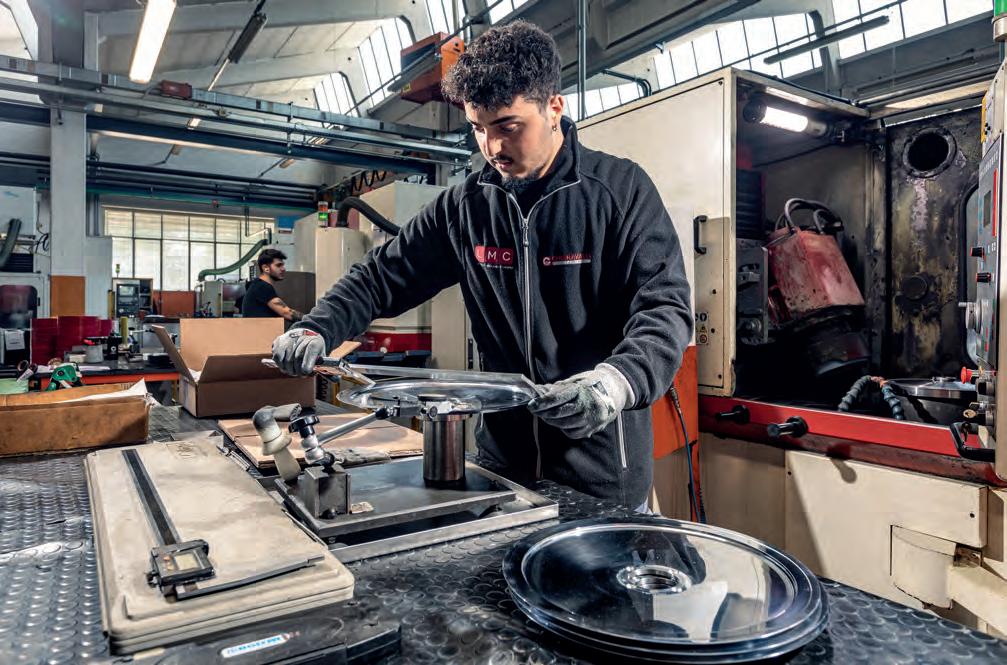
A patented double-level profile that reduces friction, keeps the blade cooler, minimises product adhesion and delivers exceptionally thin, clean slices.
Ideal for deli meats, cheese and vegetables.
Designed for products requiring greater grip: perfect for bread, semi-frozen meat and semi-frozen fish. Available in multiple tooth geometries.
To enhance smooth slicing — especially on cheese — RASSPE offers both traditional Teflon and innovative PFAS-freecoatings, ensuring improved hygiene and reduced residue. Finishes can be combined to create the ideal cutting solution for any product type, ensuring maximum versatility and performance.
Supported by Chiaravalli Group’s expertise in industrial mechanics,
food-processing equipment, RASSPE Blades are positioned as a strategic pillar of the Group’s Food Division. This synergy enables continuous innovation, reliable supply capabilities and a growing presence in more than 37 countries worldwide. For manufacturers seeking consistency, precision and a partner with deep technical roots, RASSPE Blades by Chiaravalli remain a benchmark in professional slicing technology — a perfect blend of heritage, engineering excellence and modern production strength

Colussi Ermes has been synonymous with innovation and quality for over 50 years, but at the heart of the success lies the dedication of the people behind the brand. Engineers, technicians, designers, and customer support specialists work with passion every day to satisfy all customers’ needs and to develop solutions that truly make a difference.
Compact machine design, energy consumption reduction, minimal consumption in water and detergent use, automatic cycles, loading/offloading automation, and analytical and monitoring tools are just a few of Colussi Ermes sustain-

ability benefits. Hygienic design, rounded shapes, impeccable water draining, and easy access to any zone, guarantee absolute hygiene. Global leader in the design and production of advanced washing and drying systems for the food industry, Colussi Ermes has become specialized not only in the bakery,
confectionery, fruit & vegetables, meat, dairy, poultry, and fishery sectors, but also in more complex fields such as the pharmaceutical, hospital, logistics and automotive sectors.
Colussi Ermes is a globally recognized company with over 7,000


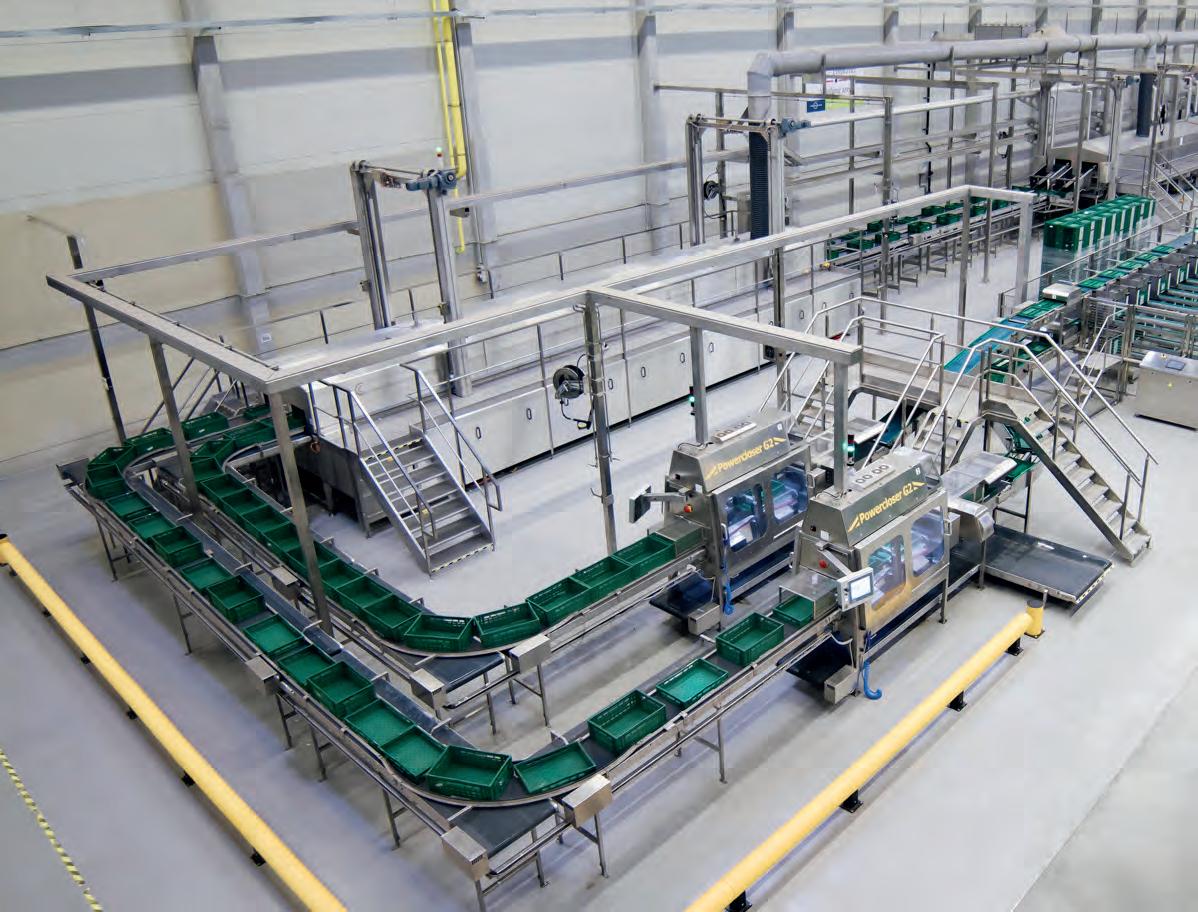
MAXIMIZE SANITATION SAFER DESIGN, EASIER CLEANING
INCREASE YIELDS RAISE PROFITABILITY

ACCELERATE PROCESSING IMPROVE THROUGHPUT
MAINTAIN CONSISTENCY HIGHER QUALITY
REDUCE COSTS OPERATING AND CAPITAL
PRACTICE SUSTAINABILITY OPTIMIZE ENERGY CONSUMPTION
EXPAND CAPACITY MORE PRODUCTION

washing systems installed worldwide. Since July 2022, it has been a proud division of Middleby Food Processing, a leader in the industry that brings together a portfolio of world-class brands with cuttingedge, complementary technologies. As part of Middleby, Colussi Ermes contributes to delivering best-in-class, full-line solutions for food production, ensuring the highest standards of quality, efficiency, and innovation for customers worldwide.
Here’s an exclusive preview of the Colussi Ermes innovative systems.
Automatic and highly versatile systems for washing and sanitizing crates and baskets, suitable for all sectors of production, ensuring impeccable washing for any type of crate, and providing the best results in terms of hygiene. The production range includes cabin or tunnel systems for washing trays with the possibility of selecting various options: one, two, or three tracks, horizontal or vertical. Advanced automation and intelligent handling systems improve workflow, maximizing productivity. Customization of hourly wash cycles, from just a few pieces up to 10,000 crates/hour, allows for maximum flexibility to meet diverse production needs.
High capacities – up to 4200 crates/hour with the double-rotor spin-dryer and up to 2100 crates/ hour with the single-rotor spin-dryer –speed and perfect drying result are the key features that set apart this new generation of Colussi Ermes spin-dryers along with the possibility to dry different type of crates, foldable or rigid. this machine can dry a high number of crates with a minimum footprint. In just a few seconds the Colussi Ermes spin-dryer can achieve excellent drying with low electrical energy consumption,
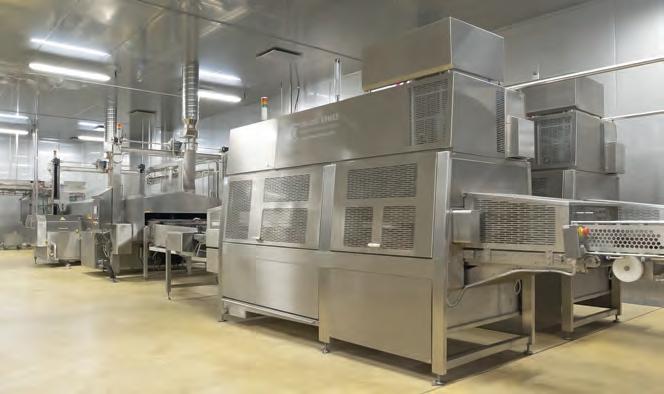
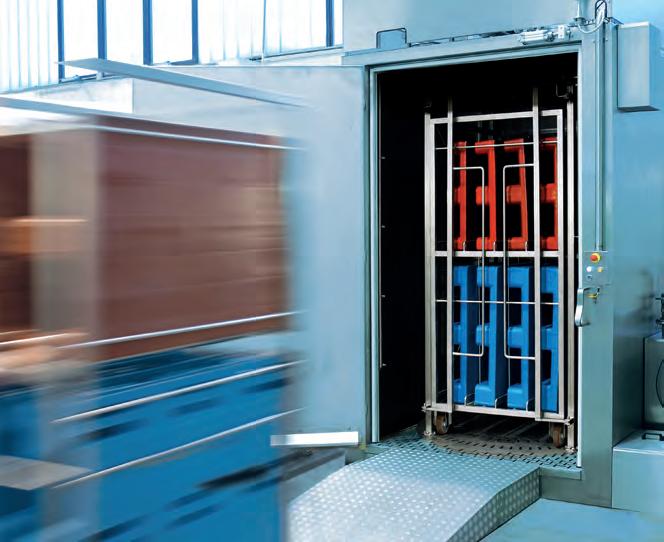
making this both an efficient and cost-effective solution.
The rack washing systems have been carefully engineered to wash racks carrying different kinds of equipment. Using specific frames or special trolleys, it is possible to wash pans, crates, pallets, bins, meat-trucks, containers or isotainers fully respecting the highest washing and sanitizing hygiene standards. In this cabin version, the equipment are placed on special trolleys that are perfectly washed thanks to the slow
rotation of the loading platform, which allows the washing solution to reach the entire surface of the trays and components: its unique and innovative centrifugal system allows a significant reduction of energy consumption and space while guaranteeing the maximum efficiency on washing and drying. The cabin can be equipped with one or two doors, available in manual, automatic, or pass-through options.
The washing capacity is very flexible: from a minimum of 20 to a maximum of 120 racks/hour.
www.colussiermes.com
Satinox has been manufacturing perfectly welded stainless steel bowls for more than 30 years. They are made by hands to fit the machines used to knead and mix dough for the bakery and pastry sector as well as for the chemical and pharmaceutical sector.
The company was founded in 1982 and since then it has been a strong believer in the value of manual metalwork fabrication
All bowls are made by expert and specialized workers, able to manufacture robust, versatile and long-lasting tailor-made products.
Satinox can count on a team that works together with passion and professional expertise, uses high-quality materials and is continuously fine-tuning its metal fabrication and welding techniques.


In fact technical expertise and knowledge go hand in hand with the quality of the materials and the ability to turn traditional artisan metalwork fabrication into expert joining technique.
From project development to product manufacturing careful examination of any special production needs is definitely essential to find the ideal solu-
tion to optimize bowl performance, and consequently machine performance.
Strict compliance with the drawings, the painstaking attention to tolerances along with machining precision guarantee tailor-made products of any shape and size.
www.satinox.com
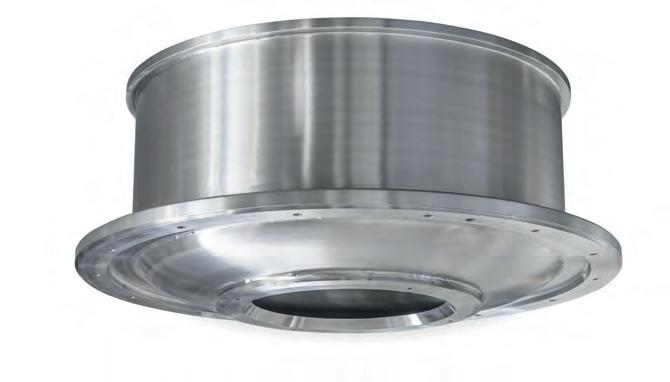
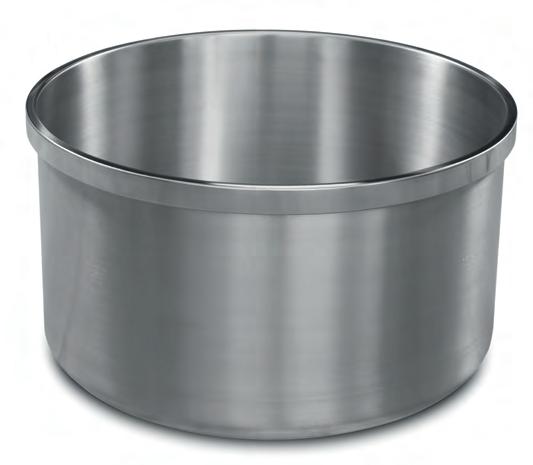
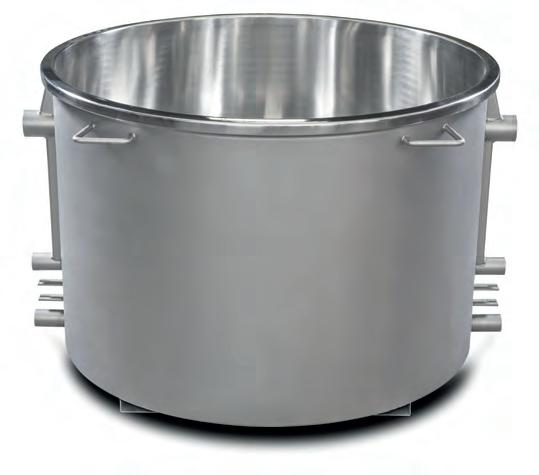
When a company has 80 years of experience behind, every machine becomes a concentrate of quality and value.
In fact, this important milestone occurs in 2024: the historic company Sottoriva, founded in 1944 in Marano Vicentino (VI) Italy, is now a renowned manufacturing company that has proudly carried the Italian flag all around the world ever since.
It is a brand that over the years has become a quality synonymous of products and services offered to all its customers, grown from an artisanal business to a le-
ading role in the manufacturing of bakery machines and lines.
The passion for the “Art of Bakery” made the brothers Giuseppe and Claudio Sottoriva give life to what is now one of the world’s leading companies for the production of machinery, semi-automatic and automatic lines, designed for both small and large bakery companies.
Sottoriva’s range of machinery is totally designed and manufactu-
red in-house, in order to be able to guarantee its customers the highest possible quality and aftersales service, as well as proven durability over time. This is why Sottoriva products, constantly monitored at every stage of production, stand out for their safety, reliability and ease of use. The manufacturing unit, the heart of the company, avails itself of the collaboration of highly professional personnel, who take care of each single product thanks to
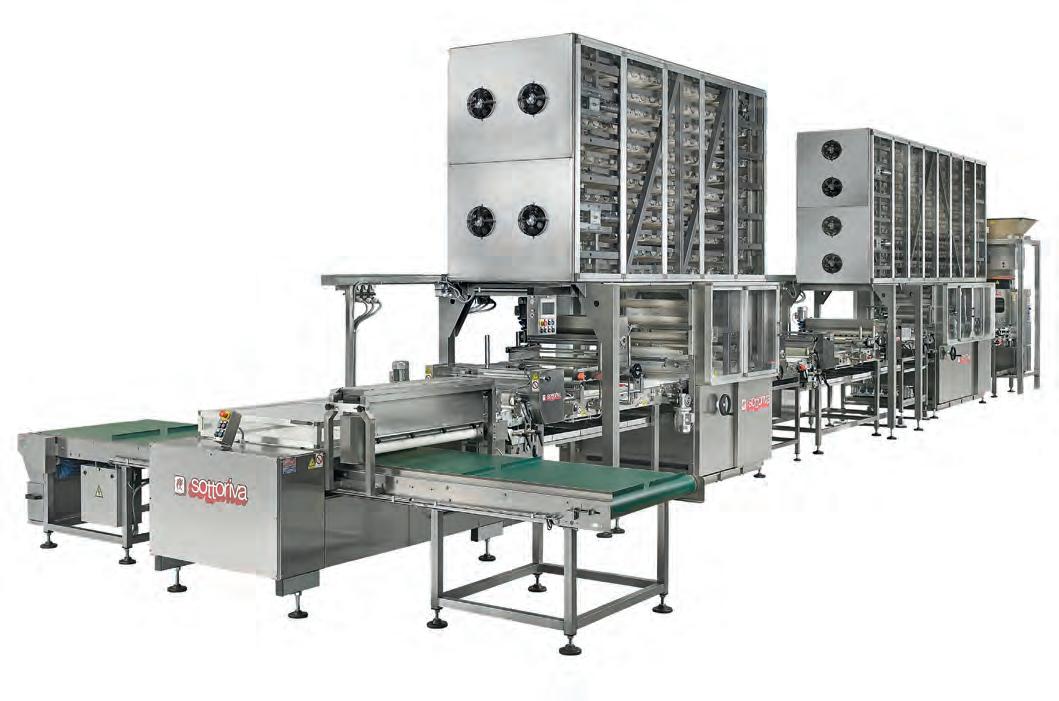
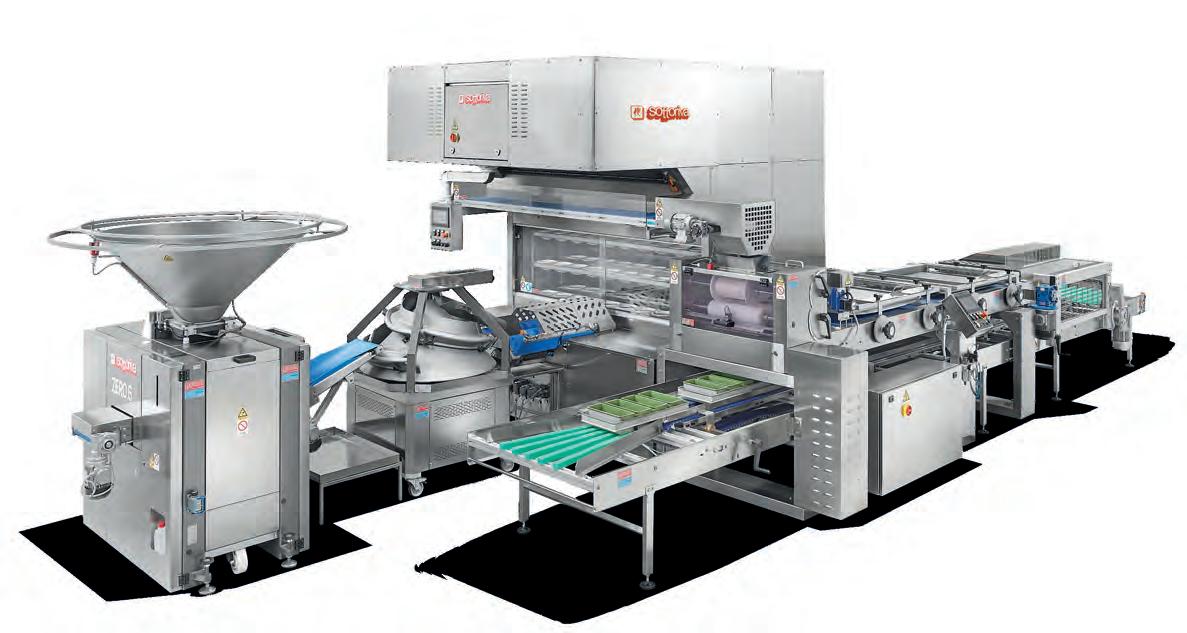
the support of the most modern technologies: from the Jgalileo management software to the three-dimensional CAD for mechanical and electronic design, to the CAM for the management of the software of computerized numerical control machines.
The wide range of products offered by Sottoriva varies from machines designed for small businesses, such as bakeries, pastry shops and pizzerias, which are well suited to a small but qualityconscious production, to customized automatic systems designed for large industrial companies.
Among the former, the iconic double arm mixers IBT, still manufactured in cast iron casting to guarantee extreme solidity and durability and the spiral mixers certainly deserve a mention.
Standing out among these is Sottoriva’s latest addition, the Sintesi +, a perfect combination of ex-
perience and innovation. Thanks to the new touch screen control panel, it can work both in manual and automatic mode, allowing you to memorise up to thirty recipes of eight phases each to manage mixing times, speed and any pauses.
However, it was in the second half of the 1990s that Sottoriva began to focus its attention not only on small bakeries but also on the large industries that were gaining a foothold in the bakery sector.
The emerging production needs require an increase in production in the shortest possible time, guaranteeing uniformity and consistency in the results: Sottoriva’s technology thus shifts to automatic plants and lines, which today represent an essential part of the production.
Such as the Bread Line, the flagship of the Sottoriva catalo -
gue: a line for the production of loaves and baguettes, also available with tray loading system that can reach a maximum production of 4,500 pieces/hour.
One of the lines most appreciated by Sottoriva’s customers is the Roll Line: a completely modular line designed for the production of hamburgers, finger rolls, hot dogs and stamped products, with a weight range from 20 g to 220 g and a maximum production of 15,000 pieces/hour at 6 rows.
Discover the full range of Sottoriva products at www.sottoriva.com
Sonia Bennati INTERVIEWS and STORIES that tell INNOVATION
Edited by SONIA V. MAFFIZZONI BENNATI
Sixty-five years tell the story of a family company that has grown into an international benchmark in the world of packaging. Founded in 1960 in Prato Sesia, Cavanna Packaging Group today represents one of Italy’s leading flowpack specialists, combining tradition, innovation, and a strong focus on people.
At the helm is Riccardo Cavanna, second generation of the family, who continues the path started by his parents with a forward-looking mindset and a clear belief: the strength of a company lies in its roots, but also in its ability to renew itself and anticipate market changes.
Riccardo, what does this anniversary represent for Cavanna?
It is a great achievement. These are 65 years of passion as a family-owned company serving customers all over the world, supported by an extraordinary team.
This anniversary is not just a number but the symbol of a journey built on innovation and continuous attention to those who choose us.
Innovation has always been a key pillar for Cavanna. What areas are you focusing on today?
Our focus is on materials and sustainability. We are developing solutions for mono-material and paper packaging, along with tools that ensure efficiency: digitalization, smart monitoring, sealing consistency in production, and new applications for carton packaging.
These are all areas where we aim to anticipate and meet customer expectations.
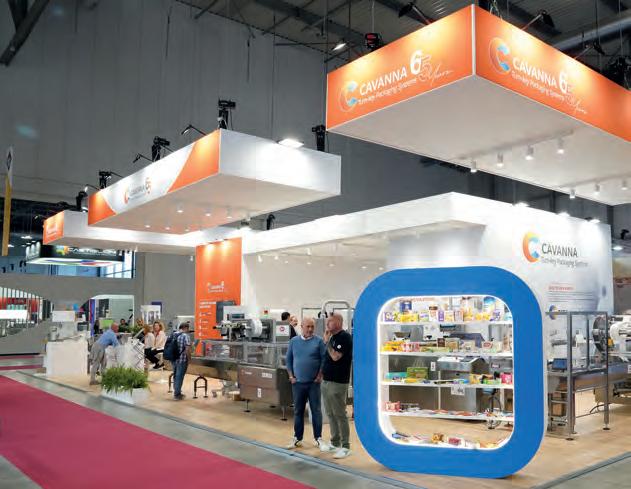
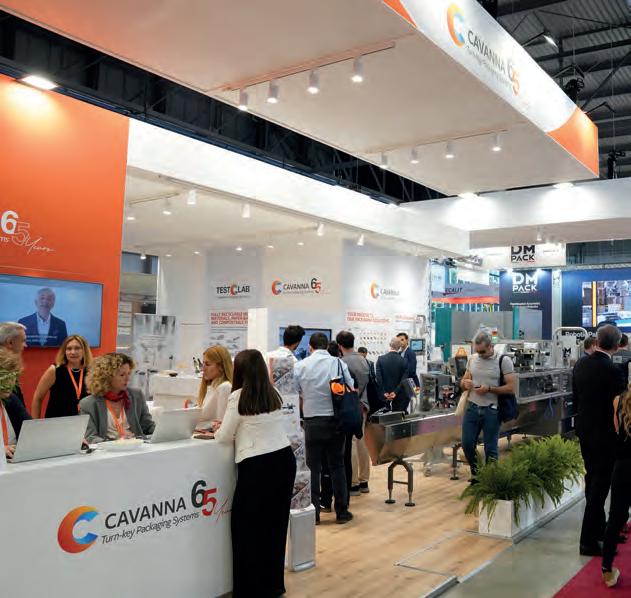
Your technologies are applied across very different sectors, from pharma to frozen food, from small businesses to large industries. How do you manage to respond to such diverse needs? Our motto is all around the flow-pack.
The Easy Run platform is designed for what we call the “local hero”: the small bakery or confectionery producer entering the market.
At the same time, we serve major players in bakery, confectionery, frozen food, and pharmaceuticals.
With a unique package, service, and team, we offer complete and flexible solutions capable of adapting to every customer’s needs.
Digitalization is increasingly a key factor for efficiency. What is the role of the C-Connect platform?
C-Connect is our digital solution that supports customers at every stage. It includes remote assistance, maintenance packages with monitoring systems, intervention tracking, spare parts recognition, and even e-commerce services.
Thanks to these tools, customers can monitor and improve efficiency, keeping performance high from day one.

by Riccardo Cavanna President of Cavanna
With an approach that combines mechanical expertise, digital innovation, and attention to sustainability, Cavanna continues to be a benchmark in the international packaging landscape. In a constantly evolving industry, where mono-materials, smart automation, and low-impact processes define the new frontiers of production, the company from Piedmont demonstrates that technology can coexist with passion, and vision can grow from strong roots.
Sixty-five years after its founding, Cavanna remains a concrete example of how the strength of a family enterprise can evolve into industrial excellence and a forward-looking model of growth based on trust and responsibility.
www.cavanna.com
After years of studies, research and development about the colloidal characteristic of the milk and its implications for the coagulation, SCA is proud to announce that developed a special and specific product “SALIMIX CAL” : a colloidal dispersion of calcium phosphate in water solutions.
SCA has been the sole company, on the world stage, able to create a calcium phosphate in colloidal dispersion, mission considered impossible before, obtaining the unique and most innovative technological adjuvant for the milk coagulation.
The milk mineralization is the main factor of its own coagulation. The proper disposition of ion bridges stabilizes its structure, based on colloidal calcium phosphate.
The casein micelles are permanently in colloidal dispersion in the fresh milk.
Constantly moving, they move in short distance entering in collision one each other against fat cell, changing direction. During the renneting is fundamental that any collision can be potentially 100% positive.
Unfortunately, the thermal treatments (from the cooling, storage and then pasteurization), reduce its mineralization: it’s known that any milk when in the vat and ready for the coagulation has already lost an average of 20% of its
CCP and this reduce the positive collisions causing weaker milk clots.
The technological knowledge allows to say that Ca++ is the main important salt ion but not the unique.
In the event of ion losses distributed proportionally within the existing ion (CCP), the actual dairy technology is still based on the Ca++ ion only.
This practice is correct, however the use of only a “strong” ion like Calcium, “force” the protein structure triggering a partial self- replacement towards the remaining ions.
The effect of that is the typical problem connected with the downsizing of the spatial structure for the reduction of the bridges, which ever causes yield losses.
The role covered by SALIMIX CAL in this process is to create
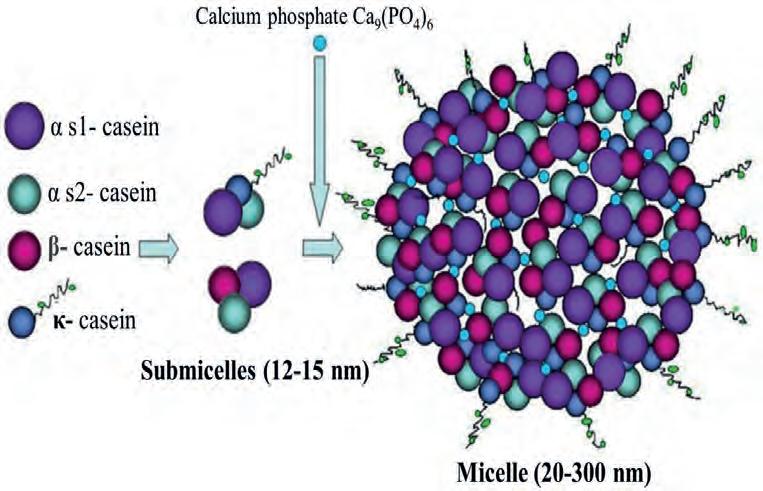
the best electrostatic and covalent bonds to facilitate 100% positive collisions with the formations of bridges among and between micelles. Its native structure stabilizes the casein micelles acting as cement of the hundreds submicelles.
Adding SALIMIX CAL, instead of using the sole ion Ca++, the original spatial structure is restored. It doesn’t induce the narrowing of the curds, as it could happen with the use of Ca++, but it guarantees the full and perfect elasticity which is the base to eliminate the formation of “fines” and the losses of fat in the whey, ensuring the highest possible yield. Contact us for more information and to organize tests.
The other SCA products are:
LACFOOD: selected dairy ingredients for cheese, ricotta, mascarpone, yogurt and processed cheeses productions;
VITALMIX: complete range of cultures and BIOPROTECTIONS
for any cheese, yogurt, kefir and fermented milks;
SALIMIX: technological adjuvants 100% based on SCA technology and developed for
• SALIMIX RIC are the key product for the production of the best RICOTTA;
• SALIMIX N to correct the acidity of milk and whey;
• SALIMIX LG to control the osmosis process into the protective liquid of mozzarella or other white cheeses.
• SALIMIX MAC for the best structure of mascarpone.
SCA is an Italian food company established in Emilia-Romagna Food Valley for over 35 years. SCA has constantly produced and researched, for the dairy industry, ingredients and natural processing aids related to the Mediterranean food tradition to offer the best to the final customer who is at the top of the mission statement.
SCA is certified with FSSC 22.000, ISO 9001 and ISO 22.000, Organic, Halal and Kosher.
It is established both on the national and international markets.
SCA also distributes Domca products dedicated to any shelf-life problem, based on natural ingredients of vegetable origin. Starting from plant matrix, the company has developed the research and extraction of natural molecules with an antibacterial and preservative action.
The long study of the Allium ssp. and its compounds has allowed the creation of standardized and natural products for the improvement of shelf-life.
They are also successfully used throughout the supply chain of the agro-food sector, from organic products to finished products such as cheeses, fresh meat and fish products.
Visit: www.sca-srl.com

At ESG-Italy, we design and supply high-performance snack production lines, helping manufacturers build efficient, high-quality, and sustainable facilities. With headquarters in Italy and a regional office in Dubai (ESG-Middle East), we bring decades of expertise in manufacturing equipment for tortilla chips, potato chips, popcorn, pretzels, extruded snacks, and more.
As tortilla chips continue to gain popularity, we provide custom solutions to help manufacturers set up or optimize production lines, ensuring efficiency, profitability, and sustainability. Many leading snack producers in the Middle East are already investing in this fast-growing market.
Originally a staple of Mexican cuisine, tortilla chips have become a global snack phenomenon, loved for their crunch, versatility, and shareability. The global tortilla chip market, valued at $27.3 billion in 2023, is projected to reach $48.7 billion by 2030, growing at a CAGR of 8.8% (Tortilla Chips Market Size, Share and Growth Report, 2024). This surge is driven by increasing demand for healthier, plant-based, and gluten-free snacks. In the Middle East, where the snack industry is booming, tortilla chips present a significant opportunity for local manufacturers.
Traditionally dominated by a single global brand, the market is now ripe for expansion. Unlike other snacks, tortilla chips rely on widely available raw materials, simplifying produc-
tion. A key factor for manufacturers is water consumption, which varies significantly. Using corn flour requires just 0.5 liters per kg, while whole corn cooking can use up to 8 liters per kg. This makes tortilla chips an ideal product for regions prioritizing water conservation.
Additionally, tortilla chips offer one of the highest production efficiencies in the snack industry. Unlike potato chips, which yield only 250g per kg of raw potatoes, tortilla chips maintain a 1:1 production ratio—1 kg of raw material produces 1 kg of chips. This eliminates food waste and
increases profitability, while lower water consumption makes them a more sustainable option, particularly in water-scarce regions.
The tortilla chip production process includes masa preparation, sheeting, cutting, baking, frying, seasoning, and packaging, with the key difference in dough preparation.
The Corn Cook Method starts with whole dry corn, which is cooked, soaked, and ground into fresh masa. While it requires more processing, it
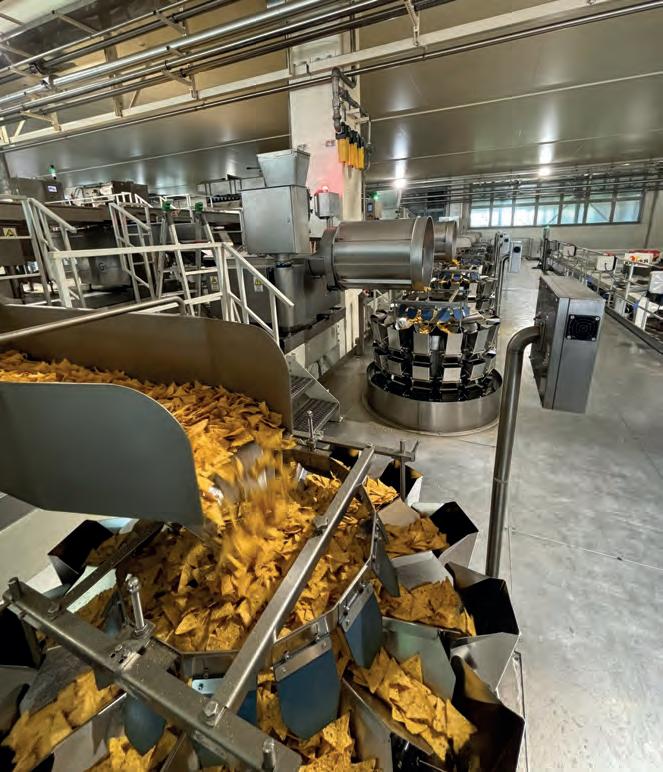
can be cost-effective where raw corn is cheaper than corn flour. The Masa Flour Method uses pre-ground corn flour, eliminating cooking for faster processing and lower equipment costs. The Continuous Masa Production Unit is a cutting-edge system that produces fresh masa in minutes, reducing water consumption and production costs.
The best method depends on local raw material costs and production priorities.
Tortilla chips are increasingly popular, especially among younger consumers and families, thanks to their crunchier texture and lower oil absorption, making them lighter than potato chips. They are also ideal for dipping and sharing, pairing perfectly with salsas, guacamole, and cheese dips. Additionally, they are perceived as a healthier option, with many consumers favoring whole grain, baked, and gluten-free varieties.
The Middle East’s snack industry is expanding rapidly, driven by a young and growing population, an higher disposable income and a shift toward premium, healthy, and convenient snacks
Countries like Saudi Arabia, the UAE, and Iraq are heavily investing in food processing, making this the perfect time for manufacturers to enter the tortilla chip market.
With the right production setup, this is a golden opportunity—and ESG-Italy is here to help you seize it!
www.esg-italy.com
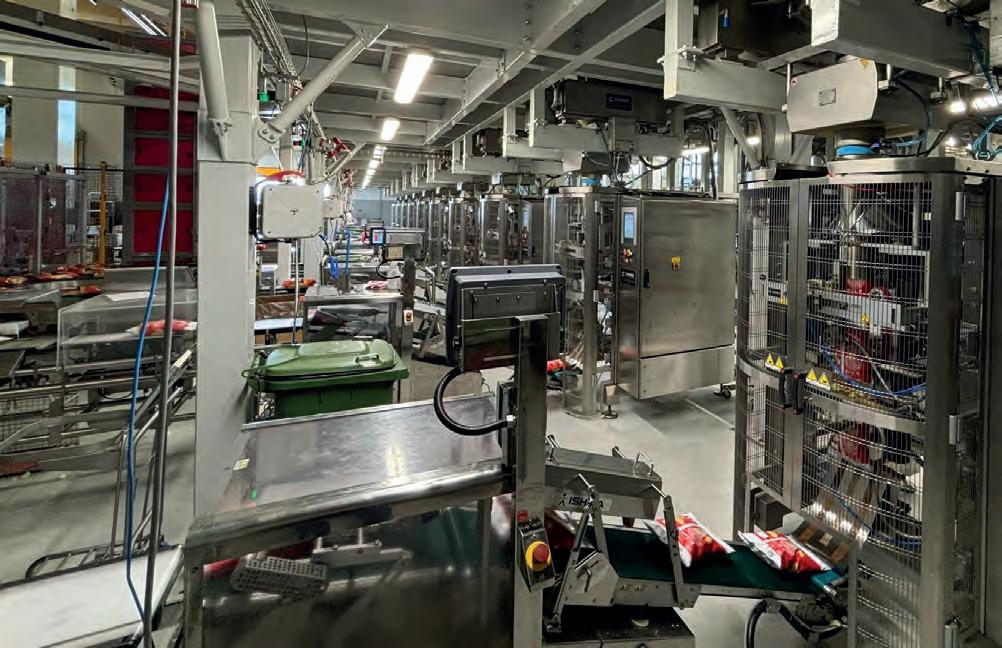
High dynamic efficiency and wireless-based industrial layouts
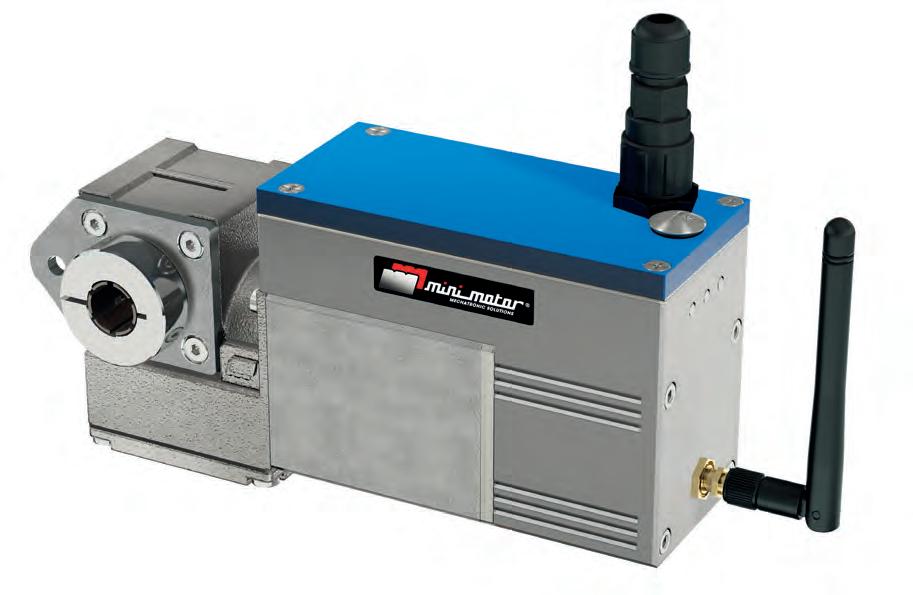
In Food & Beverage, versatility and flexibility have always been the two sides of the technical compromise. Increasingly, industry players find themselves having to manage small batches and a wide variety of formats. In this context, innovation means seeking versatility and process improvement in the components themselves, identifying those best suited to new automation design philosophies.
CoA 2.0, the “Wireless Revolution”: reduced cabling for format change
CoA 2.0 (Can Over Air) system was created to promote new design standards in industrial plants, freeing them from the physical constraints of fieldbus cabling. The architecture is based
on proprietary radio technology capable of ensuring low radio latency for each individual motor.
The heart of the system is the Coordinator, which acts as a bridge between the PLC and the individual actuators, opening up new possibilities for scaling, remodeling, and reconfiguration, freeing filling, capping, or labeling lines from the constraints of bus cable routing. Maximum latency registered: 32 m/s for 20 motors.
New generation encoder: dynamic precision and inertial load management
Greater precision, greater efficiency. The new 24-bit HRE encoder has been integrated to allow our compact motors to operate under high mechanical stress conditions, typical of highspeed filling and end-of-line lines.
The main innovation lies in the ability to maintain extreme precision in dynamics, even in the presence of
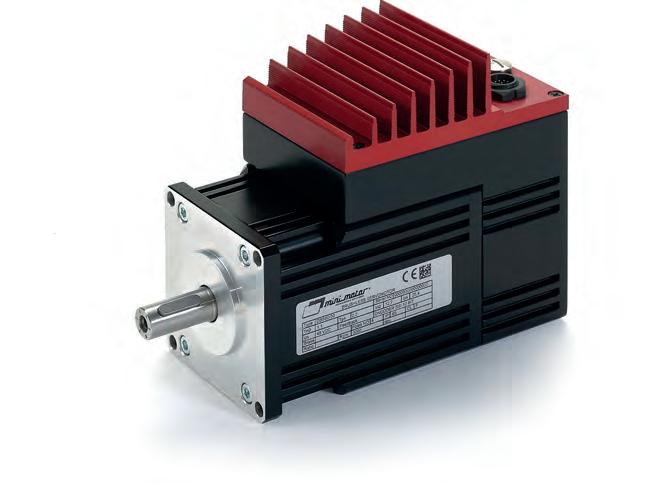
strong vibrations. But the real leap in quality concerns the management of inertial loads: advanced feedback algorithms compensate for mass fluctuations during sudden acceleration and deceleration phases. This means less stress on the mechanics, a longer component life and, above all, the elimination of positioning errors that could compromise product integrity.
The heart of automation: the integrated drive brushless series
Despite increasingly advanced centralized control systems, the integrated drive brushless motor configuration remains one of the best practices for food processing. This solution meets two critical needs: reducing space requirements and simplifying wiring.
The real key is the versatility guaranteed by the multibus protocol.
The ability of these motors to interface natively with the main communication standards (EtherCAT, Ethernet/IP, PROFINET, Powerlink, Modbus, and CANopen) allows plug-and-play integration into any existing ecosystem.
This technological neutrality transforms the motor into a modular component ready for Industry 5.0. The versatility of the DBS line is also reflected in the
high degree of customization of the digital options: from CSP functions, to configurable DO (Digital Output), to STO (Safe Torque Off), as well as
the possibility of daisy chaining field communication.
Towards adaptive manufacturing
CoA 2.0 technologies, new feedback systems, and brushless integration are the pillars of flexible and responsive manufacturing, capable of responding to changing market demands. In 2026, Mini Motor’s goal is to transform technical complexity into operational simplicity, while ensuring that innovation is sustainable, efficient, and, above all, measurable.
For more information: sales@minimotor.com www.minimotor.com
Fifty years after its debut in an Ohio supermarket, the barcode that identifies retail products is evolving into a new two-dimensional format, offering consumers with more information and enhancing efficiency for retailers.
On June 26, 1974, a supermarket cashier in Troy, Ohio, made history by scanning a barcode on a ten-pack of Wrigley’s Juicy Fruit chewing gum with a Magellan Model A scanner. Developed by Spectra Physics, now part of the Italian multinational Datalogic, this was the world’s first fixed retail scanner.
The ability to automatically identify products at checkout marked the beginning of a new era, revolutionizing the retail industry with unprecedented speed and accuracy.
Fifty years later, this innovation remains indispensable.
As a pioneer in identification technologies, Datalogic has recognized
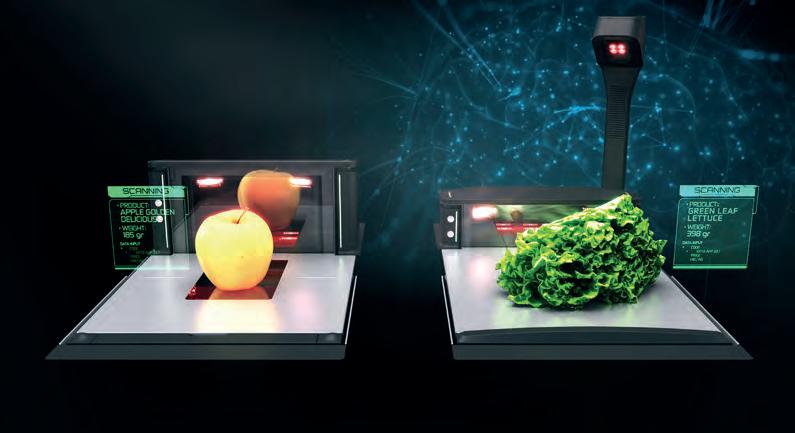
Magellan 9600i/9900i scanners speed up code reading, identify products, and reduce theft
the vast potential of barcode from the start. Building on its early success with scanners like the Magellan Model A, the company has become a leader in the retail automatic identification
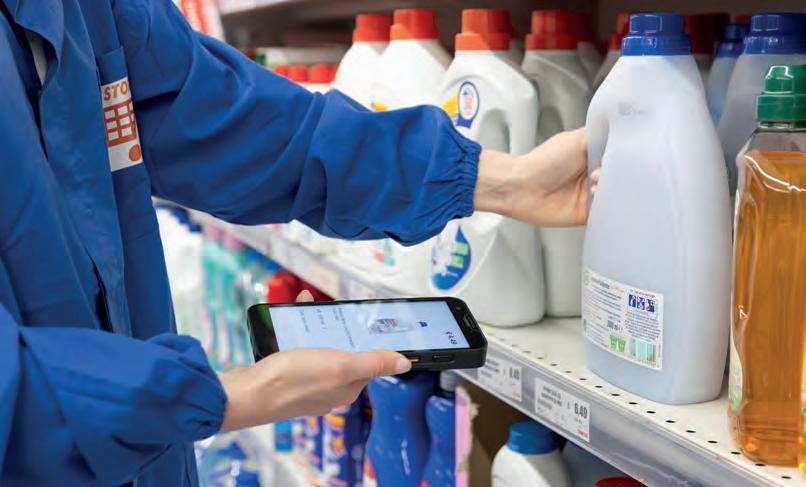
market. Datalogic has consistently remained at the cutting-edge of technological advancements to better serve its customers.
Beginning with the development of the first 1D scan readers, the company later led the way in using imager technology in scanners, and has recently elevated performance by integrating the latest AI-based technologies.
We are at a critical turning point as the retail industry gears up for the rollout of the GS1 Digital Link, a groundbreaking product identification code, which will gradually appear on all consumer product packaging by 2027, complementing the traditional linear barcode.
The GS1 Digital Link barcode is an upgraded version of the traditional barcode, embedding digital information accessible via a URL. This creates
a direct connection between a physical product and its associated digital content. The new GS1 standard QR code will enable consumers to instantly access up-to-date information about products they are considering purchasing by scanning the packaging.
This includes details of ingredient origins, allergens, usage (such as cooking tips and recipe suggestions), recycling or disposal guidelines, nutritional values, and much more. The code will also include detailed information about the specific package, such as the expiration date, production lot, or a unique serial number. This data can be integrated into retailers’ point-of- sale systems, improving security, streamlining procurement processes, and minimizing the risk of fraud.
Fabrizio Pareschi, Datalogic’s Global Account Manager, stated, “Consumers will be empowered to make more informed purchases by gaining insights into the environmental impact of the products they buy. They will have access to detailed information, such as the origin of a product and its ingredients, as well as guidance on how to recycle or reuse packaging. Retailers and supply chain companies can offer personalized content, promotions, or offers tailored to consumer preferences or location.
In addition, the new GS1 standard enhances traceability throughout the supply chain, aiding in the fight against counterfeiting and improving product recall management. It also optimizes inventory, warehouse management, and logistics processes by integrating with enterprise ERP and CRM systems. For these processes, Datalogic is the ideal technology partner, offering solutions for point-ofsale and data management through professional mobile computers like the new Memor 30/35. It is the perfect tool for tasks such as inventory management, price control, and stock re-
plenishment. All Datalogic retail products are already fully compatible with GS1 code management”.
The role of software, systems, and artificial intelligence
So, how is the retail industry gearing up for the introduction of these new two-dimensional codes? Michele Benedetti, Chief Technology Officer at Datalogic, explains: “Our goal is to ensure that reading these two codes on packages is seamless and rapid, maintaining the same level of reliability we currently have with linear barcodes. Our scanners and mobile devices can read both types of code simultaneously, with the same speed and accuracy. But the real game-changer will come from integrating smart systems and software to create innovative applications that improve the shopping experience, support sustainability, and give retailers a competitive edge. For example, our next-generation Magellan scanners are truly intelligent machines capable of processing not just product codes, but also images captured by in-store and point-of-sale cameras. This paves
the way for innovative applications, such as advanced anti-theft solutions, which will make retailers more efficient and ready to tackle the challenges of a rapidly evolving market.”
Here’s to the enduring legacy of the barcode and its successor, as they guide us into the next era of retail. Datalogic is poised to lead the charge.
Global leader in the automatic data capture and industrial automation markets since 1972, Datalogic empowers the efficiency and quality of processes in the Retail, Manufacturing, Transportation & Logistics and Healthcare industries.
Datalogic S.p.A. is listed in the STAR segment of the Italian Stock Exchange since 2001 as DAL.MI. Visit www. datalogic.com.
Datalogic and the Datalogic logo are registered trademarks of Datalogic S.p.A. in many countries, including the U.S.A. and the E.U. Other trademarks belong to their respective owners.
Mr.Gabriele Macchi, Operations Director at PROXAUT, tells us how the new automated guided vehicle was born: the CUBE. Thanks to the skills acquired in the field of R&D, Mr. Macchi has become a promoter of technological innovation and supporter of new employment policies.
Listening to the market demands of this last year and after having carried out a dedicated strategic marketing study, together with the Management of PROXAUT, Mr. Macchi and his team of researchers have taken care of developing a new AGV vehicle.
“The challenge was to find a SMART solution, designing and building a small and versatile AGV, capable of carrying weights up to 1000 kg (2200 Lbs). PROXAUT vehicles, in fact, are built to work in narrow spaces, such as in warehouses where we have a few centimetres of tolerance for our automatic handling.
We have therefore used years of experience to create a small self-driving shuttle (1300 x 900 x 300 mm h) with inertial guidance capable of passing where others do not enter. There are no application and industry limitations for this automated transportation system. Do you have a Euro pallet with

Gabriele Macchi Operations Director at PROXAUT
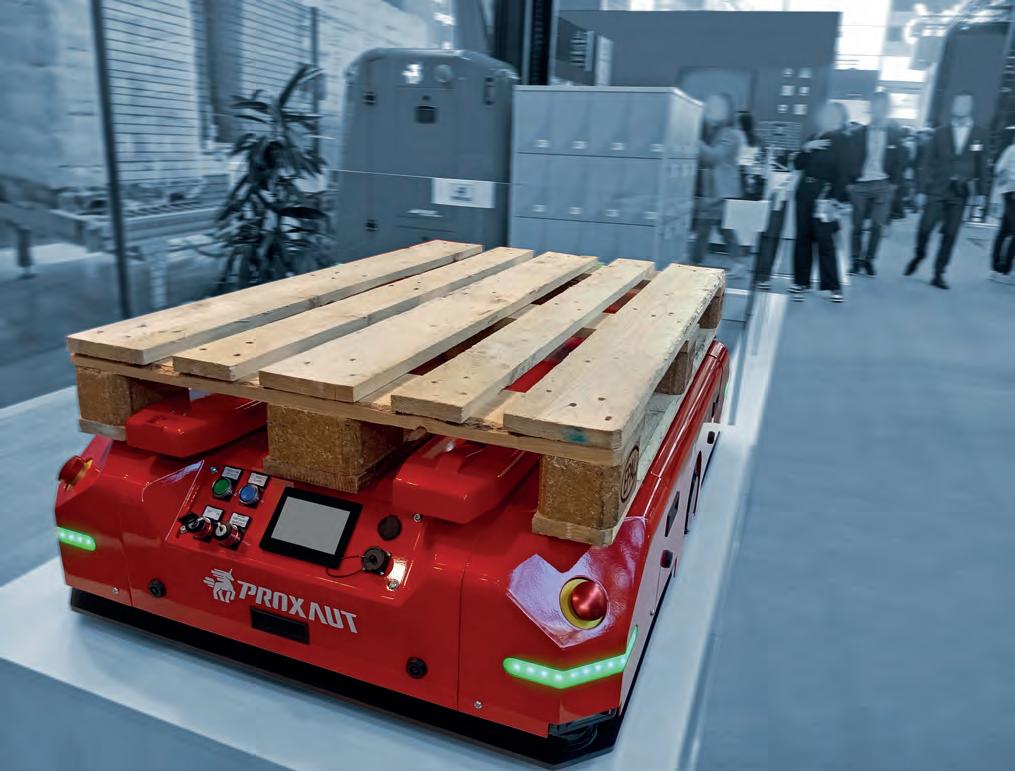
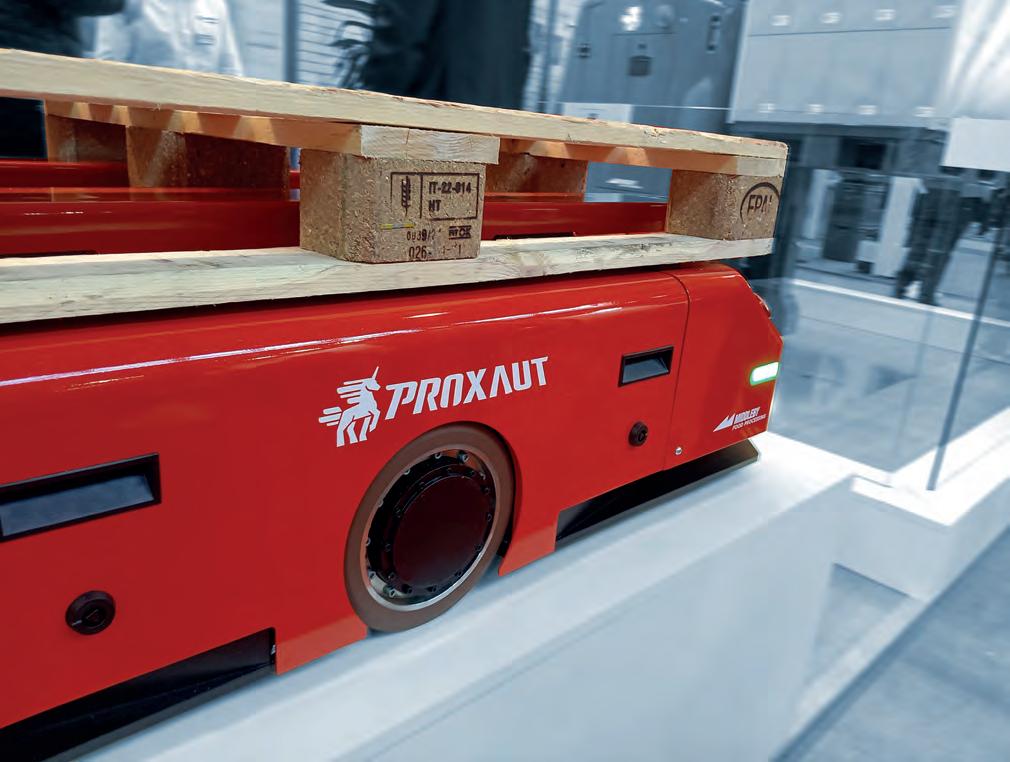
goods weighing 1000 kg to be transported from point A to point B? Here’s the solution: CUBE by PROXAUT!
An efficient automated warehouse worker which will work for you 24/7, without going on vacation or getting sick. “I don’t deny that a minimum maintenance must be done regularly, but this operation takes only a few hours a year and serves to ensure optimal performance and maintain maximum efficiency levels, also in terms of the durability of lithium batteries” Mr. Macchi tells us. “Moreover, the advantages of these forklifts with and without forks are now known: reduction of personnel and indirect costs in general, reduction of human error thanks to integration with WMS and management software, improvement of traceability and management of warehouse stocks, maximum configurability with company management
systems, increase in production with 24/7 shifts, improvement of safety, optimization of flows and traffic, operation in environmental conditions hostile to man, hygiene and cleanliness”.
But we are curious... We want more... What about the price? The Operations Director smiles and replies without hesitation: “I’m a technician, not a salesman. However, I can tell you that we have tried to make a lowcost shuttle. If we don’t consider the prototype presented at the fair MECSPE (6-8 March 2024 in Bologna) and LogiMAT (19-21 March 2024 in Stuttgart), we have already put a series of vehicles into production. The trade fairs have given us the desired results, we have already concluded some sales contracts for AGV plants, including of course also several CUBEs that should be operational at the end of summer 2024. We
have already had confirmation from our Production Manager that, compared to the prototype, prices have dropped: the industrialization of this model allows us to enter the market with a very interesting and competitive price!”
The challenge of a market in constant revolution does not scare Proxaut.
The trade fairs of recent months and a growing market have given new life to a company that has been on the market for over 30 years. From a small family-run business, it has become part of an international group, the Middleby Corporation, a world leader in the food machinery industry. In 2022, the year Proxaut was acquired, it was named “World’s Best Employer” by Forbes magazine.
For more information: www.proxaut.com www.middleby.com
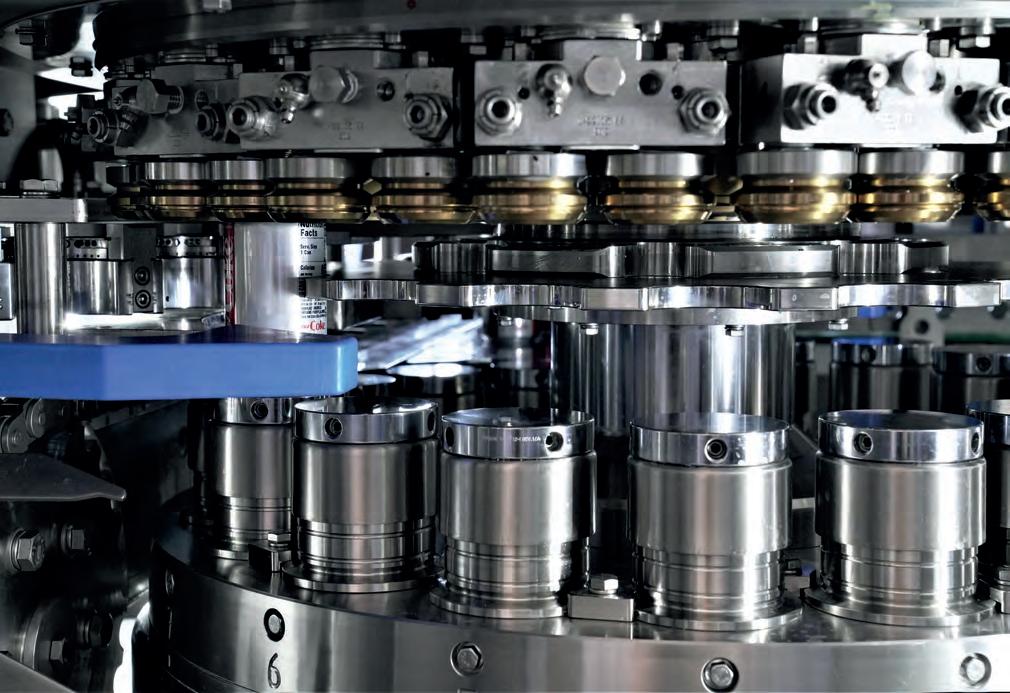
In the late 1800’s and early 1900’s, the invention of the double seam – a means of folding 5 layers of material in a way that interlocks a can end with a can body – transformed Food and Beverage packaging by eliminating the need for soldered seams to achieve a hermetic seal. By 1910, Henry L. Guenther had taken this advancement to the next level by designing and patenting the first machinery to create these double seams on cans. With that invention, the Angelus Sanitary Can Machine company was founded, with a vision of creating the finest machines of their kind, anywhere in the world.
Today, more than a century later, and with more than 16,000 seamers sold
in 132 countries across the globe, Henry’s vision has been realized, and the Angelus name is still recognized as the standard for excellence in seaming technology and equipment.
Joined with Pneumatic Scale Corporation in 2007, the combined company of Pneumatic Scale Angelus is a global leader in the design and manufacture of packaging machinery for liquid and dry filling, capping, can seaming, and labelling applications as well as state-of-the-art container handling solutions. The company is a division of BW Packaging under the Barry-Wehmiller umbrella of companies.
In recent years, the company has introduced the Angelus V-Series line, designed to meet the specific needs of
the Food and Beverage markets. The same technology used for high-speed seaming applications has also been scaled for the needs of the craft beverage space. Angelus has manufacturing facilities in Ohio in the United States, as well as its Parma, Italy location.
In nearly all markets Angelus serves, concerns for sustainability and increased, pandemic-driven demand for shelf-stable products created a surge in can demand and a subsequent shortage of them. Though pressures have eased somewhat, with can makers working aggressively to increase production, it will still take time for supply to catch up with demand.
In addition, the lightweighting of cans brings challenges to seaming
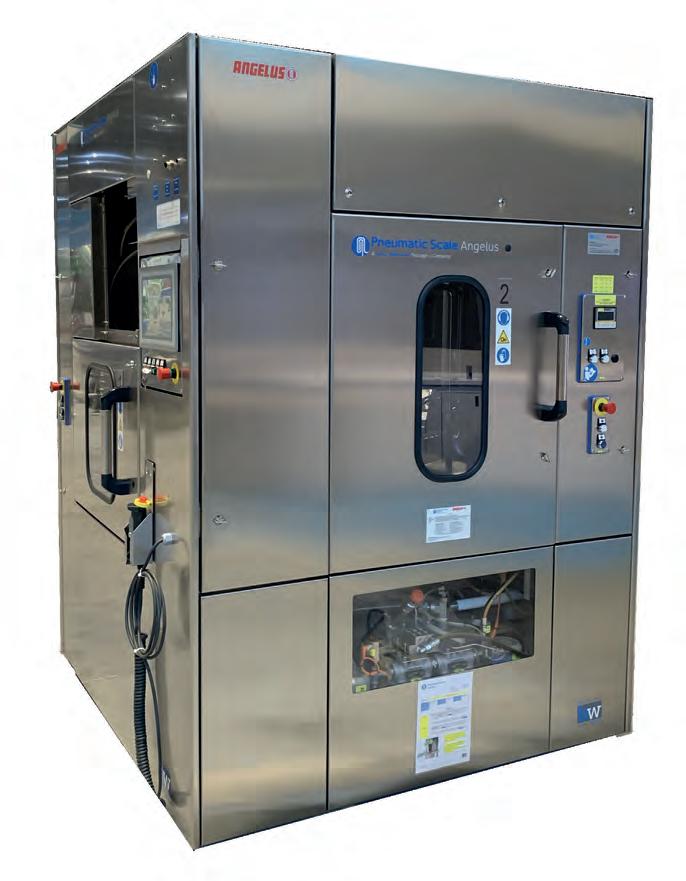
equipment, as lighter cans can often lead to an increased risk for can damage during production and even transportation. Seamer suppliers like Angelus are responding with innovations to seamer design and container handling.
For Pneumatic Scale Angelus, consistent communication with can makers helps drive not only future product design, but also current partnerships with customers to analyze produc-
tion and mitigate potential areas for damage, not only at the seamer, but also upstream and downstream from the seaming process. Angelus currently has patents pending for several new developments in seamer design and container handling that it believes will provide superior solutions for its customers, as well as a competitive advantage for the company.
When asked about the future of sea-
mers for Food and Non-Food cans, Thomas Thiel, Product Line Leader for Can Seaming replied, “Angelus continues serving the Food and Beverage markets with seamers specially designed to address their unique needs. We have a long history of innovation in seaming, and we are excited about our plans to continue that legacy well into the future.’’
www.psangelus.com
In the world of the food industry, product safety is of paramount importance. The challenge of keeping food safe and of high quality throughout the entire production and distribution process is complex but essential.
For over 50 years, ifm has been committed to providing integrated automation solutions for the food sector.
The company offers products and services aimed at ensuring transparent processes in food processing, packaging, and cold chain management, thus guaranteeing food safety “from field to table.” Specifically in this field, ifm can play a leading role because it has all the necessary automation and process digitaliza-

tion technologies to support safe production, and because its expertise is demonstrated by its membership in EHEDG (European Hygienic Engineering & Design Group)—a European consortium that includes food companies, equipment manufacturers, research institutes, and public health authorities.
Today, ifm expands its already extensive range for this sector with the
brand-new SM Foodmag, a magneto-inductive sensor that meets the highest standards of the food industry by bringing hygienic measurement of liquid food flows to a new level.
Equipped with IO-Link, the sensor requires no mechanical components in contact with the fluid and simplifies direct transmission of digital data, effectively eliminating the last blind spot in the production process and

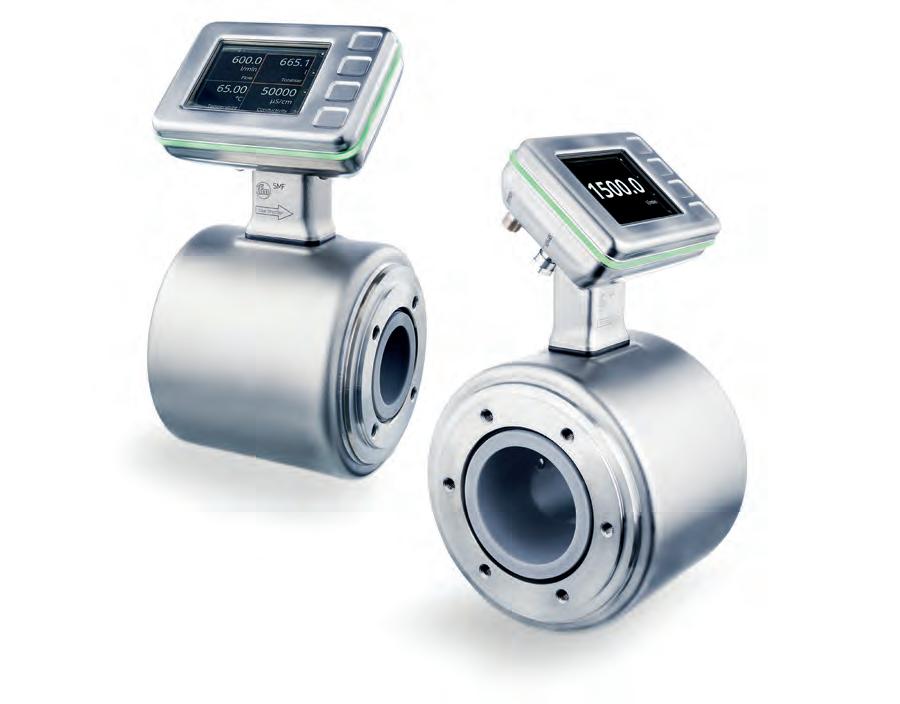
thus providing complete transparency.
Highly functional (it is also available with a display and 360-degree status LEDs for precise and timely information), SM Foodmag by ifm detects in real time the presence of fluid, its flow rate, total volume, and direction.
It also transmits data regarding the liquid’s conductivity and temperature to the control system and IT level. As a result, it offers the advantage of “measuring what matters” with a single device, reducing the need for additional measurement points in the system.
Integrating SM Foodmag with existing systems is extremely straightforward. Its standard M12 connector, combined with a flexible choice of seals and process adapters, ensures a quick, hygienic, and errorfree connection to the infrastructure. The app-based menu structure and optional guided installation make
parameter setting an extremely intuitive task.
testing ensures lasting quality
Through meticulous internal and external tests, SM Foodmag is guaranteed from the outset to withstand the extreme conditions typical of daily production in the food industry.
The thermal shock test evaluates the sensor’s accuracy under significant temperature changes, such as those occurring during pasteurization.
In this process, milk or highly acidic products are heated to temperatures between 72 °C and 95 °C and then rapidly cooled to ensure their preservation. Even after one thousand hours of continuous stress caused by sudden temperature changes from below zero to above zero, the measurements must remain within predefined accuracy limits.
To transfer fluids from tanks to subsequent processing phases, pumps
and valves are used. Pumps generate constant vibrations, while valves undergo rapid openings that cause pressure spikes.
The pressure spike test replicates these surges by intentionally applying pressures that exceed the nominal values indicated in the technical documentation.
After one million cycles, the Foodmag SM undergoes a strict seal test. Additionally, shocks and vibrations along the X, Y, and Z axes are intensely simulated over several days to ensure that external influences do not compromise the device’s performance.
In the condensation test, cold fluid flows through the piping system and the sensor in a warm environment. The Foodmag SM is exposed to high humidity and condensation for weeks and in various installation positions, confirming that moisture does not penetrate inside the device.
www.ifm.com/it
Looking into how - with a tailored approach to maintenance, we can predict the lifetime of a system and know when preventive maintenance should happen.
By Roger Savo, Aftermarket Director,
Europe at ELGi
In today’s fast-paced industrial environment where downtime equates to significant financial losses and operational inefficiencies, implementing predictive and preventive maintenance (PPM) has become not just an option, but a necessity for companies across all sectors. This integrated strategy not only enhances the reliability and performance of equipment, but also extends its operational life ensuring both efficiency and durability in industrial operations in a manner that underscores cost-effectiveness.
What is predictive maintenance and what are its key components?
Predictive maintenance is an advanced maintenance strategy that leverages data analytics, machine learning,
and sensor technologies to predict and prevent equipment failures before they occur. Unlike traditional maintenance approaches, such as reactive maintenance (fixing issues after they happen) or preventive maintenance (scheduled maintenance regardless of equipment condition), predictive maintenance focuses on data-driven insights to optimise maintenance schedules and maximise equipment uptime and reliability
Connected new technologies play a crucial role in driving the efficiency of predictive maintenance. By integrating sensors and networks with analytics and augmented intelligence tools, predictive maintenance systems can offer more accurate predictions and real-time insights.
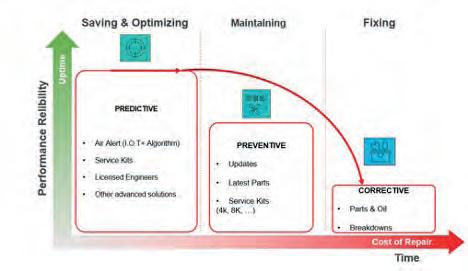
ELGi’s Air~Alert is an IoT-based, smart 24/7 remote machine monitoring and alert system which can be implemented on new and existing installations. The service enables customers to act in time to avoid potential failures of compressors with 24/7 remote monitoring of a compressed air system. It does this by delivering trend graphs and information about operating parameters including discharge pressure, oil temperature, variable frequency drive (VFD) speed, total running hours, trips, and alerts on a live online interface accessible remotely from anywhere in the world. Air~Alert also functions as a predictive maintenance system notifying customers and ELGi Channel Partners about scheduled maintenance, fault occurrence, and predicts commonly occurring failures. Monthly summary reports on overall health and operating parameters include upcoming planned service requirements, as well as preventative maintenance based on system data.
Smart technology integrations allow for “always-on” agility, where unforeseen machinery conditions can be addressed promptly, thus mitigating potential damage and optimising decision-making processes. Connec-

tivity facilitates a comprehensive data exchange, enhancing the predictive analysis and enabling more informed, strategic decisions regarding asset maintenance.
Key components of Predictive and Preventative Maintenance (PPM) systems: Implementing preventive maintenance requires a strategic approach, underpinned by several key components:
• Advanced Sensor Technology: IoT sensors are crucial for real-time monitoring of equipment conditions, providing the data necessary for predictive analysis.
• Data Analytics and Artificial Intelligence (AI): The heart of PPM lies in data analytics and AI algorithms which process data collected by sensors to identify patterns, predict potential failures, and suggest preventive measures.
• Skilled Workforce: A workforce skilled in data analysis, machine learning, and the operation of sophisticated monitoring equipment is essential for interpreting data and implementing maintenance strategies effectively.
• Cultural Shift: Embracing PPM requires a cultural shift within the organisation, moving from a reactive to a proactive maintenance mindset. This shift involves training, change management, and ongoing support.
The predictive maintenance process unfolds through several stages:
1. Data Collection: Continuous monitoring and data capture from machinery.
2. Data Analysis: Application of statistical techniques and machine learning to analyse the collected data.
3. Anomaly Detection: Identification of data patterns that deviate from the norm, indicating potential issues.
4. Prediction and DecisionMaking: Use of predictive algorithms to forecast failures and decide on maintenance actions.
5. Proactive Maintenance: Execution of maintenance tasks before failures occur, based on predictive insights.
The rationale for adopting the predictive and preventive maintenance methodology within business operations is underlined by its significant benefits for companies:
1. Downtime Minimisation:
Unplanned downtime is the bane of productivity. The adoption of predictive maintenance has been linked to a significant reduction in unplanned downtime, enhancing overall productivity. Connected technologies facilitate the predictive maintenance process, allowing for real-time insights and the efficient deployment of maintenance resources. According to Deloitte Analytics Institute Position Paper on Predictive Maintenance, this efficiency translates into a 20-50% reduction in maintenance planning time, a 10-20% increase in equipment uptime, and a 5-10% reduction in overall maintenance costs. Notably, implementations of predictive maintenance in sectors such as chemical manufacturing and transportation have led to significant decreases in down-
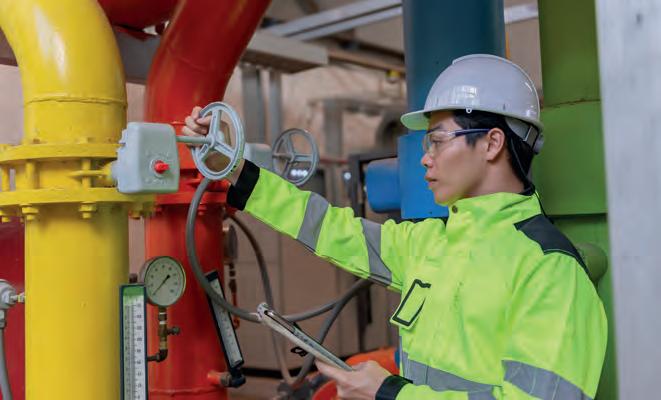
time and maintenance costs, with one large chemical manufacturer achieving an 80% reduction in unplanned downtime and savings of around $300,000 per asset.
2. Cost Reduction: PPM significantly lowers maintenance costs by identifying issues before they escalate into costly repairs or complete equipment replacements. By optimising maintenance schedules, companies can avoid unnecessary maintenance activities, saving on labour and parts. According to Advanced Technology Services (ATS), predictive maintenance yields cost savings between 8% to 12% over preventive maintenance and up to 40% over reactive maintenance. This insight underscores the financial benefits
of adopting predictive maintenance strategies over traditional maintenance approaches.
3. Extended Equipment Life:
Regular and precise maintenance extends the operational lifespan of machinery. According to research by McKinsey, predictive maintenance can lead to a reduction in machine downtime by 30% to 50% and increase machine life by 20% to 40%. This demonstrates the significant impact that predictive maintenance strategies can have on extending the operational lifespan of machinery, enabling companies to defer capital expenditures on new equipment and optimise the return on investment for their existing assets.

4. Enhanced Safety and Compliance. Implementing PPM strategies can significantly enhance workplace safety and ensure compliance with safety regulations. By proactively identifying and addressing potential equipment failures before they occur, PPM minimises the risks of accidents, creating a safer environment for employees. This proactive approach not only protects the workforce but also helps companies adhere to stringent safety standards, thereby avoiding legal and financial penalties associated with non-compliance.
5. Operational Efficiency: With PPM, companies benefit from an overall increase in operational efficiency. If data is collected and analysed correctly and maintenance tasks are performed just in time, equipment wear and tear is reduced, improving the performance of equipment.
The implementation of predictive and preventive maintenance is not just a best practice, it’s a strategic imperative for companies aiming to thrive in the competitive and fast-evolving landscape of Industry 4.0. By adopting PPM, businesses can achieve not only significant cost savings and efficiency gains, but also enhance their operational resilience. In an era where downtime can be a critical setback and efficiency gains are continuously sought, PPM stands as a beacon of operational excellence, ensuring companies remain agile, proactive, and ahead of potential failures. www.elgi.com

“
The use of robotics and artificial intelligence in packaging is increasing, providing benefits in efficiency, quality,and sustainability. However, companies must consider costs and invest in training for effective use
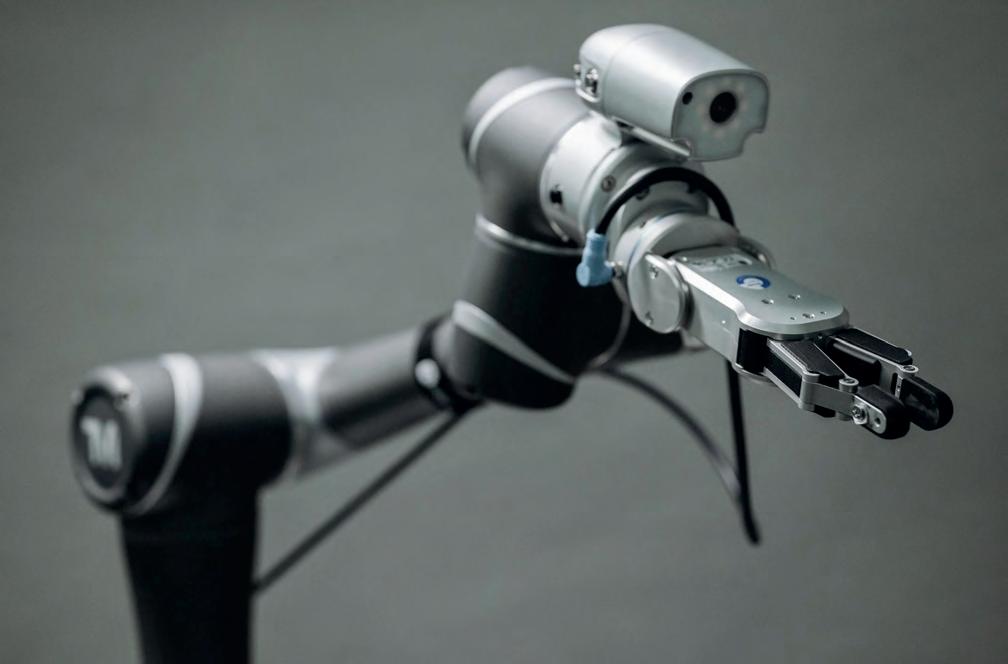
The world of packaging is undergoing a rapid evolution thanks to the introduction of robotics and artificial intelligence. In recent years, advanced technologies have radically changed the way companies produce and package their products, offering advantages in terms of efficiency, precision, and sustainability.
One of the main benefits of using robots in packaging is the increase in speed and efficiency. Robots can work 24/7 without interruptions or slowdowns, improving productivity and reducing delivery times. Additionally, robots can be programmed to work precisely

by the editorial staff

and repetitively, reducing human errors and improving product quality.
Artificial intelligence is another technology that is revolutionizing the world of packaging. Thanks to AI, machines can continuously learn from their environment, improving their performance and adapting to new situations. For example, machines can use artificial vision algorithms to detect defects or anomalies in products, reducing the risk of errors and improving product quality.
Another advantage of using robotics and artificial intelligence in packaging is the reduction of waste and environmental impact.
Machines can work with greater precision and use only the amount of material necessary to package products, reducing waste and energy consumption. Additional-
ly, machines can be programmed to recycle or reuse packaging materials, reducing environmental impact.
However, the introduction of robotics and artificial intelligence in the world of packaging is not without challenges. For example, companies must invest in expensive technologies and train personnel to use them effectively. Additionally, machines can be subject to malfunctions or breakdowns, causing interruptions in production and additional costs for maintenance.
In conclusion, the world of packaging is becoming increasingly robotic and intelligent, offering numerous advantages for companies that decide to invest in these technologies. However, it is important to carefully evaluate the costs and benefits before making a decision and ensure that personnel are adequately trained to use the machines effectively.



Mr.Sanchai Noombunnam, Country General Manager of Informa Markets Thailand, highlighted Thailand’s growing role and opportunities in the global food and beverage industry. According to Credence Research, a global market research and consulting firm, the value of the global food and beverage market is projected to grow from USD 6.2 trillion in 2024 to nearly USD 9.8 trillion by 2032. Key driving forces include shifting consumer behaviors, increasing demand for convenience and ready-to-eat foods, and a rising focus on health. At a regional level, Asia-Pacific is the fastest-growing market, particularly in China, India, Thailand, and Vietnam.
These changing consumption trends and advancements in food and beverage manufacturing continue to generate new products.
This year’s ProPak Asia 2025 attracted over 2,000 exhibiting brands from 42 countries and welcomed more than 72,000 visitors globally, utilizing 55,000 square meters of exhibition space and generating over THB 5.5 billion in trade value. The event’s repeated success and growing demand from both returning and new exhibitors have exceeded the capacity of the current venue.
Therefore, ProPak Asia 2026 will relocate to the IMPACT Exhibition and Convention Center in Muang
Thong Thani, a venue offering larger and more suitable facilities for future growth. The new venue provides enhanced accessibility via skytrain, private vehicles, and public transportation, and is conveniently located near airports and key industrial zones such as Chonburi, Ayutthaya, Pathum Thani, Samut Sakhon, and Samut Songkhram. This move aligns with ProPak Asia’s vision to elevate itself into a global hub for the manufacturing, processing, and packaging industries.
ProPak Asia 2026 marks a bold step into a new era of boundless growth, with the goal of becoming the premier processing and packaging exhibition in Asia-Pacific by 2027 and a WorldClass event by 2028. Already, 95%
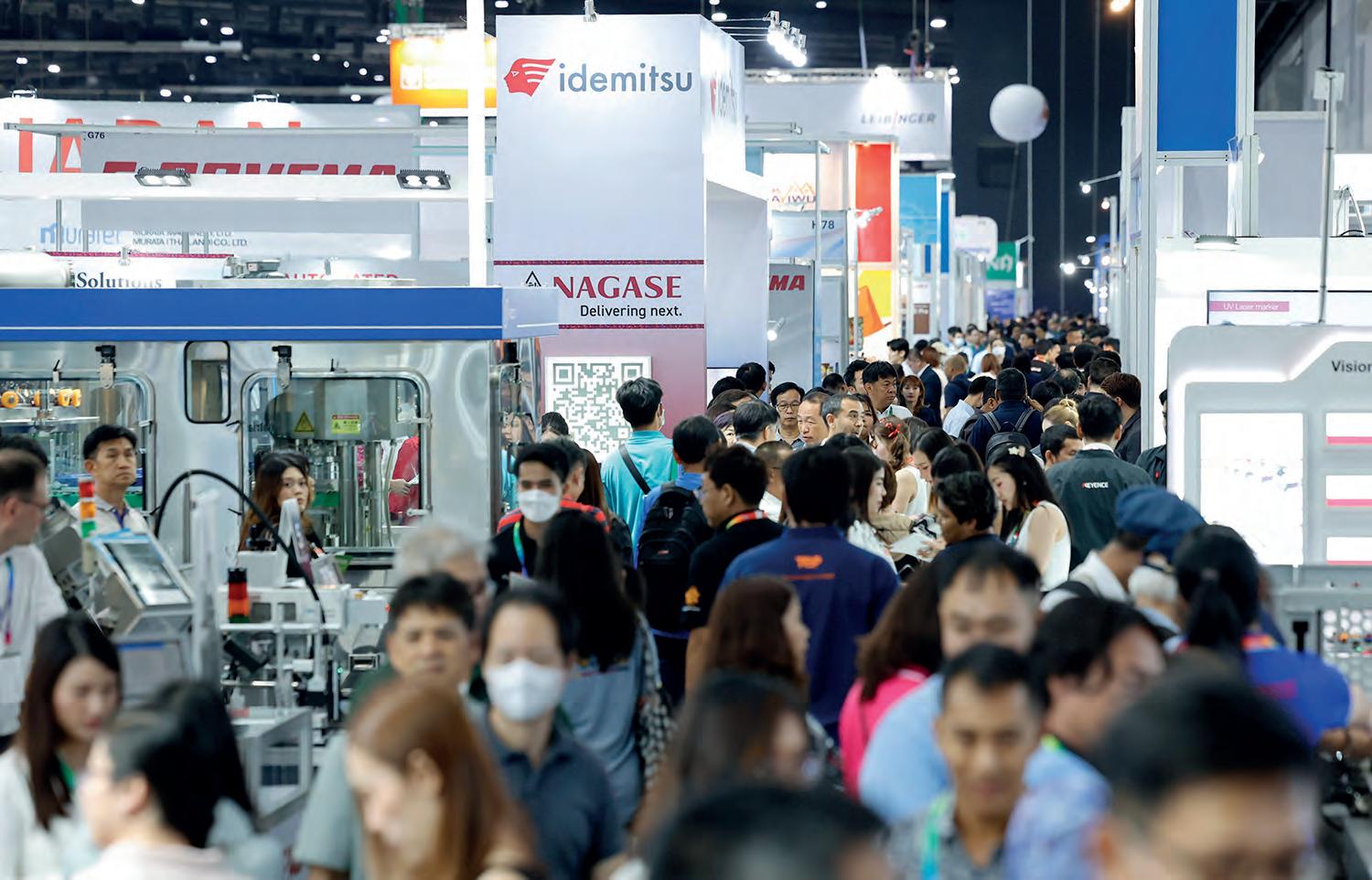

of the space for ProPak Asia 2026 was pre-booked during ProPak Asia 2025, reaffirming industry confidence. The event will continue to showcase the latest technologies and innovations, connecting exhibitors, businesses, agencies, and attendees through ProPak Connect—a digital hub integrating global ProPak events, fostering collaboration across every dimension of the industry ecosystem.
Mrs. Luciana Pellegrino President of World Packaging Organization (WPO), acknowledged the continued growth of the packaging industry, which aligns with sectors such as food, beverage, pharmaceuticals, consumer goods, and ecommerce. The industry is expected to expand from USD 1.28 trillion in 2025 to USD 1.69 trillion by 2034. A major trend is the focus on sustainable and eco-friendly packaging, reflecting WPO’s mission to promote science, technology, sustainability, and innovation in packaging. WPO recognizes ProPak Asia as a key partner and fully supports its transformation in 2026 as a stepping stone to becoming a truly global event.
Dr. Joseph Ross S. Jocson, President of the Asian Packaging Federation (APF), emphasized the significance of the packaging sector in Asia-Pacific. The market is expected to reach USD 190.55 billion in 2025, with a CAGR of 4.98% from 2025 to 2033. The region, a global manufacturing hub especially in food and beverage, benefits from its large consumer base. Key trends to watch include smart packaging,
the use of more sustainable materials, growth in premium and personalized packaging, and circular economydriven design. APF has been a longstanding partner of ProPak Asia and is committed to supporting its ongoing development to benefit producers
and stakeholders across the region.
Mr. Ali Badarneh, Chief Food Security and Food Systems Unit, Agri-Business and Infrastructure Development Department, United Nations Industrial Development Organization (UNIDO), Austria, stated that UNIDO, as a UN specialized agency promoting inclusive and sustainable industrial development, is proud
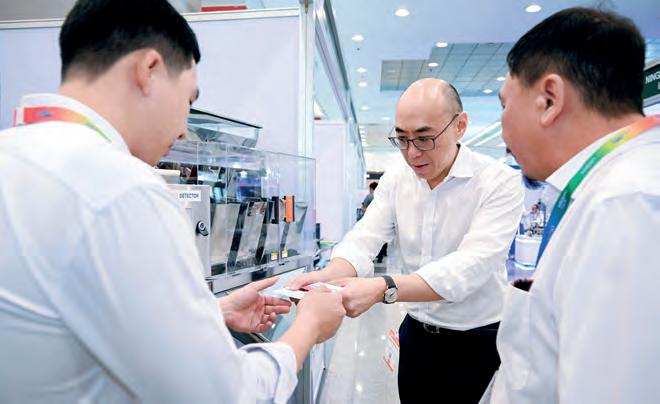
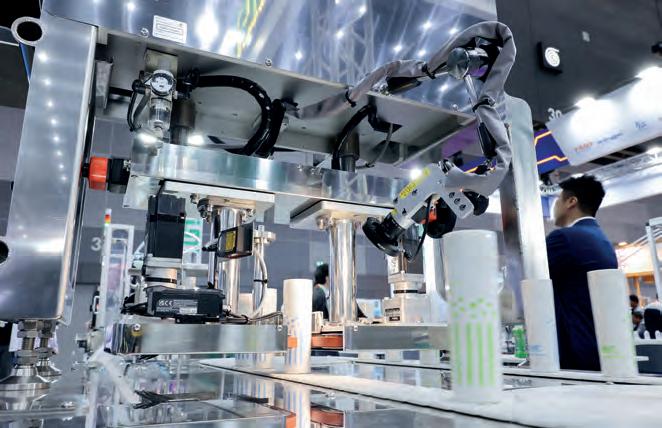
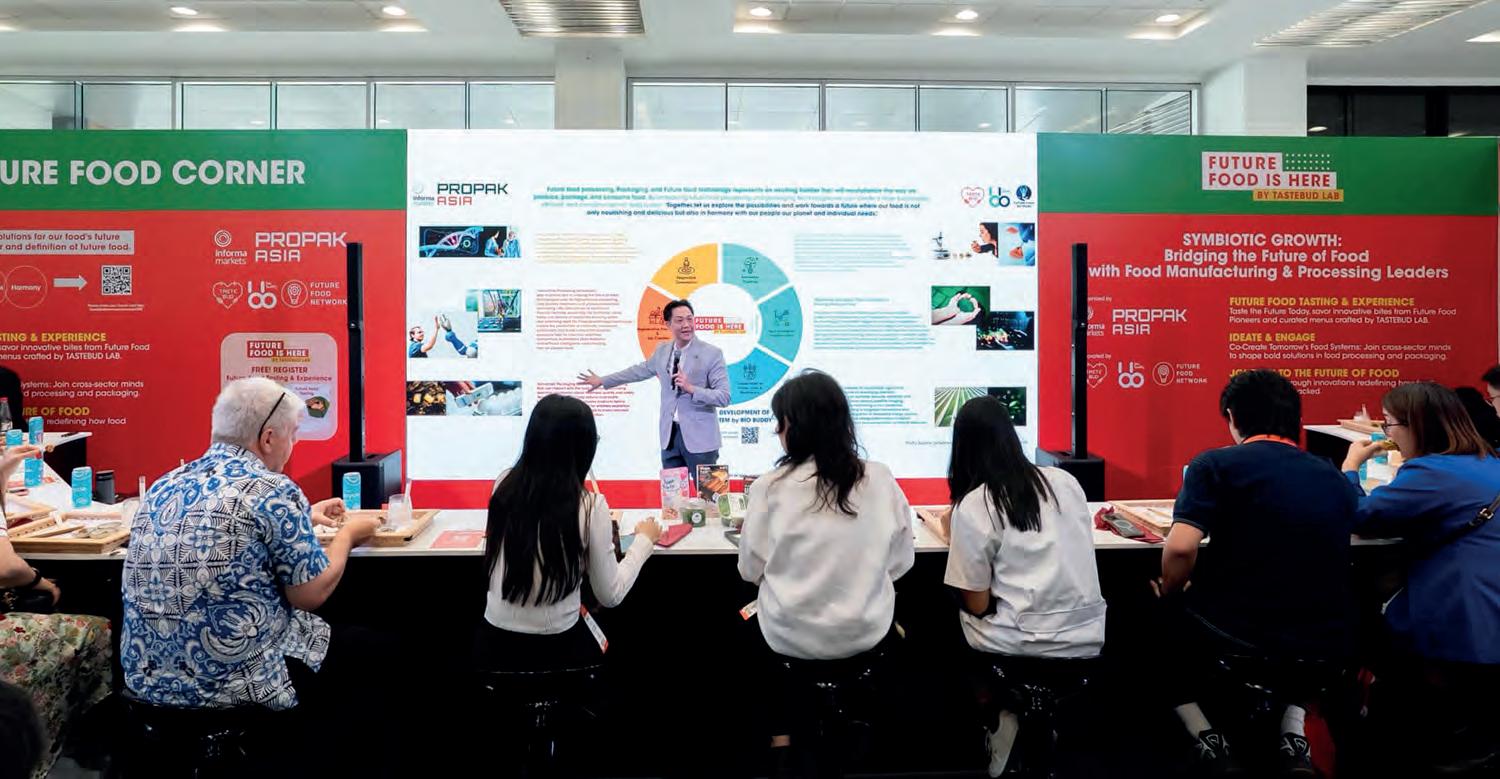
to be a long-term strategic partner of Informa Markets and ProPak Asia. He affirmed UNIDO’s strong support for ProPak Asia 2026 and beyond, aiming to drive innovation in manufacturing, processing, and packaging technologies. UNIDO also seeks to facilitate knowledge exchange among
industry leaders, policymakers, and stakeholders to build resilient food systems and address urgent global challenges such as hunger, food loss and waste, and climate change. The organization believes this collaboration will help realize a more sustainable and inclusive future for food
and packaging systems worldwide. ProPak Asia 2026 is scheduled to take place from 10–13 June 2026 at the IMPACT Exhibition and Convention Center, Muang Thong Thani.
For more information, please visit: www.propakasia.com
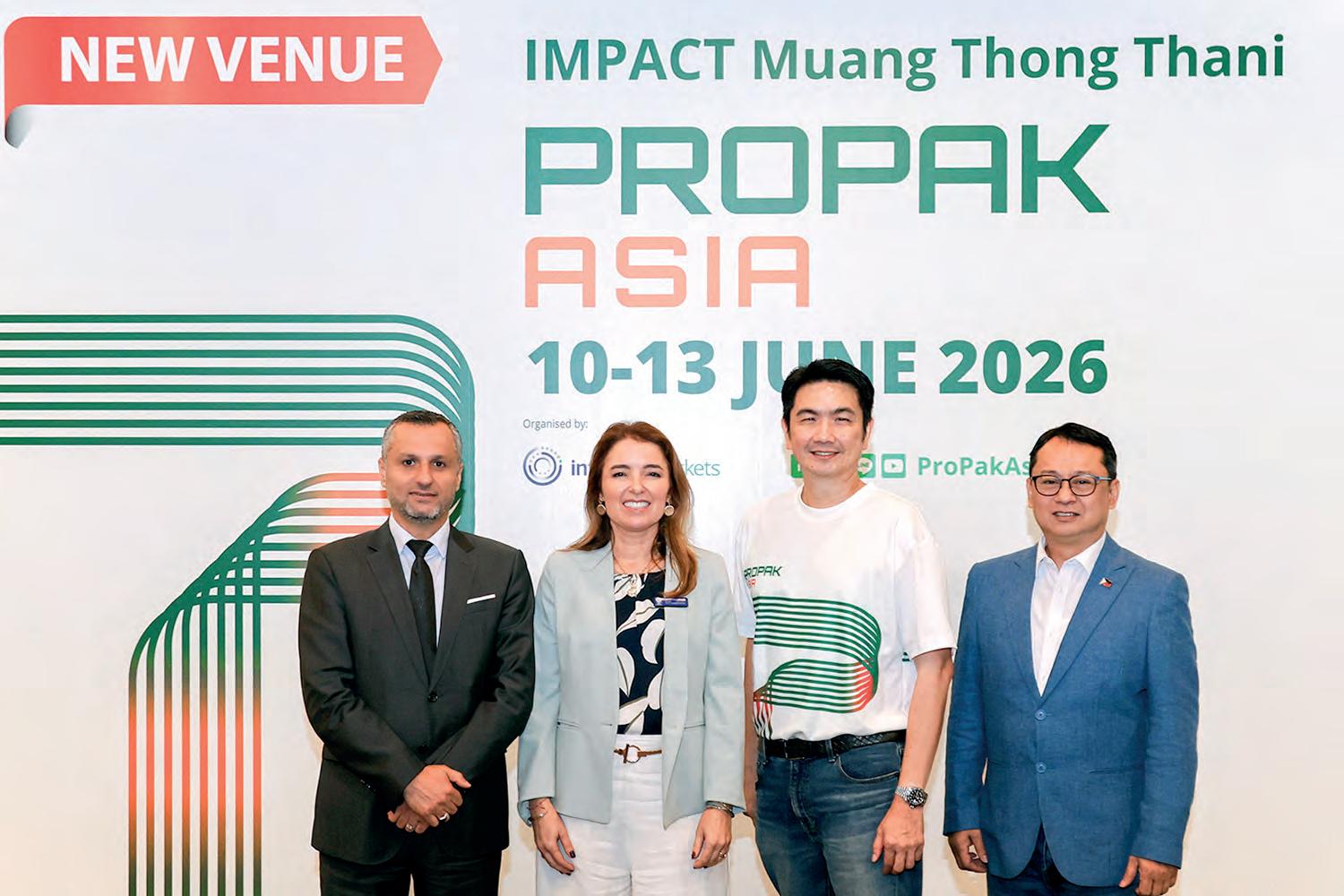







MARCA
15-16/01/2026
BOLOGNA
European trade fairs for the private label industry and the International supermarket label exhibition.
PROSWEETS
01-04/02/2026
COLOGNE
Trade fair on technologies for the confectionery and snack industry.
FRUIT LOGISTICA
04-06/02/2026
BERLIN
Trade fair on technologies for the fruit and vegetable industry.
BEER&FOOD ATTRACTION
15-17/02/2026
RIMINI
Trade fair for the beer, food & beverage world.
SANA FOOD
22-24/02/2026
BOLOGNA
International exhibition of healthy eating out.
SLOW WINE FAIR
22-24/02/2026
BOLOGNA
International fair dedicated to the good, clean, and fair wine.
MECSPE
04-06/03/2026
BOLOGNA
International trade fair for the manufacturing industry.
15-17/03/2026
DUSSELDORF
International trade fair for wine and spirits.
12-15/04/2026
VERONA
International exhibition for wine and spirits.
14-16/04/2026
SANTIAGO, CHILE
International trade fair on packaging and packing technologies.
MACFRUT
21-23/04/2026
RIMINI
Trade fair for the fruit and vegetable industry.
INTERPACK
07-13/05/2026
DUSSELDORF
Fair on production lines, solutions, and materials for packaging.
TUTTOFOOD
11-14/05/2026
MILAN
B2B trade fair for the entire agri-food ecosystem.
GULFOOD
26-30/01/2026
DUBAI
Fair on hospitality and food products.
DJAZAGRO
12-15/04/2026
ALGIERS
Fair on companies of the agri-food sector.
IRAN FOOD+BEV TEC
18-21/05/2026
TEHRAN Fair on packaging technologies.
SAUDIFOOD MANUFACTURING
08-10/06/2026
SAUDI ARABIA
Fair for the packaging and food & beverage industries.
PROPACK ASIA
10-13/06/2026
BANGKOK
International exhibition for packaging.
SAUDI FOOD SHOW
15-17/06/2026
SAUDI ARABIA Food and beverage products trade fair.
HOSPITALITY QATAR
12-14/10/2026
DOHA Fair on hospitality and HORECA.
GULFOOD MANUFACTURING
03-05/11/2026
DUBAI Fair for the packaging and food & beverage industries.
GULFHOST
26-30/01/2026
DUBAI
Hospitality fair for the Middle East, Africa, and Asia.
ITALIA
26-28/05/2026
PARMA
Fair on automation, components, and software for the industry.
16-19/06/2026
SAO PAULO, BRAZIL
Trade fair on packaging technologies.
MCTER EXPO
07-08/10/2026
VERONA
Exhibition on energy efficiency and renewable sources.
29/09-01/10/2026
NUREMBERG
Trade fair on technology for powder product processing.
SIAL PARIS
17-21/10/2026
PARIS
Trade fair on food products.
24-27/10/2026
STUTTGART
Trade fair for baking technologies.
27-28/10/2026
PARMA
Trade fair on food industry technologies and laboratory analysis
27-30/10/2026
PARMA
Fair on technology for the food and beverage industry.
10-12/11/2026
NUREMBERG
Fair on technologies for beer and beverage production.
17-20/11/2026
MILAN
International exhibition on enology and bottling.
23-26/11/2026
PARIS
International exhibition for packaging.
21-23/09/2027
NORIMBERGA
Packaging industry trade fair.
22-26/10/2027
MILAN
Fair for the hospitality & HORECA sectors.
IBA
24-28/10/2027
DÜSSELDORF
Trade fair for the bakery.
29/05 – 01/06/2028
MILANO
Trade fair for food and non-food processing and packaging technologies.
11-15/09/2028
MONACO
Fiera per l’industria delle bevande.


AGRICOLA CAMPIDANESE SOC. COOP
45
Via Pirelli snc
Zona Industriale 09098 Terralba - OR - Italy
ALTECH SRL
66/68
V.le A. De Gasperi, 70 20008 Bareggio - MI
Italy
ASTRA INC.
34/37
4-1 Hirata Hirano
Iizaka-machi Fukushima-shi 960-0231 Fukushima
Japan
CAVANNA SPA
88-89
Via Matteotti, 104 28077 Prato Sesia - NO
Italy
CHIARAVALLI GROUP
SPA SOCIO UNICO
79/81
Via per Cedrate, 476 21044 Cavaria con Premezzo - VA
Italy
COLUSSI ERMES SRL
82/84
Via Valcunsat, 9 33072 Casarsa della Delizia - PN
Italy
DCM SRL
59-60
Via Piersanti Mattarella, 10 20093 Cologno Monzese - MI
Italy
DNA MARKETING
17/19
Avenue Landas 2 boite 3 1480 Belgium
DUBAI WORLD TRADE CENTRE DWTC
109
P.O. Box 9292
Dubai
U.A.E - United Arab Emirates
ESG SRL
92-93
Corso Genova, 28 27029 Vigevano - PV
Italy
GENERAL SYSTEM PACK SRL GSP
71-61/65
Via Lago di Albano, 76 36015 Schio - VI
Italy
GLOBAL PRODUCE EVENTS (HK)
CO. LIMITED
39/41
2308 Dominion Centre, 43-59
Queen’s Road East Wanchai
Hong Kong
IFM ELECTRONIC SRL
102-103
Centro Direzionale Colleoni Palazzo Andromed 2 Via Paracelso, 18 20864 Agrate Brianza - MB
Italy
IFP PACKAGING SRL
69-61/65
Via Lago di Albano, 76 36015 Schio - VI
Italy
INDUSTRIAL AUCTION BV
73
Looyenbeemd 11 5652 BH
Eindhoven
The Netherlands
INFORMA MARKETS - THAILAND 110/113
428 Ari Hills Building, 18th Floor, Phahonyothin Road, Samsen Nai, Phayathai, 10400 Bangkok - Thailand
MINI MOTOR SPA
1-94-95
Via E. Fermi, 5 42011 Bagnolo in Piano - RE Italy
OMIP SRL
2-22/24
Via Ponte, 21 84086 Roccapiemonte - SA Italy
PND SRL II COV-14/16
Via Brancaccio, 11 84018 Scafati - SA - Italy
PNEUMATIC SCALE CORPORATION 100-101 10 Ascot Parkway 44223 Cuyahoga Falls USA
PROXAUT SRL 98-99
Via Della Tecnica, 4 41013 Piumazzo - MO Italy
SATINOX SRL 85
Via Progresso, 20
36035 Marano Vicentino - VI Italy
SCA SRL 90-91
Via Friuli, 5 29017 Fiorenzuola D’Arda - PC Italy
www.itfoodonline.com
SOTTORIVA SPA 86-87
Via Vittorio Veneto, 63 36035 Marano Vicentino - VI - Italy
TARNOS S.A. 11/13
Calle Sierra de Gata, 23 28830 San Fernando de Henares Spain
TECNO PACK SPA 61/65
Via Lago Di Albano, 76 36015 Schio - VI Italy
UNIVERSAL PACK SRL I COV-74/76
Via Vivare, 425 47842 San Giovanni In Marignano - RN Italy
WHERE CREATION BEGINS. Raw materials. Functional ingredients. Innovation at the core.
FROM FIRST SPARK TO FINAL PRODUCT. Two trade fairs. One complete journey.

01.-04.02.2026, Cologne
Together with

WHERE IDEAS BECOME REALITY. Processing. Packaging. Production. Food safety.

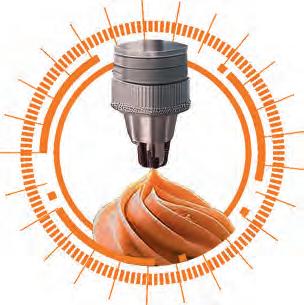
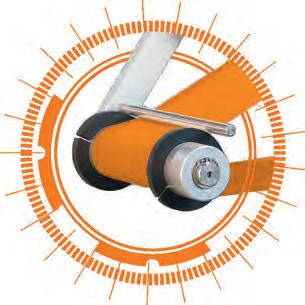




The leading trade show for the global fresh produce business.