International Research Journal of Engineering and Technology (IRJET) e-ISSN: 2395-0056

Volume: 09 Issue: 08 | Aug 2022 www.irjet.net p-ISSN: 2395-0072
International Research Journal of Engineering and Technology (IRJET) e-ISSN: 2395-0056
Volume: 09 Issue: 08 | Aug 2022 www.irjet.net p-ISSN: 2395-0072
Student, Dept. of Information Technology, Nagindas Khandwala College, Mumbai, India ***
Abstract - Big Data is a term used to describe vast assemblagesofdatasetsthatarerepletewithknowledge. The important element in the market nowadays is extremely big data sets that can be computationally analyzed to uncover patterns,trends,andassociationsfromunstructureddatainto structured ones to discover a solution for a firm. Despite the significant operational and strategic effects, little empirical study has been done to determine the business value of big data. With the goal of creating usable information from big data, big data analytics is fast becoming a popular method that many organizations are adopting. This paper offers a thorough examination of big data, including its characteristics, its applications, and the big data analytics techniques employed by various businesses to aid in decisionmaking. The paper also discusses various big data tools currently in use.
Key Words: Big Data (BD), Big Data Analytics (BDA), Hadoop,MongoDB,ApacheSpark,ApacheCassandra
Everysinglethinginthemodern,digitallyconnectedworld can be thought of as producing data. This data, which is being added to the ocean of Big Data already present and derivedfromawiderangeofsources,includingweblogs,cell phones, social networking sites, satellite images, human genome sequencing, consumer transaction data, astronomical and biological records, presents researchers withbothenormousopportunitiesandchallengesthatmust be met to yield fruitful results. The ability to manage enormousvolumesofdataismoreimportantthanmerely thesizeofthedata,whichcanbemeasuredinpetabytesor zeta bytes. The definition is given by the University of California, Berkeley ―"Big data is when the normal application of current technology doesn’t enable users to obtain timely, cost-effective, and quality answers to datadrivenquestions"[1].BigDataismostfrequentlyemployed inthefieldsofmarketing,sales,IT,healthcare,andfinance; but,asbigdata'sdependabilityincreases,organizationsare beginningtoidentifyadditional,long-termprospectsinrisk managementandlogistics.However,duetothedifficulties associatedwithhugedata,somecautionisnecessary.Butwe frequentlylimitthecapabilitiesofthistechnologyduetoour ignorance of its possibilities and our worry about data securityandprivacy,especiallyinlightoftheFacebookdata breach disaster. Large amounts of data, on the order of exabytesorzettabytes,withawidevarietyoffilesincluding text, images,documents,videos,andlogfilesthatcomein
complexformsincludingstructured,unstructured,andsemistructuredformats,allwithvaryingvelocityrequirements includingbatchprocessingandreal-timeornearlyreal-time processing.BigDatadimensionalityisexpandedtoinclude additionalVs,suchasthevaluethatcanbeextractedfrom thedataandveracity,whichdescribeshowwellunderstood thedatais.Themainproblemswithbigdataarethestorage, manipulation, and conversion of enormous data into knowledge.Althoughitisfrequentlybelievedthatimportant knowledgeisburiedbeneaththeenormousamountofBig Dataandmustbeunearthed,analystscannotjustguessat thedata'svaluablecontent[2].Thevarietyandcomplexity givenbybigdata,whichisprimarilyunstructuredorsemistructuredandthatcomesinhugevolume,aredifficultfor traditionaldataanalyticapproachesthatworkonstructured dataoflowvolumetohandle.
Hugeamountsofdatathatcan'tbeprocessedefficientlyby currentstandardapplicationsarereferredtoas"bigdata." Big Data processing starts with the raw data, which is typically impossible to store in the memory of a single computer because it hasn't been aggregated. Big Data, a phrase for enormous amounts of data that are both structuredandunstructured,inundatesbusinessesdaily.Big Datacanbeemployedtoanalyzeinsightsthatcanresultin betterbusinessdecisionsandstrategiccompanymovements [3]. Big Data is described as "high-volume, high-velocity, and/orhigh-varietyinformationassetsthatnecessitatecosteffective, creative forms of information processing that enable greater insight, decision-making, and process automation,"accordingtoGartner.Bigdataanalyticsisused to examine massive amounts of data in order to uncover previously unrecognized trends, connections, and other perspectives. With today's technology, you can quickly analyzeyourdataandobtaininsightsfromit,whichisfaster and more effective than with more conventional business intelligencesolutions[4].Businessesmaybenefitfromusing big data analytics to better understand the information includedintheirdataandtopinpointthedata thatwillbe most helpful for their current and forthcoming business choices. Big Data analysts frequently seek the information that results from data analysis [5]. Big data volumes are dramatically increasing and can be anywhere from a few terabytes (TB) to several hundred petabytes (PB) of enormous data in one location. Recording, preserving, scanning,sharing,reporting,andanalyzingaresomeofthe big data-related issues, though. Businesses today examine
International Research Journal of Engineering and Technology (IRJET) e-ISSN: 2395-0056
Volume: 09 Issue: 08 | Aug 2022 www.irjet.net p-ISSN: 2395-0072
enormous volumes of highly structured data to discover previously unknown facts. Therefore, big data is where sophisticatedanalyticalanalysisonlargedatasetsisdone. Butthemoredatacollected,themoredifficultitistomanage. We'llstartbyoutliningthecharacteristicsandsignificanceof bigdatainthissection.Businessadvantageswill,ofcourse, typically be attained through the processing of highly vast andcomplicateddata,whichcallsforreal-timetechnologies, butdoingsocontributestoavarietyofrequirementsmeant forcontemporarydatastructures,computationaltools,and procedures.
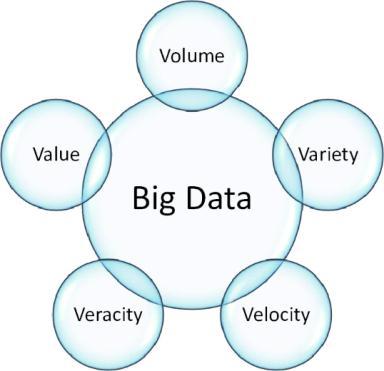
Oneofthemostimportantcharacteristicsoflargedatais value. Saving a large volume of data in databases is importantforITinfrastructuresystems.Theterm"velocity" referstotherapidrateofdatacreation.Thepotentialofdata isinfluencedbythespeedatwhichitisproduced.Thereis anenormousandconstantinfluxofdata.Varietyreferstoa variety of sources, and both structured and unstructured kindsofdataareoffered.Dataintheformofmovies,emails, audiofiles,wordprocessingfiles,etc.isnowalsobeingtaken intoaccount.Theconceptof"BigData,"whichisconcerned with extraordinarily vast data, is called volume. Volume determineswhetherasetofdataisconsideredbigdataor not.Therefore,"Volume"isthemostcrucialmetricamong othersthatshouldbetakenintoaccountwhenworkingwith "BigData."Theterm"variability"referstotheinconsistent natureofdata.Whenworkingwithahugevolumeofdata, dataaccuracyisnotalwaysguaranteed.Dataaccuracyand correctnessaretopicscoveredbyvalidity.Concernwithdata security involves vulnerability. Big data breaches are still majorbreaches,afterall.VolatilityisaBigDataparameter thatdealswiththestatisticalmeasurementofthedispersion foracertaincollectionofreturns.Thecurrentbigdatatrait that deals with data visualisation is visualisation. The inconsistentrateatwhichthedataissavedinoursystemis referred to as variability in the area of big data. Many differenttoolsandmethodsareusedtoanalyselargedata.
Big Data architecture and the organization's support infrastructure need to be coordinated. All of the data that corporations currently use are static. Data comes from a variety of untidy and unstructured sources, including informationfrommachinesorsensorsandvastcollectionsof both public and private data. Prior to now,the majorityof businesseswereunabletoeithergatherorstorethesedata, andthetechnologiesathandcouldnothandlethedataina timely manner. The new Big Data technology, however, enhances performance, encourages innovation in business modelproductsandservices,andsupportsdecision-making [9][10].AccordingtoStatisticsMarketResearchConsulting [11], the global market for data science platforms reached $19.76billionin2016andwillincreaseataCAGRofmore than36%to$128.21billionby2022.Youranalyticsdepend heavilyonbigdata.Ifyouhaveaccesstocutting-edgebigdata toolsandmethodologies,youcanmanageunstructuredand imperfect data with ease and get valuable insights fromit. 87% of businesses feel that Big Data Analytics will assist theminrestructuringtheiroperationswithinthenextthree years, and 89% believe that they will fall behind the competitioniftheydonotuseBigDataAnalytics[12].Today, practicallyallbusinessesusebigdataextensivelytogaina competitiveedgeintheirrespectivemarkets.Inlightofthis, enterprisesshouldchooseopen-sourcebigdatasolutionsfor big data processing and analysis because they are less expensive and allow for better time management of data analytical jobs. Focusing on the opensource big data technologies that are advancing the big data sector is beneficialsincebusinessesarecreatingnewsolutionsquickly togainacompetitiveedgeinthemarket.
OneofthetechnologiesusedtoprocessBigData,whichis the massive volume of combined structured and unstructured data, is Apache Hadoop. The open-source platformandprocessingarchitectureApacheHadooponly offersbatchprocessing.MapReducefromGoogleservedas Hadoop'sprimaryinspiration.Theentireprogramisbroken down into a number of little sections in the Map Reduce softwarearchitecture.Theselittlepiecesarealsoknownas fragments.Anysystemintheclustercanrunthesefragments [14].Therearenumerouspartsutilizedintheconstruction ofHadoop.Toprocessbatchdata,thesefactorsallworkedin concert.Principalelementsinclude:
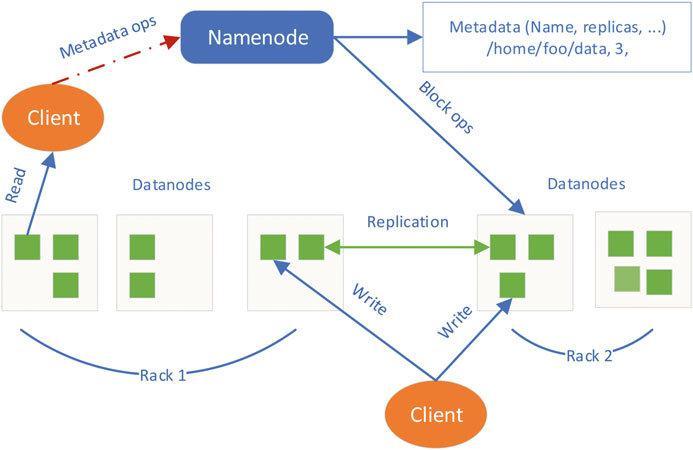
HDFS:ThecoreelementoftheHadoopsoftwaresystemis theHadoopDistributedFileSystem(HDFS).ItistheHadoop filesystem.HDFSissetuptostorealotofdata.Itmakesuse ofwidelydispersed,inexpensivehardware[13].Thisfaulttolerantstoragesystemcanholdhugefilesthatrangeinsize from TB to PB. In HDFS, there are two different kinds of nodes:namenodesanddatanodes.
International Research Journal of Engineering and Technology (IRJET) e-ISSN: 2395-0056
Volume: 09 Issue: 08 | Aug 2022 www.irjet.net p-ISSN: 2395-0072
Name Node: Itperforms the role of the master node. It includeseverypieceofdatapertainingtoeverydatanode.It containsdataaboutavailablespace,nodeaddresses,allof the data that they store, active nodes, and passive nodes. Additionally, it preserves the data from the task and job trackers.DataNode:Aslavenodeisanothernameforadata node. The data is kept on a Hadoop data node. And TaskTracker'sresponsibilityistomonitorongoingjobsthat arelocatedonthedatanodeandtotakecareofjobscoming fromthenamenode.
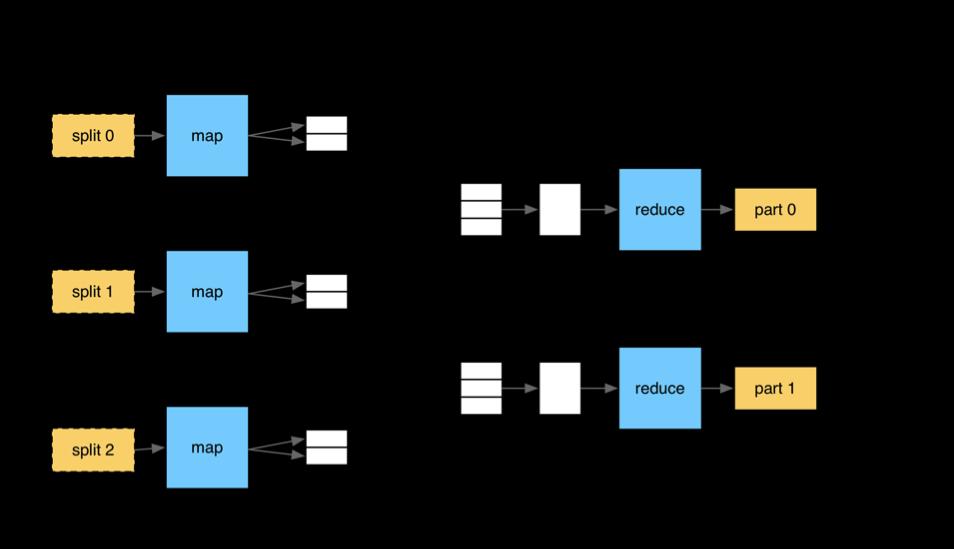
MapReduce is a framework that enables programmers to write parallel operations for processing large amounts of unstructureddatainadistributedarchitecture.Numerous components, including JobTracker, TaskTracker, JobHistorySever,etc.,makeupMapReduce.Itisalsoknown as the native Hadoop instruction execution engine. It was createdinordertohandleandstoreenormousamountsof datausingcommonhardware.Thehugevolumeofdata is processedusingclustersforrecordstorage.TheMapReduce programming model is built on two functions: the Map function and the Reduce function. The Map function is functional inmaster node.Italsoacknowledgesthe input. Then,distributetheslavenodeswiththesubmodulesthat werecreatedfromtheacceptedinput.
The main Hadoop service, YARN (Yet Another Resource Negotiator), supports two key services: global resource management (ResourceManager) and per-application management(ApplicationMaster).ItistheHadoopstack's clustercoordinationcomponent.Executionismadepossible throughYARN[15][16].TheMapReduceengineisincharge ofmakingHadoopusable.TheMapReduceframeworkworks withlessexpensivehardware.Nothingisthoughttobesaved inmemorybyit.Unimaginablemeasurabilitypotentialexists with MapReduce. Thousands of nodes have been created using it. The impact of this will be scaled back to varying degreesbyotherHadoopenhancements,butitwillalways beafactorinthespeedyexecutionofanideaonaHadoop cluster.
TheAMPsciencelabatUCBerkeleyiswhereApacheSpark, another open-source technology, was built [15]. It is a frameworkwithsupportforstreamprocessing.Sparkwas designed using many of the same principles as Hadoop's MapReduceengineandiscompletelydevotedtoaccelerating processandinstructionexecutionworkloadsbysupplying fullin-memorycomputationandprocessingenhancement. This allows us to perform in-memory analytics. This is frequently(100times) fasterthan Hadoop.It works quite well with Hadoop's storage. According to information in Figure[17],ApacheSparkimplementsassociatedegreeinmemory batch processing using the RDDs (Resilient DistributedDatasets)model.
Flowprocess:SparkStreamingispackedwiththeabilityto use Model Stream Process. The design of Spark itself is geared at batch-oriented workloads. Spark uses an idea known as micro-batches to handle the disparity between enginetypesandthefeaturesofstreamingworkloads.This approach is designed to handle information streams as a collection of incredibly small batches that will be handled usingthebatchengine'sinherentlinguistics.Sparkisclearly superiortoHadoopMapReduceintermsofperformanceand advancedDAGprogramming.Spark'sproficiencyisoneofits mainadvantages.Itcanbesetupasanindependentcluster orconnectedwithanalready-existingHadoopcluster.
Anopensource,distributed,anddecentralized/distributed storagesystem(database)calledApacheCassandraisused to manage extremely huge amounts of structured data dispersed over the globe. It offers services that are highly accessibleandhavenosinglepointoffailure.Cassandraisa distributed storage system that offers highly available service with no single point of failure while storing extremelylargeamountsofstructureddatadispersedover many commodity machines. Product catalogues and playlists,sensordataandtheInternetofThings,messaging and social networking, recommendation, personalization, frauddetection,andseveralmoreapplicationsthatdealwith timeseriesdataarejustafewexamplesofthemanyusesfor Cassandra databases. Because of its scalable and faulttolerant peer-to-peer architecture, flexible and adaptable data model that developed from the BigTable data model, declarative and user-friendly Cassandra Query Language (CQL),andextremelyefficientwriteandreadaccesspaths, Cassandra Database has been adopted in big data applications. These features allow critical big data applicationstobealwayson,scaletomillionsoftransactions per second, and handle node and even entire data center faults[18].
Product catalogues and playlists, sensor data and the Internet of Things, messaging and social networking, recommendation, personalization, fraud detection, and severalmoreapplicationsthatdealwithtimeseriesdataare just a few examples of the many uses for Cassandra databases. A distributed key-value store is Cassandra. Cassandraonlyletdatatobequeriedbyitskey,unlikeSQL queries, which allow the client to express arbitrary complicated constraints and joining criteria. Additionally, Cassandra does not contain a join engine, therefore the applicationmustperformanynecessaryjoiningofrelated rows of data. Indexes on non-key columns are also not permitted. In order to maintain referential integrity, the Cassandra data modeller must select easily derivable or discoverablekeys.AbstractionsthatCassandrahasadopted closelyresembletheBigtabledesign.
International Research Journal of Engineering and Technology (IRJET) e-ISSN: 2395-0056
Volume: 09 Issue: 08 | Aug 2022 www.irjet.net p-ISSN: 2395-0072
A database built on JSON files is called MongoDB. It was introduced in2009,isstill growing,andiswritteninC++. MongoDBcontainsinformationthatcanbeusedbyeachin small packages with hundreds of users. In essence, the MongoDB database stores a set of data that lacks a clear schema.DatacanbestoredintheformofBSONdocuments andhasnopresetformatliketables.Binary-encodedJSONlikeitemsareknownasBSON.Ifthedemandisknowledgeintensive, the user should consider MongoDB rather than MySQL since it saves data and supports queries [19,20]. BasedonC++,MongoDBisamemberoftheNoSQLdatabase family.MongoDBwascreatedspecificallyforthestorageand retrieval of information. It is capable of processing and measurement. It was C++ compatible and belonged to the NoSQLgroup.Relativetablesthataren'ttime-sensitivearen't trusted.Itstoresitsrecordsindocumentformat.
Oneofthefirstdecisionsthatorganizationsmustmakewhen dealingwithenormousamountsofdataiswhereorhowthe datawillbehandledafterithasbeenacquired.Datamarts, relationaldatabases,anddatawarehouseshavehistorically been used in structured data collecting and extraction methods. Using software that retrieves information from outsidesourcesandadaptsittosatisfytechnologicalneeds, this data is transported to storage from operational data stores,stacked,andeventuallystoredindatabases.Before the data collection and advanced analytics activities are allowed access, the data is processed, altered, and documented
However, the big data ecosystem calls for expertise in analyzingmodelslikeAgile, Magnetic,Deep(MAD),which deviates even more from the components of an (EDW) environment.Firstoff,traditionalEDWtechniquesforbidthe useofnewdatasourcesuntiltheyhavebeencleansedand integrated. Due to the current inequitable nature of data, which draws all data kinds regardless of quality performance,bigdatasystemsareforcedtoadoptdynamic responses. Additionally, having a huge amount of data storage would allow the analysts to quickly generate the results and alter the data due to the increasing and exponentialnumberofsourcesforthedifferenttypesofdata as well as the complexity of these data analyses. This invariablycomprisesaflexibleinfrastructure,thestructure of which will coordinate with quick system evolution. Finally, a large data database frequently needs to be deep andendupactingasanadvancedruntimealgorithmbecause currentdataanalysesusecomplexstatisticalapproachesand professionalsmustbeabletoevaluateenormousdatasets bydiggingupordown[21].
Big data has been approached in so many different ways, from in-memory databases to Massive Parallel Processing
(MPP)todistributednetworkdatabasesthatofferexcellent queryefficiencyandapplicationscalability.Databaseslike NotOnlySQL(NoSQL)weredevelopedforthestorageand management of unstructured or nonrelational data. In contrasttorelationaldatabases,NoSQLdatabasesdisperse data processing and storage. These databases provide a greater emphasis on high-performance, scalable data storage,andtheymandatethatinformationadministration tasksbecarriedoutattheapplicationlayerratherthanin the database itself [22]. On the other hand, memory repositoriesmanagethepricelessdatainstoragememory, eliminating disc input and output and enabling real-time databaseresponse.Thecompletedatabasecanbestoredin silicon-based central memory instead of mechanical hard discs.Additionally,in-memorydatabasesarenowbeingused for cutting-edge research on massive amounts of data, notablytospeeduptheentryintoandscoringofexpository models for analysis. This allows for rapid revelation evaluationandadaptiontovastamountsofinformation.As analternative,byusingtheMapReducemodel,Hadoopgives a basis for the success of Big Data Analytics that offers accuracyandconsistency.Anumberofdatanodes,including thenamenode,storethedataindistributedfileblocks.The namenodeservesasthesupervisorbetweenthedatanode andtheclient,directingtheclienttothecorrectdatanode thathasthenecessarydata.
Software and/or hardware solutions that let businesses identify,assess,optimize,andimplementpredictivemodels byexaminingbigdatasourcesinordertoboostoperational efficiencyorreducetherisk[23].Forecastingandstatistical modelingtoascertainpotentialfutureoutcomesarecentral to predictive analytics [24]. The need for new large data statistical methodsisprompted bya numberofcauses.In order to analyze the importance of a given relationship, a smallsamplefromthepopulationistaken,andtheresults are compared with chance. This is the foundation of traditionalstatisticalapproaches.Thegeneralizationofthe conclusion to the entire population follows. Big data samples,ontheotherhand,areenormousandcomprisethe majority, if notthe whole population. Asa result, big data doesnotreallyrequiretheconceptofstatisticalsignificance. Second,manytraditionalmethodsforsmallsamplesdonot scaleuptomassivedataintermsofcomputationalefficiency. Thethirdfactorrelatestotheuniquecharacteristicsofbig data, including heterogeneity, noise accumulation, misleadingcorrelations,andincidentalendogeneity[25].
Prescriptive analytics focuses on optimization and randomizedtestingtoevaluatehowcompaniesmightraise theirservicestandardswhilecuttingcosts[26].Thiskindof
International Research Journal of Engineering and Technology (IRJET) e-ISSN: 2395-0056
Volume: 09 Issue: 08 | Aug 2022 www.irjet.net p-ISSN: 2395-0072
analytics is used to establish the causal link between analytical findings and business process optimization guidelines. Predictive analytic models' input is used by enterprises to improve their business process models in prescriptive analytics [27]. Prescriptive analytics help managetheinformationtransitionandtheongoinggrowth of business process models, despite being challenging to implement[28].Therearen'tmanyreal-worldinstancesof effectiveprescriptiveanalytics.Thefactthatmostdatabases are limited in the number of dimensions they can store is one of the causes of this limitation [29]. As a result, the analysis of such data offers, at most, fragmentary insights into a challenging business issue. The simulation optimization approaches have only been used in a few preliminaryinvestigationswiththeBDA.Forinstance, the framework known as multi-fidelity optimization with ordinaltransformationandoptimalsamplingwasproposed by Xu, Zhang, Huang, Chen, and Celik in 2014. (MO2TOS). UndertheBDcontext,theframeworkoffersaplatformfor descriptiveandprescriptiveanalytics.Twosetsofhigh-and low-resolution models were created for the MO2TOS framework.Theauthorsemphasizedthatthevastamountof data can make the construction of high-resolution models quiteslow.Thelow-resolutionmodels,ontheotherhand, grewfarmorequicklyandusedonlyalittleamountofdata. To easily combine both resolution models and optimize targeted systems in the BD environment, the MO2TOS frameworkhasbeenpresented[30].Prescriptivesolutions often aid business analysts in making decisions by identifying activities and evaluating their influence on company objectives, needs, and limitations. What if, for instance,simulationtoolshadbeenabletoshedlightonthe likelyoptionsthatacompanywoulddecidetoapplyinorder tokeeporimproveitscurrentmarketposition?
Inthe formof providingstandard reports,adhoc reports, and alerts, descriptive analytics examines data and information to define the current status of a business scenario in a way that developments, patterns, and exceptionsbecomeapparent[31].Banerjee,Bandyopadhyay, andAcharya(2013)mentionedtheuseofdashboard-type applicationsasanothertypeofdescriptiveanalysiswhena businessregularlygeneratesvariousmetrics,includingdata to monitor a process or many processes over time. For instance, this type of application might be helpful to comprehendthefinancialhealthofabusinessataspecific pointintimeortocompareittootherbusinessesoritsown overtime.Indescriptiveanalytics,analystsmusthavethe abilitytoreadfactsfromfigures,relatethemtothepertinent decision-makingprocess,andultimatelymakeadata-driven conclusion from a business standpoint. The majority of business decision analysis (BDA) is often descriptive (exploratory) in nature, and using descriptive statistical approaches (data mining tools) enables firms to identify unidentifiedcorrelationsorbeneficialpatternsthatmaybe
usedforcorporatedecision-making[32].Rootcauseanalysis and diagnostics are also types of descriptive analysis, according to Spiess, T'Joens, Dragnea, Spencer, and Philippart (2014). These analyses entail reading and interpretingdatapassivelyaswellastakingspecificactions on the system being tested and reporting the findings. According to the author, root cause analysis is a complex procedure that involves continuously analyzing data and linkingdifferentinsightsinordertoidentifytheoneormore underlyingcausesofanincident[33].Usinganalyticaldrilldownsintodata,statisticalanalysis,andfactoranalysis,for example,areallexamplesofinquisitiveanalyticsthatinclude exploringdatatoconfirmorrejectbusinesshypotheses[34]. Preemptive analytics refers to the ability to take preventative measures in response to events that could unfavorably affect an organization's performance, such as identifying potential threats and advising mitigation measureswellinadvance[35].
Techniquesthat extractinformationfrom textual data are known as text analytics (also known as text mining). Examplesoftextualdataheldbycorporationsincludesocial networkfeeds,emails,blogs,onlineforums,surveyreplies, corporate documents, news, and call center logs. Machine learning,computationallinguistics,andstatisticalanalysis are all used in text analytics. Businesses can transform massiveamountsoftextproducedbyhumansintoinsightful summariesthatenhanceevidence-baseddecision-makingby usingtextanalytics.Textanalytics,forinstance,canbeused toforecaststockmarketmovementsusingdatagleanedfrom financialnews[36].Let'stakeaquicklookattextanalytics techniques below. Techniques for information extraction (IE)takeunstructuredtextandextractstructureddatafrom it.Forinstance,IE algorithmsmayextractstructured data frommedicalprescriptions,suchasmedicinename,dosage, and frequency. Entity Recognition (ER) and Relation Extraction (RE) are two IE sub-tasks [37]. ER identifies namesintextandgroupsthemintopre-establishedgroups likeperson,date,location,andorganization.Inthetext,RE identifiesandextractssemanticlinksbetweenentities(such aspeople,organizations,medications,genes,etc.).
Forinstance,aREsystemcanextractrelationslikeFounder Of[SteveJobs,AppleInc.]orFoundedIn[AppleInc.,1976] from the line "Steve Jobs co-founded Apple Inc. in 1976." Examplesofindustry-standardQAsystemsincludeApple's SiriandIBM'sWatson.Theseprogramshavebeenusedin marketing, finance, healthcare, and education. Complex NaturalLanguageProcessing(NLP)methodsareusedbyQA systems. Sentiment analysis (opinion mining) techniques examine opinionated material, which includes views on things like goods, services, people, and events. Sentiment analysis has become increasingly popular as a result of businessescollectingmoredataabouttheattitudesoftheir customers[37].
International Research Journal of Engineering and Technology (IRJET) e-ISSN: 2395-0056
Volume: 09 Issue: 08 | Aug 2022 www.irjet.net p-ISSN: 2395-0072
A generic word used to describe any effort to explain the importanceofdata byplacingitinavisualcontextisdata visualization. With the aid of data visualization software, patterns,trends,andcorrelationsthatcouldgounnocedin text-baseddatacanbeexposedandidentifiedmoreeasily.It enables applications to get data devoid of technical limitationsimposedbydataformats,datalocations,etc.Data virtualization is one of the most popular big data technologies, employed by Apache Hadoop and other distributeddatastoresprovidingreal-timeornearreal-time accesstodatastoredonmanyplatforms[38].
Thebigdatastorageisfollowedbyanalyticsprocessing[39]. The first requirement is for the data to load quickly. However, as file and network/internet traffic mostly correlateswithqueryperformance,duringdatapreparation, the loading time for data must be decreased. Quickly respondingtoinquiriesisthesecondrequirement.Tomeet the requirements of increasing workloads and real-time requests,themajorityofqueriesbecomecriticalintermsof responsetime.Ifaresult,thedatastructureshouldbeable tomaintainexcellentqueryspeedsevenasqueryquantities growrapidly. Fig -2:RepresentationofMapReduce[40] Fig -3:HDFSArchitecture[41]
MapReduceisadistributedcomputing-basedprogramming approachandsoftwareconfigurationforJava-basedsystems. MapandReducearethetwoprimaryresponsibilitiesofthe MapReducealgorithm.Inordertocreateanotherdatasetin whichdistinctivefeaturesaredividedintotuples,Mapfirst preparesasetofdata.Inthesecondtask,"reduce,"features are extracted using the map as an input, and these other distinct lists of data are then transformed into a smaller subset of lists. The reduction task is always completed immediately following the map task, as suggested by the name MapReduce. The MapReduce feature in Hadoop depends on two different nodes: the Work or job Tracker and the Task Tracker nodes. The Job Tracker node is in chargeofprovidingtwofunctions,suchasthefunctionthat maps, which is the mapper function, and the reducer functions to the corresponding Task Trackers that are available,aswellasfortrackingtheresults.
Big data is significant from a decision-perspectivesince it canprovideimportantknowledgeandfactsonwhichtobase policies. The managerial anddecision-making process has beenacrucialandmeticulouslycoveredtopicinresearchfor years. Big data is now a far more valuable resource for companies.Scanners,mobilephones,rewardsprograms,the internet,andwebtechnologiesarejustafewofthesources that produce enormous amounts of incredibly precise informationthatpresentchancesforbusinessestogenerate large gains. That's only feasible if the data are properly analyzedtounearthinsightfulknowledgethatenablesfirms totakeadvantageofthewealthofhistoricalandcurrentdata produced by distribution networks, industrial processes, consumerpreferences,etc.Additionally,businessestypically evaluate essential papers including revenue, imports, and stockpiles. The usage of big data will have gathered knowledgeandinsight,buttherehasbeenaneedtoanalyze datasets, such as customer needs and suppliers. With the amount of complicated text available, both in size and format,reasonabledecisionsmustbemadefrequentlybased oncertainpresumptionsaboutthedata.
Inordertofacilitatemeaningfulresultsfromtheseconcepts, machine learning concepts and technologies are also becomingmoreandmorepopularamongresearchers.The processingofdata,theuseofalgorithms,andoptimization havebeenthemainareasofresearchinthefieldofmachine learning for big data. Many of the recently developed machine learning technologies for big data require significantadjustmenttobeadopted.Wecontendthateven if each tool has benefits and drawbacks of its own, more effectivetoolscanbecreatedtoaddressbigdata'sinherent issues.Theeffectivetoolsthatneedtobecreatedmust be abletodealwithnoisyandunbalanceddata,uncertaintyand inconsistentresults,andmissingnumbers.
International Research Journal of Engineering and Technology (IRJET) e-ISSN: 2395-0056
Volume: 09 Issue: 08 | Aug 2022 www.irjet.net p-ISSN: 2395-0072
Throughout this study, I focused on the novel topic of big data,whichhasdrawnalotofattentionduetoitsperception of opportunities and advantages that are unmatched by anythingelse.Weliveinaninformationagewhensignificant variationsareproducedgloballywithhigh-speeddata,yet within them there are underlying specifics and trends of hiddenpatternsthatcanbededucedandutilized.Therefore, by attempting to apply various statistical methods to big dataandexposingbothpowerfulandvaluableknowledge, bigdataanalyticscanbeusedtoexploitchangeinbusiness aswellasoptimizedecision-making.BigDataAnalytics,in my opinion, is extremely pertinent in this era of data overspill and also offers unexpected additional insight, which is used by decision-makers in various fields. If properlyusedandimplemented,bigdataanalyticshasthe immensepotentialtolaythegroundworkforadvancements in the fields of science, mathematics, and humanities. Big data analysis methods and tools are covered in detail. Hadoopmightbeagoodoptionforbatch-onlyapplications and is probably less expensive to adopt than alternative solutions. Time-sensitive workloads are not batch-only workloads. Hadoop offers a thoroughly established methodology for the execution of instructions that is best suitedtohandleextremelylargedatasetswheretimeisn'ta major concern. For individuals with a variety of process workloads, a spark can be a nice option. The benefits of speedwhenexecutingSparkinstructionsareremarkable.
[1] T.Kraska,"FindingtheNeedleintheBigDataSystems Haystack,"IEEEInternetComputing,vol.17,no.1,pp. 84-86,2013.
[2] F. Shull, "Getting an Intuition for Big Data," IEEE Software,vol.30,no.4,pp.3-6,2013.
[3] Data Science vs. Big Data vs. Data Analytics 2018, simplilearn, accessed 14 May 2018, https://www.simplilearn.com/data-science-vs-bigdatavs-data-analytics-article
[4] Big Data Analytics What it is and why it matters, SAS, accessed14May2018
[5] VangieBeal.(2018),BigDataAnalytics,accessed10May 2018, https://www.webopedia.com/TERM/B/big_data_analyt ics.html
[6] Big Data Tools and Techniques: A Roadmap for PredictiveAnalyticsRituRatra,PreetiGulia
[7] Rick.Smolan,Jennifer.Erwitt,“TheHumanfaceofBig Data, Ed. Against all odds production”, Sausalito, CA 2012.
[8] https://www.researchgate.net/figure/big-data-5-VsVolume-According-to-a-Fortune-magazine-11-wecreated-5-Exabytes-of_fig1_268157581
[9] J.Manyika,C.Michael,B.Brownetal.,“Bigdata:Thenext frontierforinnovation,competition,andproductivity,” Tech.Rep.,McKinsey,May2011.
[10] J.Manyika,M.Chui,B.Brownetal.,“Bigdata:thenext frontierforinnovation,competition,andproductivity,” McKinseyGlobalInstitute,2011.
[11] RickWhiting.(2018),2018BigData100:The10Coolest DataScienceAndMachineLearningTools,accessed10 May2018
[12] ACOMPLETELISTOFBIGDATAANALYTICSTOOLSTO MASTERIN2018,accessed10May2018
[13] KaislerS,ArmourF, Espinosa JA,Money W.“Bigdata: issues and challenges moving forward” In: System sciences (HICSS), 2013 46th Hawaii international conferenceon,IEEE.2013.pp.995–1004.
[14] Kubick, W.R. “Big Data,Informationand Meaning”,In: ClinicalTrialInsights,pp.26–28(2012)
[15] TechAmerica:“DemystifyingBigData:APracticalGuide to Transforming the Business of Government”, In: TechAmericaReports,pp.1–40(2012)
[16] Ms. Komal , “A Review Paper on Big Data Analytics Tools”(IJTIMES),e-ISSN:2455-2585Volume4,Issue5, May-2018,pp1012-1017.
[17] G. George and D. Lavie, “Big data and data science methods for management research”, Academy of ManagementJournal,vol59,issue5,pp.1493 –1507, 2016.
[18] Cassandra as a Big data Modeling Methodology for Distributed Database System https://www.ijedr.org/papers/IJEDR1703135.pdf
[19] https://www.google.com/imgres
[20] MongoDB,Inc.(2015,Aprilie),MongoDBOpsManager Manual Release 1.6,[Online].Available: https://docs.opsmanager.mongodb.com/current/ opsmanager-manual.pdf
[21] Strohbach,M.,Daubert,J.,Ravkin,H.,Lischka,M.(2016). BigDataStorage.In:Cavanillas,J.,Curry,E.,Wahlster,W. (eds) New Horizons for a Data-Driven Economy. Springer, Cham. https://doi.org/10.1007/978-3-31921569-3_7
[22] Mazumdar,S.,Seybold,D.,Kritikos,K. et al. Asurveyon datastorageandplacementmethodologiesforCloud-Big
International Research Journal of Engineering and Technology (IRJET) e-ISSN: 2395-0056
Volume: 09 Issue: 08 | Aug 2022 www.irjet.net p-ISSN: 2395-0072
Data ecosystem. J Big Data 6, 15 (2019). https://doi.org/10.1186/s40537-019-0178-3
[23] Gil Press. (2016), Top 10 Hot Big Data Technologies,accessed11May2018
[24] Waller, M. A., & Fawcett, S. E. (2013). Data science, predictiveanalytics,andbigdata:arevolutionthatwill transformsupplychaindesignandmanagement.Journal ofBusinessLogistics,34(2),77–84.
[25] Fan,J.,Han,F.,&Liu,H.(2014).Challengesofbigdata analysis.NationalScienceReview,1(2),293–314.
[26] Joseph, R. C., & Johnson, N. A. (2013). Big data and transformational government. IT Professional, 15(6), 43–48
[27] Bihani,P.,&Patil,S.T.(2014).Acomparativestudyof data analysis techniques. International Journal of Emerging Trends & Technology in Computer Science, 3(2),95–101.
[28] Rehman,M.H.,Chang,V.,Batool,A.,&Teh,Y.W.(2016). Big data reduction framework for value creation in sustainable enterprises. International Journal of InformationManagement(Accepted).
[29] Banerjee,A.,Bandyopadhyay,T.,&Acharya,P.(2013). Dataanalytics:hypedupaspirationsortruepotential. Vikalpa.TheJournalforDecisionMakers,38(4),1–11.
[30] Xu,J.S.,Zhang,E.,Huang,C.-H.,Chen,L.H.L.,&Celik,N. (2014).Efficientmulti-fidelitysimulationoptimization. Proceedingsof2014wintersimulationconference.GA: Savanna.
[31] Joseph, R. C., & Johnson, N. A. (2013). Big data and transformational government. IT Professional, 15(6), 43–48.
[32] Banerjee,A.,Bandyopadhyay,T.,&Acharya,P.(2013). Dataanalytics:hypedupaspirationsortruepotential. Vikalpa.TheJournalforDecisionMakers,38(4),1–11.
[33] Spiess, J., T'Joens, Y., Dragnea, R., Spencer, P., & Philippart, L. (2014). Using big data to improve customer experience and business performance. Bell LabsTechnicalJournal,18(4),3–17.
[34] Bihani,P.,&Patil,S.T.(2014).Acomparativestudyof data analysis techniques. International Journal of Emerging Trends & Technology in Computer Science, 3(2),95–101.
[35] Szongott,C.,Henne,B.,&vonVoigt,G.(2012).Bigdata privacy issues in public social media. 6th IEEE international conference on digital ecosystems technologies(DEST)(pp.1–6).
[36] Chung,W.(2014).BizPro:Extractingandcategorizing businessintelligencefactorsfromtextualnewsarticles. InternationalJournalofInformationManagement,34(2), 272–284.
[37] Jiang,J.(2012).Informationextractionfromtext.InC.C. Aggarwal,&C.Zhai(Eds.),Miningtextdata(pp.11–41). UnitedStates:Springer.
[38] MargaretRouse.(2017),Datavisualization,accessed11 April 2018, https://searchbusinessanalytics.techtarget.com/definiti on/data-visualization
[39] Cebr: Data equity, Unlocking the value of big data. in: SASReports,pp.1–44(2012)
[40] https://training-course material.com/index.php?title=Hadoop_Administration& action=slide
[41] B.Abu-Salihetal.,SocialBigDataAnalytics
© 2022, IRJET | Impact Factor value: 7.529 | ISO 9001:2008 Certified Journal | Page1666