A Comparative Study of Automatic Text Summarization Methodologies
1,2,3,4 Student, Department of Computer Engineering Pimpri Chinchwad College of Engineering PCCOE Pimpri Chinchwad, Pune 411044, India
5Professor, Department of Computer Engineering Pimpri Chinchwad College of Engineering PCCOE Pimpri Chinchwad, Pune 411044, India
Abstract Due to the abundance of available documents and materials all over the internet and various archives, it is becoming difficult for human userstoobtaincrispinformation about a specific topic on time. Therefore, users need to obtain a summary of all available documents instead of a pile of documents. As manual summarization is time consumingand not cost effective, automatic text summarizationistheneedof the hour. Much research has been conducted for automatic text summarization and many solutions have been proposed. However, the automatically generated summaries are still far behind than summaries generatedbyhumanusers.Mostofthe research has focused on generating a summary from a single document whereas generating a summary from multiple documents is becoming more important nowadays. In this paper, a survey of existing solutions for automatic text summarization has been presented and the research gaps are identified too. It is hoped that the identified research gaps would help future researchers to channelize the research in the right direction.
Key Words: Automatic Text Summarization, Natural Language Processing, Extractive Text Summarization, Language Summarization, Document and Text Processing
1.INTRODUCTION
Nowadays,itisdifficulttofindcrispandmeaningful information about a specific topic of interest due to the abundanceofrelatedandunrelatedinformationalloverthe internet. Even if the search results retrieve meaningful documents,usersmayhave time constrainttogo through thecompletedocumenttounderstandthegistofthesame. Sometimes information is repetitive across multiple documents. Thus, summarizing the major points from multipledocumentsandcrisplypresentingthatinformation totheusers,istheneedofthehournow.However,manually summarizing these huge amounts of information is not feasibleorpracticable.TheAutomaticTextSummarization (ATS)isthekeysolutiontothisproblem.
The ATS aims to produce the summary from single or multiple documents such that the main essence of the documentisnotmissed,andtherepetitionsarenotthere. DocumentsgeneratedbytheATSmaynotbelosslessalways,
butthemajorpointsshouldnotbemissedintheabridged summary.Theabridgedversionwillhelptheuserstogetthe key information of the document without much time consumption. Text summarization can be used in many applicationsforexampletogeneratethemeetingsummary, newssummarization,headlinegeneration,etc.
Many researchers have channelized their energy towards ATSandproposeddifferentsolutionsbutstill,thereisroom forproposingbettersolutionstosatisfytheneedsofhuman users.Forexample,notmanysatisfactoryworksarethereto generatesummariesfromlivesportscommentaryforsports lovers.Thereishardlyanymethodavailableforgenerating customizablesummariesconcerningtimeconstraintsasper thesports lovers’expectations.
In this paper, a comprehensive survey on available approaches and methods of ATS is presented to help the researchers understand the drawbacks of the existing systems and find future research directions. The survey presentsdifferentaspectsofATSlikeapproaches,methods, datasets,techniques,andevaluationcriteria.

2. CLASSIFICATIONS OF ATS:
Automatic text Summarization is used in various applications and it has two major approaches namely extractivesummarizationandabstractivesummarization.In extractive summarization, the important sentences in the inputtextdocumentareidentifiedanddirectlyincludedin thesummarywhereasintheabstractivetextsummarization, new sentences are generated from the original text based uponthemeaningofsentences.Therearethreemainsteps fortextsummarization:a)Topicidentificationcomprisingof word frequency,cue phrases,etc. b)Interpretation and c) SummaryGeneration.ThegeneralstepsofATSarchitecture arediscussedhere.
a.Pre processing:Thestructuredrepresentationoforiginal textisproducedusingtechniquessuchastokenization,POS tagging,stemming,etc.
b.Processing:Convertingadocumentintoitssummaryby usingdifferenttextsummarizationapproaches.
International Engineering Technology ISSN:2395 0056
c.Post processing Thisstepisaboutsolvingtheproblems inthegeneratedsummarysentences.
3.PARAMETERS CHOSENFOR CLASSIFICATIONAND COMPARISON:
Inthissection,few parametersareidentifiedanddefined, based on which research works in the area of text summarizationcanbecompared.
3.1 Classification based on input document size
The text summarization can be performed either fromasingledocumentorfrommultipledocuments.Multi documenttextsummarizationusesmorethanonetextinput thatfocusesonacommontopicaroundwhichasummaryis tobegeneratedwhereassingledocumentsummarizationis donefromasingledocument.
3.2 Classification based on the domain:
A domain is the property of the model used to generatethesummary.Itisclassifiedintodomain specific andgeneral.Somemodelsaredevelopedtocreateautomatic textsummarizationinaspecificdomainandthatmodel is not able to produce promising results in other domains. Thesemodelsareincludedinthe domain specificmodels. Unlikedomain specific models,somemodelsareadaptive and are successful in generating summary documents of more than one domain. These are included in the General domaincategory.
3.3 Classification based on approach
AutomaticTextSummarizationisbroadlyclassified into two types: Extractive text summarization and abstractive text summarization. In the extractive text summarization, the summary is generated by extracting words or sentences from the input text. For example, an approachcanuseneuralnetworkstofindimportantwords orsentencestobeincludedinthesummarytoincreasetheir weightage and a general extractive text summarization approach can be implemented to extract those words or sentences to include in the summary. On the other hand abstractive text summarization focuses on identifying the meaningofonesentenceandsummarizingaccordingly.
3.4. Classification based on the result
ROUGEisprobablythemostimportantmetricfor theevaluationofthesummariesautomatically.ROUGEisan acronym for Recall Oriented Understudy for Gisting Evaluation. The quality of a summary is determined automatically by comparing one summary to another standardsummarythatismadebyhumanswiththehelpof variousautomaticevaluationsofthesummary.Itisbasedon
ametriccalledBLEUthatisdefinedoriginallyfrommachine translationwhichcouldbeappliedtoevaluatesummaries.
3.4.1 ROUGE-N
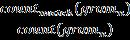
First,wefindout‘n grams’inthegiveninput.Then wecomparethetotalnumberof‘n grams’thatarematching withinthemodel generatedtextwhichgivesusROUGE N. 'n grams'isnothingbutjustacollectionoftokensorwords. Whenthereisasinglewordthenitiscalledunigram.When therearetwowordsthenitiscalledbigram.Whenthereare threewordsthenitiscalledtrigram.ROUGE Nisbasedon BLEUwhichisusedinmachinetranslation.BLEUstandsfor Bilingualevaluationunderstudy.
A reference is a human generated summary. ROUGE Nistheoverlapthatconsistsof‘n grams’withinthe givensystemandthesummariesthataregivenforreference. ROUGE 1 will refer towards the unigram that has been overlapped within the summary for reference and system given. ROUGE 2 will refer towards the bigrams that have been overlapped within the summary for reference and systemgiven.ROUGE 3willrefertowardsthetrigramsthat havebeenoverlappedwithinthesummaryforreferenceand systemgivenrespectively.AfteritisdecidedwhichNtobe usedthentheROUGERecall,precision,orF1scorewillbe calculatedrespectively.
3.4.2 Recall
Whenthe‘n grams’areoverlappedintheoutputsof themodel andthereference.Thensuchanoverlapping of total numbers or ‘n grams’ is called Recall. After this, a particularnumberisdividedfromtheoverallnumberof‘n grams’thataregiveninthereference.
The above statements ensure that this model has beencollectingtheentireinformationconsistingwithinthe given reference. But in contrast, this is not so good at assuring that the given design is failing to push a large number of words outside to gain the score of recall respectively.
3.4.3 Precision
Volume: 09 Issue: 01 | Jan 2022 www.irjet.net ISSN:2395 0072 Factor 7.529 ISO 9001:2008
Toavoidthedrawbackofrecalltheprecisionmetricis used. Precision is basically a performance metric that is appliedtothedata received bya collectionofwords. The calculationofPrecisionisdonebydividingthenumberof‘n grams’foundinsidebothbythenumberof‘n grams’inthe model.
International Research Journal of Engineering Technology (IRJET)
Volume: 09 Issue: 01 | Jan 2022 www.irjet.net
3.4.4 F 1 Score
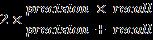
Aftertheaboveprocess,therecallvaluesalongwith theprecisionvalueswillbereceived,thentheyareusedto calculatetheROUGE F1score.
3.4.5 ROUGE L
ROUGE LmeasurestheLCSwhichstandsforLongest CommonSubsequencebasedonthestatisticsoftheoutput givenbythemodelwiththereferencegiven.
3.4.6 ROUGE S
Itisaskip gramconcurrencywhichisagroupofsome wordsinitssentenceorder.
4. APPLICATIONS OF MODELS PROPOSED IN PAPERS
Researchers have worked to summarize texts specifictosomeparticulardomainslikeNews,Books,Mails, Medical documents for summarization, etc. Text summarization in a particular domain has some specific appraoches too. In this survey, research papers are also comparedbasedontheirapplicationdomain.
News Article Summarization: In case of news articule summarization, some datasets like DUC 2001, CNN, Daily Mail,etc are used. This datasets consistofacertainnumberofwordsandsomesets of documents. Wordnet is used as it contains English language words. Sets are formed by combiningsomegroupsofEnglishwordswhichare knownassynsets.Itislaterparsedwithanyofficial news websites like BBC, TOI, etc., to get the informationthatwhichaparticularsentenceshould get more importance. Thus, this summary would containalltheimportantinformationthatisrelated tothetopic.
BooksSummarization:Asummaryiscreatedtogive thecontentofthebookinshort,whichmightsave thetimeofcustomerstoselecttheirbookwiththe genretheywant.Astheavailabilityofbooksonline increases,moretoolsareneededtosummarize.
e ISSN:2395 0056
Legal articles Summarization: This can be very usefulinlegaloperationstofindaparticularrulein
very little time and also it would summarize the wholedocumentandthereaderwouldonlyhaveto readjust the important part. When a certain legal problemisoccurred,lawyerscangothroughpast documents in a very short time through summarizationthanratheractuallyreadingallthe files
Sports Summarization: In this, the text would be consideredfromthedatasetslikeSPORTSSUM,BBC sportsArticledatasets,CNN,etc.First,thearticles areselectedandthenit’sperformedsothat there wouldbemoreandmoreaccuracybyavoidingthe unneededpart.Thiswouldreducetheefforttoread the whole article and create just the summary. Therecouldalsobethepredictionofscoresusing summary.
Thus,theresearchpapersstudiedproposedsolutionsthat hadawiderangeofapplicationswhichrangedfromsmall articleslikenewstolargedatalikebooks.
5. LITERATURE REVIEW
p ISSN:2395 0072 Factor value: 7.529 ISO 9001:2008
Automatictextsummarizationhaslargenumberof applications and can be achieved using various methodologies.Thesemethodscanproduceresultsbutthere are chances that they adhere to certain situations. So, literature review helps in accomplishing the task of recognizingthemethodologyanditsbestapplication.The literature survey completed during this survey paper is givenbelow.
There was a paper that proposed the firefly algorithm [1] whichisatypeofswarm basedalgorithm.In it,vectorsofsizeNarecreatedandsentencesthataretobe usedinsummaryarelabeledas1andremainingas0.TRF (Topic relation factor), CF (cohesion factor), and RF (readabilityfactor)areused asfittingfunctions. Whenwe are doing a comparative assessment of extractive summarization [2] i.e.,TextRank,TF IDF,andLDAthenfrom the results it is observed that textRank performed better thanTF IDFandLDA.Speech to textsummarization [3] can be performed using extractive text summarization algorithms. First 6 text summarization algorithms: Luhn, TextRank,LexRank,LSA,SumBasic,andKLSumareselected. Then, using 2 datasets, DUC2001 and OWIDSum, with six ROUGE metrics evaluate them. Then 5 speech documents from theISCICorpusdatasetareselectedand transcribed usingtheAutomaticSpeechRecognitionfromGoogleCloud SpeechAPI.Nowapplyextractivesummarizationalgorithms tothese5textsamplestogettextsummaryfromtheoriginal audiofile.
ApaperusedtheChineseDataset(SPORTSSUM) [4] forgeneratingsportsnewsfromlivecommentary.Init,the
authorshaveproposedtwometricstoevaluatetheaccuracy ofthegeneratedsummaries.AccordingtotheAuthors,the resultsshowedthattheproposedmodelperformswellon ROUGEscoresandalsothe twodesignedscoresi.e.,name matchingscoreandeventmatchingscore.Toenhancethe qualityofgeneratednews,theauthorstrainedthemodelina tem2tem way. Another paper presents the use of Heterogeneous Graph Neural Networks [5] for summarization. It contains an explanation for the use of semantic nodes of different coherent levels apart from sentences. These nodes act as intermediaries between sentencesandthusenrichthecross sentencerelationships. After nodes are created, an extractive text summarization approachisappliedtocreatethesummary.Thereisapaper proposingtheBiasedTextRank [6].Itisgraph based,faster, resource efficient,language agnostic,andeasytoimplement algorithmforextractionofcontentfromthetext.Theauthor demonstrated its effectiveness on two tasks: focused summarization and explanation extraction. In 2020, a research paper was published which explained the use of Hierarchical Attentive Heterogeneous Graph Network [7] Thispapermainlystrivestoreduceredundancycreatedin otherapproachesliketheBERTmodel.Itproposestheuseof anextralayerintheneuralnetworkcalledtheredundancy layeralongwiththeALBERTmodelwhichisalreadytrained basedonsimilararchitectureasthatofBERT.
InthepaperproposingtheParaphraseGeneration [8], according to the authors the Paraphrase generation problem is resolved using conditional generation based neuralnetworks.Thepaperproposedamodelthatperforms bothtasksbytrainingasinglemodelwiththeobjectiveof Paraphrase generation. A paper was published in 2021 whichfocusesmainlyon2algorithmsTextrankandBERT [9] These2algorithmsaretestedusingvariousparameters to get results which one is better than human generated summaries on news dataset. When results are evaluated using ROUGE scores then it is found that Textrank had a betterROUGEscoreascomparedtoBERT.In2021apaper explaining the application of the topic modeling approach [10] on the WikiHow dataset waspublished.At theinitial step, topics from the input text document are identified usingtopicmodelingtechniqueslikeLDA.Thenclustersare generated using the topics. Then clusters having salient featuresarecombinedtogenerateasummary.Asemantic approach that applies sentence expansion for tuning of conceptual densities [11] is also proving effective for automatic text summarization. In it, a framework is proposedwhichexpandseachsentenceusinganinnovative approach to reduce ambiguity in the meaning of the sentencesandtriestogiveitmeaningwhichisclosetothe centraltopic. DatasetsusedhereareDUC 2002andDUC 2006.TheROGUEmetricisusedforoutputanalysis.
2 UjjwalRani and Karambir Bidhan (2021)
Reviews of documen ts, news articles, legal text.
Single General Extra ctive 1. TextRank is better than TF IDFandLDA.
models for abstractive text summariza tion.
3 Begum Mutlu, Ebru A. Sezer, M. AliAkcayol (2019)
DUC 2002 dataset Multi docum ent General Extra ctive 1. It shrinks the maindata sizeso thatthesummary achieved as a result replaces the initial document.
1. Other approaches for text summariza tion are available which give best results. Review dataset f measure 0.2330 News dataset f measure 0.6367 Legal dataset f measure 0.26
1. The Computati on of power for NLP is utilized on a large scale by the abstraction , then parsedand generated after the grammar are included along with lexicons.
Review dataset f measure 0.0550 News dataset f measure 0.6139 Legal dataset f measure 0.0960.
Review dataset f measure 0.1798 News dataset f measure 0.6520 Legal dataset f measure 0.2346.
0.398 0.085 Unknown
4 Kuan Hao Huang, Chen Li, Kai Wei Chang (2020)
SPORTSS UM Multi docum ent Domain specific News domain
Hybri d 1. In this paper, twometricswere designed by the authors to assess thecorrectnessof generated summariesoflive sports commentary.
2. And, according totheauthors, resultsshowthat the proposed model performs well on ROUGE scoresandthe two designed scoresormetrics.
5 Danqing Wang, PengfeiLiu, Yining Zheg, XipengQiu, Xuanjing Huangn (2020)
CNN/Dai lymail, NYT50 and Multi News Single docum ent and multi docum ent Domain Specific News domain
Hybri d 1. This method provesverymuch effective for multi document summarization which needs to maintain the inter document relation to produce accurate and effective text summarization.
2.Italsoprovides best results as compared to other non BERT basedmodels.
1. More research on the tem2tem approachis required for improving the correctness of summaries. 0.244 0.063 0.231
6 Ashkan Kazemi, Veronica Perez Rosas, Rada Mihalcea (2020)
novel dataset Single General Extra ctive 1. Biased TextRank is easy toimplement,itis faster, lighter than current state of the art NaturalLanguage Processing methods for similartasks.
1.Infuture, pre trained language modelscan also be considered for increasing the nodes' encoding representa tion.
CNN/Dail yMail: 0.4295, NYT50: 0.4389, Multi News: 0.4605
CNN/Daily Mail: 0.1976, NYT50: 0.2626, Multi News: 0.1625
CNN/Daily Mail: 0.3923, NYT50: 0.4258, Multi News: 0.4208
1.Infuture there's a scope to explorethe application s of Biased TextRank beyond sentence extraction Democra t 0.3009, Republic an 0.3366 Democrat 0.0584, Republican 0.0585 Democrat 0.2135, Republican 0.2211
Volume: 09 Issue: 01 | Jan 2022 www.irjet.net ISSN:2395
7 Ruipeng Jia, Yanan Cao, Hengzhu Tang, Fang Fang1, Cong Cao and Shi Wang (2020)
CNN/Dai lyMail, NYT, Newsroo m(Ext)
Single Domain specific News domain
Hybri d 1. The extra neural network layer of redundancy added in the ALBERT proves very useful in reducing the redundancy which unnecessarily increases the length of the text summary.
1. This model is relatively harder to understand and implement CNN/Dail yMail: 0.4468, NYT: 0.4936, Newsroo m: 0.7131
CNN/Daily Mail: 0.2130, NYT50: 0.3141, Multi News: 0.6875
CNN/Daily Mail: 0.4075, NYT50: 0.4497, Multi News: 0.7083
8 Hemant Palivelaa (2021)
ParaNMT Single General Hybri d 1. In this paper, the authors proposedamodel that can perform both tasks like training a single model with the objective of paraphrase generation.
1. In this paper, the T5 base model is calibrated perfectly but it can be expanded to T5 large and other variants too. 0.52 0.35 0.5
9 Sreeya Reddy Kotrakona Harinatha, Beauty Tatenda Tasara , Nunung Nurul Qomariyah (2021)
10 Kalliath Abdul Rasheed Issam, Shivam Patel, Subalalitha C. N. (2021)
News dataset Single Domain specific News article Extra ctive 1.TextRankhasa better ROUGE score as compared to BERT. TextRank showedhigherF measure and recall.
1. BERT has higher precision than textrank. 0.6004 0.5892 0.5668
WikiHow articles Single Domain specific WikiHow articles
Extra ctive 1. Since the dataset used are very short abstract text summaries, the modelperformed really well and thusensuresthat it can perform brilliantly when provided with an appropriate dataset.
1. The paper doesn't mention anything related to multiple document text summariza tion 0.2708 0.0689 0.254
International Research Journal of Engineering Technology (IRJET)
Volume: 09 Issue: 01 | Jan 2022 www.irjet.net
11 Mohamma d Bidoki, Mohamma d R. Moosavi, Mostafa Fakhrahma d(2020)
DUC 2002and DUC 2006 Multi docum ent General Hybri d 1. The model is language independent.
e ISSN:2395 0056
7. CONCLUSION
In this paper, a detailed comparative study of available automatic text summarization techniques has been presented. It is observed that the ATS techniques can be evaluated fairly based on their ROUGE scores (more specificallytheirROUGE 1,ROUGE 2,andROUGE Lscores).
Themostidealdatasetsconsideredfortestingandtraining of the text summarization models include the Document understandingConference(DUC)datasets,CNN/DailyMail, NYT50,etc.TheROUGE 1scoreabove0.4,ROUGE 2score above 0.15, and ROUGE L score above 0.33 are very promisingtogiveaperfectsummaryofthetextdocument. However, there is a dearth of standard datasets for generatingsummariesfromsportscommentary.Generating a benchmark dataset for evaluating summaries generated from sports commentary can be useful work for future researchers.
The major problem in text summarization is that of theredundancywhichleadstounnecessarylengtheningof the summary. Most of the papers proposed models which workedonsingledocumenttextsummarizationbutnoton multi document text summarization. Very few papers are identifiedwhichcanhandlelargesizetextdocumentsand still produceremarkable results.Somepapers proposeda solutionforspecificgenreslikebusiness,sports,news,etc. butcanbeusedinothergenreswithlesspromisingresults. Making these solutions generic and improving the results thereaftercanbeanotherchallengingtask.
Someresearchpapersproposedmodelswhichwere language specific. Improvement can be done to make the modeldiverseintermsofthelanguageinput.Asmostofthe modelsareintheprimitivestage,progresscanbemadeto increase the reliability and readability of the summary generatedfromthemodels.
Differentresearchandexperimentshavebeencarried out for overcoming the problems faced in text summarizationandexplorationisdonetofindnewsolutions for long. Due to the ever increasing abundance of textual data, it is a need to create summaries and focus on the
2. It dynamically recognizes the clusters and extracts them to create the summary.
1. As part of future developme nt, there can be improveme nt in the redundanc y reduction, readability, etc. DUC 2002: 0.5137, DUC 2006: 0.4053 DUC 2002: 0.2605, DUC 2006: 0.1126
required data. In earlier stages, the focus was more on extractive summarization. Because of the introduction of abstractive summarization, there was a rise in various solutionsofagivenproblemwithmoreefficientsummary generation.
Still,manychallengesneedtobeaddressedinthefield ofautomatictextsummarization.Amajorchallengeintext summarizationistheredundancyinthedocument.Though somesolutionsareproposedtoreduceredundancythoseare not very impressive, and redundancy remains a hurdle in generating precise summaries. More work is needed in maintainingthecontinuityofthegeneratedsummaryfora single document as well as multi-document text summarization. The challenge of continuity lies more in multi-document text summary as compared to single documenttextsummary.Forfuturework,themodelscanbe improved for the diversity of input documents while maintainingtheprecisionofgeneratingasummary.
Fromthediscussionabove,itisunderstoodthatthere lies lots of research gaps in the domain of automatic text summarization and the existing approaches need improvement as well. It is hoped that this study will help researchers diminishing those identified research gaps in variousareasofautomatictextsummarization.
REFERENCES
p ISSN:2395 0072 Factor ISO 9001:2008
[1] Tomer, Minakshi, and Manoj Kumar. "Multi document extractive textsummarization based on fireflyalgorithm." Journal of King Saud University Computer and Information Sciences (2021).
[2] Rani, Ujjwal, and Karambir Bidhan. "Comparative assessmentofextractivesummarization:textranktf idfand lda." Journal of Scientific Research 65,no.1(2021):304 311.
[3]Mutlu,Begum,EbruA.Sezer,andM.AliAkcayol."Multi document extractive text summarization: A comparative assessment on features." Knowledge Based Systems 183 (2019):104848.
International Research Journal of Engineering and Technology (IRJET)
Volume: 09 Issue: 01 | Jan 2022 www.irjet.net
[4] Huang, Kuan Hao, Chen Li, and Kai Wei Chang. "GeneratingSportsNewsfromLiveCommentary:AChinese DatasetforSportsGameSummarization."In Proceedings of the 1st Conference of the Asia Pacific Chapter of the Association for Computational Linguistics and the 10th International Joint Conference on Natural Language Processing,pp.609 615.2020.
[5] Wang, Danqing, Pengfei Liu, Yining Zheng, Xipeng Qiu, andXuanjingHuang."Heterogeneousgraphneuralnetworks for extractive document summarization." arXiv preprint arXiv:2004.12393 (2020).
[6] Kazemi, Ashkan, Verónica Pérez Rosas, and Rada Mihalcea. "Biased TextRank: Unsupervised graph based contentextraction." arXiv preprint arXiv:2011.01026 (2020).
[7]Jia,Ruipeng,YananCao,HengzhuTang,FangFang,Cong Cao,andShiWang."Neuralextractivesummarizationwith hierarchical attentive heterogeneous graph network." In Proceedings of the 2020 Conference on Empirical Methods in Natural LanguageProcessing(EMNLP),pp.3622 3631.2020.
[8]Palivela,Hemant."Optimizationofparaphrasegeneration andidentificationusinglanguagemodelsinnaturallanguage processing." International Journal of Information Management Data Insights 1,no.2(2021):100025.
[9] Harinatha, Sreeya Reddy Kotrakona, Beauty Tatenda Tasara, and Nunung Nurul Qomariyah. "Evaluating ExtractiveSummarizationTechniquesonNewsArticles."In 2021 International Seminar on Intelligent Technology and Its Applications (ISITIA),pp.88 94.IEEE,2021.
[10]Issam,KalliathAbdulRasheed,andShivamPatel."Topic Modeling Based Extractive Text Summarization." arXiv preprint arXiv:2106.15313 (2021).
[11] Bidoki, Mohammad, Mohammad R. Moosavi, and Mostafa Fakhrahmad. "A semantic approach to extractive multi document summarization: Applying sentence expansionfortuningofconceptual densities." Information Processing & Management 57, no. 6 (2020): 102341.
e ISSN:2395 0056
p ISSN:2395 0072