
International Research Journal of Engineering and Technology (IRJET) e-ISSN: 2395-0056
Volume: 12 Issue: 12 | Dec 2025 www.irjet.net p-ISSN: 2395-0072
International Research Journal of Engineering and Technology (IRJET) e-ISSN: 2395-0056
Volume: 12 Issue: 12 | Dec 2025 www.irjet.net p-ISSN: 2395-0072
Adithya
R1 , Amrutha N2 , Nagashree M B3 , Dr. N Sheshaprasad4
1,2,3Department of Electronics and Communication Engineering, BNMIT,Bengaluru, India
4IEEE Senior Member, Professor, Department of Electronics and Communication Engineering, BNMIT,Bengaluru, India.
Abstract - It is proposed to design and utilize a strip line inset fedUltra-Wide Band(UWB) patch antenna havinga bandwidth of 7GHz resonating from 23GHz to 30GHz in order to identify the existenceoftumor insidea humankidney.A twolayeredhealthy kidney model has been designed and a 3mm radius tumor is positioned inside the kidney model. A comparative analysis of radiation properties ofpatchantenna fora normalhealthyanda tumor induced kidney model has been done. The comparative analysis of performance metrics of the proposed patch antenna viz. bandwidth, directivity, gain, return loss, voltage standing wave ratio and electric field intensity for the kidney models has been done. According tothe results, a kidney model with a tumor hasa greater SAR than a kidney model with a healthy kidney. Based on the obtained results, the proposed patch antenna could potentially be utilized for detection of tumor in human kidney.
Key Words: Insetfedantenna,UWB,detection oftumor in the kidney
Intoday'sworld,cancerdiseaseisconsideredtobeamong themostcomplexdiseasessufferedbyhumanbeings,withan estimate ofapproximately 13.2 million people likely to be affected and die worldwide by the year 2030. Microwave imaginghasevolvedasanovelalternativetoolfordetecting tumors to traditional detection methods such as X-ray, magneticresonanceimaging(MRI),computedtomography (CTscan),andultrasound.Themicrowaveimagingapproach isbasedontheprincipleofalargevariationinthedielectric characteristicsofnormalandcancertissue.Microwavetumor detection is thought to be rapid, cost efficient, ethical, painless, and offers precise results. However, a trade-off always exists between the image resolution and energy penetration, since an improved image resolution and a reduced energy penetration is observed at high operating frequencies. An antenna designed in the Ultra-Wide Band (UWB)frequencyrange,allowsforanincreaseinpenetration depthandsimultaneouslyminimizesthetransmittedsignals attenuationlevels.Ahigh-directionalantennais necessaryto locatethetumorataprecisespot.Whilelowfrequenciesare necessarytodetectdeeperleveltumors,highfrequenciesare neededtodetecttumorsattheskin'ssurface.
Designing body-worn antennas is intrinsically multidisciplinary because the human body is an electromagneticallylossy,dispersivemediumthatperturbs
antennaresonance,reducesradiationefficiency,andalters near-fieldcoupling.Mechanicaldeformationfrombending, stretching,andtwistingcausesdetuning,bandwidthshifts,and radiationpatterndistortion,whilesweat,temperature,and launderingintroducefurthervariabilityintextileandpolymer propertiesovertime.Robustdesignsthereforerequirecooptimization of materials, geometry, and electromagnetic boundaries, including ground planes, artificial magnetic conductors, electromagnetic bandgap backings, and impedance-matchingorcouplinglayersthatstabilizeon-skin performance.Ensuringbiosafetyaddsadditionalconstraints: SAR compliance, thermal comfort, and mechanical breathability,allwithoutcompromisinggain,bandwidth,or batterylife.
Against this backdrop, kidney tumor detection presents a focused biomedical sensing opportunity for wearable antennas. Kidney tumors possess dielectric properties different from those of the surrounding renal tissue and fluids, thereby producing measurable perturbations in reflectedortransmittedmicrowavefields.Operatingwithin carefully chosen frequency ranges, balancing depth of penetration with spatial resolution, a conformal wearable microstrip antenna-or indeed a small on-body array-can interrogate the abdomen and sense contrast-driven signatures associated with tumors. This represents a pathway toward low-cost, non-invasive adjuncts to conventional imaging, enabling preliminary screening, athomefollow-upaftertreatment,ortriageinresource-limited settings.Realizingthisvisionplacesseveraltightlycoupled demands.First,substrateandencapsulationchoicesmustbe flexible, biocompatible, andlow-loss, with stable dielectric propertiesunderbendingandmoistureexposure.Second,the radiator and ground configuration should mitigate body loading and back radiation while preserving forward couplingintodeeptissue;metamaterialinspiredsurfacescan miniaturizethefootprintandcontrolnearfield.
Theantennaisdesignedwithanellipticalslotinsertedina rectangularpatchbyutilizingthecoplanarwaveguide(CPW) feeding technique on a polyimide substrate. The proposed antenna operateswithin7–14GHz(S11<−10dB)witha minimum return loss is observed as low as – 58 dB by simulation.[1]
International Research Journal of Engineering and Technology (IRJET) e-ISSN: 2395-0056
Volume: 12 Issue: 12 | Dec 2025 www.irjet.net p-ISSN: 2395-0072
Theantenna,35×20mm,isfedusingthewell-knownCoPlanarWaveguide(CPW)configuration,whereitoperatesat 2.44GHzand5.8GHzoftheIndustrialScientificandMedical (ISM)radioband.ByemployingtheflexibleRogersUltralow 3850 as the antenna substrate, the proposed antenna exhibitedhighflexibility.[2]
Ameanderingtechniqueisemployedtoreducetheelectrical size of the antenna. The operational band of the proposed antennais0.5-4.5GHz,whileitsdimensionsareassmallas 21×19.25×0.025 mm. The antenna is simulated using a commercial full-wave simulator (CST Microwave Studio), fabricatedonPolyethyleneterephthalate(PET),andtestedin realisticscenarios.[3]
Theantennapresentedinthispaperisdesignedtooperatein theIndustrial,Scientificandmedical(ISM)band,(2.4-2.4835 GHz).Thethicknessoftheantennaisonly0.887mm,meaning thisantennacaneasilybesubjectedtobentconditions.[4] AwidebandUWBpatchantennaisdesignedandtestedon healthyandtumour-affectedbrainmodels,showinghigher SARintumourcases,enablingpotentialtumourdetection.[5]
Figure 1 depicts the construction of a micro strip line fed microstrip patch antenna. CST Design Studio was used to developthemicrostrippatchantenna.Theantennais7x8x 1.6mm3insize.Asanantennasubstrate,aRogersRT5880 dielectriclossymaterialwithatangentlossof0.0009anda dielectric constant of 2.2 has been employed. The core objective of work done is to make use of the proposed antenna for determining the existence of tumor in human kidney.TableIshowstheantenna'splanneddimensions.
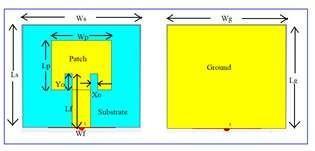
TableI–AntennaDimensions
TableII–ElectricalPropertiesandDimensionsof HumanKidneyandTumor
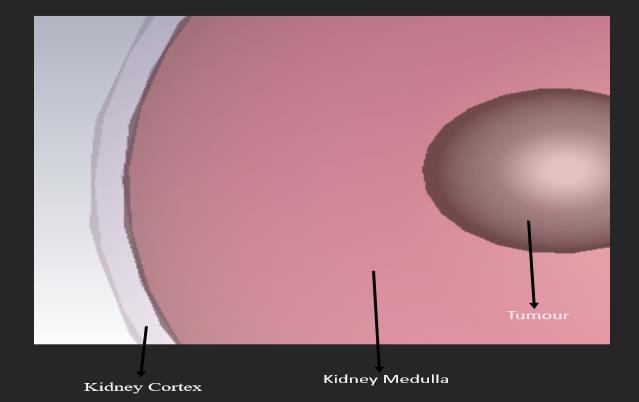
Fig.3.2LayersofkidneyandTumor
4.RESULTS AND DISCUSSION
Case1:Antennainfreespace.
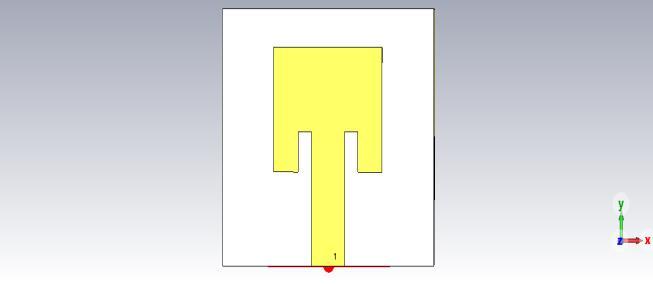
Fig.4Antennainfreespace.
The proposed antenna is a patch antenna designed and simulatedinCSTMicrowaveStudioforfree-spaceoperation. The antenna is 7 x 8 x 1.6 mm3 in size. As an antenna substrate,aRogersRT5880dielectriclossymaterialwitha tangent loss of 0.0009 and a dielectric constant of 2.2 has beenemployed.Theantenna hereisusedtocalculateS11, VSWR,Gain,Directivity,Electricalfieldintensity.
International Research Journal of Engineering and Technology (IRJET) e-ISSN: 2395-0056
Volume: 12 Issue: 12 | Dec 2025 www.irjet.net p-ISSN: 2395-0072
REFLECTION COEFFICIENT: The S11 for the proposed antennadesignisshowninFig5.Theantennahasaresonant frequencyatf=24.1GHzand27.6GHzwithabandwidthof 6.2GHz.
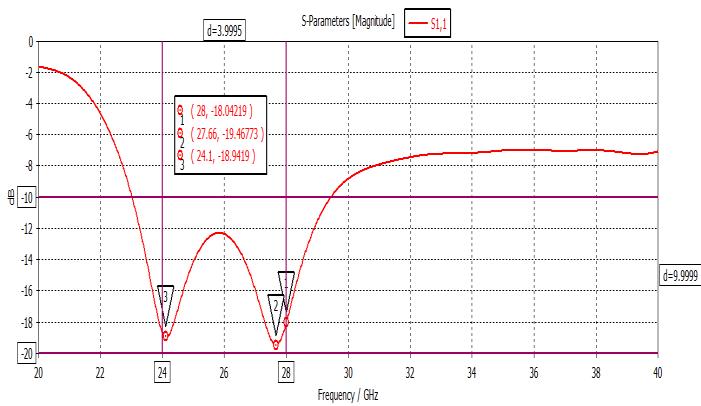
Fig.5S11graphforproposedantennadesign.
VOLTAGESTANDINGWAVERATIO(VSWR):TheVSWRfor theproposedantennadesignisshowninFig6.TheVSWRatf =24GHzis1.263andat27GHzis1.379.
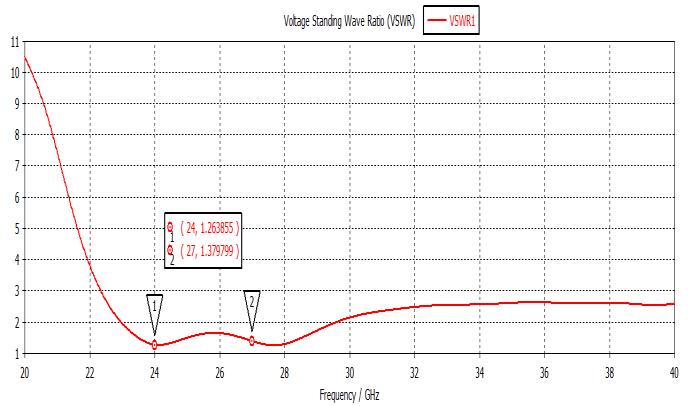
Fig.6VSWRgraphforproposedantennadesign.
GAINANDDIRECTIVITYOF EXISTING ANTENNA DESIGN:
The obtainedgainfortheproposedantennadesignis6.01 dBi.Thedirectivityobtainedis6.083.The gain, directivity, Electric field intensity is calculated for the resonant frequencyatf=28GHzareasshowninfigures7,8.
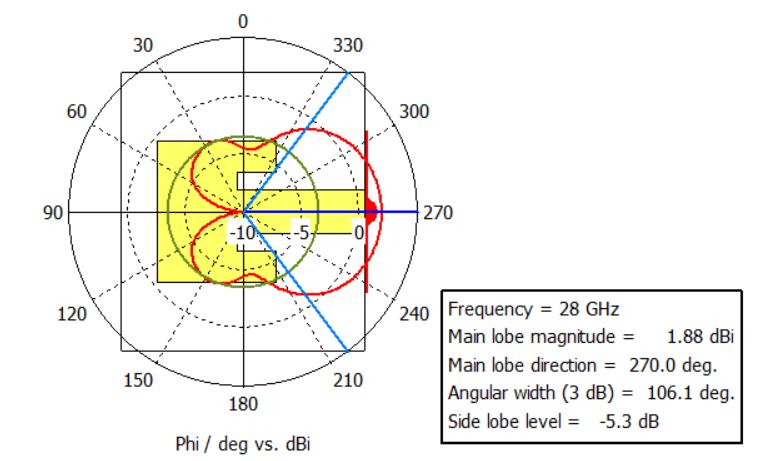
Fig.7Gainmeasuredwithoutkidneylayersandtumor.
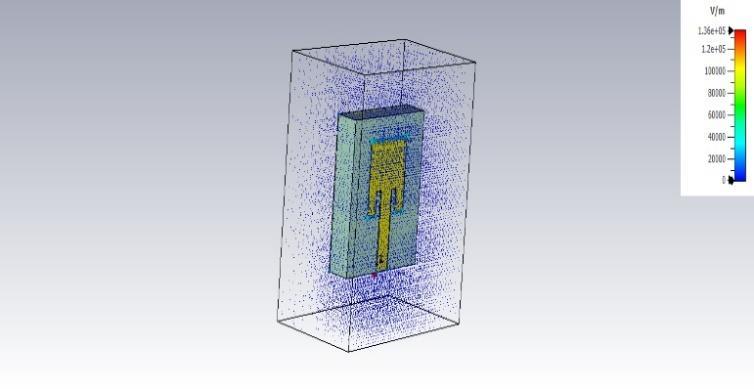
Fig.8Electricfieldmeasuredforproposedantenna design.
Case 2: Kidney layers placed in front the proposed antennadesign.
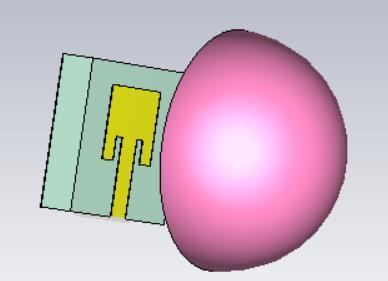
Fig.9.1FrontviewoftheAntennaonlywiththekidney skinandmedullalayer.
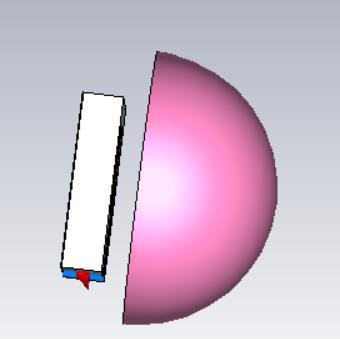
Fig.9.2SideviewoftheAntennaonlywiththekidney skinandmedullalayer.
Intheantennashowninthefigures9.1and9.2thekidney layers(skinandmedulla)areplacedinfrontoftheantenna designwiththedistanceof1mmofwhichthelayersofkidney have a density of 1050kg/m^3 and 1040kg/m^3 respectively.Thekidneyskinisofradius5.5mmandmedulla of5mm.
REFLECTION COEFFICIENT: The S11 for the proposed antennadesignwithonlykidneylayersisshowninFig10. Theantennahasaresonantfrequencyatf=28GHzand30 GHz.
International Research Journal of Engineering and Technology (IRJET) e-ISSN: 2395-0056
Volume: 12 Issue: 12 | Dec 2025 www.irjet.net p-ISSN: 2395-0072
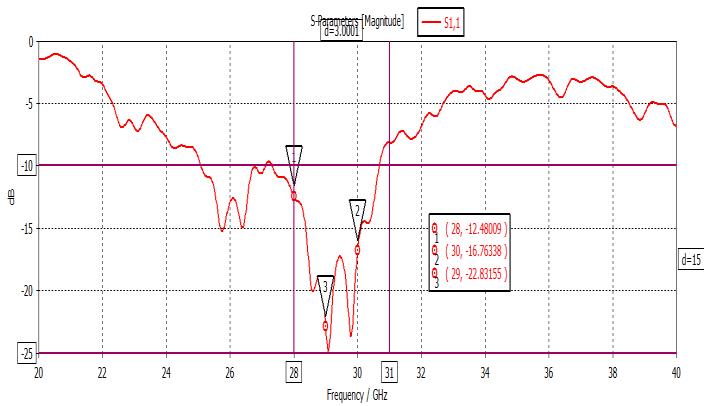
Fig.10S11graphforproposedantennadesignwithonly kidneylayers.
VOLTAGE STANDING WAVE RATIO (VSWR): The VSWR graph for the proposed antenna design with only kidney layersisshowninFig.11.TheVSWRatf=24GHzis2.403 andat27GHzis1.84029.
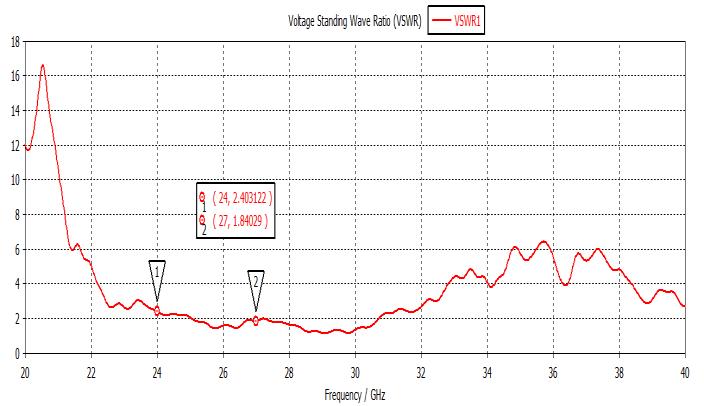
Fig.11VSWRgraphforproposedantennadesignwithonly kidneylayers.
GAIN AND DIRECTIVITY OF EXISTING ANTENNA DESIGN: The obtainedgainfortheproposedantennadesignis3.008 dBi. The gain, directivity, SAR, Electric field intensity is calculated for the resonant frequency at f = 28 GHz are as showninfigures12,13,14.
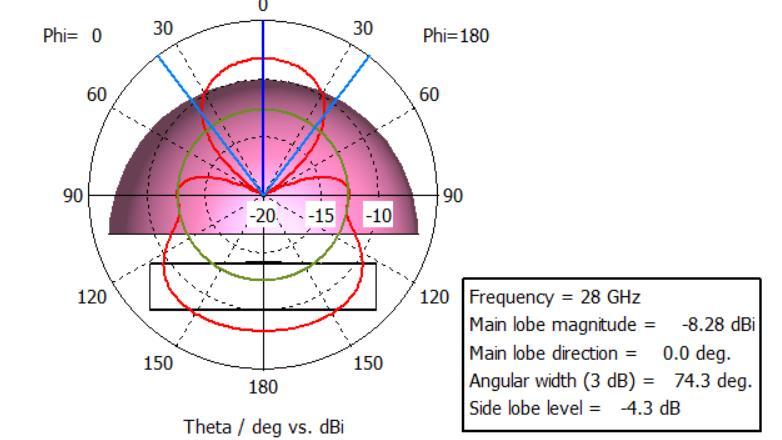
Fig.12Gainmeasuredonlywithkidneylayers
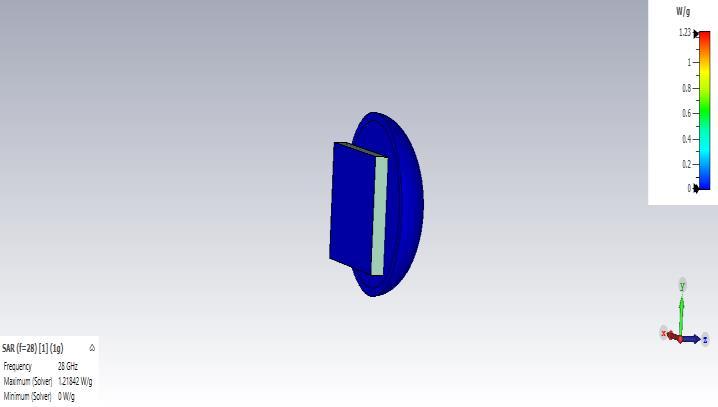
Fig.13SARofproposedantennadesignwithonly Kidneylayers
TheSpecificAbsorptionRate,whichisexpressedasW/g,is therateatwhichenergyisabsorbedbyhumanbodytissue. TheSARissimulatedat28GHzfora0.1gmassoftissueina humankidneymodelwithoutkidneytumorasillustratedin Fig.13.TableIIIsummarizestheSARat28GHz,whichis1.22 W/g.
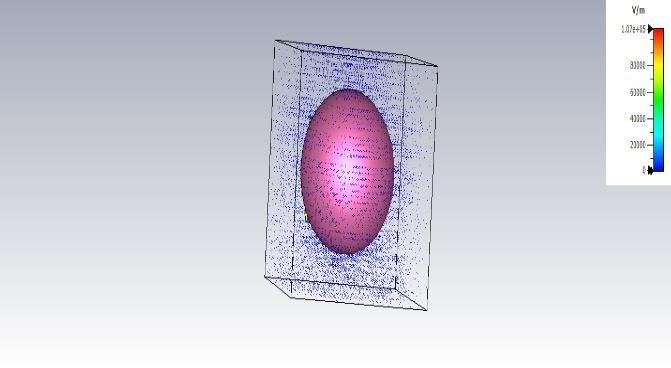
Fig.14Electricfieldmeasuredforproposedantennadesign withonlykidneylayers.
Case3:Kidneylayersandthetumorplacedinfrontof theantennadesign.
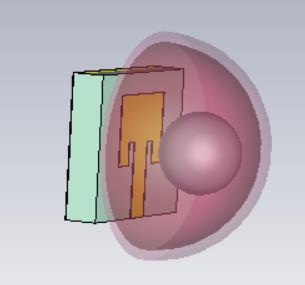
Fig.15.1Frontviewofkidneylayersandthetumorplaced infrontoftheantennadesign
International Research Journal of Engineering and Technology (IRJET) e-ISSN: 2395-0056
Volume: 12 Issue: 12 | Dec 2025 www.irjet.net p-ISSN: 2395-0072
Fig.15.2Sideviewofkidneylayersandthetumorplacedin frontoftheantennadesign
In the figures 15.1 and 15.2 the kidney layers (skin and medulla) are placed in front of the antenna design with a distance of 1mm of which the layers of kidney and tumor having a density of 1050kg/m^3, 1040kg/m^3 and 1040kg/m^3 respectively. The kidney skin is of radius 5.5mm,medullaof5mmandtumorofradius3mm.
REFLECTIONCOEFFICIENT:TheS11graphfortheproposed antennadesignwithkidneylayersandtumorisshowninFig 16.Theantennahasaresonantfrequencyatf=26GHzand 30GHz
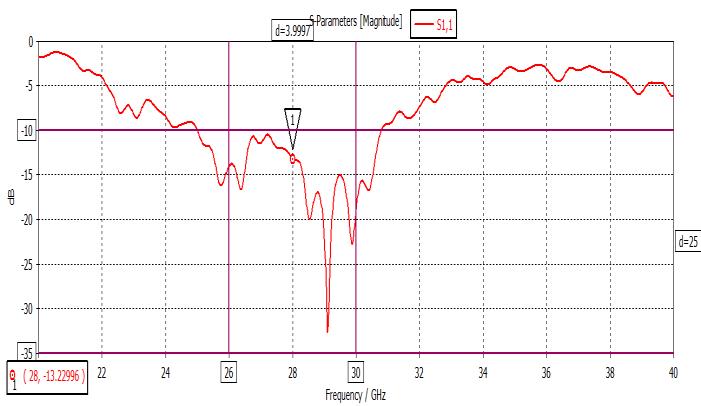
Fig.16S11graphforproposedantennadesignwithkidney layersandtumor
VOLTAGE STANDING WAVE RATIO (VSWR):TheVSWR graph for the proposed antenna design withkidneylayers andtumorisshowninFig17.TheVSWRatf=24GHzis2.36 andat27GHzis1.799.
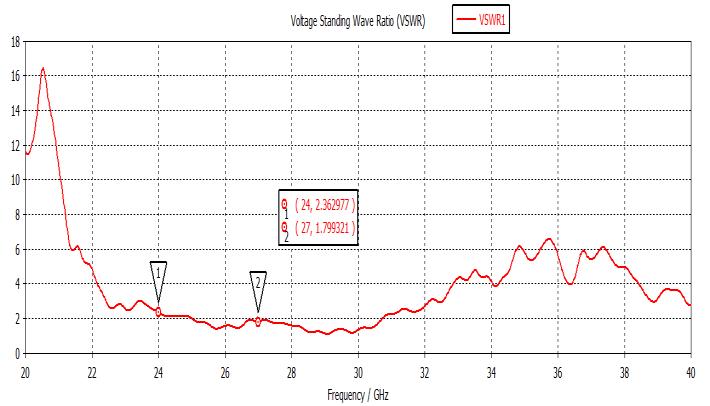
Fig.17VSWRgraphforproposedantennadesignwith kidneylayersandtumor
GAIN ANDDIRECTIVITYOFEXISTINGANTENNADESIGN: Theobtainedgainfortheproposedantennadesignis3.94 dBi the gain, directivity, SAR, Electric field intensity is calculatedfor the resonant frequencyatf= 28 GHzare as showninfigures18,19,20.
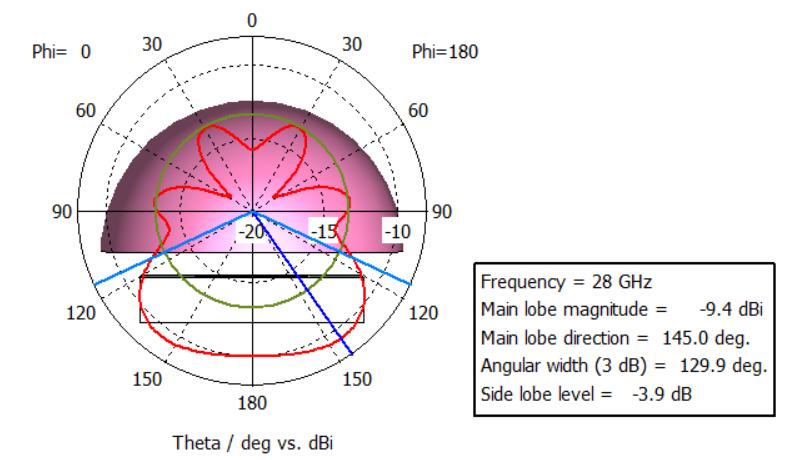
Gainmeasuredwithkidneylayersandtumor
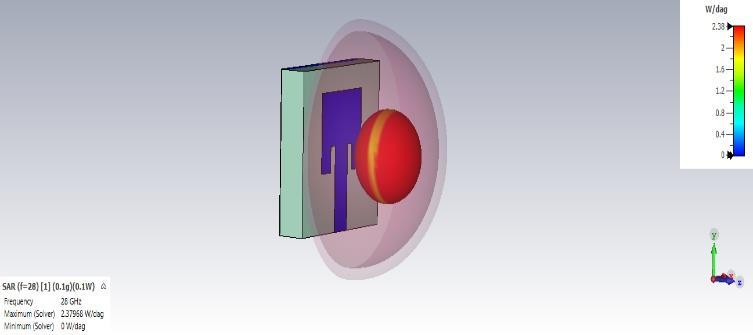
Fig.19SARofproposedantennadesignwithkidneylayers andtumor
TheSpecificAbsorptionRate,whichisexpressedasW/g,is therateatwhichenergyisabsorbedbyhumanbodytissue. TheSARissimulatedat28GHzfora0.1gmassoftissueina humankidneymodelwithoutkidneytumorasillustratedin
International Research Journal of Engineering and Technology (IRJET) e-ISSN: 2395-0056
Volume: 12 Issue: 12 | Dec 2025 www.irjet.net p-ISSN: 2395-0072
Fig.19.TableIIIsummarizestheSARat28GHz,whichis2.38 W/g.AccordingtothesafetystandardstheSARvaluemust be below 2W/g for a human body tissue here it is clearly visible that the value is greater than 2 so the presence of kidneytumorisdetected.
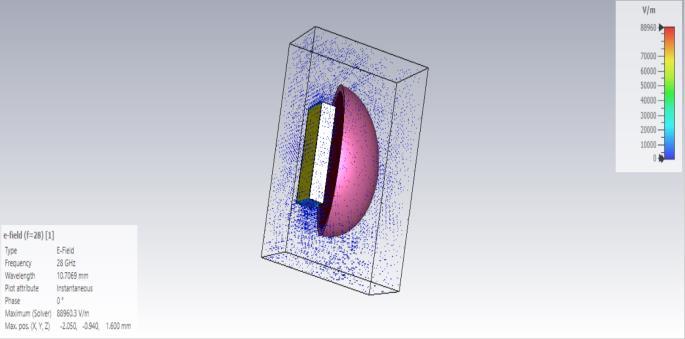
Fig.20Electricfieldmeasuredforproposedantenna designwithkidneylayersandtumor
TableIII–Comparisonofcharacteristicsat28GHz Frequency
Parameter Antenna infree space Antennawith kidneylayers Antenna withkidney layersand tumor
Kidneytumordetectionisdetectedusingthesuggestedinset fed UWB patch antenna. For the investigation of kidney tumoridentification,amodelofthetwolayersofthehuman kidney with an internal tumor with a radius of 3 mm is utilized. Analysis is done on the specific absorption rate (SAR),returnloss,electricfieldintensity,andantennaswith andwithouttumors.Ascanbeshownfromthefindings,the proposed antenna design is capable of identifying the presenceofkidneytumorinthehumankidney.Inthisstudy byplacingthekidney tumorinthecenterofthekidneyor anywhere inside the kidney area, more research may be done.Theplannedminiatureantennahasbeenmanufactured tocomplywiththeSARleveladvisedbytheICNIRPandFCC, assuringtheprotectionofhumanhealth.
[1] Md. Shazzadul Islam, S.M. Kayser Azam, A.K.M. Zakir Hossain,MuhammadI.Ibrahimy,S.M.A.Motakabber,A low-profile flexible planar monopole antenna for biomedical applications, Engineering Science and Technology,anInternationalJournal,Volume35,2022.
[2] M.Kadry,M.E.AtrashandM.A.Abdalla,"Designofan Ultra-thin Compact Flexible Dual-Band Antenna for Wearable Applications," 2018 IEEE International SymposiumonAntennasandPropagation&USNC/URSI NationalRadioScienceMeeting,2018,pp.1949-1950, doi:10.1109/APUSNCURSINRSM.2018.8609247.
- 1.22with 0.1Winput power 2.3with 0.1Winput power
Afterinsertingthetumortissueintothekidney,thekidney modelispositionedapproximately1mmfromtheinsetfed antenna. To develop and simulate, computer simulation technology (CST) microwave studio (MS) was employed. Figure 16 displays the reflection coefficient curve for the presenceoftumorinthekidney.Thepresenceofakidney tumor in the kidney has resulted in a shift in gain and directivity.Gainanddirectivityat28GHzhavechangedfrom 3.008dBito3.947dBiasshowninTableIIIrespectively.As shown in Fig.19, the SAR at 28Ghz has increased for the presence of kidney tumor in the kidney model. When the kidneytumoris of size 2mm the SAR value measuredwas 1.19W/g and when the size of the tumor was 5mm it was 4.76W/gsobythisitcanbeunderstoodthatwhenthesizeof tumorissmallitisnotdetectableandonincreasingthesize theSARvaluegraduallyincreasesandthepresenceofkidney tumorisdetectedTableIIIisasummaryofallthreecases.
8.315
[3] Arayeshnia, A. Madannejad, J. Ebrahimi Zadeh,F. Ravanbakhsh, M. D. Perez and R. Augustine, "MiniaturizedCPW-fedbowtieslotantennaforwearable biomedical applications," 2020 14th European Conference on Antennas and Propagation (EuCAP), 2020, pp.1-4, doi: 10.23919/EuCAP48036.2020.9135766.
[4] T.A.AleefandA.Biswas,"Designandmeasurementofa flexible implantable strip line fed slot antenna for biomedical applications," 2016 3rd International ConferenceonElectrical EngineeringandInformation Communication Technology (ICEEICT), 2016, pp. 1-5, doi:10.1109/CEEICT.2016.7873097.
[5] S.P.N,B.S,K.K.NandP.A.Vijaya,"DetectionofHuman BrainTumorsUsinganUWBPatchAntennaat28GHz," 2023 International Conference on Intelligent and Innovative Technologies in Computing, Electrical and Electronics(IITCEE),Bengaluru,India,2023,pp.96-100, doi:10.1109/IITCEE57236.2023.10090949