
International Research Journal of Engineering and Technology (IRJET) e-ISSN: 2395-0056
Volume: 12 Issue: 06 | Jun 2025 www.irjet.net p-ISSN: 2395-0072
A COMPARATIVE STUDY OF SERVERLESS COMPUTING PLATFORMS: AWS LAMBDA vs. GOOGLE CLOUD FUNCTIONS vs. AZURE FUNCTIONS
Iqrar Nisar1, Dipti Ranjan Tiwari2
1Master of Technology, Computer Science and Engineering, Lucknow Institute of Technology, Lucknow, India
2Assistant Professor, Department of Computer Science and Engineering, Lucknow Institute of Technology, Lucknow, India
Abstract - Function-as-a-Service (FaaS) Serverless computing has become an innovative paradigm of cloud computing where the developers can implement a code without having to manage the server infrastructure. AWS Lambda, Google Cloud Functions, and Azure Functions are among the most popular FaaS platforms that had become a hit because of being flexible, economical, and on par with the deployment to respective cloud systems. Nevertheless, the choice of the most appropriate platform is also a problem as different platforms are characterized by varying performances, pricing models, support during the runtime, and developers experience. The comparative analysis of these three platforms proposed in the research is thorough and founded on qualitative evaluation and a comparison of results achieved on these platforms through empirical testing. Identical applications of serverless functions are installed within every platform to check cold start latency, execution time, scale reaction to loads, and gage expenses on distinct usage drifts. Besides, the paper assessed developer experience in terms of Language support, debugging, CI/Is andcustomization compatibility. Inresults, AWS Lambda outperforms both at easiness to integrate as well as maturity in integration to ecosystem; Google Cloud Functions has competitive cost as well as better performance in terms of data-intensive applications and Azure Functions has tooling and hybrid-cloud flexibility. This paper condenses practical wisdom that can be given to developers and organizations that are contemplating the incorporation/migration to the serverless architectures to fill out the gap of hypothetical functionality of capabilities versushowtheycanbe practicallyapplicable.
Key Words: ServerlessComputing, Function-as-a-Service, AWS Lambda, Google Cloud Functions, Azure Functions, CloudPerformance,Cost-Efficiency,DeveloperExperience.
1. INTRODUCTION
1.1 Background and Motivation
Thelightingspeedofdevelopmentofcloudcomputinghas changed how current software application is kept, developed, and issued. Conventional computing models usually involved a lot of capital investment, continual maintenance and thorough planning of the capacity using on-premise infrastructure and monolithic architectures.
These constraints led to the development of cloud-native, where Infrastructure-as-a-Service (IaaS) and Platform-asa-Service (PaaS) types of services took most of the infrastructure management overhead burden. All the same, such models always needed the programmers to work with server configurations, scaling policies, and runtimes.
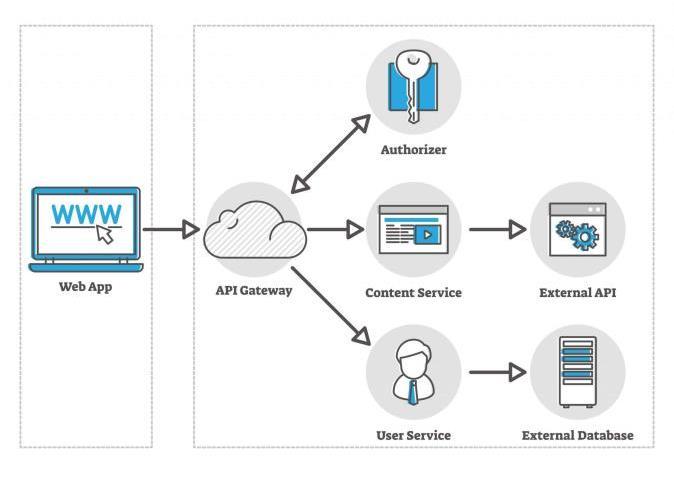
Given such shortcomings, the next shift in the development of the cloud came on the stage of serverless computing. Also known as Function-as-a-Service (FaaS), serverless platforms provide the developers the model, with which they can run isolated portions of their code, referred to as functions, without having to pre-provision or manage an underlying infrastructure. Event driven model automatically types cover scaling, fault tolerance and load balancing and make operations much simpler to manage and to speed up the development process. The onset of serverless structures is an indication of fundamental change in the field of application design; it dwells on openness, modularity and adaptability to unpredictableloads.
1.2 Importance of Serverless Computing
Serverless computing is so popular because it helps to simplify the whole process of development and operation of applications. Being able to transfer the task of maintaining infrastructure to cloud providers, developers are free to work on business logic with the ability to
International Research Journal of Engineering and Technology (IRJET) e-ISSN: 2395-0056
Volume: 12 Issue: 06 | Jun 2025 www.irjet.net p-ISSN: 2395-0072
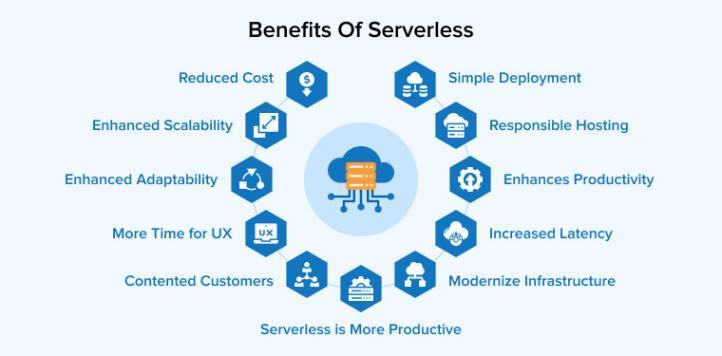
introducespeedtomarketandcontinuousinnovation.The microservices naturally fit into the serverless architectures,and,therefore,theyaretheidealsolutionto construct highly scalable and loosely tied applications. In addition, the fine-grained billing model that will only bill you when it actually executes code brings important cost efficiencies to the front especially with periodically or spiky-workingapplications.
The adaptability of Function-as-a-Service (FaaS) in the context of current development can also be discussed by the fact that the functionality of this service is perfectly integrated with other cloud-native services (storage, messaging, databases, analytics, etc.). This facilitates the making of complex processes and event oriented applications with minimum configuration. This makes the use of serverless computing very congruent with devOps and continuous integration/continuous deployment (CI/CD)pipelines,whichstrengthenautomationandquick iterations.Asaresult,thefieldinwhichFaaShasbecomea strategicelementincludeswebdevelopment,IoT,machine learningpipelines,andreal-timeprocessingofdata
1.3
Research Problem
Although it is notable that serverless computing is quite beneficial, the question of choosing an appropriate FaaS platformtouseinaparticularapplicationisstillacomplex task. AWS lambda, Google Cloud Functions and Azure functions are the top three platforms and each of them provides a different architecture model, costs, Mounting point and relevance between integrations. These variations may cause great impacts in terms of performance, scale-ability, cost-effectiveness, and developerefficiency.
The platform to be used by organizations must take into considerationvariousaspectsincluding coldstartlatency, concurrency limits, memory configuration, language support and ecosystem compatibility before the organization can pick the platform to use. The absence of uniform benchmarks and recent comparative studies, mostly leads to poor decisions in the platform choice procedureanchoredonvendorknowledgeinsteadofdata. In this environment of the ever-evolving serverless
computing cycle, it is important to carry out an endpointto-endpoint, data-driven analysis that will advise applicationdevelopers,architects,anddecision-makerson the best approach to matching technology selection with business-andtechnicalrequirements.
1.4 Objectives
The main aim of the current research is to conduct a comparative critical assessment of AWS Lambda, Google Cloud Functions, and Azure Functions both within measurable parameters, and experience-based. This involves studying the main performance indicators including cold start latency, time of execution, scalability withloadandcosteffectiveness.Therestofthequalitative factors that the study evaluates includes ease of deployment, debugging, monitoring, language/runtime support,anddeveloperexperience,ingeneral.
By testing empirically and critically evaluating these platforms in their application to real solutions, the strength and weaknesses of each will be noted and discussed. The results aim at delivering practical insight that will enable the organizations to take informed decisions about the choice of adopting or migrating to serverless architecture. Finally, this paper not only gives an input in the scientific discussion space but also to the strategizing in implementation to the area of cloud native andserverlesscomputing.
2. LITERATURE REVIEW
2.1 Serverless Computing Paradigm
Serverless computing is also known as Function-as-aservice (FaaS) and it is considered a dramatic change in the architecture of cloud applications. Serverless computing differs with the traditional patterns of computingsinceapplicationsinthismodeldonotrunina dedicated or virtualized server, in fact, infrastructure management is abstracted to enable developers to work on development of business logic only. Serverless applications have highly efficient utilization of the cloud resources since the coding is based on events, and the resources are assigned according to the varying needs of the cloud provider. This model increases scalability, minimizes overhead and is very close to the agile developmentpractices.
Architecturally, the serverless computing uses stateless functions which are invoked by an outside event, like an HTTP request, file upload, message queue update. Such reductionsareprovidedincontrolledexecutionconditions in which provisioning, scaling, fault tolerance as well as maintenance of runtime are given completes responsibility to the provider. This is much different to server-based models which are manually configured, patched and scalable in terms of resources. Serverless is
International Research Journal of Engineering and Technology (IRJET) e-ISSN: 2395-0056
Volume: 12 Issue: 06 | Jun 2025 www.irjet.net p-ISSN: 2395-0072
more abstract and automated compared to containerized computing (with container images still to be managed, orchestration(e.g.Kubernetes),andmonitoring.
Besides, serverless computing has its own billing structure, which is pay-per-use and billed on the level of the number of invocations and execution time and not on the pre-allocated resources. Serverless is extremely cost effectivewithchangeableloadsbecauseofthisgranularity in the cost of bills. Nevertheless, challenges of the serverless include cold start latency, statelessness, and possible vendor lock-in, which should be taken into accountwhencreatinganapplication.
2.2 Overview of Major Serverless Platforms
AWS Lambda, Google Cloud Functions, and Azure Functions are the three cloud computing platforms that lead in the market of serverless operating systems. All these platforms offer their own presentation of the FaaS paradigm with different features, run-time platforms, and integrationwithplatforms.
Amazon Web Services Amazon Web Services released AWS Lambda in 2014, which is believed to have started the mainstream serverless computing. It can run multiple programminglanguages(suchasNode.js,Python,Java,Go, Ruby, and .NET) and with the Lambda Runtime API it is possible to custom runtimes as well. AWS Lambda is highly integrated with S3, DynamoDB, and API Gateway among other Amazon Web Services and thus it offers a great potential to developers who are already entrenched within the AWS system. It has capabilities such as Provisioned Concurrency that are used to resolve cold start together with steady monitoring using CloudWatch andX-Ray.
Google Cloud Functions is a light-weight serverless computing providing services dedicated to the applications developed on Google Cloud. It also has the supportofNode.js,Python,Go,Java,andcustomcontainer deploymenttoCloudRun.Thesignificantadvantageofitis that it can be easily integrated with Firebase, Cloud Pub/Sub,andBigQuery, thus,it isusedasthe bestsource of real-time data processing, analytics, and backends of mobileapplications.GoogleCloudFunctionshasalsobeen characterized by its competitive prices, and a large free tier,andsecond-generationannouncementsmadeamajor reductionincoldstartlatencyandincreasedconcurrency.
The Azure functions Microsoft manufactured is unique in the sense that it is very flexible and is very friendly towards chip enterprise development. It is compatible with a wide variety of languages that are C#, JavaScript, Python, Java, PowerShell, and F#. The azure functions workdirectlywithVisualStudioandtheazuredevopsand supports the feature of orchestration with Durable functions to construct complex workflows. The platform
provideshostingservicesinthreeplans:theConsumption, Premium, and Dedicated that enable developers to select configurationsdependingonpredictabilityandworkloads requirements of the workloads as well as their performance.
These platforms have their advantages and cases when they are best to be used. AWS Lambda is preferred over others because of its maturity and dense ecosystem, Google Cloud Functions because of its simplicity through data-centric connections, and Azure Function because of thetoolsandhybridcloud.
2.3 Review of Existing Comparative Studies
During the last several years, not only academic researchers but also the participants of the industry have tried to assess and compare the serverless platforms and attempt to evaluate them with multiple approaches. The organizations have essentially compared performance measure like the latency of a cold start, throughput and loadexecutiontime.Asanexample,controlledbenchmark succeeded to test platforms using deployment of same functions and evaluating execution speed of the call, concurrency and resource optimality. Comparison of pricing models using simulated workloads to determine cost- effectiveness on different use cases have also been conducted
A number of benchmarking activities in the academic literaturehavenotedthatthoughAWSLambdaislikelyto provide better cold start experience when Provisioned Concurrencyisapplied,GoogleCloudFunctionsislikelyto have good execution latency as well as ease to use. Longrunning and enterprise-level workloads can be supported by Azure functions mainly at the Premium Plan that are robust in nature. The main findings of these studies often state that each of the platforms was shown to be better than the others in some of the measures but in no case were platforms always the best ones in all the measures, andthebestplatformtousedependsontheapplicationit isbeingusedin.
Most of these studies are, however, out of date or rather pinpointed.Duetothedynamismoftheinnovationsinthe cloudservices,today,theresultsobtainedevenayearago might not portray its present day capabilities. Moreover, whereas performance benchmarking is frequently seen, relatively little attention has been paid to developer experience, integration of the ecosystem or qualitative aspects of usability frequently important practical developmentsettings.
2.4 Research Gaps
Regardless of the useful information that is laid down in the available literature, there exist various research gaps that are considered important. To begin with, most of the
International Research Journal of Engineering and Technology (IRJET) e-ISSN: 2395-0056
Volume: 12 Issue: 06 | Jun 2025 www.irjet.net p-ISSN: 2395-0072
currentcomparativestudieswereoutdatedbecauseofthe changing domain of cloud platforms. New features, price models, runtime environments and optimisations come alongall thetime, and may drasticallychangethe relative performance and usefulness of each platform. Another example is the in-built concurrency (provisioned concurrency) introduced in AWS Lambda or long-term growthincontainercapabilitiesinGoogleCloudfunctions whichareground-breakingfeaturesyettobediscussedin thepreviousresearchstudies.
Second, it is obvious that the comprehensive research is lacking the empirical performance testing that is intertwined with the qualitative evaluation of developer experience. The largest of the existing literature places a lot of focus on quantitative measures but fails to address the usability of such tools, monitoring/ auditing, debugging, and integration of CI/CD. These factors are persistentdeterminantsoftheeligibilityoftheplatformto be used in production cases; nonetheless, it is practically challengingtogaugethemthroughtypicalbenchmarks.
Additionally, most of the studies fail to consider real-life implementationofthefunctionsthathaveto interactwith other cloud services, experience varying traffic or belong to a larger distributed system. The simplicity of test environments cannot comprehend intrigues and distinctions of production processes of serverless applications.Standardmethodologiesarealsolimitedand itisthereforehardtocompareresultsindifferentstudies orperformanexperimentinthesameway.
This paper fills these gaps, and this study is a recent evaluation of AWS Lambda, Google Cloud Functions, and Azure Functions in a comprehensive, comparative treatment that integrates empirical performance testing and the analysis of other developer-friendly and operational features. The idea is to fill the gap between theoretical performance data and the actual practical use creating useful suggestions to developers and organizationsthatimplementtheserverlessarchitecture.
3. METHODOLOGY
3.1 Research Design
The study is one of mixed methods which follows both quantitativeandqualitativedesignofresearchwithaview of making a balanced and overall evaluation of the top three available serverless computing environments, viz. AWS Lambda, Google Cloud Functions, and Azure Functions. Such a purely quantitative methodology would enable it to measure the performance indicators viz. cold start latency, time of execution, and scalability in a controlledsituation.Nevertheless,quantitativeresultsare not enough to describe the complete developer experience, because there are subjective bits of that experience, like ease of a deployment, language support,
integration tooling, and debugging functionality. They are important in the development and production environment in real life and are difficult to quantify even thoughthesequalitativemeasuresareimportant.
Themixed-methodapproachwillcombinethetwosources used in the comparison, empirical performance testing and qualitative assessment based on the documentation analysis and platform usage as well as developer experience with tooling. Such methodological decision aids in gaining a better insight into both the objective behavioroftheplatformsandindividuallybasedissuesof usability that influence productivity and adoption. As serverless computing platforms are evolving at an increasing pace, a combination approach not only allows analyzing the issue in several dimensions, but also correlates with the multi-layered process decisionmakers, especially developers and their companies, encounterwhendecidinghowtoselectaplatform.
3.2 Experimental Setup
In order to create fairness and consistencies in differentiatingagainsttheperformance,theyestablisheda similarsetofserverlessfunctionsthatwouldbedeployed in the three platforms. Sample functions were created to take place of real-life situations like HTTP requests handling,simplecomputation,readingandwritingdatato cloud-nativestorage,whichwerewritteninNode.jsasitis compatible with AWS Lambda, Google Cloud Functions, andAzureFunctions.Thememoryallocationofeachofthe using similar memory allocation (e.g., 512 MB), timeouts and triggers was set similar to the others. Cold start mitigation measures like provisioned concurrency (AWS), second-generation runtime (GCP) and Premium Plan (Azure)werementionedwhereavailablebutdidnothave their required implementations to test a default scenario intermsoftheirperformance.
The experiment setting was such that it replicated the varioussetupsofoperation workloadswithlow,medium andhighstatesofconcurrency.Eachofthefunctionswere invoked in controlled environment and corresponding performance statistics were acquired using standardized tools of benchmarking like Apache JMeter and Artillery. The cold start latency was determined with an execution of a function following a long period of the inactivity, and the execution time could be monitored with an internally recorded logging and externally tracking the monitoring tools. The throughput test involved sending concurrent HTTP requests to the deployed functions and loading the functions under test by incrementally scaling the number of HTTP requests. This test was to determine how the platformauto-scalesandcanhandlesurgesin theload on thevariousplatforms.
Such a homogenous environment of the experiments guaranteed the use of the same logic during the
International Research Journal of Engineering and Technology (IRJET) e-ISSN: 2395-0056
Volume: 12 Issue: 06 | Jun 2025 www.irjet.net p-ISSN: 2395-0072
comparisons, same configurations, and similar run Hume environments. Tolimitthe variabilityof resultsand make them reproducible, environmental factors like the region, wherefore the API was deployed, and all external APIs were set onto fixed conditions to eliminate these factors that could cause the experimental outcomes to be different.
3.3 Evaluation Criteria
Having considered a good number of evaluation criteria, the comparative analysis falls under the five significant dimensions, which are performance, cost-efficiency, scale, developer experience, and ecosystem integration. The criteria were selected due to its applications with regard totechnicalimplementationandoperationalchoices.
Performance Metrics: A performance test was mostly concerned with cold start latency, warm invocation latency and average execution time. Essential to the applications that are time sensitive, like API or real-time data processors, is cold-start latency. The experiments monitoredatimingoffunctioninvocationinbothcoldand warmcasesandfunctions were executedtorecorda time withrepeatedrunovertime.
Cost and Billing Analysis: Cost analysis examined the billing structures of each platform under identical workloads. This included comparing free tier allocations, per-invocation charges, and memory usage-based pricing. Thegoal wastodeterminethetotalcostfor executingthe same function 1,000; 10,000; and 100,000 times, accounting for both computational and networking resources.Thishelpedhighlightwhichplatformoffersthe most cost-efficient performance under different scales of use.
Scalability and Concurrency Limits: Scalability tests observed how well each platform auto-scales in response to increasing demand. Metrics such as response time under load, error rate, and instance spin-up time were collected to evaluate how each platform manages concurrentinvocations.Concurrencylimits suchasAWS Lambda's default 1,000 concurrent executions or GCP’s Gen2 concurrency control were noted and their effects weremeasuredunderstresstesting.
Developer Experience: This dimension entailed qualitative information pertinent to the ease of set-up, language, and debugging, ease of deployment, and monitoring facilities. The analysis was made on the basis of reviewing of documentation, user interface interaction, command-line deployment and integration to CI/CD tools likeGitHubActions,AzureDevOpsandGoogleCloudBuild. Prominent consideration was taken to the fact that IDE extensions(suchasVisualStudioCode,IntelliJ),SDKs,and localtestingweremadeavailable.
Ecosystem Integration: The platforms were also evaluated based on how seamlessly they integrate with their respective cloud ecosystems. This included support for native services such as databases (e.g., DynamoDB, Firestore, Cosmos DB), storage systems (e.g., S3, Cloud Storage, Azure Blob), and messaging services (e.g., SQS, Pub/Sub, Event Grid). The ability to create complex workflows using orchestrators (e.g., AWS Step Functions, AzureDurableFunctions)wasalsoassessedaspartofthis criterion.
Table-1: Evaluation Framework for Serverless Platform Comparison.
Criteria
Performance
CostandBilling
Scalability& Concurrency
Metrics and Factors
Coldstartlatency,executiontime, throughputunderload
Freetierlimits,per-invocationcost,GBsecondsbilling,totalcostperworkload
Auto-scalingbehavior,maxconcurrent executions,errorrateunderload
Developer Experience Languagesupport,easeofdeployment, debuggingtools,CI/CDintegration
Ecosystem Integration Nativeserviceintegration,orchestration support,datastorageandmessaging services
This multi-dimensional approach ensures that both technical and experiential aspects of serverless platforms arerigorouslyanalyzed.Italsoprovidesstakeholderswith a comprehensive understanding of trade-offs involved in selecting one platform over another, tailored to specific applicationneedsandorganizationalpriorities.
4. PLATFORM OVERVIEW AND COMPARATIVE PARAMETERS
4.1 AWS Lambda
The AWS Lambda is the serverless computing platform of Amazon Web Services that was initially introduced in 2014asamongofthefirstavailableFunction-as-a-Service (FaaS). Architecturally the AWS Lambda works on event basedmodelwherethefunctionsaretriggeredbysuchan eventbasedonAWSgeneratedeventse.g.S3(fileupload), DynamoDB(datachanges),APIGateway(HTTPrequests), and CloudWatch (scheduled events). The concept of Lambda functions is stateless, which means the platform canhandleautomaticscaling,provisioningaswellasfault tolerance, all without the end-user interaction. The environment executing is a temporary one and instances aredroppedandgenerated dynamicallydependingonthe amountofrequestsbeingreceived.
International Research Journal of Engineering and Technology (IRJET) e-ISSN: 2395-0056
Volume: 12 Issue: 06 | Jun 2025 www.irjet.net p-ISSN: 2395-0072
These programming languages cover a large number of programing languages and they include JavaScript using Node.js, Python, Java, Go, Ruby, and.NET Core. It also allows creating custom run times through Lambda Runtime API and AWS Lambda Layers making it very customizable.TheunitofchargetotheLambdaiscurrent dollar as Lambda calculates its prices in terms of the number of function invokes and GB-seconds of compute time. Its free tier will provide 1 million invocations, 400,000GB-secondspermonth,whichwillbeexcellentto executesmallorlow-trafficjobs.
Typical applications of AWS Lambda are real-time processing of files, analysis of streams with Kinesis, REST API backends and orchestration without servers using AWS Step Functions. It is especially productive with applicationsthathaveahighdegreeofdependencyonthe Amazoncloudofservices.
4.2 Google Cloud Functions
Google Cloud Functions Google Cloud Functions is the serverless compute product of Google and was launched onthe5thofApril2017.Itisaneventdrivenarchitecture like the AWS Lambda but with close integration to the Google Cloud Platform (GCP). Functions may also be invokedbyHTTPrequests,messagesinPub/Sub,changes of Cloud Storage or Firebase events and as such it is very suitedtomobileandreal-timeanalyticsapplications.
GoogleCloudfunctionsprovideanumberofprogramming languages that include Node.js, Python, Go, Java and.NET. It supports concurrency controls and lengthy execution time (up to 60 minutes) in addition to advanced memory and CPU set up in its 2 nd generation architecture. Cloud Functions is being container-friendly as well, being complemented with Cloud Run and thus enabling custom containersdeploymentofcomplexorlegacyapplications.
Pricing Pricing is based on consumption, rather like Lambda, but with a more generous free tier providing 2 millioninvocations,400,000GB-secondsand 200,000CPUseconds of compute monthly free. Such cost benefits qualify Google Cloud Functions as a viable solution to operations that require low cost or high data processing requirements.
The platform is normally applied in Firebase-native actions, event-driven information structures, robotizing DevOps, and back-end processing of Web and portable applications.Itisparticularlyhelpfultoteamsthatusethe GCPserviceslikeBigQuery,FirestoreandCloudPub/Sub.
4.3 Azure Functions
MicrosofthasitsownofferingtotheFaaSmarketsolution, called Azure Functions, which is highly flexible as well as developer-friendly, with tight integration with Azure.
AzurefunctionscanusemultipletriggersinformofHTTP request, message queues (Azure Service Bus), timers and storage events. It uses a binding model which makes the data flow between the function and the external systems easier due to reducedcode boilerplate whencompared to thepreviousmodelandtheoverallincreaseofintegration capabilities.
It has been testable in several languages; these are C#, JavaScript,Python,Java,PowerShellandF#.Italsohasthe ability to use custom handlers and durability functions which is a special option that permits stateful complex workflow orchestration of serverless applications. This has special merits in long process activities, charring of activitiesandenactingofbusinessworkflow.
Azure Functions provides various hosting plans: Consumption Plan (which is auto-scaling, pay-per-use), PremiumPlan(whereinstancesarepre-warmedtoreduce the latency), and the Dedicated Plan (which is using an AppServiceenvironment).PricingresemblesAWSlambda in that, there is a free tier allowed of one million executionsand400,000GB-secondspermonth.
Examples of using Azure Functions are in constructing APIs, automation processes that involve Microsoft 365, processing telemetry data on IoT devices and triggering workflows on hybrid clouds. Its good integration to other toolssuchastheVisual Studio,GitHubActions,andAzure DevOps has made it extremely attractive in appeal to the enterprisedeveloperswhotaketheMicrosofttools.
4.4 Comparative Table
Toprovideaconsolidatedviewofthethreeplatforms,the following table summarizes their key characteristics and comparative parameters across architecture, language support,pricing,andidealusecases.
Table-2: Comparative Overview of AWS Lambda, Google Cloud Functions, and Azure Functions.
Criteria
Performance
Costand Billing
Metrics and Factors Criteria
Coldstart latency, execution time, throughput underload
Freetier limits,perinvocation cost,GBseconds billing,total costper workload
Performance
Costand Billing
Metrics and Factors
Coldstart latency, execution time, throughput underload
Freetier limits,perinvocation cost,GBseconds billing,total costper workload
International Research Journal of Engineering and Technology (IRJET) e-ISSN: 2395-0056
Volume: 12 Issue: 06 | Jun 2025 www.irjet.net p-ISSN: 2395-0072
Scalability& Concurrency
Developer Experience
Auto-scaling behavior,max concurrent executions, errorrate underload
Language support,ease of deployment, debugging tools,CI/CD integration
Ecosystem Integration
Criteria
Performance
Costand Billing
Scalability& Concurrency
Nativeservice integration, orchestration support,data storageand messaging services
Scalability& Concurrency
Developer Experience
Auto-scaling behavior,max concurrent executions, errorrate underload
Language support,ease of deployment, debugging tools,CI/CD integration
Ecosystem Integration
Metricsand Factors Criteria
Coldstart latency, execution time, throughput underload
Freetier limits,perinvocation cost,GBseconds billing,total costper workload
Auto-scaling behavior,max concurrent executions, errorrate underload
Performance
Costand Billing
Scalability& Concurrency
Nativeservice integration, orchestration support,data storageand messaging services
Metricsand Factors
Coldstart latency, execution time, throughput underload
Freetier limits,perinvocation cost,GBseconds billing,total costper workload
Auto-scaling behavior,max concurrent executions, errorrate underload
Thiscomparativeanalysisoffersa clearview of how each platform performs across key technical and business dimensions.It empowersorganizationsanddevelopersto make informed decisions aligned with their application architecture, operational constraints,and long-term cloud strategy.
5. EXPERIMENTAL RESULTS
5.1 Performance Testing
Performanceoftheserverlessplatformsisoneofthemost importantaspectsofitintermsofsuitabilityofusingthem insuchapplicationsthatrequiretimesensitivityandscale. There are three major performance parameters used in
thisstudywhichincludethecoldstartlatency,theaverage execution time with variance, and scalability in different loads.
The cold start latency test was also used to measure the timerequiredbyagivenfunctionintimestamporderasit does not invoke a continuous use of functions under real life conditions. The cold start delays of AWS Lambda varied in the range of 550 to 800 ms on average, depending on the runtime; however, it demonstrated significantimprovementswhenusingthelighterruntimes such as those of Node.js. Google Cloud Functions, in its version 2.0 configuration, demonstrated an equal better performance in its cold start timing, which averaged to 400 to 600 ms. The latency of the cold start of Azure Functions,inthecaseoftheConsumptionPlan,washighly signified, and mostly in excess of 1 second latency, with thePremiumPlanlargelydecreasedtoanywherebetween 300 and 500 milliseconds as the instances were prewarmed.
The performances of all platforms turned out similar in terms of the mean time and its variance of execution of simple calculation tasks underthe warm start. Google cloud functions registered the least amount of dispersion on response time, thus befitting consistent time processing on a real time basis. The tail latencies were slightly higher with AWS Lambda when concurrency at higher rates because it has an initial container provisioning problem, and the execution time in the case ofAzureFunctionswasnotaffectedbytheconfiguration.
In regard to load scalability, all the three platforms managed to scale loads to up to 1,000 concurrent invocations. The AWS Lambda proved almost instantaneousscalingandalow-levelthrottling,afactthat is attributed to its well-established concurrency management. The second-generation model of Google Cloud Functions was efficient on parallel invocations and having low overheads. As more than 750 executions concurrentlyoccurred,theconsumptionplanoftheAzure functions exhibited minor throttling, although they were usedintheoptimumconditionswiththePremiumPlan in whichthesuperiorlimitsofscaleabilitycanbetailored.
5.2 Cost Analysis
The other factor that determines which serverless platform to choose is cost, basically the budgetary consideration of organisations running on variable workload or under budgetary constraints. It was the analysis of costs based on real usage billing on the same workloadsonbothplatformsandassessmentofexecution ondifferenttiersincludingthefreeone.
Bothoftheserviceshaveaheftyfreeplan.AWSLambdais providedwith1millionthefreerequestwith400000GBseconds monthly. Google Cloud Functions is better than
International Research Journal of Engineering and Technology (IRJET) e-ISSN: 2395-0056
Volume: 12 Issue: 06 | Jun 2025 www.irjet.net p-ISSN: 2395-0072
this,inthatitprovides2millionfreeinvokations,400,000 GBseconds and 200,000 CPU-seconds per month. Azure Functions can compete with AWS Lambda as far as requestsandGB-secondsareconcernedinitsfreelevel.
In a very similar scenario of real world billing where one performs the same iteration of a function 1 million times with 512 MB memory on 500 milliseconds, Google Cloud Functions was found to be the most economical choice, especiallywhenitcomestoCPU-intensiveoperations.The additional costs of the AWS Lambda after the free level were not significant, but it had to do with its per request pricing and memory-based pricing. Azure Function had a competitive pricing which turned out to be expensive whenusingthePremiumPlanorwhenusingthefunctions withaprolongedtimeduration.
Table-3: Cost Comparison for 1 Million Executions (512MB, 500ms Duration).
Tier)
AWSLambda
GoogleCloud Functions
1Mreqs+400K GB-sec ~$17USD
2Mreqs+400K GB-sec ~$13–15USD
AzureFunctions 1Mreqs+400K GB-sec ~$18–20USD (ConsumptionPlan)
These values vary with execution duration, memory allocation, and additional charges for data transfer or attached services, but provide a general view of cost efficiency.
5.3 Developer Experience Assessment
The experience of the developer was evaluated by practical implementation, testing and monitoring of sample functions on the three platforms. This was done withregardstoeaseofdeployment,languageandruntime availability, the deployment mechanism and the ability to integratetolocaldevelopmentenvironments.
AWS Lambda has very good command-line tooling throughAWSCLI,andworksacrossavarietyofSDKsand frameworksof which ServerlessApplicationModel (SAM) is one. It enables developers to rapidly develop and release functions, but needs a middle ground learning to beusedwithotherservicessuchasAPIGateway.
Google Cloud Functions was also the most convenient to setup, especially,of course, if the user isacquainted with FirebaseorGoogleCloudConsole.Thereleasethroughthe gcloudCLIwaseasytocompleteandlogsofthefunctions became immediately available in Cloud Logging. Most use cases were ready to use with language support, but other
cases can use containerized deployments provided by CloudRuntosupportunsupportedruntimes.
Azure Functions offered great development environment because of its comprehensive support with the Visual Studio and Visual Studio Code. The possibility of deployment slotting, integrated debugging, full support of GitHub Actions and Azure DevOps pipelines further ruled out the platform that was extremely attractive to the enterprise developers. The earlier configuration was simple party because there were numerous hosting plans and binding set-ups but after this setting, the deployment anditerationprocesswasstraightforward.
5.4 Observability & Monitoring
Another key element with production-ready serverless applications is observability that includes the capabilities related to logging, telemetry, and CI/CD. All of the three platforms have in-built tools and their capability and applicabilitydiffer.
AWS Lambda comes with native integration with just about the single most crucial service to track AWS performance and account health, which is the Amazon CloudWatch; to aggregate logs, track specific metrics, and alarm settings. Even though CloudWatch is also mighty, it mightturncomplicatedtouseandcostmoreastheusage increases. AWS X-Ray also offers distributed tracing and this comes handy during the debugging of multi-function workflows.
TheGoogleCloudFunctionsofferbuiltinloggingwiththe Cloud Logging which is user friendly and closely integrated with Cloud Monitoring. It has an effective realtime performance dashboard and visualization tools that allow identifying bottlenecks or invocations with high latencies. The Stackdriver-driven tools come with a set of packagesthatprovidealertsanddiagnostic,servicehealth dashboards.
Azure functions use application insights to attain end to endvisibility.Thedevelopersareabletotracklivemetrics, display invocation traces, and diagnose failure with an advanced filtering option. Azure helps in the continuous delivery pipeline by enabling the various mechanisms withtheuseofAzureDevOpsandGitHubActionstoscale up the use of continuous deployment tool. The most mature tools in all the three platforms are its diagnostics tools.
5.5 Use Case Suitability
In an effort towards putting the results of the experiment into perspective, the platforms have also been tested based on their use case scenario. The providers are performingwellinvariousareasofapplicationsaccording
International Research Journal of Engineering and Technology (IRJET) e-ISSN: 2395-0056
to the type of performance they have, their pricing structure,andavailableecosystems.
AWS Lambda is the optimal choice of real-time data pipelines, backend APIs, and automatizing tasks of AWS heavy infrastructures. It is specially used when the deep integration is needed with the services such as S3, DynamoDB,Kinesis.
The Google Cloud Functions are the best in areas of Firebase, data processing and usage, analytics, and lightweight microservices. It has the right pricing model and its superior cold start behavior of second-generation functions,whichmakesitsuitabletorunlatency-sensitive orcost-sensitiveapplications.
Azure Functions is an exceptional performer as far as enterpriselevelsolutions,hybridcloudenvironments,and commandsthatneedorchestrationareconcerned.Itisthe most recommended among the organizations which focus more on Microsoft based and use systems like Office 365, AzureActiveDirectoryand.NETbasedsystems.
Table-4: Use Case Suitability Overview.
Use Case Best Platform Justification
Real-timeAPI Backend AWSLambda
Firebase-based AppLogic GoogleCloud Functions
DataIngestion/ IoT AzureFunctions
MatureAPIGateway integration,low latency
SeamlessFirebase integrationandGCPnativetools
DurableFunctionsand ServiceBussupport
This multi-dimensional evaluation reinforces that no single platform is universally superior; instead, each excels in specific contexts. By understanding these distinctions, developers and organizations can align their serverless strategy with their technical and business objectives.
6. DISCUSSION
6.1 Interpretation of Results
Thefindingsoftheexperimentalevaluationofthesethree serverless platforms, which is conducted by this comparative study, have pointed out the provided evidence that all three of serverless platform (AWS Lambda, Google Cloud Functions, and Azure Functions) can offer robust performance in implementing and executing serverless workloads; however, what they can deliver in the context of performance, cost-efficiency and developerexperiencediffersignificantly.Alltheplatforms have some specific strengths and weaknesses, and
therefore,theyareappealinginthecontextofspecificuse casesandinstancesoforganization.
AWSLambdafunctionswellintheintegrationofthedeeppacked ecosystem and performance of steady loads. Its seamless integration with virtually all AWS services, including Amazon S3, DynamoDB, Kinesis, and API Gateway, makes it one of the first options by the organizations that are dedicated to the AWS environment already. The combination of the maturity and tooling provided by the platform, on top of AWS SAM and CloudWatch, makes it a good fit in constructing actors with back-end APIs that are not only scalable but also resilient, with event-based demands and large concurrencyattheircore.
Google Cloud Functions is unique regarding its affordability and ease of working to programmers with a second-generation runtime. It also has a wide free-tier with an easy integration with Firebase, BigQuery, Cloud Pub/Sub, which makes it a useful solution in lightweight microservices, event-driven pipelines, and mobilebackend functions. It also performed well with respect to coldstartlatencyandexecutiontimeconsistency,whichis extremely vital to real time applications. It is also easy to deploy and has observation capability through Cloud Monitoring, which contributes to the attraction of agile developmentteams.
ThenewvaluepropositionintroducedbyAzureFunctions is an enterprise and a good orchestration level. The support of Durable Functions on the platform allows developers to create complex stateful workflow when otherplatformsdo notsupportit natively.Also,onegreat merit with Azure is (given its capability to work with Microsoft 365, Visual Studio and Azure DevOps) the fact that organizations fully functioning in a Microsoftcentered world would do perfectly well with Azure. Nevertheless,relativelygreatervariabilityofperformance undertheConsumptionPlanandalittlemoreexpensesat the Premium levels may be the disadvantage of the use, dependingontheworkloadpatterns.
All together these results indicate that there is a trade-off between cost, complexity, performance optimization and developer control. The success of a platform selection is squarely pegged on the requirements of a specific application,expertiseoftheteamandthealreadyexisting cloud infrastructure eco system, in which the application hastorun.
6.2 Decision-Making Framework
Themostsuitableserverlesssystemshouldbechosenina well-organized manner, taking into consideration the technical ability in line with business objectives and running realities. A proper way to start this decisionmaking process should be to define major priorities that
Volume: 12 Issue: 06 | Jun 2025 www.irjet.net p-ISSN: 2395-0072 © 2025, IRJET | Impact Factor value: 8.315 | ISO 9001:2008
International Research Journal of Engineering and Technology (IRJET) e-ISSN: 2395-0056
Volume: 12 Issue: 06 | Jun 2025 www.irjet.net p-ISSN: 2395-0072
one must fulfill: reduce latency, optimize cost, simplify integration,ormakeitstronglyobservable;andreviewthe way each platform can accommodate these priorities. To take the example of latency sensitivity and cost-efficiency in real-time applications or microservices, where the latency sensitivity and cost-efficiency are the prime concerns,thenGooglecloudfunctionscanprovidethebest trade off owing to the efficient way it handles the cold start, and a low cost. The latter, however, is opposite that the teams focused on developing event-driven architectures with complicated backend scheduling and having the need to be highly scalable have to think about theAWS Lambda atleast in casetheyhave the rest of the application infrastructure located on AWS. In the meantime, stateful workflows, good CI/CD automation, and advanced logging may often be more interesting to enterprises,whichcanfunctionbetteronAzureFunctions, withwarm-startimprovementwiththePremiumPlan.
7. CONCLUSION AND FUTURE WORK
7.1 Conclusion
The current comparative investigation has given an objective study of the three most popular serverless computingcomputingprovidersnamelytheAWSLambda, Google Cloud Functions and the Azure Functions. The combination of the empirical testing and qualitative investigation allowed the author to obtain the isolated peculiarities of performance, developer experience, and operationaladvantagesoneachoftheplatforms.
Regarding the performance, cold start latency and the variance of the execution time seems to be the fastest on the Google Cloud Functions, especially its secondgeneration model. This renders itvery ideal to be utilized in real-time applications and microservices that are characterized by symptoms of latency. The AWS Lambda had been found as the most scalable and reliable at highconcurrency loads, scaled practically instantly and featured immaculateintegration with other services,such as API Gateway, and S3, as well as DynamoDB. Azure Functions did nothavean edge over raw execution speed under the Consumption Plan, but it had superior orchestrationstrengthsthroughDurableFunctions,which is an immense advantage in the complex tasks and longrunningprocesses.
The cost aspect of Google cloud functions was the most affordableduetothefactthatithasagenerousfreeusage coupledwithCPU-secondsusageaspartofitsbilling.AWS Lambda had a good cost profile especially on the shorter functions, but asthe functionsscaled, AzureFunction had becomeattractiveinthepremiumplan.
When it comes to the developer experience, Azure Functionshadthemosttoolingsupportespeciallywiththe teams based on Visual Studio, GitHub actions and Azure
DevOps. AWS Lambda was beneficial in that it was very effective to developers who worked within the AWS ecosystem; and Google Cloud Functions had the simplest deploymentpatternwitheasyintegrationstoFirebaseand othernativeservicesoftheGCP.
7.2 Limitations
Thoughattemptstomakethisstudyrathercomprehensive and technologically based, some limitations have to be mentioned. To begin with, the scope of testing was restrictedtoafixednumberofcommonusecaseswithno morethan HTTP-triggeredfunctions,simple computation, and data access. That research did not cover more complicated cases with streaming, batch jobs or machine learningpipelines.
Second, serverless functions might not be available in a particular geographical area or might not be available in the nearby data center, which redefines latency. All those testsweredonewithinthesamegeographicalregion(e.g., US-East) to make them consistent but for real-world deploymentstheregionsmaymakethedifference.
Third,someeffortwasputintomakingmemoryallocation and structure of functions on different platforms similar, but minor differences in the process of container initialization, logging system, and a runtime environment could have led to changes. In addition, developer experience analysis is rather objective, depending on its implementation and documents about platforms, still it is partially subjective and depends on the expertise and knowledgeoftheuser.
Finally, the platforms are regularly updated, and the features might be added that will make some findings outdated. As an example, constant quality gain with cold start mitigation, language support, and pricing models may change the abilities of platforms drastically in the short-termperspective.
7.3 Future Research Directions
Considering the active development of the serverless computing, multiple sources of future research can be obtained on the basis of the results of the current study. Amongthevitaldirectionsistheevaluationofmulti-cloud orchestration,inwhichapplicationsutilizethefunctionsof different vendors at the same time in order to build redundancy, trim cost or performance-tune applications. Cross-platform FaaS deployment tools and architectural specifications will be more useful when it comes to benchmarkingasmulti-cloudsolutionsbecomepopular.
Onemoreprospectivefieldisdirectedatthedevelopment of long-running workflow and stateful functions studies. Although Azure Durable Functions seem to have solid foundation, there is a need to explore patterns,
International Research Journal of Engineering and Technology (IRJET) e-ISSN: 2395-0056
Volume: 12 Issue: 06 | Jun 2025 www.irjet.net p-ISSN: 2395-0072
constraints,andoptionstosolvethepersistentstate,such as the comparison with external workflow engines, such asApacheAirflow,AWSStepFunctions,orTemporal.
Moreover, the aspect of security benchmarking of serverless platforms is little researched but a very important issue. Future research can measure the models of permission, isolation strategies, and the ability to be compliant with serverless environment, particularly, in areas like finance and healthcare where rules are highly regulated.
REFERENCES
1. E. Jonas et al., "Cloud programming simplified: A Berkeley view on serverless computing," Proc. ACM Symp. Cloud Comput., pp. 1–12, 2019. doi:10.1145/3357223.3362722
2. C. Bunse et al., "Serverless SUPER Understanding thelimitsoffunctionsasaservice,"inProc.11thACM Symp. Edge Comput., pp. 40–52, 2020. doi:10.1145/3404161.3419687
3. A.McGrathandP.R.Brenner,"Serverlesscomputing: Design, implementation, and performance," Proc. IEEEInt.Symp.Perform.Anal.Syst.Softw.,pp.85–96, Mar.2017.doi:10.1109/ISPASS.2017.7950153
4. J. Spillner and T. Mateos, "FaaSter, better, cheaper: The prospect of serverless scientific computing and HPC," Proc. IEEE eScience, pp. 403–414, Oct. 2017. doi:10.1109/eScience.2017.73
5. M. Butrico, G. Traverso, and E. Sirer, "Analyzing the performance of serverless applications," Proc. ACM SIGCOMM Workshop Cloud Comput. Syst. (CCS ’18), pp.1–3,2018.doi:10.1145/3228785.3228788
6. D. Adzic and A. Chatley, "Serverless computing: economic and architectural impact," in Proc. IEEE Cloud Eng. Conf., pp. 1–8, Apr. 2017. doi:10.1109/IC2E.2017.17
7. J.Eismann,J.Pete,andP.Patel,"Serverlessbydefault: Performance analysis and optimization strategies," IEEE Access, vol. 8, pp. 160886–160901, 2020. doi:10.1109/ACCESS.2020.3027658
8. D.Levyetal.,"MRTL:Aframeworkforpredictingcold starts in serverless environments," Proc. 41st Int. Conf. Distrib. Comput. Syst. (ICDCS), pp. 861–870, 2021. doi:10.1109/ICDCSWorkshops51210.2021.00090
9. D. Eivy, "Be wary of the economics of 'serverless,' " IEEECloudComput.,vol.4,no.2,pp.6–12,Mar.–Apr. 2017.doi:10.1109/MCC.2017.50
10. J. Shimon and M. Carreon, "FaaSBench: A modular benchmarking suite for serverless platforms," Cloud Comput. Pract. Exp., vol. 2, no. 3, 2021. doi:10.1145/3456689.3461073
11. J.Linetal.,"OpenLambda:Aplatformforpublic-cloud function based execution," Proc. 11th USENIX Conf. HotTopicsCloudComput.,2019.
12. L. Wang et al., "When function-as-a-service meets high-performance computing," Proc. ACM Int. Conf. Supercomput. (ICS '19), pp. 387–398, 2019. doi:10.1145/3330345.3330351
13. T.Sharma,I. Spinner, andK. Birman,"Going withthe Flea:Failure-obliviouscomputinginserverless,"Proc. IEEE/IFIP DSN, pp. 1–12, 2021. doi:10.1109/DSN49995.2021.00014
14. A. Siddiqui et al., "A comprehensive study of AWS Lambda cold starts under load," Proc. IEEE/ACM Int. Symp.Perf.Anal.Syst.Softw.,2022.
15. Y. Wang et al., "Quantifying cold starts of serverless functions," Proc. ACM SOSP, pp. 1–13, 2019. doi:10.1145/3341301.3359643
16. Y.Zhang,A.Sarkar,andD.Babu,"Statelessorstateful: Characterizing serverless functions," Proc. Middleware '20, pp. 1–13, 2020. doi:10.1145/3414308.3424641
17. J. Gebhardt and J. Gubbi, "A comparative analysis of AWS Lambda and Azure Functions," in Proc. IEEE Cloud Comput. Technol. Sci., pp. 1–10, 2021. doi:10.1109/CloudTech.2021.00014
18. S. Rao et al., "Performance modeling and analysis of serverless computing systems," J. Supercomput., vol. 77, pp. 489–505, 2021. doi:10.1007/s11227-02003425-z
19. A. Villamizar et al., "Cost comparison of running web applications in the cloud using AWS Lambda and AWSEC2,"Proc.IEEE/ACMSymp.CloudComput.,pp. 255–266,2018.doi:10.1145/3267809.3267826
20. R. Liu, Y. Jia, and Y. Wang, "Stateful functions in the cloud: A comparative study of serverless platforms," Proc. ACM EuroSys, pp. 1–16, 2022. doi:10.1145/3480413.3484012
21. C. Spatari et al., "Serverless computing for real-time analytics: A performance study," Proc. Big Data '20, pp. 1–8, 2020. doi:10.1109/BigData47090.2020.9377921
International Research Journal of Engineering and Technology (IRJET) e-ISSN: 2395-0056
Volume: 12 Issue: 06 | Jun 2025 www.irjet.net p-ISSN: 2395-0072
22. N. Giri et al., "Orchestration patterns in serverless: A survey," ACM Comput. Surv., vol. 54, no. 2, pp. 1–33, 2022.doi:10.1145/3467252
23. B. Kratzke and S. Quint, "Understanding cloud-native applications: Requirements, definition, and benefits," Proc. Cloud Comput. Softw. Eng., pp. 1–11, 2017. doi:10.1109/ICSECloud.2017.7
24. M.T.Sultanetal.,"Edgeserverlesscomputing:Vision, architecture, and research challenges," IEEE Internet Things J., vol. 7, no. 8, pp. 7348–7359, Aug. 2020. doi:10.1109/JIOT.2020.2969358
25. R. Chmiel, "Serverless computing: An analysis of use cases," J. Cloud Comput.: Adv. Syst. Appl., vol. 10, no. 14,2021.doi:10.1186/s13677-021-00234-x
26. M. McGrath and A. Brenner, "Serverless computing: Design, implementation, and performance challenges," IEEE Cloud Comput., vol. 5, no. 5, pp. 6–13, Sep.–Oct. 2018. doi:10.1109/MCC.2018.052641179
27. P. Leitner et al., "Performance analysis of serverless functionsforAIworkflows,"Proc.IEEECLOUD,pp.1–10,2022.doi:10.1109/CLOUD55564.2022.0
28. M. Henri et al., "Towards carbon-aware serverless computing: A survey," ACM SysEnergy '23, pp. 1–10, 2023.doi:10.1145/3600222.3607569
29. S. Zan et al., "FaaS orchestration compared: Azure Durable Functions, AWS Step Functions, and Google Workflows," Proc. IEEE ICWS, pp. 1–9, 2023. doi:10.1109/ICWS56345.2023.0
30. J. Blanco et al., "A framework for benchmarking serverlessfunctioncoldstarts,"Proc.ACMCloud'24, pp.1–12,2024.doi:10.1145/3593750.3593785
31. P. Guo et al., "Security assessment of serverless platforms," Proc. IEEE CSF '24, pp. 1–16, 2024. doi:10.1109/CSF56373.2024.00006
32. L. Jia et al., "Serverless patterns for hybrid cloud deployments," Proc. ACM WAIM '24, pp. 1–8, 2024. doi:10.1145/3622757.3622764
33. M. Chang, "Evaluating real-time API performance in FaaSplatforms,"IEEEAccess,vol.12,pp.1957–1974, 2024.doi:10.1109/ACCESS.2024.3368156
34. Z. Chen et al., "Serverless function pricing analysis across multiple cloud providers," Proc. IEEE CLOUD '24,pp.1–8,2024.doi:10.1109/CLOUD59846.2024.0
35. Patel et al., "Investigating multi-region latency for serverless," Proc. ACM Cloud '25, Jan. 2025. doi:10.1145/3628560.3628572
36. S. Thompson, "Future trends in FaaS and decentralized serverless platforms," IEEE Cloud Comput., vol. 13, no. 1, pp. 24–30, Jan.–Feb. 2025. doi:10.1109/MCC.2025.0006789