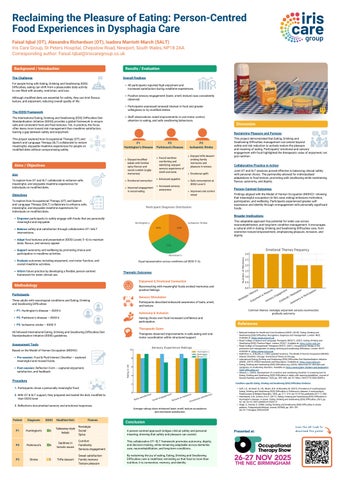
Reclaiming the Pleasure of Eating: Person-Centred Food Experiences in Dysphagia Care
Faisal Iqbal (OT), Alexandra Richardson (OT), Isadora Marriott-March (SALT) Iris Care Group, St Peters Hospital, Chepstow Road, Newport, South Wales, NP18 2AA
Corresponding author: Faisal Iqbal@Iriscaregroup co uk
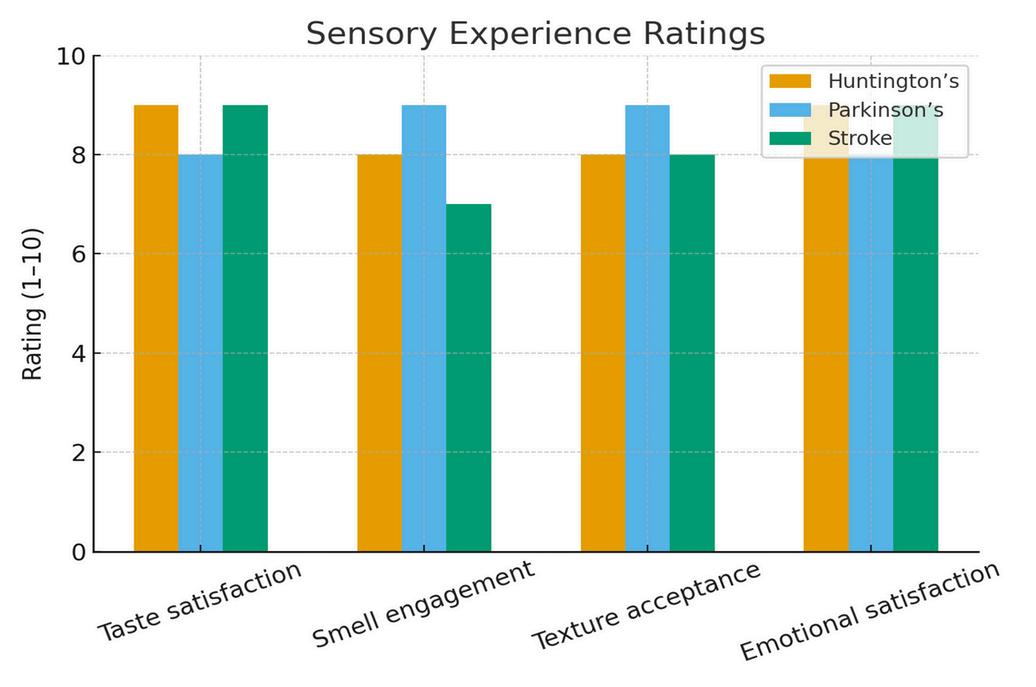
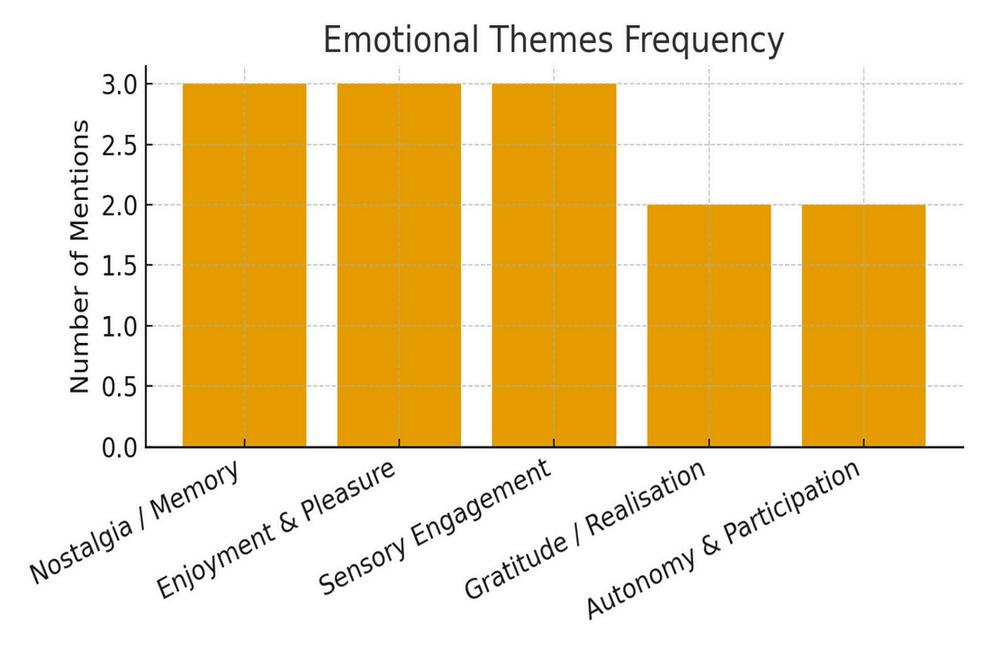
Enjoyment & Emotional Connection
Reconnecting with meaningful foods evoked memories and positive feelings
Sensory Stimulation
Participants described enhanced awareness of taste smell and texture
Autonomy & Inclusion
Having choice over food increased confidence and participation
Therapeutic Gains
Therapists observed improvements in safe eating and oralmotor coordination within structured support
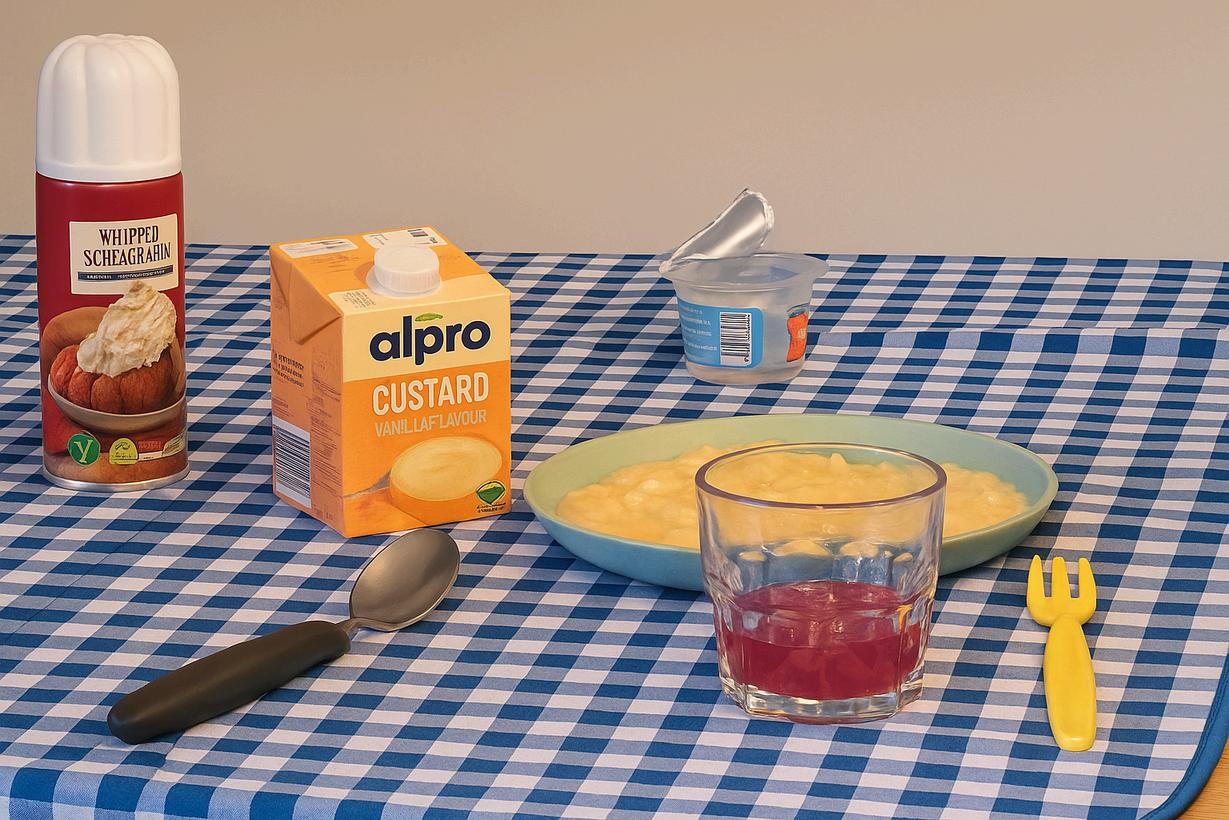

Collaborative Practice in Action
Joint OT and SLT sessions proved effective in balancing clinical safety with personal choice The partnership allowed for individualised adaptations to food texture, promoting safe swallowing while maintaining flavour autonomy and dignity
Person-Centred Outcomes
Findings aligned with the Model of Human Occupation (MOHO) showing that meaningful occupation (in this case eating) enhances motivation participation, and wellbeing Participants experienced greater selfexpression and identity through re-engagement with personally significant foods
Broader Implications
This adaptable approach has potential for wider use across neurorehabilitation and long-term condition management It encourages a cultural shift in Eating Drinking and Swallowing Difficulties care from restriction toward empowerment emphasising pleasure inclusion and dignity
(EDS) Difficulties in adults with learning disabilities. Journal of Human Nutrition and Dietetics, 16(5), pp. 395–400. doi:10.1046/j.1365-277X.2003.00459.x Condition-specific Eating, Drinking and Swallowing (EDS) Difficulties Evidence Kalf, J.G., de Swart, B.J.M., Bloem, B.R., & Munneke, M. (2012). Prevalence of oropharyngeal Eating, Drinking and Swallowing (EDS) Difficulties in Parkinson’s disease: A meta-analysis. Parkinsonism & Related Disorders, 18(4), pp. 311–315. doi:10.1016/j.parkreldis.2011.11.006 Heemskerk, A.W., & Roos, R.A.C. (2011). Eating, Drinking and Swallowing (EDS) Difficulties in Huntington’s disease: A review. Eating, Drinking and Swallowing (EDS) Difficulties, 26(1), pp. 62–66. doi:10.1007/s00455-010-9291-9 Singh, S., Hamdy, S. (2006). Eating, Drinking and Swallowing (EDS) Difficulties in stroke patients. Postgraduate Medical Journal, 82(968), pp. 383–391. doi:10.1136/pgmj.2005.043281