Irish Pharmacy News is circulated to all independent, multiple Pharmacists and academics in Ireland. All rights reserved by Irish Pharmacy News. All material published in Irish Pharmacy News is copyright and no part of this magazine may be reproduced, stored in a retrieval system or transmitted in any form without written permission. IPN Communications Ltd. has taken every care in compiling the magazine to ensure that it is correct at the time of going to press, however the publishers assume no responsibility for any effects from omissions or errors.
Foreword
One Profession. One Celebration.
This month, we are proud to officially launch the Irish Pharmacy Awards 2026 — a celebration that reflects the strength, resilience and ambition of pharmacy across Ireland. For the first time, the Awards will bring together both community and hospital pharmacy under one platform, recognising excellence across the entire profession. At a time when pharmacy practice continues to evolve at pace, it feels fitting that we mark that progress collectively.
The Awards are more than an evening of recognition. They are a statement of confidence in the profession’s future. From frontline patient care to digital innovation, from clinical leadership to operational excellence, pharmacy continues to demonstrate its central role within the healthcare system. As we look ahead to June 2026, we invite you to enter, to nominate colleagues, and to join us in celebrating the people and teams driving the profession forward.
This issue also highlights tangible evidence of that evolution in practice. The national roll-out of the Common Conditions Service has seen an extraordinary response, with 94% of community pharmacies now signed up to deliver the service. This level of participation signals a profession ready to embrace expanded clinical responsibility and to further cement its position as an accessible, frontline healthcare provider. The CCS represents a landmark step in pharmacy care — one that strengthens patient access while reinforcing pharmacists’ expertise in medicines management and minor ailment treatment.
Change is also evident in the commercial and technological landscape. Uniphar’s recent acquisition of TouchStore marks a significant investment in the infrastructure that underpins modern community pharmacy. As Ian Madden notes, supporting pharmacy teams through technology is critical as their role expands. Digital capability, workflow efficiency and datadriven practice are increasingly central to the delivery of safe, sustainable pharmacy services.
Looking beyond Ireland, we also report on PGEU’s Vision of the Future for Community Pharmacy — a forward-looking roadmap that outlines how pharmacy across Europe can continue to develop as an integrated, patient-centred healthcare hub. It is a timely reminder that the challenges and opportunities facing Irish pharmacy are part of a broader international transformation.
Alongside these developments, our special focus this month turns to Baby and Children’s Health, with clinical features on baby skin, children’s gut health and breastfeeding support — areas where pharmacy teams play a vital advisory role for families.
Taken together, the stories in this issue reflect a profession that is confident, collaborative and evolving. One profession. One celebration. And a future full of opportunity.
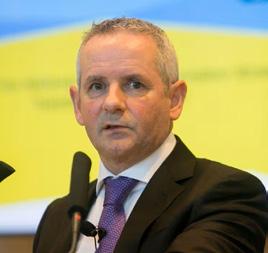
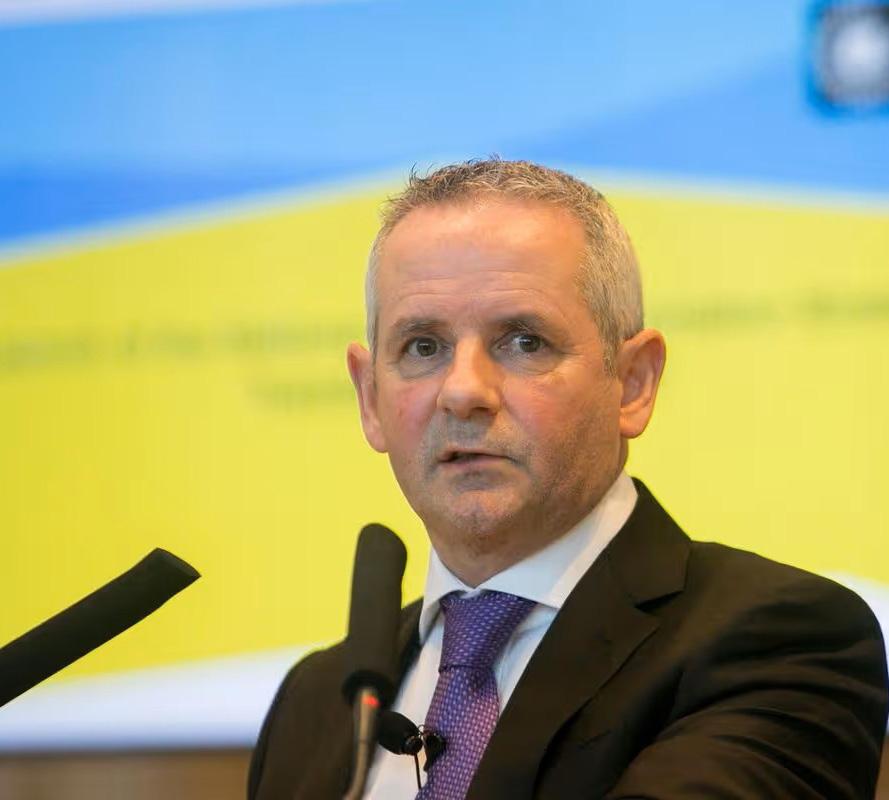
Paul Reid Appointed Independent Chair of IMVO Board
The Irish Medicines Verification Organisation (IMVO) has announced the appointment of Paul Reid as Independent Chair of its Board.
Paul brings extensive leadership experience across the public, private and not-for-profit sectors. Paul previously served as CEO of the Health Service Executive (HSE) from May 2019 to December 2022, where he led Ireland’s health service through the Covid-19 global pandemic and a significant criminal cyber-attack, while acting as a key advisor to Government and a key communicator to the public.
With deep expertise as a board chairperson, non-executive director and CEO, he is currently
Chair of An Coimisiún Pleanála, Ireland’s national and independent planning authority, and Chair of Ashdale Care, a sector leader in the provision of specialist residential care services for children and young people.
Commenting on his appointment, Paul Reid said: "I'm delighted to be joining the board of IMVO as Chair. The organisation plays a key role in protecting the public and patients, which is something that I'm highly committed to".
Paul Reid
Rare Disease Day
The Minister for Health Jennifer Carroll MacNeill TD has highlighted the areas of progress made since the publication of the National Rare Disease Strategy 2025-2030 and re-affirmed her commitment to improving services for the estimated 300,000 people in Ireland living with a rare disease.
Minister Carroll MacNeill said, “I have met with and listened to many people across Ireland living with rare disease s and their families. I am very aware of the challenges they face in accessing quality treatment and care as has been highlighted in Rare Disease Ireland’s recent survey.
Leonie Clarke, Chief Executive of IMVO, welcomed the appointment saying: "We are delighted to welcome Paul as Independent Chair of IMVO. His depth of experience, knowledge of healthcare in Ireland and unwavering commitment to public service will be invaluable as we work towards our vision of a secure and sustainable medicines supply chain where patients are confident about the authenticity of prescription medicines they receive in the Irish healthcare system.”
IMVO was established in 2017 to manage the Irish Medicines Verification System (IMVS) and works to ensure a secure and effective medicines verification system that protects patients from falsified medicines entering the legitimate supply chain in Ireland.
Paul succeeds Professor Pat O’Mahony, who served as Independent Chair from June 2017 until his unexpected passing in August 2025.
Expressions of Interest for 5th Year Pharmacy Placement
APPEL are now accepting expressions of interest for 5th-year pharmacy placements 2027, running from 4th January to 27th August 2027
APPEL 5th Year experiential learning placements can take place in a community pharmacy or hospital pharmacy. Placements run from January to August and are the final step of the student MPharm programme. By hosting a student, you will have the opportunity to:
• Support the next generation of pharmacists
• Contribute to your own CPD through mentoring and supervision
• Strengthen your organisation’s talent pipeline
• Share your expertise and shape the future of the profession Register your interest by completing this short form here, by 27th March 2026
If you have any questions or would like further details, please don’t hesitate to get in touch with eoi@appel.ie
“We have a long way to go to turn the vision of our strategy into reality. Rare disease services must be embedded into our healthcare service right across a patient’s life, starting with newborn bloodspot screening. The earlier we can detect, diagnose and treat rare diseases, the better the outcomes for patients. That is why I am pleased that the expansion of screening for both Severe Combined Immunodeficiency (SCID) and Spinal Muscular Atrophy (SMA) is expected to commence in April this year. But we must do more.
“As well as increasing education among our healthcare professionals and investing in research, we are also collaborating with international partners to enable patients in Ireland to benefit from clinical trials, and the development of innovative treatments.
“I want to assure the one in 17 people in Ireland living with a rare disease that progression of this work is a priority for me, not just today on Rare Disease Day, but every day.”
The Department of Health building in Dublin is lit up in blue today as part of the “Light Up for Rare” campaign, acknowledging the estimated 300 million people globally living with a rare disease.
Chief Medical Officer Professor Mary Horgan said, “Building greater awareness and knowledge across the public and healthcare professionals will be a core component of the implementation of the National Rare Disease Strategy.”
Pharmacy CPD Bites
Last month marked World Cancer Day under the theme “United by unique,” which places people at the centre of care and their stories at the heart of the conversation.
To mark the occasion, FIP launched a new CPD Bites series highlighting the vital role pharmacists play in supporting people undergoing cancer treatment.
World Cancer Day, held annually on February 4th (2026), is a global initiative led by the Union for International Cancer Control (UICC) to raise awareness, improve education, and catalyse action against cancer. It promotes prevention, early detection, and improved treatment access, often focusing on themes like “United by Unique” to emphasise personalised care.
The series explores key aspects of supportive care and treatmentrelated complications. Across four expert-led episodes, pharmacists’ contributions are showcased in managing chemotherapy-induced nausea and vomiting, diarrhoea caused by anticancer therapies, and myelosuppression — including neutropenia, anaemia and thrombocytopenia.
Produced in collaboration with the International Society of Oncology Pharmacy Practitioners (ISOPP), this CPD Bites series reinforces pharmacists’ essential role in improving treatment outcomes and quality of life for people living with cancer.
FIP CPD Bites are short, evidence-based learning opportunities designed to support pharmacists' professional development.
Delivered in concise formats such as videos, they offer practical knowledge and skills that contribute to an individual's CPD portfolio and enhance everyday practice. This collection of CPD Bites is designed to help pharmacists and their teams upskill and enhance their knowledge in four key areas:
o Managing common ailments (acute pain, digestive disorders, sore throat)
o Supporting behaviour change
o Improving patient interactions
o Empowering patient self-care
Each bite-sized video provides practical insights and strategies that can be applied directly in pharmacy practice, supporting better patient outcomes and professional growth.
HPRA Review of OTC Codeine Sales to Conclude in 2026
The Health Products Regulatory Authority (HPRA) is currently undertaking an independent review of the sale and supply of over-the-counter (OTC) codeinecontaining medicines in Ireland, with the process expected to conclude later this year.
The update was provided by the Minister for Health in response to a parliamentary question from Deputy David Cullinane, who sought clarification on the status and timeline of the review. In her written reply, the Minister confirmed that the HPRA, as Ireland’s competent authority for medicines regulation, is examining the current arrangements governing non-prescription codeine products.
Codeine-containing medicines are presently available in Ireland without a prescription under specific regulatory controls. However, concerns have been raised in recent years regarding misuse, dependency and the broader public health implications associated with opioid-containing analgesics. The HPRA review is understood to be assessing
the method of sale and supply, including whether existing safeguards remain appropriate.
The Minister indicated that the HPRA’s review is expected to be finalised in 2026. Once completed, the Department of Health will engage with relevant stakeholders to consider the regulator’s recommendations and determine whether any policy or legislative changes may be required in relation to the regulation of codeinecontaining medicinal products.
While no specific proposals have yet been outlined, the review could have implications for community pharmacy practice, particularly if changes are recommended to current supply models. Codeinecontaining combination analgesics are widely used for the short-term management of moderate pain
and are currently supplied under pharmacist supervision.
Any regulatory amendments would likely involve consultation with pharmacy representative bodies and other healthcare stakeholders before implementation. The Minister emphasised that following receipt of the HPRA’s findings, the Department will fully consider any policy changes that may be required.
For community pharmacists, the outcome of the review will be closely watched, given the profession’s central role in the safe supply, patient counselling and monitoring of OTC codeine products. Further updates are expected once the HPRA completes its review and formal recommendations are published later this year.
Polypharmacy & Medication Review
Irish Institute of Pharmacy (IIOP) is delighted to offer a Polypharmacy and Medication Review workshop. This workshop will be delivered virtually over Zoom on Wednesday the 25 March from 7:30pm to 9:00pm.
This workshop will focus on the more advanced aspects of the existing Polypharmacy and Medication Review eLearning resource, how to apply learning from this resource, and to develop and practice skills and behaviours. This can be found on the IIOP website:
On completion of this workshop, participants should be able to:
• Recognise appropriate and inappropriate polypharmacy
• Identify, prioritise, and plan to address medication issues among patients with polypharmacy as part of clinical medication review
• Collaborate with patients and healthcare professionals to address polypharmacy and medication issues in a shareddecision making process.
You can register at www.iiop.ie
New Era for Pharmacist-Led Care in Ireland
Strong Uptake as 94% of Pharmacies Sign Up to New Common Conditions Service
The national roll-out of the Common Conditions Service (CCS) has seen an exceptionally strong response from the community pharmacy sector, with over 1,800 pharmacies – representing approximately 94% of all community pharmacies in Ireland – now signed up to deliver the new service. The high participation rate signals both the profession’s readiness to embrace an expanded clinical role and the growing recognition of community pharmacy as a key access point for frontline healthcare.
Launched as part of the Community Pharmacy Agreement 2025, the CCS is designed to improve fast, affordable and convenient access to treatment for patients presenting with a range of common minor health conditions. Delivered as a confidential, fee-based consultation service provided by trained pharmacists, the initiative allows patients to receive timely assessment, advice and, where appropriate, treatment directly in their local pharmacy.
Minister for Health Jennifer Carroll MacNeill welcomed the strong national engagement from the sector, noting that more than 2,500 pharmacy professionals have completed the core training modules required to deliver the service. She described the response as a reflection of the commitment within community pharmacy to strengthening frontline care and improving access to treatment closer to home.
Caoimhe McAuley, Vice President of the IPU, said, “The launch of the Common Conditions Service is a very welcome development for community pharmacy and for patients across Ireland. The CCS represents a significant milestone in the evolution of pharmacy care in Ireland, and one that the IPU has been advocating for over many years. “Pharmacists are medicines experts and have long sought the opportunity to apply their clinical expertise in new ways to support patients. This service will now enable pharmacists, following
a consultation and in line with established clinical protocols, to safely assess and treat a range of common conditions within their local communities. This service is about improving access for patients by providing faster, more convenient care, supporting earlier symptom relief, and enabling pharmacists to deliver timely assessment and treatment. It ensures that care is delivered at the lowest appropriate level of complexity, close to home and within the community.”
The service enables pharmacists, following a structured consultation and in line with established clinical protocols, to prescribe certain prescription-only medicines for eight specified common conditions. These include allergic rhinitis, cold sores, conjunctivitis, impetigo, oral thrush, shingles, uncomplicated urinary tract infections (UTIs) in women aged 16–64, and vulvovaginal thrush in women aged 16–60. For many patients who would previously have required a GP appointment for these self-limiting conditions, the CCS offers a faster and more accessible pathway to care.
The Irish Pharmacy Union (IPU) has strongly welcomed the launch of the service, describing it as a significant milestone in the evolution of pharmacy care in Ireland. According to the IPU, pharmacists have long managed patients presenting with minor ailments on a daily basis but, until now, lacked the authority to
Caoimhe McAuley, Vice President of the IPU
prescribe certain treatments within formalised protocols. The CCS now formalises and enhances this clinical role, allowing pharmacists to utilise their medicines expertise more fully in patient care.
Speaking at the launch, IPU representatives highlighted that the service represents years of advocacy by the profession and marks an important step forward in recognising pharmacists as accessible clinical healthcare providers. They noted that community pharmacists are uniquely positioned to support the management of common, self-limiting conditions, ensuring patients receive appropriate treatment at the earliest opportunity and at the lowest appropriate level of care complexity.
From a practice perspective, the CCS is expected to have a meaningful operational impact within community pharmacies. Each day, pharmacy teams encounter patients seeking advice for minor conditions such as conjunctivitis, thrush or shingles, and the new service provides a structured clinical framework through which these consultations can now be formally delivered and documented. The introduction of pharmacist prescribing within defined protocols also reinforces the shift towards a more patientcentred, consultation-led model of pharmacy practice.
Importantly, the service aligns with wider health system objectives to reduce pressure on GP services and improve patient flow across primary care. By enabling patients to access treatment directly through pharmacies, the CCS supports earlier intervention, quicker symptom relief and reduced delays in accessing care, particularly for time-sensitive or uncomfortable conditions.
The collaborative approach underpinning the service has also been acknowledged by stakeholders, with the Department
of Health, the Community Pharmacy Implementation Oversight Group, and pharmacy representative bodies working closely to support its introduction. This multidisciplinary cooperation has been described as a key factor in ensuring a smooth and effective roll-out nationwide.
For patients, accessibility remains a central pillar of the initiative. With participating pharmacies available across urban and rural settings, members of the public can locate their nearest CCS provider using the Pharmacy Finder Tool, further enhancing awareness and uptake of the service.
Looking ahead, the introduction of the Common Conditions Service is widely regarded as a transformative development for community pharmacy in Ireland. Beyond improving patient access to treatment for minor ailments, it signals a broader shift in the role of pharmacists towards expanded clinical service delivery, enhanced patient consultations, and greater integration within primary care pathways.
As the service continues to embed into daily practice, its success will likely be measured not only by patient uptake but also by its ability to demonstrate the value of community pharmacy as a frontline, accessible and clinically capable healthcare setting. With the vast majority of pharmacies now opted in, the CCS represents a landmark step in strengthening the profession’s contribution to timely, community-based care across Ireland.
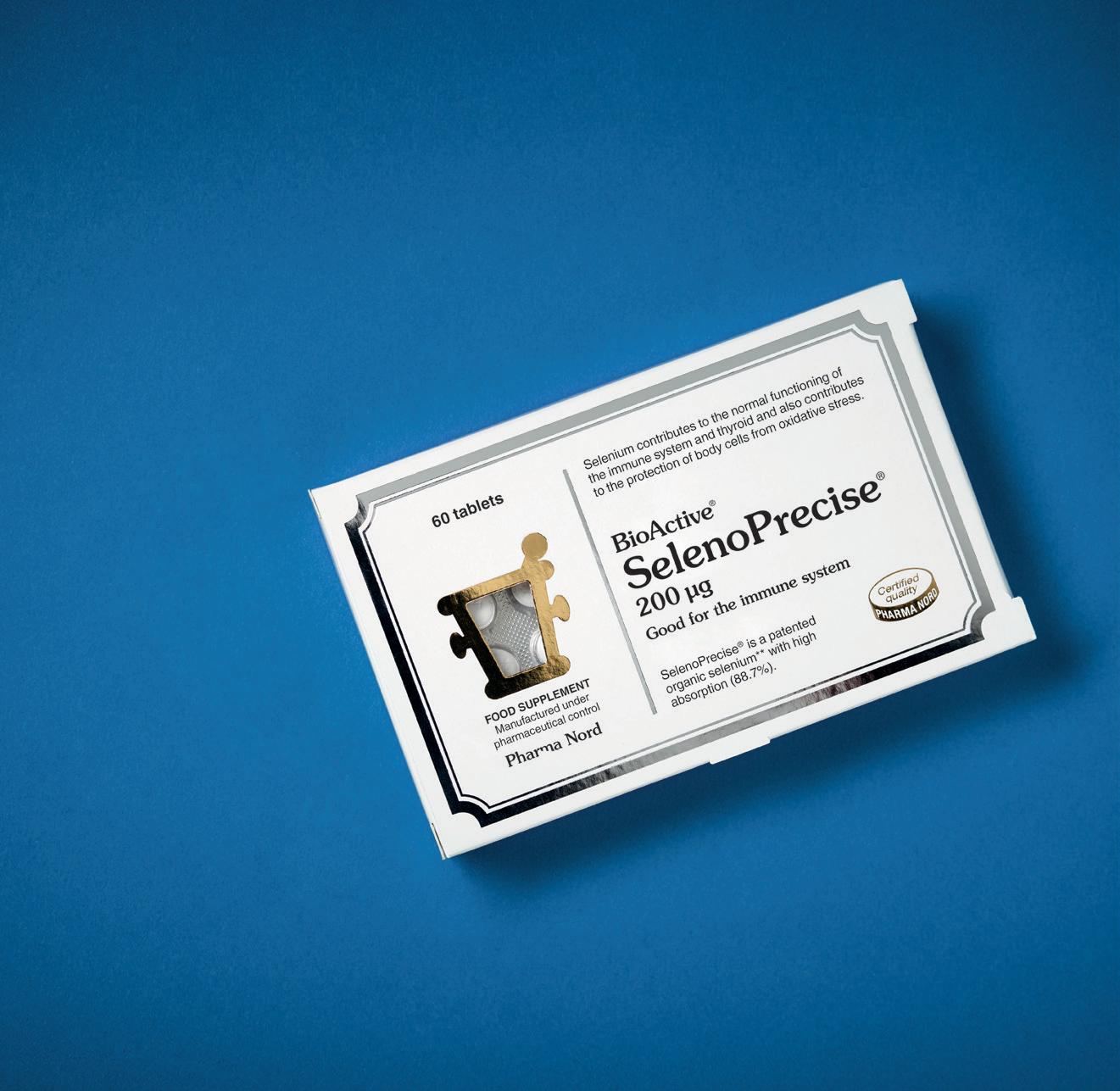
SelenoPrecise is one of the most rigorously tested selenium supplements on the market. In the last 35 years it has changed the lives of millions of people in more than 45 countries worldwide.
Selenium contributes to:
Normal function of the immune system, thyroid function, normal spermatogenesis, maintenance of normal hair and nails and the protection of cells from oxidative stress.
SPERM CELLS
Contains the patented SelenoPrecise yeast (organic selenium), which is widely known for its superior bioavailability (89% absorption) and safety records. Pioneers in Nutritional Healthcare
Visit: www.pharmanord.ie to find out more about BioActive SelenoPrecise and our full range of high-quality supplements. You can also sign up for our newsletters and stay informed on the latest health headlines.
Pharmacy Urges Smokers to Quit
The Irish Pharmacy Union (IPU) is calling on smokers and, in particular, young people who use e-cigarettes and vaping products to quit nicotine this Ash Wednesday, which also marks National No Smoking Day, and to speak with their local pharmacist about safer nicotine alternatives.
While many young people view e-cigarettes and vaping products as a safer alternative to smoking, pharmacists warn that vaping is not harm-free. Vaping can expose users to harmful chemicals that may damage the lungs, affect brain development in young people, and increase the risk of addiction.
Nicotine and other substances in e-cigarettes can also negatively impact concentration, mood, and long-term cardiovascular and respiratory health.
In Ireland, smoking remains the leading cause of preventable death, with almost 4,500 people dying from tobacco-related diseases each year. While e-cigarettes are considered a quitting method, pharmacists are warning that growing levels of vaping among young people may lead to long-term nicotine
dependence and increase the likelihood of progressing to tobacco smoking.
Since 2019, smoking rates in Ireland have remained static, while the use of e-cigarettes and vaping products has increased, particularly among young people.
The 2025 Healthy Ireland Survey showed that 18% of those aged 15 to 24 reported vaping either daily (11%) or occasionally (7%).
The IPU is therefore encouraging smokers and those who vape to visit their local pharmacy to speak with a pharmacist about practical support to help them quit.
Rebecca Barry Chair of the IPU’s Community Pharmacy Committee (CPC) said, “It is important for younger people in particular to realise the longer they continue to vape the greater the harm and the harder it is to quit. But they should
also know help is available at local pharmacies who have experience in providing support. Safer nicotine alternatives have been shown to be effective in increasing the chances of success for those who are ready to quit and is available in pharmacies across the country.
“Quitting nicotine can bring immediate and long-term benefits, including improved breathing, better energy levels, improved sleep and reduced anxiety. Additionally, quitting smoking reduces the risk of premature death, as well as lowering the risk of cardiovascular disease, lung disease, and cancer.”
The IPU advises that the best option for health is to quit all nicotine products entirely, with professional support available through community pharmacies.
Research & Innovation Hub Launch
Last month marked the launch of the Research & Innovation Hub at St John of God University Hospital.
Developed in partnership with leading academic institutions including University College Dublin, Royal College of Surgeons in Ireland (RCSI) and Trinity College Dublin, the Hub provides a single, coordinated structure to support multidisciplinary research, service improvement and education. It is
designed to support projects from early design through to delivery, publication and implementation, ensuring research is embedded in clinical practice.
The Hub is being led by Professor Dolores Keating, Head of Pharmacy at the Hospital.
Mental Health Strategy
The Health Service Executive (HSE) and the Department of Health have unveiled the Sharing the Vision Digital Mental Health Strategy 2026-2030. A plan to enhance mental health services in Ireland through the power of digital technology. The Strategy was launched by Government Chief Whip and Minister for Mental Health Mary Butler, TD at the third annual Digital Mental Health Conference in partnership with University of Limerick.
The strategy aims to enhance mental health for all through digital technologies that improve infrastructure and provide safe, effective, and accessible mental health information, tools, and services.
By leveraging cutting-edge digital tools and infrastructure, the strategy will empower service users, clinicians, and communities to access safe, effective, and personalised mental health supports anytime, anywhere.
It seeks to address inequalities in access and promote digital mental health solutions that are inclusive and equitable.
Professor Dolores Keating, Head of Pharmacy, St John of God Hospital
The Hub will support work across priority areas such as prescribing guidelines, precision psychiatry, psychological interventions and implementation research, informed by the priorities of frontline teams and shaped by lived experience. This approach reflects a clear ambition: to translate evidence into meaningful change for patients, families and services.
To underpin this work, the Hospital is investing in sustained research capacity, including long-term funding for established research programmes, new research roles, and dedicated support for clinicians who want to contribute to and lead research within a busy healthcare environment.
The Research & Innovation Hub builds on a strong track record of research and education at the Hospital. More importantly, it creates the conditions for future impact: deeper collaboration, stronger evidence, and care that continues to evolve in response to what patients and services need most.
The strategy is the result of extensive consultation with service users, clinicians, researchers, policymakers, and international experts. Key events, including national conferences and roundtable discussions, helped shape the strategy to ensure it meets the needs of all stakeholders.
The HSE has invested in digital mental health for almost a decade, with accelerated development during the COVID-19 pandemic. Initiatives include My Mental Health Plan, online cognitive behavioural therapy programmes, online supports for ADHD and eating disorders, and video-enabled appointments delivered by Community Mental Health Teams.
HSE-funded community and voluntary partners — including MyMind, Turn2Me, Jigsaw and SpunOut — have expanded access to online counselling and digital supports. The recent launch of Navigator by SpunOut provides an anonymous online signposting tool connecting young people with personalised health information and services nationwide.
Earlier this month, the HSE also announced a new partnership with Togetherall to deliver a national anonymous digital peersupport service for young people aged 16 to 30.
Market Leader in the sourcing and supply of unlicensed medicines
Ireland's largest portfolio of sourced unlicensed medicines
If it’s not on the list, it’s on the way! products ready to order
PHX announces Leadership Appointments
PHX Ireland has announced two executive appointments. Jan-Pieter Hallema has been appointed to the newly created role of Chief Operating Officer, PHX Ireland. Brian O’Keeffe has been appointed Retail Managing Director, Ireland for McCabes Pharmacy.
Jan-Pieter Hallema joined as Managing Director of McCabes Pharmacy in September 2023 and served as a board member of the PHX Ireland Board since 2023. Jan-Pieter previously served as Retail Managing Director in the Netherlands. He brings extensive operational expertise to the new role, both across the PHOENIX Group and throughout his almost 30-year career to date.
Brian O’Keeffe will succeed JanPieter as Retail Managing Director, Ireland for McCabes. Brian brings extensive sector experience across the Irish, UK and European markets and has spent the past two years as Retail Chief Operating Officer in Ireland.
PHX Ireland CEO Paul Reilly commented “We are delighted to announce these appointments. Jan-Pieter Hallema brings proven leadership experience, while Brian O’Keeffe’s promotion is recognition of the role he has played with the integration of McCabes Pharmacy into the PHX family, through his collaborative approach to operational and cultural integration.”
EMA Greenlights Higher-Dose Wegovy®
The European Medicines Agency (EMA) has approved a new 7.2 mg once-weekly dose of Wegovy® (semaglutide) for weight management in adults living with obesity, marking a further development in the pharmacological management of obesity as a chronic condition.
The higher-dose formulation is indicated as an adjunct to a reduced-calorie diet and increased physical activity for weight management, including weight loss and maintenance, in adults with an initial body mass index (BMI) of ≥30 kg/m2. As with existing GLP-1 receptor agonist therapies, treatment must be initiated on prescription by a healthcare professional and dispensed through pharmacies.
The approval is supported by clinical evidence from the STEP UP trial programme conducted by Novo Nordisk. In the study, participants treated with semaglutide 7.2 mg achieved a mean weight reduction of 20.7% from a baseline body weight of 113 kg over 72 weeks, compared with a 17.5% reduction in those
receiving the currently available 2.4 mg dose and 2.4% with placebo, when adherence to treatment was maintained.
Further analysis within the trial demonstrated that approximately 84% of total weight loss was attributable to reductions in fat mass, with preservation of muscle function also observed. These findings may be of particular clinical relevance in long-term weight management, where maintenance of lean body mass is an important consideration. As with other GLP-1 receptor agonists, gastrointestinal adverse events were the most commonly reported side effects. These occurred in 70.8% of participants receiving semaglutide 7.2 mg, compared with 61.2% in the
2.4 mg group and 42.8% in the placebo arm. Dysaesthesia was also reported more frequently at the higher dose. Serious adverse events were recorded in 6.8% of those receiving semaglutide 7.2 mg, compared with 10.9% for the 2.4 mg dose and 5.5% with placebo.
At present, the 7.2 mg dose is delivered as three separate 2.4 mg injections. Novo Nordisk has submitted an application to the EMA for a single-dose device designed to administer the full 7.2 mg in one injection, which may have implications for adherence and patient convenience if approved.
Commenting on the approval, Dilek Dogan Gurluk, General Manager of Novo Nordisk Ireland, described obesity as a complex
medical condition requiring evidence-based, long-term management and noted that the availability of a higher semaglutide dose represents an important clinical development in the treatment landscape.
The approval comes amid rising obesity prevalence across Ireland, with increasing recognition of obesity as a chronic disease requiring multidisciplinary management. For community pharmacists, the introduction of a higher-dose semaglutide option is likely to further expand their role in supporting patients with weight management, including counselling on adherence, adverse effect management, and the importance of concurrent lifestyle interventions.
Jan-Pieter Hallema
Brian O'Keeffe
Wegovy® delivers quality weight loss1,2,5 and provides cardiovascular risk reduction1,3ɬ
Safety and tolerability profile comparable to the GLP-1 RA class in general1
Wegovy® is recommended in the ESC CCS guidelines for cardiovascular risk reduction4
tThis product is subject to additional monitoring. ESC = European Society of Cardiology. CCS = Chronic Coronary Syndrome. GLP-1 RA = Glucagon Like Peptide 1 Receptor Agonist.
Wegovy®t(semaglutide) Please refer to the full Summary of Product Characteristics (SmPC) before prescribing. Wegovy® 0.25 mg FlexTouch® solution for injection in pre-filled pen. Wegovy® 0.5 mg FlexTouch® solution for injection in pre-filled pen. Wegovy® 1 mg FlexTouch® solution for injection in pre-filled pen. Wegovy® 1.7 mg FlexTouch® solution for injection in pre-filled pen. Wegovy® 2.4 mg FlexTouch® solution for injection in pre-filled pen. Indication(s): Adults: Wegovy® is indicated as an adjunct to a reduced-calorie diet and increased physical activity for weight management, including weight loss and weight maintenance, in adults with an initial Body Mass Index (BMI) of ≥30 kg/m2 (Obesity) or ≥27 kg/m2 to <30 kg/m2 (overweight) in the presence of at least one weight-related comorbidity e.g. dysglycaemia (prediabetes or type 2 diabetes mellitus), hypertension, dyslipidaemia, obstructive sleep apnoea or cardiovascular disease. For trial results with respect to cardiovascular risk reduction, obesity-related heart failure, and populations studied, see section 5.1. of the Wegovy® SmPC. Adolescents: Wegovy® is indicated as an adjunct to a reduced-calorie diet and increased physical activity for weight management in adolescents ages 12 years and above with obesity* and body weight above 60 kg. Treatment with Wegovy® should be discontinued and re-evaluated if adolescent patients have not reduced their BMI by at least 5% after 12 weeks on the 2.4 mg or maximum tolerated dose. *See table 1 in the Wegovy® SmPC for BMI cut-off points for obesity by sex and age. Posology and administration: Administered once weekly at any time of the day, with or without meals. Injected subcutaneously in the abdomen, in the thigh or in the upper arm. The injection site can be changed. It should not be administered intravenously or intramuscularly. For the 7.2 mg dose, inject three doses of 2.4 mg one after each other. The injections can be administered in the same body area but should be at least 5 cm apart. Injection sites should always be rotated to reduce the risk of injection site amyloid deposits. The day of weekly administration can be changed if necessary, as long as the time between doses is at least 3 days (>72 hours). After selecting a new dosing day, once-weekly dosing should be continued. Adults: The maintenance dose of semaglutide 2.4 mg once-weekly is reached by starting with a dose of 0.25 mg. To reduce the likelihood of gastrointestinal symptoms, the dose should be escalated over a 16-week period to the maintenance dose. If needed, the dose can be increased to 7.2 mg once weekly after a minimum of 4 weeks on the 2.4 mg dose in adults with BMI ≥ 30 kg/m2 at treatment initiation. If no additional clinical improvement in body weight is observed with 7.2 mg, lower the dose to 2.4 mg once weekly. In case of significant gastrointestinal symptoms, consider delaying dose escalation or lowering to the previous dose until symptoms have improved. Adolescents: For adolescents ages 12 years and above, the same dose escalation schedule as for adults should be applied. The dose should be increased until 2.4 mg (maintenance dose) or maximum tolerated dose has been reached. Weekly doses higher than 2.4 mg are not recommended in the adolescent population. Patients with type 2 diabetes: When initiating Wegovy®, consider reducing the dose of concomitantly administered insulin or insulin secretagogues (such as sulfonylureas) to reduce the risk of hypoglycaemia. Missed dose: If a dose is missed, it should be administered as soon as possible and within 5 days after the missed dose. If more than 5 days have passed, the missed dose should be skipped, and the next dose should be administered on the regularly scheduled day. If more doses are missed, reducing the starting dose for re-initiation should be considered. Elderly: No dose adjustment is required based on age. Renal impairment: No dose adjustment is required for patients with mild or moderate renal impairment. Experience in patients with severe renal impairment is limited. Semaglutide is not recommended for use in patients with severe renal impairment (eGFR <30 mL/min/1.73m2) including patients with end-stage renal disease. Hepatic impairment: No dose adjustment is required for patients with mild or moderate hepatic impairment. Experience in patients with severe hepatic impairment is limited. Semaglutide is not recommended for use in patients with severe hepatic impairment and should be used cautiously in patients with mild or moderate hepatic impairment. Paediatrics: The safety and efficacy of semaglutide in children below 12 years of age have not been established. Contraindications: Hypersensitivity to the active substance or to any of the excipients. Special warnings and precautions for use: Cases of pulmonary aspiration have been reported in patients receiving GLP-1 receptor agonists undergoing general anaesthesia or deep sedation. Therefore, the increased risk of residual gastric content due to delayed gastric emptying should be considered prior to performing procedures with general anaesthesia or deep sedation. Use of GLP-1 receptor agonists may be associated with gastrointestinal adverse reactions. This should be considered when treating patients with impaired renal function, as nausea, vomiting, and diarrhoea may cause dehydration, which in rare cases can lead to a deterioration of renal function. Patients treated with semaglutide should be advised of the potential risk of dehydration in relation to gastrointestinal side effects and take precautions to avoid fluid depletion. Acute pancreatitis has been observed with the use
of GLP-1 receptor agonists. Patients should be informed of the characteristic symptoms of acute pancreatitis. If pancreatitis is suspected, Wegovy® should be discontinued; if confirmed, Wegovy® should not be restarted. Caution should be exercised in patients with a history of pancreatitis. In the absence of other signs and symptoms of acute pancreatitis, elevations in pancreatic enzymes alone are not predictive of acute pancreatitis. Data from epidemiological studies indicates an increased risk for nonarteritic anterior ischaemic optic neuropathy (NAION) during treatment with semaglutide. There is no identified time interval for when NAION may develop following treatment start. A sudden loss of vision should lead to ophthalmological examination and treatment with semaglutide should be discontinued if NAION is confirmed. Wegovy® should not be used as a substitute for insulin in patients with type 2 diabetes. Wegovy® should not be used in combination with other GLP-1 receptor agonist products. Patients treated with Wegovy® in combination with a sulfonylurea or insulin may have an increased risk of hypoglycaemia. The risk of hypoglycaemia can be lowered by reducing the dose of sulfonylurea or insulin when initiating treatment with a GLP-1 receptor agonist. In patients with diabetic retinopathy treated with semaglutide, an increased risk of developing diabetic retinopathy complications has been observed. Patients with diabetic retinopathy using semaglutide should be monitored closely and treated according to clinical guidelines. There is no experience with Wegovy® in patients with type 2 diabetes with uncontrolled or potentially unstable diabetic retinopathy. In these patients, treatment with Wegovy® is not recommended. Semaglutide treated patients with gastroparesis may experience more serious or severe gastrointestinal adverse events. Semaglutide should be used with caution in these patients, and semaglutide is not recommended if gastroparesis is severe. The safety and efficacy of Wegovy® has not been investigated in patients treated with other products for weight management, with type 1 diabetes, with severe renal or hepatic impairment or with congestive heart failure New York Heart Association (NYHA) class IV. Use in these patients is not recommended. There is limited experience with Wegovy® in patients aged 85 years or more, with mild or moderate hepatic impairment, with inflammatory bowel disease. Use with caution in these patients. If semaglutide is used in combination with a sulfonylurea or insulin, patients should be advised to take precautions to avoid hypoglycaemia while driving and using machines. Fertility, pregnancy and lactation: Women of childbearing potential are recommended to use contraception when treated with semaglutide. There are limited data from the use of semaglutide in pregnant women. Therefore, semaglutide should not be used during pregnancy. If a patient wishes to become pregnant, or pregnancy occurs, semaglutide should be discontinued. Semaglutide should be discontinued at least 2 months before a planned pregnancy due to the long half-life. In lactating rats, semaglutide was excreted in milk. A risk to a breast-fed child cannot be excluded. Semaglutide should not be used during breast-feeding. Effect on fertility unknown. Undesirable effects: Very common (≥1/10): Headache, vomiting, diarrhoea, constipation, nausea, abdominal pain, fatigue. Common (≥1/100 to <1/10): Hypoglycaemia in patients with type 2 diabetes, dizziness, dysgeusia, dysaesthesia, diabetic retinopathy in patients with type 2 diabetes, gastritis, gastrooesophageal reflux disease, dyspepsia, eructation, flatulence, abdominal distension, cholelithiasis, hair loss, injection site reactions. Uncommon (≥1/1,000 to <1/100): Hypotension, orthostatic hypotension, increased heart rate, acute pancreatitis, delayed gastric emptying, increased amylase, increased lipase. Rare (≥1/10,000 to <1/1,000): Anaphylactic reaction, angioedema. Very rare (<1/10 000): Non-arteritic anterior ischaemic optic neuropathy (NAION). Not known (cannot be estimated from the available data): Intestinal obstruction. The SmPC should be consulted for a full list of side effects. MA number(s): Wegovy® 0.25 mg FlexTouch® EU/1/21/1608/006. Wegovy® 0.5 mg FlexTouch® (1.5 ml cartridge) EU/1/21/1608/007. Wegovy® 0.5 mg FlexTouch® (3 ml cartridge) EU/1/21/1608/012. Wegovy® 1 mg FlexTouch® EU/1/21/1608/008. Wegovy® 1.7 mg FlexTouch® EU/1/21/1608/009. Wegovy® 2.4 mg FlexTouch® EU/1/21/1608/010. Legal category: Product subject to prescription which may not be renewed. For complete prescribing information please refer to the SmPC which is available on www.medicines.ie or by email from infoireland@novonordisk.com or from the Clinical, Medical and Regulatory Department, Novo Nordisk Limited, 1st Floor, Block A, The Crescent Building, Northwood Business Park, Santry, Dublin 9, Ireland. Date last revised: February 2026. IE26SEMO00055.
tThis medicinal product is subject to additional monitoring. This will allow quick identification of new safety information. Adverse events should be reported to the Health Products Regulatory Authority. Information about adverse event reporting is available at www.hpra.ie. Adverse events should also be reported to Novo Nordisk on Tel: 01 8629700 or complaintireland@novonordisk.com.
*From baseline to week 72. Data presented here from the STEP UP trial are based on the trial product estimand, which describes the treatment effect if all people adhered to treatment, whereas the primary treatment policy estimand describes the treatment effect regardless of treatment adherence. When applying the treatment policy estimand, people treated with Wegovy® 7.2 mg achieved a superior weight loss of 18.7% vs placebo of 3.9%. The proportion of patients with a body weight reduction of ≥25% was greater with Wegovy® 7.2 mg (31.2%), vs placebo (0%).1
ɬ People living with overweight or obesity and established cardiovascular disease without diabetes.
Ŧ The co-primary endpoints were percentage change in body weight and the proportion of patients with a body weight reduction of 5% or greater for Wegovy® 7.2 mg vs placebo.1
Applying the trial product estimand, the proportion of patients with a body weight reduction of ≥5% was greater with Wegovy® 7.2 mg (93.2%), vs placebo (35.7%).1
¥Confirmatory secondary endpoint.
References: 1. Wegovy® Summary of Product Characteristics www.medicines.ie 2. Wharton S, Freitas P, Hjelmesæth J, et al. Once-weekly semaglutide 7.2 mg in adults with obesity (STEP UP): a randomised, controlled, phase 3b trial. Lancet Diabetes Endocrinol. 2025; S2213-8587(25)00226-8. 3. Lincoff AM, Brown-Frandsen K, Colhoun HM, et al. Semaglutide and cardiovascular outcomes in obesity without diabetes. N Engl J Med. 2023;389(24):2221-2232 4. Vrints C, Andreotti F, Koskinas KC, et al. 2024 ESC Guidelines for the management of chronic coronary syndromes. Eur Heart J. 2024;45(36):3415-3537. 5. Hjelmesæth J, Bhat S, Garvey WT, et al. Effect of semaglutide on body composition and proximal muscle strength: the STEP UP trial. Presented at: The 61st European Association for the Study of Diabetes (EASD) Annual Meeting; September 15-19, 2025; Vienna, Austria.
Beauty & Wellness Trends 2026
How Irish Brands Are Leading the Way
Irish consumers are approaching beauty and wellness differently in 2026. They are more informed, more selective, and increasingly focused on long-term health rather than quick fixes.
For pharmacy, this presents a clear opportunity: to guide customers through trends with credible brands that solve real needs, from sensitive skin and daily routines to hydration, glow and “beauty from within”.
Here, we explore the key beauty and wellness trends shaping Irish pharmacy, and the Irish brands helping pharmacies turn consumer interest into confident recommendations and sustainable sales.
Skin Health First, Not Skin Perfection
The consumer ask:
“My skin is sensitive, reactive, or stressed, I want calm, not correction.”
Consumers are moving away from aggressive routines towards barrier support, redness reduction and skin resilience. Sensitive skin is no longer niche; it’s mainstream.
The pharmacy opportunity: Reassurance, education and gentle solutions drive repeat purchase and trust.
Irish brands answering this:
• Sásta Skin Health Serum - skin health-led positioning with microbiome awareness
• Kinvara Rosehip Serum - barrier nourishment and resilience with a clear education story
57% say supplements are the most purchased wellness product
Life-Stage Wellness Goes Mainstream
The consumer ask: “I want solutions that recognise where I am in life.”
Women’s and Men’s health are no longer side categories, they are central to modern wellness conversations.
The pharmacy opportunity: Targeted solutions create meaningful conversations and long-term relationships.
Irish brands answering this:
• AYA Women’s Health - supporting women through different life stages
• Bionutricia BioProstate - addressing men’s health with credibility and clarity.
Skinification
The consumer ask:
“I want healthy-looking skin everywhere, not just on my face.”
Bodycare, tan and deodorant are increasingly viewed through a skincare lens: gentle, nourishing, confidence-boosting.
The pharmacy opportunity:
These categories are ideal for basket-building and premiumisation without discounting.
Irish brands answering this:
• Vico - sustainable natural deodorant
• Biabelle Hydrating Tan - Ultra Darkultra-hydrating mousse delivers a rich, olive-toned bronzed finish that develops beautifully
Beauty From Within
Becomes Everyday
The consumer ask:
Simplified Routines & Hybrid Cleansing
The consumer ask: “I want skincare that works, but I don’t have time for a 10step routine.”
Time-poor consumers are prioritising effective, comforting hero products that anchor a routine.
The pharmacy opportunity: Hero SKUs that encourage routine-building drive loyalty and repeat sales.
Irish brands answering this:
•
“What I take internally should support how I look and feel.”
Supplements are no longer seen as “add-ons”, they are part of daily beauty and wellness routines, supporting hydration, hair, skin and confidence.
The pharmacy opportunity:
Guided recommendations help shoppers choose the right format and benefit, increasing trust and lifetime value.
Irish brands answering this:
• AYA Electrolytes - hydration supporting energy, performance and glow
• Annutri Grow It Range - inside-out support for hair and skin health
22% have bought a wellness product after seeing it on social media
Baby Focus
Essential Nutritional Guidance for Infants: A Comprehensive Guide for Pharmacists
Irish Pharmacy News recently spoke to Éva Hill Hamilton, Clinical Nutritionist, to get her insights into what parents and community pharmacy teams should be aware of when it comes to nutrition in children and babies.
She told us, “The first year of life is a critical period for an infant’s growth and development. Proper nutrition during this time lays the foundation for a strong immune system, healthy digestion, and cognitive development. Pharmacists play an essential role in guiding parents through this journey, offering advice on breastfeeding, supplementation, and dietary choices. This article explores key nutritional needs for infants, common concerns, and best practices for ensuring optimal health.”
The Importance of Nutrition in the First Year
The first 1,000 days of life—from conception to a child’s second birthday—are crucial for normal development. “During this time, continuous support with essential nutrients is necessary, as certain developmental windows cannot be revisited later. Beyond simply focusing on calories, parents should be encouraged to breastfeed where possible and gradually transition to nutrientdense solid foods,” says Éva.
She adds, “Breast milk from a well-nourished mother provides a perfectly balanced combination of proteins, essential fats, and carbohydrates, along with immune-boosting factors that support a healthy gut microbiome. A strong gut microbiome is vital, as it influences digestion, immunity, and even brain function. Vaginal birth and breastfeeding promote the growth of beneficial Bifidobacterium species, which help maintain gut balance. However, factors such as C-section delivery, formula feeding, antibiotic treatments, and early introduction of cow’s milk or processed foods may disrupt this balance, potentially leading to long-term health effects.
“To support gut health, supplementation with live bacteria (probiotics)—particularly from the Bifidobacterium genus— along with Vitamin D3 should be considered from birth. Products such as VIVIO Junior Tummies Bifibaby Drops offer evidencebased support for an infant’s digestive and immune systems.”
Introducing Solid Foods and Essential Nutrients
At around six months of age, parents should gradually introduce a variety of solid foods while continuing to provide breast milk or age-appropriate formula. Éva noted that it is recommended to introduce new foods one at a time, with a three-day gap between introductions, to monitor potential allergic reactions.
Key Nutrients for Infant Growth
1. Iron: Essential for cognitive development and oxygen transport in the body. By six months, an infant's natural iron stores begin to deplete, so dietary sources become crucial. Haem-iron from meats is the most absorbable form and is best given alongside breast milk to enhance absorption. Fortified foods can help, but excessive dairy consumption should be limited, as it can interfere with iron absorption.
2. Long-chain Omega-3 fats (DHA): Critical for brain and vision development. Found in oily fish, nut and seed butters, and egg yolks. Baby fish oil supplements may be considered.
3. Vitamin D: Supports bone health and immune function. Since breast milk may not provide sufficient amounts, all breastfed infants should receive Vitamin D supplements, particularly in northern climates with limited sun exposure.
4. Probiotics: Aid digestion and immune function. Live bacteria, particularly Bifidobacteria, help maintain gut health and nutrient absorption.
The Role of Pharmacists in Infant Nutrition
Éva says, “Pharmacists are often the first point of contact for new parents seeking guidance on feeding, supplementation, and common infant health concerns. Their role extends beyond providing treatments to emphasising preventative care through proper nutrition.”
Advising Parents on Essential Nutrients
Pharmacy teams should educate parents on:
• The importance of a balanced diet and appropriate supplementation for infants.
• Breastfeeding support and choosing nutrient-fortified, hypoallergenic formulas that closely resemble breast milk.
• Iron and Vitamin D supplementation, ensuring that products are free from preservatives and allergens, which can disrupt an infant’s sensitive gut lining.
• Practical weaning guidelines, including exposure to a variety of textures and flavors to encourage diverse eating habits.
Common Nutritional Concerns
“Many parents seek advice about fussy eating, digestive issues, frequent infections, and concerns about their child’s growth. The most common nutrient deficiencies include iron, vitamin A, vitamin D, and zinc, all of which are essential for immune function. Picky eaters, in particular, may miss out on crucial nutrients due to diets high in processed foods and sugars. Pharmacists can guide parents in addressing these gaps by promoting a diverse diet and, if necessary, safe supplementation,” she highlights.
Caution with Over-the-Counter Supplements
“Not all supplements are suitable for infants,” Éva adds. “Safety should always be the top priority, and pharmacists should only recommend clinically tested, wellabsorbed, and preservative-free formulations.”
• For infants under six months, fortified formula and safe probiotic and Vitamin D supplements are preferred.
• From one year onward, a highquality, preservative-free liquid multivitamin may be added if dietary intake is inadequate.
When Should Parents Consider Supplementation?
Parents should seek professional advice if their baby:
• Struggles to gain weight or reach developmental milestones.
• Experiences frequent infections, digestive discomfort, or allergies.
• Shows signs of nutrient deficiencies, such as pale skin (iron deficiency) or weak bones (Vitamin D deficiency).
In such cases, a healthcare provider can assess the child’s diet and recommend targeted supplementation to support growth and immune function.
Best Sources of Key Nutrients
• Iron: Breast milk, fortified cereals, well-cooked meats, eggs, nut and seed butters.
• Omega-3 (DHA): Oily fish, egg yolks, nuts and seeds, fish oil supplements.
• Probiotics: Live bacterial supplements (e.g., VIVIO Junior Tummies Bifibaby Drops), fermented dairy (yogurt, kefir), and prebiotic-rich foods.
“During the weaning process, introducing a wide variety of plant and animal foods will help ensure a well-balanced diet. Continued probiotic supplementation can also support digestion and nutrient absorption.”
Final Thoughts
Éva concludes, “Ensuring optimal nutrition during infancy is crucial for lifelong health. Parents should be encouraged to focus on breastfeeding, gradual food diversification, and safe supplementation where needed. Pharmacists play a key role in educating families and recommending appropriate nutritional strategies tailored to each child’s needs.
“By fostering early nutritional awareness and healthy eating habits, we can support better growth, immunity, and cognitive development in the next generation.”
marketing of breastmilk substitutes. The code covers commercial infant formula
Baby Focus
bottles and teats. The aim of the code is to provide safe nutrition for infants and young children. Further information is available here: https://assets.hse.ie/media/documents/ncr/policy-breastmilk-substitutes-marketing.pdf
What are the signs that a newborn infant is feeding well?
How can pharmacists support mothers to establish breastfeeding in the community?
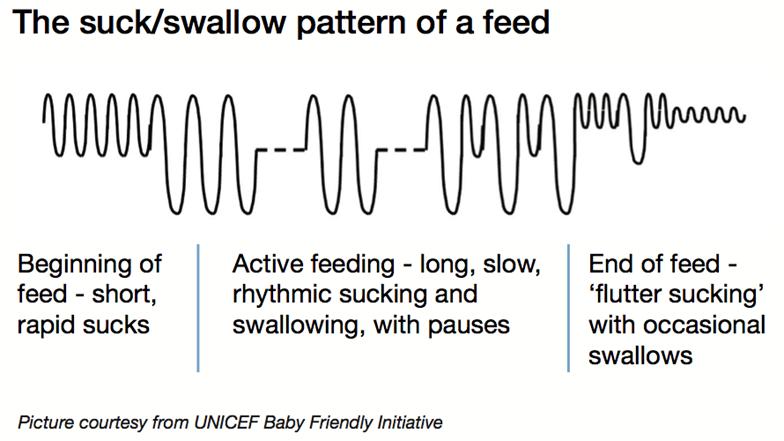
The baby will feed 8-12 times in a 24 hour period. Babies are generally calm and relaxed while feeding and content following the feed. After initial rapid sucks the baby will take rhythmic sucks. Swallows may be less audible until a mother’s milk comes, approximately Day 3-4 following birth. The length of each feed will vary but generally baby will feed between 5-40 minutes. Both breasts are offered. The baby’s urine and stooling pattern appropriate to age. The baby has a normal skin tone with no signs of jaundice.
Denise is an experienced Midwifery clinician, educator and researcher. Denise and her colleagues in UCD School of Nursing, Midwifery and Health Systems have recently completed a national study exploring the knowledge, attitudes and practices of GPs, GPNs and GP trainees in relation to breastfeeding. This research is in collaboration with the HSE.
This article presents an overview of the importance of breastfeeding for women, infants, children and their families; in addition to some practical supports and advice to assist the pharmacist support breastfeeding mothers in the early days and weeks following birth.
The World Health Organisation (WHO) recommends that all infants are exclusively breasfed for the first six months of life and breastfeeding is continued with the introduction of complementary foods until two years or beyond (WHO, 2023).
Breastfeeding rates are low in Ireland in comparison to International standards. The HSE/ HPO (2024) Perinatal Statistics Report describes some fluctuations to breastfeeding rates according to county in Ireland. Higher breastfeeding rates are reported in Cork, Kerry and Kilkenny, while lower breastfeeding rates <35% are reported in Louth. Maternal age influences breastfeeding choice with higher breastfeeding rates noted among mothers in the 35-39 year age group.
Research has identified the importance of breastfeeding and the risks of not breastfeeding. Infant benefits include less overweight and obesity, less asthma and allergy (Azad et al. 2020), reduced incidence of Type
Written by Denise McGuinness, Assistant Professor/Lecturer in Midwifery
at the School of Nursing,
Midwifery
and Health Systems, University College Dublin
2 diabetes (Horta et al.2015) and improved cognition/IQ (McGowan and Bland, 2023). Exclusive breastfeeding for 90+ days is associated with reduced childhood morbidity (Murphy et al. 2023).
Maternal benefits include the protective effect of breastfeeding against breast cancer (Stordal, 2022) and ovarian cancer, reducing the risk of type 2 diabetes, hypertension, cardiovascular disease (Nguyen et al. 2019., Rajaei et al 2019) and osteoporosis. Breastfeeding beyond the period of lactation contributes significantly to improved health outcomes for both mother and child (Victora et al. 2016)
The cost of not breastfeeding is high. The Lancet series on breastfeeding advised that >800,000 child deaths globally were attributed to not breastfeeding according to the WHO recommendations (Victora et al. 2016).
The knowledge, attitudes and practices in relation to breastfeeding and lactation of the GP, Public Health Nurse, Dietitian and Pharmacist can greatly enhance the support offered presently to breastfeeding families in the community (Walsh et al. 2023; Brown 2016; Doherty et al. 2020).
What is the International Code of Marketing of Breastmilk substitutes?
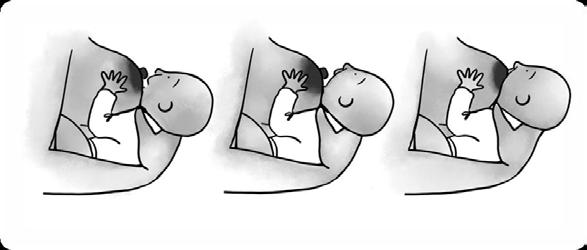
What is “a good latch” for breastfeeding?
The key principles are as follows-
The International Code of Marketing of breastmilk substitutes is a set of recommendations developed to protect and support breastfeeding which in turn will stop inappropriate marketing of breastmilk substitutes. The code covers commercial infant formula milks, bottles and teats. The aim of the code is to provide safe nutrition for infants and young children. Further information is available here: https://assets.hse.ie/media/ documents/ncr/policy-breastmilksubstitutes-marketing.pdf
o CLOSE- The baby is held close
o HEAD FREE- tilt back, chin leading
2
the feed. After initial rapid sucks the baby will take deep rhythmic sucks. Swallows may be less audible until a mother’s milk comes, approximately Day 3-4 following birth. The length of each feed will vary but generally baby will feed between 5-40 minutes. Both breasts are offered. The baby’s urine and stooling pattern is appropriate to age. The baby has a normal skin tone with no signs of jaundice.
What is “a good latch” for breastfeeding?
The key principles are as follows-
o CLOSE- The baby is held close
What are the signs that a newborn infant is feeding well?
o HEAD FREE- tilt back, chin leading
o IN-LINE- head and neck (alignment)
o IN-LINE- head and neck (alignment)
o NOSE- opposite the nipple
The baby will feed 8-12 times in a 24 hour period. Babies are generally calm and relaxed while feeding and content following
o NOSE- opposite the nipple
What is the difference between full breasts and engorged breasts?
Reverse pressure softening technique
Baby Focus
It is normal for breastfeeding mothers to feel a degree of fullness between days 3-5 following birth, as a full milk supply is established. The breastfeeding mother should continue to feed the baby responsively, 8-12 times during a 24 hour period.
Breasts are hot, hard, painful and shiny in appearance
Suppression
of lactation following infant loss
The milk flows easily
The milk does not flow easily
The mother will not have a high temperature The mother may have a raised temperature
The baby may have difficulty latching to the breast
Anti-inflammatory pain relief may be indicated
Treatment for engorgement
What is the difference between full breasts and engorged breasts?
It is normal for breastfeeding mothers to feel a degree of fullness between days 3-5 following birth, as a full milk supply is established. The breastfeeding mother should continue to feed the baby responsively, 8-12 times during a 24 hour period.
Treatment for engorgement
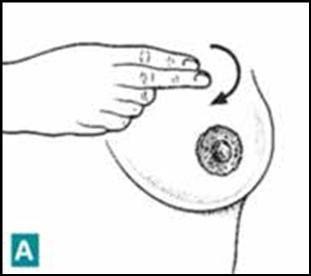
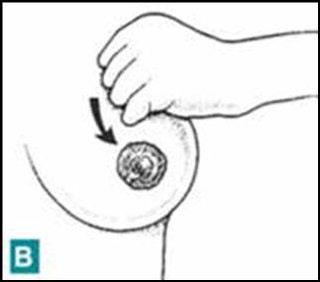
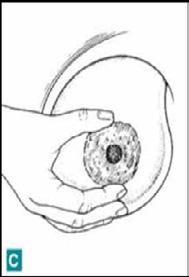
Apply cold compresses to the breast. Hand express to release milk. A technique called 'reverse pressure softening' is also supportive. Reverse pressure softening allows the mother to move excess fluid away from the areola and enable the baby to latch. Here is information on reverse pressure softening that the mother can work with.
• Ensure correct position and attachment at the breast, with effective feeding.
• Continue to breastfeed as normal.
Apply cold compresses to the breast. Hand express to release milk. A technique called reverse pressure softening is also supportive. Reverse pressure softening allows the mother to move excess fluid away from the areola and enable the baby to latch. Here is information on reverse pressure softening that the mother can work with.
• Place the thumb on the edge of the areola at the 12 O’ Clock position.
• Place the 2nd and 3rd fingers opposite at the 6 O’ Clock position.
3
• The hand forms a C Shape. Compress and release and repeat the process.
• The position of the fingers can be rotated around the breast.
• Move to the 2nd breast, gentle massage, compress and release.
• Apply ice/cold compresses.
• Avoid aggressive massage of the breast as this may worsen symptoms.
• Anti-inflammatory medication/ pain relief as indicated.
If symptoms have not subsided in 24 hours, or symptoms deteriorate rapidly, advise the mother to seek a medical review. Antibiotics will be indicated. A mother with infective mastitis will experience flu like symptoms, a high temperature of 38.3C and will feel generally unwell.
How to teach a mother hand expression.
The following information will support a bereaved mother following infant loss i.e. stillbirth, if the mother wishes to suppress lactation. Some mothers may choose to continue expressing breastmilk and donate their breastmilk to a human milk bank.
• Wear a support bra.
• Apply cold compresses or ice packs to the breasts
• Do not stimulate the breasts.
• Analgesia and anti-inflammatory medication as indicated.
• Hand express a small amount of milk for comfort, if the breasts are very painful.
• Do not use a breast pump.
• Medication is available on prescription to suppress lactation.
• If a bereaved mother was expressing milk regularly with an electric breast pump, for example, a sick or premature infant, it will be important to advise the mother to reduce her milk supply slowly. The mother can reduce the duration of pumping and number of times to pump in a 24hr period, gradually over a few days.
How to teach a mother hand expression.
Further information is available here-https://www2.hse.ie/ conditions/mastitis/
Hand washing before starting
Here is further information from the HSE https://www.youtube.com/ watch?v=bnIY2BqshCE
What is mastitis and what advice can I offer to a breastfeeding mother with symptoms of mastitis?
• Gentle massage of both breasts
The Public Health Nurse
• Gentle massage of both breasts
HSE (2022)
• Place the thumb on the edge of the areola at the 12 O’ Clock position.
• Place the thumb on the edge of the areola at the 12 O’ Clock position.
Mastitis is an inflammation of the breast. It can occur in one or both breasts. Conservative measures used initially are -
La Leche league Cuidiu
• Place the 2nd and 3rd fingers opposite at the 6 O’ Clock position.
• Place the 2nd and 3rd fingers opposite at the 6 O’ Clock position.
Friends of Breastfeeding
• The hand forms a C Shape. Compress and release and repeat the process.
Yes. The UCD Professional Certificate in Breastfeeding and Lactation is open to all healthcare professionals registered with a professional body. It is a blended learning programme. Further information available here: https://hub.ucd.ie/usis/!W_ HU_MENU.P_PUBLISH?p_ tag=PROG&MAJR=X946
• The hand forms a C Shape. Compress and release and repeat the process.
• The position of the fingers can be rotated around the breast.
International Board Certified Lactation Consultant (IBCLC)
• The position of the fingers can be rotated around the breast.
References available on request
• Move to the 2nd breast, gentle massage, compress and release.
• Move to the 2nd breast, gentle massage, compress and release.
HSE (2022) (HSE, 2022)
2022)
(HSE, 2022)
to teach a mother hand expression.
(HSE,
Colostrum
Colostrum
Baby Focus
A Softer Touch – Pharmacy Guide to Baby Skincare
Babies are a customers most prized possession, and therefore any signs of them being unwell can be worrying – and their concern is not helped by the alarmist information that can be found on the internet. One of the most important things pharmacy teams can do is provide reassurance.
Eczema
Atopic eczema is a very common skin condition, affecting one in five children. Atopic dermatitis is the most common form of eczema affecting young children. For most children affected, the disease is mild. However, often those who have seemingly outgrown the condition will continue to have lifelong sensitive skin and may have recurrences of eczema following long symptom-free spells.
An intense itch is the major symptom of atopic eczema. Scratching only provides momentary relief, and leads to more itching (the itch-scratch cycle). Scratching worsens eczema and can make the skin more vulnerable to infection. The intense itch is very uncomfortable, can disrupt sleep and negatively impact on the child’s quality of life, as well as that of his/her parents and the wider family. Some children with more pronounced eczema can also experience social embarrassment due to the visibility of their condition.
In infancy, the first noticeable signs of atopic eczema may be skin dryness and roughness, but other symptoms (e.g. red itchy skin which can affect the cheeks and forehead, and/or the trunk and outer aspects of arms and legs) do not usually occur before two months of age.
In older children, from about 1-2 years onwards, atopic eczema is most often seen on the inner sides of the arms at the elbow creases, behind the knees, and on the face and neck.
Emollients can be used for daily use on dry skin – including bath soap substitutes that are free of sodium lauryl sulphate; topical corticosteroids during flareups. Advise parents to try and encourage their child not to scratch and help them avoid triggers.
Recommend a GP if you notice very red and weepy eczema with small blisters, as this could signal an infection. Similarly, if the skin is cracked or the problem is persistent or worsening.
Cradle Cap
Cradle cap is the name given to the yellowish, greasy scaly patches that appear on the scalp of young babies. It is a very common, harmless condition that does not usually itch or cause any discomfort to the baby.
Cradle cap usually begins in babies during their first three months and tends to last a few weeks or months. It usually clears up by the time the child is two years old, although in rare cases children can have cradle cap for a lot longer.
The cause of cradle cap is not clear, although it may be linked
to overactive sebaceous glands, which are glands in the skin that produce an oily substance called sebum.
Pharmacists can advise that cradle cap requires no specific treatment, although gently washing the baby's hair and scalp may prevent a build-up of the scale.
Chickenpox
Also known as varicella zoster virus, chickenpox is often seen in children under eight years of age. Symptoms include an itchy rash (mainly on the chest and back) comprising of spots that resemble blisters. Discomfort is notably worse if the skin is too warm.
Chickenpox tends to last between 7-21 days. Paracetamol should be given in the case of fever and cooler baths. Calamine lotion is the traditional option for topical use but is drying in nature. Newer cooling gels/sprays are available to reduce itching and limit any potential scarring.
Advise parents to keep their child away from others –especially pregnant women or immunosuppressed individuals. Ibuprofen is no longer advocated as it can make the lesions worse.
Recommend a GP if the child appears to be very unwell.
Prickly heat
Prickly heat is a skin irritation that occurs when the sweat glands
are blocked. Babies and children are more at risk because of their under-developed sweat glands.
Symptoms include a rash made up of tiny spots, bumps or sometimes blisters, surrounded by a patch of red skin. The symptoms can be accompanied by mild swelling, itching, and a stinging or prickling sensation. It is commonly found on the face, back, neck, chest and thighs.
Treatments include hydrocortisone cream (but not to the face), calamine lotion, antihistamines (where appropriate); wearing cotton clothing, avoiding excessive heat and humidity, and keeping skin cool.
Advise parents to call a health professional urgently if a rash does not fade when the skin is pressed with the side of a glass.
Nappy rash
Dermatitis on babies’ bottoms is very common, and can be very painful. It is usually due to occlusion and irritation from dirty or wet nappies. Less commonly it can be caused by candidiasis or psoriasis. Rarely it can be caused by irritation or allergies to products used to clean the area.
When parents present to the pharmacy for advice for nappy rash, good recommendations would include the use of a barrier cream, use of hypoallergenic water wipes, nappy-free time, and more frequent nappy changes. If these measures fail to improve the nappy rash, a topical antifungal agent such as miconazole cream could be considered, with early review by a doctor if this fails to resolve the dermatitis.
Facial rashes in newborn babies
Babies can develop multiple red/ white spots, with an appearance of mild ‘acne’ (neonatal cephalic pustulosis) in the first month that is harmless and goes away without treatment. Small white spots on the nose, forehead, or cheeks (called sebaceous hyperplasia) resolve over a few weeks.
When parents present to the pharmacy with these issues, the best advice is to await spontaneous resolution over the coming weeks.
E45 knows how to support skin
E45 cream is used for treating dry skin conditions such as dry/flaky skin, eczema, dry psoriasis, dermatitis and sunburn. Suitable for the whole family. Apply 2-3 times daily for best results*.
Baby Focus
Understanding Gut Health in Babies and Children: A Pharmacist’s Perspective
Gut health in infants and young children is a critical aspect of their overall well-being. The gastrointestinal (GI) system plays a vital role in nutrient absorption, immune function, and maintaining body homeostasis. Among the common concerns parents face regarding their children’s gut health is diarrhoea, which can result from various causes, including infections, dietary factors, and even emotional distress. A day doesn’t go by where Pharmacists do not encounter a worried parent with an unwell baby or child with symptoms of acute diarrhoea or upset gut. Pharmacists are in a unique position to offer valuable insights into managing these conditions, providing counseling on over-the-counter (OTC) therapies, probiotics, and addressing colic as well as reassurance and direction if the child needs to be referred.
Infections
Infections are among the most common causes of diarrhoea in children. Viruses like Norovirus and rotavirus are notorious for causing gastroenteritis, leading to fluid loss and discomfort. Norovirus is highly contagious and often spreads through contaminated food or surfaces, making it particularly relevant in settings such as creches or day-care. Bacterial infections—while less common— can also result from consuming contaminated food or water, with pathogens like E. coli and Salmonella being notable culprits.
Non-Infectious Causes
Apart from infections, diarrhoea can also be prompted by noninfectious factors. For instance, food allergies or intolerances can adversely affect gut health. Lactose intolerance, due to insufficient lactase enzyme production, is particularly common and can lead to abdominal pain and diarrhoea upon consuming dairy products.
Written by Tomas Conefrey, Conefrey's CarePlus Pharmacy
The Role of Probiotics
Probiotics have gained attention in recent years for their potential to support gut health, especially in children. These live microorganisms can positively influence the gut microbiota, which is essential for digestion and immune function.
Research indicates that certain strains of probiotics may help reduce the duration and severity of diarrhoea caused by infections, including rotavirus. In cases of antibiotic-associated diarrhoea, probiotics can help restore the balance of gut flora compromised by antibiotic therapy. Pharmacists should consider advising parents on the use of age-appropriate probiotic supplements during episodes of diarrhoea or following antibiotic treatment to promote a healthier gut environment.
Choosing the Right Probiotics
When recommending probiotics, it is essential to select products that have been clinically validated with specific strains shown to provide therapeutic benefits. A product available in Ireland is DiaCare sachets which contains a strain called Lactobacillus rhamnosus which has demonstrated efficacy in paediatric populations.
Over-the-Counter Therapies for Diarrhoea
Pharmacists are often the first point of contact for parents seeking advice on managing diarrhoea. OTC therapies can be effective tools in addressing symptoms and preventing dehydration. If the child is less than 6 months old and symptoms
have been present for more than 24 hours in duration they should be referred immediately and oral rehydration salts should be provided as soon as possible. Likewise if the child is older than six months and has had symptoms for longer than 48 hours in duration I would treat that as a red-flag symptom and refer immediately.
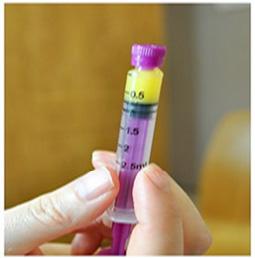
The cornerstone of diarrhea management is rehydration. O.R.S Hydration Tablets are specially formulated to replace lost fluids and electrolytes. Simple solutions can be made at home with water, salt, and sugar, but commercially available O.R.S Hydration Tablets provide an effective means for rehydration. Some examples of products available in Ireland are Dioralyte sachets (suitable for adults and children over three months, Electrosal sachets (adults and children over two years) and O.R.S Hydration Tablets branded kids electrolyte tablets (children over three years). As mentioned previously DiaCare sachets contain a probiotic and electrolytes and can be used for adults and children older than three years. Frequent, small sips of refrigerated solutions may be more palatable and less likely to be regurgitated than giving a large volume quickly. It may be helpful to provide an oral syringe for ease of administration or alternatively give the solution on a teaspoon or medicine spoon or in a feeding bottle with a low flow teat. Pharmacists should educate parents on recognising the signs of dehydration and the importance of maintaining hydration during a diarrhoeal episode.
Anti-Diarrheal Medications
While anti-diarrheal medications like loperamide are available for adults they are not available in liquid formulation in Ireland,
instead as tablet and capsule presentations. Most pediatric patients, especially those under the age of two, should not use these medications without consulting a healthcare professional. The primary objective in managing diarrhea should be rehydration and protecting the child from dehydration.
Addressing Colic Colic, characterised by excessive crying and apparent discomfort in infants, can also impact gut health. Although the exact cause remains unclear, it may be related to GI immaturity or food sensitivities. Pharmacists can offer guidance about soothing strategies or dietary adjustments that may alleviate symptoms. For example, some parents have found success using specific probiotic strains that may decrease colic symptoms. We stock BioGaia probiotic drops and have received feedback from parents of its effectiveness especially when other products like Infacol are not available.
Colief Infant Drops contain lactase enzymes and treat a temporary lactose intolerance which means the baby is unable to break down lactose which causes colic.
Conclusion
The management of gut health in babies and children, particularly in relation to diarrhoea, is a multifaceted challenge for caregivers. As pharmacists, leveraging our expertise to provide education, recommend appropriate OTC therapies, and highlight the benefits of probiotics can significantly contribute to improving pediatric health outcomes. Ultimately, fostering a collaborative relationship with parents empowers them to make informed decisions for their children’s health. By prioritising gut health from a young age, we can promote a lifetime of well-being.
Say goodbye fussy tummy, hello kisses and cuddles.
Backed by 30 years of scientific research and trusted by generations of parents, BioGaia Protectis® BABY is a probiotic supplement for fussy tummies. Protect your family’s baby’s everyday life with BioGaia Protectis® Baby Drops. Available in pharmacies and health stores nationwide.
Baby Focus
Oral Health in Infants and Children
As a Mum of two children aged 6 and 8, oral healthcare is of paramount importance. For my children to understand the importance of healthy teeth is valuable knowledge they are learning for all their lives. Away from the dental practice I have been able to spend time with my children’s other classmates at school to educate on the same topic. The kids are always super responsive to the facts and learnings I teach. Free toothbrushes, toothpaste also helps in getting their attention.
Tooth decay is a common disease affecting up to 90% of children worldwide and remains the single most common disease of childhood. It impacts on quality of life and can be the reason for thousands of children needing dental treatment under general anaesthetic in hospital. However, it can easily be prevented by good oral health habits such as brushing teeth regularly with toothpaste that contains fluoride and cutting down on sugary food and drinks. If left undisturbed, the unhelpful bacteria in the mouth- which cause decaymultiply and stick to the surfaces of teeth producing a sticky film. Then when sugar is eaten or drank, the bad bacteria in the film make acid resulting in tooth decay. Promoting oral health in the early years is essential to protecting young teeth and establishing good habits. Children need to form good
Written by Dr Madelaine Jackson, Dentist, New Life Teeth @DoctorMadelaine
Onset of dental caries
By the age of 12 months, infants begin to establish an oral environment that places them at risk of dental caries. Breastfeeding up to 12 months of age is associated with a decreased risk of tooth decay, whilst prolonged bottle feeding, can provide an oral environment ideal for decay producing bacteria to proliferate. Streptococcus mutans, implicated as the principal bacteria responsible for the initiation of dental caries, is acquired by infants primarily from their mother.
Fluoride
oral habits from an early age to help avoid tooth decay.
There are three main themes in good dental health:
• Limit frequency of and keep sugary and acidic food and drinks to mealtimes
• Brush teeth at least twice a day with a fluoride toothpaste
• Visit the dentist regularly
If appropriate measures are applied early enough, it is possible to prevent dental disease.
Dental caries
Enamel is made up of calcium and phosphorus minerals. When the mouth becomes too acidic, it begins to pull these minerals out of the teeth. This process is called ‘demineralisation’. Tooth demineralisation is caused by acids excreted by bacteria as a product of their metabolism of sugar or acidic foods. A diet high in sugars supports an acidic environment promoting demineralisation of dental enamel; if this continues deeper into the tooth it can eventually lead to a cavity (dental caries).
Saliva acts as a natural buffer; it contains calcium and phosphorus and bathes our teeth to replace these lost minerals. This process is called ‘remineralisation’. Early cavities that are just beginning to form can be reversed through remineralisation.
Fluoride acts to bring calcium and phosphate ions together, making the teeth resistant to demineralisation, at the same time enhancing enamel remineralisation.
Topical fluoride in toothpastes, mouthwash and professionally applied varnish are highly effective in increasing resistance of children’s teeth to dental caries.
Special care needs
Children with special care may have special dental needs. They have a higher susceptibility to gum disease, dental caries, and oral trauma. Extra care and support must be taken to prevent dental caries, infection, and other problems among these children.
Promoting good oral care at home
Oral health and nutrition are essential for the proper growth and development of children. Parents and caregivers often receive little guidance about oral health care and prevention, including fluoride and nutrition.
To promote good oral health in infancy caregivers should provide the correct amounts of fluoride alongside a healthy diet. It important to limit amount and frequency of sugary foods and drinks and avoid sugar-containing foods and drinks at bedtime when saliva flow is reduced, and buffering capacity is reduced.
To reduce the incidence of dental caries, parents and other
caregivers should be educated about proper feeding practices during infancy and the preschool years. Preventative oral strategies and education should begin with the mother before birth and continue throughout infancy and childhood. Support mothers who breastfeed, to do so exclusively for the first 6 months, breastfed babies experience less tooth decay. For parents and carers feeding babies by bottle only breastmilk, formula or cooled boiled water should be given in a bottle. Babies should be introduced to drinking from a free flow cup at 6 months of age and bottles discouraged from 1 year. Specific recommendations include elimination of a bottle in bed, early use of soft bristled toothbrushes with parental supervision and limitation of sugar after the teeth have been brushed.
Toothbrushing should begin when the first tooth erupts, with a soft bristled toothbrush and a tiny amount of fluoride toothpaste. Brush last thing at night and one other time of day. Children 3-6 years should apply a pea size amount. Toothbrushing should be supervised until at least 7 years of age. Each child should attend the dentist by no later than 12 months of age.
In early infancy 0-6 months, although the teeth have yet to erupt, the teeth and jaw are developing rapidly. Thumb sucking and pacifiers may cause problems with tooth alignment and jaw development at this stage.
Future and new possibilities include xylitol wipes, antibacterial against streptococcus mutans, tested for cleaning babies’ gums and erupting teeth, show some promise as an intervention in preventing caries.
Finally, there are still some inconsistencies and grey areas to be resolved in defining, labelling, and marketing ‘no added sugar’ food and drinks, containing concentrated amounts of natural and free sugars that adversely impact children’s’ teeth.
Baby Focus
Pregnancy and Conception Care in Pharmacy
Pre-Pregnancy & Fertility
Just over a third of couples will conceive in the first month of trying, while for others it can be a much longer road, with factors such as age, general health and reproductive health affecting how long it takes.
Around 1 in 6 couples in Ireland may experience issues with fertility.
The growing demands of a modern lifestyle are having a significant impact on our nutritional health. Stress, anxiety, lack of sleep, dieting and poor nutrition all impact the bodies ability to absorb the nutrition needed to optimise reproductive health.
Improving nutrition and lifestyle for as little as three months before trying to conceive can make a noticeable difference to both genders as both the male and female reproductive systems need adequate nutritional support to contribute to sperm and egg quality.
Factors Affecting Fertility
Age: For women, the most fertile period is in their mid-twenties and fertility starts to decrease after the age of 35.For men, sperm is strongest in their mid-twenties and starts to decrease after the age of 40.
Smoking: Smoking can affect fertility in both men and women, it can affect the chances of conceiving for women and sperm quality in men.
Weight: A body mass index (BMI) of 30 or over is known to reduce fertility in men and women. While, for women, being underweight (BMI less than 18) can also affect ovulation.
Alcohol: For women planning to get pregnant, the HSE recommend the safest approach is not to drink alcohol at all. While for men drinking too much alcohol can affect the quality of sperm.
Stress: Stress can affect your relationship and cause a loss of sex drive. In severe cases, stress may also affect ovulation and sperm production.
Diet & Lifestyle: The HSE recommends all women begin taking folic acid at least 3 months before conception. There are number of other vitamins, minerals and amino acids that are known to be beneficial to the reproductive system, however it can be difficult to get all of these nutrients in
the diet in today’s busy world. This is where supplements can help, by providing extra support needed to support good pre-conception health.
How Do Fertility Supplements Work?
Supplements can help to correct nutritional deficiencies associated with the reproductive cycle by supplying the raw materials needed to support the reproductive system so it can function optimally.
For Women: Supplements can support the nutritional needs of the female reproductive system. Getting the environment right and developing good quality egg cells are key factors when trying for a baby.
Nutrients play an important role in the development of the egg, womb and the hormonal system. Each month, the reproductive and hormonal cycle develop an egg cell, prepare the womb and a myriad of other processes have to be performed to create the right fertile balance.
Egg quality can be enhanced if it is released into a healthy nutritious environment. Fostering a good diet and ensuring that you are taking the essential nutrients can positively effect the health of your eggs and subsequently the developing foetus.
For Men: Men have to produce between 40 and 300 million sperm cells to be fertile. This is an intensive process and the energy involved in creating these cells is significant. Getting the environment right and developing good quality sperm cells are key factors when trying for a baby. A deficiency in any nutrient may have an impact on male fertility. Improvements to both sperm quality and quantity can be made in as little as 3 months.
Key Nutrients for Conception:
Look for a combination of Folic Acid, Vitamins, Minerals, Amino Acids, CO-Q10 & Omega 3 DHA.
Folic acid contributes to normal maternal tissue growth during pregnancy. The HSE recommends all women begin taking 400ug folic acid at least 3 months before conception.
Minerals including Calcium, Magnesium, Iron, Zinc, Copper (gluconate), Manganese, Selenium, Chromium, Molybdenum, Iodine, Boron, are essential for both male and female reproductive health. Minerals work together creating a synergy. Multiple mineral deficiencies are common amongst many women particularly those who have been using hormonal contraception.
Vitamins are vital for the production of energy in the body. Sufficient energy production is required for reproductive health. Key reproductive vitamins are: Beta Carotene, Vitamin B1 (Thiamin), Vitamin B2 (Riboflavin), Vitamin B3 (Niacin), Vitamin B5 (pantothenic acid), Vitamin B6 (Pyridoxine), Folic acid, Inositol, Biotin, Vitamin C, Vitamin D, Vitamin E, Vitamin K1.
Amino acids are the building blocks of proteins necessary for growth and repair in the body. Look for: L'Arginine, L'Carnitine, L'Citruline, L'Glutamine, N-AcetylL-cysteine, Glycine, Taurine.
Antioxidants such as Co-Q10 are important for reproduction. CoQ10 is a powerful antioxidant and energy power house. It is present in the membrane of almost every cell in the body.
Omega 3 DHA contributes to the maintenance of normal brain function and vision. During pregnancy, essential fatty acids are important to the baby’s brain and eye development.
Pharmacy teams have the unique role as accessible healthcare providers to optimise preconception health, such as in screening tobacco and alcohol use, in offering advice on preconception risk factors and current medication use.
Table One: Key Nutrients in Preconception and Pregnancy Care – Pharmacy Guidance
Nutrient
Folic Acid (400mcg
Vitamin D Iron
Iodine
Omega-3 DHA
Co-Enzyme Q10
B Vitamins (B6, B12, Folate)
Selenium
Amino Acids (e.g. L-Carnitine, L-Arginine)
Role in Fertility & Pregnancy
Supports neural tube development and normal maternal tissue growth
Supports bone development, immune function and maternal health
Supports oxygen transport and prevents maternal anaemia
Contributes to normal fertility and reproductive health in both men and women
Essential for fetal brain and nervous system development
Supports fetal brain and eye development
Supports cellular energy production and egg quality
Support hormonal balance, energy metabolism and fetal development
Antioxidant role and supports thyroid and reproductive function
Support reproductive cell development and sperm production
Pharmacy Counselling Points
Recommend at least 3 months pre-conception and until end of first trimester (HSE guidance)
Advise 10mcg daily throughout pregnancy and breastfeeding
Assess dietary intake and risk of deficiency, particularly in women with fatigue
Important for sperm quality and ovulation support
Often overlooked; ensure adequate intake via diet or supplements
Particularly beneficial during preconception and pregnancy
May be considered in preconception support, especially in older patients
B6 may also help with nausea and fatigue in early pregnancy
Useful in patients with poor diet or thyroid concerns
More relevant in male fertility support discussions
Heartburn and Indigestion
Many women suffer from both heartburn (acid reflux) and indigestion during pregnancy and it tends to become more common as the pregnancy progresses. In fact, by the third trimester nearly three quarters of pregnant women can suffer from heartburn.
There are two main reasons why heartburn and, to a lesser extent, indigestion are common at this time:
1. The surge in the hormone progesterone causes muscles to relax. This includes the sphincter (ring of muscle) at the entrance to the stomach. When this relaxes, stomach acids are able to travel back up into the oesophagus (food pipe) causing heartburn.
2. During the latter stages of pregnancy symptoms can also be caused by the baby physically putting pressure on the woman's digestive tract. Although harmless to the baby, heartburn and indigestion can be painful and uncomfortable for expectant mothers and pharmacists can advise patients that eating a healthy diet and sitting and/or sleeping in a more upright position can help ease heartburn and indigestion.
Fatigue
Fatigue is an early sign of pregnancy which nearly all women experience in the first trimester that can begin weeks after conception and implantation. It typically gets better around the start of the second trimester and returns in the third trimester, though it varies from pregnancy to pregnancy.
A number of tips to give expectant mums include:
1. Get enough rest. Advising a patient to start by going to bed earlier, and take naps during the day when they can. Even a 15-minute catnap can make a difference.
2. Stay hydrated. Cutting back on caffeine, and making sure plenty of water is consumed. If frequent urination is keeping a patient up at night, suggest drinking less water a few hours before bedtime and making up for it during the day.
3. Exercising regularly. Getting at least 20-30 minutes of moderate activity, such as walking can also help a patient feel less fatigued and that they have more energy.
Morning Sickness
Despite its name, can happen any time of day or night. It’s also extremely common affecting over 80% of mums-to-be.
Although it’s not known exactly what causes expectant mums to feel nauseous, it’s most likely that the feelings of nausea are all down to hormones, particularly Beta hCG, although it is thought that it can be due to a lack of vitamin B6, too.
There are several techniques that although have not been scientifically proved to work, have been frequently noted as helping subside the nausea symptoms for pregnant women.
1. Eating little and often, 6 meals a day.
2. Avoiding food with lots of sugar or saturated fats – such as sweets, chocolate and red meat.
3. Avoiding “trigger” foods or smells that make a patient feel sick.
4. Trying food or drinks that contain ginger.
5. Wearing acupressure bands throughout the day.
Sciatica and Muscular Back Pain
As many as 98% women will suffer from muscular back pain at some
stage during their pregnancy. The pain is caused by the additional weight and changes in the body during pregnancy; hormonal changes can cause ligaments which support the spine to become loose, which puts more pressure on the lower back.
There are a number of suggestions pharmacists can make to alleviate symptoms:
1. Use a warm compress on the area where pain is being experienced.
2. Placing a pillow between the legs to better align the pelvis and take some pressure off the sciatic nerve.
3. Strengthen the core and reduce inflammation with pelvic tilts and kegel exercises.
4. Use a cold compress to provide cooling relief for back pain.
Medication taking whilst pregnant
As 50% of pregnancies are unplanned, a woman often discovers she is pregnant while already taking a medication and visits a pharmacy which is easily accessible, to enquire if she has harmed her baby by this action.
Whilst studies show there may be a lack of adequate information regarding use of certain medications during pregnancy,
it has been suggested that pharmacists should be able to integrate available information with their medication expertise, to make appropriate individual risk/ benefit decisions. This requires active engagement with pregnant women, rather than automatically referring them to their physician.
The trimester of the pregnancy often plays an important part in whether medications can be taken, for example some medicines can be dangerous to take in the first three months but safe in the second or third, or vice versa.
Current recommendations are that women should take 400mcg folic acid daily from before pregnancy until the end of the first trimester, and 10mcg vitamin D daily throughout pregnancy and while breastfeeding.
The role of folic acid in reducing the risk of neural tube defects and the value of vitamin D supplements in building bone formation in babies is well supported. Expectant mothers can therefore be reassured that it is not necessary to invest in expensive multivitamin supplements, and that eating a good balanced diet during pregnancy, along with folic acid and vitamin D supplements, should be all that is required to ensure the best possible health outcomes for both themselves and their unborn child.
How to protect your family during Tummy Bug Season
At certain times of the year, there is an increase in tummy bugs and viruses. While symptoms include nausea, diarrhoea and vomiting, the highly contagious norovirus is one of the most common stomach infections.
There is nothing worse than a vomiting bug or diarrhoea. In some cases, you can have a fever and muscle aches as well.
MyPro DiaCare is a solution, which is suitable for the whole family, from the age of 3 years.
MyPro DiaCare is a unique food supplement for Children and Adults su ering from diarrhoea, fever or other conditions which can cause loss of body fluids.
MyPro DiaCare is a scientifically balanced blend of glucose electrolyte, minerals and and GutFriendly Bacteria (Lactobacillus Rhamnosus GG).
Contains:
• Magnesium which contributes to electrolyte balance.
• Chloride which contributes to normal digestion by production of hydrochloric acid in the stomach.
• *Carbohydrate electrolyte solution which enhances the absorption of water during physical exercise
Choose MyPro DiaCare
MyPro DiaCare’s unique dual chambered sachet allows for two-in-one benefits:
1 Contains Electrolytes which tackles the problem of dehydration.
Oral rehydration therapy (ORT) is recommended as first-line therapy for both mildly and moderately dehydration.
2 Contains a Gut-Friendly Bacteria which helps to swiftly restore the gut to normal.
Probiotics act faster than bacteria: e ectively colonises the gut within 5-7 days, outnumbers pathogenic species. (National Institutes of Health O ce of Dietary Supplements).
Probiotics are more durable than bacteria: both in antibiotic environment and with gastric acid.
More about our Gut-Friendly Bacteria (Lactobacillus Rhamnosus GG)
• Clinical trials show people taking Lactobacillus Rhamnosus GG are protected against bacterial infections.
• Increased adherence of beneficial bacteria results in reduced diarrhoea-causing bacterial numbers in the GI tract. Therefore, Lactobacillus is e ective in both the treatment and prevention of diarrhoea.
• Lactobacillus Rhamnosus GG provides immune support in the gastrointestinal tract.
• Repopulates natural gut bacteria.
• Restores normal acidic pH of the stomach.
• The lactic acid facilitates other organic acids and bacteriocins to reduce counts of diarrhoea causing bacteria.
Recover Well This Tummy Bug Season
Electrolyte for hydration*
Electrolytes to rehydrate and replace essential minerals
Gut-Friendly Bacteria
Gut friendly bacteria to help restore balance in the digestive system
Suitable for the whole family from aged 3+
Now available in Orange and Berry flavours
*Carbohydrate electrolyte solution which enhances the absorption of water during physical exercise.
Suitable for Age 3+ years
MyPro DiaCare is a ZEON Healthcare Brand.
Uniphar hails TouchStore acquisition as “transformational” for pharmacy sector
Uniphar’s acquisition of Irish pharmacy software provider TouchStore represents a “transformational” investment in the future of community pharmacy, according to Ian Madden, Managing Director of Uniphar’s Supply Chain and Retail Division. Speaking following the announcement of the deal last month, Madden said the transaction reflects Uniphar’s long-term commitment to supporting pharmacy teams as their role within the healthcare system continues to expand.
Echoing these comments, Ger Cassidy, Managing Director of TouchStore, said the support of Uniphar would allow the business to continue to innovate while remaining closely aligned with the needs of Irish pharmacies. “Uniphar’s backing will help TouchStore to lead pharmacy technology innovation and allow us to provide our pharmacy customers with the support they need,” he said, adding that the partnership positions both organisations to respond to the rapidly evolving pharmacy landscape.
Under the terms of the deal, TouchStore will continue to operate as a distinct business, with its existing management and support teams in place and appropriate data segregation safeguards ensuring the continued confidence of Touchstore’s existing and future customers. Pharmacies retain full freedom of choice around systems and wholesalers. Uniphar has said there will be no forced system changes arising from the acquisition and no price increases linked to the deal, with existing relationship structures remaining in place.
The acquisition comes at a time when pharmacy teams are being
asked to deliver an increasing range of clinical services while managing growing operational demands. Uniphar, which through its new state of the art distribution facility is already investing significantly in supporting the Irish pharmacy community, said the deal is intended to strengthen the operational foundations that support pharmacies day to day, while allowing TouchStore to continue to develop software solutions tailored to the needs of independent community pharmacies.
Uniphar also expands distribution capacity
Alongside the TouchStore deal, Uniphar has recently invested in a new state of the art distribution facility in Dublin, reflecting its focus on long-term infrastructure that supports consistency and reliability of supply for community pharmacies. The expanded distribution capacity provides additional certainty for pharmacies operating in an increasingly demanding environment. With a high level of automation built into the facility, the investment is designed to improve service quality and reduce disruption across the pharmacy supply chain.
Madden said the combined investments will “transform our offering to Irish pharmacy teams with a range of technology-based solutions that will significantly reduce the non-clinical workload.”
He added that Uniphar’s overall objective is to provide pharmacies with the operational supports they need to grow their businesses sustainably.
These developments come at a time when the requirement for pharmacists to spend more time with customers is increasing. As community pharmacists expand their clinical role within the healthcare system, having dependable, efficient operational and supply processes in place will be critical to ensuring services can be delivered safely at scale.
As pharmacists prepare to take on expanded responsibilities, including the introduction of prescribing for eight common conditions from January 2026, the importance of robust operational supports that reduce nonclinical workloads is becoming more pronounced. Through its investment in TouchStore and its wider supply chain infrastructure, Uniphar is positioning itself to support pharmacy teams as
they adapt to these changes and respond to the evolving needs of customers and communities.
The acquisition builds on Uniphar’s long-established focus on investment in, and support of, the Irish community pharmacy sector. TouchStore has been a trusted provider of pharmacy technology solutions for over two decades and currently supports approximately 700 community pharmacies across Ireland, delivering dispensing and retail intelligence software designed to meet their operational needs.
TouchStore has built a strong reputation for its responsiveness to change within the pharmacy landscape, and this agility has helped pharmacy teams adapt quickly while reducing the risk of administrative errors. The company is also recognised for its continued investment in modern, innovative software infrastructure.
TouchStore’s platform automates key functions such as regulatory compliance, inventory management and pricing, helping pharmacies reduce manual processes and improve accuracy. Features including Claims Defender, which removes errors at the point of entry, bulk ordering tools based on previous dispensing data, and dedicated nursing home modules are designed to support pharmacies in managing increasingly complex workflows.
Uniphar plc CEO Ger Rabbette said the acquisition reflects the company’s founding purpose and its ongoing commitment to community pharmacy. “Uniphar was founded by pharmacists to support community pharmacies,” he said. “Supporting the community pharmacy sector in playing its critical role in the Irish healthcare system is our core foundation and remains as true today as it did 60 years ago.”
Rabbette continued, “the acquisition will allow pharmacy teams to focus on what they do best, spending time with and caring for the communities they serve”.
Left to Right Ger Cassidy, Managing Director, TouchStore and Ian Madden, Managing Director, Uniphar, Supply Chain and Retail Division
asthma in Ireland. Previous estimates grossly under-estimated the number of people with asthma in Ireland. The annual economic burden of asthma is a staggering €472million. 2017 saw 2.4 million GP and 625,000 practice nurse asthma consultations respectively, 421,000 specialist visits, 133,000 emergency department visits and 8,000 hospital admissions. There was one attendance at emergency departments every 4 minutes by a person with asthma.
Asthma Management in Adults and Young People
The exact cause of asthma remains unknown. However, risk factors such as smoking, obesity, family history and atopy all increase the risk of developing asthma (Shamanthi et al, 2025). There are numerous triggers which can cause symptoms and these differ from person to person (Figure 1).
Asthma is a heterogeneous disease, usually characterised by chronic airway inflammation defined by the history of respiratory symptoms such as wheeze, shortness of breath, chest tightness and cough that vary over time and in intensity, together with variable expiratory airflow limitation (GINA, 2025).
Wintertime can be particularly challenging for people with asthma due to cold air and common viruses being common triggers. As Spring emerges, this can also be a challenging time as various tree pollen levels start to increase. Some people with asthma may need to increase their controller medication over the winter months to help manage their symptoms.
Symptoms
The clinical features of asthma (wheeze, cough, shortness of breath and chest tightness) result from changes in the airways as a result of abnormal sensitivity called bronchial hyperreactivity. The muscle of the bronchial walls becomes hypertrophied causing occlusion of the airway resulting in contraction of the muscle causing bronchospasm. Secondly, in the mucosal, submucosa and smooth muscle layers of the bronchi and bronchioles inflammatory cells infiltrate. Eosinophils, neutrophils, macrophages, mast cells and plasma cells are found in varying numbers. All of these cells contain chemical mediators that produce the “asthmatic response”. With the increase in secretions, plugging of the smaller airways result. Asthma is a condition where not only bronchospasm occurs but muscle constriction, mucosal swelling and an increase in secretions in the lumen in the airways (Figure 2).
Asthma affects over 450,000 people in Ireland. 7.1% of Irish adults have asthma with 890,000 likely to experience it sometime in their lifetime. In 2024, two people lost their lives from asthma in Ireland every week despite advances in the knowledge of the mechanisms of asthma and pharmacology. In 2019, the Asthma Society of Ireland published Easing the Economic Burden of Asthma –The Impact of a Universal Asthma Self-Management Programme. The report, for the first time,
published confirmation of the enormity of the burden of asthma and contains, up-to-date figures on the number of people affected by asthma in Ireland. Previous estimates grossly under-estimated the number of people with asthma in Ireland. The annual economic burden of asthma is a staggering ¤472million. 2017 saw 2.4 million GP and 625,000 practice nurse asthma consultations respectively, 421,000 specialist visits, 133,000 emergency department visits and 8,000 hospital admissions. There
was one attendance at emergency departments every 4 minutes by a person with asthma.
The exact cause of asthma remains unknown. However, risk factors such as smoking, obesity, family history and atopy all increase the risk of developing asthma (Shamanthi et al, 2025). There are numerous triggers which can cause symptoms and these differ from person to person (Figure 1).
Wintertime can be particularly challenging for people with asthma
Written by Ruth Morrow, Respiratory Nurse Specialist, Asthma Society of Ireland
due to cold air and common viruses being common triggers. As Spring emerges, this can also be a challenging time as various tree pollen levels start to increase. Some people with asthma may need to increase their controller medication over the winter months to help manage their symptoms.
Symptoms
The clinical features of asthma (wheeze, cough, shortness of breath and chest tightness) result from changes in the airways as a result of abnormal sensitivity called bronchial hyper-reactivity. The muscle of the bronchial walls becomes hypertrophied causing occlusion of the airway resulting in contraction of the muscle causing bronchospasm. Secondly, in the mucosal, submucosa and smooth muscle layers of the bronchi and bronchioles inflammatory cells infiltrate. Eosinophils, neutrophils, macrophages, mast cells and plasma cells are found in varying numbers. All of these cells contain chemical mediators that produce the “asthmatic response”. With the increase in secretions, plugging of the smaller airways result. Asthma is a condition where not only bronchospasm occurs but muscle constriction, mucosal swelling and an increase in secretions in the lumen in the airways (Figure 2).
Figure 1: Asthma triggers
Figure 1: Asthma triggers
Figure 2: Pathology of asthma
Figure 2: Pathology of asthma
32 Asthma
Management of stable asthma
The goals of asthma management are:
1. Symptom control: to achieve good control of symptoms and maintain normal activity levels
2. Risk reduction: to minimise future risk of exacerbations, fixed airflow limitation and medication side-effects (GINA 2025)
Assessment of asthma control involves assessing symptoms over the previous 4 weeks using the GINA Assessment of Asthma Control, the Asthma Control Test (ACT) and assessing risk factors for poor outcomes. Treatment issues should also be addressed at every visit and should include:
• Assessment of the patient’s symptoms, medication usage and impact of asthma on daily life
• Review of inhaler technique and adherence
• Asking about side-effects
• Reviewing and updating the patient’s written asthma action plan
• Exploring the patient’s attitudes and goals for their asthma
The treatment and management of asthma should incorporate the following elements:
• Education on the disease process
• Management of trigger factors
• Medication management – mode of action, inhaler technique, adverse events and adherence
• Asthma Action Plan
• Management of acute flare-ups of asthma
The goal of asthma management is for the patient to be optimally controlled on the minimum amount of medication. GINA (2025) provides health care professionals with a management approach based on control using a step wise approach. This assists health professionals with the titration of medications using a step down or step up approach in attempt to achieve this goal.
The cornerstone of asthma treatment is inhaled therapy as medications are directly targeted at the airways and therefore, are more effective. This also limits the amount of systemic absorption and reduces adverse events. Patients should be commenced on the appropriate step of the treatment guidelines which is dependent on the severity of their
symptoms (GINA, 2025). Based on the severity of their symptoms at presentation, the patient is assigned to one of five treatment steps. Patients may move up or down the steps depending on symptoms and the amount of reliever therapy being used. Inhaled glucocorticosteroids (ICS) are the cornerstone of asthma treatment and are the most effective controller medications available. However, there are additional oral medications such as leukotriene receptor antagonists which can be added on and are very useful in patients who have an allergic component to their asthma, experience cold air bronchoconstriction and have exercise induced symptoms. These medications are also licensed for use in allergic rhinitis, a condition which 85% of people with asthma also have. House dust mite sublingual immunotherapy is also now recommended at all steps of the guideline depending on the patient’s asthma phenotype. Anti-inflammatory (AIR) and Maintenance and Reliever Therapy (MART)
In their review of the literature, GINA found no evidence to support a Step 1 SABA-only approach. The lack of evidence for short acting beta-agonist only treatment (SABA) contrasted with the strong evidence for safety, efficacy and effectiveness of inhaled corticosteroid (ICS) and inhaled corticosteroid and longacting beta agonist ICS/LABA). For safety reasons, GINA no longer recommends SABA-only treatment for Step 1. It is now recommended that all adults and adolescents with asthma should receive symptomdriven or regular low dose combination LABA/ICS-containing controller treatment, to reduce the risk of serious exacerbations (GINA, 2025).
Patients who have symptoms more than twice a month should be prescribed ICS/LABA twice daily (Step 2-5) known as Maintenance and Reliever Therapy (MART therapy) and patients who have symptoms less than twice a month should use ICS/LABA on “an as-needed basis” (Step1) known as Anti-inflammatory Reliever Therapy (AIR therapy). For patients on AIR therapy who use their inhaler more than twice a week indicates uncontrolled asthma and should be titrated up to MART therapy. For patients on MART who are well controlled and have had no exacerbations in the previous 12 months, can be titrated down to AIR therapy. Level 1 scientific evidence of the greater efficacy and safety of ICS/formoterol versus SABA
reliever therapy across the range of asthma severity allows Grade A recommendations to be made for its use as the preferred reliever therapy in adults and adolescents (Beasley et al 2024)
The synergistic effect of ICS and LABA has been known for some time (Barnes, 2002). This effect allows for lower doses of ICS to be used with maximum benefit to the patient and reducing the risk of unwanted side effects. Higher doses of ICS/LABA do not improve asthma control and increases the risk of adverse events. Beasley et al (2024) acknowledged the available evidence suggests that medium dose ICS/formoterol MART has a superior efficacy/safety profile than high dose ICS/LABA plus SABA (Beasley et al 2024).
Further support comes from a meta-analysis by Sobieraj et al (2018) that included 22 524 patients aged 12 years or older and 341 children aged 4 to 11 years with persistent asthma. MART was associated with a significantly lower risk of asthma exacerbations compared with a higher dose of inhaled corticosteroids and LABA as controller therapy.
Why this change?
Inhaled SABA (Salbutamol, Terbutaline) have been firstline treatment for asthma for 50 years. Traditionally asthma was thought to be a disease of bronchoconstriction with SABA being the drug of choice. Added to this, rapid relief of symptoms, reliance on, patient satisfaction and their low cost have meant that SABAs were widely used, overused and over-relied upon. The perception by patients that their reliever “gives me control over my asthma”, so much so that they often don’t see the need for other treatment. However, research over the past number of years has shown that regular and frequent use of SABAs decrease bronchoprotection, increase rebound hyperresponsiveness, and decrease bronchodilator response. Patients with apparent mild asthma are at risk of serious adverse events such as near fatal asthma, acute asthma and death from asthma. Patients who get 3 or more canisters of SABA per year (average 1.7 puffs/day) are associated with higher risk of attendance to the emergency department (Stanford, AAAI 2012) and patients who receive 12 or more canisters per year are associated with higher risk of death (Suissa, AJRCCM 1994). A meta-analysis by Crossingham et al (Cochrane 2021) of four RCTs involving 9,565 patients demonstrated the benefits of
LABA/ICS combination therapy showing a 55% reduction in severe exacerbations compared with SABA alone. ED visits or hospitalisations were 65% lower than with SABA alone and 37% lower than with daily ICS.
Non-pharmacological management
The non-pharmacological management of asthma include management of trigger factors, smoking cessation, management of obesity and gastroesophageal reflux disease. Influenza vaccination is recommended for those with more severe asthma. Gastroesophageal reflux can worsen asthma symptoms and treatment of reflux may improve asthma symptoms.
Adherence with medication regimes and inhaler technique
One of the biggest challenges in asthma management is adherence to medication as many patients may be asymptomatic and therefore “don’t feel the need to use their medication daily” Exploring the patient’s beliefs and attitudes can be useful in determining a rationale for non-adherence to medication regime. Saving medication until it is needed, fear of becoming addicted or the health professional didn’t listen are amongst reasons given by patients in the INCA study (Sulaiman et al, 2014). In the current climate, cost is a significant factor even for the person who has a medical card and should not be overlooked. Two proven ways to address non-adherence are shared decision-making between the health professional and the patient and motivation interviewing. Using motivational interviewing, the health professional can assess the individual’s likelihood to adhere to their medication or to nonpharmacological interventions.
Inhaler technique should be checked at every opportunity as errors frequently occur even in patients who are taking inhaled medication for years. Care and maintenance of devices should also be addressed. Inhaler technique videos are available on www.asthma.ie.
Risk factors for poor outcomes
Patients who experience uncontrolled asthma symptoms, had one or more exacerbations in the previous year, the start of the patient’s usual ‘flare-up’ season (especially if autumn), has major psychological or socio-economic problems, poor adherence with controller medication and/or incorrect inhaler technique are at risk of an exacerbation in the coming months.
Symptoms Mild Severe
Altered consciousness No
Oximetry on presentation (SaO2)
Speech Sentences
Pulse
Peak
Central
Agitated, confused or drowsy
Words
Wheeze intensity Variable Chest may be quiet
Table 1: Assessment of acute exacerbation of asthma (GINA, 2025)
People who have questions about managing their asthma are encouraged to send a WhatsApp message to Asthma WhatsApp service on 086 059 0132 or freephone the Asthma Society’s HSE-funded Asthma Adviceline on 1800 44 54 64. Both services are free and allow users to communicate directly with an asthma nurse specialist (Figure 3).
Patients can self- refer to the Adviceline using the following link: https://www.asthma.ie/book-anurse-call/
Assessment and Management of Acute asthma
Table 1: Assessment of acute exacerbation of asthma (GINA, 2025)
Conclusion
Accurate and timely assessment of acute asthma exacerbations should be carried out to ensure a successful outcome. Table 1 differentiates between a mild and severe acute exacerbation.
The management of acute asthma includes:
3. Persisting tachypnoea despite 3 administrations of inhaled SABA, 4. Unable to be managed at home
Follow-up post exacerbation
1. Oxygen therapy - 24% delivered by face mask (usually 1L/min) to maintain oxygen saturation 93-95%
The management of acute asthma includes:
This article has addressed stable and acute asthma management. The rationale for the introduction of ICS/Formoterol combination therapy has been explored following the changes to the GINA guidelines in 2019.
Healthcare Professionals can refer patients to the Adviceline using the following link: https://www. asthma.ie/health-professionals/ patient-referral/
E-referrals can also be made by clicking the e-referral tab on www.asthma.ie
2. Inhaled short-acting bronchodilator – 4-10 puffs of Salbutamol by spacer, or 5mg by nebulizer, every 20 min for first hour, then reassess severity. If symptoms persist, deteriorate or recur, give an additional 10 puffs per hour and admit to hospital
3. Oral corticosteroids – max 50mgs of oral steroids and continue for 5 -7 days
1. Oxygen therapy - 24% delivered by face mask (usually 1L/min) to maintain oxygen saturation 93-95%
2. Inhaled short-acting bronchodilator – 4-10 puffs of Salbutamol by spacer, or 5mg by nebulizer, every 20 min for first hour, then reassess severity. If symptoms persist, deteriorate or recur, give an additional 10 puffs per hour and admit to hospital
References available on request
4. Additional treatments can include - For moderate/severe exacerbations, Ipratropium bromide 80mcg (or 250mcg by nebulizer) every 20 minutes
Criteria for immediate transfer to secondary care include:
1. Features of severe exacerbation at initial or subsequent assessment
Patient is unable to speak or drink
Cyanosis
All patients should be followed up regularly after an exacerbation, until symptoms and lung function return to normal. Patients are at increased risk during recovery from a further exacerbation. This provides an opportunity to review and update the patient’s asthma action plan, review inhaler technique and adherence and to ascertain if there was a cause for this flare-up eg new trigger factors, poor adherence, poor inhaler technique, medication cost. This might be helpful in preventing future flare-ups.
Subcostal retraction
At follow-up visit(s), the asthma review should include:
Oxygen saturation <92% when breathing room air
3. Oral corticosteroids – max 50mgs of oral steroids and continue for 5 -7 days
Silent chest on auscultation
• The patient’s understanding of the cause of the flare-up
2. Lack of response to initial bronchodilator treatment
4. Additional treatments can include - For moderate/severe exacerbations, Ipratropium bromide 80mcg (or 250mcg by nebulizer) every 20 minutes
3. Persisting tachypnoea despite 3 administrations of inhaled SABA, 4. Unable to be managed at home
Follow-up post exacerbation
Criteria for immediate transfer to secondary care include:
• Modifiable risk factors, e.g., smoking, weight loss if indicated, addressing new triggers
• Adherence with medications, and understanding of their purpose
All patients should be followed up regularly after an exacerbation, until symptoms and lung function return to normal Patients are at increased risk during recovery from a further exacerbation. This provides an opportunity to review and update the patient’s asthma
1. Features of severe exacerbation at initial or subsequent assessment
• Patient is unable to speak or drink
• Cyanosis
• Subcostal retraction
• Oxygen saturation <92% when breathing room air
• Silent chest on auscultation
2. Lack of response to initial bronchodilator treatment
• Reliever should be being used as-needed rather than routinely
• If controller medication was increased, the increased dose should be maintained for 3 weeks and possibly longer particularly, if flare-up was during the winter or during pollen season
• Inhaler technique skills
• Written asthma action plan
Figure 3: Resources for people with asthma
Figure 3: Resources for people with asthma
More than medicine. A Partner+ in your Pharmacy.
Maximise the value of quality over-thecounter and prescription products, with a flexible Pharmacy rewards program designed around you.
No matter the size of your Pharmacy, Rowex Partner+ has you covered.
Contact us today to help find the right Rowex Partner+ package for your Pharmacy 1800 83 20 83
Maintaining personal relationships with our customers is important to us.
That’s why, whether it’s in person or over the phone, you always have a dedicated representative who truly knows your business.Updated v4
Tom Egan 087 2896738
Mary Hynes 087 9884447
Donal Kennedy 087 9087145
Martin Rowe 087 9821463
Peter Hughes 087 68701407
Breda Kelleher 085 8530435
Rita Healy 085 8530784
Breda Kelleher 085 8530435
Jeanne-Marie Barrett 085 8530784
Jeanne-Marie Barrett 085 8530784
Rita Healy 085 8530784
Supporting Urinary Tract Health in Community Pharmacy
Urinary tract conditions are among the most common presentations in community pharmacy, particularly in women, older adults, and patients with recurrent urinary symptoms. Community pharmacists are often the first healthcare professionals consulted when patients experience symptoms such as urinary frequency, urgency, dysuria, or lower abdominal discomfort. As accessibility to primary care becomes more limited and minor ailment services expand, the role of the pharmacist in the early identification, management, and prevention of urinary tract conditions continues to grow in importance.
Urinary tract infections (UTIs) are the most frequently encountered urinary tract condition in pharmacy practice, accounting for a significant proportion of consultations for minor ailments. The majority of uncomplicated UTIs occur in women due to anatomical factors, including a shorter urethra and closer proximity to the perineal area, which facilitates bacterial entry into the urinary tract. Escherichia coli remains the most common causative organism, responsible for the vast majority of communityacquired infections. While UTIs are typically straightforward to manage, recurrent infections, diagnostic uncertainty, and antimicrobial stewardship considerations require a structured and evidence-based approach in the pharmacy setting.
Patients presenting in the pharmacy may describe a range of symptoms including burning or stinging on urination, urinary urgency, increased frequency, suprapubic discomfort, cloudy or strong-smelling urine, and a sensation of incomplete bladder emptying. Some may also report general malaise or mild lower abdominal discomfort. It is important for pharmacists to differentiate uncomplicated lower urinary tract symptoms from more serious presentations such as pyelonephritis, which may involve fever, flank pain, nausea, or systemic symptoms and requires urgent medical referral. Similarly, haematuria, severe pain, or symptoms in pregnancy should always prompt referral for further clinical assessment.
Community pharmacists are well placed to conduct a brief but structured symptom assessment to support appropriate triage. Key questions should include duration of symptoms, presence of systemic features, previous history of UTIs, current medications, pregnancy status, and any underlying medical conditions such as diabetes or immunosuppression. This assessment helps determine whether self-care advice is appropriate, whether referral is required, or whether the patient may be suitable for pharmacy-led UTI services where available.
Management of uncomplicated urinary symptoms in community pharmacy increasingly focuses on symptom relief, hydration advice, and prevention strategies, alongside appropriate referral pathways. While antibiotics remain the mainstay of treatment for confirmed bacterial UTIs, antimicrobial stewardship is a critical consideration in modern practice. Overuse of antibiotics contributes to resistance, and many mild urinary symptoms may resolve with supportive measures, particularly when addressed early. Pharmacists therefore play a vital role in educating patients on the natural course of mild urinary symptoms, the importance of adequate fluid intake, and the need to seek medical advice if symptoms persist or worsen.
A growing area of interest in community pharmacy is the use of non-antibiotic urinary tract support products as part of a preventative and supportive care strategy. Ingredients such as D-mannose have gained attention due to their mechanism of action, which involves inhibiting the adherence of E. coli bacteria to the urinary tract lining, thereby supporting the body’s natural elimination processes. While these products are not a substitute for antibiotics in confirmed infections, they may have a role in urinary tract support, particularly for individuals prone to recurrent symptoms or those seeking preventative options alongside lifestyle measures. Pharmacists should ensure that recommendations are evidence-informed and positioned appropriately within the overall management plan.
Cranberry products have historically been recommended
for urinary tract support, although evidence remains mixed regarding their effectiveness. Nonetheless, some patients report subjective benefits, and such products may still form part of a broader self-care approach when used alongside adequate hydration and behavioural measures. It is important to set realistic expectations and reinforce that persistent or severe symptoms require clinical assessment. Special populations require additional consideration. Older adults may present with atypical symptoms, including confusion or general decline, rather than classic urinary symptoms. In these cases, careful assessment and referral are essential. Patients with diabetes, catheter use, or recurrent UTIs are at increased risk of complications and should be managed cautiously. Postmenopausal women may experience recurrent urinary symptoms linked to hormonal changes affecting the urogenital mucosa, and pharmacists should be aware of referral pathways for further medical evaluation where appropriate.
Medication review is another key aspect of pharmacy involvement in urinary tract care. Certain medicines, including SGLT2 inhibitors, anticholinergics, and diuretics, may influence urinary symptoms or increase susceptibility to urinary tract issues. Pharmacists should consider potential medicine-related causes when assessing recurrent or persistent symptoms and liaise with prescribers where necessary.
Preventative counselling is a particularly valuable intervention in community pharmacy. Patients with recurrent urinary tract conditions
often benefit from tailored advice on hydration, regular bladder emptying, appropriate underwear choices, and avoiding prolonged exposure to damp clothing, particularly after exercise or swimming. Educating patients on recognising early symptoms and seeking timely support can reduce the likelihood of more severe infections developing.
Referral remains a critical component of safe practice. Pharmacists should refer patients presenting with fever, flank pain, nausea, vomiting, haematuria, recurrent infections, or symptoms lasting longer than a few days despite self-care measures. Pregnant patients, men with urinary symptoms, and children should also be referred for medical assessment, as UTIs in these groups require further investigation and tailored treatment.
As community pharmacy services continue to expand, pharmacists are increasingly involved in the management of minor ailments, including urinary tract symptoms, through structured consultation and evidence-based advice. By combining clinical assessment skills, antimicrobial stewardship awareness, and knowledge of supportive care options, pharmacists can play a central role in promoting urinary tract health, supporting symptom management, and guiding patients towards appropriate treatment pathways. This holistic approach not only improves patient outcomes but also aligns with broader healthcare goals of reducing unnecessary antibiotic use and empowering patients in self-care.
Urinary Tract
5 Ingredient Complex
For maintenance or treatment
Pharmacy Role in Athlete’s Foot Management
Athlete’s foot (tinea pedis) is one of the most frequently encountered fungal skin infections in community pharmacy, affecting an estimated 15–25% of the population at any given time. While it is commonly associated with athletes, gyms, and swimming pools, the condition can affect anyone, including those with sedentary lifestyles. Pharmacy teams are often the first point of contact for customers experiencing symptoms such as itching, redness, or peeling skin on the feet, making it essential that assistants and pharmacists feel confident in recognising the condition, recommending appropriate treatment, and providing practical prevention advice.
Athlete’s foot is caused by dermatophyte fungi, most commonly Trichophyton species, which thrive in warm, moist environments. Conditions such as sweaty feet, tight or non-breathable footwear, and prolonged use of occlusive shoes create an ideal environment for fungal growth. Communal settings such as changing rooms, public showers, and swimming pool surrounds are common sources of transmission, but infection can also spread within households through shared towels, socks, or footwear. The infection typically begins in the interdigital spaces, particularly between the fourth and fifth toes, but may spread to the soles, sides of the feet, and in some cases the toenails if left untreated.
Recognising Athlete’s Foot
Symptoms of athlete’s foot can vary depending on the clinical presentation, but most customers will report itching, burning, or stinging sensations, along with redness, flaking, and peeling skin. In interdigital tinea pedis, the skin between the toes may appear soft, white, and macerated, sometimes with fissures that can be painful. In the moccasin-type form, the soles of the feet may become dry, thickened, and scaly, often mistaken for simple dry skin. Some customers may also complain of foot odour, which can occur due to secondary bacterial involvement.
Because symptoms can initially be mild, many people delay treatment until the infection becomes more persistent or uncomfortable.
Symptoms vary depending on the type of tinea pedis but commonly include:
• Itching, burning, or stinging between the toes
• Redness, flaking, or peeling skin
• Soft, white, macerated skin between the toes
• Cracking or fissures
• Dry, rough, “moccasin-type” scaling on the soles
• Odour caused by secondary bacterial involvement
Many cases start subtly and worsen over time, especially in people who regularly wear tight or nonbreathable footwear. Pharmacy assistants should be confident distinguishing athlete’s foot from other conditions such as eczema, psoriasis, or contact dermatitis, which can appear similar.
In community pharmacy, it is important to differentiate athlete’s foot from other dermatological conditions that may present in a similar way. Eczema, psoriasis, contact dermatitis, and simple dry skin can all mimic fungal infections, particularly in chronic cases. A key distinguishing feature of
athlete’s foot is its typical location between the toes and its tendency to spread gradually. If the rash is unusually widespread, painful, or not responding to appropriate antifungal treatment, referral to the pharmacist for further assessment is advisable.
Causes and Risk Factors
The fungi responsible for athlete’s foot spread easily through direct skin contact or indirectly via contaminated floors, towels, footwear, and communal surfaces. Contributing factors include:
• Sweaty feet or hyperhidrosis
• Occlusive footwear
• Poor foot hygiene
• Sharing towels or sports equipment
• Diabetes or weakened immune systems
• Wearing the same shoes daily without airing them
Customers with repeated episodes may need more structured advice or referral to ensure the correct diagnosis.
Treatment Options Available in the Pharmacy
Community pharmacy offers a wide range of effective antifungal treatments, and pharmacy assistants play a key role in guiding customers to appropriate product selection. Topical antifungals are available in various formulations, including creams, sprays, powders, gels, and solutions. Common active ingredients include terbinafine, clotrimazole, miconazole, and tolnaftate. Terbinafine, an allylamine antifungal, is often preferred for its fungicidal action and shorter treatment duration, typically requiring one to two weeks of use. Azole antifungals such as clotrimazole and miconazole are effective but generally require a longer course of two to four weeks to ensure full eradication of the infection.
Clear counselling is essential to maximise treatment success.
Customers should be advised to continue treatment for the full recommended duration, even if symptoms improve within a few days, as premature discontinuation is a common cause of recurrence. It is also important to apply the product to the surrounding skin, not just the visibly affected area, to prevent the infection from spreading. For customers experiencing significant inflammation, redness, or discomfort, combination antifungal products containing hydrocortisone may be considered, but only following pharmacist input and for short-term use, typically no longer than seven days.
In addition to medicinal treatment, effective self-care and hygiene measures are fundamental in both treating and preventing athlete’s foot. Customers should be encouraged to wash their feet daily using mild soap and to dry thoroughly, particularly between the toes where moisture can accumulate. Changing socks daily and choosing breathable, moisture-wicking materials such as cotton or technical fibres can significantly reduce the risk of reinfection. Footwear should ideally be rotated to allow shoes to dry out fully between uses, and antifungal powders or sprays can be recommended for use inside shoes to reduce moisture and fungal growth.
Important points for customer counselling
• Treatment must continue for the full recommended course, even if symptoms improve quickly.
• Terbinafine generally clears infection faster (typically 1–2 weeks), whereas azole antifungals may require 2–4 weeks.
• Combination hydrocortisone products should only be used for acute inflammation and for no more than 7 days unless directed by a pharmacist.
• Powders and sprays are beneficial for preventing reinfection and keeping shoes dry.
New to the Mycosan Range Protect Foot & Shoe Powder
Daily protection against moisture and odour. Creates an absorbent layer that helps keep feet dry and supports control of fungal growth.
Why it works?
Absorbs sweat
Talc-free
Deodorizes
Shoe-safe
Daily use
Suitable for daily use – ideal for those at risk, and during and after fungal nail or athletes foot treatment. Helps protect results and reduce recurrence.
Less moisture. Less odour. More protection.
SMARTER SUPPLEMENTS FOR BETTER PERFORMANCE
Conor Murray
“There’s so much information out there, and not all of it is reliable, for me, it’s about keeping things simple, getting advice you can trust, and making informed choices that fit into everyday life.”
60 Second Summary
Sleep disorders are a frequent presentation in Irish community pharmacy, with insomnia, stress-related sleep disturbance, perimenopause-related sleep issues and medication-induced sleep disruption increasingly encountered in daily practice. Pharmacists are often the first healthcare professionals consulted, placing them in a key position to provide early assessment, evidence-based advice, and appropriate referral where necessary.
A structured consultation should explore the nature, duration and severity of sleep difficulties, alongside lifestyle factors, mental health, medicines, and underlying conditions. Identifying red flags such as chronic insomnia, excessive daytime sleepiness, suspected sleep apnoea, or significant psychological distress is essential to ensure timely GP referral. In many cases, sleep disturbance is multifactorial and requires a holistic, patient-centred approach.
Non-pharmacological strategies remain first-line management and should be routinely discussed. These include sleep hygiene optimisation, consistent sleep routines, reduction of evening screen exposure, stress management, and behavioural interventions such as cognitive behavioural therapy for insomnia (CBT-I). Pharmacists play an important role in educating patients and setting realistic expectations regarding recovery.
Where short-term pharmacological support is appropriate, OTC sleep aids may be considered for transient insomnia, with careful counselling on duration of use, next-day sedation, and avoidance of long-term reliance. Particular caution is required in older adults and patients with polypharmacy.
As accessible primary care providers, community pharmacists in Ireland have an expanding role in identifying sleep disorders, supporting safe self-care, preventing medicine misuse, and contributing to holistic management pathways that improve patient outcomes and overall wellbeing.
Written by Eamonn Brady, MPSI
Eamonn is the Supervising Pharmacist and Owner of Whelehan’s Pharmacy’s, Pearse Street and Clonmore, Mullingar
1. REFLECT - Before reading this module, consider the following: Will this clinical area be relevant to my practice?
2. IDENTIFY - If the answer is no, I may still be interested in the area but the article may not contribute towards my continuing professional development (CPD). If the answer is yes, I should identify any knowledge gaps in the clinical area.
3. PLAN - If I have identified a
knowledge gap - will this article satisfy those needs - or will more reading be required?
4. EVALUATE - Did this article meet my learning needs - and how has my practise changed as a result? Have I identified further learning needs?
5. WHAT NEXT - At this time you may like to record your learning for future use or assessment. Follow the
Community Pharmacy Management of Sleep Disorders: A Practical CPD Guide for Pharmacists in Ireland
CPD Reflection Prompts
• How confident am I in conducting a structured sleep assessment during routine pharmacy consultations?
• Do I consistently assess for underlying causes, including medicines, lifestyle factors, and mental health influences?
• How effectively do I counsel patients on the short-term use and limitations of OTC sleep aids?
• Am I identifying patterns of repeat purchases that may indicate chronic insomnia or medicine overuse?
• How can I further support patients through nonpharmacological interventions and appropriate referral pathways in my daily practice?
Sleep disorders are increasingly recognised as a significant public health concern, with growing implications for both physical and mental health. In Ireland, pharmacists are frequently consulted by patients experiencing poor sleep, insomnia, shiftrelated sleep disruption, and stress-related sleep disturbance. Community pharmacy represents
a highly accessible healthcare setting, and many patients seek advice on sleep before engaging with primary care services. As a result, pharmacists play a crucial role in early identification, safe management, and appropriate referral of sleep-related conditions. The modern landscape of sleep health has evolved considerably in recent years. Factors such as increased screen time, occupational stress, perimenopause, mental health challenges, polypharmacy, and post-pandemic lifestyle changes have contributed to a rise in sleep complaints. At the same time, patients are increasingly self-managing sleep issues with over-the-counter (OTC) products, herbal remedies, and digital health tools, often without structured guidance. This creates both an opportunity and a responsibility for pharmacists to deliver evidencebased, patient-centred care.
From a professional practice perspective, sleep disorders align closely with the expanding clinical role of community pharmacists in Ireland, particularly in minor ailment management, medicines optimisation, and preventative healthcare. Effective pharmacy-
led interventions can improve quality of life, reduce inappropriate medicine use, and support wider primary care services.
Epidemiology and Burden of Sleep Disorders
Sleep disturbances affect a substantial proportion of the adult population, with insomnia symptoms reported in up to one-third of adults globally. Chronic insomnia disorder affects approximately 10–15% of adults and is associated with reduced quality of life, impaired daytime functioning, increased risk of depression and anxiety, and higher rates of cardiovascular disease.
In the Irish context, contributing factors to poor sleep include high stress levels, demanding work patterns, ageing demographics, and increasing prevalence of chronic conditions. Shift work, particularly among healthcare and service sector workers, is also a growing contributor to circadian rhythm disruption. Additionally, sleep disturbances are frequently underreported, with many patients normalising poor sleep or self-treating for prolonged periods before seeking professional advice.
42 CPD: Sleep Disorders
Pharmacists should also be aware that sleep disorders rarely occur in isolation. They are commonly associated with:
• Anxiety and depression
• Chronic pain conditions
• Menopausal symptoms
• Cardiovascular disease
• Respiratory conditions such as obstructive sleep apnoea
• Polypharmacy and medicinerelated adverse effects
The cumulative burden of untreated sleep disorders can result in increased healthcare utilisation, reduced workplace productivity, and long-term reliance on pharmacological interventions.
Understanding Sleep Physiology and Regulation
Sleep is a complex physiological process regulated by the interaction between circadian rhythms and homeostatic sleep drive. The circadian rhythm, governed by the suprachiasmatic nucleus in the hypothalamus, responds primarily to light exposure and regulates the sleep–wake cycle over a 24-hour period. Disruption to this rhythm, such as irregular sleep schedules or excessive evening light exposure, can significantly impair sleep quality.
Sleep architecture consists of non-rapid eye movement (NREM) and rapid eye movement (REM) sleep stages, each playing a vital role in physical restoration, cognitive processing, and emotional regulation. Fragmented sleep, even when total sleep duration appears adequate, may still result in daytime fatigue and impaired functioning.
Recent advances in sleep science have highlighted the impact of behavioural and psychological factors, including conditioned insomnia, where anxiety about sleep itself perpetuates sleep disturbance. Increasing patient reliance on wearable sleep trackers has also introduced a phenomenon sometimes described as “sleep performance anxiety,” where individuals become overly focused on sleep metrics, potentially worsening insomnia symptoms.
Types of Sleep Disorders
Encountered in Community Pharmacy
Community pharmacists most commonly encounter insomnia, which may be acute (short-term) or chronic. Acute insomnia is often linked to situational stress, illness, travel, or life events, whereas chronic insomnia persists for three months or longer and is frequently multifactorial.
Other sleep disorders relevant to pharmacy practice include circadian rhythm sleep-wake disorders, particularly in shift workers, and sleep disturbances secondary to underlying medical or psychological conditions. Restless legs syndrome may also present as difficulty initiating sleep, while undiagnosed sleep apnoea may manifest as excessive daytime sleepiness and non-restorative sleep.
Patients may describe sleep issues in varied ways, including difficulty falling asleep, frequent nocturnal awakenings, early morning waking, or non-refreshing sleep. A clear understanding of symptom patterns is essential for appropriate triage and management.
Causes of Sleep Disorders: Emerging and Traditional Factors
Sleep disturbances are rarely attributable to a single cause. Instead, they often arise from an interplay of biological, psychological, lifestyle, and environmental factors.
Lifestyle and Behavioural Factors
Modern lifestyle patterns have significantly altered sleep behaviours. Increased evening screen use, irregular sleep schedules, caffeine consumption, and high stress levels are common contributors. Exposure to blue light
from digital devices suppresses melatonin secretion and delays sleep onset, particularly in younger adults and adolescents.
Medication-Induced Sleep Disturbances
Pharmacists in Ireland should remain vigilant for medicines that may contribute to insomnia or poor sleep quality. Common examples include:
• Selective serotonin reuptake inhibitors (SSRIs)
• Corticosteroids
• Stimulants
• Decongestants containing sympathomimetics
• Certain antihypertensives
• Thyroid hormones
Conversely, sedating medicines such as some antihistamines or antidepressants may be used inappropriately for sleep without proper clinical oversight.
Perimenopause and Hormonal Influences
An emerging and increasingly relevant presentation in community pharmacy is perimenopause-related sleep disturbance. Fluctuating oestrogen and progesterone levels can contribute to night sweats, anxiety, and insomnia, significantly impacting quality of life. Pharmacists are well positioned to identify this pattern and provide appropriate advice, signposting, and referral where necessary.
Mental Health and Stress
Anxiety and depression are strongly associated with sleep disorders, and bidirectional relationships exist between poor sleep and mental health conditions. Chronic stress, work pressures, and caregiving responsibilities are frequently reported triggers in pharmacy consultations.
Structured Sleep Assessment in Community Pharmacy
A structured and patient-centred consultation is essential to determine whether self-care, OTC management, or referral is appropriate. Even brief pharmacy interactions can yield valuable clinical insights when guided by targeted questioning.
Key areas to explore include:
• Onset and duration of sleep difficulties
• Sleep pattern (difficulty falling asleep, staying asleep, early waking)
• Daytime symptoms such as fatigue or impaired concentration
• Previous treatments tried, including OTC or herbal remedies
Using open-ended questions encourages patient engagement and provides a clearer understanding of the underlying issue. It is also important to assess patient expectations, as some individuals may seek immediate pharmacological solutions despite behavioural contributors being the primary cause.
Pharmacists should adopt a holistic and non-judgemental approach, recognising that sleep issues may be sensitive and multifactorial. Empathy and reassurance are key components of effective consultation, particularly where anxiety surrounding sleep is present.
Red Flags and Referral Pathways
While many sleep complaints can be managed within community pharmacy, it is essential that pharmacists recognise when referral is necessary. Persistent insomnia lasting longer than four weeks, significant daytime impairment, or sleep disturbance associated with mental health deterioration should prompt referral to a GP for further assessment.
Particular caution is required where sleep disturbance may be secondary to an underlying medical condition. Symptoms such as loud snoring, witnessed apnoea, excessive daytime sleepiness, nocturnal choking, or morning headaches may indicate obstructive sleep apnoea and warrant medical evaluation. Similarly, sleep disturbance associated with severe depression, suicidal ideation, unexplained
weight loss, chronic pain, or neurological symptoms requires timely referral.
Pharmacists should also refer patients who report long-term reliance on sedative medicines, escalating OTC sleep aid use, or suspected medicine misuse. Early intervention can prevent inappropriate long-term pharmacological dependence and support safer management pathways within primary care.
Non-Pharmacological
Management of Sleep Disorders
Non-pharmacological interventions remain the first-line management strategy for most sleep disorders and should be routinely discussed during pharmacy consultations. Evidence consistently supports behavioural and lifestyle modifications as effective and sustainable approaches to improving sleep quality.
Sleep hygiene advice should be individualised and practical rather than generic. Pharmacists should emphasise the importance of maintaining a consistent sleep–wake schedule, even on weekends, and creating a sleepconducive environment that is dark, quiet, and comfortable. Reducing evening exposure to screens and blue light is particularly important, as digital device use late at night is a growing contributor to delayed sleep onset.
Additional evidence-based measures include:
• Limiting caffeine intake after midday
• Avoiding heavy meals and alcohol close to bedtime
• Encouraging regular daytime physical activity
• Establishing a relaxing pre-sleep routine
• Avoiding prolonged daytime napping
• Using the bed only for sleep rather than work or screen use
Cognitive behavioural therapy for insomnia (CBT-I) is increasingly recognised as the gold standard treatment for chronic insomnia. Although formal CBT-I programmes may not be directly delivered in community pharmacy, pharmacists can play a valuable role in raising awareness,
signposting to appropriate services, and reinforcing behavioural strategies during follow-up consultations. Education and reassurance are central to effective nonpharmacological management. Many patients develop anxiety about sleep, which can perpetuate insomnia through conditioned arousal. Providing realistic expectations, such as the normal variability of sleep patterns and the time required for behavioural interventions to take effect, can significantly improve adherence and outcomes.
Pharmacological and OTC Treatment in Community Pharmacy
Pharmacological management should be considered only after assessment of underlying causes and optimisation of nonpharmacological strategies. In the Irish community pharmacy setting, pharmacists frequently advise on OTC sleep aids for short-term insomnia, particularly where symptoms are acute and situational.
Sedating antihistamines are commonly used for the short-term management of transient insomnia. These agents exert central sedative effects and may be appropriate for short-duration use in adults experiencing temporary sleep disturbance related to stress, travel, or short-term lifestyle disruption. Pharmacists should counsel patients carefully on appropriate dosing, duration of use, and potential adverse effects, including next-day drowsiness, anticholinergic effects, and impaired concentration.
Key counselling points when recommending OTC sleep aids include:
• Use for short-term relief only (typically no more than 1–2 weeks)
• Avoid alcohol and other sedative medicines
• Caution with driving or operating machinery the following day
• Avoid in older adults where possible due to increased anticholinergic burden
• Review concurrent medicines for additive sedation
Melatonin, while widely discussed in sleep management, is
prescription-only in Ireland and therefore requires referral where clinically appropriate. Pharmacists should be aware of patient enquiries regarding online or imported melatonin products and provide guidance on regulatory considerations and safety.
Prescription hypnotics, including benzodiazepines and Z-drugs, are generally reserved for short-term use under medical supervision. Pharmacists play an important role in supporting adherence, monitoring duration of therapy, and identifying potential dependence or tolerance. Counselling should reinforce that these medicines are not intended for long-term management of chronic insomnia.
Special Populations in Sleep Management
Older Adults
Sleep disturbances are common in older adults due to physiological changes, comorbidities, and polypharmacy. Pharmacists should exercise particular caution when recommending sedative medicines in this population due to increased risks of falls, confusion, and anticholinergic adverse effects. Nonpharmacological interventions and sleep hygiene optimisation should be prioritised wherever possible.
Perimenopausal and Menopausal Patients
Hormonal fluctuations during perimenopause are increasingly recognised as a significant contributor to sleep disturbance. Night sweats, anxiety, and mood changes can lead to chronic insomnia. Pharmacists are well placed to provide supportive counselling, recommend lifestyle adjustments, and signpost patients to GP or specialist menopause services where symptoms are severe or persistent.
Patients with Mental Health Conditions
Sleep disturbance frequently coexists with anxiety and depression. Pharmacists should adopt a holistic approach, recognising that improving sleep may support broader mental health outcomes. Sensitive questioning and appropriate referral pathways are essential, particularly where symptoms suggest worsening psychological distress.
Case Study 1: Perimenopause-Related Insomnia
A 47-year-old woman presents to the pharmacy reporting difficulty sleeping for the past three months. She describes frequent night waking, night sweats, and increased anxiety. She has tried herbal remedies with limited benefit.
A structured consultation reveals no red flags but highlights perimenopausal symptoms and high work-related stress. The pharmacist provides tailored sleep hygiene advice, discusses relaxation strategies, and recommends a short-term OTC sleep aid to support acute symptom relief while behavioural changes are implemented. The patient is also advised to consult her GP to discuss hormonal symptoms and longer-term management options.
This case illustrates the importance of recognising emerging clinical presentations and adopting a holistic, pharmacist-led approach.
Case Study 2: Chronic Insomnia with OTC Overuse
A 35-year-old male requests repeat OTC sleep aids, stating he has used them nightly for several months due to work stress and irregular sleep patterns. He reports daytime fatigue and reliance on caffeine.
The pharmacist identifies inappropriate long-term use and explores underlying behavioural contributors, including late-night screen use and irregular sleep schedules. The patient is counselled on gradual discontinuation, sleep hygiene optimisation, and stress management strategies. Referral to a GP is recommended due to chronic symptoms and functional impairment.
This scenario highlights the pharmacist’s role in identifying misuse, supporting safe deprescribing, and promoting sustainable sleep management strategies.
Emerging Trends in Sleep Health and Pharmacy Practice
Sleep health has evolved significantly in recent years, with increasing patient awareness driven by wearable technology and digital health platforms. Many patients now present with sleep tracker data, which can both support and complicate consultations. Pharmacists should interpret such data cautiously and focus on clinical symptoms rather than numerical sleep metrics alone.
Digital insomnia, linked to excessive evening screen use and social media engagement, is an increasingly common presentation, particularly among younger adults. Additionally, post-pandemic changes in work patterns, including remote and shift-based employment, have contributed to circadian rhythm disruption.
Another emerging concern is the growing reliance on self-directed sleep solutions, including online supplements and unregulated
IRELAND’S
products. Pharmacists play a critical role in providing evidencebased guidance and ensuring safe, appropriate product selection.
The Expanding Role of Community Pharmacists in Ireland
As primary care services continue to evolve in Ireland, community pharmacists are increasingly recognised as accessible healthcare providers capable of managing minor ailments, supporting chronic disease management, and delivering preventative care. Sleep disorders represent a key area where pharmacist intervention can have meaningful clinical impact.
Through structured consultations, medicines optimisation, and patient education, pharmacists can reduce inappropriate medicine use, improve sleep outcomes, and support multidisciplinary care pathways. Follow-up interactions, where feasible, further enhance
sleep aid brand
continuity of care and reinforce behavioural interventions.
Conclusion
Sleep disorders are a common and complex presentation in community pharmacy practice, with significant implications for patient wellbeing and healthcare utilisation. Pharmacists in Ireland are uniquely positioned to provide early assessment, evidence-based advice, safe pharmacological guidance, and timely referral when required.
A patient-centred approach that prioritises non-pharmacological strategies, supported by appropriate short-term pharmacological interventions where necessary, is essential for effective management. As awareness of sleep health continues to grow, the role of community pharmacists in delivering holistic, accessible and clinically sound sleep management will become increasingly important within primary care.
IREL AND’S No.1
Sl eep A Id BRAND
CLINICALLY PROVEN
CAN H
E
LP
YOU
GET A GOOD NIGHT’S SLEEP
*Based on IQVIA sales data MAT 12/2025. Nytol One-A-Night 50 mg Tablets contains diphenhydramine hydrochloride. A symptomatic aid to the relief of temporary sleep disturbance in adults. Adults: One tablet to be taken 20 minutes before going to bed, or as directed by a physician. Do not exceed the maximum dose of one tablet in 24 hours. Elderly patients or patients with liver or kidney problems should consult their doctor before taking this medicine. Children under 18 years: Not recommended. The product should not be taken for more than 7 days without consulting a doctor. Contraindications: hypersensitivity to the active substance or to any of the excipients, stenosing peptic ulcer, pyloroduodenal obstruction, phaeochromocytoma, known acquired or congenital QT interval prolongation, known risk factors for QT interval prolongation. Special warnings and precautions: pregnancy/lactation, renal and hepatic impairment, myasthenia gravis, epilepsy or seizure disorders, narrow-angle glaucoma, prostatic hypertrophy, urinary retention, asthma, bronchitis, COPD. Patients should be advised to promptly report any cardiac symptoms. Tolerance and / or dependence may develop with continuous use. Do not take for more than 7 consecutive nights without consulting a doctor. Should not be used in patients currently receiving MAO inhibitors (MAOI) or patients who have received treatment with MAOIs within the last two weeks. Use in the elderly should be avoided. Avoid concomitant use of alcohol or other antihistamine-containing preparations. Do not drive or operate machines. Cases of abuse and dependence were reported in adolescents or young adults for recreational use and/or in patients with psychiatric dis-orders and/or history of abuse disorders. Contains lactose. May suppress the cutaneous histamine response to allergen extracts and should be stopped several days before skin testing. Interactions: Alcohol, CNS depressants, MAO inhibitors, anticholinergic drugs (e.g. atropine, tricyclic antidepressants), metoprolol and venlafaxine, CYP2D6 inhibitors, Class Ia and Class III anti-arrhythmics. Side effects: dry mouth, fatigue, sedation, drowsiness, disturbance in attention, unsteadiness, dizziness, thrombocytopenia, hypersensitivity reactions, confusion, paradoxical excitation, convulsions, headache, paraesthesia, dyskinesias, blurred vision, tachycardia, palpitations, thickening of bronchial secretions, gastrointestinal disturbance, muscle twitching, urinary difficulty, urinary retention. Product not subject to medical prescription. PA1186/016/001. MAH: Chefaro Ireland DAC. The Sharp Building. Hogan Place. Dublin 2. Ireland. Date of preparation: Nov. 2023. SPC: https://www.medicines.ie/medicines/nytol-one-a-night-50-mg-tablets-34889/spc MAT-10247
New Health Equity Research Alliance
A new Health Equity Research Alliance (HERA) has been launched by RCSI, uniting researchers, international experts and people with lived experiences in advancing equity-informed and inclusive health research.
The launch, which took place on 26 February, marks a significant step in strengthening collaboration to tackle the structural barriers to equitable health research and, in turn, reduce unfair health inequalities.
Health equity is becoming a defining priority for the future of health research, driving efforts to confront historical exclusion and create more inclusive and representative evidence. According to HERA member Dr Olga Cleary, Cameron Lecturer at RCSI: “We know that health outcomes are not the same for everyone, and many population groups remain under-represented in research. When people are overlooked, the
evidence we rely on can miss what matters most in their lives. The launch of HERA is about changing this – embedding inclusion into how research is designed and carried out so it better reflects people’s lived realities and helps improve health for all.”
Professor Edward Gregg, Head of RCSI’s School of Population Health, formally launched the Alliance and underscored its importance: “The launch of the Health Equity Alliance is an initiative I am proud to be a part of. It showcases HERA’s commitment to creating health research that aims to uncover and understand the systemic inequalities in population health and prioritise
Pictured at the launch of the Health Equity Research Alliance at RCSI (l-r): Professor Edward Gregg, Head of School of Population Health, RCSI; members of the HERA steering committee Dr Siobhán McCarthy, Dr Samira Jabakhanji, Dr Eunice Phillip, Dr Olga Cleary, and Dr Jennifer Pallin; together with Jordi Pardo Pardo, Senior Advisor, Cochrane Health Equity Thematic Group, Toronto
Ms Liz Hughes, Head of Equality, Diversity and Inclusion at RCSI.
Closing the day, a panel discussion examined what Ireland needs to prioritise to enable equitable health research. It was chaired by HERA member, Dr Eunice Phillip, Global Health Researcher in the RCSI School of Population Health, who is contributing to health equity in Ireland and internationally as an expert in participatory research approaches.
The panel of speakers included Christopher Carroll from the HSE, Greg Straton from the Department of Health and Siobhan Gaffney, a patient and public involvement (PPI) representative who is working with the Converge Research Centre at RCSI.
the approaches to reduce them. I am excited about what this initiative can do over the coming months, enhancing not only RCSI’s research ethos but also health equity across Ireland.”
The launch event featured a masterclass opened with international health equity leader Mr Jordi Pardo Pardo, who spoke on practical approaches to operationalising equity in health research and the challenges of implementation. He was followed by Mr Omar Dewidar, GRADE-Equity Coordination Lead with the Campbell and Cochrane Equity Methods Group at the University of Ottawa, who discussed how STROBE-Equity strengthens the standardised reporting of observational studies in epidemiology. The masterclass concluded with a presentation from
Promising Research in MS Treatment
According to Siobhan Gaffney: “Patient and public involvement in research has come a long way, but to make sure research delivers real impact for everyone, we need to view research through an equity lens. So-called ‘hardto-reach’ groups are not hard to find, too often our systems have not spoken to them in ways that resonate, or listened when they share their experiences.”
HERA’s launch marks a commitment to enhancing health equity, coinciding with other initiatives prioritising health equity at a national level to create a more inclusive knowledge base. HERA emphasises that this vision can only be achieved collectively to create the platform where our work, practice, and policies embed and address unfair health gaps.
Researchers believe this study further highlights that a key immune system switch warrants full investigation in MS and may be a promising potential target for future MS therapies.
Trinity College Dublin researchers have published a new study on MS that has uncovered evidence that a key immune system switch, known as the NLRP3 inflammasome, may play a significant role in the inflammatory processes associated with the pathogenesis of MS.
Multiple Sclerosis (MS) is a disorder that targets the brain and spinal cord, leading to impaired nervous system function and a variety of symptoms that include pain, fatigue, muscle spasticity and loss of mobility.
Currently there is no cure for MS, and a range of therapies are available to suppress inflammation in MS, however, there is a pressing need for new medicines as approved medications for MS often have a limited ability to block disability progression, and are commonly linked to side effects.
Key Findings
The researchers took an innovative approach in this study by examining both brain tissue from individuals who had MS, alongside conducting an
assessment of immune cells isolated from blood samples from people living with different subtypes of the disorder.
• Inflammasome genes are upregulated in the brains of people with primary progressive MS, but not secondary progressive MS. This is particularly evident in active lesions in the brain.
• Immune cells isolated from people with MS are particularly reactive in terms of NLRP3 activation.
• Immune cells isolated from people with MS secrete higher levels of the inflammatory cytokine interleukin 1β, which is closely associated with NLRP3 activation, when compared to immune cells from healthy volunteers.
• The research suggests that the expression of NLRP3 inflammasome components is dysregulated in MS, both in the brain and in immune cells.
The Irish Pharmacy Awards 2026
The Irish Pharmacy Awards 2026 – Now Open for Entries
As Ireland’s most trusted pharmacy publication, Irish Pharmacy News is proud to officially launch the Irish Pharmacy Awards 2026 — the most prestigious and anticipated event in the Irish pharmacy calendar
We are also proud to announce that for the first time, the Awards will expand to reflect the wider pharmacy landscape, incorporating dedicated hospital pharmacy categories — further strengthening the event’s position as the premier celebration of pharmacy excellence in Ireland.
Each year, the Awards shine a spotlight on the individuals and teams who go above and beyond for their patients, their communities and their profession. In an evolving healthcare landscape, community pharmacy continues to demonstrate resilience, clinical excellence, commercial innovation and an unwavering commitment to patient care. Now is the moment to recognise that impact.
The Irish Pharmacy Awards are more than a ceremony — they are a national platform of recognition and respect. They celebrate the pharmacists, technicians, counter assistants and business leaders who are driving the profession forward every day. They also provide the industry with a unique opportunity to acknowledge and applaud the dedication, leadership and service excellence that defines community pharmacy in Ireland.
In 2026, the Awards will once again bring together over 650 pharmacy professionals for an unforgettable evening of celebration, networking and industry recognition at the Clayton Hotel, Burlington Road, Dublin on Saturday 6th June 2026
Haleon Self-Care Award
United Drug Business Development (Independent) Award
Perrigo Superintendent Pharmacist of the Year
Reckitt Community Pharmacist of the Year
Uniphar Training & Development Award
PKF Brenson Lawlor Young Community Pharmacist of the Year
OTC Counter Assistant of the Year
BOI Payment Acceptance (BOIPA) Innovation & Service Development (Chain) Award
Entries are now open: Applications can be downloaded from www.irishpharmacyawards.ie
Athlone Pharmaceuticals Community Pharmacy Team of the Year
McLernons Independent Community Pharmacy of the Year
Originalis & Pluripharm Community Pharmacy Technician of the Year
Clonmel Healthcare Customer Service Award (3+ Pharmacies)
Medisource Hospital Pharmacy Technician of the Year
Hospital Pharmacist of the Year
Hospital Pharmacy Team of the Year
Closing Date for Entries: Friday 10th April, 2026 For an Entry Form Contact: Kelly Jo Eastwood on: Mobile: 0044 787654 8989 Email: kelly-jo@ipn.ie
This is sure to be a night to remember. Seats and tables are filling up fast. Book your table now to attend Ireland’s premier Pharmacy Awards event. Contact Kelly Jo Eastwood via email: kelly-jo@ipn.ie BOOK YOUR TABLE
OTC Counter Assistant of the Year Award 2026
Pharmacists are widely recognised for their invaluable work in the community. But what about the rest of the team? All of the team and especially the counter staff play a critical role in the success of the pharmacy and the service it provides.
Perhaps you are a counter assistant, or know of one who has made a huge impact within their local pharmacy around customer care, delivering health promotion activities or forging links with the local community. Or you/they might have improved safety or efficiency in the dispensing process, taken on delivery of clinical services or management responsibilities, or mentored colleagues.
How to Enter:
The OTC Counter Assistant of the Year Award recognises excellence in knowledge and service to retail customers. Nominations for the category can be made through self-nomination, by colleagues or by pharmacy business owners. Judges will be looking to reward those who bring something extra to the consumers experience of the pharmacy setting within a community.
Awards Criteria:
1. Clear demonstration of how the nominee/counter assistant has successfully placed customer care at the forefront of their pharmacy.
2. The details and rationale for any specific initiatives developed by the nominee for customer care.
3. Levels of excellence displayed above and beyond that expected from a counter assistant role.
4. Clear evidence of team working and excellent communication between the individual, their peers/colleagues and their patients and local community.
BOI Payment Acceptance (BOIPA) Innovation & Service Development (Chain) Award 2026
* Open to all pharmacies with more than 3 stores
The Innovation & Service Development Award’s principal aim is to reward innovation within the community pharmacy sector. The judging panel will be looking for ways in which a project is both innovative and successful.
This Award identifies individuals and teams working within multiple community pharmacies in Ireland whose ideas or inventions have, or could lead to, improvement in the patient experience in all areas of care throughout their community.
How to Enter:
Applications are sought from those demonstrating clear enthusiasm and commitment to the enhancement of community pharmacy in Ireland, exceptional quality above and beyond what is expected and an ability to overcome challenges in pursuit of goals.
Awards Criteria:
1. Activities that may involve pioneering new models or systems that improve pharmacists’ impact as members of the healthcare team; patient safety and outcomes; patient care in general and other professional development.
2. Development of a system or tool for pharmacy that will directly or immediately impact patient care or the profession and/or serve as an example or template for other pharmacy professionals to follow.
3. Measurable benefits of your initiative. Please use financial data wherever possible (percentages, rations, graphic images etc.), as well as other statistics to show how your project has brought added value, profits, customer satisfaction improvements, productivity increases or any other benefit relevant to this award category.
Applications Close - Friday, April 10th, 2026 Send your entries to - kelly-jo@ipn.ie Download application forms from: https://irishpharmacyawards.ie/
United Drug Business Development (Independent) Award 2026
* Open to all pharmacies with less than 3 stores
The United Drug Business Development (Independent) Award serves to recognise those who have displayed success in terms of sales, training, recruitment, customer service, product development or other areas of business development.
Entries should demonstrate an innovative approach to creating new business, and outline the timescales, objectives and results of the initiative.
How to Enter:
Judges will look for a business initiative that stands out in terms of its scale, scope or approach. This Award will credit the company that has demonstrated excellent levels of customer service backed by clear standards and adequate monitoring performance.
Awards Criteria:
1. Clear demonstration of an identified need and personal rationale along with details of the process of implementation from concept to design, planning and results.
2. Evidence will be displayed for plans for further research and development.
3. Evidence of a sound business plan, sales and marketing strategies.
4. Strong leadership skills with the ability to drive the business forward through innovation and ambition.
Clonmel Healthcare Pharmacy Customer Service Award 2026
* Open to all pharmacies with more than 3 stores
The Clonmel Healthcare Pharmacy Customer Service Award recognises outstanding commitment to delivering exceptional customer service in a community pharmacy setting.
It celebrates pharmacies, teams, or individuals who go above and beyond to enhance the patient experience, ensuring accessibility, compassion, and professionalism in pharmacy services.
This Award Category is open to all chain community pharmacies demonstrating excellence in customer service. The initiative or service improvements must have been implemented within the past two years and show measurable impact.
How to Enter:
Entries must showcase a strong commitment to patient-centred care, innovation in service delivery, and positive customer feedback.
Mystery Shopper Assessment:
As part of the judging process, a mystery shopper element will be incorporated. Mystery shoppers will visit shortlisted pharmacies to assess the quality of customer service, including friendliness, professionalism, attentiveness, and problem-solving skills. The results of this assessment will contribute to the final judging decision.
Awards Criteria:
Judges will be looking for:
1. Outstanding Patient Care and Compassion: Evidence of personalised, empathetic, and proactive customer service that enhances the patient experience.
2. Innovation in Service Delivery: Creative approaches, new initiatives, to improve customer interactions and accessibility.
3. Proven Impact and Customer Feedback: Measurable improvements in customer satisfaction, supported by testimonials, reviews, or survey results.
4. Commitment to Continuous Improvement: Ongoing staff training, service enhancements, and efforts to maintain high standards of patient care.
Applications Close - Friday, April 10th, 2026 Send your entries to - kelly-jo@ipn.ie
Download application forms from: https://irishpharmacyawards.ie/
McLernons Independent Community Pharmacy of the Year Award 2026
* Open to all pharmacies with less than 3 stores
This Award Category is open to all pharmacies with 3 or less stores. The McLernons Independent Community Pharmacy of the Year Award seeks to recognise excellence within the independent community pharmacy sector.
Independent pharmacies across Ireland have long been the backbone of community services, but must continuously look for new ways to be innovative, delivering high quality patient care and pharmacy offerings to rival the increasingly competitive force of the larger multiples and chain stores.
The judging panel will be looking for ways in which entries are both innovative and successful.
This Award identifies pharmacy stores and their teams who have demonstrated dedication towards their customer-base in all areas of care throughout their community.
How to Enter:
Applications are sought from those demonstrating clear enthusiasm and commitment to the Independent community pharmacy business in Ireland, exceptional quality above and beyond what is expected and an ability to overcome challenges in pursuit of goals.
Awards Criteria:
1. Measurable benefits your pharmacy has brought to the community; with evidence to show how you have brought added services or value to your customers; productivity increases or other benefits relevant to this Award.
2. Evidence of strong team working, clear goals and achievements.
3. Demonstration of how your independent pharmacy has had an impact on the community its serves.
4. Evidence of how your way of working, within an independent, rivals the larger multiple stores to bring the same benefits to patients.
Haleon Self-Care Award 2026
The Haleon Self-Care Award recognises community pharmacy’s commitment to tackling health inequalities and serves to reward achievement in the development and implementation of health promotion, self-care and community wellbeing strategies/initiatives. It is designed to encourage excellence in the production and dissemination of accessible, well-designed and clinically balanced patient support.
How to Enter:
The Award will be presented to the team or individual who can demonstrate a significant positive impact on the experience of those who use Pharmacy services. This may be through campaigns, promotions or initiatives which have identified a need within the community to address certain health issues.
Awards Criteria:
3. Examples of entries may include evidence of the impact your self-care offering has had on the community you serve/ improved your links with allied healthcare professionals or organisations and/or tackled a health inequality through self-care initiatives and promotions. Introducing...
1. Evidence of long-term, consistent dedication and outstanding achievements that have led to the advancement of the profession of pharmacy and self-care.
2. Evidence of how you/your team have researched and identified a need within the self-care market and how you have met this need for the enhancement of patient care.
Applications Close - Friday, April 10th, 2026 Send your entries to - kelly-jo@ipn.ie
Haleon, formerly part of GSK
Uniphar Training & Development Award 2026
The Uniphar Training & Development Award will recognise an outstanding pharmacy individual, team or project that has made significant contribution to the education, training and development of the profession in Ireland. Judges will be looking for innovative practice, across projects that may have upskilled a pharmacy team, led to an increase in productivity, or motivated and inspired peers and colleagues.
Perhaps you’ve developed an innovative training programme to upskill your team(s)? Maybe you’ve introduced an initiative to celebrate your best-performers that has led to an increase in productivity? Or are you a trainee pharmacist tutor who has found new ways to inspire and motivate their trainees to reach their full potential? The judges will want to see how you have put your people and their skills at the heart of what you do and the impact this has had on the business and your patients.
How to Enter:
Judges will be looking for pharmacies that can showcase a commitment to cultivating exceptional skills and that can demonstrate a positive impact on business goals and a return on investment.
Awards Criteria:
1. Evidence of training, education and/or support initiatives undertaken by the pharmacist/pharmacy team.
2. Demonstration of how your training and development initiative(s) developed, utilised and/or motivated your pharmacy team(s).
3. An ability to show what impact your training and development initiative(s) had on patients.
4. Examples of how this training and development initiative has impacted your pharmacy/ies.
Originalis & Pluripharm Community Pharmacy
Technician of the Year Award 2026
It is evident that Pharmacy Technicians are playing an increasingly important supporting role as pharmacists are increasingly spending more time with patient consultations and engaging local stakeholders.
The shift in emphasis from dispensing to healthcare provision has meant that the wider pharmacy team has to pull together – Pharmacy Technicians capture the essence of this in everything that they do.
This Award will recognise the winner’s important contribution to the community Pharmacy Technician profession. Applications are invited from both the independent and chain sectors.
The winners’ achievements will be an inspiration to those pursuing innovative practice; to those striving to raise standards; and to pharmacists who, through their professionalism, provide models for others within pharmacy.
How to Enter:
The judges will be looking for those who can demonstrate promotion of the role of the Pharmacy Technician and those who continue to champion excellence through forward thinking and innovation.
Awards Criteria:
1. Evidence of long-term, consistent dedication and outstanding achievements that have led to the advancement of the profession of pharmacy and public health.
2. Evidence of a large variety of skills, attributes and accomplishments.
3. Evidence of an individual strong in character, cumulative professional accomplishments and the ability to properly represent and model what pharmacy technicians as a profession encompasses.
4. Evidence of an understanding the goals of pharmacy, and significantly contributing to how these goals may be achieved.
Applications Close - Friday, April 10th, 2026 Send your entries to - kelly-jo@ipn.ie
Download application forms from: https://irishpharmacyawards.ie/
Perrigo Superintendent Pharmacist of the Year 2026
Superintendent pharmacists have overall responsibility for setting out the standards and policies for the provision of pharmacy services by their organisations. The role of Superintendent Pharmacist is a key position carrying full time responsibility and accountability.
This Award will be looking to recognise those individuals who are serving as key drivers for the implementation of enhanced and excellent pharmacy care within the community they serve. Judges will be looking for applications from those that are focused on establishing a framework for achievement of a high quality, safe and consistent service for the benefits of the patient, as well as facilitating the development of the professional role of the pharmacist.
How to Enter:
Judges will be looking for applications from those that are focused on establishing a framework for achievement of a high quality, safe and consistent service for the benefits of the patient, as well as facilitating the development of the professional role of the pharmacist.
Awards Criteria:
Applications are invited from independent and multiple Superintendent Pharmacists who can demonstrate one or more of the following:
1. Understanding patient needs when delivering healthcare in the community.
2. Examples of great patient experience and care, innovation and ambition.
3. Best practice in delivering professional services and patient reviews.
4. Encouragement of staff education in patient health and wellbeing advice.
5. Strong leadership skills with the ability to drive the business forward.
PKF Brenson Lawlor Young Community
Pharmacist of the Year 2026
The PKF Brenson Lawlor Young Community Pharmacist of the Year Award recognises rising talent – those individuals who despite being in the early stages of their pharmacy careers are already demonstrating that they can make a difference to the pharmacy profession and the companies for whom they work and the communities they serve.
How to Enter:
This Award is open to pharmacists aged up to 30 - at the date of entry submission - who are working within any pharmacy, multiple or independent, where their involvement has been greater than six months. It is the individual qualities that will be evaluated, rather than those of any of the projects worked on.
Awards Criteria:
1. Judges will want to see effective communication skills with both staff and customers.
2. Demonstration of a commitment to mentoring or other leadership activities.
3. Operation within their own pharmacy liaising with key staff members and management and developing key communication skills.
4. A dedication and commitment to furthering the profession into the future.
Applications Close - Friday, April 10th, 2026 Send your entries to - kelly-jo@ipn.ie Download application forms from: https://irishpharmacyawards.ie/
Reckitt Community Pharmacist of the Year 2026
The Reckitt Community Pharmacist of the Year Award seeks to recognise a community pharmacist who is defining the future standard of pharmacy practice by his or her professional practice and/or by advocacy in the pharmacy industry.
Judges will be looking for those who demonstrate leadership and exemplify the evolution of the pharmacy profession towards an expanded role in health care. The winner will be able to show significant contributions to the pharmacy industry overall resulting in meaningful improvements in the quality of patient care and improved delivery models and pharmacy’s role on the health care team. Applications are invited from both the independent and chain sectors.
How to Enter:
To be eligible, a nominee must have been practicing for at least 4 years. Those working under the age of 30 should apply for the Young Community Pharmacist of the Year category.
Awards Criteria:
1. Evidence of long-term, consistent dedication and outstanding achievements that have led to the advancement of the profession of pharmacy and public health.
2. Evidence of a large variety of skills, attributes and accomplishments.
3. Evidence of an individual strong in character, cumulative professional accomplishments and the ability to properly represent and model what pharmacy as a profession encompasses.
4. Evidence of an understanding the goals of pharmacy, and significantly contributing to how these goals may be achieved.
This Award will be given to the community pharmacy team that demonstrates the best combination of team spirit and enhancement of patient care at all levels.
The judges will be looking for those who encourage and support each other and those who have collectively demonstrated innovation and forward thinking.
How to Enter:
The key to any successful pharmacy is teamwork and this Award recognises the power and potential of a focused and unified approach to healthcare initiatives. Teams can be based within one organisation or spread over multiple organisations; but they must comprise individuals working towards the same objective or goal.
Awards Criteria:
1. How the team has demonstrated their ability to deliver clear benefits to patients; and/or staff members through working together efficiently and effectively.
2. How the team has worked together to achieve its objectives over the past twelve months.
3. Projects that the team has successfully managed which demonstrate excellence in quality, innovation, productivity and prevention.
4. A clear display of the principles underpinning their success as a team.
Applications Close - Friday, April 10th, 2026 Send your entries to - kelly-jo@ipn.ie
Download application forms from: https://irishpharmacyawards.ie/
Hospital Pharmacist of the Year 2026
The Hospital Pharmacist of the Year Award recognises an exceptional pharmacist who demonstrates leadership, clinical excellence and a clear commitment to advancing the role of pharmacy within the hospital setting.
As hospital pharmacy continues to evolve towards a more integrated, patient-centred and clinically focused model of care, pharmacists are playing an increasingly influential role within multidisciplinary teams. This Honour celebrates an individual who exemplifies that progression — a pharmacist whose work has delivered meaningful improvements in patient outcomes, enhanced service delivery models, and strengthened the role of pharmacy within the wider healthcare system.
The recipient will demonstrate sustained dedication to professional practice, contribute positively to public health, and act as a role model for colleagues across the sector. Judges will be seeking evidence of long-term impact, leadership, innovation and a clear commitment to advancing hospital pharmacy as a profession.
How to Enter:
The judges will be looking for a hospital pharmacist who can clearly demonstrate sustained clinical impact, leadership and innovation, alongside a strong commitment to advancing the profession. Submissions should highlight measurable improvements in patient care, service delivery or professional practice, and illustrate how the entrant models excellence within hospital pharmacy.
Awards Criteria:
1. Evidence of sustained leadership and outstanding achievements that have contributed to advancing hospital pharmacy practice and improving patient care.
2. Examples of initiatives, service enhancements or models of care that have strengthened the role of pharmacy within the multidisciplinary healthcare team.
3. Demonstration of strong character, professionalism and the ability to represent and exemplify the core values of the pharmacy profession.
4. Evidence of understanding the evolving goals of hospital pharmacy and actively contributing to their achievement through strategic thinking, mentorship or advocacy.
Hospital Pharmacy Technicians are playing an increasingly vital role within modern healthcare. As pharmacists spend more time delivering direct patient care, leading clinical services and engaging with multidisciplinary teams, pharmacy technicians provide the operational, technical and professional backbone that ensures safe, efficient and high-quality medicines management within the hospital setting.
The evolving focus of hospital pharmacy — from traditional dispensing functions towards enhanced clinical service provision — has placed greater emphasis on teamwork, adaptability and innovation. Hospital Pharmacy Technicians exemplify this collaborative spirit in their daily practice, supporting patient safety, workflow optimisation and service delivery while contributing meaningfully to the wider objectives of the department.
This Award recognises the outstanding contribution of an individual Hospital Pharmacy Technician who has demonstrated leadership, professionalism and a commitment to advancing the technician role. The recipient will embody excellence in practice, promote the value of the technician profession within hospital pharmacy, and act as a role model for colleagues across the sector.
Judges will be seeking evidence of forward-thinking practice, innovation, and a clear commitment to raising standards within hospital pharmacy. The successful entrant’s achievements should inspire peers, support the development of innovative practice, and reflect the professionalism and dedication that define the hospital pharmacy technician profession.
How to Enter:
The judges will be looking for a Hospital Pharmacy Technician who can clearly demonstrate their impact on patient care, their contribution to service development, and their commitment to advancing the technician role within hospital pharmacy. Evidence of leadership, innovation and professionalism will be key, alongside examples of how the entrant has championed excellence and inspired colleagues through their work.
Awards Criteria:
1. How their work has delivered measurable benefits to patients and/or colleagues, contributing to safer, more efficient or improved pharmacy services.
2. Evidence of promoting and advancing the role of the Hospital Pharmacy Technician within their organisation and the wider profession.
3. Examples of projects, initiatives or service developments that demonstrate excellence in quality, innovation, productivity or prevention.
4. A clear display of the values, teamwork and professional principles underpinning their success, including mentoring, training or supporting colleagues.
Applications Close - Friday, April 10th, 2026 Send your entries to - kelly-jo@ipn.ie Download application forms from: https://irishpharmacyawards.ie/
Hospital Pharmacy Team of the Year 2026
Hospital pharmacy is built on collaboration, clinical excellence and a shared commitment to patient safety. Behind every high-performing department is a team that communicates effectively, works cohesively under pressure and continually strives to enhance the quality of care delivered to patients.
The Hospital Pharmacy Team of the Year Award recognises a team that demonstrates outstanding teamwork, leadership and professional integrity within the hospital setting. This Honour celebrates teams who not only meet the daily demands of complex clinical environments, but who actively contribute to service development, innovation and continuous improvement within their department.
An exceptional team is one that understands the value of clear communication, mutual respect and defined responsibilities. They work collaboratively with multidisciplinary colleagues, support one another’s development and contribute positively to the wider objectives of the hospital and healthcare system. Judges will be looking for evidence of a team culture that promotes excellence, accountability and a forward-thinking approach to hospital pharmacy practice.
This category is open to any hospital pharmacy team in Ireland consisting of a minimum of three team members. Applications may be submitted by a team member, department lead or through nomination.
How to Enter:
The judges will be seeking evidence of a cohesive, high-performing team that delivers measurable improvements in patient care, fosters a culture of leadership and professional development, and demonstrates a clear commitment to driving hospital pharmacy forward.
Awards Criteria:
1. Evidence of strong internal communication and collaboration within the pharmacy team, as well as effective engagement with patients, clinicians and the wider multidisciplinary team.
2. Clear examples of how the team has contributed to improved patient care, medication safety, workflow efficiencies or innovative service enhancements within the hospital setting.
3. Demonstration of a supportive team culture that encourages mentoring, education, leadership development and continuous professional growth.
4. Evidence of how the team contributes to the broader progression of hospital pharmacy, including quality improvement initiatives, research, audit, policy development or cross-departmental collaboration.
PRESENT SINCE THE BRAND’S INCEPTION, IT REFLECTS THE CORE OF DECLÉOR’S IDENTITY: A DISTINCTIVE BALANCE BETWEEN PROVEN SKIN EFFICACY AND A RICH SENSORIAL EXPERIENCE.
COMFORT AND VITALITY - REHYDRATED
For stockist Inquiries please contact: Ph: +353 18222711 I Email: Sales@gadistribution.ie I www.gadistribution.ie
Topic Team Training – Management of Pain
Following on from the February issue Continuing Professional Development on the Pharmacy Role in the Management of Pain, this 5-Minute Learning Module is designed to enhance the community pharmacy team understanding and ask further questions as to how you can support and advise patients.
A community pharmacy environment that fosters teamwork ensures high levels of consumer satisfaction. This series of articles is designed for you to use as guide to assist your team in focusing on meeting ongoing CPD targets and to identify any training needs in order to keep the knowledge and skills of you and your team up to date.
Pain is one of the most common reasons patients present in community pharmacy, making it a core area of everyday practice for the entire pharmacy team. From headaches and musculoskeletal pain to dental pain and chronic conditions such as osteoarthritis, pharmacy staff are frequently the first point of contact for advice. A confident, structured and evidence-based team approach to pain management can significantly improve patient outcomes, reduce inappropriate medicine use and support safe self-care.
Understanding Different Types of Pain
Recognising the type of pain is essential to providing appropriate advice. Pain can broadly be divided into:
• Nociceptive pain: Caused by tissue injury or inflammation (e.g. sprains, dental pain, osteoarthritis). Often described as aching, sharp or throbbing.
• Inflammatory pain: Associated with swelling and stiffness, such as in dysmenorrhoea or arthritis.
Consider:
• Neuropathic pain: Caused by nerve damage, often described as burning, shooting or tingling.
• Mixed pain: A combination of mechanisms, common in chronic back pain.
Acute pain is usually short-term and related to injury or illness, whereas chronic pain lasts longer than three months and often requires a more holistic management approach.
Conducting a Brief Pain Assessment
Even in a busy pharmacy, a structured consultation helps determine whether self-care is appropriate. Useful questions include:
• Where is the pain and when did it start?
• How would you describe the pain (sharp, dull, burning)?
• How severe is it (0–10 scale)?
• Have you tried any treatments already?
• Are there any associated symptoms (fever, swelling, neurological changes)?
It is also essential to check medical history, current medicines, pregnancy status and any longterm conditions.
Red Flags
Recognising red flags is a critical responsibility for the pharmacy team during any pain consultation,
Am I/my team confident in assessing different types of pain (acute, chronic, inflammatory, neuropathic) and determining when self-care is appropriate?
Am I/my team aware of the licensed indications, dosing limits, duration of use and age restrictions for OTC analgesics, including paracetamol, NSAIDs and combination products.
Am I/my team consistently checking for red flags, comorbidities and medicine interactions before recommending pain relief?
as certain symptoms may indicate a serious underlying condition requiring urgent medical assessment. Patients presenting with sudden severe headache, neurological symptoms, chest pain, severe abdominal pain, suspected fractures, or back pain accompanied by bladder or bowel dysfunction should be referred immediately. Persistent pain associated with unexplained weight loss or a history of cancer also warrants prompt escalation. Early recognition and appropriate referral not only protect patient safety but also ensure timely access to the most suitable care pathway and reduce the risk of delayed diagnosis.
Stepwise Pharmacological Management
Paracetamol remains first-line for mild to moderate nociceptive pain, including headaches, musculoskeletal pain and dental pain. It is generally well tolerated but the team must highlight: Maximum adult dose (4 g daily); Risk of duplicate therapy in combination products; Caution in liver disease or low body weight. NSAIDs are effective for inflammatory pain but require careful counselling due to gastrointestinal, cardiovascular and renal risks. Key advice includes: Take with food; Avoid in patients with ulcers, severe heart failure or significant renal impairment; Review concurrent medicines such as anticoagulants or corticosteroids; Consider topical NSAIDs in older adults or high-risk patients. Where first-line analgesia is insufficient for moderate acute pain, short-term use of
Key Points:
Ensure the pharmacy team adopts a patient-centred and empathetic approach, recognising that pain can significantly impact quality of life and daily functioning.
Promote a structured approach to pain assessment, including onset, severity, duration, associated symptoms and previous treatments tried.
Reinforce understanding of the stepwise management of pain, including when to recommend nonpharmacological measures, first-line analgesics and short-term step-up options.
combination analgesics containing paracetamol and a weak opioid may be appropriate, provided patients are counselled on correct dosing, duration of use and safety considerations.
In real-world community pharmacy practice, patients frequently present after inadequate relief from simple analgesics, and pharmacists play a key role in guiding the safe, short-term use of step-up combination options where clinically appropriate.
Managing Common Pain Presentations
Headache and Migraine: Recommend early treatment, hydration and limiting frequent analgesic use to prevent medication overuse headache.
Musculoskeletal and Back Pain: Encourage patients to remain active, use simple analgesia and avoid prolonged bed rest. Refer if neurological symptoms develop. Osteoarthritis: Promote weight management, exercise and topical NSAIDs as first-line options, particularly in older adults.
Dental Pain: Provide short-term analgesia but emphasise the need for urgent dental review, especially if swelling or infection is present.
Actions:
Ensure support staff understand the following key points:
The common causes of pain presentations in pharmacy (e.g. headache, musculoskeletal pain, dental pain, dysmenorrhoea and chronic conditions such as osteoarthritis).
How to identify red flags that require referral, such as severe or persistent pain, neurological symptoms, unexplained weight loss or pain following injury.
The benefits and limitations of OTC analgesics and the importance of appropriate product selection and counselling.
The role of nonpharmacological strategies, such as heat/ cold therapy, gentle movement, sleep optimisation and lifestyle measures, alongside medicines for effective pain management.
GETS TO WORK 2x FASTER*
GETS TO WORK 2X FASTER
THANPARACETAMOLALONE
*Based on absorption data when compared to standard paracetamol tablets. To verify contact: verify@perrigo.com
Solpa-Extra 500mg/65mg Soluble Tablets contains paracetamol and caffeine. For the treatment of mild to moderate pain. Adults and adolescents over 16 years: 1-2 tablets dissolved in water every 4-6 hours. Max 8 tablets a day. Adolescents aged 12-15 years: 1 tablet dissolved in water every 4-6 hours. Max 4 tablets a day. Not suitable for children under 12 years. Contraindications: Hypersensitivity to the ingredients. Precautions: Particular caution needed under certain circumstances and medical advice sought for renal or hepatic impairment, Gilbert’s Syndrome, chronic alcoholism, glucose-6-phosphatedehydrogenase deficiency, haemolytic anaemia, glutathione deficiency, malnutrition or dehydration, the elderly, patients weighing less than 50kg. Precautions needed in asthmatic patients sensitive to acetylsalicylic acid, patients on a controlled sodium diet and with rare hereditary problems of fructose intolerance. Patients should be advised not to take other paracetamol containing products concurrently. Immediate medical advice should be sought in the event of overdose even if the patient feels well because the risk of irreversible liver damage. Excessive intake of caffeine should be avoided while taking this product. Interactions: warfarin and other coumarin, other medicines following the same metabolic pathway, cholestyramine, probenecid, chloramphenicol, metoclopramide, domperidone, sedatives, tranquilizers, flucloxacillin and some decongestants. Pregnancy and lactation: Not recommended during pregnancy and breastfeeding. Side effects: Rare: allergies. Very rare: thrombocytopenia, anaphylaxis, bronchospasm, hepatic dysfunction, cutaneous hypersensitivity reactions, very serious skin reactions, TEN, drug-induced dermatitis, SJS, AGEP, sterile pyuria. Unknown: nervousness, dizziness, neutropenia, leukopenia. Further information is available in the SmPC. Product not subject to medical prescription. PA 1186/017/001. MAH: Chefaro Ireland DAC, The Sharp Building, Hogan Place, Dublin 2, Ireland. Date of preparation: Feb 2023. SPC: https://www.medicines.ie/medicines/solpa-extra-soluble-tablets-33783/spc
Over 3x effective in relieving
joint pain
Clinically proven to demonstrate penetration into the joint
Diclofenac diethylammoni
Forms a reservoir from which there is a sustained release of diclofenac into the underlying tissue5,6
83% more diclofenac in the skin layers in 24 hours vs 4 hours*^2
Contains a permeation enhancer for up to 3x greater skin penetration ^‡ 3
†vs placebo p value <0.05. *Max daily dose applied in one go, semi-quantitative ToF-SIMS evaluation. ^In vitro study. ‡compared with Voltarol Emulgel 1% w/w gel.
References: 1. Predel et al. Med Sci Sports Excer. 2012;44:1629-36. 2. Haleon Data on File, 2023 3. Quartarone G, Hasler-Nguyen N. Arthritis Rheumatol 2014;66:S976. 4. Seefried et al. Ther Adv Musculoskel Dis (2020 ) Vol. 12: 1-13. 5. Belsey NA et al. J. Controlled Release, 2023; 364:79-89. 6. Sioufi A, et al. Percutaneous absorption of diclofenac in healthy volunteers after single and repeated topical application of diclofenac emulgel. Biopharm Drug Dispos. 1994;15:441–9. Product Information: Please consult the Summary of Product Characteristics for full product information. Voltarol Emulgel 1% w/w Gel and Voltarol Emulgel Extra Strength 2% w/w Gel (diclofenac). Indications: For the local symptomatic relief of pain and inflammation in trauma of tendons, ligaments, muscles and joints, localised forms of soft tissue rheumatism. Dosage: Adults and adolescents 14 years and over: Voltarol Emulgel 1% w/w Gel: 2-4g, applied 3-4 times daily. Maximum treatment duration is 7 days. Voltarol Emulgel Extra Strength 2% w/w Gel: 2-4g, applied twice daily. Maximum treatment duration is 14 days. In adolescents aged 14 years and over, consult a doctor if needed for more than 7 days for pain relief or if the symptoms worsen. All gels: Patients should consult their doctor if the condition does not improve or worsens within 7 days. Contraindications: Patients with or without chronic asthma in whom asthma, angioedema, urticaria or acute rhinitis are precipitated by aspirin or other non-steroidal anti-inflammatory agents. Hypersensitivity to diclofenac, aspirin, other non-steroidal anti-inflammatory drugs, or any other ingredient in the gel. Use in third trimester of pregnancy. Use in children and adolescents aged less than 14 years. Warnings and precautions: Apply only to intact, non-diseased skin and not to skin wounds or open injuries. Do not smoke and avoid naked flames. It should not be used with occlusion, allowed to come into contact with the eyes or mucous membranes or ingested. Application for prolonged periods or at a higher dosage may give rise to systemic effects. Discontinue if rash develops. Use with caution in patients with a history of, or active, peptic ulcers, gastrointestinal bleeding, hepatic or renal insufficiency, or bleeding diathesis, or intestinal inflammation. Gastro-intestinal bleeding has been reported in isolated cases in patients with a significant history of peptic ulceration. Can precipitate bronchospasm if administered to patients suffering from or with a previous history of bronchial asthma. Voltarol Emulgel 1% w/w Gel: Warn patients against excessive exposure to sunlight. Contains propylene glycol and benzyl benzoate, which may cause skin irritation. Voltarol Emulgel Extra Strength 2% w/w Gel: Contains propylene glycol which may cause skin irritations and butylhydroxytoluene which may cause skin reactions or irritation to the eyes and mucous membranes. Also contains fragrance limonene and linalool which may cause allergic reactions. Side effects: Very rare: rash pustular, hypersensitivity (including urticaria), angioedema, asthma, photosensitivity reaction. Rare: Dermatitis bullous. Common: Dermatitis (including contact dermatitis), rash, erythema, eczema, pruritus. MA Holder: Haleon Ireland Limited, Clocherane, Youghal Road, Dungarvan, Co. Waterford, X35 Y983, Ireland MA Number: Voltarol 1% w/w Gel: PA 678/140/2. Voltarol 2% w/w Gel: PA 678/140/3. Legal Category: 1%: GSL, 2%: Pharmacy only. Text revised: September 2025. Further information available on request Contains diclofenac diethylammonium. Always read the label/leaflet. Trade marks are owned by or licensed to the Haleon group of companies. PM-IE-VOLTR-26-00001
Learn more
IBS and the Gut–Brain Connection:
Understanding the Role of Stress in Symptom Management
Irritable Bowel Syndrome (IBS) is one of the most common functional gastrointestinal disorders encountered in community pharmacy, affecting an estimated 10–20% of the population. Despite its prevalence, IBS remains a complex and often misunderstood condition, characterised by chronic abdominal pain, bloating, and altered bowel habits in the absence of identifiable structural pathology. Community pharmacists and their teams are frequently the first point of contact for patients experiencing digestive symptoms, placing them in a key position to support symptom recognition, self-care, and appropriate referral. Increasingly, research has highlighted the significant role of stress and the gut–brain axis in the development and exacerbation of IBS, reinforcing the need for a holistic, patient-centred approach to management.
IBS is now recognised as a disorder of gut–brain interaction rather than a purely gastrointestinal condition. The gut and brain communicate bidirectionally through neural, hormonal, and immune pathways, collectively referred to as the gut–brain axis. This complex communication network involves the central nervous system, the enteric nervous system, the vagus nerve, gut microbiota, and stress hormones. Disruptions in this system can alter gut motility, visceral sensitivity, and immune responses, all of which contribute to IBS symptoms. For many patients, periods of stress or anxiety are closely linked with symptom flare-ups, even when dietary habits remain unchanged.
Role of Stress
Stress plays a particularly important role in IBS pathophysiology. When an individual experiences stress, the body activates the hypothalamic–pituitary–adrenal (HPA) axis, resulting in the release of cortisol and other stress mediators. These physiological changes can affect gastrointestinal motility, increase intestinal permeability, and heighten visceral hypersensitivity. As a result, patients may experience increased abdominal discomfort, urgency, diarrhoea, or constipation during stressful periods. Chronic stress can also influence the composition of the gut microbiome, which is increasingly recognised as a contributing factor in IBS symptom patterns.
IBS presents in several subtypes, including IBS with constipation (IBS-C), IBS with diarrhoea (IBS-D), and mixed IBS (IBS-M). Common symptoms include abdominal pain relieved by defecation, bloating, excess gas, altered stool consistency, and a sensation of incomplete evacuation. These
symptoms can fluctuate over time and may be influenced by diet, hormonal changes, sleep quality, and stress levels. Importantly, the chronic and unpredictable nature of IBS can itself become a source of anxiety, creating a cycle in which stress exacerbates symptoms and worsening symptoms increase stress.
Community pharmacists play a crucial role in initial assessment and ongoing support for patients with IBS symptoms. A structured consultation should explore symptom duration, pattern of bowel changes, dietary triggers, stress levels, and any alarm symptoms. Red flag symptoms such as unexplained weight loss, rectal bleeding, persistent vomiting, anaemia, or onset of symptoms after the age of 50 warrant referral to a GP for
further investigation. Similarly, patients with a family history of inflammatory bowel disease or colorectal cancer should be referred for medical evaluation.
Management of IBS in the community setting is multifaceted and should focus on symptom relief, lifestyle modification, and patient education. While pharmacological treatments such as antispasmodics, laxatives, anti-diarrhoeals, and peppermint oil preparations may provide symptomatic relief, addressing stress and the gut–brain connection is increasingly recognised as a core component of effective management. Pharmacy teams should feel confident discussing the role of stress in digestive health and offering practical, evidenceinformed advice.
Table 1: Stress Triggers and IBS Symptom Patterns Table 1: Stress Triggers and IBS Symptom Patterns
Common Stressor
Work stress or deadlines
Poor sleep
Anxiety or emotional distress
Irregular eating patterns
Travel or routine
disruption
Hormonal changes
Lifestyle counselling is particularly valuable in IBS care. Encouraging regular meal patterns, adequate hydration, and mindful eating can help stabilise gut function. Patients
Potential IBS Impact
Increased urgency, diarrhoea, abdominal cramps
Heightened gut sensitivity and bloating
Exacerbation of pain and bowel irregularity
Bloating and altered bowel habits
Constipation or diarrhoea flare-ups
Fluctuating bowel patterns (especially in women)
should be advised to avoid skipping meals and to eat slowly, as rushed eating can exacerbate bloating and discomfort. Sleep quality is another important but often overlooked factor, as poor sleep has been linked to increased gastrointestinal sensitivity and symptom severity in IBS.
Stress management strategies can have a meaningful impact on symptom control. Techniques such as relaxation exercises, mindfulness, breathing techniques, and gentle physical activity have been shown to support gut–brain regulation. Even simple interventions, such as encouraging patients to identify stress triggers or adopt regular relaxation routines, can be beneficial. For some patients, referral to psychological therapies such as cognitive behavioural therapy (CBT) or gut-directed hypnotherapy may be appropriate, particularly where symptoms are strongly linked to anxiety or chronic stress.
Symptom tracking and tailored management Pharmacy Management
and ongoing support for patients with IBS symptoms. A structured consultation should explore symptom duration, pattern of bowel
Targeted Solutions. Proven Results.
At PrecisionBiotics , precision isn’t just part of our name — it’s our philosophy.
Our targeted approach means each strain in the Alflorex® range - including the exclusive Bifidobacterium longum 35624™ culture - is carefully selected and clinically studied to target distinct areas of gut health.
Backed by over 20 years of microbiome research, our unique cultures are proven to reach the gut alive and act precisely where they’re needed, helping your patients achieve comfort and confidence.
Management of Prostate Cancer
Prostate cancer is the second most common cancer affecting men in Ireland, after skin cancer, with around one in every six men diagnosed at some point in their lives.1 More than 4,000 men receive a diagnosis each year, yet it remains a topic many find difficult to talk about.
The good news is that prostate cancer is often highly treatable, particularly when it is detected early.3
The prostate is a small gland located below the bladder. It produces fluid for semen. Prostate cancer occurs when cells in this gland begin to grow uncontrollably, forming a tumour. It often develops slowly and may not cause symptoms in the early stages, which is why it can go unnoticed.3
Understanding the basics, recognising possible symptoms, and having open conversations with healthcare professionals or trusted supports can make a real difference, because when prostate cancer is caught early, survival rates are over 90%.1
Risk Factors & Symptoms
A risk factor is something that increases the likelihood of developing a cancer, but it does not mean that you will develop it. Likewise, having no known risk factors does not completely remove the risk.5
Risk factors for prostate cancer include:
• Age Most prostate cancers are diagnosed in men over 50. You can develop it younger, but it is much less likely.12
Written by Online and Community Nurse Laura Kiernan, Marie Keating Foundation
• Family history
Men with a father or brother who has had prostate cancer are about 2.5 times more likely to develop it.12
• Genes
Having a family history of prostate or breast cancer, or testing positive for a BRCA gene, can increase your risk. These gene changes in male or female relatives are an important sign that monitoring and discussion with a doctor may be needed.12
• Ethnicity
Black men have a significantly higher risk of developing prostate cancer, with one in four diagnosed in their lifetime.12
• Lifestyle factors
Smoking, excess alcohol intake, and poor lifestyle habits are linked to increased cancer risk. Living a healthy lifestyle and seeking support when needed is important for overall health.2
Symptoms to pay attention to:
• Having to rush to the toilet to pass urine6
• Passing urine more often than usual, especially at night6
• Difficulty passing urine, including straining, dribbling, or stopping and starting6
• Feeling of not emptying your bladder fully6
• Pain when passing urine6
• Blood in the urine or semen6
Do not dismiss these symptoms as “just ageing.” If you experience any of them, speak to your doctor. It’s important to note that many of these symptoms can be caused by conditions other than cancer, so don’t panic - but do get checked.4
Early detection
Some men with prostate cancer experience no symptoms at all,
this is why early detection is so important. The first sign may be found during a routine health check.9
When to talk to your doctor about PSA testing:
• If you are 50, or 45 with a family history of Prostate Cancer you should be talking to your doctor about PSA testing, even if you have no symptoms.
• If you have one of the risk factors above, it might be wise to start getting PSA testing done earlier. Please speak with your doctor.12
What is a PSA test?
The PSA test is a blood test used to measure the PSA (protein specific antigen) level in your blood.
A raised PSA level can be a sign of prostate cancer but more often it is caused by something less serious like an infection or an enlarged prostate. A raised PSA is not a diagnosis, but it can signal the need for additional tests.6
It is okay to ask your doctor for the test. Talking openly about prostate health helps to normalise the conversation.
The most important message is that early detection is crucial. Without treatment or monitoring, cancerous cells can spread beyond the prostate. Finding changes early helps doctors to choose the best care, with the least side effects, and may help protect your quality of life.11
Diagnosis and Treatment
If you are have concerning symptoms or a raised PSA, your doctor may refer you for further testing with a consultant called a Urologist.
You may receive an appointment for a Rapid Access Prostate Clinic. These clinics were set up by the National Cancer Control Programme (NCCP) to ensure men up to 70 years of age can be seen quickly, diagnosed, and offered treatment as soon as possible. There are eight centres around Ireland.7
Several tests may be carried out to gather more information,
such as a Digital Rectal Exam (DRE), Magnetic Resonance Imaging (MRI) scan, Computed Tomography (CT) scan, ultrasound or Positron Emmision Tomography (PET) scan.13
A biopsy is needed to confirm whether prostate cancer is present7. If cancer is diagnosed, your consultant will work with you to decide the best treatment plan.
For some men, this may involve surgery, radiotherapy, drug treatments, or regular monitoring, referred to as Active Surveillance if the cancer is slow growing.13
Early detection and awareness remain vital. Advances in treatment mean there are now more options than ever, including new therapies for advanced prostate cancer.10 Many men are treated successfully and return to their normal routines, but some may experience unwanted side effects such as Erectile Dysfunction (ED) and /or Urinary Incontinence (UI) and shortening of the Penis. Talking about these side effects is really important so that you can be referred to the appropriate specialist’s support that can help manage these challenges and improve quality of life.
Living with prostate cancer or adjusting after treatment can be physically and emotionally challenging. There are many helpful support services in Ireland, please reach out.
Support
Please go to your doctor if you have any concerns, it is better to have these symptoms checked out early and remember that early detection saves lives. Many cancers can be treated and potentially cured if caught early. If you are in the process of having treatment, always ask to speak to a cancer/urology specialist Nurse who can help and support you during this process.
For more information and support around prostate cancer or any of the most common cancers please go to www.mariekeating.ie or reach out to info@mariekeating.ie with any questions you might have. References available on request
For healthcare professionals in Ireland only. Abbreviated Prescribing Information can be found below.
Generic Product Launch
Eltrombopag Teva
Film-coated tablets eltrombopag
High Tech Prescription Medicine
Indications
The treatment of adult patients with primary immune thrombocytopenia (ITP) who are refractory to other treatments (e.g., corticosteroids, immunoglobulins).
The treatment of paediatric patients aged 1 year and above with primary immune thrombocytopenia (ITP) lasting 6 months or longer from diagnosis and who are refractory to other treatments (e.g., corticosteroids, immunoglobulins).
In adult patients with chronic hepatitis C virus (HCV) infection for the treatment of thrombocytopenia, where the degree of thrombocytopenia is the main factor preventing the initiation or limiting the ability to maintain optimal interferon-based therapy.
Eltrombopag Teva Film-coated Tablets Abbreviated Prescribing Information. Presentation: Each film-coated tablet contains eltrombopag olamine equivalent to 25mg and 50mg eltrombopag respectively. Indications: Indicated for the treatment of adult patients with primary immune thrombocytopenia (ITP) who are refractory to other treatments (e.g. corticosteroids, immunoglobulins). Indicated for the treatment of paediatric patients aged 1 year and above with primary immune thrombocytopenia (ITP) lasting 6 months or longer from diagnosis and who are refractory to other treatments (e.g. corticosteroids, immunoglobulins). Indicated in adult patients with chronic hepatitis C virus (HCV) infection for the treatment of thrombocytopenia, where the degree of thrombocytopenia is the main factor preventing the initiation or limiting the ability to maintain optimal interferon-based therapy. Dosage and administration: Oral use. Should be initiated by and remain under the supervision of a physician who is experienced in the treatment of haematological diseases or the management of chronic hepatitis C and its complications. Immune (primary) thrombocytopenia: The lowest dose of eltrombopag to achieve and maintain a platelet count ≥50 000/μl should be used. Dose adjustments are based upon the platelet count response. Eltrombopag must not be used to normalise platelet counts. Adults and Children (aged 6 years and above): 50mg once daily. For patients of East-/Southeast-Asian ancestry, eltrombopag should be initiated at a reduced dose of 25mg once daily. Children (aged 1 to 5 years): 25mg once daily. After initiating eltrombopag, the dose must be adjusted to achieve and maintain a platelet count ≥50 000/ μl as necessary to reduce the risk for bleeding. A daily dose of 75mg must not be exceeded. Discontinuation: Treatment with eltrombopag should be discontinued if the platelet count does not increase to a level sufficient to avoid clinically important bleeding after 4 weeks of eltrombopag therapy at 75mg once daily. Chronic hepatitis C (HCV) associated thrombocytopenia: Eltrombopag should be initiated at a dose of 25mg once daily. No dosage adjustment is necessary for HCV patients of East-/Southeast-Asian ancestry or patients with mild hepatic impairment. If after 2 weeks of eltrombopag therapy at 100mg the required platelet level to initiate antiviral therapy is not achieved, eltrombopag should be discontinued. Children and Adolescents: Eltrombopag is not recommended for use in children under the age of one year with ITP due to insufficient data on safety and efficacy. The safety and efficacy of eltrombopag has not been established in children and adolescents (<18 years) with chronic HCV related thrombocytopenia. Elderly: There are limited data on the use of eltrombopag in ITP patients aged 65 years and older and no clinical experience in ITP patients aged over 85 years. There are limited data on the use of eltrombopag in HCV patients aged over 75 years. Caution should be exercised in these patients. Renal impairment: No dose adjustment is necessary in patients with renal impairment. Patients with impaired renal function should use eltrombopag with caution and close monitoring. Hepatic impairment: Eltrombopag should not be used in ITP patients with hepatic impairment (Child-Pugh score ≥5) unless the expected benefit outweighs the identified risk of portal venous thrombosis. If the use of eltrombopag is deemed necessary for ITP patients with hepatic impairment the starting dose must be 25mg once daily. After initiating the dose of eltrombopag in patients with hepatic impairment an interval of 3 weeks should be observed before increasing the dose. East-/Southeast-Asian patients: For adult and paediatric patients of East-/Southeast-Asian ancestry, including those with hepatic impairment, eltrombopag should be initiated at a dose of 25mg once daily. Contraindications: Hypersensitivity to the active substance or to any of the excipients. Precautions and warnings: Safety and efficacy have not been established in combination with direct-acting antiviral agents approved for treatment of chronic hepatitis C infection. Eltrombopag administration can cause abnormal liver function and severe hepatotoxicity, which might be life-threatening. Serum alanine aminotransferase (ALT), aspartate aminotransferase (AST) and bilirubin should be measured prior to initiation of eltrombopag, every 2 weeks during the dose adjustment phase and monthly following establishment of a stable dose. Caution is required when administering eltrombopag to patients with hepatic disease. In ITP and SAA patients a lower starting dose of eltrombopag should be used. Close monitoring is required when administering to patients with hepatic impairment. Chronic HCV patients with liver cirrhosis may be at risk of hepatic decompensation when receiving alfa interferon therapy. In patients with low albumin levels (≤ 35g/l) or with a MELD score ≥10 at baseline, there was a 3-fold greater risk of hepatic decompensation and an increase in the risk of a fatal adverse event compared to those with less advanced liver disease. In addition, the benefits of treatment in terms of the proportion achieving SVR compared with placebo were modest in these patients (especially for those with baseline albumin ≤35g/l) compared with the group overall. Eltrombopag should only be administered to such patients after careful consideration of the expected benefits in comparison with the risks. Patients with these characteristics should be closely monitored for signs and symptoms of hepatic decompensation. In controlled studies in thrombocytopenic patients with HCV receiving interferon-based therapy (n=1 439), 38 out of 955 patients (4%) treated with eltrombopag and 6 out of 484 patients (1%) in the placebo group experienced thrombotic/thromboembolic events (TEEs). Reported thrombotic/thromboembolic complications included both venous and arterial events. The majority of TEEs were non-serious and resolved by the end of the study. The risk of TEEs has been found to be increased in patients with chronic liver disease (CLD) treated with 75mg eltrombopag once daily for 2 weeks in preparation for invasive procedures. Eltrombopag should not be used in ITP patients with hepatic impairment (Child-Pugh score ≥5) unless the expected benefit outweighs the identified risk of portal venous thrombosis. When treatment is considered appropriate, caution is required when administering eltrombopag to patients with hepatic impairment. Thrombocytopenia is likely to reoccur in ITP patients upon discontinuation of treatment with eltrombopag. Following discontinuation of eltrombopag, platelet counts return to baseline levels within 2 weeks in the majority of patients, which increases the bleeding risk and, in some cases, may lead to bleeding. This risk is increased if eltrombopag treatment is discontinued in the presence of anticoagulants or anti-platelet agents. Platelet counts must be monitored weekly for 4 weeks following discontinuation of eltrombopag. Eltrombopag may increase the risk for development or progression of reticulin fibres within the bone marrow. Prior to initiation of eltrombopag, the peripheral blood smear should be examined closely to establish a baseline level of cellular morphologic abnormalities. If the patient develops new or worsening morphological abnormalities or cytopenia(s), treatment with eltrombopag should be discontinued and a bone marrow biopsy considered, including staining for fibrosis. The effectiveness and safety of eltrombopag have not been established for the treatment of
Teva Pharmaceuticals Ireland, Digital Office Centre Swords, Suite 101 - 103, Balheary Demesne, Balheary Road, Swords, Co Dublin, K67E5AO, Ireland.
Freephone: 1800 - 201 700 | Email: info@teva.ie
Product subject to prescription which may not be renewed (A)
thrombocytopenia due to myelodysplastic syndrome (MDS). Cytogenetic abnormalities are known to occur in SAA patients. It is not known whether eltrombopag increases the risk of cytogenetic abnormalities in patients with SAA. Bone marrow examination with aspirations for cytogenetics is recommended prior to initiation of eltrombopag, at 3 months of treatment and 6 months thereafter. If new cytogenetic abnormalities are detected, it must be evaluated whether continuation of eltrombopag is appropriate. Routine ophthalmologic monitoring of patients is recommended. In controlled studies in thrombocytopenic patients with HCV receiving interferon therapy (n=1 439), progression of pre-existing baseline cataract(s) or incident cataracts was reported in 8% of the eltrombopag group and 5% of the placebo group. Retinal haemorrhages, mostly Grade 1 or 2, have been reported in HCV patients receiving interferon, ribavirin and eltrombopag (2% of the eltrombopag group and 2% of the placebo group. Haemorrhages occurred on the surface of the retina (preretinal), under the retina (subretinal), or within the retinal tissue. QTc interval prolongation has been reported in clinical studies of patients with ITP and thrombocytopenic patients with HCV. A loss of response or failure to maintain a platelet response with eltrombopag treatment within the recommended dosing range should prompt a search for causative factors, including an increased bone marrow reticulin. Eltrombopag is highly coloured and so has the potential to interfere with some laboratory tests. Serum discolouration and interference with total bilirubin and creatinine testing have been reported in patients taking eltrombopag. Interactions: Administration of eltrombopag 75mg once daily for 5 days with a single 10mg dose of the OATP1B1 and BCRP substrate rosuvastatin to 39 healthy adult subjects increased plasma rosuvastatin Cmax 103%. Interactions are also expected with other HMG-CoA reductase inhibitors, including atorvastatin, fluvastatin, lovastatin, pravastatin and simvastatin. When co-administered with eltrombopag, a reduced dose of statins should be considered and careful monitoring for statin adverse reactions should be undertaken. Concomitant administration of eltrombopag and OATP1B1 (e.g. methotrexate) and BCRP (e.g. topotecan and methotrexate) substrates should be undertaken with caution. eltrombopag (up to 100mM) showed no in vitro inhibition of the CYP450 enzymes 1A2, 2A6, 2C19, 2D6, 2E1, 3A4/5, and 4A9/11 and was an inhibitor of CYP2C8 and CYP2C9. No clinically significant interactions are expected when eltrombopag and CYP450 substrates are co-administered. Dose adjustment is not required when eltrombopag is co-administered with either telaprevir or boceprevir. A decrease in eltrombopag exposure was observed with co-administration of 200mg and 600mg ciclosporin (a BCRP inhibitor). Eltrombopag chelates with polyvalent cations such as iron, calcium, magnesium, aluminium, selenium and zinc. Eltrombopag should be taken at least two hours before or four hours after any products such as antacids, dairy products or mineral supplements containing polyvalent cations to avoid significant reduction in eltrombopag absorption. Co-administration of eltrombopag with lopinavir/ritonavir may cause a decrease in the concentration of eltrombopag. Platelet count should be closely monitored to ensure appropriate medical management of the dose of eltrombopag when lopinavir/ritonavir therapy is initiated or discontinued. Eltrombopag is metabolised through multiple pathways including CYP1A2, CYP2C8, UGT1A1, and UGT1A3. Medicinal products that inhibit or induce a single enzyme are unlikely to significantly affect plasma eltrombopag concentrations, whereas medicinal products that inhibit or induce multiple enzymes have the potential to increase (e.g. fluvoxamine) or decrease (e.g. rifampicin) eltrombopag concentrations. Co-administration of repeat doses of boceprevir 800mg every 8 hours or telaprevir 750mg every 8 hours with a single dose of eltrombopag 200mg did not alter plasma eltrombopag exposure to a clinically significant extent. Platelet counts should be monitored when combining eltrombopag with other medicinal products for the treatment of ITP in order to avoid platelet counts outside of the recommended range. Pregnancy and lactation: Eltrombopag Teva is not recommended during pregnancy and is not recommended in women of childbearing potential not using contraception. A decision must be made whether to discontinue breastfeeding or to continue/abstain from eltrombopag therapy, considering the benefit of breast-feeding for the child and the benefit of therapy for the woman. Effects on ability to drive and use machines: negligible influence on the ability to drive and use machines. The clinical status of the patient and the adverse reaction profile of eltrombopag, including dizziness and lack of alertness, should be borne in mind when considering the patient’s ability to perform tasks that require judgement, motor and cognitive skills. Adverse reactions: Pneumonia, rectosigmoid cancer, leukocytosis, thrombocytopenia, haemolytic anaemia, hypersensitivity, toxic neuropathy, retinal haemorrhage, acute myocardial infarction, electrocardiogram QT prolonged, deep vein thrombosis, haematoma, embolism, pulmonary embolism, pulmonary infarction, hyperbilirubinaemia, hepatic function abnormal, cholestasis, hepatic lesion, hepatitis, drug-induced liver injury, thrombotic microangiopathy with renal failure, renal failure, leukocyturia, lupus nephritis, hepatic neoplasm (malignant), hepatic encephalopathy, neutropenia, splenic infarction, syncope. Very Common: Nasopharyngitis, upper respiratory tract infection, cough, nausea, diarrhoea, back pain, headache, dizziness, anaemia, decreased appetite, pruritus, myalgia, pyrexia, fatigue, influenzalike illness, asthenia, chills, oropharyngeal pain, rhinorrhoea. Common: Pharyngitis, influenza, oral herpes, sinusitis, tonsillitis, respiratory tract infection, gingivitis, Anaemia, eosinophilia, haemoglobin decreased, white blood cell count decreased, hypokalaemia, decreased appetite, blood uric acid increased, sleep disorder, depression, paraesthesia, hypoaesthesia, somnolence, migraine, dry eye, vision blurred, eye pain, visual acuity reduced, ear pain, vertigo, hot flush, oropharyngeal pain, rhinorrhoea, mouth ulceration, toothache, vomiting, abdominal pain, mouth haemorrhage, flatulence, rash, alopecia, hyperhidrosis, pruritus generalised, petechiae, myalgia, muscle spasm, musculoskeletal pain, bone pain, menorrhagia, pyrexia, chest pain, asthenia, hypoglycaemia, anxiety, epistaxis. Consult the Summary of Product Characteristics in relation to other side effects. Overdose: In the event of overdose, platelet counts may increase excessively and result in thrombotic/thromboembolic complications. In case of an overdose, consideration should be given to oral administration of a metal cation-containing preparation, such as calcium, aluminium, or magnesium preparations to chelate eltrombopag and thus limit absorption. Platelet counts should be closely monitored. Because eltrombopag is not significantly renally excreted and is highly bound to plasma proteins, haemodialysis would not be expected to be an effective method to enhance the elimination of eltrombopag. Legal category: POM. Marketing Authorisation Number: PA22579/003/001-002. Marketing Authorisation Holder: TEVA GmbH, Graf-Arco-Str. 3, 89079 Ulm, Germany. Job Code: MED-IE-00103. Date of Preparation: November 2025
Adverse events should be reported. Reporting forms and information can be found at www.hpra.ie.
Adverse events should also be reported to Teva UK Limited on +44 (0) 207 540 7117 or medinfo@tevauk.com
Date of Preparation: December 2025 | Job Code: GEN-IE-00167
Further information is available on request or in the SmPC. Product Information also available on the HPRA website.
Inaugural Women's Heart Summit 2026 Highlights
Gender-Specific Cardiovascular Challenges
The inaugural Women's Heart Summit 2026, hosted by the Mater Private Network in association with the Dublin Cardiovascular Research Forum and supported by the Irish Cardiac Society, took place on Saturday, 24 January, at the Westbury Hotel. The event gathered leading cardiologists and researchers to address under-recognised aspects of heart disease in women, emphasising diagnosis, treatment, and prevention strategies tailored to female patients.
The summit sought to bridge gaps in cardiovascular care, where women often face delayed diagnoses and unique risk factors compared to men. Organisers highlighted the need for greater awareness, noting that cardiovascular disease remains a leading health threat for women globally.
The day-long programme featured a series of focused presentations:
• Welcome and Opening Address (8:45 a.m. – 9 a.m.): Delivered by Dr Roisin Colleran, Course Director and Consultant Cardiologist at Mater Private Network.
• Session 1: Keynote Presentation – Heart Disease in Women: Under-recognised, Underdiagnosed, Under-treated (9 a.m. – 10 a.m.): Prof. Roxana Mehran, Professor of Medicine and Director of Interventional Cardiovascular Research and Clinical Trials at Mount Sinai School of Medicine, New York, led this session. Attendees described her talk as inspiring and illuminating, with emphasis on how cardiovascular disease is the leading cause of death in women.
• Session 2: Spontaneous Coronary Artery Dissection – An Under-recognised Cause of MI
Ms Sarah Early Cardiothoracic Surgeon Mater Private Network, Dr Roisin Colleran, Course Director, Consultant Cardiologist, Mater Private Network, Dr Pauline Diamond, Cardiologist, Mater Private Network, and Professor Brendan McAdam, President, Irish Cardiac Society, with Professor Roxana Mehran (on screen), Professor of Medicine & Director of Interventional Cardiovascular Research and Clinical Trials, Mount Sinai School of Medicine, New York. Pic: Maxwells
in Women (10 a.m. – 11:15 a.m.): Speakers included Dr Fernando Alfonso, Head of the Department of Cardiology at Hospital Universitario de la Princesa, Madrid; Dr Louise Fitzgerald, General Practitioner at Grafton Medical Centre, Dublin; and Prof. Colin Berry, Professor of Cardiology and Imaging at the University of Glasgow.
• Session 3: "Men Die Suddenly and Women Fade Away" –Differences in Heart Failure Between Men and Women (11:45 a.m. – 1 p.m.): This panel explored gender disparities in heart failure, featuring Prof. Mark Dayer, Consultant Cardiologist and Clinical Lead for Heart Failure at Mater Private Network; Dr Majid Awadalla, Consultant Cardiologist at Mater Private Network; and Prof. Julie De
Professor Robert Byrne Director of Cardiology and Director of the Cardiovascular Research Institute at Mater Private Network Dublin, Dr Fernando Alfonso Head of Department of Cardiology, Hospital Universitario de la Princesa, Madrid, Dr Roisin Colleran Course Director, Consultant Cardiologist, Mater Private Network, and Professor Colin Berry Professor of Cardiology and Imaging at the University of Glasgow, and Director of Research, Golden Jubilee National Hospital, Scotland. Pic: Maxwells
Backer, Genetic Cardiologist at Ghent University Hospital.
The event concluded at 1 p.m., with options for in-person attendance or online access. Registration was available via QR code or the Mater Private website, with CPD credits applied for.
Feedback from participants underscored the event's success, with one attendee congratulating Dr Róisín Colleran for organising a superb meeting. The discussions aligned with ongoing global efforts to prioritise women's heart health. This summit marks a significant step in Ireland's cardiovascular education landscape, fostering collaboration among experts to improve outcomes for women. Future iterations may build on this foundation, with more details expected on the Mater Private Network and CVRI Dublin websites.
Professor Julie De Backer, Genetic Cardiologist, Ghent University Hospital, Ghent. Pic: Maxwells
New Vision for Community Pharmacy
PGEU Publishes New Vision for Community Pharmacy, Highlighting Expanded Clinical Role and Health Hub Model
The Pharmaceutical Group of the European Union (PGEU) has released a new strategic vision for the future of community pharmacy in Europe, positioning pharmacies as integrated health hubs with an expanded clinical, digital and public health role over the coming years.
The document, titled A Vision for Community Pharmacy in Europe, outlines how the profession is expected to evolve in response to growing healthcare pressures, including ageing populations, rising chronic disease, medicine shortages and increasing patient demand for accessible primary care services.
Representing pharmacy bodies across 33 European countries and approximately 500,000 pharmacists serving over 500 million citizens through a network of around 200,000 pharmacies, PGEU emphasises that community pharmacies remain the most accessible element of the primary care infrastructure across Europe.
Pharmacies Positioned as Integrated Health Hubs
A central theme of the vision is the transition of community pharmacies from a predominantly dispensing-focused model to a broader, patient-centred healthcare role. The document highlights that pharmacies are increasingly delivering prevention, screening and vaccination services as part of everyday care, particularly in areas where access to other health services is limited.
This aligns closely with ongoing service developments in Ireland, including expanded clinical services and minor ailment management initiatives, which
reflect the wider European shift towards pharmacist-led firstcontact care.
PGEU states that pharmacists will increasingly act as first-line clinical experts, independently managing self-limiting conditions, supporting treatment continuity and collaborating more closely with other healthcare professionals.
Expanded Scope and Clinical Services
The vision points to a continued expansion in pharmacists’ clinical scope, including chronic disease monitoring, structured adherence programmes, and protocol-based prescribing in defined settings.
It also references the growing role of point-of-care testing, pharmacogenomic counselling and personalised medicine as future components of pharmacy practice.
This progression reflects a broader European trend towards recognising pharmacists as key contributors to patient safety, pharmacovigilance and medicines optimisation, rather than solely as dispensers of medicines.
The document further notes that pharmacies already play a critical role in ensuring uninterrupted access to medicines, offering extende d opening hours and accessible care without appointment, making them a vital
Table: The Evolving Role of Community Pharmacy in Europe
Traditional Role
Dispensing medicines
Medicine supply management
Product-focused remuneration
Limited digital integration
Reactive patient care
Emerging Role (PGEU Vision)
Clinical service delivery
Medicines optimisation and adherence support
Service and outcomes-based funding
Connected digital healthcare systems
Preventative and public health role
bridge between formal healthcare services and local communities.
PGEU_Vision-
Responding to Healthcare System Pressures
According to the report, Europe’s health systems are at a turning point, with demographic and epidemiological pressures placing increased demand on primary care. Chronic disease management, polypharmacy
Relevance for Irish Community Pharmacy
Expansion of Common Conditions and patient services
Increased pharmacist-led patient counselling
Ongoing discussions around service remuneration models
E-prescribing and shared care pathways
Vaccination, screening and health promotion services
and patient self-management are expected to become routine aspects of pharmacy practice.
Medicine shortages are also highlighted as a growing operational challenge, with pharmacists reportedly spending significant time sourcing alternatives and ensuring continuity of care for patients.
The vision suggests that pharmacists will play a more autonomous role in mitigating treatment interruptions, particularly where therapeutic alternatives are available, reinforcing the profession’s importance in medicines management and supply resilience.
Digital Transformation and Workforce Development
Digital integration is identified as a key enabler of future pharmacy services, with the report advocating for expanded access to electronic health records, e-prescribing infrastructure and secure health data exchange. These developments are expected to support safer, more connected care while freeing up pharmacists’ time for patientfacing clinical services.
Alongside digital transformation, workforce sustainability is described as a critical priority. The document calls for fair remuneration, modern education pathways and continued professional development to support pharmacists’ expanding clinical and digital roles.
Sustainable Funding and Economic Resilience
A notable element of the vision is the emphasis on evolving remuneration models to reflect the full value of pharmacy services. PGEU suggests that future funding
structures should increasingly recognise outcomes, prevention and quality of care, rather than focusing solely on product supply.
This shift may have particular relevance for community pharmacy contractors, as health systems across Europe explore new service-based funding mechanisms to support expanded clinical roles.
Role in Public Health and Crisis Preparedness
The report also reinforces the role of community pharmacies as a decentralised public health safety network, particularly in times of crisis. Drawing on lessons from the COVID-19 pandemic, it highlights the profession’s contribution to vaccine rollout, public health messaging and continuity of medicine supply.
Looking ahead, pharmacies are expected to be more formally integrated into national and EUlevel preparedness frameworks, with defined responsibilities in disease surveillance, triage and emergency supply distribution.
Implications for Community Pharmacy Practice
Overall, the PGEU vision signals a continued shift towards a more clinical, digitally enabled and patient-centred model of community pharmacy across Europe. For Irish pharmacists, many of the themes outlined — including expanded clinical services, digital integration, workforce pressures and sustainable funding — mirror current developments within the national pharmacy landscape.
The document concludes that community pharmacies will remain a cornerstone of resilient, peoplecentred healthcare systems,
supported by investment in clinical skills, innovation, digital tools and collaborative care pathways. As healthcare demand continues to grow, the profession’s accessibility, trust and local presence are expected to remain its greatest strengths in supporting public health and reducing pressure on wider primary care services.
Key Points for Community Pharmacists
• The PGEU vision positions community pharmacies as future integrated health hubs, delivering expanded clinical and public health services alongside traditional dispensing.
• Pharmacists across Europe are expected to take on a greater role in first-contact care, including management of common conditions, chronic disease support and medicines optimisation.
• The report highlights the growing importance of digital integration, including access to electronic health records, e-prescribing and secure data sharing to support safer, more connected care.
• Workforce sustainability and fair remuneration are identified as critical priorities, with a shift towards service-based funding models rather than a purely dispensing-focused remuneration structure.
• Medicine shortages and supply resilience are recognised as ongoing operational pressures, reinforcing the pharmacist’s role in ensuring continuity of treatment and patient access to medicines.
• Prevention, vaccination, screening and public health interventions are expected to become an increasingly routine part of everyday pharmacy practice.
• The vision closely aligns with ongoing developments in Ireland, including expanded clinical services and the evolving role of community pharmacy within primary care.
Modelling the impact of changes to prescription medicine cost-sharing schemes among middle aged and older adults
James Larkina b, Ciaran Prendergasta, Logan T. Murrya, Michelle Flooda, Barbara Clynec, Sara Burked, Conor Keegane, Fiona Bolandf, Tom Faheyb, Nav Persaudg h, Rose Anne Kennyi, Frank Moriartya i
aSchool of Pharmacy and Biomolecular Sciences, RCSI University of Medicine and Health Sciences, Dublin, Ireland
bDepartment of General Practice, RCSI University of Medicine and Health Sciences, Dublin, Ireland
cDepartment of Epidemiology and Public Health, School of Population Health, RCSI University of Medicine and Health Sciences, Dublin, Ireland
dCentre for Health Policy and Management, School of Medicine, Trinity College Dublin, Dublin, Ireland
eEconomic and Social Research Institute, Dublin, Ireland
fData Science Centre, School of Population Health, RCSI University of Medicine and Health Sciences, Dublin, Ireland
gDepartment of Family and Community Medicine, University of Toronto, Toronto, Ontario, Canada
hMAP Centre for Urban Health Solutions, St Michael's Hospital, Toronto, Ontario, Canada
iThe Irish Longitudinal Study on Ageing, Trinity College Dublin, Dublin, Ireland
Prescription medicine use has increased across countries1, 2, 3, 4, 5, 6 and concurrently, there has been increased development of expensive medicines,7 leading to increased medicine expenditure for countries and individuals. Medicines represent a significant proportion of out-of-pocket healthcare costs in Ireland and other countries,8, 9, 10 particularly for low-income groups.11 National prescription cost-sharing policies vary, reflecting differences in public financing and health insurance policies. Prescription medicines co-payment levels increased between 2009 and 2016 in Ireland following the financial crisis, due to changes to stateprovided schemes.12 Since 2016, however, co-payment levels were reduced due to further schemes changes,13,14 with more changes under consideration.15, 16, 17, 18
Increased out-of-pocket prescription medicine expenditure, linked to increased co-payment charges (even small increases), can lead to cost-related nonadherence,19 with negative impacts on health.20 Greater out-of-pocket healthcare expenditure can also force people to cut spending on essentials like food,21 further affecting wellbeing.21
Prescription cost-sharing and reform in Ireland
In Ireland, low-income individuals are eligible for the General Medical Services (GMS) scheme, which includes a reduced co-payment: ¤2.50 per prescription item in 2016, capped at ¤25 monthly per household. Income eligibility for this scheme depends on age
and household size, with higher thresholds for older adults.22 Those without GMS-scheme eligibility are eligible for the Drugs Payment Scheme (DPS), where they pay full price for medicines up to a monthly household cap (which peaked at ¤144 in 2016) with remaining costs covered by the state.23 In 2016, 36 % of the population were GMS-eligible and others were DPS-eligible.24 Additionally, those with 16 specific conditions (e.g. diabetes, Parkinson's) are eligible for the Long-Term Illness (LTI) scheme which provides for prescription medicines prescribed for that condition at no charge.25
In 2017, the Sláintecare Report from an all-parliamentary committee on Irish healthcare reform recommended large increases in public healthcare funding.18 One of its goals was to reduce outof-pocket prescription medicine costs.18 Following this report, prescription co-payment charges and monthly payment caps have been significantly reduced, but there has been limited assessment of the financial impact of these changes on individuals. Whilst Ireland's healthcare coverage system is relatively unique, this study is relevant for other countries facing challenges in providing affordable healthcare.26,27
Methods
This is a modelling study using Wave 4 data from The Irish Longitudinal Study on Ageing (TILDA), collected in 2016.28 TILDA is a nationally representative prospective cohort study charting the health, economic, and social circumstances of adults
in Ireland most of whom were aged ≥50 years when initially sampled between 2009-2011.29
A small number of participants aged <50 years were included, as the inclusion criteria were community-dwelling adults aged ≥50 years and their spouses (of any age). By wave 4 (2016), most participants were aged ≥56 years (<5 % of participants were aged <56 years). We chose TILDA data because older adults, on average, are prescribed more medicines,30 and to the authors’ knowledge, this dataset has the most comprehensive data on Irish outof-pocket prescription medicine expenditure. Wave 4 was the most recent data available where prescription medicine co-payment charges and caps were at their highest level since 2004.31 Between 2016 and 2022, changes to these charges and payment caps were implemented. Wave 4 data (2016) was used to model the financial impacts (i.e. savings) of these policy changes, by applying the post-2016 reforms to the pre-reform expenditure data.
Participants
Participants were initially recruited between October 2009–February 2011. Households were randomly selected using a national geodirectory. For this analysis, participants were those at Wave 4 free from significant cognitive impairment. Cognitive impairment was screened by trained interviewers using the Abbreviated Mental Test Score (score <7). We excluded a) those in residential care settings because their healthcare utilisation patterns likely differ from community-
dwelling adults, and b) participants who had not answered the outof-pocket prescription medicine expenditure question.
Results
There were 5,856 participants. After excluding those in residential care, and those with missing/ implausible out-of-pocket healthcare expenditure data, there were 5,668 eligible participants. Of the 5,668, 73.3% (n = 4,155) had out-of-pocket prescription medicine expenditure.
Mean annual out-of-pocket prescription medicine expenditure for those with DPS-cover, was ¤719 (SD = ¤571) when the ¤144 monthly cap was in place, which then decreased to ¤555 (SD = ¤325) when modelling the ¤80 monthly cap, i.e. mean annual savings of ¤164 (SD = ¤296). Mean savings associated with each DPS change are in Fig. 1.
The largest mean savings occur for those on ≥6 regular medicines (¤490, SD = ¤331), with 36.5% (mean = ¤179, SD = ¤102) of savings resulting from the ¤100 to ¤80 change in cap. For those aged ≥80 years, mean savings were ¤292 (SD = ¤340) with 39.9% (mean = ¤117, SD = ¤118) of savings resulting from the ¤100 to ¤80 change in cap. Details of percentage savings are in eFigure 1.
Mean savings associated with each GMS-scheme change are in Fig. 2. Mean expenditure for those with GMS-scheme cover was ¤117 (SD = ¤76) at baseline, which decreased to ¤55 (SD = ¤36) under change 3, i.e. a mean annual savings of ¤62 (SD = ¤44).
The largest savings occur for those
FIRMS SKIN & VISIBLY REDUCES FINE LINES IN JUST 14 DAYS*
Fig. 1. Mean savings associated with each change to Drugs Payment Scheme monthly caps
Note: Equiv. HH Inc. Quint = Equivalised Household Income Quintile. DVC=General Practitioner Visit Card. LTI = Long Term Illness. PHI=Private Health insurance.
on ≥6 regular medicines (mean = ¤122, SD = ¤32), with 36.6% (mean = ¤45, SD = ¤9) of these savings occurring due to change 3. For those aged ≥80 years, their mean savings were ¤81 (SD = ¤47) with 33.3% (mean = ¤37, SD = ¤16) of savings resulting from change 3. eFig. 2 provides further details of percentage savings.
Summary
The changes to co-payment charges and caps for prescription medicines in Ireland since 2016 likely led to large reductions in out-of-pocket prescription medicine expenditure. The effect is strong for those with DPS-cover: reducing the monthly payment cap
from ¤144 to ¤80 is estimated to have reduced average expenditure from ¤719 to ¤555, translating to mean annual savings of ¤164. Mean reductions ranged from ¤50 to ¤490 across demographic groups, with reductions necessarily concentrated amongst higher spenders.
For GMS-cover, estimated reductions were smaller in absolute terms, with mean expenditure reducing from ¤117 to ¤55, and estimated mean annual savings of ¤62. However, as this group has lower incomes, these savings may be more impactful. Estimated mean reductions
Note: GMS=General Medical Services. Equiv. HH Inc. Quint = Equivalised Household Income Quintile. DVC=General Practitioner Visit Card. LTI = Long Term Illness. PHI=Private Health insurance.
The GLM, adjusting for participant characteristics, showed that DPS-scheme eligibility was associated with 280% (exp(1.335)) higher savings when compared to GMS-eligible participants. In absolute terms, this is ¤108 more savings for DPS-eligible participants. In the sensitivity analysis the coefficients were similar to those in the primary analysis.
ranged from ¤10 to ¤123 across demographic groups. This difference persisted with ¤108 more savings for DPS-eligible participants versus GMS-eligible, after controlling for other factors.
Estimated savings across income quintiles were similar in both schemes, despite potentially greater need for reductions among lower income groups, especially those in the GMSscheme, where small co-payment changes affect cost-related non-adherence.46 It is important to note that the two approaches to co-payment reductions differ: for the GMS-scheme both the monthly payment cap and co-payment charges were reduced, while for the DPS, only
the monthly payment cap was lowered, individual co-payment charges are not capped. In both groups the estimated savings were highest among those on ≥6 regular medicines.
Implications
There is still significant potential to reduce prescription co-payments. For example, Northern Ireland, has no prescription medicine co-payments.47 Further reductions should prioritise expanding GMS eligibility by raising the income threshold for eligibility to include those DPS-eligible individuals with low incomes. Though this may lead to significantly increased healthcare utilisation.48 Reductions should also prioritise those with GMS eligibility as they have lower
capacity to pay, even for small co-payment charges.12 Additional strategies, such as deprescribing interventions to reduce the number of regular medicines safely,49 could further alleviate prescription cost burdens.
Future research could model possible changes to prescription cost-sharing schemes including those proposed by political parties15, 16, 17, 18 or policies in other countries. This could also involve modelling the potential administrative savings associated with simplified universal entitlements.50 Future research could model expenditure for younger adults, who have different patterns of entitlements24 and prescription medicine use.30
Conclusion
Changes to prescription medicine co-payments and caps under various government schemes in Ireland have likely led to large savings on out-of-pocket prescription medicine expenditure. These savings were estimated to be higher in absolute terms for those with DPS-cover but were perhaps more impactful for those with GMS-scheme cover given their lower incomes. There is still a high prescription medicine cost burden for individuals in Ireland, compared to other European countries, and consideration could be given to further reductions in monthly payment caps and copayment charges, particularly for those with low incomes. References available on request
Fig. 2. Mean savings associated with each GMS change
80 Clinical Profiles
RESEARCH SHOWS MORE PEOPLE KNOW THEIR PET’S BIRTHDAY THAN THEIR CHOLESTEROL LEVELS, DESPITE BEING AWARE OF THE IMPORTANCE OF REGULAR HEALTH CHECKS
Despite the majority of the population acknowledging the importance of regularly tracking health metrics, people are more aware of details like their pet’s birthdays (58%) and Netflix PINs (58%) than knowing their cholesterol (47%), blood sugar (40%) or resting heart rate (38%), according to new research commissioned by Irish Life Health. These findings come as Irish Life Health continues to record a steady increase in cardiovascular related claims, including amongst younger members. Health screening is the foundation of good health and is critical to supporting early detection and prevention.
The research indicates that people can recite certain numerical details from memory yet often draw a blank when it comes to their own health indicators. The majority of people can seamlessly recall everyday items like their mobile number (96%) and ATM pin code (95%). However, strikingly, people were shown to be more aware of their car registration (72%), Netflix PIN (58%), and even their pet’s birthday (58%) than their key health numbers, such as cholesterol (47%) or blood sugar levels (40%).
The research is released in conjunction with the launch of Irish Life Heath’s Essential Health Check, an at-home blood test kit that makes it easy for people to measure key health markers in a convenient, timely, and affordable way. A clinician reviews both the blood test results and a lifestyle assessment, and customers receive personalised insights and recommendations through an interactive dashboard, along with expert support to help them build a tailored health action plan.
The research findings highlight how disconnected people can be from the information that matters most for their long-term wellbeing; blood pressure, cholesterol, BMI, blood sugar - which are the foundation of good health and wellbeing. This reinforces the need to make health awareness and routine screening as familiar and accessible as the details relied upon every day.
While the vast majority of people know the importance of health screening, less than half of those surveyed had had a health checkup in the last 12 months. Those under 35 are most engaged (74%) as they tend to take a self-directed approach, focusing on key health
markers such as calories and step counts to optimise overall health, fitness and performance. People over 55 closely follow (72%), with 1 in 5 tracking their health in tandem with healthcare professionals. However, 35–54-year-olds emerged as the least proactive with their health (62%), prefer simpler health routines and are less likely to regularly track their health.
GP and Chief Medical Officer at Inuvi, Dr. Nisa Aslam, who has collaborated with Irish Life Health to deliver the Essential Health Check said: “Rates of heart disease and related metabolic conditions are rising fast, including among younger people. The challenge is that in the early stages these conditions are silent, so people are often unaware of their risk and don’t take action until it’s too late. Irish Life Health’s Essential Health Check makes health screening more accessible, convenient and reliable, allowing people to take preventative steps and take full control of their health - particularly from mid-life onwards, when proactive screening becomes increasingly important.”
Behaviour Change Specialist, Dr. Heather McKee said: “As a nation, we are pretty proactive when it comes to monitoring things like steps and sleep on our wearables, and tracking your health numbers can create awareness, but awareness alone doesn’t change behaviour. What makes this new Essential Health Check service different is that it bridges the gap between ‘knowing’ and ‘doing’: it highlights what matters most for you, reduces overwhelm, and provides clear, tailored guidance on where to start. That clarity removes one of the biggest barriers to action - uncertaintyand helps people build healthier habits they can sustain.”
Cost remains the biggest barrier to seeking routine health checks (34%), followed by a widespread perception among many people that they feel healthy and therefore don’t need to be tested (22%). Access also continues to be a challenge, with difficulty securing appointments and long waiting times preventing 19% of respondents from attending health checks, while a similar number cite busy schedules as a deterrent. Worryingly, the fear of receiving potentially worrying results plays a significant role in up to 15% of people delaying preventative action.
Ann Marie Nestor, Managing Director of Irish Life Health, said: “We know two of the biggest barriers preventing people from carrying out routine health checks is cost and access. Many people struggle to get GP appointments or are constrained by work, caring
responsibilities or time. Our new Essential Health Check seeks to remove these barriers, enabling people to conduct a convenient and affordable at home blood test to proactively monitor key health indicators and, ultimately, take control of their health.”
ASAHI KASEI PHARMA STRENGTHENS PRECLINICAL PRODUCT PIPELINE WITH EXCLUSIVE GLOBAL LICENSE AGREEMENT WITH ALCHEMEDICINE FOR NOVEL
LEADS
Asahi Kasei Pharma has strengthened its drug development product pipeline through an exclusive global licensing agreement with Alchemedicine, a company specialising in small molecule drug discovery. The license agreement for novel leads for a single target was signed on February 3, 2026 and follows the companies' recent announcement that they will advance the selective endothelin A receptor antagonist (ETA) AK1960 into a Phase I study. research, develop, manufacture and commercialise the active ingredients that are currently in the preclinical phase. The active ingredients were identified with the help of Alchemedicine's drug discovery platform HiSAP™ and are said to have therapeutic potential for various autoimmune diseases. The specific application areas will be determined by Asahi Kasei Pharma in the course of development. This agreement is the second license agreement between the two companies following a first license agreement in June 2022 . The new collaboration is independent of the previous agreement and reflects a deeper partnership, strategic alignment and proven success.
Dr. Kazunobu Konishi, Senior General Manager of the Pharmaceutical Research Center at Asahi Kasei Pharma, comments: "By combining Alchemedicine's differentiated drug discovery technology with our expertise in drug development, we aim to develop a promising therapeutic drug candidate through open innovation that addresses previously unmet medical needs."
Yoshikazu Aoki, President of Asahi Kasei Pharma: "By strengthening our research capabilities through open innovation, we are actively working towards achieving $3 billion in pharmaceutical sales by 2030. We will continue to pursue partnerships that generate innovative medicines and promote sustainable growth."
Asahi Kasei positions pharmaceuticals as a key growth area in its medium-term management plan, focusing on
value creation by expanding its research and development activities on a global scale. For more information about Asahi Kasei Pharma, visit https://www. asahi-kasei.co.jp/pharma/en/ . LATEST DIABETES FREESTYLE LIBRE MONITORING SYSTEMS NOW AVAILABLE AS OPTIONS FOR IRISH PEOPLE LIVING WITH TYPE 1 DIABETES
Abbott, the global healthcare leader, has announced that two new sensors for glucose monitoring in the management of diabetes are now available for people living with diabetes in Ireland. The FreeStyle Libre 2 Plus and FreeStyle Libre 3 Plus sensors are the latest innovations added to the FreeStyle Libre portfolio, which was first launched in Ireland in 2017.
Abbott's FreeStyle Libre portfolio is the world’s most widely used glucose sensing system, now helping more than 7 million people globally[iii] to easily monitor their glucose levels. The system replaces the need for routine finger prick tests using a sensor worn on the back of the upper arm, which allows the user to view their realtime glucose readings through a smartphone app[iv]
"Living with Type 1 diabetes has taught me a lot about balance and independence", said Johnny Bailey, a 19-year-old TikTok creator and student. "I use Abbott’s FreeStyle Libre 2 system to help me stay on top of my condition, and I love sharing that journey with my followers. My advice to anyone living with a chronic condition is to embrace the latest technology because it is making life easier — whether that’s tools that help you manage your health or ways to keep your loved ones reassured while you focus on living your life."
The FreeStyle Libre 2 Plus sensor can be worn for up to 15 days, one day longer than previous iterations, is indicated for children 2 years and older1 and demonstrates outstanding 15-day accuracy[v] As it replaces the FreeStyle Libre 2 sensor, it is recommended that people living with diabetes who currently use the FreeStyle Libre 2 sensor speak to their healthcare professional to update their prescription to the new FreeStyle Libre 2 Plus sensor.
The FreeStyle Libre 2 Plus sensor is reimbursed by the HSE for all people living with Type 1 diabetes since the 1st October 2025.
Abbott has partnered with CamDiab and Ypsomed and the FreeStyle Libre 3 Plus sensor now works with the mylife CamAPS FX app and the mylife YpsoPump[vi] The CamAPS FX is compatible
with Android and iOS phone models. The FreeStyle Libre 3 Plus sensor is available for people living with diabetes who are eligible for a hybrid closed loop system with the mylife Loop.
Commenting on the introduction is Julia Hammac, general manager of Abbott’s diabetes care businesses in Ireland and the UK: "We’re thrilled to introduce the latest breakthrough in diabetes care to Ireland, two cutting-edge solutions that redefine what’s possible in health technology. These innovations are designed to give people living with diabetes more control, confidence, and convenience than ever before, providing real-time insights that make managing their health simpler and more empowering. And for parents of young children (aged two years and above) with diabetes, it offers meaningful support by helping to reduce the complexities and uncertainties of managing the condition in early childhood."
References available on request
HEALTHCARE ABROAD EXPANDS NETWORK WITH NEW MÁLAGA PARTNERSHIP, CREATING CAPACITY TO TREAT UP TO 800 IRISH PATIENTS ANNUALLY
Healthcare Abroad, Ireland’s leading cross-border healthcare facilitator, has announced a new partnership with Vithas Xanit International Hospital in Malaga, significantly expanding access for Irish patients to get planned medical treatment in Spain under the EU Cross-Border Directive.
The partnership will enable Irish patients to access treatment across a wide range of medical specialties at Vithas Xanit International Hospital, a multiprocedure, internationally accredited private hospital with capacity to treat up to 800 Irish patients per annum.
This latest agreement marks a further step in Healthcare Abroad’s rapid expansion, building on recent
partnerships with Consultant Obstetrician and Gynaecologist, Professor Barry O’Reilly from CUH to perform TVT sling surgery for Irish women experiencing stress urinary incontinence at Vithas Valencia, Spain and Dr. Lucas Minig, to provide specialist endometriosis care for Irish patients at Viamed Santa Elena Hospital in Madrid. Earlier in 2025, Healthcare Abroad also partnered with IM Clinic in Barcelona to provide medically indicated breast reduction surgery for Irish patients.
Xanit International Hospital is part of the Vithas Healthcare Group and is widely recognised for its advanced facilities, multidisciplinary clinical teams and strong focus on patientcentred care. The hospital offers treatment across a broad range of specialties, including orthopaedics, general surgery, gynaecology, urology, diagnostics and other planned procedures commonly associated with extended waiting times in Ireland.
Under the EU Cross-Border Healthcare Directive, Irish residents are entitled to access planned medical treatment in other EU countries, with eligible costs reimbursed by the HSE. Healthcare Abroad manages the end-to-end process for patients, from eligibility assessment and documentation through to treatment coordination and post-treatment support.
Paul Byrne, Chief Operations Officer at Healthcare Abroad, said: “This partnership with Xanit International Hospital marks a significant expansion of our European network and our ability to support Irish patients who are waiting too long for planned care. By working with high-quality, accredited hospitals like Xanit, we can offer patients access to a broad range of treatments in a timely and regulated way, while complementing ongoing efforts within Ireland’s public health system.”
He added: “Over the past number of months, we have focused on expanding access to specialist and high-demand procedures for Irish patients. This agreement further strengthens our capacity to meet growing demand and ensures patients are aware of the safe, HSE-backed options available to them under the EU Cross-Border Directive.”
Healthcare Abroad has now facilitated treatment for more than 2,500 Irish patients under the EU Cross-Border Healthcare Directive and works with a network of 86 private hospitals across Europe, supporting patients to access timely care while maintaining the highest standards of safety and clinical governance.
For more information on accessing treatment abroad under the EU Cross-Border Healthcare Directive, visit www.healthcareabroad.ie.
HSE LAUNCHES NEW DIGITAL STRATEGY TO ENHANCE MENTAL HEALTH SERVICES IN IRELAND
The Health Service Executive (HSE) and the Department of Health have unveiled the Sharing the Vision Digital Mental Health Strategy 2026-2030, a plan to enhance mental health services in Ireland through the power of digital technology. The Strategy was launched by Government Chief Whip and Minister for Mental Health Mary Butler, TD at the third annual Digital Mental Health Conference in partnership with University of Limerick today.
The strategy aims to enhance mental health for all through digital technologies that improve infrastructure and provide safe, effective, and accessible mental health information, tools, and services.
By leveraging cutting-edge digital tools and infrastructure, the strategy will empower service users, clinicians, and communities to access safe, effective, and personalised mental health supports anytime, anywhere.
It seeks to address inequalities in access and promote digital mental health solutions that are inclusive and equitable.
Minister for Mental Health, Mary Butler TD, said: "This Strategy sets out a clear vision: to harness and scale the use of digital technologies to provide safe, effective and accessible mental health information, tools and services. It represents a significant step forward in how we deliver mental health services in Ireland. By embracing digital innovation, we can expand accessibility and increase reach so that more
people can access the supports they need. This is about building a more connected, responsive and inclusive mental health service.”
The strategy is the result of extensive consultation with service users, clinicians, researchers, policymakers, and international experts. Key events, including national conferences and roundtable discussions, helped shape the strategy to ensure it meets the needs of all stakeholders.
Professor Shane Kilcommins, Acting President of University of Limerick, said: “UL’s research community has long been committed to generating insights that translate into meaningful societal impact. Through innovation, evidence-based practice, and deep engagement with the communities we serve, we are proud to lead in the contribution to a shared national vision of accessible, inclusive and highquality mental health supports. I am confident that the strategy launched today will help shape a more responsive, equitable and effective mental health system for people across Ireland.”
Brian Higgins, Assistant National Director for HSE Mental Health, said: “This strategy demonstrates what can be achieved through partnership. Digital mental health is an evolving and dynamic field, and digital technologies can extend the reach of services, provide service users with choice and convenience and improve the efficiency of our services. Our commitment is to ensure Ireland remains at the forefront of innovation while delivering safe, high-quality and person-centred services.”
The HSE has invested in digital mental health for almost a decade, with accelerated development during the COVID-19 pandemic.
Initiatives include My Mental Health Plan, online cognitive behavioural therapy programmes, online supports for ADHD and eating disorders, and videoenabled appointments delivered by Community Mental Health Teams.
HSE-funded community and voluntary partners — including MyMind, Turn2Me, Jigsaw and SpunOut — have expanded access to online counselling and digital supports. The recent launch of Navigator by SpunOut provides an anonymous online signposting tool connecting young people with personalised health information and services nationwide.
Earlier this month, the HSE also announced a new partnership with Togetherall to deliver a national anonymous digital peer-support service for young people aged 16 to 30.
82 Clinical Profiles
HSE ENCOURAGES SMOKERS IN THE WEST TO QUIT SMOKING
To mark National No Smoking Day on Wednesday, 18 February the HSE was reminding people in the West that HSE Stop Smoking Advisors are ready to help you start your QUIT plan and support you every step of the way.
The HSE Stop Smoking Services are free and available all year round. The HSE provide personalised, evidence-based stop smoking plans, tailored to people’s individual needs. When you engage with the HSE Stop Smoking service you can avail of:
• Free confidential one to one behavioural support with your own trained stop smoking advisor
• Free ongoing Carbon Monoxide Testing to show your improvement over time
• FREE stop-smoking Nicotine Replacement Therapy (NRT) medications to help deal with cravings
• Follow up appointments for one full year in-person, over the phone or online
• Motivational tips to keep you on track
Ann Marie McGarry, Smoking Cessation Advisor, Galway University Hospitals said: “Pauline’s achievement shows that with the right support and determination, quitting smoking is possible. Stopping smoking is one of the most important lifestyle changes smokers can take to improve their health. It reduces the risk of heart disease, stroke,
Ann Marie McGarry, Smoking Cessation Advisor, Galway University Hospitals and Pauline Connor, Member of Staff at University Hospital Galway
cancer and respiratory illness, improves overall wellbeing and has immediate benefits such as better breathing and increased energy.
“Stop Smoking Advisors in Galway, Roscommon and Mayo are here to provide practical tools, NRT, guidance and encouragement to help people at every stage of their quit journey.”
RCSI LAUNCHES IRELAND’S FIRST NATIONAL ROBOTIC SURGERY CURRICULUM
The Royal College of Surgeons in Ireland (RCSI) has today launched Ireland’s first national programme for robotic surgical training. The new National Robotic Surgery Curriculum marks a significant advance in robotic surgery education in Ireland, supporting consistent standards of practice nationwide by ensuring that trainees develop a shared foundation in robotic safety, technical competence and nontechnical skills.
Formally launched at the Robotic and Technology Learning Village, which is part of RCSI’s annual Charter Week meeting, the curriculum is supported by a ¤2.3m institutional investment from RCSI in robotic surgical education. This includes the purchase of three robotic platforms and the opening of a new robotic education space at the National Surgical and Clinical Skills Centre on RCSI’s St Stephen’s Green campus.
Deliberately vendor-agnostic, the curriculum focuses on transferable skills that allow surgeons to adapt as robotic technologies continue to evolve. This approach reflects the rapid growth of robotic surgery across multiple specialties and the increasing number of platforms entering clinical practice and ensures that trainees are prepared not only for current systems but for future innovations.
Delivered through a staged and progressive programme, trainees are introduced to the principles of robotic surgery, including system setup, ergonomics, and safe workflow. They then develop core console skills such as camera control, instrument handling, dissection, and suturing through advanced simulation and modelbased training.
Equal emphasis is placed on the human factors that are critical in robotic operating theatres, including communication, teamwork, situational awareness, and emergency management. This recognises the unique challenges posed by the physical separation between the surgeon and the patient.
The curriculum, supported by RCSI’s investment in hands-on training, is a key enabler of the National Governance Framework for Robotic Surgery published by RCSI in 2025 to provide national standards for safety, oversight and quality in robotic surgical practice.
Professor Deborah McNamara, President of RCSI, said: “Robotic surgery is rapidly becoming a core component of modern surgical practice. With the launch of this national curriculum, RCSI is ensuring that innovation is supported by education, safety, and consistency. This programme reflects our commitment to preparing surgeons for the future of patient care and maintaining the highest standards of surgical training.”
Professor Barry McGuire, Professor of Postgraduate Surgical Education and Academic Development at RCSI, said: “This curriculum is about more than learning how to use a robot. It is about developing safe, adaptable surgeons who understand both the
Sarah Ennis, Advanced Nurse Practitioner (ANP) in Oncology
technical and human factors that define modern robotic surgery.
Looking ahead, RCSI aims to develop a nationally distributed learning model, with education delivered centrally from RCSI and accessed remotely through consoles located across the country. This approach will allow trainees to learn, practise and be supervised without geographical barriers, supporting equitable access to high-quality training nationwide”, Professor McGuire added.
PORTIUNCULA
UNIVERSITY
HOSPITAL APPOINTS ADVANCED NURSE PRACTITIONER IN ONCOLOGY
Portiuncula University Hospital (PUH) welcomes the appointment of Sarah Ennis as Advanced Nurse Practitioner (ANP) in Oncology, further enhancing its nurse-led oncology services and improving access to specialist cancer care for patients across the region.
In her new role, Sarah is responsible for the assessment, diagnosis and management of patients receiving oral anti-cancer therapies. She provides care to patients with a wide range of cancers, including breast, ovarian, colorectal, prostate, lung, brain and neuroendocrine cancers, and works closely with two Consultant Medical Oncologists in dedicated Medical Oncology Clinics.
The Oncology Department at PUH operates as a fully nurse-led service and continues to expand its capacity to meet growing demand. As the department’s second Advanced Nurse Practitioner, Sarah practises independently as part of an experienced multidisciplinary
nursing team, including a Clinical Nurse Manager, Clinical Nurse Specialists and Staff Nurses, supporting the delivery of timely, high-quality care closer to patients’ homes.
A native of County Roscommon, Sarah graduated in General Nursing from Dublin City University in 2014. She began her career as a Staff Nurse at Beaumont Hospital, Dublin, before gaining extensive oncology experience as a staff Nurse on the inpatient oncology ward at University Hospital Galway. She later worked for two years at the Peter MacCallum Cancer Centre in Melbourne, Australia, across the chemotherapy day unit, medical day assessment unit and clinical trials. On returning to Ireland, Sarah worked at St James’s Hospital, Dublin, on the Denis Burkitt Stem Cell Transplant Unit, and with TCP Homecare. Sarah joined Portiuncula University Hospital in 2023 as a candidate Advanced Nurse Practitioner in Oncology, having completed postgraduate studies in Oncology Nursing at University College Cork.
Commenting on her appointment, Sarah said: “Advanced nursing practice demonstrates the impact highly skilled nurses can have when working autonomously to deliver expert, patient-centred care. My goal is to develop a nurse-led early breast cancer survivorship clinic, enabling patients to access high-quality follow-up care closer to home, in line with national and international guidelines.
“As an Advanced Nurse Practitioner, I practise independently to diagnose, treat and support patients, while managing the side effects and toxicities associated with cancer and its treatment. Providing this level of care locally can make a real and meaningful difference for patients and their families.
“It is also essential to remain engaged with international research and developments in oncology. Attending the recent ESMO Congress in Berlin allowed me to bring the latest evidence and best practice directly to our patients, ensuring our care remains progressive and aligned with current standards.”
DANONE RECALL OF SPECIFIC BATCHES OF APTAMIL AND COW & GATE INFANT FORMULA AND FOLLOW-ON FORMULA
The Food Safety Authority of Ireland (FSAI) today advises that Danone is updating its recent product recall in
Ireland to include specific batches of Aptamil and Cow & Gate infant formula and follow-on formula due to the potential presence of cereulide. The recall has been expanded following the European Food Safety Authority’s publication on Monday of a recommended acute reference dose for cereulide in infant formula*. The FSAI is advising parents, guardians and caregivers who may have the recalled products at home not to
feed them to their infant or young child. No cases of human illness linked to the affected products have been confirmed to date in Ireland. In addition, Danone is undertaking a wider recall of infant formula, follow-on formula, and base powder manufactured in Ireland for export to a number of EU countries, the UK and third countries. While the infant formula and follow-on formula included in this wider recall are exported,
we are aware that some product exported to the UK subsequently may have indirectly been distributed to Ireland from the UK, for example through websites, and the FSAI is providing the details of the UK recall in order that consumers have the information to check if they have the implicated products.
The products and batches being recalled in Ireland are as follows:
Danone is advising customers to contact its Aptamil careline team on 1800 22 1234 (www.aptaclub.ie), or its Cow & Gate careline on 1800 570 570 (www.cgbabyclub.ie) if they have any queries regarding this recall.